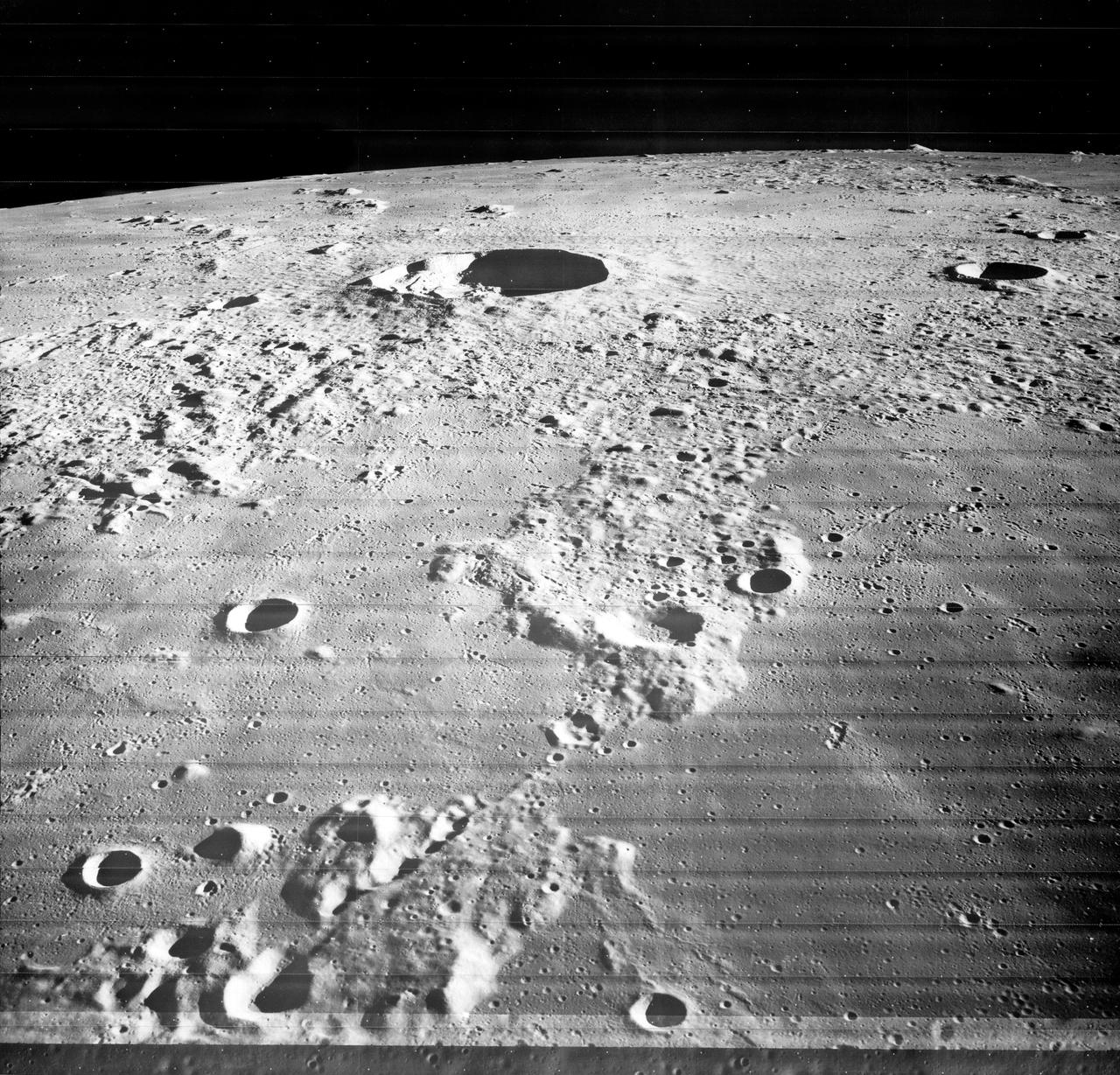
Small light colored area within the crater is Surveyor 1 on lunar surface photographed by Lunar Orbiter III. Published in the book "A Century at Langley" by Joseph Chambers. pg. 93 Moon Lunar Orbiter-Lunar Orbiter III: The hidden or dark side of the Moon was taken by Lunar Orbiter III During its mission to photograph potential lunar-landing sites for Apollo missions. -- Photograph published in Winds of Change, 75th Anniversary NASA publication (page 94), by James Schultz. Photo Number:67-H-328 is 1967-L-04026
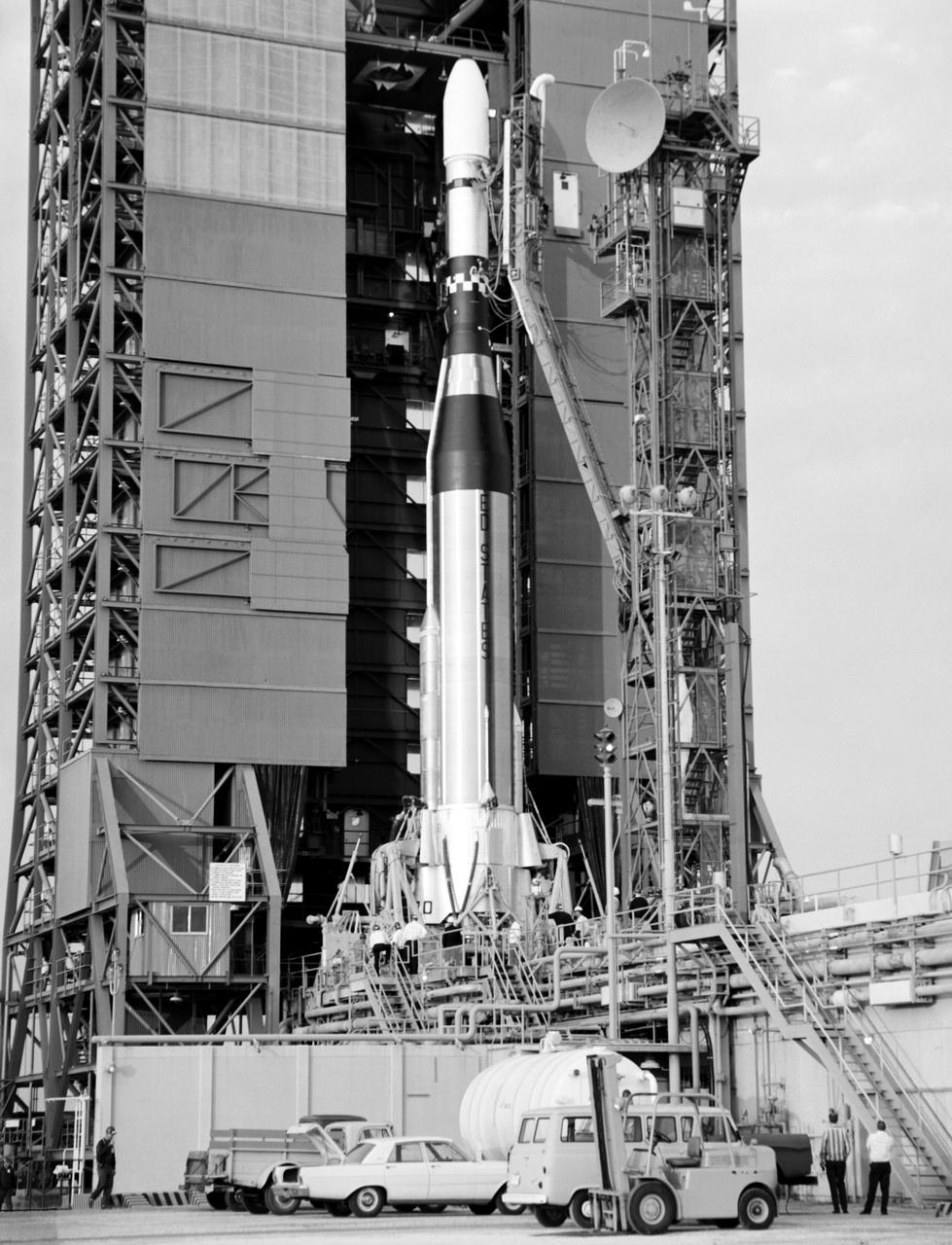
Lift off of Lunar Orbiter III from Complex 13.
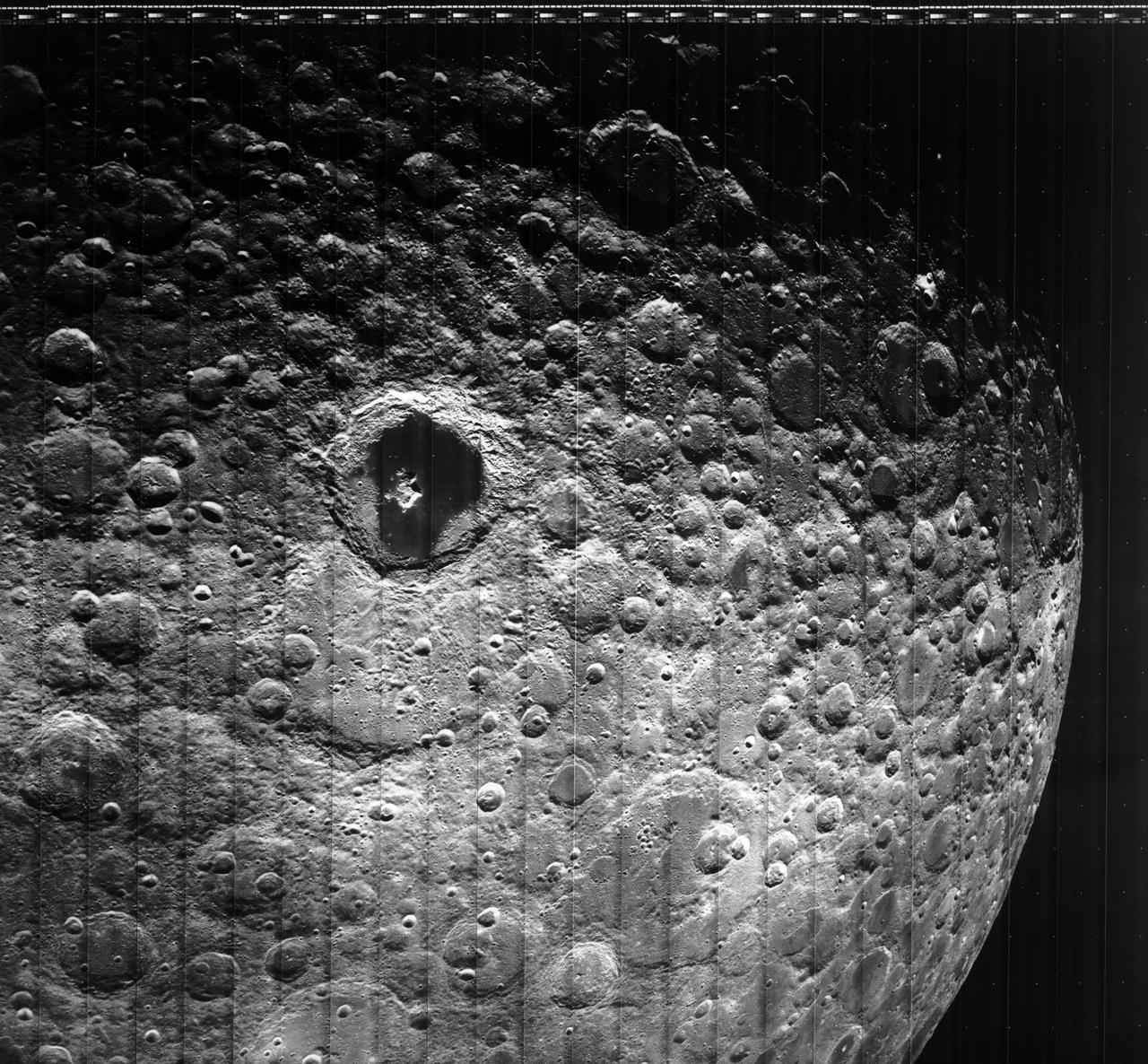
Moon Lunar Orbiter-Lunar Orbiter III: The hidden or dark side of the Moon was taken by Lunar Orbiter III During its mission to photograph potential lunar-landing sites for Apollo missions. -- Photograph published in Winds of Change, 75th Anniversary NASA publication (page 94), by James Schultz. Photo Number:67-H-328 is 1967-L-04026

Liftoff of Lunar Orbiter III from Complex 13.
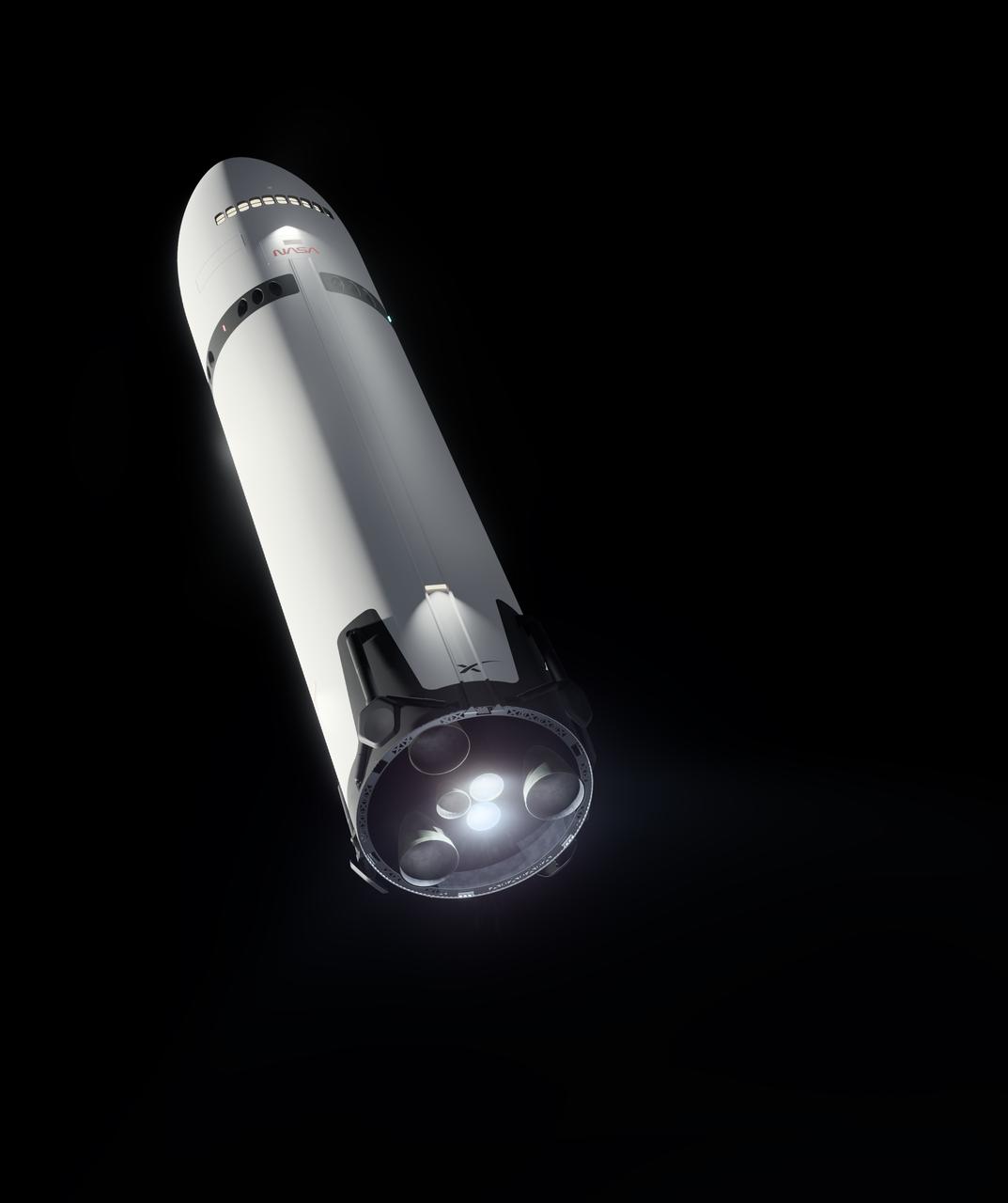
This artist’s concept portrays SpaceX’s Starship Human Landing System (HLS) with two Raptor engines lit, performing a braking burn prior to its Moon landing. The burn will occur after Starship HLS departs low lunar orbit to reduce the lander’s velocity prior to final descent to the lunar surface. NASA is working with SpaceX to develop Starship HLS to carry astronauts from lunar orbit to the Moon’s surface and back for Artemis III and Artemis IV as part of the agency’s Artemis campaign.
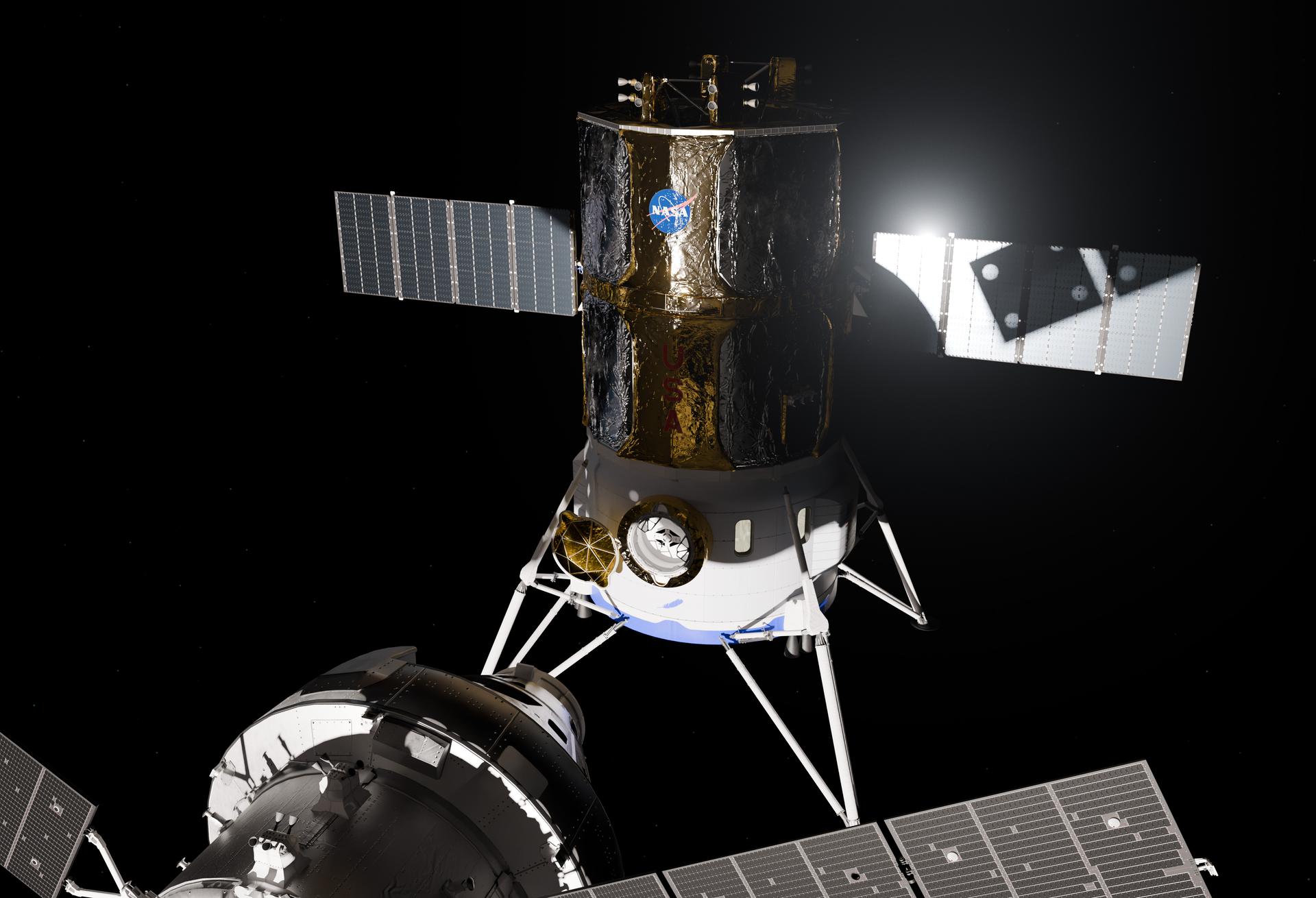
This artist’s concept depicts Blue Origin’s Blue Moon Mark 2 human landing system test article in Earth orbit with NASA’s Orion spacecraft during rendezvous and docking operations as part of NASA’s upcoming Artemis III demonstration mission in low Earth orbit. NASA is working with two American companies to develop the human landing systems that will safely transport astronauts from lunar orbit to the Moon’s surface and back for future Artemis missions. For Artemis III, both SpaceX and Blue Origin will fly test versions, or test articles, of the crewed landers that will be used for future Moon landings. The lander test articles will launch by commercial rockets, while the Artemis III crew will launch to low Earth orbit in Orion atop the agency’s SLS (Space Launch System) rocket.
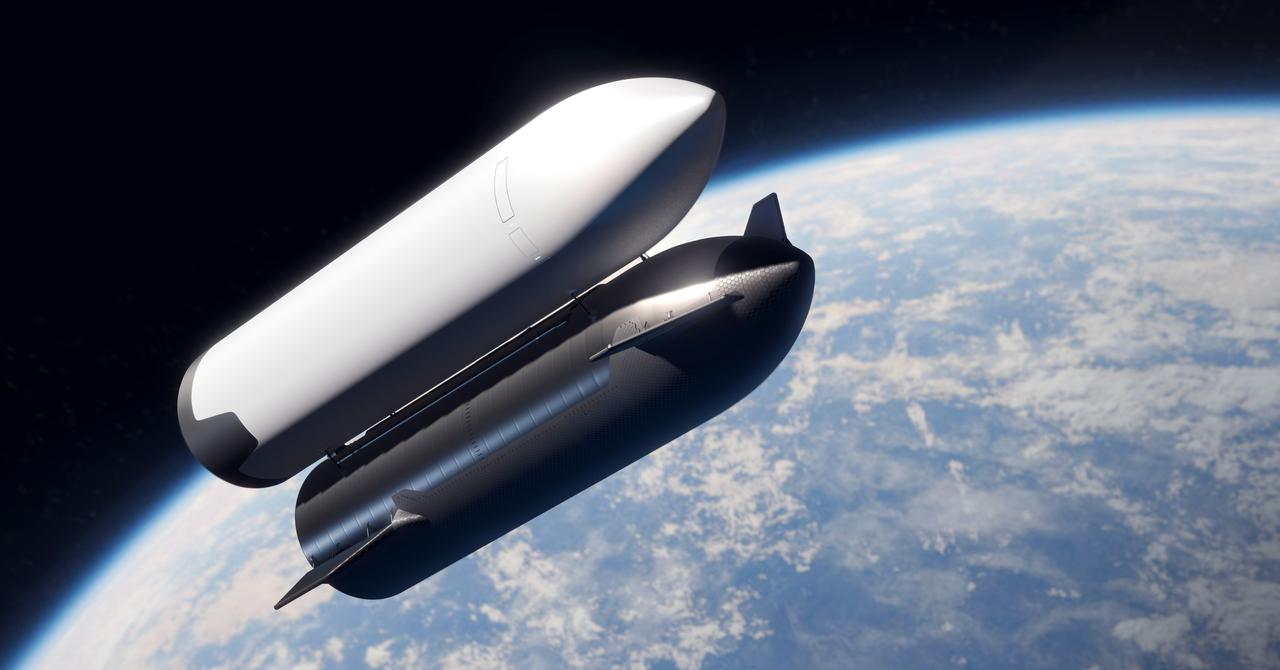
These artist’s concepts show SpaceX’s Starship Human Landing System (HLS) in operation on its journey to the Moon. Before astronauts launch in NASA’s Orion spacecraft atop the agency’s SLS (Space Launch System) rocket, SpaceX will launch a storage depot to Earth orbit. For Artemis III and Artemis IV, SpaceX plans to complete propellant loading operations in Earth orbit to send a fully fueled Starship HLS to the Moon. Starship HLS will then dock directly to Orion so that two astronauts can transfer from the spacecraft to the lander to descend to the Moon’s surface, while two others remain in Orion. Beginning with Artemis IV, NASA’s Gateway lunar space station will serve as the crew transfer point. NASA is working with SpaceX to develop Starship HLS to carry astronauts from lunar orbit to the Moon’s surface and back for Artemis III and Artemis IV as part of the agency’s Artemis campaign.

These artist’s concepts show SpaceX’s Starship Human Landing System (HLS) in operation on its journey to the Moon. Before astronauts launch in NASA’s Orion spacecraft atop the agency’s SLS (Space Launch System) rocket, SpaceX will launch a storage depot to Earth orbit. For Artemis III and Artemis IV, SpaceX plans to complete propellant loading operations in Earth orbit to send a fully fueled Starship HLS to the Moon. Starship HLS will then dock directly to Orion so that two astronauts can transfer from the spacecraft to the lander to descend to the Moon’s surface, while two others remain in Orion. Beginning with Artemis IV, NASA’s Gateway lunar space station will serve as the crew transfer point. NASA is working with SpaceX to develop Starship HLS to carry astronauts from lunar orbit to the Moon’s surface and back for Artemis III and Artemis IV as part of the agency’s Artemis campaign.
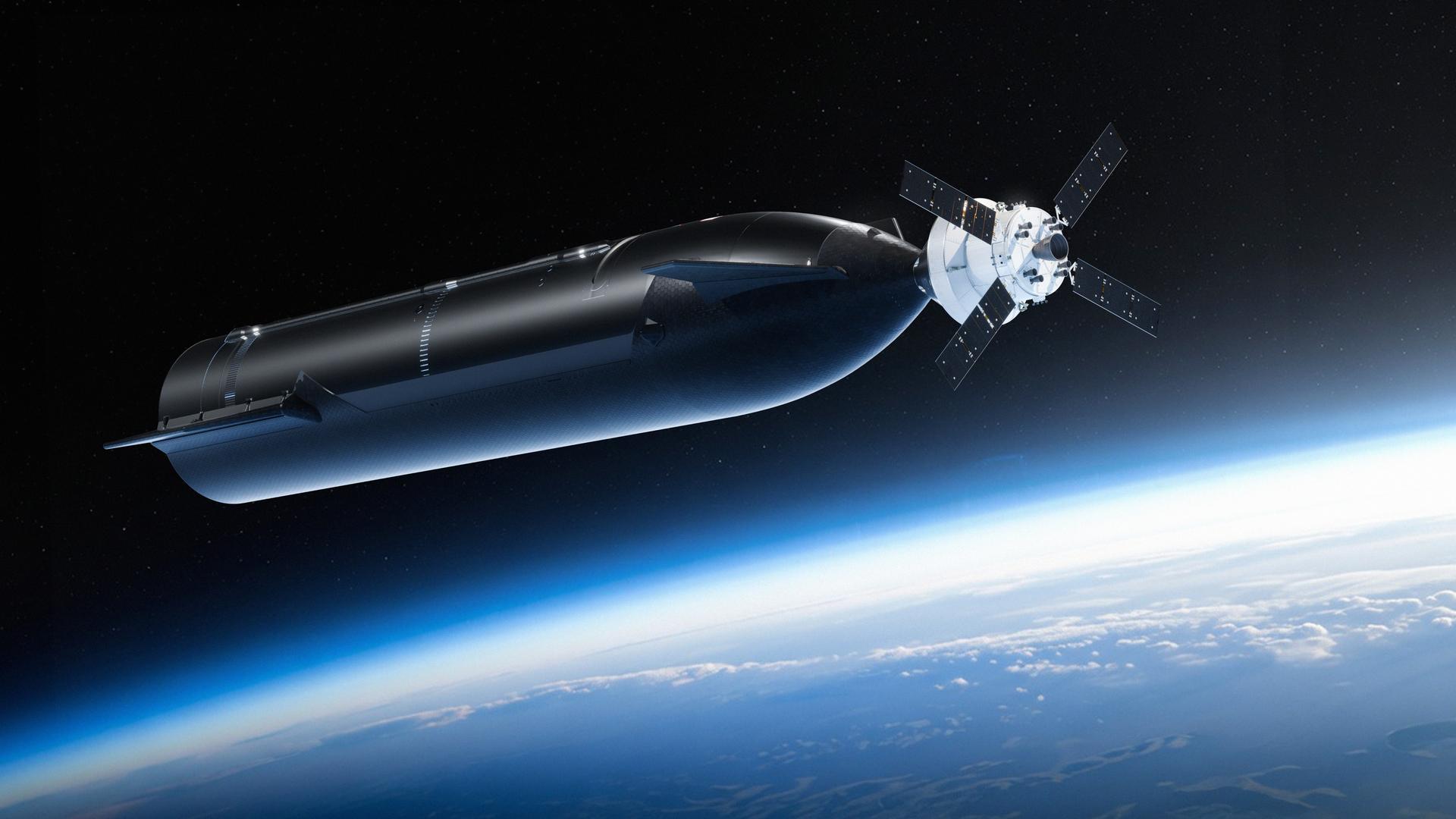
These artist’s concepts depict NASA’s Orion spacecraft and SpaceX’s Starship human landing system test article during rendezvous and docking operations as part of NASA’s upcoming Artemis III demonstration mission in low Earth orbit. NASA is working with two American companies to develop the human landing systems that will safely transport astronauts from lunar orbit to the Moon’s surface and back for future Artemis missions. For Artemis III, both SpaceX and Blue Origin will fly test versions, or test articles, of the crewed landers that will be used for future Moon landings. The lander test articles will launch by commercial rockets, while the Artemis III crew will launch to low Earth orbit in Orion atop the agency’s SLS (Space Launch System) rocket.
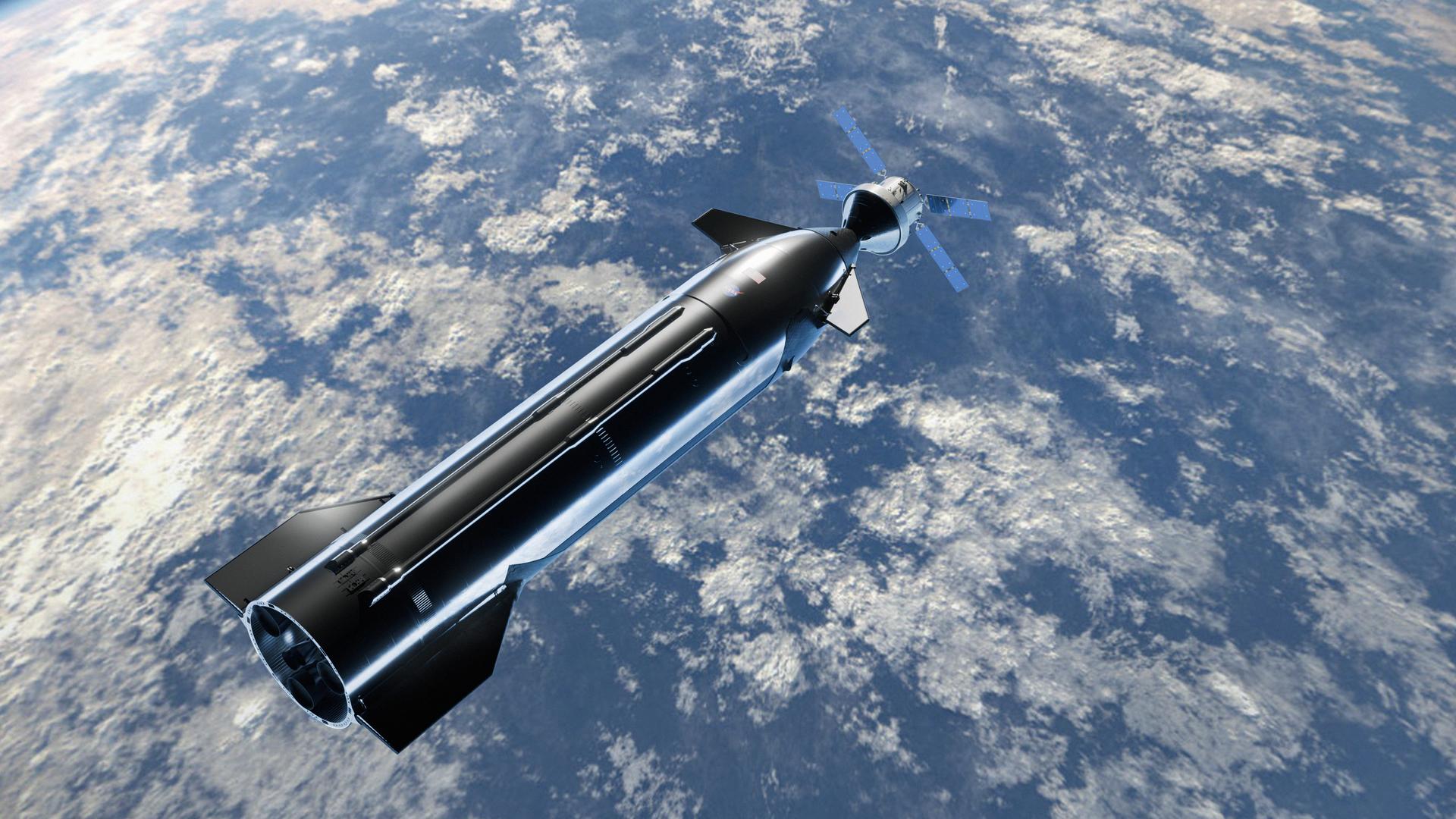
These artist’s concepts depict NASA’s Orion spacecraft and SpaceX’s Starship human landing system test article during rendezvous and docking operations as part of NASA’s upcoming Artemis III demonstration mission in low Earth orbit. NASA is working with two American companies to develop the human landing systems that will safely transport astronauts from lunar orbit to the Moon’s surface and back for future Artemis missions. For Artemis III, both SpaceX and Blue Origin will fly test versions, or test articles, of the crewed landers that will be used for future Moon landings. The lander test articles will launch by commercial rockets, while the Artemis III crew will launch to low Earth orbit in Orion atop the agency’s SLS (Space Launch System) rocket.
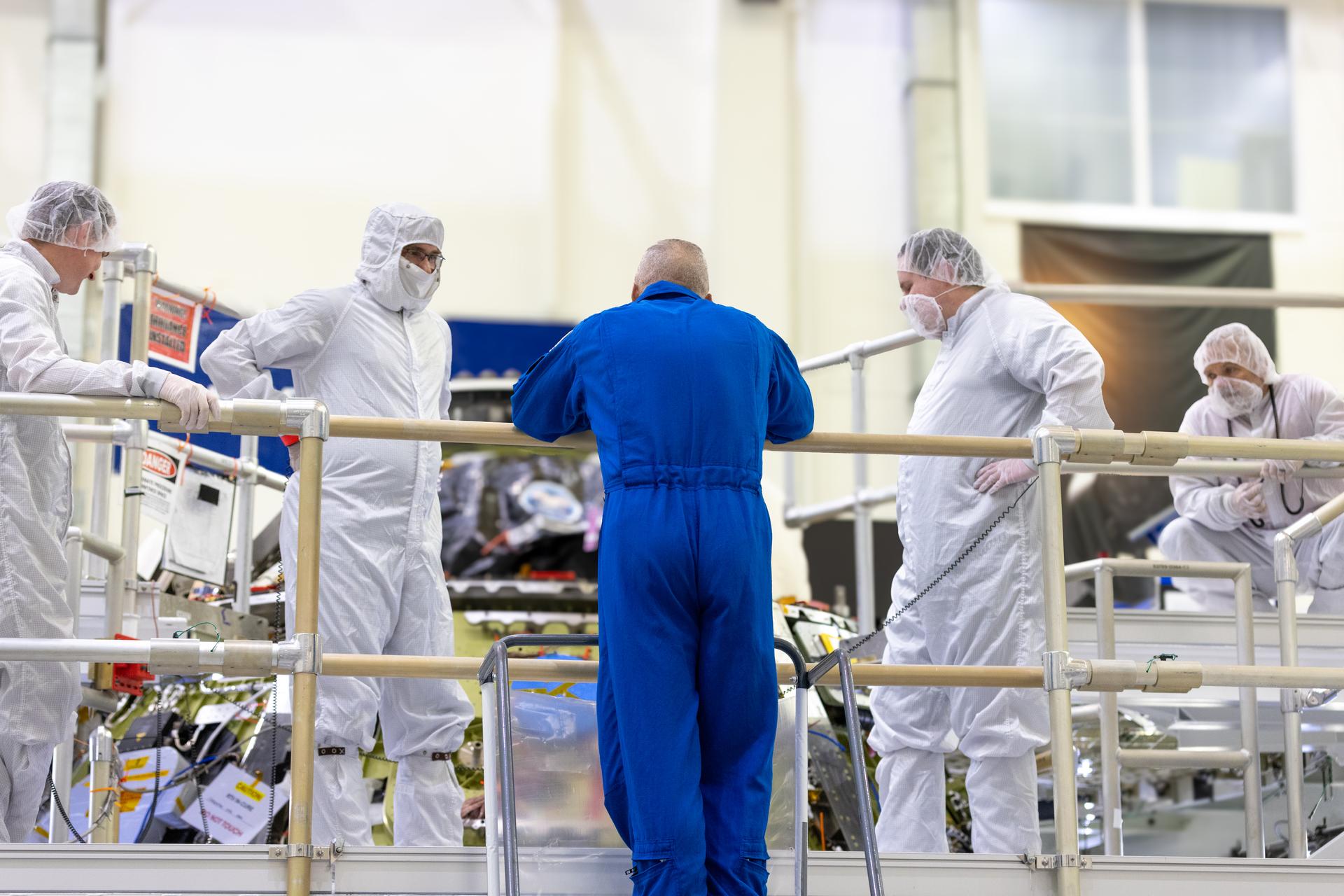
Artemis III commander, NASA astronaut Randy Bresnick (center), speaks with members of NASA’s Orion spacecraft team in front of the Artemis III crew module inside the high bay of the Neil A. Armstrong Operations and Checkout Building at NASA’s Kennedy Space Center in Florida on Friday, July 10, 2026. Bresnick and fellow Artemis III crew member, NASA astronaut Andre Douglas, met with Orion teams and got a close look at the work underway for their upcoming mission. Bresnick, Douglas, NASA astronaut Frank Rubio, and ESA (European Space Agency) astronaut Luca Parmitano will launch on the Artemis III mission to conduct critical rendezvous and docking tests with lunar lander systems in low Earth orbit, advancing the capabilities needed before astronauts return to the lunar surface on Artemis IV.
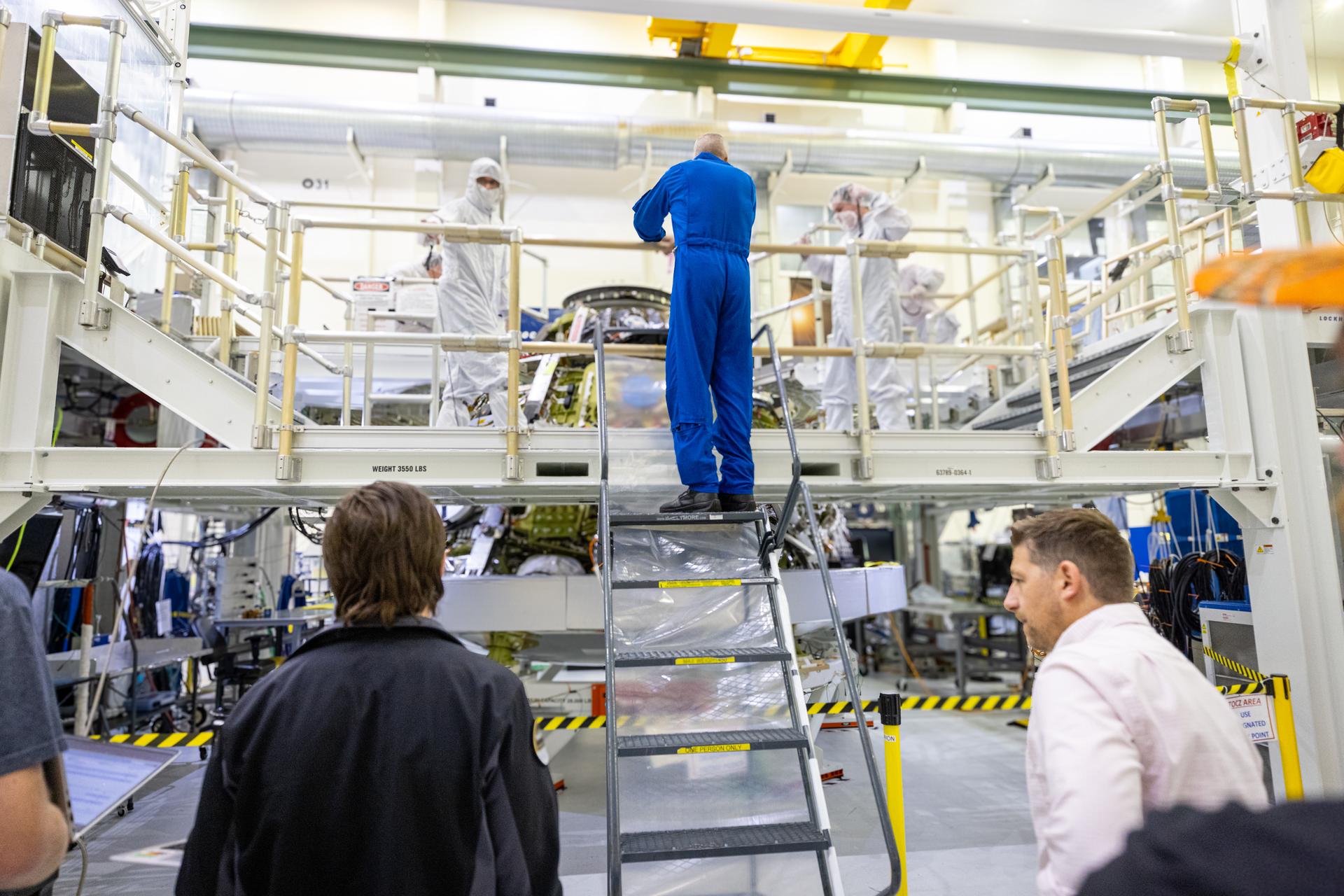
Artemis III commander, NASA astronaut Randy Bresnick (center), speaks with members of NASA’s Orion spacecraft team in front of the Artemis III crew module inside the high bay of the Neil A. Armstrong Operations and Checkout Building at NASA’s Kennedy Space Center in Florida on Friday, July 10, 2026. Bresnick and fellow Artemis III crew member, NASA astronaut Andre Douglas, met with Orion teams and got a close look at the work underway for their upcoming mission. Bresnick, Douglas, NASA astronaut Frank Rubio, and ESA (European Space Agency) astronaut Luca Parmitano will launch on the Artemis III mission to conduct critical rendezvous and docking tests with lunar lander systems in low Earth orbit, advancing the capabilities needed before astronauts return to the lunar surface on Artemis IV.
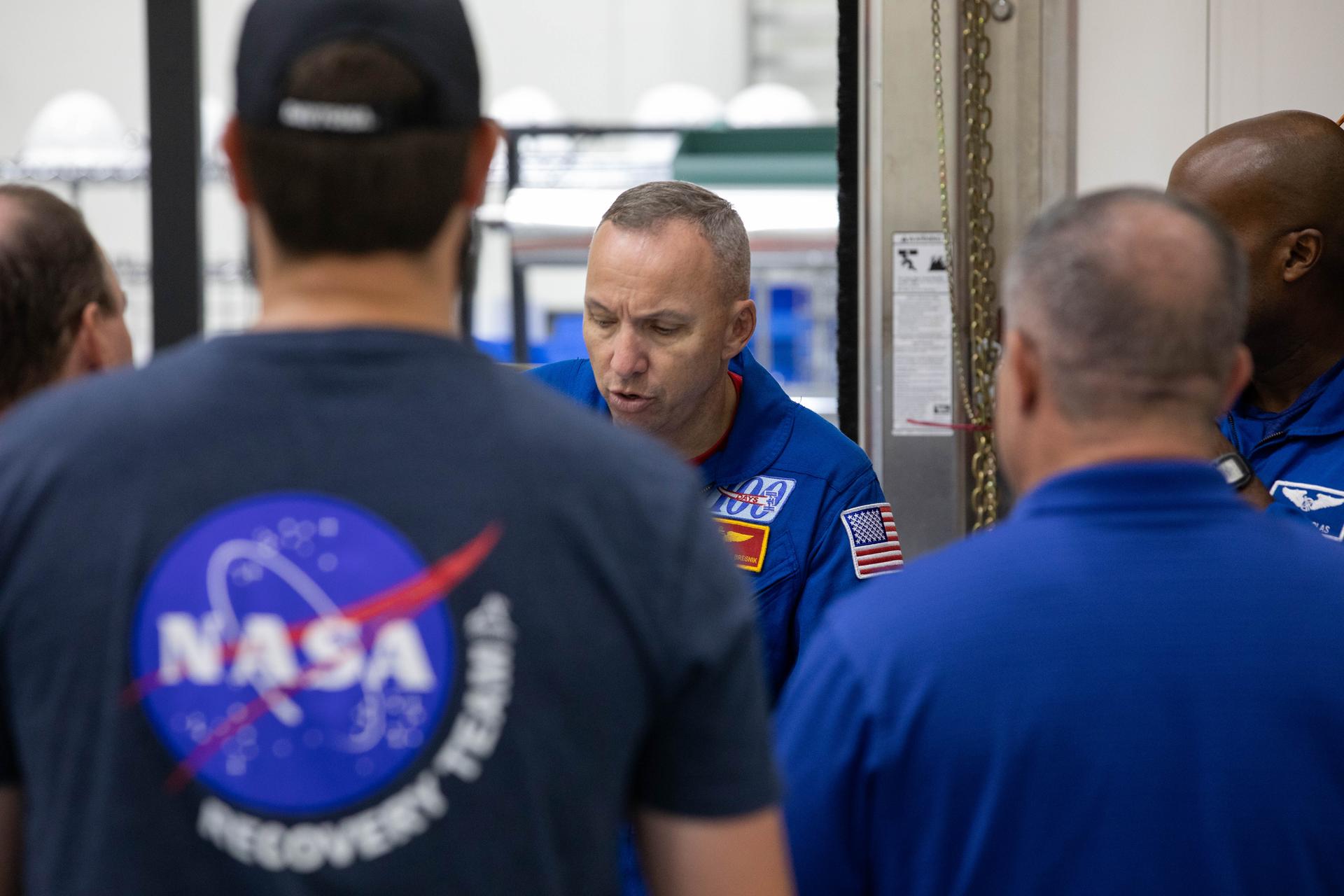
Artemis III crew members, NASA astronauts Randy Bresnick (center) and Andre Douglas (obscured) get a close look Orion spacecraft hardware inside the Multi-Payload Processing Facility at NASA’s Kennedy Space Center in Florida on Friday, July 10, 2026. Bresnick, Douglas, NASA astronaut Frank Rubio, and ESA (European Space Agency) astronaut Luca Parmitano will launch aboard Orion on the Artemis III mission to conduct critical rendezvous and docking tests with lunar lander systems in low Earth orbit, advancing the capabilities needed before astronauts return to the lunar surface on Artemis IV.
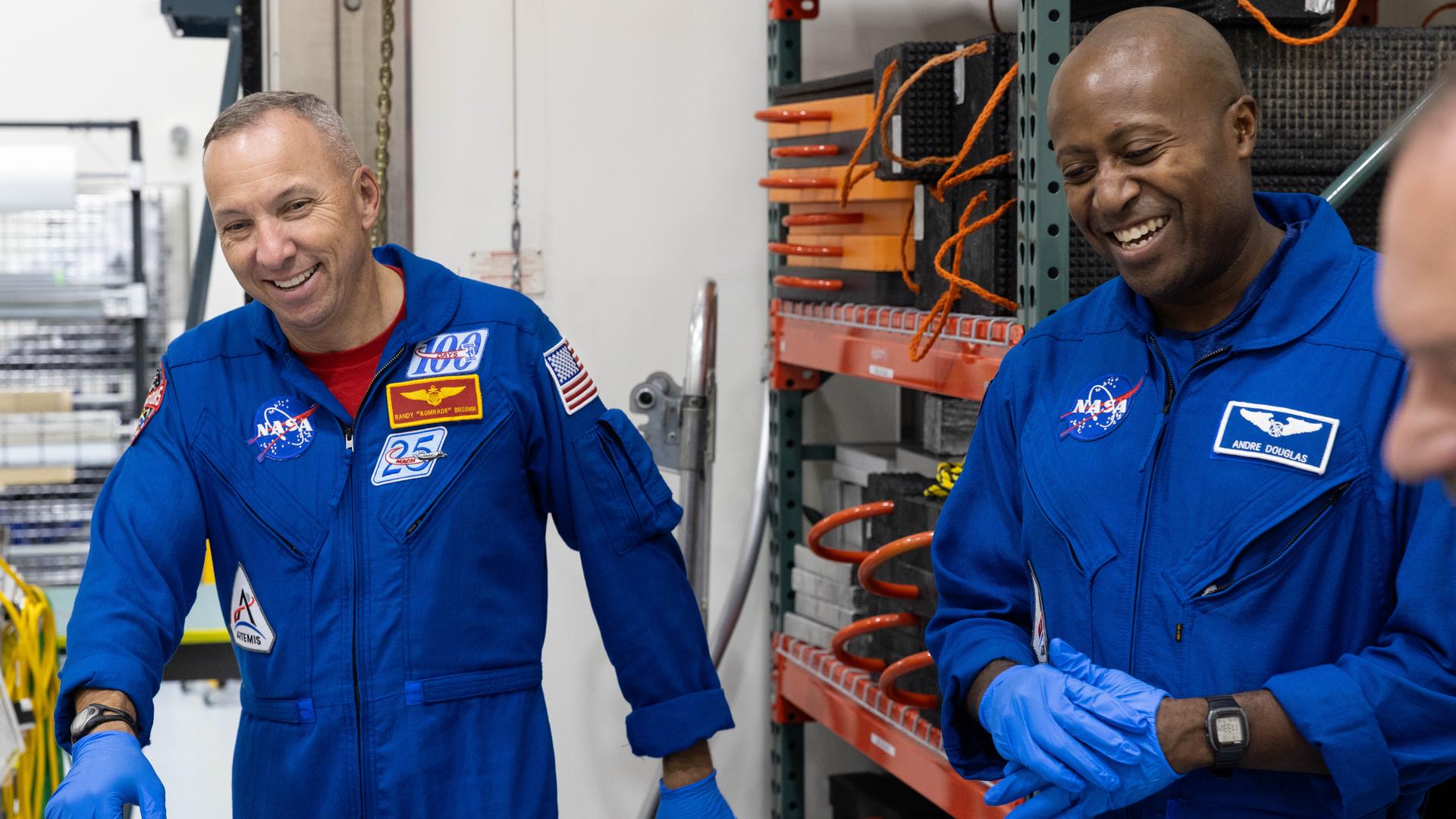
Artemis III crew members, NASA astronauts Randy Bresnick (left) and Andre Douglas get a close look Orion spacecraft hardware inside the Multi-Payload Processing Facility at NASA’s Kennedy Space Center in Florida on Friday, July 10, 2026. Bresnick, Douglas, NASA astronaut Frank Rubio, and ESA (European Space Agency) astronaut Luca Parmitano will launch aboard Orion on the Artemis III mission to conduct critical rendezvous and docking tests with lunar lander systems in low Earth orbit, advancing the capabilities needed before astronauts return to the lunar surface on Artemis IV.
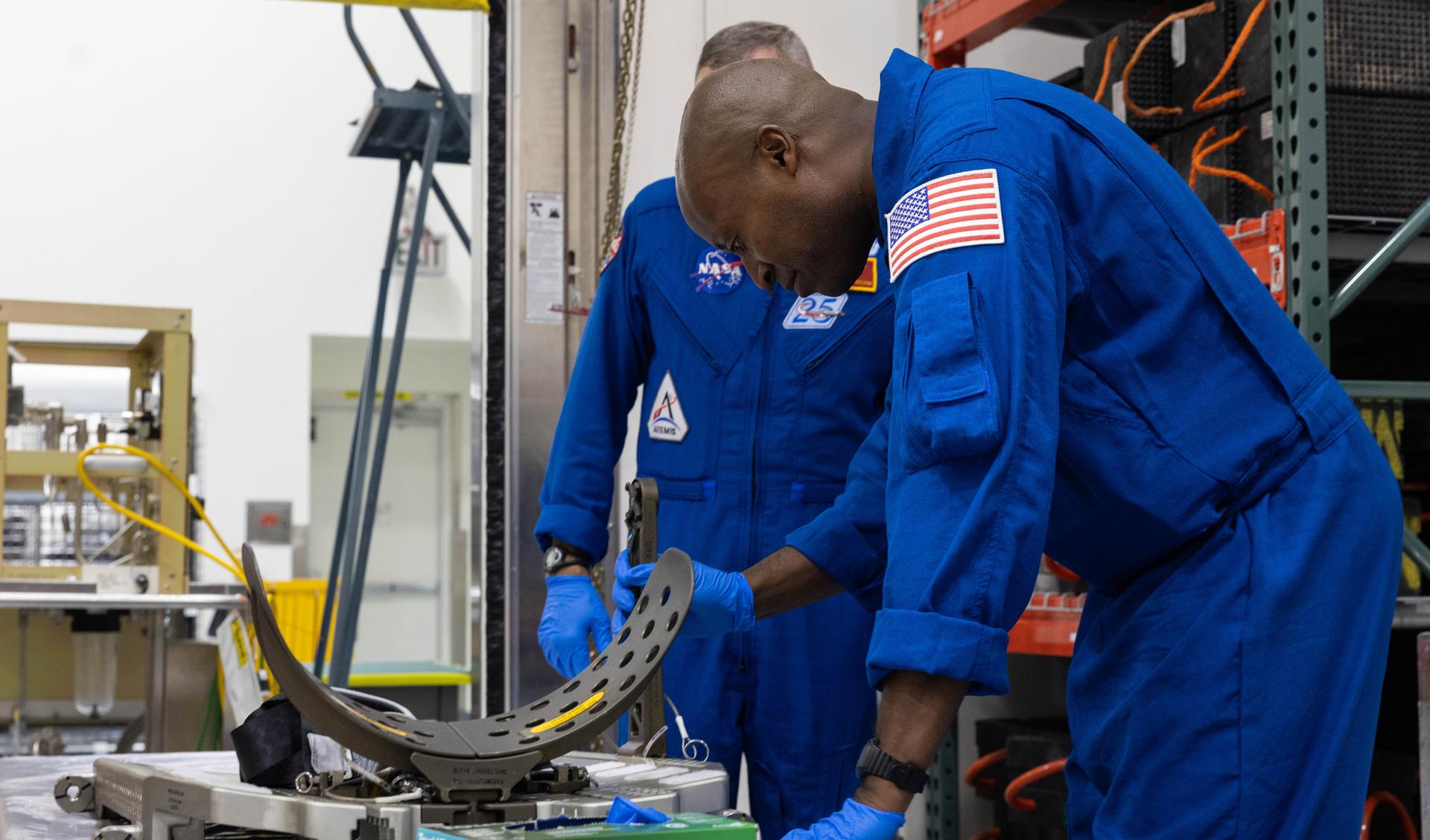
Artemis III crew members, NASA astronauts Andre Douglas and Randy Bresnick (obscured) and get a close look Orion spacecraft hardware inside the Multi-Payload Processing Facility at NASA’s Kennedy Space Center in Florida on Friday, July 10, 2026. Bresnick, Douglas, NASA astronaut Frank Rubio, and ESA (European Space Agency) astronaut Luca Parmitano will launch aboard Orion on the Artemis III mission to conduct critical rendezvous and docking tests with lunar lander systems in low Earth orbit, advancing the capabilities needed before astronauts return to the lunar surface on Artemis IV.
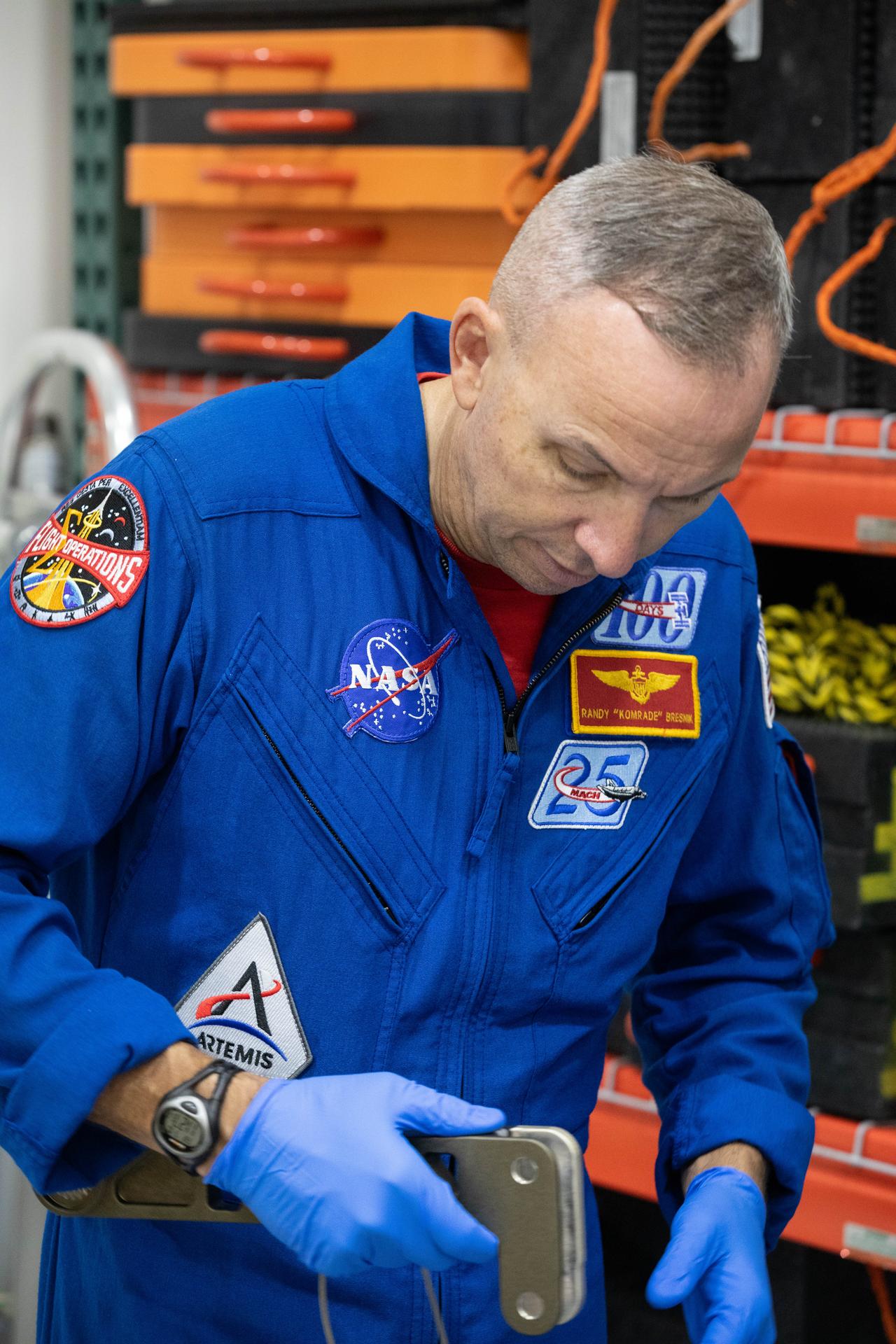
Artemis III crew members, NASA astronaut Randy Bresnick gets a close look at Orion spacecraft hardware inside the Multi-Payload Processing Facility at NASA’s Kennedy Space Center in Florida on Friday, July 10, 2026. Bresnick, along with fellow crewmate NASA astronaut Andre Douglas visited NASA Kennedy as part of preparations for their upcoming mission. Bresnick, Douglas, NASA astronaut Frank Rubio, and ESA (European Space Agency) astronaut Luca Parmitano will launch aboard Orion on the Artemis III mission to conduct critical rendezvous and docking tests with lunar lander systems in low Earth orbit, advancing the capabilities needed before astronauts return to the lunar surface on Artemis IV.
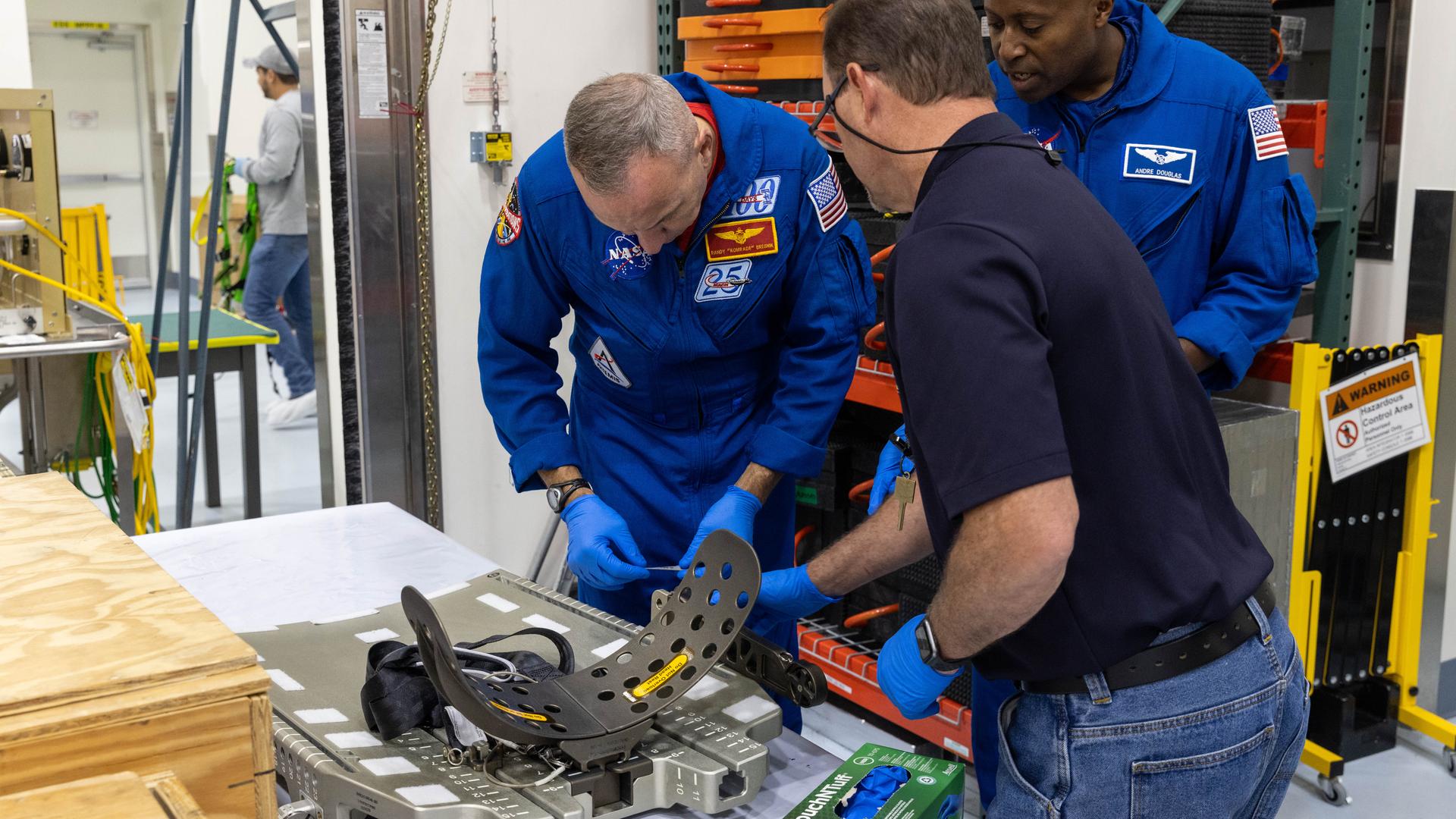
Artemis III crew members, NASA astronauts Randy Bresnick (left) and Andre Douglas get a close look Orion spacecraft hardware inside the Multi-Payload Processing Facility at NASA’s Kennedy Space Center in Florida on Friday, July 10, 2026. Bresnick, Douglas, NASA astronaut Frank Rubio, and ESA (European Space Agency) astronaut Luca Parmitano will launch aboard Orion on the Artemis III mission to conduct critical rendezvous and docking tests with lunar lander systems in low Earth orbit, advancing the capabilities needed before astronauts return to the lunar surface on Artemis IV.
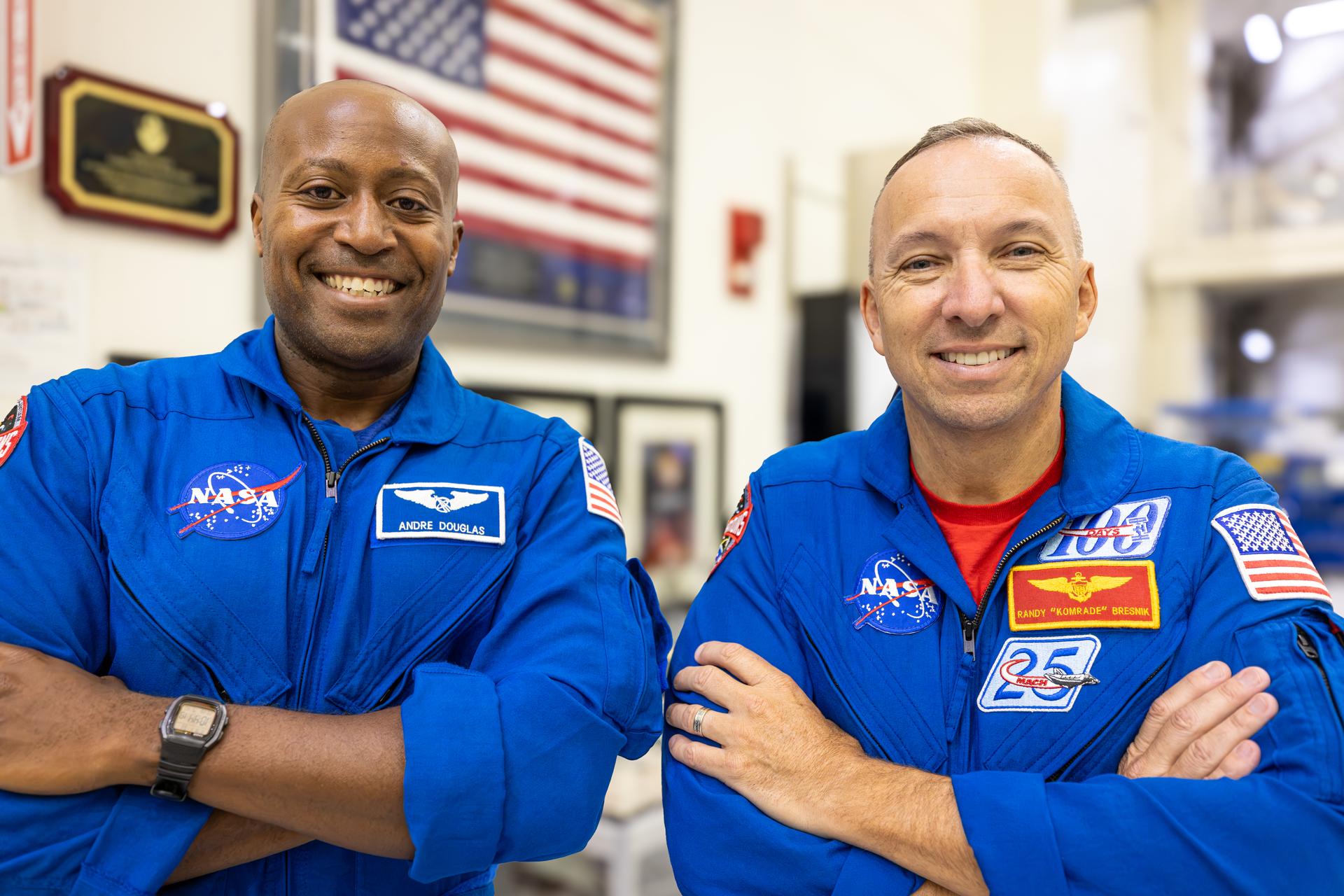
Artemis III crew members, NASA astronauts Andre Douglas (left) and Randy Bresnick, pose for a photograph inside the high bay of the Neil A. Armstrong Operations and Checkout Building at NASA’s Kennedy Space Center in Florida on Friday, July 10, 2026. The astronauts met with Orion teams and got a close look at the work underway on the Orion spacecraft inside the facility. Bresnick, Douglas, NASA astronaut Frank Rubio, and ESA (European Space Agency) astronaut Luca Parmitano will launch on the Artemis III mission to conduct critical rendezvous and docking tests with lunar lander systems in low Earth orbit, advancing the capabilities needed before astronauts return to the lunar surface on Artemis IV.

Artemis III launch team members participate in a cryogenic propellant loading simulation on Wednesday, June 10, 2026, inside Firing Room 1 and 2 of the Rocco A. Petrone Launch Control Center at NASA’s Kennedy Space Center in Florida. Members of NASA’s Exploration Ground Systems team rehearse the steps to load the super-cooled liquid hydrogen and liquid oxygen into the SLS (Space Launch System) rocket core stage, a process that starts several hours before liftoff for the Artemis III mission. Artemis III will carry out a series of objectives in low Earth orbit designed to demonstrate critical systems needed for future lunar landings, beginning with Artemis IV.

Artemis III launch team members participate in a cryogenic propellant loading simulation on Wednesday, June 10, 2026, inside Firing Room 1 and 2 of the Rocco A. Petrone Launch Control Center at NASA’s Kennedy Space Center in Florida. Members of NASA’s Exploration Ground Systems team rehearse the steps to load the super-cooled liquid hydrogen and liquid oxygen into the SLS (Space Launch System) rocket core stage, a process that starts several hours before liftoff for the Artemis III mission. Artemis III will carry out a series of objectives in low Earth orbit designed to demonstrate critical systems needed for future lunar landings, beginning with Artemis IV.

Artemis III launch team members participate in a cryogenic propellant loading simulation on Wednesday, June 10, 2026, inside Firing Room 1 and 2 of the Rocco A. Petrone Launch Control Center at NASA’s Kennedy Space Center in Florida. Members of NASA’s Exploration Ground Systems team rehearse the steps to load the super-cooled liquid hydrogen and liquid oxygen into the SLS (Space Launch System) rocket core stage, a process that starts several hours before liftoff for the Artemis III mission. Artemis III will carry out a series of objectives in low Earth orbit designed to demonstrate critical systems needed for future lunar landings, beginning with Artemis IV.

Artemis III launch team members participate in a cryogenic propellant loading simulation on Wednesday, June 10, 2026, inside Firing Room 1 and 2 of the Rocco A. Petrone Launch Control Center at NASA’s Kennedy Space Center in Florida. Members of NASA’s Exploration Ground Systems team rehearse the steps to load the super-cooled liquid hydrogen and liquid oxygen into the SLS (Space Launch System) rocket core stage, a process that starts several hours before liftoff for the Artemis III mission. Artemis III will carry out a series of objectives in low Earth orbit designed to demonstrate critical systems needed for future lunar landings, beginning with Artemis IV.

Aaron Sherman, launch project engineer, participates in a cryogenic propellant loading simulation for NASA’s Artemis III mission on Wednesday, June 10, 2026, inside Firing Room 1 of the Rocco A. Petrone Launch Control Center at the agency’s Kennedy Space Center in Florida. Members of NASA’s Exploration Ground Systems team rehearse the steps to load the super-cooled liquid hydrogen and liquid oxygen into the SLS (Space Launch System) rocket core stage, a process that starts several hours before liftoff for the Artemis III mission. Artemis III will carry out a series of objectives in low Earth orbit designed to demonstrate critical systems needed for future lunar landings, beginning with Artemis IV.
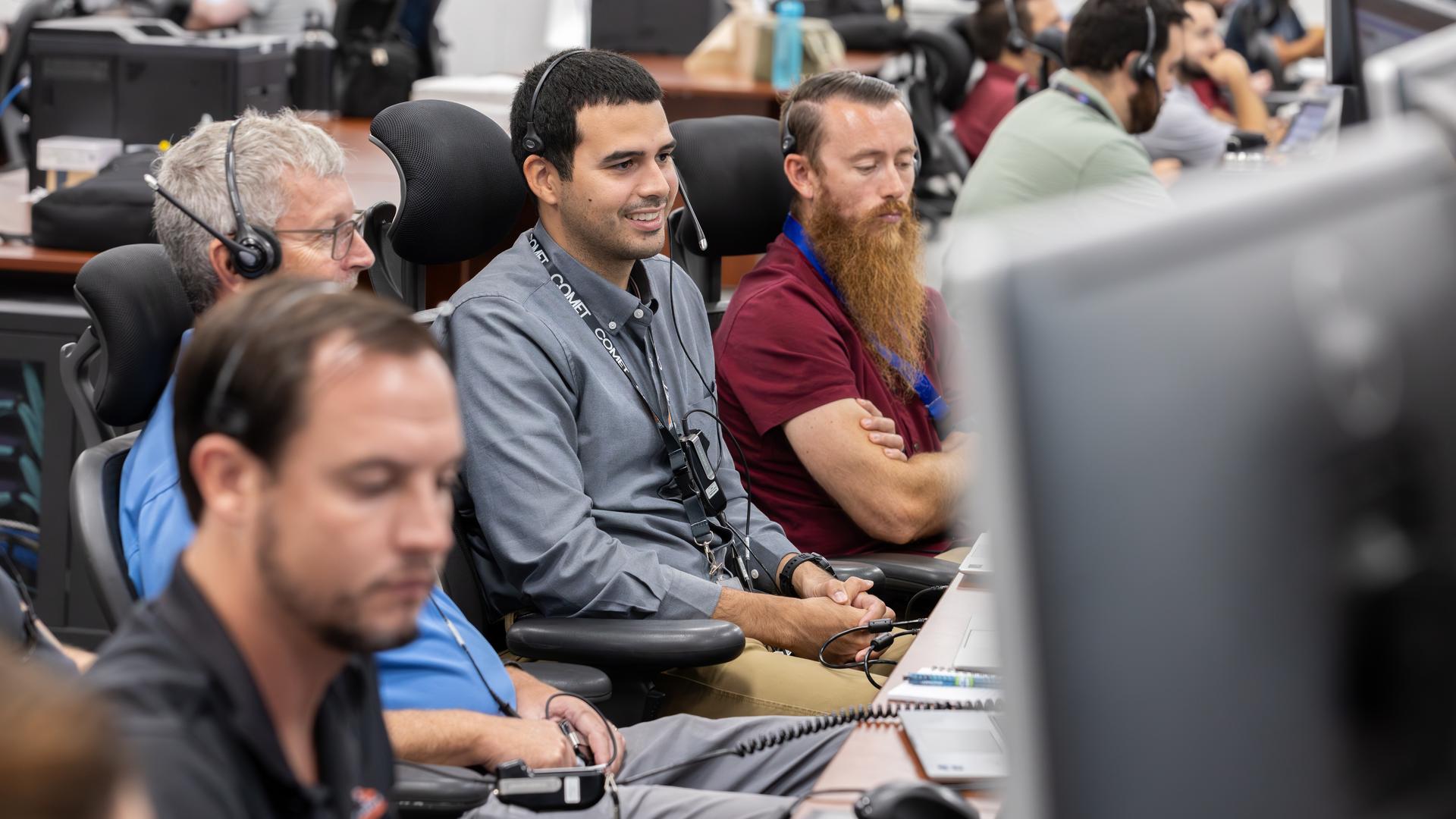
Artemis launch team members participate in a cryogenic propellant loading simulation for NASA’s Artemis III mission on Wednesday, Aug. 5, 2026, inside Firing Rooms 1 and 2 of the Rocco A. Petrone Launch Control Center at the agency’s Kennedy Space Center in Florida. Members of NASA’s Exploration Ground Systems team rehearse the steps to load the super-cooled liquid hydrogen and liquid oxygen into the SLS (Space Launch System) rocket core stage, a process that starts several hours before liftoff for the Artemis III mission. Artemis III will carry out a series of objectives in low Earth orbit designed to demonstrate critical systems needed for future lunar landings, beginning with Artemis IV.
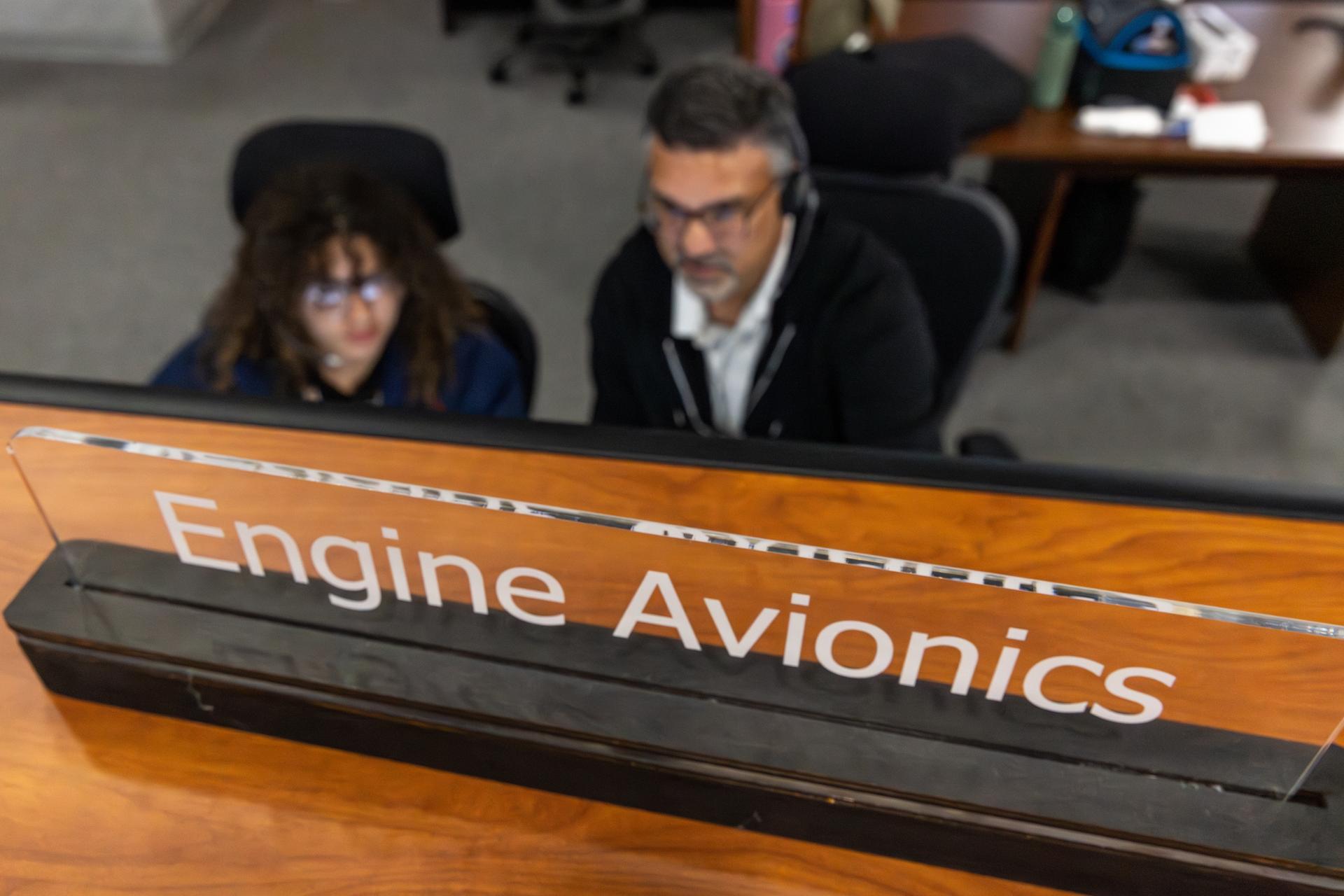
Artemis launch team members participate in a cryogenic propellant loading simulation for NASA’s Artemis III mission on Wednesday, Aug. 5, 2026, inside Firing Rooms 1 and 2 of the Rocco A. Petrone Launch Control Center at the agency’s Kennedy Space Center in Florida. Members of NASA’s Exploration Ground Systems team rehearse the steps to load the super-cooled liquid hydrogen and liquid oxygen into the SLS (Space Launch System) rocket core stage, a process that starts several hours before liftoff for the Artemis III mission. Artemis III will carry out a series of objectives in low Earth orbit designed to demonstrate critical systems needed for future lunar landings, beginning with Artemis IV.

Artemis launch team members participate in a cryogenic propellant loading simulation for NASA’s Artemis III mission on Wednesday, Aug. 5, 2026, inside Firing Rooms 1 and 2 of the Rocco A. Petrone Launch Control Center at the agency’s Kennedy Space Center in Florida. Members of NASA’s Exploration Ground Systems team rehearse the steps to load the super-cooled liquid hydrogen and liquid oxygen into the SLS (Space Launch System) rocket core stage, a process that starts several hours before liftoff for the Artemis III mission. Artemis III will carry out a series of objectives in low Earth orbit designed to demonstrate critical systems needed for future lunar landings, beginning with Artemis IV.

These artist’s concepts show SpaceX’s Starship Human Landing System (HLS) on the Moon. NASA is working with SpaceX to develop Starship HLS to carry astronauts from lunar orbit to the Moon’s surface and back for Artemis III and Artemis IV as part of the agency’s Artemis campaign. At about 165 feet (50 m), Starship HLS will be about the same height as a 15-story building. An elevator on Starship HLS will be used to transport crew and cargo between the lander and the Moon’s surface.
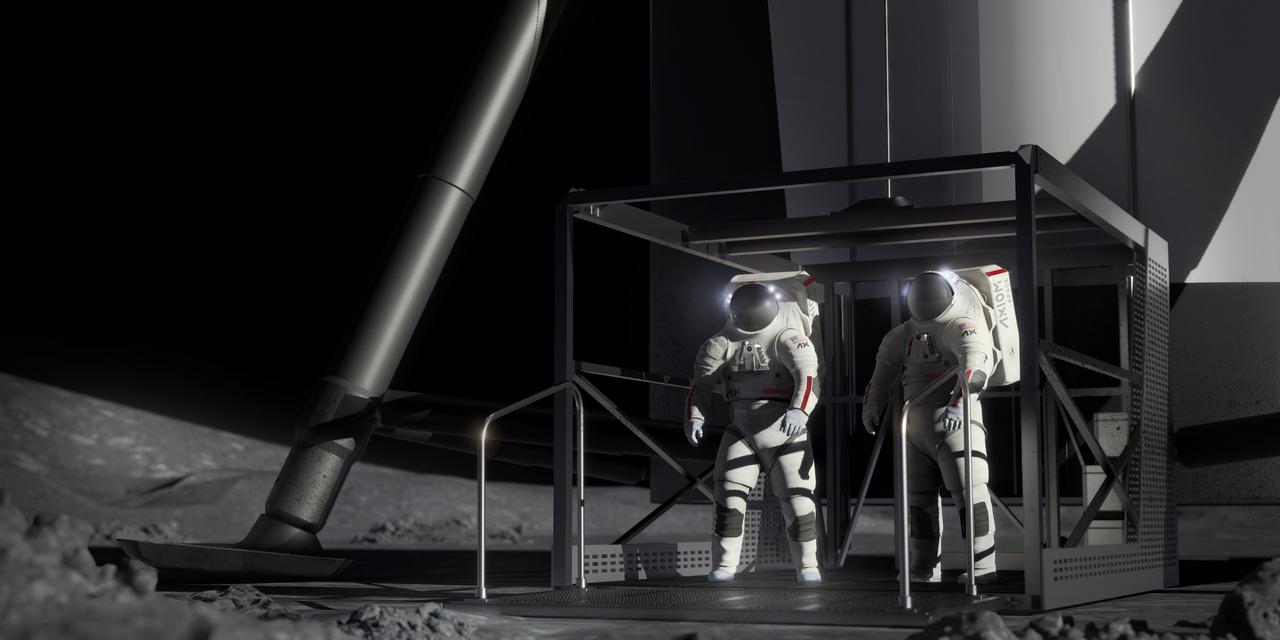
These artist’s concepts show SpaceX’s Starship Human Landing System (HLS) on the Moon. NASA is working with SpaceX to develop Starship HLS to carry astronauts from lunar orbit to the Moon’s surface and back for Artemis III and Artemis IV as part of the agency’s Artemis campaign. At about 165 feet (50 m), Starship HLS will be about the same height as a 15-story building. An elevator on Starship HLS will be used to transport crew and cargo between the lander and the Moon’s surface.
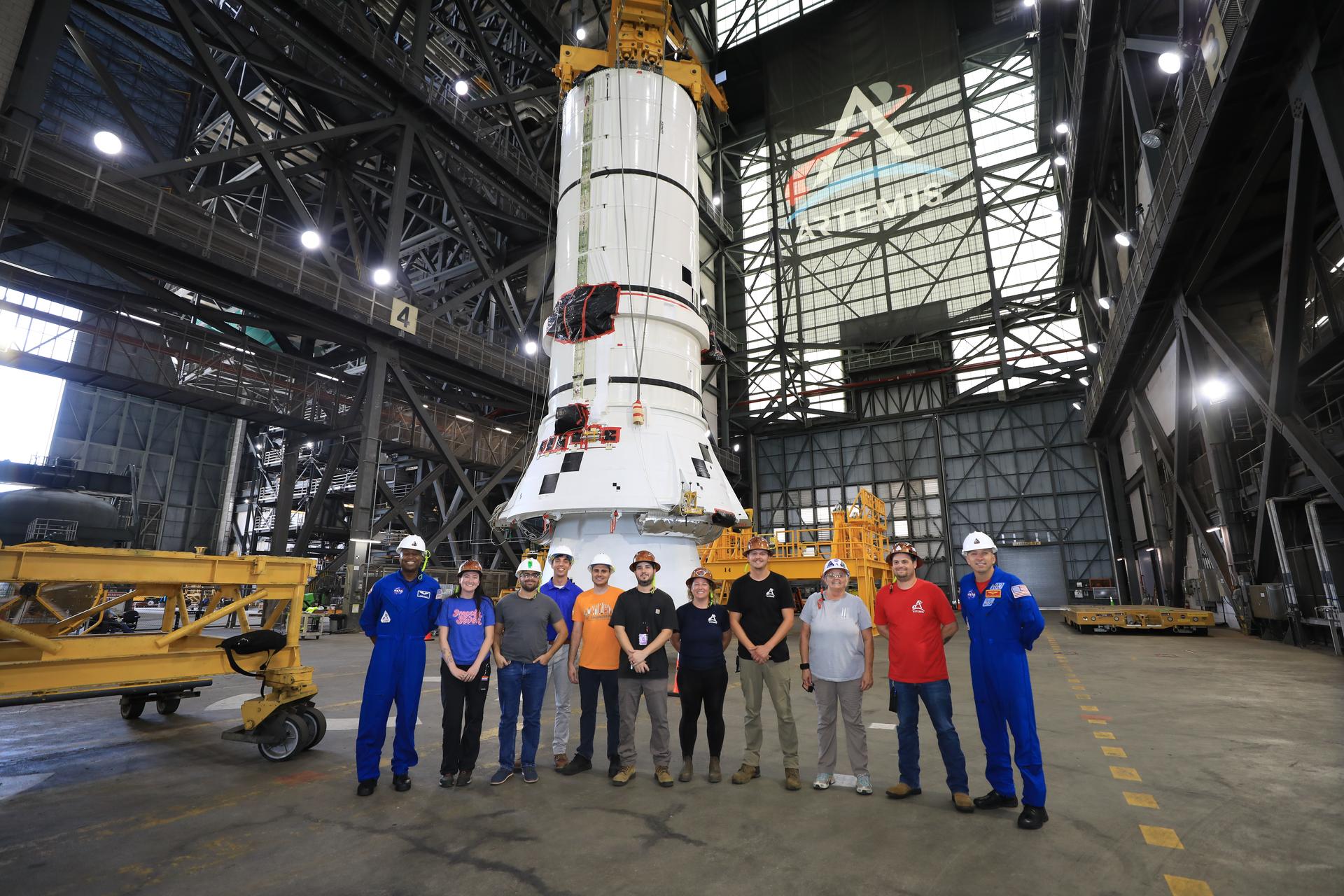
Artemis III crew members, NASA astronauts Randy Bresnick (far right) and Andre Douglas (far left), pose with teams from NASA’s Exploration Ground Systems in front of the right-hand aft assembly solid rocket booster segment of the Artemis III SLS (Space Launch System) rocket inside the Vehicle Assembly Building at the agency’s Kennedy Space Center in Florida on Friday, July 10, 2026. The astronauts met with NASA’s teams and got a close look at the work underway for their upcoming mission. Bresnick, Douglas, NASA astronaut Frank Rubio, and ESA (European Space Agency) astronaut Luca Parmitano will launch on the Artemis III mission to conduct critical rendezvous and docking tests with lunar lander systems in low Earth orbit, advancing the capabilities needed before astronauts return to the lunar surface on Artemis IV.
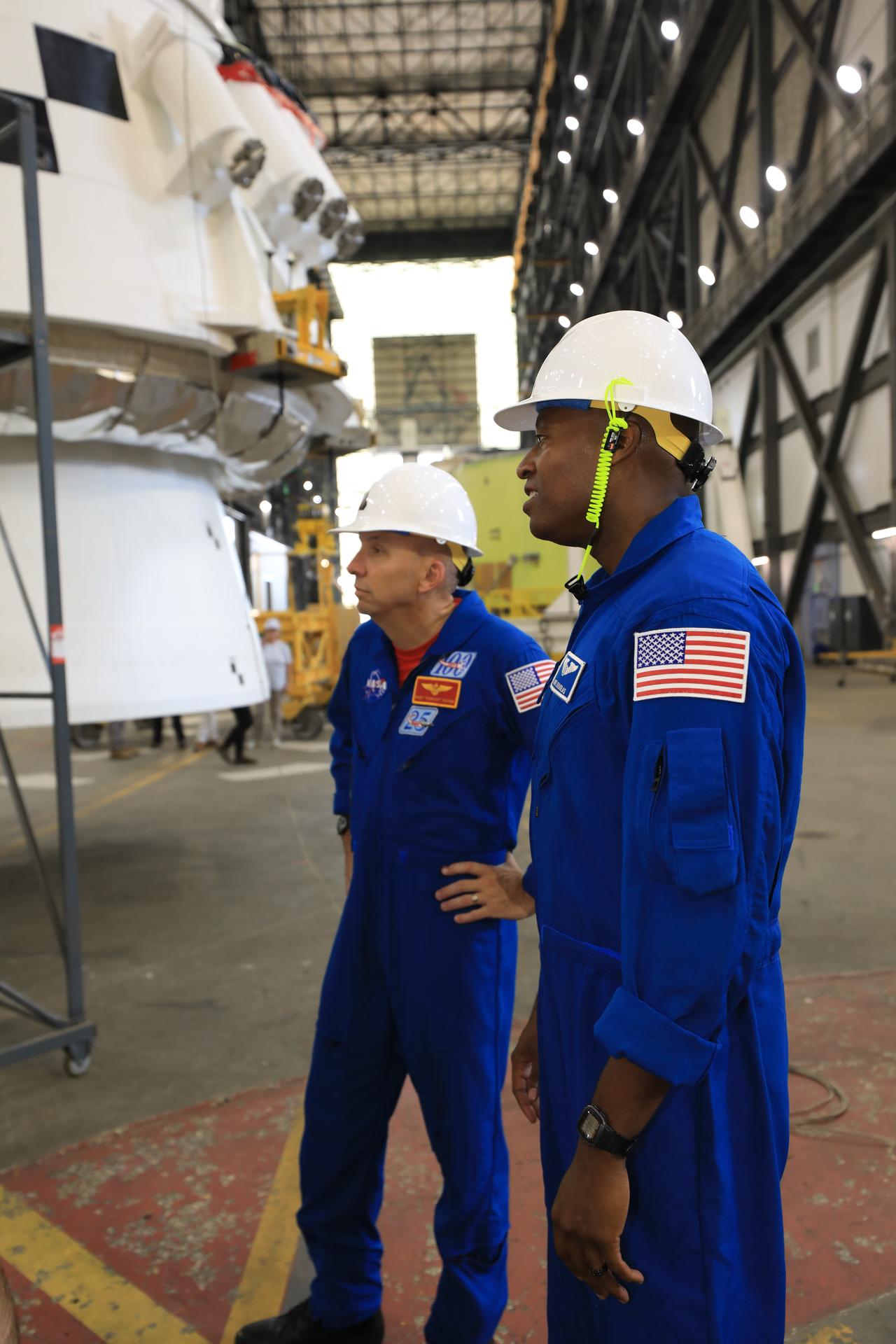
Artemis III crew members, NASA astronauts Randy Bresnick (left) and Andre Douglas, view the right-hand aft assembly solid rocket booster segment of the Artemis III SLS (Space Launch System) rocket inside the Vehicle Assembly Building at NASA’s Kennedy Space Center in Florida on Friday, July 10, 2026. The astronauts met with NASA’s Exploration Ground Systems teams and got a close look at the work underway for their upcoming mission. Bresnick, Douglas, NASA astronaut Frank Rubio, and ESA (European Space Agency) astronaut Luca Parmitano will launch on the Artemis III mission to conduct critical rendezvous and docking tests with lunar lander systems in low Earth orbit, advancing the capabilities needed before astronauts return to the lunar surface on Artemis IV.
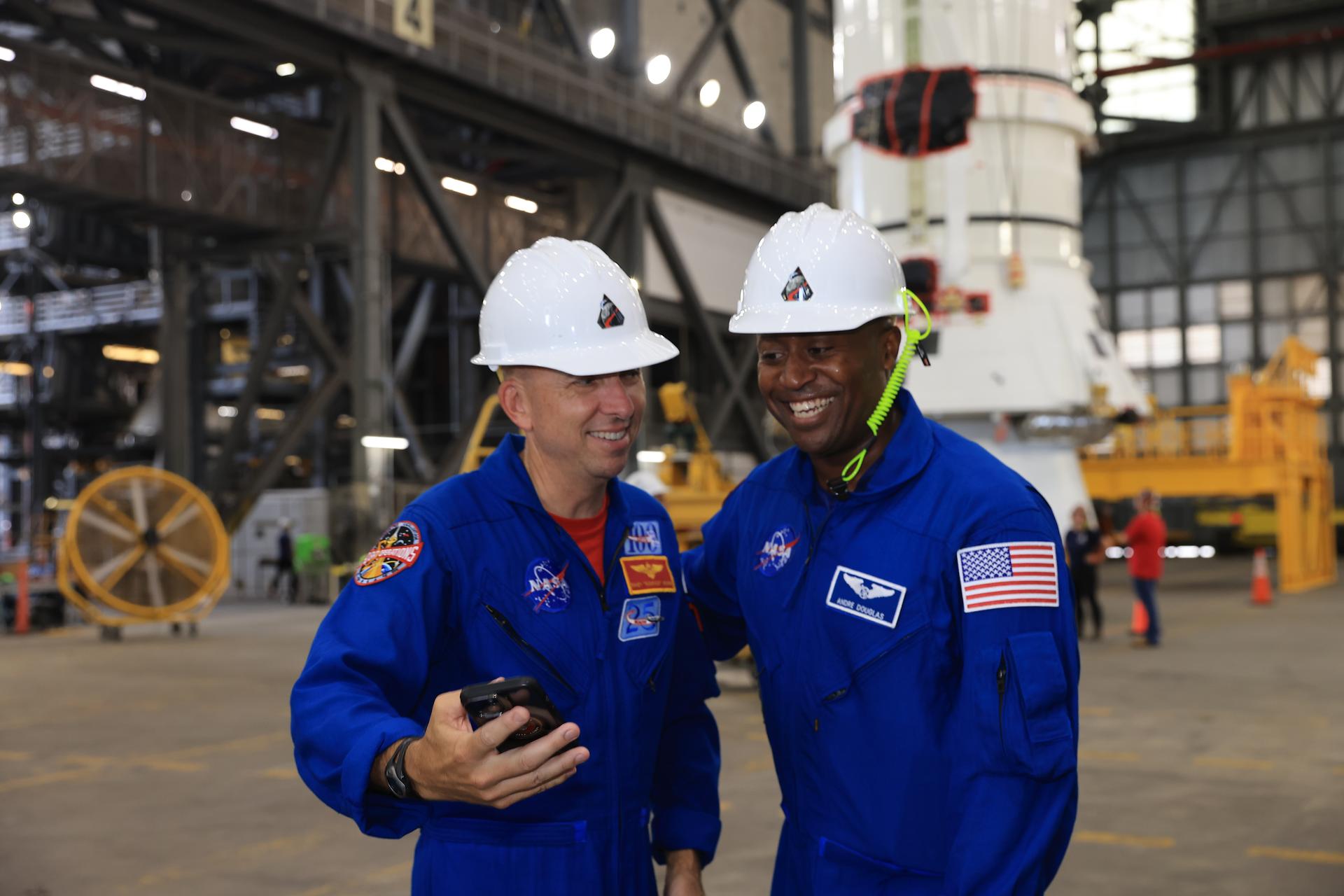
Artemis III crew members, NASA astronauts Randy Bresnick (left) and Andre Douglas, take a selfie in front of the right-hand aft assembly solid rocket booster segment of the Artemis III SLS (Space Launch System) rocket inside the Vehicle Assembly Building at NASA’s Kennedy Space Center in Florida on Friday, July 10, 2026. The astronauts met with NASA’s Exploration Ground Systems teams and got a close look at the work underway for their upcoming mission. Bresnick, Douglas, NASA astronaut Frank Rubio, and ESA (European Space Agency) astronaut Luca Parmitano will launch on the Artemis III mission to conduct critical rendezvous and docking tests with lunar lander systems in low Earth orbit, advancing the capabilities needed before astronauts return to the lunar surface on Artemis IV.
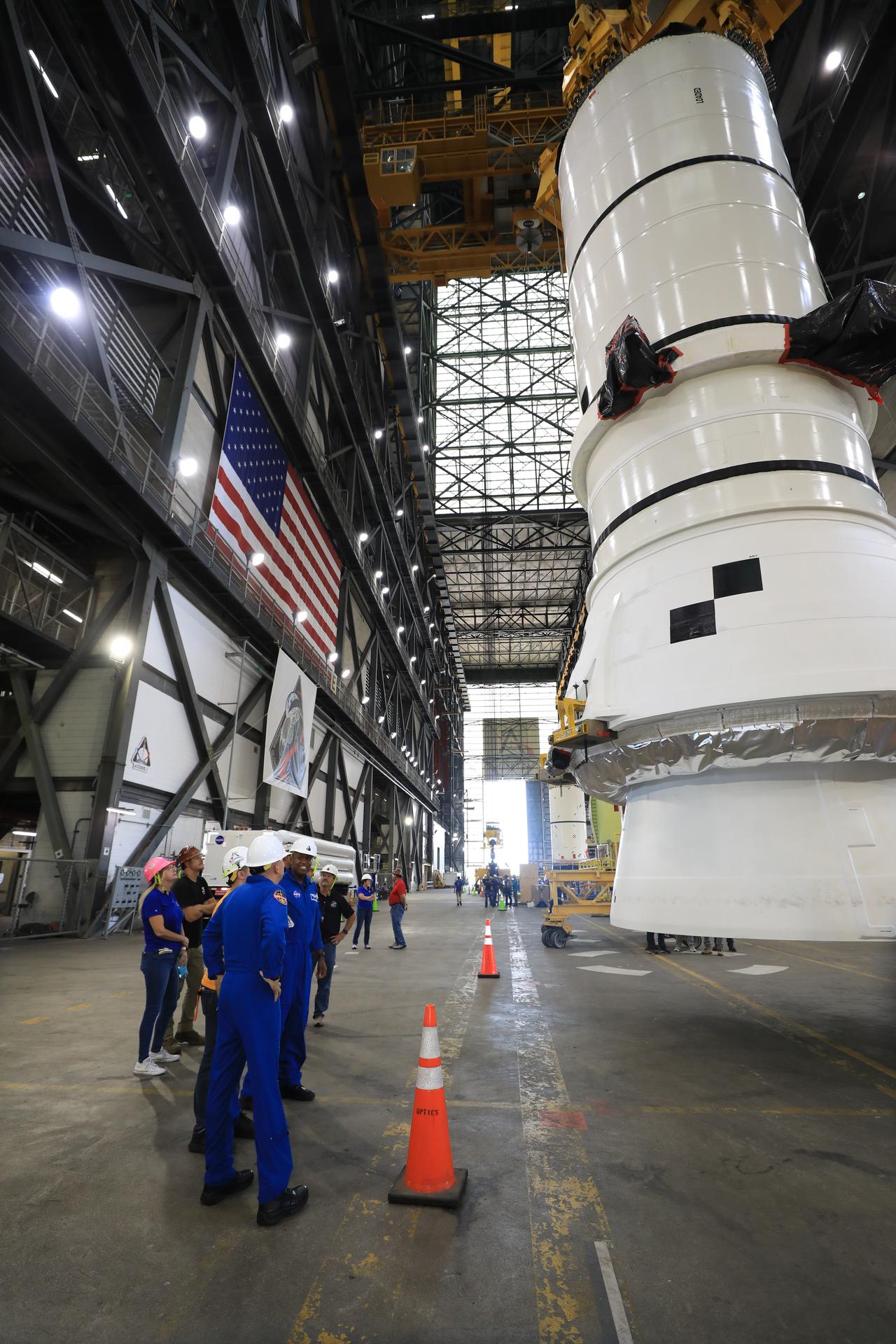
Artemis III crew members, NASA astronauts Randy Bresnick (left) and Andre Douglas, view the right-hand aft assembly solid rocket booster segment of the Artemis III SLS (Space Launch System) rocket inside the Vehicle Assembly Building at NASA’s Kennedy Space Center in Florida on Friday, July 10, 2026. The astronauts met with NASA’s Exploration Ground Systems teams and got a close look at the work underway for their upcoming mission. Bresnick, Douglas, NASA astronaut Frank Rubio, and ESA (European Space Agency) astronaut Luca Parmitano will launch on the Artemis III mission to conduct critical rendezvous and docking tests with lunar lander systems in low Earth orbit, advancing the capabilities needed before astronauts return to the lunar surface on Artemis IV.
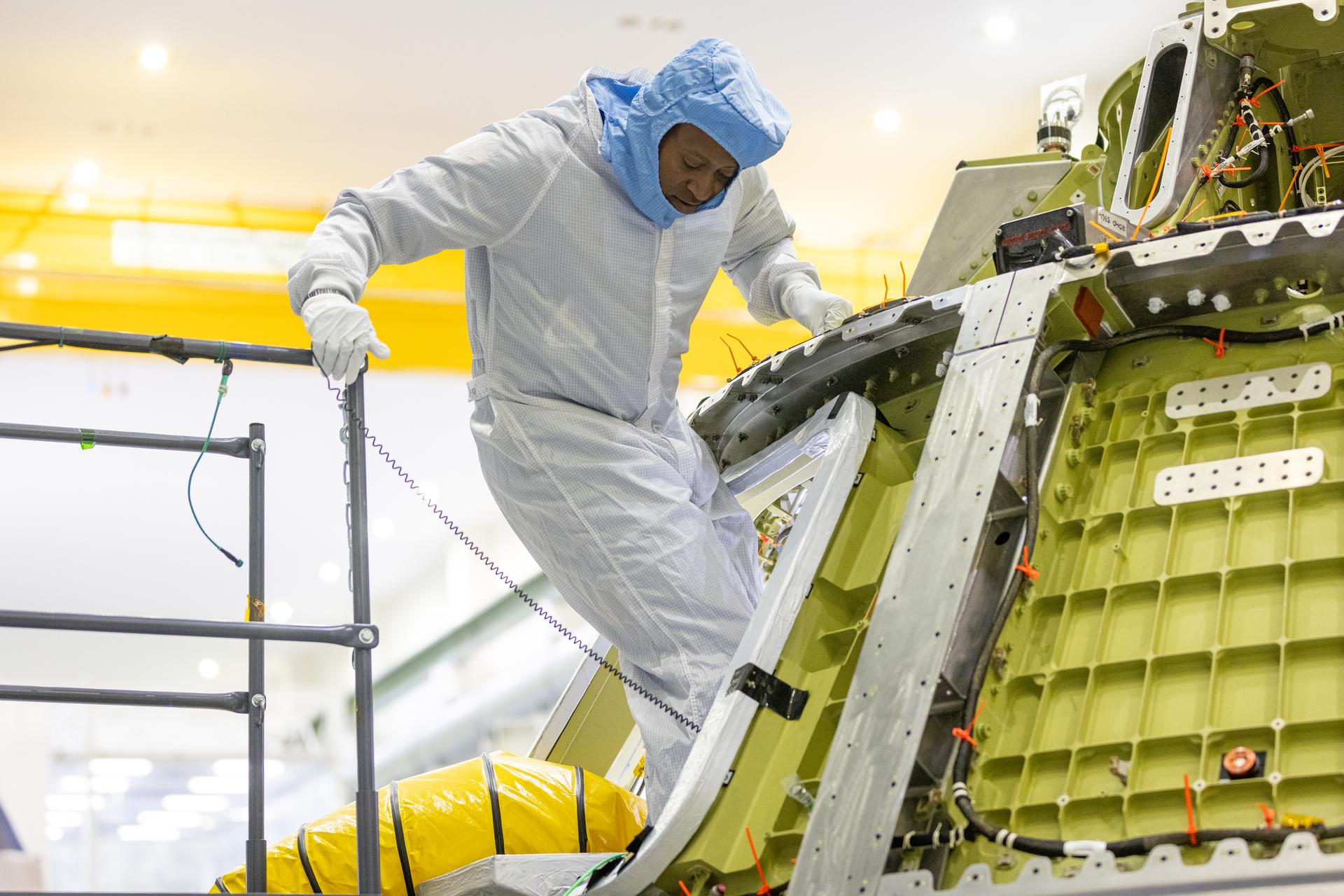
Artemis III crew member, NASA astronaut Andre Douglas enters NASA’s Artemis IV Orion spacecraft inside the high bay of the Neil A. Armstrong Operations and Checkout Building at NASA’s Kennedy Space Center in Florida on Friday, July 10, 2026. Douglas and fellow Artemis III crew member, NASA astronaut Randy Bresnick, met with Orion teams and got a close look at the work underway on the Orion spacecraft inside the facility. Bresnick, Douglas, NASA astronaut Frank Rubio, and ESA (European Space Agency) astronaut Luca Parmitano will launch on the Artemis III mission to conduct critical rendezvous and docking tests with lunar lander systems in low Earth orbit, advancing the capabilities needed before astronauts return to the lunar surface on Artemis IV.
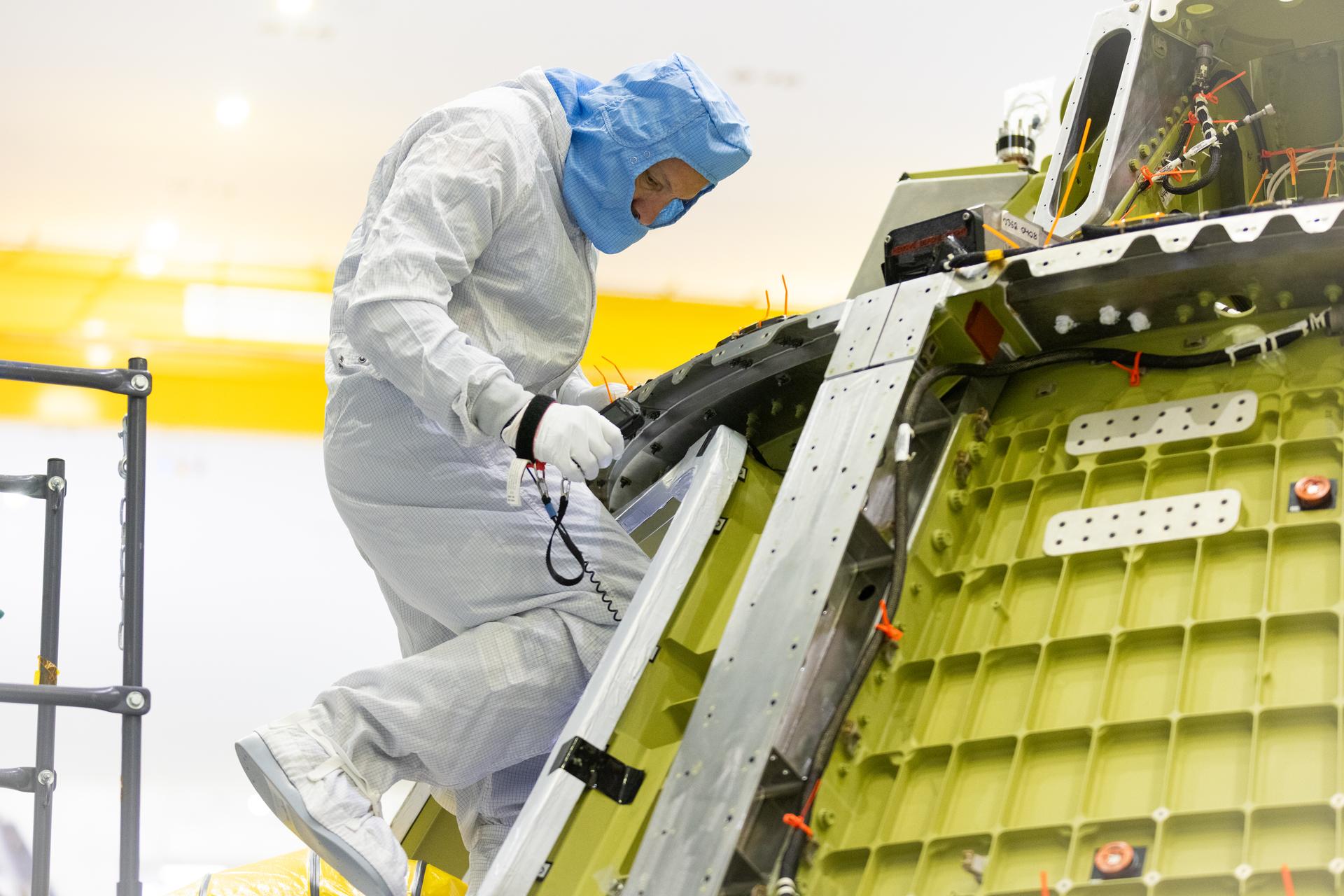
Artemis III crew member, NASA astronaut Randy Bresnick enters NASA’s Artemis IV Orion spacecraft inside the high bay of the Neil A. Armstrong Operations and Checkout Building at NASA’s Kennedy Space Center in Florida on Friday, July 10, 2026. Bresnick and fellow Artemis III crew member, NASA astronaut Andre Douglas, met with Orion teams and got a closer look at the work underway on the Orion spacecraft inside the facility. Bresnick, Douglas, NASA astronaut Frank Rubio, and ESA (European Space Agency) astronaut Luca Parmitano will launch on the Artemis III mission to conduct critical rendezvous and docking tests with lunar lander systems in low Earth orbit, advancing the capabilities needed before astronauts return to the lunar surface on Artemis IV.
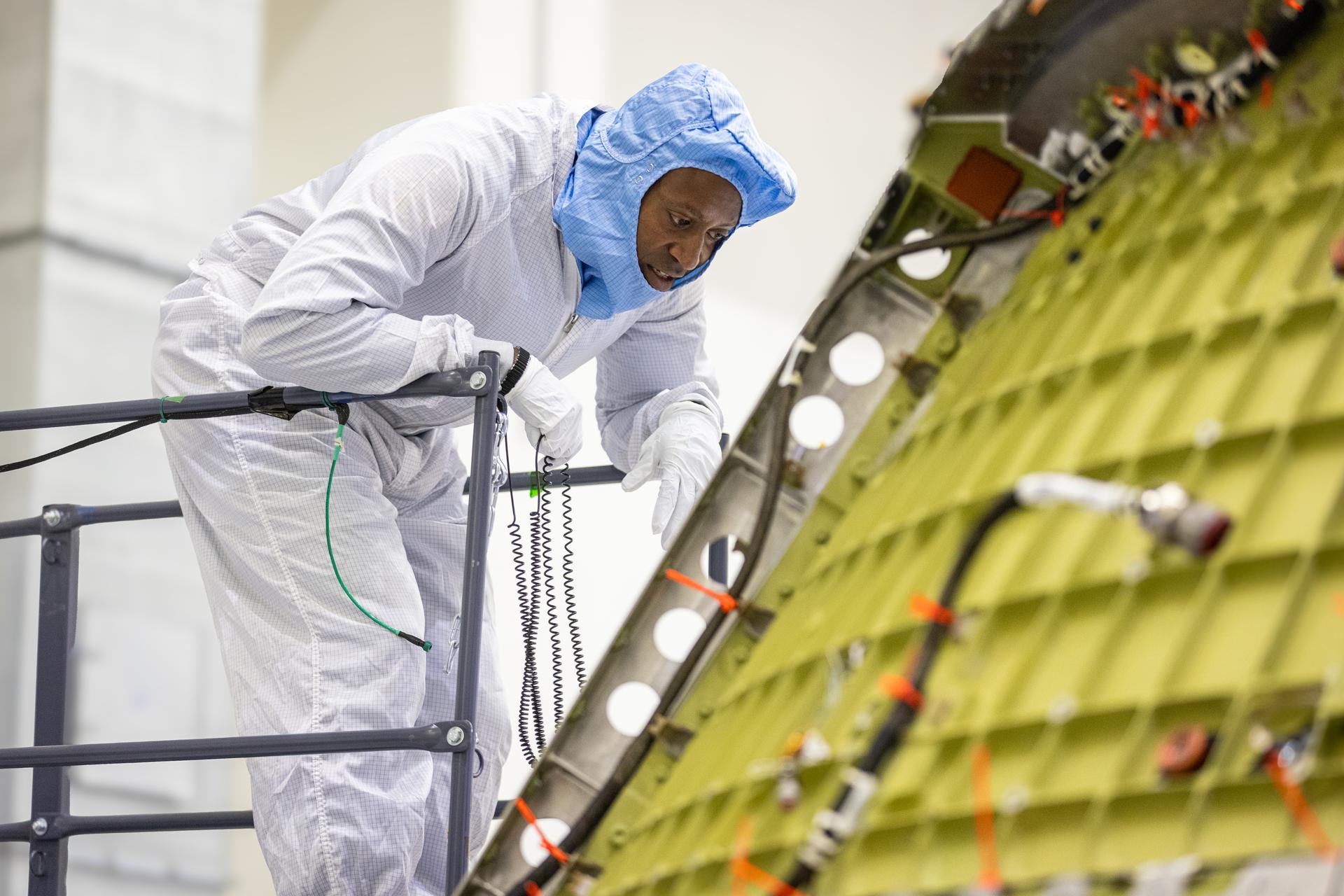
Artemis III crew member, NASA astronaut Andre Douglas enters NASA’s Artemis IV Orion spacecraft inside the high bay of the Neil A. Armstrong Operations and Checkout Building at NASA’s Kennedy Space Center in Florida on Friday, July 10, 2026. Douglas and fellow Artemis III crew member, NASA astronaut Randy Bresnick, met with Orion teams and got a close look at the work underway on the Orion spacecraft inside the facility. Bresnick, Douglas, NASA astronaut Frank Rubio, and ESA (European Space Agency) astronaut Luca Parmitano will launch on the Artemis III mission to conduct critical rendezvous and docking tests with lunar lander systems in low Earth orbit, advancing the capabilities needed before astronauts return to the lunar surface on Artemis IV.
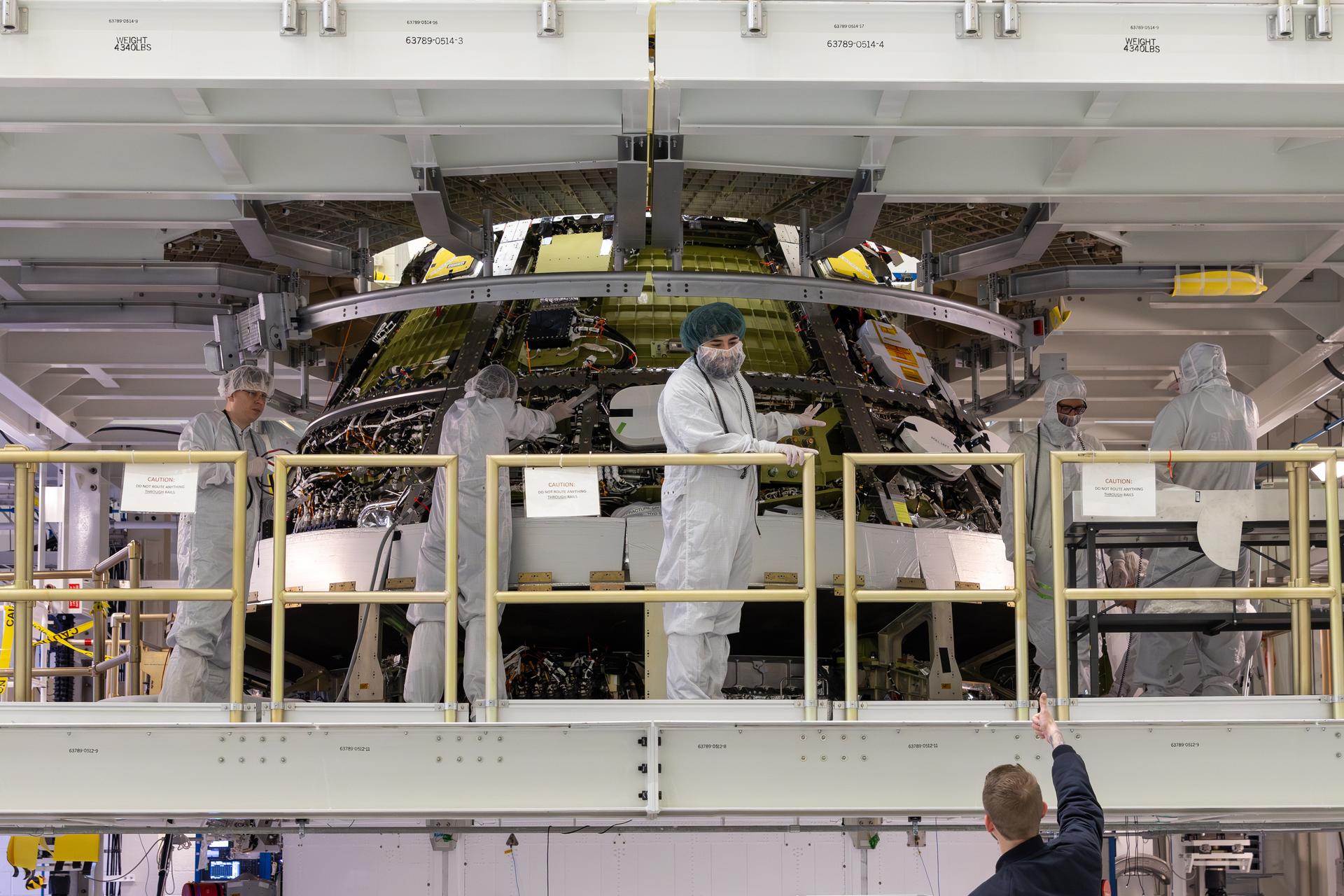
Engineers finish connecting the Artemis III Orion crew and service modules on Friday, July 31, 2026, inside the Neil A. Armstrong Operations and Checkout Building at NASA’s Kennedy Space Center in Florida. Now integrated, the team will power up the combined crew and service module for the first time then begin altitude chamber testing, which will put the spacecraft through conditions as close as possible to the environment it will experience in low Earth orbit. Artemis III and the four-person crew will carry out a series of objectives in low Earth orbit designed to demonstrate critical systems needed for future lunar landings, beginning with Artemis IV.
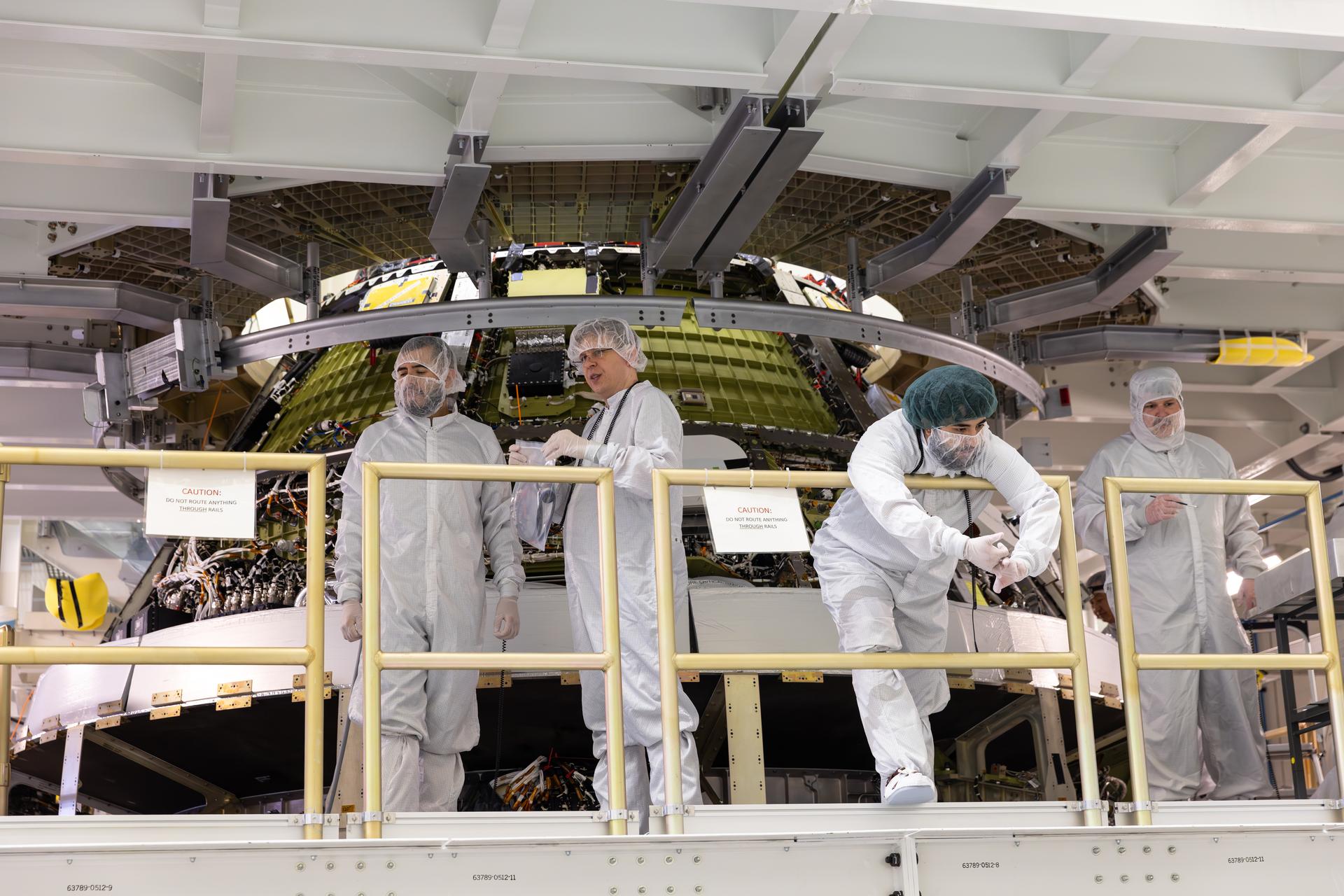
Engineers finish connecting the Artemis III Orion crew and service modules on Friday, July 31, 2026, inside the Neil A. Armstrong Operations and Checkout Building at NASA’s Kennedy Space Center in Florida. Now integrated, the team will power up the combined crew and service module for the first time then begin altitude chamber testing, which will put the spacecraft through conditions as close as possible to the environment it will experience in low Earth orbit. Artemis III and the four-person crew will carry out a series of objectives in low Earth orbit designed to demonstrate critical systems needed for future lunar landings, beginning with Artemis IV.
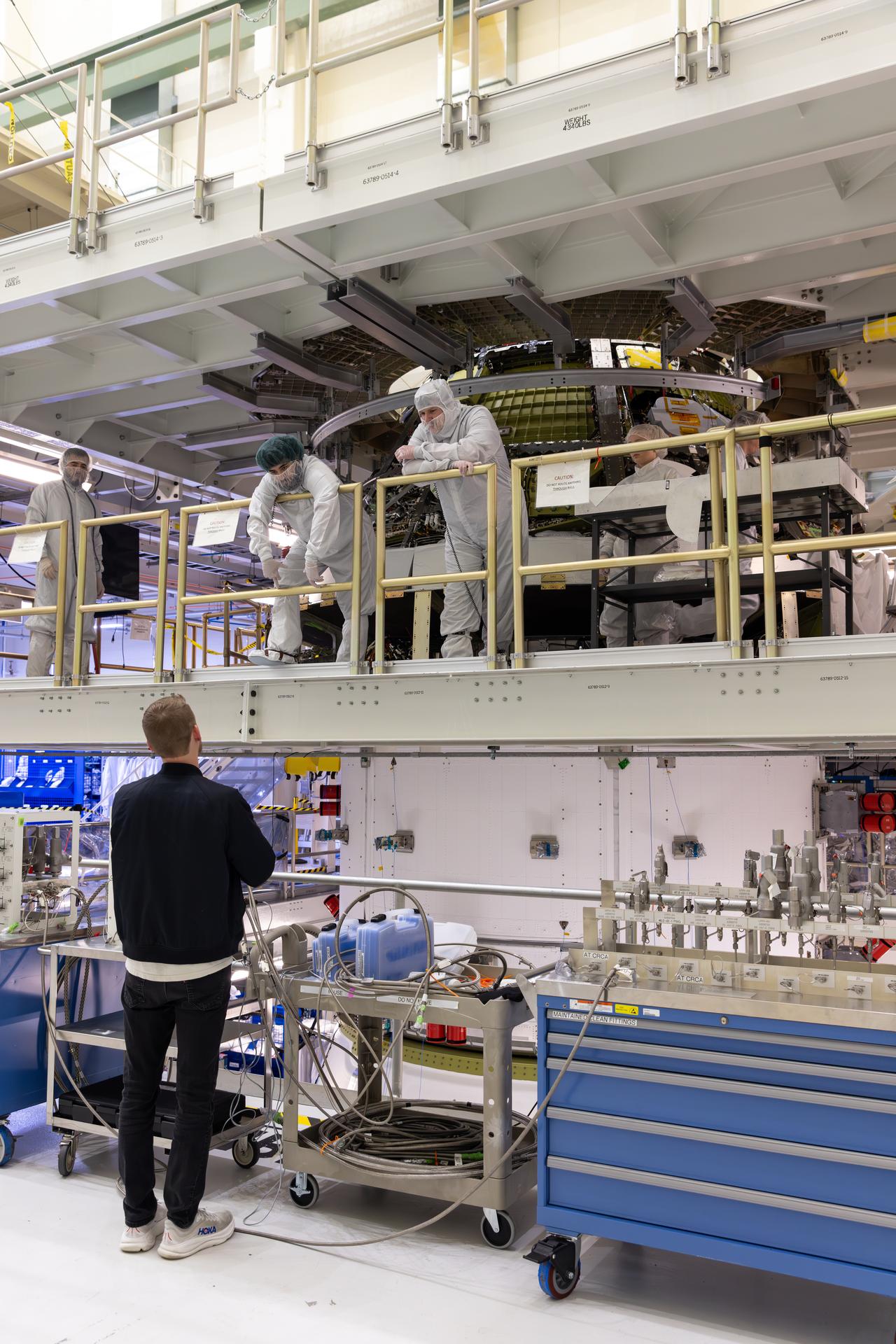
Engineers finish connecting the Artemis III Orion crew and service modules on Friday, July 31, 2026, inside the Neil A. Armstrong Operations and Checkout Building at NASA’s Kennedy Space Center in Florida. Now integrated, the team will power up the combined crew and service module for the first time then begin altitude chamber testing, which will put the spacecraft through conditions as close as possible to the environment it will experience in low Earth orbit. Artemis III and the four-person crew will carry out a series of objectives in low Earth orbit designed to demonstrate critical systems needed for future lunar landings, beginning with Artemis IV.
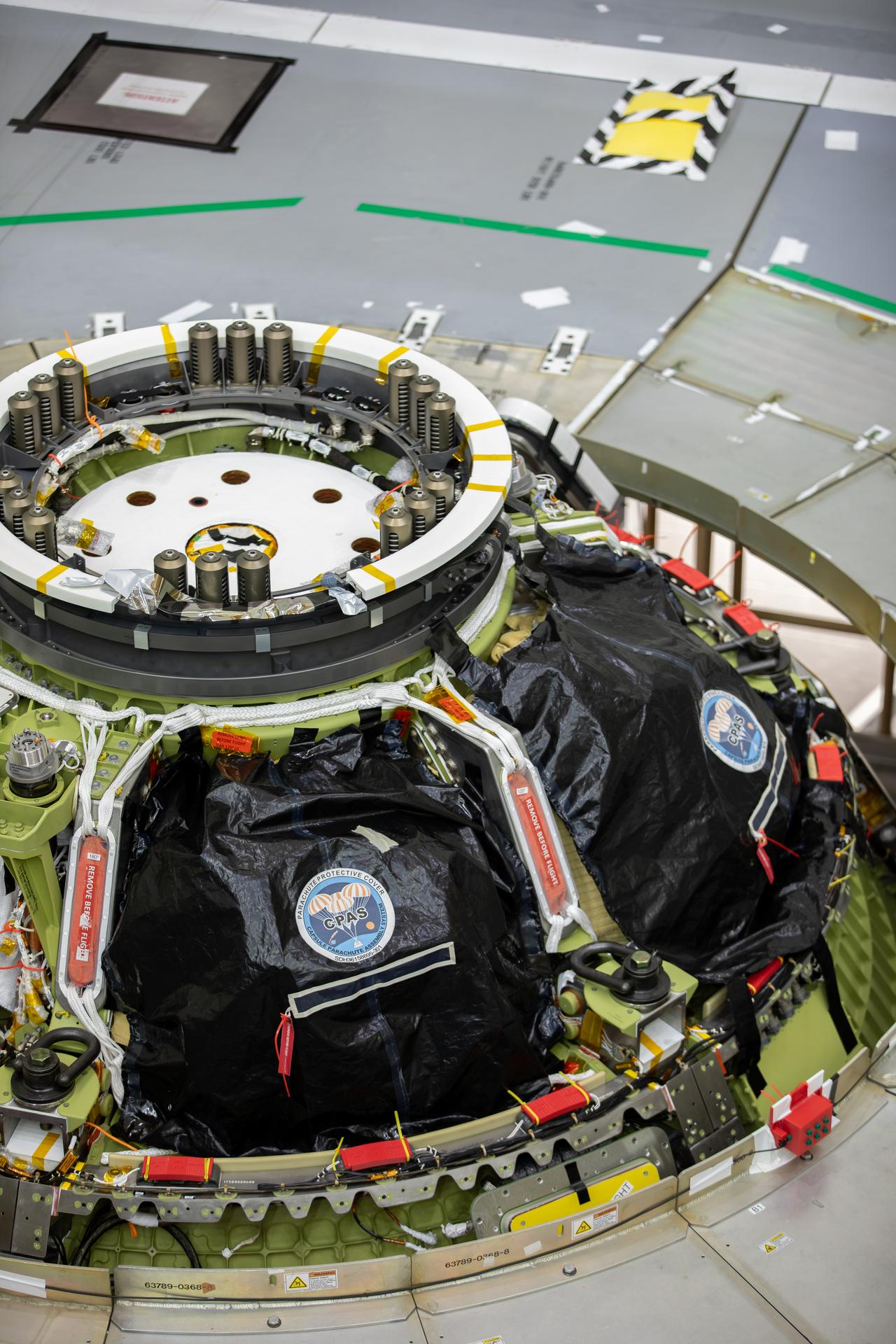
A photographer captures the top of the Artemis III Orion crew module and its parachutes after integration with the European Service Module on Friday, July 31, 2026, inside the Neil A. Armstrong Operations and Checkout Building at NASA’s Kennedy Space Center in Florida. Now integrated, the team will power up the combined crew and service module for the first time then begin altitude chamber testing, which will put the spacecraft through conditions as close as possible to the environment it will experience in low Earth orbit. Artemis III and the four-person crew will carry out a series of objectives in low Earth orbit designed to demonstrate critical systems needed for future lunar landings, beginning with Artemis IV.
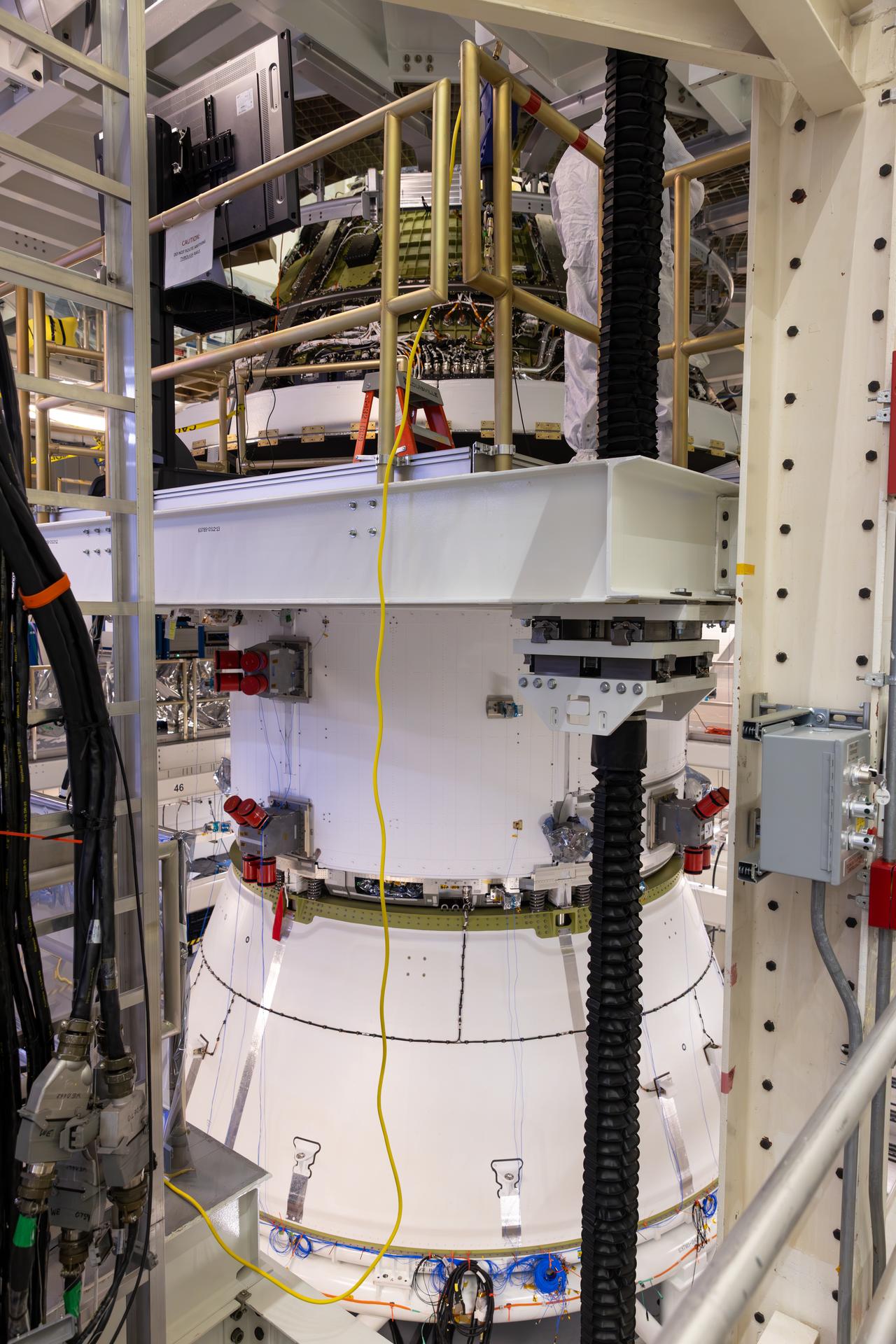
Engineers finish connecting the Artemis III Orion crew and service modules on Friday, July 31, 2026, inside the Neil A. Armstrong Operations and Checkout Building at NASA’s Kennedy Space Center in Florida. Now integrated, the team will power up the combined crew and service module for the first time then begin altitude chamber testing, which will put the spacecraft through conditions as close as possible to the environment it will experience in low Earth orbit. Artemis III and the four-person crew will carry out a series of objectives in low Earth orbit designed to demonstrate critical systems needed for future lunar landings, beginning with Artemis IV.
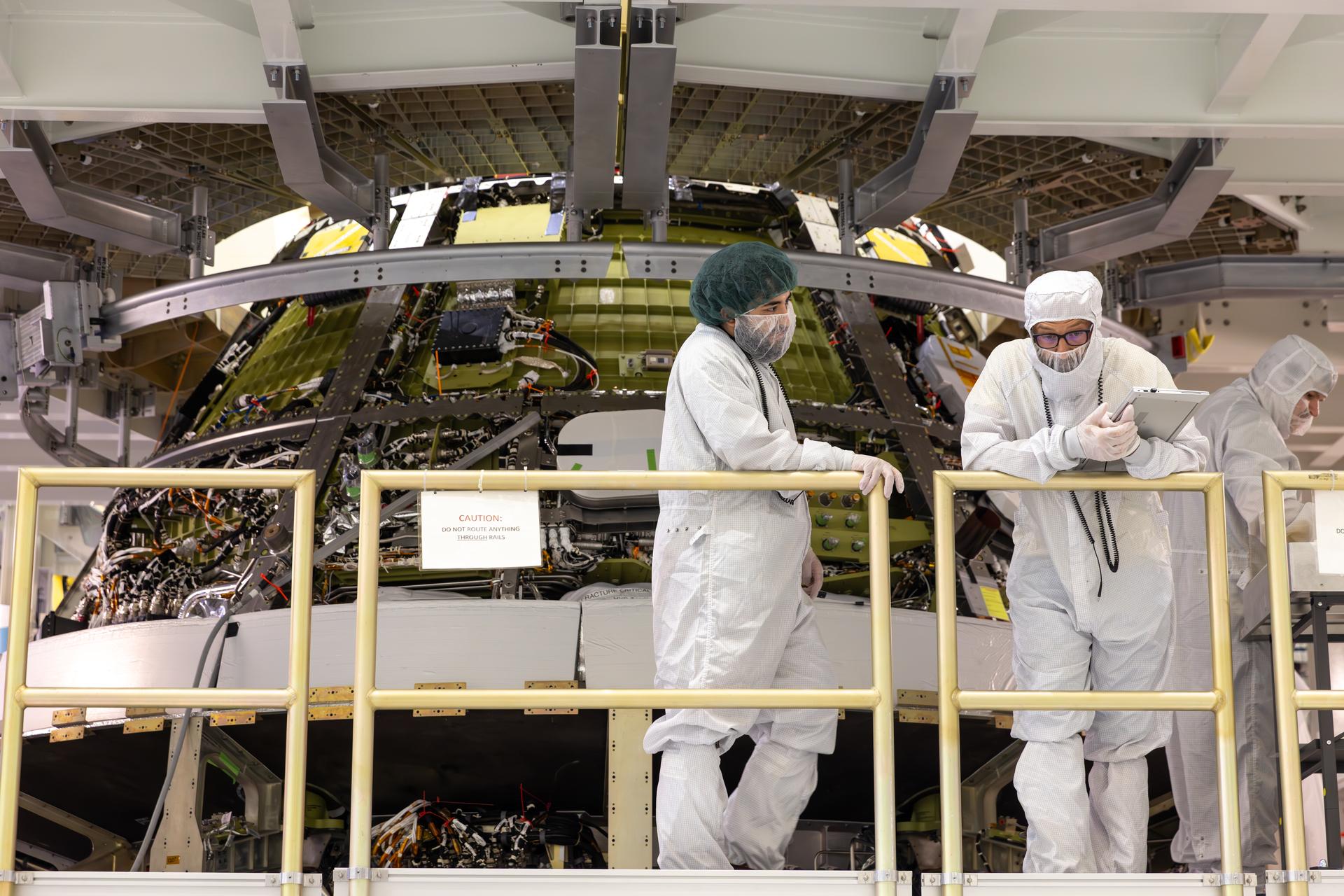
Engineers finish connecting the Artemis III Orion crew and service modules on Friday, July 31, 2026, inside the Neil A. Armstrong Operations and Checkout Building at NASA’s Kennedy Space Center in Florida. Now integrated, the team will power up the combined crew and service module for the first time then begin altitude chamber testing, which will put the spacecraft through conditions as close as possible to the environment it will experience in low Earth orbit. Artemis III and the four-person crew will carry out a series of objectives in low Earth orbit designed to demonstrate critical systems needed for future lunar landings, beginning with Artemis IV.
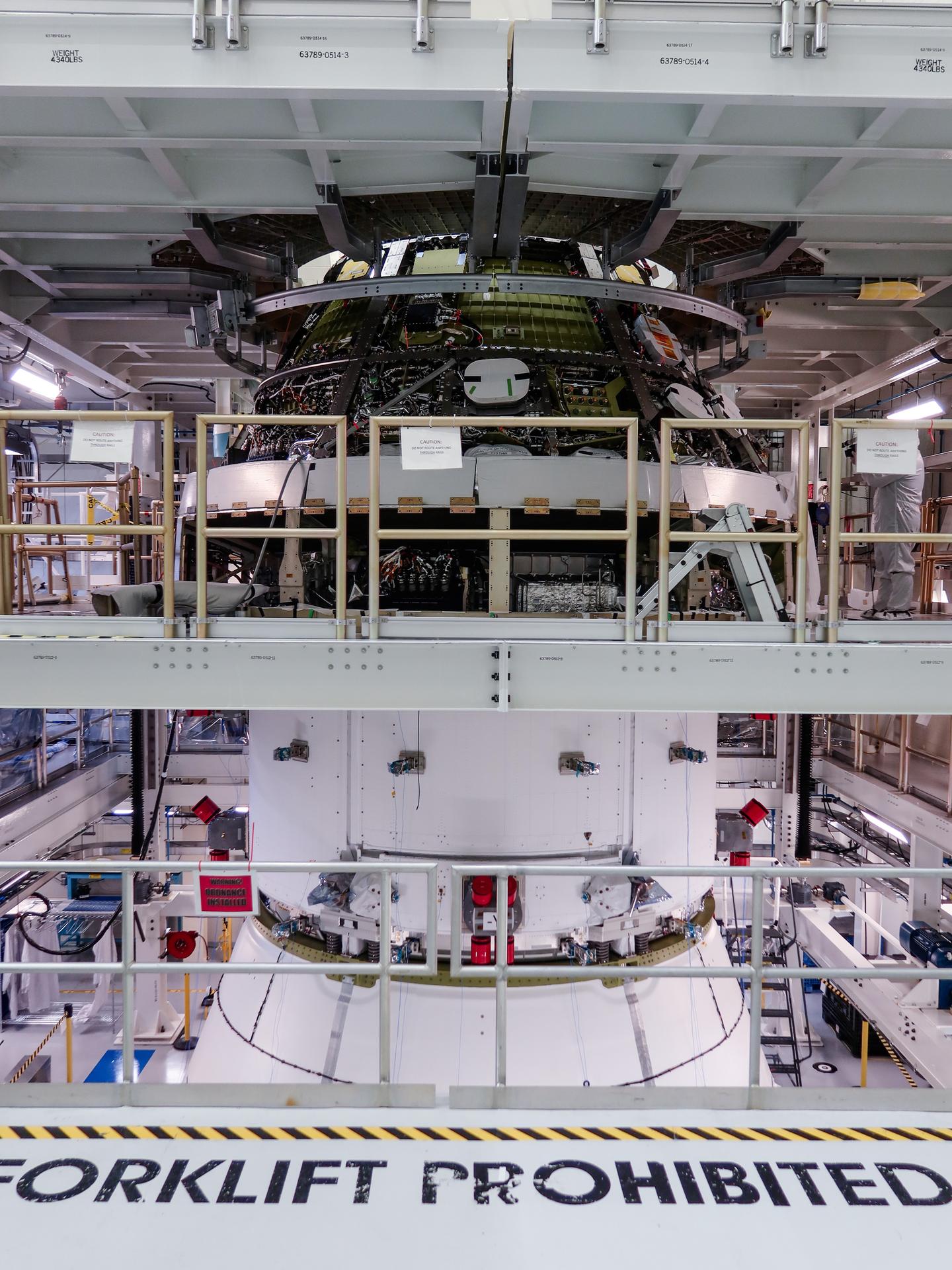
Engineers finish connecting the Artemis III Orion crew and service modules on Friday, July 31, 2026, inside the Neil A. Armstrong Operations and Checkout Building at NASA’s Kennedy Space Center in Florida. Now integrated, the team will power up the combined crew and service module for the first time then begin altitude chamber testing, which will put the spacecraft through conditions as close as possible to the environment it will experience in low Earth orbit. Artemis III and the four-person crew will carry out a series of objectives in low Earth orbit designed to demonstrate critical systems needed for future lunar landings, beginning with Artemis IV.
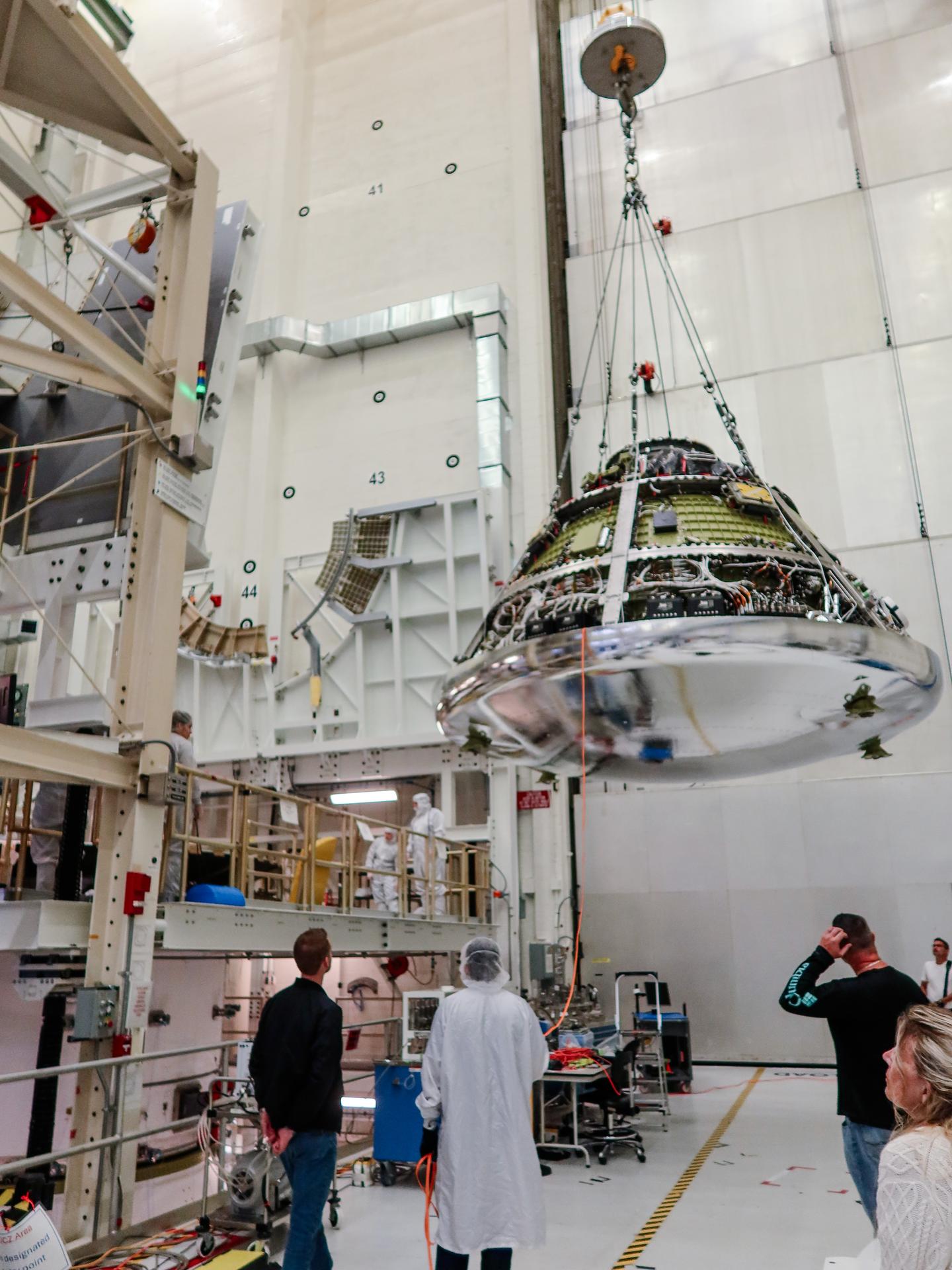
Engineers prepare to connect the Orion crew and service modules for the Artemis III mission on Thursday, July 30, 2026, inside the Neil A. Armstrong Operations and Checkout Building at NASA’s Kennedy Space Center in Florida. With the crew and service modules integrated, the team will power up the combined crew and service module for the first time then begin altitude chamber testing, which will put the spacecraft through conditions as close as possible to the environment it will experience in low Earth orbit. Artemis III and the four-person crew will carry out a series of objectives in low Earth orbit designed to demonstrate critical systems needed for future lunar landings, beginning with Artemis IV.
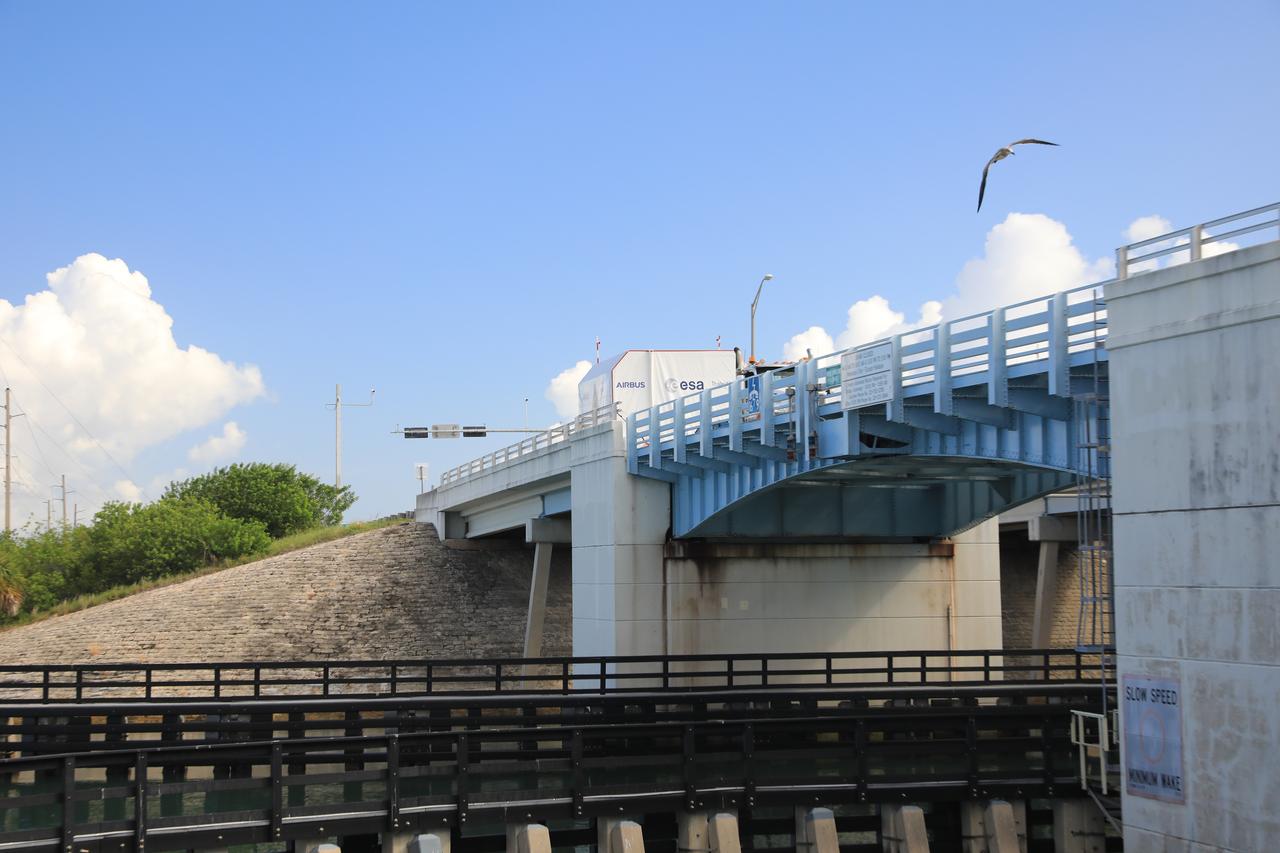
The transport carrier containing the European Service Module 3 for NASA’s Artemis III mission arrives at Port Canaveral on Tuesday, Sept. 3, 2024, awaiting transportation to NASA’s Kennedy Space Center in Florida. The European Service Module 3, which is assembled by Airbus in Bremen, Germany, traveled 10 days across the Atlantic Ocean via the Canopee ship. The European Service Module 3 provides the spacecraft’s propulsion, thermal control, electrical power, and life support systems. Artemis III will send four astronauts to the lunar orbit where two crew members will spend a week near the South Pole of the Moon conducting new science.
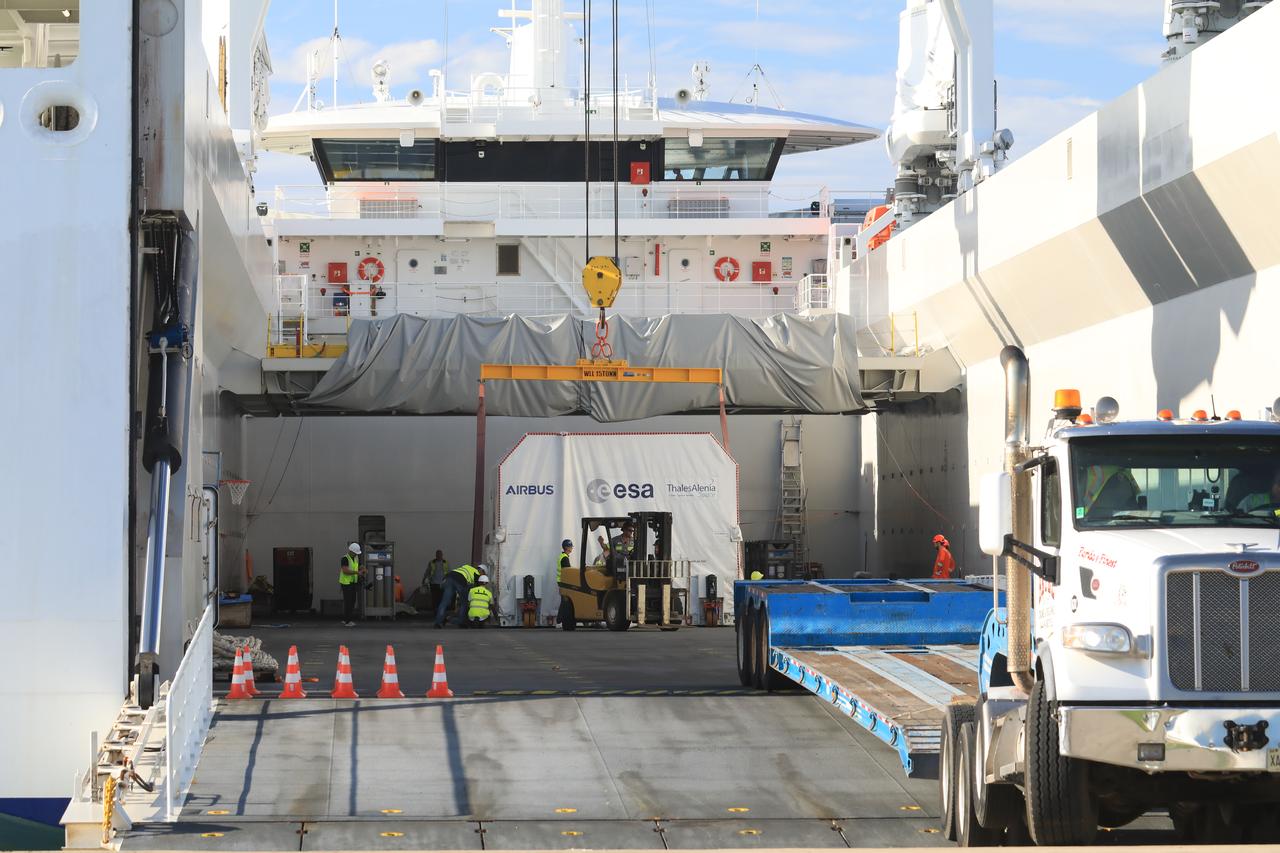
The transport carrier containing the European Service Module 3 for NASA’s Artemis III mission arrives at Port Canaveral on Tuesday, Sept. 3, 2024, awaiting transportation to NASA’s Kennedy Space Center in Florida. The European Service Module 3, which is assembled by Airbus in Bremen, Germany, traveled 10 days across the Atlantic Ocean via the Canopee ship. The European Service Module 3 provides the spacecraft’s propulsion, thermal control, electrical power, and life support systems. Artemis III will send four astronauts to the lunar orbit where two crew members will spend a week near the South Pole of the Moon conducting new science.
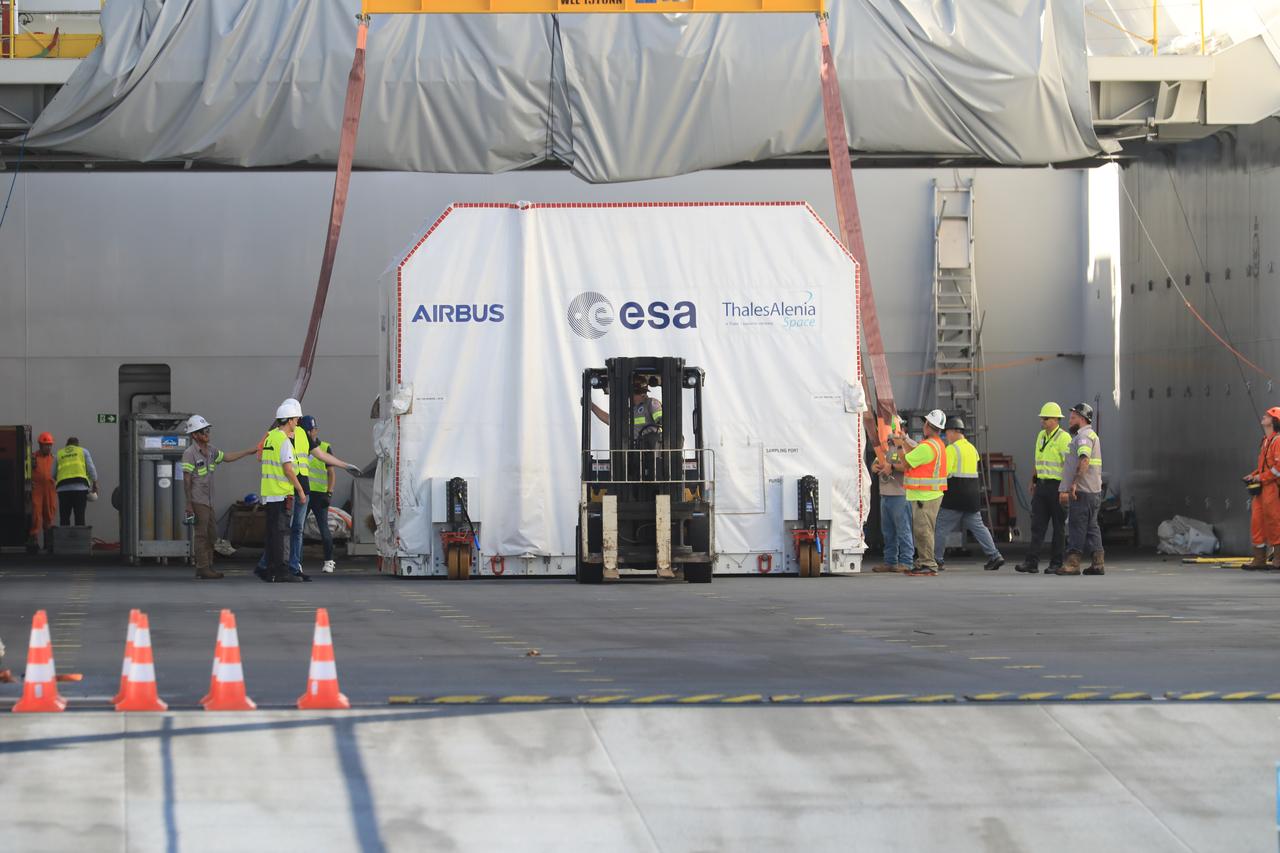
The transport carrier containing the European Service Module 3 for NASA’s Artemis III mission arrives at Port Canaveral on Tuesday, Sept. 3, 2024, awaiting transportation to NASA’s Kennedy Space Center in Florida. The European Service Module 3, which is assembled by Airbus in Bremen, Germany, traveled 10 days across the Atlantic Ocean via the Canopee ship. The European Service Module 3 provides the spacecraft’s propulsion, thermal control, electrical power, and life support systems. Artemis III will send four astronauts to the lunar orbit where two crew members will spend a week near the South Pole of the Moon conducting new science.
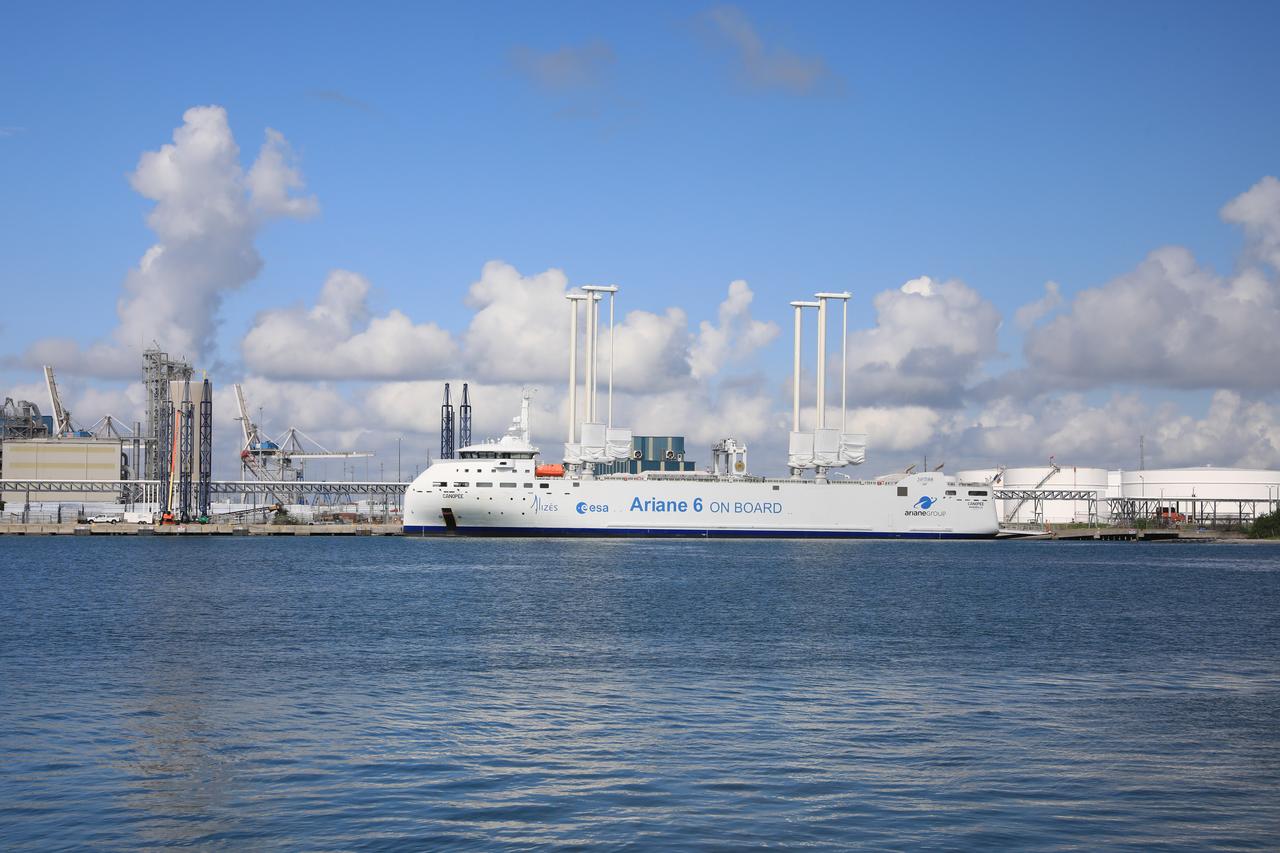
The European Service Module 3 for NASA’s Artemis III mission arrives at Port Canaveral on Tuesday, Sept. 3, 2024, awaiting transportation to NASA’s Kennedy Space Center in Florida. The European Service Module 3, which is assembled by Airbus in Bremen, Germany, traveled across the Atlantic Ocean by the ESA (European Space Agency) aboard the Canopee ship. The European Service Module 3 provides the spacecraft’s propulsion, thermal control, electrical power, and life support systems. Artemis III will send four astronauts to the lunar orbit where two crew members will spend a week near the South Pole of the Moon conducting new science.
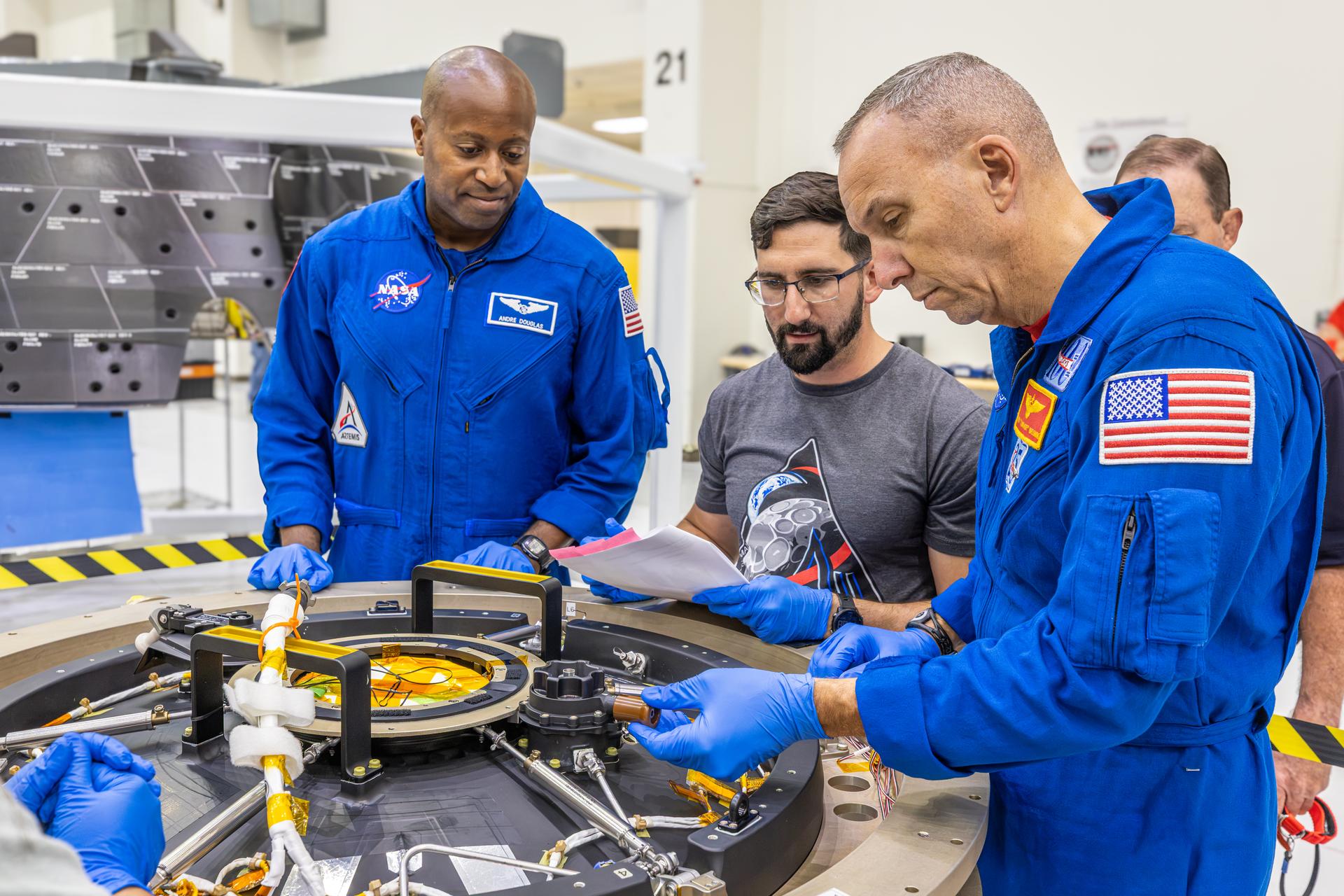
Artemis III crew members, NASA astronauts Randy Bresnick (right) and Andre Douglas (left), learn more about Orion spacecraft hardware with teams inside the high bay of the Neil A. Armstrong Operations and Checkout Building at NASA’s Kennedy Space Center in Florida on Friday, July 10, 2026. The astronauts met with Orion teams and got a close look at the work underway for their upcoming mission. Bresnick, Douglas, NASA astronaut Frank Rubio, and ESA (European Space Agency) astronaut Luca Parmitano will launch on the Artemis III mission to conduct critical rendezvous and docking tests with lunar lander systems in low Earth orbit, advancing the capabilities needed before astronauts return to the lunar surface on Artemis IV.
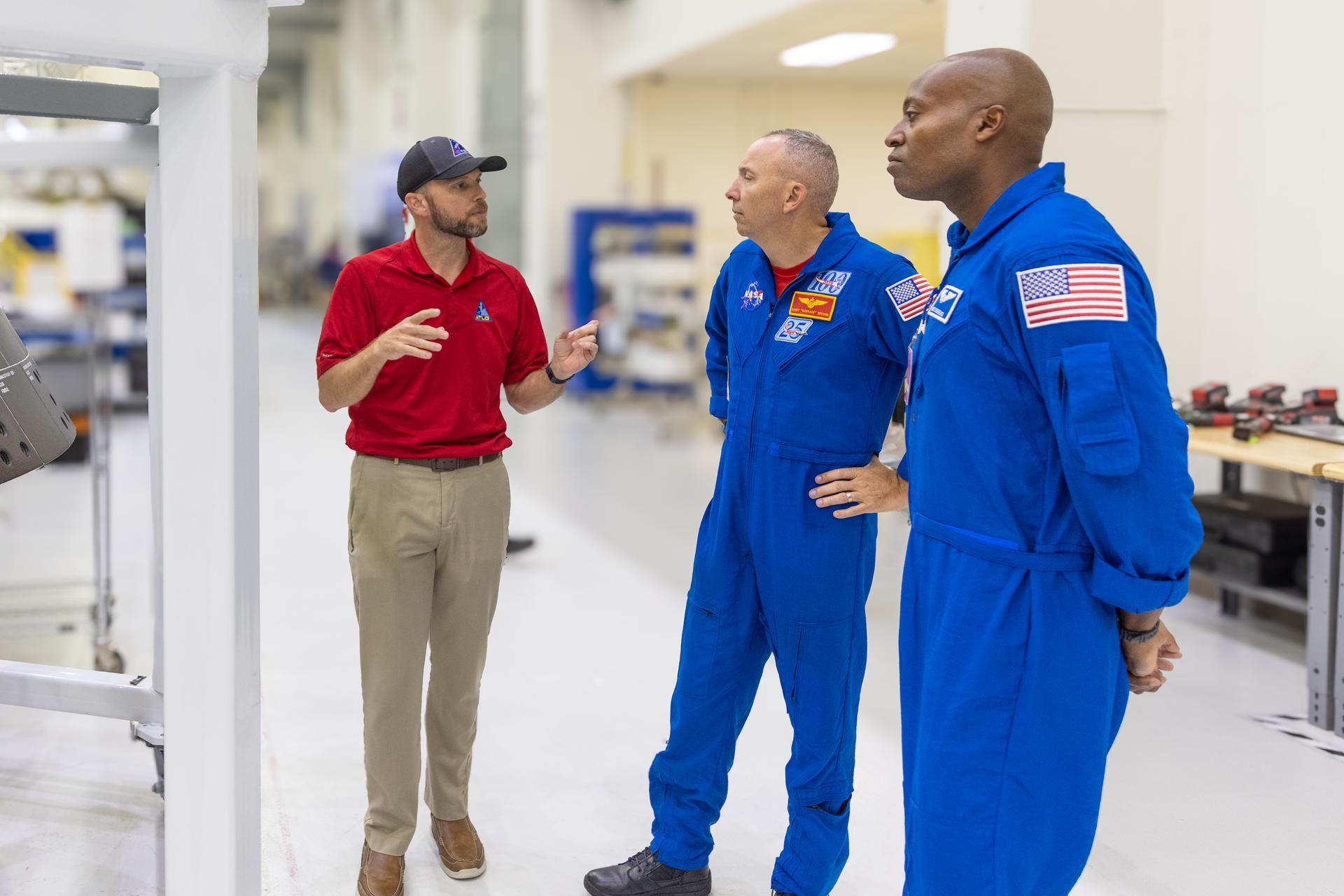
Artemis III crew members, NASA astronauts Randy Bresnick (center) and Andre Douglas (right), speak to Jim Skaggs, Spacecraft Flow Manager for Lockheed Martin, inside the high bay of the Neil A. Armstrong Operations and Checkout Building at NASA’s Kennedy Space Center in Florida on Friday, July 10, 2026. The astronauts met with Orion teams and got a closer look at the Orion spacecraft inside the facility. Bresnick, Douglas, NASA astronaut Frank Rubio, and ESA (European Space Agency) astronaut Luca Parmitano will launch on the Artemis III mission to conduct critical rendezvous and docking tests with lunar lander systems in low Earth orbit, advancing the capabilities needed before astronauts return to the lunar surface on Artemis IV.
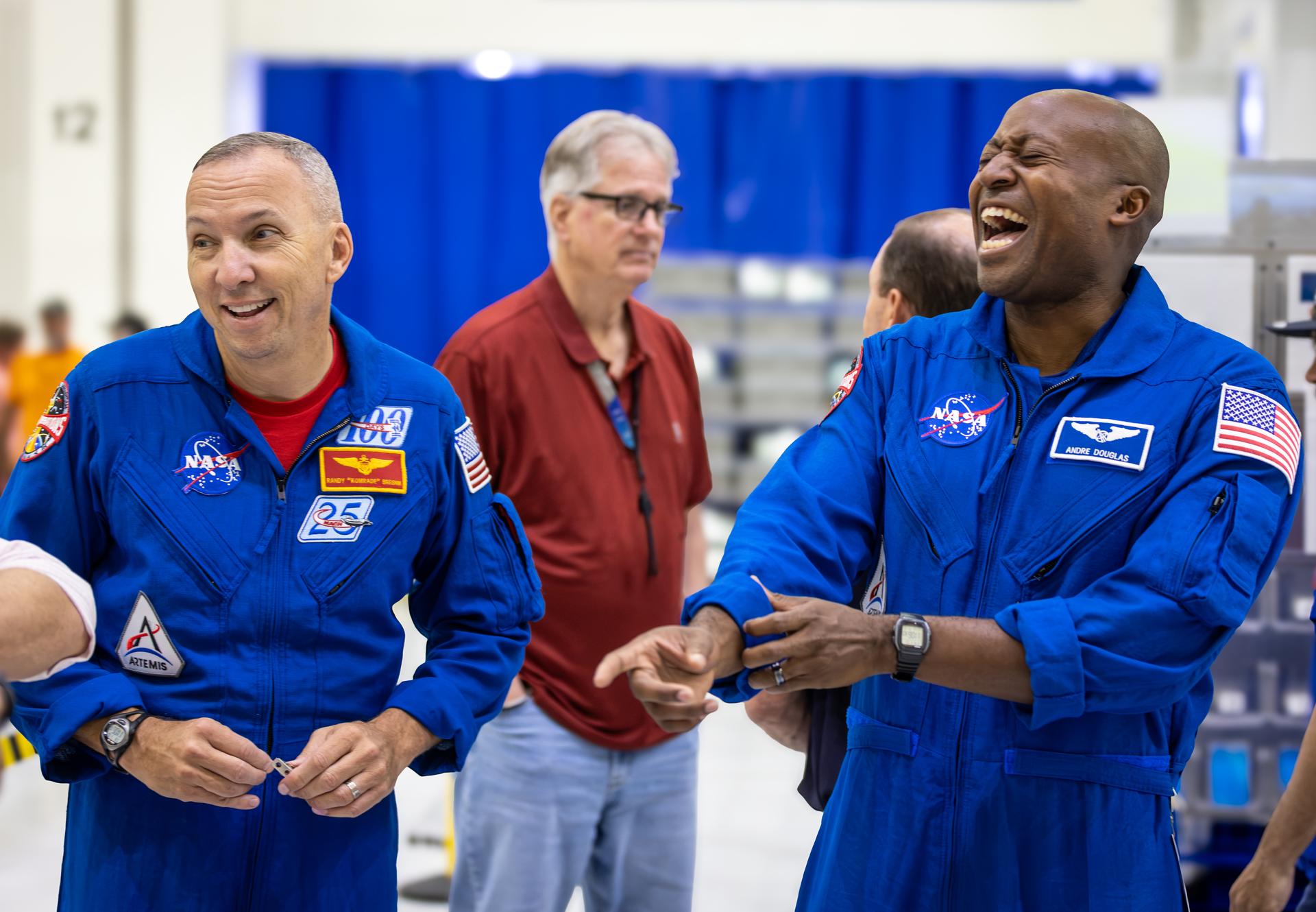
Artemis III crew members, NASA astronauts Randy Bresnick (left) and Andre Douglas (right), share a laugh with members of NASA’s Orion team inside the high bay of the Neil A. Armstrong Operations and Checkout Building at NASA’s Kennedy Space Center in Florida on Friday, July 10, 2026. The astronauts met with Orion teams and got a close look at the work underway on the Orion spacecraft inside the facility. Bresnick, Douglas, NASA astronaut Frank Rubio, and ESA (European Space Agency) astronaut Luca Parmitano will launch on the Artemis III mission to conduct critical rendezvous and docking tests with lunar lander systems in low Earth orbit, advancing the capabilities needed before astronauts return to the lunar surface on Artemis IV.
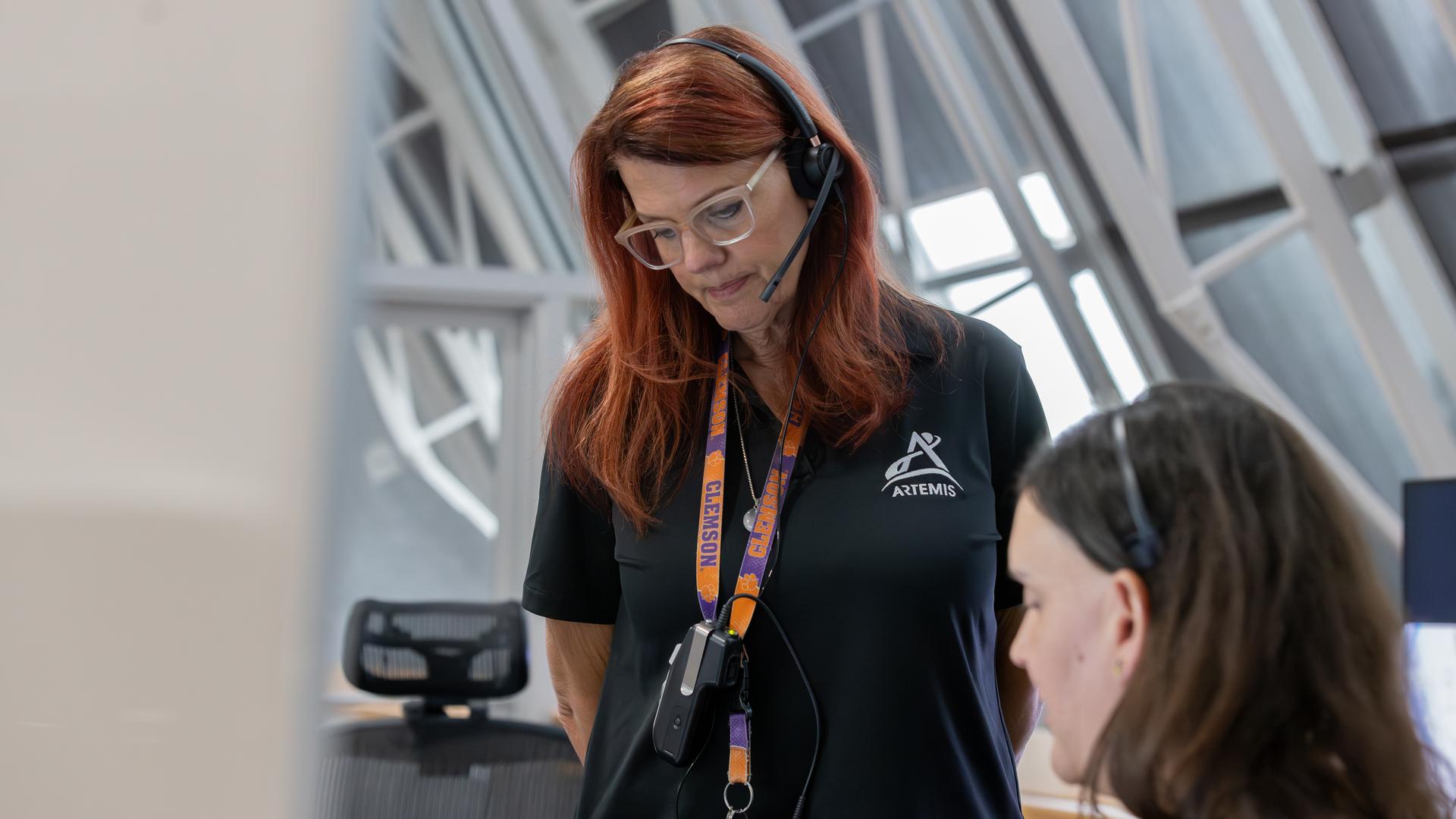
From left, Charlie Blackwell-Thompson, Artemis launch director and Mari Forrestel, Artemis launch director technical assistant, both with NASA’s Exploration Ground Systems Program, participate in a cryogenic propellant loading simulation for NASA’s Artemis III mission on Wednesday, Aug. 5, 2026, inside Firing Rooms 1 and 2 of the Rocco A. Petrone Launch Control Center at the agency’s Kennedy Space Center in Florida. Members of NASA’s Exploration Ground Systems team rehearse the steps to load the super-cooled liquid hydrogen and liquid oxygen into the SLS (Space Launch System) rocket core stage, a process that starts several hours before liftoff for the Artemis III mission. Artemis III will carry out a series of objectives in low Earth orbit designed to demonstrate critical systems needed for future lunar landings, beginning with Artemis IV.
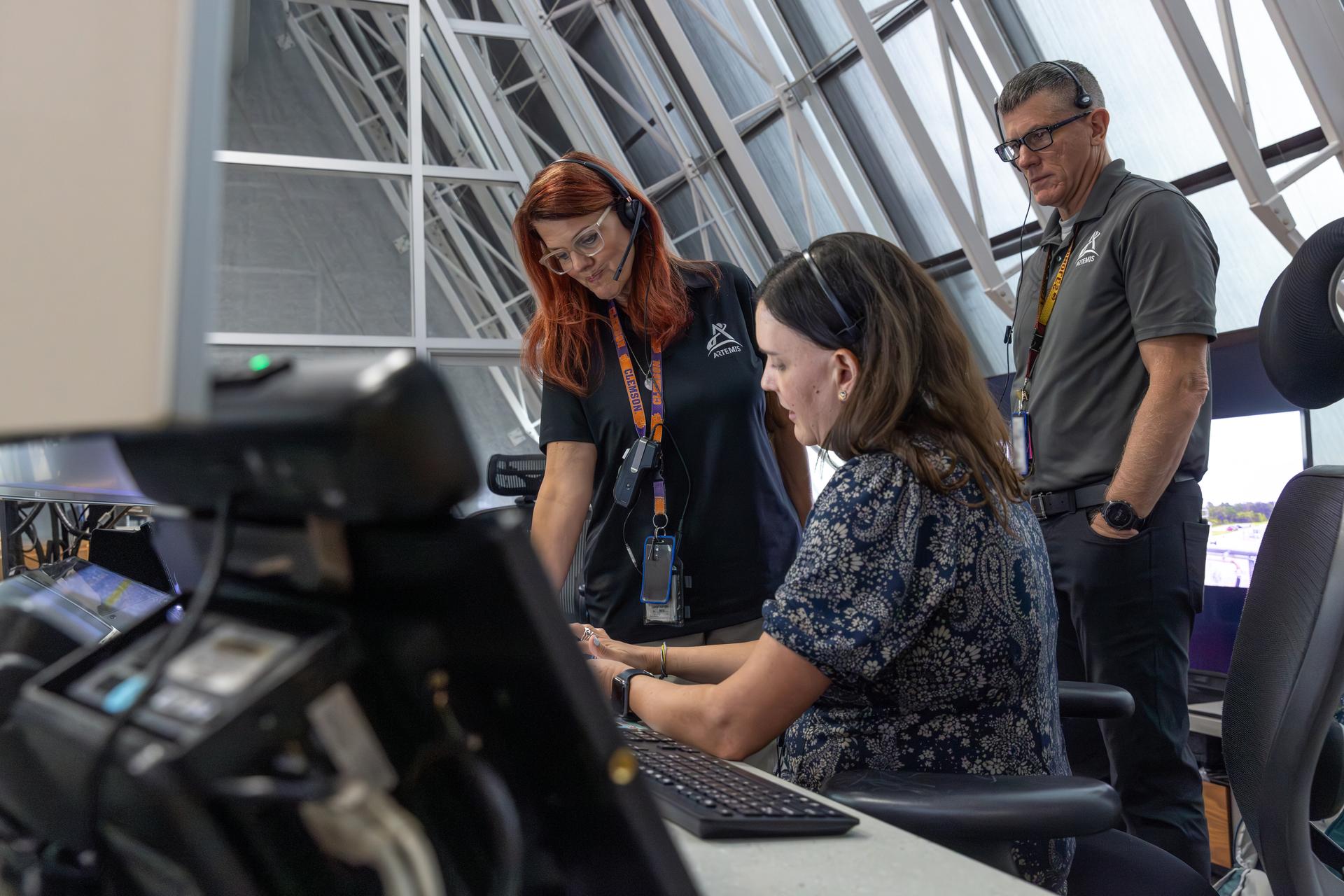
From left, Charlie Blackwell-Thompson, Artemis launch director; Mari Forrestel, Artemis launch director technical assistant; and Jeremy Graeber, assistant launch director, all with NASA’s Exploration Ground Systems Program, participate in a cryogenic propellant loading simulation for NASA’s Artemis III mission on Wednesday, Aug. 5, 2026, inside Firing Rooms 1 and 2 of the Rocco A. Petrone Launch Control Center at the agency’s Kennedy Space Center in Florida. Members of NASA’s Exploration Ground Systems team rehearse the steps to load the super-cooled liquid hydrogen and liquid oxygen into the SLS (Space Launch System) rocket core stage, a process that starts several hours before liftoff for the Artemis III mission. Artemis III will carry out a series of objectives in low Earth orbit designed to demonstrate critical systems needed for future lunar landings, beginning with Artemis IV.

From left, Charlie Blackwell-Thompson, Artemis launch director and Jeremy Graeber, assistant launch director, both with NASA’s Exploration Ground Systems Program, participate in a cryogenic propellant loading simulation for NASA’s Artemis III mission on Wednesday, Aug. 5, 2026, inside Firing Rooms 1 and 2 of the Rocco A. Petrone Launch Control Center at the agency’s Kennedy Space Center in Florida. Members of NASA’s Exploration Ground Systems team rehearse the steps to load the super-cooled liquid hydrogen and liquid oxygen into the SLS (Space Launch System) rocket core stage, a process that starts several hours before liftoff for the Artemis III mission. Artemis III will carry out a series of objectives in low Earth orbit designed to demonstrate critical systems needed for future lunar landings, beginning with Artemis IV.

Jeremy Graeber, assistant launch director, NASA’s Exploration Ground Systems Program, smiles during a cryogenic propellant loading simulation for NASA’s Artemis III mission on Wednesday, Aug. 5, 2026, inside Firing Rooms 1 and 2 of the Rocco A. Petrone Launch Control Center at the agency’s Kennedy Space Center in Florida. Members of NASA’s Exploration Ground Systems team rehearse the steps to load the super-cooled liquid hydrogen and liquid oxygen into the SLS (Space Launch System) rocket core stage, a process that starts several hours before liftoff for the Artemis III mission. Artemis III will carry out a series of objectives in low Earth orbit designed to demonstrate critical systems needed for future lunar landings, beginning with Artemis IV.
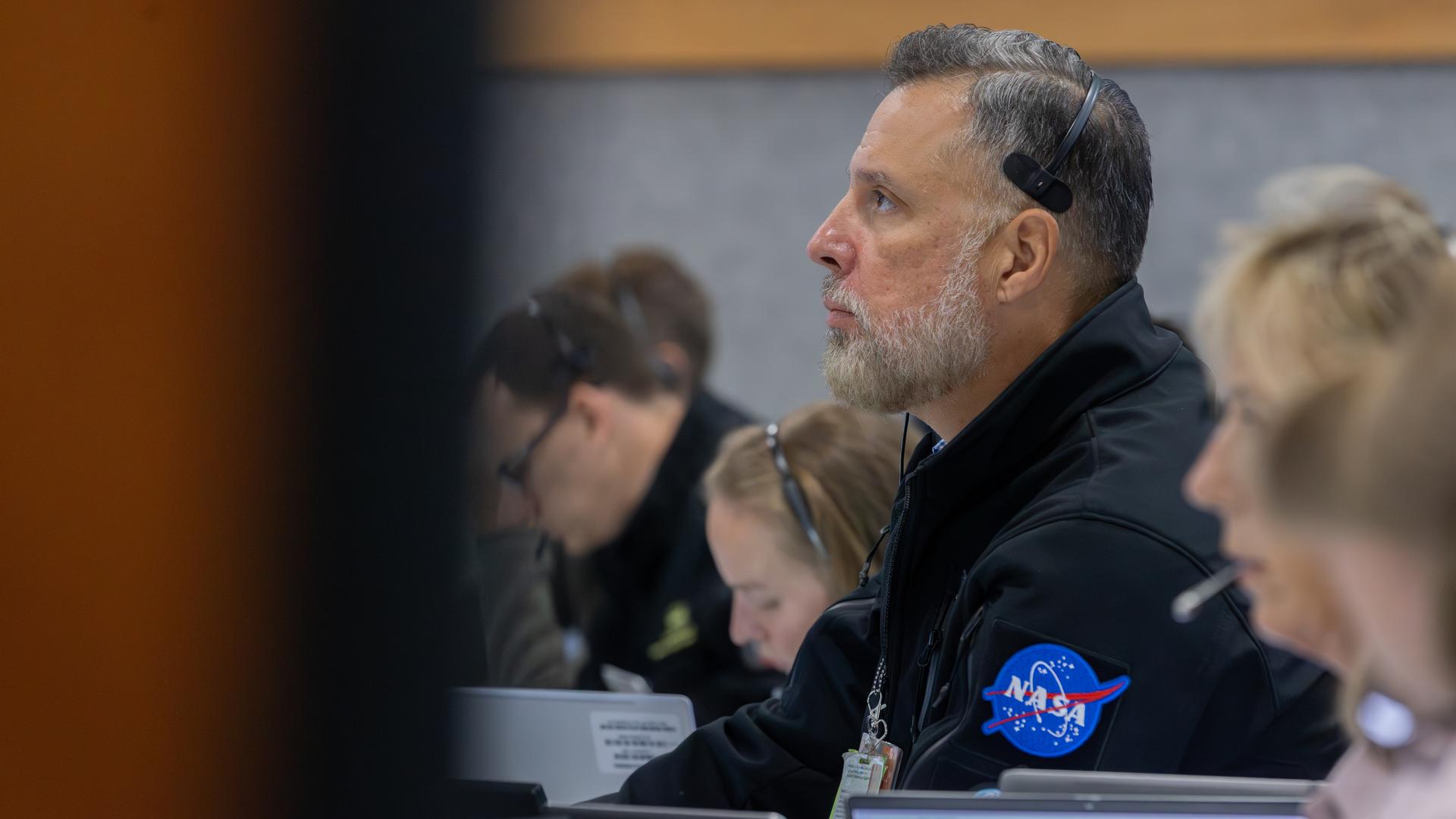
Carlos Moonge, branch chief of Test, Launch, and Recovery Operations, participates in a cryogenic propellant loading simulation for NASA’s Artemis III mission on Wednesday, Aug. 5, 2026, inside Firing Rooms 1 and 2 of the Rocco A. Petrone Launch Control Center at the agency’s Kennedy Space Center in Florida. Members of NASA’s Exploration Ground Systems team rehearse the steps to load the super-cooled liquid hydrogen and liquid oxygen into the SLS (Space Launch System) rocket core stage, a process that starts several hours before liftoff for the Artemis III mission. Artemis III will carry out a series of objectives in low Earth orbit designed to demonstrate critical systems needed for future lunar landings, beginning with Artemis IV.

Carlos Monge, chief NASA Test Director, participates in a cryogenic propellant loading simulation for NASA’s Artemis III mission on Wednesday, June 10, 2026, inside Firing Room 1 of the Rocco A. Petrone Launch Control Center at the agency’s Kennedy Space Center in Florida. Members of NASA’s Exploration Ground Systems team rehearse the steps to load the super-cooled liquid hydrogen and liquid oxygen into the SLS (Space Launch System) rocket core stage, a process that starts several hours before liftoff for the Artemis III mission. Artemis III will carry out a series of objectives in low Earth orbit designed to demonstrate critical systems needed for future lunar landings, beginning with Artemis IV.

Charlie Blackwell-Thompson, Artemis launch director, participates in a cryogenic propellant loading simulation for NASA’s Artemis III mission on Wednesday, June 10, 2026, inside Firing Room 1 of the Rocco A. Petrone Launch Control Center at the agency’s Kennedy Space Center in Florida. Members of NASA’s Exploration Ground Systems team rehearse the steps to load the super-cooled liquid hydrogen and liquid oxygen into the SLS (Space Launch System) rocket core stage, a process that starts several hours before liftoff for the Artemis III mission. Artemis III will carry out a series of objectives in low Earth orbit designed to demonstrate critical systems needed for future lunar landings, beginning with Artemis IV.

Charlie Blackwell-Thompson, Artemis launch director, participates in a cryogenic propellant loading simulation for NASA’s Artemis III mission on Wednesday, June 10, 2026, inside Firing Room 1 of the Rocco A. Petrone Launch Control Center at the agency’s Kennedy Space Center in Florida. Members of NASA’s Exploration Ground Systems team rehearse the steps to load the super-cooled liquid hydrogen and liquid oxygen into the SLS (Space Launch System) rocket core stage, a process that starts several hours before liftoff for the Artemis III mission. Artemis III will carry out a series of objectives in low Earth orbit designed to demonstrate critical systems needed for future lunar landings, beginning with Artemis IV.

Inside the high bay of the Neil Armstrong Operations and Checkout Building at NASA’s Kennedy Space Center in Florida, Lockheed Martin and NASA technicians work on the Orion crew module for the agency’s Artemis IV mission on May 26, 2023. Artemis IV will be the first operational mission to Gateway – an outpost in lunar orbit serving as a staging point for deep space exploration – followed by a week-long surface mission on the Moon. Also sharing space in the high bay are the crew modules for Artemis II and Artemis III.
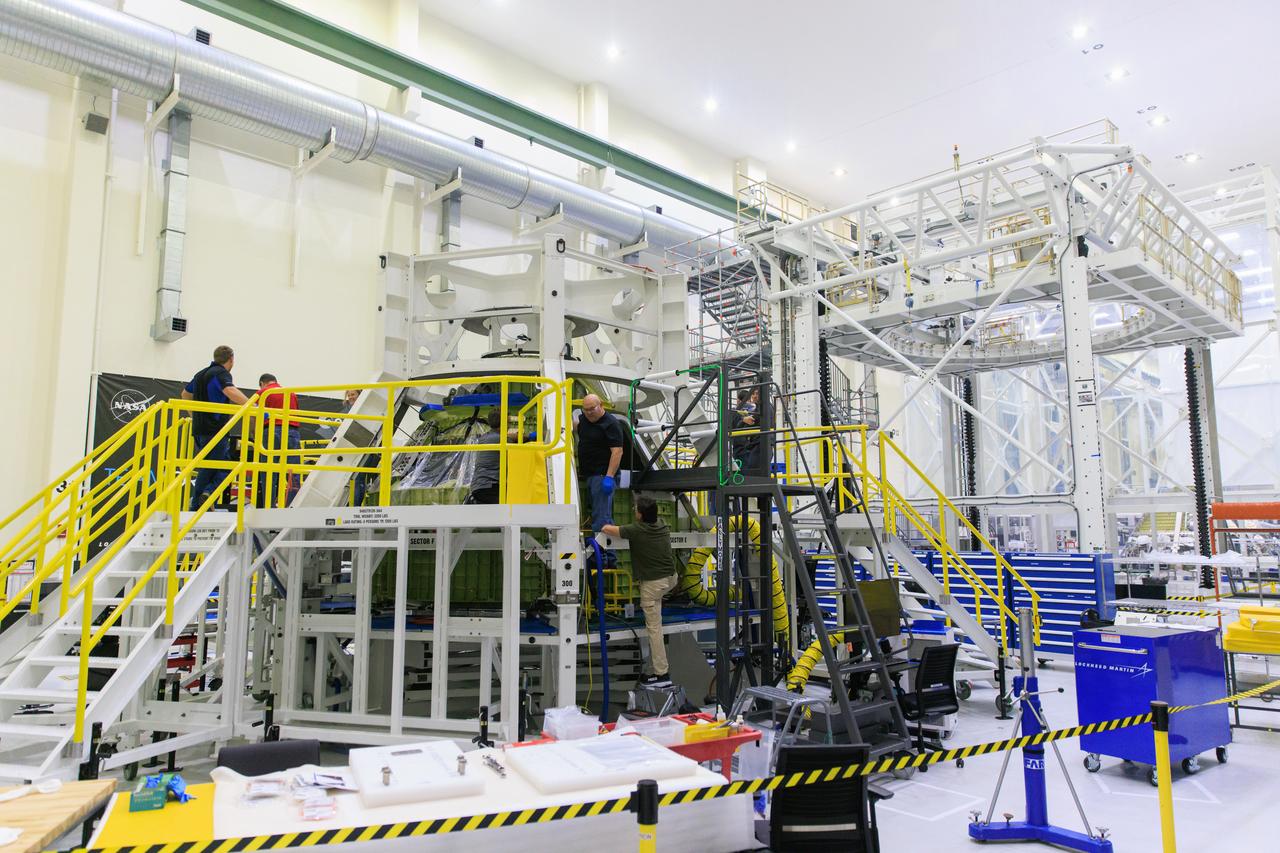
Inside the high bay of the Neil Armstrong Operations and Checkout Building at NASA’s Kennedy Space Center in Florida, Lockheed Martin and NASA technicians work on the Orion crew module for the agency’s Artemis IV mission on May 26, 2023. Artemis IV will be the first operational mission to Gateway – an outpost in lunar orbit serving as a staging point for deep space exploration – followed by a week-long surface mission on the Moon. Also sharing space in the high bay are the crew modules for Artemis II and Artemis III.
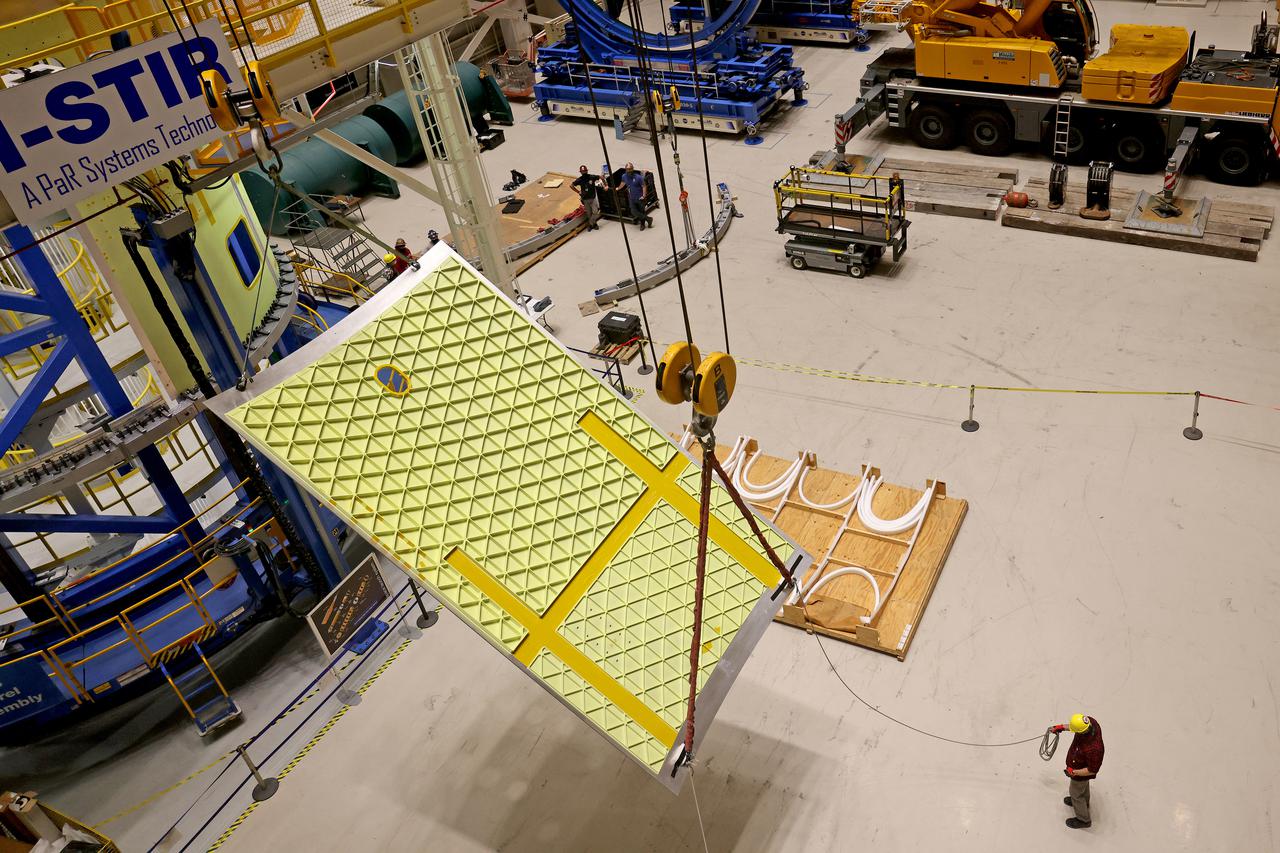
Technicians at NASA’s Michoud Assembly Facility move a piece of the engine section of NASA’s Space Launch System rocket for Artemis III in preparation for its next step in production. This hardware is the first large piece manufactured for the Artemis III mission and makes up the lowest portion of the 212-foot-tall core stage. When complete, the engine section will house the four RS-25 engines and include vital systems for mounting, controlling and delivering fuel from the propellant tanks to the rocket’s engines. Together with its four RS-25 engines and its twin solid rocket boosters, it will produce 8.8 million pounds of thrust to send NASA’s Orion spacecraft, astronauts, and supplies beyond Earth’s orbit to the Moon and, ultimately, Mars. Offering more payload mass, volume capability, and energy to speed missions through space, the SLS rocket, along with NASA’s Gateway in lunar orbit, the Human Landing System, and Orion spacecraft, is part of NASA’s backbone for deep space exploration and the Artemis lunar program. No other rocket is capable of carrying astronauts in Orion around the Moon in a single mission.
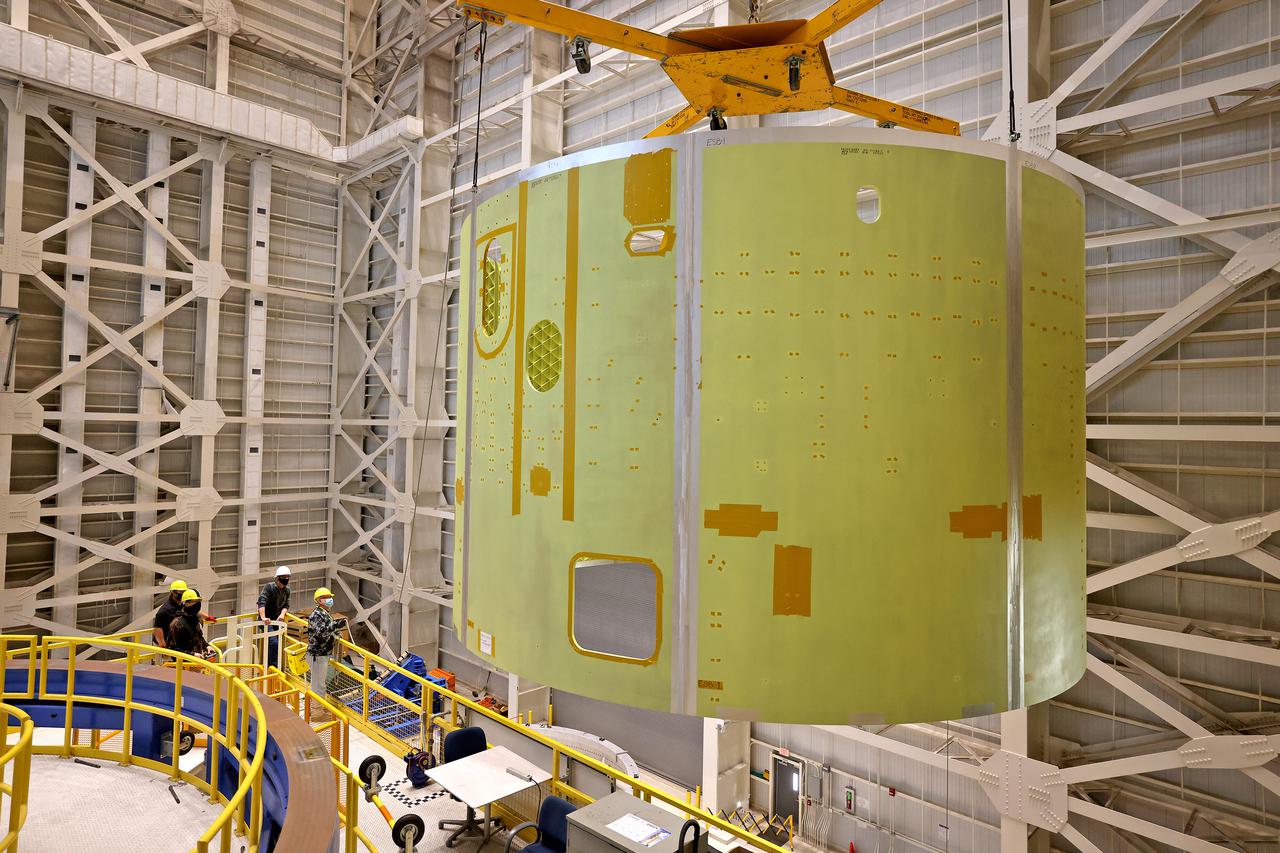
Technicians at NASA’s Michoud Assembly Facility move the engine section of NASA’s Space Launch System rocket for Artemis III in preparation for its next step in production. This hardware is the first large piece manufactured for the Artemis III mission and makes up the lowest portion of the 212-foot-tall core stage. When complete, the engine section will house the four RS-25 engines and include vital systems for mounting, controlling and delivering fuel from the propellant tanks to the rocket’s engines. Together with its four RS-25 engines and its twin solid rocket boosters, it will produce 8.8 million pounds of thrust to send NASA’s Orion spacecraft, astronauts, and supplies beyond Earth’s orbit to the Moon and, ultimately, Mars. Offering more payload mass, volume capability, and energy to speed missions through space, the SLS rocket, along with NASA’s Gateway in lunar orbit, the Human Landing System, and Orion spacecraft, is part of NASA’s backbone for deep space exploration and the Artemis lunar program. No other rocket is capable of carrying astronauts in Orion around the Moon in a single mission.
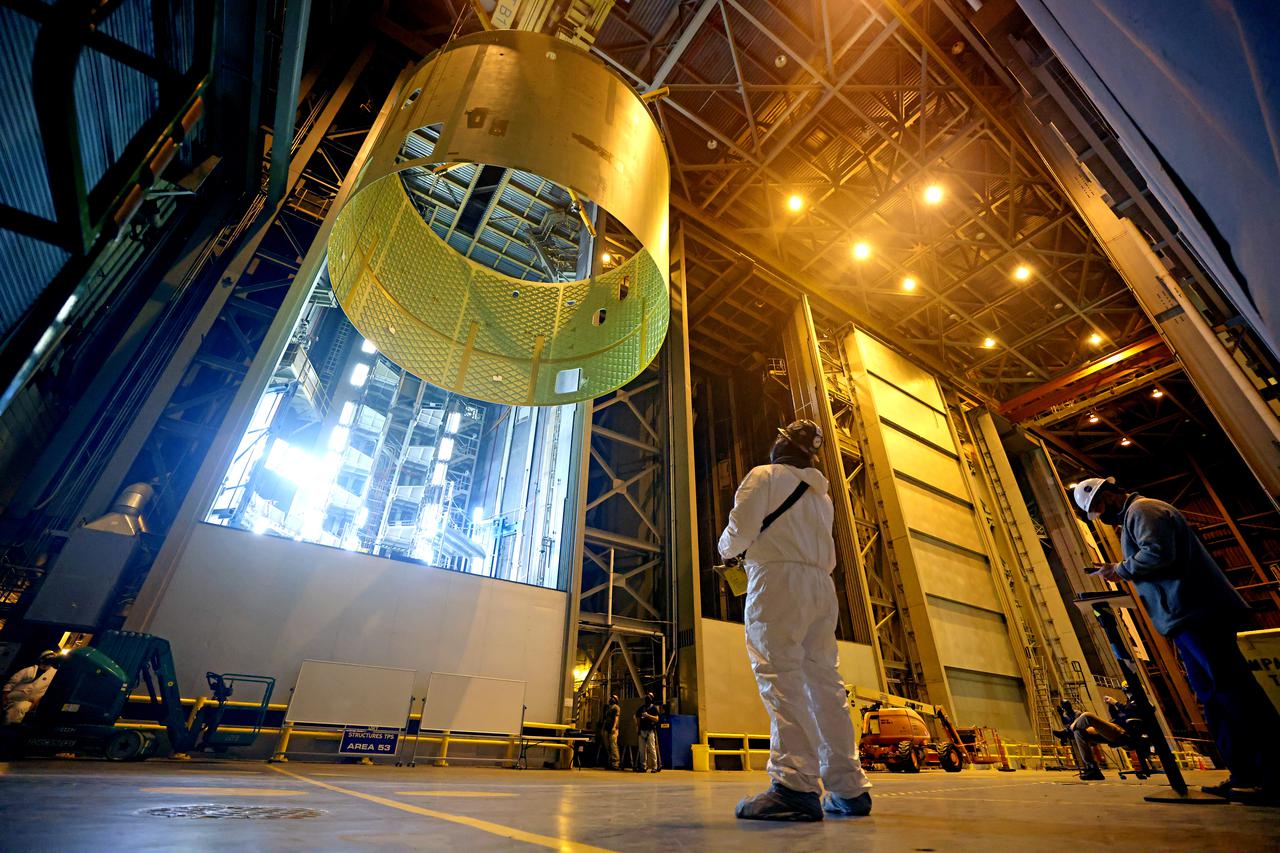
Technicians at NASA’s Michoud Assembly Facility prime and move the engine section of NASA’s Space Launch System rocket for Artemis III in preparation for its next step in production. This hardware is the first large piece manufactured for the Artemis III mission and makes up the lowest portion of the 212-foot-tall core stage. When complete, the engine section will house the four RS-25 engines and include vital systems for mounting, controlling and delivering fuel from the propellant tanks to the rocket’s engines. Together with its four RS-25 engines and its twin solid rocket boosters, it will produce 8.8 million pounds of thrust to send NASA’s Orion spacecraft, astronauts, and supplies beyond Earth’s orbit to the Moon and, ultimately, Mars. Offering more payload mass, volume capability, and energy to speed missions through space, the SLS rocket, along with NASA’s Gateway in lunar orbit, the Human Landing System, and Orion spacecraft, is part of NASA’s backbone for deep space exploration and the Artemis lunar program. No other rocket is capable of carrying astronauts in Orion around the Moon in a single mission.
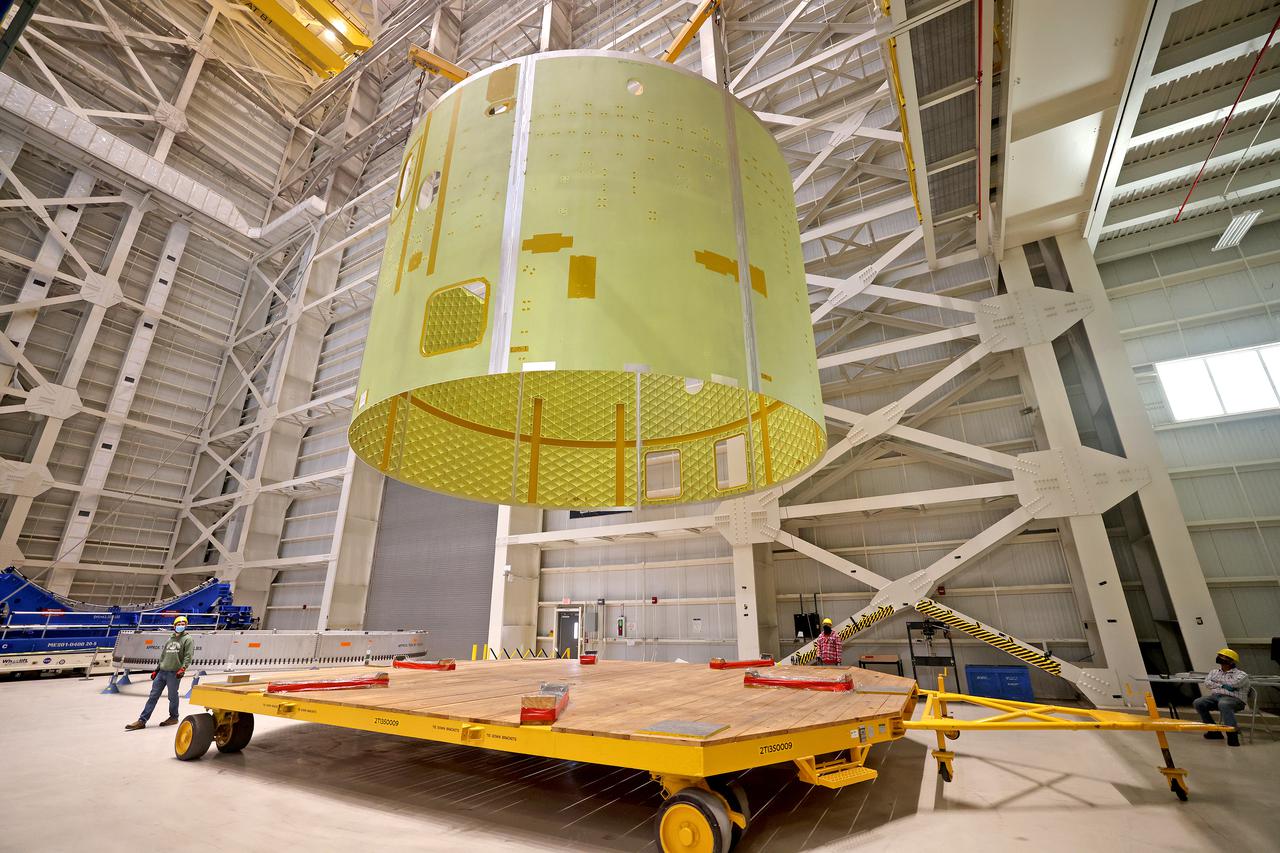
Technicians at NASA’s Michoud Assembly Facility move the engine section of NASA’s Space Launch System rocket for Artemis III in preparation for its next step in production. This hardware is the first large piece manufactured for the Artemis III mission and makes up the lowest portion of the 212-foot-tall core stage. When complete, the engine section will house the four RS-25 engines and include vital systems for mounting, controlling and delivering fuel from the propellant tanks to the rocket’s engines. Together with its four RS-25 engines and its twin solid rocket boosters, it will produce 8.8 million pounds of thrust to send NASA’s Orion spacecraft, astronauts, and supplies beyond Earth’s orbit to the Moon and, ultimately, Mars. Offering more payload mass, volume capability, and energy to speed missions through space, the SLS rocket, along with NASA’s Gateway in lunar orbit, the Human Landing System, and Orion spacecraft, is part of NASA’s backbone for deep space exploration and the Artemis lunar program. No other rocket is capable of carrying astronauts in Orion around the Moon in a single mission.
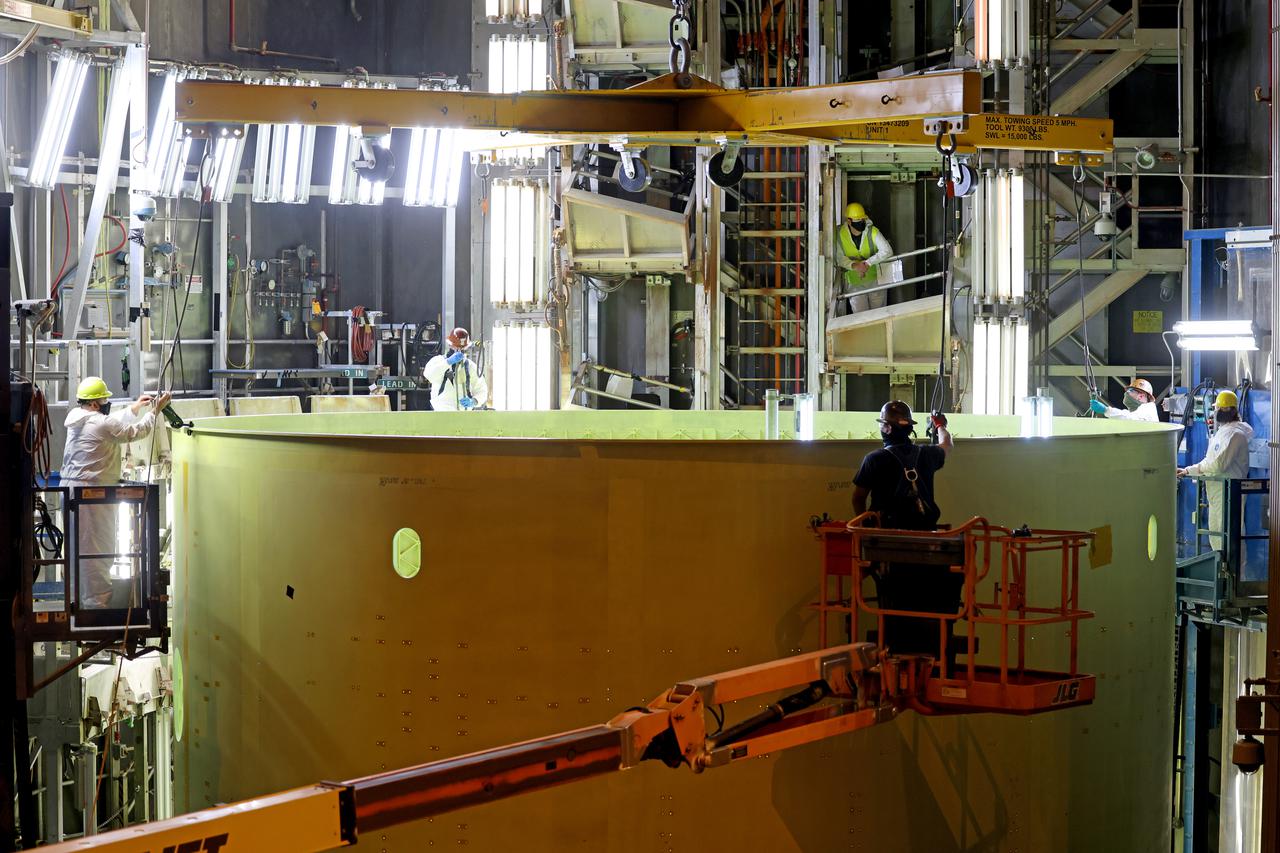
Technicians at NASA’s Michoud Assembly Facility prime and move the engine section of NASA’s Space Launch System rocket for Artemis III in preparation for its next step in production. This hardware is the first large piece manufactured for the Artemis III mission and makes up the lowest portion of the 212-foot-tall core stage. When complete, the engine section will house the four RS-25 engines and include vital systems for mounting, controlling and delivering fuel from the propellant tanks to the rocket’s engines. Together with its four RS-25 engines and its twin solid rocket boosters, it will produce 8.8 million pounds of thrust to send NASA’s Orion spacecraft, astronauts, and supplies beyond Earth’s orbit to the Moon and, ultimately, Mars. Offering more payload mass, volume capability, and energy to speed missions through space, the SLS rocket, along with NASA’s Gateway in lunar orbit, the Human Landing System, and Orion spacecraft, is part of NASA’s backbone for deep space exploration and the Artemis lunar program. No other rocket is capable of carrying astronauts in Orion around the Moon in a single mission.
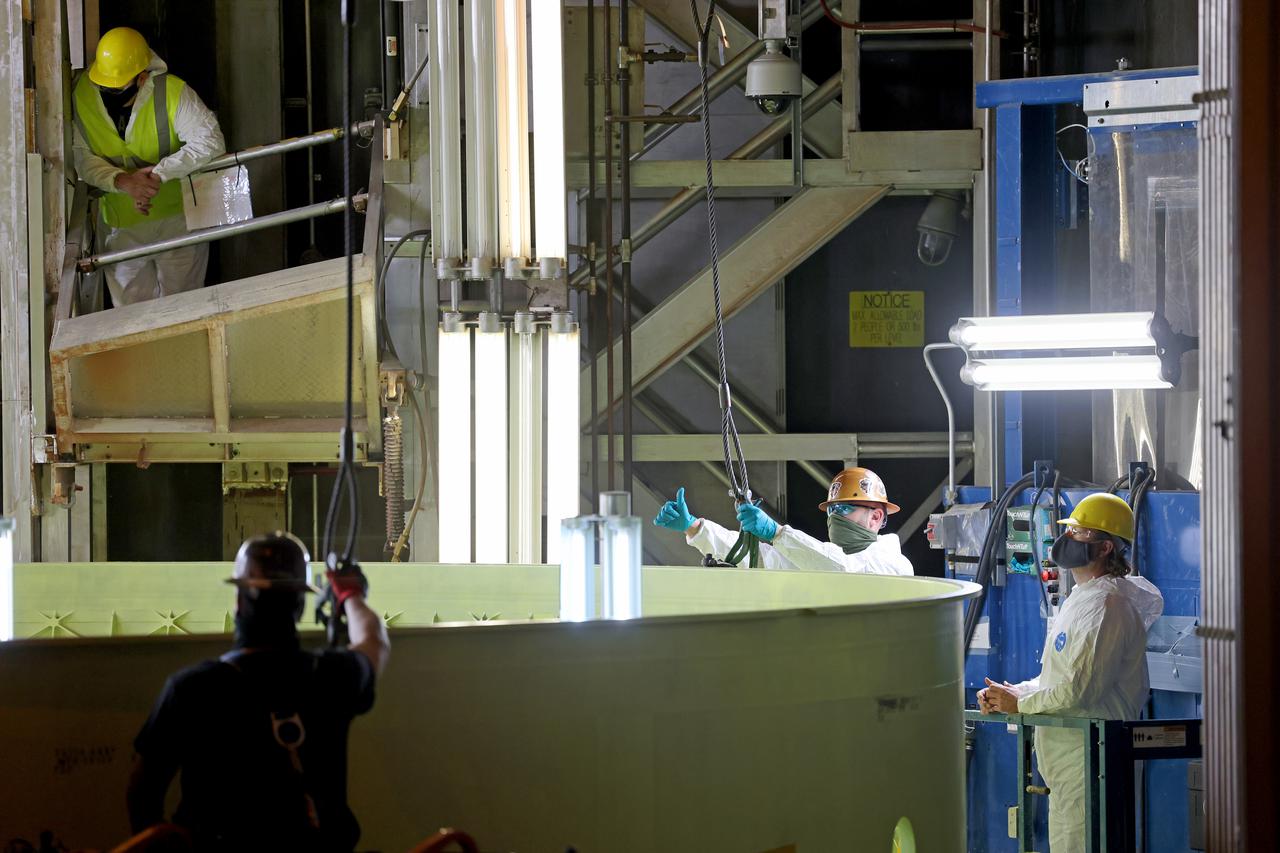
Technicians at NASA’s Michoud Assembly Facility prime and move the engine section of NASA’s Space Launch System rocket for Artemis III in preparation for its next step in production. This hardware is the first large piece manufactured for the Artemis III mission and makes up the lowest portion of the 212-foot-tall core stage. When complete, the engine section will house the four RS-25 engines and include vital systems for mounting, controlling and delivering fuel from the propellant tanks to the rocket’s engines. Together with its four RS-25 engines and its twin solid rocket boosters, it will produce 8.8 million pounds of thrust to send NASA’s Orion spacecraft, astronauts, and supplies beyond Earth’s orbit to the Moon and, ultimately, Mars. Offering more payload mass, volume capability, and energy to speed missions through space, the SLS rocket, along with NASA’s Gateway in lunar orbit, the Human Landing System, and Orion spacecraft, is part of NASA’s backbone for deep space exploration and the Artemis lunar program. No other rocket is capable of carrying astronauts in Orion around the Moon in a single mission.
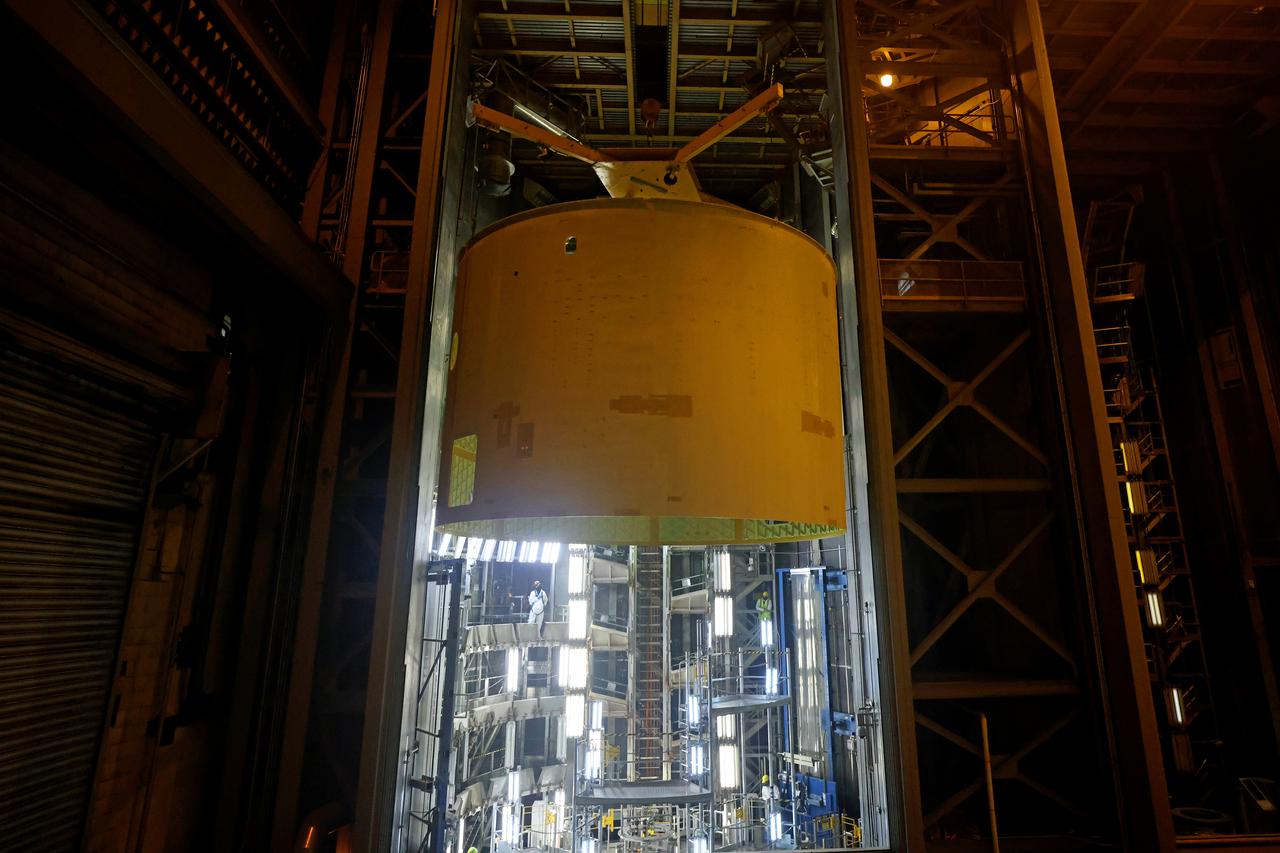
Technicians at NASA’s Michoud Assembly Facility prime and move the engine section of NASA’s Space Launch System rocket for Artemis III in preparation for its next step in production. This hardware is the first large piece manufactured for the Artemis III mission and makes up the lowest portion of the 212-foot-tall core stage. When complete, the engine section will house the four RS-25 engines and include vital systems for mounting, controlling and delivering fuel from the propellant tanks to the rocket’s engines. Together with its four RS-25 engines and its twin solid rocket boosters, it will produce 8.8 million pounds of thrust to send NASA’s Orion spacecraft, astronauts, and supplies beyond Earth’s orbit to the Moon and, ultimately, Mars. Offering more payload mass, volume capability, and energy to speed missions through space, the SLS rocket, along with NASA’s Gateway in lunar orbit, the Human Landing System, and Orion spacecraft, is part of NASA’s backbone for deep space exploration and the Artemis lunar program. No other rocket is capable of carrying astronauts in Orion around the Moon in a single mission.

Technicians at NASA’s Michoud Assembly Facility move a piece of the engine section of NASA’s Space Launch System rocket for Artemis III in preparation for its next step in production. This hardware is the first large piece manufactured for the Artemis III mission and makes up the lowest portion of the 212-foot-tall core stage. When complete, the engine section will house the four RS-25 engines and include vital systems for mounting, controlling and delivering fuel from the propellant tanks to the rocket’s engines. Together with its four RS-25 engines and its twin solid rocket boosters, it will produce 8.8 million pounds of thrust to send NASA’s Orion spacecraft, astronauts, and supplies beyond Earth’s orbit to the Moon and, ultimately, Mars. Offering more payload mass, volume capability, and energy to speed missions through space, the SLS rocket, along with NASA’s Gateway in lunar orbit, the Human Landing System, and Orion spacecraft, is part of NASA’s backbone for deep space exploration and the Artemis lunar program. No other rocket is capable of carrying astronauts in Orion around the Moon in a single mission.
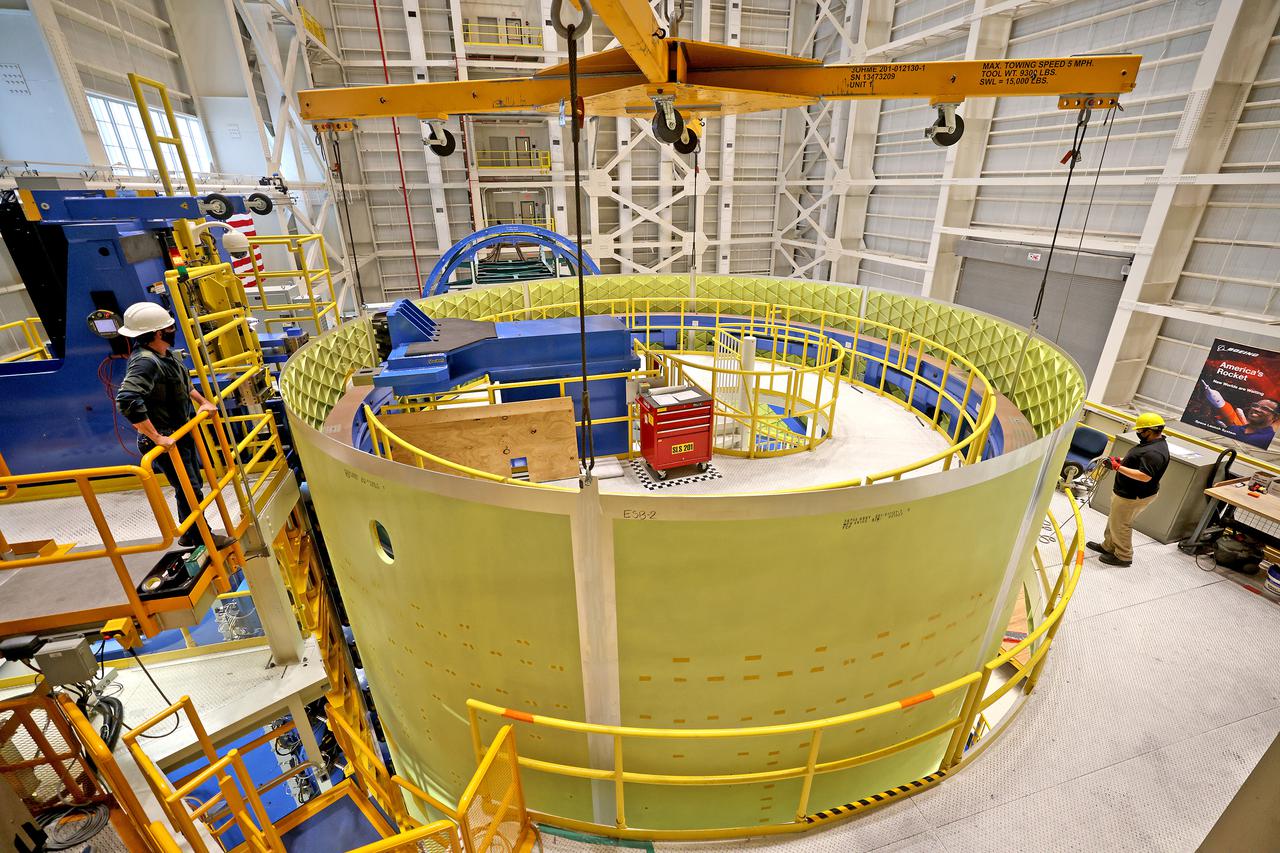
Technicians at NASA’s Michoud Assembly Facility move the engine section of NASA’s Space Launch System rocket for Artemis III in preparation for its next step in production. This hardware is the first large piece manufactured for the Artemis III mission and makes up the lowest portion of the 212-foot-tall core stage. When complete, the engine section will house the four RS-25 engines and include vital systems for mounting, controlling and delivering fuel from the propellant tanks to the rocket’s engines. Together with its four RS-25 engines and its twin solid rocket boosters, it will produce 8.8 million pounds of thrust to send NASA’s Orion spacecraft, astronauts, and supplies beyond Earth’s orbit to the Moon and, ultimately, Mars. Offering more payload mass, volume capability, and energy to speed missions through space, the SLS rocket, along with NASA’s Gateway in lunar orbit, the Human Landing System, and Orion spacecraft, is part of NASA’s backbone for deep space exploration and the Artemis lunar program. No other rocket is capable of carrying astronauts in Orion around the Moon in a single mission.
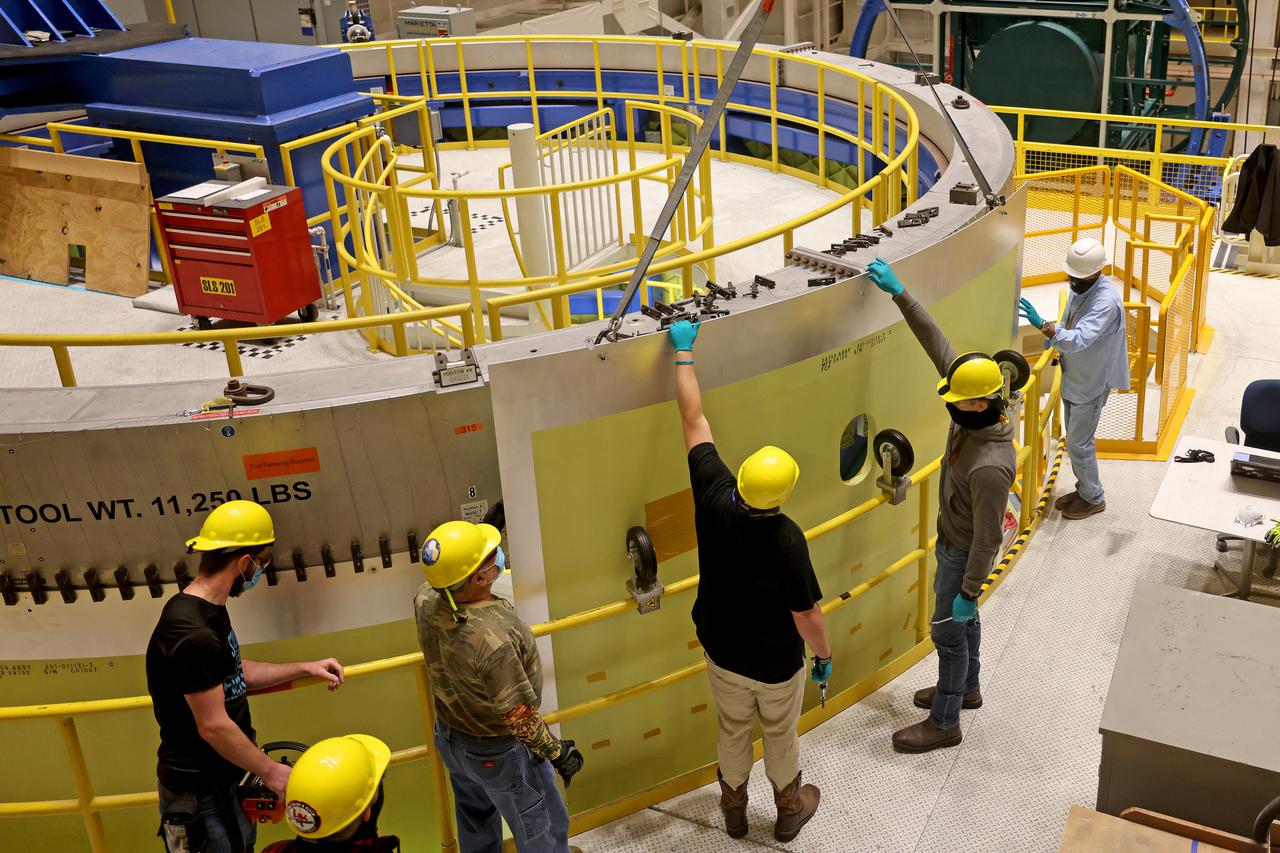
Technicians at NASA’s Michoud Assembly Facility move a piece of the engine section of NASA’s Space Launch System rocket for Artemis III in preparation for its next step in production. This hardware is the first large piece manufactured for the Artemis III mission and makes up the lowest portion of the 212-foot-tall core stage. When complete, the engine section will house the four RS-25 engines and include vital systems for mounting, controlling and delivering fuel from the propellant tanks to the rocket’s engines. Together with its four RS-25 engines and its twin solid rocket boosters, it will produce 8.8 million pounds of thrust to send NASA’s Orion spacecraft, astronauts, and supplies beyond Earth’s orbit to the Moon and, ultimately, Mars. Offering more payload mass, volume capability, and energy to speed missions through space, the SLS rocket, along with NASA’s Gateway in lunar orbit, the Human Landing System, and Orion spacecraft, is part of NASA’s backbone for deep space exploration and the Artemis lunar program. No other rocket is capable of carrying astronauts in Orion around the Moon in a single mission.
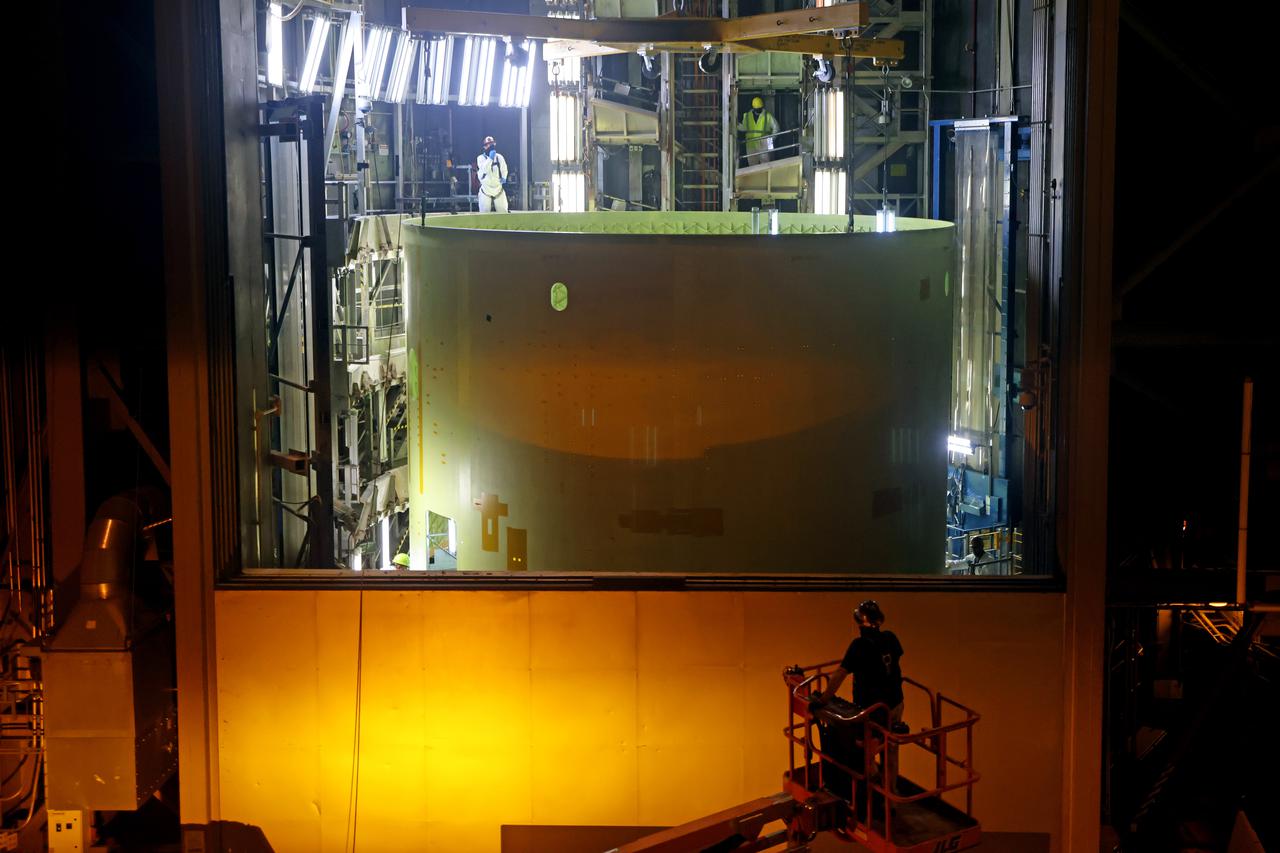
Technicians at NASA’s Michoud Assembly Facility prime and move the engine section of NASA’s Space Launch System rocket for Artemis III in preparation for its next step in production. This hardware is the first large piece manufactured for the Artemis III mission and makes up the lowest portion of the 212-foot-tall core stage. When complete, the engine section will house the four RS-25 engines and include vital systems for mounting, controlling and delivering fuel from the propellant tanks to the rocket’s engines. Together with its four RS-25 engines and its twin solid rocket boosters, it will produce 8.8 million pounds of thrust to send NASA’s Orion spacecraft, astronauts, and supplies beyond Earth’s orbit to the Moon and, ultimately, Mars. Offering more payload mass, volume capability, and energy to speed missions through space, the SLS rocket, along with NASA’s Gateway in lunar orbit, the Human Landing System, and Orion spacecraft, is part of NASA’s backbone for deep space exploration and the Artemis lunar program. No other rocket is capable of carrying astronauts in Orion around the Moon in a single mission.
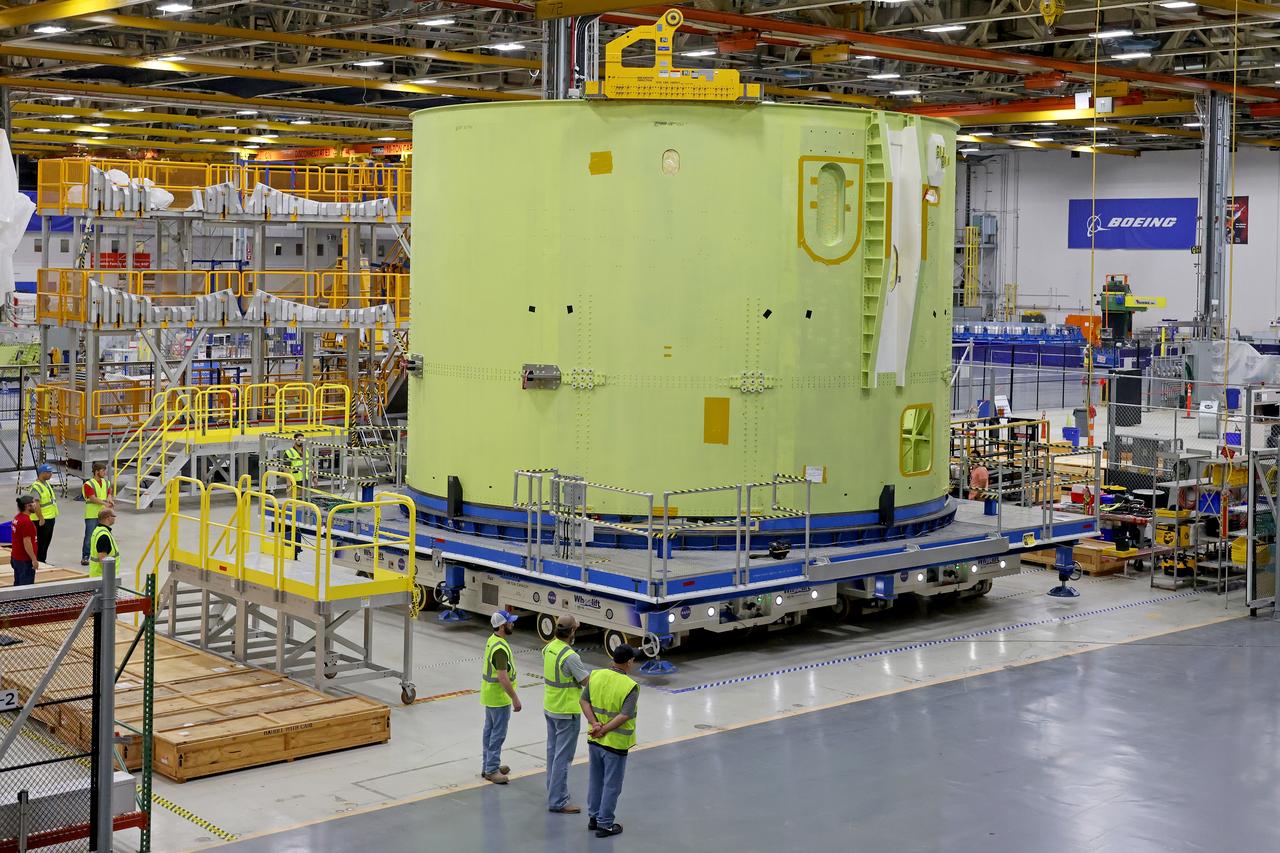
Technicians at NASA’s Michoud Assembly Facility move the engine section of NASA’s Space Launch System rocket for Artemis III to the VAB on November 7, 2022. This hardware makes up the lowest portion of the 212-foot-tall core stage; and when complete, it will house the four RS-25 engines as well as vital systems for mounting, controlling, and delivering fuel from the propellant tanks to the rocket’s engines. Together with its four RS-25 engines and its twin solid rocket boosters, it will produce 8.8 million pounds of thrust to send NASA’s Orion spacecraft, astronauts, and supplies beyond Earth’s orbit to the Moon and, ultimately, Mars. Offering more payload mass, volume capability, and energy to speed missions through space, the SLS rocket, along with NASA’s Gateway in lunar orbit, the Humane Landing System, and Orion spacecraft, is part of NASA’s backbone for deep space exploration and the Artemis lunar program. No other rocket is capable of carrying astronauts in Orion around the Moon in a single mission. Image credit: NASA/Michael DeMocker
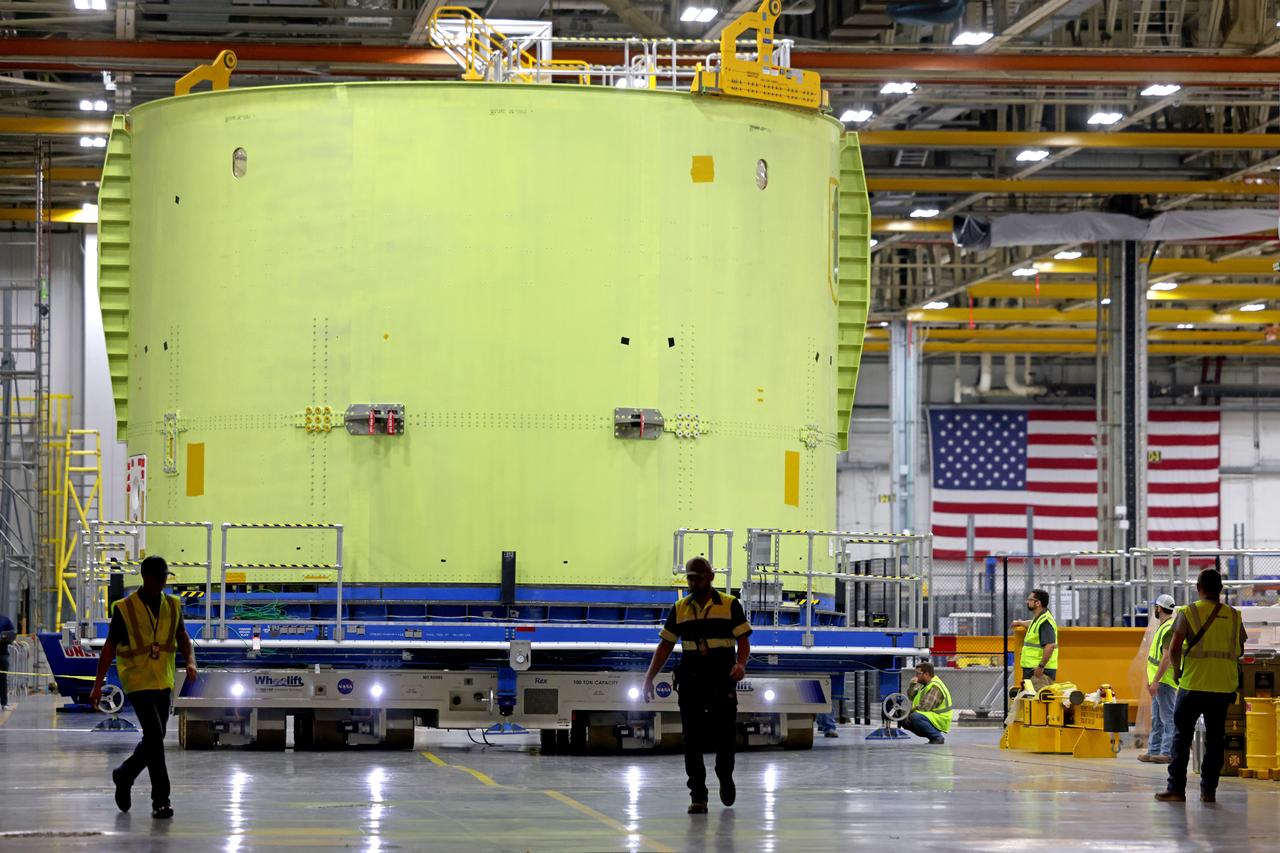
Technicians at NASA’s Michoud Assembly Facility move the engine section of NASA’s Space Launch System rocket for Artemis III to the VAB on November 7, 2022. This hardware makes up the lowest portion of the 212-foot-tall core stage; and when complete, it will house the four RS-25 engines as well as vital systems for mounting, controlling, and delivering fuel from the propellant tanks to the rocket’s engines. Together with its four RS-25 engines and its twin solid rocket boosters, it will produce 8.8 million pounds of thrust to send NASA’s Orion spacecraft, astronauts, and supplies beyond Earth’s orbit to the Moon and, ultimately, Mars. Offering more payload mass, volume capability, and energy to speed missions through space, the SLS rocket, along with NASA’s Gateway in lunar orbit, the Humane Landing System, and Orion spacecraft, is part of NASA’s backbone for deep space exploration and the Artemis lunar program. No other rocket is capable of carrying astronauts in Orion around the Moon in a single mission. Image credit: NASA/Michael DeMocker
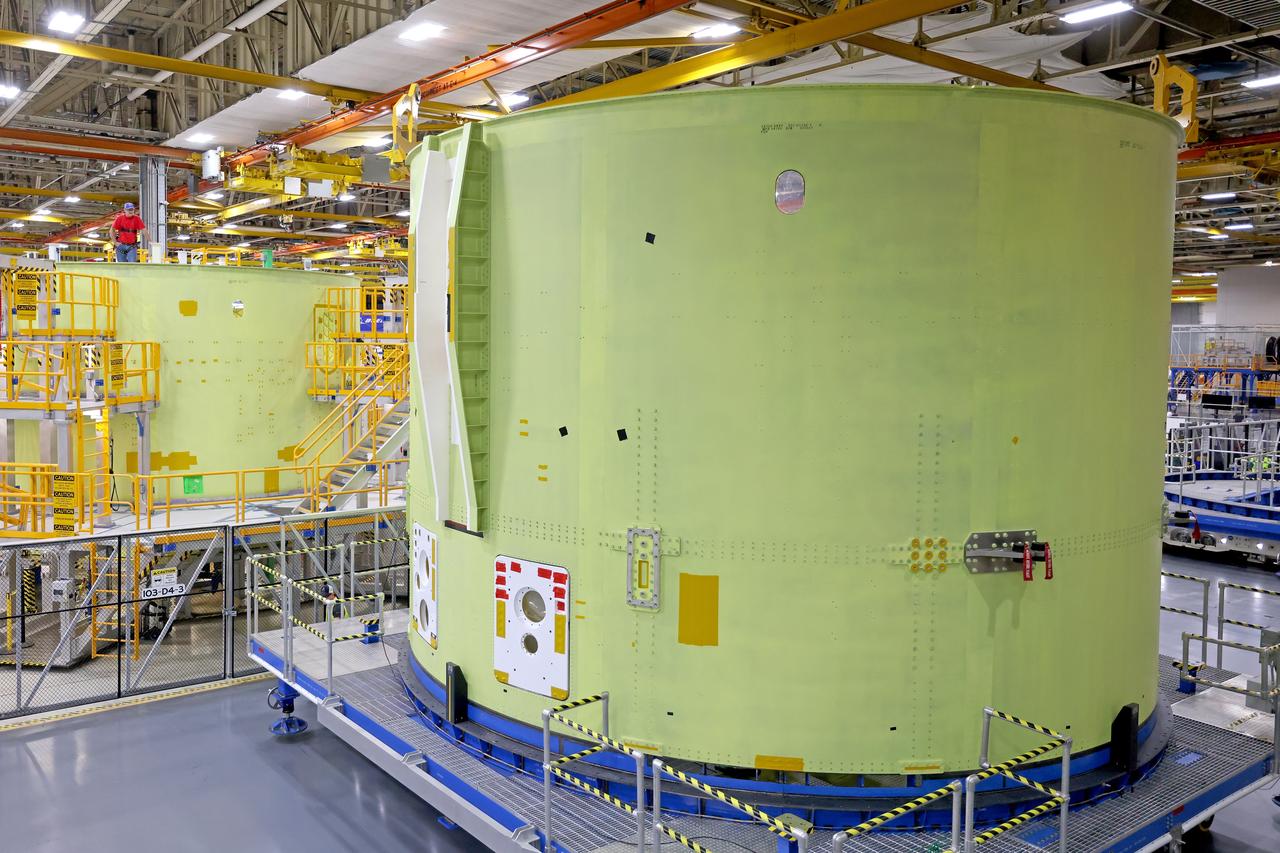
Technicians at NASA’s Michoud Assembly Facility move the engine section of NASA’s Space Launch System rocket for Artemis III to the VAB on November 7, 2022. This hardware makes up the lowest portion of the 212-foot-tall core stage; and when complete, it will house the four RS-25 engines as well as vital systems for mounting, controlling, and delivering fuel from the propellant tanks to the rocket’s engines. Together with its four RS-25 engines and its twin solid rocket boosters, it will produce 8.8 million pounds of thrust to send NASA’s Orion spacecraft, astronauts, and supplies beyond Earth’s orbit to the Moon and, ultimately, Mars. Offering more payload mass, volume capability, and energy to speed missions through space, the SLS rocket, along with NASA’s Gateway in lunar orbit, the Humane Landing System, and Orion spacecraft, is part of NASA’s backbone for deep space exploration and the Artemis lunar program. No other rocket is capable of carrying astronauts in Orion around the Moon in a single mission. Image credit: NASA/Michael DeMocker

Teams at NASA’s Kennedy Space Center in Florida offload the first of four RS-25 SLS (Space Launch System) rocket engines for the agency's Artemis III mission on Tuesday, June 16, 2026, inside the center’s Vehicle Assembly Building. The SLS rocket will use four RS-25 engines in the core stage to propel the Orion spacecraft into orbit providing over two million pounds of thrust at liftoff. As part of the Golden Age of innovation and exploration, NASA will send Artemis astronauts on increasingly difficult missions to explore more of the Moon for scientific discovery, economic benefits, establish an enduring human presence on the lunar surface, and to build on our foundation for the first crewed missions to Mars.

Teams at NASA’s Kennedy Space Center in Florida offload the first of four RS-25 SLS (Space Launch System) rocket engines for the agency's Artemis III mission on Tuesday, June 16, 2026, inside the center’s Vehicle Assembly Building. The SLS rocket will use four RS-25 engines in the core stage to propel the Orion spacecraft into orbit providing over two million pounds of thrust at liftoff. As part of the Golden Age of innovation and exploration, NASA will send Artemis astronauts on increasingly difficult missions to explore more of the Moon for scientific discovery, economic benefits, establish an enduring human presence on the lunar surface, and to build on our foundation for the first crewed missions to Mars.

Teams at NASA’s Kennedy Space Center in Florida offload the first of four RS-25 SLS (Space Launch System) rocket engines for the agency's Artemis III mission on Tuesday, June 16, 2026, inside the center’s Vehicle Assembly Building. The SLS rocket will use four RS-25 engines in the core stage to propel the Orion spacecraft into orbit providing over two million pounds of thrust at liftoff. As part of the Golden Age of innovation and exploration, NASA will send Artemis astronauts on increasingly difficult missions to explore more of the Moon for scientific discovery, economic benefits, establish an enduring human presence on the lunar surface, and to build on our foundation for the first crewed missions to Mars.

Teams at NASA’s Kennedy Space Center in Florida offload the first of four RS-25 SLS (Space Launch System) rocket engines for the agency's Artemis III mission on Tuesday, June 16, 2026, inside the center’s Vehicle Assembly Building. The SLS rocket will use four RS-25 engines in the core stage to propel the Orion spacecraft into orbit providing over two million pounds of thrust at liftoff. As part of the Golden Age of innovation and exploration, NASA will send Artemis astronauts on increasingly difficult missions to explore more of the Moon for scientific discovery, economic benefits, establish an enduring human presence on the lunar surface, and to build on our foundation for the first crewed missions to Mars.

Teams at NASA’s Kennedy Space Center in Florida offload the first of four RS-25 SLS (Space Launch System) rocket engines for the agency's Artemis III mission on Tuesday, June 16, 2026, inside the center’s Vehicle Assembly Building. The SLS rocket will use four RS-25 engines in the core stage to propel the Orion spacecraft into orbit providing over two million pounds of thrust at liftoff. As part of the Golden Age of innovation and exploration, NASA will send Artemis astronauts on increasingly difficult missions to explore more of the Moon for scientific discovery, economic benefits, establish an enduring human presence on the lunar surface, and to build on our foundation for the first crewed missions to Mars.

Teams at NASA’s Kennedy Space Center in Florida offload the first of four RS-25 SLS (Space Launch System) rocket engines for the agency's Artemis III mission on Tuesday, June 16, 2026, inside the center’s Vehicle Assembly Building. The SLS rocket will use four RS-25 engines in the core stage to propel the Orion spacecraft into orbit providing over two million pounds of thrust at liftoff. As part of the Golden Age of innovation and exploration, NASA will send Artemis astronauts on increasingly difficult missions to explore more of the Moon for scientific discovery, economic benefits, establish an enduring human presence on the lunar surface, and to build on our foundation for the first crewed missions to Mars.

Teams at NASA’s Kennedy Space Center in Florida offload the first of four RS-25 SLS (Space Launch System) rocket engines for the agency's Artemis III mission on Tuesday, June 16, 2026, inside the center’s Vehicle Assembly Building. The SLS rocket will use four RS-25 engines in the core stage to propel the Orion spacecraft into orbit providing over two million pounds of thrust at liftoff. As part of the Golden Age of innovation and exploration, NASA will send Artemis astronauts on increasingly difficult missions to explore more of the Moon for scientific discovery, economic benefits, establish an enduring human presence on the lunar surface, and to build on our foundation for the first crewed missions to Mars.

Teams at NASA’s Kennedy Space Center in Florida offload the first of four RS-25 SLS (Space Launch System) rocket engines for the agency's Artemis III mission on Tuesday, June 16, 2026, inside the center’s Vehicle Assembly Building. The SLS rocket will use four RS-25 engines in the core stage to propel the Orion spacecraft into orbit providing over two million pounds of thrust at liftoff. As part of the Golden Age of innovation and exploration, NASA will send Artemis astronauts on increasingly difficult missions to explore more of the Moon for scientific discovery, economic benefits, establish an enduring human presence on the lunar surface, and to build on our foundation for the first crewed missions to Mars.

Teams at NASA’s Kennedy Space Center in Florida offload the first of four RS-25 SLS (Space Launch System) rocket engines for the agency's Artemis III mission on Tuesday, June 16, 2026, inside the center’s Vehicle Assembly Building. The SLS rocket will use four RS-25 engines in the core stage to propel the Orion spacecraft into orbit providing over two million pounds of thrust at liftoff. As part of the Golden Age of innovation and exploration, NASA will send Artemis astronauts on increasingly difficult missions to explore more of the Moon for scientific discovery, economic benefits, establish an enduring human presence on the lunar surface, and to build on our foundation for the first crewed missions to Mars.

Teams at NASA’s Kennedy Space Center in Florida offload the first of four RS-25 SLS (Space Launch System) rocket engines for the agency's Artemis III mission on Tuesday, June 16, 2026, inside the center’s Vehicle Assembly Building. The SLS rocket will use four RS-25 engines in the core stage to propel the Orion spacecraft into orbit providing over two million pounds of thrust at liftoff. As part of the Golden Age of innovation and exploration, NASA will send Artemis astronauts on increasingly difficult missions to explore more of the Moon for scientific discovery, economic benefits, establish an enduring human presence on the lunar surface, and to build on our foundation for the first crewed missions to Mars.
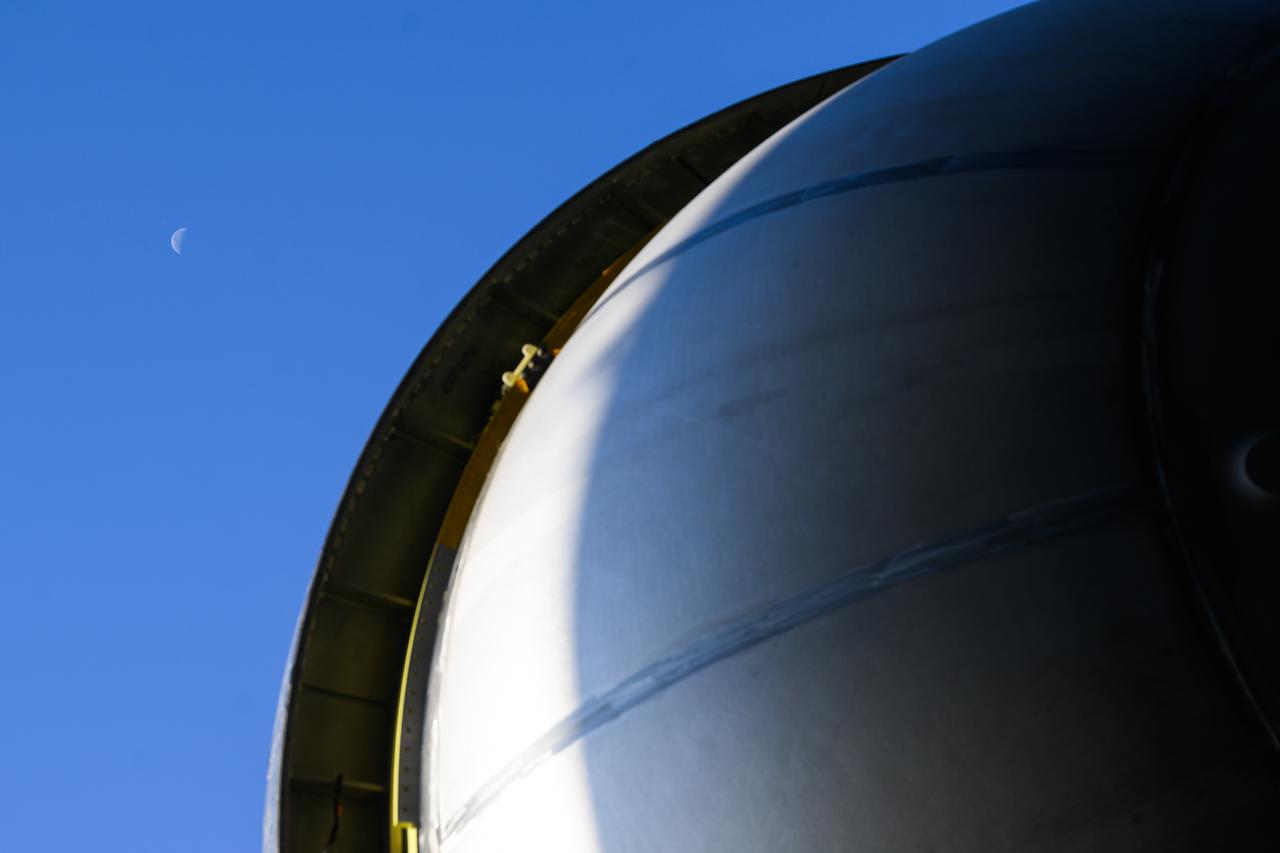
Move crews at NASA’s Michoud Assembly Facility in New Orleans move a liquid oxygen tank for its SLS (Space Launch System) rocket from the vertical assembly building into a nearby cell on Dec. 23. The tank, which will be used on the core stage of the agency’s Artemis III mission, will be primed using an automated process in preparation for application of its thermal protection system. The propellant tank is one of five major elements that make up the 212-foot-tall rocket stage. The core stage, along with its four RS-25 engines, produce more than two million pounds of thrust to help launch NASA’s Orion spacecraft, astronauts, and supplies beyond Earth’s orbit and to the lunar surface for Artemis.
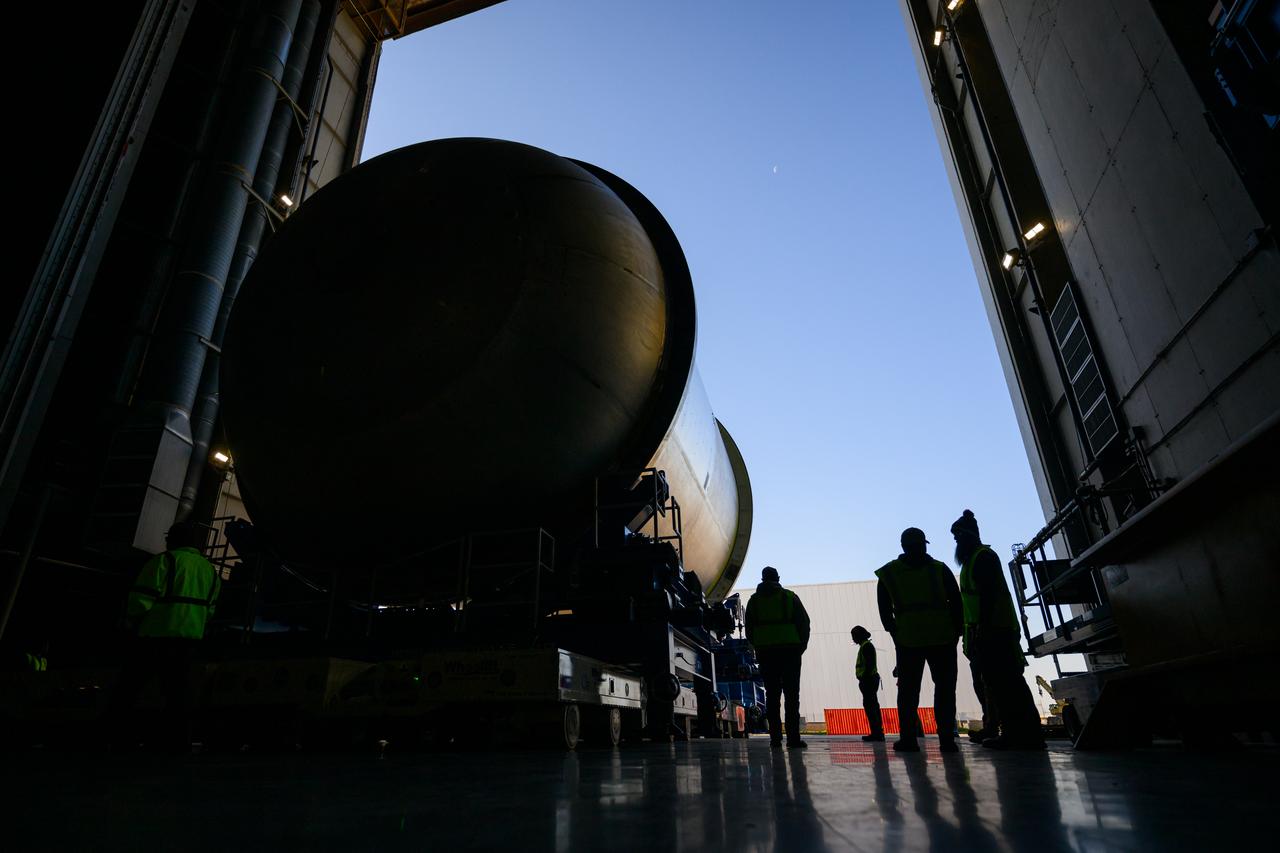
Move crews at NASA’s Michoud Assembly Facility in New Orleans move a liquid oxygen tank for its SLS (Space Launch System) rocket from the vertical assembly building into a nearby cell on Dec. 23. The tank, which will be used on the core stage of the agency’s Artemis III mission, will be primed using an automated process in preparation for application of its thermal protection system. The propellant tank is one of five major elements that make up the 212-foot-tall rocket stage. The core stage, along with its four RS-25 engines, produce more than two million pounds of thrust to help launch NASA’s Orion spacecraft, astronauts, and supplies beyond Earth’s orbit and to the lunar surface for Artemis.
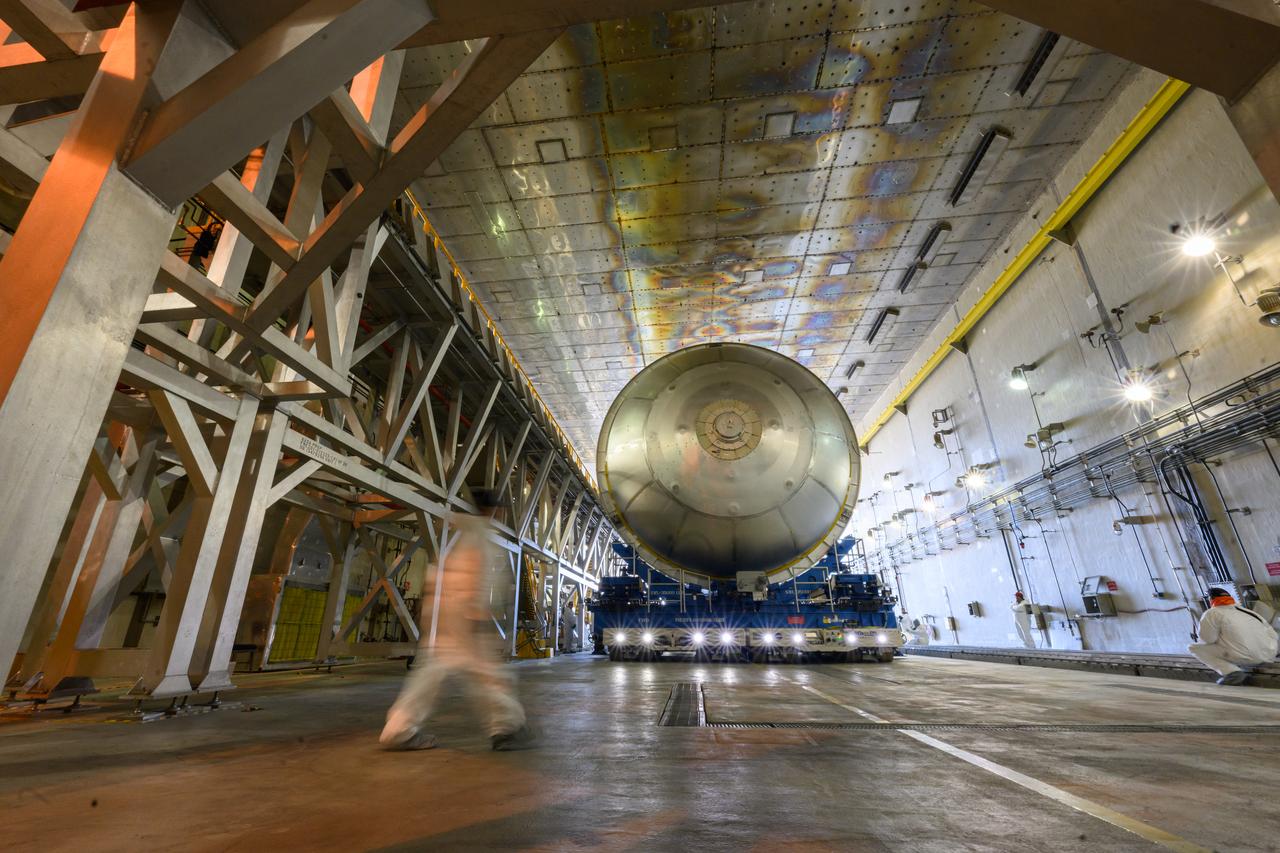
Move crews at NASA’s Michoud Assembly Facility in New Orleans move a liquid oxygen tank for its SLS (Space Launch System) rocket from the vertical assembly building into a nearby cell on Dec. 23. The tank, which will be used on the core stage of the agency’s Artemis III mission, will be primed using an automated process in preparation for application of its thermal protection system. The propellant tank is one of five major elements that make up the 212-foot-tall rocket stage. The core stage, along with its four RS-25 engines, produce more than two million pounds of thrust to help launch NASA’s Orion spacecraft, astronauts, and supplies beyond Earth’s orbit and to the lunar surface for Artemis.
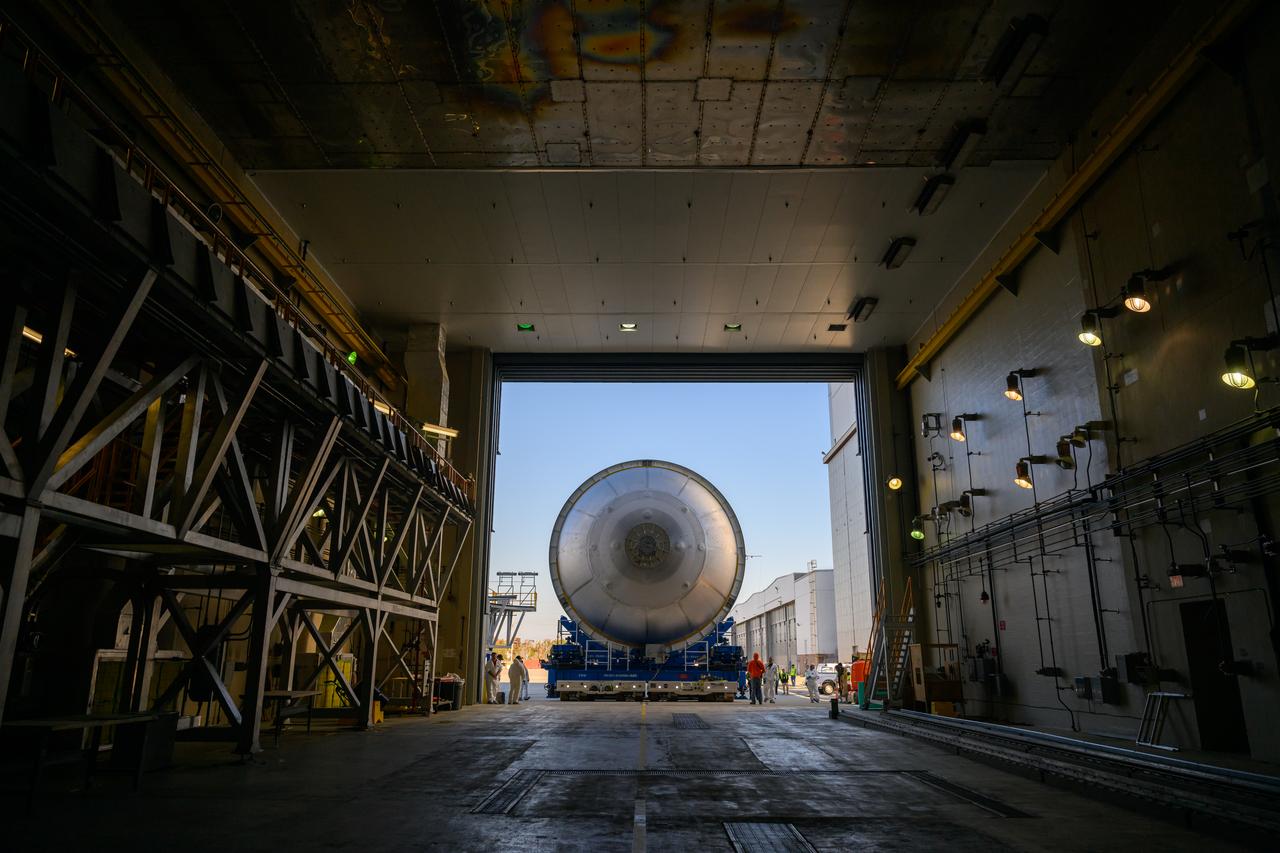
Move crews at NASA’s Michoud Assembly Facility in New Orleans move a liquid oxygen tank for its SLS (Space Launch System) rocket from the vertical assembly building into a nearby cell on Dec. 23. The tank, which will be used on the core stage of the agency’s Artemis III mission, will be primed using an automated process in preparation for application of its thermal protection system. The propellant tank is one of five major elements that make up the 212-foot-tall rocket stage. The core stage, along with its four RS-25 engines, produce more than two million pounds of thrust to help launch NASA’s Orion spacecraft, astronauts, and supplies beyond Earth’s orbit and to the lunar surface for Artemis.
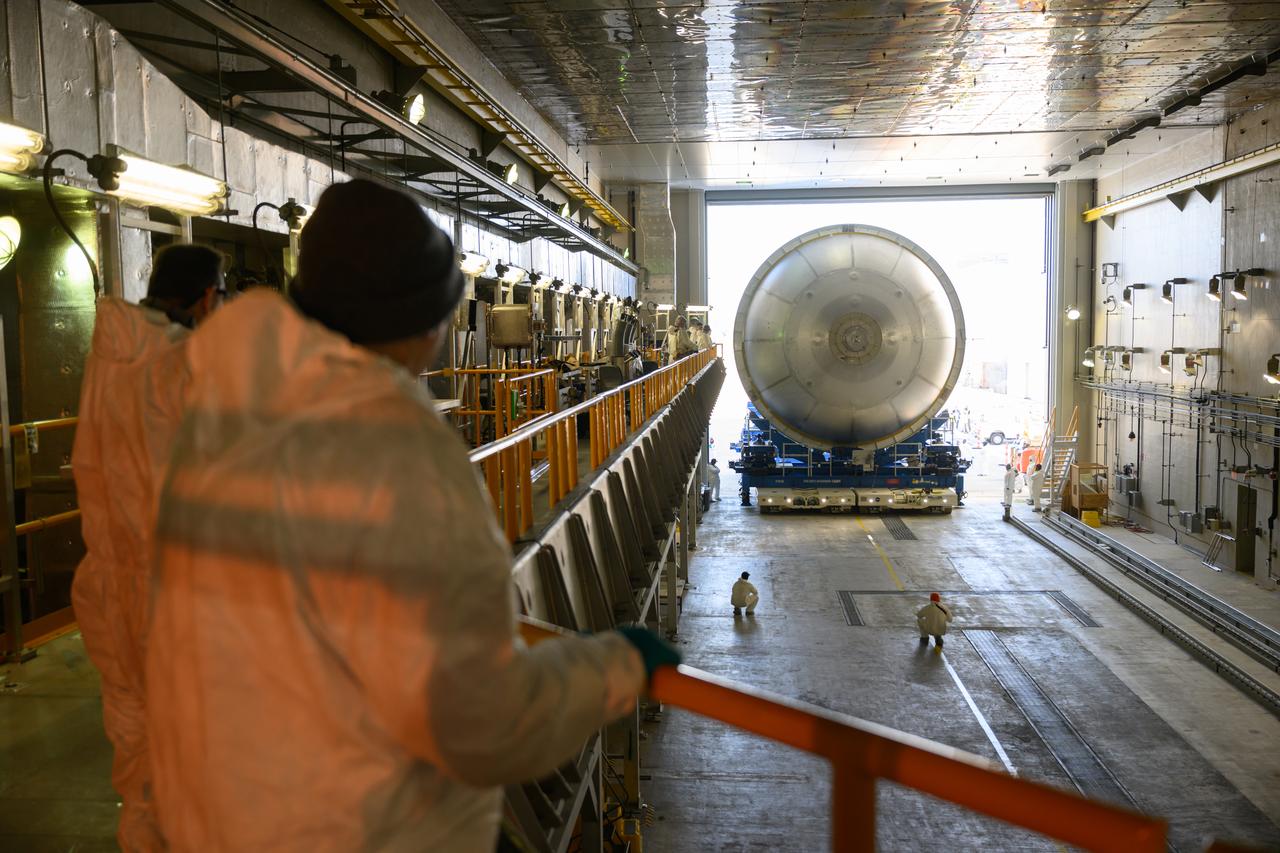
Move crews at NASA’s Michoud Assembly Facility in New Orleans move a liquid oxygen tank for its SLS (Space Launch System) rocket from the vertical assembly building into a nearby cell on Dec. 23. The tank, which will be used on the core stage of the agency’s Artemis III mission, will be primed using an automated process in preparation for application of its thermal protection system. The propellant tank is one of five major elements that make up the 212-foot-tall rocket stage. The core stage, along with its four RS-25 engines, produce more than two million pounds of thrust to help launch NASA’s Orion spacecraft, astronauts, and supplies beyond Earth’s orbit and to the lunar surface for Artemis.
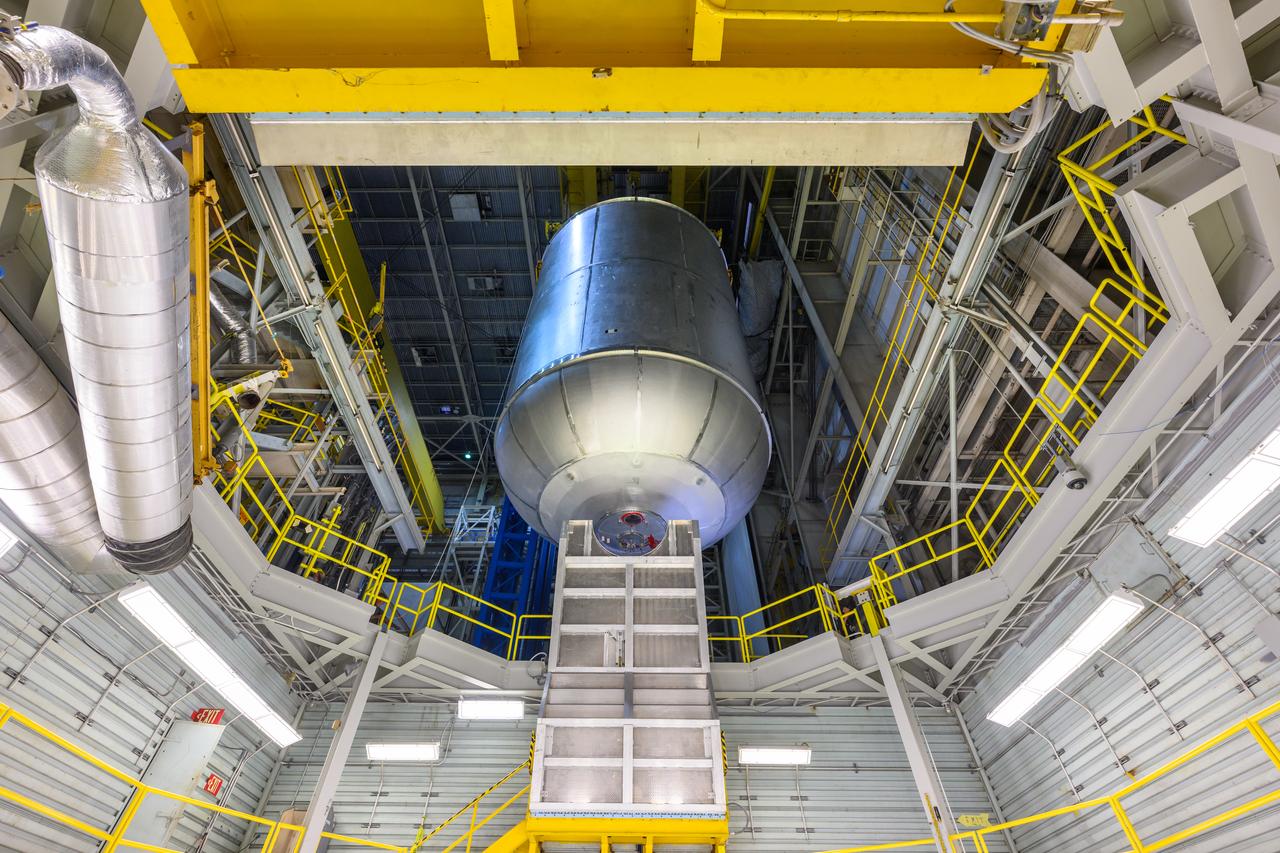
Teams at NASA’s Michoud Assembly Facility in New Orleans successfully completed hydrostatic proof testing of the core stage liquid oxygen tank for the agency’s Artemis III mission. The non-destructive evaluation method tests the structural integrity of the tank’s welds by filling the tank with water, simulating the propellant used during launch. The hardware was then moved to an adjacent cell for internal cleaning. Next, the tank will be readied for primer and application of its thermal protection system. The propellant tank is one of five major elements that make up the 212-foot-tall rocket stage. The core stage, along with its four RS-25 engines, produce two million pounds of thrust to help launch NASA’s Orion spacecraft, astronauts, and supplies beyond Earth’s orbit and to the lunar surface for Artemis.
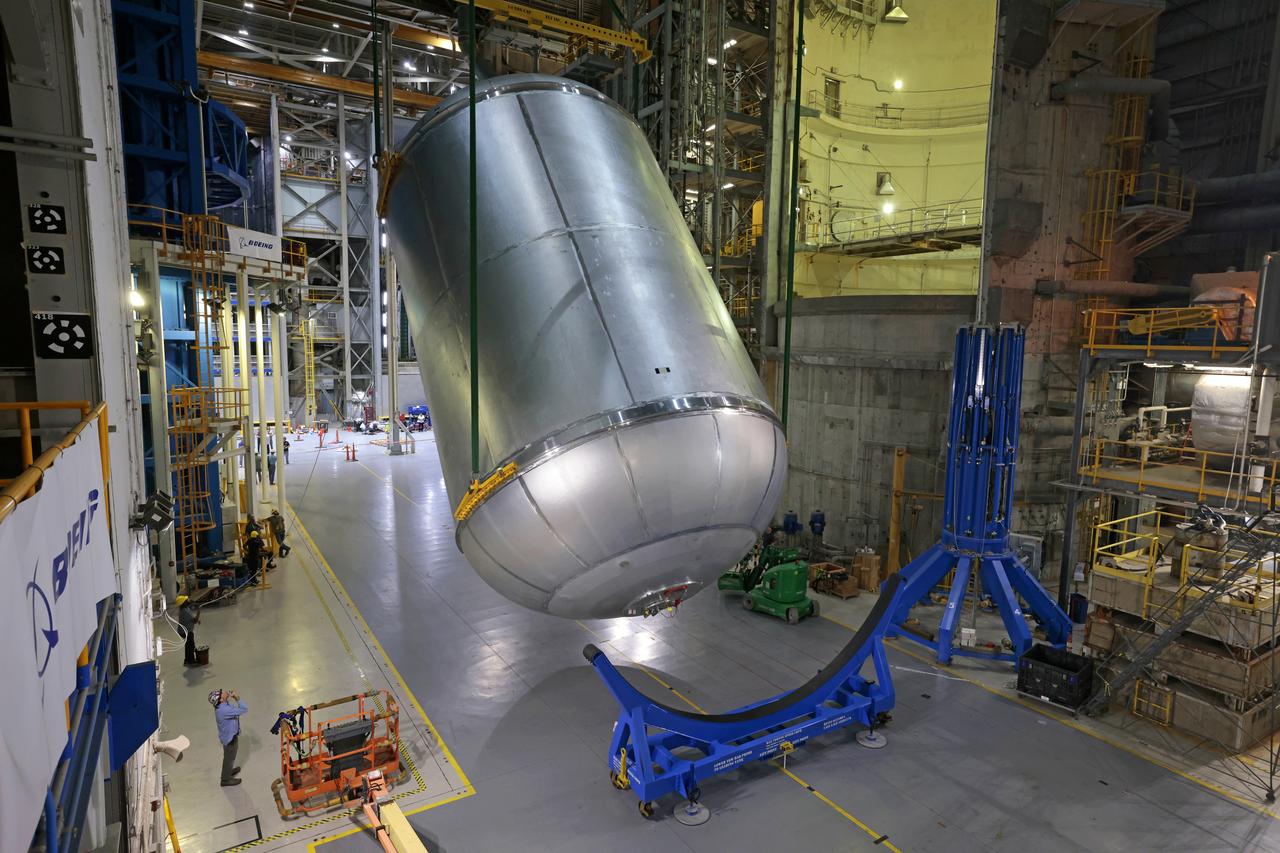
Teams at NASA’s Michoud Assembly Facility in New Orleans successfully completed hydrostatic proof testing of the core stage liquid oxygen tank for the agency’s Artemis III mission. The non-destructive evaluation method tests the structural integrity of the tank’s welds by filling the tank with water, simulating the propellant used during launch. The hardware was then moved to an adjacent cell for internal cleaning. Next, the tank will be readied for primer and application of its thermal protection system. The propellant tank is one of five major elements that make up the 212-foot-tall rocket stage. The core stage, along with its four RS-25 engines, produce two million pounds of thrust to help launch NASA’s Orion spacecraft, astronauts, and supplies beyond Earth’s orbit and to the lunar surface for Artemis. Image credit: NASA/Michael DeMocker

Move crews at NASA’s Michoud Assembly Facility in New Orleans move a liquid oxygen tank for its SLS (Space Launch System) rocket from the vertical assembly building into a nearby cell on Dec. 23. The tank, which will be used on the core stage of the agency’s Artemis III mission, will be primed using an automated process in preparation for application of its thermal protection system. The propellant tank is one of five major elements that make up the 212-foot-tall rocket stage. The core stage, along with its four RS-25 engines, produce more than two million pounds of thrust to help launch NASA’s Orion spacecraft, astronauts, and supplies beyond Earth’s orbit and to the lunar surface for Artemis.
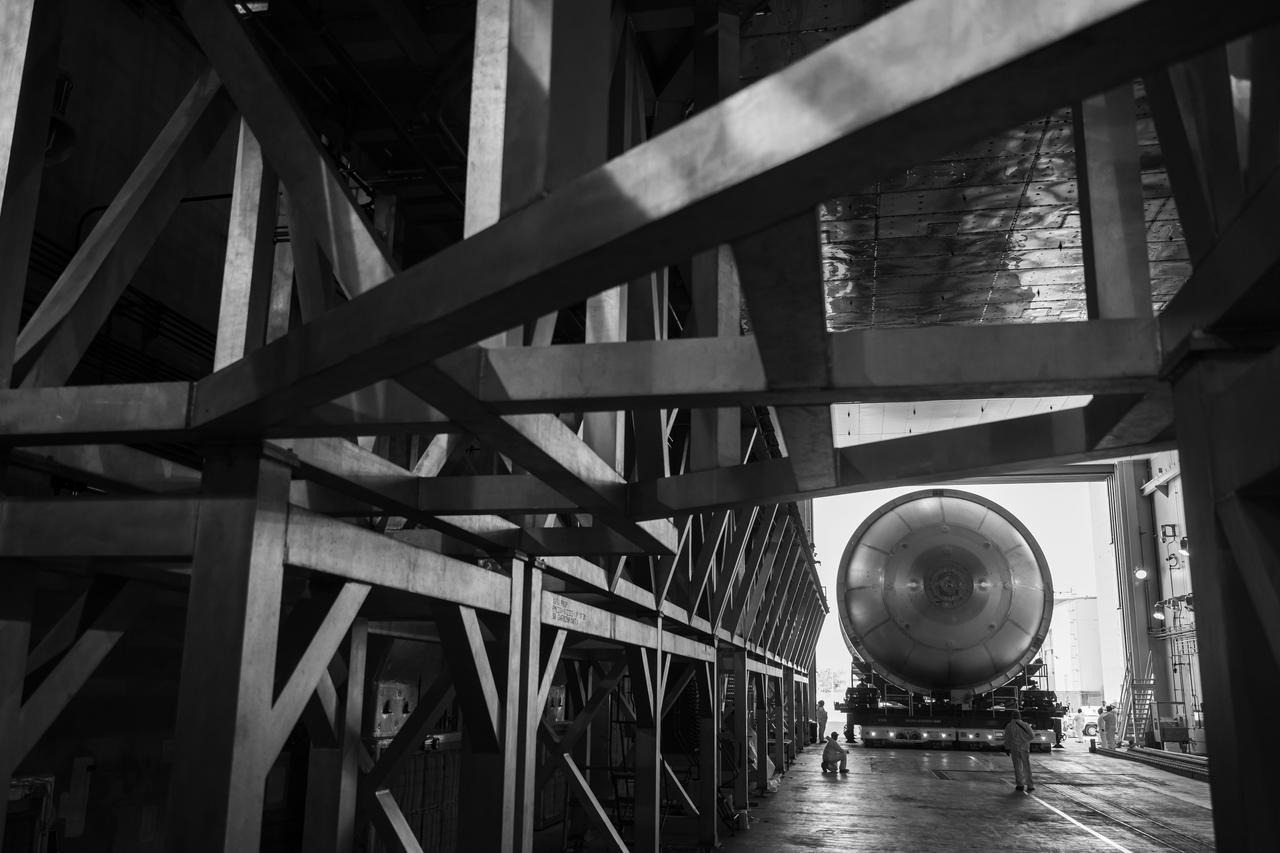
Move crews at NASA’s Michoud Assembly Facility in New Orleans move a liquid oxygen tank for its SLS (Space Launch System) rocket from the vertical assembly building into a nearby cell on Dec. 23. The tank, which will be used on the core stage of the agency’s Artemis III mission, will be primed using an automated process in preparation for application of its thermal protection system. The propellant tank is one of five major elements that make up the 212-foot-tall rocket stage. The core stage, along with its four RS-25 engines, produce more than two million pounds of thrust to help launch NASA’s Orion spacecraft, astronauts, and supplies beyond Earth’s orbit and to the lunar surface for Artemis.
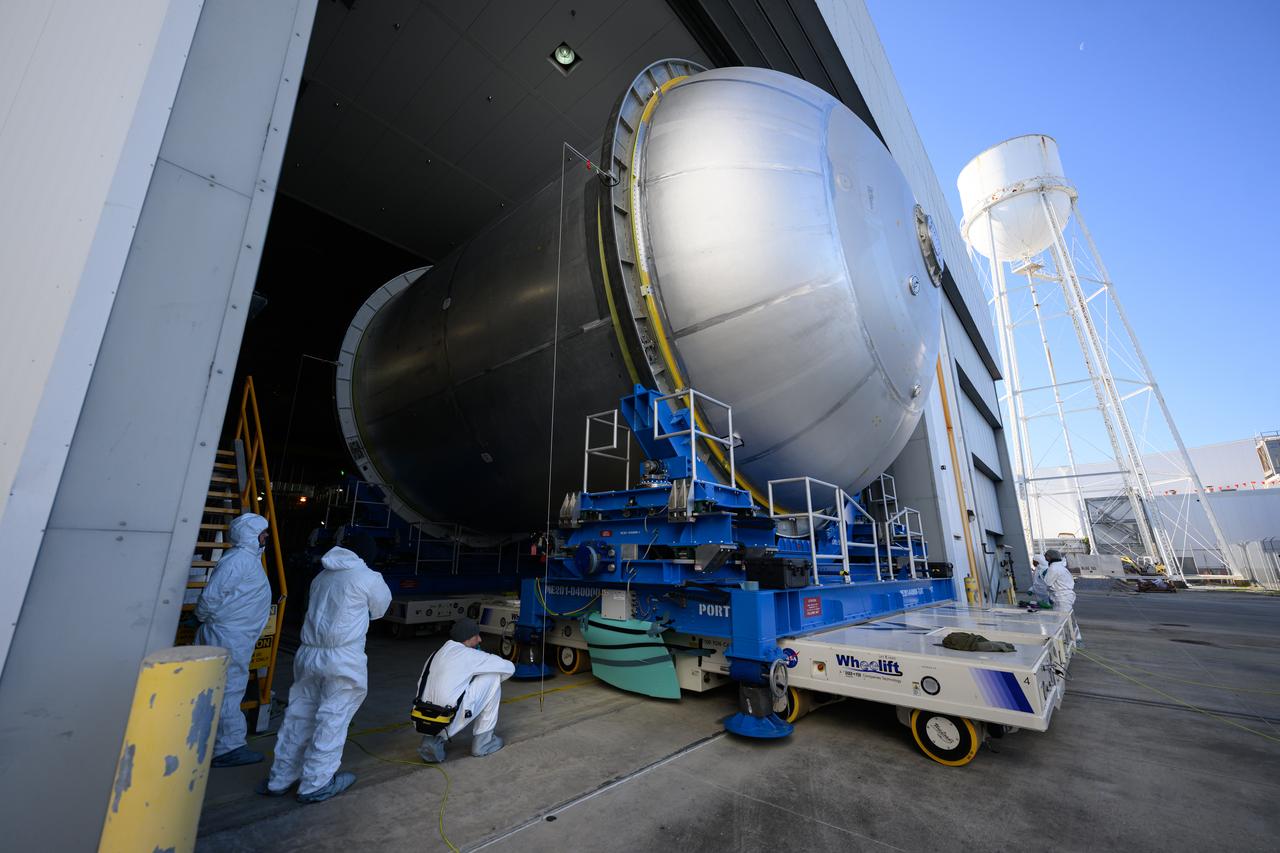
Move crews at NASA’s Michoud Assembly Facility in New Orleans move a liquid oxygen tank for its SLS (Space Launch System) rocket from the vertical assembly building into a nearby cell on Dec. 23. The tank, which will be used on the core stage of the agency’s Artemis III mission, will be primed using an automated process in preparation for application of its thermal protection system. The propellant tank is one of five major elements that make up the 212-foot-tall rocket stage. The core stage, along with its four RS-25 engines, produce more than two million pounds of thrust to help launch NASA’s Orion spacecraft, astronauts, and supplies beyond Earth’s orbit and to the lunar surface for Artemis.
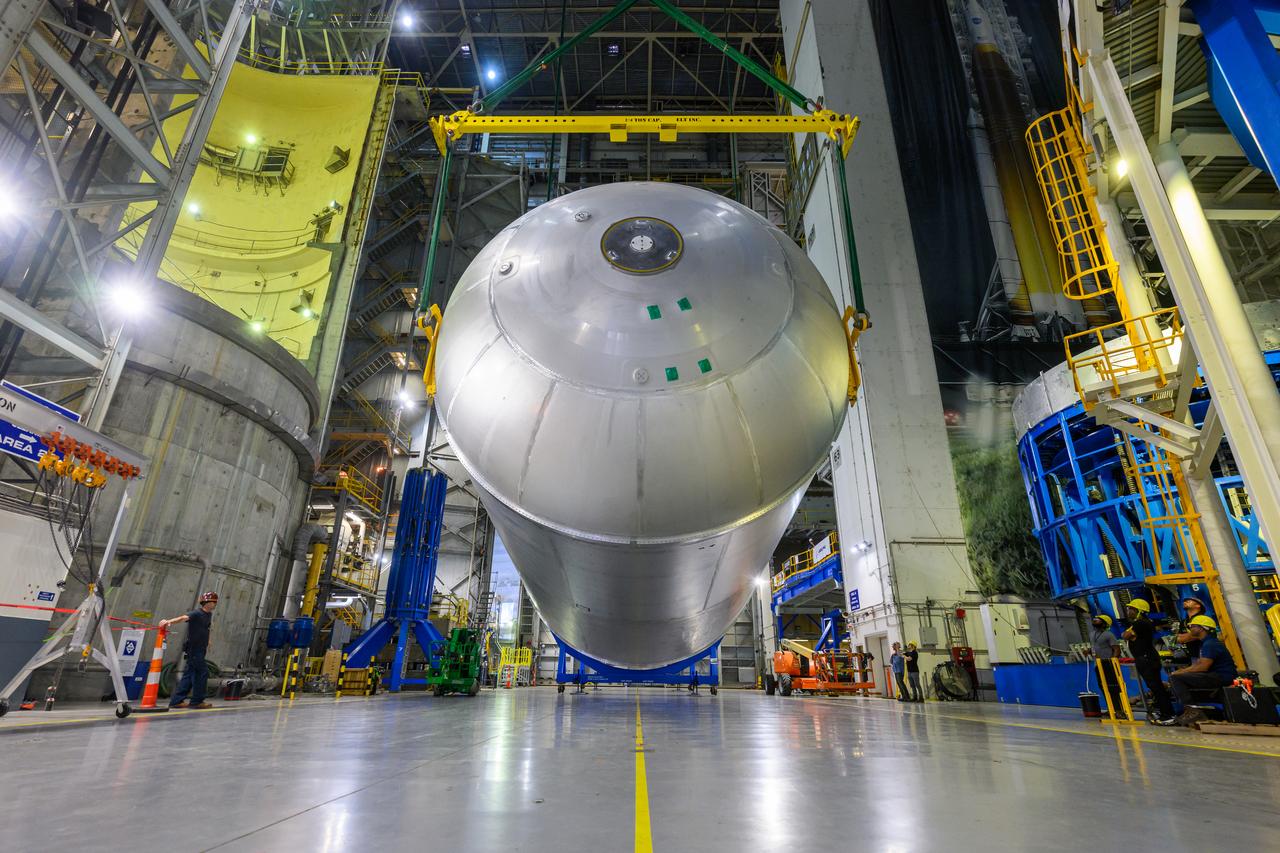
Teams at NASA’s Michoud Assembly Facility in New Orleans successfully completed hydrostatic proof testing of the core stage liquid oxygen tank for the agency’s Artemis III mission. The non-destructive evaluation method tests the structural integrity of the tank’s welds by filling the tank with water, simulating the propellant used during launch. The hardware was then moved to an adjacent cell for internal cleaning. Next, the tank will be readied for primer and application of its thermal protection system. The propellant tank is one of five major elements that make up the 212-foot-tall rocket stage. The core stage, along with its four RS-25 engines, produce two million pounds of thrust to help launch NASA’s Orion spacecraft, astronauts, and supplies beyond Earth’s orbit and to the lunar surface for Artemis.
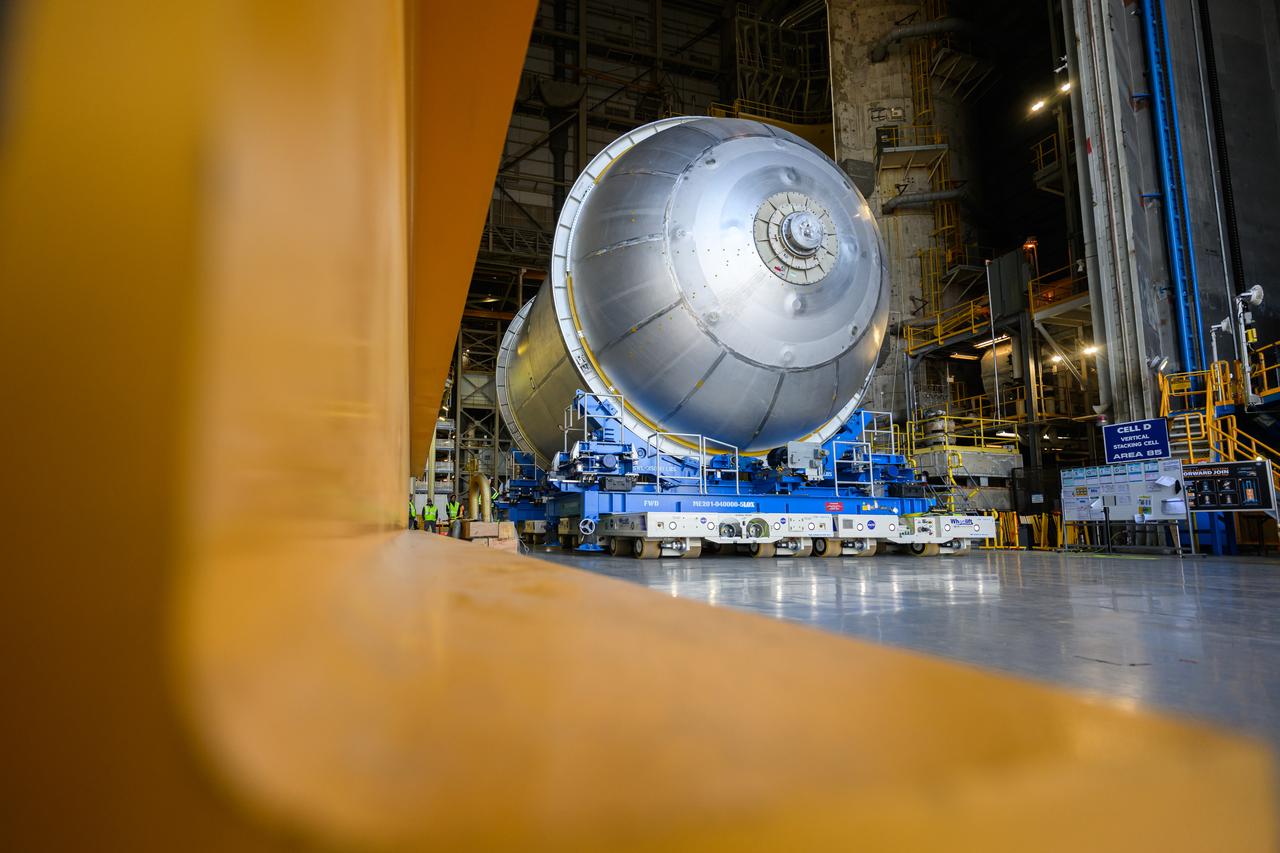
Move crews at NASA’s Michoud Assembly Facility in New Orleans move a liquid oxygen tank for its SLS (Space Launch System) rocket from the vertical assembly building into a nearby cell on Dec. 23. The tank, which will be used on the core stage of the agency’s Artemis III mission, will be primed using an automated process in preparation for application of its thermal protection system. The propellant tank is one of five major elements that make up the 212-foot-tall rocket stage. The core stage, along with its four RS-25 engines, produce more than two million pounds of thrust to help launch NASA’s Orion spacecraft, astronauts, and supplies beyond Earth’s orbit and to the lunar surface for Artemis.
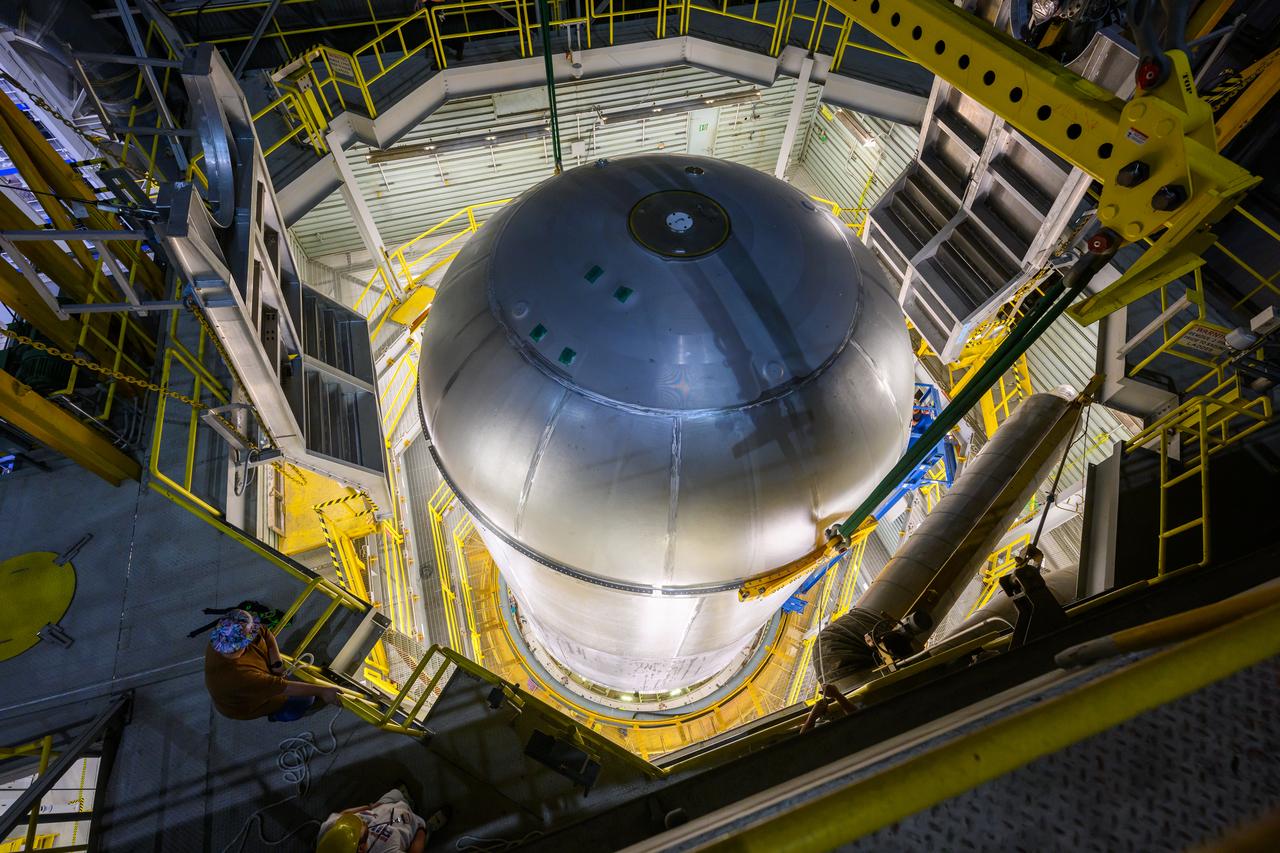
Teams at NASA’s Michoud Assembly Facility in New Orleans successfully completed hydrostatic proof testing of the core stage liquid oxygen tank for the agency’s Artemis III mission. The non-destructive evaluation method tests the structural integrity of the tank’s welds by filling the tank with water, simulating the propellant used during launch. The hardware was then moved to an adjacent cell for internal cleaning. Next, the tank will be readied for primer and application of its thermal protection system. The propellant tank is one of five major elements that make up the 212-foot-tall rocket stage. The core stage, along with its four RS-25 engines, produce two million pounds of thrust to help launch NASA’s Orion spacecraft, astronauts, and supplies beyond Earth’s orbit and to the lunar surface for Artemis.
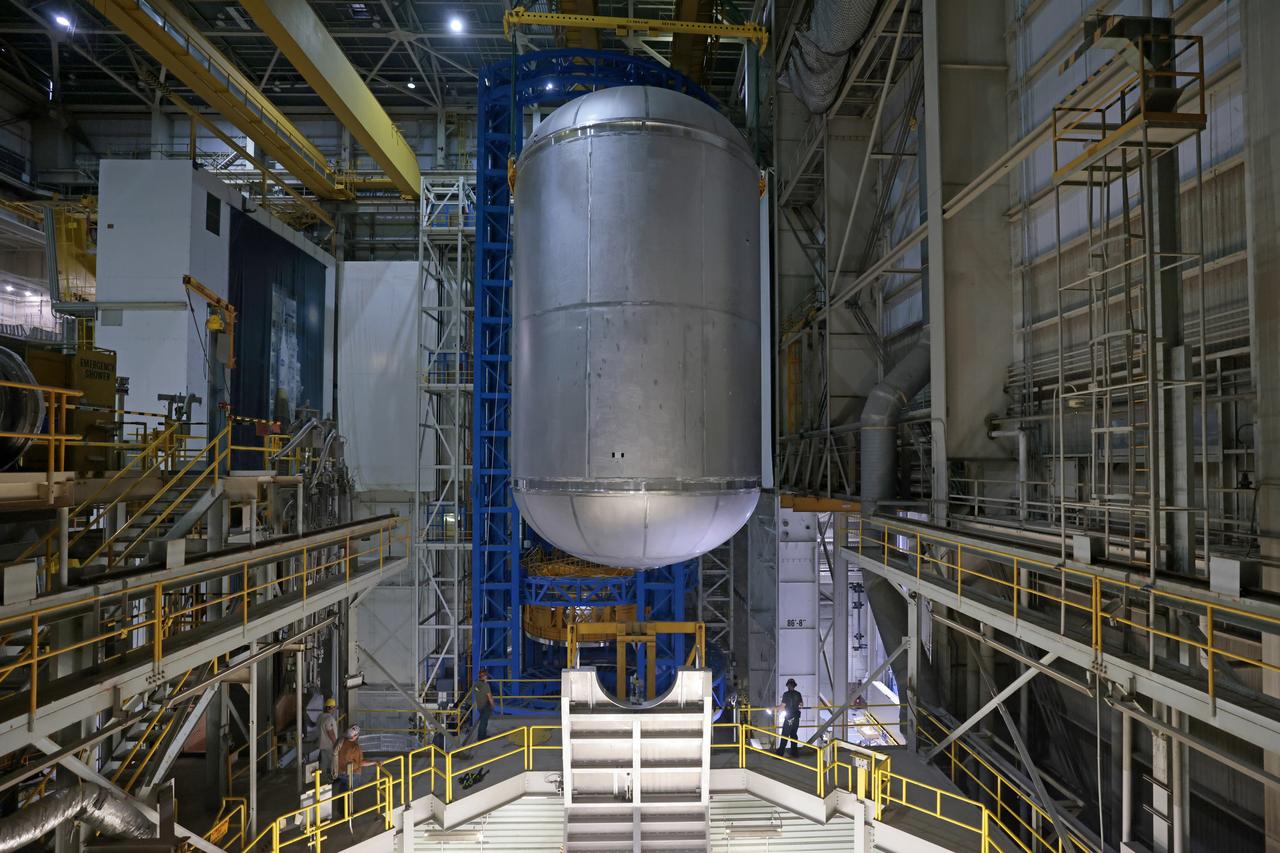
Teams at NASA’s Michoud Assembly Facility in New Orleans successfully completed hydrostatic proof testing of the core stage liquid oxygen tank for the agency’s Artemis III mission. The non-destructive evaluation method tests the structural integrity of the tank’s welds by filling the tank with water, simulating the propellant used during launch. The hardware was then moved to an adjacent cell for internal cleaning. Next, the tank will be readied for primer and application of its thermal protection system. The propellant tank is one of five major elements that make up the 212-foot-tall rocket stage. The core stage, along with its four RS-25 engines, produce two million pounds of thrust to help launch NASA’s Orion spacecraft, astronauts, and supplies beyond Earth’s orbit and to the lunar surface for Artemis. Image credit: NASA/Michael DeMocker
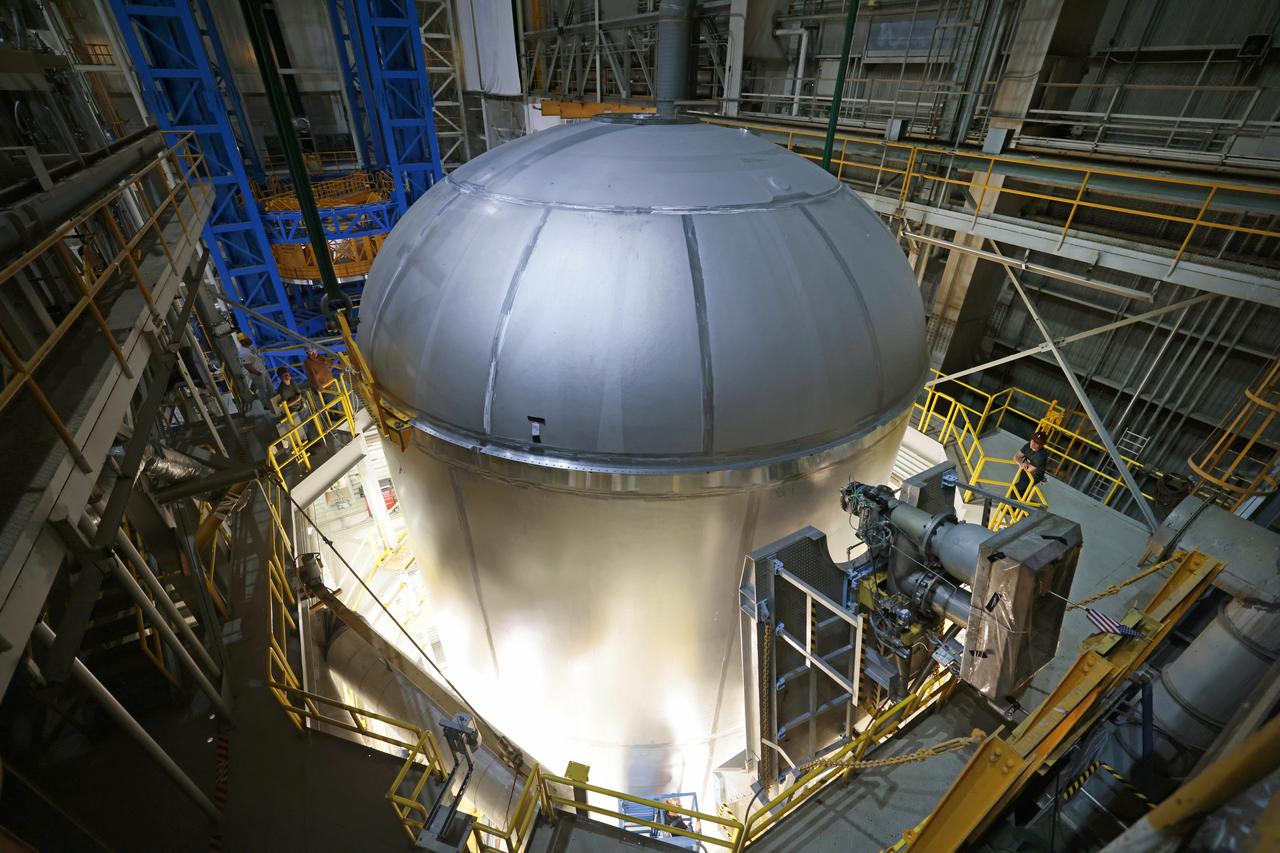
Teams at NASA’s Michoud Assembly Facility in New Orleans successfully completed hydrostatic proof testing of the core stage liquid oxygen tank for the agency’s Artemis III mission. The non-destructive evaluation method tests the structural integrity of the tank’s welds by filling the tank with water, simulating the propellant used during launch. The hardware was then moved to an adjacent cell for internal cleaning. Next, the tank will be readied for primer and application of its thermal protection system. The propellant tank is one of five major elements that make up the 212-foot-tall rocket stage. The core stage, along with its four RS-25 engines, produce two million pounds of thrust to help launch NASA’s Orion spacecraft, astronauts, and supplies beyond Earth’s orbit and to the lunar surface for Artemis. Image credit: NASA/Michael DeMocker
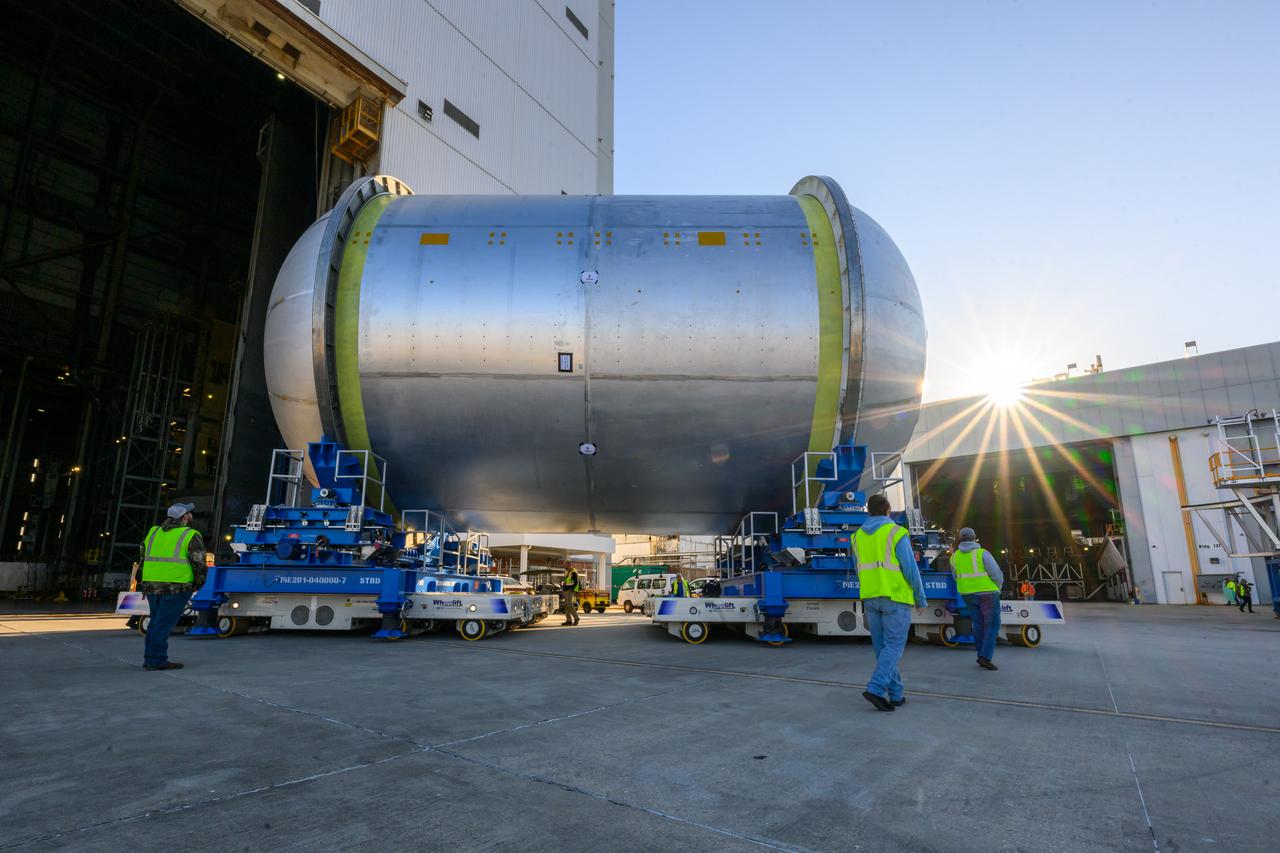
Move crews at NASA’s Michoud Assembly Facility in New Orleans move a liquid oxygen tank for its SLS (Space Launch System) rocket from the vertical assembly building into a nearby cell on Dec. 23. The tank, which will be used on the core stage of the agency’s Artemis III mission, will be primed using an automated process in preparation for application of its thermal protection system. The propellant tank is one of five major elements that make up the 212-foot-tall rocket stage. The core stage, along with its four RS-25 engines, produce more than two million pounds of thrust to help launch NASA’s Orion spacecraft, astronauts, and supplies beyond Earth’s orbit and to the lunar surface for Artemis.