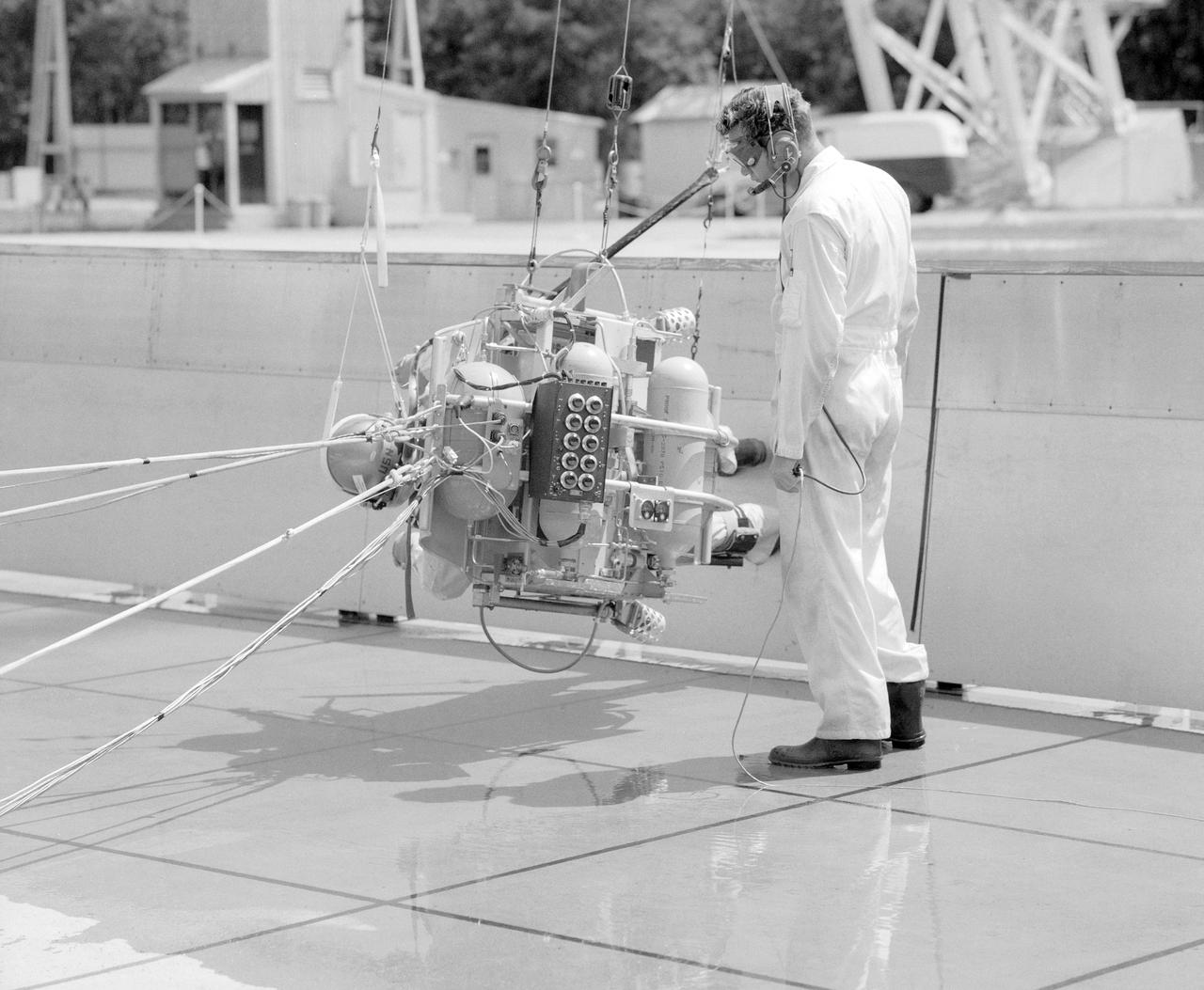
ICARUS - Lunar Walker with Pilot Dick Yenni. Yenni in ICARUS rig for jet propelled lunar mobility, at Lunar Landing Research Facility or Gantry.
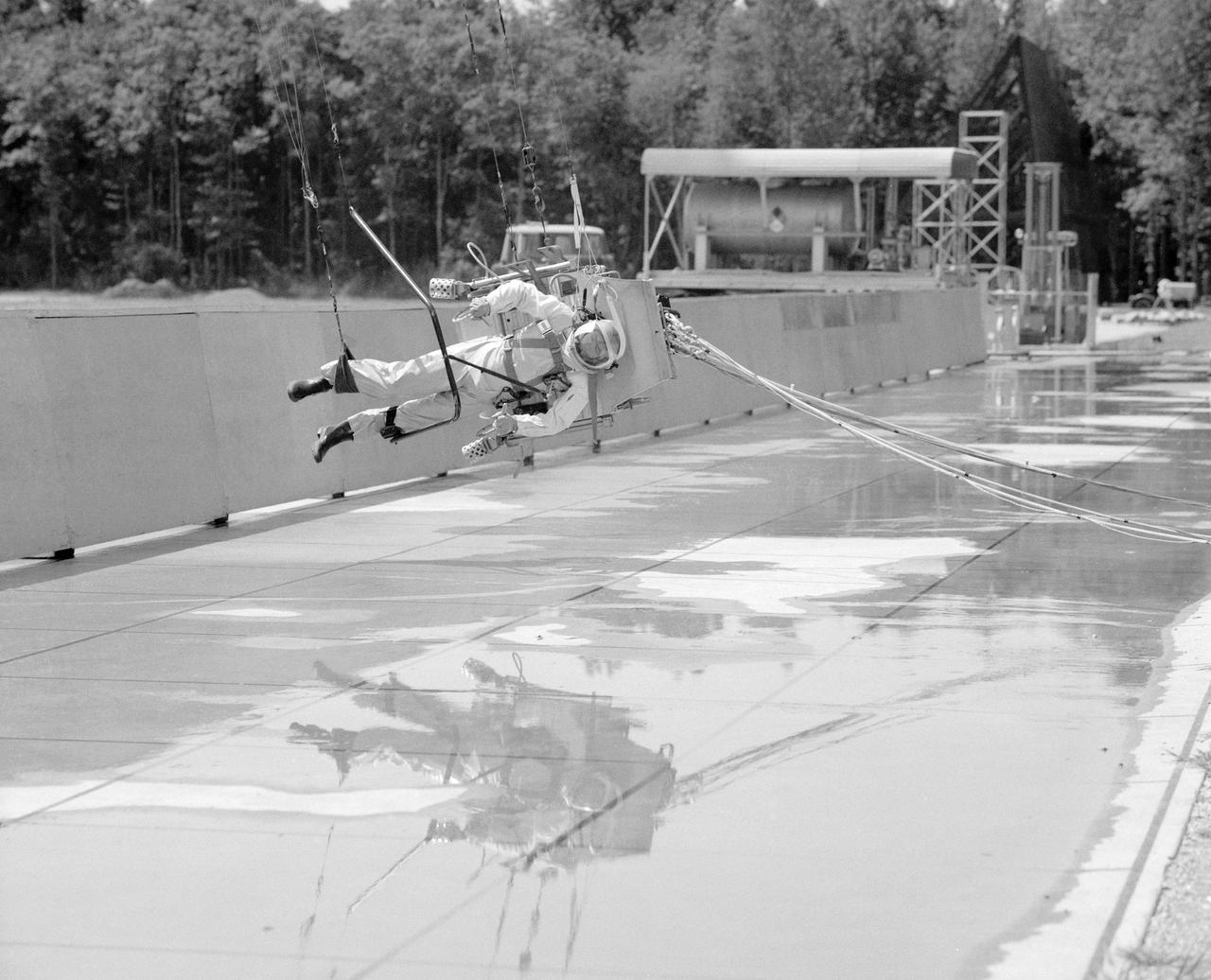
ICARUS - Lunar Walker with Pilot Dick Yenni. Yenni in ICARUS rig for jet propelled lunar mobility, at Lunar Landing Research Facility gantry.
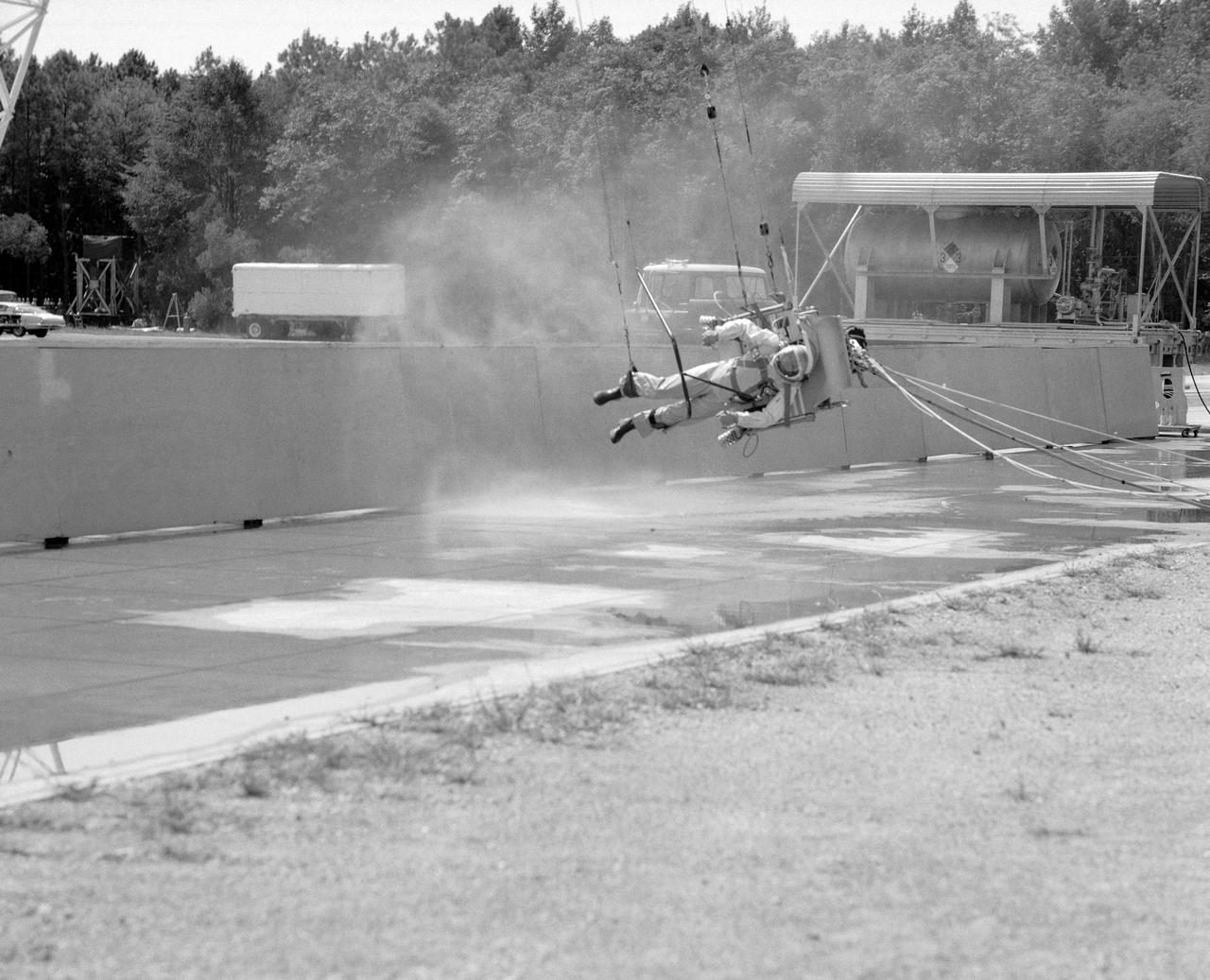
ICARUS - Lunar Walker with Pilot Dick Yenni. Yenni in ICARUS rig for jet propelled lunar mobility, at Lunar Landing Research Facility gantry.
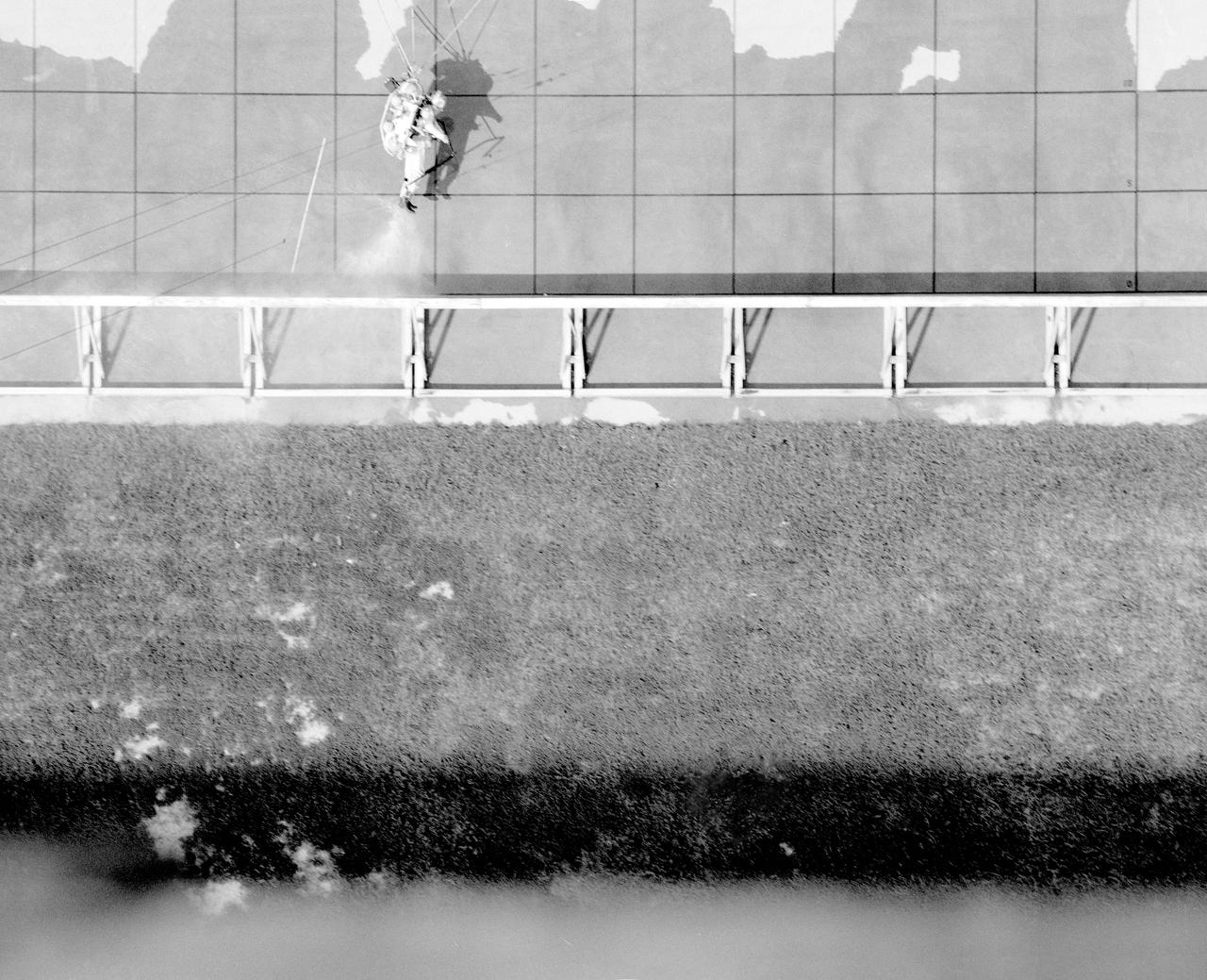
ICARUS - Lunar Walker with Pilot Dick Yenni. Yenni in ICARUS rig for jet propelled lunar mobility, at Lunar Landing Research Facility gantry.

ICARUS - Lunar Walker with Pilot Dick Yenni. Yenni in ICARUS rig for jet propelled lunar mobility, at Lunar Landing Research Facility gantry.
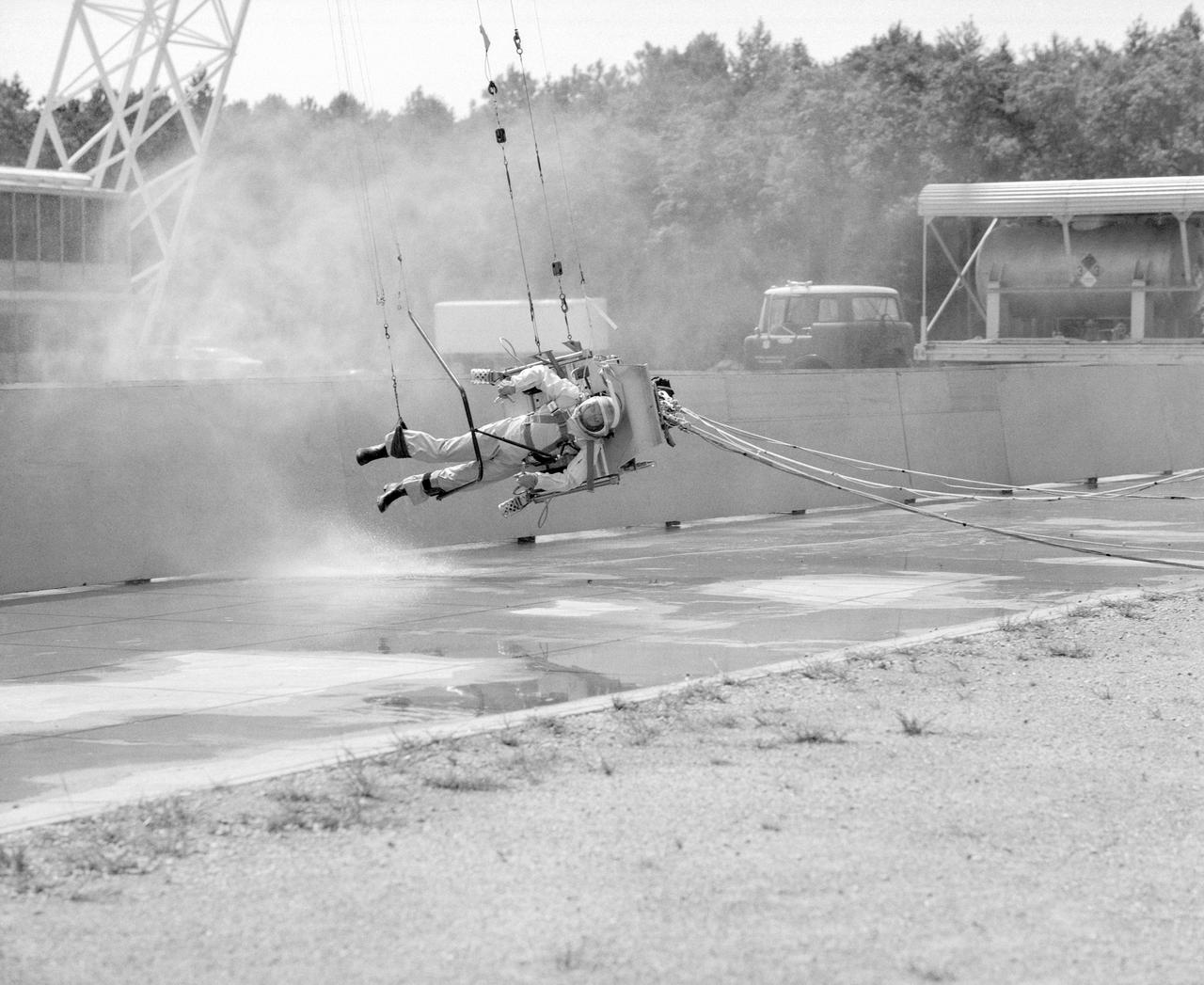
ICARUS - Lunar Walker with Pilot Dick Yenni. Yenni in ICARUS rig for jet propelled lunar mobility, at Lunar Landing Research Facility gantry.
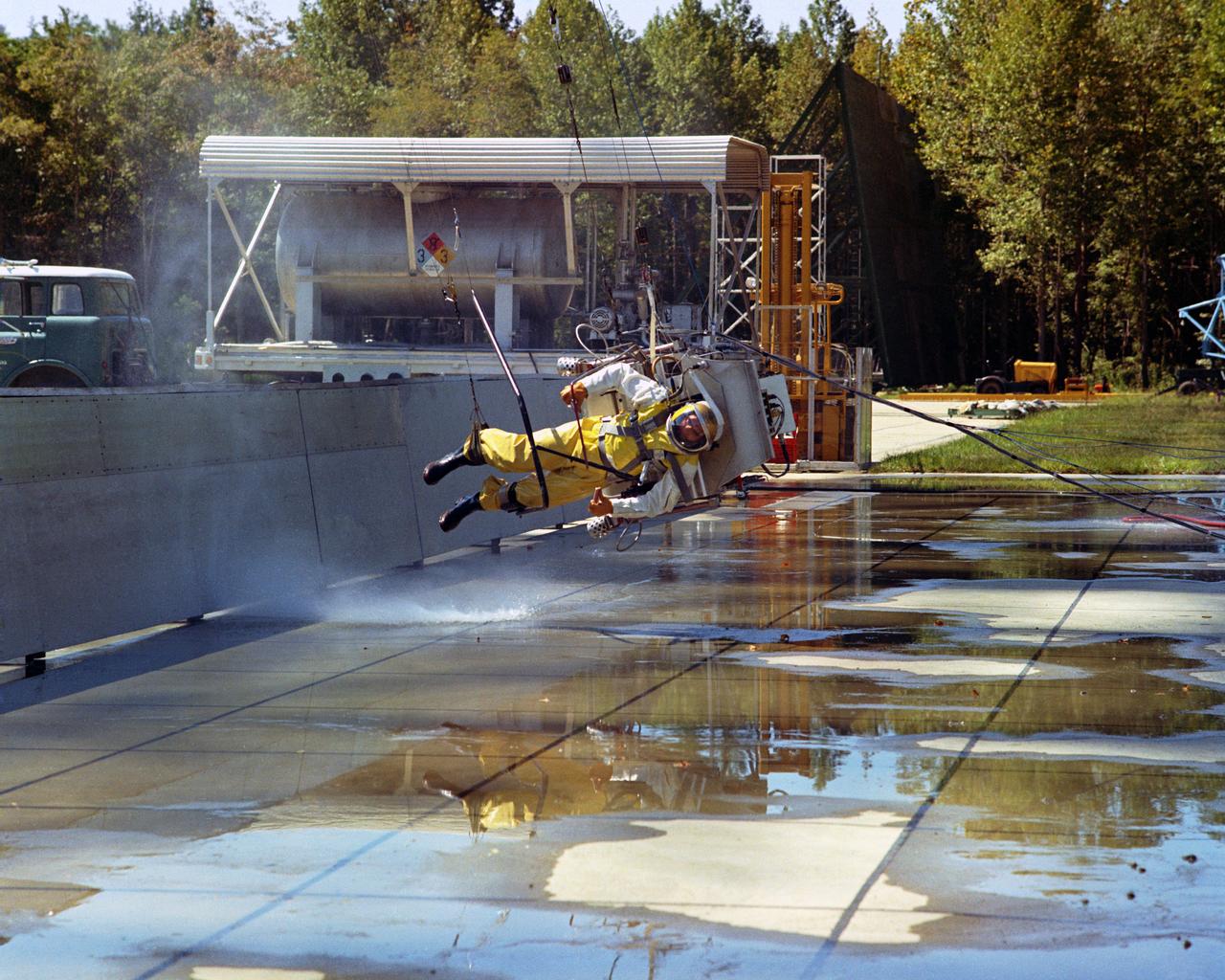
Icarus Lunar Walker,Lunar Landing Research Facility. Langley study of the backpack propulsion unit, by Bell Aerosystems. Icarus full scale test at Lunar Landing Research Facility - low gravity simulator. A NASA Langley researcher moon walks under the Lunar Landing Research Facility's gantry. More information on this can be read in the Document. "STUDIES OF PILOTING PROBLEMS OF ONE-MAN FLYING UNITS OPERATED IN SIMULATED LUNAR GRAVITY" BY Donald E. Hewes
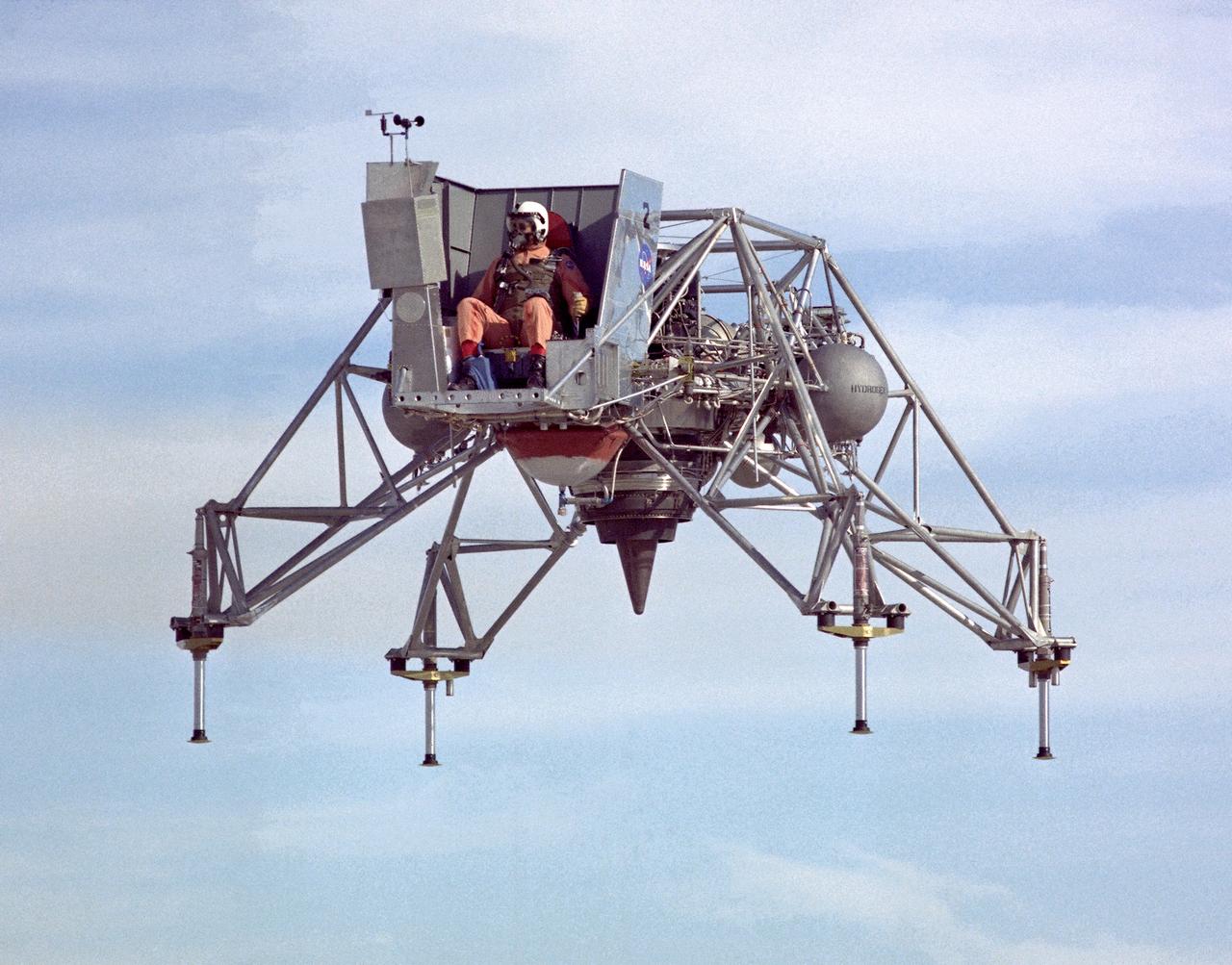
In this 1967 NASA Flight Reserch Center photograph the Lunar Landing Research Vehicle (LLRV) is viewed from the front. This photograph provideds a good view of the pilot’s platform with the restrictive cockpit view like that of he real Lunar Module (LM) When Apollo planning was underway in 1960, NASA was looking for a simulator to profile the descent to the Moon's surface. Three concepts surfaced: an electronic simulator, a tethered device, and the ambitious Dryden contribution, a free-flying vehicle. All three became serious projects, but eventually the NASA Flight Research Center’s (FRC) Lunar Landing Research Vehicle (LLRV) became the most significant one. After conceptual planning and meetings with engineers from Bell Aerosystems Company, Buffalo, N.Y., NASA FRC issued a $3.6 million production contract awarded in 1963, for delivery of the first of two vehicles for flight studies. Built of tubular aluminum alloy like a giant four-legged bedstead, the vehicle was to simulate a lunar landing profile from around 1500 feet to the Moon’s surface. The LLRV had a turbofan engine mounted vertically in a gimbal, with 4200 pounds of thrust. The engine, lifted the vehicle up to the test altitude and was then throttled back to support five-sixths of the vehicle's weight, thus simulating the reduced gravity of the Moon. Two lift rockets with thrust that could be varied from 100 to 500 pounds handled the LLRV's rate of descent and horizontal translations. Sixteen smaller rockets, mounted in pairs, gave the pilot control in pitch, yaw, and roll.. The pilot’s platform extended forward between two legs while an electronics platform, similarly located, extended rearward. The pilot had a zero-zero ejection seat that would then lift him away to safety. The two LLRVs were shipped from Bell to the FRC in April 1964, with program emphasis on vehicle No. 1. The first flight, Oct. 30, 1964, NASA research pilot Joe Walker flew it three times for a total of just under 60 seconds

jsc2011e118361 - Panorama view of Apollo 15 lunar module pilot James B. Irwin, using a scoop in making a trench in the lunar soil during the second moonwalk of the mission. The panoramas were built by combining Apollo 15 images starting with frame AS15-92-12420 thru end frame AS15-92-12438. The panoramic images received minimal retouching by NASA imagery specialists, including the removal of lens flares that were problematic in stitching together the individual frames and blacking out the sky to the lunar horizon. These adjustments were made based on observations of the Moon walkers who reported that there are no stars visible in the sky due to the bright lunar surface reflection of the Sun.
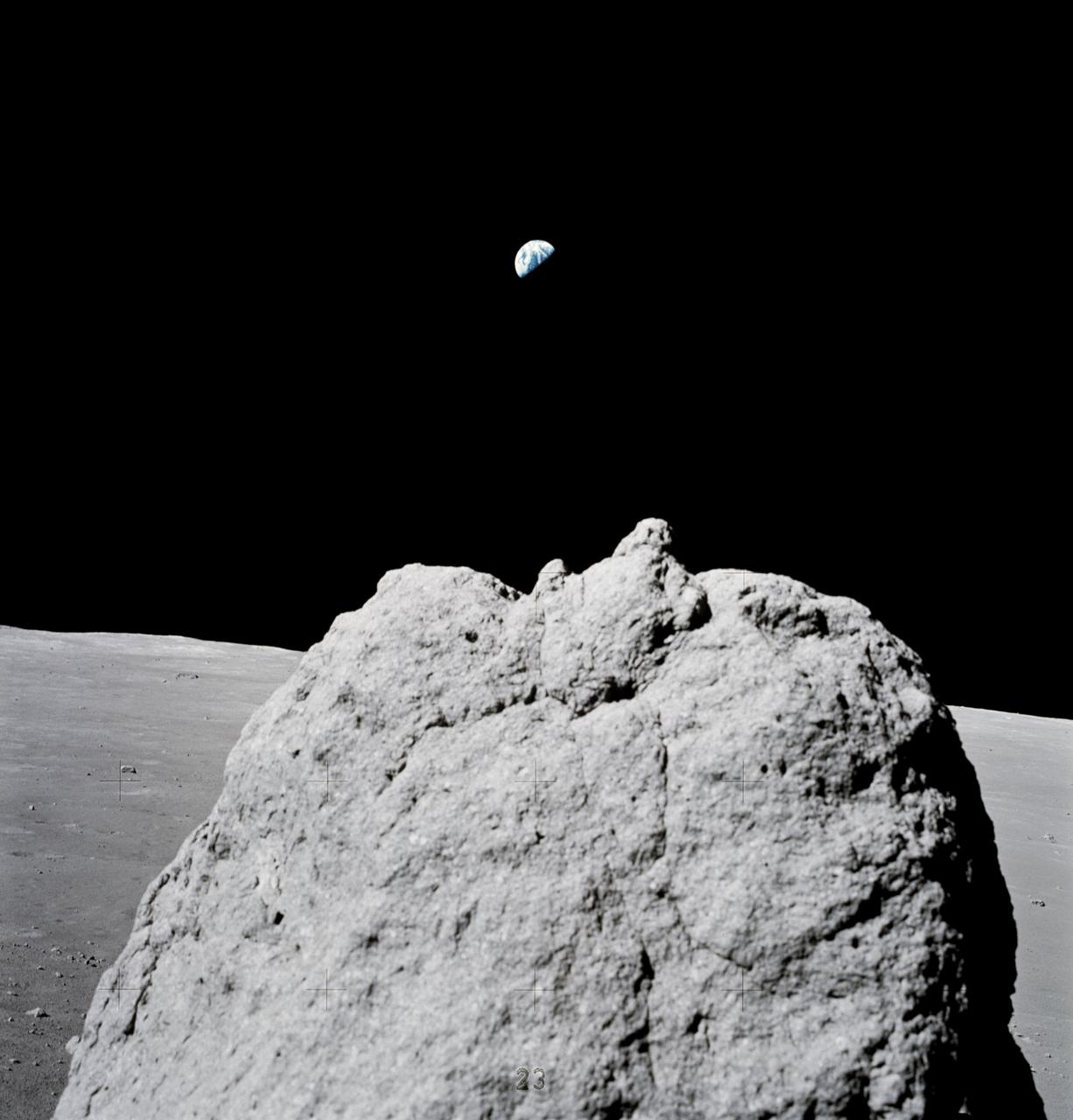
AS17-137-20910 (7-19 Dec. 1972) --- Earth (far distant background) is seen above a large lunar boulder (foreground) on the moon. The photo was taken with a handheld Hasselblad camera by the last two moon walkers in the Apollo Program. While astronauts Eugene A. Cernan, commander; and Harrison H. Schmitt, lunar module pilot, descended in the Lunar Module (LM) "Challenger" to explore the Taurus-Littrow region of the moon, astronaut Ronald E. Evans, command module pilot, remained with the Command and Service Modules (CSM) "America" in lunar orbit.
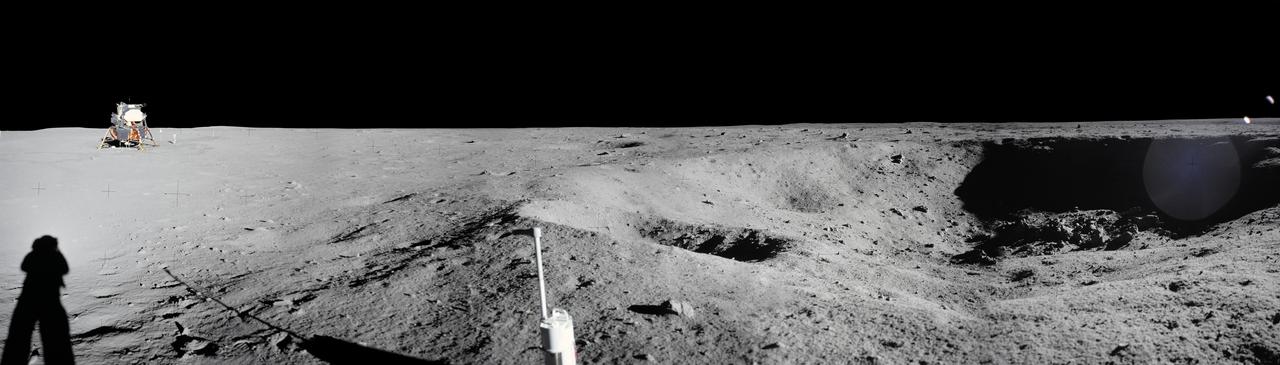
jsc2008e040725 - Panorama view of Apollo 11 Lunar surface photos taken by Astronaut Neil Armstrong at Tranquility Base of a crater Armstrong noted during the Lunar Module descent. The panoramas were built by combining Apollo 11 images starting with frame AS11-40-5954 through end frame AS11-40-5961. The panoramic images received minimal retouching by NASA imagery specialists, including the removal of lens flares that were problematic in stitching together the individual frames and blacking out the sky to the lunar horizon. These adjustments were made based on observations of the Moon walkers who reported that there are no stars visible in the sky due to the bright lunar surface reflection of the Sun.

jsc2011e118362 - Panorama view of Apollo 16 lunar surface photos of the Station 10 and Sample 381 Rock taken during the second moonwalk of the mission. The panoramas were built by combining Apollo 16 images starting with frame AS16-114-18450 thru end frame AS16-114-18467. The panoramic images received minimal retouching by NASA imagery specialists, including the removal of lens flares that were problematic in stitching together the individual frames and blacking out the sky to the lunar horizon. These adjustments were made based on observations of the Moon walkers who reported that there are no stars visible in the sky due to the bright lunar surface reflection of the Sun.
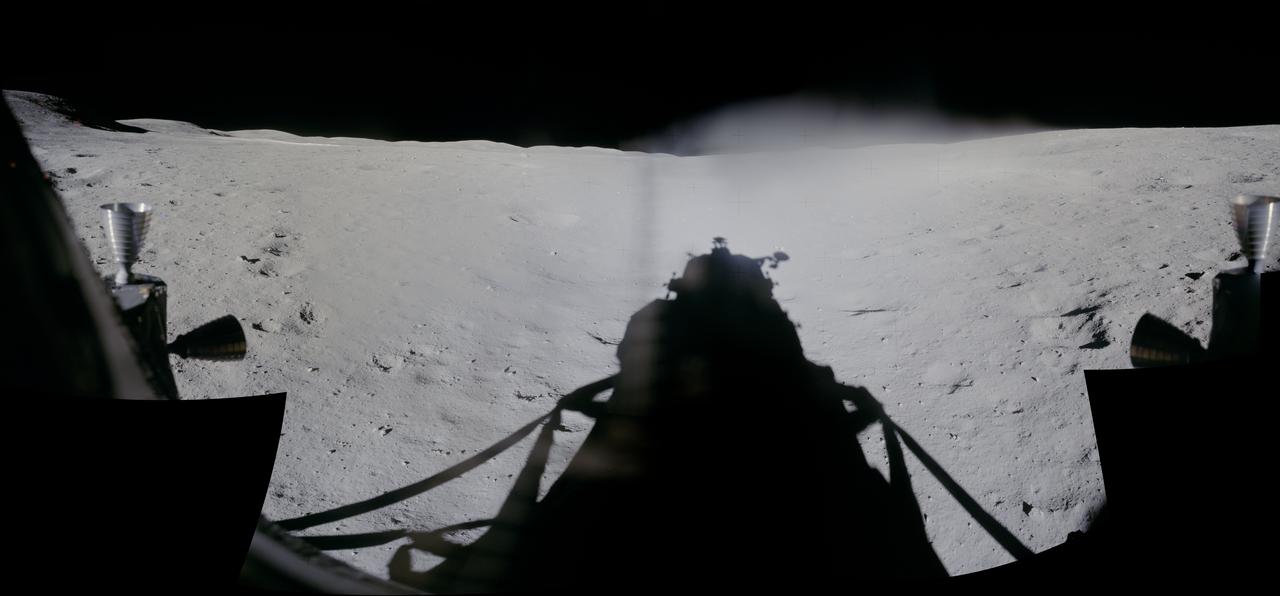
jsc2012e052597 - Panorama view from the Apollo 16 Lunar Module (LM) window taken on-orbit during Revolution 16 of the mission. The panoramas were built by combining Apollo 16 images starting with frame AS16-113-18297 thru end frame AS16-113-18307. The panoramic images received minimal retouching by NASA imagery specialists, including the removal of lens flares that were problematic in stitching together the individual frames and blacking out the sky to the lunar horizon. These adjustments were made based on observations of the Moon walkers who reported that there are no stars visible in the sky due to the bright lunar surface reflection of the Sun.
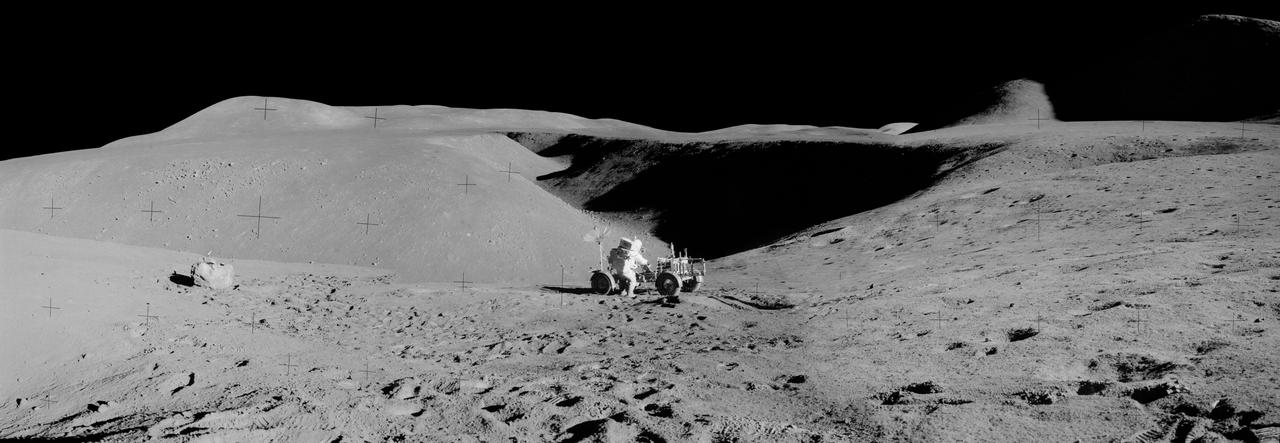
jsc2011e118359 - Panorama view of Apollo 15 lunar surface photos south of Station 2 taken by lunar module pilot James B. Irwin. Astronaut David R. Scott, mission commander, performs a task at the Lunar Roving Vehicle parked on the edge of Hadley Rille (Rima Hadley) during the first moonwalk of the mission. The panoramas were built by combining Apollo 15 images starting with frame AS15-85-11448 thru end frame AS15-85-11453. The panoramic images received minimal retouching by NASA imagery specialists, including the removal of lens flares that were problematic in stitching together the individual frames and blacking out the sky to the lunar horizon. These adjustments were made based on observations of the Moon walkers who reported that there are no stars visible in the sky due to the bright lunar surface reflection of the Sun.
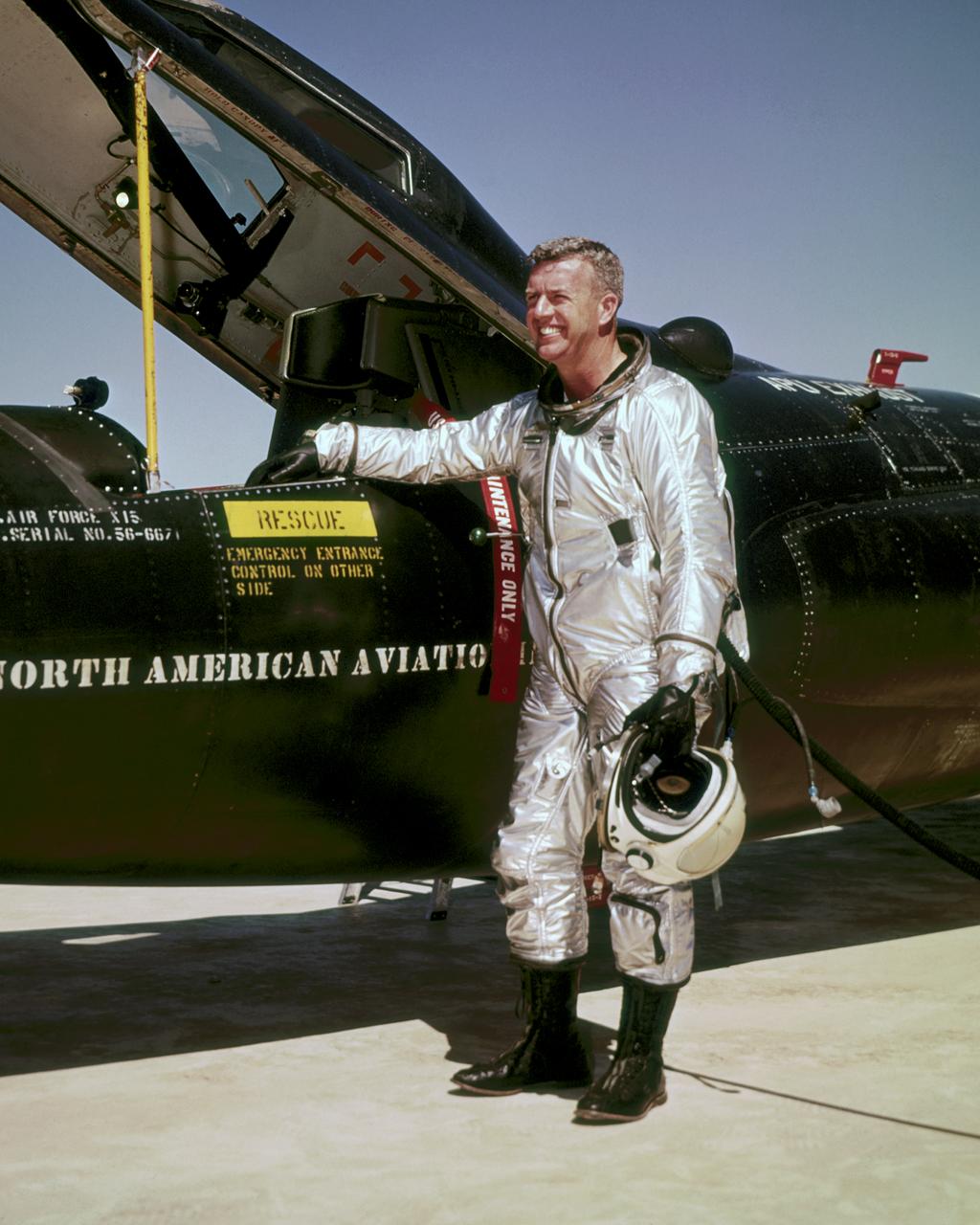
Joseph A. Walker was a Chief Research Pilot at the NASA Dryden Flight Research Center during the mid-1960s. He joined the NACA in March 1945, and served as project pilot at the Edwards flight research facility on such pioneering research projects as the D-558-1, D-558-2, X-1, X-3, X-4, X-5, and the X-15. He also flew programs involving the F-100, F-101, F-102, F-104, and the B-47. Walker made the first NASA X-15 flight on March 25, 1960. He flew the research aircraft 24 times and achieved its fastest speed and highest altitude. He attained a speed of 4,104 mph (Mach 5.92) during a flight on June 27, 1962, and reached an altitude of 354,300 feet on August 22, 1963 (his last X-15 flight). He was the first man to pilot the Lunar Landing Research Vehicle (LLRV) that was used to develop piloting and operational techniques for lunar landings. Walker was born February 20, 1921, in Washington, Pa. He lived there until graduating from Washington and Jefferson College in 1942, with a B.A. degree in Physics. During World War II he flew P-38 fighters for the Air Force, earning the Distinguished Flying Cross and the Air Medal with Seven Oak Clusters. Walker was the recipient of many awards during his 21 years as a research pilot. These include the 1961 Robert J. Collier Trophy, 1961 Harmon International Trophy for Aviators, the 1961 Kincheloe Award and 1961 Octave Chanute Award. He received an honorary Doctor of Aeronautical Sciences degree from his alma mater in June of 1962. Walker was named Pilot of the Year in 1963 by the National Pilots Association. He was a charter member of the Society of Experimental Test Pilots, and one of the first to be designated a Fellow. He was fatally injured on June 8, 1966, in a mid-air collision between an F-104 he was piloting and the XB-70.
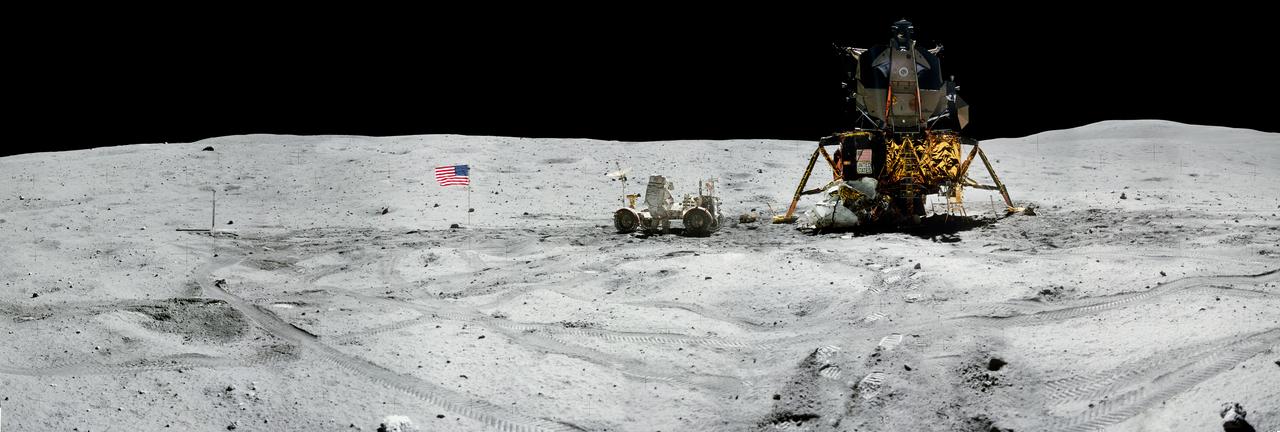
jsc2011e118363 - Panorama view of Apollo 16 commander Astronaut John W. Young, working at the Lunar Roving Vehicle (LRV) just prior to deployment of the Apollo Lunar Surface Experiments Package (ALSEP) during the first moonwalk of the mission on April 21, 1972. The panoramas were built by combining Apollo 16 images starting with frame AS16-116-18573 thru end frame AS16-116-18581. The panoramic images received minimal retouching by NASA imagery specialists, including the removal of lens flares that were problematic in stitching together the individual frames and blacking out the sky to the lunar horizon. These adjustments were made based on observations of the Moon walkers who reported that there are no stars visible in the sky due to the bright lunar surface reflection of the Sun.
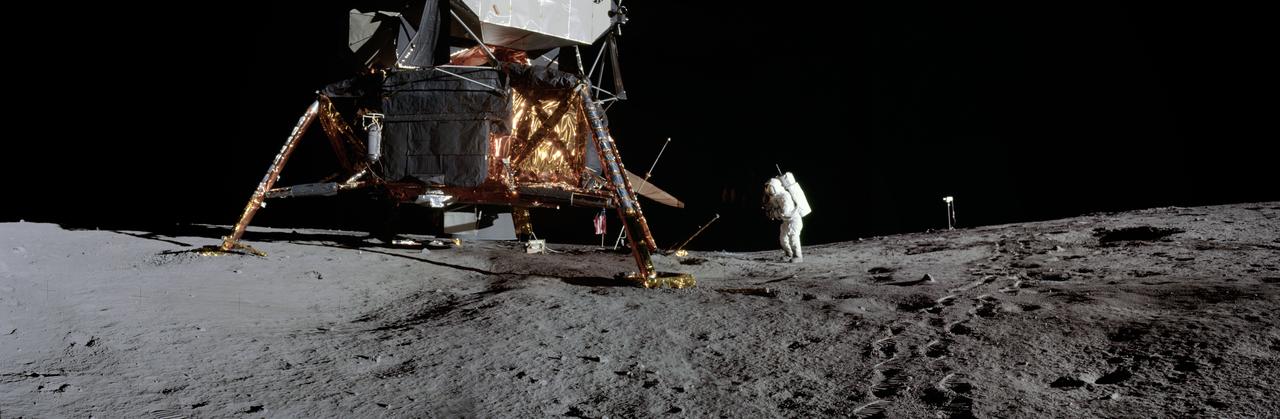
jsc2011e118358 - Panorama view of Apollo 12 lunar surface photos with lunar module pilot Alan L. Bean and the TV taken from just inside the rim of Surveyor Crater on the first moonwalk of the mission. The panoramas were built by combining Apollo 12 images starting with frame AS12-46-6777 thru end frame AS12-46-6780. The panoramic images received minimal retouching by NASA imagery specialists, including the removal of lens flares that were problematic in stitching together the individual frames and blacking out the sky to the lunar horizon. These adjustments were made based on observations of the Moon walkers who reported that there are no stars visible in the sky due to the bright lunar surface reflection of the Sun.

jsc2004e20304 - Panorama view of Apollo 17 lunar surface photos for Station 5 at the Taurus-Littrow landing site taken during the second moonwalk of the mission by Apollo 17 commander Eugene Cernan and lunar module pilot Harrison (Jack) Schmitt. The panoramas were built by combining Apollo 17 images starting with frame AS17-145-22159 through end frame AS17-145-22181. The panoramic images received minimal retouching by NASA imagery specialists, including the removal of lens flares that were problematic in stitching together the individual frames and blacking out the sky to the lunar horizon. These adjustments were made based on observations of the Moon walkers who reported that there are no stars visible in the sky due to the bright lunar surface reflection of the Sun.

jsc2004e52779 - Panorama view of Apollo 17 lunar surface photos for Station 6 taken during the third moonwalk of the mission by Apollo 17 commander Eugene Cernan and lunar module pilot Harrison (Jack) Schmitt. The panoramas were built by combining Apollo 17 images starting with frame AS17-141-21575 through end frame AS17-141-21603. The panoramic images received minimal retouching by NASA imagery specialists, including the removal of lens flares that were problematic in stitching together the individual frames and blacking out the sky to the lunar horizon. These adjustments were made based on observations of the Moon walkers who reported that there are no stars visible in the sky due to the bright lunar surface reflection of the Sun.
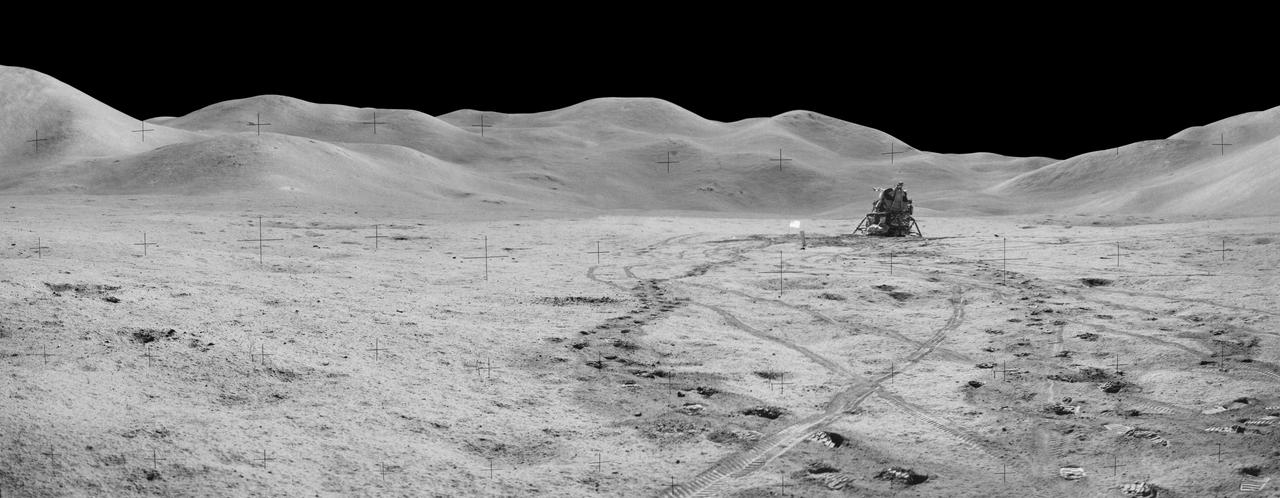
jsc2011e118360 - Panorama view of Station 8 and (Mons) Mt. Hadley taken during the third moonwalk of the Apollo 15 mission. The panoramas were built by combining Apollo 15 images starting with frame AS15-82-11054 thru end frame AS15-82-11058. The panoramic images received minimal retouching by NASA imagery specialists, including the removal of lens flares that were problematic in stitching together the individual frames and blacking out the sky to the lunar horizon. These adjustments were made based on observations of the Moon walkers who reported that there are no stars visible in the sky due to the bright lunar surface reflection of the Sun.

jsc2012e052599 - Panorama view of Apollo 16 lunar surface photos as lunar module pilot Charles M. Duke Jr. is photographed by commander John W. Young collecting lunar samples at Station No. 1 during the first moonwalk of the mission at the Descartes landing site. The panoramas were built by combining Apollo 16 images starting with frame AS16-114-18416 thru end frame AS16-114-18431. The panoramic images received minimal retouching by NASA imagery specialists, including the removal of lens flares that were problematic in stitching together the individual frames and blacking out the sky to the lunar horizon. These adjustments were made based on observations of the Moon walkers who reported that there are no stars visible in the sky due to the bright lunar surface reflection of the Sun. With significant overlap and time delay between frames, it is possible to create two different versions of this panorama with astronaut Charles Duke (Apollo 16) in the center (jsc2012e052598) and both in the center and walking away to the right (jsc2012e052599).

jsc2012e052598 - Panorama view of Apollo 16 lunar surface photos as lunar module pilot Charles M. Duke Jr. is photographed by commander John W. Young collecting lunar samples at Station No. 1 during the first moonwalk of the mission at the Descartes landing site. The panoramas were built by combining Apollo 16 images starting with frame AS16-114-18416 thru end frame AS16-114-18431. The panoramic images received minimal retouching by NASA imagery specialists, including the removal of lens flares that were problematic in stitching together the individual frames and blacking out the sky to the lunar horizon. These adjustments were made based on observations of the Moon walkers who reported that there are no stars visible in the sky due to the bright lunar surface reflection of the Sun. With significant overlap and time delay between frames, it is possible to create two different versions of this panorama with astronaut Charles Duke (Apollo 16) in the center (jsc2012e052598) and both in the center and walking away to the right (jsc2012e052599).
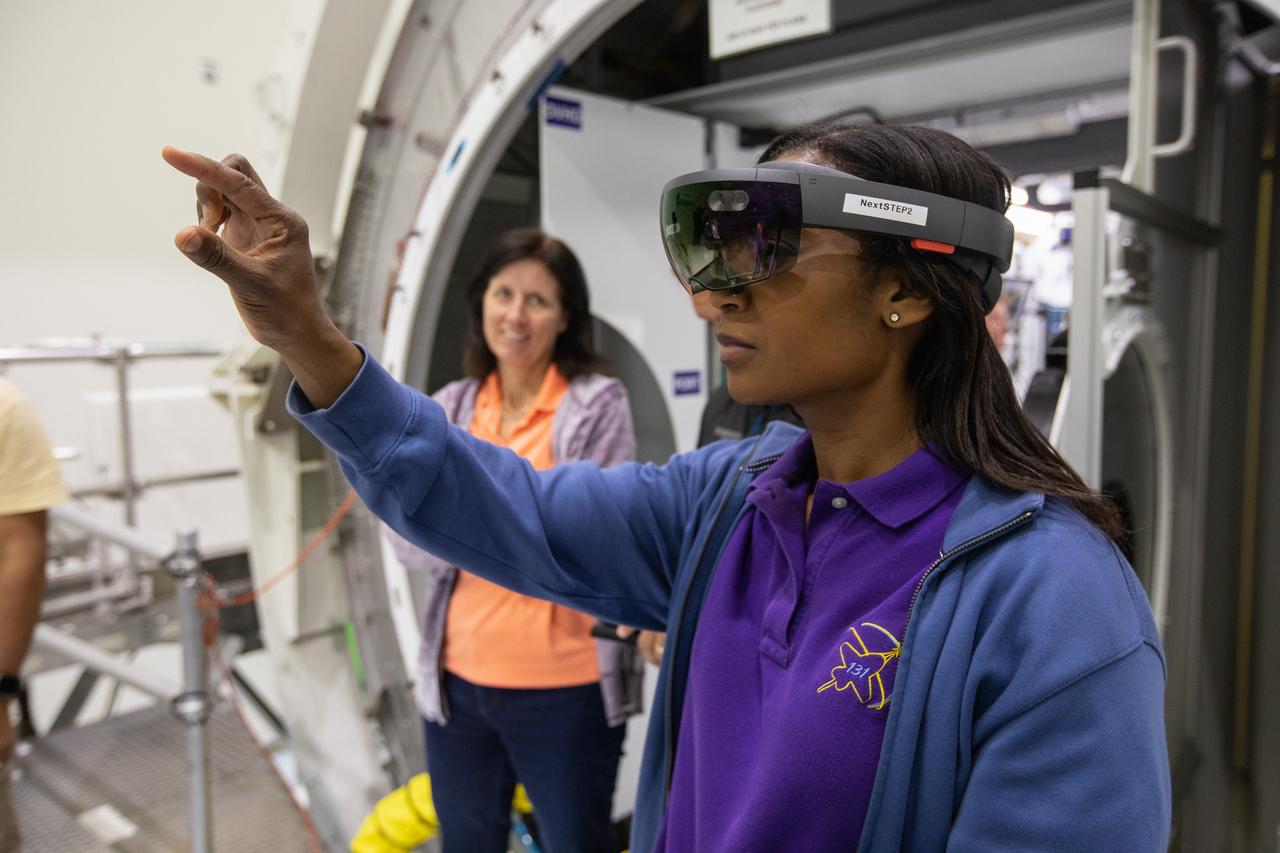
NASA began evaluating five habitat prototypes developed through NASA’s Next Space Exploration for Technologies Partnerships, or NextSTEP, to help engineers refine requirements for the design of an American-made deep space habitat for the Gateway. Lockheed Martin turned over its prototype to NASA, and testing began with crew on March 25, 2019, at Kennedy Space Center in Florida. Pictured inside the Space Station Processing Facility on March 26, 2019, from left are astronauts Shannon Walker and Stephanie Wilson. Astronauts are participating in the evaluations to provide their perspectives as those who may one day live aboard the lunar outpost, which would be located about 250,000 miles from Earth. Ground prototypes developed by Bigelow Aerospace, Boeing, Northrop Grumman, and Sierra Nevada Corporation will be tested in the future at various facilities across the country. A sixth company, NanoRacks, plans to develop a prototype as well.
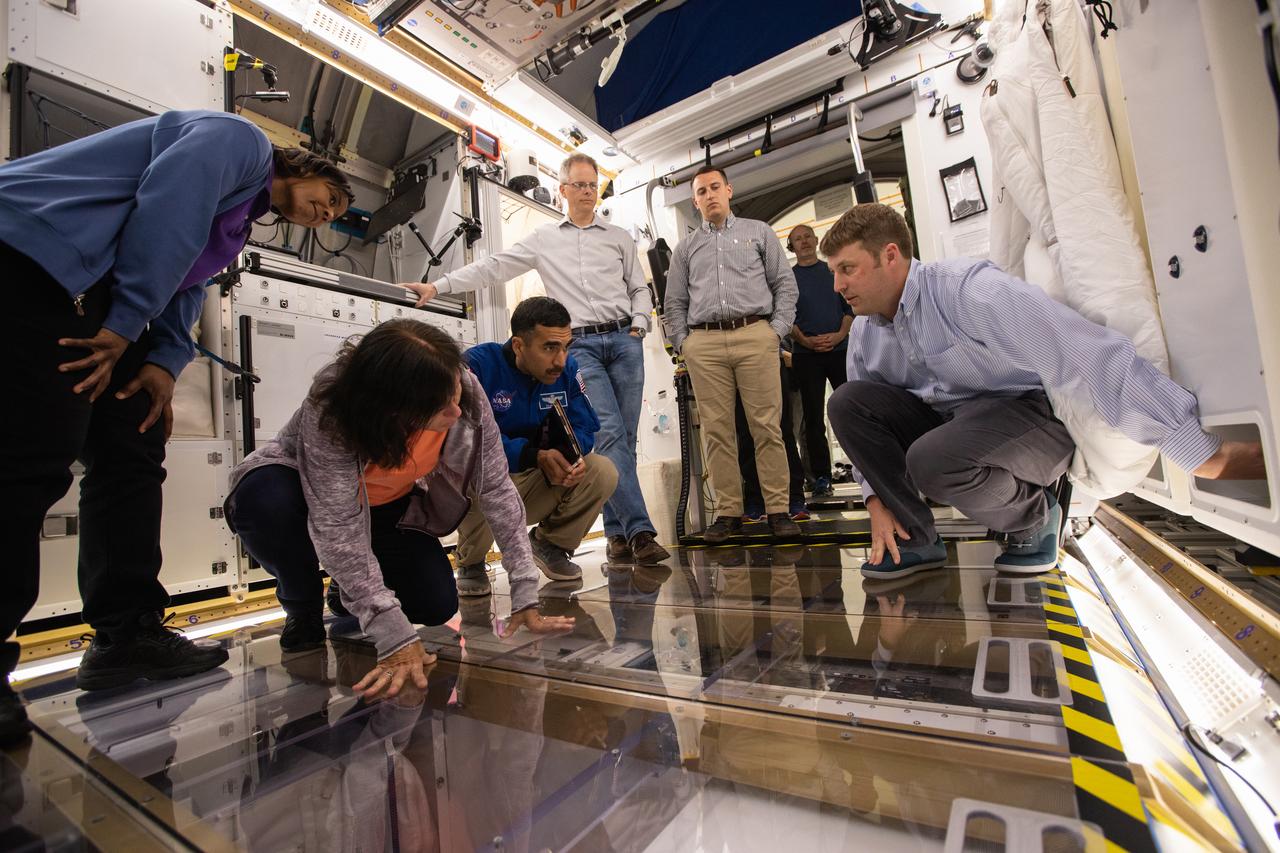
NASA began evaluating five habitat prototypes developed through NASA’s Next Space Exploration for Technologies Partnerships, or NextSTEP, to help engineers refine requirements for the design of an American-made deep space habitat for the Gateway. Lockheed Martin turned over its prototype to NASA, and testing began with crew on March 25, 2019, at Kennedy Space Center in Florida. Pictured inside the habitat prototype on March 26, 2019, from left are astronauts Stephanie Wilson, Shannon Walker and Raja Chari. Astronauts are participating in the evaluations to provide their perspectives as those who may one day live aboard the lunar outpost, which would be located about 250,000 miles from Earth. Ground prototypes developed by Bigelow Aerospace, Boeing, Northrop Grumman, and Sierra Nevada Corporation will be tested in the future at various facilities across the country. A sixth company, NanoRacks, plans to develop a prototype as well.
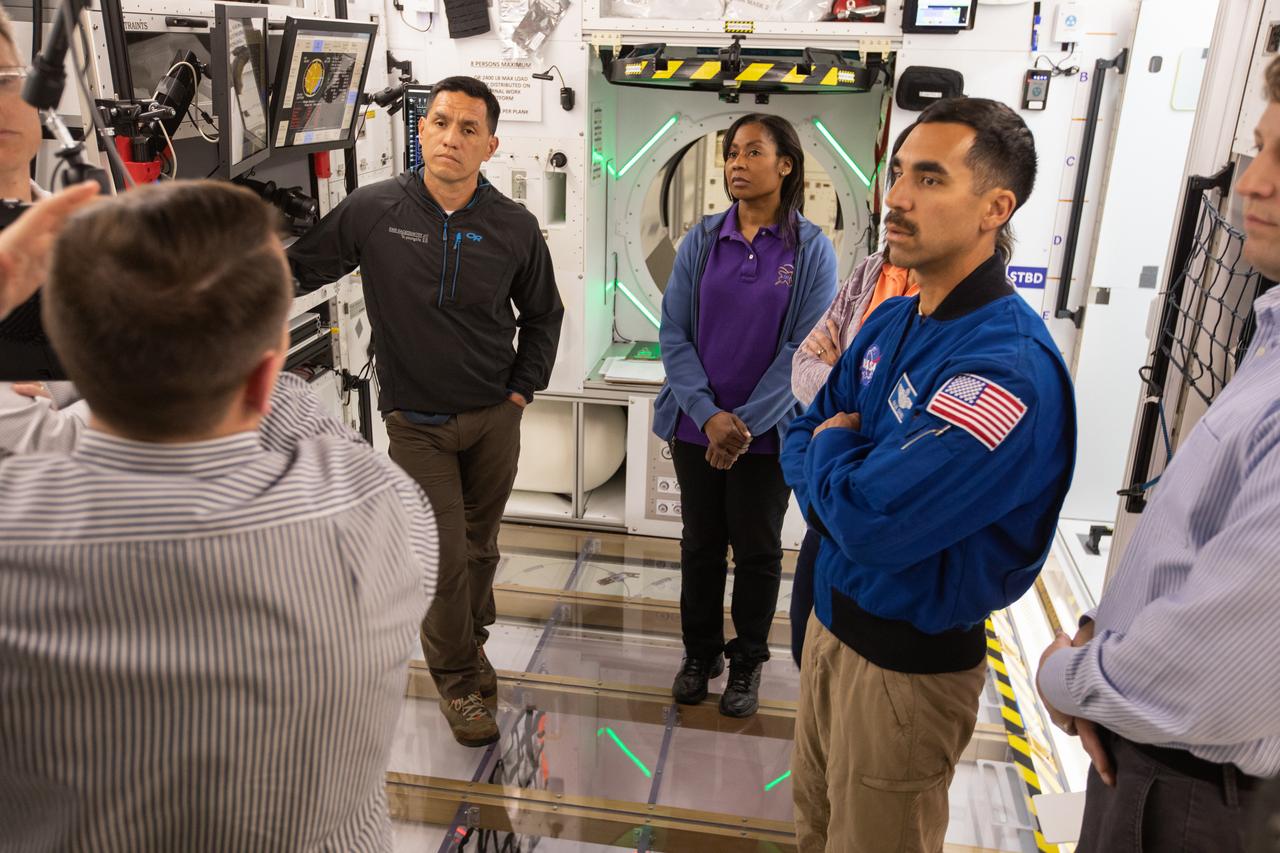
NASA began evaluating five habitat prototypes developed through NASA’s Next Space Exploration for Technologies Partnerships, or NextSTEP, to help engineers refine requirements for the design of an American-made deep space habitat for the Gateway. Lockheed Martin turned over its prototype to NASA, and testing began with crew on March 25, 2019, at Kennedy Space Center in Florida. Pictured inside the habitat prototype on March 26, 2019, from left are astronauts Frank Rubio, Stephanie Wilson and Raja Chari. Partially in view next to Chari is astronaut Shannon Walker. Astronauts are participating in the evaluations to provide their perspectives as those who may one day live aboard the lunar outpost, which would be located about 250,000 miles from Earth. Ground prototypes developed by Bigelow Aerospace, Boeing, Northrop Grumman, and Sierra Nevada Corporation will be tested in the future at various facilities across the country. A sixth company, NanoRacks, plans to develop a prototype as well.
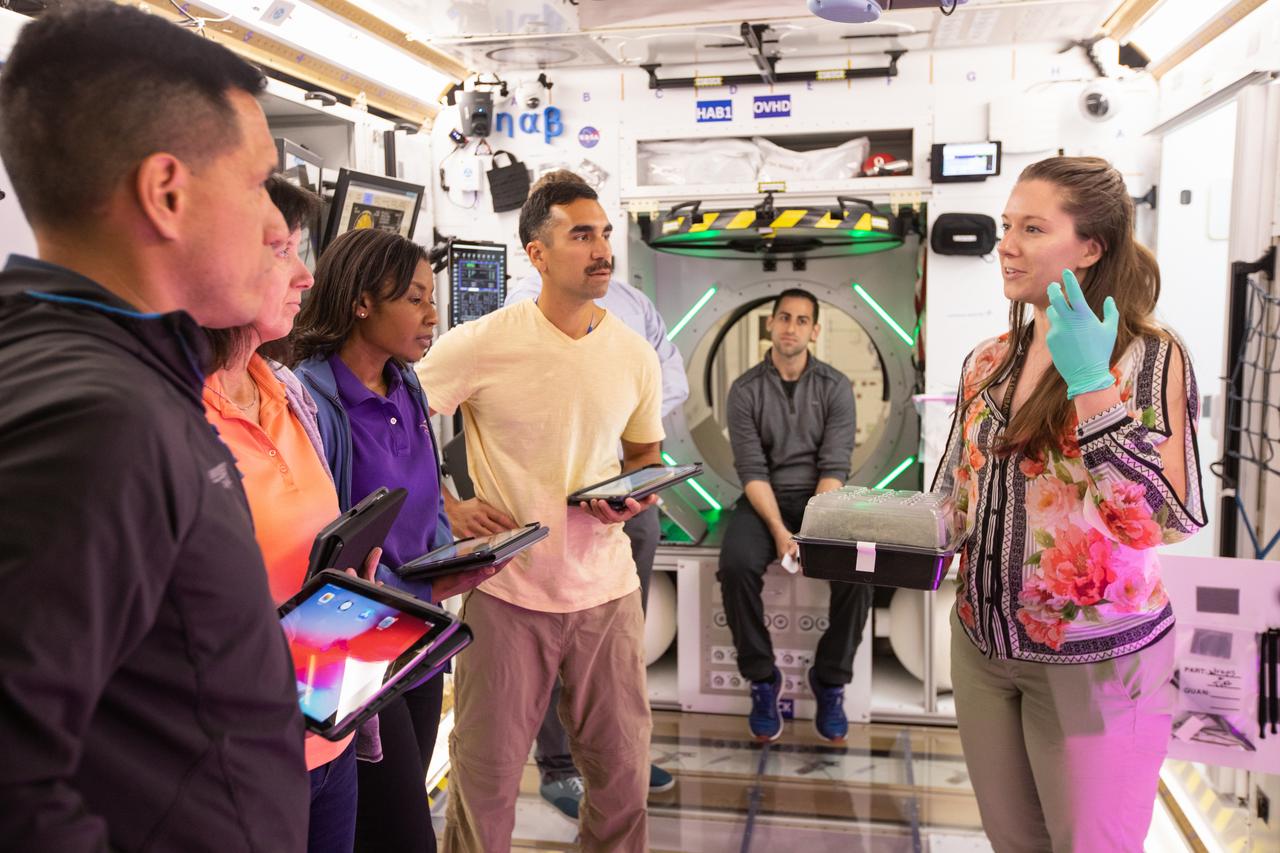
NASA began evaluating five habitat prototypes developed through NASA’s Next Space Exploration for Technologies Partnerships, or NextSTEP, to help engineers refine requirements for the design of an American-made deep space habitat for the Gateway. Lockheed Martin turned over its prototype to NASA, and testing began with crew on March 25, 2019, at Kennedy Space Center in Florida. Pictured inside the habitat prototype on March 26, 2019, from far left are astronauts Frank Rubio, Shannon Walker, Stephanie Wilson and Raja Chari. Astronauts are participating in the evaluations to provide their perspectives as those who may one day live aboard the lunar outpost, which would be located about 250,000 miles from Earth. Ground prototypes developed by Bigelow Aerospace, Boeing, Northrop Grumman, and Sierra Nevada Corporation will be tested in the future at various facilities across the country. A sixth company, NanoRacks, plans to develop a prototype as well.
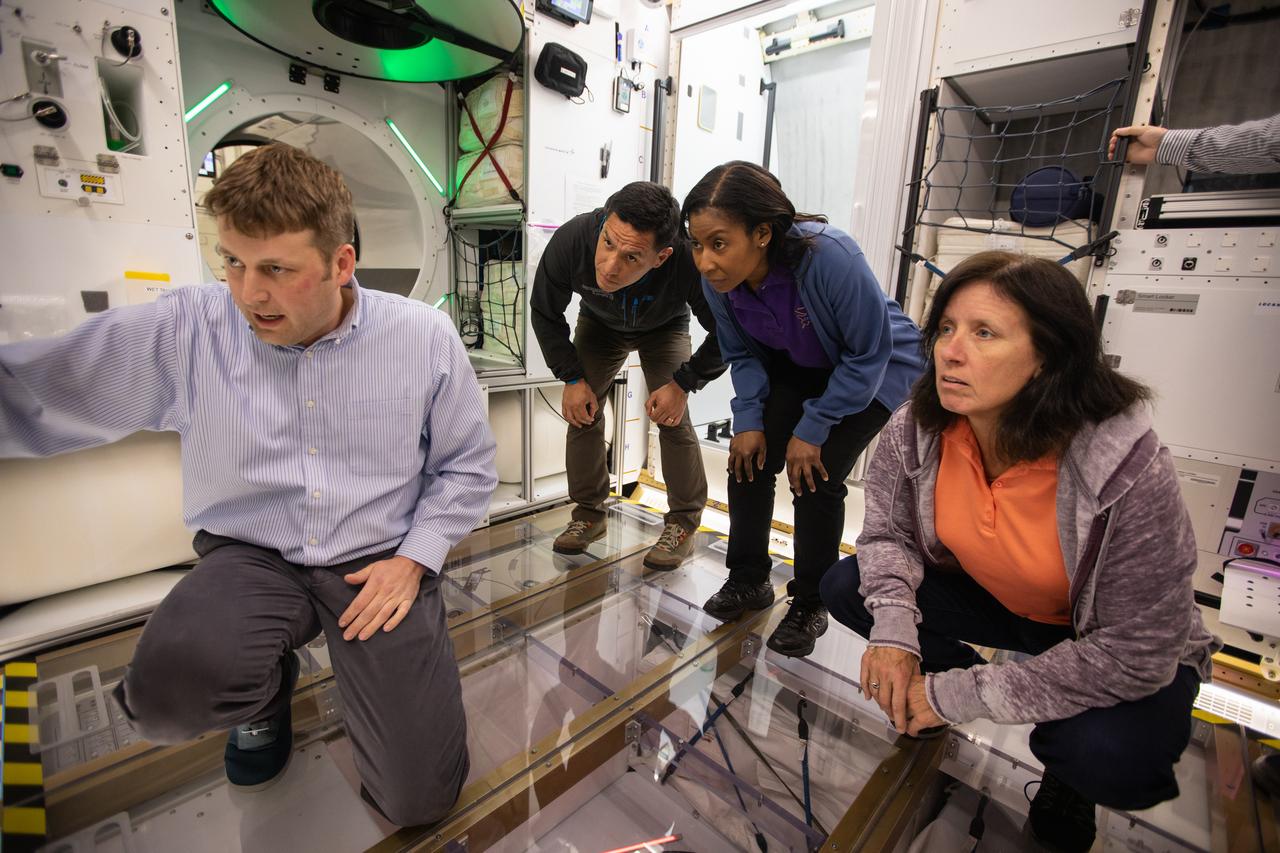
NASA began evaluating five habitat prototypes developed through NASA’s Next Space Exploration for Technologies Partnerships, or NextSTEP, to help engineers refine requirements for the design of an American-made deep space habitat for the Gateway. Lockheed Martin turned over its prototype to NASA, and testing began with crew on March 25, 2019, at Kennedy Space Center in Florida. Pictured inside the habitat prototype on March 26, 2019, in back from left are astronauts Frank Rubio, Stephanie Wilson and Shannon Walker. Astronauts are participating in the evaluations to provide their perspectives as those who may one day live aboard the lunar outpost, which would be located about 250,000 miles from Earth. Ground prototypes developed by Bigelow Aerospace, Boeing, Northrop Grumman, and Sierra Nevada Corporation will be tested in the future at various facilities across the country. A sixth company, NanoRacks, plans to develop a prototype as well.
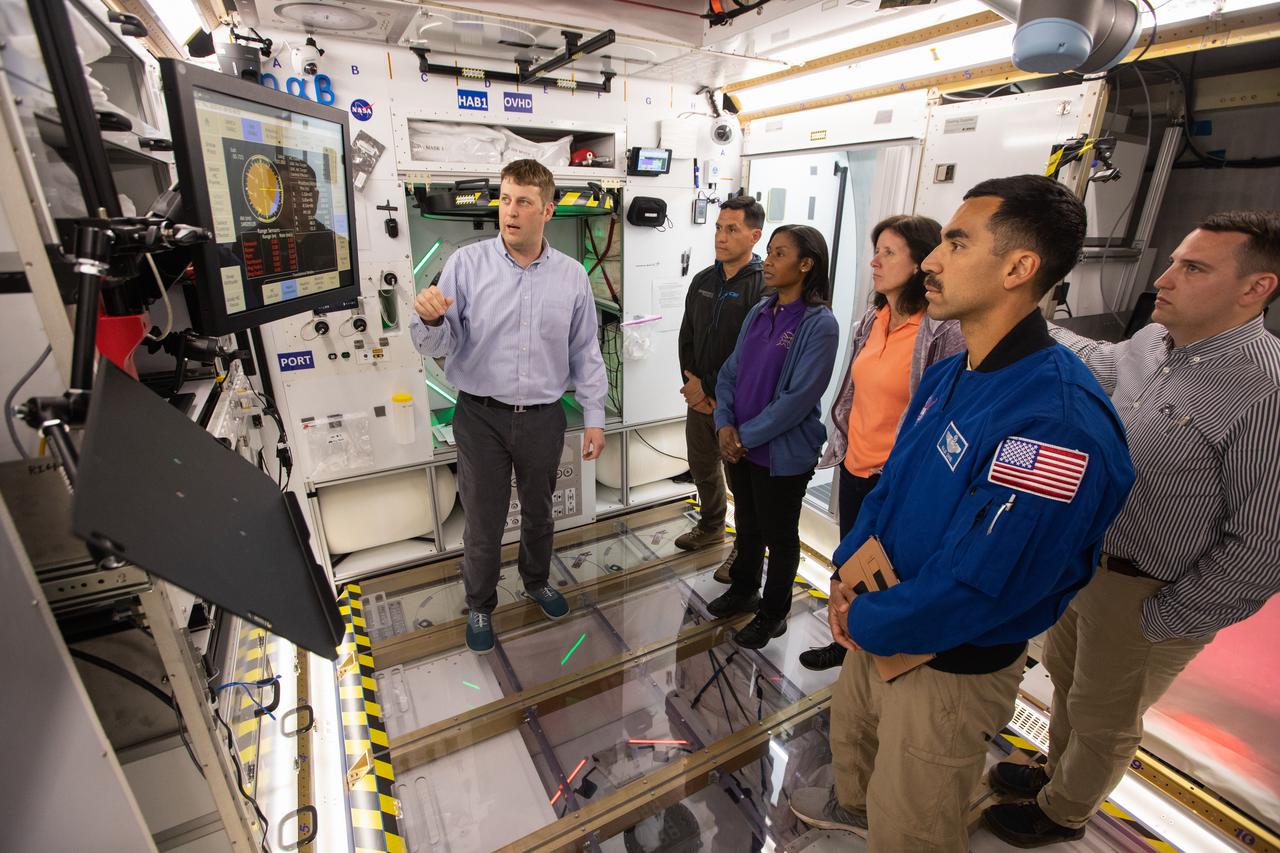
NASA began evaluating five habitat prototypes developed through NASA’s Next Space Exploration for Technologies Partnerships, or NextSTEP, to help engineers refine requirements for the design of an American-made deep space habitat for the Gateway. Lockheed Martin turned over its prototype to NASA, and testing began with crew on March 25, 2019, at Kennedy Space Center in Florida. Pictured inside the habitat prototype on March 26, 2019, beginning second from left are astronauts Frank Rubio, Raja Shari, Stephanie Wilson and Shannon Walker. Astronauts are participating in the evaluations to provide their perspectives as those who may one day live aboard the lunar outpost, which would be located about 250,000 miles from Earth. Ground prototypes developed by Bigelow Aerospace, Boeing, Northrop Grumman, and Sierra Nevada Corporation will be tested in the future at various facilities across the country. A sixth company, NanoRacks, plans to develop a prototype as well.
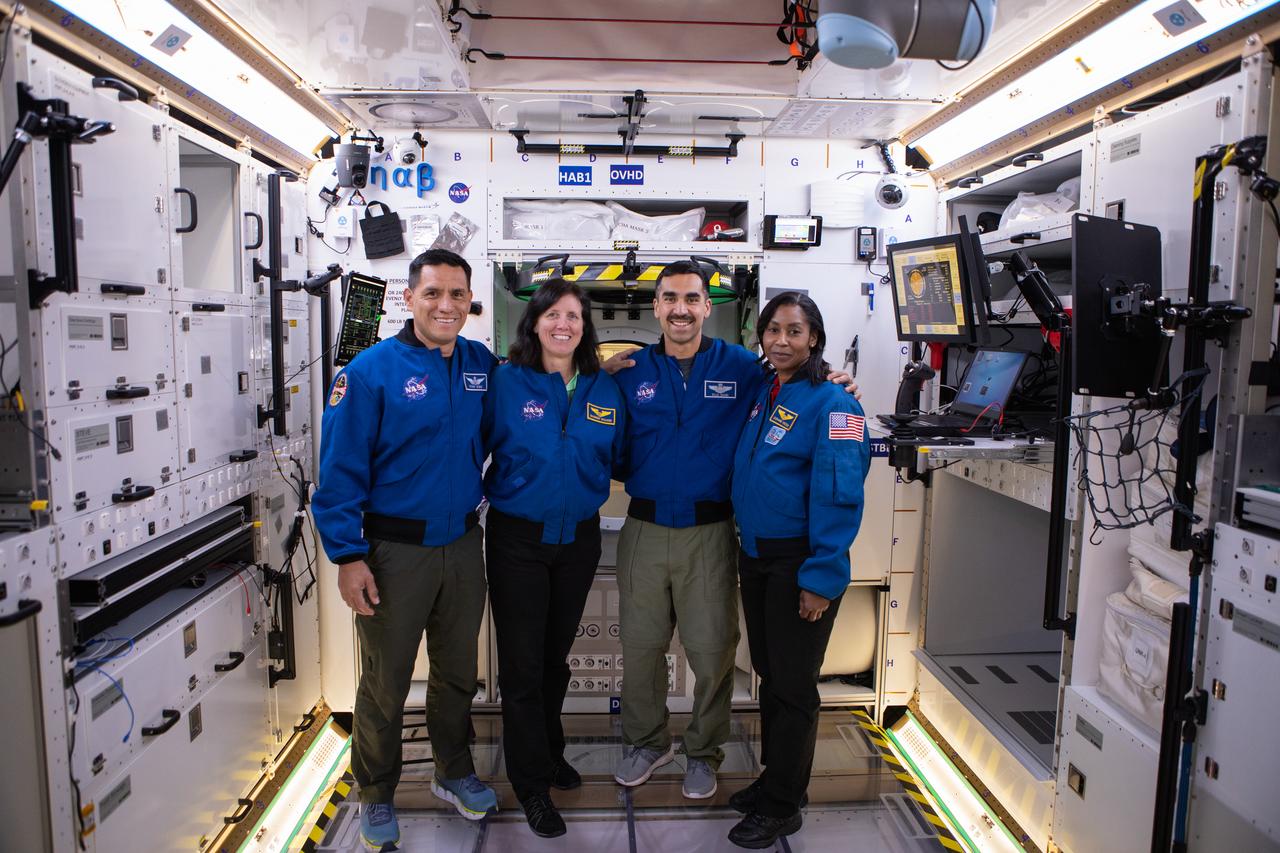
NASA began evaluating five habitat prototypes developed through NASA’s Next Space Exploration for Technologies Partnerships, or NextSTEP, to help engineers refine requirements for the design of an American-made deep space habitat for the Gateway. Lockheed Martin turned over its prototype to NASA, and testing began with crew on March 25, 2019, at Kennedy Space Center in Florida. Pictured, from left are astronauts Frank Rubio, Shannon Walker, Raja Chari and Stephanie Wilson. Astronauts are participating in the evaluations to provide their perspectives as those who may one day live aboard the lunar outpost, which would be located about 250,000 miles from Earth. Ground prototypes developed by Bigelow Aerospace, Boeing, Northrop Grumman, and Sierra Nevada Corporation will be tested in the future at various facilities across the country. A sixth company, NanoRacks, plans to develop a prototype as well.
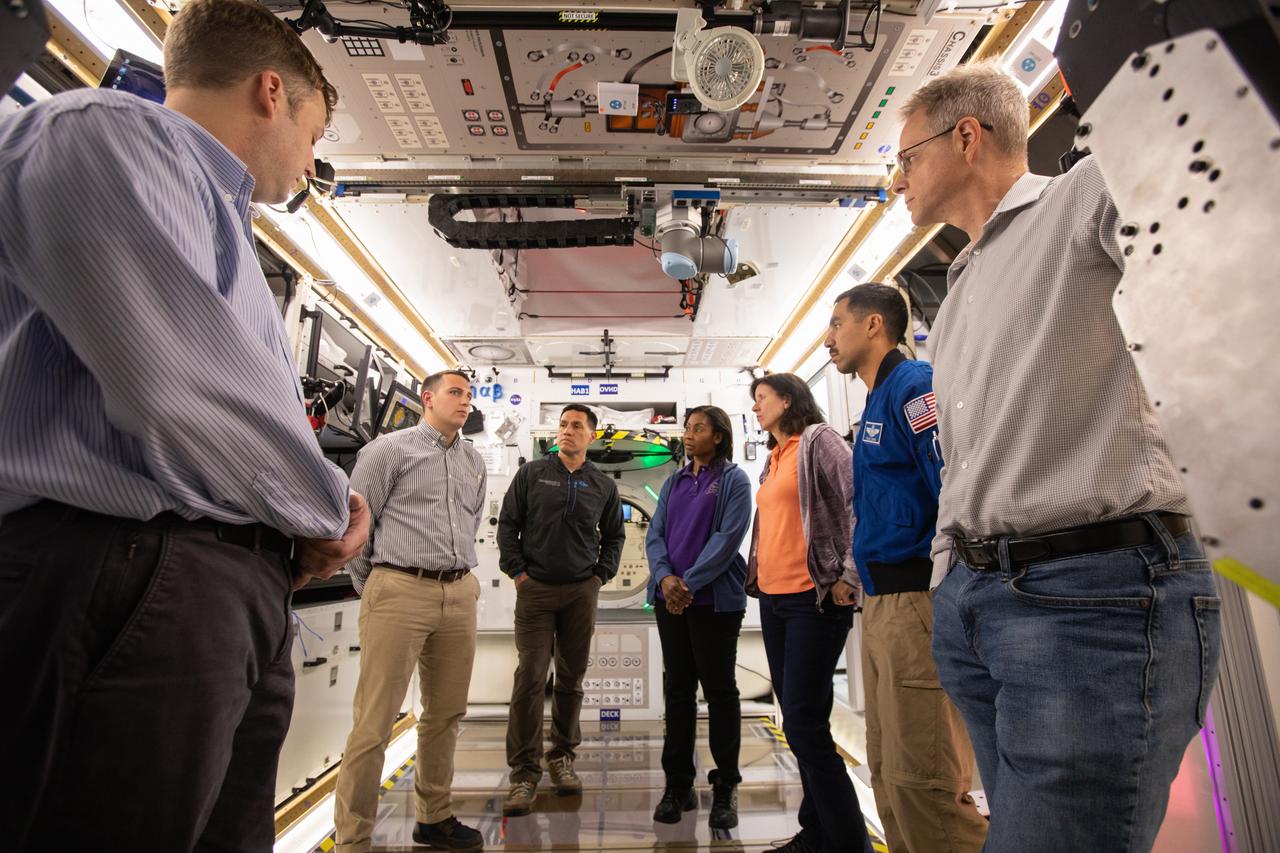
NASA began evaluating five habitat prototypes developed through NASA’s Next Space Exploration for Technologies Partnerships, or NextSTEP, to help engineers refine requirements for the design of an American-made deep space habitat for the Gateway. Lockheed Martin turned over its prototype to NASA, and testing began with crew on March 25, 2019, at Kennedy Space Center in Florida. Pictured inside the habitat prototype on March 26, 2019, beginning third from left are astronauts Frank Rubio, Stephanie Wilson, Shannon Walker and Raja Chari. Astronauts are participating in the evaluations to provide their perspectives as those who may one day live aboard the lunar outpost, which would be located about 250,000 miles from Earth. Ground prototypes developed by Bigelow Aerospace, Boeing, Northrop Grumman, and Sierra Nevada Corporation will be tested in the future at various facilities across the country. A sixth company, NanoRacks, plans to develop a prototype as well.
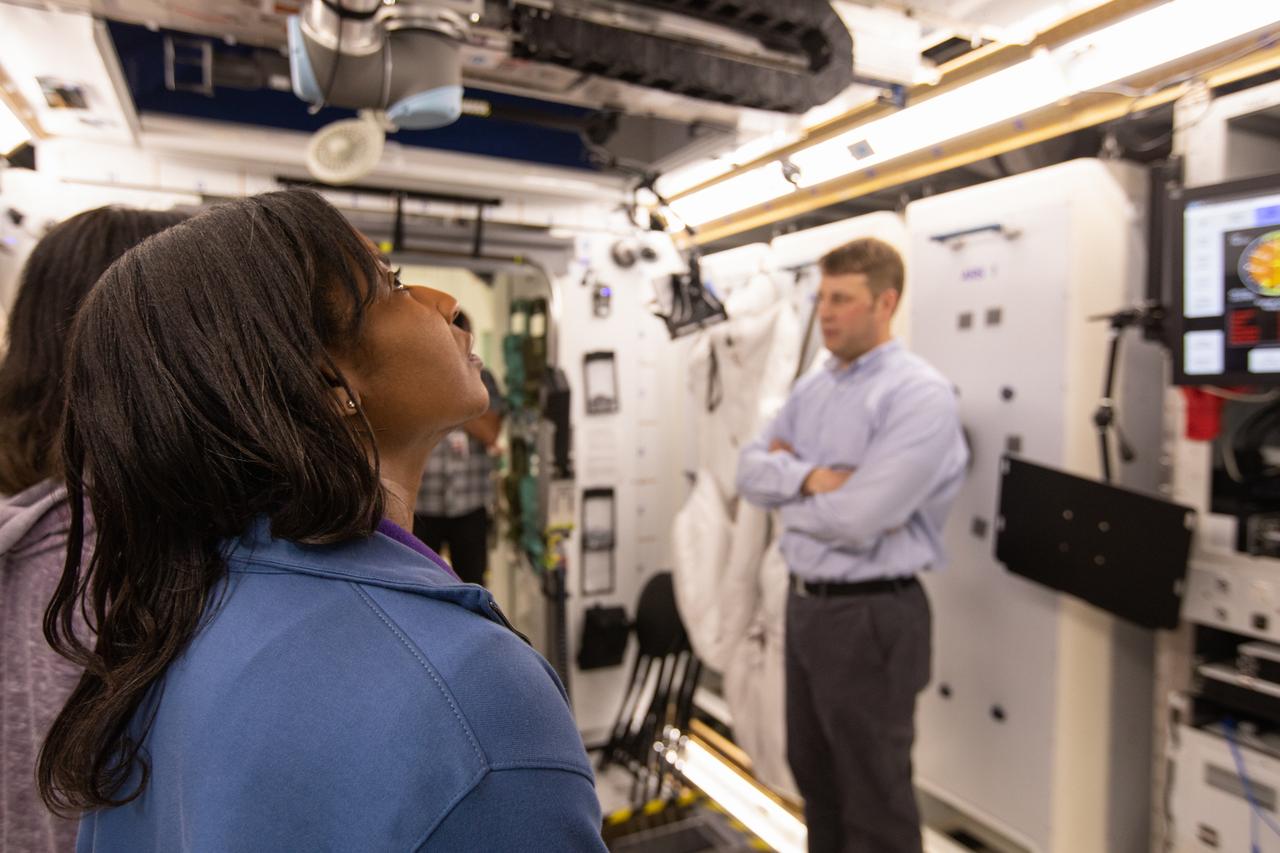
NASA began evaluating five habitat prototypes developed through NASA’s Next Space Exploration for Technologies Partnerships, or NextSTEP, to help engineers refine requirements for the design of an American-made deep space habitat for the Gateway. Lockheed Martin turned over its prototype to NASA, and testing began with crew on March 25, 2019, at Kennedy Space Center in Florida. Pictured inside the habitat prototype on March 26, 2019, at left is astronaut Stephanie Wilson. To her left, partially hidden is astronaut Shannon Walker. Astronauts are participating in the evaluations to provide their perspectives as those who may one day live aboard the lunar outpost, which would be located about 250,000 miles from Earth. Ground prototypes developed by Bigelow Aerospace, Boeing, Northrop Grumman, and Sierra Nevada Corporation will be tested in the future at various facilities across the country. A sixth company, NanoRacks, plans to develop a prototype as well.
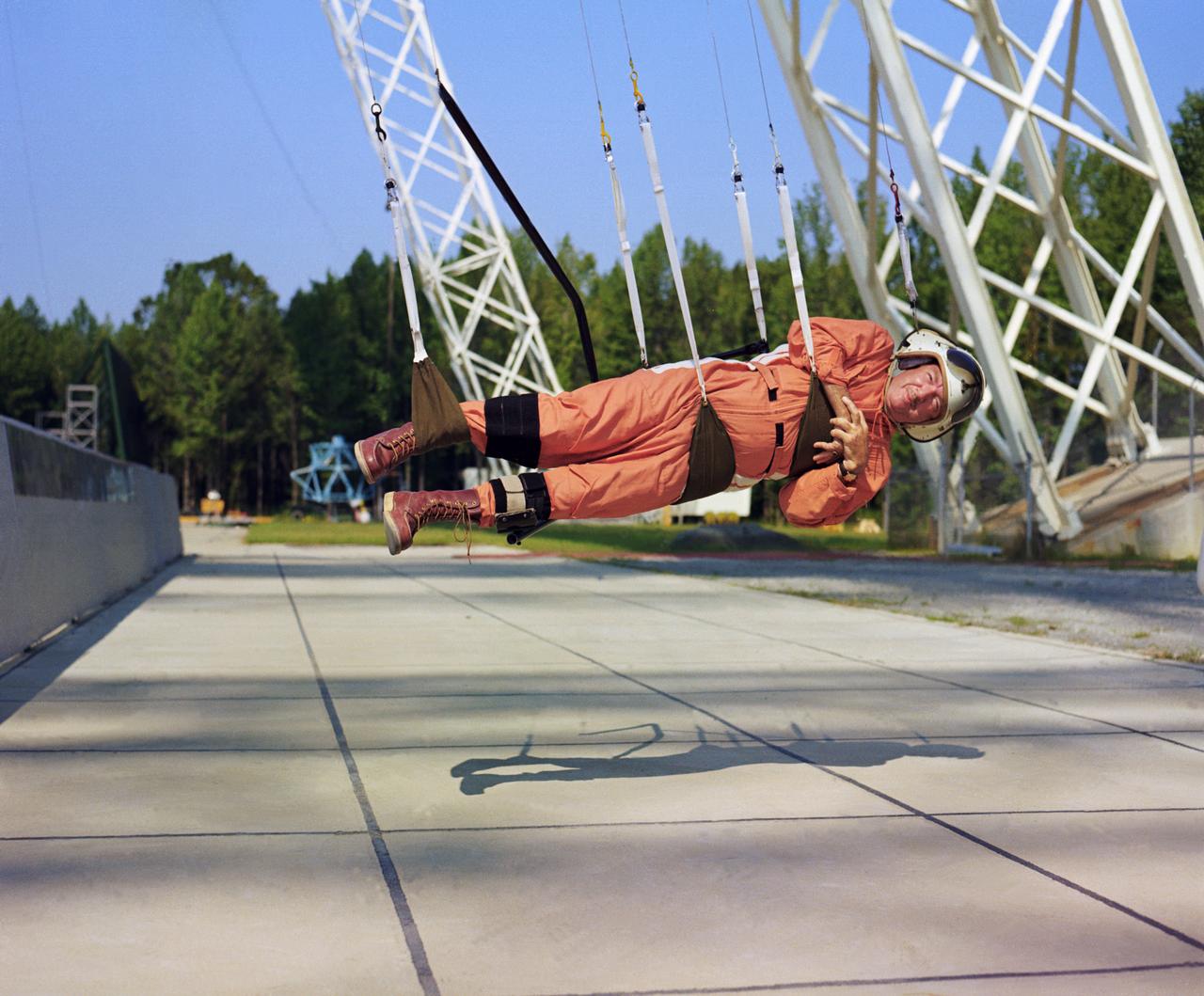
Walter Cronkite in the Reduced Gravity Simulator. Various views of Cronkite in the Lunar Landing Research Facility's Reduced Gravity Simulator which was used to train the astronauts for weightlessness. L68-8308 Caption: "During a 1968 visit to Langley, then CBS News Anchorman Walter Cronkite tries out the Reduced Gravity Simulator, a series of cable-supported slings designed to approximate the Moon's gravity, 1/6th that of Earth's." Photograph published in Winds of Change, 75th Anniversary NASA publication, p 91, by James Schultz.
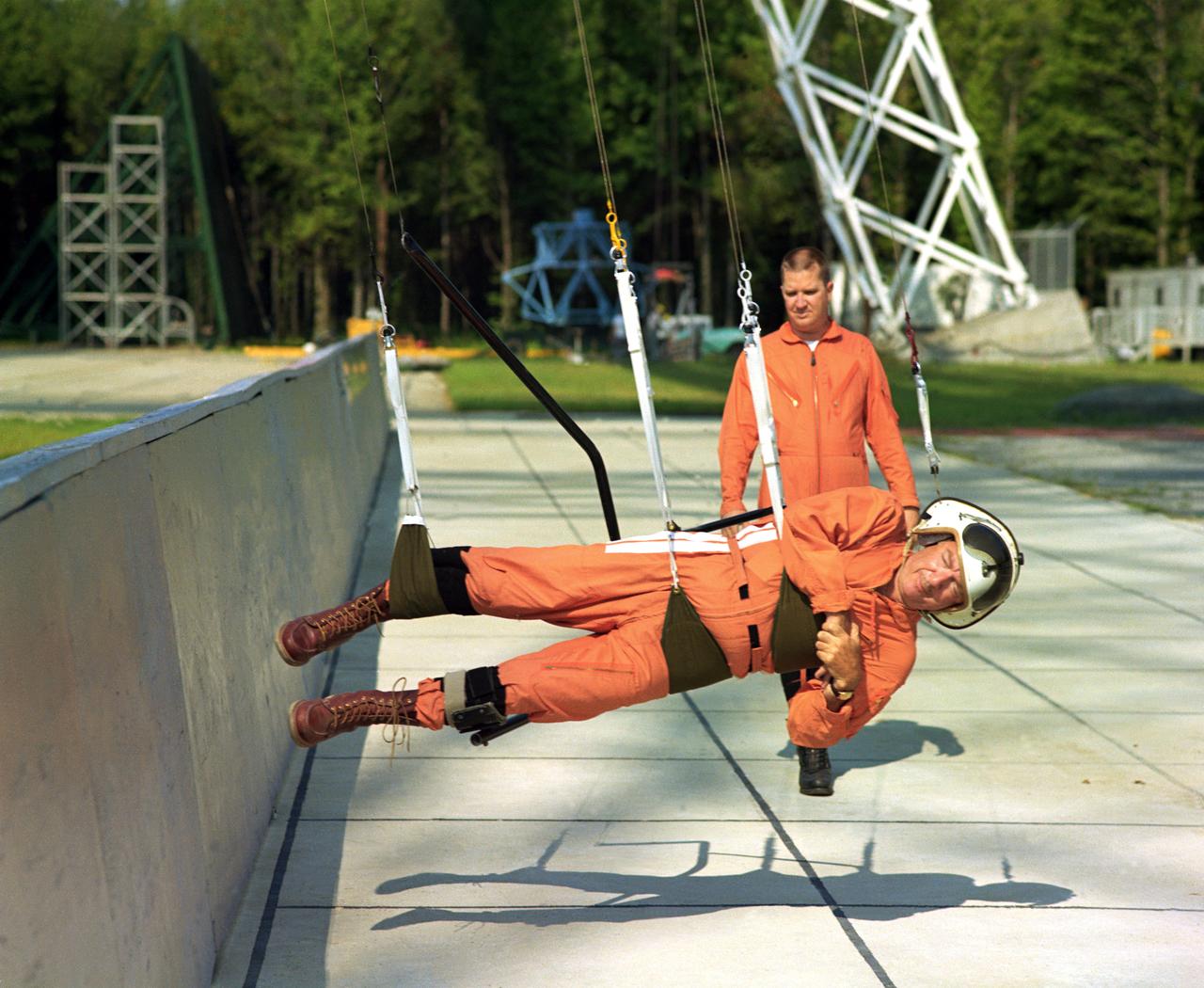
Walter Cronkite in the Reduced Gravity Simulator. Various views of Cronkite in the Lunar Landing Research Facility's Reduced Gravity Simulator which was used to train the astronauts for weightlessness. L68-8308 Caption: "During a 1968 visit to Langley, then CBS News Anchorman Walter Cronkite tries out the Reduced Gravity Simulator, a series of cable-supported slings designed to approximate the Moon's gravity, 1/6th that of Earth's." Photograph published in Winds of Change, 75th Anniversary NASA publication, p 91, by James Schultz.
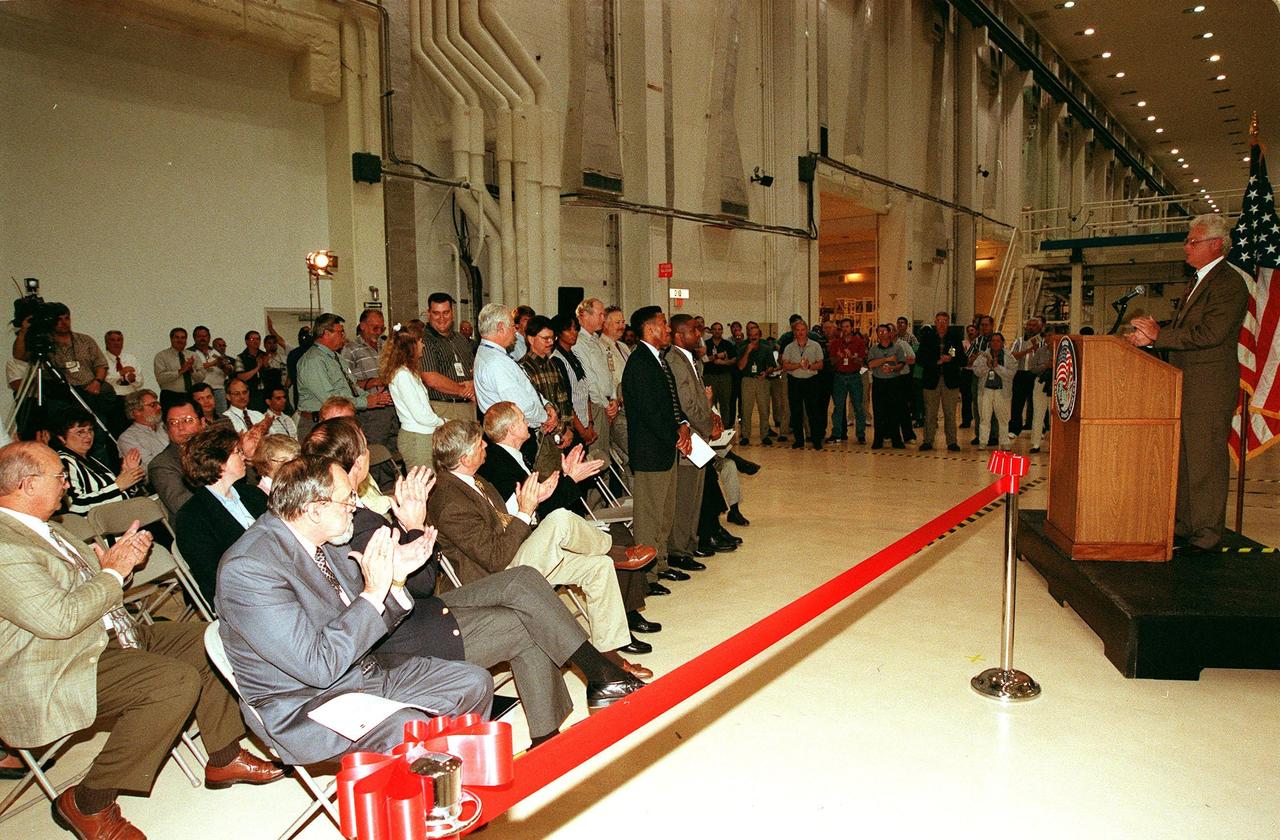
KENNEDY SPACE CENTER, FLA. -- At a ribbon-cutting ceremony inside the Operations and Checkout Building high bay, Sterling Walker, director of Engineering Development, introduces the project team members responsible for renovating an altitude chamber formerly used on the Apollo program. In addition, management, media and onlookers are present for the ceremony. Seated in the front row left are (left to right) Terry Smith, director of Engineering, Boeing Space Coast Operations; Steve Francois, director, Space Station and Shuttle Payloads; Jay Greene, International Space Station manager for Technical; and Roy Bridges, center director. The chamber was reactivated, after a 24-year hiatus, to perform leak tests on International Space Station pressurized modules at the launch site. Originally, two chambers were built to test the Apollo command and lunar service modules. They were last used in 1975 during the Apollo-Soyuz Test Project. After installation of new vacuum pumping equipment and controls, a new control room, and a new rotation handling fixture, the chamber again became operational in February 1999. The chamber, which is 33 feet in diameter and 50 feet tall, is constructed of stainless steel. The first module that will be tested for leaks is the U.S. Laboratory. No date has been determined for the test
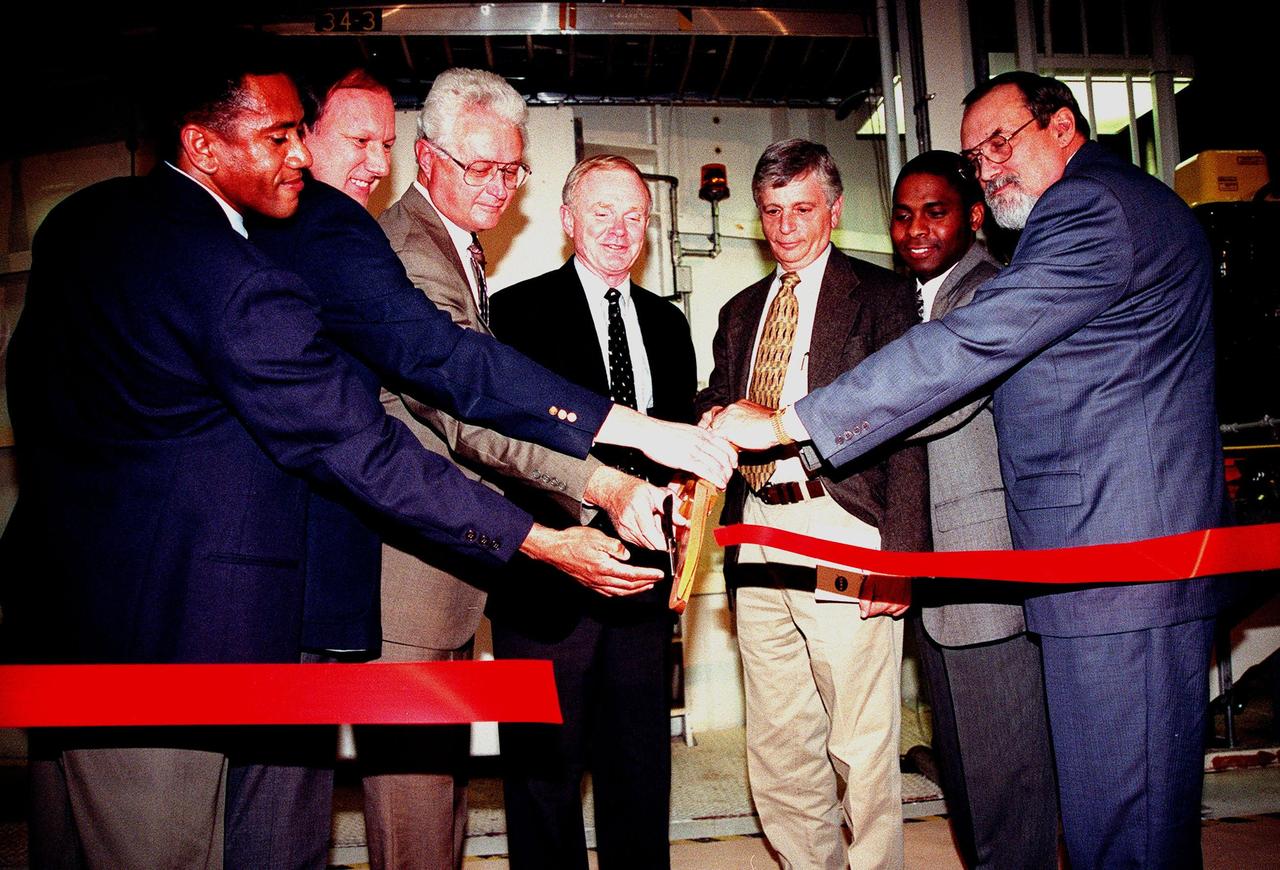
KENNEDY SPACE CENTER, FLA. -- Cutting a red ribbon for the unveiling of a newly renovated altitude chamber are (left to right) Tommy Mack, project manager, NASA; Steve Francois, director, Space Station and Shuttle Payloads; Sterling Walker, director, Engineering Development; Roy Bridges, director, Kennedy Space Center; Jay Greene, International Space Station manager for Technical; Michael Terry, project manager, Boeing; and Terry Smith, director of Engineering, Boeing Space Coast Operations. The chamber was reactivated, after a 24-year hiatus, to perform leak tests on International Space Station pressurized modules at the launch site. Originally, two chambers were built to test the Apollo command and lunar service modules. They were last used in 1975 during the Apollo-Soyuz Test Project. After installation of new vacuum pumping equipment and controls, a new control room, and a new rotation handling fixture, the chamber again became operational in February 1999. The chamber, which is 33 feet in diameter and 50 feet tall, is constructed of stainless steel. The first module that will be tested for leaks is the U.S. Laboratory. No date has been determined for the test
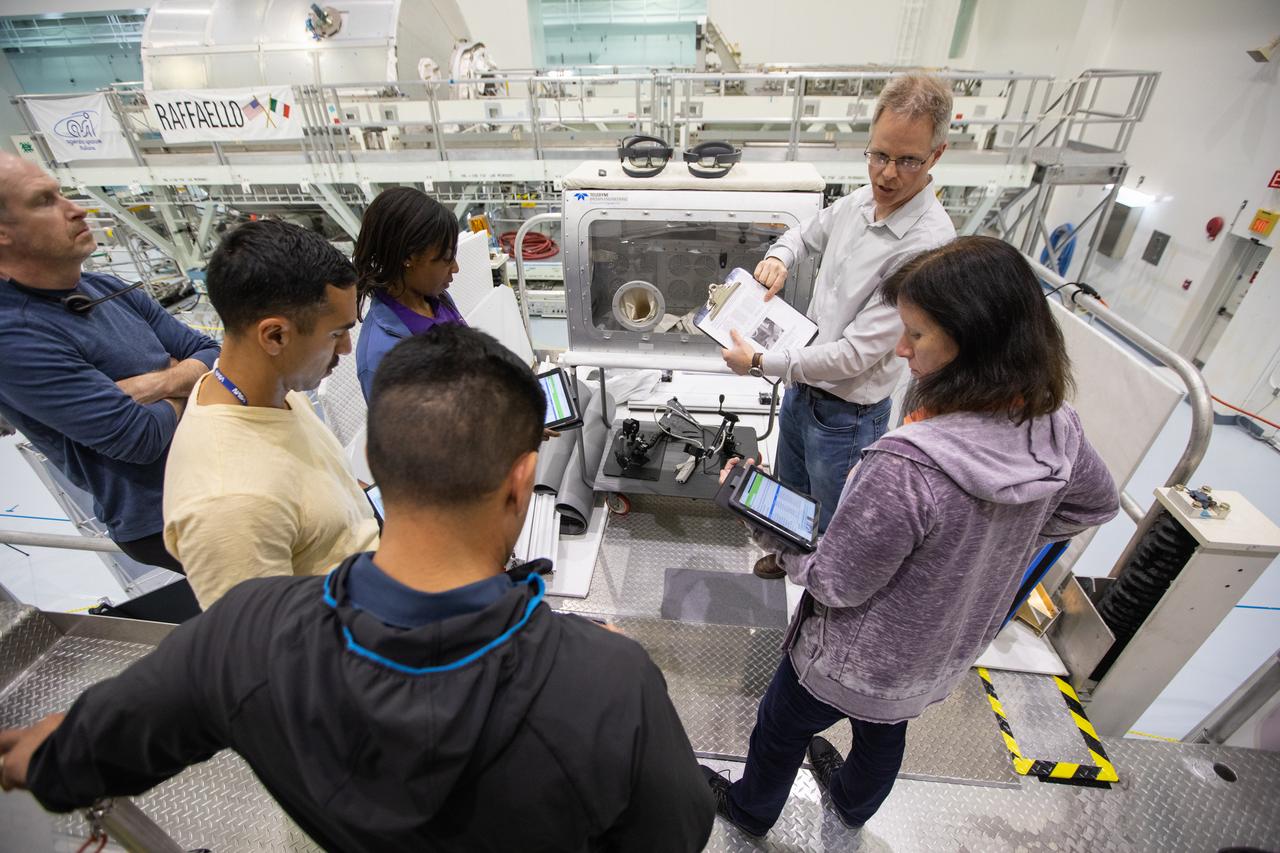
NASA began evaluating five habitat prototypes developed through NASA’s Next Space Exploration for Technologies Partnerships, or NextSTEP, to help engineers refine requirements for the design of an American-made deep space habitat for the Gateway. Lockheed Martin turned over its prototype to NASA, and testing began with crew on March 25, 2019, at Kennedy Space Center in Florida. Pictured inside the Space Station Processing Facility on March 26, 2019, from far left is astronaut Frank Rubio. In front of him, are Raja Chari and Stephanie Wilson. At right is astronaut Shannon Walker. Astronauts are participating in the evaluations to provide their perspectives as those who may one day live aboard the lunar outpost, which would be located about 250,000 miles from Earth. Ground prototypes developed by Bigelow Aerospace, Boeing, Northrop Grumman, and Sierra Nevada Corporation will be tested in the future at various facilities across the country. A sixth company, NanoRacks, plans to develop a prototype as well.
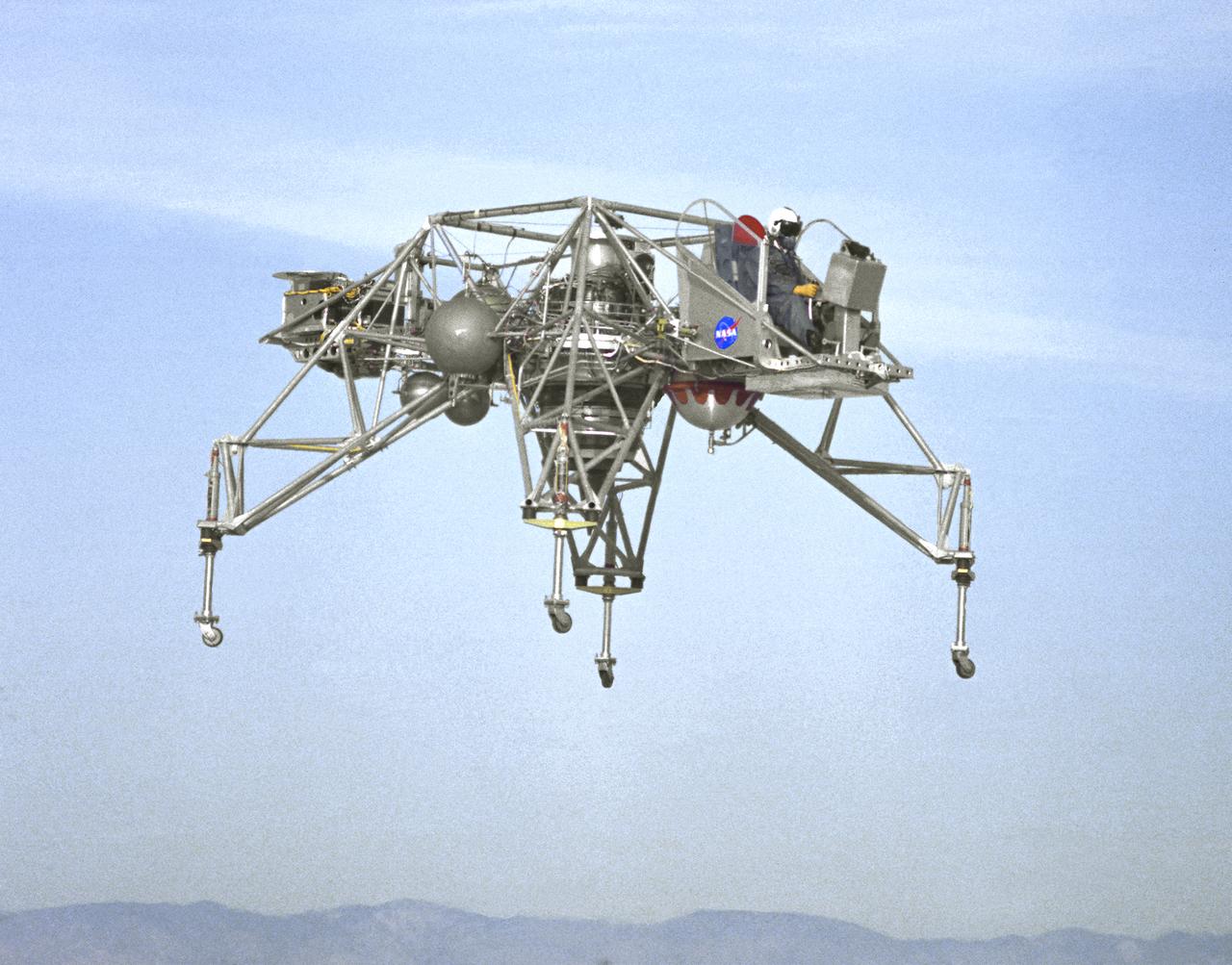
In this NASA Flight Reserch Center photograph the Lunar Landing Research Vehicle (LLRV) number 1 is shown in flight. When Apollo planning was underway in 1960, NASA was looking for a simulator to profile the descent to the Moon's surface. Three concepts surfaced: an electronic simulator, a tethered device, and the ambitious Dryden contribution, a free-flying vehicle. All three became serious projects, but eventually the NASA Flight Research Center's (FRC) Landing Research Vehicle (LLRV) became the most significant one. Hubert M. Drake is credited with originating the idea, while Donald Bellman and Gene Matranga were senior engineers on the project, with Bellman, the project manager. Simultaneously, and independently, Bell Aerosystems Company, Buffalo, N.Y., a company with experience in vertical takeoff and landing (VTOL) aircraft, had conceived a similar free-flying simulator and proposed their concept to NASA headquarters. NASA Headquarters put FRC and Bell together to collaborate. The challenge was; to allow a pilot to make a vertical landing on Earth in a simulated Moon environment, one sixth of the Earth's gravity and with totally transparent aerodynamic forces in a "free flight" vehicle with no tether forces acting on it. Built of tubular aluminum like a giant four-legged bedstead, the vehicle was to simulate a lunar landing profile from around 1500 feet to the Moon's surface. To do this, the LLRV had a General Electric CF-700-2V turbofan engine mounted vertically in gimbals, with 4200 pounds of thrust. The engine, using JP-4 fuel, got the vehicle up to the test altitude and was then throttled back to support five-sixths of the vehicle's weight, simulating the reduced gravity of the Moon. Two hydrogen-peroxide lift rockets with thrust that could be varied from 100 to 500 pounds handled the LLRV's rate of descent and horizontal translations. Sixteen smaller hydrogen-peroxide rockets, mounted in pairs, gave the pilot control in pitch, yaw, and roll. On the LLRV,
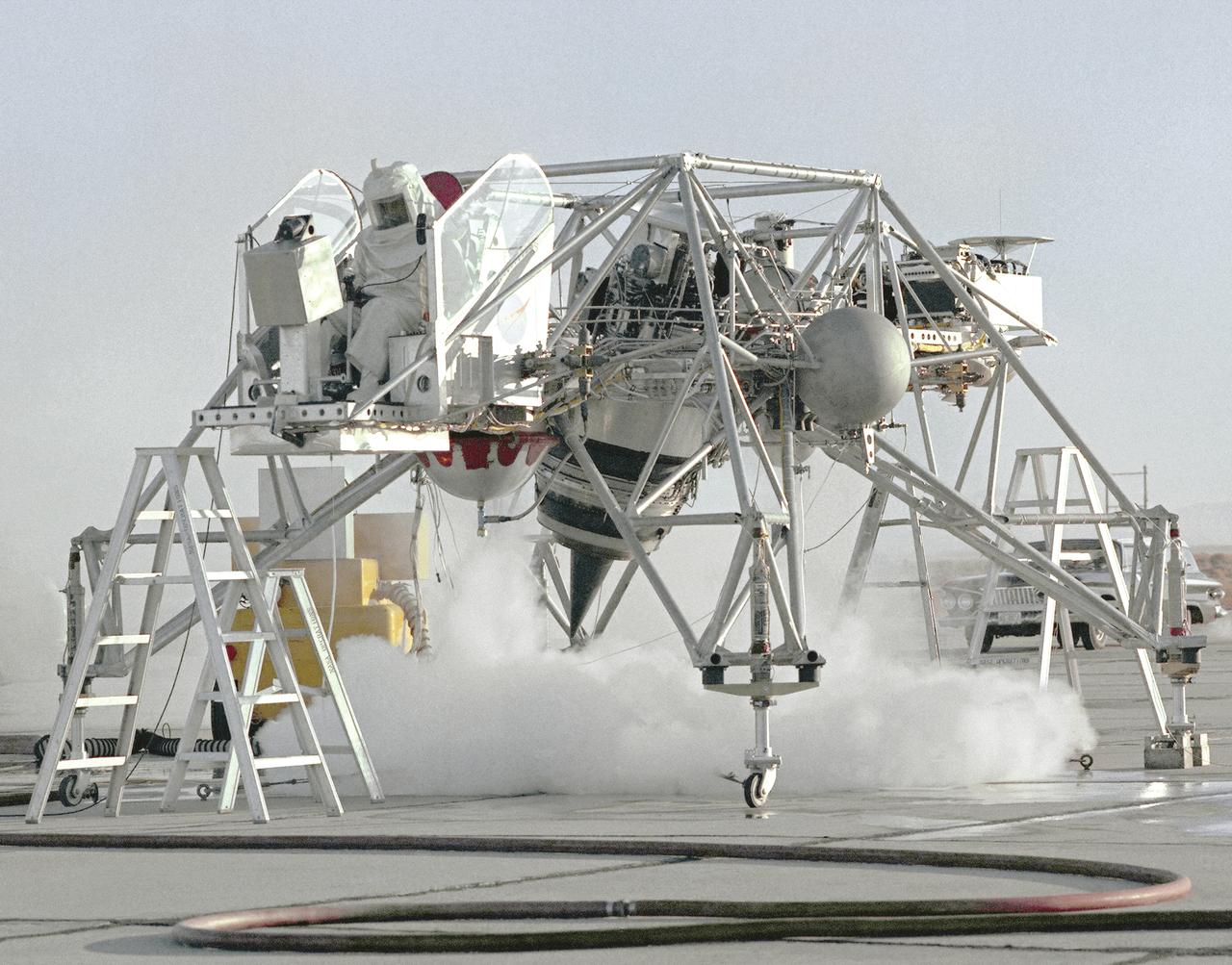
This 1964 NASA Flight Reserch Center photograph shows a ground engine test underway on the Lunar Landing Research Vehicle (LLRV) number 1. When Apollo planning was underway in 1960, NASA was looking for a simulator to profile the descent to the Moon's surface. Three concepts surfaced: an electronic simulator, a tethered device, and the ambitious Dryden contribution, a free-flying vehicle. All three became serious projects, but eventually the NASA Flight Research Center's (FRC) Landing Research Vehicle (LLRV) became the most significant one. Hubert M. Drake is credited with originating the idea, while Donald Bellman and Gene Matranga were senior engineers on the project, with Bellman, the project manager. Simultaneously, and independently, Bell Aerosystems Company, Buffalo, N.Y., a company with experience in vertical takeoff and landing (VTOL) aircraft, had conceived a similar free-flying simulator and proposed their concept to NASA headquarters. NASA Headquarters put FRC and Bell together to collaborate. The challenge was; to allow a pilot to make a vertical landing on Earth in a simulated Moon environment, one sixth of the Earth's gravity and with totally transparent aerodynamic forces in a "free flight" vehicle with no tether forces acting on it. Built of tubular aluminum like a giant four-legged bedstead, the vehicle was to simulate a lunar landing profile from around 1500 feet to the Moon's surface. To do this, the LLRV had a General Electric CF-700-2V turbofan engine mounted vertically in gimbals, with 4200 pounds of thrust. The engine, using JP-4 fuel, got the vehicle up to the test altitude and was then throttled back to support five-sixths of the vehicle's weight, simulating the reduced gravity of the Moon. Two hydrogen-peroxide lift rockets with thrust that could be varied from 100 to 500 pounds handled the LLRV's rate of descent and horizontal translations. Sixteen smaller hydrogen-peroxide rockets, mounted in pairs, gave the pilot control in pitch, yaw,
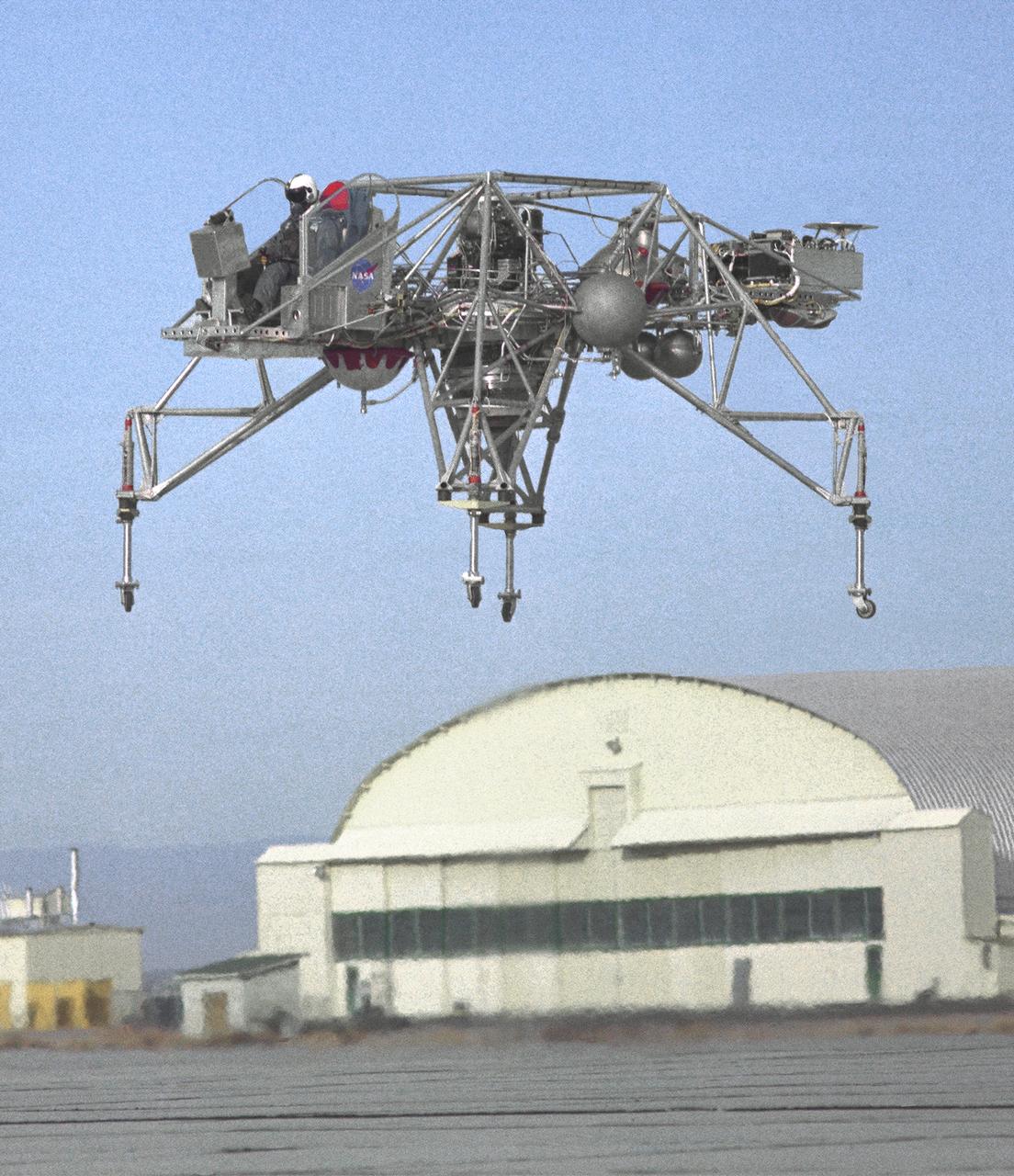
An inflight view from the left side of the Lunar Landing Research Vehicle, is shown in this 1964 NASA Flight Research Center photograph. The photograph was taken in front of the old NACA hangar located at the South Base, Edwards Air Force Base. When Apollo planning was underway in 1960, NASA was looking for a simulator to profile the descent to the Moon's surface. Three concepts surfaced: an electronic simulator, a tethered device, and the ambitious Dryden contribution, a free-flying vehicle. All three became serious projects, but eventually the NASA Flight Research Center's (FRC) Landing Research Vehicle (LLRV) became the most significant one. Hubert M. Drake is credited with originating the idea, while Donald Bellman and Gene Matranga were senior engineers on the project, with Bellman, the project manager. Simultaneously, and independently, Bell Aerosystems Company, Buffalo, N.Y., a company with experience in vertical takeoff and landing (VTOL) aircraft, had conceived a similar free-flying simulator and proposed their concept to NASA headquarters. NASA Headquarters put FRC and Bell together to collaborate. The challenge was; to allow a pilot to make a vertical landing on earth in a simulated Moon environment, one sixth of the earth's gravity and with totally transparent aerodynamic forces in a "free flight" vehicle with no tether forces acting on it. Built of tubular aluminum like a giant four-legged bedstead, the vehicle was to simulate a lunar landing profile from around 1500 feet to the Moon's surface. To do this, the LLRV had a General Electric CF-700-2V turbofan engine mounted vertically in gimbals, with 4200 pounds of thrust. The engine, using JP-4 fuel, got the vehicle up to the test altitude and was then throttled back to support five-sixths of the vehicle's weight, simulating the reduced gravity of the Moon. Two hydrogen-peroxide lift rockets with thrust that could be varied from 100 to 500 pounds handled the LLRV's rate of descent and horizontal transla
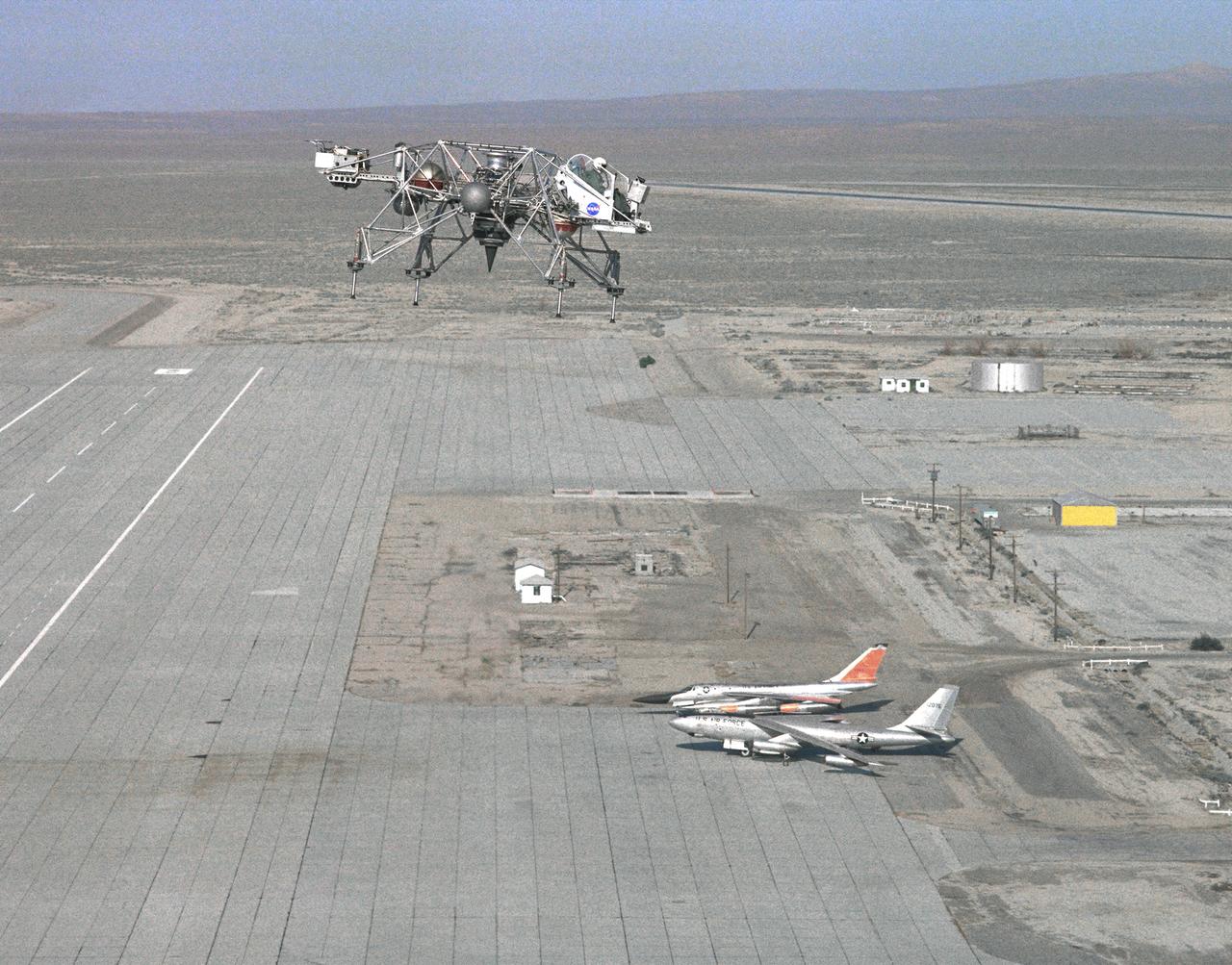
In this 1965 NASA Flight Reserch Center photograph the Lunar Landing Research Vehicle (LLRV) is shown at near maximum altitude over the south base at Edwards Air Force Base. When Apollo planning was underway in 1960, NASA was looking for a simulator to profile the descent to the moon's surface. Three concepts surfaced: an electronic simulator, a tethered device, and the ambitious Dryden contribution, a free-flying vehicle. All three became serious projects, but eventually the NASA Flight Research Center's (FRC) Landing Research Vehicle (LLRV) became the most significant one. Hubert M. Drake is credited with originating the idea, while Donald Bellman and Gene Matranga were senior engineers on the project, with Bellman, the project manager. Simultaneously, and independently, Bell Aerosystems Company, Buffalo, N.Y., a company with experience in vertical takeoff and landing (VTOL) aircraft, had conceived a similar free-flying simulator and proposed their concept to NASA headquarters. NASA Headquarters put FRC and Bell together to collaborate. The challenge was; to allow a pilot to make a vertical landing on Earth in a simulated moon environment, one sixth of the Earth's gravity and with totally transparent aerodynamic forces in a "free flight" vehicle with no tether forces acting on it. Built of tubular aluminum like a giant four-legged bedstead, the vehicle was to simulate a lunar landing profile from around 1500 feet to the moon's surface. To do this, the LLRV had a General Electric CF-700-2V turbofan engine mounted vertically in gimbals, with 4200 pounds of thrust. The engine, using JP-4 fuel, got the vehicle up to the test altitude and was then throttled back to support five-sixths of the vehicle's weight, simulating the reduced gravity of the moon. Two hydrogen-peroxide lift rockets with thrust that could be varied from 100 to 500 pounds handled the LLRV's rate of descent and horizontal translations. Sixteen smaller hydrogen-peroxide rockets, mounted in pairs, gav