
iss071e666237 (Sept. 17, 2024) --- NASA astronaut Don Pettit was able to capture a photo of a recent fire in La Porte, Texas yesterday. Our NASA Astronauts have the ability to observe natural disasters from a vantage point of 250 miles above Earth. The imagery and data provided from the International Space Station can provide benefits to regions that experience unexpected events such as fires, floods, hurricanes, earthquakes, and more. This information is valuable when monitoring disasters on Earth in real time.

NASA astronaut Don Pettit was able to capture a photo of a recent fire in La Porte, Texas yesterday. Our NASA Astronauts have the ability to observe natural disasters from a vantage point of 250 miles above Earth. The imagery and data provided from the International Space Station can provide benefits to regions that experience unexpected events such as fires, floods, hurricanes, earthquakes, and more. This information is valuable when monitoring disasters on Earth in real time.

iss071e666253 (Sept. 17, 2024) --- NASA astronaut Don Pettit was able to capture a photo of a recent fire in La Porte, Texas yesterday. Our NASA Astronauts have the ability to observe natural disasters from a vantage point of 250 miles above Earth. The imagery and data provided from the International Space Station can provide benefits to regions that experience unexpected events such as fires, floods, hurricanes, earthquakes, and more. This information is valuable when monitoring disasters on Earth in real time.
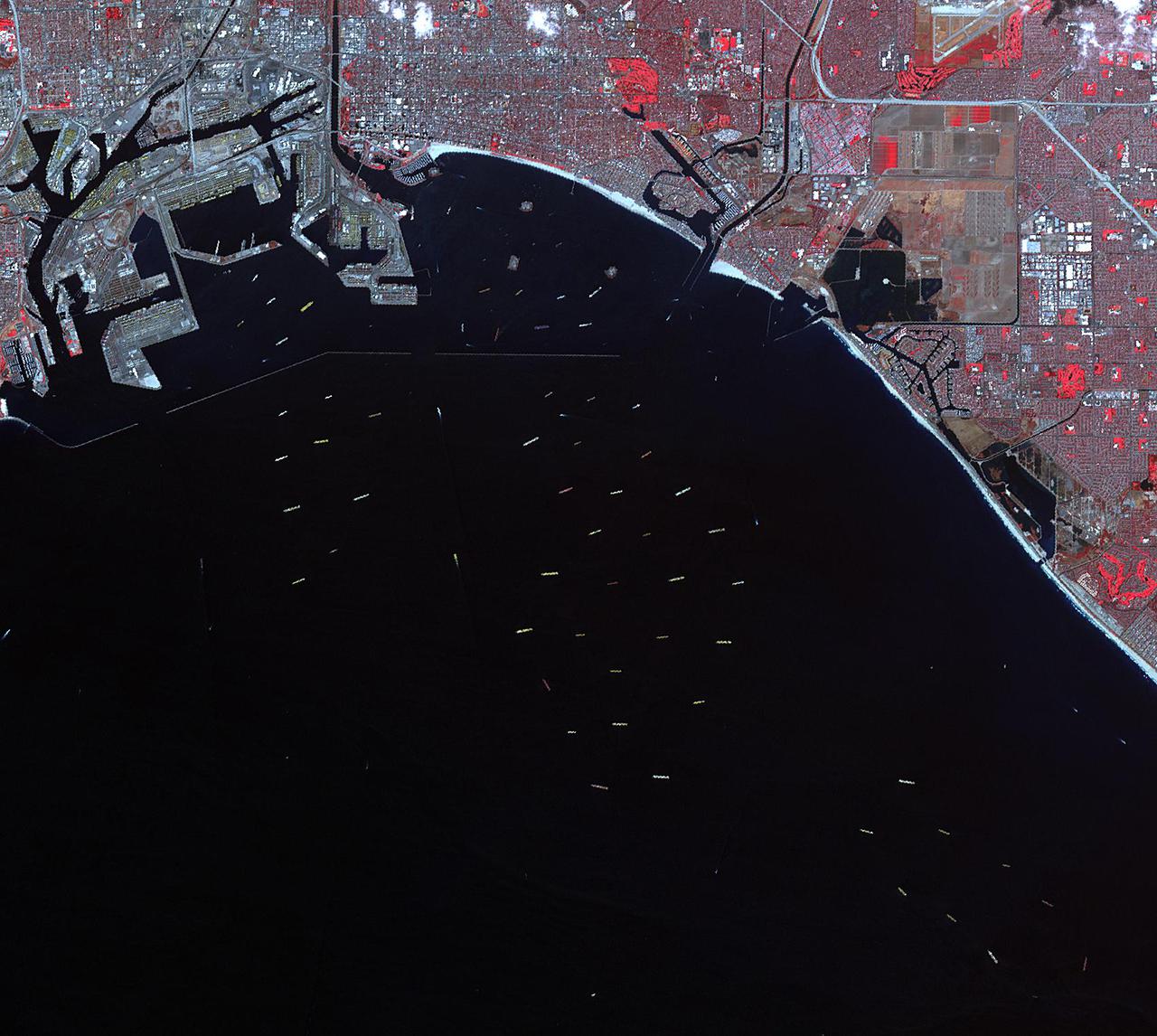
On Oct. 10, 2021, NASA's Advanced Spaceborne Thermal Emission and Reflection Radiometer (ASTER) instrument captured an image of over 70 ships waiting to dock and unload at the ports of Los Angeles and Long Beach, due to a supply-chain crunch. The image covers an area of 14 by 16 miles (23 by 25 kilometers). https://photojournal.jpl.nasa.gov/catalog/PIA24902
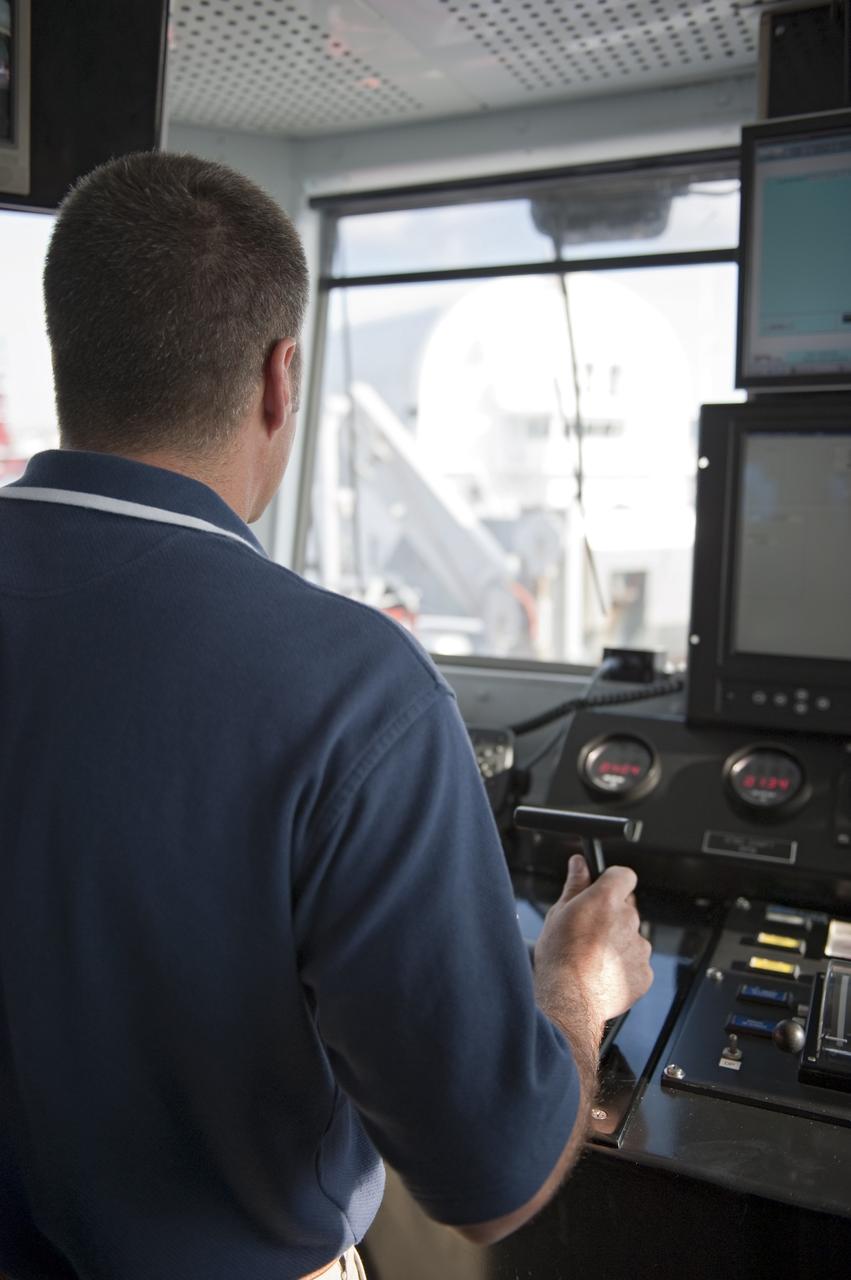
GULFPORT, La. -- At Gulfport, La., Michael Nicholas, captain M/V Freedom Star, guides NASA's solid rocket booster retrieval ship out of port pulling the Pegasus Barge carrying the Space Shuttle Program's last external fuel tank, ET-122. The tank will travel 900 miles by sea to NASA's Kennedy Space Center in Florida before being offloaded and moved to Kennedy's Vehicle Assembly Building. There it will be integrated to space shuttle Endeavour for the STS-134 mission to the International Space Station. The tank, which is the largest element of the space shuttle stack, was damaged during Hurricane Katrina in August 2005 and restored to flight configuration by Lockheed Martin Space Systems Company employees. STS-134, targeted to launch Feb. 2011, currently is scheduled to be the last mission in the Space Shuttle Program. Photo credit: NASA/Kim Shiflett
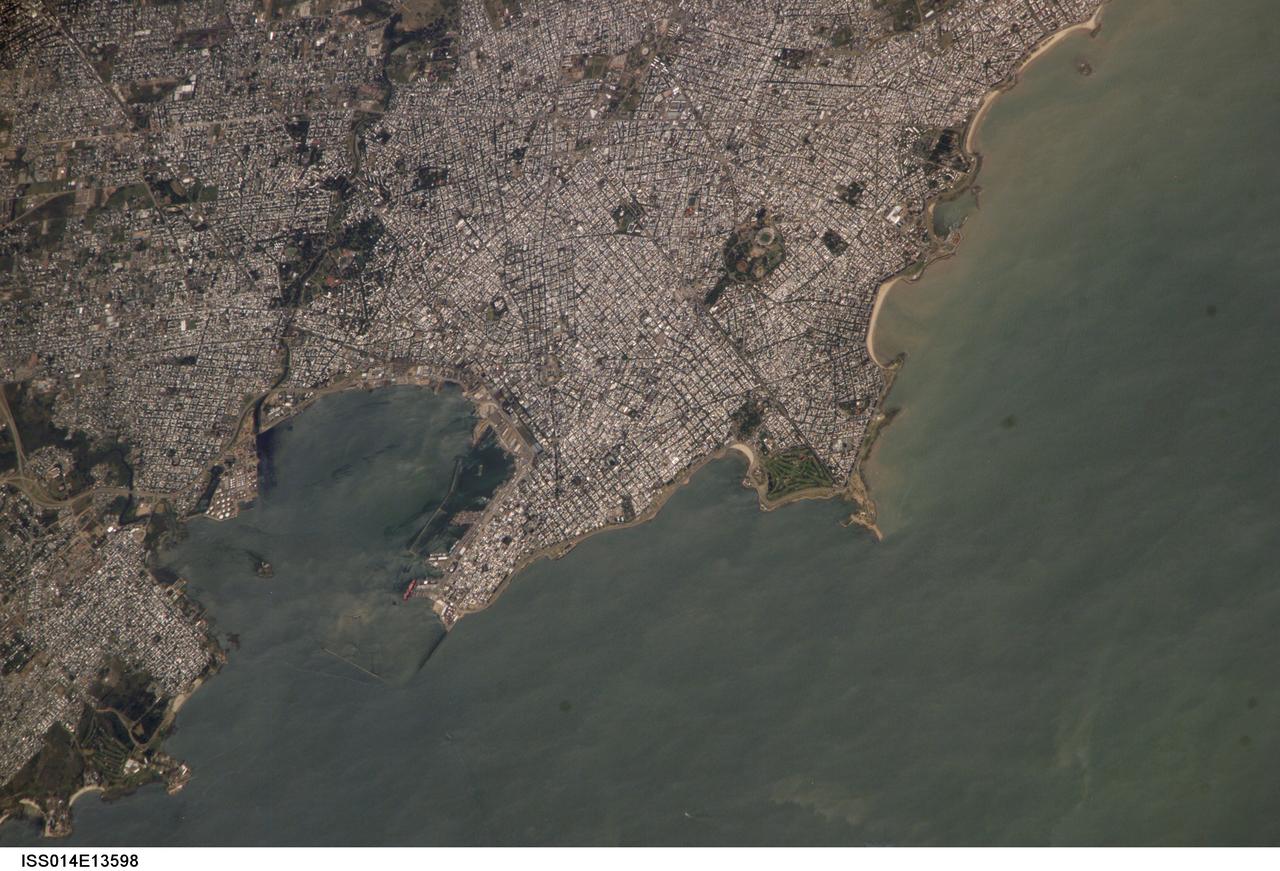
ISS014-E-13598 (29 Jan. 2007) --- Montevideo, Uruguay is featured in this image photographed by an Expedition 14 crewmember on the International Space Station. Reflective roofing materials and dark asphalt streets outline the urban grid pattern of Uruguay's capital city of Montevideo in this image. The city may be viewed as a precursor of the predicted global population shift from dominantly rural to urban environments (by 2030, according to recent United Nations estimates) -- nearly half of Uruguay's total population now lives in the Montevideo metropolitan area. Located on the southern coastline of Uruguay along the Rio de la Plata, Montevideo Bay provides an important harbor and port facilities for transport of South American agricultural products. This view is of sufficient resolution (approximately 7 meters/pixel) to discriminate between dark green canopied tree cover and light green grass - important information for study of urban ecology and climate, as well as city water use planning - in a large golf course located at the southern edge of the city (near center right). Sediment plumes along the coastline to the southeast of the city are also visible; rough patterns in the water surface of Montevideo Bay and the Rio de la Plata are a combination of wind disturbance and sediments.