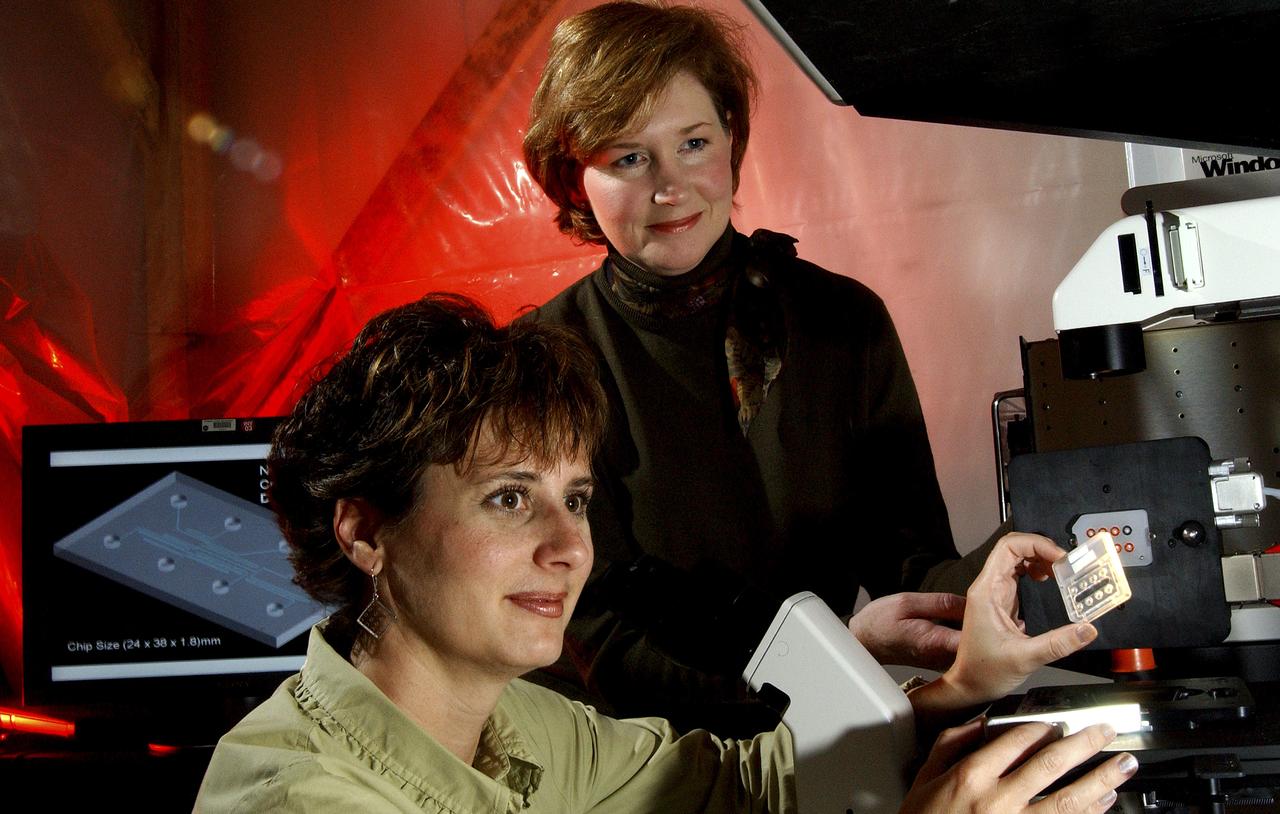
Helen Cole, the project manager for the Lab-on-a-Chip Applications Development program, and Lisa Monaco, the project scientist for the program, insert a lab on a chip into the Caliper 42 which is specialized equipment that controls processes on commercial chips to support development of lab-on-a-chip applications. The system has special microscopes and imaging systems, so scientists can process and study different types of fluid, chemical, and medical tests conducted on chips. For example, researchers have examined fluorescent bacteria as it flows through the chips' fluid channels or microfluidic capillaries. Researchers at NASA's Marshall Space Flight Center (MSFC) in Huntsville, Alabama, have been studying how the lab-on-a-chip technology can be used for microbial detection, water quality monitoring, and detecting biosignatures of past or present life on Mars. The Marshall Center team is also collaborating with scientists at other NASA centers and at universities to develop custom chip designs for not only space applications, but for many Earth applications, such as for detecting deadly microbes in heating and air systems. (NASA/MSFC/D.Stoffer)
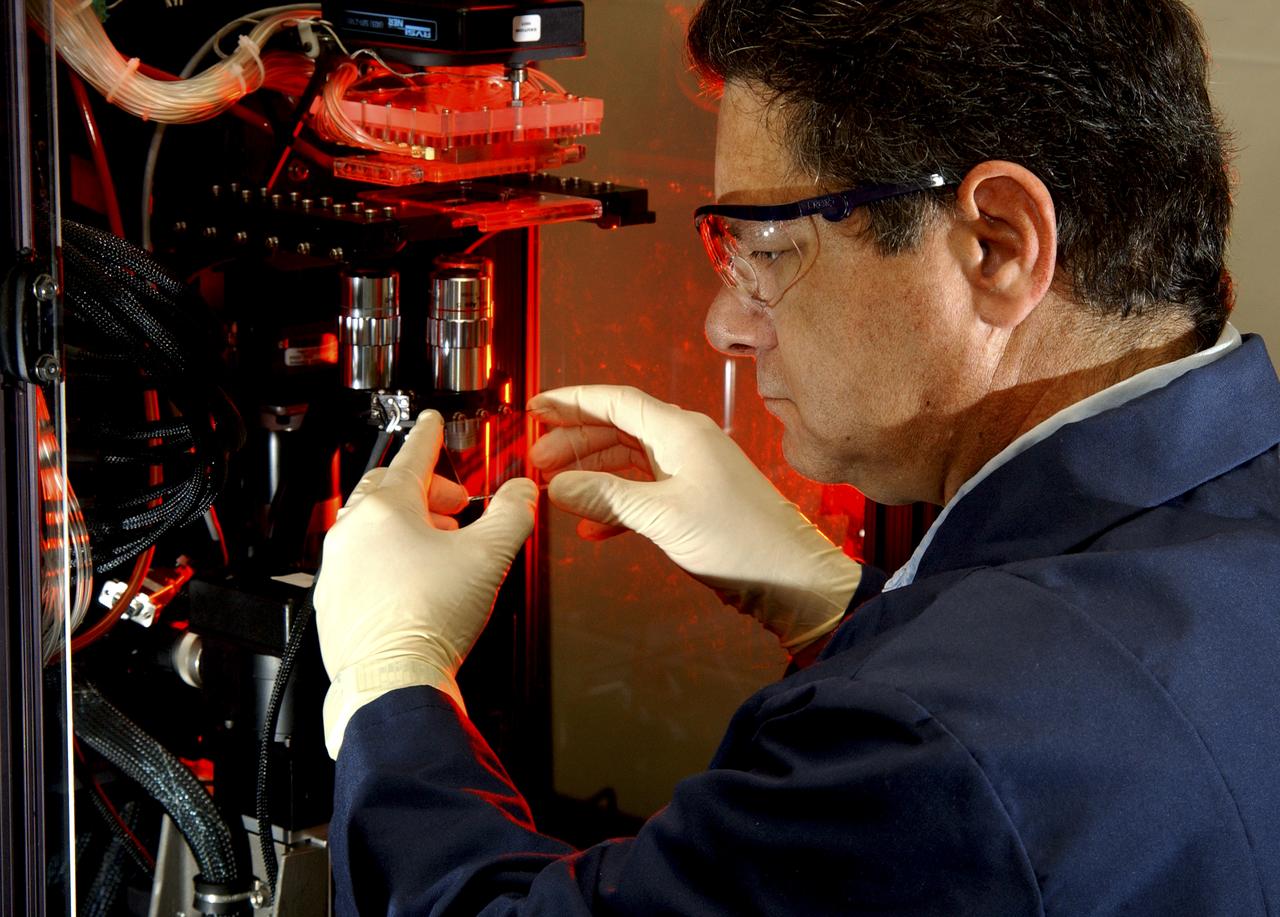
Andy Jenkins, an engineer for the Lab on a Chip Applications Development program, helped build the Applications Development Unit (ADU-25), a one-of-a-kind facility for controlling and analyzing processes on chips with extreme accuracy. Pressure is used to cause fluids to travel through network of fluid pathways, or micro-channels, embossed on the chips through a process similar to the one used to print circuits on computer chips. To make customized chips for various applications, NASA has an agreement with the U.S. Army's Micro devices and Micro fabrication Laboratory at Redstone Arsenal in Huntsville, Alabama, where NASA's Marshall Space Flight Center (MSFC) is located. The Marshall Center team is also collaborating with scientists at other NASA centers and at universities to develop custom chip designs for many applications, such as studying how fluidic systems work in spacecraft and identifying microbes in self-contained life support systems. Chips could even be designed for use on Earth, such as for detecting deadly microbes in heating and air systems. (NASA/MSFC/D.Stoffer)
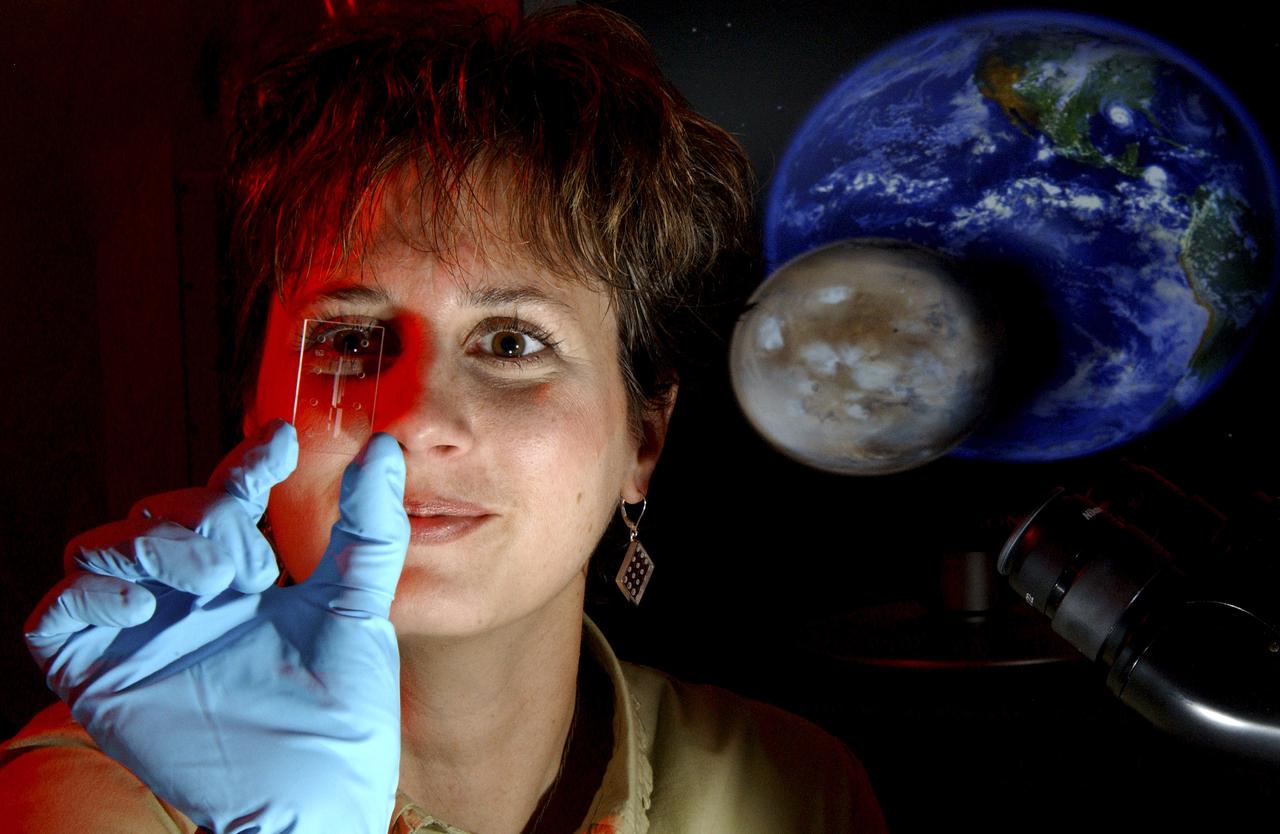
Dr. Lisa Monaco, Marshall Space Flight Center’s (MSFC’s) project scientist for the Lab-on-a-Chip Applications Development (LOCAD) program, examines a lab on a chip. The small dots are actually ports where fluids and chemicals can be mixed or samples can be collected for testing. Tiny channels, only clearly visible under a microscope, form pathways between the ports. Many chemical and biological processes, previously conducted on large pieces of laboratory equipment, can now be performed on these small glass or plastic plates. Monaco and other researchers at MSFC in Huntsville, Alabama, are customizing the chips to be used for many space applications, such as monitoring microbes inside spacecraft and detecting life on other planets. The portable, handheld Lab-on-a Chip Application Development Portable Test System (LOCAD-PTS) made its debut flight aboard Discovery during the STS-116 mission launched December 9, 2006. The system allowed crew members to monitor their environment for problematic contaminants such as yeast, mold, and even E.coli, and salmonella. Once LOCAD-PTS reached the International Space Station (ISS), the Marshall team continued to manage the experiment, monitoring the study from a console in the Payload Operations Center at MSFC. The results of these studies will help NASA researchers refine the technology for future Moon and Mars missions. (NASA/MSFC/D.Stoffer)
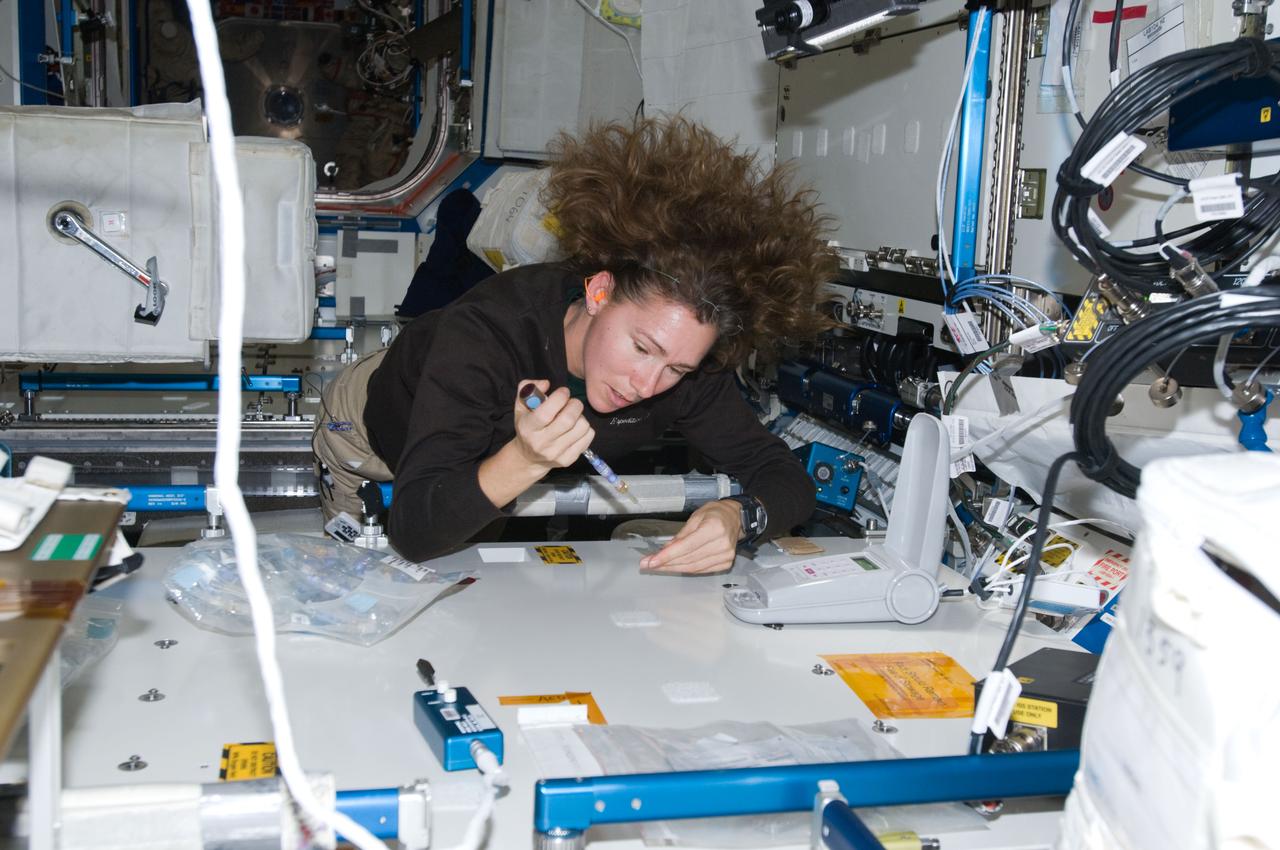
ISS018-E-018995 (10 Jan. 2009) --- Astronaut Sandra Magnus, Expedition 18 flight engineer, works with the Lab-on-a-Chip Application Development-Portable Test System (LOCAD-PTS) experiment in the Destiny laboratory of the International Space Station. LOCAD-PTS is a handheld device for rapid detection of biological and chemical substances onboard the station.
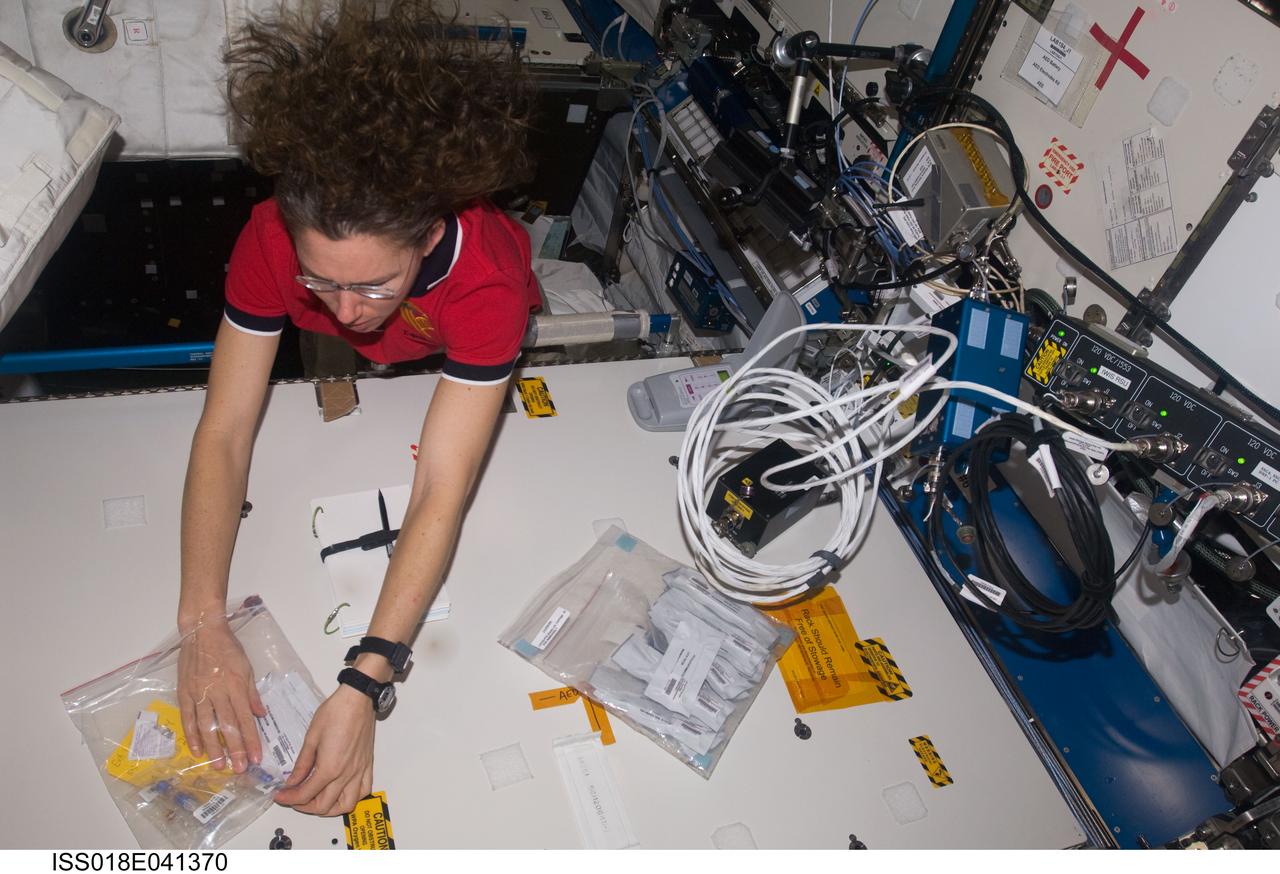
ISS018-E-041370 (21 March 2009) --- Astronaut Sandra Magnus, STS-119 mission specialist, prepares to work with the Lab-on-a-Chip Application Development-Portable Test System (LOCAD-PTS) experiment in the Destiny laboratory while Space Shuttle Discovery remains docked with the International Space Station. LOCAD-PTS is a handheld device for rapid detection of biological and chemical substances onboard the station.
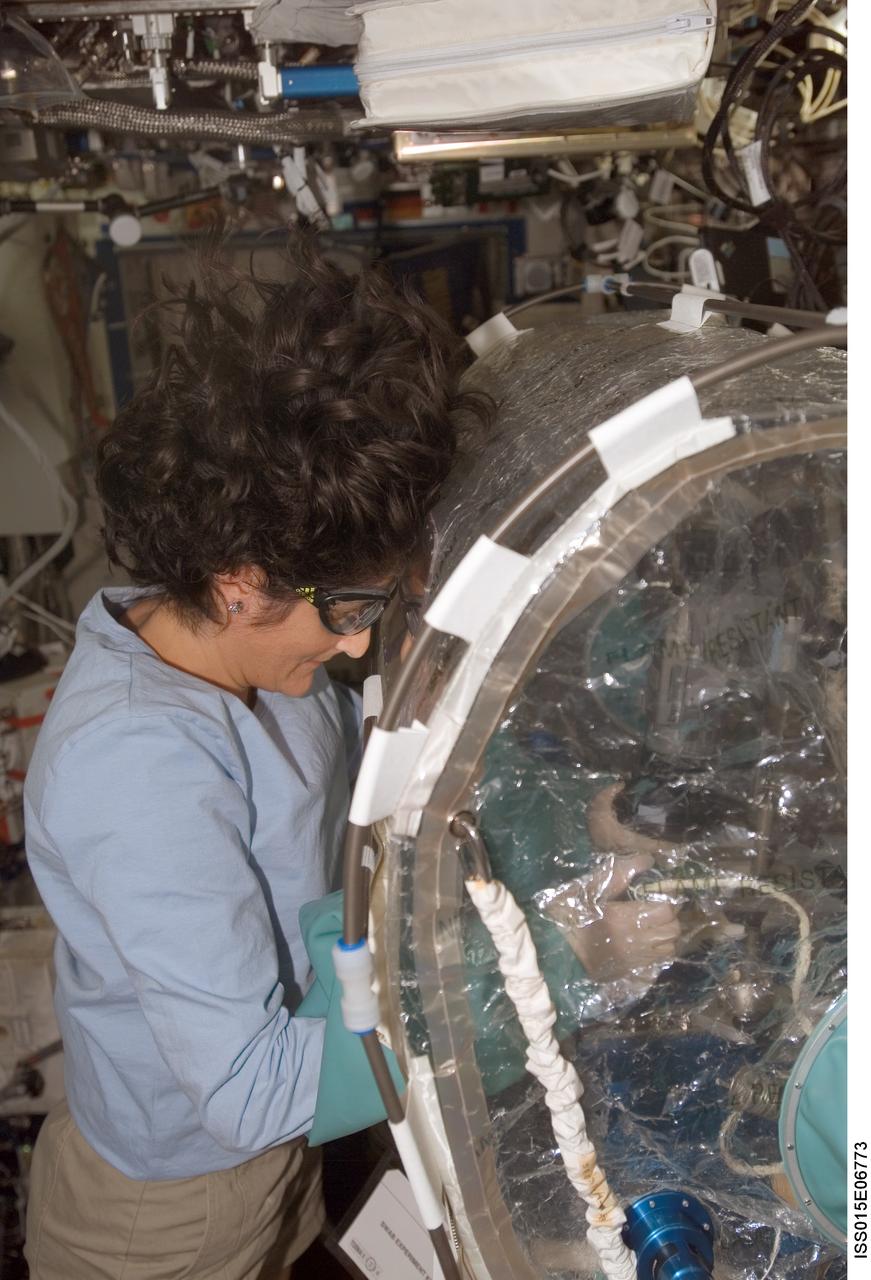
ISS015-E-06773 (5 May 2007) --- Astronaut Sunita L. Williams, Expedition 15 flight engineer, sets up a video camera inside a flame resistant covering to film a chip during Lab-on-a-Chip Application Development-Portable Test System (LOCAD-PTS) Swab Operations in the Destiny laboratory of the International Space Station.
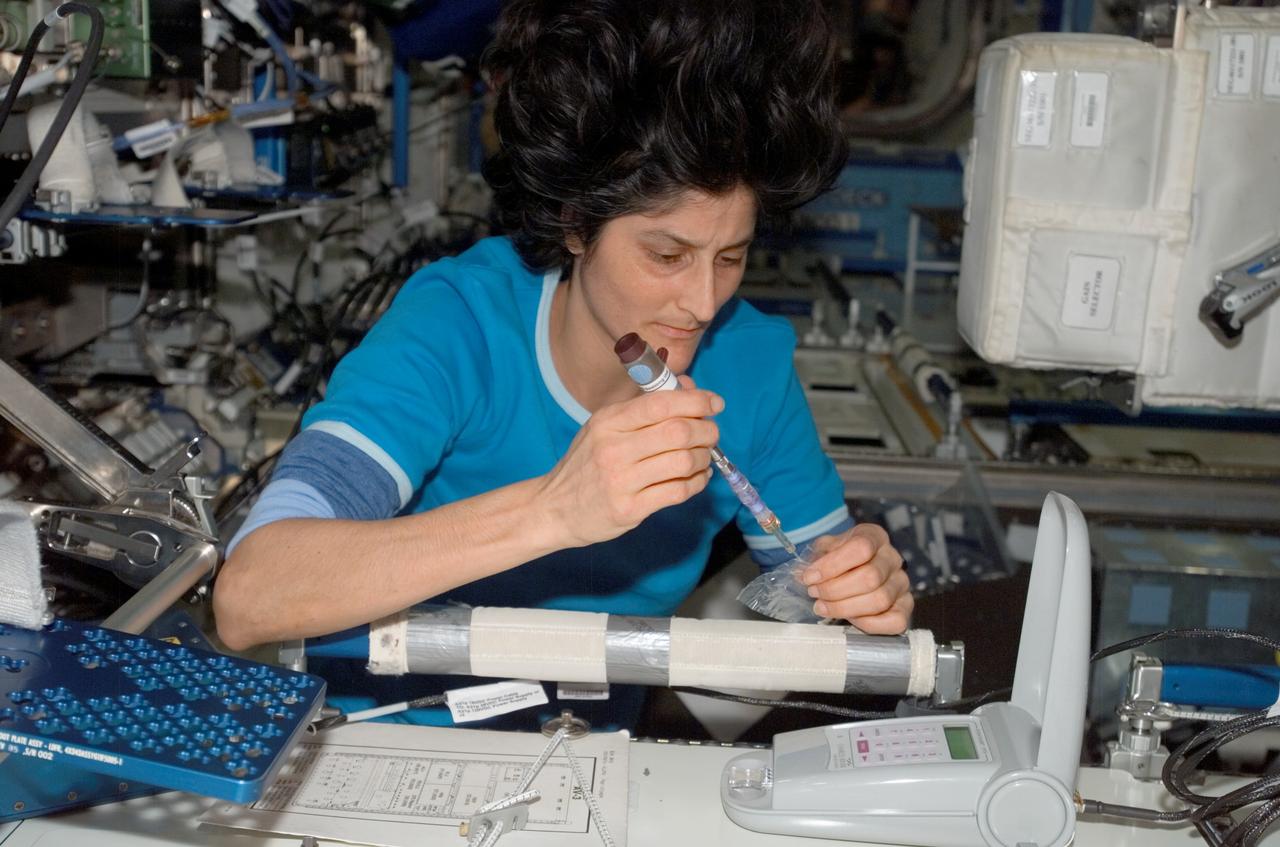
ISS015-E-05640 (30 April 2007) --- Astronaut Sunita L. Williams, Expedition 15 flight engineer, works with the Lab-on-a-Chip Application Development-Portable Test System (LOCAD-PTS) experiment in the Destiny laboratory of the International Space Station. LOCAD-PTS is a handheld device for rapid detection of biological and chemical substances onboard the station.
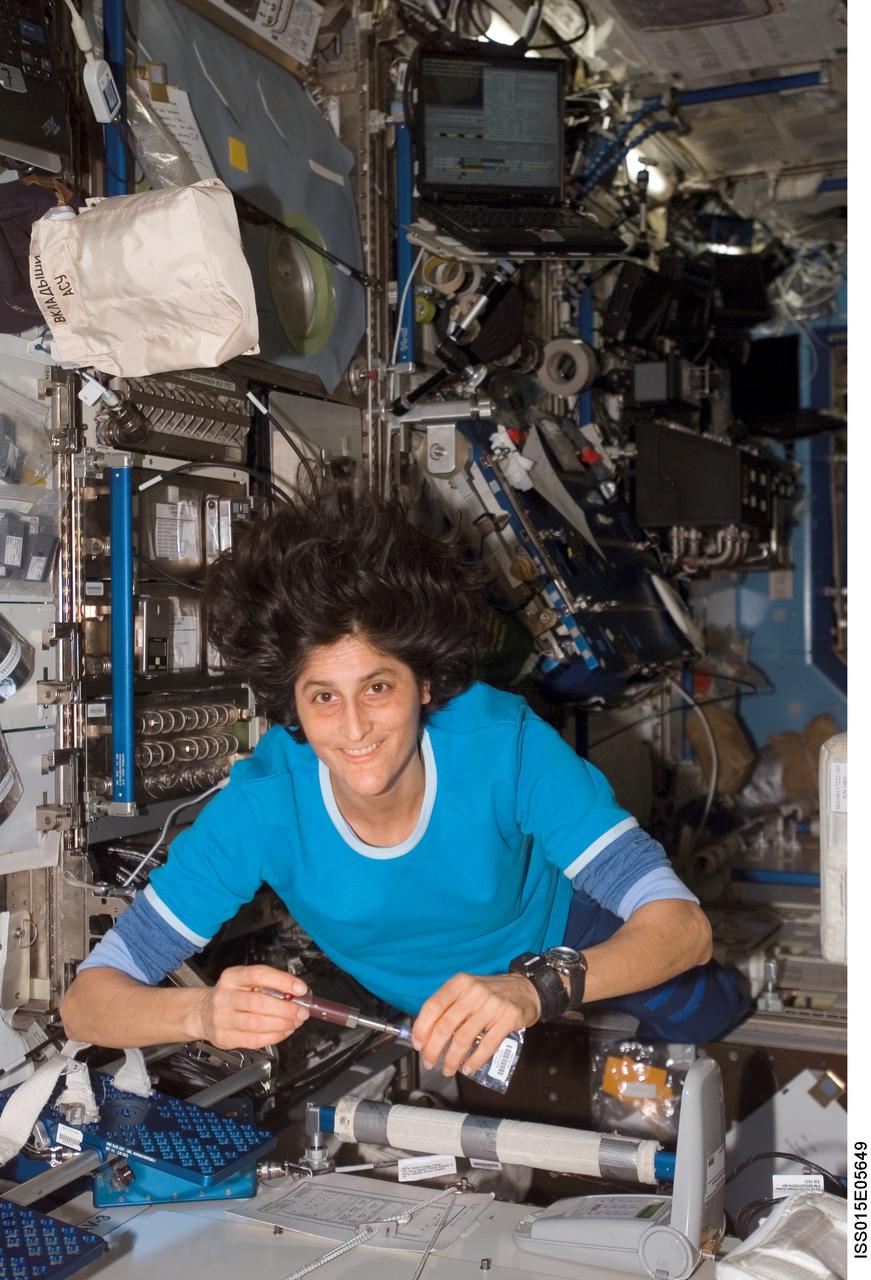
ISS015-E-05649 (30 April 2007) --- Astronaut Sunita L. Williams, Expedition 15 flight engineer, works with the Lab-on-a-Chip Application Development-Portable Test System (LOCAD-PTS) experiment in the Destiny laboratory of the International Space Station. LOCAD-PTS is a handheld device for rapid detection of biological and chemical substances onboard the station.
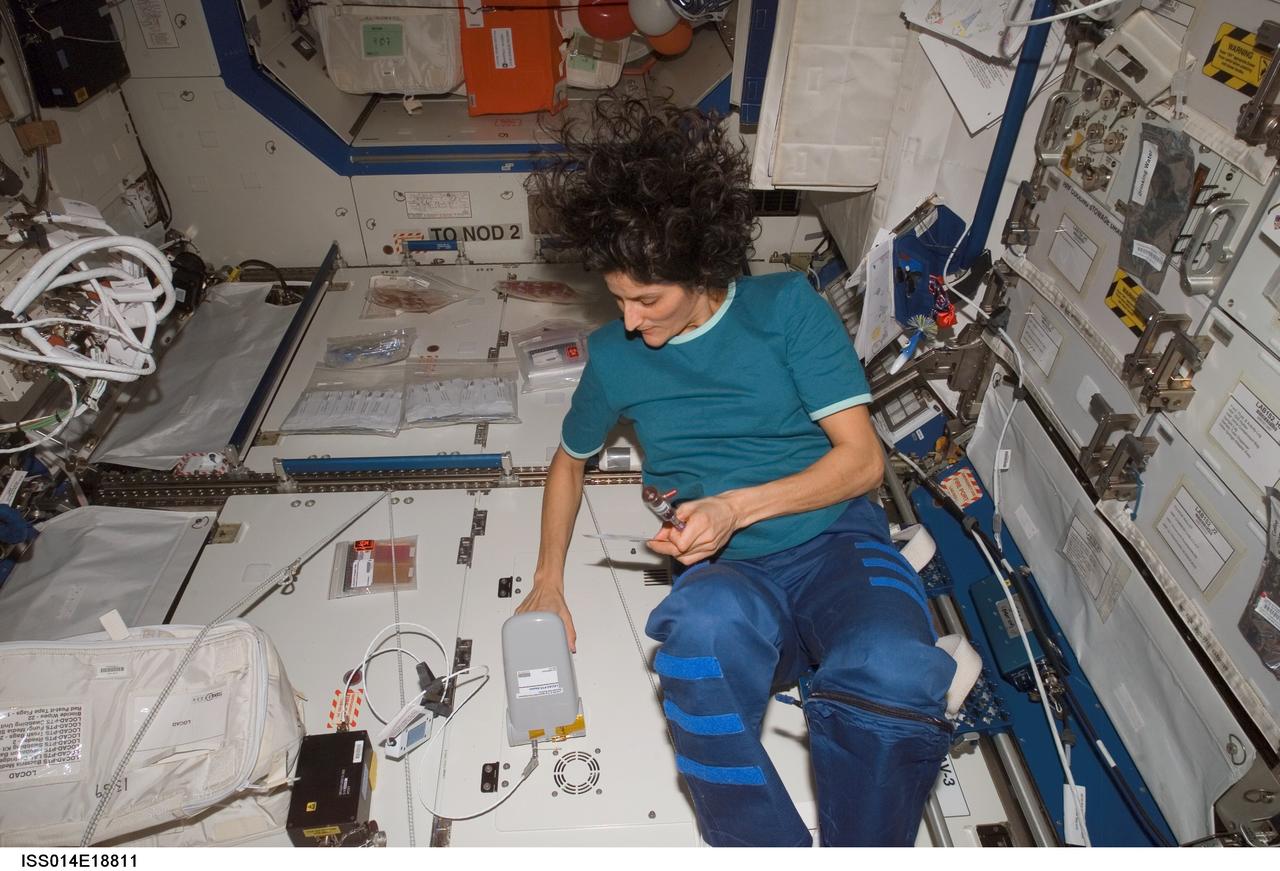
ISS014-E-18811 (31 March 2007) --- Astronaut Sunita L. Williams, Expedition 14 flight engineer, works with the Lab-on-a-Chip Application Development-Portable Test System (LOCAD-PTS) experiment in the Destiny laboratory of the International Space Station. LOCAD-PTS is a handheld device for rapid detection of biological and chemical substances onboard the station.
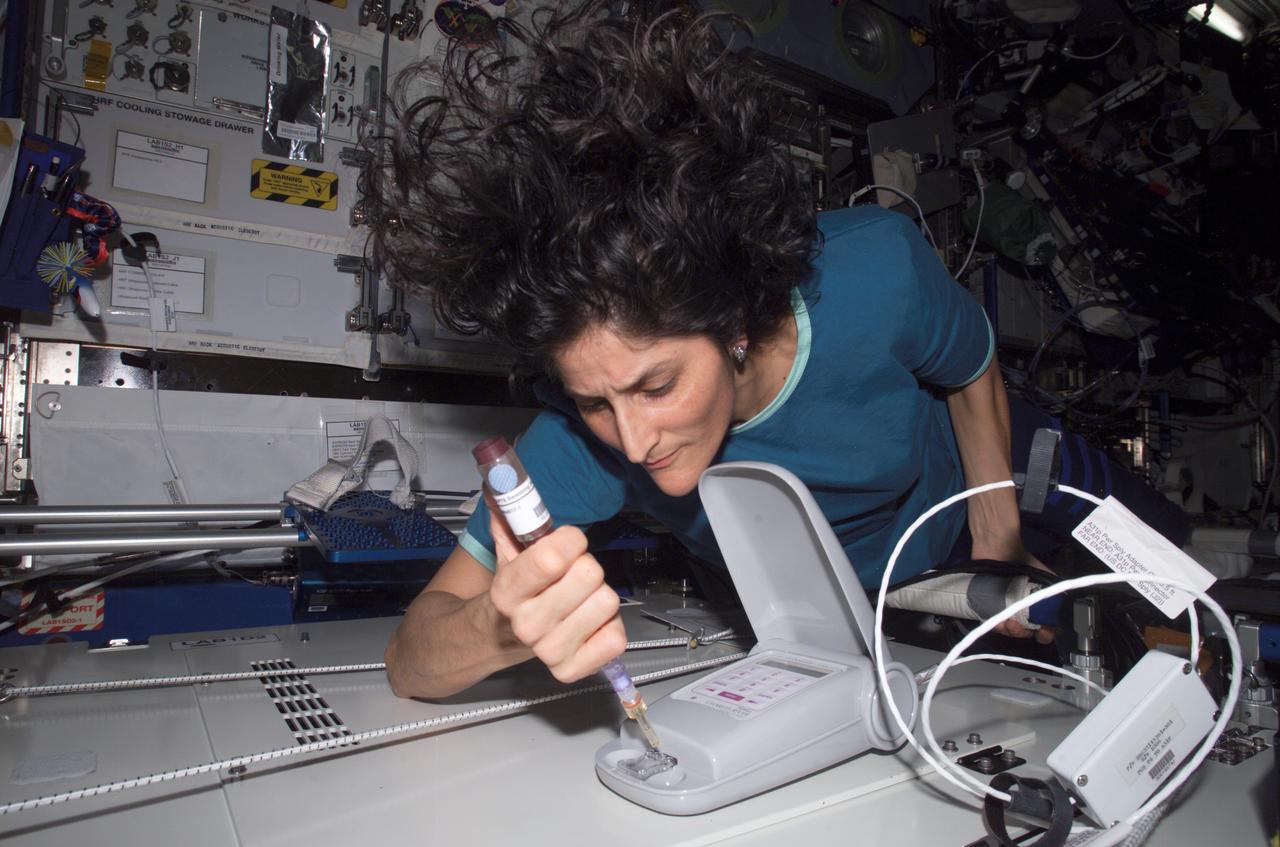
ISS014-E-18818 (31 March 2007) --- Astronaut Sunita L. Williams, Expedition 14 flight engineer, works with the Lab-on-a-Chip Application Development-Portable Test System (LOCAD-PTS) experiment in the Destiny laboratory of the International Space Station. LOCAD-PTS is a handheld device for rapid detection of biological and chemical substances onboard the station.
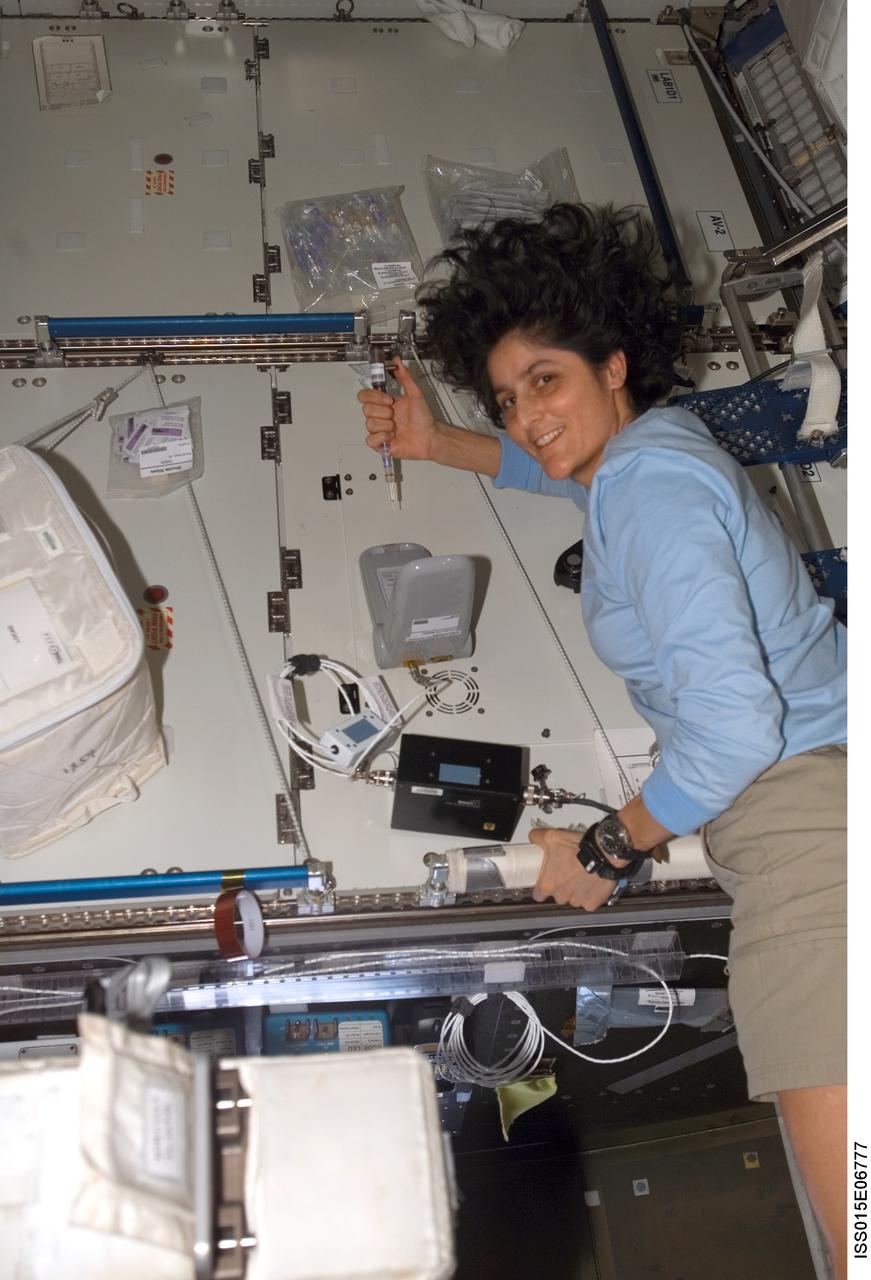
ISS015-E-06777 (5 May 2007) --- Astronaut Sunita L. Williams, Expedition 15 flight engineer, works with the Lab-on-a-Chip Application Development-Portable Test System (LOCAD-PTS) experiment in the Destiny laboratory of the International Space Station. LOCAD-PTS is a handheld device for rapid detection of biological and chemical substances onboard the station.
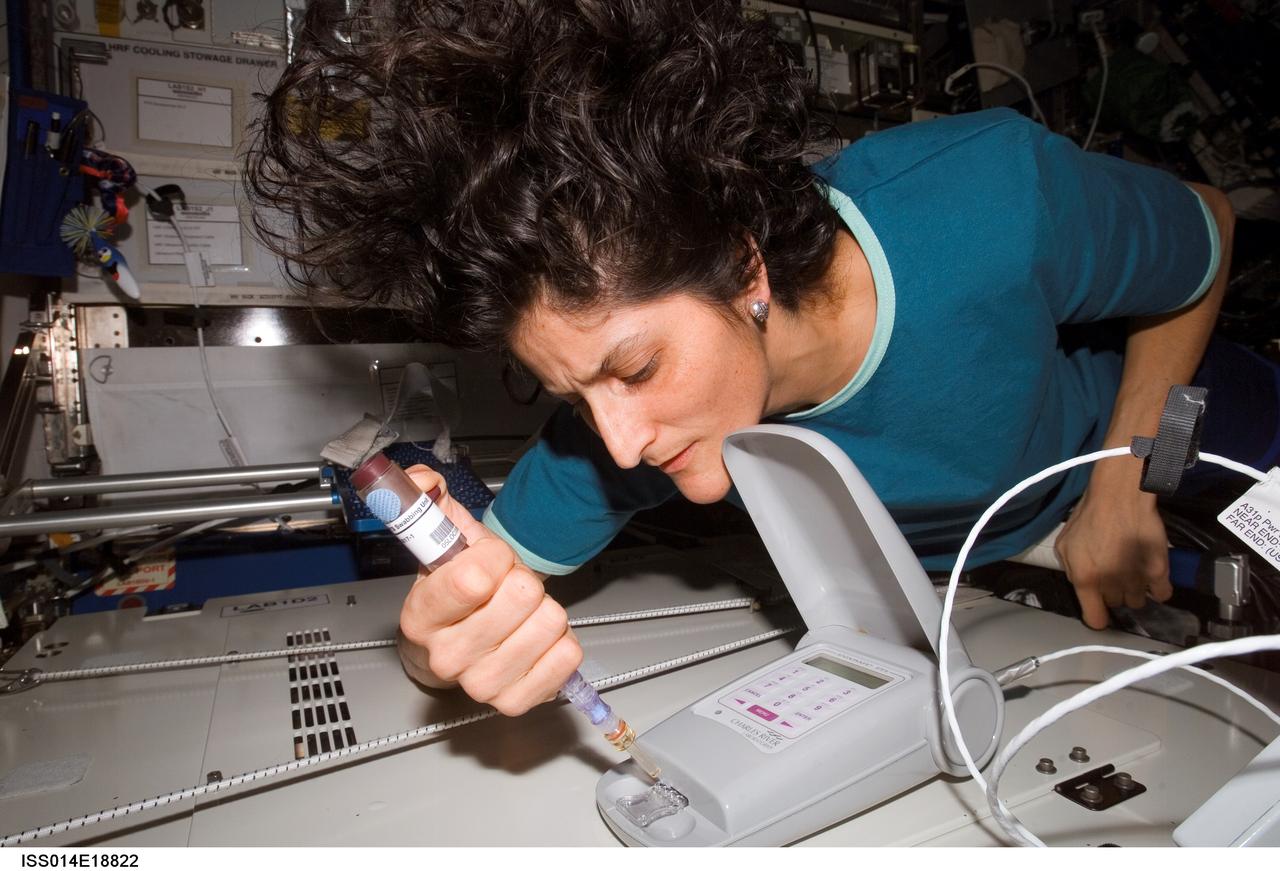
ISS014-E-18822 (31 March 2007) --- Astronaut Sunita L. Williams, Expedition 14 flight engineer, works with the Lab-on-a-Chip Application Development-Portable Test System (LOCAD-PTS) experiment in the Destiny laboratory of the International Space Station. LOCAD-PTS is a handheld device for rapid detection of biological and chemical substances onboard the station.
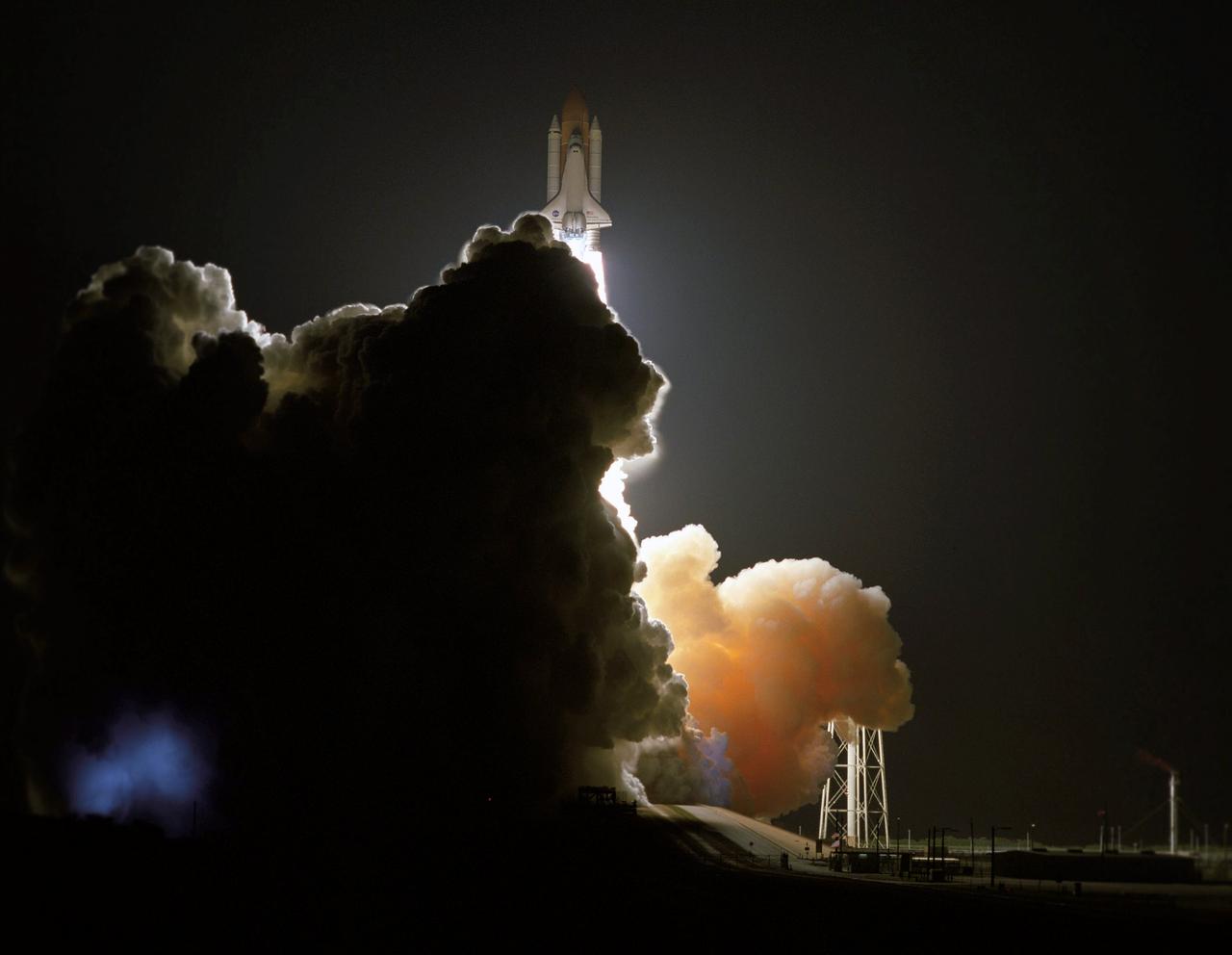
Against a black night sky, the Space Shuttle Discovery and its seven-member crew head toward Earth-orbit and a scheduled linkup with the International Space Station (ISS). Liftoff from the Kennedy Space Center's launch pad 39B occurred at 8:47 p.m. (EST) on Dec. 9, 2006 in what was the first evening shuttle launch since 2002. The primary mission objective was to deliver and install the P5 truss element. The P5 installation was conducted during the first of three space walks, and involved use of both the shuttle and station’s robotic arms. The remainder of the mission included a major reconfiguration and activation of the ISS electrical and thermal control systems, as well as delivery of Zvezda Service Module debris panels, which will increase ISS protection from potential impacts of micro-meteorites and orbital debris. Two major payloads developed at the Marshall Space Flight Center (MSFC) were also delivered to the Station. The Lab-On-A Chip Application Development Portable Test System (LOCAD-PTS) and the Water Delivery System, a vital component of the Station’s Oxygen Generation System.

Against a black night sky, the Space Shuttle Discovery and its seven-member crew head toward Earth-orbit and a scheduled linkup with the International Space Station (ISS). Liftoff from the Kennedy Space Center's launch pad 39B occurred at 8:47 p.m. (EST) on Dec. 9, 2006 in what was the first evening shuttle launch since 2002. The primary mission objective was to deliver and install the P5 truss element. The P5 installation was conducted during the first of three space walks, and involved use of both the shuttle and station’s robotic arms. The remainder of the mission included a major reconfiguration and activation of the ISS electrical and thermal control systems, as well as delivery of Zvezda Service Module debris panels, which will increase ISS protection from potential impacts of micro-meteorites and orbital debris. Two major payloads developed at the Marshall Space Flight Center (MSFC) were also delivered to the Station. The Lab-On-A Chip Application Development Portable Test System (LOCAD-PTS) and the Water Delivery System, a vital component of the Station’s Oxygen Generation System.