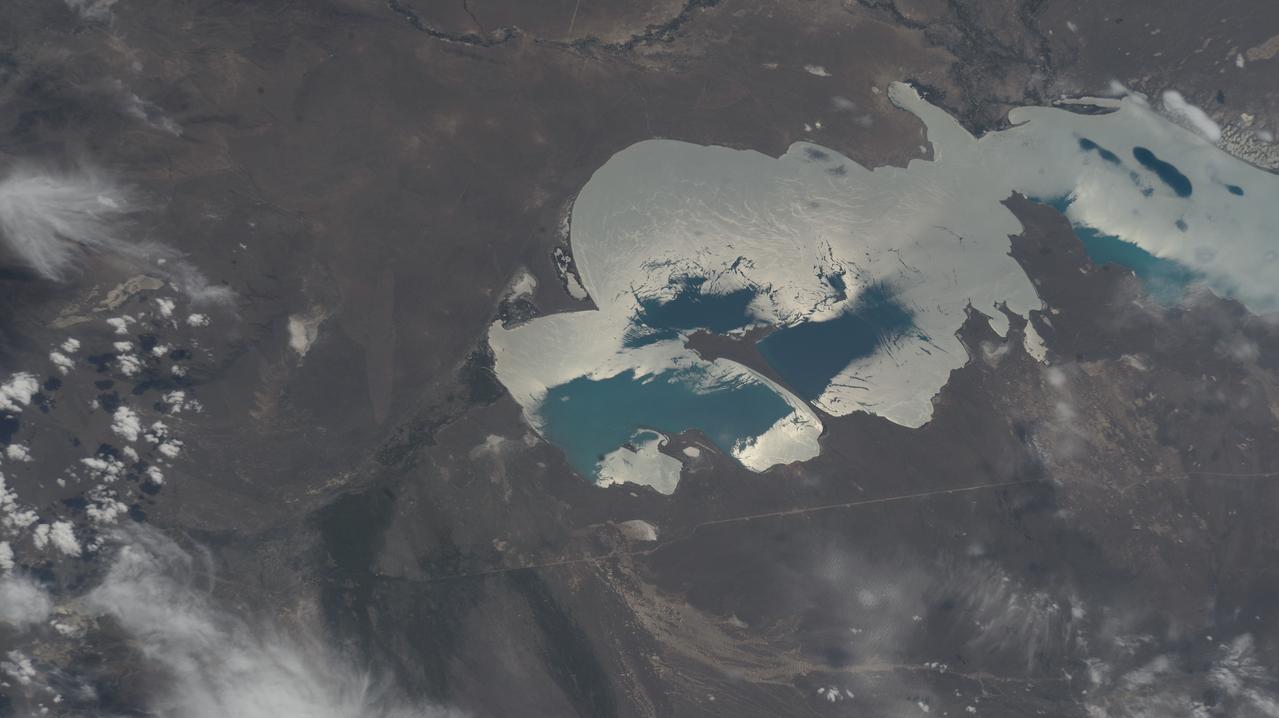
iss071e462185 (Aug. 9, 2024) --- Lake Balkhash in Kazakhstan is pictured from the International Space Station as it orbited 262 miles above the Central Asian nation.
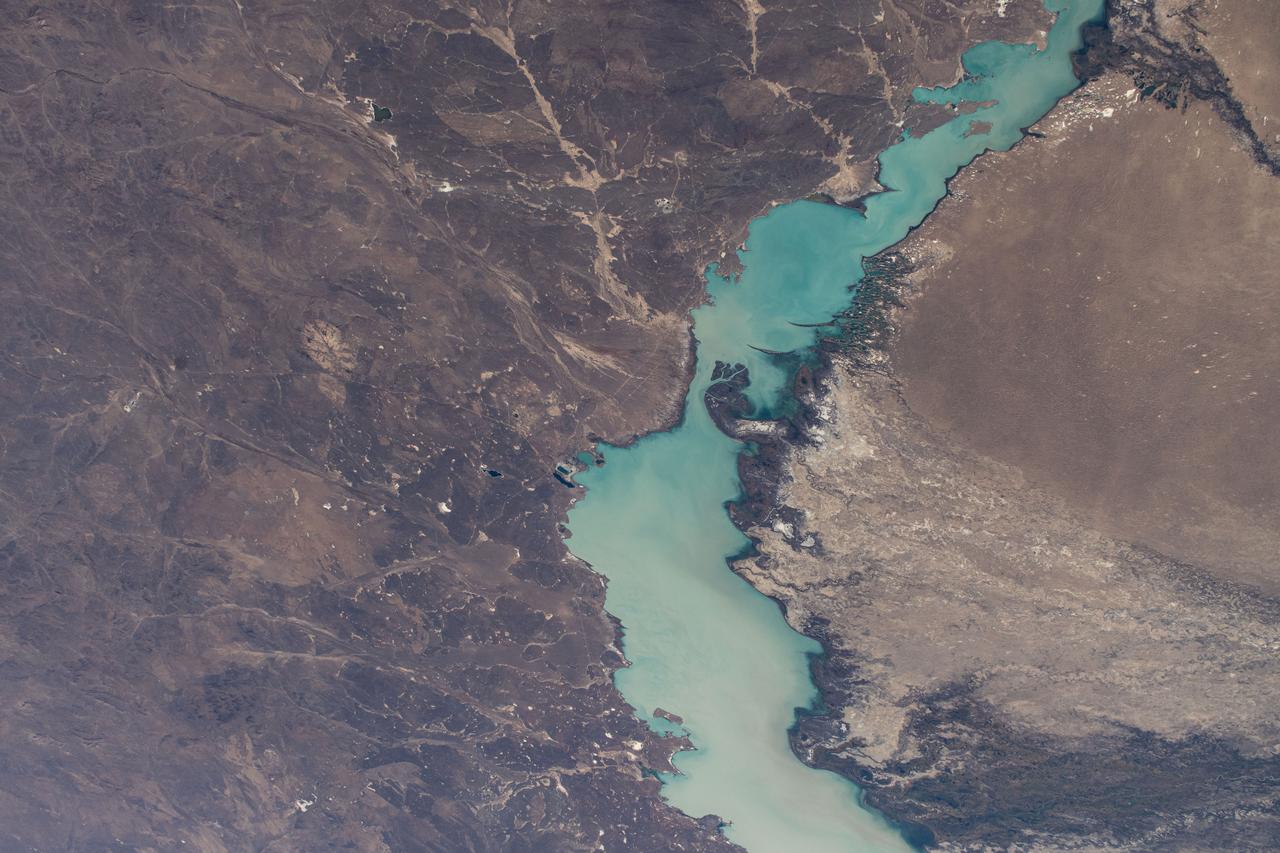
iss072e005520 (Sept. 29, 2024) -- One of the largest lakes in Central Asia, Lake Balkhash, was pictured from the International Space Station as it orbited 260 miles above.
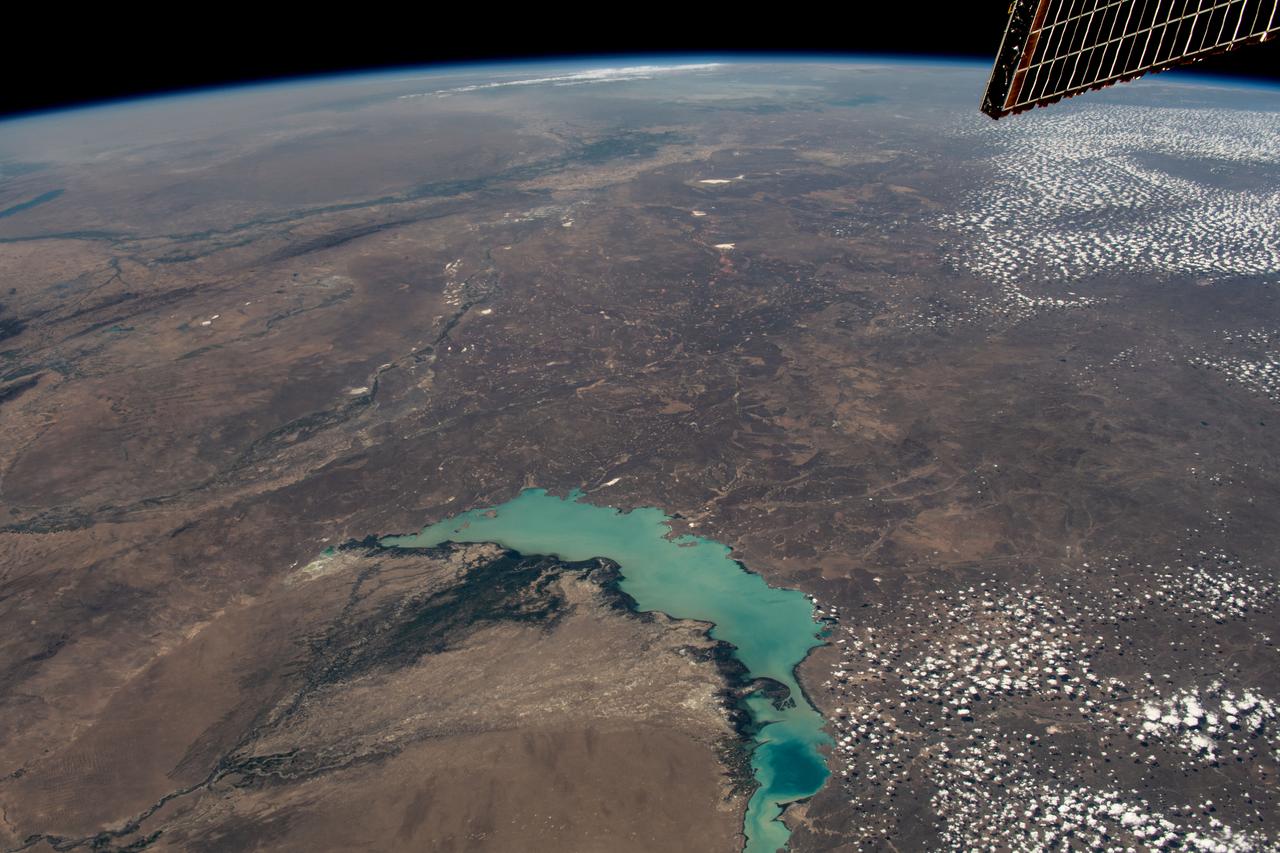
iss069e053802 (August 3, 2023) -- Lake Balkhash, one of the largest in Central Asia, spans roughly 6,500 square miles (17,000 square kilometers) in Kazakhstan. The western part of the lake holds fresh water whereas the eastern side of the basin is salty. The International Space Station soared 261 miles above as this image was taken.
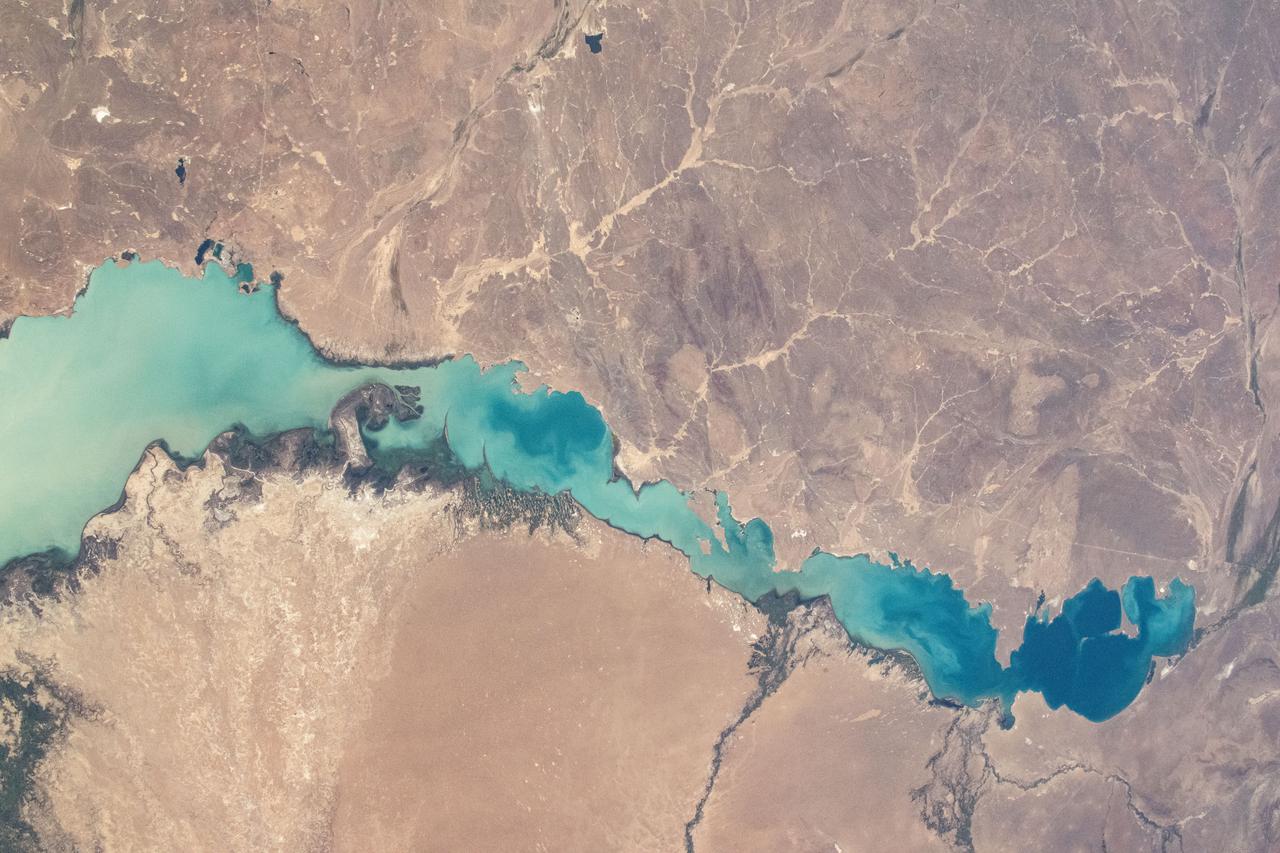
iss071e413751 (Aug. 1, 2024) -- Lake Balkhash is pictured from the International Space Station as it orbited 259 miles above Kazakhstan. Its turquoise water, stark against the surrounding terrain, comes from nearby winter ice melting.
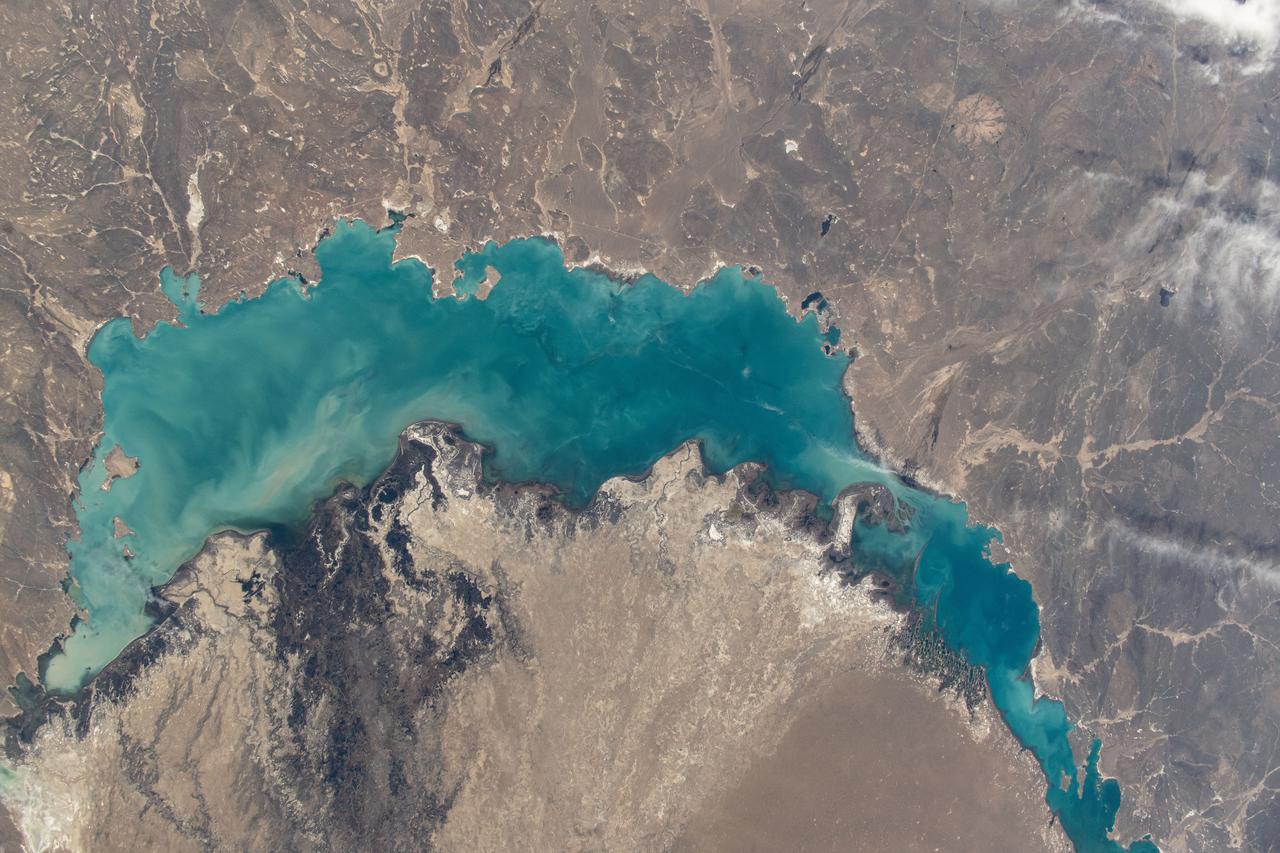
iss071e012112 (April 19, 2024) -- In southeastern Kazakhstan lies Lake Balkhash, one of the largest in Asia. Its turquoise color comes from winter ice melting. As the International Space Station soared nearly 260 miles above, NASA astronaut Mike Barratt captured this photo.

iss074e0437897 (April 6, 2026) --- The western portion of Lake Balkhash in Kazakhstan is freshwater, fed predominantly by the Ili River and bordered by woodlands that support a wide range of wildlife, including migratory birds, fish, deer, and ongoing efforts to reintroduce the Caspian tiger. The eastern portion of Lake Balkhash (not pictured) is more saline due to its greater depth, arid climate, and the narrow Uzynaral Strait, which limits the inflow of freshwater between the two basins. The International Space Station was orbiting 267 miles above Kazakhstan at the time of this photograph. Credit: NASA
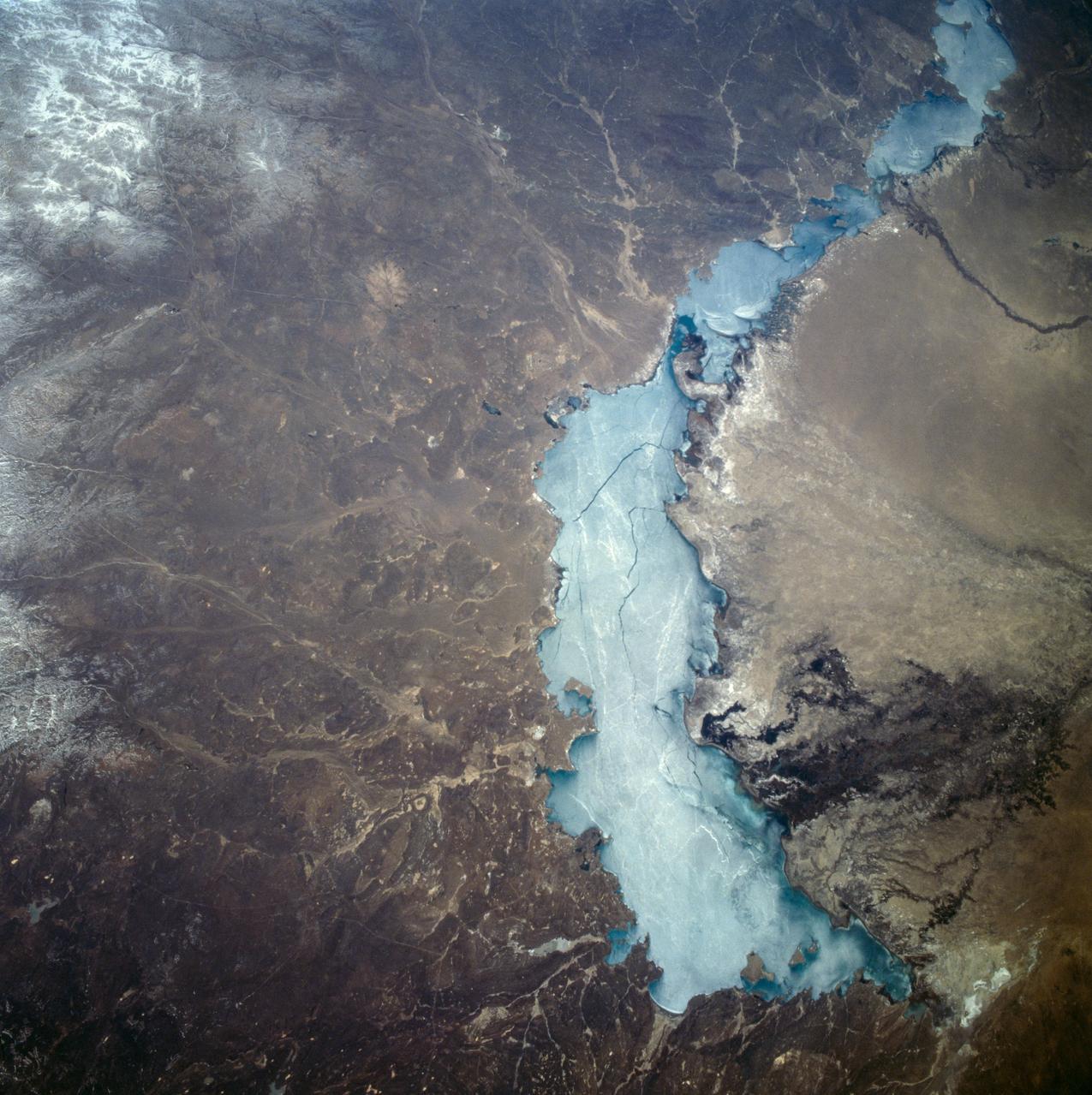
STS059-209-081 (9-20 April 1994) --- Lake Balkhash, in eastern Kazakhstan, is some 300 miles long. The lake, frozen in this scene, thawed noticeably during the mission. The shape of the lake is controlled by the delta of the Ili River, which flows from the Tien Shan Mountains in western China across this arid steppe. SRL scientists will use radar data to study the microwave effects of differences in soil moisture, and in freezing or thawing, on the deltaic sediments. Hasselblad camera.
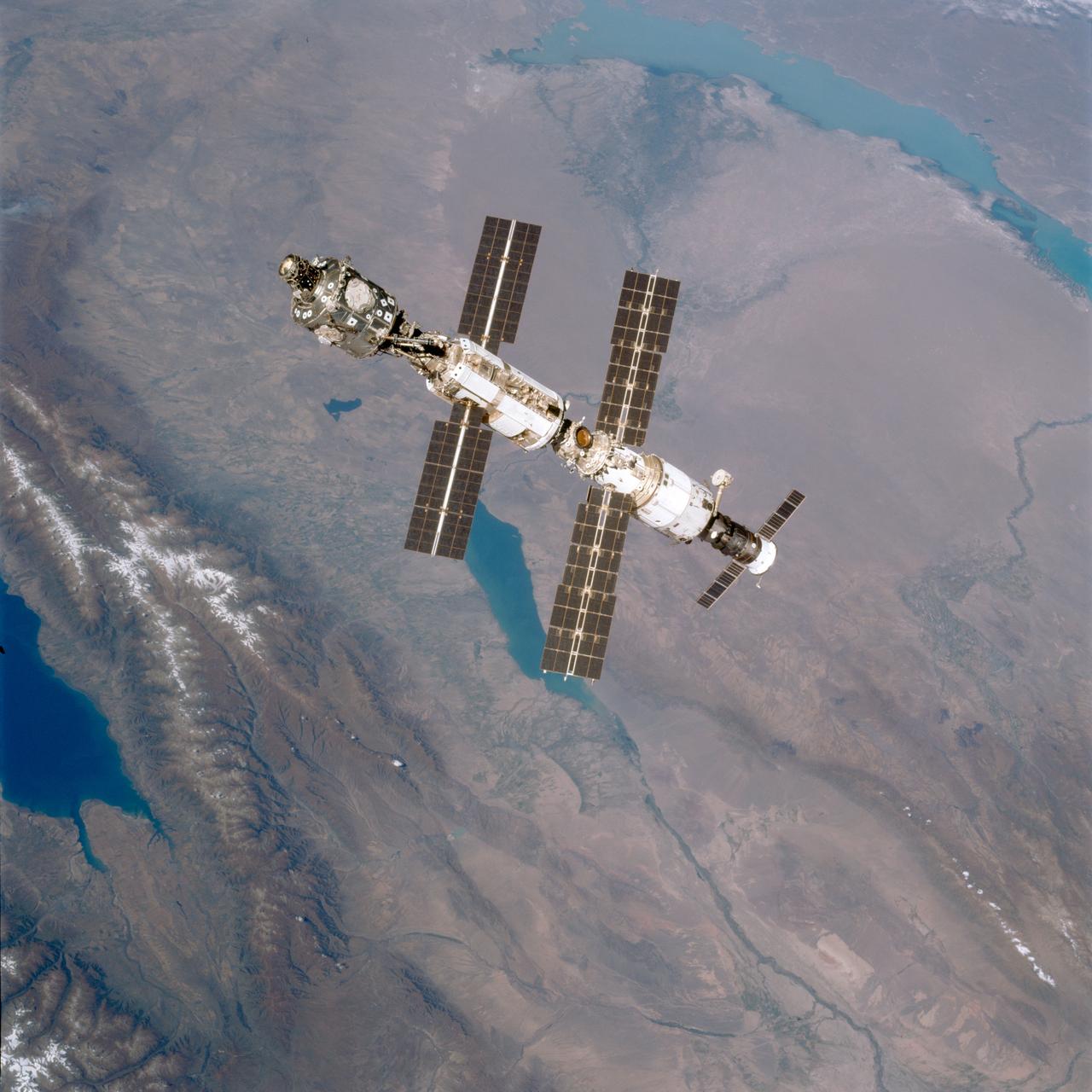
STS106-712-064 (8-20 September 2000) --- The International Space Station over Lake Balkhash, as photographed during a fly-around by the Space Shuttle Atlantis. Lake Issyk-Kul is in upper left.
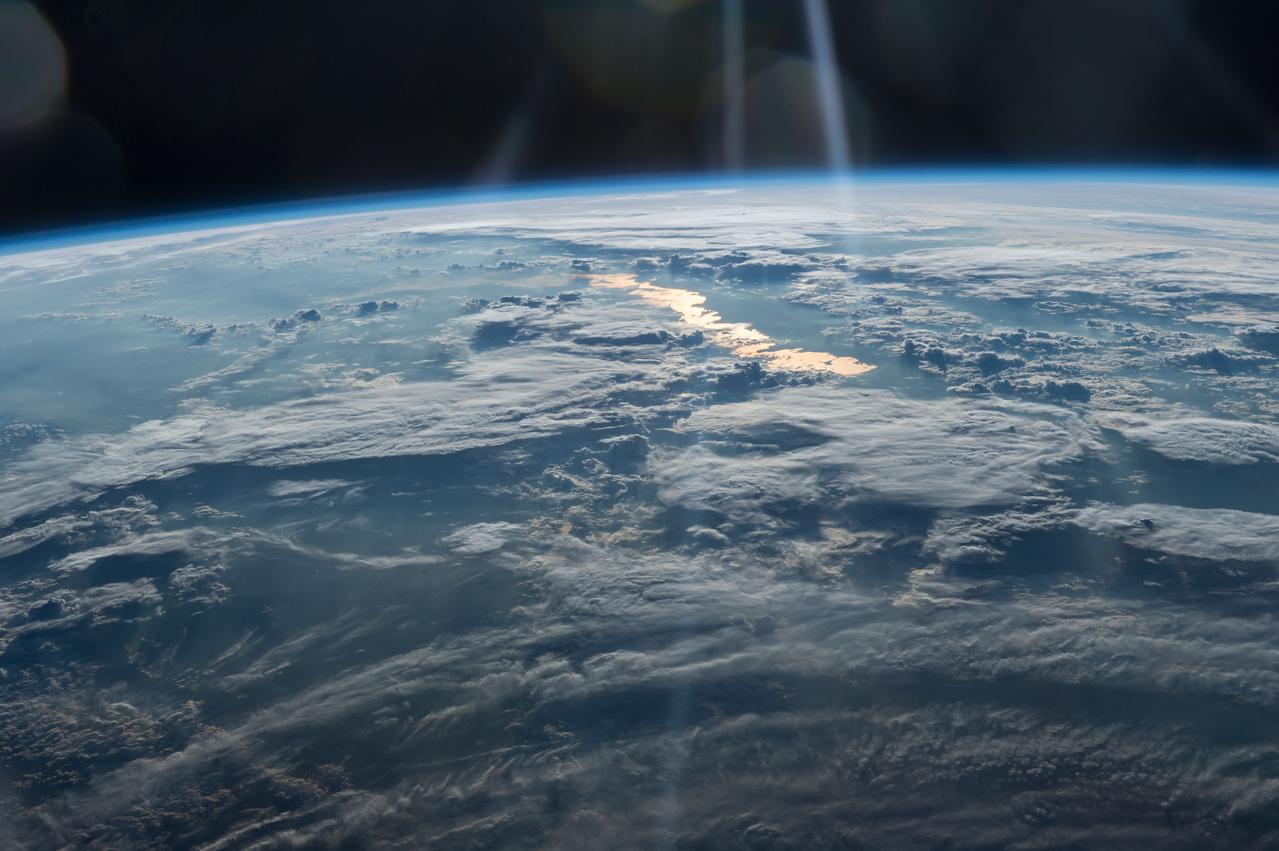
ISS047e137096 (06/03/2016) --- This stunning Earth image taken from the International Space Station looks from Northwestern China on the bottom into eastern Kazakhstan. The large lake in Kazakhstan with golden sun glint is named Lake Balkhash. It is one of the largest lakes in Asia and is the 15th largest lake in the world. The lake is fed by 7 rivers.
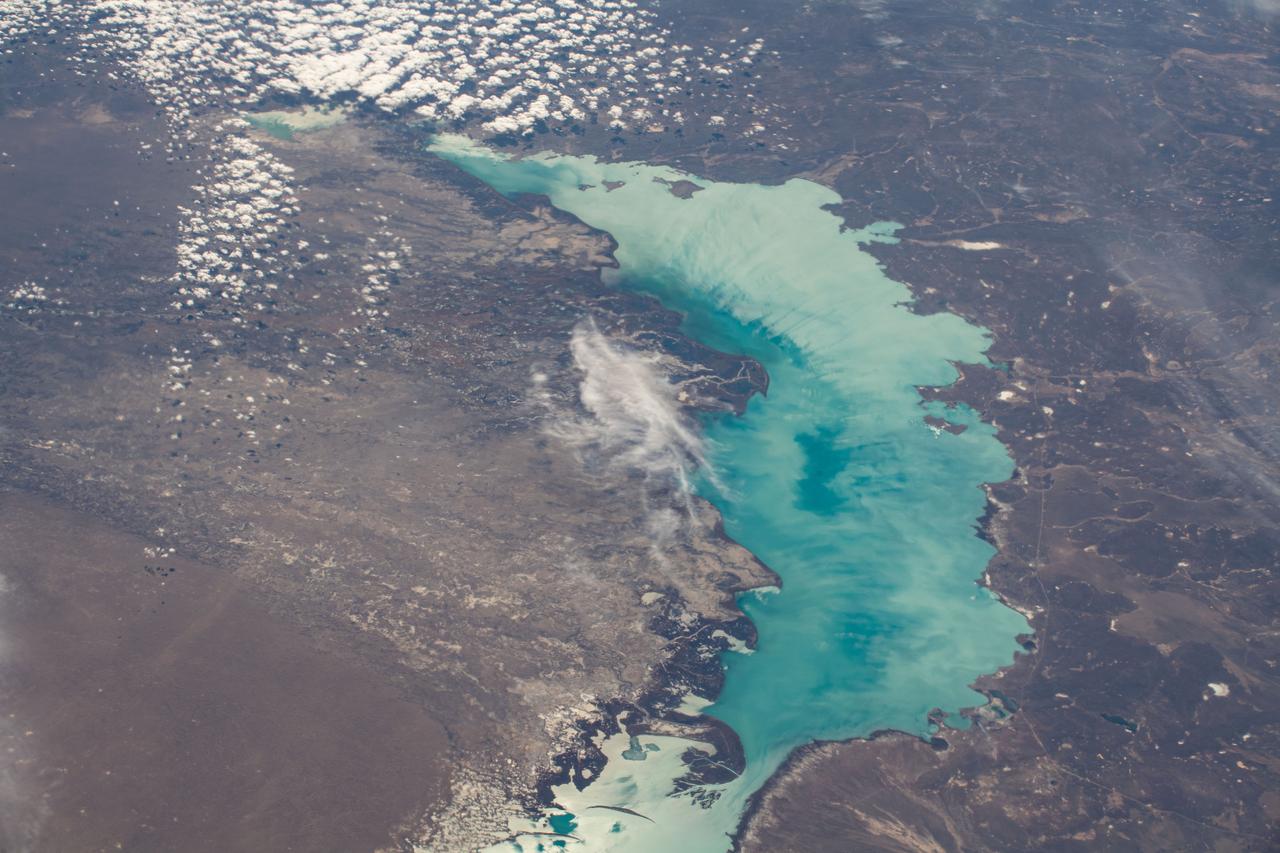
iss062e136937 (April 6, 2020) --- Lake Balkhash in Kazakhstan is pictured from the International Space Station as it orbited above the western Asian nation.
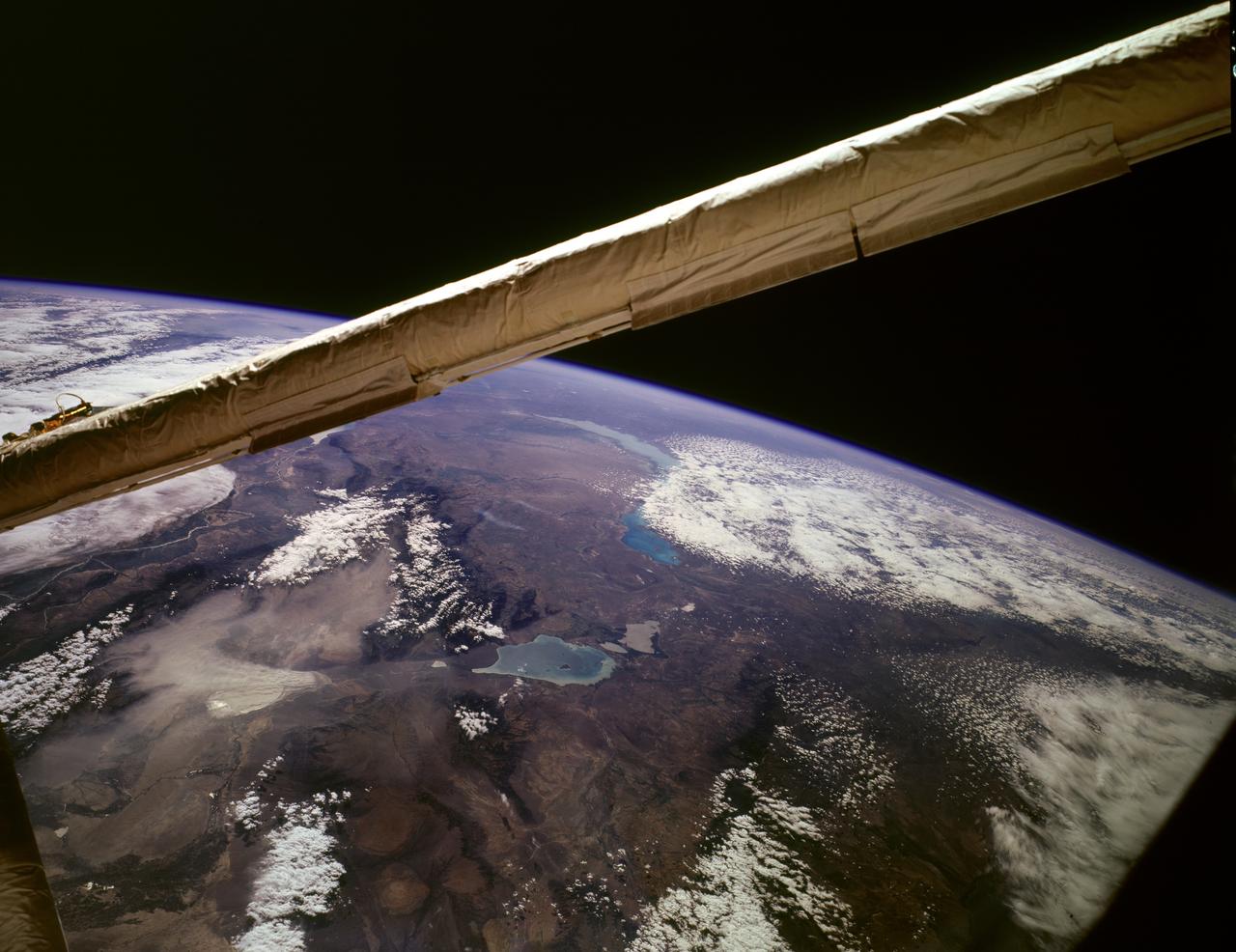
STS085-503-061 (7 - 19 August 1997) --- Lakes Balkhash and Alakol, southern uplands of Kazakhstan, central Asia. The long, 600 kilometers arc of Lake Balkhash occupies the center of this clear west-looking view. The left of the view shows clearly the westernmost Dzungarian Basin in the autonomous region of Xinjiang Uygur (Sinkiang), China. Kazakhstan's capital city Almaty (Alma-Ata) lies out of sight behind the boom. The Dzungarian Gate is the straight, fault-bounded valley cutting through the Dzhungarskiy Alatau Range. The Gate has acted as a major pass for centuries, allowing access between east Asia and central Asia (the valley floor is about 1,500 feet, whereas peaks reach 15,000 feet on the west and about 10,000 feet on the east side) -- it was one of the routes used by the Mongols when they began their invasion of central Asia and Europe in the 13th century. Lake Ebinur is the bright area beneath the dust plume (left center); strong north winds from the steppes of Kazakhstan and Russia are funneled through the Dzungarian Gate where they pick up sediment from dry lakebeds and blow it into China. The Ili River flows westward, parallel to the Dzhungarskiy Alatau Range, through Kapchagay Lake (partially visible beneath boom), then northwest across a large delta plain and into Lake Balkhash.
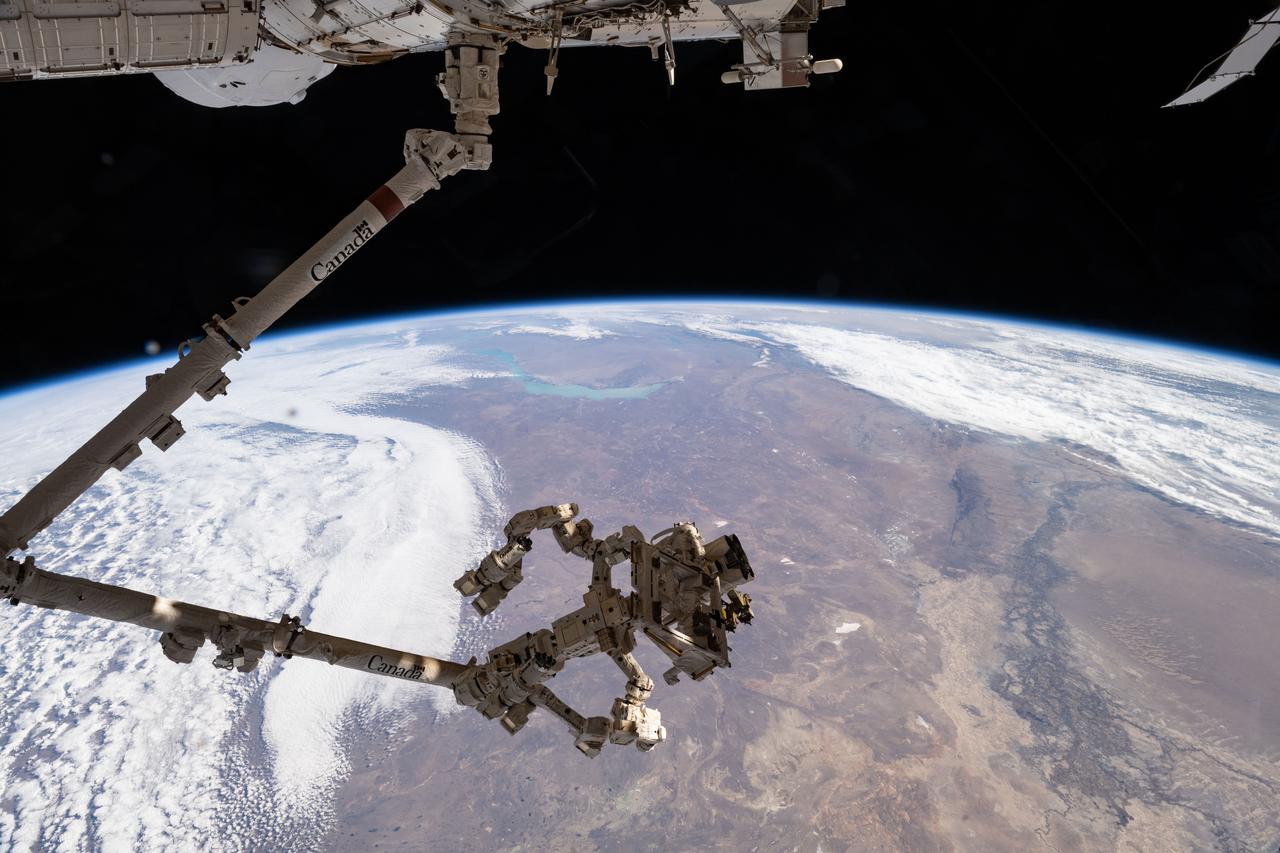
iss073e0819948 (Oct. 2, 2025) --- The Canadarm2 robotic arm, with Dextre—its fine-tuned robotic hand—attached, extends from the International Space Station’s Harmony module as the orbital outpost soars 263 miles above Kazakhstan. At upper center is Lake Balkhash, notable for its two distinct segments: the western portion contains freshwater, while the eastern portion holds saltwater due to a combination of geography, hydrology, and limited water circulation.