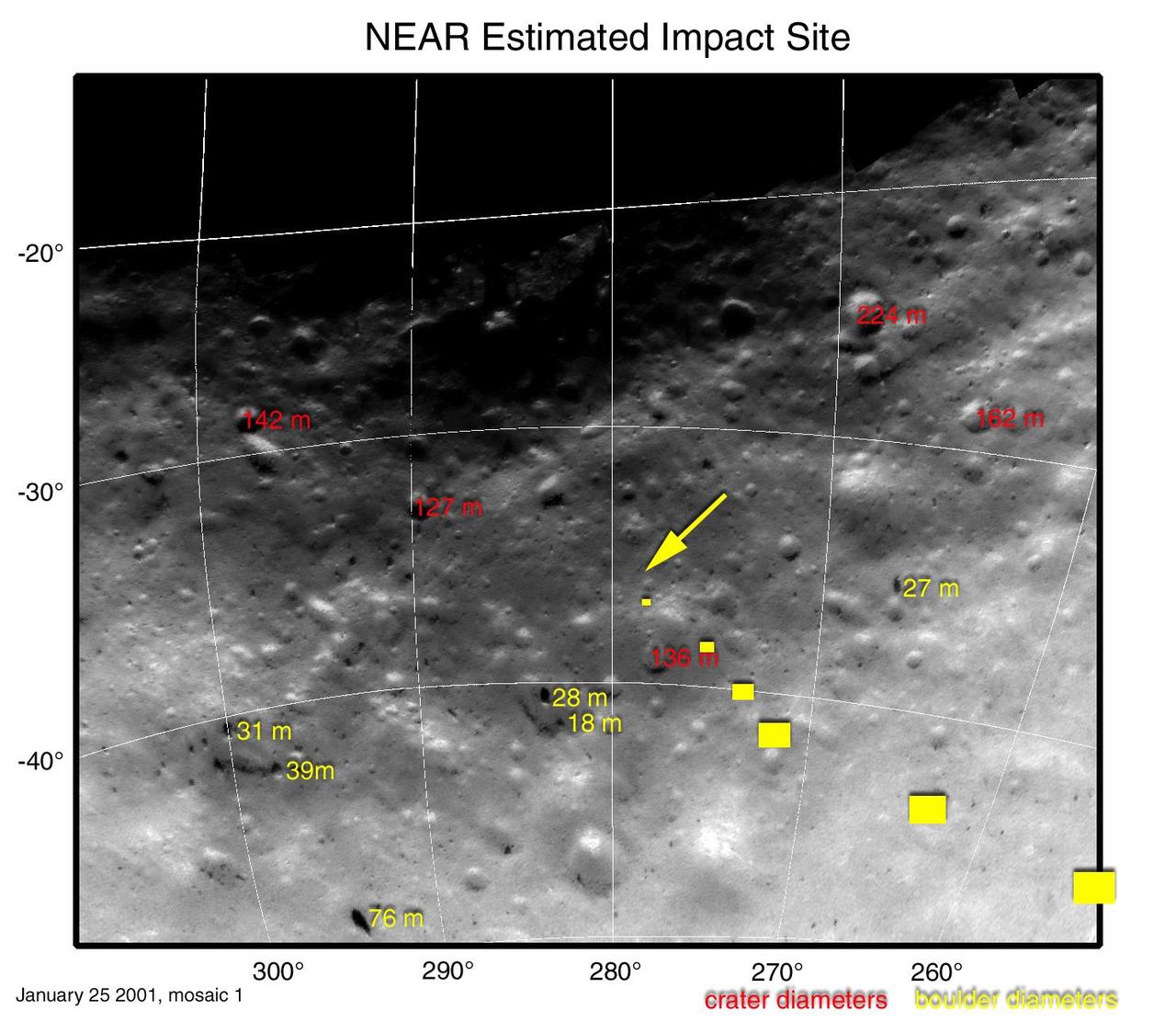
Landmarks at NEAR Shoemaker Touchdown Site
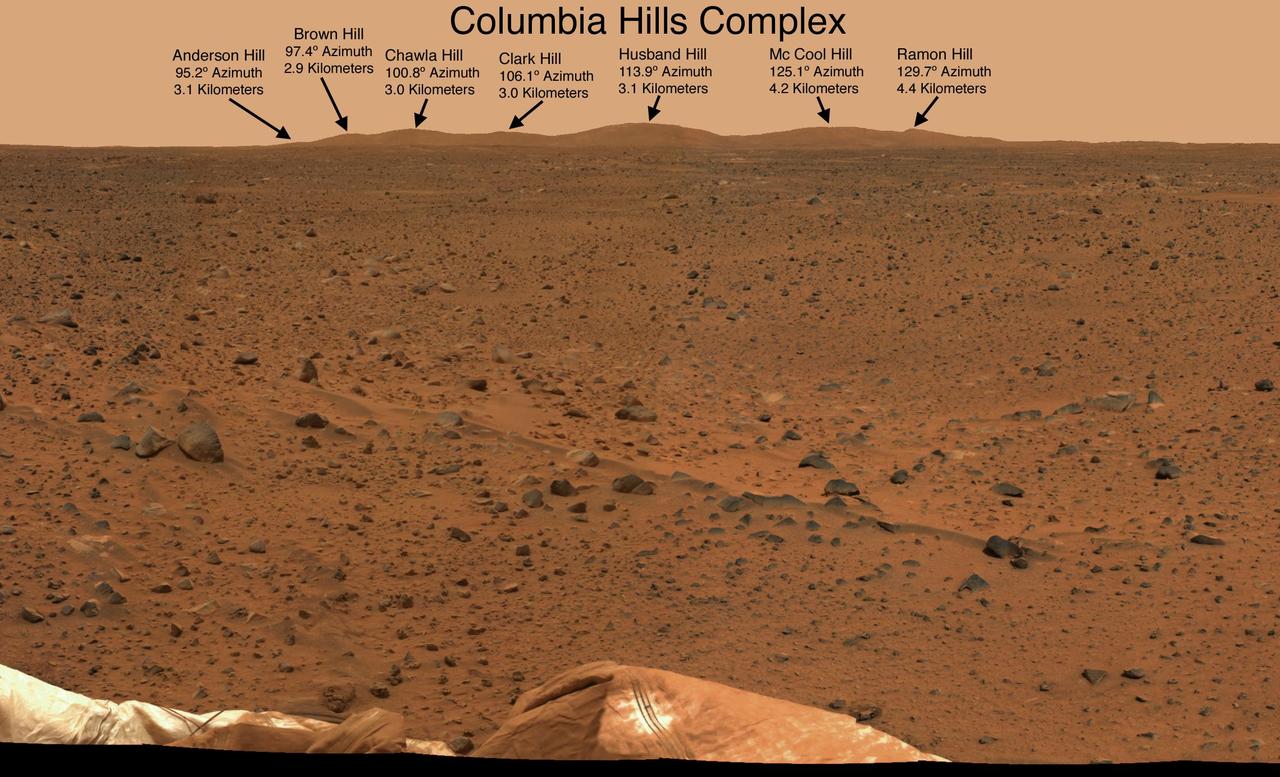
NASA Dedicates Mars Landmarks to Columbia Crew
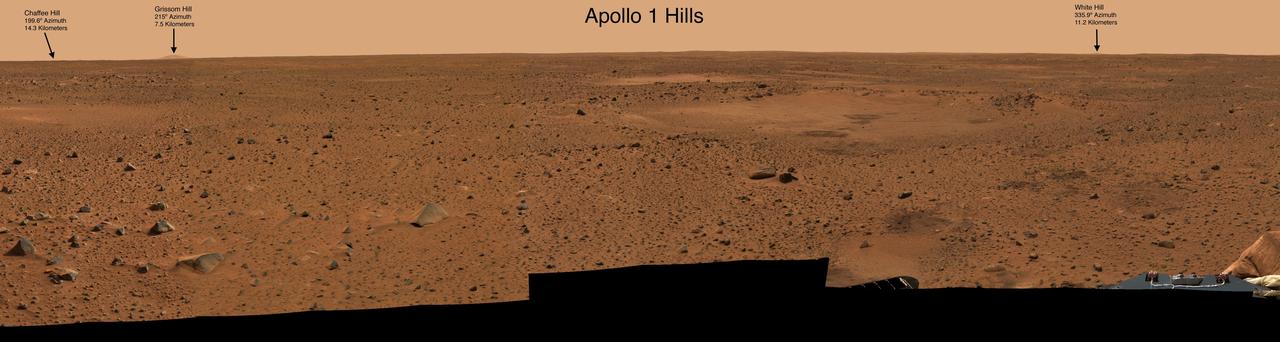
NASA Dedicates Martian Landmarks To Apollo 1 Crew
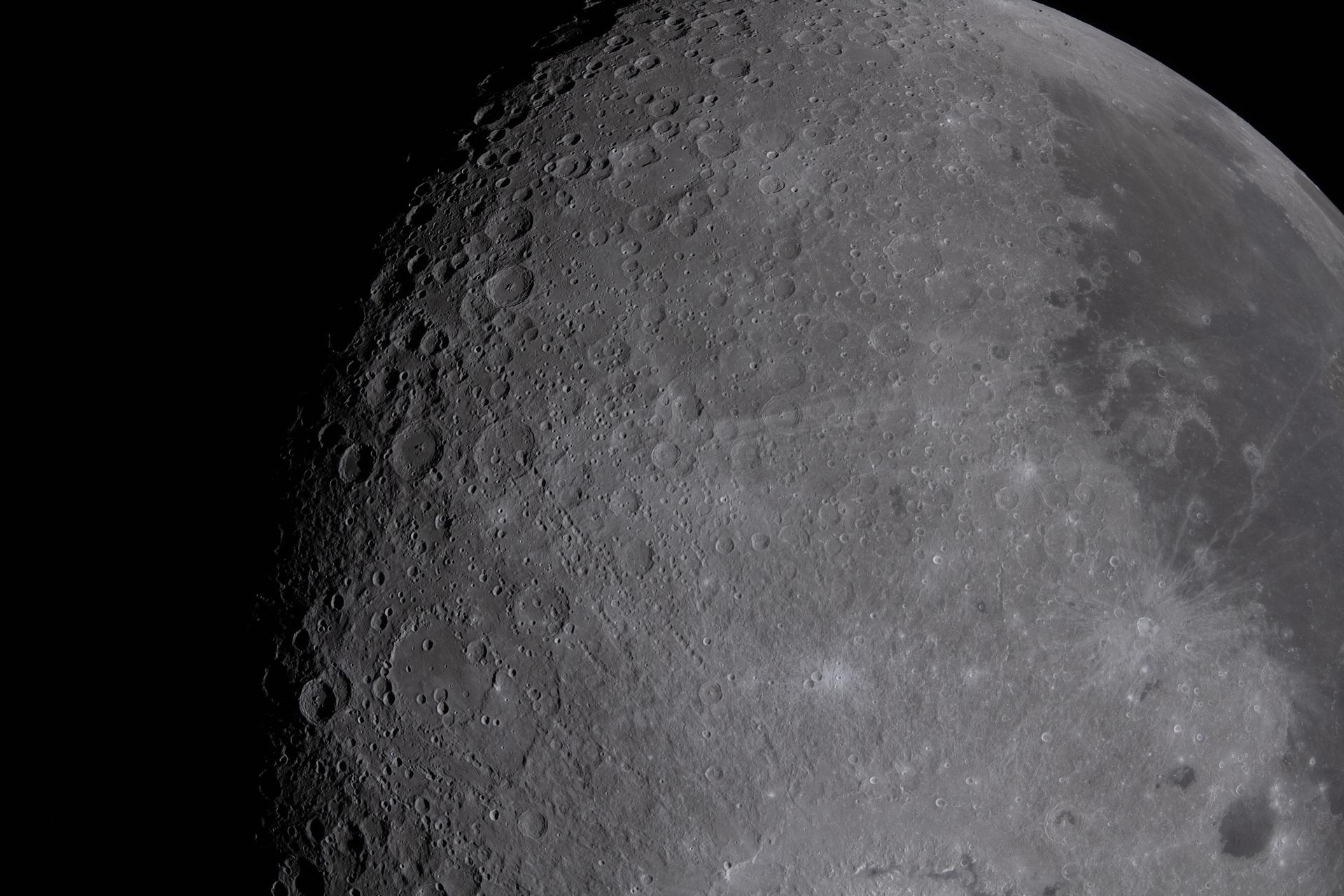
art002e012261 (April 6, 2026) - Multiple lunar landmarks come into view in this image, many of which were highlighted during the Artemis II crew’s observation call. Visible features include Ohm crater, Oceanus Procellarum, Grimaldi crater, Pierazzo crater, the newly proposed Carroll crater, and the expansive Hertzsprung Basin—together illustrating a range of geologic terrains, from dark volcanic plains to heavily cratered highlands and the remnants of ancient impact basins.
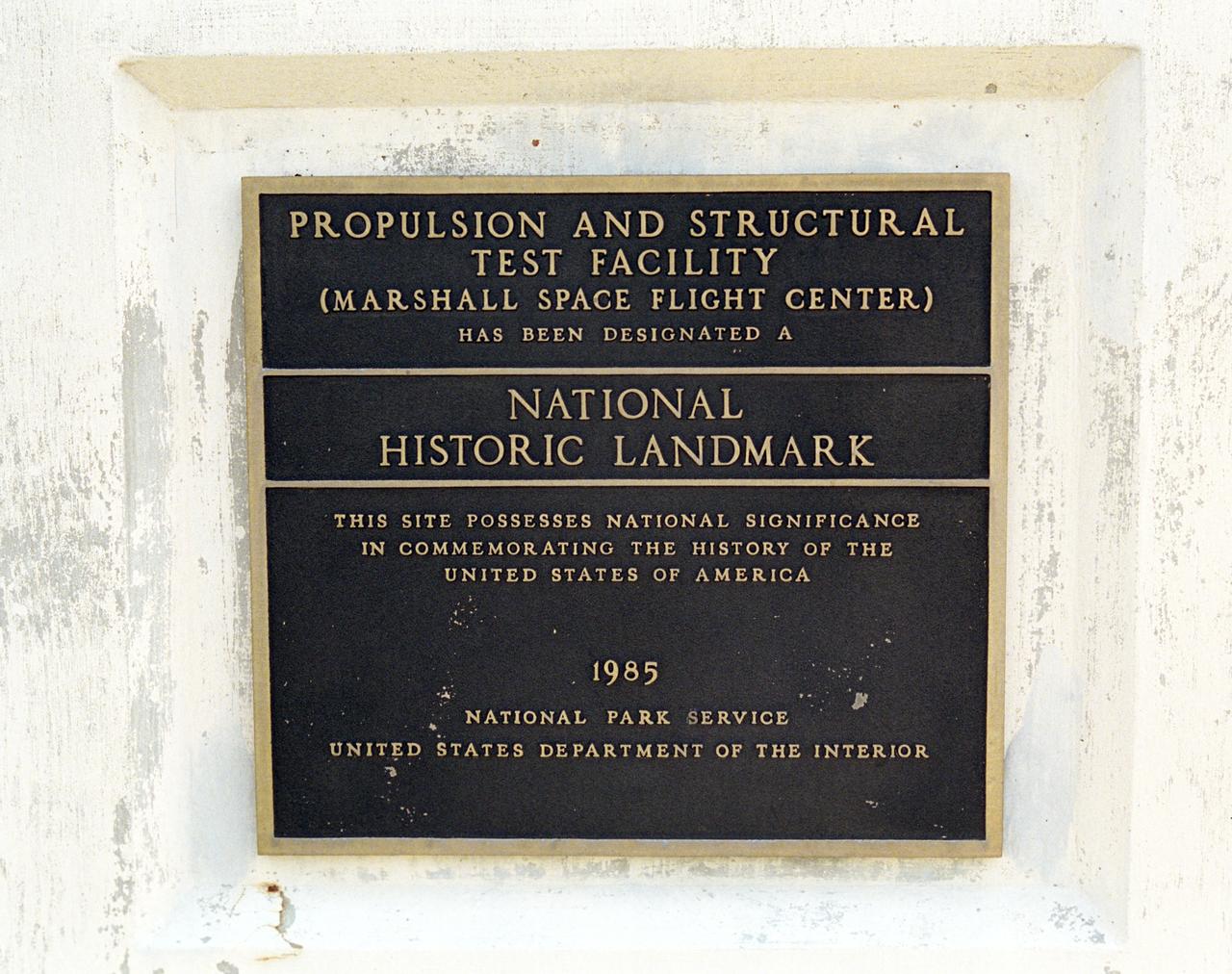
This plaque, displayed on the grounds of Marshall Space Flight Center in Huntsville, Alabama, commemorates the designation of the Propulsion and Structural Test Facility as a National Historic Landmark by the National Park Service of the United States Interior. The site was designated as a landmark in 1985.
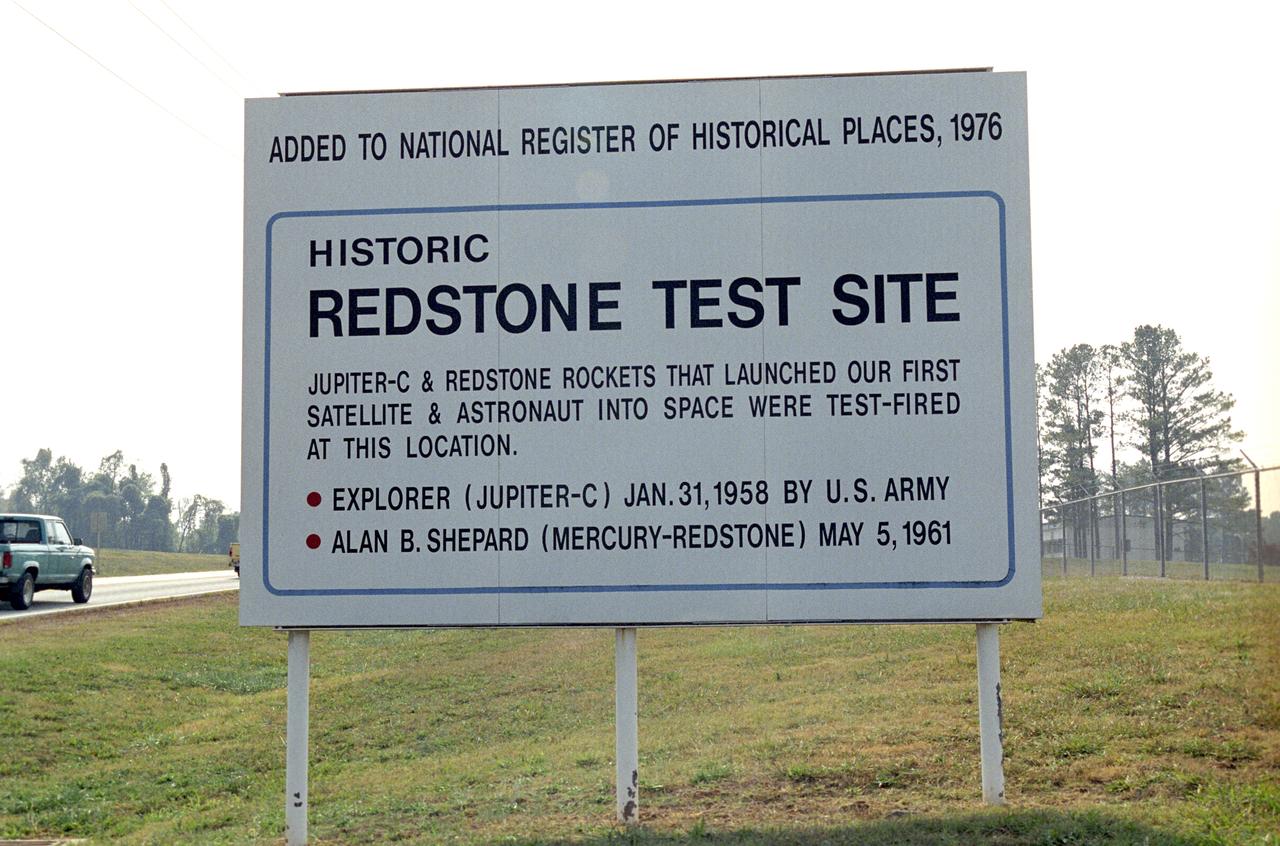
This sign, displayed on the grounds of Marshall Space Flight Center in Huntsville, Alabama, commemorates the designation of the Redstone Test Site as a National Historic Landmark. The site was inducted into the National Register of Historical Places in 1976.
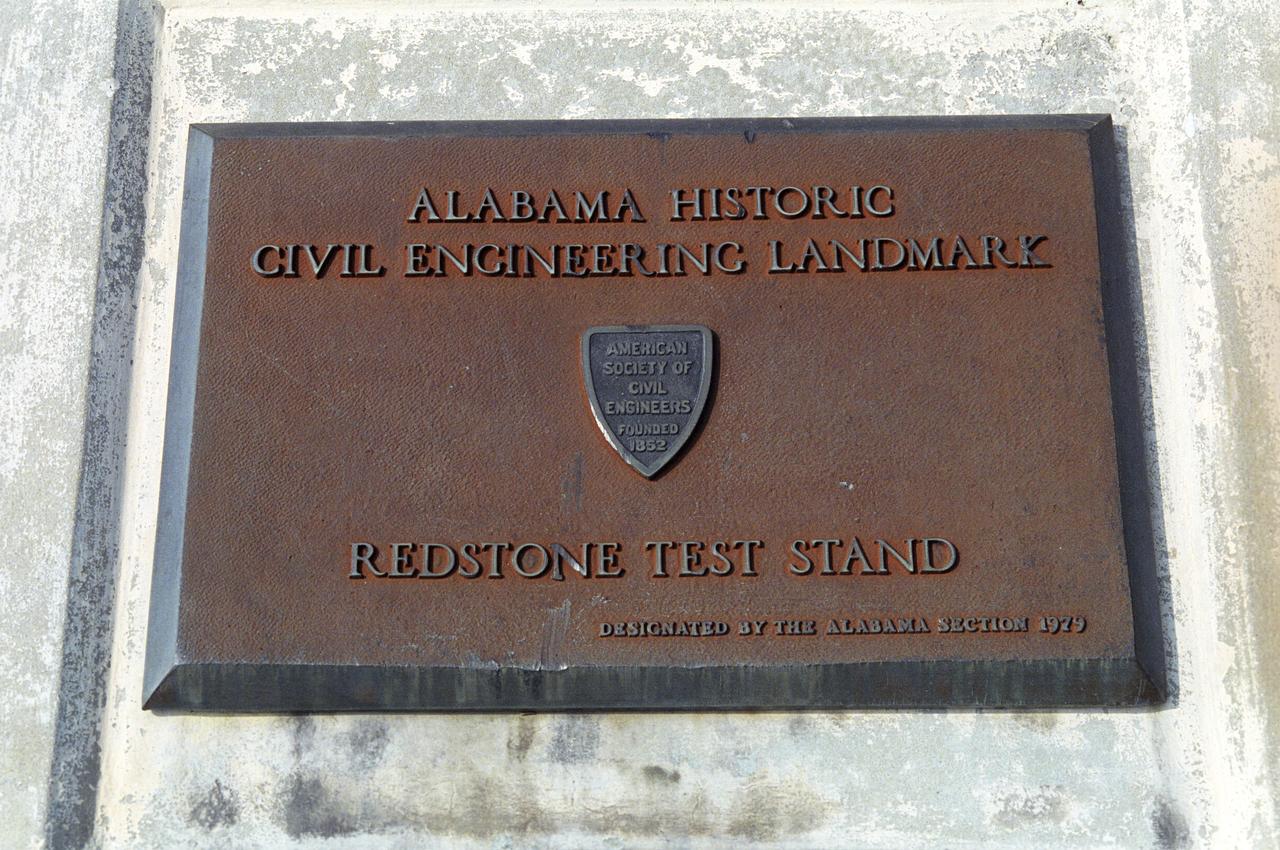
This plaque, displayed on the grounds of Marshall Space Flight Center in Huntsville, Alabama, commemorates the Redstone Test Stand as an Alabama Historic Civil Engineering Landmark. The site was desinated as such in 1979.
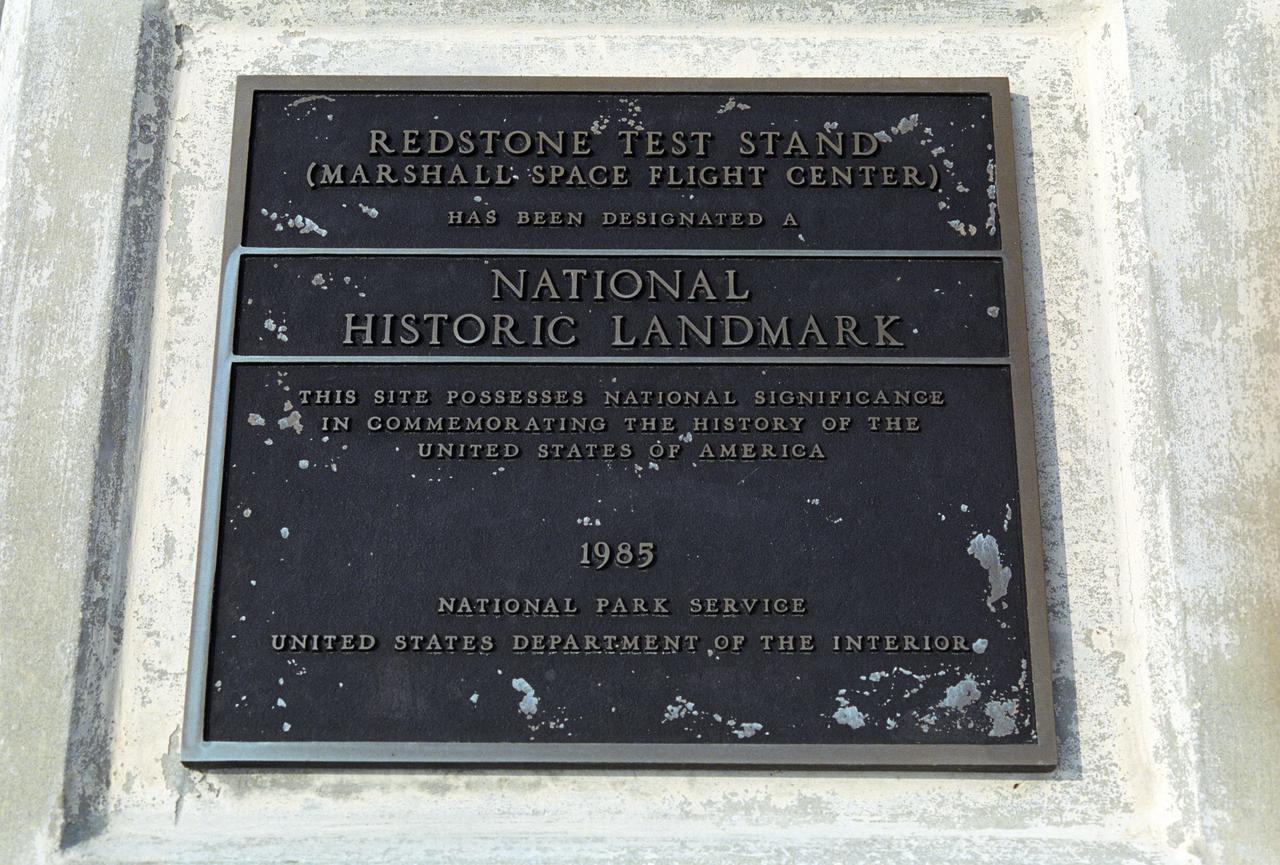
This plaque, displayed on the grounds of Marshall Space Flight Center in Huntsville, Alabama, commemorates the Redstone Test Stand as a National Historic Landmark. The site was designated as such in 1985 by the National Park Service of the United States Department of the Interior.
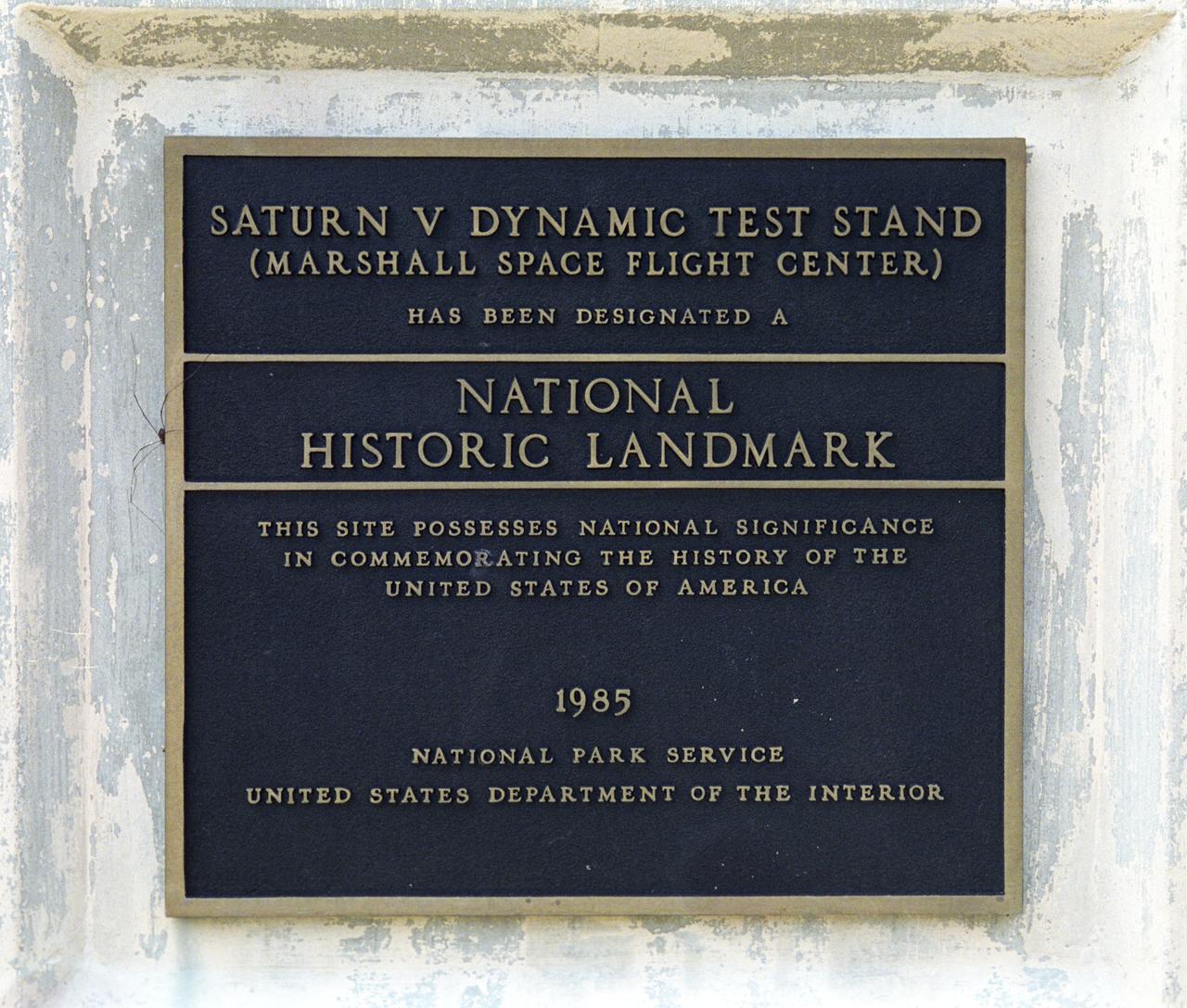
This plaque, displayed on the grounds of Marshall Space Flight Center in Huntsville, Alabama, commemorates the Saturn V Dynamic Test Stand as a National Historic Landmark. The site was designated as such in 1985 by the National Park Service of the United States Department of the Interior.
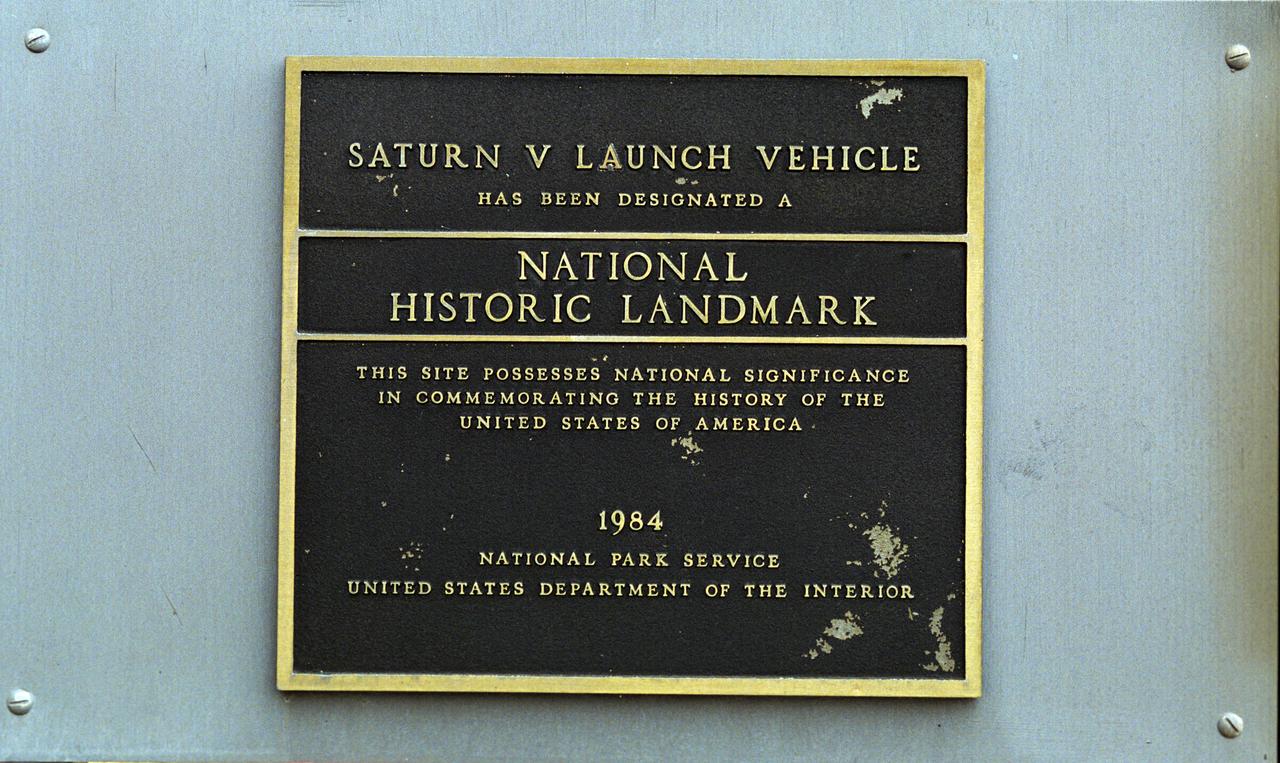
This plaque, displayed on the grounds of Marshall Space Flight Center in Huntsville, Alabama, commemorates the Saturn V Launch Vehicle as a National Historic Landmark. The site was designated as such in 1984 by the National Park Service of the United States Department of the Interior.
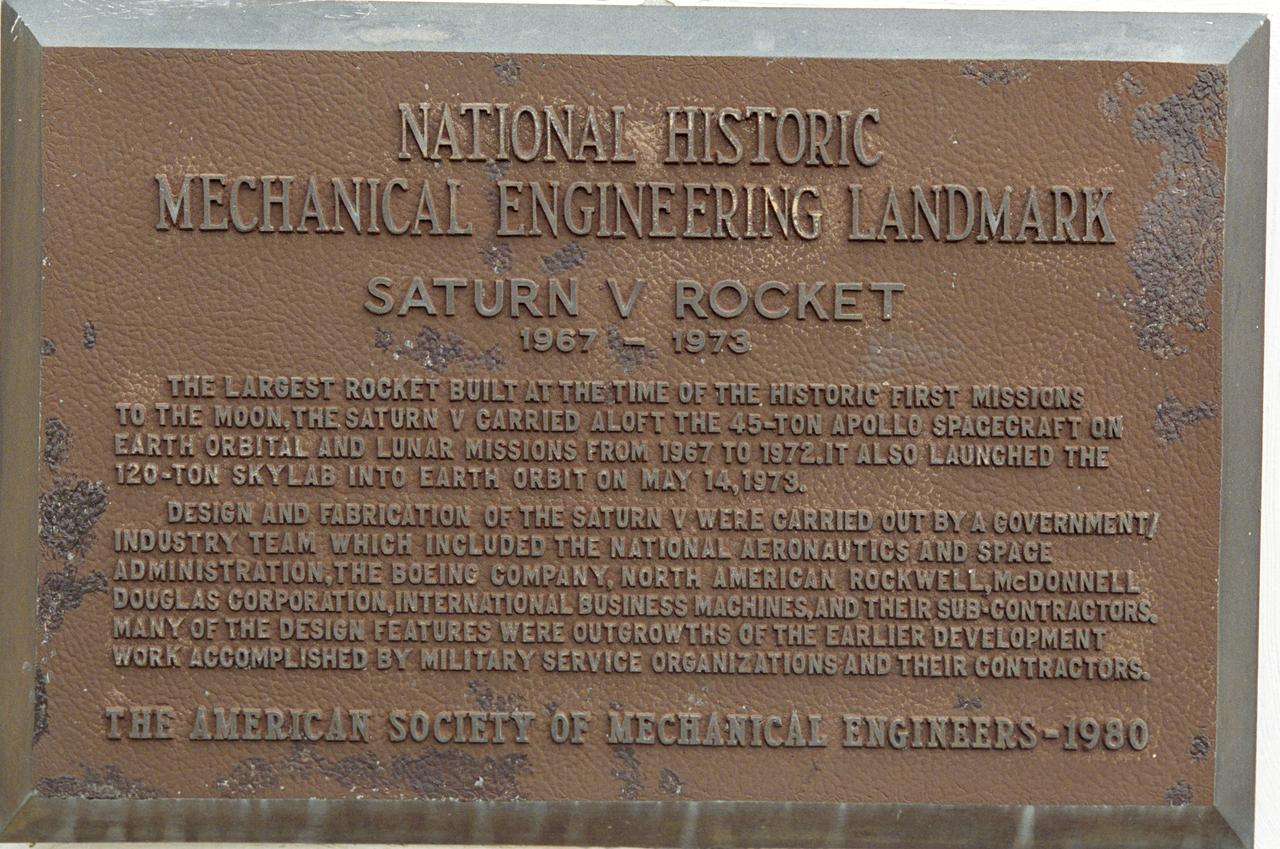
This plaque, located on the grounds of Marshall Space Flight Center in Huntsville, Alabama,commemorates the designation of the Saturn V Rocket as a National Historic Mechanical Engineering Landmark by the American Society of Mechanical Engineers in 1980.
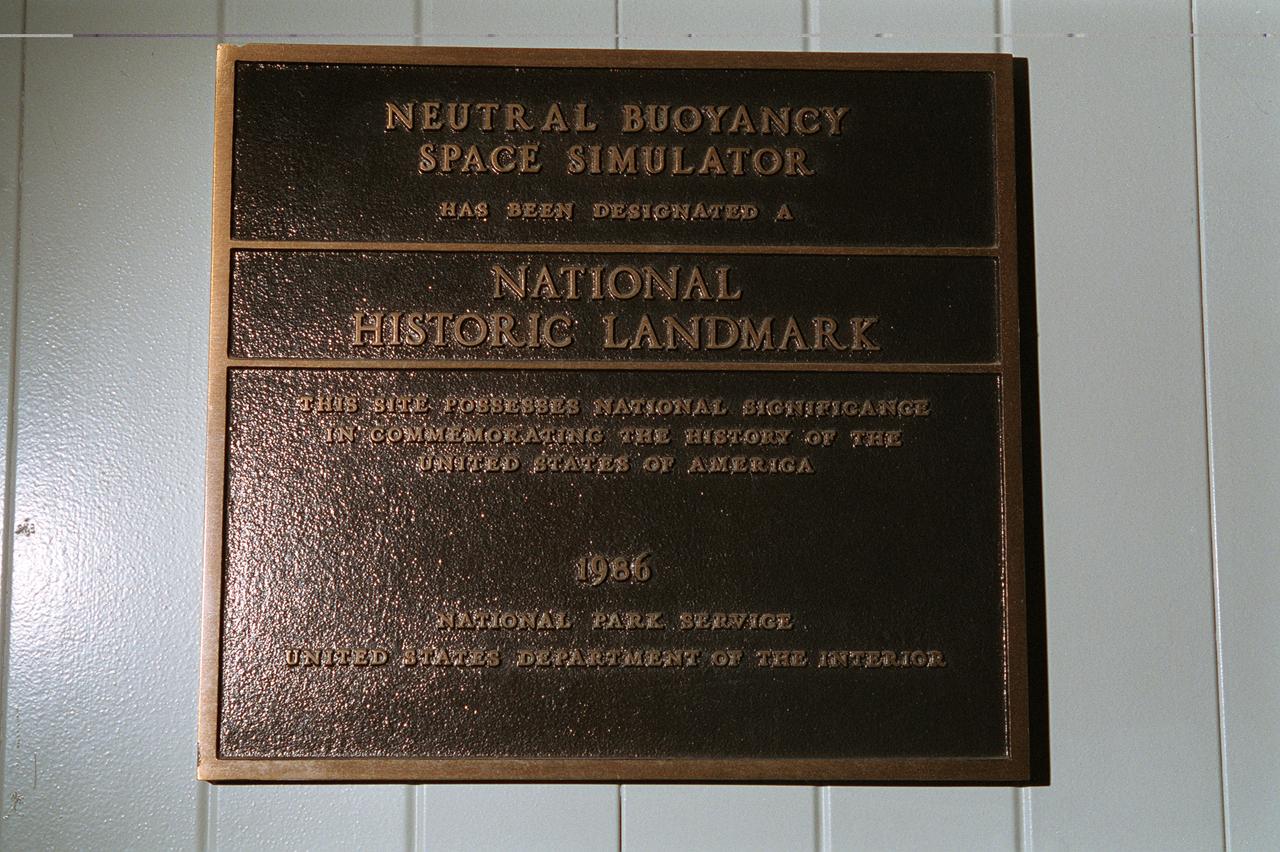
This plaque, displayed on the grounds of Marshall Space Flight Center in Huntsville, Alabama commemorates the Neutral Buoyancy Space Simulator as a National Historic Landmark. The site was designated as such in 1986 by the National Park Service of the United States Department of the Interior.
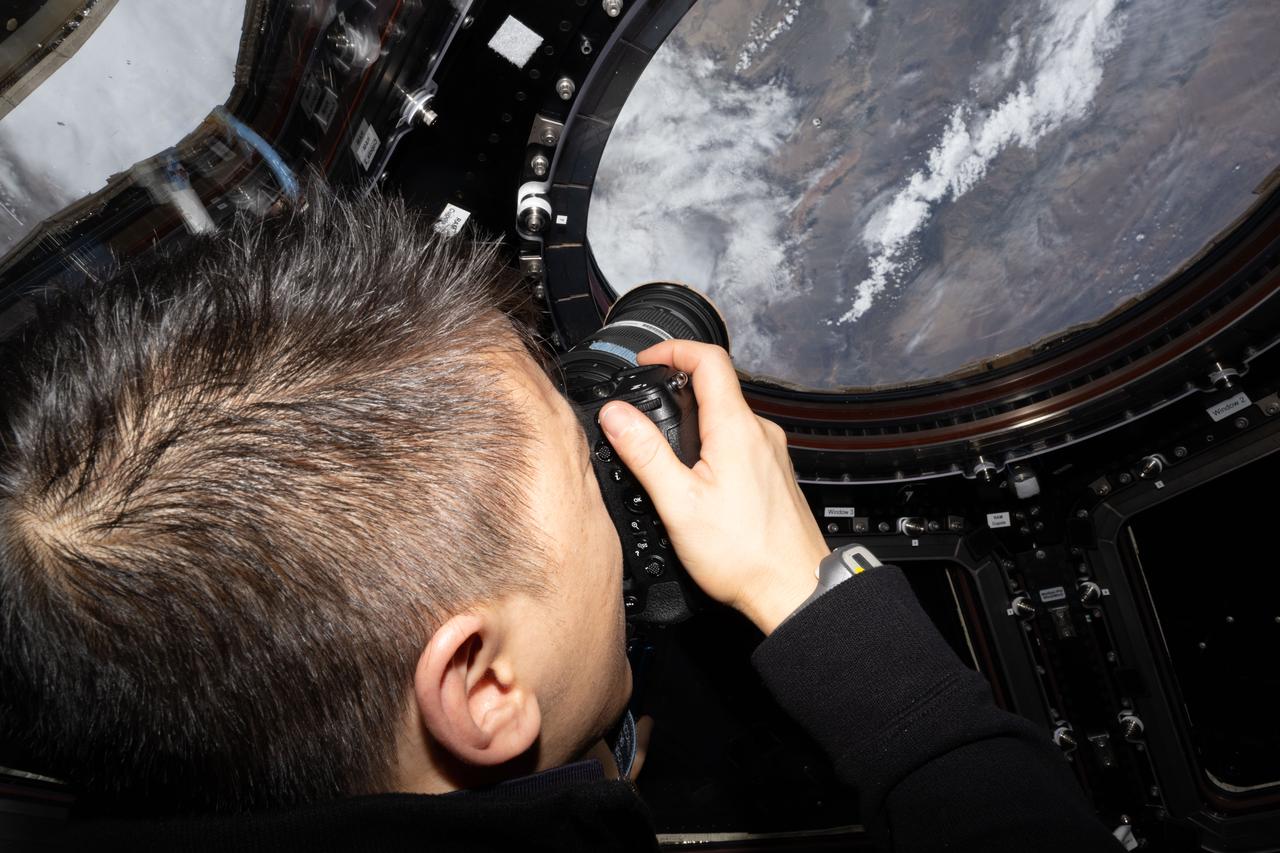
iss073e0508025 (Aug. 2, 2025) --- NASA astronaut and Expedition 73 Flight Engineer Jonny Kim points his camera out a window on the International Space Station's cupola and photographs Earth landmarks below as the orbital outpost soared 261 miles above central Mongolia.
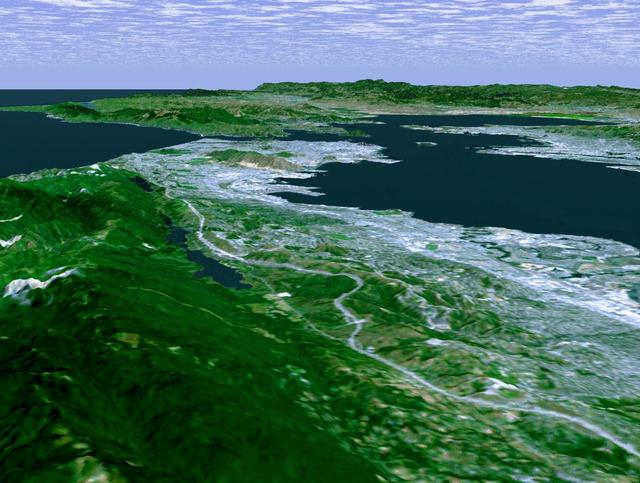
The defining landmarks of San Francisco, its bay and the San Andreas Fault are clearly seen in this computer-generated perspective viewed from the south.
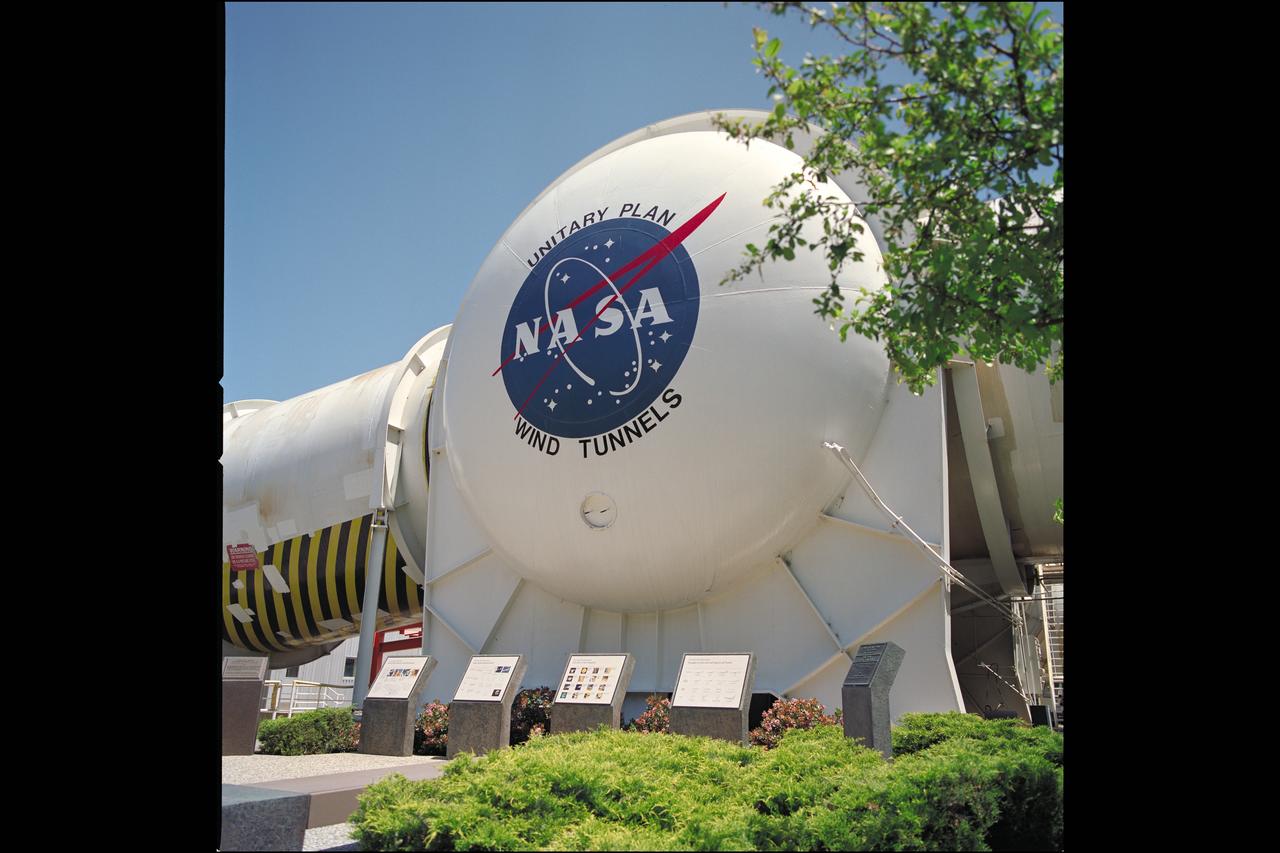
N-227 Unitary Plan Wind Tunnel with NASA 'Meatball' insignia over looking the National Historical Landmark sites' commemorative plaques
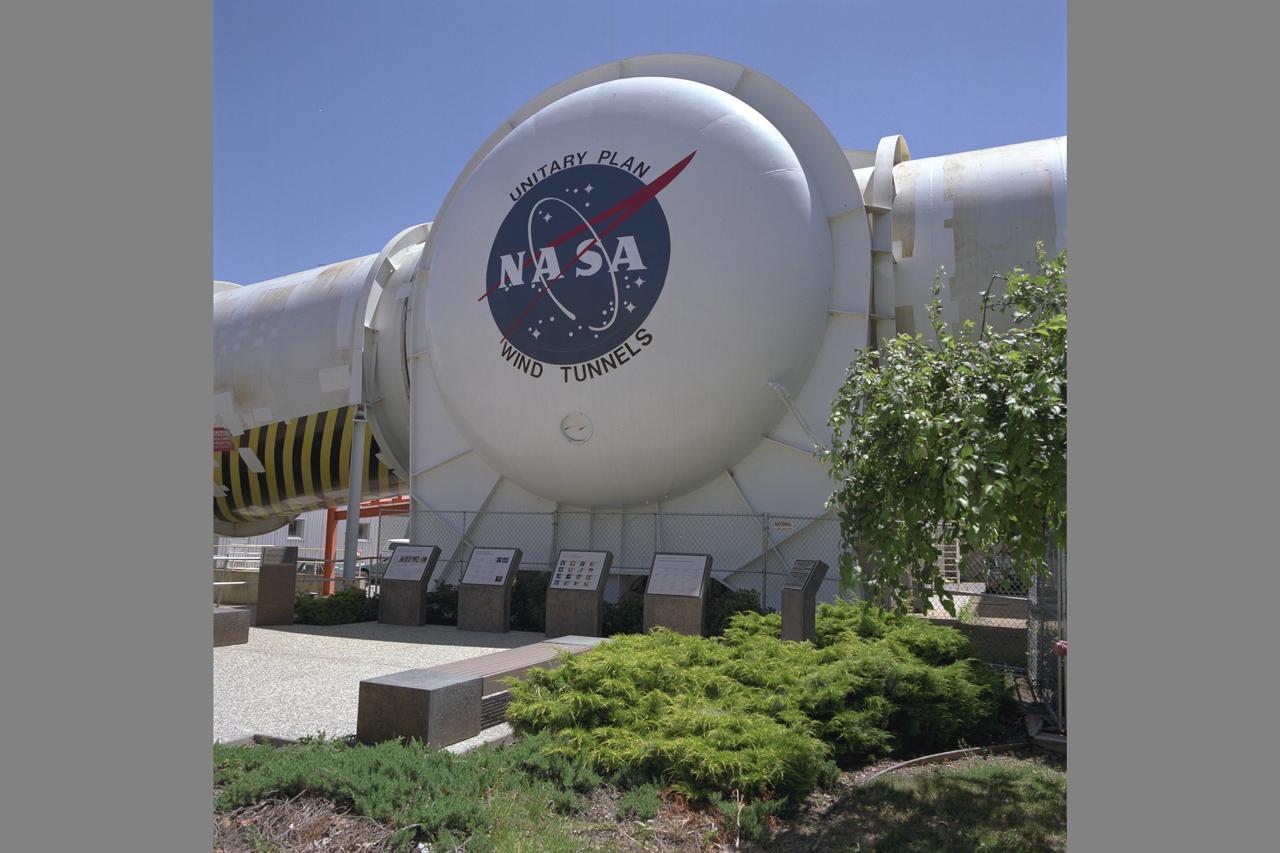
Unitary Plan Wind Tunnel N-227 (new) NASA Logo with Unitary International Historic Mechanical Engineering Landmark commemorative plaques in front. Date: June 16, 1998 Photographer: Tom Trower
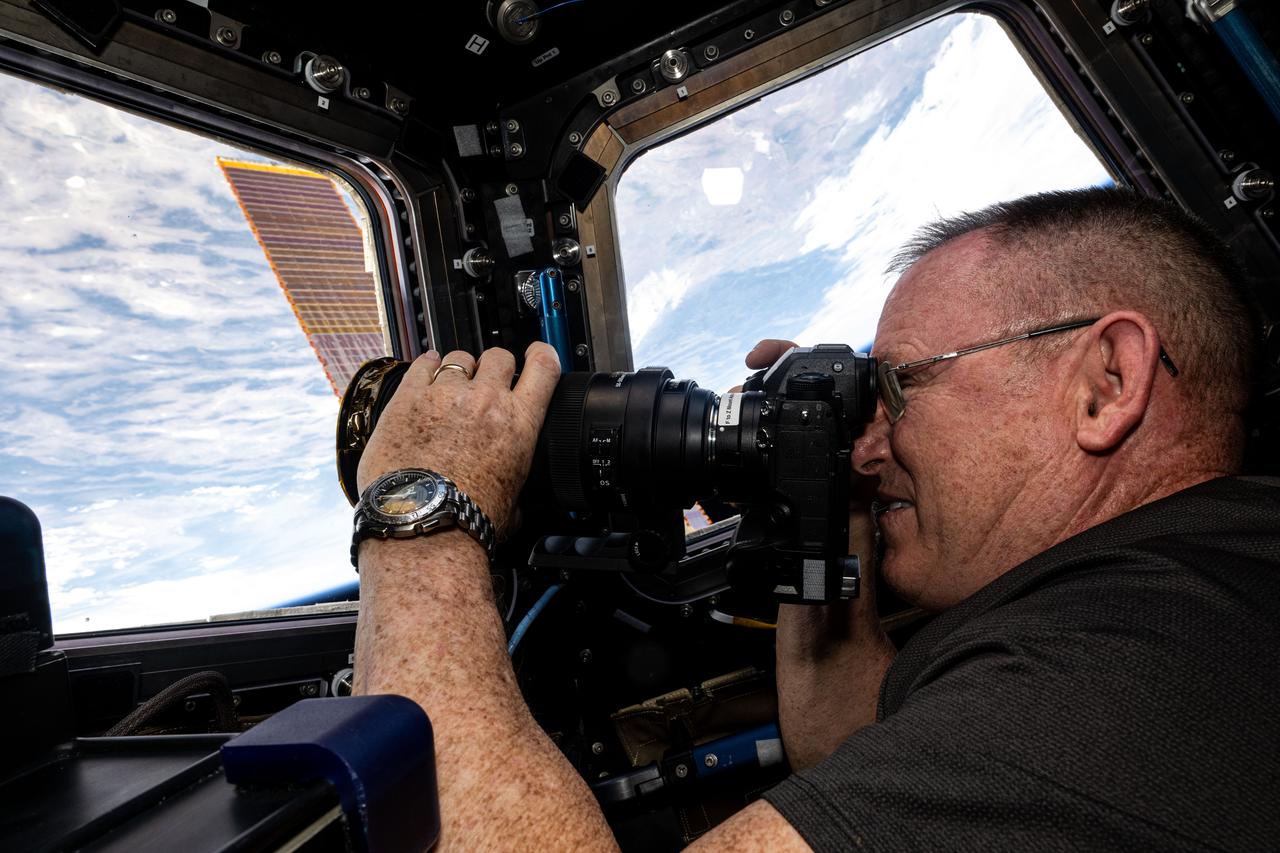
iss071e256908 (June 29, 2024) --- NASA astronaut and Boeing Crew Flight Test Commander Butch Wilmore points his camera outside the cupola and photographs Earth landmarks 263 miles below the International Space Station.
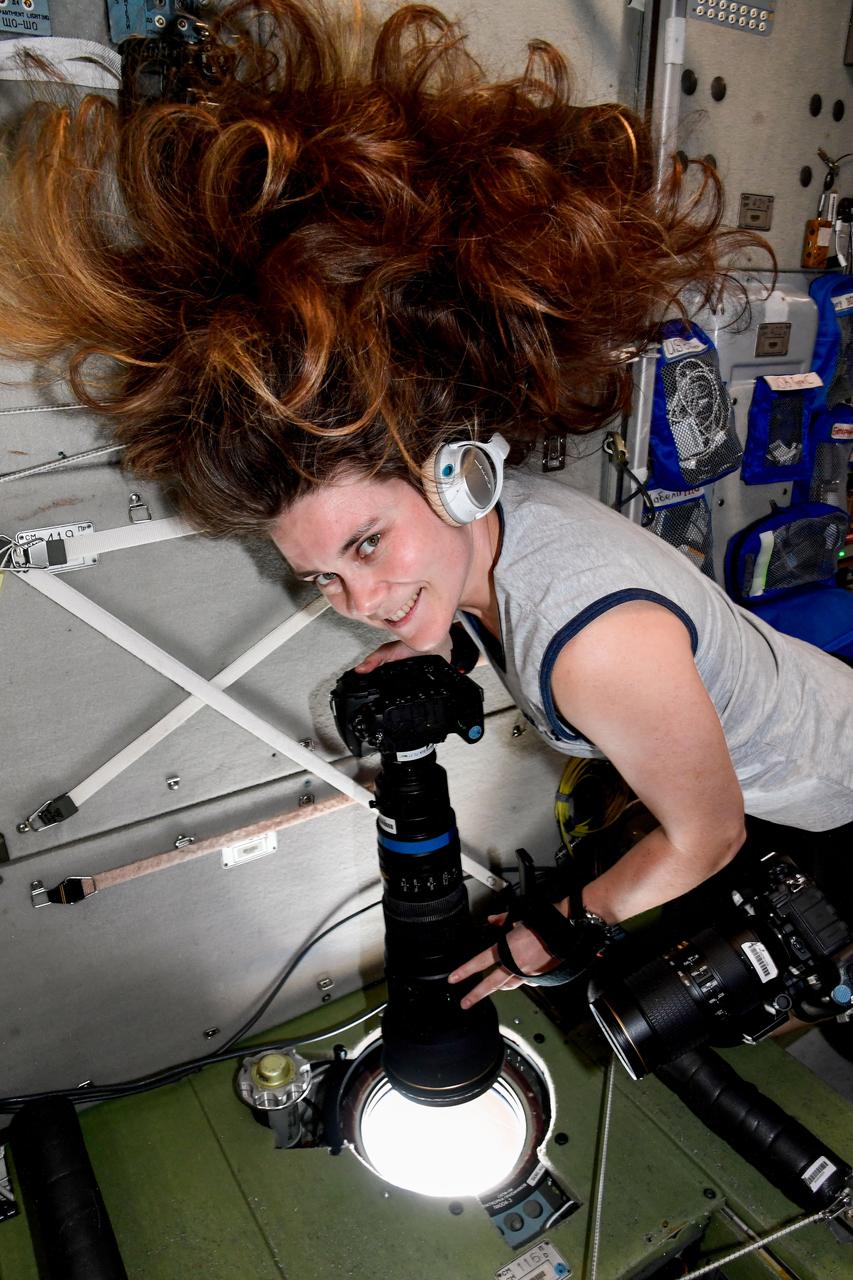
iss068e042077 (Jan. 22, 2023) --- Roscosmos cosmonaut and Expedition 68 Flight Engineer Anna Kikina points a camera outside a window inside the International Space Station's Zvezda service module and photographs landmarks for an Earth observation study.
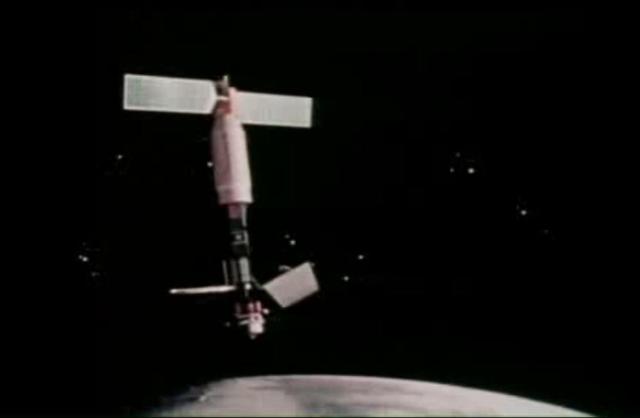
Seasat, built and managed by NASA Jet Propulsion Laboratory JPL, was launched thirty-five years ago, on June 27, 1978. It was the first satellite designed for remote sensing of the Earth oceans using many ground-breaking technologies.
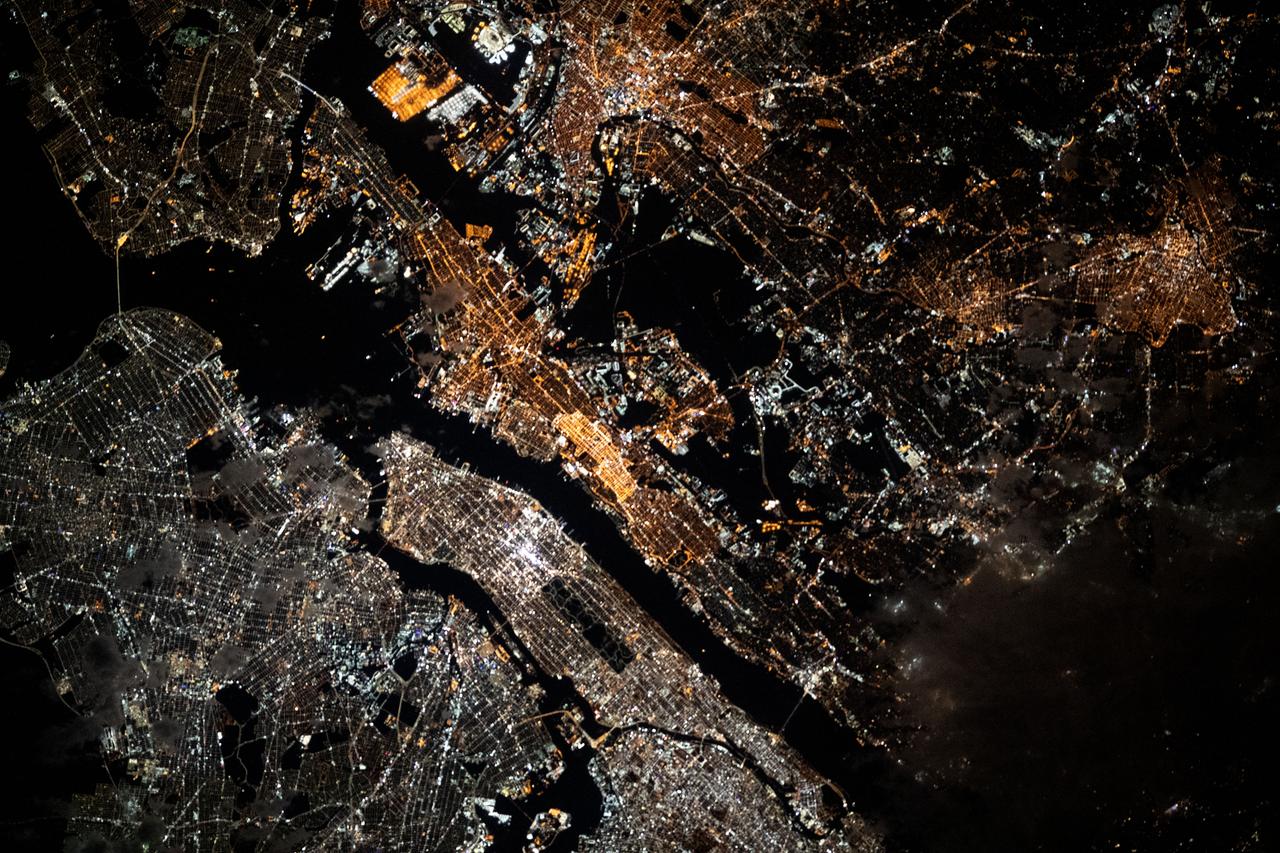
iss062e062036 (Feb. 28, 2020) --- The well-lit New York/New Jersey metropolitan area is viewed during the early morning hours as the International Space Station orbited 263 miles above the northeastern United States. Landmarks include the dark rectangular area (lower center) that is Central Park in Manhattan.
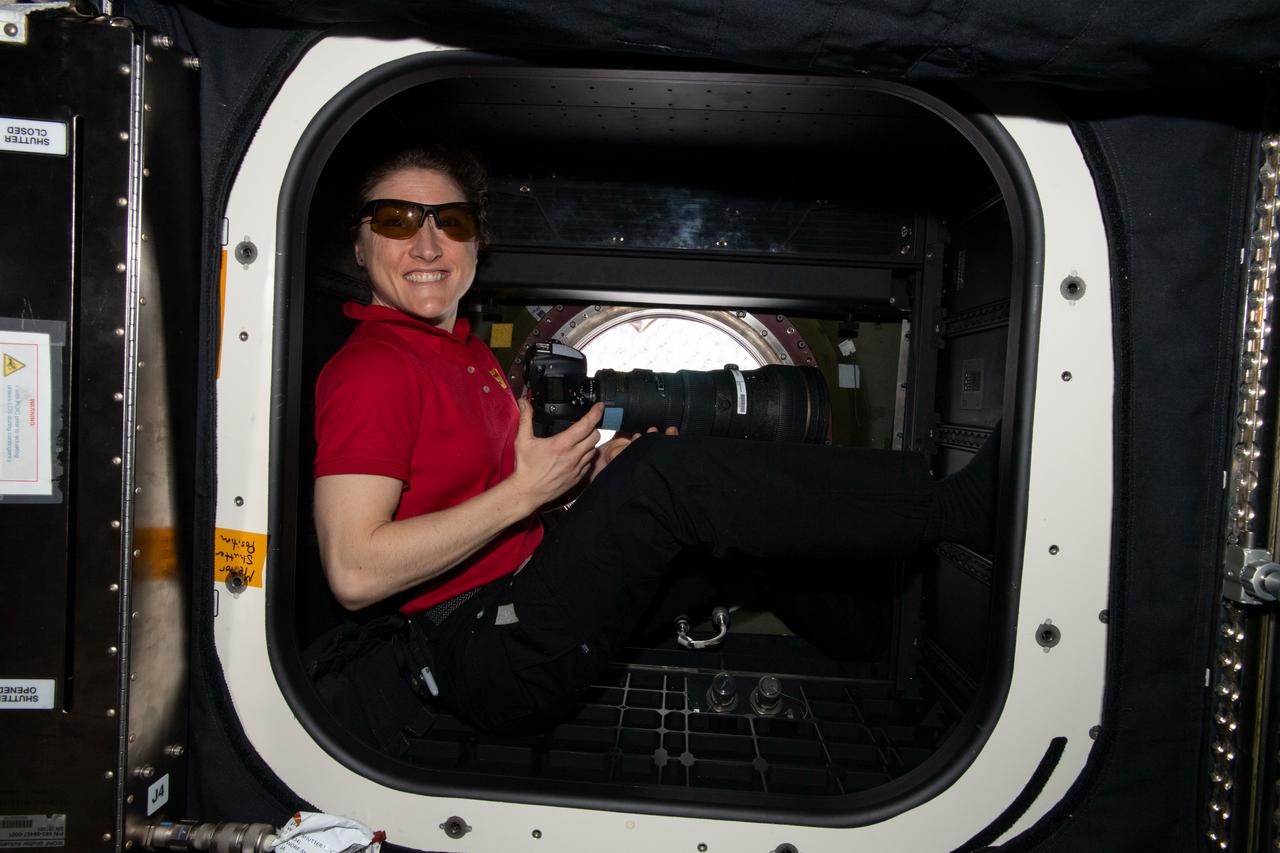
iss060e014992 (July 27, 2019) --- Expedition 60 Flight Engineer Christina Koch of NASA rests inside the U.S. Destiny laboratory module's Window Observation Research Facility (WORF). She is wearing specialized goggles to protect her eyes from the Sun's rays while photographing Earth landmarks from the International Space Station.
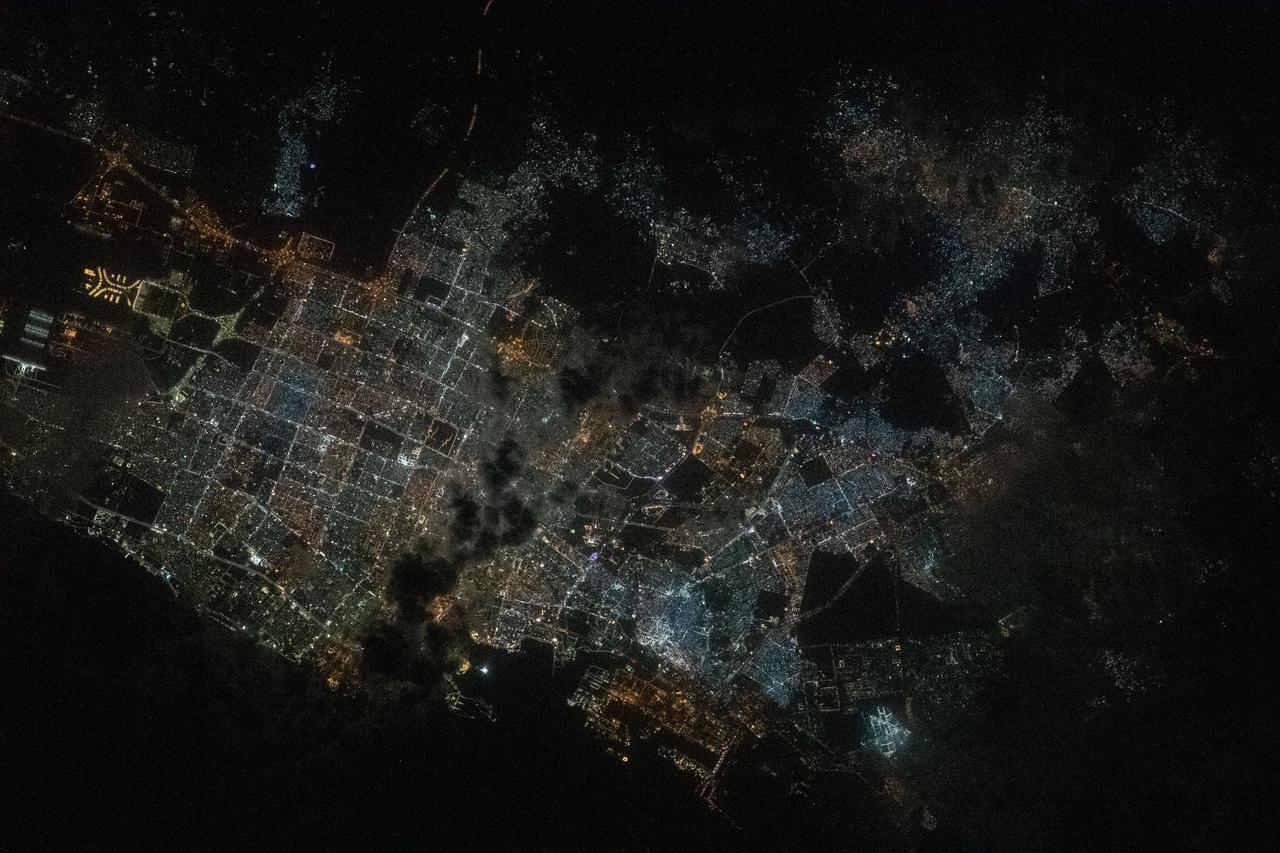
iss064e021924 (Jan. 9, 2021) ---Jeddah, Saudi Arabia, the desert nation's second-most populous city with 3.5 million residents, is pictured from the International Space Station as it orbited 261 miles above the Red Sea during a night time pass. The landmark towards the center left is the King Abdulaziz International Airport.
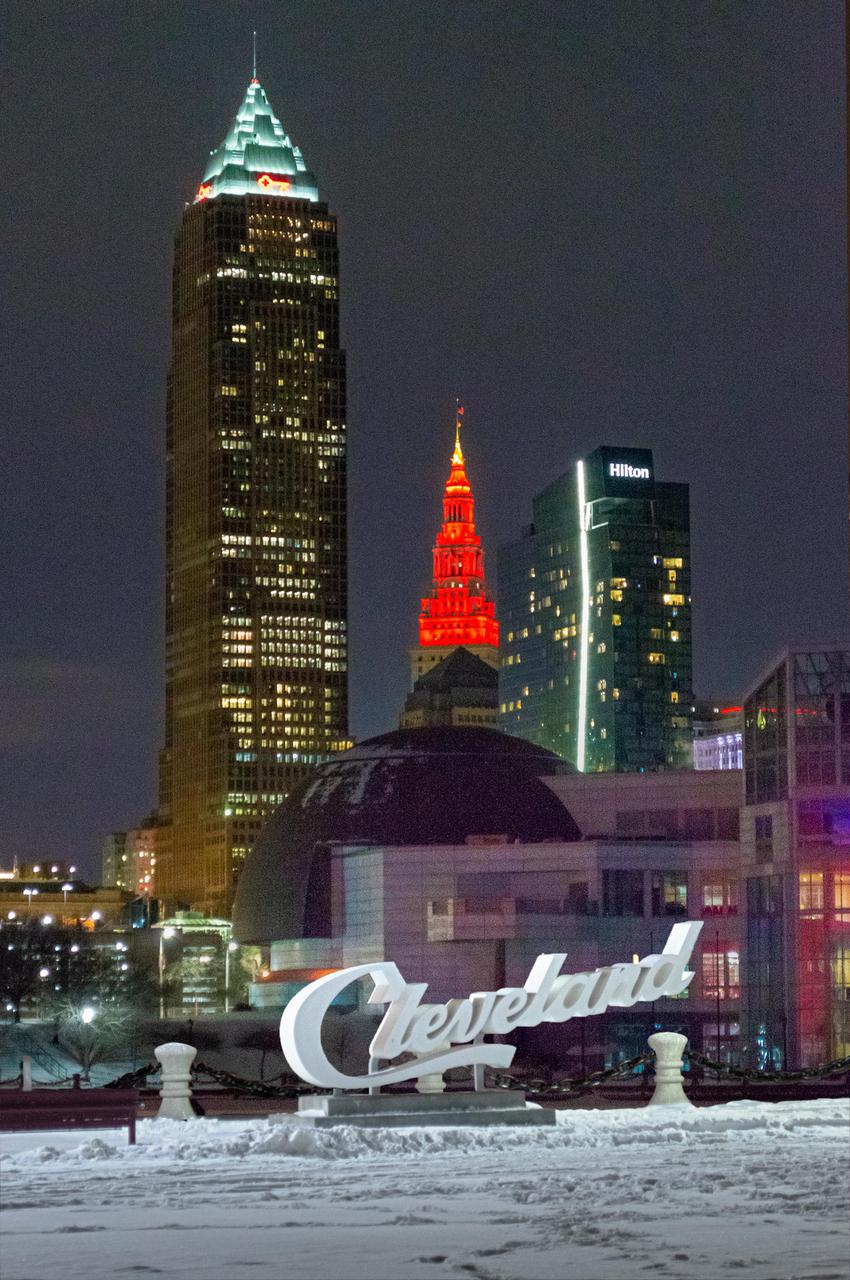
February 17, 2021, The Terminal Tower is illuminated in red to commemorate the Landing of NASA’s Perseverance Rover on the surface of Mars, February 18, 2021. Terminal Tower is a 52-story, (771 ft), landmark skyscraper located on Public Square in downtown Cleveland, Ohio. Cleveland is also the home of the NASA Glenn Research Center.
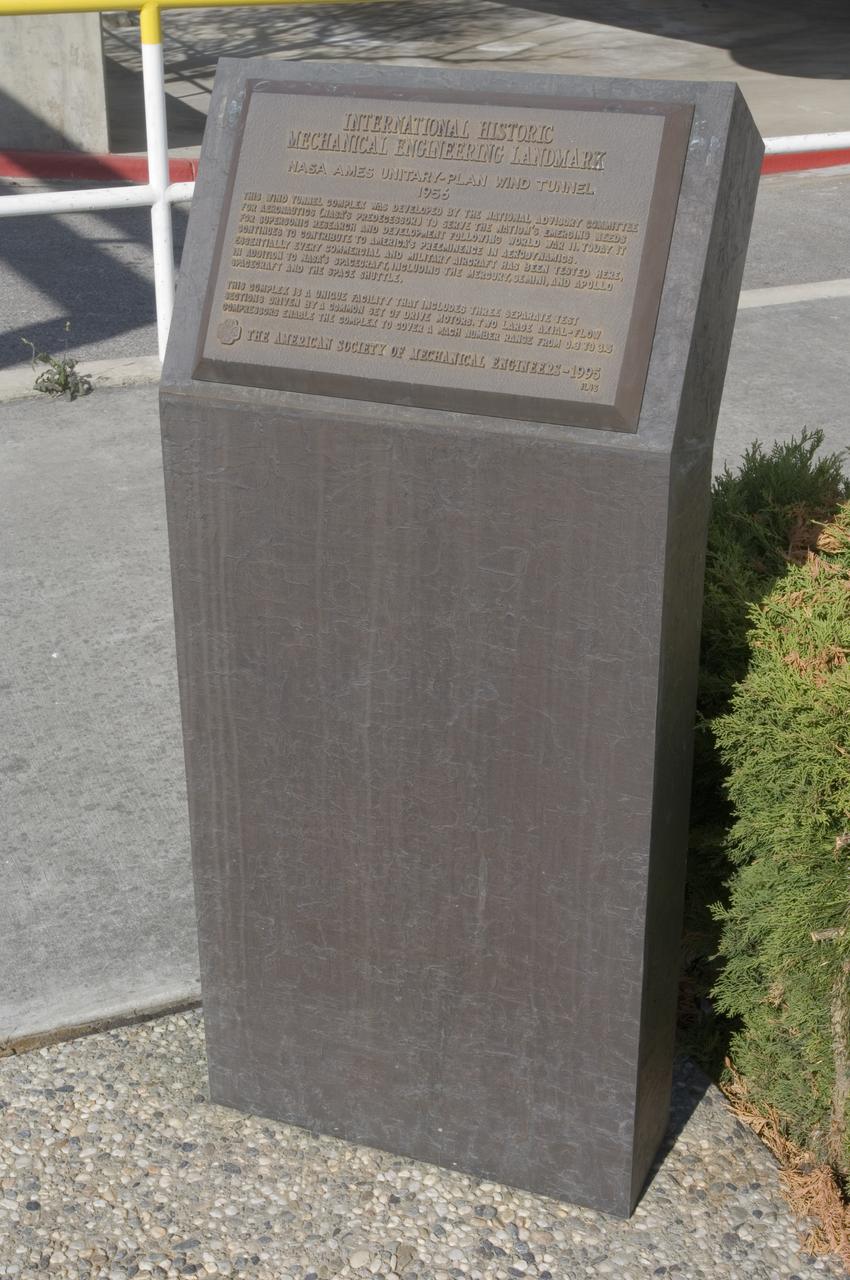
Ames and Moffett Field (MFA) historical sites and memorials Unitary Plan Wind Tunned plaza; display and historical site plaques with the NASA logo on the Wind Tunnel valve as a backdrop. shown is the Unitary International Historic Mechanical Engineering Landmark Dedication plaque (American Society of Mechanical Engineers) May 5, 1995
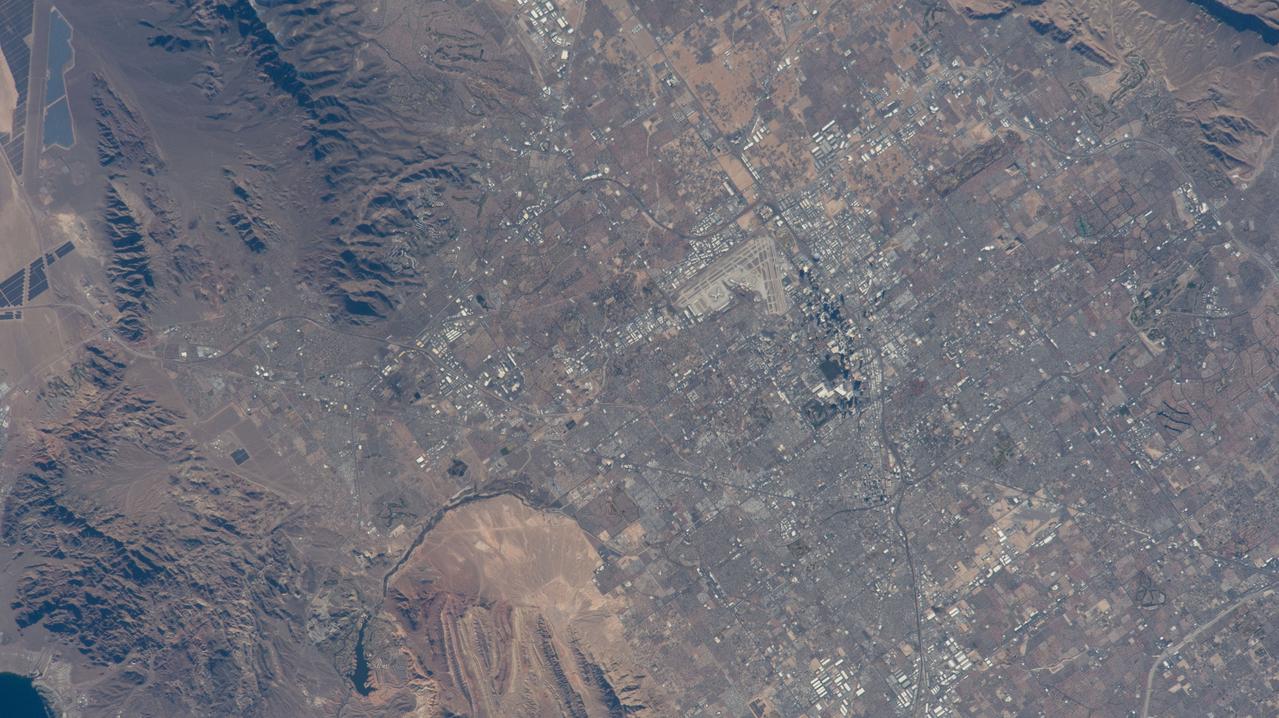
iss070e091729 (Feb. 11, 2024) --- The International Space Station was soaring 261 miles above Las Vegas at the time of this photograph minutes before kickoff at Super Bowl LVIII on Feb. 11, 2024. Landmarks pictured from an external station camera are, Allegiant Stadium, The Sphere (partially obscured by shadow), and Harry Reid International Airport.

iss071e462695 (Aug. 11, 2024) --- NASA astronaut and Expedition 71 Flight Engineer Mike Barratt points a camera out a window on the International Space Station's Destiny laboratory and photographs landmarks on Earth. The orbital outpost was soaring 258 miles above China near Hong Kong on the coast of the South China Sea at the time of this photograph.
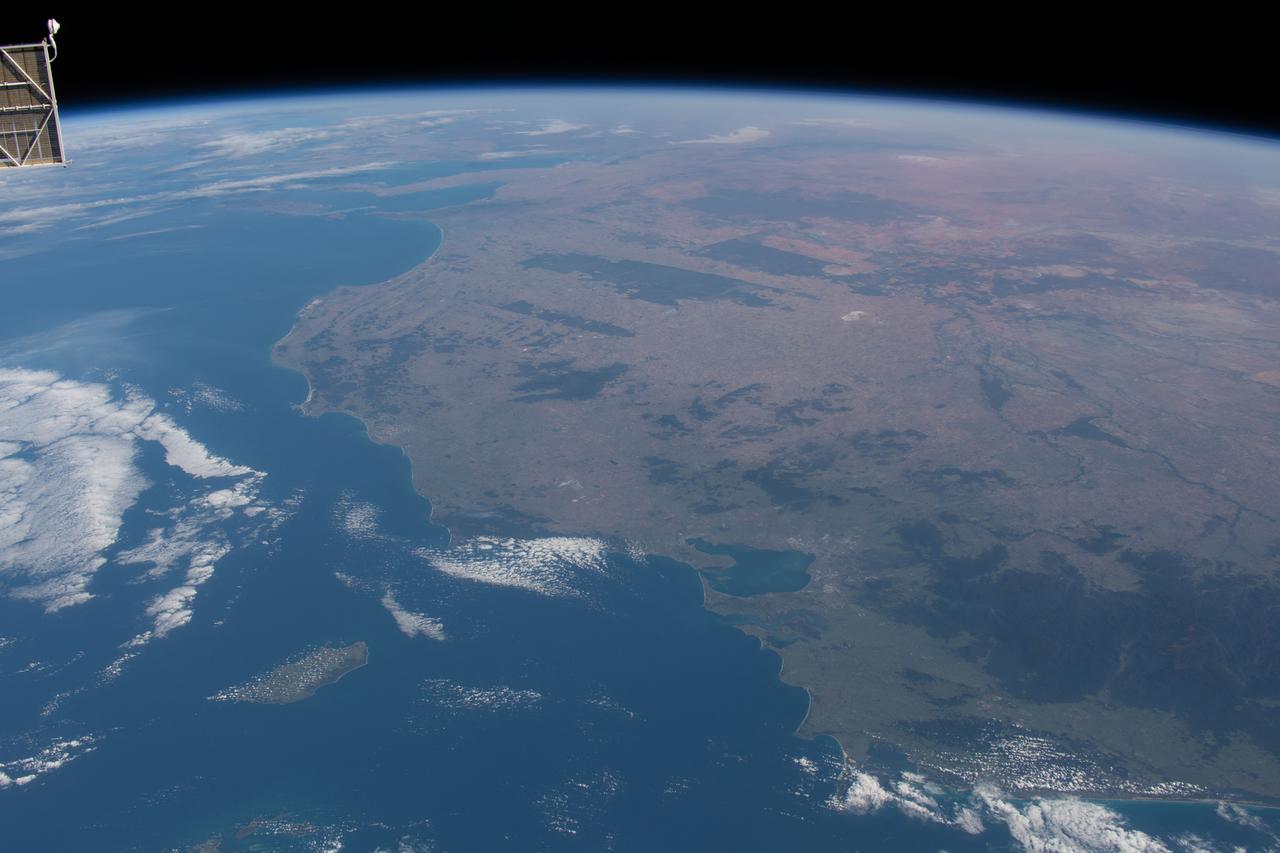
iss062e096440 (March 15, 2020) --- The International Space Station was orbiting 271 miles above Tasmania when this photograph was taken of the southeastern coast of Australia. Landmarks in this picture include the cities of Melbourne on Port Phillip Bay (lower center) and Adelaide on St. Vincent Gulf (at top).
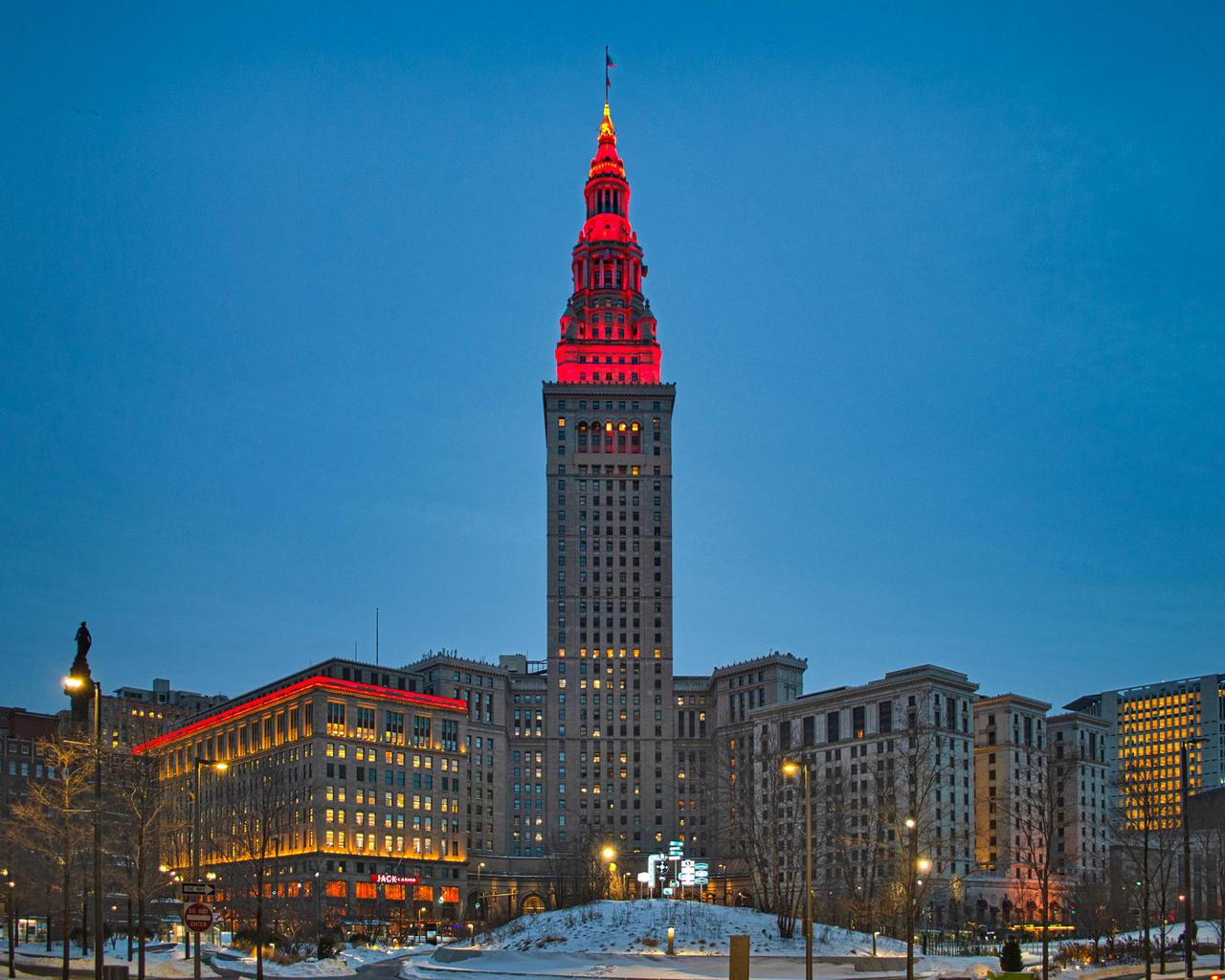
February 17, 2021, The Terminal Tower is illuminated in red to commemorate the Landing of NASA’s Perseverance Rover on the surface of Mars, February 18, 2021. Terminal Tower is a 52-story, (771 ft), landmark skyscraper located on Public Square in downtown Cleveland, Ohio. Cleveland is also the home of the NASA Glenn Research Center.
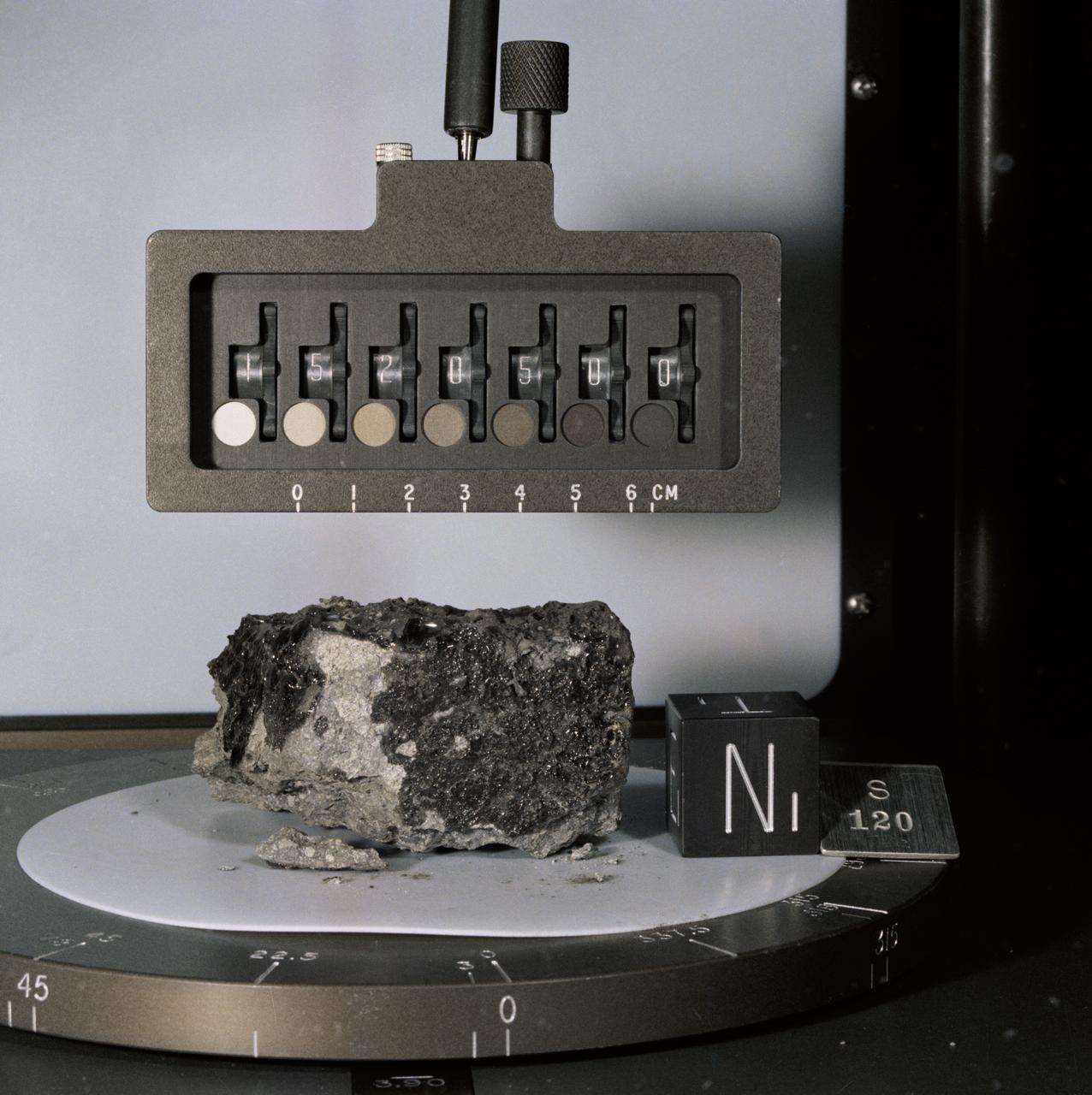
Generic: 15205. Mission: Apollo 15. Station: 2. Landmark: ST. GEORGE CRATER. BagNumber: SCB 1 161. OrignalWeight: 337.3. SuperClass: Breccia. SubClass: Regolith. Category: ROCK . Classifications: Glass-coated. Description: Glass-coated. Classificaiton 1: BRECCIA.
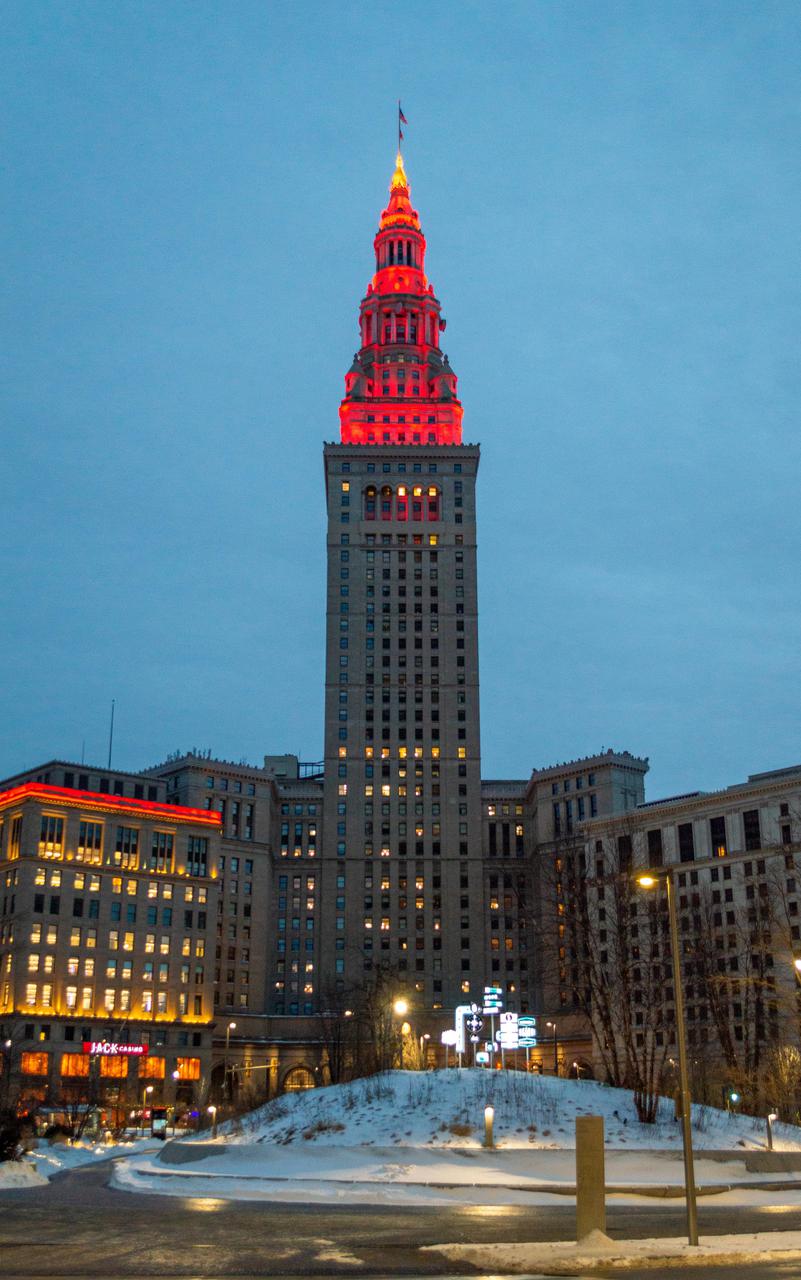
February 17, 2021, The Terminal Tower is illuminated in red to commemorate the Landing of NASA’s Perseverance Rover on the surface of Mars, February 18, 2021. Terminal Tower is a 52-story, (771 ft), landmark skyscraper located on Public Square in downtown Cleveland, Ohio. Cleveland is also the home of the NASA Glenn Research Center.

iss060e033385 (Aug. 11, 2019) --- Expedition 60 Flight Engineer Christina Koch of NASA looks through the station's "window to the world," the seven-windowed cupola. Koch was photographing landmarks as the orbiting lab flew 259 miles above the Pacific Ocean off the coast of South America.
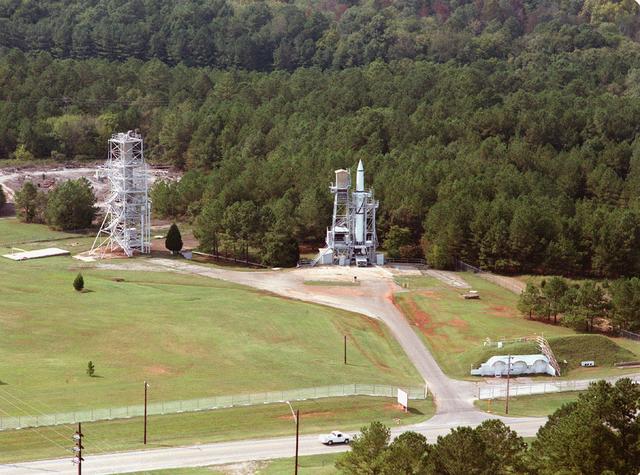
The Redstone Test Stand, shown here, was used throughout the 1950s to test the Redstone missionile, including the modified Redstone that launched America's first astronaut, Alan Shepard. The U. S. Department of the Interior's Park Services designated the Test Stand as a National Historic Landmark January 22, 1986.
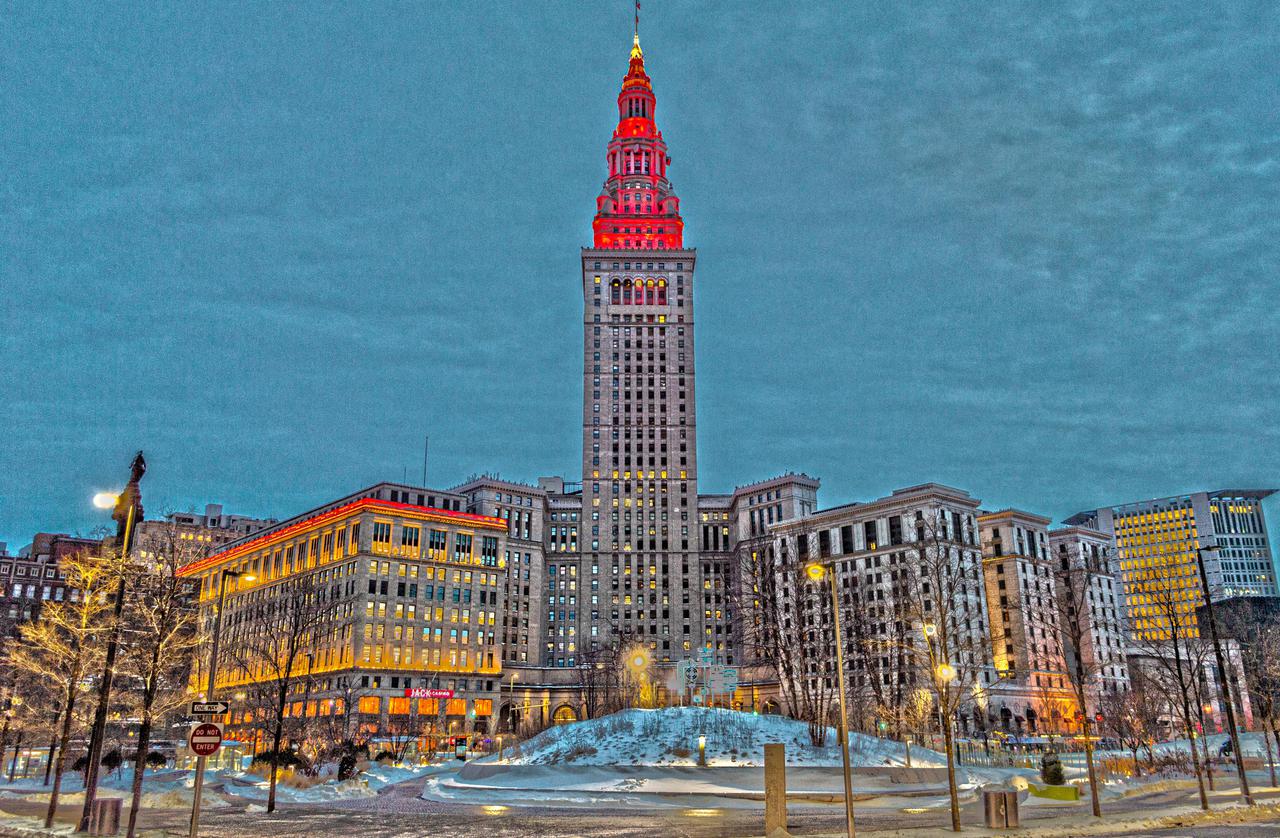
February 17, 2021, The Terminal Tower is illuminated in red to commemorate the Landing of NASA’s Perseverance Rover on the surface of Mars, February 18, 2021. Terminal Tower is a 52-story, (771 ft), landmark skyscraper located on Public Square in downtown Cleveland, Ohio. Cleveland is also the home of the NASA Glenn Research Center.
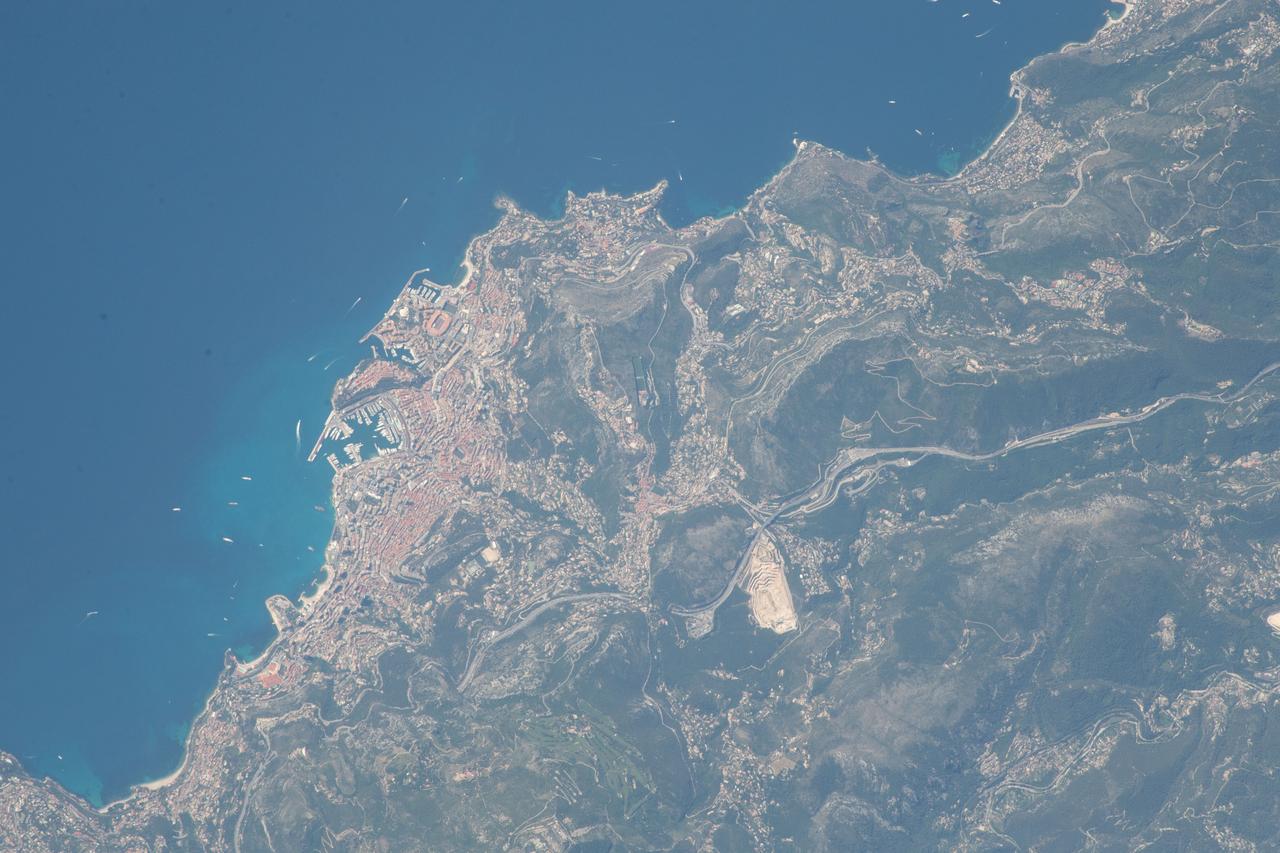
iss056e032555 (June 19, 2018) --- The tiny city-state of Monaco was pictured as the International Space Station orbited over the Mediterranean coasts of Spain, France and Italy. Landmarks in this frame include the district of Monte Carlo, the Louis II Stadium and the Port de Fontvieille.
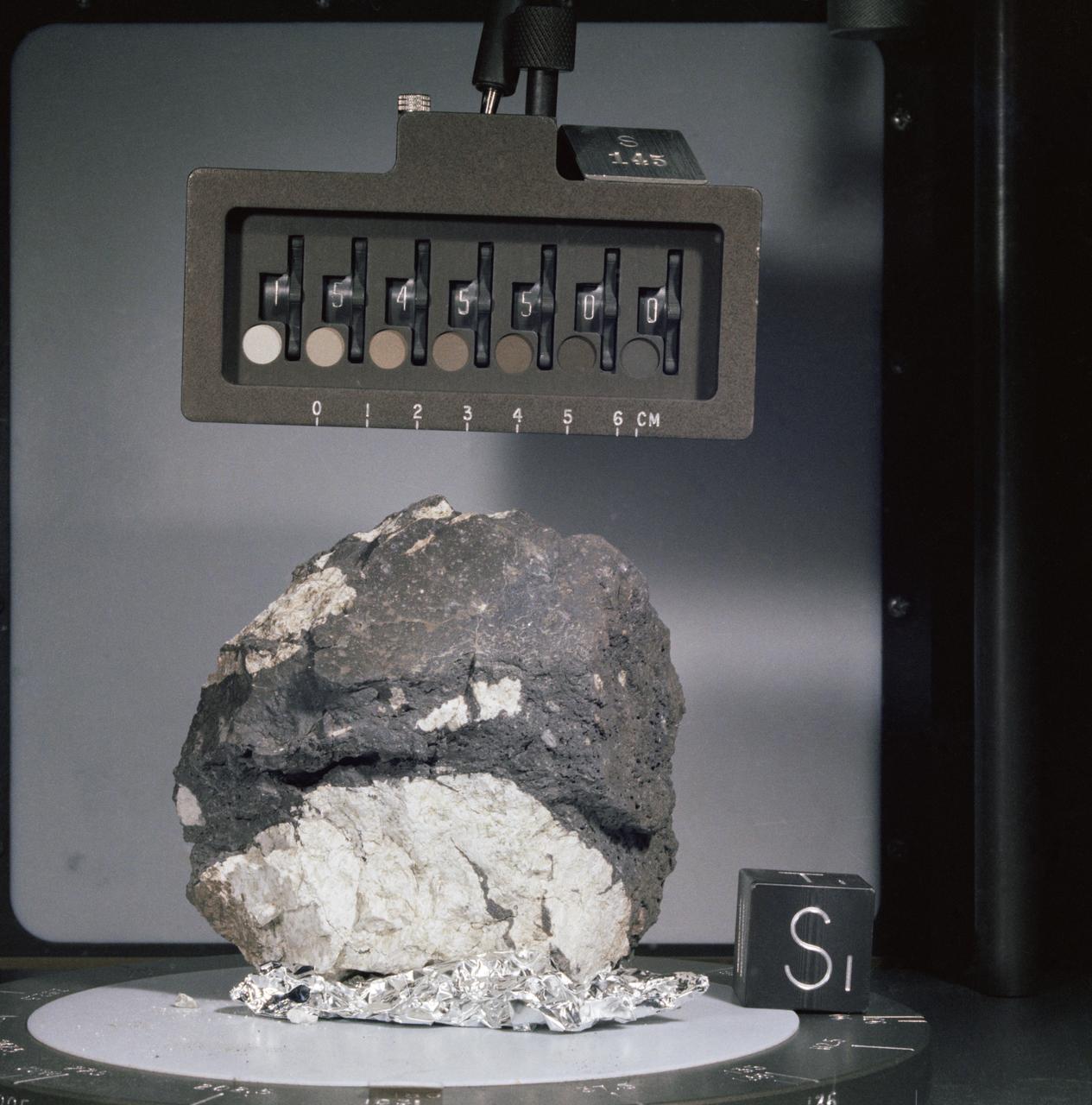
Generic: 15556. Mission: Apollo 15. Station: 9A. Landmark: HADLEY RILLE. BagNumber: SCB 2. OriginalWeight: 1542. SuperClass: Basalt. SubClass: Olivine. Category: ROCK. Classifications: F.G. ol-norm . Description: F.G. ol-norm. Classification 1: BASALT.
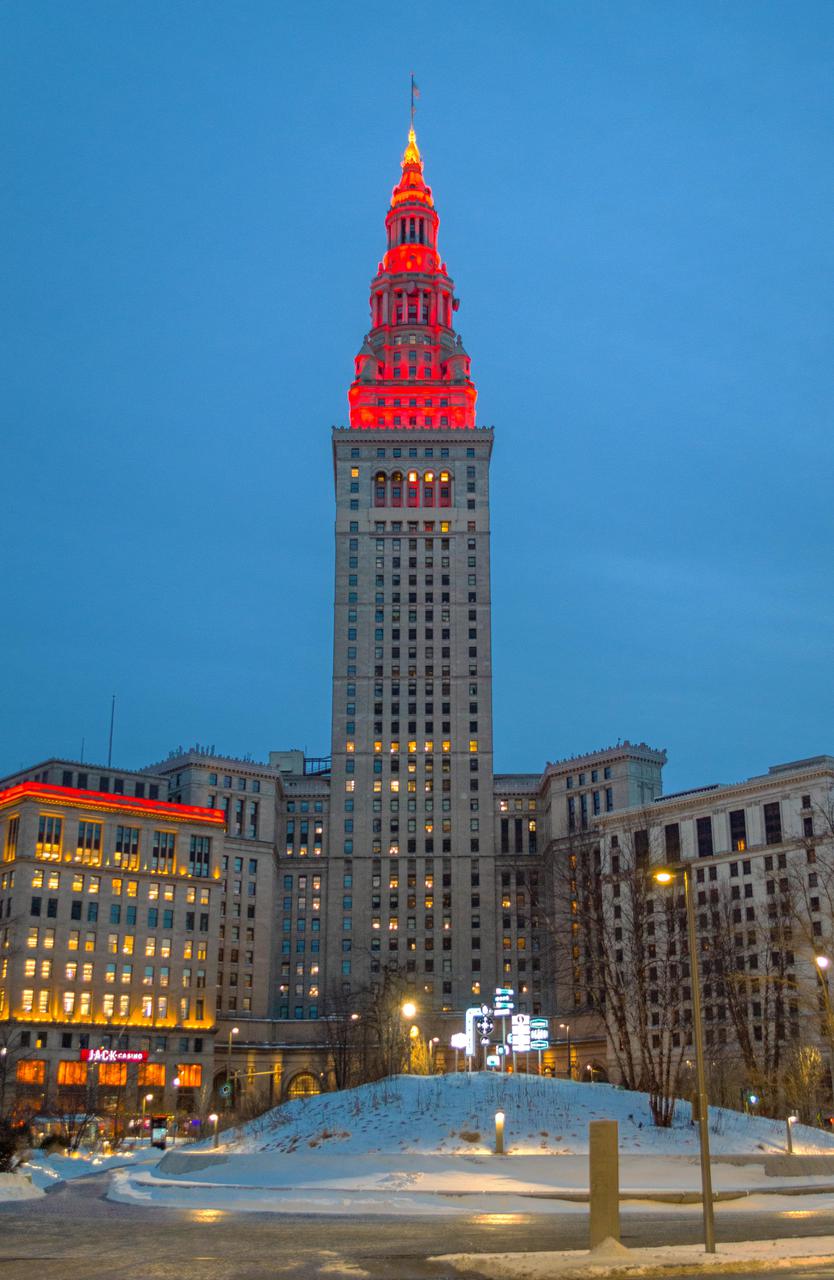
February 17, 2021, The Terminal Tower is illuminated in red to commemorate the Landing of NASA’s Perseverance Rover on the surface of Mars, February 18, 2021. Terminal Tower is a 52-story, (771 ft), landmark skyscraper located on Public Square in downtown Cleveland, Ohio. Cleveland is also the home of the NASA Glenn Research Center.
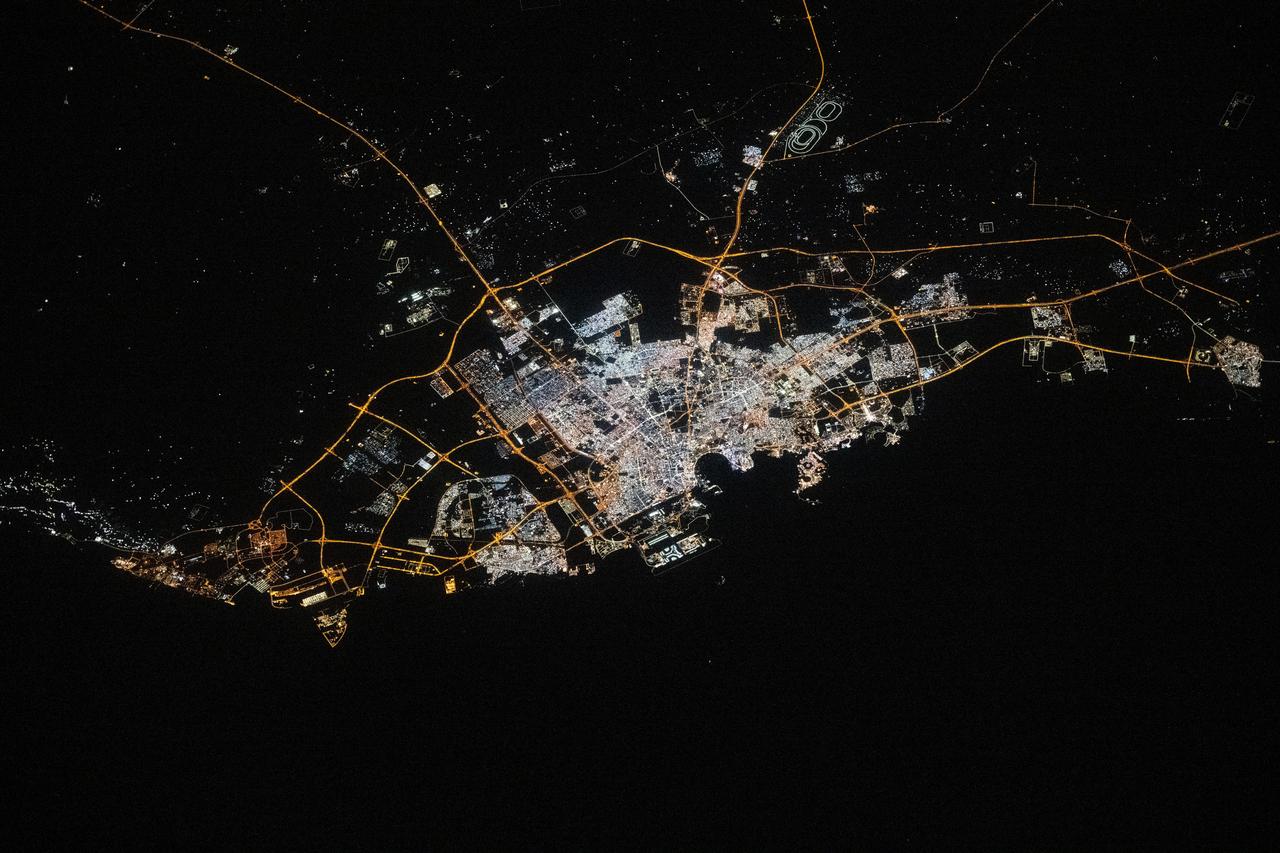
iss072e519924 (Jan. 23, 2025) --- The city lights of Doha, Qatar, the Middle Eastern nation's capital with a population of about 1.2 million, are pictured at approximately 9:51 p.m. local time from the International Space Station as it orbited 258 miles above. Some prominent landmarks include the Shahaniyah Camel Race Track (top right), Hamad International Airport, and the artificial Pearl Island (both at center and on the Persian Gulf Coast).
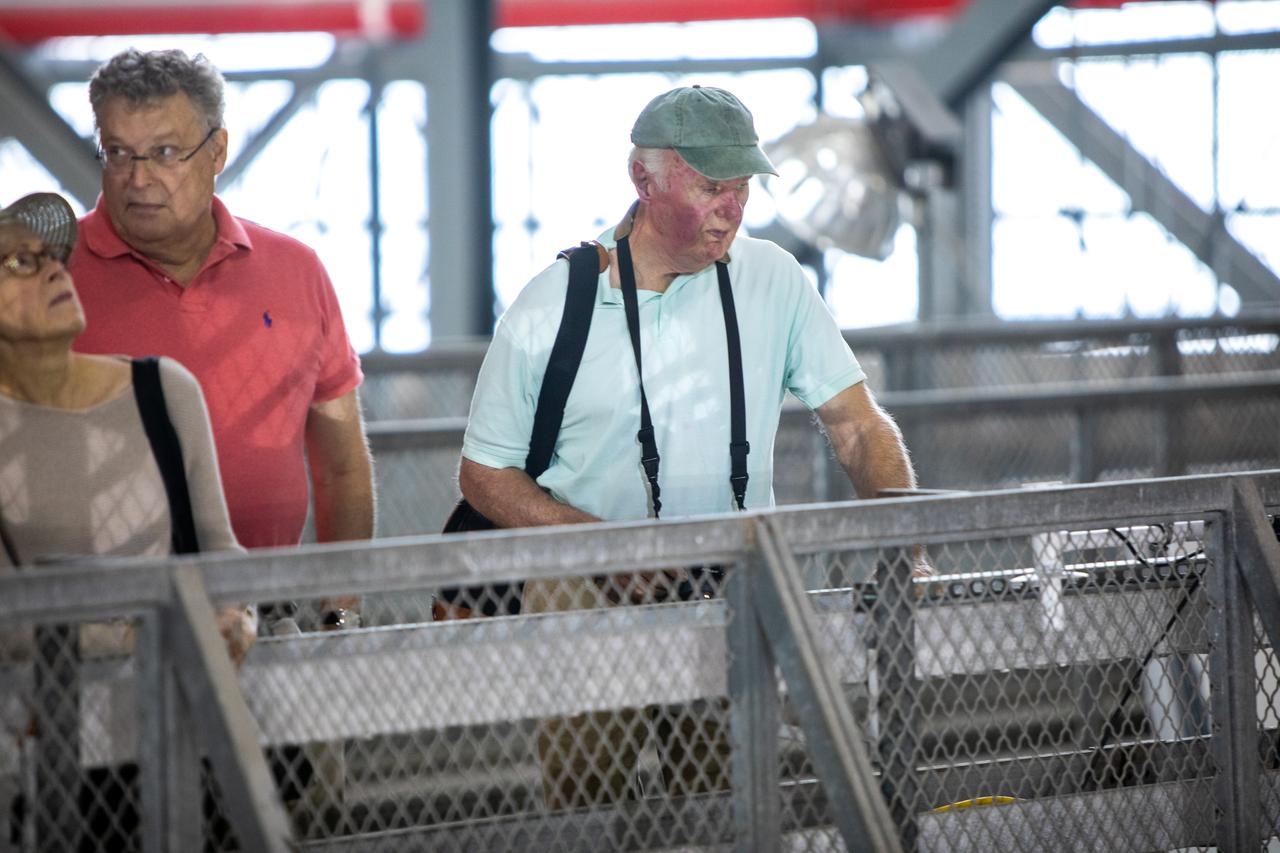
Dick Bergmann, at right, original lead designer for the Vehicle Assembly Building, tours the iconic facility on Nov. 22, 2019 at NASA’s Kennedy Space Center in Florida. Vehicle Assembly Building with the National Historic Civil Engineering Landmark award. The Florida Section American Society of Civil Engineers bestowed its National Historic Civil Engineering Landmark award during a ceremony on Jan. 10, 2020. The VAB is the first building at Kennedy Space Center to earn this distinction. At the time of its completion, the 129-million-cubic-foot structure was the largest building in the world. Originally designed and built to accommodate the Saturn V/Apollo used in Project Apollo, the VAB was later modified for its role in the Space Shuttle Program.
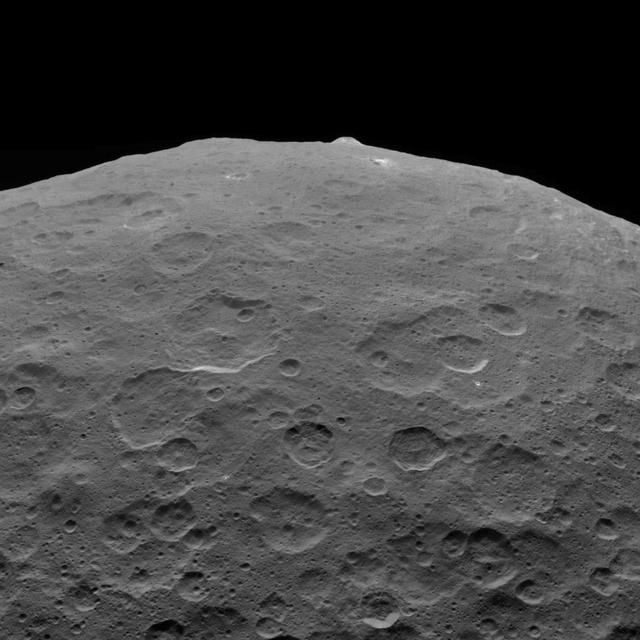
This photo of Ceres and one of its key landmarks, Ahuna Mons, was one of the last views Dawn transmitted before it depleted its remaining hydrazine and completed its mission. This view, which faces south, was captured on Sept. 1, 2018 at an altitude of 2,220 miles (3,570 kilometers) as the spacecraft was ascending in its elliptical orbit. At its lowest point, the orbit dipped down to only about 22 miles (35 kilometers), which allowed Dawn to acquire very high-resolution images in this final phase of its mission. Some of the close-up images of Ceres are shown here. Ahuna Mons is about 12 miles (20 kilometers) across and 2.5 miles (4 kilometers) high and displays sodium carbonate along its flanks. This is the most recent of a potential two dozen cryovolcanoes whose remnants are found across Ceres' surface. https://photojournal.jpl.nasa.gov/catalog/PIA22769
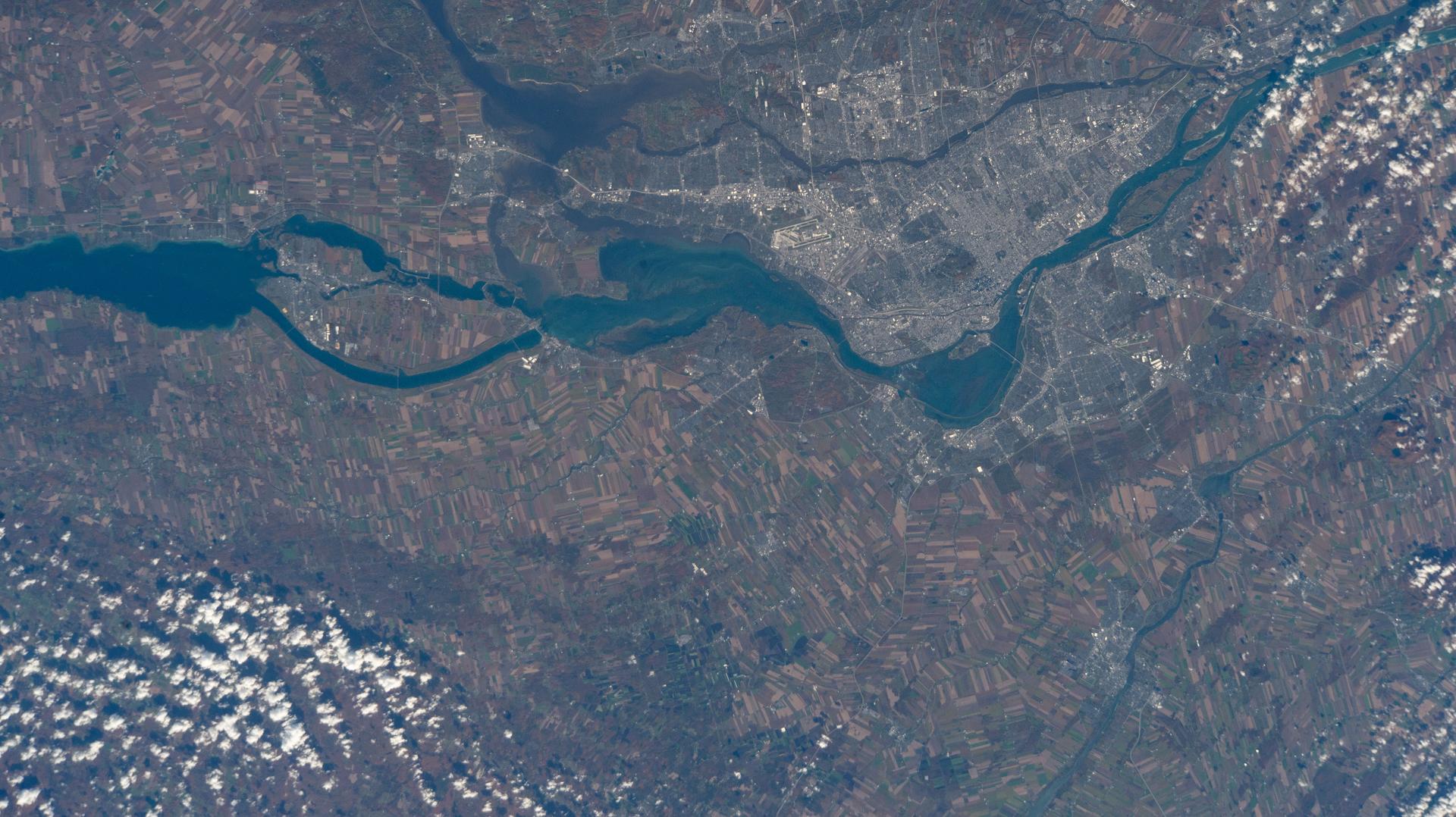
iss073e0866294 (Oct. 8, 2025) --- Montreal, Quebec, the second-most populous Canadian city with a metropolitan population of about 4.29 million, sits between the Prairies River to its north and the St. Lawrence River to the south. Montreal is named after Mount Royal, a prominent and natural landmark in the heart of the city. Montréal-Pierre Elliott Trudeau International Airport, voted North America's cleanest airport in 2025, is pictured near the bank of the St. Lawrence from the International Space Station as it orbited 263 miles above the Earth.
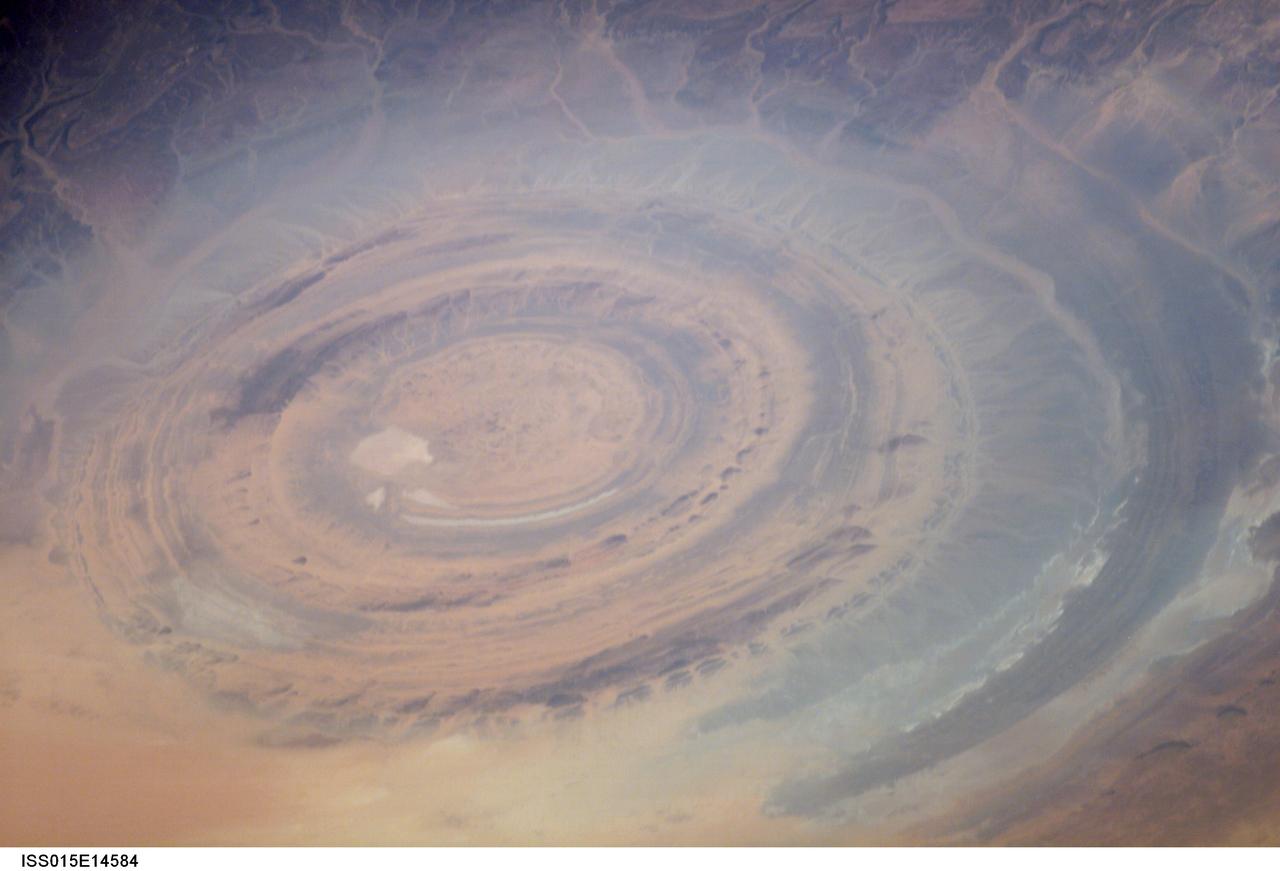
ISS015-E-14584 (26 June 2007) --- The "bull's-eye" of the Richat Structure in the barren Gres de Chinguetti Plateau, central Mauritania in northwest Africa is featured in this image photographed by an Expedition 15 crewmember on the International Space Station. It represents domally uplifted, layered (sedimentary) rocks that have been eroded by water and wind into the present shape. The 25-mile-wide structure is a 300-foot-deep landmark that has caught the eye of many an astronaut in Earth orbit.
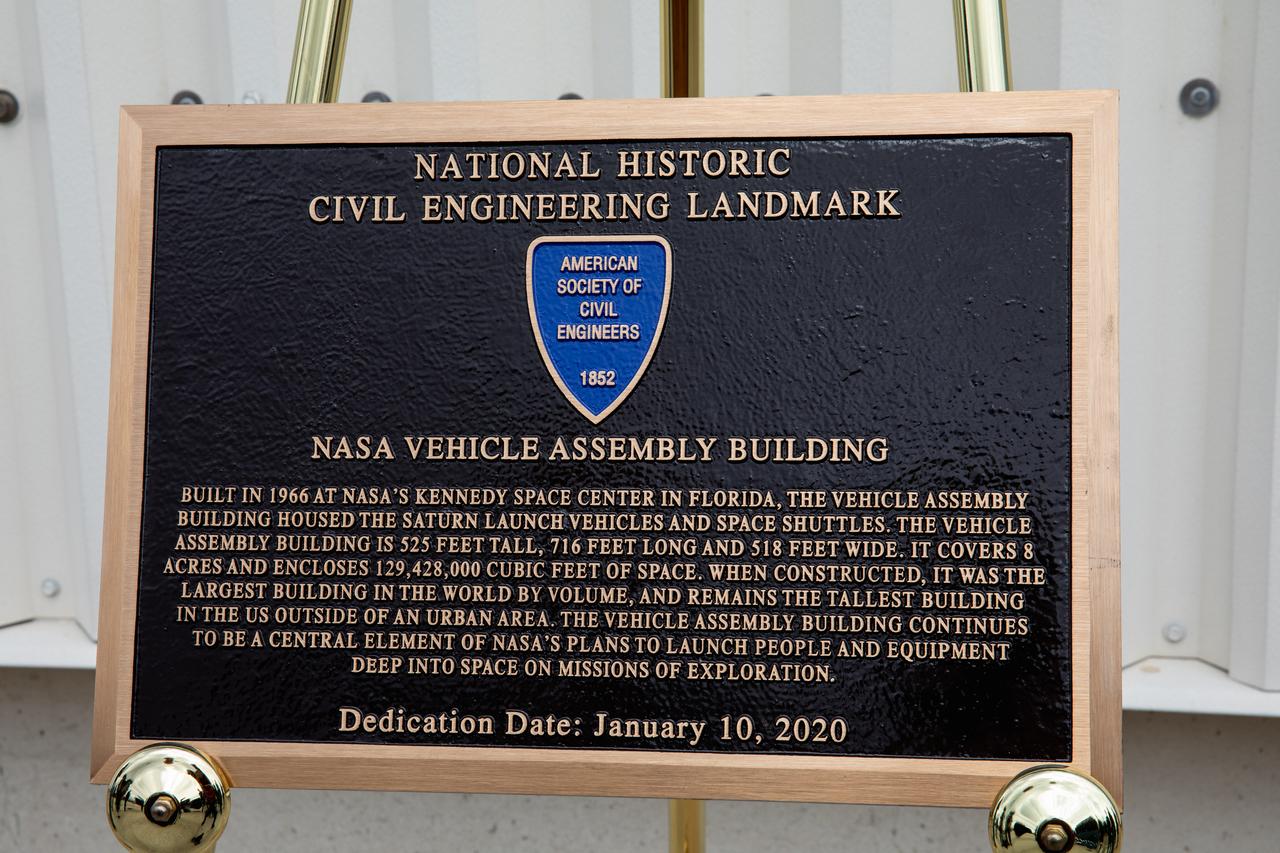
The Florida Section of the American Society of Civil Engineers bestowed the ASCE National Historic Civil Engineering Landmark award to Kennedy Space Center’s iconic Vehicle Assembly Building during a ceremony on Jan. 10, 2020. The VAB is the first building at Kennedy Space Center to earn this distinction. At the time of its completion, the 129-million-cubic-foot structure was the largest building in the world. Originally designed and built to accommodate the Saturn V/Apollo used in Project Apollo, the VAB was later modified for its role in the Space Shuttle Program.

iss073e0420094 (July 3, 2025) --- Shanghai, China—the nation's largest city with a metropolitan population of approximately 24.9 million—is seen from the International Space Station at around 9:55 p.m. local time. Located where the Yangtze River meets the Yellow Sea, the city glows with urban energy. Notable landmarks include Shanghai Hongqiao International Airport near the top center and Shanghai Pudong International Airport at the bottom. The Huangpu River winds through the heart of downtown, dividing the historic Bund from the futuristic skyline of Lujiazui.
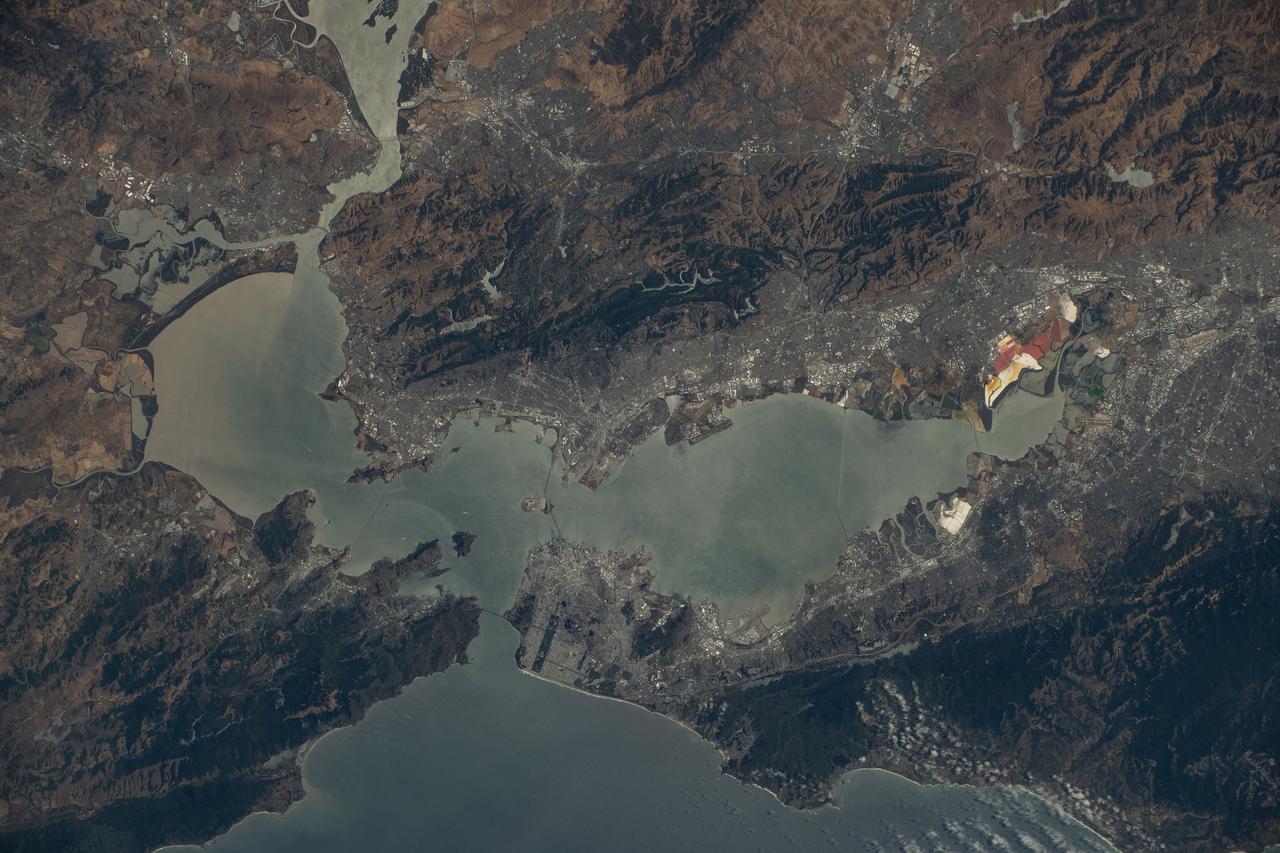
iss073e0420568 (Aug. 3, 2025) --- California's San Francisco Bay Area surrounded by the cities of San Francisico, Oakland, and San Jose, and their suburbs, is pictured from the International Space Station as it orbited 260 miles above the Golden State. Visible landmarks include the Golden Gate Bridge and the Don Edwards San Francisco Bay National Wildlife Refuge.
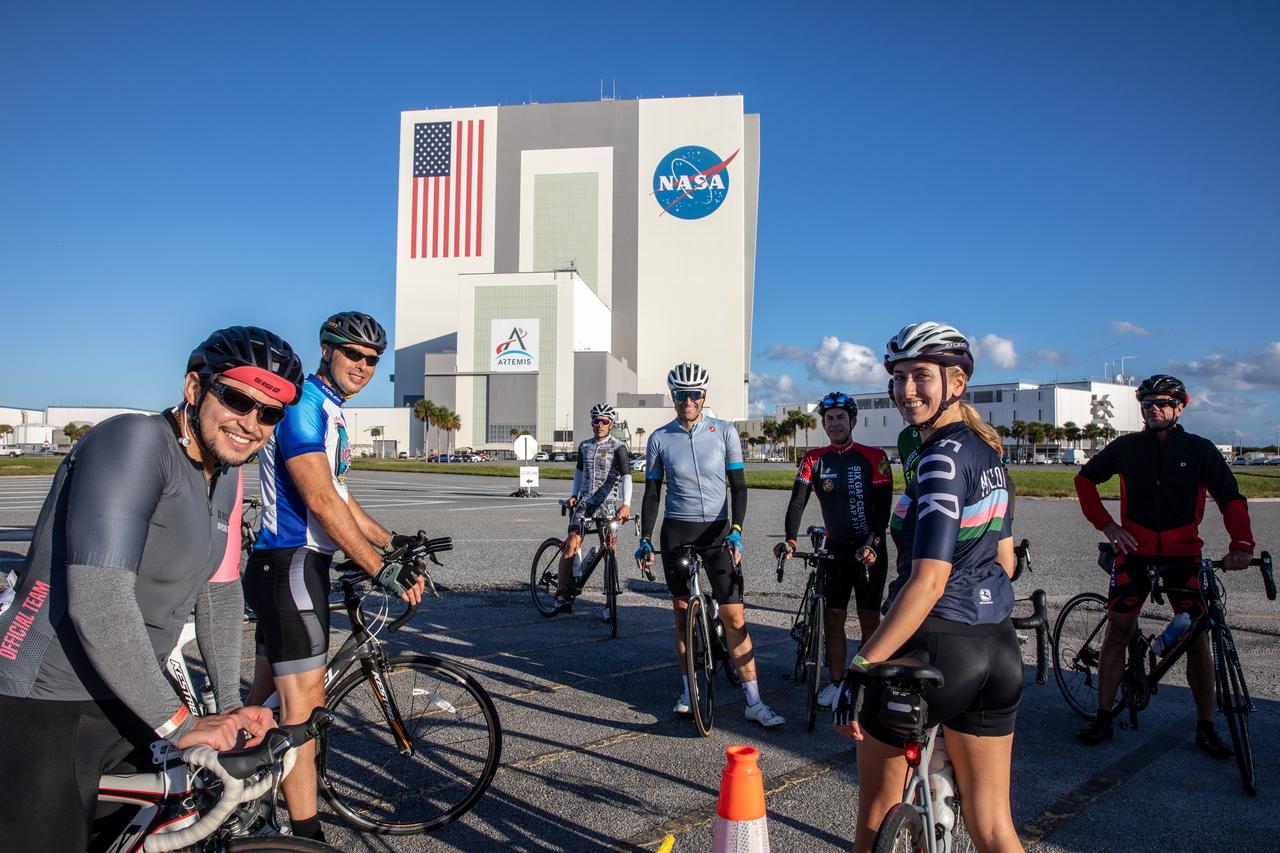
Kennedy Space Center employees and their guests participate in the Diamond Tour de KSC at NASA’s Kennedy Space Center in Florida on Oct. 22, 2022. This unique event, held for the first time since 2019, was part of the Safety organization’s Fall Into Safety and Health event, and named “diamond” to honor the center’s 60th anniversary. Cyclists covered three different routes and rode by historic landmarks, completing a total of about 37 miles.
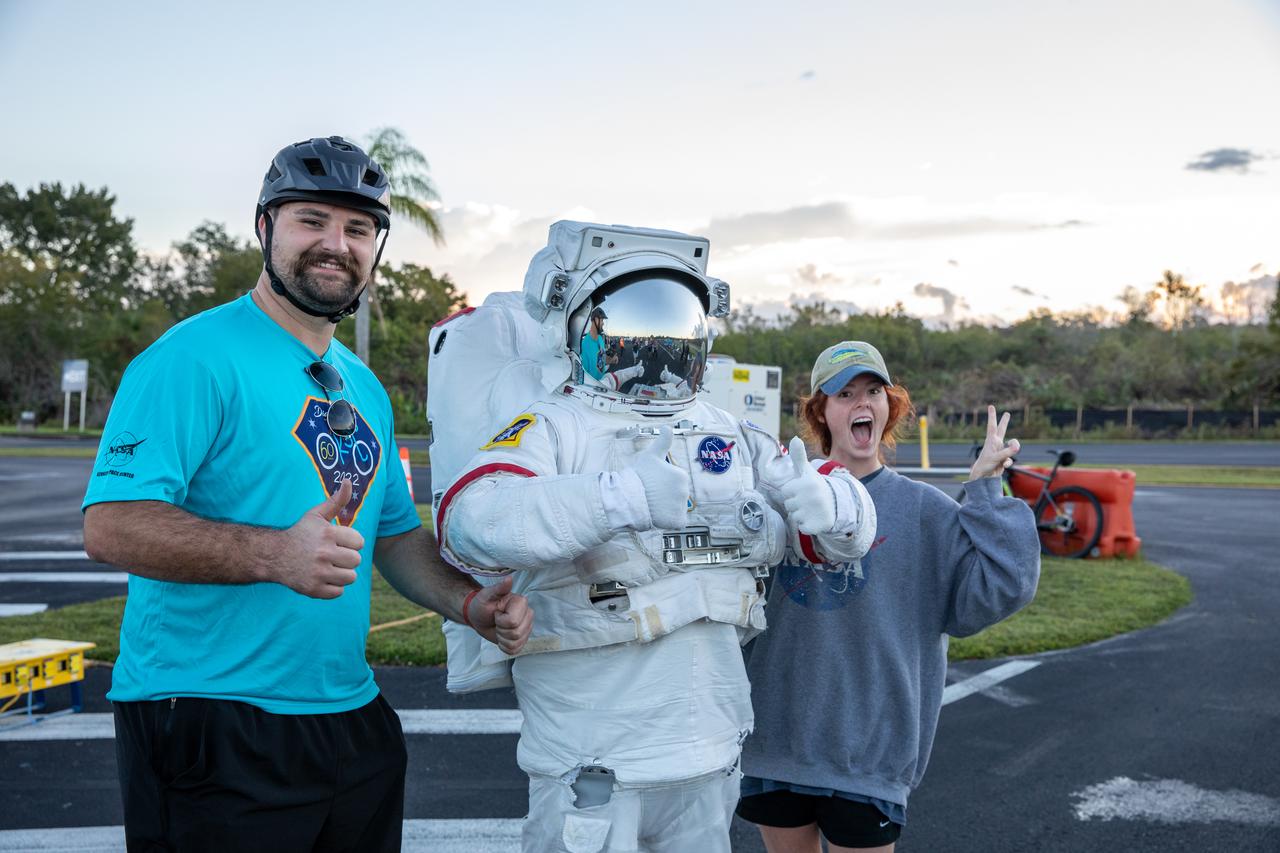
Participants in the Diamond Tour de KSC pause for a photo with the Spaceperson at NASA’s Kennedy Space Center Visitor Complex before beginning their bicycle routes at Kennedy Space Center in Florida on Oct. 22, 2022. This unique event, held for the first time since 2019, was part of the Safety organization’s Fall Into Safety and Health event, and named “diamond” to honor the center’s 60th anniversary. Cyclists covered three different routes and rode by historic landmarks, completing a total of about 37 miles.
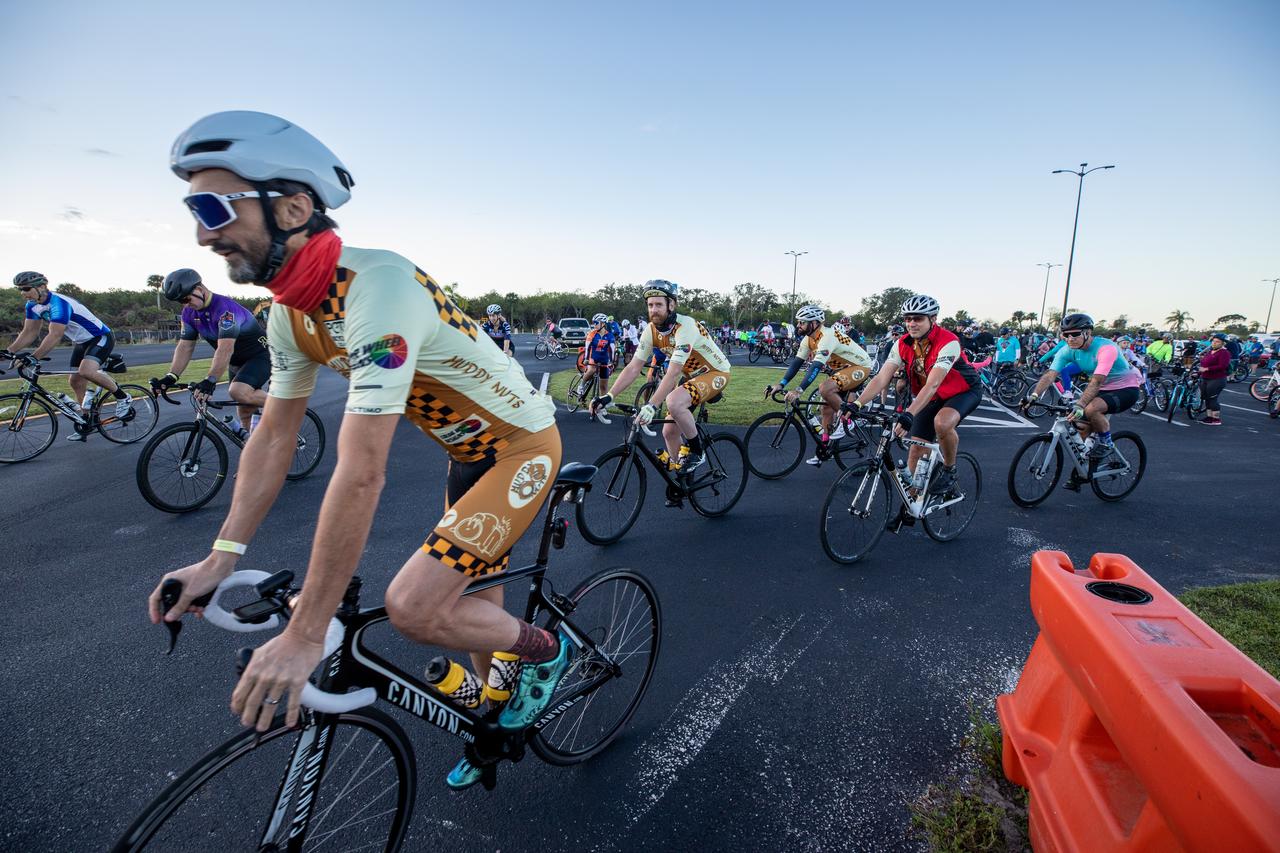
Kennedy Space Center employees and their guests participate in the Diamond Tour de KSC at NASA’s Kennedy Space Center in Florida on Oct. 22, 2022. This unique event, held for the first time since 2019, was part of the Safety organization’s Fall Into Safety and Health event, and named “diamond” to honor the center’s 60th anniversary. Cyclists covered three different routes and rode by historic landmarks, completing a total of about 37 miles.
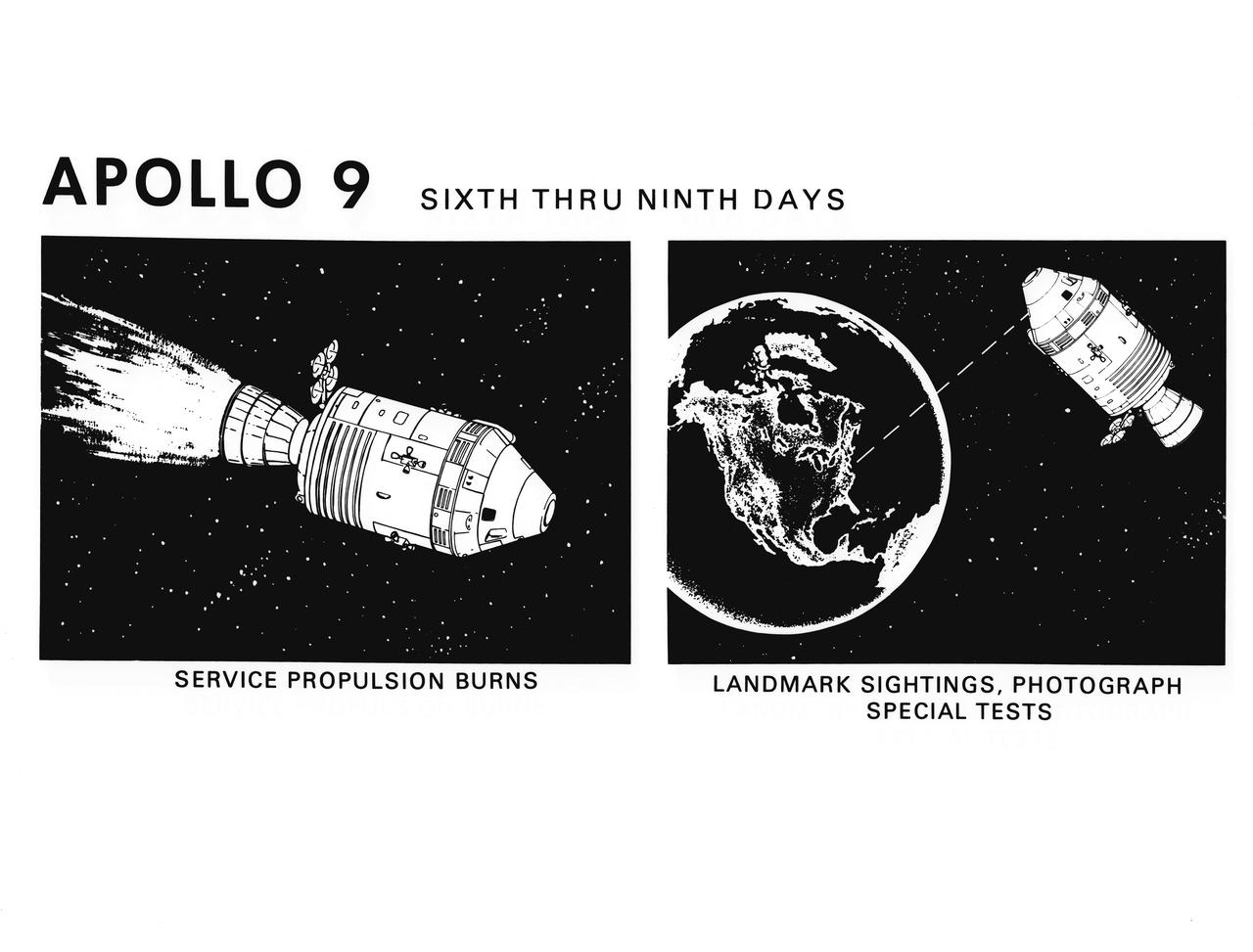
S69-19797 (February 1969) --- Composite of two artist's concepts illustrating key events, tasks and activities from the sixth through the ninth day of the Apollo 9 mission, including service propulsion system burns, and landmark sightings, photograph special tests. The Apollo 9 mission will evaluate spacecraft lunar module systems performance during manned Earth-orbital flight.
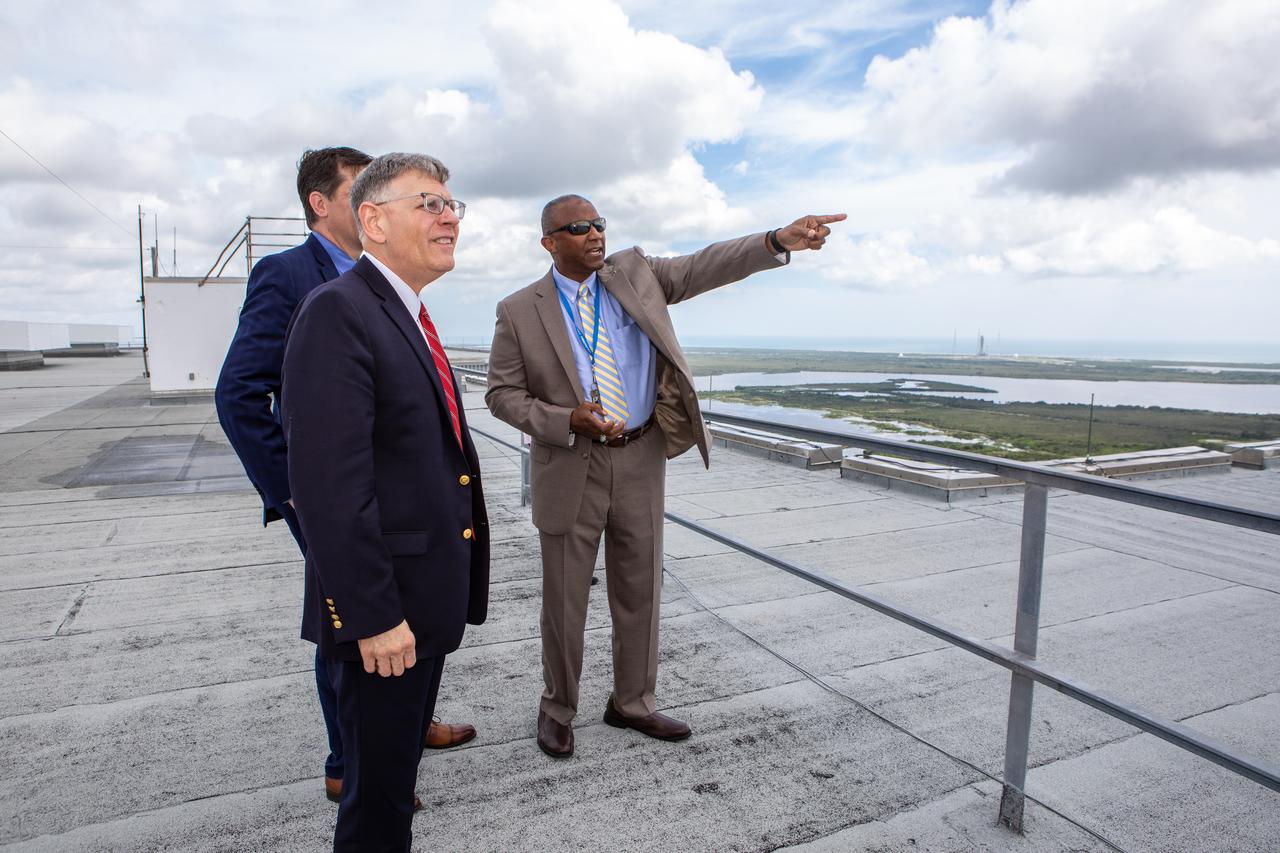
Kelvin Manning, right, associate director, technical, of NASA’s Kennedy Space Center in Florida, points out various landmarks to White House Office of Science and Technology Policy Director Kelvin Droegemeier, center, and NASA Associate Administrator for STEM Engagement Mike Kincade, left, from the roof of the Vehicle Assembly Building on July 10, 2019. Droegemeier visited the iconic rocket-assembly facility in the heart of Kennedy’s Launch Complex 39 Area during a tour of the multi-user spaceport.
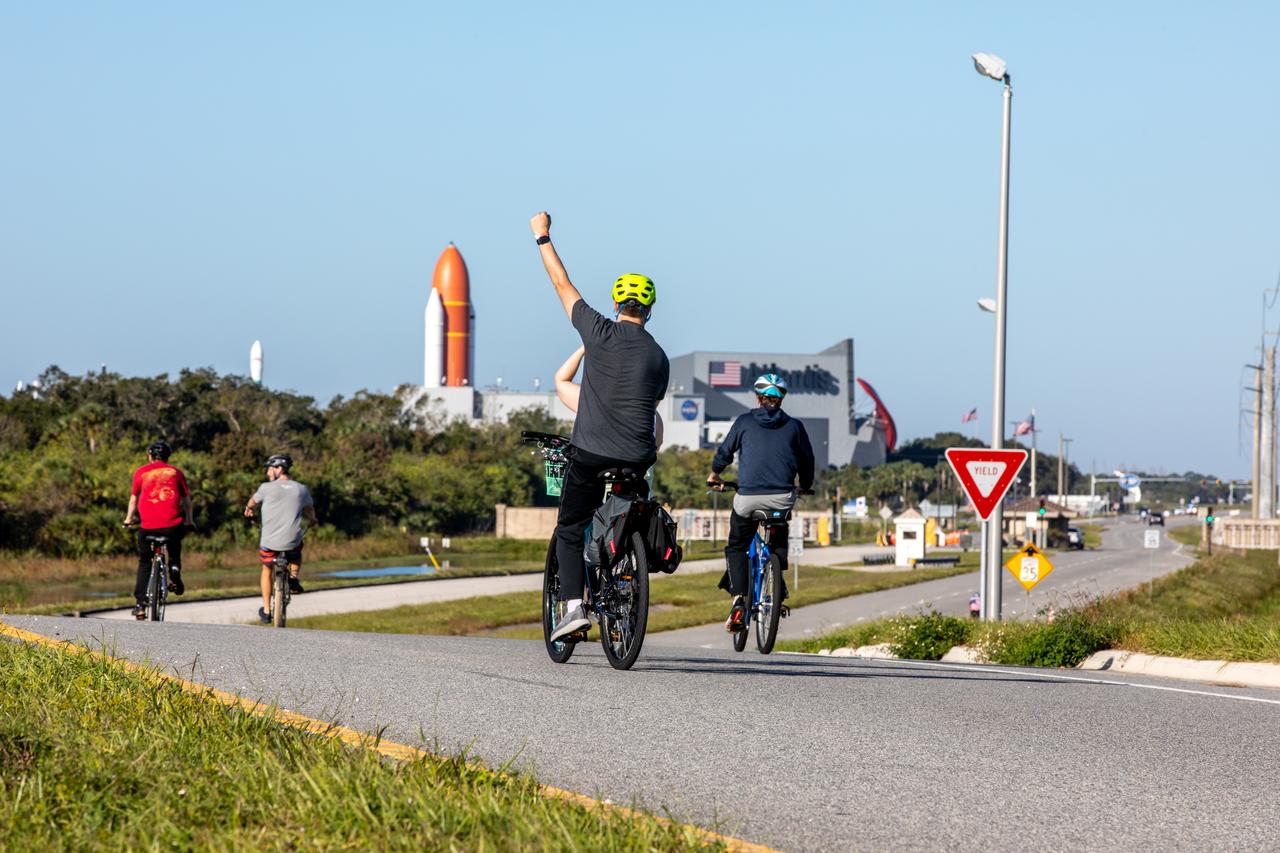
Kennedy Space Center employees and their guests return to the Kennedy Space Center Visitor Complex after completing the Diamond Tour de KSC at the NASA spaceport in Florida on Oct. 22, 2022. This unique event, held for the first time since 2019, was part of the Safety organization’s Fall Into Safety and Health event, and named “diamond” to honor the center’s 60th anniversary. Cyclists covered three different routes and rode by historic landmarks, completing a total of about 37 miles.
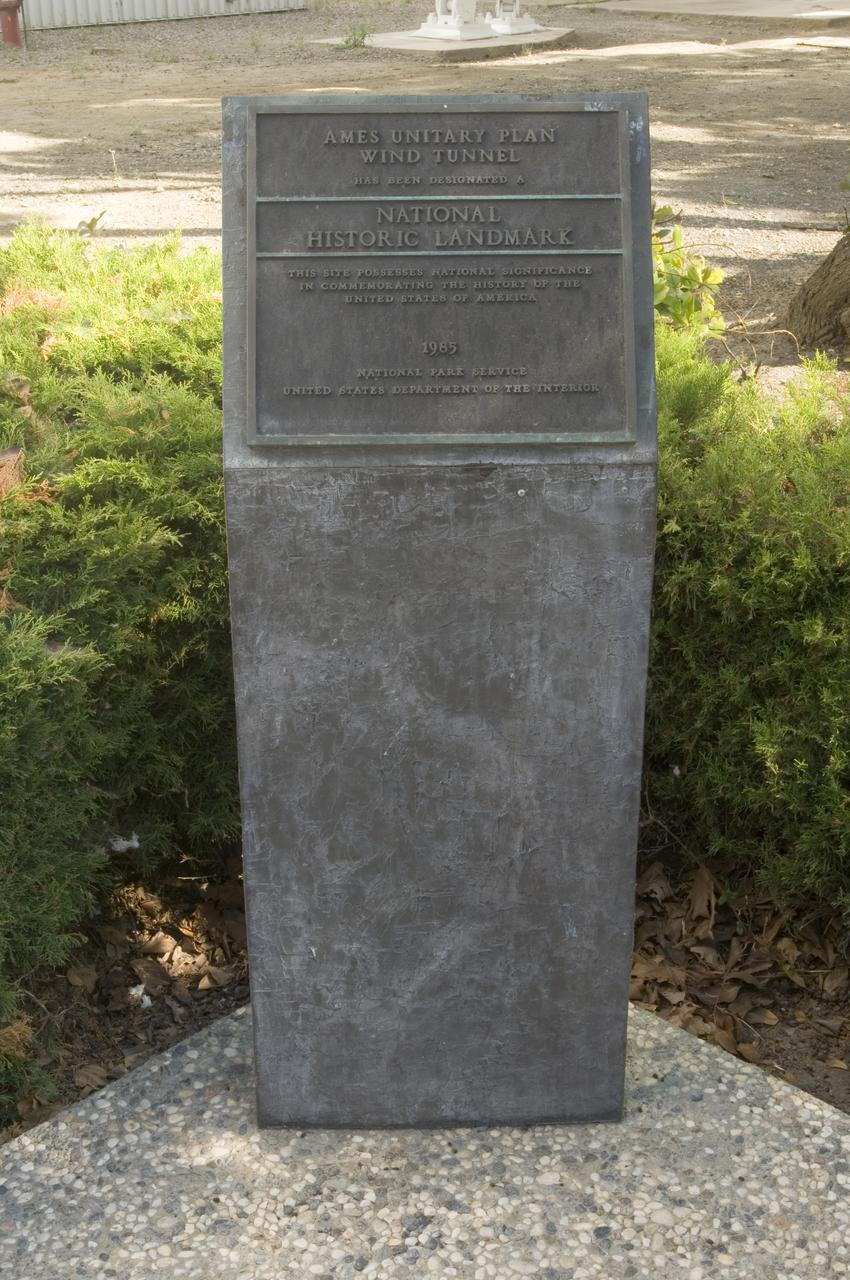
Ames and Moffett Field (MFA) historical sites and memorials Unitary Plan Wind Tunned plaza; display and historical site plaques with the NASA logo on the Wind Tunnel valve as a backdrop. Plaque depicts that Ames Unitary Plan Wind Tunnel has been designated a National Historic Landmark by the National Park Service, United States Department of the Interior 1985 The plaque reads; This site possesses national significance in commemorating the history of the United States of America. That ceremony took place on September 12, 1990

Participants in the Diamond Tour de KSC pause for a selfie at NASA’s Kennedy Space Center Visitor Complex before beginning their bicycle routes at Kennedy Space Center in Florida on Oct. 22, 2022. This unique event, held for the first time since 2019, was part of the Safety organization’s Fall Into Safety and Health event, and named “diamond” to honor the center’s 60th anniversary. Cyclists covered three different routes and rode by historic landmarks, completing a total of about 37 miles.
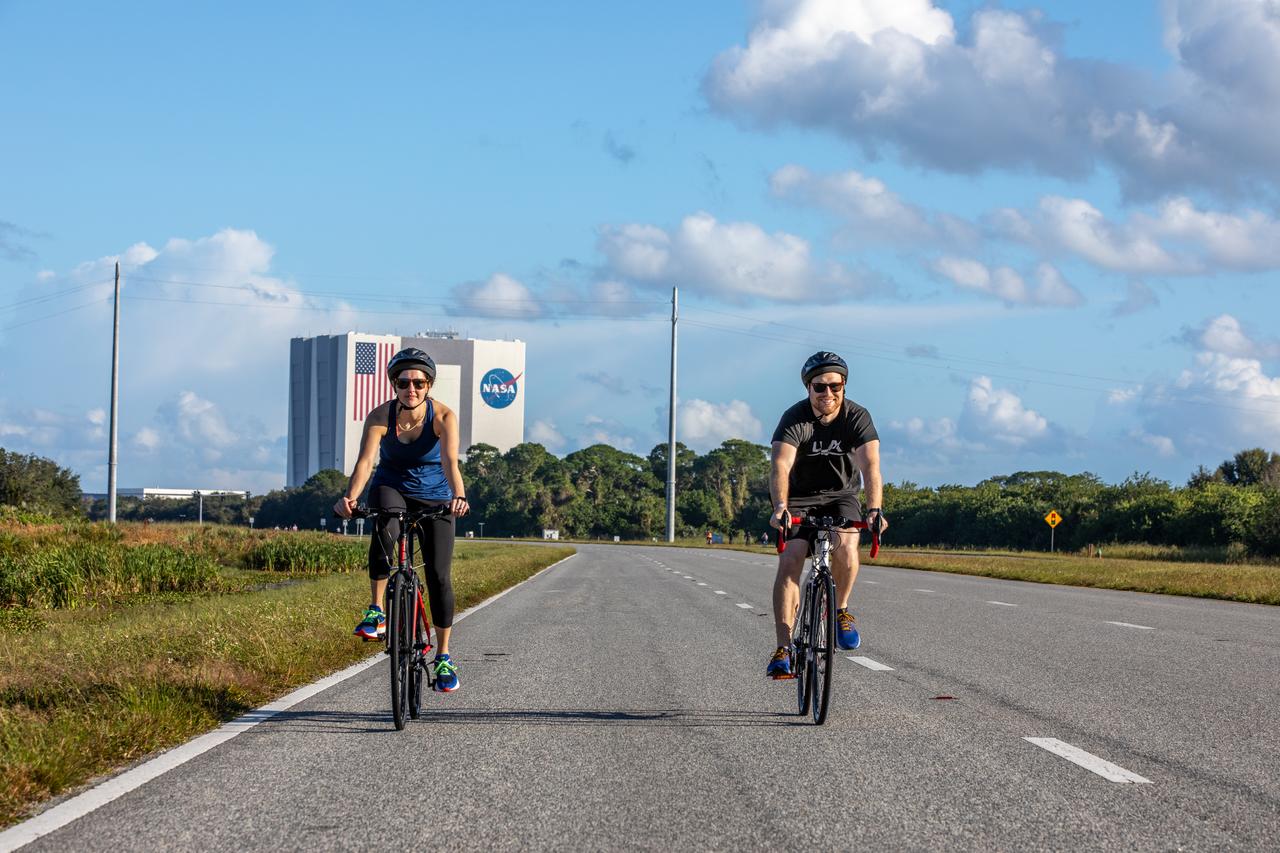
Two cyclists participate in the Diamond Tour de KSC at NASA’s Kennedy Space Center in Florida on Oct. 22, 2022. In the background is the iconic Vehicle Assembly Building. This unique event, held for the first time since 2019, was part of the Safety organization’s Fall Into Safety and Health event, and named “diamond” to honor the center’s 60th anniversary. Cyclists covered three different routes and rode by historic landmarks, completing a total of about 37 miles.
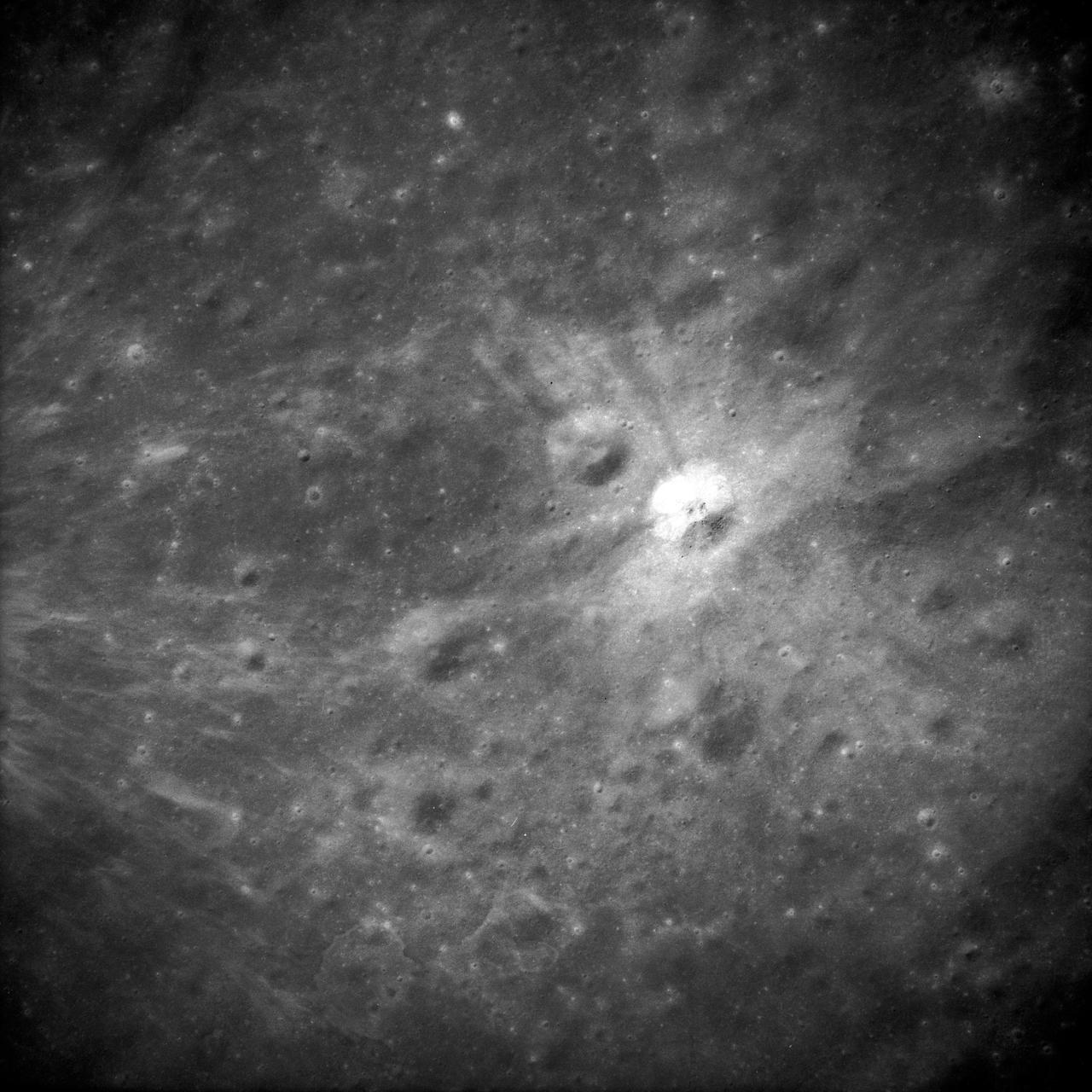
AS14-69-9560 (February 1971) --- This 500mm vertical frame taken from the Apollo 14 spacecraft is of the Apollo 16 proposed landing site "Descartes". The actual location of the target area is near the upper left. This photograph was taken with a 56 degree sun angle. The large bright crater is approximately one kilometer in diameter and has a distinctive ray pattern which serves as an excellent landmark.
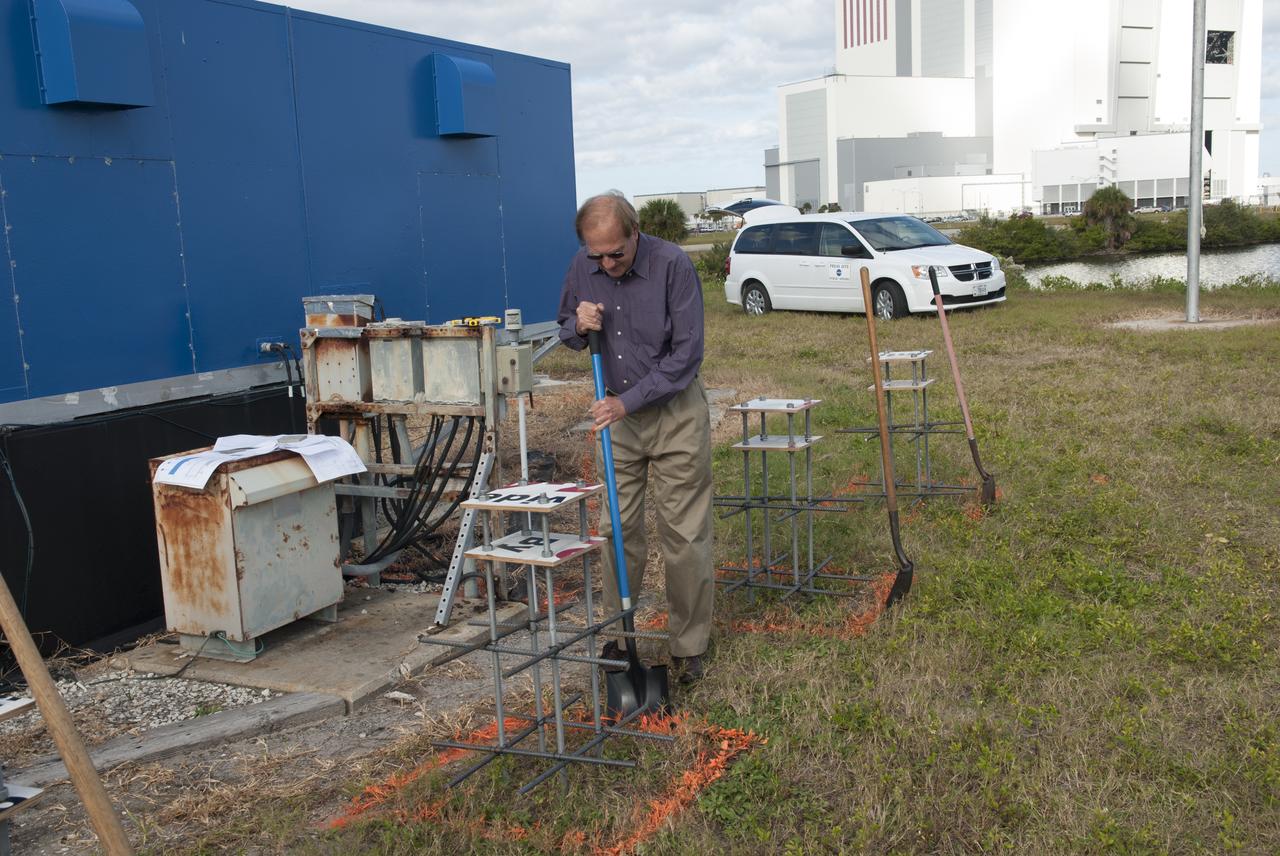
At NASA's Kennedy Space Center in Florida, Public Affairs Officer George Diller digs in behind the current countdown clock during the groundbreaking ceremony for the new countdown clock. The old timepiece was designed by Kennedy engineers and built by Kennedy technicians in 1969. Not including the triangular concrete and aluminum base, the famous landmark is nearly 6 feet 70 inches high, 26 feet 315 inches wide and 3 feet deep. The new display will be similar in size, with the screen being nearly 26 feet wide by 7 feet high.
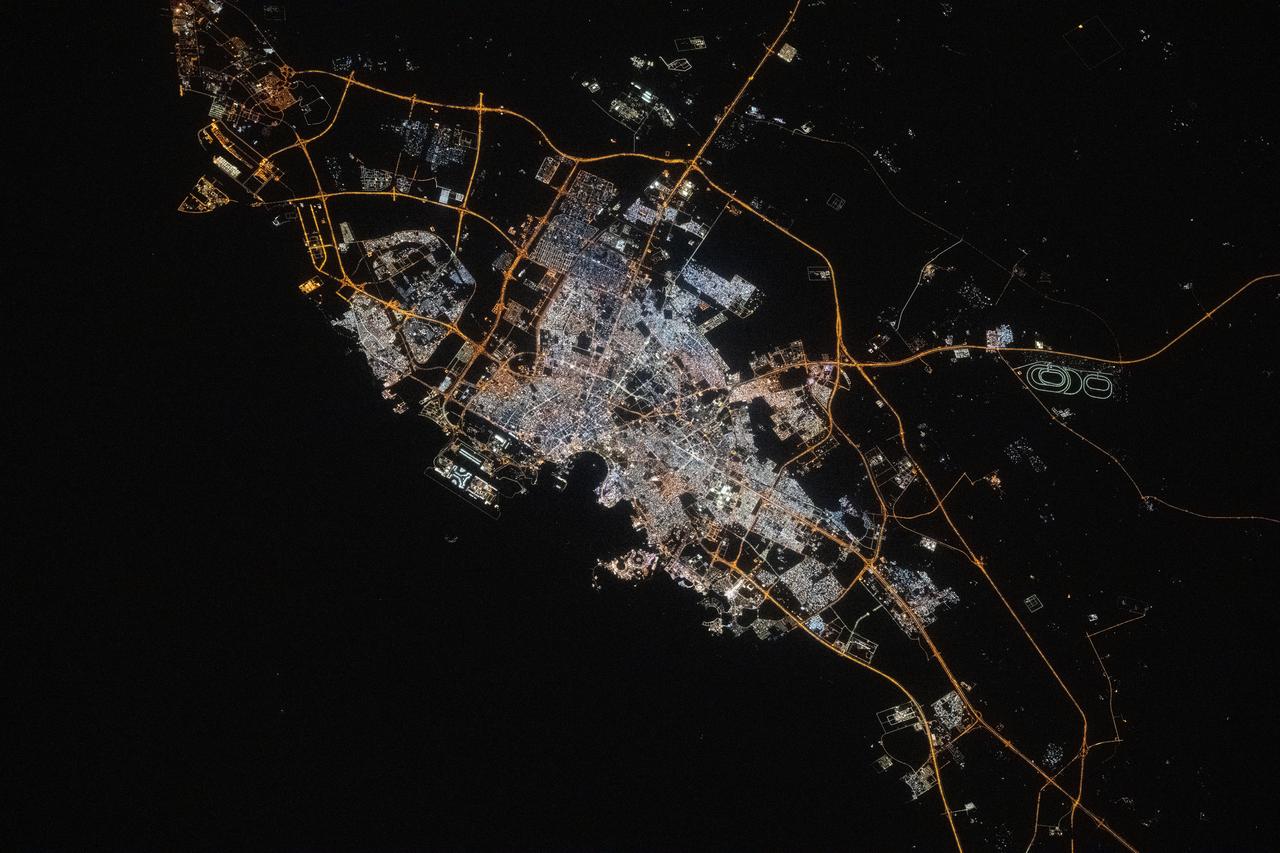
iss073e0134569 (May 22, 2025) --- Doha, the capital and largest city of Qatar with a population of about 1.9 million, is pictured at approximatelt 10:44 p.m. local time from the International Space Station as it orbited 259 miles above the Persian Gulf. Landmarks include Hamad International Airport (center left) and the artificial Pearl Island (lower center).
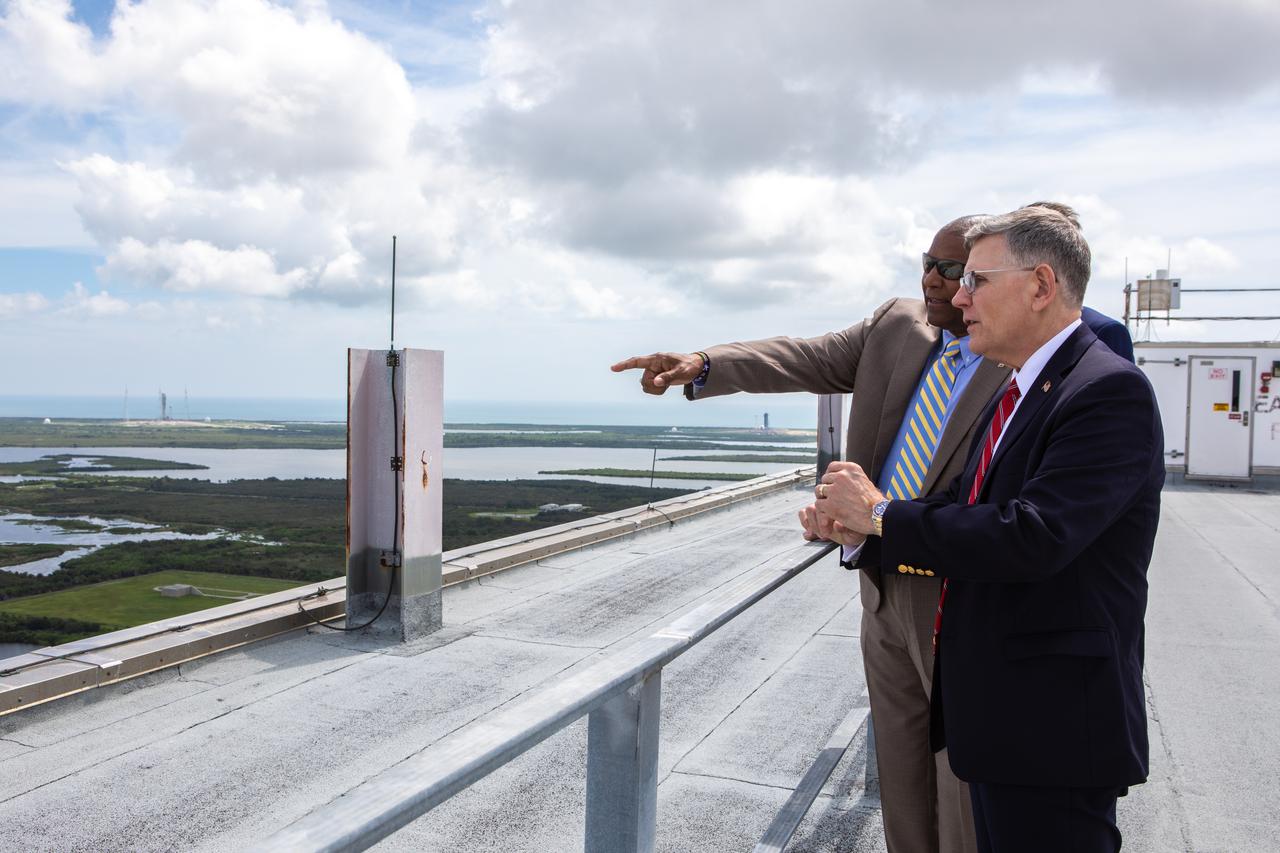
Kelvin Manning, left, associate director, technical, of NASA’s Kennedy Space Center in Florida, points out various landmarks to White House Office of Science and Technology Policy Director Kelvin Droegemeier, right, on the roof of the Vehicle Assembly Building on July 10, 2019. Droegemeier visited the iconic rocket-assembly facility in the heart of Kennedy’s Launch Complex 39 Area during a tour of the multi-user spaceport.
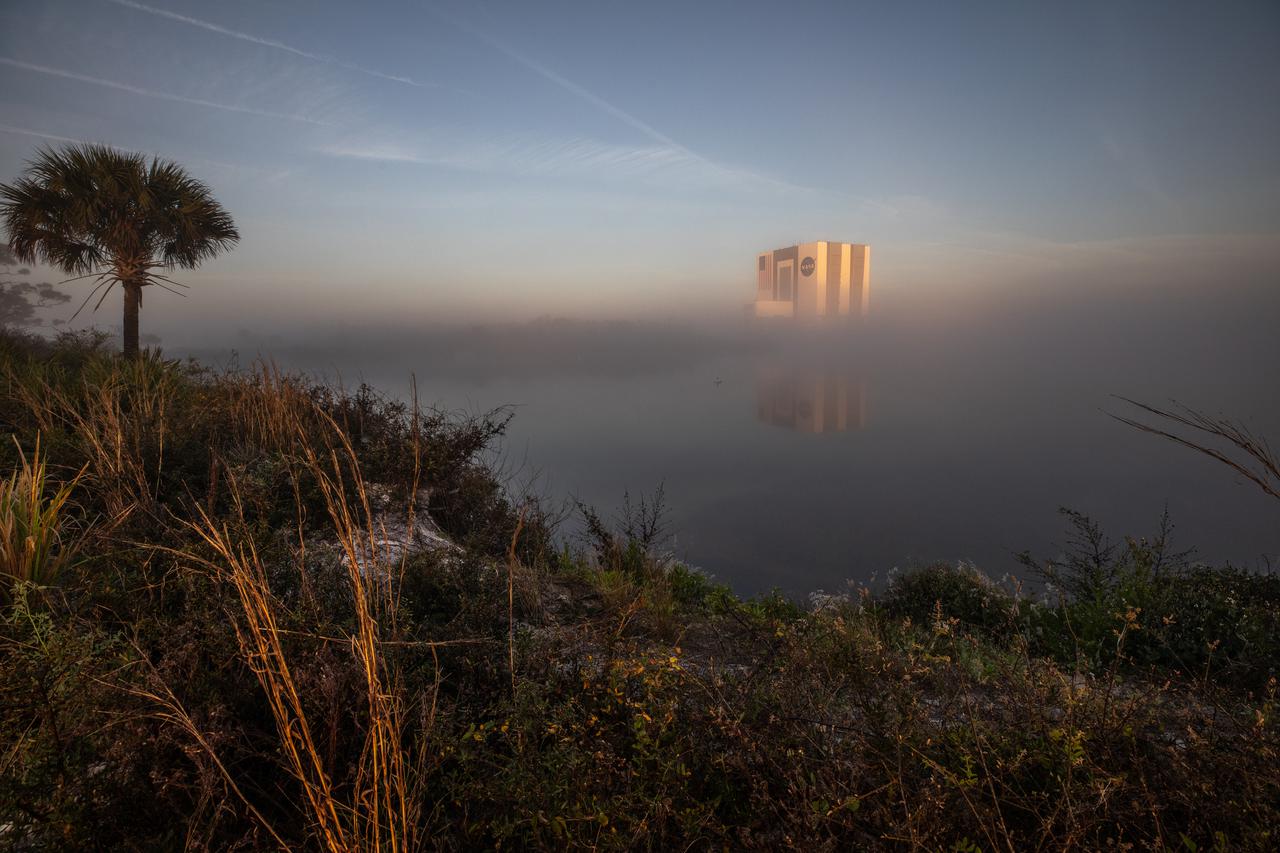
Kennedy Space Center’s Vehicle Assembly Building (VAB) is partially obstructed by fog during the early morning on March 15, 2021. Built in 1966, the VAB remains a central hub for the Florida spaceport. The national landmark plays a major role in NASA’s plans to launch people and equipment deep into space on missions, including to the Moon in the Artemis program.
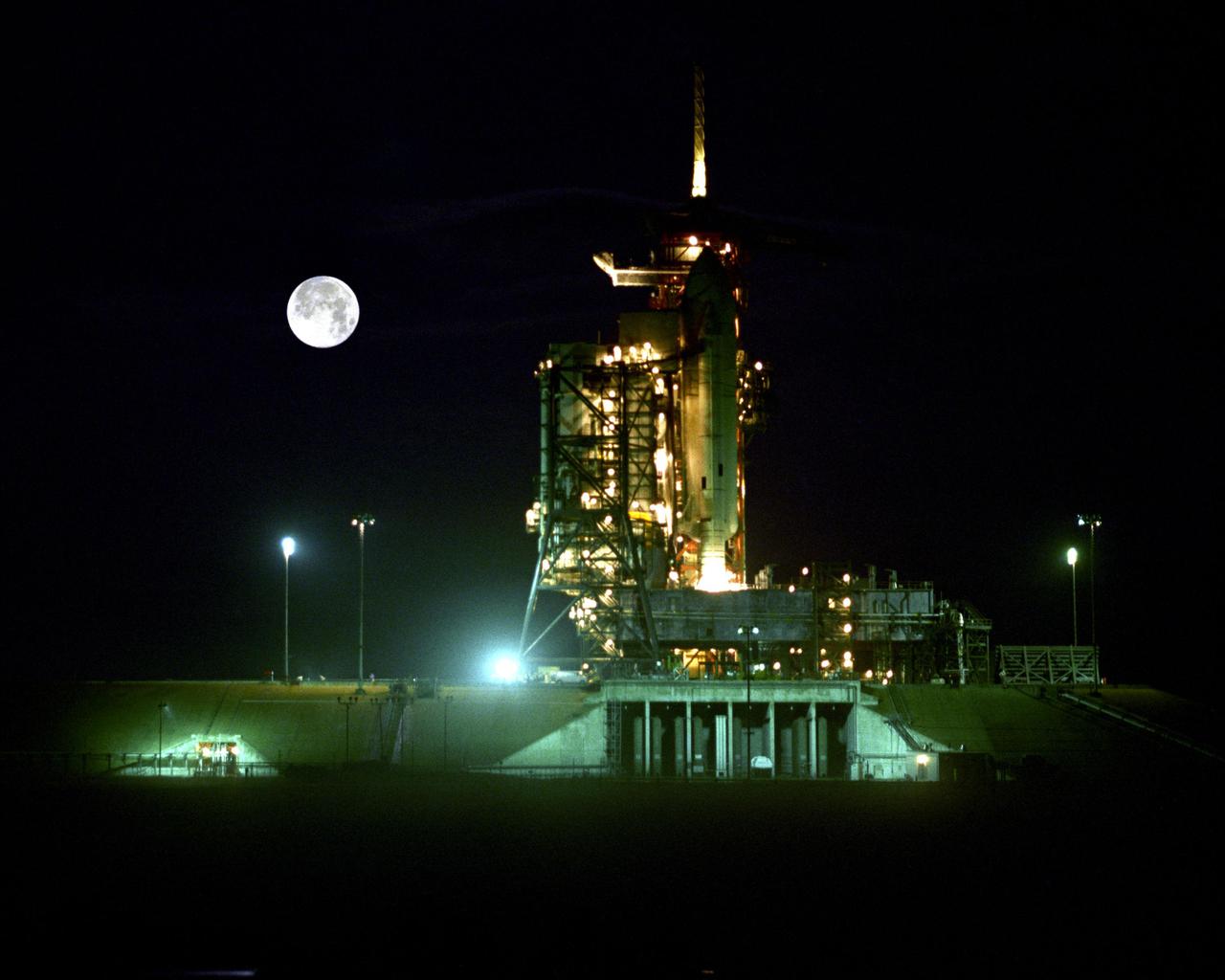
KENNEDY SPACE CENTER, FLA. - Looking like the perfect staging for a science fiction movie, STS-1 is a dramatic companion for the Moon 'over its shoulder.' The Space Shuttle, comprised of the orbiter Columbia, the external tank and two solid rocket boosters, is pictured during final preparations for Flight Readiness Firing of the orbiter's main engines, a landmark test during launch preparations.
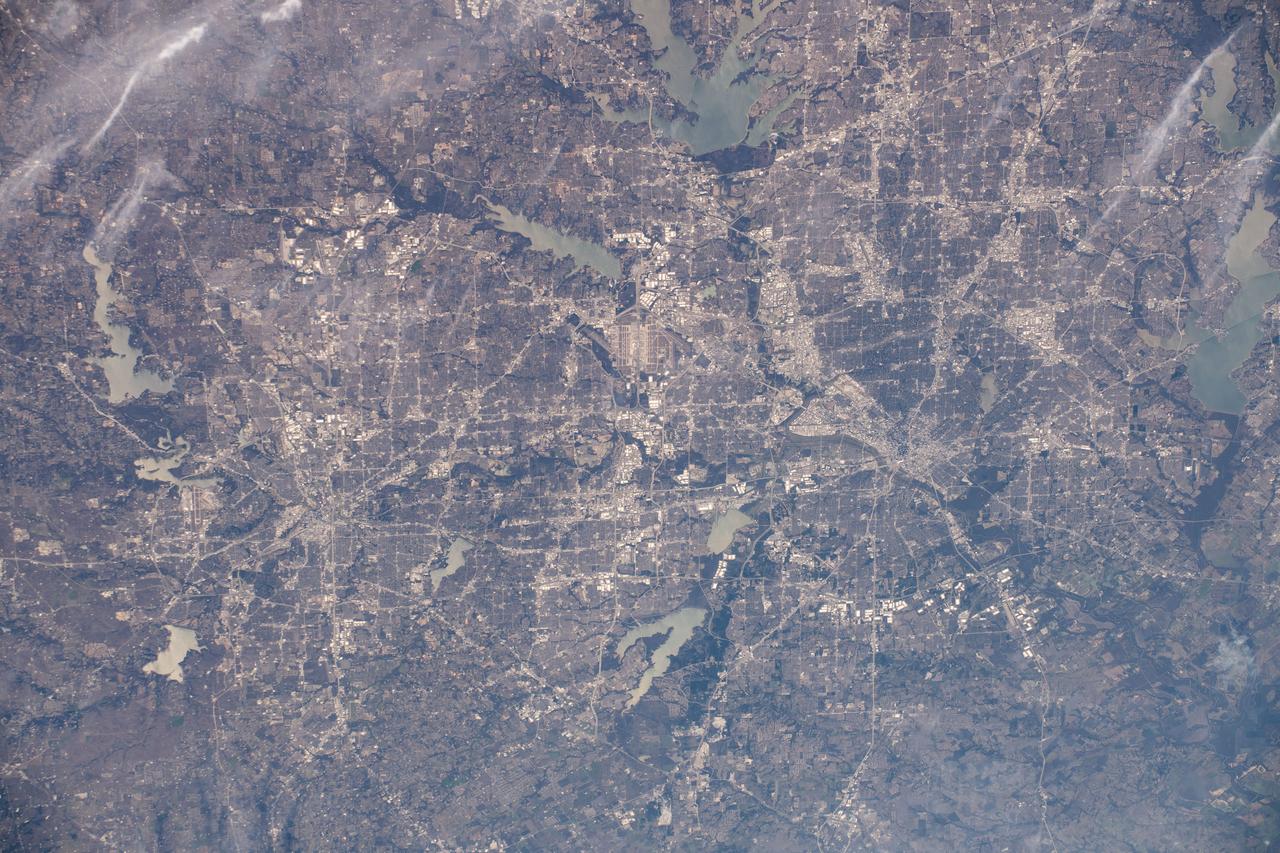
iss061e067843 (Dec. 6, 2019) --- The Dallas-Fort Worth, Texas metropolitan area is pictured along with such landmarks as DFW International Airport and Dallas Love Field Airport from an altitude of 258 miles. Several bodies of water are pictured including Joe Pool Lake, Mountain Creek Lake, White Rock Lake, Lake Ray Hubbard, Lewisville Lake and Grapevine Lake among others.
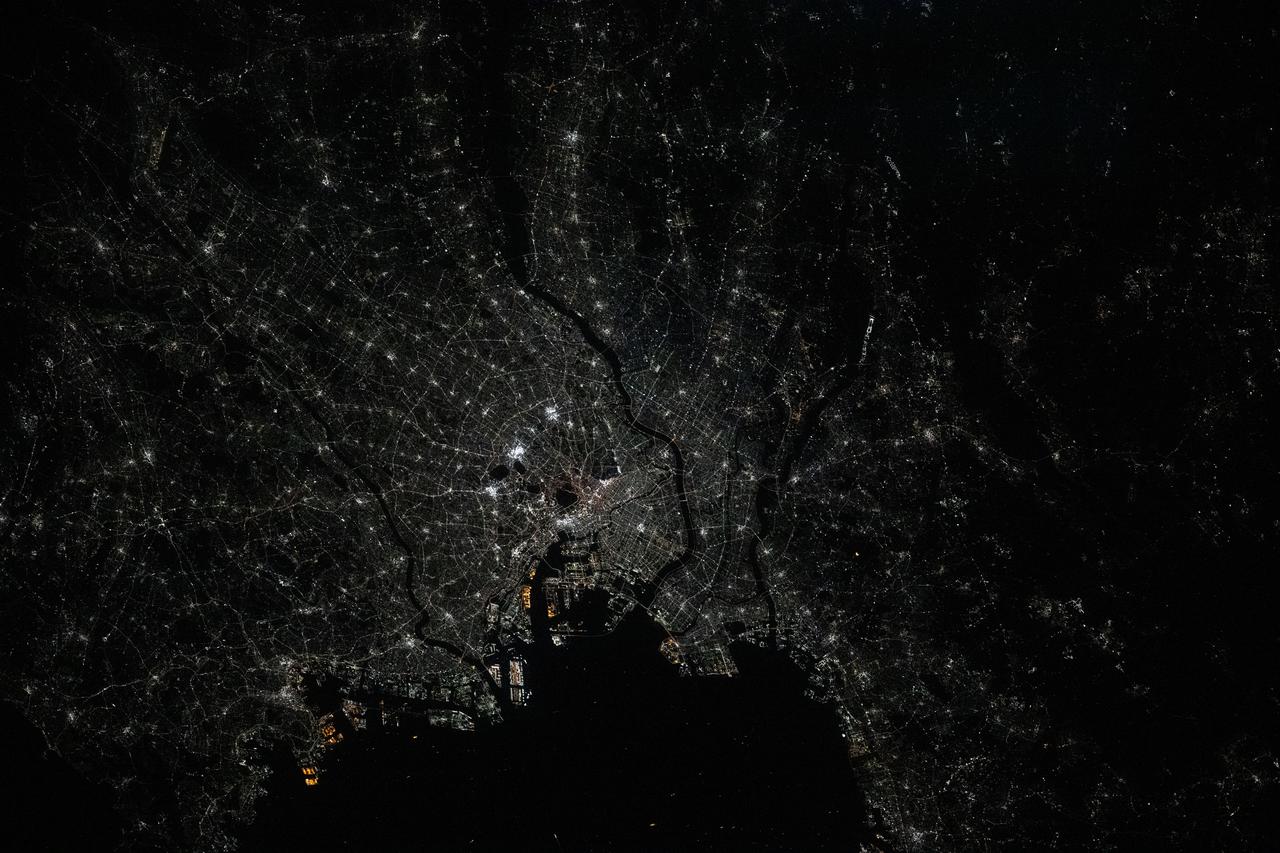
iss073e0548147 (Aug. 26, 2025) --- Tokyo, Japan, and its surrounding suburbs—the world’s most populous metropolitan area with about 39.1 million people—are pictured at approximately 1 a.m. local time from the International Space Station as it orbited 262 miles above. Visible landmarks include Haneda Airport on Tokyo Bay (lower center) and the Imperial Palace (the dark area at center) in the heart of downtown Tokyo. Credit: JAXA (Japan Aerospace Exploration Agency)
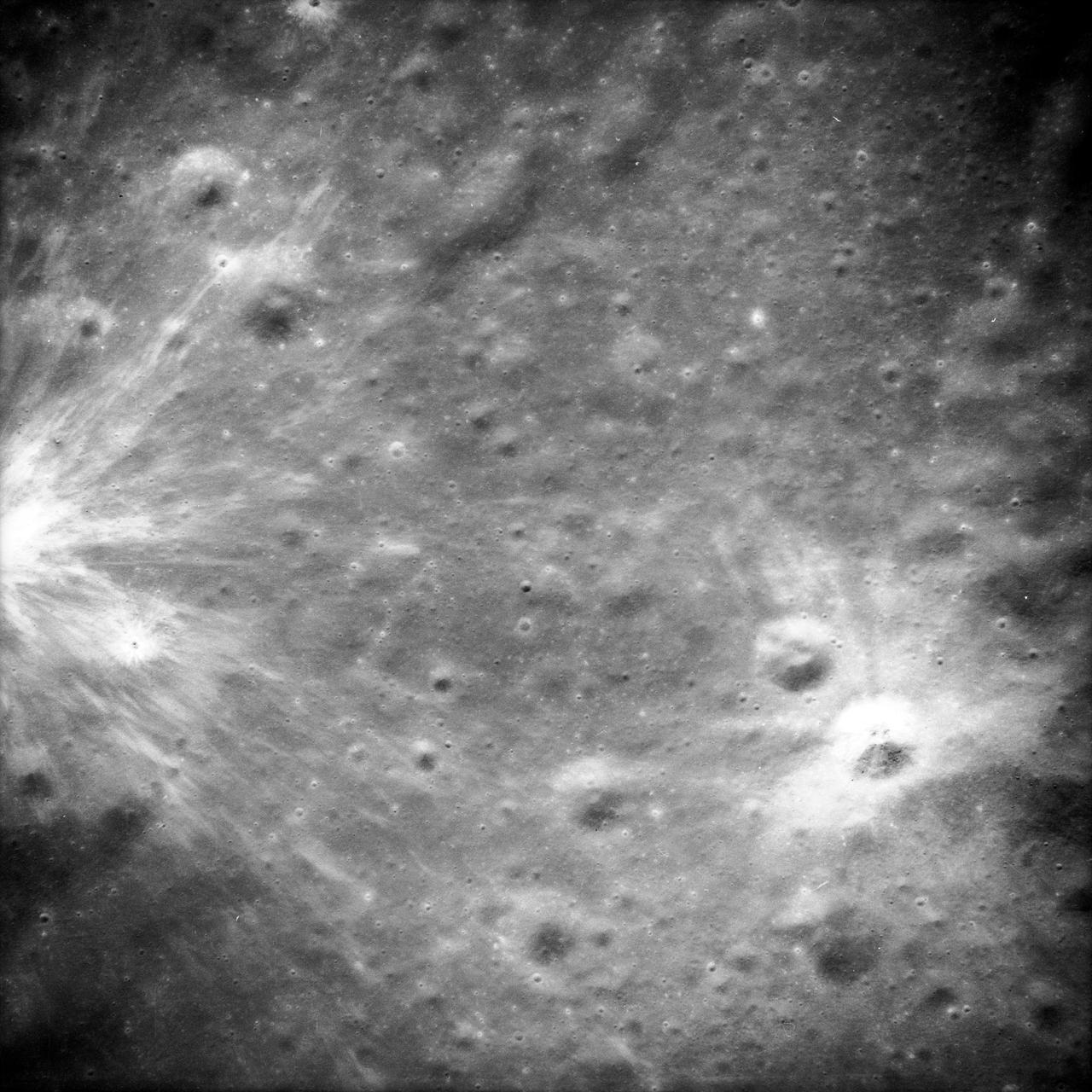
AS14-69-9523 (February 1971) --- This 500mm vertical frame taken from the Apollo 14 spacecraft is of the Apollo 16 proposed landing site "Descartes". The actual location of the target area is near the center of the picture. This photograph was taken on revolution 27 with a 56 degree sun angle. The large bright crater is approximately one kilometer in diameter and has a distinctive ray pattern which serves as an excellent landmark.
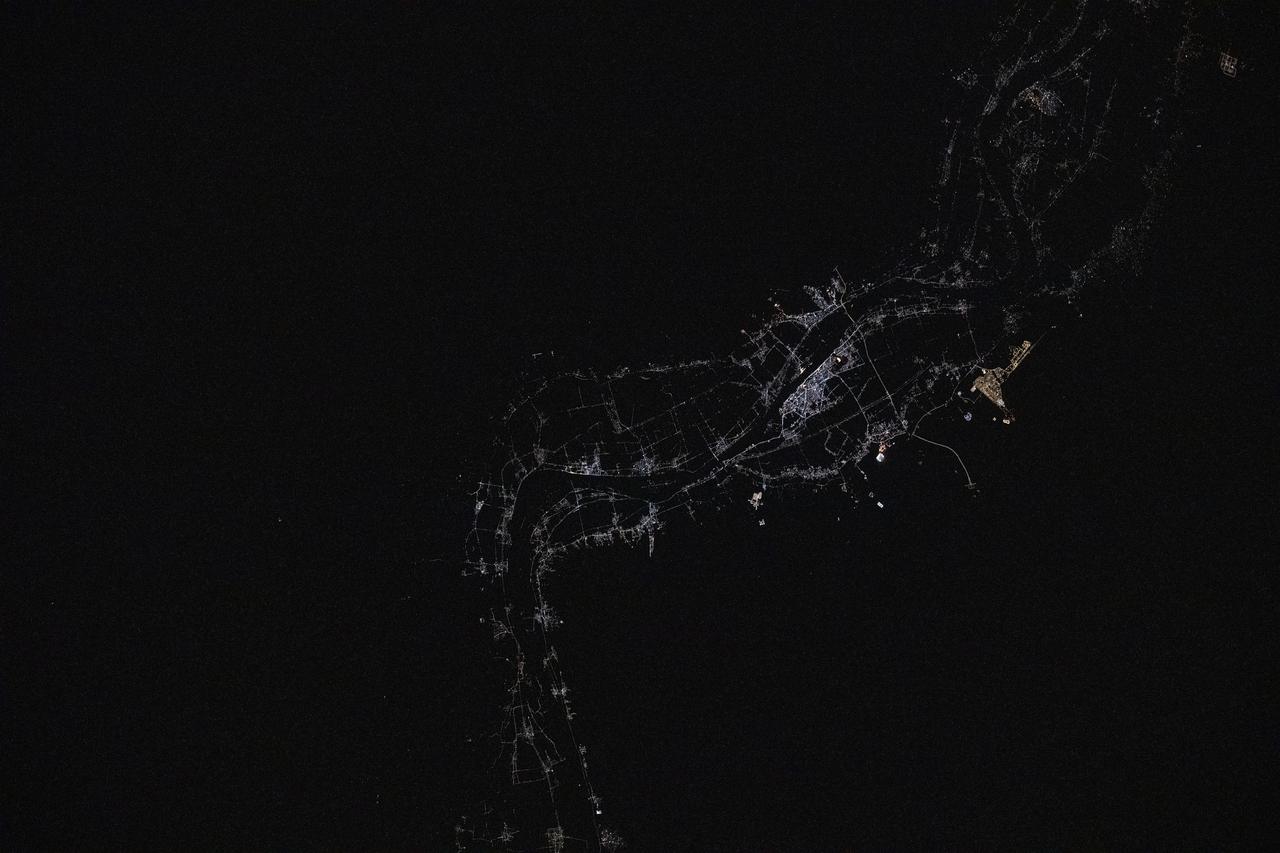
iss073e0134652 (May 22, 2025) --- Luxor, a 4,000-year-old city in Egypt with a population of over 263,000, sits on the bank of the River Nile in this photograph taken at approximately 12:17 a.m. local time from the International Space Station as it orbited 259 miles above. Luxor, a popular tourist destination, was the ancient Egyptian city of Thebes and is also home to numerous landmarks such as The Valley of the Kings and The Valley of the Queens.
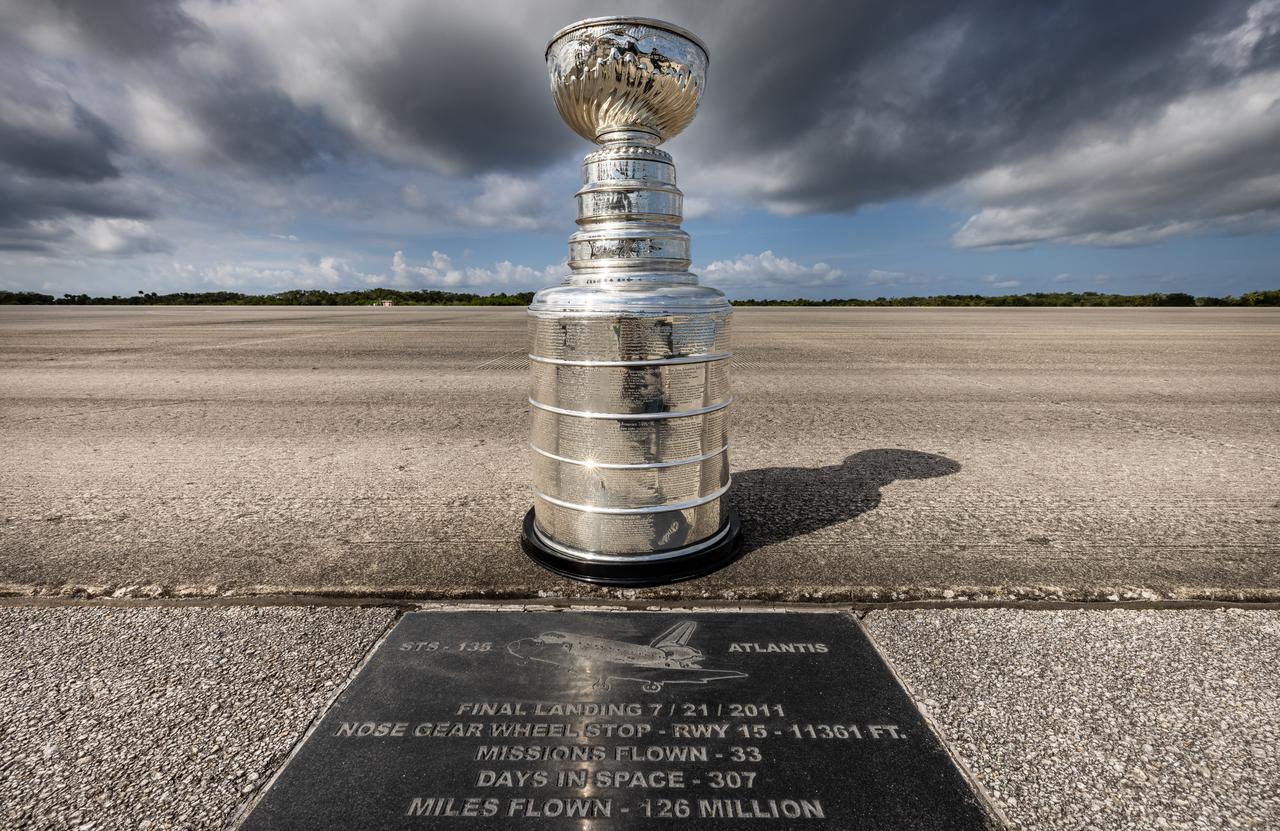
Earlier this year, the Florida Panthers won their first NHL championship and brought victory to the state of Florida. As part of its championship tour, the Stanley Cup made a visit to Kennedy Space Center. Pictured here is the Stanley Cup on the runway of the Launch and Landing Facility, formerly the Shuttle Landing Facility at NASA’s Kennedy Space Center on Tuesday Sept. 17, 2024. The trophy is beside the Space Shuttle Atlantis landmark, a commemorative plaque marking the landing spot of the last shuttle flight that occurred in July 2011.
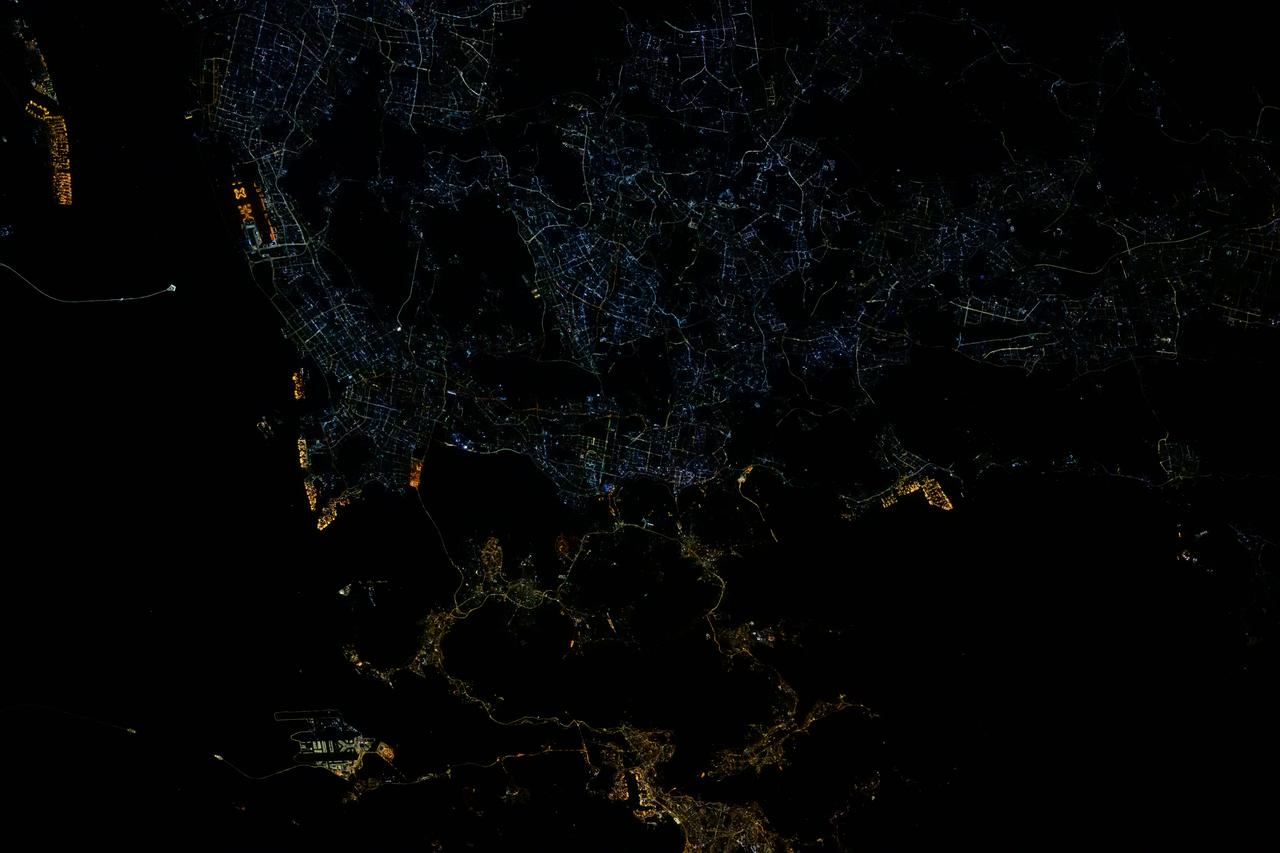
iss072e399613 (Dec. 20, 2024) --- The city lights of Hong Kong (bottom center) and Shenzhen, China, are different colors due to their historical differences. Shenzhen is a younger, more futuristic city, while Hong Kong is an older city illuminating its historical landmarks and its harbor. The International Space Station was orbiting 255 miles above southeastern China at the time of this photograph.
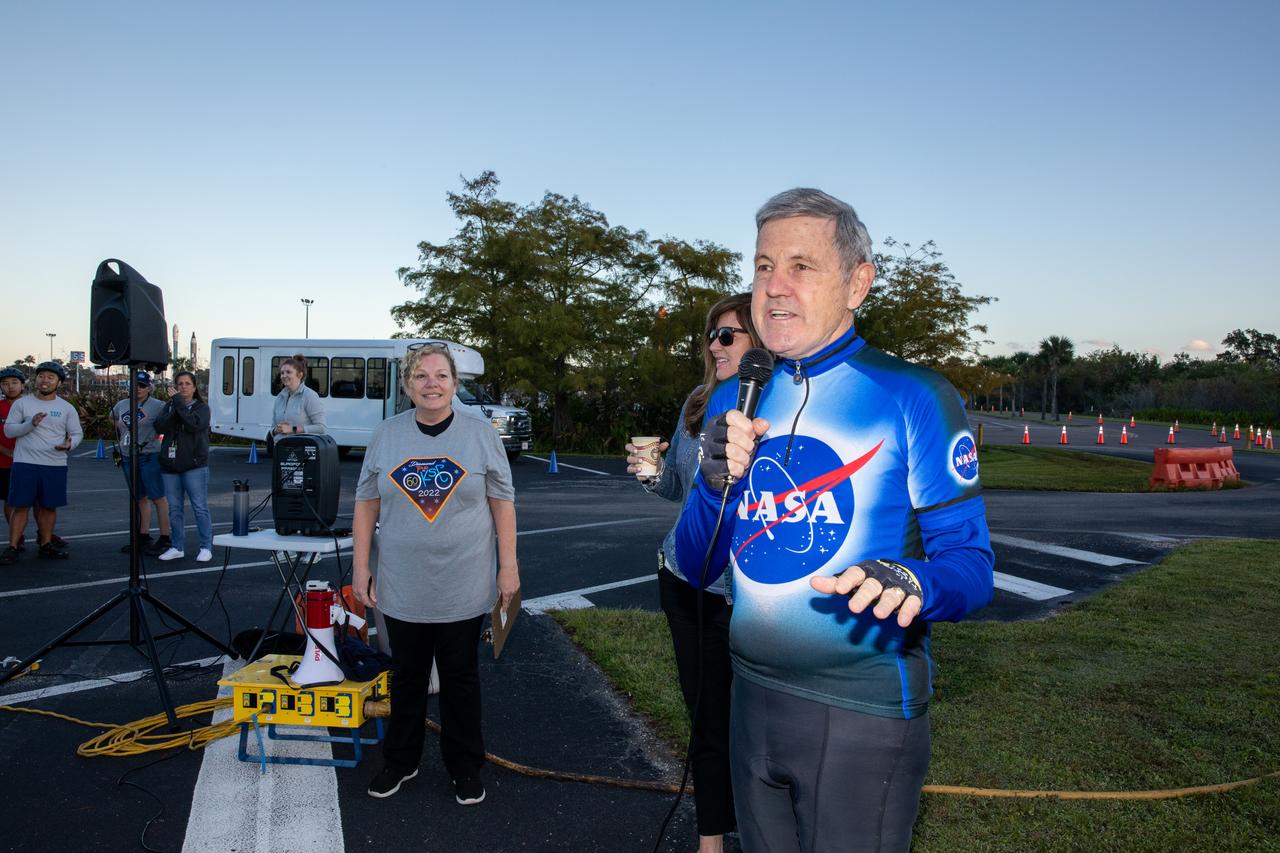
NASA Associate Administrator and retired astronaut Bob Cabana speaks to participants in the Diamond Tour de KSC at Kennedy Space Center Visitor Complex before beginning their bicycle routes at Kennedy Space Center in Florida on Oct. 22, 2022. This unique event, held for the first time since 2019, was part of the Safety organization’s Fall Into Safety and Health event, and named “diamond” to honor the center’s 60th anniversary. Cyclists covered three different routes and rode by historic landmarks, completing a total of about 37 miles.
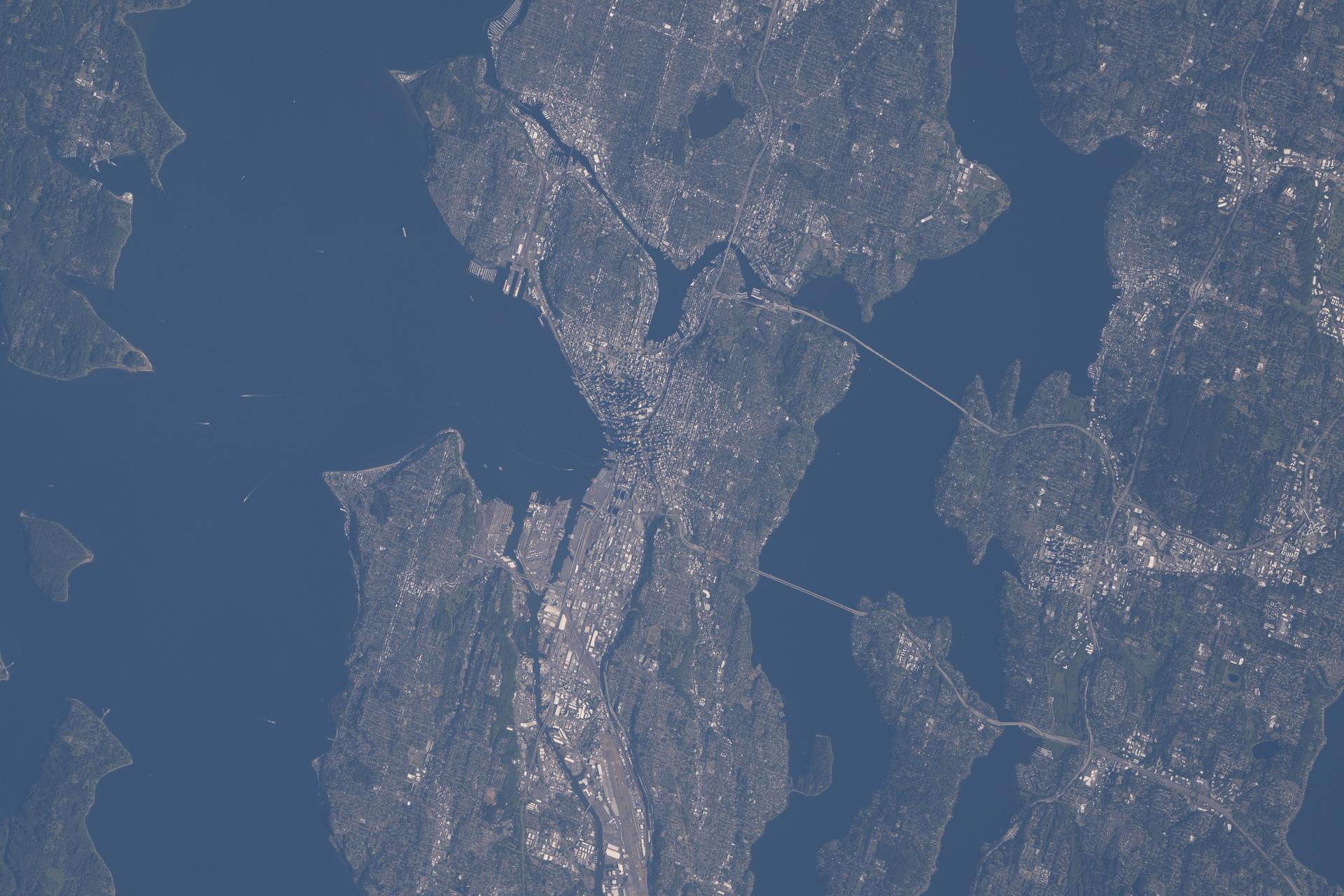
iss074e0723716 (June 16, 2026) --- Seattle, Washington, with a metropolitan population of over 4.15 million, sits between Puget Sound and Lake Washington and is also known as the "Emerald City" due to the lush evergreen forests surrounding it. Two famous landmarks in Seattle include Pike Place Market, America's oldest continuously operating farmers market since 1907, and the Space Needle, built for the 1962 World's Fair. The International Space Station was orbiting 265 miles above the U.S.–Canadian border at the time of this photograph. Credit: NASA/Chris Williams
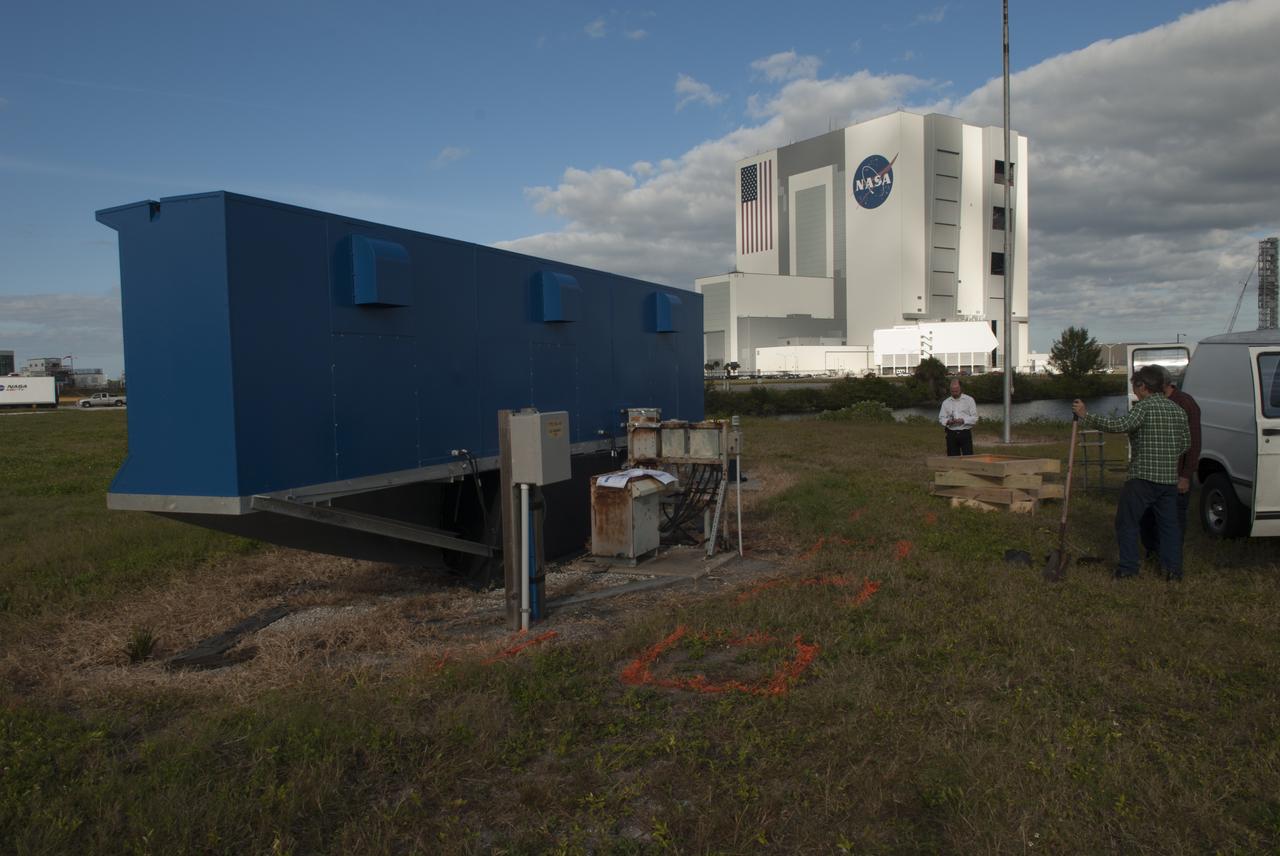
At NASA's Kennedy Space Center in Florida, Kennedy TV senior systems engineer Ronald Gonser, left, Jeff Pratt and Frank Morse with Abacus Technology prep the area behind the current countdown clock for the groundbreaking ceremony for the new countdown clock. The old timepiece was designed by Kennedy engineers and built by Kennedy technicians in 1969. Not including the triangular concrete and aluminum base, the famous landmark is nearly 6 feet 70 inches high, 26 feet 315 inches wide and 3 feet deep. The new display will be similar in size, with the screen being nearly 26 feet wide by 7 feet high.
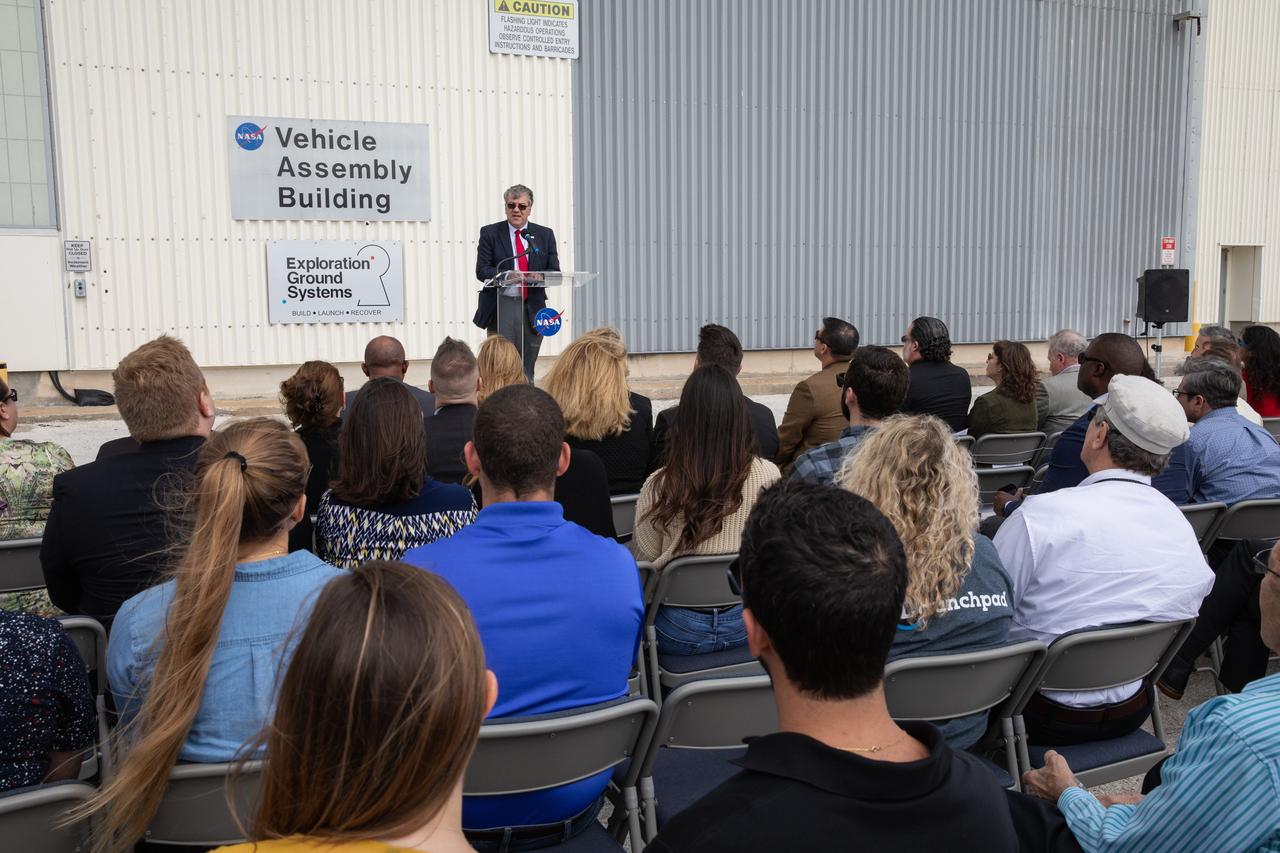
Florida Department of Transportation Secretary Kevin Thibault speaks to attendees during a ceremony on Jan. 10, 2020, to recognize the Vehicle Assembly Building with the National Historic Civil Engineering Landmark award. The Florida Section American Society of Civil Engineers nominated the historic building and bestowed the award. The VAB is the first building at Kennedy Space Center to earn this distinction. At the time of its completion, the 129-million-cubic-foot structure was the largest building in the world. Originally designed and built to accommodate the Saturn V/Apollo used in Project Apollo, the VAB was later modified for its role in the Space Shuttle Program.
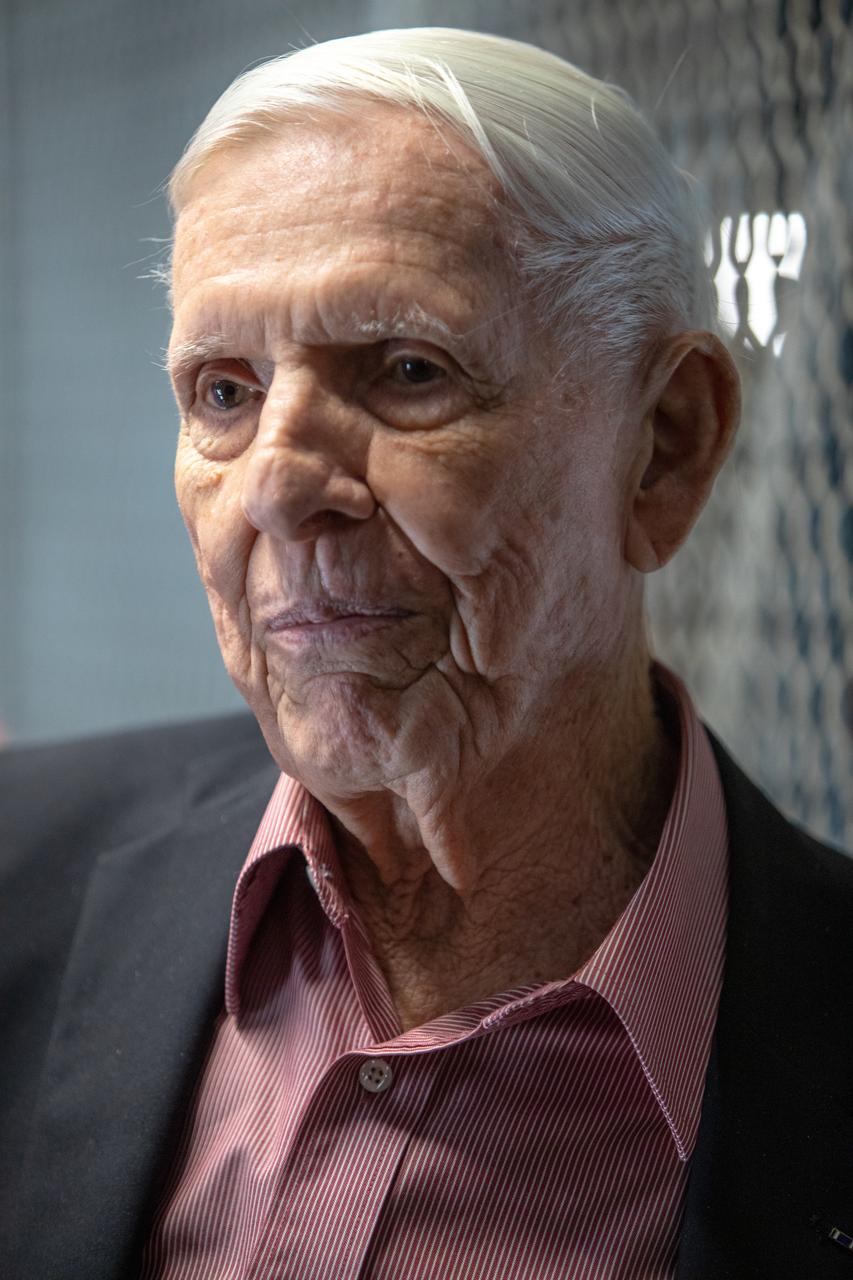
Phil Moyer, original project lead for the Vehicle Assembly Building (VAB), tours the Vehicle Assembly Building on Nov. 22, 2019 at NASA’s Kennedy Space Center in Florida. The VAB was recognized with the National Historic Civil Engineering Landmark award by the Florida Section American Society of Civil Engineers during a ceremony on Jan. 10, 2020. The VAB is the first building at Kennedy Space Center to earn this distinction. At the time of its completion, the 129-million-cubic-foot structure was the largest building in the world. Originally designed and built to accommodate the Saturn V/Apollo used in Project Apollo, the VAB was later modified for its role in the Space Shuttle Program.
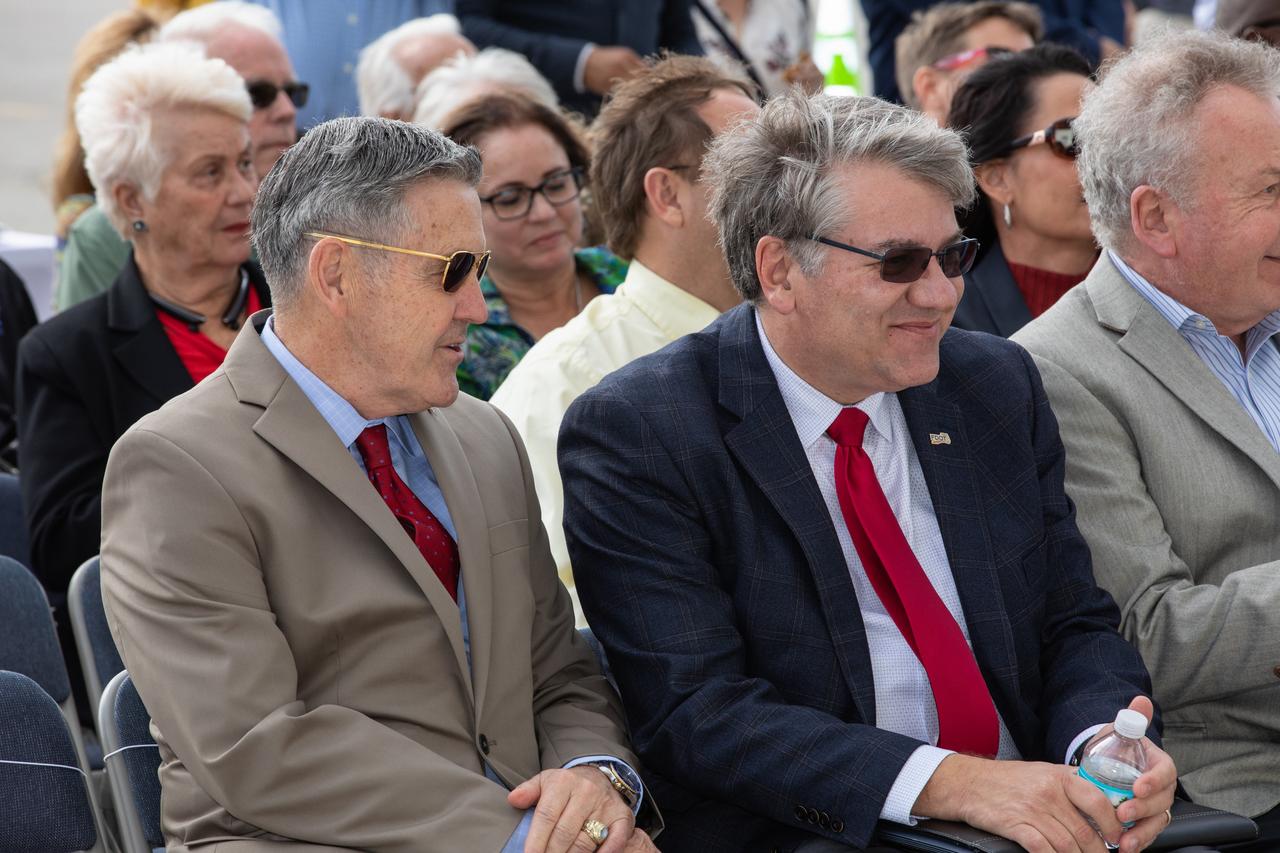
Kennedy Space Center Director Bob Cabana, left, talks with Florida Department of Transportation Secretary Kevin Thibault during a ceremony on Jan. 10, 2020, to recognize the Vehicle Assembly Building with the National Historic Civil Engineering Landmark award. The Florida Section American Society of Civil Engineers nominated the historic building and bestowed the award. The VAB is the first building at Kennedy Space Center to earn this distinction. At the time of its completion, the 129-million-cubic-foot structure was the largest building in the world. Originally designed and built to accommodate the Saturn V/Apollo used in Project Apollo, the VAB was later modified for its role in the Space Shuttle Program.
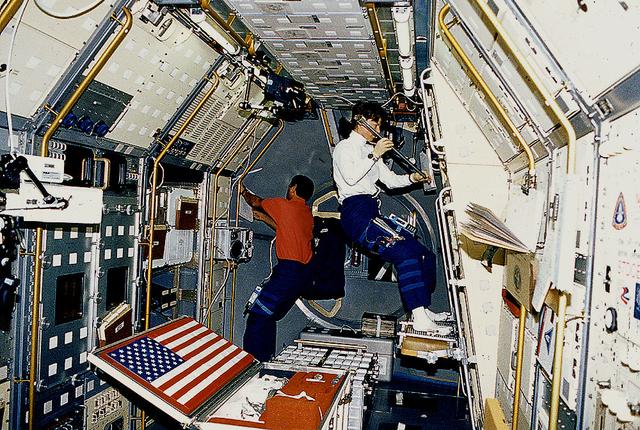
Space Shuttle Columbia (STS-50) onboard photo of astronauts working in United States Microgravity Laboratory (USML-1). USML-1 will fly in orbit for extended periods of time attached to the Shuttle, providing greater opportunities for research in materials science, fluid dynamics, biotechnology, and combustion science. The scientific data gained from the USML-1 missions will constitute a landmark in space science, pioneering investigations into the role of gravity in a wide array of important processes and phenomena. In addition, the missions will also provide much of the experience in performing research in space and in the design of instruments needed for Space Station Freedom and the programs to follow in the 21st Century.
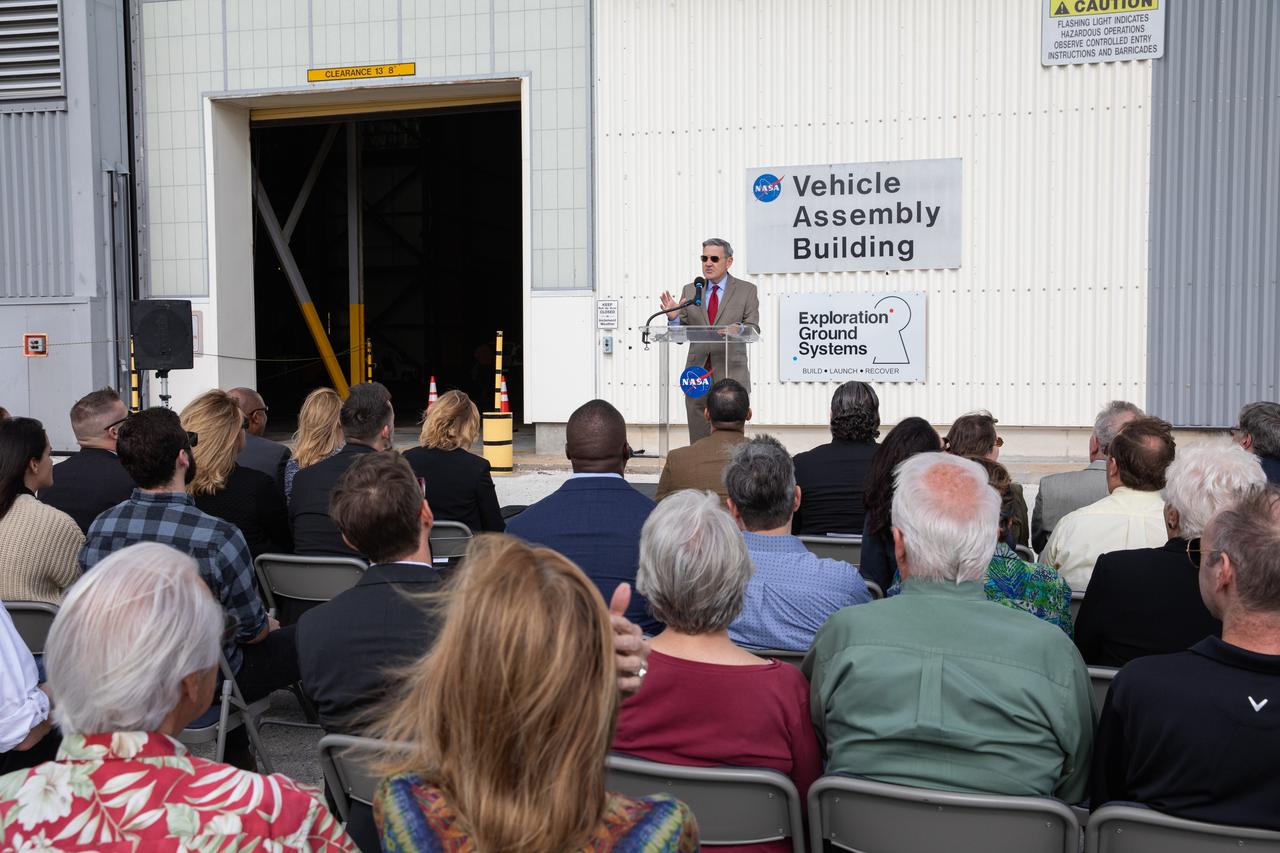
Kennedy Space Center Director Bob Cabana, speaks to attendees during a ceremony on Jan. 10, 2020, to recognize the Vehicle Assembly Building with the National Historic Civil Engineering Landmark award. The Florida Section American Society of Civil Engineers nominated the historic building and bestowed the award. The VAB is the first building at Kennedy Space Center to earn this distinction. At the time of its completion, the 129-million-cubic-foot structure was the largest building in the world. Originally designed and built to accommodate the Saturn V/Apollo used in Project Apollo, the VAB was later modified for its role in the Space Shuttle Program.
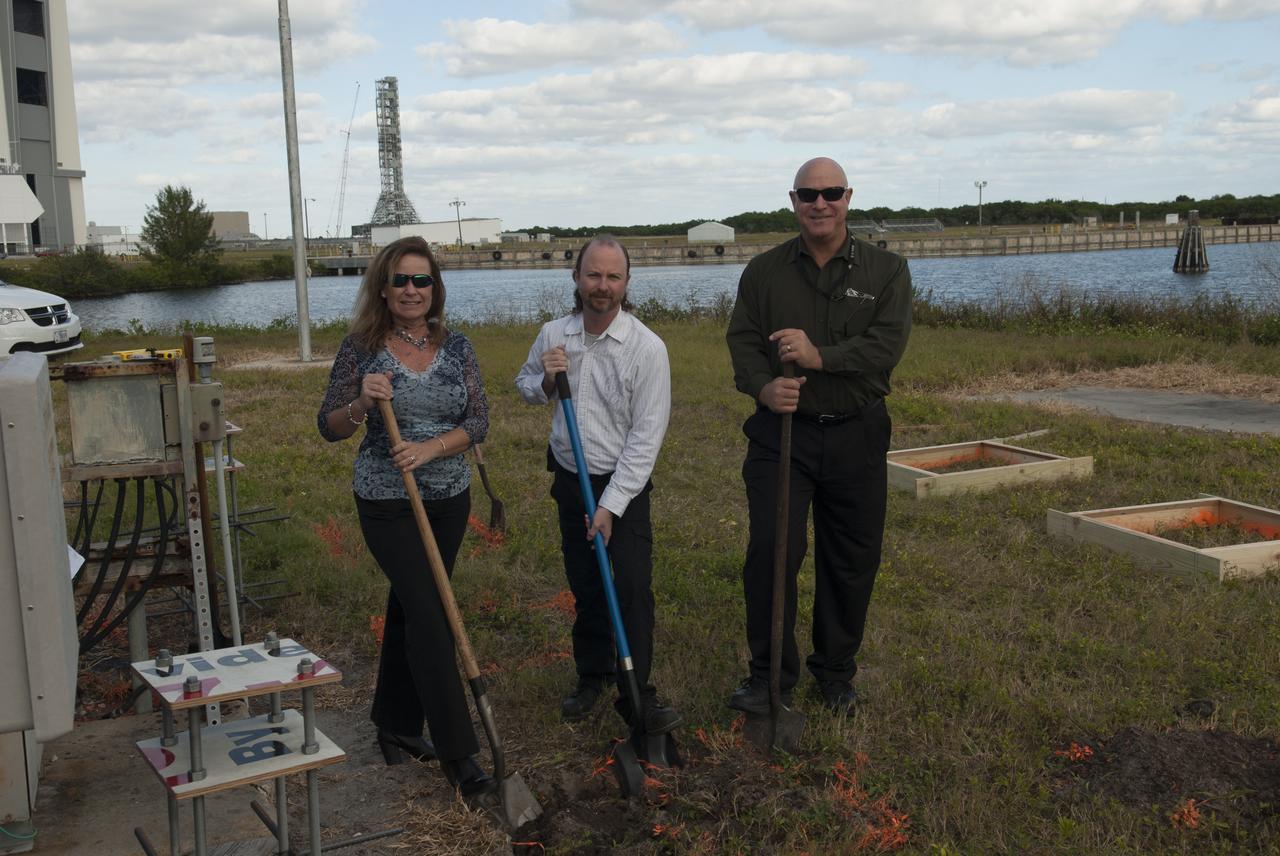
At NASA's Kennedy Space Center in Florida, Project Manager Sonja Hernandez, Kennedy TV senior systems engineer Ronald Gonser and Kennedy/IMCS senior manager Jeff Van Pelt dig in behind the current countdown clock during the groundbreaking ceremony for the new countdown clock. The old timepiece was designed by Kennedy engineers and built by Kennedy technicians in 1969. Not including the triangular concrete and aluminum base, the famous landmark is nearly 6 feet 70 inches high, 26 feet 315 inches wide and 3 feet deep. The new display will be similar in size, with the screen being nearly 26 feet wide by 7 feet high.
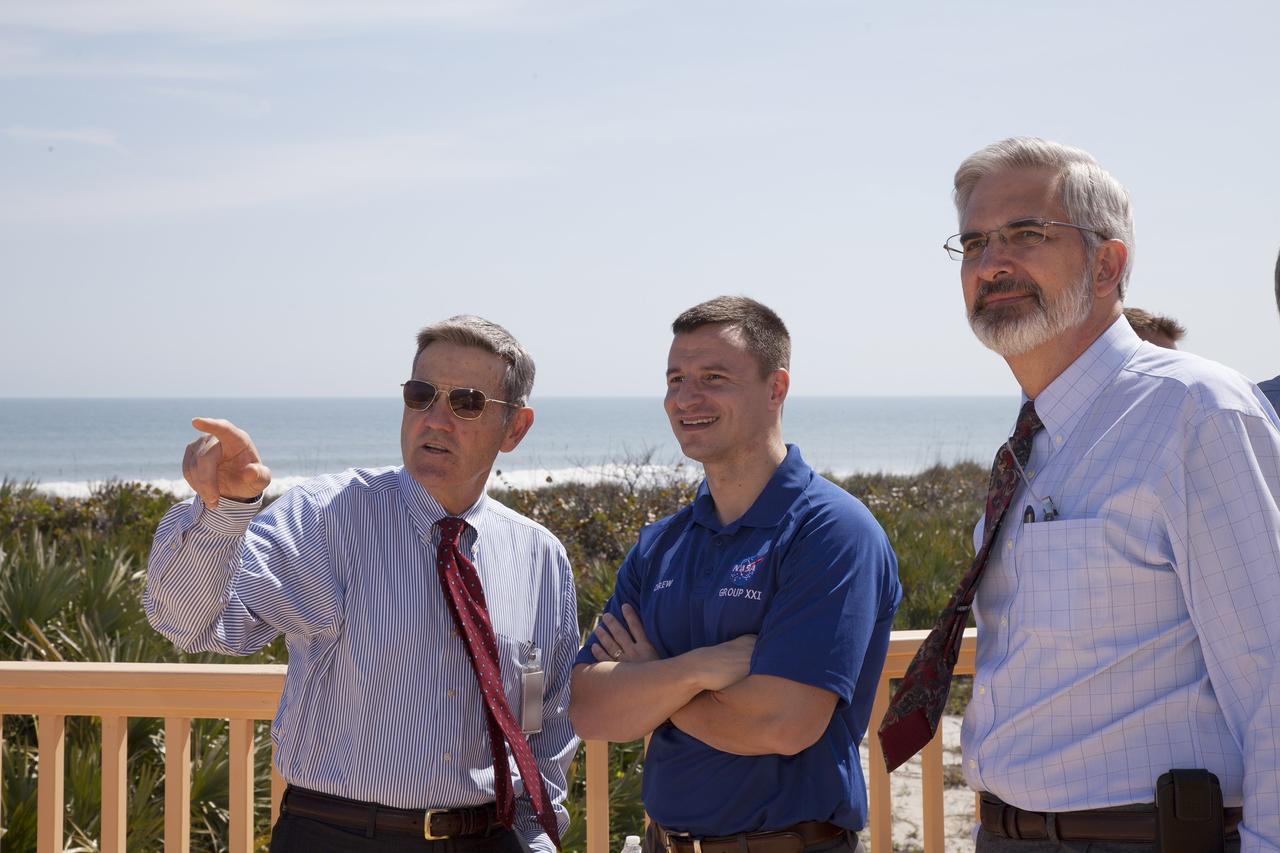
CAPE CANAVERAL, Fla. – Bob Cabana, director of NASA's Kennedy Space Center and a former space shuttle commander, points out landmarks of the space center to astronaut candidate Andrew Morgan during a visit to the Beach House at Kennedy. The Beach House is a traditional gathering place for astronauts before they fly into space. The astronaut class of 2013 was selected by NASA after an extensive year-and-a-half search. The new group will help the agency push the boundaries of exploration and travel to new destinations in the solar system. To learn more about the astronaut class of 2013, visit: http://www.nasa.gov/astronauts/2013astroclass.html Photo credit: NASA/Daniel Casper

ISS013-E-13549 (2 May 2006) --- Washington, DC is featured in this image photographed by an Expedition 13 crewmember on the International Space Station. When the image was exposed, the orbital outpost was located over the western border of Maryland and West Virginia. The resolution and extent of the true-color, handheld image is similar to the 15-meter/pixel data obtained by sensors onboard the unmanned Landsat-7 and Terra satellites. This resolution is sufficient to capture the sunglint off the Capitol Building's dome. Other major landmarks that are visible include the Washington Monument, the Pentagon (bottom left, southwest of the Potomac River), and the Lincoln Memorial, along the northwest bank of the Potomac.
Dick Bergmann, at right, original lead designer for the Vehicle Assembly Building, stands on the roof of the iconic facility during a tour on Nov. 22, 2019 at NASA’s Kennedy Space Center in Florida. The VAB was recognized with the National Historic Civil Engineering Landmark award by the Florida Section American Society of Civil Engineers during a ceremony on Jan. 10, 2020. The VAB is the first building at Kennedy Space Center to earn this distinction. At the time of its completion, the 129-million-cubic-foot structure was the largest building in the world. Originally designed and built to accommodate the Saturn V/Apollo used in Project Apollo, the VAB was later modified for its role in the Space Shuttle Program.
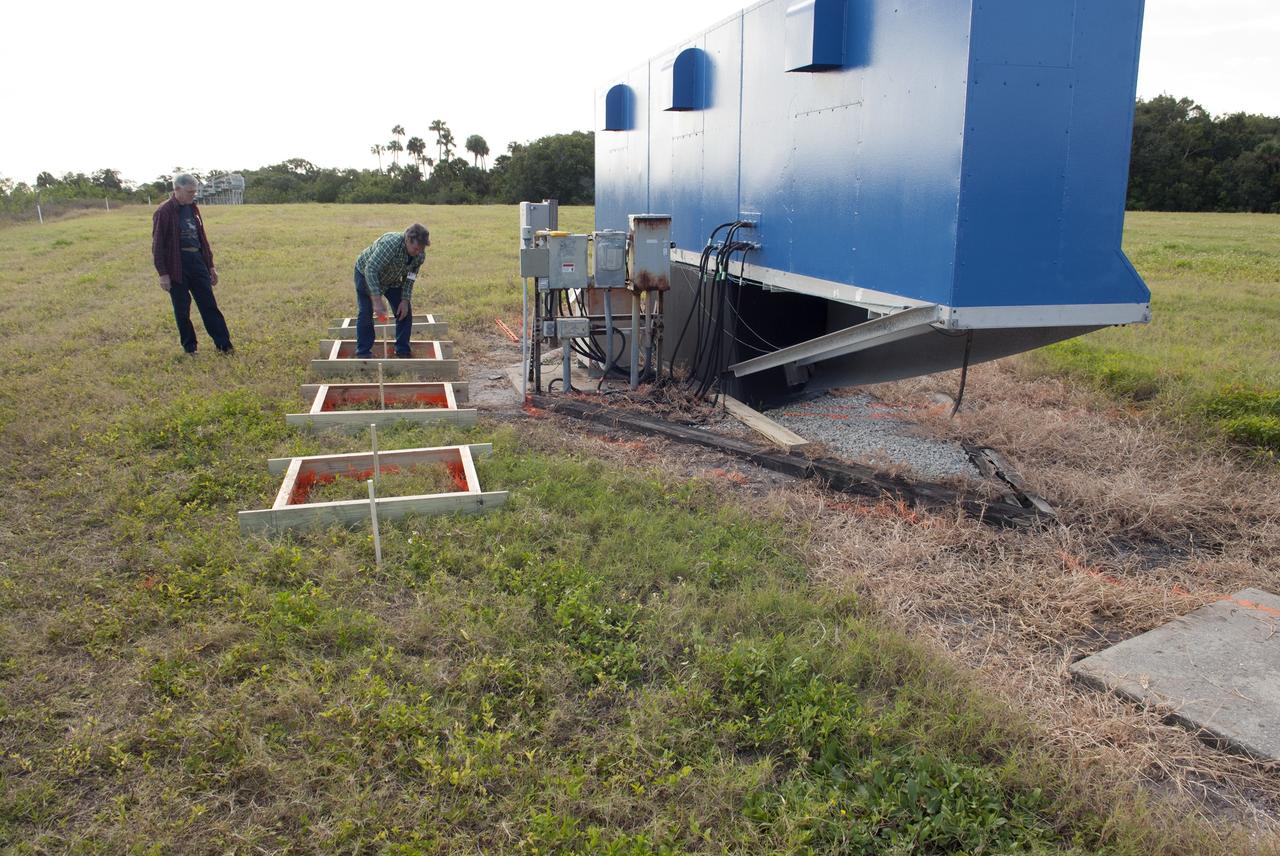
CAPE CANAVERAL, Fla. -- At NASA's Kennedy Space Center in Florida, Jeff Pratt and Frank Morse with Abacus Technology prep the area behind the current countdown clock for the groundbreaking ceremony for the new countdown clock. The old timepiece was designed by Kennedy engineers and built by Kennedy technicians in 1969. Not including the triangular concrete and aluminum base, the famous landmark is nearly 6 feet 70 inches high, 26 feet 315 inches wide and 3 feet deep. The new display will be similar in size, with the screen being nearly 26 feet wide by 7 feet high. For more information on the countdown clock, go to http://go.nasa.gov/10Zku10. Photo credit: NASA/Jim Grossmann
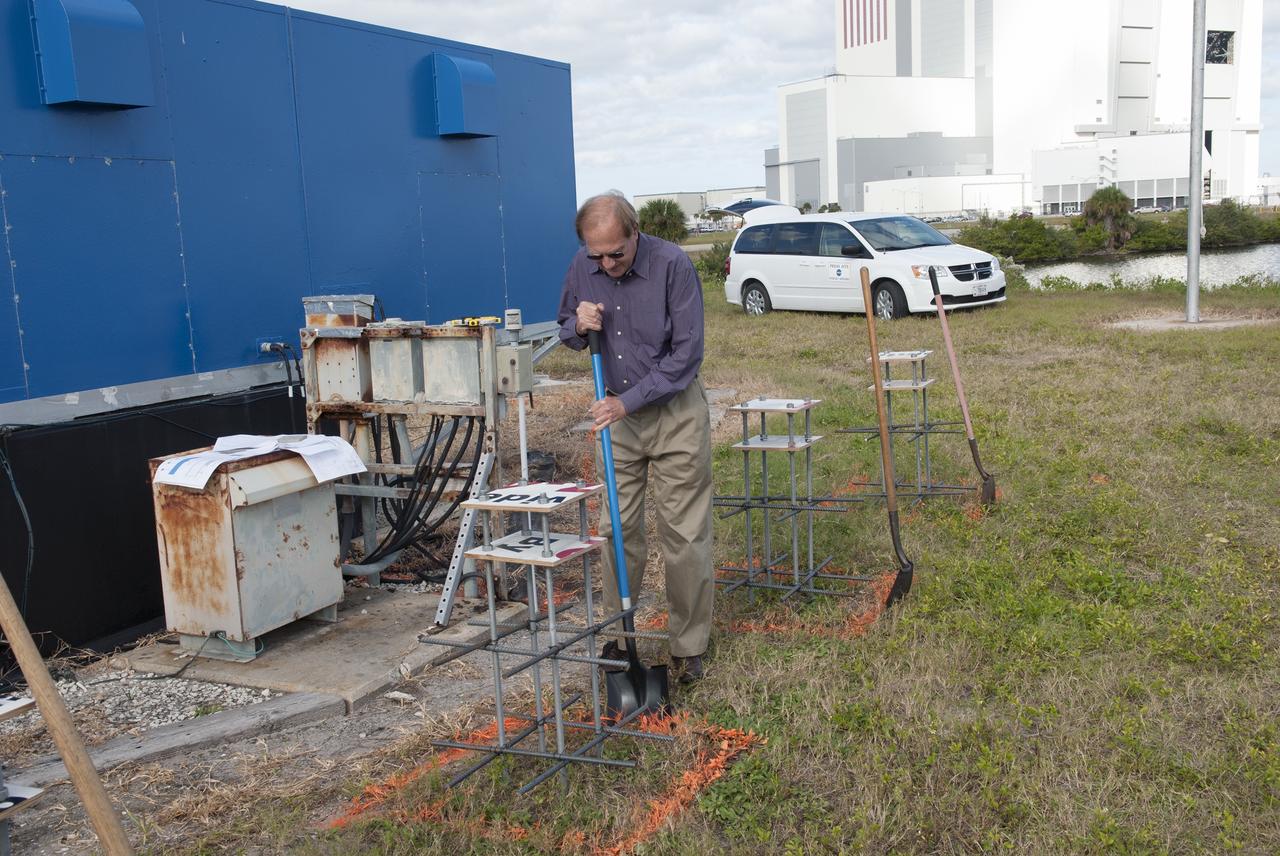
CAPE CANAVERAL, Fla. -- At NASA's Kennedy Space Center in Florida, Public Affairs Officer George Diller digs in behind the current countdown clock during the groundbreaking ceremony for the new countdown clock. The old timepiece was designed by Kennedy engineers and built by Kennedy technicians in 1969. Not including the triangular concrete and aluminum base, the famous landmark is nearly 6 feet 70 inches high, 26 feet 315 inches wide and 3 feet deep. The new display will be similar in size, with the screen being nearly 26 feet wide by 7 feet high. For more information on the countdown clock, go to http://go.nasa.gov/10Zku10. Photo credit: NASA/Jim Grossmann

Phil Moyer, original project lead for the Vehicle Assembly Building (VAB), tours the Vehicle Assembly Building on Nov. 22, 2019 at NASA’s Kennedy Space Center in Florida. The VAB was recognized with the National Historic Civil Engineering Landmark award by the Florida Section American Society of Civil Engineers during a ceremony on Jan. 10, 2020. The VAB is the first building at Kennedy Space Center to earn this distinction. At the time of its completion, the 129-million-cubic-foot structure was the largest building in the world. Originally designed and built to accommodate the Saturn V/Apollo used in Project Apollo, the VAB was later modified for its role in the Space Shuttle Program.
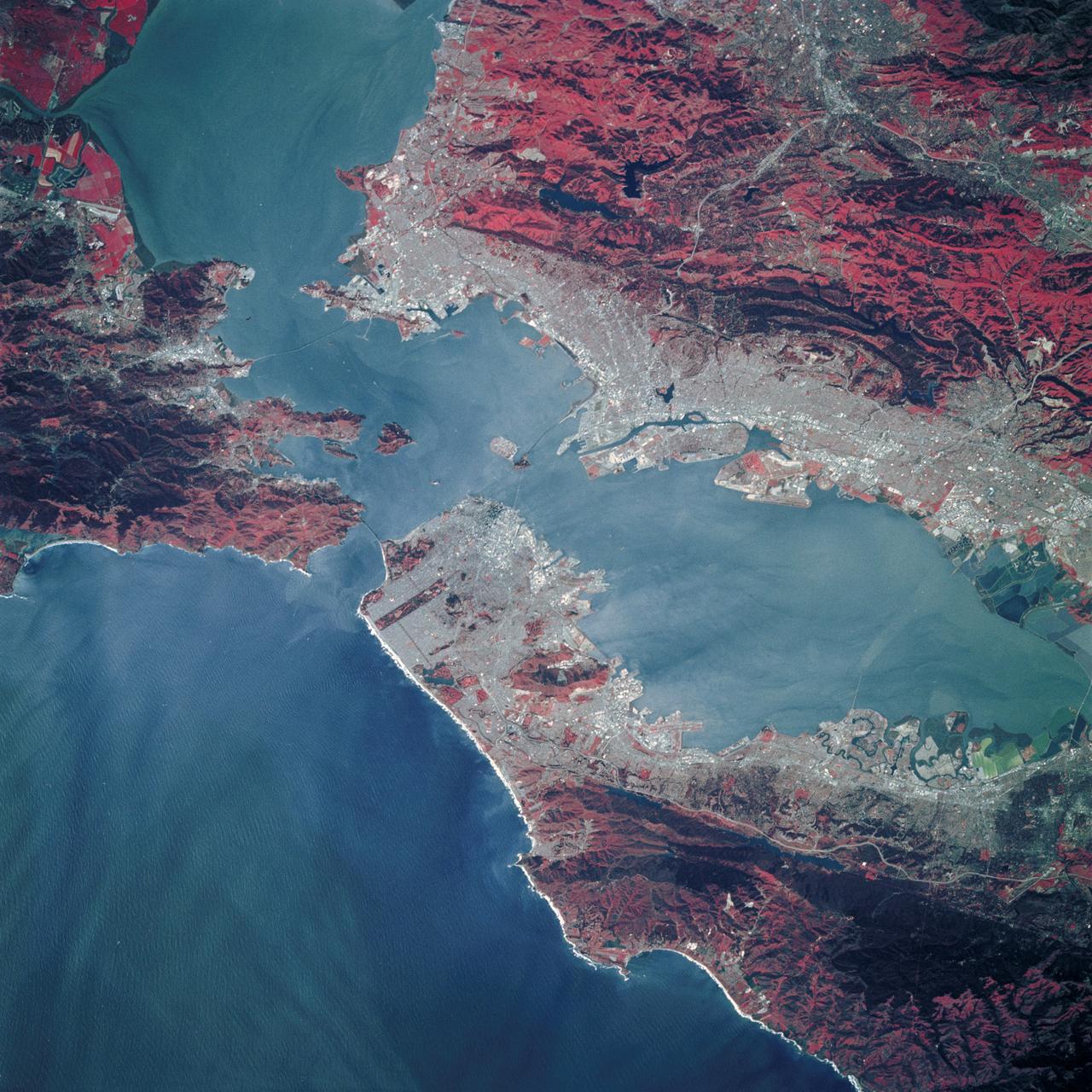
STS039-89-053 (28 April-6 May 1991) --- A 70mm, infrared frame of the city of San Francisco, taken on a clear day. The gray areas represent urban regions, and the red areas are vegetated. Within the city of San Francisco, parks like Golden Gate park and the Presidio at the base of the Golden Gate Bridge easily stand out from the well-developed parts of the city. Major thoroughfares and bridges (Golden Gate and Bay Bridges) are seen as are other landmarks such as Candlestick Park and Alcatraz. The trace of the San Andreas faults show as a straight valley running northerly along the San Francisco peninsula. Good detail is visible in the turbid waters of San Francisco Bay.
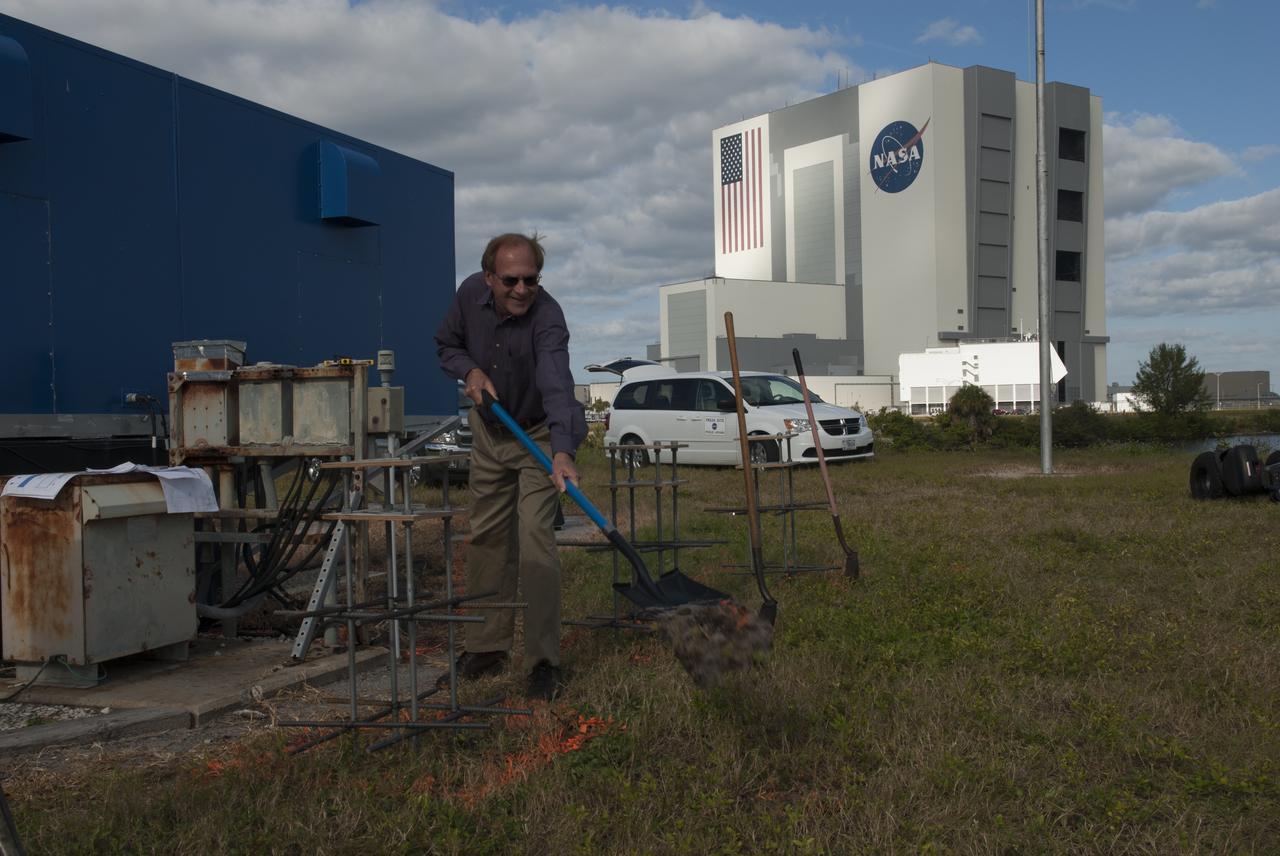
At NASA's Kennedy Space Center in Florida, Public Affairs Officer George Diller shovels the first scoop of soil behind the current countdown clock during the groundbreaking ceremony for the new countdown clock. The old timepiece was designed by Kennedy engineers and built by Kennedy technicians in 1969. Not including the triangular concrete and aluminum base, the famous landmark is nearly 6 feet 70 inches high, 26 feet 315 inches wide and 3 feet deep. The new display will be similar in size, with the screen being nearly 26 feet wide by 7 feet high.
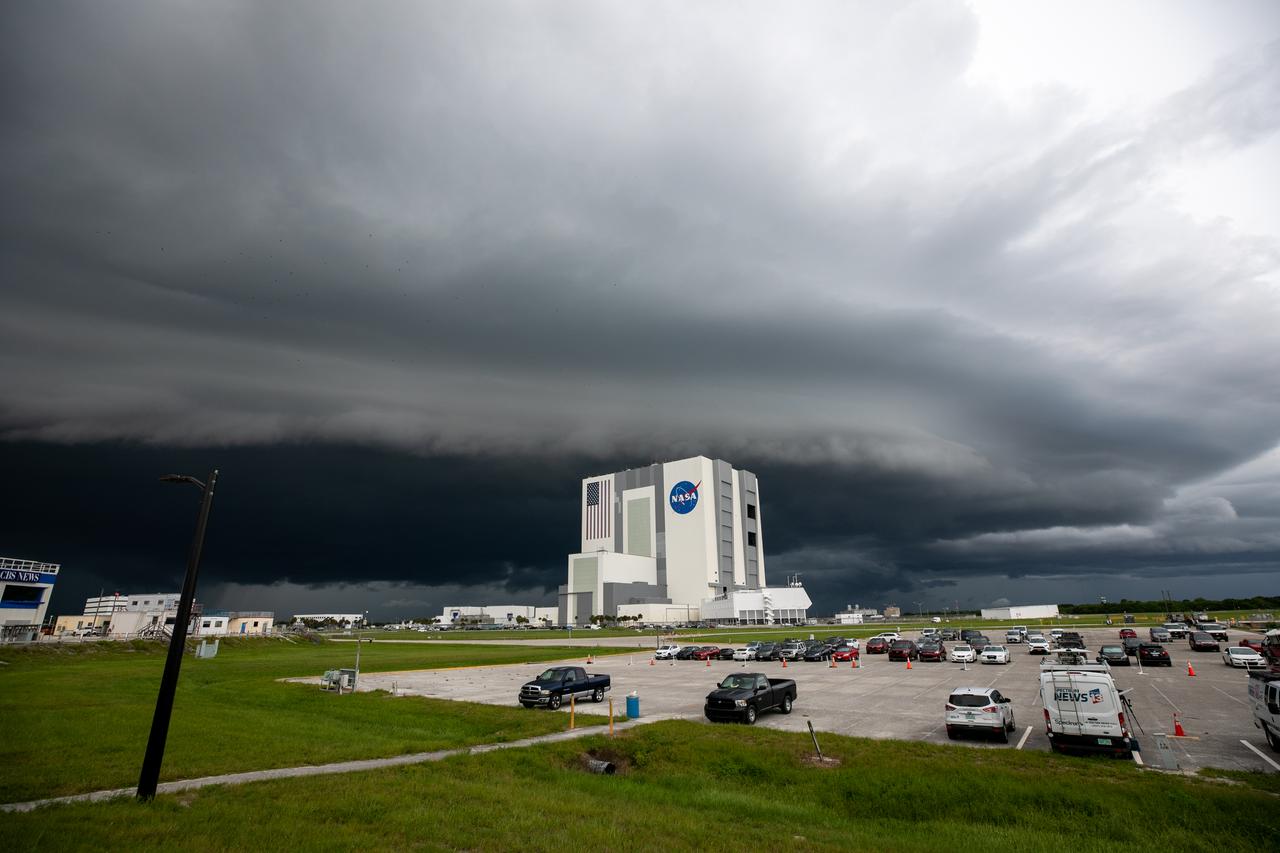
Storm clouds roll in over the Vehicle Assembly Building (VAB) at NASA’s Kennedy Space Center in Florida on July 28, 2020. Standing at 525 feet tall, this iconic landmark at Kennedy is capable of hosting multiple varieties of rockets and spacecraft at the same time. Currently, the VAB is being utilized to process and assemble the agency’s Space Launch System (SLS) rocket for Artemis missions to the Moon and beyond to Mars. Artemis I – the first launch under the agency’s Artemis Program – will test SLS and Orion as an integrated system prior to crewed flights to the Moon.
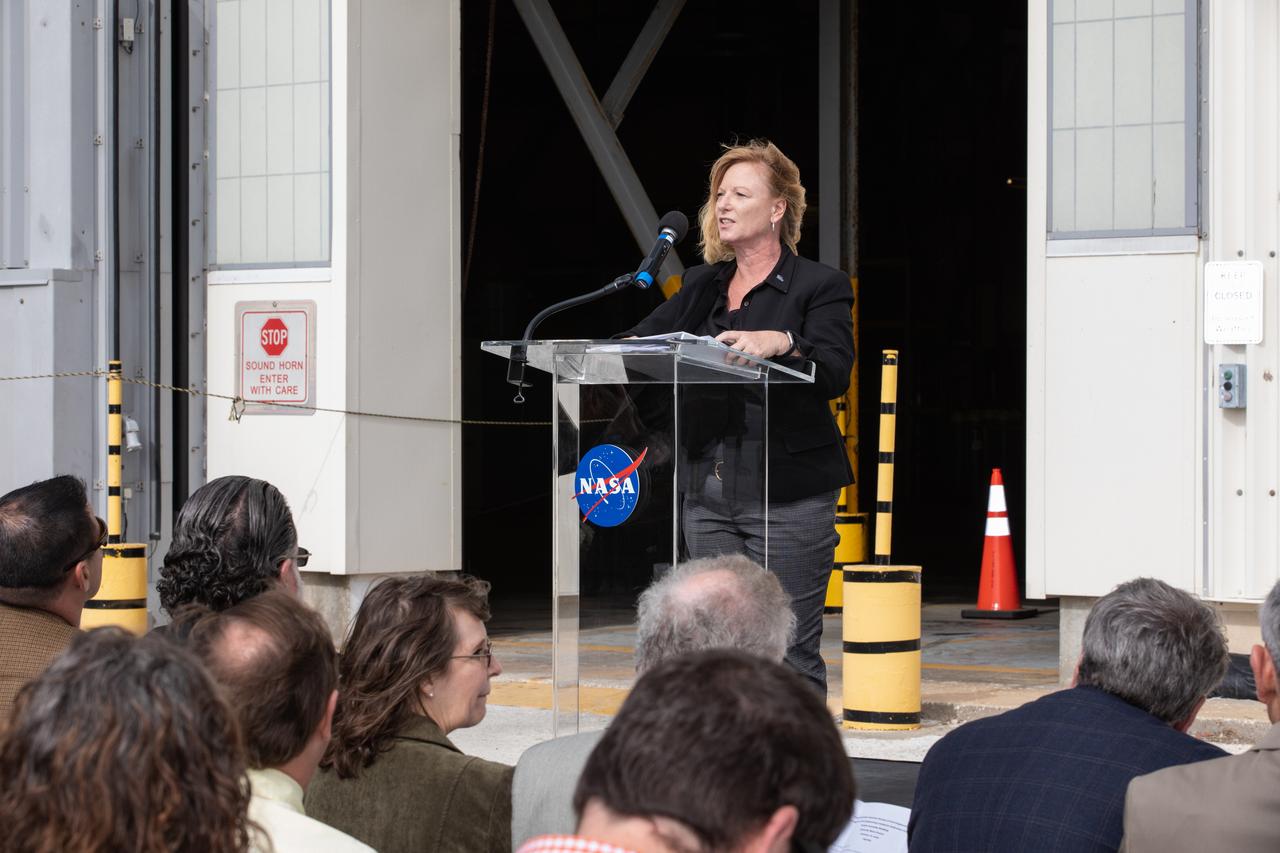
Kathleen Ruvarac, History and Heritage Committee chairperson with the American Society of Civil Engineers (ASCE), speaks to attendees during a ceremony on Jan. 10, 2020, to recognize the Vehicle Assembly Building with the National Historic Civil Engineering Landmark award. The Florida Section ASCE nominated the historic building and bestowed the award. The VAB is the first building at Kennedy Space Center to earn this distinction. At the time of its completion, the 129-million-cubic-foot structure was the largest building in the world. Originally designed and built to accommodate the Saturn V/Apollo used in Project Apollo, the VAB was later modified for its role in the Space Shuttle Program.
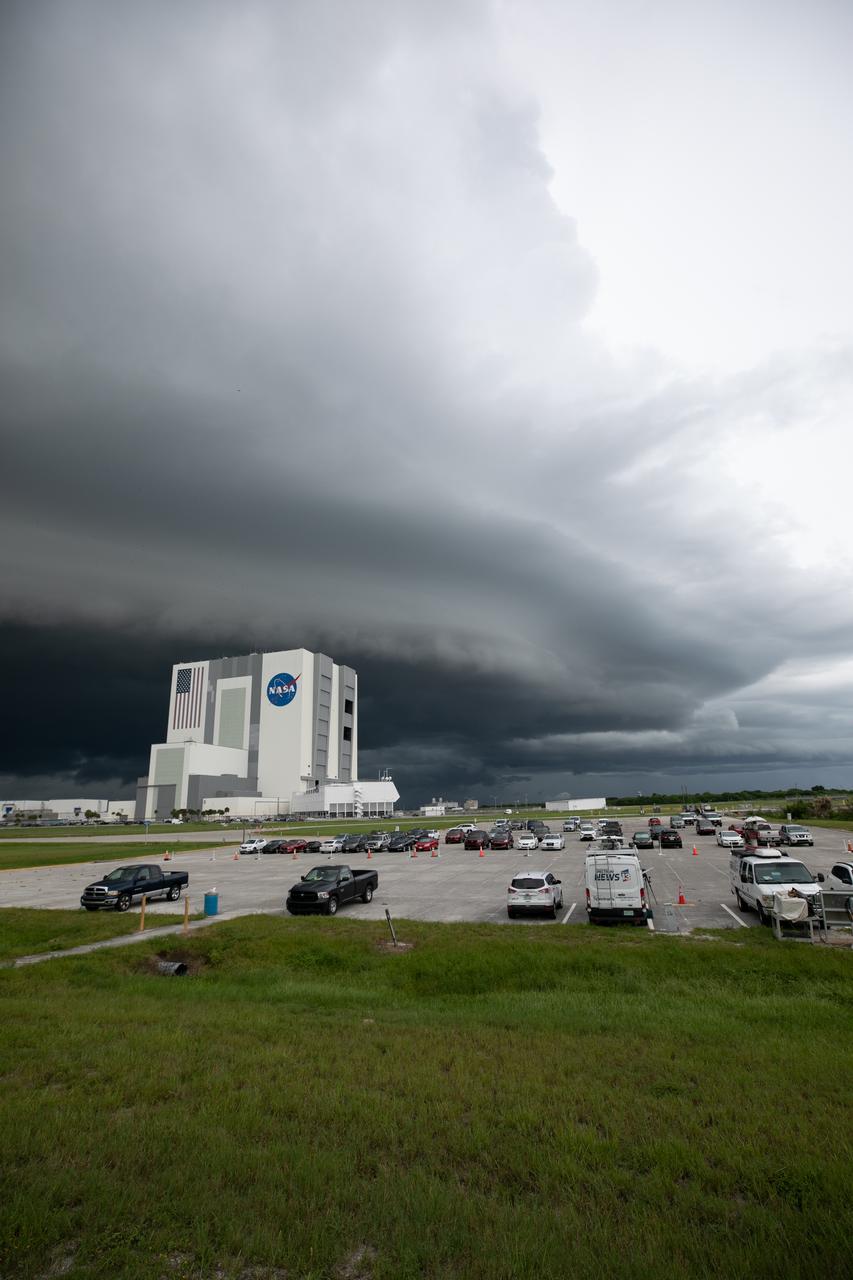
Storm clouds roll in over the Vehicle Assembly Building (VAB) at NASA’s Kennedy Space Center in Florida on July 28, 2020. Standing at 525 feet tall, this iconic landmark at Kennedy is capable of hosting multiple varieties of rockets and spacecraft at the same time. Currently, the VAB is being utilized to process and assemble the agency’s Space Launch System (SLS) rocket for Artemis missions to the Moon and beyond to Mars. Artemis I – the first launch under the agency’s Artemis Program – will test SLS and Orion as an integrated system prior to crewed flights to the Moon.

The nose cone of the space shuttle Endeavour is seen next to the Randy’s Donuts landmark in Inglewood, California, Friday, Oct. 12, 2012. Endeavour, built as a replacement for space shuttle Challenger, completed 25 missions, spent 299 days in orbit, and orbited Earth 4,671 times while traveling 122,883,151 miles. Beginning Oct. 30, the shuttle will be on display in the CSC’s Samuel Oschin Space Shuttle Endeavour Display Pavilion, embarking on its new mission to commemorate past achievements in space and educate and inspire future generations of explorers. Photo Credit: (NASA/Carla Cioffi)
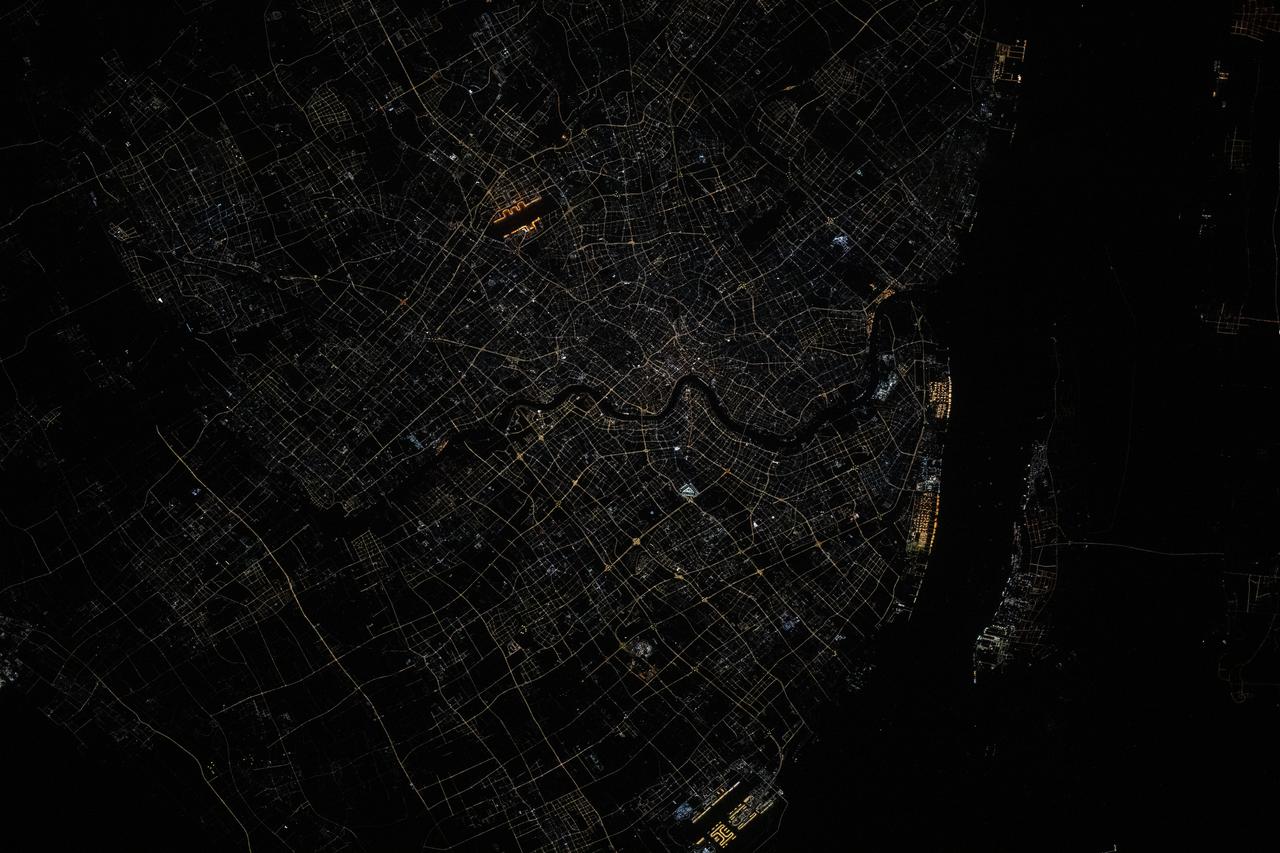
iss073e0515603 (Aug. 24, 2025) --- Shanghai, China, situated on the Yangtze River where it meets the East China Sea, is pictured at approximately 1:32 a.m. local time from the International Space Station as it orbited 261 miles above the nation's eastern coastline. Visible landmarks include Shanghai Hongqiao International Airport near the top of the frame and Shanghai Pudong International Airport at the bottom. The city's lights appear dimmer from orbit due to the widespread use of modern, downward-facing, energy-efficient lighting that reduces light pollution. Credit: JAXA (Japan Aerospace Exploration Agency)

ISS002-E-5457 (13 April 2001) --- The "bull's-eye" of the Richat Structure adds interest to the barren Gres de Chinguetti Plateau in central Mauritania in northwest Africa. It represents domally uplifted, layered (sedimentary) rocks that have been eroded by water and wind into the present shape. The 25-mile-wide structure is a 300-foot-deep landmark that has caught the eye of many an astronaut in Earth orbit. Image number ISS002-E-5693 shows the same feature six days later. The image was recorded with a digital still camera.
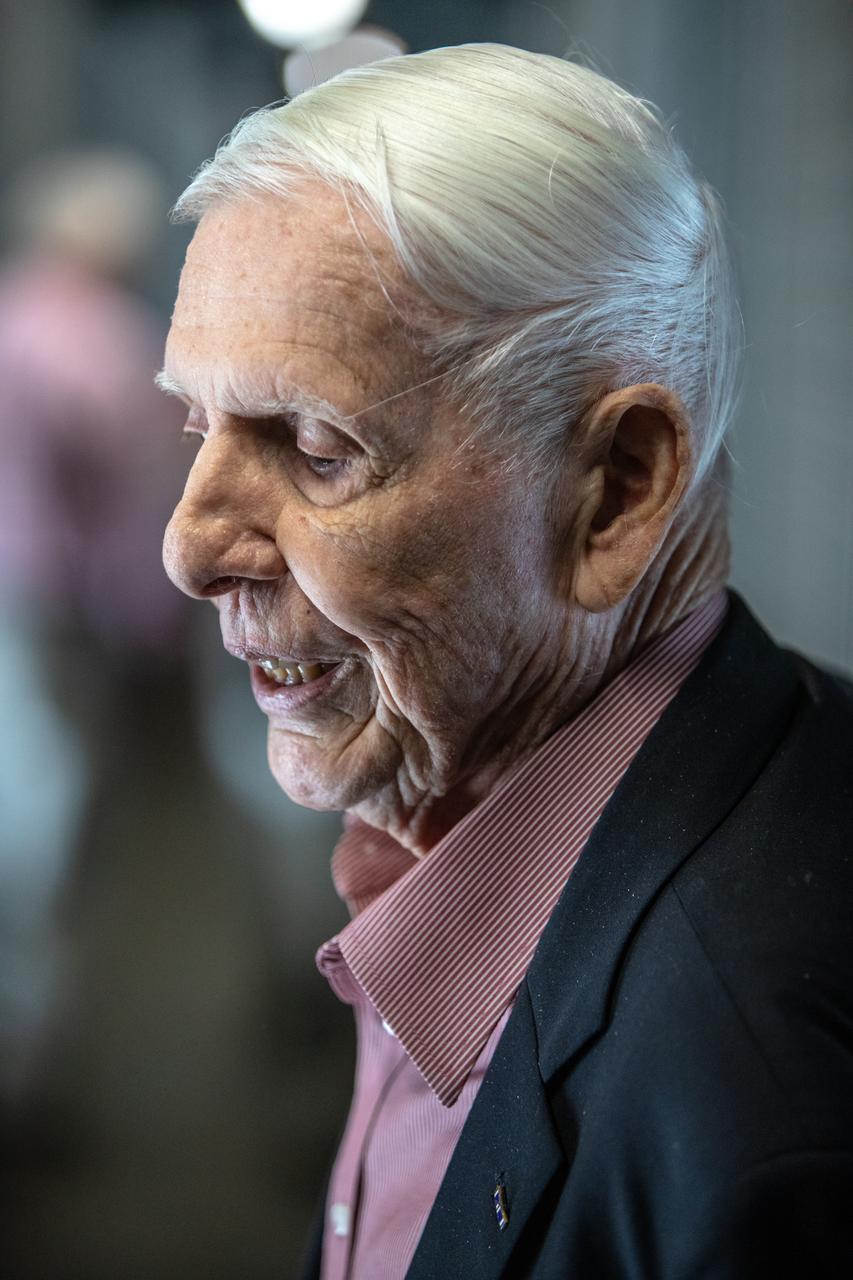
Phil Moyer, original project lead for the Vehicle Assembly Building (VAB), tours the Vehicle Assembly Building on Nov. 22, 2019 at NASA’s Kennedy Space Center in Florida. The VAB was recognized with the National Historic Civil Engineering Landmark award by the Florida Section American Society of Civil Engineers during a ceremony on Jan. 10, 2020. The VAB is the first building at Kennedy Space Center to earn this distinction. At the time of its completion, the 129-million-cubic-foot structure was the largest building in the world. Originally designed and built to accommodate the Saturn V/Apollo used in Project Apollo, the VAB was later modified for its role in the Space Shuttle Program.
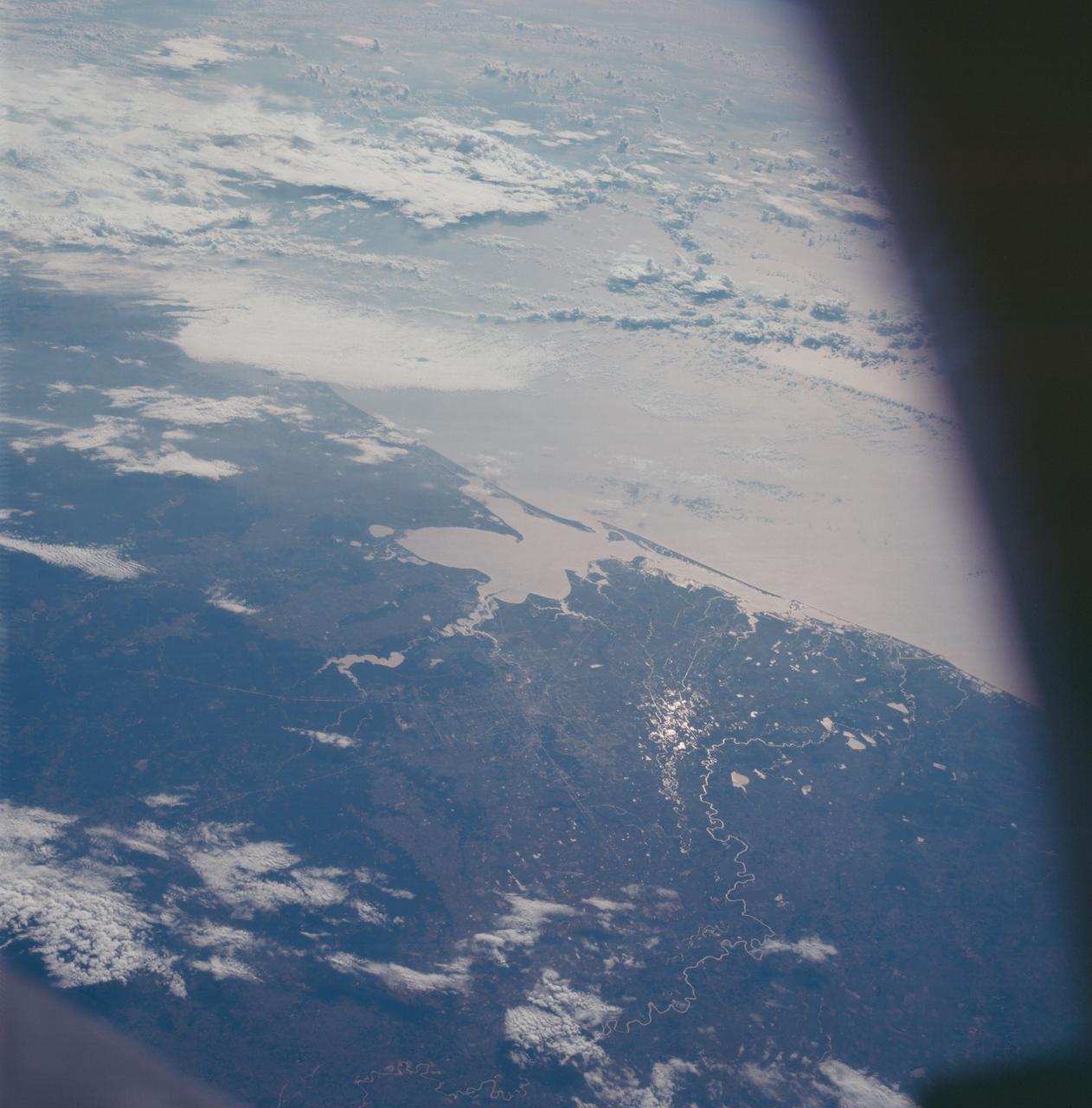
AS07-07-1872 (11-22 Oct. 1968) --- The Houston, Texas, and Gulf Coast area, looking southeast, as seen from the Apollo 7 spacecraft at an altitude of 101 nautical miles. This photograph was made during the spacecraft's 91st revolution of Earth, at ground elapsed time of 144 hours and 26 minutes. The morning sun causes a spectacular reflection on water surfaces such as the Gulf of Mexico, Galveston Bay, Buffalo Bayou, and the Brazos River, and causes a unique reflection in the canals and rice fields west of Alvin. Some of the landmarks visible in this picture include highways and freeways, the Astrodome, the new Intercontinental Airport, and the Manned Spacecraft Center.
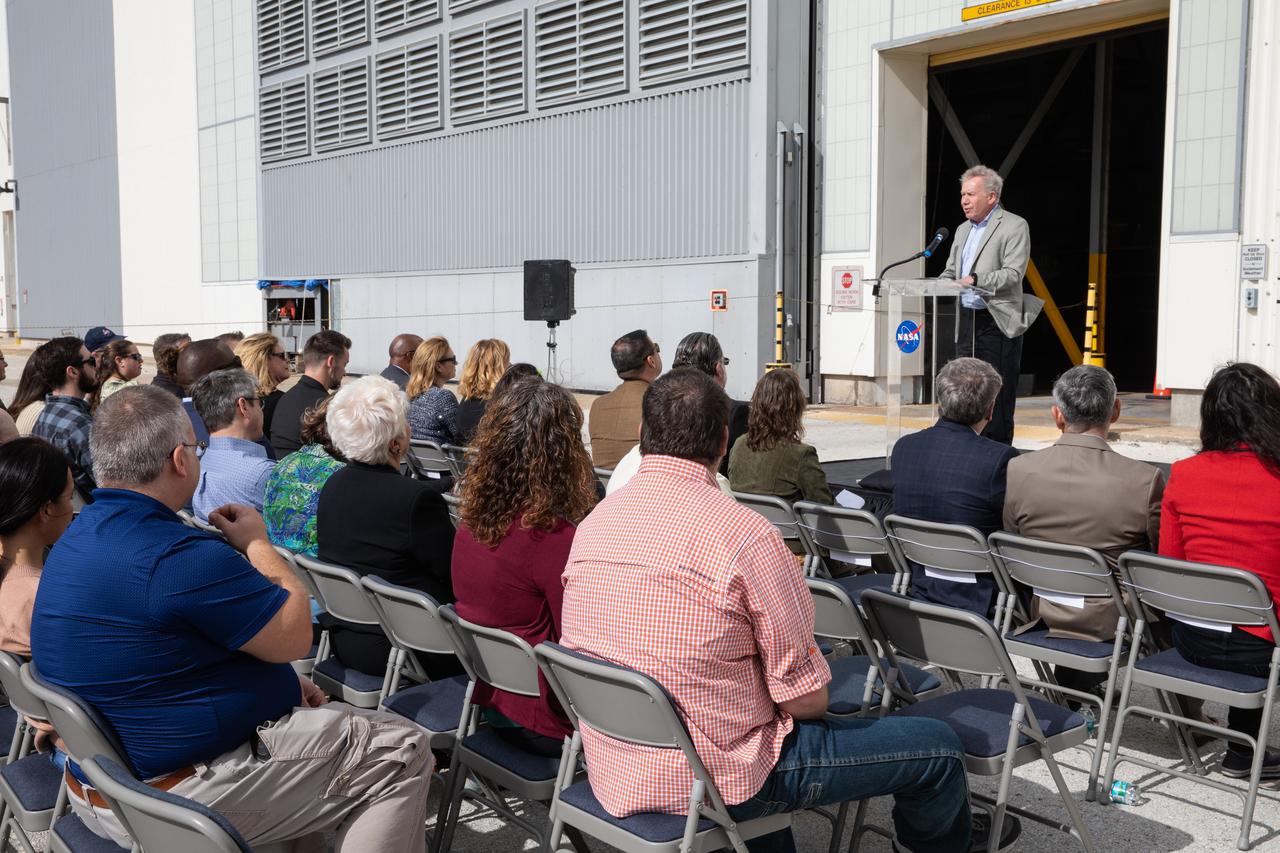
Glenn Bell, American Society of Civil Engineers (ASCE) Society of Structural Engineering Institute president speaks to attendees during a ceremony on Jan. 10, 2020, to recognize the Vehicle Assembly Building with the National Historic Civil Engineering Landmark award. The Florida Section ASCE nominated the historic building and bestowed the award. The VAB is the first building at Kennedy Space Center to earn this distinction. At the time of its completion, the 129-million-cubic-foot structure was the largest building in the world. Originally designed and built to accommodate the Saturn V/Apollo used in Project Apollo, the VAB was later modified for its role in the Space Shuttle Program.
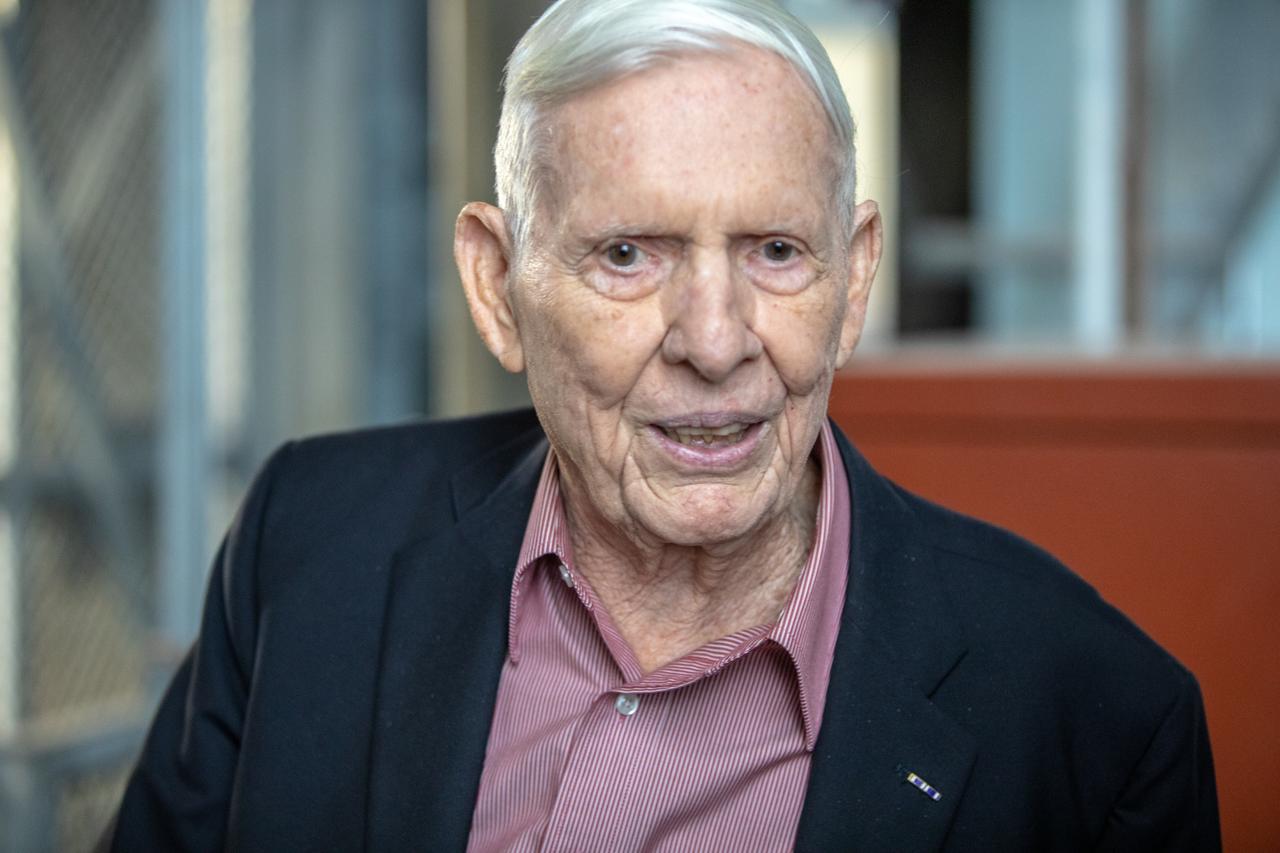
Phil Moyer, original project lead for the Vehicle Assembly Building (VAB), tours the Vehicle Assembly Building on Nov. 22, 2019 at NASA’s Kennedy Space Center in Florida. The VAB was recognized with the National Historic Civil Engineering Landmark award by the Florida Section American Society of Civil Engineers during a ceremony on Jan. 10, 2020. The VAB is the first building at Kennedy Space Center to earn this distinction. At the time of its completion, the 129-million-cubic-foot structure was the largest building in the world. Originally designed and built to accommodate the Saturn V/Apollo used in Project Apollo, the VAB was later modified for its role in the Space Shuttle Program.
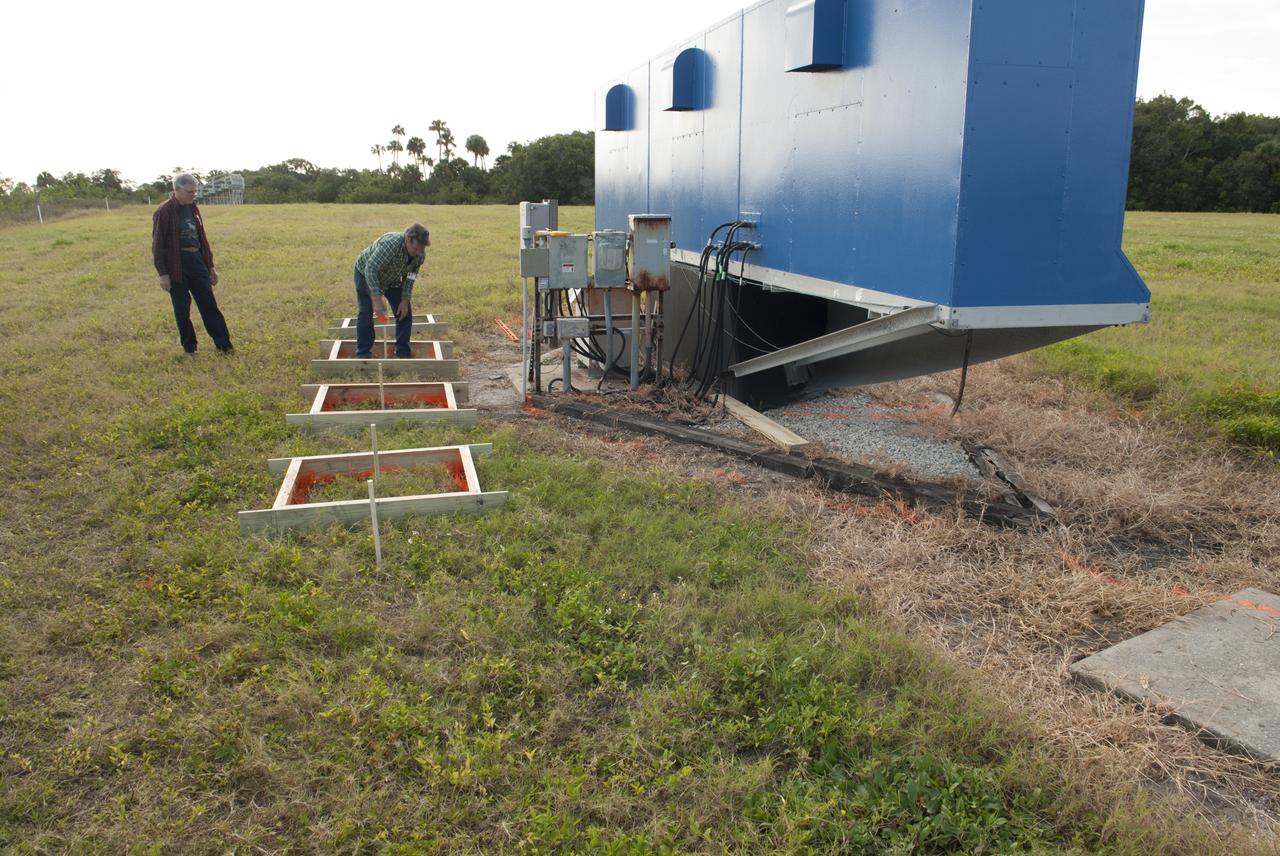
At NASA's Kennedy Space Center in Florida, Jeff Pratt and Frank Morse with Abacus Technology prep the area behind the current countdown clock for the groundbreaking ceremony for the new countdown clock. The old timepiece was designed by Kennedy engineers and built by Kennedy technicians in 1969. Not including the triangular concrete and aluminum base, the famous landmark is nearly 6 feet 70 inches high, 26 feet 315 inches wide and 3 feet deep. The new display will be similar in size, with the screen being nearly 26 feet wide by 7 feet high.
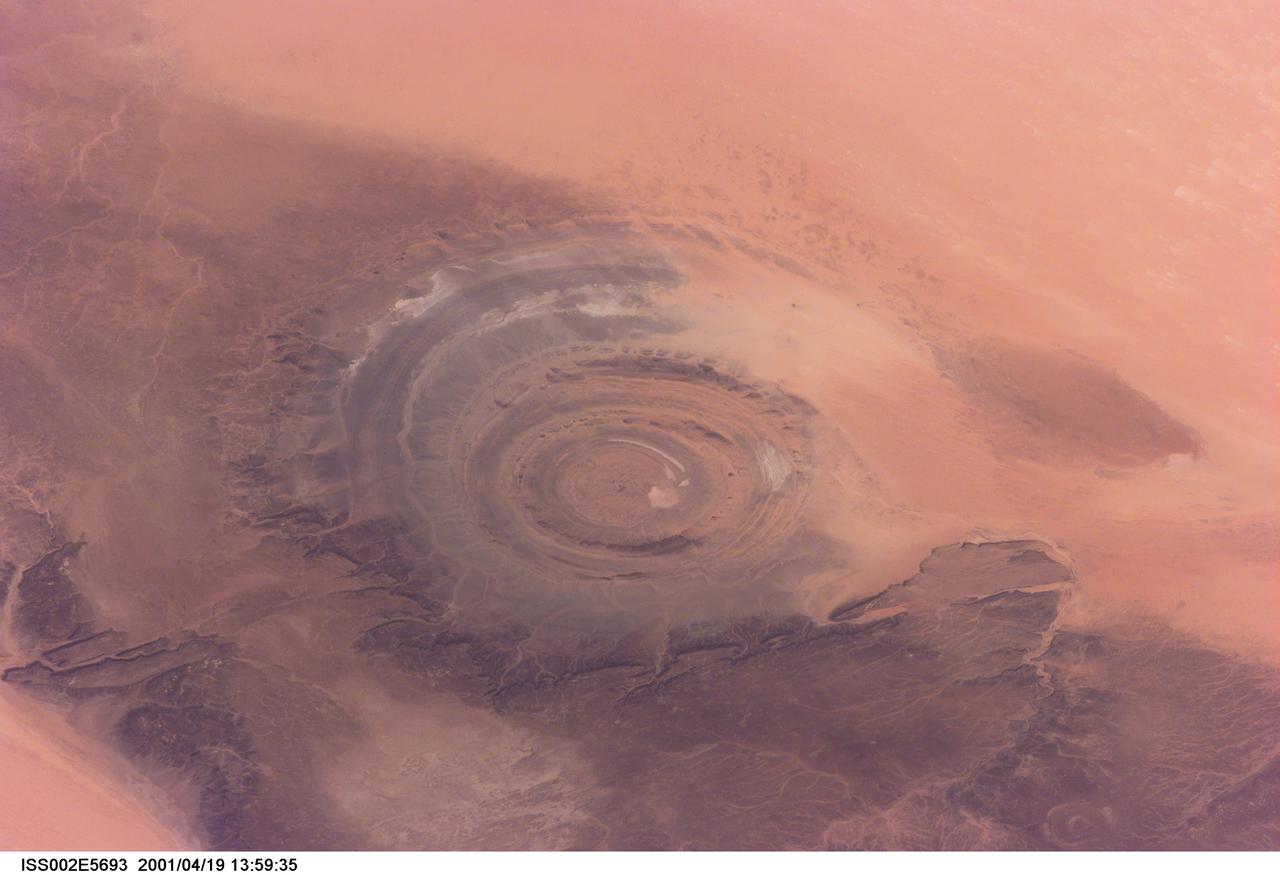
ISS002-E-5693 (19 April 2001) --- The "bull's-eye" of the Richat Structure adds interest to the barren Gres de Chinguetti Plateau in central Mauritania in northwest Africa. It represents domally uplifted, layered (sedimentary) rocks that have been eroded by water and wind into the present shape. The 25-mile-wide structure is a 300-foot-deep landmark that has caught the eye of many an astronaut in Earth orbit. Image number ISS002-E-5457 shows the same feature six days earlier. The image was recorded with a digital still camera.
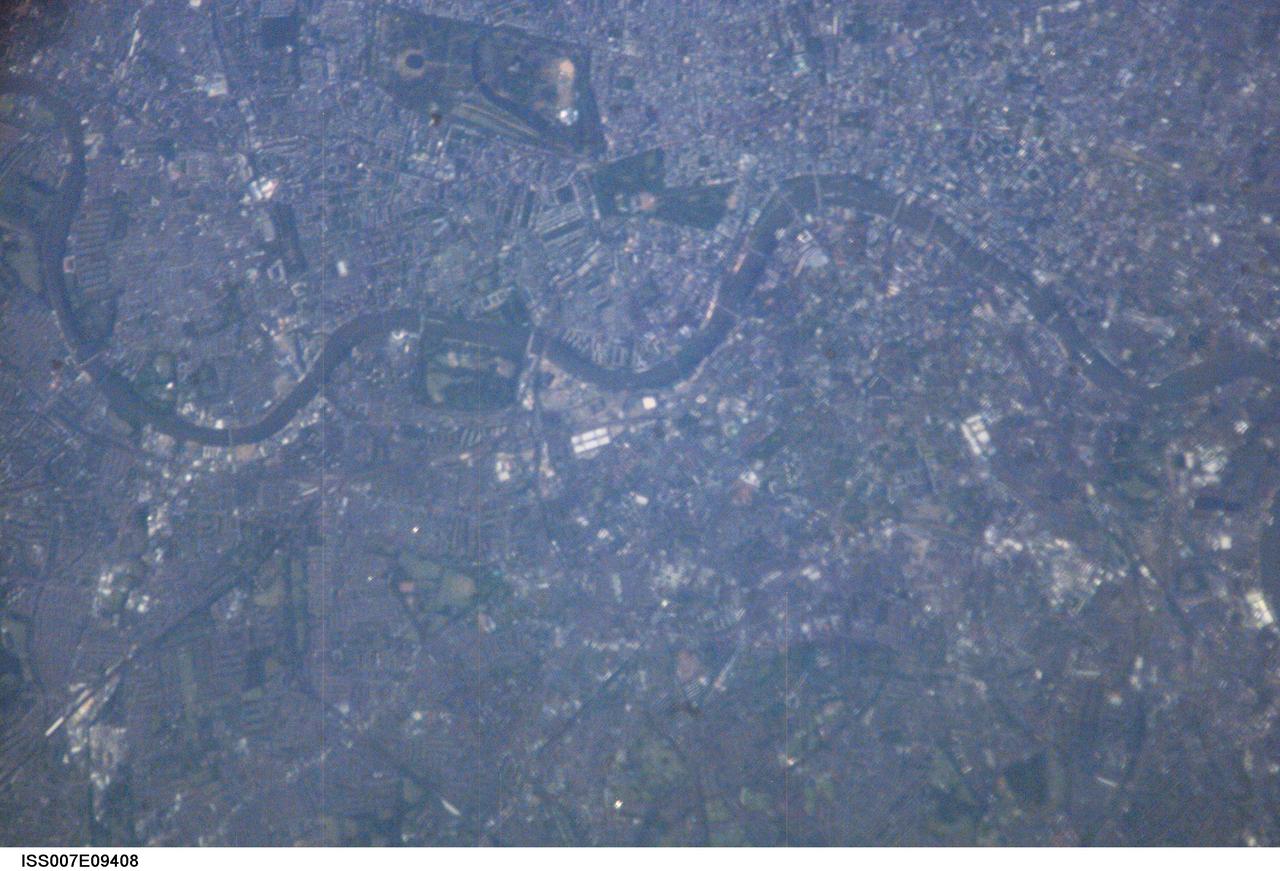
ISS007-E-09408 (5 July 2003) --- This nadir view of London, England, was downlinked from the International Space Station by one of the Expedition 7 crew members. A number of man-made landmarks are visible in the digital image, along with easily recognizable natural features, such as the River Thames, seen winding primarily in an East-West direction across the frame. The crew members could not help but be thinking of the Grand Slam Tournament being played at this time at the Wimbledon All England Tennis Club located in the south west of London. Wimbledon is just out of frame below the southwards bulge of the Thames.
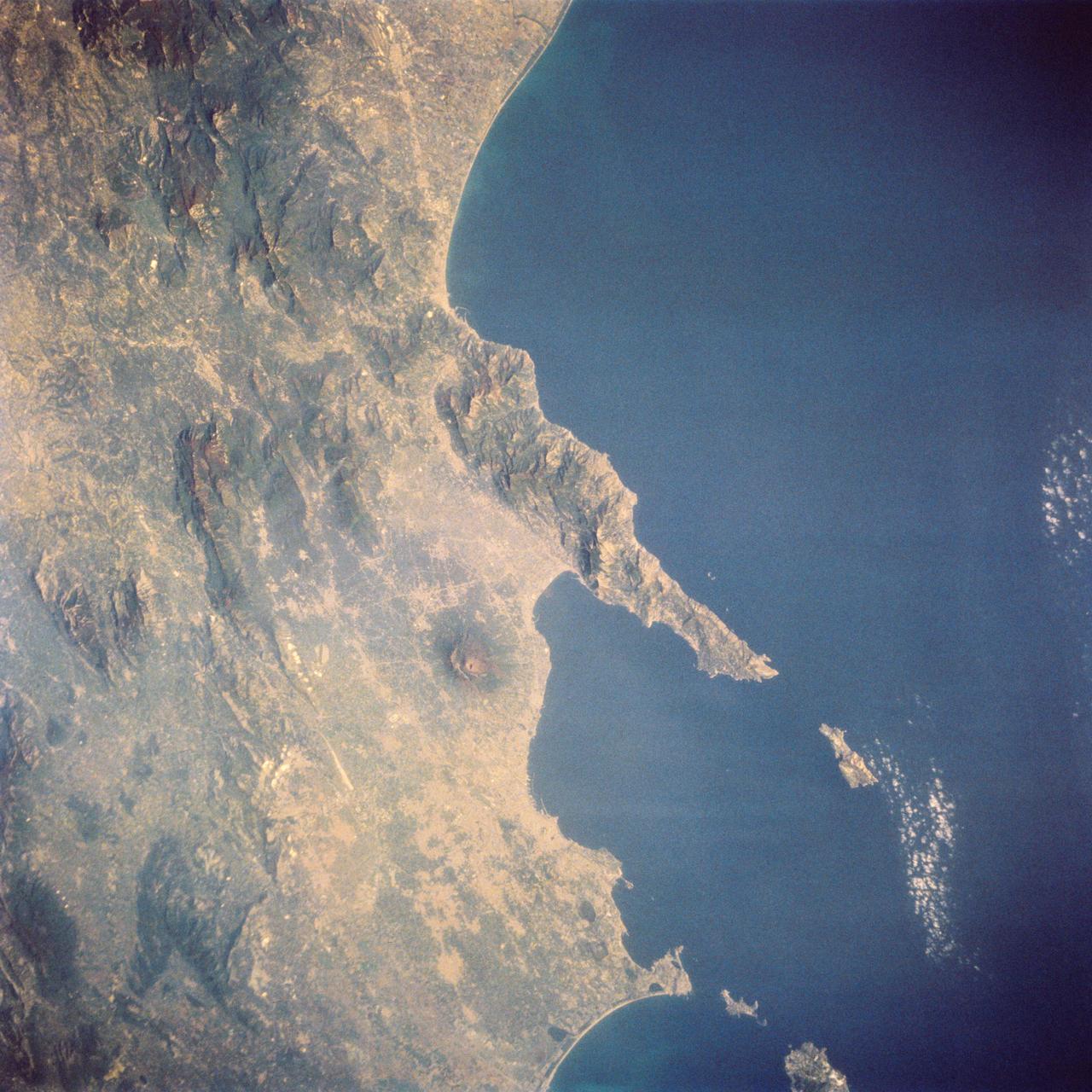
STS058-73-024 (18 Oct-1 Nov 1993) --- The ancient eruption of Vesuvius (the volcano near the center of the frame) destroyed the town of Pompeii located on its southeast flank. But the larger town of Naples, between Vesuvius (to the south) and the large, circular, lake-filled caldera of Campi Flegrei (to the west) also lives with the constant threat of volcanic hazards. In this view, Naples is the gray urban area with substantial coastal development just northwest of Vesuvius. Other landmarks marking the Italian coast include the small island of Capri, just off the west-pointing peninsula, and the city of Salerno on the coast just south of the same peninsula.
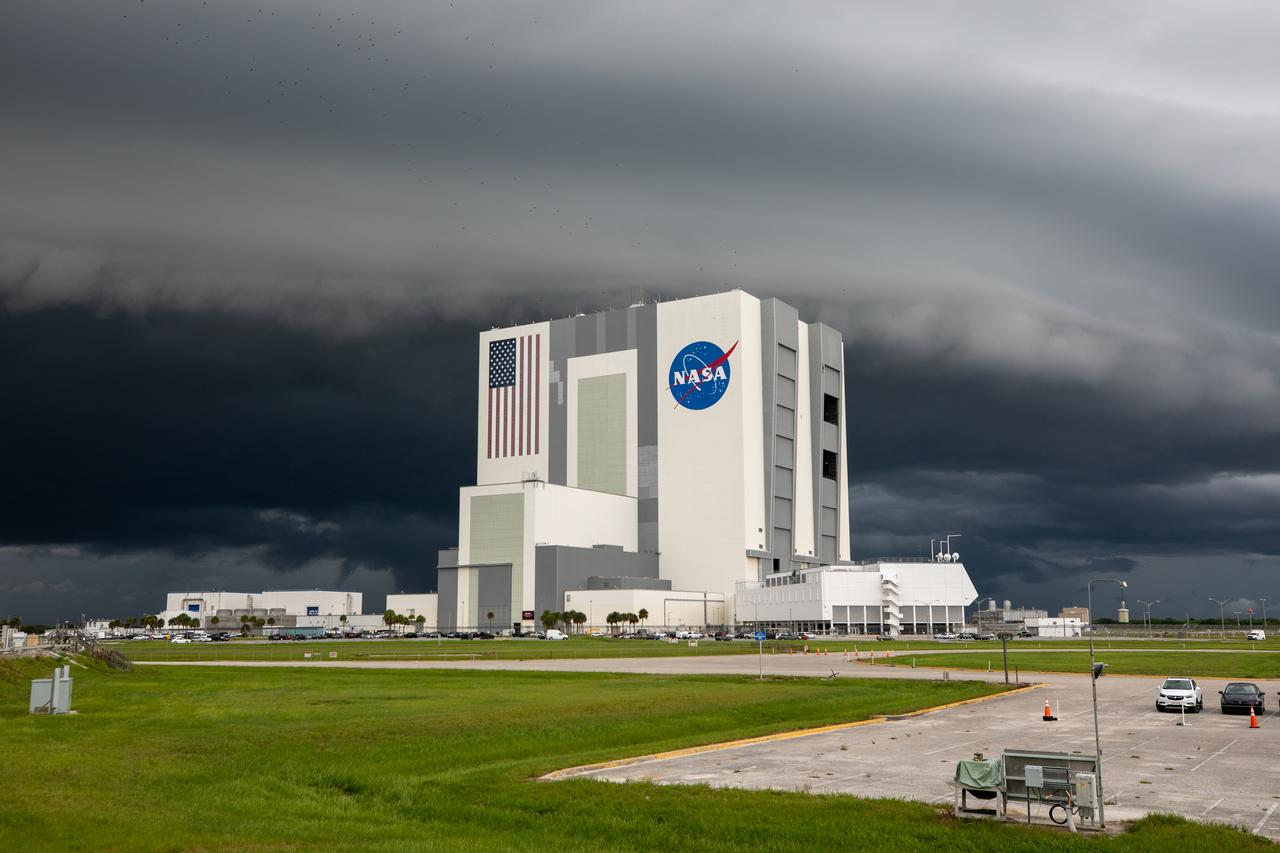
Storm clouds roll in over the Vehicle Assembly Building (VAB) at NASA’s Kennedy Space Center in Florida on July 28, 2020. Standing at 525 feet tall, this iconic landmark at Kennedy is capable of hosting multiple varieties of rockets and spacecraft at the same time. Currently, the VAB is being utilized to process and assemble the agency’s Space Launch System (SLS) rocket for Artemis missions to the Moon and beyond to Mars. Artemis I – the first launch under the agency’s Artemis Program – will test SLS and Orion as an integrated system prior to crewed flights to the Moon.
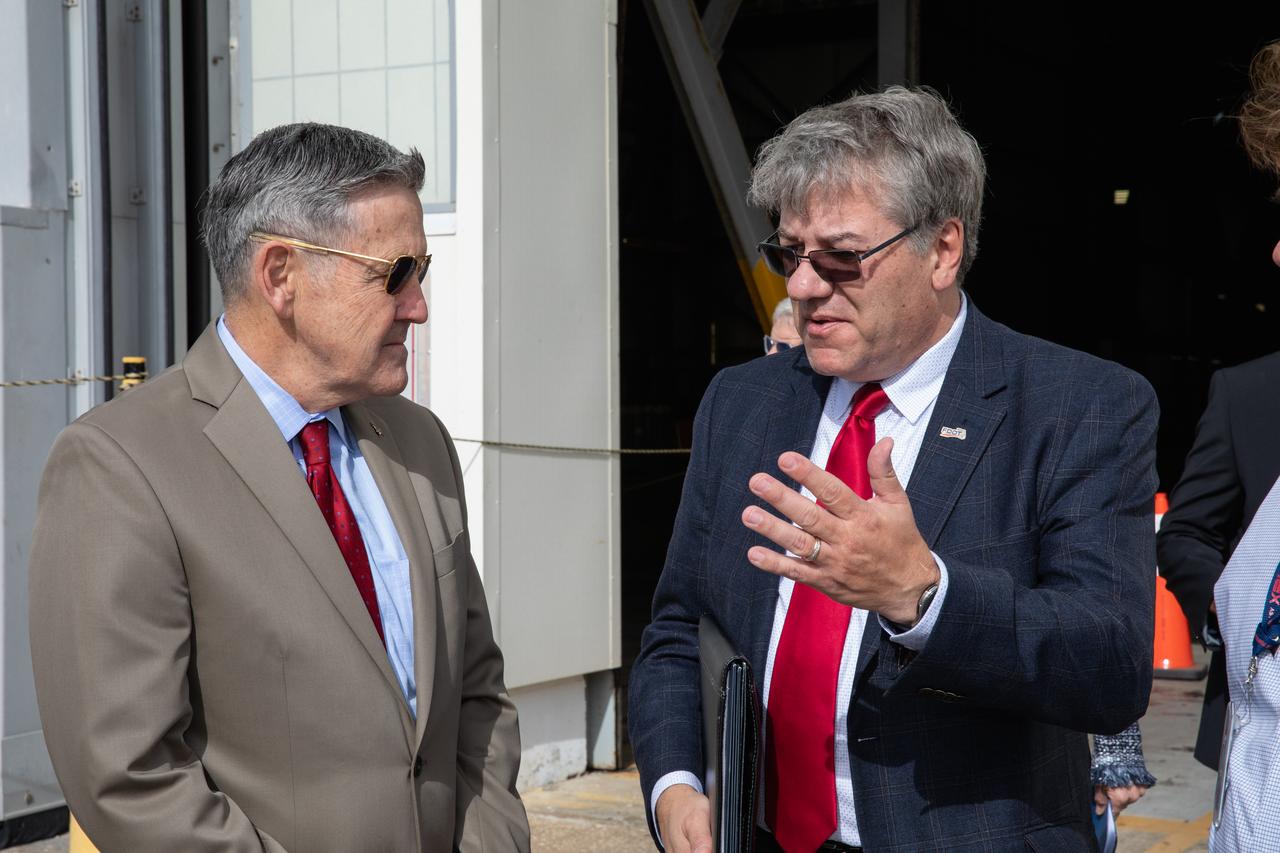
Kennedy Space Center Director Bob Cabana, left, talks with Florida Department of Transportation Secretary Kevin Thibault during a ceremony on Jan. 10, 2020, to recognize the Vehicle Assembly Building with the National Historic Civil Engineering Landmark award. The Florida Section American Society of Civil Engineers nominated the historic building and bestowed the award. The VAB is the first building at Kennedy Space Center to earn this distinction. At the time of its completion, the 129-million-cubic-foot structure was the largest building in the world. Originally designed and built to accommodate the Saturn V/Apollo used in Project Apollo, the VAB was later modified for its role in the Space Shuttle Program.
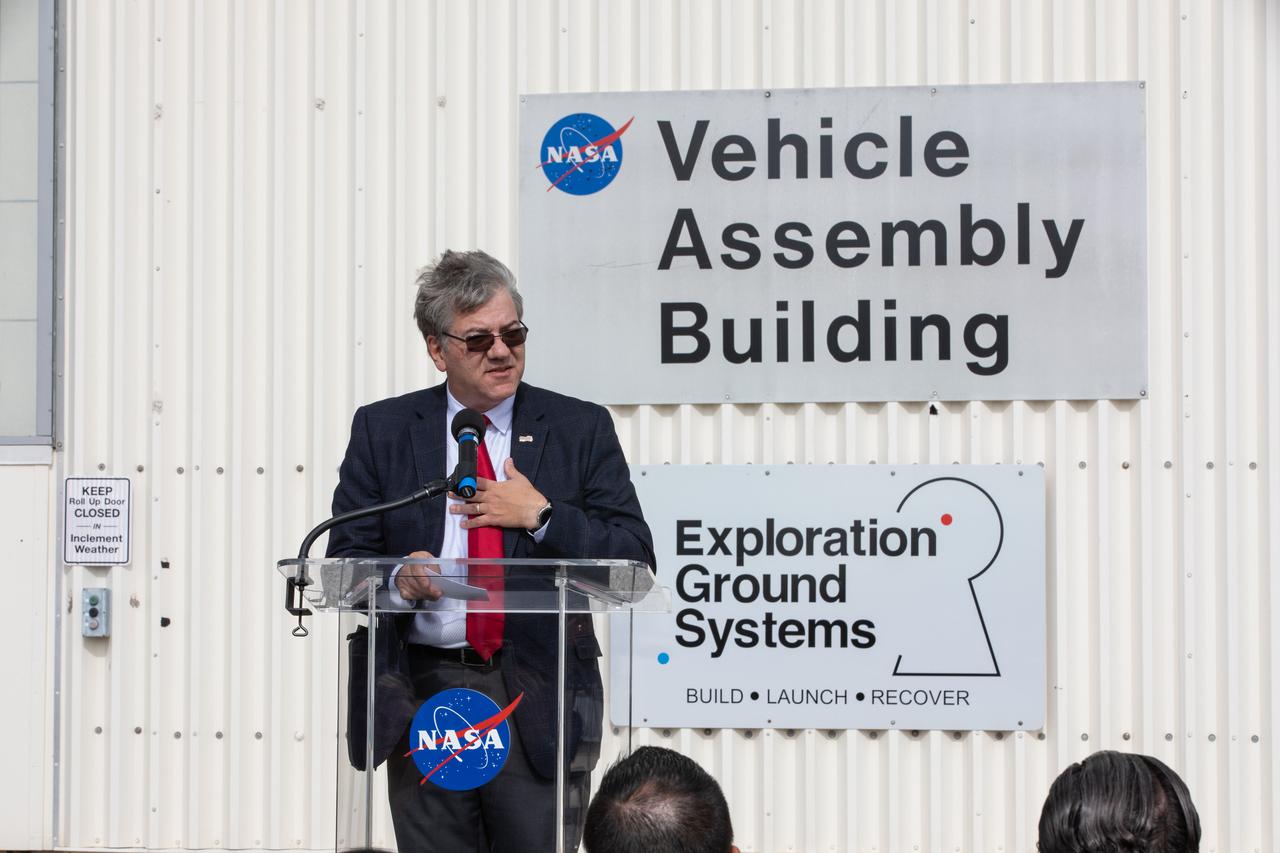
Florida Department of Transportation Secretary Kevin Thibault speaks to attendees during a ceremony on Jan. 10, 2020, to recognize the Vehicle Assembly Building with the National Historic Civil Engineering Landmark award. The Florida Section American Society of Civil Engineers nominated the historic building and bestowed the award. The VAB is the first building at Kennedy Space Center to earn this distinction. At the time of its completion, the 129-million-cubic-foot structure was the largest building in the world. Originally designed and built to accommodate the Saturn V/Apollo used in Project Apollo, the VAB was later modified for its role in the Space Shuttle Program.
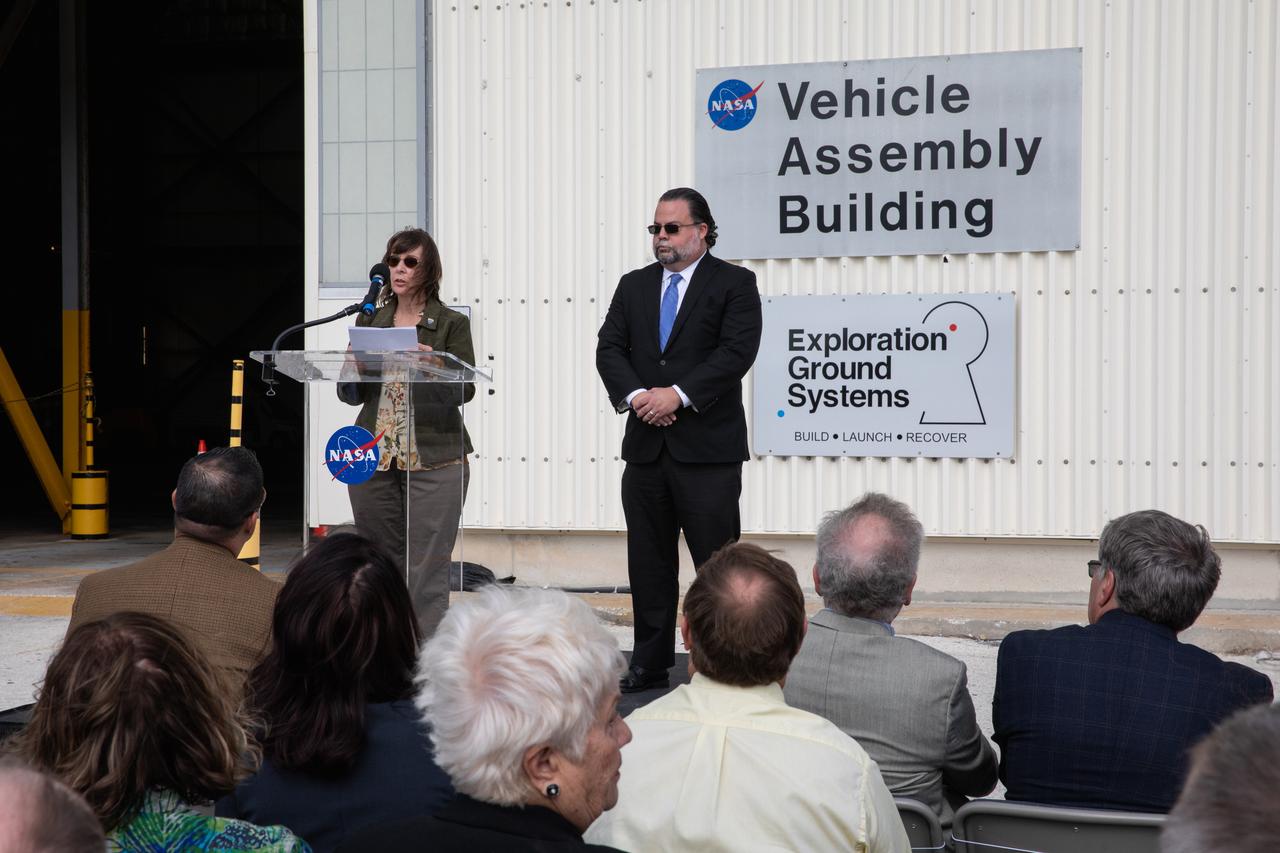
Carol Stevens, History and Heritage Committee member with the American Society of Civil Engineers (ASCE), speaks to attendees during a ceremony on Jan. 10, 2020, to recognize the Vehicle Assembly Building with the National Historic Civil Engineering Landmark award. At right is Peter Moore, ASCE Region 5 director. The Florida Section ASCE nominated the historic building and bestowed the award. The VAB is the first building at Kennedy Space Center to earn this distinction. At the time of its completion, the 129-million-cubic-foot structure was the largest building in the world. Originally designed and built to accommodate the Saturn V/Apollo used in Project Apollo, the VAB was later modified for its role in the Space Shuttle Program.