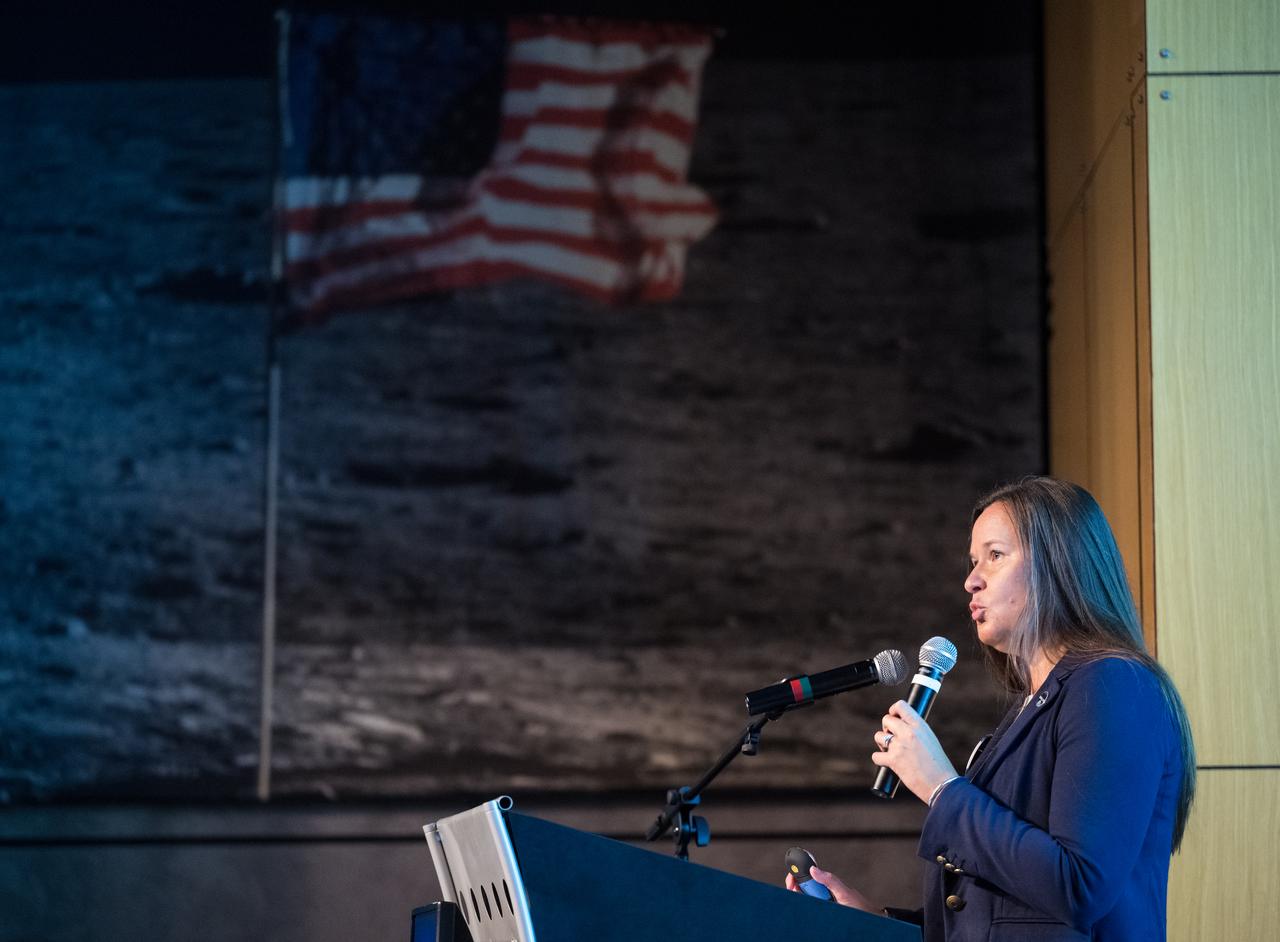
Amanda Cutright, acting associate director for Earth Action and Strategic Engagement for the Science Mission Directorate at NASA's Langley Research Center (LaRC), provides remarks before the presentation of DEVELOP Projects, Tuesday, August 5, 2025, at the Mary W. Jackson NASA Headquarters building in Washington. Every summer early career researchers from NASA’s DEVELOP National Program come to NASA Headquarters and present their research projects. DEVELOP is a training and development program where early career researchers work on Earth science projects, mentored by science advisors from NASA and partner agencies, and provide research results to local communities. Photo Credit: (NASA/Aubrey Gemignani)

Photos of LaRC team weighting and performing Center of Gravity (CG) measurements of the Structural Test Article (STA) at NASA Langley Research Center.
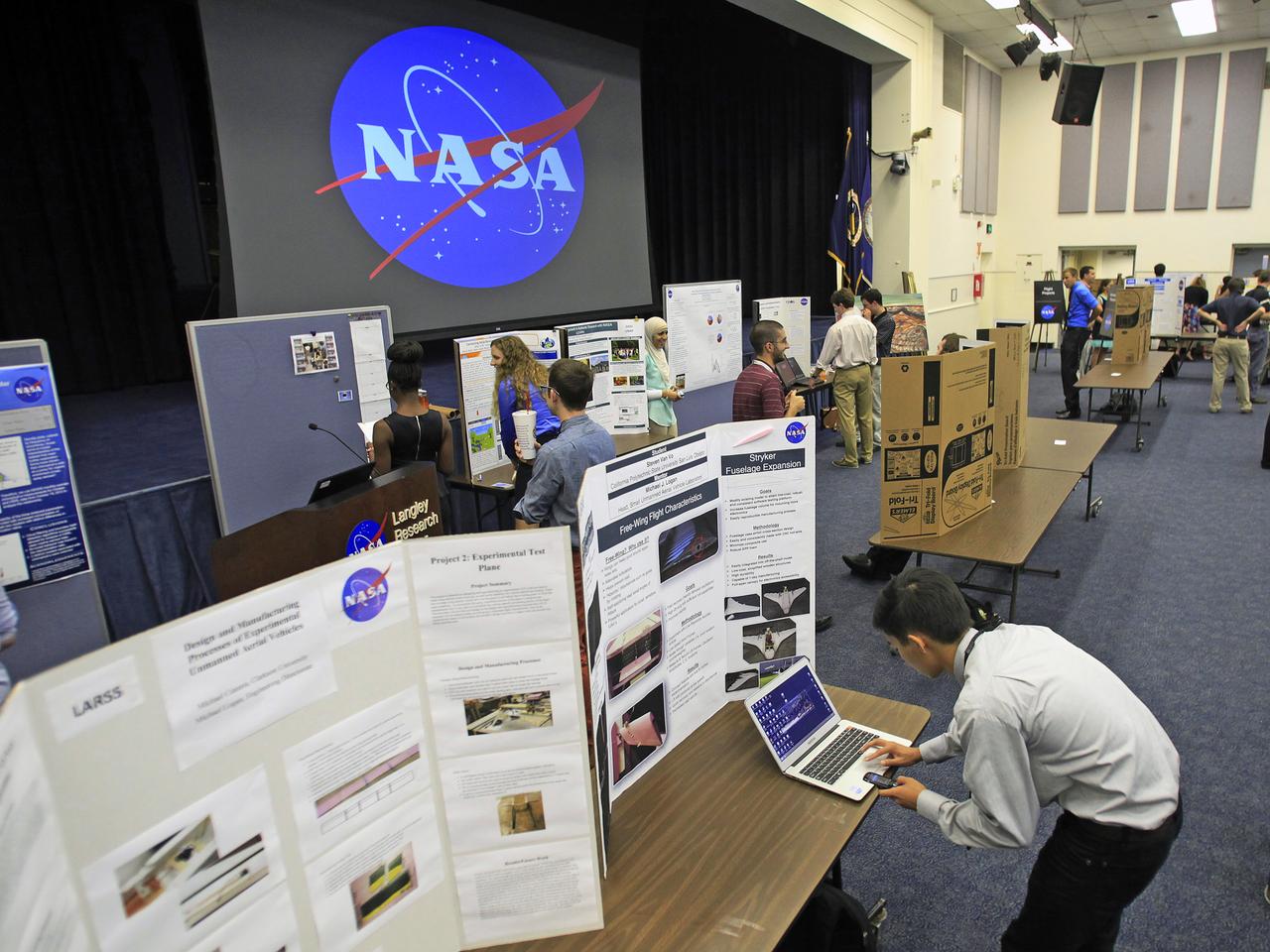
250 students participated in the Langley Aerospace Research Summer Scholars (LARSS) Presentations focused on 3D modeling of STARBUKS calibration components in the National Transonic Facility, hypersonic aerodynamic inflatable decelerator, and optimization of a microphone-based array for flight testing. Reid Center LaRC Hampton, VA
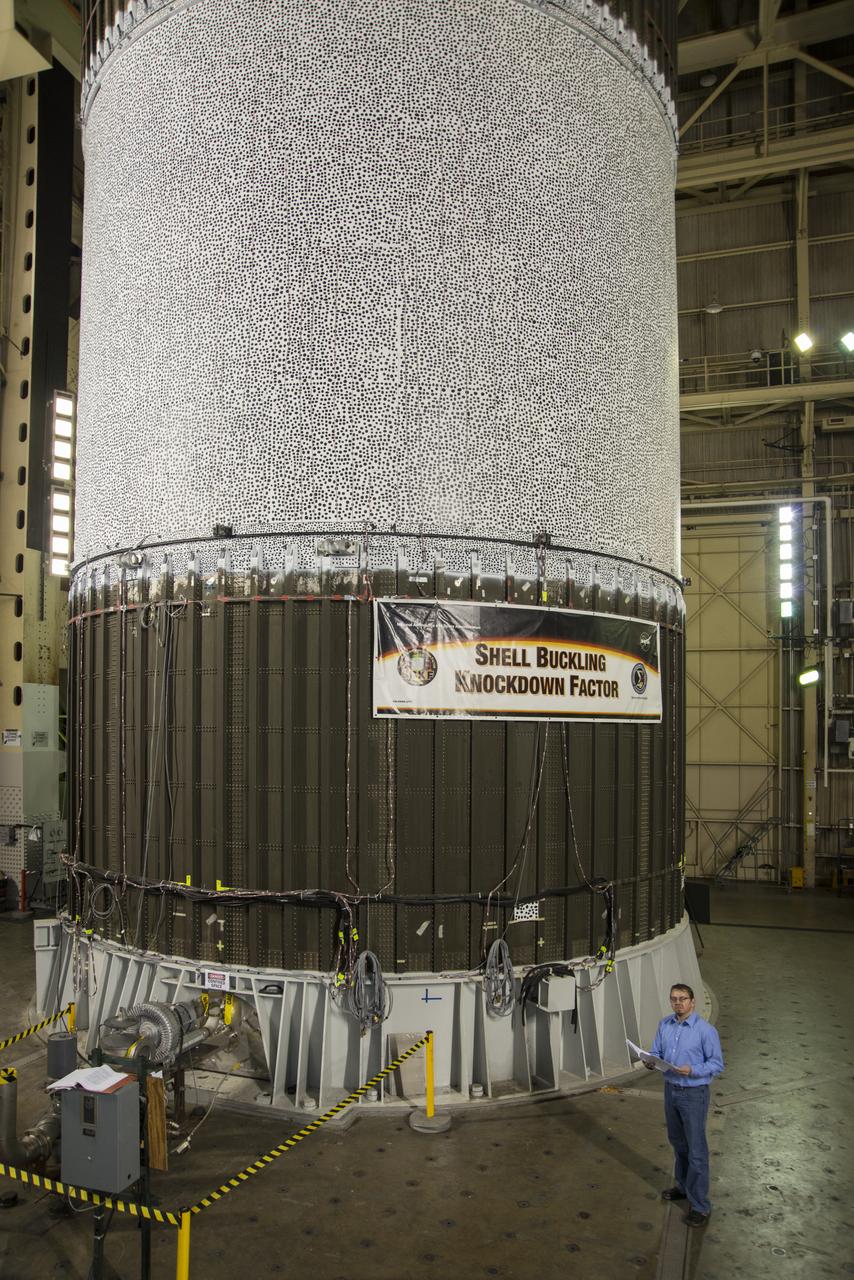
MARK HILBURGER, PROJECT ENGINEER FROM LANGLEY RESEARCH CENTER (LARC) WITH THE ALUMINUM-LITHIUM CYLINDER USED IN THE SHELL BUCKLE KNOCKDOWN FACTOR TESTING. DURING THE TESTING FORCE AND PRESSURE WERE INCREASINGLY APPLIED TO THE TOP OF AN EMPTY BUT PRESSURIZED ROCKET FUEL TANK TO EVALUATE ITS STRUCTURAL INTEGRITY.
250 students participated in the Langley Aerospace Research Summer Scholars (LARSS) Presentations focused on 3D modeling of STARBUKS calibration components in the National Transonic Facility, hypersonic aerodynamic inflatable decelerator, and optimization of a microphone-based array for flight testing. Reid Center LaRC Hampton, VA
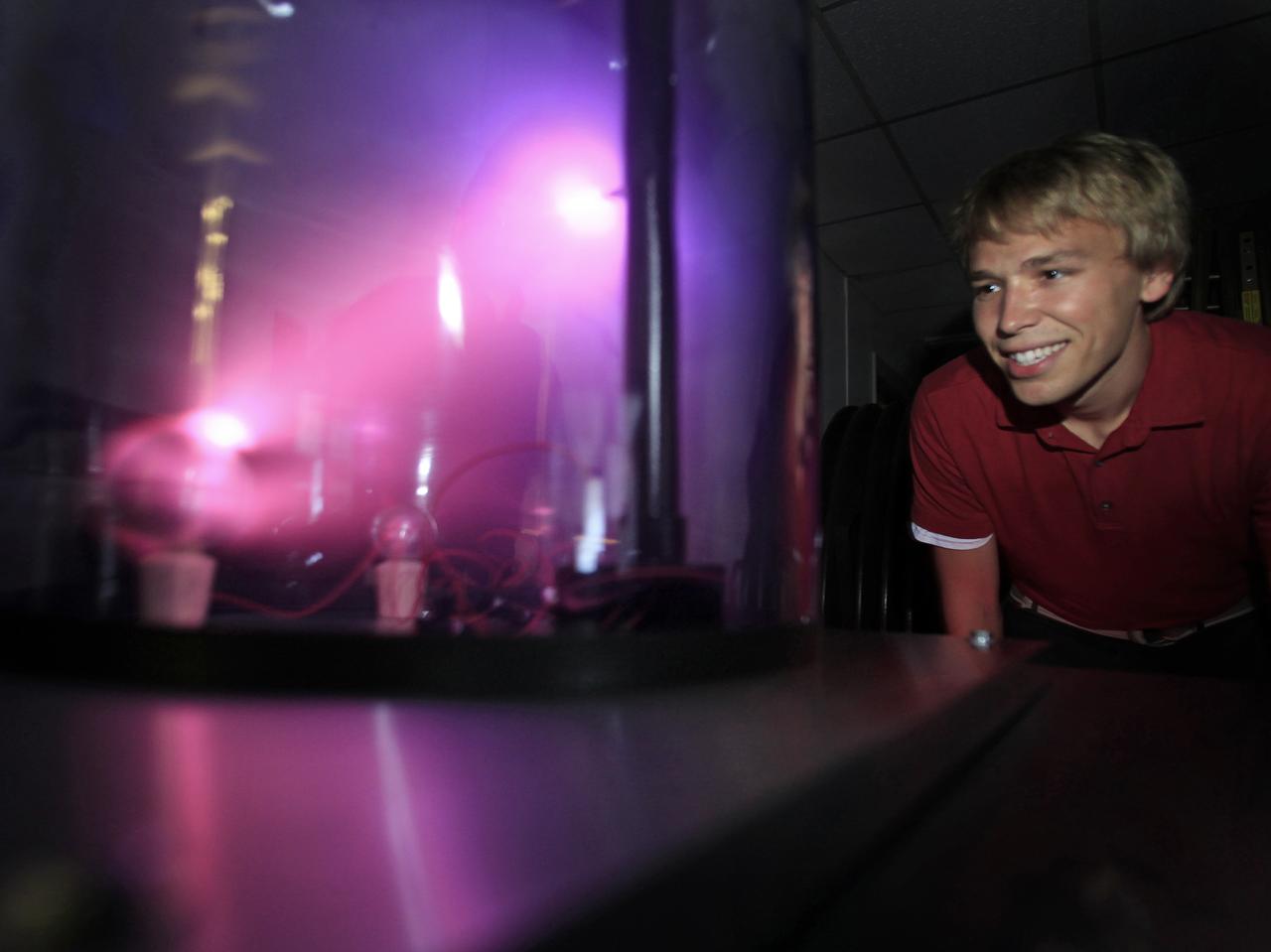
250 students participated in the Langley Aerospace Research Summer Scholars (LARSS) Presentations focused on 3D modeling of STARBUKS calibration components in the National Transonic Facility, hypersonic aerodynamic inflatable decelerator, and optimization of a microphone-based array for flight testing. Reid Center LaRC Hampton, VA
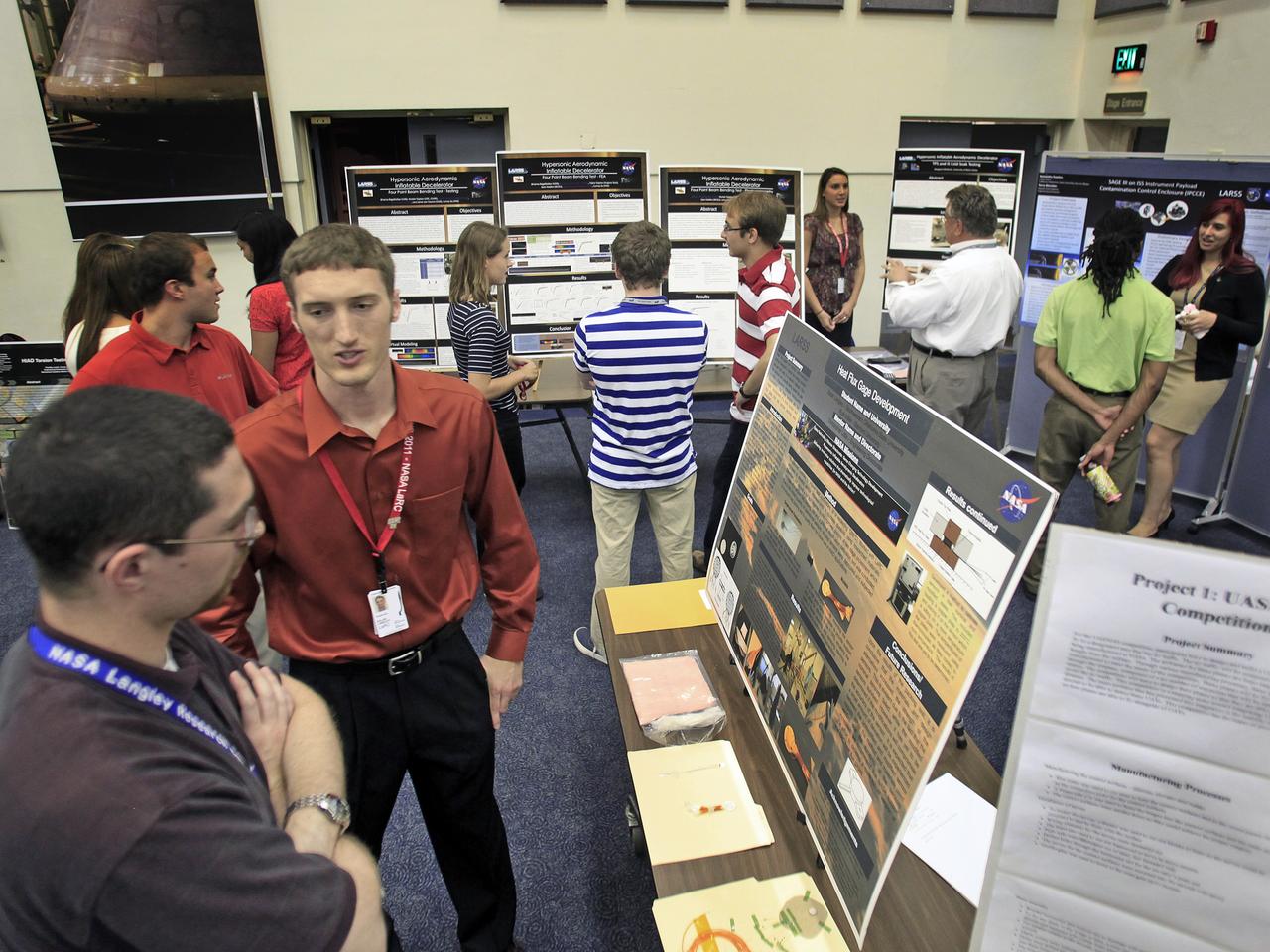
250 students participated in the Langley Aerospace Research Summer Scholars (LARSS) Presentations focused on 3D modeling of STARBUKS calibration components in the National Transonic Facility, hypersonic aerodynamic inflatable decelerator, and optimization of a microphone-based array for flight testing. Reid Center LaRC Hampton, VA
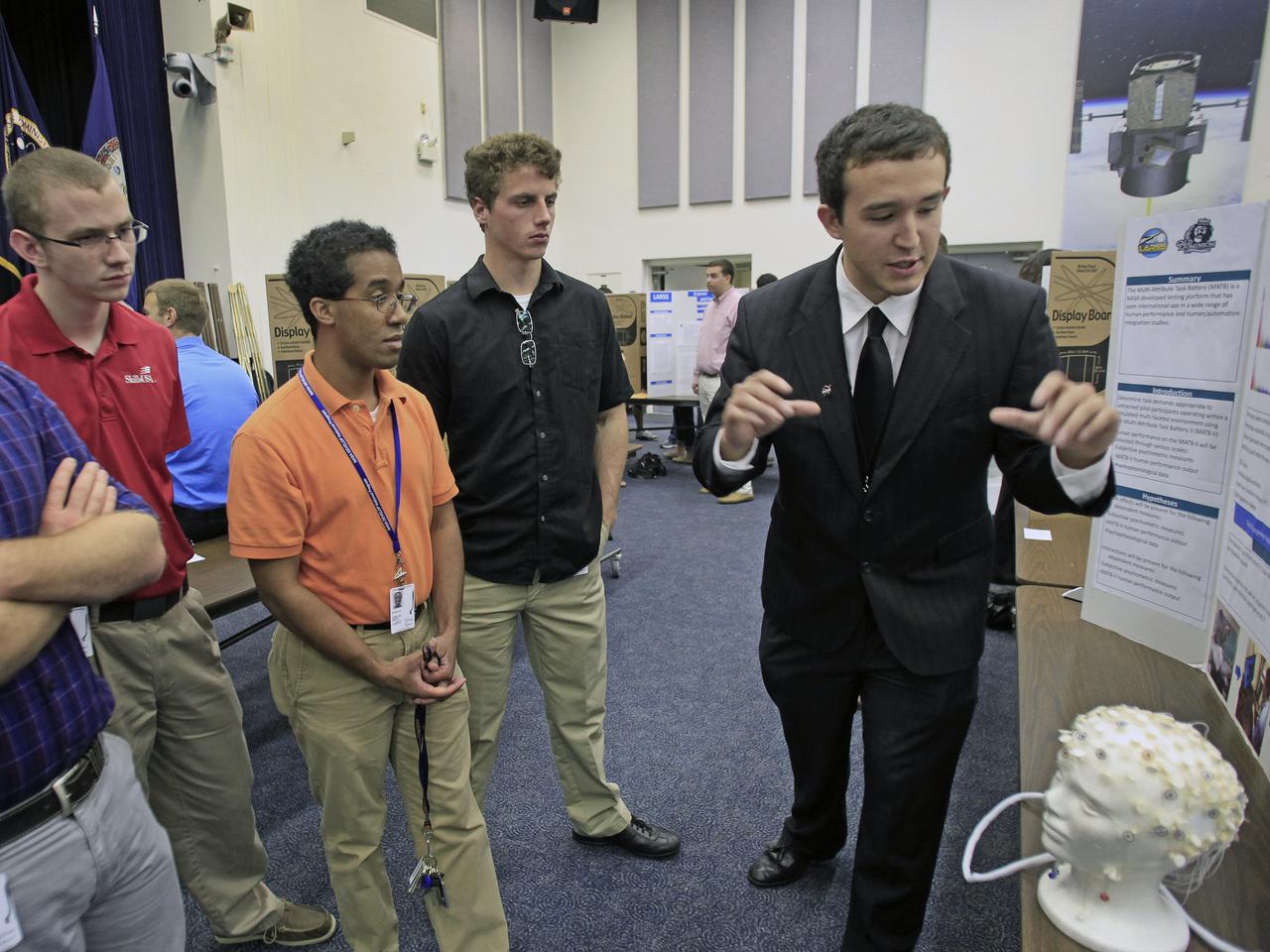
250 students participated in the Langley Aerospace Research Summer Scholars (LARSS) Presentations focused on 3D modeling of STARBUKS calibration components in the National Transonic Facility, hypersonic aerodynamic inflatable decelerator, and optimization of a microphone-based array for flight testing. Reid Center LaRC Hampton, VA
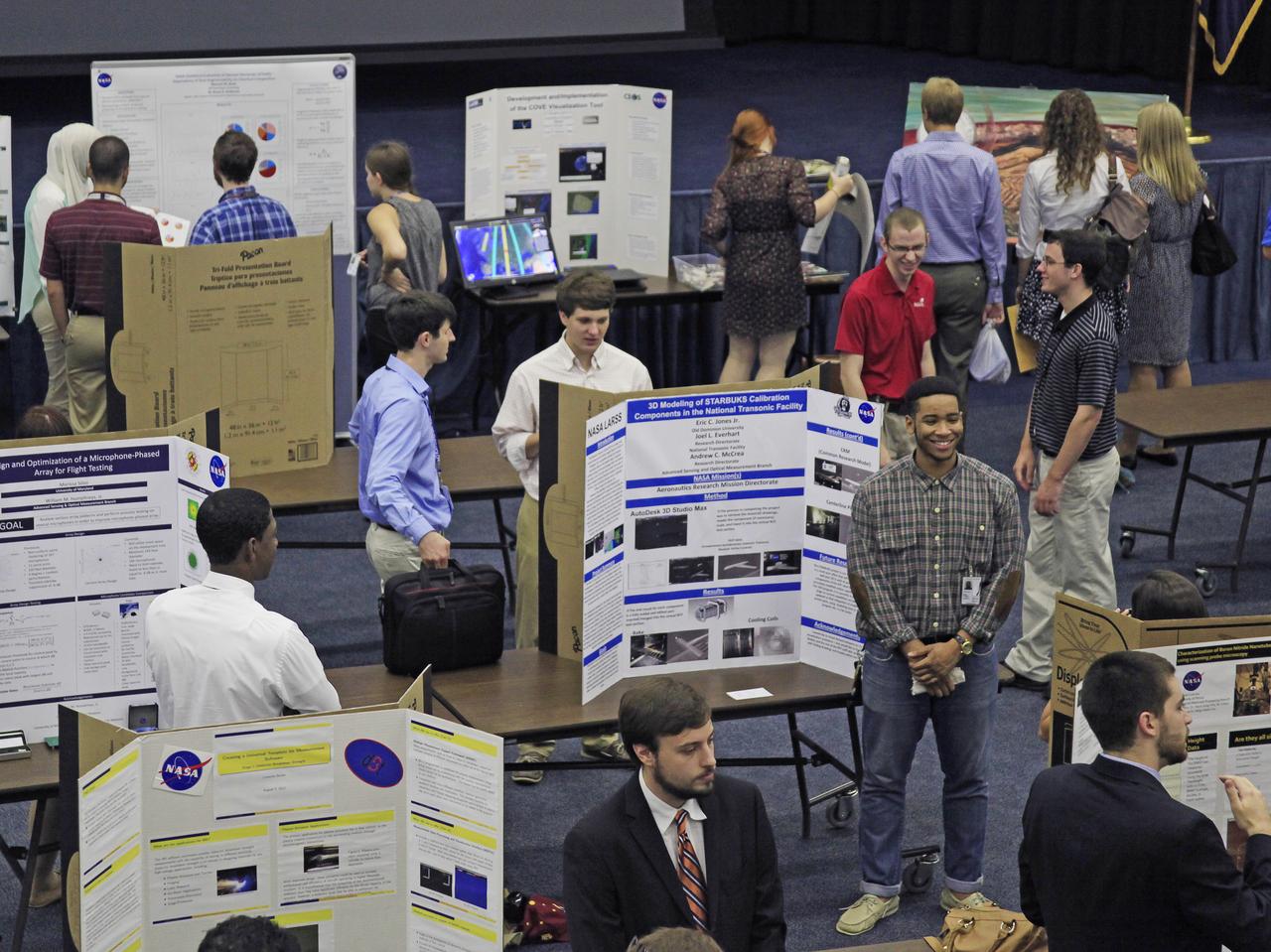
250 students participated in the Langley Aerospace Research Summer Scholars (LARSS) Presentations focused on 3D modeling of STARBUKS calibration components in the National Transonic Facility, hypersonic aerodynamic inflatable decelerator, and optimization of a microphone-based array for flight testing. Reid Center LaRC Hampton, VA
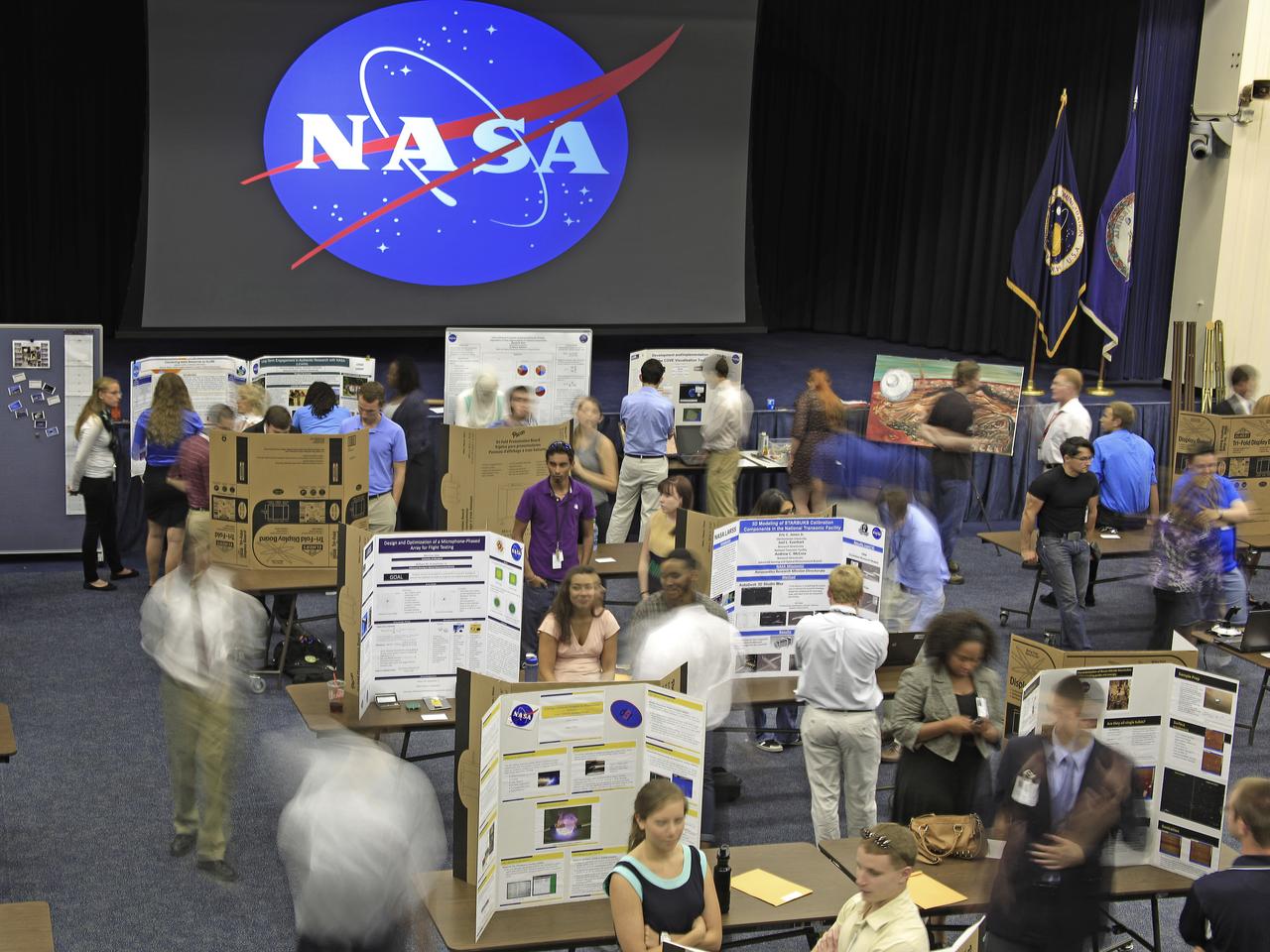
250 students participated in the Langley Aerospace Research Summer Scholars (LARSS) Presentations focused on 3D modeling of STARBUKS calibration components in the National Transonic Facility, hypersonic aerodynamic inflatable decelerator, and optimization of a microphone-based array for flight testing. Reid Center LaRC Hampton, VA
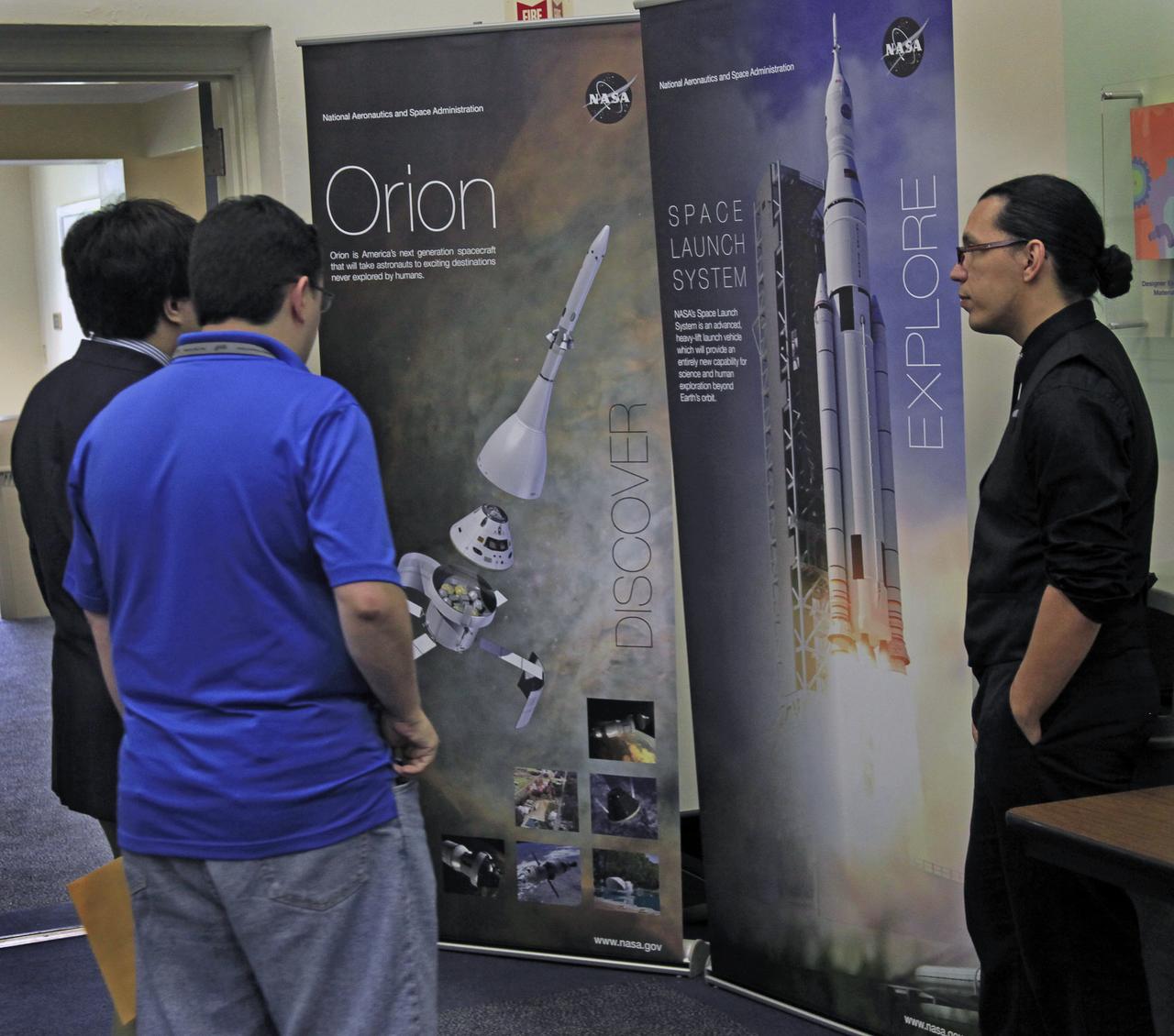
250 students participated in the Langley Aerospace Research Summer Scholars (LARSS) Presentations focused on 3D modeling of STARBUKS calibration components in the National Transonic Facility, hypersonic aerodynamic inflatable decelerator, and optimization of a microphone-based array for flight testing. Reid Center LaRC Hampton, VA
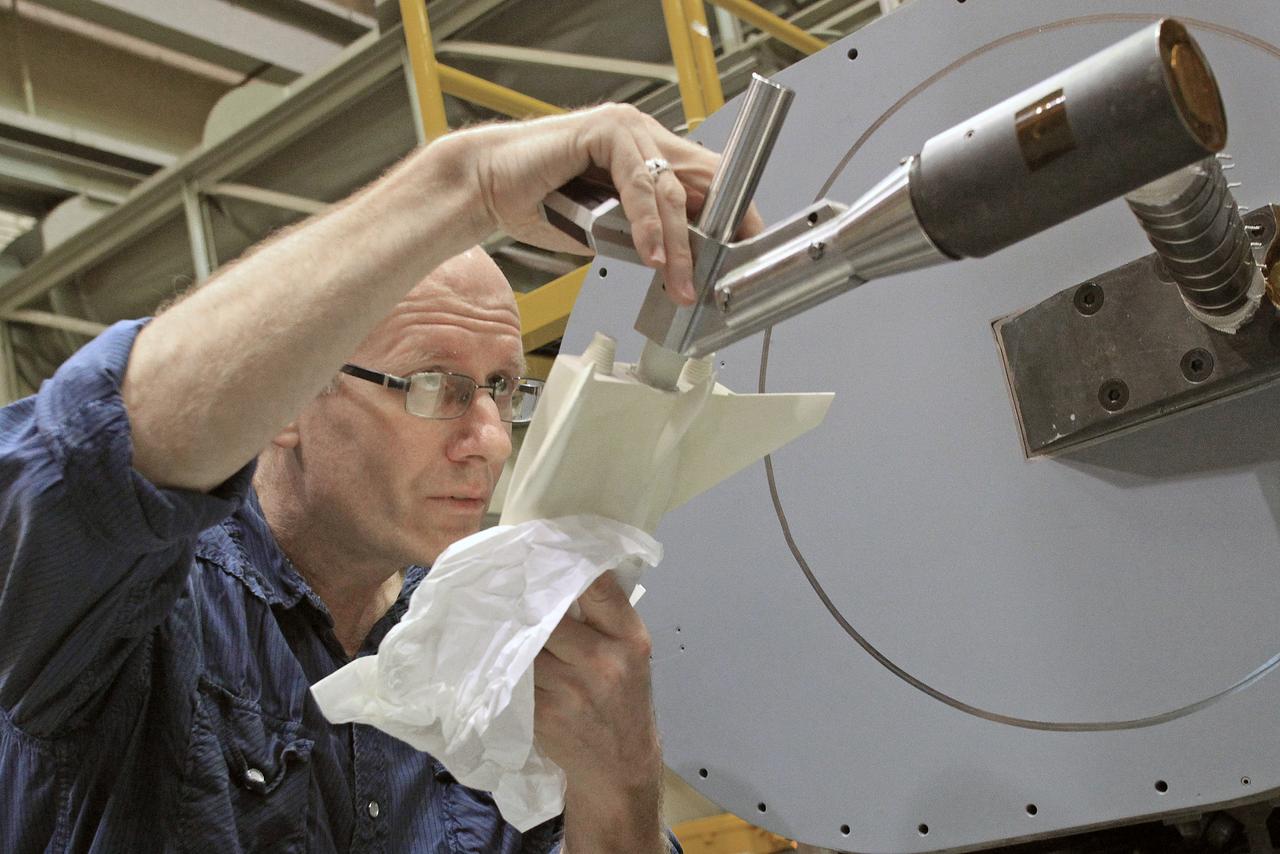
NASA's Langley Research Center in Hampton, Va., recently conducted hypersonic testing of Dream Chaser models for SNC as part of the agency's Commercial Crew Program in order to obtain necessary data for the material selection and design of the TPS
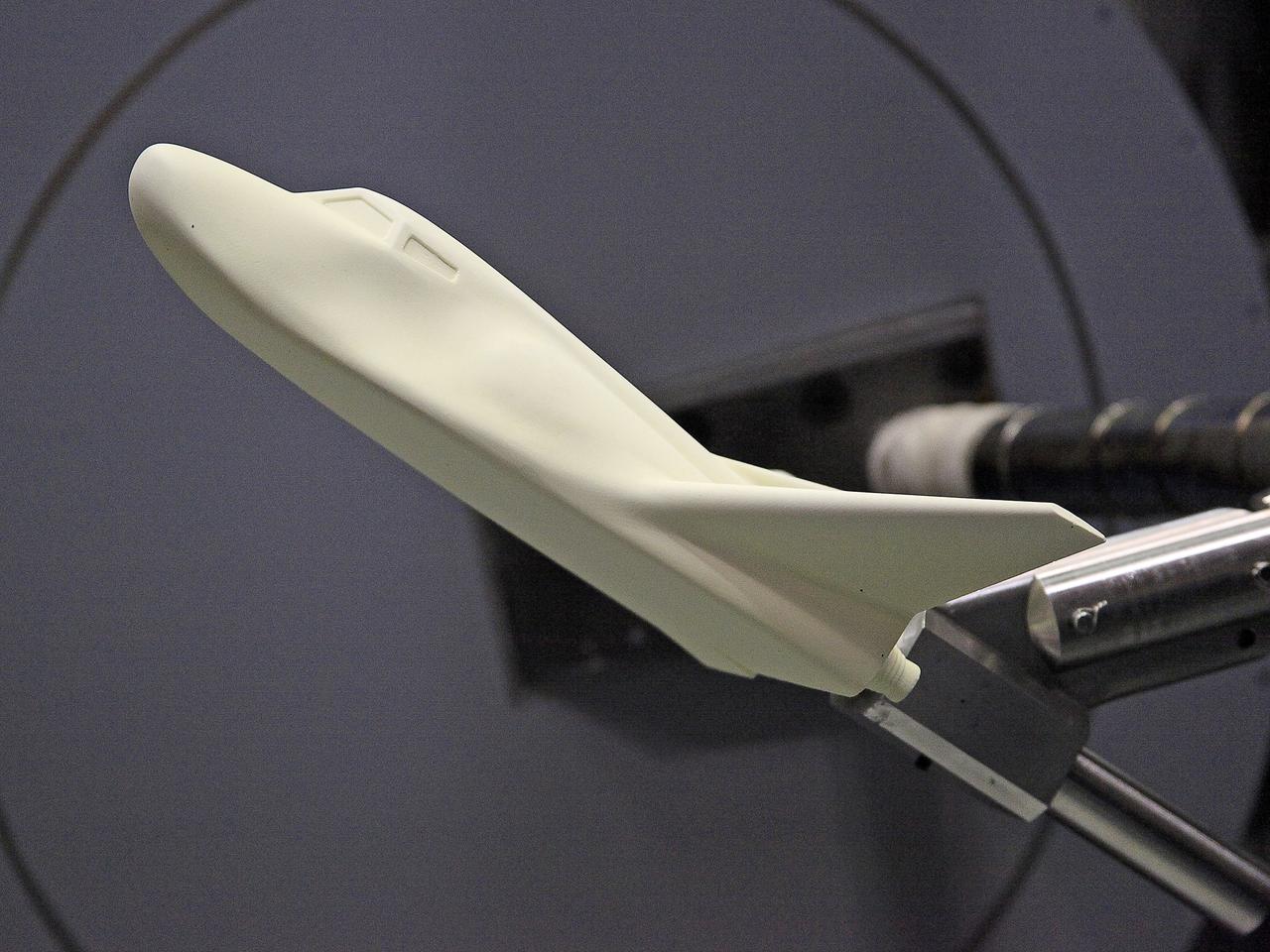
NASA's Langley Research Center in Hampton, Va., recently conducted hypersonic testing of Dream Chaser models for SNC as part of the agency's Commercial Crew Program in order to obtain necessary data for the material selection and design of the TPS
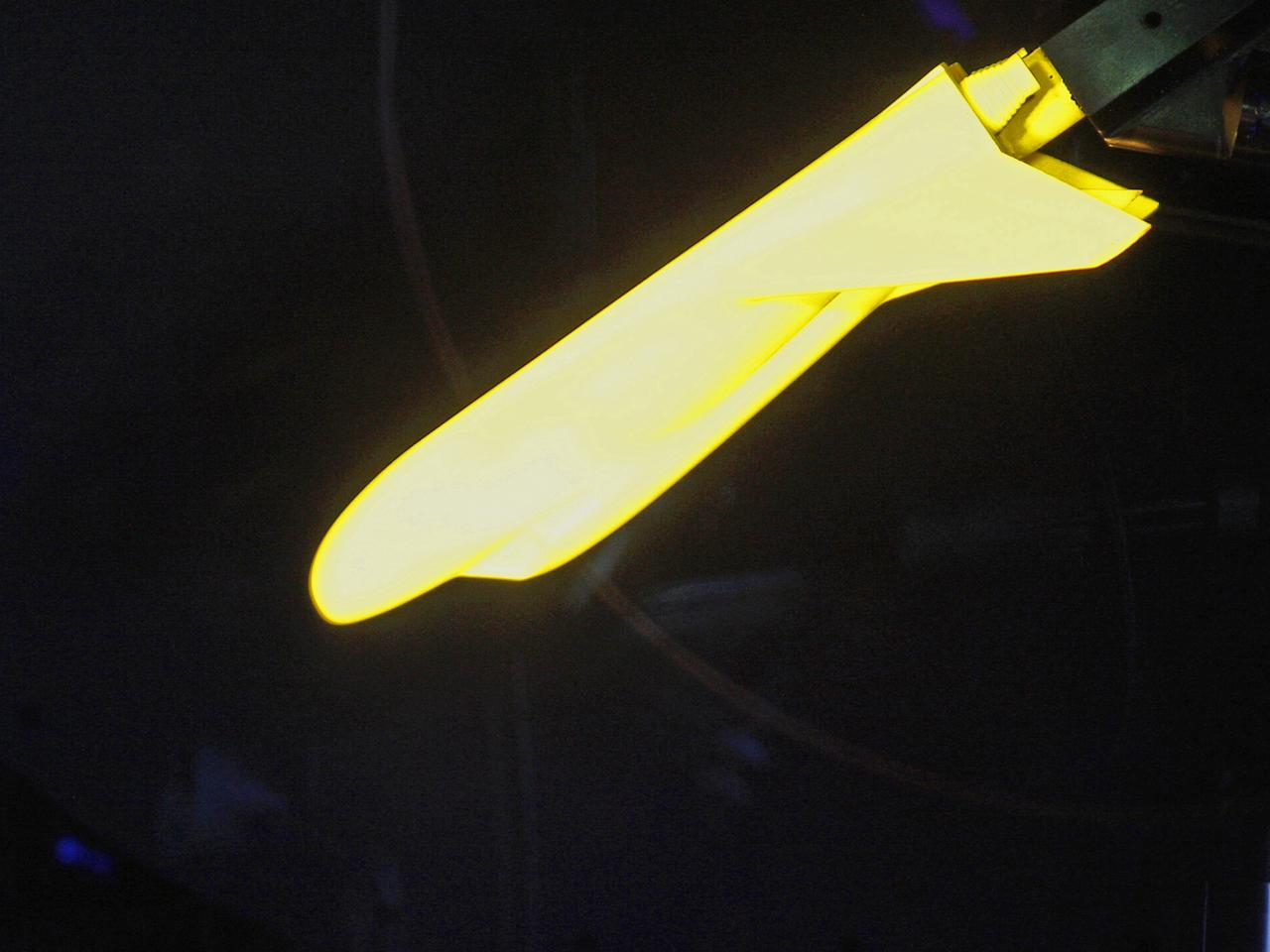
NASA's Langley Research Center in Hampton, Va., recently conducted hypersonic testing of Dream Chaser models for SNC as part of the agency's Commercial Crew Program in order to obtain necessary data for the material selection and design of the TPS
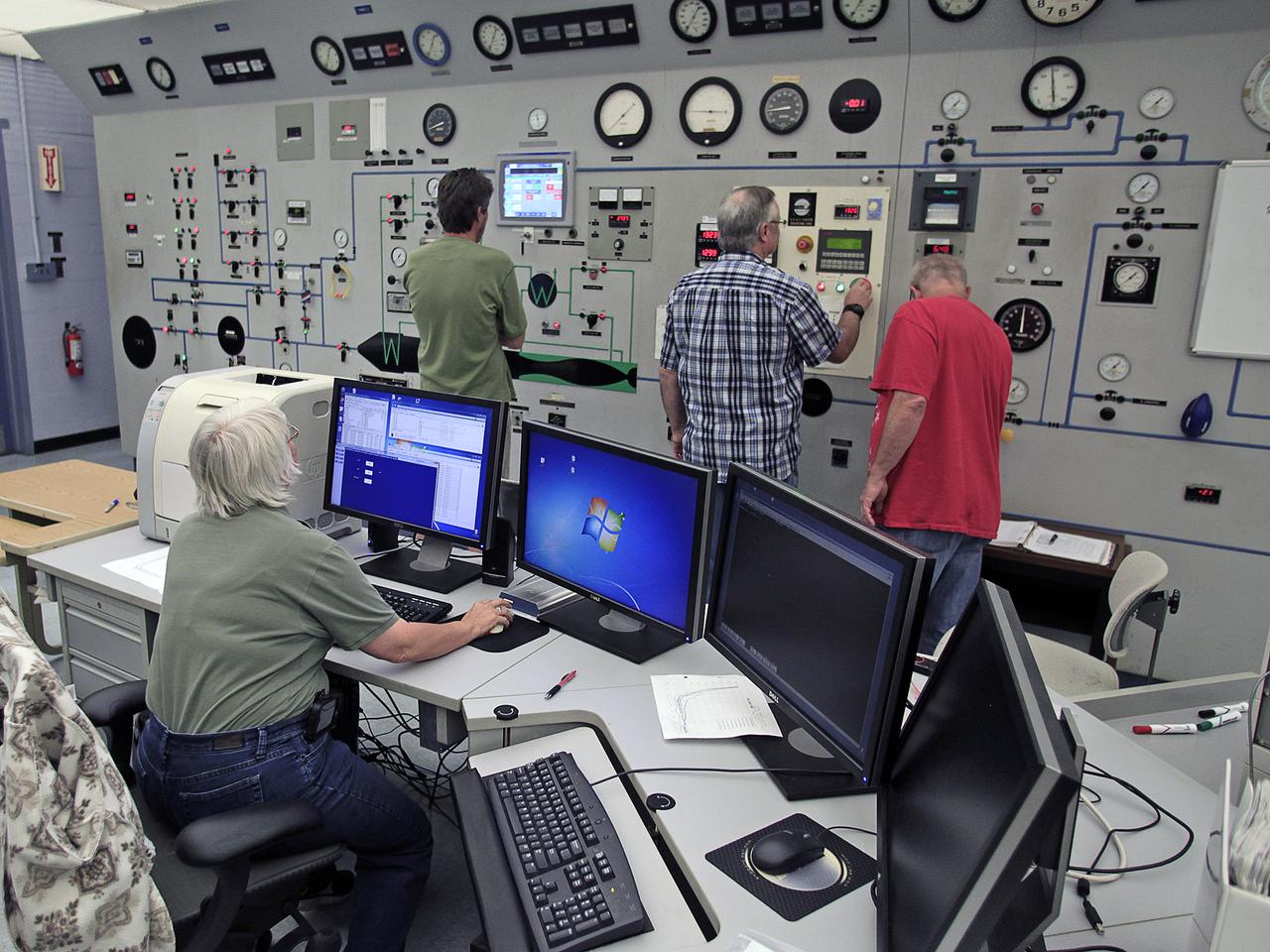
NASA's Langley Research Center in Hampton, Va., recently conducted hypersonic testing of Dream Chaser models for SNC as part of the agency's Commercial Crew Program in order to obtain necessary data for the material selection and design of the TPS
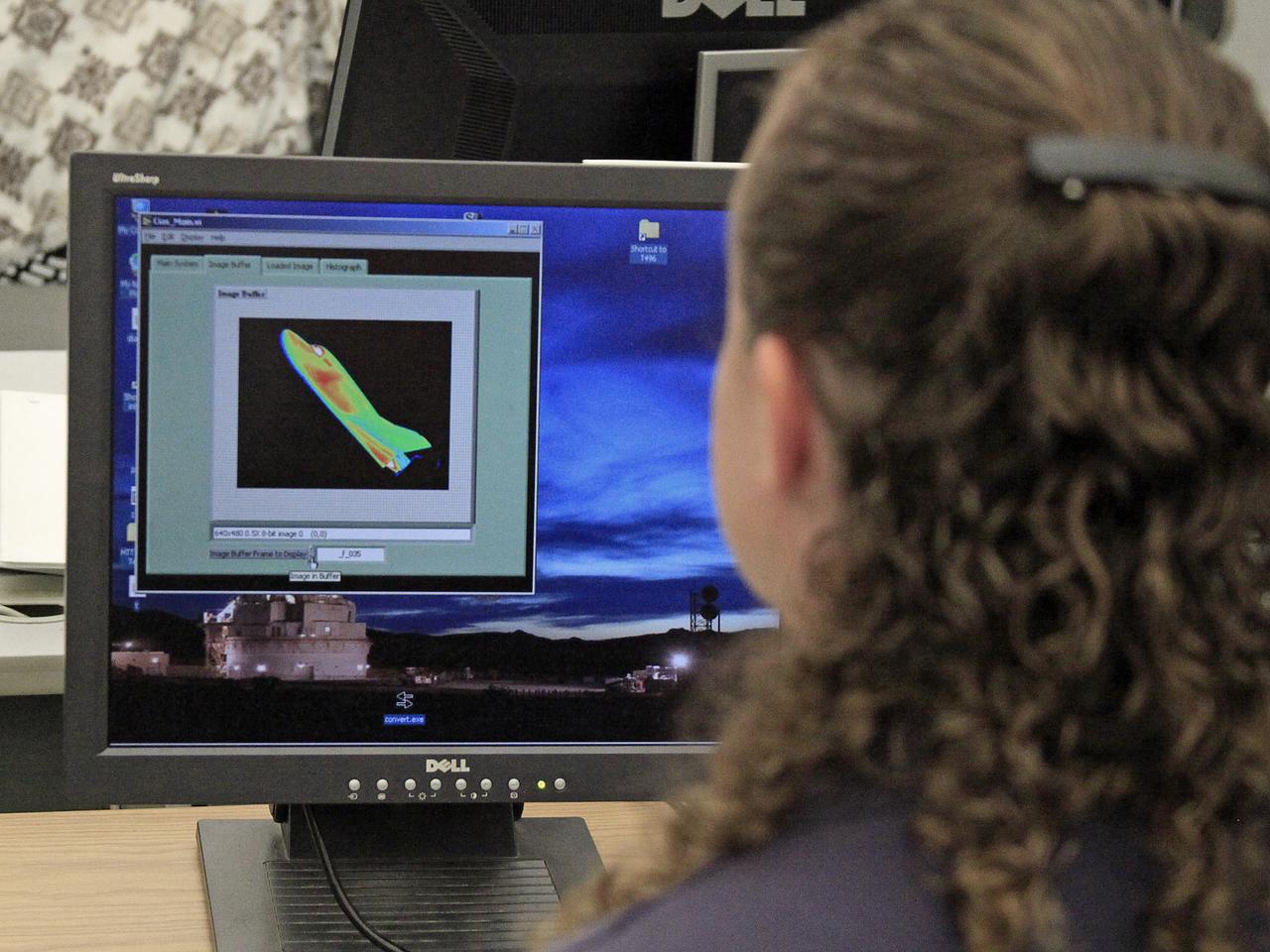
NASA's Langley Research Center in Hampton, Va., recently conducted hypersonic testing of Dream Chaser models for SNC as part of the agency's Commercial Crew Program in order to obtain necessary data for the material selection and design of the TPS
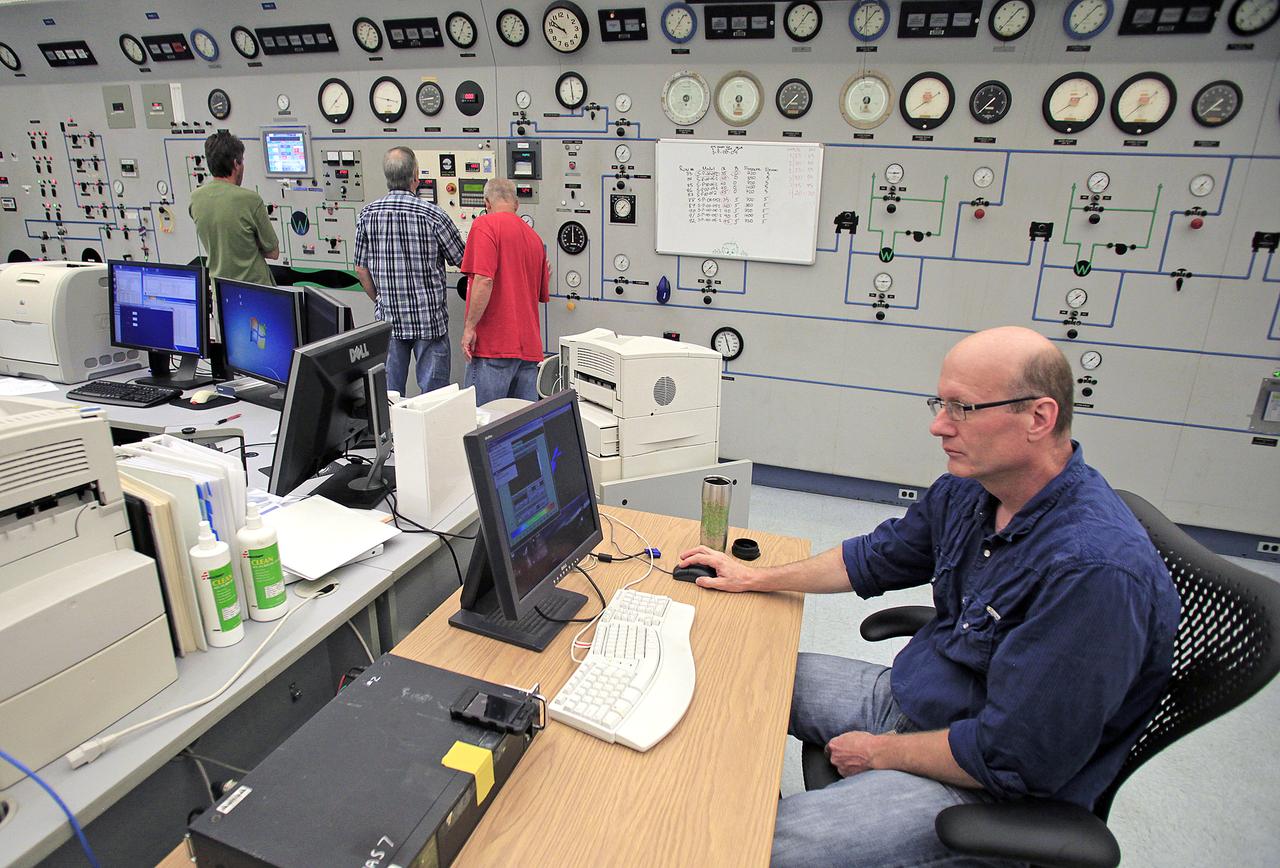
NASA's Langley Research Center in Hampton, Va., recently conducted hypersonic testing of Dream Chaser models for SNC as part of the agency's Commercial Crew Program in order to obtain necessary data for the material selection and design of the TPS

Annual Metrology and Calibration Working Group Face to Face meeting held at Langley Research Center; Front Row (L to R): Stacy Sigmon – LaRC, Brent Watling – JSC, Ralph Hickman – WFF, Kirk Foster – MSFC, Don Wilson – SSC, Greg Boyd – JSC, Perry King – KSC, Bobby Price – GSFC, Felicia Donnell – GSFC, Perry LaRosa – GRC. Second Row (L to R): Ken Mathews – KSC, Darrell Shoup – WSTF, Gary Kennedy – MSFC, Terry Fleet – GRC, Damon Flansburg – ARC, Salvatore Tomaselli - WFF, Bruce Farner - SSC, David Scott – JPL, Jim Wachter – KSC, Shawn Britton – LaRC.
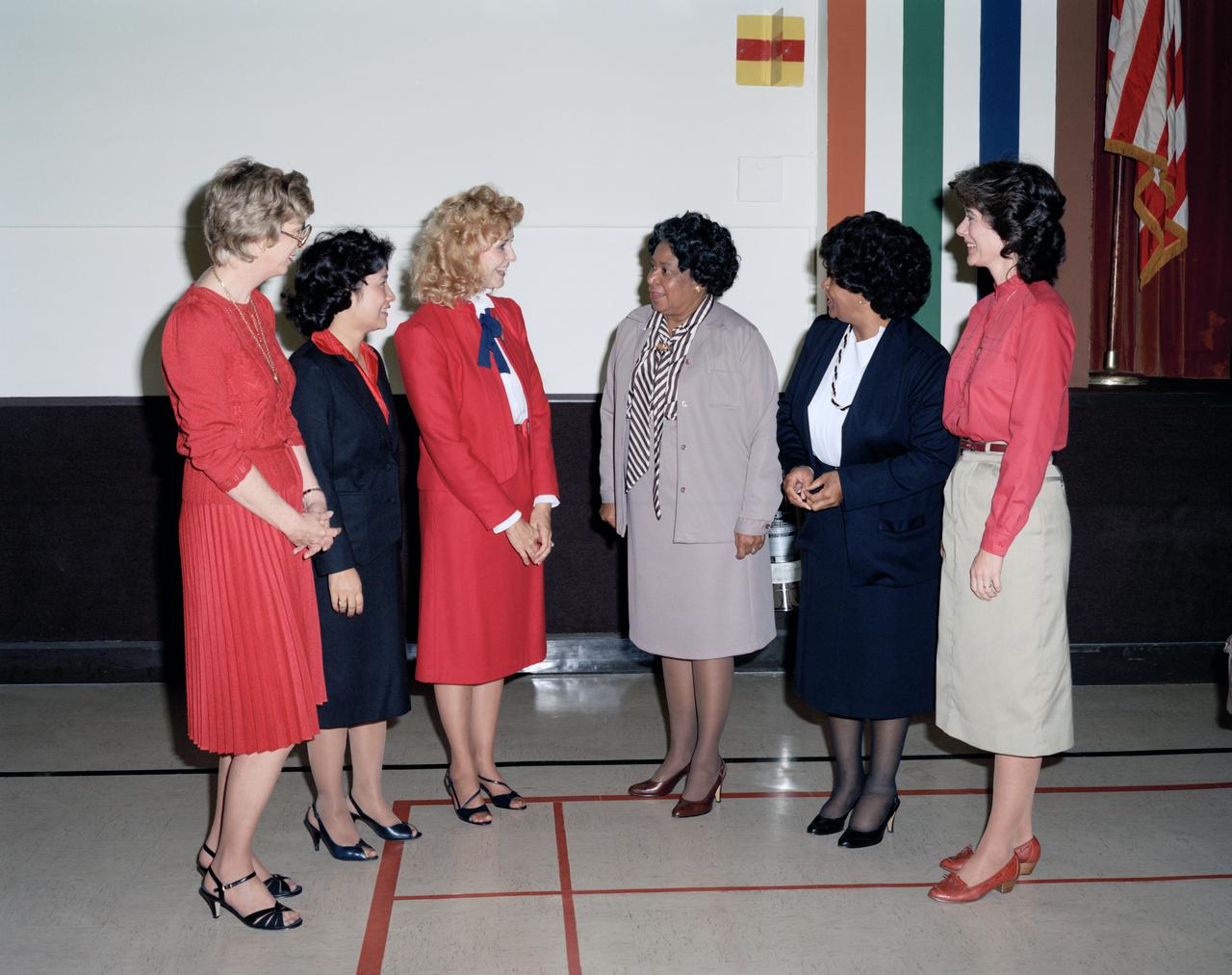
Members of the Langley Federal Women's Program surround Mary Jackson in the brown suit, of the Office of Equal Opportunity Programs. Mary Jackson NASA's first African-American female engineer, and subsequent career supporting the hiring and promotion of other deserving female and minority employees.
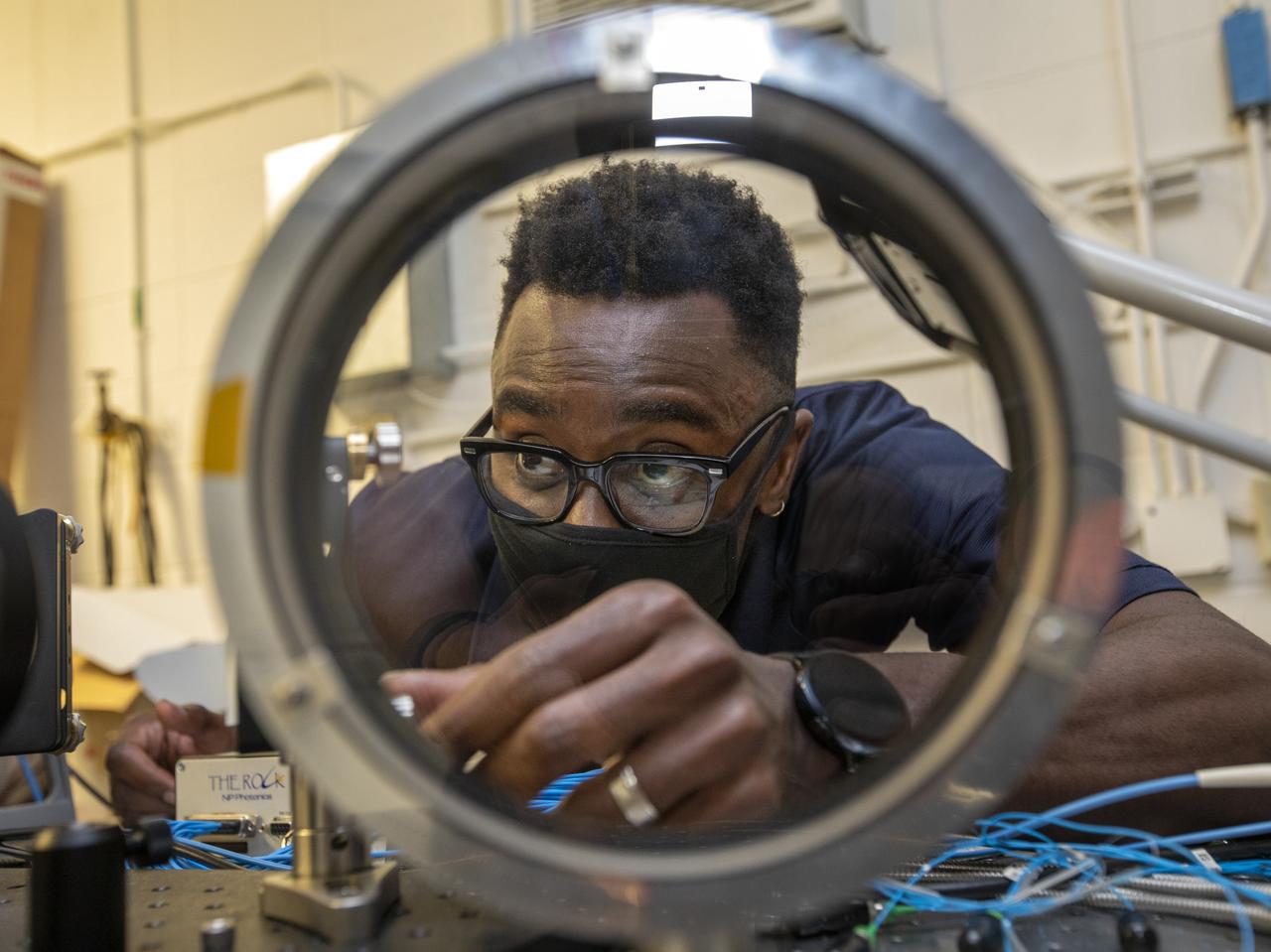
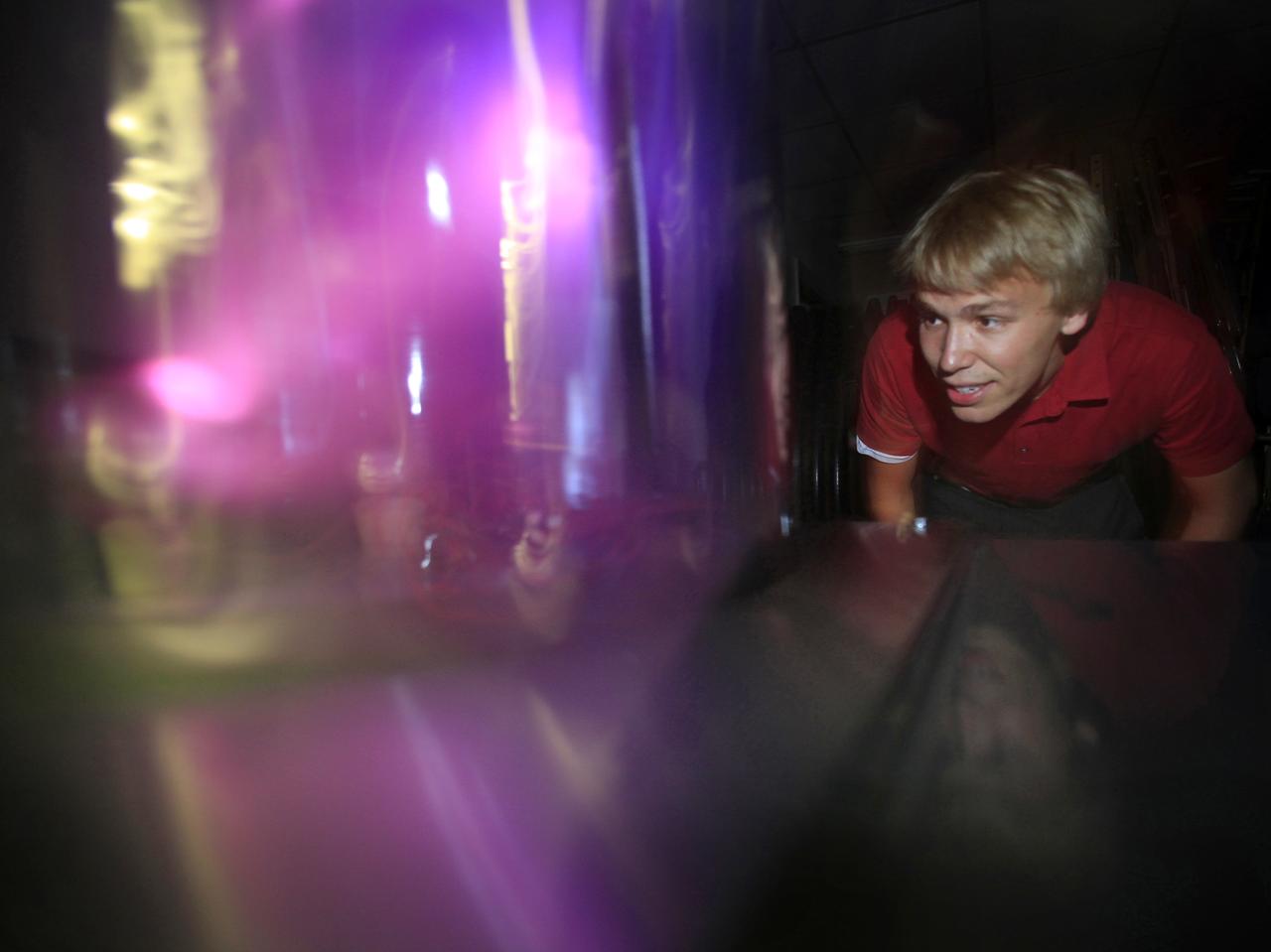
Framed through directional optics glass, Stanley Ikpe is latest of new engineers coming to work at NASA Langley.

The NASA Langley Research Center (LaRC) Shields-1 CubeSat will demonstrate a research payload with materials durability experiments on emerging radiation shielding technologies. Shields-1 incorporates eight mdosimeters for radiation shielding experiments: one in the atomic number (Z)-grade radiation shielding vault, three behind experimental Z-grade radiation shielding samples developed at NASA LaRC, three behind baseline aluminum shielding samples, and one deep inside the research payload. The Z-grade is defined as an atomic number gradient of shielding materials using a low atomic number metal, such as aluminum, with a high atomic number material, like tantalum. The metals are fabricated into the vault structure. Also, Shields-1 measures a charge dissipation film resistance for technology development. The Shields-1 mission contributes to the SmallSat community with the development of technologies to increase the lifetimes of CubeSat missions from months to years in multiple radiation environments and increase the return on investment for scientific and commercial spacecraft.
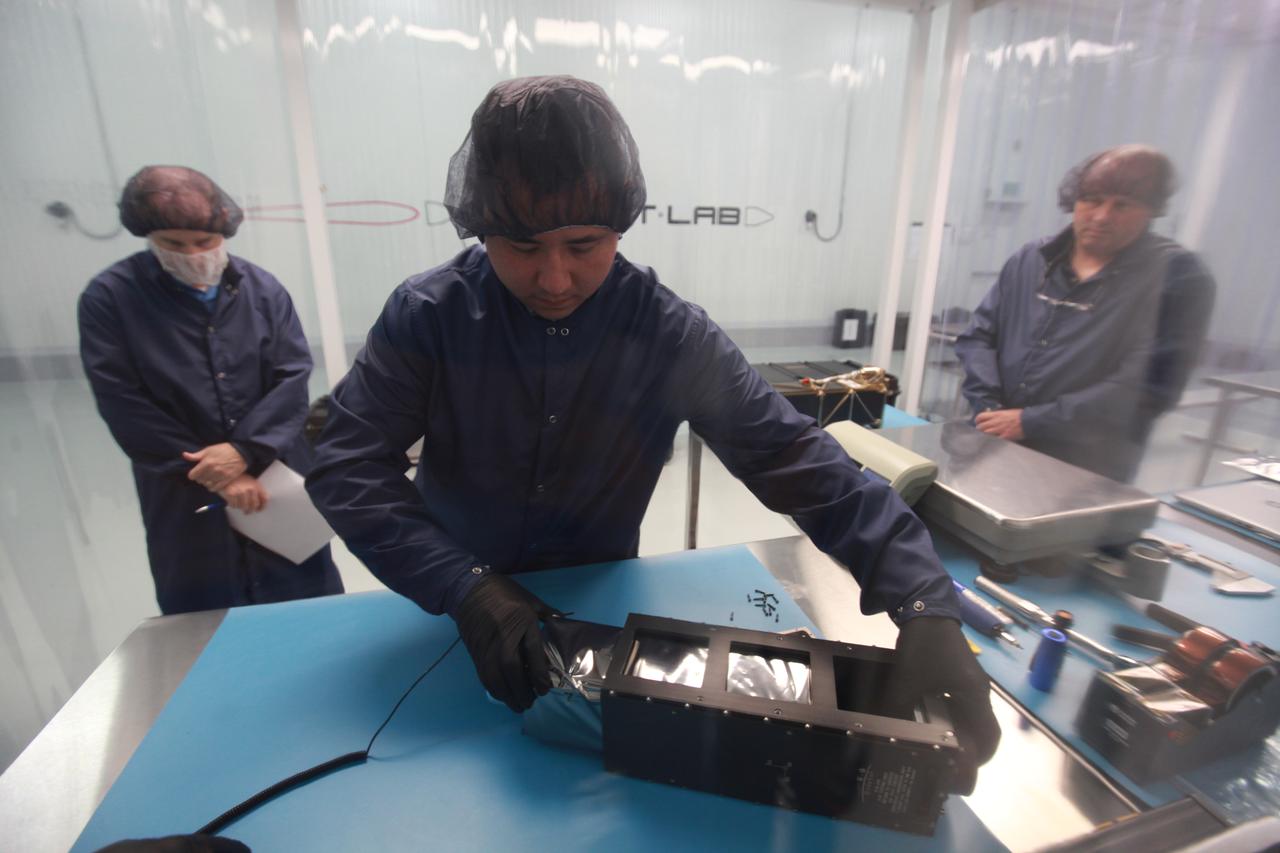
The NASA Langley Research Center (LaRC) Shields-1 CubeSat will demonstrate a research payload with materials durability experiments on emerging radiation shielding technologies. Shields-1 incorporates eight mdosimeters for radiation shielding experiments: one in the atomic number (Z)-grade radiation shielding vault, three behind experimental Z-grade radiation shielding samples developed at NASA LaRC, three behind baseline aluminum shielding samples, and one deep inside the research payload. The Z-grade is defined as an atomic number gradient of shielding materials using a low atomic number metal, such as aluminum, with a high atomic number material, like tantalum. The metals are fabricated into the vault structure. Also, Shields-1 measures a charge dissipation film resistance for technology development. The Shields-1 mission contributes to the SmallSat community with the development of technologies to increase the lifetimes of CubeSat missions from months to years in multiple radiation environments and increase the return on investment for scientific and commercial spacecraft.
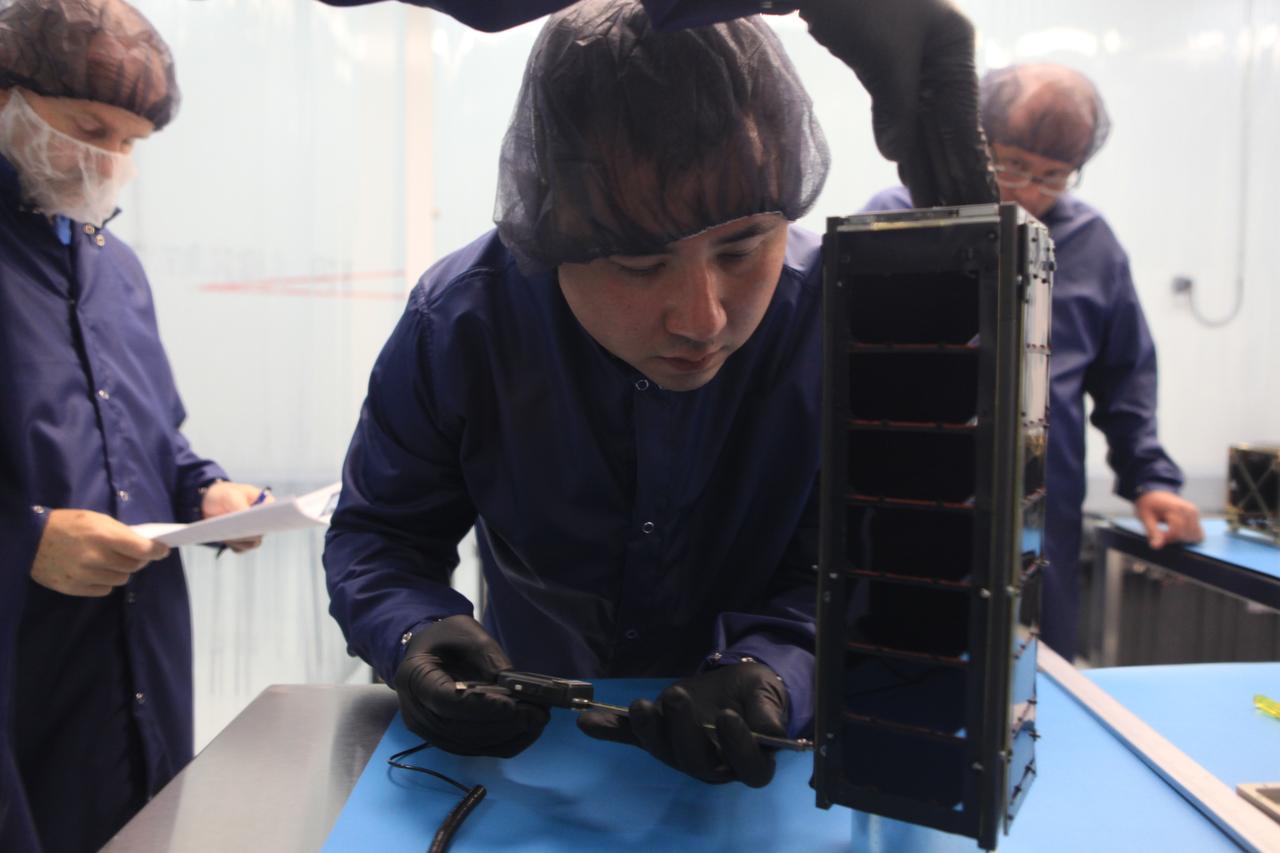
The NASA Langley Research Center (LaRC) Shields-1 CubeSat will demonstrate a research payload with materials durability experiments on emerging radiation shielding technologies. Shields-1 incorporates eight mdosimeters for radiation shielding experiments: one in the atomic number (Z)-grade radiation shielding vault, three behind experimental Z-grade radiation shielding samples developed at NASA LaRC, three behind baseline aluminum shielding samples, and one deep inside the research payload. The Z-grade is defined as an atomic number gradient of shielding materials using a low atomic number metal, such as aluminum, with a high atomic number material, like tantalum. The metals are fabricated into the vault structure. Also, Shields-1 measures a charge dissipation film resistance for technology development. The Shields-1 mission contributes to the SmallSat community with the development of technologies to increase the lifetimes of CubeSat missions from months to years in multiple radiation environments and increase the return on investment for scientific and commercial spacecraft.
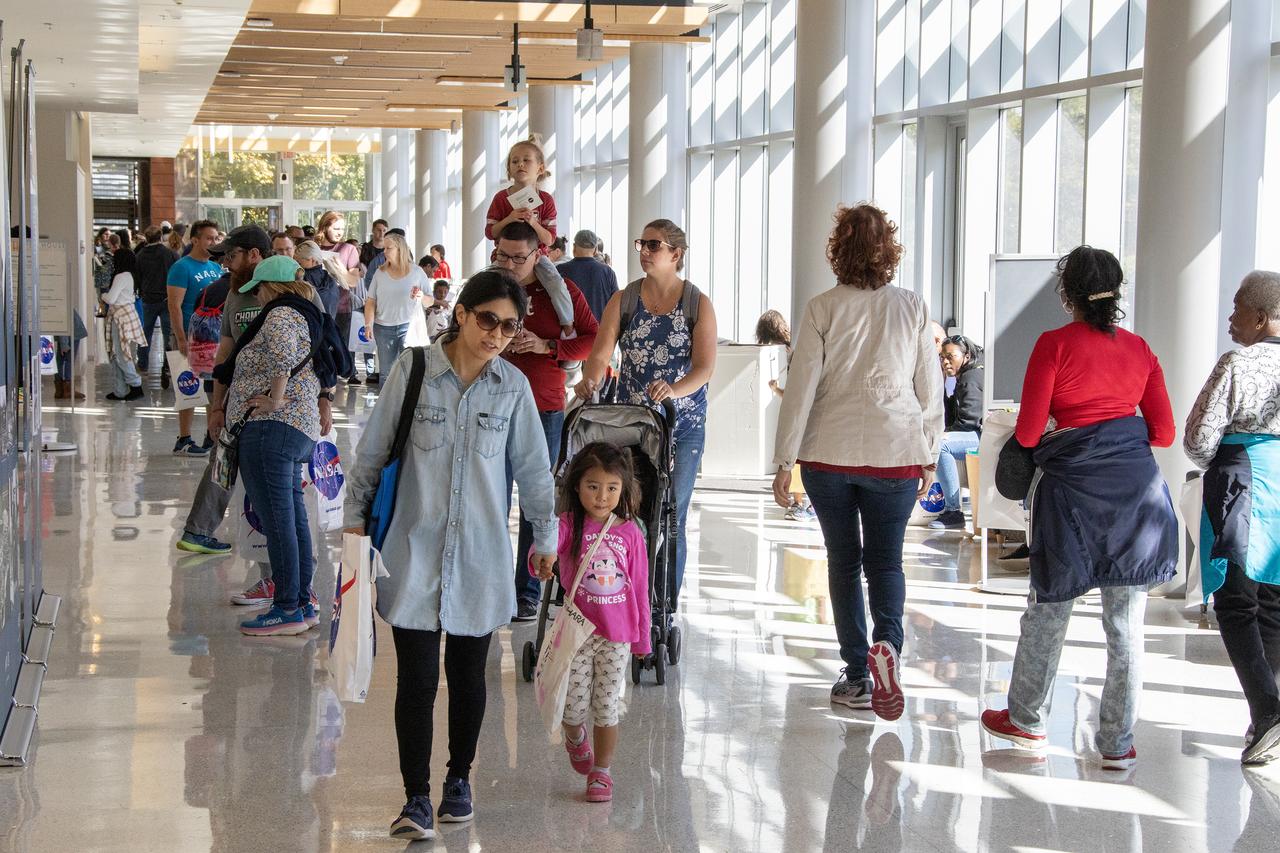
More than 37,000 people registered to attend the NASA Langley open house. Starting with the Annual 5K Moon Walk Run and the talented Nils Larson, X59 pilot and Astronaut Victor Glover reunited at Langley’s hangar and hosted by Center Director Clayton Turner.
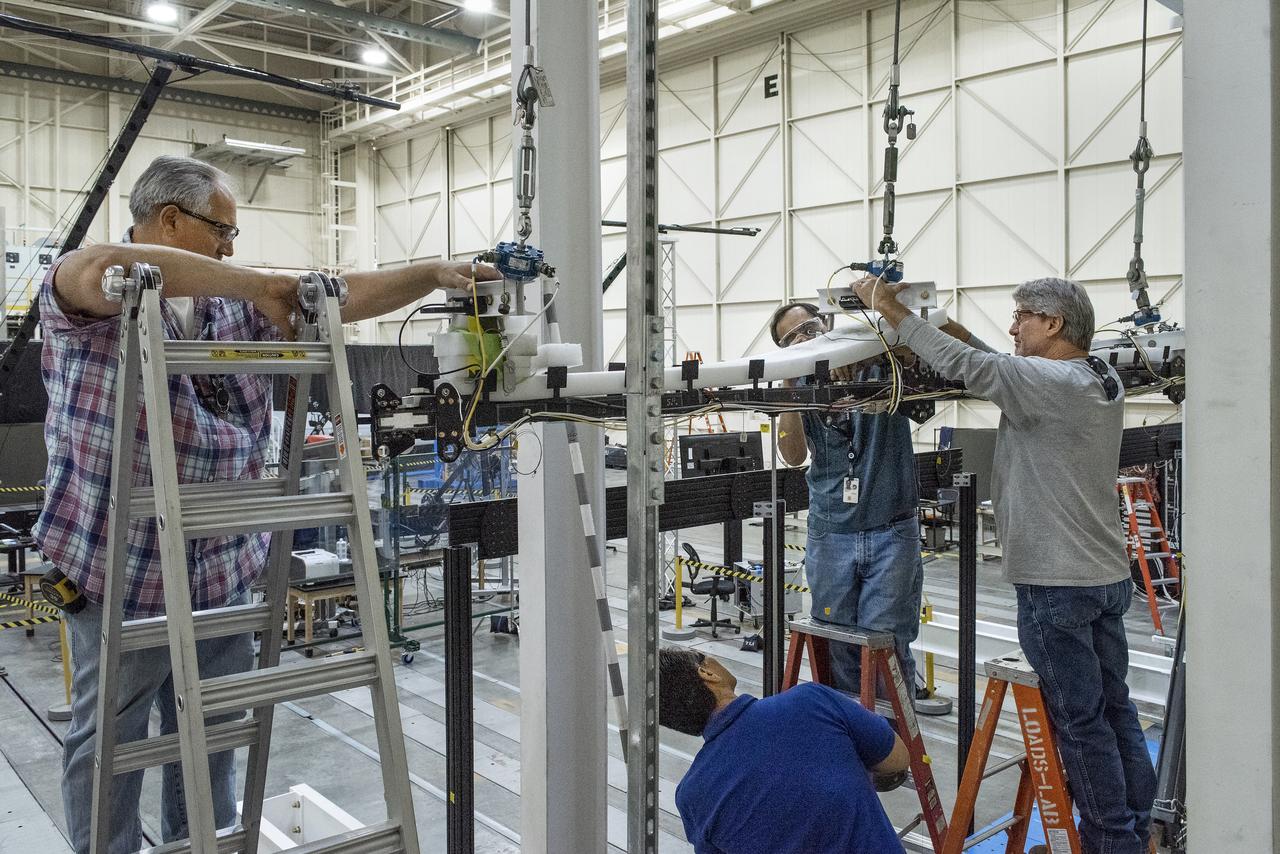
Ted Powers, from left, Larry Hudson, Ron Haraguchi and Walter Hargis make adjustments to the Passive Aeroelastic Tailored (PAT) wing testing apparatus at NASA’s Armstrong Flight Research Center in California.
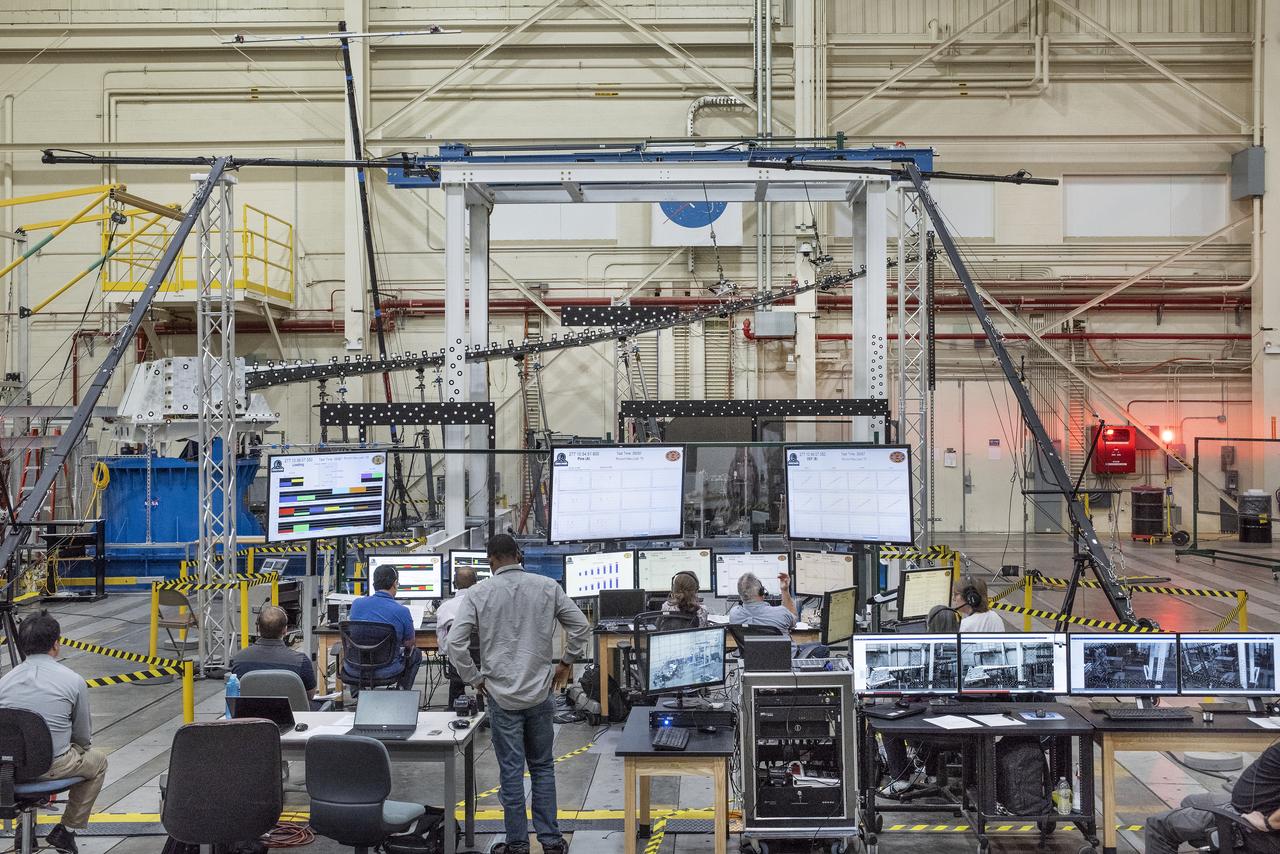
NASA’s Armstrong Flight Research Center and Langley Research Center staff members monitor a test of the Passive Aeroelastic Tailored (PAT) wing at NASA’s Armstrong Flight Research Center in California.
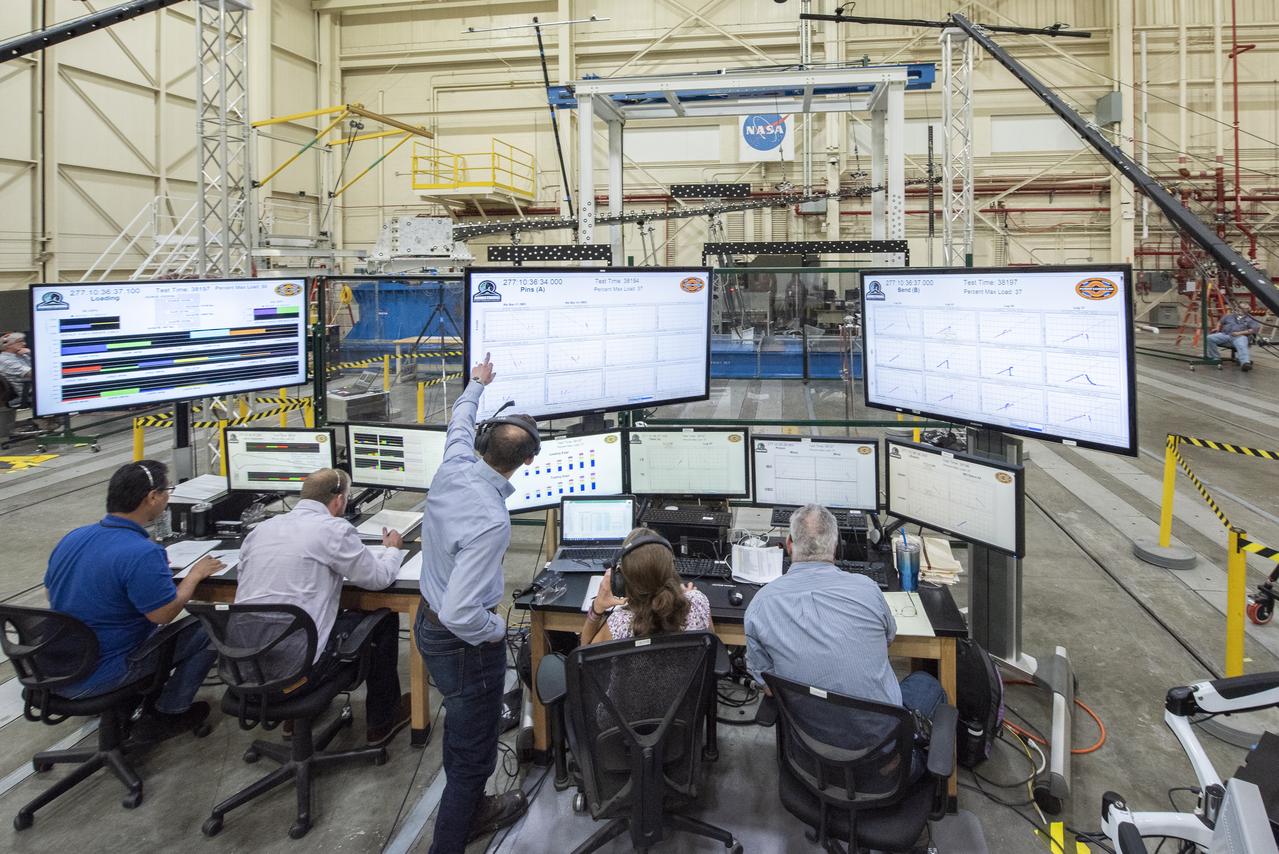
NASA’s Armstrong Flight Research Center and Langley Research Center staff members monitor a test of the Passive Aeroelastic Tailored (PAT) wing at NASA’s Armstrong Flight Research Center in California.
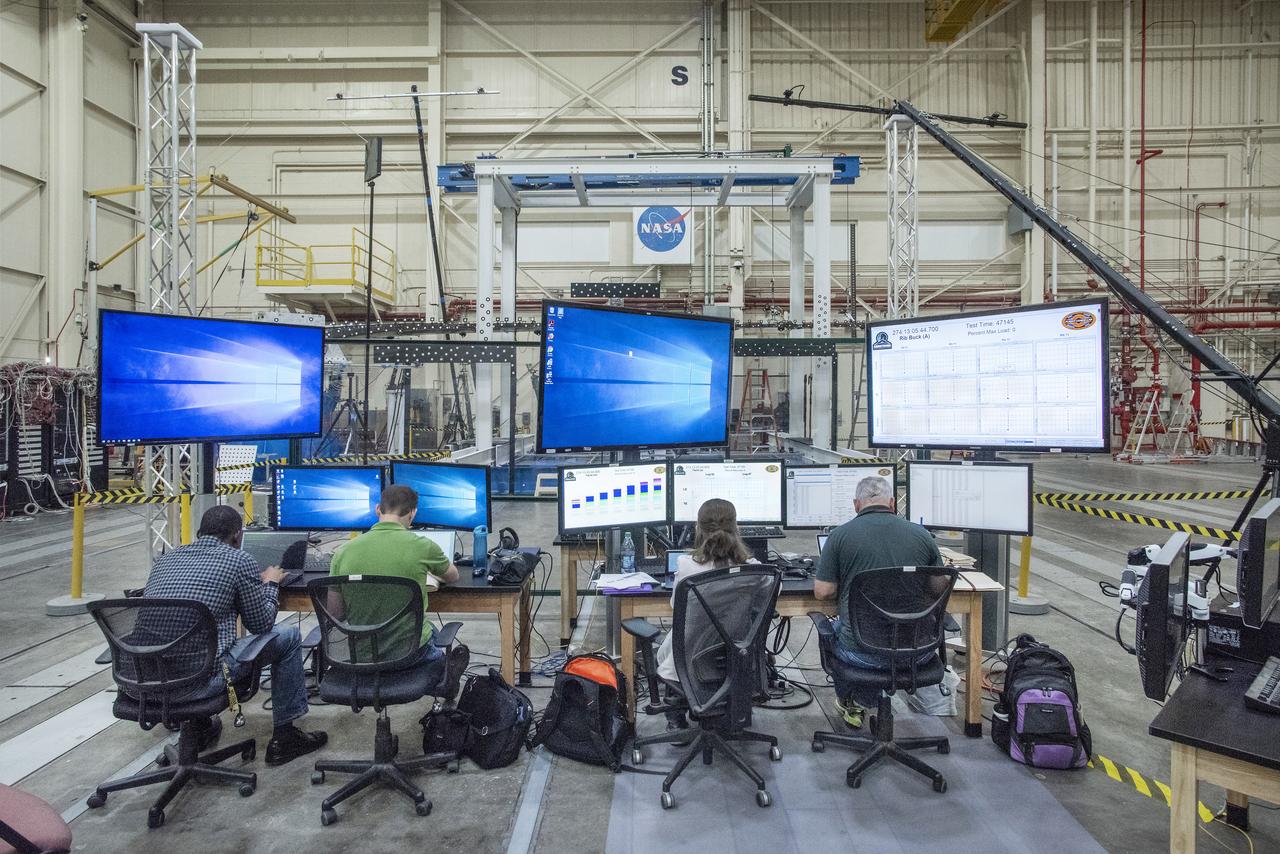
NASA’s Armstrong Flight Research Center and Langley Research Center staff members monitor a test of the Passive Aeroelastic Tailored (PAT) wing at NASA’s Armstrong Flight Research Center in California.
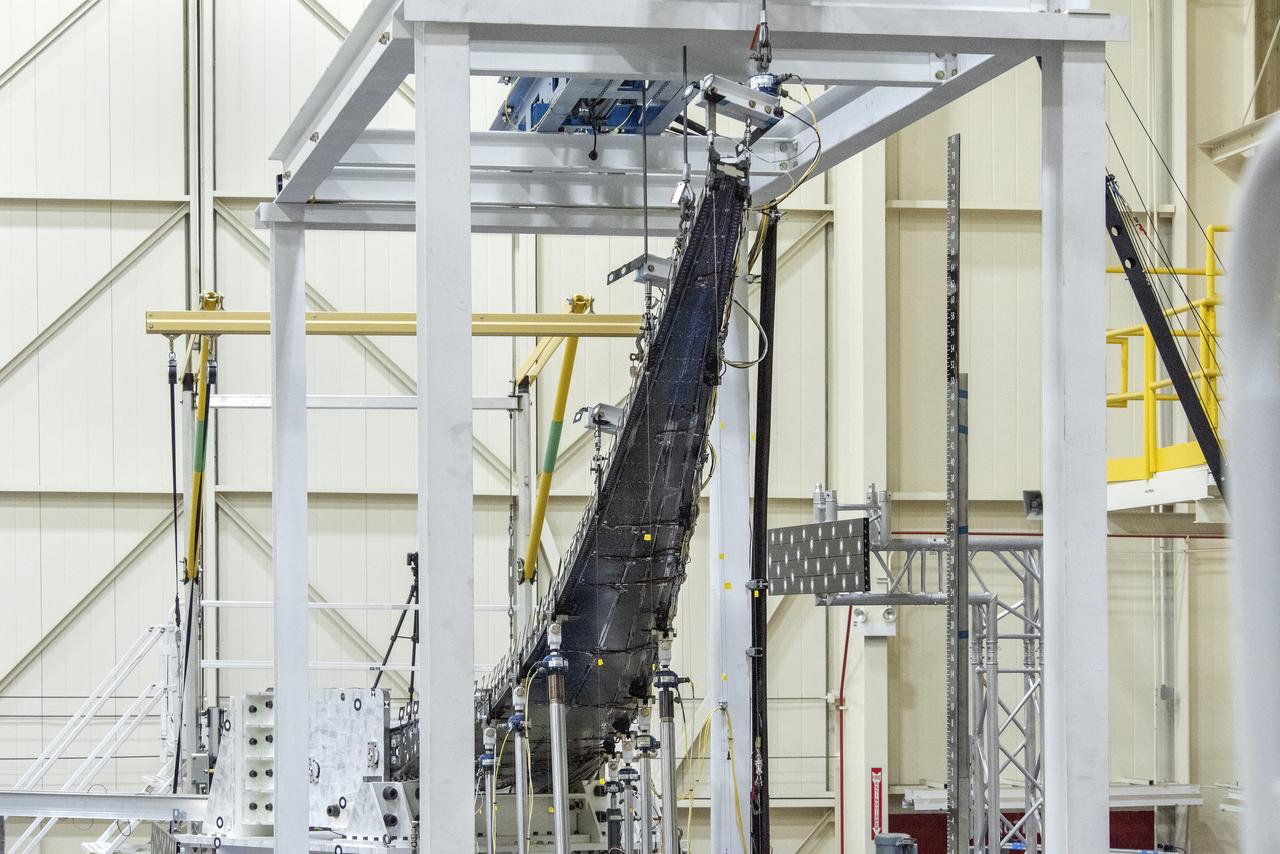
The Passive Aeroelastic Tailored (PAT) wing bends under pressure from the highest loads applied during testing at NASA’s Armstrong Flight Research Center in California.
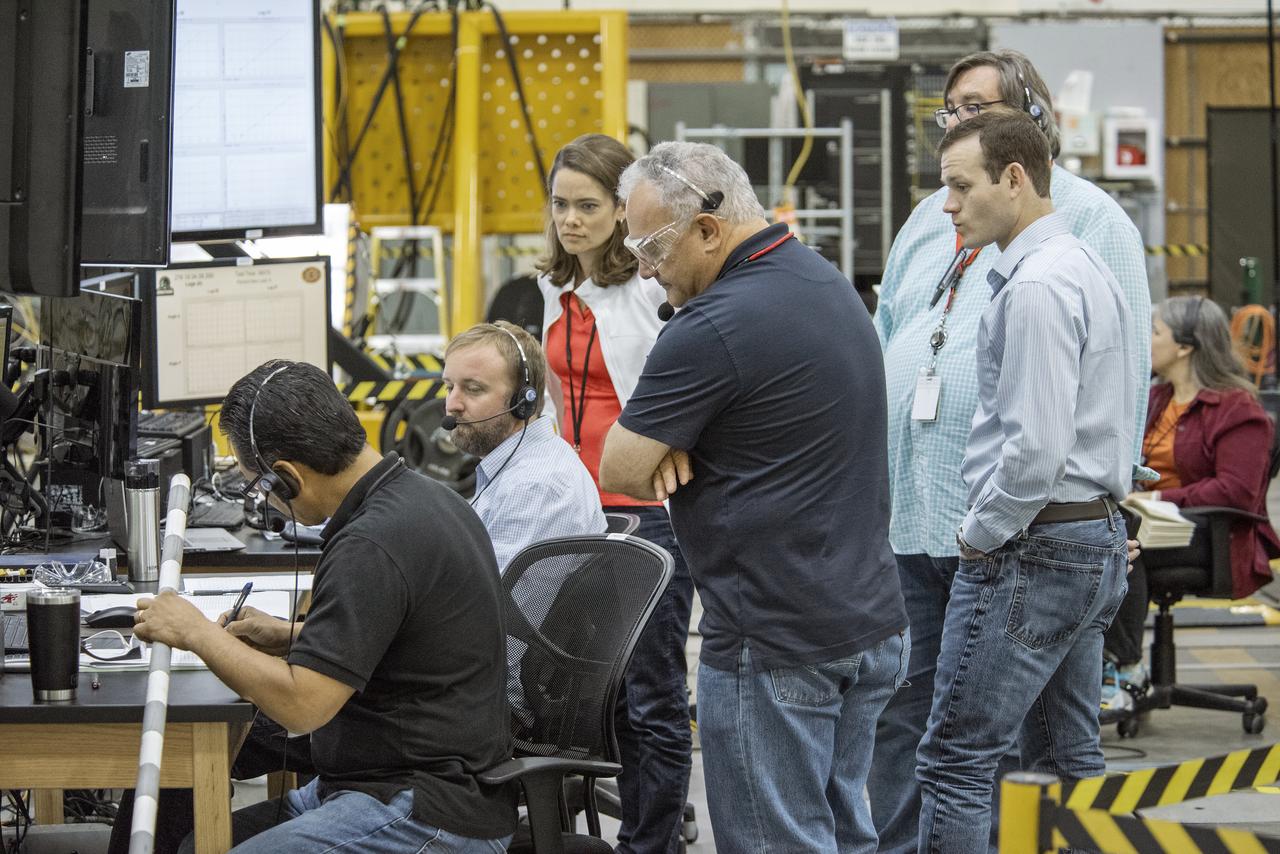
NASA’s Armstrong Flight Research Center and Langley Research Center staff members monitor a test of the Passive Aeroelastic Tailored (PAT) wing at NASA’s Armstrong Flight Research Center in California.
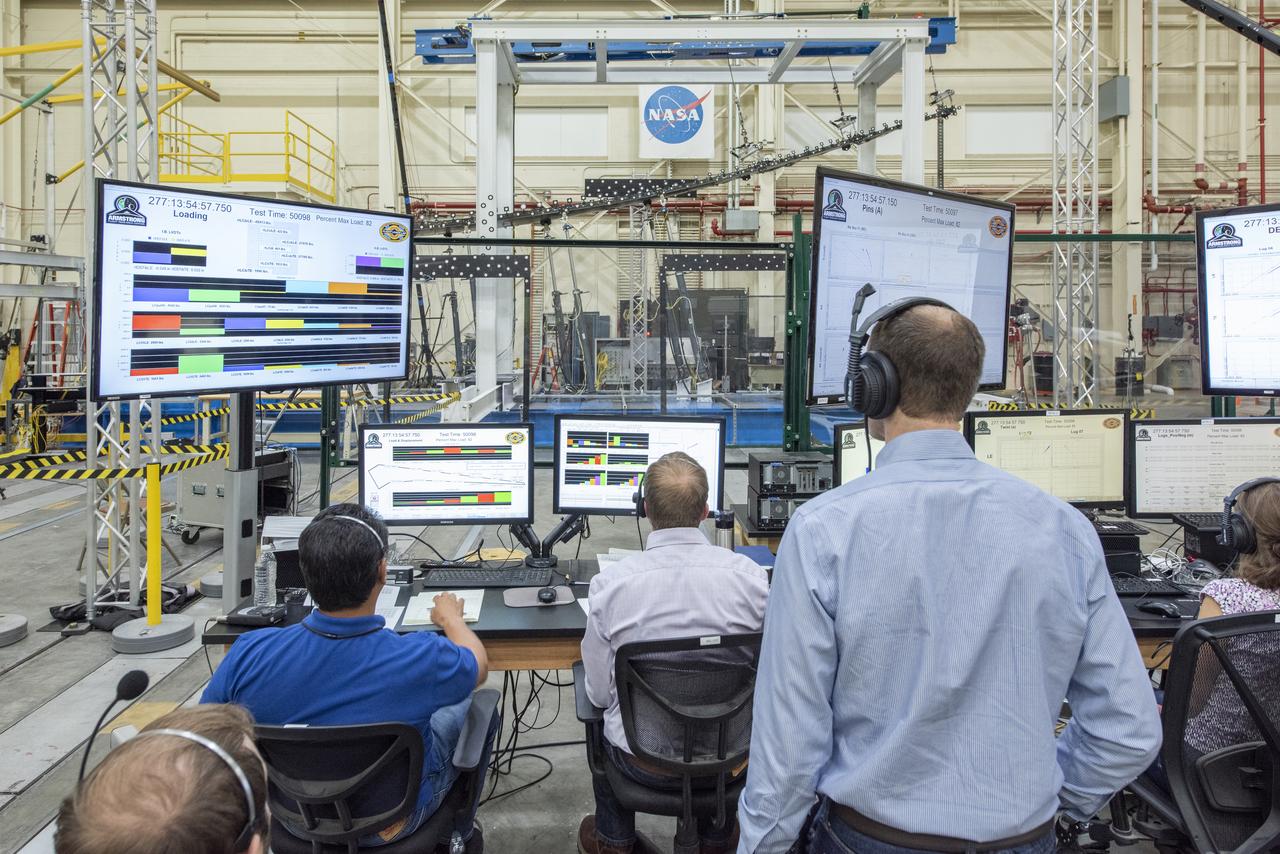
NASA’s Armstrong Flight Research Center and Langley Research Center staff members monitor a test of the Passive Aeroelastic Tailored (PAT) wing at NASA’s Armstrong Flight Research Center in California.
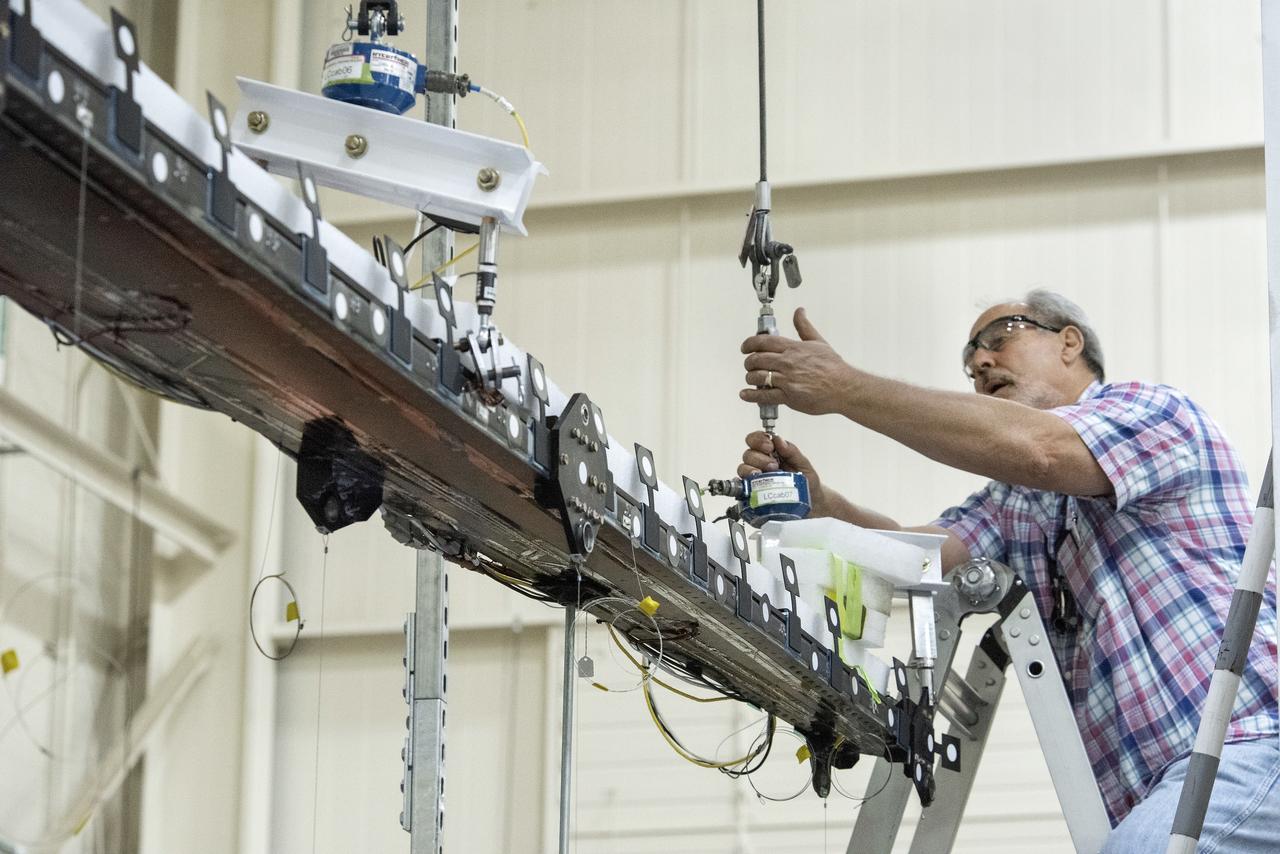
Ted Powers makes an adjustment to the Passive Aeroelastic Tailored (PAT) wing testing apparatus at NASA’s Armstrong Flight Research Center in California.
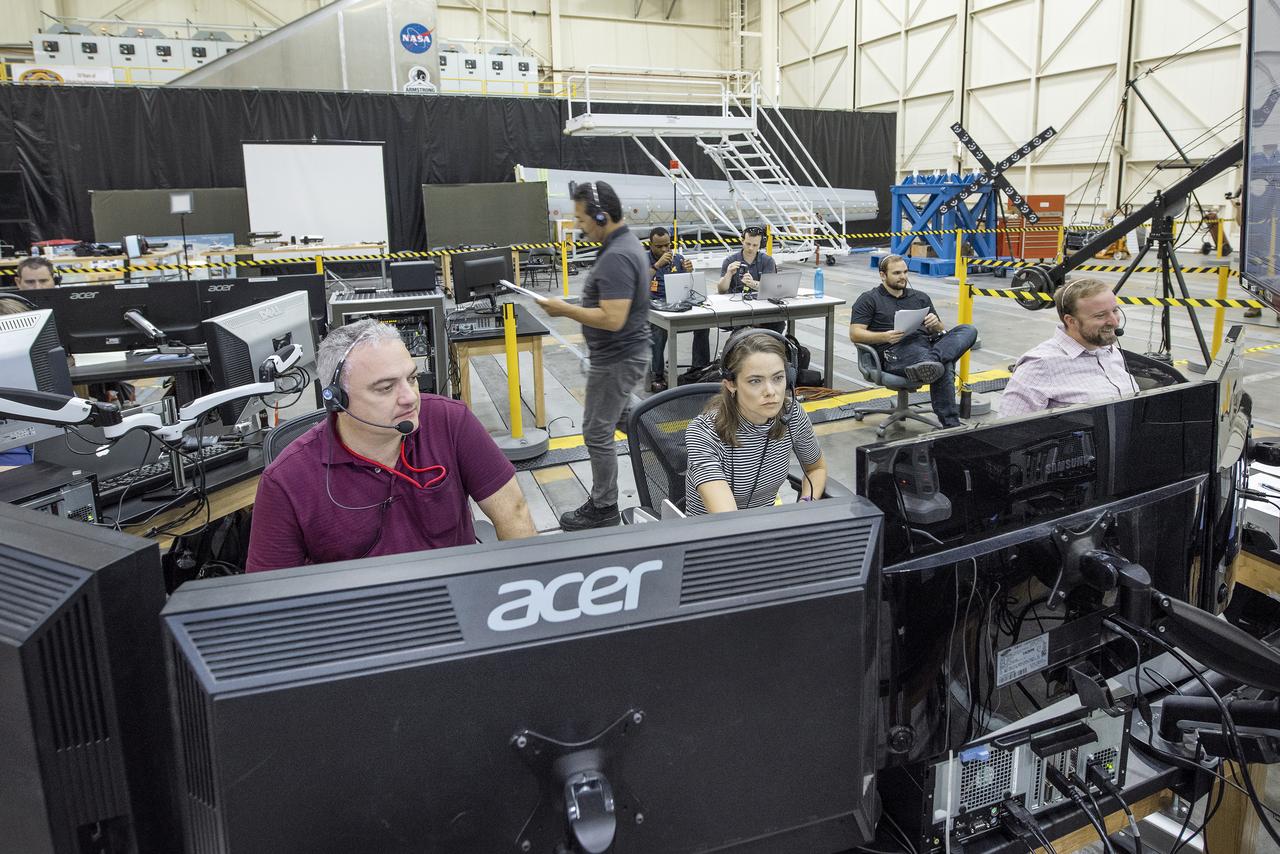
NASA’s Armstrong Flight Research Center and Langley Research Center staff members monitor a test of the Passive Aeroelastic Tailored (PAT) wing at NASA’s Armstrong Flight Research Center in California.
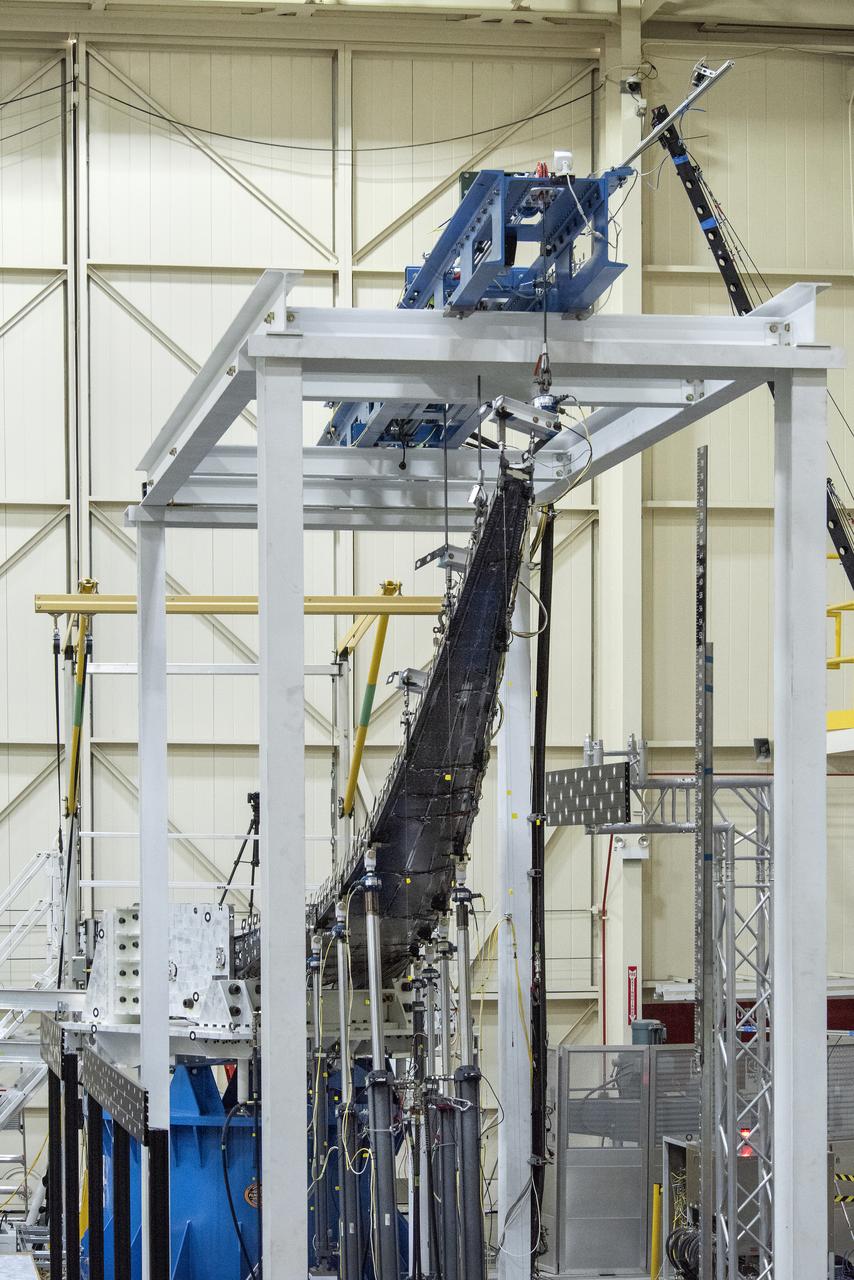
The Passive Aeroelastic Tailored (PAT) wing bends under pressure from the highest loads applied during testing at NASA’s Armstrong Flight Research Center in California.
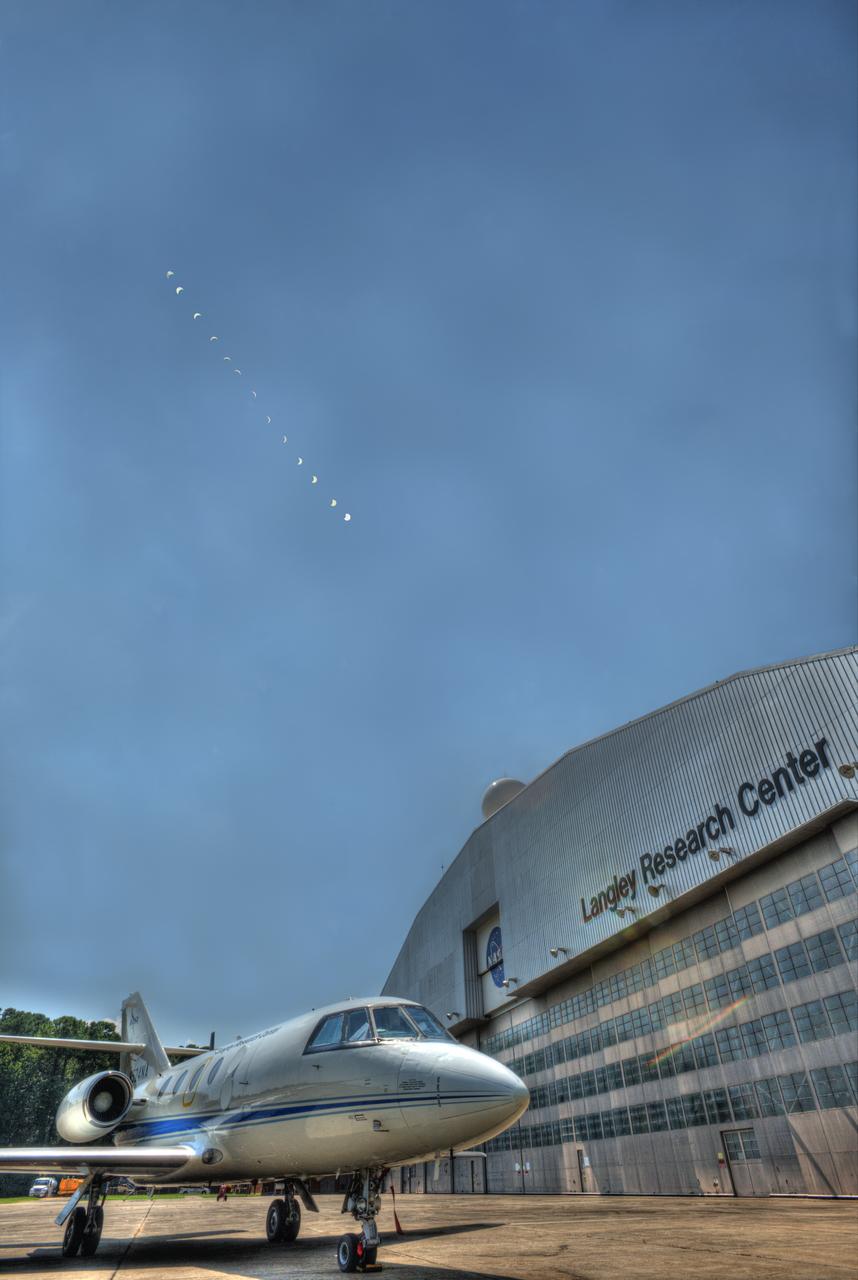
HDR Time lapse composite of the Solar Eclipse with the Falcon UH-25 in front of the NASA Langley hangar.
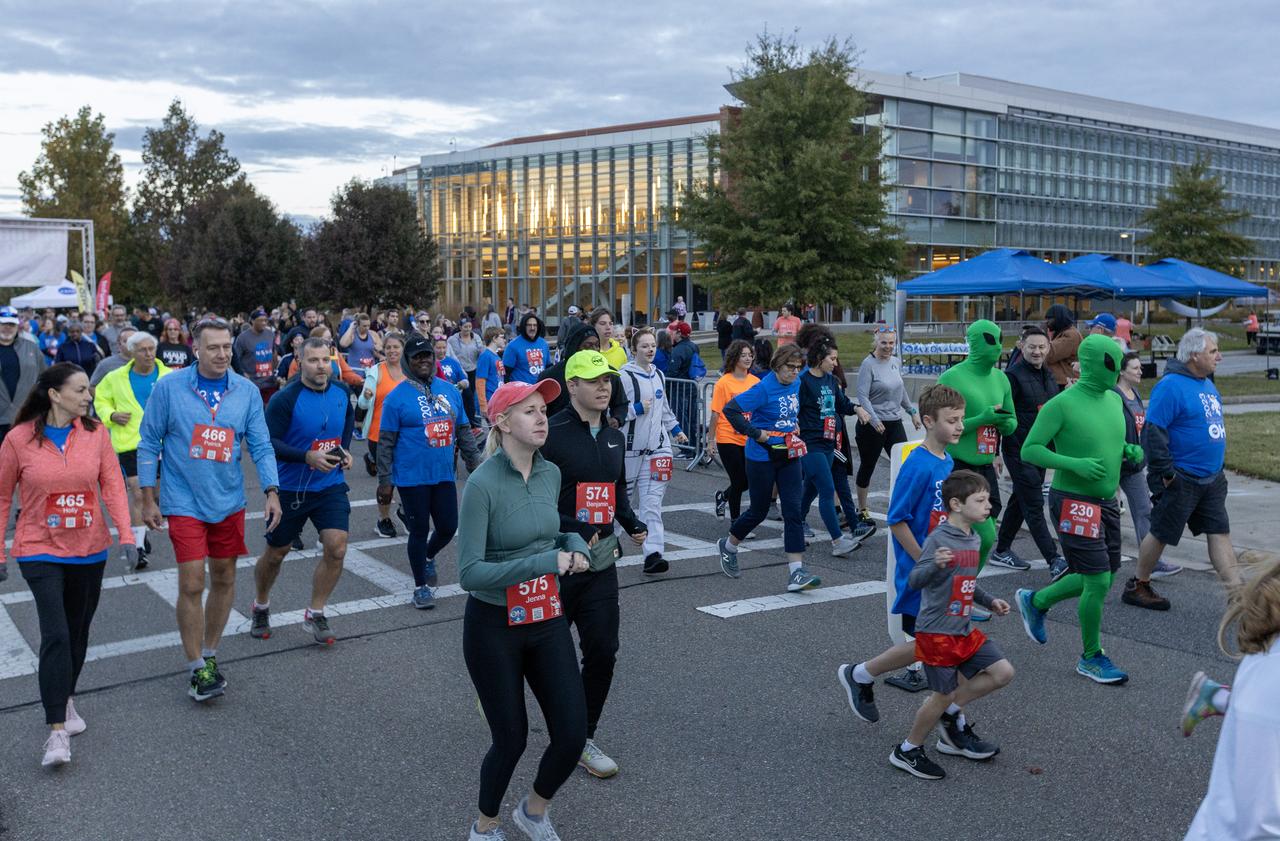
More than 37,000 people registered to attend the NASA Langley open house. Starting with the Annual 5K Moon Walk Run and the talented Nils Larson, X59 pilot and Astronaut Victor Glover reunited at Langley’s hangar and hosted by Center Director Clayton Turner.
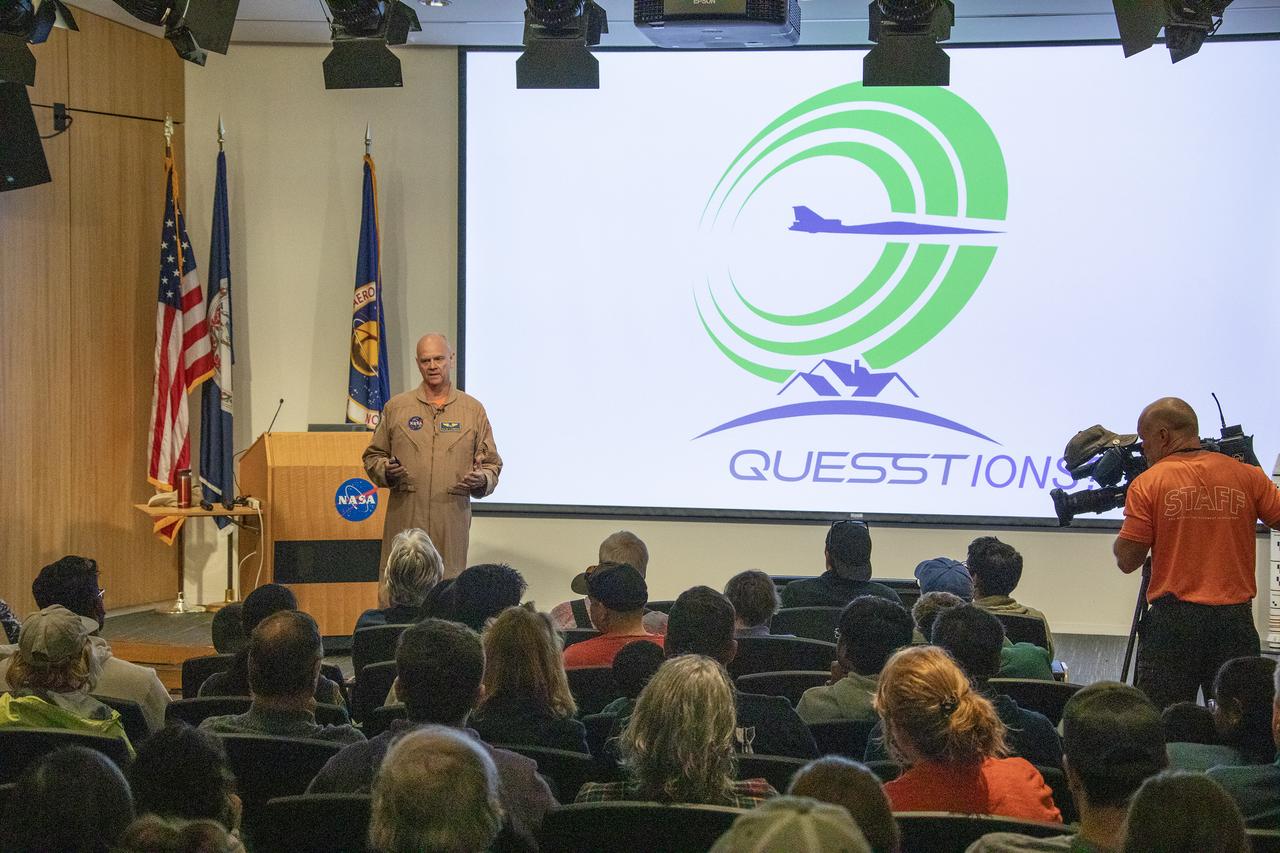
Speaker David Nils Larson on the X59. More than 37,000 people registered to attend the NASA Langley open house. Starting with the Annual 5K Moon Walk Run and the talented Nils Larson, X59 pilot and Astronaut Victor Glover reunited at Langley’s hangar and hosted by Center Director Clayton Turner.
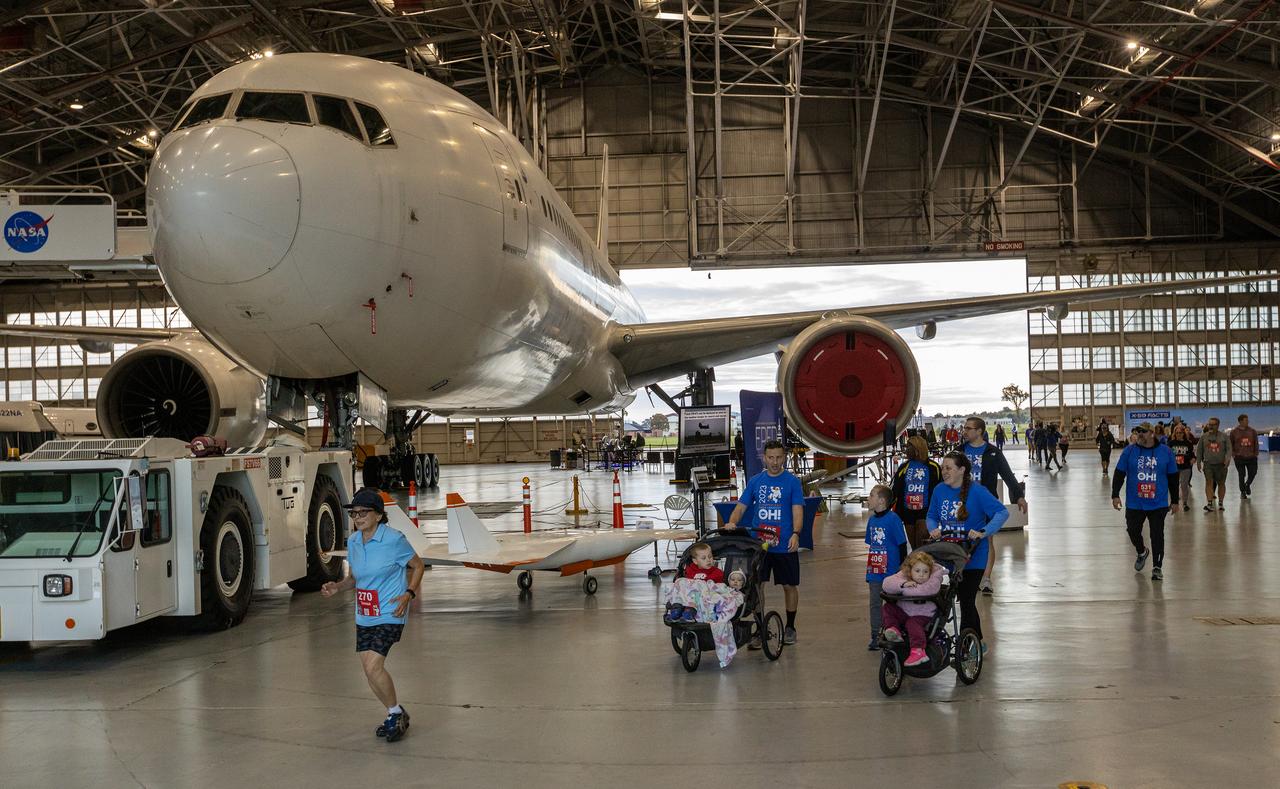
More than 37,000 people registered to attend the NASA Langley open house. Starting with the Annual 5K Moon Walk Run and the talented Nils Larson, X59 pilot and Astronaut Victor Glover reunited at Langley’s hangar and hosted by Center Director Clayton Turner.
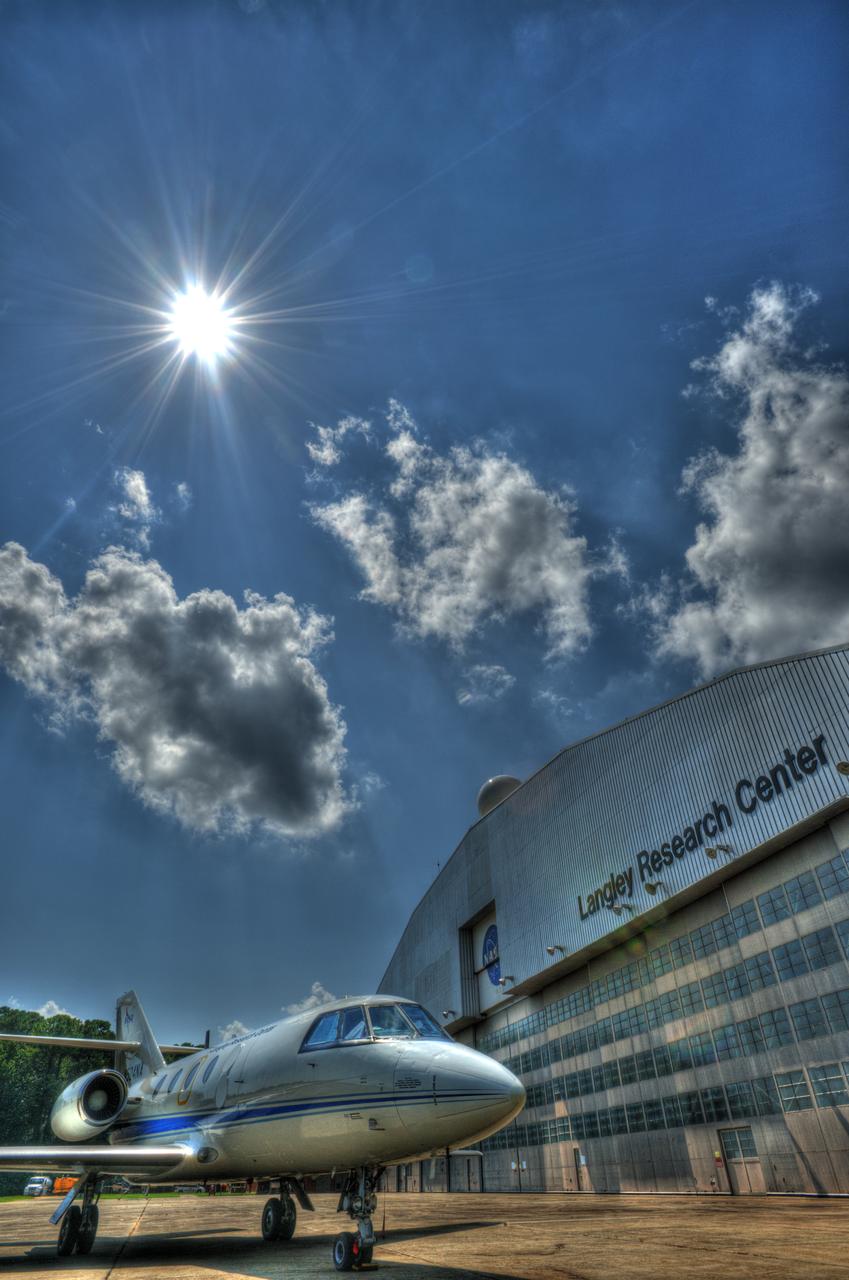
HDR image of the Falcon UH-25 in front of the NASA Langley hangar during the Solar Eclipse.

Artemis II astronaut Victor J. Glover participates in NASA Langley’s Open House on Saturday, Oct. 21. More than 37,000 people registered to attend the NASA Langley open house. Starting with the Annual 5K Moon Walk Run and the talented Nils Larson, X59 pilot and Astronaut Victor Glover reunited at Langley’s hangar and hosted by Center Director Clayton Turner.
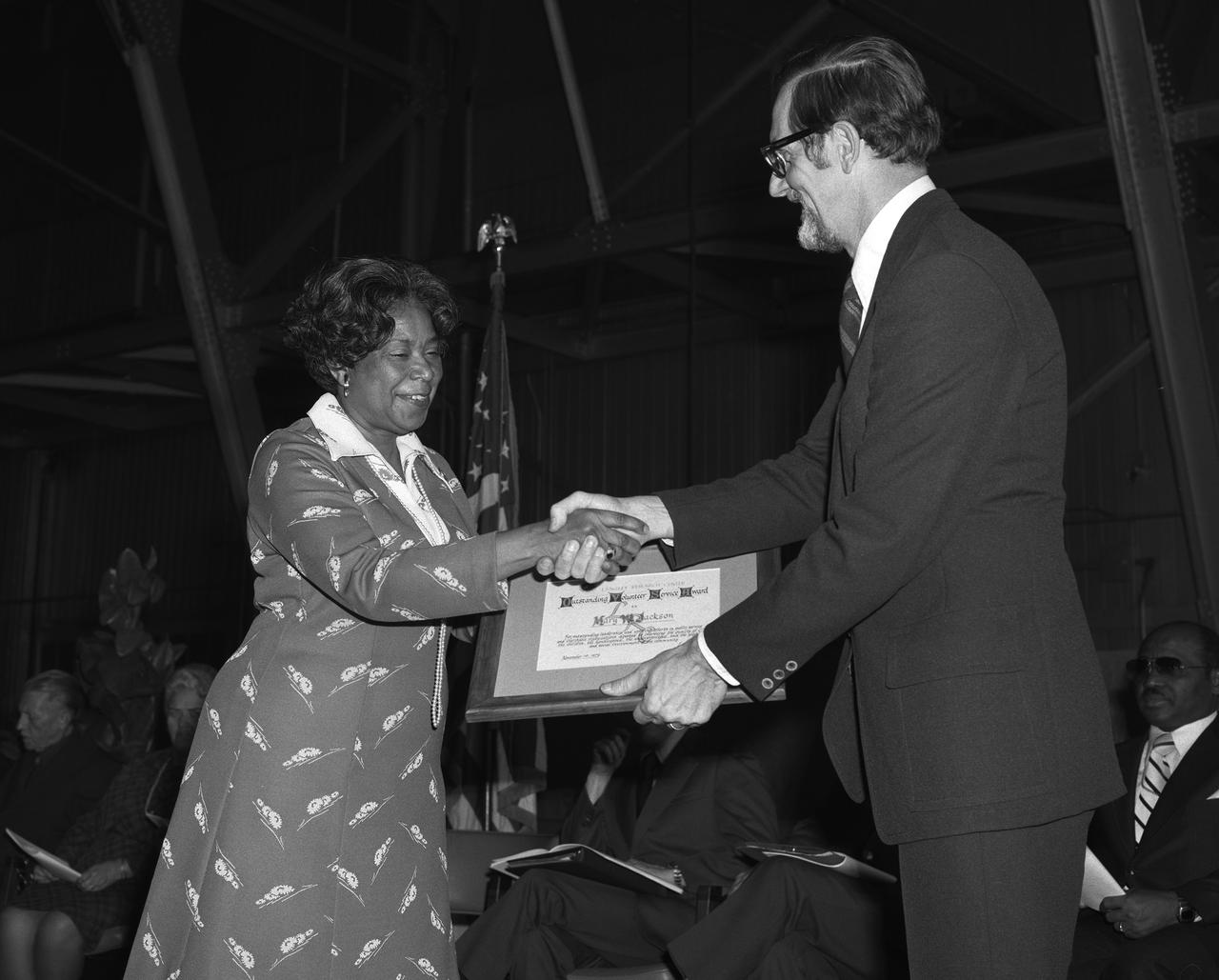
Langley Center Director Donald P. Hearth (right) presenting Mary Jackson with Outstanding Volunteer Service Award. Mary Jackson was NASA's first African-American female engineer,and subsequent career supporting the hiring and promotion of other deserving female and minority employees.
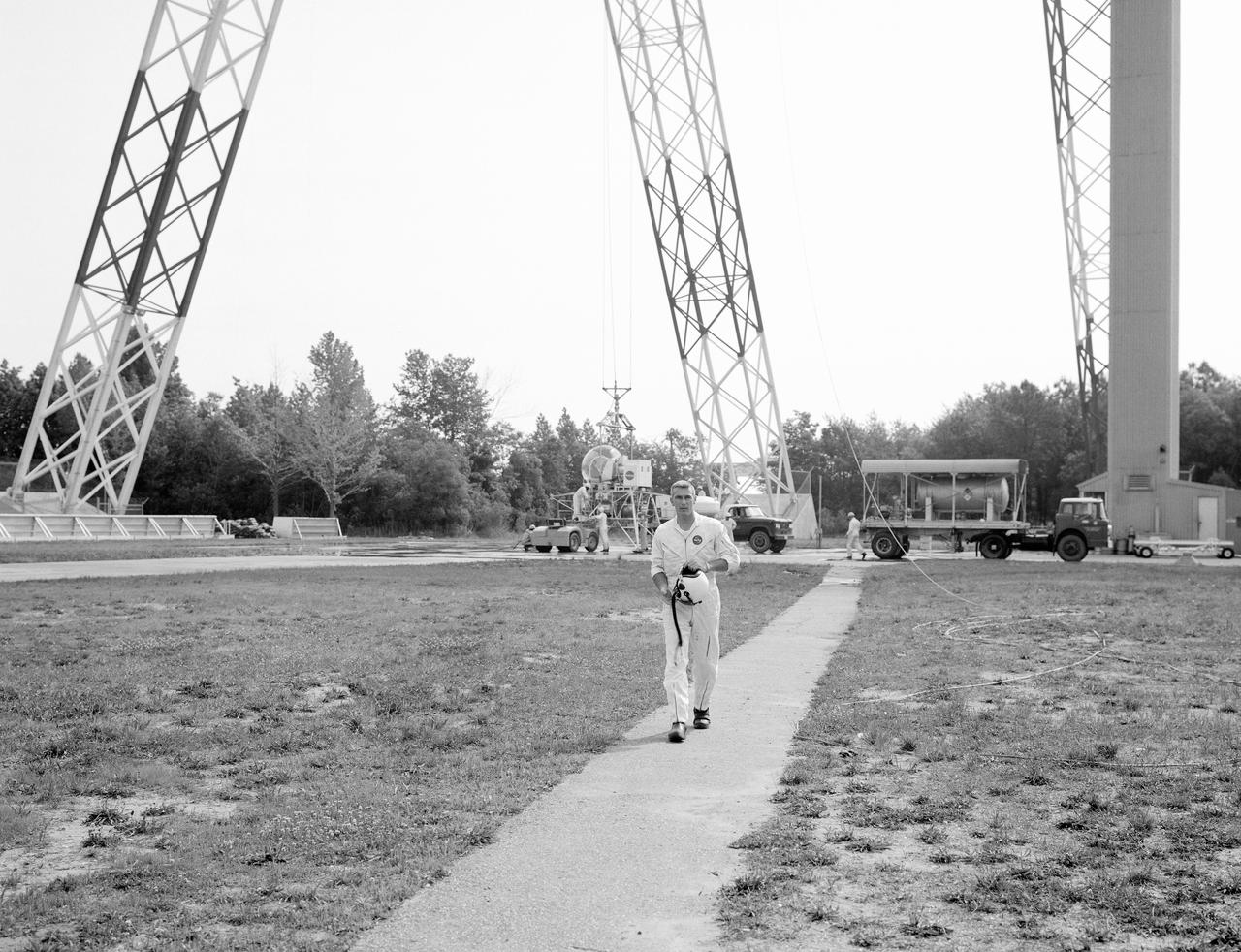
Astronaut Eugene Cernan at Lunar Lander Research Facility. Cernan under gantry, in training module. Captain Cernan was one of fourteen astronauts selected by NASA in October 1963. On his second space flight, he was lunar module pilot of Apollo 10, May 18-26, 1969, the first comprehensive lunar-orbital qualification and verification flight test of an Apollo lunar module.
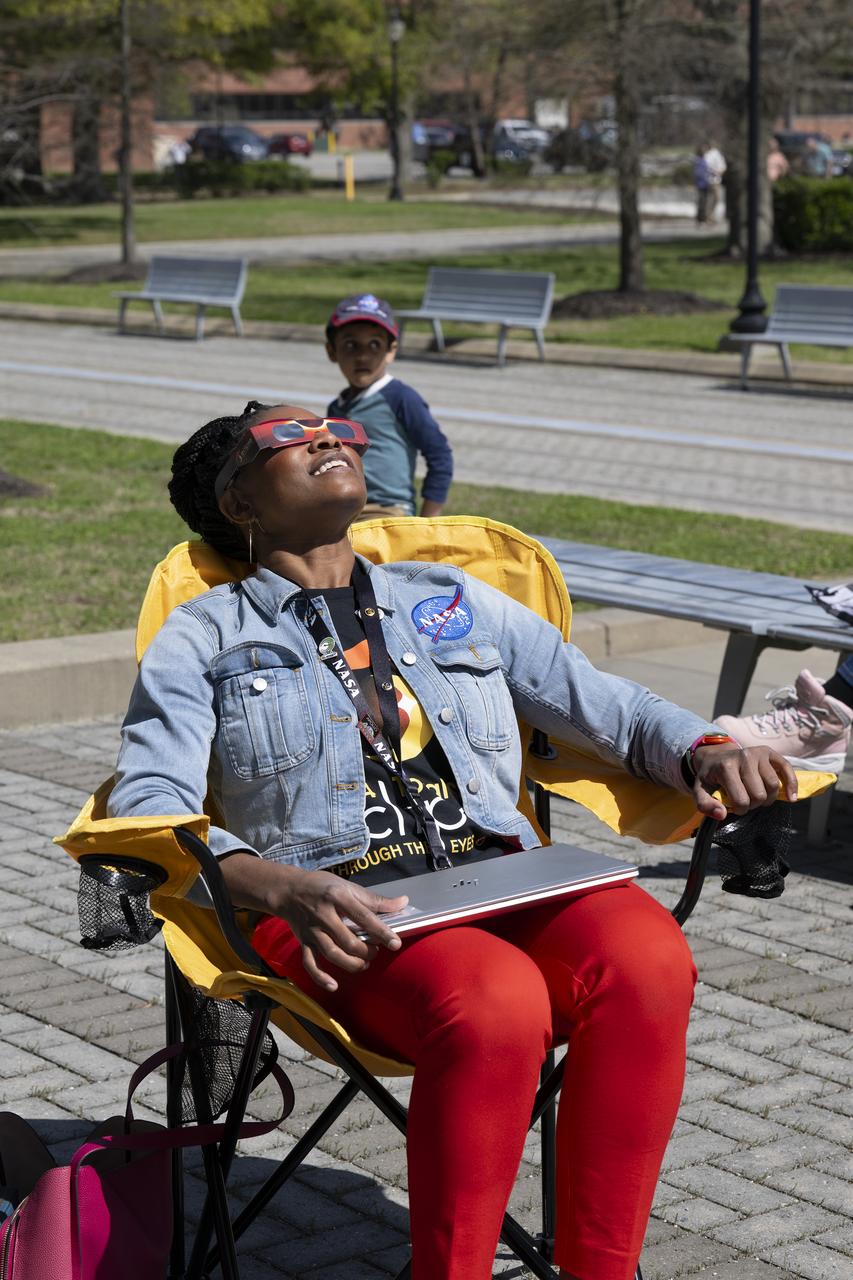
People are seen viewing the partial solar eclipse from NASA Langley Research Center in Hampton, VA, Monday, April 8, 2024. A total solar eclipse swept across a narrow portion of the North American continent from Mexico’s Pacific coast to the Atlantic coast of Newfoundland, Canada. A partial solar eclipse was visible across the entire North American continent along with parts of Central America and Europe. Photo Credit: (NASA/Ryan Hill)
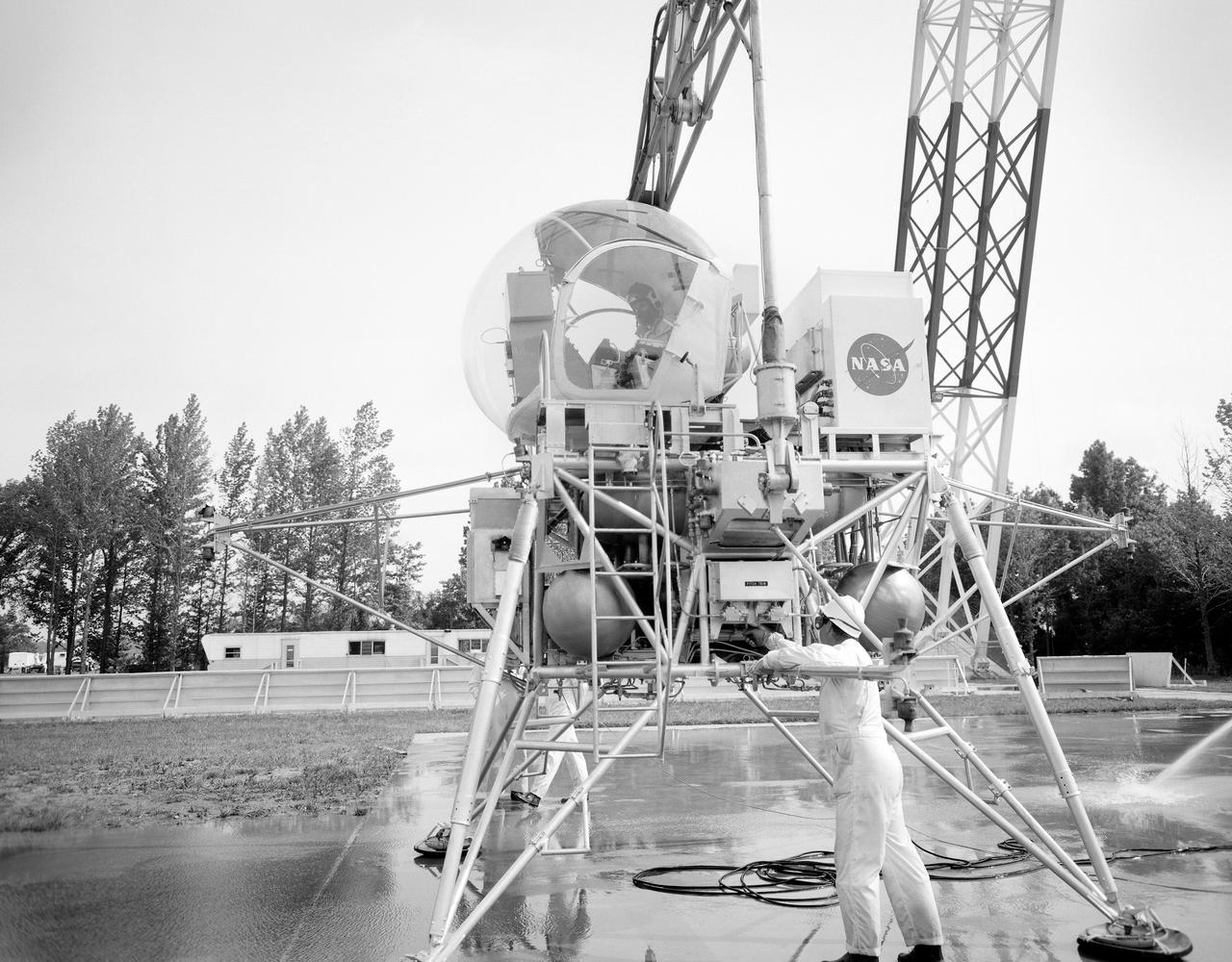
Astronaut Eugene Cernan at Lunar Lander Research Facility. Cernan under gantry, in training module. Captain Cernan was one of fourteen astronauts selected by NASA in October 1963. On his second space flight, he was lunar module pilot of Apollo 10, May 18-26, 1969, the first comprehensive lunar-orbital qualification and verification flight test of an Apollo lunar module.
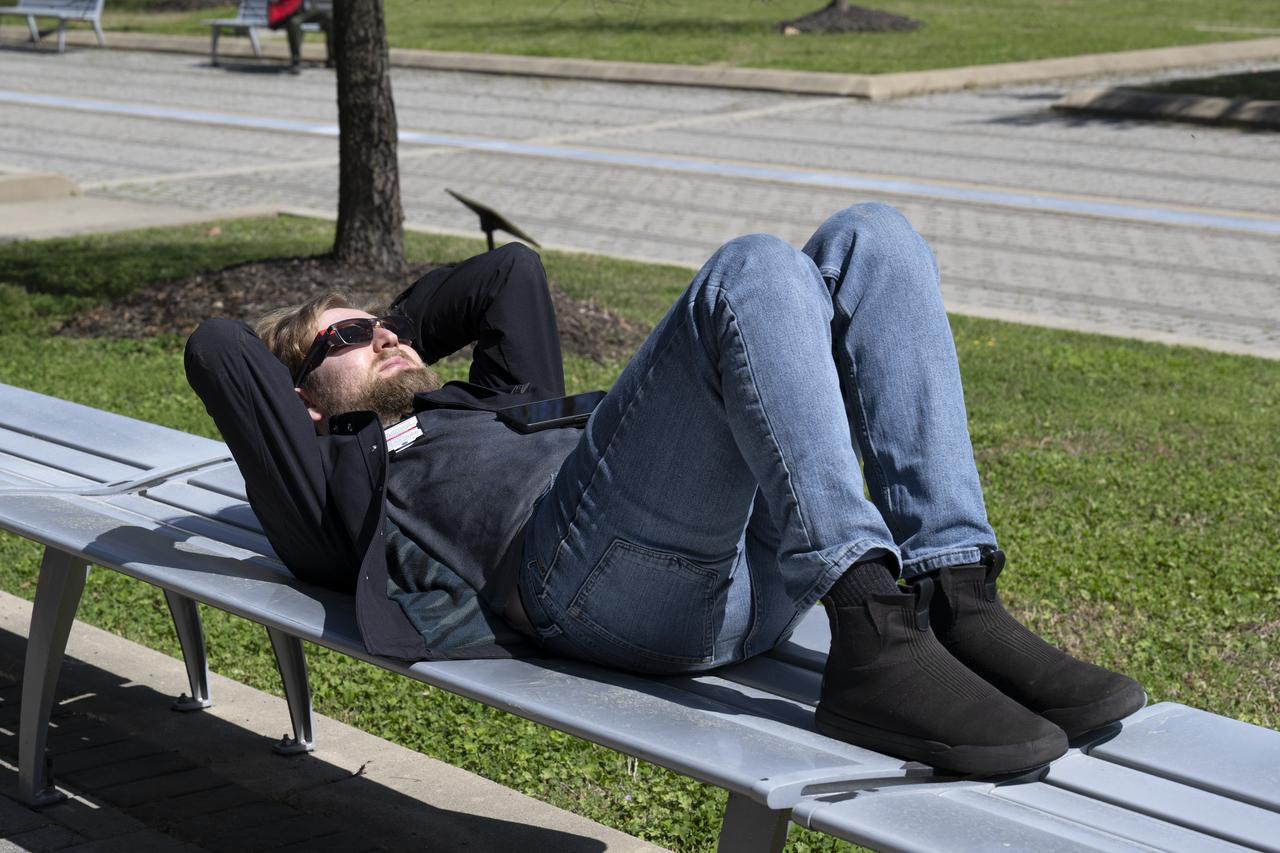
People are seen viewing the partial solar eclipse from NASA Langley Research Center in Hampton, VA, Monday, April 8, 2024. A total solar eclipse swept across a narrow portion of the North American continent from Mexico’s Pacific coast to the Atlantic coast of Newfoundland, Canada. A partial solar eclipse was visible across the entire North American continent along with parts of Central America and Europe. Photo Credit: (NASA/Ryan Hill)
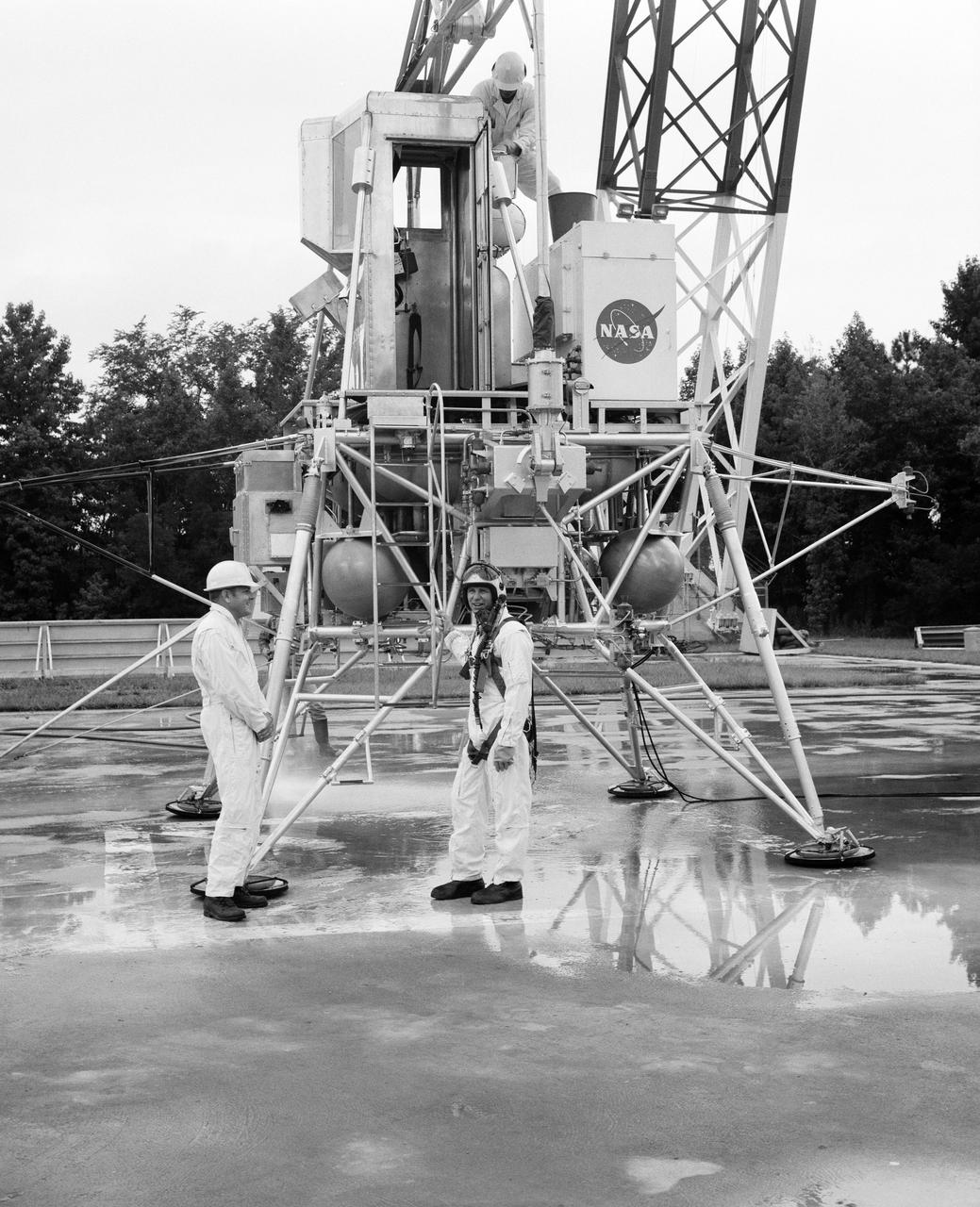
Astronauts Conrad and Bean at Lunar Landing Research Facility. Alan Bean was one of the third group of astronauts named by NASA in October 1963. He served as backup astronaut for the Gemini 10 and Apollo 9 missions. In September of 1962, Mr. Conrad was selected as an astronaut by NASA. His first flight was Gemini V, which established the space endurance record and placed the United States in the lead for man-hours in space. As commander of Gemini XI, Mr. Conrad helped to set a world's altitude record. He then served as commander of Apollo XII, the second lunar landing. On Mr. Conrad's final mission, he served as commander of Skylab II, the first United States Space Station. https://www.nasa.gov/astronauts/biographies/former for more information.
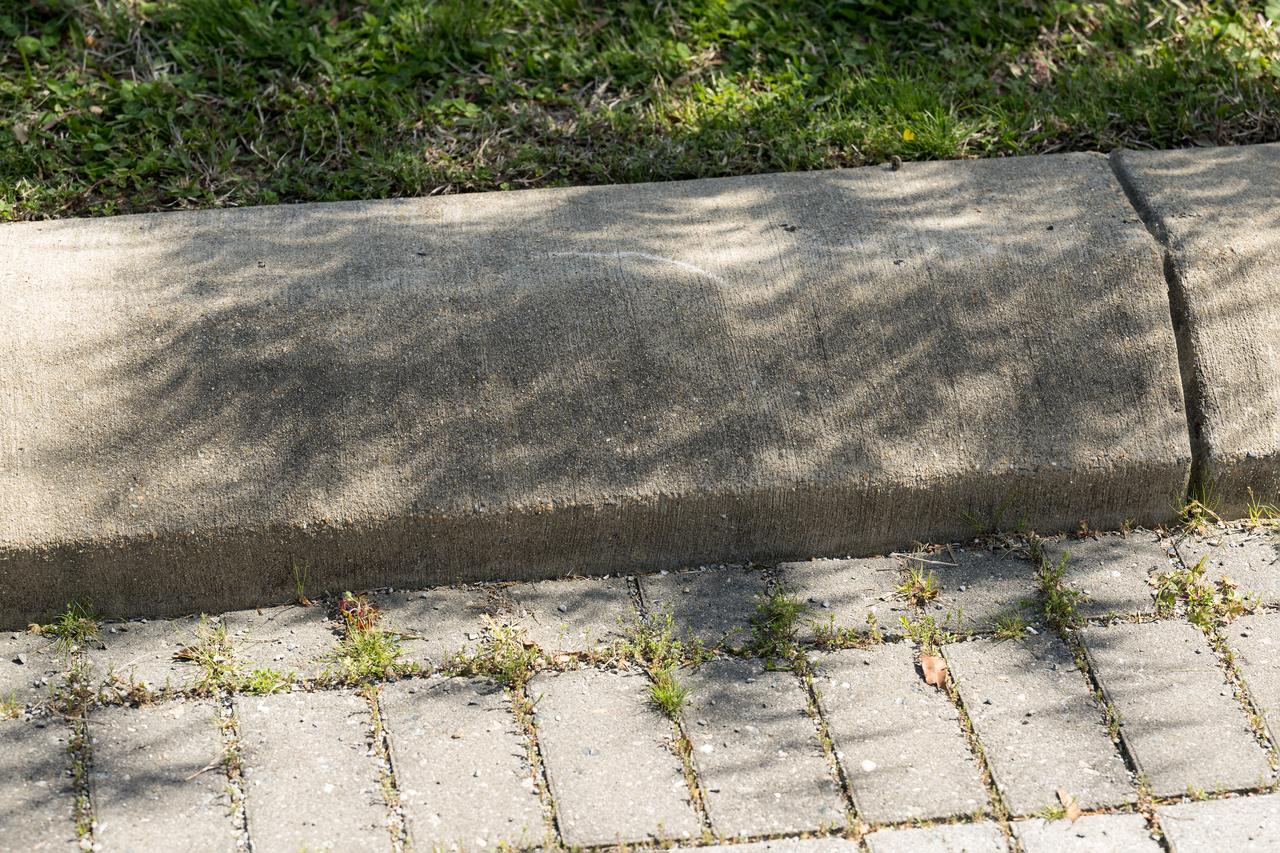
People are seen viewing the partial solar eclipse from NASA Langley Research Center in Hampton, VA, Monday, April 8, 2024. A total solar eclipse swept across a narrow portion of the North American continent from Mexico’s Pacific coast to the Atlantic coast of Newfoundland, Canada. A partial solar eclipse was visible across the entire North American continent along with parts of Central America and Europe. Photo Credit: (NASA/Mark Knopp)
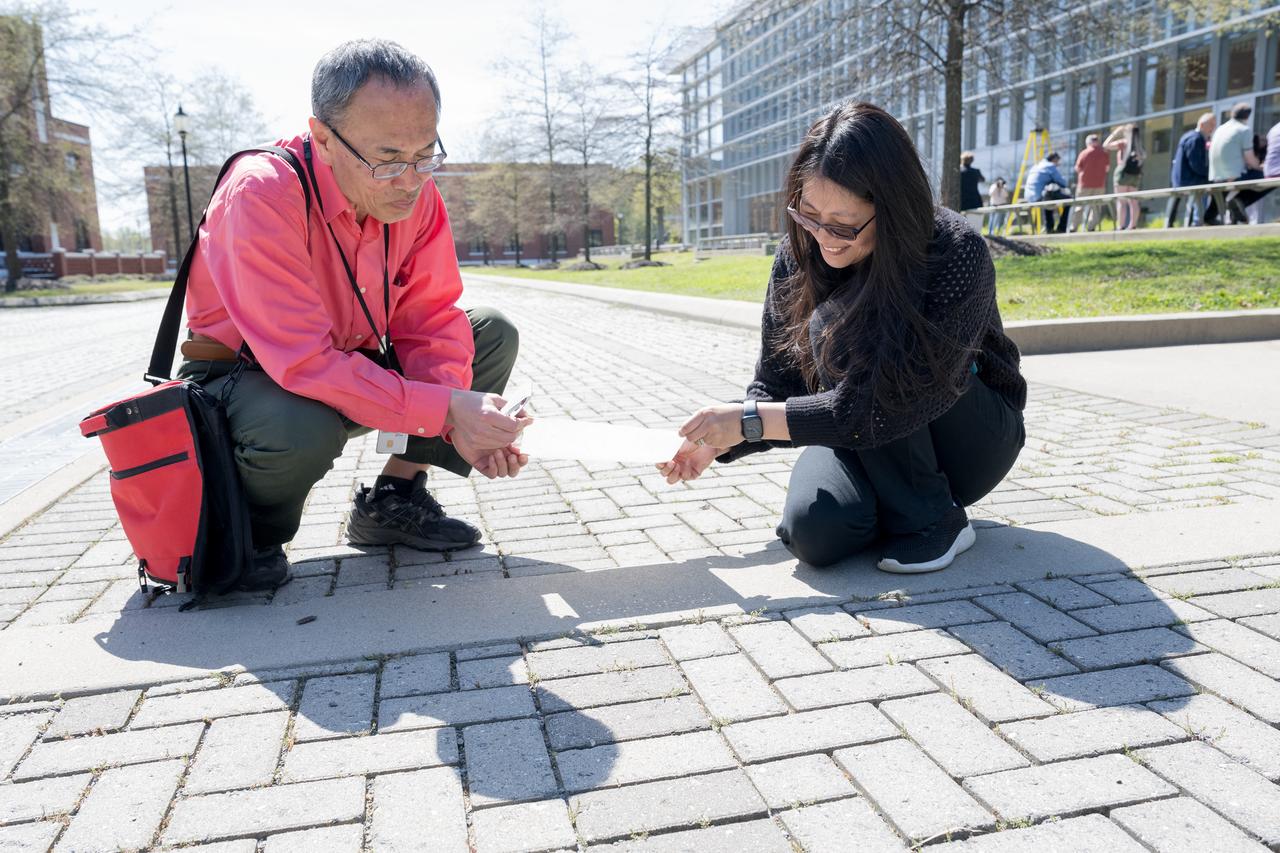
People are seen viewing the partial solar eclipse from NASA Langley Research Center in Hampton, VA, Monday, April 8, 2024. A total solar eclipse swept across a narrow portion of the North American continent from Mexico’s Pacific coast to the Atlantic coast of Newfoundland, Canada. A partial solar eclipse was visible across the entire North American continent along with parts of Central America and Europe. Photo Credit: (NASA/Mark Knopp)
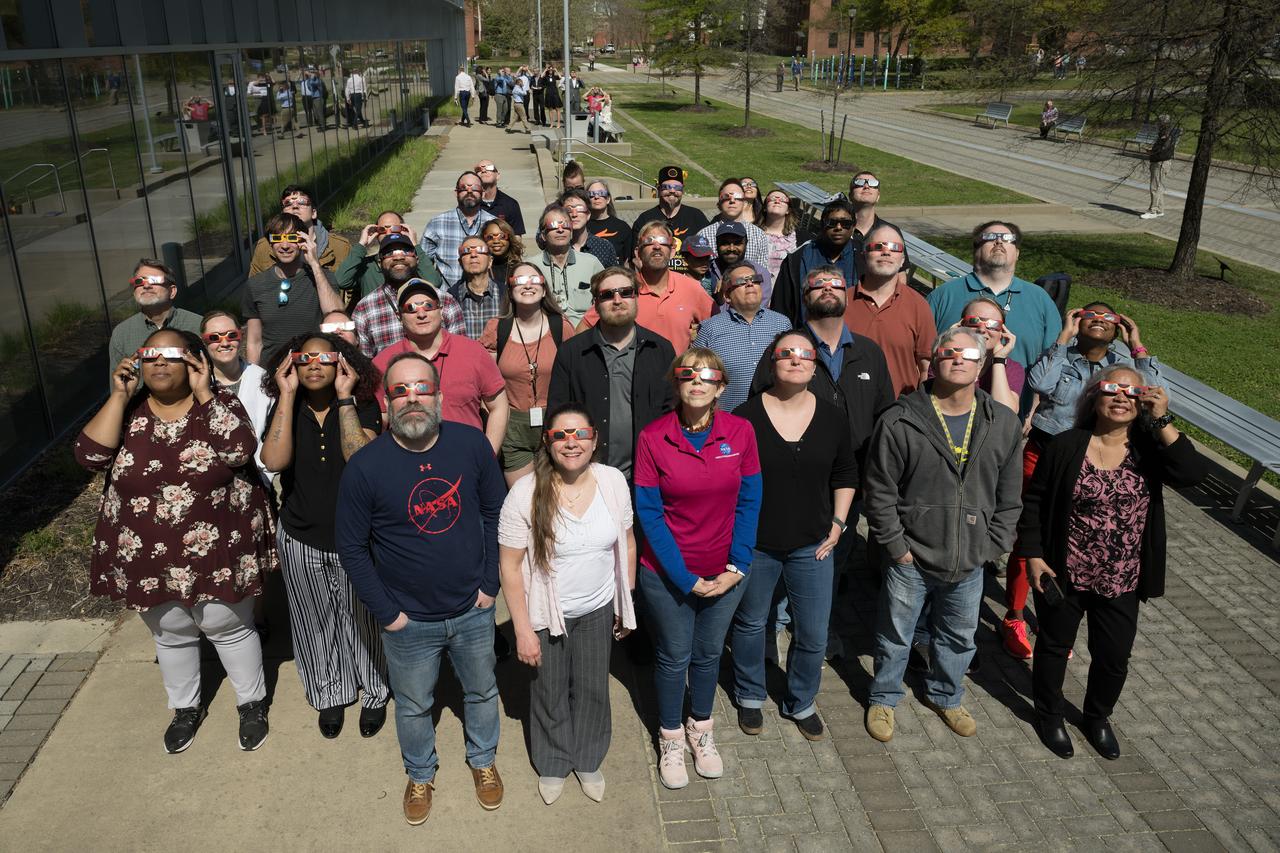
People are seen viewing the partial solar eclipse from NASA Langley Research Center in Hampton, VA, Monday, April 8, 2024. A total solar eclipse swept across a narrow portion of the North American continent from Mexico’s Pacific coast to the Atlantic coast of Newfoundland, Canada. A partial solar eclipse was visible across the entire North American continent along with parts of Central America and Europe. Photo Credit: (NASA/Mark Knopp)
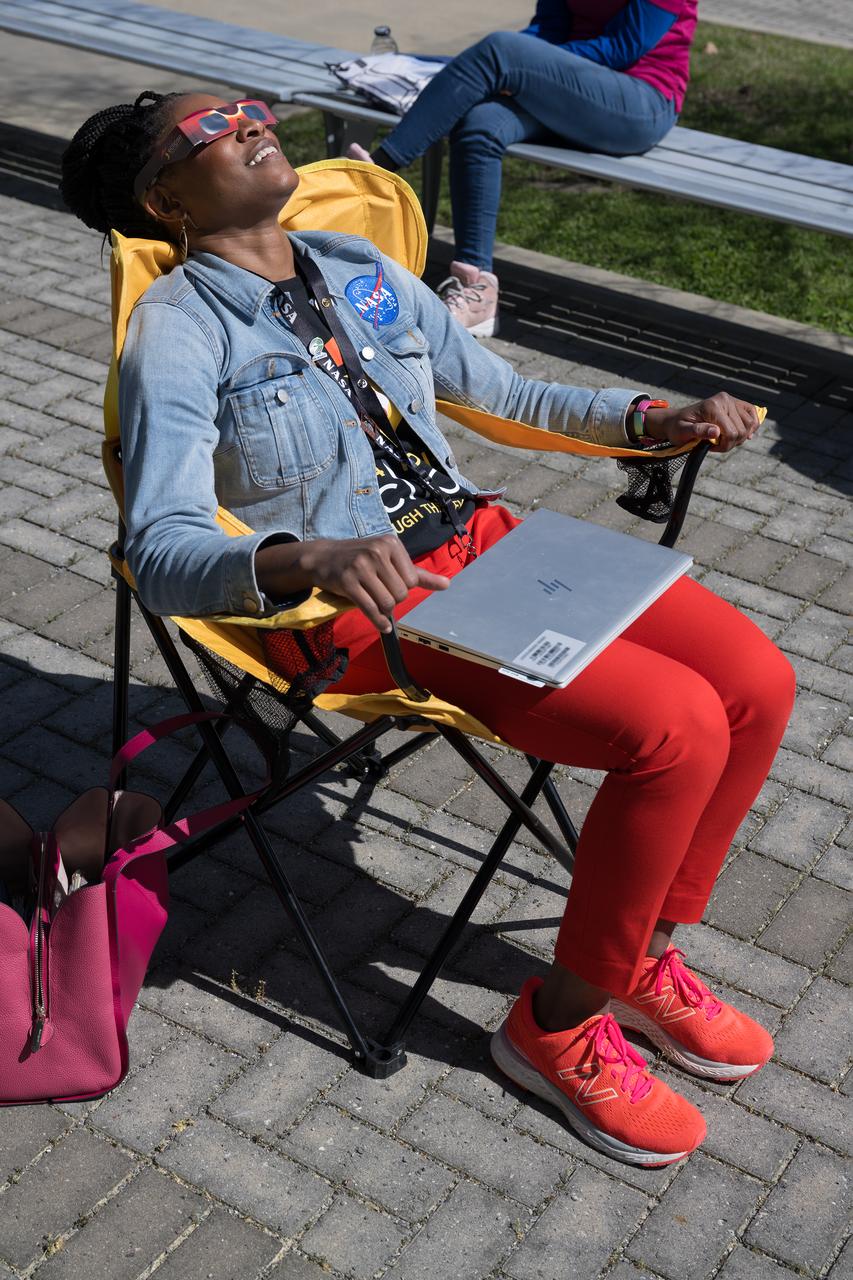
People are seen viewing the partial solar eclipse from NASA Langley Research Center in Hampton, VA, Monday, April 8, 2024. A total solar eclipse swept across a narrow portion of the North American continent from Mexico’s Pacific coast to the Atlantic coast of Newfoundland, Canada. A partial solar eclipse was visible across the entire North American continent along with parts of Central America and Europe. Photo Credit: (NASA/Mark Knopp)
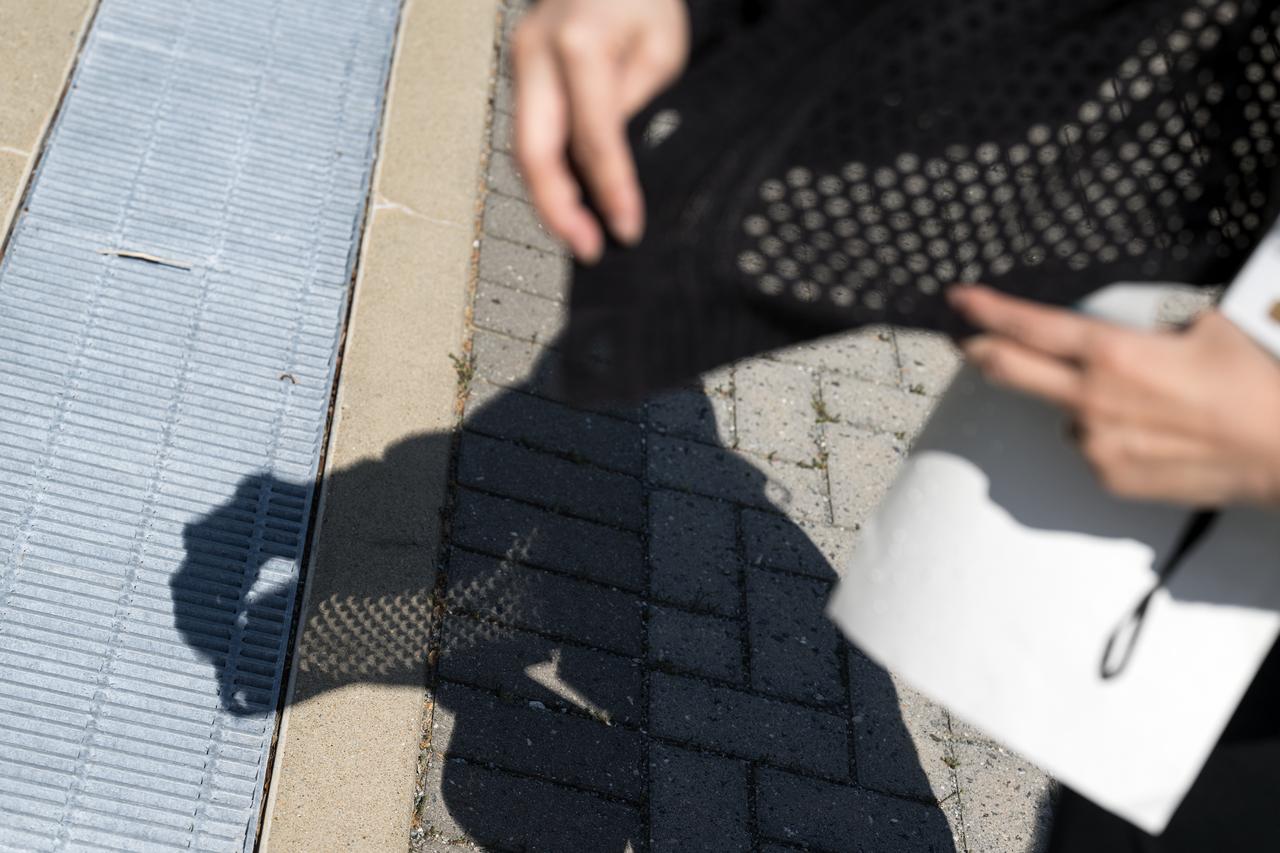
People are seen viewing the partial solar eclipse from NASA Langley Research Center in Hampton, VA, Monday, April 8, 2024. A total solar eclipse swept across a narrow portion of the North American continent from Mexico’s Pacific coast to the Atlantic coast of Newfoundland, Canada. A partial solar eclipse was visible across the entire North American continent along with parts of Central America and Europe. Photo Credit: (NASA/Mark Knopp)
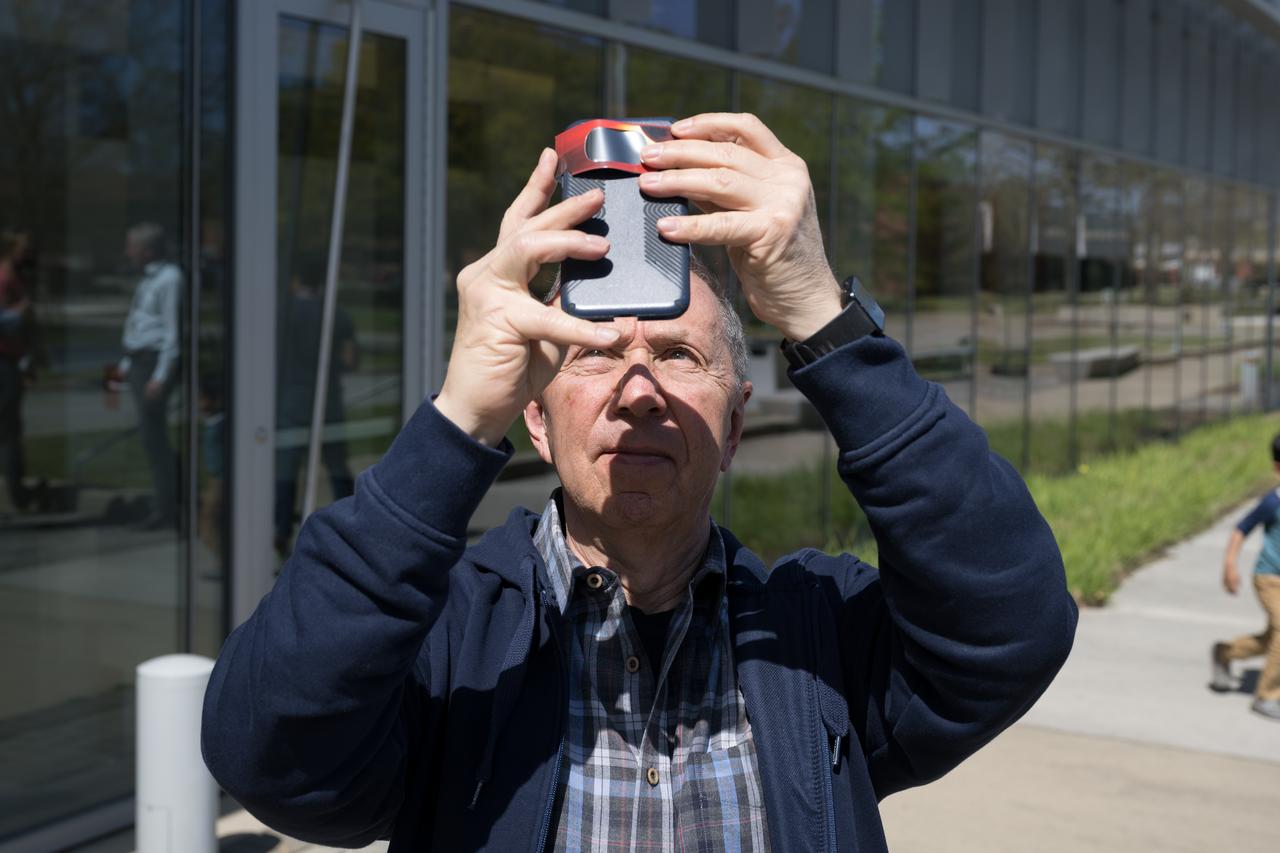
People are seen viewing the partial solar eclipse from NASA Langley Research Center in Hampton, VA, Monday, April 8, 2024. A total solar eclipse swept across a narrow portion of the North American continent from Mexico’s Pacific coast to the Atlantic coast of Newfoundland, Canada. A partial solar eclipse was visible across the entire North American continent along with parts of Central America and Europe. Photo Credit: (NASA/Mark Knopp)
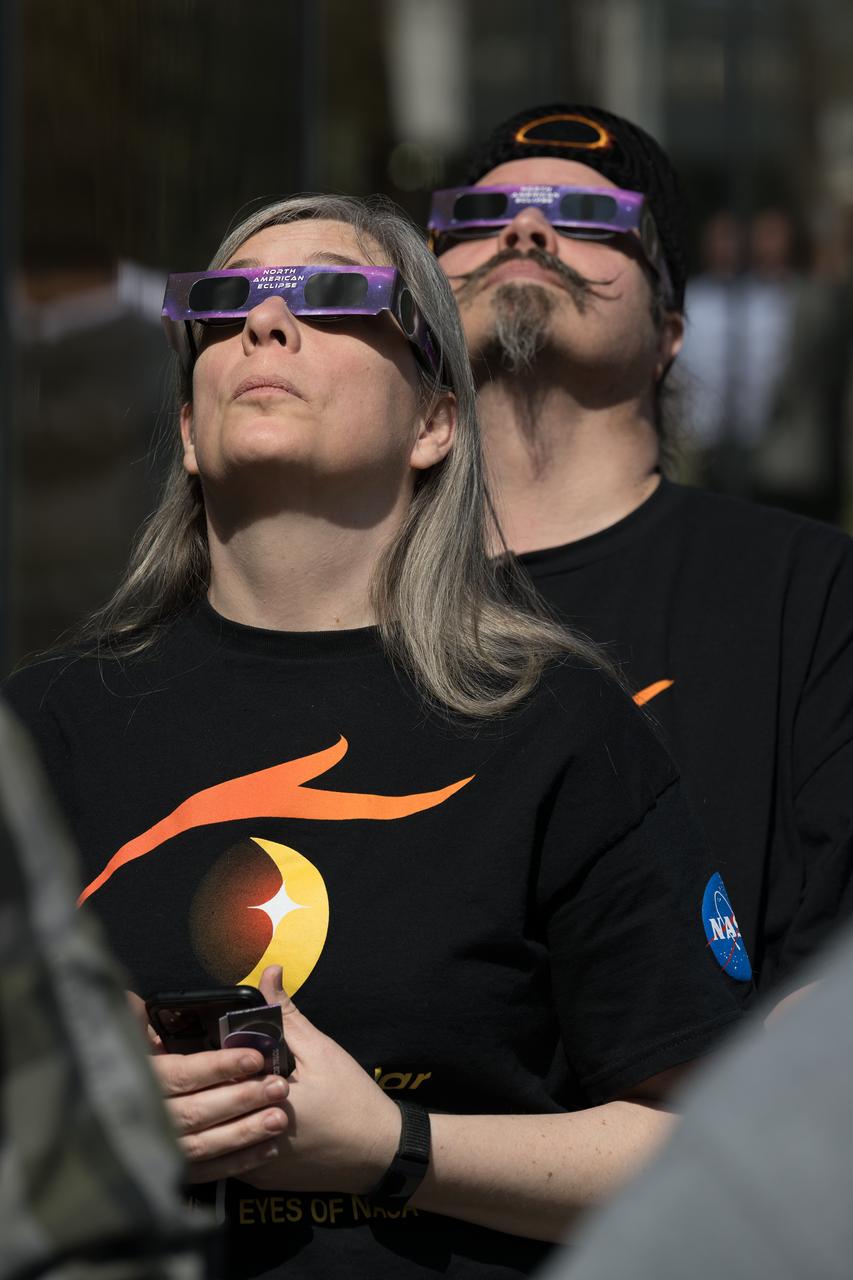
People are seen viewing the partial solar eclipse from NASA Langley Research Center in Hampton, VA, Monday, April 8, 2024. A total solar eclipse swept across a narrow portion of the North American continent from Mexico’s Pacific coast to the Atlantic coast of Newfoundland, Canada. A partial solar eclipse was visible across the entire North American continent along with parts of Central America and Europe. Photo Credit: (NASA/Mark Knopp)

People are seen viewing the partial solar eclipse from NASA Langley Research Center in Hampton, VA, Monday, April 8, 2024. A total solar eclipse swept across a narrow portion of the North American continent from Mexico’s Pacific coast to the Atlantic coast of Newfoundland, Canada. A partial solar eclipse was visible across the entire North American continent along with parts of Central America and Europe. Photo Credit: (NASA/Mark Knopp)
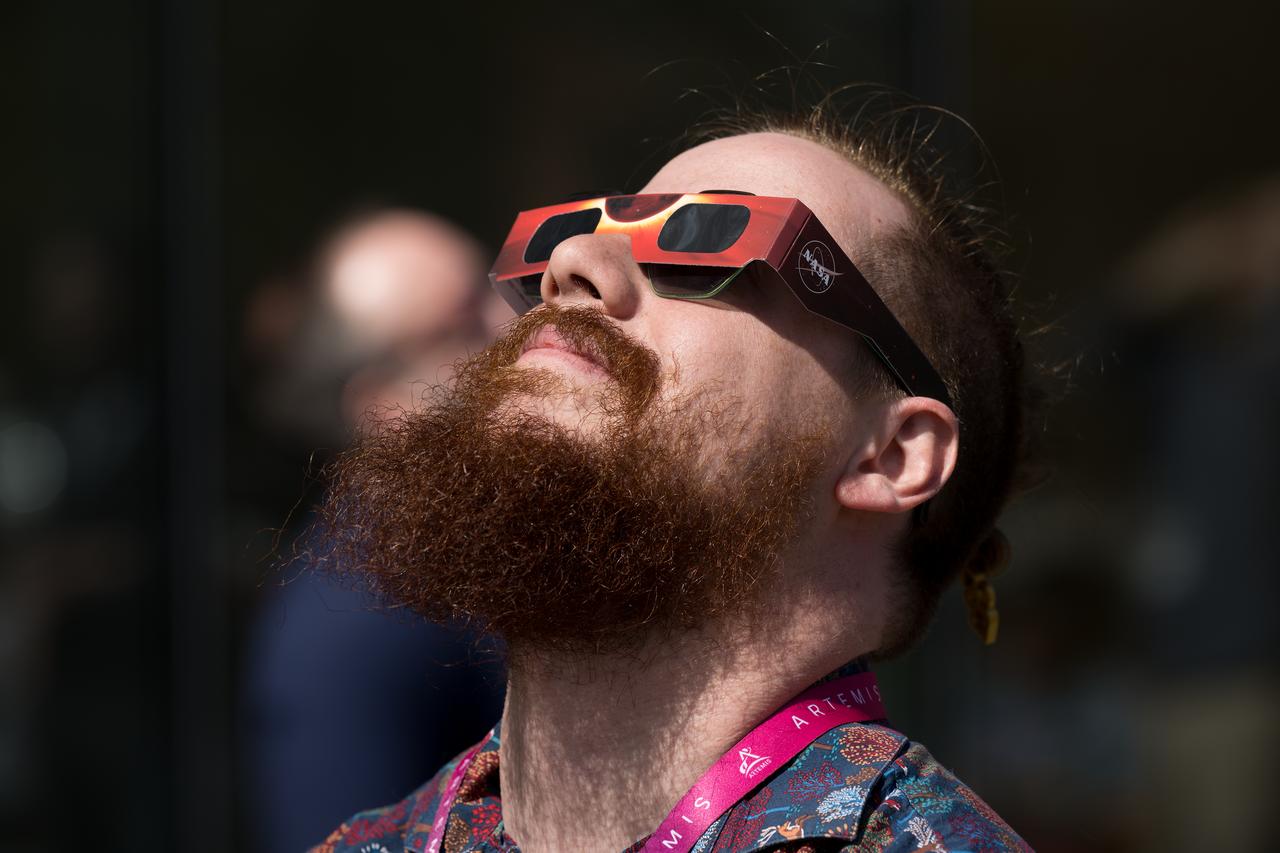
People are seen viewing the partial solar eclipse from NASA Langley Research Center in Hampton, VA, Monday, April 8, 2024. A total solar eclipse swept across a narrow portion of the North American continent from Mexico’s Pacific coast to the Atlantic coast of Newfoundland, Canada. A partial solar eclipse was visible across the entire North American continent along with parts of Central America and Europe. Photo Credit: (NASA/Mark Knopp)
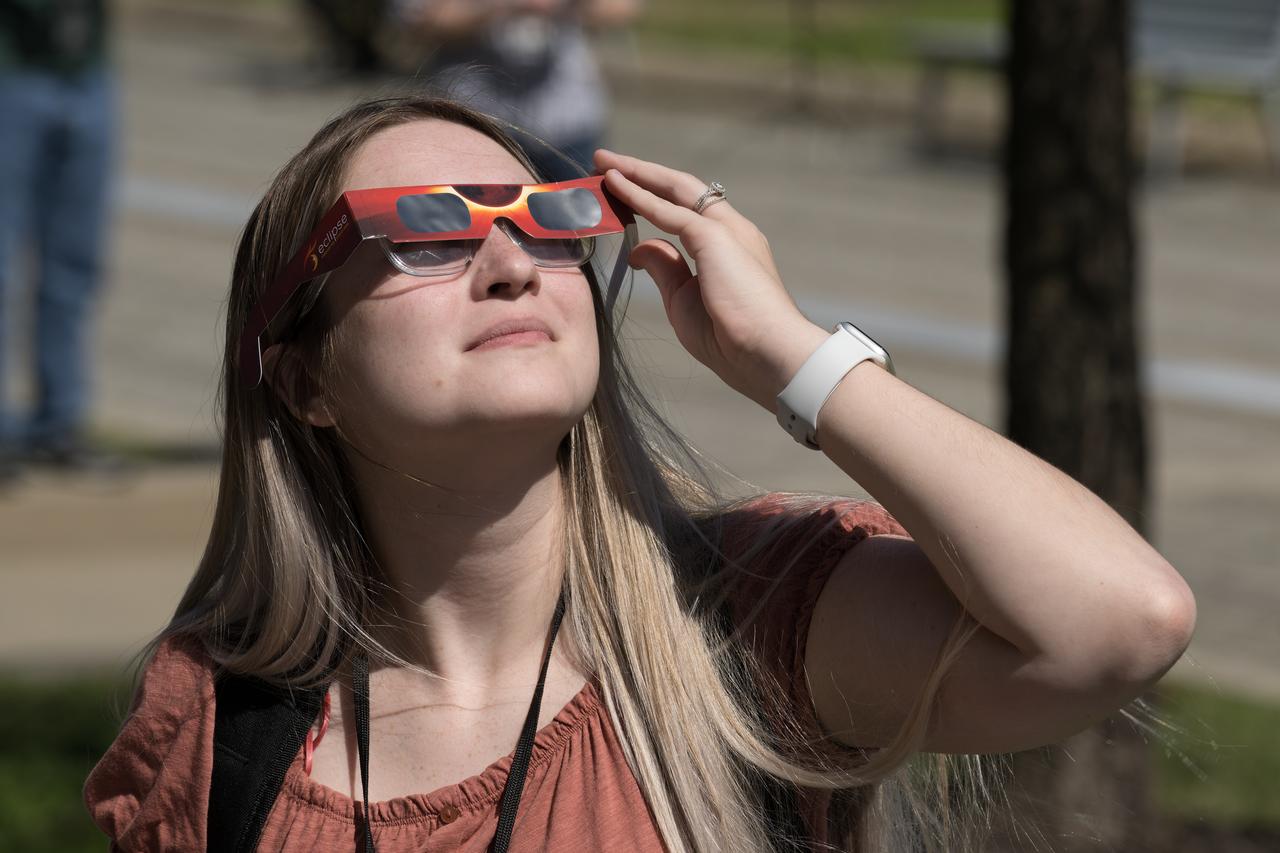
People are seen viewing the partial solar eclipse from NASA Langley Research Center in Hampton, VA, Monday, April 8, 2024. A total solar eclipse swept across a narrow portion of the North American continent from Mexico’s Pacific coast to the Atlantic coast of Newfoundland, Canada. A partial solar eclipse was visible across the entire North American continent along with parts of Central America and Europe. Photo Credit: (NASA/Mark Knopp)

People are seen viewing the partial solar eclipse from NASA Langley Research Center in Hampton, VA, Monday, April 8, 2024. A total solar eclipse swept across a narrow portion of the North American continent from Mexico’s Pacific coast to the Atlantic coast of Newfoundland, Canada. A partial solar eclipse was visible across the entire North American continent along with parts of Central America and Europe. Photo Credit: (NASA/Mark Knopp)
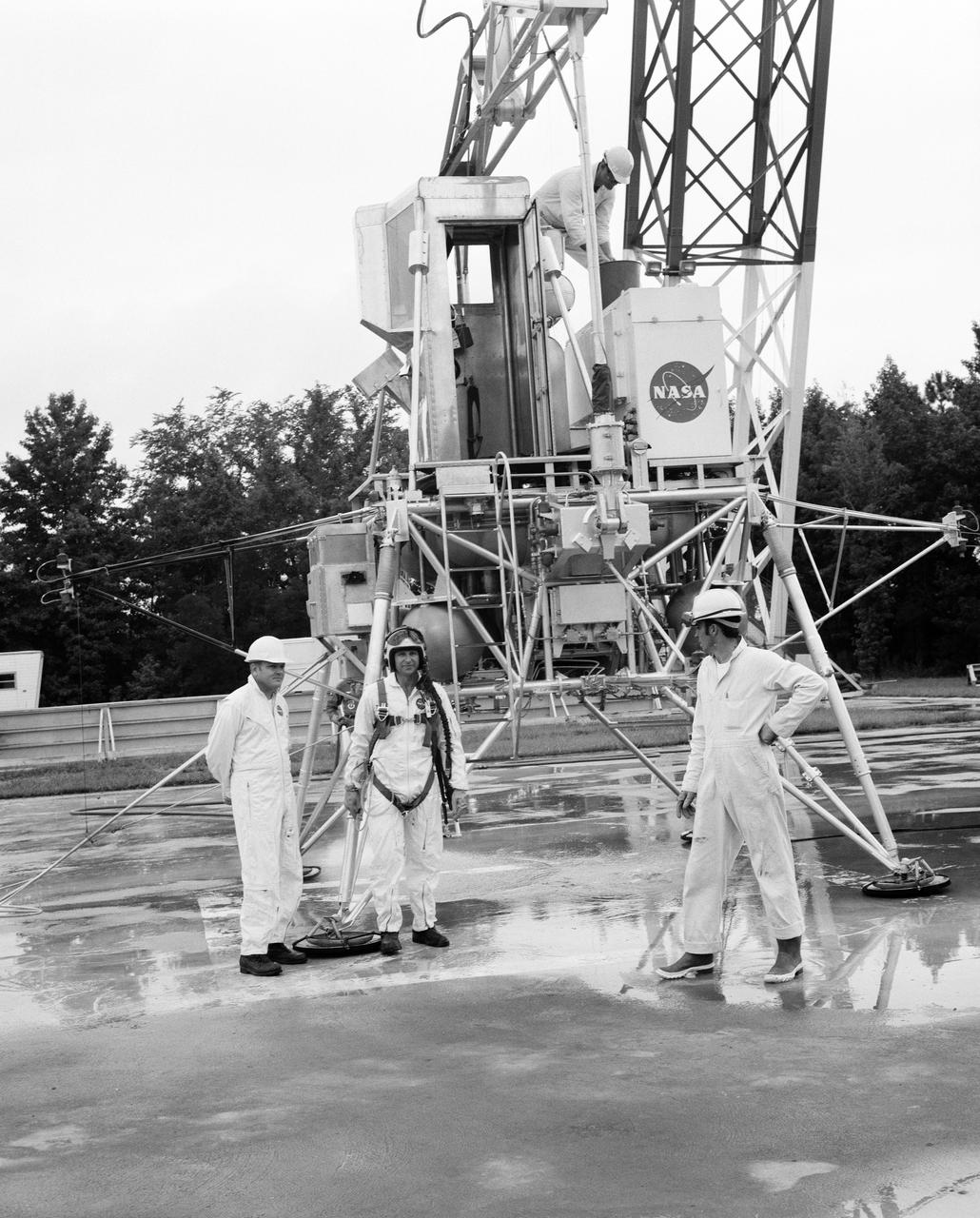
Astronauts Conrad and Bean at Lunar Landing Research Facility. Alan Bean was one of the third group of astronauts named by NASA in October 1963. He served as backup astronaut for the Gemini 10 and Apollo 9 missions. In September of 1962, Mr. Conrad was selected as an astronaut by NASA. His first flight was Gemini V, which established the space endurance record and placed the United States in the lead for man-hours in space. As commander of Gemini XI, Mr. Conrad helped to set a world's altitude record. He then served as commander of Apollo XII, the second lunar landing. On Mr. Conrad's final mission, he served as commander of Skylab II, the first United States Space Station. https://www.nasa.gov/astronauts/biographies/former for more information.
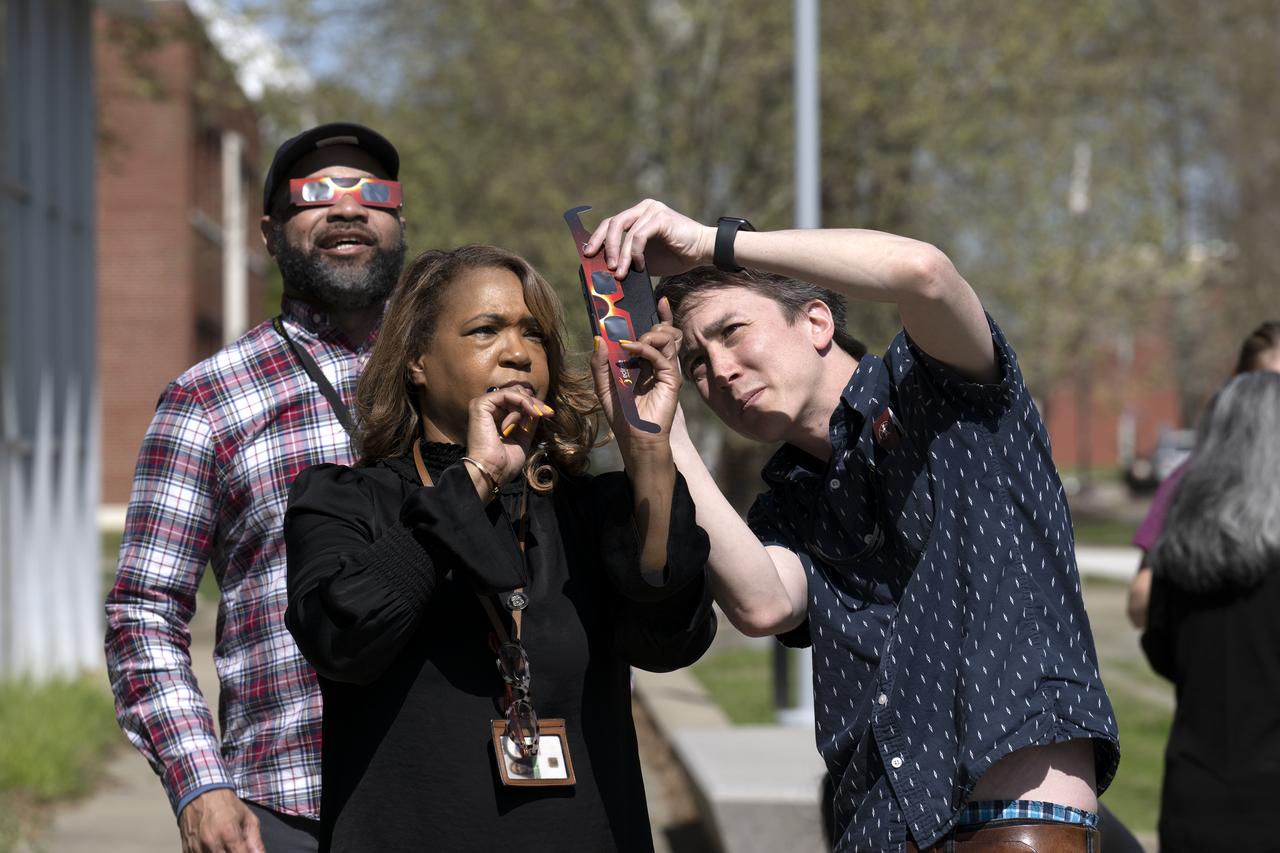
People are seen viewing the partial solar eclipse from NASA Langley Research Center in Hampton, VA, Monday, April 8, 2024. A total solar eclipse swept across a narrow portion of the North American continent from Mexico’s Pacific coast to the Atlantic coast of Newfoundland, Canada. A partial solar eclipse was visible across the entire North American continent along with parts of Central America and Europe. Photo Credit: (NASA/Ryan Hill)
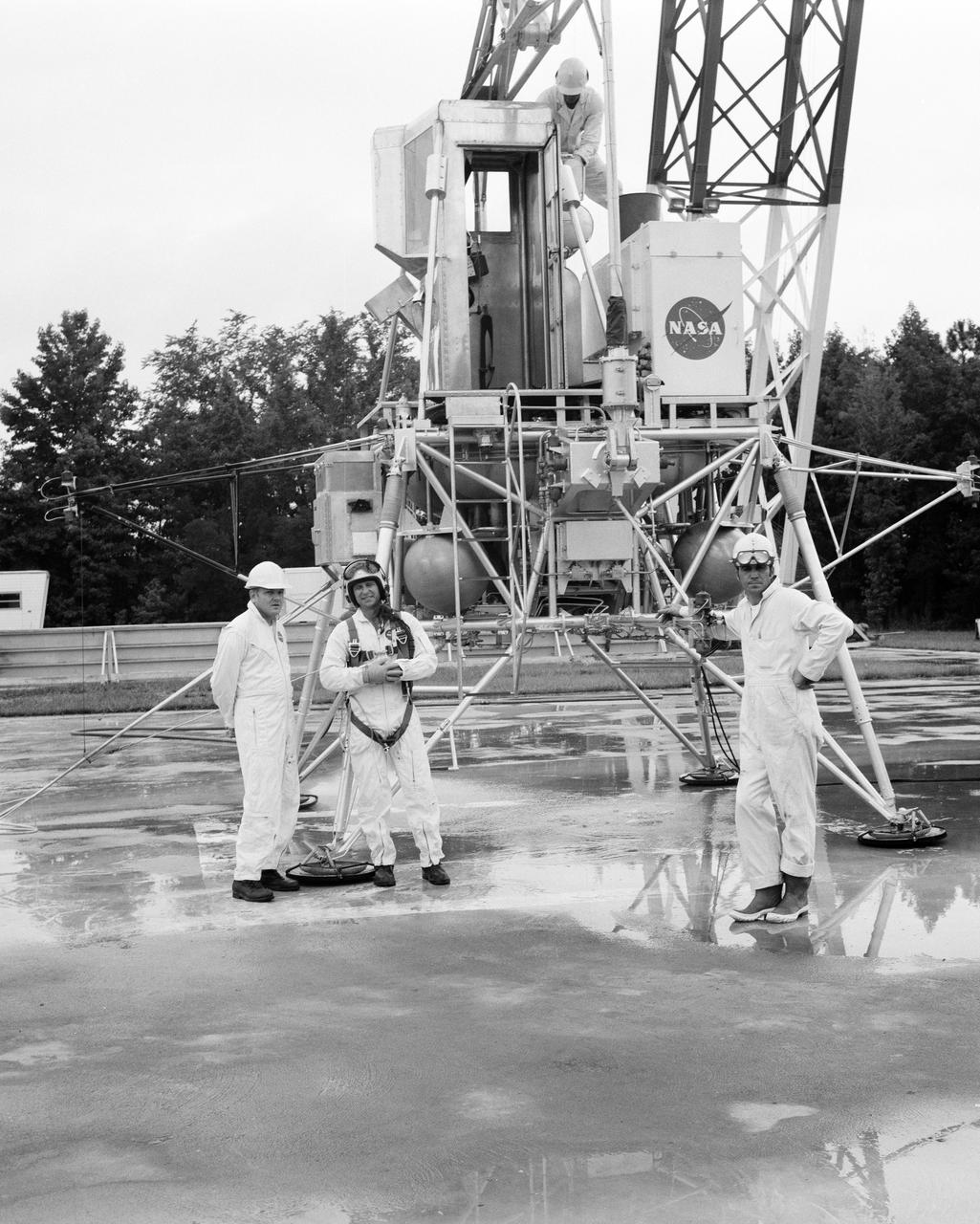
Astronauts Conrad and Bean at Lunar Landing Research Facility. Alan Bean was one of the third group of astronauts named by NASA in October 1963. He served as backup astronaut for the Gemini 10 and Apollo 9 missions. In September of 1962, Mr. Conrad was selected as an astronaut by NASA. His first flight was Gemini V, which established the space endurance record and placed the United States in the lead for man-hours in space. As commander of Gemini XI, Mr. Conrad helped to set a world's altitude record. He then served as commander of Apollo XII, the second lunar landing. On Mr. Conrad's final mission, he served as commander of Skylab II, the first United States Space Station. https://www.nasa.gov/astronauts/biographies/former for more information.
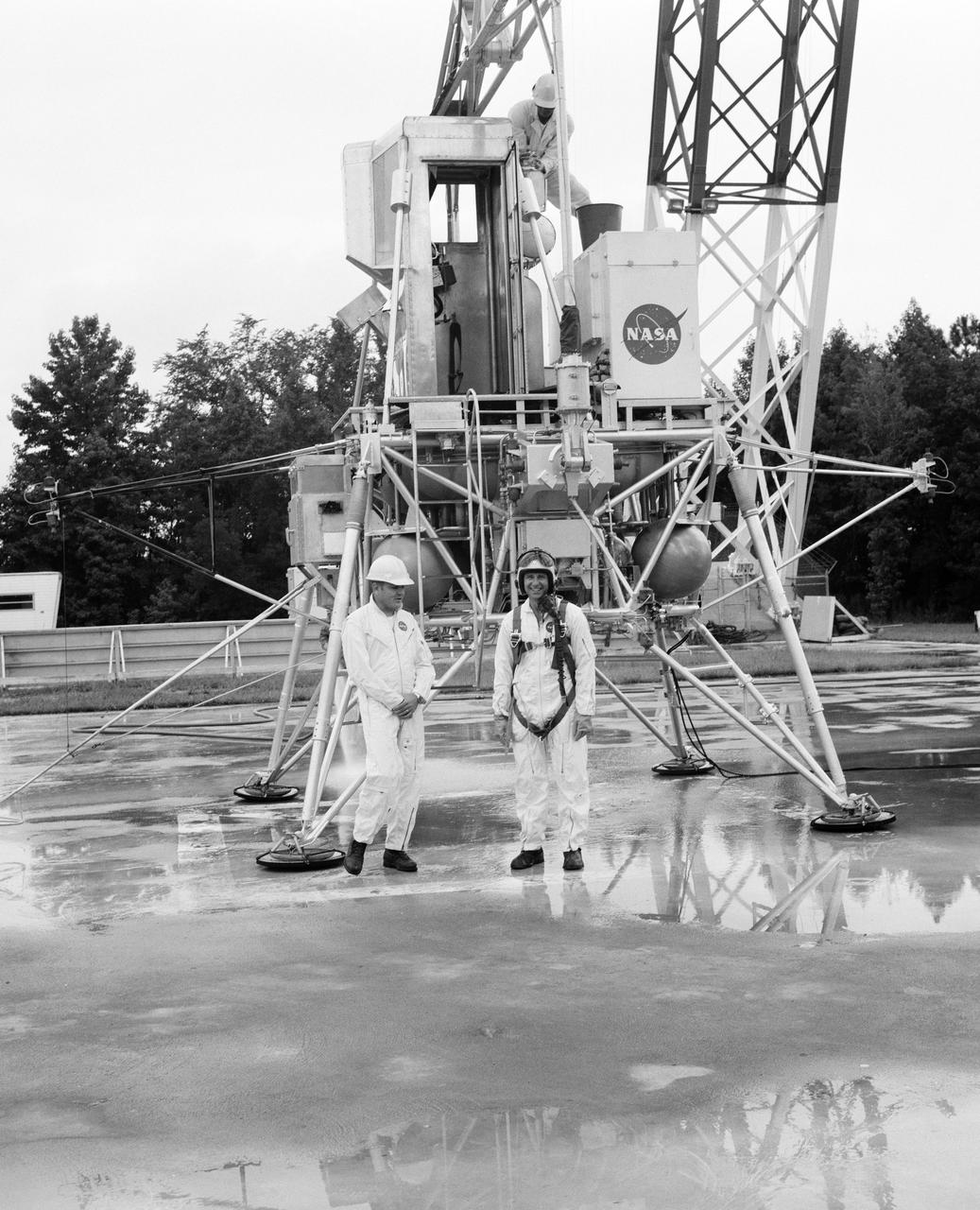
Astronauts Conrad and Bean at Lunar Landing Research Facility. Alan Bean was one of the third group of astronauts named by NASA in October 1963. He served as backup astronaut for the Gemini 10 and Apollo 9 missions. In September of 1962, Mr. Conrad was selected as an astronaut by NASA. His first flight was Gemini V, which established the space endurance record and placed the United States in the lead for man-hours in space. As commander of Gemini XI, Mr. Conrad helped to set a world's altitude record. He then served as commander of Apollo XII, the second lunar landing. On Mr. Conrad's final mission, he served as commander of Skylab II, the first United States Space Station. https://www.nasa.gov/astronauts/biographies/former for more information.
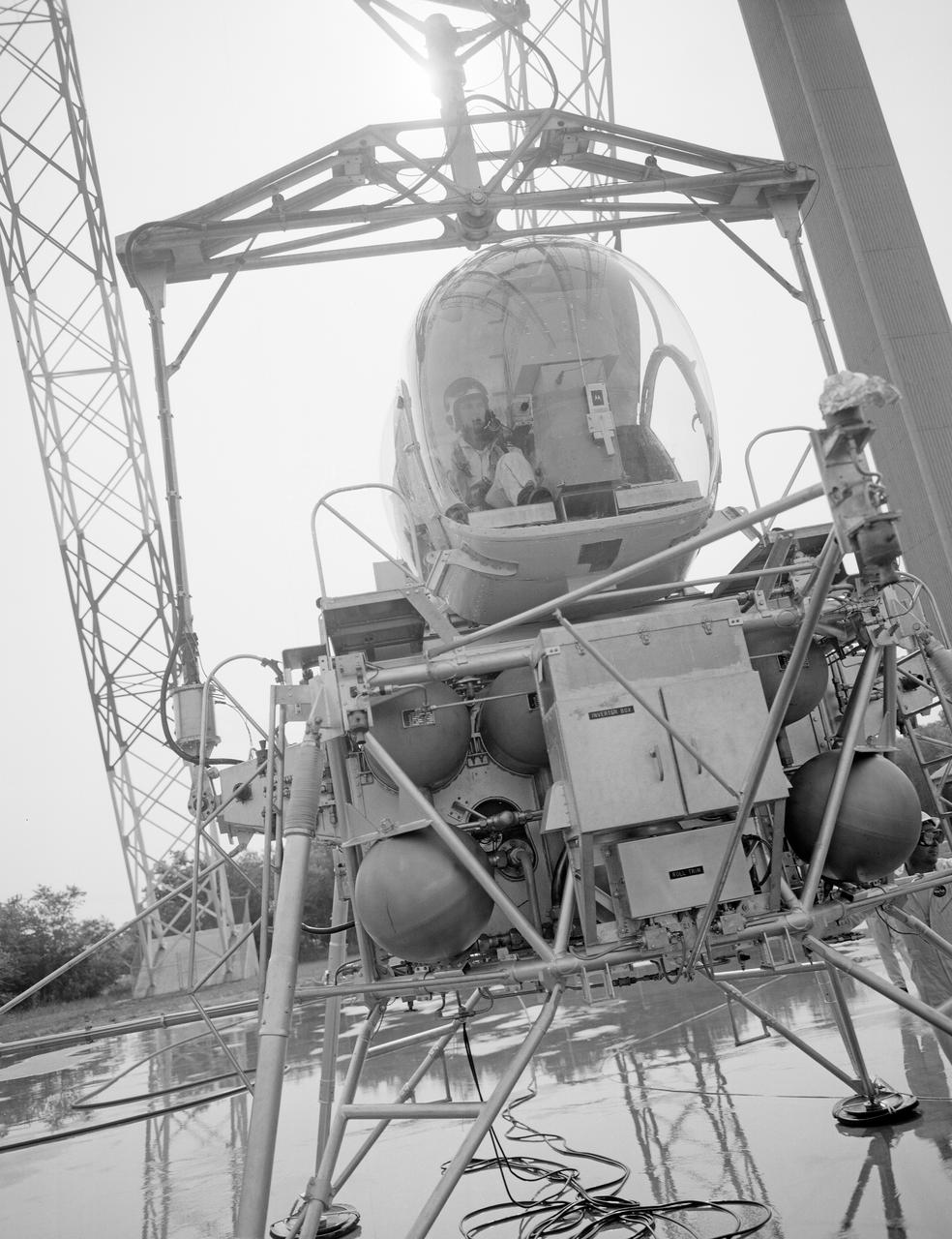
Astronaut Eugene Cernan at Lunar Lander Research Facility. Cernan under gantry, in training module. Captain Cernan was one of fourteen astronauts selected by NASA in October 1963. On his second space flight, he was lunar module pilot of Apollo 10, May 18-26, 1969, the first comprehensive lunar-orbital qualification and verification flight test of an Apollo lunar module.
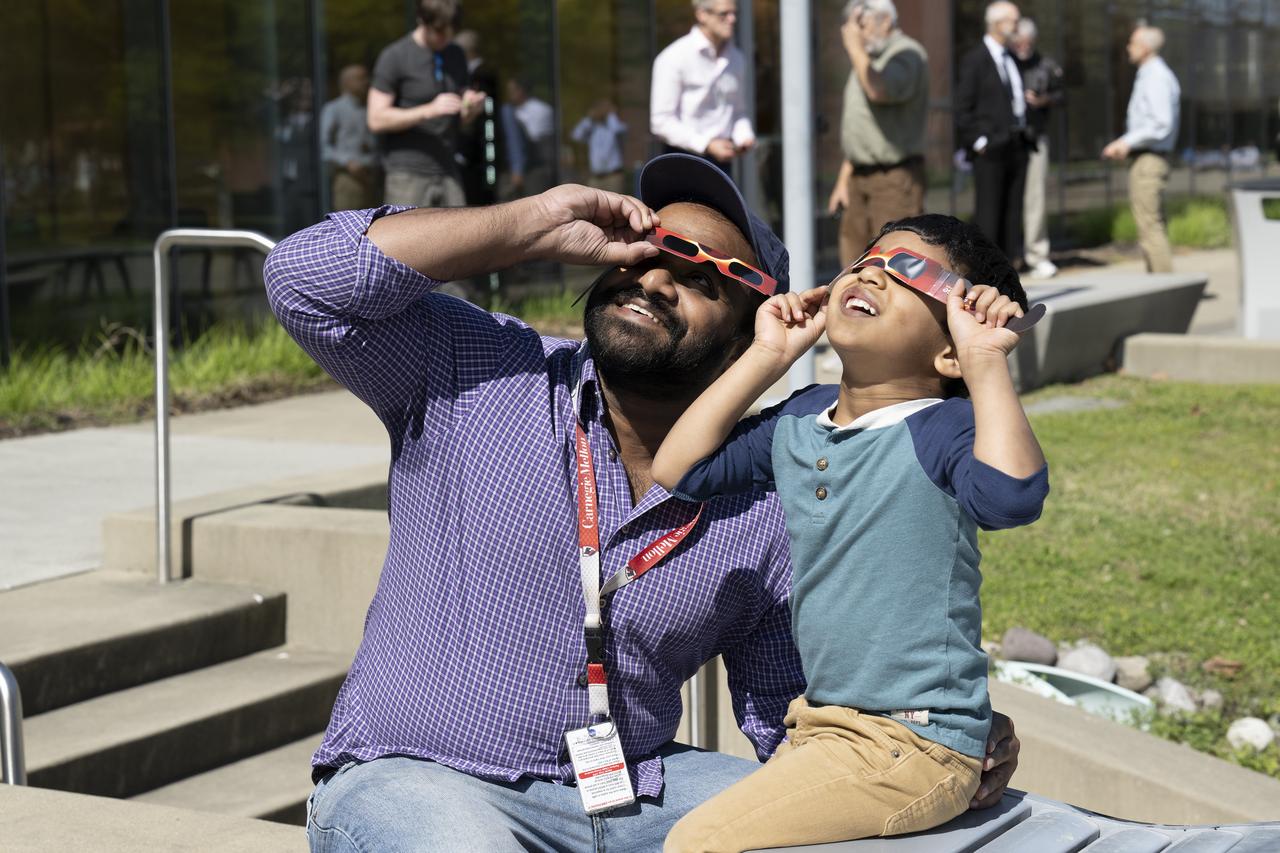
People are seen viewing the partial solar eclipse from NASA Langley Research Center in Hampton, VA, Monday, April 8, 2024. A total solar eclipse swept across a narrow portion of the North American continent from Mexico’s Pacific coast to the Atlantic coast of Newfoundland, Canada. A partial solar eclipse was visible across the entire North American continent along with parts of Central America and Europe. Photo Credit: (NASA/Ryan Hill)
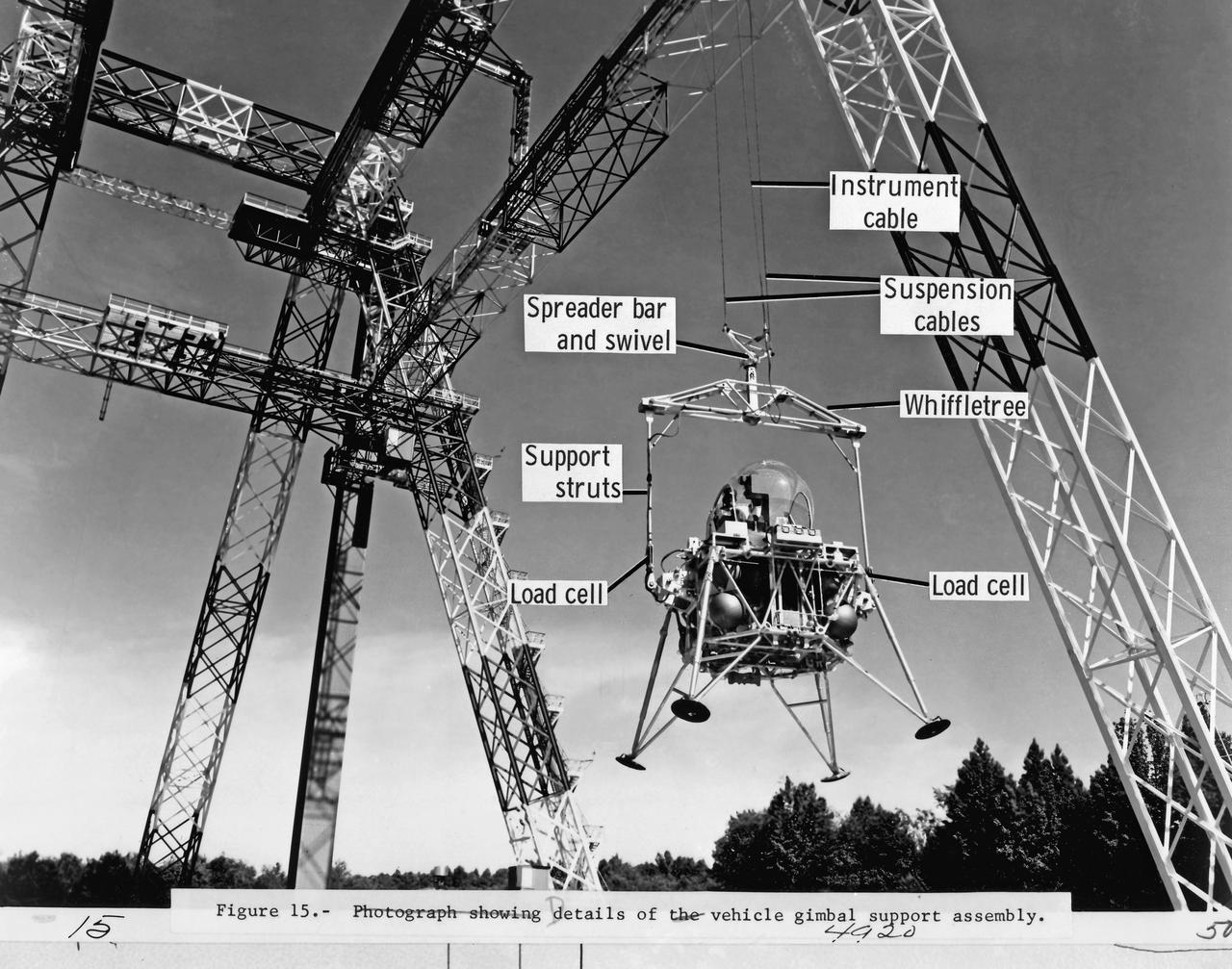
NASA TN D-3828 Figure 15. OPERATIONAL FEATURES OF THE LANGLEY LUNAR LANDING RESEARCH FACILITY by Thomas C. O'Bryan and Donald E. Hewes Details of vehicle gamble support assembly.
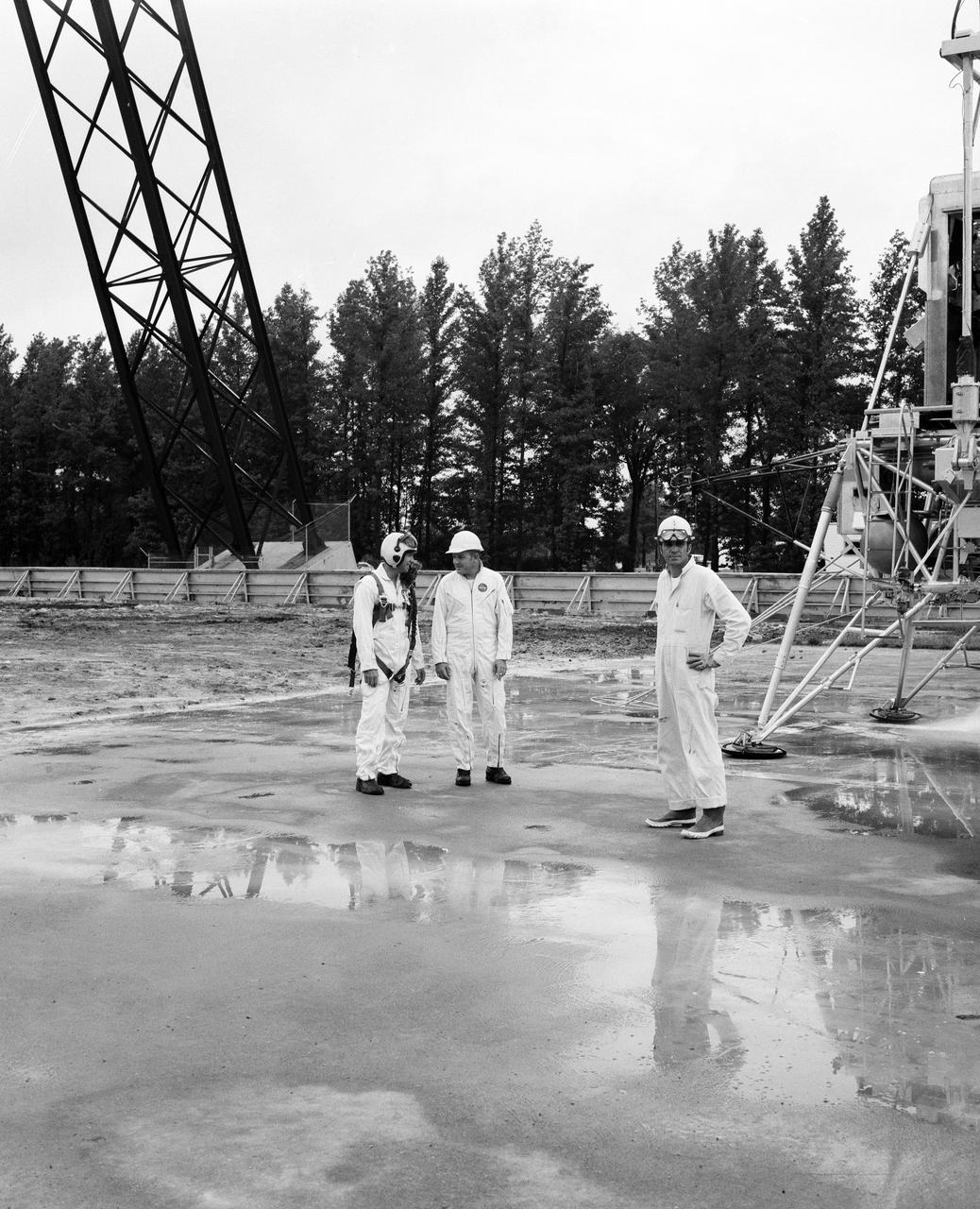
Astronauts Conrad and Bean at Lunar Landing Research Facility. Alan Bean was one of the third group of astronauts named by NASA in October 1963. He served as backup astronaut for the Gemini 10 and Apollo 9 missions. In September of 1962, Mr. Conrad was selected as an astronaut by NASA. His first flight was Gemini V, which established the space endurance record and placed the United States in the lead for man-hours in space. As commander of Gemini XI, Mr. Conrad helped to set a world's altitude record. He then served as commander of Apollo XII, the second lunar landing. On Mr. Conrad's final mission, he served as commander of Skylab II, the first United States Space Station. https://www.nasa.gov/astronauts/biographies/former for more information.
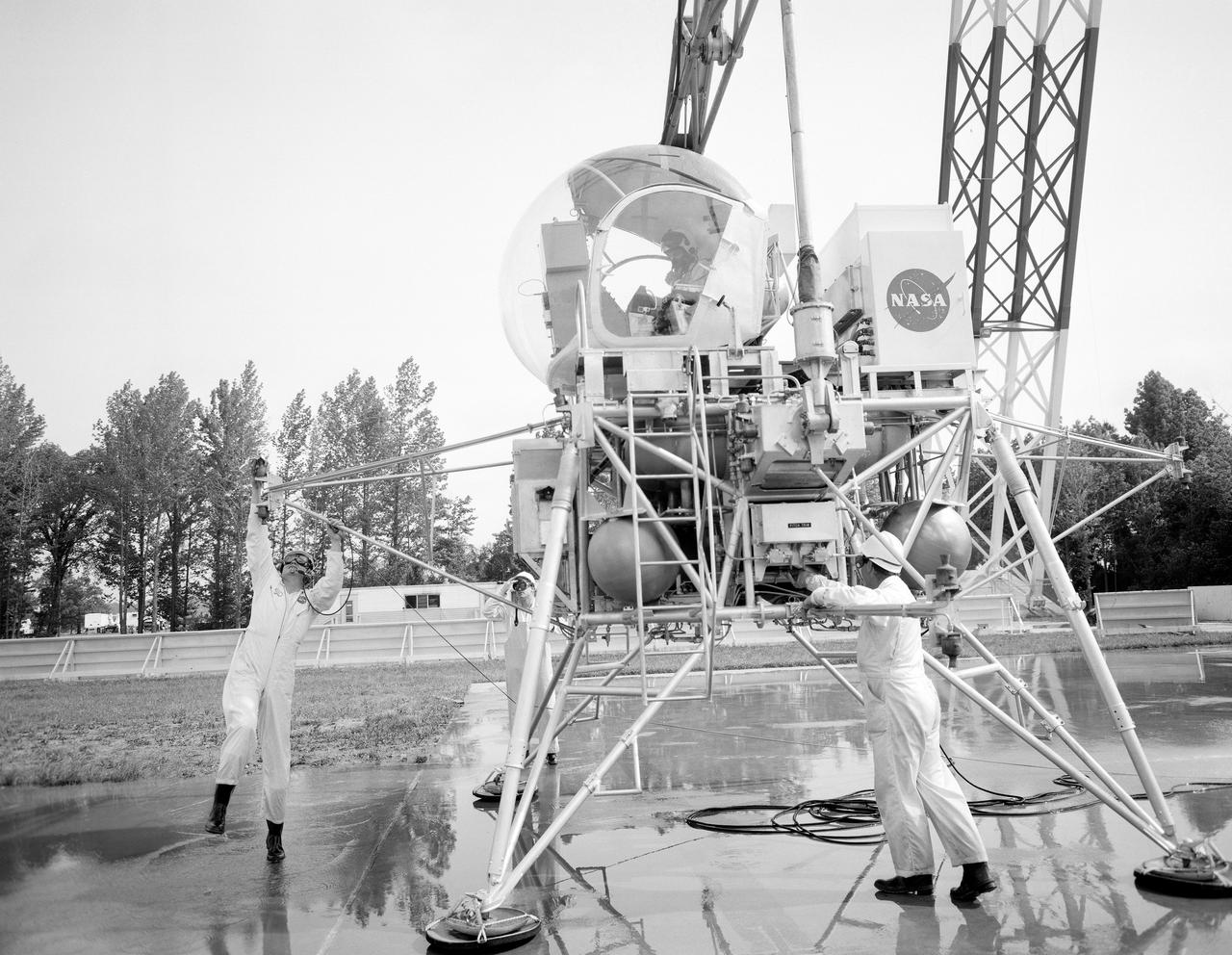
Astronaut Eugene Cernan at Lunar Lander Research Facility. Cernan under gantry, in training module. Captain Cernan was one of fourteen astronauts selected by NASA in October 1963. On his second space flight, he was lunar module pilot of Apollo 10, May 18-26, 1969, the first comprehensive lunar-orbital qualification and verification flight test of an Apollo lunar module.
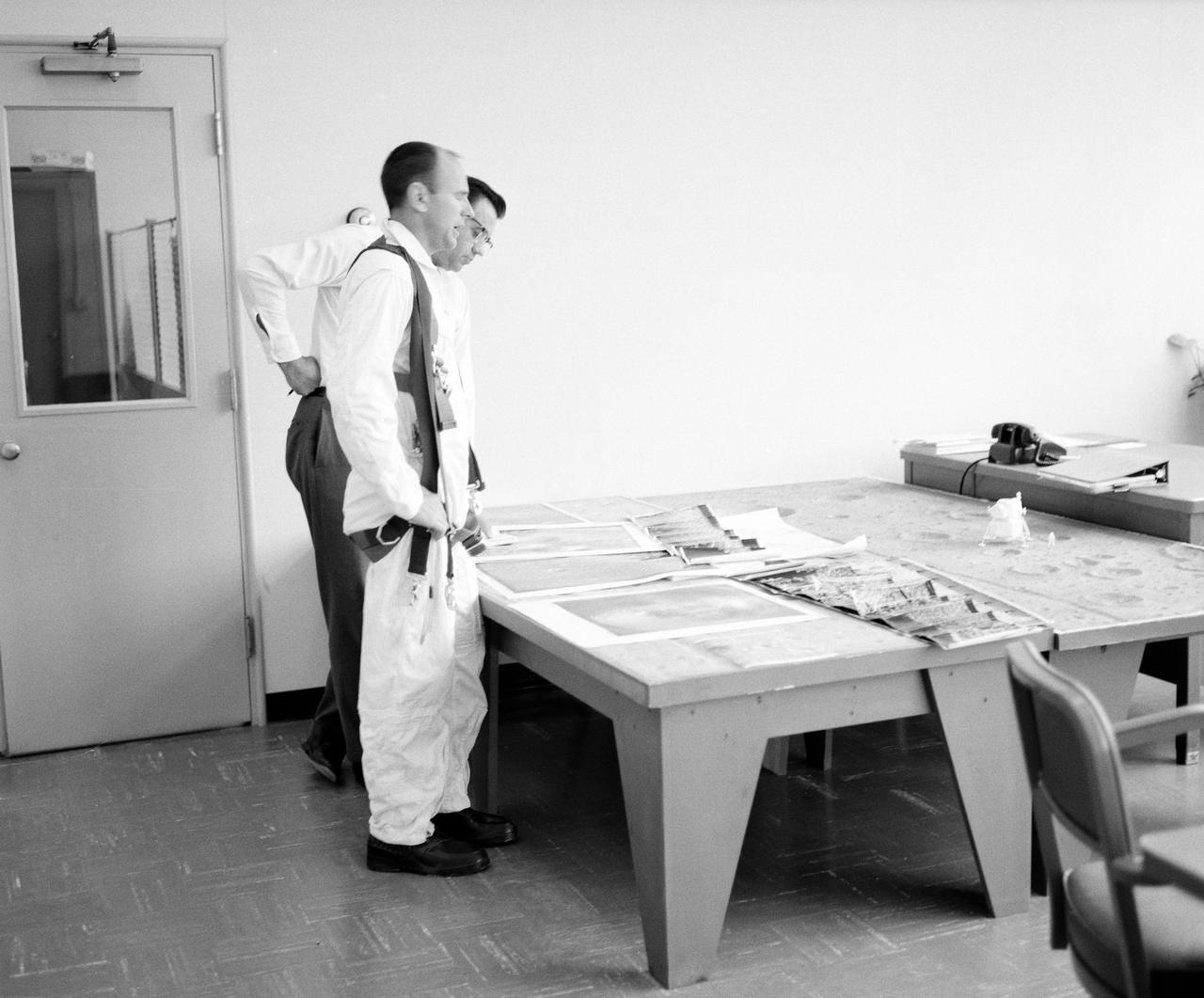
Astronauts Conrad and Bean at Lunar Landing Research Facility. Alan Bean was one of the third group of astronauts named by NASA in October 1963. He served as backup astronaut for the Gemini 10 and Apollo 9 missions. In September of 1962, Mr. Conrad was selected as an astronaut by NASA. His first flight was Gemini V, which established the space endurance record and placed the United States in the lead for man-hours in space. As commander of Gemini XI, Mr. Conrad helped to set a world's altitude record. He then served as commander of Apollo XII, the second lunar landing. On Mr. Conrad's final mission, he served as commander of Skylab II, the first United States Space Station. https://www.nasa.gov/astronauts/biographies/former for more information.
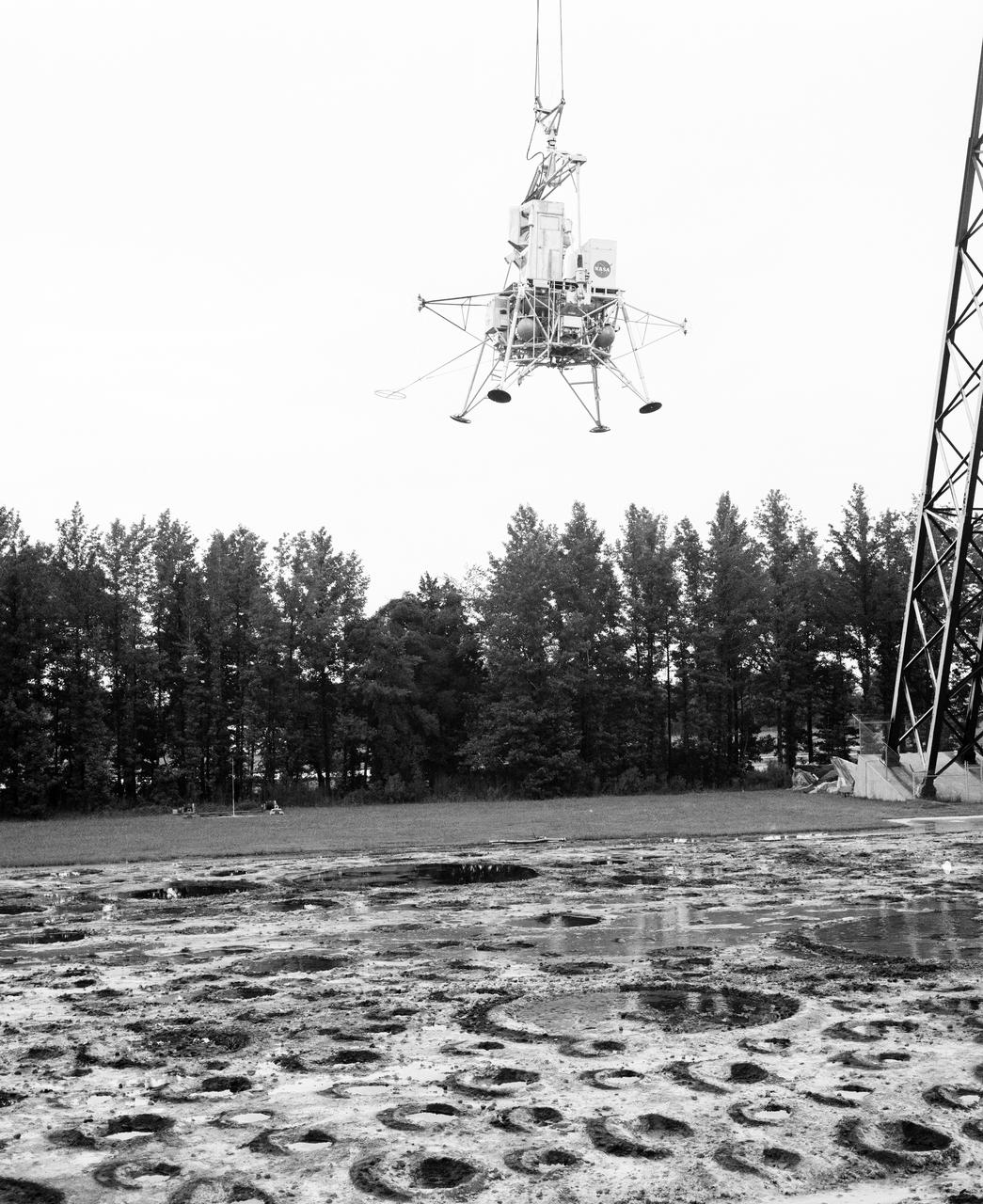
Astronauts Conrad and Bean at Lunar Landing Research Facility. Alan Bean was one of the third group of astronauts named by NASA in October 1963. He served as backup astronaut for the Gemini 10 and Apollo 9 missions. In September of 1962, Mr. Conrad was selected as an astronaut by NASA. His first flight was Gemini V, which established the space endurance record and placed the United States in the lead for man-hours in space. As commander of Gemini XI, Mr. Conrad helped to set a world's altitude record. He then served as commander of Apollo XII, the second lunar landing. On Mr. Conrad's final mission, he served as commander of Skylab II, the first United States Space Station. https://www.nasa.gov/astronauts/biographies/former for more information.
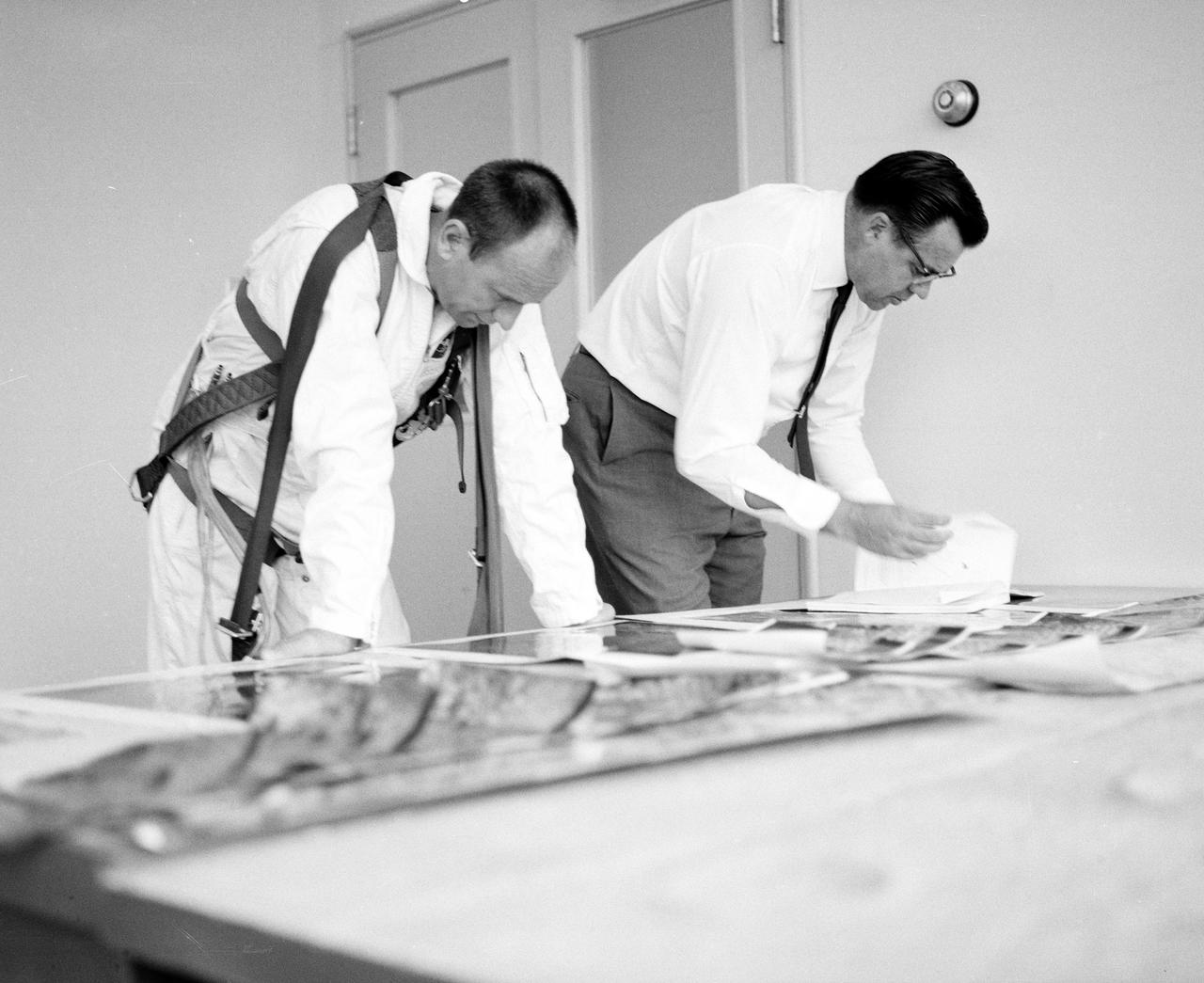
Astronauts Conrad and Bean at Lunar Landing Research Facility. Alan Bean was one of the third group of astronauts named by NASA in October 1963. He served as backup astronaut for the Gemini 10 and Apollo 9 missions. In September of 1962, Mr. Conrad was selected as an astronaut by NASA. His first flight was Gemini V, which established the space endurance record and placed the United States in the lead for man-hours in space. As commander of Gemini XI, Mr. Conrad helped to set a world's altitude record. He then served as commander of Apollo XII, the second lunar landing. On Mr. Conrad's final mission, he served as commander of Skylab II, the first United States Space Station. https://www.nasa.gov/astronauts/biographies/former for more information.
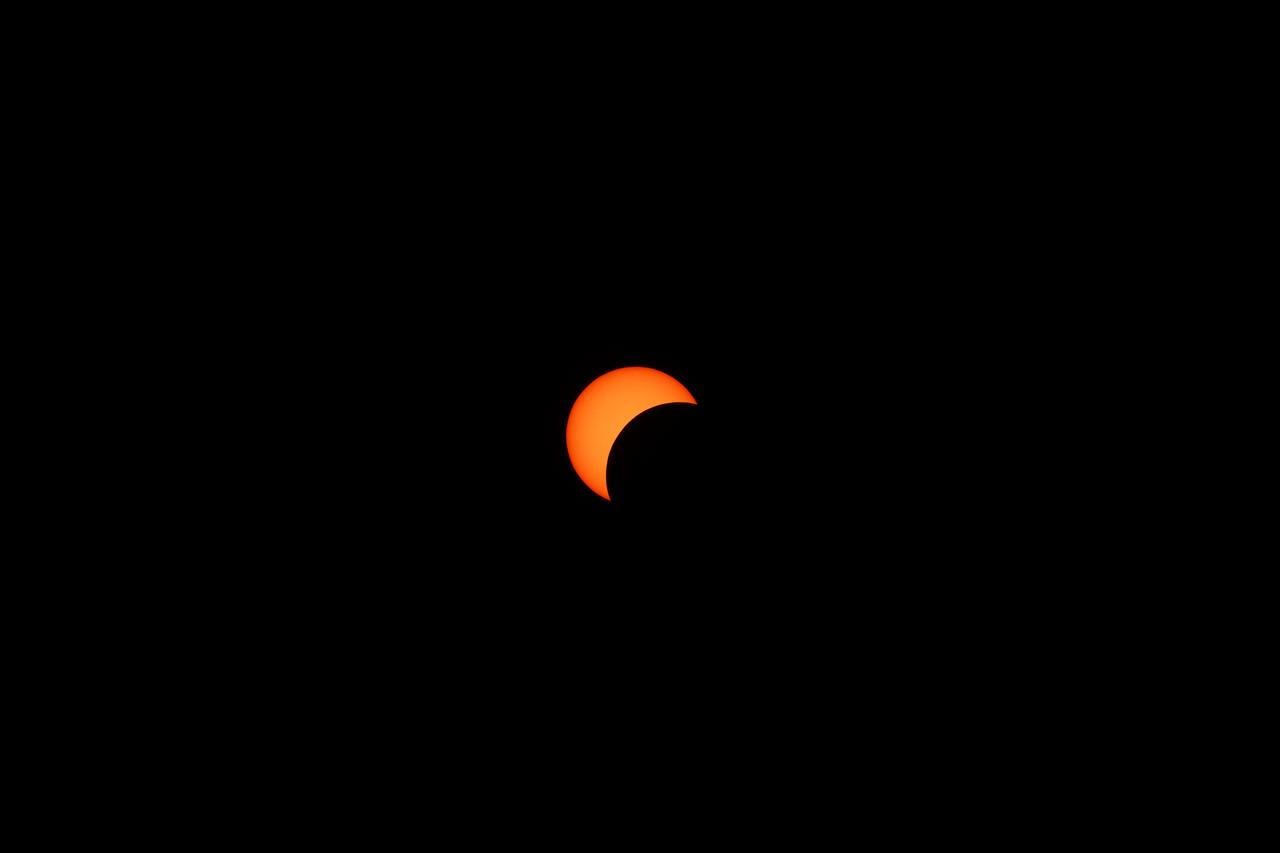
The moon is seen passing in front of the sun during a partial solar eclipse from NASA Langley Research Center in Hampton, VA, Monday, April 8, 2024. A total solar eclipse swept across a narrow portion of the North American continent from Mexico’s Pacific coast to the Atlantic coast of Newfoundland, Canada. A partial solar eclipse was visible across the entire North American continent along with parts of Central America and Europe. Photo Credit: (NASA/Ryan Hill)
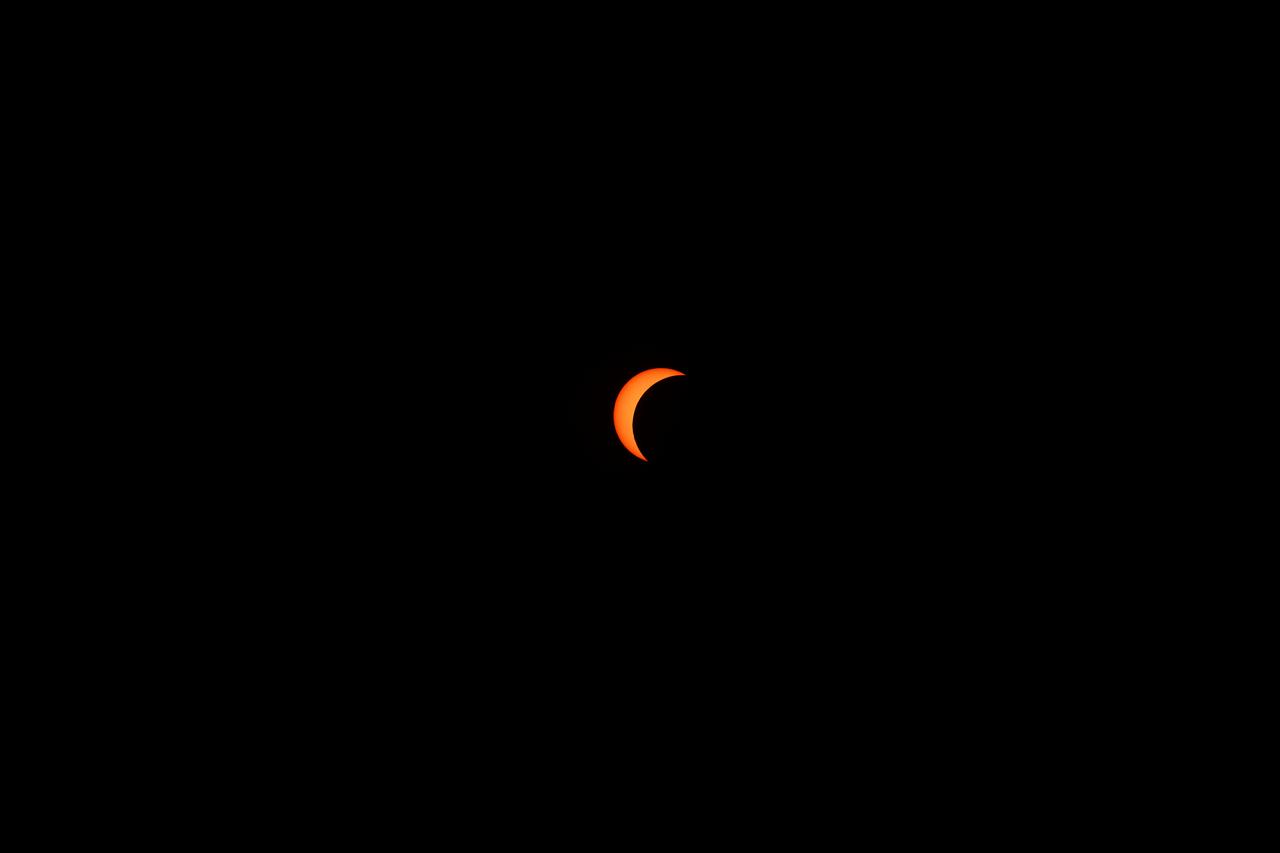
The moon is seen passing in front of the sun during a partial solar eclipse from NASA Langley Research Center in Hampton, VA, Monday, April 8, 2024. A total solar eclipse swept across a narrow portion of the North American continent from Mexico’s Pacific coast to the Atlantic coast of Newfoundland, Canada. A partial solar eclipse was visible across the entire North American continent along with parts of Central America and Europe. Photo Credit: (NASA/Ryan Hill)
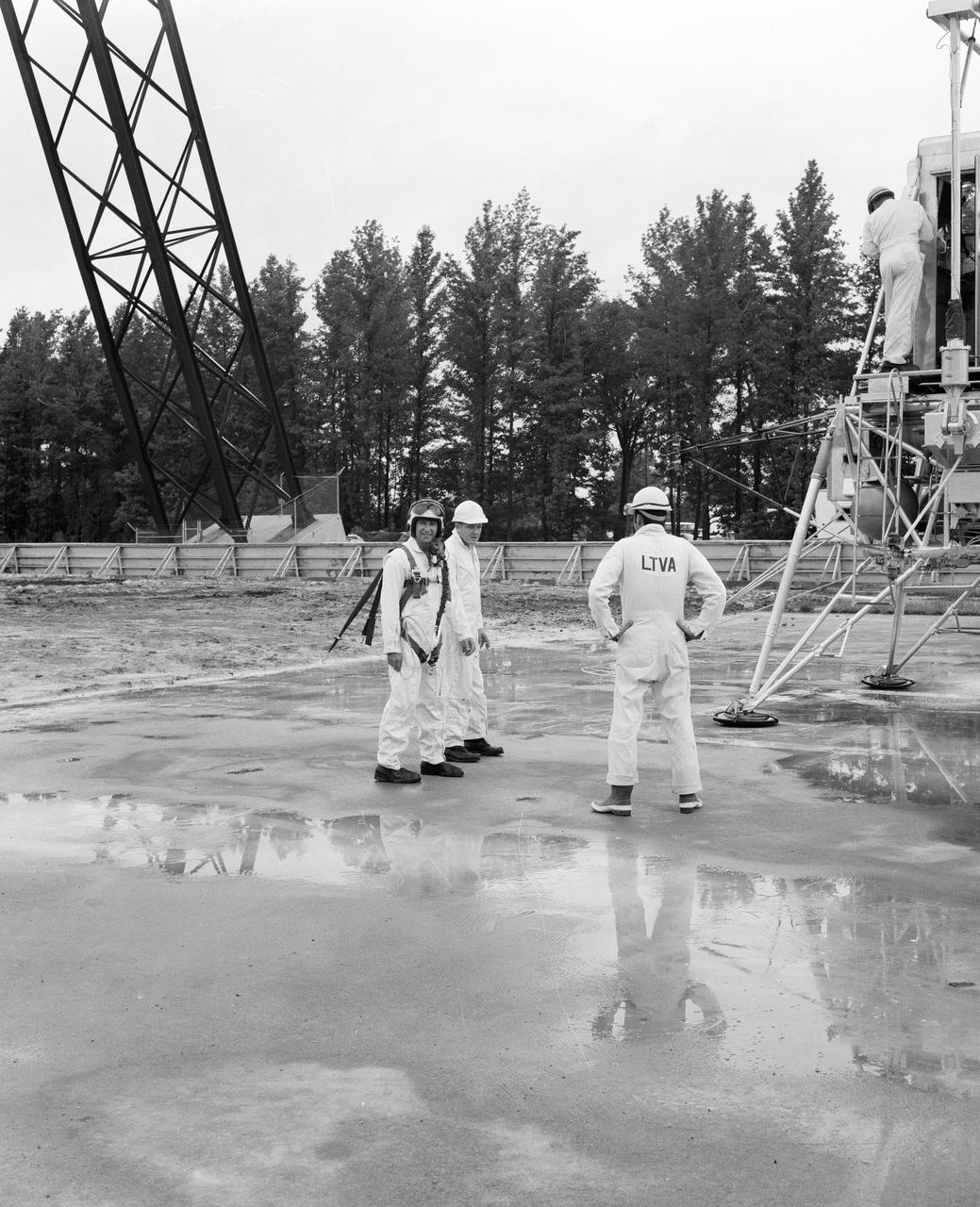
Astronauts Conrad and Bean at Lunar Landing Research Facility. Alan Bean was one of the third group of astronauts named by NASA in October 1963. He served as backup astronaut for the Gemini 10 and Apollo 9 missions. In September of 1962, Mr. Conrad was selected as an astronaut by NASA. His first flight was Gemini V, which established the space endurance record and placed the United States in the lead for man-hours in space. As commander of Gemini XI, Mr. Conrad helped to set a world's altitude record. He then served as commander of Apollo XII, the second lunar landing. On Mr. Conrad's final mission, he served as commander of Skylab II, the first United States Space Station. https://www.nasa.gov/astronauts/biographies/former for more information.
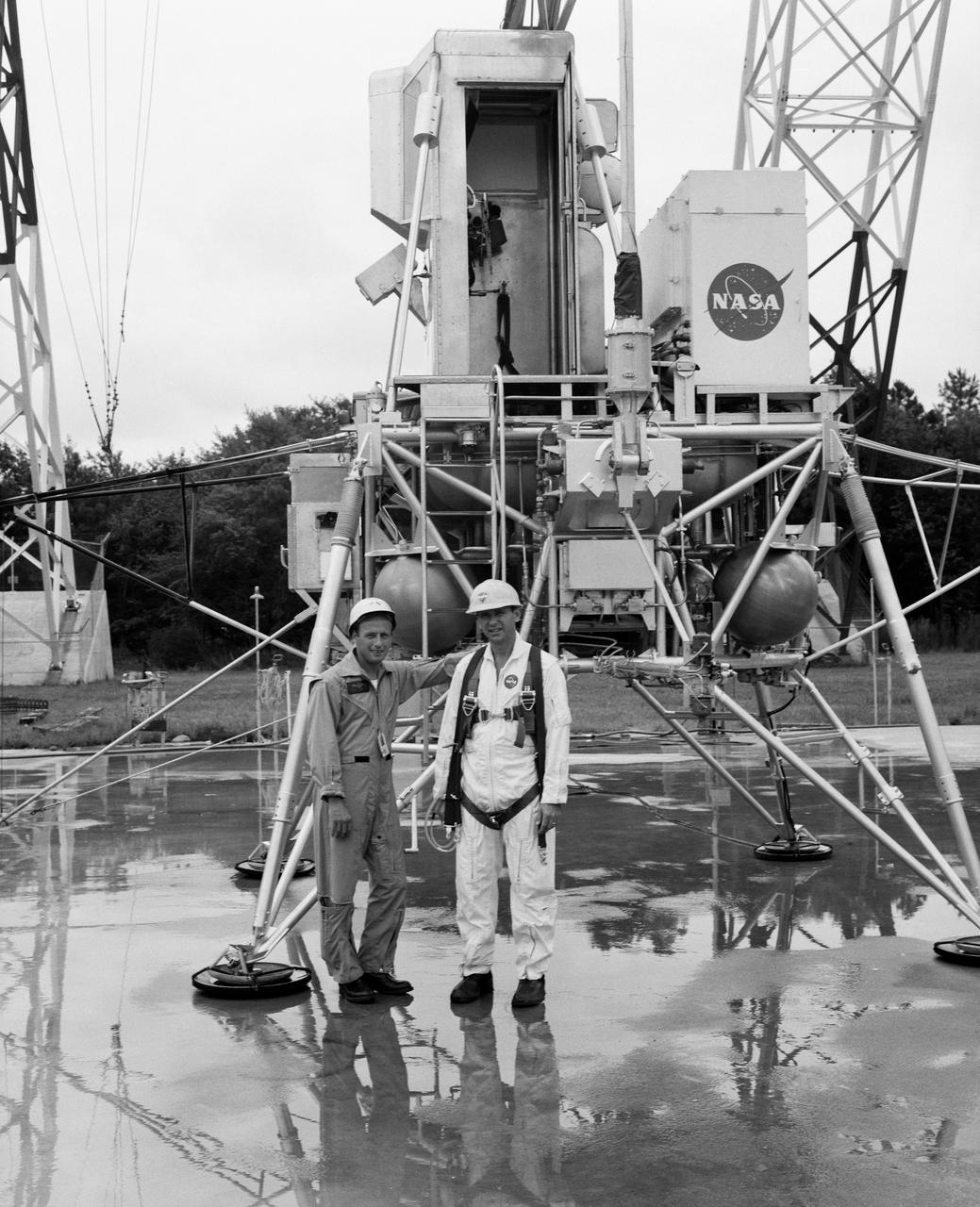
Astronauts Conrad and Bean at Lunar Landing Research Facility. Alan Bean was one of the third group of astronauts named by NASA in October 1963. He served as backup astronaut for the Gemini 10 and Apollo 9 missions. In September of 1962, Mr. Conrad was selected as an astronaut by NASA. His first flight was Gemini V, which established the space endurance record and placed the United States in the lead for man-hours in space. As commander of Gemini XI, Mr. Conrad helped to set a world's altitude record. He then served as commander of Apollo XII, the second lunar landing. On Mr. Conrad's final mission, he served as commander of Skylab II, the first United States Space Station. https://www.nasa.gov/astronauts/biographies/former for more information.
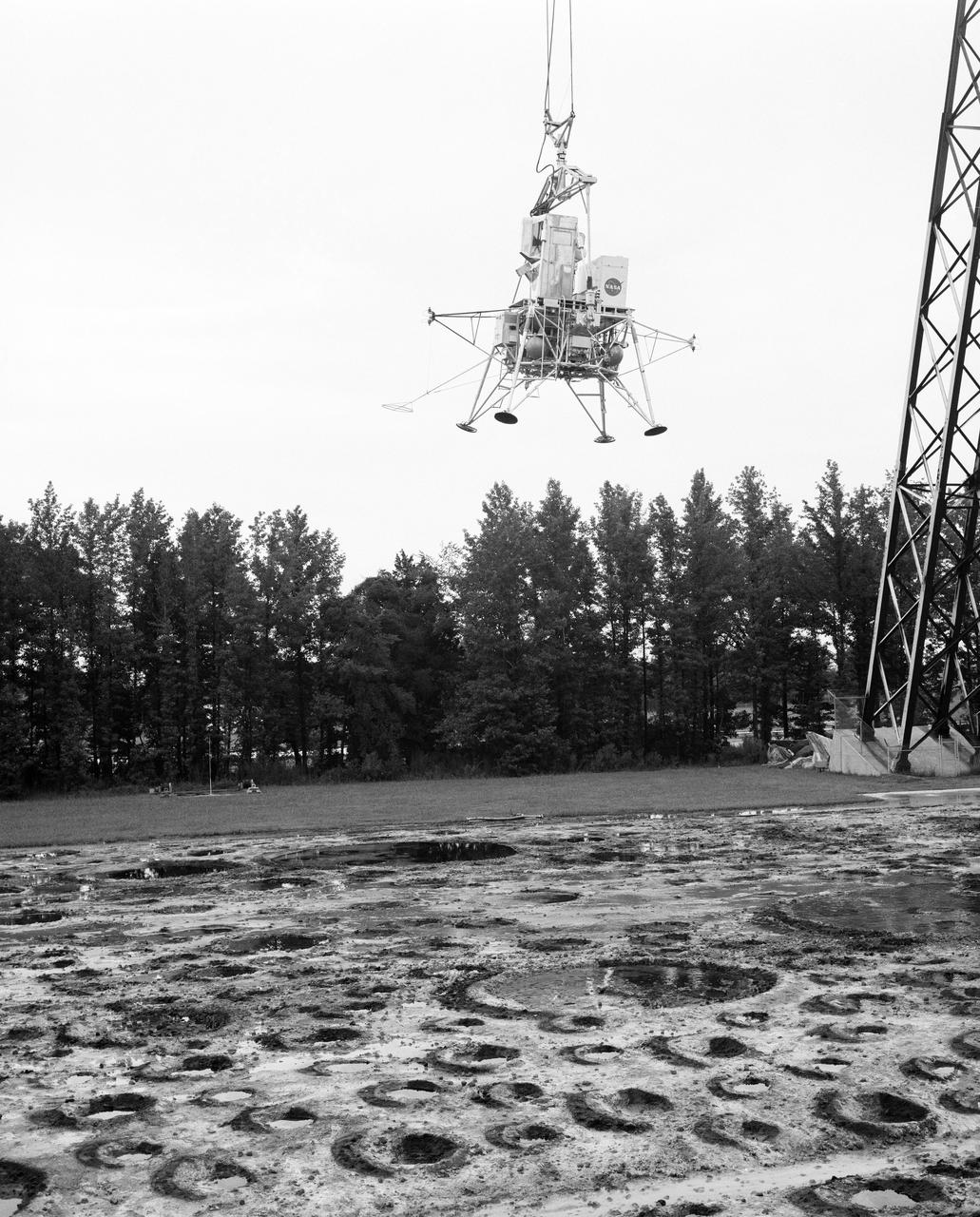
Astronauts Conrad and Bean at Lunar Landing Research Facility. Alan Bean was one of the third group of astronauts named by NASA in October 1963. He served as backup astronaut for the Gemini 10 and Apollo 9 missions. In September of 1962, Mr. Conrad was selected as an astronaut by NASA. His first flight was Gemini V, which established the space endurance record and placed the United States in the lead for man-hours in space. As commander of Gemini XI, Mr. Conrad helped to set a world's altitude record. He then served as commander of Apollo XII, the second lunar landing. On Mr. Conrad's final mission, he served as commander of Skylab II, the first United States Space Station. https://www.nasa.gov/astronauts/biographies/former for more information.
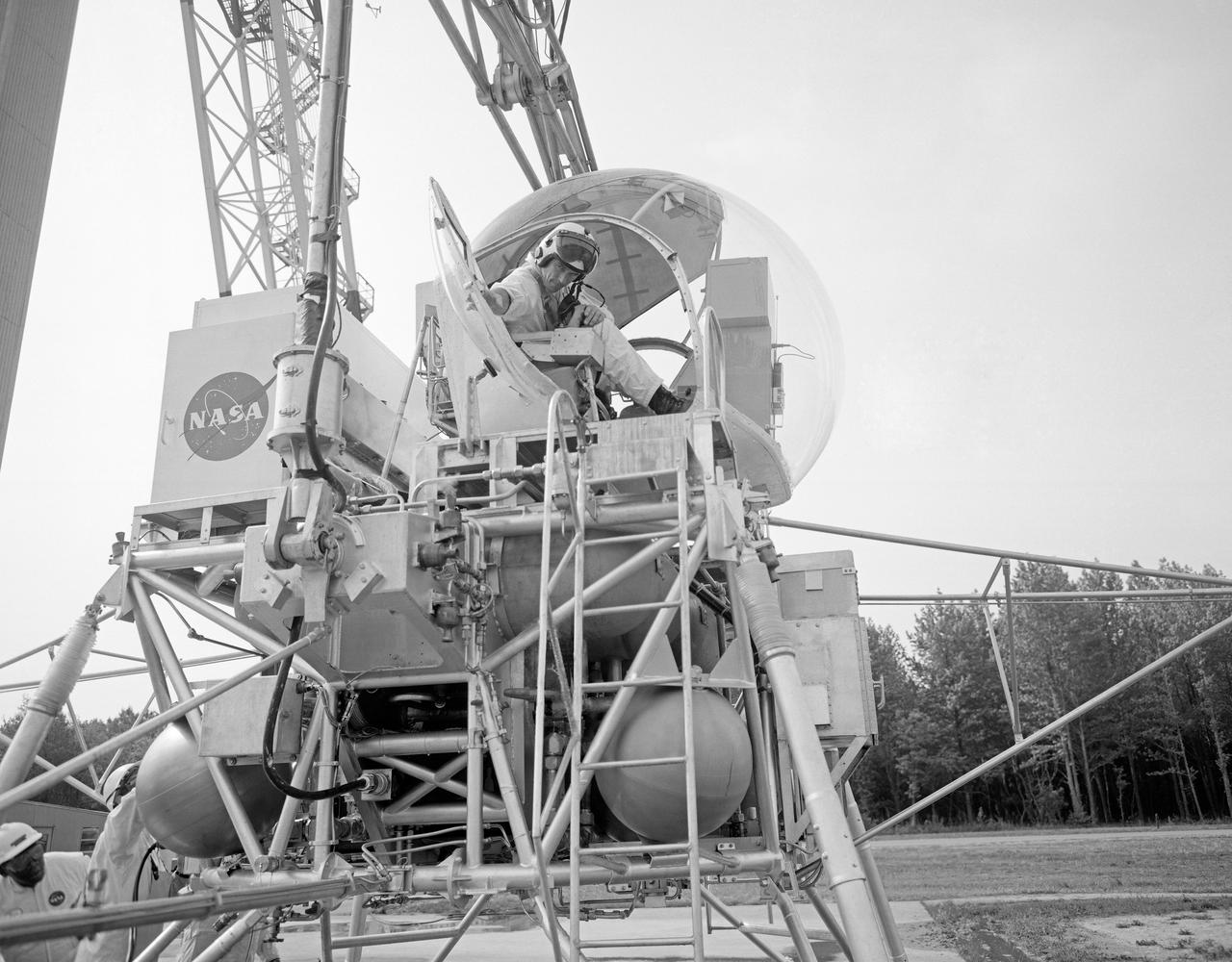
Astronaut Eugene Cernan at Lunar Lander Research Facility. Cernan under gantry, in training module. Captain Cernan was one of fourteen astronauts selected by NASA in October 1963. On his second space flight, he was lunar module pilot of Apollo 10, May 18-26, 1969, the first comprehensive lunar-orbital qualification and verification flight test of an Apollo lunar module.
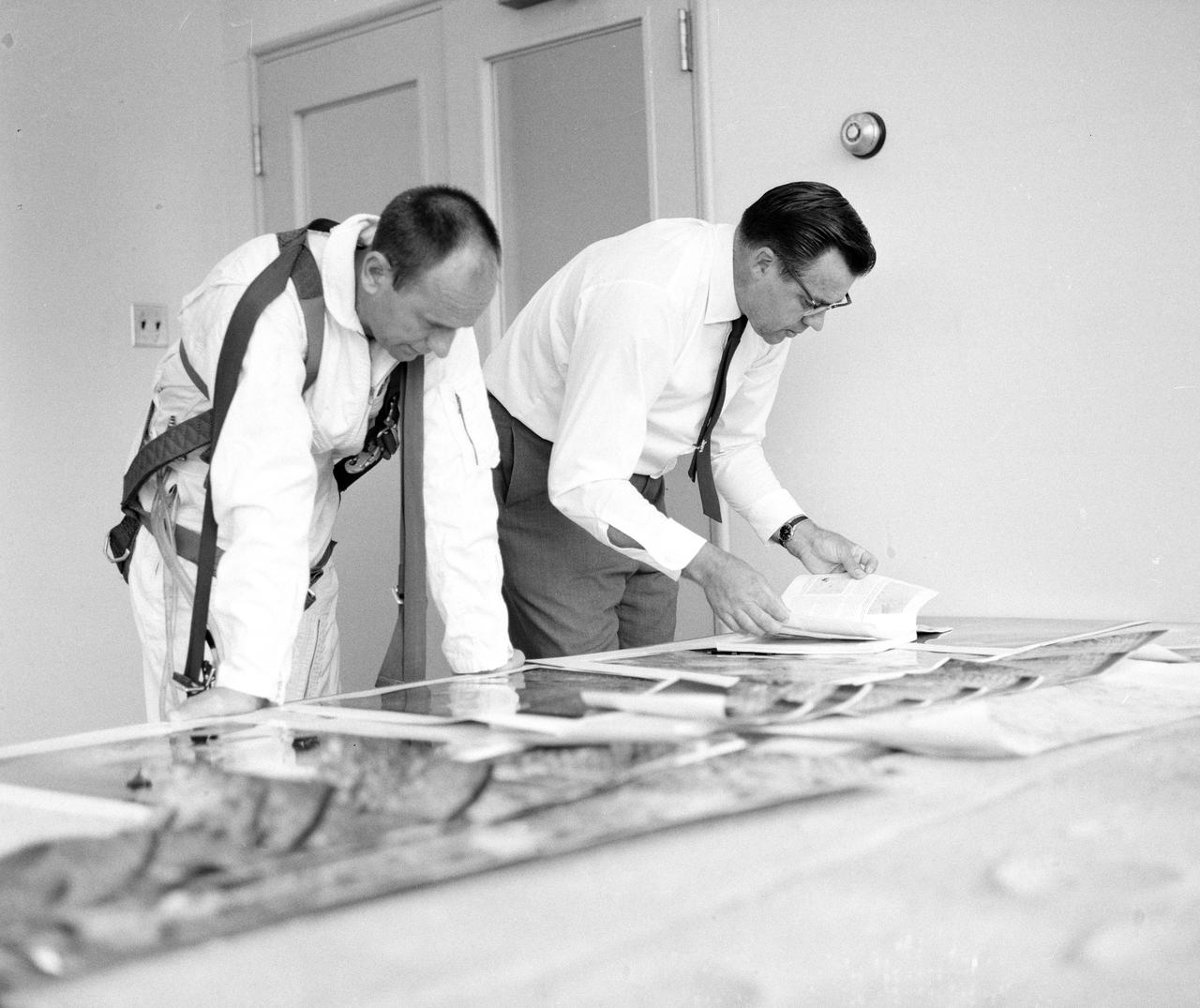
Astronauts Conrad and Bean at Lunar Landing Research Facility. Alan Bean was one of the third group of astronauts named by NASA in October 1963. He served as backup astronaut for the Gemini 10 and Apollo 9 missions. In September of 1962, Mr. Conrad was selected as an astronaut by NASA. His first flight was Gemini V, which established the space endurance record and placed the United States in the lead for man-hours in space. As commander of Gemini XI, Mr. Conrad helped to set a world's altitude record. He then served as commander of Apollo XII, the second lunar landing. On Mr. Conrad's final mission, he served as commander of Skylab II, the first United States Space Station. https://www.nasa.gov/astronauts/biographies/former for more information.
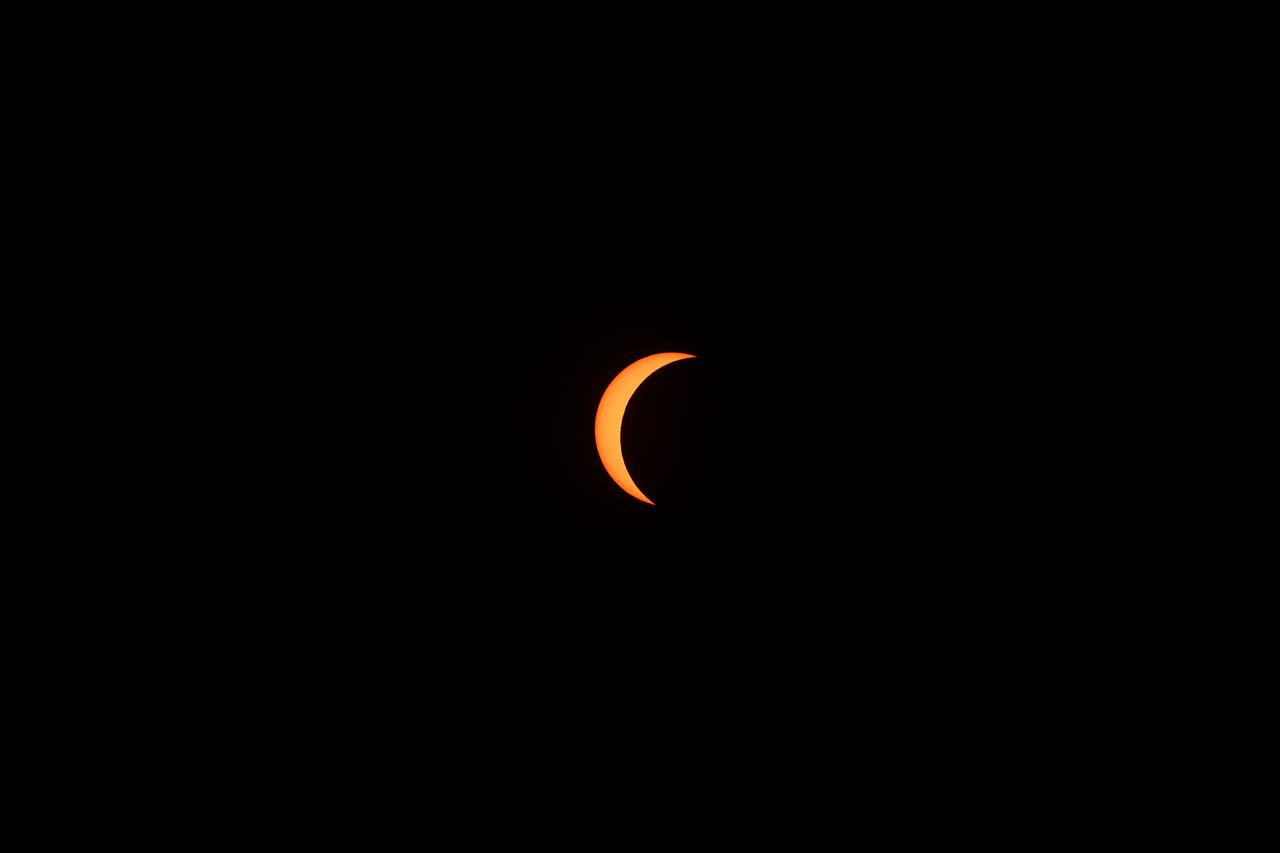
The moon is seen passing in front of the sun during a partial solar eclipse from NASA Langley Research Center in Hampton, VA, Monday, April 8, 2024. A total solar eclipse swept across a narrow portion of the North American continent from Mexico’s Pacific coast to the Atlantic coast of Newfoundland, Canada. A partial solar eclipse was visible across the entire North American continent along with parts of Central America and Europe. Photo Credit: (NASA/Ryan Hill)
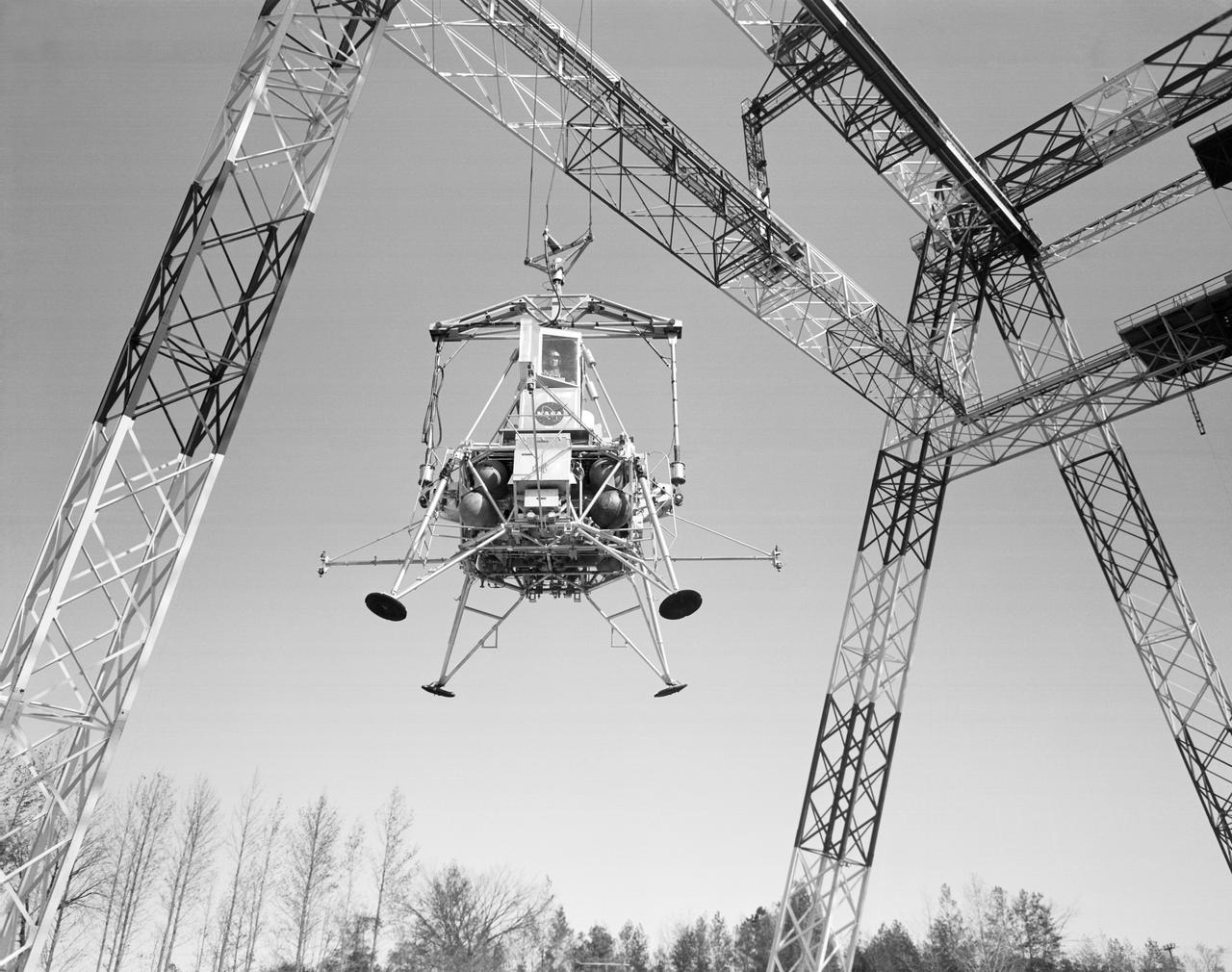
Lunar landing test of LEM at LLRF Lunar Landing Research Facility: A NASA Langley research pilot flies a lunar lander in a test conducted in the Lunar Landing Research Facility.
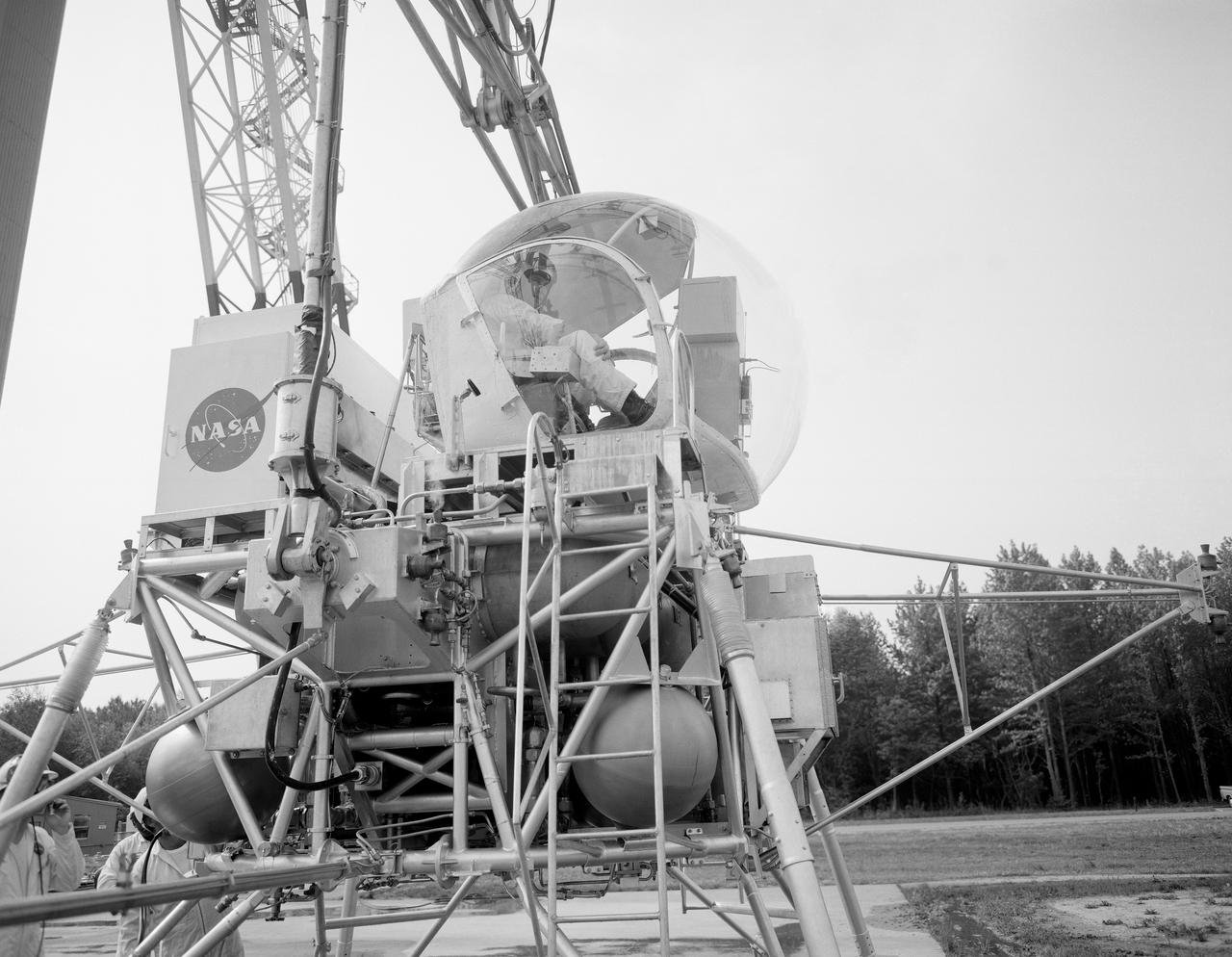
Astronaut Eugene Cernan at Lunar Lander Research Facility. Cernan under gantry, in training module. Captain Cernan was one of fourteen astronauts selected by NASA in October 1963. On his second space flight, he was lunar module pilot of Apollo 10, May 18-26, 1969, the first comprehensive lunar-orbital qualification and verification flight test of an Apollo lunar module.
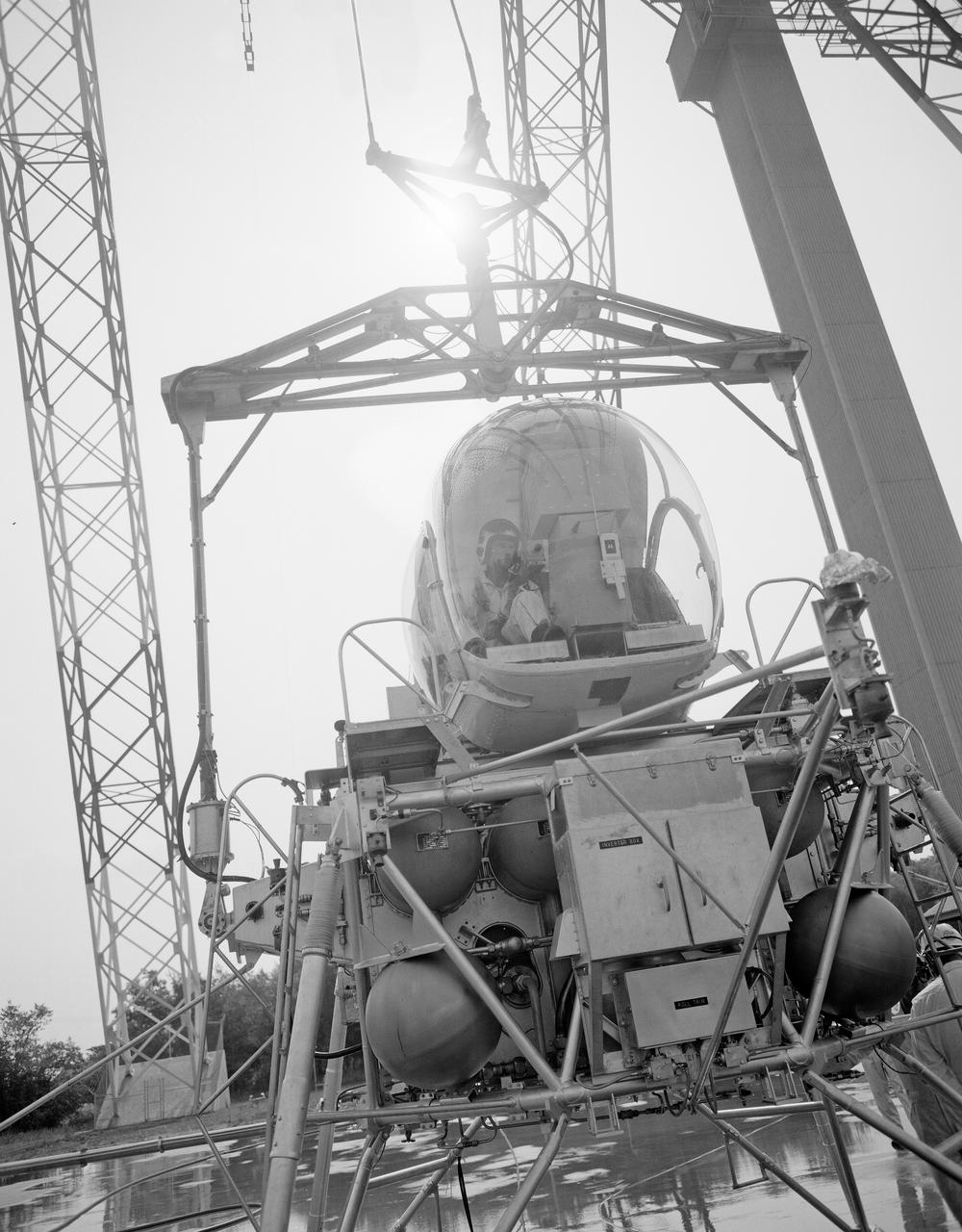
Astronaut Eugene Cernan at Lunar Lander Research Facility. Cernan under gantry, in training module. Captain Cernan was one of fourteen astronauts selected by NASA in October 1963. On his second space flight, he was lunar module pilot of Apollo 10, May 18-26, 1969, the first comprehensive lunar-orbital qualification and verification flight test of an Apollo lunar module.
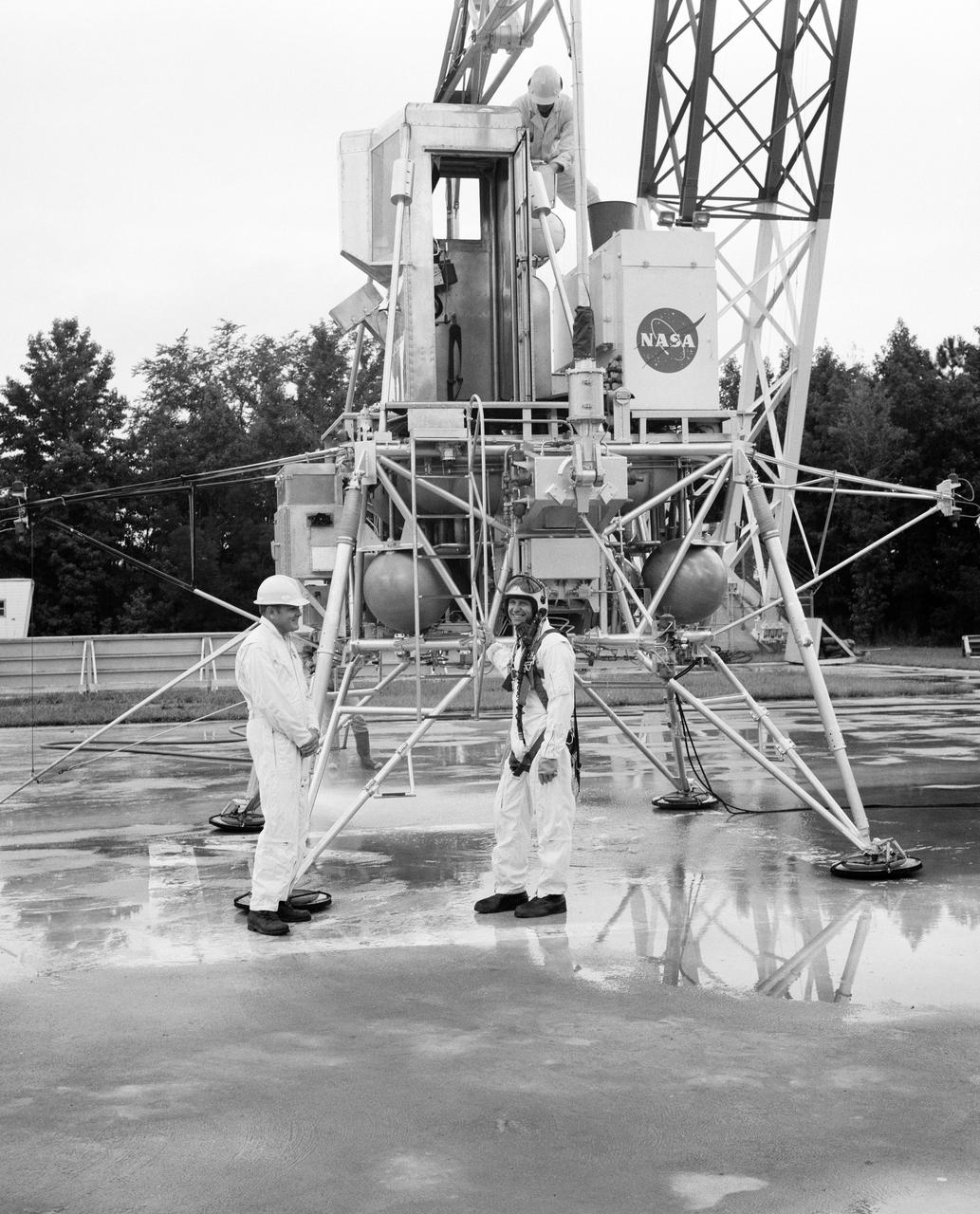
Astronauts Conrad and Bean at Lunar Landing Research Facility. Alan Bean was one of the third group of astronauts named by NASA in October 1963. He served as backup astronaut for the Gemini 10 and Apollo 9 missions. In September of 1962, Mr. Conrad was selected as an astronaut by NASA. His first flight was Gemini V, which established the space endurance record and placed the United States in the lead for man-hours in space. As commander of Gemini XI, Mr. Conrad helped to set a world's altitude record. He then served as commander of Apollo XII, the second lunar landing. On Mr. Conrad's final mission, he served as commander of Skylab II, the first United States Space Station. https://www.nasa.gov/astronauts/biographies/former for more information.
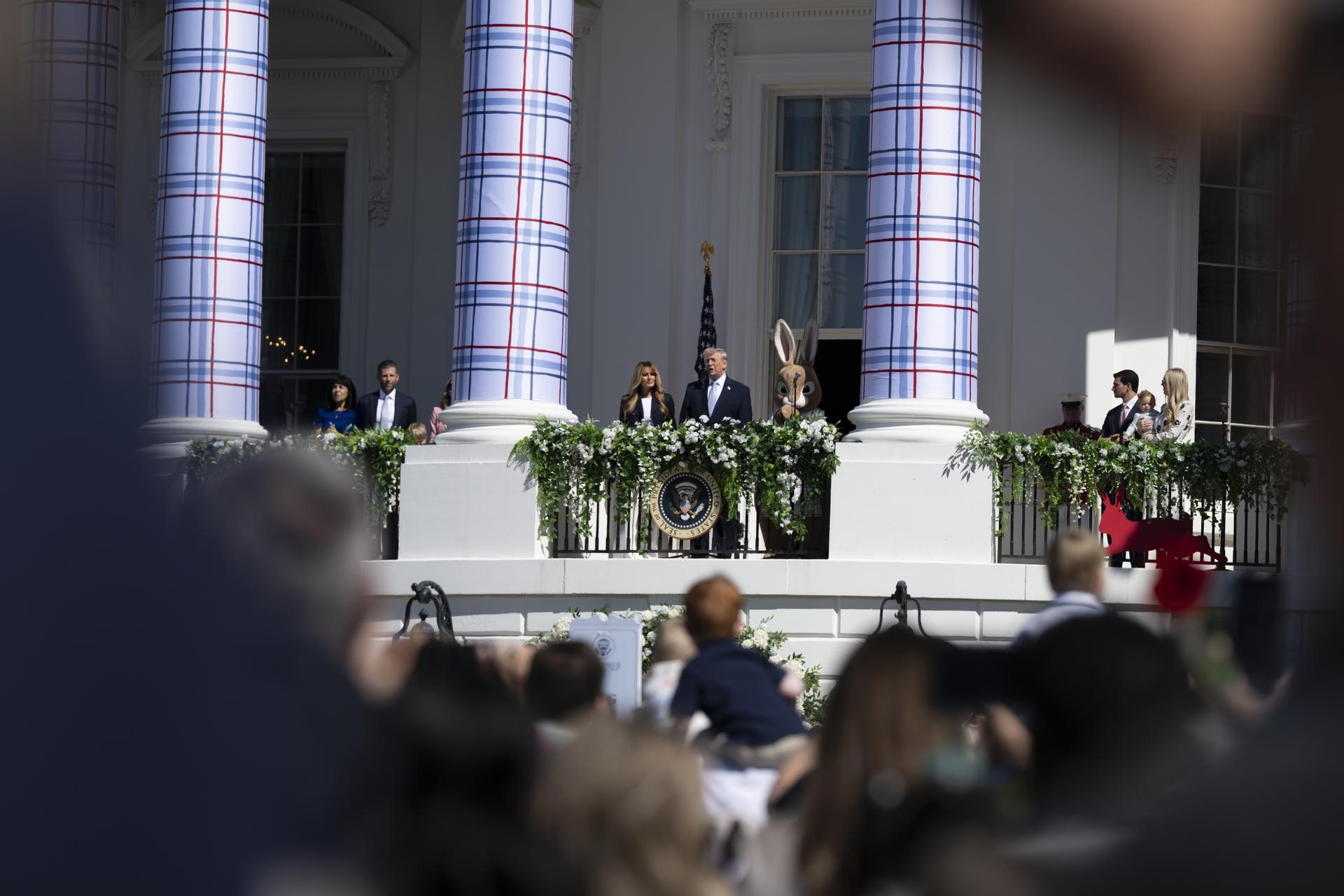
President Donald Trump, joined by First Lady Melania Trump, delivers remarks during the White House Easter Egg Roll, Monday, April 6, 2026, White House South Lawn of the White House in Washington. Photo Credit: (NASA/Crystal R. Hines)
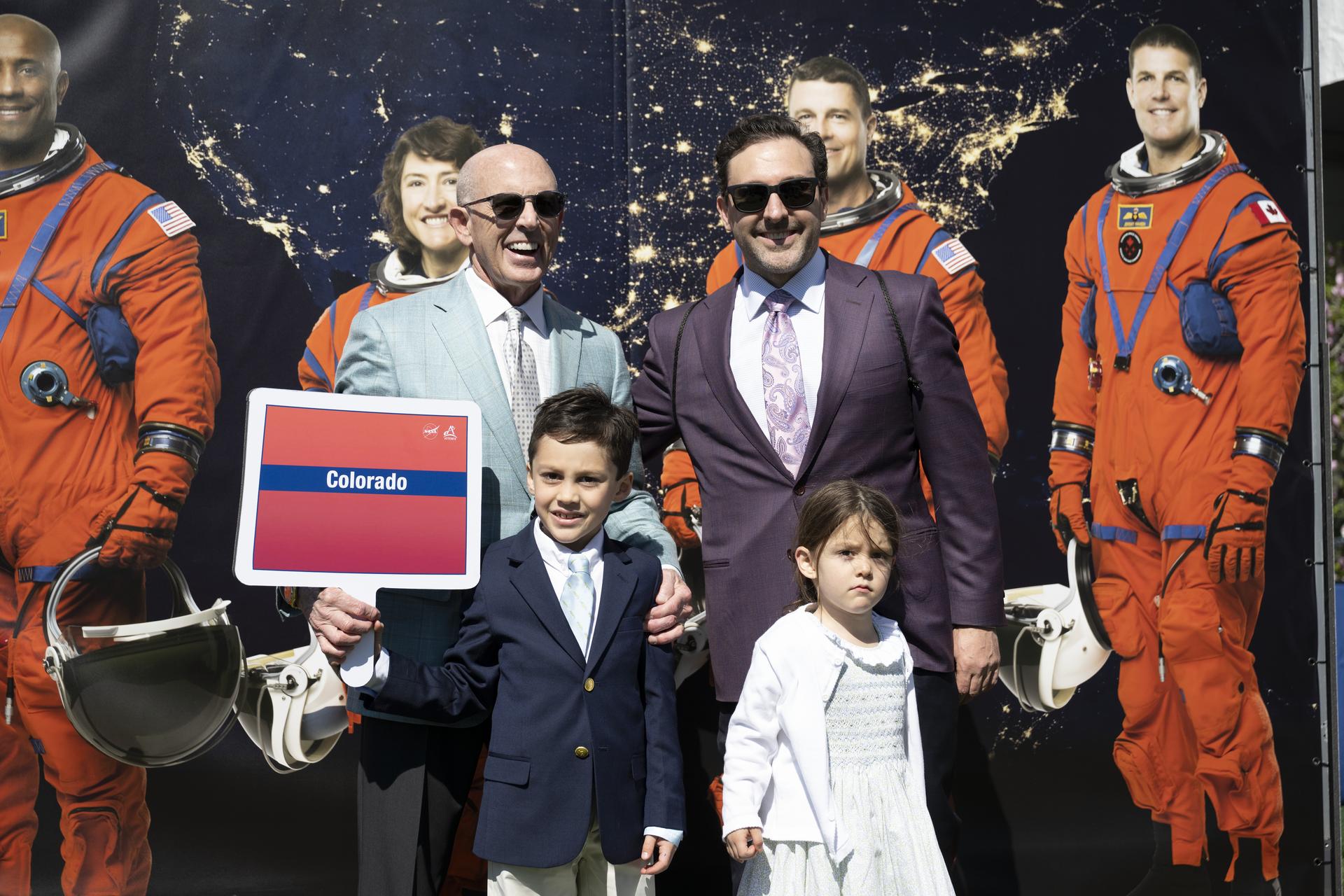
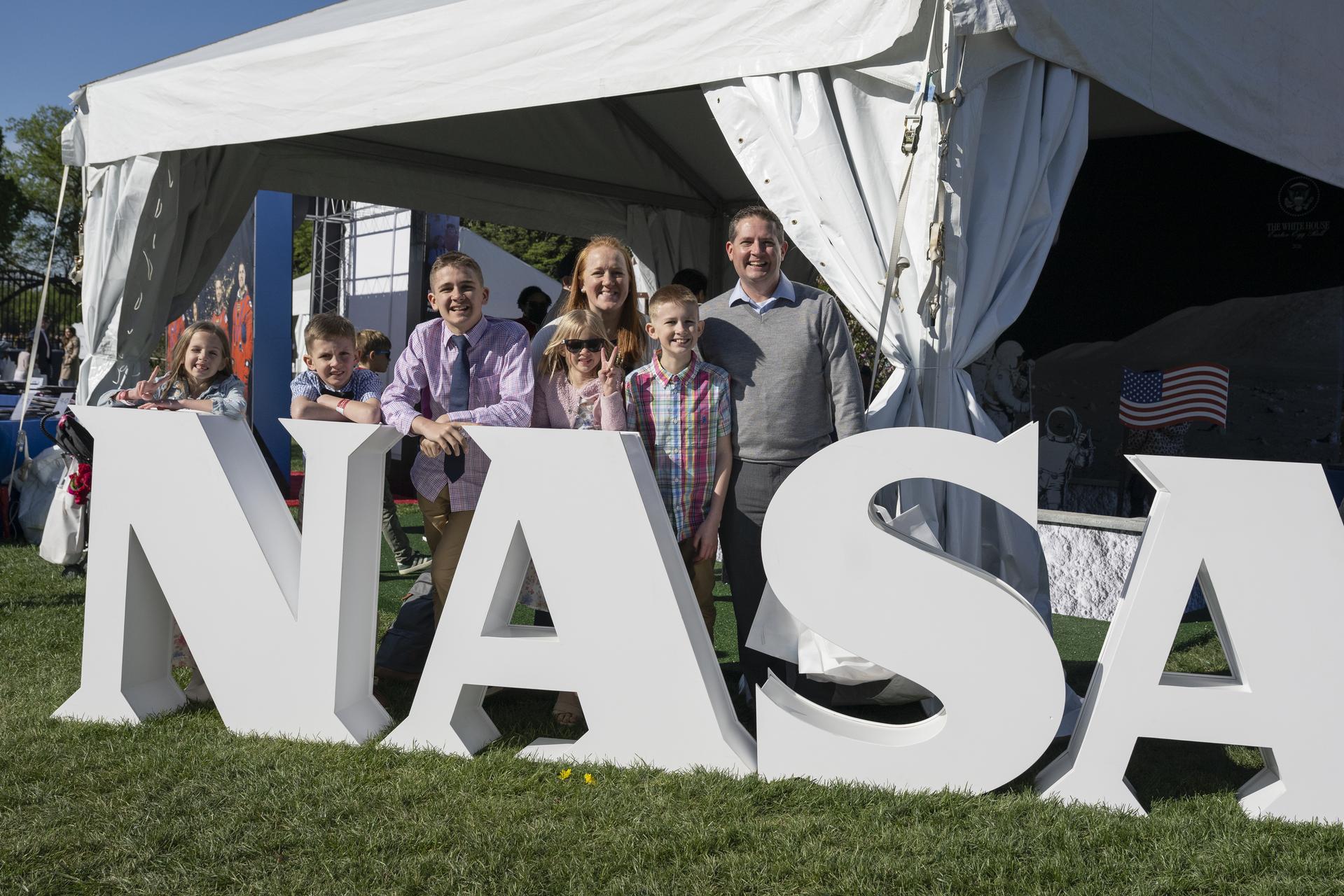
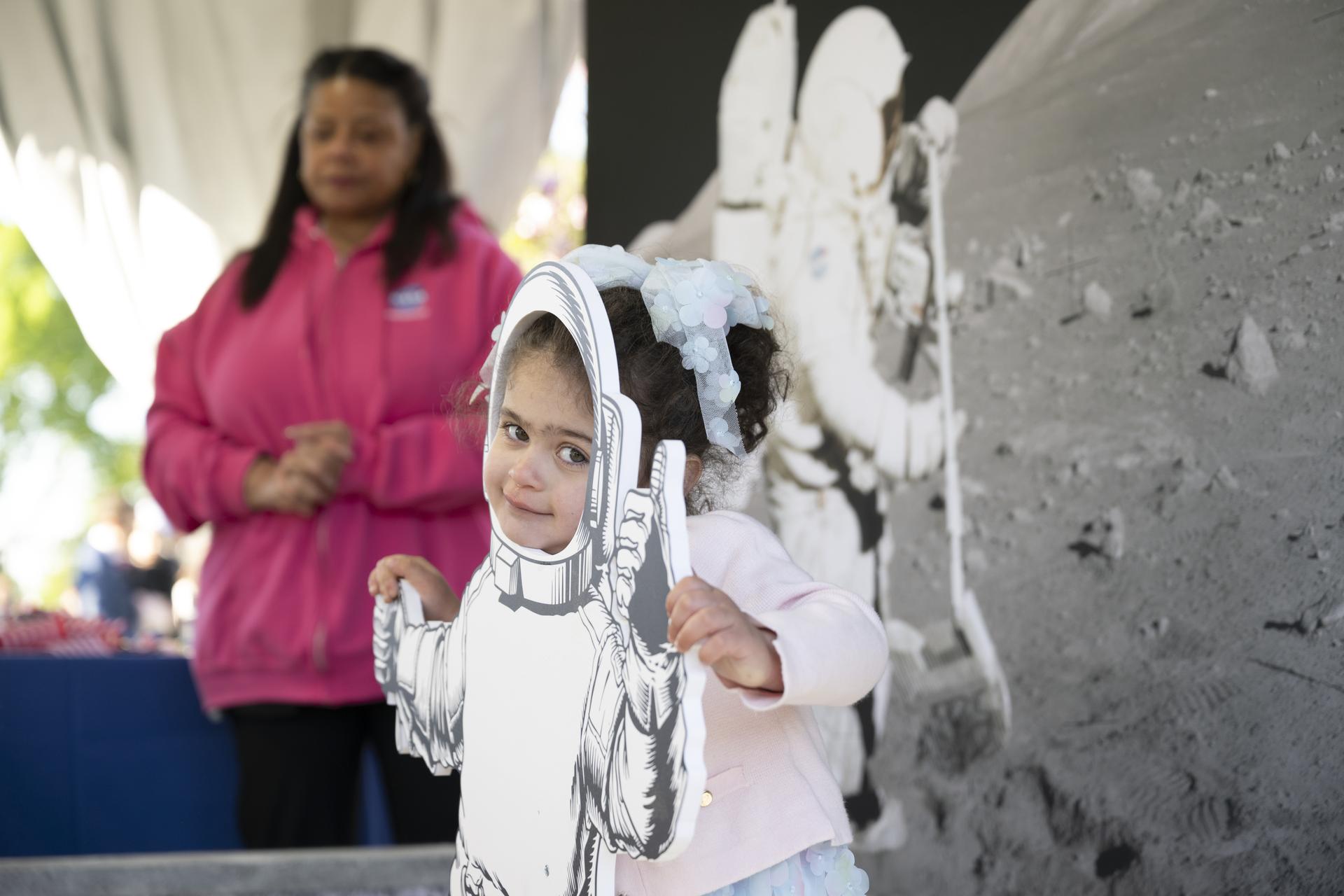
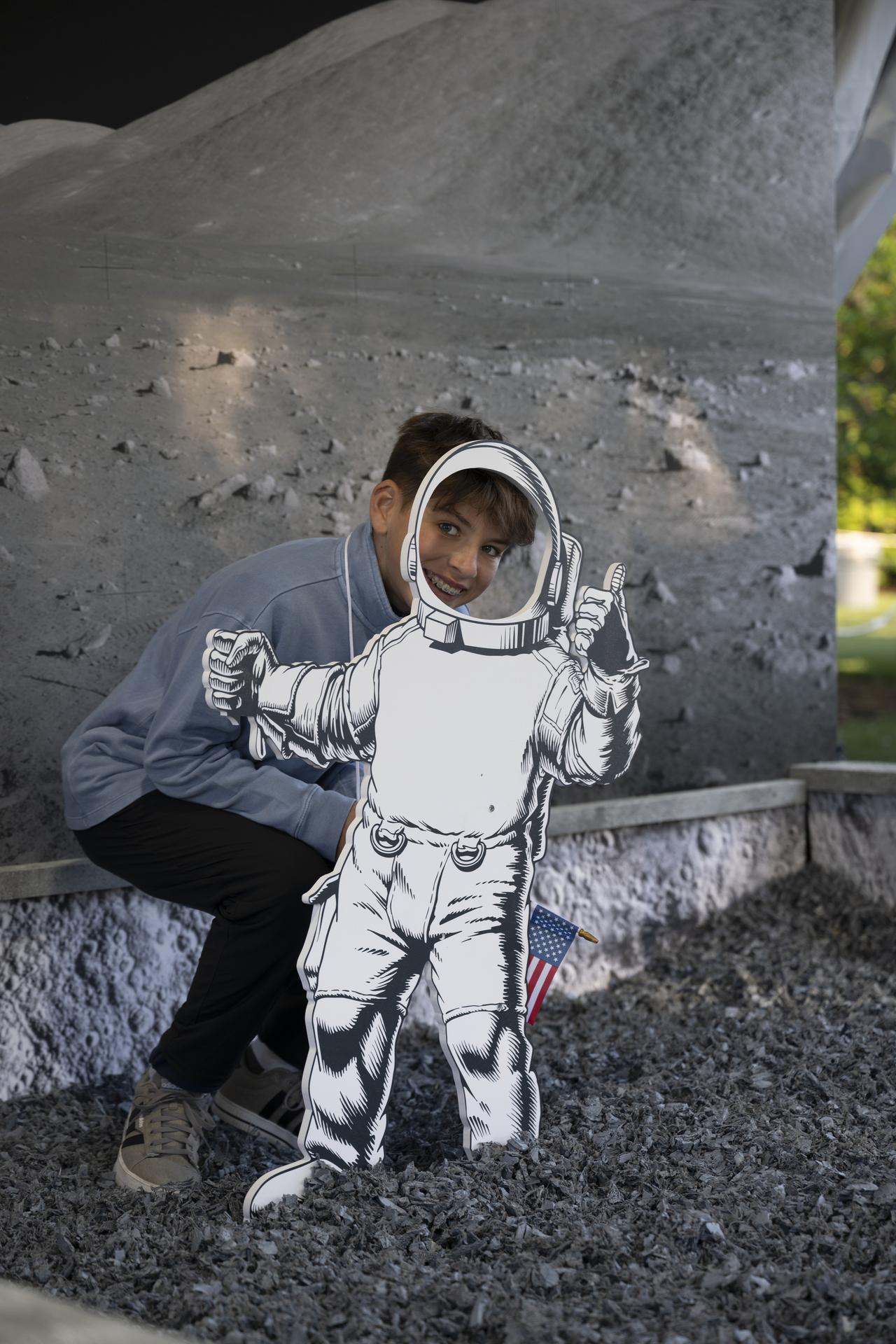
Guests pose in the NASA Artemis Photo Booth at the White House Easter Egg Roll, on the South Lawn in Washington D.C., on April 6, 2026. (Photo Credit: (NASA/Crystal R. Hines)
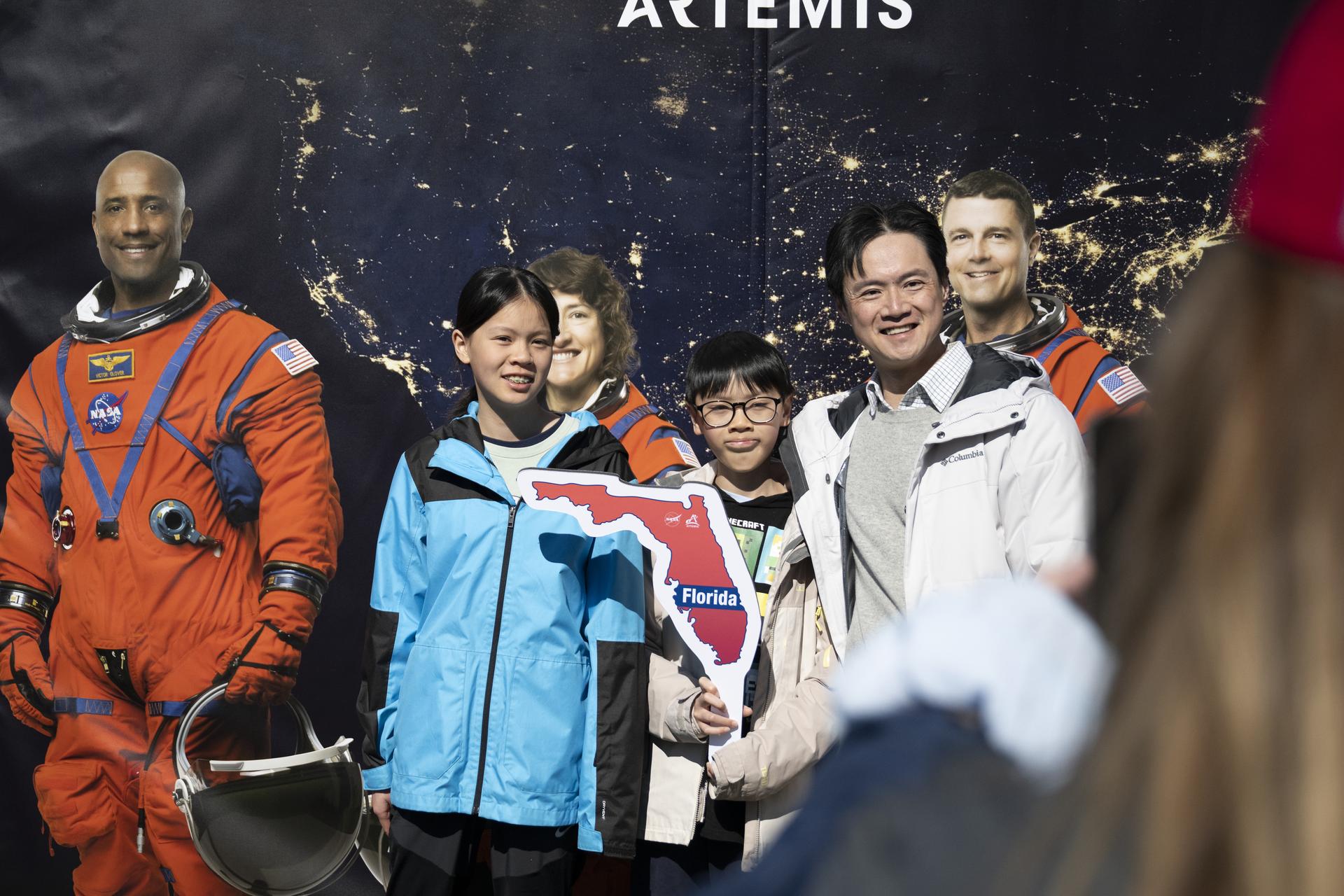
Guests pose in the NASA Artemis Photo Booth at the White House Easter Egg Roll, on the South Lawn in Washington D.C., on April 6, 2026. (Photo Credit: (NASA/Crystal R. Hines)
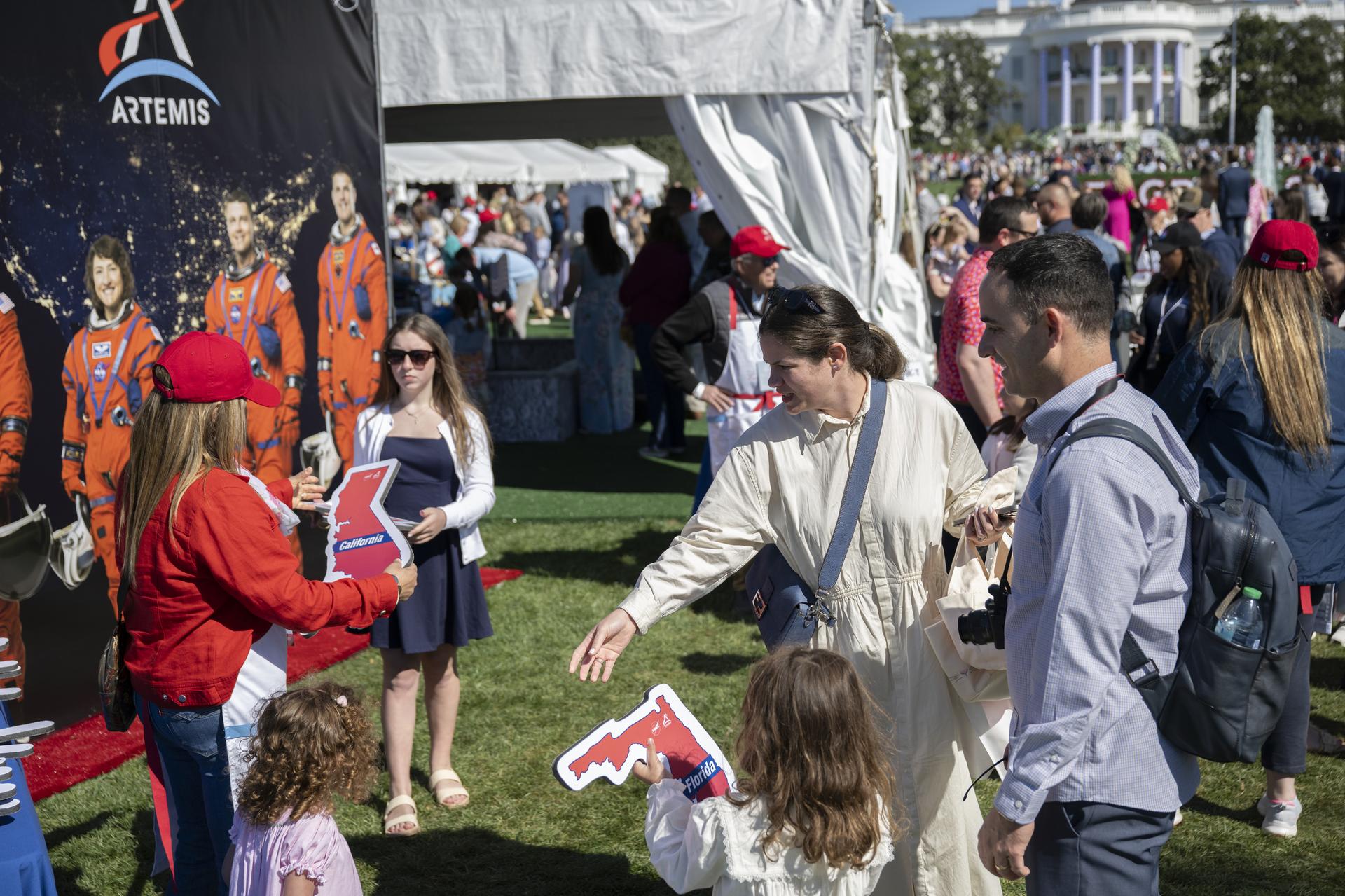
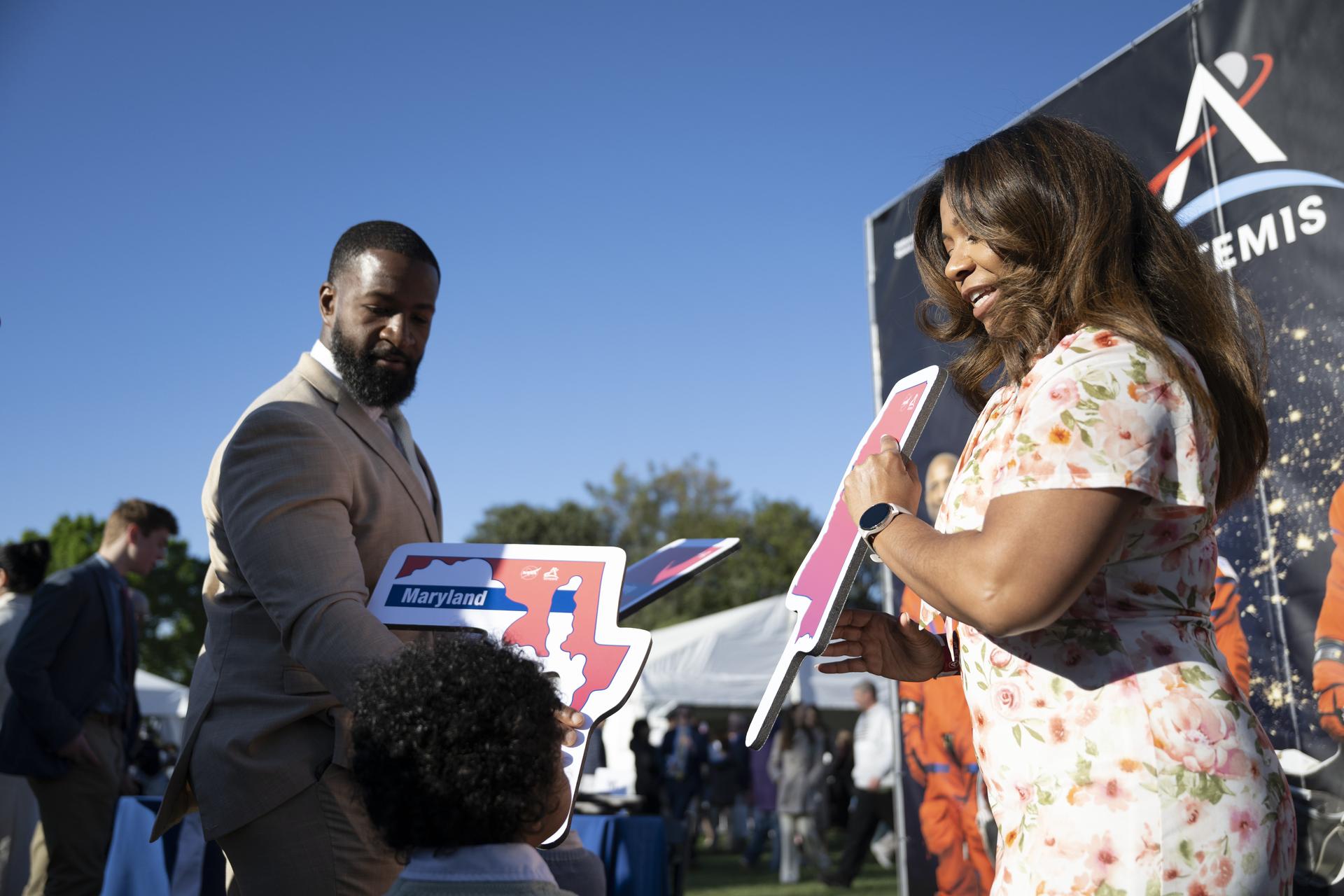
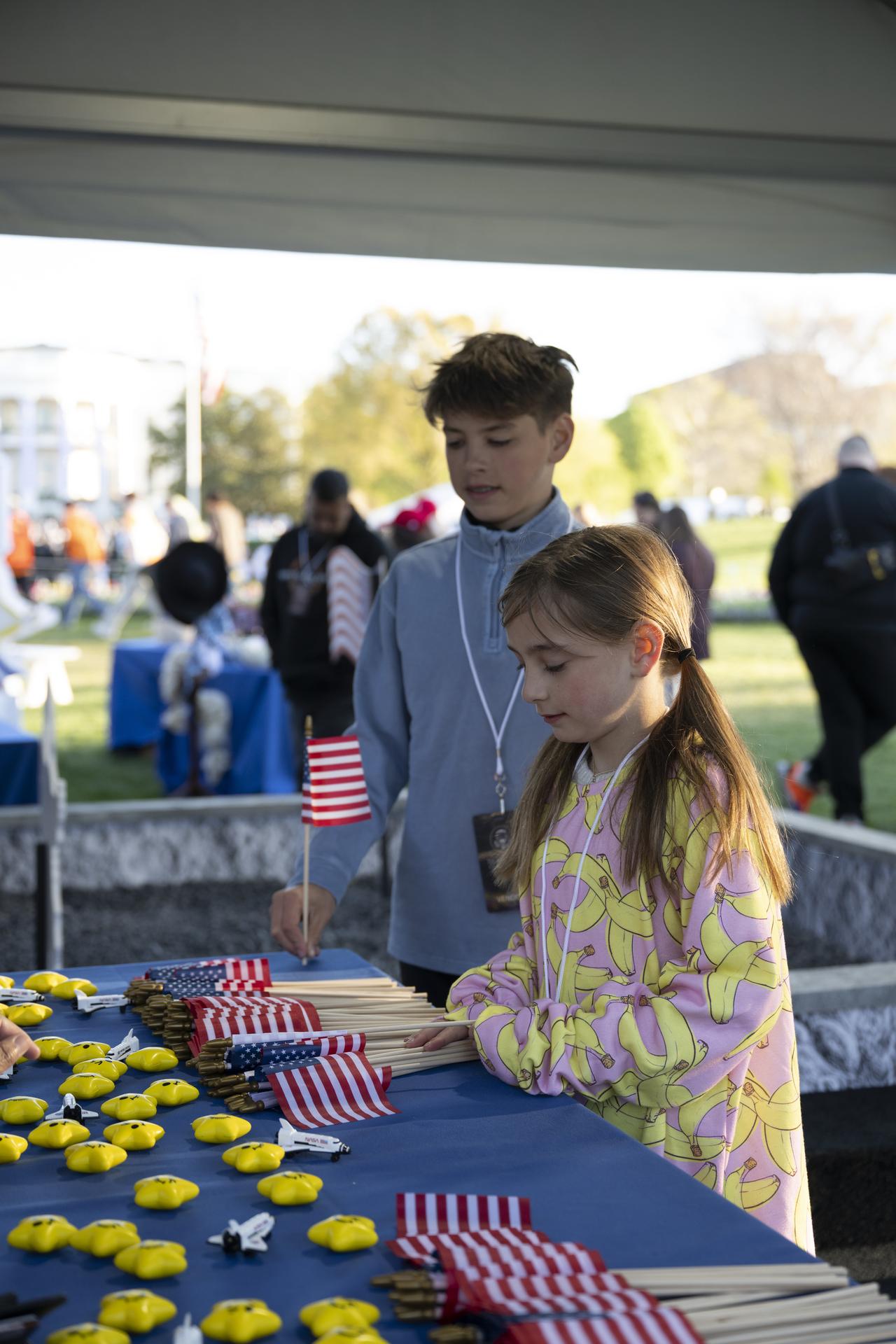
Guests engage in STEM Stations at the White House Easter Egg Roll, on the South Lawn in Washington D.C., on April 6, 2026. Photo Credit: (NASA/Crystal R. Hines)
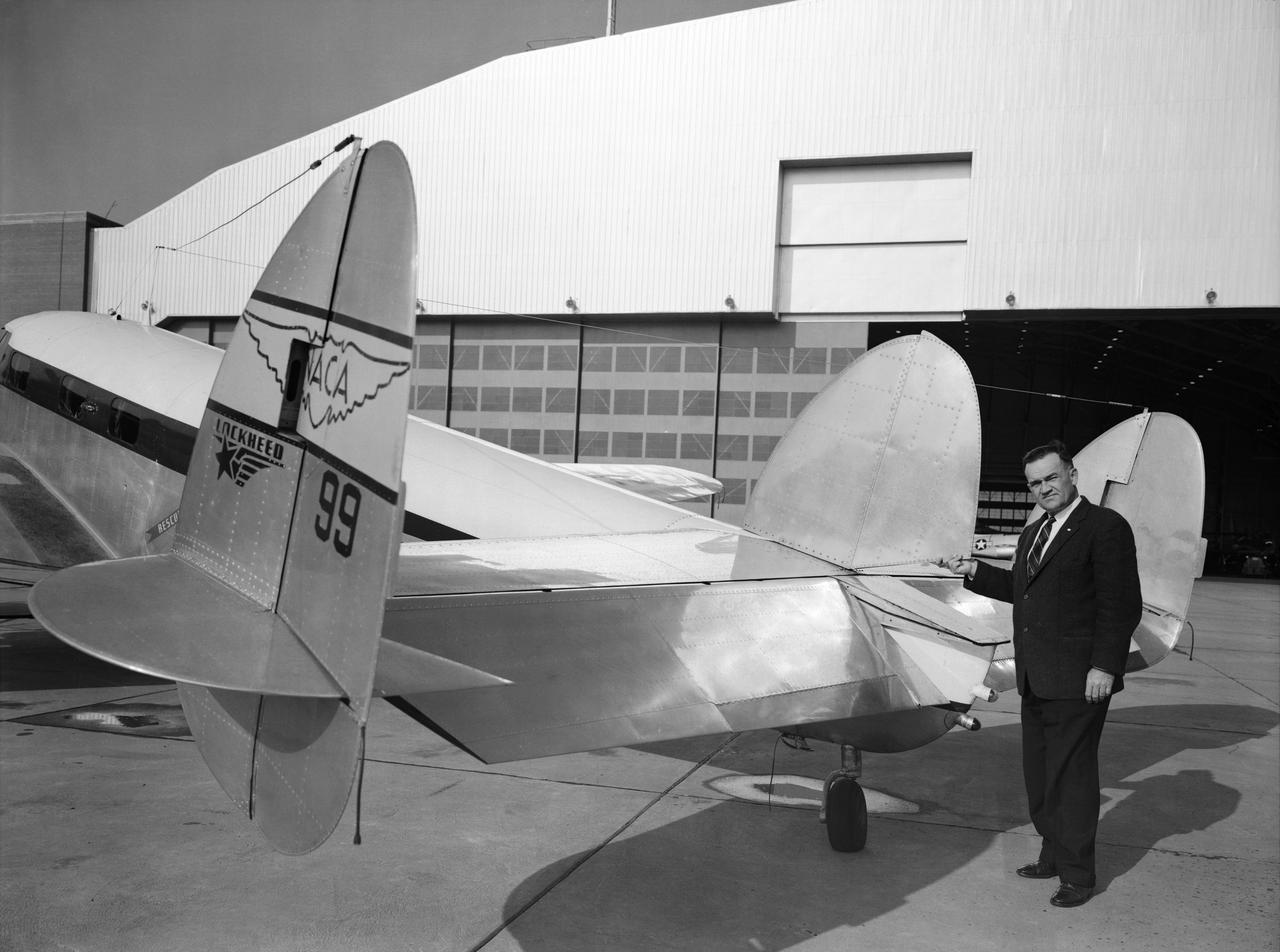
Melvin Gough at the Tail of a NACA Lockheed Plane
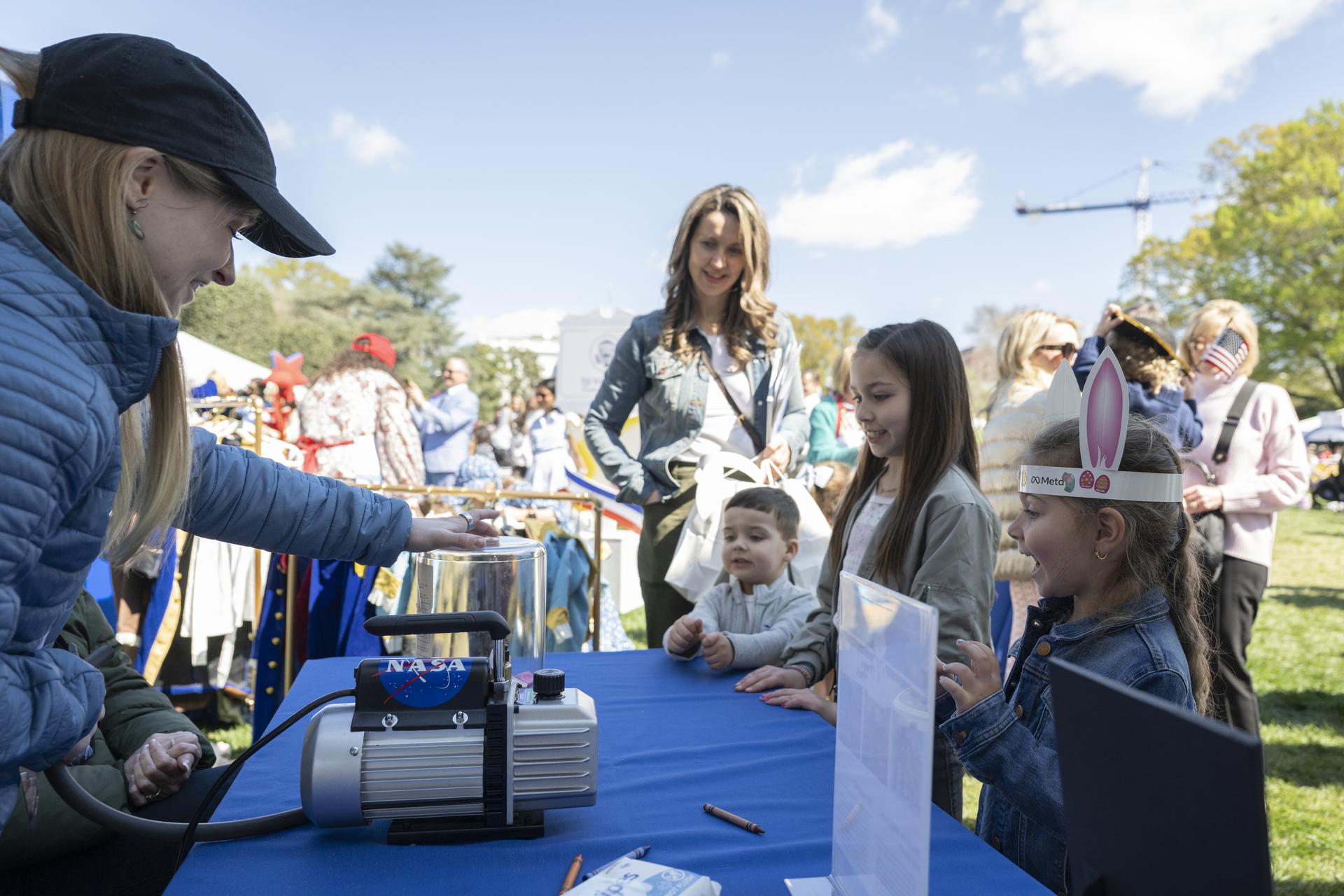
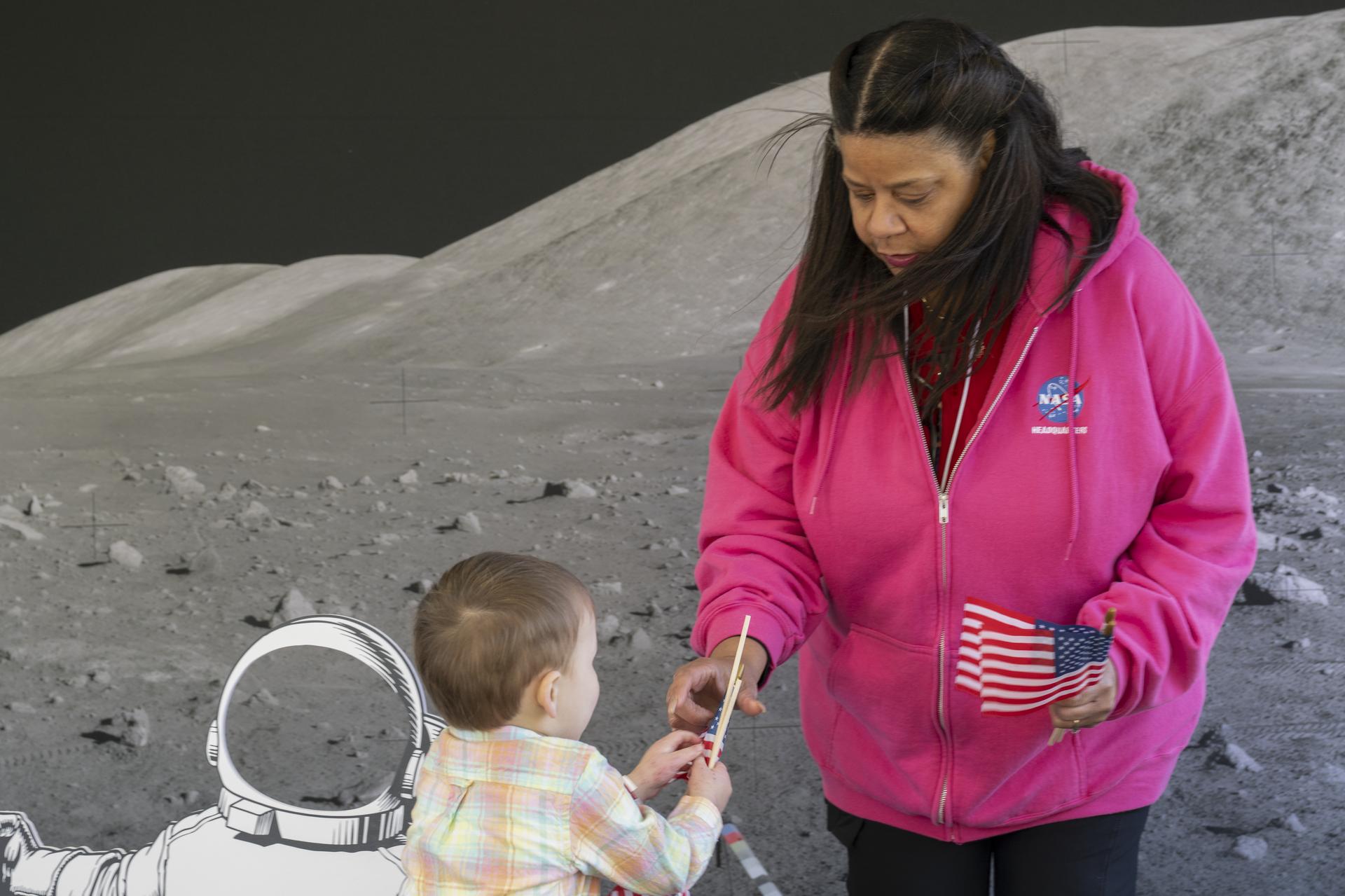
NASA Staff engage with families at the Peeps stem station during the White House Easter Egg Roll, on the South Lawn in Washington D.C., on April 6, 2026. (Photo Credit: (NASA/Crystal R. Hines)
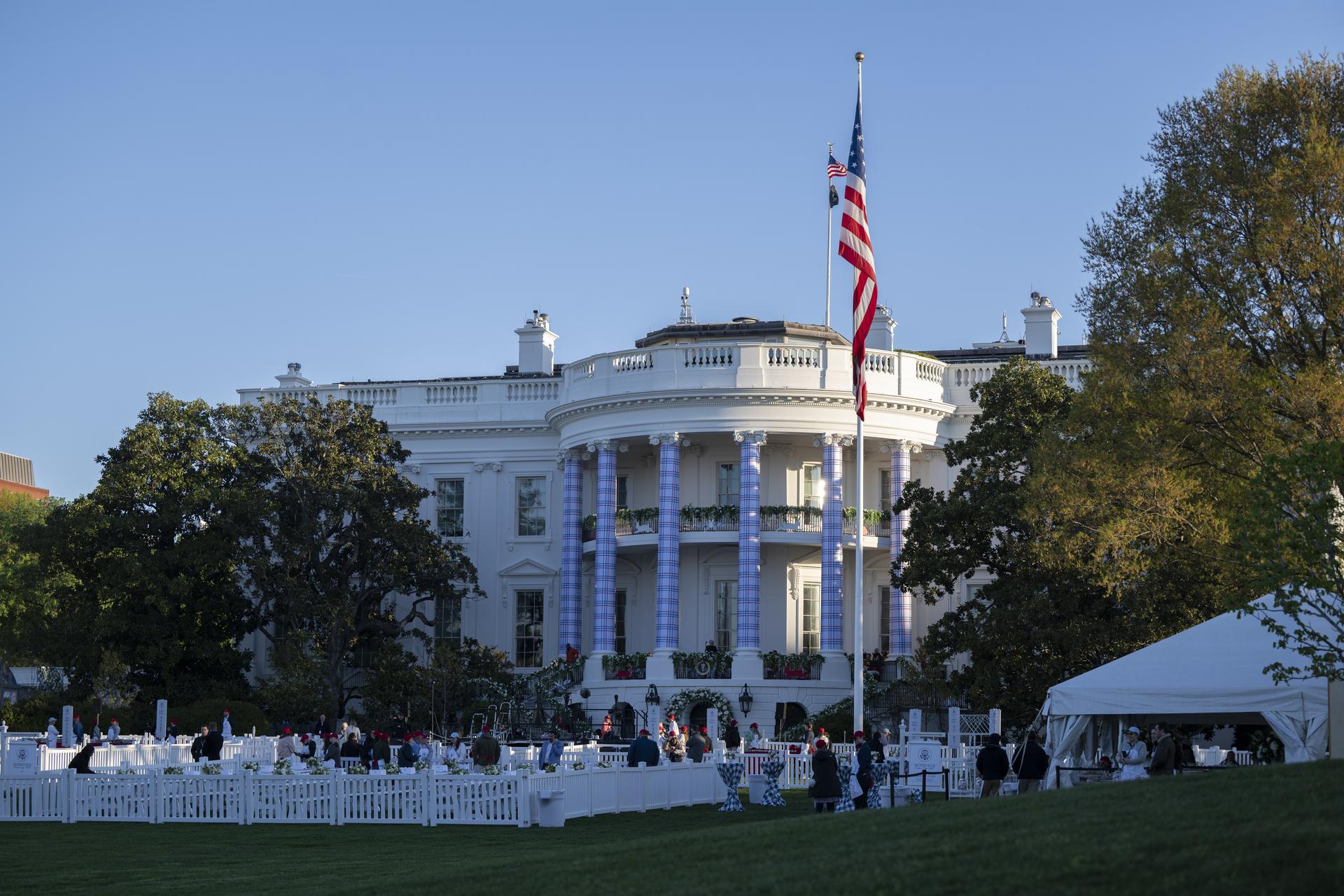
The White House is seen just after sunrise ahead of the White House Easter Egg Roll on the South Lawn in Washington D.C., on April 6, 2026. Photo Credit: (NASA/Crystal R. Hines)
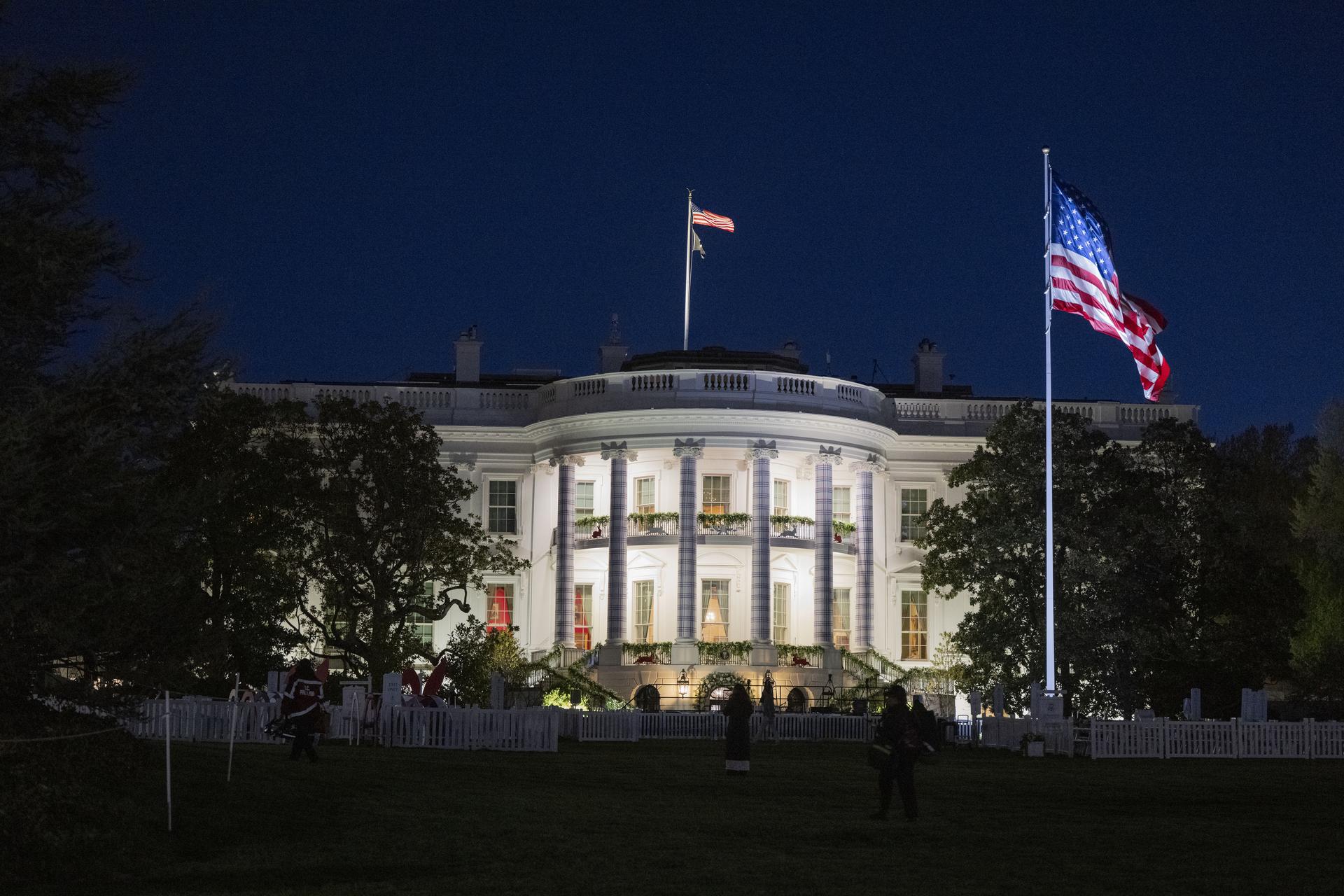
The White House is seen before sunrise ahead of the White House Easter Egg Roll on the South Lawn in Washington D.C., on April 6, 2026. Photo Credit: (NASA/Crystal R. Hines)
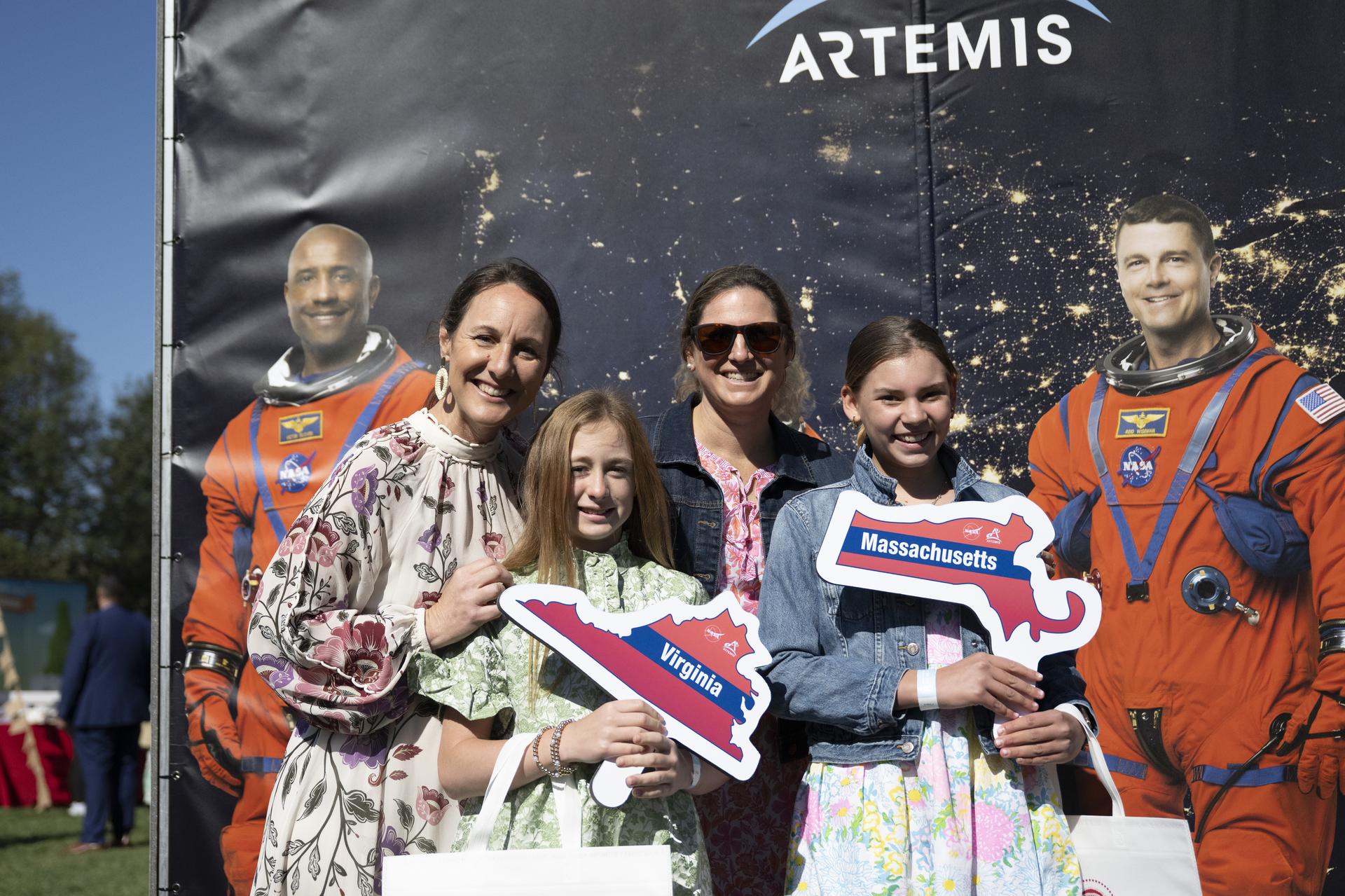
Guests pose in the NASA Artemis Photo Booth at the White House Easter Egg Roll, on the South Lawn in Washington D.C., on April 6, 2026. (Photo Credit: (NASA/Crystal R. Hines)
Guests pose in the NASA Artemis Photo Booth at the White House Easter Egg Roll, on the South Lawn in Washington D.C., on April 6, 2026. (Photo Credit: (NASA/Crystal R. Hines)
Guests engage in STEM Stations at the White House Easter Egg Roll, on the South Lawn in Washington D.C., on April 6, 2026. Photo Credit: (NASA/Crystal R. Hines)
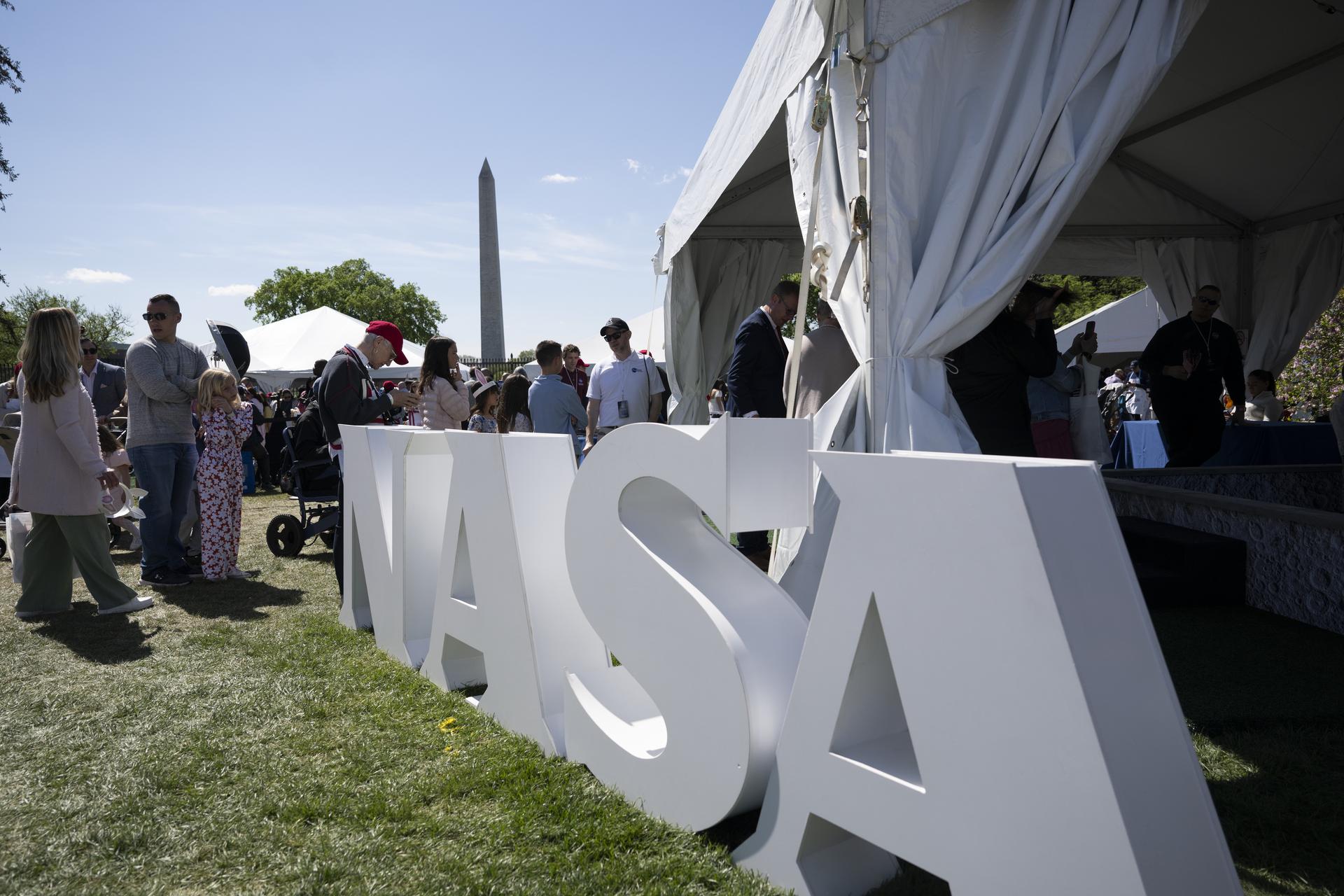
Guests engage in STEM Stations at the White House Easter Egg Roll, on the South Lawn in Washington D.C., on April 6, 2026. Photo Credit: (NASA/Crystal R. Hines)
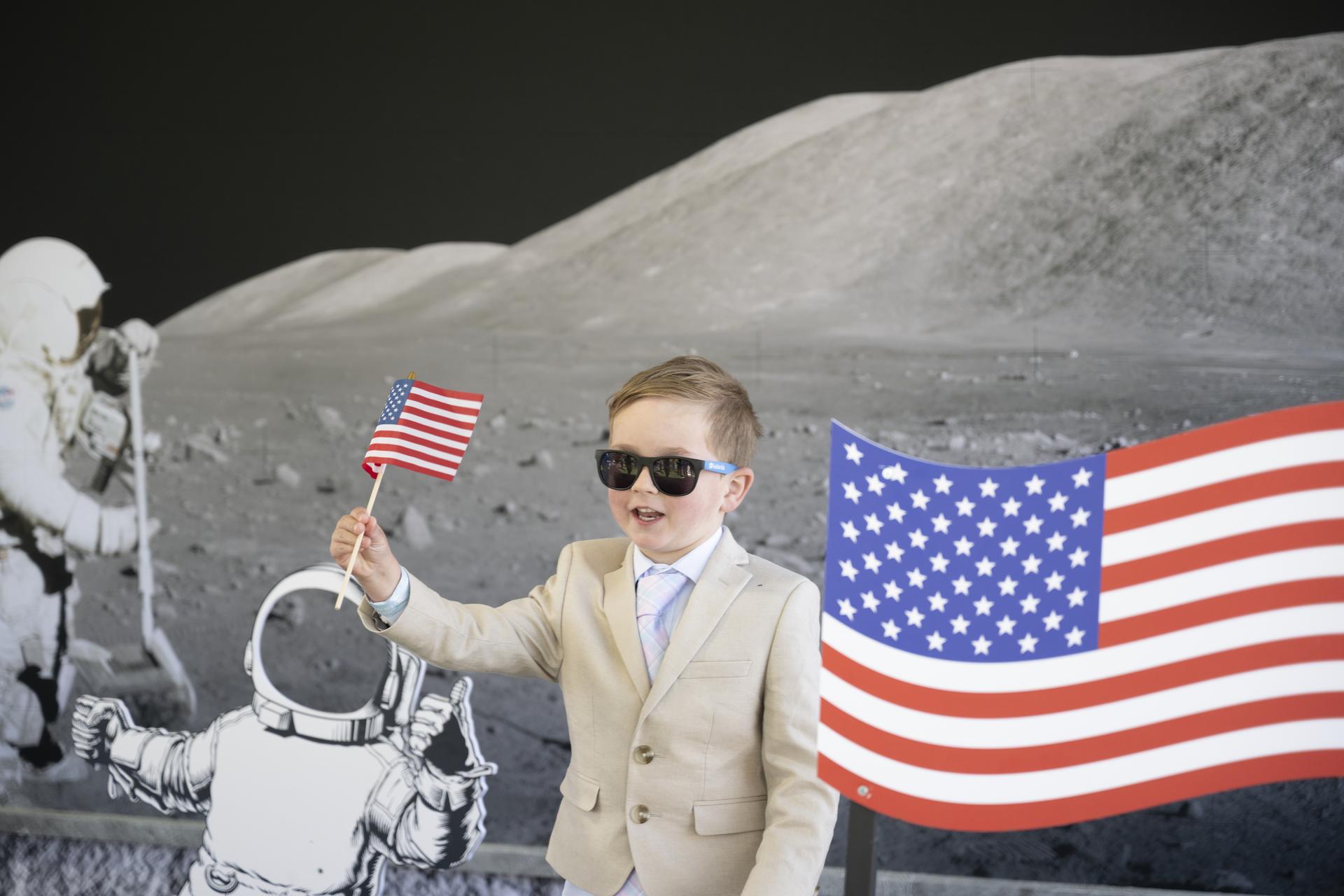
Children explore the NASA Moon Box (Lunar Sandbox) digging for “moon rocks” and planting an American flag, to bringing Artemis exploration to life through curiosity and engagement. during the White House Easter Egg Roll, on the South Lawn in Washington D.C., on April 6, 2026. (Photo Credit: (NASA/Crystal R. Hines)
Children explore the NASA Moon Box (Lunar Sandbox) digging for “moon rocks” and planting an American flag, to bringing Artemis exploration to life through curiosity and engagement. during the White House Easter Egg Roll, on the South Lawn in Washington D.C., on April 6, 2026. (Photo Credit: (NASA/Crystal R. Hines)
Children explore the NASA Moon Box (Lunar Sandbox) digging for “moon rocks” and planting an American flag, to bringing Artemis exploration to life through curiosity and engagement. during the White House Easter Egg Roll, on the South Lawn in Washington D.C., on April 6, 2026. (Photo Credit: (NASA/Crystal R. Hines)
Children explore the NASA Moon Box (Lunar Sandbox) digging for “moon rocks” and planting an American flag, to bringing Artemis exploration to life through curiosity and engagement. during the White House Easter Egg Roll, on the South Lawn in Washington D.C., on April 6, 2026. (Photo Credit: (NASA/Crystal R. Hines)
Children explore the NASA Moon Box (Lunar Sandbox) digging for “moon rocks” and planting an American flag, to bringing Artemis exploration to life through curiosity and engagement. during the White House Easter Egg Roll, on the South Lawn in Washington D.C., on April 6, 2026. (Photo Credit: (NASA/Crystal R. Hines)
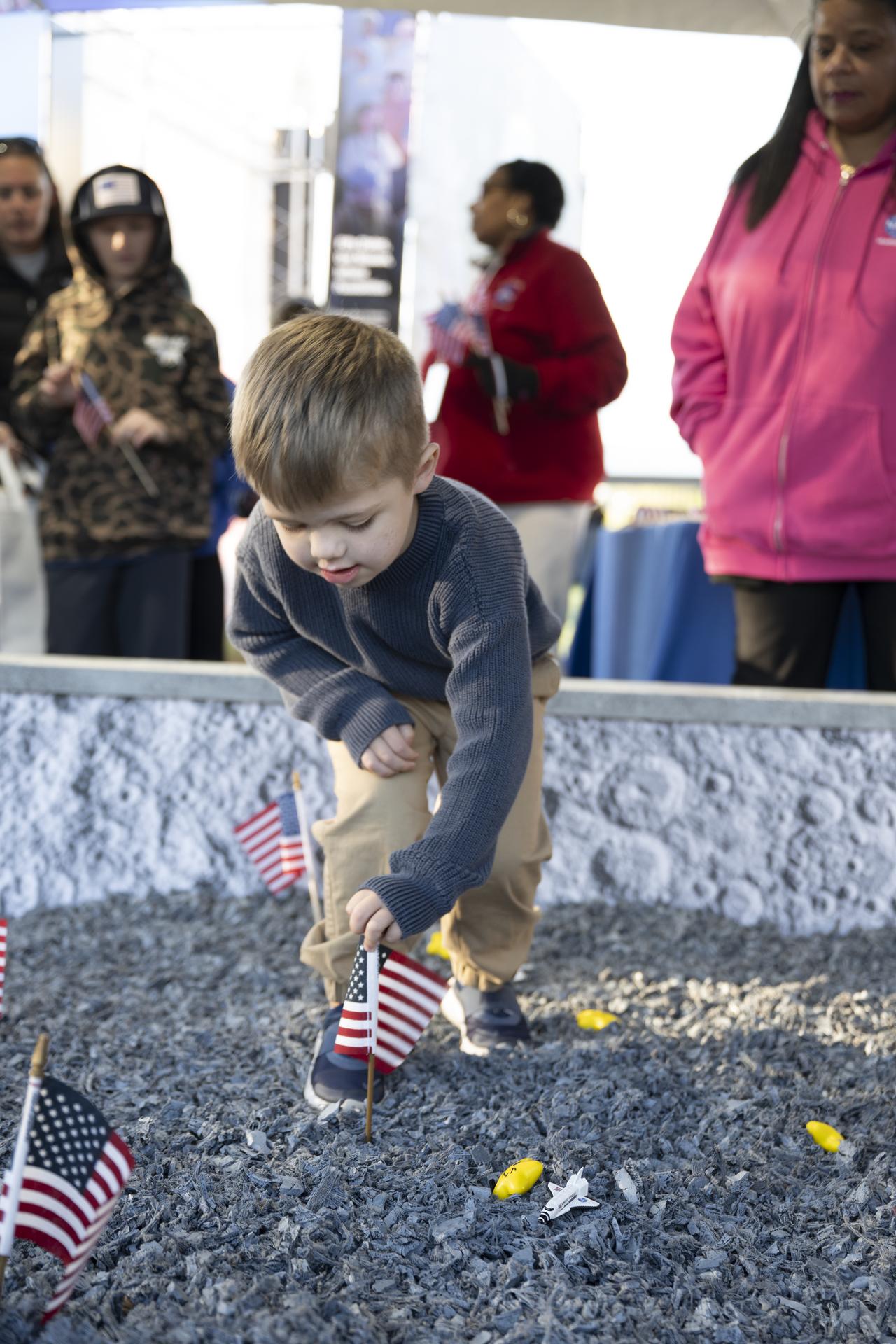
Child explore the NASA Moon Box (Lunar Sandbox) digging for “moon rocks” and planting an American flag, to bringing Artemis exploration to life through curiosity and engagement. during the White House Easter Egg Roll, on the South Lawn in Washington D.C., on April 6, 2026. (Photo Credit: (NASA/Crystal R. Hines)
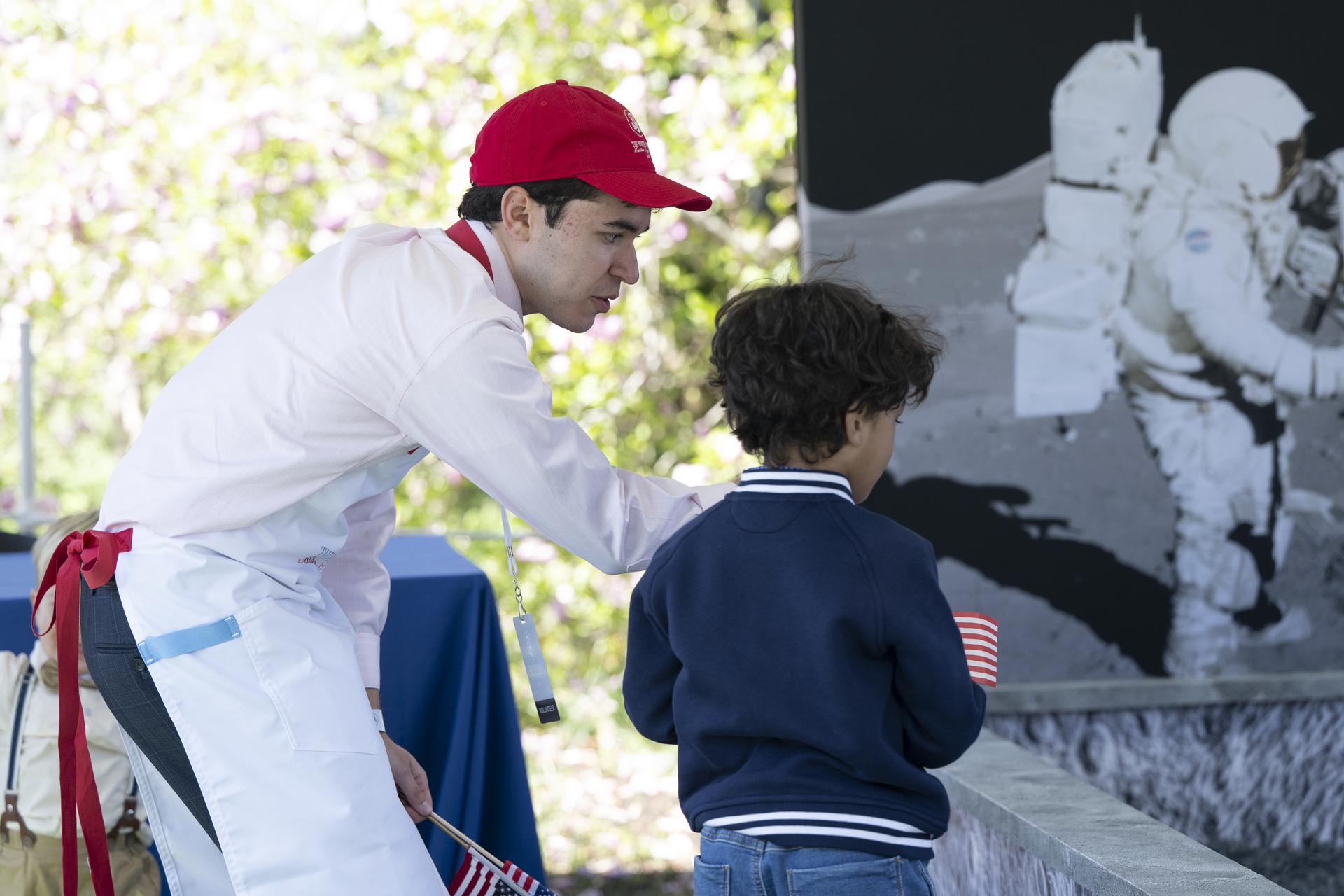
Child explores the NASA Moon Box (Lunar Sandbox) digging for “moon rocks” and planting an American flag, to bringing Artemis exploration to life through curiosity and engagement. during the White House Easter Egg Roll, on the South Lawn in Washington D.C., on April 6, 2026. (Photo Credit: (NASA/Crystal R. Hines).