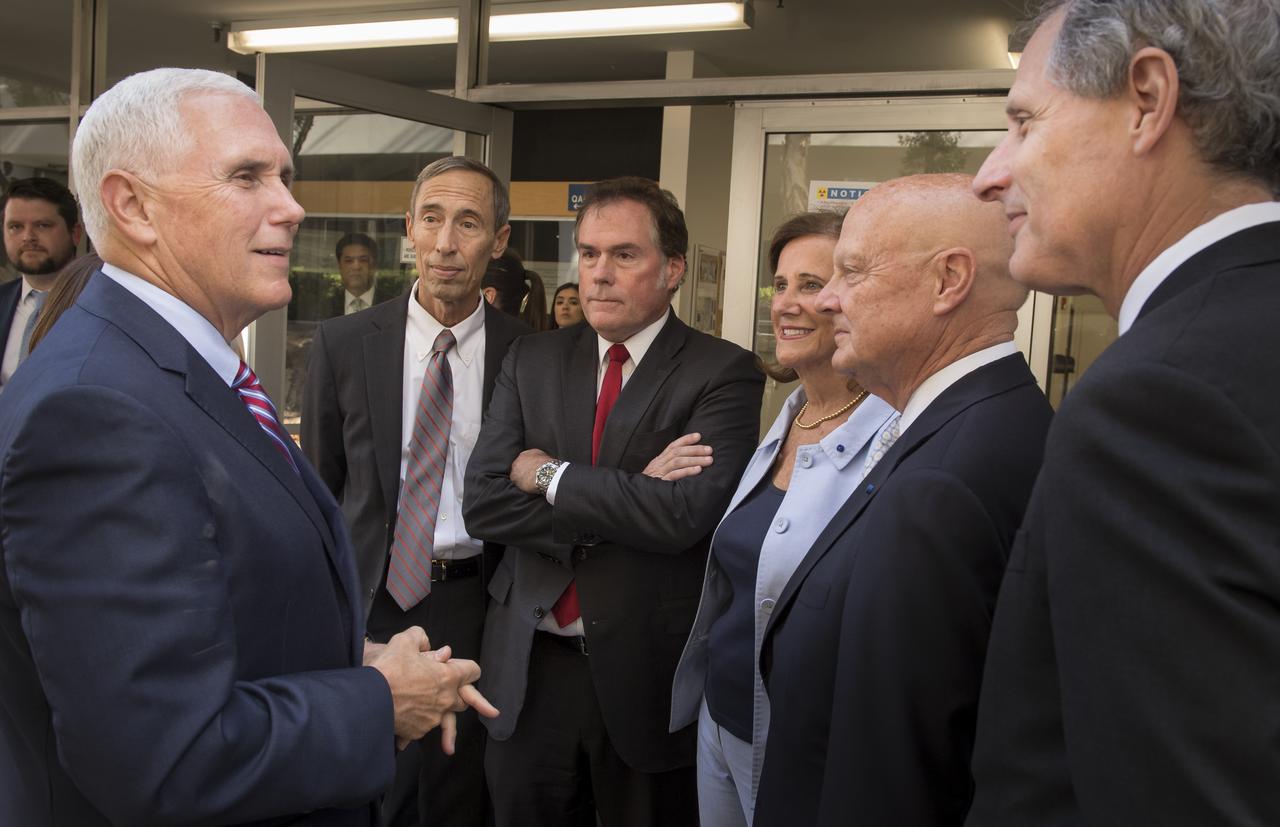
U.S. Vice President Mike Pence, left, thanks JPL Deputy Director Lt. Gen. (Ret) Larry James, JPL Director Michael Watkins, JPL Distinguished Visiting Scientist and Spouse of UAG Chairman James Ellis, Elisabeth Pate-Cornell , UAG Chairman, Admiral (Ret) James Ellis , and California Institute of Technology President Thomas Rosenbaum, right, for giving him a tour of NASA's Jet Propulsion Laboratory, Saturday, April 28, 2018 in Pasadena, California. Photo Credit: (NASA/Bill Ingalls)
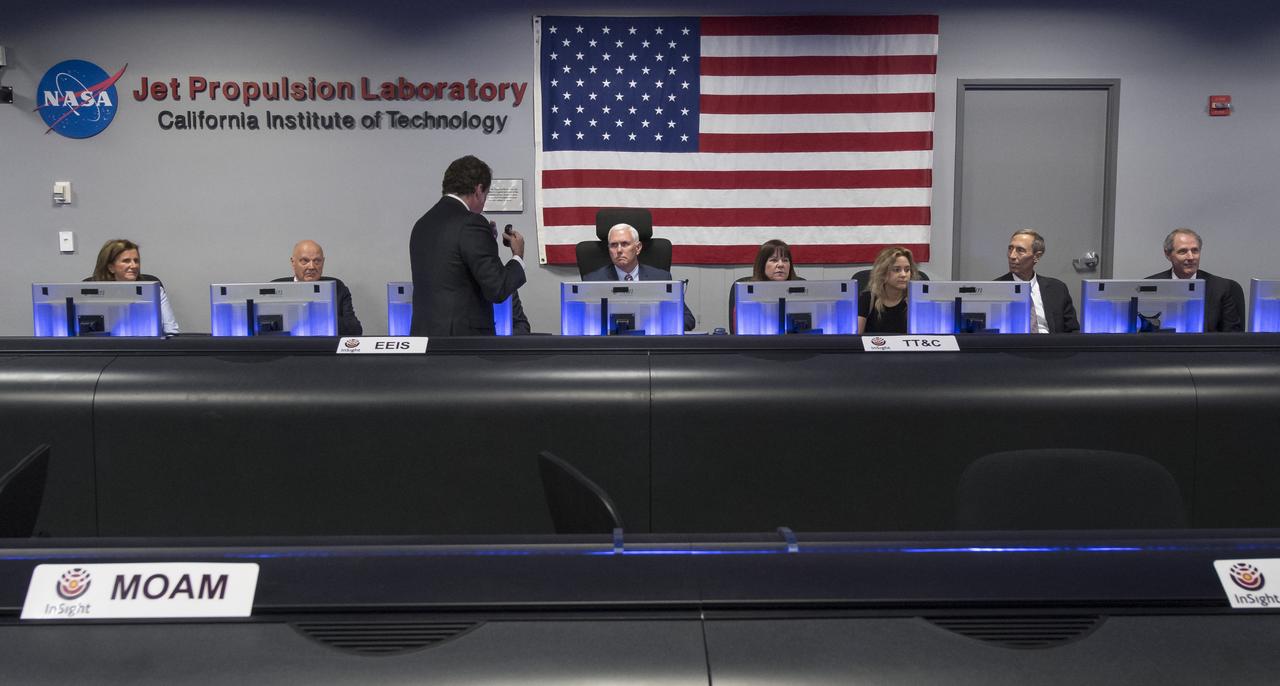
JPL Director Michael Watkins, standing, explains the history of NASA's Jet Propulsion Laboratory and the use of the Mission Support Area to Vice President Mike Pence, seated next to his wife Karen and daughter Charlotte Pence, during a tour of JPL, Saturday, April 28, 2018 in Pasadena, California. Joining the Vice President was, JPL Distinguished Visiting Scientist and Spouse of UAG Chairman James Ellis, Elisabeth Pate-Cornell, left, UAG Chairman, Admiral (Ret) James Ellis, JPL Deputy Director Lt. Gen. (Ret) Larry James, and California Institute of Technology President Thomas Rosenbaum. Photo Credit: (NASA/Bill Ingalls)
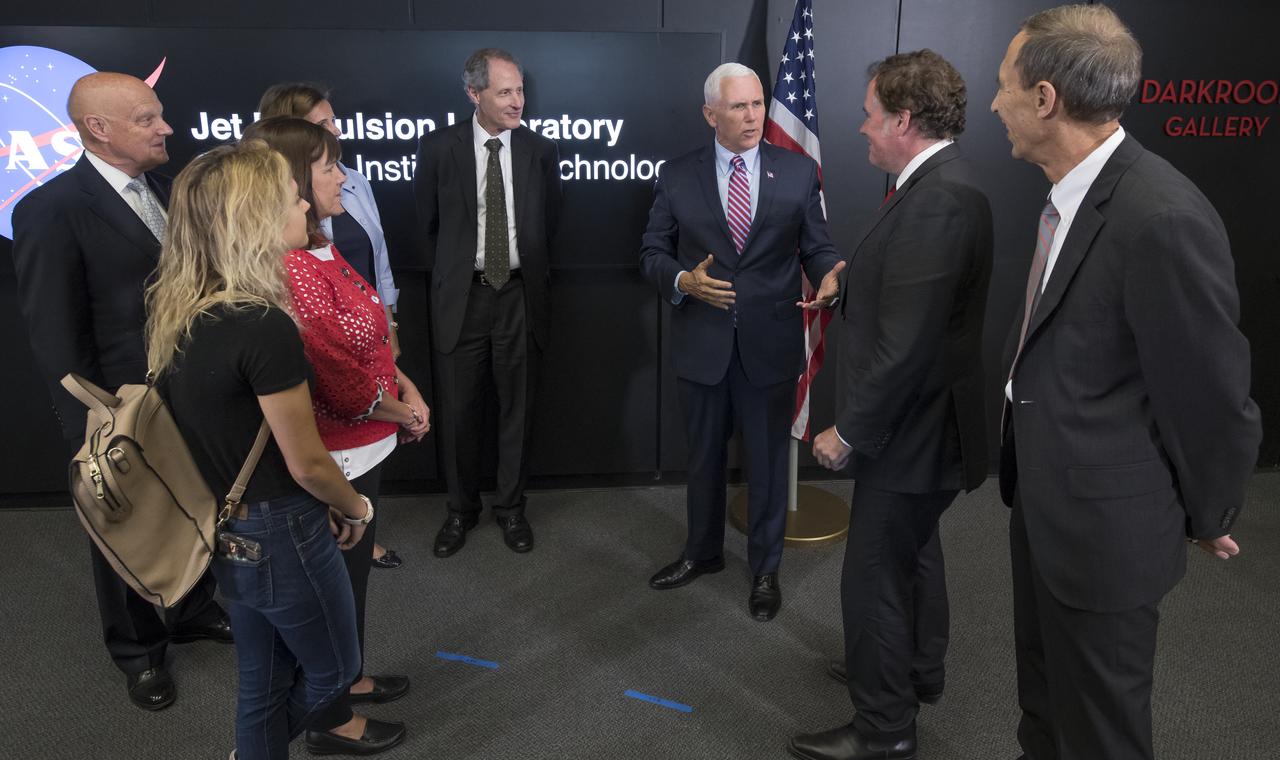
U.S. Vice President Mike Pence, 3rd from right, tours NASA's Jet Propulsion Laboratory along with his wife Karen, and daughter Charlotte, Saturday, April 28, 2018 in Pasadena, California. Joining the Vice President t and his family on the tour are: UAG Chairman, Admiral (Ret) James Ellis , left, JPL Distinguished Visiting Scientist and Spouse of UAG Chairman James Ellis, Elisabeth Pate-Cornell, behind Mrs. Pence, California Institute of Technology President Thomas Rosenbaum, JPL Director Michael Watkins, and JPL Deputy Director Lt. Gen. (Ret) Larry James, right. Photo Credit: (NASA/Bill Ingalls)
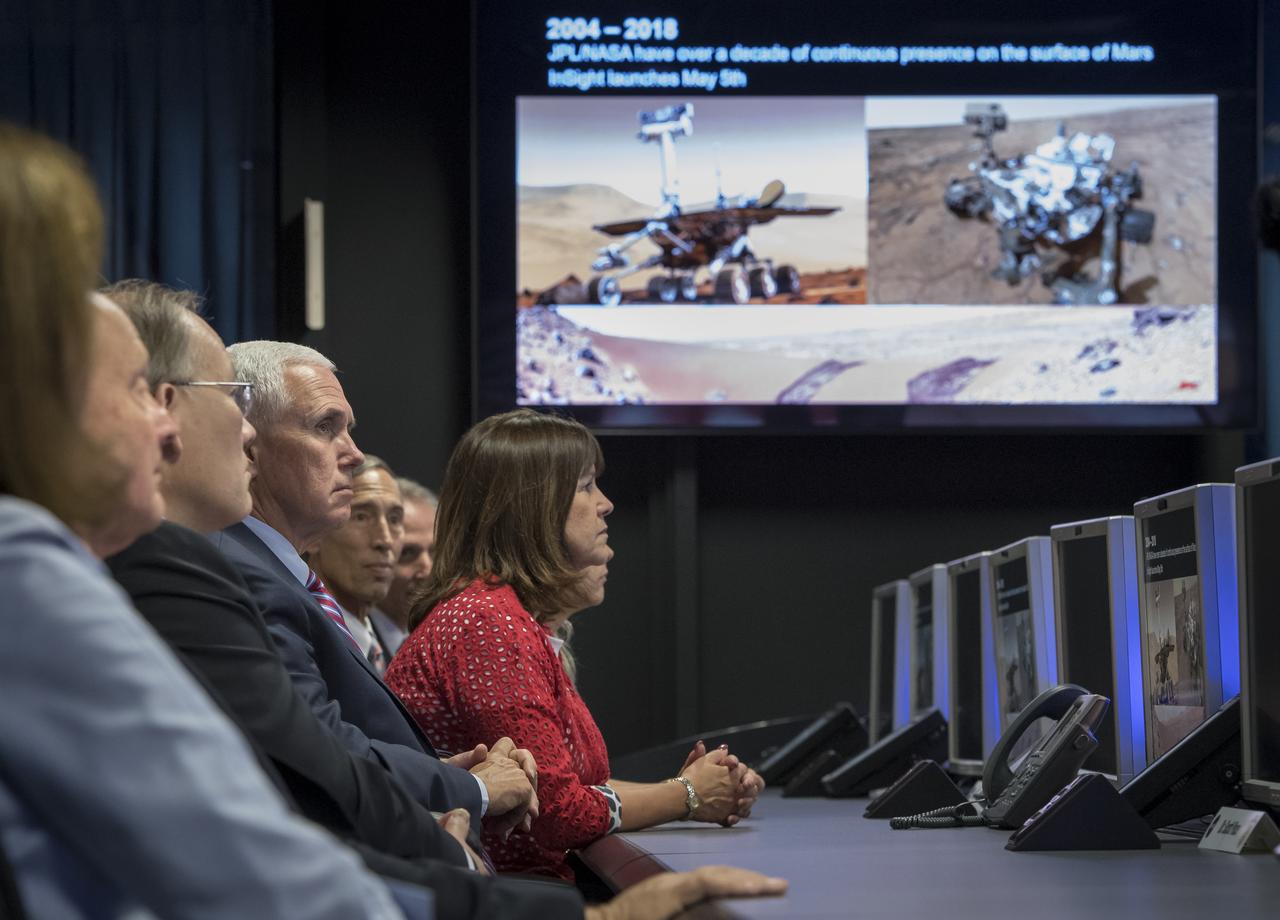
U.S. Vice President Mike Pence can be seen with his wife Karen Pence as they toured NASA's Jet Propulsion Laboratory, Saturday, April 28, 2018 in Pasadena, California. The vice President was also joined by his daughter Charlotte Pence, JPL Distinguished Visiting Scientist and Spouse of UAG Chairman James Ellis, Elisabeth Pate-Cornell , UAG Chairman, Admiral (Ret) James Ellis , Executive Director of the National Space Council Scott Pace, JPL Deputy Director Lt. Gen. (Ret) Larry James, and California Institute of Technology President Thomas Rosenbaum. Photo Credit: (NASA/Bill Ingalls)
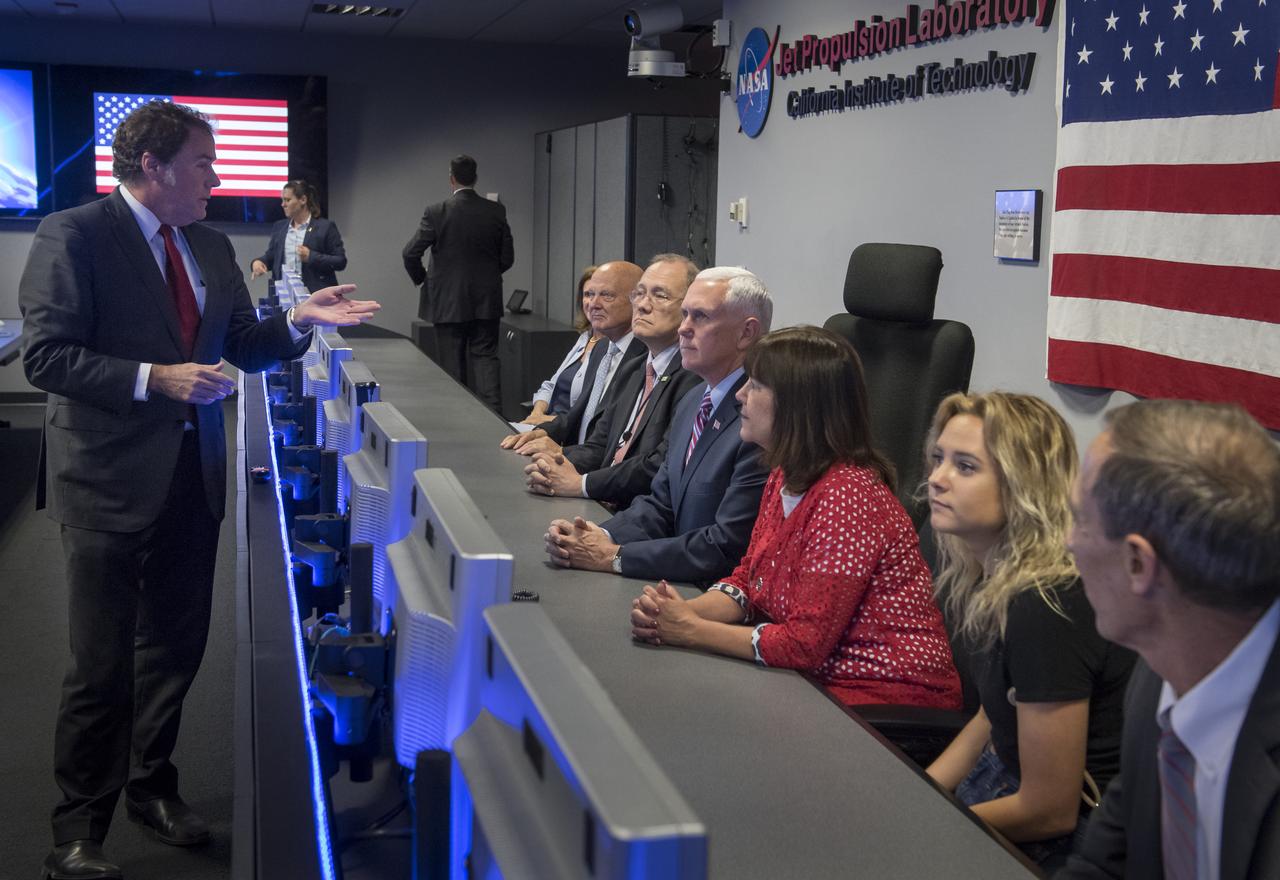
JPL Director Michael Watkins, left, explains the history of NASA's Jet Propulsion Laboratory and the use of the Mission Support Area to Vice President Mike Pence, seated 4th from left, during a tour of JPL, Saturday, April 28, 2018 in Pasadena, California. Joining the Vice President was, JPL Distinguished Visiting Scientist and Spouse of UAG Chairman James Ellis, Elisabeth Pate-Cornell, left, UAG Chairman, Admiral (Ret) James Ellis, Executive Director of the National Space Council Scott Pace, wife of Mike Pence, Karen Pence, daughter of Mike Pence, Charlotte Pence, and JPL Deputy Director Lt. Gen. (Ret) Larry James. Photo Credit: (NASA/Bill Ingalls)
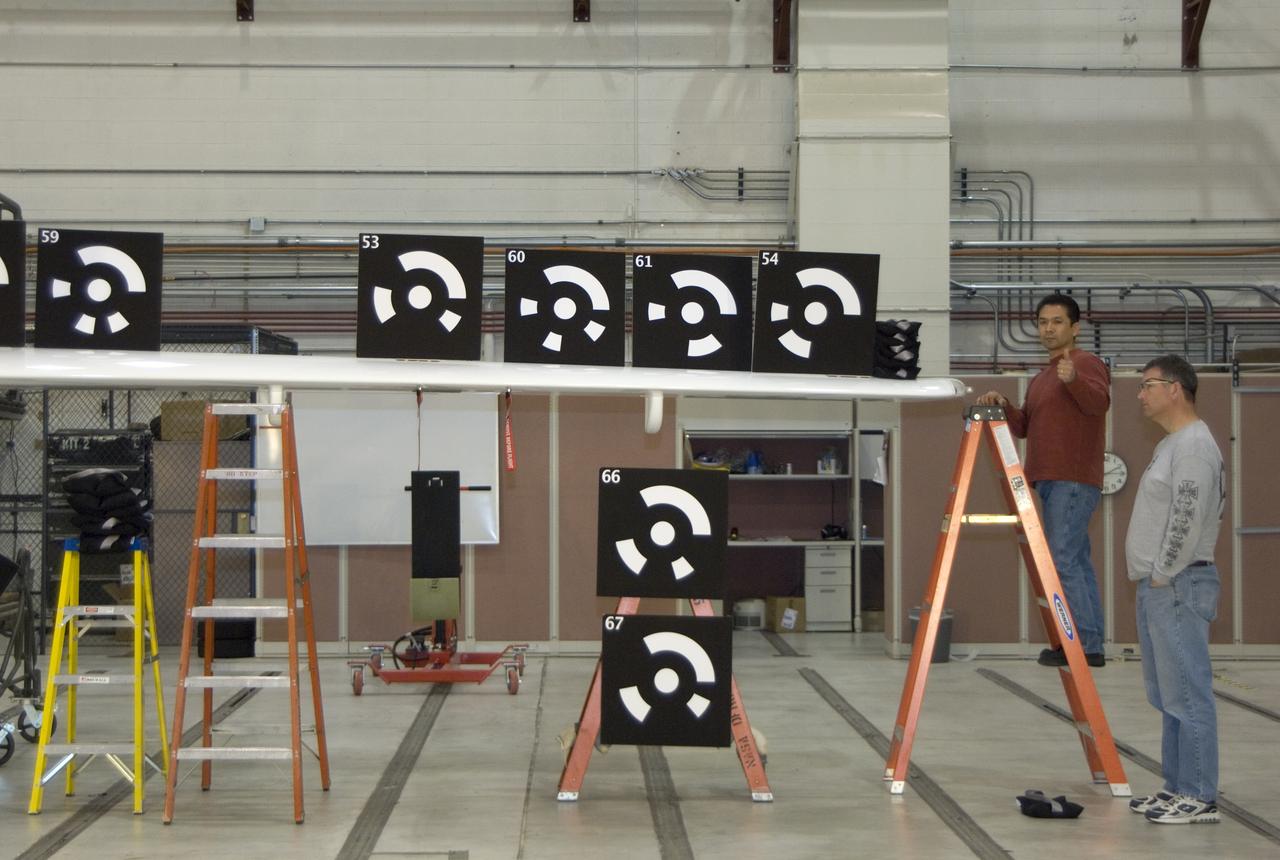
NASA engineer Larry Hudson and Ikhana ground crew member James Smith work on a ground validation test with new fiber optic sensors that led to validation flights on the Ikhana aircraft. NASA Dryden Flight Research Center is evaluating an advanced fiber optic-based sensing technology installed on the wings of NASA's Ikhana aircraft. The fiber optic system measures and displays the shape of the aircraft's wings in flight. There are other potential safety applications for the technology, such as vehicle structural health monitoring. If an aircraft structure can be monitored with sensors and a computer can manipulate flight control surfaces to compensate for stresses on the wings, structural control can be established to prevent situations that might otherwise result in a loss of control.
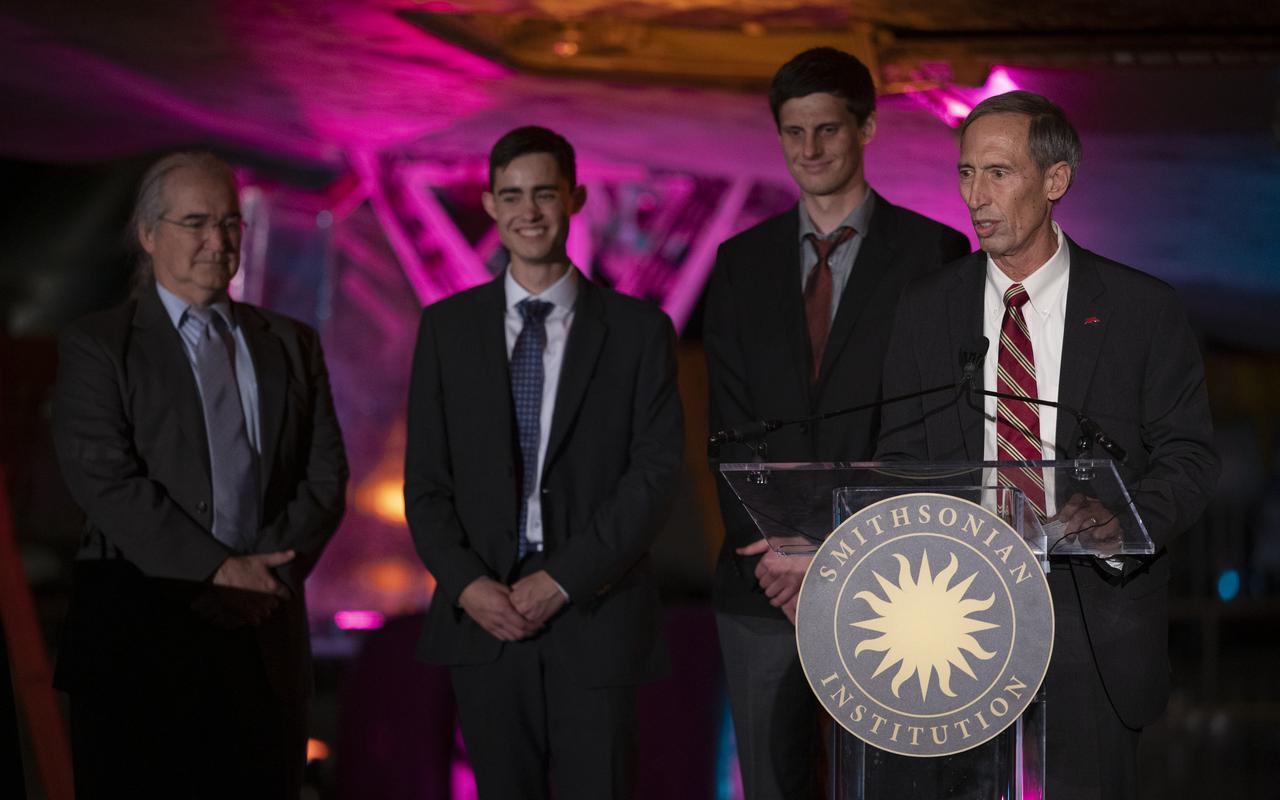
Interim director of NASA’s Jet Propulsion Laboratory Lt. Gen. Larry James, USAF (Ret.), right, delivers remarks after accepting the 2022 Michael Collins Trophy for Current Achievement on behalf of MiMi Aung and the Mars Ingenuity Helicopter Team, Thursday, March 24, 2022, at the Smithsonian National Air and Space Museum’s Steven F. Udvar-Hazy center in Chantilly, Va. Pictured with James are Dave Lavery, program executive for Solar System Exploration at NASA Headquarters, left, Joshua Anderson, Ingenuity Mars Helicopter tactical lead at NASA JPL, second from left, and Gerik Kubiak, Ingenuity Mars Helicopter flight software lead at NASA JPL, center. The Smithsonian National Air and Space Museum’s Michael Collins Trophy recognizes extraordinary accomplishments in aeronautics and spaceflight. Photo Credit: (NASA/Joel Kowsky)
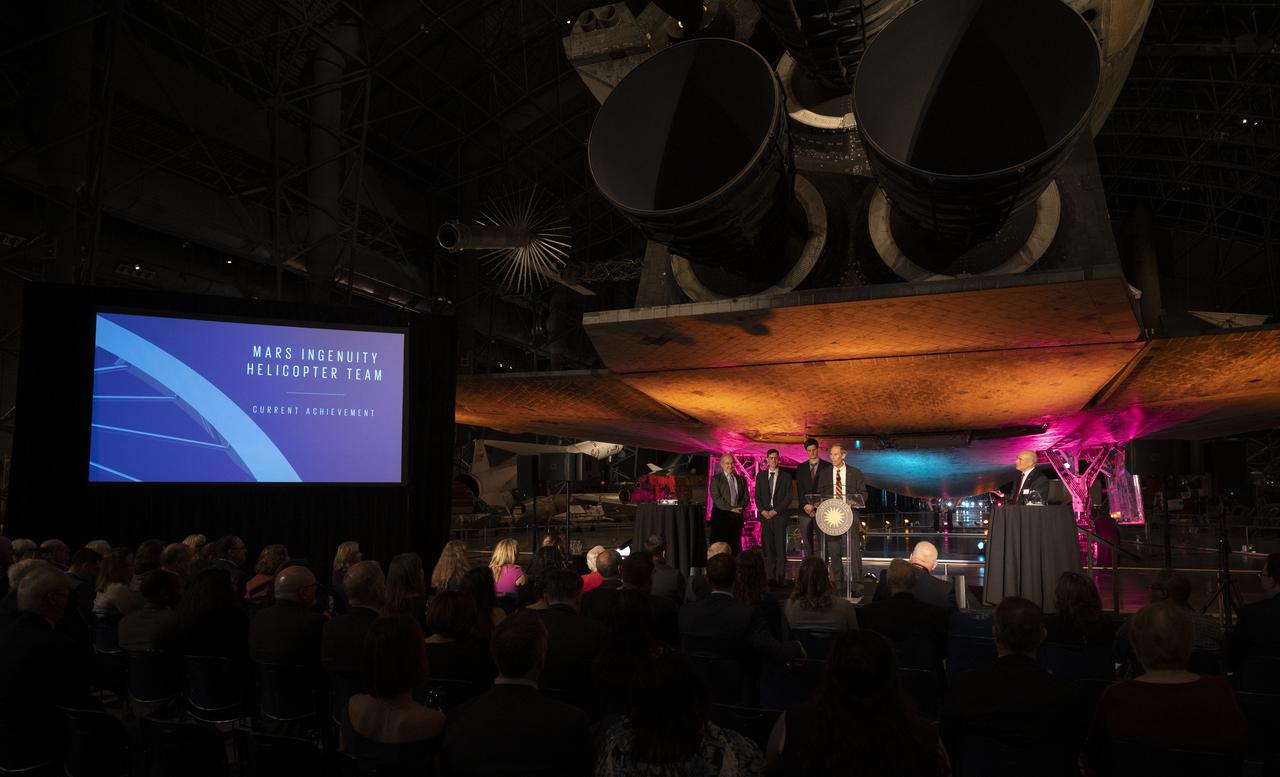
Interim director of NASA’s Jet Propulsion Laboratory Lt. Gen. Larry James, USAF (Ret.), right, delivers remarks after accepting the 2022 Michael Collins Trophy for Current Achievement on behalf of MiMi Aung and the Mars Ingenuity Helicopter Team, Thursday, March 24, 2022, at the Smithsonian National Air and Space Museum’s Steven F. Udvar-Hazy center in Chantilly, Va. Pictured with James are Dave Lavery, program executive for Solar System Exploration at NASA Headquarters, left, Joshua Anderson, Ingenuity Mars Helicopter tactical lead at NASA JPL, second from left, and Gerik Kubiak, Ingenuity Mars Helicopter flight software lead at NASA JPL, center. The Smithsonian National Air and Space Museum’s Michael Collins Trophy recognizes extraordinary accomplishments in aeronautics and spaceflight. Photo Credit: (NASA/Joel Kowsky)
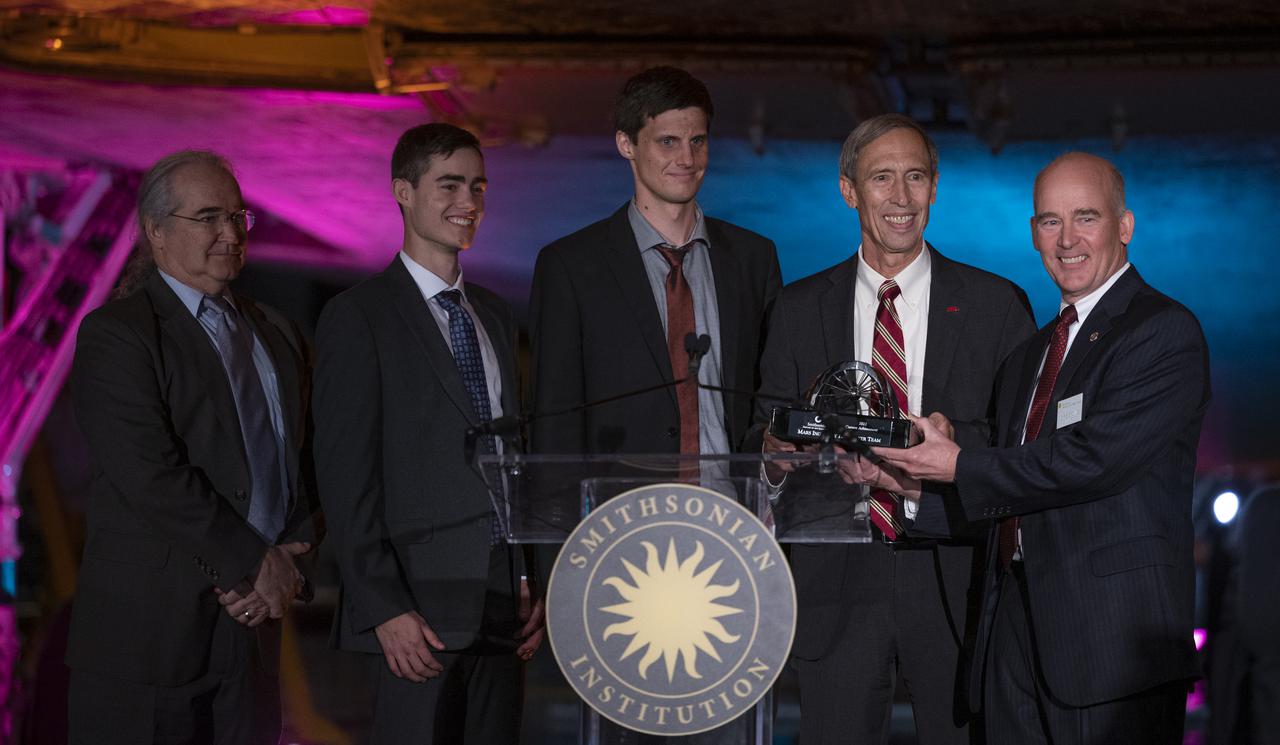
Interim director of NASA’s Jet Propulsion Laboratory Lt. Gen. Larry James, USAF (Ret.), second from right, accepts the 2022 Michael Collins Trophy for Current Achievement from Christopher Browne, acting director of the Smithsonian’s National Air and Space Museum, right, on behalf of MiMi Aung and the Mars Ingenuity Helicopter Team, Thursday, March 24, 2022, at the Smithsonian National Air and Space Museum’s Steven F. Udvar-Hazy center in Chantilly, Va. Pictured with James and Browne are Dave Lavery, program executive for Solar System Exploration at NASA Headquarters, left, Joshua Anderson, Ingenuity Mars Helicopter tactical lead at NASA JPL, second from left, and Gerik Kubiak, Ingenuity Mars Helicopter flight software lead at NASA JPL, center. The Smithsonian National Air and Space Museum’s Michael Collins Trophy recognizes extraordinary accomplishments in aeronautics and spaceflight. Photo Credit: (NASA/Joel Kowsky)
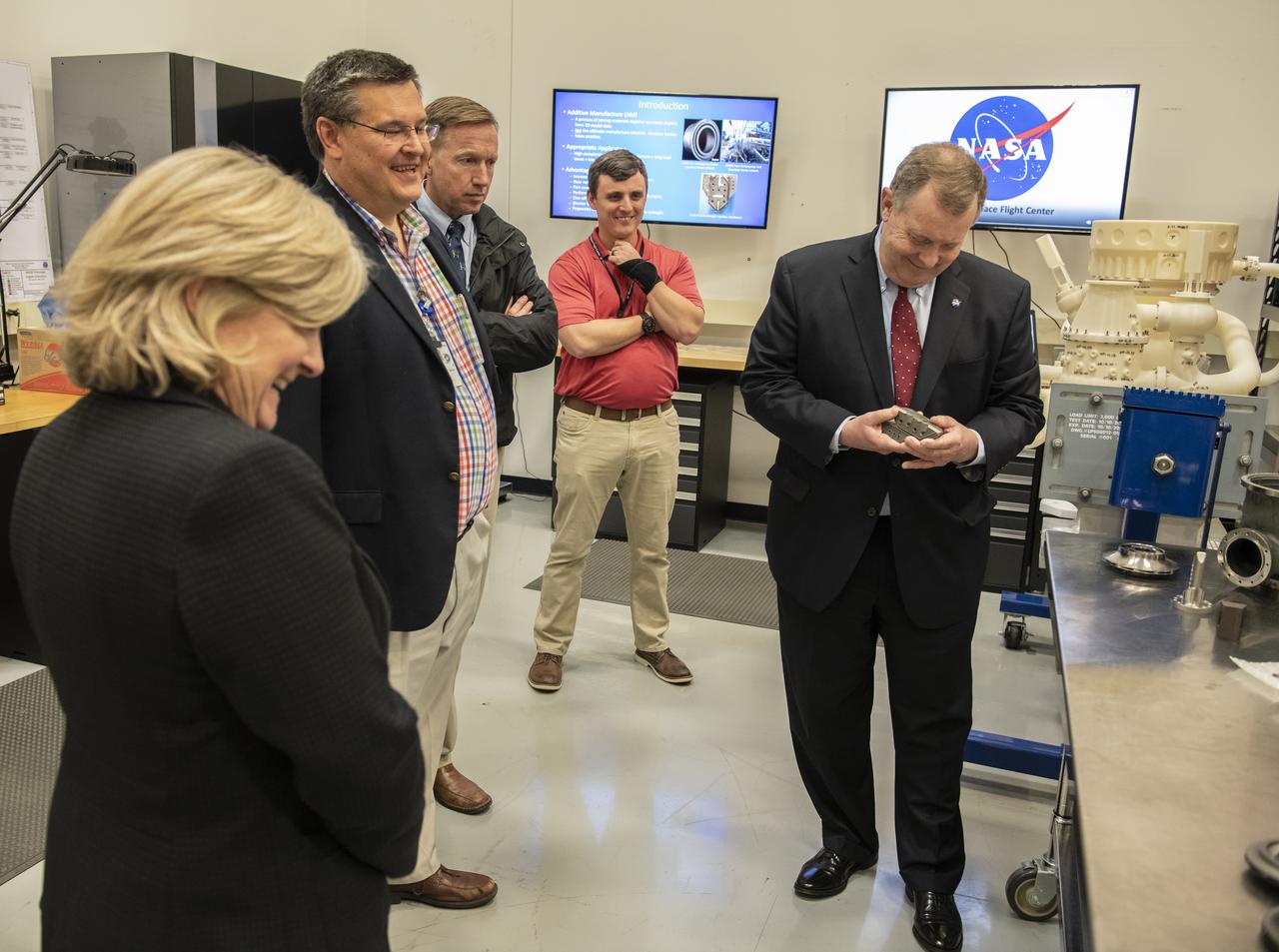
NASA Deputy Administrator James Morhard, right, tours Marshall's Additive Manufacturing Facility with, from left, Marshall Director Jody Singer; Larry Leopard, director of the Engineering Directorate; Marshall Associate Director Steve Miley; and Michael Allison, lead systems engineer for additive manufacturing assembly and integration. Morhard visited Marshall facilities to see first-hand the broad spectrum of engineering, science and exploration work here.
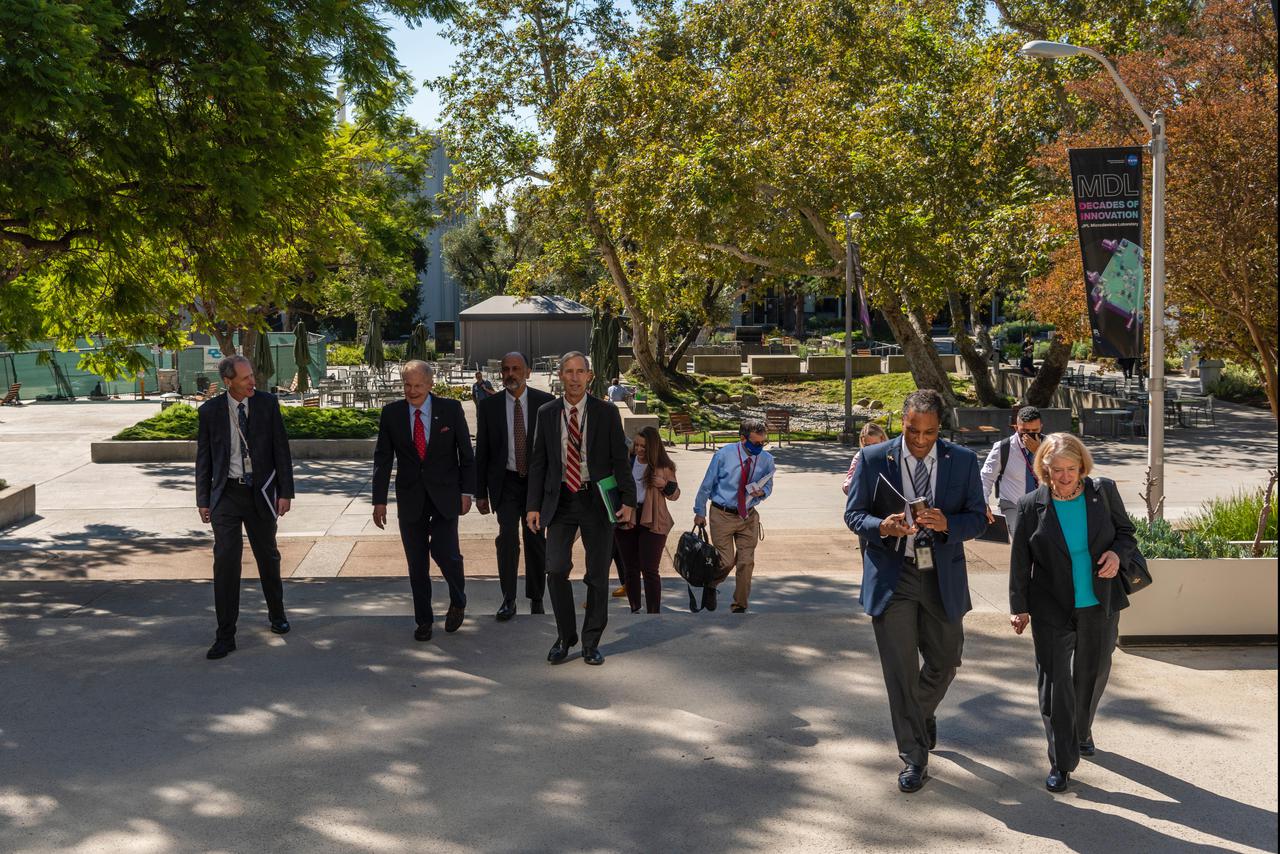
On Oct. 14, 2021, NASA Administrator (second from left) and Deputy Administrator Pam Melroy (far right) visited the agency's Jet Propulsion Laboratory to discuss NASA's climate efforts and the latest developments with the agency's Perseverance rover and Mars. With them are (from far left) Thomas Rosenbaum, president of Caltech, which manages the Jet Propulsion Laboratory for NASA; JPL Interim Director Larry James; JPL CFO Sammy Kayali; and NASA Office of JPL Management and Oversight Director Marcus Watkins. https://photojournal.jpl.nasa.gov/catalog/PIA24903
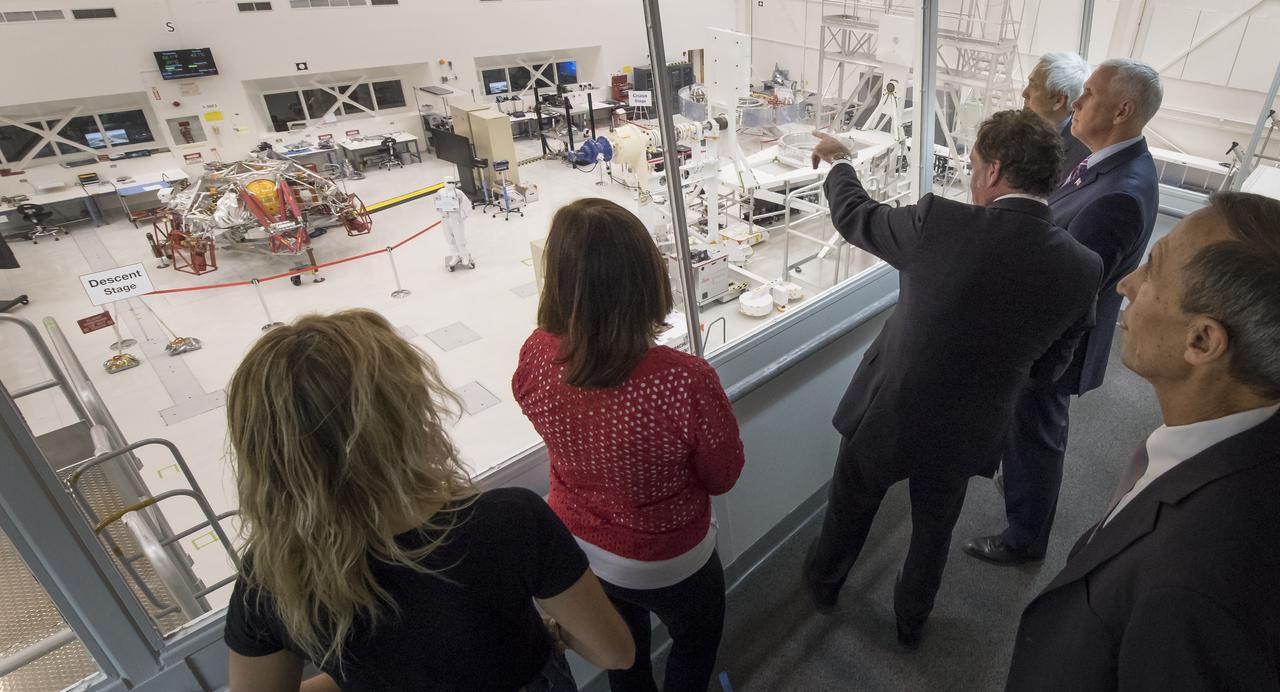
U.S. Vice President Mike Pence, 2nd from right, is shown the Mars 2020 spacecraft descent stage from inside the Spacecraft Assembly Facility (SAF) by JPL Director Michael Watkins, to the Vice President's left, and NASA Mars Exploration Manager Li Fuk at NASA's Jet Propulsion Laboratory, Saturday, April 28, 2018 in Pasadena, California. Mars 2020 is a Mars rover mission by NASA's Mars Exploration Program with a planned launch in 2020. Photo Credit: (NASA/Bill Ingalls)
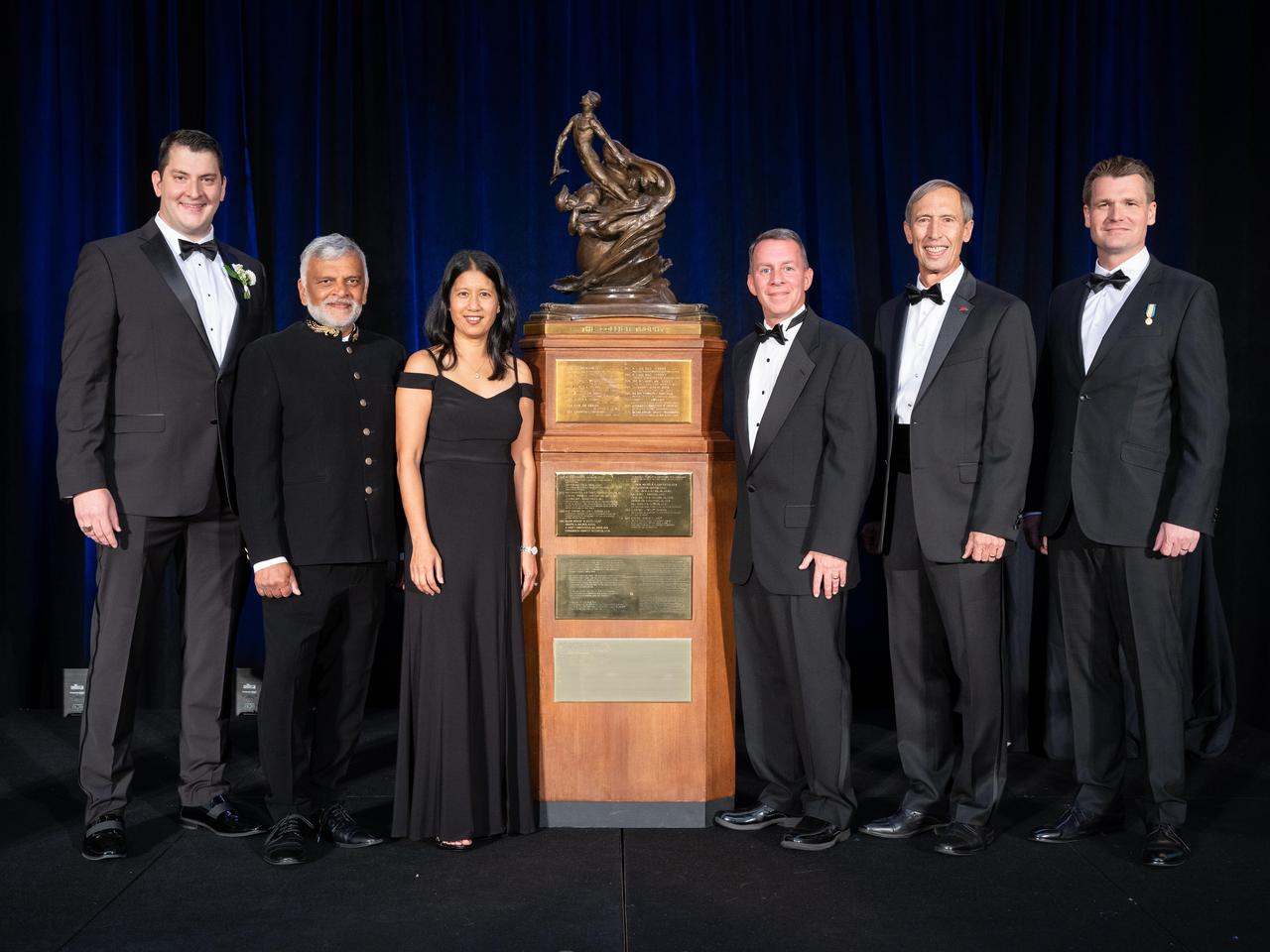
Members of NASA's Ingenuity Mars Helicopter team stand next to the Collier Trophy during the Robert J. Collier Dinner in Washington on June 9, 2022. The team was awarded the 2021 Collier Trophy "for the first powered, controlled flight of an aircraft on another planet, thereby opening the skies of Mars and other worlds for future scientific discovery and exploration," the award citation states. From left to right: Teddy Tzanetos, Ingenuity team lead at NASA's Jet Propulsion Laboratory; Bob Balaram, Ingenuity emeritus chief engineer at JPL; MiMi Aung, former Ingenuity project manager at JPL; Bobby Braun, former director for Planetary Science at JPL; Larry James, deputy director at JPL; Håvard Grip, Ingenuity chief pilot at JPL. This historic trophy – which is on permanent display at the Smithsonian Air and Space Museum in Washington – is awarded annually by the National Aeronautic Association "for the greatest achievement in aeronautics or astronautics in America, with respect to improving the performance, efficiency, and safety of air or space vehicles, the value of which has been thoroughly demonstrated by actual use during the preceding year." https://photojournal.jpl.nasa.gov/catalog/PIA25323
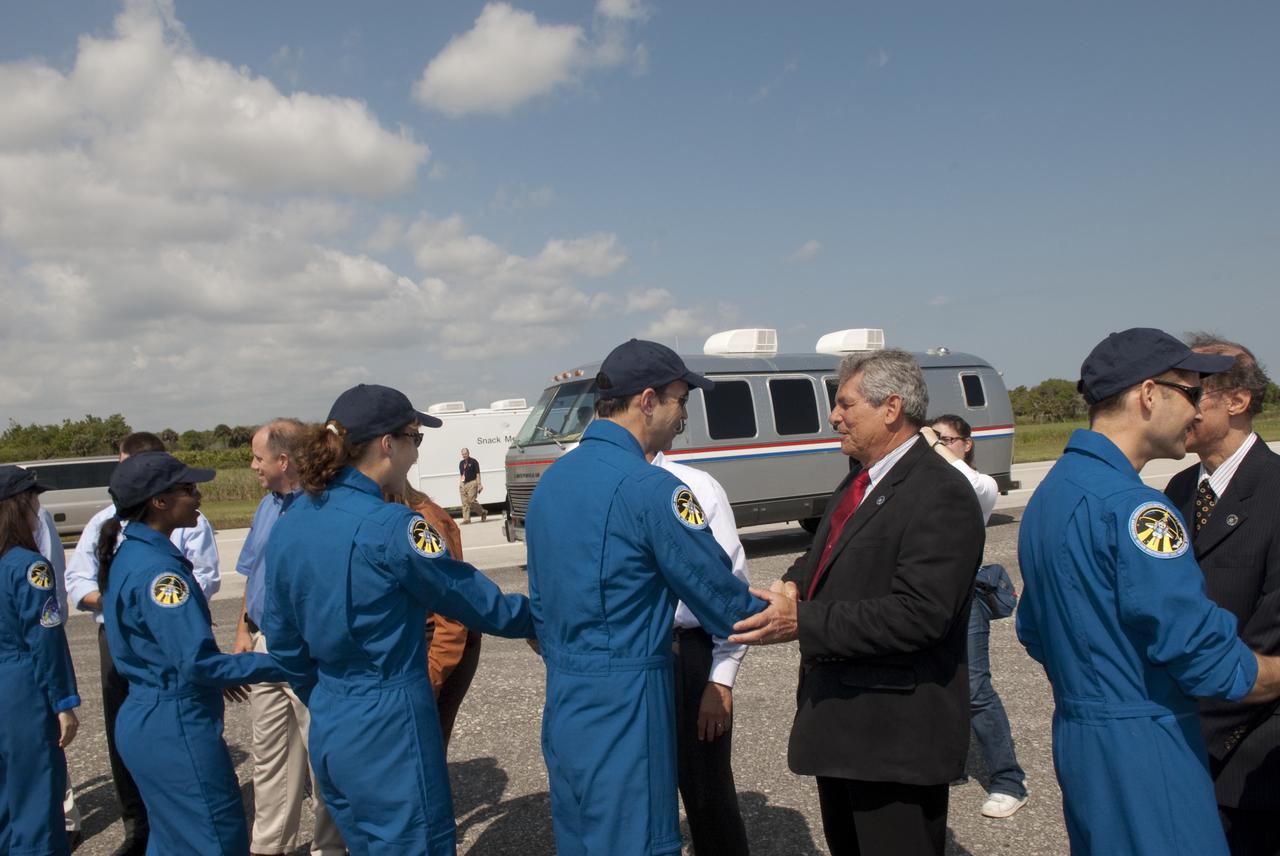
CAPE CANAVERAL, Fla. - At the Shuttle Landing Facility at NASA's Kennedy Space Center in Florida, Larry Ostarly (red tie), director of Ground Systems Support, United Space Alliance, welcomes STS-131 Mission Specialist Rick Mastracchio back from space following the landing of space shuttle Discovery on Runway 33. Also moving down the receiving line, from left, are STS-131 Mission Specialists Naoko Yamazaki of the Japan Aerospace Exploration Agency, Stephanie Wilson, and Dorothy Metcalf-Lindenburger; and Pilot James P. Dutton Jr., at right. Discovery landed at Kennedy after 15 days in space, completing the more than 6.2-million-mile STS-131 mission on orbit 238. Main gear touchdown was at 9:08:35 a.m. EDT followed by nose gear touchdown at 9:08:47 a.m. and wheelstop at 9:09:33 a.m. The seven-member STS-131 crew carried the multi-purpose logistics module Leonardo, filled with supplies, a new crew sleeping quarters and science racks that were transferred to the International Space Station's laboratories. The crew also switched out a gyroscope on the station’s truss, installed a spare ammonia storage tank and retrieved a Japanese experiment from the station’s exterior. STS-131 is the 33rd shuttle mission to the station and the 131st shuttle mission overall. For information on the STS-131 mission and crew, visit http:__www.nasa.gov_mission_pages_shuttle_shuttlemissions_sts131_index.html. Photo credit: NASA_Jim Grossmann
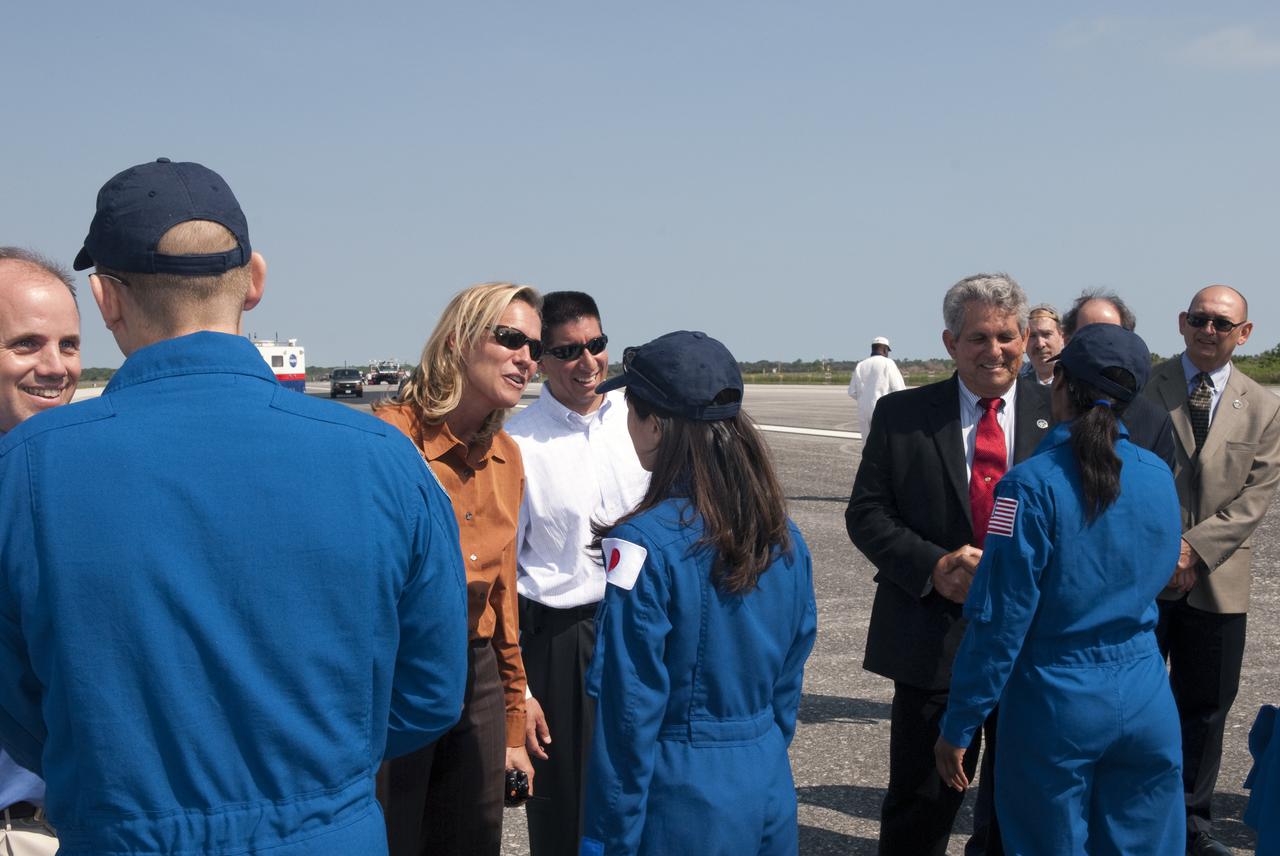
CAPE CANAVERAL, Fla. - At the Shuttle Landing Facility at NASA's Kennedy Space Center in Florida, at center, space shuttle Discovery Flow Director Stephanie Stilson talks to STS-131 Mission Specialist Naoko Yamazaki of the Japan Aerospace Exploration Agency about her successful mission as NASA Flight Director Richard Jones from the Johnson Space Center looks on. At right, Larry Ostarly (red tie), director of Ground Systems Support, United Space Alliance, welcomes STS-131 Mission Specialist Stephanie Wilson back from space with James Cawby, director of Manufacturing and Processing, Launch and Recovery Systems, United Space Alliance, at right, awaiting his turn. Making his way down the receifing line, at left, is Mission Specialist Clayton Anderson. Discovery landed at Kennedy after 15 days in space, completing the more than 6.2-million-mile STS-131 mission on orbit 238. Main gear touchdown was at 9:08:35 a.m. EDT followed by nose gear touchdown at 9:08:47 a.m. and wheelstop at 9:09:33 a.m. The seven-member STS-131 crew carried the multi-purpose logistics module Leonardo, filled with supplies, a new crew sleeping quarters and science racks that were transferred to the International Space Station's laboratories. The crew also switched out a gyroscope on the station’s truss, installed a spare ammonia storage tank and retrieved a Japanese experiment from the station’s exterior. STS-131 is the 33rd shuttle mission to the station and the 131st shuttle mission overall. For information on the STS-131 mission and crew, visit http:__www.nasa.gov_mission_pages_shuttle_shuttlemissions_sts131_index.html. Photo credit: NASA_Jim Grossmann
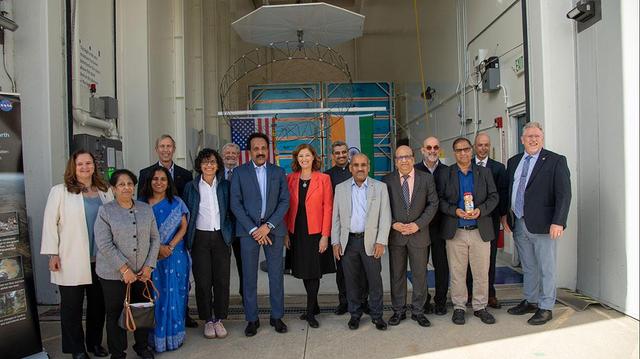
Officials from NASA, the Indian Space Research Organization (ISRO), and the Embassy of India hold a send-off ceremony for the NASA-ISRO Synthetic Aperture Radar (NISAR) science instrument payload on Feb. 3, 2023, outside a clean room at NASA's Jet Propulsion Laboratory in Southern California. The payload is scheduled to be shipped to India in March. Pictured left to right: Karen St. Germain, director, Earth Science Division, NASA; Mitra Dutta, NISAR program executive, NASA; Sripriya Ranganathan, ambassador and deputy chief of mission, Indian Embassy; Larry James, deputy director, JPL; Bhavya Lal, associate administrator for technology, policy, and strategy, NASA; Jim Graf, director, Earth Science and Technology Directorate, JPL; S. Somanath, chairman, ISRO; Laurie Leshin, director, JPL; Krunal Joshi, counselor, space and ISRO technical liaison officer, Indian Embassy; M. Sankaran, director, U R Rao Satellite Centre, ISRO; Shantanu Bhatawdekar, scientific secretary, ISRO; Paul Rosen, NISAR project scientist, JPL; CV Shrikant, NISAR project director, ISRO; Phil Barela, NISAR project manager, JPL; and Gerald Bawden, NISAR program scientist, NASA. NISAR – a joint effort between NASA and ISRO – will measure changes to Earth's land ice surfaces down to fractions of an inch. Data collected by this satellite will help researchers monitor a wide range of changes critical to life on Earth in unprecedented detail. This includes spotting warning signs of imminent volcanic eruptions, helping to monitor groundwater supplies, tracking the melt rate of ice sheets tied to sea level rise, and observing shifts in the distribution of vegetation around the world. The data will inform humanity's responses to urgent challenges posed by natural disasters and climate change, and help communities prepare for and manage hazards. There are two instruments on the satellite that will send and receive radar signals to and from Earth's surface to make the mission's measurements. An L-band synthetic aperture radar (SAR), which uses a signal wavelength of around 9 inches (24 centimeters), and an S-band SAR with a signal wavelength of nearly 5 inches (12 centimeters). Both will bounce their microwave signal off of the planet's surface and record how long it takes the signal to make one roundtrip, as well as the strength of that return signal. This enables the researchers to calculate the distance from the spacecraft to Earth's surface and thereby determine how the land or ice is changing. An antenna reflector nearly 40 feet (12 meters) in diameter, supported by a deployable boom, will focus the microwave signals sent and received by the SARs. JPL, which is managed for NASA by Caltech in Pasadena, leads the U.S. component of NISAR and is providing the mission's L-band SAR instrument. NASA is also providing the radar reflector antenna, the deployable boom, a high-rate communication subsystem for science data, GPS receivers, a solid-state recorder, and payload data subsystem. ISRO is providing the spacecraft bus, the S-band SAR, the launch vehicle, and associated launch services and satellite mission operations. https://photojournal.jpl.nasa.gov/catalog/PIA25600