Orion ETA Hardware, Launch Abort System and Crew Module Documentation Photographs - Crew Module Arrival
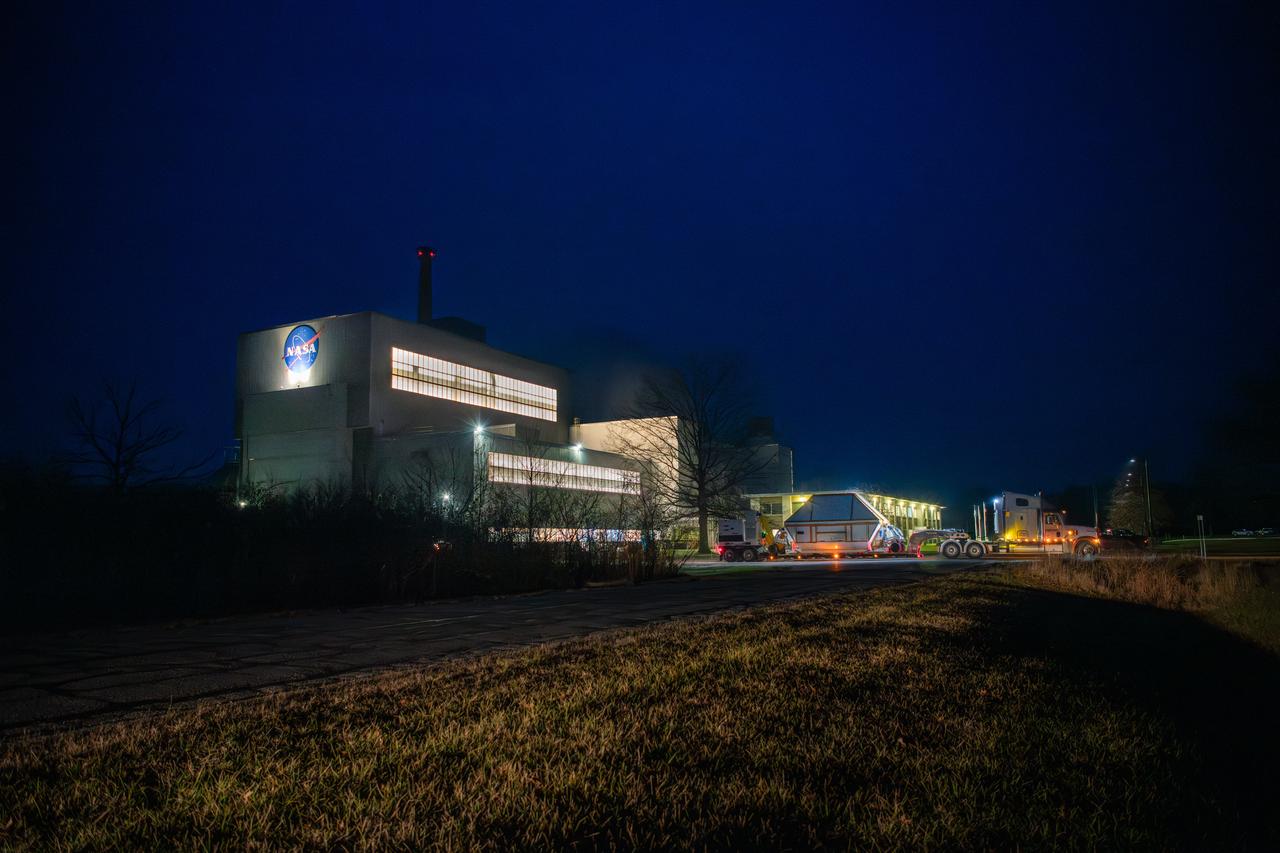
The launch abort motor for Orion’s launch abort system (LAS) for Artemis II, enclosed in its shipping container, arrives at NASA’s Kennedy Space Center in Florida on April 13, 2020. The motor arrived from Northrop Grumman in Promontory, Utah, and was transported to the Launch Abort System Facility where it will undergo testing in preparation for the second Artemis mission. The launch abort motor is one of three motors on the LAS. The LAS will be positioned atop the Orion crew module and is designed to protect astronauts if a problem arises during launch by pulling the spacecraft away from a failing rocket. Artemis II will take the first humans in orbit around the Moon in the 21st century.
The launch abort motor for Orion’s launch abort system (LAS) for Artemis II, enclosed in its shipping container, arrives at NASA’s Kennedy Space Center in Florida on April 13, 2020. The motor arrived from Northrop Grumman in Promontory, Utah, and was transported to the Launch Abort System Facility where it will undergo testing in preparation for the second Artemis mission. The launch abort motor is one of three motors on the LAS. The LAS will be positioned atop the Orion crew module and is designed to protect astronauts if a problem arises during launch by pulling the spacecraft away from a failing rocket. Artemis II will take the first humans in orbit around the Moon in the 21st century.
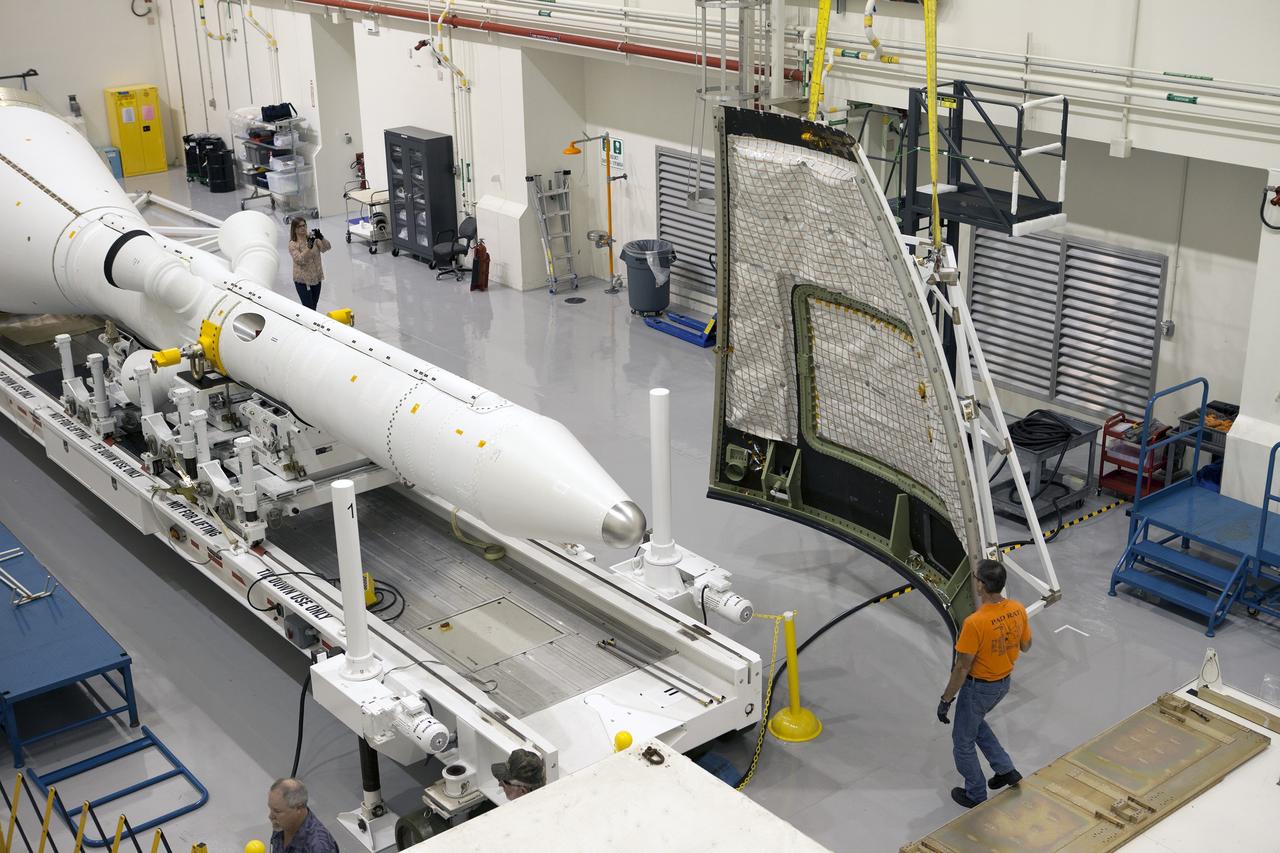
CAPE CANAVERAL, Fla. - The second set of two Ogive panels for the Orion Launch Abort System have arrived at the Launch Abort System Facility, or LASF, at NASA’s Kennedy Space Center in Florida. One of the Ogive panels has been uncrated and is being moved by crane for placement on a work stand. The launch abort system is positioned on a work stand. During processing, the panels will be secured around the Orion crew module and attached to the Launch Abort System. Orion is the exploration spacecraft designed to carry astronauts to destinations not yet explored by humans, including an asteroid and Mars. It will have emergency abort capability, sustain the crew during space travel and provide safe re-entry from deep space return velocities. The first unpiloted test flight of Orion is scheduled to launch in 2014 atop a Delta IV rocket and in 2017 on NASA’s Space Launch System rocket. For more information, visit www.nasa.gov/orion. Photo credit: Kim Shiflett
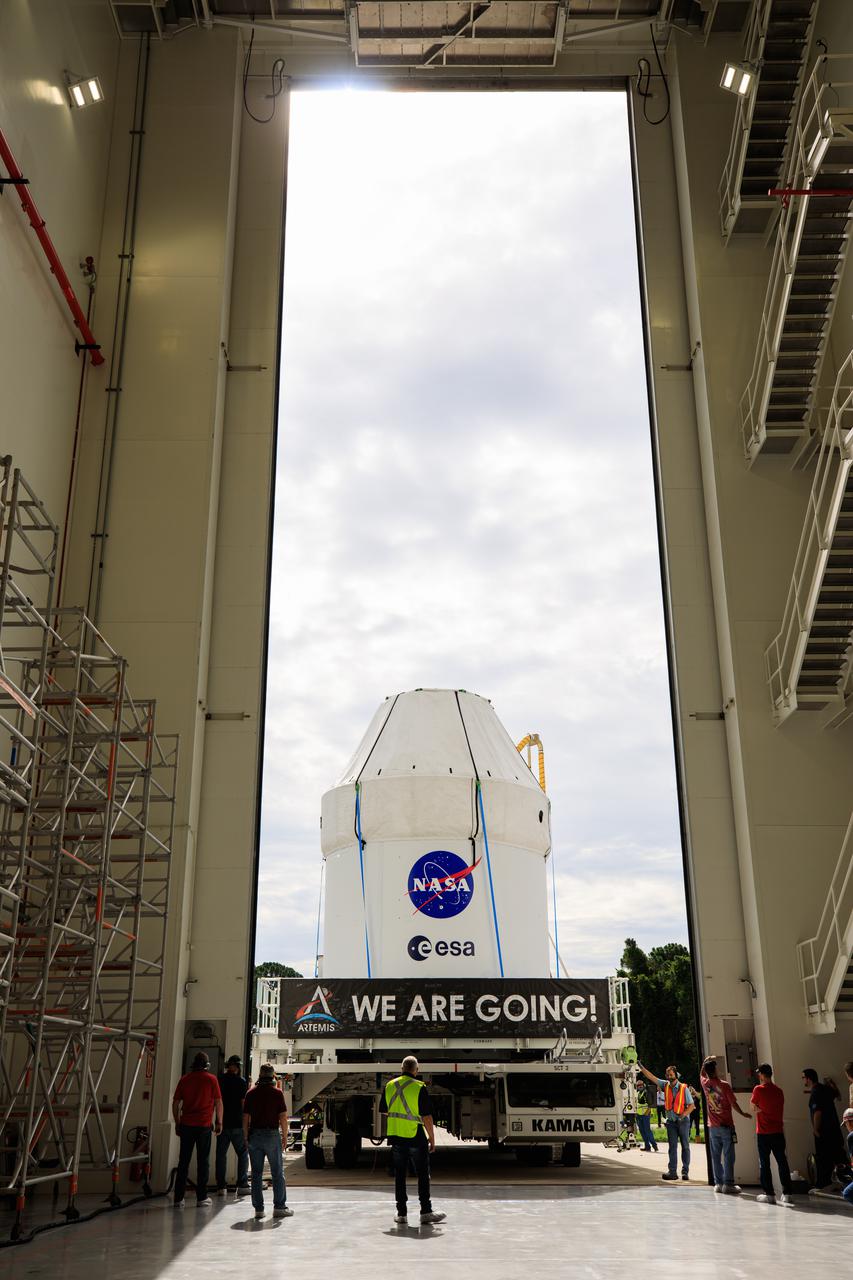
The Orion spacecraft for the Artemis I mission arrives at Kennedy Space Center’s Launch Abort System facility on July 10, 2021, after being transported from the Florida spaceport’s Multi-Payload Processing Facility earlier in the day. Teams with Exploration Ground Systems and contractor Jacobs will integrate components of the launch abort system onto the spacecraft. Launching later this year, Artemis I will be a test of the Orion spacecraft and SLS rocket as an integrated system ahead of crewed flights to the Moon.
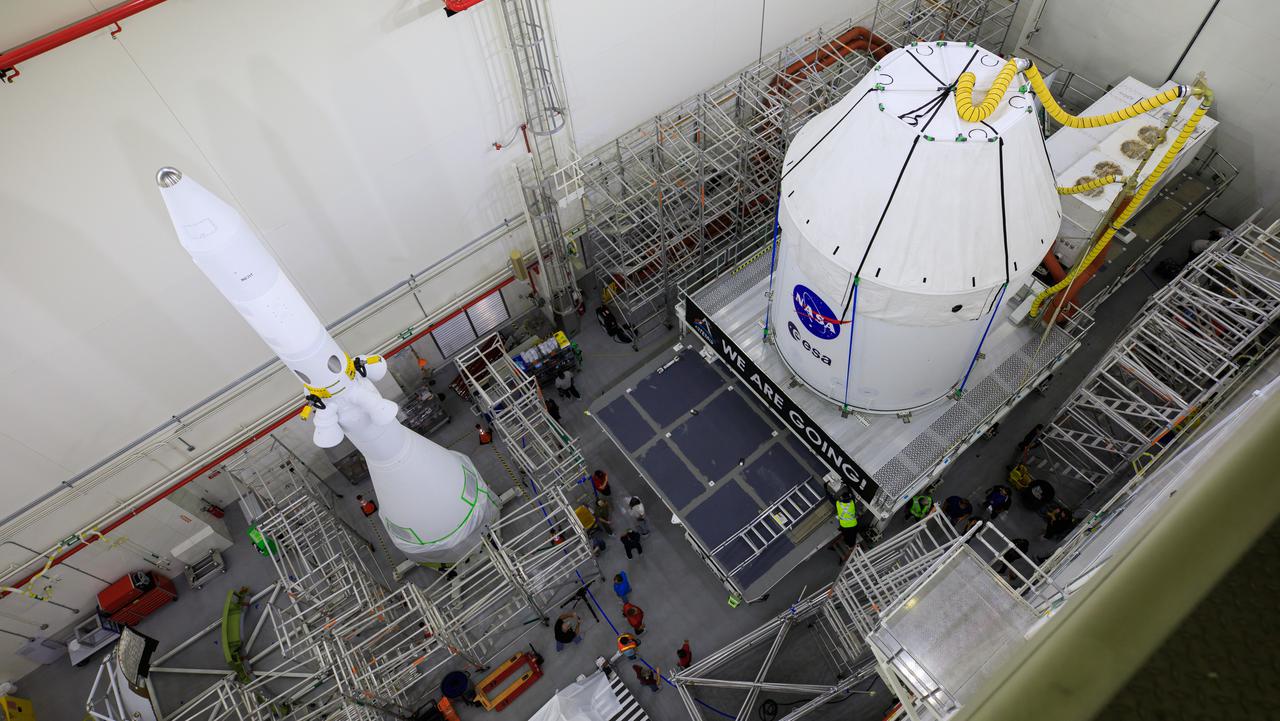
The Orion spacecraft for the Artemis I mission arrives at Kennedy Space Center’s Launch Abort System facility on July 10, 2021, after being transported from the Florida spaceport’s Multi-Payload Processing Facility earlier in the day. Teams with Exploration Ground Systems and contractor Jacobs will integrate components of the launch abort system onto the spacecraft. Launching later this year, Artemis I will be a test of the Orion spacecraft and SLS rocket as an integrated system ahead of crewed flights to the Moon.
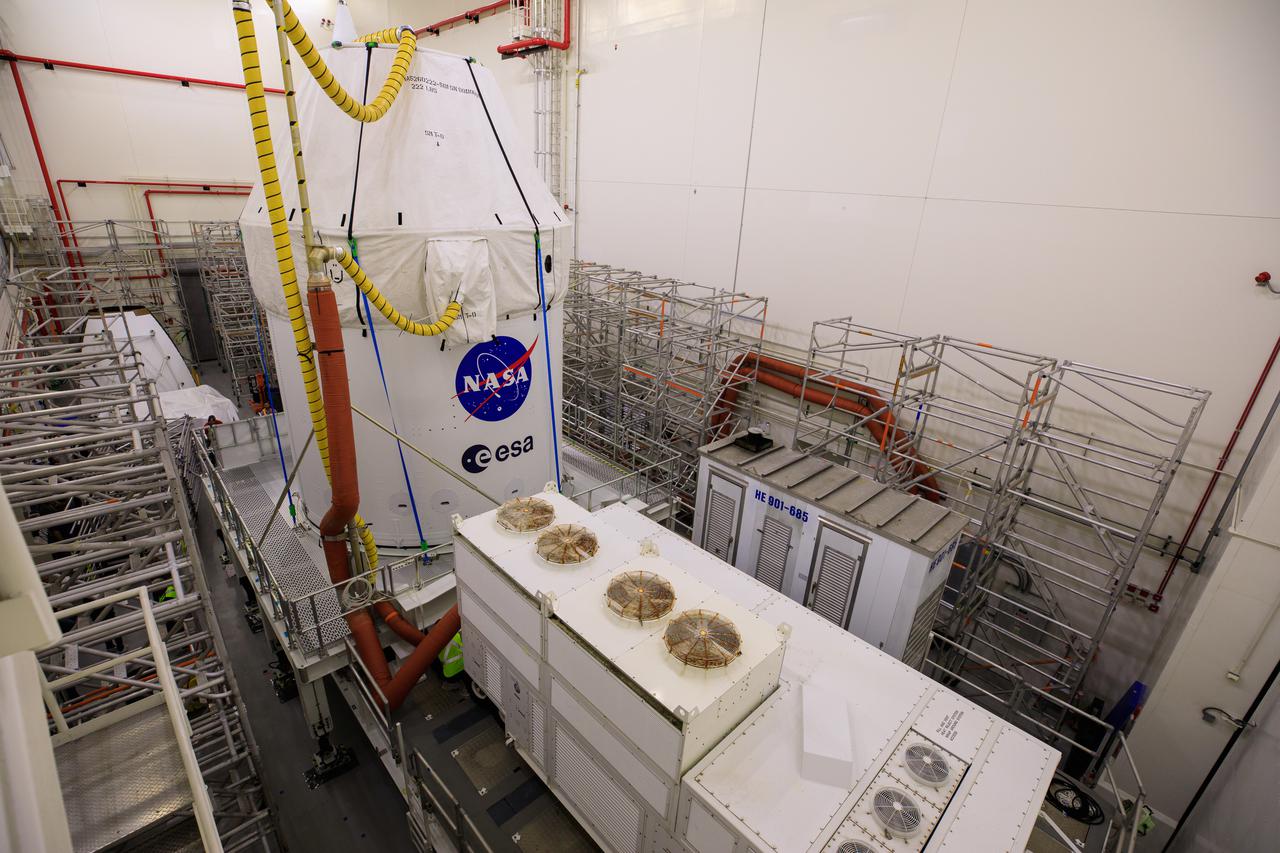
The Orion spacecraft for the Artemis I mission arrives at Kennedy Space Center’s Launch Abort System facility on July 10, 2021, after being transported from the Florida spaceport’s Multi-Payload Processing Facility earlier in the day. Teams with Exploration Ground Systems and contractor Jacobs will integrate components of the launch abort system onto the spacecraft. Launching later this year, Artemis I will be a test of the Orion spacecraft and SLS rocket as an integrated system ahead of crewed flights to the Moon.
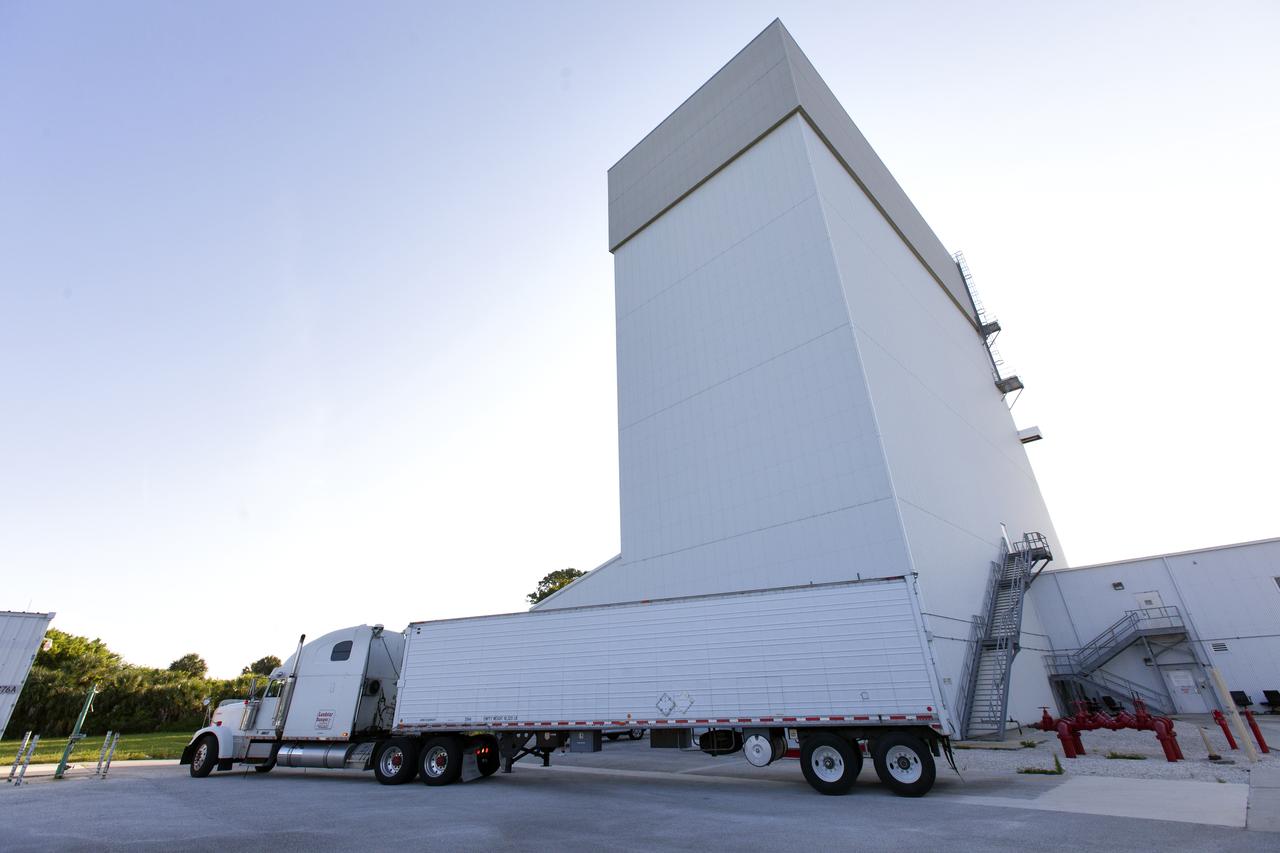
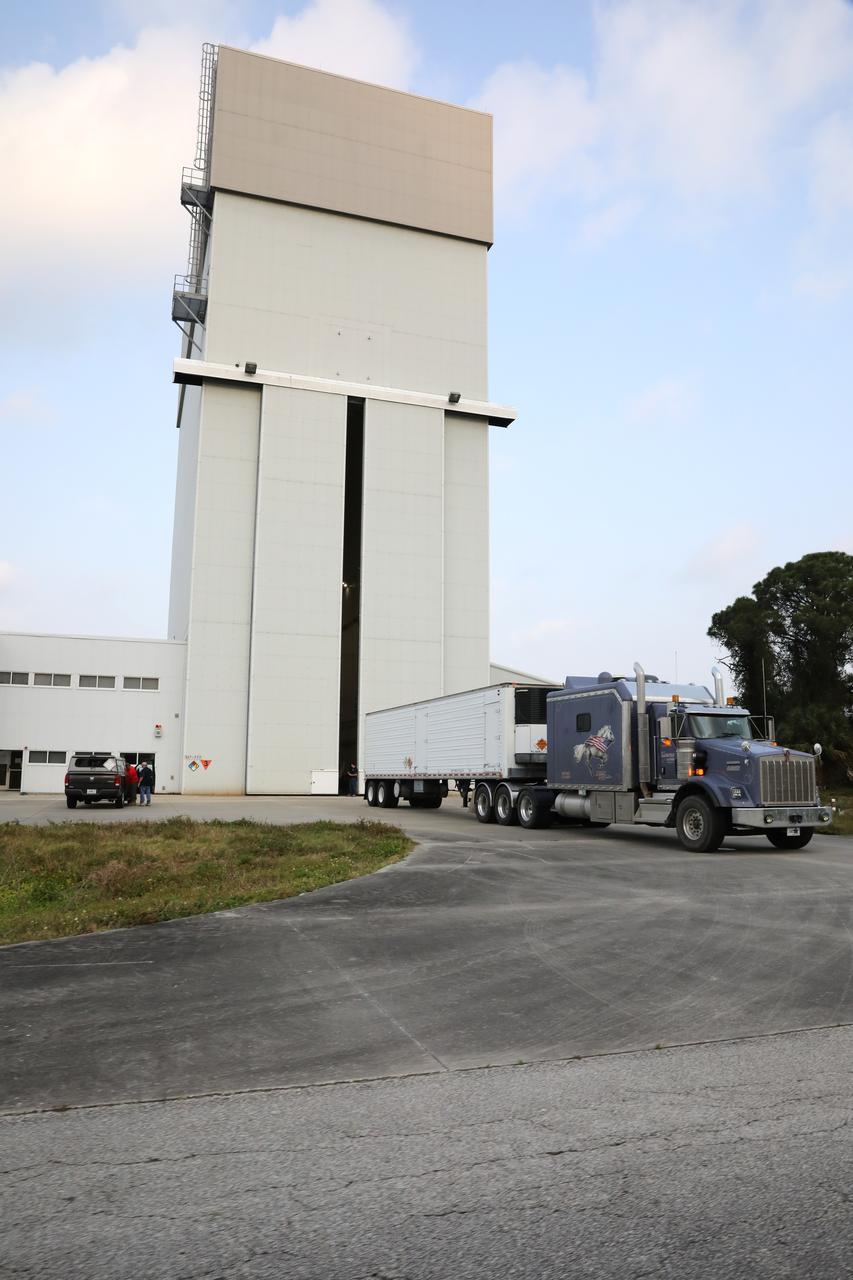
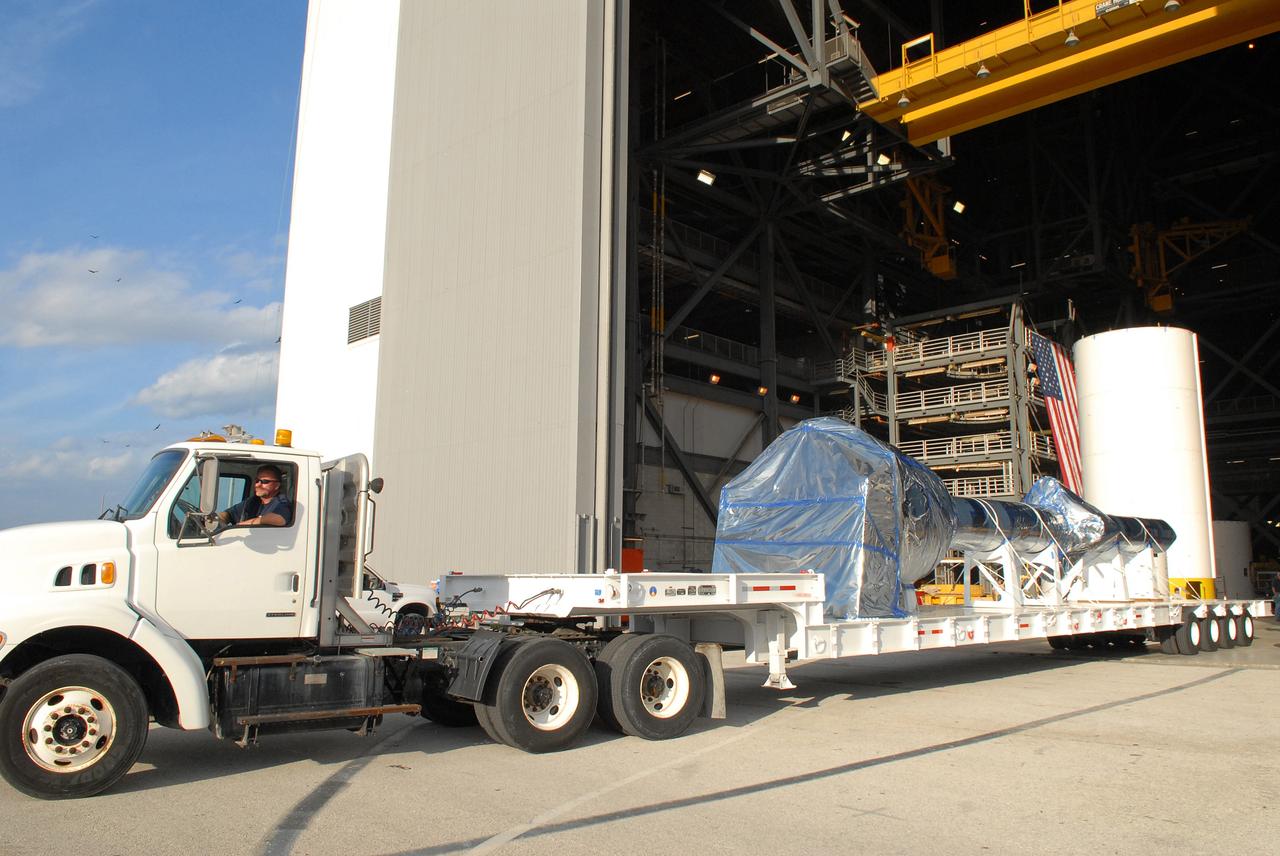
The abort motor for NASA’s Artemis 1 mission, secured in a heavy transport truck, arrives at the Launch Abort System Facility (LASF) at the agency’s Kennedy Space Center in Florida on June 6, 2019. The abort motor, manufactured by Northrop Grumman, will be offloaded and moved into the LASF where it will be integrated with Orion subcomponents and prepared for Artemis 1. The abort motor is one of three motors located on the tower of the Launch Abort System (LAS). The LAS is designed to pull the Orion capsule and its crew away to safety if an emergency occurs during ascent of the Space Launch System (SLS) rocket. During Artemis 1, the uncrewed Orion spacecraft will launch atop the SLS from Launch Pad 39B at Kennedy. Orion will embark on an approximately three-week mission that will take the spacecraft thousands of miles past the Moon. Orion will return to Earth and splashdown in the Pacific Ocean off the coast of California, where it will be retrieved and returned to Kennedy.
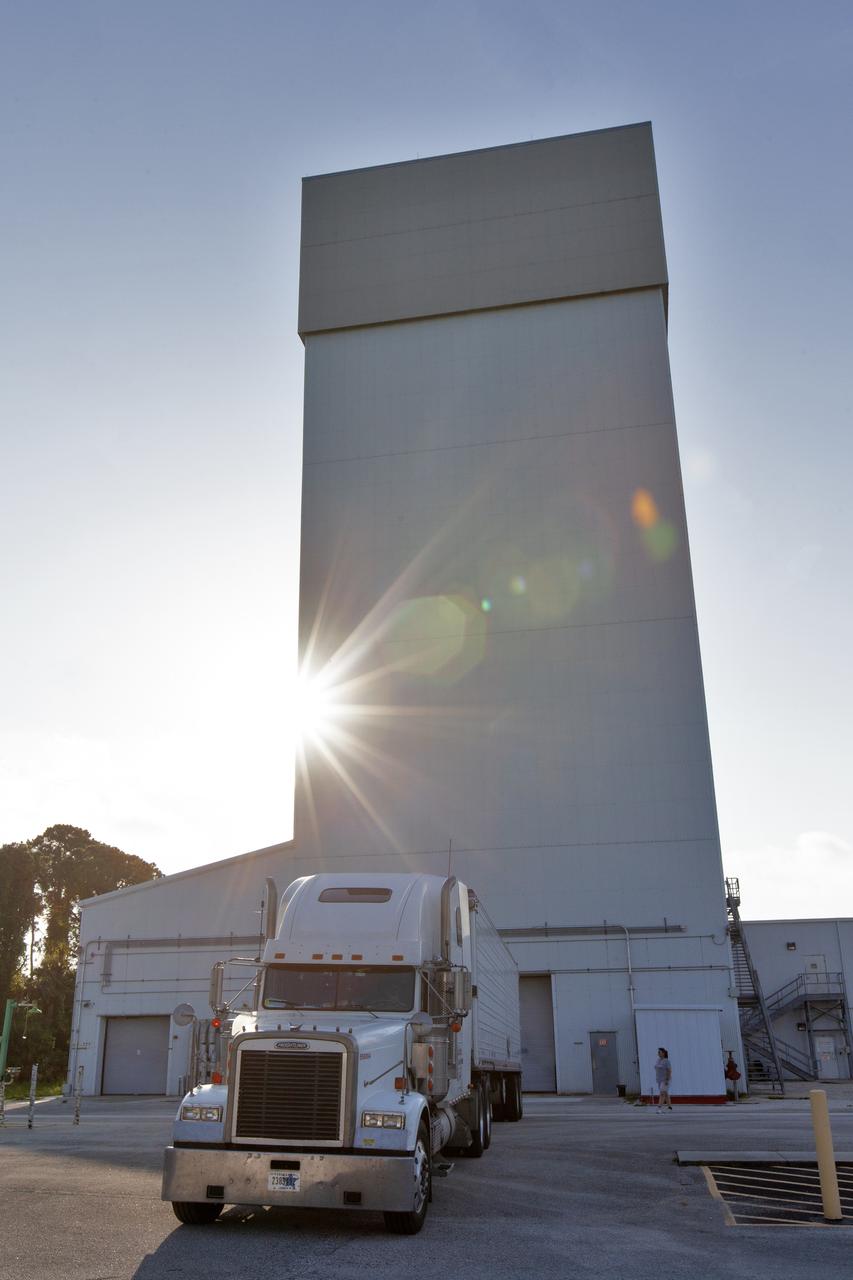
The abort motor for NASA’s Artemis 1 mission, secured in a heavy transport truck, arrives at the Launch Abort System Facility (LASF) at the agency’s Kennedy Space Center in Florida on June 6, 2019. The abort motor, manufactured by Northrop Grumman, will be offloaded and moved into the LASF where it will be integrated with Orion subcomponents and prepared for Artemis 1. The abort motor is one of three motors located on the tower of the Launch Abort System (LAS). The LAS is designed to pull the Orion capsule and its crew away to safety if an emergency occurs during ascent of the Space Launch System (SLS) rocket. During Artemis 1, the uncrewed Orion spacecraft will launch atop the SLS from Launch Pad 39B at Kennedy. Orion will embark on an approximately three-week mission that will take the spacecraft thousands of miles past the Moon. Orion will return to Earth and splashdown in the Pacific Ocean off the coast of California, where it will be retrieved and returned to Kennedy.
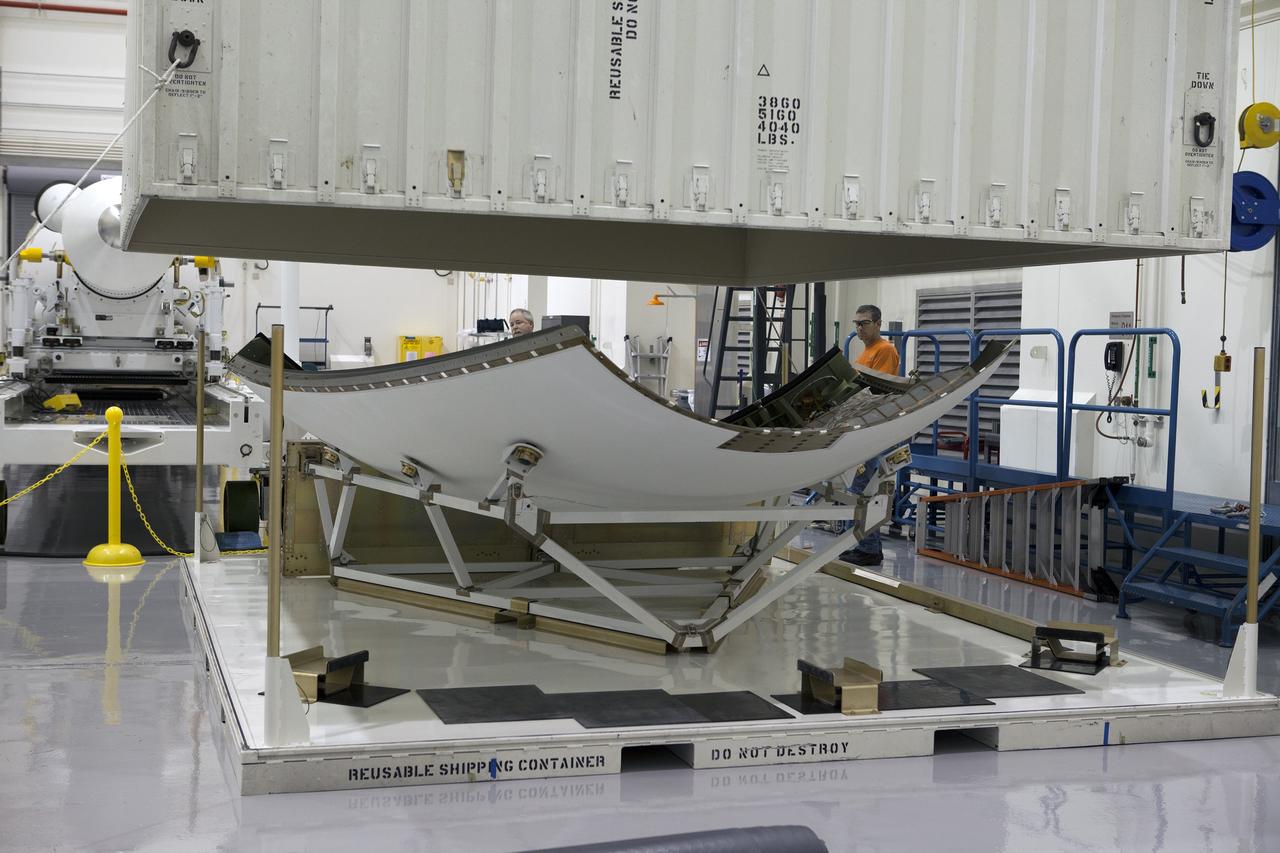
CAPE CANAVERAL, Fla. - The second set of two Ogive panels for the Orion Launch Abort System have arrived at the Launch Abort System Facility, or LASF, at NASA’s Kennedy Space Center in Florida. The Ogive panels are being uncrated for storage inside the LASF. During processing, the panels will be secured around the Orion crew module and attached to the Launch Abort System. Orion is the exploration spacecraft designed to carry astronauts to destinations not yet explored by humans, including an asteroid and Mars. It will have emergency abort capability, sustain the crew during space travel and provide safe re-entry from deep space return velocities. The first unpiloted test flight of Orion is scheduled to launch in 2014 atop a Delta IV rocket and in 2017 on NASA’s Space Launch System rocket. For more information, visit www.nasa.gov/orion. Photo credit: Kim Shiflett
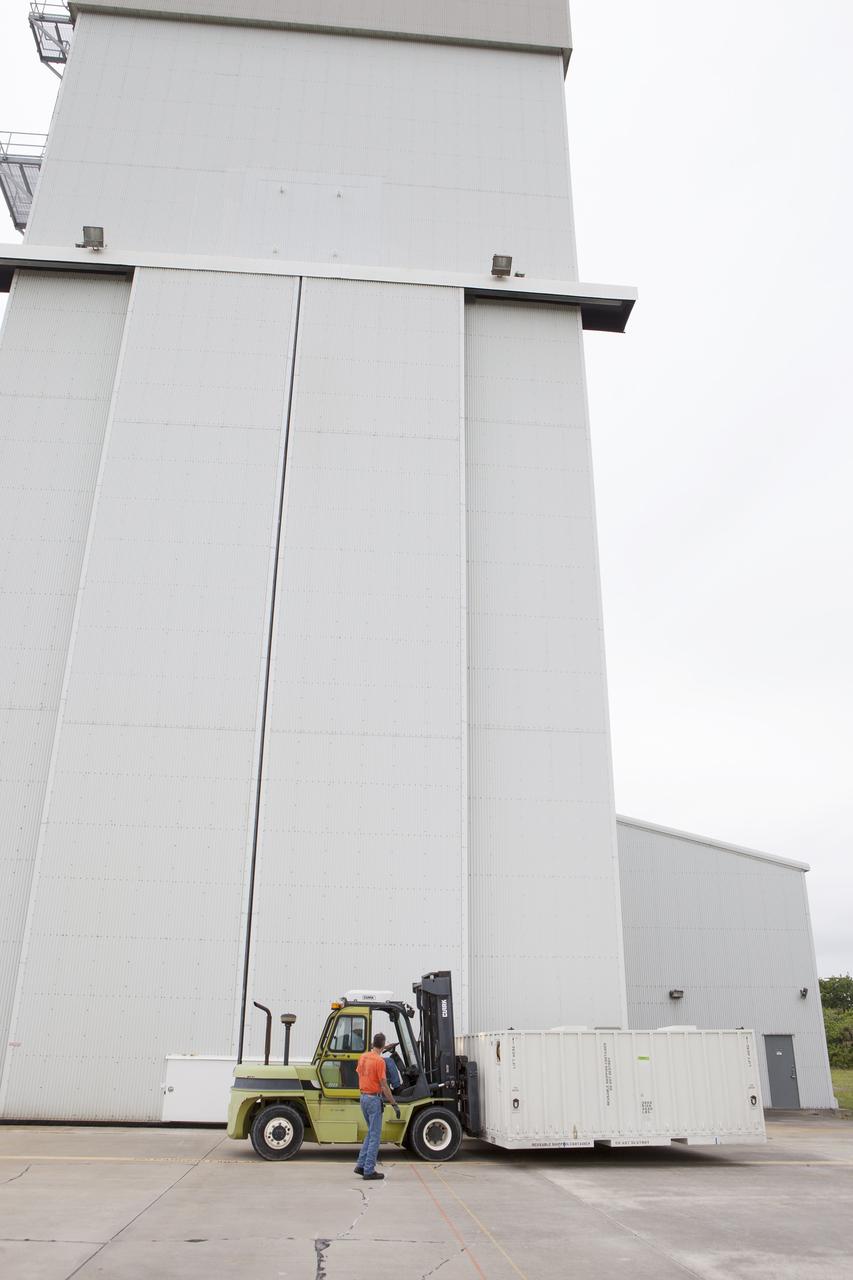
CAPE CANAVERAL, Fla. - The second set of two Ogive panels for the Orion Launch Abort System arrives by truck at the Launch Abort System Facility, or LASF, at NASA’s Kennedy Space Center in Florida. The Ogive panels will be uncrated inside the LASF. During processing, the panels will be secured around the Orion crew module and attached to the Launch Abort System. Orion is the exploration spacecraft designed to carry astronauts to destinations not yet explored by humans, including an asteroid and Mars. It will have emergency abort capability, sustain the crew during space travel and provide safe re-entry from deep space return velocities. The first unpiloted test flight of Orion is scheduled to launch in 2014 atop a Delta IV rocket and in 2017 on NASA’s Space Launch System rocket. For more information, visit www.nasa.gov/orion. Photo credit: Kim Shiflett
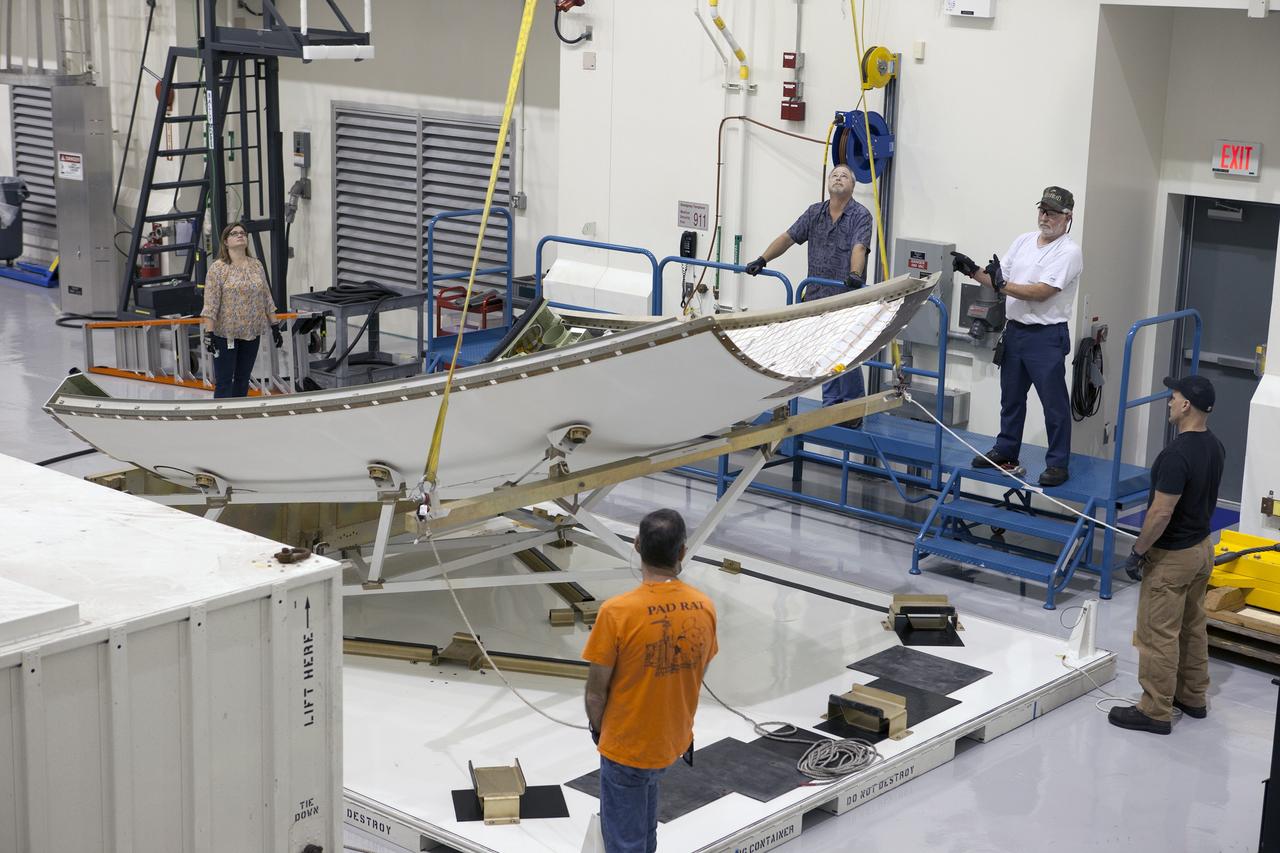
CAPE CANAVERAL, Fla. - The second set of two Ogive panels for the Orion Launch Abort System have arrived at the Launch Abort System Facility, or LASF, at NASA’s Kennedy Space Center in Florida. One of the Ogive panels has been uncrated and is being lifted by crane for placement on a work stand. During processing, the panels will be secured around the Orion crew module and attached to the Launch Abort System. Orion is the exploration spacecraft designed to carry astronauts to destinations not yet explored by humans, including an asteroid and Mars. It will have emergency abort capability, sustain the crew during space travel and provide safe re-entry from deep space return velocities. The first unpiloted test flight of Orion is scheduled to launch in 2014 atop a Delta IV rocket and in 2017 on NASA’s Space Launch System rocket. For more information, visit www.nasa.gov/orion. Photo credit: Kim Shiflett
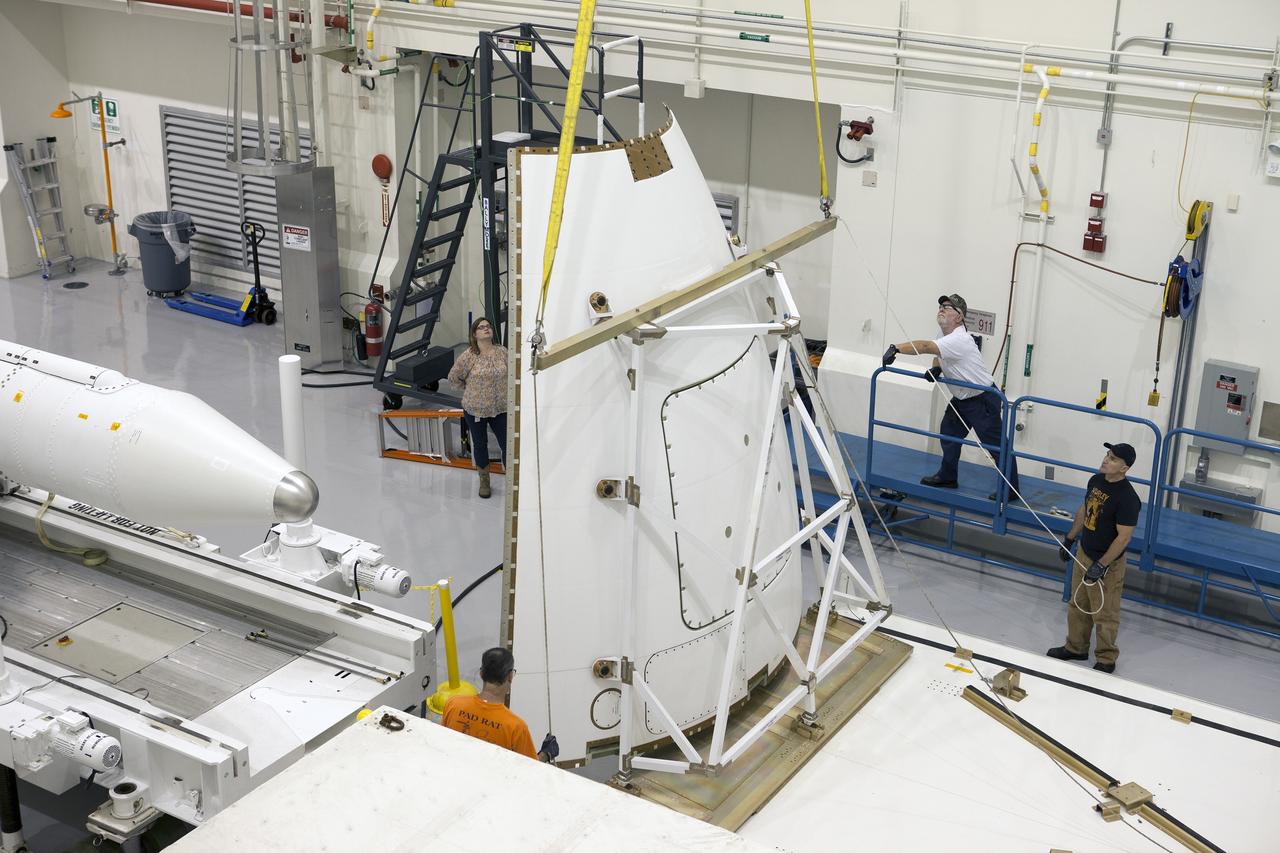
CAPE CANAVERAL, Fla. - The second set of two Ogive panels for the Orion Launch Abort System have arrived at the Launch Abort System Facility, or LASF, at NASA’s Kennedy Space Center in Florida. One of the Ogive panels has been uncrated and is being lifted by crane for placement on a work stand. During processing, the panels will be secured around the Orion crew module and attached to the Launch Abort System. Orion is the exploration spacecraft designed to carry astronauts to destinations not yet explored by humans, including an asteroid and Mars. It will have emergency abort capability, sustain the crew during space travel and provide safe re-entry from deep space return velocities. The first unpiloted test flight of Orion is scheduled to launch in 2014 atop a Delta IV rocket and in 2017 on NASA’s Space Launch System rocket. For more information, visit www.nasa.gov/orion. Photo credit: Kim Shiflett
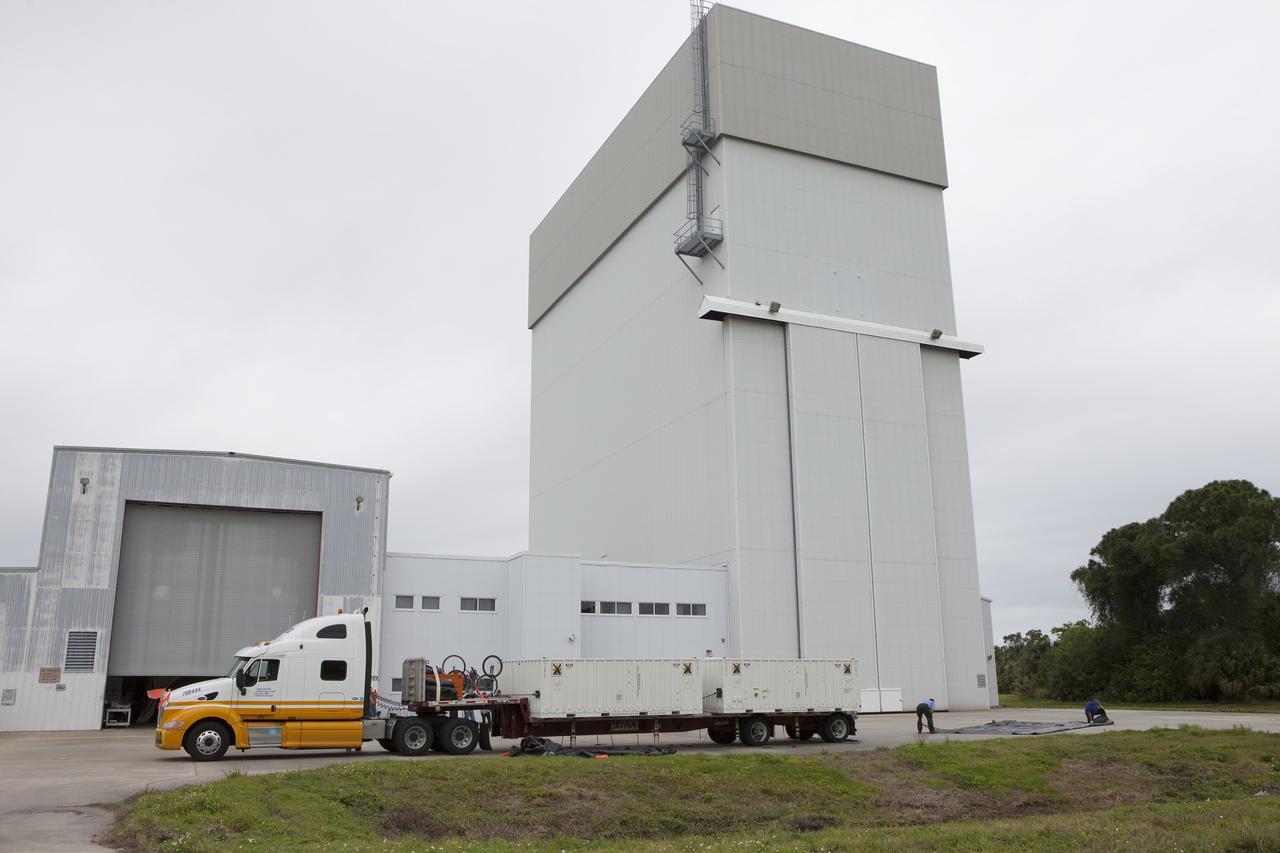
CAPE CANAVERAL, Fla. - The second set of two Ogive panels for the Orion Launch Abort System arrives by truck at the Launch Abort System Facility, or LASF, at NASA’s Kennedy Space Center in Florida. The Ogive panels will be uncrated inside the LASF. During processing, the panels will be secured around the Orion crew module and attached to the Launch Abort System. Orion is the exploration spacecraft designed to carry astronauts to destinations not yet explored by humans, including an asteroid and Mars. It will have emergency abort capability, sustain the crew during space travel and provide safe re-entry from deep space return velocities. The first unpiloted test flight of Orion is scheduled to launch in 2014 atop a Delta IV rocket and in 2017 on NASA’s Space Launch System rocket. For more information, visit www.nasa.gov/orion. Photo credit: Kim Shiflett
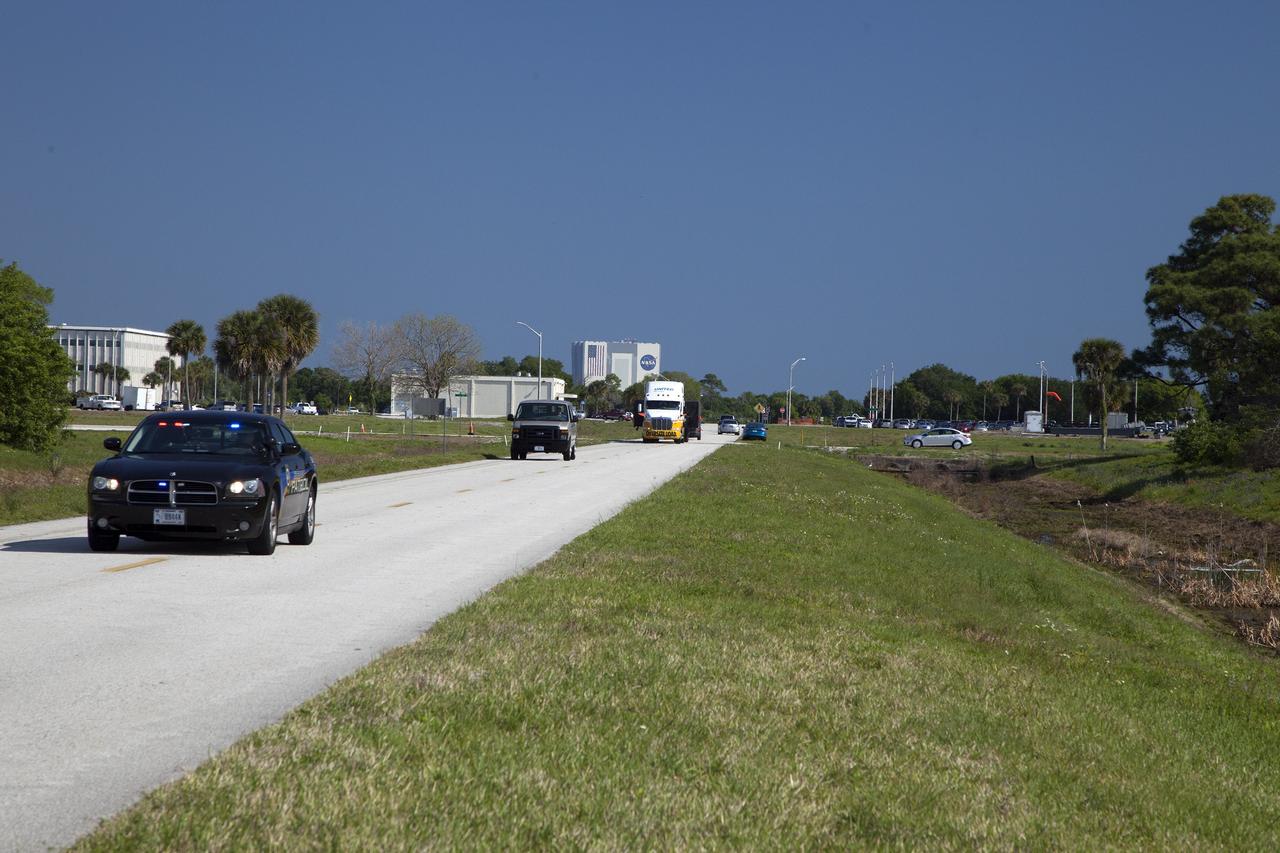
CAPE CANAVERAL, Fla. - The first set of Ogive panels for the Orion Launch Abort System arrives by truck at NASA’s Kennedy Space Center in Florida. The Ogive panels will be delivered to the Launch Abort System Facility. During processing, the panels will enclose and protect the Orion spacecraft and attach to the Launch Abort System. Orion is the exploration spacecraft designed to carry astronauts to destinations not yet explored by humans, including an asteroid and Mars. It will have emergency abort capability, sustain the crew during space travel and provide safe re-entry from deep space return velocities. The first unpiloted test flight of Orion is scheduled to launch in 2014 atop a Delta IV rocket and in 2017 on NASA’s Space Launch System rocket. For more information, visit www.nasa.gov/orion. Photo credit: Daniel Casper
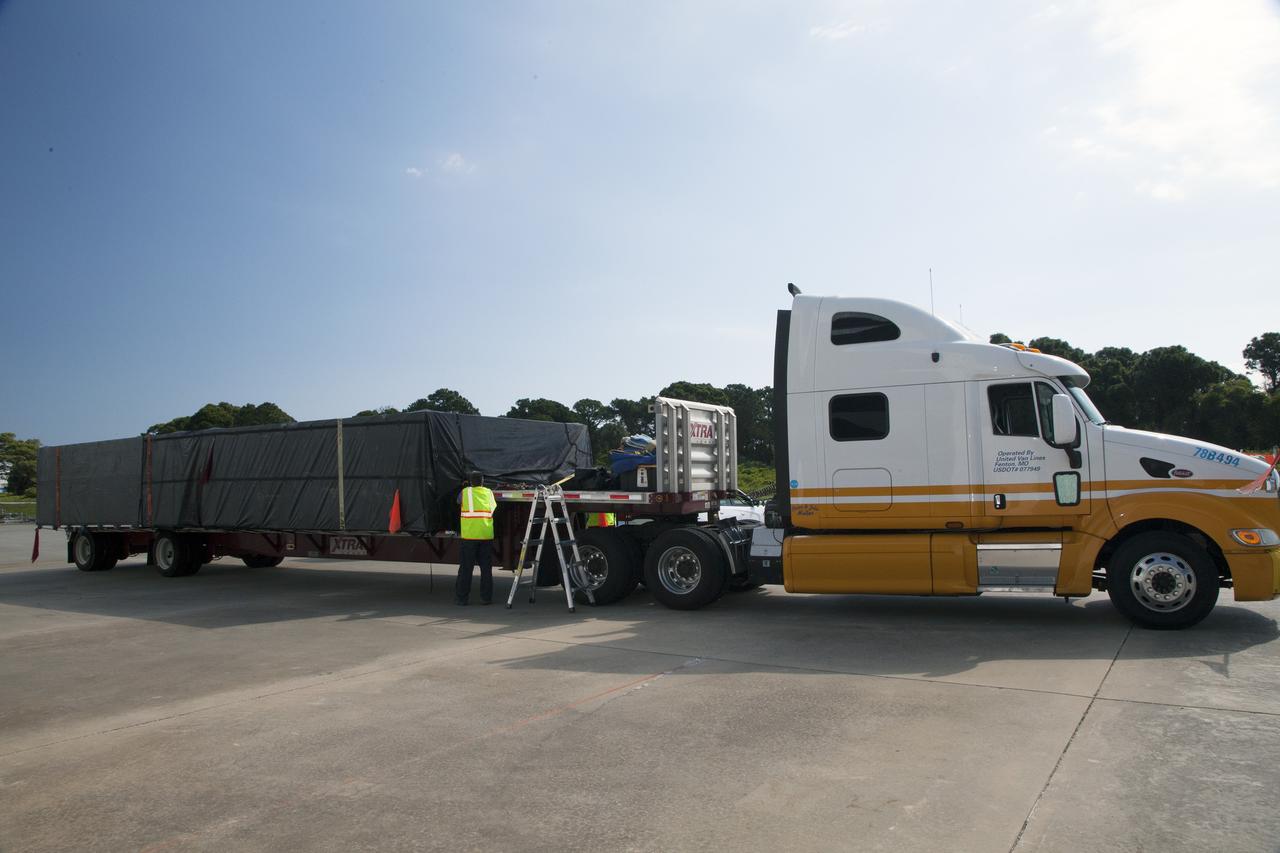
CAPE CANAVERAL, Fla. - The first set of Ogive panels for the Orion Launch Abort System arrives by truck at the Launch Abort System Facility at NASA’s Kennedy Space Center in Florida. During processing, the Ogive panels will enclose and protect the Orion spacecraft and attach to the Launch Abort System. Orion is the exploration spacecraft designed to carry astronauts to destinations not yet explored by humans, including an asteroid and Mars. It will have emergency abort capability, sustain the crew during space travel and provide safe re-entry from deep space return velocities. The first unpiloted test flight of Orion is scheduled to launch in 2014 atop a Delta IV rocket and in 2017 on NASA’s Space Launch System rocket. For more information, visit www.nasa.gov/orion. Photo credit: Daniel Casper
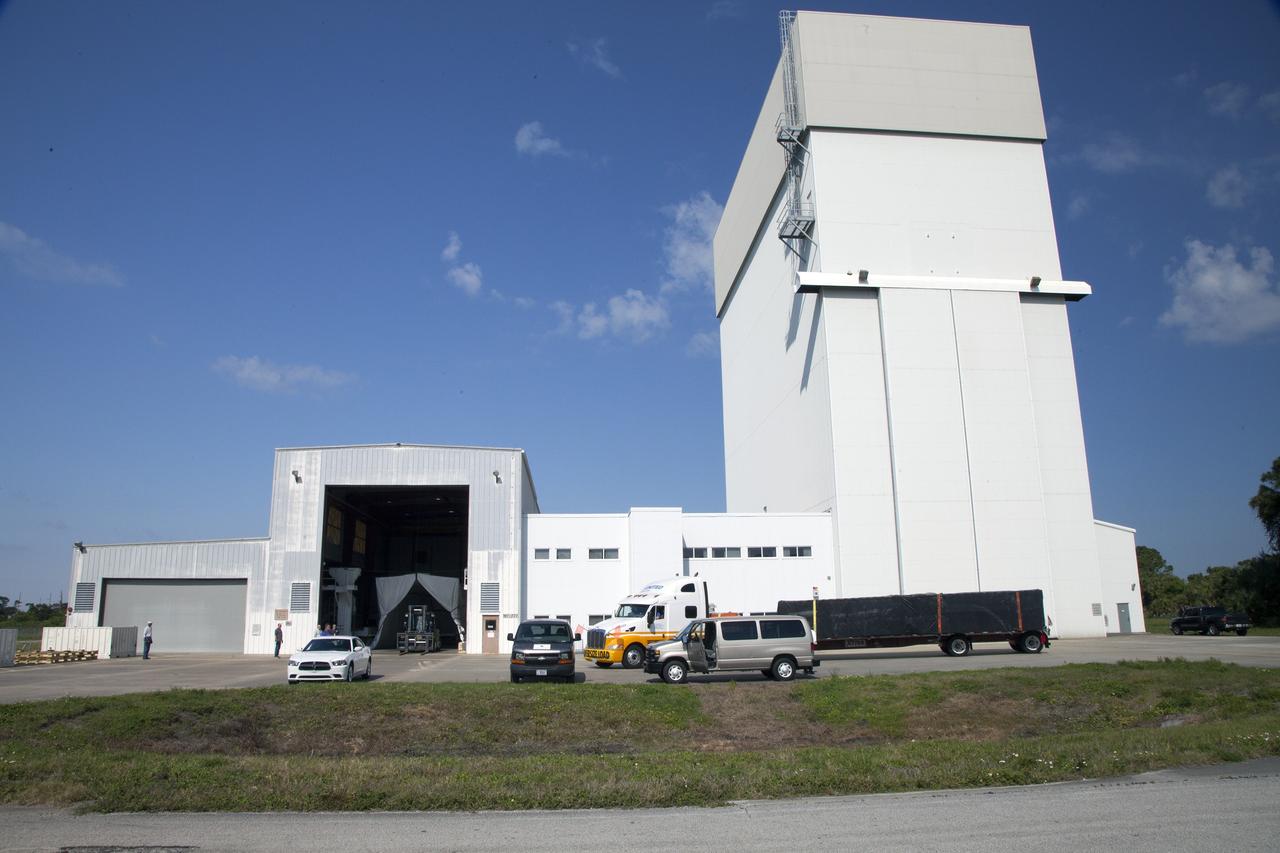
CAPE CANAVERAL, Fla. - The first set of Ogive panels for the Orion Launch Abort System arrives by truck at the Launch Abort System Facility at NASA’s Kennedy Space Center in Florida. During processing, the Ogive panels will enclose and protect the Orion spacecraft and attach to the Launch Abort System. Orion is the exploration spacecraft designed to carry astronauts to destinations not yet explored by humans, including an asteroid and Mars. It will have emergency abort capability, sustain the crew during space travel and provide safe re-entry from deep space return velocities. The first unpiloted test flight of Orion is scheduled to launch in 2014 atop a Delta IV rocket and in 2017 on NASA’s Space Launch System rocket. For more information, visit www.nasa.gov/orion. Photo credit: Daniel Casper
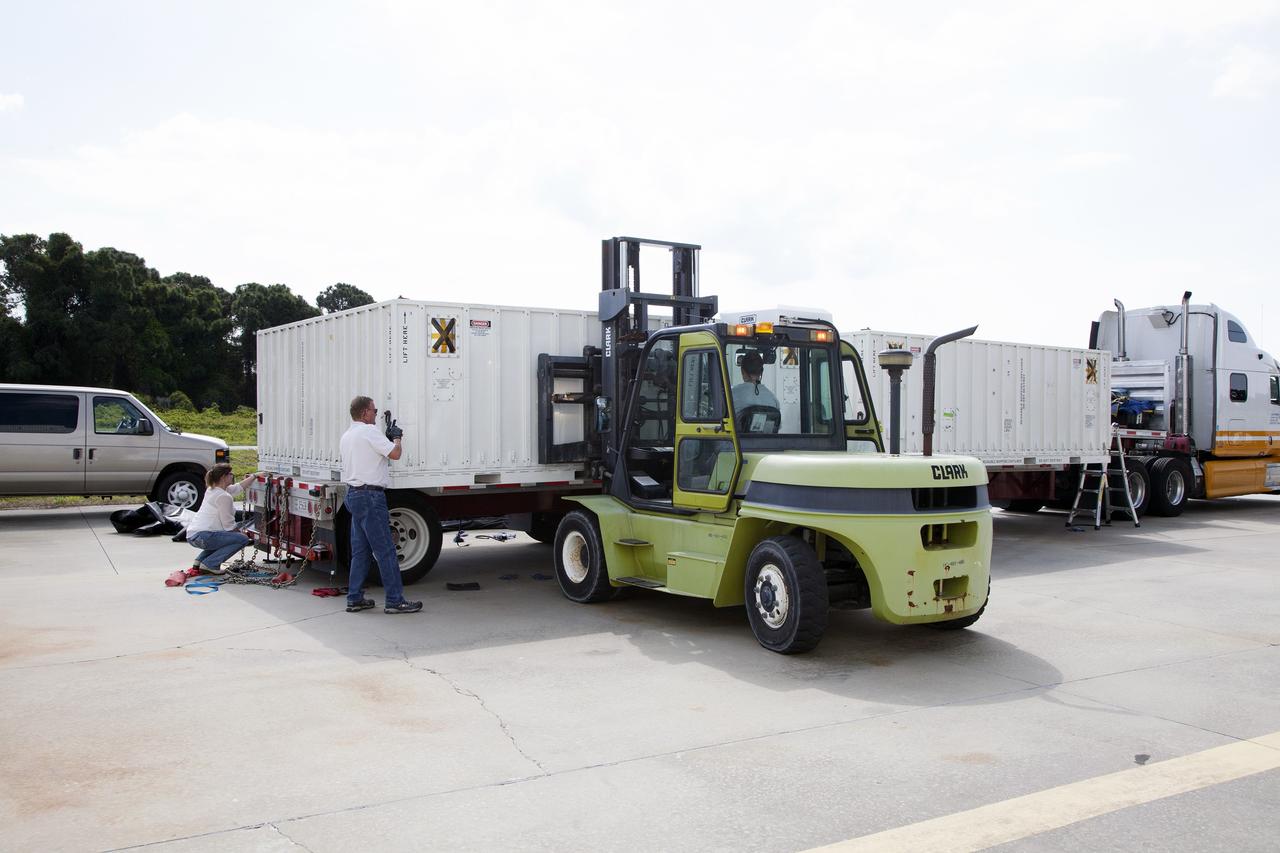
CAPE CANAVERAL, Fla. - The first set of Ogive panels for the Orion Launch Abort System arrives by truck at the Launch Abort System Facility at NASA’s Kennedy Space Center in Florida. During processing, the Ogive panels will enclose and protect the Orion spacecraft and attach to the Launch Abort System. Orion is the exploration spacecraft designed to carry astronauts to destinations not yet explored by humans, including an asteroid and Mars. It will have emergency abort capability, sustain the crew during space travel and provide safe re-entry from deep space return velocities. The first unpiloted test flight of Orion is scheduled to launch in 2014 atop a Delta IV rocket and in 2017 on NASA’s Space Launch System rocket. For more information, visit www.nasa.gov/orion. Photo credit: Daniel Casper
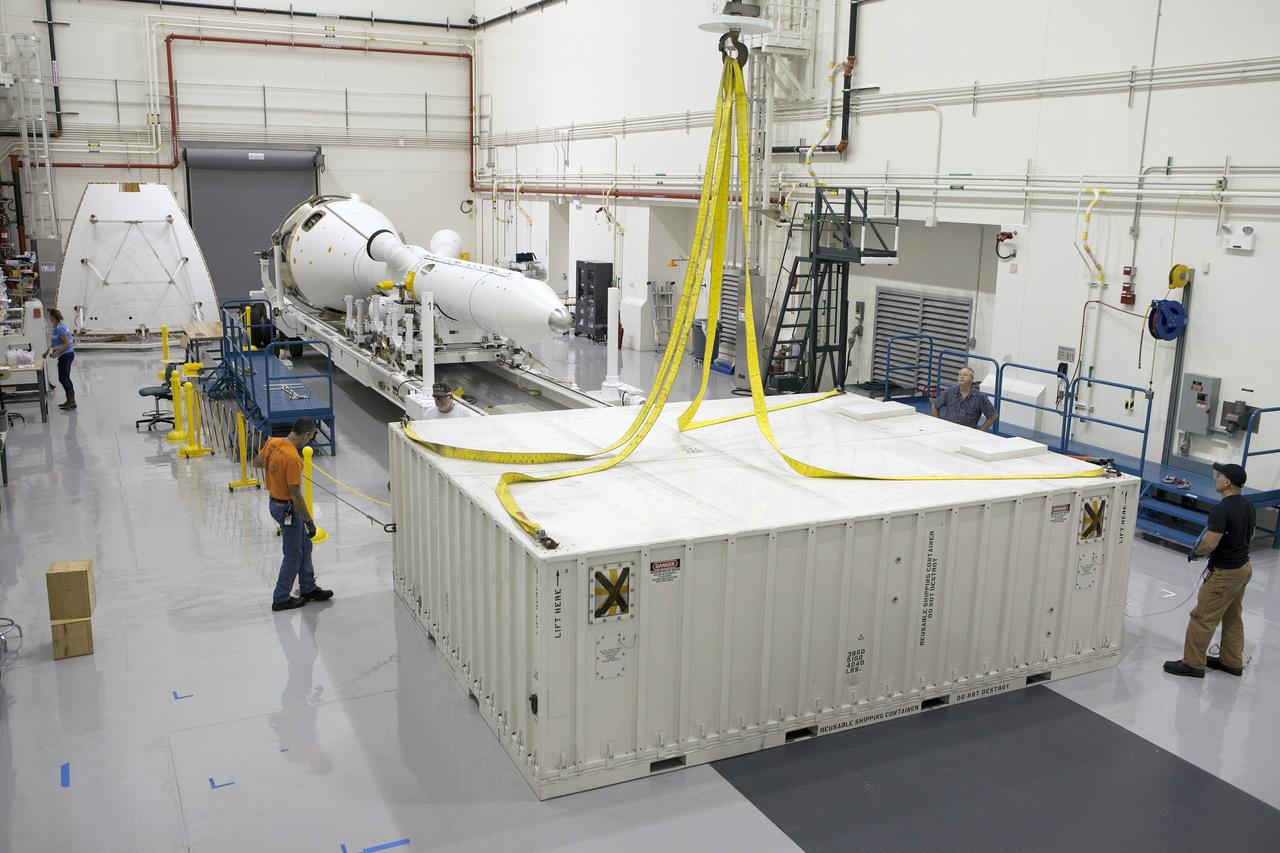
CAPE CANAVERAL, Fla. - The second set of two Ogive panels for the Orion Launch Abort System have arrived by truck at the Launch Abort System Facility, or LASF, at NASA’s Kennedy Space Center in Florida. The Ogive panels will be uncrated inside the LASF. During processing, the panels will be secured around the Orion crew module and attached to the Launch Abort System. Orion is the exploration spacecraft designed to carry astronauts to destinations not yet explored by humans, including an asteroid and Mars. It will have emergency abort capability, sustain the crew during space travel and provide safe re-entry from deep space return velocities. The first unpiloted test flight of Orion is scheduled to launch in 2014 atop a Delta IV rocket and in 2017 on NASA’s Space Launch System rocket. For more information, visit www.nasa.gov/orion. Photo credit: Kim Shiflett
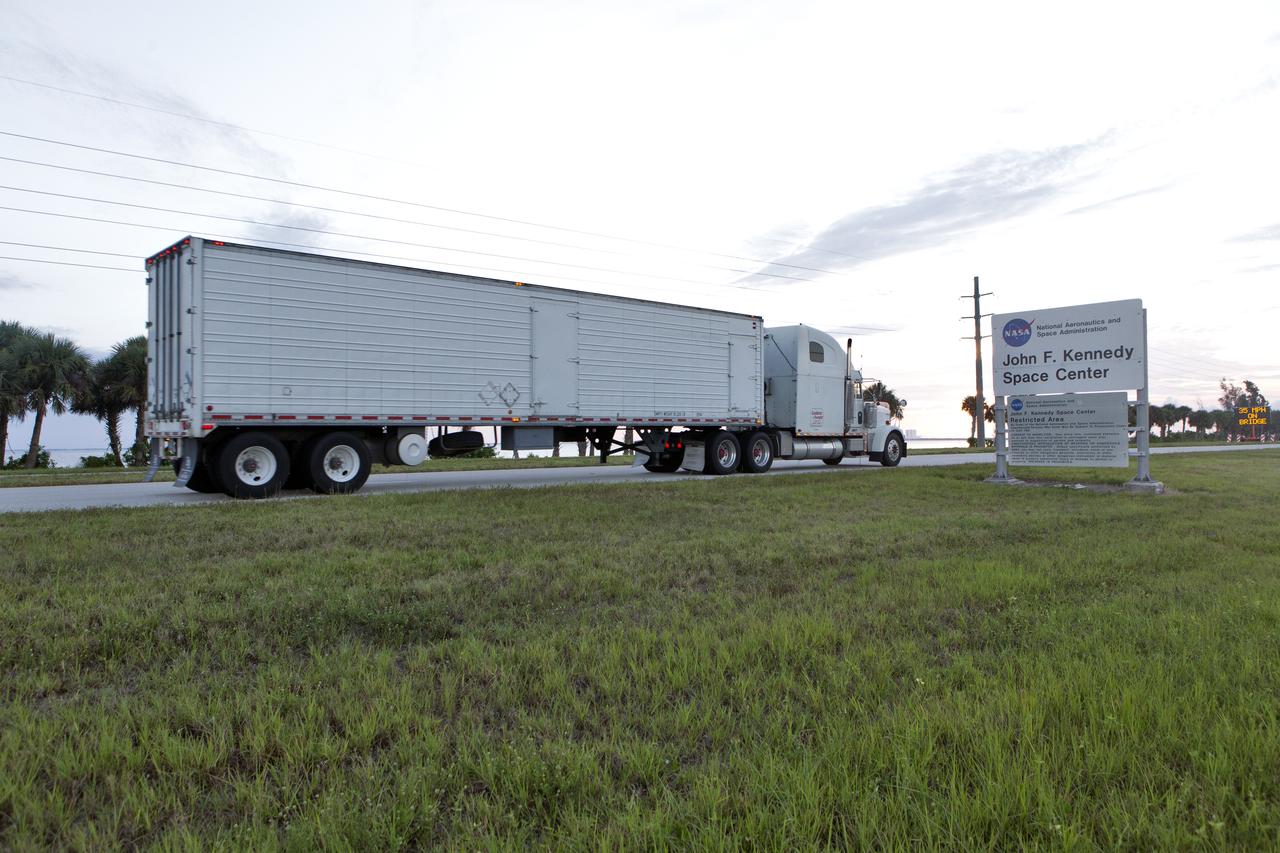
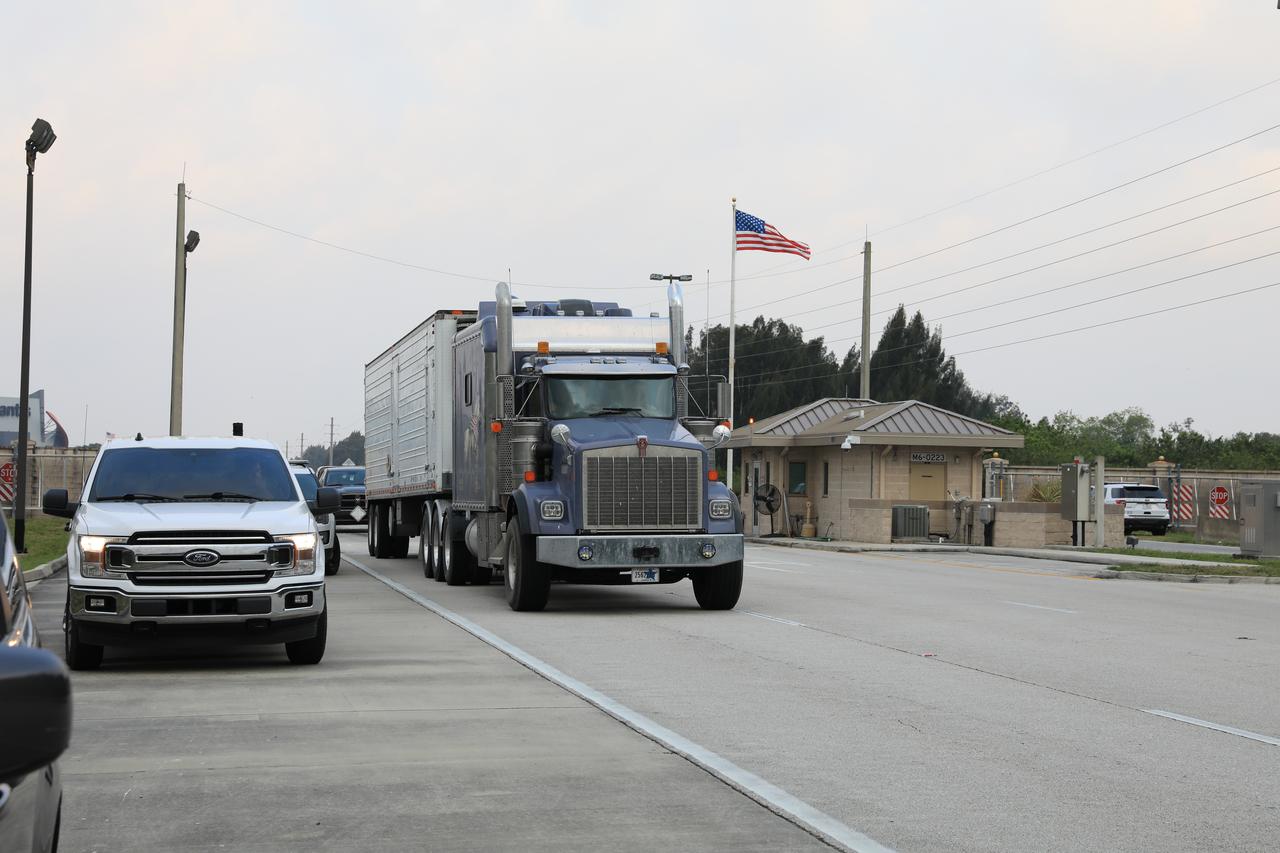
The abort motor for NASA’s Artemis 1 mission, secured in a heavy transport truck, arrives at the entrance to the agency’s Kennedy Space Center in Florida on June 6, 2019. The abort motor, manufactured by Northrop Grumman, will be delivered to the Launch Abort System Facility and integrated with Orion subcomponents and prepared for Artemis 1. It is one of three motors located on the tower of the Launch Abort System (LAS). The LAS is designed to pull the Orion capsule and its crew away to safety if an emergency occurs during ascent of the Space Launch System (SLS) rocket. During Artemis 1, the uncrewed Orion spacecraft will launch atop the SLS from Launch Pad 39B at Kennedy. Orion will embark on an approximately three-week mission that will take the spacecraft thousands of miles past the Moon. Orion will return to Earth and splashdown in the Pacific Ocean off the coast of California, where it will be retrieved and returned to Kennedy.
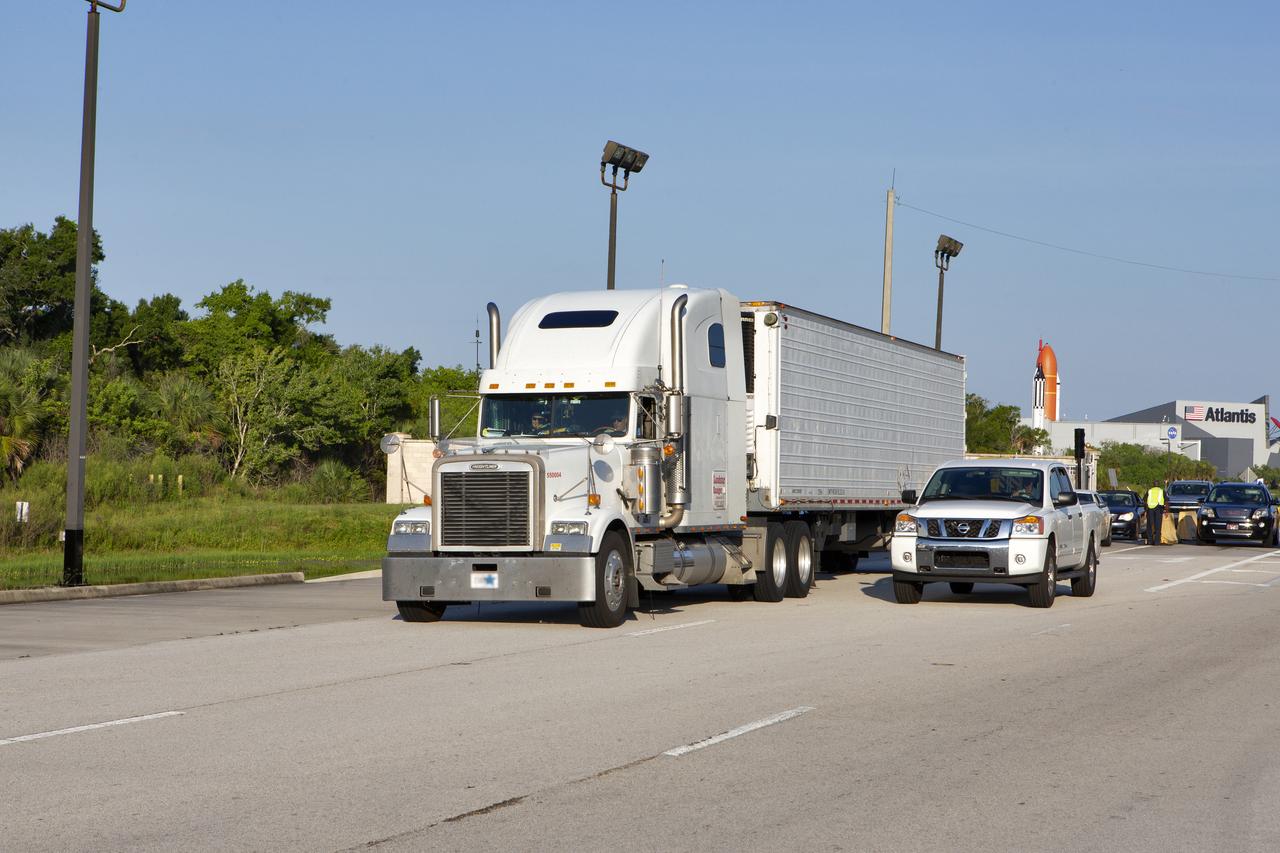
The abort motor for NASA’s Artemis 1 mission, secured in a heavy transport truck, arrives at the entrance to the agency’s Kennedy Space Center in Florida on June 6, 2019. The abort motor, manufactured by Northrop Grumman, will be delivered to the Launch Abort System Facility and integrated with Orion subcomponents and prepared for Artemis 1. It is one of three motors located on the tower of the Launch Abort System (LAS). The LAS is designed to pull the Orion capsule and its crew away to safety if an emergency occurs during ascent of the Space Launch System (SLS) rocket. During Artemis 1, the uncrewed Orion spacecraft will launch atop the SLS from Launch Pad 39B at Kennedy. Orion will embark on an approximately three-week mission that will take the spacecraft thousands of miles past the Moon. Orion will return to Earth and splashdown in the Pacific Ocean off the coast of California, where it will be retrieved and returned to Kennedy.
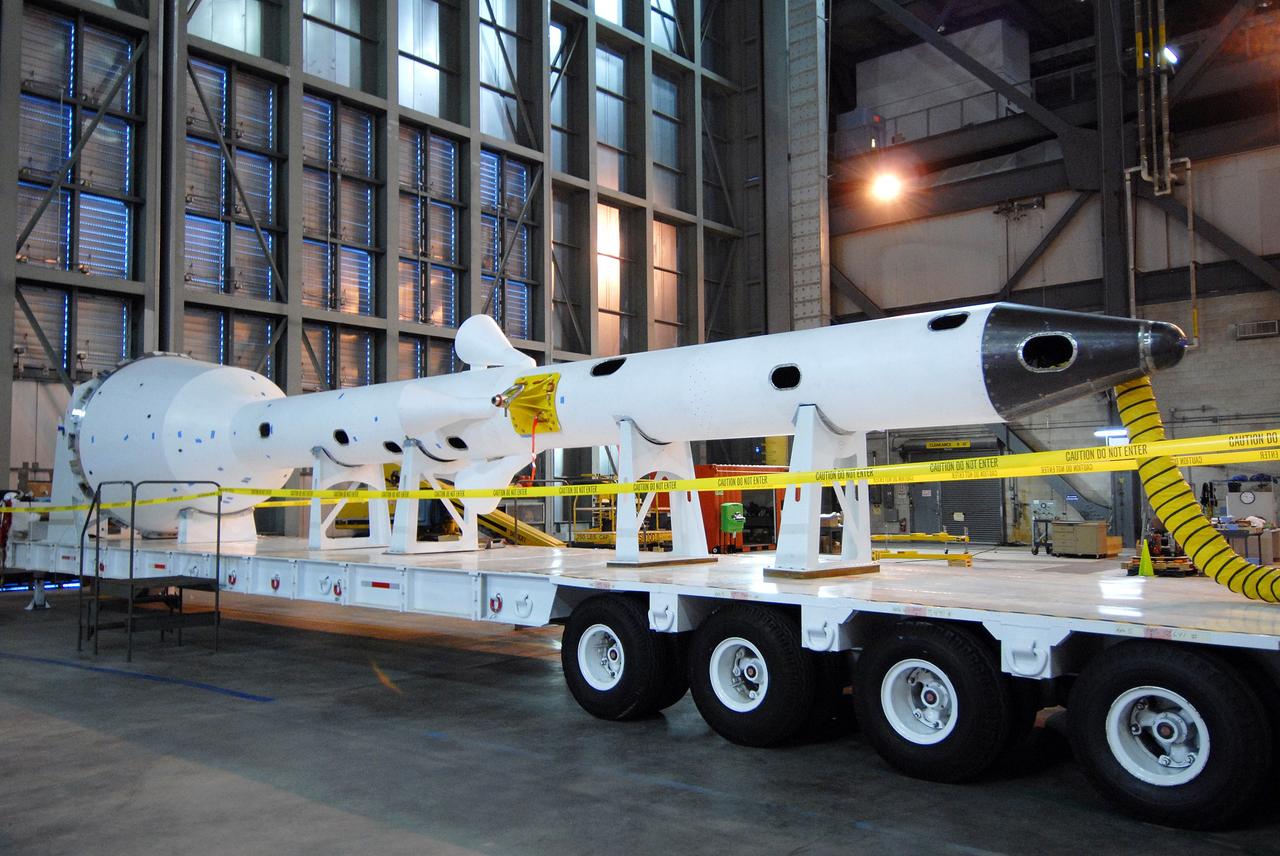
CAPE CANAVERAL, Fla. – The Ares I-X launch abort system that will form the tip of the Ares rocket arrives in the Vehicle Assembly Building at NASA's Kennedy Space Center in Florida. The launch abort system will provide safe evacuation if a launch vehicle failure occurs. Ares I-X is the test vehicle for the Ares I, which is part of the Constellation Program to return men to the moon and beyond. Ares I is the essential core of a safe, reliable, cost-effective space transportation system that eventually will carry crewed missions back to the moon, on to Mars and out into the solar system. Ares I-X is targeted for launch in July 2009. Photo credit: NASA/Jack Pfaller
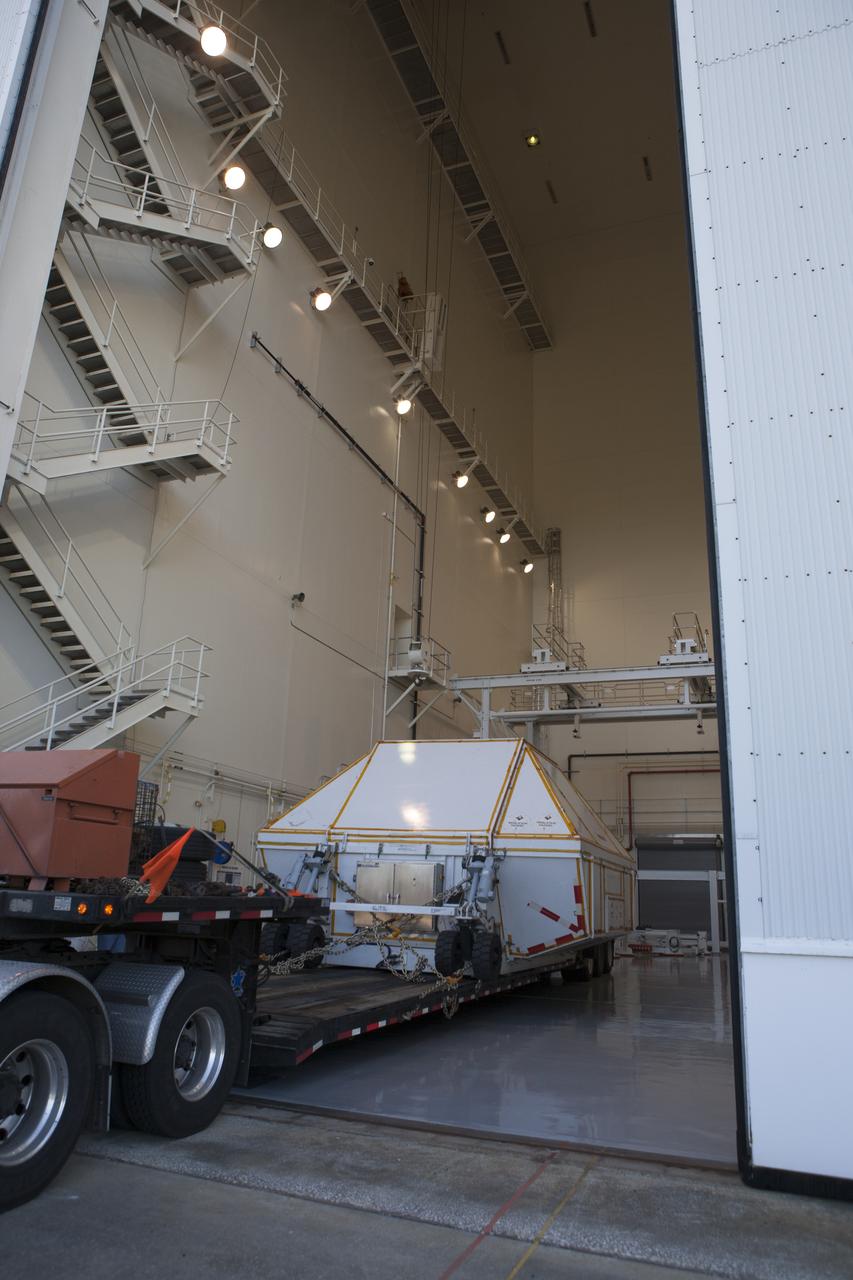
NASA's Orion spacecraft arrives at the Launch Abort System Facility at Kennedy Space Center in Florida. The spacecraft was transported 2,700 miles overland from Naval Base San Diego in California, on a flatbed truck secured in its crew module transportation fixture for the trip. During its first flight test, Orion completed a two-orbit, four-and-a-half hour mission Dec. 5 to test systems critical to crew safety, including the launch abort system, the heat shield and the parachute system. The Ground Systems Development and Operations Program led the recovery, offload and transportation efforts.
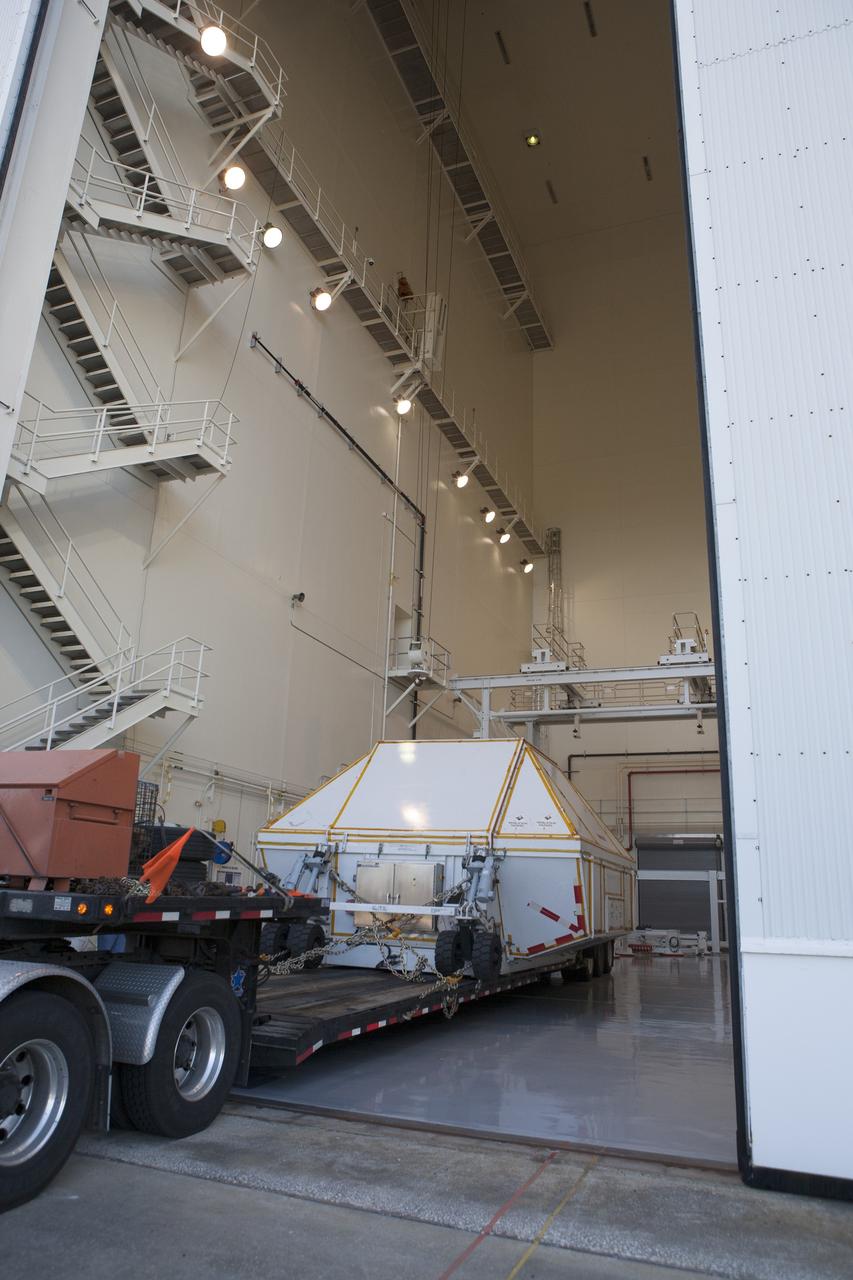
CAPE CANAVERAL, Fla. -- NASA's Orion spacecraft arrives at the Launch Abort System Facility at Kennedy Space Center in Florida. The spacecraft was transported 2,700 miles overland from Naval Base San Diego in California, on a flatbed truck secured in its crew module transportation fixture for the trip. During its first flight test, Orion completed a two-orbit, four-and-a-half hour mission Dec. 5 to test systems critical to crew safety, including the launch abort system, the heat shield and the parachute system. The Ground Systems Development and Operations Program led the recovery, offload and transportation efforts. For more information, visit www.nasa.gov/orion. Photo credit: NASA/Kim Shiflett
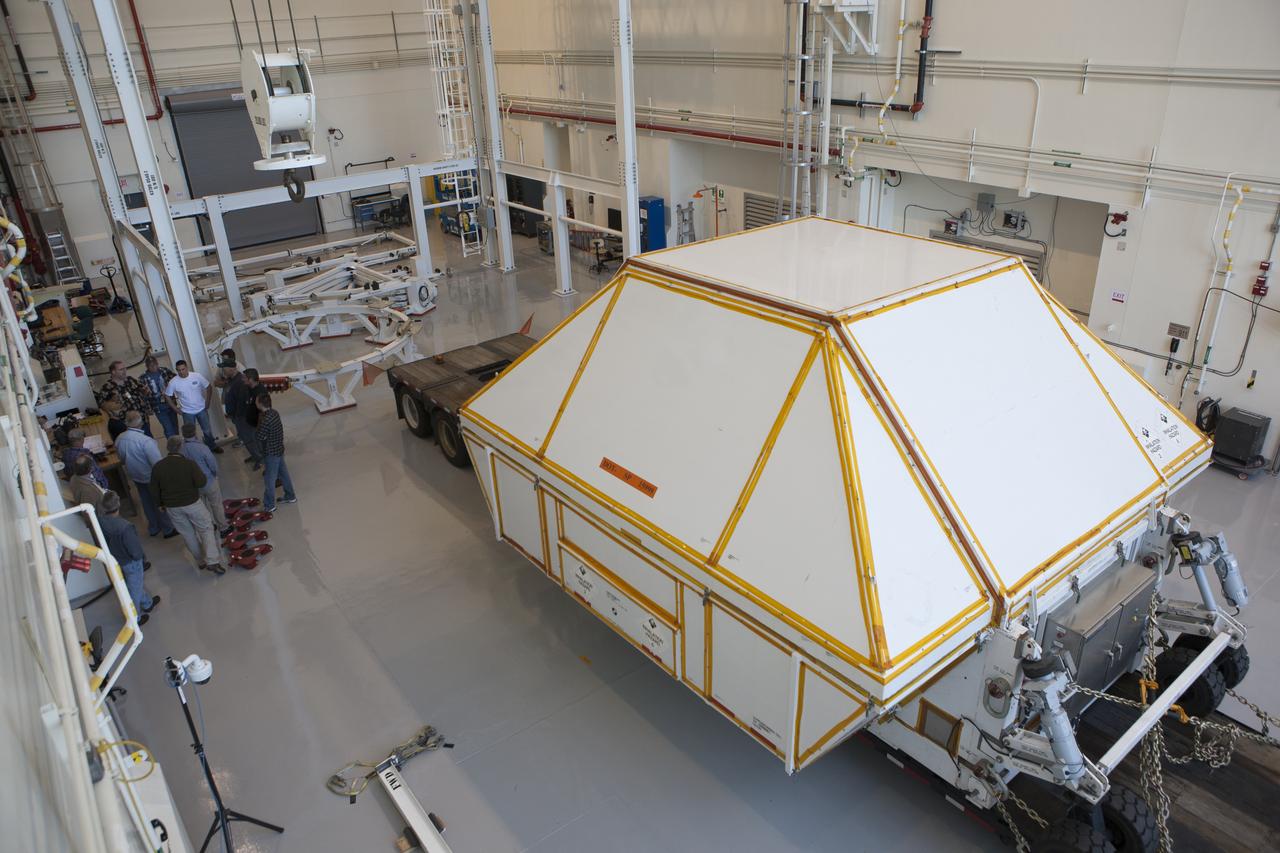
NASA's Orion spacecraft arrives inside the Launch Abort System Facility at Kennedy Space Center in Florida. The spacecraft was transported 2,700 miles overland from Naval Base San Diego in California, on a flatbed truck secured in its crew module transportation fixture for the trip. During its first flight test, Orion completed a two-orbit, four-and-a-half hour mission Dec. 5 to test systems critical to crew safety, including the launch abort system, the heat shield and the parachute system. The Ground Systems Development and Operations Program led the recovery, offload and transportation efforts.
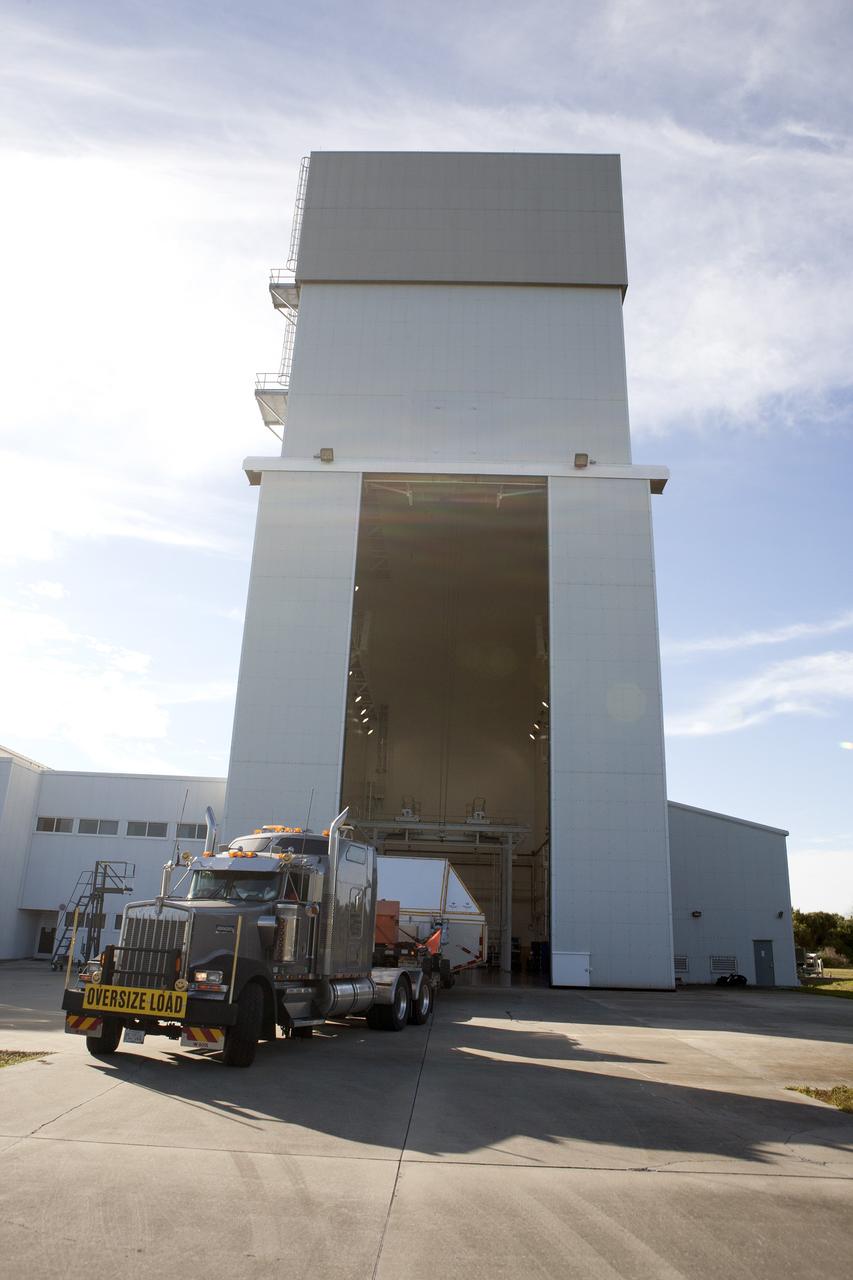
CAPE CANAVERAL, Fla. -- NASA's Orion spacecraft arrives at the Launch Abort System Facility at Kennedy Space Center in Florida. The spacecraft was transported 2,700 miles overland from Naval Base San Diego in California, on a flatbed truck secured in its crew module transportation fixture for the trip. During its first flight test, Orion completed a two-orbit, four-and-a-half hour mission Dec. 5 to test systems critical to crew safety, including the launch abort system, the heat shield and the parachute system. The Ground Systems Development and Operations Program led the recovery, offload and transportation efforts. For more information, visit www.nasa.gov/orion. Photo credit: NASA/Kim Shiflett
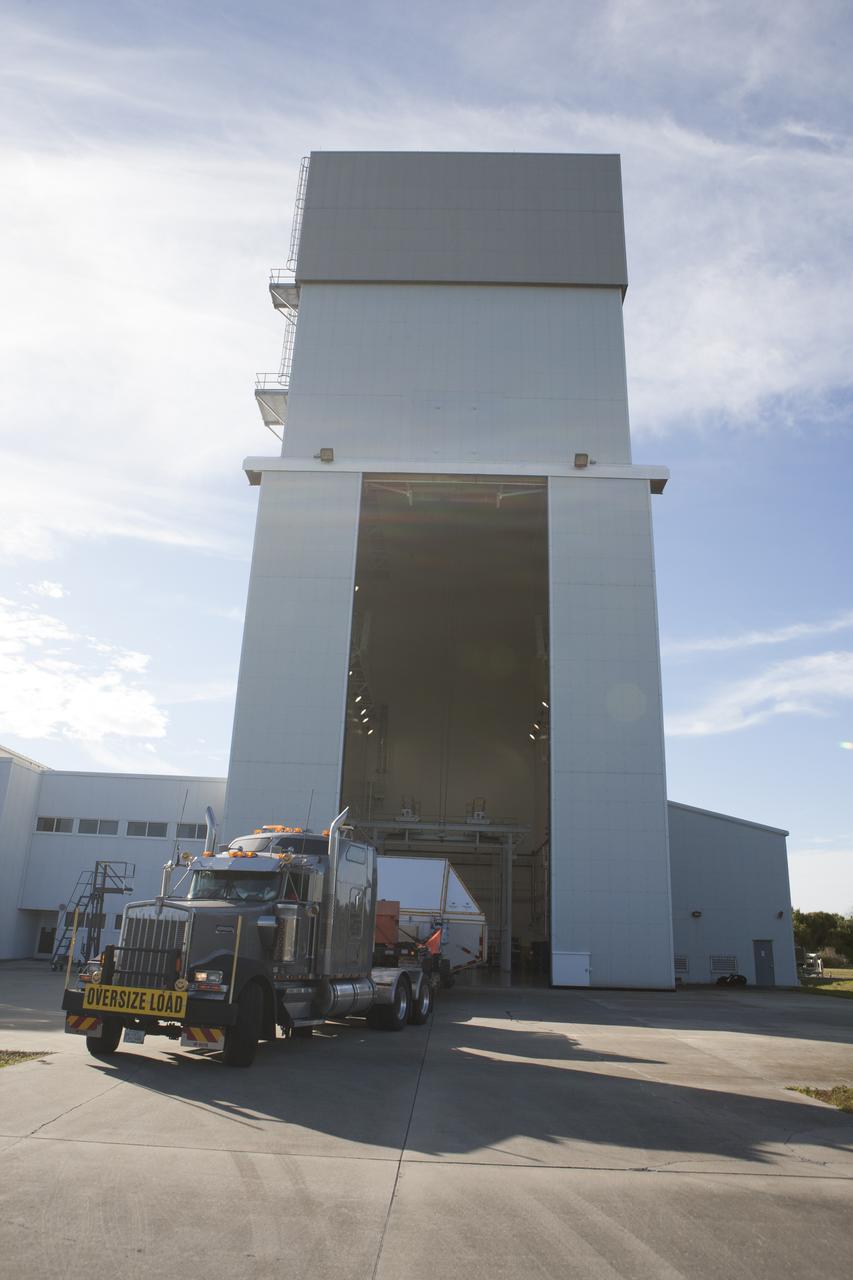
NASA's Orion spacecraft arrives at the Launch Abort System Facility at Kennedy Space Center in Florida. The spacecraft was transported 2,700 miles overland from Naval Base San Diego in California, on a flatbed truck secured in its crew module transportation fixture for the trip. During its first flight test, Orion completed a two-orbit, four-and-a-half hour mission Dec. 5 to test systems critical to crew safety, including the launch abort system, the heat shield and the parachute system. The Ground Systems Development and Operations Program led the recovery, offload and transportation efforts.

NASA’s Artemis II Orion spacecraft arrives at the Launch Abort System Facility at the agency’s Kennedy Space Center in Florida on Sunday, Aug. 10, 2025, to prepare for integration with its 44-foot-tall launch abort system. Once integration is complete, the stack will be transported to High Bay 3 inside NASA Kennedy’s Vehicle Assembly Building and integrated with the SLS (Space Launch System) rocket that will launch NASA’s Artemis II astronauts Reid Wiseman, Victor Glover, and Christina Koch, and CSA (Canadian Space Agency) astronaut Jeremy Hansen around the Moon and back.
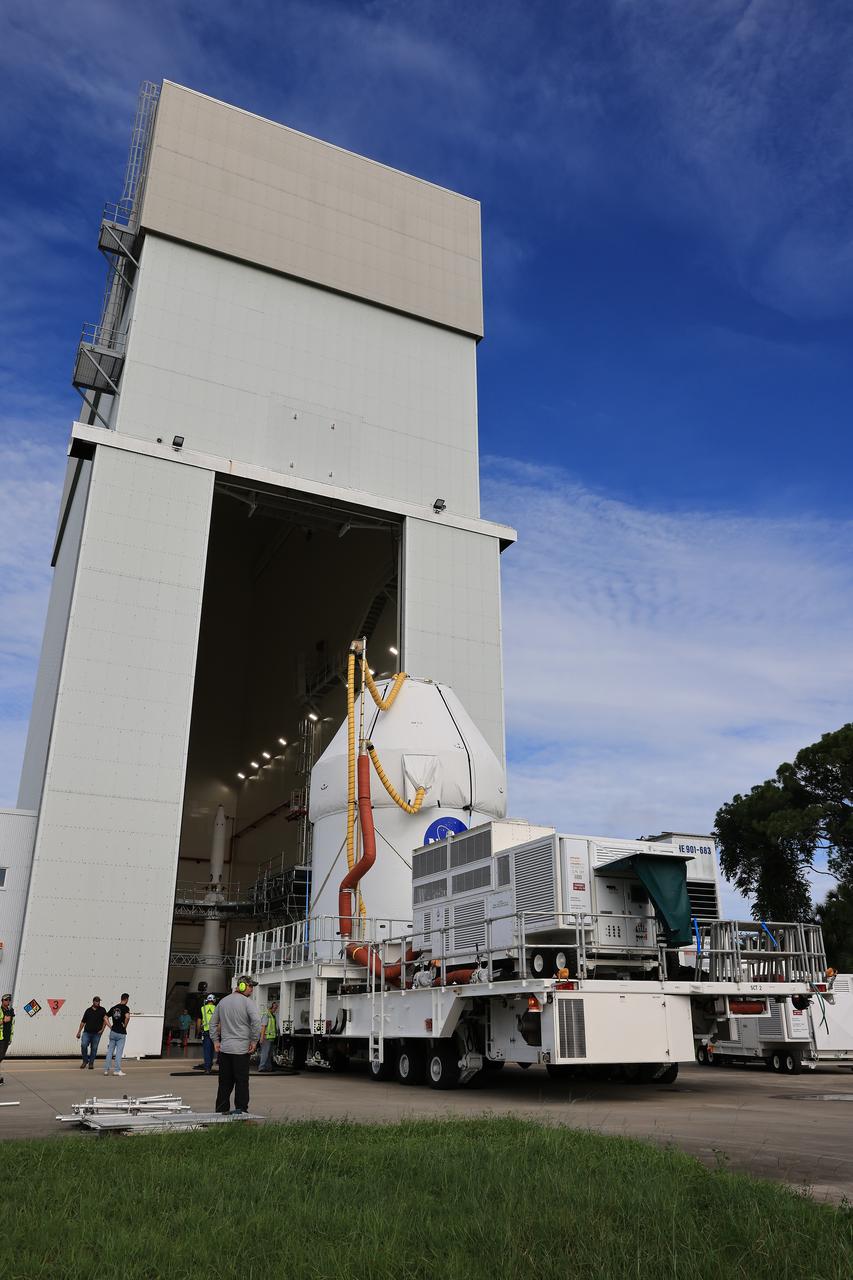
NASA’s Artemis II Orion spacecraft arrives at the Launch Abort System Facility at the agency’s Kennedy Space Center in Florida on Sunday, Aug. 10, 2025, to prepare for integration with its 44-foot-tall launch abort system. Once integration is complete, the stack will be transported to High Bay 3 inside NASA Kennedy’s Vehicle Assembly Building and integrated with the SLS (Space Launch System) rocket that will launch NASA’s Artemis II astronauts Reid Wiseman, Victor Glover, and Christina Koch, and CSA (Canadian Space Agency) astronaut Jeremy Hansen around the Moon and back.
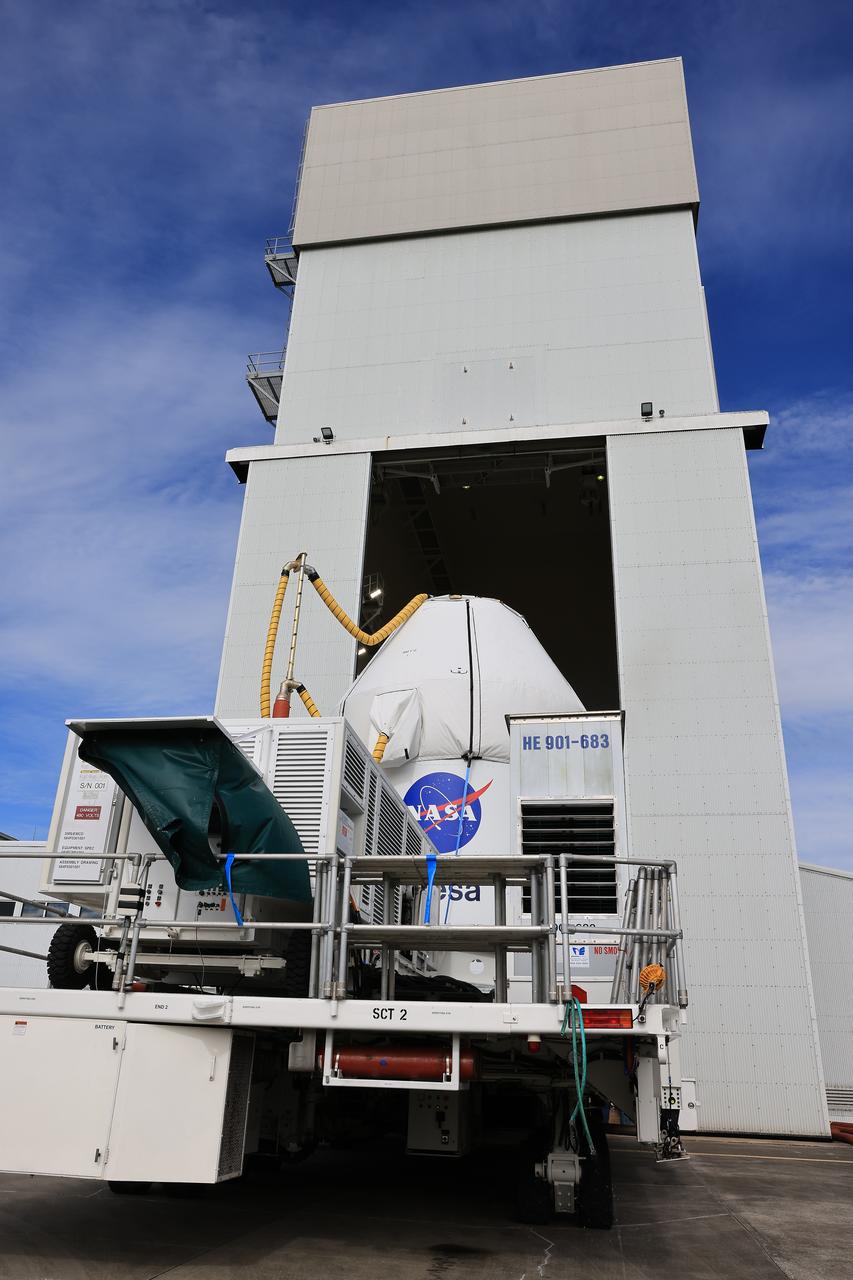
NASA’s Artemis II Orion spacecraft arrives at the Launch Abort System Facility at the agency’s Kennedy Space Center in Florida on Sunday, Aug. 10, 2025, to prepare for integration with its 44-foot-tall launch abort system. Once integration is complete, the stack will be transported to High Bay 3 inside NASA Kennedy’s Vehicle Assembly Building and integrated with the SLS (Space Launch System) rocket that will launch NASA’s Artemis II astronauts Reid Wiseman, Victor Glover, and Christina Koch, and CSA (Canadian Space Agency) astronaut Jeremy Hansen around the Moon and back.
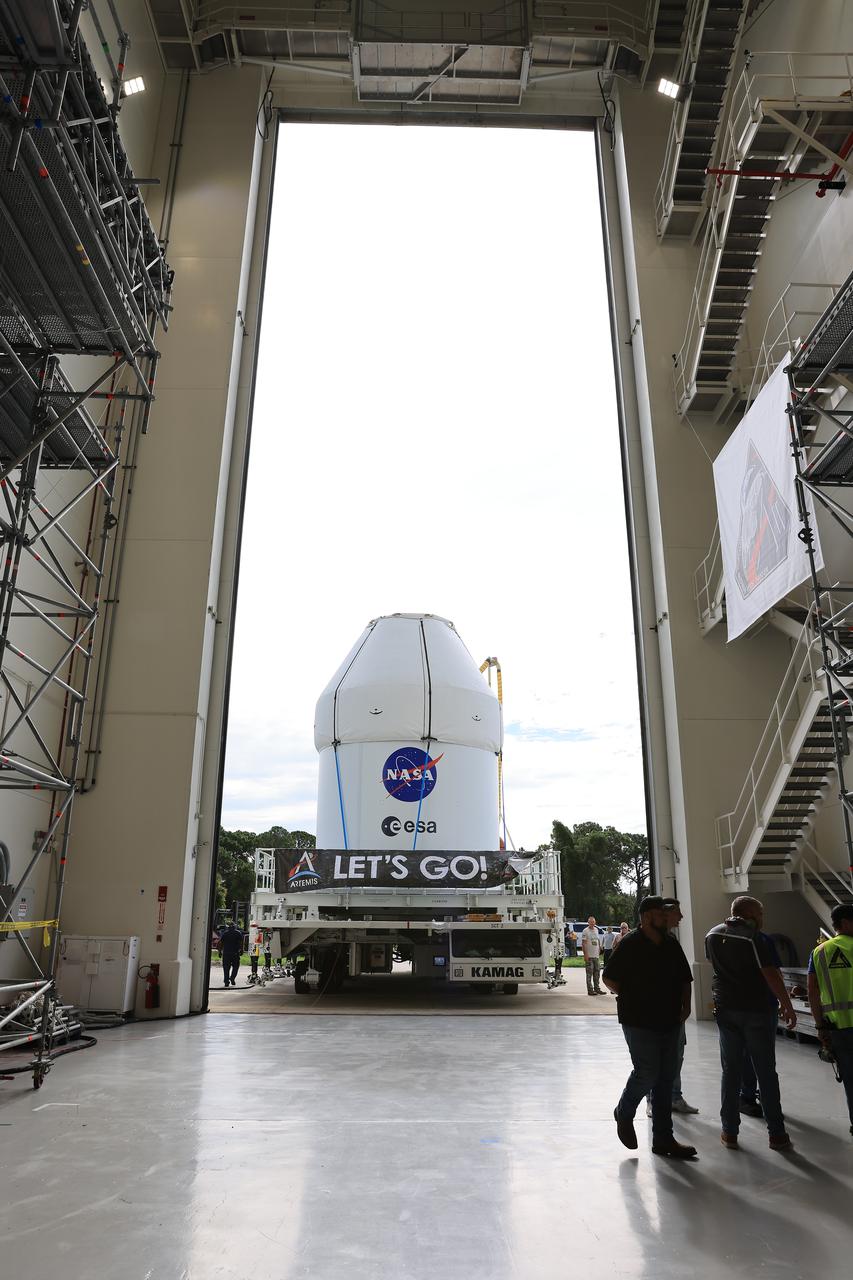
NASA’s Artemis II Orion spacecraft arrives at the Launch Abort System Facility at the agency’s Kennedy Space Center in Florida on Sunday, Aug. 10, 2025, to prepare for integration with its 44-foot-tall launch abort system. Once integration is complete, the stack will be transported to High Bay 3 inside NASA Kennedy’s Vehicle Assembly Building and integrated with the SLS (Space Launch System) rocket that will launch NASA’s Artemis II astronauts Reid Wiseman, Victor Glover, and Christina Koch, and CSA (Canadian Space Agency) astronaut Jeremy Hansen around the Moon and back.
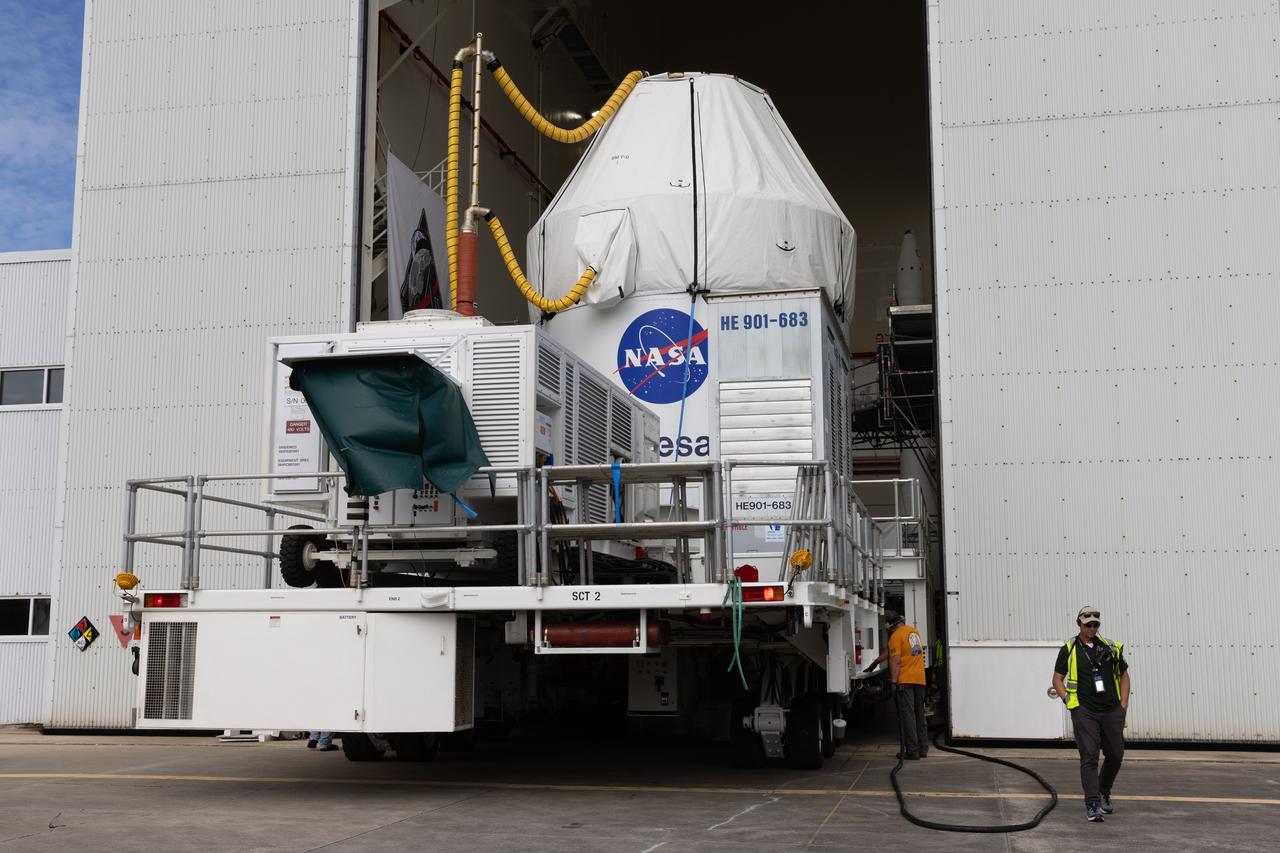
NASA’s Artemis II Orion spacecraft arrives at the Launch Abort System Facility at the agency’s Kennedy Space Center in Florida on Sunday, Aug. 10, 2025, to prepare for integration with its 44-foot-tall launch abort system. Once integration is complete, the stack will be transported to High Bay 3 inside NASA Kennedy’s Vehicle Assembly Building and integrated with the SLS (Space Launch System) rocket that will launch NASA’s Artemis II astronauts Reid Wiseman, Victor Glover, and Christina Koch, and CSA (Canadian Space Agency) astronaut Jeremy Hansen around the Moon and back.
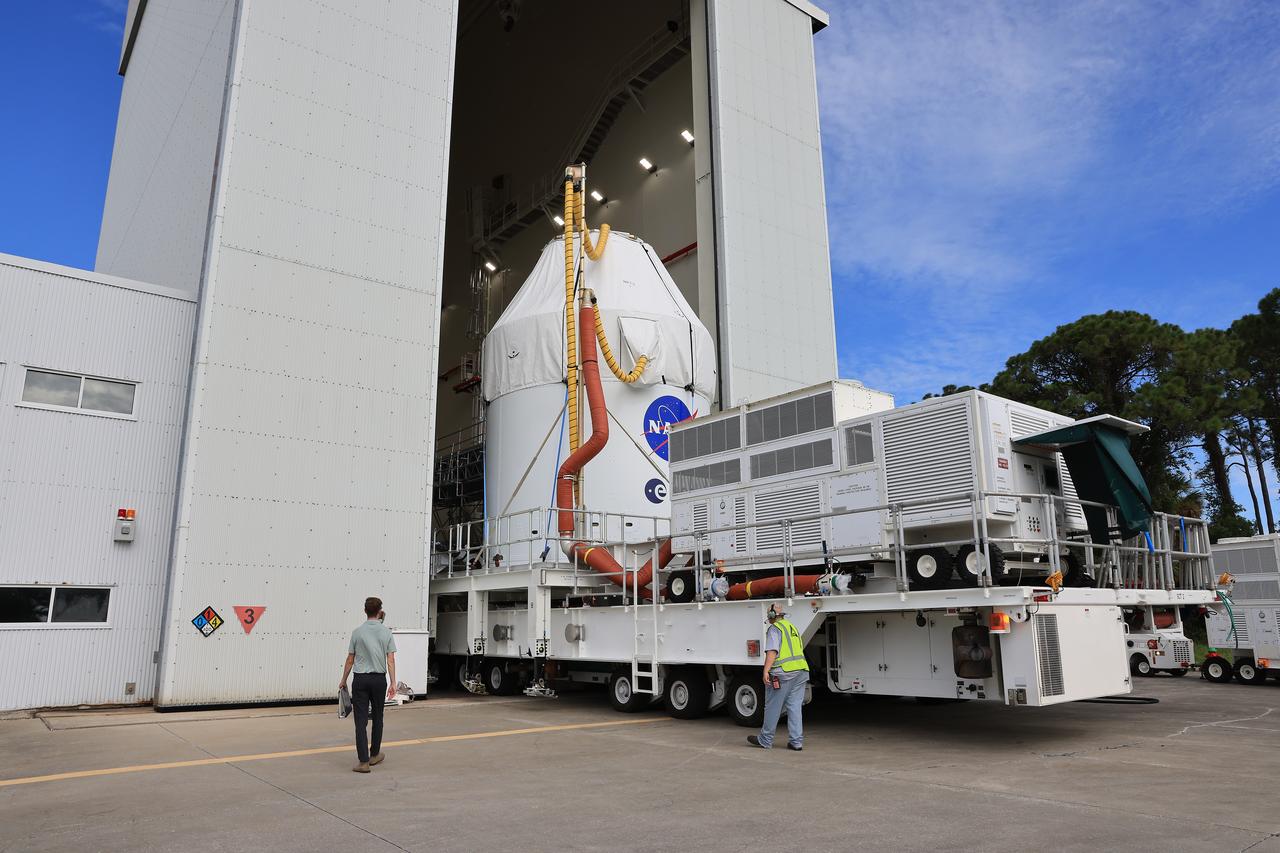
NASA’s Artemis II Orion spacecraft arrives at the Launch Abort System Facility at the agency’s Kennedy Space Center in Florida on Sunday, Aug. 10, 2025, to prepare for integration with its 44-foot-tall launch abort system. Once integration is complete, the stack will be transported to High Bay 3 inside NASA Kennedy’s Vehicle Assembly Building and integrated with the SLS (Space Launch System) rocket that will launch NASA’s Artemis II astronauts Reid Wiseman, Victor Glover, and Christina Koch, and CSA (Canadian Space Agency) astronaut Jeremy Hansen around the Moon and back.
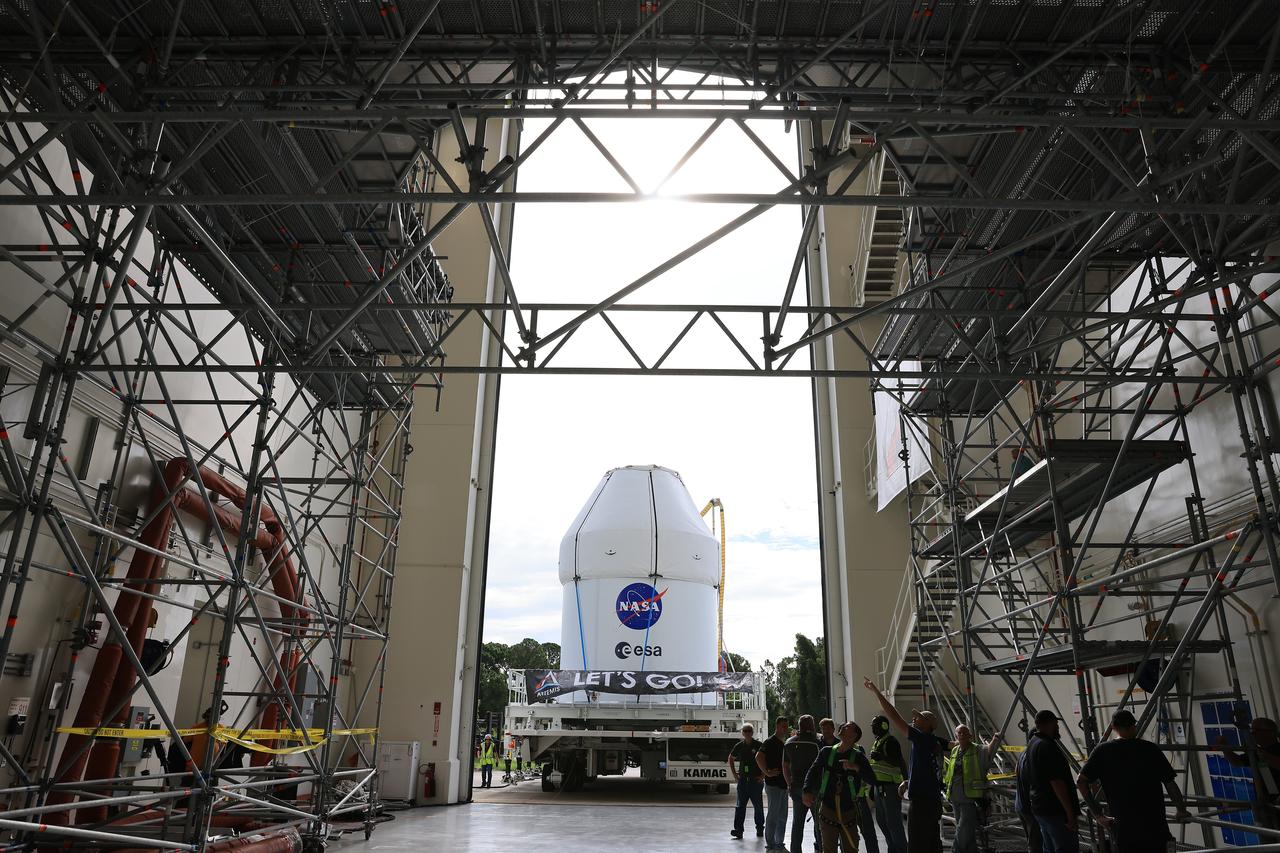
NASA’s Artemis II Orion spacecraft arrives at the Launch Abort System Facility at the agency’s Kennedy Space Center in Florida on Sunday, Aug. 10, 2025, to prepare for integration with its 44-foot-tall launch abort system. Once integration is complete, the stack will be transported to High Bay 3 inside NASA Kennedy’s Vehicle Assembly Building and integrated with the SLS (Space Launch System) rocket that will launch NASA’s Artemis II astronauts Reid Wiseman, Victor Glover, and Christina Koch, and CSA (Canadian Space Agency) astronaut Jeremy Hansen around the Moon and back.

The SpaceX Falcon 9 rocket that will be used for the company’s In-Flight Abort Test arrives at SpaceX’s hangar at Launch Complex 39 at NASA’s Kennedy Space Center in Florida. The test will demonstrate the spacecraft and launch system’s ability to abort in the unlikely case of an emergency after liftoff. It is an important step before NASA astronauts Bob Behnken and Doug Hurley are transported to the International Space Station aboard Crew Dragon as part of NASA’s Commercial Crew Program.
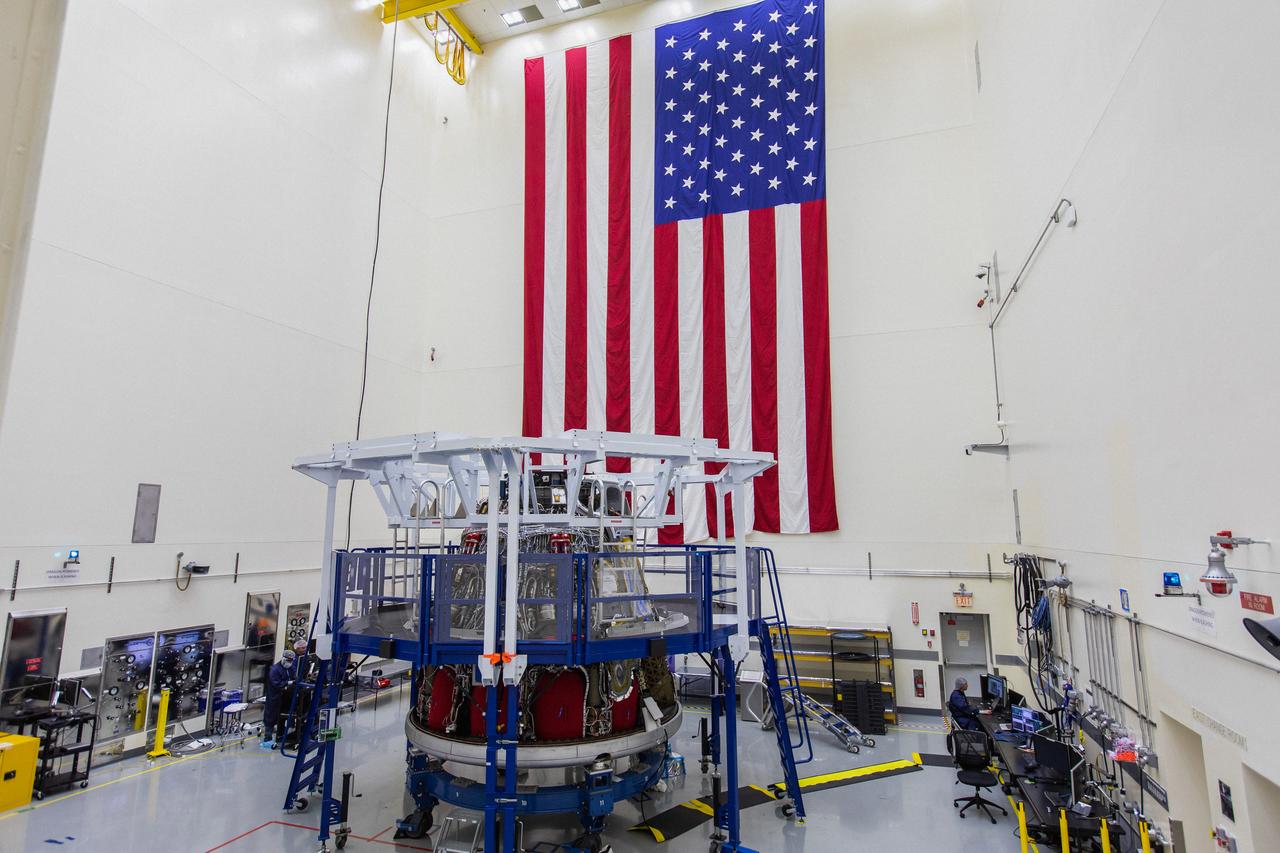
The SpaceX Crew Dragon spacecraft that will be used for the company’s In-Flight Abort Test arrives at SpaceX’s hangar at Launch Complex 39 at NASA’s Kennedy Space Center in Florida. The test will demonstrate the spacecraft and launch system’s ability to abort in the unlikely case of an emergency after liftoff. It is an important step before NASA astronauts Bob Behnken and Doug Hurley are transported to the International Space Station aboard Crew Dragon as part of NASA’s Commercial Crew Program.
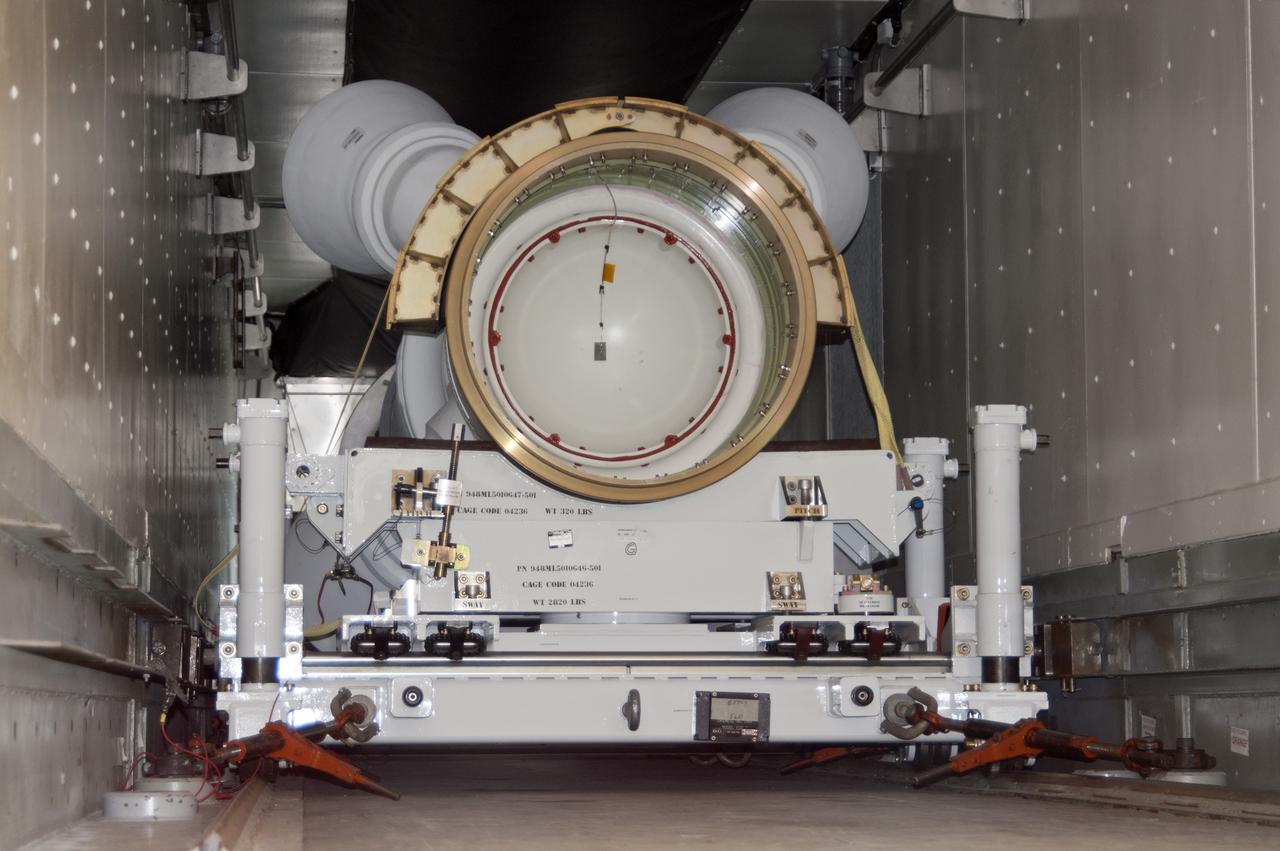
CAPE CANAVERAL, Fla. – At NASA’s Kennedy Space Center in Florida, the Alliant Techsystems, or ATK, launch abort motor arrives at the Launch Abort System Facility for Exploration Flight Test 1, or EFT-1, of the agency’s Orion Multi-Purpose Crew Vehicle. ATK’s abort motor is part of Orion’s Launch Abort System, which is designed to safely pull the Orion crew module away from the launch vehicle in the event of an emergency on the launch pad or during the initial ascent of NASA’s Space Launch System, or SLS, rocket. The test flight abort motor is configured with inert propellant. Orion is the exploration spacecraft designed to carry crews to space beyond low Earth orbit. It will provide emergency abort capability, sustain the crew during the space travel and provide safe re-entry from deep space return velocities. Orion’s first unpiloted test flight is scheduled to launch in 2014 atop a Delta IV rocket. A second uncrewed flight test is scheduled for 2017 on the SLS rocket. For more information, visit http:__www.nasa.gov_orion. Photo credit: NASA_Charisse Nahser
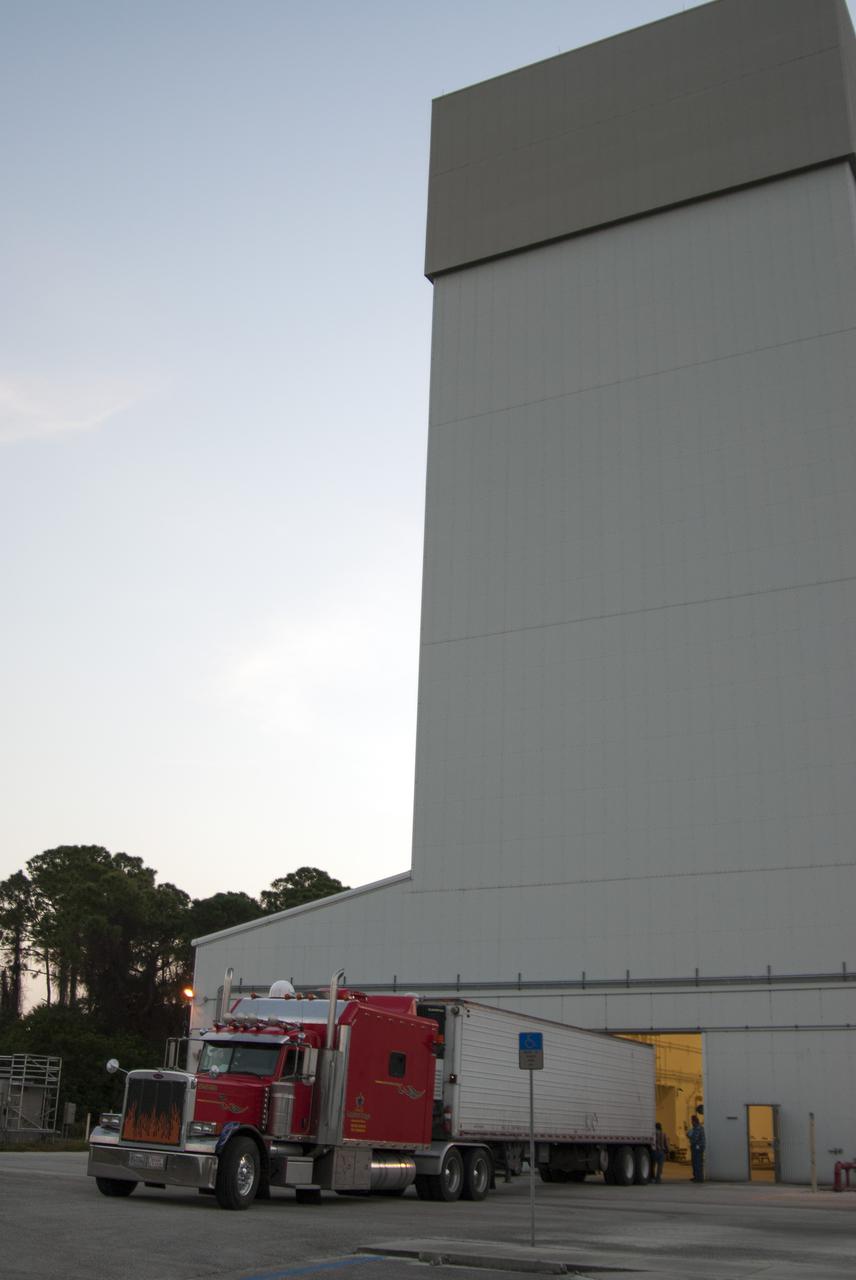
CAPE CANAVERAL, Fla. – At NASA’s Kennedy Space Center in Florida, a truck arrives at the Launch Abort System Facility with a launch abort motor from Alliant Techsystems, or ATK, for Exploration Flight Test 1, or EFT-1, of the agency’s Orion Multi-Purpose Crew Vehicle. ATK’s abort motor is part of Orion’s Launch Abort System, which is designed to safely pull the Orion crew module away from the launch vehicle in the event of an emergency on the launch pad or during the initial ascent of NASA’s Space Launch System, or SLS, rocket. The test flight abort motor is configured with inert propellant. Orion is the exploration spacecraft designed to carry crews to space beyond low Earth orbit. It will provide emergency abort capability, sustain the crew during the space travel and provide safe re-entry from deep space return velocities. Orion’s first unpiloted test flight is scheduled to launch in 2014 atop a Delta IV rocket. A second uncrewed flight test is scheduled for 2017 on the SLS rocket. For more information, visit http:__www.nasa.gov_orion. Photo credit: NASA_Charisse Nahser
CAPE CANAVERAL, Fla. – The launch abort system for the Ares I-X rocket arrives in the Vehicle Assembly Building's high bay 4 at NASA's Kennedy Space Center in Florida. The launch abort system joins the precisely machined, full-scale simulator crew module, which, together, will form the tip of the Ares I-X. Ares I-X is the test flight for the Ares I. The I-X flight will provide NASA an early opportunity to test and prove hardware, facilities and ground operations associated with Ares I. The launch of the 321-foot-tall, full-scale Ares I-X, targeted for July 2009, will be the first in a series of unpiloted rocket launches from Kennedy. When fully developed, the 16-foot diameter crew module will furnish living space and reentry protection for the astronauts, while their launch abort system will provide safe evacuation if a launch vehicle failure occurs. Photo credit: NASA/Jack Pfaller
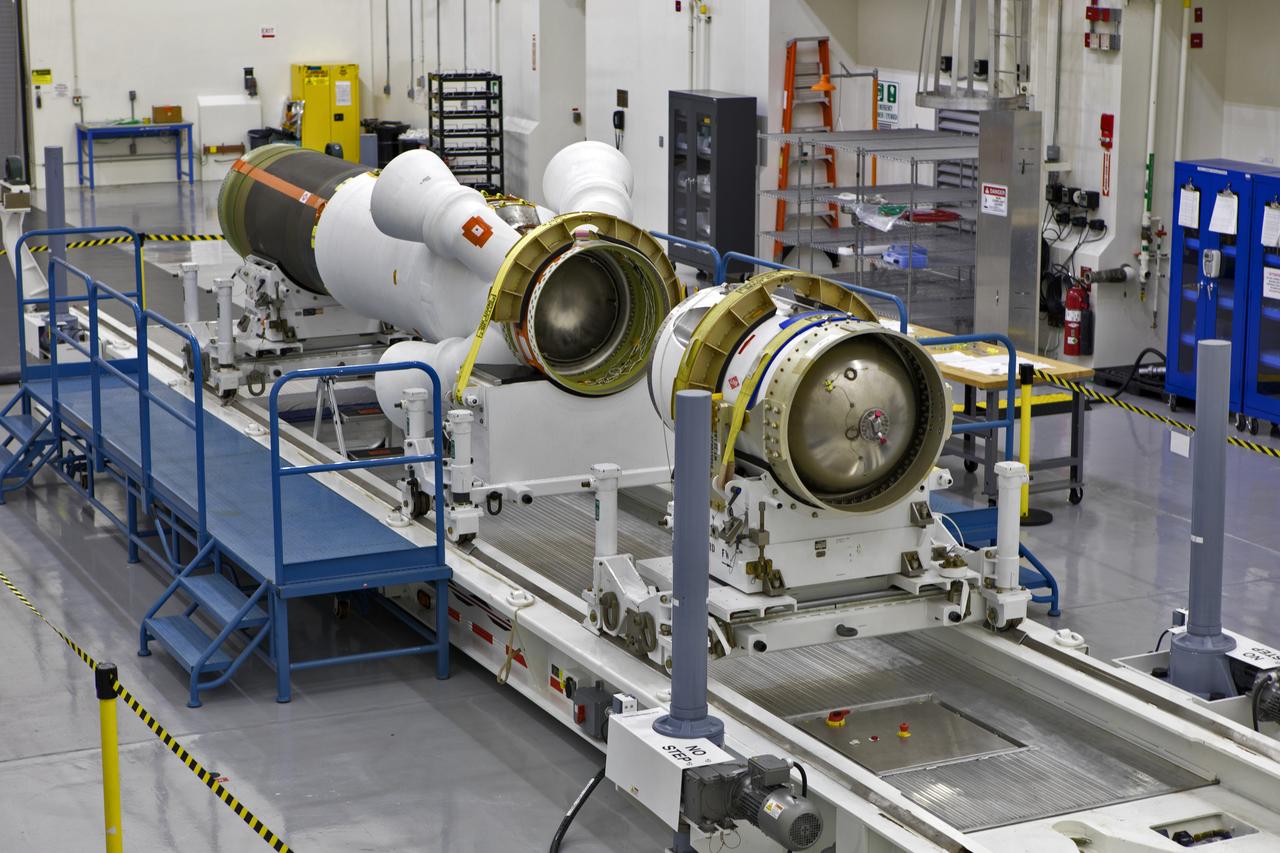
The jettison motor for Orion’s Launch Abort System (LAS) is shown inside the Launch Abort System Facility (LASF) at NASA’s Kennedy Space Center in Florida. The motor, which arrived at Kennedy on Sept. 10, 2018, will be stored in the LASF until processing for a full-stress test of the LAS called Ascent Abort-2 (AA-2), scheduled for April 2019. Designed and built by NASA and Lockheed Martin, the LAS will protect astronauts if a problem arises during launch by pulling the spacecraft away from a failing rocket. The jettison motor is one of three solid propellant rocket motors in the LAS (the abort motor and attitude control motor are the other two). The jettison motor will pull the LAS away from the crew module, allowing Orion’s parachutes to deploy and the spacecraft to safely land in the ocean.
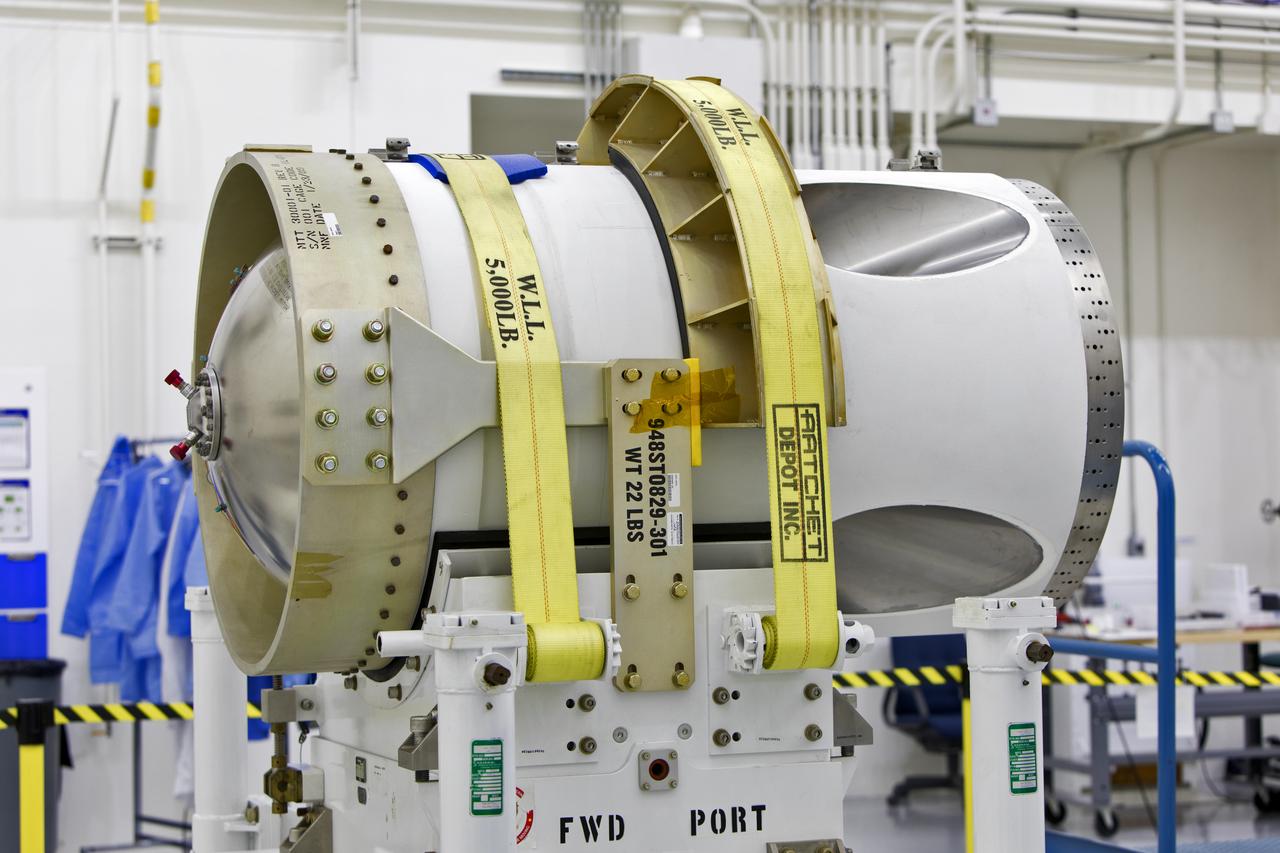
The jettison motor for Orion’s Launch Abort System (LAS) is shown inside the Launch Abort System Facility (LASF) at NASA’s Kennedy Space Center in Florida. The motor, which arrived at Kennedy on Sept. 10, 2018, will be stored in the LASF until processing for a full-stress test of the LAS called Ascent Abort-2 (AA-2), scheduled for April 2019. Designed and built by NASA and Lockheed Martin, the LAS will protect astronauts if a problem arises during launch by pulling the spacecraft away from a failing rocket. The jettison motor is one of three solid propellant rocket motors in the LAS (the abort motor and attitude control motor are the other two). The jettison motor will pull the LAS away from the crew module, allowing Orion’s parachutes to deploy and the spacecraft to safely land in the ocean.
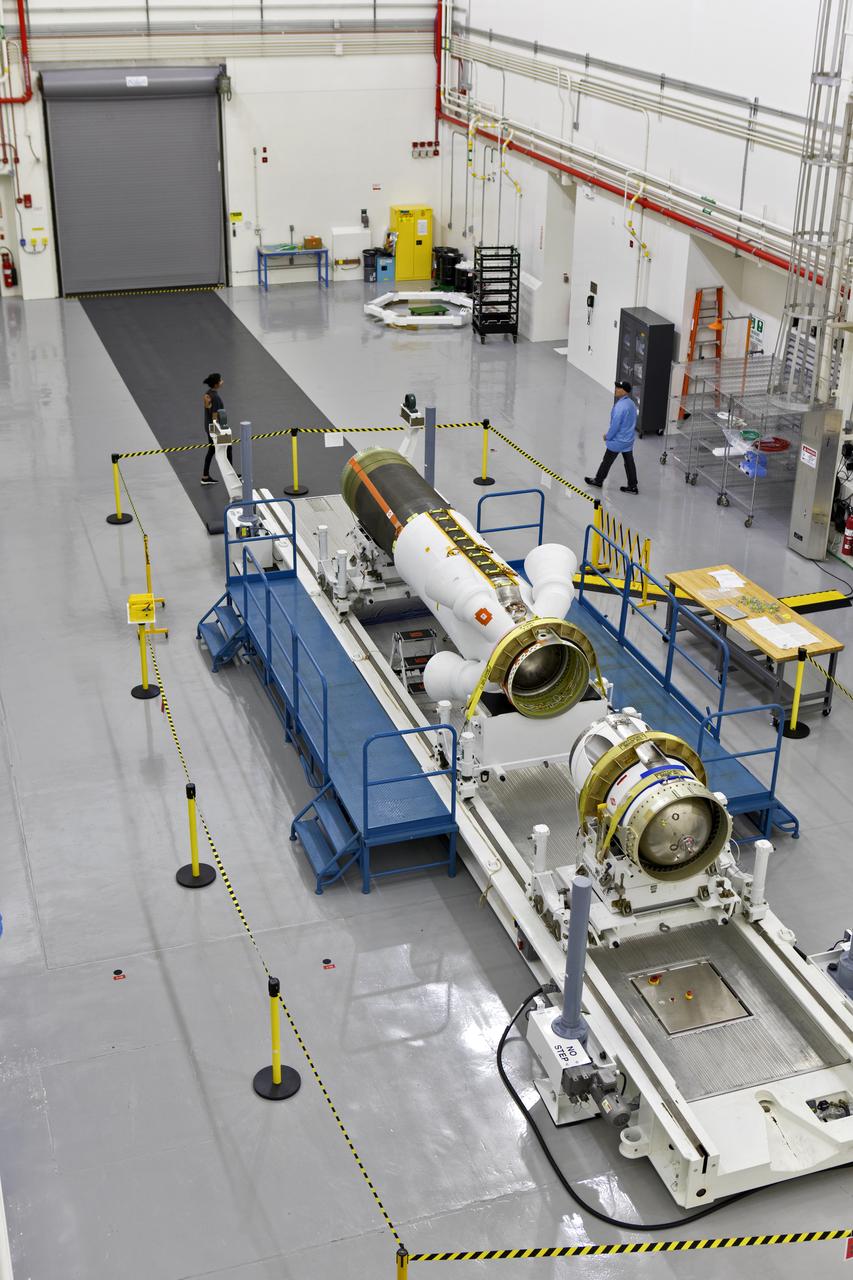
The jettison motor for Orion’s Launch Abort System (LAS) is shown inside the Launch Abort System Facility (LASF) at NASA’s Kennedy Space Center in Florida. The motor, which arrived at Kennedy on Sept. 10, 2018, will be stored in the LASF until processing for a full-stress test of the LAS called Ascent Abort-2 (AA-2), scheduled for April 2019. Designed and built by NASA and Lockheed Martin, the LAS will protect astronauts if a problem arises during launch by pulling the spacecraft away from a failing rocket. The jettison motor is one of three solid propellant rocket motors in the LAS (the abort motor and attitude control motor are the other two). The jettison motor will pull the LAS away from the crew module, allowing Orion’s parachutes to deploy and the spacecraft to safely land in the ocean.
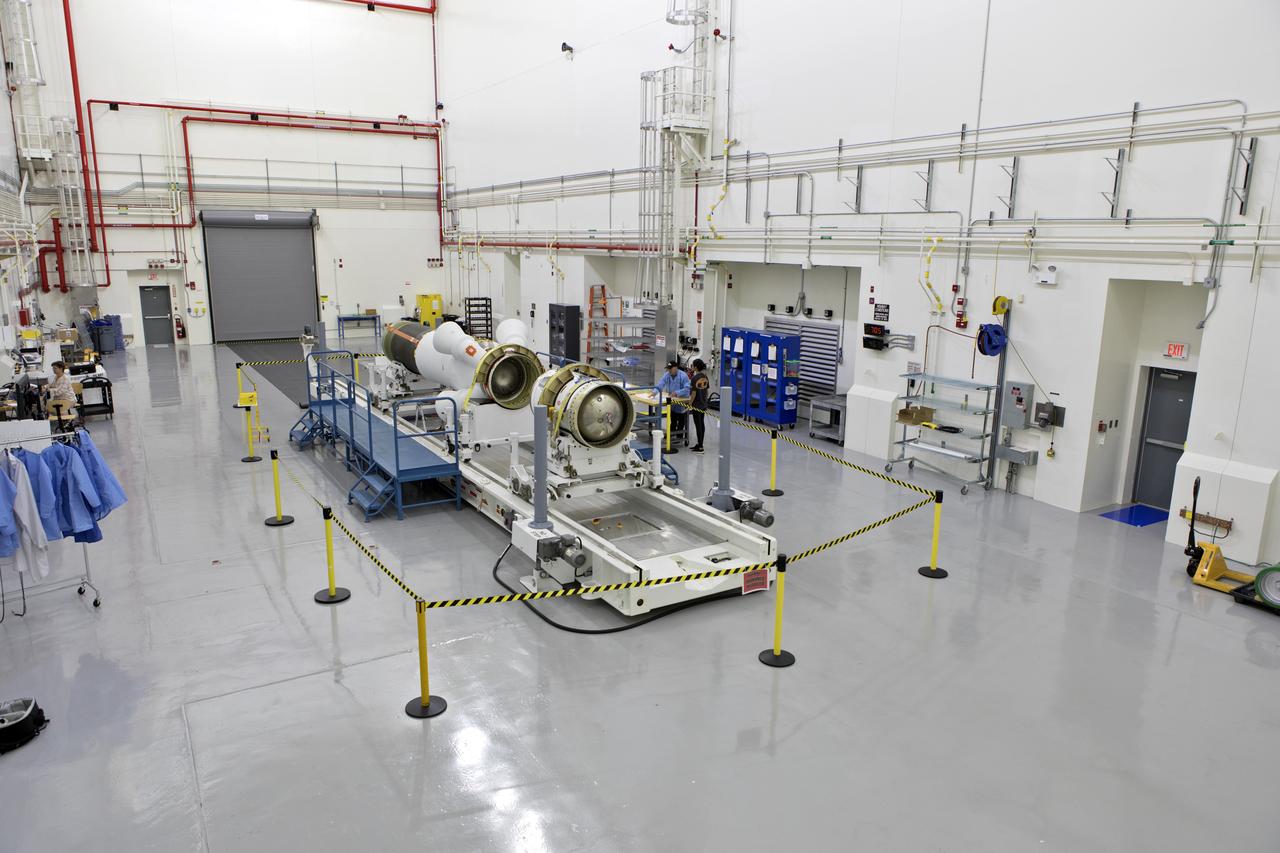
The jettison motor for Orion’s Launch Abort System (LAS) is shown inside the Launch Abort System Facility (LASF) at NASA’s Kennedy Space Center in Florida. The motor, which arrived at Kennedy on Sept. 10, 2018, will be stored in the LASF until processing for a full-stress test of the LAS called Ascent Abort-2 (AA-2), scheduled for April 2019. Designed and built by NASA and Lockheed Martin, the LAS will protect astronauts if a problem arises during launch by pulling the spacecraft away from a failing rocket. The jettison motor is one of three solid propellant rocket motors in the LAS (the abort motor and attitude control motor are the other two). The jettison motor will pull the LAS away from the crew module, allowing Orion’s parachutes to deploy and the spacecraft to safely land in the ocean.
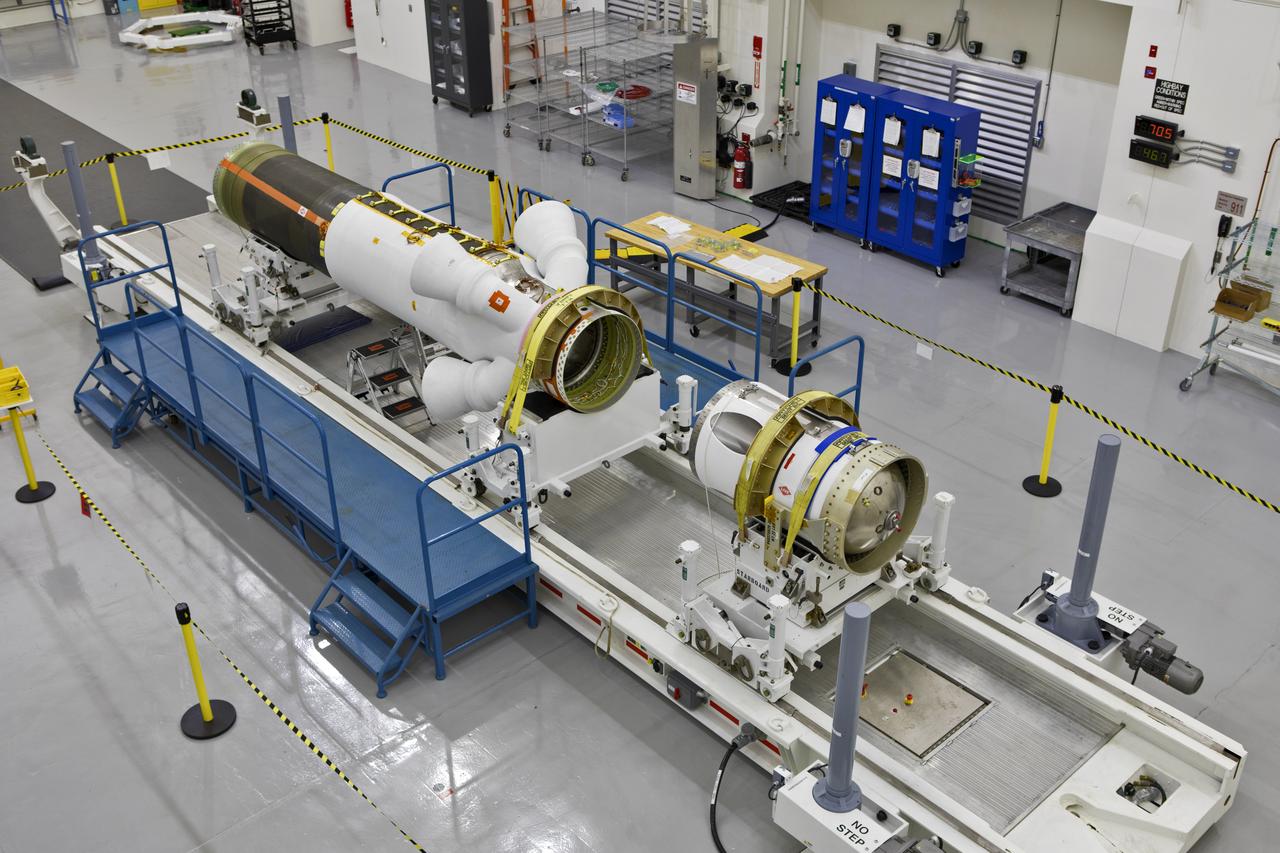
The jettison motor for Orion’s Launch Abort System (LAS) is shown inside the Launch Abort System Facility (LASF) at NASA’s Kennedy Space Center in Florida. The motor, which arrived at Kennedy on Sept. 10, 2018, will be stored in the LASF until processing for a full-stress test of the LAS called Ascent Abort-2 (AA-2), scheduled for April 2019. Designed and built by NASA and Lockheed Martin, the LAS will protect astronauts if a problem arises during launch by pulling the spacecraft away from a failing rocket. The jettison motor is one of three solid propellant rocket motors in the LAS (the abort motor and attitude control motor are the other two). The jettison motor will pull the LAS away from the crew module, allowing Orion’s parachutes to deploy and the spacecraft to safely land in the ocean.
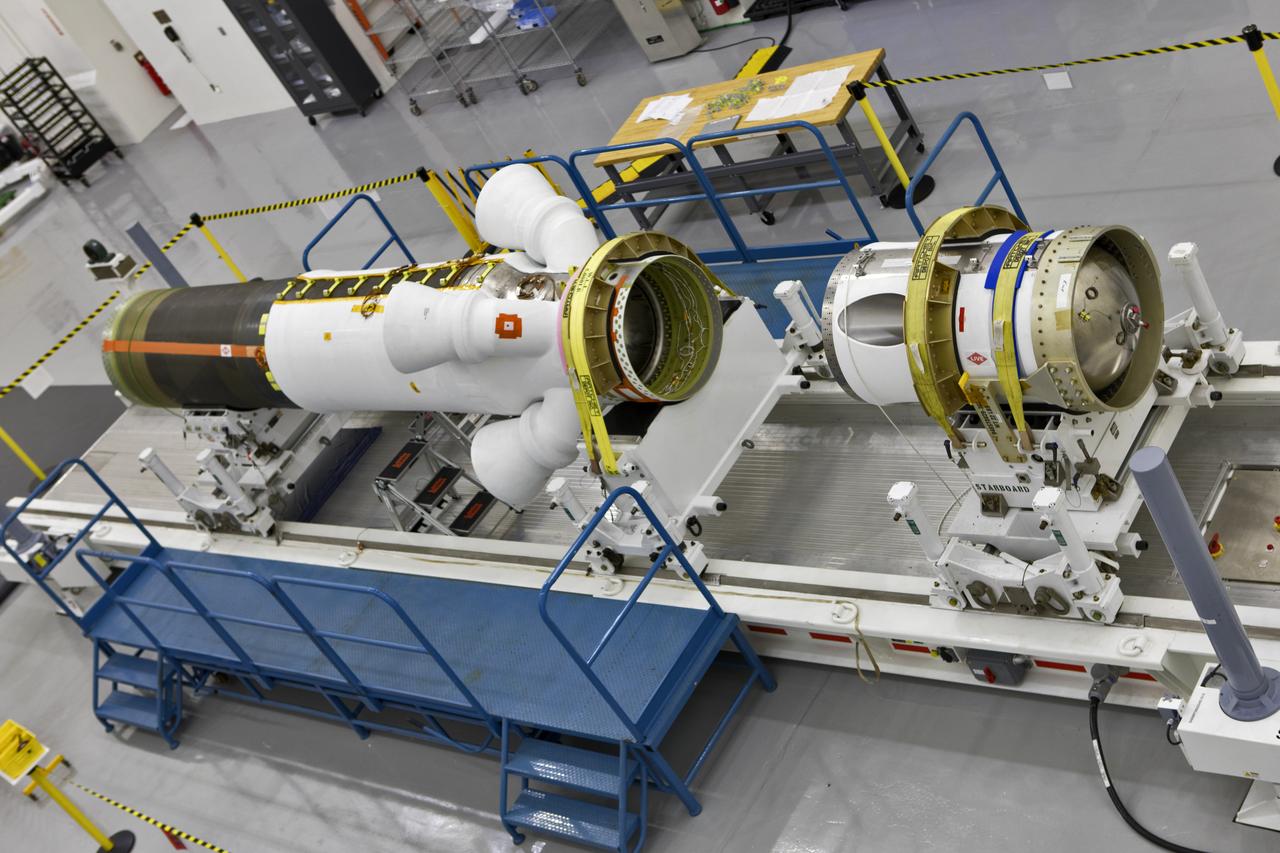
The jettison motor for Orion’s Launch Abort System (LAS) is shown inside the Launch Abort System Facility (LASF) at NASA’s Kennedy Space Center in Florida. The motor, which arrived at Kennedy on Sept. 10, 2018, will be stored in the LASF until processing for a full-stress test of the LAS called Ascent Abort-2 (AA-2), scheduled for April 2019. Designed and built by NASA and Lockheed Martin, the LAS will protect astronauts if a problem arises during launch by pulling the spacecraft away from a failing rocket. The jettison motor is one of three solid propellant rocket motors in the LAS (the abort motor and attitude control motor are the other two). The jettison motor will pull the LAS away from the crew module, allowing Orion’s parachutes to deploy and the spacecraft to safely land in the ocean.
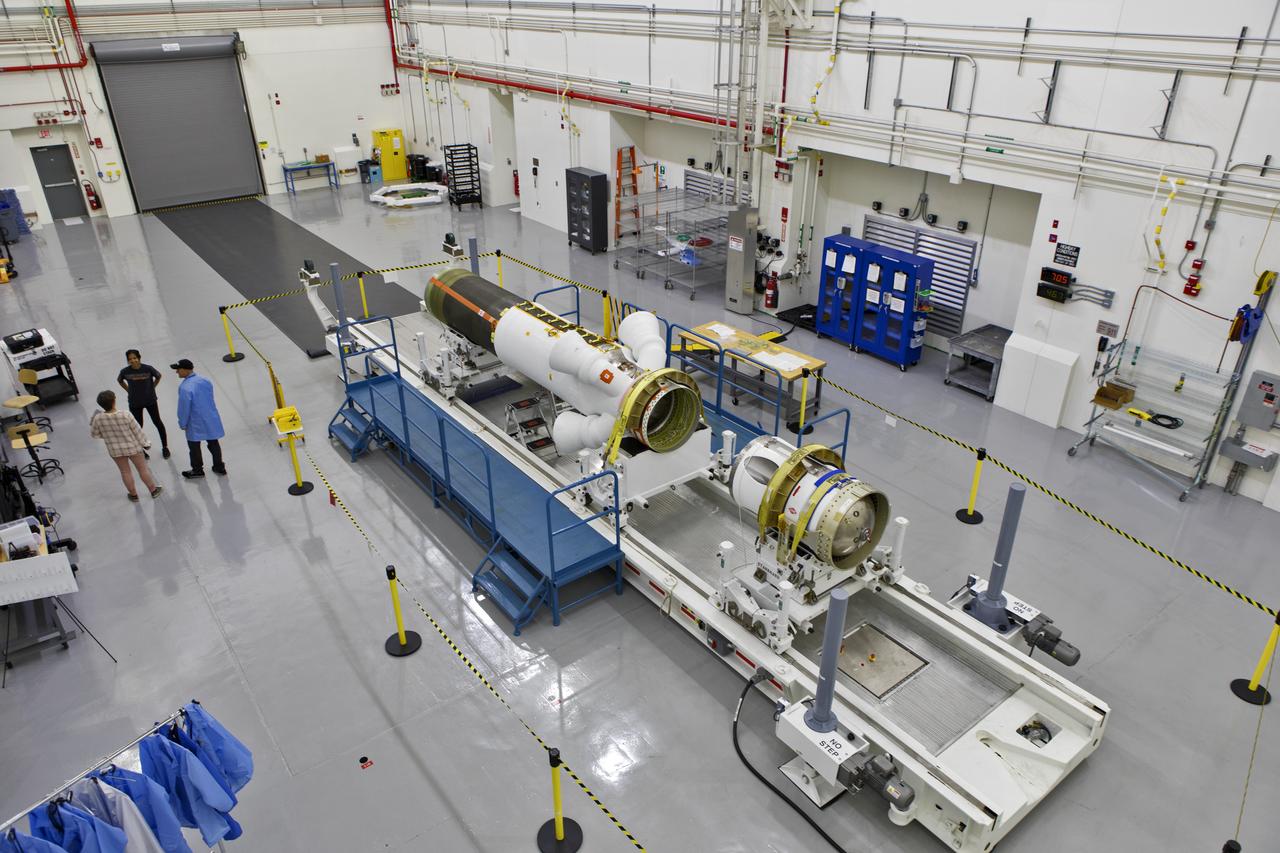
The jettison motor for Orion’s Launch Abort System (LAS) is shown inside the Launch Abort System Facility (LASF) at NASA’s Kennedy Space Center in Florida. The motor, which arrived at Kennedy on Sept. 10, 2018, will be stored in the LASF until processing for a full-stress test of the LAS called Ascent Abort-2 (AA-2), scheduled for April 2019. Designed and built by NASA and Lockheed Martin, the LAS will protect astronauts if a problem arises during launch by pulling the spacecraft away from a failing rocket. The jettison motor is one of three solid propellant rocket motors in the LAS (the abort motor and attitude control motor are the other two). The jettison motor will pull the LAS away from the crew module, allowing Orion’s parachutes to deploy and the spacecraft to safely land in the ocean.
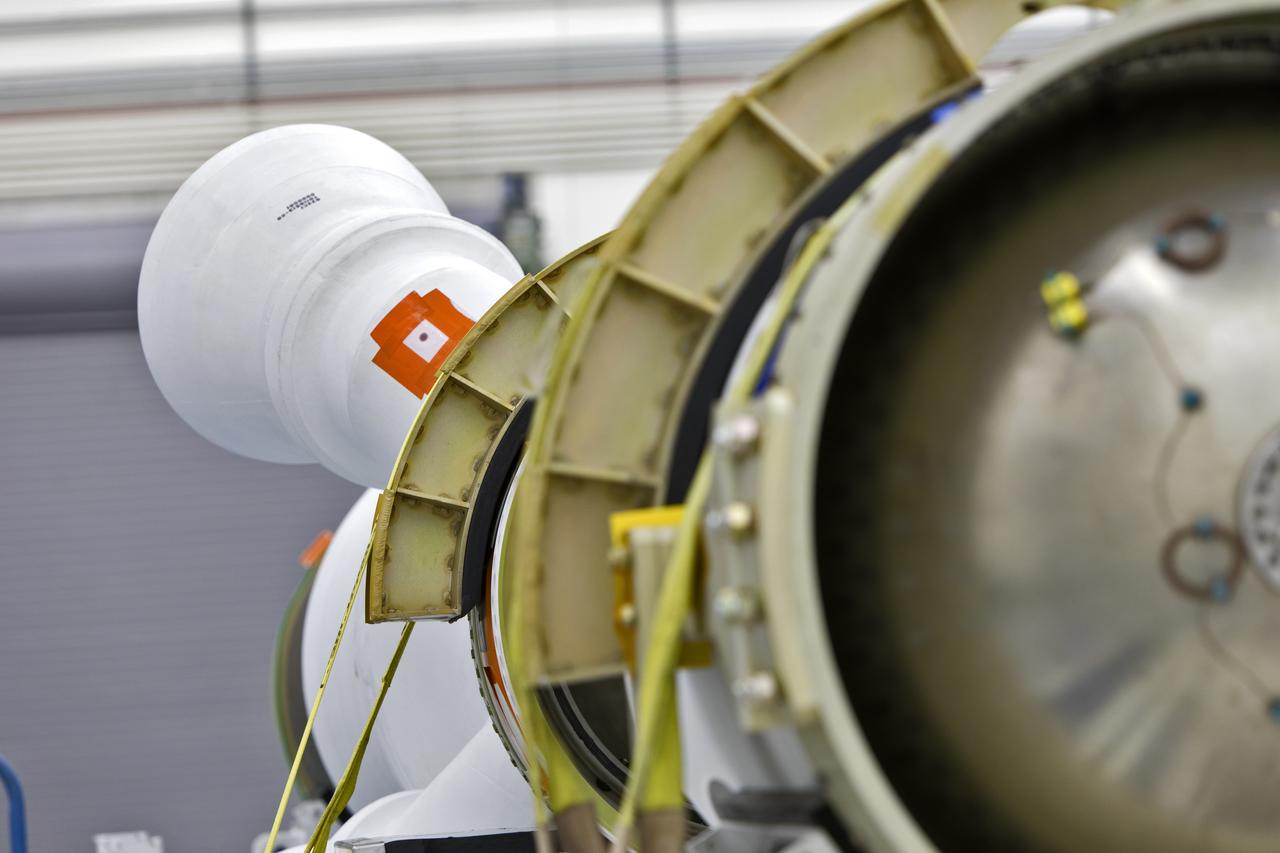
The jettison motor for Orion’s Launch Abort System (LAS) is shown inside the Launch Abort System Facility (LASF) at NASA’s Kennedy Space Center in Florida. The motor, which arrived at Kennedy on Sept. 10, 2018, will be stored in the LASF until processing for a full-stress test of the LAS called Ascent Abort-2 (AA-2), scheduled for April 2019. Designed and built by NASA and Lockheed Martin, the LAS will protect astronauts if a problem arises during launch by pulling the spacecraft away from a failing rocket. The jettison motor is one of three solid propellant rocket motors in the LAS (the abort motor and attitude control motor are the other two). The jettison motor will pull the LAS away from the crew module, allowing Orion’s parachutes to deploy and the spacecraft to safely land in the ocean.
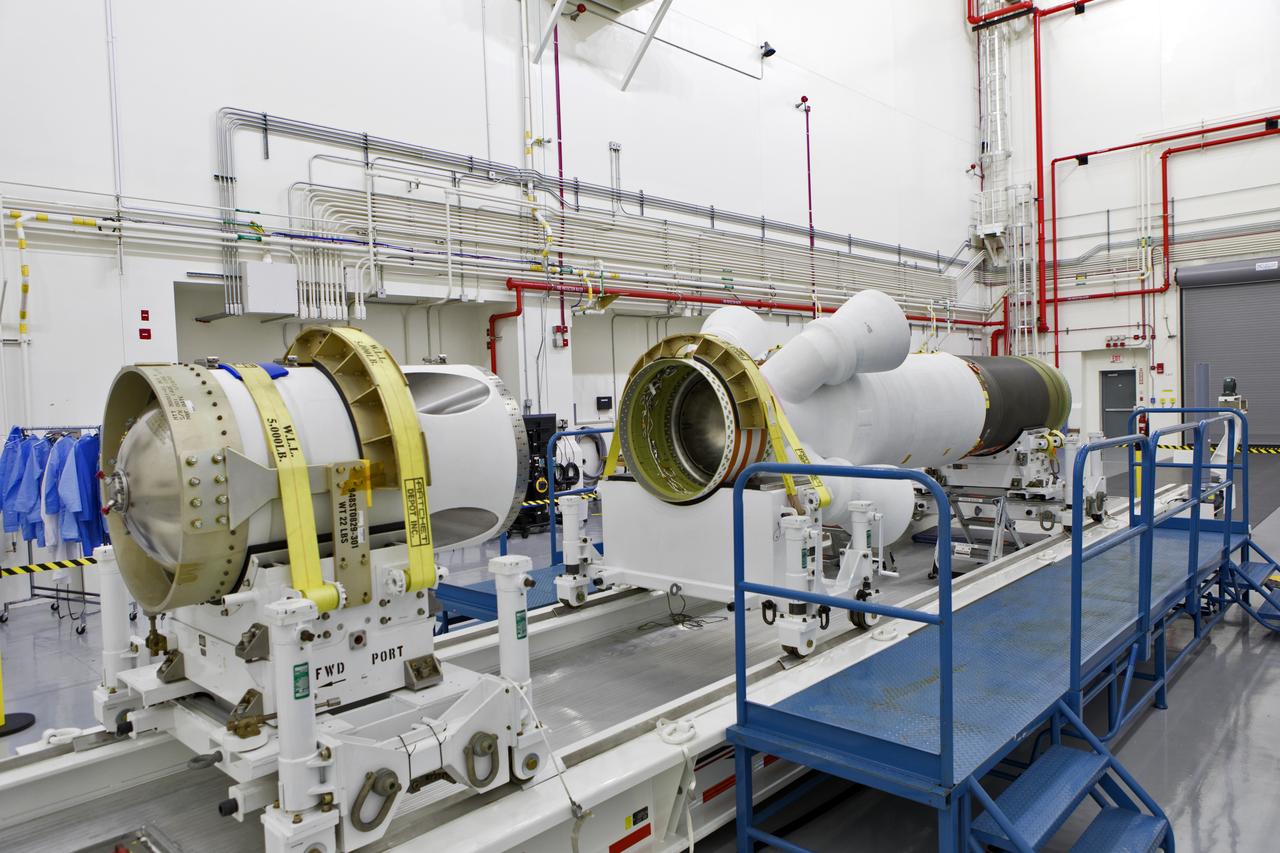
The jettison motor for Orion’s Launch Abort System (LAS) is shown inside the Launch Abort System Facility (LASF) at NASA’s Kennedy Space Center in Florida. The motor, which arrived at Kennedy on Sept. 10, 2018, will be stored in the LASF until processing for a full-stress test of the LAS called Ascent Abort-2 (AA-2), scheduled for April 2019. Designed and built by NASA and Lockheed Martin, the LAS will protect astronauts if a problem arises during launch by pulling the spacecraft away from a failing rocket. The jettison motor is one of three solid propellant rocket motors in the LAS (the abort motor and attitude control motor are the other two). The jettison motor will pull the LAS away from the crew module, allowing Orion’s parachutes to deploy and the spacecraft to safely land in the ocean.

The test version of Orion attached to the Launch Abort System for the Ascent Abort-2 (AA-2) flight test arrives at Space Launch Complex 46 at Cape Canaveral Air Force Station in Florida on May 23, 2019. The flight test article will be hoisted up and moved inside the vertical integration facility for stacking atop the booster. The booster was procured by the U.S. Air Force and manufactured by Northrop Grumman. During AA-2, targeted for July 2, the LAS with Orion will launch on the booster more than six miles in altitude, where Orion’s launch abort system will pull the capsule and its crew away to safety if an emergency occurs during ascent on the Space Launch System rocket. AA-2 is a critical safety test that helps pave the way for Artemis missions near the Moon, and will enable astronauts to set foot on the lunar surface by 2024.
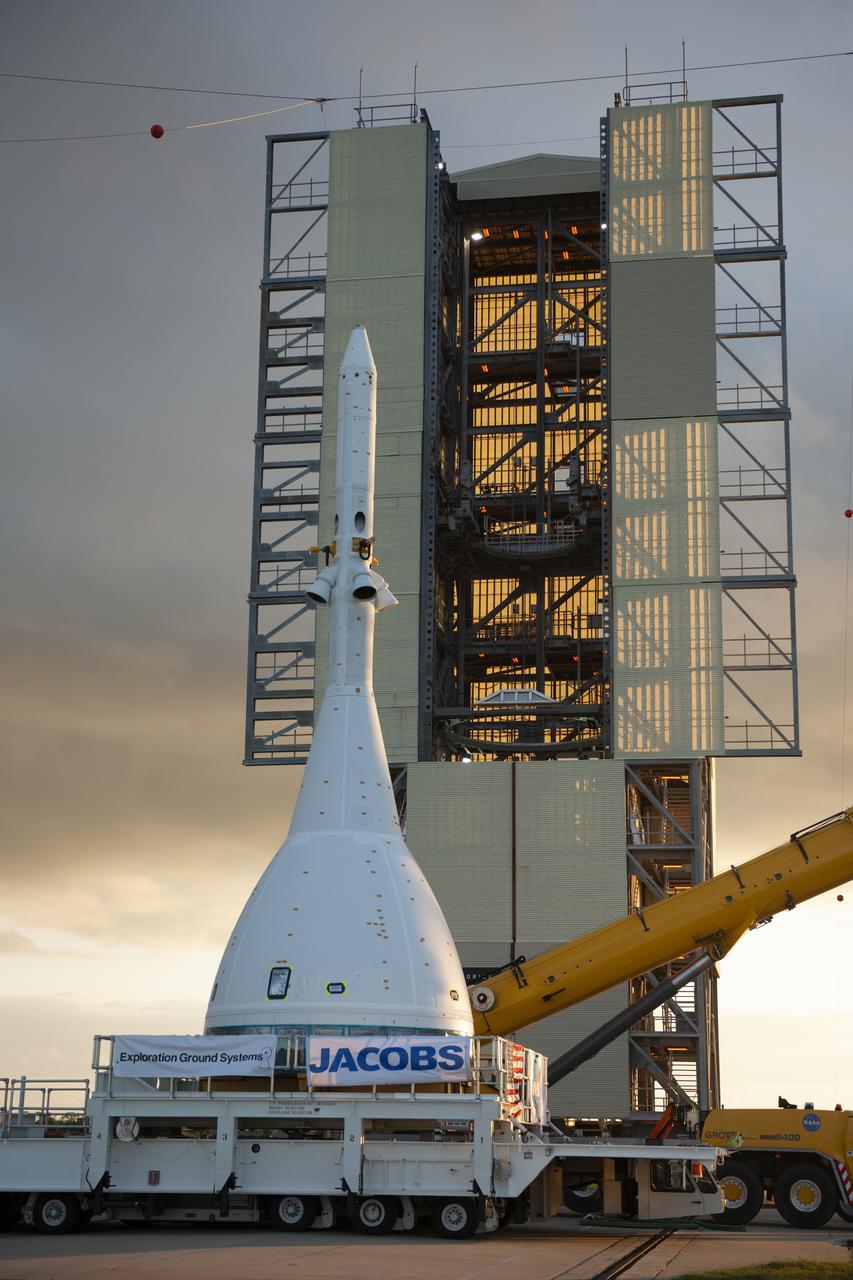
The test version of Orion attached to the Launch Abort System for the Ascent Abort-2 (AA-2) flight test arrives at Space Launch Complex 46 at Cape Canaveral Air Force Station in Florida on May 23, 2019. The flight test article will be hoisted up and moved inside the vertical integration facility for stacking atop the booster. The booster was procured by the U.S. Air Force and manufactured by Northrop Grumman. During AA-2, targeted for July 2, the LAS with Orion will launch on the booster more than six miles in altitude, where Orion’s launch abort system will pull the capsule and its crew away to safety if an emergency occurs during ascent on the Space Launch System rocket. AA-2 is a critical safety test that helps pave the way for Artemis missions near the Moon, and will enable astronauts to set foot on the lunar surface by 2024.
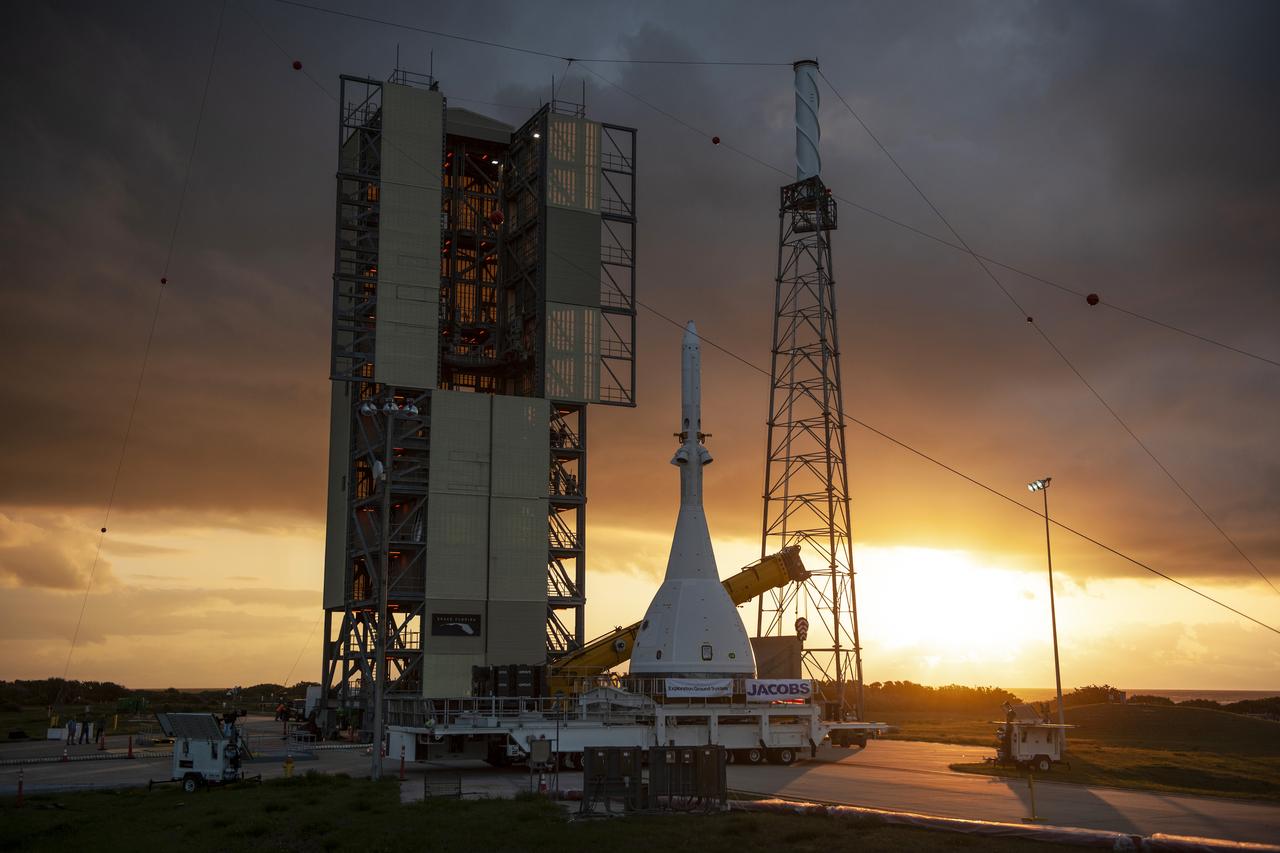
The test version of Orion attached to the Launch Abort System for the Ascent Abort-2 (AA-2) flight test arrives at Space Launch Complex 46 at Cape Canaveral Air Force Station in Florida on May 23, 2019. The flight test article will be hoisted up and moved inside the vertical integration facility for stacking atop the booster. The booster was procured by the U.S. Air Force and manufactured by Northrop Grumman. During AA-2, targeted for July 2, the LAS with Orion will launch on the booster more than six miles in altitude, where Orion’s launch abort system will pull the capsule and its crew away to safety if an emergency occurs during ascent on the Space Launch System rocket. AA-2 is a critical safety test that helps pave the way for Artemis missions near the Moon, and will enable astronauts to set foot on the lunar surface by 2024.

NASA Dryden technicians take measurements inside a fit-check mockup for prior to systems installation on a boilerplate Orion launch abort test crew capsule. A mockup Orion crew module has been constructed by NASA Dryden Flight Research Center's Fabrication Branch. The mockup is being used to develop integration procedures for avionics and instrumentation in advance of the arrival of the first abort flight test article.
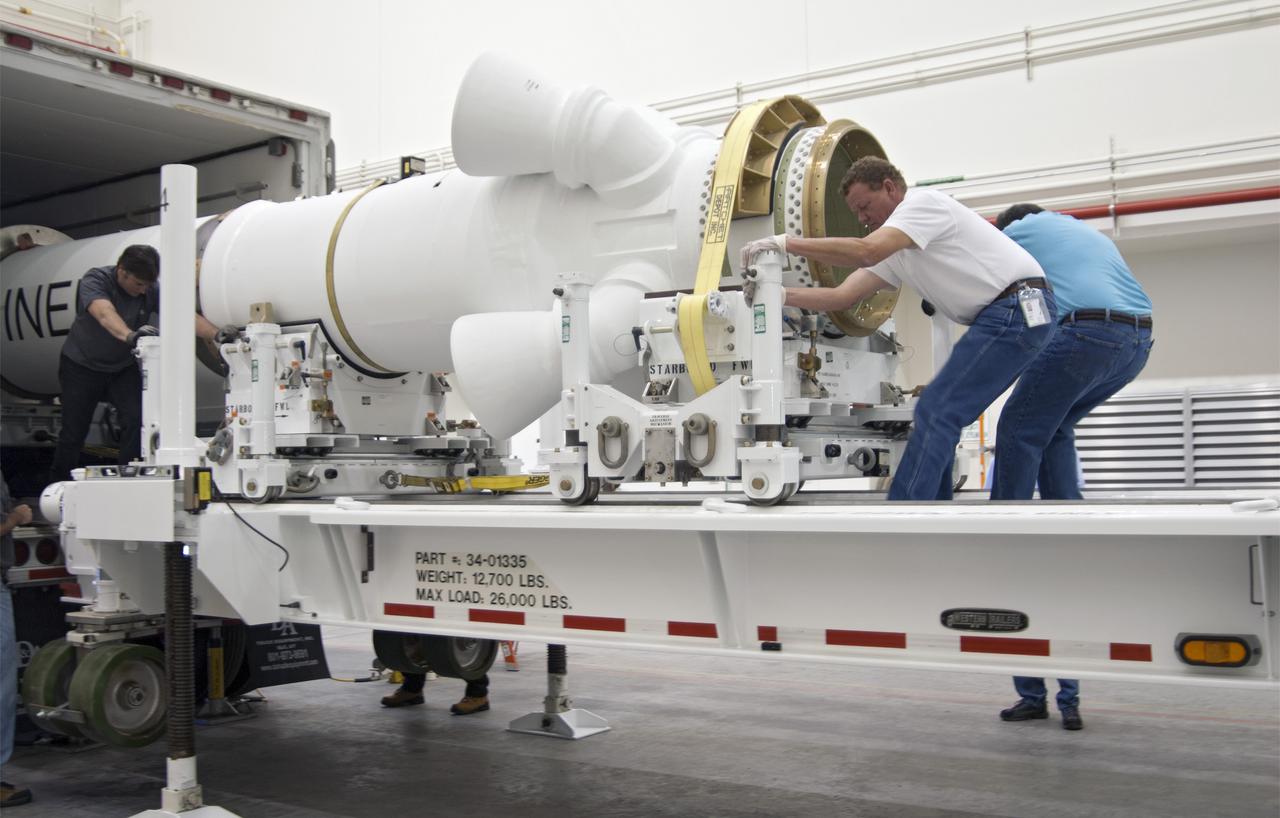
CAPE CANAVERAL, Fla. – At NASA’s Kennedy Space Center in Florida, technicians help remove the Alliant Techsystems, or ATK, launch abort motor from a truck after arrival at the Launch Abort System Facility. The test flight abort motor is for Exploration Flight Test 1, or EFT-1, of the agency’s Orion Multi-Purpose Crew Vehicle. It is part of Orion’s Launch Abort System, which is designed to safely pull the Orion crew module away from the launch vehicle in the event of an emergency on the launch pad or during the initial ascent of NASA’s Space Launch System, or SLS, rocket. The motor is configured with inert propellant. Orion is the exploration spacecraft designed to carry crews to space beyond low Earth orbit. It will provide emergency abort capability, sustain the crew during the space travel and provide safe re-entry from deep space return velocities. Orion’s first unpiloted test flight is scheduled to launch in 2014 atop a Delta IV rocket. A second uncrewed flight test is scheduled for 2017 on the SLS rocket. For more information, visit http:__www.nasa.gov_orion. Photo credit: NASA_Charisse Nahser
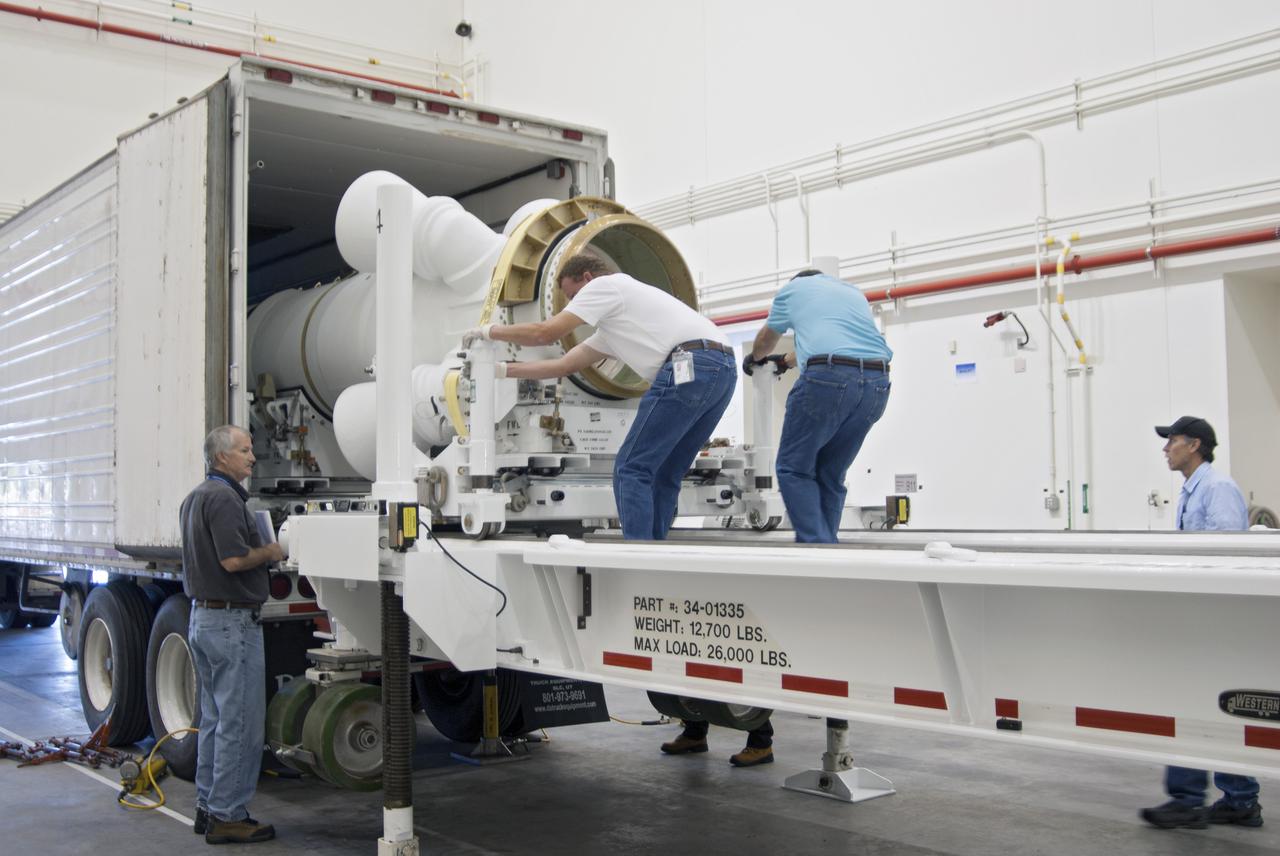
CAPE CANAVERAL, Fla. – At NASA’s Kennedy Space Center in Florida, technicians help remove the Alliant Techsystems, or ATK, launch abort motor from a truck after arrival at the Launch Abort System Facility. The test flight abort motor is for Exploration Flight Test 1, or EFT-1, of the agency’s Orion Multi-Purpose Crew Vehicle. It is part of Orion’s Launch Abort System, which is designed to safely pull the Orion crew module away from the launch vehicle in the event of an emergency on the launch pad or during the initial ascent of NASA’s Space Launch System, or SLS, rocket. The motor is configured with inert propellant. Orion is the exploration spacecraft designed to carry crews to space beyond low Earth orbit. It will provide emergency abort capability, sustain the crew during the space travel and provide safe re-entry from deep space return velocities. Orion’s first unpiloted test flight is scheduled to launch in 2014 atop a Delta IV rocket. A second uncrewed flight test is scheduled for 2017 on the SLS rocket. For more information, visit http:__www.nasa.gov_orion. Photo credit: NASA_Charisse Nahser
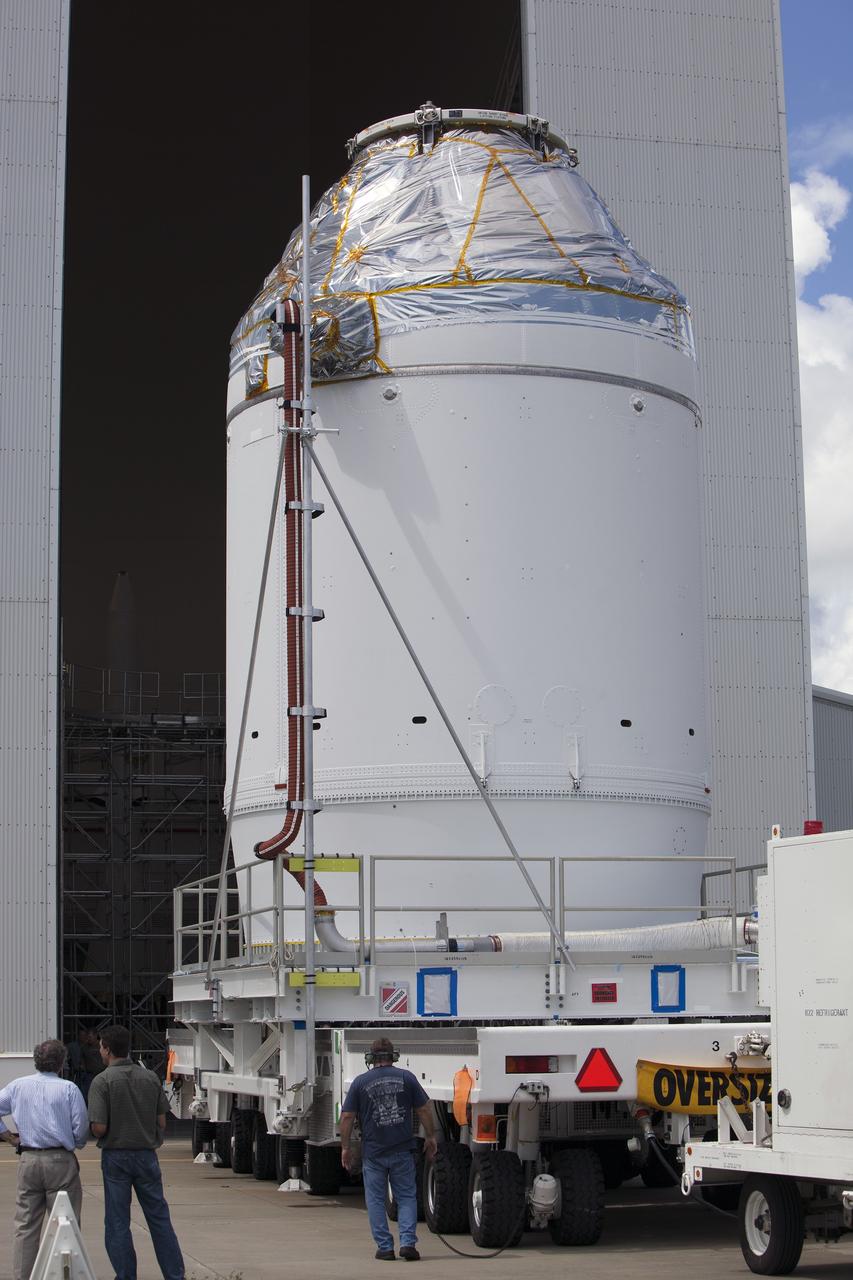
CAPE CANAVERAL, Fla. – The Orion crew module, stacked atop its service module, arrives at the Launch Abort System Facility, or LASF, at NASA's Kennedy Space Center in Florida. The spacecraft was moved from the Payload Hazardous Servicing Facility, where it was fueled ahead of its December flight test. In the LASF, the Launch Abort System will be installed around the Orion spacecraft. Orion is the exploration spacecraft designed to carry astronauts to destinations not yet explored by humans, including an asteroid and Mars. It will have emergency abort capability, sustain the crew during space travel and provide safe re-entry from deep space return velocities. The first unpiloted test flight of the Orion is scheduled to launch atop a United Launch Alliance Delta IV Heavy rocket from Cape Canaveral Air Force Station in Florida to an altitude of 3,600 miles above the Earth's surface. The two-orbit, four-hour flight test will help engineers evaluate the systems critical to crew safety including the heat shield, parachute system and launch abort system. For more information, visit http://www.nasa.gov/orion. Photo credit: NASA/Dimitri Gerondidakis
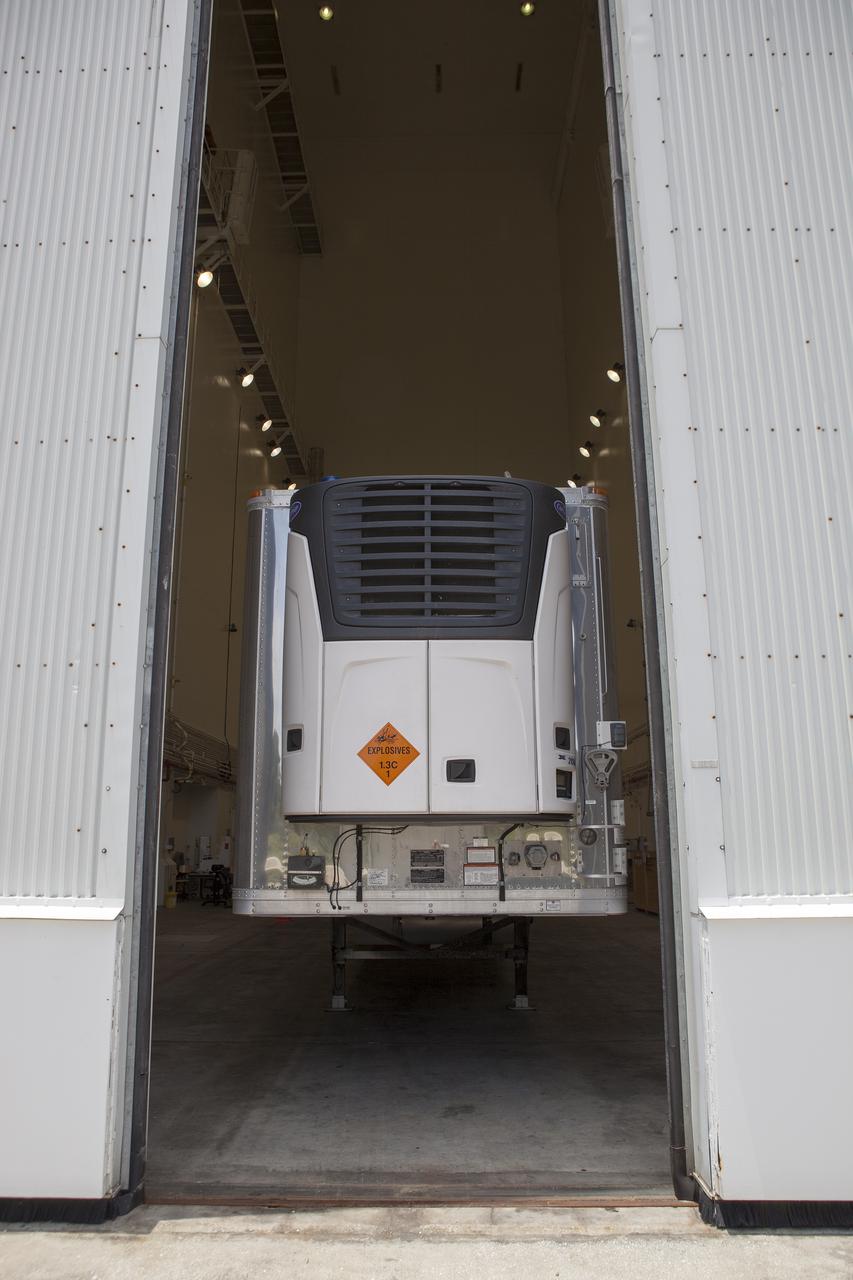
CAPE CANAVERAL, Fla. – At NASA’s Kennedy Space Center in Florida, a truck arrives at the Launch Abort System Facility with the jettison motor from Aerojet in Redmond, Wash. The motor is part of the Launch Abort System, or LAS, for Exploration Flight Test 1, or EFT-1, of the agency’s Orion Multi-Purpose Crew Vehicle. The motor will jettison the LAS away from the Orion crew capsule during the flight test’s early ascent phase. Orion’s Launch Abort System is designed to safely pull the Orion crew module away from the launch vehicle in the event of an emergency on the launch pad or during the initial ascent of NASA’s Space Launch System, or SLS, rocket. Orion is the exploration spacecraft designed to carry crews to space beyond low Earth orbit. It will provide emergency abort capability, sustain the crew during the space travel and provide safe re-entry from deep space return velocities. Orion’s first unpiloted test flight is scheduled to launch in 2014 atop a Delta IV rocket. A second uncrewed flight test is scheduled for 2017 on the SLS rocket. For more information, visit http:__www.nasa.gov_orion. Photo credit: NASA_Dimitri Gerondidakis
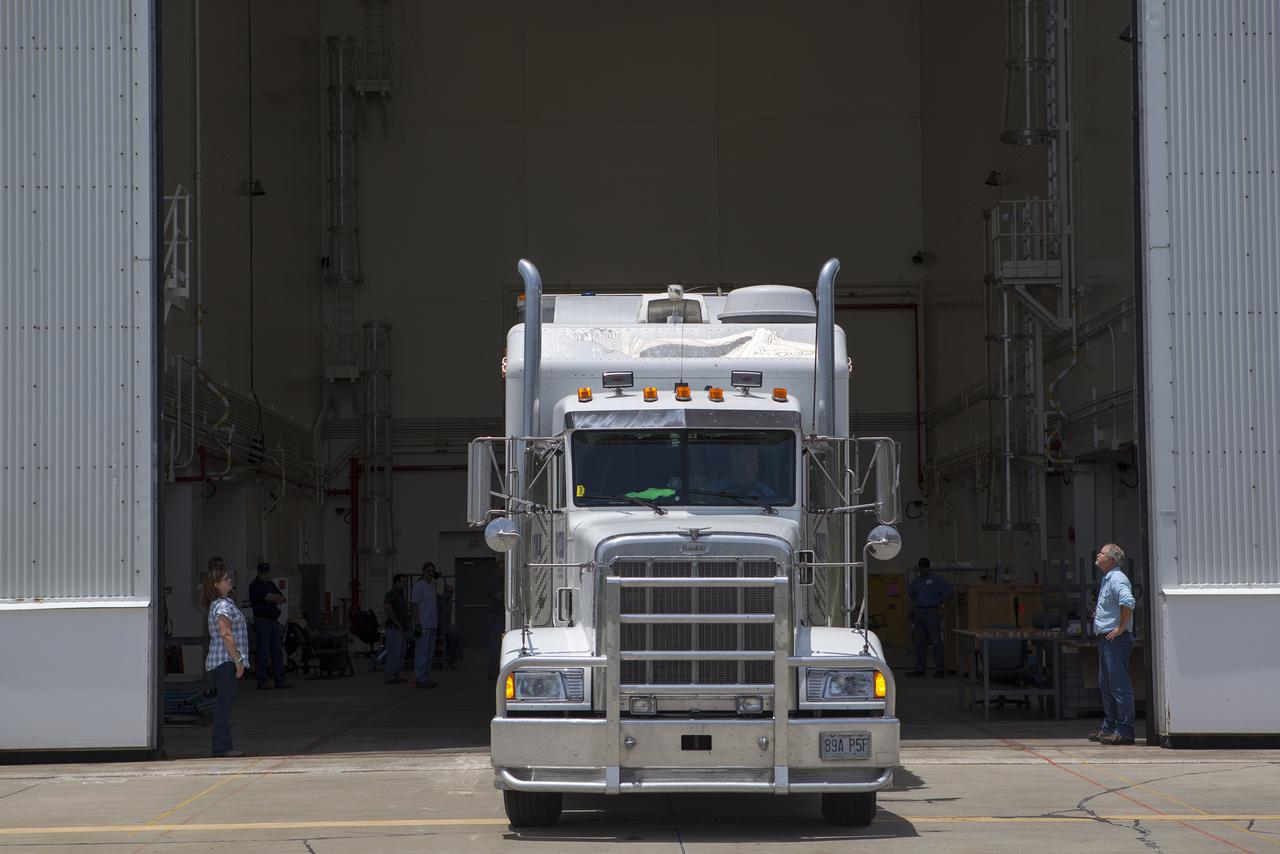
CAPE CANAVERAL, Fla. – At NASA’s Kennedy Space Center in Florida, a truck arrives at the Launch Abort System Facility with the jettison motor from Aerojet in Redmond, Wash. The motor is part of the Launch Abort System, or LAS, for Exploration Flight Test 1, or EFT-1, of the agency’s Orion Multi-Purpose Crew Vehicle. The motor will jettison the LAS away from the Orion crew capsule during the flight test’s early ascent phase. Orion’s Launch Abort System is designed to safely pull the Orion crew module away from the launch vehicle in the event of an emergency on the launch pad or during the initial ascent of NASA’s Space Launch System, or SLS, rocket. Orion is the exploration spacecraft designed to carry crews to space beyond low Earth orbit. It will provide emergency abort capability, sustain the crew during the space travel and provide safe re-entry from deep space return velocities. Orion’s first unpiloted test flight is scheduled to launch in 2014 atop a Delta IV rocket. A second uncrewed flight test is scheduled for 2017 on the SLS rocket. For more information, visit http:__www.nasa.gov_orion. Photo credit: NASA_Dimitri Gerondidakis
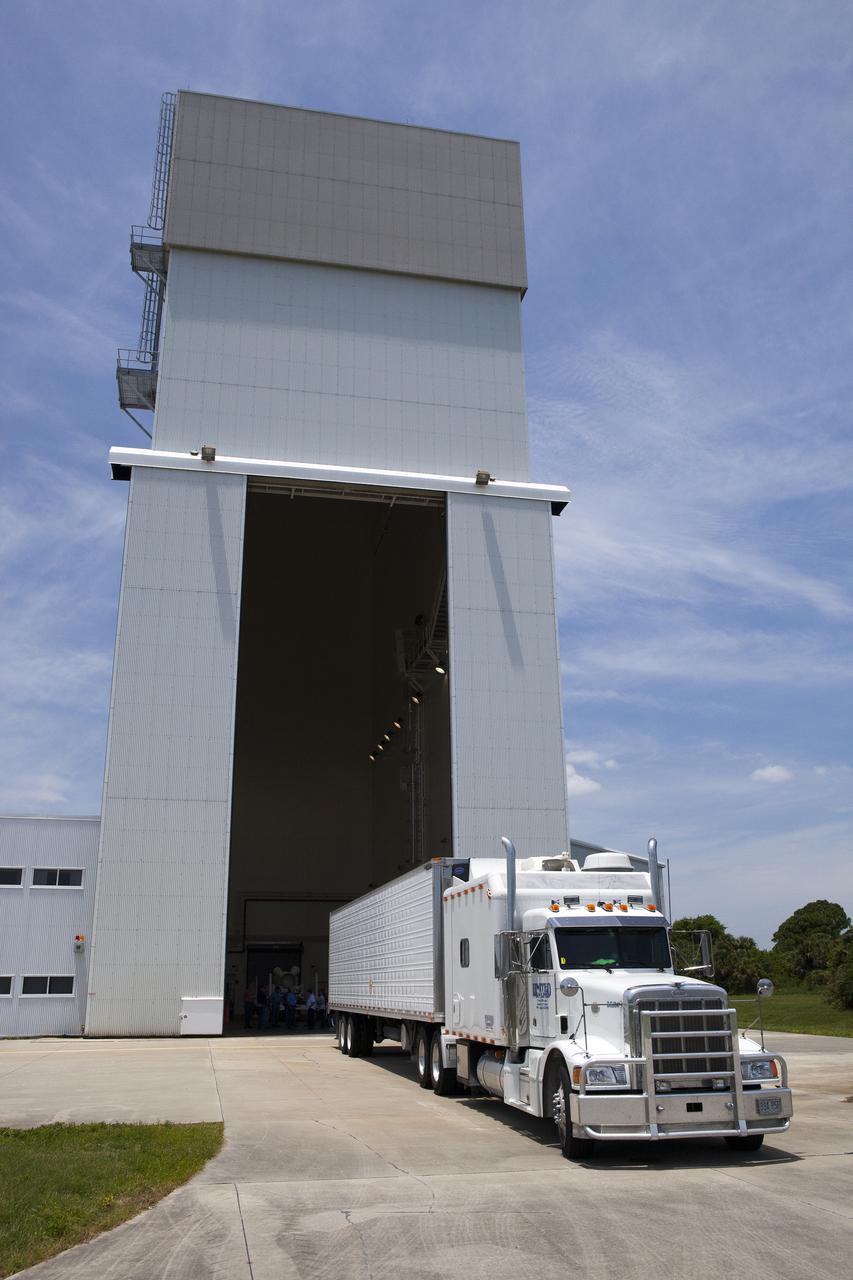
CAPE CANAVERAL, Fla. – At NASA’s Kennedy Space Center in Florida, a truck arrives at the Launch Abort System Facility with the jettison motor from Aerojet in Redmond, Wash. The motor is part of the Launch Abort System, or LAS, for Exploration Flight Test 1, or EFT-1, of the agency’s Orion Multi-Purpose Crew Vehicle. The motor will jettison the LAS away from the Orion crew capsule during the flight test’s early ascent phase. Orion’s Launch Abort System is designed to safely pull the Orion crew module away from the launch vehicle in the event of an emergency on the launch pad or during the initial ascent of NASA’s Space Launch System, or SLS, rocket. Orion is the exploration spacecraft designed to carry crews to space beyond low Earth orbit. It will provide emergency abort capability, sustain the crew during the space travel and provide safe re-entry from deep space return velocities. Orion’s first unpiloted test flight is scheduled to launch in 2014 atop a Delta IV rocket. A second uncrewed flight test is scheduled for 2017 on the SLS rocket. For more information, visit http:__www.nasa.gov_orion. Photo credit: NASA_Dimitri Gerondidakis
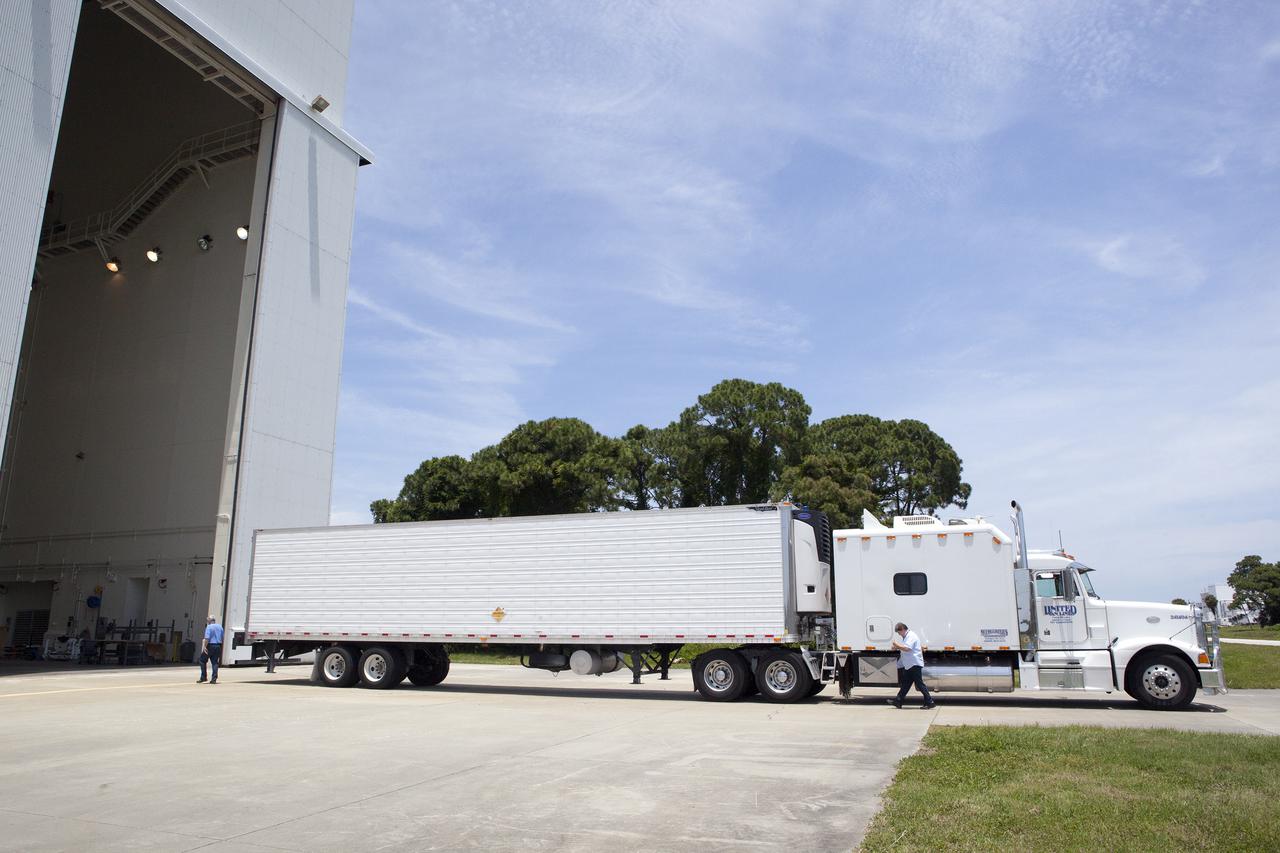
CAPE CANAVERAL, Fla. – At NASA’s Kennedy Space Center in Florida, a truck arrives at the Launch Abort System Facility with the jettison motor from Aerojet in Redmond, Wash. The motor is part of the Launch Abort System, or LAS, for Exploration Flight Test 1, or EFT-1, of the agency’s Orion Multi-Purpose Crew Vehicle. The motor will jettison the LAS away from the Orion crew capsule during the flight test’s early ascent phase. Orion’s Launch Abort System is designed to safely pull the Orion crew module away from the launch vehicle in the event of an emergency on the launch pad or during the initial ascent of NASA’s Space Launch System, or SLS, rocket. Orion is the exploration spacecraft designed to carry crews to space beyond low Earth orbit. It will provide emergency abort capability, sustain the crew during the space travel and provide safe re-entry from deep space return velocities. Orion’s first unpiloted test flight is scheduled to launch in 2014 atop a Delta IV rocket. A second uncrewed flight test is scheduled for 2017 on the SLS rocket. For more information, visit http:__www.nasa.gov_orion. Photo credit: NASA_Dimitri Gerondidakis
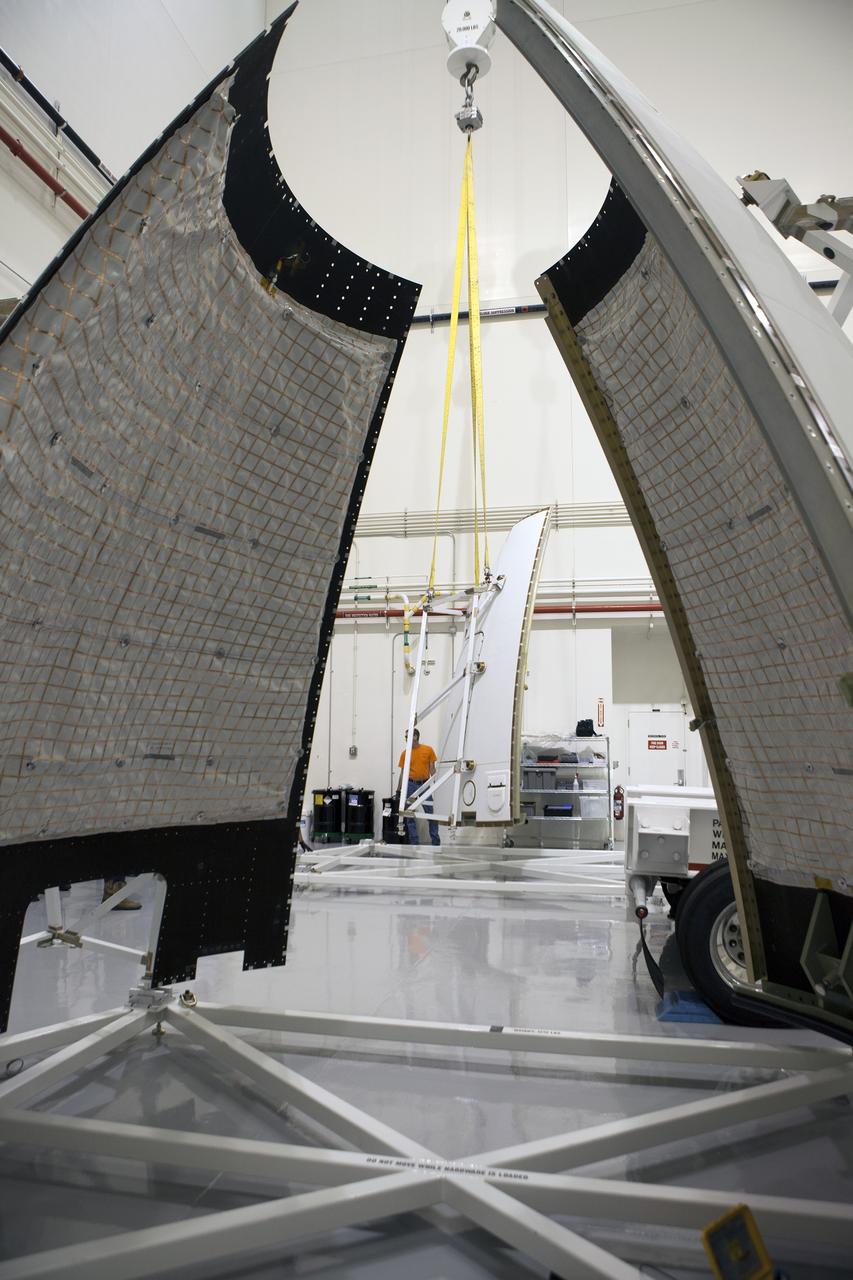
CAPE CANAVERAL, Fla. - The second set of Ogive panels for the Orion Launch Abort System have arrived at the Launch Abort System Facility, or LASF, at NASA’s Kennedy Space Center in Florida. One of the Ogive panels has been uncrated and is being moved by crane for placement on a work stand. In the foreground is the first set of two Ogive panels positioned on a work stand. During processing, the panels will be secured around the Orion crew module and attached to the Launch Abort System. Orion is the exploration spacecraft designed to carry astronauts to destinations not yet explored by humans, including an asteroid and Mars. It will have emergency abort capability, sustain the crew during space travel and provide safe re-entry from deep space return velocities. The first unpiloted test flight of Orion is scheduled to launch in 2014 atop a Delta IV rocket and in 2017 on NASA’s Space Launch System rocket. For more information, visit www.nasa.gov/orion. Photo credit: Kim Shiflett

CAPE CANAVERAL, Fla. - The second set of Ogive panels for the Orion Launch Abort System have arrived at the Launch Abort System Facility, or LASF, at NASA’s Kennedy Space Center in Florida. One of the Ogive panels has been uncrated and has been lowered by crane onto a work stand for storage. To the left are the first two Ogive panels positioned on a work stand. During processing, the panels will be secured around the Orion crew module and attached to the Launch Abort System. Orion is the exploration spacecraft designed to carry astronauts to destinations not yet explored by humans, including an asteroid and Mars. It will have emergency abort capability, sustain the crew during space travel and provide safe re-entry from deep space return velocities. The first unpiloted test flight of Orion is scheduled to launch in 2014 atop a Delta IV rocket and in 2017 on NASA’s Space Launch System rocket. For more information, visit www.nasa.gov/orion. Photo credit: Kim Shiflett
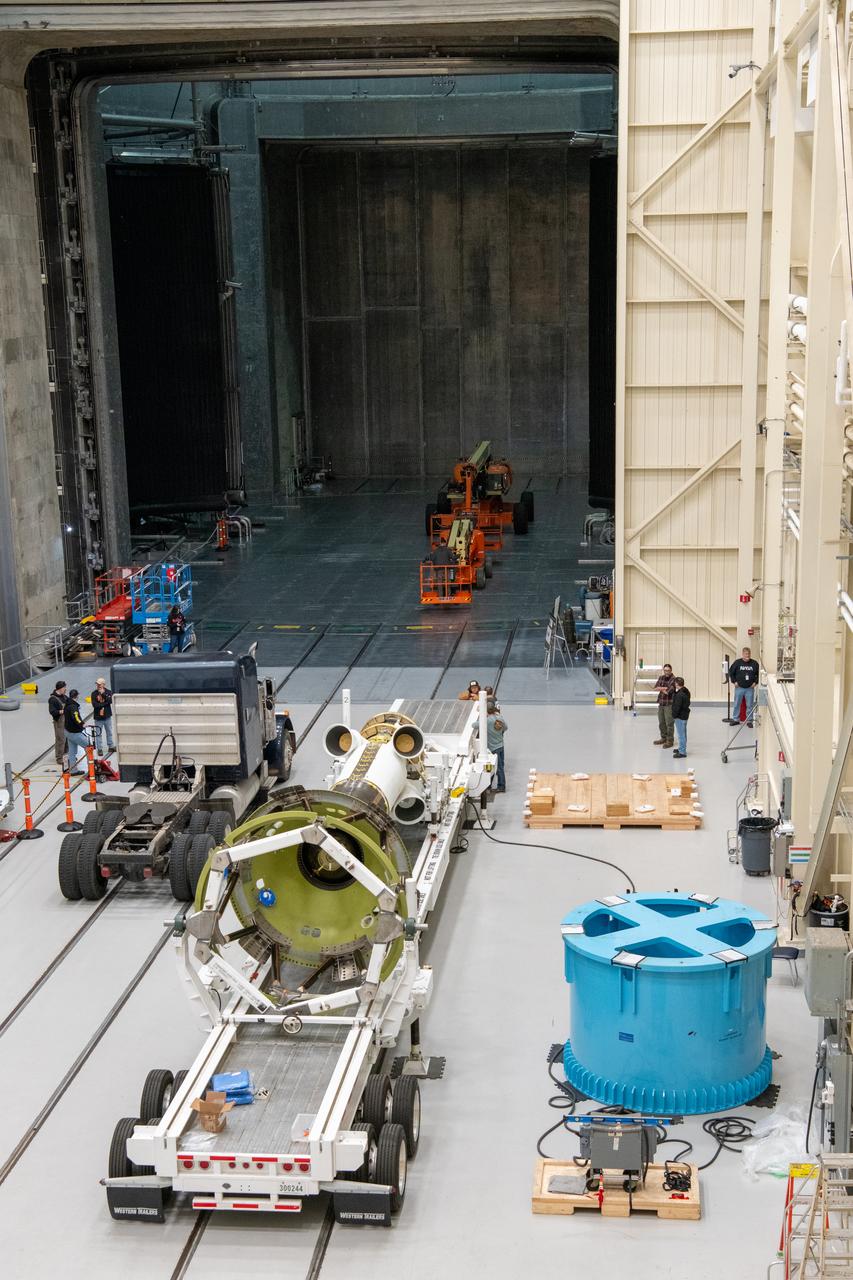
Test hardware for Orion crew capsule from the Artemis 1 flight arrives in the SEC (Space Experiments Complex) at ATF (Armstrong Test Facility), The LAS (Launch Abort System) arrived in four separate shipments from locations in Florida and Colorado. It is now being integrated with the Orion CM (crew module) for critical testing before the flight of Artemis II.
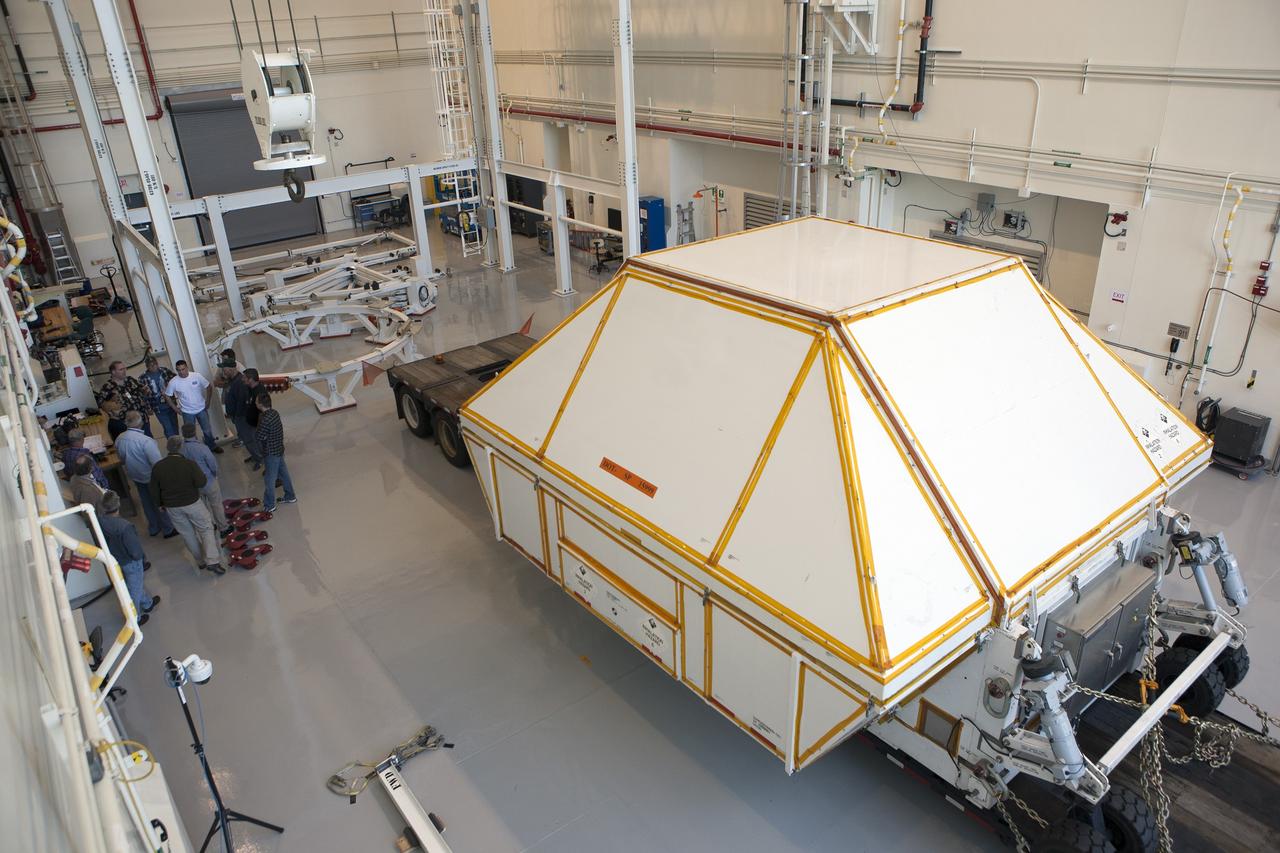
CAPE CANAVERAL, Fla. -- NASA's Orion spacecraft arrives inside the Launch Abort System Facility at Kennedy Space Center in Florida. The spacecraft was transported 2,700 miles overland from Naval Base San Diego in California, on a flatbed truck secured in its crew module transportation fixture for the trip. During its first flight test, Orion completed a two-orbit, four-and-a-half hour mission Dec. 5 to test systems critical to crew safety, including the launch abort system, the heat shield and the parachute system. The Ground Systems Development and Operations Program led the recovery, offload and transportation efforts. For more information, visit www.nasa.gov/orion. Photo credit: NASA/Kim Shiflett
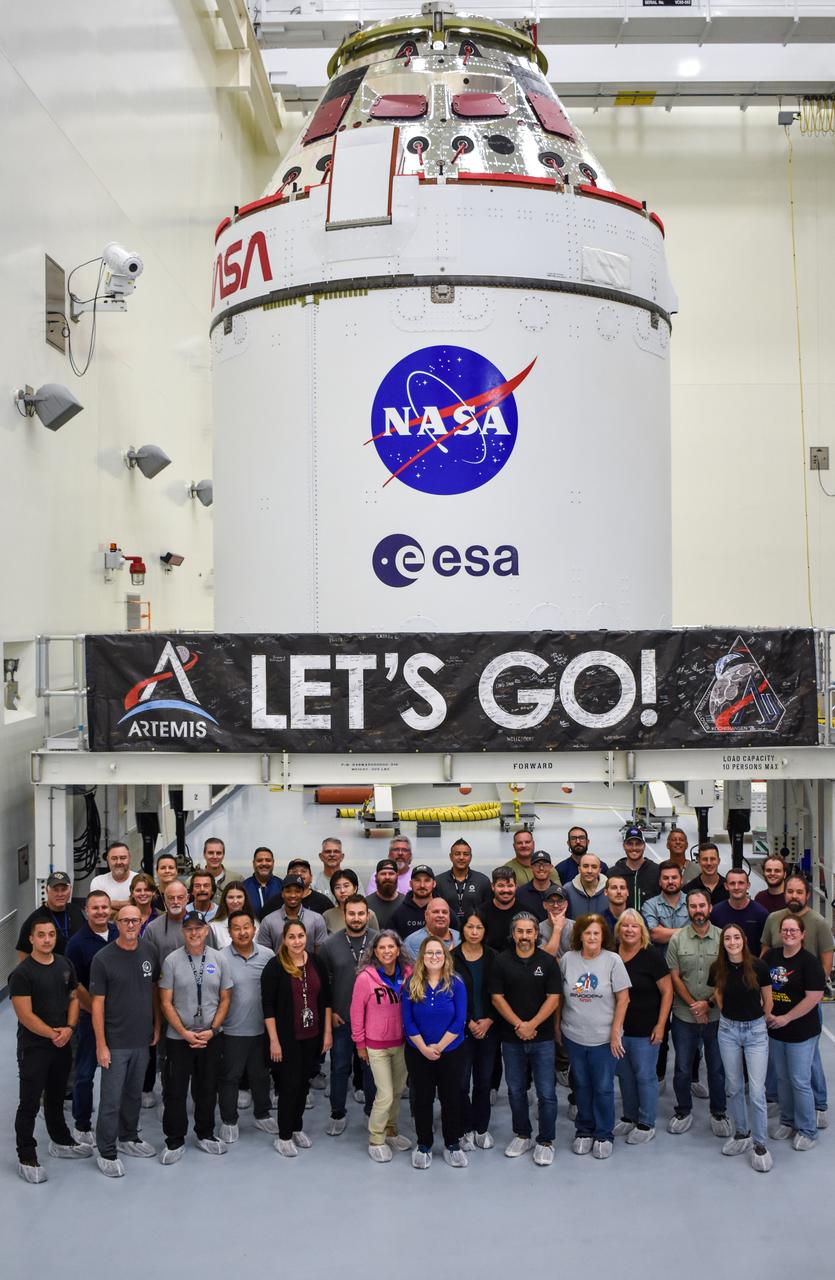
NASA engineers and technicians pose for a photograph in front of the agency’s Artemis II Orion spacecraft on Thursday, Aug. 7, 2025, inside the Multi-Payload Processing Facility (MPPF) at NASA’s Kennedy Space Center in Florida. Orion arrived at the MPPF in early May for fueling and processing and will next head to the spaceport’s Launch Abort System Facility to be integrated with its 44-foot-tall launch abort system. Once integration is complete, the stack will be transported to High Bay 3 inside NASA Kennedy’s Vehicle Assembly Building and integrated with the SLS (Space Launch System) rocket that will launch NASA’s Artemis II astronauts Reid Wiseman, Victor Glover, and Christina Koch, and CSA (Canadian Space Agency) astronaut Jeremy Hansen around the Moon and back.
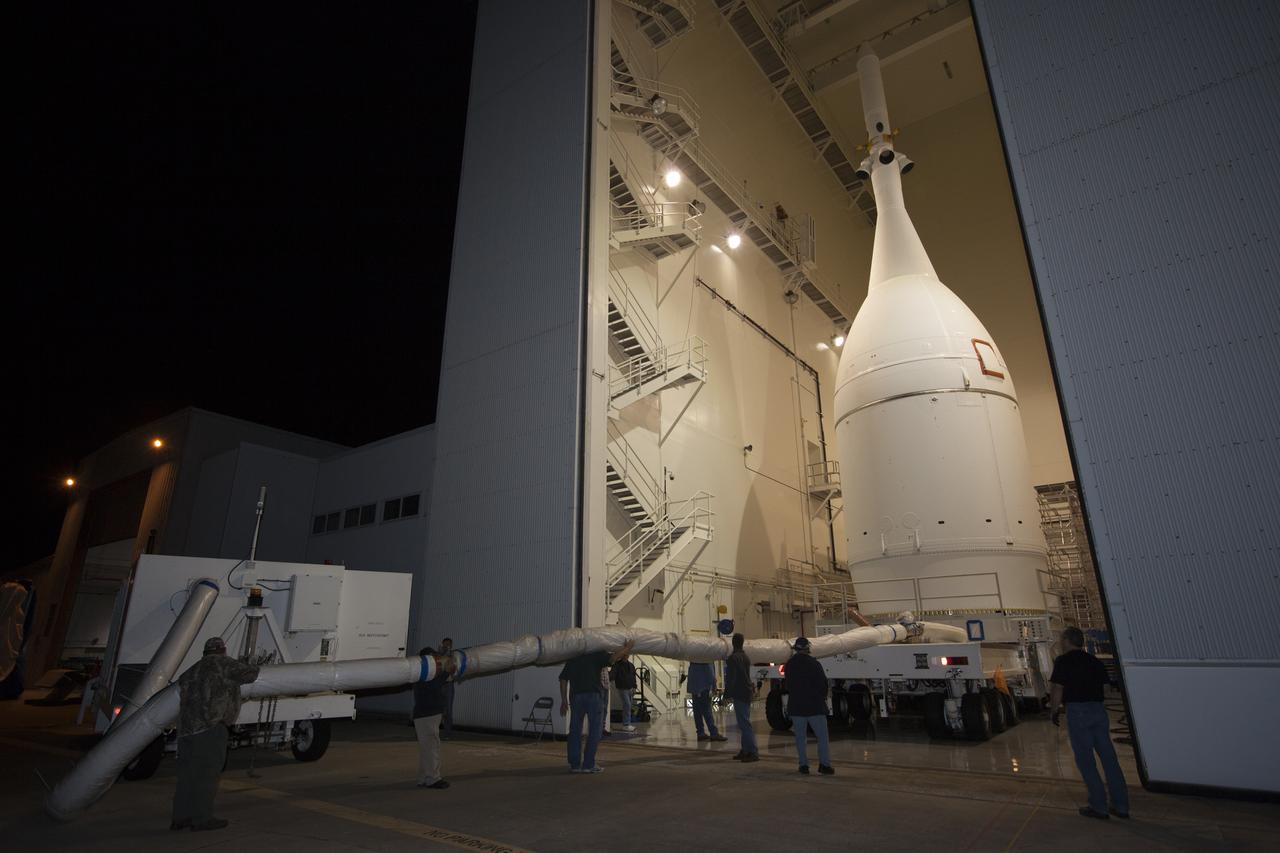
At NASA's Kennedy Space Center in Florida, the agency's completed Orion spacecraft begins its trip from the Launch Abort System Facility to Launch Complex 37 at Cape Canaveral Air Force Station. After arrival at the launch pad, United Launch Alliance engineers and technicians will lift Orion and mount it atop its Delta IV Heavy rocket. Orion is the exploration spacecraft designed to carry astronauts to destinations not yet explored by humans, including an asteroid and Mars. It will have emergency abort capability, sustain the crew during space travel and provide safe re-entry from deep space return velocities. The first unpiloted flight test of Orion is scheduled to launch Dec. 4, 2014 atop a United Launch Alliance Delta IV Heavy rocket, and in 2018 on NASA’s Space Launch System rocket.
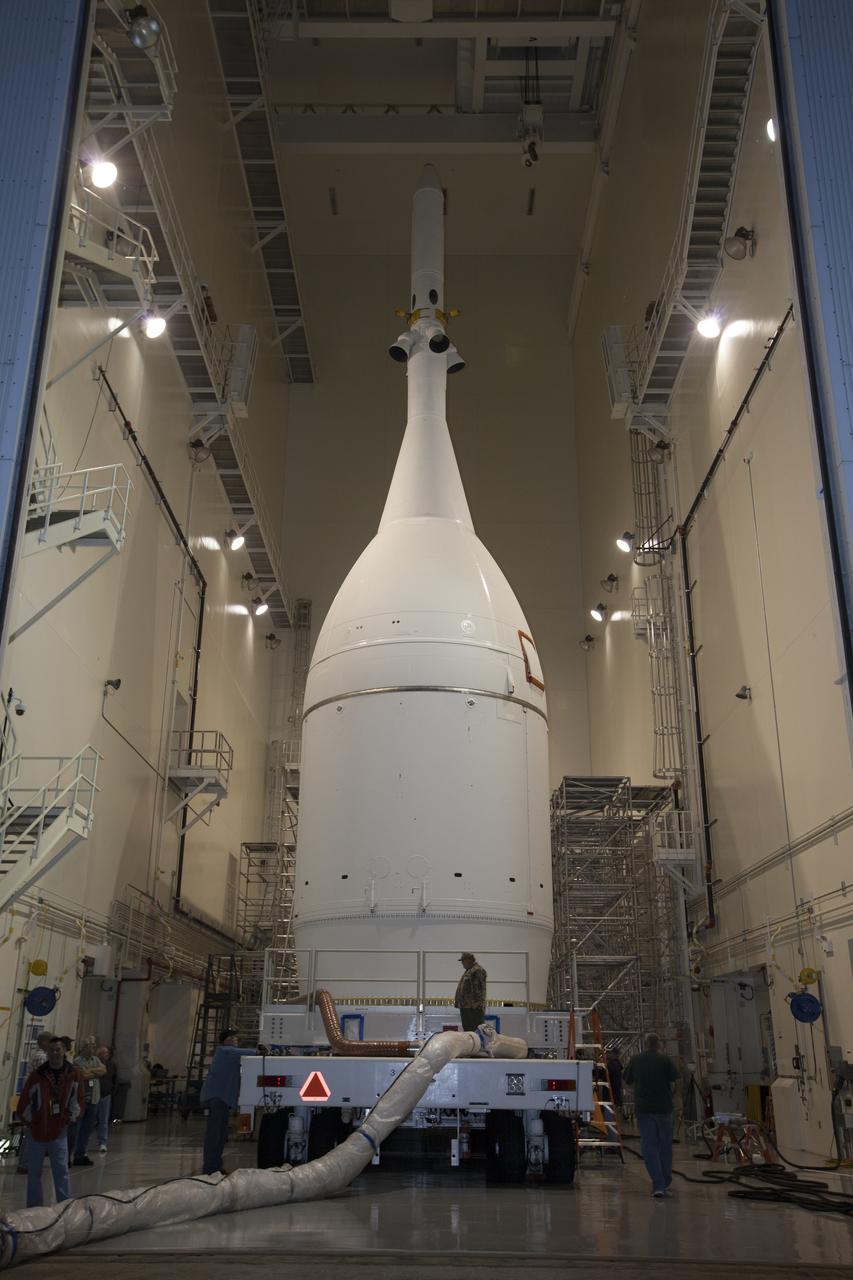
At NASA's Kennedy Space Center in Florida, the agency's completed Orion spacecraft begins its trip from the Launch Abort System Facility to Launch Complex 37 at Cape Canaveral Air Force Station. After arrival at the launch pad, United Launch Alliance engineers and technicians will lift Orion and mount it atop its Delta IV Heavy rocket. Orion is the exploration spacecraft designed to carry astronauts to destinations not yet explored by humans, including an asteroid and Mars. It will have emergency abort capability, sustain the crew during space travel and provide safe re-entry from deep space return velocities. The first unpiloted flight test of Orion is scheduled to launch Dec. 4, 2014 atop a United Launch Alliance Delta IV Heavy rocket, and in 2018 on NASA’s Space Launch System rocket.
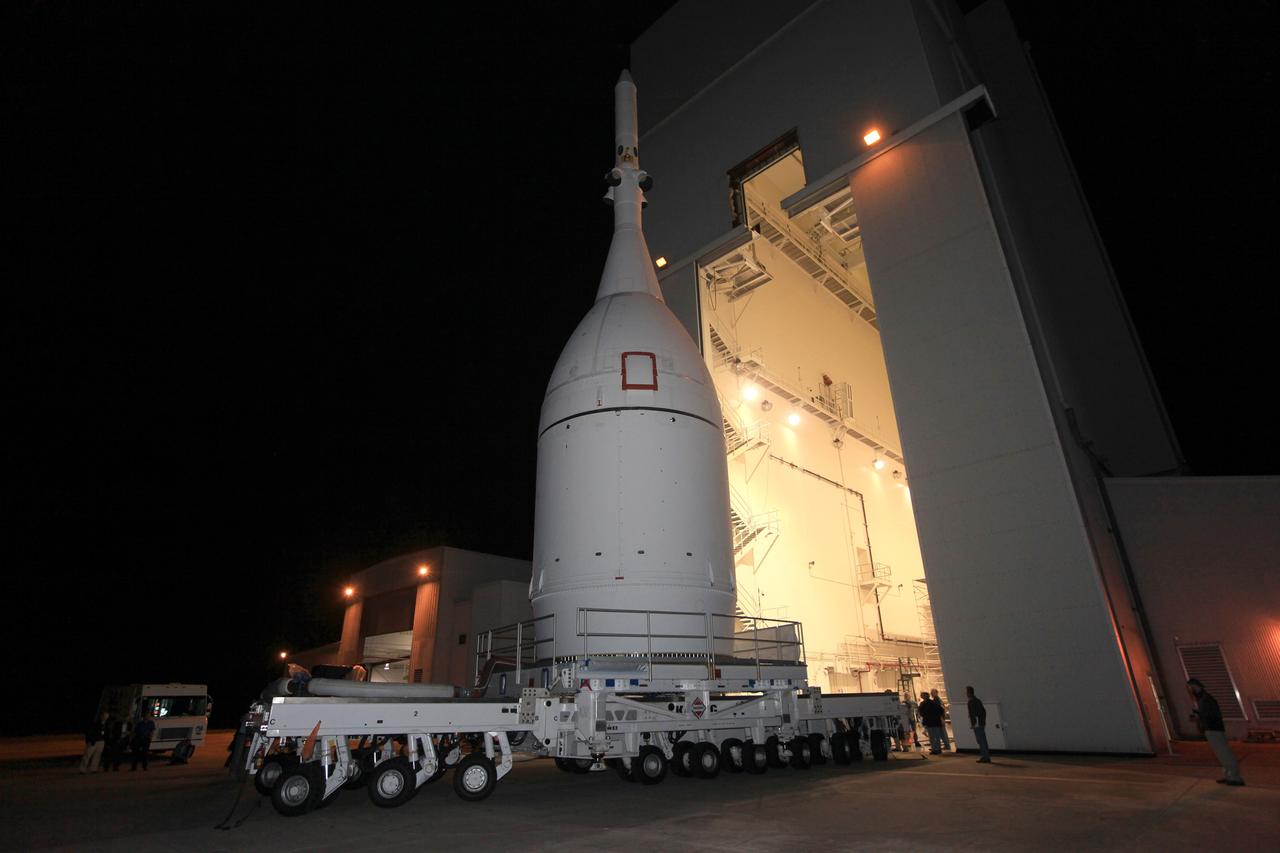
CAPE CANAVERAL, Fla. – At NASA's Kennedy Space Center in Florida, the agency's completed Orion spacecraft begins its trip from the Launch Abort System Facility to Launch Complex 37 at Cape Canaveral Air Force Station. After arrival at the launch pad, United Launch Alliance engineers and technicians will lift Orion and mount it atop its Delta IV Heavy rocket. Orion is the exploration spacecraft designed to carry astronauts to destinations not yet explored by humans, including an asteroid and Mars. It will have emergency abort capability, sustain the crew during space travel and provide safe re-entry from deep space return velocities. The first unpiloted flight test of Orion is scheduled to launch Dec. 4, 2014 atop a United Launch Alliance Delta IV Heavy rocket, and in 2018 on NASA’s Space Launch System rocket. For more information, visit www.nasa.gov/orion Photo credit: NASA/Kim Shiflett
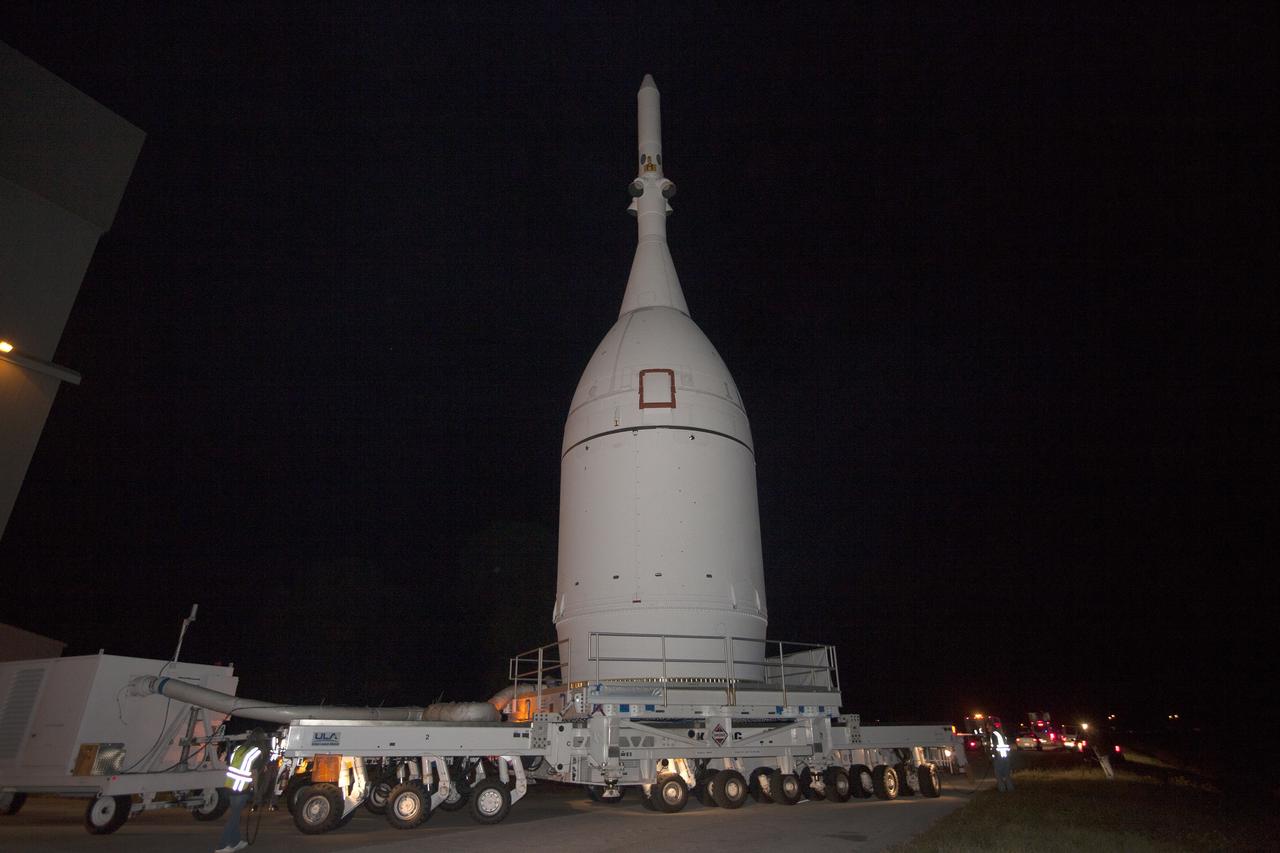
CAPE CANAVERAL, Fla. – At NASA's Kennedy Space Center in Florida, the agency's completed Orion spacecraft begins its trip from the Launch Abort System Facility to Launch Complex 37 at Cape Canaveral Air Force Station. After arrival at the launch pad, United Launch Alliance engineers and technicians will lift Orion and mount it atop its Delta IV Heavy rocket. Orion is the exploration spacecraft designed to carry astronauts to destinations not yet explored by humans, including an asteroid and Mars. It will have emergency abort capability, sustain the crew during space travel and provide safe re-entry from deep space return velocities. The first unpiloted flight test of Orion is scheduled to launch Dec. 4, 2014 atop a United Launch Alliance Delta IV Heavy rocket, and in 2018 on NASA’s Space Launch System rocket. For more information, visit www.nasa.gov/orion Photo credit: NASA/Kim Shiflett
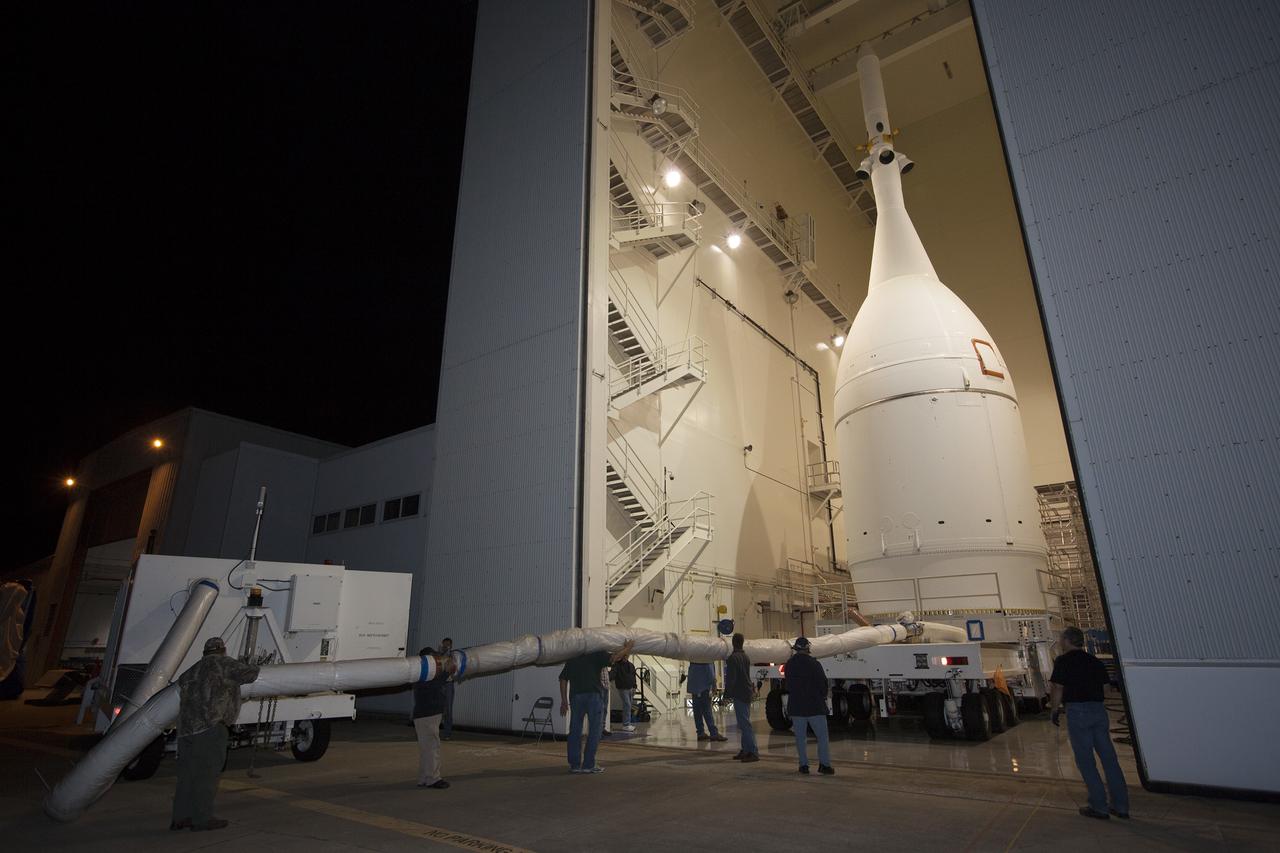
CAPE CANAVERAL, Fla. – At NASA's Kennedy Space Center in Florida, the agency's completed Orion spacecraft begins its trip from the Launch Abort System Facility to Launch Complex 37 at Cape Canaveral Air Force Station. After arrival at the launch pad, United Launch Alliance engineers and technicians will lift Orion and mount it atop its Delta IV Heavy rocket. Orion is the exploration spacecraft designed to carry astronauts to destinations not yet explored by humans, including an asteroid and Mars. It will have emergency abort capability, sustain the crew during space travel and provide safe re-entry from deep space return velocities. The first unpiloted flight test of Orion is scheduled to launch Dec. 4, 2014 atop a United Launch Alliance Delta IV Heavy rocket, and in 2018 on NASA’s Space Launch System rocket. For more information, visit www.nasa.gov/orion Photo credit: NASA/Kim Shiflett
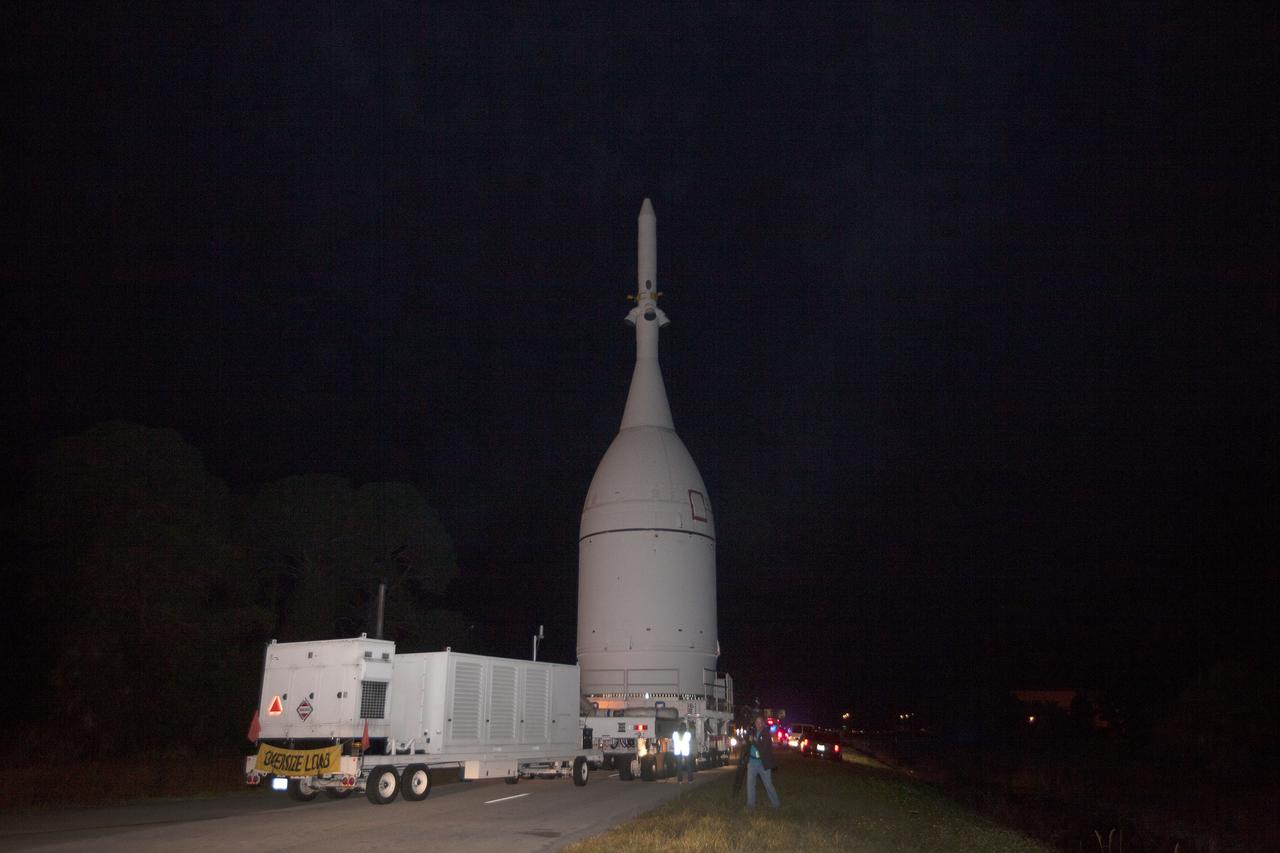
CAPE CANAVERAL, Fla. – At NASA's Kennedy Space Center in Florida, the agency's completed Orion spacecraft begins its trip from the Launch Abort System Facility to Launch Complex 37 at Cape Canaveral Air Force Station. After arrival at the launch pad, United Launch Alliance engineers and technicians will lift Orion and mount it atop its Delta IV Heavy rocket. Orion is the exploration spacecraft designed to carry astronauts to destinations not yet explored by humans, including an asteroid and Mars. It will have emergency abort capability, sustain the crew during space travel and provide safe re-entry from deep space return velocities. The first unpiloted flight test of Orion is scheduled to launch Dec. 4, 2014 atop a United Launch Alliance Delta IV Heavy rocket, and in 2018 on NASA’s Space Launch System rocket. For more information, visit www.nasa.gov/orion Photo credit: NASA/Kim Shiflett
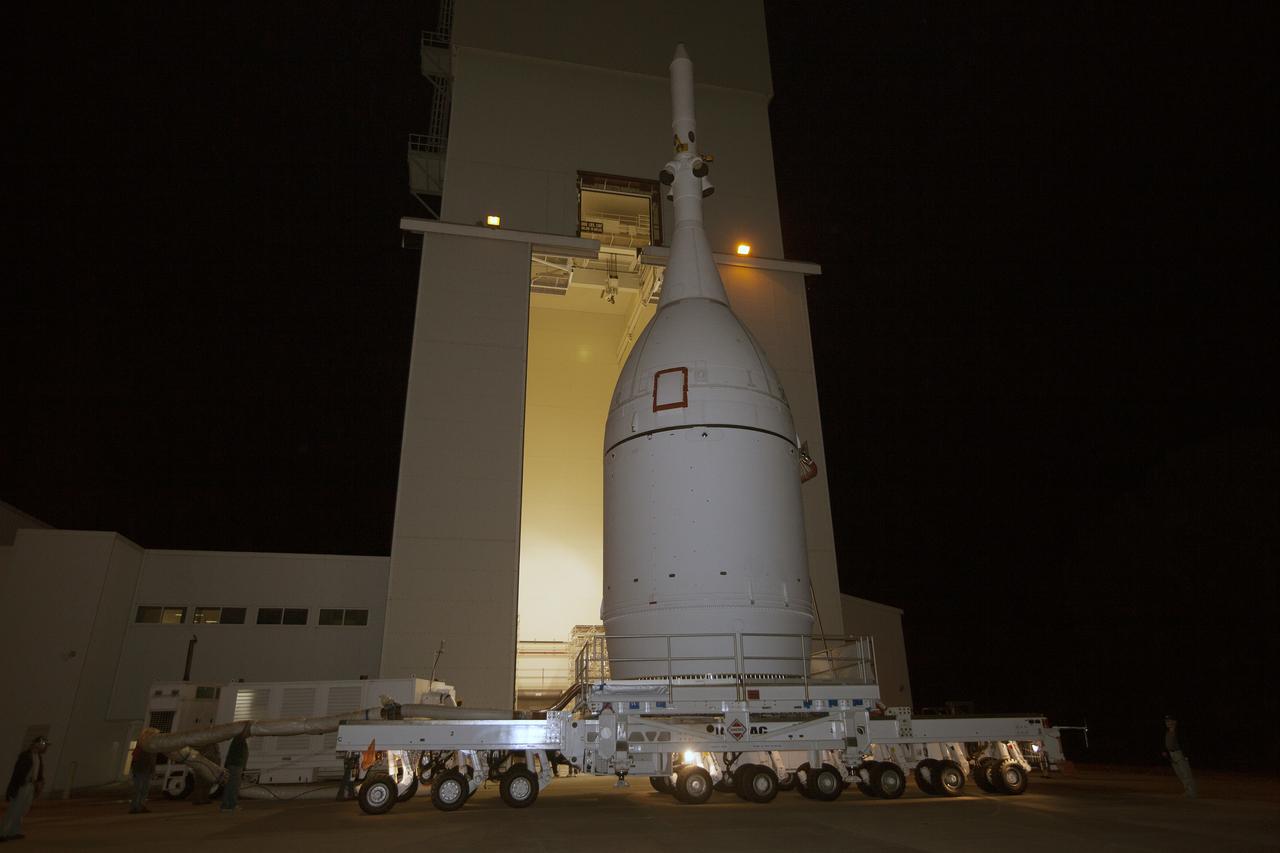
CAPE CANAVERAL, Fla. – At NASA's Kennedy Space Center in Florida, the agency's completed Orion spacecraft begins its trip from the Launch Abort System Facility to Launch Complex 37 at Cape Canaveral Air Force Station. After arrival at the launch pad, United Launch Alliance engineers and technicians will lift Orion and mount it atop its Delta IV Heavy rocket. Orion is the exploration spacecraft designed to carry astronauts to destinations not yet explored by humans, including an asteroid and Mars. It will have emergency abort capability, sustain the crew during space travel and provide safe re-entry from deep space return velocities. The first unpiloted flight test of Orion is scheduled to launch Dec. 4, 2014 atop a United Launch Alliance Delta IV Heavy rocket, and in 2018 on NASA’s Space Launch System rocket. For more information, visit www.nasa.gov/orion Photo credit: NASA/Kim Shiflett
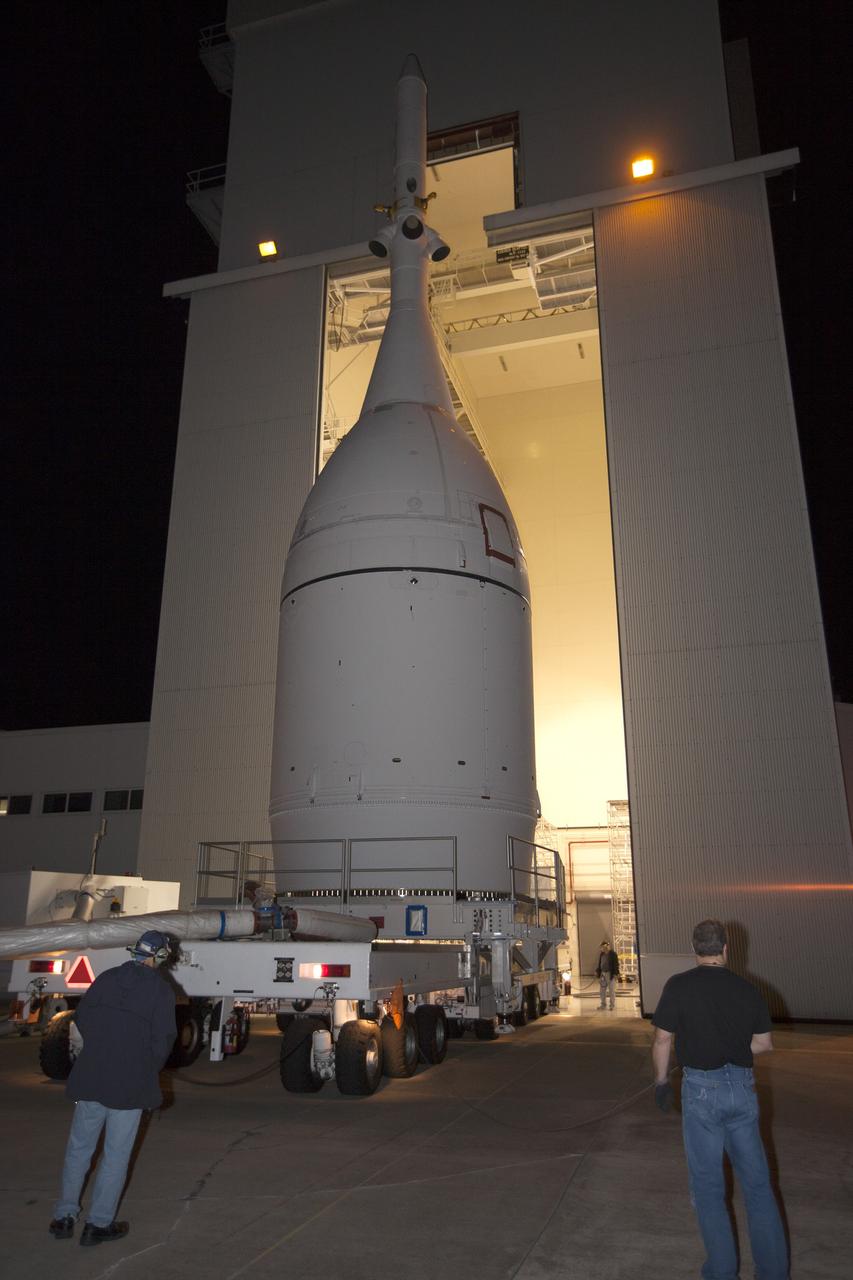
CAPE CANAVERAL, Fla. – At NASA's Kennedy Space Center in Florida, the agency's completed Orion spacecraft begins its trip from the Launch Abort System Facility to Launch Complex 37 at Cape Canaveral Air Force Station. After arrival at the launch pad, United Launch Alliance engineers and technicians will lift Orion and mount it atop its Delta IV Heavy rocket. Orion is the exploration spacecraft designed to carry astronauts to destinations not yet explored by humans, including an asteroid and Mars. It will have emergency abort capability, sustain the crew during space travel and provide safe re-entry from deep space return velocities. The first unpiloted flight test of Orion is scheduled to launch Dec. 4, 2014 atop a United Launch Alliance Delta IV Heavy rocket, and in 2018 on NASA’s Space Launch System rocket. For more information, visit www.nasa.gov/orion Photo credit: NASA/Kim Shiflett
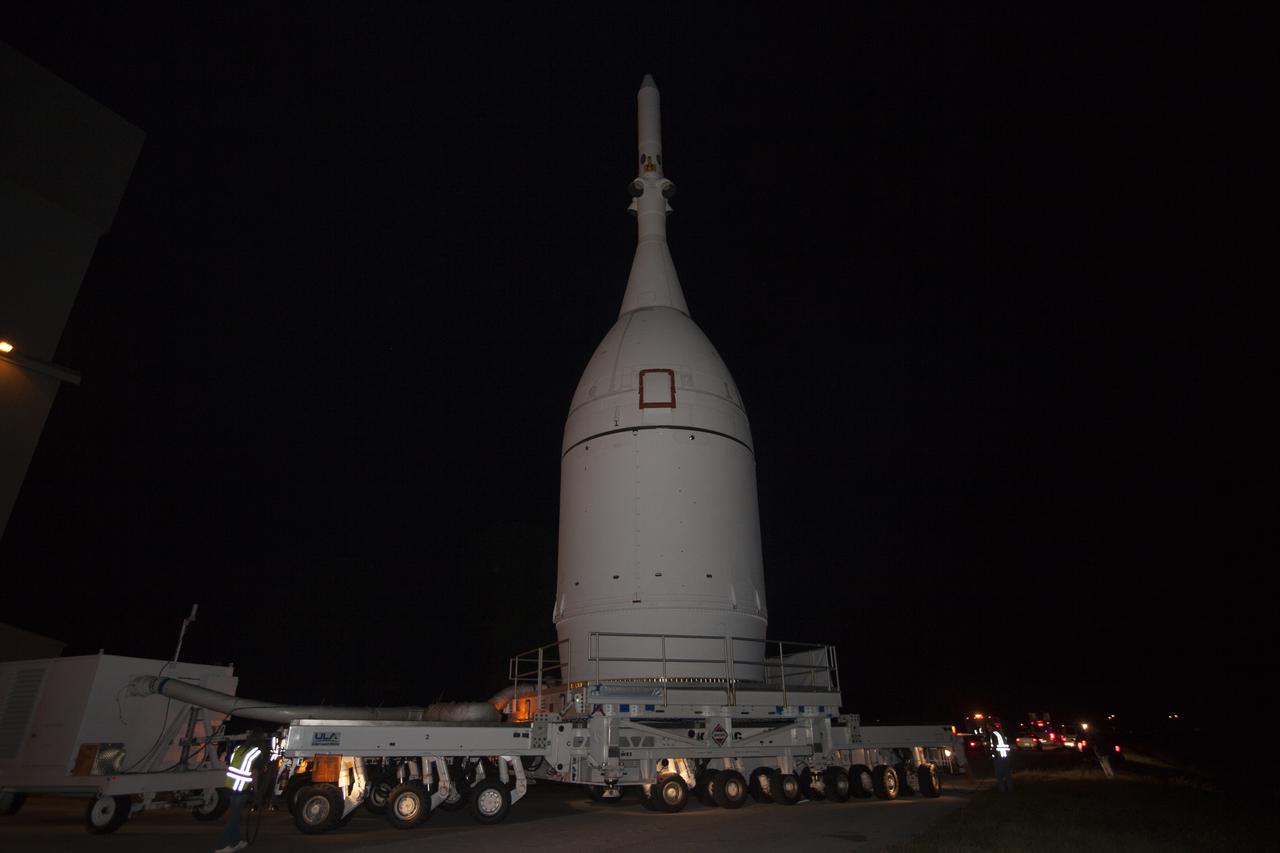
At NASA's Kennedy Space Center in Florida, the agency's completed Orion spacecraft begins its trip from the Launch Abort System Facility to Launch Complex 37 at Cape Canaveral Air Force Station. After arrival at the launch pad, United Launch Alliance engineers and technicians will lift Orion and mount it atop its Delta IV Heavy rocket. Orion is the exploration spacecraft designed to carry astronauts to destinations not yet explored by humans, including an asteroid and Mars. It will have emergency abort capability, sustain the crew during space travel and provide safe re-entry from deep space return velocities. The first unpiloted flight test of Orion is scheduled to launch Dec. 4, 2014 atop a United Launch Alliance Delta IV Heavy rocket, and in 2018 on NASA’s Space Launch System rocket.
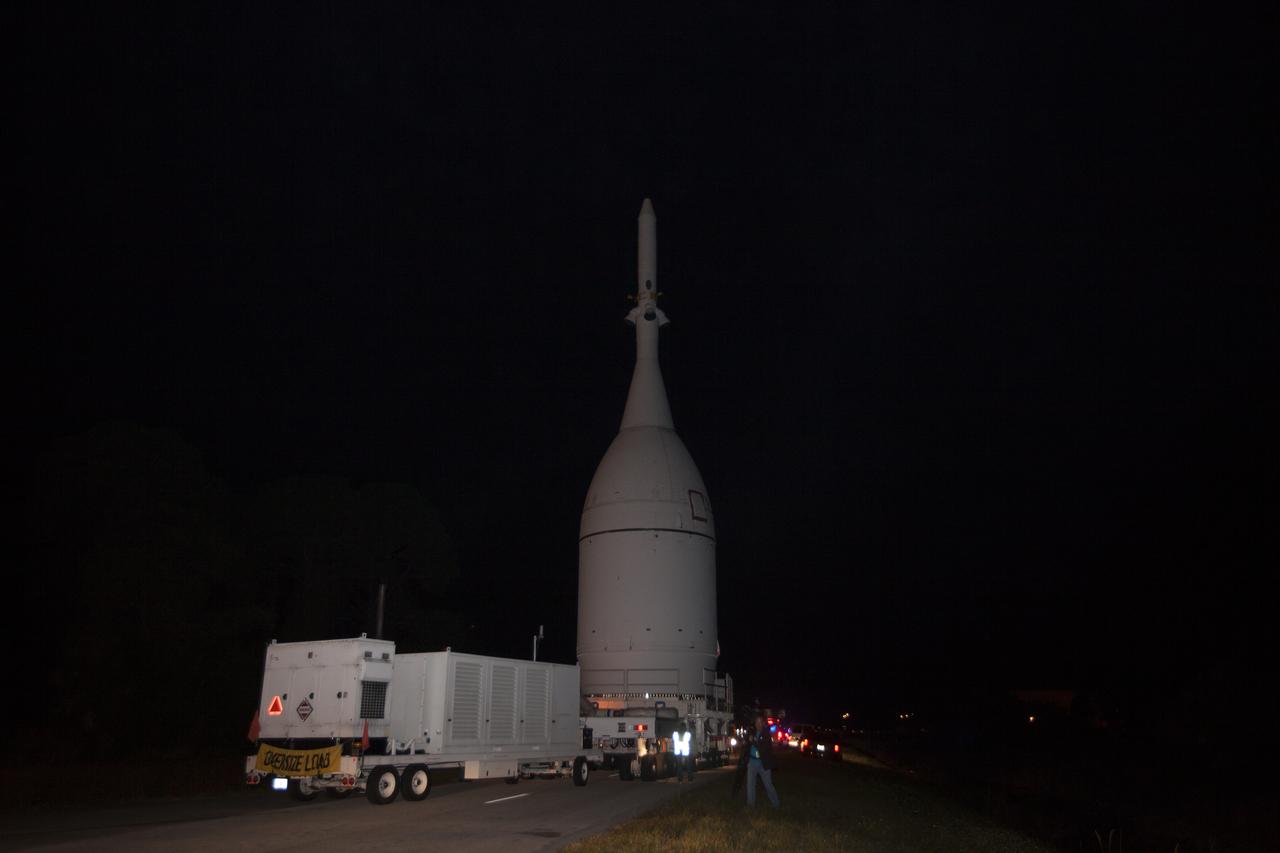
At NASA's Kennedy Space Center in Florida, the agency's completed Orion spacecraft begins its trip from the Launch Abort System Facility to Launch Complex 37 at Cape Canaveral Air Force Station. After arrival at the launch pad, United Launch Alliance engineers and technicians will lift Orion and mount it atop its Delta IV Heavy rocket. Orion is the exploration spacecraft designed to carry astronauts to destinations not yet explored by humans, including an asteroid and Mars. It will have emergency abort capability, sustain the crew during space travel and provide safe re-entry from deep space return velocities. The first unpiloted flight test of Orion is scheduled to launch Dec. 4, 2014 atop a United Launch Alliance Delta IV Heavy rocket, and in 2018 on NASA’s Space Launch System rocket.
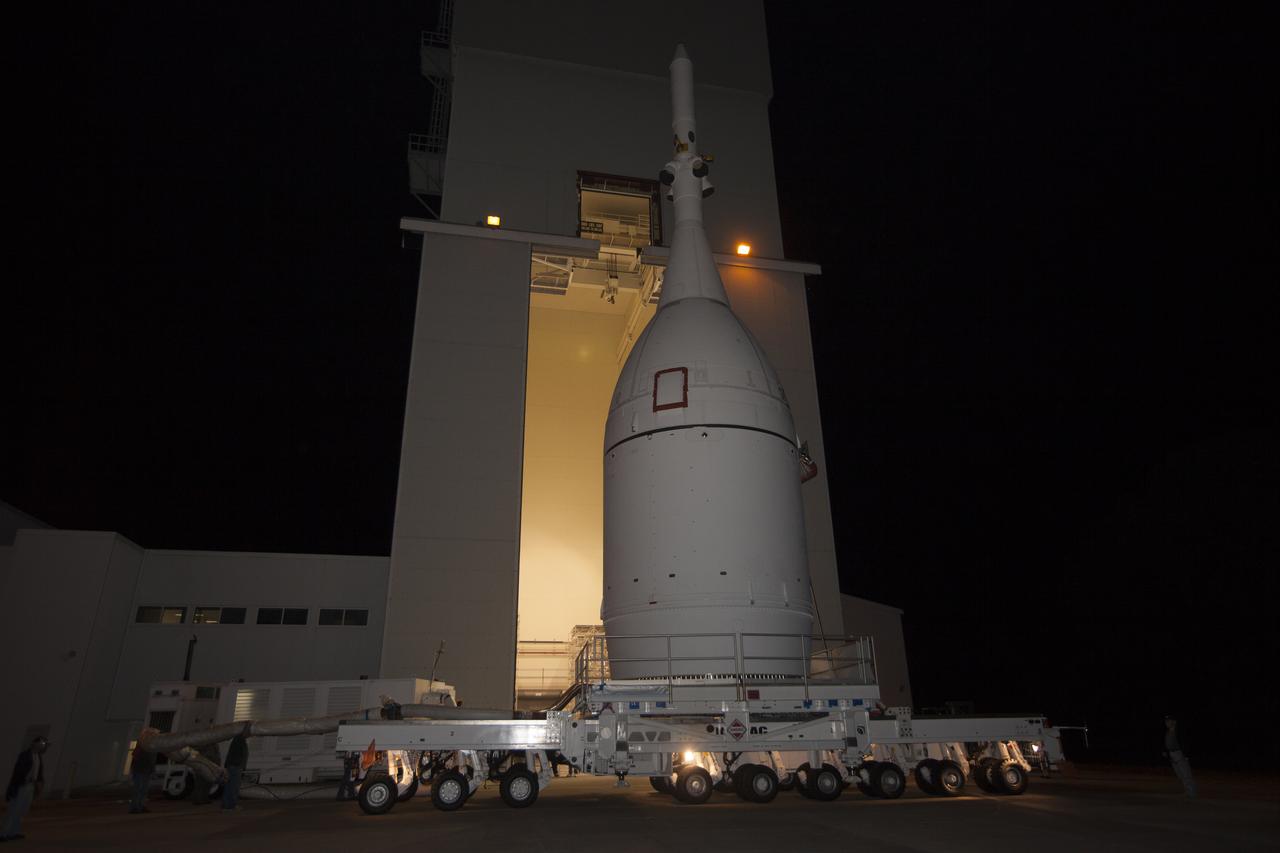
At NASA's Kennedy Space Center in Florida, the agency's completed Orion spacecraft begins its trip from the Launch Abort System Facility to Launch Complex 37 at Cape Canaveral Air Force Station. After arrival at the launch pad, United Launch Alliance engineers and technicians will lift Orion and mount it atop its Delta IV Heavy rocket. Orion is the exploration spacecraft designed to carry astronauts to destinations not yet explored by humans, including an asteroid and Mars. It will have emergency abort capability, sustain the crew during space travel and provide safe re-entry from deep space return velocities. The first unpiloted flight test of Orion is scheduled to launch Dec. 4, 2014 atop a United Launch Alliance Delta IV Heavy rocket, and in 2018 on NASA’s Space Launch System rocket.
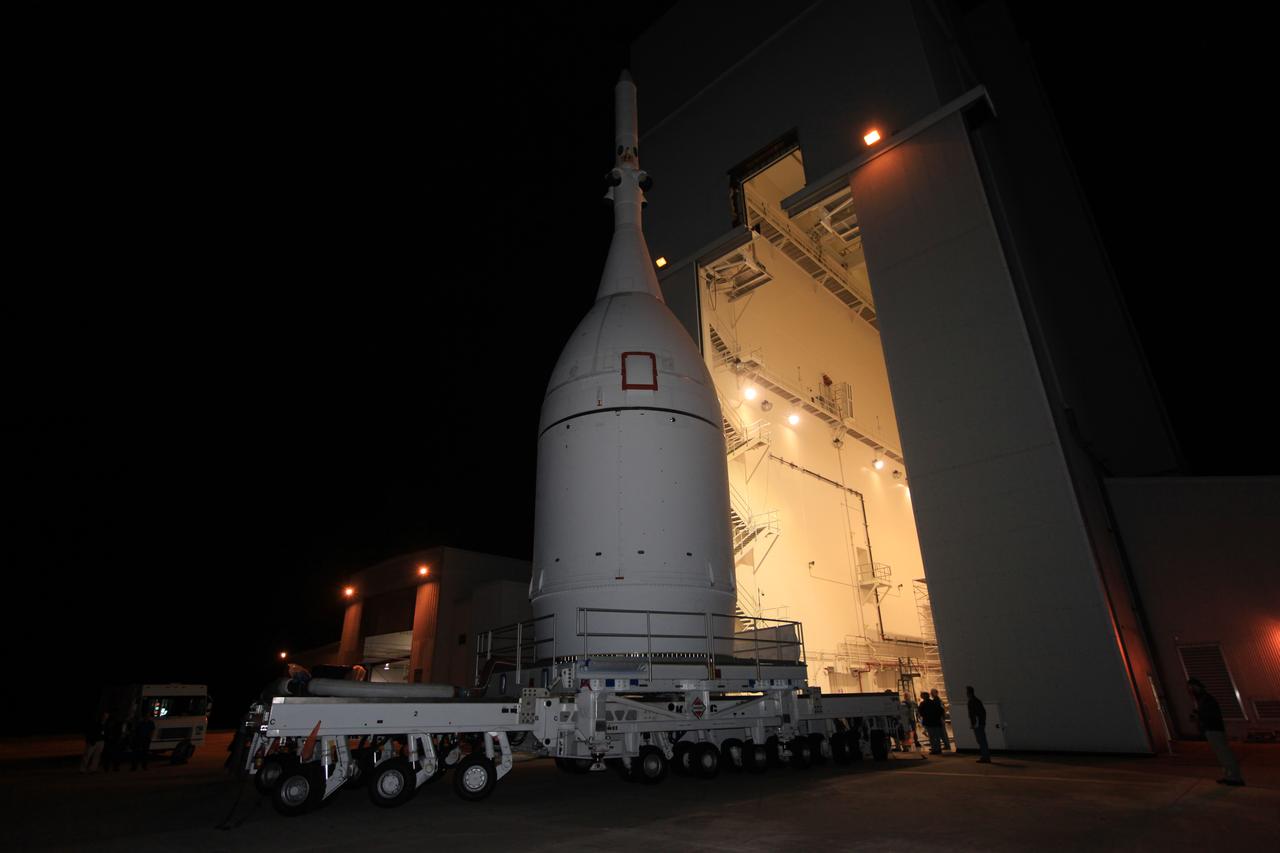
At NASA's Kennedy Space Center in Florida, the agency's completed Orion spacecraft begins its trip from the Launch Abort System Facility to Launch Complex 37 at Cape Canaveral Air Force Station. After arrival at the launch pad, United Launch Alliance engineers and technicians will lift Orion and mount it atop its Delta IV Heavy rocket. Orion is the exploration spacecraft designed to carry astronauts to destinations not yet explored by humans, including an asteroid and Mars. It will have emergency abort capability, sustain the crew during space travel and provide safe re-entry from deep space return velocities. The first unpiloted flight test of Orion is scheduled to launch Dec. 4, 2014 atop a United Launch Alliance Delta IV Heavy rocket, and in 2018 on NASA’s Space Launch System rocket.
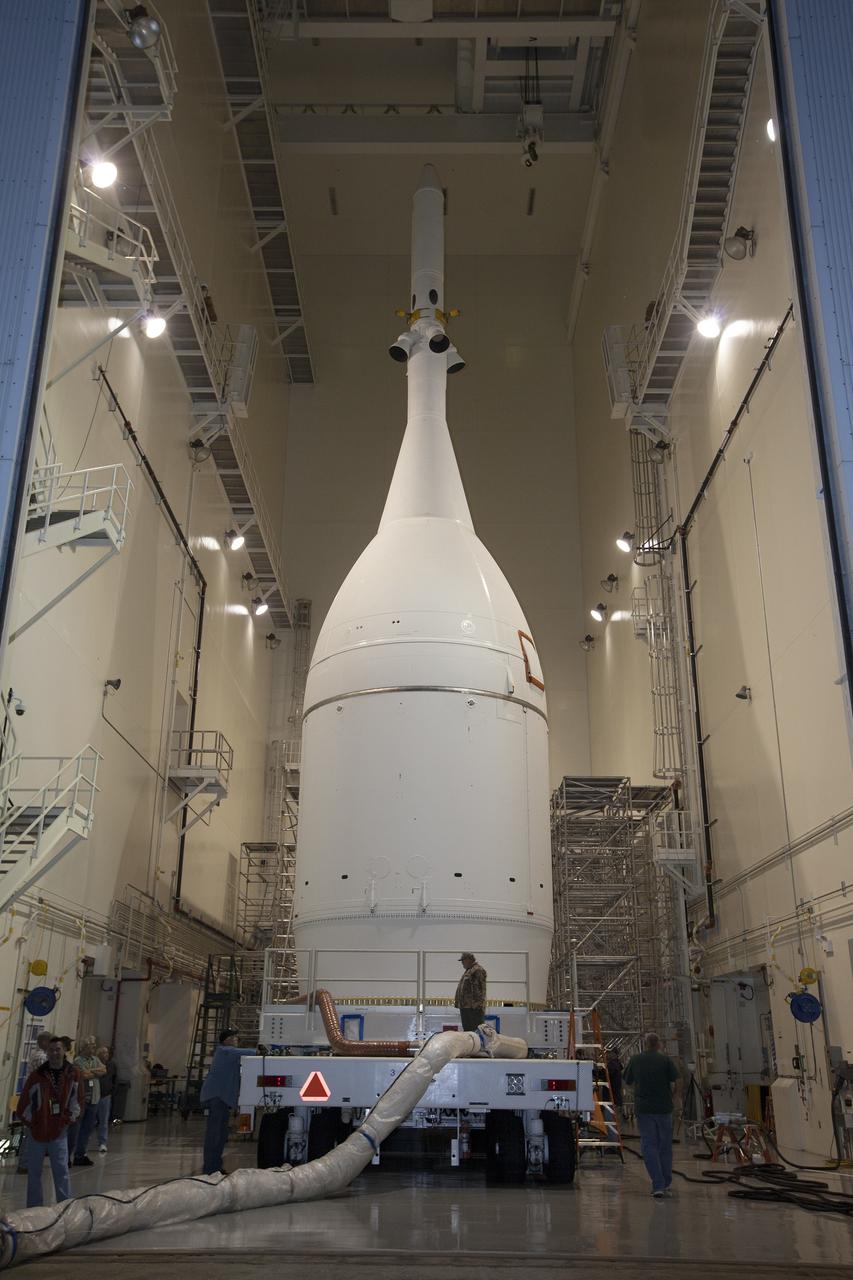
CAPE CANAVERAL, Fla. – At NASA's Kennedy Space Center in Florida, the agency's completed Orion spacecraft begins its trip from the Launch Abort System Facility to Launch Complex 37 at Cape Canaveral Air Force Station. After arrival at the launch pad, United Launch Alliance engineers and technicians will lift Orion and mount it atop its Delta IV Heavy rocket. Orion is the exploration spacecraft designed to carry astronauts to destinations not yet explored by humans, including an asteroid and Mars. It will have emergency abort capability, sustain the crew during space travel and provide safe re-entry from deep space return velocities. The first unpiloted flight test of Orion is scheduled to launch Dec. 4, 2014 atop a United Launch Alliance Delta IV Heavy rocket, and in 2018 on NASA’s Space Launch System rocket. For more information, visit www.nasa.gov/orion Photo credit: NASA/Kim Shiflett
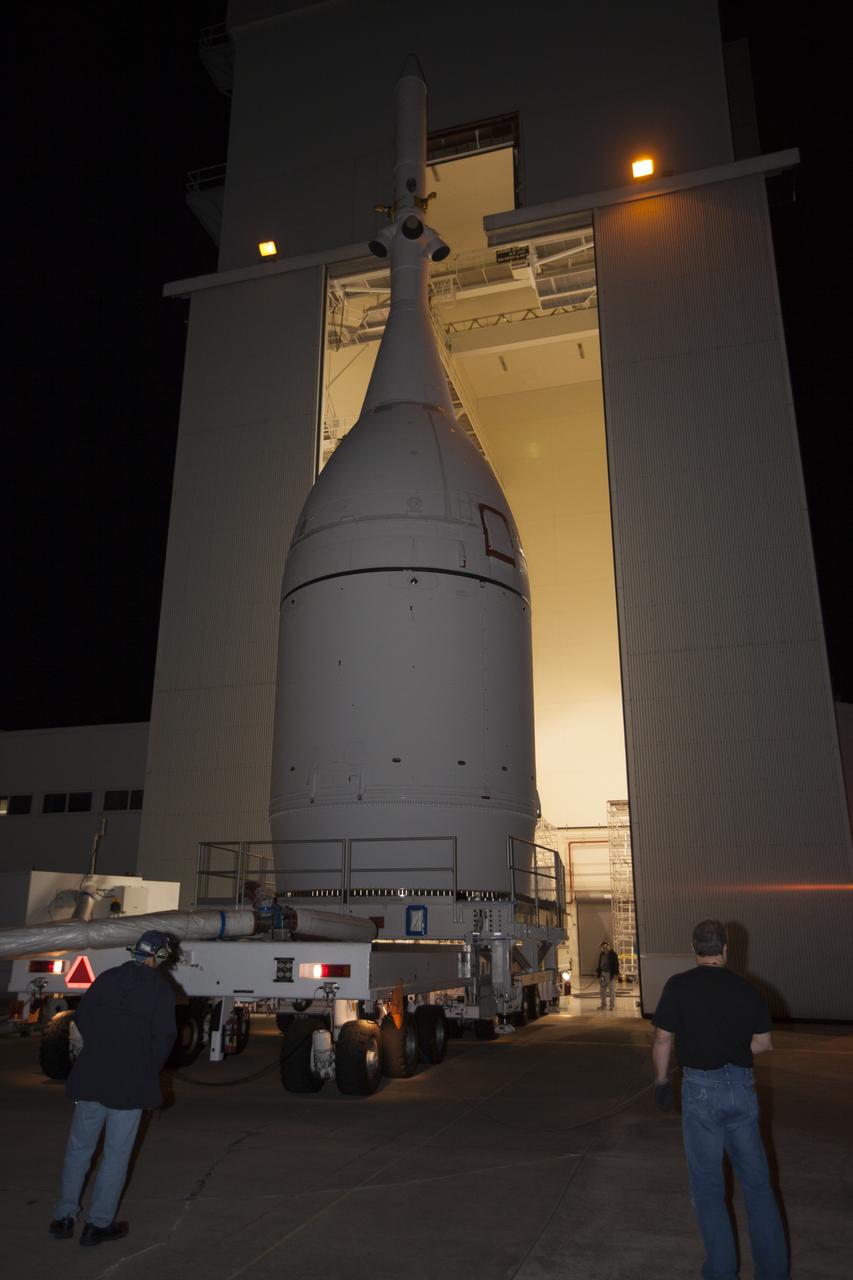
At NASA's Kennedy Space Center in Florida, the agency's completed Orion spacecraft begins its trip from the Launch Abort System Facility to Launch Complex 37 at Cape Canaveral Air Force Station. After arrival at the launch pad, United Launch Alliance engineers and technicians will lift Orion and mount it atop its Delta IV Heavy rocket. Orion is the exploration spacecraft designed to carry astronauts to destinations not yet explored by humans, including an asteroid and Mars. It will have emergency abort capability, sustain the crew during space travel and provide safe re-entry from deep space return velocities. The first unpiloted flight test of Orion is scheduled to launch Dec. 4, 2014 atop a United Launch Alliance Delta IV Heavy rocket, and in 2018 on NASA’s Space Launch System rocket.

CAPE CANAVERAL, Fla. – A C-5 aircraft arrives at the Shuttle Landing Facility at NASA's Kennedy Space Center in Florida carrying hardware that will be used in the launch of the Ares I-X rocket. The hardware consists of a precisely machined, full-scale simulator crew module and launch abort system to form the tip of NASA's Ares I-X rocket. The launch of the 321-foot-tall, full-scale Ares I-X, targeted for July 2009, will be the first in a series of unpiloted rocket launches from Kennedy. When fully developed, the 16-foot diameter crew module will furnish living space and reentry protection for the astronauts, while their launch abort system will provide safe evacuation if a launch vehicle failure occurs. Photo credit: NASA/Jack Pfaller
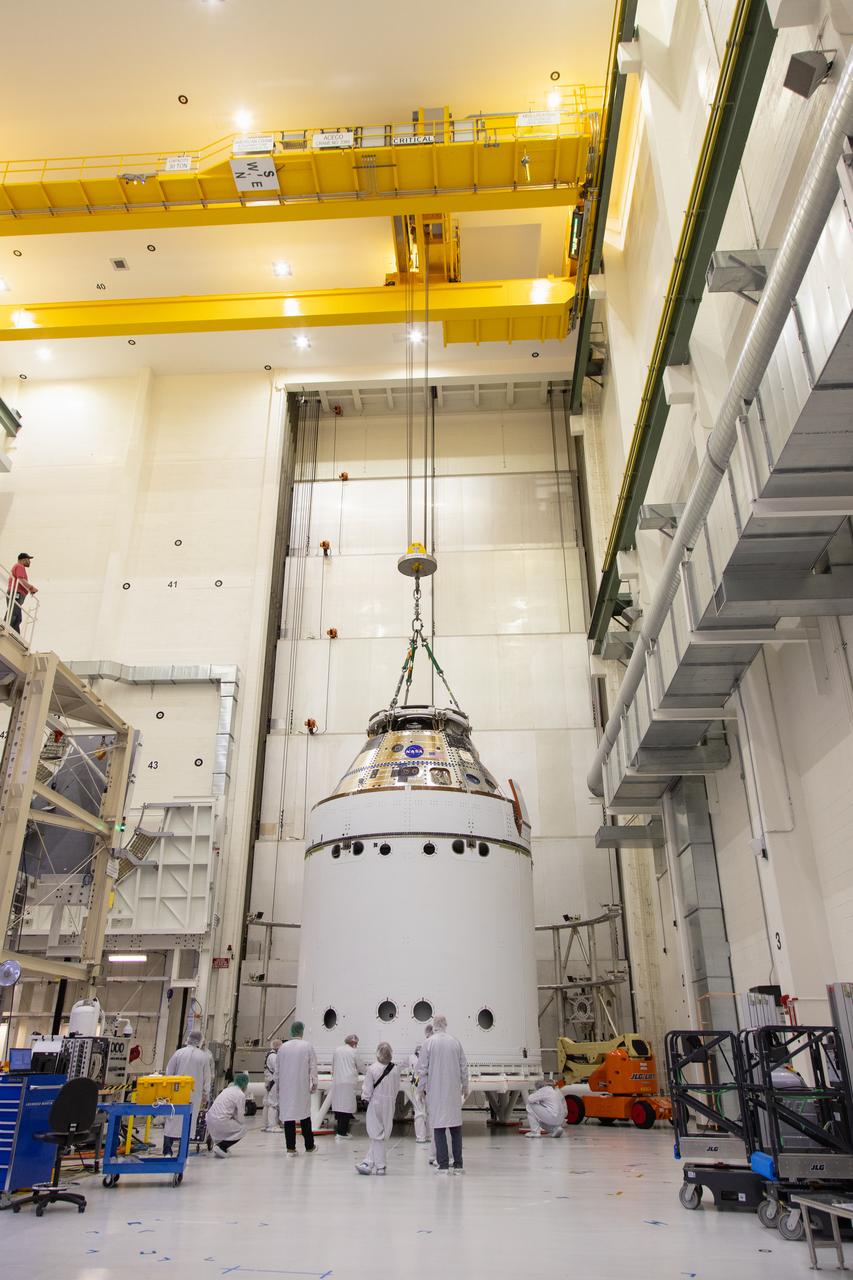
A crane returns NASA’s Artemis II Orion spacecraft to the Final Assembly and System Testing (FAST) cell inside the Neil A. Armstrong Operations and Checkout Building at NASA’s Kennedy Space Center in Florida on Friday, March 21, 2025, following installation of four solar array winds and adapter jettison fairings. Once complete, the Orion spacecraft will be transported to other facilities for fueling and integration with its launch abort system before arriving at the Vehicle Assembly Building where it will be stacked atop the SLS (Space Launch System) by NASA’s Exploration Ground System team at the Vehicle Assembly Building in preparations for Artemis II launch operations.
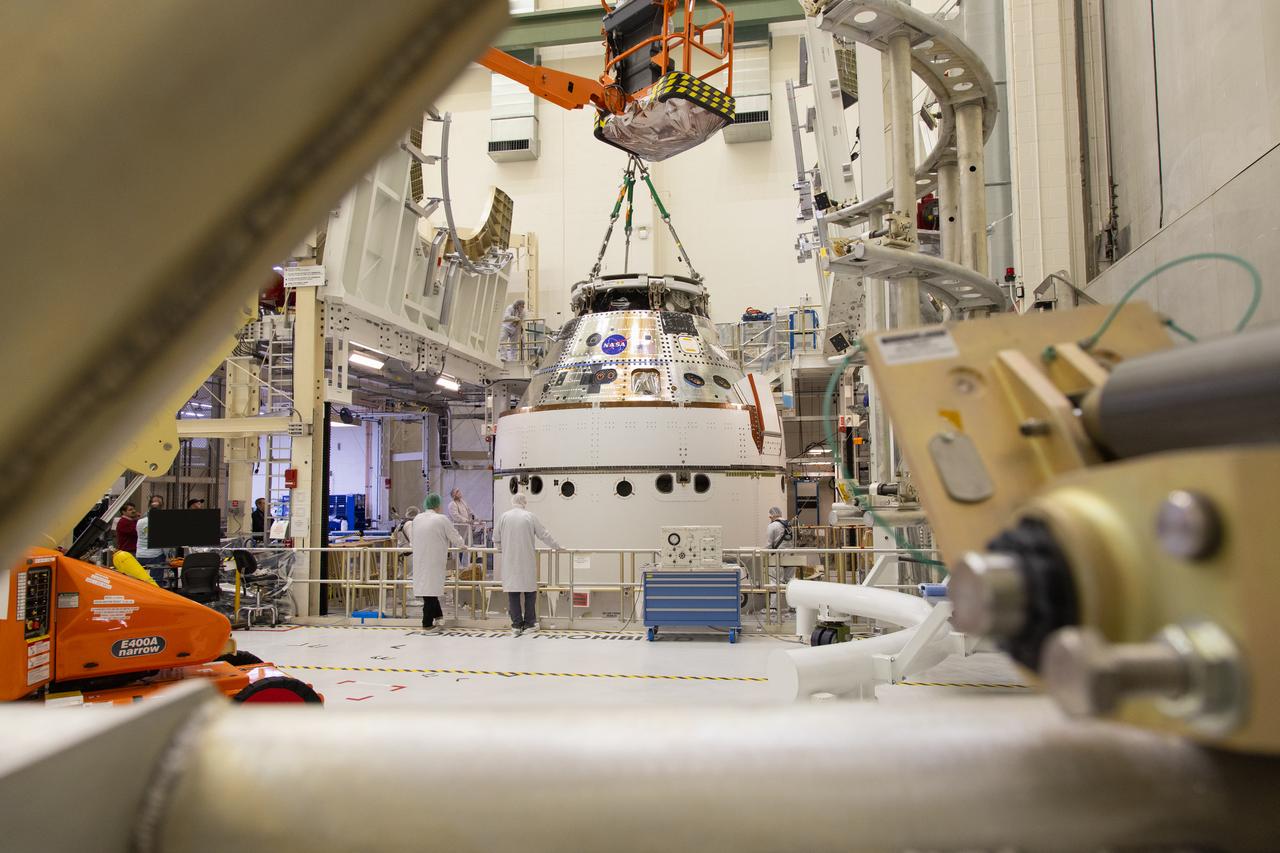
A crane returns NASA’s Artemis II Orion spacecraft to the Final Assembly and System Testing (FAST) cell inside the Neil A. Armstrong Operations and Checkout Building at NASA’s Kennedy Space Center in Florida on Friday, March 21, 2025, following installation of four solar array winds and adapter jettison fairings. Once complete, the Orion spacecraft will be transported to other facilities for fueling and integration with its launch abort system before arriving at the Vehicle Assembly Building where it will be stacked atop the SLS (Space Launch System) by NASA’s Exploration Ground System team at the Vehicle Assembly Building in preparations for Artemis II launch operations.
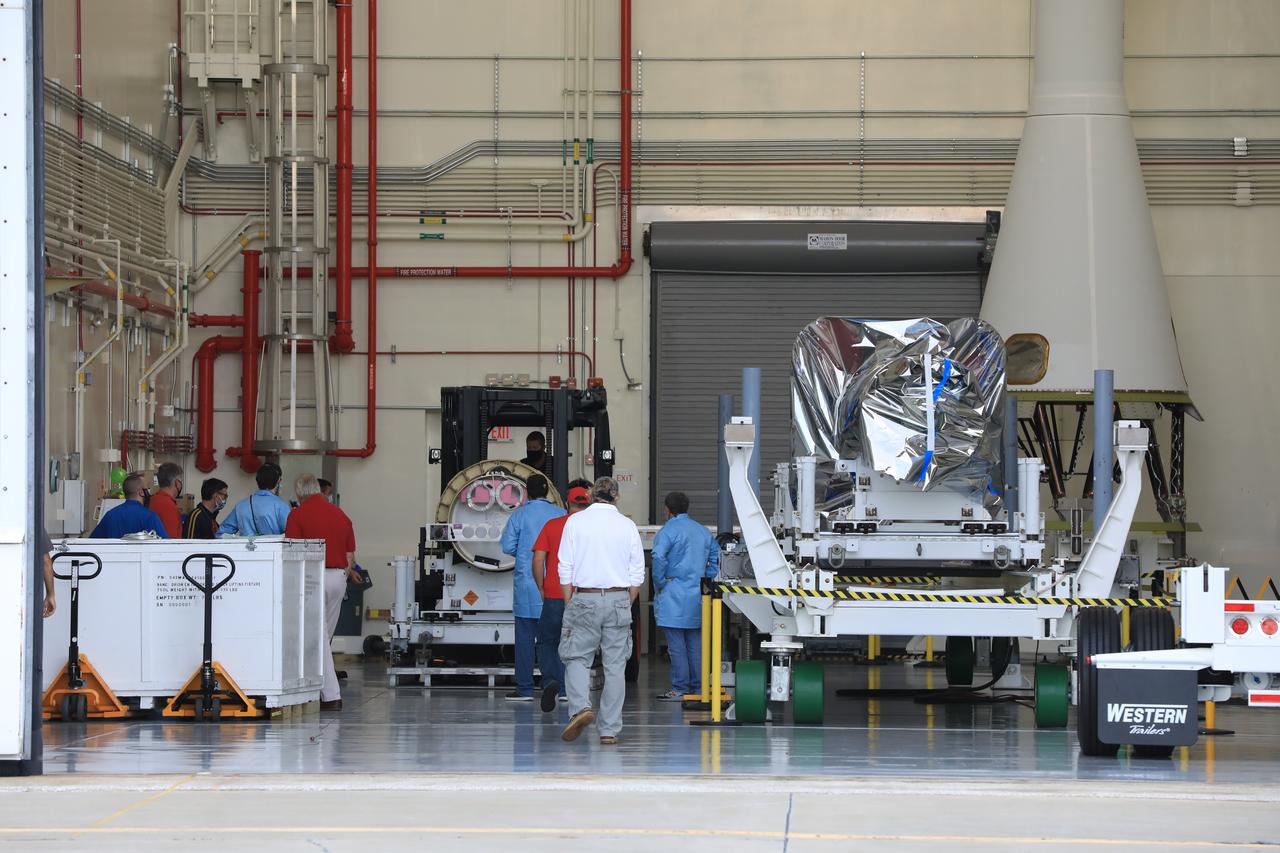
The last of three motors required to assemble the Launch Abort System for NASA’s Artemis II mission, the attitude control motor (ACM), arrives at Kennedy Space Center in Florida on August 28. The attitude control motor (ACM) was delivered by truck from Northrop Grumman’s manufacturing facility in Maryland, to the Launch Abort System Facility (LASF) at Kennedy. During launch of Orion atop the agency’s Space Launch System rocket, the LAS motors work together to separate the spacecraft from the rocket in the unlikely event of an emergency during launch. The LAS includes three motors – the launch abort motor, the jettison motor, and the attitude control motor—that once activated, will steer the spacecraft carrying the astronauts to safety. The ACM operates to keep Orion’s crew module on a controlled flight path in the event it needs to jettison and steer away from the rocket. Artemis II is the first crewed flight in a series of increasingly complex missions to the Moon that will lay the foundation for exploration of Mars and beyond. Artemis II will confirm all of the Orion spacecraft’s systems operate as designed in the actual environment of deep space with astronauts aboard. As part of the Artemis program, NASA will send the first woman and next man to the Moon in 2024.
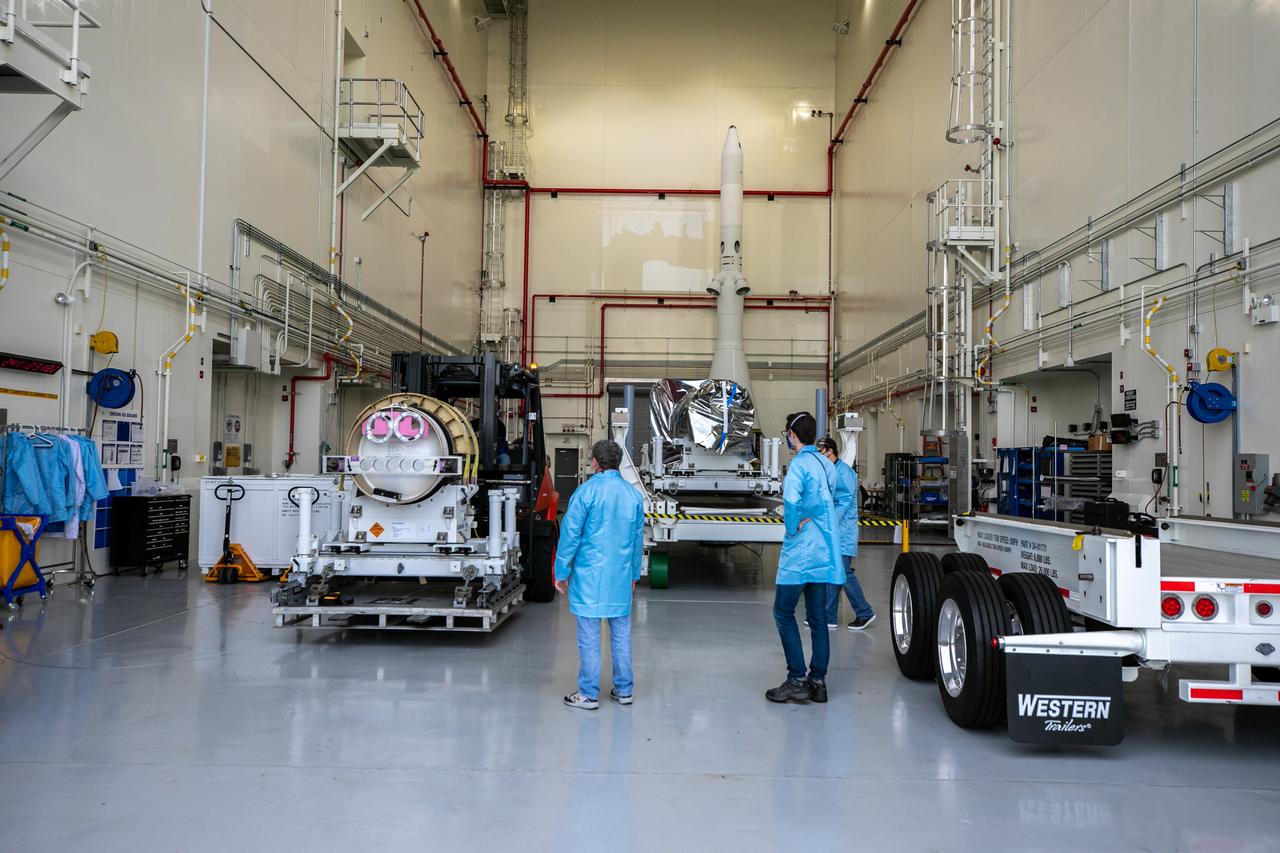
The last of three motors required to assemble the Launch Abort System for NASA’s Artemis II mission, the attitude control motor (ACM), arrives at Kennedy Space Center in Florida on August 28. The attitude control motor (ACM) was delivered by truck from Northrop Grumman’s manufacturing facility in Maryland, to the Launch Abort System Facility (LASF) at Kennedy. During launch of Orion atop the agency’s Space Launch System rocket, the LAS motors work together to separate the spacecraft from the rocket in the unlikely event of an emergency during launch. The LAS includes three motors – the launch abort motor, the jettison motor, and the attitude control motor—that once activated, will steer the spacecraft carrying the astronauts to safety. The ACM operates to keep Orion’s crew module on a controlled flight path in the event it needs to jettison and steer away from the rocket. Artemis II is the first crewed flight in a series of increasingly complex missions to the Moon that will lay the foundation for exploration of Mars and beyond. Artemis II will confirm all of the Orion spacecraft’s systems operate as designed in the actual environment of deep space with astronauts aboard. As part of the Artemis program, NASA will send the first woman and next man to the Moon in 2024.
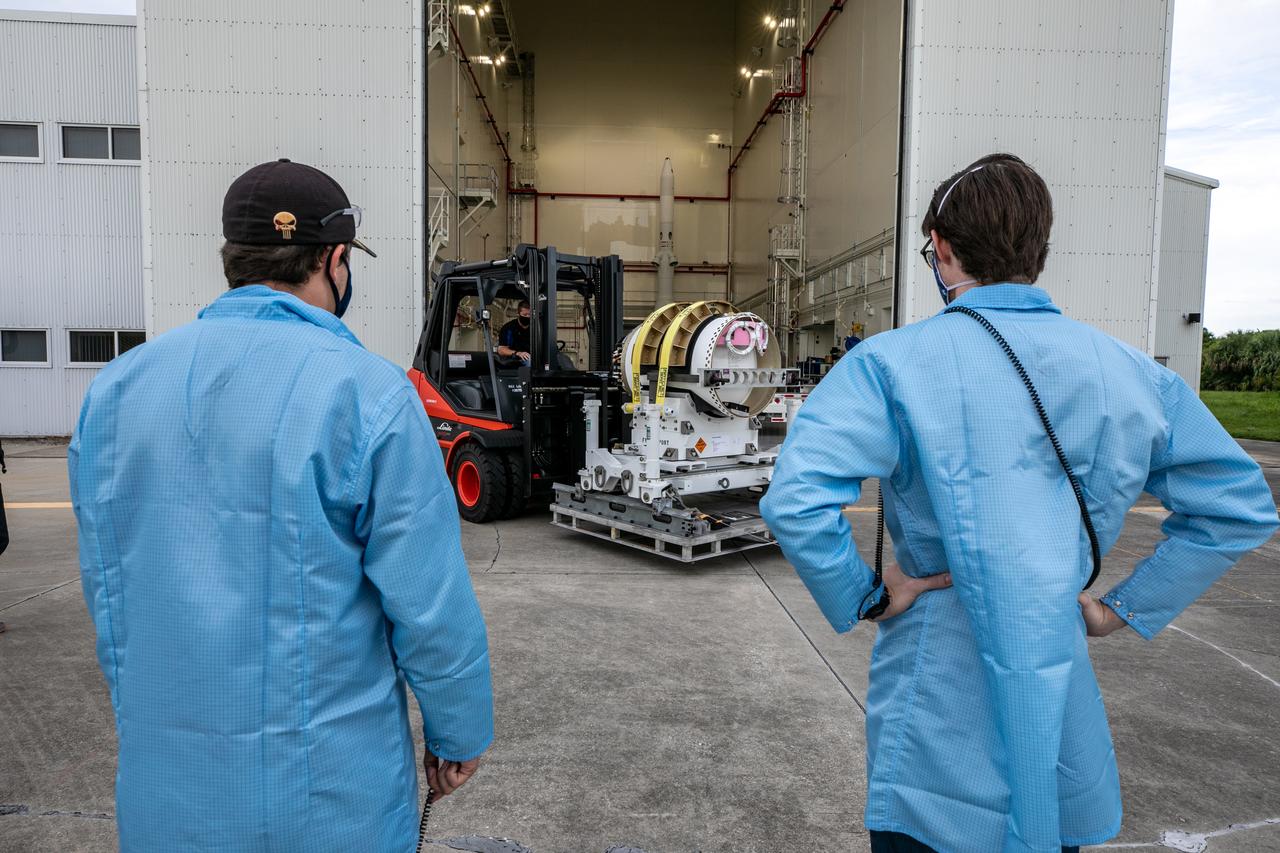
The last of three motors required to assemble the Launch Abort System for NASA’s Artemis II mission, the attitude control motor (ACM), arrives at Kennedy Space Center in Florida on August 28. The attitude control motor (ACM) was delivered by truck from Northrop Grumman’s manufacturing facility in Maryland, to the Launch Abort System Facility (LASF) at Kennedy. During launch of Orion atop the agency’s Space Launch System rocket, the LAS motors work together to separate the spacecraft from the rocket in the unlikely event of an emergency during launch. The LAS includes three motors – the launch abort motor, the jettison motor, and the attitude control motor—that once activated, will steer the spacecraft carrying the astronauts to safety. The ACM operates to keep Orion’s crew module on a controlled flight path in the event it needs to jettison and steer away from the rocket. Artemis II is the first crewed flight in a series of increasingly complex missions to the Moon that will lay the foundation for exploration of Mars and beyond. Artemis II will confirm all of the Orion spacecraft’s systems operate as designed in the actual environment of deep space with astronauts aboard. As part of the Artemis program, NASA will send the first woman and next man to the Moon in 2024.
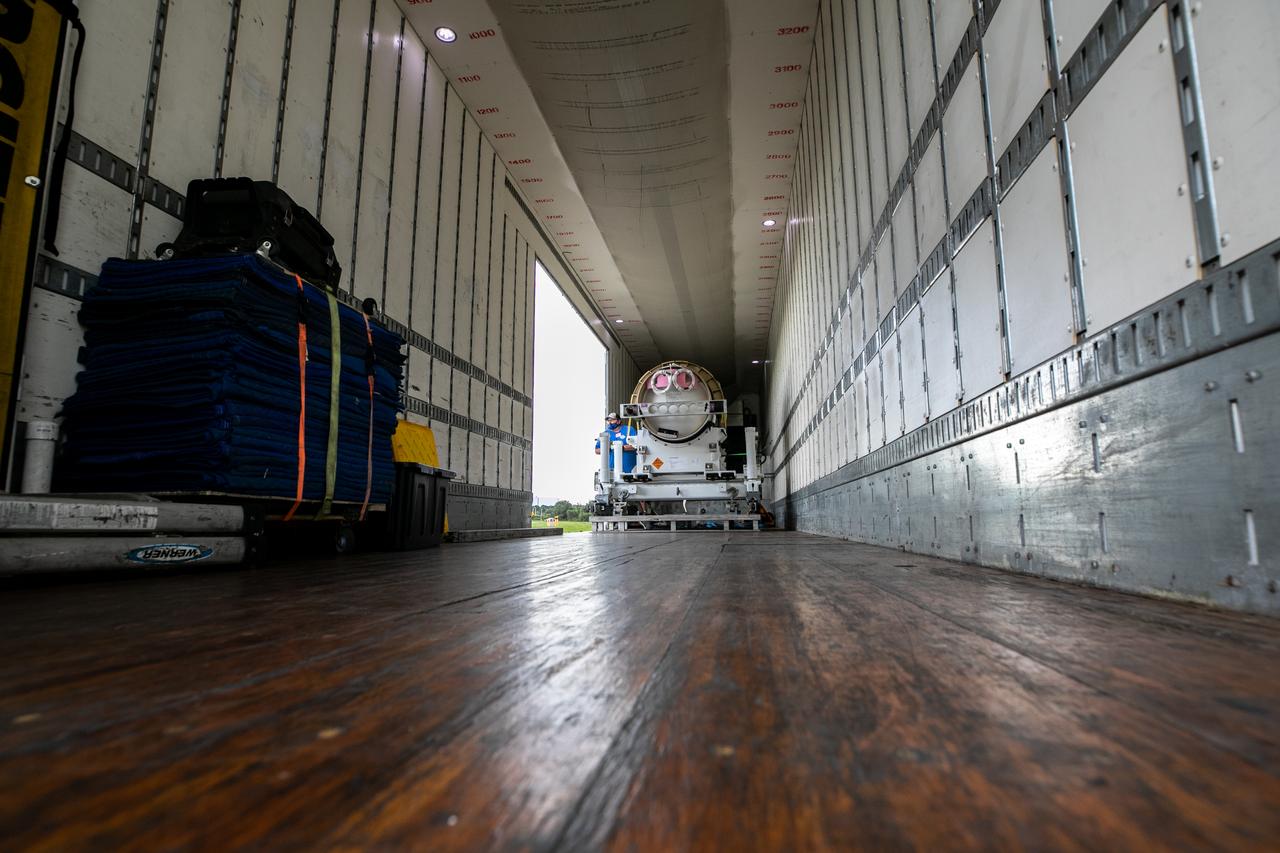
The last of three motors required to assemble the Launch Abort System for NASA’s Artemis II mission, the attitude control motor (ACM), arrives at Kennedy Space Center in Florida on August 28. The attitude control motor (ACM) was delivered by truck from Northrop Grumman’s manufacturing facility in Maryland, to the Launch Abort System Facility (LASF) at Kennedy. During launch of Orion atop the agency’s Space Launch System rocket, the LAS motors work together to separate the spacecraft from the rocket in the unlikely event of an emergency during launch. The LAS includes three motors – the launch abort motor, the jettison motor, and the attitude control motor—that once activated, will steer the spacecraft carrying the astronauts to safety. The ACM operates to keep Orion’s crew module on a controlled flight path in the event it needs to jettison and steer away from the rocket. Artemis II is the first crewed flight in a series of increasingly complex missions to the Moon that will lay the foundation for exploration of Mars and beyond. Artemis II will confirm all of the Orion spacecraft’s systems operate as designed in the actual environment of deep space with astronauts aboard. As part of the Artemis program, NASA will send the first woman and next man to the Moon in 2024.
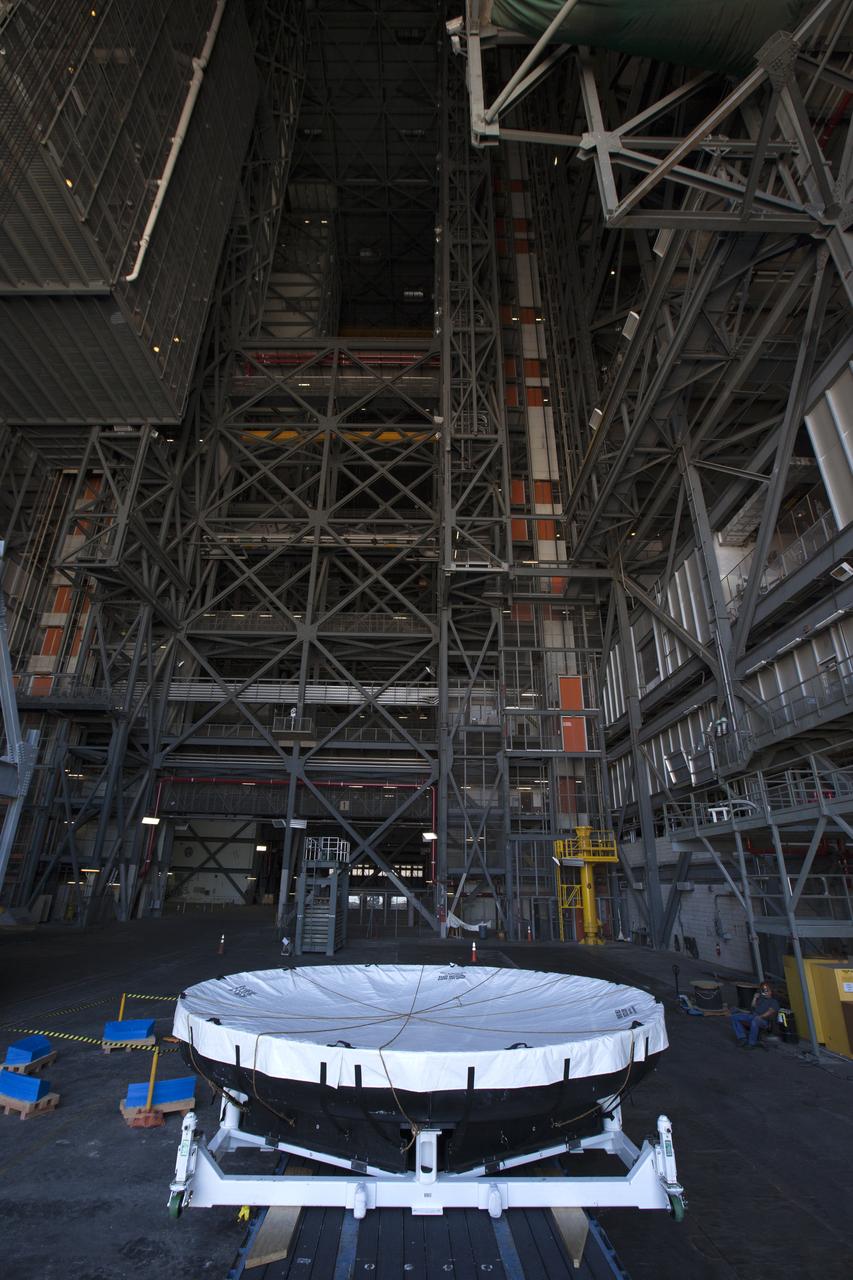
The Orion heat shield from Exploration Flight Test-1 has arrived in High Bay 2 in the Vehicle Assembly Building (VAB) at NASA's Kennedy Space Center in Florida. The heat shield was moved from the Launch Abort System Facility. The heat shield is being transferred from the Orion Program to the Ground Systems Development and Operations Program, Landing and Recovery Operations. In the VAB, the heat shield will be integrated with the Orion ground test article and used for future underway recovery testing.
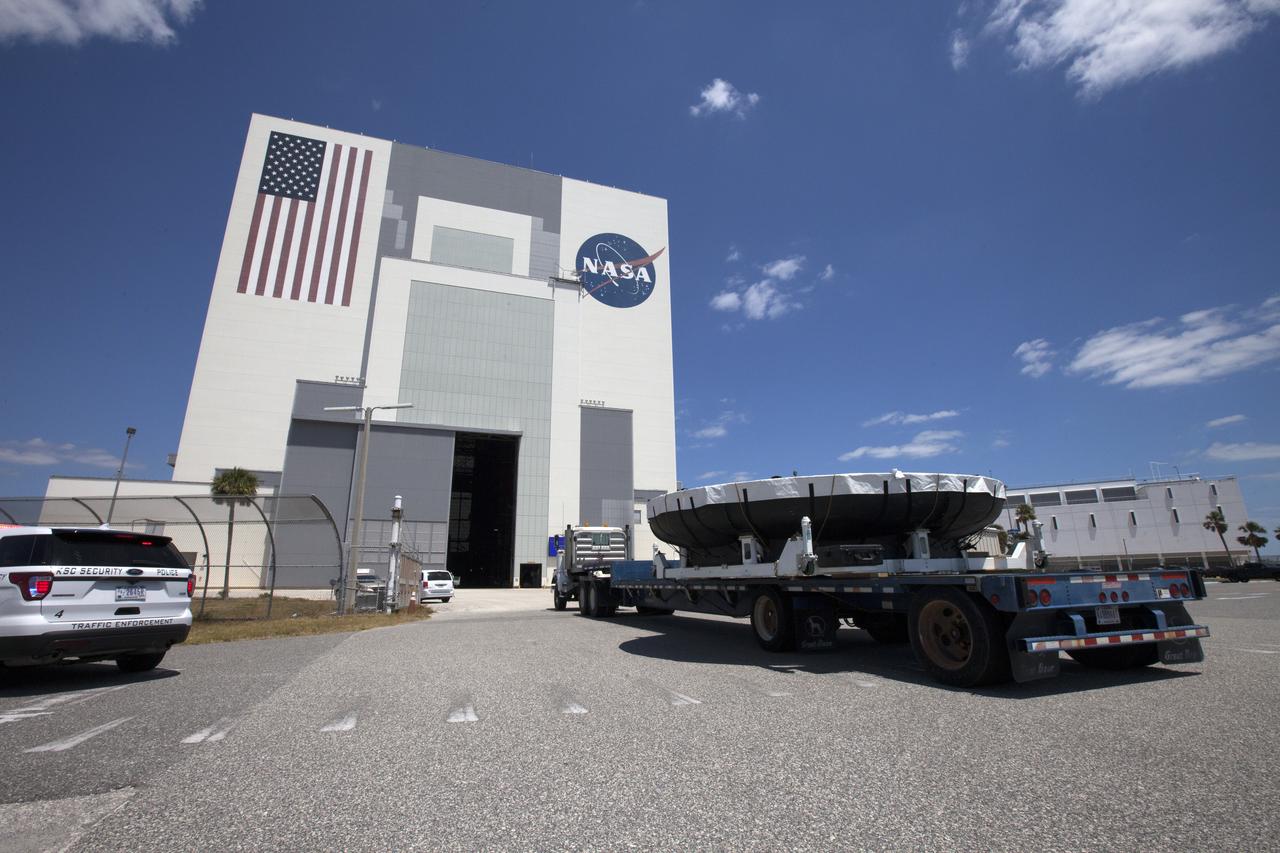
The Orion heat shield from Exploration Flight Test-1, secured on a transporter, arrives at the Vehicle Assembly Building (VAB) at NASA's Kennedy Space Center in Florida. The heat shield was moved from the Launch Abort System Facility. The heat shield is being transferred from the Orion Program to the Ground Systems Development and Operations Program, Landing and Recovery Operations. In the VAB, the heat shield will be integrated with the Orion ground test article and used for future underway recovery testing.
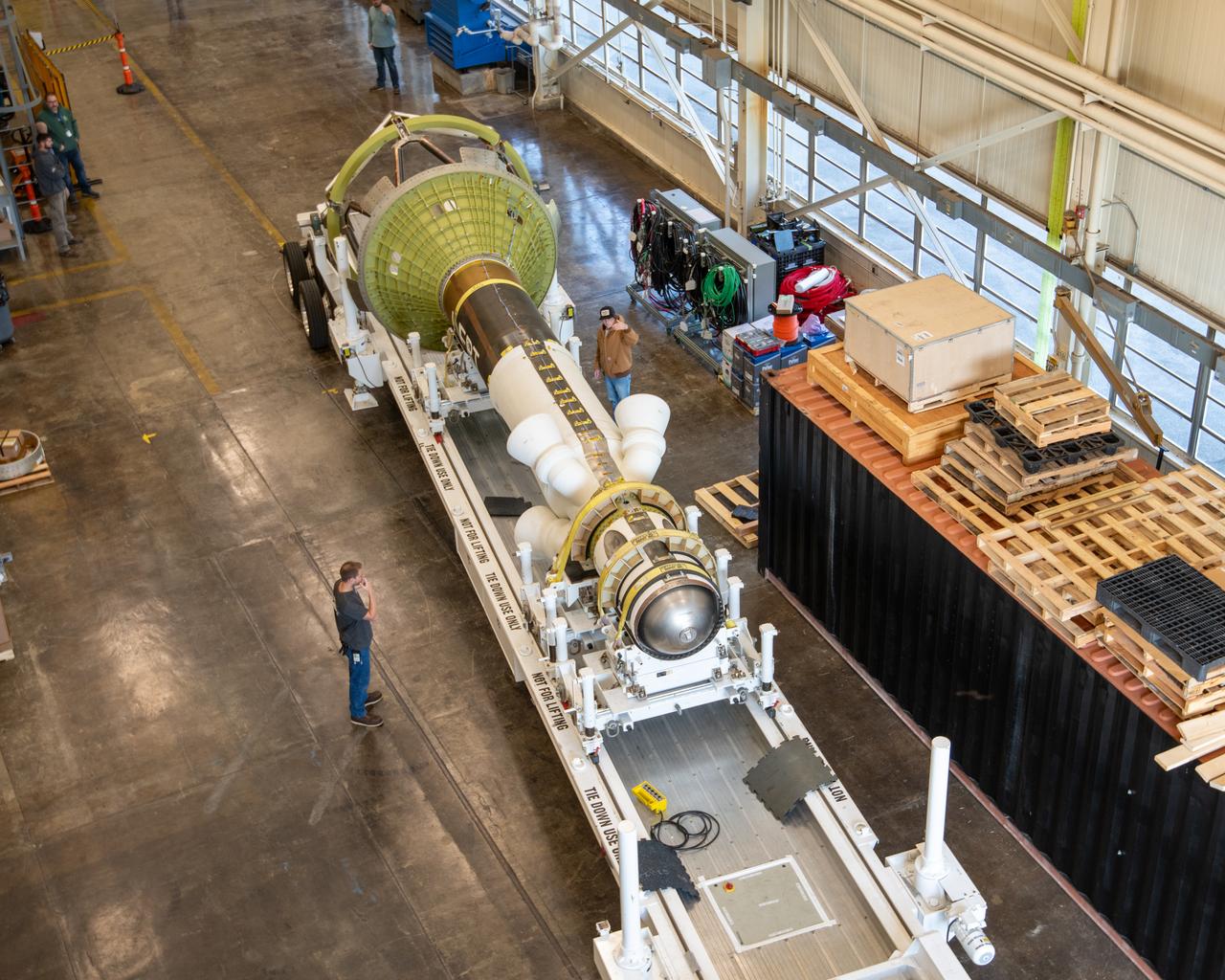
The Launch Abort System and the Orion Crew Module, also known as the Orion Environmental Test Article (ETA), returned to NASA’s Neil Armstrong Test Facility in Sandusky, Ohio, in October 2023 through January 2024 and completed an 11-month test campaign necessary for the safety and success of Artemis II. Photo Credit: (NASA/Quentin Schwinn)
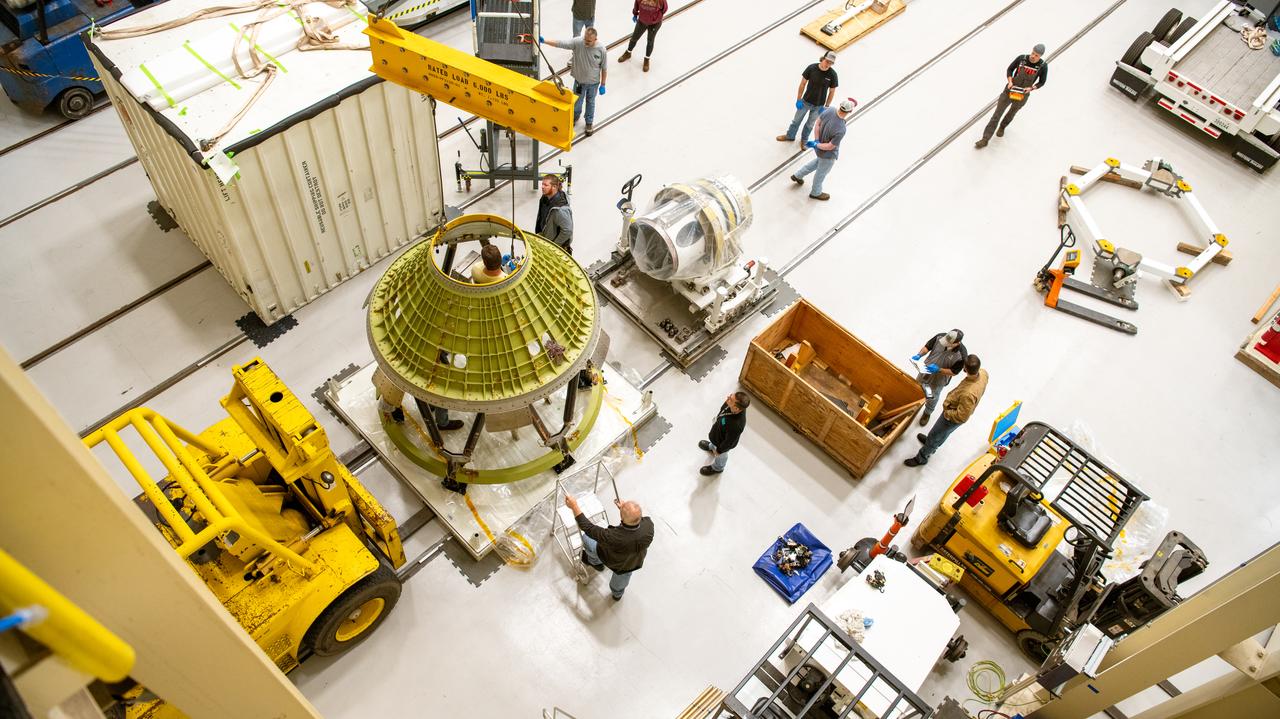
The Launch Abort System and the Orion Crew Module, also known as the Orion Environmental Test Article (ETA), returned to NASA’s Neil Armstrong Test Facility in Sandusky, Ohio, in October 2023 through January 2024 and completed an 11-month test campaign necessary for the safety and success of Artemis II. Photo Credit: (NASA/Quentin Schwinn)

The Launch Abort System and the Orion Crew Module, also known as the Orion Environmental Test Article (ETA), returned to NASA’s Neil Armstrong Test Facility in Sandusky, Ohio, in October 2023 through January 2024 and completed an 11-month test campaign necessary for the safety and success of Artemis II. Photo Credit: (NASA/Jordan Salkin)
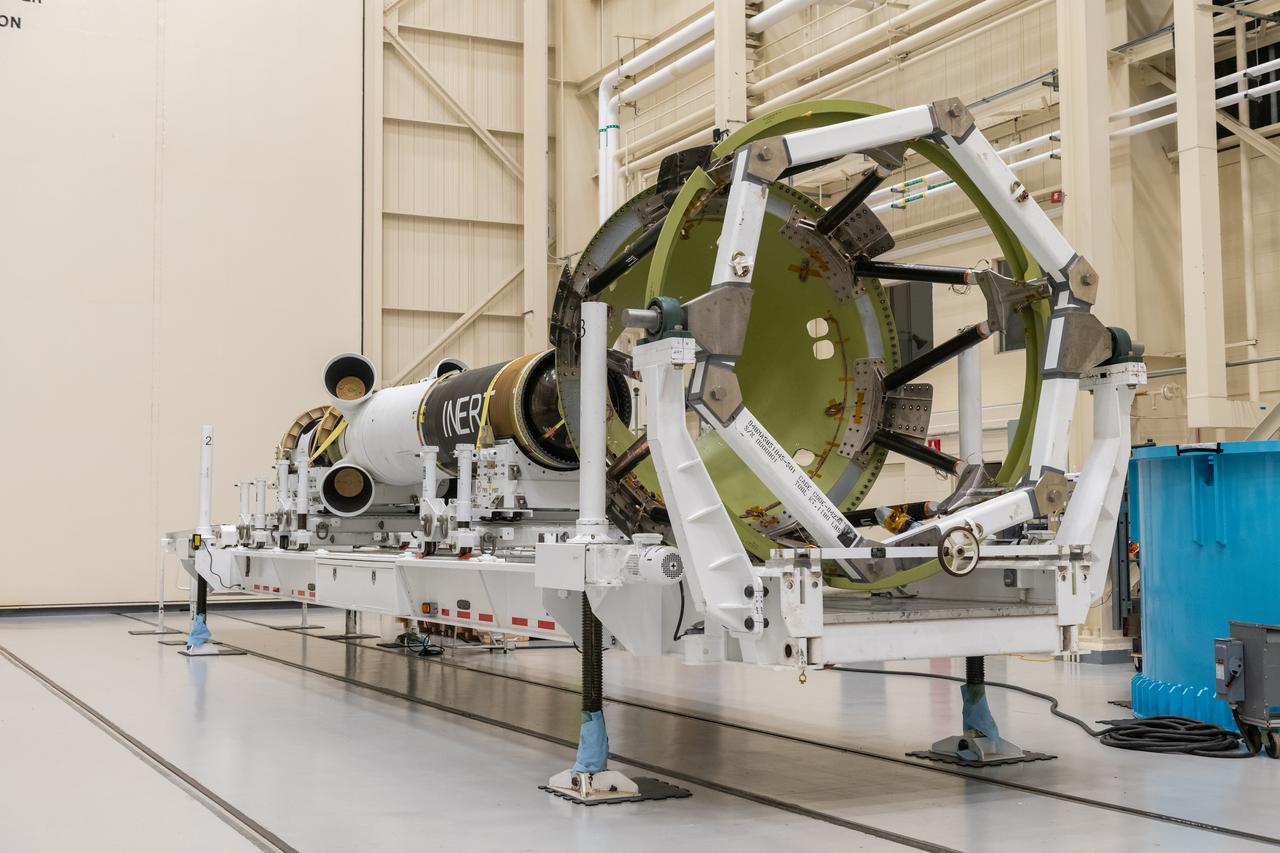
The Launch Abort System and the Orion Crew Module, also known as the Orion Environmental Test Article (ETA), returned to NASA’s Neil Armstrong Test Facility in Sandusky, Ohio, in October 2023 through January 2024 and completed an 11-month test campaign necessary for the safety and success of Artemis II. Photo Credit: (NASA/Jordan Salkin)
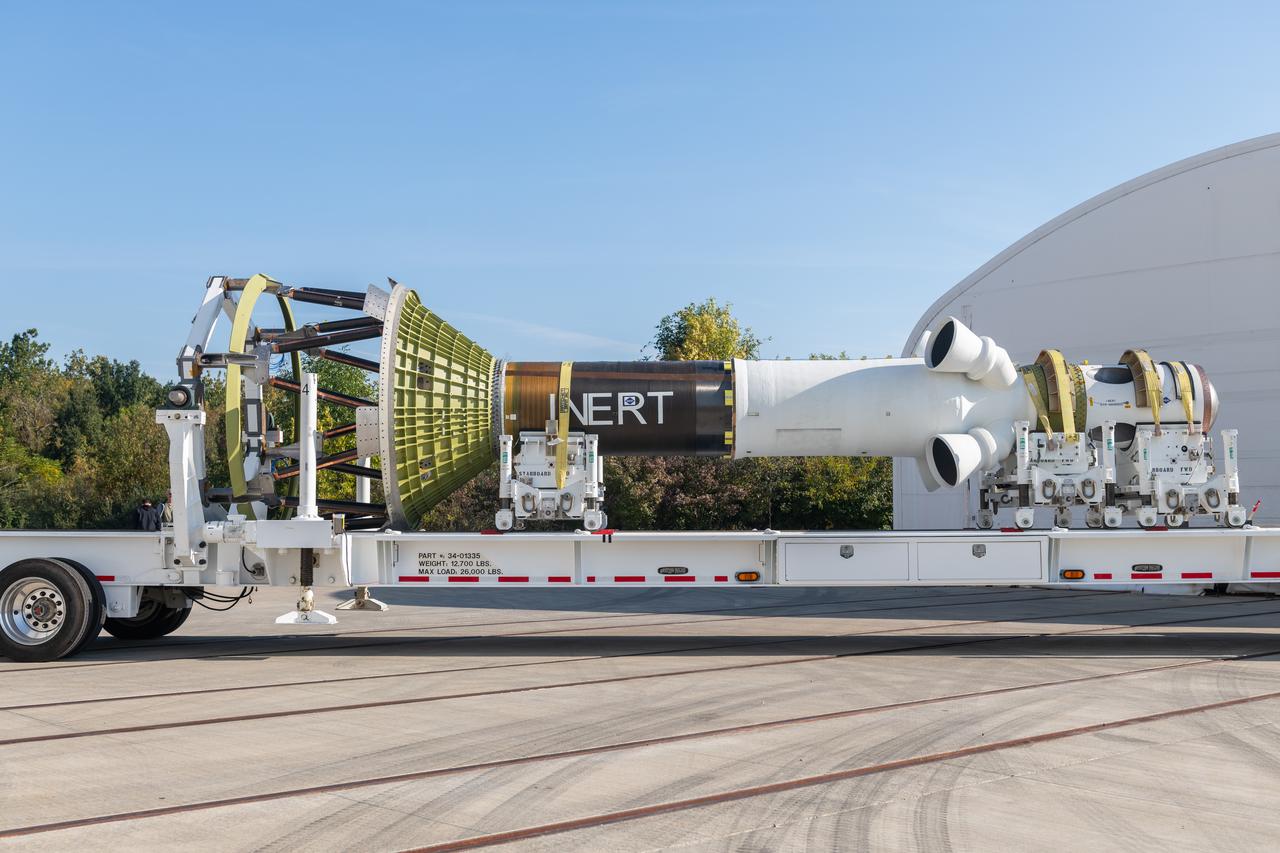
The Launch Abort System and the Orion Crew Module, also known as the Orion Environmental Test Article (ETA), returned to NASA’s Neil Armstrong Test Facility in Sandusky, Ohio, in October 2023 through January 2024 and completed an 11-month test campaign necessary for the safety and success of Artemis II. Photo Credit: (NASA/Jordan Salkin)
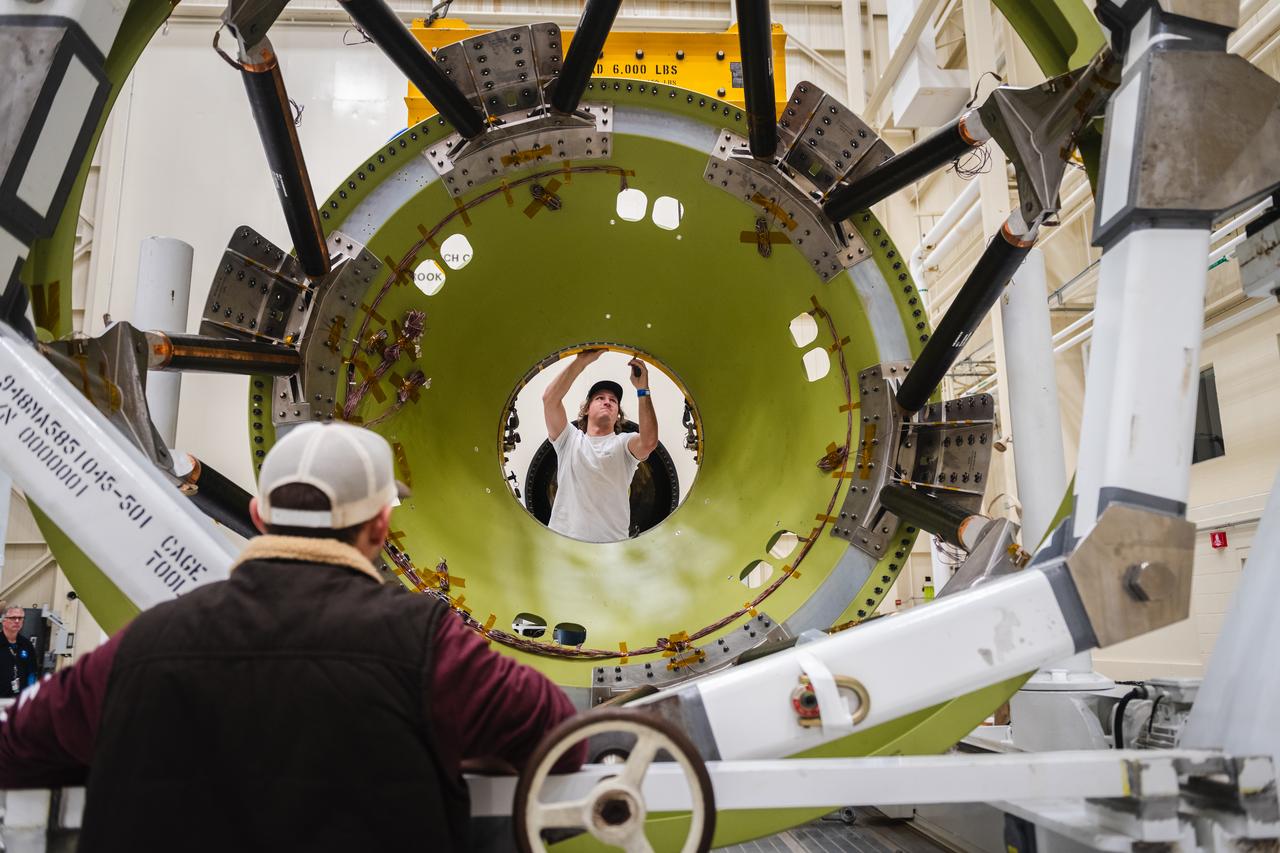
The Launch Abort System and the Orion Crew Module, also known as the Orion Environmental Test Article (ETA), returned to NASA’s Neil Armstrong Test Facility in Sandusky, Ohio, in October 2023 through January 2024 and completed an 11-month test campaign necessary for the safety and success of Artemis II. Photo Credit: (NASA/Jordan Salkin)
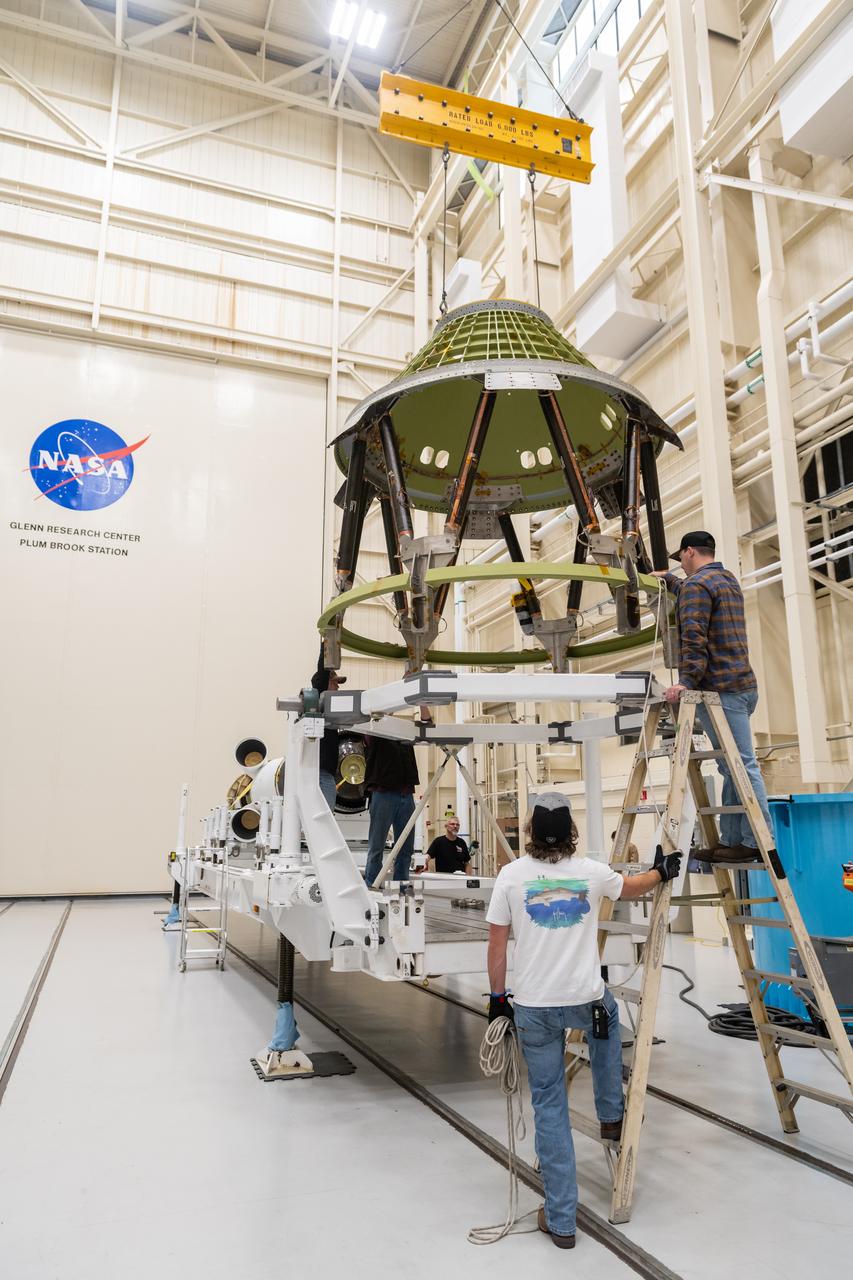
The Launch Abort System and the Orion Crew Module, also known as the Orion Environmental Test Article (ETA), returned to NASA’s Neil Armstrong Test Facility in Sandusky, Ohio, in October 2023 through January 2024 and completed an 11-month test campaign necessary for the safety and success of Artemis II. Photo Credit: (NASA/Jordan Salkin)

The Launch Abort System and the Orion Crew Module, also known as the Orion Environmental Test Article (ETA), returned to NASA’s Neil Armstrong Test Facility in Sandusky, Ohio, in October 2023 through January 2024 and completed an 11-month test campaign necessary for the safety and success of Artemis II. Photo Credit: (NASA/Jordan Salkin)
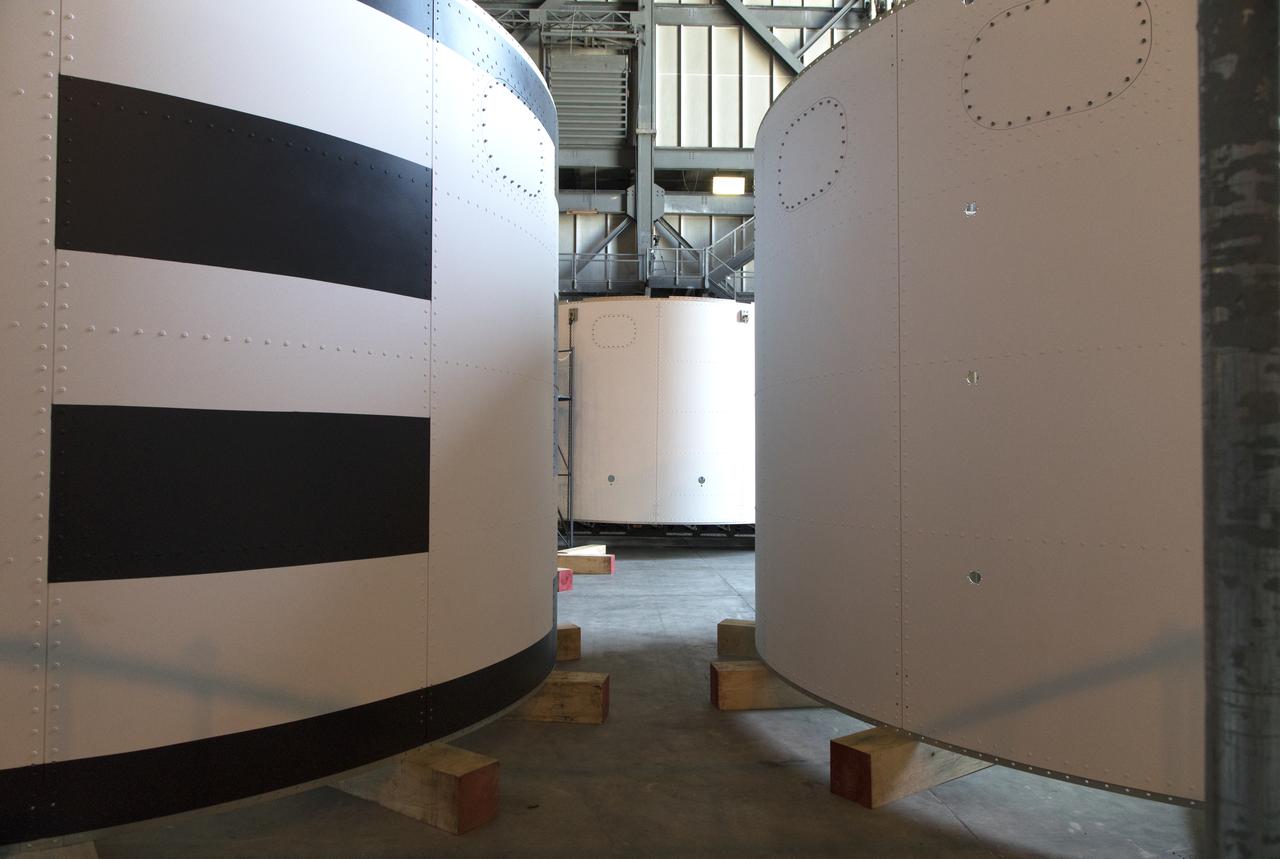
The third and final aeroshell, center in back, for Orion's Launch Abort System (LAS) arrives by flatbed truck in High Bay 4 of the Vehicle Assembly Building on July 12, 2018, at NASA's Kennedy Space Center in Florida. The aeroshell arrived by truck from EMF Inc. on nearby Merritt Island. It will be offloaded and placed on slats in the high bay. All three aeroshells will be stacked and prepared for a full-stress test of the LAS, called Ascent Abort-2 (AA-2) flight test, scheduled for April 2019. During the test, a booster will launch from Space Launch Complex 46 at Cape Canaveral Air Force Station, carrying a fully functional LAS and a 22,000-pound Orion test vehicle to an altitude of 31,000 feet and traveling at more than 1,000 miles an hour. The test will verify the LAS can steer the crew module and astronauts aboard to safety in the event of an issue with the Space Launch System (SLS) rocket when the spacecraft is under the highest aerodynamic loads it will experience during a rapid climb into space. Orion is being prepared for its first integrated uncrewed flight atop the SLS on Exploration Mission-1.
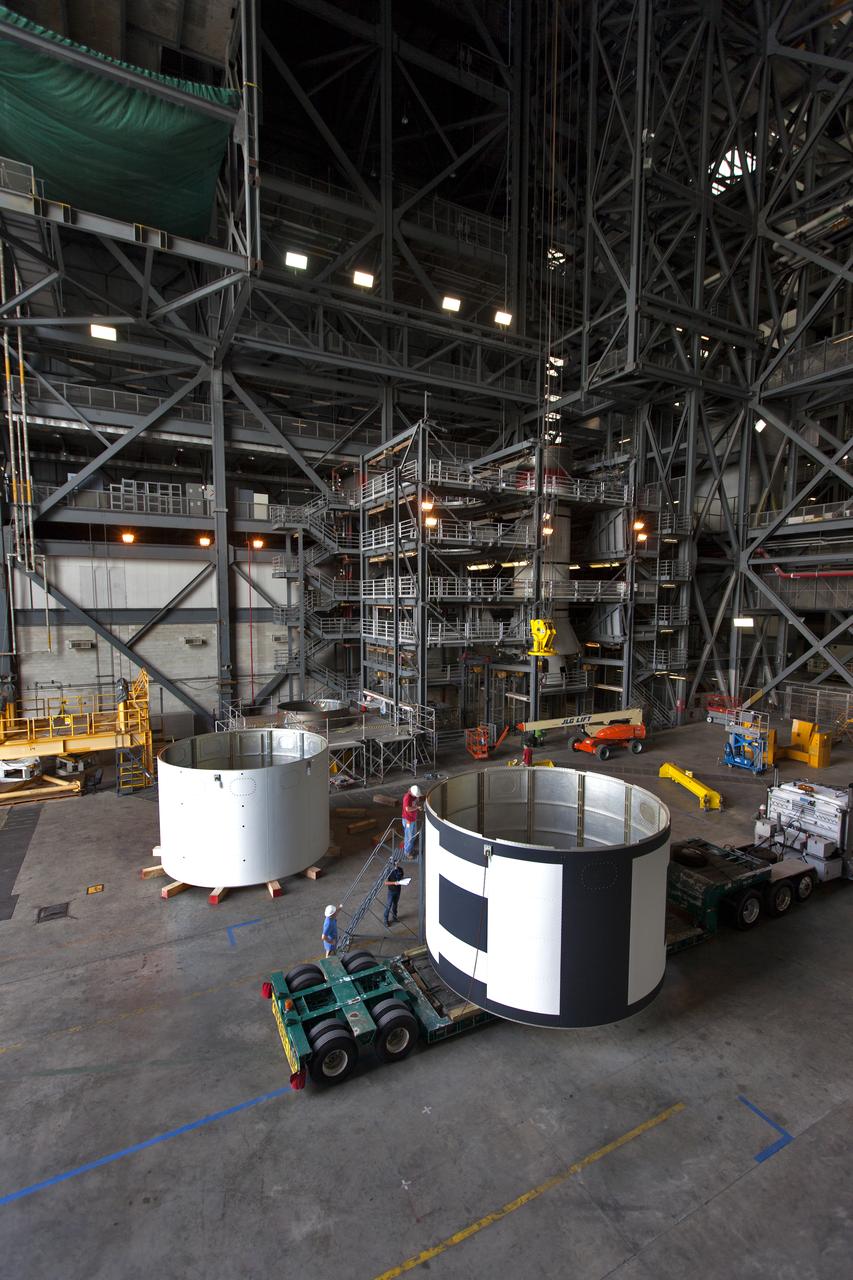
The second of three aeroshells, at right, for Orion's Launch Abort System (LAS) arrives by flatbed truck in High Bay 4 of the Vehicle Assembly Building at NASA's Kennedy Space Center in Florida, on June 26, 2018. The aeroshell arrived by truck from EMF Inc. on nearby Merritt Island. The aeroshells will be stacked and prepared for a full-stress test of the LAS, called Ascent Abort-2 (AA-2) flight test, scheduled for April 2019. During the test, a booster will launch from Space Launch Complex 46 at Cape Canaveral Air Force Station, carrying a fully functional LAS and a 22,000-pound Orion test vehicle to an altitude of 31,000 feet and traveling at more than 1,000 miles an hour. The test will verify the LAS can steer the crew module and astronauts aboard to safety in the event of an issue with the Space Launch System (SLS) rocket when the spacecraft is under the highest aerodynamic loads it will experience during a rapid climb into space. Orion is being prepared for its first integrated uncrewed flight atop the SLS on Exploration Mission-1.
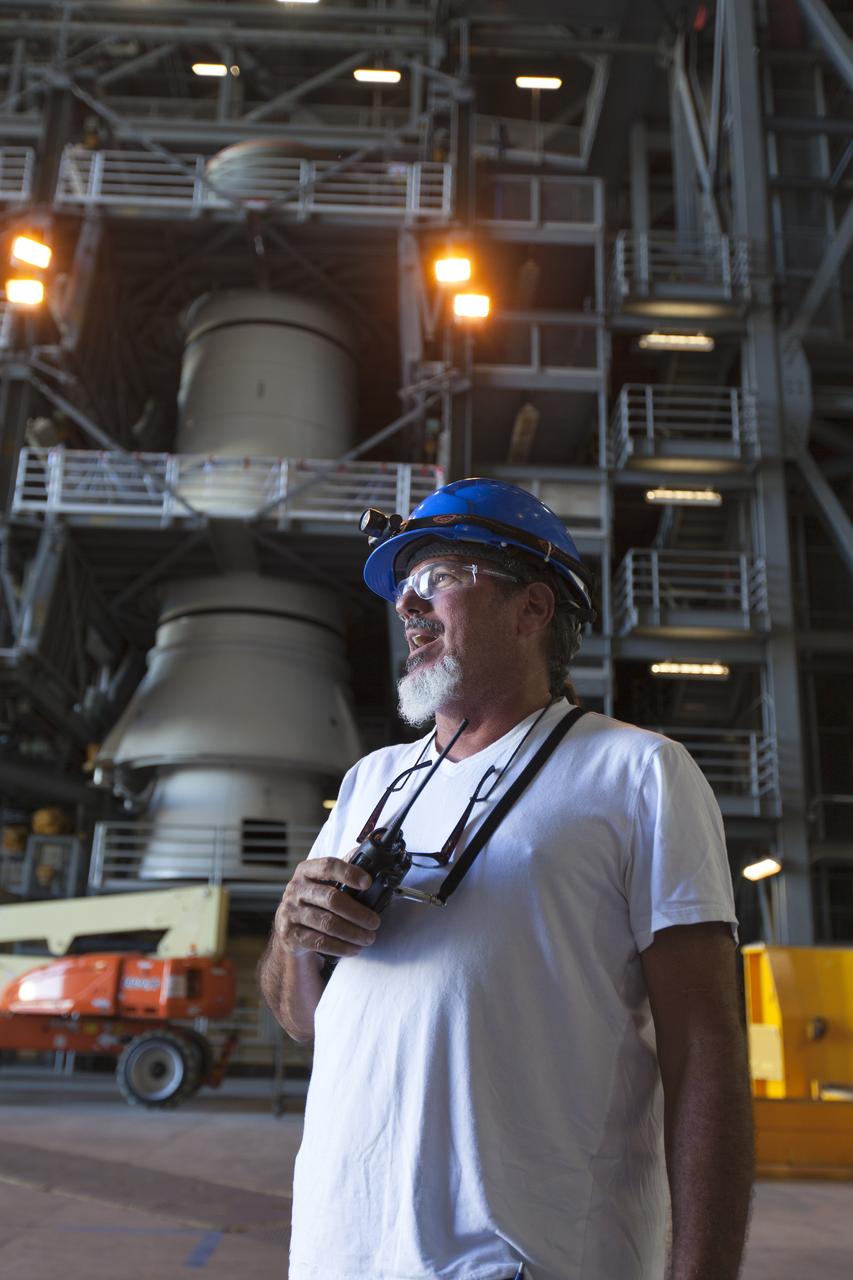
Inside the Vehicle Assembly Building at NASA's Kennedy Space Center in Florida, Anthony Sabatino, with Jacobs on the Test and Operations Support Contract, awaits arrival of the first of three aeroshells for Orion's Launch Abort System (LAS) on June 19, 2018. The aeroshell is arriving by truck from EMF Inc. on nearby Merritt Island and will be offloaded and secured in High Bay 4. The aeroshells will be stacked and prepared for a full-stress test of the LAS, called Ascent Abort-2 (AA-2) flight test, scheduled for April 2019. During the test, a booster will launch from Space Launch Complex 46 at Cape Canaveral Air Force Station, carrying a fully functional LAS and a 22,000-pound Orion test vehicle to an altitude of 31,000 feet and traveling at more than 1,000 miles an hour. The test will verify the LAS can steer the crew module and astronauts aboard to safety in the event of an issue with the Space Launch System (SLS) rocket when the spacecraft is under the highest aerodynamic loads it will experience during a rapid climb into space. Orion is being prepared for its first integrated uncrewed flight atop the SLS on Exploration Mission-1.
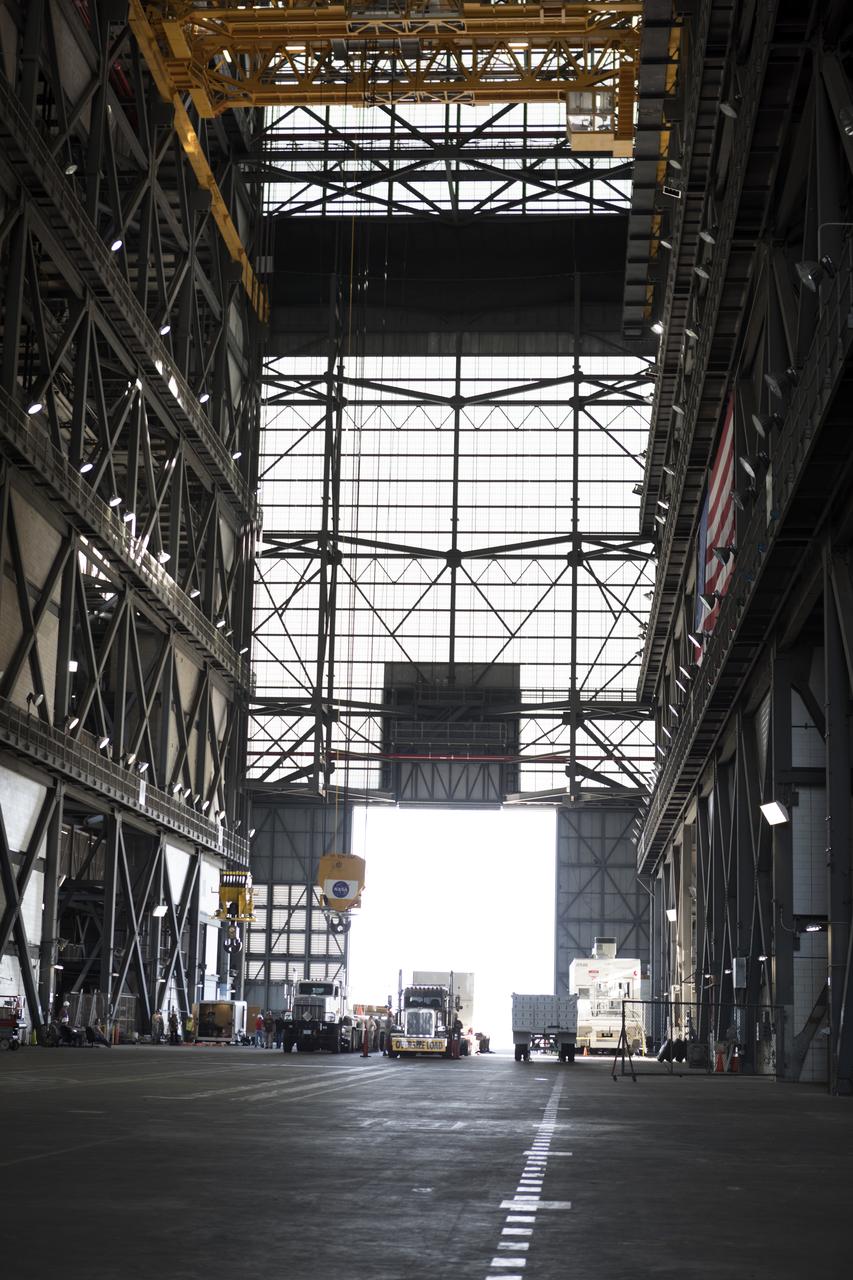
The ground test motor for Orion's Launch Abort System (LAS) arrives by flatbed truck in its shipping container in the transfer aisle of the Vehicle Assembly Building on July 20, 2018, at NASA's Kennedy Space Center in Florida. It will be transferred to the Rotation, Processing and Surge Facility where it will be inspected and prepared for transport to Space Launch Complex 46 (SLC-46) at Cape Canaveral Air Force Station for mechanical fit testing. This inert motor will not be used for flight, but will be used to certify flight hardware assembly in preparation for a full-stress test of the LAS, called Ascent Abort-2 (AA-2) flight test, scheduled for April 2019. During the test, the booster will launch from SLC 46, carrying a fully functional LAS and a 22,000-pound Orion test vehicle to an altitude of 31,000 feet and traveling at more than 1,000 miles an hour. The test will verify the LAS can steer the crew module and astronauts aboard to safety in the event of an issue with the Space Launch System (SLS) rocket when the spacecraft is under the highest aerodynamic loads it will experience during a rapid climb into space. NASA's Orion and Exploration Ground Systems programs and their contractors from Jacob's and Northrup Grumman in conjunction with the Air Force Space and Missile Center's Launch Operations branch are performing the pathfinding exercises and flight operations for AA-2.
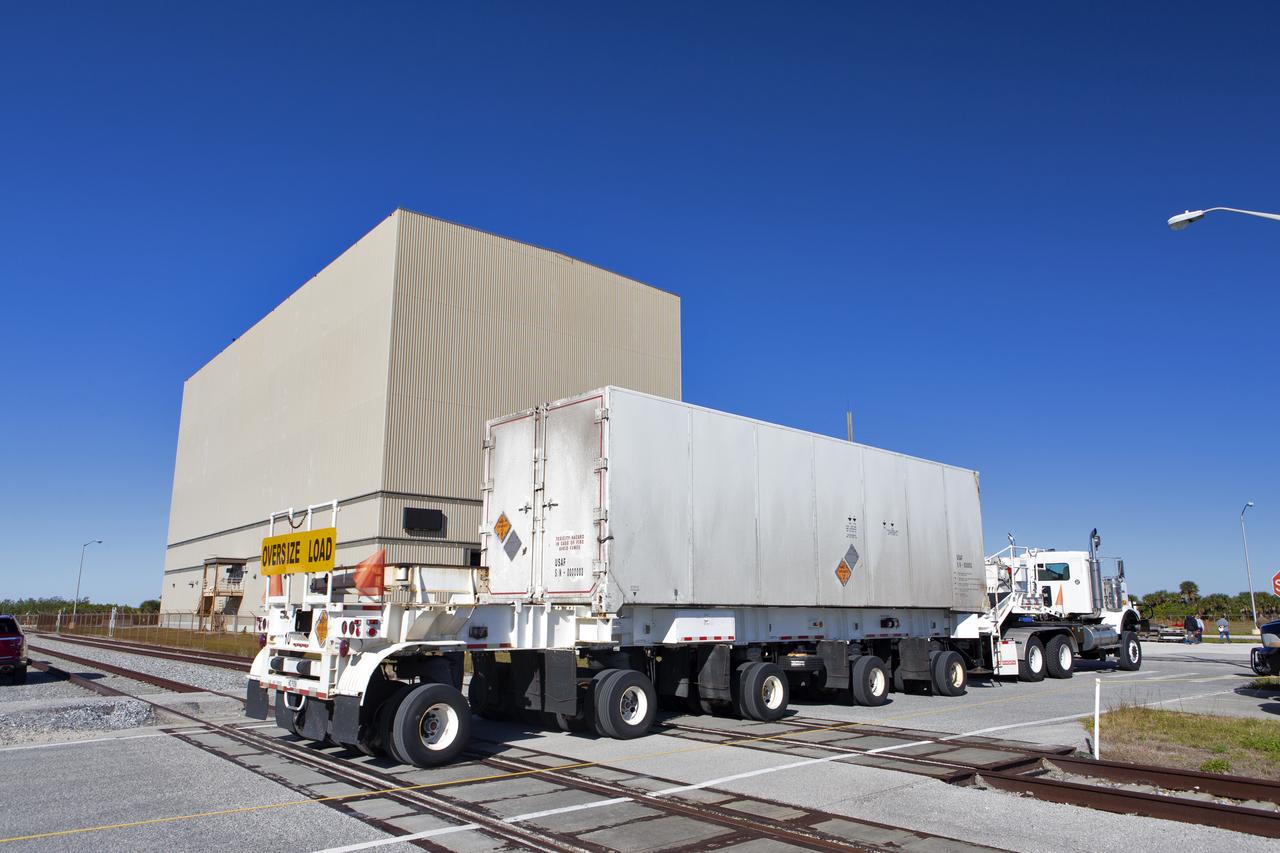
A heavy transport truck containing the Northrop Grumman-provided ascent test booster for the Orion Ascent Abort-2 (AA-2) Flight Test, arrives at the Rotation, Processing and Surge Facility (RPSF) at NASA’s Kennedy Space Center in Florida on Jan. 29, 2019. The booster will be unloaded and moved into the RPSF where it will be outfitted for flight. AA-2 is a full-stress test of the Launch Abort System, scheduled for April 2019. AA-2 will launch from Space Launch Complex 46, carrying a fully functional LAS and a 22,000-pound Orion test vehicle to an altitude of 31,000 feet and traveling at more than 1,000 miles an hour. The test will verify the LAS can steer the crew module and astronauts aboard to safety in the event of an issue with the Space Launch System (SLS) rocket when the spacecraft is under the highest aerodynamic loads it will experience during a rapid climb into space. NASA's Orion and Exploration Ground Systems programs and contractors from Jacob's and Northrup Grumman in conjunction with the Air Force Space and Missile Center's Launch Operations branch are performing flight operations for AA-2.