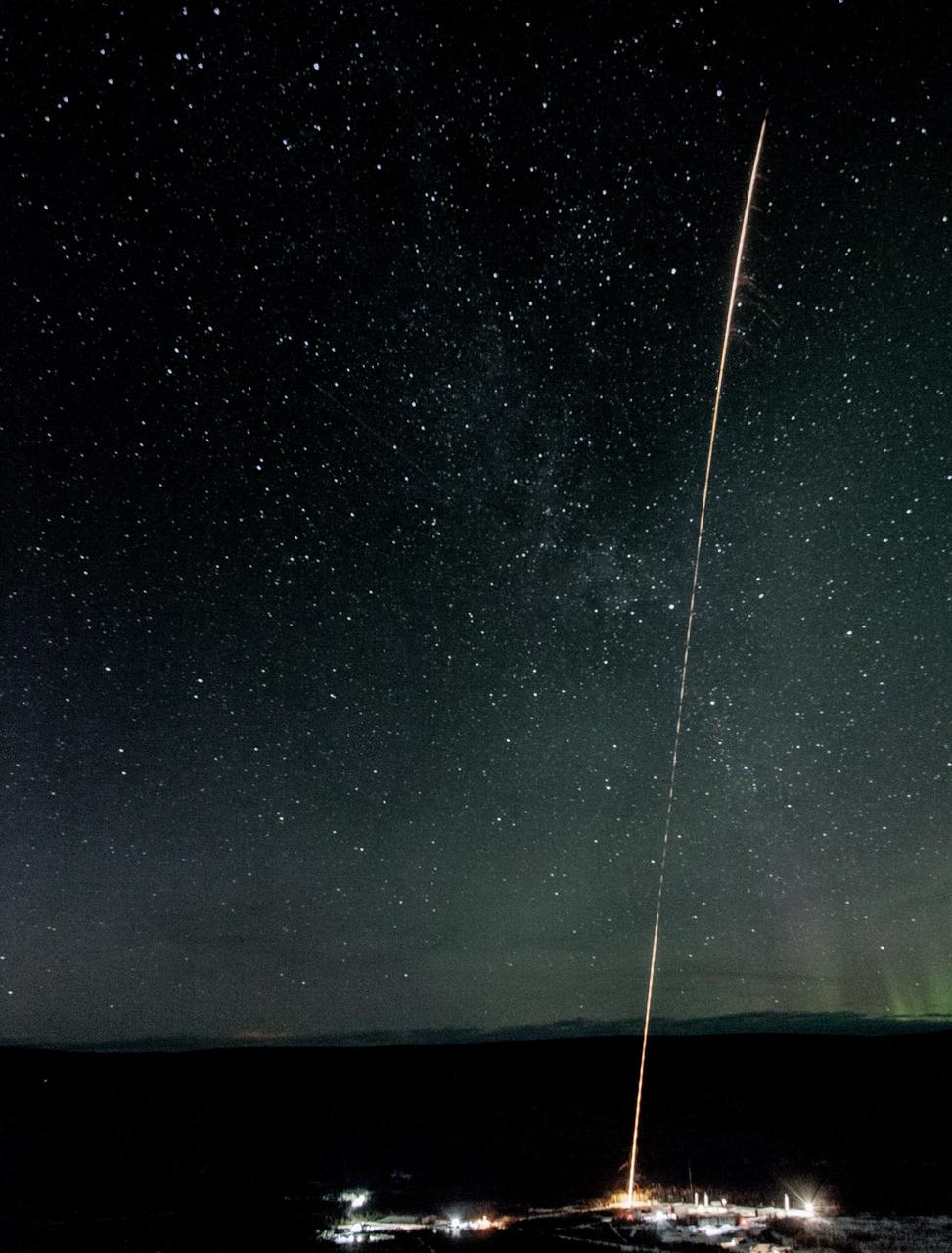
A test rocket is launched the night of Feb. 17 from the Poker Flat Research Range in Alaska. Test rockets are launched as part of the countdown to test out the radar tracking systems. NASA is launching five sounding rockets from the Poker Range into active auroras to explore the Earth's magnetic environment and its impact on Earth’s upper atmosphere and ionosphere. The launch window for the four remaining rockets runs through March 3. Credit: NASA/Terry Zaperach <b><a href="http://www.nasa.gov/audience/formedia/features/MP_Photo_Guidelines.html" rel="nofollow">NASA image use policy.</a></b> <b><a href="http://www.nasa.gov/centers/goddard/home/index.html" rel="nofollow">NASA Goddard Space Flight Center</a></b> enables NASA’s mission through four scientific endeavors: Earth Science, Heliophysics, Solar System Exploration, and Astrophysics. Goddard plays a leading role in NASA’s accomplishments by contributing compelling scientific knowledge to advance the Agency’s mission. <b>Follow us on <a href="http://twitter.com/NASAGoddardPix" rel="nofollow">Twitter</a></b> <b>Like us on <a href="http://www.facebook.com/pages/Greenbelt-MD/NASA-Goddard/395013845897?ref=tsd" rel="nofollow">Facebook</a></b> <b>Find us on <a href="http://instagrid.me/nasagoddard/?vm=grid" rel="nofollow">Instagram</a></b>
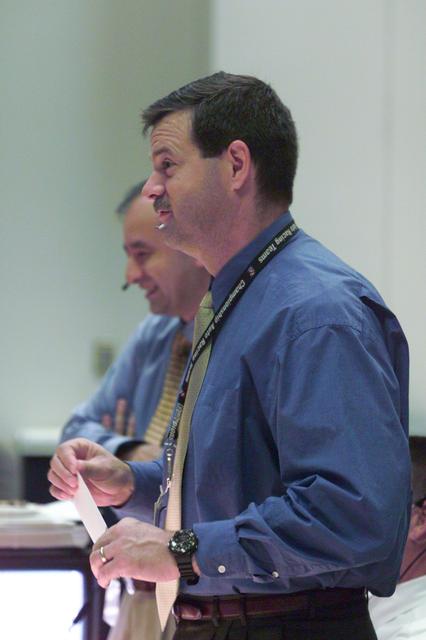
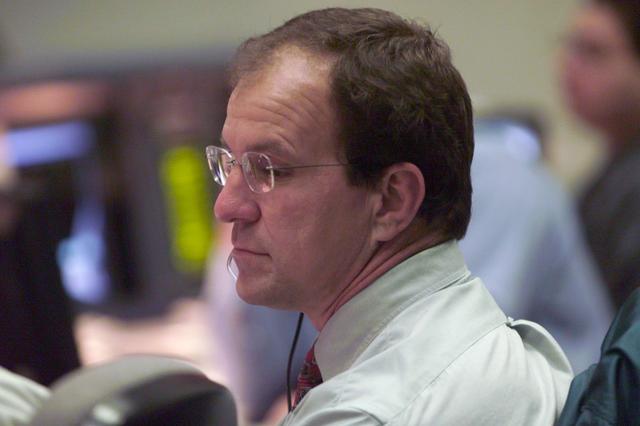
JSC2001-E-12122 (19 April 2001) --- Astronaut Scott D. Altman (foreground), STS-100 ascent spacecraft communicator (CAPCOM), stays on top of pre-launch activities at his console in the shuttle flight control room of Houston's Mission Control Center (MCC). Astronaut Mark L. Polansky stands beside Altman. Six astronauts and a cosmonaut, meanwhile, were strapped into their seats in the crew cabin of the Space Shuttle Endeavour several hundred miles away in Florida.
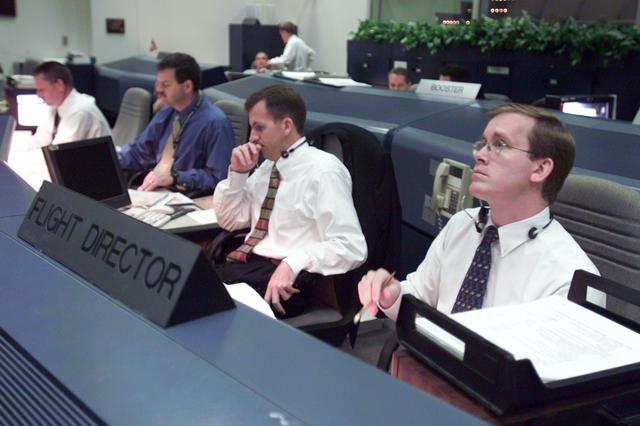
JSC2001-E-12118 (19 April 2001) --- Left to right, astronaut Christopher J. (Gus) Loria, astronaut Scott D. Altman, flight director LeRoy Cain and flight director John Shannon keep up with STS-100 pre-launch activities from their consoles in the shuttle flight control room in Houston's Mission Control Center (MCC). Altman is ascent spacecraft communicator (CAPCOM) and is assisted by Loria, CAPCOM specializing in weather issues. Cain is ascent flight director.
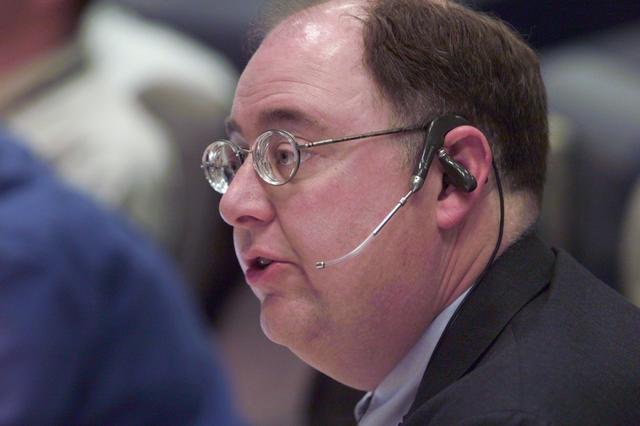
JSC2001-E-06208 (8 March 2001) --- At his console in Houston's Mission Control Center, ascent flight director Wayne Hale monitors Discovery's pre-launch activities several hundred miles away in Florida on STS-102 launch day.
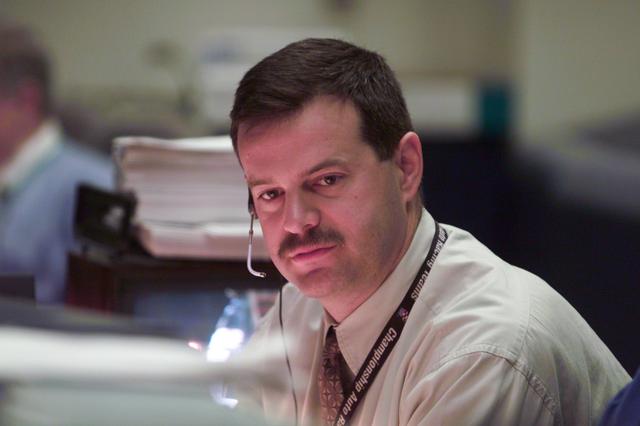
JSC2001-E-06203 (8 March 2001) --- At his console in Houston's Mission Control Center, astronaut Scott D. Altman, spacecraft communicator (CAPCOM), monitors weather data possibly affecting Discovery's pre-launch activities several hundred miles away in Florida on STS-102 launch day.
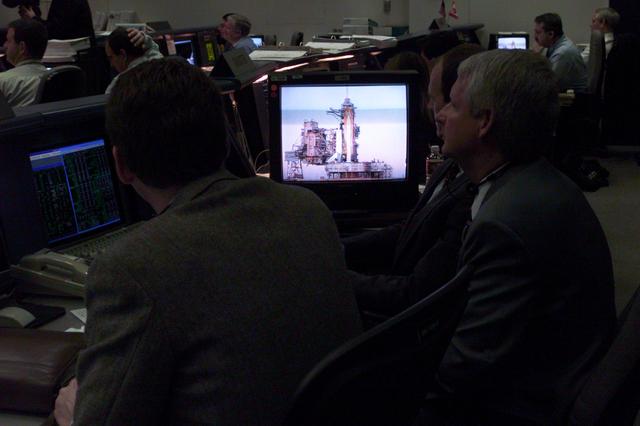
JSC2001-E-06216 (8 March 2001) --- In Houston's Mission Control Center (MCC), the silhouette of astronaut Steven A. Hawley of the Flight Crew Operations Directorate appears just to the right of the monitor displaying the Space Shuttle Discovery's pre-launch activities several hundred miles away in Florida.
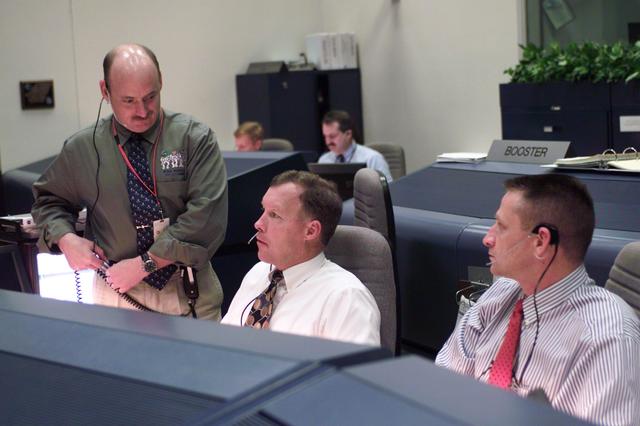
2000-E-29788 (30 November 2000) --- Astronauts Scott J. Kelly, from the left, Dominic L. Gorie and Christopher J. Loria at the spacecraft communicator (CAPCOM) console during STS-97 pre-launch activity in the shuttle flight control room (WFCR) of Houston's Mission Control Center (MCC).
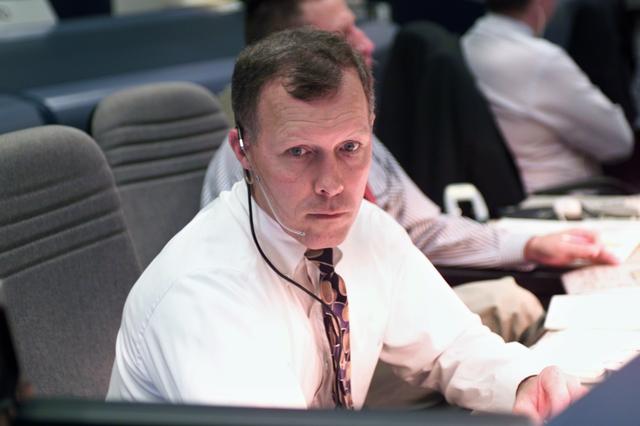
JSC2000-E-29791 (30 November 2000) --- Astronaut Dominic L. Gorie, spacecraft communicator (CAPCOM), follows STS-97 pre-launch activity from the CAPCOM console in the shuttle flight control room (WFCR) at Houston's Mission Control Center (MCC).
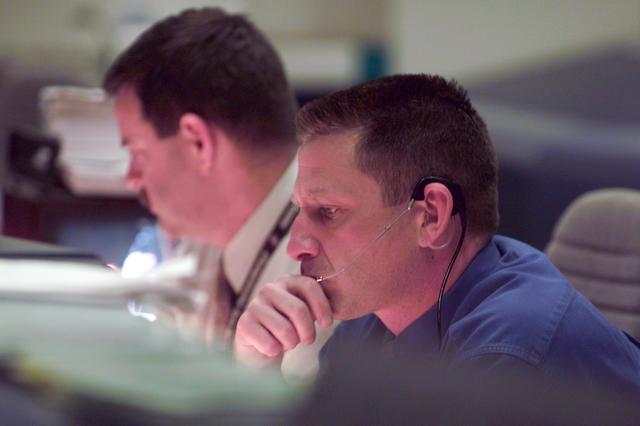
JSC2001-E-06204 (8 March 2001) --- At the Spacecraft Communicator (CAPCOM) console in Houston's Mission Control Center, astronauts Christopher J. (Gus) Loria (foreground) and Scott D. Altman monitor Discovery's pre-launch activity several hundred miles away in Florida.
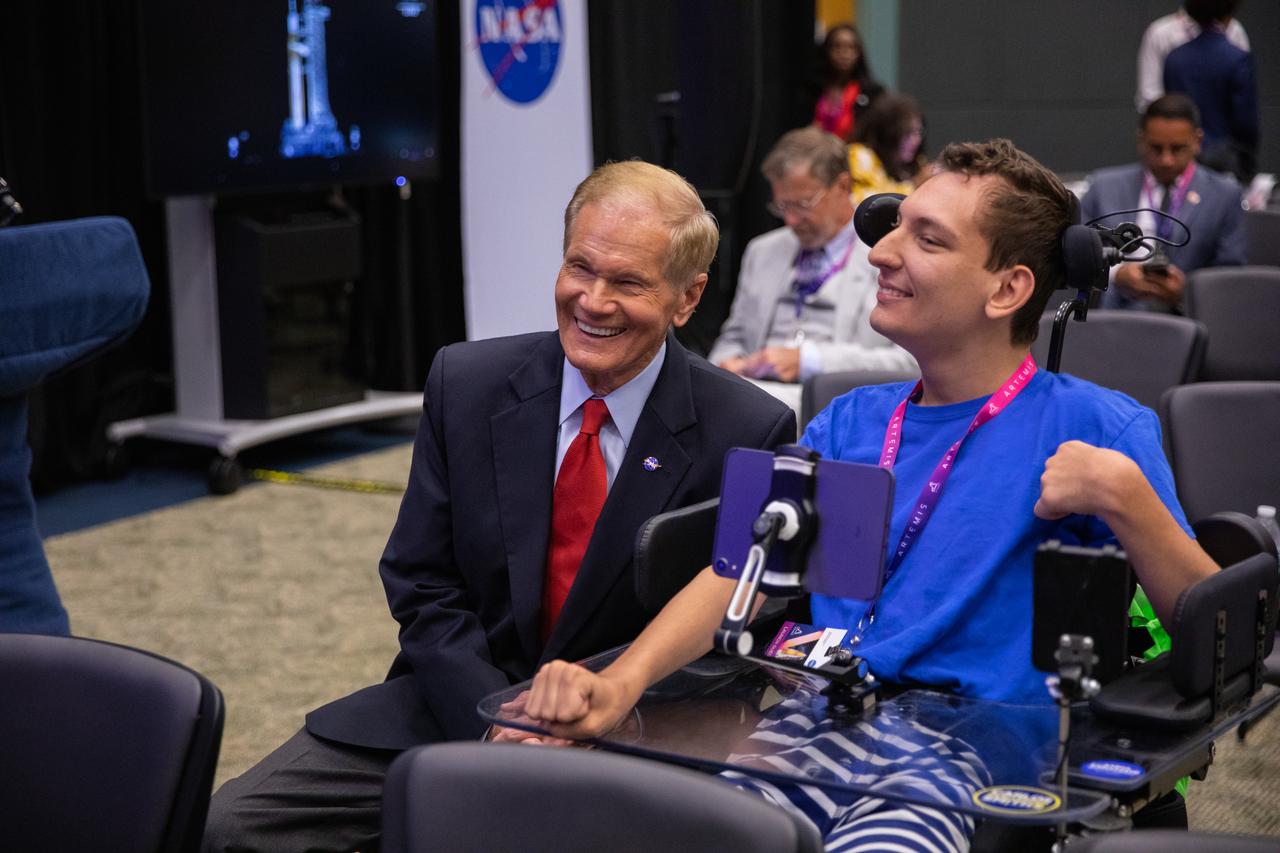
NASA Administrator Bill Nelson, at left, visits with a launch guest during launch countdown activities for NASA’s Artemis I mission on Aug. 29, 2022, at the agency’s Kennedy Space Center in Florida. The launch was waved off for the day. The first in a series of increasingly complex missions, Artemis I will provide a foundation for human deep space exploration and demonstrate our commitment and capability to extend human presence to the Moon and beyond. The primary goal of Artemis I is to thoroughly test the integrated systems before crewed missions by operating the spacecraft in a deep space environment, testing Orion’s heat shield, and recovering the crew module after reentry, descent, and splashdown.
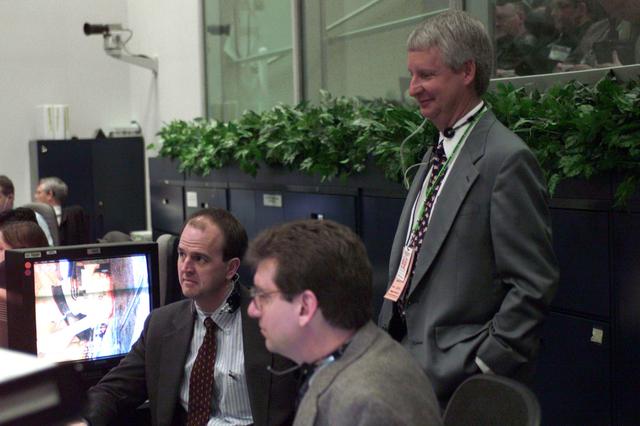
JSC2001-E-06209 (8 March 2001) --- At the Mission Operations Directorate (MOD) console in Houston's Mission Control Center (MCC), (from the left) Robbie D. Gest, Jeffrey W. Bantle and Steven A. Hawley monitor pre-launch activity for STS-102. Gest is Project Leader for Mission Operations for the United Space Alliance (USA); Bantle is with the Flight Director Office in MOD; and Hawley is with the Flight Crew Operations Directorate.
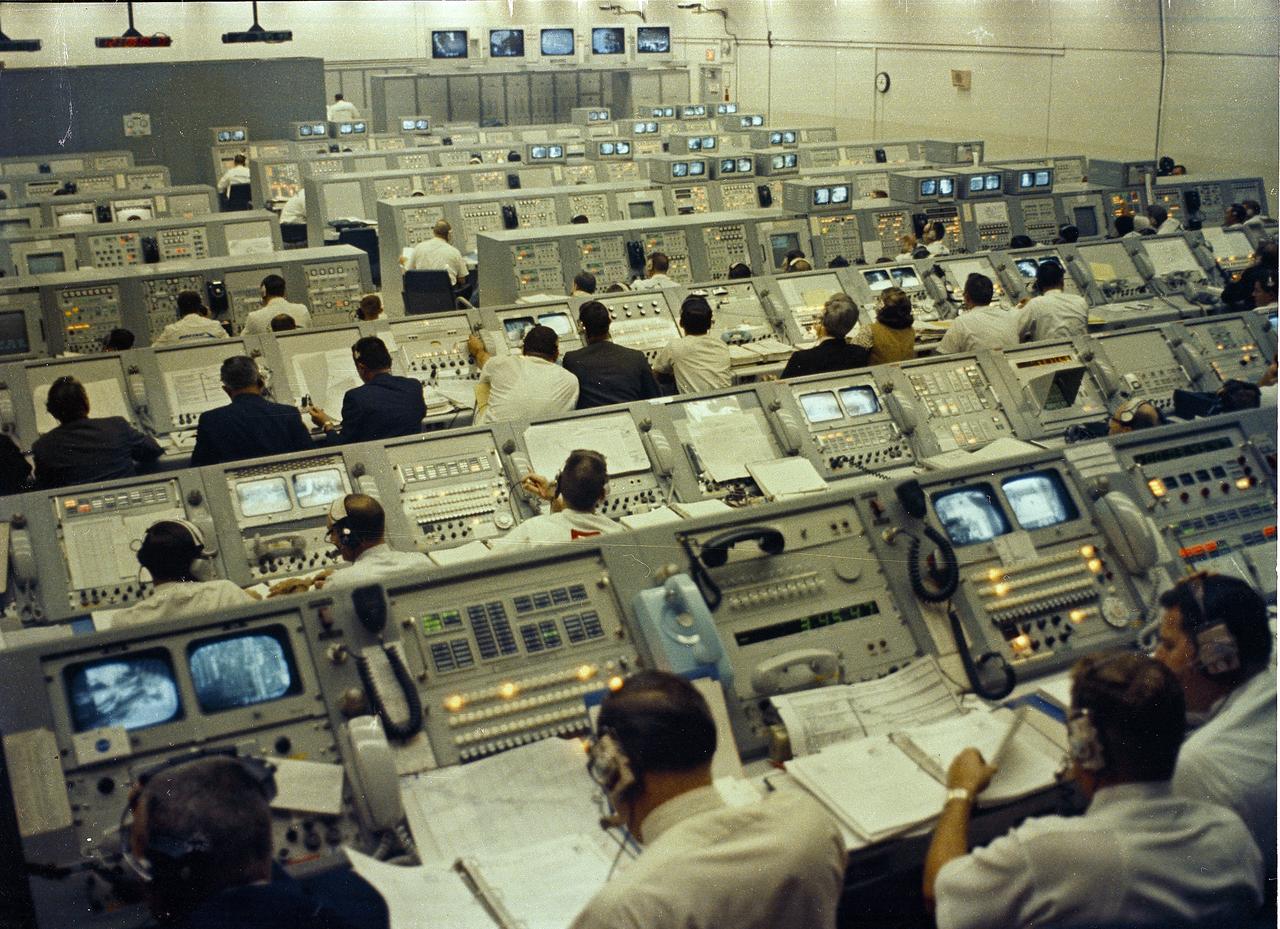
This photograph depicts a busy Launch Control Center at Kennedy Space Center during the Apollo 8 mission launch activities. Apollo 8 served as the first manned lunar orbit mission. Liftoff occurred on December 21, 1968 with a three man crew consiting of astronauts Frank Borman, commander; William Anders, Lunar Module (LM) Pilot; and James Lovell, Command Module (CM) pilot. The three safely returned to Earth on December 27, 1968. The mission achieved operational experience and tested the Apollo command module systems, including communications, tracking, and life-support, in cis-lunar space and lunar orbit, and allowed evaluation of crew performance on a lunar orbiting mission. The crew photographed the lunar surface, both far side and near side, obtaining information on topography and landmarks as well as other scientific information necessary for future Apollo landings. All systems operated within allowable parameters and all objectives of the mission were achieved.
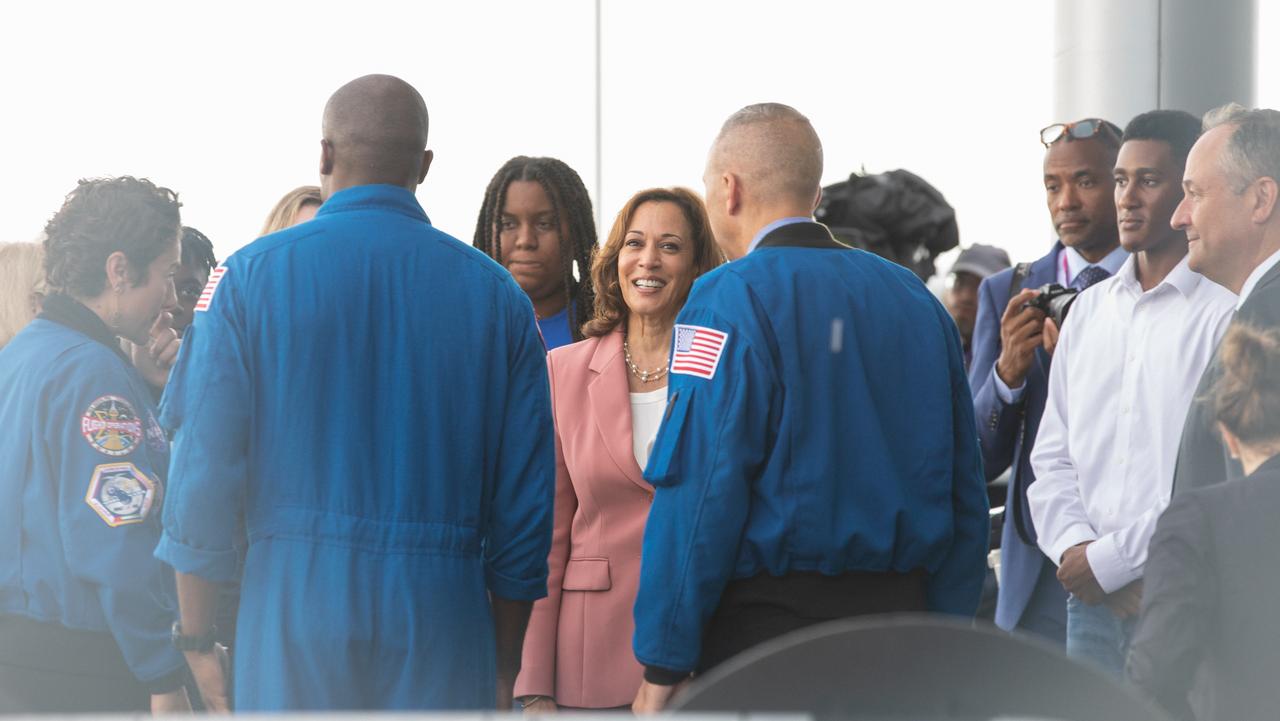
Vice President Kamala Harris visits with NASA astronaut candidate Andre Douglas, at left, and Randy Bresnik, at right, during launch countdown activities on Aug. 29, 2022, at the agency’s Kennedy Space Center in Florida. The launch was waved off for the day. The first in a series of increasingly complex missions, Artemis I will provide a foundation for human deep space exploration and demonstrate our commitment and capability to extend human presence to the Moon and beyond. The primary goal of Artemis I is to thoroughly test the integrated systems before crewed missions by operating the spacecraft in a deep space environment, testing Orion’s heat shield, and recovering the crew module after reentry, descent, and splashdown.
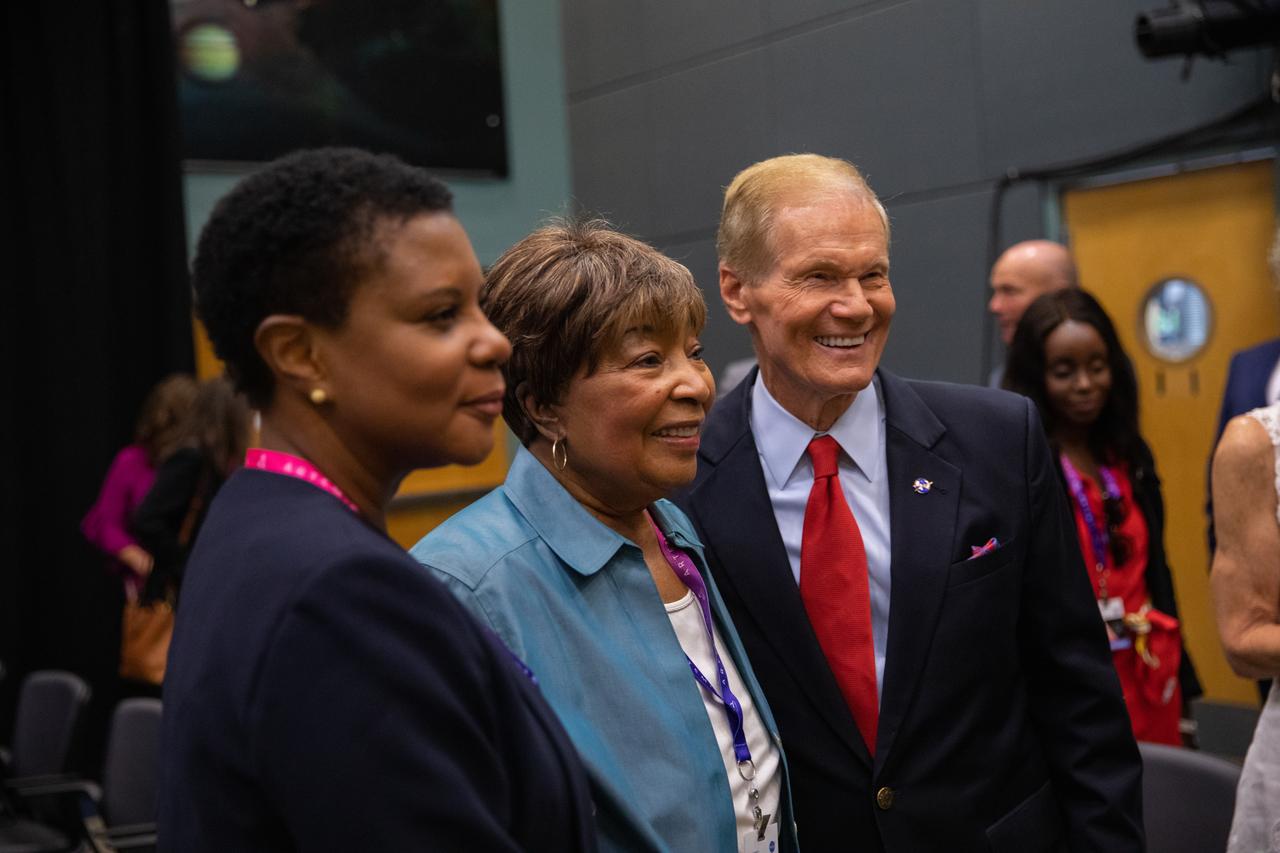
NASA Administrator Bill Nelson, far right, visits with Congresswoman (TX) Eddie Bernice Johnson, center, during launch countdown activities for NASA’s Artemis I mission on Aug. 29, 2022, at the agency’s Kennedy Space Center in Florida. The launch was waved off for the day. The first in a series of increasingly complex missions, Artemis I will provide a foundation for human deep space exploration and demonstrate our commitment and capability to extend human presence to the Moon and beyond. The primary goal of Artemis I is to thoroughly test the integrated systems before crewed missions by operating the spacecraft in a deep space environment, testing Orion’s heat shield, and recovering the crew module after reentry, descent, and splashdown.

Former NASA astronaut Gen. Tom Stafford attends an Artemis I guest briefing during launch countdown activities on Aug. 29, 2022, at the agency’s Kennedy Space Center in Florida. The launch was waved off for the day. The first in a series of increasingly complex missions, Artemis I will provide a foundation for human deep space exploration and demonstrate our commitment and capability to extend human presence to the Moon and beyond. The primary goal of Artemis I is to thoroughly test the integrated systems before crewed missions by operating the spacecraft in a deep space environment, testing Orion’s heat shield, and recovering the crew module after reentry, descent, and splashdown.
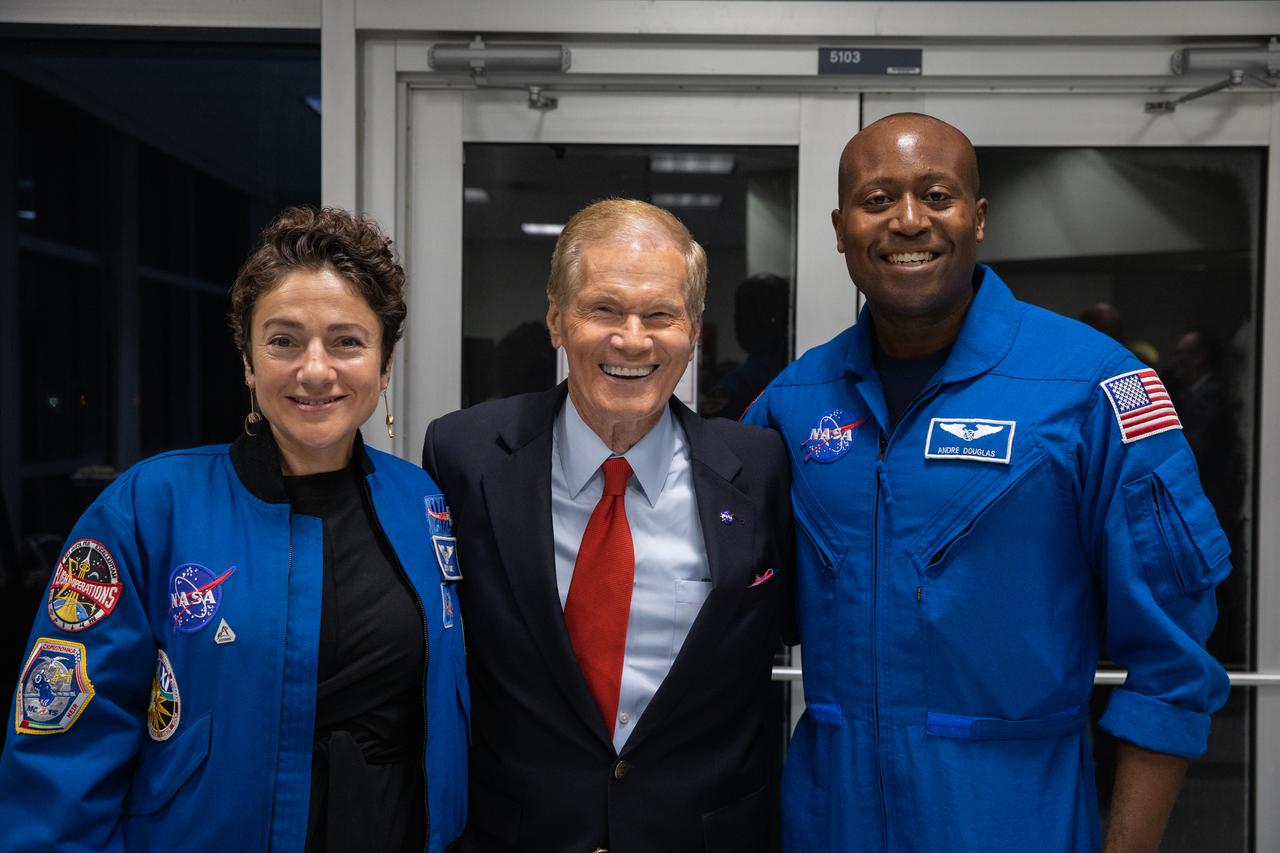
NASA Administrator Bill Nelson, center, visits with NASA astronaut Jessica Meir, at right, and astronaut candidate Andre Douglas, during launch countdown activities for NASA’s Artemis I mission on Aug. 29, 2022, at the agency’s Kennedy Space Center in Florida. The launch was waved off for the day. The first in a series of increasingly complex missions, Artemis I will provide a foundation for human deep space exploration and demonstrate our commitment and capability to extend human presence to the Moon and beyond. The primary goal of Artemis I is to thoroughly test the integrated systems before crewed missions by operating the spacecraft in a deep space environment, testing Orion’s heat shield, and recovering the crew module after reentry, descent, and splashdown.
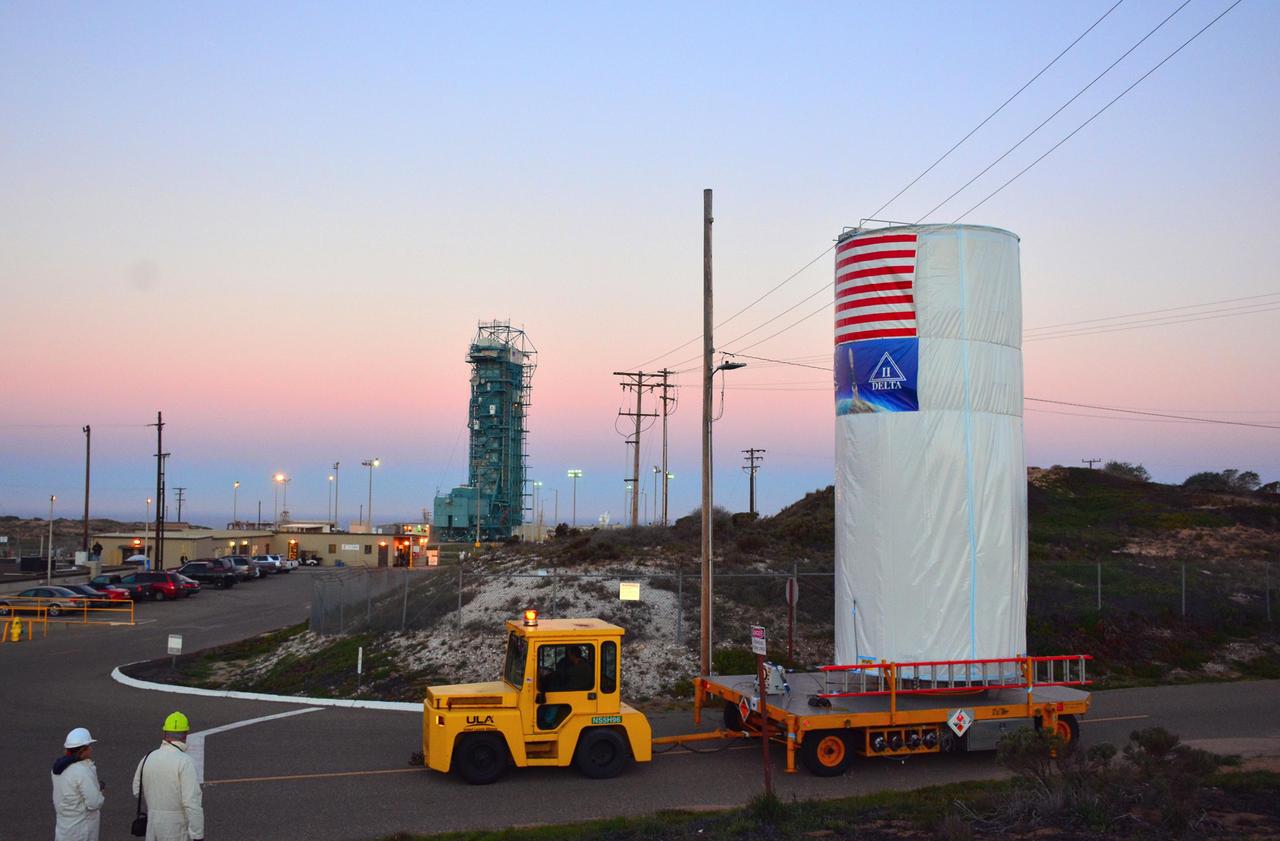
NASA Soil Moisture Active Passive SMAP satellite is transported across Vandenberg Air Force Base in California to Space Launch Complex 2, where it will be mated to a Delta II rocket for launch, targeted for Jan. 29.
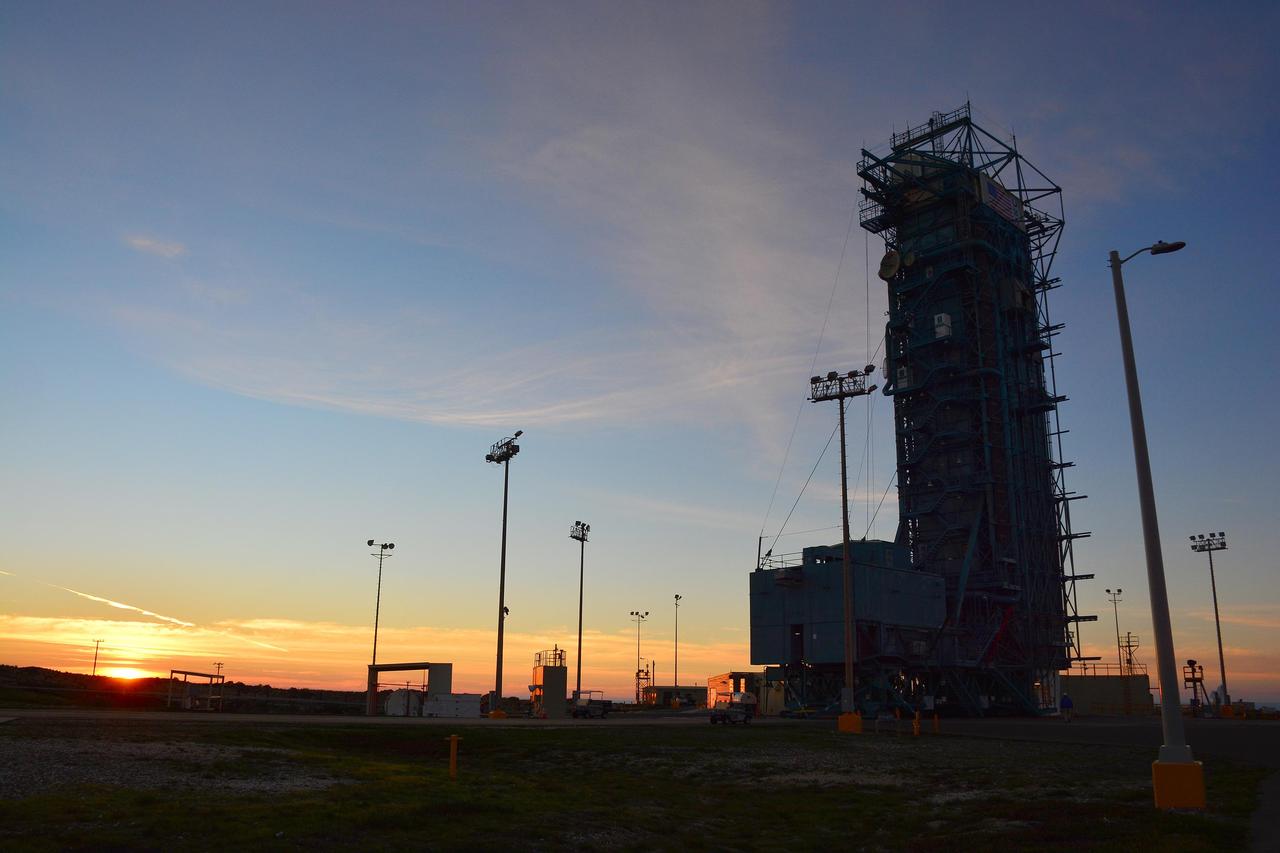
The sun sets behind Space Launch Complex 2, Vandenberg Air Force Base, California, where NASA Soil Moisture Active Passive SMAP mission satellite is being prepared for liftoff. Launch is scheduled for Jan. 29.
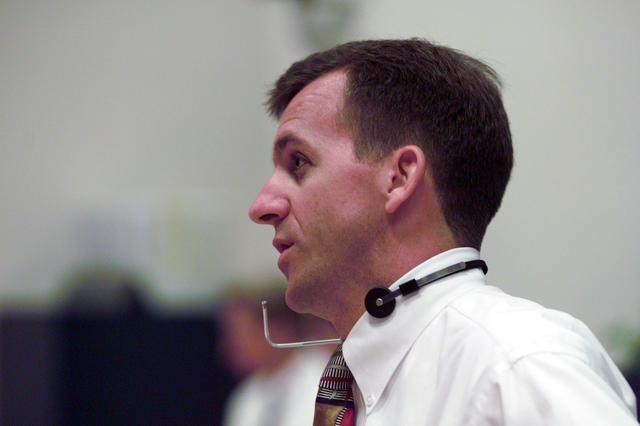
JSC2001-E-12116 (19 April 2001) --- LeRoy Cain, at the Flight Director console, peruses information on large screens in front of the flight control room in the Johnson Space Center's Mission Control Center (MCC) as countdown for the Space Shuttle Endeavour launch of STS-100 continues several hundred miles away in Florida. Cain is both ascent and entry flight director for the flight.
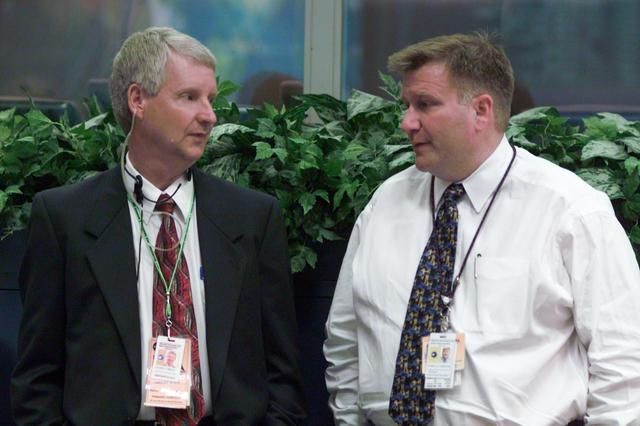
JSC2001-E-12119 (19 April 2001) --- Steven A. Hawley of the Flight Crew Operations Directorate chats with Daniel K. Carpenter, Director of the Johnson Space Center (JSC) Public Affairs Office, as the two await liftoff of the Space Shuttle Endeavour. The two are at the rear of the flight control room of JSC's Mission Control Center.
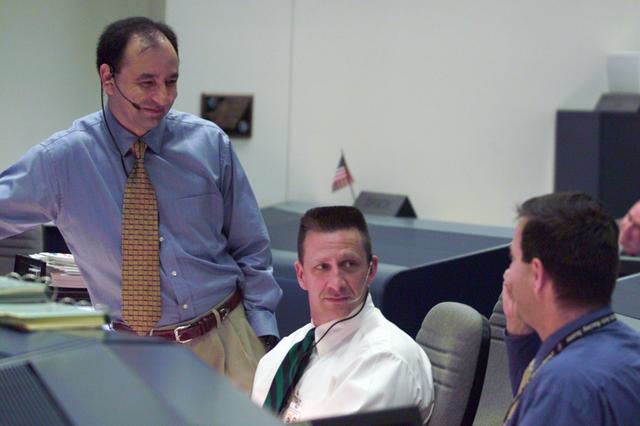
JSC2001-E-12125 (19 April 2001) --- Astronauts Mark L. Polansky, from the left, Christopher J. (Gus) Loria, and Scott D. Altman discuss the approaching STS-100 launch at their positions at the Spacecraft Communicator console in Houston's Mission Control Center (MCC). Loria's position addresses weather issues, of which there were few on this particular launch. He will also be assigned to weather matters for the entry phase of the flight.
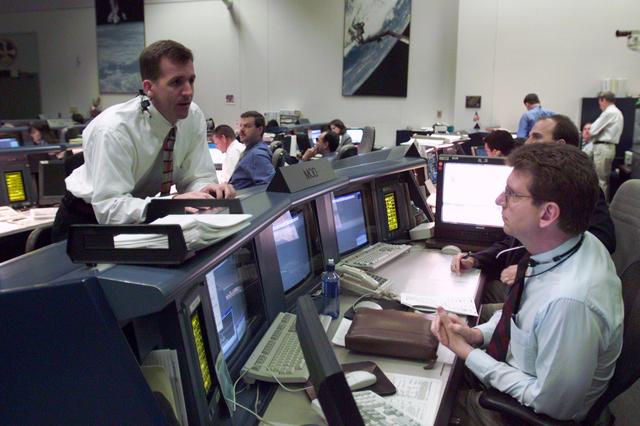
JSC2001-E-12120 (19 April 2001) --- STS-100 ascent flight director LeRoy Cain (left) leans over the Mission Operations Directorate (MOD) console for a word with Jeffrey Bantle in the shuttle flight control room of Houston's Mission Control Center (MCC). Six astronauts and a cosmonaut, meanwhile, were strapped into their seats in the crew cabin of the Space Shuttle Endeavour several hundred miles away in Florida.
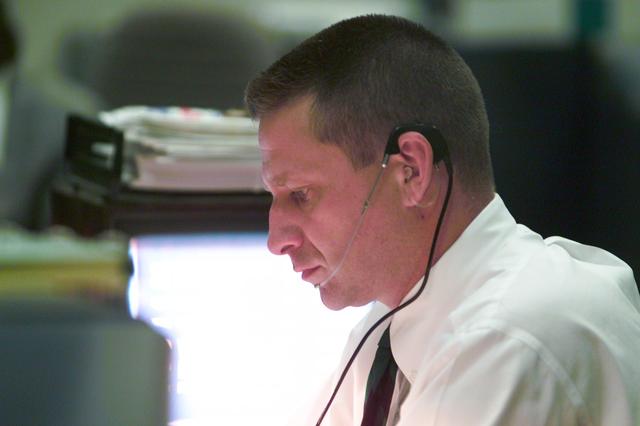
JSC2001-E-12117 (19 April 2001) --- Astronaut Christopher J. (Gus) Loria, at the Spacecraft Communicator (CAPCOM) console, peruses information on monitors and displays at his console in the flight control room in the Johnson Space Center's Mission Control Center (MCC) as countdown for the Space Shuttle Endeavour launch of STS-100 continues several hundred miles away in Florida. Loria deals with weather issues in the respective areas for both ascent and entry phases of the STS-100 mission.
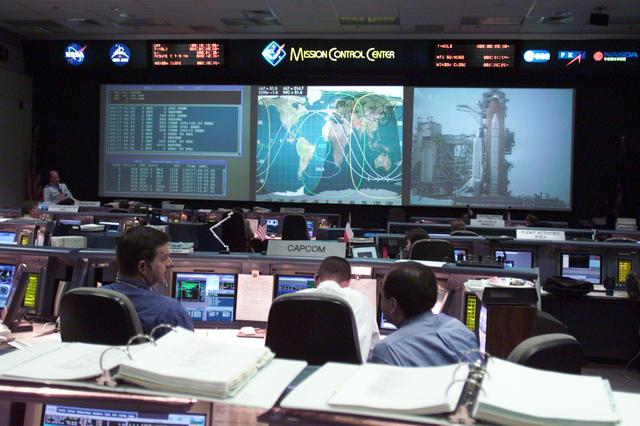
JSC2001-E-12130 (19 April 2001) --- Astronauts Scott D. Altman (left) and Mark L. Polansky (right) discuss the approaching STS-100 launch while staffing the Spacecraft Communicator (CAPCOM) console in Houston's Mission Control Center (MCC). Christopher J. (Gus) Loria (center) studies launch data at his console. Loria's CAPCOM position addresses weather issues, of which there were few on this particular launch. He will also be assigned to weather matters for the entry phase of the flight. The Space Shuttle Endeavour appears on the large screen in the front of the flight control room as liftoff countdown continues several hundred miles away at the Kennedy Space Center (KSC) in Florida.
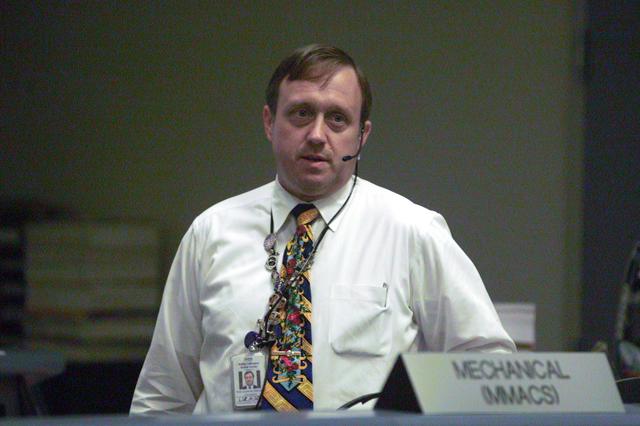
JSC2001-E-12141 (19 April 2001) --- William M. (Bill) Foster, one of the Ground Controllers (GC) for ascent in the flight control room in the Johnson Space Center's Mission Control Center (MCC), discusses a data communications issue with Flight Director LeRoy Cain (not shown) over the voice loops. He is standing in front of the Mechanical (MMACS) console, which is directly behind the GC console, as he faces the rear of the room to talk with Flight.
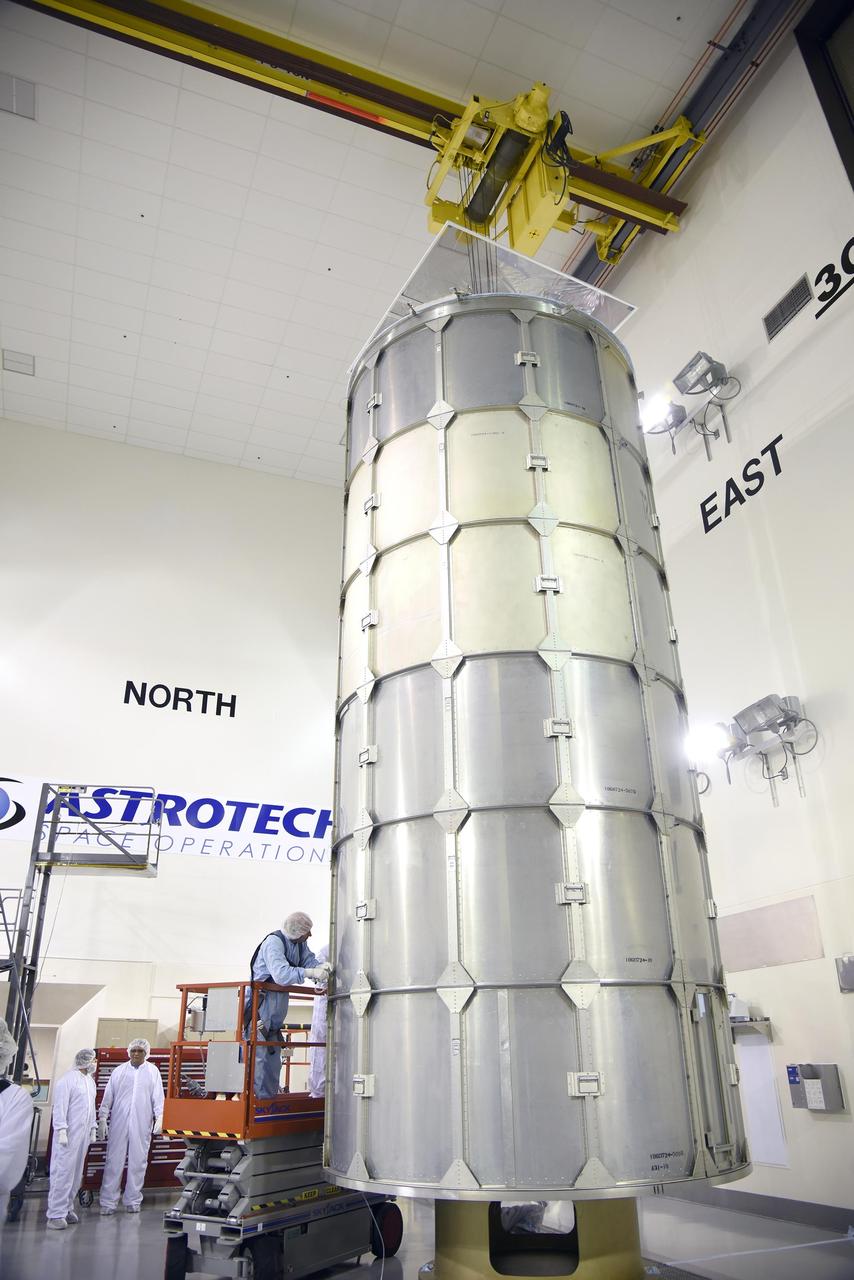
In the Astrotech payload processing facility on Vandenberg Air Force Base in California, technicians secure a transportation canister around NASA Soil Moisture Active Passive SMAP spacecraft for its move to the launch pad.
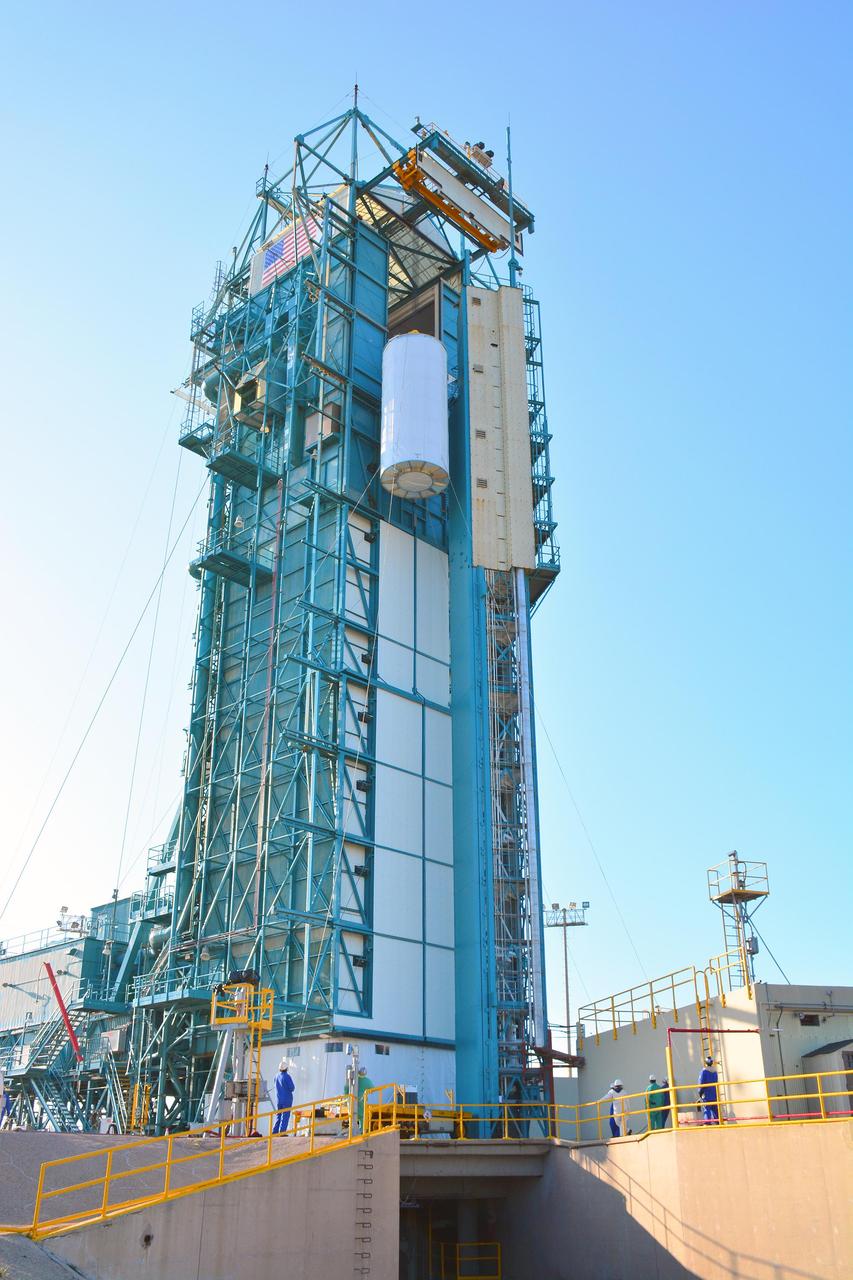
At Space Launch Complex 2 on Vandenberg Air Force Base in California, NASA Soil Moisture Active Passive SMAP mission satellite is lifted up the side of a mobile service tower for mating to its Delta II rocket.
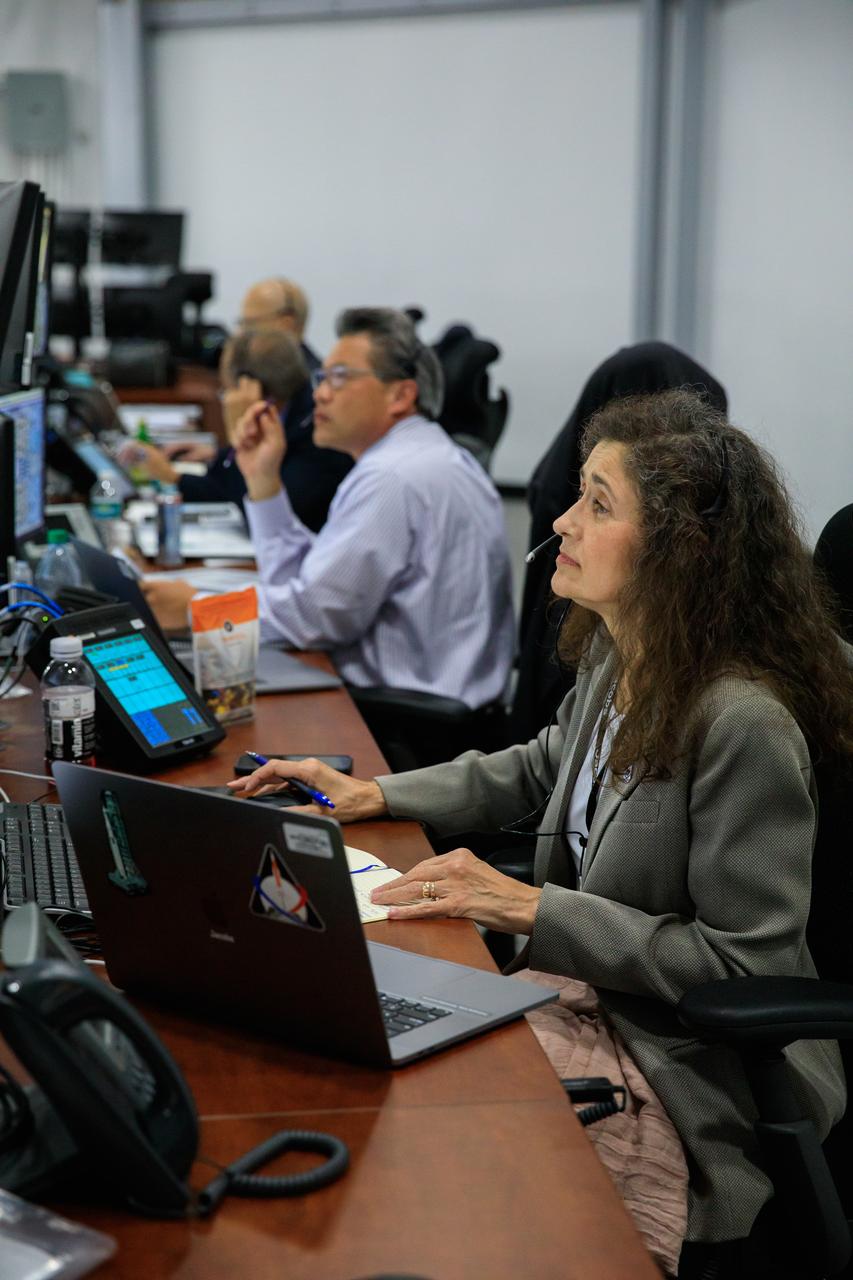
Members of the Artemis I launch team are at their consoles inside Firing Room 1 of the Rocco A. Petrone Launch Control Center at NASA’s Kennedy Space Center in Florida for launch countdown Aug. 29, 2022. Launch of the agency’s Space Launch System and Orion spacecraft was waved off due to an issue during tanking. Launch is now no earlier than Sept. 3, at 2:17 p.m. EDT from Kennedy’s Launch Complex 39B. The first in a series of increasingly complex missions, Artemis I will provide a foundation for human deep space exploration and demonstrate our commitment and capability to extend human presence to the Moon and beyond. The primary goal of Artemis I is to thoroughly test the integrated systems before crewed missions by operating the spacecraft in a deep space environment, testing Orion’s heat shield, and recovering the crew module after reentry, descent, and splashdown.
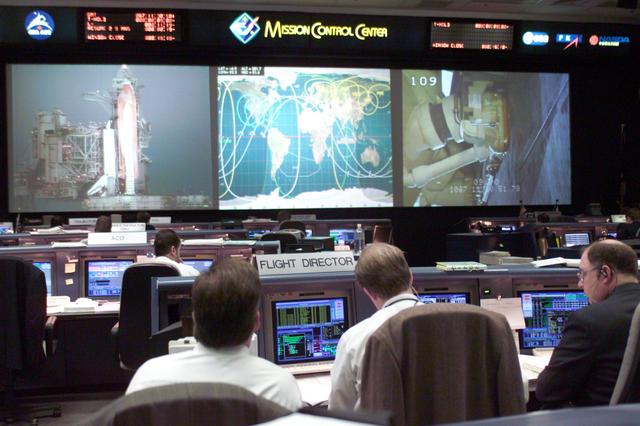
JSC2001-E-06210 (8 March 2001) --- As STS-102 Discovery liftoff countdown proceeds at the Kennedy Space Center (KSC)in Florida, flight controllers in Houston follow the progress at their assigned consoles. Ascent flight director Wayne Hale views his monitor at right.
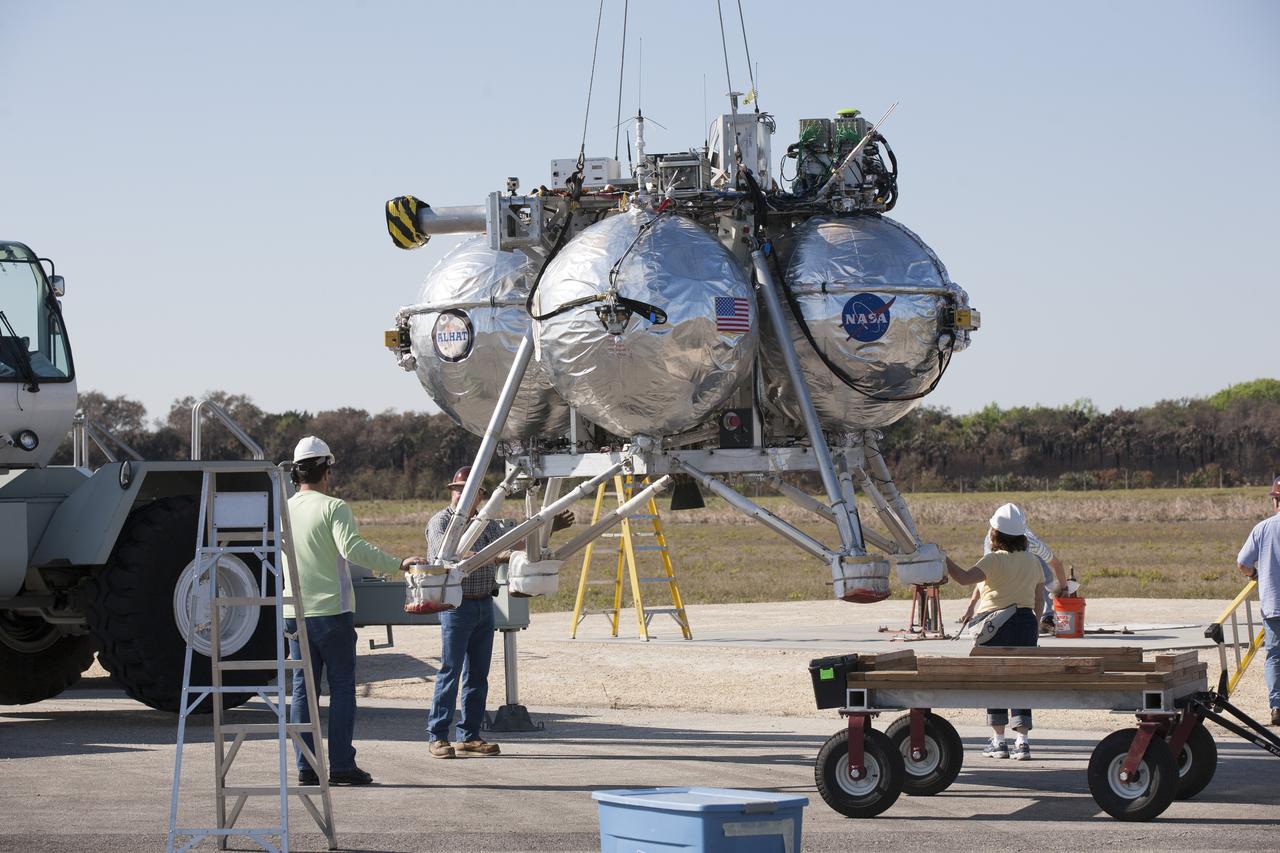
CAPE CANAVERAL, Fla. - Engineers and technicians assist as a crane lowers the Project Morpheus prototype lander in preparation for its seventh free flight test at the north end of the Shuttle Landing Facility at NASA’s Kennedy Space Center in Florida. The 83-second test began at 3:41 p.m. EDT with the Morpheus lander launching from the ground over a flame trench and ascending to 580 feet, its highest to date. Morpheus then flew its fastest downrange trek at 30 mph, travelling farther than before, 837 feet. The lander performed a 42-foot divert to emulate a hazard avoidance maneuver before descending and touching down on Landing Site 2, at the northern landing pad inside the automated landing and hazard avoidance technology ALHAT hazard field. Morpheus landed within one foot of its intended target. Project Morpheus tests NASA’s ALHAT and an engine that runs on liquid oxygen and methane, or green propellants, into a fully-operational lander that could deliver cargo to other planetary surfaces. The landing facility provides the lander with the kind of field necessary for realistic testing, complete with rocks, craters and hazards to avoid. Morpheus’ ALHAT payload allows it to navigate to clear landing sites amidst rocks, craters and other hazards during its descent. Project Morpheus is being managed under the Advanced Exploration Systems, or AES, Division in NASA’s Human Exploration and Operations Mission Directorate. The efforts in AES pioneer new approaches for rapidly developing prototype systems, demonstrating key capabilities and validating operational concepts for future human missions beyond Earth orbit. For more information on Project Morpheus, visit http://morpheuslander.jsc.nasa.gov/. Photo credit: NASA/Kim Shiflett
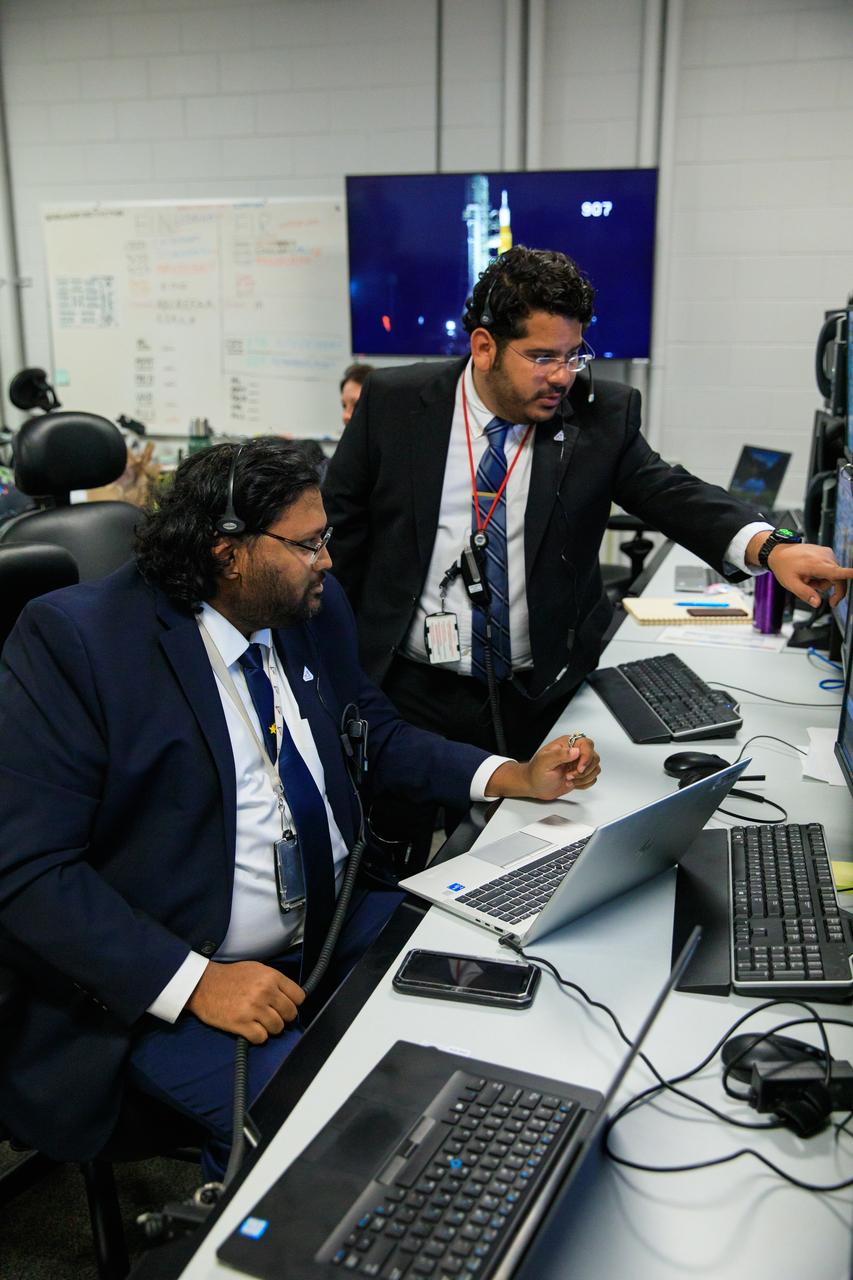
Members of the Artemis I launch team monitor countdown events at their consoles inside Firing Room 1 of the Rocco A. Petrone Launch Control Center at NASA’s Kennedy Space Center in Florida on Aug. 29, 2022. Launch of the agency’s Space Launch System and Orion spacecraft was waved off due to an issue during tanking. Launch is now no earlier than Sept. 3, at 2:17 p.m. EDT from Kennedy’s Launch Complex 39B. The first in a series of increasingly complex missions, Artemis I will provide a foundation for human deep space exploration and demonstrate our commitment and capability to extend human presence to the Moon and beyond. The primary goal of Artemis I is to thoroughly test the integrated systems before crewed missions by operating the spacecraft in a deep space environment, testing Orion’s heat shield, and recovering the crew module after reentry, descent, and splashdown.
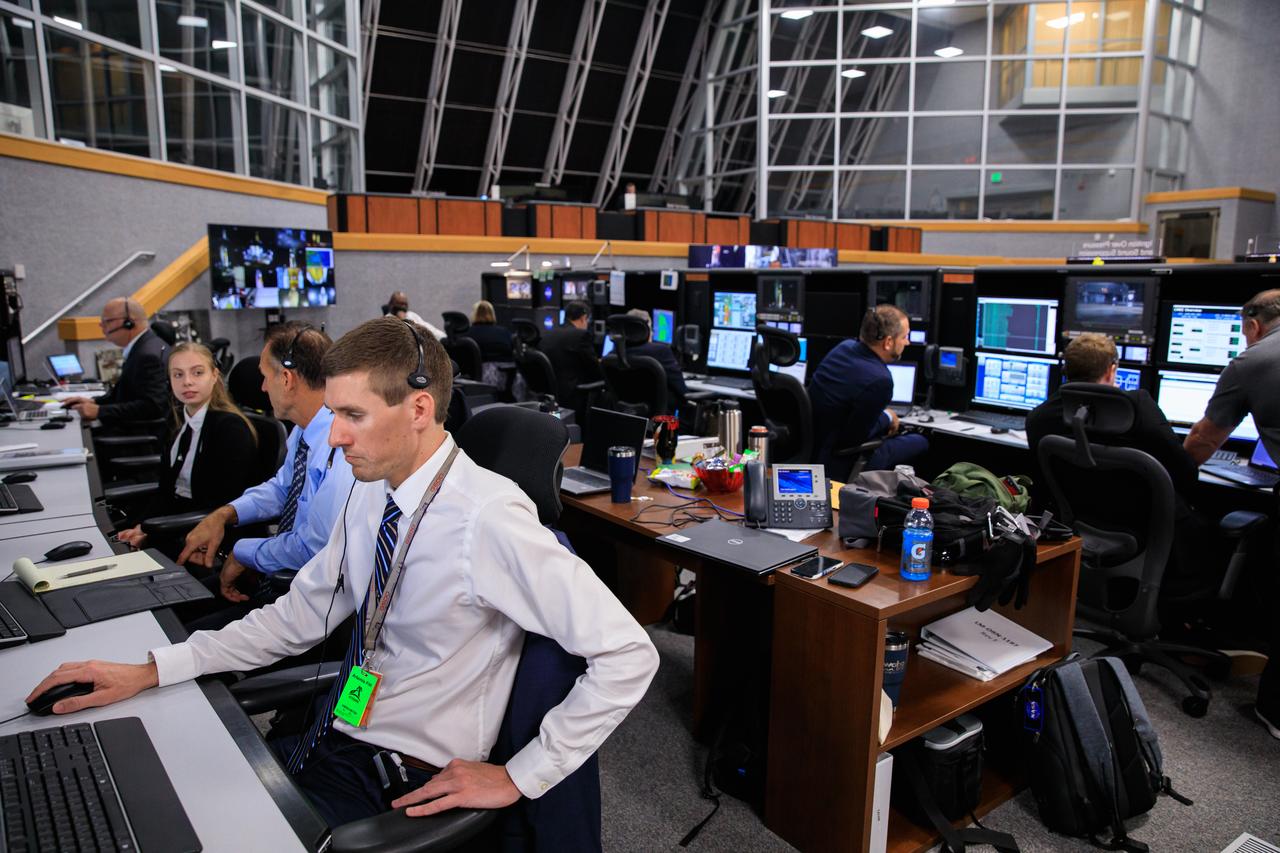
Members of the Artemis I launch team are at their consoles inside Firing Room 1 of the Rocco A. Petrone Launch Control Center at NASA’s Kennedy Space Center in Florida for launch countdown Aug. 29, 2022. Launch of the agency’s Space Launch System and Orion spacecraft was waved off due to an issue during tanking. Launch is now no earlier than Sept. 3, at 2:17 p.m. EDT from Kennedy’s Launch Complex 39B. The first in a series of increasingly complex missions, Artemis I will provide a foundation for human deep space exploration and demonstrate our commitment and capability to extend human presence to the Moon and beyond. The primary goal of Artemis I is to thoroughly test the integrated systems before crewed missions by operating the spacecraft in a deep space environment, testing Orion’s heat shield, and recovering the crew module after reentry, descent, and splashdown.
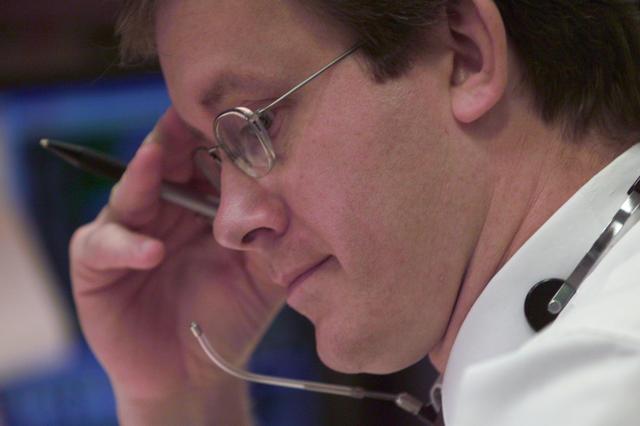
JSC2001-E-06200 (8 March 2001) --- At his console in Houston's Mission Control Center, STS-102 lead flight director John Shannon, studies mission data on STS-102 launch day.
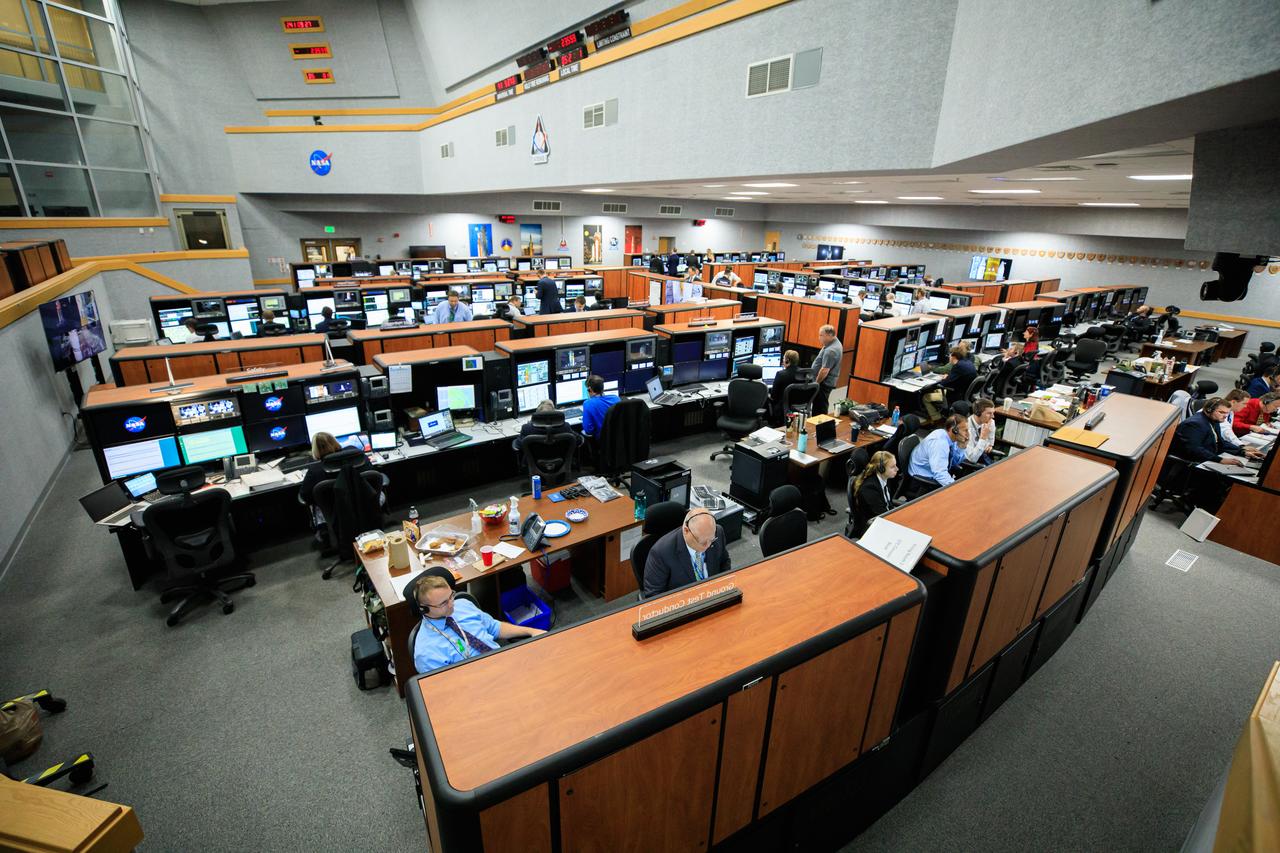
Members of the Artemis I launch team are at their consoles inside Firing Room 1 of the Rocco A. Petrone Launch Control Center at NASA’s Kennedy Space Center in Florida for launch countdown Aug. 29, 2022. Launch of the agency’s Space Launch System and Orion spacecraft was waved off due to an issue during tanking. Launch is now no earlier than Sept. 3, at 2:17 p.m. EDT from Kennedy’s Launch Complex 39B. The first in a series of increasingly complex missions, Artemis I will provide a foundation for human deep space exploration and demonstrate our commitment and capability to extend human presence to the Moon and beyond. The primary goal of Artemis I is to thoroughly test the integrated systems before crewed missions by operating the spacecraft in a deep space environment, testing Orion’s heat shield, and recovering the crew module after reentry, descent, and splashdown.
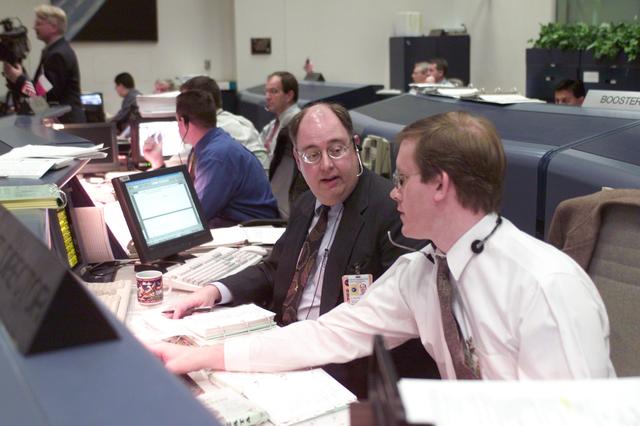
JSC2001-E-06214 (8 March 2001) --- At their console in Houston's Mission Control Center, flight directors Wayne Hale (left) and John Shannon discuss a mission detail while awaiting launch several hundred miles away in Florida. Hale is ascent director and Shannon is lead and Orbit 1 director.
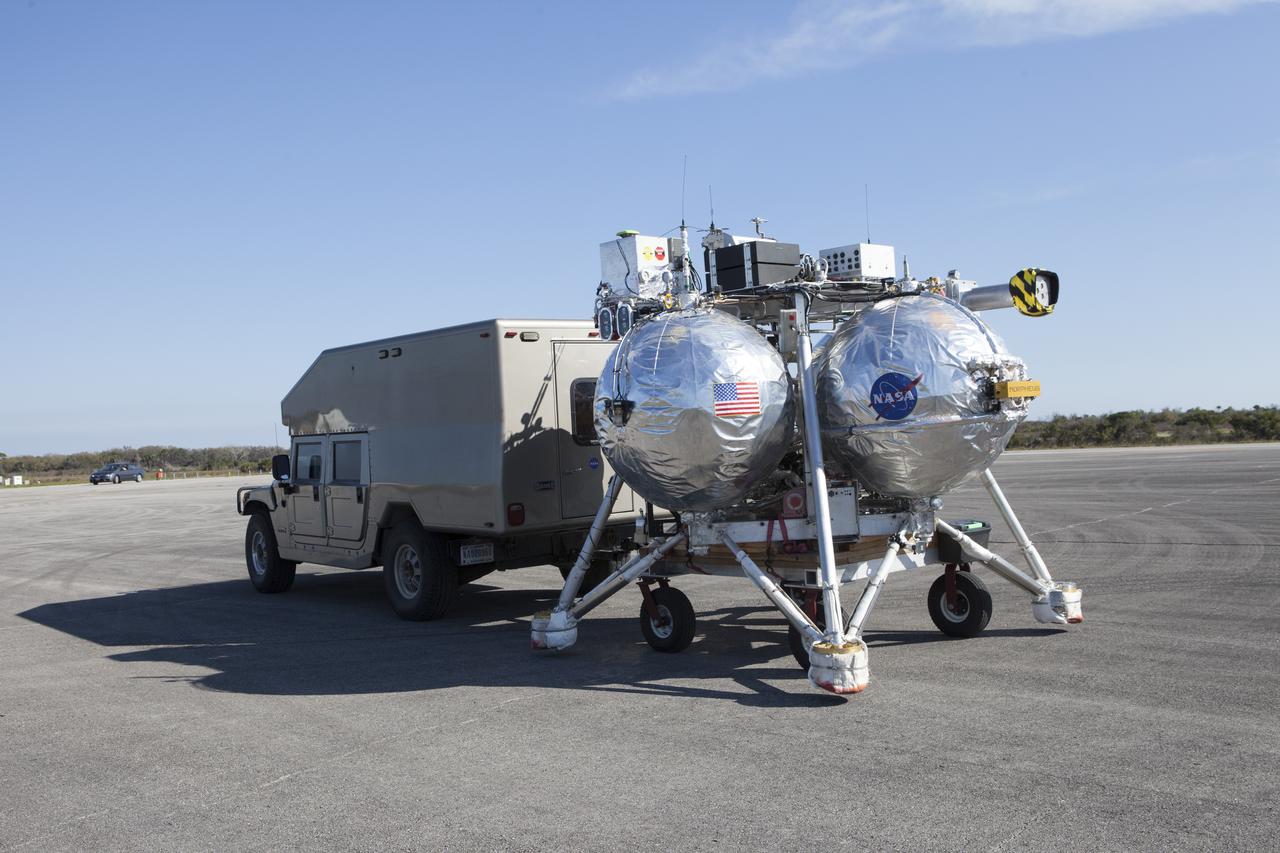
CAPE CANAVERAL, Fla. - The Project Morpheus prototype lander is transported to the north end of the Shuttle Landing Facility at NASA’s Kennedy Space Center in Florida for the seventh free flight test. The 83-second test began at 3:41 p.m. EDT with the Morpheus lander launching from the ground over a flame trench and ascending to 580 feet, its highest to date. Morpheus then flew its fastest downrange trek at 30 mph, travelling farther than before, 837 feet. The lander performed a 42-foot divert to emulate a hazard avoidance maneuver before descending and touching down on Landing Site 2, at the northern landing pad inside the automated landing and hazard avoidance technology ALHAT hazard field. Morpheus landed within one foot of its intended target. Project Morpheus tests NASA’s ALHAT and an engine that runs on liquid oxygen and methane, or green propellants, into a fully-operational lander that could deliver cargo to other planetary surfaces. The landing facility provides the lander with the kind of field necessary for realistic testing, complete with rocks, craters and hazards to avoid. Morpheus’ ALHAT payload allows it to navigate to clear landing sites amidst rocks, craters and other hazards during its descent. Project Morpheus is being managed under the Advanced Exploration Systems, or AES, Division in NASA’s Human Exploration and Operations Mission Directorate. The efforts in AES pioneer new approaches for rapidly developing prototype systems, demonstrating key capabilities and validating operational concepts for future human missions beyond Earth orbit. For more information on Project Morpheus, visit http://morpheuslander.jsc.nasa.gov/. Photo credit: NASA/Kim Shiflett
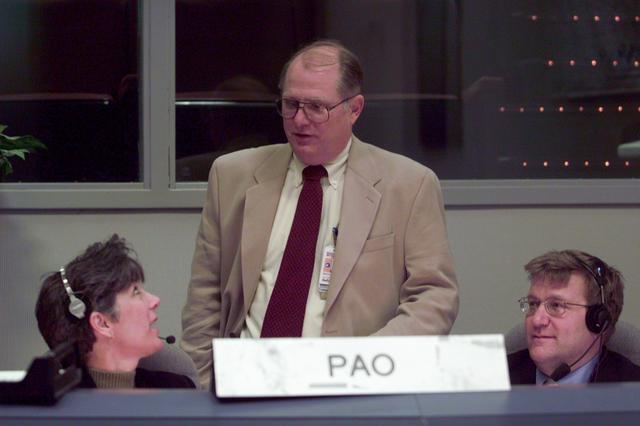
JSC2001-E-06205 (8 March 2001) --- Eileen Hawley at the Public Affairs Officer (PAO) console poses a query to Brock R. (Randy) Stone (center) of the Mission Operations Directorate (MOD) prior to the launch of STS-102. Hawley was the launch commentator for the Discovery mission. Daniel Carpenter, director of the Public Affairs Office, is at right.
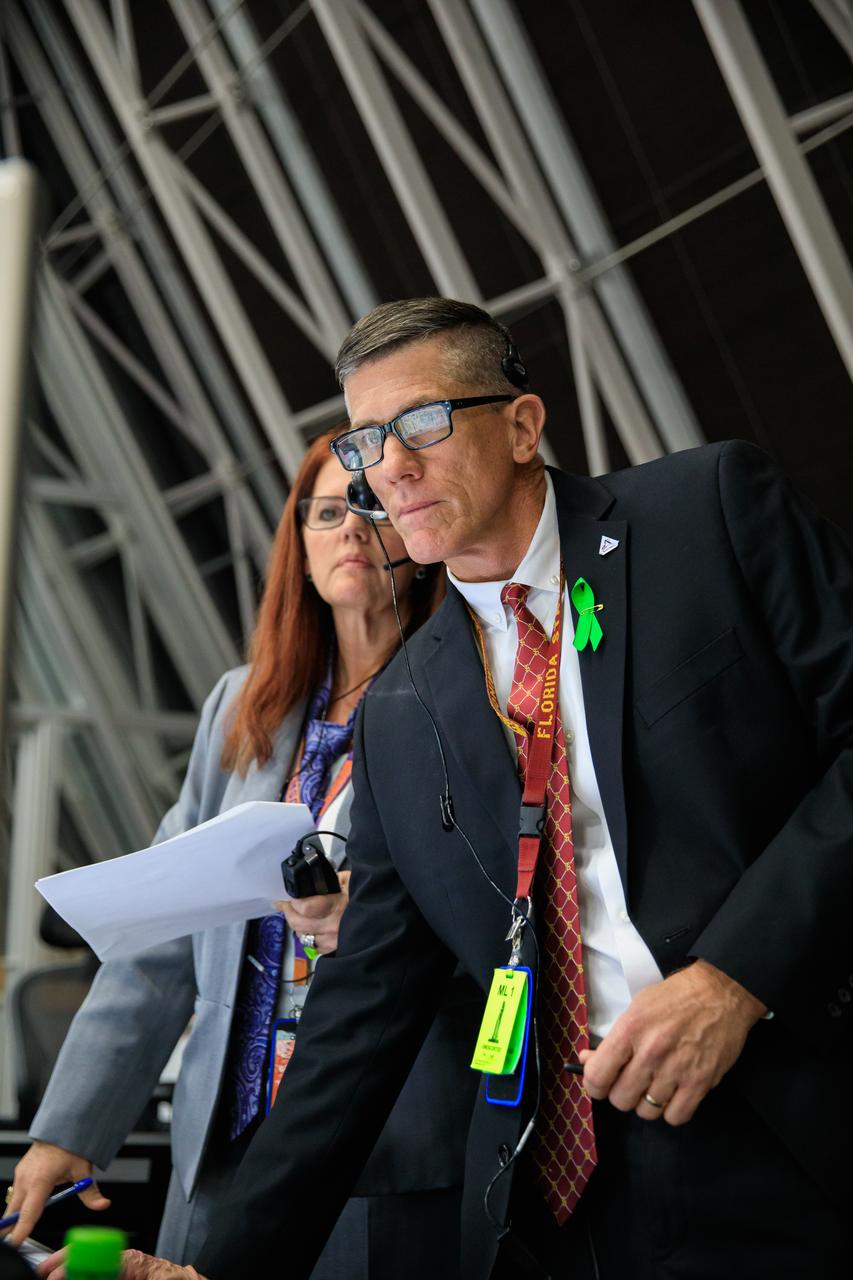
From left, Artemis I Launch Director Charlie Blackwell-Thompson, and Assistant Launch Director Jeremy Graeber, monitor launch countdown events inside Firing Room 1 of the Rocco A. Petrone Launch Control Center at NASA’s Kennedy Space Center in Florida on Aug. 29, 2022. Launch of the agency’s Space Launch System and Orion spacecraft was waved off due to an issue during tanking. Launch is now no earlier than Sept. 3, at 2:17 p.m. EDT from Kennedy’s Launch Complex 39B. The first in a series of increasingly complex missions, Artemis I will provide a foundation for human deep space exploration and demonstrate our commitment and capability to extend human presence to the Moon and beyond. The primary goal of Artemis I is to thoroughly test the integrated systems before crewed missions by operating the spacecraft in a deep space environment, testing Orion’s heat shield, and recovering the crew module after reentry, descent, and splashdown.
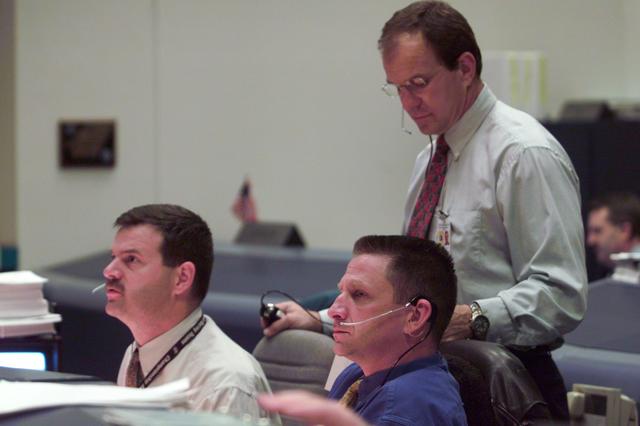
JSC2001-E-06206 (8 March 2001) --- Pictured at the Spacecraft Communicator (CAPCOM) console in JSC's Mission Control Center are (from the left) astronauts Scott D. Altman, Christopher J. (Gus) Loria and Michael J. Bloomfield. Altman and Bloomfield were checking into possible weather effects for the scheduled launch of the Space Shuttle Discovery.
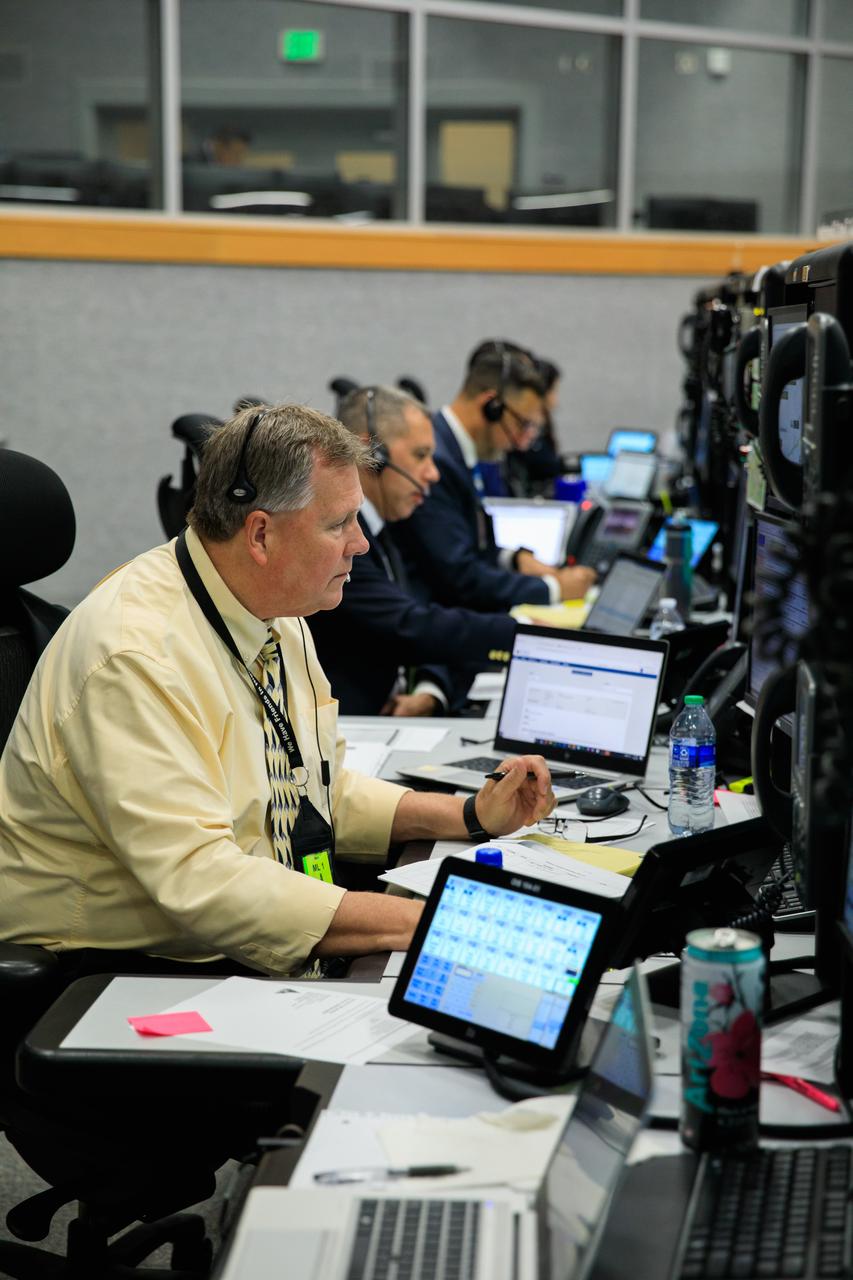
Members of the Artemis I launch team are at their consoles inside Firing Room 1 of the Rocco A. Petrone Launch Control Center at NASA’s Kennedy Space Center in Florida for launch countdown Aug. 29, 2022. Launch of the agency’s Space Launch System and Orion spacecraft was waved off due to an issue during tanking. Launch is now no earlier than Sept. 3, at 2:17 p.m. EDT from Kennedy’s Launch Complex 39B. The first in a series of increasingly complex missions, Artemis I will provide a foundation for human deep space exploration and demonstrate our commitment and capability to extend human presence to the Moon and beyond. The primary goal of Artemis I is to thoroughly test the integrated systems before crewed missions by operating the spacecraft in a deep space environment, testing Orion’s heat shield, and recovering the crew module after reentry, descent, and splashdown.
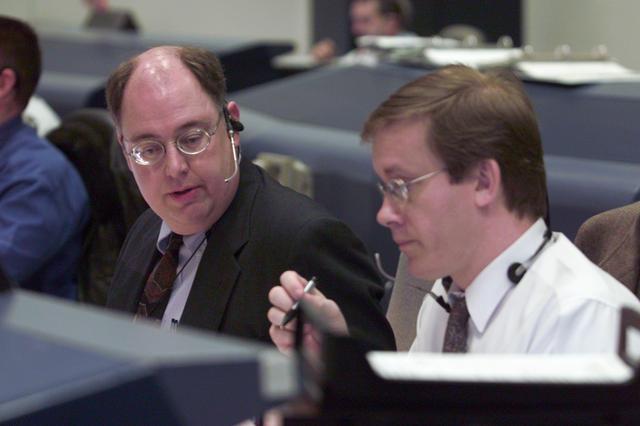
JSC2001-E-06202 (8 March 2001) --- At their console in Houston's Mission Control Center, flight directors Wayne Hale (left) and John Shannon discuss a mission detail while awaiting launch several hundred miles away in Florida. Hale is ascent director and Shannon is lead and Orbit 1 director
JSC2001-E-06212 (8 March 2001) --- Astronaut Michael J. Bloomfield at the Spacecraft Communicator (CAPCOM) console in JSC's Mission Control Center checks into possible weather effects for the scheduled launch of the Space Shuttle Discovery. Bloomfield was backing up weather CAPCOM Scott D. Altman, who was seated at the console, along with CAPCOM Christopher J. (Gus) Loria.
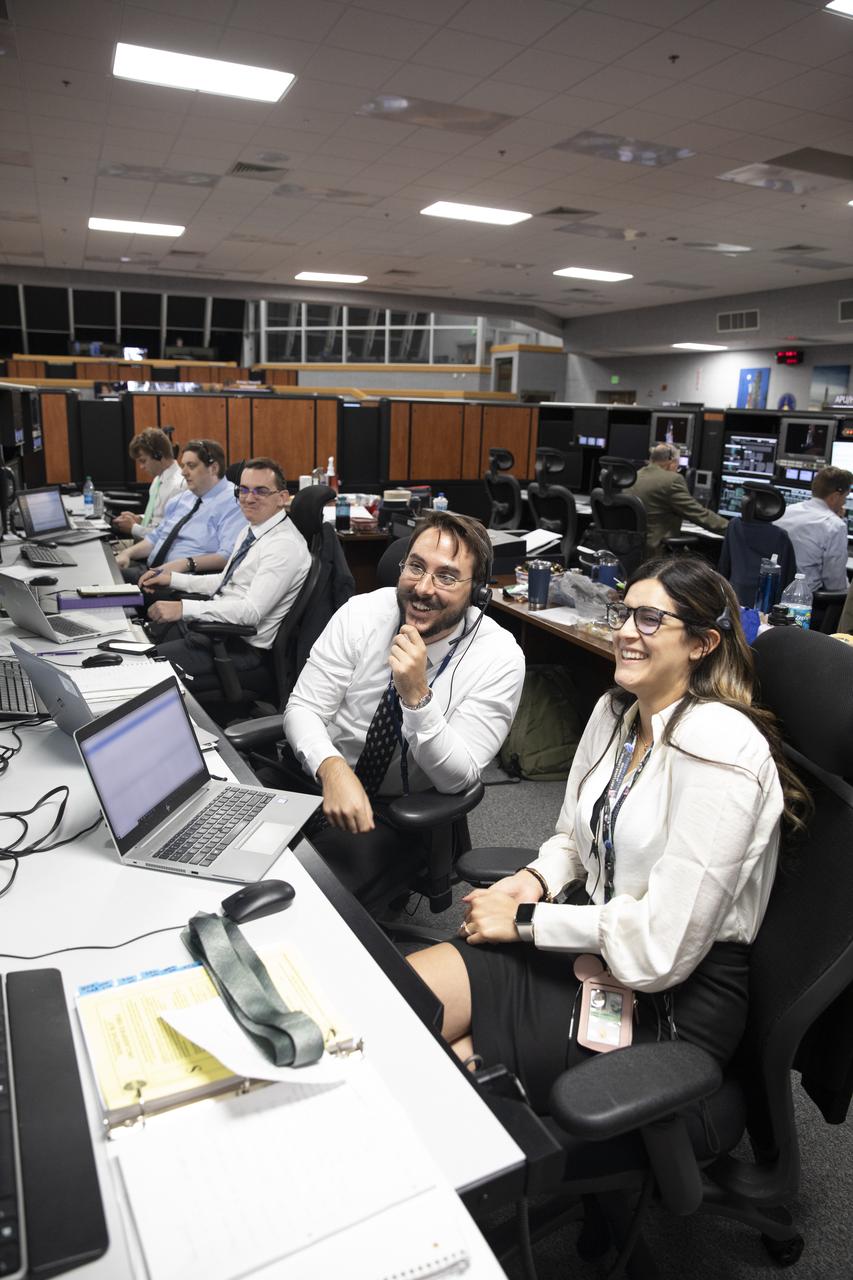
Members of the Artemis I launch team are at their consoles inside Firing Room 1 of the Rocco A. Petrone Launch Control Center at NASA’s Kennedy Space Center in Florida for launch countdown Aug. 29, 2022. Launch of the agency’s Space Launch System and Orion spacecraft was waved off due to an issue during tanking. Launch is now no earlier than Sept. 3, at 2:17 p.m. EDT from Kennedy’s Launch Complex 39B. The first in a series of increasingly complex missions, Artemis I will provide a foundation for human deep space exploration and demonstrate our commitment and capability to extend human presence to the Moon and beyond. The primary goal of Artemis I is to thoroughly test the integrated systems before crewed missions by operating the spacecraft in a deep space environment, testing Orion’s heat shield, and recovering the crew module after reentry, descent, and splashdown.

Artemis I Assistant Launch Director Jeremy Graeber monitors launch countdown events inside Firing Room 1 of the Rocco A. Petrone Launch Control Center at NASA’s Kennedy Space Center in Florida on Aug. 29, 2022. Launch of the agency’s Space Launch System and Orion spacecraft was waved off due to an issue during tanking. Launch is now no earlier than Sept. 3, at 2:17 p.m. EDT from Kennedy’s Launch Complex 39B. The first in a series of increasingly complex missions, Artemis I will provide a foundation for human deep space exploration and demonstrate our commitment and capability to extend human presence to the Moon and beyond. The primary goal of Artemis I is to thoroughly test the integrated systems before crewed missions by operating the spacecraft in a deep space environment, testing Orion’s heat shield, and recovering the crew module after reentry, descent, and splashdown.
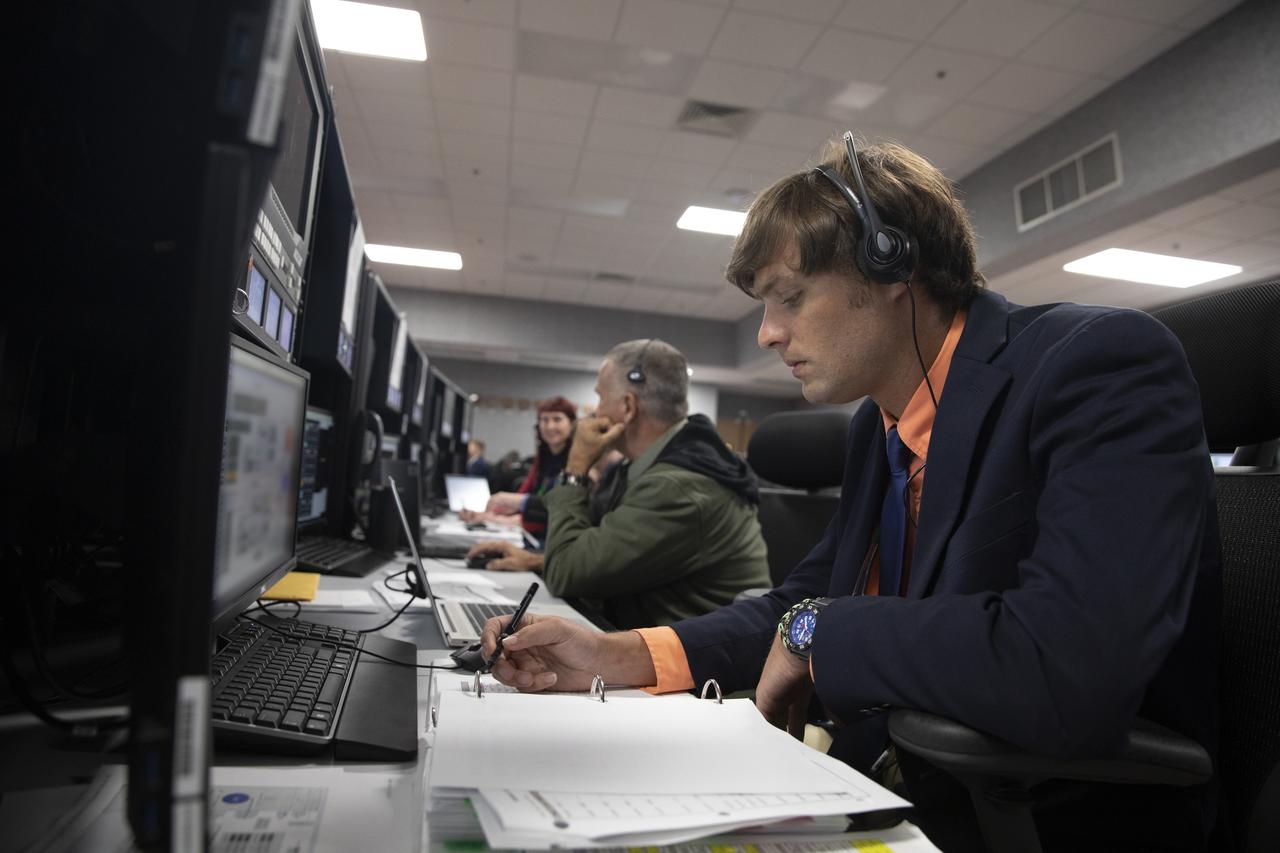
Members of the Artemis I launch team are at their consoles inside Firing Room 1 of the Rocco A. Petrone Launch Control Center at NASA’s Kennedy Space Center in Florida for launch countdown Aug. 29, 2022. Launch of the agency’s Space Launch System and Orion spacecraft was waved off due to an issue during tanking. Launch is now no earlier than Sept. 3, at 2:17 p.m. EDT from Kennedy’s Launch Complex 39B. The first in a series of increasingly complex missions, Artemis I will provide a foundation for human deep space exploration and demonstrate our commitment and capability to extend human presence to the Moon and beyond. The primary goal of Artemis I is to thoroughly test the integrated systems before crewed missions by operating the spacecraft in a deep space environment, testing Orion’s heat shield, and recovering the crew module after reentry, descent, and splashdown.
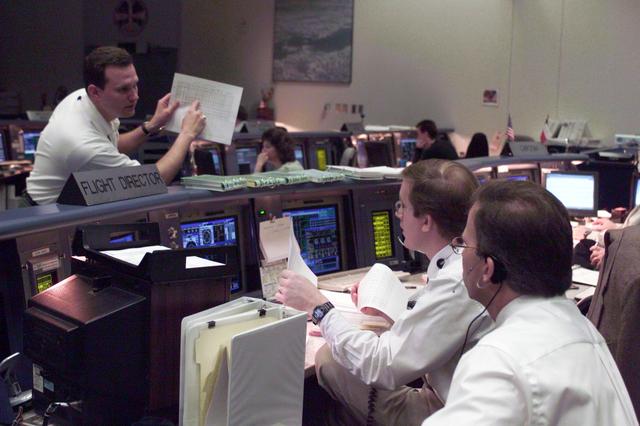
JSC2001-E-06196 (8 March 2001) --- At his console in Houston's Mission Control Center, STS-102 lead flight director John Shannon (center), gathers mission data on STS-102 launch day.
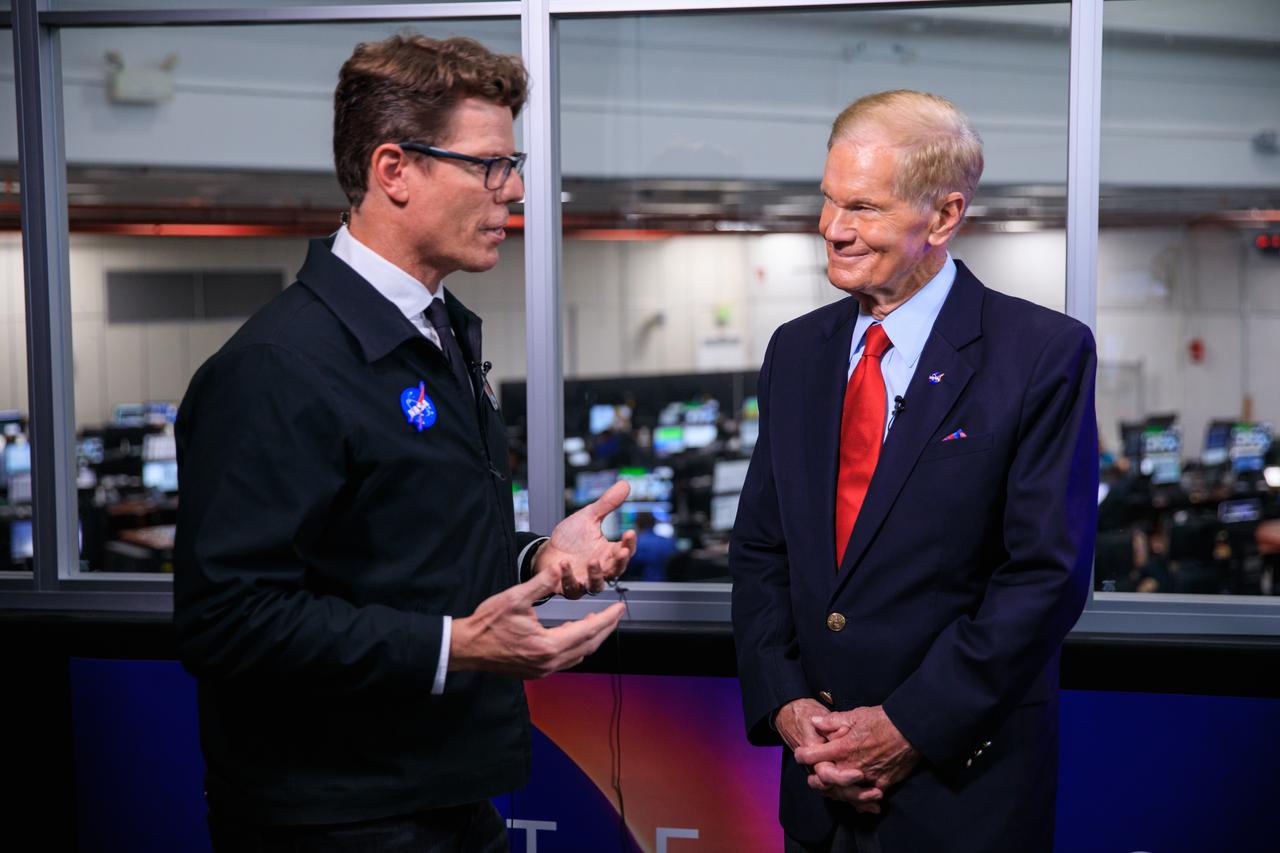
NASA commentator Derrol Nail, at left, talks with NASA Administrator Bill Nelson during the Artemis I launch countdown inside Firing Room 1 of the Rocco A. Petrone Launch Control Center at NASA’s Kennedy Space Center in Florida on Aug. 29, 2022. Launch of the agency’s Space Launch System and Orion spacecraft was waved off due to an issue during tanking. Launch is now no earlier than Sept. 3, at 2:17 p.m. EDT from Kennedy’s Launch Complex 39B. The first in a series of increasingly complex missions, Artemis I will provide a foundation for human deep space exploration and demonstrate our commitment and capability to extend human presence to the Moon and beyond. The primary goal of Artemis I is to thoroughly test the integrated systems before crewed missions by operating the spacecraft in a deep space environment, testing Orion’s heat shield, and recovering the crew module after reentry, descent, and splashdown.
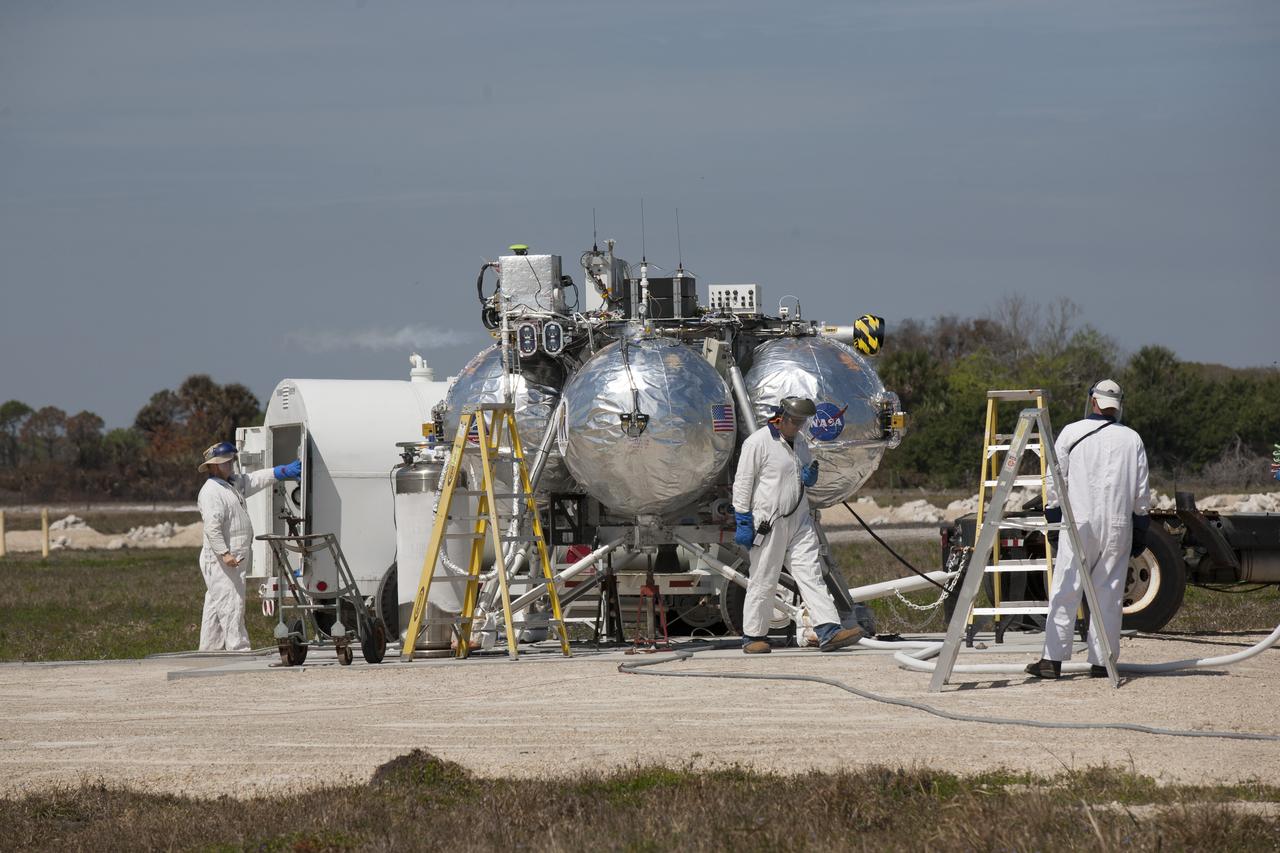
CAPE CANAVERAL, Fla. - Engineers and technicians prepare the Project Morpheus prototype lander for its seventh free flight test at the north end of the Shuttle Landing Facility at NASA’s Kennedy Space Center in Florida. The 83-second test began at 3:41 p.m. EDT with the Morpheus lander launching from the ground over a flame trench and ascending to 580 feet, its highest to date. Morpheus then flew its fastest downrange trek at 30 mph, travelling farther than before, 837 feet. The lander performed a 42-foot divert to emulate a hazard avoidance maneuver before descending and touching down on Landing Site 2, at the northern landing pad inside the automated landing and hazard avoidance technology ALHAT hazard field. Morpheus landed within one foot of its intended target. Project Morpheus tests NASA’s ALHAT and an engine that runs on liquid oxygen and methane, or green propellants, into a fully-operational lander that could deliver cargo to other planetary surfaces. The landing facility provides the lander with the kind of field necessary for realistic testing, complete with rocks, craters and hazards to avoid. Morpheus’ ALHAT payload allows it to navigate to clear landing sites amidst rocks, craters and other hazards during its descent. Project Morpheus is being managed under the Advanced Exploration Systems, or AES, Division in NASA’s Human Exploration and Operations Mission Directorate. The efforts in AES pioneer new approaches for rapidly developing prototype systems, demonstrating key capabilities and validating operational concepts for future human missions beyond Earth orbit. For more information on Project Morpheus, visit http://morpheuslander.jsc.nasa.gov/. Photo credit: NASA/Kim Shiflett
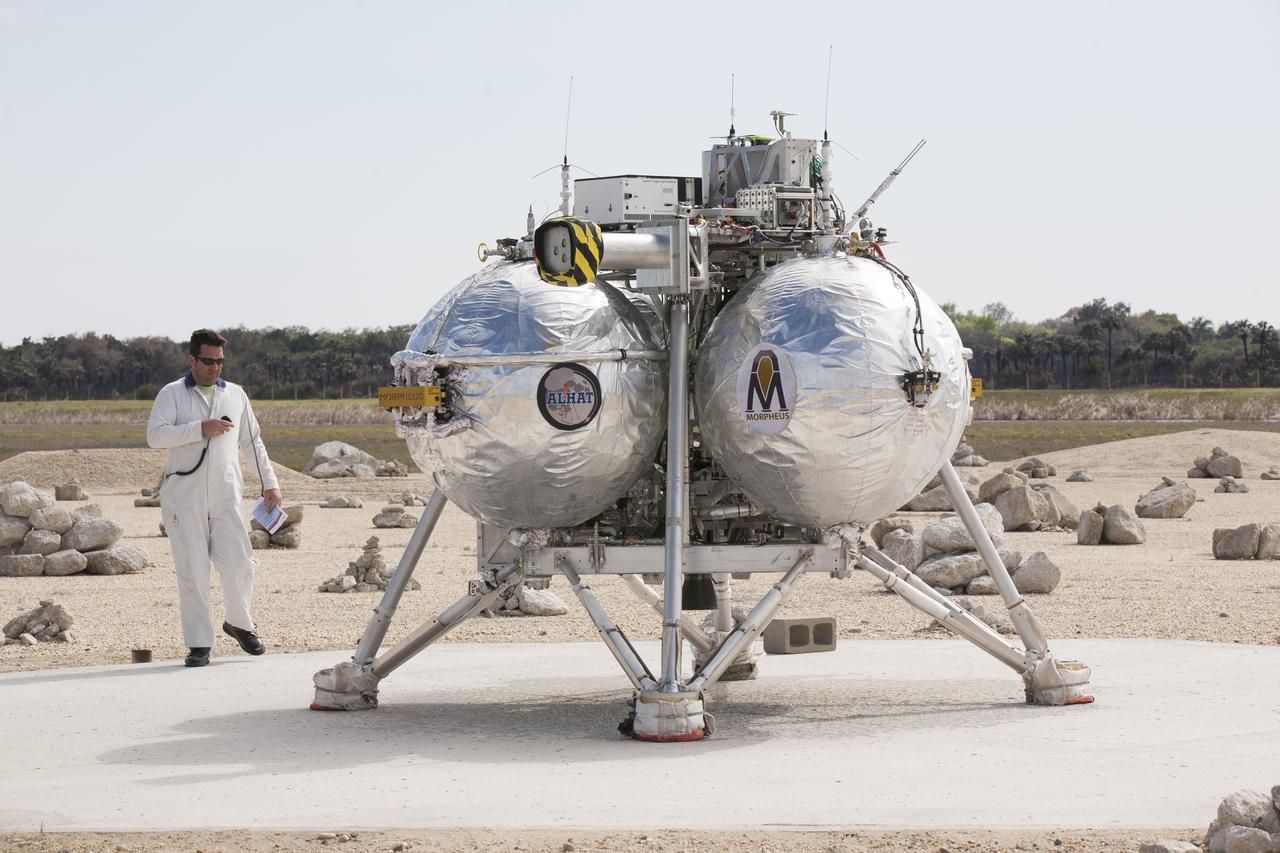
CAPE CANAVERAL, Fla. - An engineer checks the Project Morpheus prototype lander after it landed in the automated landing and hazard avoidance technology, or ALHAT, hazard field, completing its seventh free flight test at the north end of the Shuttle Landing Facility at NASA’s Kennedy Space Center in Florida. The 83-second test began at 3:41 p.m. EDT with the Morpheus lander launching from the ground over a flame trench and ascending to 580 feet, its highest to date. Morpheus then flew its fastest downrange trek at 30 mph, travelling farther than before, 837 feet. The lander performed a 42-foot divert to emulate a hazard avoidance maneuver before descending and touching down on Landing Site 2, at the northern landing pad inside the hazard field. Morpheus landed within one foot of its intended target. Project Morpheus tests NASA’s ALHAT and an engine that runs on liquid oxygen and methane, or green propellants, into a fully-operational lander that could deliver cargo to other planetary surfaces. The landing facility provides the lander with the kind of field necessary for realistic testing, complete with rocks, craters and hazards to avoid. Morpheus’ ALHAT payload allows it to navigate to clear landing sites amidst rocks, craters and other hazards during its descent. Project Morpheus is being managed under the Advanced Exploration Systems, or AES, Division in NASA’s Human Exploration and Operations Mission Directorate. The efforts in AES pioneer new approaches for rapidly developing prototype systems, demonstrating key capabilities and validating operational concepts for future human missions beyond Earth orbit. For more information on Project Morpheus, visit http://morpheuslander.jsc.nasa.gov/. Photo credit: NASA/Kim Shiflett
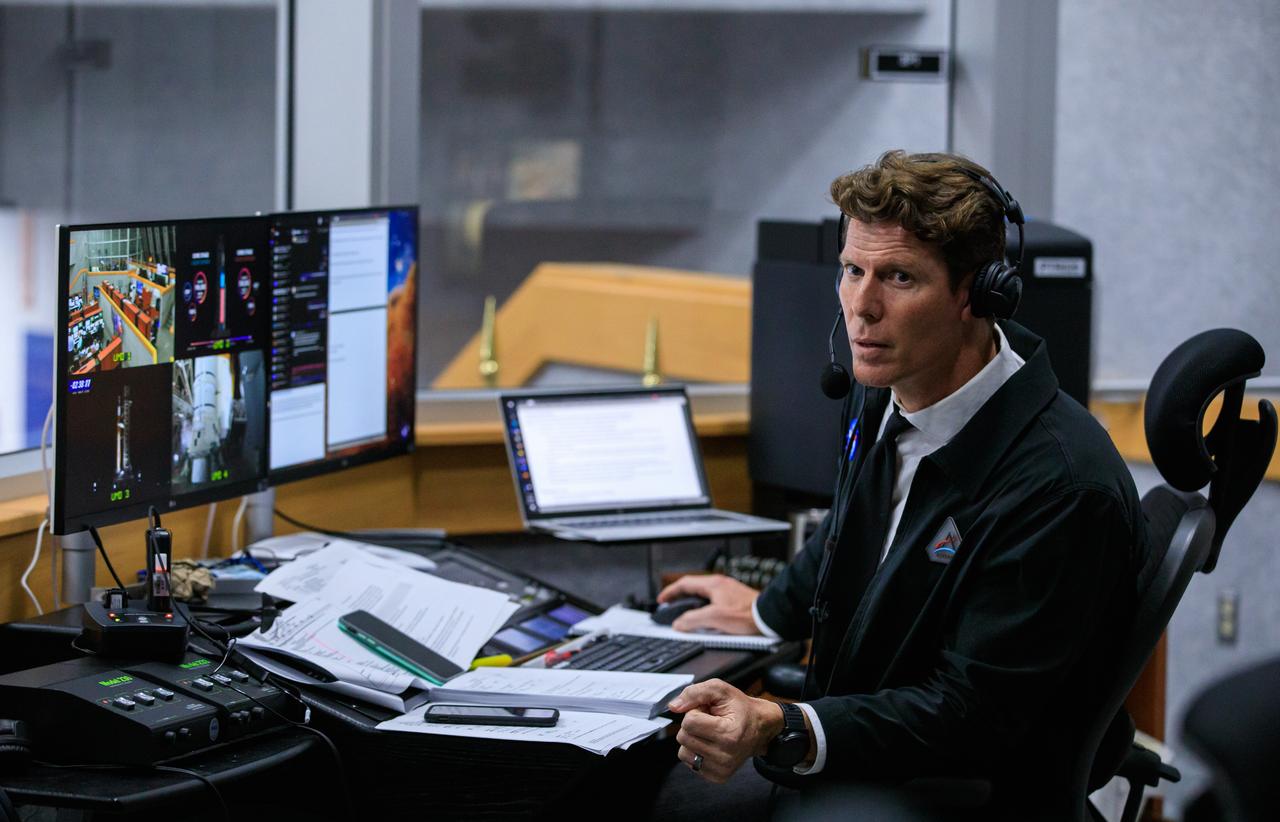
Derrol Nail, NASA launch commentator, works at his console during Artemis I launch countdown inside Firing Room 1 of the Rocco A. Petrone Launch Control Center at NASA’s Kennedy Space Center in Florida on Aug. 29, 2022. Launch of the agency’s Space Launch System and Orion spacecraft was waved off due to an issue during tanking. Launch is now no earlier than Sept. 3, at 2:17 p.m. EDT from Kennedy’s Launch Complex 39B. The first in a series of increasingly complex missions, Artemis I will provide a foundation for human deep space exploration and demonstrate our commitment and capability to extend human presence to the Moon and beyond. The primary goal of Artemis I is to thoroughly test the integrated systems before crewed missions by operating the spacecraft in a deep space environment, testing Orion’s heat shield, and recovering the crew module after reentry, descent, and splashdown.
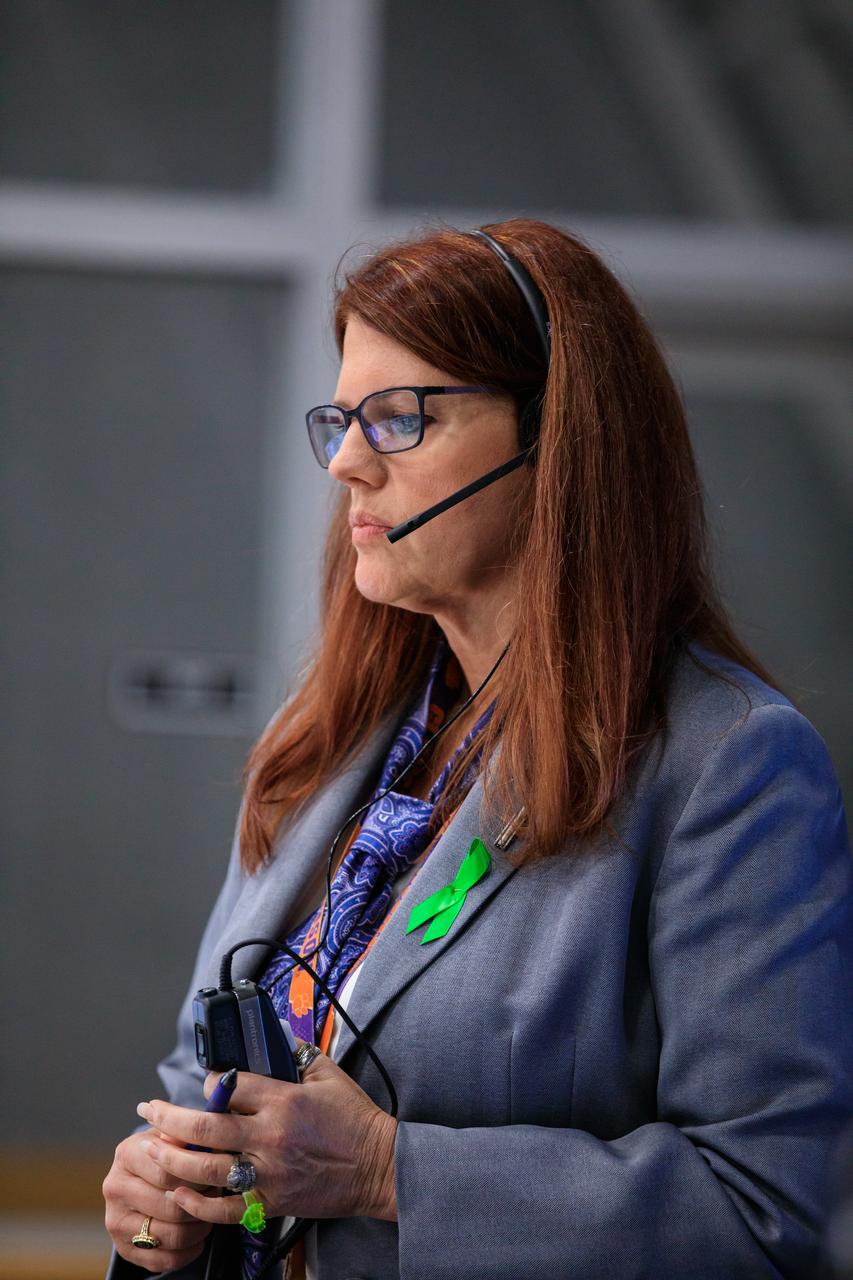
Artemis I Launch Director Charlie Blackwell-Thompson monitors launch countdown events inside Firing Room 1 of the Rocco A. Petrone Launch Control Center at NASA’s Kennedy Space Center in Florida on Aug. 29, 2022. Launch of the agency’s Space Launch System and Orion spacecraft was waved off due to an issue during tanking. Launch is now no earlier than Sept. 3, at 2:17 p.m. EDT from Kennedy’s Launch Complex 39B. The first in a series of increasingly complex missions, Artemis I will provide a foundation for human deep space exploration and demonstrate our commitment and capability to extend human presence to the Moon and beyond. The primary goal of Artemis I is to thoroughly test the integrated systems before crewed missions by operating the spacecraft in a deep space environment, testing Orion’s heat shield, and recovering the crew module after reentry, descent, and splashdown.
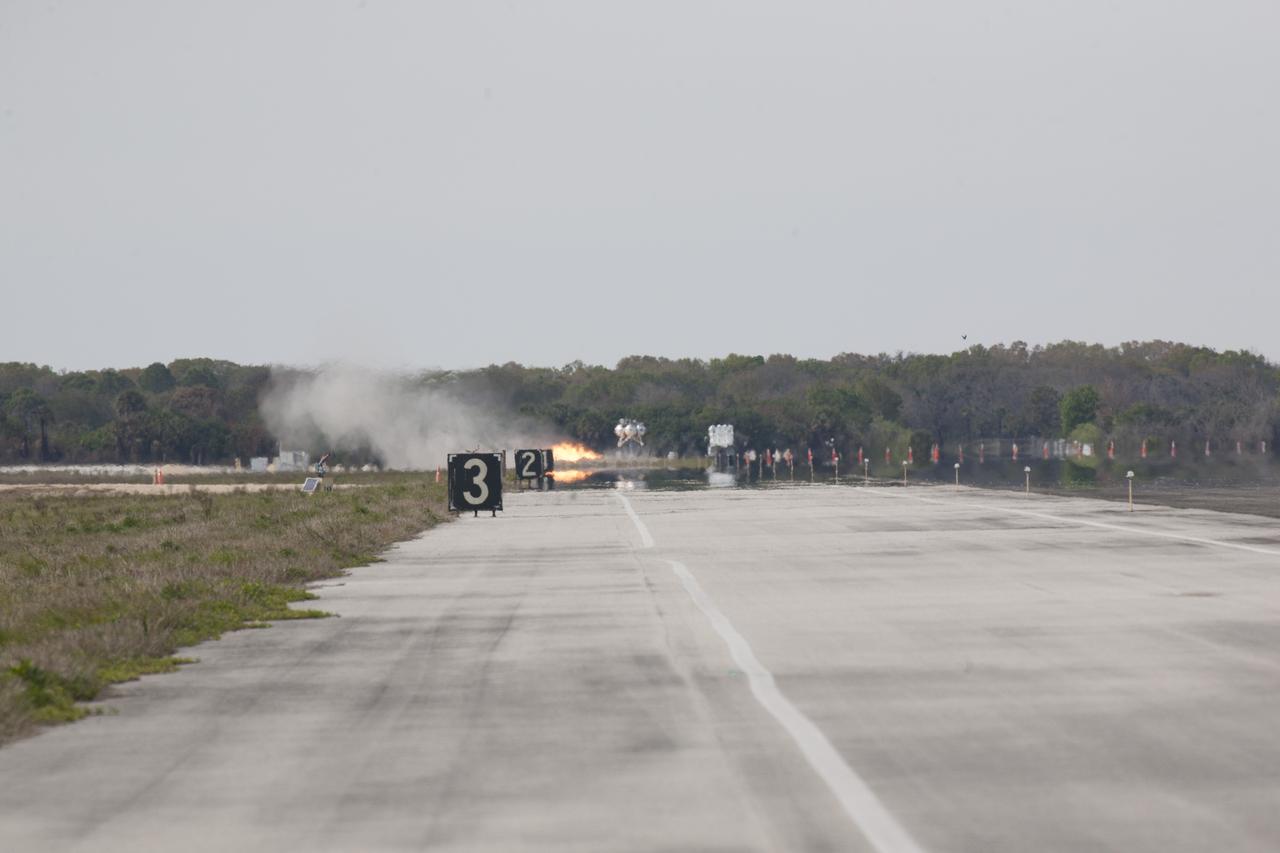
CAPE CANAVERAL, Fla. - The Project Morpheus prototype lander lifts off in the automated landing and hazard avoidance technology, or ALHAT, hazard field for its seventh free flight test at the north end of the Shuttle Landing Facility at NASA’s Kennedy Space Center in Florida. The 83-second test began at 3:41 p.m. EDT with the Morpheus lander launching from the ground over a flame trench and ascending to 580 feet, its highest to date. Morpheus then flew its fastest downrange trek at 30 mph, travelling farther than before, 837 feet. The lander performed a 42-foot divert to emulate a hazard avoidance maneuver before descending and touching down on Landing Site 2, at the northern landing pad inside the hazard field. Morpheus landed within one foot of its intended target. Project Morpheus tests NASA’s ALHAT and an engine that runs on liquid oxygen and methane, or green propellants, into a fully-operational lander that could deliver cargo to other planetary surfaces. The landing facility provides the lander with the kind of field necessary for realistic testing, complete with rocks, craters and hazards to avoid. Morpheus’ ALHAT payload allows it to navigate to clear landing sites amidst rocks, craters and other hazards during its descent. Project Morpheus is being managed under the Advanced Exploration Systems, or AES, Division in NASA’s Human Exploration and Operations Mission Directorate. The efforts in AES pioneer new approaches for rapidly developing prototype systems, demonstrating key capabilities and validating operational concepts for future human missions beyond Earth orbit. For more information on Project Morpheus, visit http://morpheuslander.jsc.nasa.gov/. Photo credit: NASA/Kim Shiflett
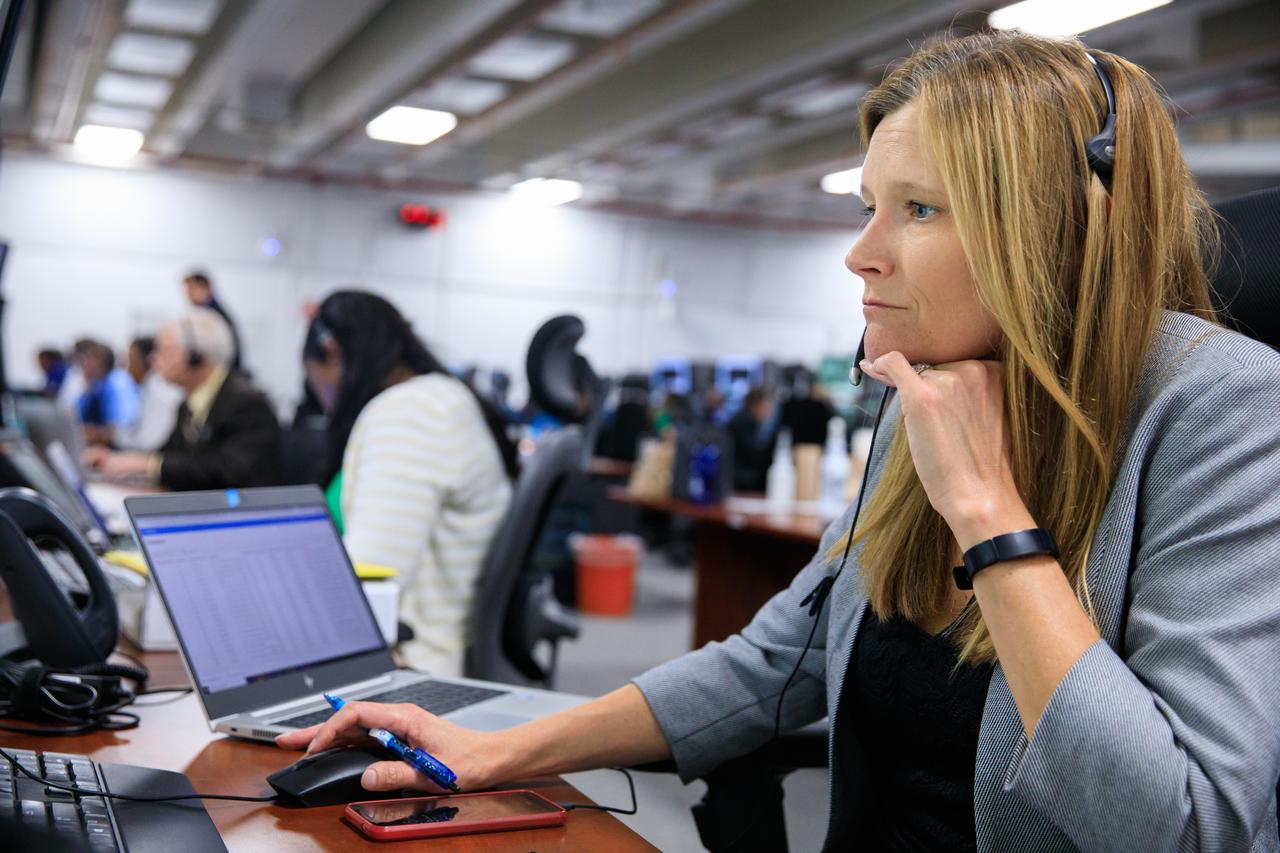
Members of the Artemis I launch team are at their consoles inside Firing Room 1 of the Rocco A. Petrone Launch Control Center at NASA’s Kennedy Space Center in Florida for launch countdown Aug. 29, 2022. Launch of the agency’s Space Launch System and Orion spacecraft was waved off due to an issue during tanking. Launch is now no earlier than Sept. 3, at 2:17 p.m. EDT from Kennedy’s Launch Complex 39B. The first in a series of increasingly complex missions, Artemis I will provide a foundation for human deep space exploration and demonstrate our commitment and capability to extend human presence to the Moon and beyond. The primary goal of Artemis I is to thoroughly test the integrated systems before crewed missions by operating the spacecraft in a deep space environment, testing Orion’s heat shield, and recovering the crew module after reentry, descent, and splashdown.
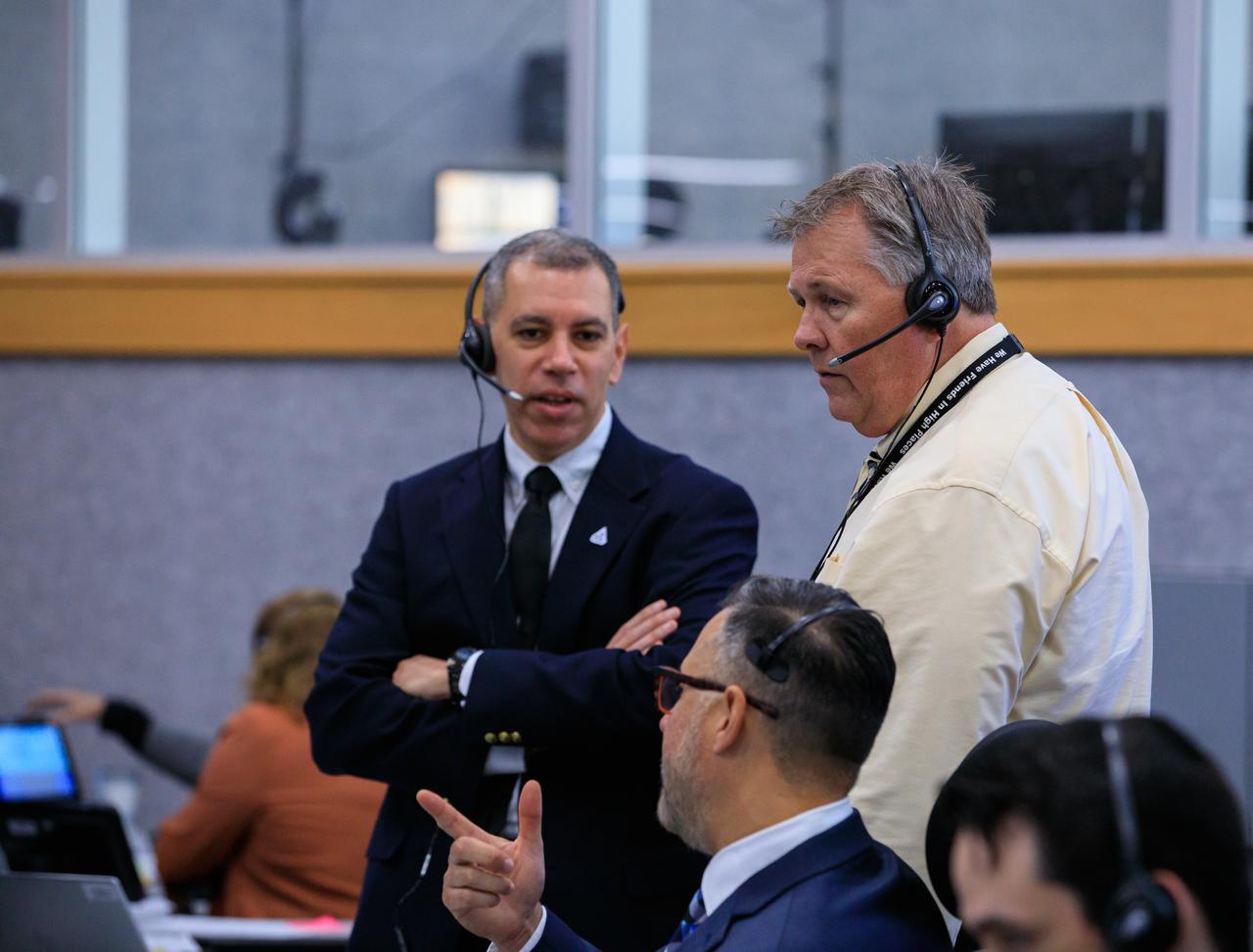
Senior NASA Test Directors Danny Zeno, at left, and Jeff Spaulding monitor Artemis I countdown events inside Firing Room 1 of the Rocco A. Petrone Launch Control Center at NASA’s Kennedy Space Center in Florida on Aug. 29, 2022. Launch of the agency’s Space Launch System and Orion spacecraft was waved off due to an issue during tanking. Launch is now no earlier than Sept. 3, at 2:17 p.m. EDT from Kennedy’s Launch Complex 39B. The first in a series of increasingly complex missions, Artemis I will provide a foundation for human deep space exploration and demonstrate our commitment and capability to extend human presence to the Moon and beyond. The primary goal of Artemis I is to thoroughly test the integrated systems before crewed missions by operating the spacecraft in a deep space environment, testing Orion’s heat shield, and recovering the crew module after reentry, descent, and splashdown.

Artemis I Launch Director Charlie Blackwell-Thompson works at her console during launch countdown inside Firing Room 1 of the Rocco A. Petrone Launch Control Center at NASA’s Kennedy Space Center in Florida on Aug. 29, 2022. Launch of the agency’s Space Launch System and Orion spacecraft was waved off due to an issue during tanking. Launch is now no earlier than Sept. 3, at 2:17 p.m. EDT from Kennedy’s Launch Complex 39B. The first in a series of increasingly complex missions, Artemis I will provide a foundation for human deep space exploration and demonstrate our commitment and capability to extend human presence to the Moon and beyond. The primary goal of Artemis I is to thoroughly test the integrated systems before crewed missions by operating the spacecraft in a deep space environment, testing Orion’s heat shield, and recovering the crew module after reentry, descent, and splashdown.

An Artemis I team member monitors countdown events at her console inside Firing Room 1 of the Rocco A. Petrone Launch Control Center at NASA’s Kennedy Space Center in Florida on Aug. 29, 2022. Launch of the agency’s Space Launch System and Orion spacecraft was waved off due to an issue during tanking. Launch is now no earlier than Sept. 3, at 2:17 p.m. EDT from Kennedy’s Launch Complex 39B. The first in a series of increasingly complex missions, Artemis I will provide a foundation for human deep space exploration and demonstrate our commitment and capability to extend human presence to the Moon and beyond. The primary goal of Artemis I is to thoroughly test the integrated systems before crewed missions by operating the spacecraft in a deep space environment, testing Orion’s heat shield, and recovering the crew module after reentry, descent, and splashdown.
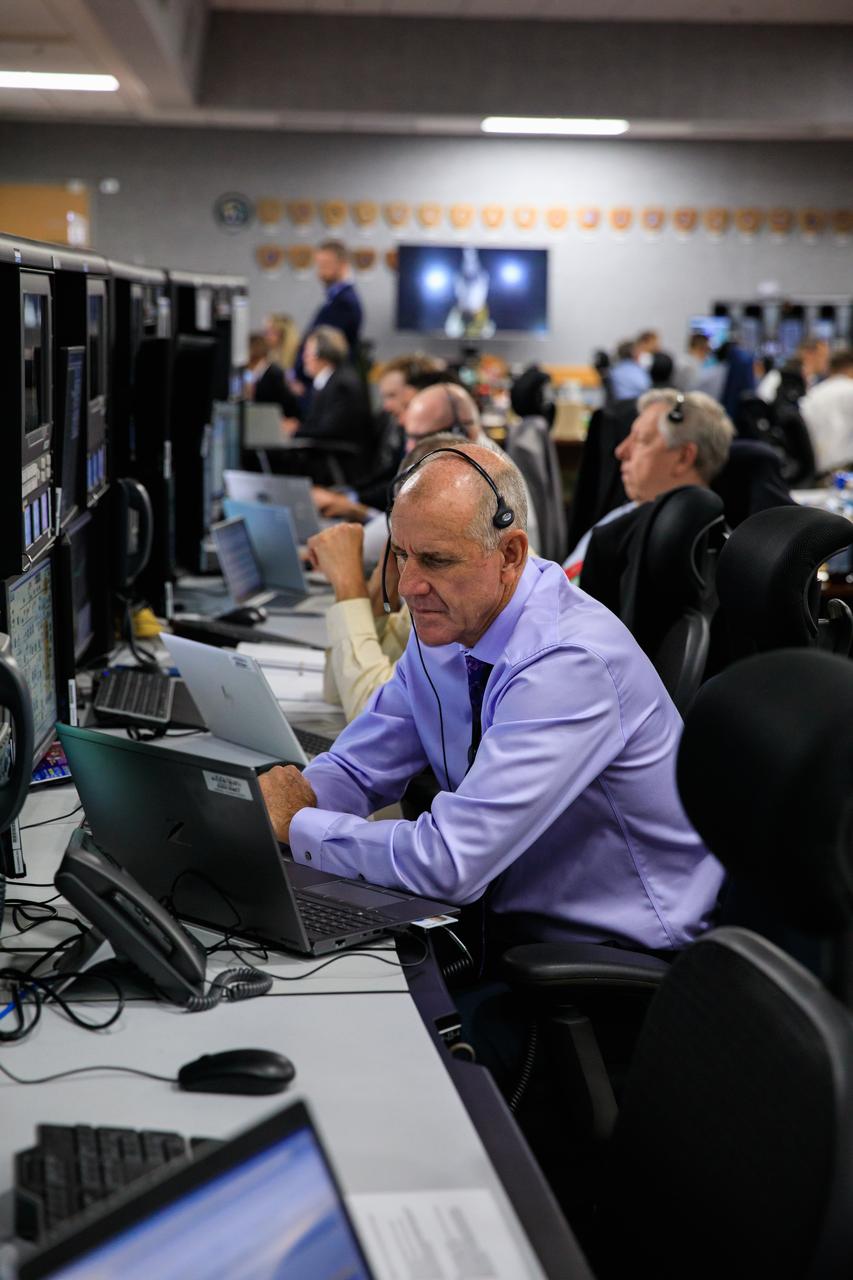
Members of the Artemis I launch team are at their consoles inside Firing Room 1 of the Rocco A. Petrone Launch Control Center at NASA’s Kennedy Space Center in Florida for launch countdown Aug. 29, 2022. Launch of the agency’s Space Launch System and Orion spacecraft was waved off due to an issue during tanking. Launch is now no earlier than Sept. 3, at 2:17 p.m. EDT from Kennedy’s Launch Complex 39B. The first in a series of increasingly complex missions, Artemis I will provide a foundation for human deep space exploration and demonstrate our commitment and capability to extend human presence to the Moon and beyond. The primary goal of Artemis I is to thoroughly test the integrated systems before crewed missions by operating the spacecraft in a deep space environment, testing Orion’s heat shield, and recovering the crew module after reentry, descent, and splashdown.

JSC2001-E-06207 (8 March 2001) --- Lead STS-102 flight director John Shannon discusses a mission detail with John Guidi, temporarily assigned at JSC from the Kennedy Space Center (KSC). The two are awaiting the launch of the Space Shuttle Discovery at the Flight Director console in JSC's Mission Control Center (MCC).
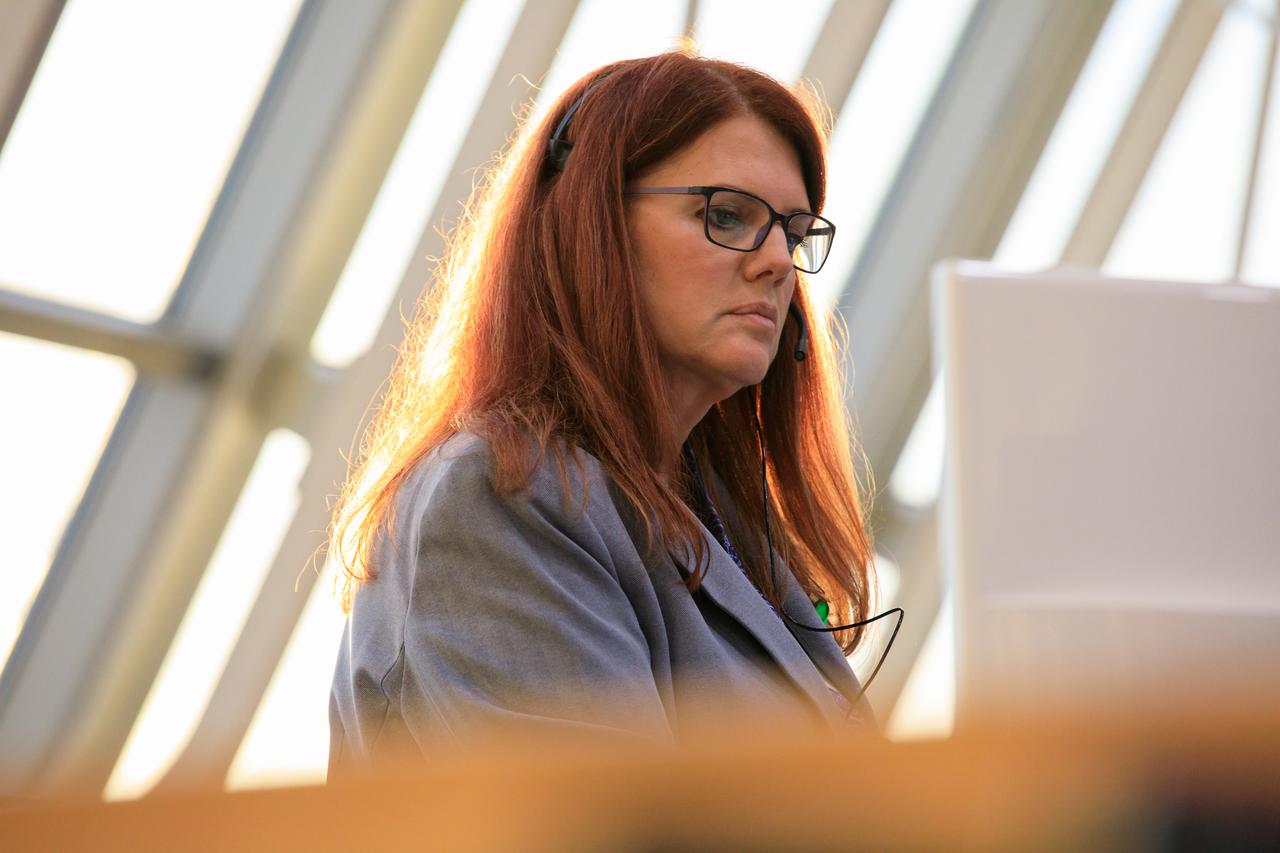
Artemis I Launch Director Charlie Blackwell-Thompson monitors launch countdown events inside Firing Room 1 of the Rocco A. Petrone Launch Control Center at NASA’s Kennedy Space Center in Florida on Aug. 29, 2022. Launch of the agency’s Space Launch System and Orion spacecraft was waved off due to an issue during tanking. Launch is now no earlier than Sept. 3, at 2:17 p.m. EDT from Kennedy’s Launch Complex 39B. The first in a series of increasingly complex missions, Artemis I will provide a foundation for human deep space exploration and demonstrate our commitment and capability to extend human presence to the Moon and beyond. The primary goal of Artemis I is to thoroughly test the integrated systems before crewed missions by operating the spacecraft in a deep space environment, testing Orion’s heat shield, and recovering the crew module after reentry, descent, and splashdown.
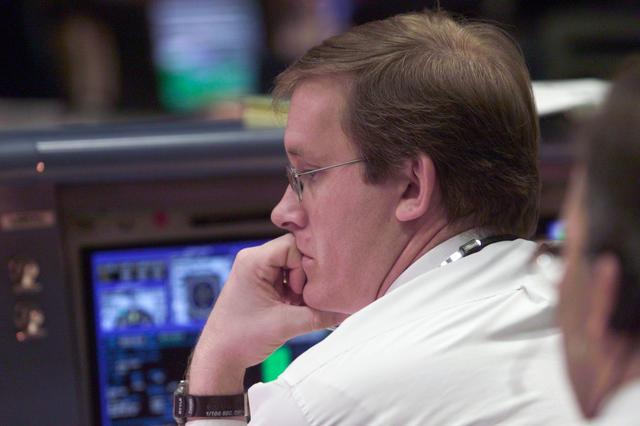
JSC2001-E-06217 (8 March 2001) --- At his console in Houston's Mission Control Center, STS-102 lead flight director John Shannon studies mission data on STS-102 launch day.
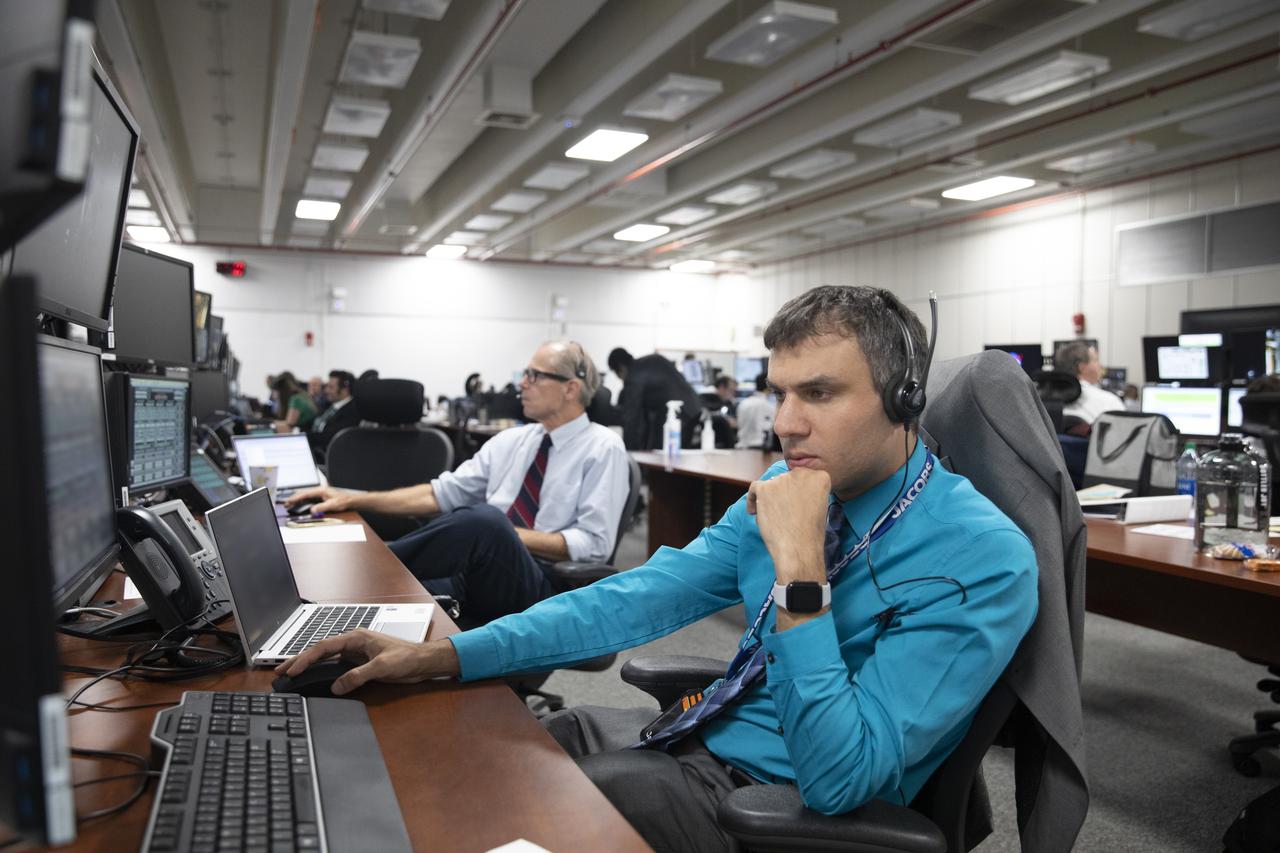
Members of the Artemis I launch team are at their consoles inside Firing Room 1 of the Rocco A. Petrone Launch Control Center at NASA’s Kennedy Space Center in Florida for launch countdown Aug. 29, 2022. Launch of the agency’s Space Launch System and Orion spacecraft was waved off due to an issue during tanking. Launch is now no earlier than Sept. 3, at 2:17 p.m. EDT from Kennedy’s Launch Complex 39B. The first in a series of increasingly complex missions, Artemis I will provide a foundation for human deep space exploration and demonstrate our commitment and capability to extend human presence to the Moon and beyond. The primary goal of Artemis I is to thoroughly test the integrated systems before crewed missions by operating the spacecraft in a deep space environment, testing Orion’s heat shield, and recovering the crew module after reentry, descent, and splashdown.
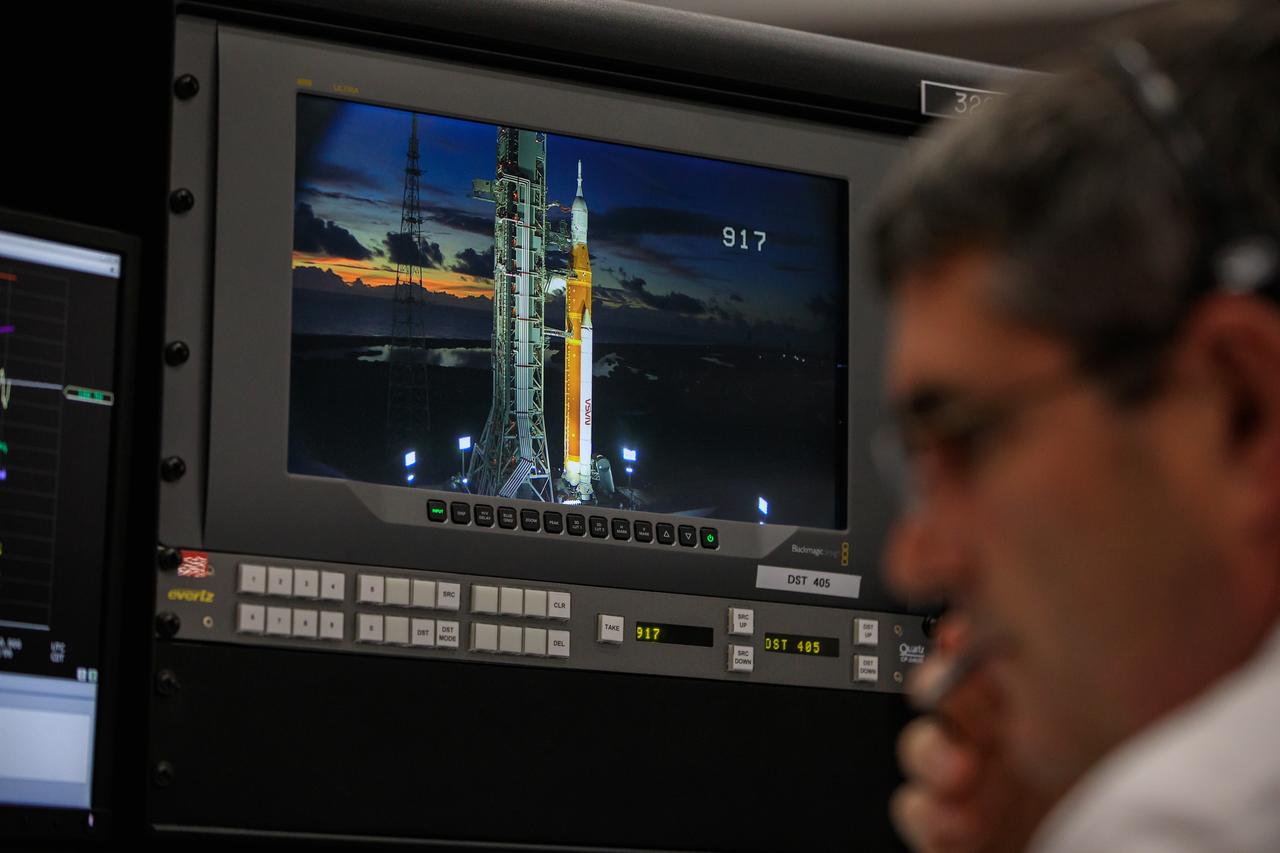
An Artemis I team member monitors countdown events at his console inside Firing Room 1 of the Rocco A. Petrone Launch Control Center at NASA’s Kennedy Space Center in Florida on Aug. 29, 2022. Launch of the agency’s Space Launch System and Orion spacecraft was waved off due to an issue during tanking. Launch is now no earlier than Sept. 3, at 2:17 p.m. EDT from Kennedy’s Launch Complex 39B. The first in a series of increasingly complex missions, Artemis I will provide a foundation for human deep space exploration and demonstrate our commitment and capability to extend human presence to the Moon and beyond. The primary goal of Artemis I is to thoroughly test the integrated systems before crewed missions by operating the spacecraft in a deep space environment, testing Orion’s heat shield, and recovering the crew module after reentry, descent, and splashdown.
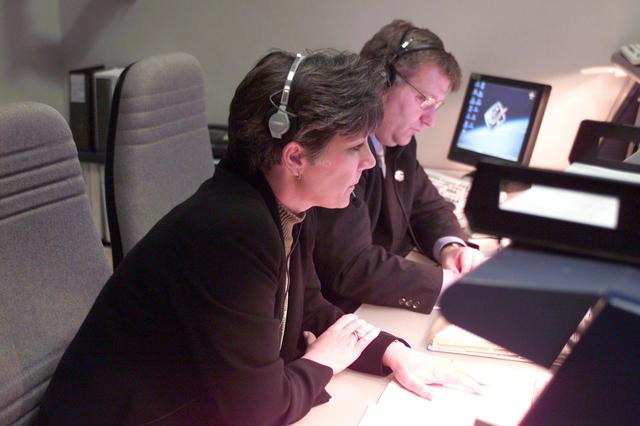
JSC2001-E-06218 (8 March 2001) --- Eileen Hawley and Daniel K. Carpenter look over launch data at the Public Affairs Officer (PAO) console in Houston's Mission Control Center (MCC). Hawley is the ascent commentator for PAO and Carpenter is JSC Director of Public Affairs.
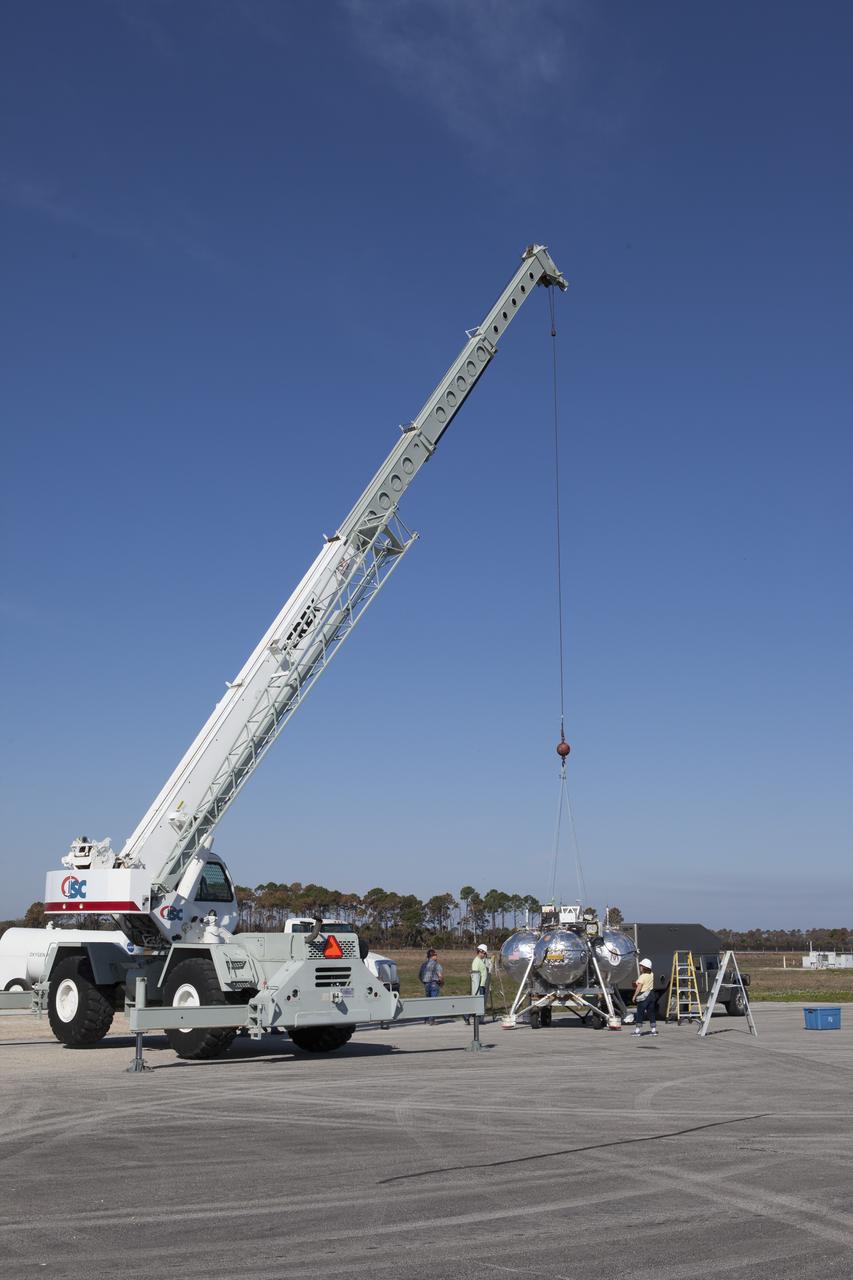
CAPE CANAVERAL, Fla. - Preparations are underway to prepare the Project Morpheus prototype lander for its seventh free flight test at the north end of the Shuttle Landing Facility at NASA’s Kennedy Space Center in Florida. The 83-second test began at 3:41 p.m. EDT with the Morpheus lander launching from the ground over a flame trench and ascending to 580 feet, its highest to date. Morpheus then flew its fastest downrange trek at 30 mph, travelling farther than before, 837 feet. The lander performed a 42-foot divert to emulate a hazard avoidance maneuver before descending and touching down on Landing Site 2, at the northern landing pad inside the automated landing and hazard avoidance technology ALHAT hazard field. Morpheus landed within one foot of its intended target. Project Morpheus tests NASA’s ALHAT and an engine that runs on liquid oxygen and methane, or green propellants, into a fully-operational lander that could deliver cargo to other planetary surfaces. The landing facility provides the lander with the kind of field necessary for realistic testing, complete with rocks, craters and hazards to avoid. Morpheus’ ALHAT payload allows it to navigate to clear landing sites amidst rocks, craters and other hazards during its descent. Project Morpheus is being managed under the Advanced Exploration Systems, or AES, Division in NASA’s Human Exploration and Operations Mission Directorate. The efforts in AES pioneer new approaches for rapidly developing prototype systems, demonstrating key capabilities and validating operational concepts for future human missions beyond Earth orbit. For more information on Project Morpheus, visit http://morpheuslander.jsc.nasa.gov/. Photo credit: NASA/Kim Shiflett
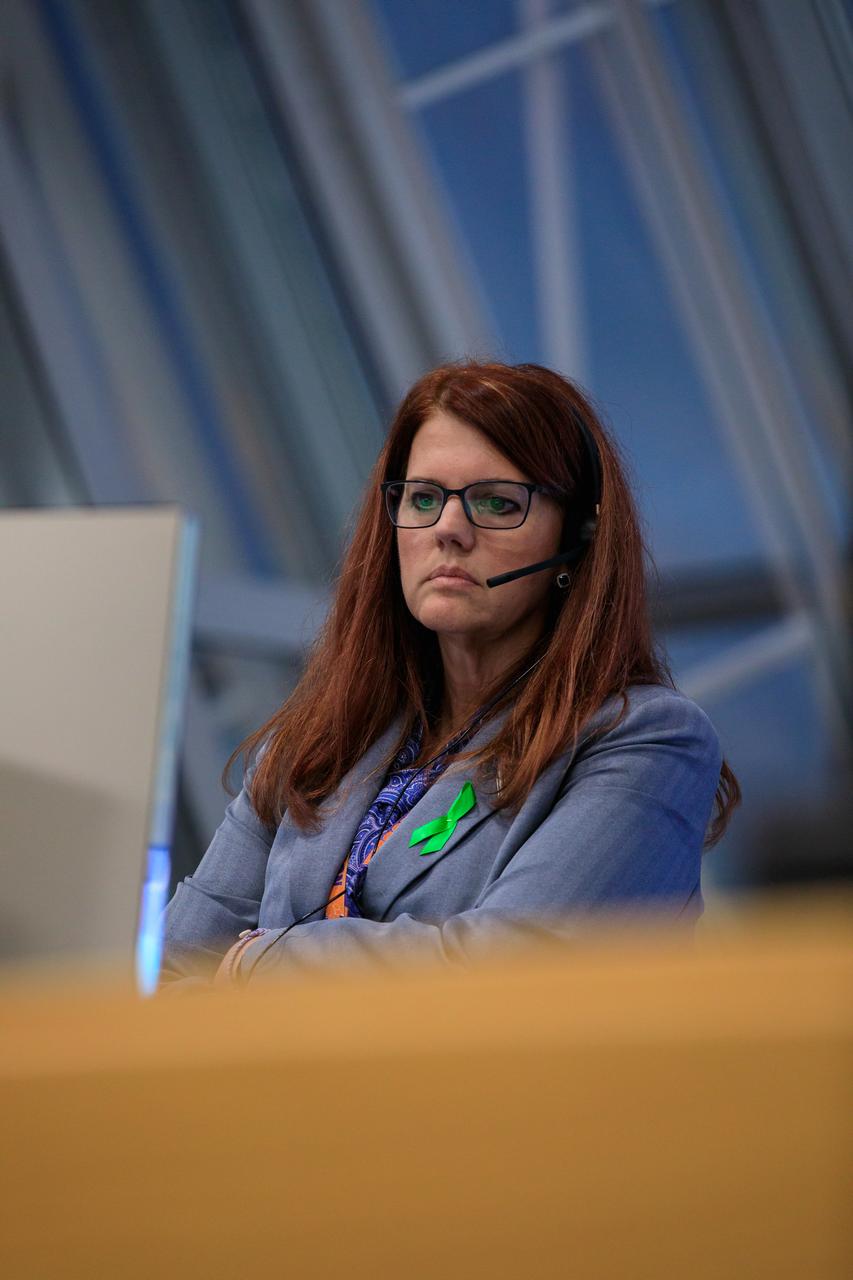
Artemis I Launch Director Charlie Blackwell-Thompson works at her console during launch countdown inside Firing Room 1 of the Rocco A. Petrone Launch Control Center at NASA’s Kennedy Space Center in Florida on Aug. 29, 2022. Launch of the agency’s Space Launch System and Orion spacecraft was waved off due to an issue during tanking. Launch is now no earlier than Sept. 3, at 2:17 p.m. EDT from Kennedy’s Launch Complex 39B. The first in a series of increasingly complex missions, Artemis I will provide a foundation for human deep space exploration and demonstrate our commitment and capability to extend human presence to the Moon and beyond. The primary goal of Artemis I is to thoroughly test the integrated systems before crewed missions by operating the spacecraft in a deep space environment, testing Orion’s heat shield, and recovering the crew module after reentry, descent, and splashdown.
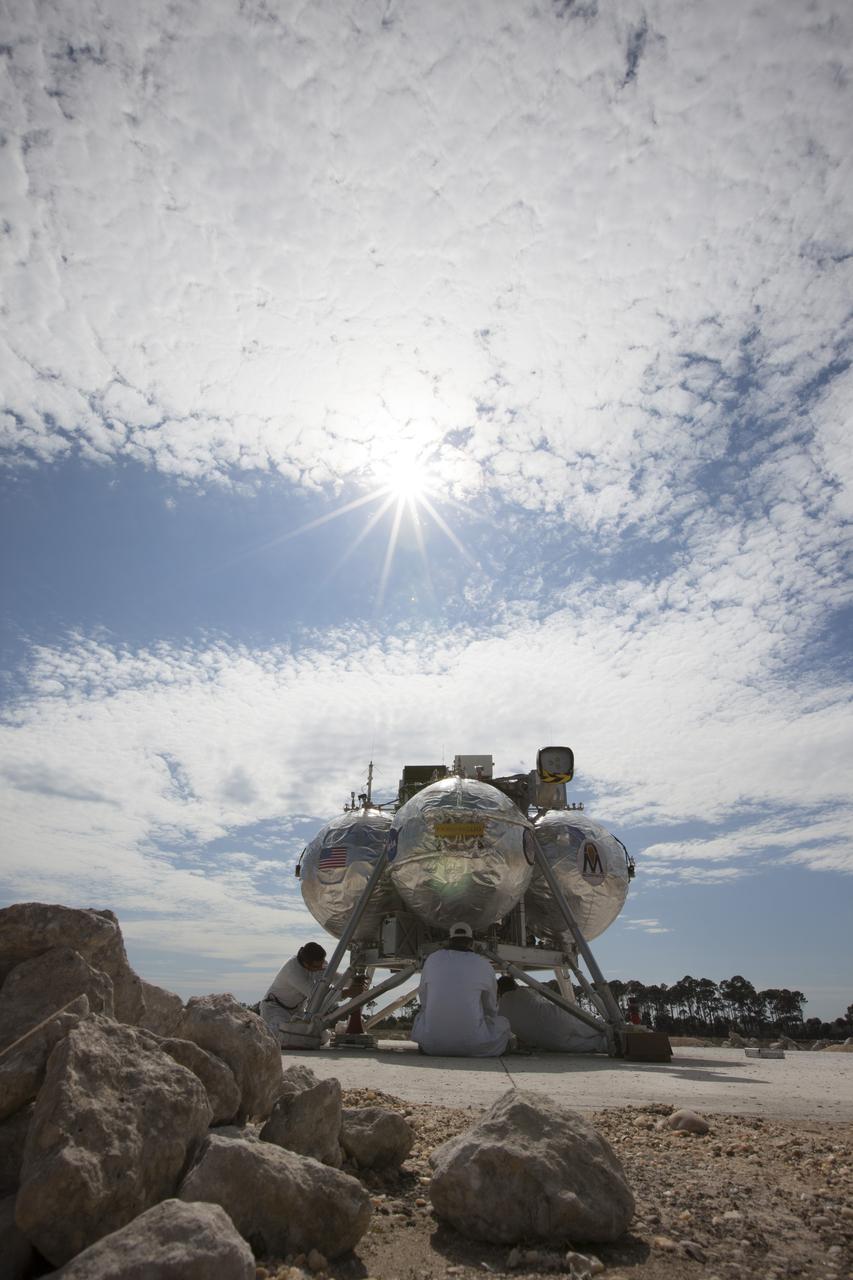
CAPE CANAVERAL, Fla. - Technicians prepare the Project Morpheus prototype lander for its seventh free flight test at the north end of the Shuttle Landing Facility at NASA’s Kennedy Space Center in Florida. The 83-second test began at 3:41 p.m. EDT with the Morpheus lander launching from the ground over a flame trench and ascending to 580 feet, its highest to date. Morpheus then flew its fastest downrange trek at 30 mph, travelling farther than before, 837 feet. The lander performed a 42-foot divert to emulate a hazard avoidance maneuver before descending and touching down on Landing Site 2, at the northern landing pad inside the automated landing and hazard avoidance technology ALHAT hazard field. Morpheus landed within one foot of its intended target. Project Morpheus tests NASA’s ALHAT and an engine that runs on liquid oxygen and methane, or green propellants, into a fully-operational lander that could deliver cargo to other planetary surfaces. The landing facility provides the lander with the kind of field necessary for realistic testing, complete with rocks, craters and hazards to avoid. Morpheus’ ALHAT payload allows it to navigate to clear landing sites amidst rocks, craters and other hazards during its descent. Project Morpheus is being managed under the Advanced Exploration Systems, or AES, Division in NASA’s Human Exploration and Operations Mission Directorate. The efforts in AES pioneer new approaches for rapidly developing prototype systems, demonstrating key capabilities and validating operational concepts for future human missions beyond Earth orbit. For more information on Project Morpheus, visit http://morpheuslander.jsc.nasa.gov/. Photo credit: NASA/Kim Shiflett

S69-58881 (14 Nov. 1969) --- The three Apollo 12 crew men leave the Kennedy Space Center's (KSC) Manned Spacecraft Operations Building (MSOB) during the Apollo 12 prelaunch countdown. Leading is astronaut Charles Conrad Jr., commander; followed by astronauts Richard F. Gordon Jr., command module pilot; and Alan L. Bean, lunar module pilot. They rode a special transport van over the Pad A, Launch Complex 39, where their spacecraft awaited. The Apollo 12 liftoff occurred at 11:22 a.m. (EST), Nov. 14, 1969. Apollo 12 is the United States' second lunar landing mission.
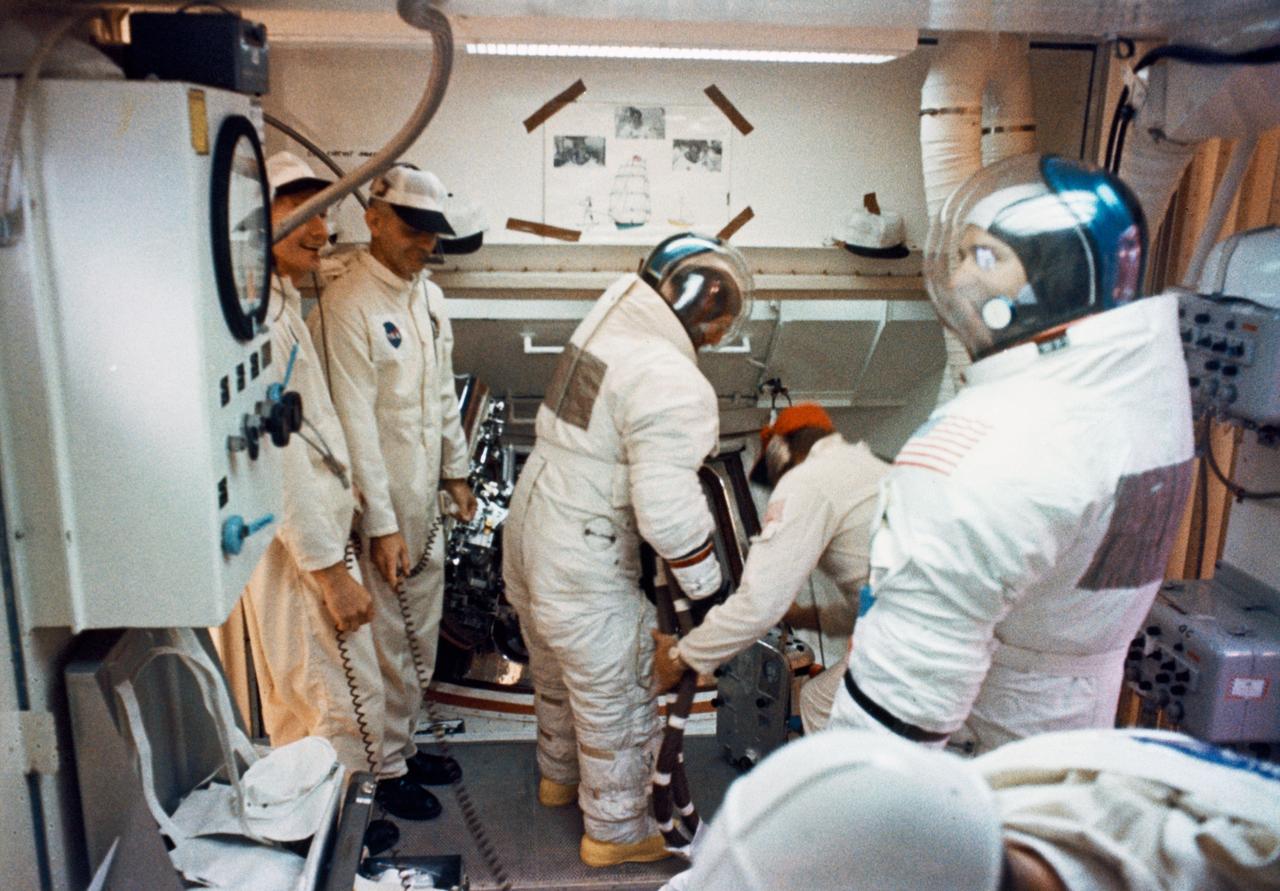
S69-58885 (14 Nov. 1969) --- Interior view of the White Room atop Pad A, Launch Complex 39, Kennedy Space Center (KSC), during the insertion of the Apollo 12 crew. In the center background preparing to ingress the spacecraft is astronaut Charles Conrad Jr., commander. Astronaut Alan L. Bean, lunar module pilot, stands in the right foreground. Awaiting his turn to ingress, but out of view, is astronaut Richard F. Gordon Jr., command module pilot. The Apollo 12 is the United States' second lunar landing mission.
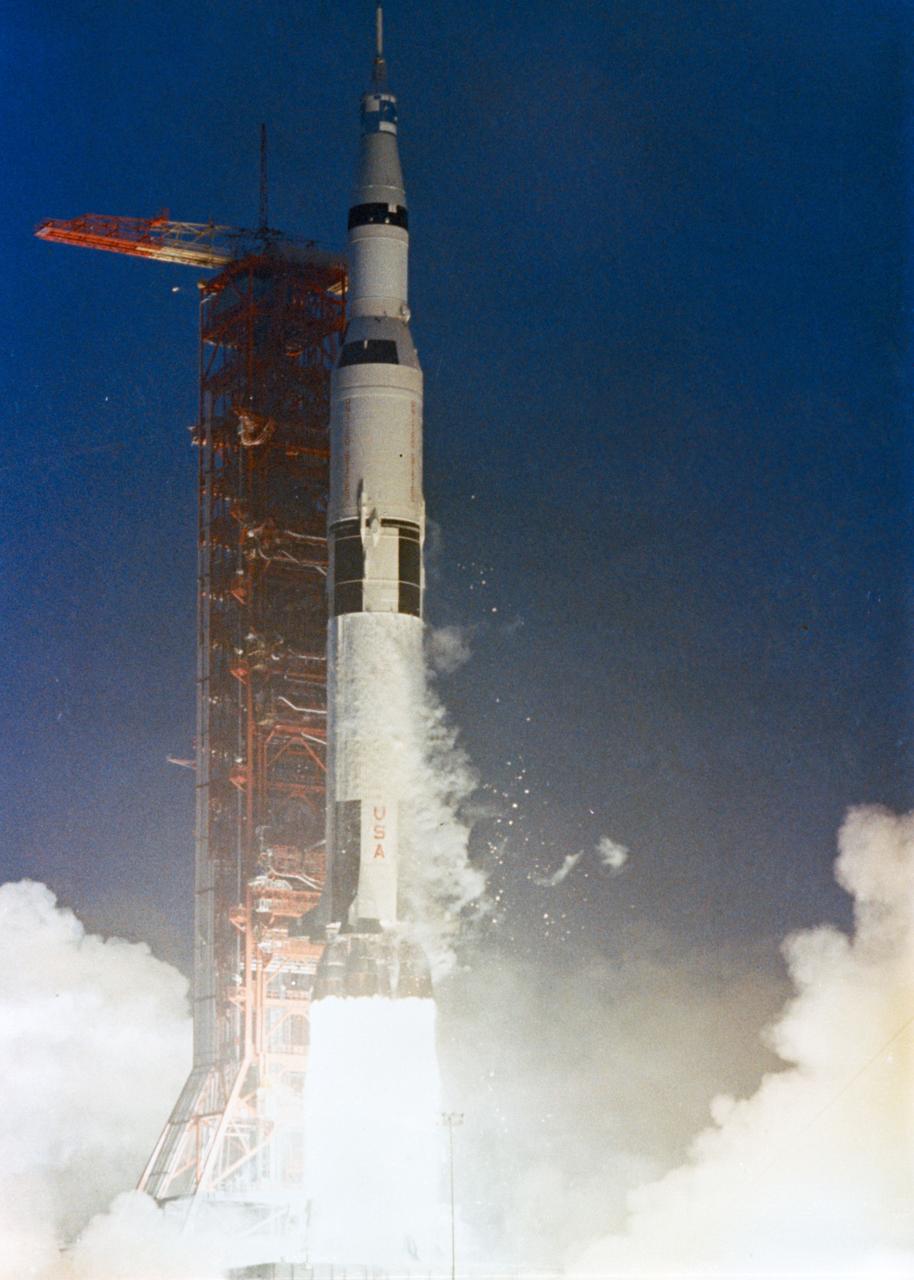
S69-58883 (14 Nov. 1969) --- The huge, 363-feet tall Apollo 12 (Spacecraft 108/Lunar Module 6/Saturn 507) space vehicle is launched from Pad A, Launch Complex 39, Kennedy Space Center (KSC), at 11:22 a.m. (EST), Nov. 14, 1969. Aboard the Apollo 12 spacecraft were astronauts Charles Conrad Jr., commander; Richard F. Gordon Jr., command module pilot; and Alan L. Bean, lunar module pilot. Apollo 12 is the United States' second lunar landing mission.

S69-58884 (14 Nov. 1969) --- The huge, 363-feet tall Apollo 12 (Spacecraft 108/Lunar Module 6/Saturn 507) space vehicle is launched from Pad A, Launch Complex 39, Kennedy Space Center (KSC), at 11:22 a.m. (EST), Nov. 14, 1969. Aboard the Apollo 12 spacecraft were astronauts Charles Conrad Jr., commander; Richard F. Gordon Jr., command module pilot; and Alan L. Bean, lunar module pilot. Apollo 12 is the United States' second lunar landing mission.
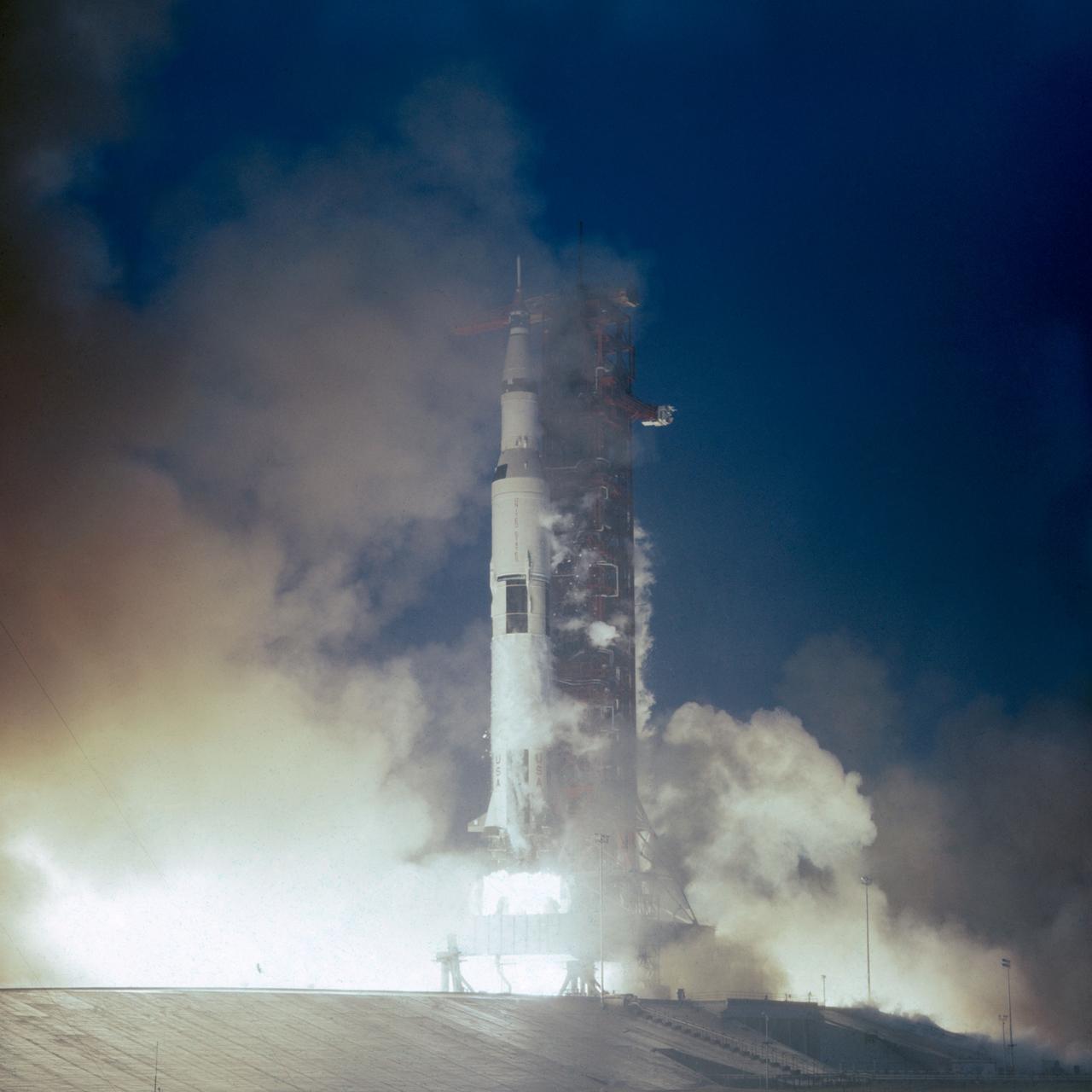
S69-58879 (14 Nov. 1969) --- The huge, 363-feet tall Apollo 12 (Spacecraft 108/Lunar Module 6/Saturn 507) space vehicle is launched from Pad A, Launch Complex 39, Kennedy Space Center (KSC), at 11:22 a.m. (EST), Nov. 14, 1969. Aboard the Apollo 12 spacecraft were astronauts Charles Conrad Jr., commander; Richard F. Gordon Jr., command module pilot, and Alan L. Bean, lunar module pilot. Apollo 12 is the United States' second lunar landing mission.
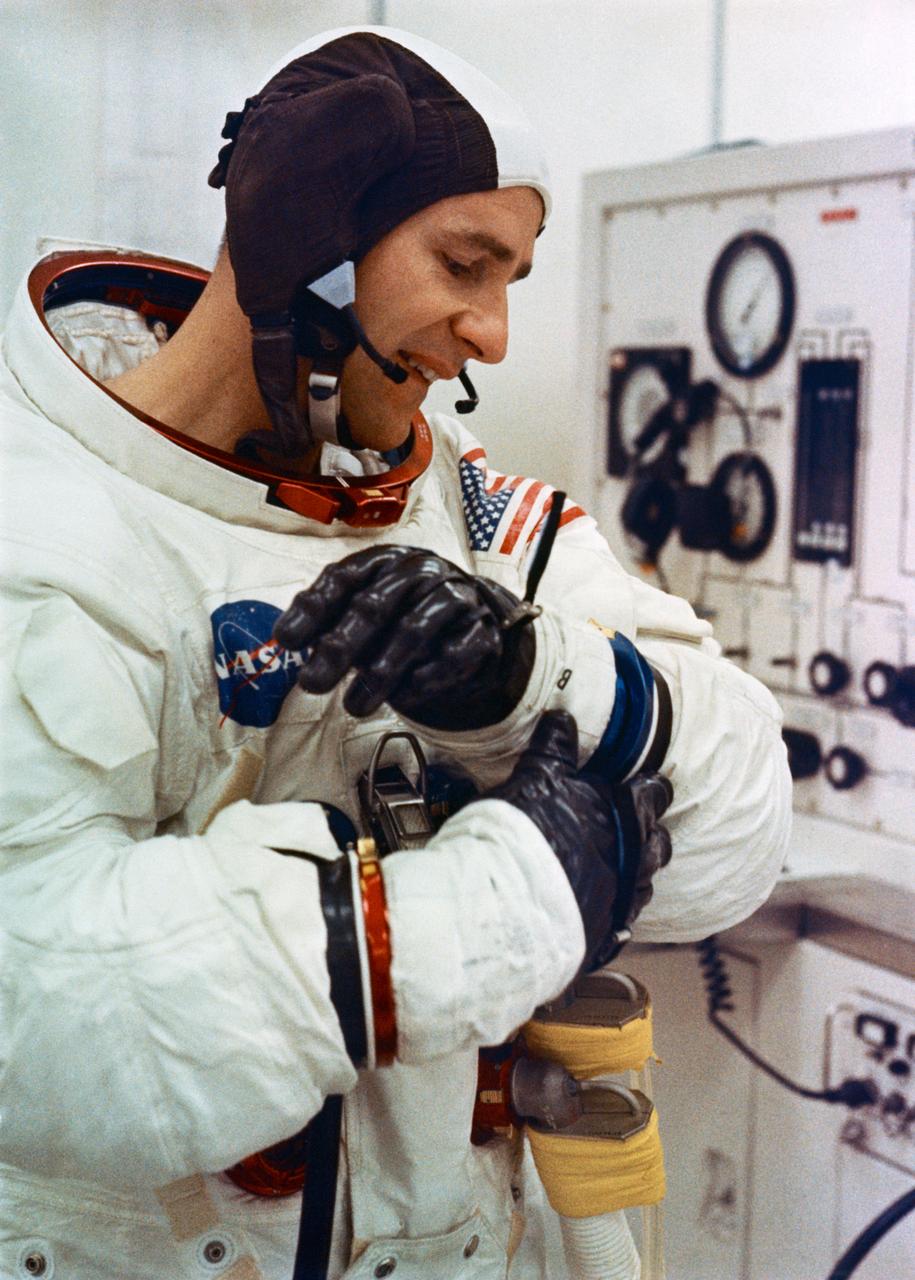
S69-58880 (14 Nov. 1969) --- Astronaut Alan L. Bean, Apollo 12 lunar module pilot, suits up in the Kennedy Space Center's (KSC) Manned Spacecraft Operations Building during the Apollo 12 prelaunch countdown. Minutes later astronauts Bean; Charles Conrad Jr., commander; and Richard F. Gordon Jr., command module pilot, rode a special transport van over to Pad A, Launch Complex 39, where their spacecraft awaited. The Apollo 12 liftoff occurred at 11:22 a.m. (EST), Nov. 14, 1969. Apollo 12 is the United States' second lunar landing mission.
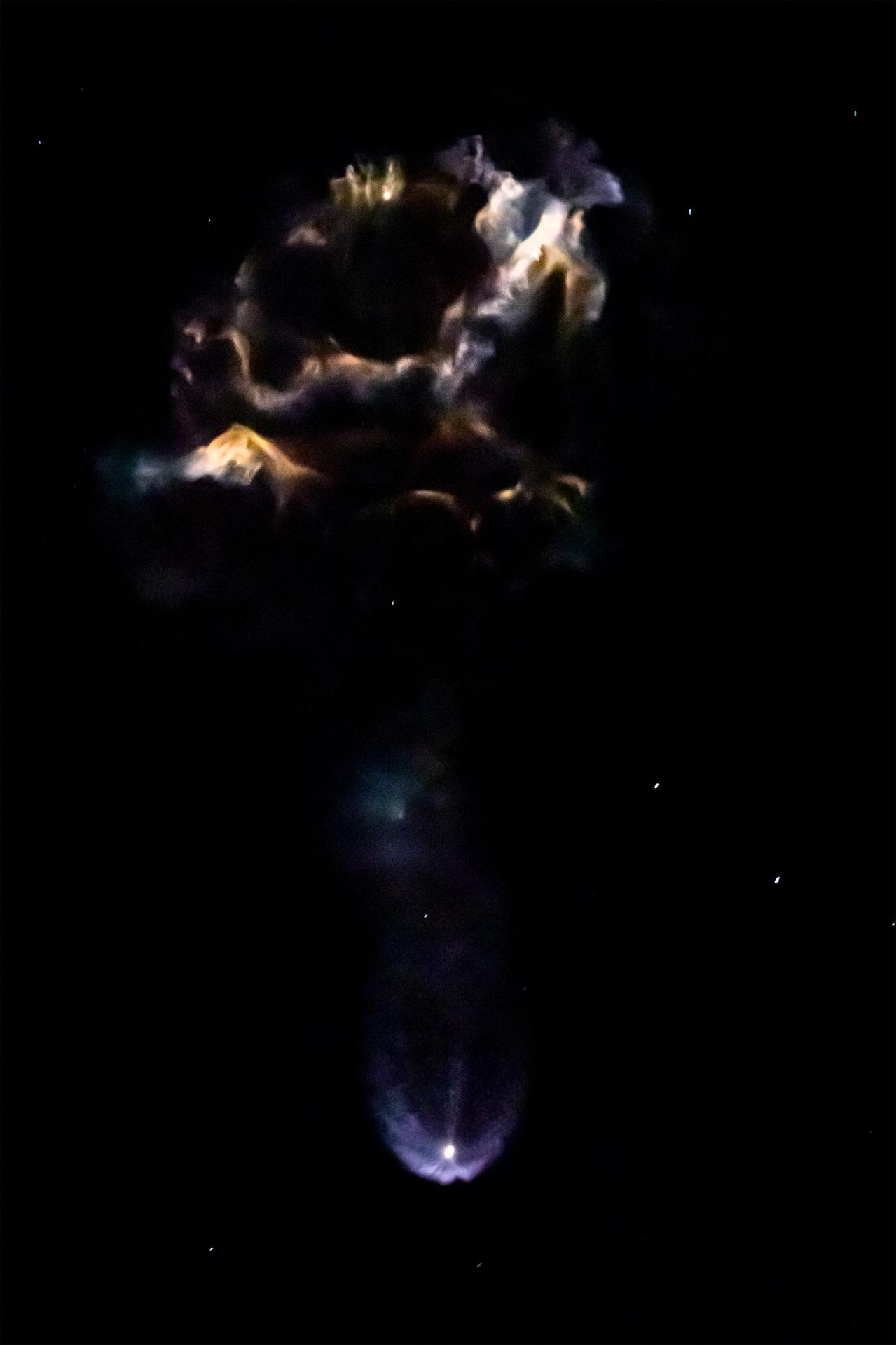
A SpaceX booster returns for landing following the launch of NASA’s Pandora small satellite, the Star-Planet Activity Research CubeSat (SPARCS), and Black Hole Coded Aperture Telescope (BlackCAT) CubeSat from Space Launch Complex 4 East at Vandenberg Space Force Base in California on Sunday, Jan. 11, 2026, as part of the company’s Twilight mission. Pandora will provide an in-depth study of at least 20 known planets orbiting distant stars to determine the composition of their atmospheres — especially the presence of hazes, clouds, and water.
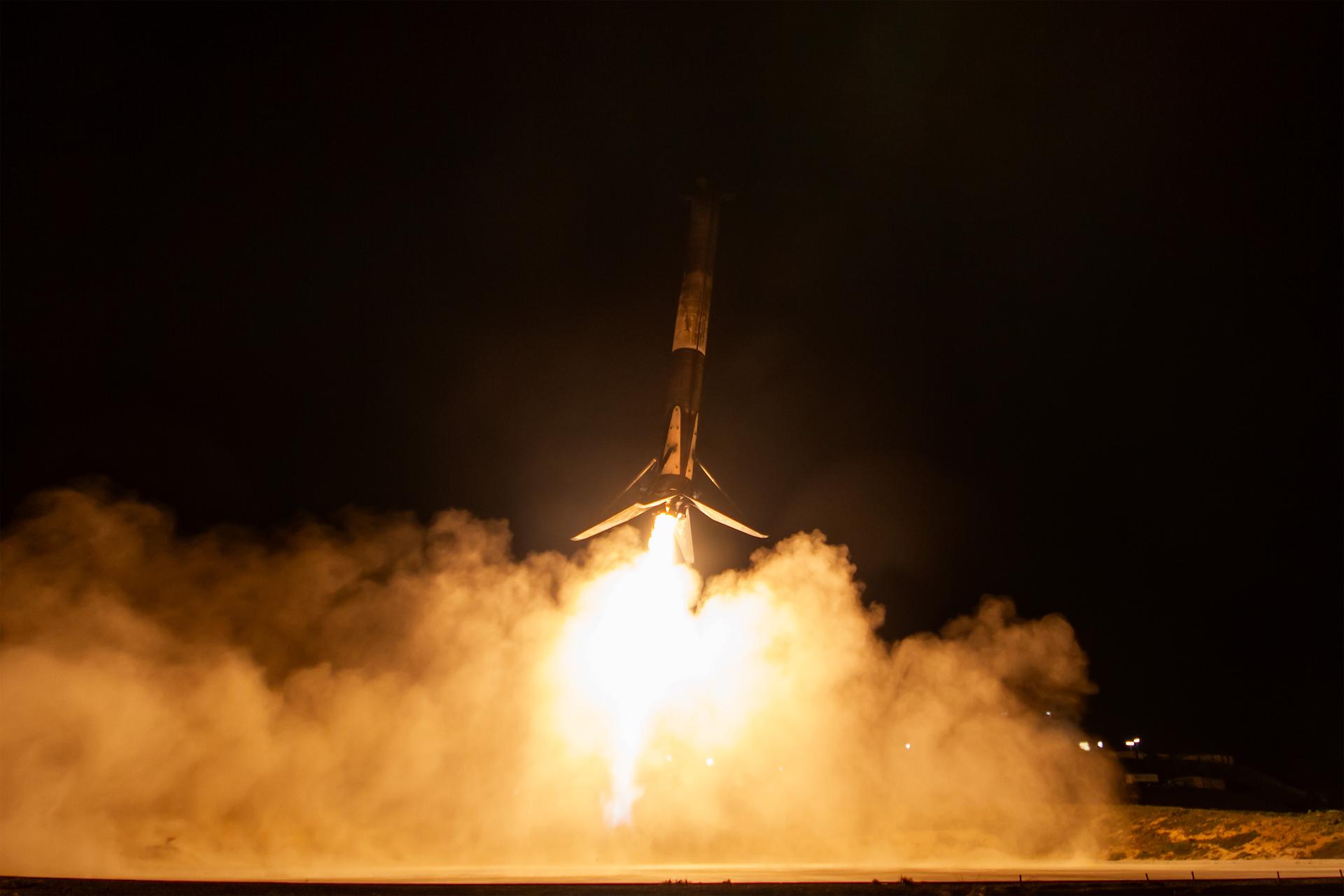
A SpaceX booster prepares for landing following the launch of NASA’s Pandora small satellite, the Star-Planet Activity Research CubeSat (SPARCS), and Black Hole Coded Aperture Telescope (BlackCAT) CubeSat from Space Launch Complex 4 East at Vandenberg Space Force Base in California on Sunday, Jan. 11, 2026, as part of the company’s Twilight mission. Pandora will provide an in-depth study of at least 20 known planets orbiting distant stars to determine the composition of their atmospheres — especially the presence of hazes, clouds, and water.
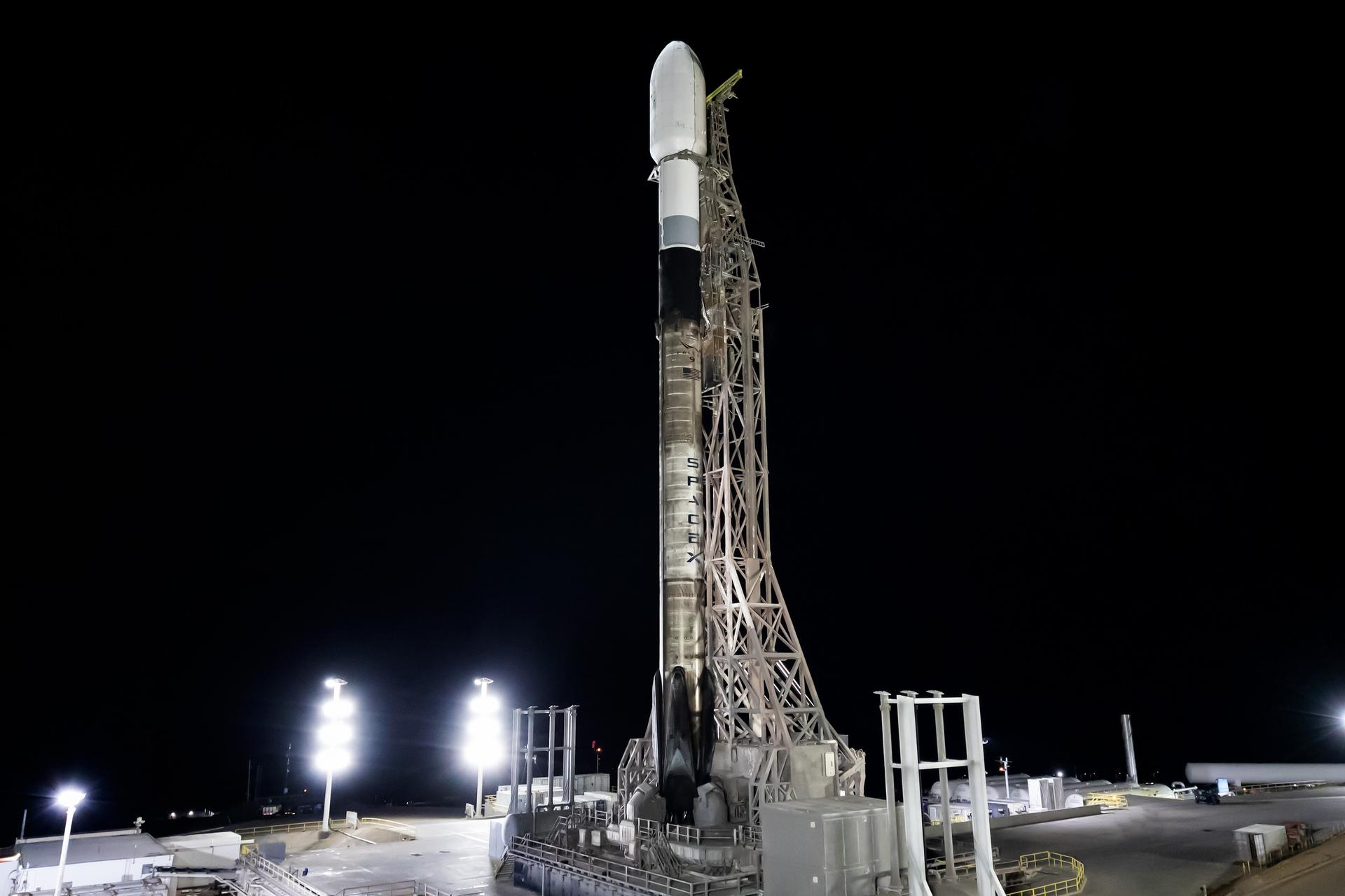
A SpaceX Falcon 9 rocket carrying NASA’s Pandora small satellite, the Star-Planet Activity Research CubeSat (SPARCS), Black Hole Coded Aperture Telescope (BlackCAT) CubeSat, and several other payloads stands vertical on the pad at Space Launch Complex 4 East at Vandenberg Space Force Base in California on Sunday, Jan. 11, 2026, as part of the company’s Twilight mission. Pandora will provide an in-depth study of at least 20 known planets orbiting distant stars to determine the composition of their atmospheres — especially the presence of hazes, clouds, and water. Launch of SpaceX’s Twilight mission is scheduled for 5:44 a.m. PST Jan. 11, from Vandenberg’s Space Launch Complex 4 East.
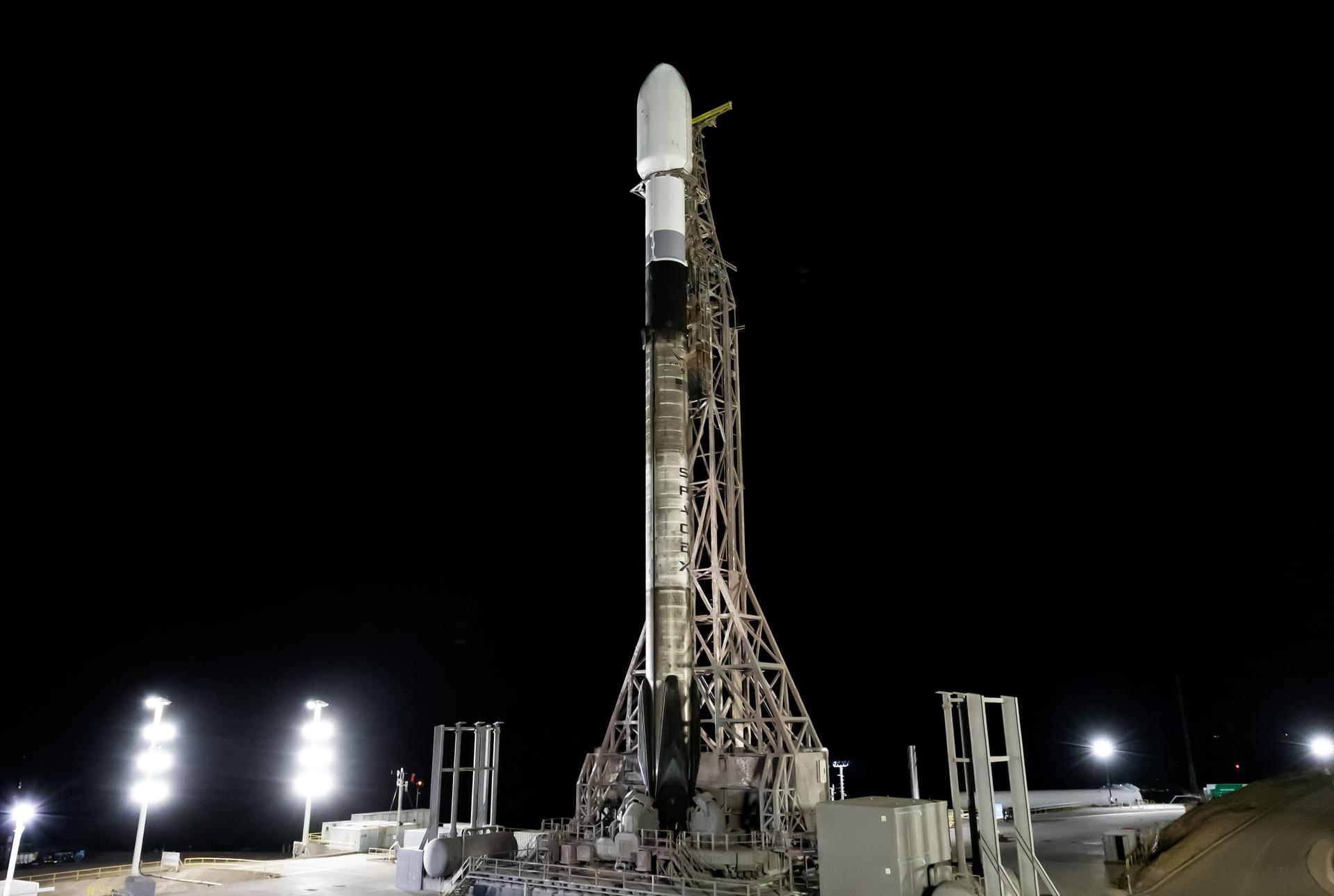
A SpaceX Falcon 9 rocket carrying NASA’s Pandora small satellite, the Star-Planet Activity Research CubeSat (SPARCS), Black Hole Coded Aperture Telescope (BlackCAT) CubeSat, and several other payloads stands vertical on the pad at Space Launch Complex 4 East at Vandenberg Space Force Base in California on Sunday, Jan. 11, 2026, as part of the company’s Twilight mission. Pandora will provide an in-depth study of at least 20 known planets orbiting distant stars to determine the composition of their atmospheres — especially the presence of hazes, clouds, and water. Launch of SpaceX’s Twilight mission is scheduled for 5:44 a.m. PST Jan. 11, from Vandenberg’s Space Launch Complex 4 East.
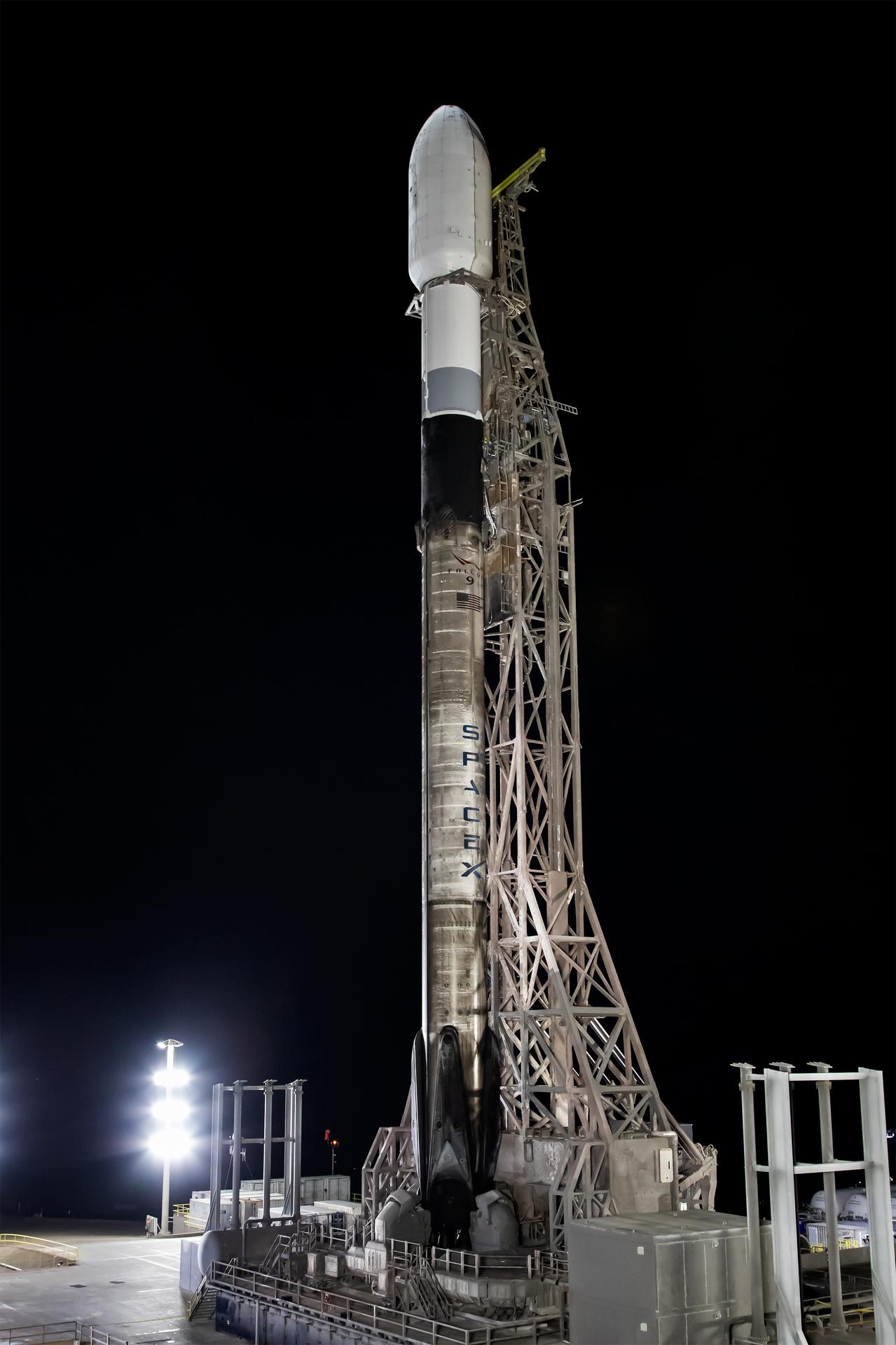
A SpaceX Falcon 9 rocket carrying NASA’s Pandora small satellite, the Star-Planet Activity Research CubeSat (SPARCS), Black Hole Coded Aperture Telescope (BlackCAT) CubeSat, and several other payloads stands vertical on the pad at Space Launch Complex 4 East at Vandenberg Space Force Base in California on Sunday, Jan. 11, 2026, as part of the company’s Twilight mission. Pandora will provide an in-depth study of at least 20 known planets orbiting distant stars to determine the composition of their atmospheres — especially the presence of hazes, clouds, and water. Launch of SpaceX’s Twilight mission is scheduled for 5:44 a.m. PST Jan. 11, from Vandenberg’s Space Launch Complex 4 East.
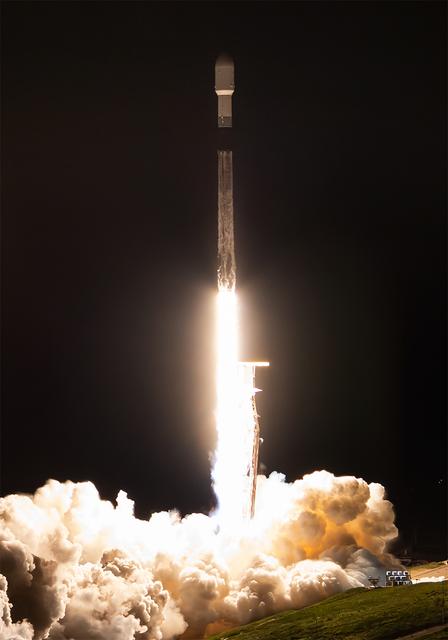
A SpaceX Falcon 9 rocket carrying NASA’s Pandora small satellite, the Star-Planet Activity Research CubeSat (SPARCS), and Black Hole Coded Aperture Telescope (BlackCAT) CubeSat lifts off from Space Launch Complex 4 East at Vandenberg Space Force Base in California on Sunday, Jan. 11, 2026. Pandora will provide an in-depth study of at least 20 known planets orbiting distant stars to determine the composition of their atmospheres — especially the presence of hazes, clouds, and water.
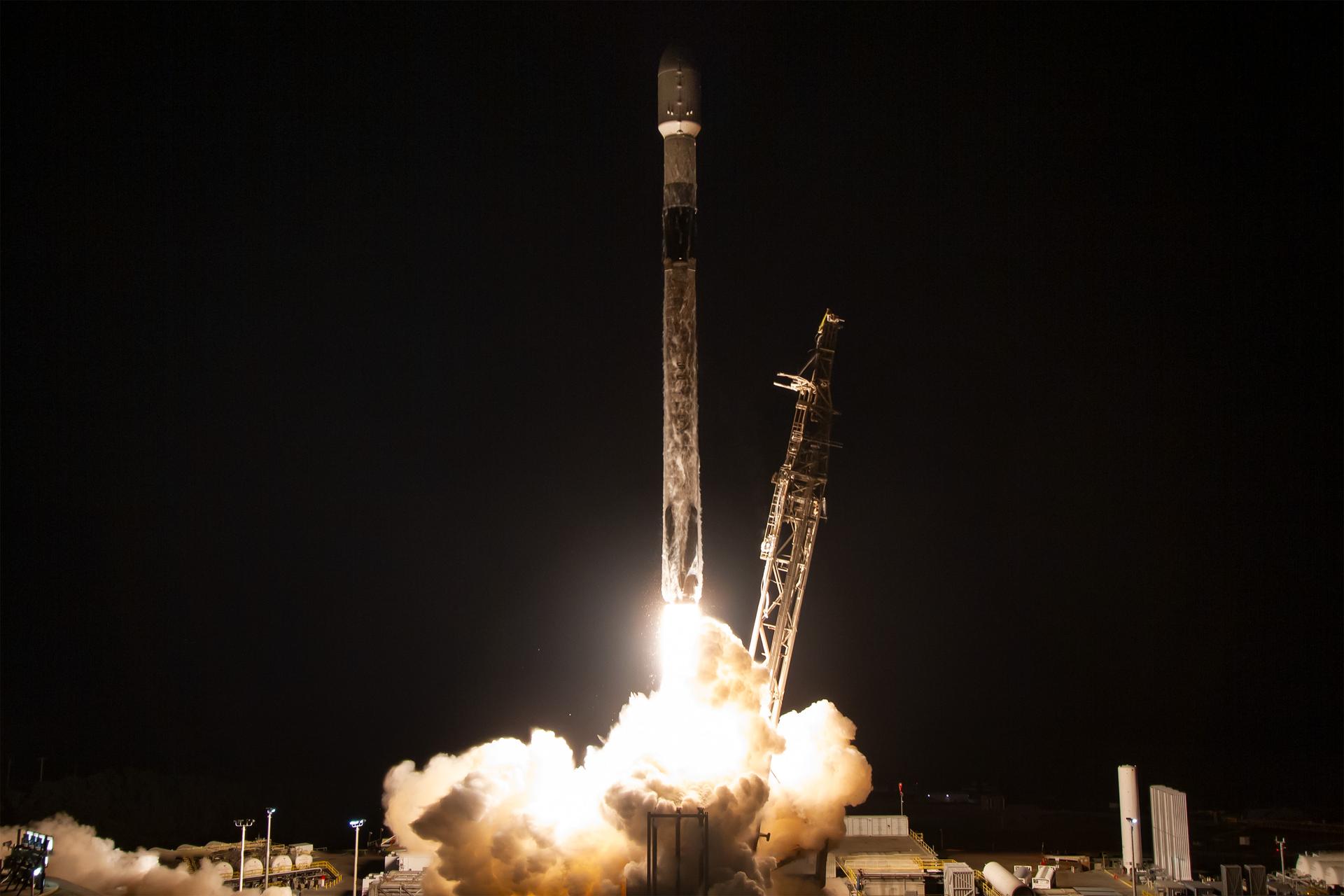
A SpaceX Falcon 9 rocket carrying NASA’s Pandora small satellite, the Star-Planet Activity Research CubeSat (SPARCS), and Black Hole Coded Aperture Telescope (BlackCAT) CubeSat lifts off from Space Launch Complex 4 East at Vandenberg Space Force Base in California on Sunday, Jan. 11, 2026. Pandora will provide an in-depth study of at least 20 known planets orbiting distant stars to determine the composition of their atmospheres — especially the presence of hazes, clouds, and water.
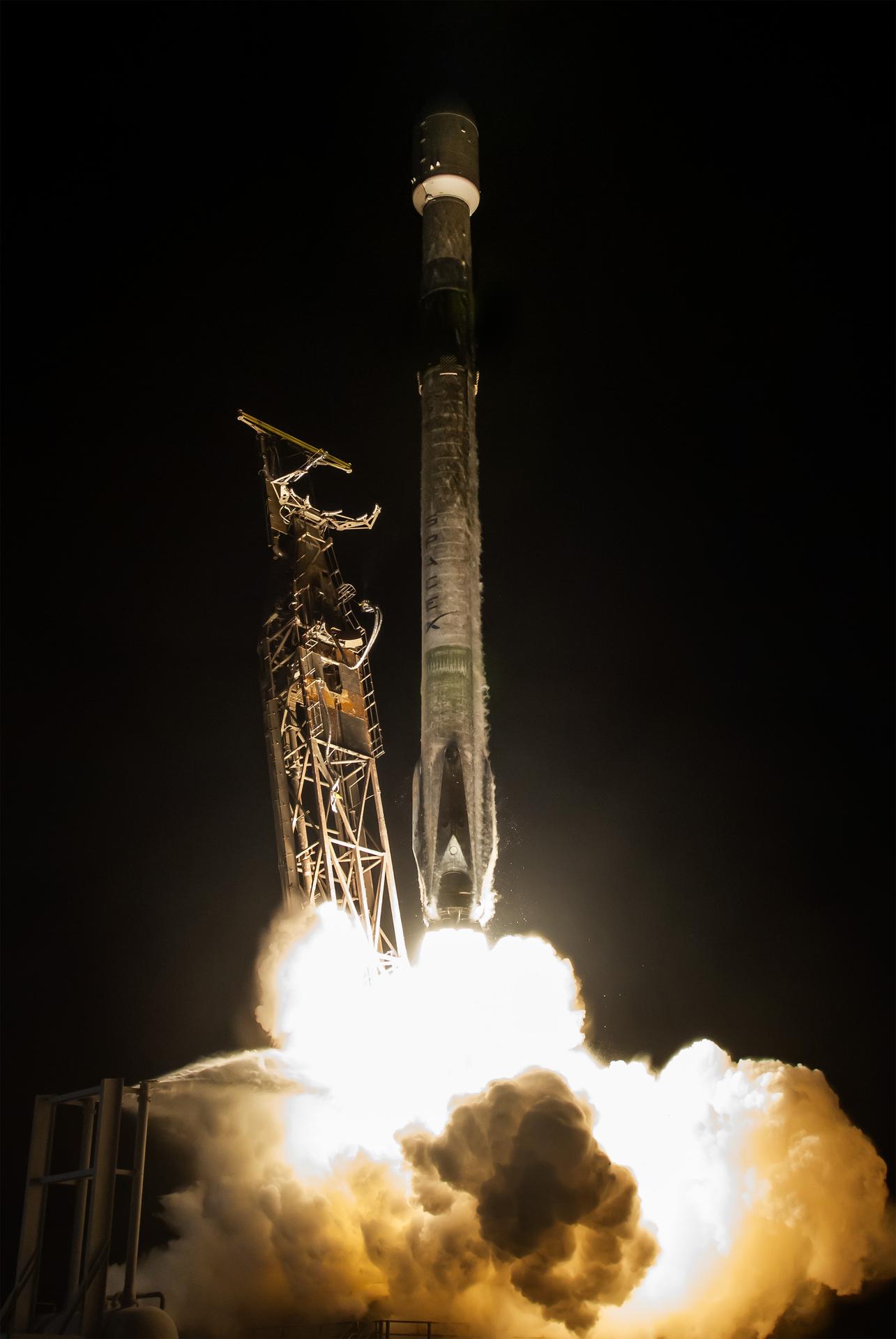
A SpaceX Falcon 9 rocket carrying NASA’s Pandora small satellite, the Star-Planet Activity Research CubeSat (SPARCS), and Black Hole Coded Aperture Telescope (BlackCAT) CubeSat lifts off from Space Launch Complex 4 East at Vandenberg Space Force Base in California on Sunday, Jan. 11, 2026. Pandora will provide an in-depth study of at least 20 known planets orbiting distant stars to determine the composition of their atmospheres — especially the presence of hazes, clouds, and water.
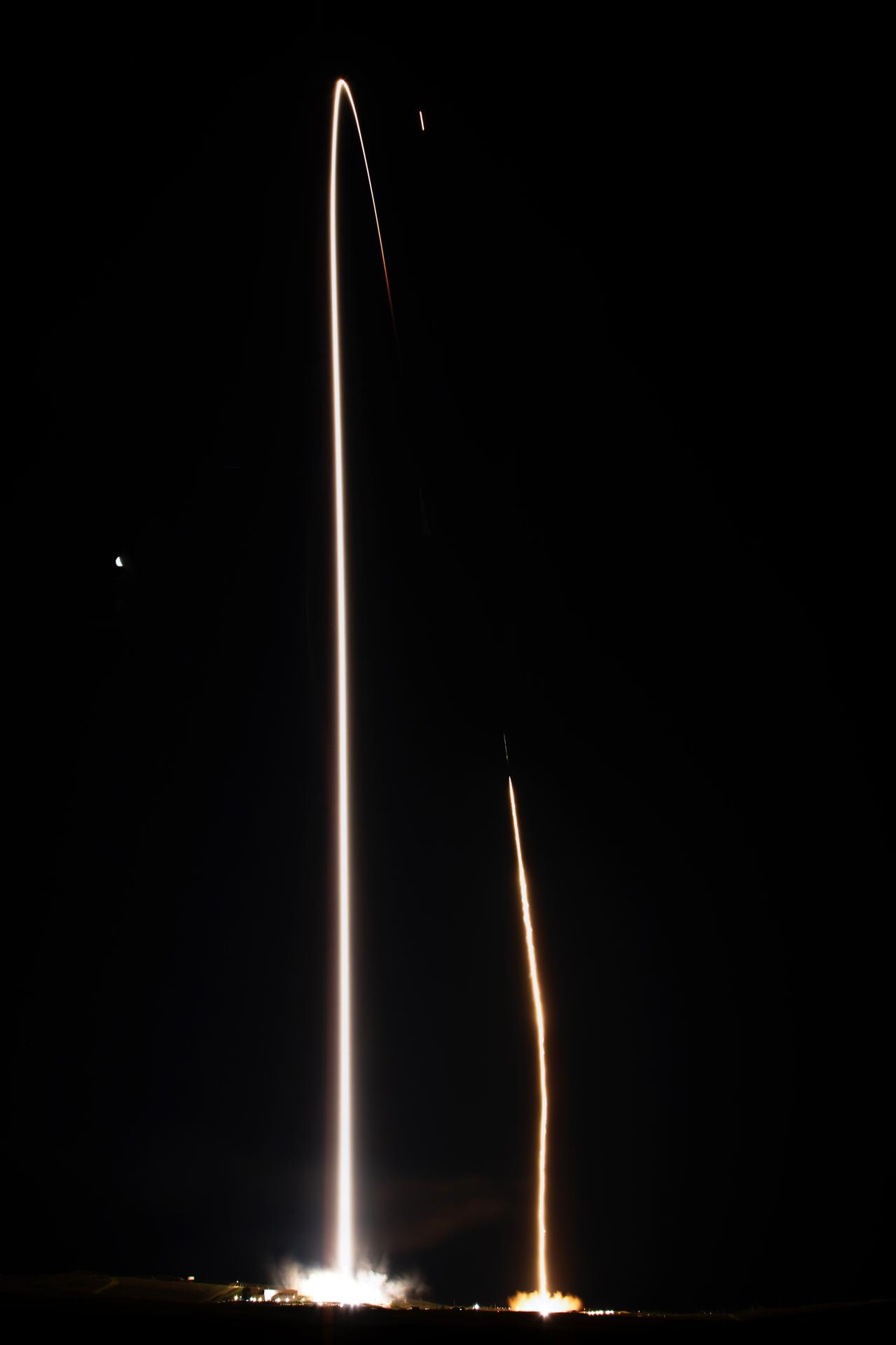
A photo captures the liftoff and landing of a SpaceX Falcon 9 rocket carrying NASA’s Pandora small satellite, the Star-Planet Activity Research CubeSat (SPARCS), and Black Hole Coded Aperture Telescope (BlackCAT) CubeSat from Space Launch Complex 4 East at Vandenberg Space Force Base in California on Sunday, Jan. 11, 2026, as part of the company’s Twilight mission. Pandora will provide an in-depth study of at least 20 known planets orbiting distant stars to determine the composition of their atmospheres — especially the presence of hazes, clouds, and water.
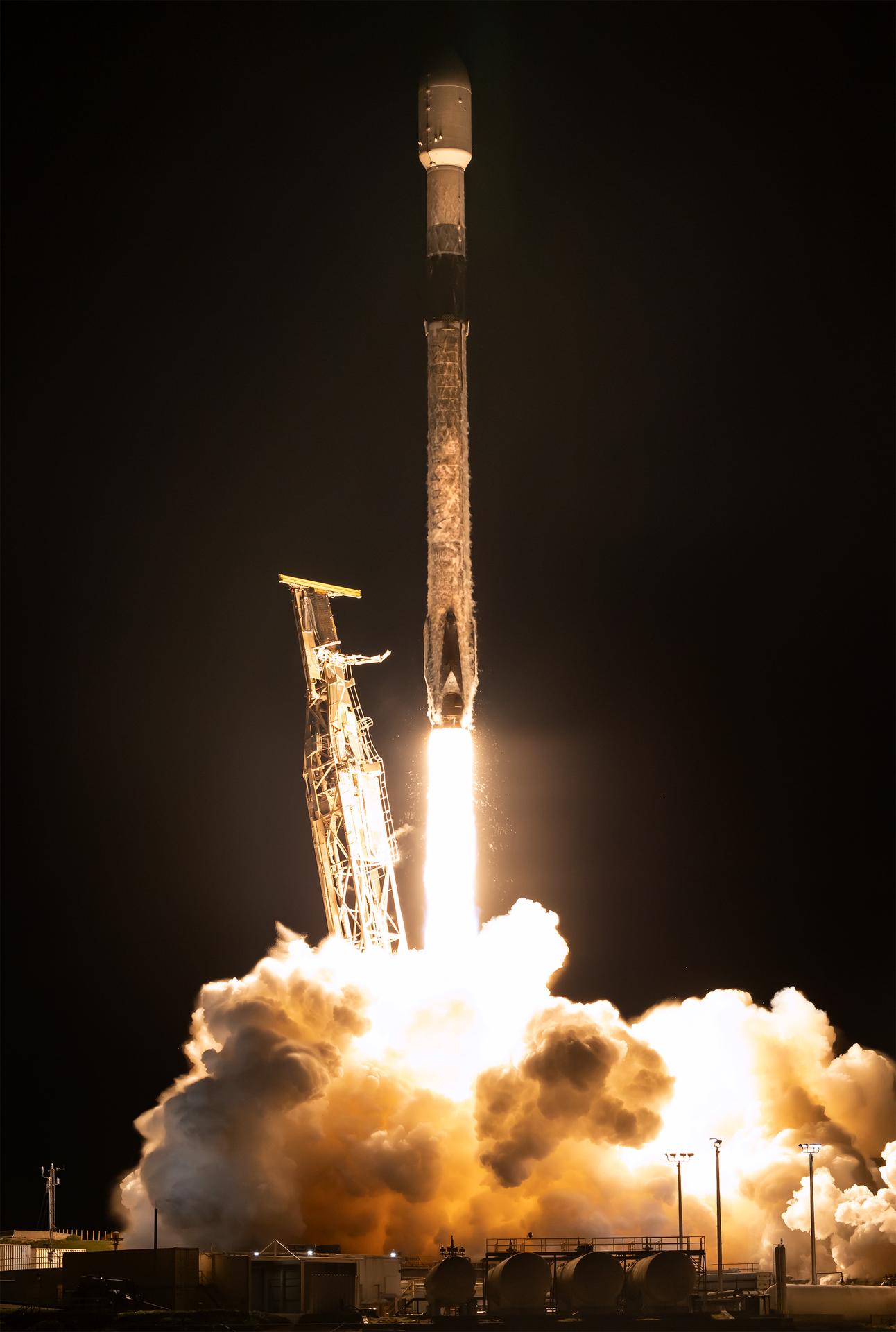
A SpaceX Falcon 9 rocket carrying NASA’s Pandora small satellite, the Star-Planet Activity Research CubeSat (SPARCS), and Black Hole Coded Aperture Telescope (BlackCAT) CubeSat lifts off from Space Launch Complex 4 East at Vandenberg Space Force Base in California on Sunday, Jan. 11, 2026. Pandora will provide an in-depth study of at least 20 known planets orbiting distant stars to determine the composition of their atmospheres — especially the presence of hazes, clouds, and water.
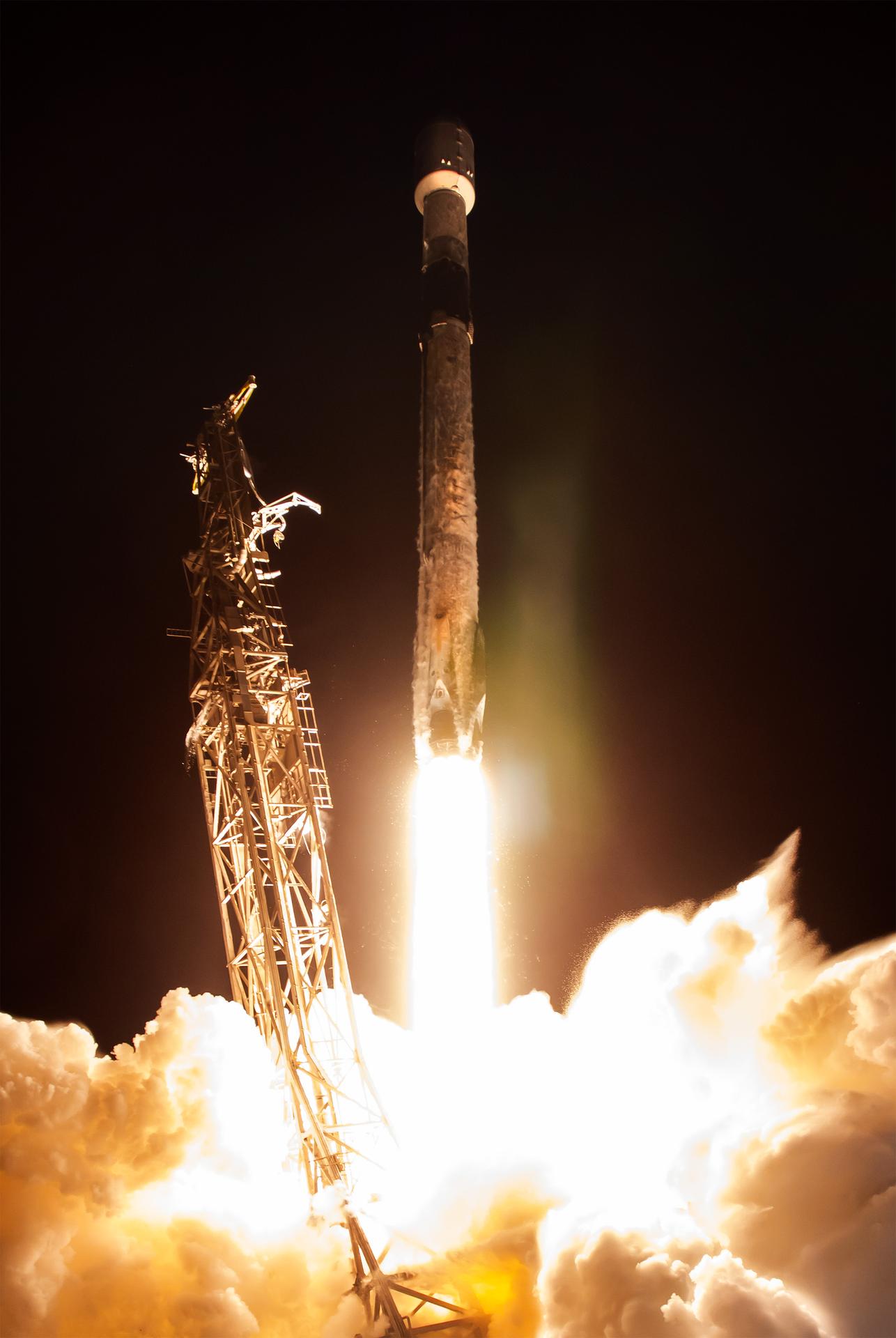
A SpaceX Falcon 9 rocket carrying NASA’s Pandora small satellite, the Star-Planet Activity Research CubeSat (SPARCS), and Black Hole Coded Aperture Telescope (BlackCAT) CubeSat lifts off from Space Launch Complex 4 East at Vandenberg Space Force Base in California on Sunday, Jan. 11, 2026. Pandora will provide an in-depth study of at least 20 known planets orbiting distant stars to determine the composition of their atmospheres — especially the presence of hazes, clouds, and water.
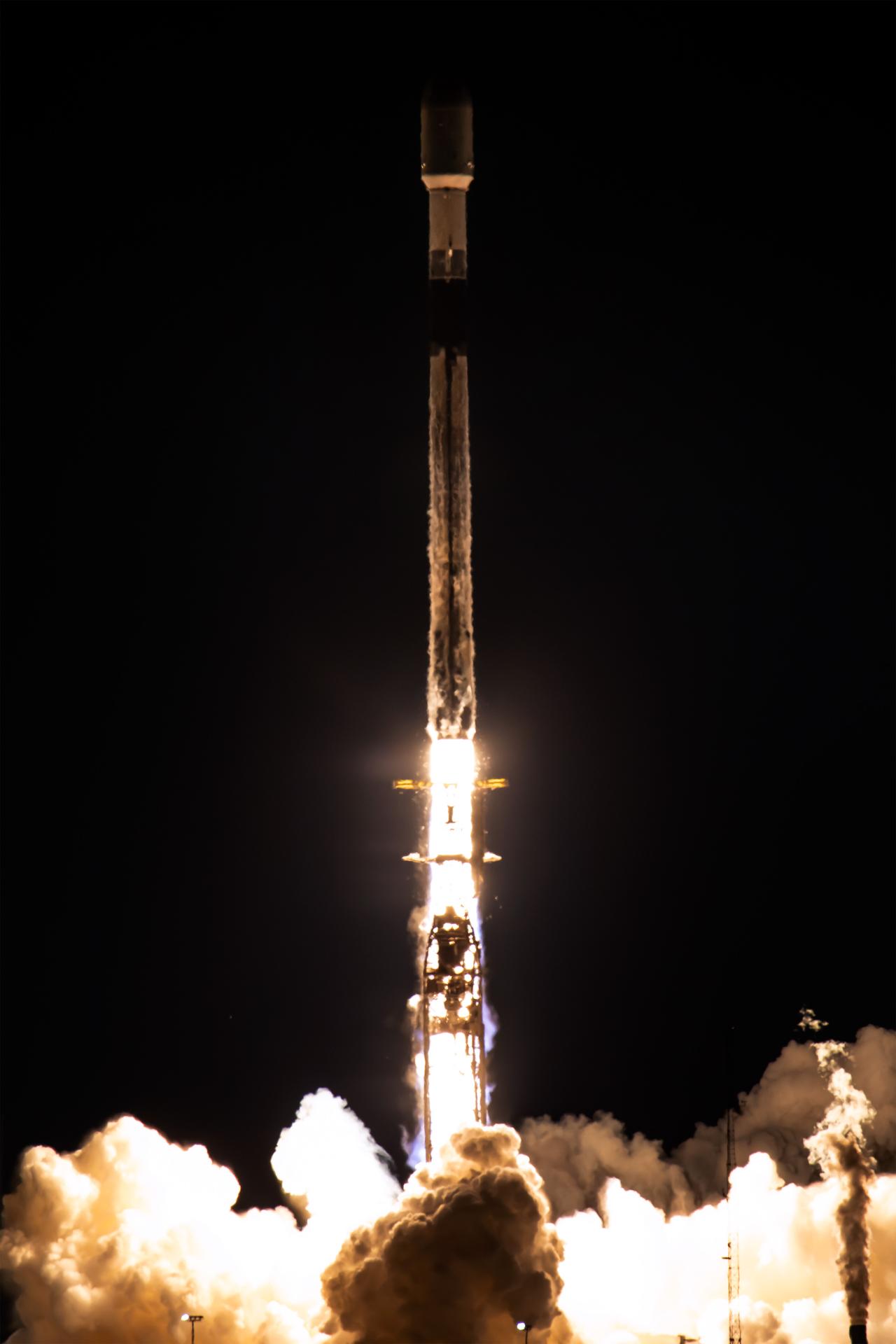
A SpaceX Falcon 9 rocket carrying NASA’s Pandora small satellite, the Star-Planet Activity Research CubeSat (SPARCS), and Black Hole Coded Aperture Telescope (BlackCAT) CubeSat lifts off from Space Launch Complex 4 East at Vandenberg Space Force Base in California on Sunday, Jan. 11, 2026. Pandora will provide an in-depth study of at least 20 known planets orbiting distant stars to determine the composition of their atmospheres — especially the presence of hazes, clouds, and water.
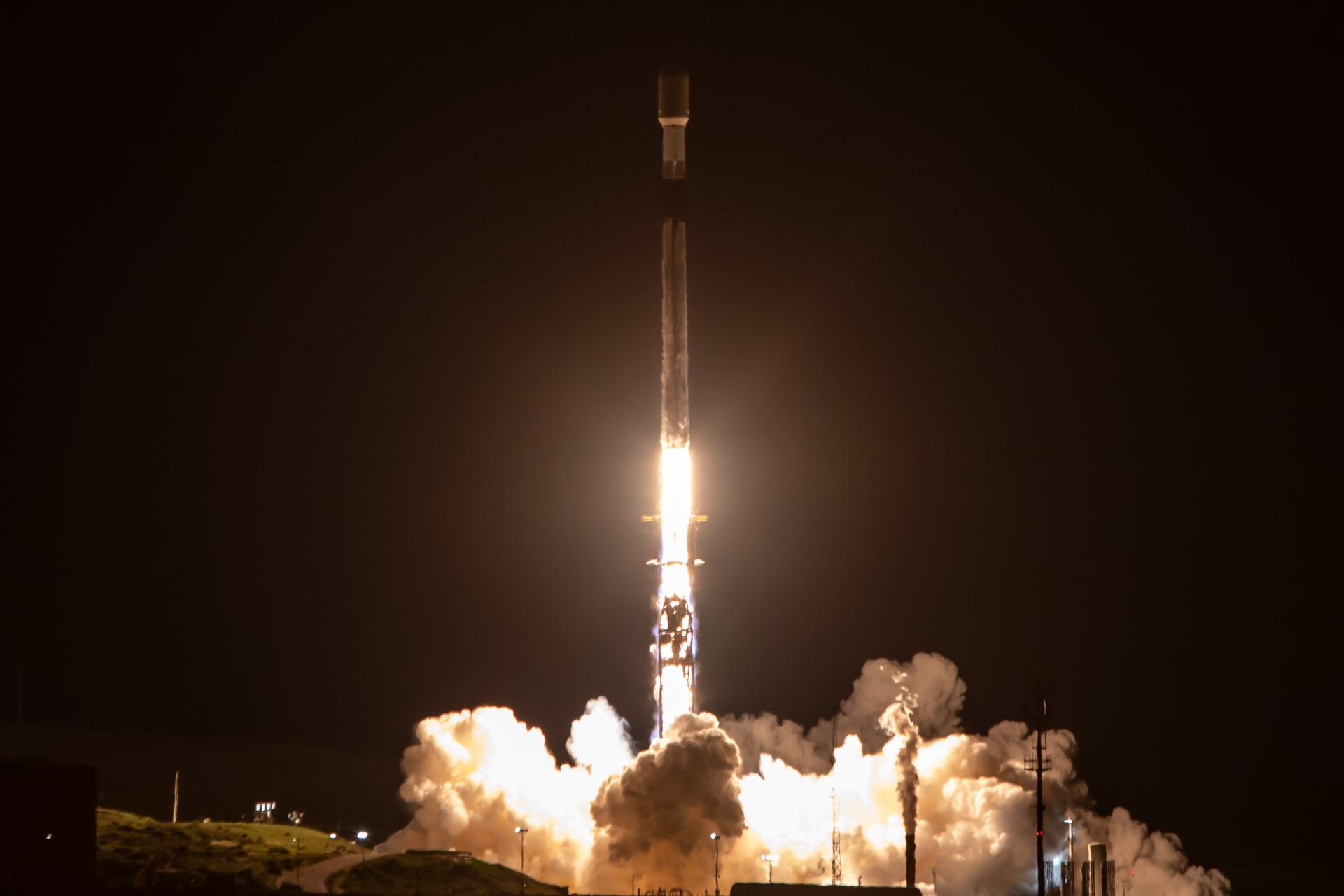
A SpaceX Falcon 9 rocket carrying NASA’s Pandora small satellite, the Star-Planet Activity Research CubeSat (SPARCS), and Black Hole Coded Aperture Telescope (BlackCAT) CubeSat lifts off from Space Launch Complex 4 East at Vandenberg Space Force Base in California on Sunday, Jan. 11, 2026. Pandora will provide an in-depth study of at least 20 known planets orbiting distant stars to determine the composition of their atmospheres — especially the presence of hazes, clouds, and water.
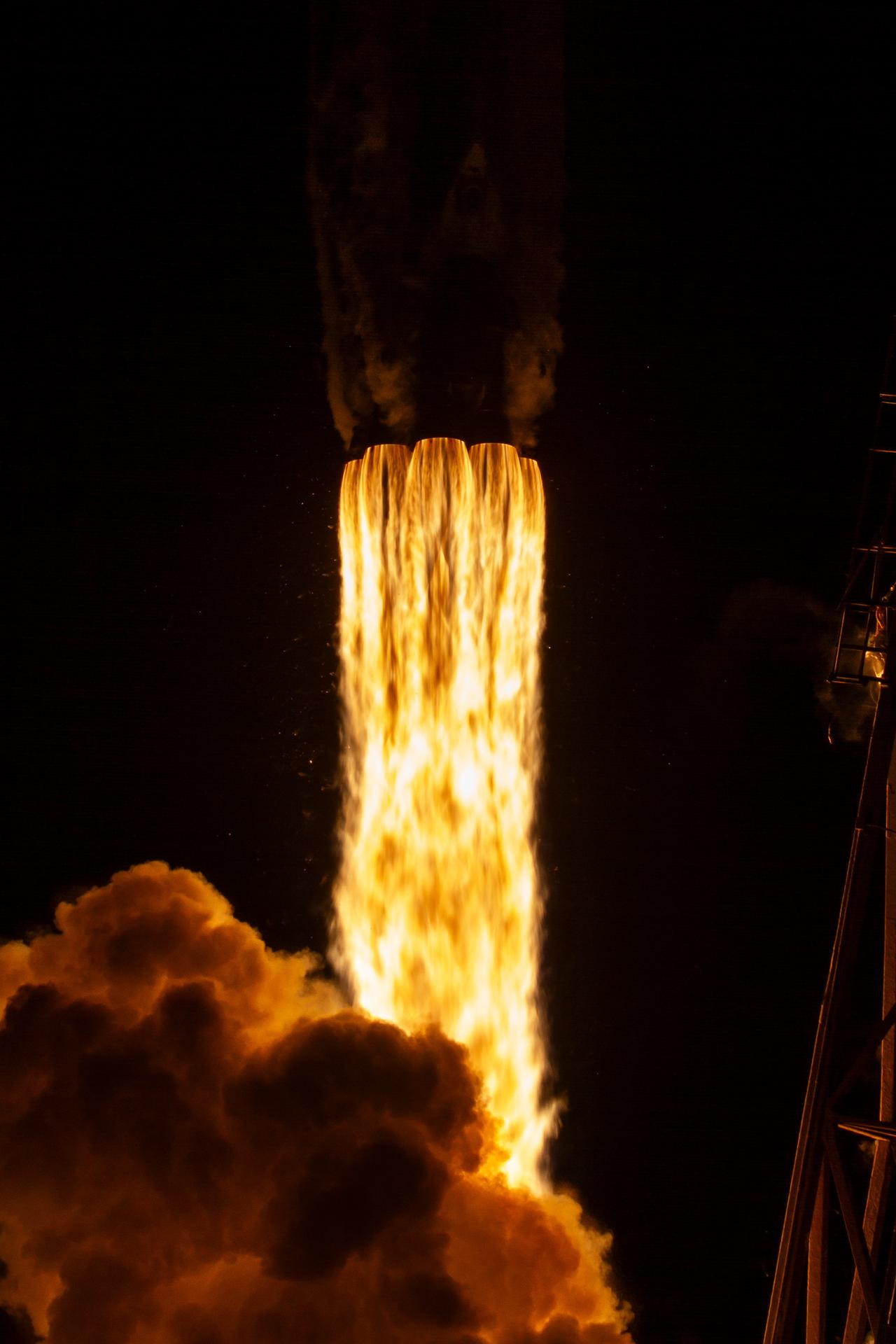
A SpaceX Falcon 9 rocket carrying NASA’s Pandora small satellite, the Star-Planet Activity Research CubeSat (SPARCS), and Black Hole Coded Aperture Telescope (BlackCAT) CubeSat lifts off from Space Launch Complex 4 East at Vandenberg Space Force Base in California on Sunday, Jan. 11, 2026. Pandora will provide an in-depth study of at least 20 known planets orbiting distant stars to determine the composition of their atmospheres — especially the presence of hazes, clouds, and water.
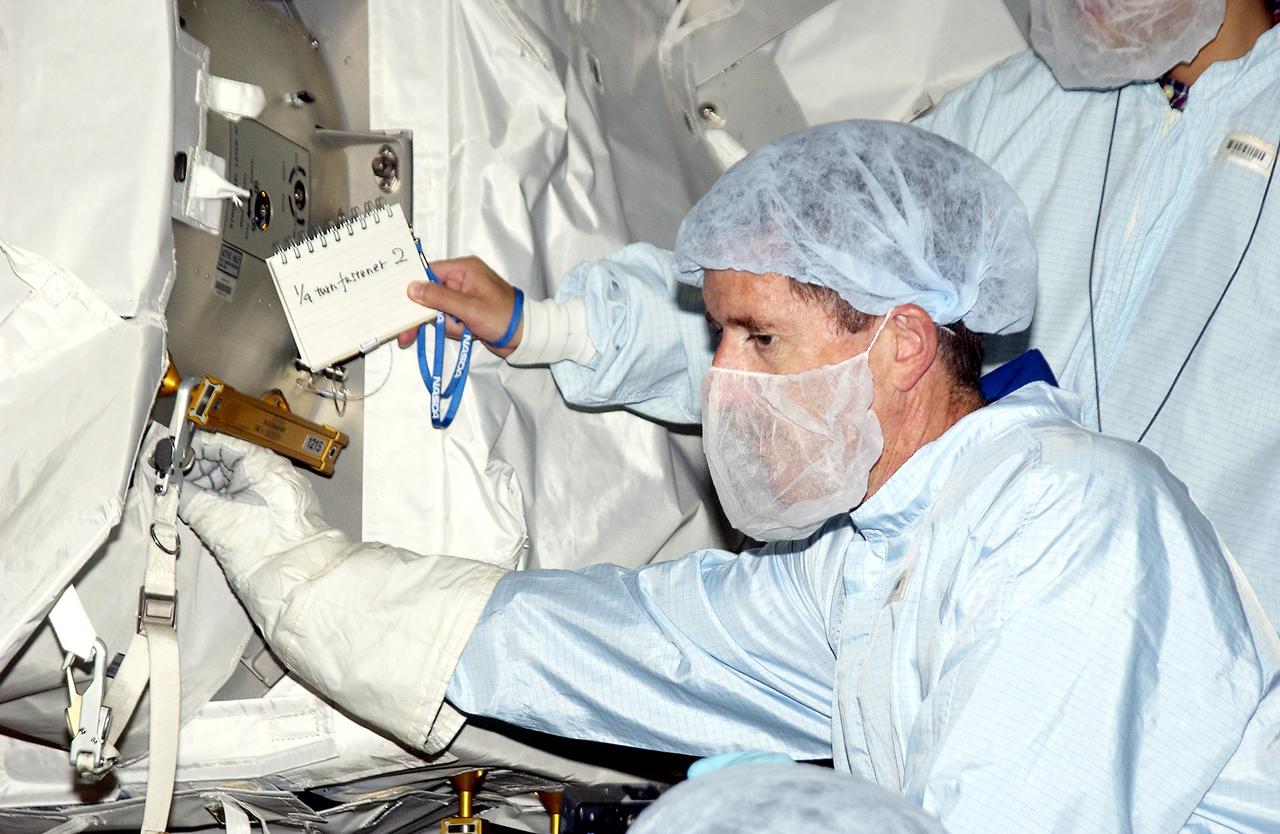
KENNEDY SPACE CENTER, FLA. - In the Space Station Processing Facility, STS-117 Mission Specialist James Reilly works with equipment in the Japanese Experiment Module (JEM) as part of training for ExtraVehicular Activity (EVA). Equipment familiarization is a routine part of astronaut training and launch preparations.

Inside the Kremlin in Moscow, Expedition 59 crewmembers Nick Hague of NASA (left), Alexey Ovchinin of Roscosmos (center) and Christina Koch of NASA (right) pose for pictures on a wintry day Feb. 21 as part of their pre-launch activities. They will launch March 14, U.S. time, on the Soyuz MS-12 spacecraft from the Baikonur Cosmodrome in Kazakhstan for a six-and-a-half month mission on the International Space Station. Andrey Shelepin/Gagarin Cosmonaut Training Center
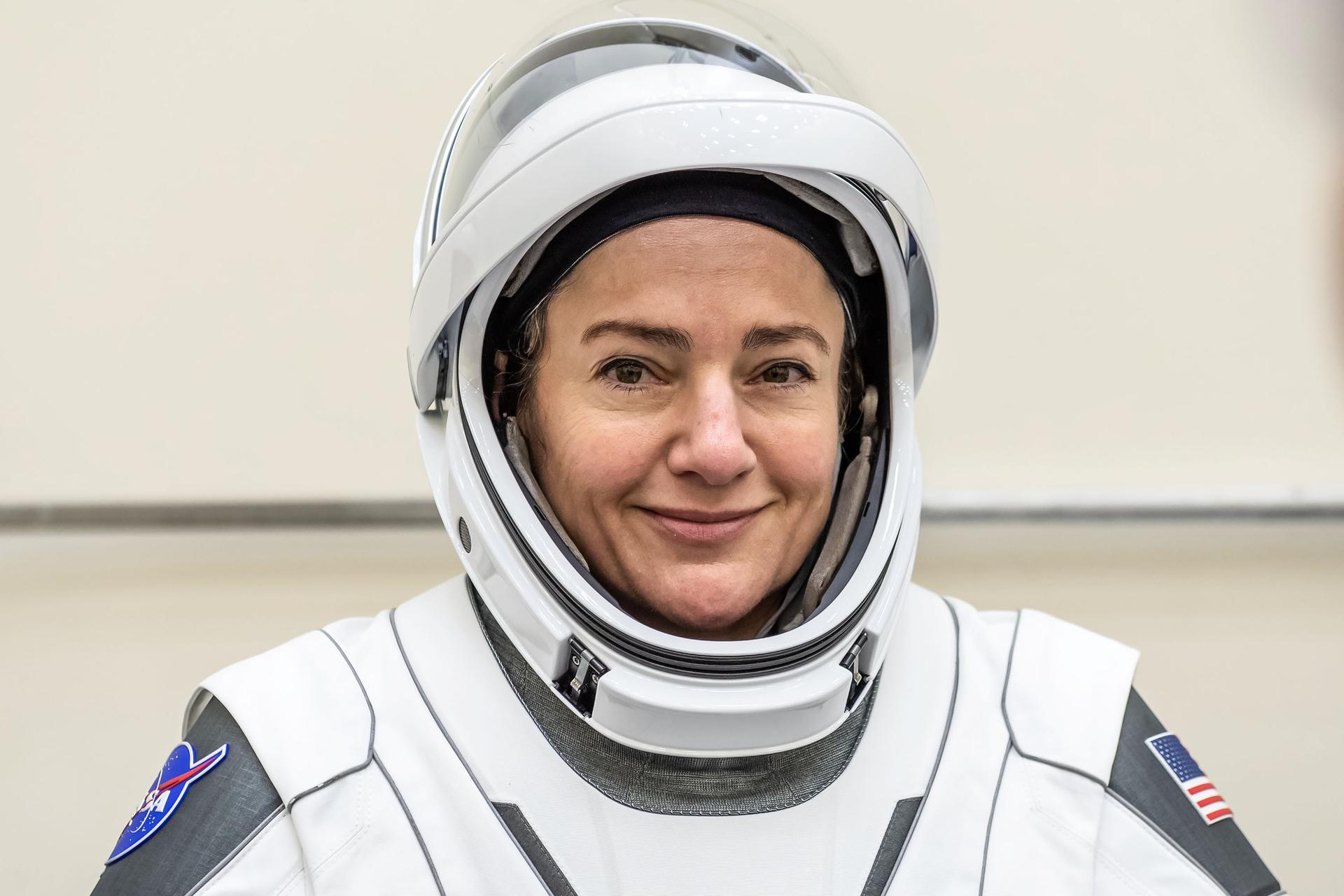
jsc2026e002966 (Jan. 12, 2026) --- NASA astronaut and SpaceX Crew-12 Commander Jessica Meir is photographed in her pressure suit during the Crew Equipment Interface Test at NASA’s Kennedy Space Center in Florida. The goal of the training is to rehearse launch day activities and get a close look at the Dragon spacecraft. Credit: SpaceX
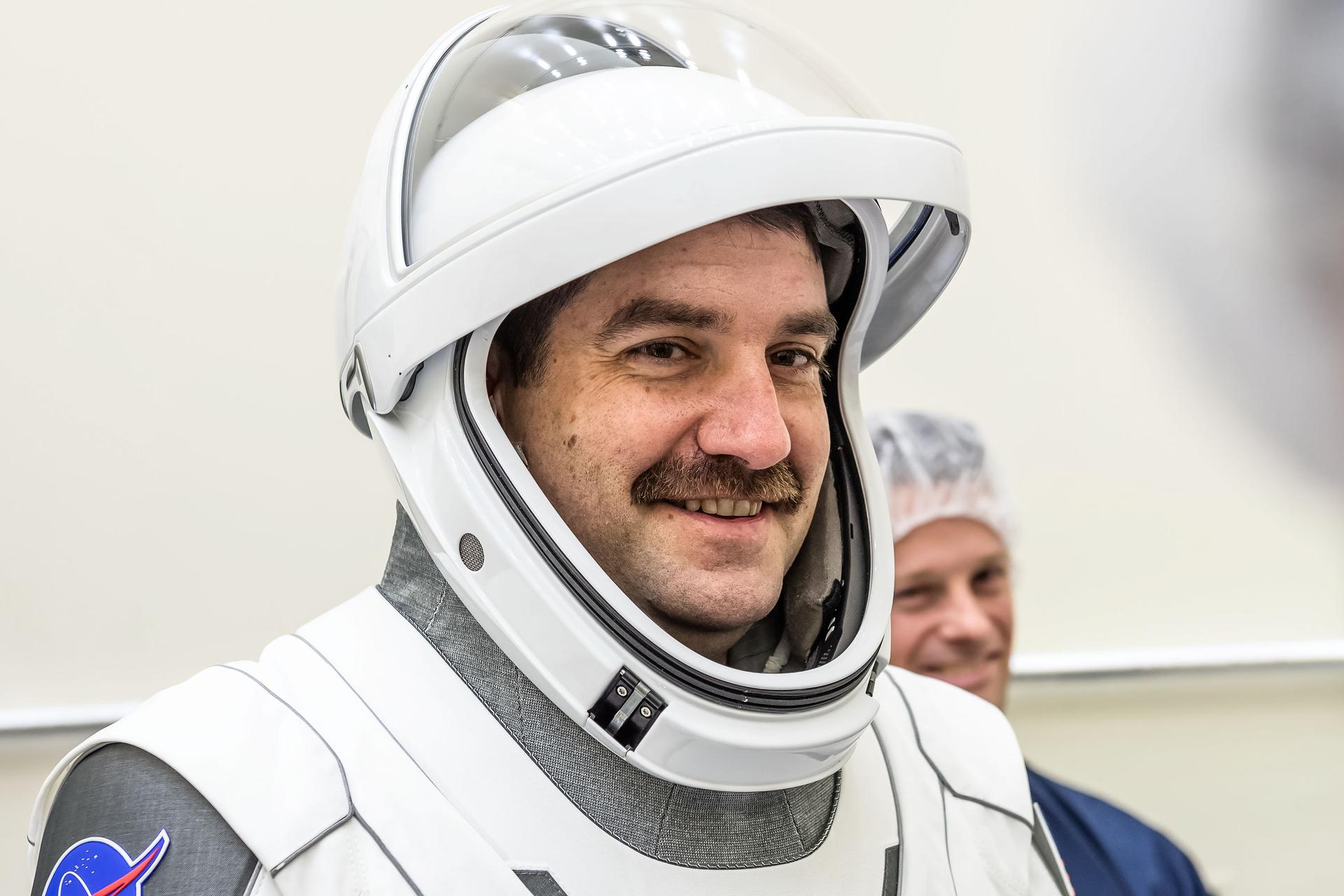
jsc2026e002965 (Jan. 12, 2026) --- NASA astronaut and SpaceX Crew-12 Pilot Jack Hathaway is photographed in his pressure suit during the Crew Equipment Interface Test at NASA’s Kennedy Space Center in Florida. The goal of the training is to rehearse launch day activities and get a close look at the Dragon spacecraft. Credit: SpaceX
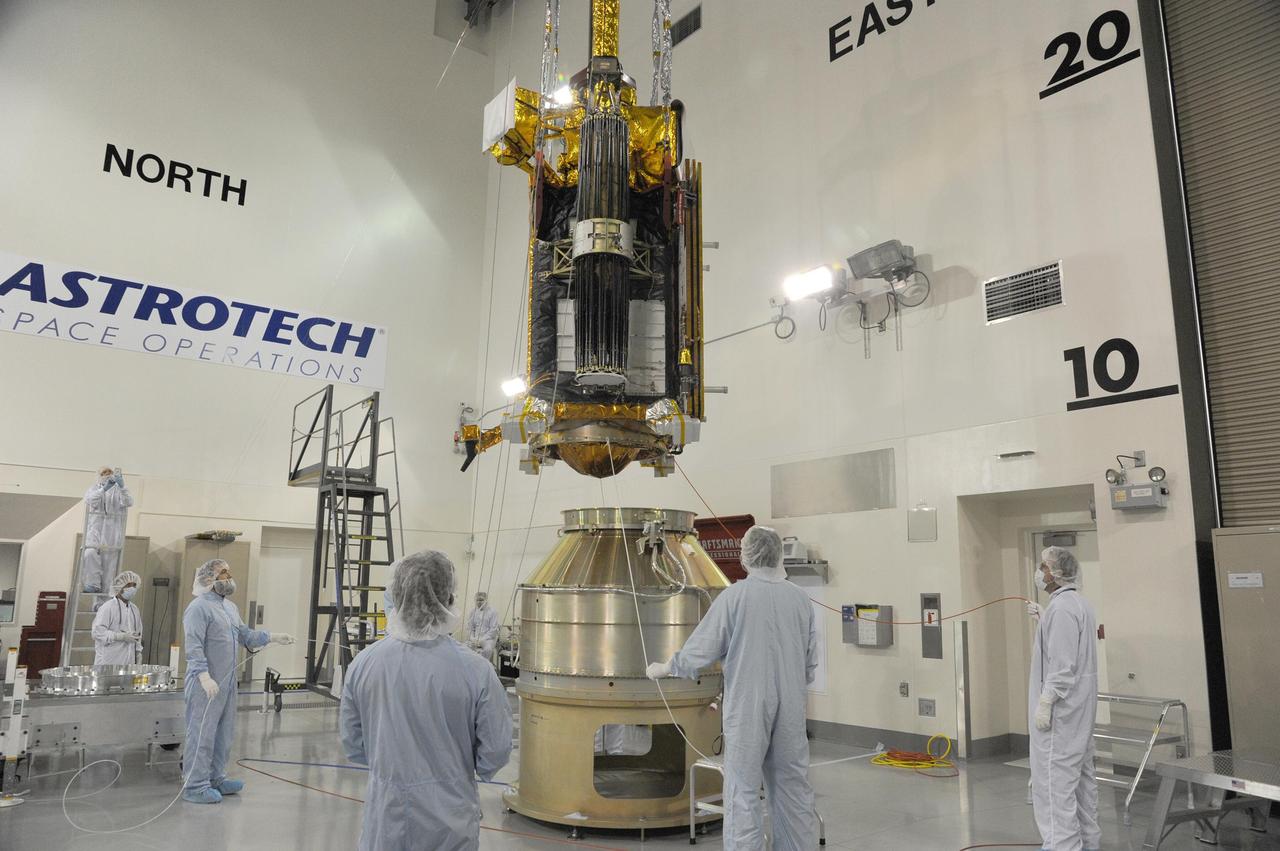
NASA Soil Moisture Active Passive spacecraft is lowered onto the Delta II payload attach structure in the Astrotech payload processing facility at Vandenberg Air Force Base, California, in preparation for launch, to take place no sooner than Jan. 29.
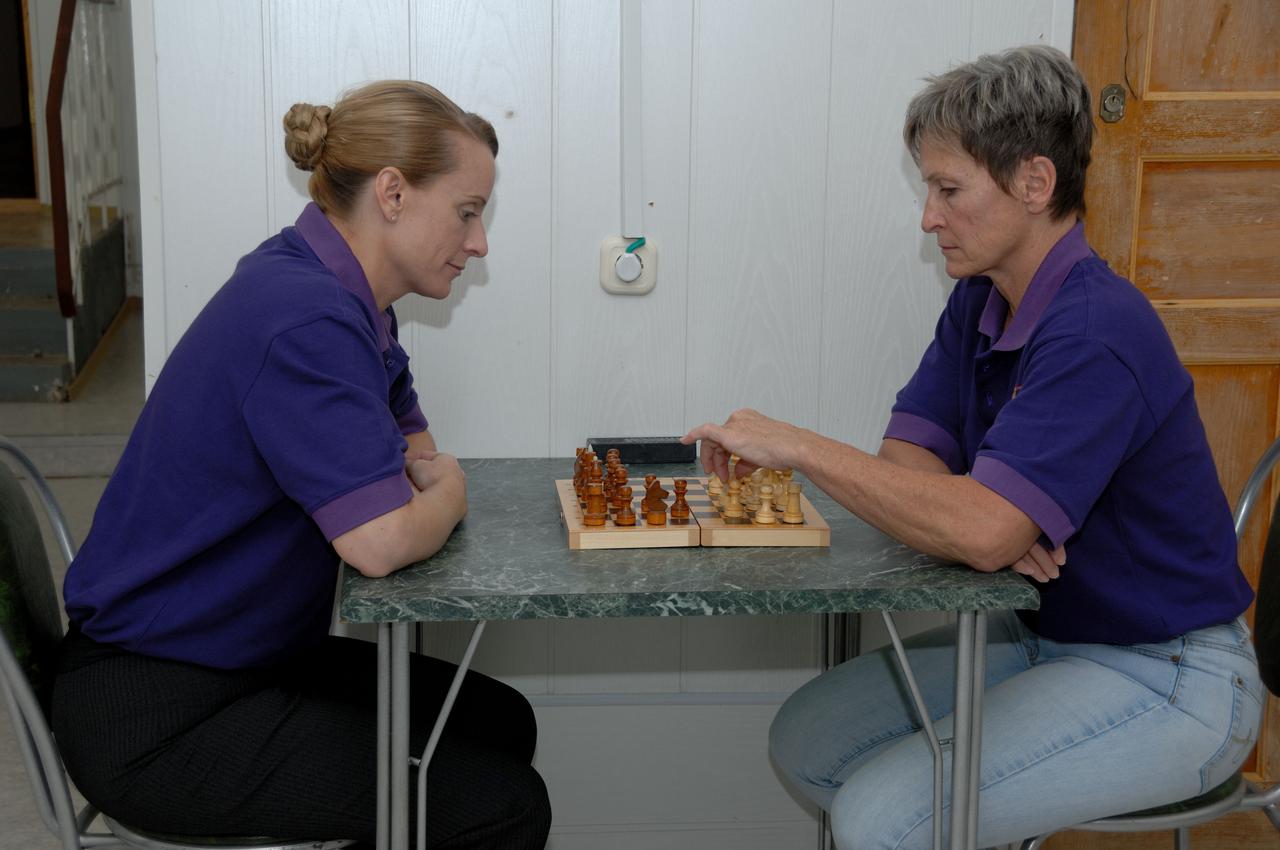
At the Cosmonaut Hotel in Baikonur, Kazakhstan, Expedition 48-49 prime crewmember Kate Rubins of NASA (left) and her backup, NASA’s Peggy Whitson (right) share a game of chess June 30 during pre-launch activities. Rubins, Anatoly Ivanishin of Roscosmos and Takuya Onishi of the Japan Aerospace Exploration Agency, will launch July 7, Baikonur time, on the Soyuz MS-01 spacecraft for a planned four-month mission on the International Space Station. NASA/Alexander Vysotsky
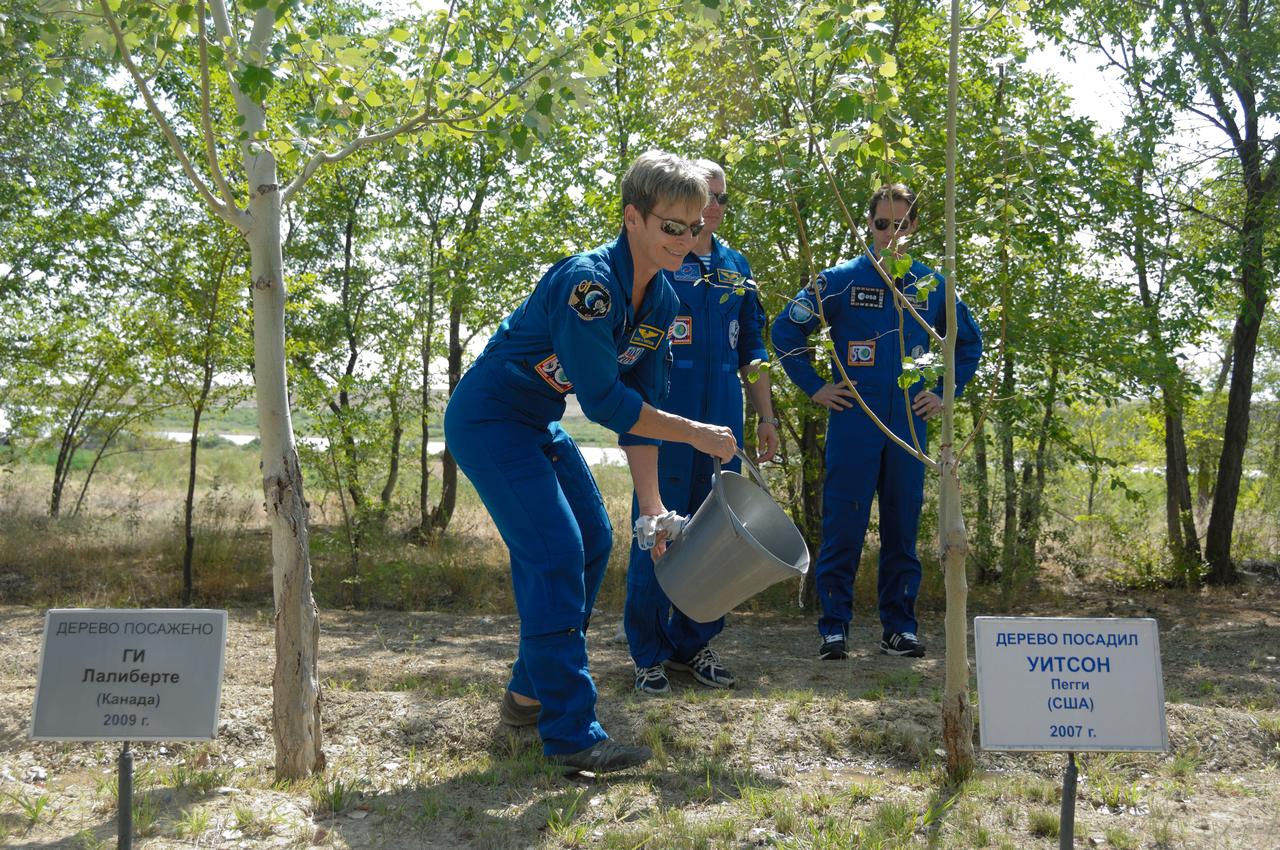
At the Cosmonaut Hotel in Baikonur, Kazakhstan, Expedition 48-49 backup crewmember Peggy Whitson of NASA waters a tree in her name first planted in 2007 during traditional pre-launch activities June 30. Whitson is one of three backups to the prime crewmembers, Kate Rubins of NASA, Anatoly Ivanishin of Roscosmos and Takuya Onishi of the Japan Aerospace Exploration Agency, who will launch July 7, Baikonur time, on the Soyuz MS-01 spacecraft for a planned four-month mission on the International Space Station. NASA/Alexander Vysotsky
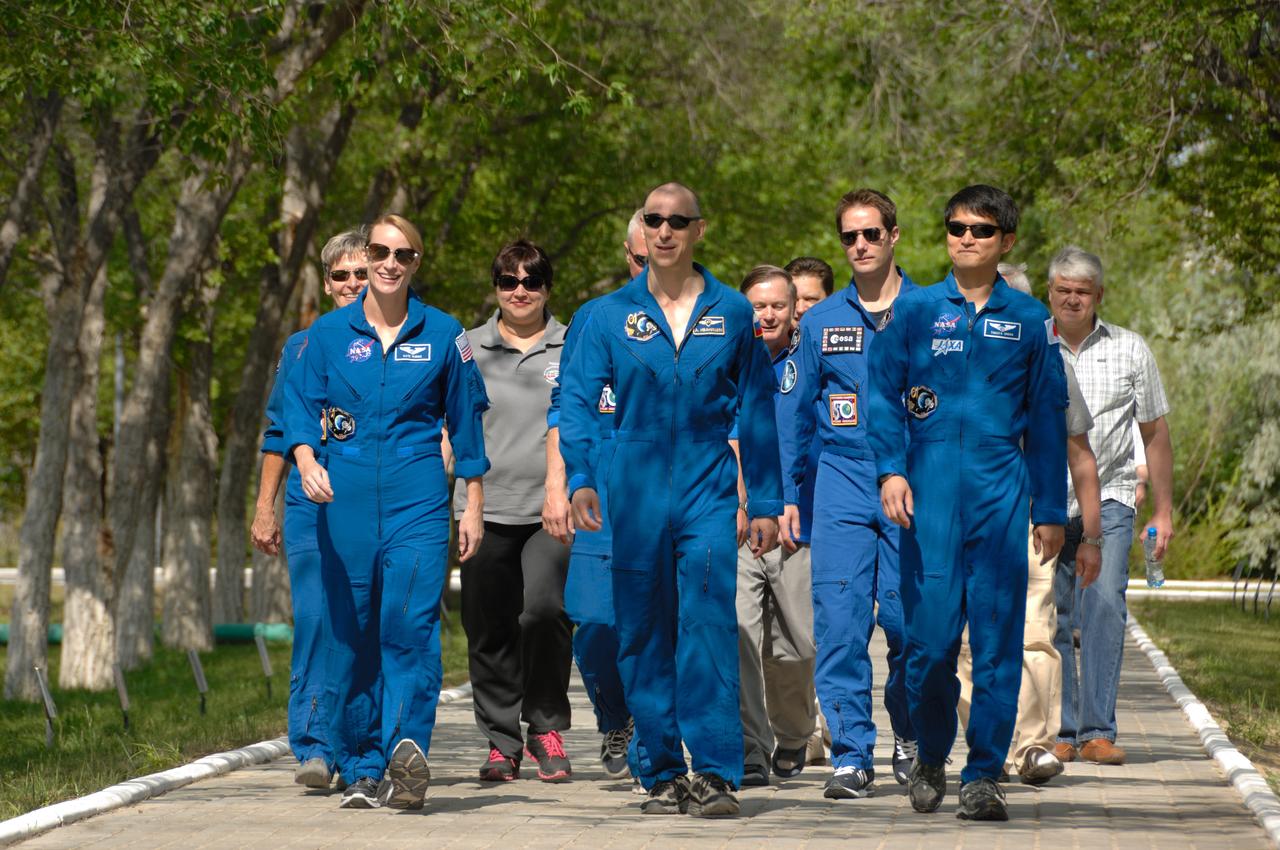
At the Cosmonaut Hotel in Baikonur, Kazakhstan, Expedition 48-49 crewmembers Kate Rubins of NASA (left), Anatoly Ivanishin of Roscosmos (center) and Takuya Onishi of the Japan Aerospace Exploration Agency (right) take a stroll down the “Walk of Cosmonauts” June 30 as part of their pre-launch activities. Rubins, Ivanishin and Onishi will launch July 7, Baikonur time, on the Soyuz MS-01 spacecraft for a planned four-month mission on the International Space Station. NASA/Alexander Vysotsky
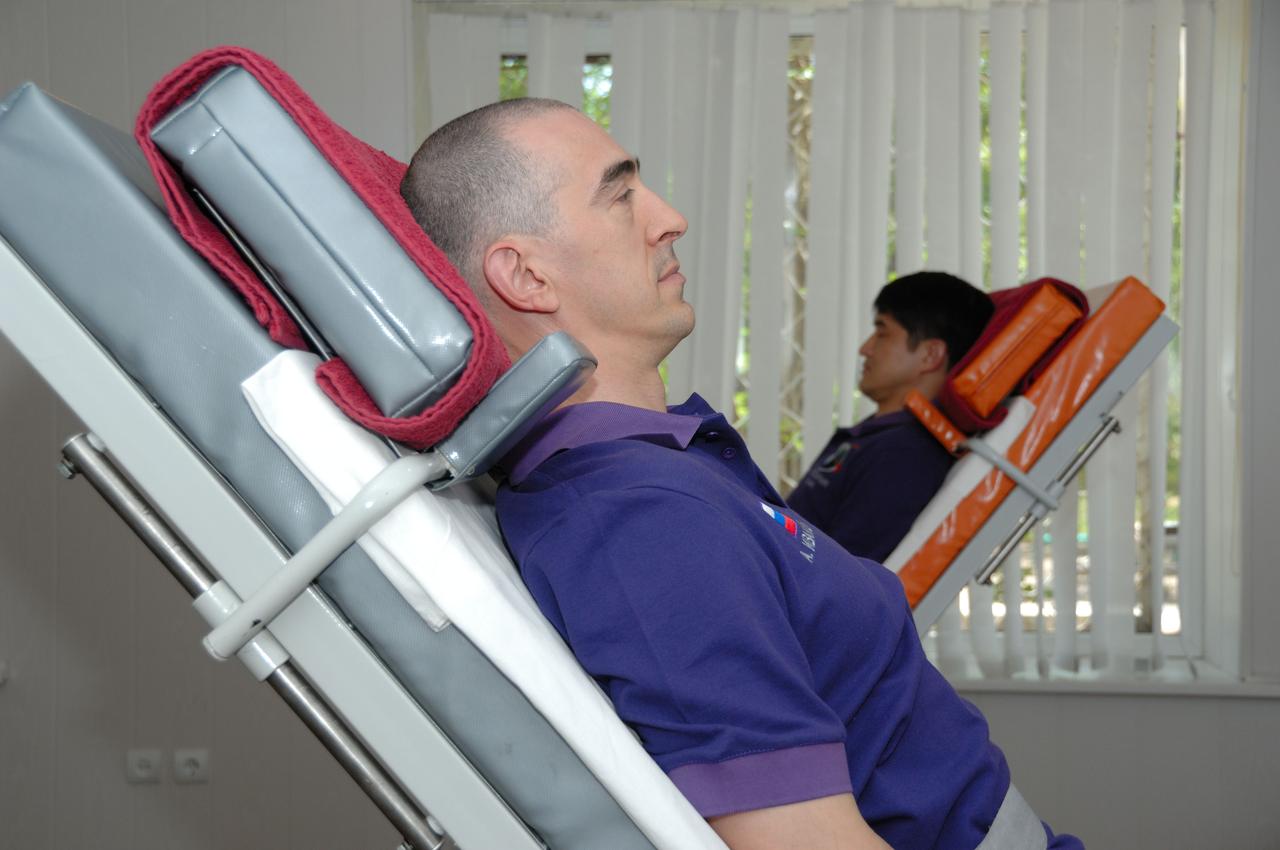
At the Cosmonaut Hotel in Baikonur, Kazakhstan, Expedition 48-49 crewmembers Anatoly Ivanishin of Roscosmos (foreground) and Takuya Onishi of the Japan Aerospace Exploration Agency conduct tests of their vestibular system on tilt tables June 30 as part of pre-launch activities. They and Kate Rubins of NASA will launch July 7, Baikonur time, on the Soyuz MS-01 spacecraft for a planned four-month mission on the International Space Station. NASA/Alexander Vysotsky
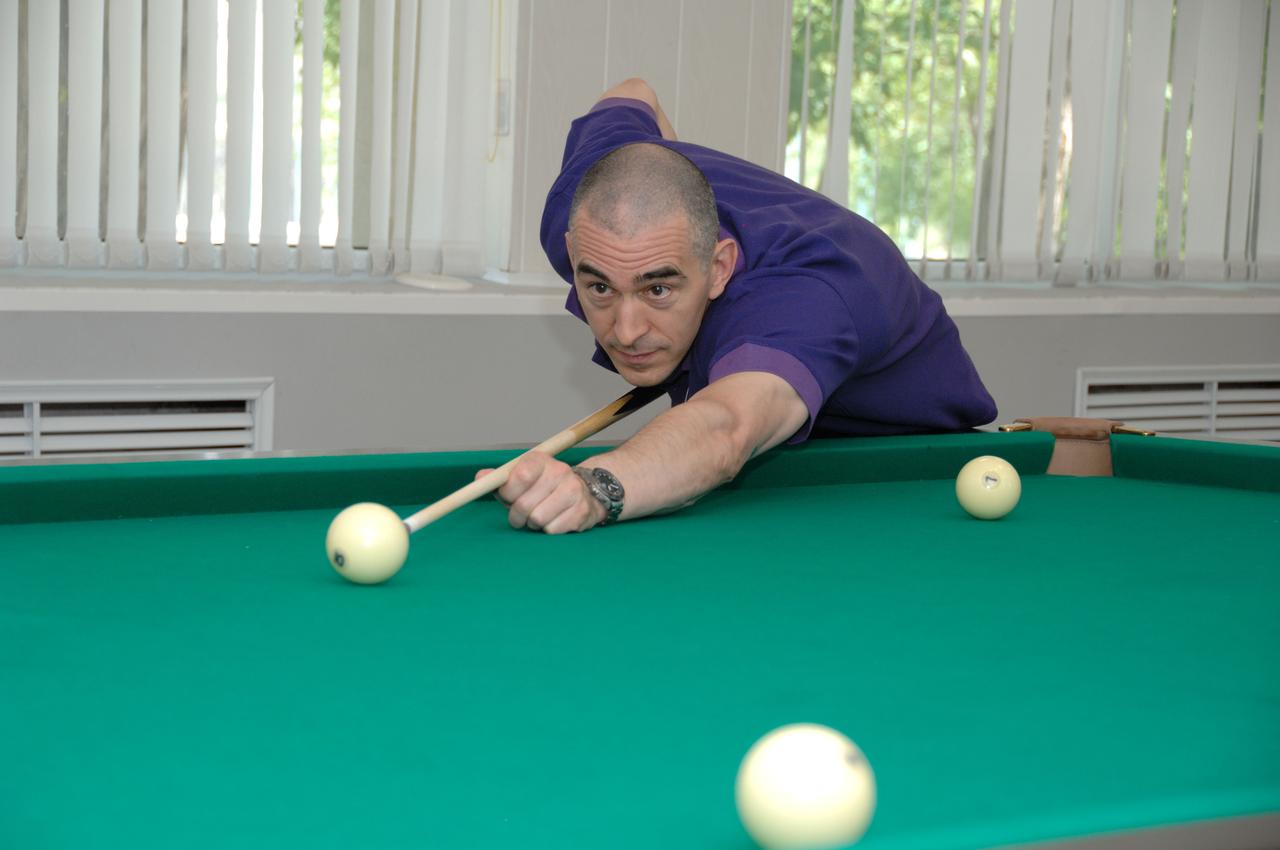
At the Cosmonaut Hotel in Baikonur, Kazakhstan, Expedition 48-49 crewmember Anatoly Ivanishin of Roscosmos tries his hand a billiards June 30 during pre-launch activities. Ivanishin, Takuya Onishi of the Japan Aerospace Exploration Agency and Kate Rubins of NASA will launch July 7, Baikonur time, on the Soyuz MS-01 spacecraft for a planned four-month mission on the International Space Station. NASA/Alexander Vysotsky
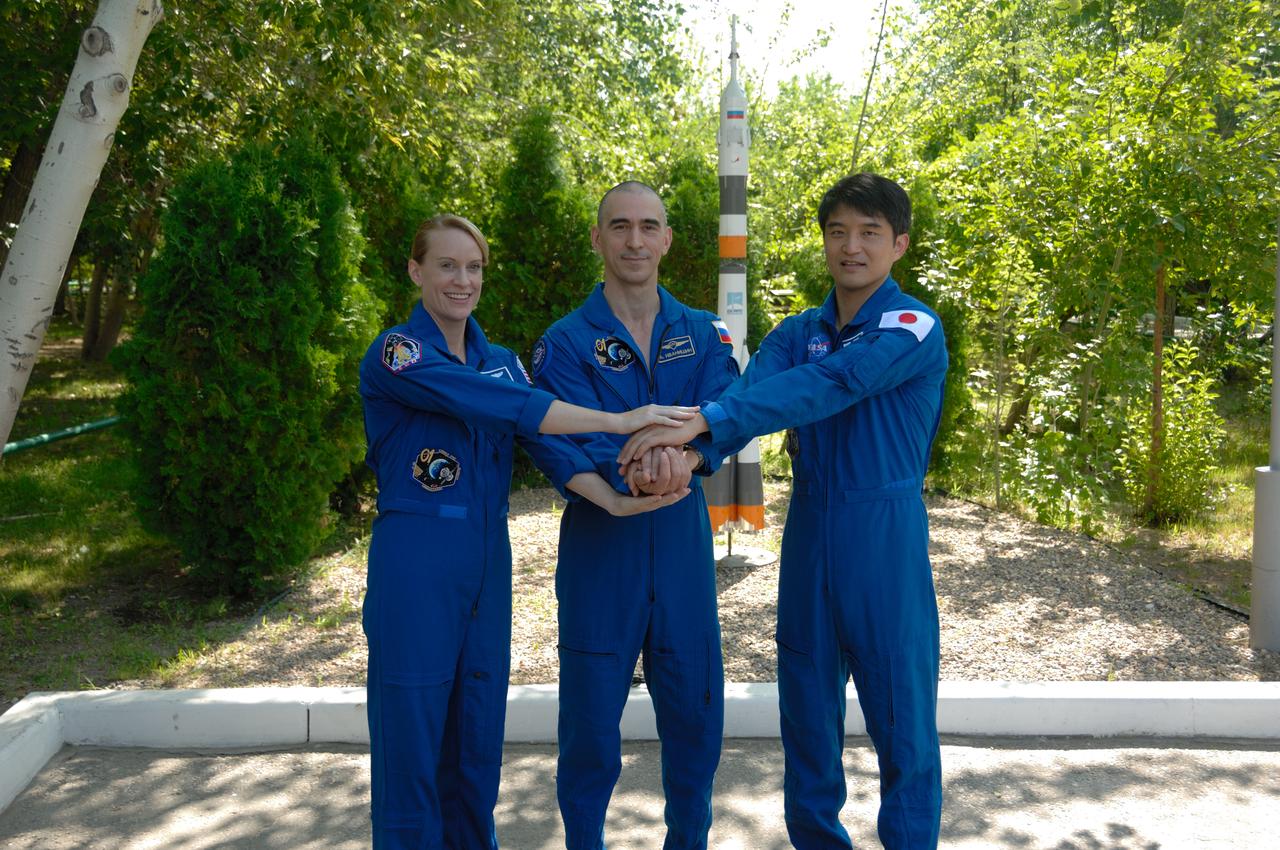
At the Cosmonaut Hotel in Baikonur, Kazakhstan, Expedition 48-49 crewmembers Kate Rubins of NASA (left), Anatoly Ivanishin of Roscosmos (center) and Takuya Onishi of the Japan Aerospace Exploration Agency (right) pose for pictures June 30 during traditional pre-launch activities. Rubins, Ivanishin and Onishi will launch July 7, Baikonur time, on the Soyuz MS-01 spacecraft for a planned four-month mission on the International Space Station. NASA/Alexander Vysotsky
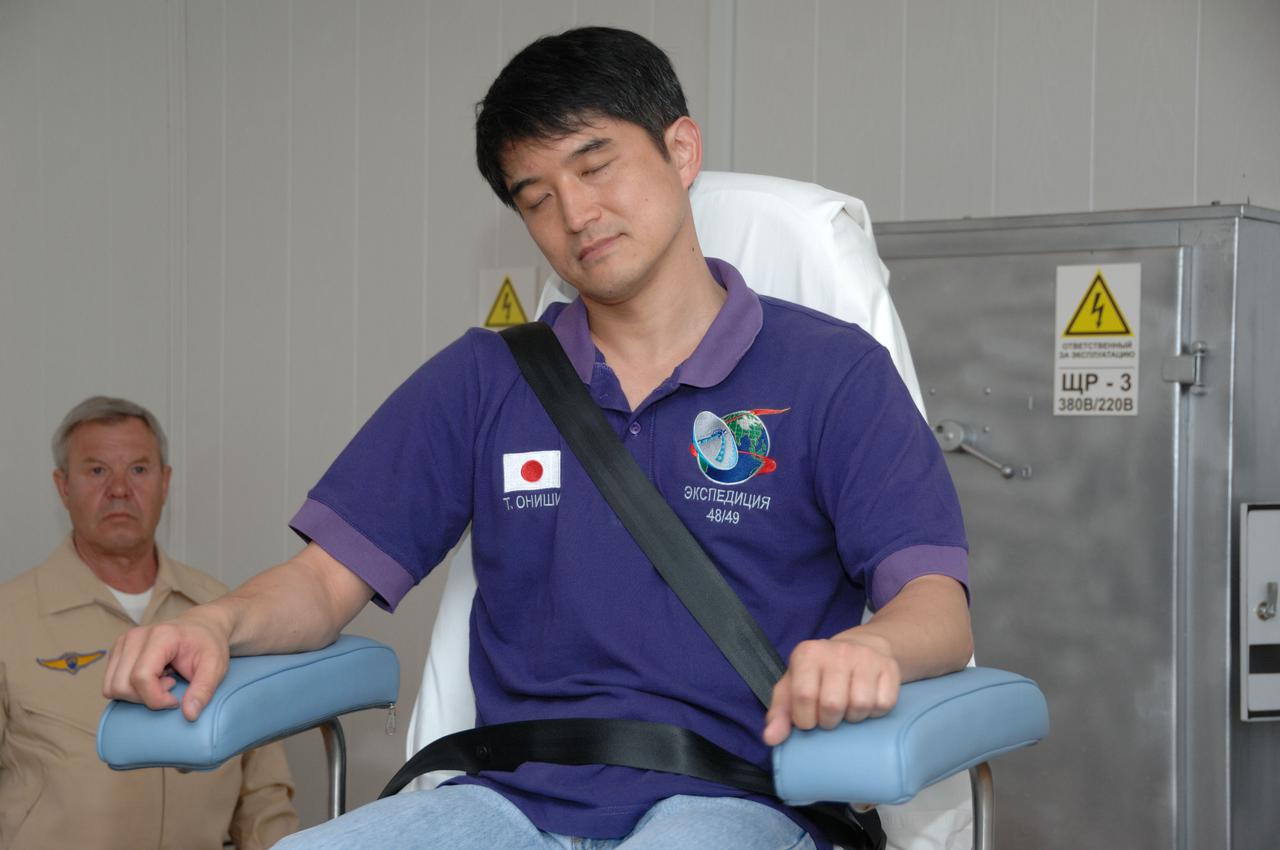
At the Cosmonaut Hotel in Baikonur, Kazakhstan, Expedition 48-49 crewmember Takuya Onishi of the Japan Aerospace Exploration Agency takes a spin in a rotating chair to test his vestibular system June 30 as part of pre-launch activities. Onishi, Kate Rubins of NASA and Anatoly Ivanishin of Roscosmos will launch July 7, Baikonur time, on the Soyuz MS-01 spacecraft for a planned four-month mission on the International Space Station. NASA/Alexander Vysotsky
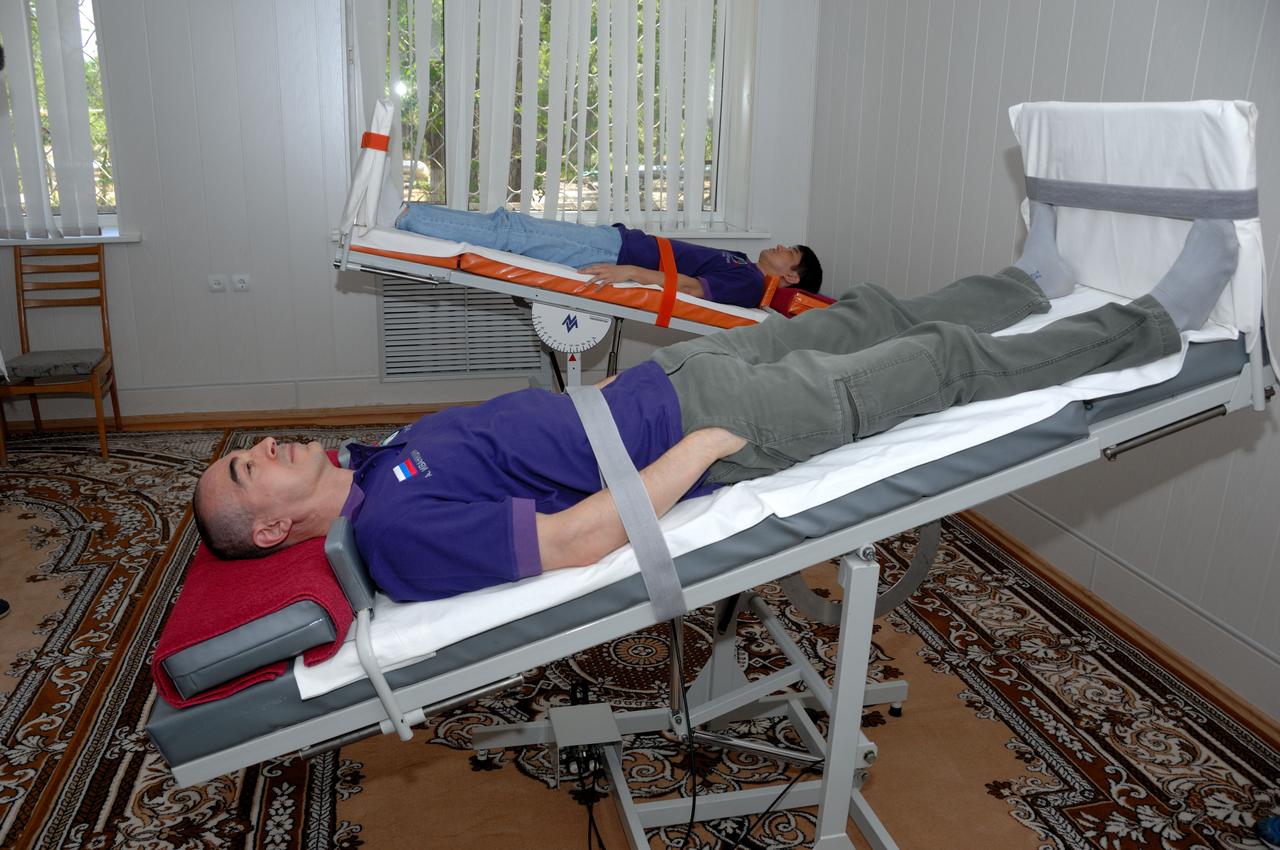
At the Cosmonaut Hotel in Baikonur, Kazakhstan, Expedition 48-49 crewmembers Anatoly Ivanishin of Roscosmos (foreground) and Takuya Onishi of the Japan Aerospace Exploration Agency conduct tests of their vestibular system on tilt tables June 30 as part of pre-launch activities. They and Kate Rubins of NASA will launch July 7, Baikonur time, on the Soyuz MS-01 spacecraft for a planned four-month mission on the International Space Station. NASA/Alexander Vysotsky
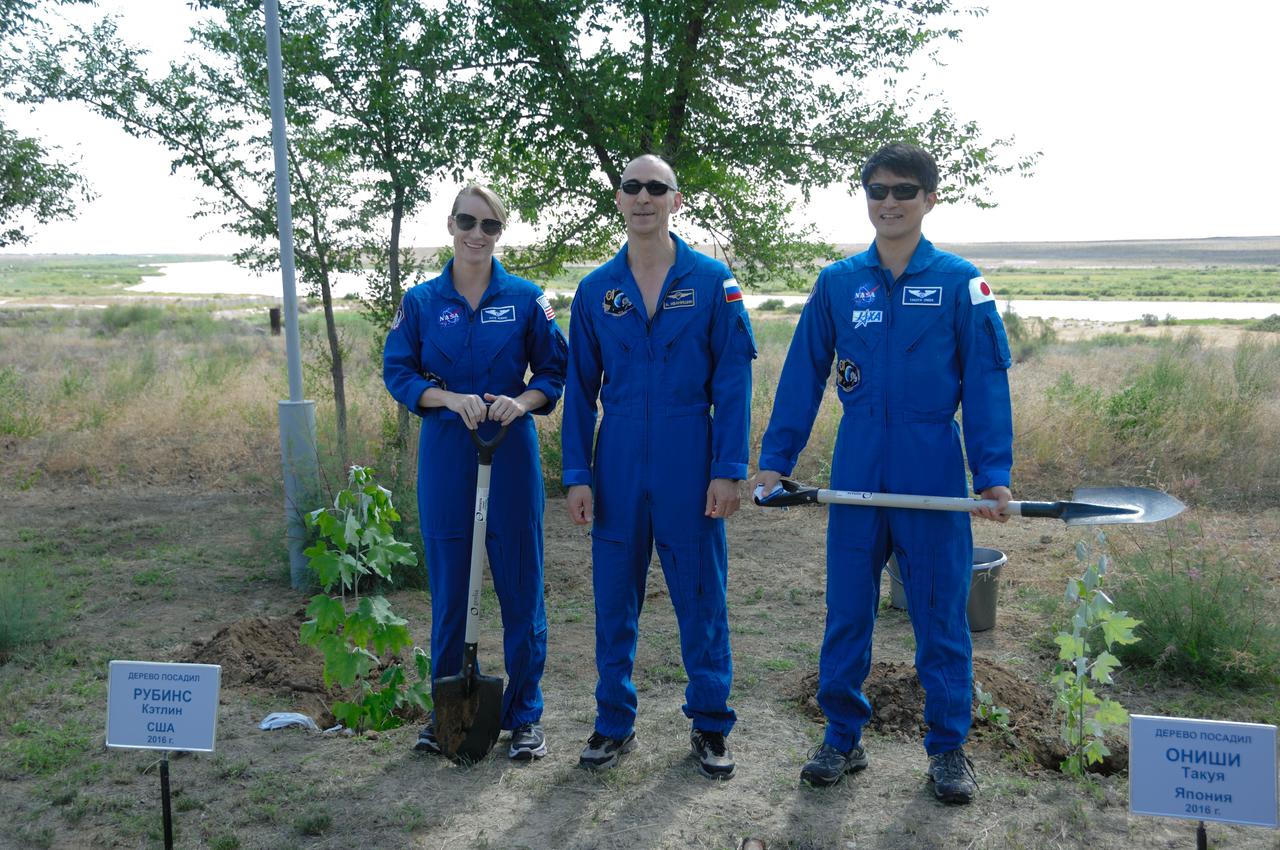
At the Cosmonaut Hotel in Baikonur, Kazakhstan, Expedition 48-49 crewmembers Kate Rubins of NASA (left), Anatoly Ivanishin of Roscosmos (center) and Takuya Onishi of the Japan Aerospace Exploration Agency (right) pose for pictures June 30 after Rubins and Onishi, both first-time fliers, planted trees in their names in traditional pre-launch activities. Rubins, Ivanishin and Onishi will launch July 7, Baikonur time, on the Soyuz MS-01 spacecraft for a planned four-month mission on the International Space Station. NASA/Alexander Vysotsky