
Aside from native flora, fauna and the Langley rocket-research complex, there was not much on Wallops Island. Pictured is a 1960 photo of Launch area Number Three, used principally for Scout rocket firings. -- Photograph published in Winds of Change, 75th Anniversary NASA publication (page 73), by James Schultz.
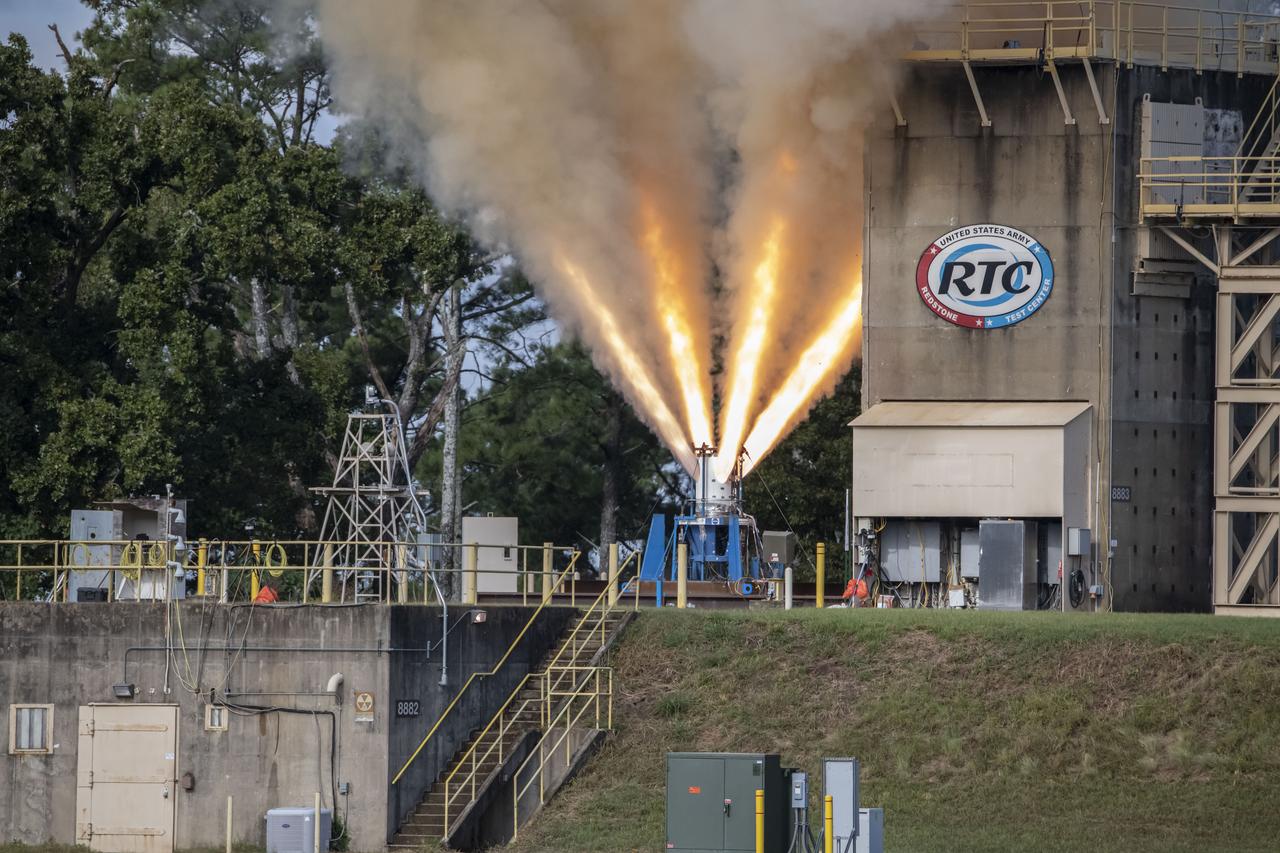
Redstone Test Center hosted the final hot fire test of the Aerojet Rocketdyne Orion Launch Abort System (LAS) at Redstone Arsenal’s test area 5.
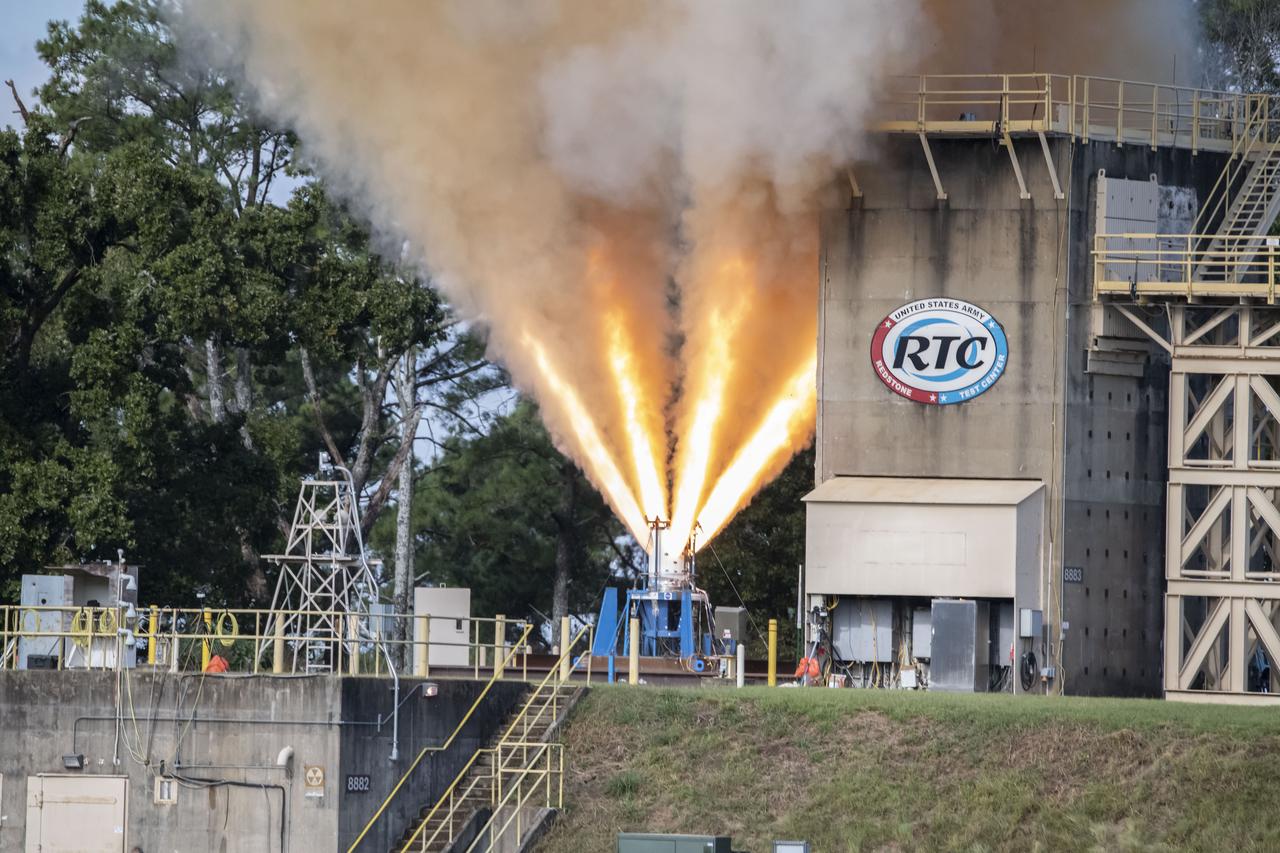
Redstone Test Center hosted the final hot fire test of the Aerojet Rocketdyne Orion Launch Abort System (LAS) at Redstone Arsenal’s test area 5.
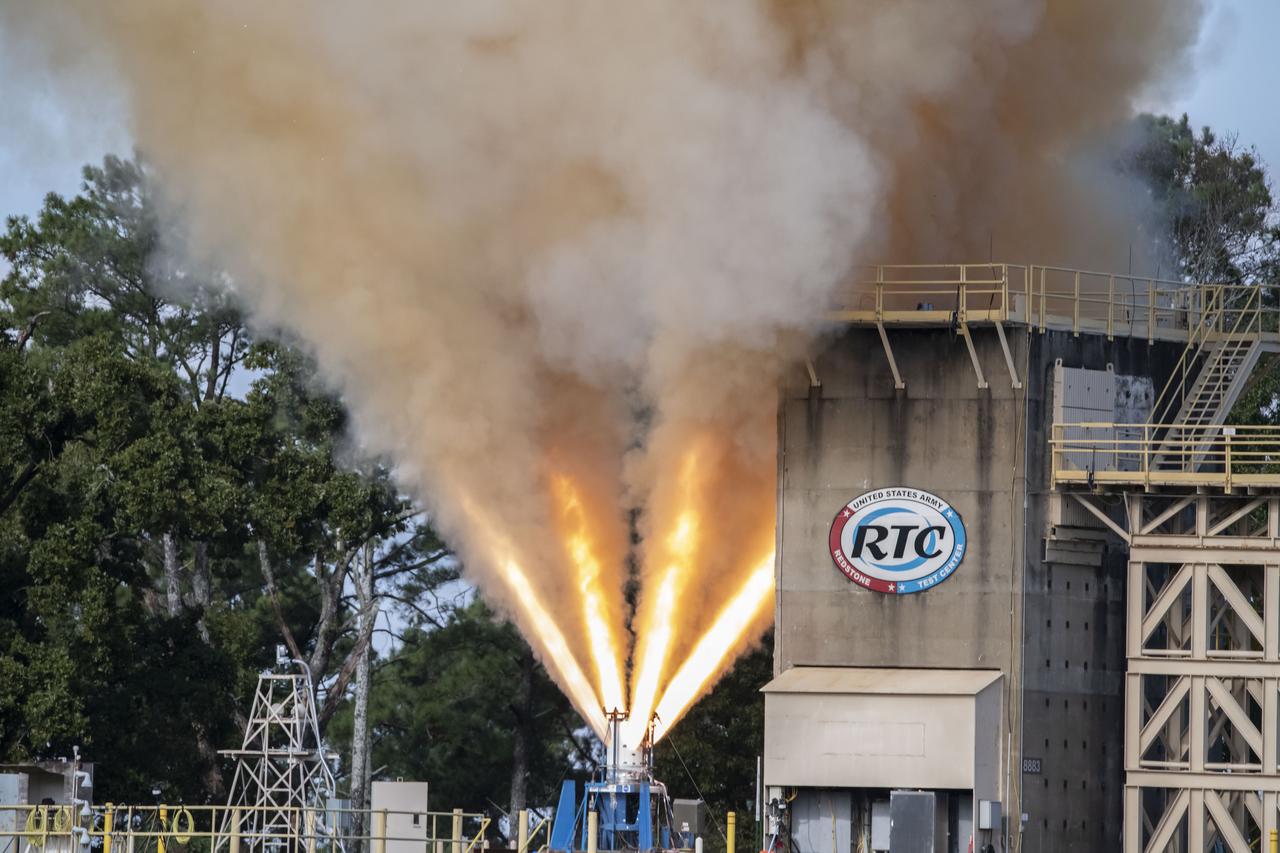
Redstone Test Center hosted the final hot fire test of the Aerojet Rocketdyne Orion Launch Abort System (LAS) at Redstone Arsenal’s test area 5.

An aerial view of a proposed new launch site, Launch Complex 49, on Dec. 28, 2021, at NASA’s Kennedy Space Center in Florida. In response to an inquiry from SpaceX, NASA is preparing to conduct environmental assessments to develop the proposed launch site. The 175-acre site, located north of Launch Complex 39B within the center’s security perimeter, would support the launch and landing of SpaceX’s Starship and Super Heavy launch vehicle. NASA and SpaceX are moving forward with the initial environmental assessment before concluding a potential agreement to develop the property.
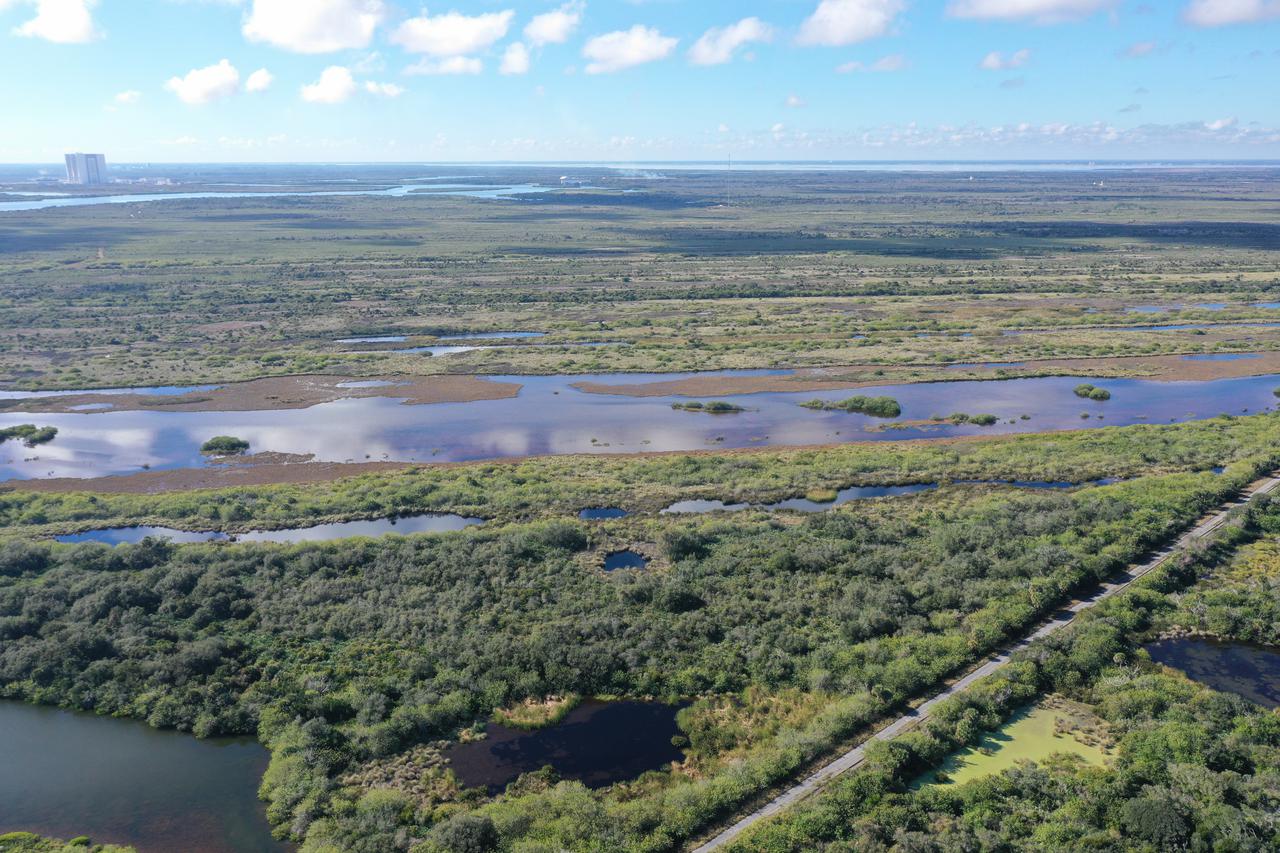
An aerial view of a proposed new launch site, Launch Complex 49, on Dec. 28, 2021, at NASA’s Kennedy Space Center in Florida. In response to an inquiry from SpaceX, NASA is preparing to conduct environmental assessments to develop the proposed launch site. The 175-acre site, located north of Launch Complex 39B within the center’s security perimeter, would support the launch and landing of SpaceX’s Starship and Super Heavy launch vehicle. NASA and SpaceX are moving forward with the initial environmental assessment before concluding a potential agreement to develop the property.
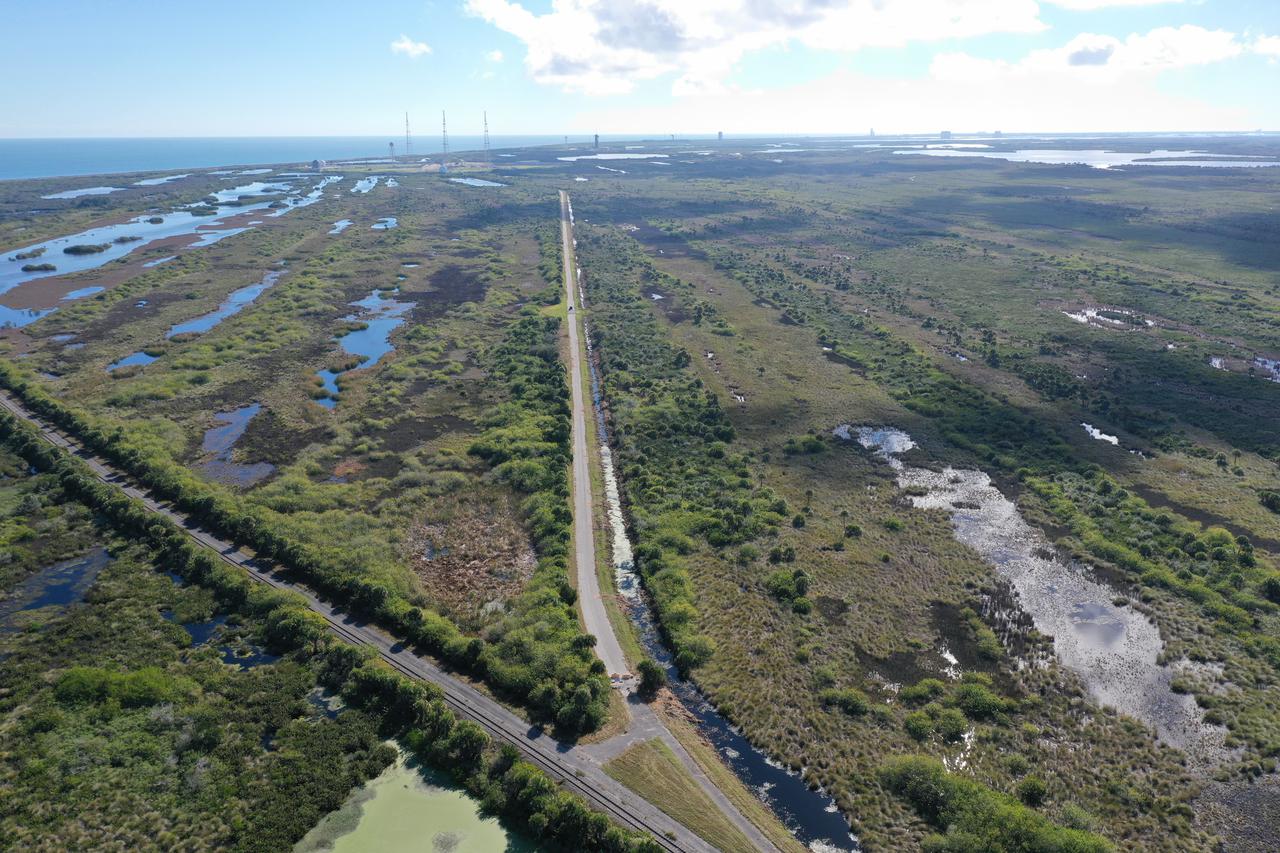
An aerial view of a proposed new launch site, Launch Complex 49, on Dec. 28, 2021, at NASA’s Kennedy Space Center in Florida. In response to an inquiry from SpaceX, NASA is preparing to conduct environmental assessments to develop the proposed launch site. The 175-acre site, located north of Launch Complex 39B within the center’s security perimeter, would support the launch and landing of SpaceX’s Starship and Super Heavy launch vehicle. NASA and SpaceX are moving forward with the initial environmental assessment before concluding a potential agreement to develop the property.
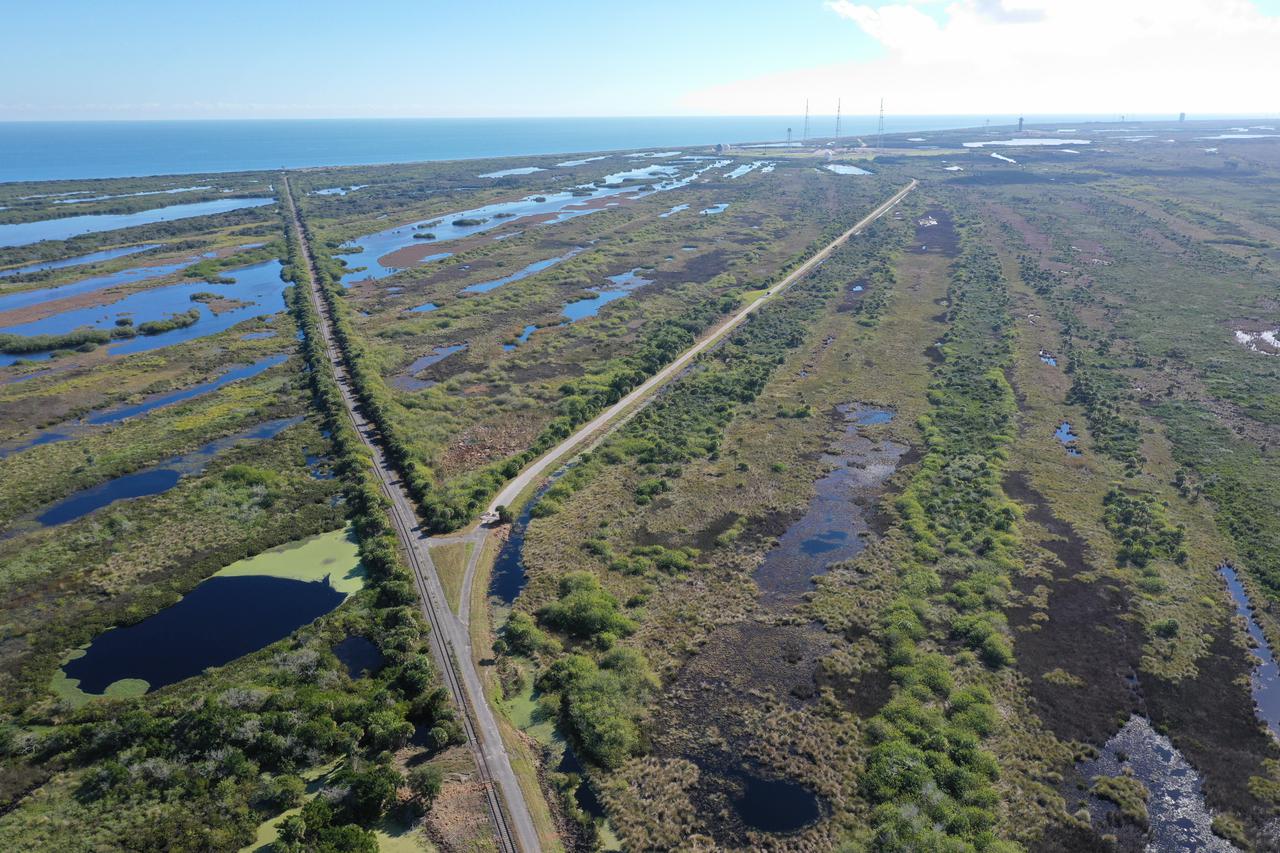
An aerial view of a proposed new launch site, Launch Complex 49, on Dec. 28, 2021, at NASA’s Kennedy Space Center in Florida. In response to an inquiry from SpaceX, NASA is preparing to conduct environmental assessments to develop the proposed launch site. The 175-acre site, located north of Launch Complex 39B within the center’s security perimeter, would support the launch and landing of SpaceX’s Starship and Super Heavy launch vehicle. NASA and SpaceX are moving forward with the initial environmental assessment before concluding a potential agreement to develop the property.
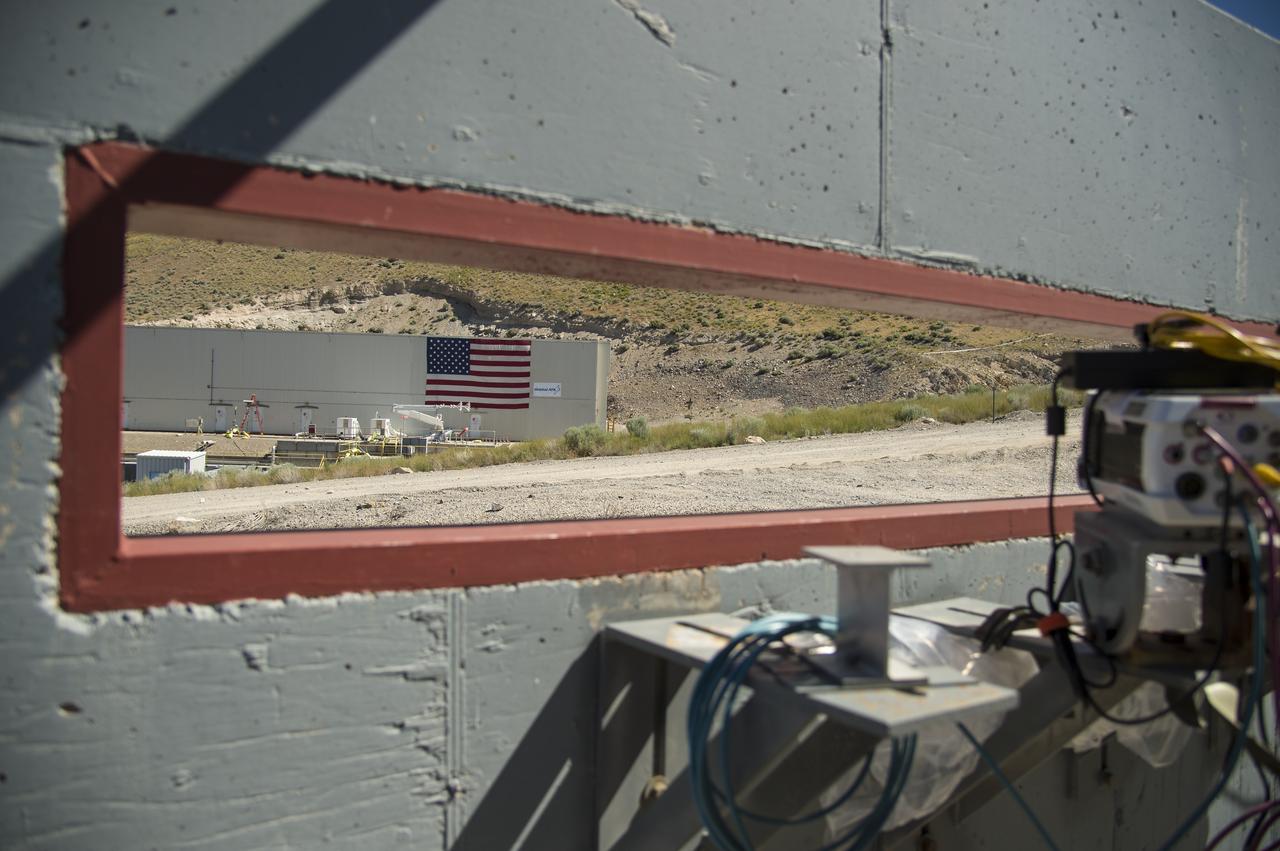
The test area where the second and final qualification motor (QM-2) test for the Space Launch System’s booster is seen through the window of a camera bunker, Sunday, June 26, 2016, at Orbital ATK Propulsion Systems test facilities in Promontory, Utah. The test is scheduled for Tuesday, June 28 at 10:05 a.m. EDT (8:05 a.m. MDT). Photo Credit: (NASA/Bill Ingalls)
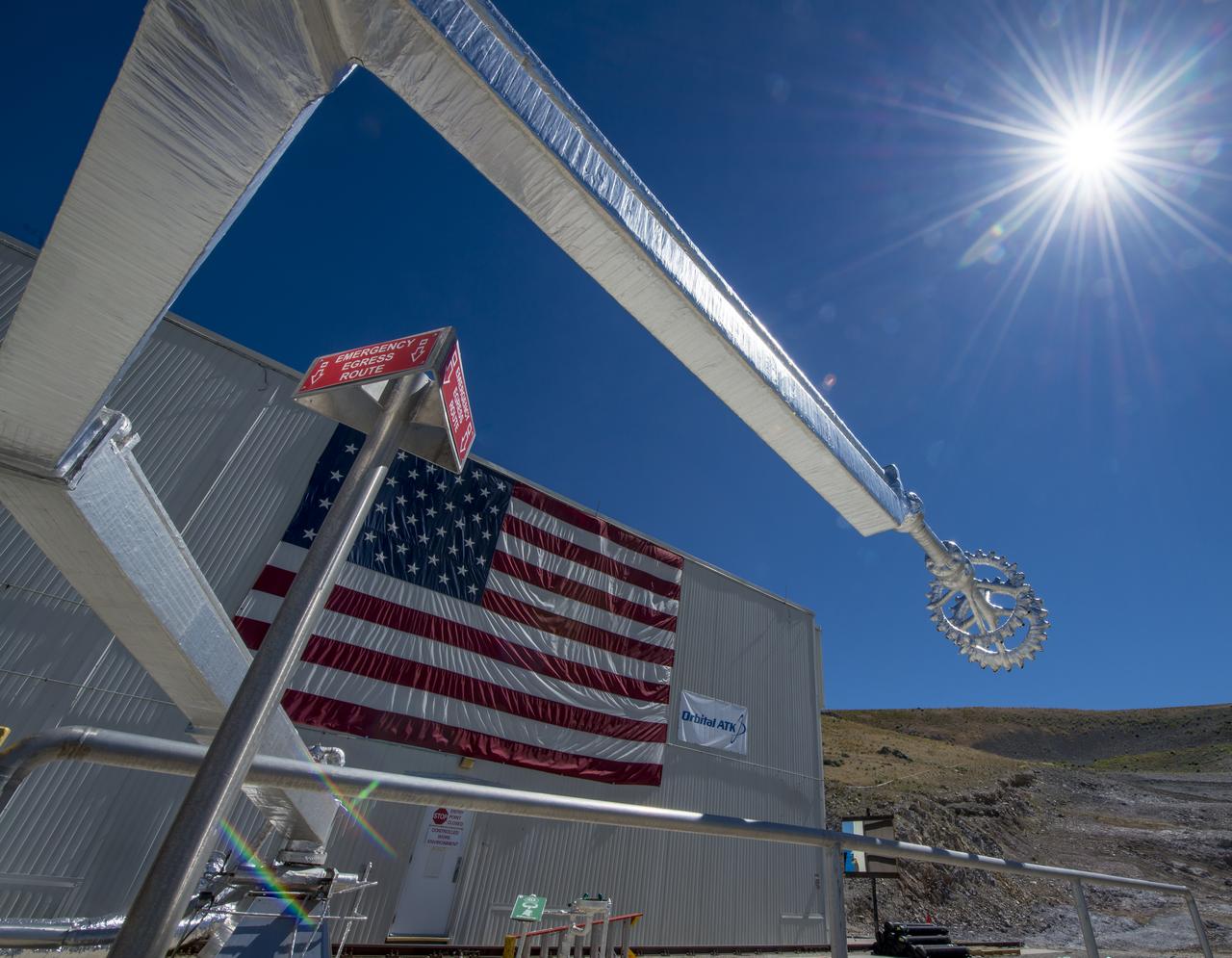
The quench system arm and nozzle are seen at the test area where the second and final qualification motor (QM-2) test for the Space Launch System’s booster will take place, Sunday, June 26, 2016, at Orbital ATK Propulsion Systems test facilities in Promontory, Utah. The test is scheduled for Tuesday, June 28 at 10:05 a.m. EDT (8:05 a.m. MDT). Photo Credit: (NASA/Bill Ingalls)
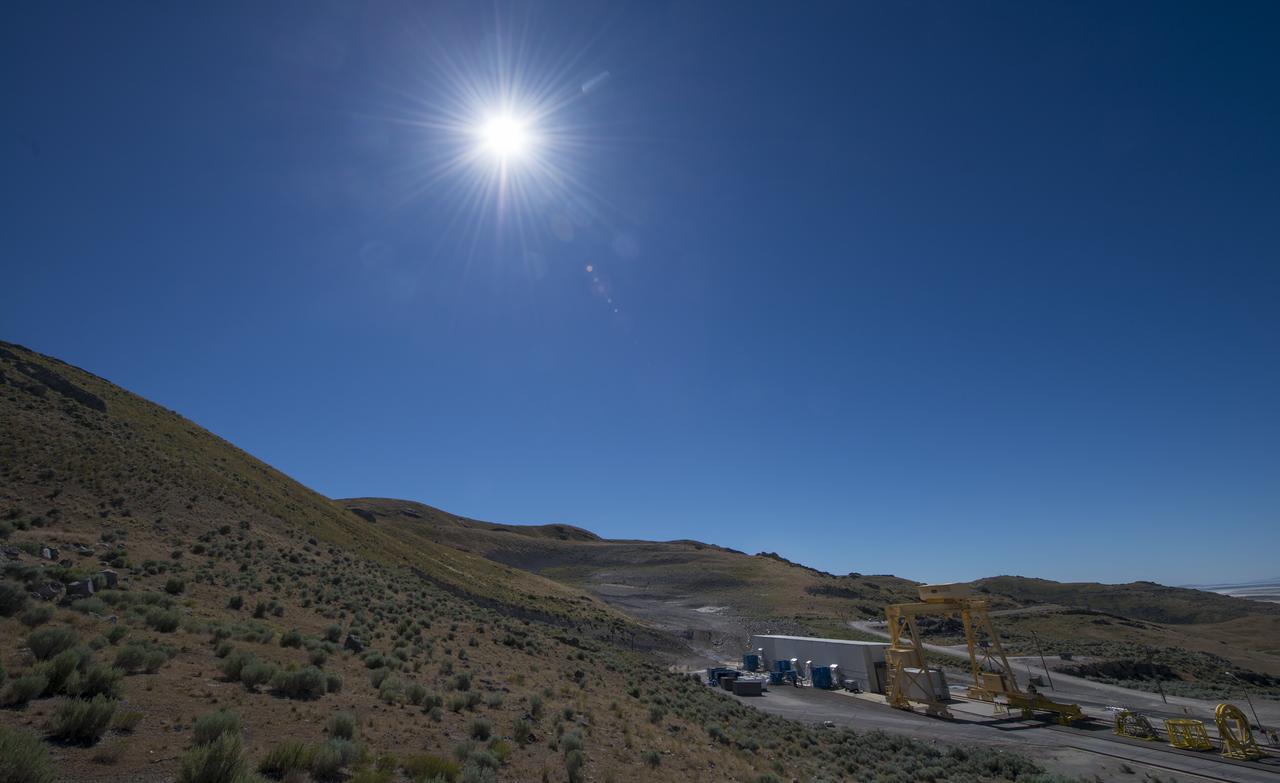
The test area where the second and final qualification motor (QM-2) test for the Space Launch System’s booster is seen Sunday, June 26, 2016, at Orbital ATK Propulsion Systems test facilities in Promontory, Utah. The test is scheduled for Tuesday, June 28 at 10:05 a.m. EDT (8:05 a.m. MDT). Photo Credit: (NASA/Bill Ingalls)
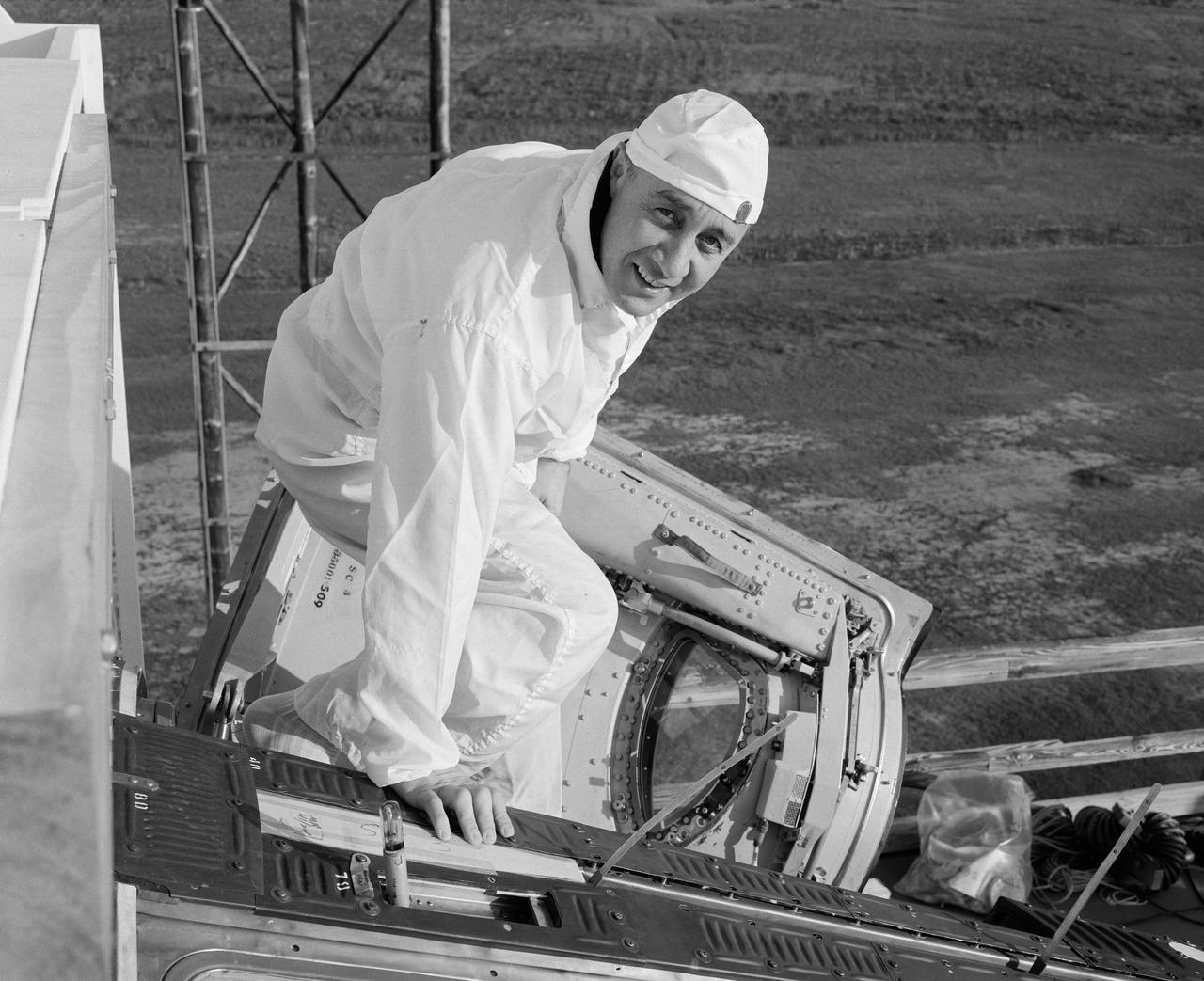
S65-13243 (6 Jan. 1965) --- Astronaut Virgil I. Grissom, Gemini-Titan 3 command pilot, is shown entering the Gemini-3 spacecraft for a communications test at the Merritt Island launch area.
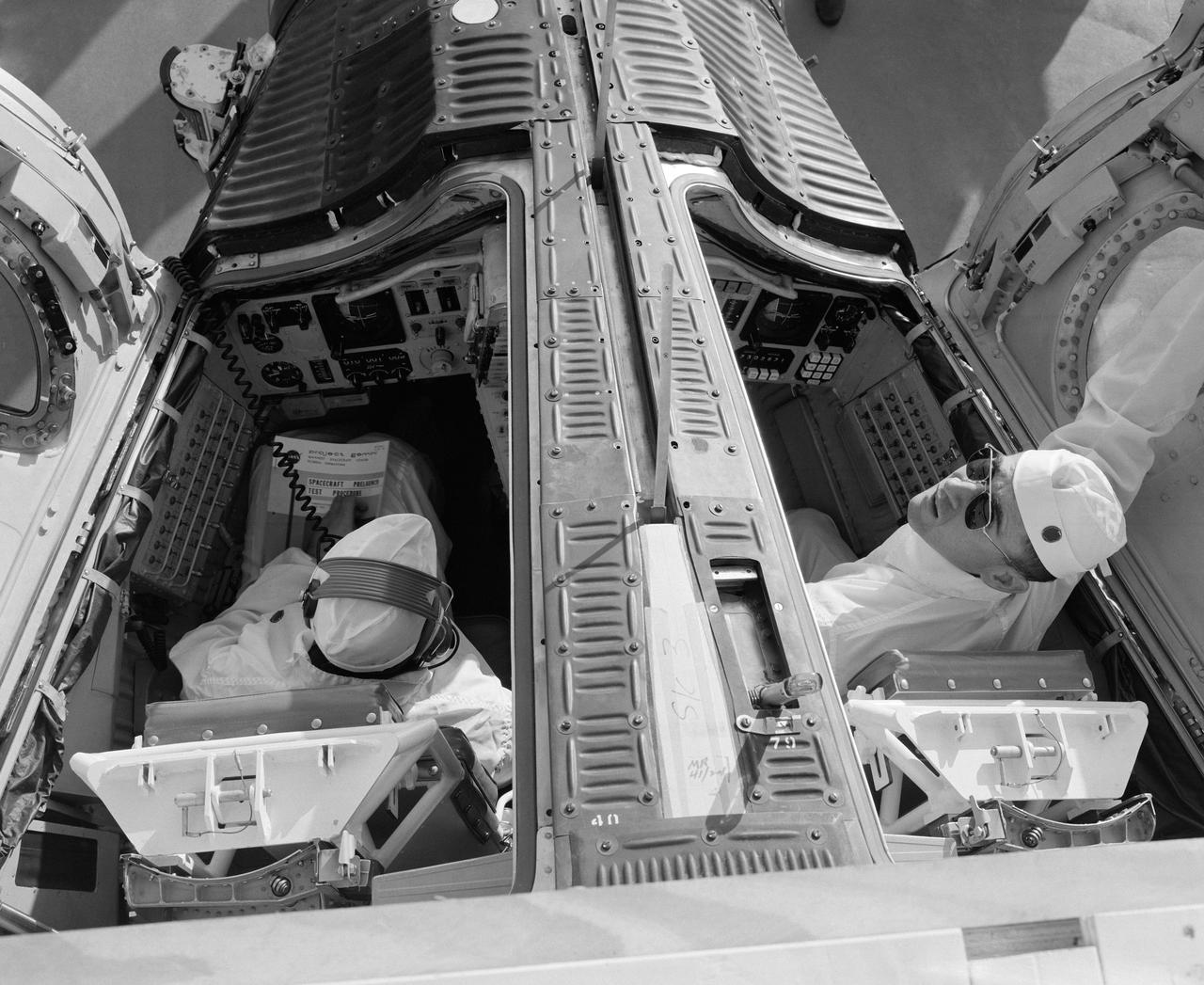
S65-13244 (6 Jan. 1965) --- The Gemini-Titan 3 prime crew, astronauts Virgil I. Grissom (left) and John W. Young, are shown in the Gemini-3 spacecraft during a communications test at the Merritt Island launch area.
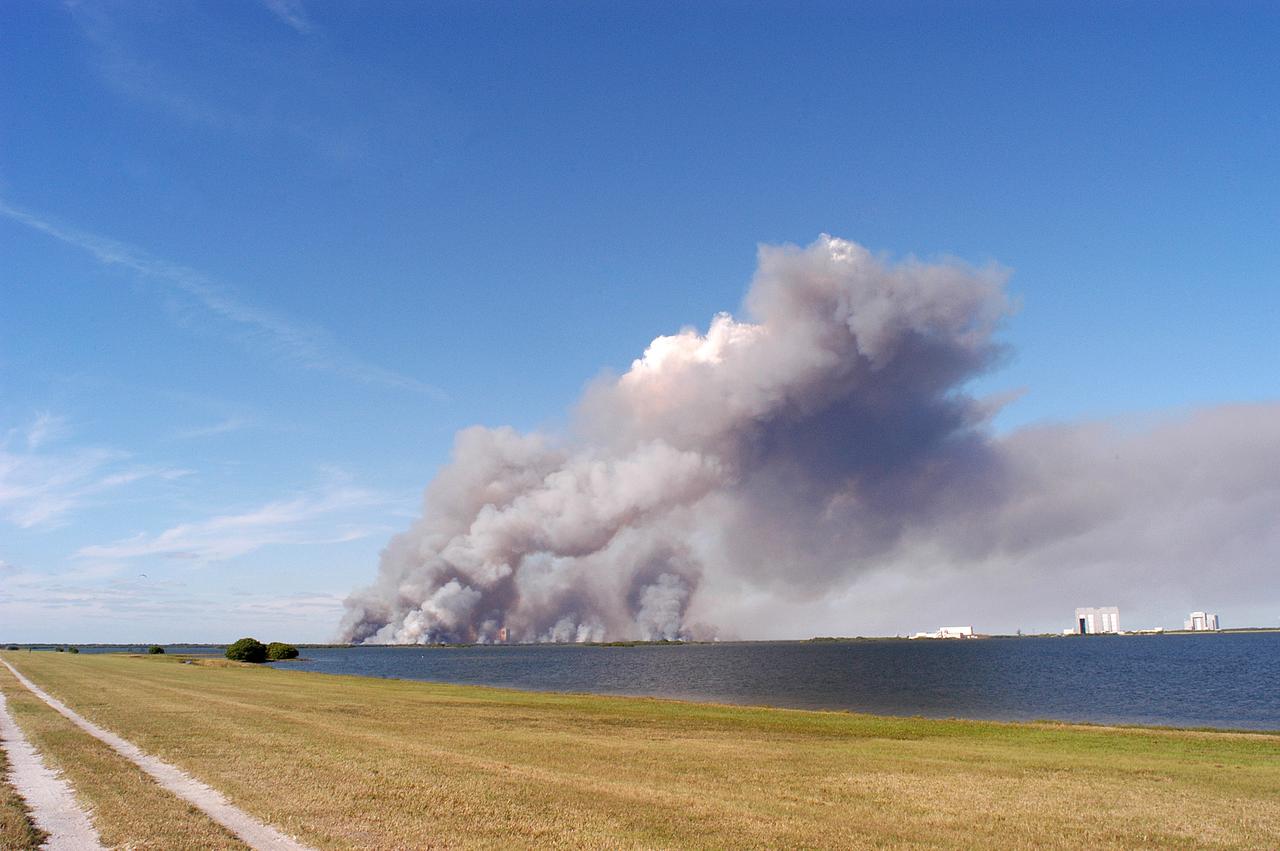
KENNEDY SPACE CENTER, FLA. - A successful controlled burn near KSC’s Launch Complex 39 area creates clouds of smoke in a clear blue sky. The water seen is the Banana River.
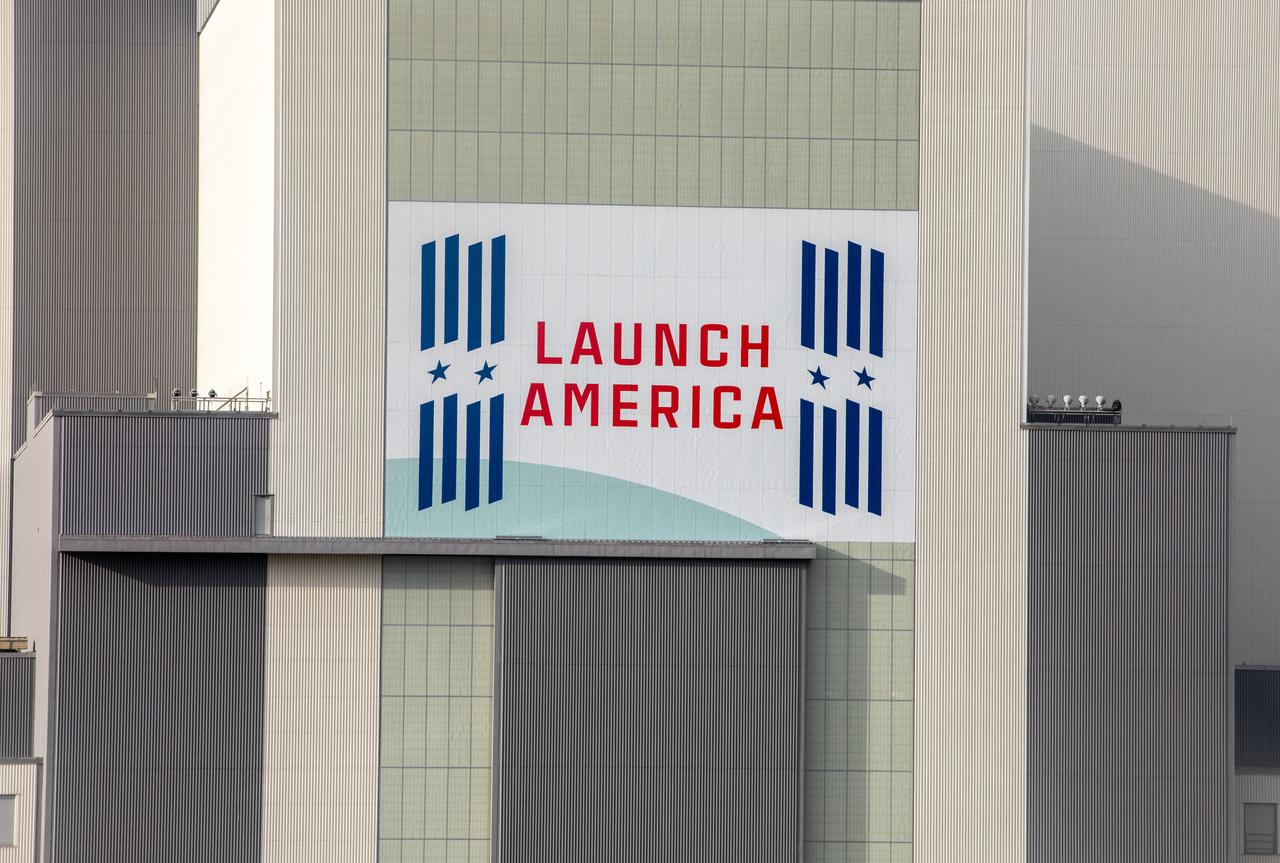
Seen here is the “Launch America” banner for NASA’s Commercial Crew Program (CCP) on the iconic Vehicle Assembly Building at the agency’s Kennedy Space Center in Florida on Oct. 28, 2021. NASA and SpaceX are preparing for Crew-3 – the third crew rotation flight to the International Space Station for CCP – and part of that includes conducting a dress rehearsal ahead of launch. On Oct. 28, NASA’s SpaceX Crew-3 astronauts and launch teams rehearsed countdown operations, concluding with the Go/No-Go poll for Falcon-9 fueling. The Crew-3 mission will carry NASA astronauts Raja Chari, Tom Marshburn, and Kayla Barron, as well as ESA (European Space Agency) astronaut Matthias Maurer to the space station for a six-month stay. SpaceX’s Falcon 9 rocket and Crew Dragon spacecraft are scheduled to lift off from Kennedy’s Launch Complex 39A no earlier than Nov. 6 at 11:36 p.m. EDT.
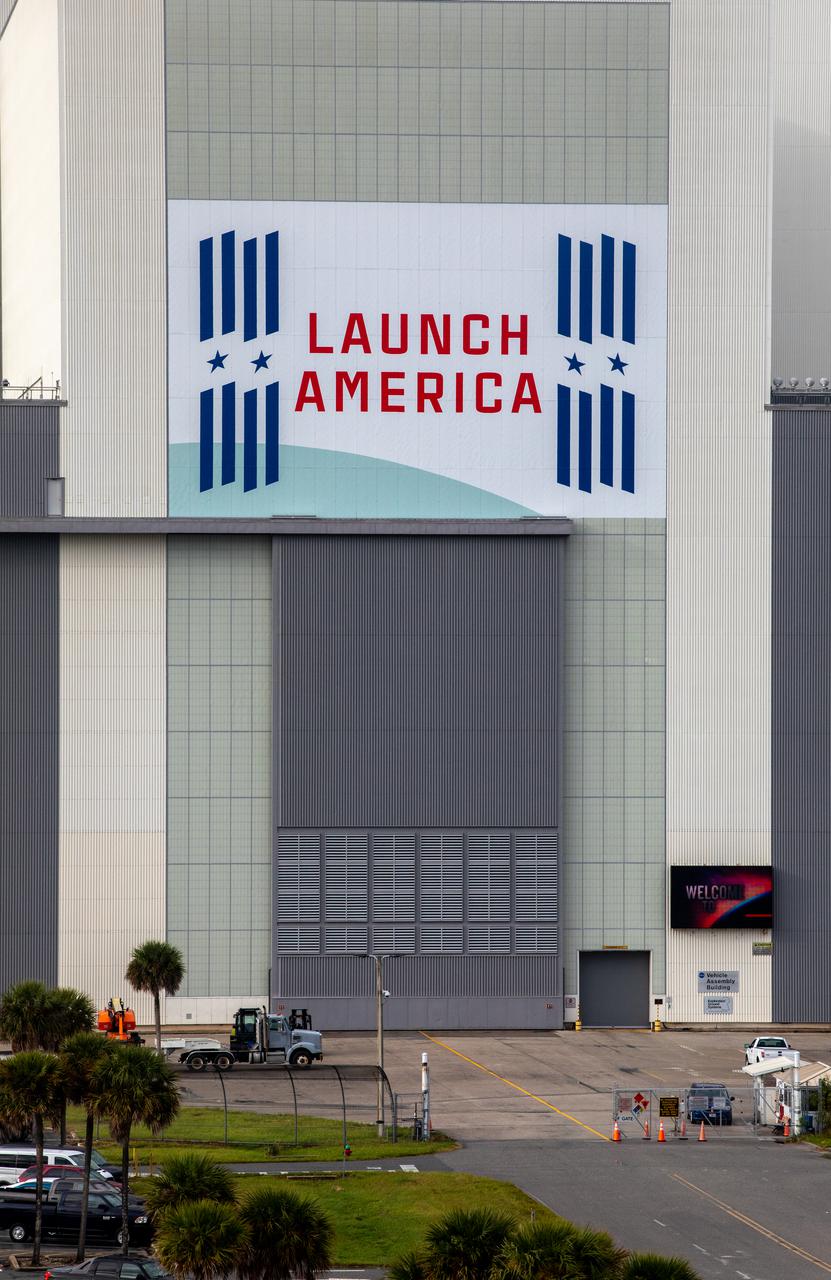
Seen here is the “Launch America” banner for NASA’s Commercial Crew Program (CCP) on the iconic Vehicle Assembly Building at the agency’s Kennedy Space Center in Florida on Oct. 28, 2021. NASA and SpaceX are preparing for Crew-3 – the third crew rotation flight to the International Space Station for CCP – and part of that includes conducting a dress rehearsal ahead of launch. On Oct. 28, NASA’s SpaceX Crew-3 astronauts and launch teams rehearsed countdown operations, concluding with the Go/No-Go poll for Falcon-9 fueling. The Crew-3 mission will carry NASA astronauts Raja Chari, Tom Marshburn, and Kayla Barron, as well as ESA (European Space Agency) astronaut Matthias Maurer to the space station for a six-month stay. SpaceX’s Falcon 9 rocket and Crew Dragon spacecraft are scheduled to lift off from Kennedy’s Launch Complex 39A no earlier than Nov. 6 at 11:36 p.m. EDT.
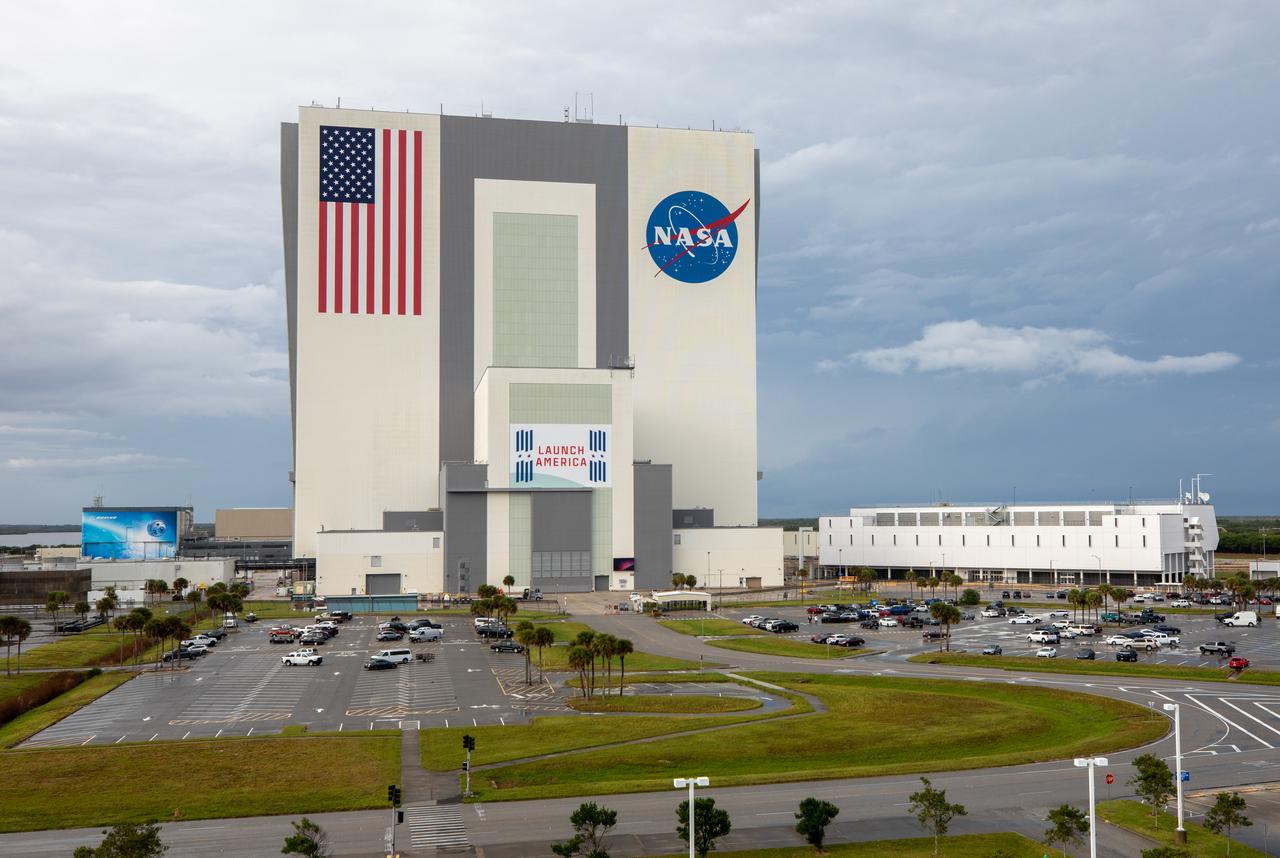
Kennedy Space Center’s iconic Vehicle Assembly Building is photographed just before NASA’s SpaceX Crew-3 astronauts and launch teams participate in a countdown dress rehearsal on Oct. 28, 2021, in preparation for the upcoming Crew-3 launch. The mission will carry NASA astronauts Raja Chari, Tom Marshburn, and Kayla Barron, as well as ESA (European Space Agency) astronaut Matthias Maurer to the International Space Station for a six-month stay. SpaceX’s Falcon 9 rocket and Crew Dragon spacecraft are scheduled to lift off from Kennedy’s Launch Complex 39A in Florida no earlier than Nov. 6 at 11:36 p.m. EDT. Crew-3 is the third crew rotation flight to the space station for NASA’s Commercial Crew Program, and the first flight of a new Crew Dragon spacecraft.
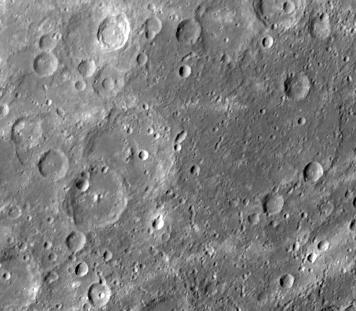
This image, from NASA Mariner 10 spacecraft which launched in 1974, shows intercrater plains and heavily cratered terrain typical of much of Mercury outside the area affected by the formation of the Caloris basin.
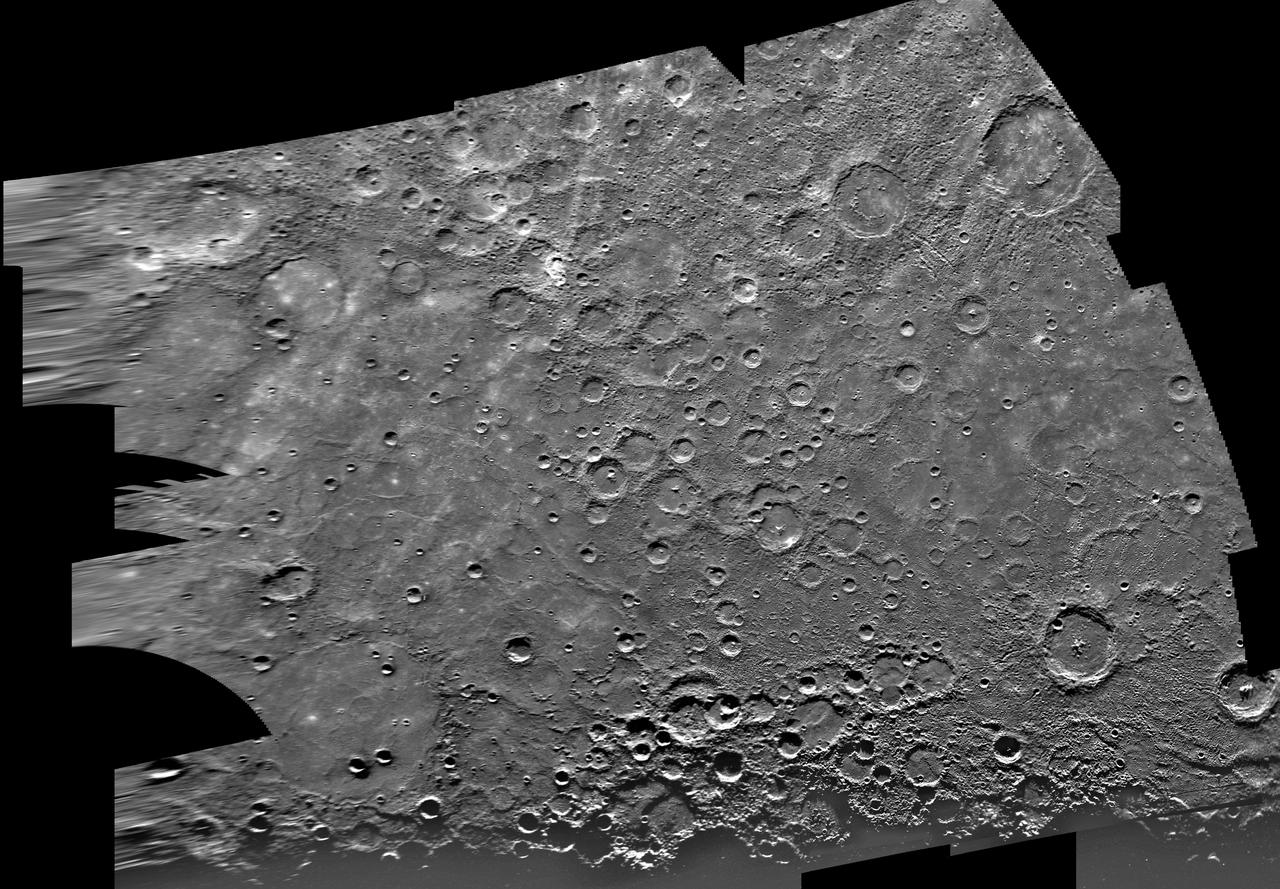
This image, from NASA Mariner 10 spacecraft which launched in 1974, is of the Borealis area H-1, located in Mercury northern hemisphere. The north pole is visible at the top of the image.
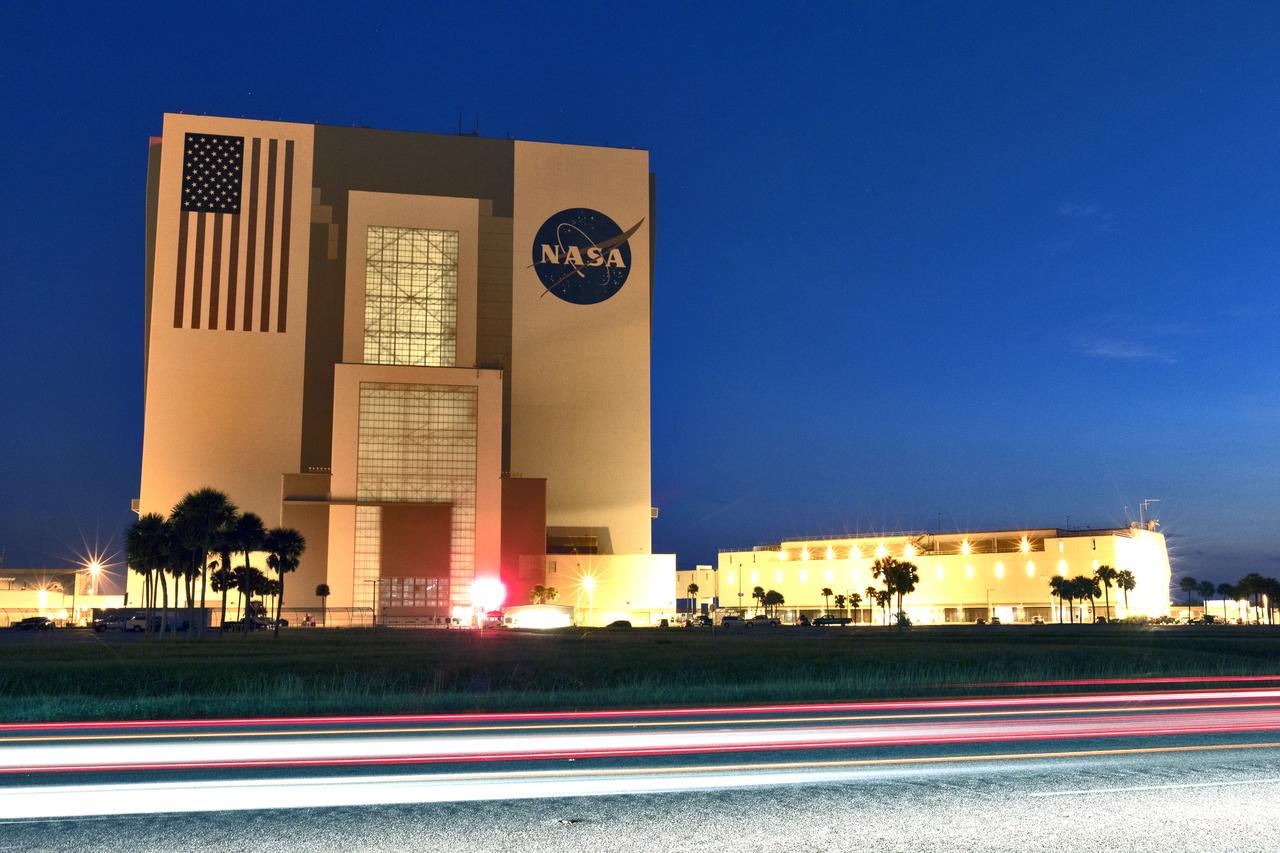
A sunrise time-lapse panoramic view of the iconic Vehicle Assembly Building (VAB) and Launch Control Center at NASA's Kennedy Space Center in Florida. Ten levels of work platforms have been installed in High Bay 3 of the VAB. They will surround and provide access for service and processing of NASA's Space Launch System (SLS) rocket and Orion spacecraft. Exploration Ground Systems oversaw the upgrades and installation of the new work platforms to support the launch of the SLS and Orion on Exploration Mission-1 and deep space missions.
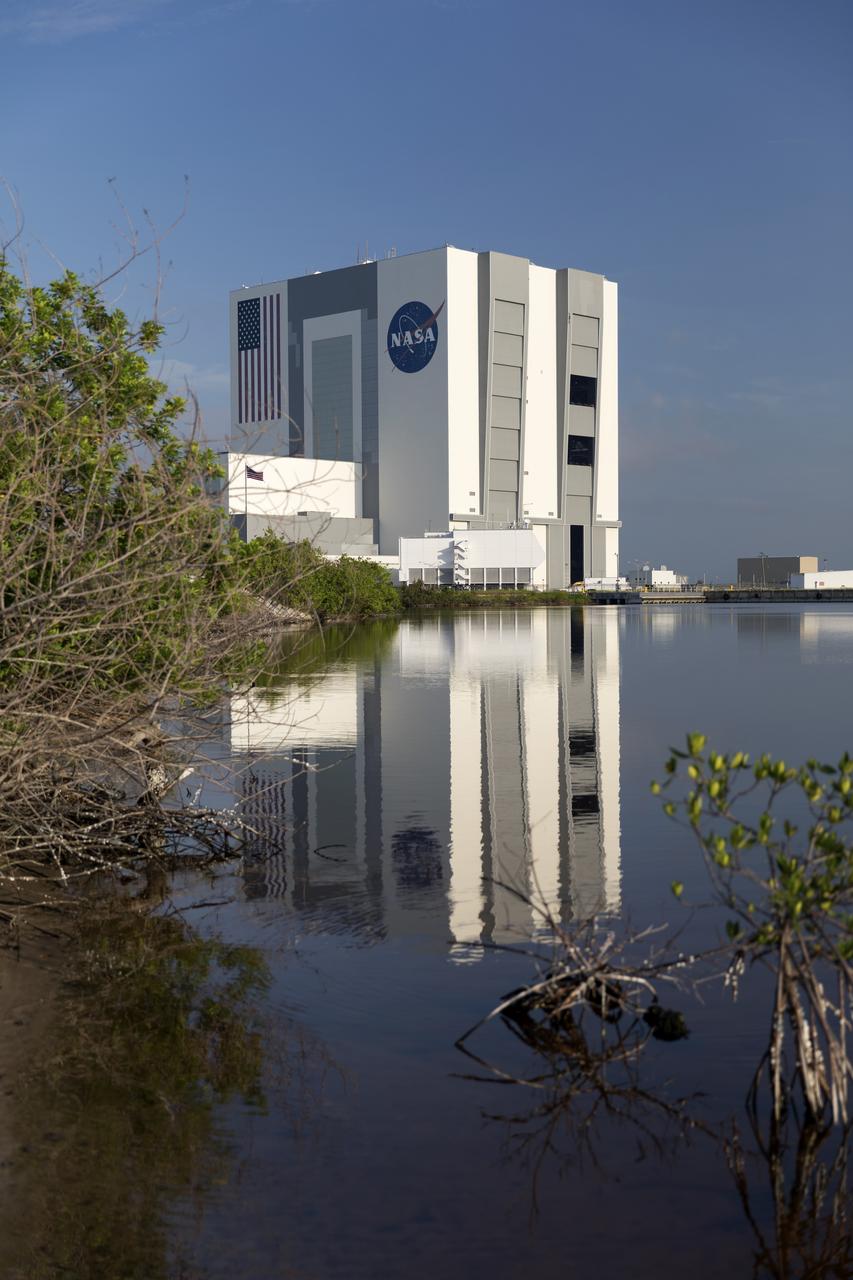
A brilliant blue sky forms the backdrop for a view of the south and east sides of the iconic Vehicle Assembly Building (VAB) at NASA's Kennedy Space Center in Florida. Exploration Ground Systems oversaw the upgrades. The building casts a reflection in a surrounding waterway. Ten levels of new work platforms have been installed in VAB High Bay 3. They will surround and provide access for service and processing of NASA's Space Launch System (SLS) rocket and Orion spacecraft. Exploration Ground Systems oversaw the upgrades and installation of the new work platforms to support the launch of the SLS and Orion on Exploration Mission-1 and deep space missions.
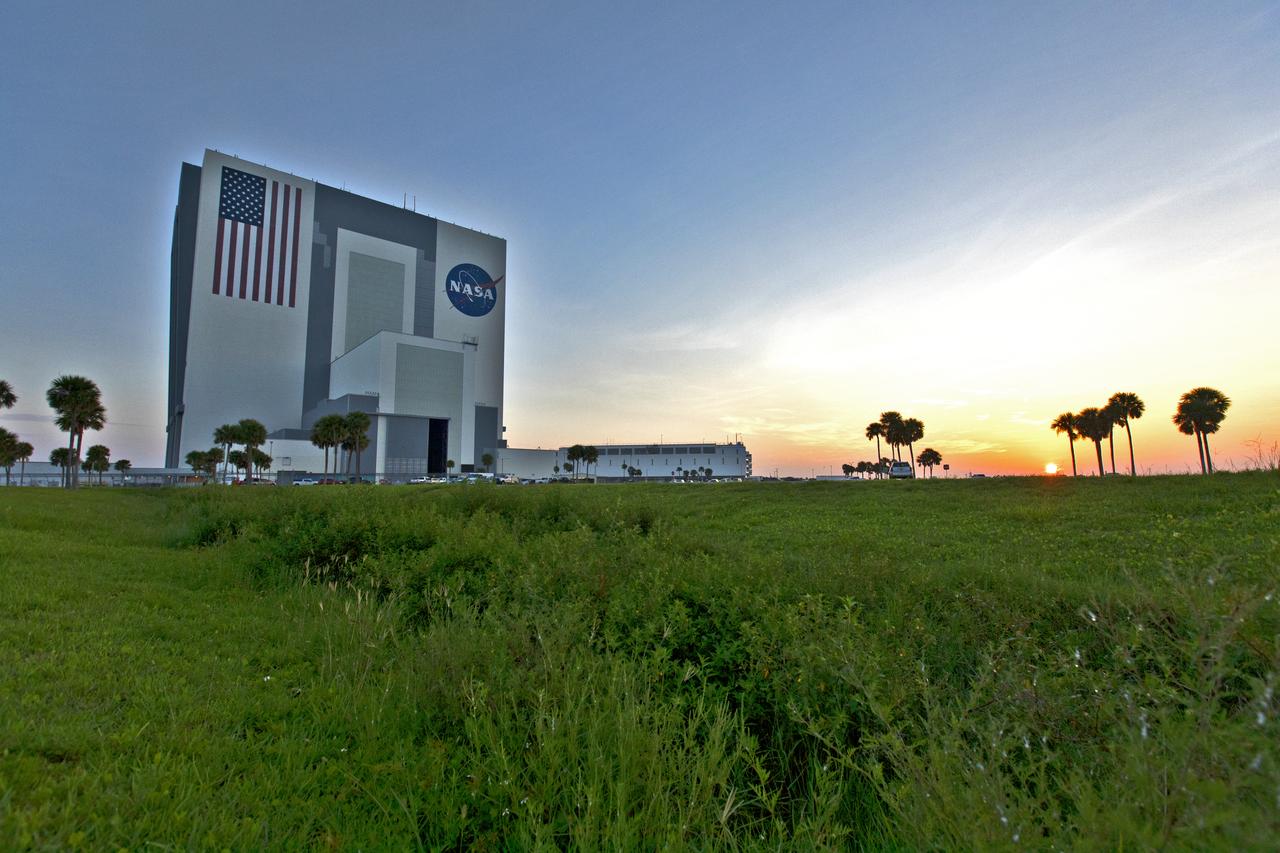
A sunrise panoramic view of the iconic Vehicle Assembly Building (VAB) and Launch Control Center at NASA's Kennedy Space Center in Florida. Ten levels of work platforms have been installed in High Bay 3 of the VAB. They will surround and provide access for service and processing of NASA's Space Launch System (SLS) rocket and Orion spacecraft. Exploration Ground Systems oversaw the upgrades and installation of the new work platforms to support the launch of the SLS and Orion on Exploration Mission-1 and deep space missions.
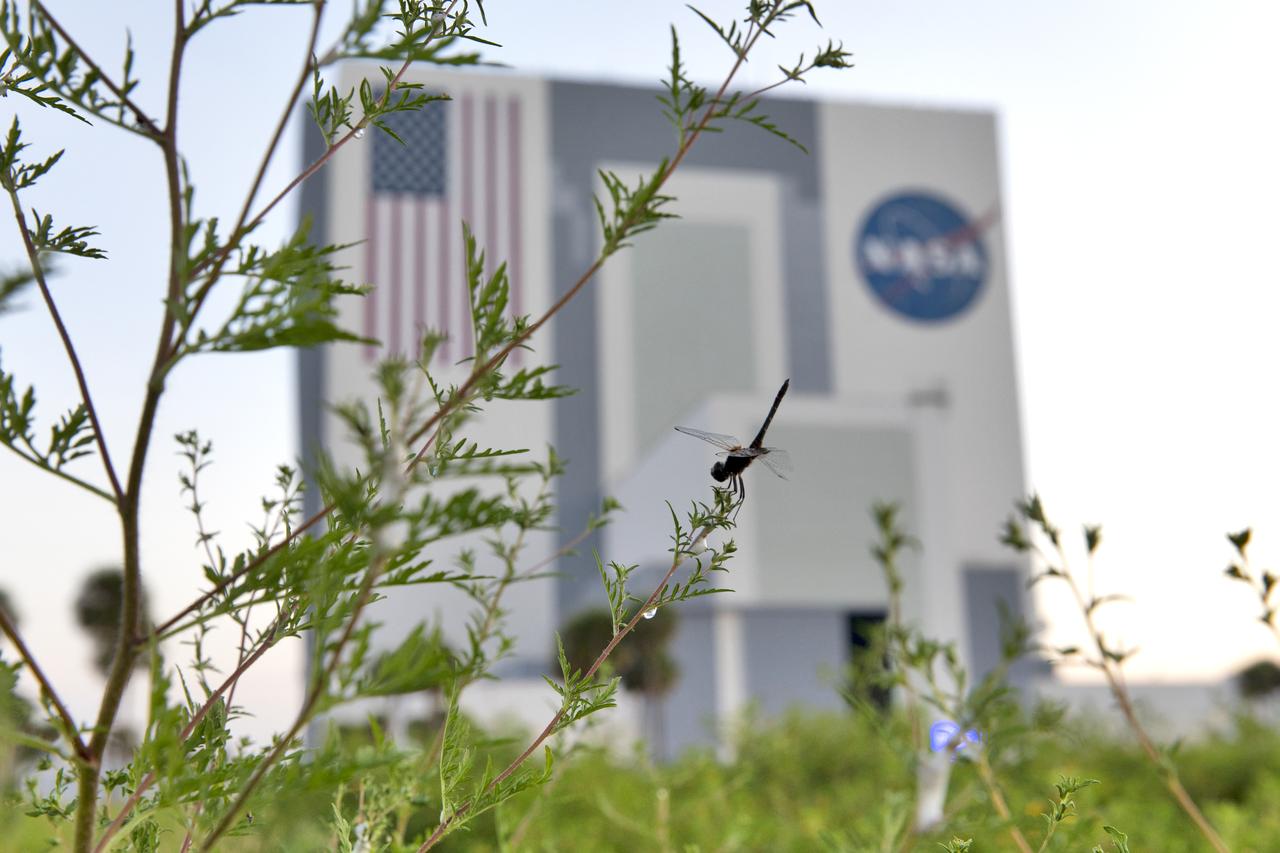
A dragonfly perches on a tree branch with the iconic Vehicle Assembly Building (VAB) in view in the background at NASA's Kennedy Space Center in Florida. Ten levels of new work platforms have been installed in VAB High Bay 3. They will surround and provide access for service and processing of NASA's Space Launch System (SLS) rocket and Orion spacecraft. Exploration Ground Systems oversaw the upgrades and installation of the new work platforms to support the launch of the SLS and Orion on Exploration Mission-1 and deep space missions.
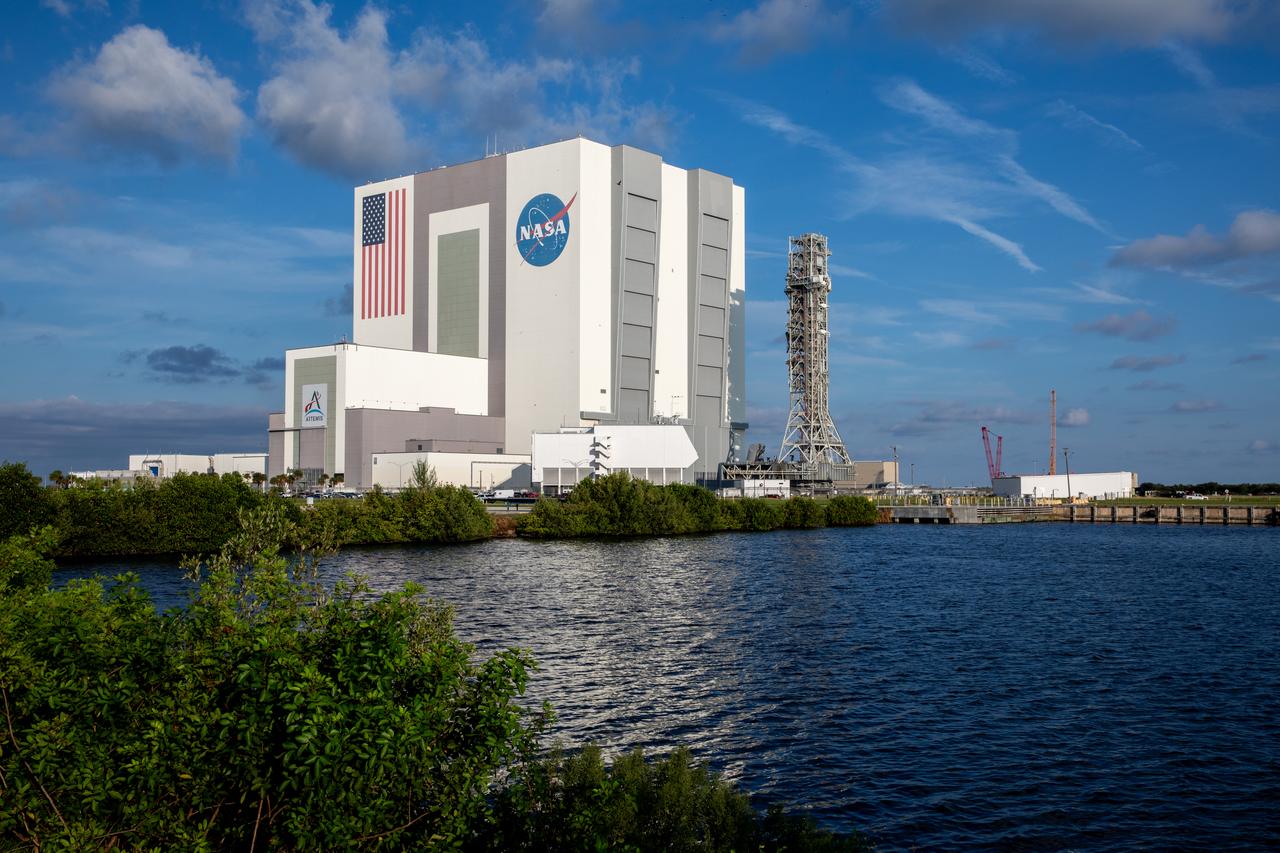
Teams with NASA’s Exploration Ground Systems Program transport the 380-foot-tall mobile launcher 1 along a 4.2-mile stretch to the iconic Vehicle Assembly Building at NASA’s Kennedy Space Center in Florida on Thursday, Oct. 3, 2024. The crawler transporter recently reached 2,500 miles traveling to the launch pad since its construction in 1965. The mobile launcher has been at Launch Complex 39B since August 2023 undergoing upgrades and tests in preparation for NASA’s Artemis II mission. The mobile launcher will be used to assemble, process, and launch NASA’s SLS (Space Launch Systems) and Orion spacecraft to the Moon and beyond.
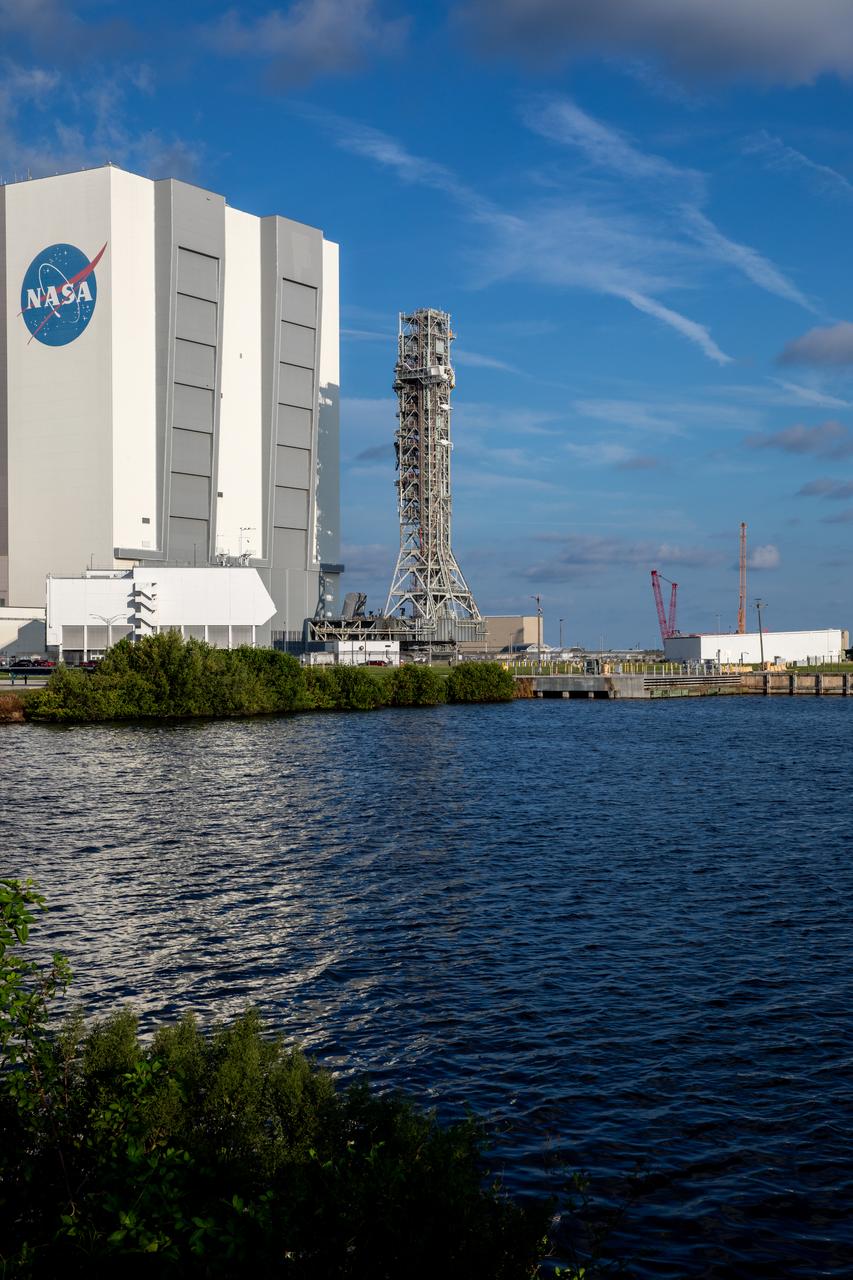
Teams with NASA’s Exploration Ground Systems Program transport the 380-foot-tall mobile launcher 1 along a 4.2-mile stretch to the iconic Vehicle Assembly Building at NASA’s Kennedy Space Center in Florida on Thursday, Oct. 3, 2024. The crawler transporter recently reached 2,500 miles traveling to the launch pad since its construction in 1965. The mobile launcher has been at Launch Complex 39B since August 2023 undergoing upgrades and tests in preparation for NASA’s Artemis II mission. The mobile launcher will be used to assemble, process, and launch NASA’s SLS (Space Launch Systems) and Orion spacecraft to the Moon and beyond.
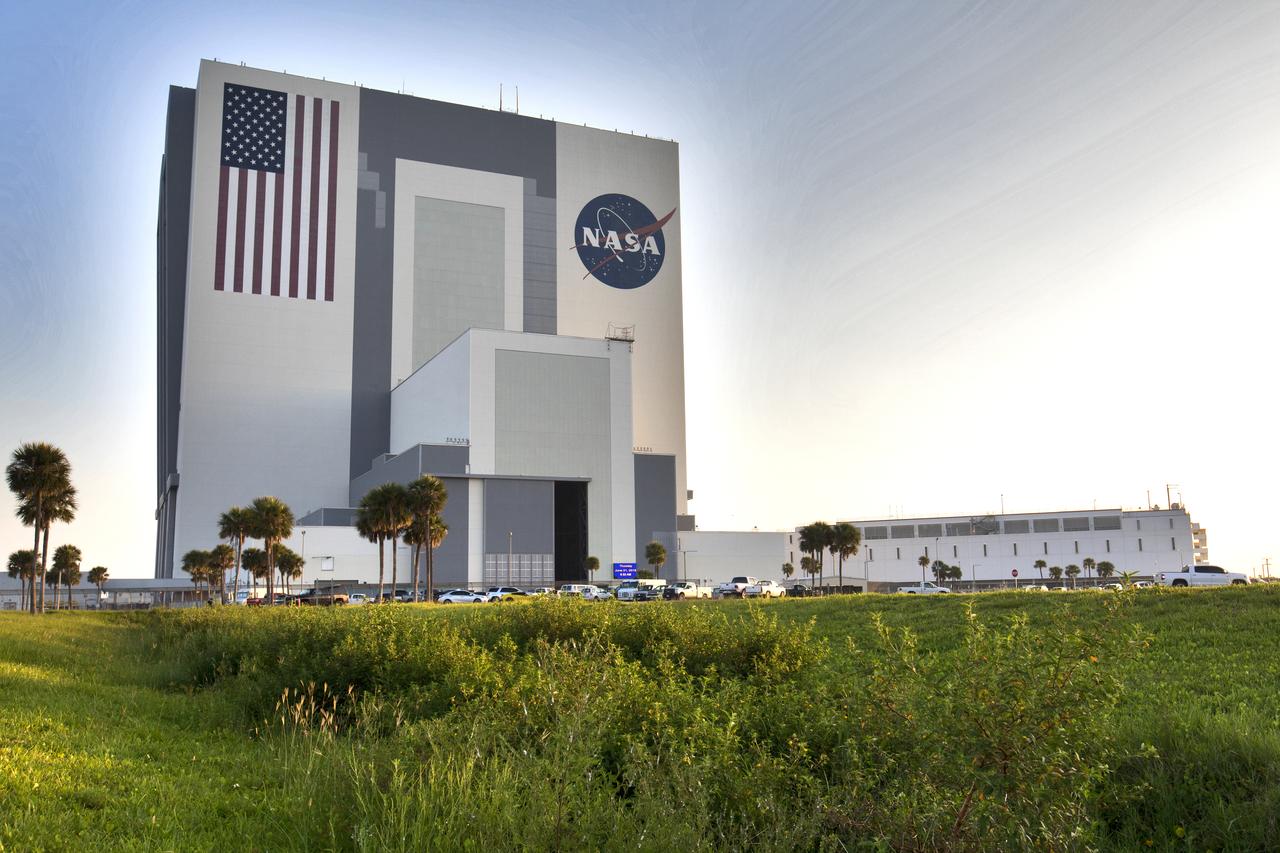
A brilliant blue sky forms the background for a panoramic view of the iconic Vehicle Assembly Building (VAB) and Launch Control Center at NASA's Kennedy Space Center in Florida. Ten levels of work platforms have been installed in High Bay 3 of the VAB. They will surround and provide access for service and processing of NASA's Space Launch System (SLS) rocket and Orion spacecraft. Exploration Ground Systems oversaw the upgrades and installation of the new work platforms to support the launch of the SLS and Orion on Exploration Mission-1 and deep space missions.
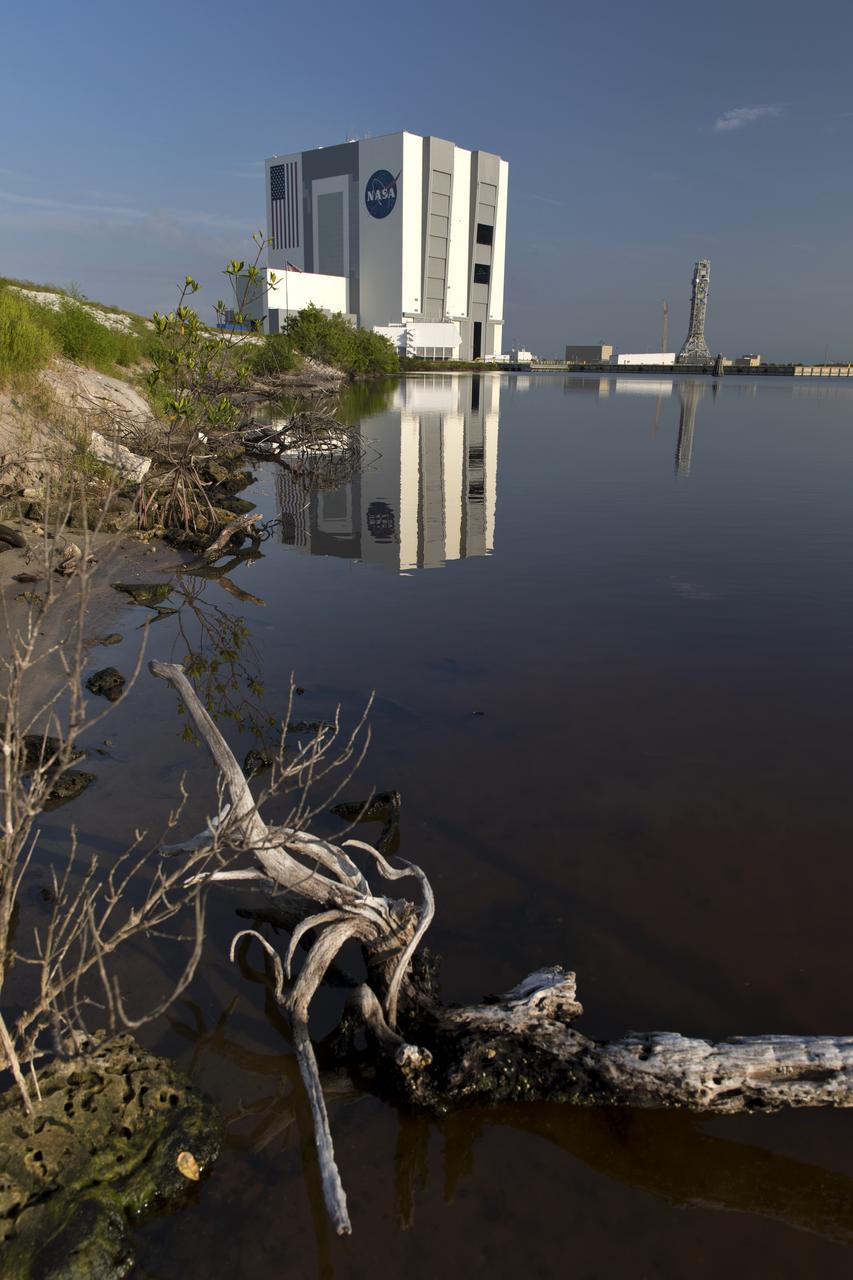
The iconic Vehicle Assembly Building (VAB) casts a reflection in a surrounding waterway at NASA's Kennedy Space Center in Florida. In view are the south and east sides of the building. Ten levels of new work platforms have been installed in VAB High Bay 3. They will surround and provide access for service and processing of NASA's Space Launch System (SLS) rocket and Orion spacecraft. Exploration Ground Systems oversaw the upgrades and installation of the new work platforms to support the launch of the SLS and Orion on Exploration Mission-1 and deep space missions.
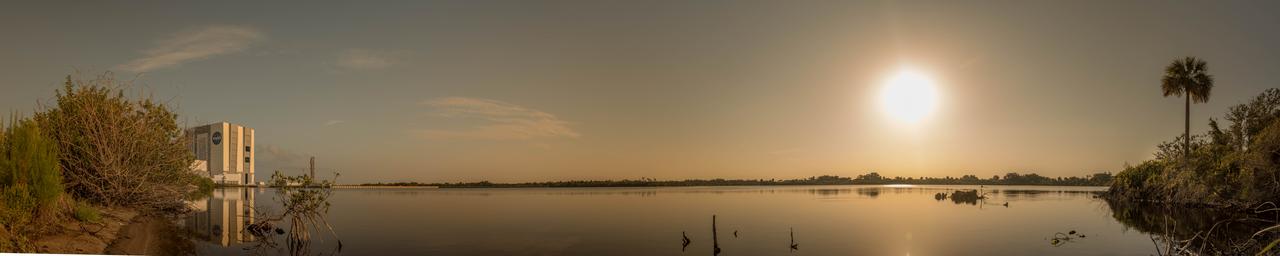
A sunrise panoramic view of the iconic Vehicle Assembly Building (VAB) and surrounding waterways at NASA's Kennedy Space Center in Florida. Ten levels of new work platforms have been installed in VAB High Bay 3. They will surround and provide access for service and processing of NASA's Space Launch System (SLS) rocket and Orion spacecraft. Exploration Ground Systems oversaw the upgrades and installation of the new work platforms to support the launch of the SLS and Orion on Exploration Mission-1 and deep space missions.

Teams with NASA’s Exploration Ground Systems Program transport the 380-foot-tall mobile launcher 1 along a 4.2-mile stretch to the iconic Vehicle Assembly Building at NASA’s Kennedy Space Center in Florida on Thursday, Oct. 3, 2024. The crawler transporter recently reached 2,500 miles traveling to the launch pad since its construction in 1965. The mobile launcher has been at Launch Complex 39B since August 2023 undergoing upgrades and tests in preparation for NASA’s Artemis II mission. The mobile launcher will be used to assemble, process, and launch NASA’s SLS (Space Launch Systems) and Orion spacecraft to the Moon and beyond.
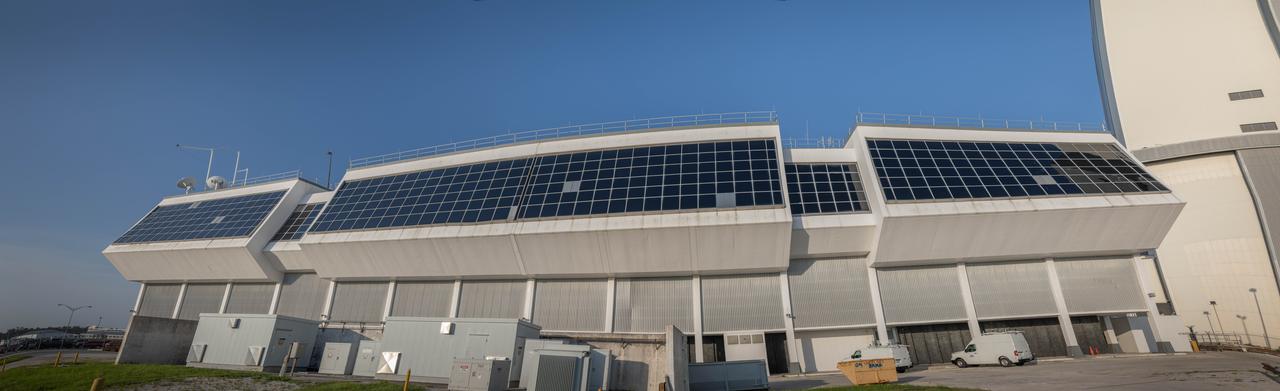
A brilliant blue sky forms the backdrop for a fish-eye panoramic view of the south side of the Launch Control Center (LCC) at NASA's Kennedy Space Center in Florida. Firing Room 1 inside the LCC has been completely upgraded and modernized to support the testing, processing, countdown and launch of NASA's Space Launch System (SLS) rocket and Orion spacecraft on Exploration Mission-1 and deep space mission. Exploration Ground Systems oversaw the upgrades.

Teams with NASA’s Exploration Ground Systems Program transport the 380-foot-tall mobile launcher 1 along a 4.2-mile stretch to the iconic Vehicle Assembly Building at NASA’s Kennedy Space Center in Florida on Thursday, Oct. 3, 2024. The crawler transporter recently reached 2,500 miles traveling to the launch pad since its construction in 1965. The mobile launcher has been at Launch Complex 39B since August 2023 undergoing upgrades and tests in preparation for NASA’s Artemis II mission. The mobile launcher will be used to assemble, process, and launch NASA’s SLS (Space Launch Systems) and Orion spacecraft to the Moon and beyond.
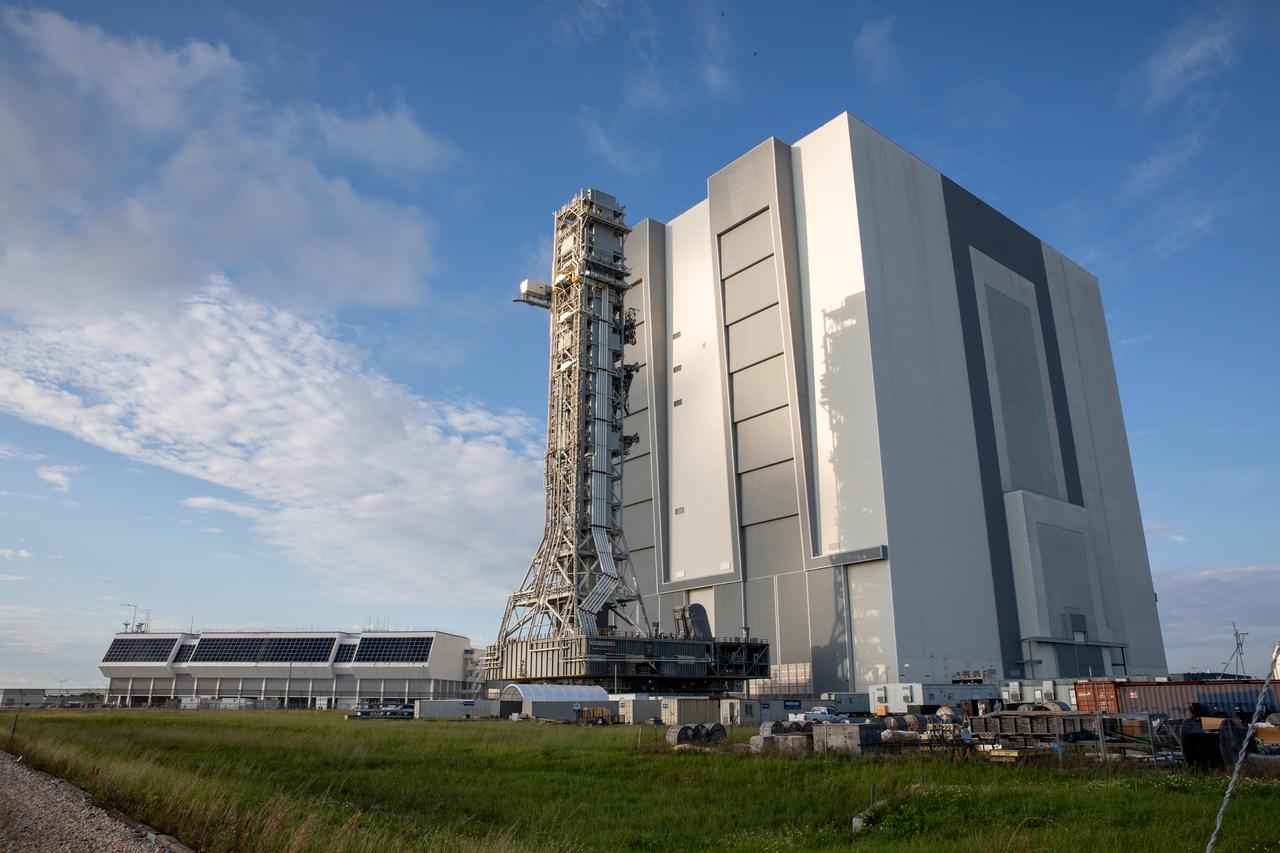
Teams with NASA’s Exploration Ground Systems Program transport the 380-foot-tall mobile launcher 1 along a 4.2-mile stretch to the iconic Vehicle Assembly Building at NASA’s Kennedy Space Center in Florida on Thursday, Oct. 3, 2024. The crawler transporter recently reached 2,500 miles traveling to the launch pad since its construction in 1965. The mobile launcher has been at Launch Complex 39B since August 2023 undergoing upgrades and tests in preparation for NASA’s Artemis II mission. The mobile launcher will be used to assemble, process, and launch NASA’s SLS (Space Launch Systems) and Orion spacecraft to the Moon and beyond.
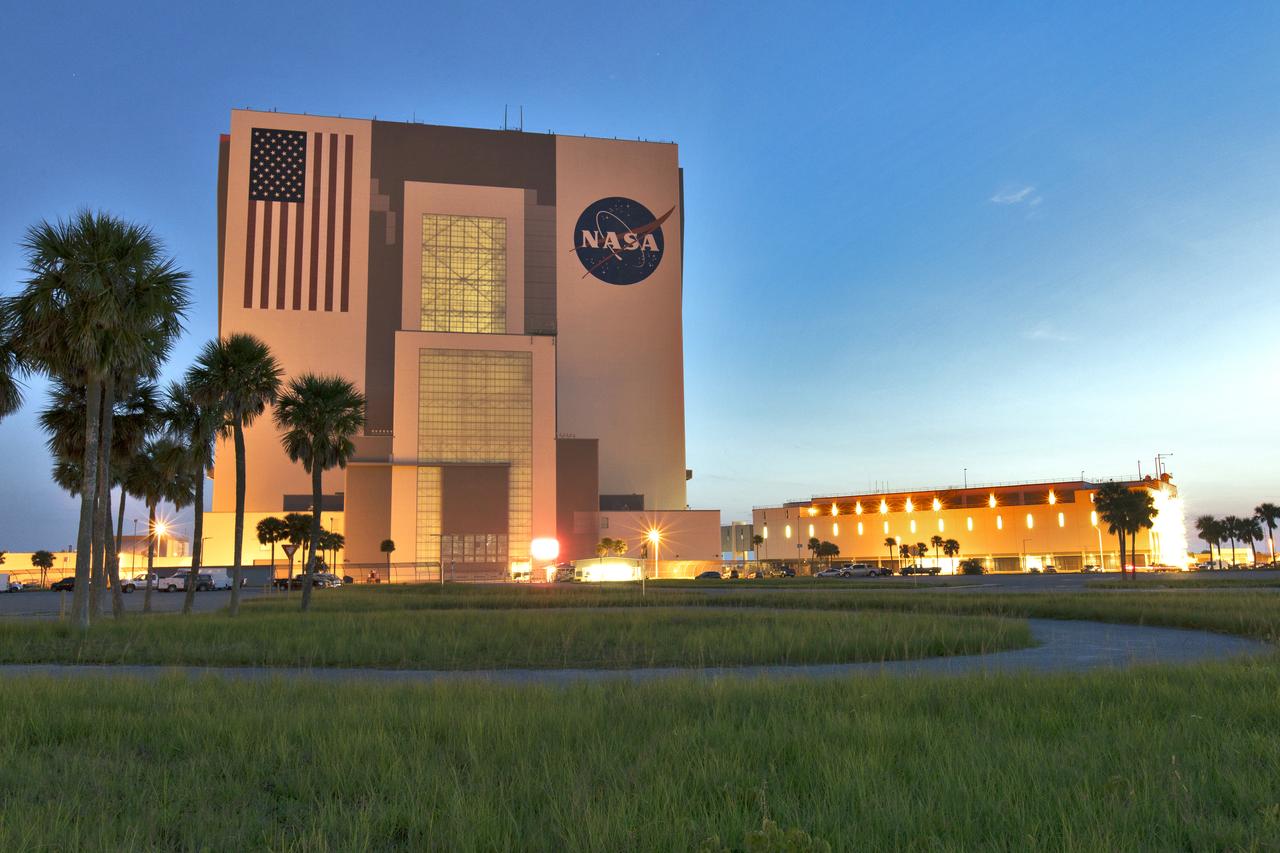
A sunrise panoramic view of the iconic Vehicle Assembly Building (VAB) and Launch Control Center at NASA's Kennedy Space Center in Florida. Ten levels of work platforms have been installed in High Bay 3 of the VAB. They will surround and provide access for service and processing of NASA's Space Launch System (SLS) rocket and Orion spacecraft. Exploration Ground Systems oversaw the upgrades and installation of the new work platforms to support the launch of the SLS and Orion on Exploration Mission-1 and deep space missions.
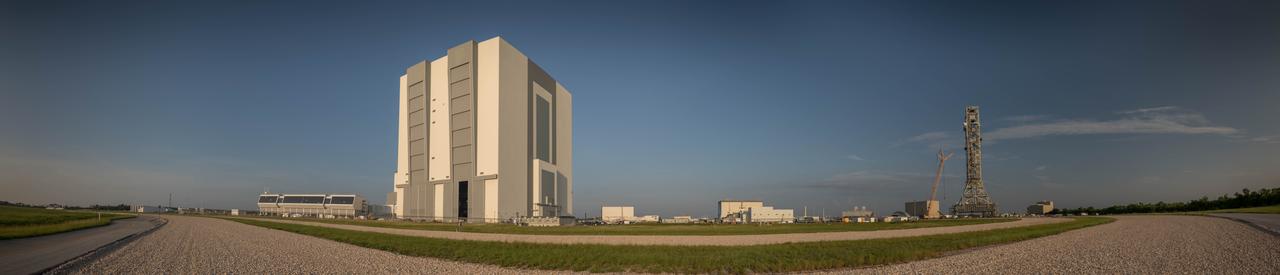
A brilliant blue sky forms the backdrop for a fish-eye panoramic view of the south side of the iconic Vehicle Assembly Building (VAB) and Launch Control Center at NASA's Kennedy Space Center in Florida. Ten levels of new work platforms have been installed in VAB High Bay 3. They will surround and provide access for service and processing of NASA's Space Launch System (SLS) rocket and Orion spacecraft. Exploration Ground Systems oversaw the upgrades and installation of the new work platforms to support the launch of the SLS and Orion on Exploration Mission-1 (EM-1) and deep space missions. At left is the Launch Control Center, where Firing Room 1 has been upgraded to support EM-1.
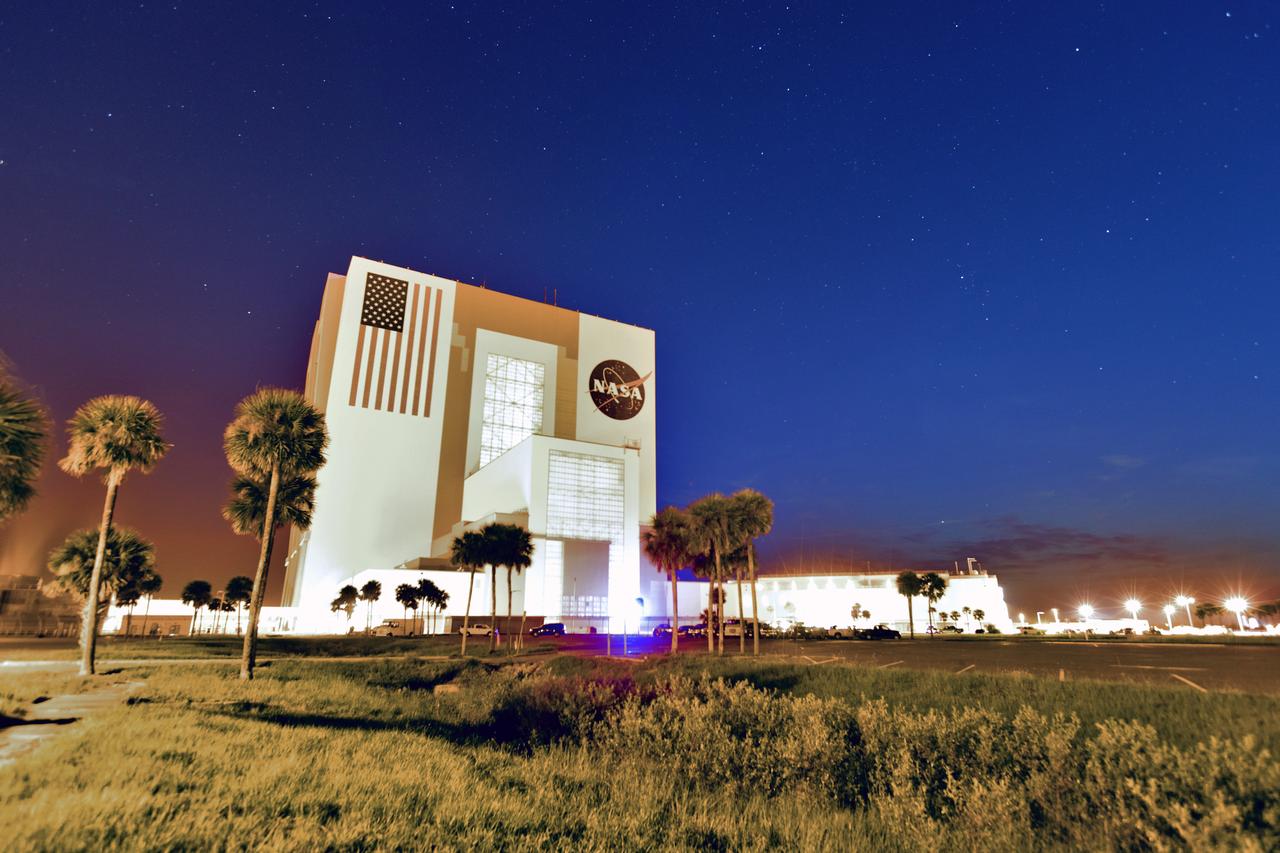
A sunrise creative view of the iconic Vehicle Assembly Building (VAB) and Launch Control Center at NASA's Kennedy Space Center in Florida. Ten levels of work platforms have been installed in High Bay 3 of the VAB. They will surround and provide access for service and processing of NASA's Space Launch System (SLS) rocket and Orion spacecraft. Exploration Ground Systems oversaw the upgrades and installation of the new work platforms to support the launch of the SLS and Orion on Exploration Mission-1 and deep space missions.
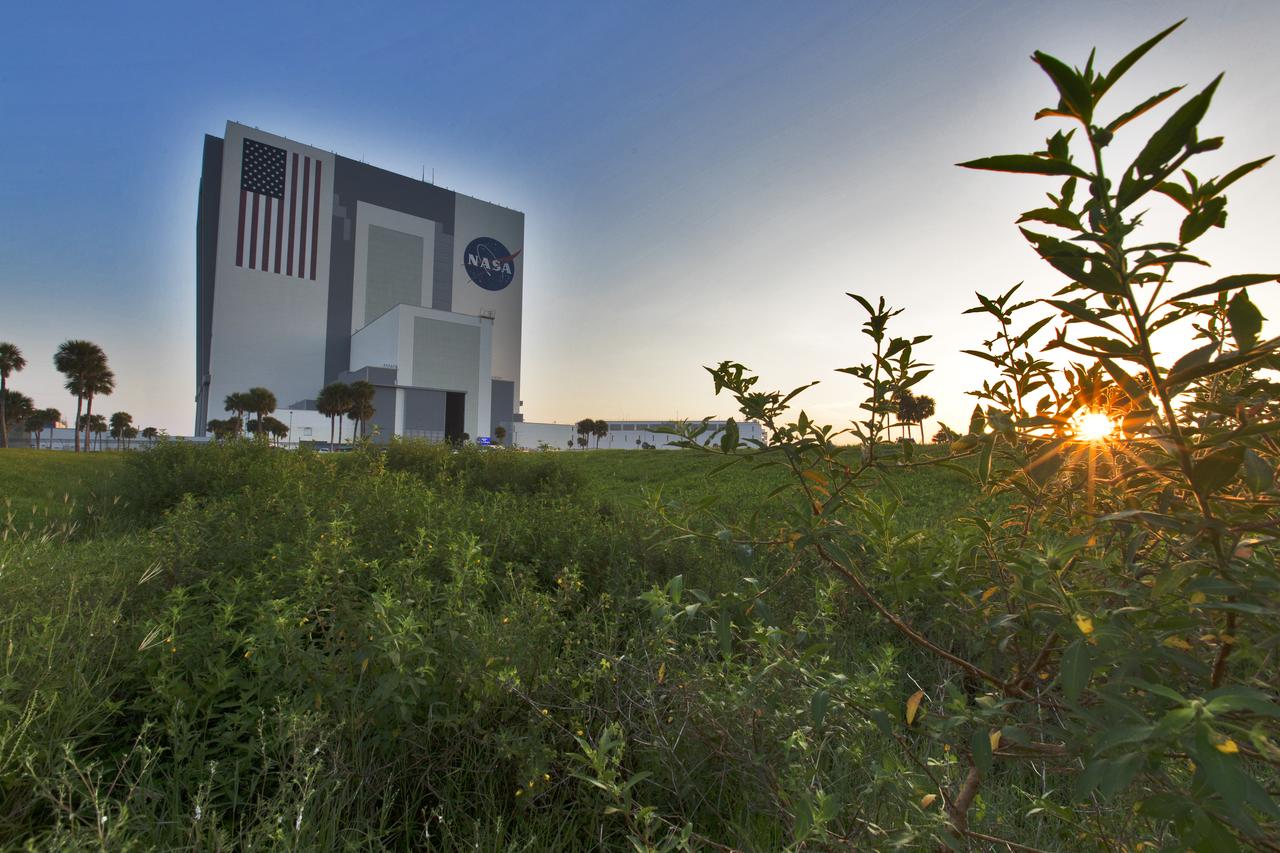
A sunrise panoramic view of the iconic Vehicle Assembly Building (VAB) at NASA's Kennedy Space Center in Florida. Ten levels of work platforms have been installed in High Bay 3 of the VAB. They will surround and provide access for service and processing of NASA's Space Launch System (SLS) rocket and Orion spacecraft. Exploration Ground Systems oversaw the upgrades and installation of the new work platforms to support the launch of the SLS and Orion on Exploration Mission-1 and deep space missions.
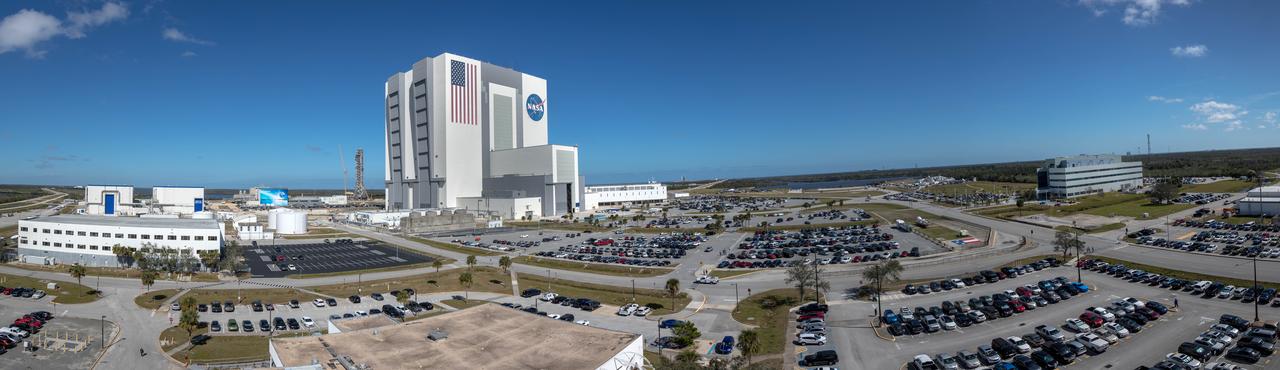
A brilliant blue sky serves as the backdrop for a panoramic view of the iconic Vehicle Assembly Building, mobile launcher at left, and Launch Control Center at right, at NASA's Kennedy Space Center in Florida. These facilities are being upgraded for NASA's Space Launch System and Orion spacecraft for launches to deep space destinations, including the Moon, Mars and beyond.

Teams at NASA’s Michoud Assembly Facility in New Orleans move a liquid hydrogen tank for the agency’s SLS (Space Launch System) rocket into the factory’s final assembly area on April 22. Having recently completed application of the thermal protection system, teams will now continue outfitting the 130-foot-tall tank with critical systems to ready it for its designated Artemis III mission. The propellant tank is one of five major elements that make up the 212-foot-tall rocket stage. The core stage, along with its four RS-25 engines, produce more than two million pounds of thrust to help launch NASA’s Orion spacecraft, astronauts, and supplies beyond Earth’s orbit and to the lunar surface for Artemis.
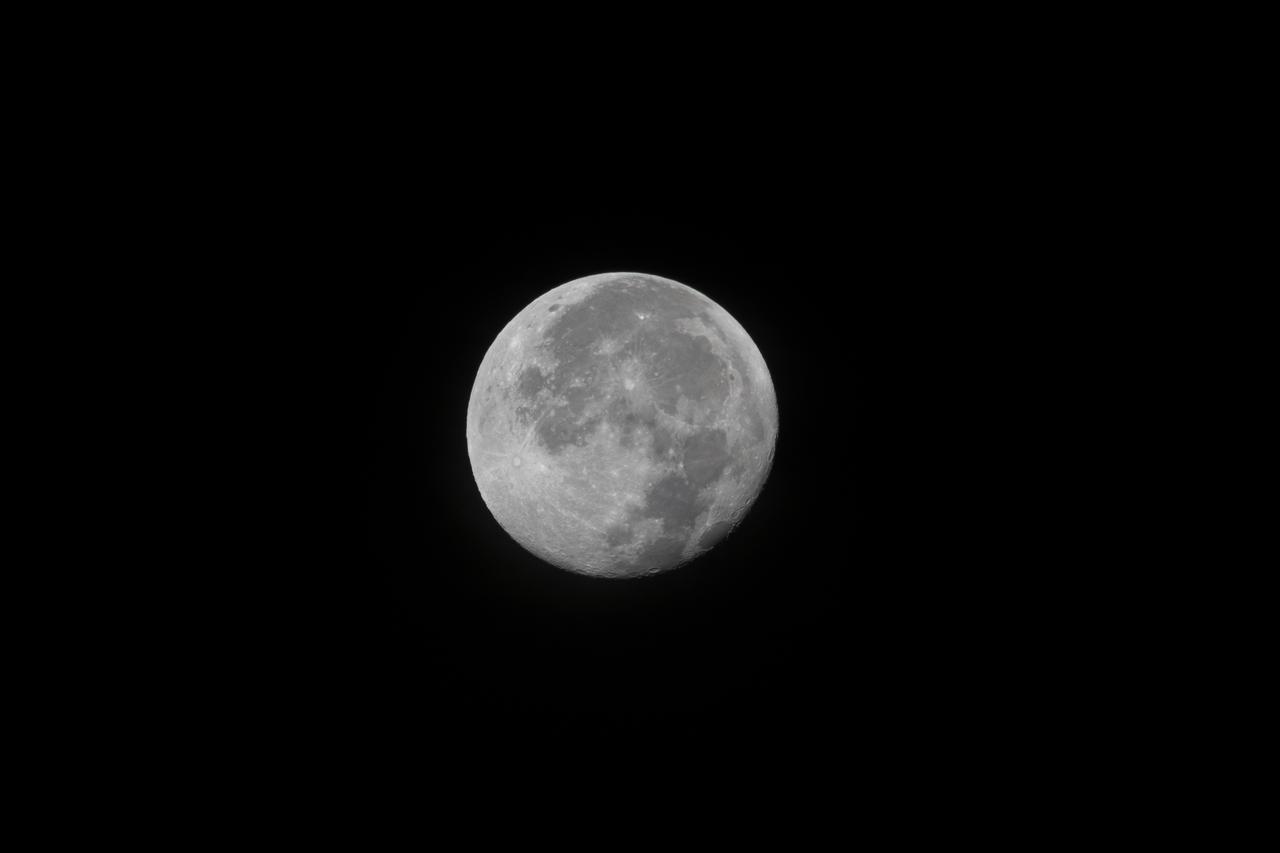
A brilliant full moon rises over the Launch Complex 39 area at NASA's Kennedy Space Center in Florida. A brilliant full moon rises over the Launch Complex 39 area at NASA's Kennedy Space Center in Florida.
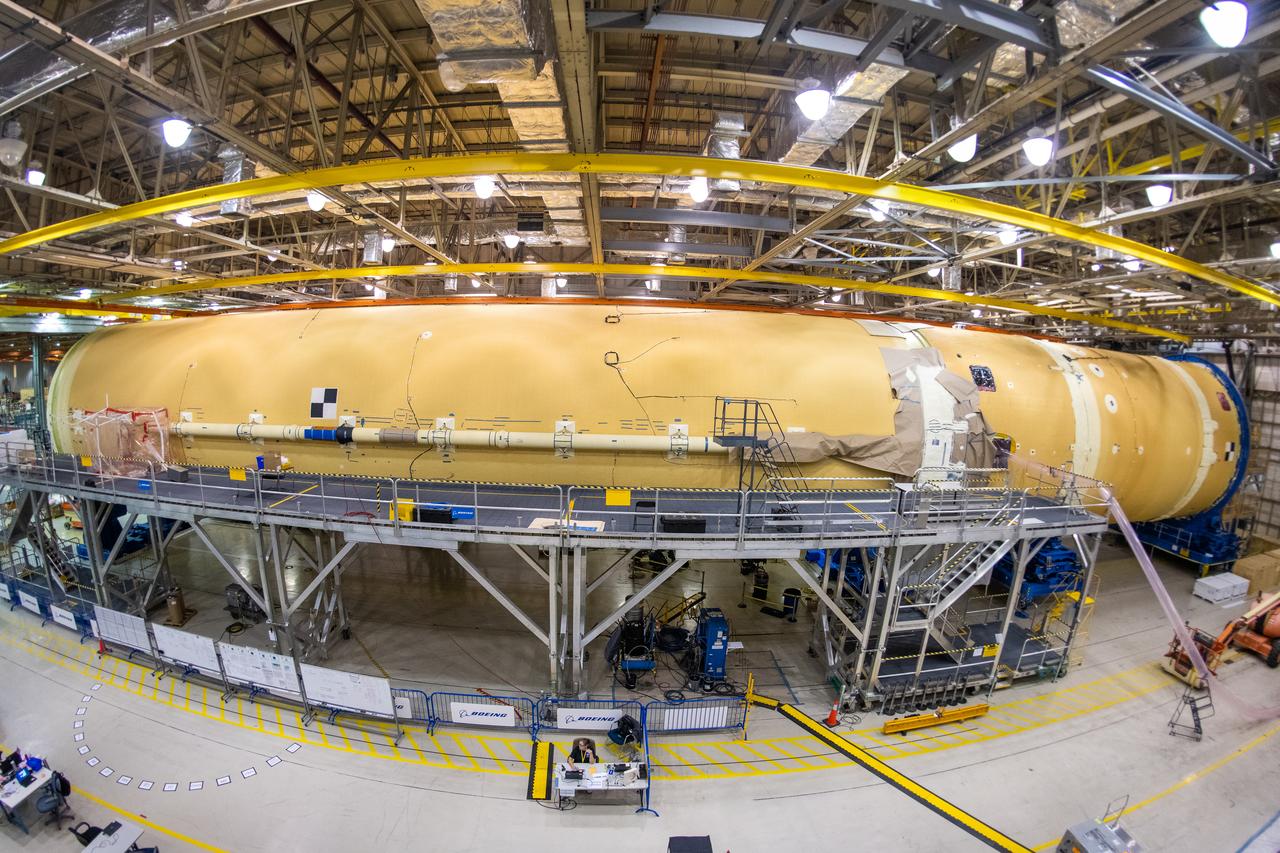
Technicians at NASA’s Michoud Assembly Facility in New Orleans completed the “forward join,” which connects structures to form the top part of NASA’s Space Launch System (SLS) rocket’s core stage. The first core stage will send Exploration Mission-1, the first integrated flight of SLS and NASA’s Orion spacecraft, out beyond the Moon. The forward join mated three structures: the forward skirt, liquid oxygen tank and intertank. This milestone marks the beginning of integration and assembly of the massive, 212-foot-tall SLS core stage, which will include the rocket’s four RS-25 rocket engines, propellant tanks and flight computers. Now, NASA and Boeing, the SLS prime contractor, will continue to integrate various systems inside the forward part of the core stage and prepare for structural joining of the liquid hydrogen tank and engine section to form the bottom of the stage. These two parts of the core stage will then be assembled to form the largest stage NASA has ever built.
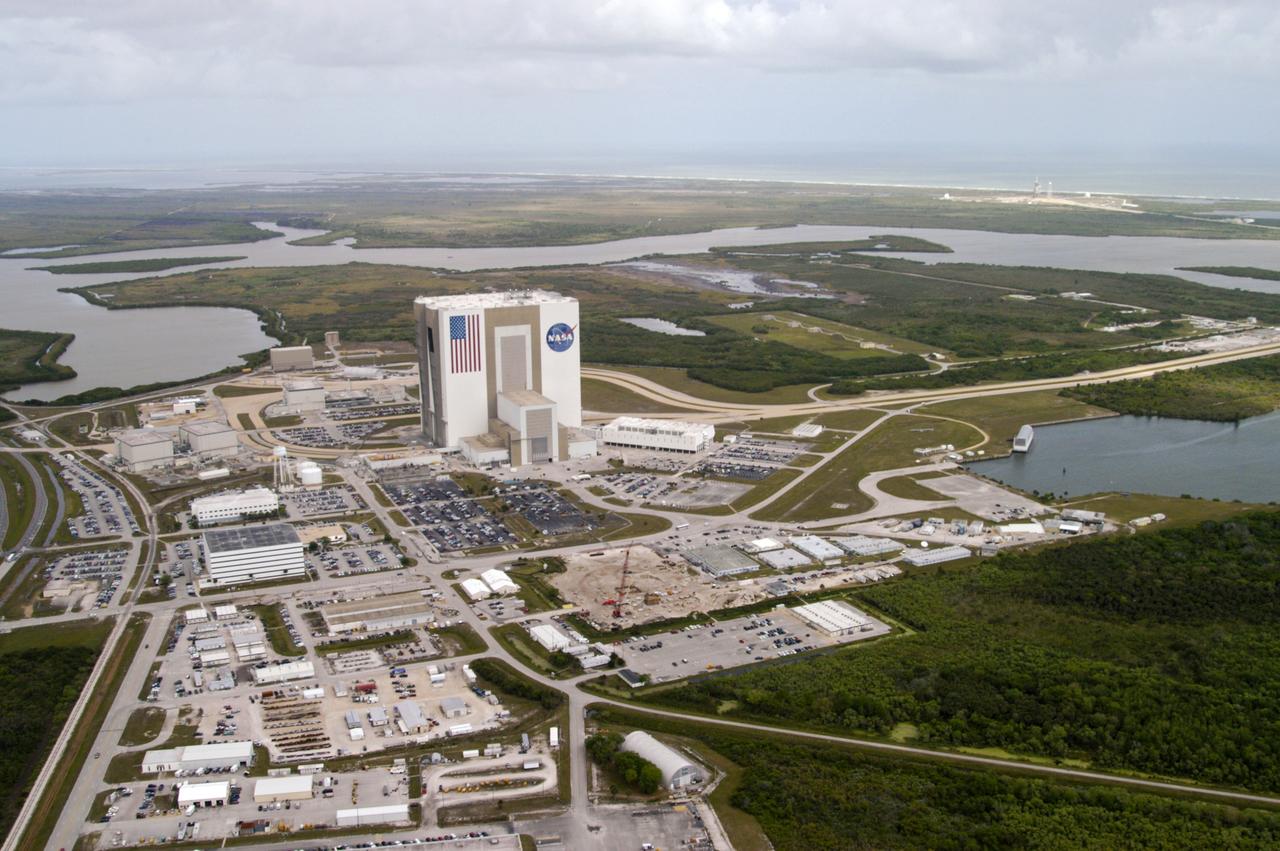
CAPE CANAVERAL, Fla. -- The 525-foot high Vehicle Assembly Building dominates the Launch Complex 39 Area. On the right is the Launch Control Center. Behind the VAB meanders the Banana Creek. The two-lane crawlerway stretches from the VAB toward the coast, site of Launch Pad 39A and 39B, seen here. The Turn Basin is at right, ending at the parking area for the NASA KSC News Center. At center foreground is the construction area for Operations Support Building 2. Photo credit: NASA
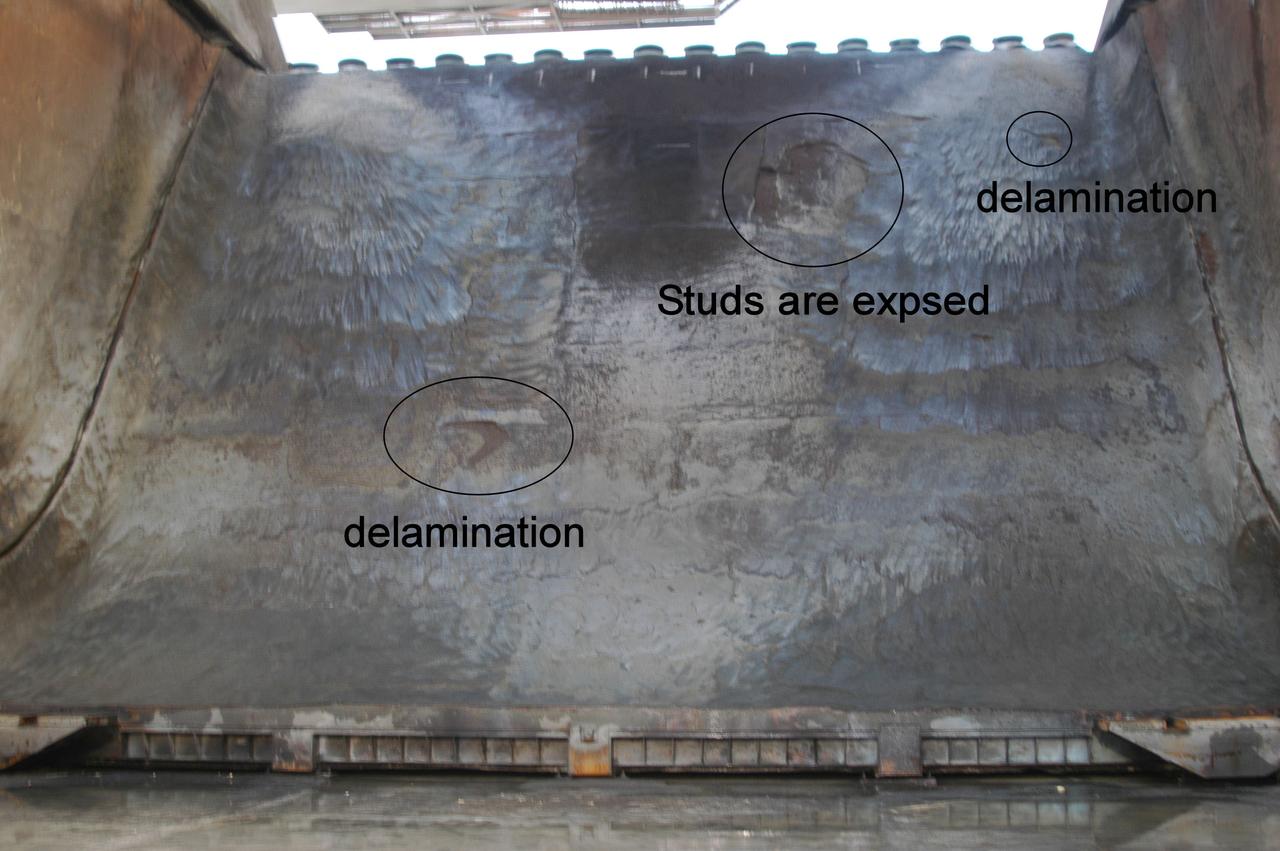
JSC2009-E-119287 (11 May 2009) --- A medium close still shot of the flame trench area at Launch Pad 39A at the Kennedy Space Center has been marked to indicate three different areas where minor damage was detected during STS-125 post-launch inspections. Two areas of delaminating flank a area where studs are partially exposed. While speaking during a press briefing, LeRoy Cain, deputy program manager for STS, showed this visual but expressed that NASA has no major concern over the damage at this time.
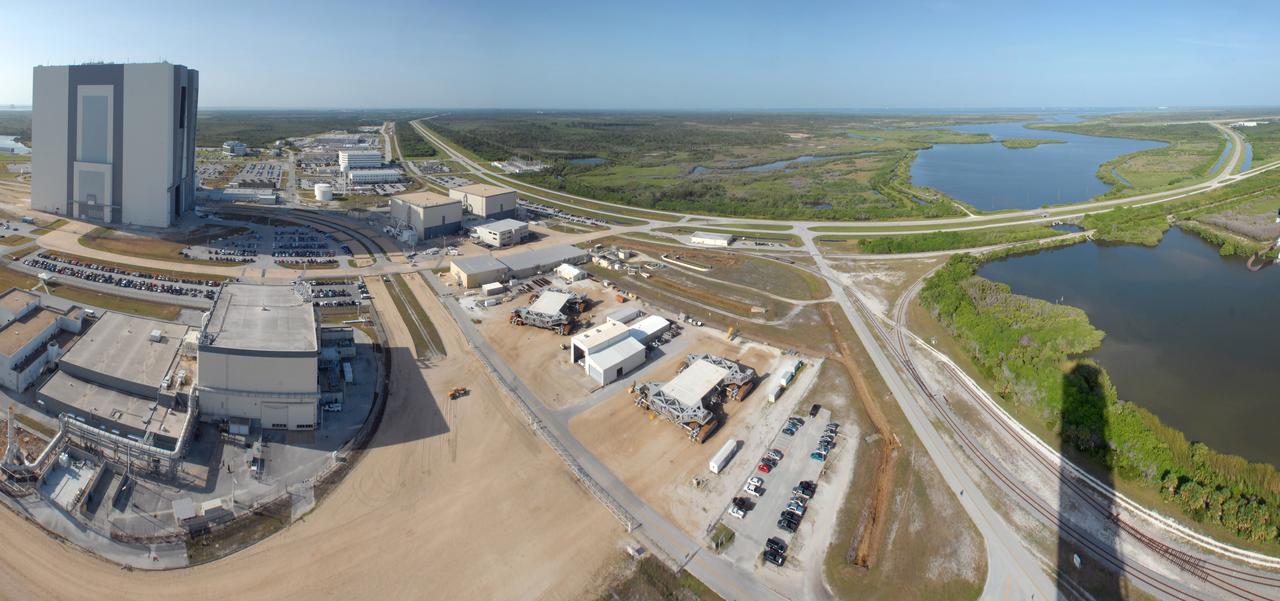
PANORAMIC VIEW OF VAB AREA FROM ATOP MOBILE LAUNCH TOWER
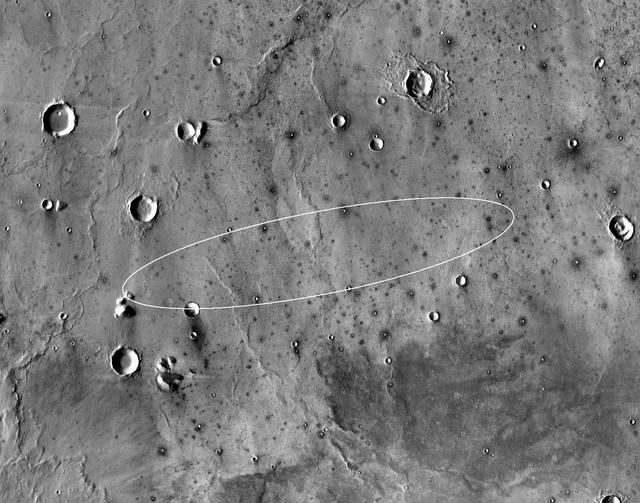
This map shows the single area under continuing evaluation as the InSight mission's Mars landing site, as of a year before the mission's May 2016 launch. The finalist ellipse marked within the northern portion of flat-lying Elysium Planitia is centered at about 4.5 degrees north latitude and 136 degrees east longitude. InSight -- an acronym for Interior Exploration using Seismic Investigations, Geodesy and Heat Transport -- will study the interior of Mars to improve understanding of the processes that formed and shaped rocky planets, including Earth. The mission's launch period begins March 4, 2016, and lasts until late March. Whichever day during that period the launch occurs, landing is scheduled for Sept. 28, 2016. The landing ellipse on this map covers an area within which the spacecraft has about 99 percent chance of landing when targeted for the center of the ellipse. It is about 81 miles (130 kilometers) long, generally west to east, and about 17 miles (27 kilometers) wide. This ellipse covers the case of a launch at the start of the launch period. If the launch occurs later in the period, orientation of the landing ellipse would shift slightly clockwise. Four semifinalist sites in Elysium Planitia were evaluated as safe for InSight landing. This one was selected as having the largest proportion of its area classified as smooth terrain. If continuing analysis identifies unexpected problems with this site, another of the semifinalists could be reconsidered before final selection later this year. The InSight lander will deploy two instruments directly onto the ground using a robotic arm. One is a seismometer contributed by France's space agency (CNES) with components from Germany, Switzerland, the United Kingdom and the United States. The seismometer will measure microscopic ground motions, providing detailed information about the interior structure of Mars. The other instrument to be deployed by the arm is a heat-flow probe contributed by the German Aerospace Center (DLR), designed to hammer itself three to five meters (about 10 to 16 feet) deep. It will monitor heat coming from the planet's interior. The mission will also track the lander's radio to measure wobbles in the planet's rotation that relate to the size of its core. A suite of environmental sensors will monitor the weather and variations in the magnetic field. The base map is a mosaic of daytime thermal images from the Thermal Emission Imaging System (THEMIS) on NASA's Mars Odyssey orbiter. THEMIS was developed and is operated by Arizona State University, Tempe. Note: After thorough examination, NASA managers have decided to suspend the planned March 2016 launch of the Interior Exploration using Seismic Investigations Geodesy and Heat Transport (InSight) mission. The decision follows unsuccessful attempts to repair a leak in a section of the prime instrument in the science payload. http://photojournal.jpl.nasa.gov/catalog/PIA19143
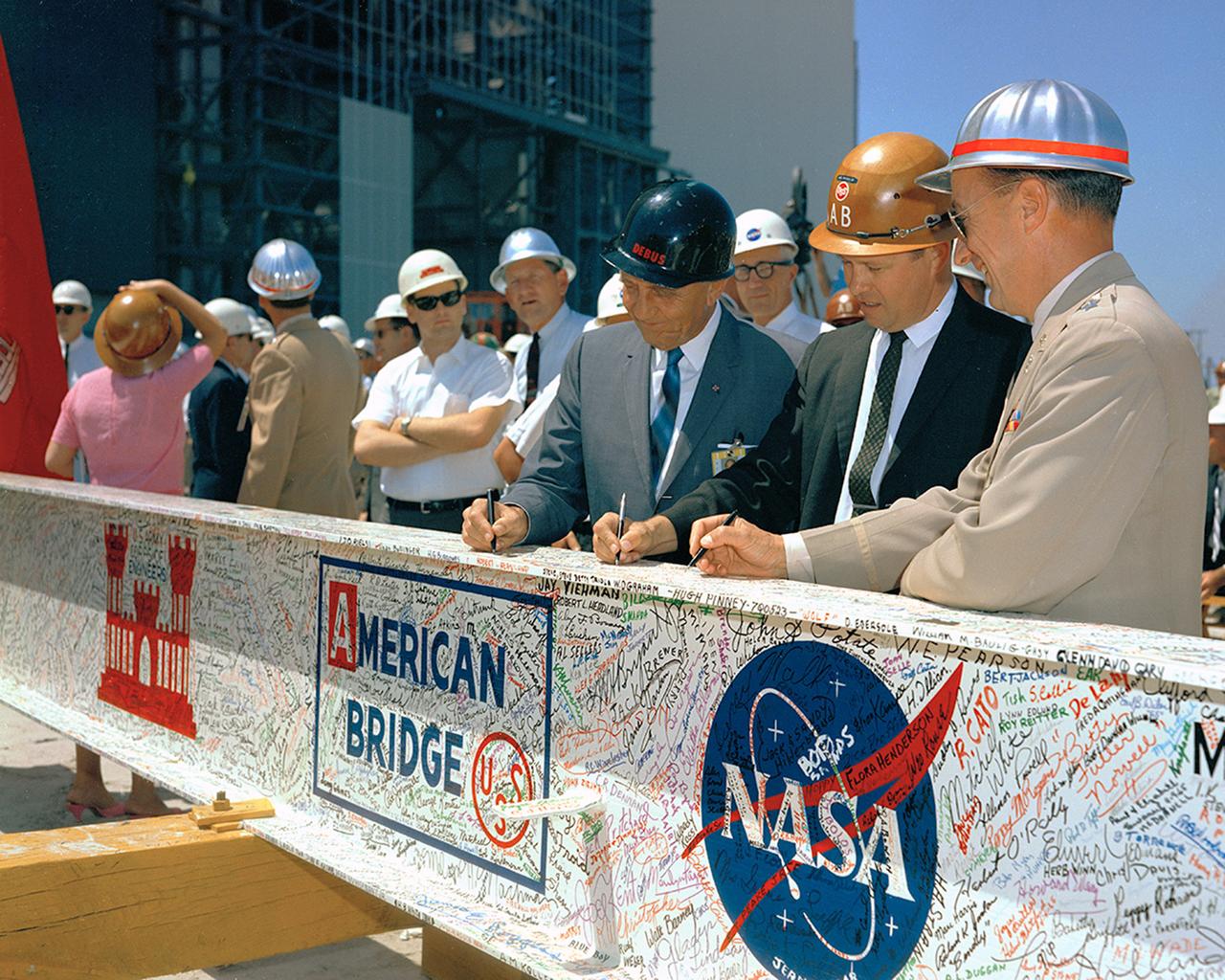
Dr. Kurt Debus (Director, NASA-KSC) signs the last major beam autographed by construction workers, NASA, and Corps of Engineers employees to be installed during the VAB Topping-Off Ceremony. MILA.
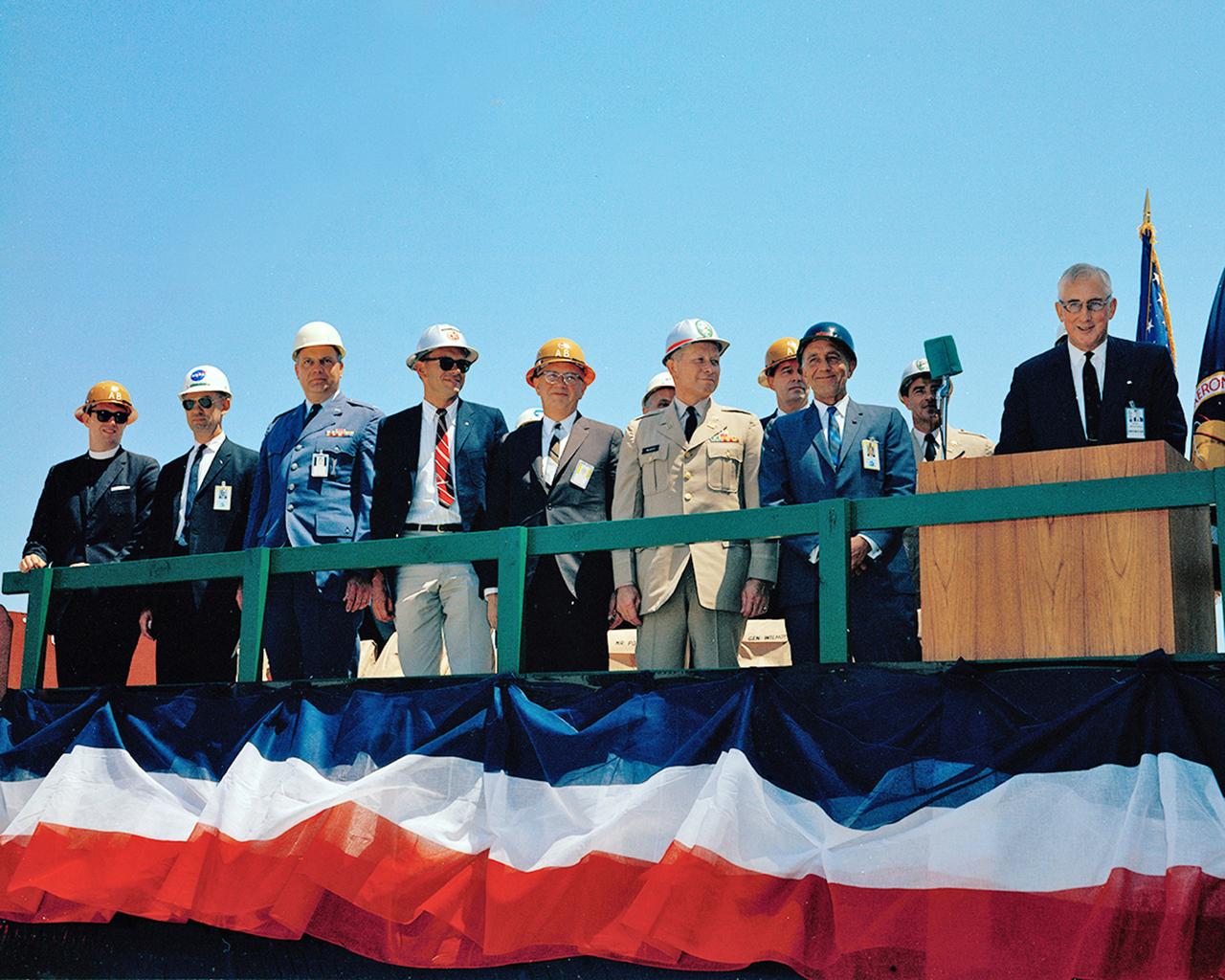
Dignataries (KSC Director Dr. Kurt Debus is second from right, NASA Administrator James C. Fletcher speaking), at the Last Major Beam Installation, attending the VAB Topping-Off Ceremony. MILA.
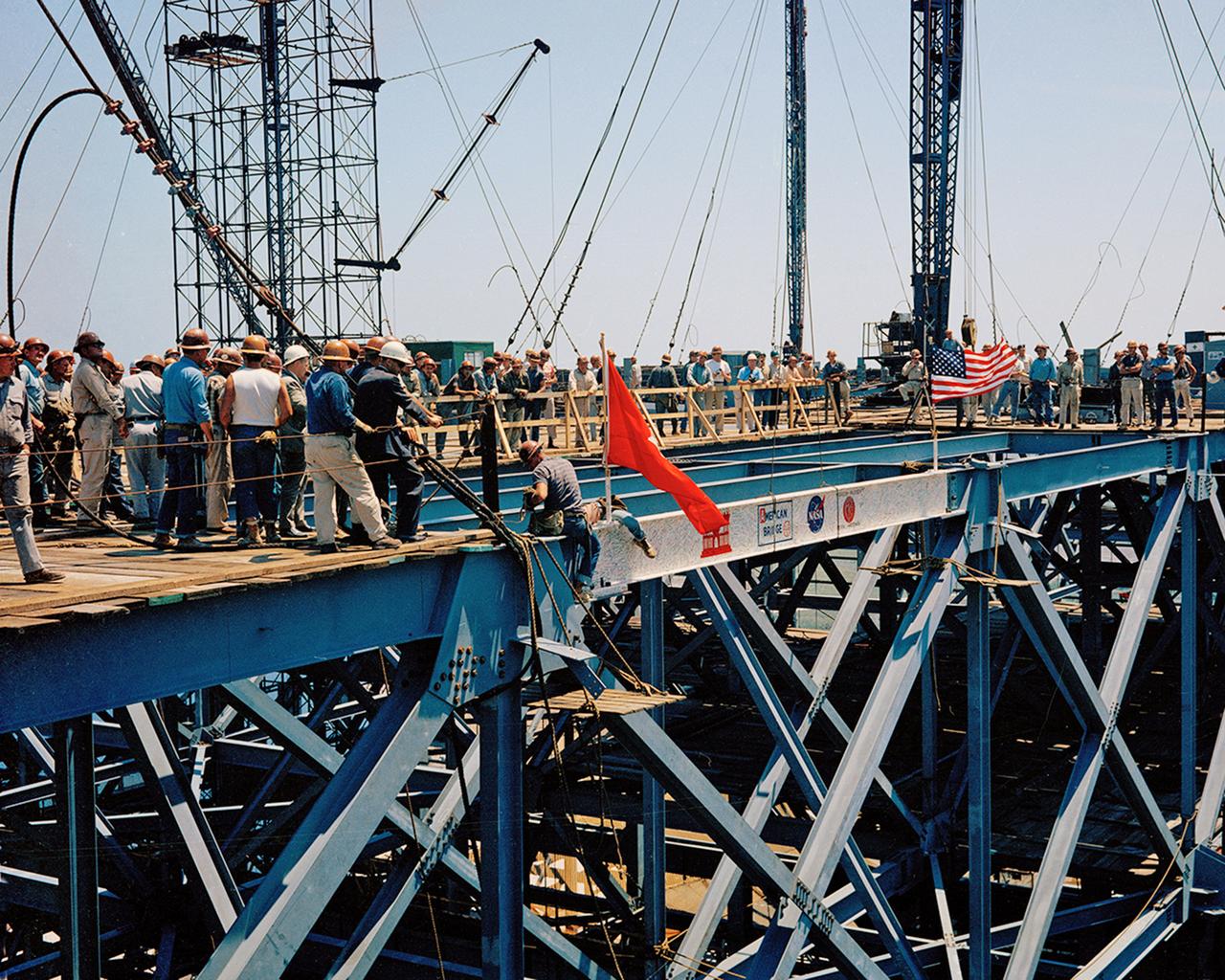
Installation of the Last Major Beam autographed by construction workers, NASA, and Corps of Engineers employees atop the Kennedy Space Center Vertical Assembly Building (VAB), MILA.
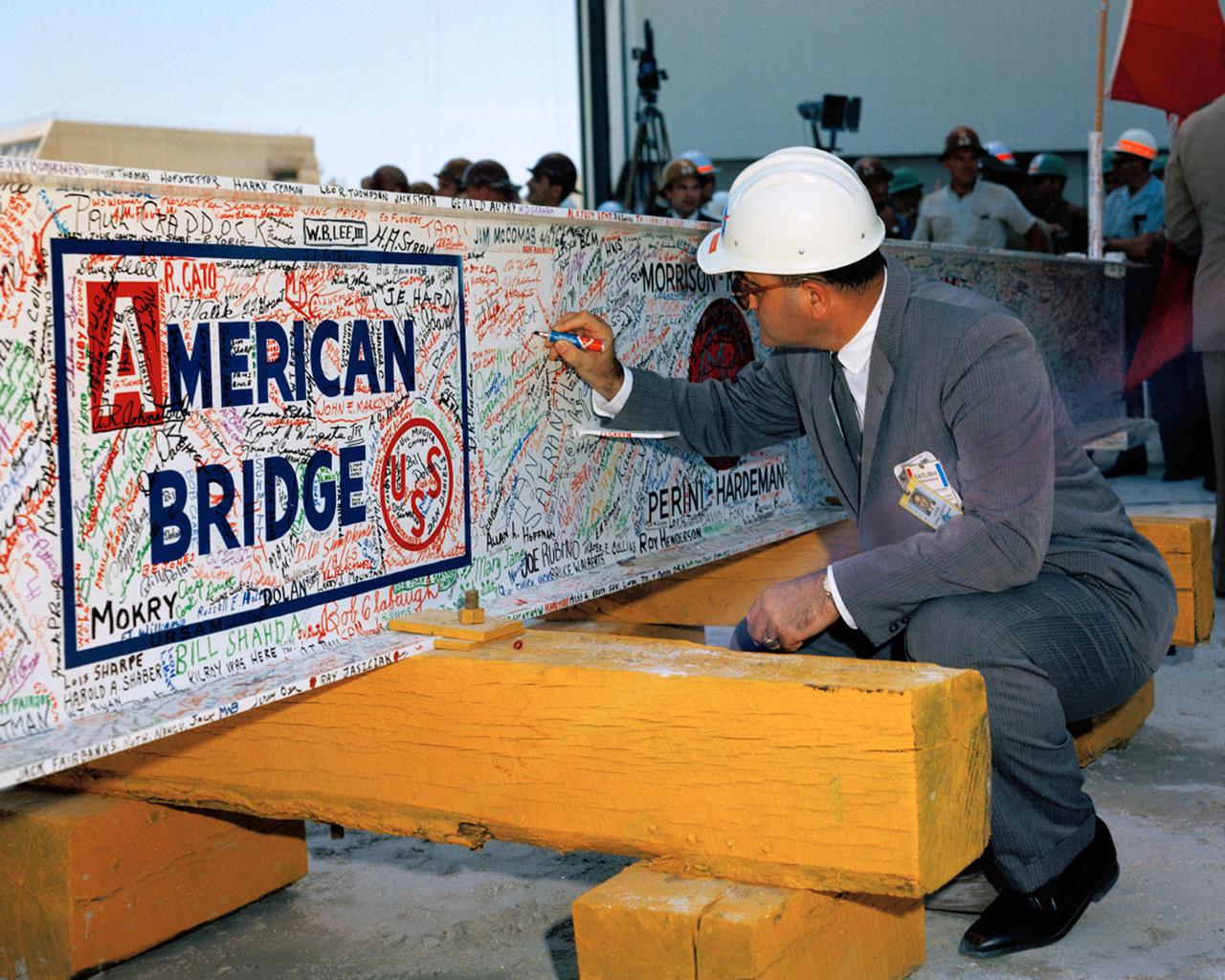
Colonel Rocco Patrone (Director, Plans, Programs and Resources Office NASA-KSC) signs the last major beam also autographed by construction workers, NASA, and Corps of Engineers employees to be installed during the VAB Topping-Off Ceremony. MILA.
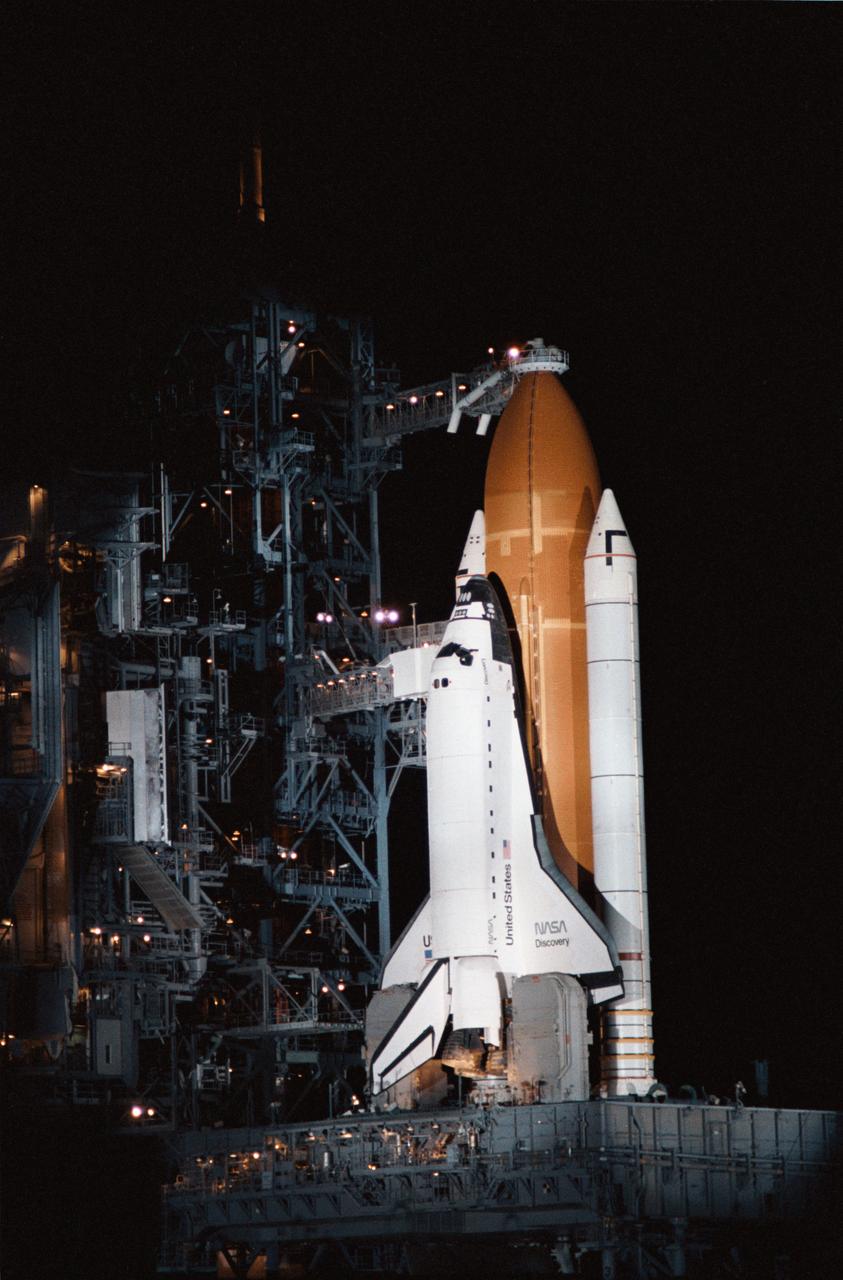
View of the shuttle Discovery on the launch pad just prior to STS 51-D launch. The surrounding area is dark, with the launch complex accented by spotlights.
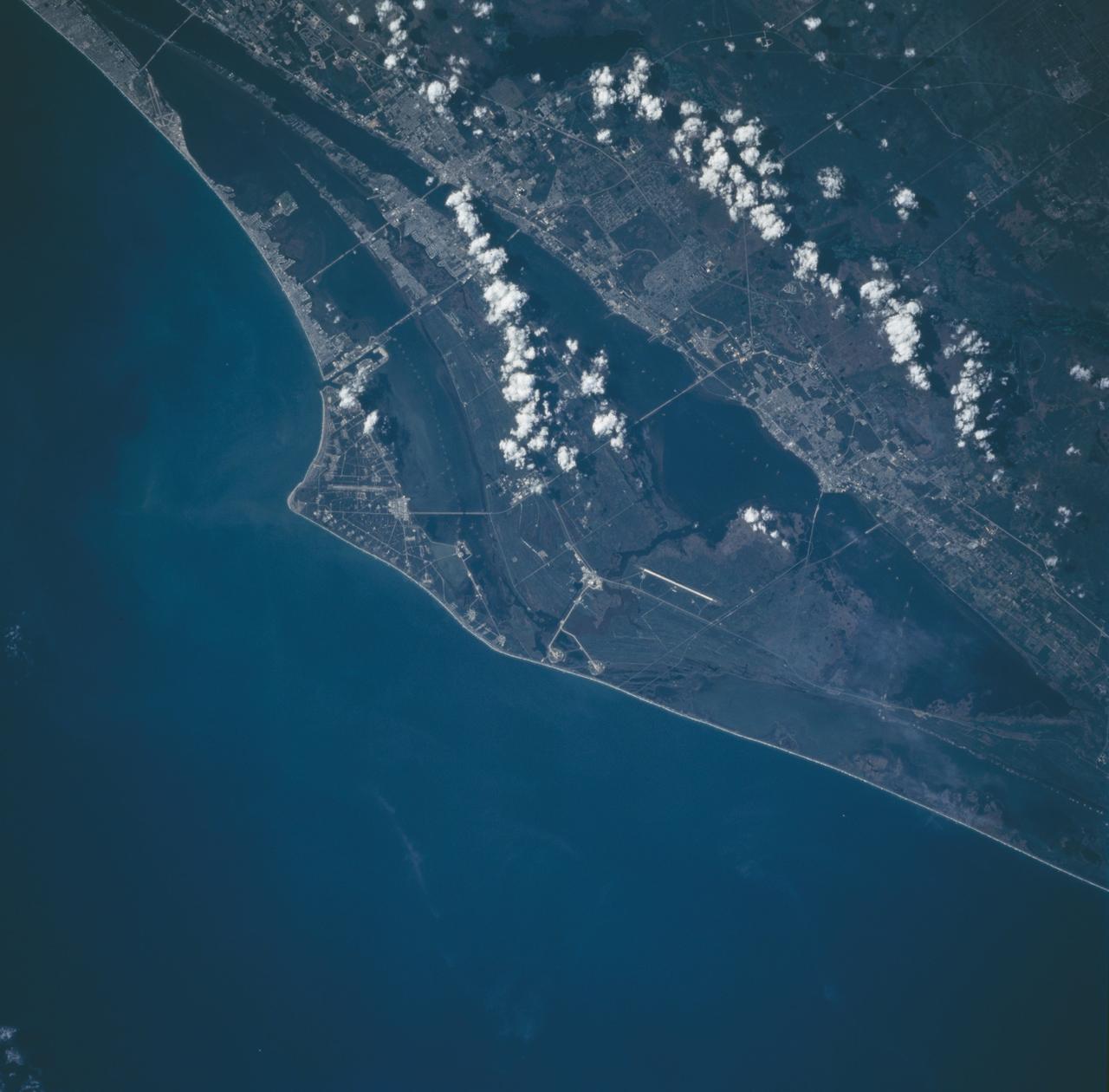
This nadir photograph of the Cape Canaveral area on Florida's eastern coast was taken by the STS-66 crew in November, 1994. The Space Shuttle Vehicle Assembly area and the runways used by the returning Shuttles can be seen near the center of this photograph as part of the John F. Kennedy Space Center (KSC). Launch Pads A and B as well as many other launch pads and a runway can be seen on Cape Canaveral. Cape Canaveral is located to the east of KSC. South of the launch area is Port Canaveral and Cocoa Beach on the Atlantic coast with the towns of Cocoa, Merrit Island and Titusville situated along the Intercoastal Waterway.
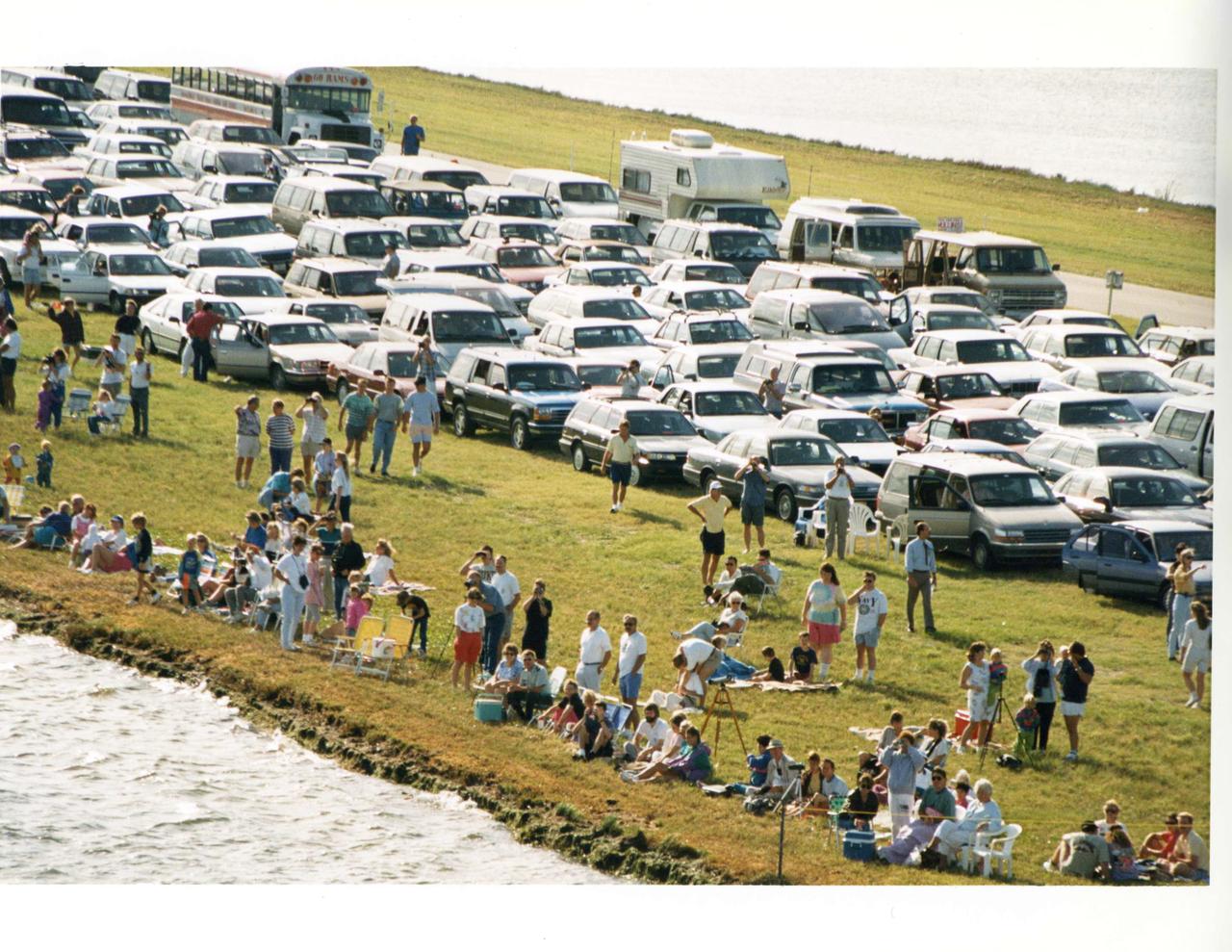
Aerial of the NASA Causeway East showing the viewing area set up for space shuttle launch viewers with car passes. Launch Complex 39 is to the north.
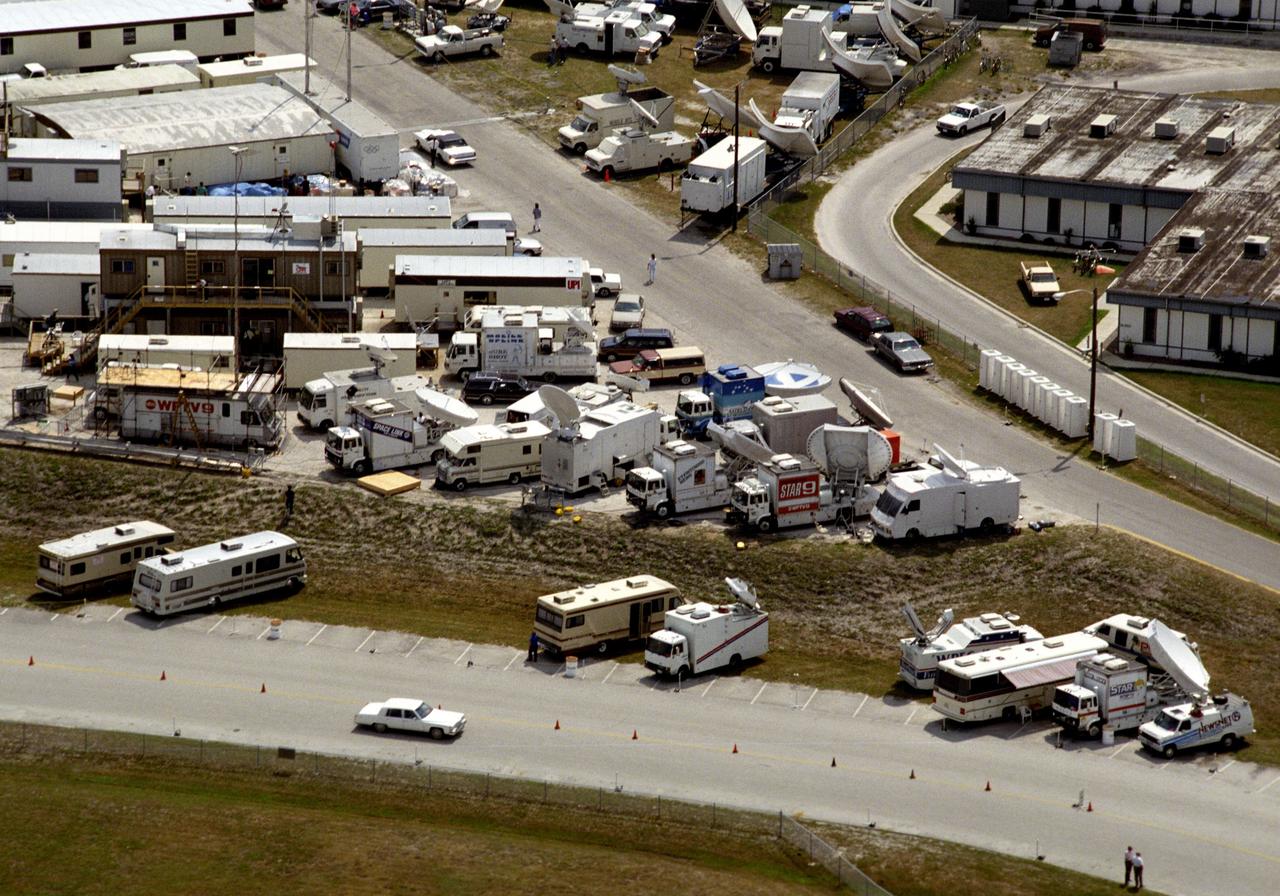
CAPE CANAVERAL, Fla. -- STS-26 PRE-LAUNCH ACTIVITIES – PRESS SITE AREA. Photo credit: NASA
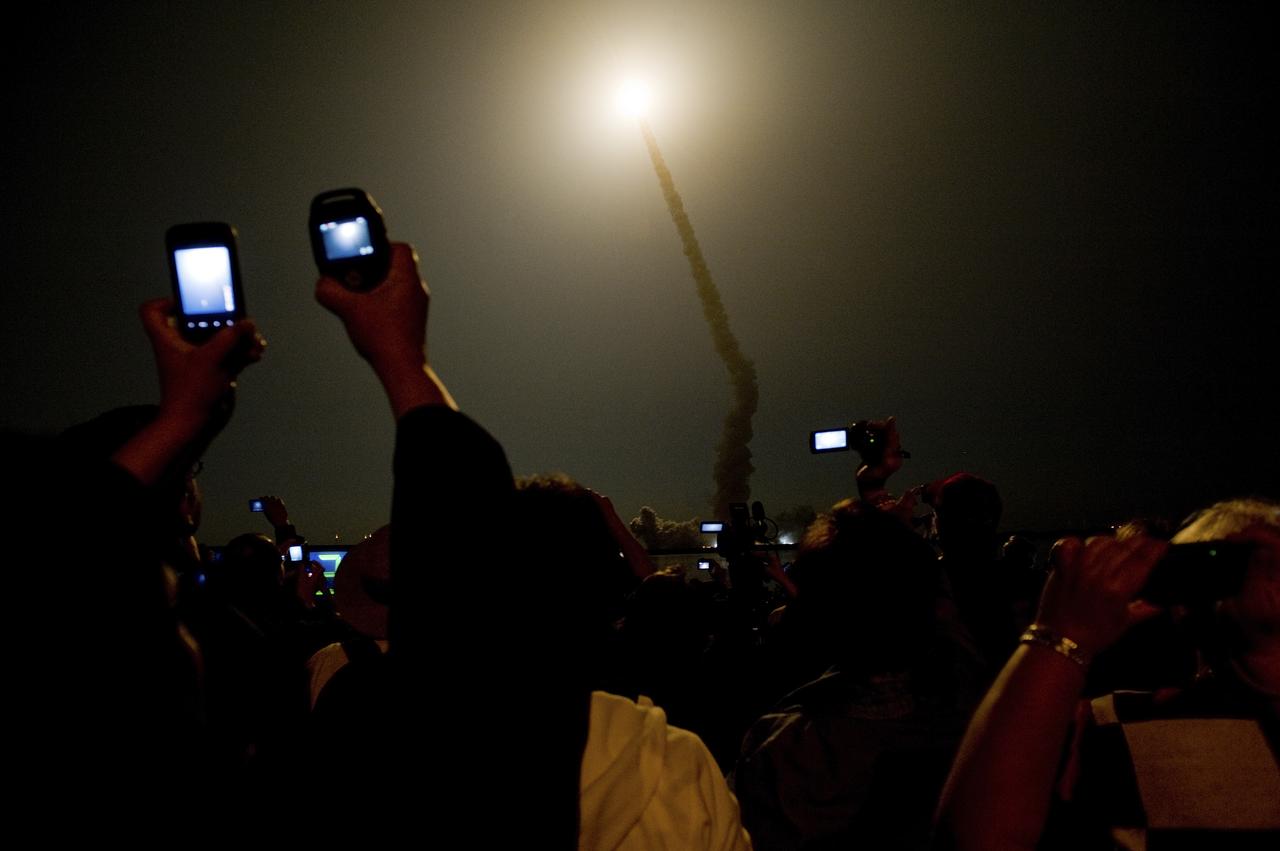
SPECTATORS AT THE BANANA CREEK VIEWING AREA AT KENNEDYY SPACE CENTER USE THEIR PHONES AND CAMERAS TO DOCUMENT THE LAUNCH OF STS-131
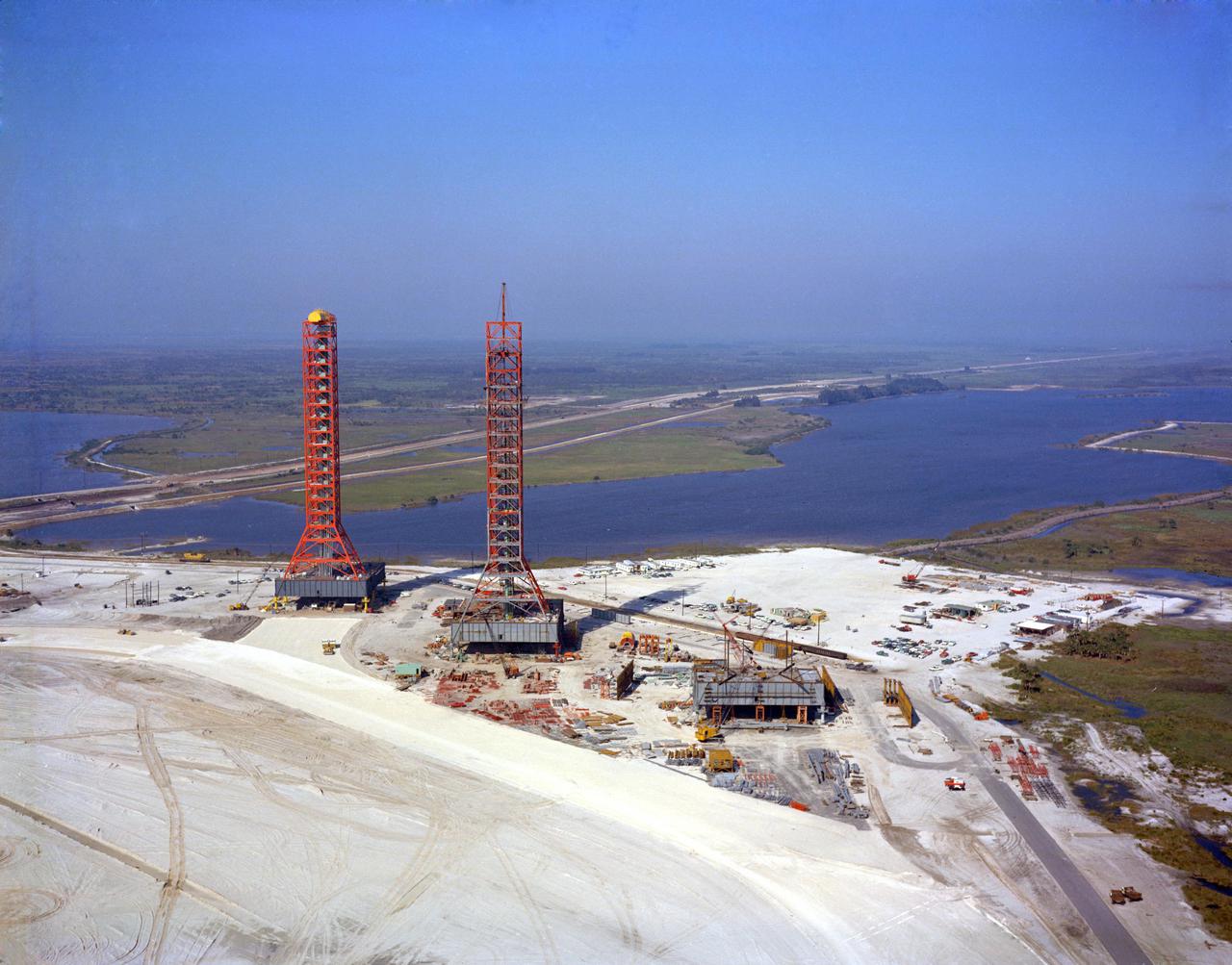
KENNEDY SPACE CENTER, FLA. -- Aerial view of Launcher Umbilical Towers, Merritt Island Launch Area (MILA).
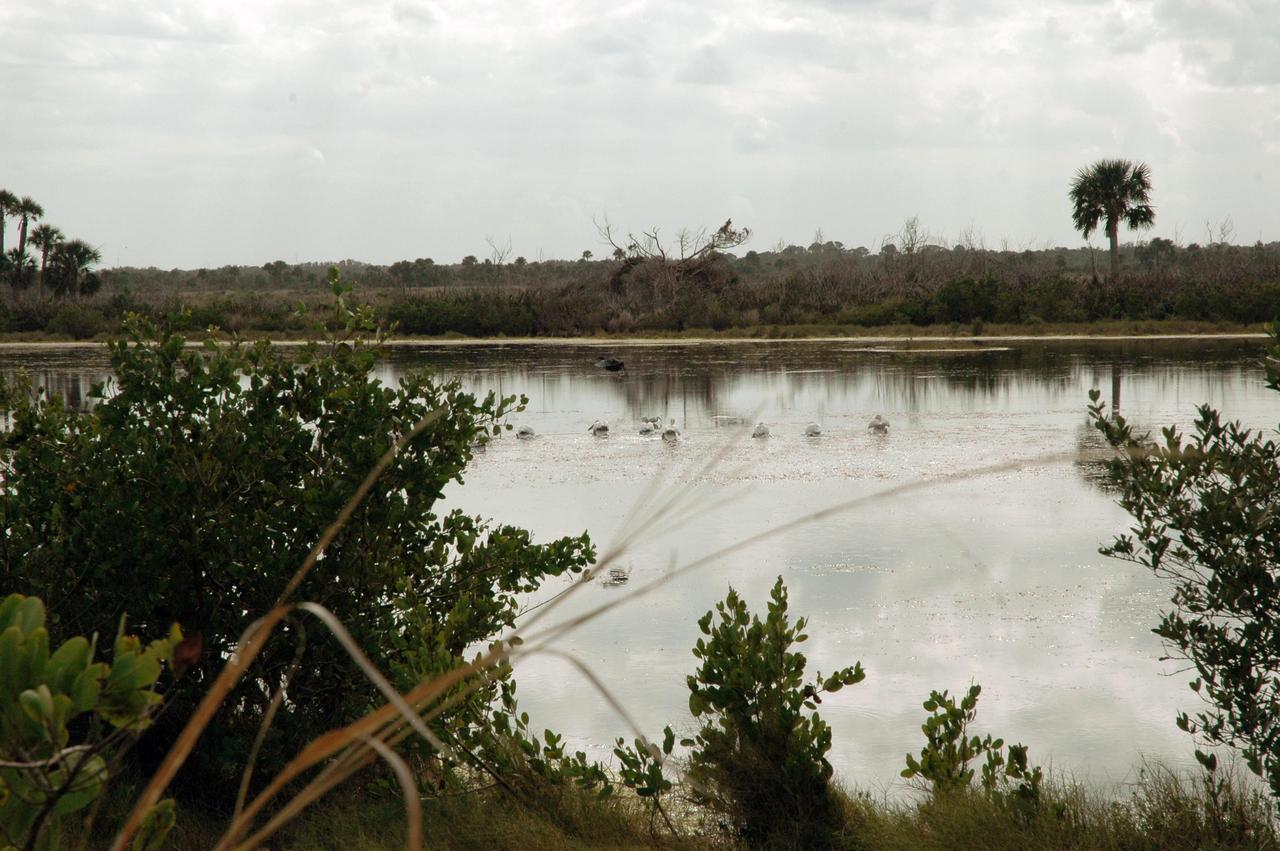
KENNEDY SPACE CENTER, FLA. - Pelicans settle onto the water at an area north of the Launch Complex 39 Area at NASA Kennedy Space Center. The area is part of the Merritt Island National Wildlife Refuge, which shares a boundary with the center. The wildlife refuge is a habitat for more than 310 species of birds, 25 mammals, 117 fishes and 65 amphibians and reptiles. In addition, the Refuge supports 19 endangered or threatened wildlife species on Federal or State lists, more than any other single refuge in the U.S.
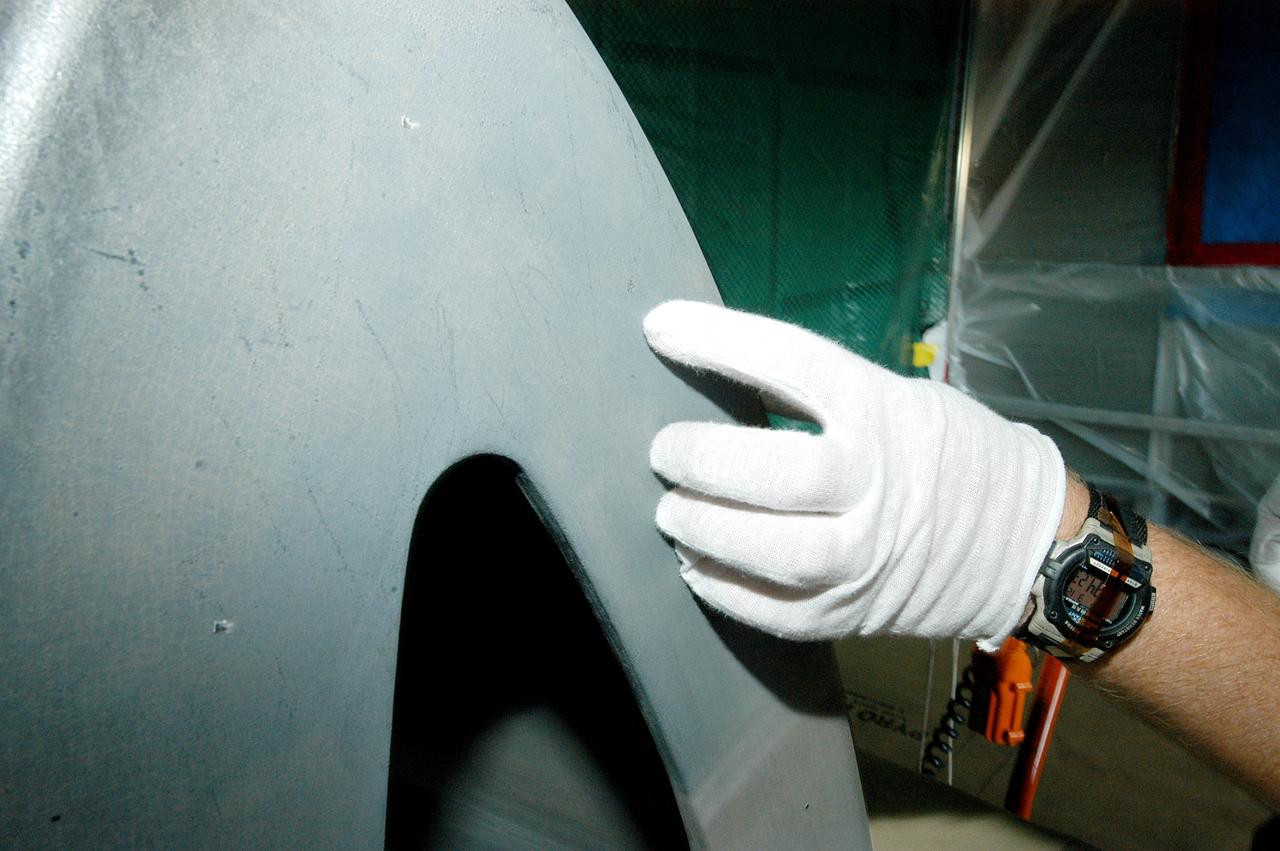
KENNEDY SPACE CENTER, FLA. - Jim Landy, NDE specialist with USA, points to an area of a Reinforced Carbon Carbon panel just examined using flash thermography. A relatively new procedure at KSC, thermography uses high intensity light to heat areas of the panels. The panels are then immediately scanned with an infrared camera. As the panels cool, any internal flaws are revealed. The gray carbon composite RCC panels are attached to the leading edge of the wing of the orbiters. They have sufficient strength to withstand the aerodynamic forces experienced during launch and reentry, which can reach as high as 800 pounds per square foot. The operating range of RCC is from minus 250º F to about 3,000º F, the temperature produced by friction with the atmosphere during reentry. The panels will be installed on the orbiter Discovery, designated for the first Return to Flight mission, STS-114.
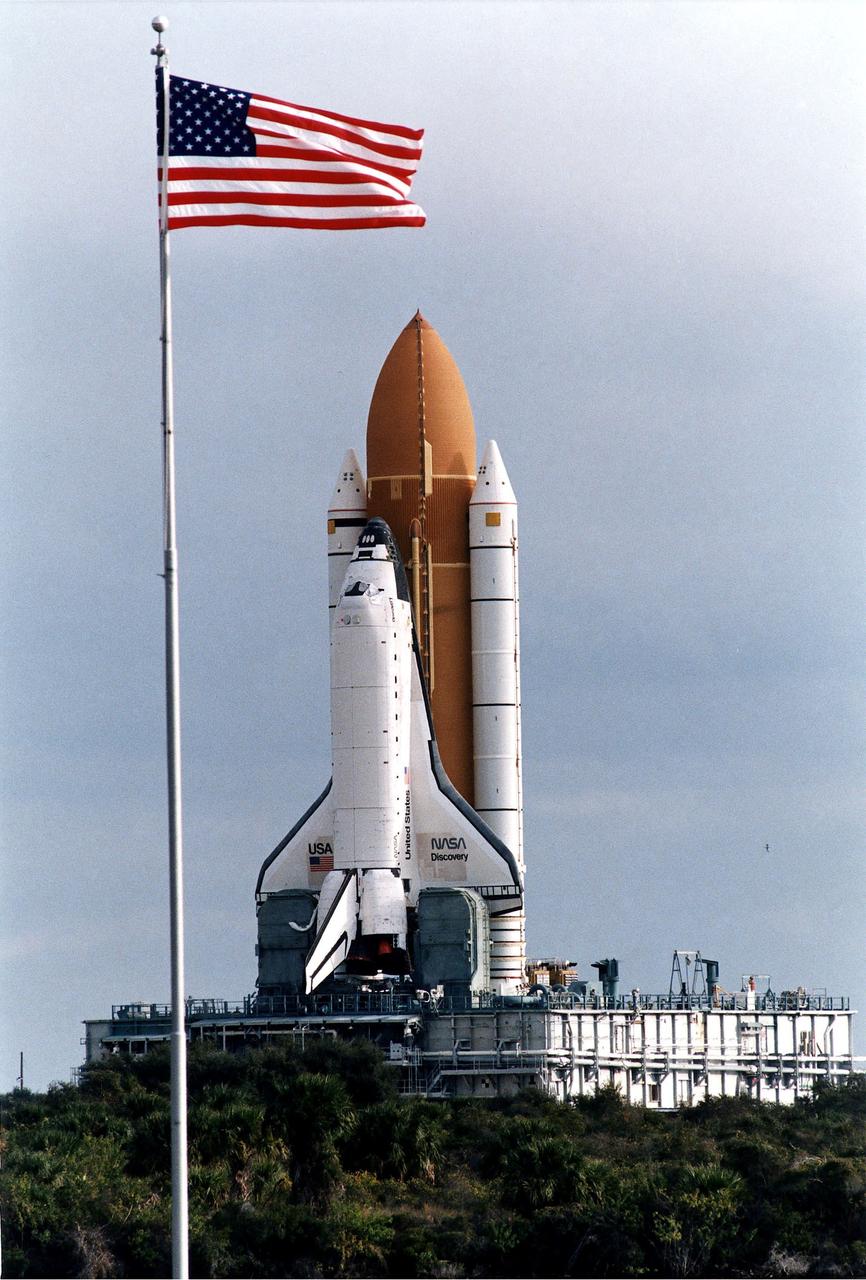
KENNEDY SPACE CENTER, FLA. - The Space Shuttle Discovery on its Mobile Launcher Platform makes its slow 3.4-mile trek from the Vehicle Assembly Building to Launch Pad 39A in preparation for the STS-82 mission. In the foreground is the U.S. flag at the Press Site area. A seven-member crew will perform the second servicing of the orbiting Hubble Space Telescope (HST) during the 10-day STS-82 mission, which is targeted for a Feb. 11 liftoff.

In the Vehicle Assembly Building, markers show the hail damage being repaired on the external tank of Space Shuttle Atlantis. The white hole with a red circle around it is a hole prepared for molding and material application. The red material is sealant tape so the mold doesn't leak when the foam rises against the mold. The white/ translucent square mold is an area where the foam has been applied and the foam has risen and cured against the mold surface. The area will be de-molded and sanded flush the with adjacent area. In late February, Atlantis' external tank received hail damage during a severe thunderstorm that passed through the Kennedy Space Center Launch Complex 39 area. The hail caused visible divots in the giant tank's foam insulation as well as minor surface damage to about 26 heat shield tiles on the shuttle's left wing. The March launch was postponed and has not yet been rescheduled due to the repair process.

In the Vehicle Assembly Building, markers show the hail damage being repaired on the external tank of Space Shuttle Atlantis. The white hole with a red circle around it is a hole prepared for molding and material application. The red material is sealant tape so the mold doesn't leak when the foam rises against the mold. The white/ translucent square mold is an area where the foam has been applied and the foam has risen and cured against the mold surface. The area will be de-molded and sanded flush with the adjacent area. In late February, Atlantis' external tank received hail damage during a severe thunderstorm that passed through the Kennedy Space Center Launch Complex 39 area. The hail caused visible divots in the giant tank's foam insulation as well as minor surface damage to about 26 heat shield tiles on the shuttle's left wing. The launch now is targeted for June 8.
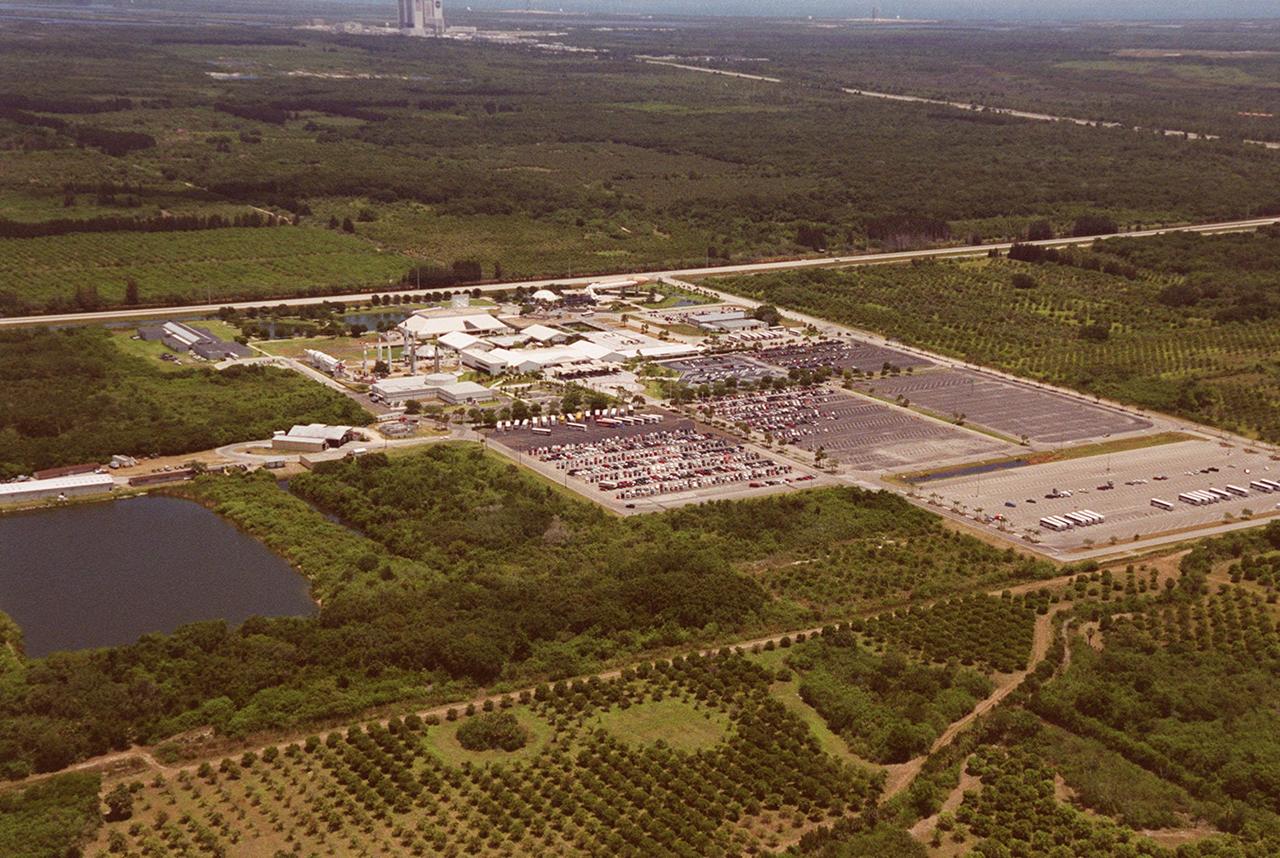
This aerial view is of Kennedy Space Center's Visitor Complex. The Vehicle Assembly Building, located in the Launch Complex 39 area, can be seen in the background
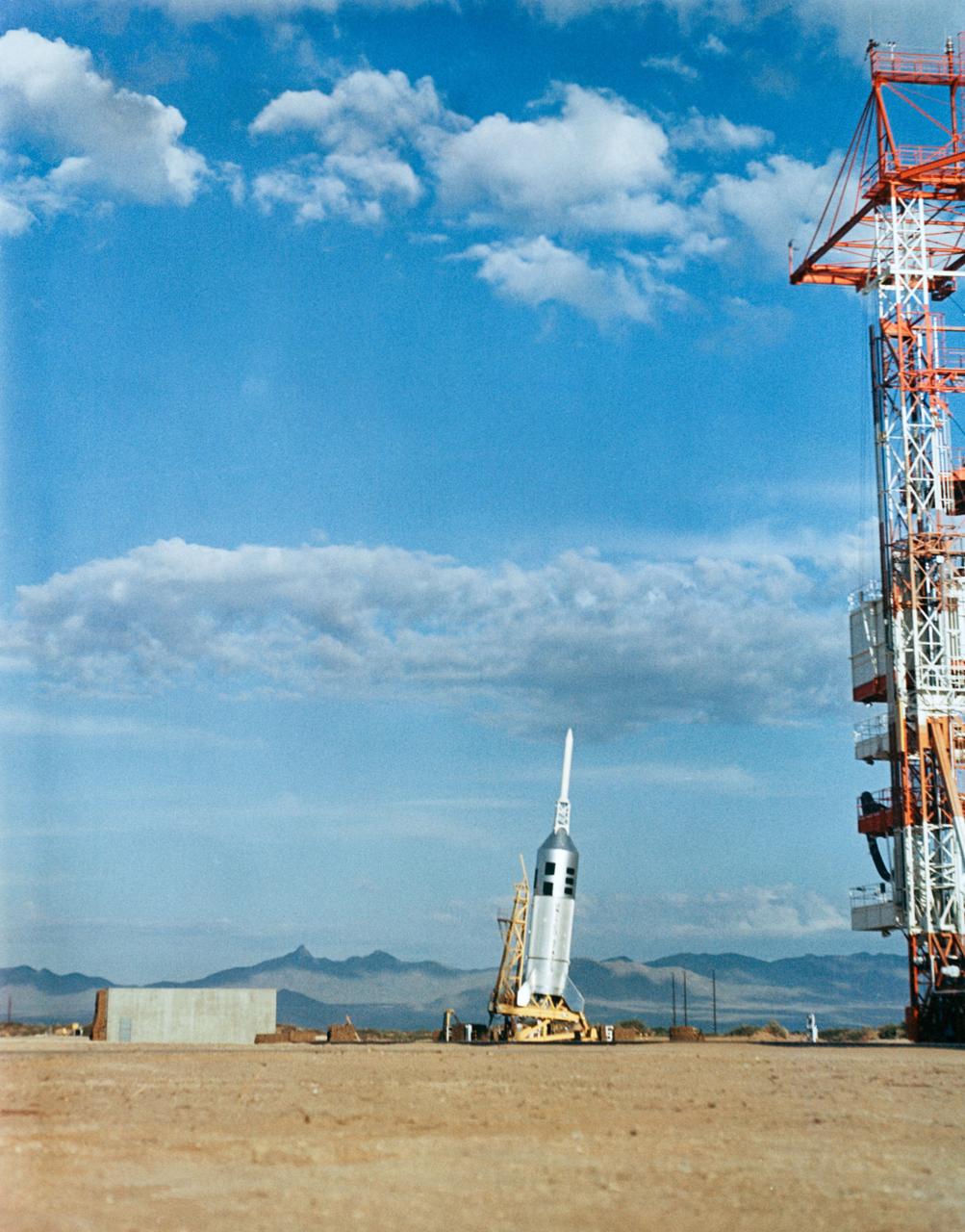
Little Joe II liftoff from the Apollo Little Joe II launch area #3 at White Sands Missile Range, White Sands, New Mexico.
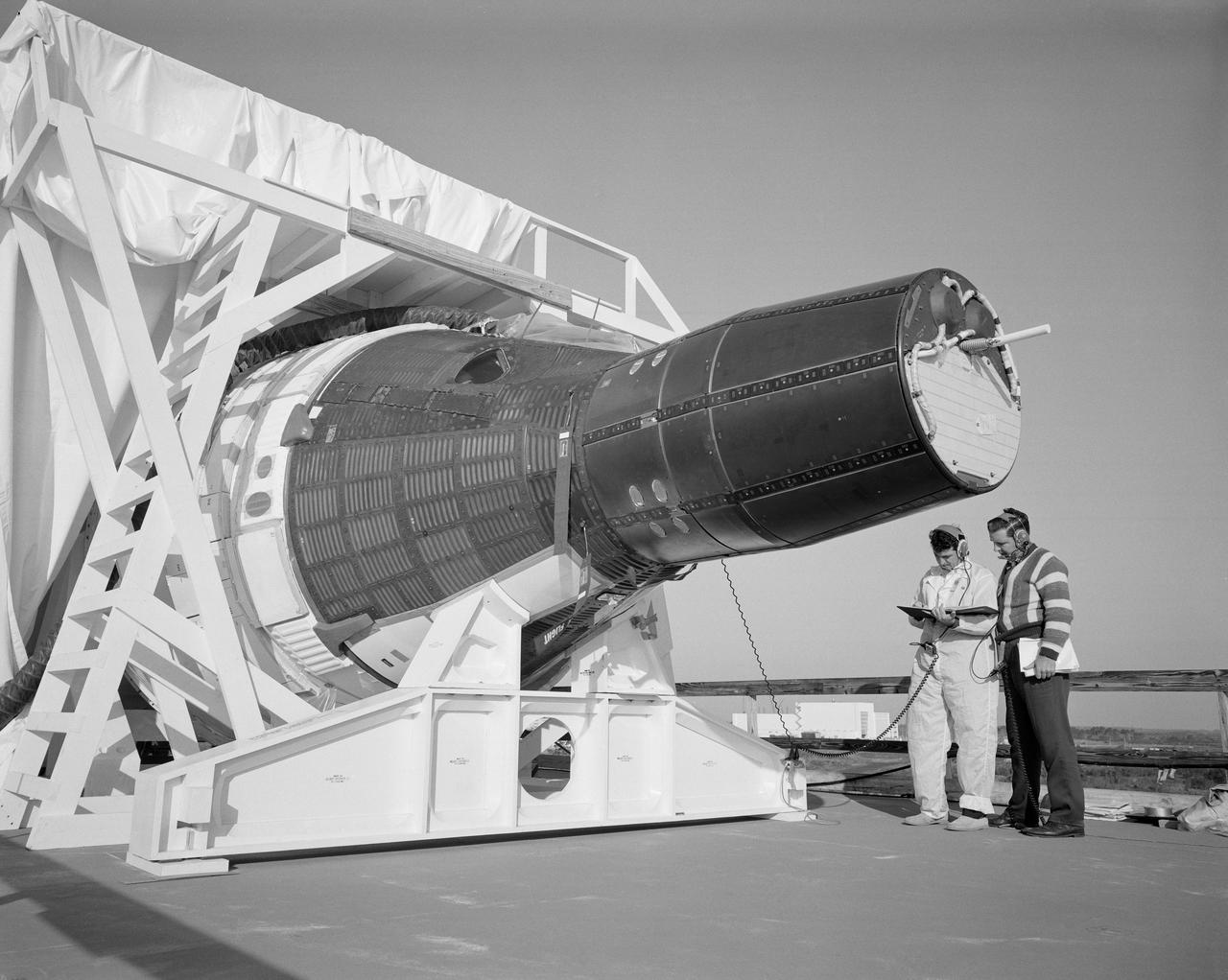
S65-13395 (6 Jan. 1965) --- Gemini-3 spacecraft (final configuation) during test at Boresight Range, Merritt Island launch area.
This aerial view is of Kennedy Space Center's Visitor Complex. The Vehicle Assembly Building, located in the Launch Complex 39 area, can be seen in the background
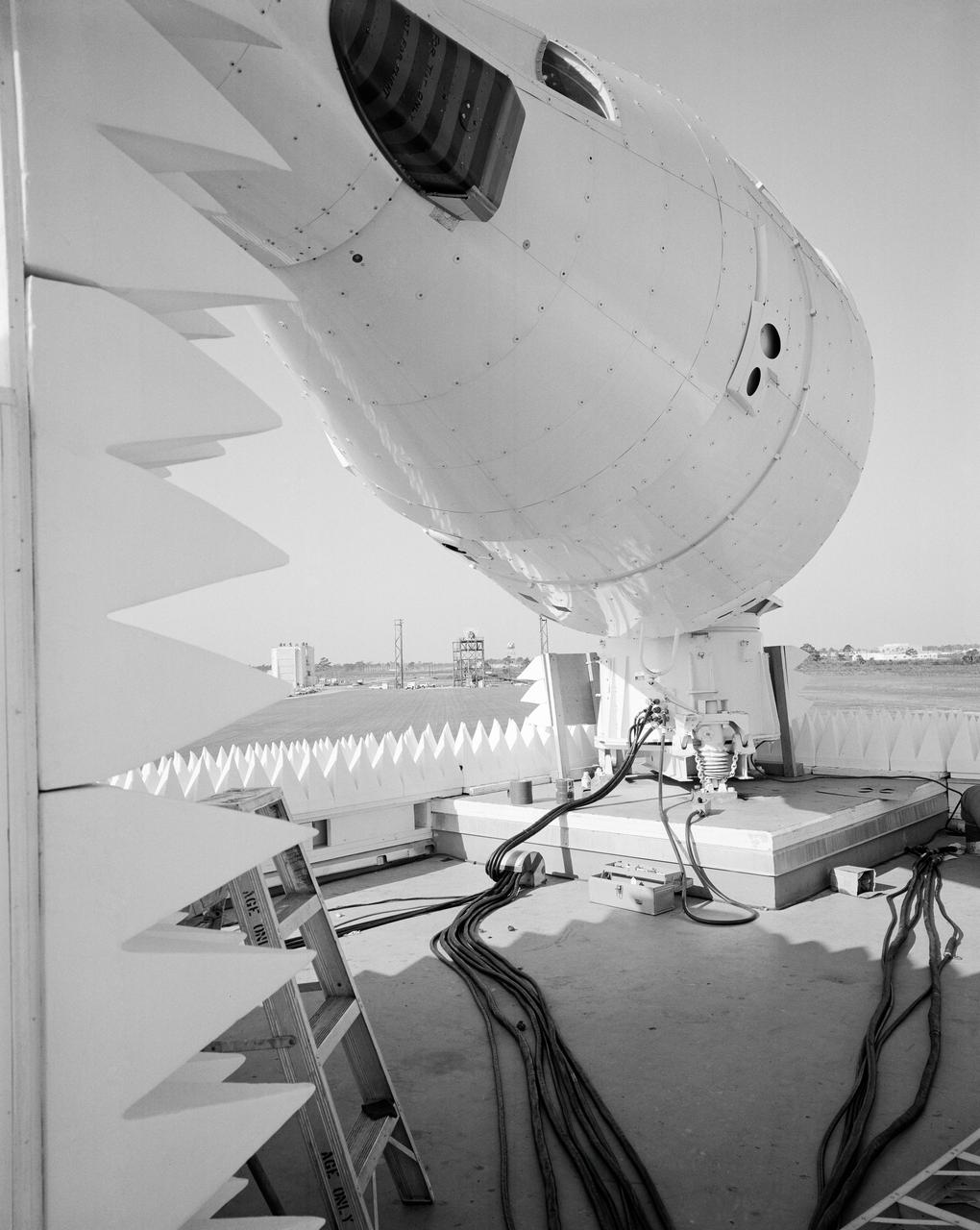
S65-13394 (6 Jan. 1965) --- Gemini-3 spacecraft (background) on tower at Boresight Range, Merritt Island launch area, showing simulator in foreground.
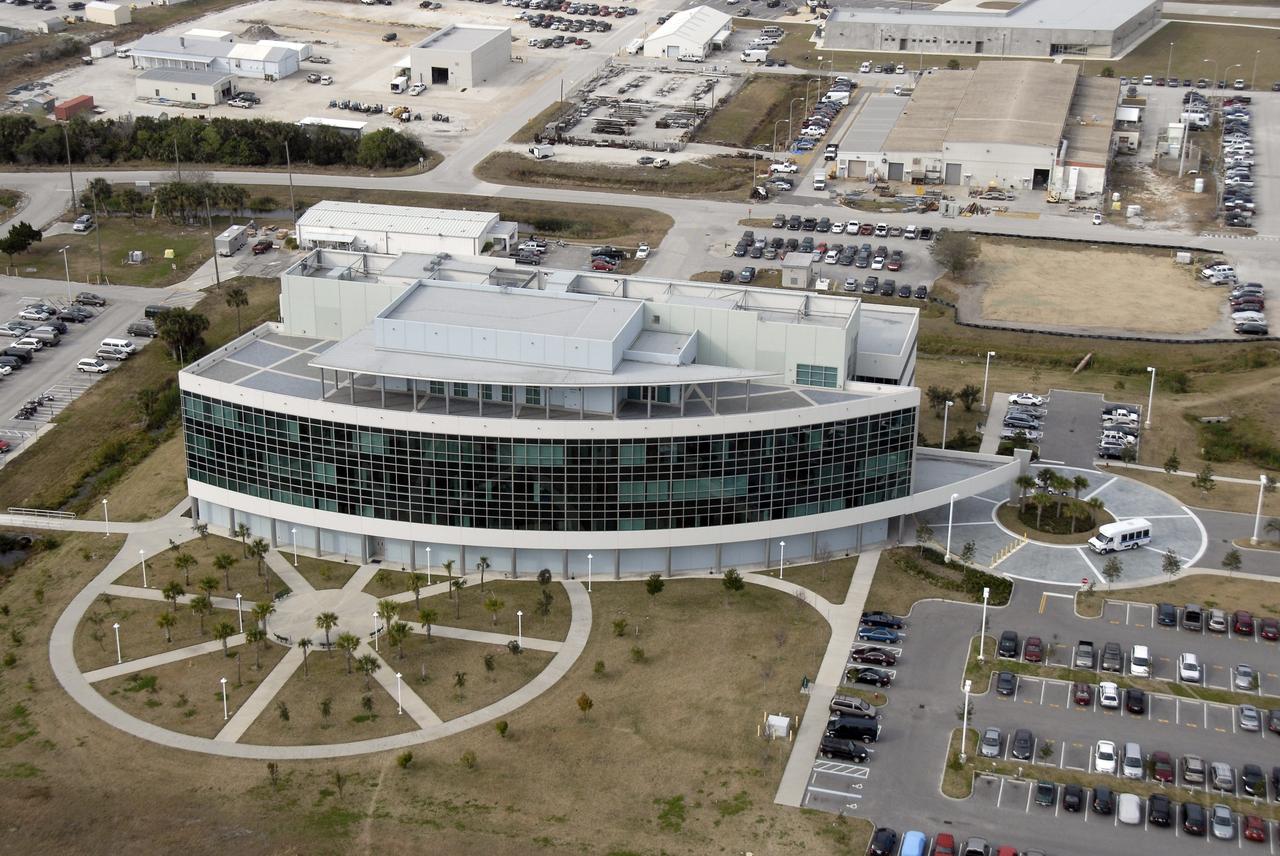
CAPE CANAVERAL, Fla. – An aerial view of the Operations Support Building II in the Launch Complex 39 Area at NASA's Kennedy Space Center in Florida. The panorama of windows faces the launch pads. Photo credit: NASA/Kim Shiflett
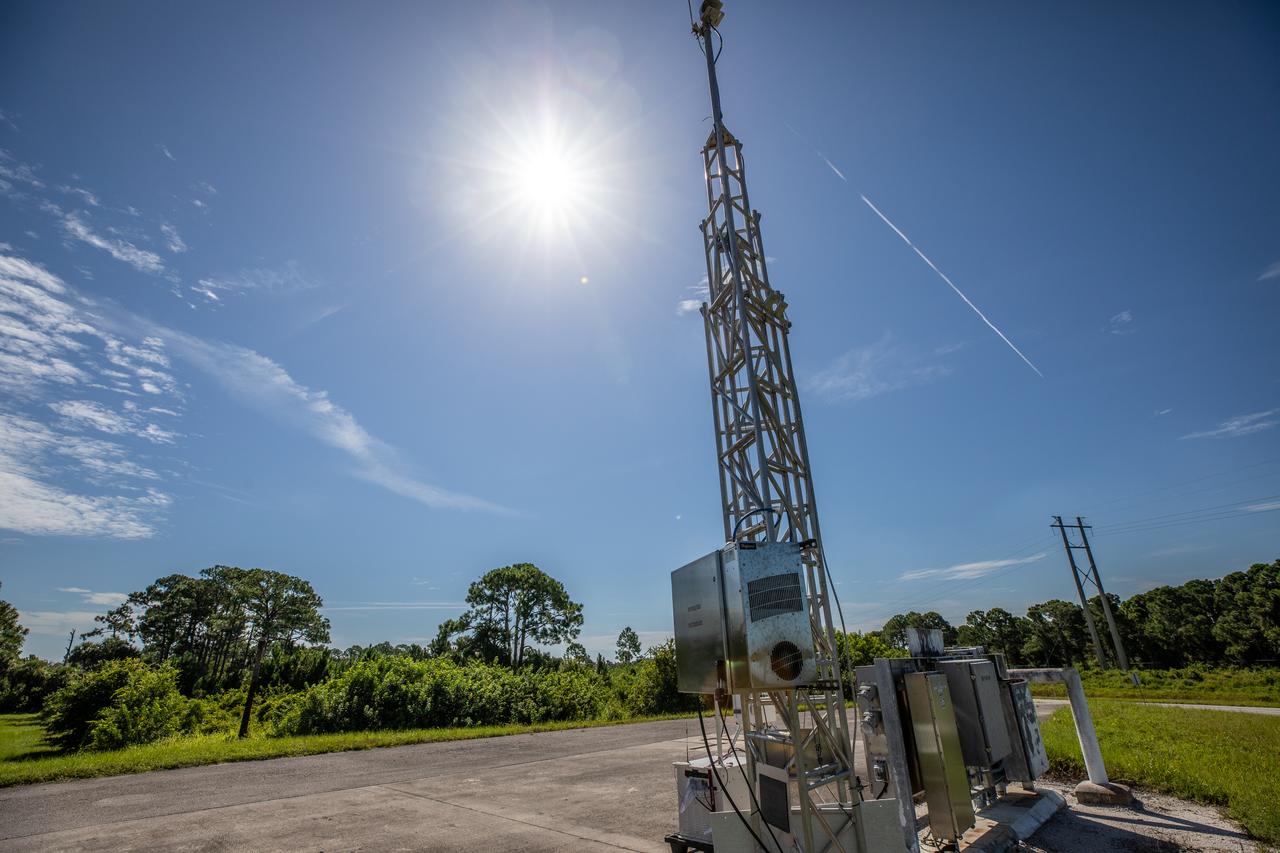
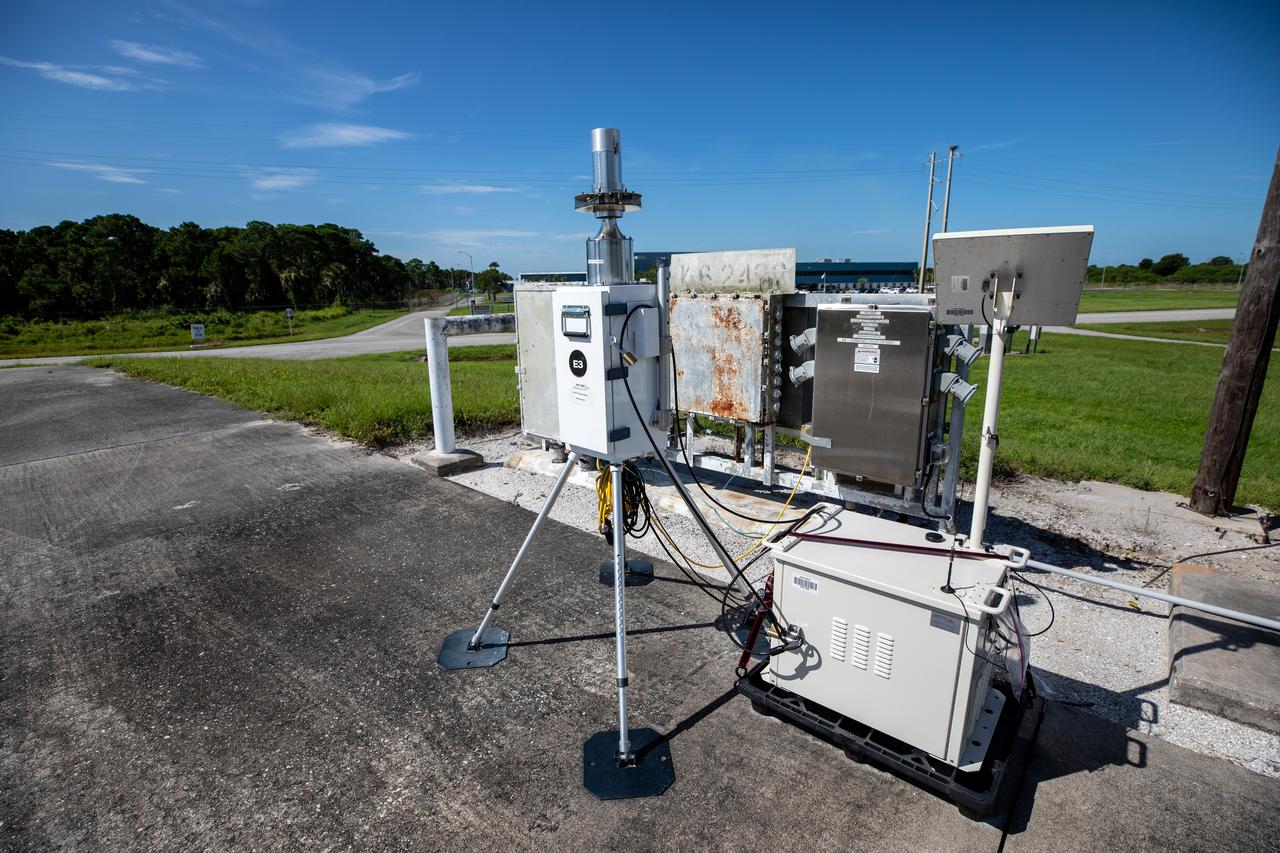
One of several Environmental Continuous Air Monitors, or ECAMS, is located in the Space Coast area on July 27, 2020, in preparation for launch of NASA’s Mars 2020 mission on July 30. The ECAMS are updated versions of those that were used for the launch of Curiosity. The Data Collection and Assessment Center uses information from the network of remote monitoring devises, including several that are located in areas for specific weather forecasting reported back to the operations center.
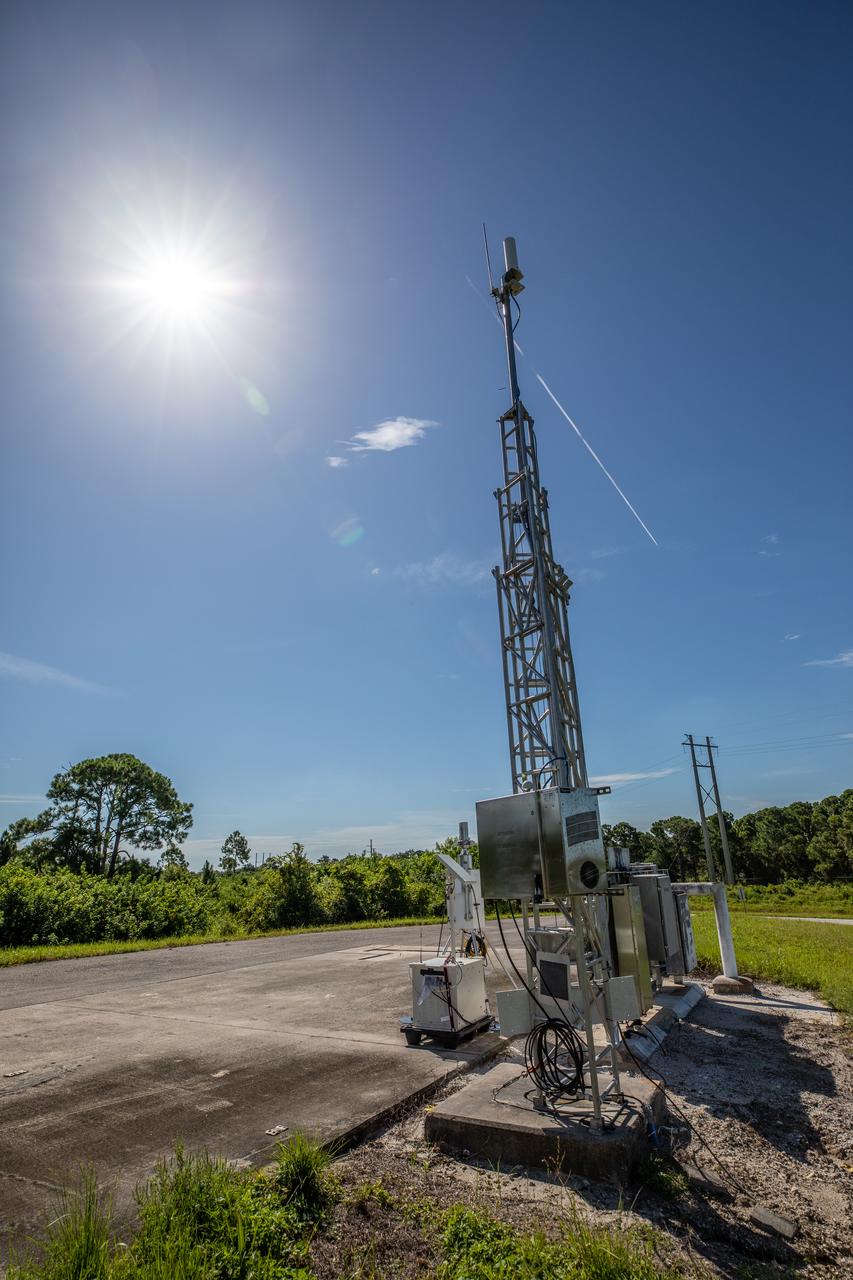
One of several Environmental Continuous Air Monitors, or ECAMS, is located in the Space Coast area on July 27, 2020, in preparation for launch of NASA’s Mars 2020 mission on July 30. The ECAMS are updated versions of those that were used for the launch of Curiosity. The Data Collection and Assessment Center uses information from the network of remote monitoring devises, including several that are located in areas for specific weather forecasting reported back to the operations center.
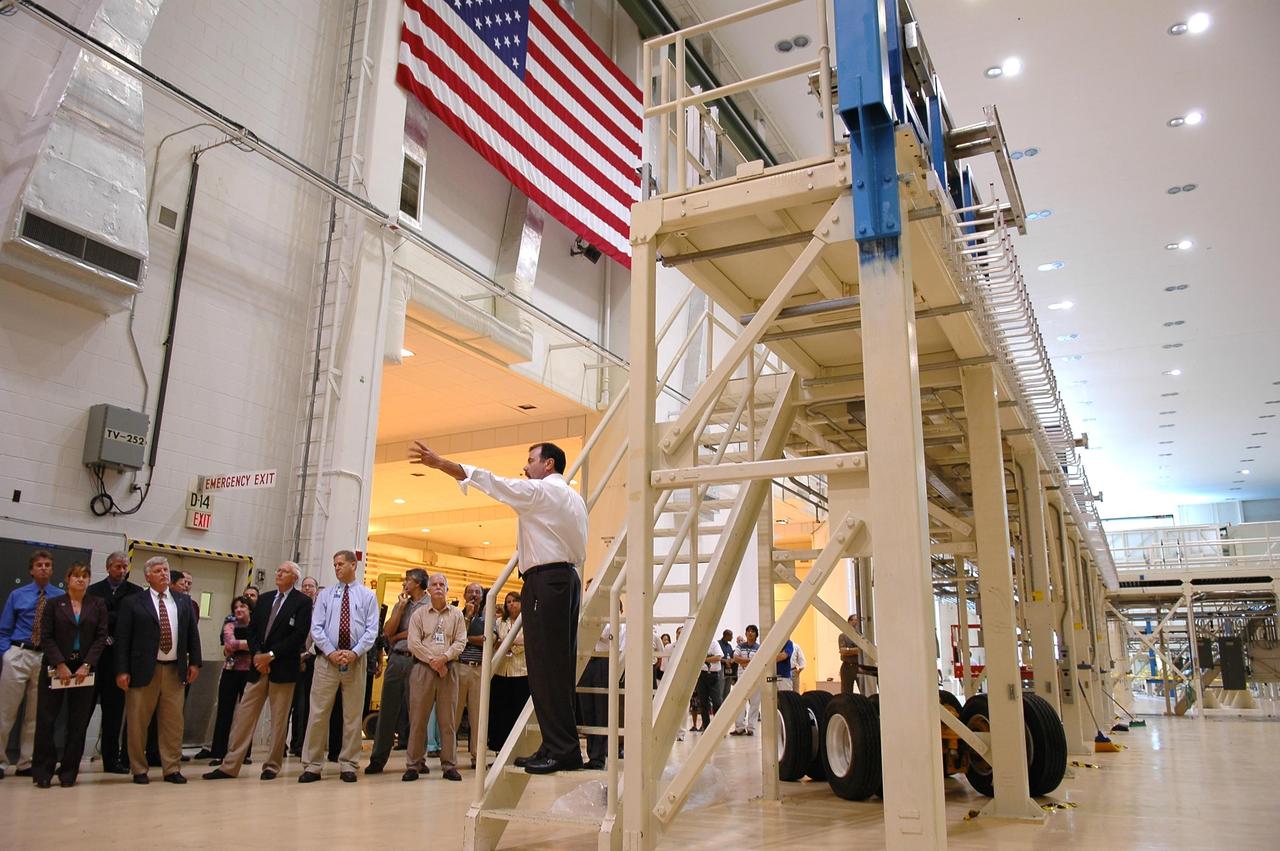
KENNEDY SPACE CENTER, FLA. - At right, Kent Beringer, manager of facilities with Boeing, briefs Center Director Jim Kennedy (second from left at front) and other officials about use of the area dedicated for the crew exploration vehicle in the Operations and Checkout Building. The briefing followed an official ribbon-cutting that reactivated the entry into the area. During the rest of the decade, KSC will transition from launching space shuttles to launching new vehicles in NASA’s Vision For Space Exploration. Photo credit: NASA/Kim Shiflett
A close-up view of one of several Environmental Continuous Air Monitors, or ECAMS, located in the Space Coast area on July 27, 2020, in preparation for launch of NASA’s Mars 2020 mission on July 30. The ECAMS are updated versions of those that were used for the launch of Curiosity. The Data Collection and Assessment Center uses information from the network of remote monitoring devises, including several that are located in areas for specific weather forecasting reported back to the operations center.

One of several Environmental Continuous Air Monitors, or ECAMS, is located in the Space Coast area on July 27, 2020, in preparation for launch of NASA’s Mars 2020 mission on July 30. The ECAMS are updated versions of those that were used for the launch of Curiosity. The Data Collection and Assessment Center uses information from the network of remote monitoring devises, including several that are located in areas for specific weather forecasting reported back to the operations center.
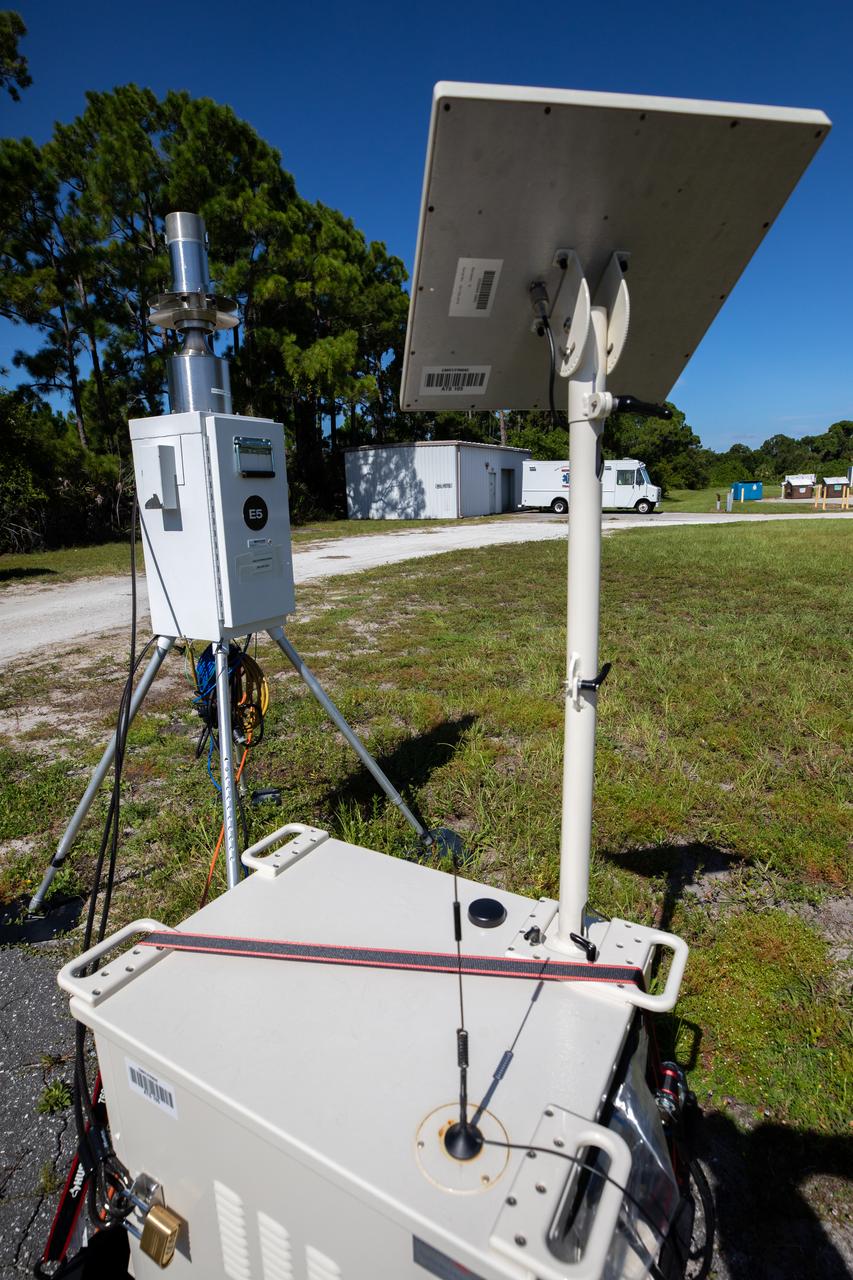
A close-up view of one of several Environmental Continuous Air Monitors, or ECAMS, located in the Space Coast area on July 27, 2020, in preparation for launch of NASA’s Mars 2020 mission on July 30. The ECAMS are updated versions of those that were used for the launch of Curiosity. The Data Collection and Assessment Center uses information from the network of remote monitoring devises, including several that are located in areas for specific weather forecasting reported back to the operations center.
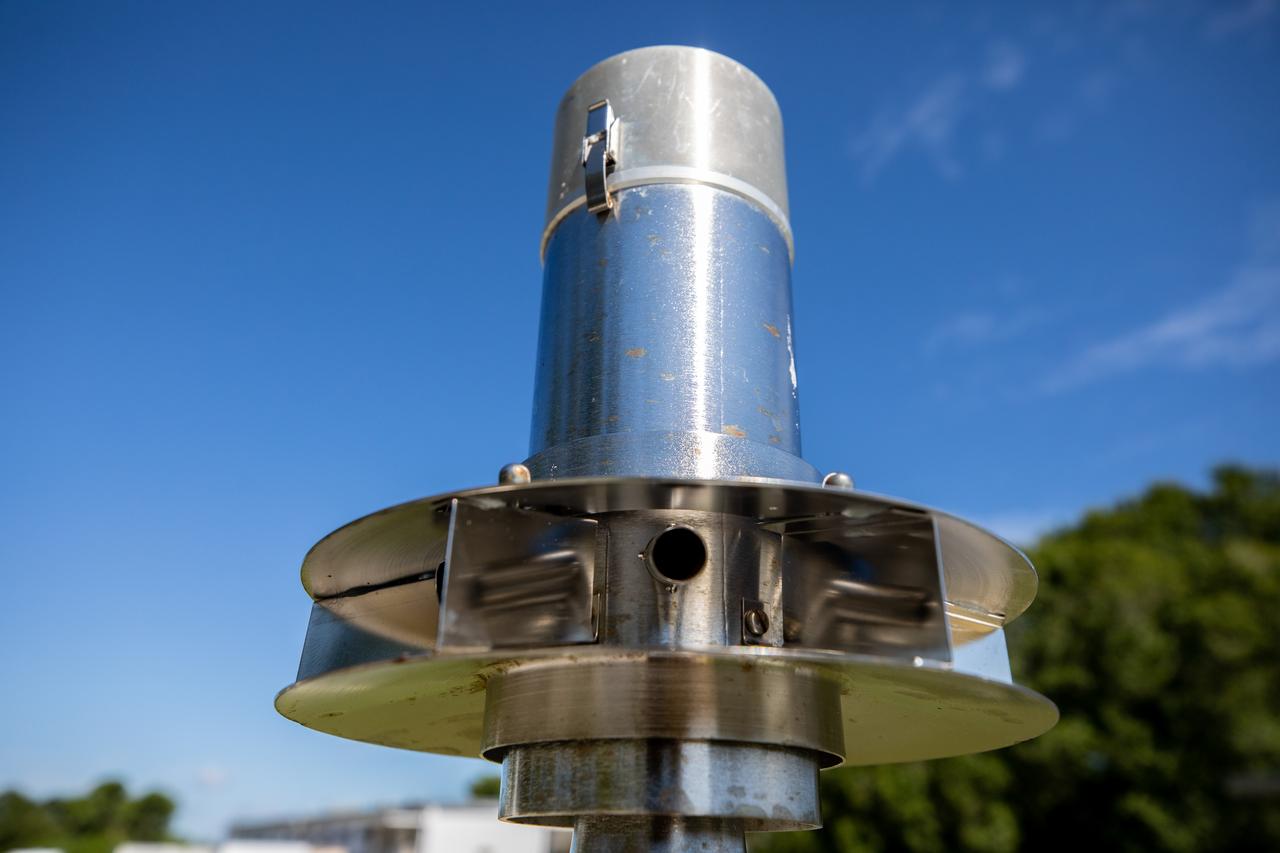
A close-up view of one of several Environmental Continuous Air Monitors, or ECAMS, located in the Space Coast area on July 27, 2020, in preparation for launch of NASA’s Mars 2020 mission on July 30. The ECAMS are updated versions of those that were used for the launch of Curiosity. The Data Collection and Assessment Center uses information from the network of remote monitoring devises, including several that are located in areas for specific weather forecasting reported back to the operations center.
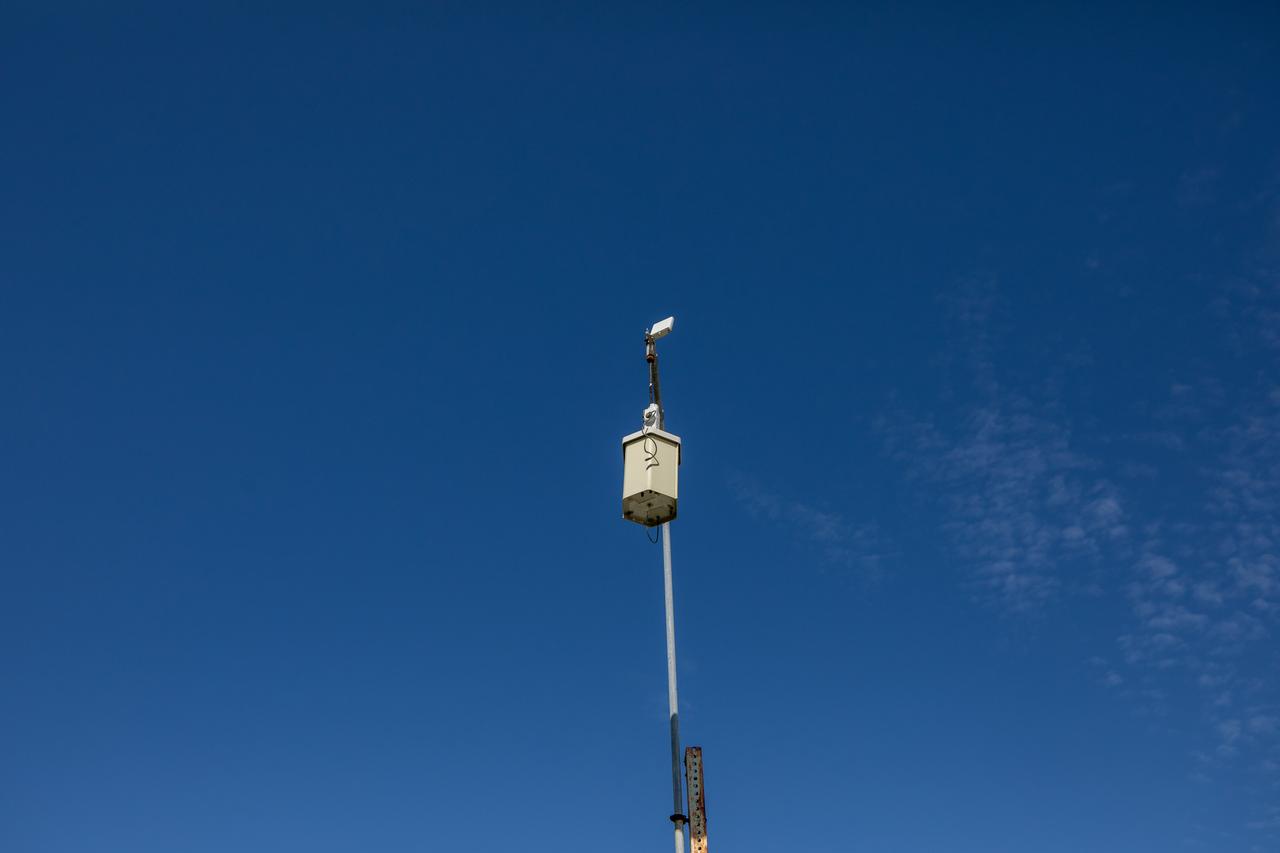
One of several Environmental Continuous Air Monitors, or ECAMS, is located in the Space Coast area on July 27, 2020, in preparation for launch of NASA’s Mars 2020 mission on July 30. The ECAMS are updated versions of those that were used for the launch of Curiosity. The Data Collection and Assessment Center uses information from the network of remote monitoring devises, including several that are located in areas for specific weather forecasting reported back to the operations center.
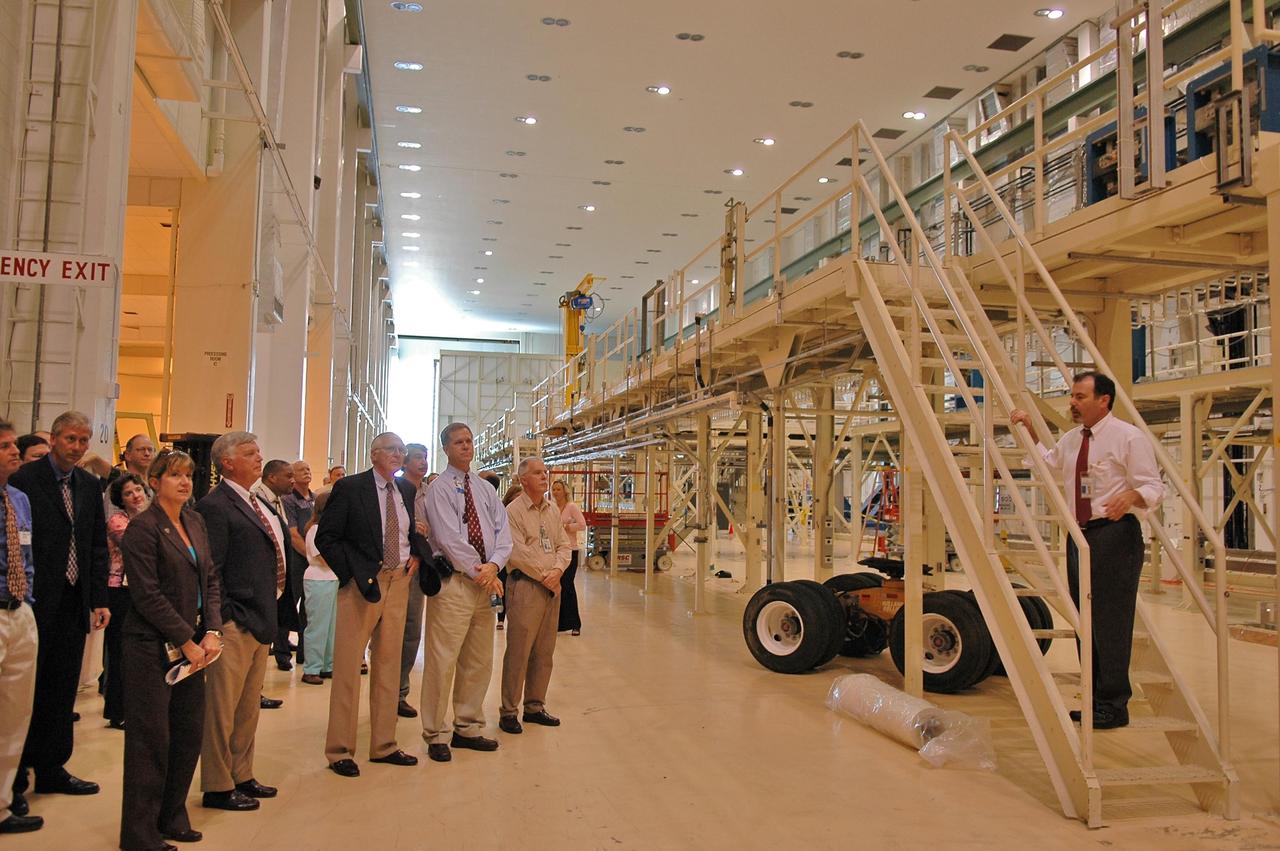
KENNEDY SPACE CENTER, FLA. - At right, Kent Beringer, manager of facilities with Boeing, briefs Center Director Jim Kennedy (second from left at front) and other officials about use of the area dedicated for the crew exploration vehicle in the Operations and Checkout Building. The briefing followed an official ribbon-cutting that reactivated the entry into the area. During the rest of the decade, KSC will transition from launching space shuttles to launching new vehicles in NASA’s Vision For Space Exploration. Photo credit: NASA/Kim Shiflett
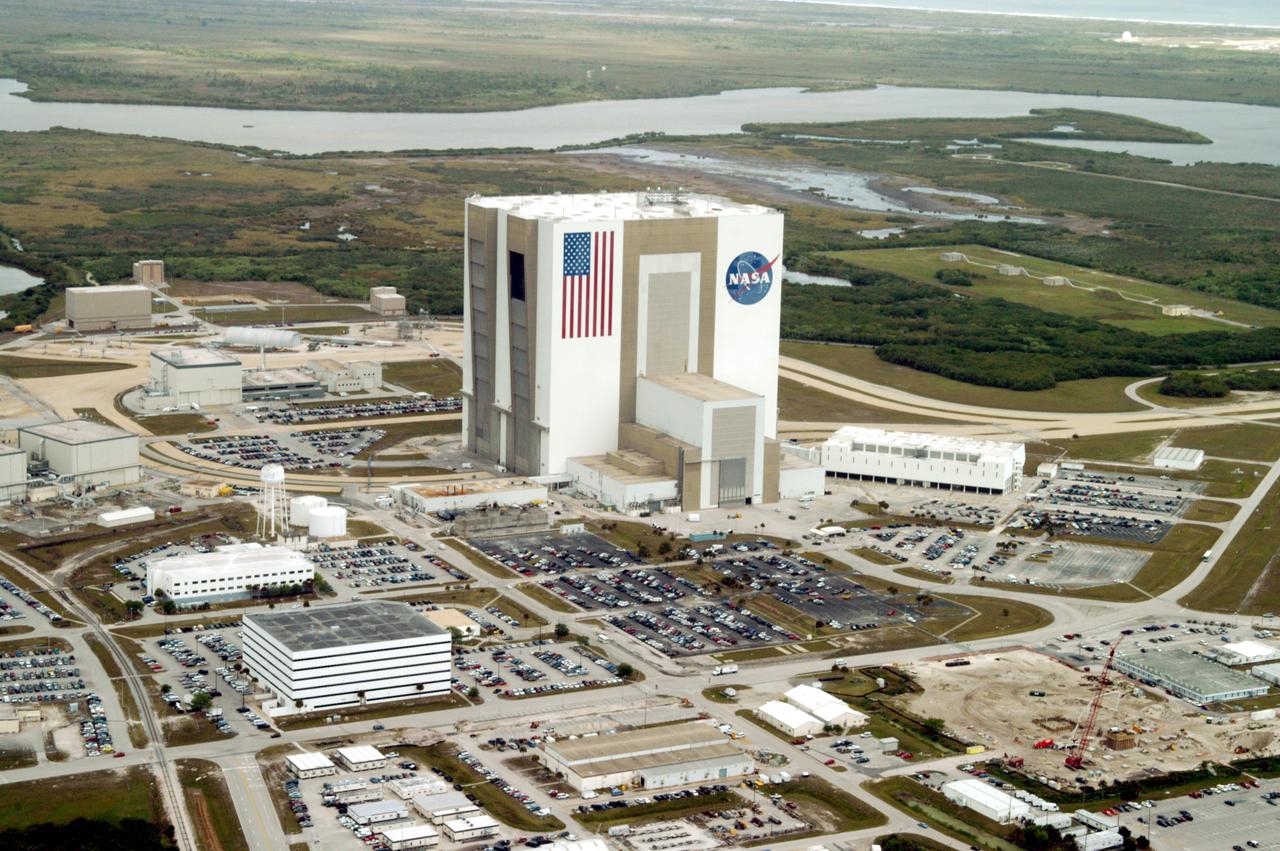
CAPE CANAVERAL, Fla. -- The 525-foot high Vehicle Assembly Building dominates the Launch Complex 39 Area. On the right is the Launch Control Center. To the left are the Orbiter Processing Facility Bays 1, 2 and 3. At lower left is the Operation Support Building at lower right is the construction area for Operations Support Building 2. Behind the VAB meanders the Banana Creek. Photo credit: NASA
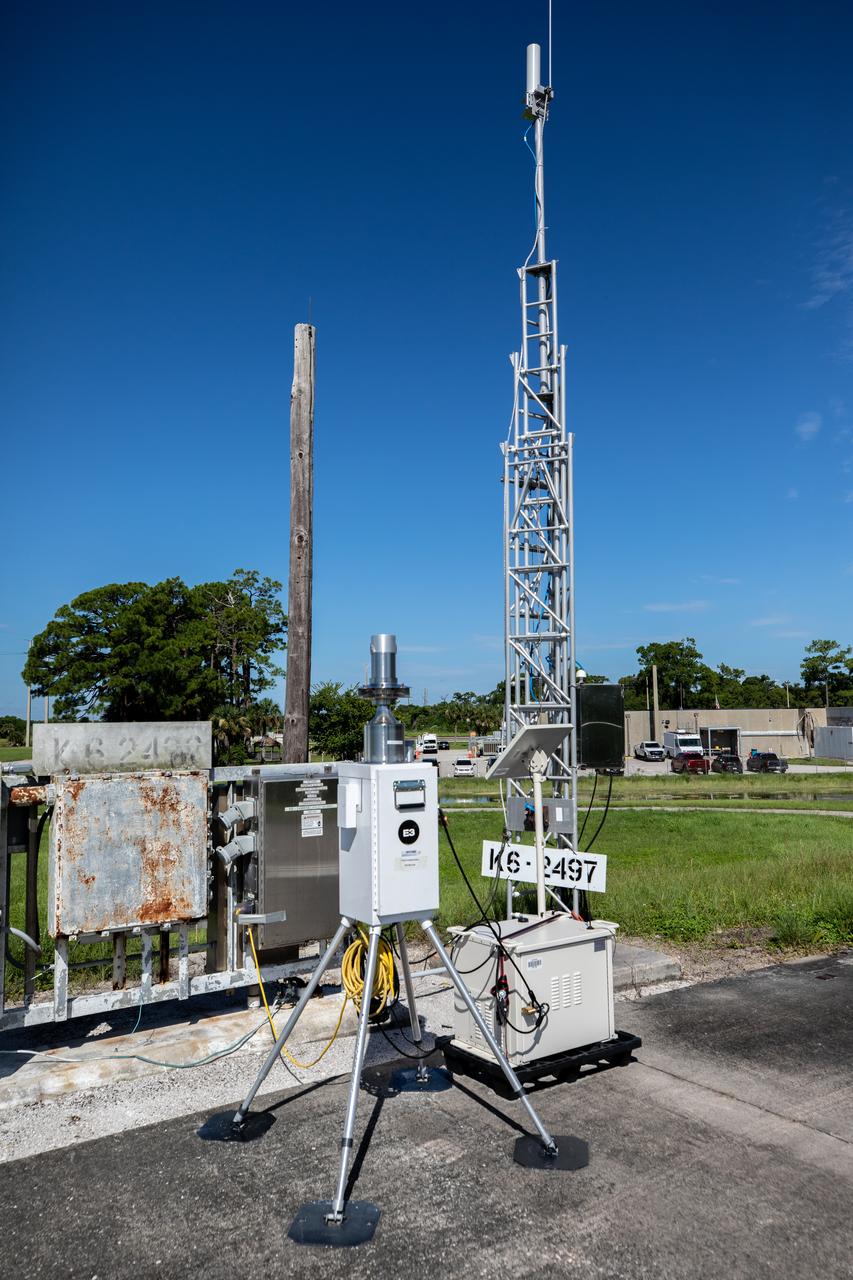
A close-up view of one of several Environmental Continuous Air Monitors, or ECAMS, located in the Space Coast area on July 27, 2020, in preparation for launch of NASA’s Mars 2020 mission on July 30. The ECAMS are updated versions of those that were used for the launch of Curiosity. The Data Collection and Assessment Center uses information from the network of remote monitoring devises, including several that are located in areas for specific weather forecasting reported back to the operations center.
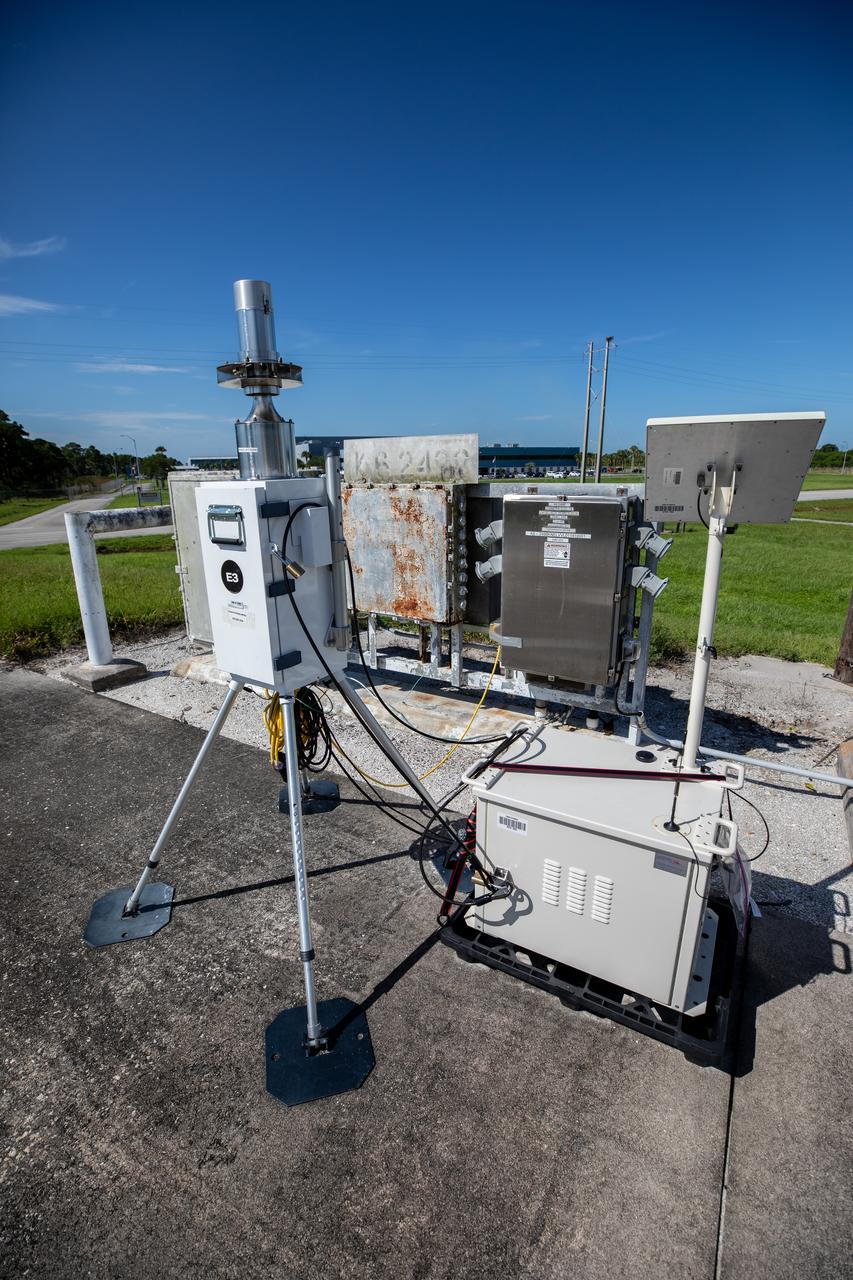
A close-up view of one of several Environmental Continuous Air Monitors, or ECAMS, located in the Space Coast area on July 27, 2020, in preparation for launch of NASA’s Mars 2020 mission on July 30. The ECAMS are updated versions of those that were used for the launch of Curiosity. The Data Collection and Assessment Center uses information from the network of remote monitoring devises, including several that are located in areas for specific weather forecasting reported back to the operations center.
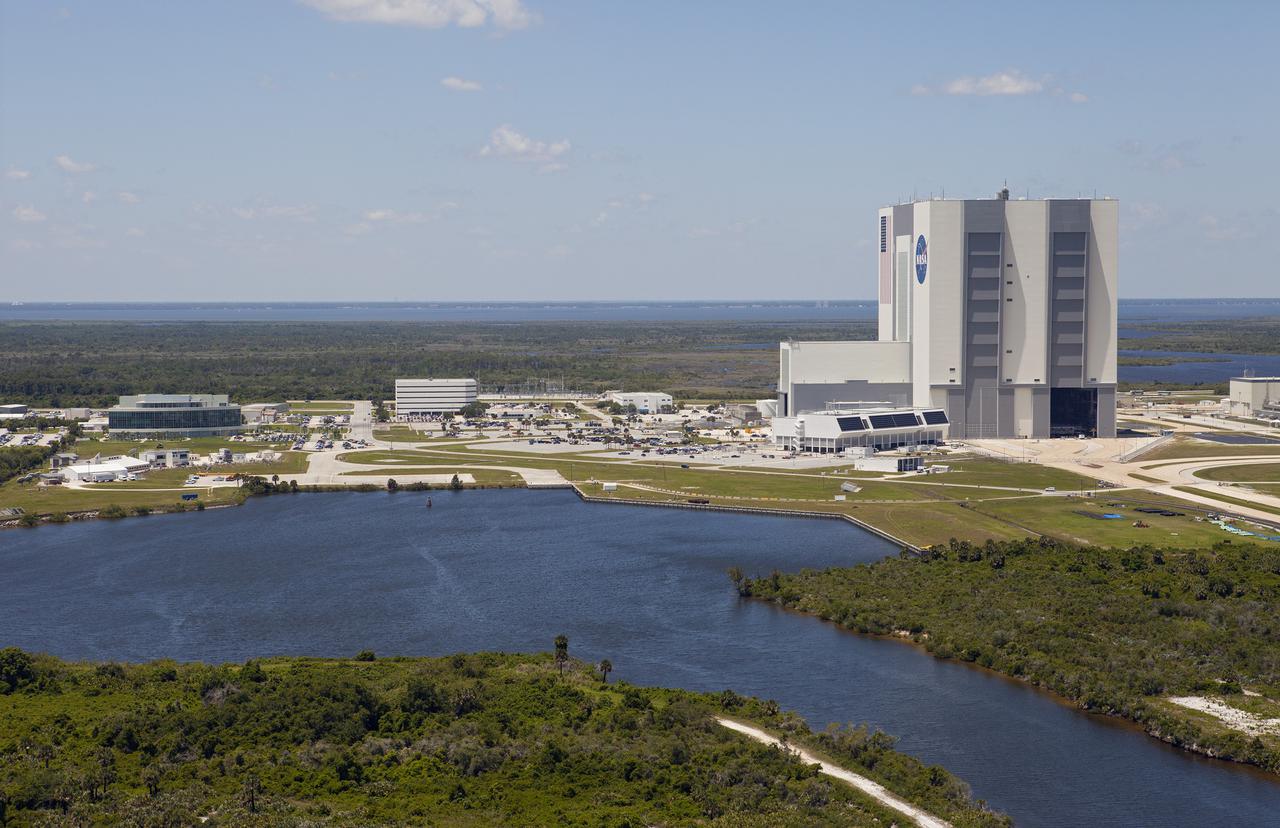
CAPE CANAVERAL, Fla. – An up close aerial view of the Vehicle Assembly Building and other facilities in the Launch Complex 39 area at NASA’s Kennedy Space Center in Florida. In front of the VAB is the Launch Control Center. To the left are the Operations Support Buildings I and II. Upgrades are underway at Pad B and other facilities in the Launch Complex 39 area. The Ground Systems Development and Operations, or GSDO, Program office at Kennedy is leading the center’s transformation from a historically government-only launch complex to a spaceport that can safely handle a variety of rockets and spacecraft, including NASA’s Space Launch System. For more information about GSDO, visit: http:__go.nasa.gov_groundsystems. Photo credit: NASA_Kim Shiflett
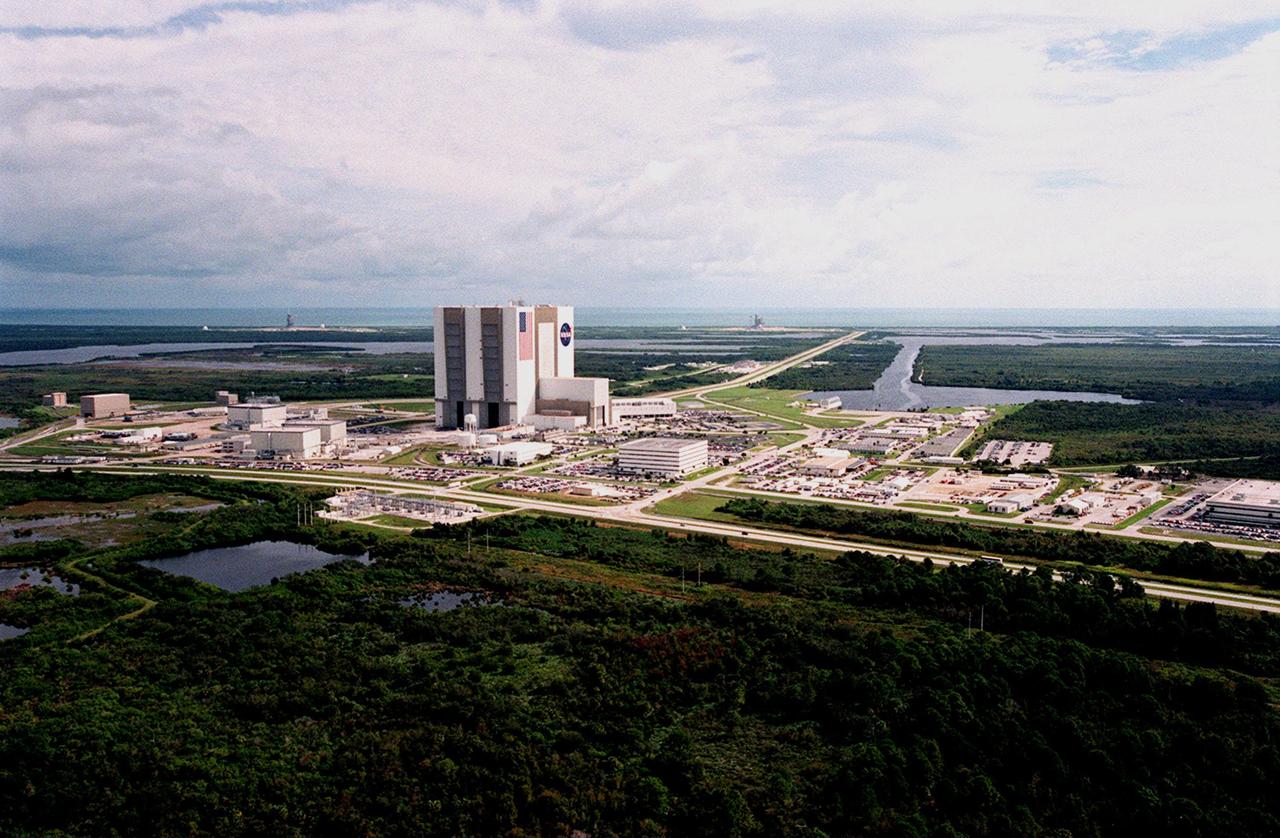
An aerial view of Launch Complex 39 Area shows the Vehicle Assembly Building (center), surrounded by (right) the Launch Control Center, (lower area, left to right) the Orbiter Processing Facility, Process Control Center and Operations Support Building. Looking toward the Atlantic Ocean (top) can be seen Launch Pads 39-A (right) and 39-B. The crawlerway stretches between the VAB and the launch pads. To the right of the crawlerway is the turn basin where new external tanks are brought from Louisiana via ship. The road bordering the buildings is Kennedy Parkway North.
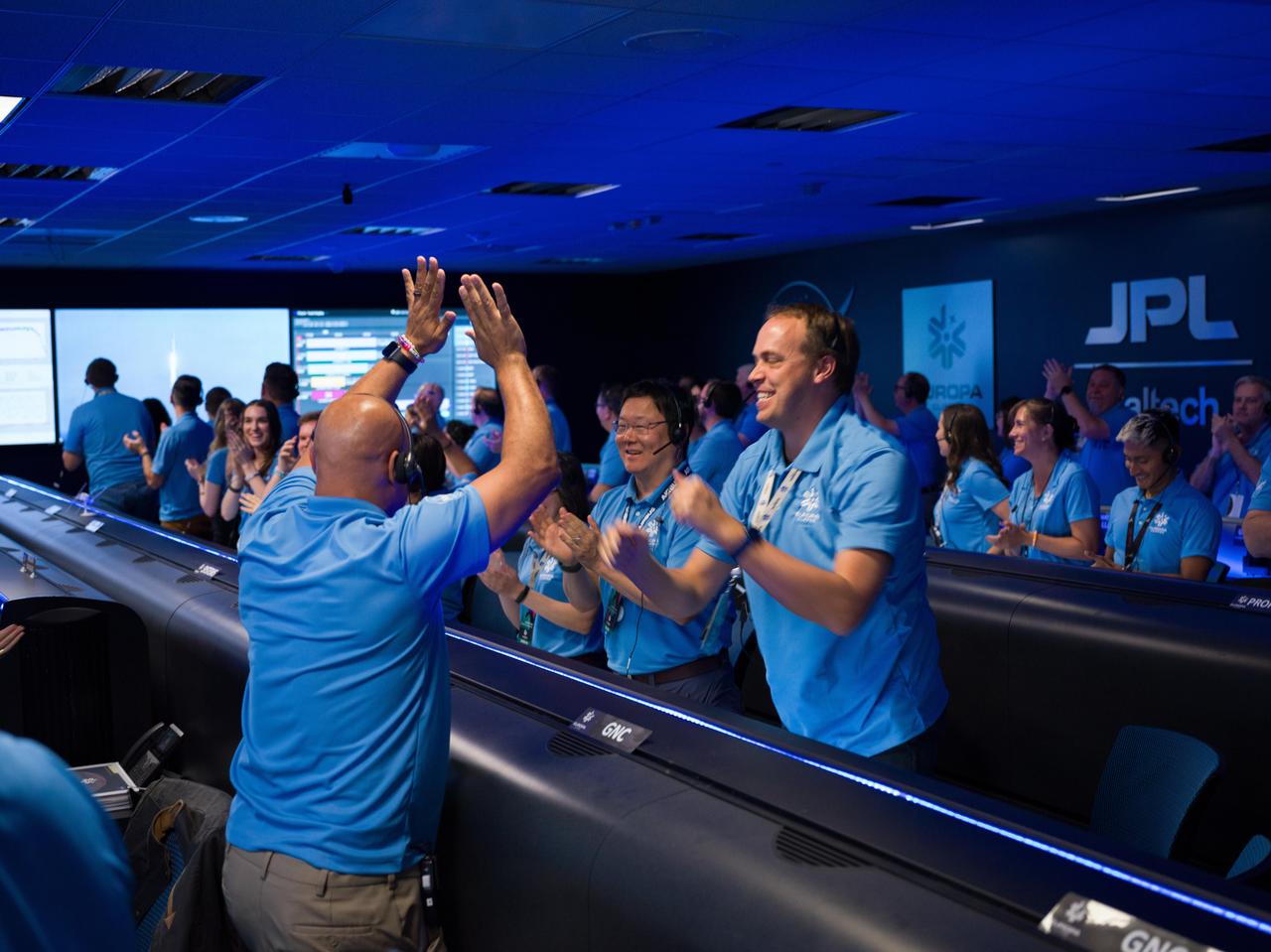
Mission members celebrate during the successful launch of NASA's Europa Clipper spacecraft on Oct. 14, 2024, in the Mission Support Area at NASA's Jet Propulsion Laboratory in Southern California. The spacecraft is bound on a 5½-year, 1.8 billion-mile (2.9 billion-kilometer) journey to Jupiter's icy moon Europa, which scientists believe harbors a vast internal ocean that may have conditions suitable for supporting life. Europa Clipper's three main science objectives are to determine the thickness of the moon's icy shell and its interactions with the ocean below, to investigate its composition, and to characterize its geology. The mission's detailed exploration of Europa will help scientists better understand the astrobiological potential for habitable worlds beyond our planet. https://photojournal.jpl.nasa.gov/catalog/PIA26422
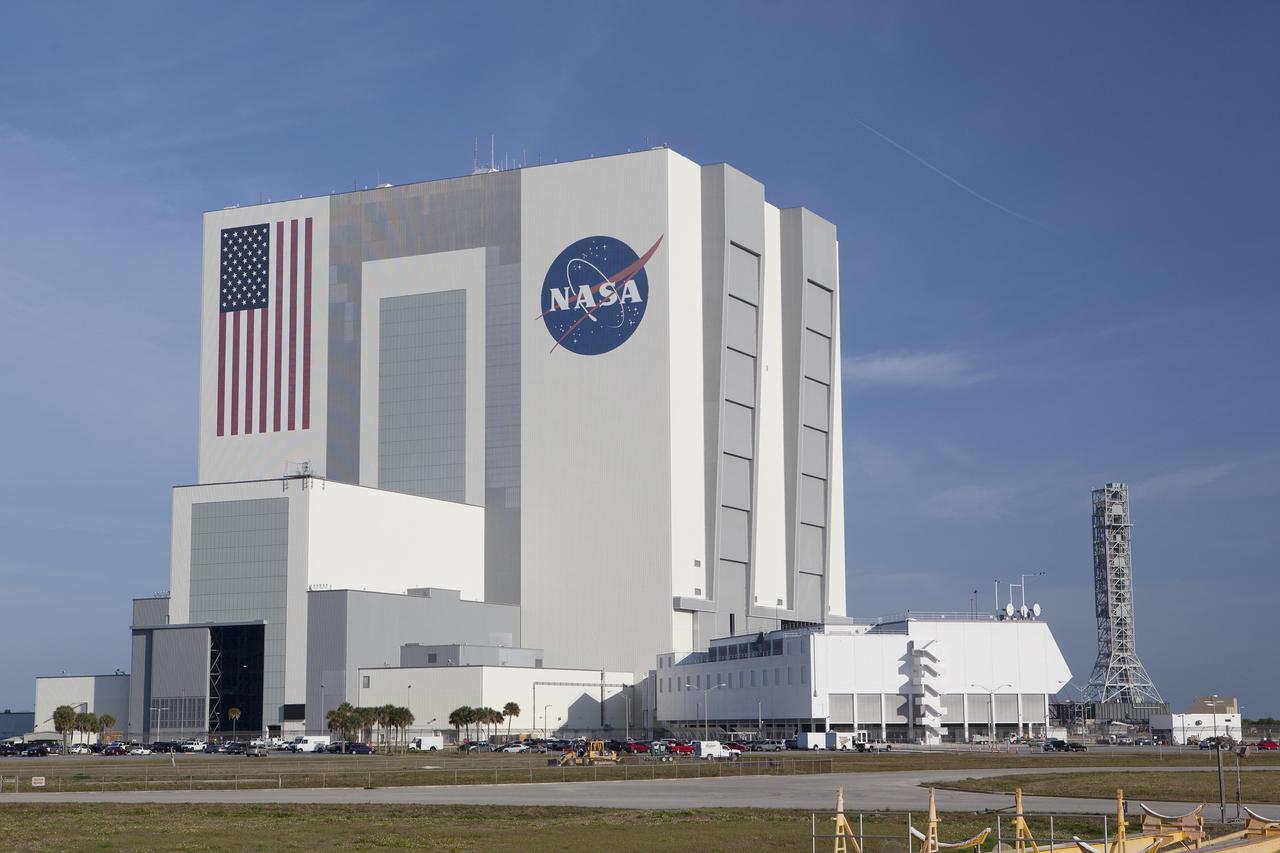
CAPE CANAVERAL, Fla. – The Vehicle Assembly Building, Launch Control Center and Mobile Launcher are in this view of the Launch Complex 39 area at NASA's Kennedy Space Center in Florida. Inside the Launch Control Center, the Ground Systems Development and Operations Program is overseeing efforts to create a new firing room based on a multi-user concept in Firing Room 4. The design of Firing Room 4 will incorporate five control room areas that are flexible to meet current and future NASA and commercial user requirements. The equipment and most of the consoles from Firing Room 4 were moved to Firing Room 2 for possible future reuse. Photo credit: NASA/Ben Smegelsky
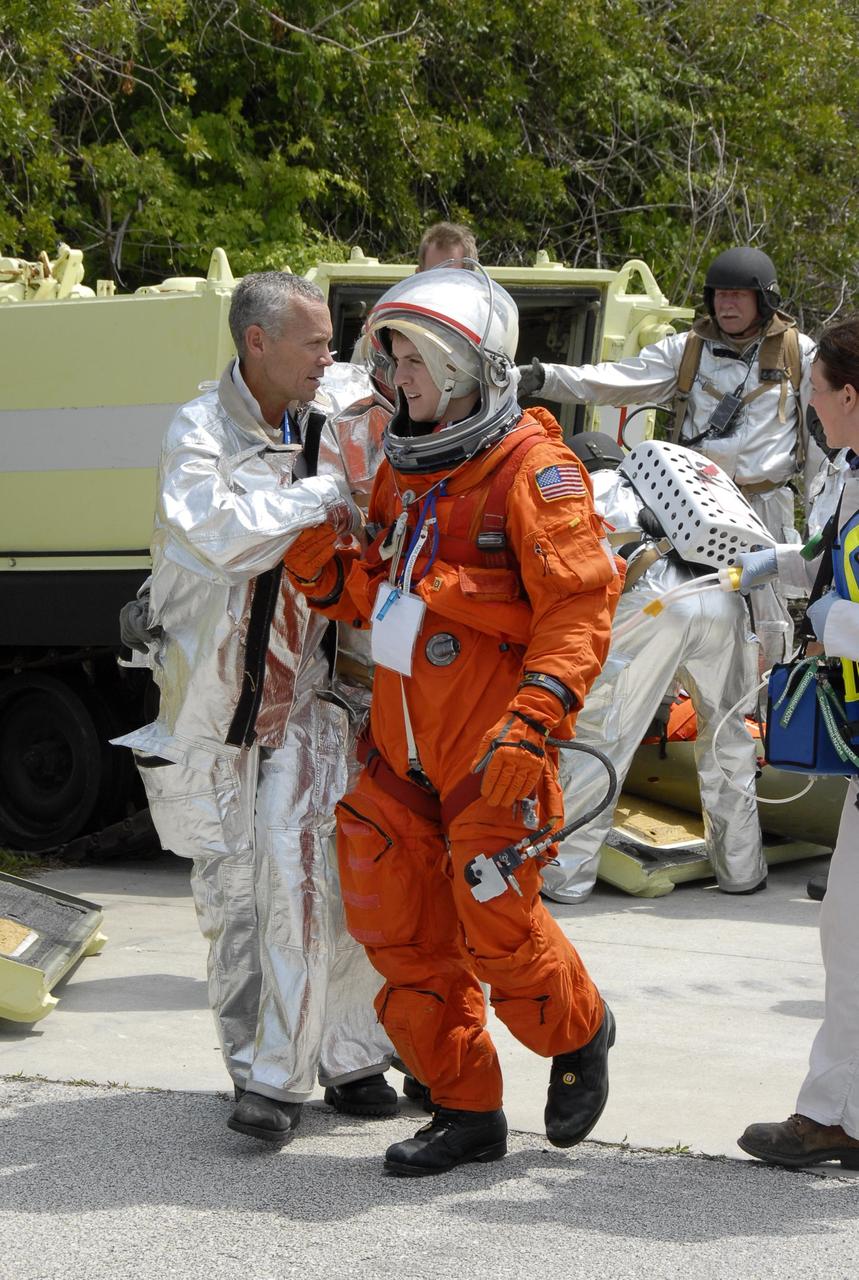
KENNEDY SPACE CENTER, FLA. -- During the second stage of a simulated emergency, known as Mode 4, KSC personnel representing astronauts are treated at a triage area set up at Helipad 8, located near the fire station between Launch Pads 39A and 39B. The emergency exercise began on Launch Pad 39A. The participants were helped off the pad and taken to the triage site. The "injured" workers will be airlifted to participating area hospitals. The KSC rescue teams are practicing emergency procedures in the unlikely scenario of a mishap on the pad during a launch sequence. The exercises are standard training procedures to assess and prepare emergency personnel, procedures and hardware. Photo credit: NASA/Kim Shiflett
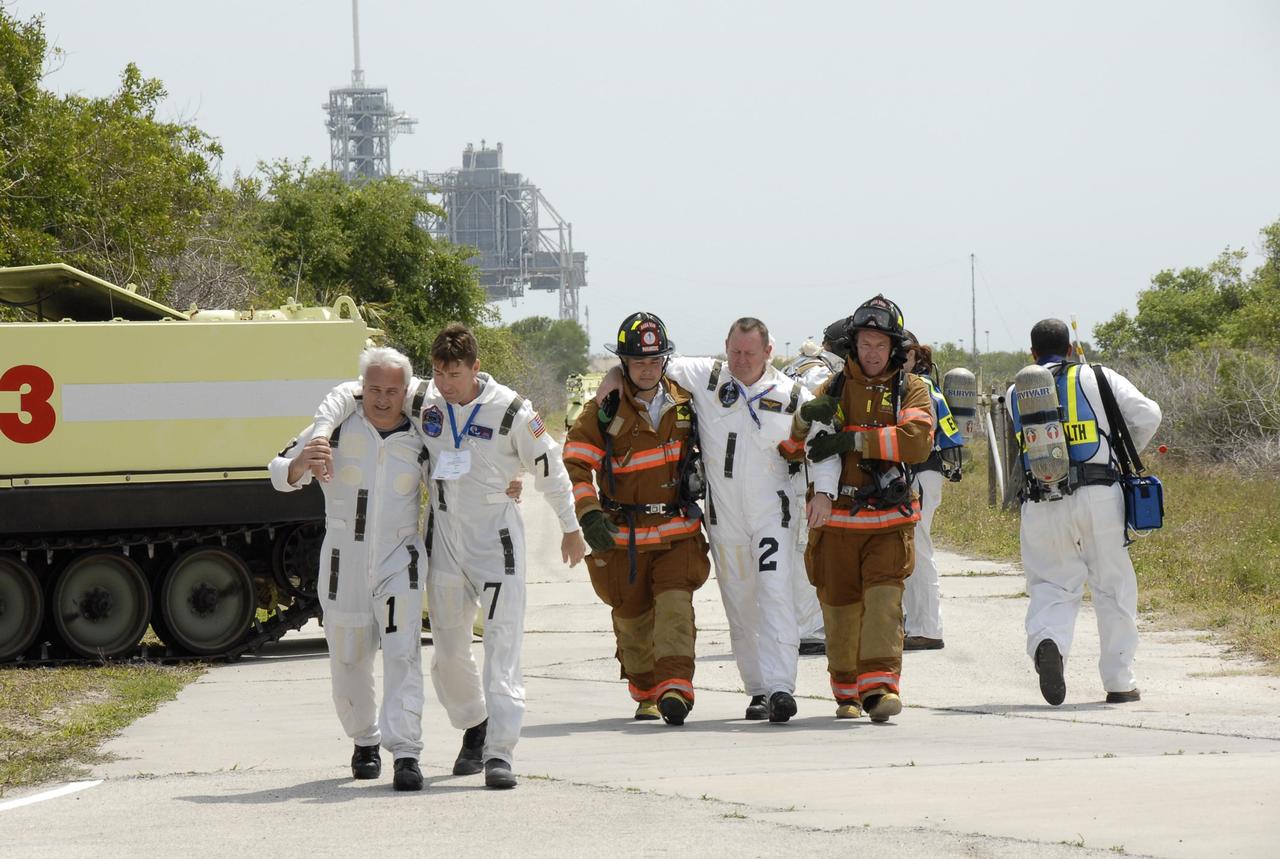
KENNEDY SPACE CENTER, FLA. -- During the second stage of a simulated emergency, known as Mode 4, rescue workers help KSC personnel feigning injuries to a triage area set up at Helipad 8, located near the fire station between Launch Pads 39A and 39B. The emergency exercise began on Launch Pad 39A. The participants were helped off the pad and taken to the triage site. The "injured" workers will be airlifted to participating area hospitals. The KSC rescue teams are practicing emergency procedures in the unlikely scenario of a mishap on the pad during a launch sequence. The exercises are standard training procedures to assess and prepare emergency personnel, procedures and hardware. Photo credit: NASA/Kim Shiflett
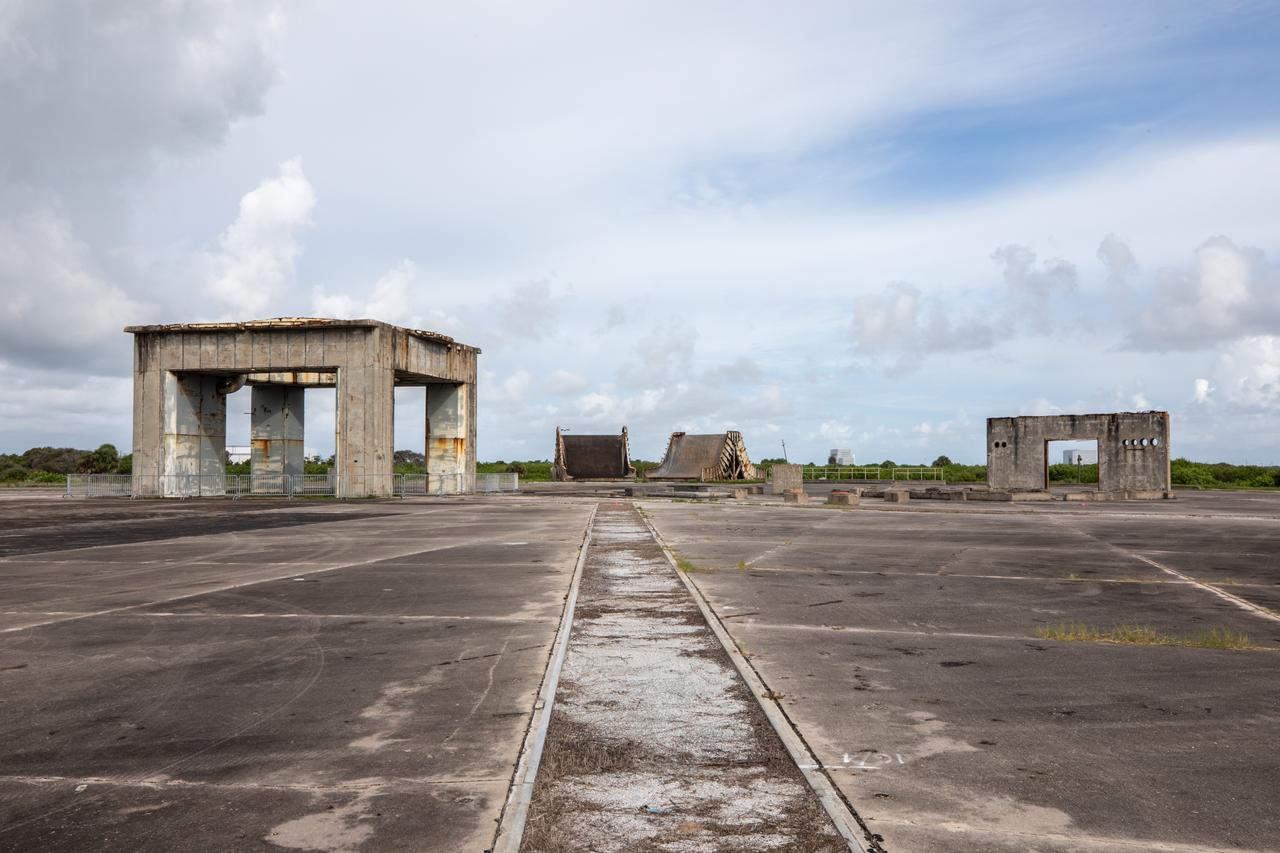
A view of the launch pedestal (at left) still standing at Launch Complex 34 at Cape Canaveral Space Force Station in Florida on July 22, 2020. In the background are two flame deflectors. Work will soon begin to perform environmental contamination removal on the pedestal and the ground area surrounding the launch complex.
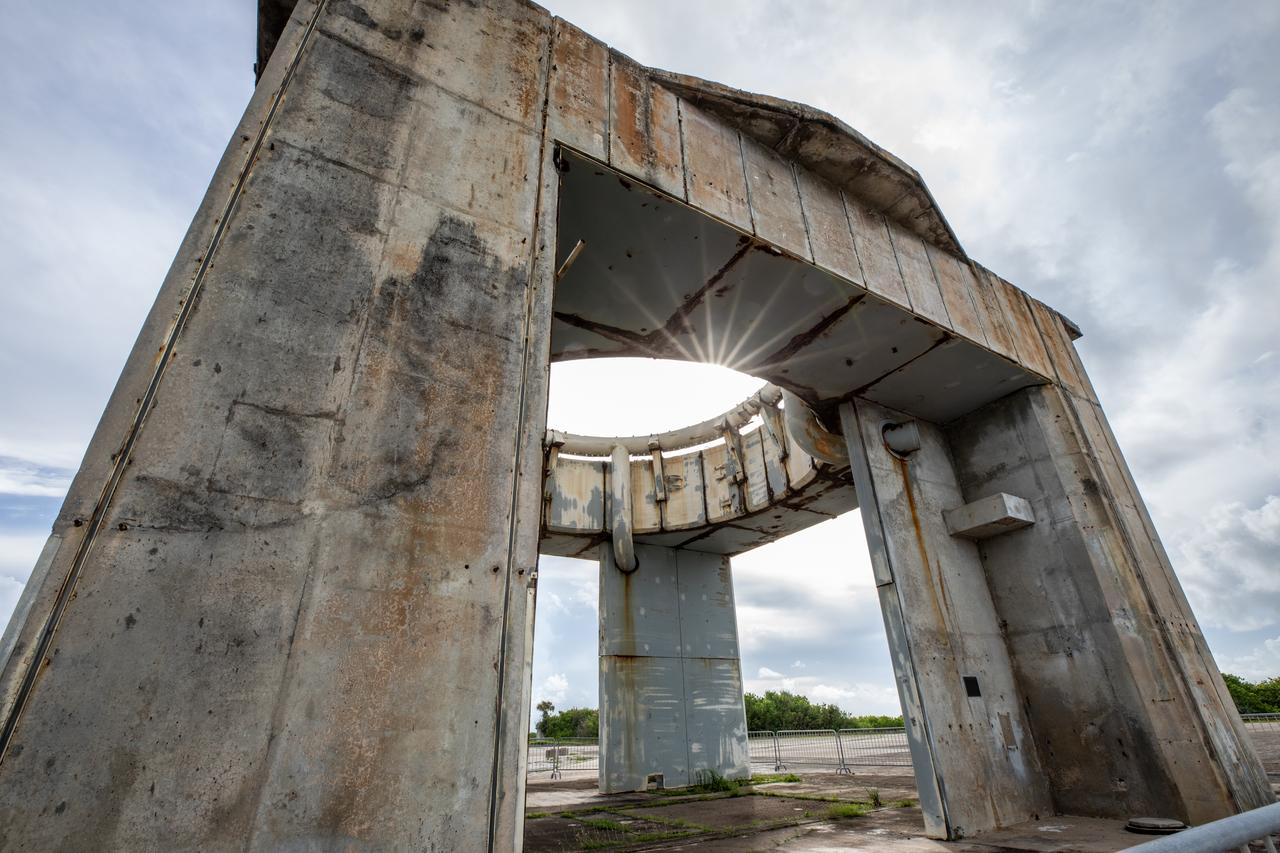
A close-up view of the launch pedestal still standing at Launch Complex 34 at Cape Canaveral Space Force Station in Florida on July 22, 2020. Work will soon begin to perform environmental contamination removal on the pedestal and the ground area surrounding the launch complex.
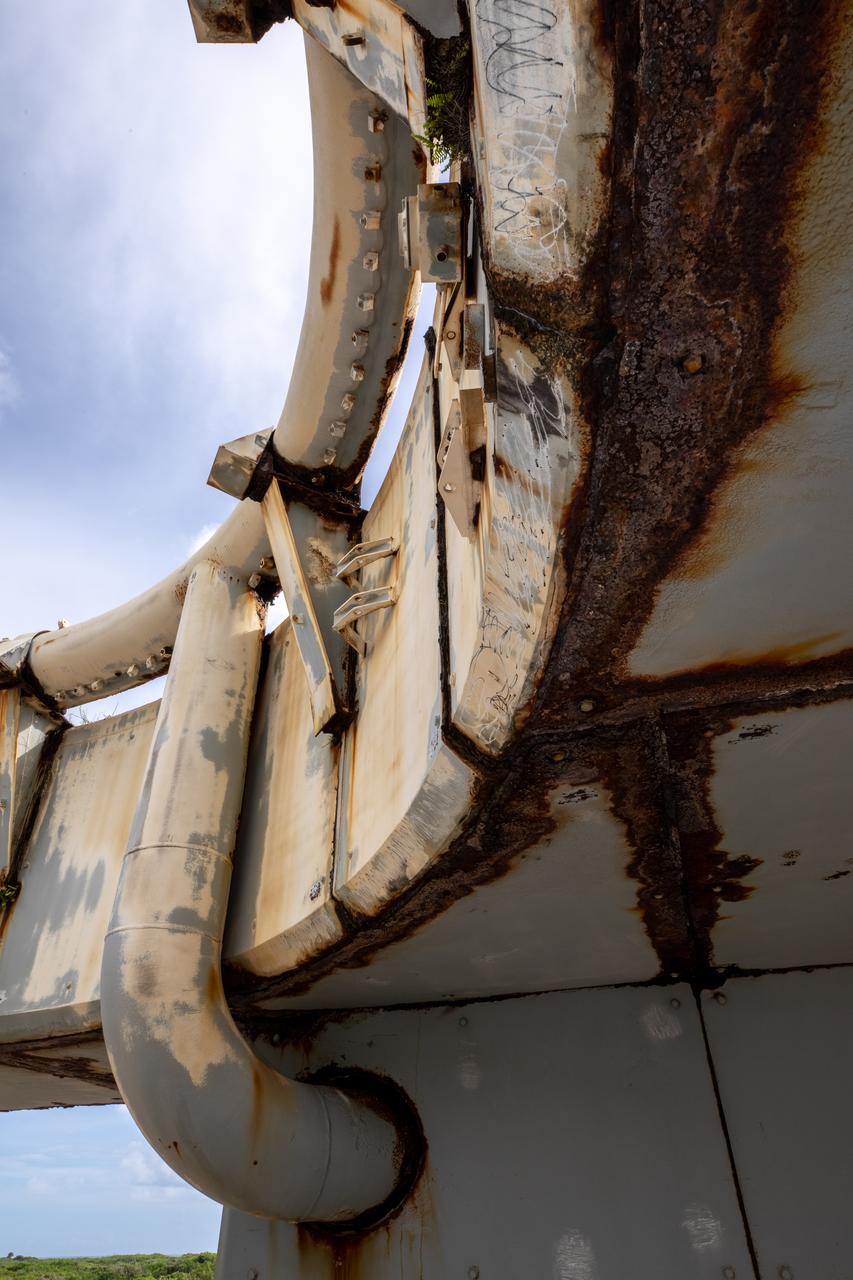
A close-up view of a portion of the launch pedestal still standing at Launch Complex 34 at Cape Canaveral Space Force Station in Florida on July 22, 2020. Work will soon begin to perform environmental contamination removal on the pedestal and the ground area surrounding the launch complex.
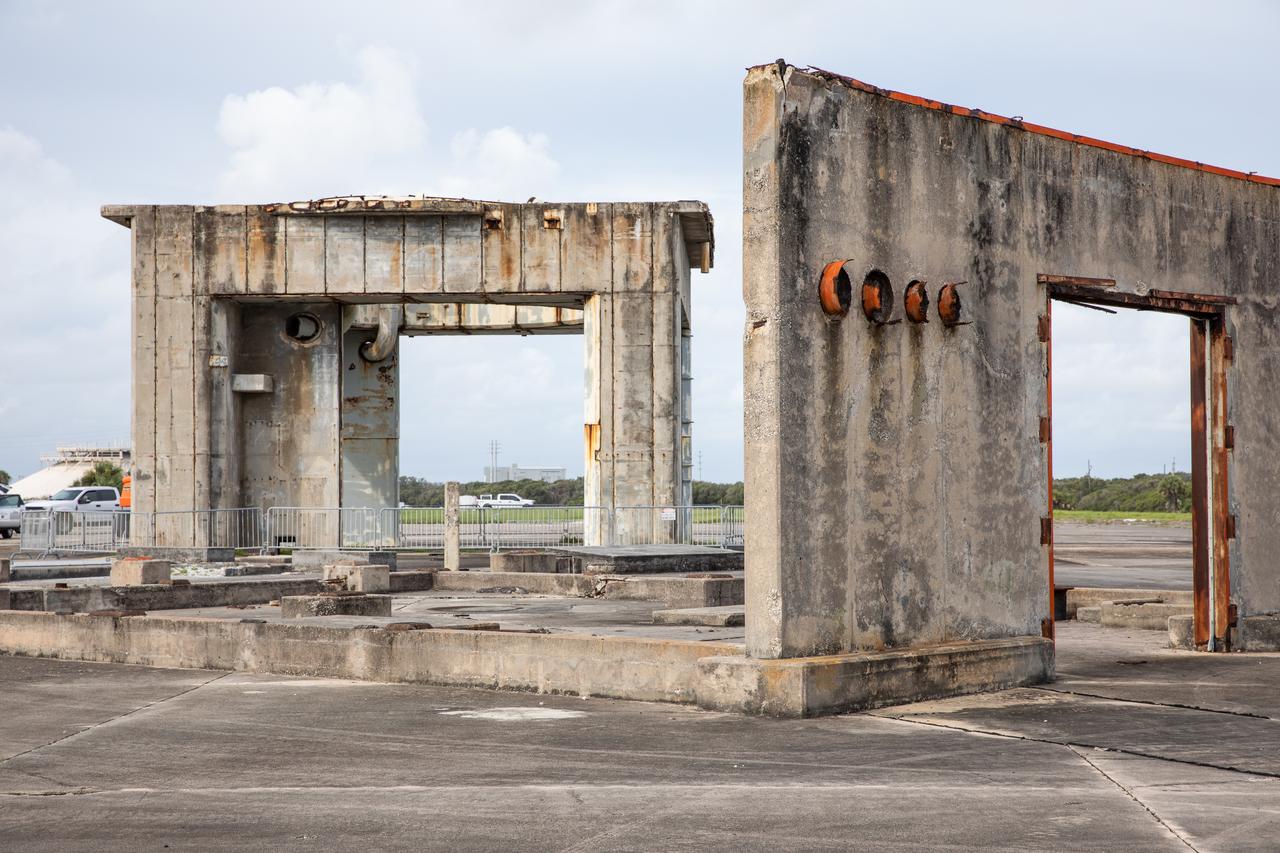
A close-up view of the launch pedestal and a support structure still standing at Launch Complex 34 at Cape Canaveral Space Force Station in Florida on July 22, 2020. Work will soon begin to perform environmental contamination removal on the pedestal and the ground area surrounding the launch complex.
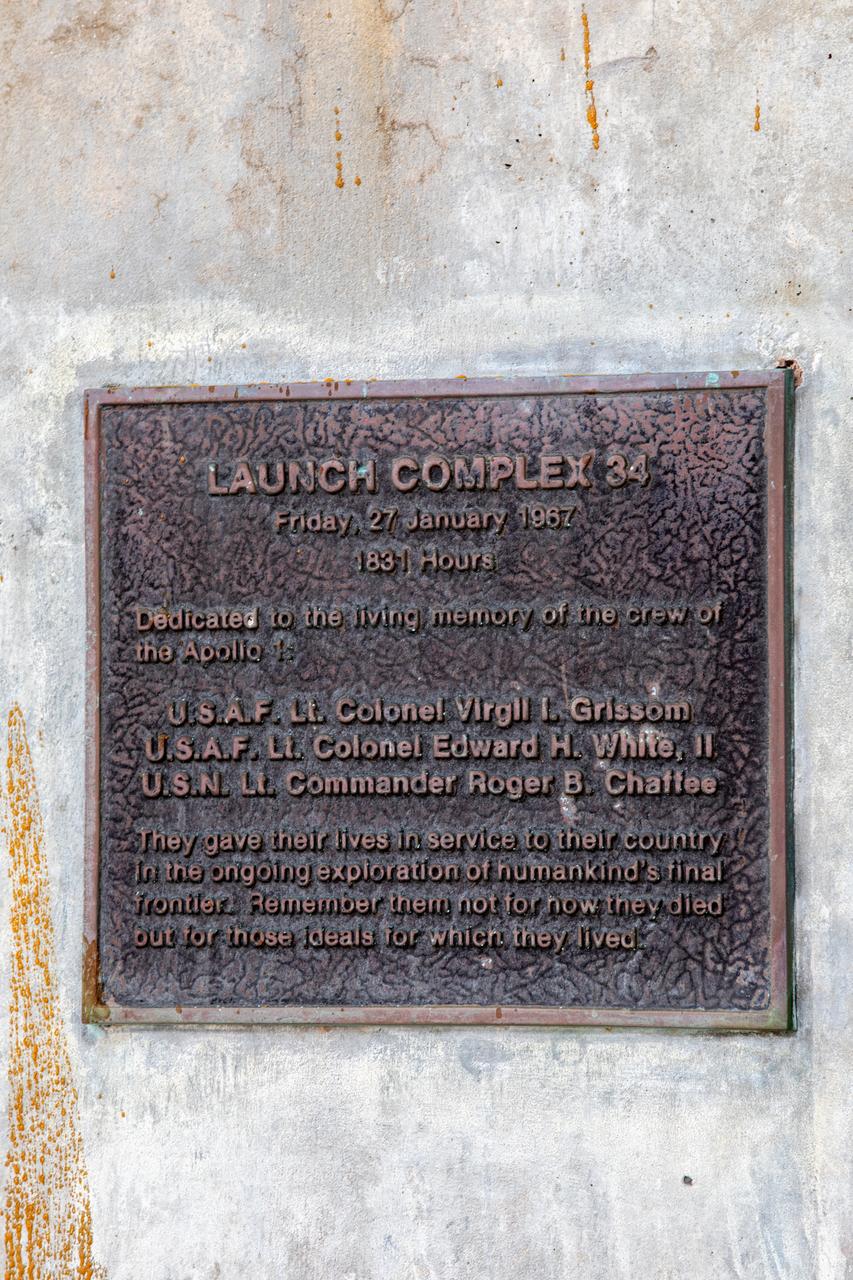
A close-up view of the historic marker on the launch pedestal still standing at Launch Complex 34 at Cape Canaveral Space Force Station in Florida on July 22, 2020. Work will soon begin to perform environmental contamination removal on the pedestal and the ground area surrounding the launch complex.
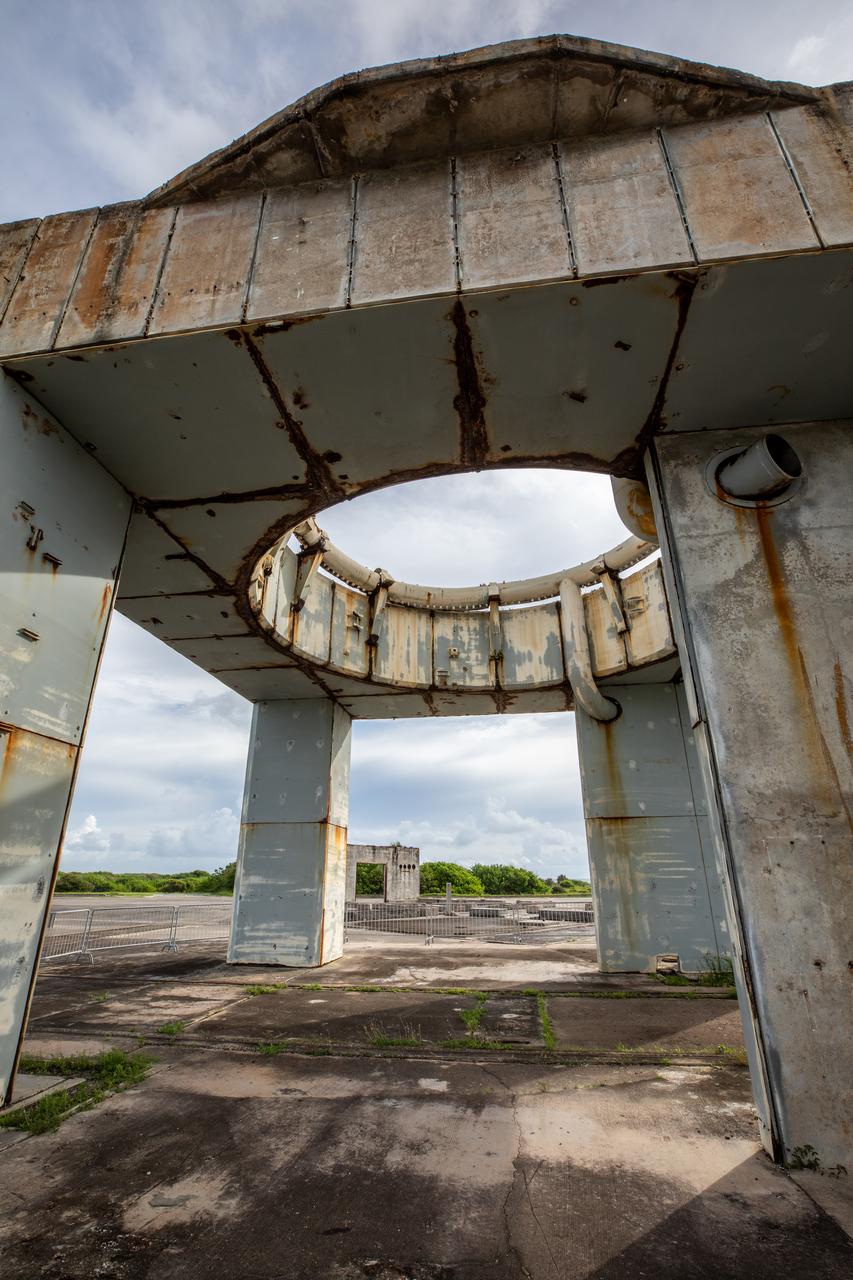
A close-up view of the launch pedestal still standing at Launch Complex 34 at Cape Canaveral Space Force Station in Florida on July 22, 2020. Work will soon begin to perform environmental contamination removal on the pedestal and the ground area surrounding the launch complex.
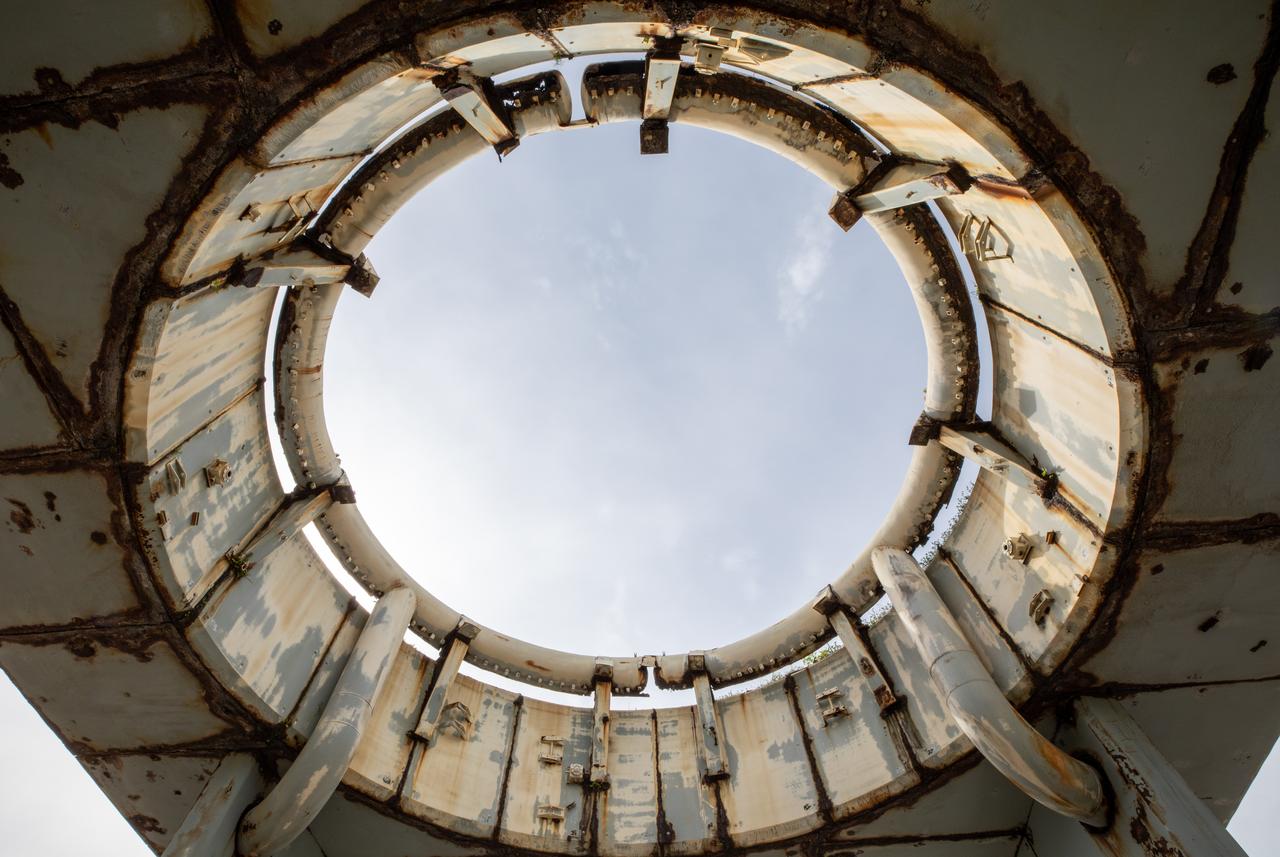
A view looking up from inside the launch pedestal still standing at Launch Complex 34 at Cape Canaveral Space Force Station in Florida on July 22, 2020. Work will soon begin to perform environmental contamination removal on the pedestal and the ground area surrounding the launch complex.
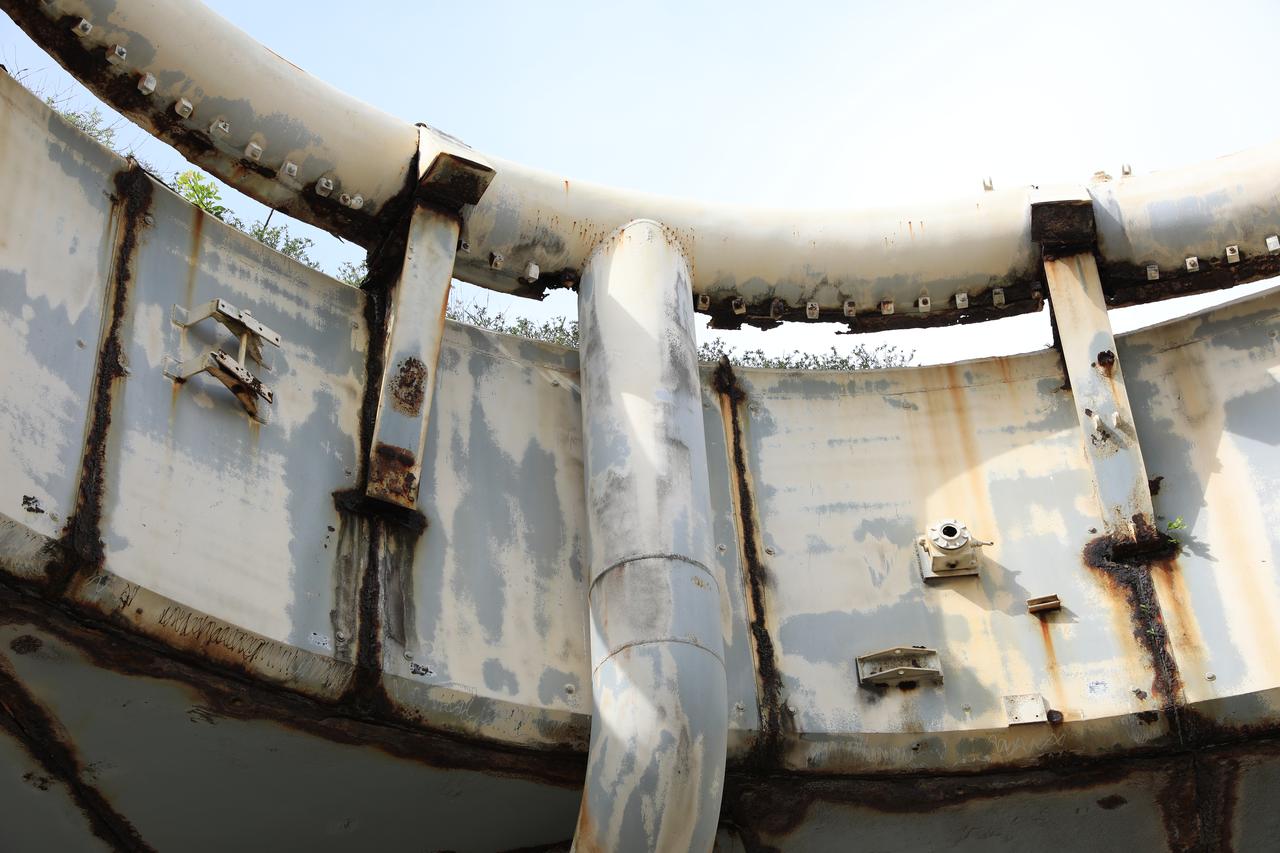
A view looking up from inside the launch pedestal still standing at Launch Complex 34 at Cape Canaveral Space Force Station in Florida on July 22, 2020. Work will soon begin to perform environmental contamination removal on the pedestal and the ground area surrounding the launch complex.
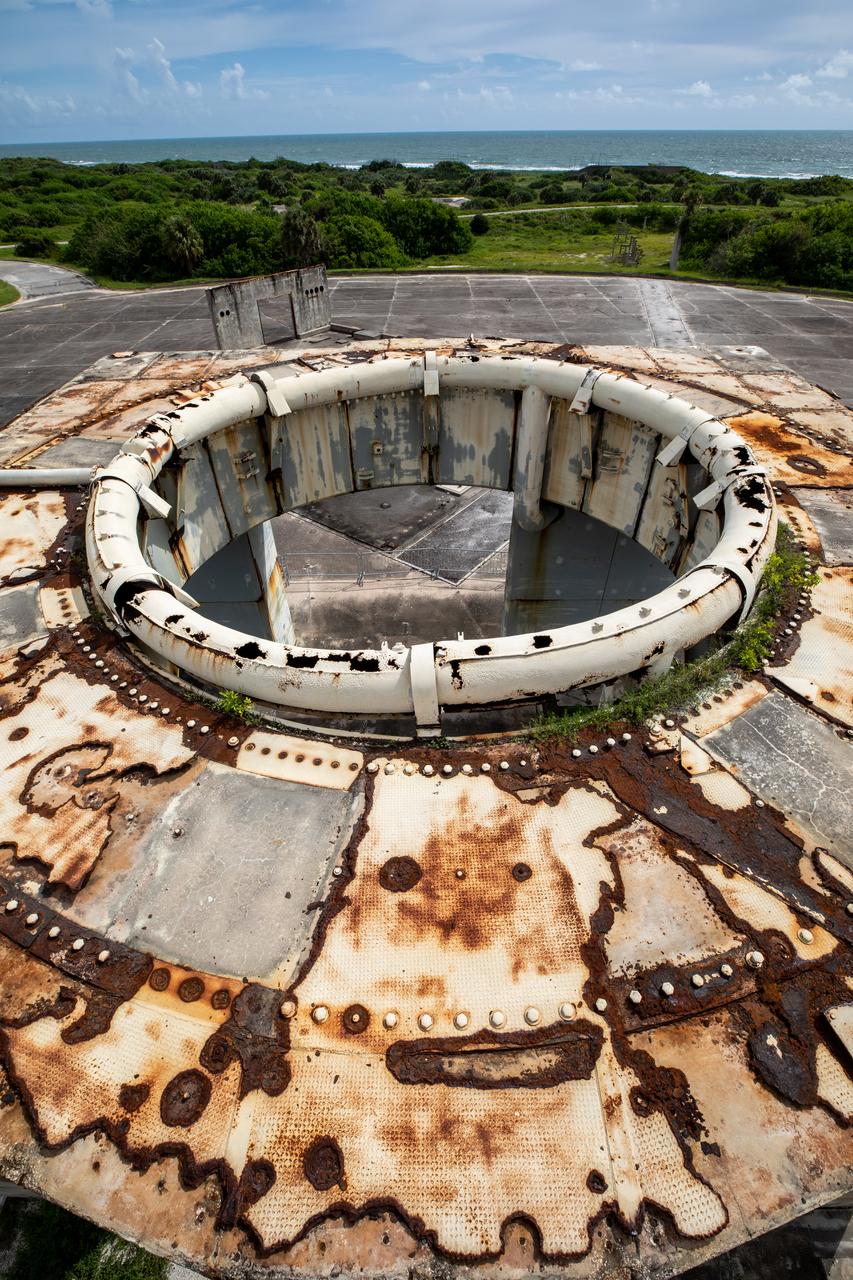
A view of the top of the launch pedestal still standing at Launch Complex 34 at Cape Canaveral Space Force Station in Florida on July 22, 2020. Work will soon begin to perform environmental contamination removal on the pedestal and the ground area surrounding the launch complex.
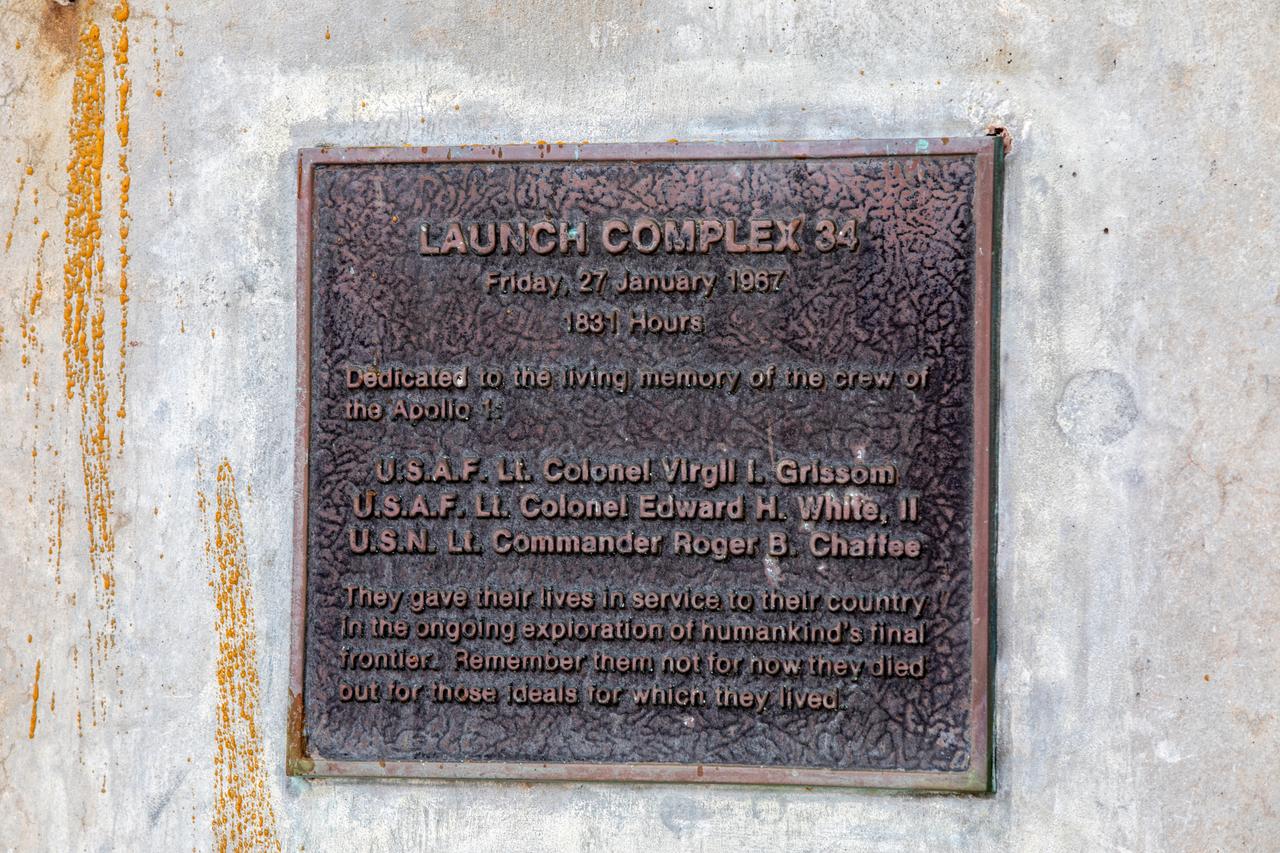
A close-up view of the historic marker on the launch pedestal still standing at Launch Complex 34 at Cape Canaveral Space Force Station in Florida on July 22, 2020. Work will soon begin to perform environmental contamination removal on the pedestal and the ground area surrounding the launch complex.
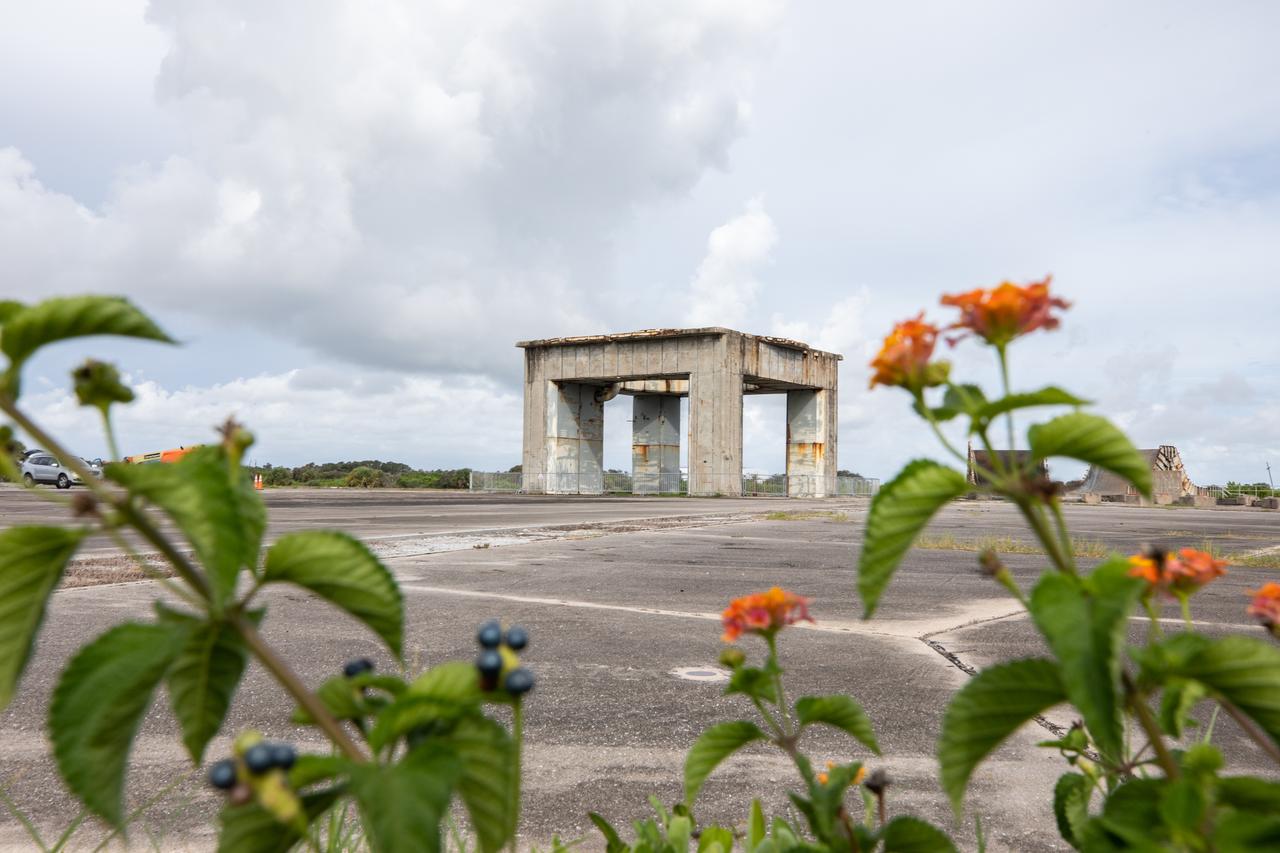
A view of the launch pedestal still standing at Launch Complex 34 with wildflowers in the foreground at Cape Canaveral Space Force Station in Florida on July 22, 2020. Work will soon begin to perform environmental contamination removal on the pedestal and the ground area surrounding the launch complex.
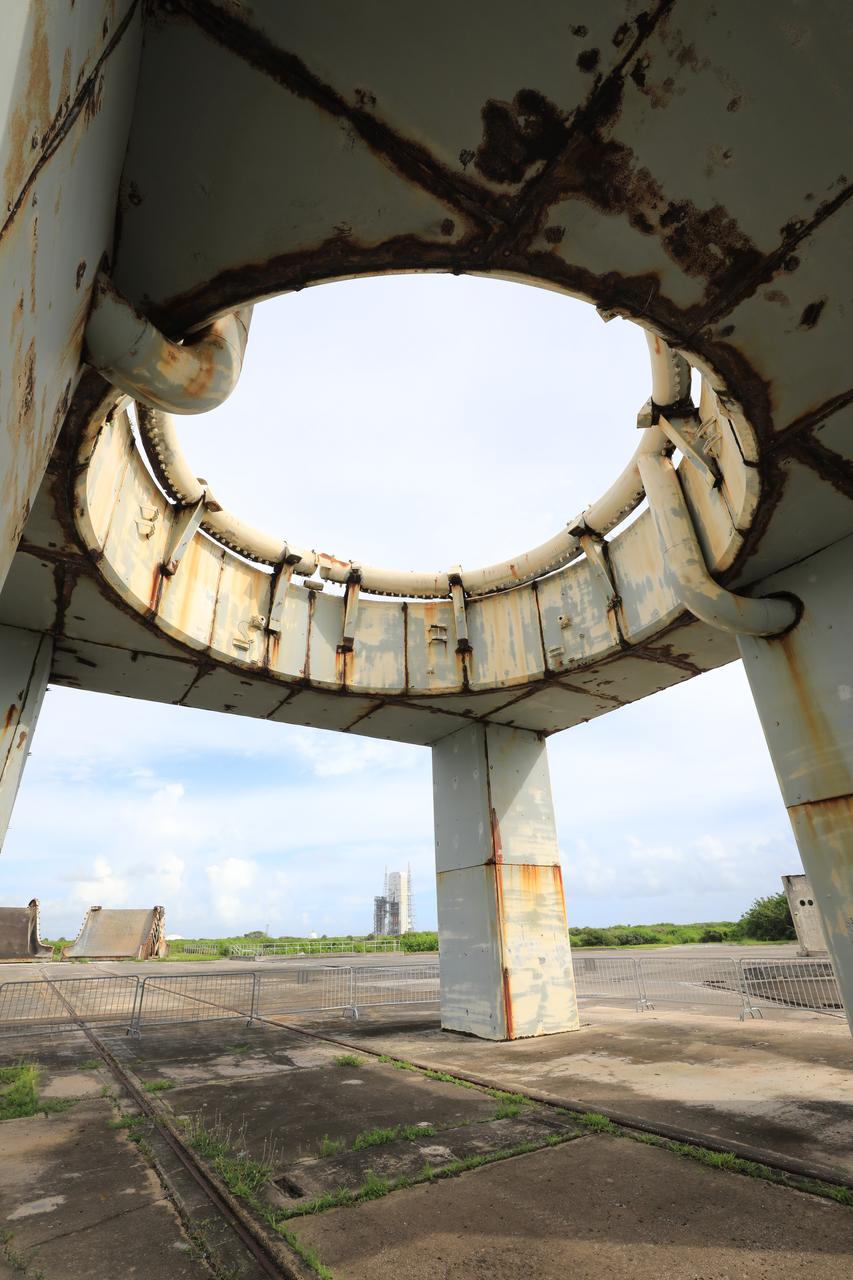
A view looking up from inside the launch pedestal still standing at Launch Complex 34 at Cape Canaveral Space Force Station in Florida on July 22, 2020. Work will soon begin to perform environmental contamination removal on the pedestal and the ground area surrounding the launch complex.
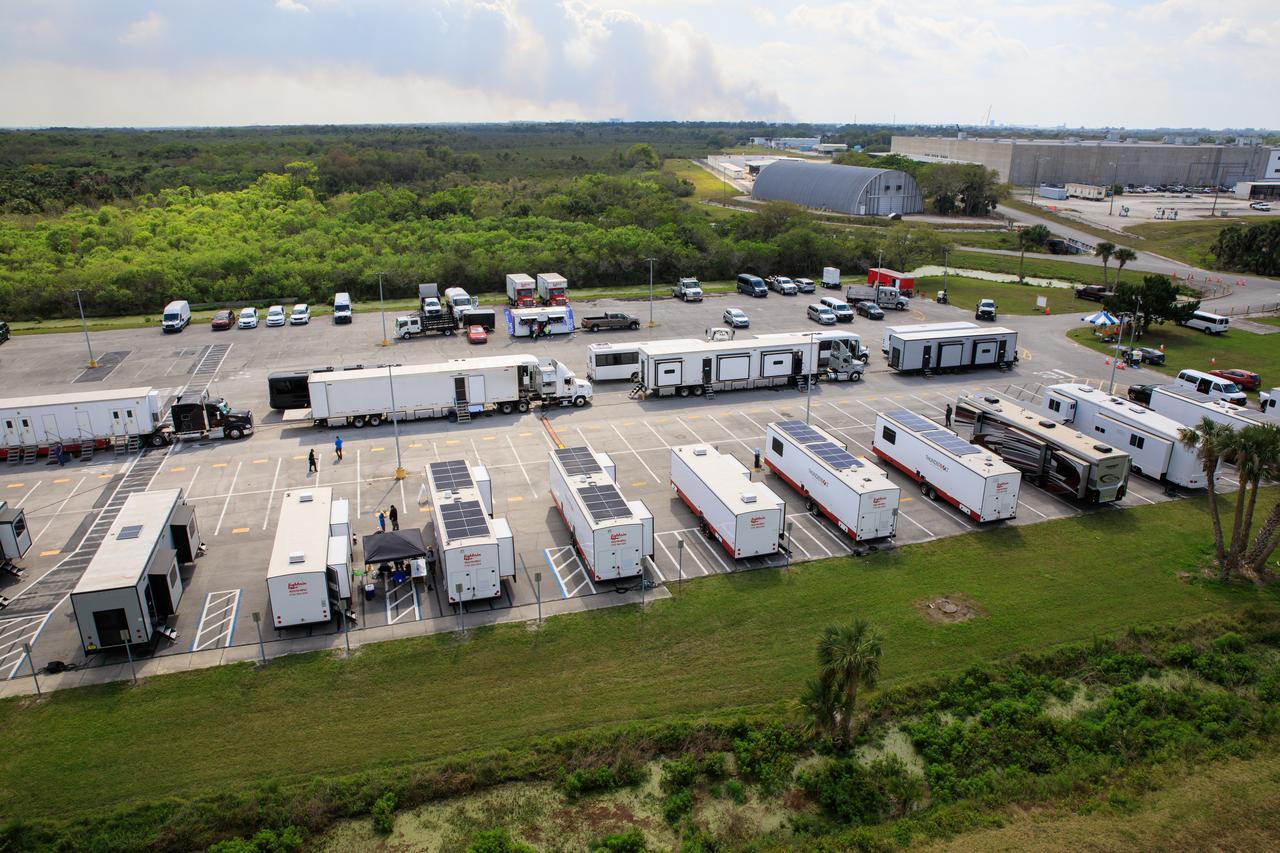
A major motion picture is being filmed in February 2023 at NASA’s Kennedy Space Center in Florida. In view is Base Camp #1 in the Launch Complex 39 area that includes support buildings for the film project.
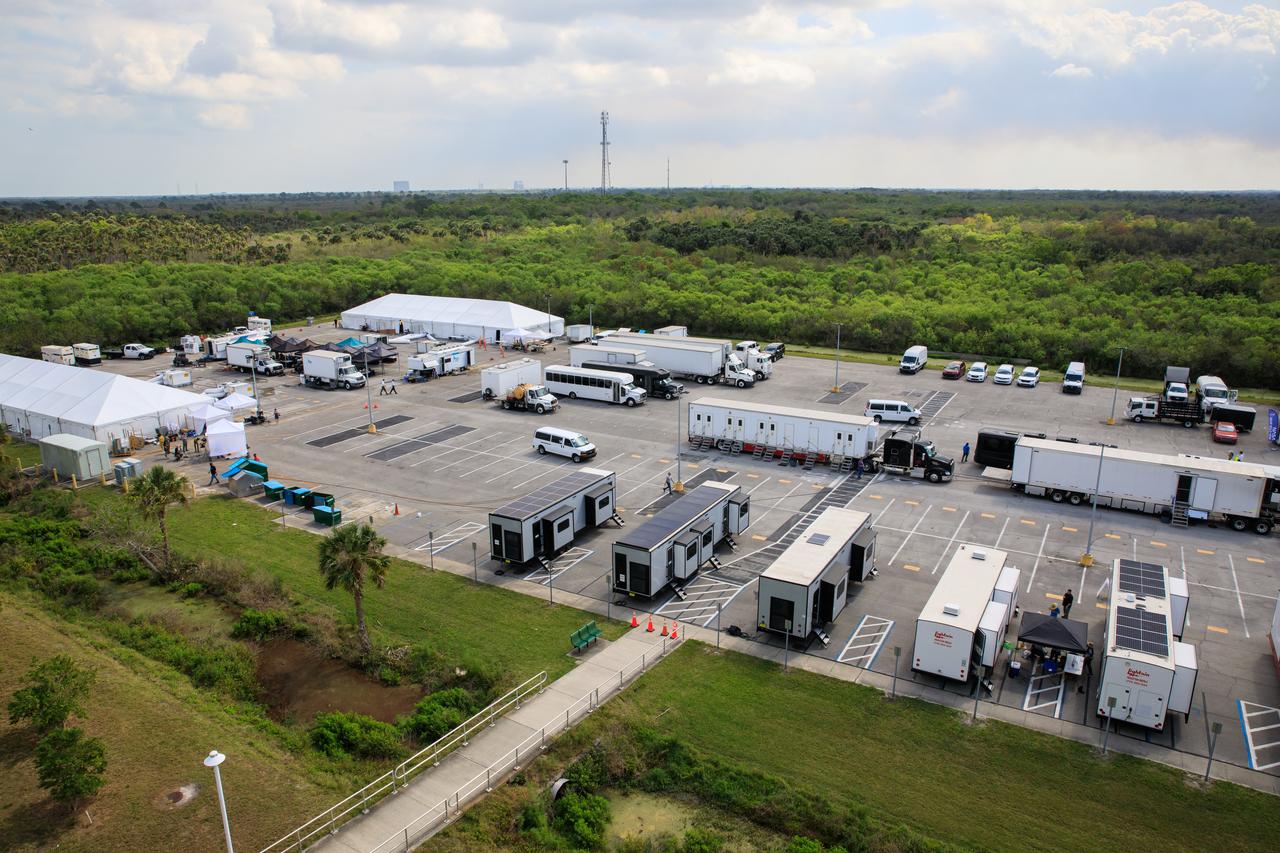
A major motion picture is being filmed in February 2023 at NASA’s Kennedy Space Center in Florida. In view is Base Camp #1 in the Launch Complex 39 area that includes support buildings for the film project.
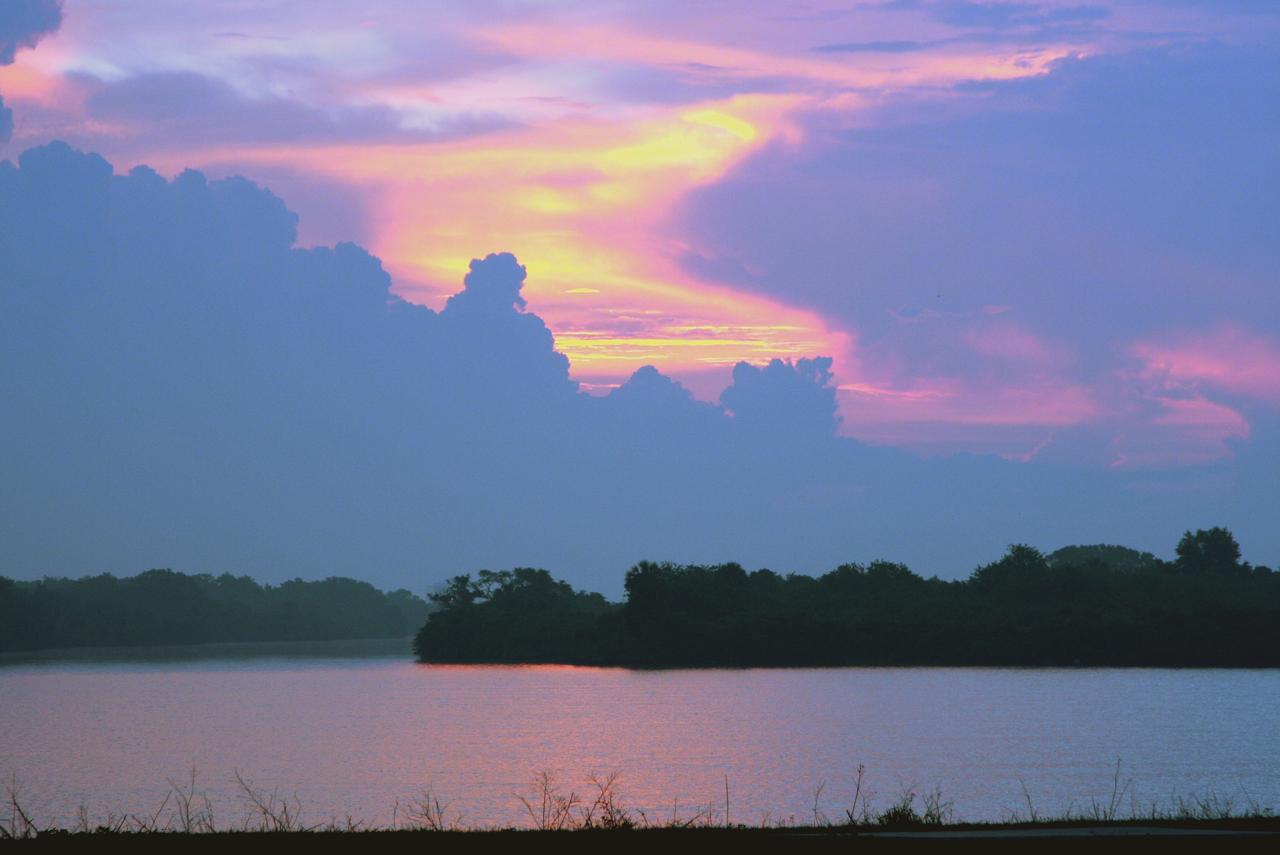
CAPE CANAVERAL, Fla. – Gathering clouds filter the painted sky over the turn basin in the Launch Complex 39 Area at NASA's Kennedy Space Center. Photo credit: NASA/Dimitri Gerondidakis
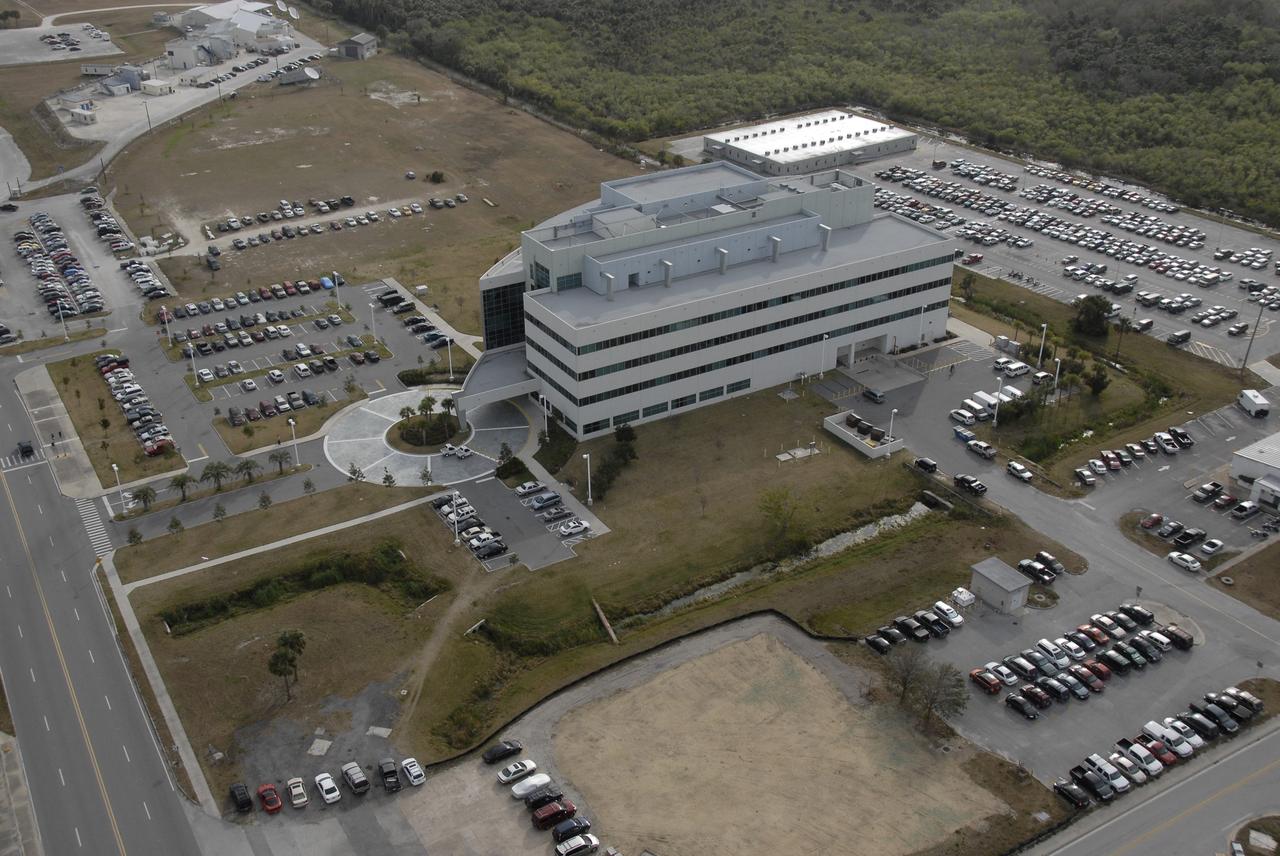
CAPE CANAVERAL, Fla. – – An aerial view of the Operations Support Building II in the Launch Complex 39 Area at NASA's Kennedy Space Center in Florida. Photo credit: NASA/Kim Shiflett

CAPE CANAVERAL, Fla. -- An aerial photo of the Vertical Processing Facility, which processes and integrates vertical payloads and upper stages before launch. It is located in the NASA Kennedy Space Center Industrial Area.