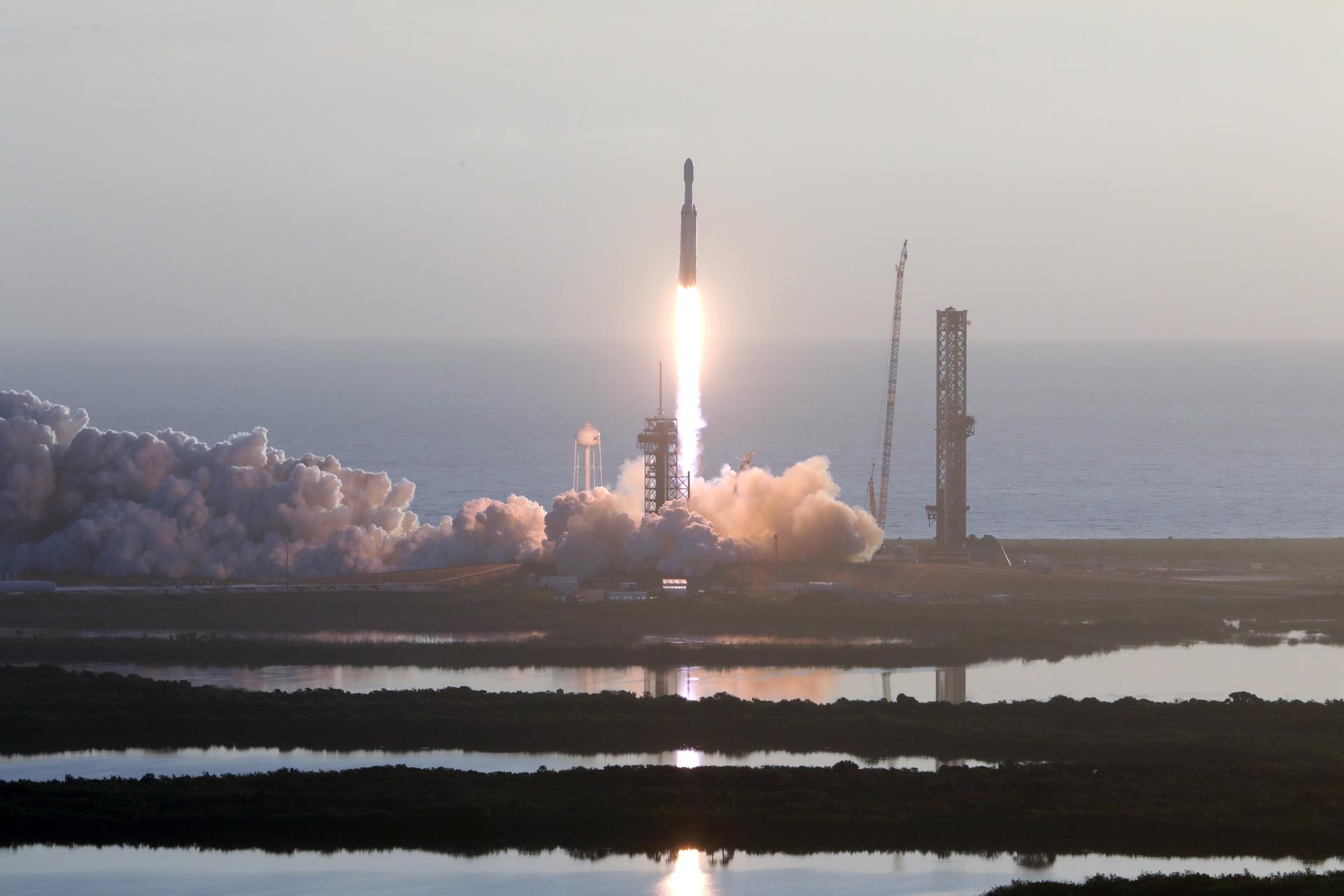
NASA’s Nancy Grace Roman Space Telescope rises to space atop a SpaceX Falcon Heavy rocket from Launch Complex 39A at the agency’s Kennedy Space Center in Florida on Sunday, Aug. 30, 2026. The milestone begins the observatory’s journey to explore the large‑scale structure of the universe. Roman will investigate dark energy and dark matter, conduct a statistical census of planetary systems, and enable a broad range of additional astrophysics research. Liftoff occurred at 7:26 a.m. EDT, from Kennedy’s Launch Complex 39A.
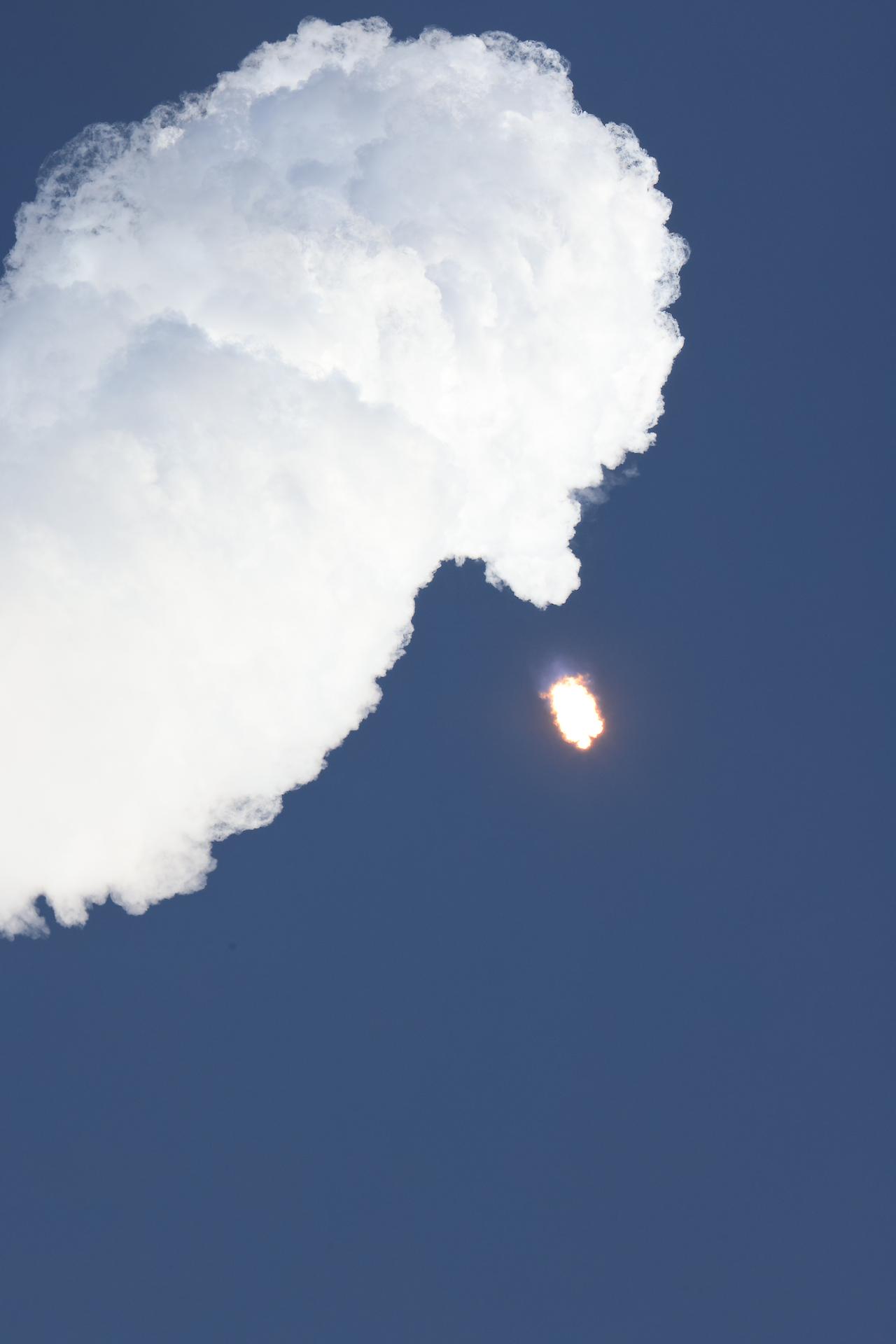
NASA’s Nancy Grace Roman Space Telescope rises to space atop a SpaceX Falcon Heavy rocket from Launch Complex 39A at the agency’s Kennedy Space Center in Florida on Sunday, Aug. 30, 2026. The milestone begins the observatory’s journey to explore the large‑scale structure of the universe. Roman will investigate dark energy and dark matter, conduct a statistical census of planetary systems, and enable a broad range of additional astrophysics research. Liftoff occurred at 7:26 a.m. EDT, from Kennedy’s Launch Complex 39A.
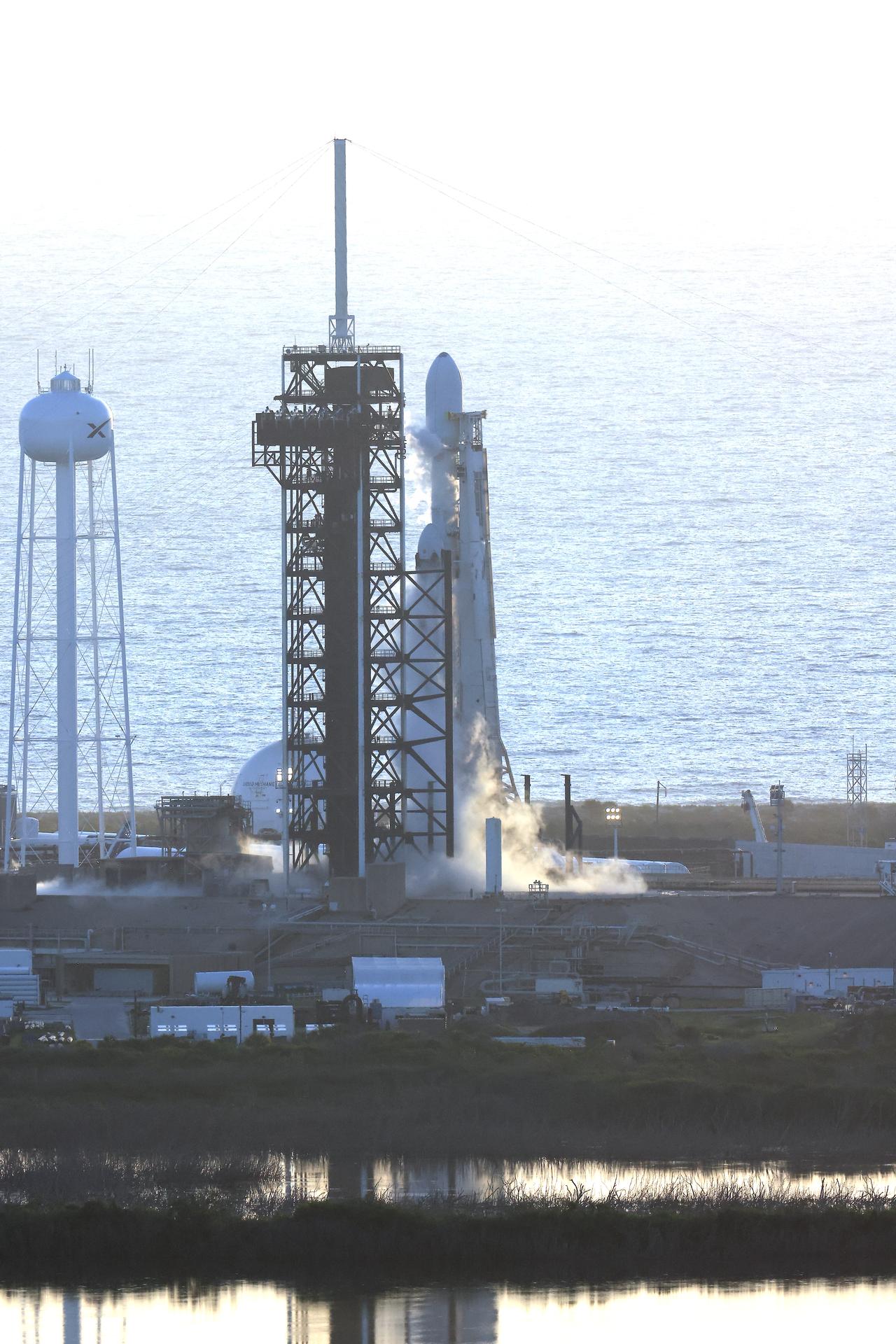
NASA’s Nancy Grace Roman Space Telescope rises to space atop a SpaceX Falcon Heavy rocket from Launch Complex 39A at the agency’s Kennedy Space Center in Florida on Sunday, Aug. 30, 2026. The milestone begins the observatory’s journey to explore the large‑scale structure of the universe. Roman will investigate dark energy and dark matter, conduct a statistical census of planetary systems, and enable a broad range of additional astrophysics research. Liftoff occurred at 7:26 a.m. EDT, from Kennedy’s Launch Complex 39A.
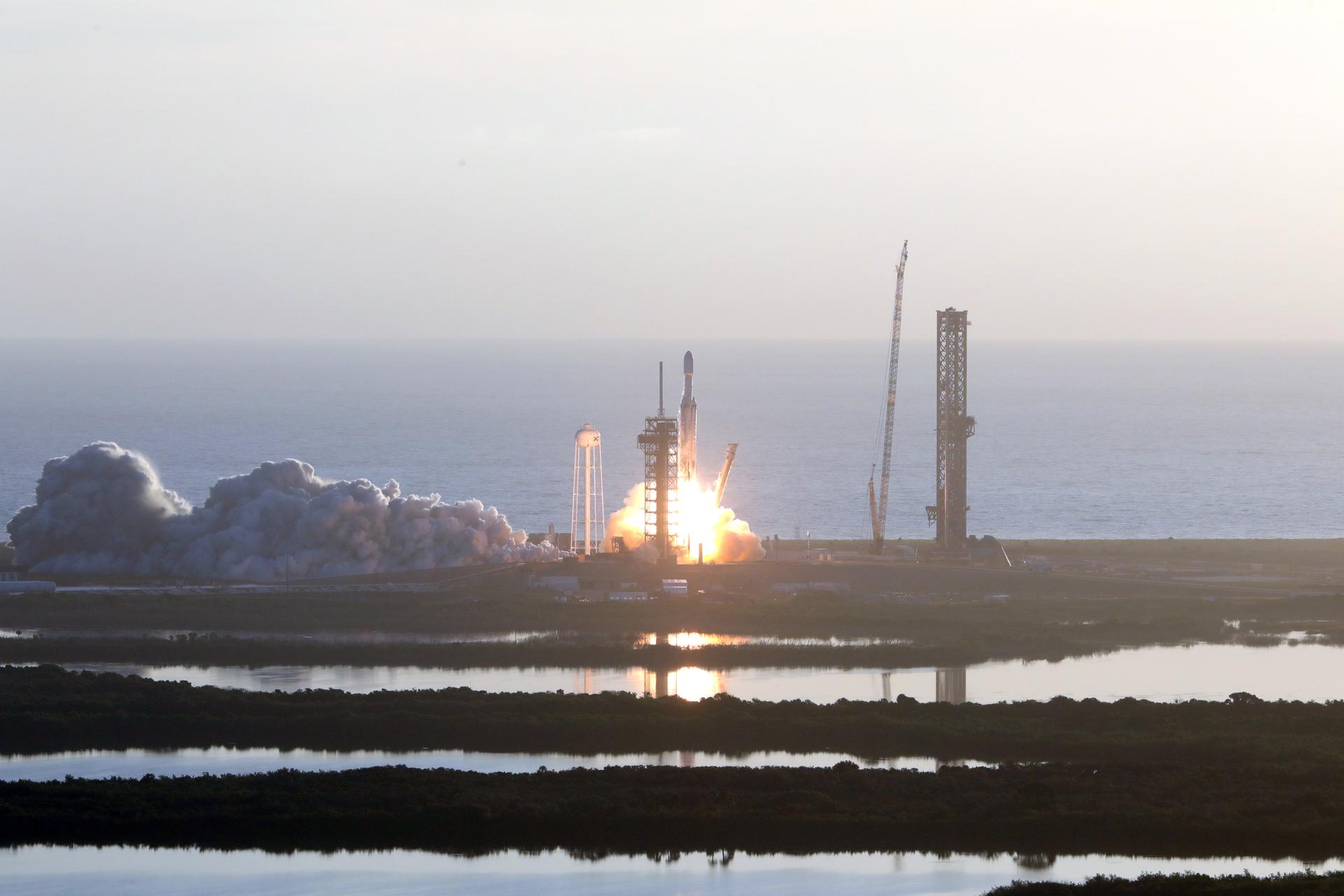
NASA’s Nancy Grace Roman Space Telescope rises to space atop a SpaceX Falcon Heavy rocket from Launch Complex 39A at the agency’s Kennedy Space Center in Florida on Sunday, Aug. 30, 2026. The milestone begins the observatory’s journey to explore the large‑scale structure of the universe. Roman will investigate dark energy and dark matter, conduct a statistical census of planetary systems, and enable a broad range of additional astrophysics research. Liftoff occurred at 7:26 a.m. EDT, from Kennedy’s Launch Complex 39A.
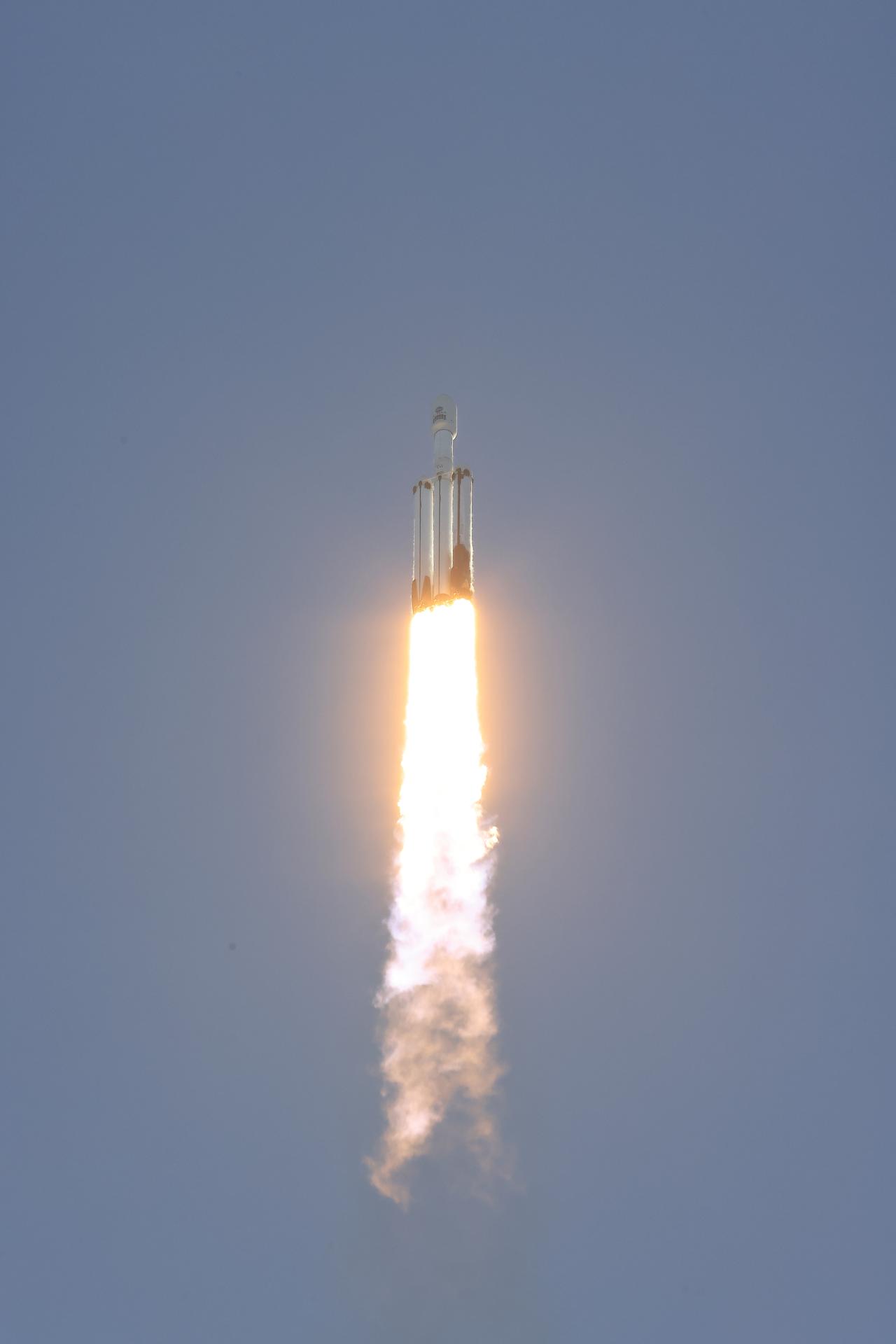
NASA’s Nancy Grace Roman Space Telescope rises to space atop a SpaceX Falcon Heavy rocket from Launch Complex 39A at the agency’s Kennedy Space Center in Florida on Sunday, Aug. 30, 2026. The milestone begins the observatory’s journey to explore the large‑scale structure of the universe. Roman will investigate dark energy and dark matter, conduct a statistical census of planetary systems, and enable a broad range of additional astrophysics research. Liftoff occurred at 7:26 a.m. EDT, from Kennedy’s Launch Complex 39A.

From left to right, NASA Administrator Jim Bridenstine; Tory Bruno, president and chief executive officer of United Launch Alliance; and Florida Governor Ron DeSantis wait at NASA’s Kennedy Space Center in Florida to see the liftoff of a United Launch Alliance Atlas V rocket carrying Boeing’s CST-100 Starliner spacecraft for Boeing’s Orbital Flight Test, Dec. 20, 2019. Liftoff occurred at 6:36 a.m. EST from Space Launch Complex 41 at Florida’s Cape Canaveral Air Force Station. The uncrewed Orbital Flight Test is the Starliner’s first flight for NASA’s Commercial Crew Program.
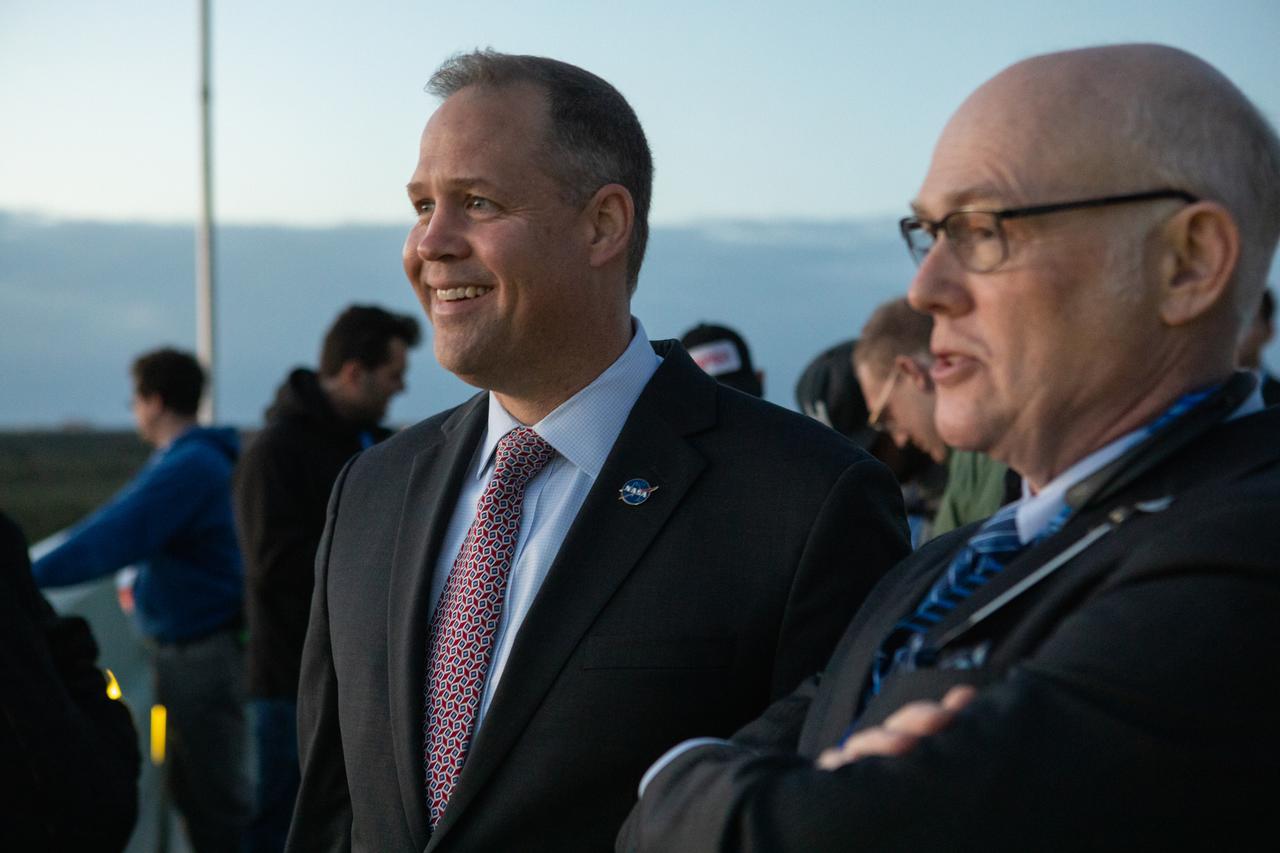
NASA Administrator Jim Bridenstine, left, and Tory Bruno, president and chief executive officer of United Launch Alliance, wait at NASA’s Kennedy Space Center in Florida to see the liftoff of a United Launch Alliance Atlas V rocket carrying Boeing’s CST-100 Starliner spacecraft for Boeing’s Orbital Flight Test, Dec. 20, 2019. Liftoff occurred at 6:36 a.m. EST from Space Launch Complex 41 at Florida’s Cape Canaveral Air Force Station. The uncrewed Orbital Flight Test is the Starliner’s first flight for NASA’s Commercial Crew Program.

Tory Bruno, president and chief executive officer of United Launch Alliance, left, and NASA Administrator Jim Bridenstine watch the launch of a United Launch Alliance Atlas V rocket carrying Boeing’s CST-100 Starliner spacecraft for Boeing’s Orbital Flight Test, Dec. 20, 2019. Liftoff occurred at 6:36 a.m. EST from Space Launch Complex 41 at Florida’s Cape Canaveral Air Force Station. The uncrewed Orbital Flight Test is the Starliner’s first flight for NASA’s Commercial Crew Program.
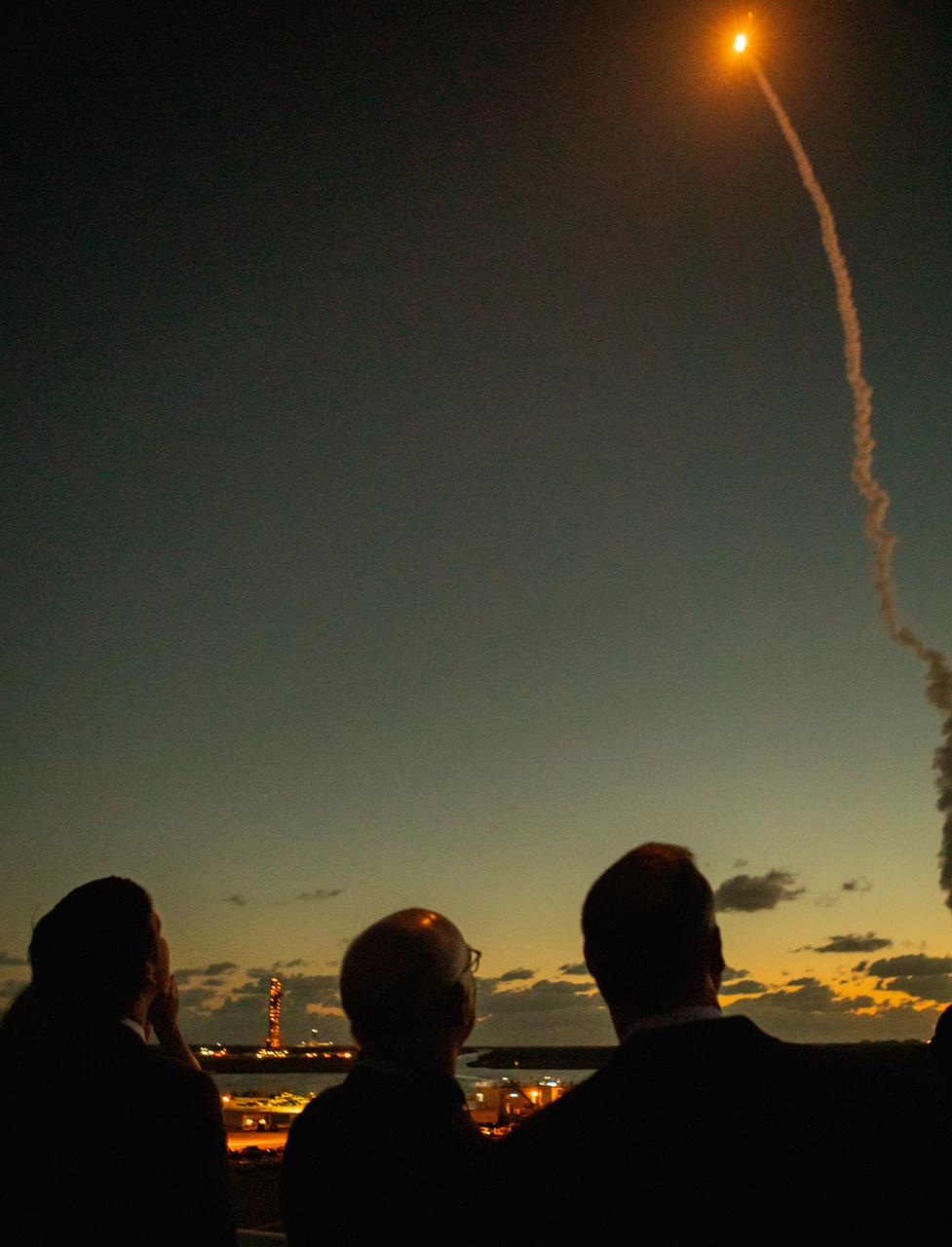
In the foreground, from left to right, Florida Governor Ron DeSantis; Tory Bruno, president and chief executive officer of United Launch Alliance; and NASA Administrator Jim Bridenstine watch the launch of a United Launch Alliance Atlas V rocket carrying Boeing’s CST-100 Starliner spacecraft for Boeing’s Orbital Flight Test, Dec. 20, 2019. Liftoff occurred at 6:36 a.m. EST from Space Launch Complex 41 at Florida’s Cape Canaveral Air Force Station. The uncrewed Orbital Flight Test is the Starliner’s first flight for NASA’s Commercial Crew Program.
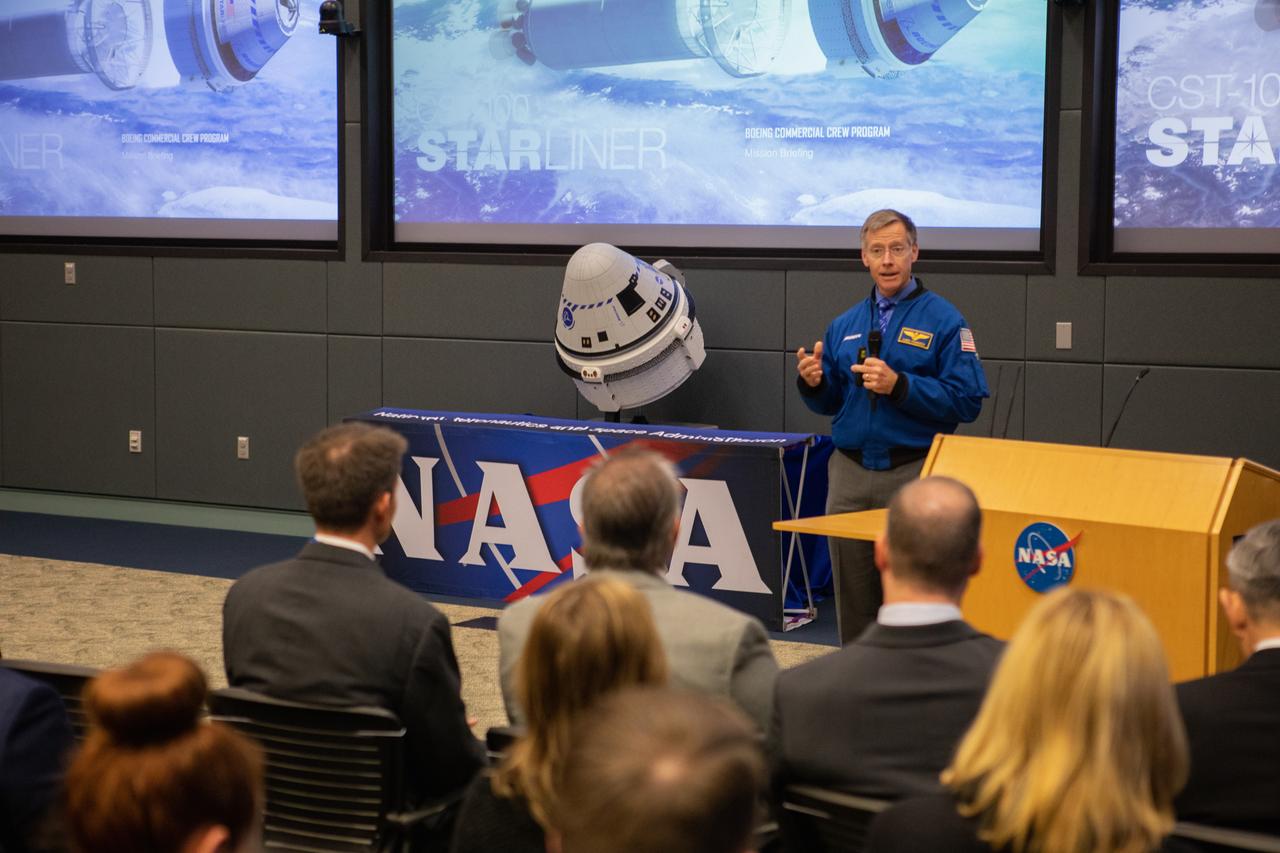
Boeing astronaut Chris Ferguson speaks to invited guests at NASA’s Kennedy Space Center in Florida during a prelaunch briefing for Boeing’s uncrewed Orbital Flight Test, Dec. 20, 2019. A United Launch Alliance Atlas V rocket carrying Boeing’s CST-100 Starliner spacecraft launched at 6:36 a.m. EST from Space Launch Complex 41 at Florida’s Cape Canaveral Air Force Station. The Orbital Flight Test is the Starliner’s first flight for NASA’s Commercial Crew Program.
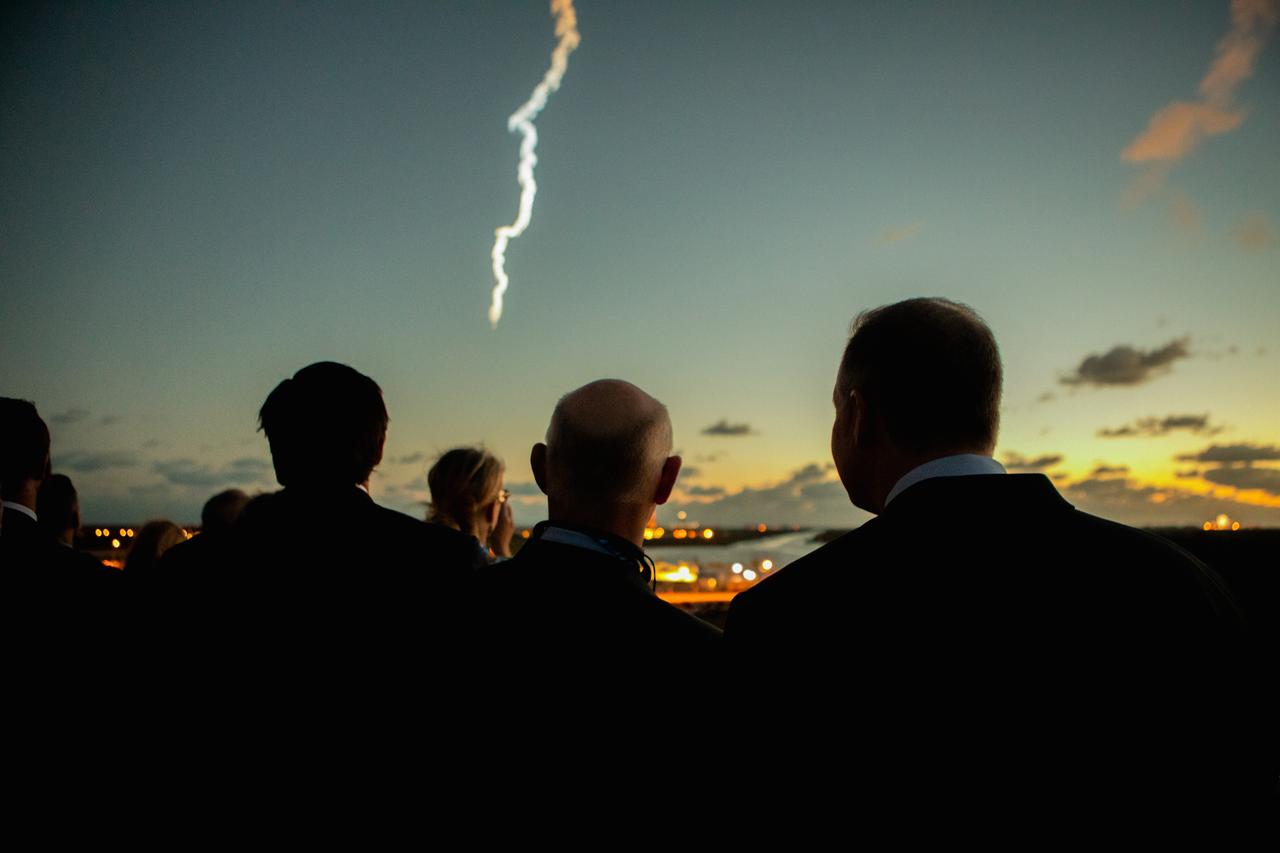
In the foreground, from left to right, Florida Governor Ron DeSantis; Tory Bruno, president and chief executive officer of United Launch Alliance; and NASA Administrator Jim Bridenstine watch the launch of a United Launch Alliance Atlas V rocket carrying Boeing’s CST-100 Starliner spacecraft for Boeing’s Orbital Flight Test, Dec. 20, 2019. Liftoff occurred at 6:36 a.m. EST from Space Launch Complex 41 at Florida’s Cape Canaveral Air Force Station. The uncrewed Orbital Flight Test is the Starliner’s first flight for NASA’s Commercial Crew Program.
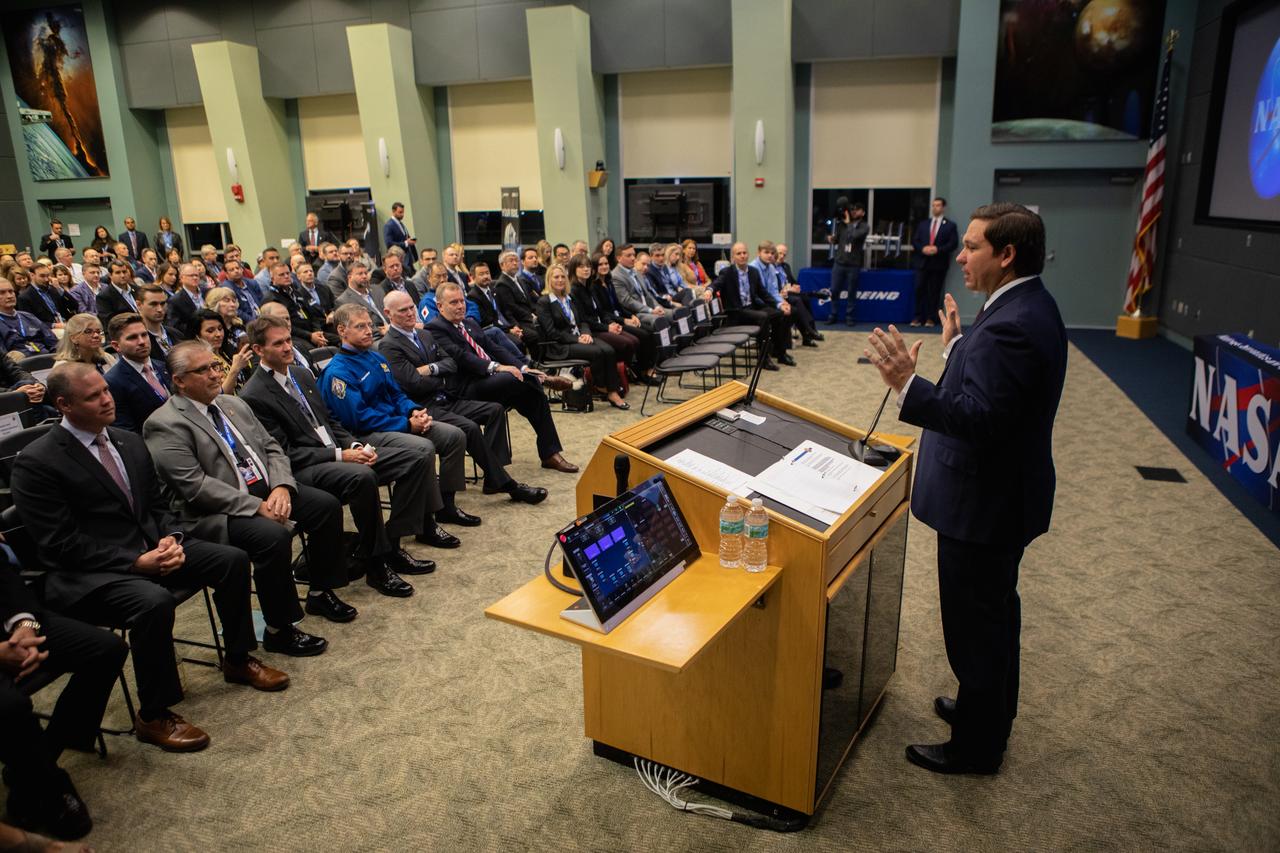
Florida Governor Ron DeSantis speaks to invited guests at NASA’s Kennedy Space Center in Florida during a prelaunch briefing for Boeing’s uncrewed Orbital Flight Test, Dec. 20, 2019. A United Launch Alliance Atlas V rocket carrying Boeing’s CST-100 Starliner spacecraft launched at 6:36 a.m. EST from Space Launch Complex 41 at Florida’s Cape Canaveral Air Force Station. The Orbital Flight Test is the Starliner’s first flight for NASA’s Commercial Crew Program.
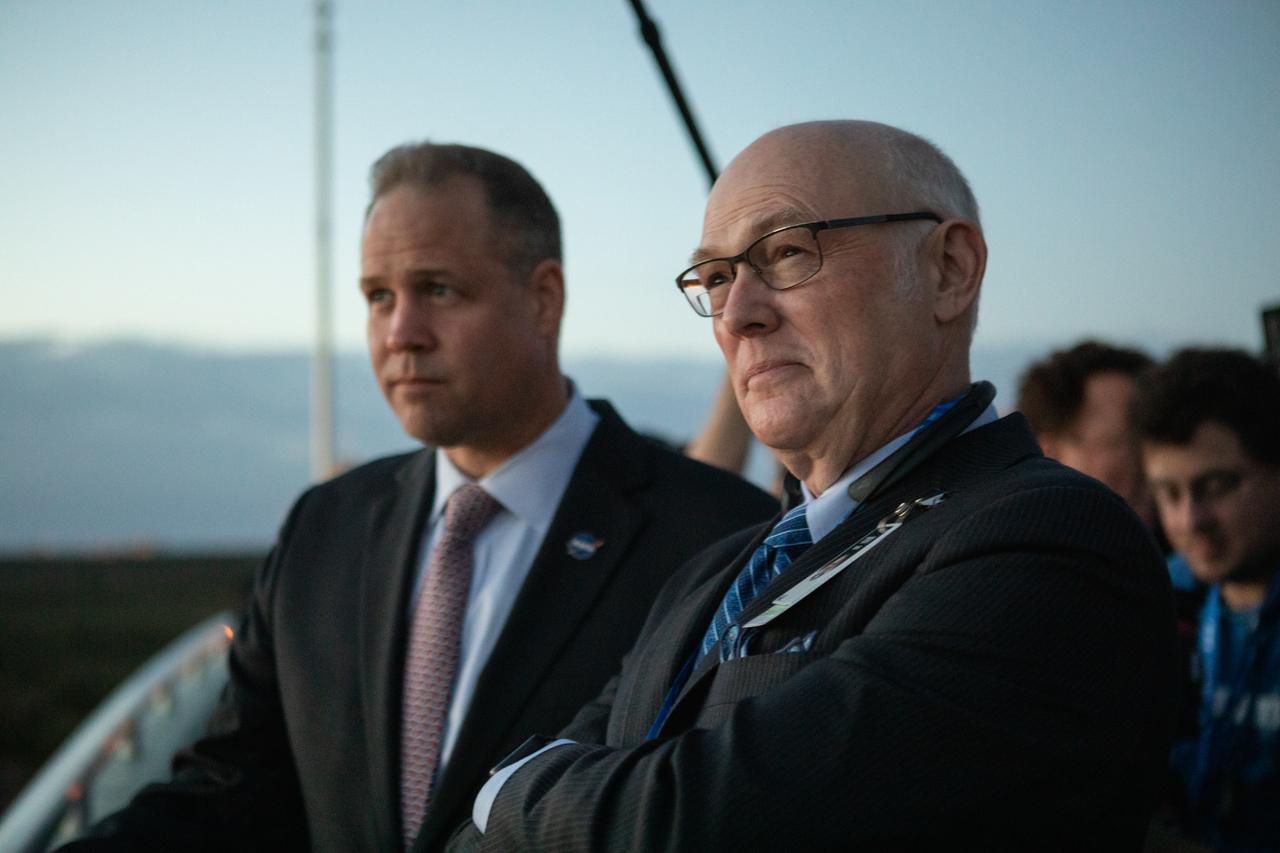
NASA Administrator Jim Bridenstine, left, and Tory Bruno, president and chief executive officer of United Launch Alliance, wait at NASA’s Kennedy Space Center in Florida to see the liftoff of a United Launch Alliance Atlas V rocket carrying Boeing’s CST-100 Starliner spacecraft for Boeing’s Orbital Flight Test, Dec. 20, 2019. Liftoff occurred at 6:36 a.m. EST from Space Launch Complex 41 at Florida’s Cape Canaveral Air Force Station. The uncrewed Orbital Flight Test is the Starliner’s first flight for NASA’s Commercial Crew Program.
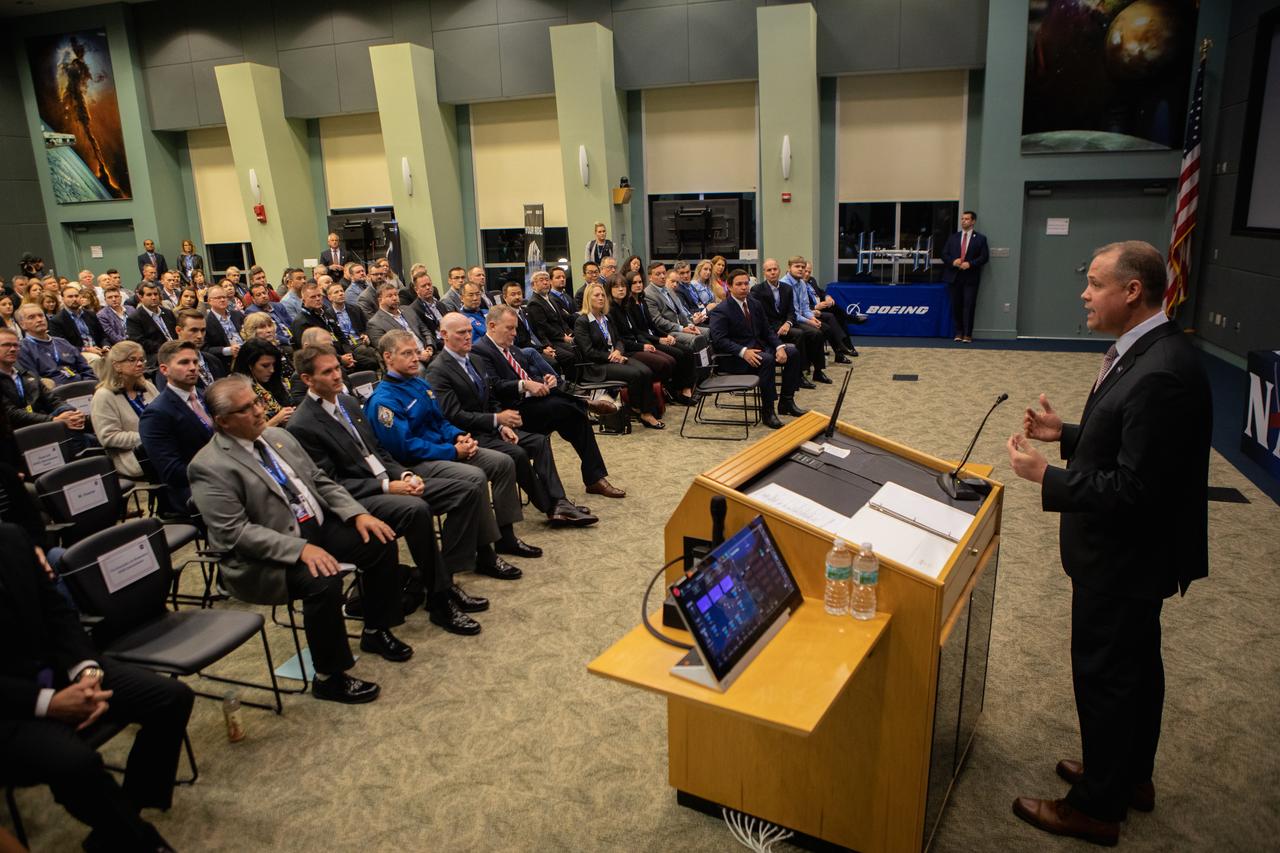
NASA Administrator Jim Bridenstine speaks to invited guests at NASA’s Kennedy Space Center in Florida during a prelaunch briefing for Boeing’s uncrewed Orbital Flight Test, Dec. 20, 2019. A United Launch Alliance Atlas V rocket carrying Boeing’s CST-100 Starliner spacecraft launched at 6:36 a.m. EST from Space Launch Complex 41 at Florida’s Cape Canaveral Air Force Station. The Orbital Flight Test is the Starliner’s first flight for NASA’s Commercial Crew Program.
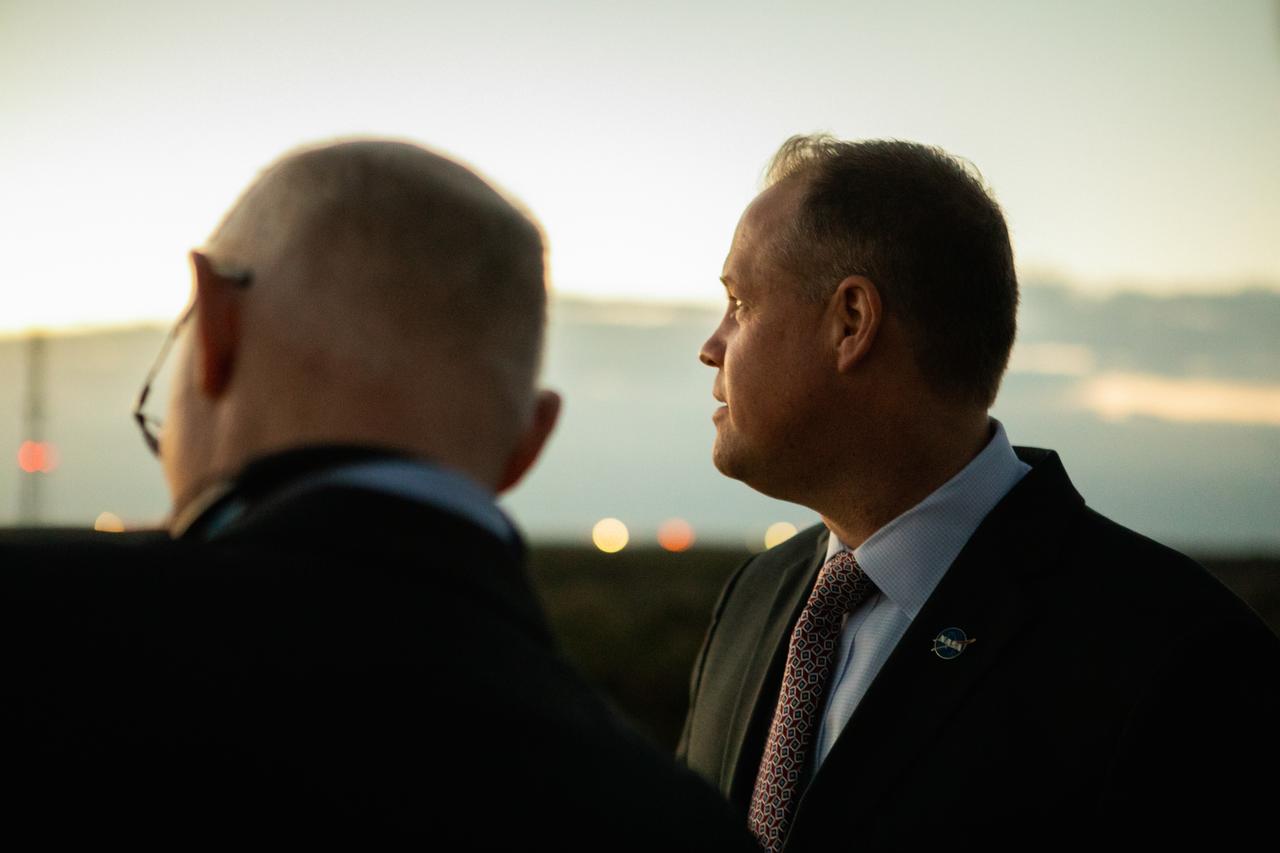
Tory Bruno, president and chief executive officer of United Launch Alliance, left, and NASA Administrator Jim Bridenstine wait at NASA’s Kennedy Space Center in Florida to see the liftoff of a United Launch Alliance Atlas V rocket carrying Boeing’s CST-100 Starliner spacecraft for Boeing’s Orbital Flight Test, Dec. 20, 2019. Liftoff occurred at 6:36 a.m. EST from Space Launch Complex 41 at Florida’s Cape Canaveral Air Force Station. The uncrewed Orbital Flight Test is the Starliner’s first flight for NASA’s Commercial Crew Program.
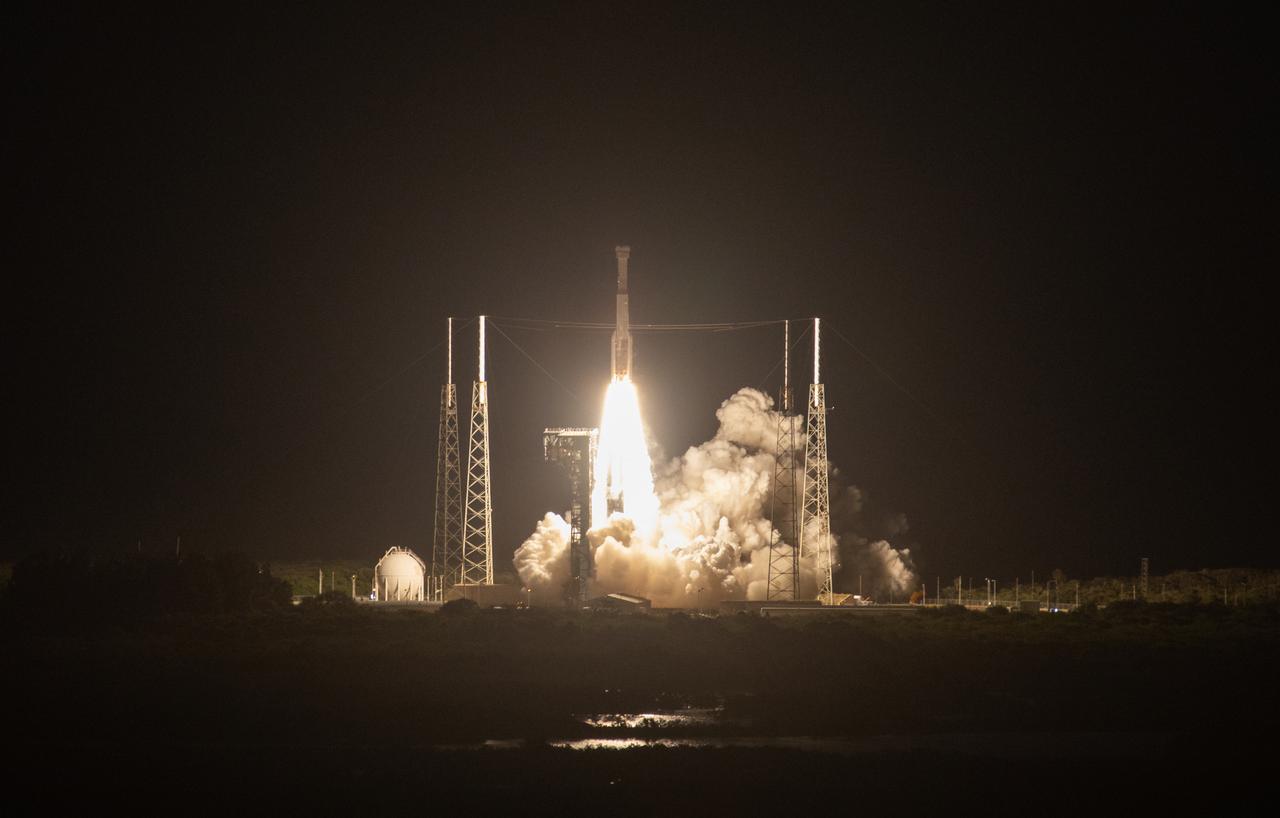
A two-stage United Launch Alliance Atlas V rocket lifts off from Space Launch Complex 41 at Cape Canaveral Air Force Station in Florida for Boeing’s Orbital Flight Test, Dec. 20, 2019. Liftoff occurred at 6:36 a.m. EST. The uncrewed Orbital Flight Test is the Starliner’s first flight for NASA’s Commercial Crew Program.
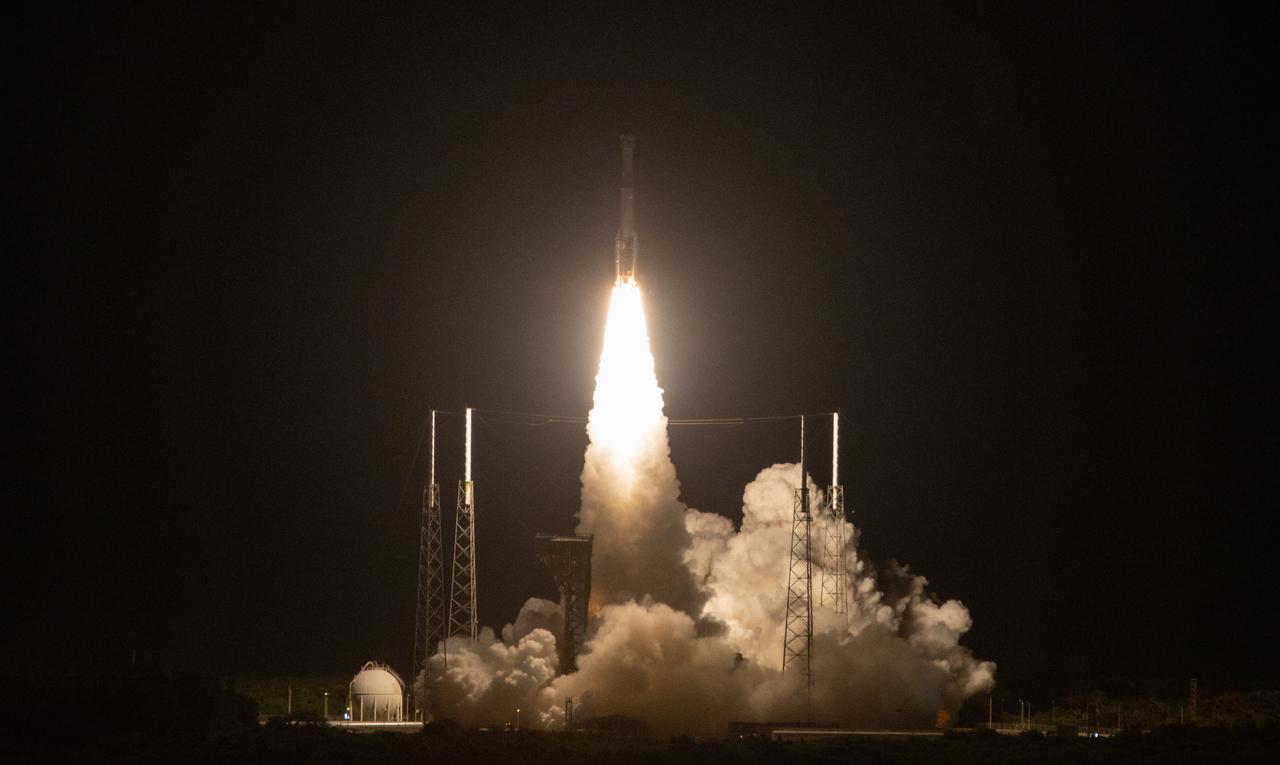
A two-stage United Launch Alliance Atlas V rocket lifts off from Space Launch Complex 41 at Cape Canaveral Air Force Station in Florida for Boeing’s Orbital Flight Test, Dec. 20, 2019. Liftoff occurred at 6:36 a.m. EST. The uncrewed Orbital Flight Test is the Starliner’s first flight for NASA’s Commercial Crew Program.
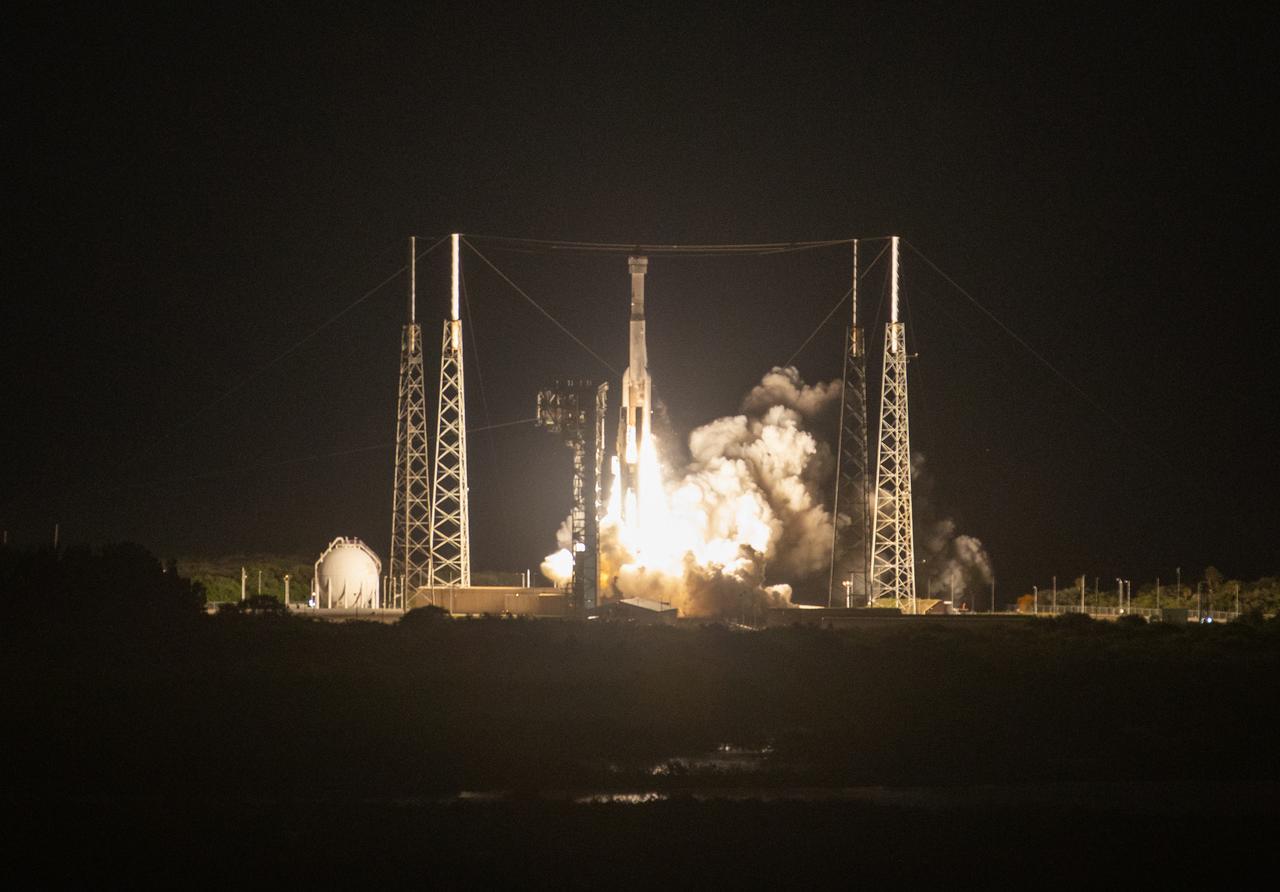
A two-stage United Launch Alliance Atlas V rocket lifts off from Space Launch Complex 41 at Cape Canaveral Air Force Station in Florida for Boeing’s Orbital Flight Test, Dec. 20, 2019. Liftoff occurred at 6:36 a.m. EST. The uncrewed Orbital Flight Test is the Starliner’s first flight to the International Space Station for NASA’s Commercial Crew Program.
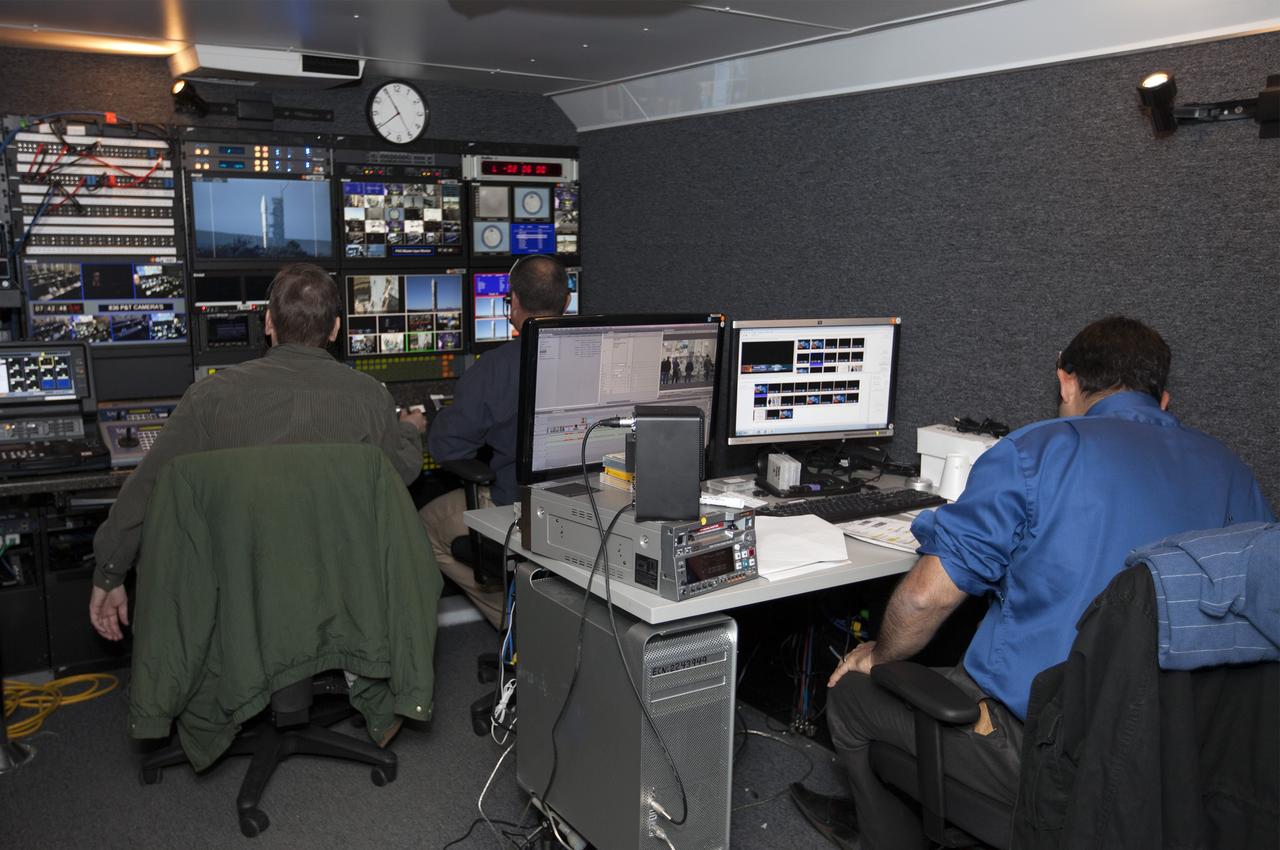
VANDENBERG AFB, Calif. – NASA TV technicians work on the broadcast for the launch of a United Launch Alliance Atlas V rocket carrying the Landsat Data Continuity Mission spacecraft from Vandenberg Air Force Base in California. Photo credit: NASA/Ben Smegelsky

KENNEDY SPACE CENTER, FLA. -- Center Director Roy Bridges Jr. (center) cuts the ribbon for the opening of KSC Direct, the new Web-Broadcast Studio at KSC. Joining him are (left to right) Dennis Armstrong, Web Multimedia manager; JoAnn H. Morgan, director of External Relations and Business Development; Bridges; Vanessa Stromer, Information Technology Division, Spaceport Services; and Brian Chase, district director for Congressman Dave Weldon, who was unable to attend the ceremony. Located in the News Center on the Press Mound at KSC, the Web Broadcast Studio provides video clips of launches, landings and other KSC events in a real-time environment, called KSC Direct, through KSC's Web pages
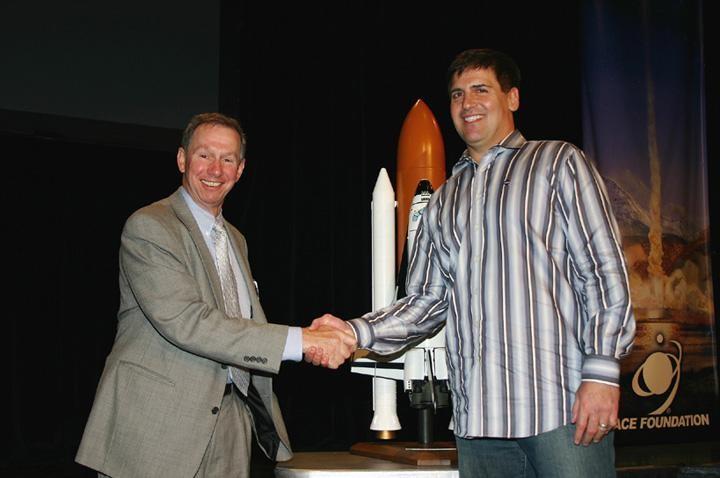
KENNEDY SPACE CENTER, FLA. - NASA Administrator Mike Griffin (left) and HDNet Chairman and President Mark Cuban shake hands after announcing an agreement for HDNet to provide high definition TV coverage of space shuttle launches through 2010. The announcement was made at a news conference held in Colorado Springs, Colo. The news conference was hosted by the Space Foundation during its 22nd National Space Symposium that ended today. HDNet will broadcast the shuttle flights in high definition TV, known as HDTV, which has at least twice the resolution of standard television formats. HDNet also will provide the agency a standard broadcast signal of launches for use by media networks and NASA TV. When possible, it will air HDTV coverage of NASA's expendable rocket launches on its network.
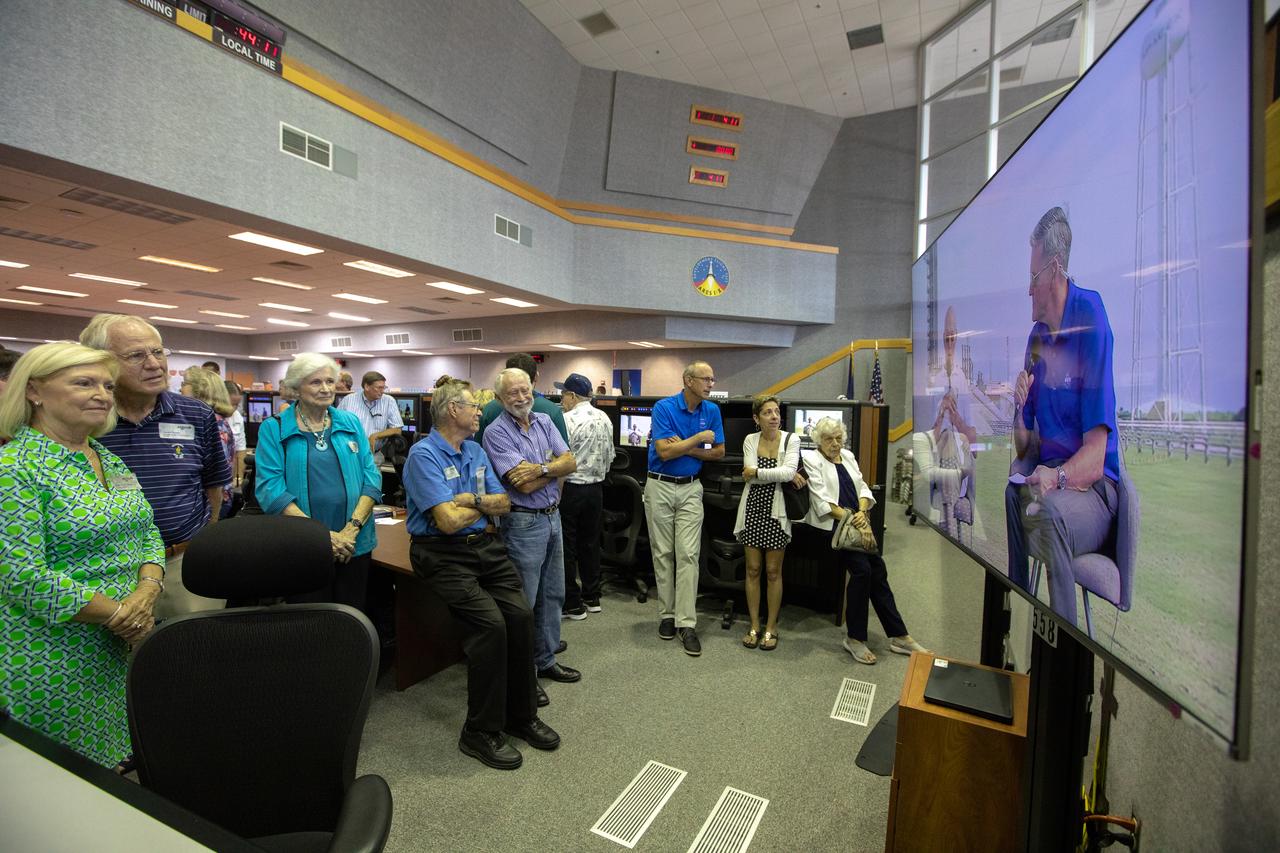
On July 16, 2019, the 50th anniversary of the Apollo 11 launch to the Moon, Apollo-era and Artemis 1 launch team members watch a live broadcast on monitors in Launch Control Center Firing Room 1 at NASA's Kennedy Space Center in Florida. On screen, Kennedy Center Director Bob Cabana is talking with Apollo 11 astronaut Michael Collins at Launch Complex 39A, the site of the Apollo 11 launch.

Posing for a photograph during the 50th anniversary gala capping a year-long celebration of 50 years of rocket launches from Cape Canaveral Air Force Station are Center Director Roy Bridges (left) and renowned NBC broadcaster, author and emcee Jay Barbree. The first launch at CCAFS took place at 9:28 a.m. on July 24, 1950, with the liftoff of Bumper 8 from Launch Complex 3. The gala was hosted by the Cape Canaveral Chapter Air Force Association
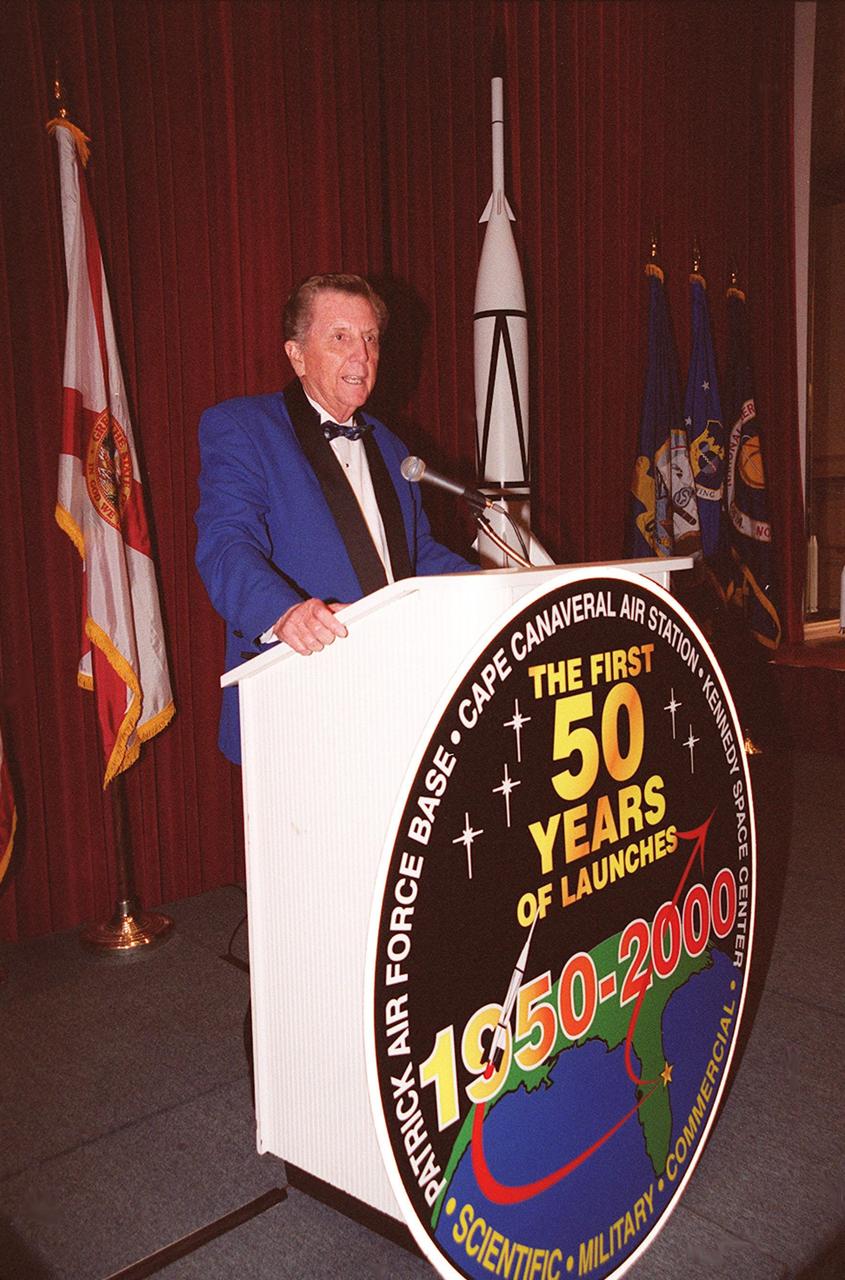
Jay Barbree, a renowned NBC broadcaster and author, emcees the 50th anniversary gala capping a year-long celebration of 50 years of rocket launches from Cape Canaveral Air Force Station. The first launch at CCAFS took place at 9:28 a.m. on July 24, 1950, with the liftoff of Bumper 8 from Launch Complex 3. The gala was hosted by the Cape Canaveral Chapter Air Force Association
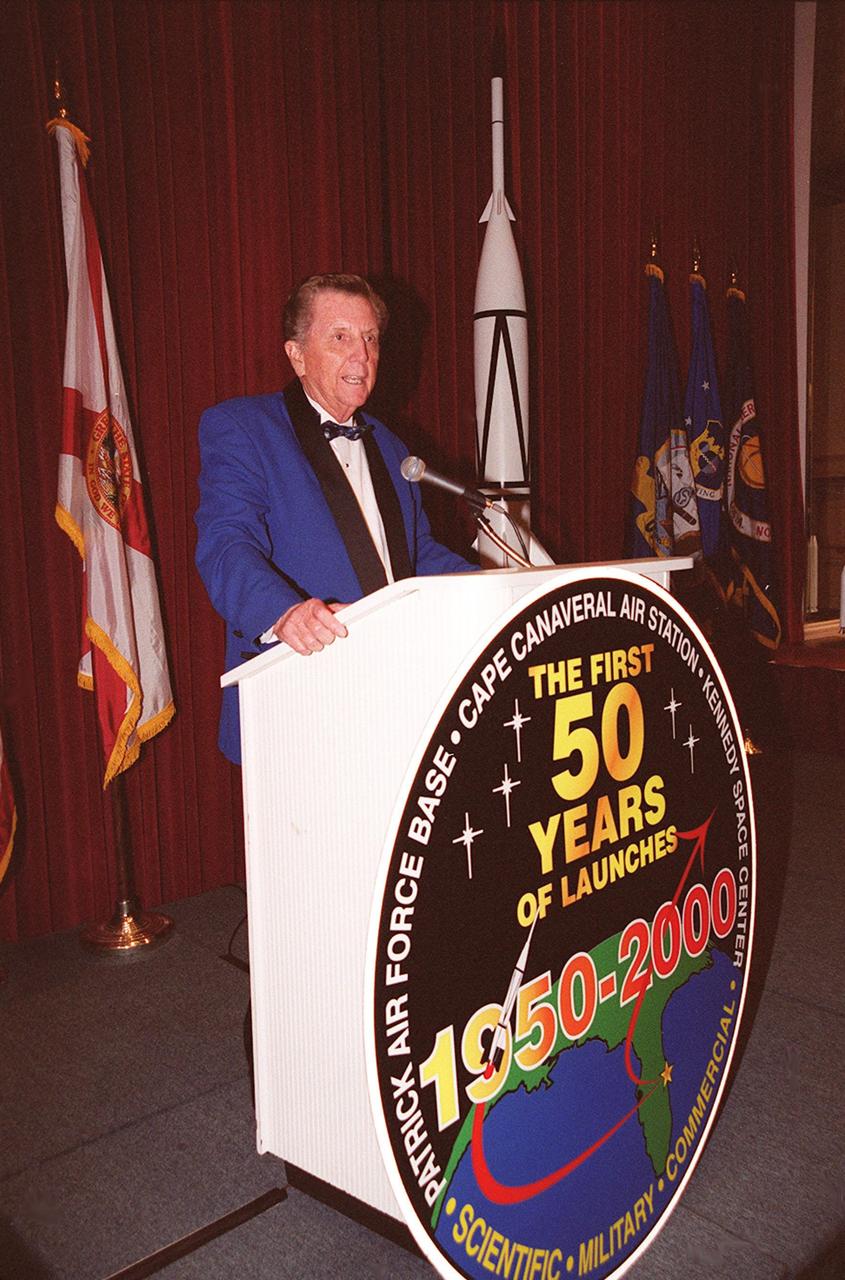
Jay Barbree, a renowned NBC broadcaster and author, emcees the 50th anniversary gala capping a year-long celebration of 50 years of rocket launches from Cape Canaveral Air Force Station. The first launch at CCAFS took place at 9:28 a.m. on July 24, 1950, with the liftoff of Bumper 8 from Launch Complex 3. The gala was hosted by the Cape Canaveral Chapter Air Force Association

Posing for a photograph during the 50th anniversary gala capping a year-long celebration of 50 years of rocket launches from Cape Canaveral Air Force Station are Center Director Roy Bridges (left) and renowned NBC broadcaster, author and emcee Jay Barbree. The first launch at CCAFS took place at 9:28 a.m. on July 24, 1950, with the liftoff of Bumper 8 from Launch Complex 3. The gala was hosted by the Cape Canaveral Chapter Air Force Association
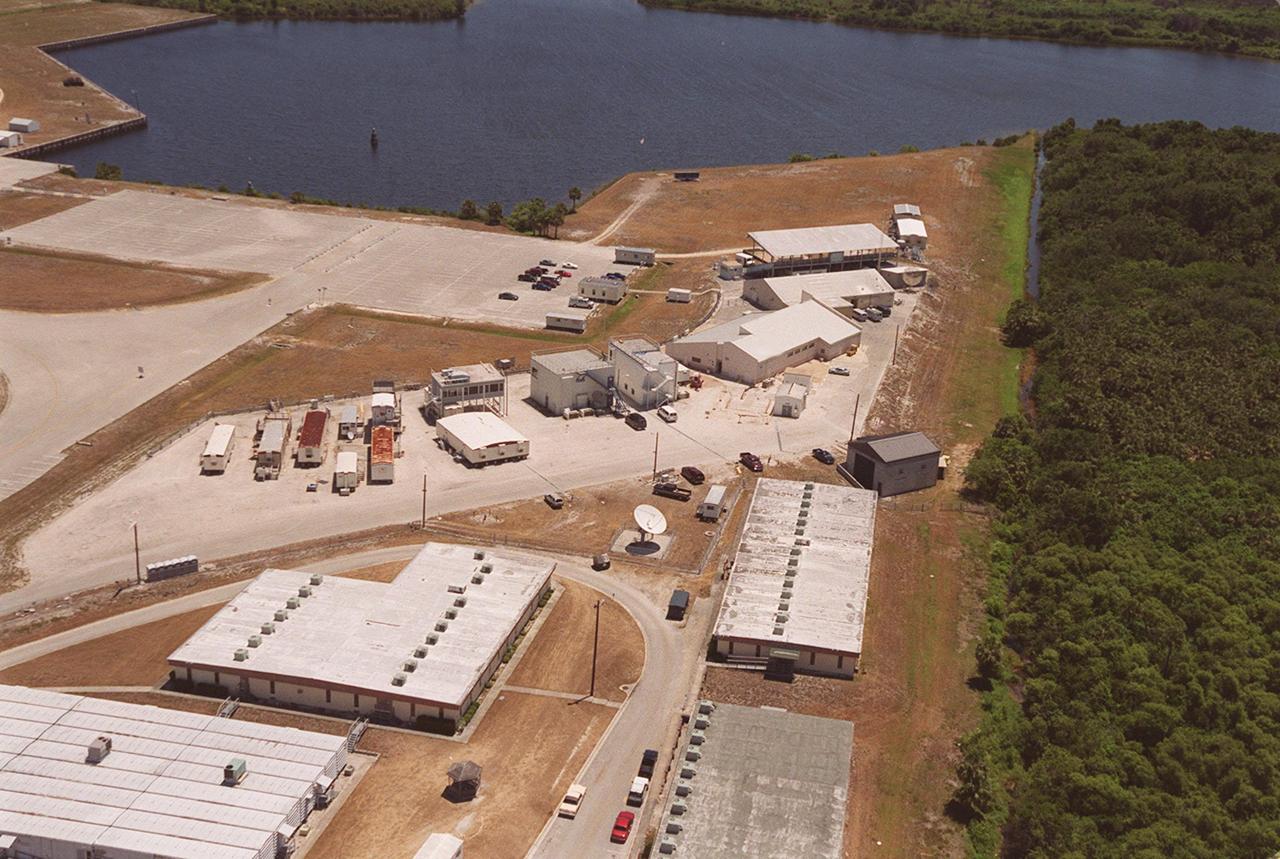
This aerial view is of the buildings that comprise the NASA Press Site in the Launch Complex 39 area. The first large building on the right (closest to the water) is the grandstand from which media representatives view the Space Shuttle launches. The building next to it houses the auditorium from which NASA press briefings are broadcast. To its immediate left is the NASA News Center which includes the offices of the NASA spokesmen at Kennedy Space Center. The buildings and trailers to the left of the News Center are assigned to various television stations and news services
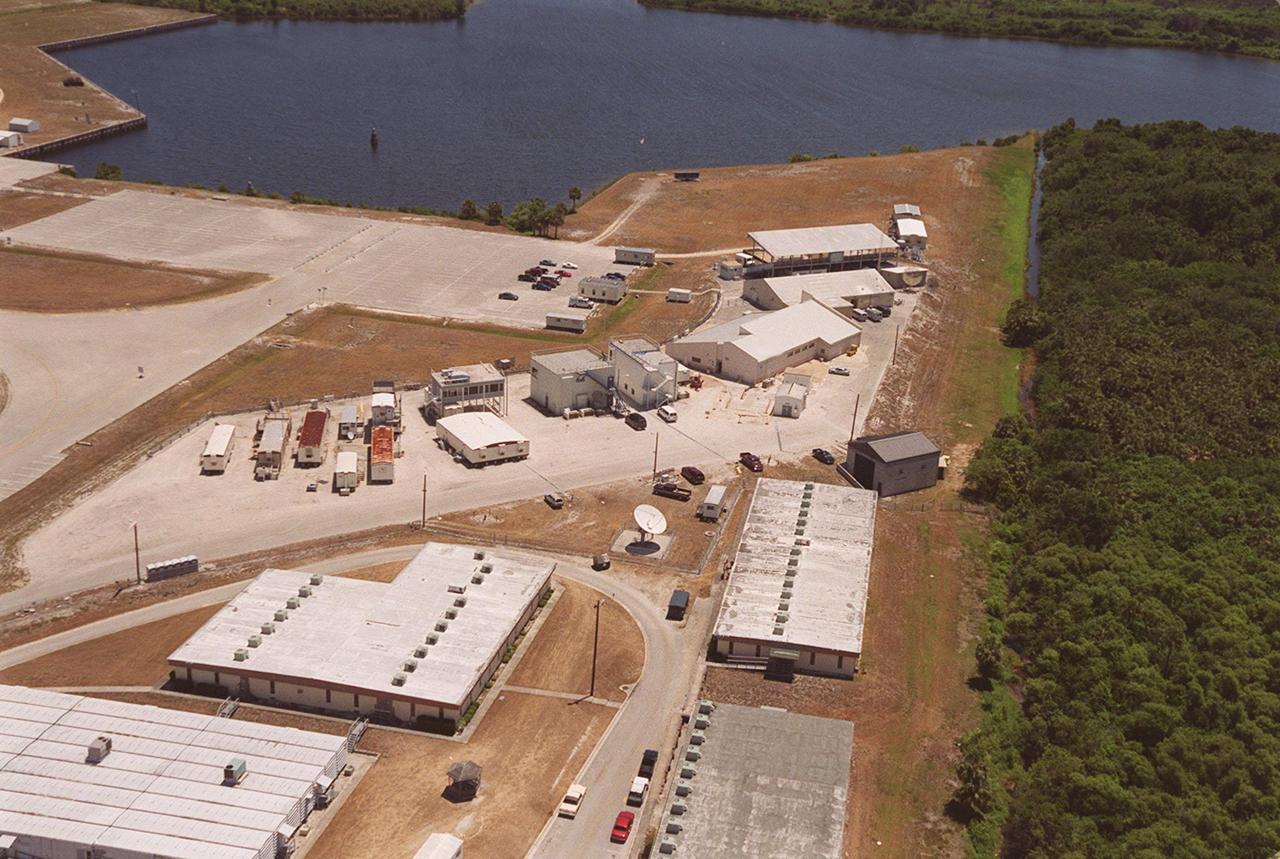
This aerial view is of the buildings that comprise the NASA Press Site in the Launch Complex 39 area. The first large building on the right (closest to the water) is the grandstand from which media representatives view the Space Shuttle launches. The building next to it houses the auditorium from which NASA press briefings are broadcast. To its immediate left is the NASA News Center which includes the offices of the NASA spokesmen at Kennedy Space Center. The buildings and trailers to the left of the News Center are assigned to various television stations and news services
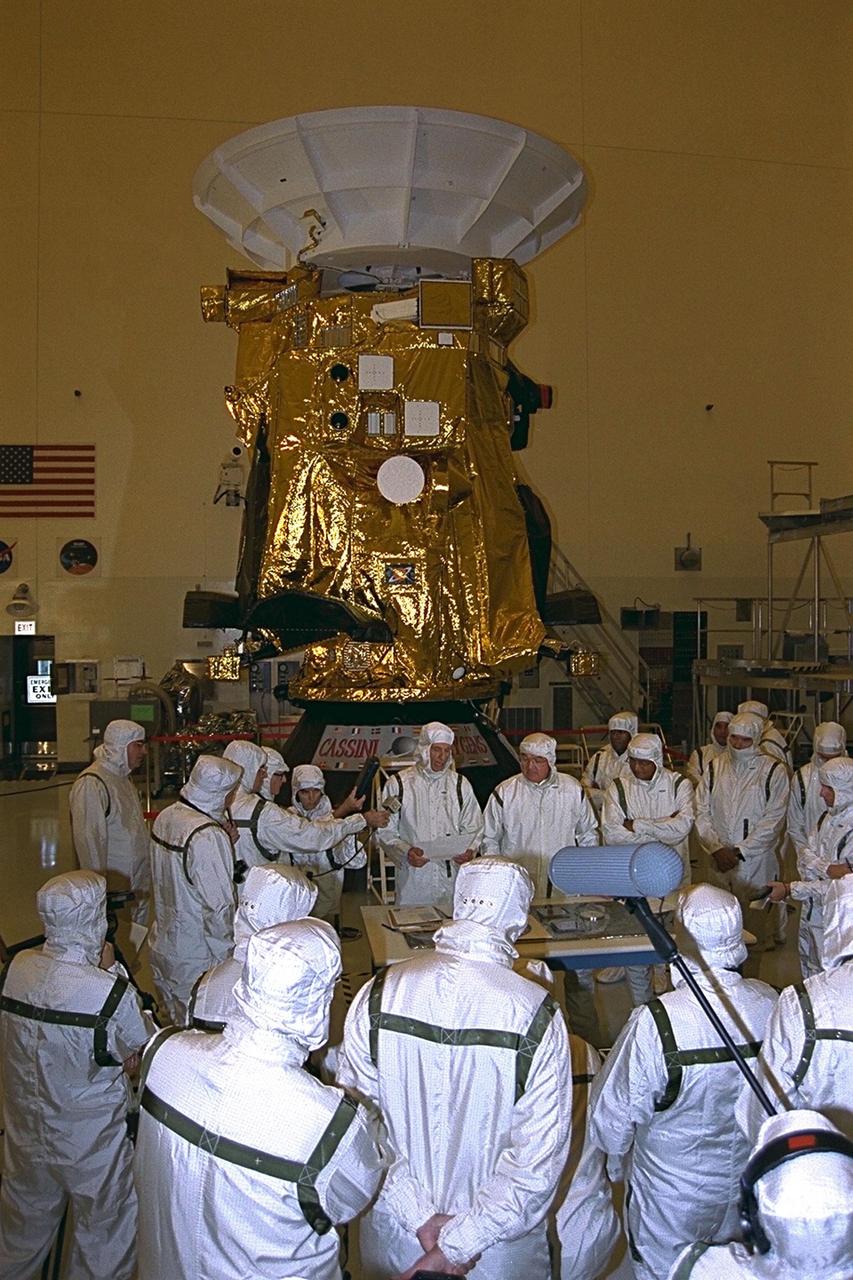
Scientists from the Cassini project at the Jet Propulsion Laboratory and the European Space Agency talk to photojournalists, news reporters, writers, television broadcasters, and cameramen in the Payload Hazardous Servicing Facility (PHSF) during the Cassini press showing. Cassini will launch on Oct. 6, 1997, on an Air Force Titan IV/Centaur launch vehicle and will arrive at Saturn in July 2004 to begin an international scientific mission to study the planet and its systems. Cassini is managed for NASA by the Jet Propulsion Laboratory at Pasadena, Calif
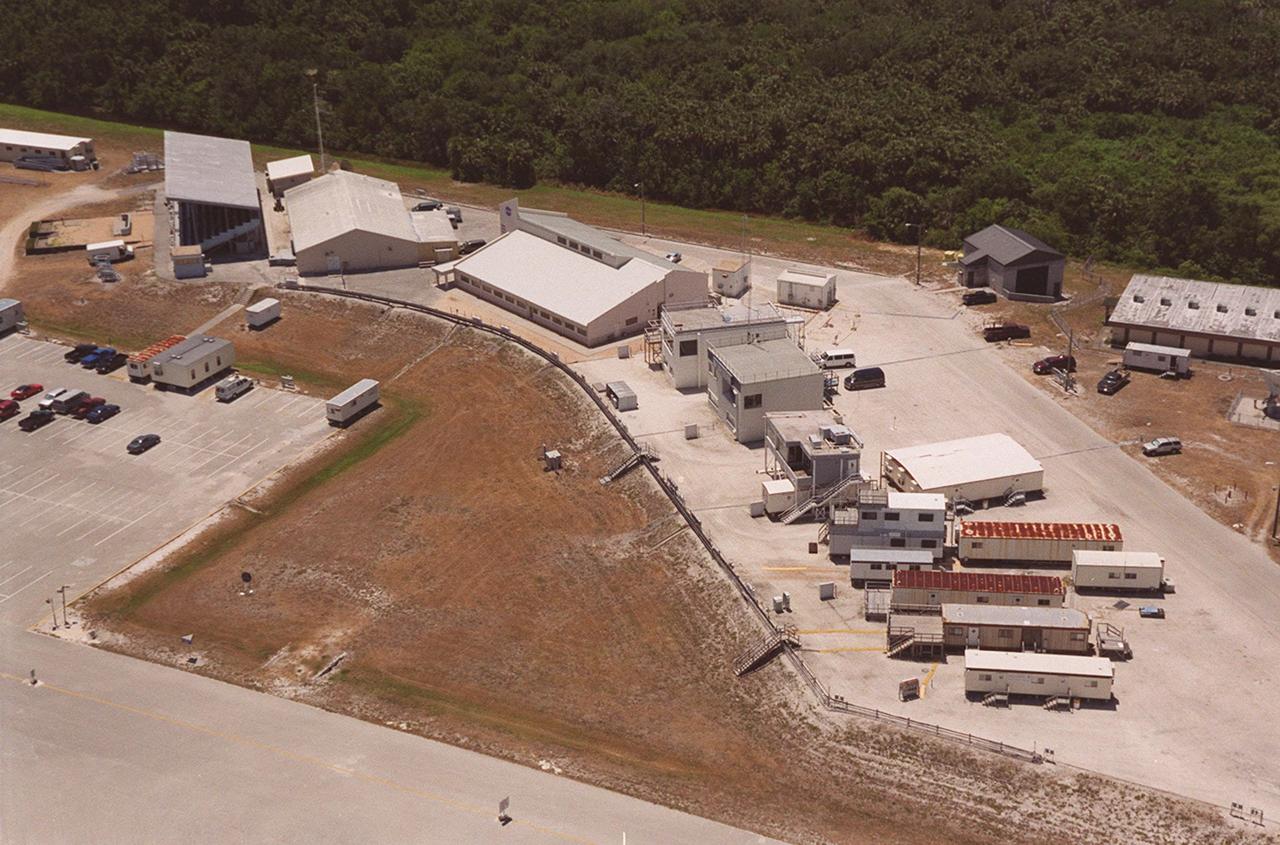
This aerial view is of the buildings that comprise the NASA Press Site in the Launch Complex 39 area. The first large building on the left is the grandstand from which media representatives view the Space Shuttle launches. The building next to it houses the auditorium from which NASA press briefings are broadcast. To its immediate right is the NASA News Center which includes the offices of the NASA spokesmen at Kennedy Space Center. The buildings and trailers to the right of the News Center are assigned to various television stations and news services
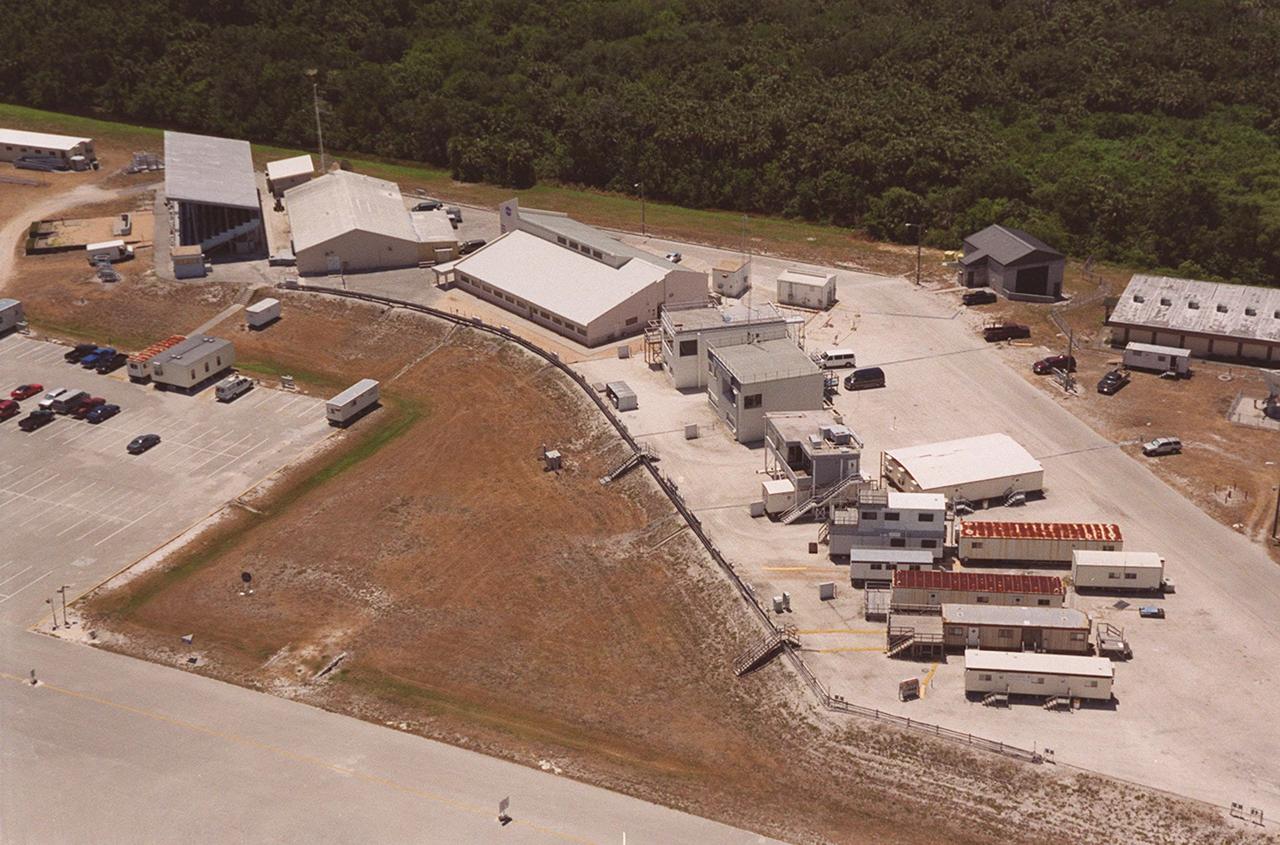
This aerial view is of the buildings that comprise the NASA Press Site in the Launch Complex 39 area. The first large building on the left is the grandstand from which media representatives view the Space Shuttle launches. The building next to it houses the auditorium from which NASA press briefings are broadcast. To its immediate right is the NASA News Center which includes the offices of the NASA spokesmen at Kennedy Space Center. The buildings and trailers to the right of the News Center are assigned to various television stations and news services
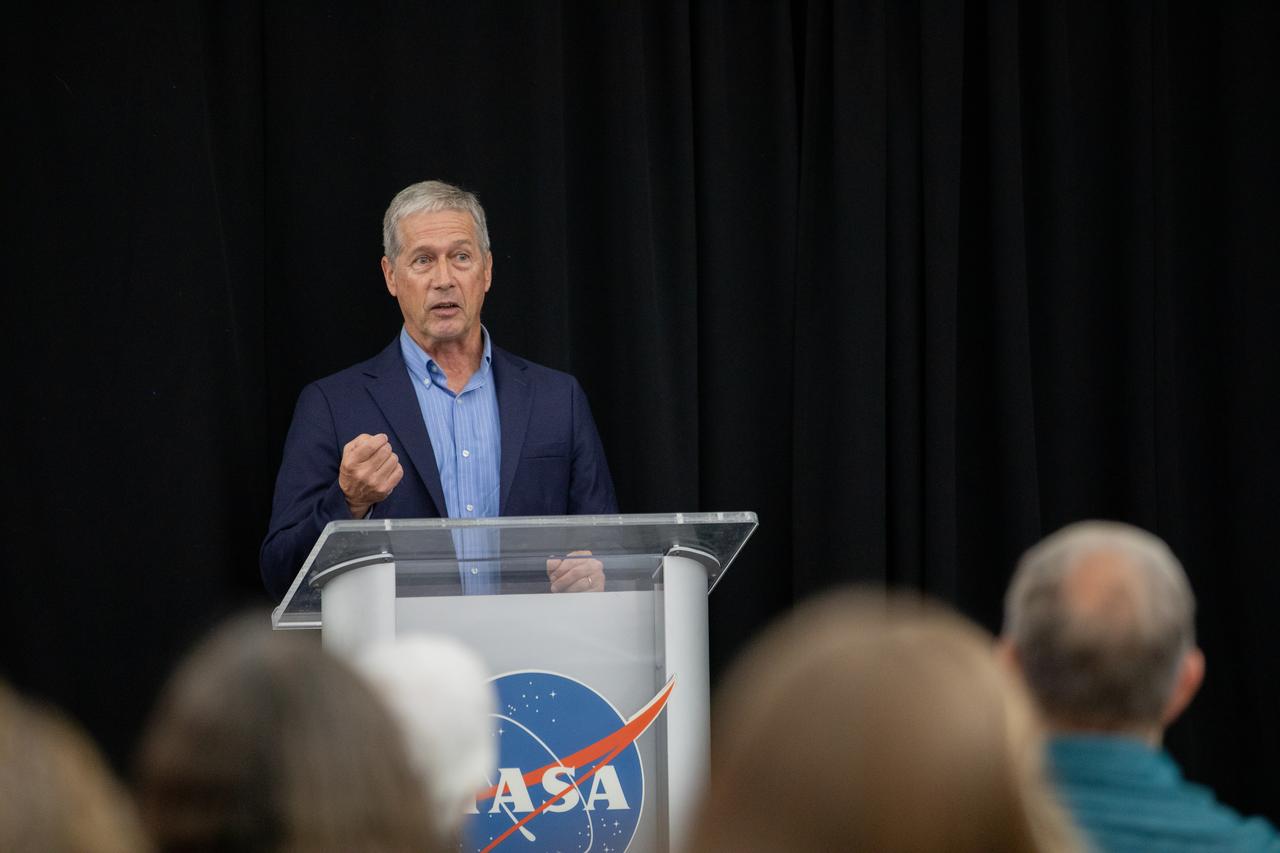
Dan Billow accepts a certificate naming him a Kennedy Chronicler during a May 15 ceremony at the Press Site at NASA’s Kennedy Space Center in Florida. Billow, a retired television broadcaster, was among three reporters and industry professionals who were nominated by their peers and selected by a panel of NASA officials and current space reporters. Brass plates bearing their names were added to the wall of the “bull pen,” where reporters traditionally gather to cover launches and events at NASA Kennedy.

Dan Billow accepts a certificate naming him a Kennedy Chronicler during a May 15 ceremony at the Press Site at NASA’s Kennedy Space Center in Florida. Billow, a retired television broadcaster, was among three reporters and industry professionals who were nominated by their peers and selected by a panel of NASA officials and current space reporters. Brass plates bearing their names were added to the wall of the “bull pen,” where reporters traditionally gather to cover launches and events at NASA Kennedy.
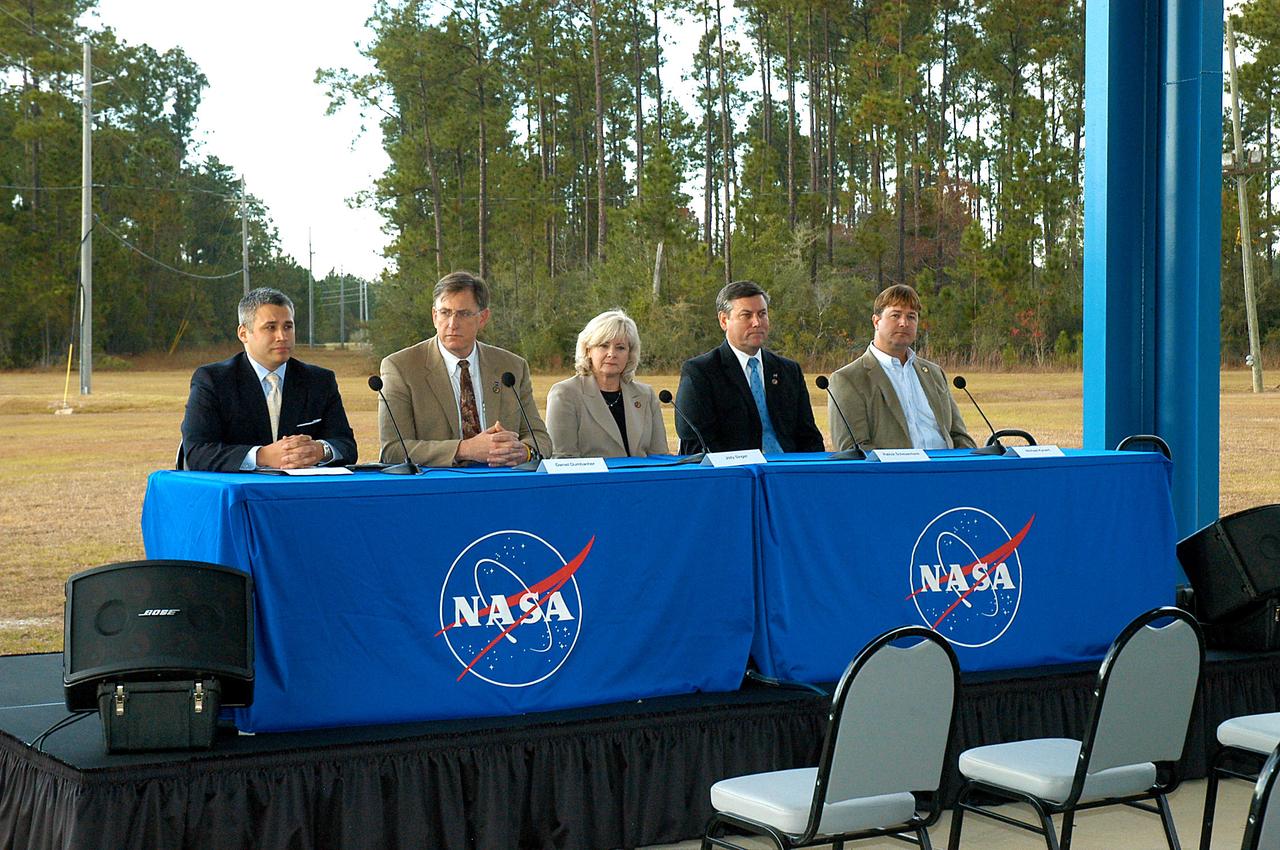
In a news conference broadcast live on NASA TV, key NASA leaders discussed the significance of the successful 500-second test of the agency's new J-2X rocket engine at Stennis Space Center on Nov. 9. The engine will provide upper-stage power for NASA's new Space Launch System being developed to carry humans deeper into space than ever before. Participating in the session were: (l to r) Dan Kanigan, Dan Dumbacher, Joan 'Jody' Singer, Stennis Director Patrick Scheuermann and Mike Kynard.
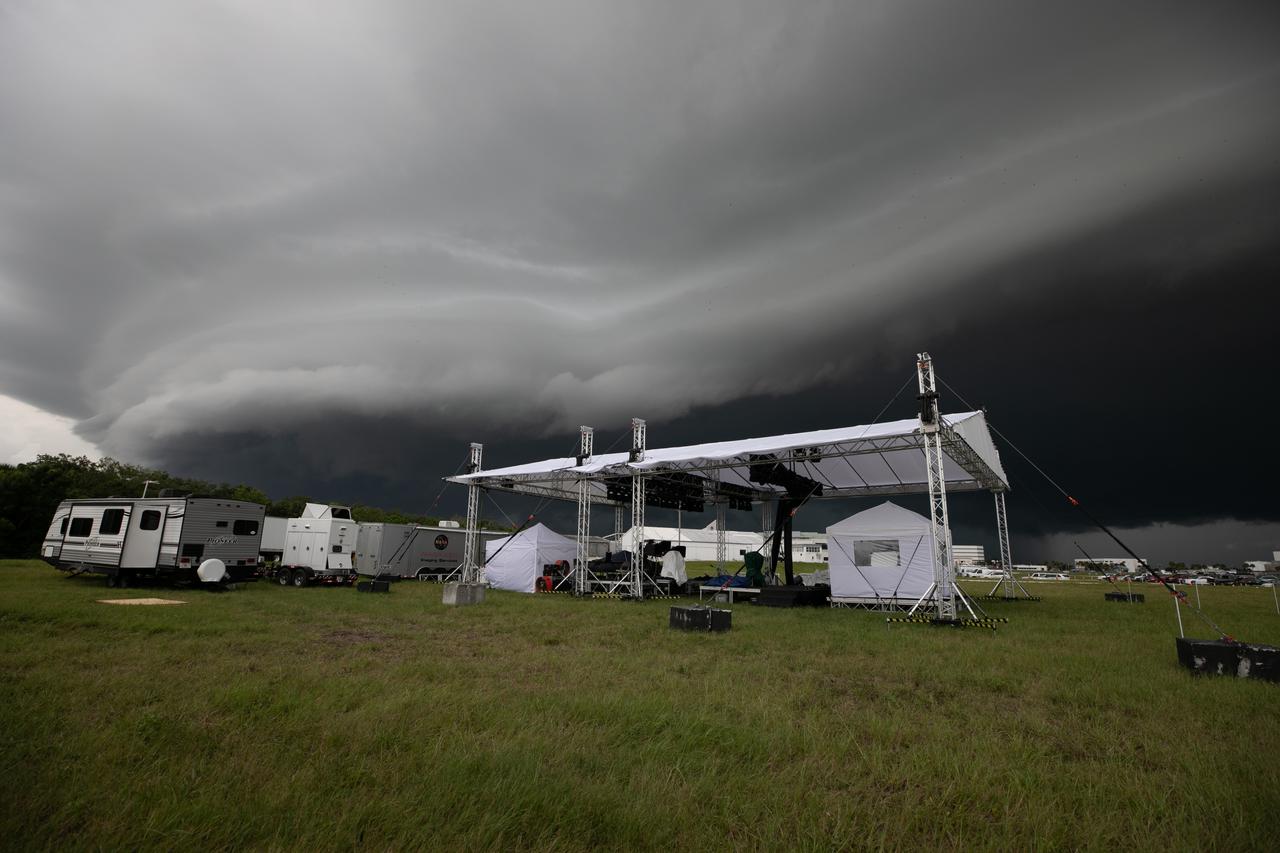
On July 28, 2020, storm clouds roll in over the Press Site lawn, where an exterior host set is being constructed in preparation for NASA’s Mars 2020 launch broadcast at the agency’s Kennedy Space Center in Florida. The United Launch Alliance Atlas V 541 rocket, with the Mars Perseverance rover aboard, lifted off from nearby Cape Canaveral Air Force Station’s Space Launch Complex 41 on July 30 at 7:50 a.m. EDT. Once it arrives at the Red Planet, the rover will search for signs of ancient microbial life on Mars.

Jill Seubert, deputy principal investigator, from NASA’s Jet Propulsion Laboratory in Pasadena, California, explains the payload during a NASA prelaunch technology TV broadcast for the Space Test Program-2 (STP-2) mission at the agency’s Kennedy Space Center in Florida on June 23, 2019. The new space clock could improve how we navigate on the Moon, to Mars and beyond. The space clock is one of four NASA payloads scheduled to launch on a SpaceX Falcon Heavy rocket from Launch Complex 39A beginning at 11:30 p.m. EDT on June 24, 2019. STP-2 is managed by the U.S. Air Force Space and Missile Systems Center.
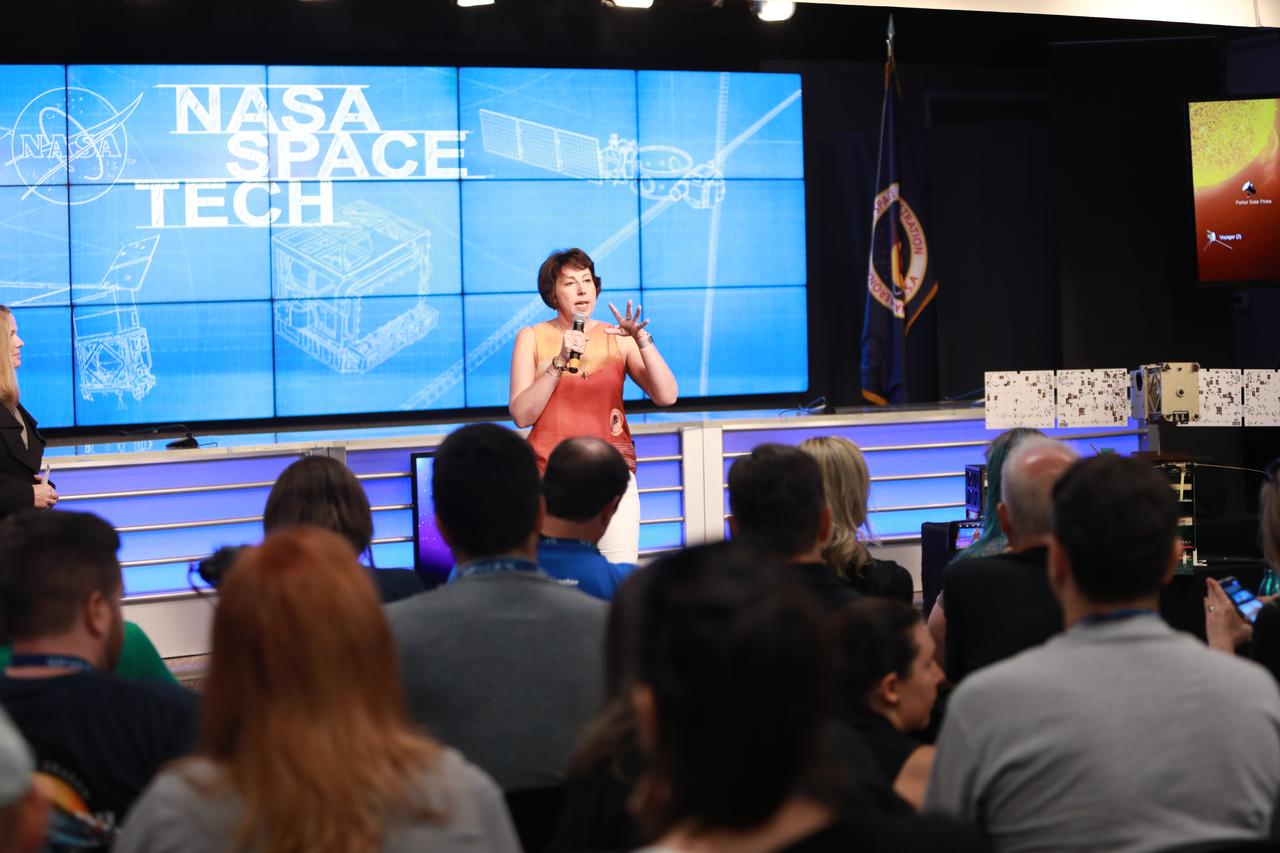
Nicky Fox, director of NASA’s Heliophysics Division, discusses the Space Environment Testbeds payload during a NASA prelaunch technology TV broadcast for the Space Test Program-2 (STP-2) at NASA’s Kennedy Space Center in Florida on June 23, 2019. The payload’s four experiments will reveal the ways local space weather affects spacecraft hardware. It is one of four NASA payloads scheduled to launch on a SpaceX Falcon Heavy rocket from Launch Complex 39A beginning at 11:30 p.m. EDT on June 24, 2019. STP-2 is managed by the U.S. Air Force Space and Missile Systems Center.
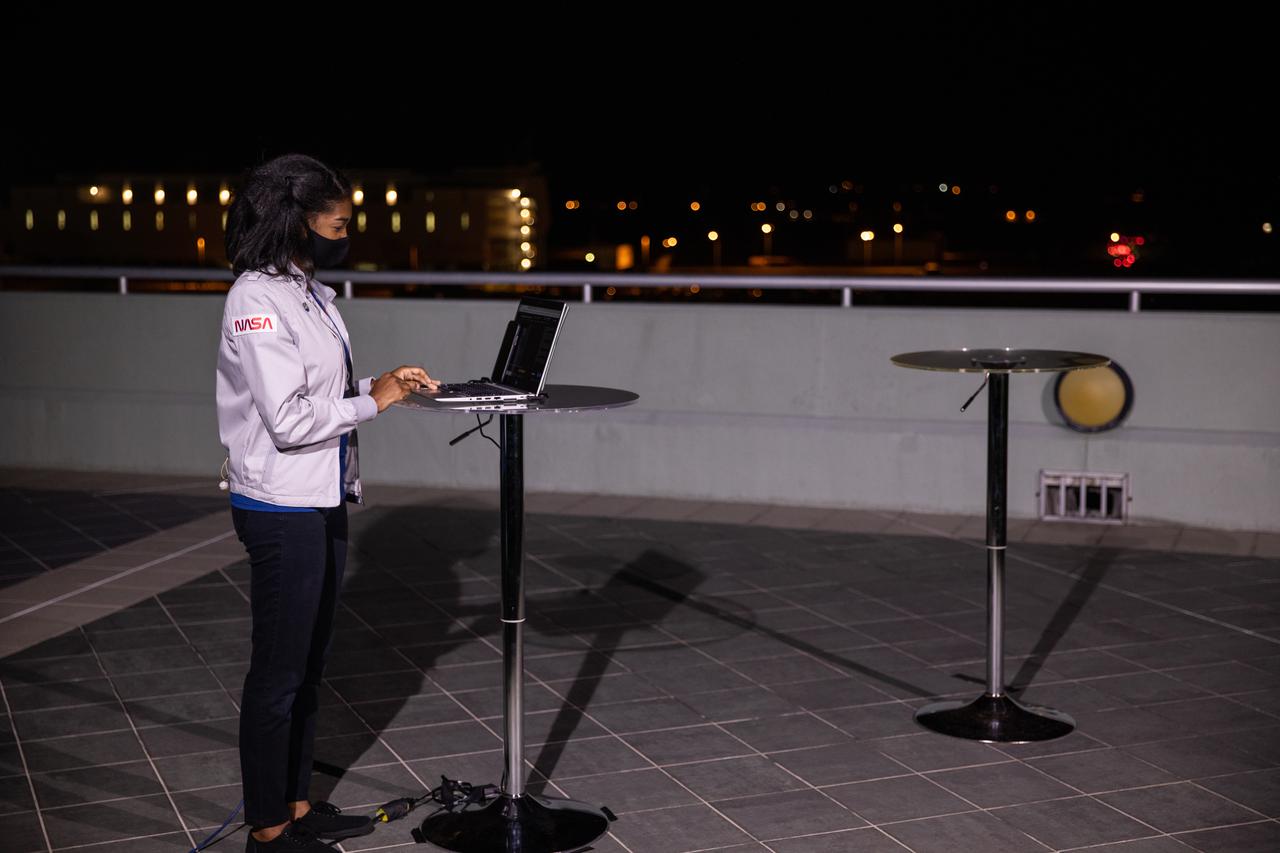
NASA Communications’ Jasmine Hopkins interviews individuals from NASA and the European Space Agency (ESA) on the Operations and Support Building II balcony at NASA’s Kennedy Space Center in Florida during the agency’s SpaceX Crew-2 launch broadcast on April 23, 2021. The SpaceX Falcon 9 rocket and Crew Dragon spacecraft lifted off from Kennedy’s Launch Complex 39A at 5:49 a.m. EDT. Part of NASA’s Commercial Crew Program, Crew-2 delivered NASA astronauts Shane Kimbrough and Megan McArthur, Japan Aerospace Exploration Agency (JAXA) astronaut Akihiko Hoshide, and ESA astronaut Thomas Pesquet to the International Space Station for a six-month science mission.

Jill Seubert, deputy principal investigator, from NASA’s Jet Propulsion Laboratory in Pasadena, California, explains the payload during a NASA prelaunch technology TV broadcast for the Space Test Program-2 (STP-2) mission at the agency’s Kennedy Space Center in Florida on June 23, 2019. The new space clock could improve how we navigate on the Moon, to Mars and beyond. The space clock is one of four NASA payloads scheduled to launch on a SpaceX Falcon Heavy rocket from Launch Complex 39A beginning at 11:30 p.m. EDT on June 24, 2019. STP-2 is managed by the U.S. Air Force Space and Missile Systems Center.

Nicky Fox, director of NASA’s Heliophysics Division, discusses the Space Environment Testbeds payload during a NASA prelaunch technology TV broadcast for the Space Test Program-2 (STP-2) at NASA’s Kennedy Space Center in Florida on June 23, 2019. The payload’s four experiments will reveal the ways local space weather affects spacecraft hardware. It is one of four NASA payloads scheduled to launch on a SpaceX Falcon Heavy rocket from Launch Complex 39A beginning at 11:30 p.m. EDT on June 24, 2019. STP-2 is managed by the U.S. Air Force Space and Missile Systems Center.
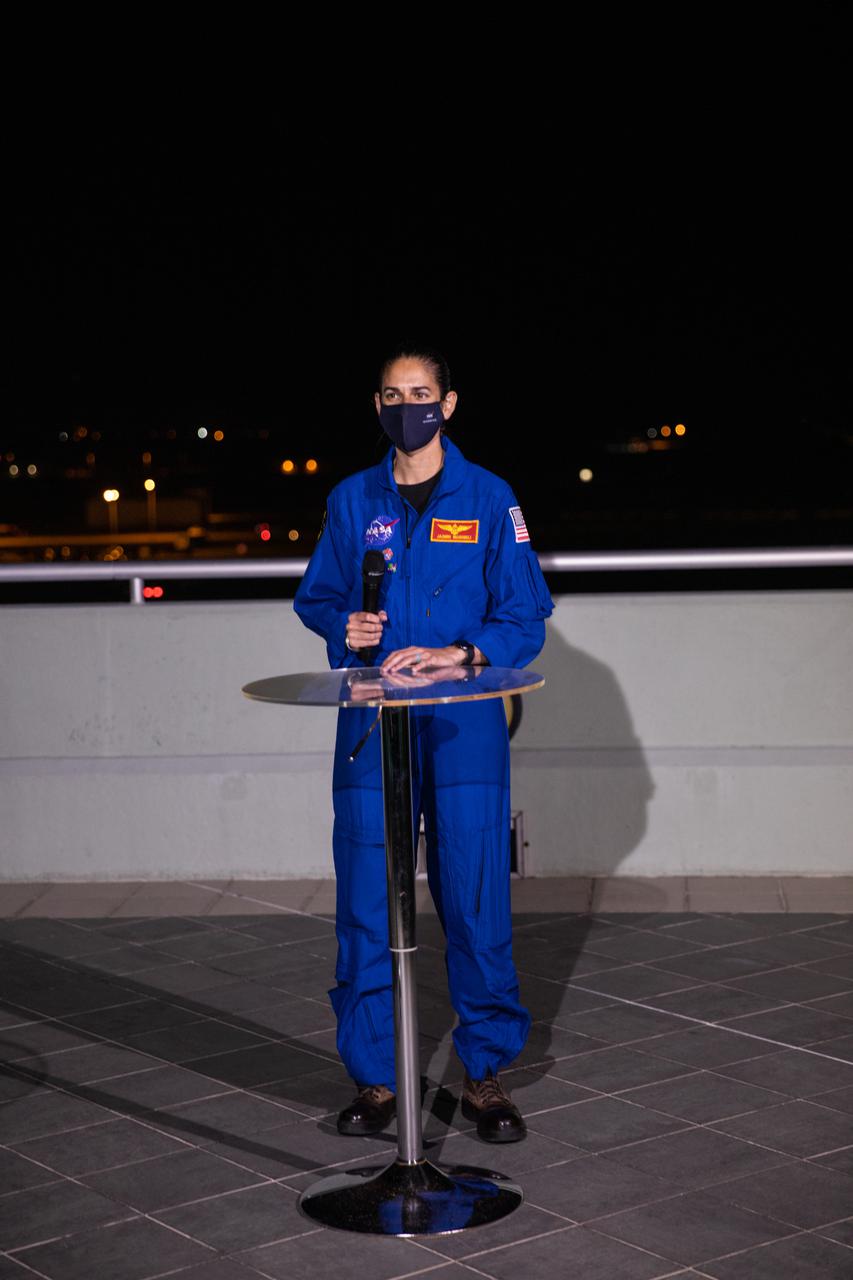
NASA astronaut Jasmin Moghbeli participates in an interview on the Operations and Support Building II balcony during the launch broadcast for NASA’s SpaceX Crew-2 mission at the agency’s Kennedy Space Center in Florida on April 23, 2021. The SpaceX Falcon 9 rocket and Crew Dragon spacecraft lifted off from Kennedy’s Launch Complex 39A at 5:49 a.m. EDT. Part of NASA’s Commercial Crew Program, Crew-2 delivered NASA astronauts Shane Kimbrough and Megan McArthur, Japan Aerospace Exploration Agency (JAXA) astronaut Akihiko Hoshide, and European Space Agency (ESA) astronaut Thomas Pesquet to the International Space Station for a six-month science mission.

NASA Communications’ Megan Cruz (left) prepares to interview NASA Administrator Bill Nelson during a live broadcast ahead of the Axiom Mission 2 (Ax-2) launch from the agency’s Kennedy Space Center in Florida on May 21, 2023. Ax-2 is the second all private astronaut mission to the International Space Station, sending Commander Peggy Whitson, Pilot John Shoffner, and Mission Specialists Ali Alqarni and Rayyanah Barnawi to the orbiting laboratory, where they will spend about 10 days conducting scientific research, outreach, and commercial activities. Liftoff occurred at 5:37 p.m. EDT from Kennedy’s Launch Complex 39A.
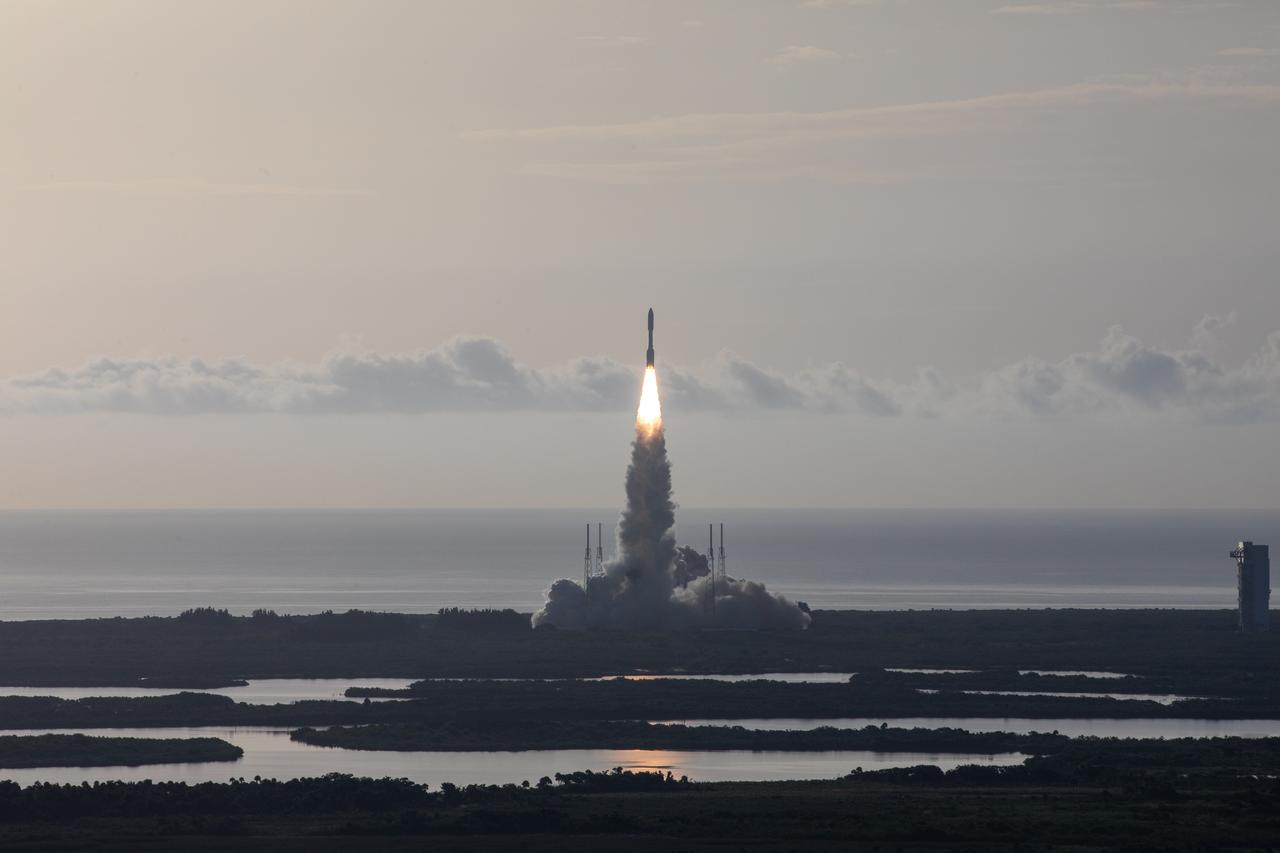
A United Launch Alliance Atlas V 541 rocket climbs upward after lifting off from Space Launch Complex 41 at Cape Canaveral Air Force Station in Florida on July 30, 2020, at 7:50 a.m. EDT, carrying NASA’s Mars Perseverance rover and Ingenuity helicopter. The rover is part of NASA’s Mars Exploration Program, a long-term effort of robotic exploration of the Red Planet. The rover’s seven instruments will search for habitable conditions in the ancient past and signs of past microbial life on Mars. The Launch Services Program at Kennedy is responsible for launch management.
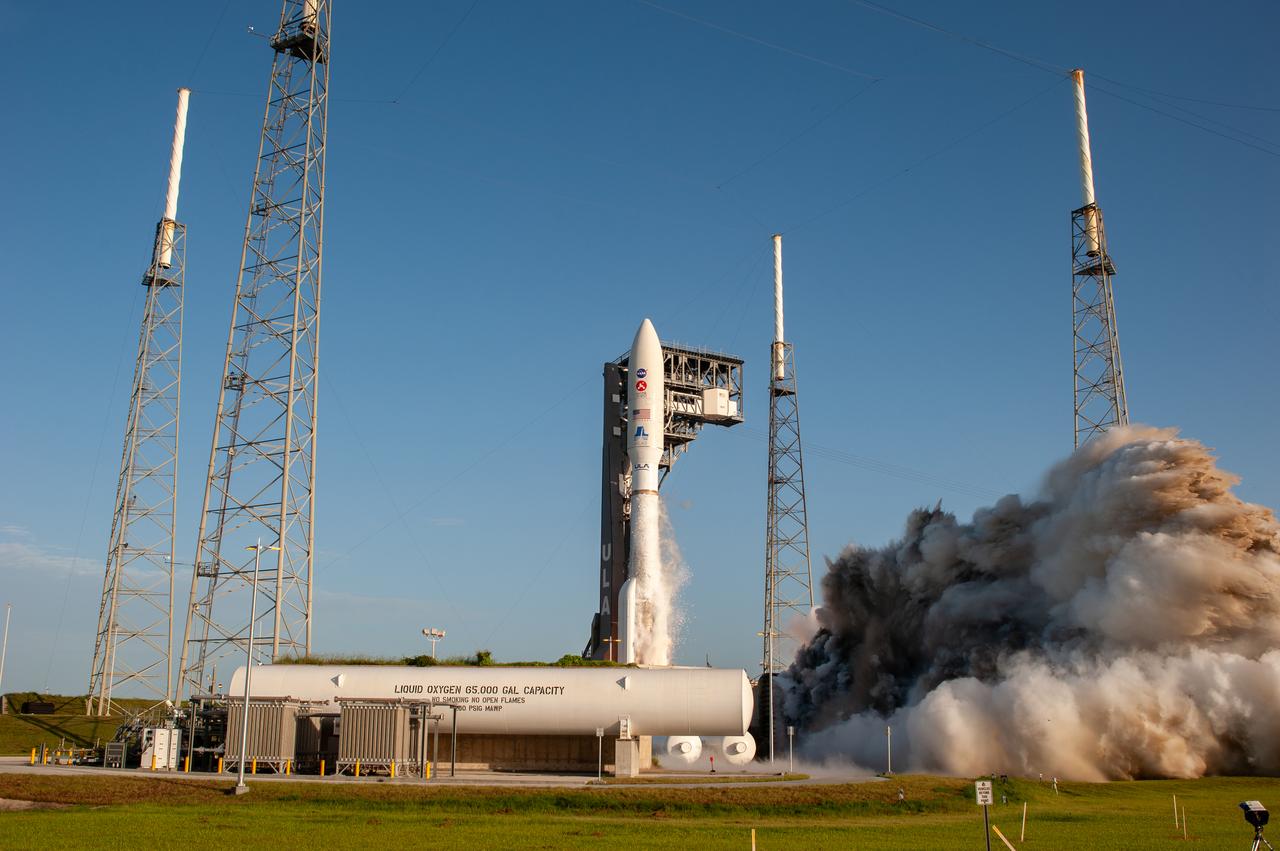
With blue sky as a backdrop, a United Launch Alliance Atlas V 541 rocket lifts off from Space Launch Complex 41 at Cape Canaveral Air Force Station in Florida on July 30, 2020, at 7:50 a.m. EDT, carrying NASA’s Mars Perseverance rover and Ingenuity helicopter. The rover is part of NASA’s Mars Exploration Program, a long-term effort of robotic exploration of the Red Planet. The rover’s seven instruments will search for habitable conditions in the ancient past and signs of past microbial life on Mars. The Launch Services Program at Kennedy is responsible for launch management.
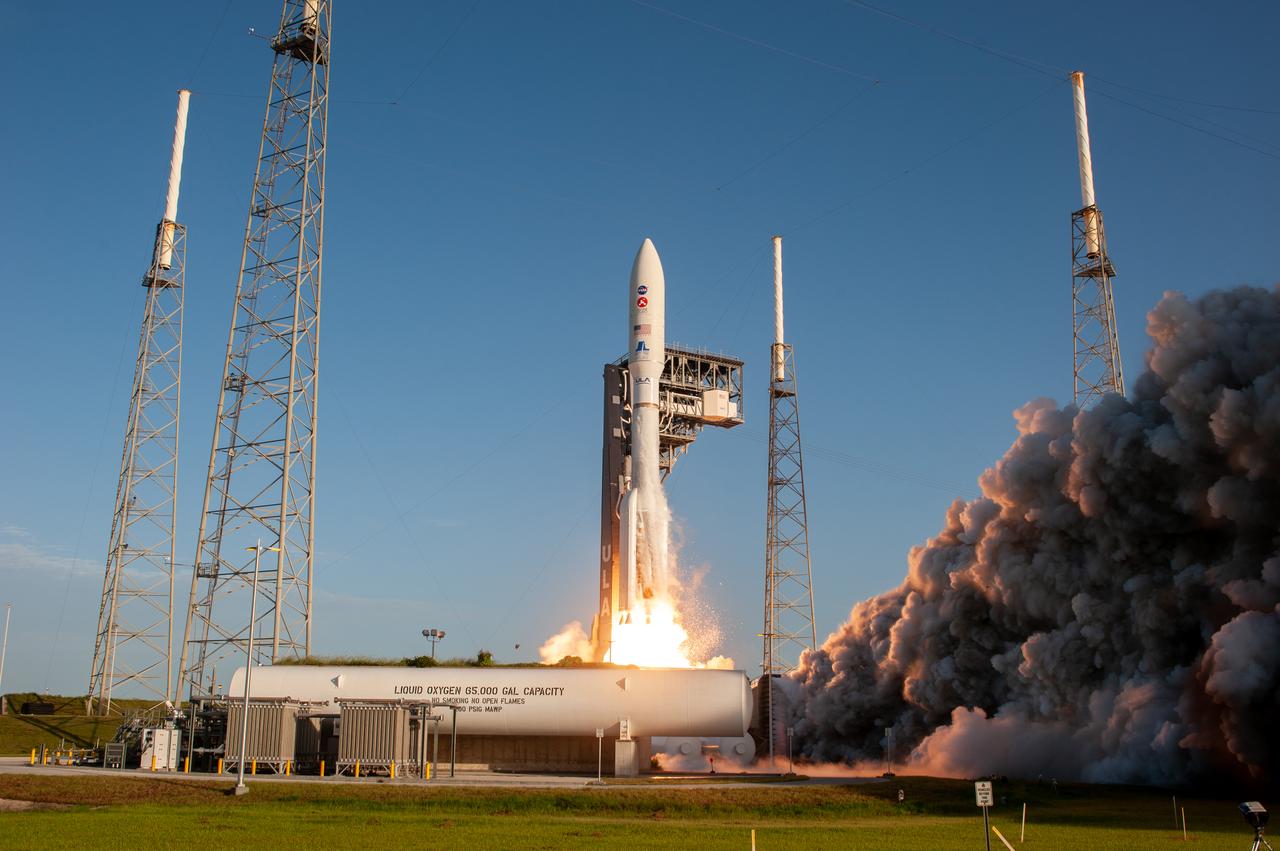
With blue sky as a backdrop, a United Launch Alliance Atlas V 541 rocket lifts off from Space Launch Complex 41 at Cape Canaveral Air Force Station in Florida on July 30, 2020, at 7:50 a.m. EDT, carrying NASA’s Mars Perseverance rover and Ingenuity helicopter. The rover is part of NASA’s Mars Exploration Program, a long-term effort of robotic exploration of the Red Planet. The rover’s seven instruments will search for habitable conditions in the ancient past and signs of past microbial life on Mars. The Launch Services Program at Kennedy is responsible for launch management.
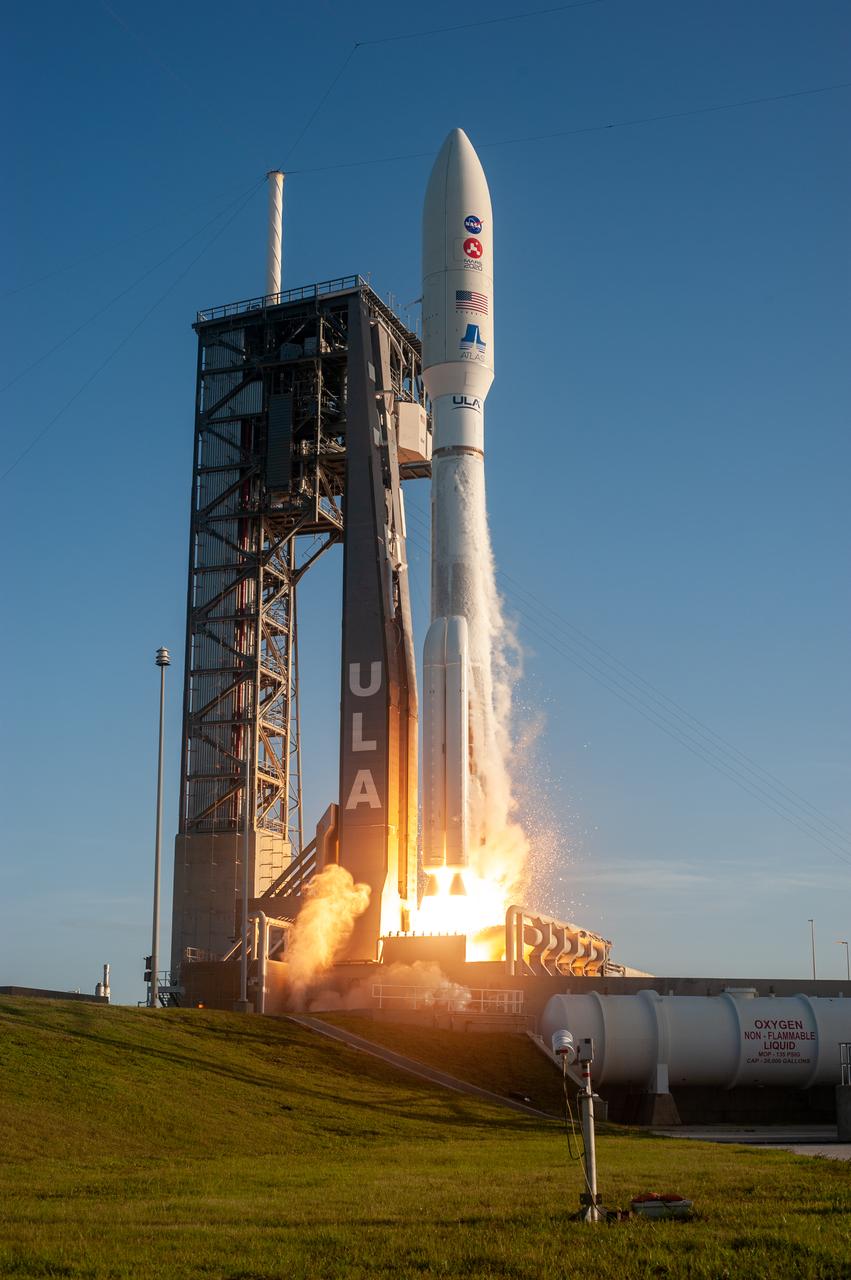
A United Launch Alliance Atlas V 541 rocket lifts off from Space Launch Complex 41 at Cape Canaveral Air Force Station in Florida on July 30, 2020, at 7:50 a.m. EDT, carrying NASA’s Mars Perseverance rover and Ingenuity helicopter. The rover is part of NASA’s Mars Exploration Program, a long-term effort of robotic exploration of the Red Planet. The rover’s seven instruments will search for habitable conditions in the ancient past and signs of past microbial life on Mars. The Launch Services Program at Kennedy is responsible for launch management.
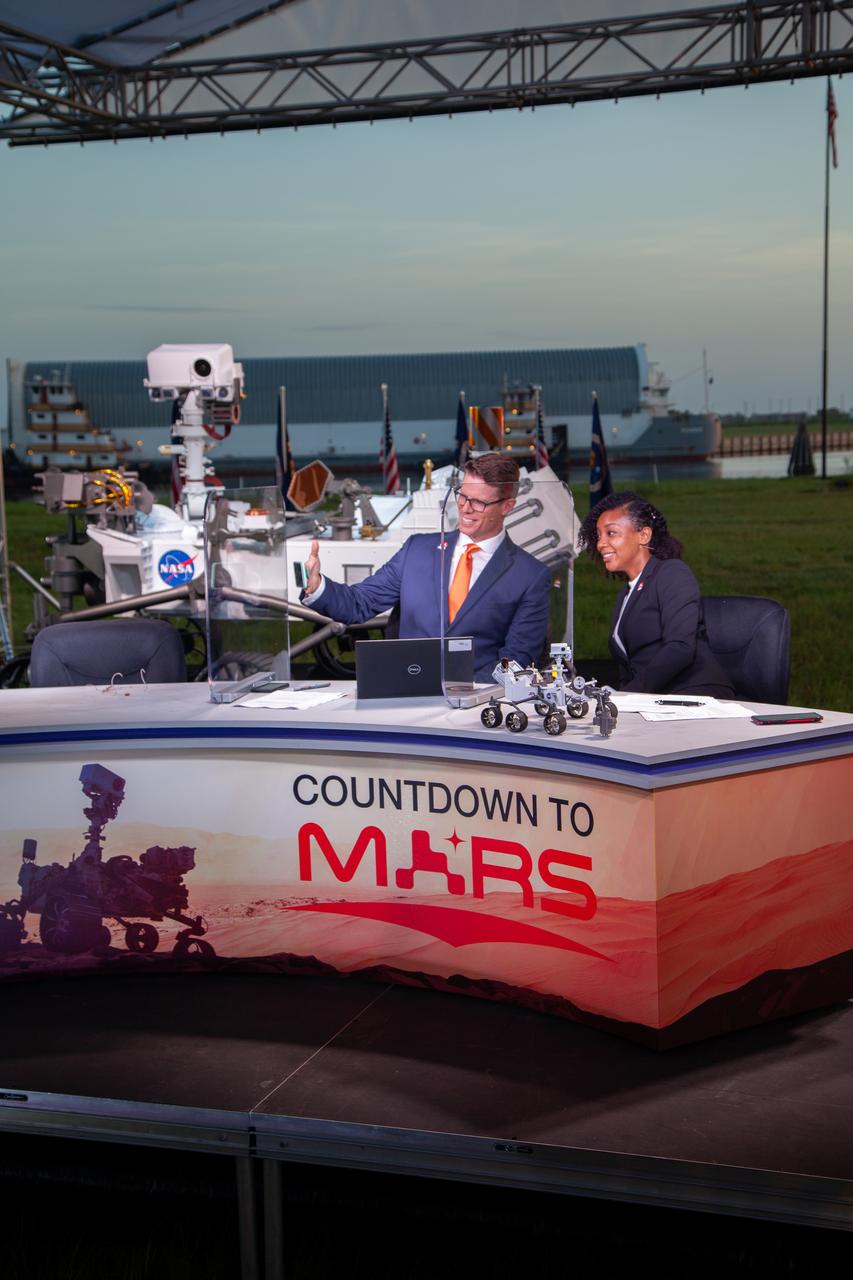
Countdown to Mars live commentary at Kennedy Space Center’s News Center in Florida on July 30, 2020, with hosts Derrol Nail, left, NASA Communications, and Moogega Cooper, Planetary Protection engineer at the agency’s Jet Propulsion Laboratory in California. The Mars Perseverance rover and Ingenuity helicopter are set to launch on a United Launch Alliance Atlas V 541 rocket at 7:50 a.m. EDT.
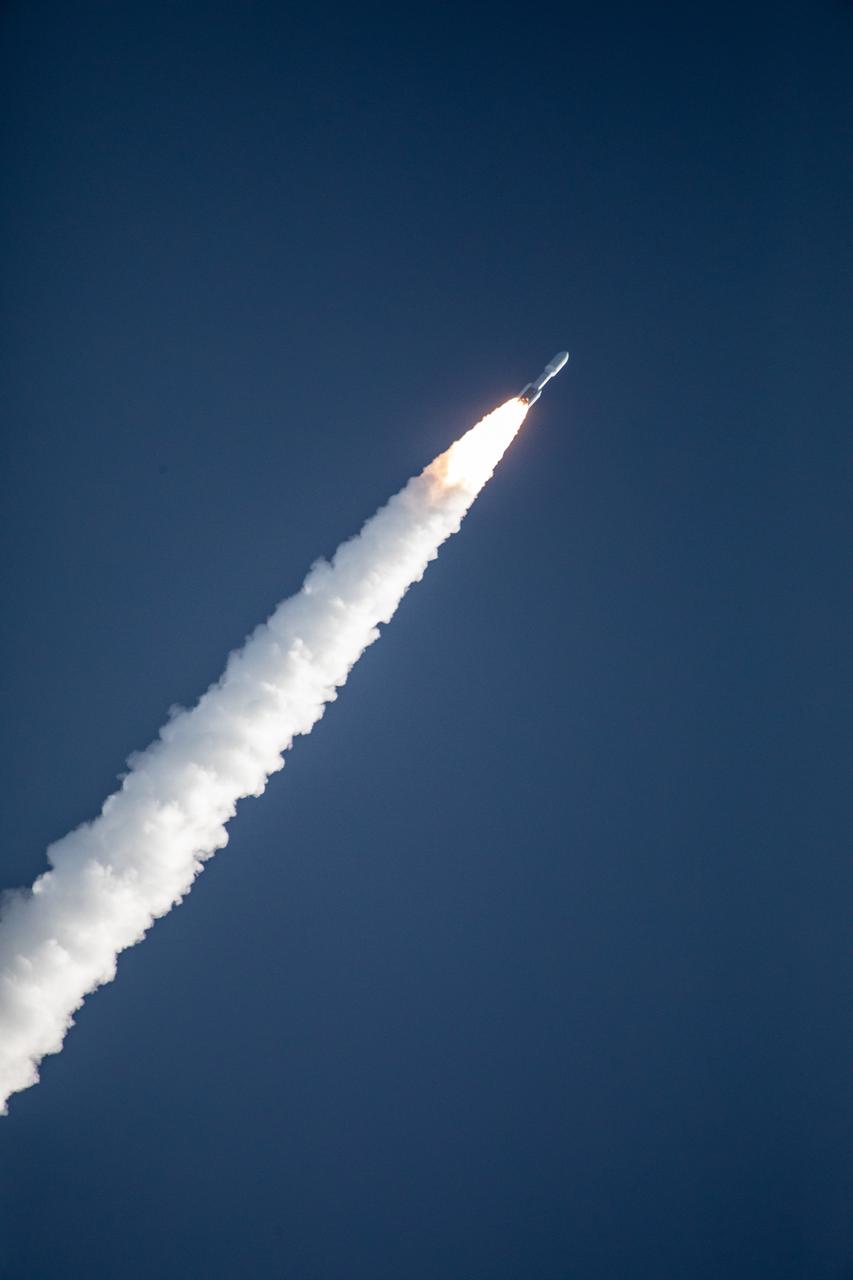
A United Launch Alliance Atlas V 541 rocket soars upward after lifting off from Space Launch Complex 41 at Cape Canaveral Air Force Station in Florida on July 30, 2020, at 7:50 a.m. EDT, carrying NASA’s Mars Perseverance rover and Ingenuity helicopter. The rover is part of NASA’s Mars Exploration Program, a long-term effort of robotic exploration of the Red Planet. The rover’s seven instruments will search for habitable conditions in the ancient past and signs of past microbial life on Mars. The Launch Services Program at Kennedy is responsible for launch management
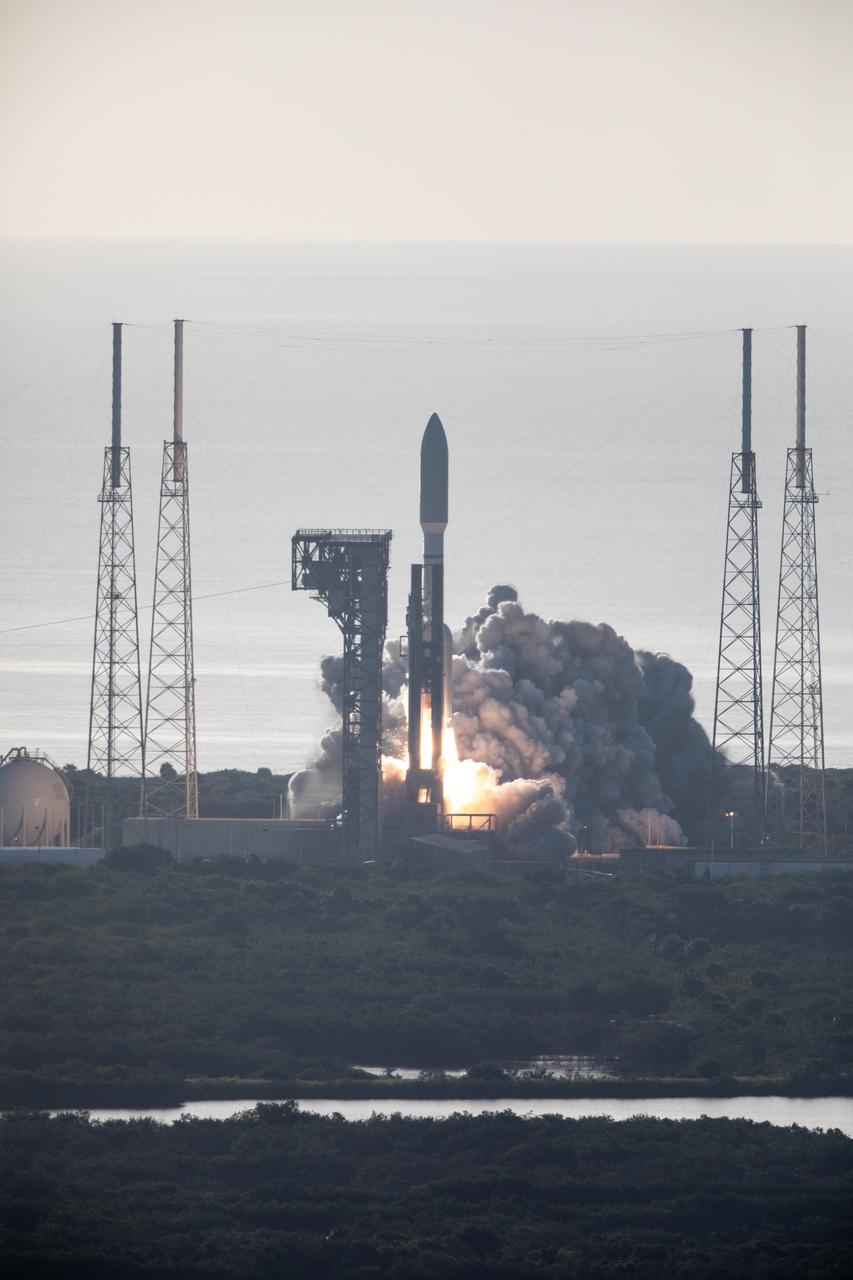
A United Launch Alliance Atlas V 541 rocket lifts off from Space Launch Complex 41 at Cape Canaveral Air Force Station in Florida on July 30, 2020, at 7:50 a.m. EDT, carrying NASA’s Mars Perseverance rover and Ingenuity helicopter. The rover is part of NASA’s Mars Exploration Program, a long-term effort of robotic exploration of the Red Planet. The rover’s seven instruments will search for habitable conditions in the ancient past and signs of past microbial life on Mars. The Launch Services Program at Kennedy is responsible for launch management.
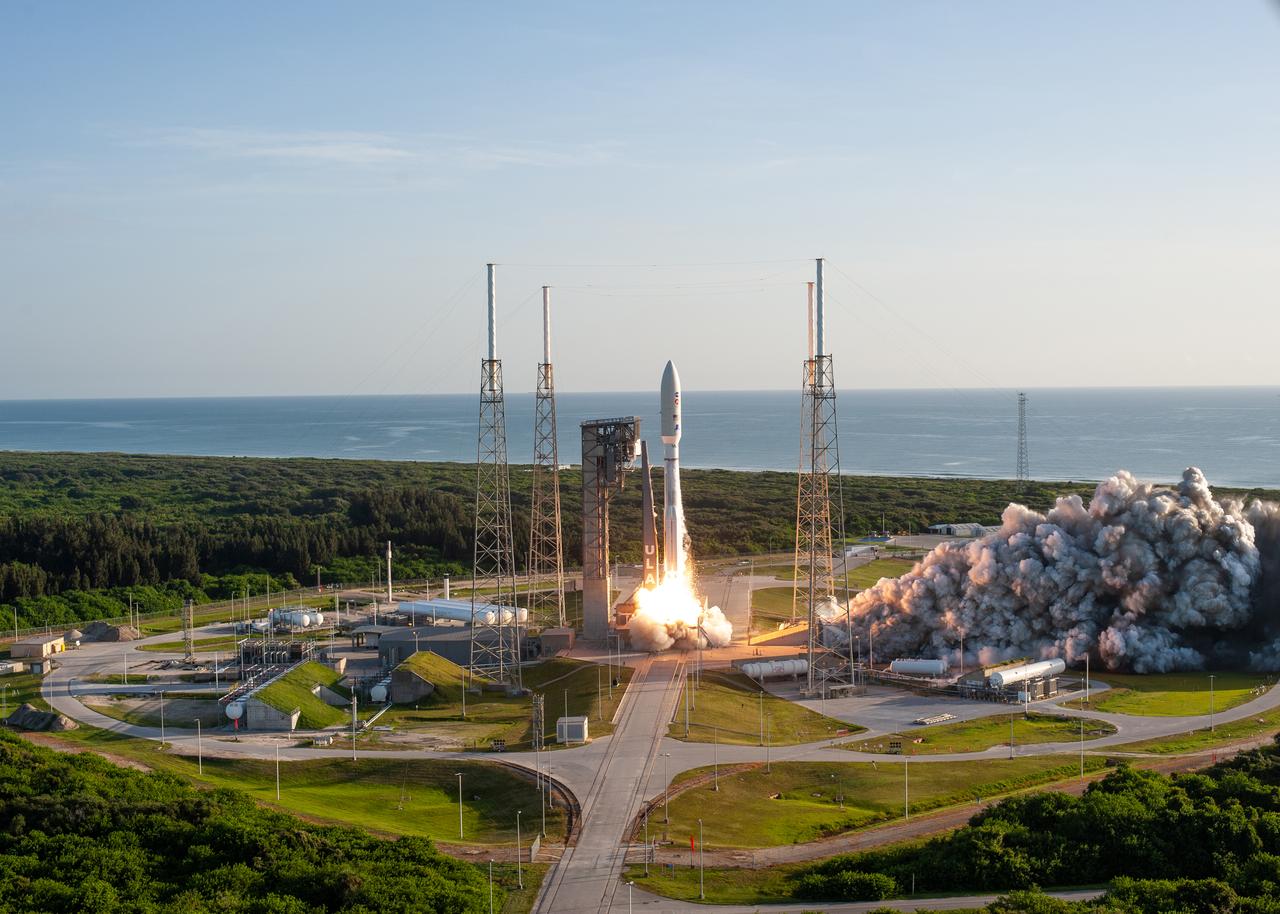
A United Launch Alliance Atlas V 541 rocket lifts off from Space Launch Complex 41 at Cape Canaveral Air Force Station in Florida on July 30, 2020, at 7:50 a.m. EDT, carrying NASA’s Mars Perseverance rover and Ingenuity helicopter. The rover is part of NASA’s Mars Exploration Program, a long-term effort of robotic exploration of the Red Planet. The rover’s seven instruments will search for habitable conditions in the ancient past and signs of past microbial life on Mars. The Launch Services Program at Kennedy is responsible for launch management.
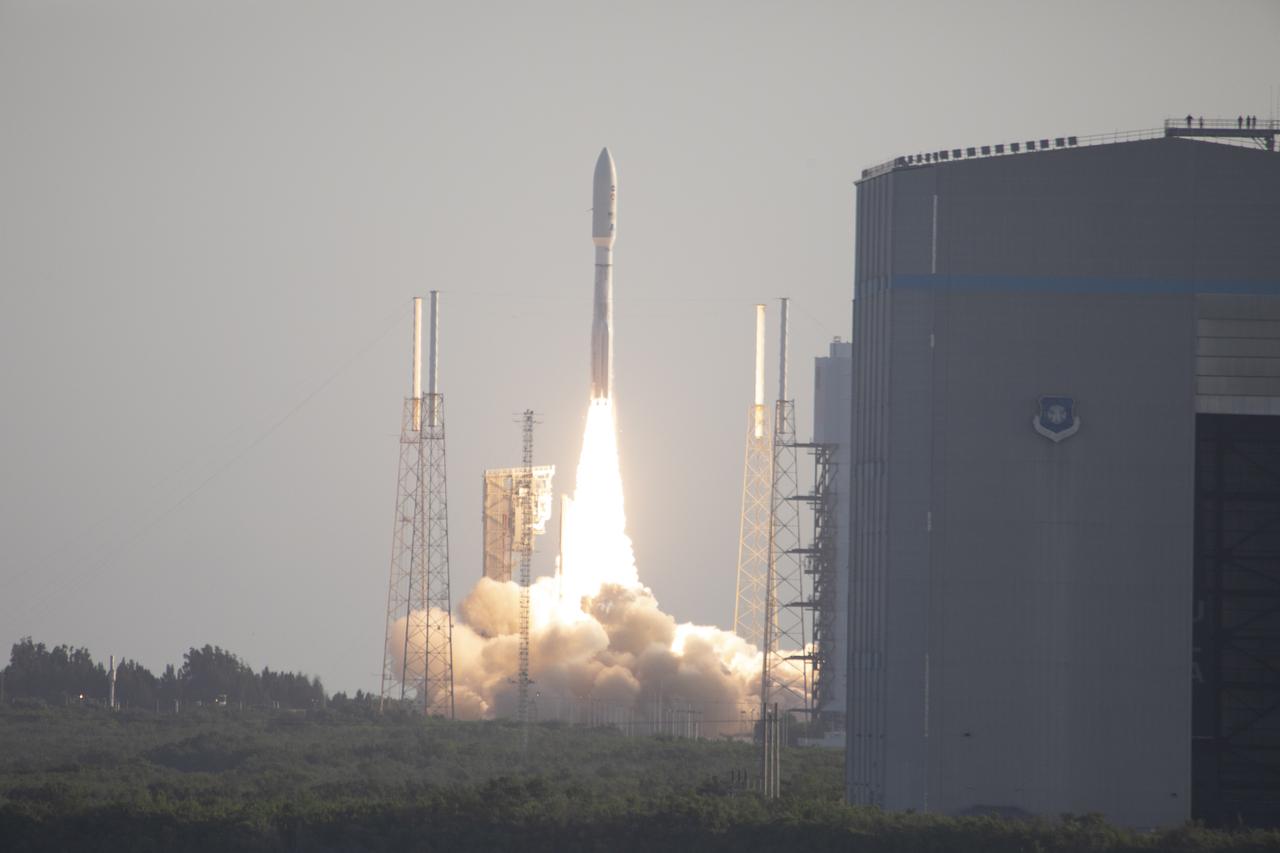
A view from the Atlas Space Operations Center of the launch of the United Launch Alliance Atlas V 541 rocket from Space Launch Complex 41 at Cape Canaveral Air Force Station in Florida on July 30, 2020. The Atlas V carried NASA’s Mars Perseverance rover and Ingenuity helicopter for its mission to Mars. Liftoff was at 7:50 a.m. EDT. The Perseverance rover is part of NASA’s Mars Exploration Program, a long-term effort of robotic exploration of the Red Planet. The rover’s seven instruments will search for habitable conditions in the ancient past and signs of past microbial life on Mars. The Launch Services Program at Kennedy is responsible for launch management.
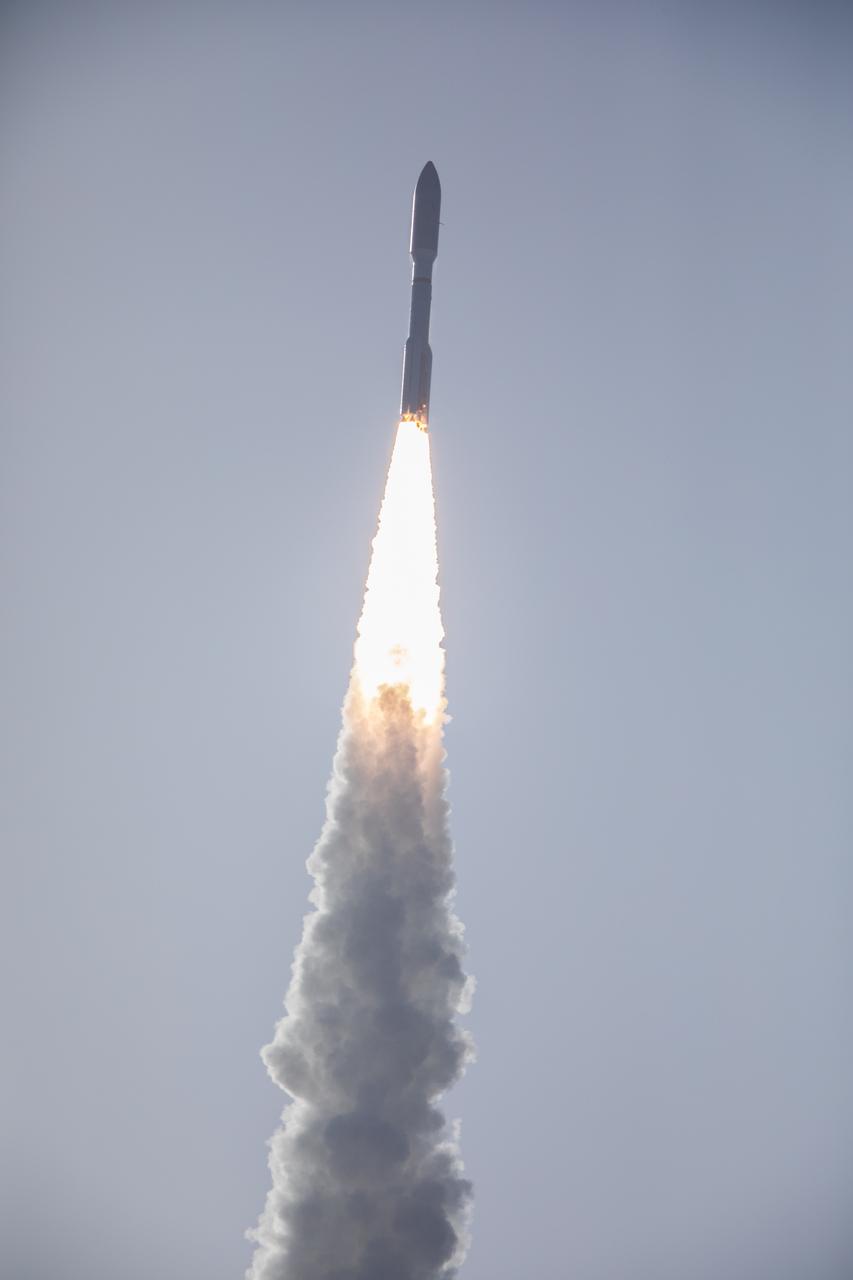
A United Launch Alliance Atlas V 541 rocket soars upward after lifting off from Space Launch Complex 41 at Cape Canaveral Air Force Station in Florida on July 30, 2020, at 7:50 a.m. EDT, carrying NASA’s Mars Perseverance rover and Ingenuity helicopter. The rover is part of NASA’s Mars Exploration Program, a long-term effort of robotic exploration of the Red Planet. The rover’s seven instruments will search for habitable conditions in the ancient past and signs of past microbial life on Mars. The Launch Services Program at Kennedy is responsible for launch management.
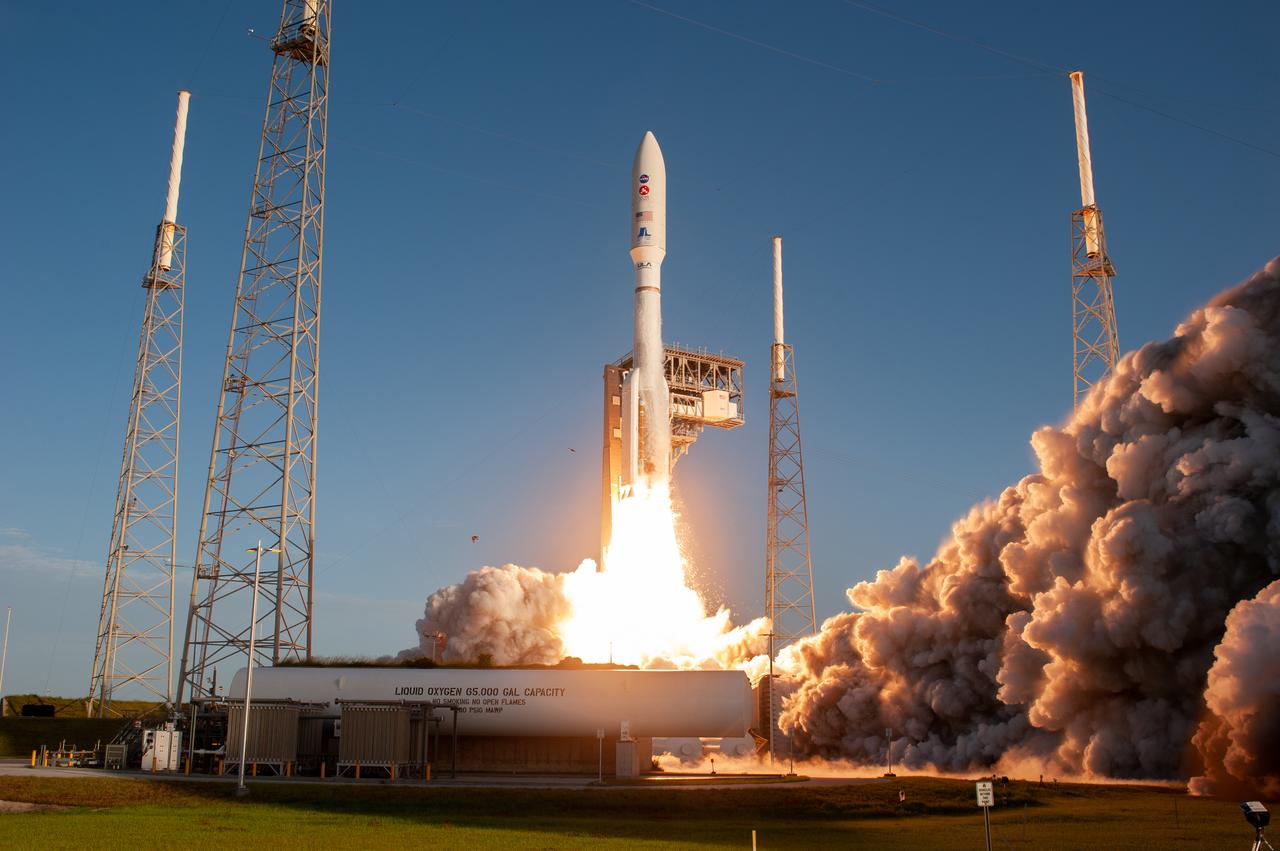
With blue sky as a backdrop, a United Launch Alliance Atlas V 541 rocket lifts off from Space Launch Complex 41 at Cape Canaveral Air Force Station in Florida on July 30, 2020, at 7:50 a.m. EDT, carrying NASA’s Mars Perseverance rover and Ingenuity helicopter. The rover is part of NASA’s Mars Exploration Program, a long-term effort of robotic exploration of the Red Planet. The rover’s seven instruments will search for habitable conditions in the ancient past and signs of past microbial life on Mars. The Launch Services Program at Kennedy is responsible for launch management.
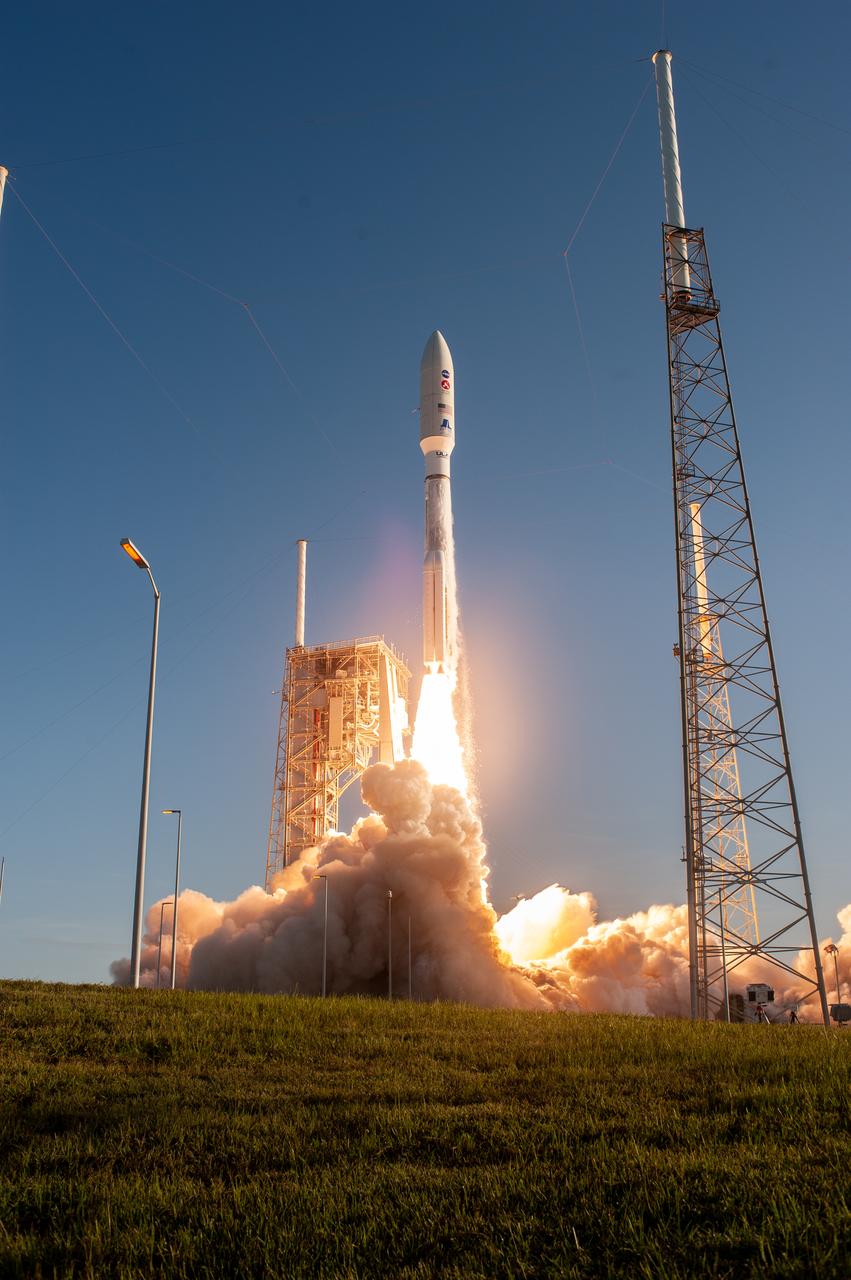
A United Launch Alliance Atlas V 541 rocket lifts off from Space Launch Complex 41 at Cape Canaveral Air Force Station in Florida on July 30, 2020, at 7:50 a.m. EDT, carrying NASA’s Mars Perseverance rover and Ingenuity helicopter. The rover is part of NASA’s Mars Exploration Program, a long-term effort of robotic exploration of the Red Planet. The rover’s seven instruments will search for habitable conditions in the ancient past and signs of past microbial life on Mars. The Launch Services Program at Kennedy is responsible for launch management.

A United Launch Alliance Atlas V 541 rocket soars upward after lifting off from Space Launch Complex 41 at Cape Canaveral Air Force Station in Florida on July 30, 2020, at 7:50 a.m. EDT, carrying NASA’s Mars Perseverance rover and Ingenuity helicopter. The rover is part of NASA’s Mars Exploration Program, a long-term effort of robotic exploration of the Red Planet. The rover’s seven instruments will search for habitable conditions in the ancient past and signs of past microbial life on Mars. The Launch Services Program at Kennedy is responsible for launch management.
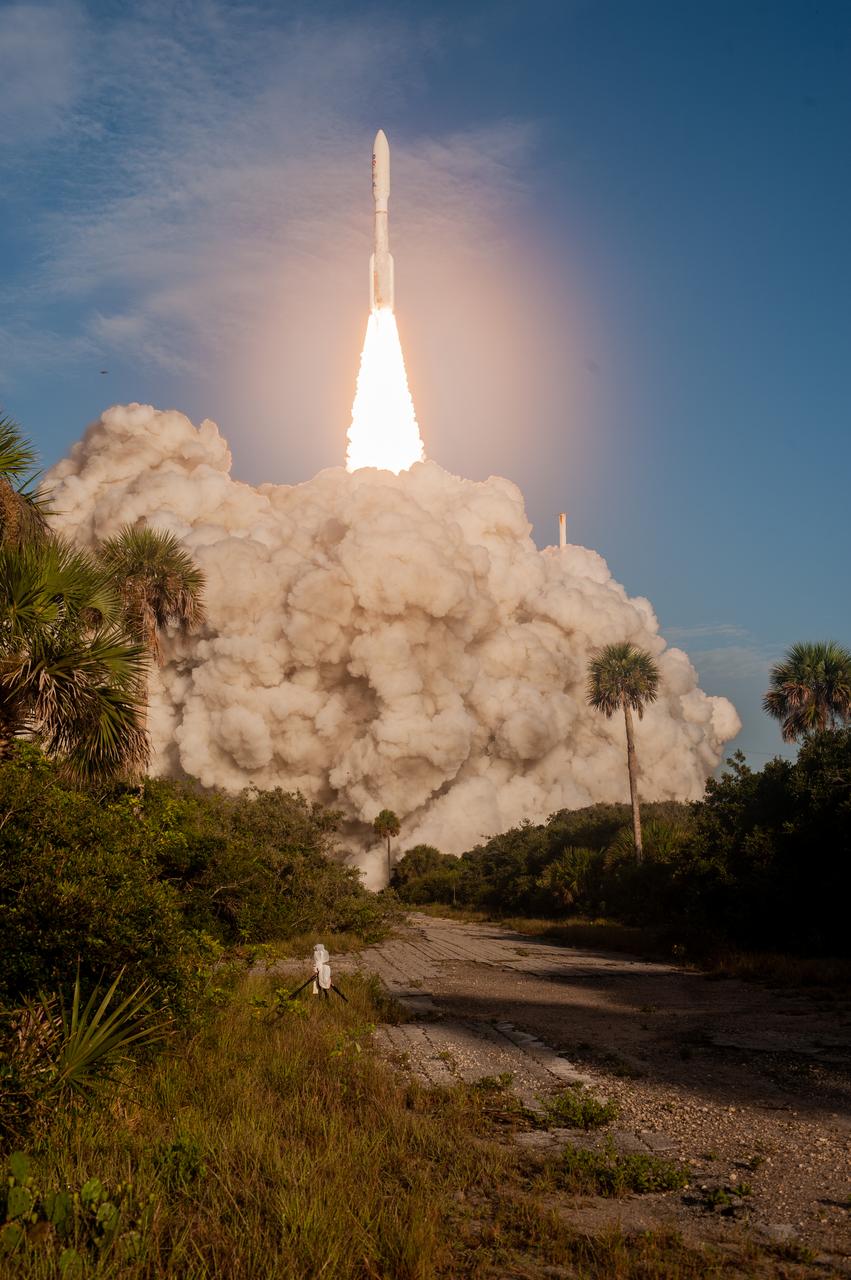
A United Launch Alliance Atlas V 541 rocket lifts off from Space Launch Complex 41 at Cape Canaveral Air Force Station in Florida on July 30, 2020, at 7:50 a.m. EDT, carrying NASA’s Mars Perseverance rover and Ingenuity helicopter. The rover is part of NASA’s Mars Exploration Program, a long-term effort of robotic exploration of the Red Planet. The rover’s seven instruments will search for habitable conditions in the ancient past and signs of past microbial life on Mars. The Launch Services Program at Kennedy is responsible for launch management.
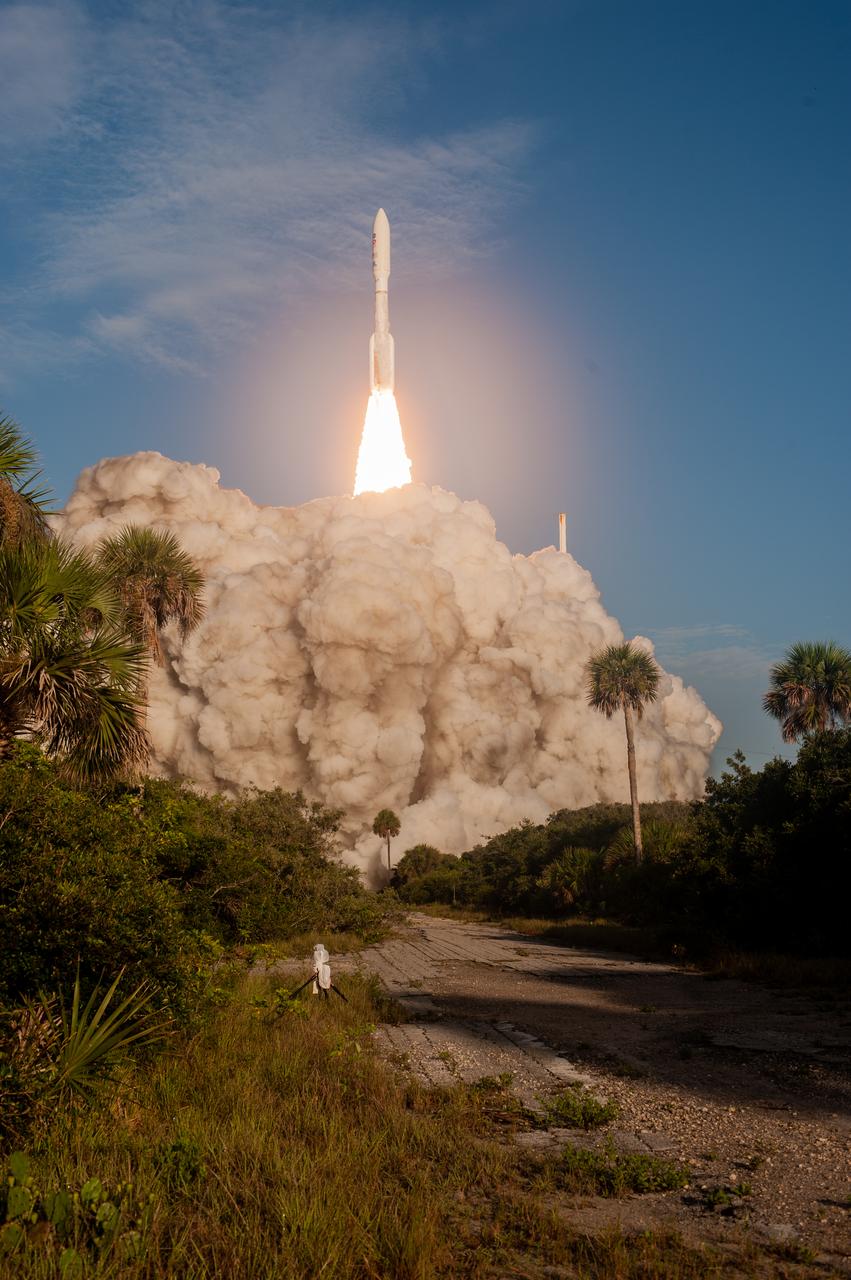
A United Launch Alliance Atlas V 541 rocket lifts off from Space Launch Complex 41 at Cape Canaveral Air Force Station in Florida on July 30, 2020, at 7:50 a.m. EDT, carrying NASA’s Mars Perseverance rover and Ingenuity helicopter. The rover is part of NASA’s Mars Exploration Program, a long-term effort of robotic exploration of the Red Planet. The rover’s seven instruments will search for habitable conditions in the ancient past and signs of past microbial life on Mars. The Launch Services Program at Kennedy is responsible for launch management.
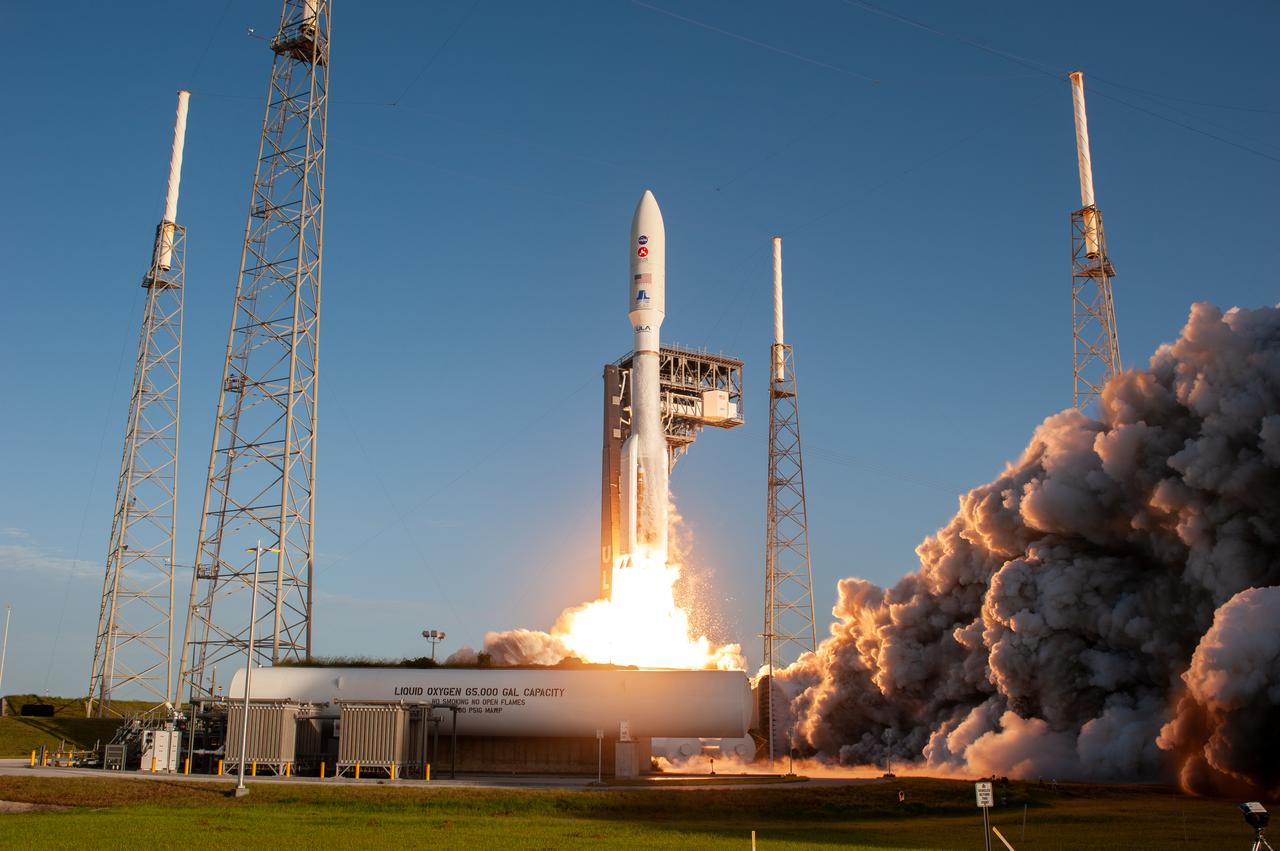
With blue sky as a backdrop, a United Launch Alliance Atlas V 541 rocket lifts off from Space Launch Complex 41 at Cape Canaveral Air Force Station in Florida on July 30, 2020, at 7:50 a.m. EDT, carrying NASA’s Mars Perseverance rover and Ingenuity helicopter. The rover is part of NASA’s Mars Exploration Program, a long-term effort of robotic exploration of the Red Planet. The rover’s seven instruments will search for habitable conditions in the ancient past and signs of past microbial life on Mars. The Launch Services Program at Kennedy is responsible for launch management.

A United Launch Alliance Atlas V 541 rocket climbs upward after lifting off from Space Launch Complex 41 at Cape Canaveral Air Force Station in Florida on July 30, 2020, at 7:50 a.m. EDT, carrying NASA’s Mars Perseverance rover and Ingenuity helicopter. The rover is part of NASA’s Mars Exploration Program, a long-term effort of robotic exploration of the Red Planet. The rover’s seven instruments will search for habitable conditions in the ancient past and signs of past microbial life on Mars. The Launch Services Program at Kennedy is responsible for launch management.
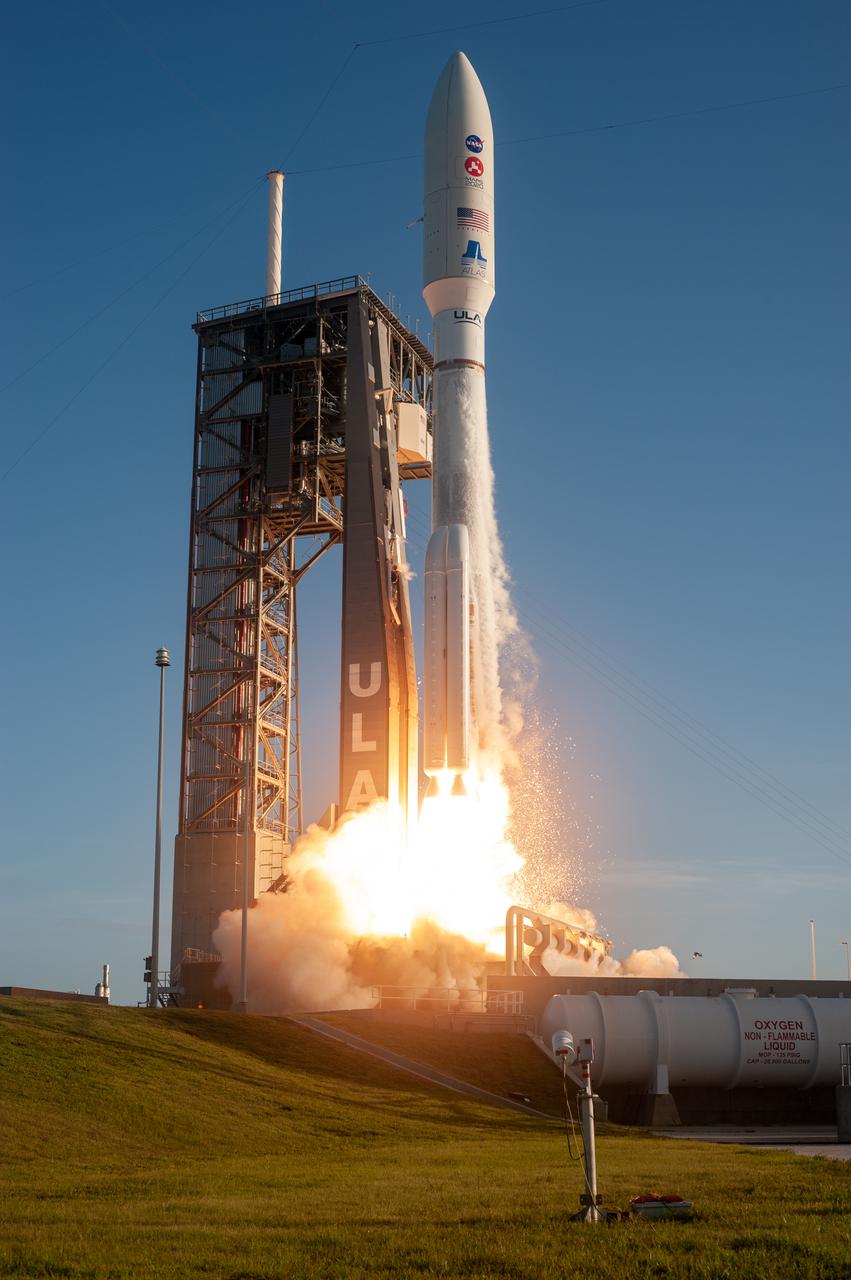
A United Launch Alliance Atlas V 541 rocket lifts off from Space Launch Complex 41 at Cape Canaveral Air Force Station in Florida on July 30, 2020, at 7:50 a.m. EDT, carrying NASA’s Mars Perseverance rover and Ingenuity helicopter. The rover is part of NASA’s Mars Exploration Program, a long-term effort of robotic exploration of the Red Planet. The rover’s seven instruments will search for habitable conditions in the ancient past and signs of past microbial life on Mars. The Launch Services Program at Kennedy is responsible for launch management.
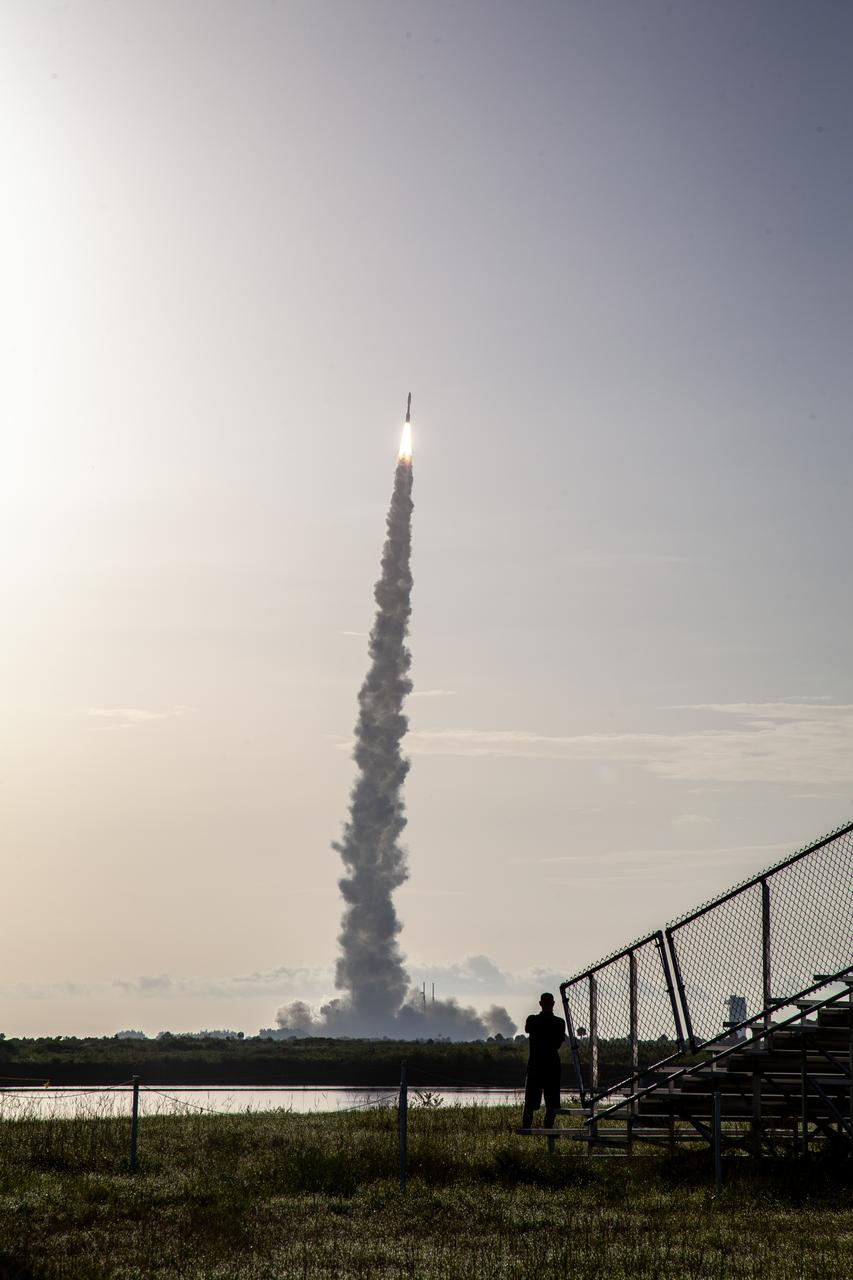
A United Launch Alliance Atlas V 541 rocket climbs upward after lifting off from Space Launch Complex 41 at Cape Canaveral Air Force Station in Florida on July 30, 2020, at 7:50 a.m. EDT, carrying NASA’s Mars Perseverance rover and Ingenuity helicopter. The rover is part of NASA’s Mars Exploration Program, a long-term effort of robotic exploration of the Red Planet. The rover’s seven instruments will search for habitable conditions in the ancient past and signs of past microbial life on Mars. The Launch Services Program at Kennedy is responsible for launch management.
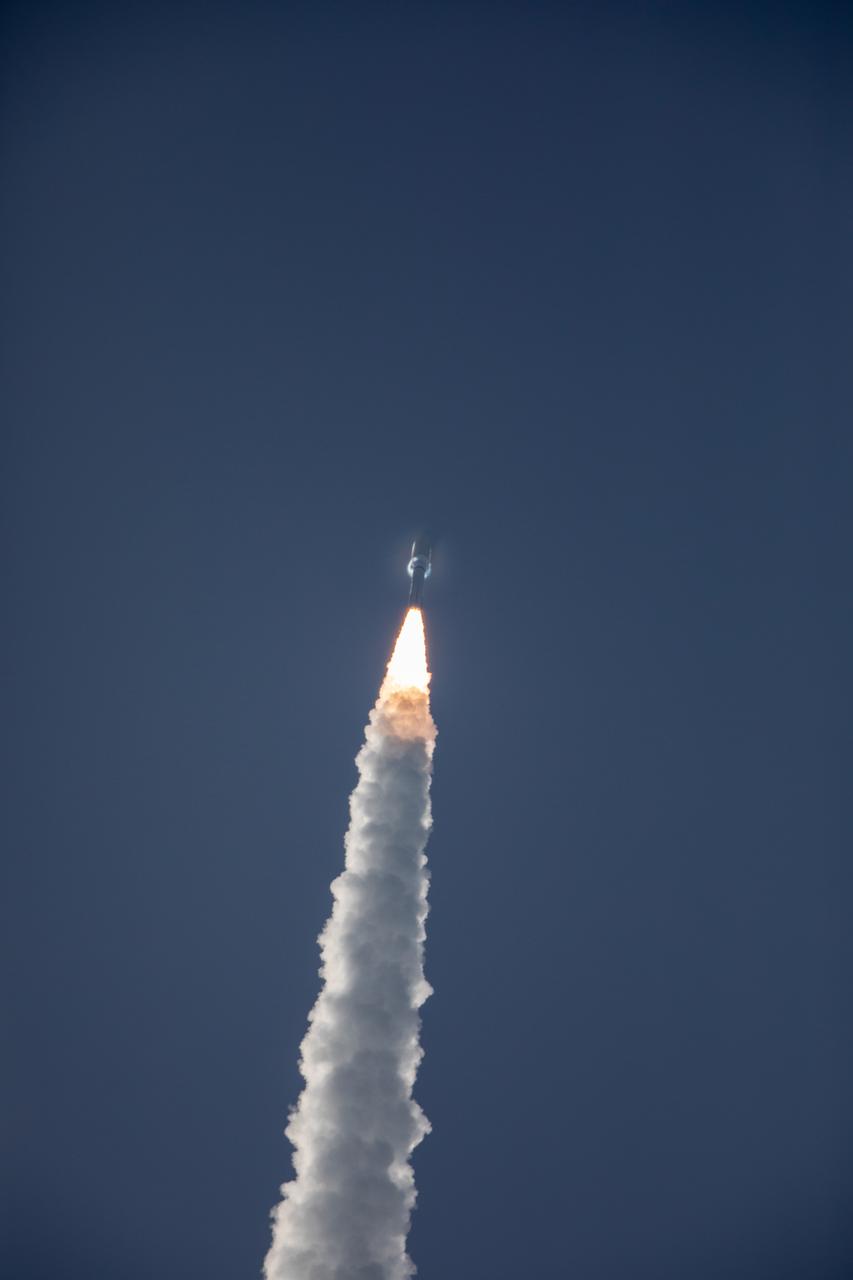
A United Launch Alliance Atlas V 541 rocket soars upward after lifting off from Space Launch Complex 41 at Cape Canaveral Air Force Station in Florida on July 30, 2020, at 7:50 a.m. EDT, carrying NASA’s Mars Perseverance rover and Ingenuity helicopter. The rover is part of NASA’s Mars Exploration Program, a long-term effort of robotic exploration of the Red Planet. The rover’s seven instruments will search for habitable conditions in the ancient past and signs of past microbial life on Mars. The Launch Services Program at Kennedy is responsible for launch management.
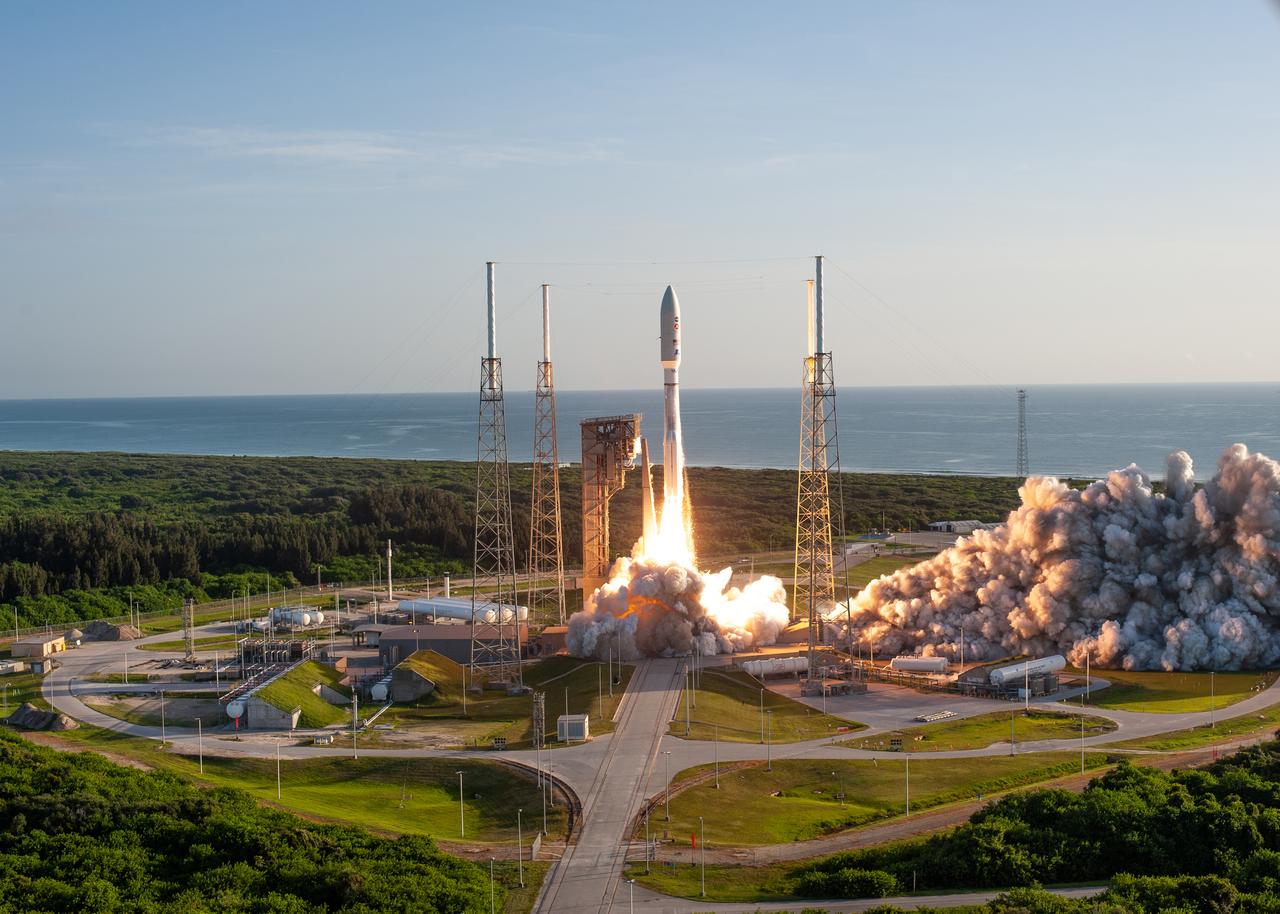
A United Launch Alliance Atlas V 541 rocket lifts off from Space Launch Complex 41 at Cape Canaveral Air Force Station in Florida on July 30, 2020, at 7:50 a.m. EDT, carrying NASA’s Mars Perseverance rover and Ingenuity helicopter. The rover is part of NASA’s Mars Exploration Program, a long-term effort of robotic exploration of the Red Planet. The rover’s seven instruments will search for habitable conditions in the ancient past and signs of past microbial life on Mars. The Launch Services Program at Kennedy is responsible for launch management.
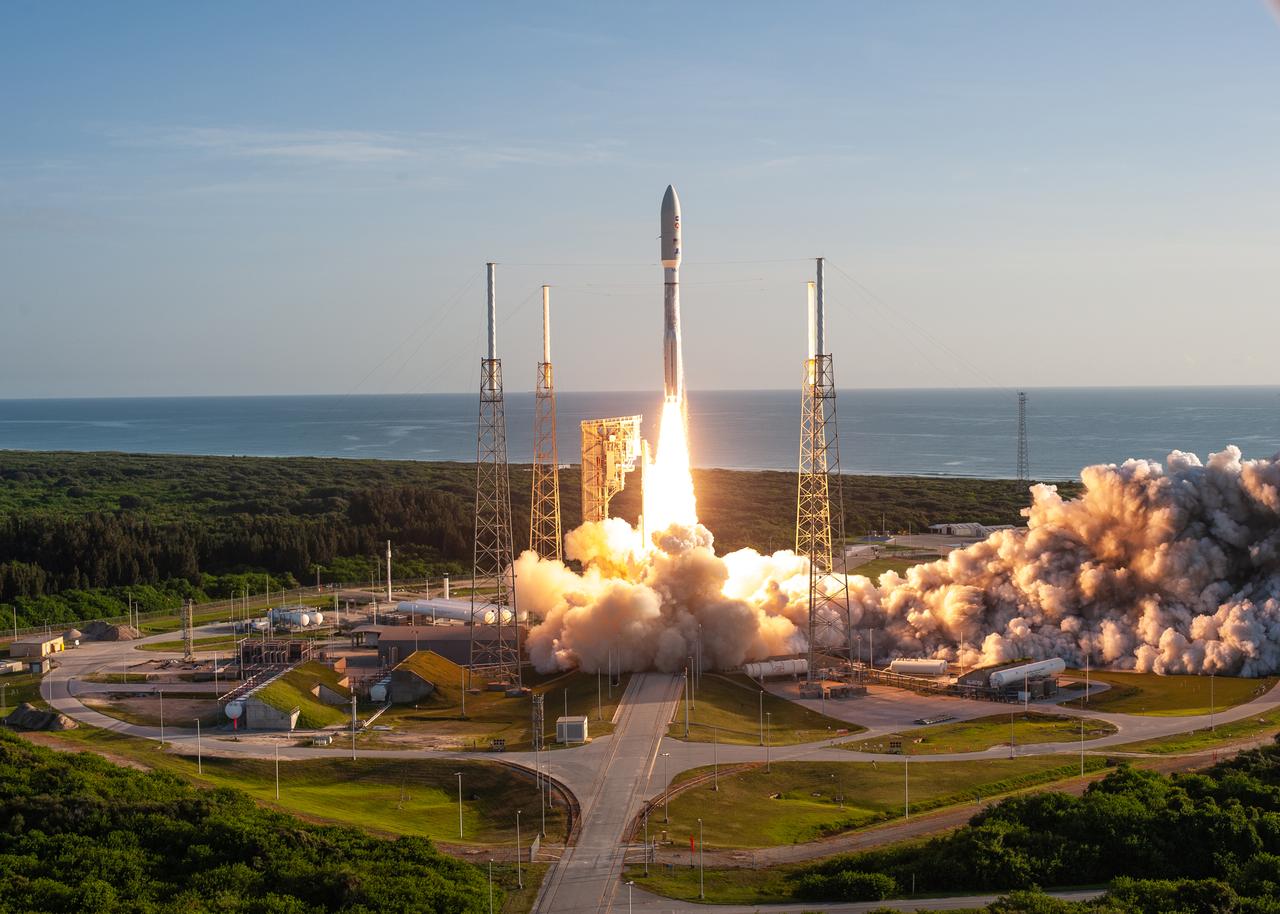
A United Launch Alliance Atlas V 541 rocket lifts off from Space Launch Complex 41 at Cape Canaveral Air Force Station in Florida on July 30, 2020, at 7:50 a.m. EDT, carrying NASA’s Mars Perseverance rover and Ingenuity helicopter. The rover is part of NASA’s Mars Exploration Program, a long-term effort of robotic exploration of the Red Planet. The rover’s seven instruments will search for habitable conditions in the ancient past and signs of past microbial life on Mars. The Launch Services Program at Kennedy is responsible for launch management.
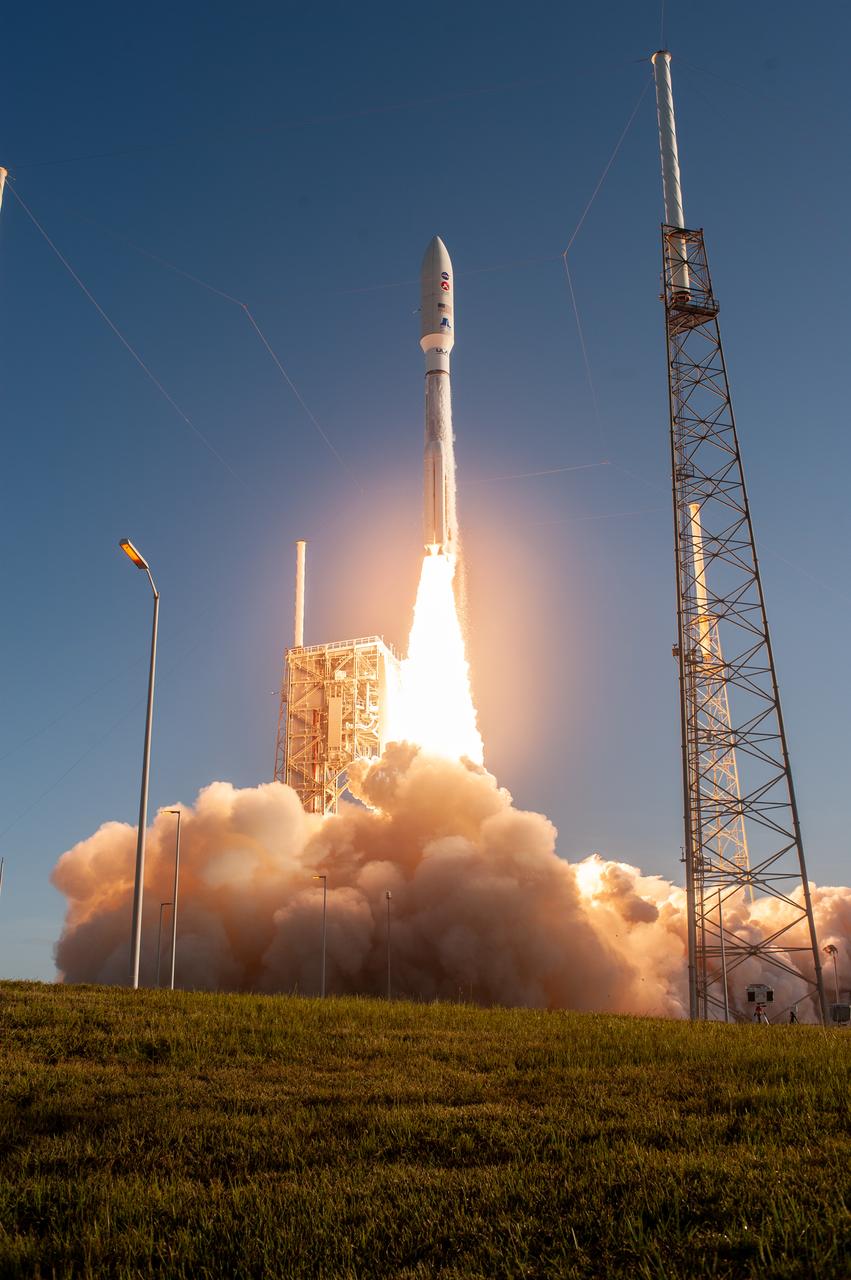
A United Launch Alliance Atlas V 541 rocket lifts off from Space Launch Complex 41 at Cape Canaveral Air Force Station in Florida on July 30, 2020, at 7:50 a.m. EDT, carrying NASA’s Mars Perseverance rover and Ingenuity helicopter. The rover is part of NASA’s Mars Exploration Program, a long-term effort of robotic exploration of the Red Planet. The rover’s seven instruments will search for habitable conditions in the ancient past and signs of past microbial life on Mars. The Launch Services Program at Kennedy is responsible for launch management.
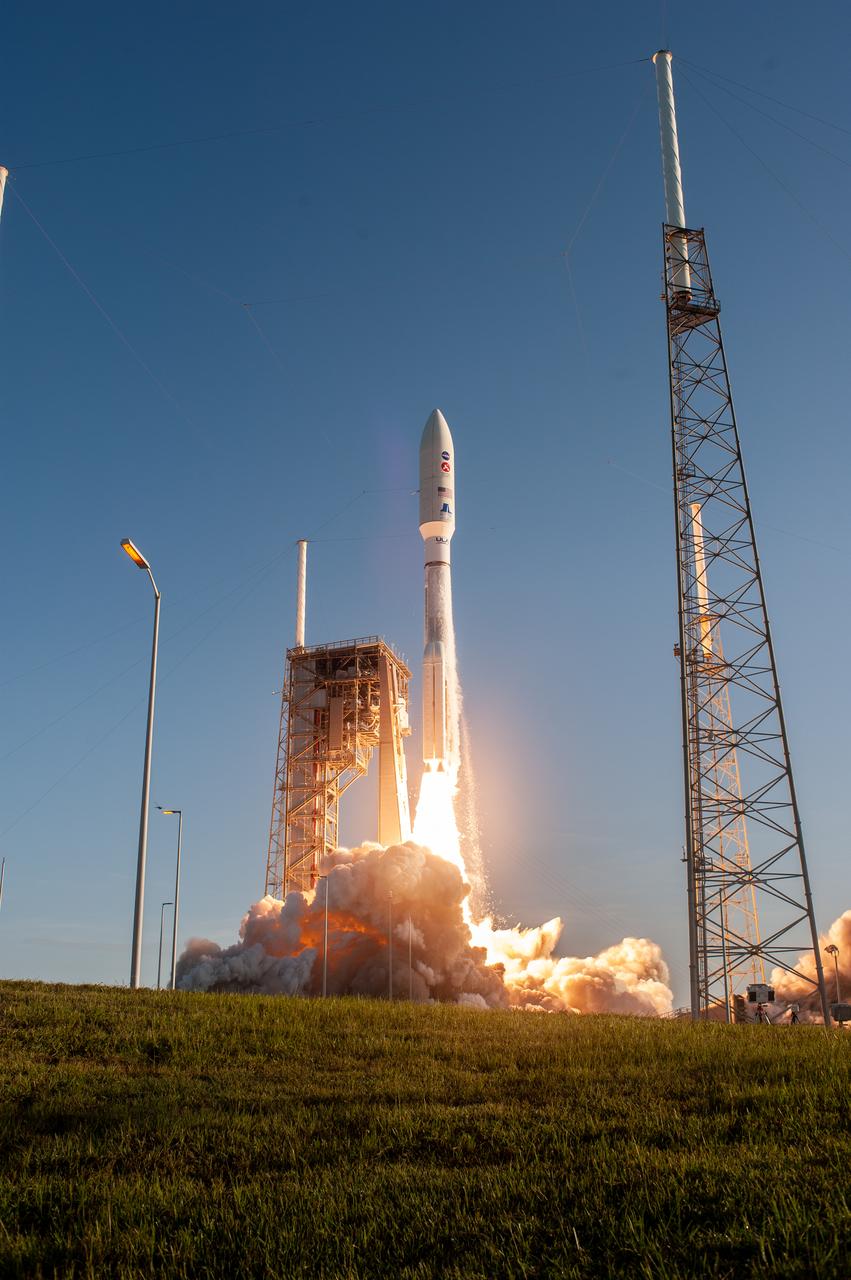
A United Launch Alliance Atlas V 541 rocket lifts off from Space Launch Complex 41 at Cape Canaveral Air Force Station in Florida on July 30, 2020, at 7:50 a.m. EDT, carrying NASA’s Mars Perseverance rover and Ingenuity helicopter. The rover is part of NASA’s Mars Exploration Program, a long-term effort of robotic exploration of the Red Planet. The rover’s seven instruments will search for habitable conditions in the ancient past and signs of past microbial life on Mars. The Launch Services Program at Kennedy is responsible for launch management.
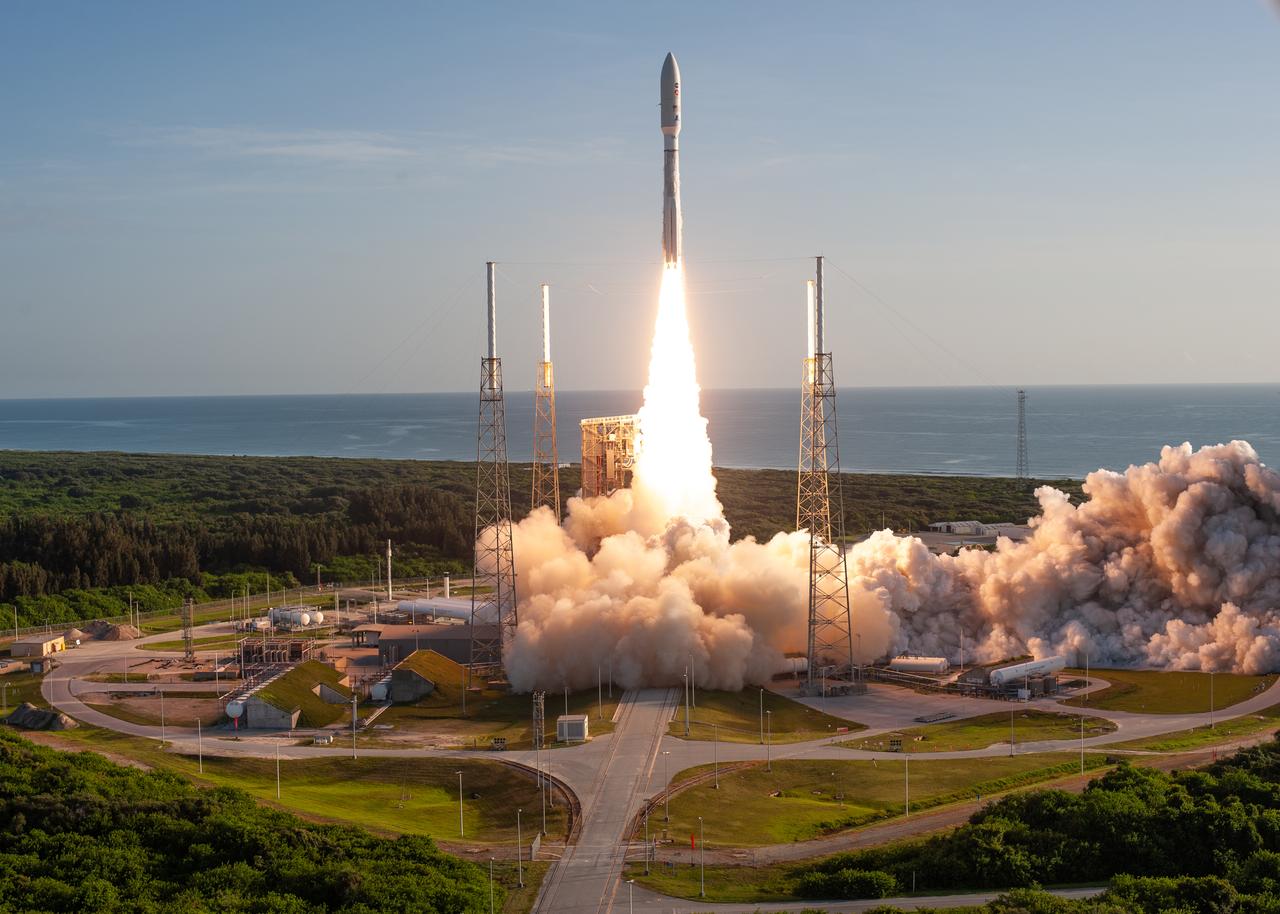
A United Launch Alliance Atlas V 541 rocket lifts off from Space Launch Complex 41 at Cape Canaveral Air Force Station in Florida on July 30, 2020, at 7:50 a.m. EDT, carrying NASA’s Mars Perseverance rover and Ingenuity helicopter. The rover is part of NASA’s Mars Exploration Program, a long-term effort of robotic exploration of the Red Planet. The rover’s seven instruments will search for habitable conditions in the ancient past and signs of past microbial life on Mars. The Launch Services Program at Kennedy is responsible for launch management.

The Sun rises on the Space Coast as NASA’s Kennedy Space Center in Florida prepares for the launch of a United Launch Alliance Atlas V rocket, carrying the agency’s Mars Perseverance rover and Ingenuity helicopter, on July 30, 2020. Liftoff is targeted for 7:50 a.m. EDT. The Perseverance rover is part of NASA’s Mars Exploration Program, a long-term effort of robotic exploration of the Red Planet. The rover’s seven instruments will search for habitable conditions in the ancient past and signs of past microbial life on Mars. The Launch Services Program at Kennedy is responsible for launch management.
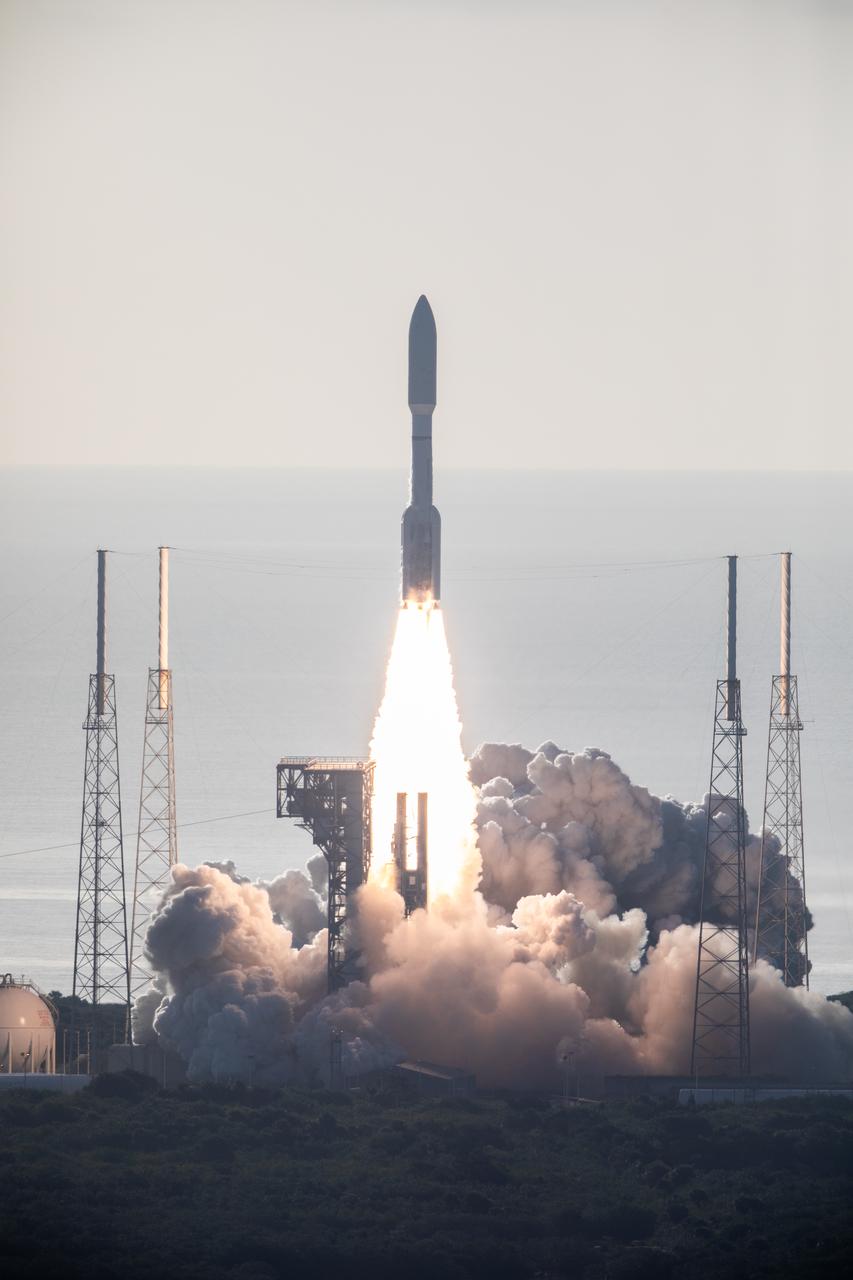
A United Launch Alliance Atlas V 541 rocket lifts off from Space Launch Complex 41 at Cape Canaveral Air Force Station in Florida on July 30, 2020, at 7:50 a.m. EDT, carrying NASA’s Mars Perseverance rover and Ingenuity helicopter. The rover is part of NASA’s Mars Exploration Program, a long-term effort of robotic exploration of the Red Planet. The rover’s seven instruments will search for habitable conditions in the ancient past and signs of past microbial life on Mars. The Launch Services Program at Kennedy is responsible for launch management.
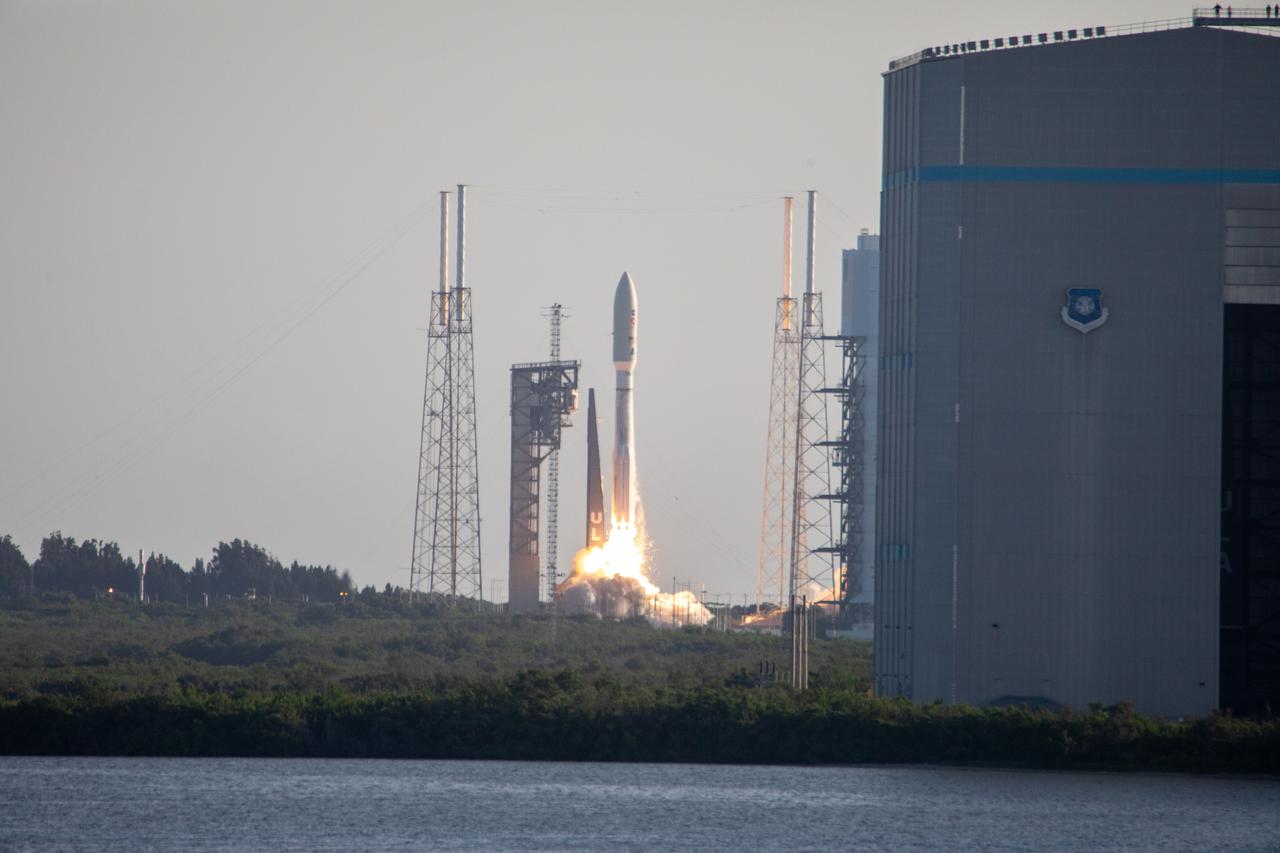
A view from the Atlas Space Operations Center of the launch of the United Launch Alliance Atlas V 541 rocket from Space Launch Complex 41 at Cape Canaveral Air Force Station in Florida on July 30, 2020. The Atlas V carried NASA’s Mars Perseverance rover and Ingenuity helicopter for its mission to Mars. Liftoff was at 7:50 a.m. EDT. The Perseverance rover is part of NASA’s Mars Exploration Program, a long-term effort of robotic exploration of the Red Planet. The rover’s seven instruments will search for habitable conditions in the ancient past and signs of past microbial life on Mars. The Launch Services Program at Kennedy is responsible for launch management.

A United Launch Alliance Atlas V 541 rocket climbs upward after lifting off from Space Launch Complex 41 at Cape Canaveral Air Force Station in Florida on July 30, 2020, at 7:50 a.m. EDT, carrying NASA’s Mars Perseverance rover and Ingenuity helicopter. The rover is part of NASA’s Mars Exploration Program, a long-term effort of robotic exploration of the Red Planet. The rover’s seven instruments will search for habitable conditions in the ancient past and signs of past microbial life on Mars. The Launch Services Program at Kennedy is responsible for launch management.
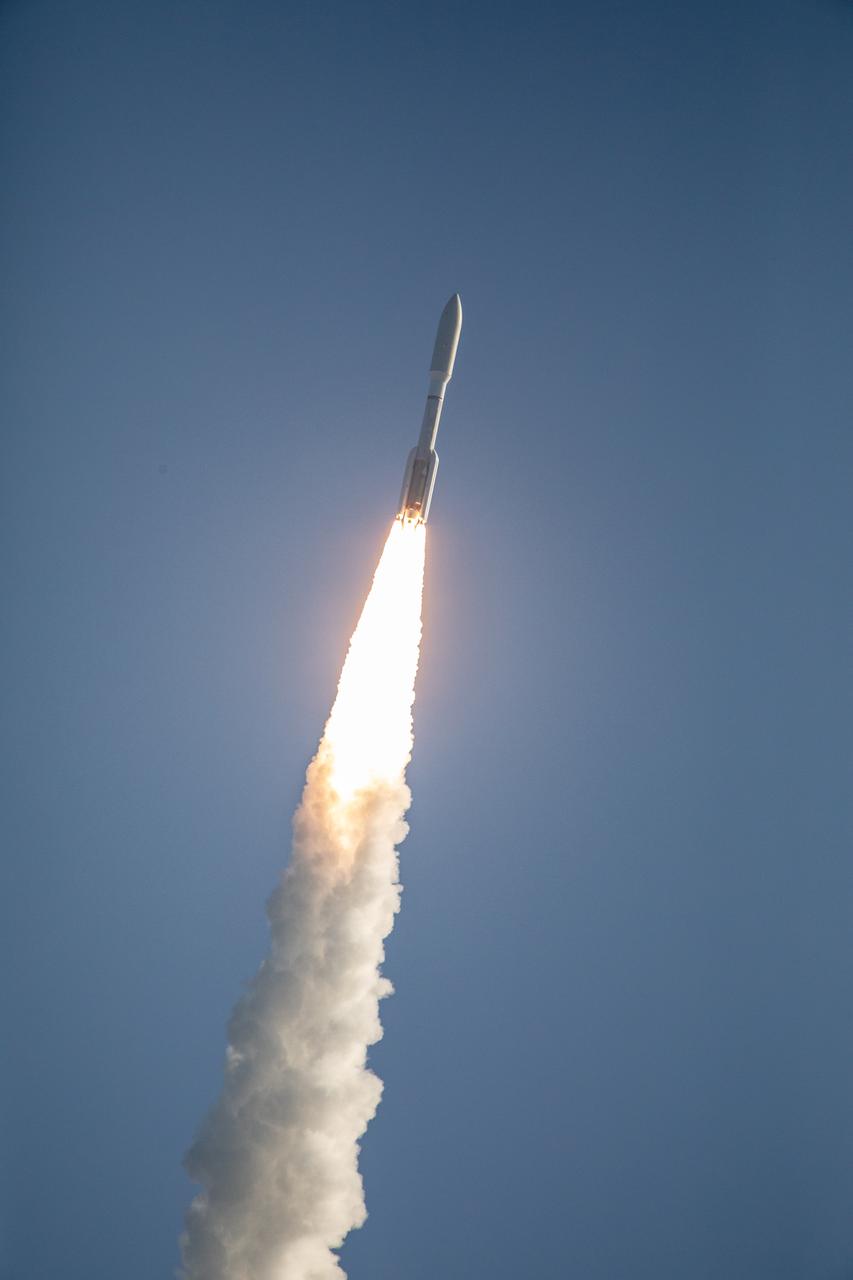
A United Launch Alliance Atlas V 541 rocket soars upward after lifting off from Space Launch Complex 41 at Cape Canaveral Air Force Station in Florida on July 30, 2020, at 7:50 a.m. EDT, carrying NASA’s Mars Perseverance rover and Ingenuity helicopter. The rover is part of NASA’s Mars Exploration Program, a long-term effort of robotic exploration of the Red Planet. The rover’s seven instruments will search for habitable conditions in the ancient past and signs of past microbial life on Mars. The Launch Services Program at Kennedy is responsible for launch management.
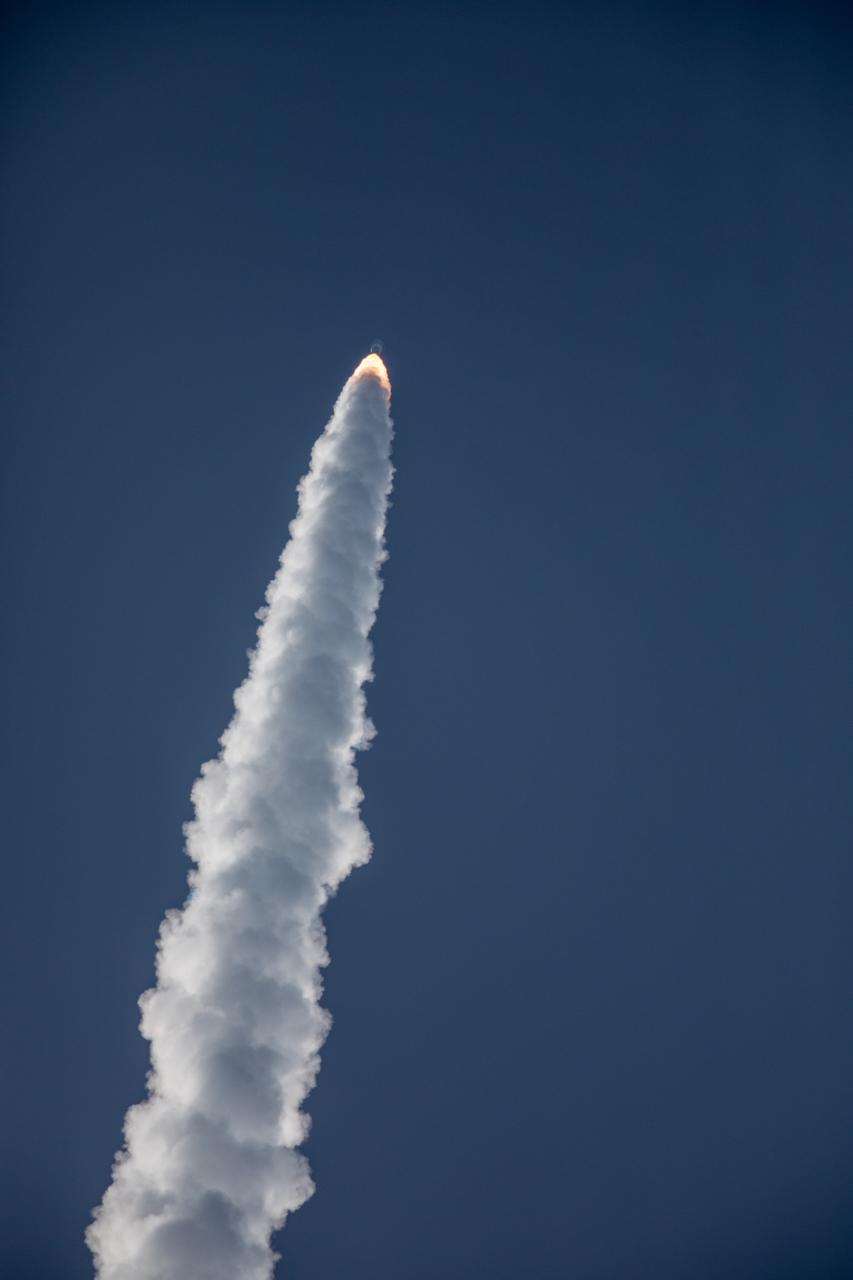
A United Launch Alliance Atlas V 541 rocket soars upward after lifting off from Space Launch Complex 41 at Cape Canaveral Air Force Station in Florida on July 30, 2020, at 7:50 a.m. EDT, carrying NASA’s Mars Perseverance rover and Ingenuity helicopter. The rover is part of NASA’s Mars Exploration Program, a long-term effort of robotic exploration of the Red Planet. The rover’s seven instruments will search for habitable conditions in the ancient past and signs of past microbial life on Mars. The Launch Services Program at Kennedy is responsible for launch management.
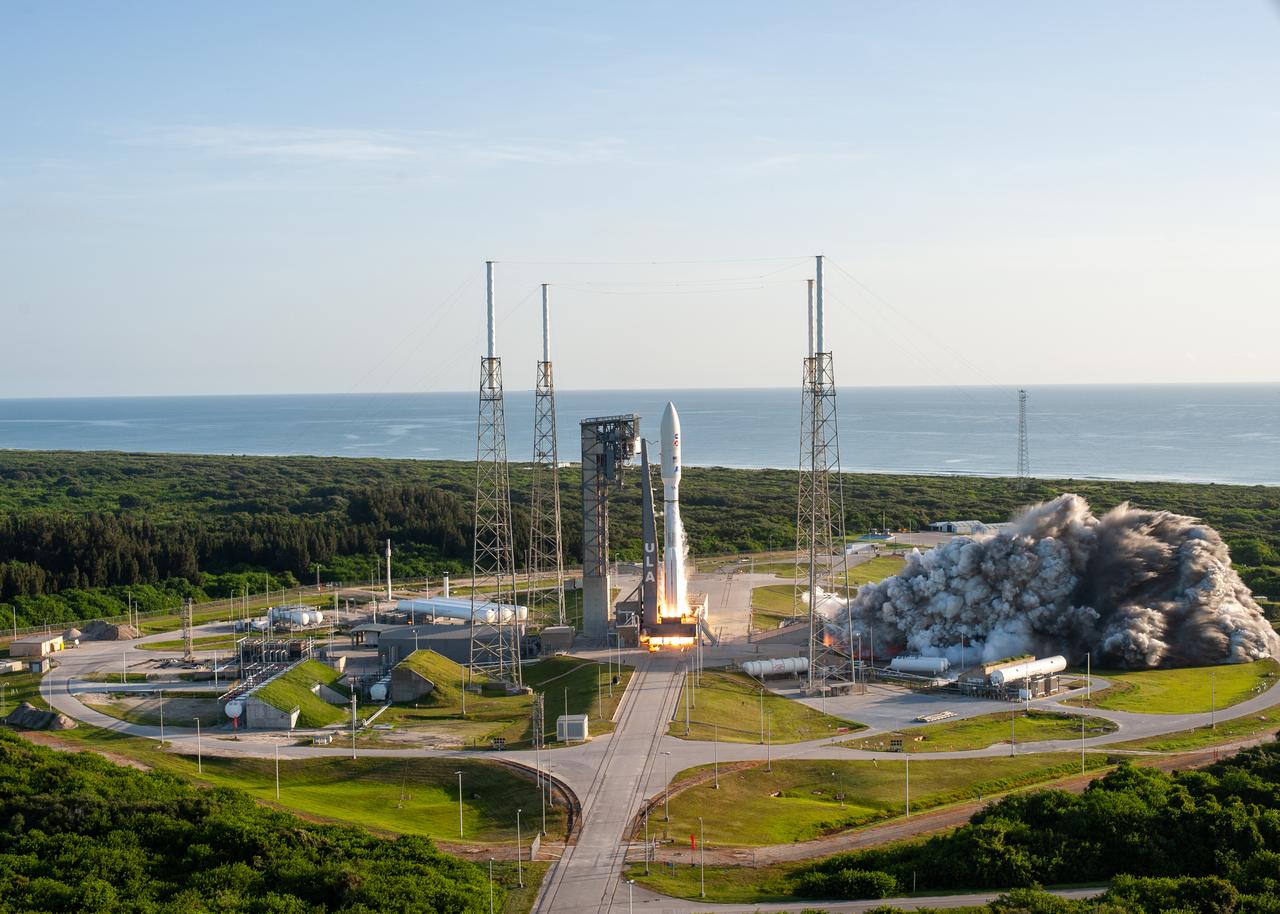
A United Launch Alliance Atlas V 541 rocket lifts off from Space Launch Complex 41 at Cape Canaveral Air Force Station in Florida on July 30, 2020, at 7:50 a.m. EDT, carrying NASA’s Mars Perseverance rover and Ingenuity helicopter. The rover is part of NASA’s Mars Exploration Program, a long-term effort of robotic exploration of the Red Planet. The rover’s seven instruments will search for habitable conditions in the ancient past and signs of past microbial life on Mars. The Launch Services Program at Kennedy is responsible for launch management.
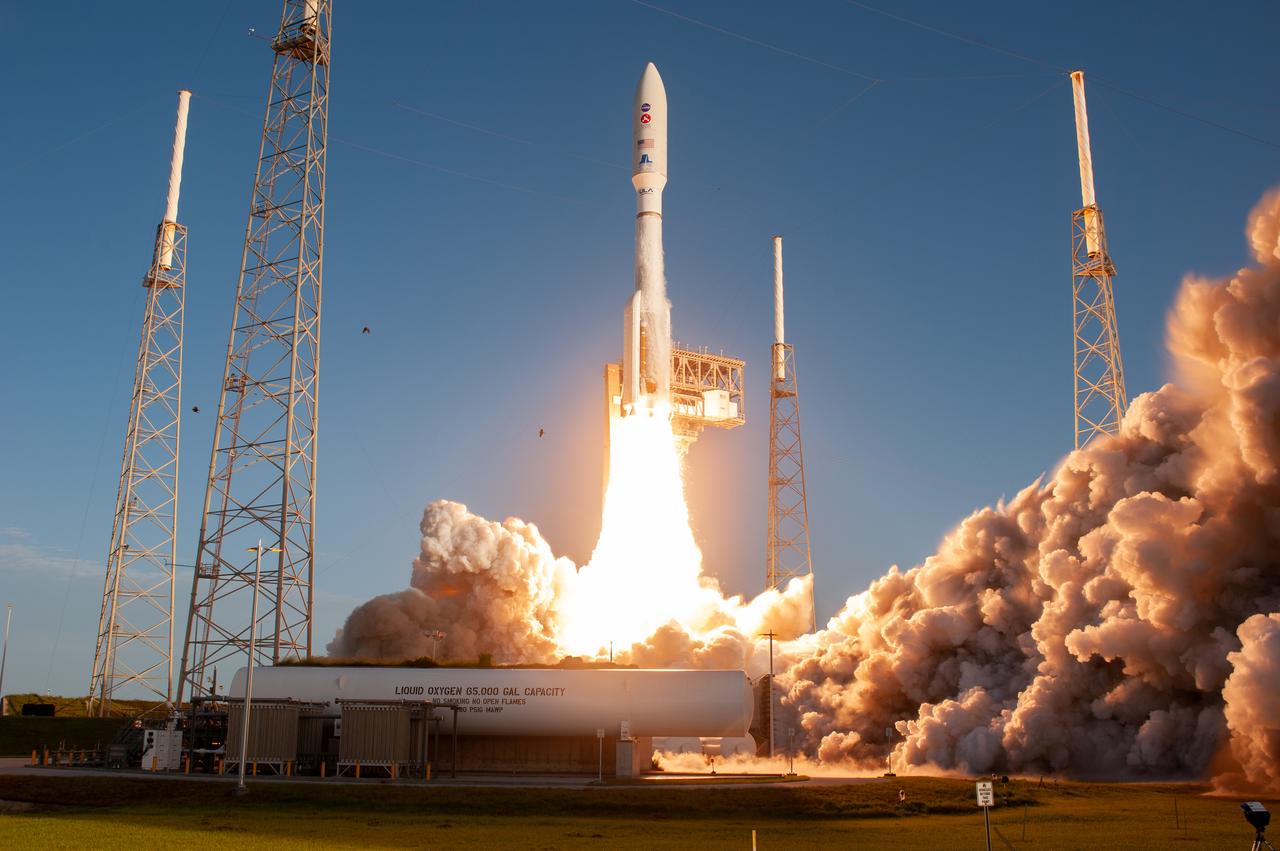
With blue sky as a backdrop, a United Launch Alliance Atlas V 541 rocket lifts off from Space Launch Complex 41 at Cape Canaveral Air Force Station in Florida on July 30, 2020, at 7:50 a.m. EDT, carrying NASA’s Mars Perseverance rover and Ingenuity helicopter. The rover is part of NASA’s Mars Exploration Program, a long-term effort of robotic exploration of the Red Planet. The rover’s seven instruments will search for habitable conditions in the ancient past and signs of past microbial life on Mars. The Launch Services Program at Kennedy is responsible for launch management.
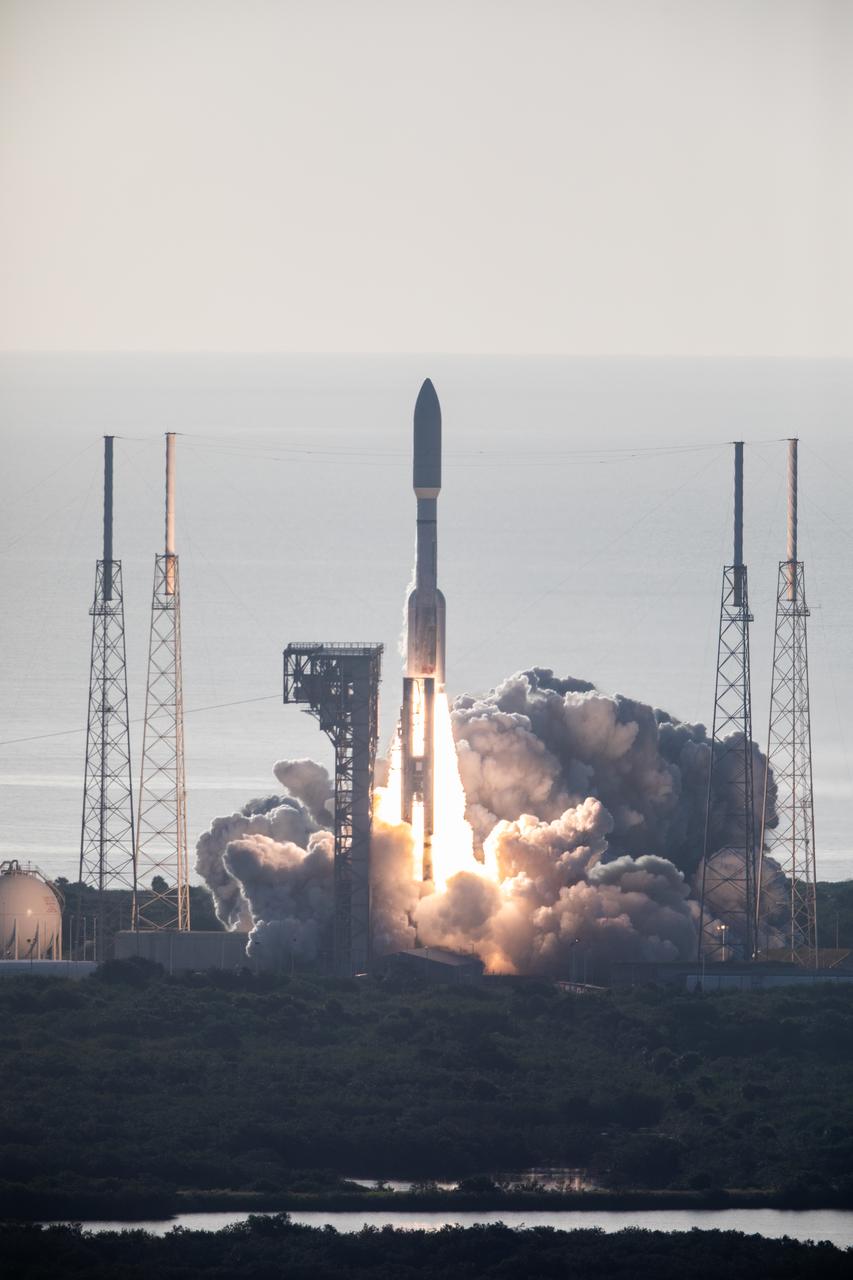
A United Launch Alliance Atlas V 541 rocket lifts off from Space Launch Complex 41 at Cape Canaveral Air Force Station in Florida on July 30, 2020, at 7:50 a.m. EDT, carrying NASA’s Mars Perseverance rover and Ingenuity helicopter. The rover is part of NASA’s Mars Exploration Program, a long-term effort of robotic exploration of the Red Planet. The rover’s seven instruments will search for habitable conditions in the ancient past and signs of past microbial life on Mars. The Launch Services Program at Kennedy is responsible for launch management.
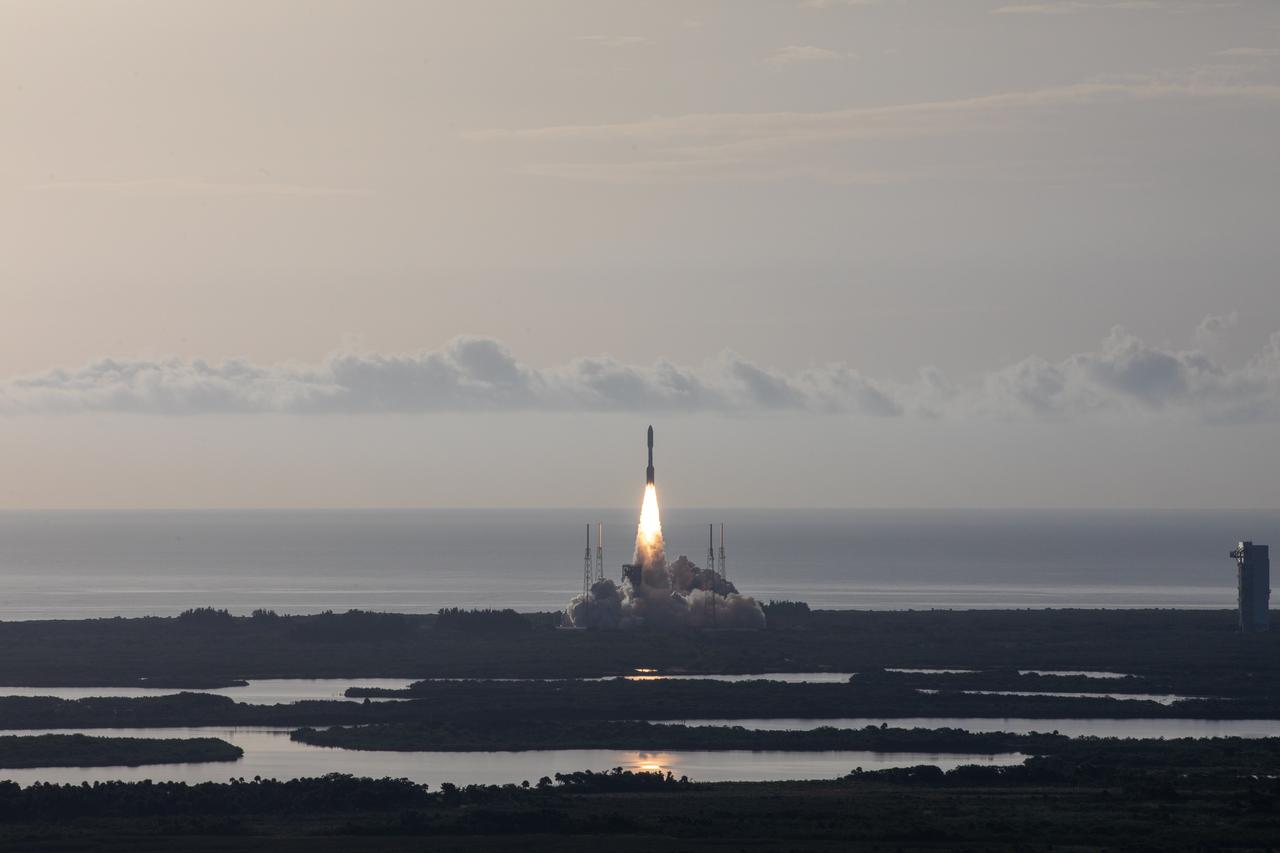
A United Launch Alliance Atlas V 541 rocket lifts off from Space Launch Complex 41 at Cape Canaveral Air Force Station in Florida on July 30, 2020, at 7:50 a.m. EDT, carrying NASA’s Mars Perseverance rover and Ingenuity helicopter. The rover is part of NASA’s Mars Exploration Program, a long-term effort of robotic exploration of the Red Planet. The rover’s seven instruments will search for habitable conditions in the ancient past and signs of past microbial life on Mars. The Launch Services Program at Kennedy is responsible for launch management.

A United Launch Alliance Atlas V 541 rocket lifts off from Space Launch Complex 41 at Cape Canaveral Air Force Station in Florida on July 30, 2020, at 7:50 a.m. EDT, carrying NASA’s Mars Perseverance rover and Ingenuity helicopter. The rover is part of NASA’s Mars Exploration Program, a long-term effort of robotic exploration of the Red Planet. The rover’s seven instruments will search for habitable conditions in the ancient past and signs of past microbial life on Mars. The Launch Services Program at Kennedy is responsible for launch management.
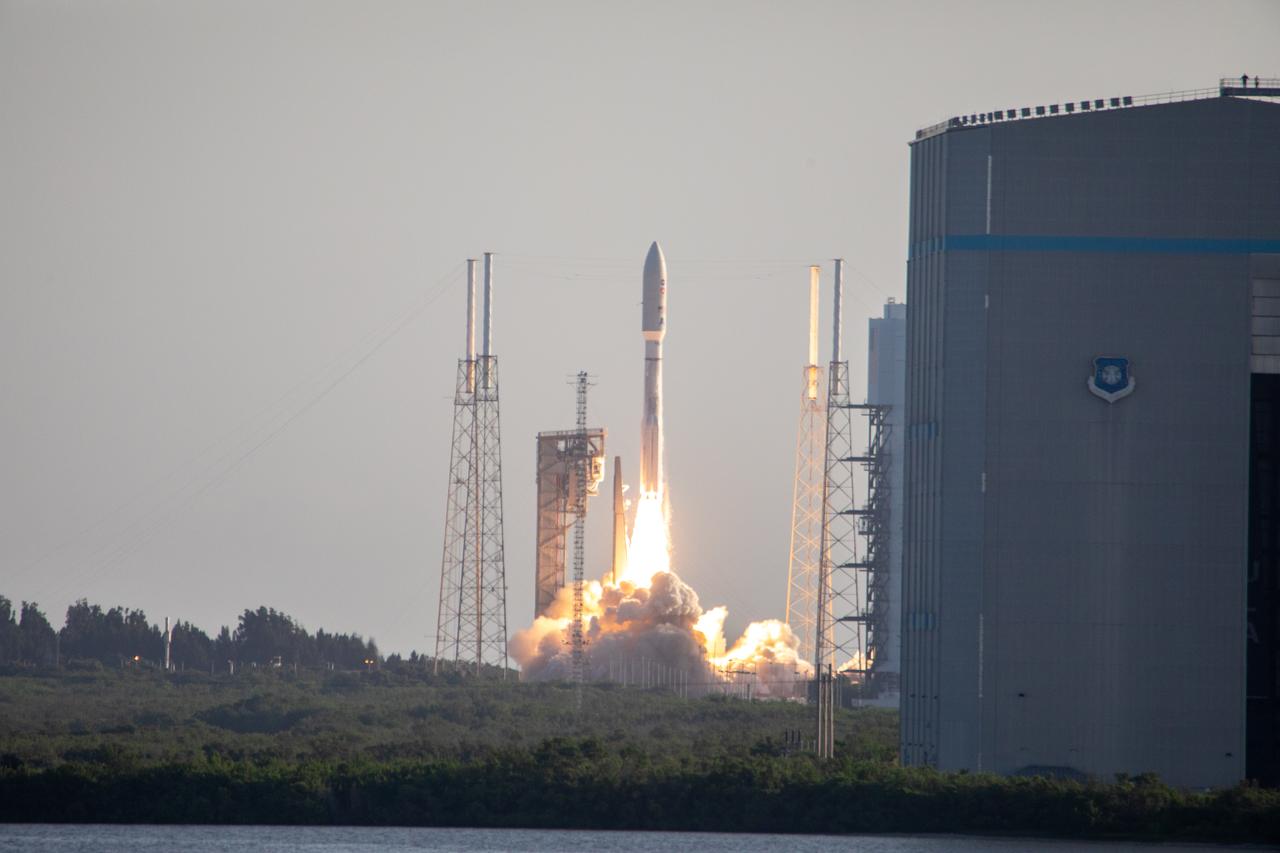
A view from the Atlas Space Operations Center of the launch of the United Launch Alliance Atlas V 541 rocket from Space Launch Complex 41 at Cape Canaveral Air Force Station in Florida on July 30, 2020. The Atlas V carried NASA’s Mars Perseverance rover and Ingenuity helicopter for its mission to Mars. Liftoff was at 7:50 a.m. EDT. The Perseverance rover is part of NASA’s Mars Exploration Program, a long-term effort of robotic exploration of the Red Planet. The rover’s seven instruments will search for habitable conditions in the ancient past and signs of past microbial life on Mars. The Launch Services Program at Kennedy is responsible for launch management.
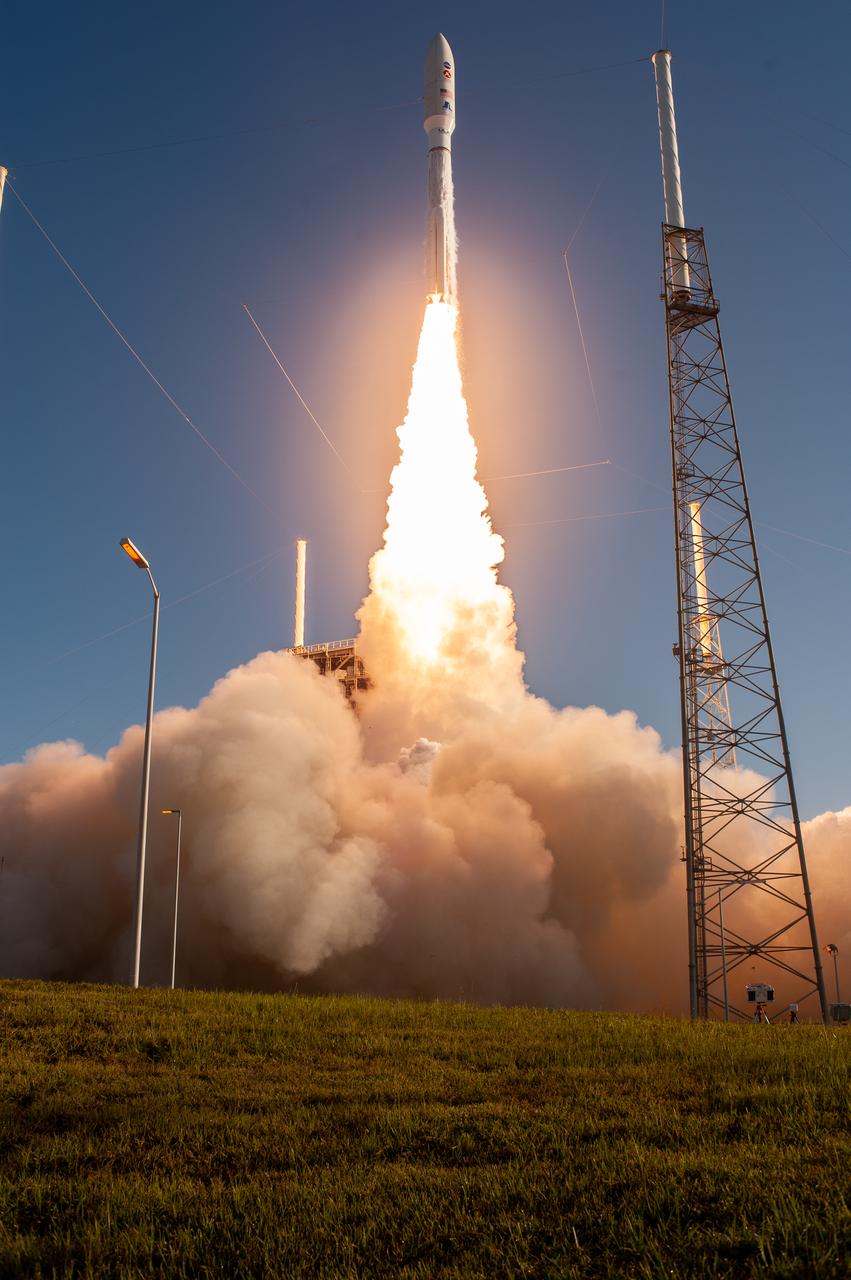
A United Launch Alliance Atlas V 541 rocket climbs upward after lifting off from Space Launch Complex 41 at Cape Canaveral Air Force Station in Florida on July 30, 2020, at 7:50 a.m. EDT, carrying NASA’s Mars Perseverance rover and Ingenuity helicopter. The rover is part of NASA’s Mars Exploration Program, a long-term effort of robotic exploration of the Red Planet. The rover’s seven instruments will search for habitable conditions in the ancient past and signs of past microbial life on Mars. The Launch Services Program at Kennedy is responsible for launch management.
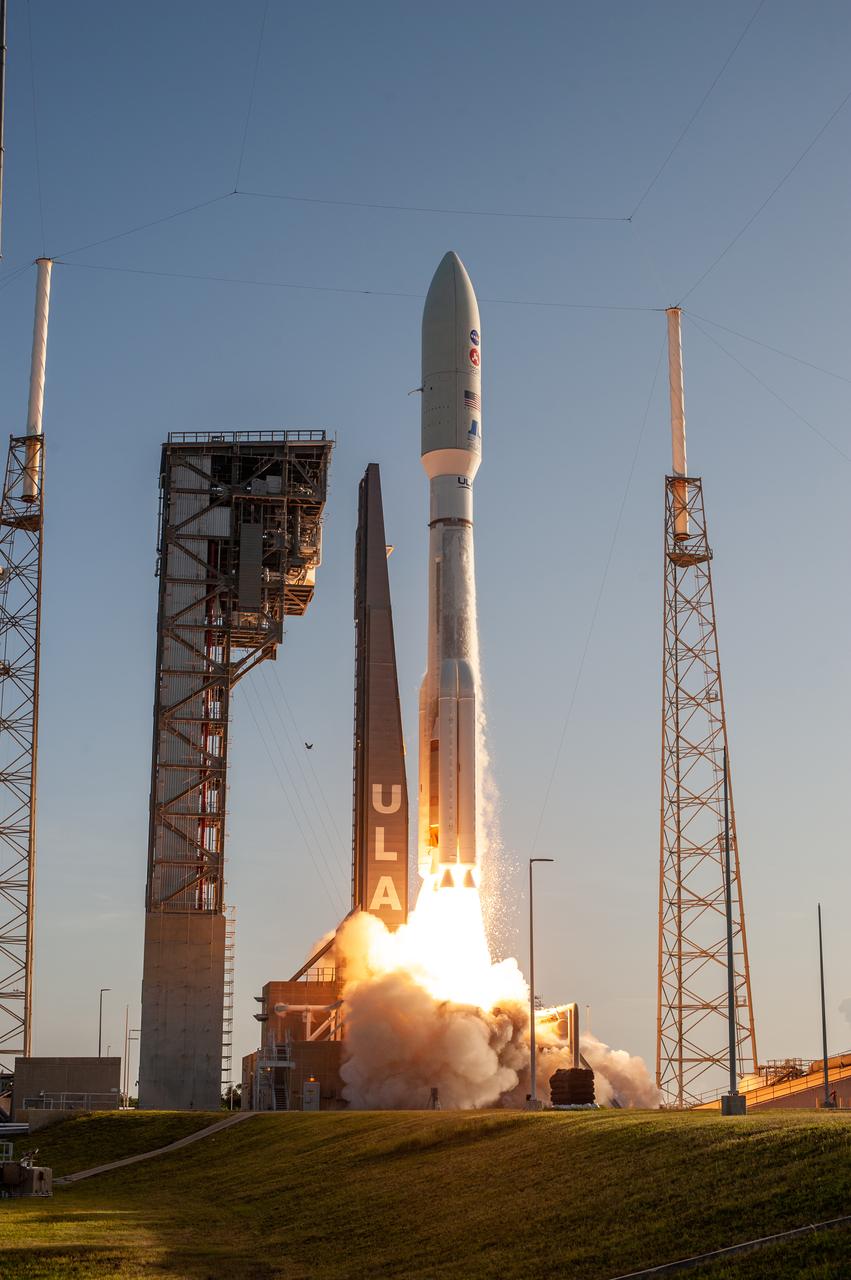
A United Launch Alliance Atlas V 541 rocket lifts off from Space Launch Complex 41 at Cape Canaveral Air Force Station in Florida on July 30, 2020, at 7:50 a.m. EDT, carrying NASA’s Mars Perseverance rover and Ingenuity helicopter. The rover is part of NASA’s Mars Exploration Program, a long-term effort of robotic exploration of the Red Planet. The rover’s seven instruments will search for habitable conditions in the ancient past and signs of past microbial life on Mars. The Launch Services Program at Kennedy is responsible for launch management.
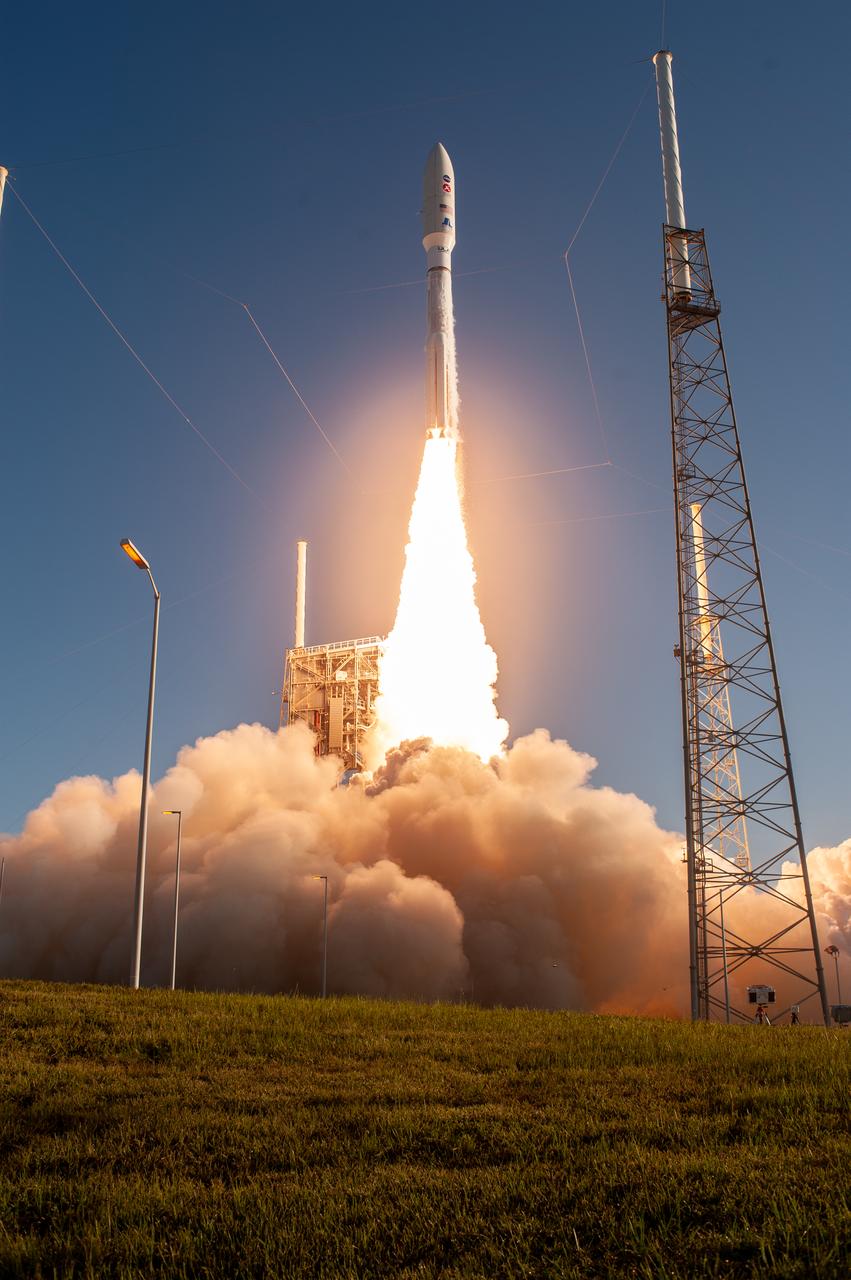
A United Launch Alliance Atlas V 541 rocket climbs upward after lifting off from Space Launch Complex 41 at Cape Canaveral Air Force Station in Florida on July 30, 2020, at 7:50 a.m. EDT, carrying NASA’s Mars Perseverance rover and Ingenuity helicopter. The rover is part of NASA’s Mars Exploration Program, a long-term effort of robotic exploration of the Red Planet. The rover’s seven instruments will search for habitable conditions in the ancient past and signs of past microbial life on Mars. The Launch Services Program at Kennedy is responsible for launch management.
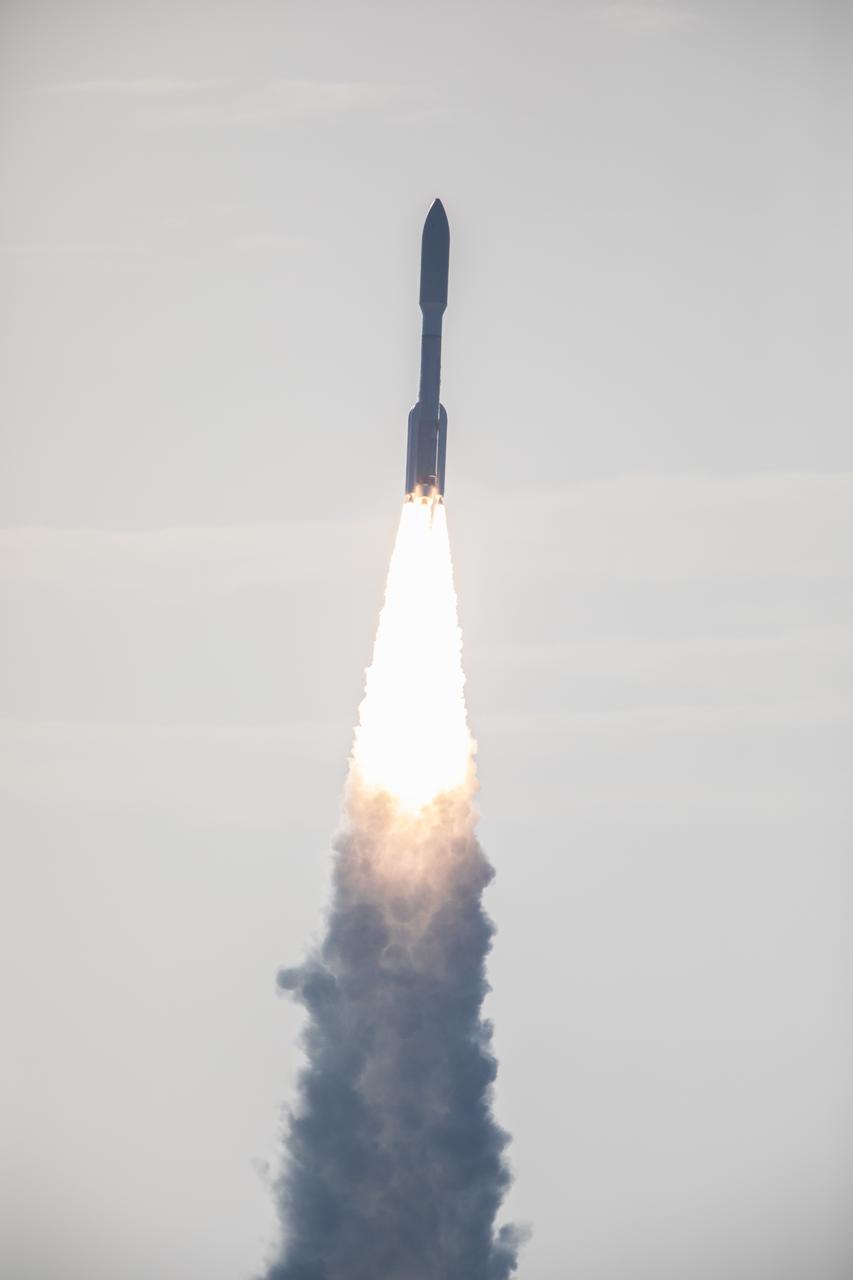
A United Launch Alliance Atlas V 541 rocket soars upward after lifting off from Space Launch Complex 41 at Cape Canaveral Air Force Station in Florida on July 30, 2020, at 7:50 a.m. EDT, carrying NASA’s Mars Perseverance rover and Ingenuity helicopter. The rover is part of NASA’s Mars Exploration Program, a long-term effort of robotic exploration of the Red Planet. The rover’s seven instruments will search for habitable conditions in the ancient past and signs of past microbial life on Mars. The Launch Services Program at Kennedy is responsible for launch management.
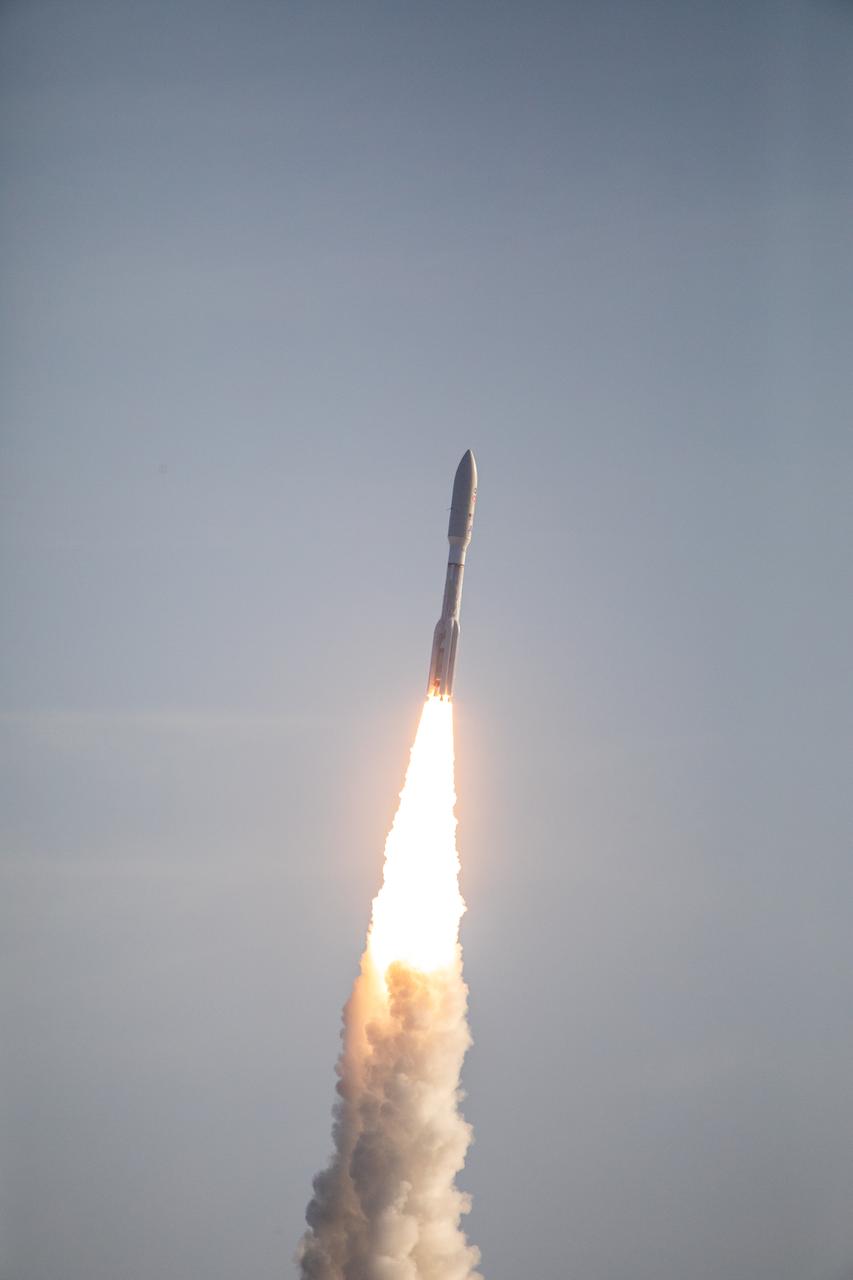
A United Launch Alliance Atlas V 541 rocket soars upward after lifting off from Space Launch Complex 41 at Cape Canaveral Air Force Station in Florida on July 30, 2020, at 7:50 a.m. EDT, carrying NASA’s Mars Perseverance rover and Ingenuity helicopter. The rover is part of NASA’s Mars Exploration Program, a long-term effort of robotic exploration of the Red Planet. The rover’s seven instruments will search for habitable conditions in the ancient past and signs of past microbial life on Mars. The Launch Services Program at Kennedy is responsible for launch management.
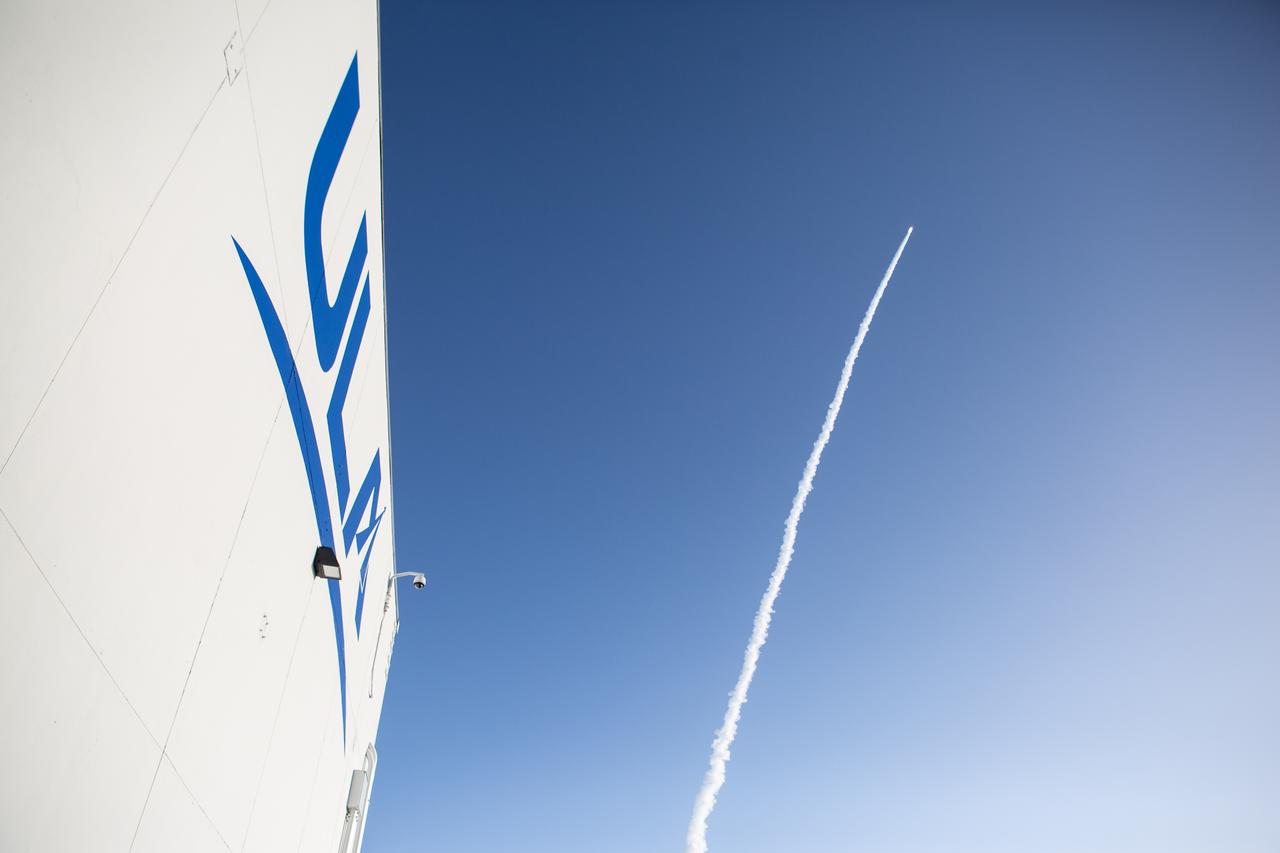
A view from the Atlas Space Operations Center of the launch of the United Launch Alliance Atlas V 541 rocket from Space Launch Complex 41 at Cape Canaveral Air Force Station in Florida on July 30, 2020. The Atlas V carried NASA’s Mars Perseverance rover and Ingenuity helicopter for its mission to Mars. Liftoff was at 7:50 a.m. EDT. The Perseverance rover is part of NASA’s Mars Exploration Program, a long-term effort of robotic exploration of the Red Planet. The rover’s seven instruments will search for habitable conditions in the ancient past and signs of past microbial life on Mars. The Launch Services Program at Kennedy is responsible for launch management.

Members of the Artemis lunar science team cheer as they gather to watch the Artemis II launch broadcast from the Science Evaluation Room (SER) in Mission Control at NASA's Johnson Space Center in Houston. The SER supports lunar science and planetary observations for the Artemis science officer in the mission’s main flight control room. Built specifically for Artemis missions with these science priorities in mind, the SER is equipped to support rapid data interpretation, collaborative analysis, real-time decision making, and seamless coordination between the science and operations teams. Credits: NASA/Mark Sowa.
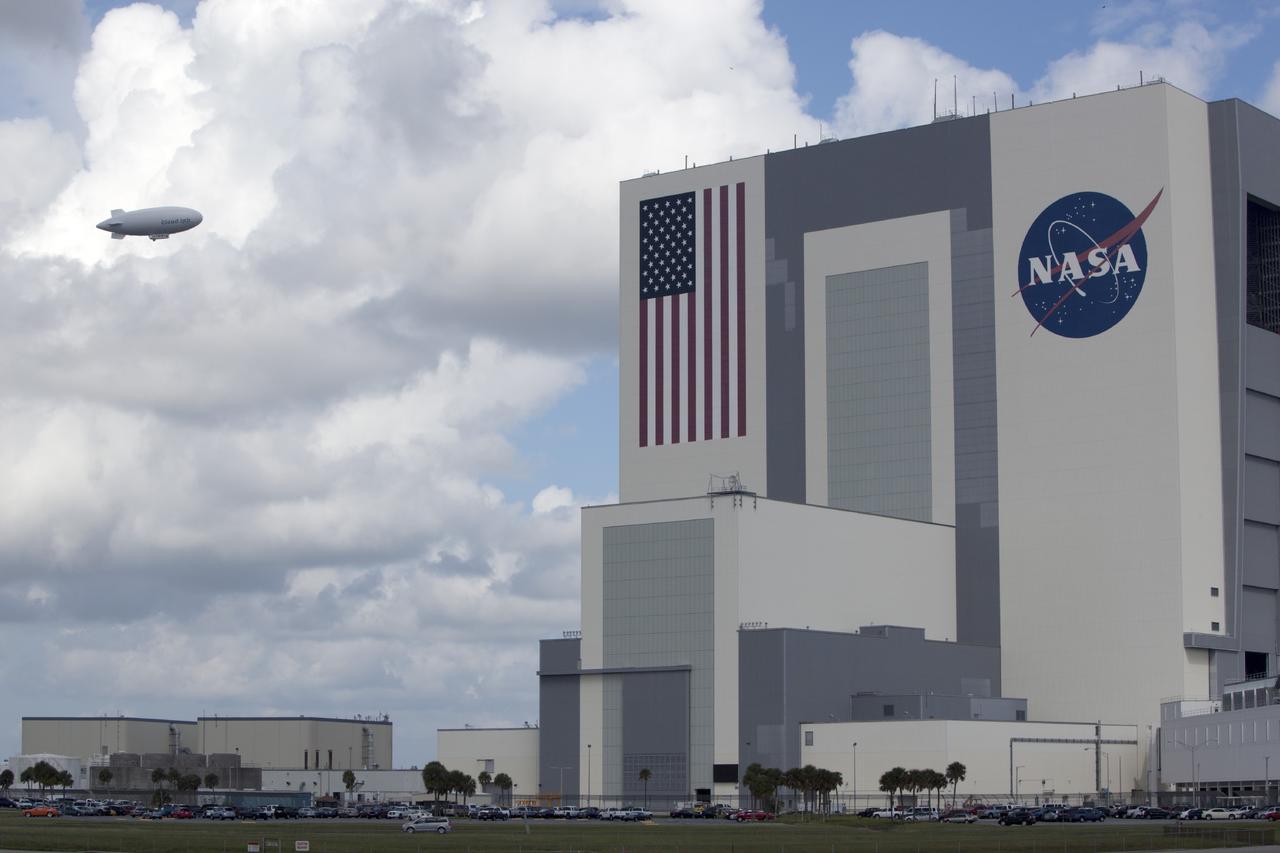
CAPE CANAVERAL, Fla. -- An airship from the British Broadcasting Corp., or BBC, flies over the processing facilities in Launch Complex 39 toward the Vehicle Assembly Building at NASA's Kennedy Space Center in Florida. A team of scientists from the BBC's television project "Cloud Lab" are conducting a number of experiments aboard the airship as it flies across the U.S., exploring all aspects of the Earth's atmosphere. One of the experiments is NASA's Microorganisms in the Stratosphere, or MIST, which is designed to measure the microbial survival and cellular responses to exposure in the upper atmosphere. Photo credit: NASA/Dimitri Gerondidakis
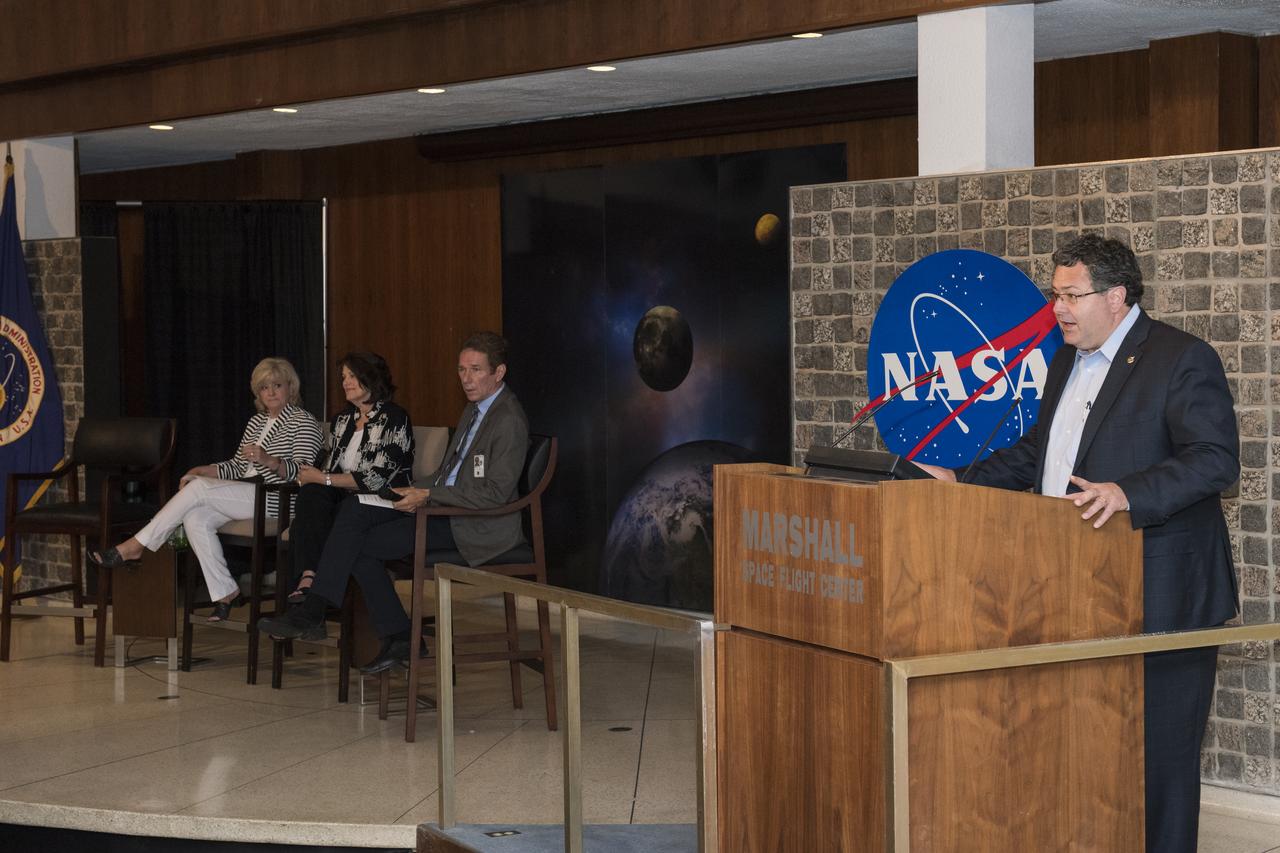
NASA MARSHALL SPACE FLIGHT CENTER DIRECTOR TODD MAY TALKS ABOUT HIS VISION FOR THE CENTER DURING AN ALL-HANDS MEETING JUNE 22 IN MORRIS AUDITORIUM, AND BROADCAST CENTERWIDE. ALSO SPEAKING TO THE MARSHALL TEAM AND TAKING QUESTIONS DURING THE EVENT ARE, FROM LEFT, MARSHALL DEPUTY DIRECTOR JODY SINGER, ASSOCIATE DIRECTOR ROBIN HENDERSON AND ASSOCIATE DIRECTOR, TECHNICAL, PAUL MCCONNAUGHEY. "WE'RE IN THE BUSINESS OF MAKING THE IMPOSSIBLE POSSIBLE," SAID MAY, CITING PROGRESS ON THE SPACE LAUNCH SYSTEM AND THE JOURNEY TO MARS AND RECOUNTING HIGHLIGHTS OF MARSHALL'S 56-YEAR HISTORY.

Members of the Artemis lunar science team, from left, Sara Schmidt, Megan Borel, Amber Turner, Jacob Richardson, and Juliane Gross pose for a selfie with the Artemis II launch broadcast on the screen behind them in the Science Evaluation Room (SER) in Mission Control at NASA's Johnson Space Center in Houston. The SER supports lunar science and planetary observations for the Artemis science officer in the mission’s main flight control room. Built specifically for Artemis missions with these science priorities in mind, the SER is equipped to support rapid data interpretation, collaborative analysis, real-time decision making, and seamless coordination between the science and operations teams. Credits: NASA/Mark Sowa.

Dan Billow accepts a certificate naming him a Kennedy Chronicler during a May 15 ceremony at the Press Site at NASA’s Kennedy Space Center in Florida. Presenting the award is Burt Summerfield, NASA Kennedy Space Center’s associate director, management. Billow, a retired television broadcaster, was among three reporters and industry professionals who were nominated by their peers and selected by a panel of NASA officials and current space reporters. Brass plates bearing their names were added to the wall of the “bull pen,” where reporters traditionally gather to cover launches and events at NASA Kennedy.

Audience members watch a live broadcast of Expedition 53 crew launching on the Soyuz rocket to the International Space Station during a presentation by Expedition 49/50 NASA astronaut Shane Kimbrough, Tuesday, September 12, 2017 at Arlington Career Center in Arlington, Virginia. During Expedition 50, Kimbrough completed four spacewalks for a total of 39 hours outside the ISS, and concluded his 173-day mission when he landed in a remote area near the town of Zhezkazgan, Kazakhstan in April 2017. Photo Credit: (NASA/Aubrey Gemignani)
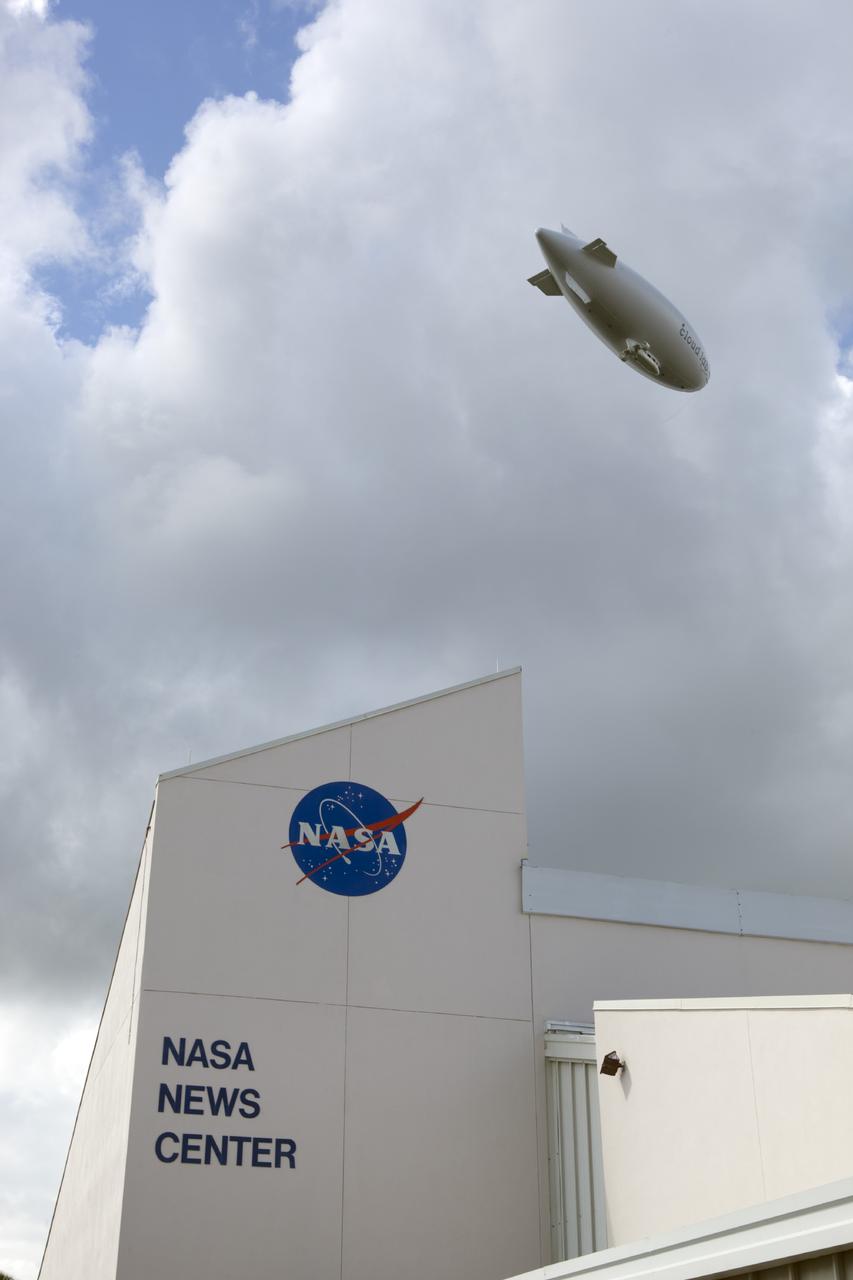
CAPE CANAVERAL, Fla. -- An airship from the British Broadcasting Corp., or BBC, flies over Launch Complex 39 past the NASA News Center at NASA's Kennedy Space Center in Florida. A team of scientists from the BBC's television project "Cloud Lab" are conducting a number of experiments aboard the airship as it flies across the U.S., exploring all aspects of the Earth's atmosphere. One of the experiments is NASA's Microorganisms in the Stratosphere, or MIST, which is designed to measure the microbial survival and cellular responses to exposure in the upper atmosphere. Photo credit: NASA/Dimitri Gerondidakis
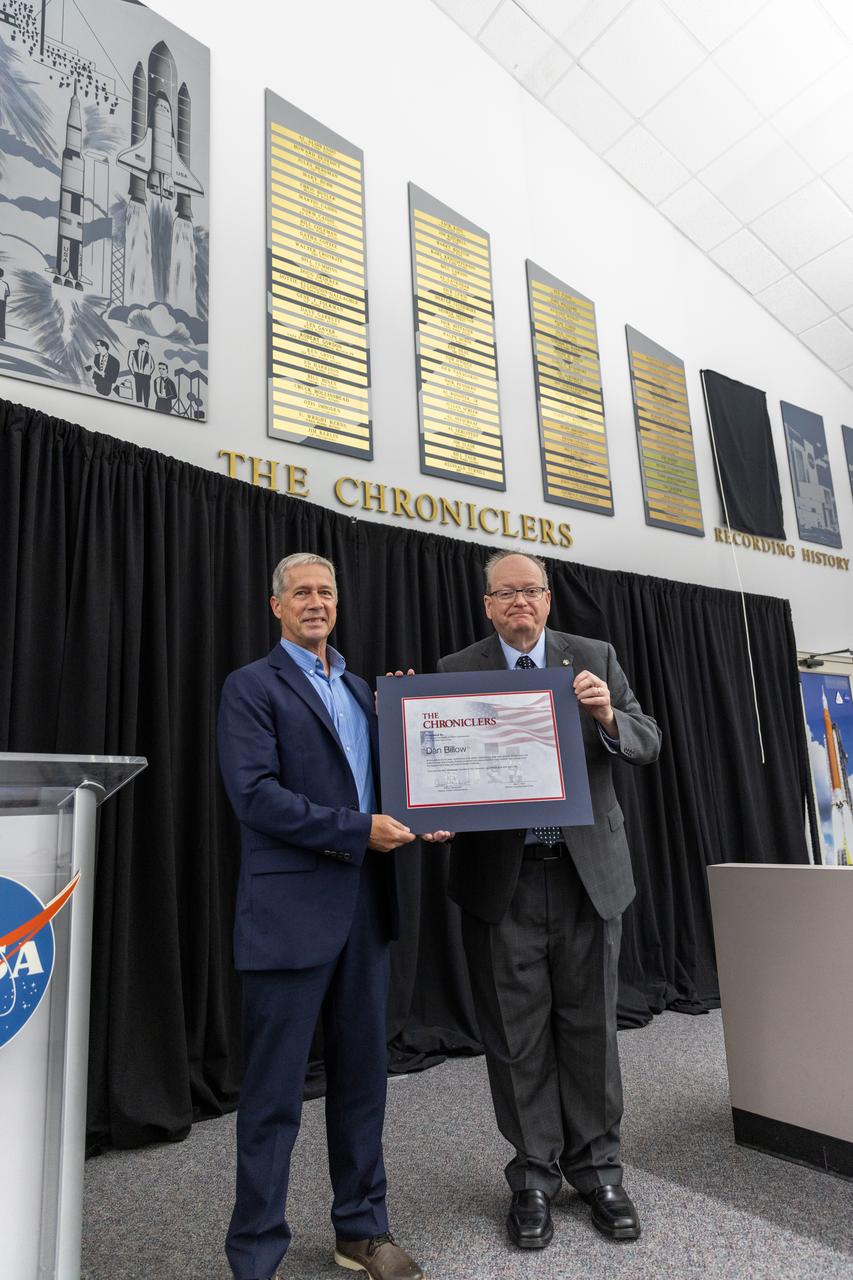
Dan Billow accepts a certificate naming him a Kennedy Chronicler during a May 15 ceremony at the Press Site at NASA’s Kennedy Space Center in Florida. Presenting the award is Burt Summerfield, NASA Kennedy Space Center’s associate director, management. Billow, a retired television broadcaster, was among three reporters and industry professionals who were nominated by their peers and selected by a panel of NASA officials and current space reporters. Brass plates bearing their names were added to the wall of the “bull pen,” where reporters traditionally gather to cover launches and events at NASA Kennedy.
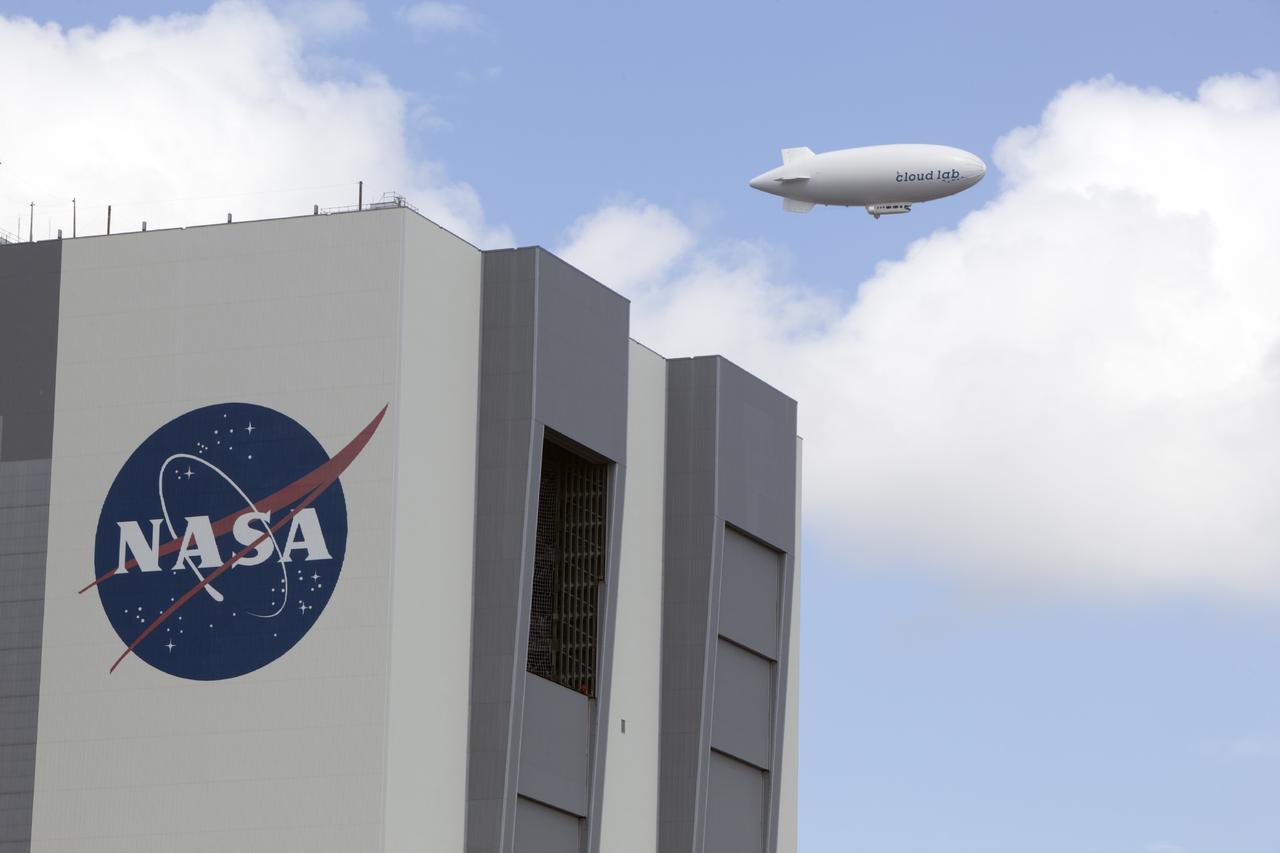
CAPE CANAVERAL, Fla. -- An airship from the British Broadcasting Corp., or BBC, flies over Launch Complex 39 past the Vehicle Assembly Building at NASA's Kennedy Space Center in Florida. A team of scientists from the BBC's television project "Cloud Lab" are conducting a number of experiments aboard the airship as it flies across the U.S., exploring all aspects of the Earth's atmosphere. One of the experiments is NASA's Microorganisms in the Stratosphere, or MIST, which is designed to measure the microbial survival and cellular responses to exposure in the upper atmosphere. Photo credit: NASA/Dimitri Gerondidakis

Lucas Ye, designer of zero gravity indicator “Rise,” participates in an interview with members of the NASA Broadcast team at the Banana Creek viewing site as the countdown progresses for the launch of NASA’s Space Launch System (SLS) rocket and Orion spacecraft with Commander Reid Wiseman, Pilot Victor Glover, and Mission Specialist Christina Koch from NASA, and Mission Specialist Jeremy Hansen from the CSA (Canadian Space Agency) on the Artemis II mission, Wednesday, April 1, 2026, at NASA’s Kennedy Space Center in Florida. NASA’s Artemis II mission will take Wiseman, Glover, Koch, and Hansen on a 10-day journey around the Moon and back aboard SLS rocket and Orion spacecraft from Launch Complex 39B with launch window opening at 6:24 p.m. EDT. Photo Credit: (NASA/Keegan Barber)
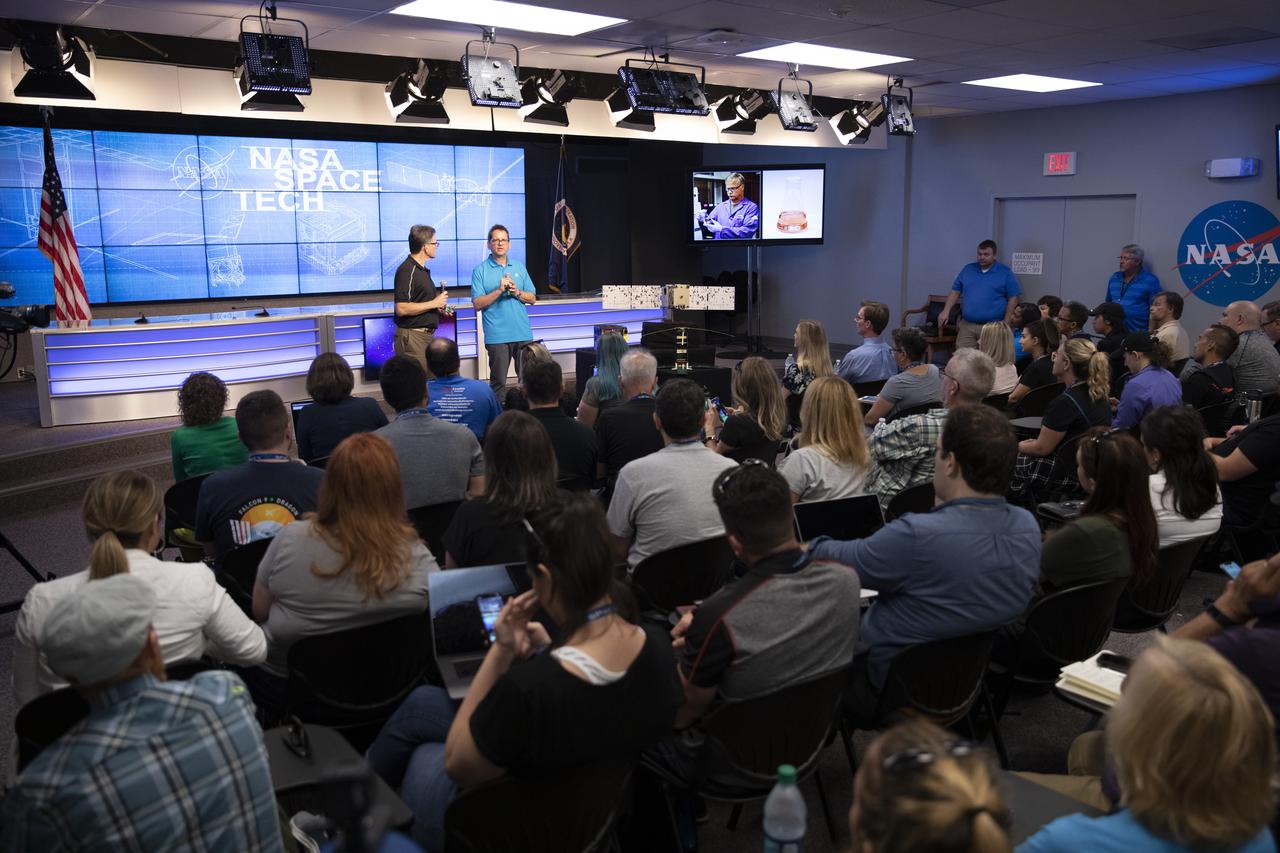
Chris McLean, (right) principal investigator for NASA’s Green Propellant Infusion Mission at Ball Aerospace, and Joe Cassady, (left), executive director of space at Aeroject Rocketdyne, explain the payload during a NASA prelaunch technology TV broadcast for the Space Test Program-2 (STP-2) mission at NASA’s Kennedy Space Center in Florida on June 23, 2019. The payload will help demonstrate this low toxicity, increased performance propellant and related systems so it can become a viable solution for future satellites. It is one of four NASA payloads scheduled to launch on a SpaceX Falcon Heavy rocket from Launch Complex 39A beginning at 11:30 p.m. EDT on June 24, 2019. STP-2 is managed by the U.S. Air Force Space and Missile Systems Center.
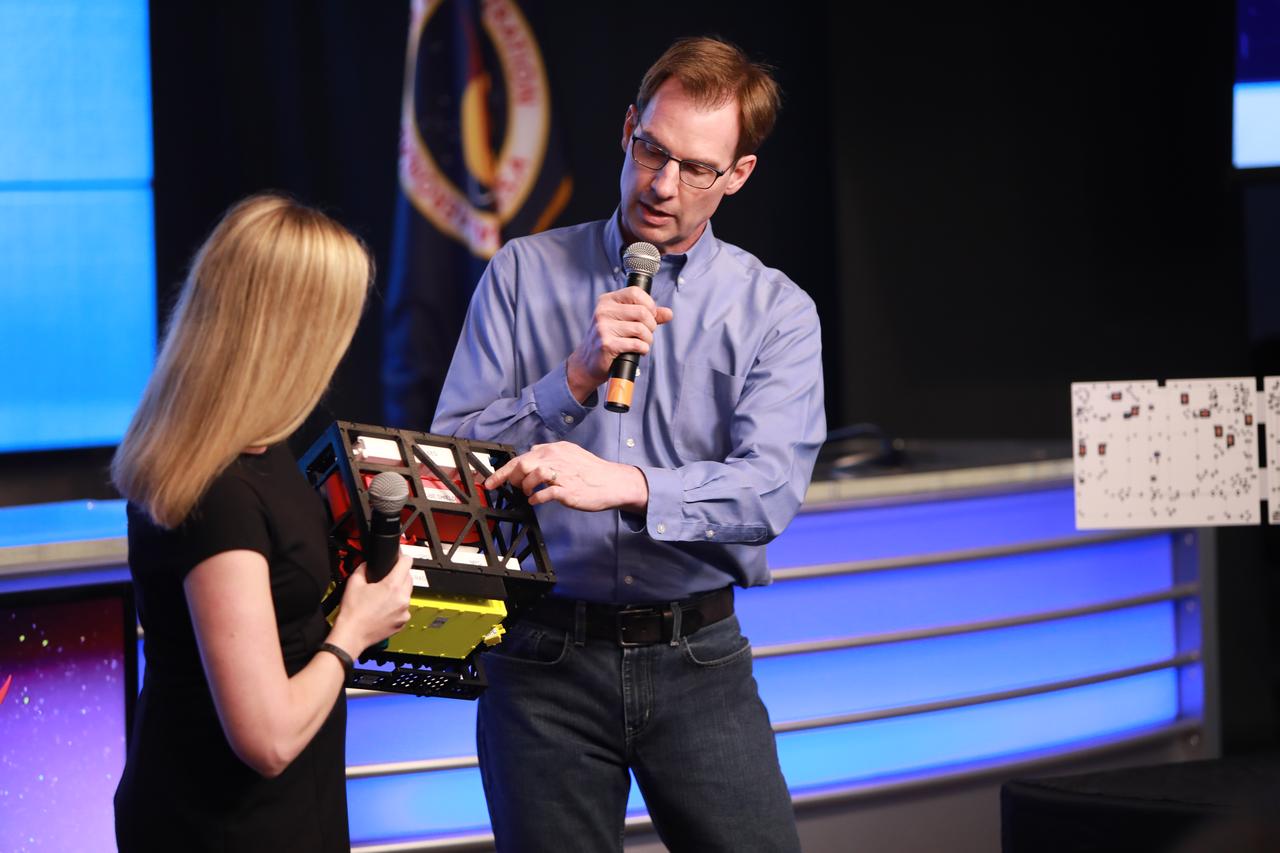
Todd Ely (right), principal investigator for NASA’s Deep Space Atomic Clock, and Deputy Principal Investigator Jill Seubert (left), both from NASA’s Jet Propulsion Laboratory in Pasadena, California, explain the payload during a NASA prelaunch technology TV broadcast for the Space Test Program-2 (STP-2) mission at the agency’s Kennedy Space Center in Florida on June 23, 2019. The new space clock could improve how we navigate on the Moon, to Mars and beyond. The space clock is one of four NASA payloads scheduled to launch on a SpaceX Falcon Heavy rocket from Launch Complex 39A beginning at 11:30 p.m. EDT on June 24, 2019. STP-2 is managed by the U.S. Air Force Space and Missile Systems Center.
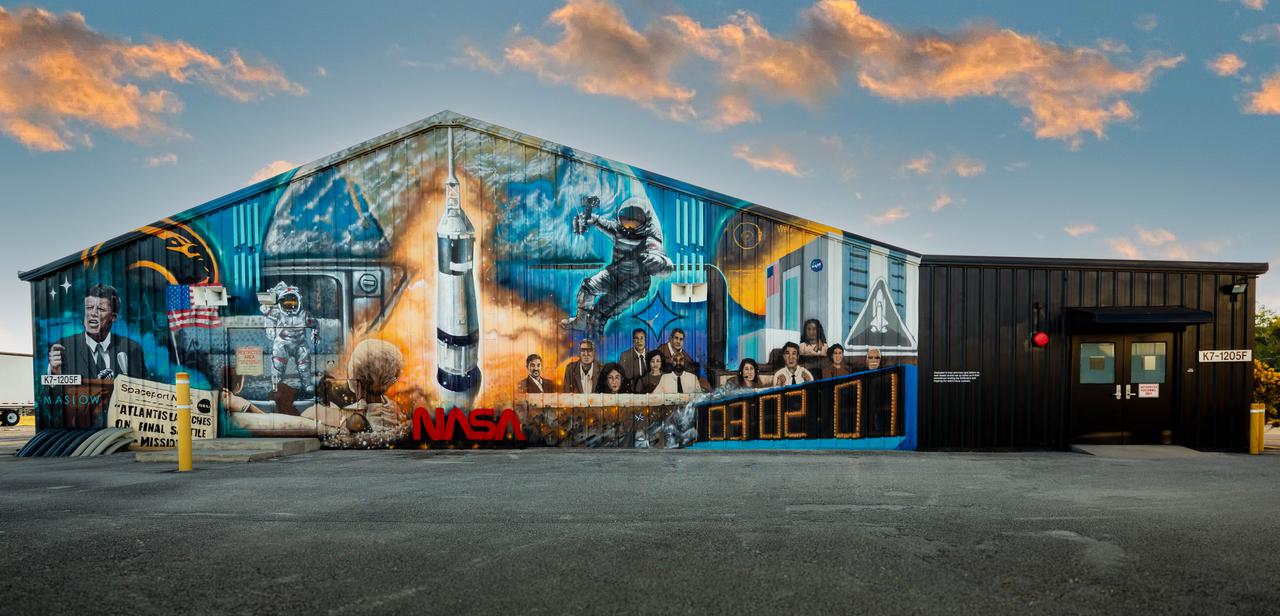
A mural painted by Florida artist Christopher Maslow adorns the northwest exterior wall of the Press Site News Facility at NASA’s Kennedy Space Center in Florida on Jan. 10, 2022. Completed by the artist over the course of several months during 2021, the largescale artwork depicts notable landmarks, missions, and milestones from the history of NASA and its world-famous spaceport. The Press Site News Facility is the hub of launch broadcasts and home to the center’s TV auditorium. Along with the nearby NASA News Center, for decades Kennedy’s Press Site has been where reporters from television, radio, print, and online media outlets have monitored countless launches, landings, and other space events in order to deliver the news to the world.
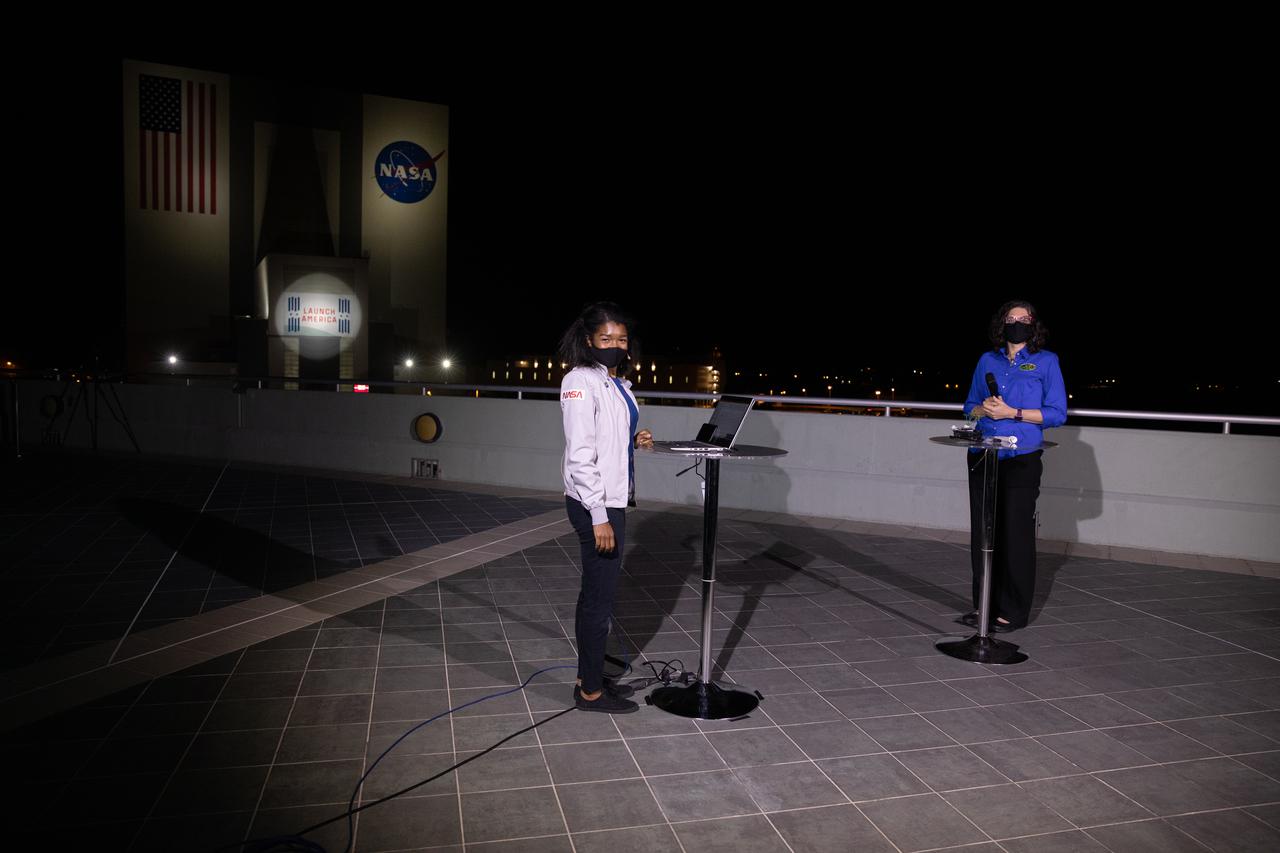
NASA Communications’ Jasmine Hopkins, left, interviews Kennedy Space Center Life Sciences Plant Scientist Gioia Massa on the Florida spaceport’s Operations and Support Building II balcony during the launch broadcast for NASA’s SpaceX Crew-2 mission on April 23, 2021. The SpaceX Falcon 9 rocket and Crew Dragon spacecraft lifted off from Kennedy’s Launch Complex 39A at 5:49 a.m. EDT. Part of NASA’s Commercial Crew Program, Crew-2 delivered NASA astronauts Shane Kimbrough and Megan McArthur, Japan Aerospace Exploration Agency (JAXA) astronaut Akihiko Hoshide, and European Space Agency (ESA) astronaut Thomas Pesquet to the International Space Station for a six-month science mission.

A dedication to those who tell the NASA story is part of a mural painted by Florida artist Christopher Maslow on the northwest exterior wall of the Press Site News Facility at NASA’s Kennedy Space Center in Florida, photographed on Jan. 10, 2022. Completed by the artist over the course of several months during 2021, the largescale artwork depicts notable landmarks, missions, and milestones from the history of NASA and its world-famous spaceport. The Press Site News Facility is the hub of launch broadcasts and home to the center’s TV auditorium. Along with the nearby NASA News Center, for decades Kennedy’s Press Site has been where reporters from television, radio, print, and online media outlets have monitored countless launches, landings, and other space events in order to deliver the news to the world.