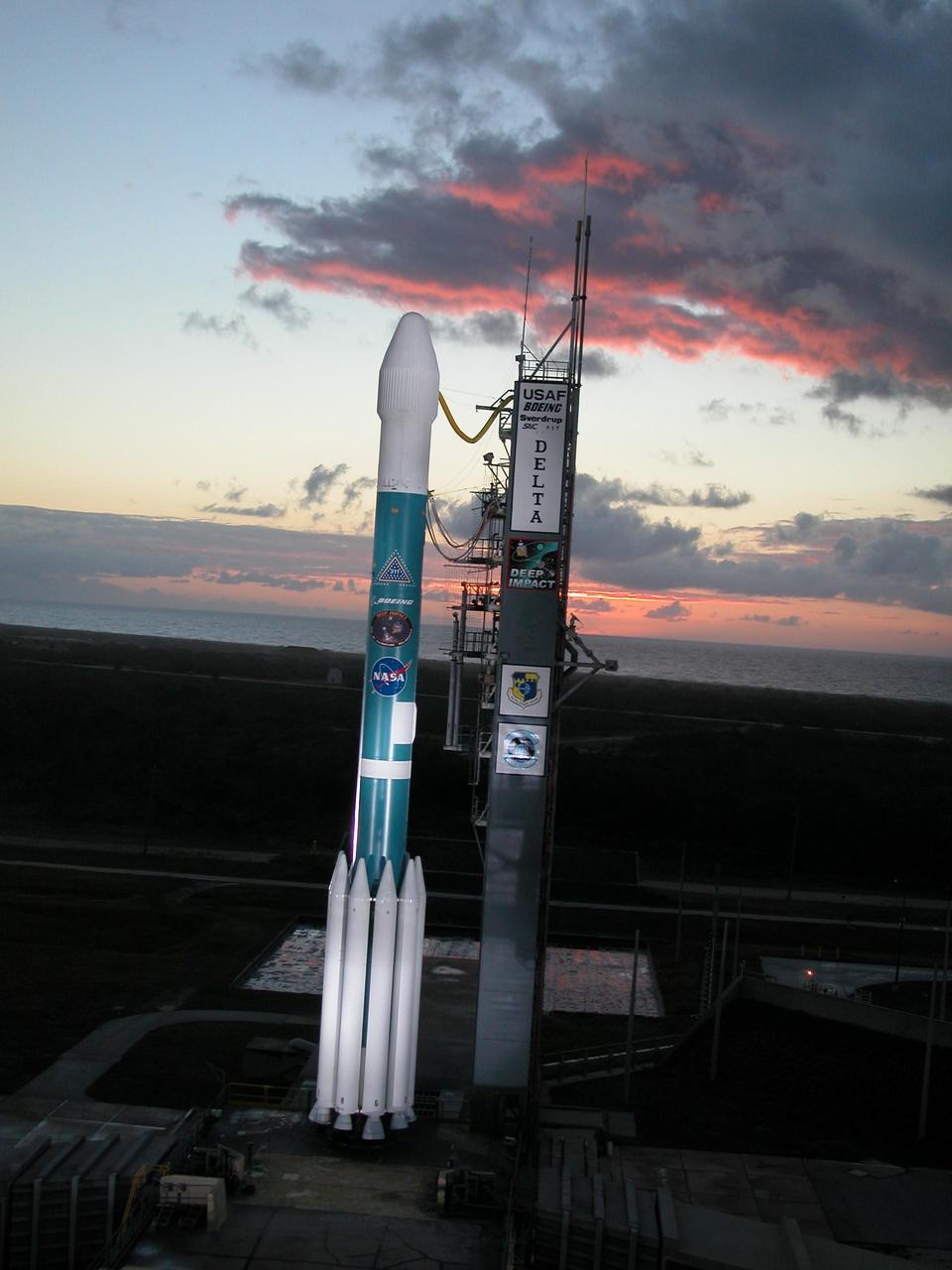
NASA Deep Impact awaits launch from Cape Canaveral Air Force Station, Fla. on Jan. 12, 2005.
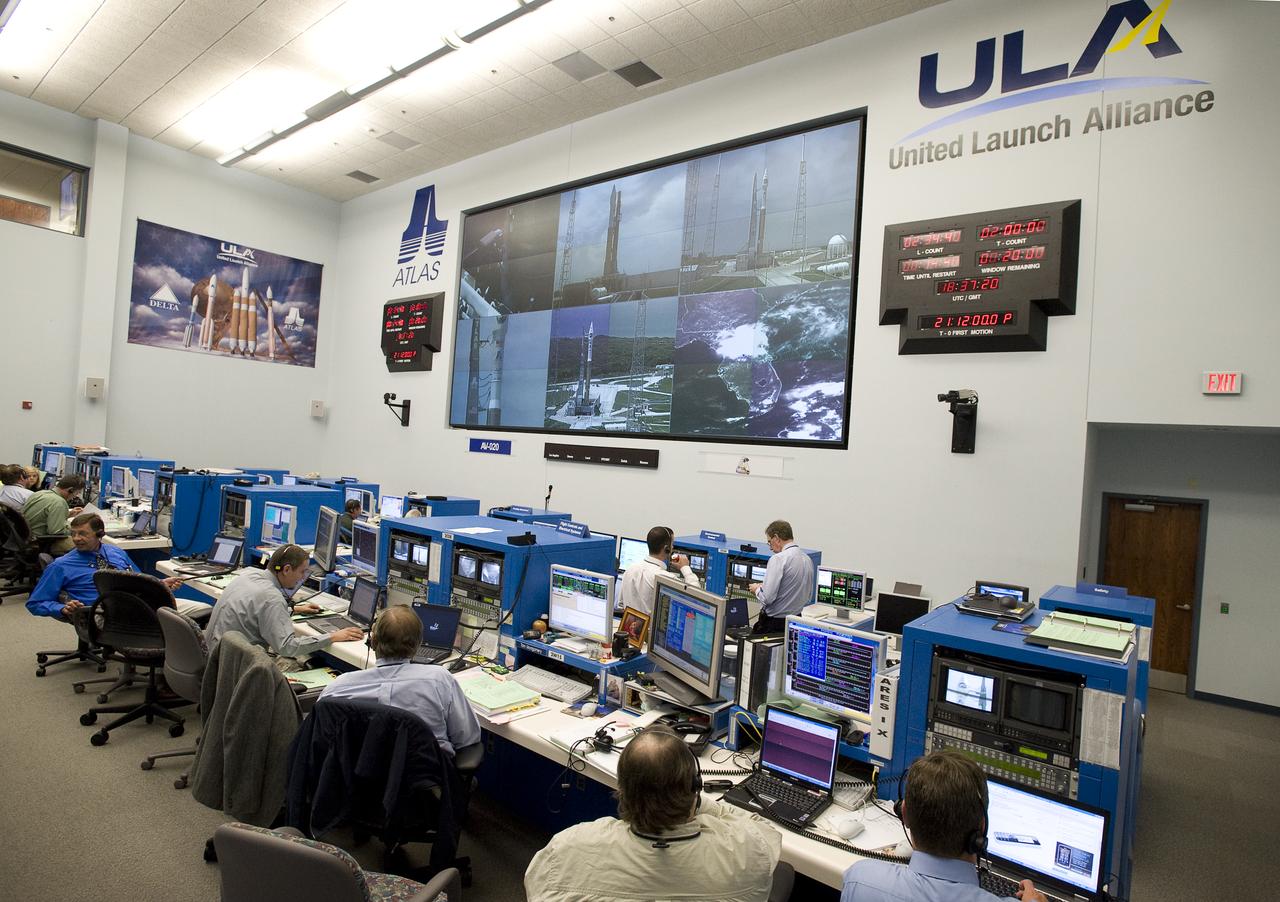
United Launch Alliance (ULA) team members work in the Atlas V Spaceflight Operations Center prior to the launch of the Lunar Reconnaissance Orbiter and Lunar Crater Observation and Sensing Satellite Thursday, June 18, 2009, from Cape Canaveral Air Force Station, Florida. . Photo Credit: (NASA/Bill Ingalls)

United Launch Alliance (ULA) team members work in the Atlas V Spaceflight Operations Center prior to the launch of the Lunar Reconnaissance Orbiter and Lunar Crater Observation and Sensing Satellite Thursday, June 18, 2009, from Cape Canaveral Air Force Station, Florida. Photo Credit: (NASA/Bill Ingalls)
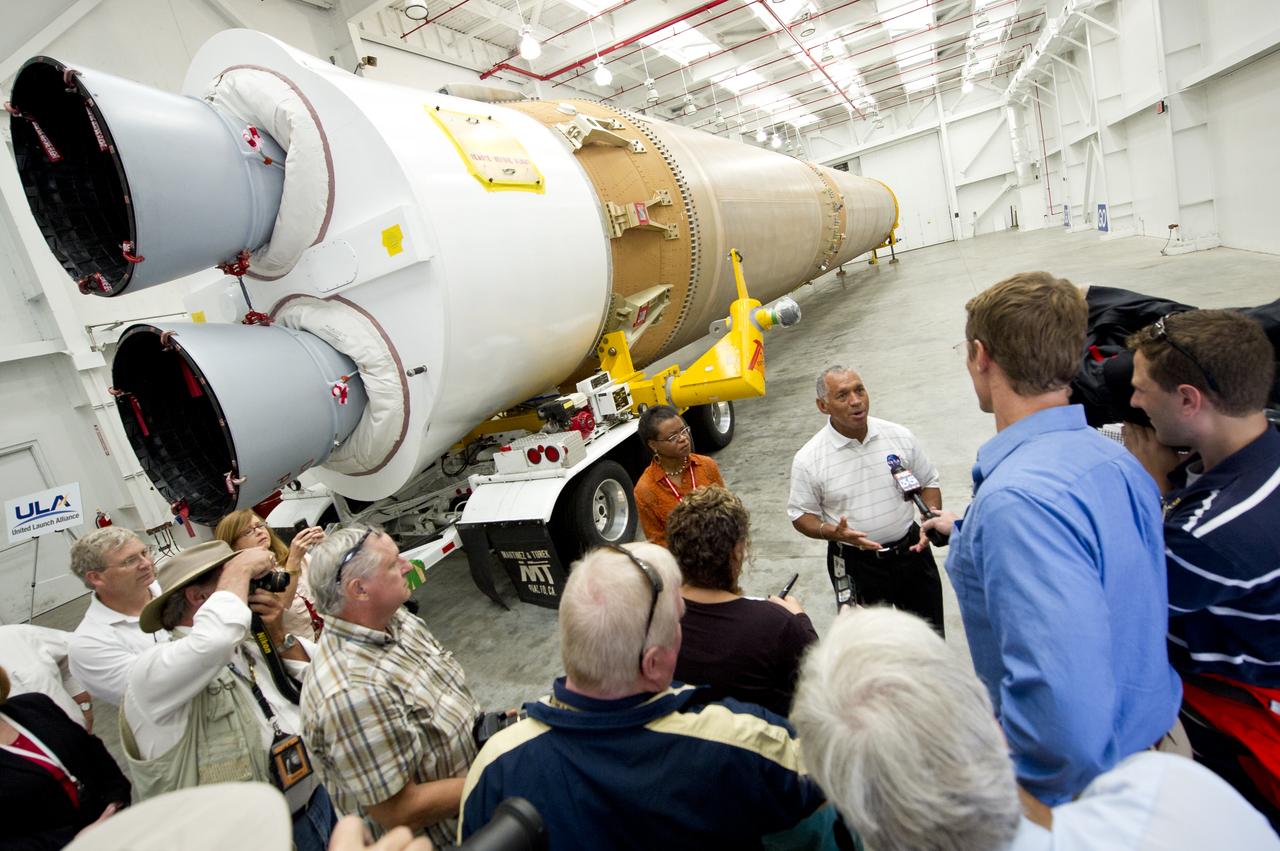
NASA Administrator Charles Bolden, stands in front of the United Launch Alliance Atlas V first stage booster while taking questions from the media, Wednesday, Sept. 7, 2011, at the Cape Canaveral Air Force Station in Cape Canaveral, Fla. The booster will help send NASA's Mars Science Laboratory Curiosity rover to Mars later this year. Photo Credit: (NASA/Bill Ingalls)
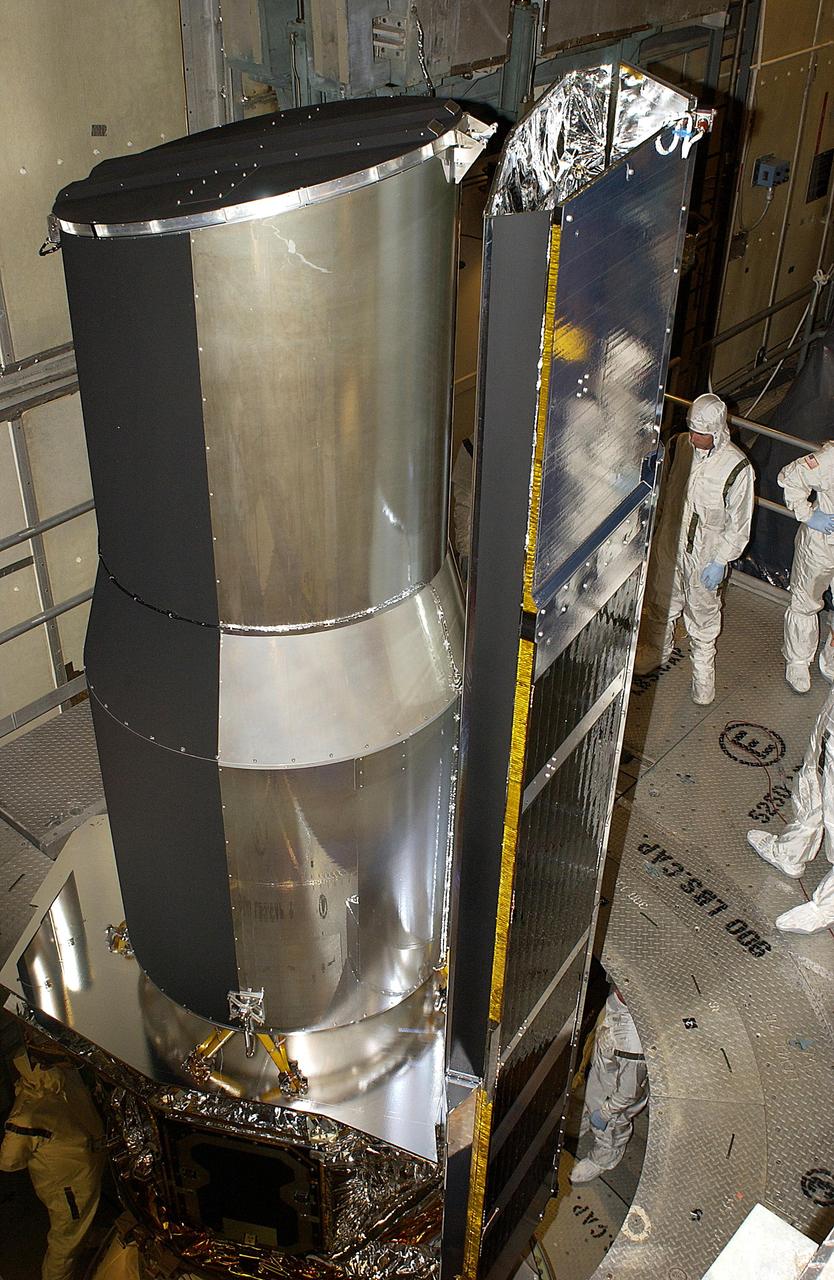
The Spitzer Space Telescope (formerly the Space Infrared Telescope Facility or SIRTF) is readied for launch at Cape Canaveral Air Force Station, in 2003. https://photojournal.jpl.nasa.gov/catalog/PIA23644
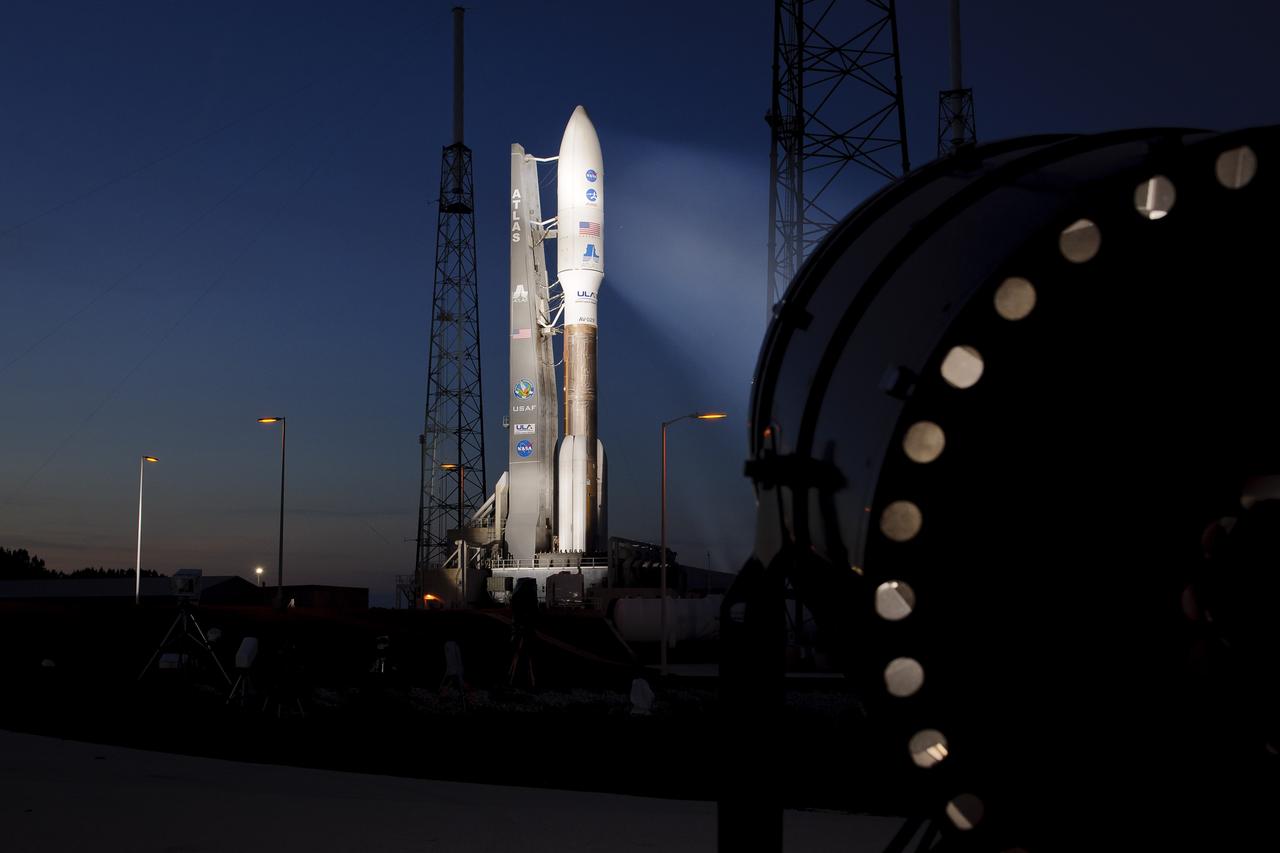
An Atlas V rocket with NASA's Juno spacecraft payload is seen the evening before it's planned launch at Space Launch Complex 41 of the Cape Canaveral Air Force Station in Florida on Thursday, August 4, 2011. The Juno spacecraft will make a five-year, 400-million-mile voyage to Jupiter, orbit the planet, investigate its origin and evolution with eight instruments to probe its internal structure and gravity field, measure water and ammonia in its atmosphere, map its powerful magnetic field and observe its intense auroras. Photo Credit: (NASA/Bill Ingalls)
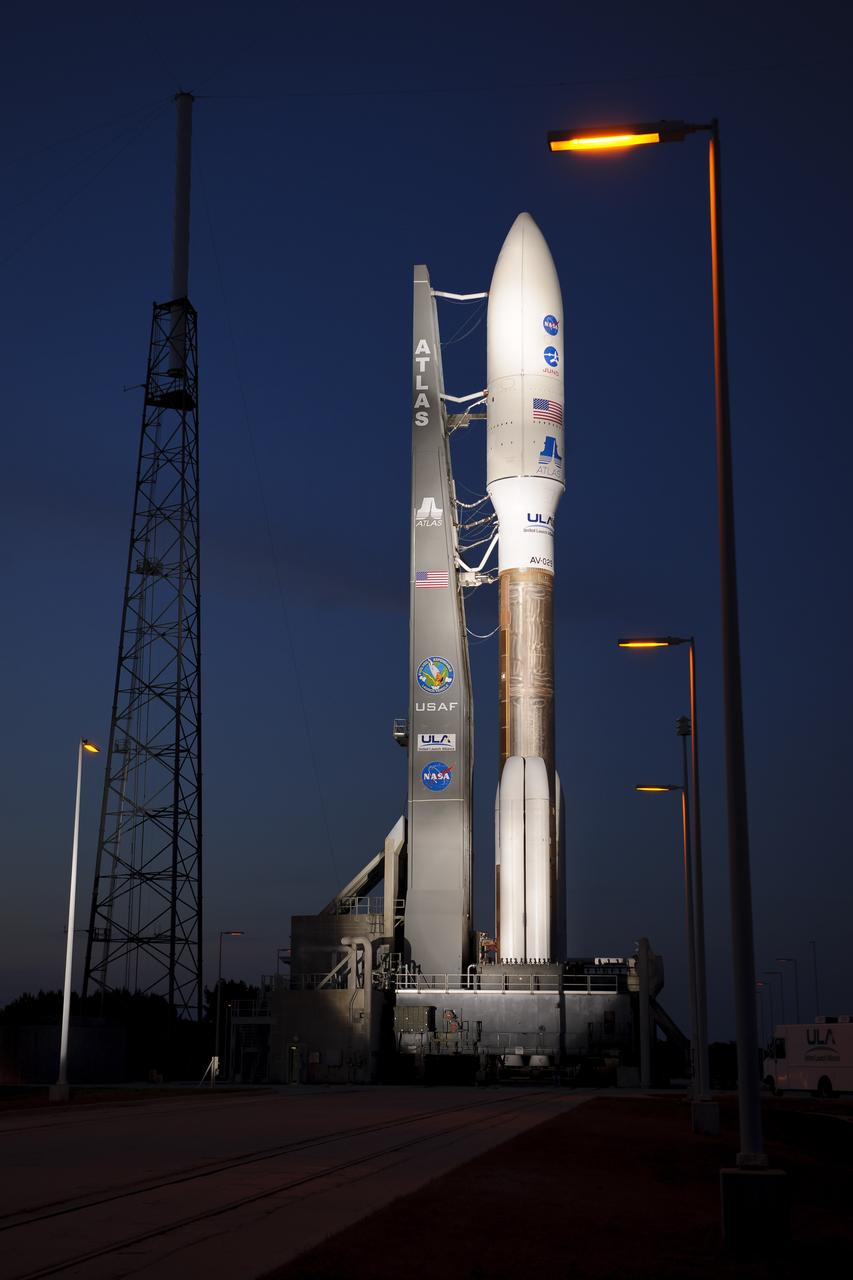
An Atlas V rocket with NASA's Juno spacecraft payload is seen the evening before it's planned launch at Space Launch Complex 41 of the Cape Canaveral Air Force Station in Florida on Thursday, August 4, 2011. The Juno spacecraft will make a five-year, 400-million-mile voyage to Jupiter, orbit the planet, investigate its origin and evolution with eight instruments to probe its internal structure and gravity field, measure water and ammonia in its atmosphere, map its powerful magnetic field and observe its intense auroras. Photo Credit: (NASA/Bill Ingalls)
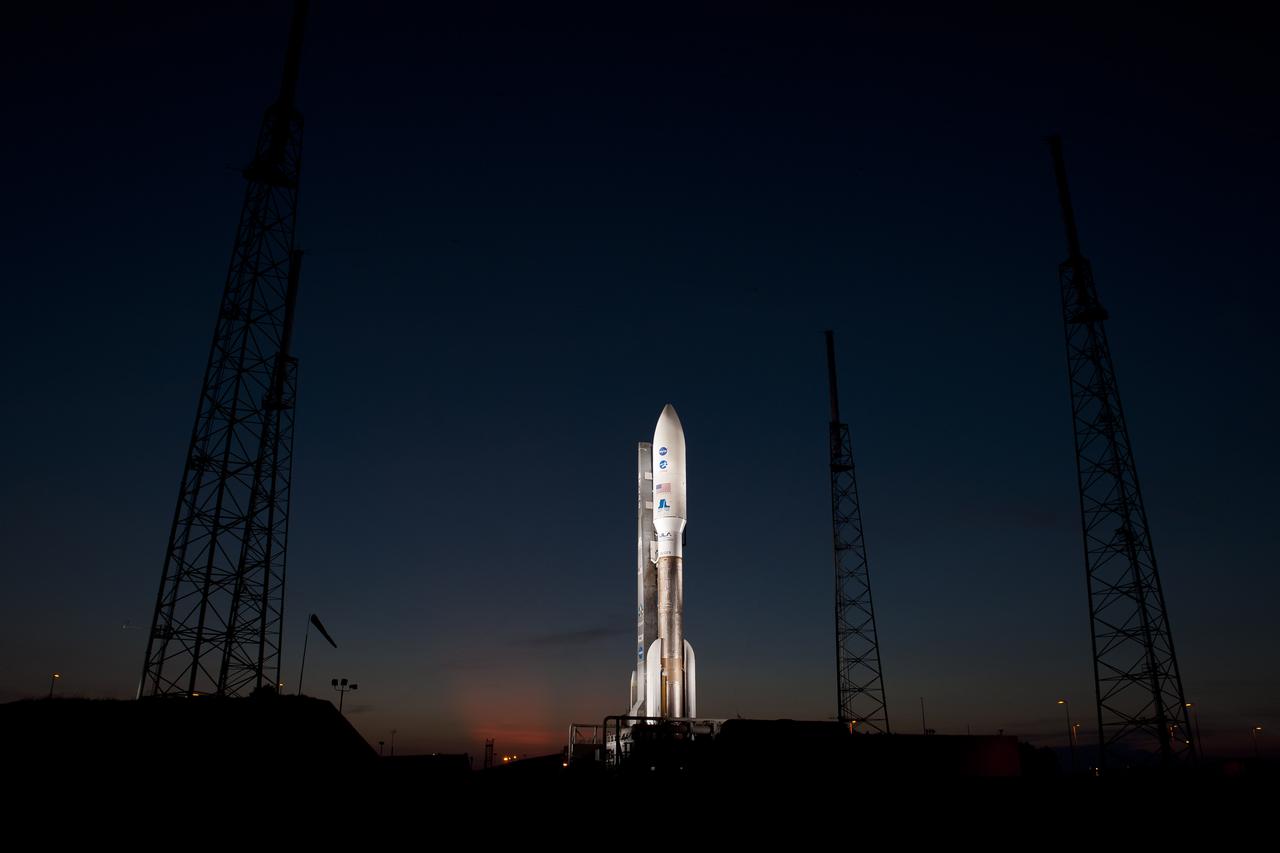
An Atlas V rocket with NASA's Juno spacecraft payload is seen the evening before it's planned launch at Space Launch Complex 41 of the Cape Canaveral Air Force Station in Florida on Thursday, August 4, 2011. The Juno spacecraft will make a five-year, 400-million-mile voyage to Jupiter, orbit the planet, investigate its origin and evolution with eight instruments to probe its internal structure and gravity field, measure water and ammonia in its atmosphere, map its powerful magnetic field and observe its intense auroras. Photo Credit: (NASA/Bill Ingalls)
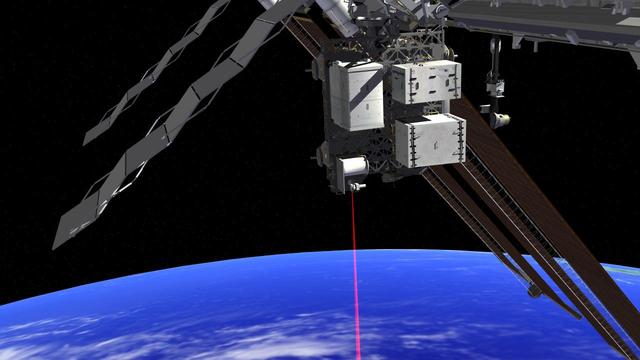
This artist rendition shows the Optical PAyload for Lasercomm Science OPALS operating from the International Space Station. OPALS was launched to the station from Cape Canaveral Air Force Station in Florida on April 18, 2014.
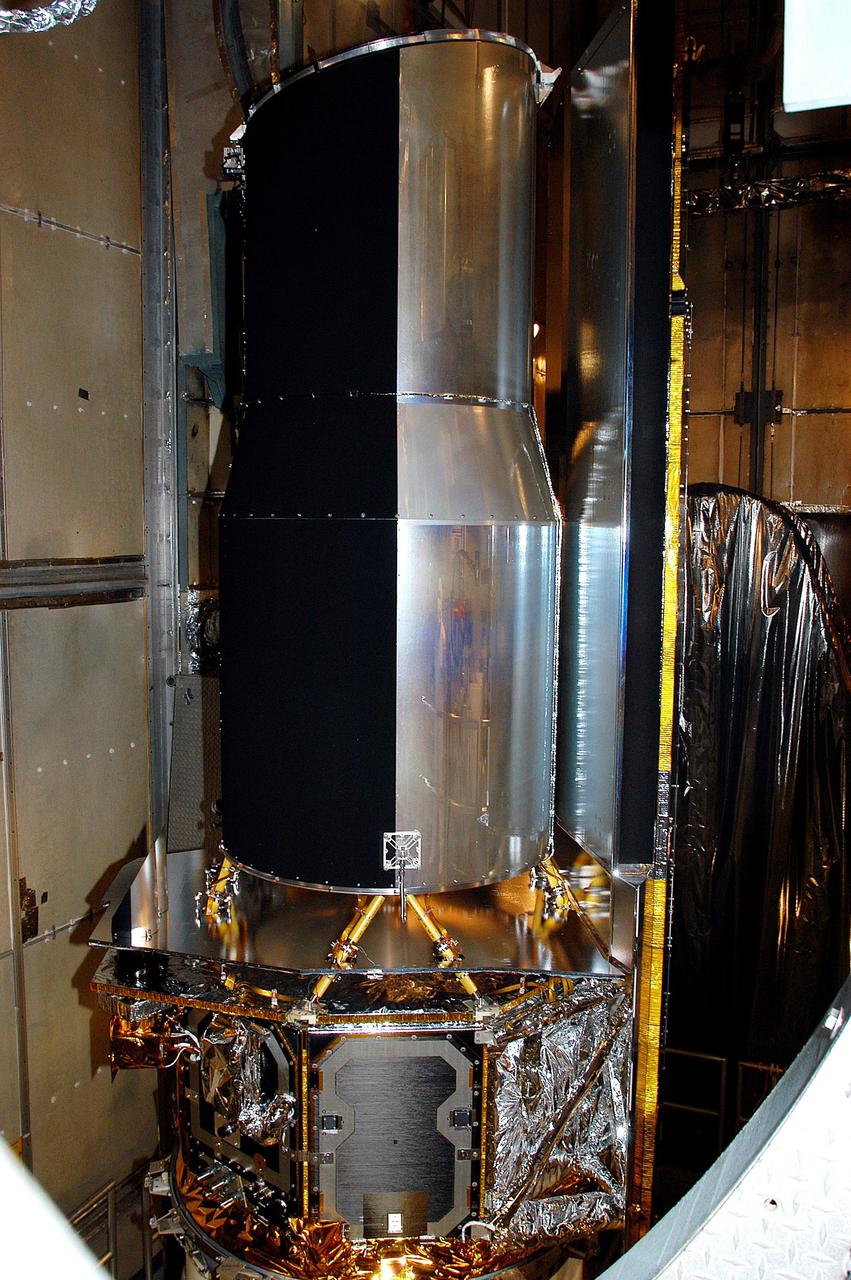
At the time of launch, the Spitzer Space Telescope bore its original name: the Space Infrared Telescope Facility (SIRTF). It's shown here in the mobile service tower on Launch Pad 17-B, Cape Canaveral Air Force Station, waiting for encapsulation. https://photojournal.jpl.nasa.gov/catalog/PIA23649

A What’s On Board Briefing for SpaceX’s 19th Commercial Resupply Services (CRS-19) mission for NASA to the International Space Station took place on Dec. 3, 2019, at the agency’s Kennedy Space Center in Florida. Paul Ferkul, an investigator for the Confined Combustion experiment, discuss the investigation which studies how fire spreads and behaves in confined spaces. The SpaceX Falcon 9 rocket and Dragon cargo module are scheduled to launch on Dec. 4, 2019, from Space Launch Complex 40 on Cape Canaveral Air Force Station in Florida.
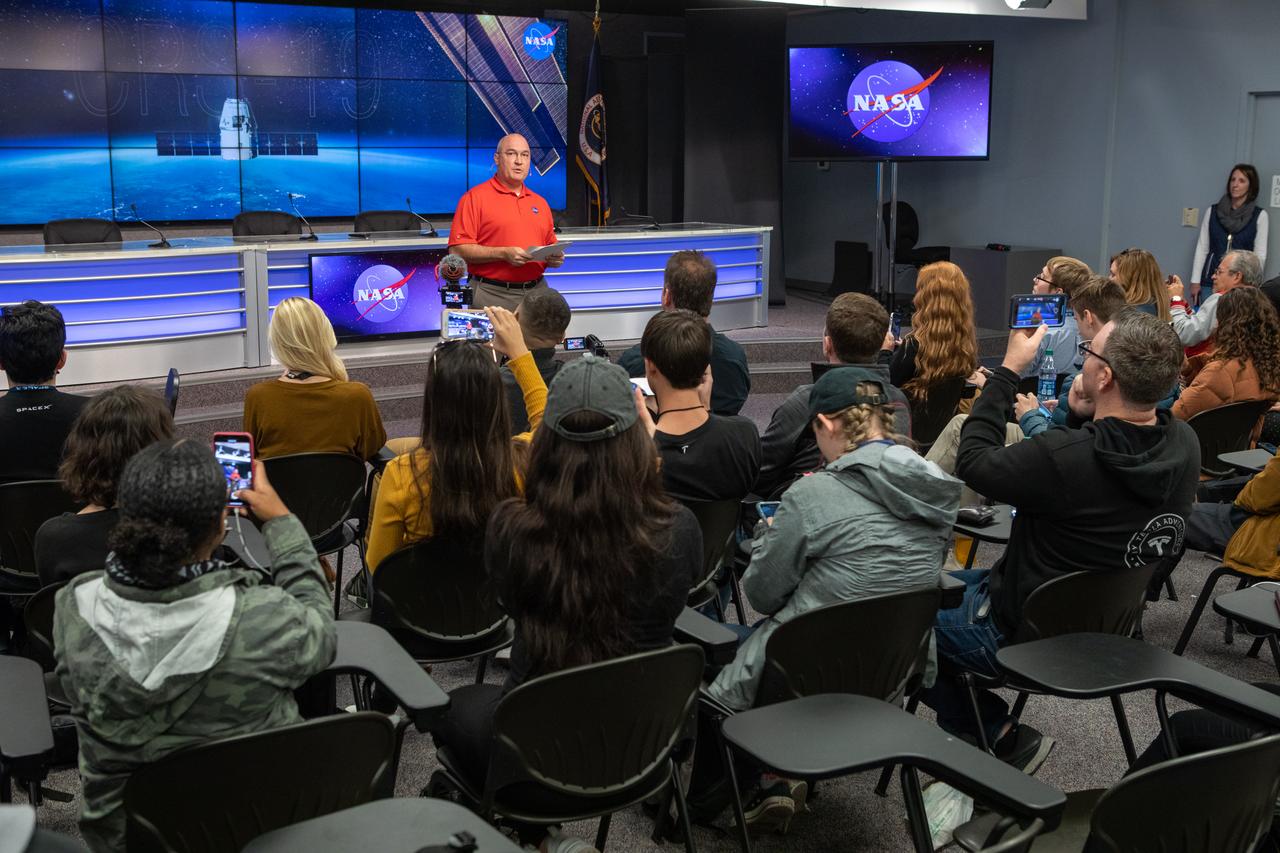
Greg Harland, NASA Communications, moderates a What’s On Board Briefing for SpaceX’s 19th Commercial Resupply Services (CRS-19) mission for NASA to the International Space Station on Dec. 3, 2019, at the agency’s Kennedy Space Center in Florida. The SpaceX Falcon 9 rocket and Dragon cargo module are scheduled to launch on Dec. 4, 2019, from Space Launch Complex 40 on Cape Canaveral Air Force Station in Florida.

Members of the news and social media listen to a What's On Board Briefing on Dec. 3, 2019, for SpaceX's 19th Commercial Resupply Services (CRS-19) mission for NASA to the International Space Station at the agency's Kennedy Space Center in Florida. The SpaceX Falcon 9 rocket and Dragon cargo module are scheduled to launch on Dec. 4, 2019, from Space Launch Complex 40 on Cape Canaveral Air Force Station in Florida.
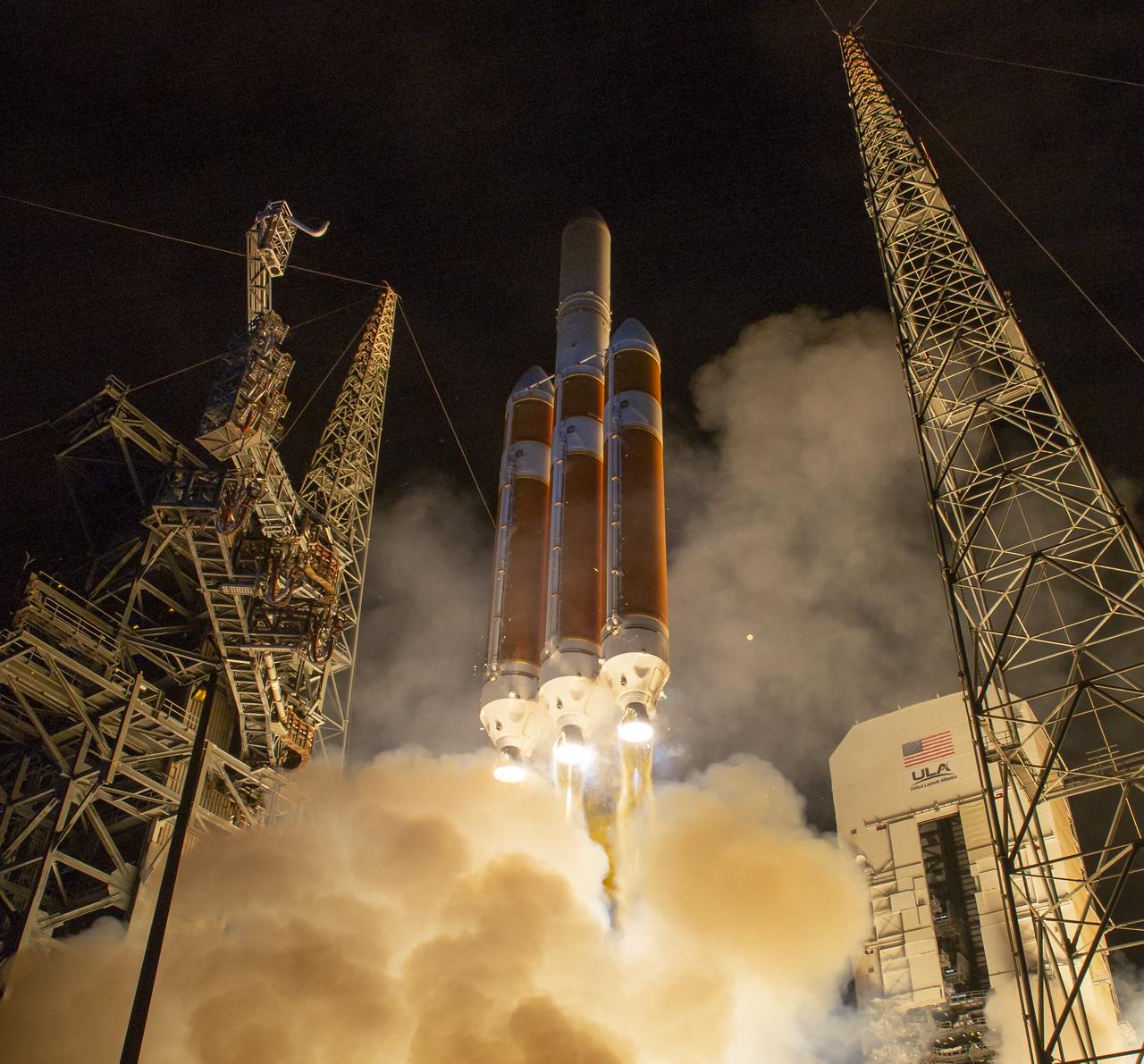
The United Launch Alliance Delta IV Heavy rocket launches NASA's Parker Solar Probe to touch the Sun, Sunday, Aug. 12, 2018 from Launch Complex 37 at Cape Canaveral Air Force Station, Florida. Parker Solar Probe is humanity’s first-ever mission into a part of the Sun’s atmosphere called the corona. Here it will directly explore solar processes that are key to understanding and forecasting space weather events that can impact life on Earth. Photo Credit: (NASA/Bill Ingalls)
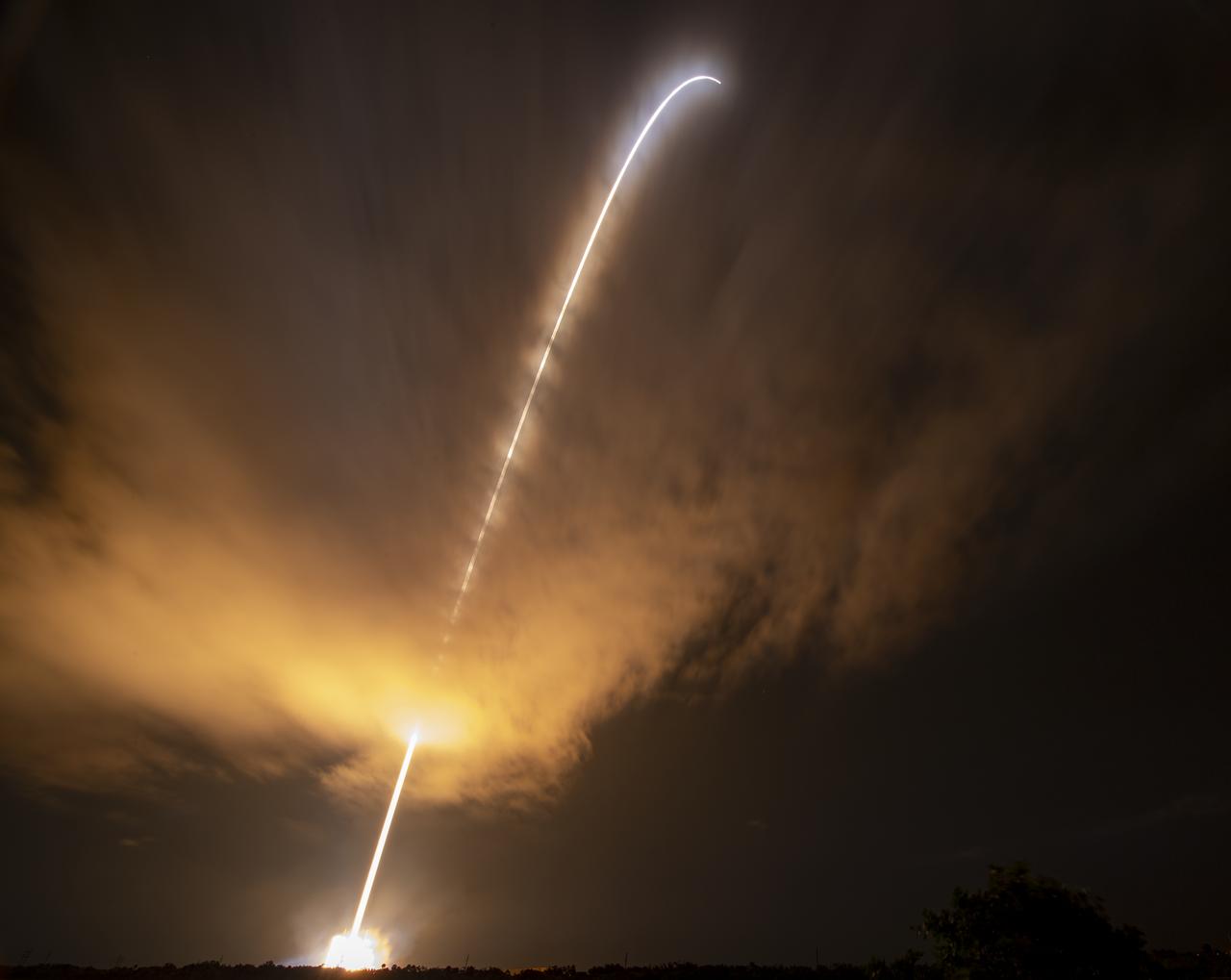
The United Launch Alliance Delta IV Heavy rocket is seen in this long exposure photograph as it launches NASA's Parker Solar Probe to touch the Sun, Sunday, Aug. 12, 2018 from Launch Complex 37 at Cape Canaveral Air Force Station, Florida. Parker Solar Probe is humanity’s first-ever mission into a part of the Sun’s atmosphere called the corona. Here it will directly explore solar processes that are key to understanding and forecasting space weather events that can impact life on Earth. Photo Credit: (NASA/Bill Ingalls)
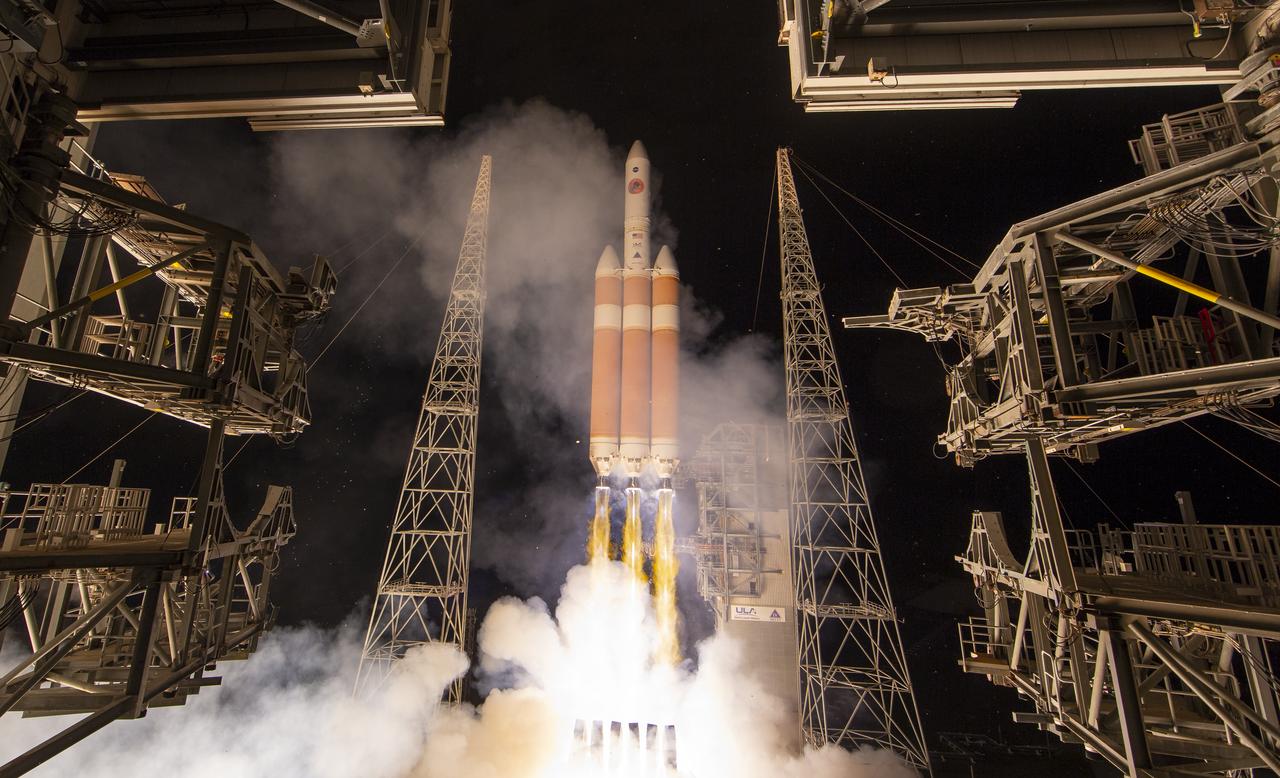
The United Launch Alliance Delta IV Heavy rocket launches NASA's Parker Solar Probe to touch the Sun, Sunday, Aug. 12, 2018 from Launch Complex 37 at Cape Canaveral Air Force Station, Florida. Parker Solar Probe is humanity’s first-ever mission into a part of the Sun’s atmosphere called the corona. Here it will directly explore solar processes that are key to understanding and forecasting space weather events that can impact life on Earth. Photo Credit: (NASA/Bill Ingalls)
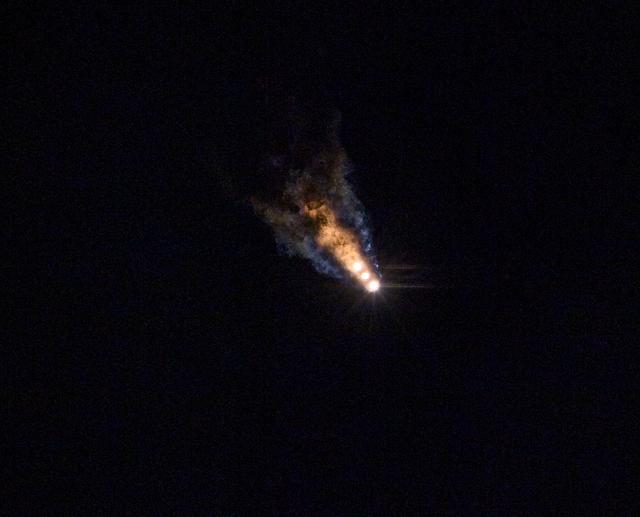
The United Launch Alliance Delta IV Heavy rocket launches NASA's Parker Solar Probe to touch the Sun, Sunday, Aug. 12, 2018 from Launch Complex 37 at Cape Canaveral Air Force Station, Florida. Parker Solar Probe is humanity’s first-ever mission into a part of the Sun’s atmosphere called the corona. Here it will directly explore solar processes that are key to understanding and forecasting space weather events that can impact life on Earth. Photo Credit: (NASA/Bill Ingalls)
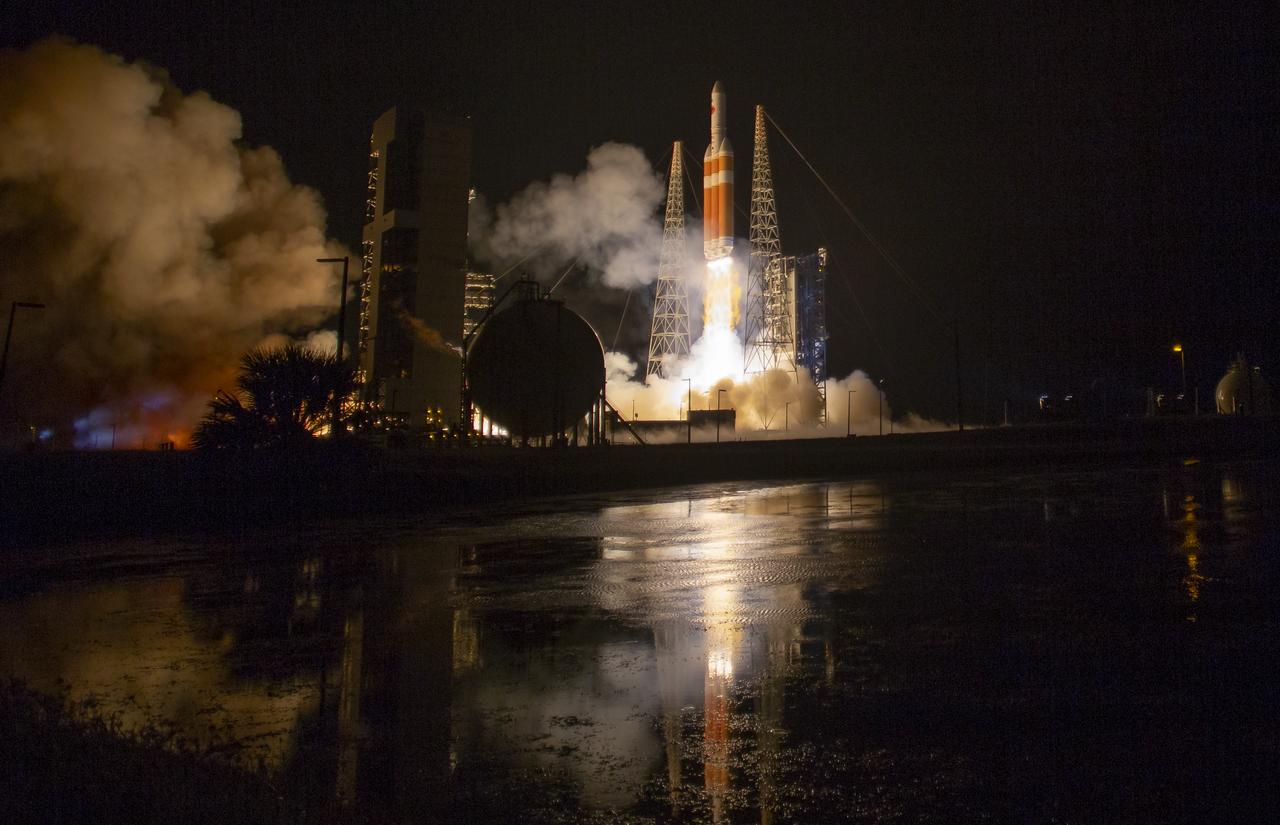
The United Launch Alliance Delta IV Heavy rocket launches NASA's Parker Solar Probe to touch the Sun, Sunday, Aug. 12, 2018 from Launch Complex 37 at Cape Canaveral Air Force Station, Florida. Parker Solar Probe is humanity’s first-ever mission into a part of the Sun’s atmosphere called the corona. Here it will directly explore solar processes that are key to understanding and forecasting space weather events that can impact life on Earth. Photo Credit: (NASA/Bill Ingalls)
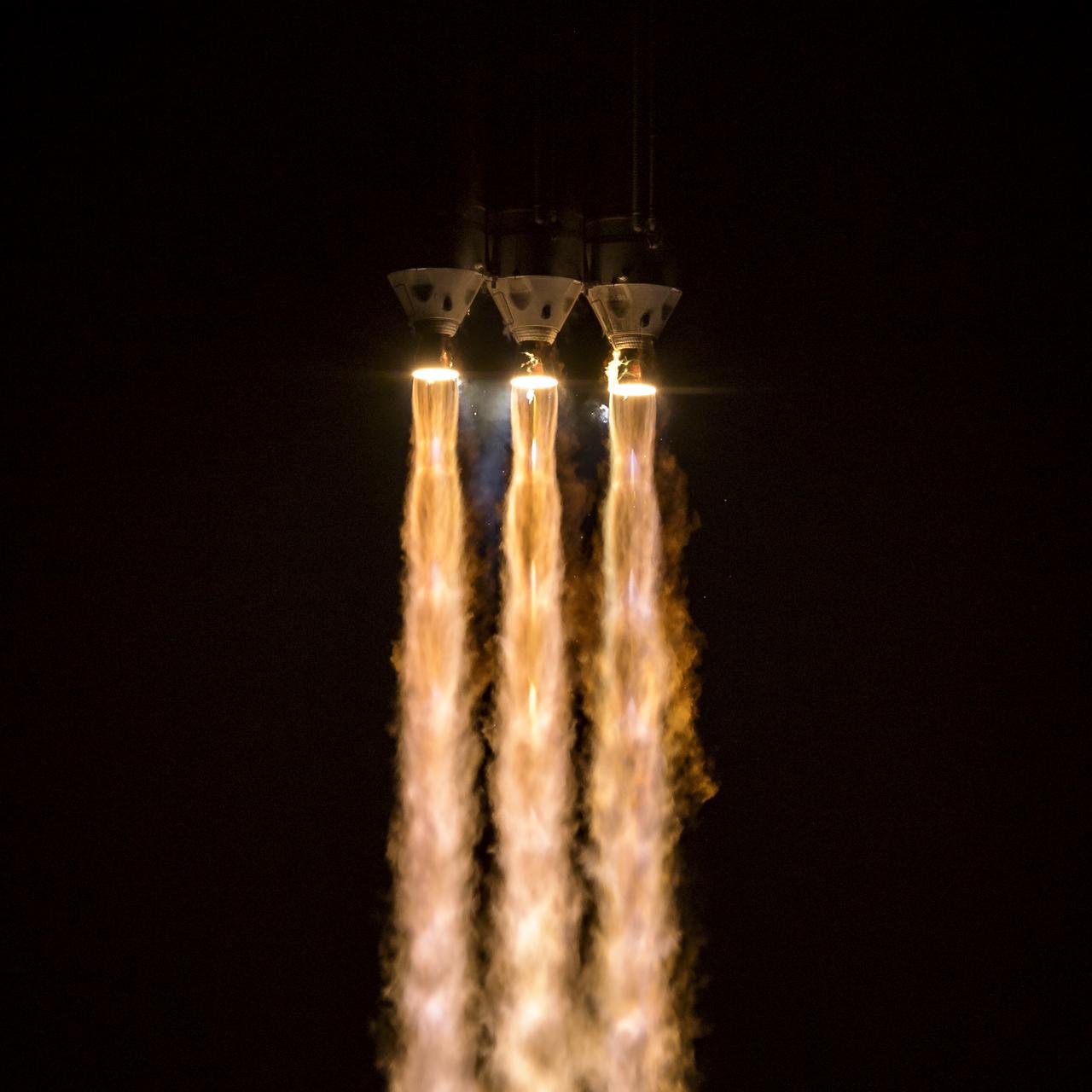
The United Launch Alliance Delta IV Heavy rocket launches NASA's Parker Solar Probe to touch the Sun, Sunday, Aug. 12, 2018 from Launch Complex 37 at Cape Canaveral Air Force Station, Florida. Parker Solar Probe is humanity’s first-ever mission into a part of the Sun’s atmosphere called the corona. Here it will directly explore solar processes that are key to understanding and forecasting space weather events that can impact life on Earth. Photo Credit: (NASA/Bill Ingalls)
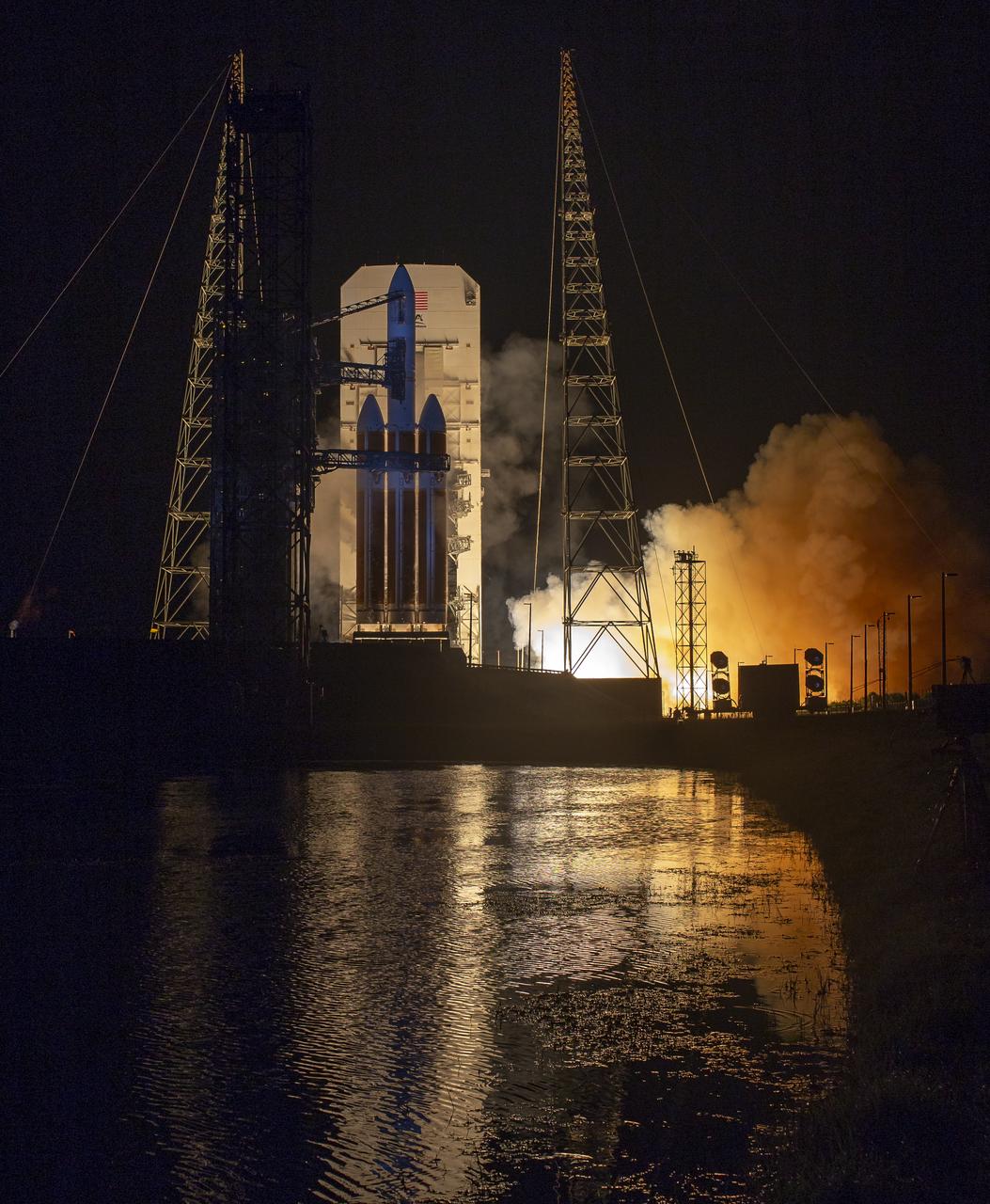
The United Launch Alliance Delta IV Heavy rocket launches NASA's Parker Solar Probe to touch the Sun, Sunday, Aug. 12, 2018 from Launch Complex 37 at Cape Canaveral Air Force Station, Florida. Parker Solar Probe is humanity’s first-ever mission into a part of the Sun’s atmosphere called the corona. Here it will directly explore solar processes that are key to understanding and forecasting space weather events that can impact life on Earth. Photo Credit: (NASA/Bill Ingalls)
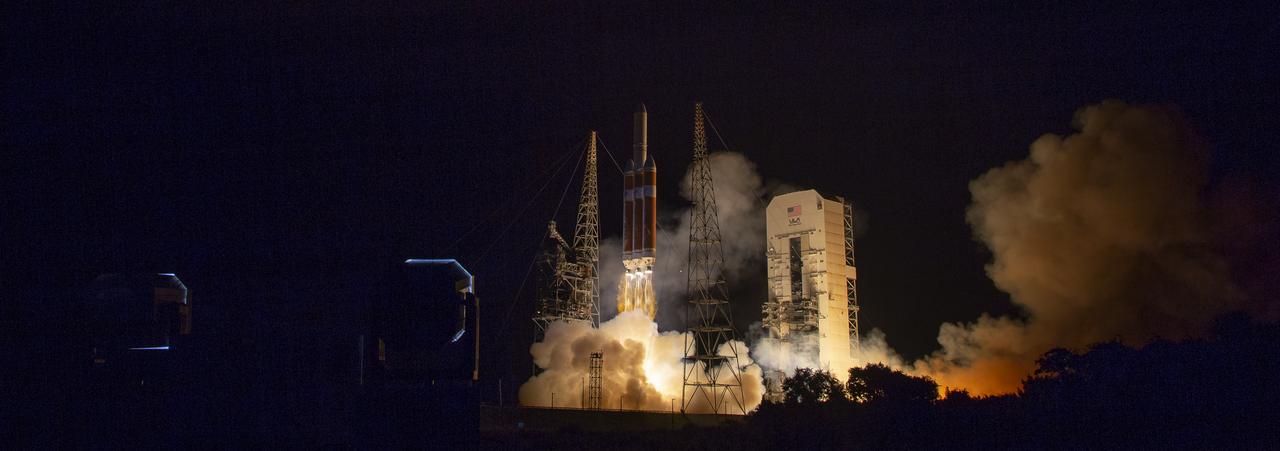
The United Launch Alliance Delta IV Heavy rocket launches NASA's Parker Solar Probe to touch the Sun, Sunday, Aug. 12, 2018 from Launch Complex 37 at Cape Canaveral Air Force Station, Florida. Parker Solar Probe is humanity’s first-ever mission into a part of the Sun’s atmosphere called the corona. Here it will directly explore solar processes that are key to understanding and forecasting space weather events that can impact life on Earth. Photo Credit: (NASA/Bill Ingalls)
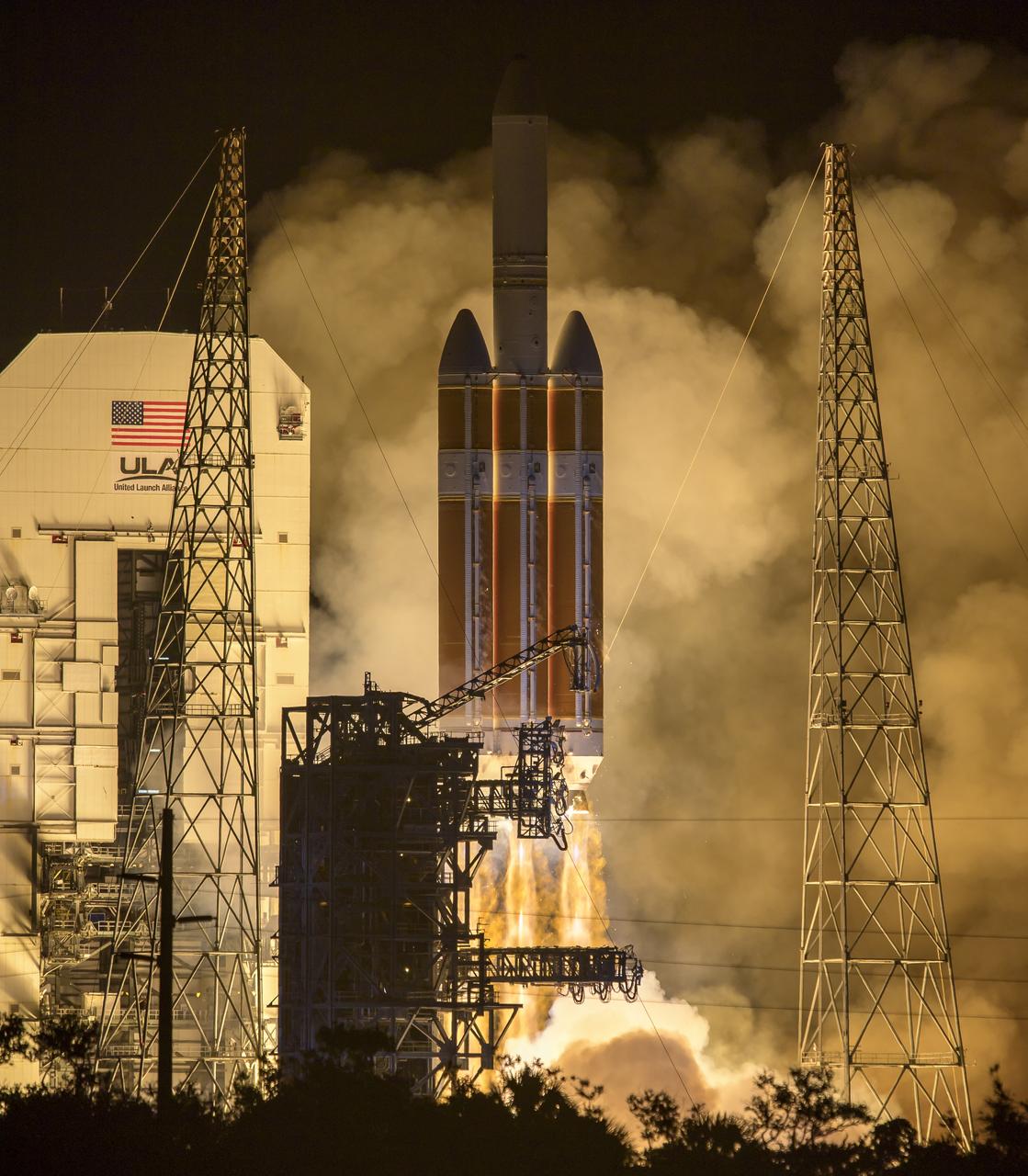
The United Launch Alliance Delta IV Heavy rocket launches NASA's Parker Solar Probe to touch the Sun, Sunday, Aug. 12, 2018 from Launch Complex 37 at Cape Canaveral Air Force Station, Florida. Parker Solar Probe is humanity’s first-ever mission into a part of the Sun’s atmosphere called the corona. Here it will directly explore solar processes that are key to understanding and forecasting space weather events that can impact life on Earth. Photo Credit: (NASA/Bill Ingalls)
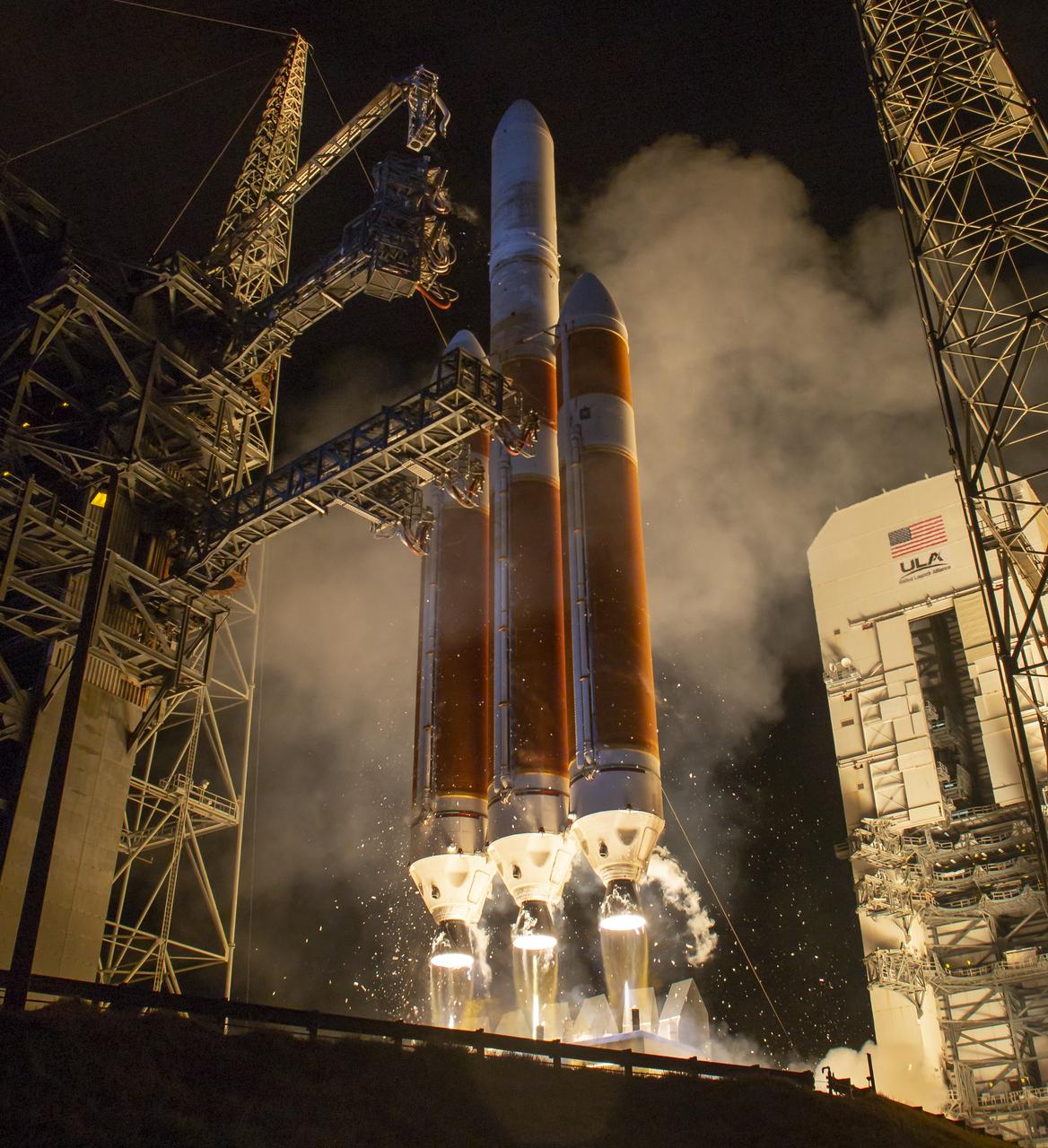
The United Launch Alliance Delta IV Heavy rocket launches NASA's Parker Solar Probe to touch the Sun, Sunday, Aug. 12, 2018 from Launch Complex 37 at Cape Canaveral Air Force Station, Florida. Parker Solar Probe is humanity’s first-ever mission into a part of the Sun’s atmosphere called the corona. Here it will directly explore solar processes that are key to understanding and forecasting space weather events that can impact life on Earth. Photo Credit: (NASA/Bill Ingalls)
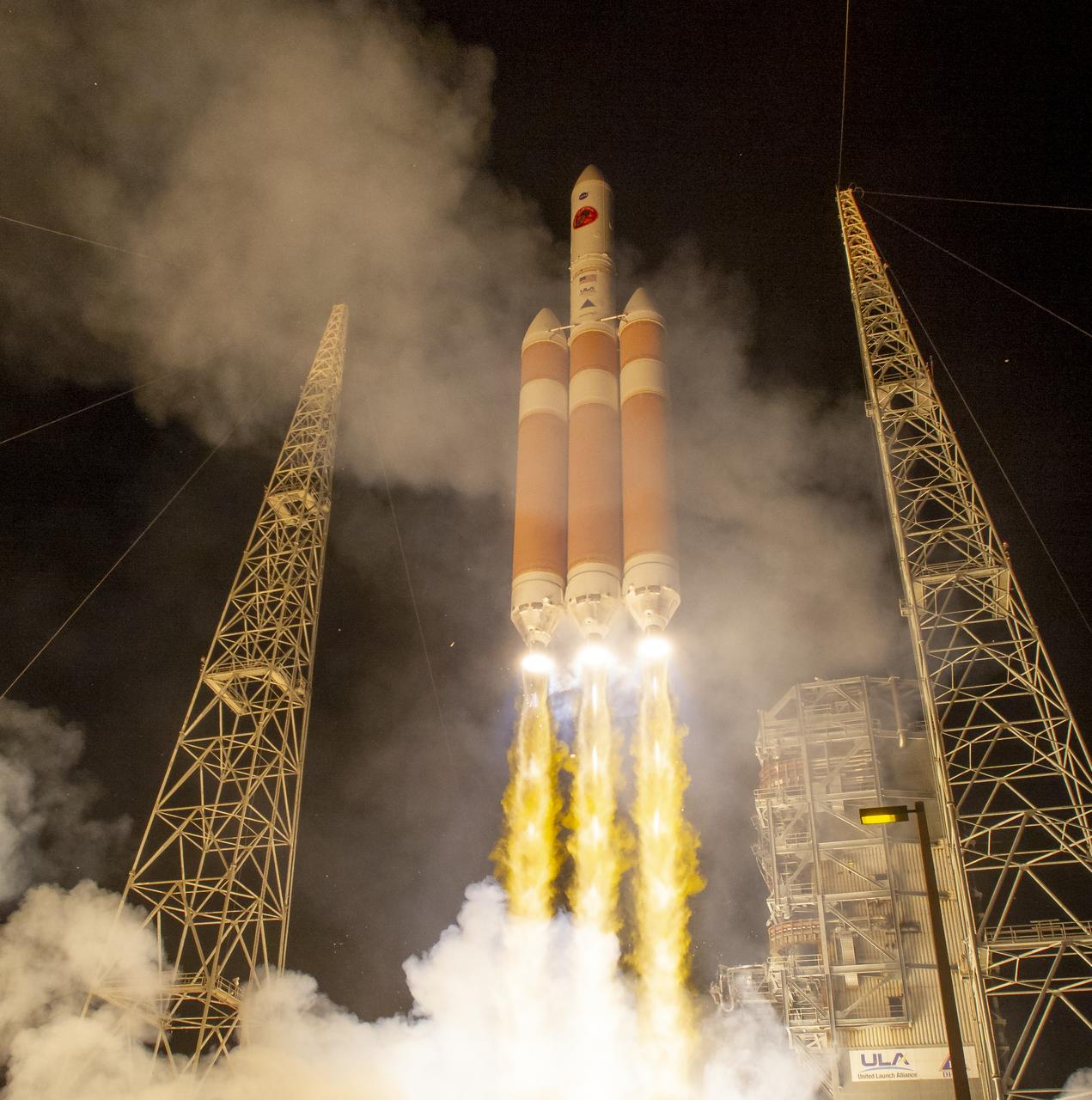
The United Launch Alliance Delta IV Heavy rocket launches NASA's Parker Solar Probe to touch the Sun, Sunday, Aug. 12, 2018 from Launch Complex 37 at Cape Canaveral Air Force Station, Florida. Parker Solar Probe is humanity’s first-ever mission into a part of the Sun’s atmosphere called the corona. Here it will directly explore solar processes that are key to understanding and forecasting space weather events that can impact life on Earth. Photo Credit: (NASA/Bill Ingalls)
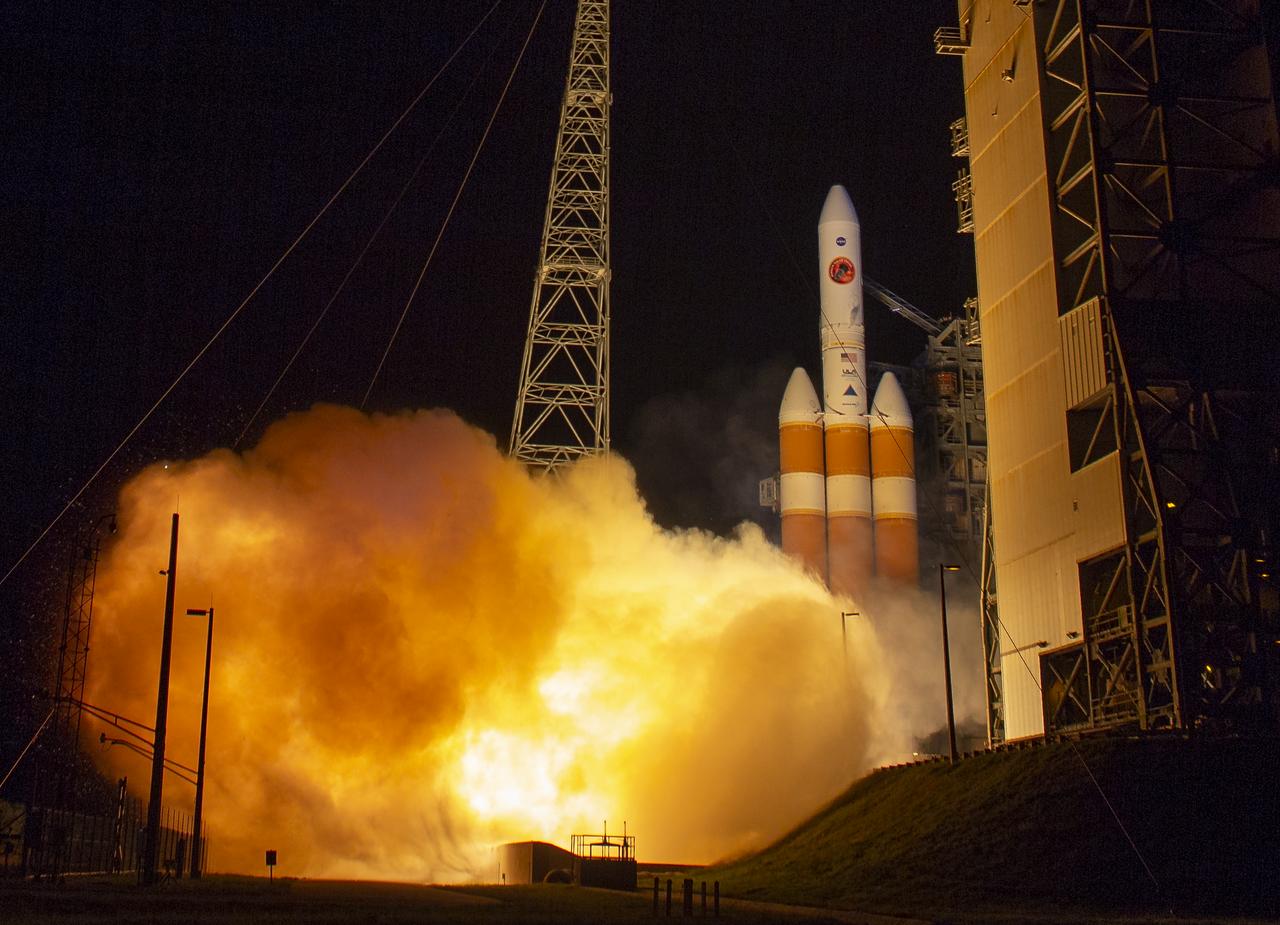
The United Launch Alliance Delta IV Heavy rocket launches NASA's Parker Solar Probe to touch the Sun, Sunday, Aug. 12, 2018 from Launch Complex 37 at Cape Canaveral Air Force Station, Florida. Parker Solar Probe is humanity’s first-ever mission into a part of the Sun’s atmosphere called the corona. Here it will directly explore solar processes that are key to understanding and forecasting space weather events that can impact life on Earth. Photo Credit: (NASA/Bill Ingalls)
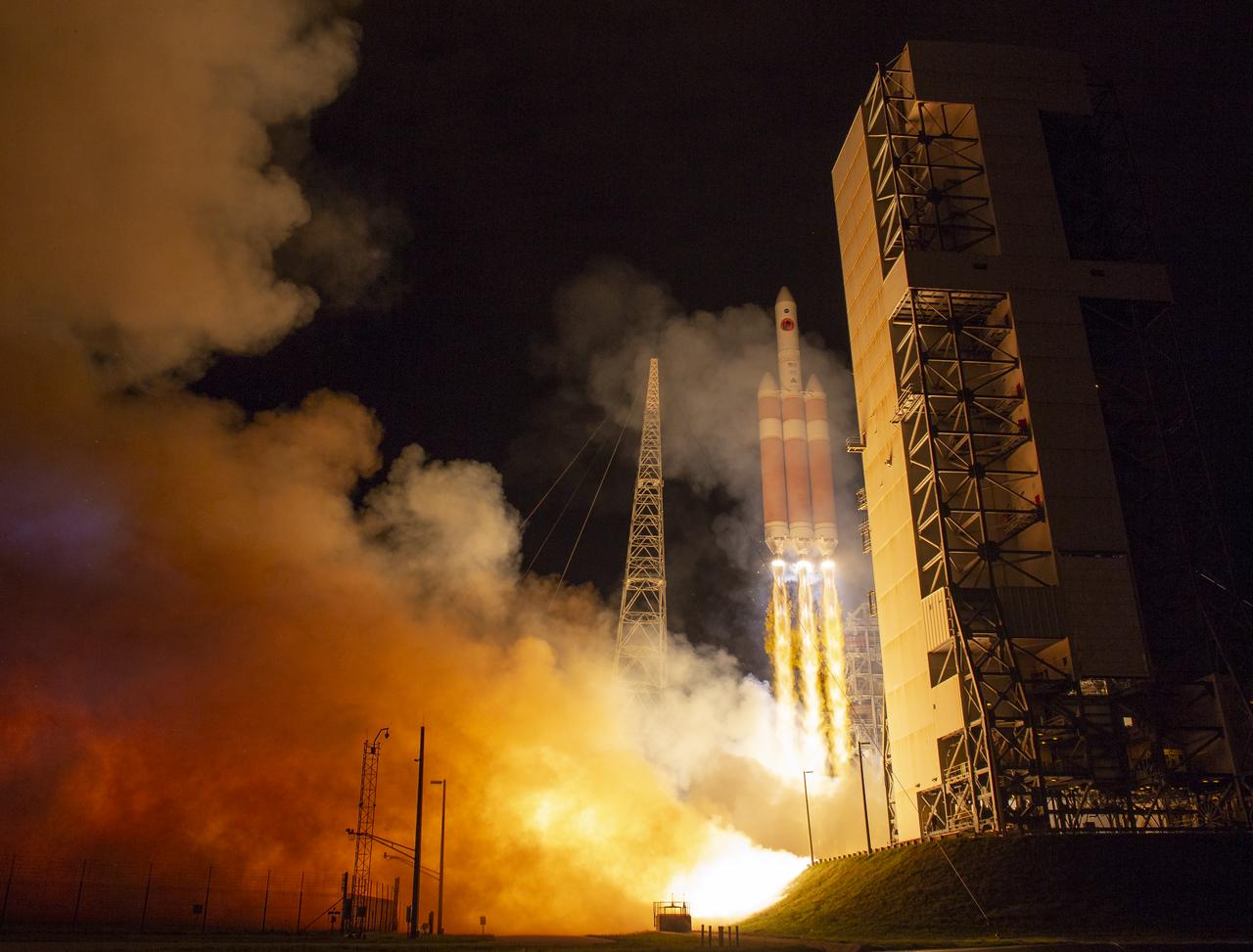
The United Launch Alliance Delta IV Heavy rocket launches NASA's Parker Solar Probe to touch the Sun, Sunday, Aug. 12, 2018 from Launch Complex 37 at Cape Canaveral Air Force Station, Florida. Parker Solar Probe is humanity’s first-ever mission into a part of the Sun’s atmosphere called the corona. Here it will directly explore solar processes that are key to understanding and forecasting space weather events that can impact life on Earth. Photo Credit: (NASA/Bill Ingalls)
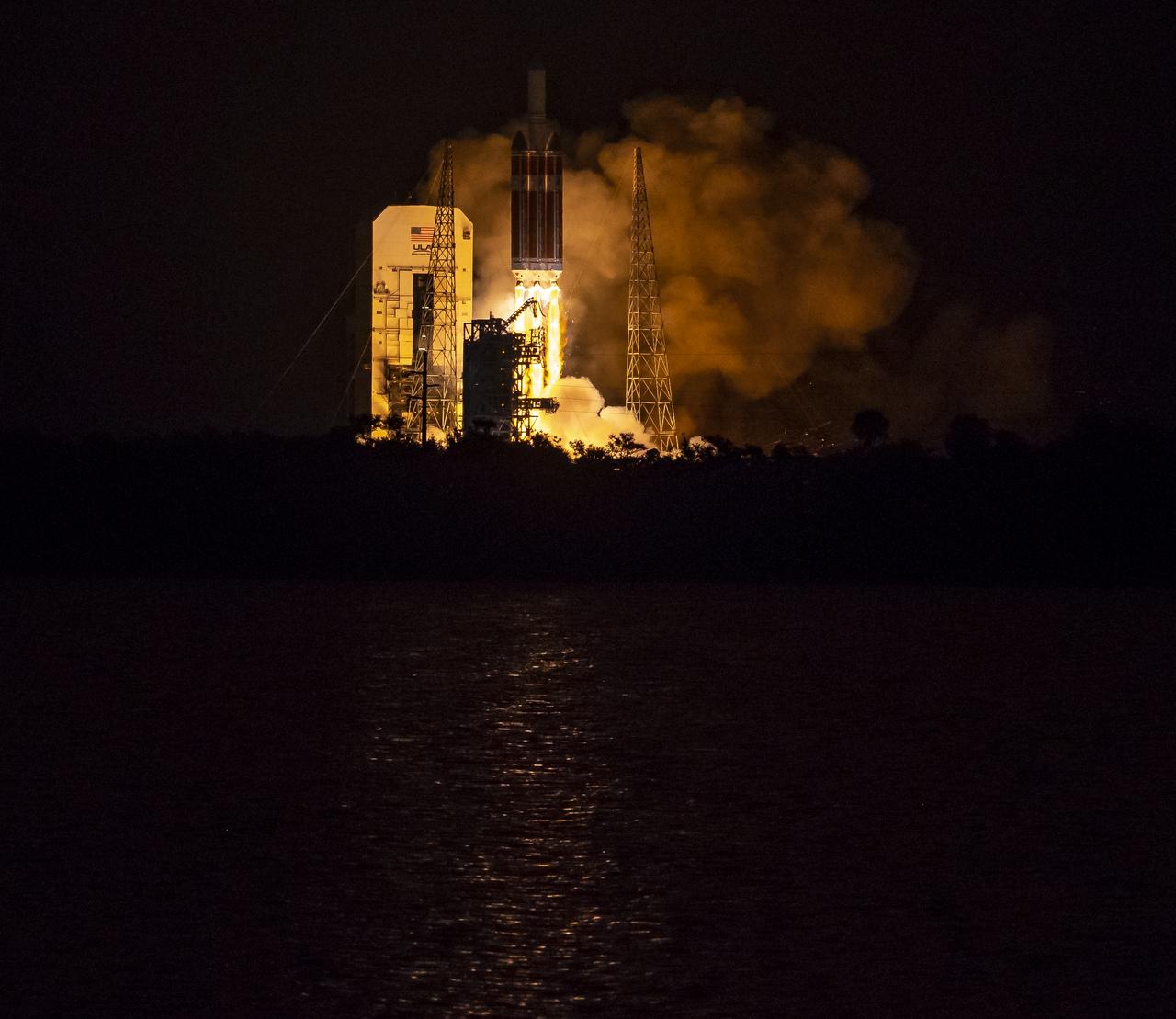
The United Launch Alliance Delta IV Heavy rocket launches NASA's Parker Solar Probe to touch the Sun, Sunday, Aug. 12, 2018 from Launch Complex 37 at Cape Canaveral Air Force Station, Florida. Parker Solar Probe is humanity’s first-ever mission into a part of the Sun’s atmosphere called the corona. Here it will directly explore solar processes that are key to understanding and forecasting space weather events that can impact life on Earth. Photo Credit: (NASA/Bill Ingalls)
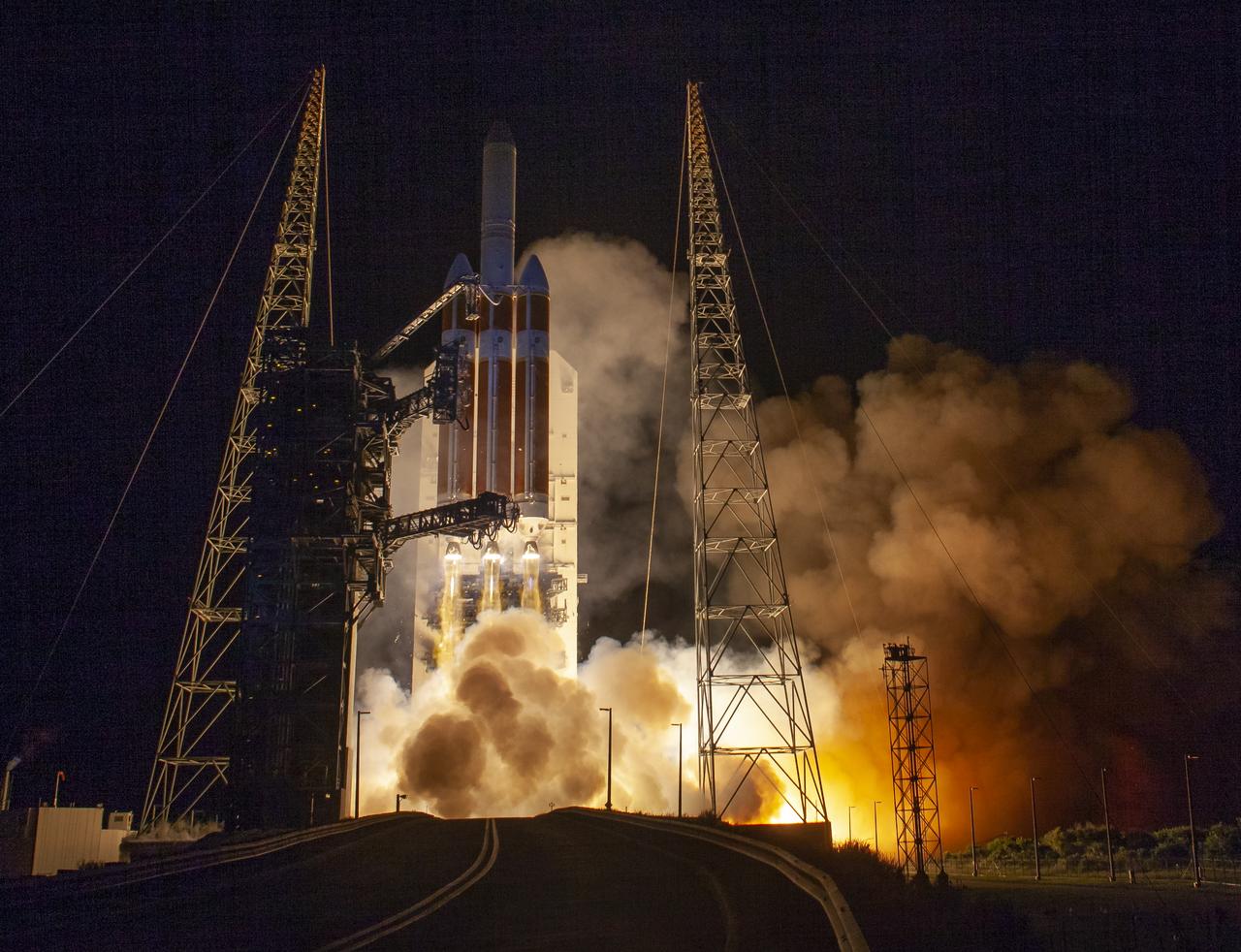
The United Launch Alliance Delta IV Heavy rocket launches NASA's Parker Solar Probe to touch the Sun, Sunday, Aug. 12, 2018 from Launch Complex 37 at Cape Canaveral Air Force Station, Florida. Parker Solar Probe is humanity’s first-ever mission into a part of the Sun’s atmosphere called the corona. Here it will directly explore solar processes that are key to understanding and forecasting space weather events that can impact life on Earth. Photo Credit: (NASA/Bill Ingalls)
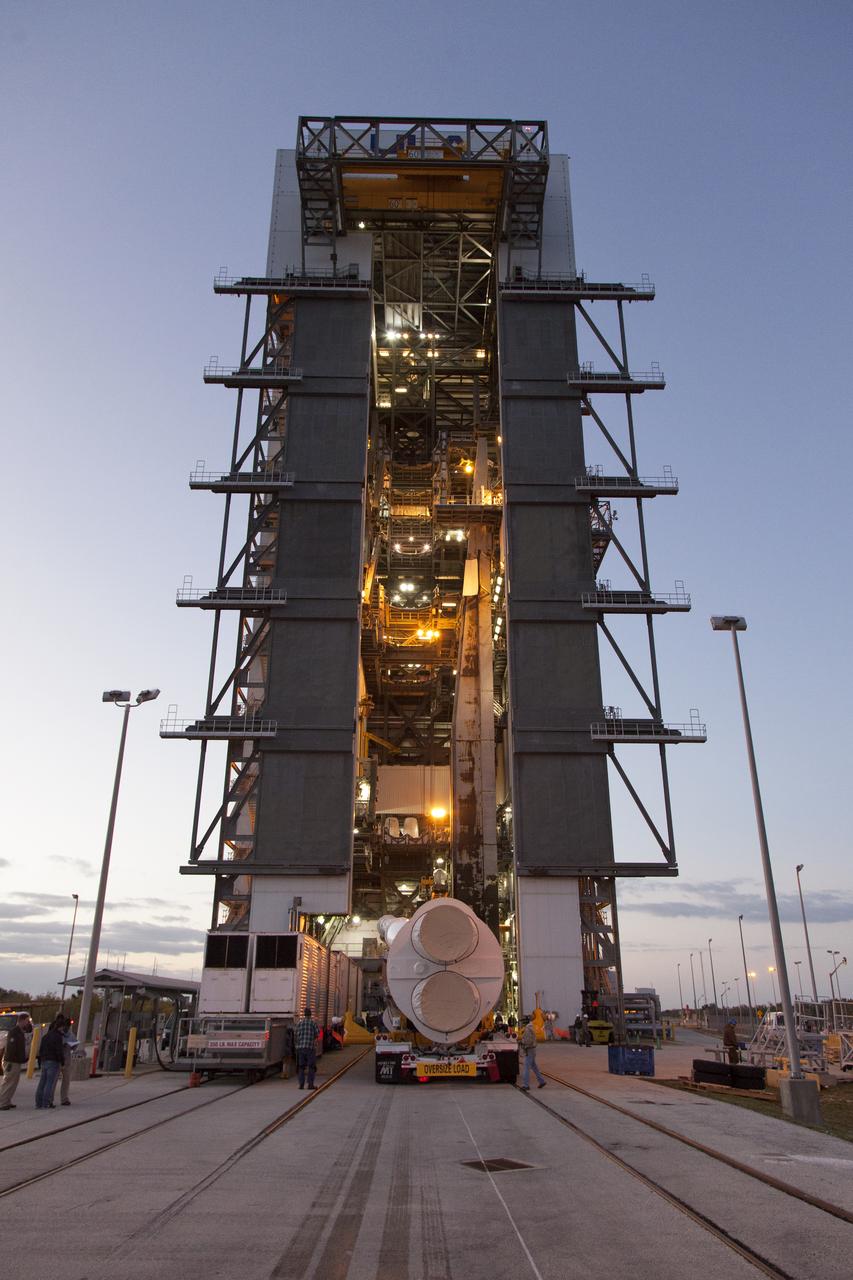
A United Launch Alliance Atlas V first stage arrives at the Vertical Integration Facility at Space Launch Complex 41 at Cape Canaveral Air Force Station in Florida. The rocket is being prepared to launch the Geostationary Operational Environmental Satellite, or GOES-S. It will be the second in a series of four advanced geostationary weather satellites and will significantly improve the detection and observation of environmental phenomena that directly affect public safety. GOES-S is slated to launch March 1, 2018.
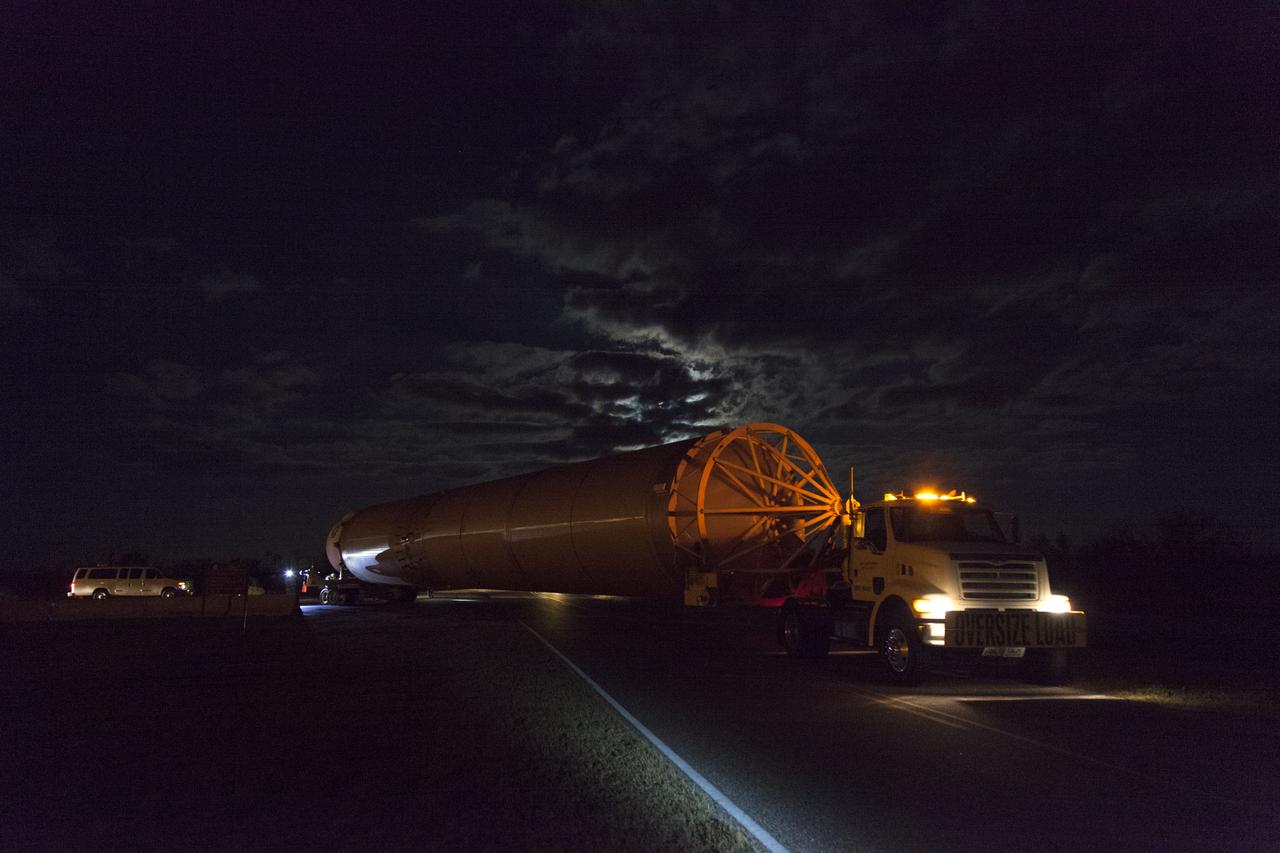
A United Launch Alliance Atlas V first stage leaves the Atlas Spaceflight Operations Center aboard a transport trailer for delivery to the Vertical Integration Facility at Space Launch Complex 41 at Cape Canaveral Air Force Station in Florida. The rocket is being prepared to launch the Geostationary Operational Environmental Satellite, or GOES-S. It will be the second in a series of four advanced geostationary weather satellites and will significantly improve the detection and observation of environmental phenomena that directly affect public safety. GOES-S is slated to launch March 1, 2018.
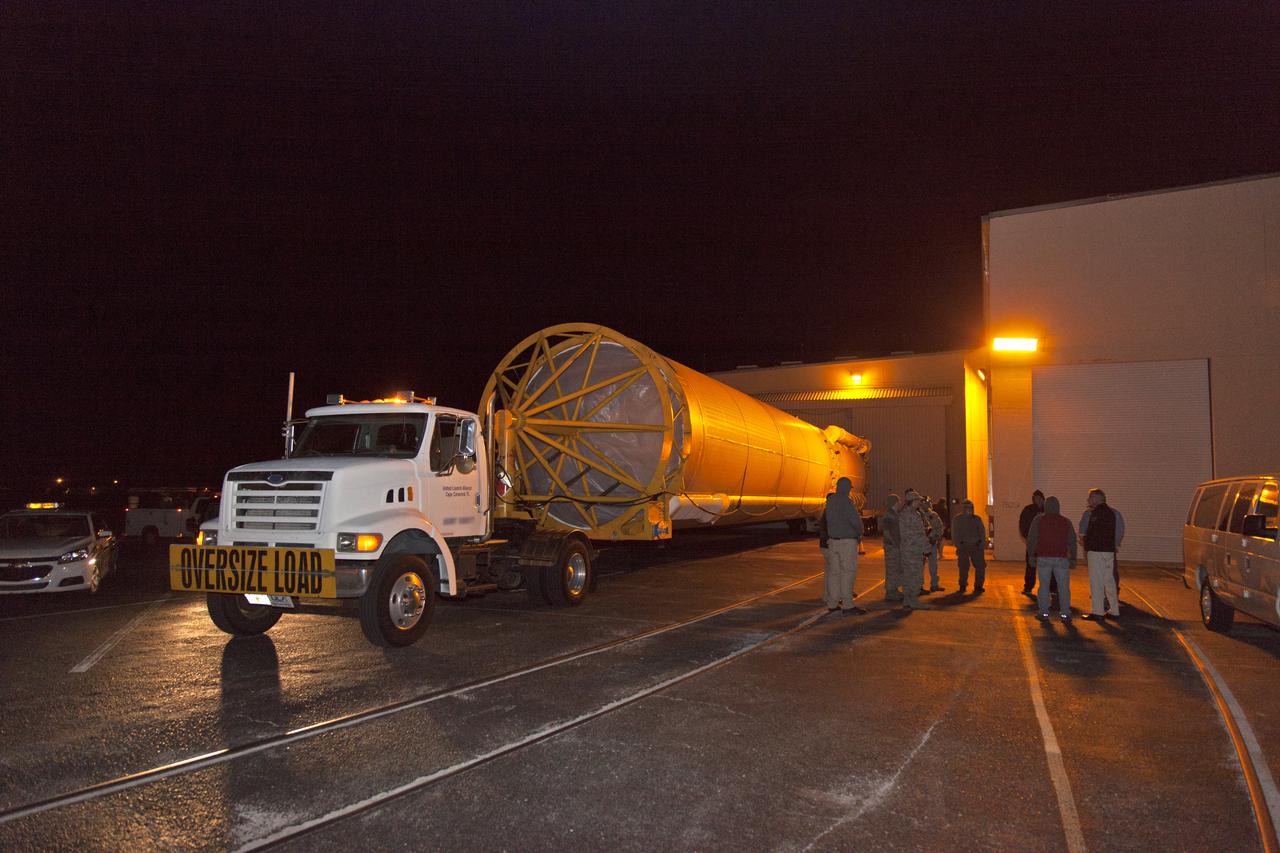
A United Launch Alliance Atlas V first stage leaves the Atlas Spaceflight Operations Center aboard a transport trailer for delivery to the Vertical Integration Facility at Space Launch Complex 41 at Cape Canaveral Air Force Station in Florida. The rocket is being prepared to launch the Geostationary Operational Environmental Satellite, or GOES-S. It will be the second in a series of four advanced geostationary weather satellites and will significantly improve the detection and observation of environmental phenomena that directly affect public safety. GOES-S is slated to launch March 1, 2018.
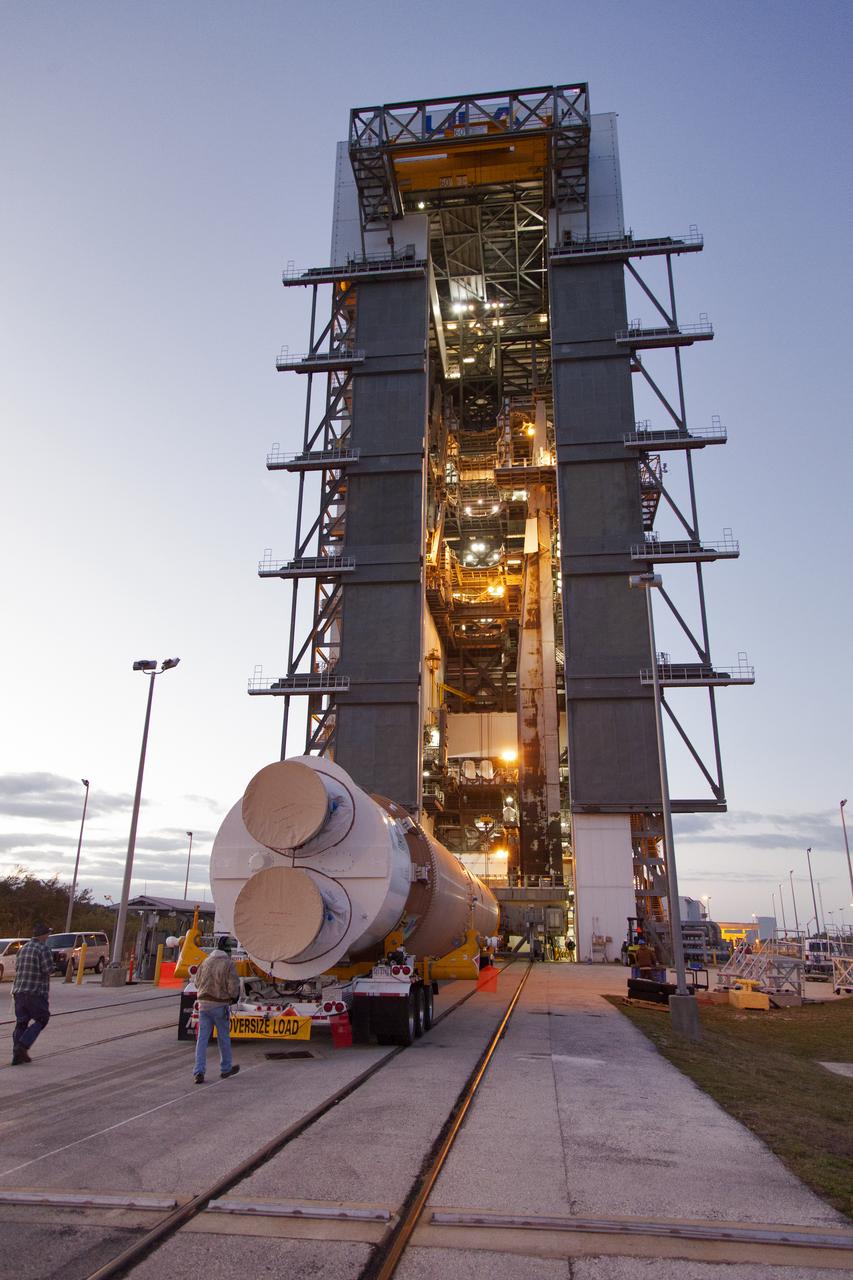
A United Launch Alliance Atlas V first stage arrives at the Vertical Integration Facility at Space Launch Complex 41 at Cape Canaveral Air Force Station in Florida. The rocket is being prepared to launch the Geostationary Operational Environmental Satellite, or GOES-S. It will be the second in a series of four advanced geostationary weather satellites and will significantly improve the detection and observation of environmental phenomena that directly affect public safety. GOES-S is slated to launch March 1, 2018.
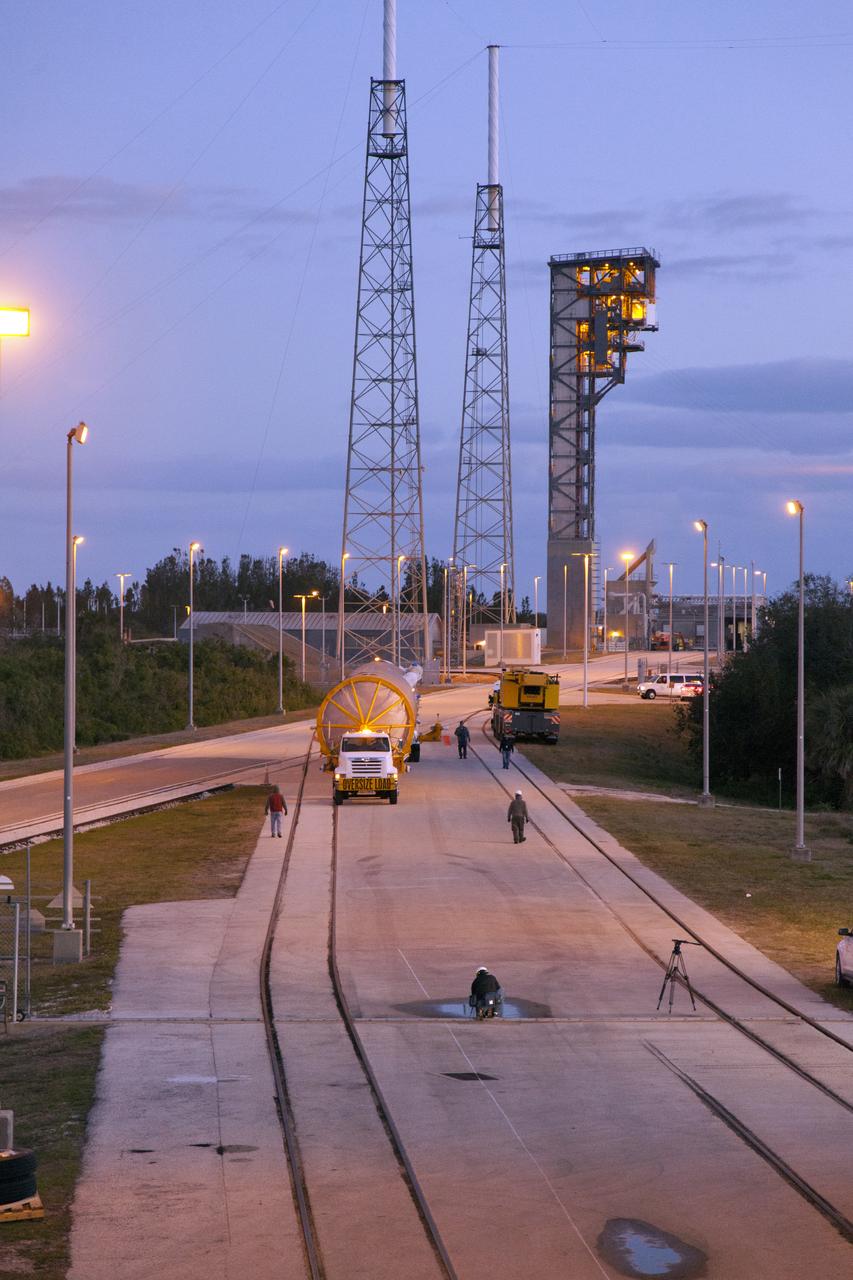
A United Launch Alliance Atlas V first stage arrives at the Vertical Integration Facility at Space Launch Complex 41 at Cape Canaveral Air Force Station in Florida. The rocket is being prepared to launch the Geostationary Operational Environmental Satellite, or GOES-S. It will be the second in a series of four advanced geostationary weather satellites and will significantly improve the detection and observation of environmental phenomena that directly affect public safety. GOES-S is slated to launch March 1, 2018.
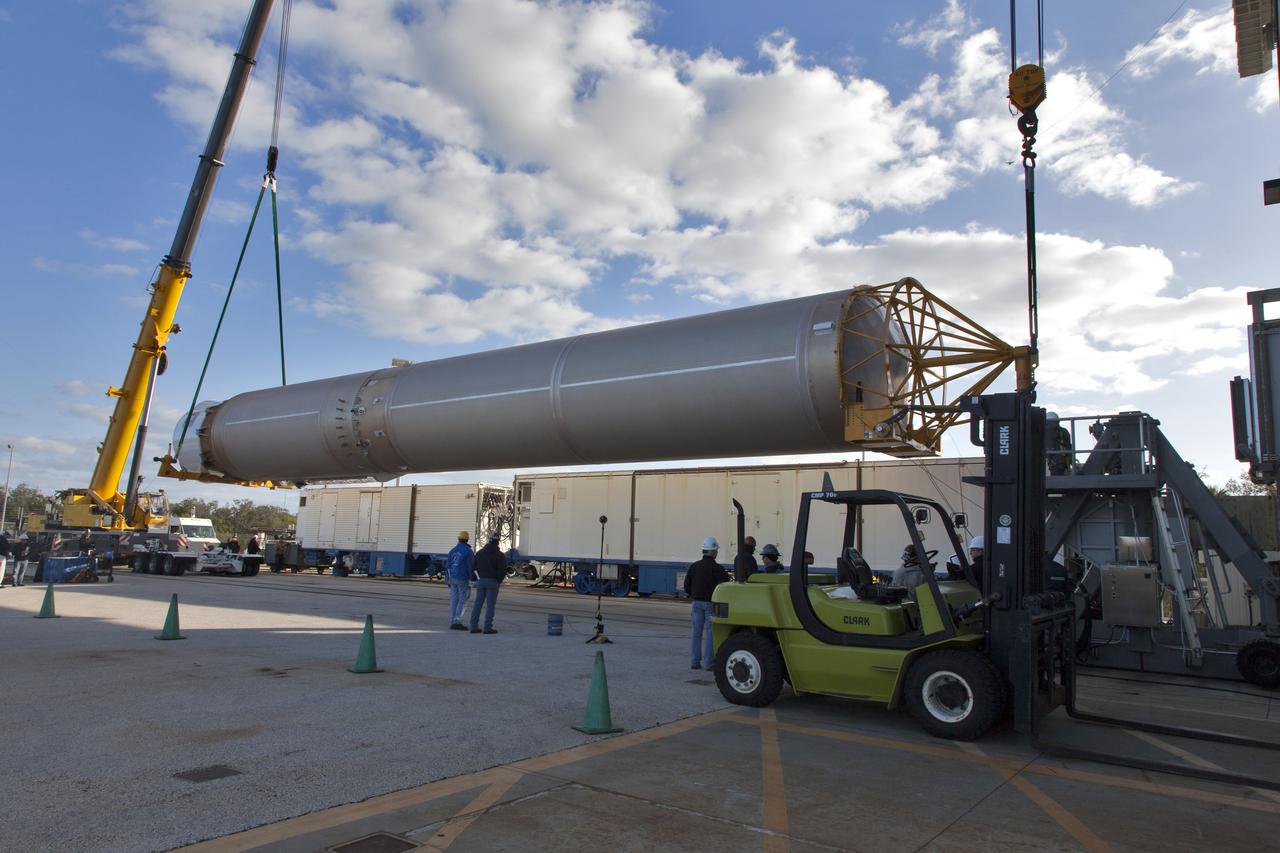
A crane lifts a United Launch Alliance Atlas V first stage at the Vertical Integration Facility at Space Launch Complex 41 at Cape Canaveral Air Force Station in Florida. The rocket will be positioned on its launcher to boost the Geostationary Operational Environmental Satellite, or GOES-S. It will be the second in a series of four advanced geostationary weather satellites and will significantly improve the detection and observation of environmental phenomena that directly affect public safety. GOES-S is slated to launch March 1, 2018.
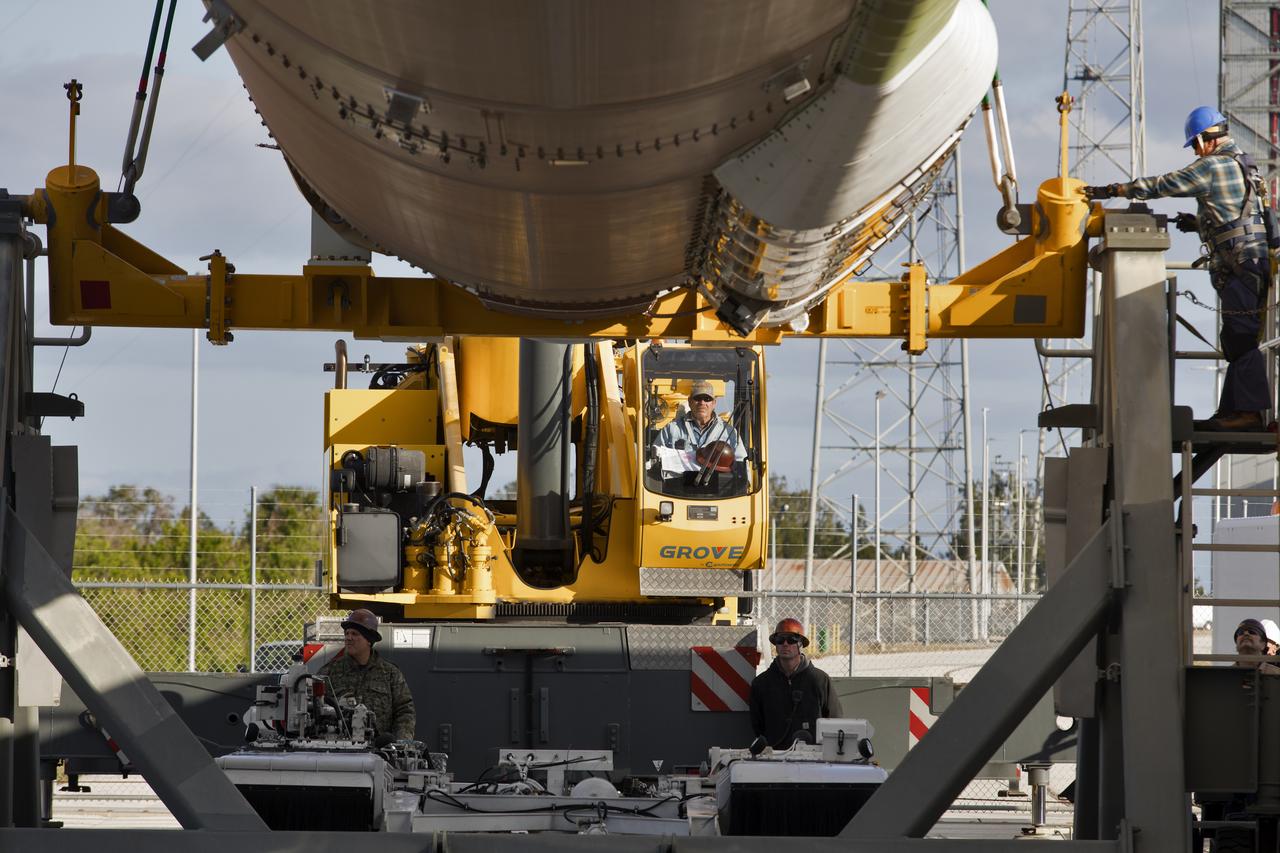
A crane lifts a United Launch Alliance Atlas V first stage at the Vertical Integration Facility at Space Launch Complex 41 at Cape Canaveral Air Force Station in Florida. The rocket will be positioned on its launcher to boost the Geostationary Operational Environmental Satellite, or GOES-S. It will be the second in a series of four advanced geostationary weather satellites and will significantly improve the detection and observation of environmental phenomena that directly affect public safety. GOES-S is slated to launch March 1, 2018.
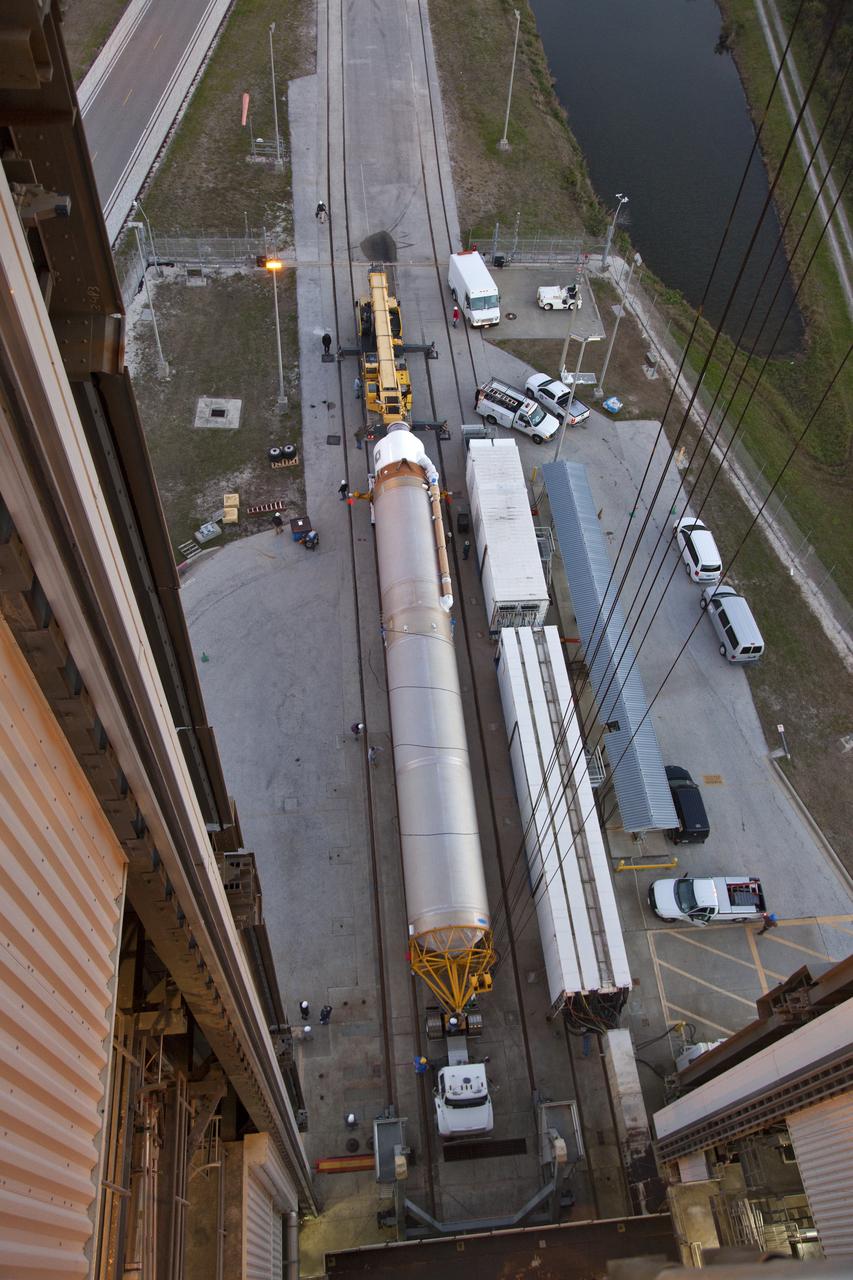
A United Launch Alliance Atlas V first stage arrives at the Vertical Integration Facility at Space Launch Complex 41 at Cape Canaveral Air Force Station in Florida. The rocket will be positioned on its launcher to boost the Geostationary Operational Environmental Satellite, or GOES-S. It will be the second in a series of four advanced geostationary weather satellites and will significantly improve the detection and observation of environmental phenomena that directly affect public safety. GOES-S is slated to launch March 1, 2018.
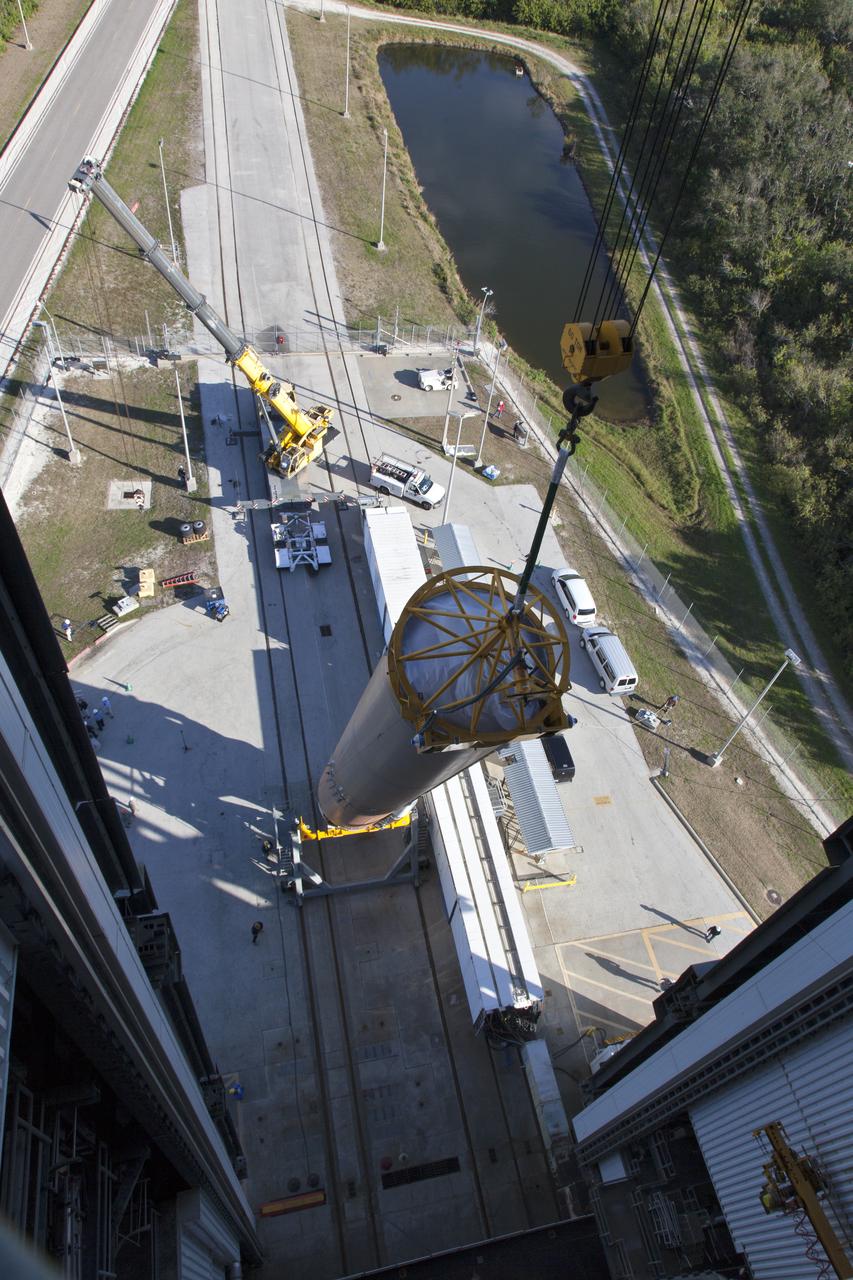
A crane lifts a United Launch Alliance Atlas V first stage at the Vertical Integration Facility at Space Launch Complex 41 at Cape Canaveral Air Force Station in Florida. The rocket will be positioned on its launcher to boost the Geostationary Operational Environmental Satellite, or GOES-S. It will be the second in a series of four advanced geostationary weather satellites and will significantly improve the detection and observation of environmental phenomena that directly affect public safety. GOES-S is slated to launch March 1, 2018.
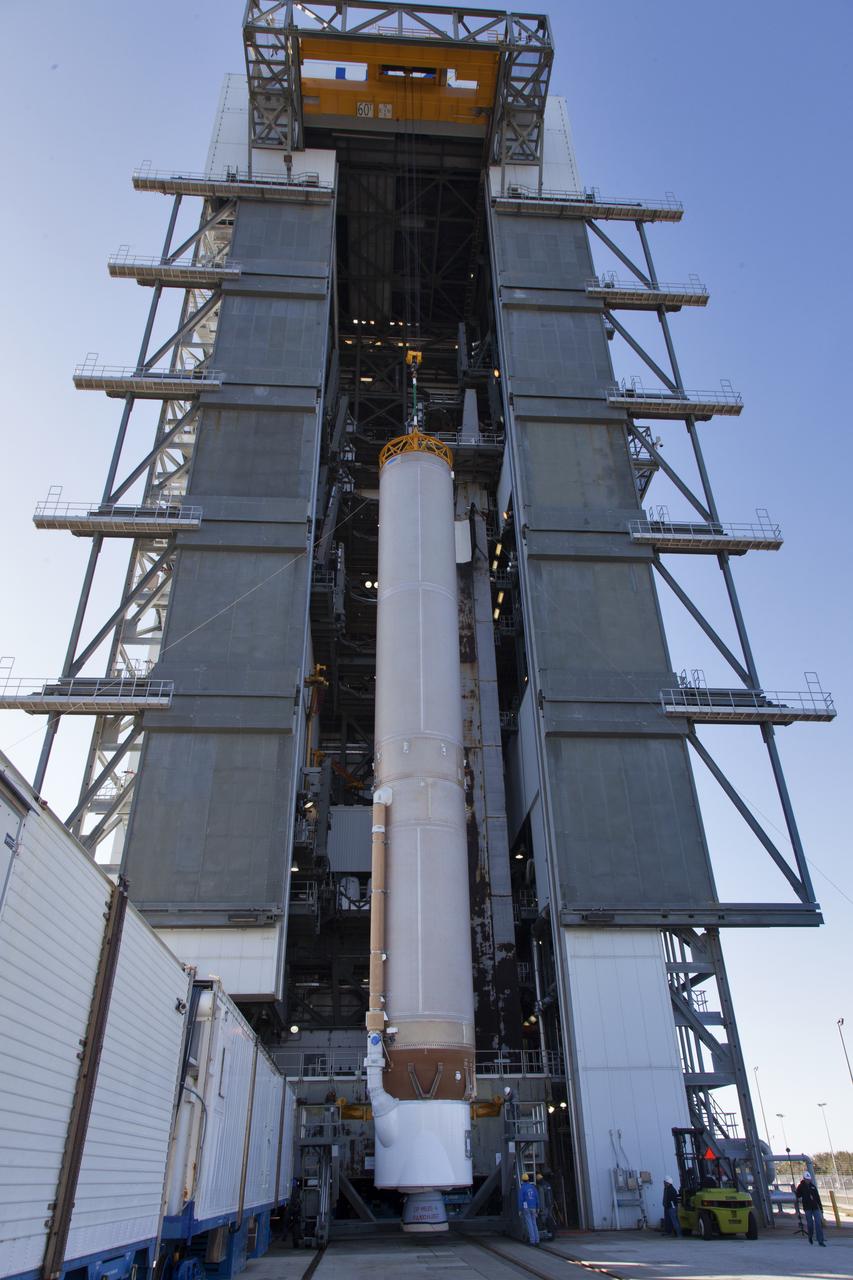
A crane lifts a United Launch Alliance Atlas V first stage into the Vertical Integration Facility at Space Launch Complex 41 at Cape Canaveral Air Force Station in Florida. The rocket will be positioned on its launcher to boost the Geostationary Operational Environmental Satellite, or GOES-S. It will be the second in a series of four advanced geostationary weather satellites and will significantly improve the detection and observation of environmental phenomena that directly affect public safety. GOES-S is slated to launch March 1, 2018.
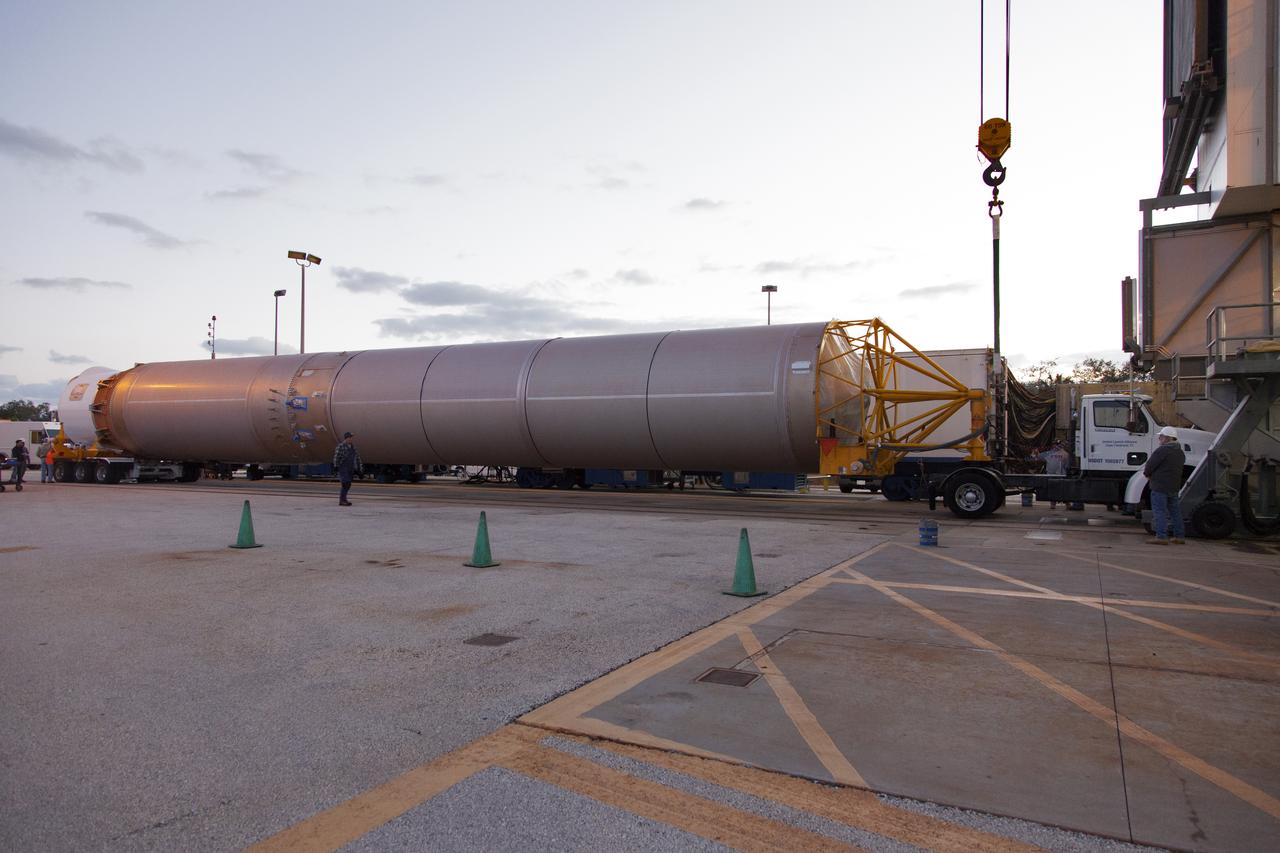
A United Launch Alliance Atlas V first stage arrives at the Vertical Integration Facility at Space Launch Complex 41 at Cape Canaveral Air Force Station in Florida. The rocket will be positioned on its launcher to boost the Geostationary Operational Environmental Satellite, or GOES-S. It will be the second in a series of four advanced geostationary weather satellites and will significantly improve the detection and observation of environmental phenomena that directly affect public safety. GOES-S is slated to launch March 1, 2018.

A crane lifts a United Launch Alliance Atlas V first stage at the Vertical Integration Facility at Space Launch Complex 41 at Cape Canaveral Air Force Station in Florida. The rocket will be positioned on its launcher to boost the Geostationary Operational Environmental Satellite, or GOES-S. It will be the second in a series of four advanced geostationary weather satellites and will significantly improve the detection and observation of environmental phenomena that directly affect public safety. GOES-S is slated to launch March 1, 2018.
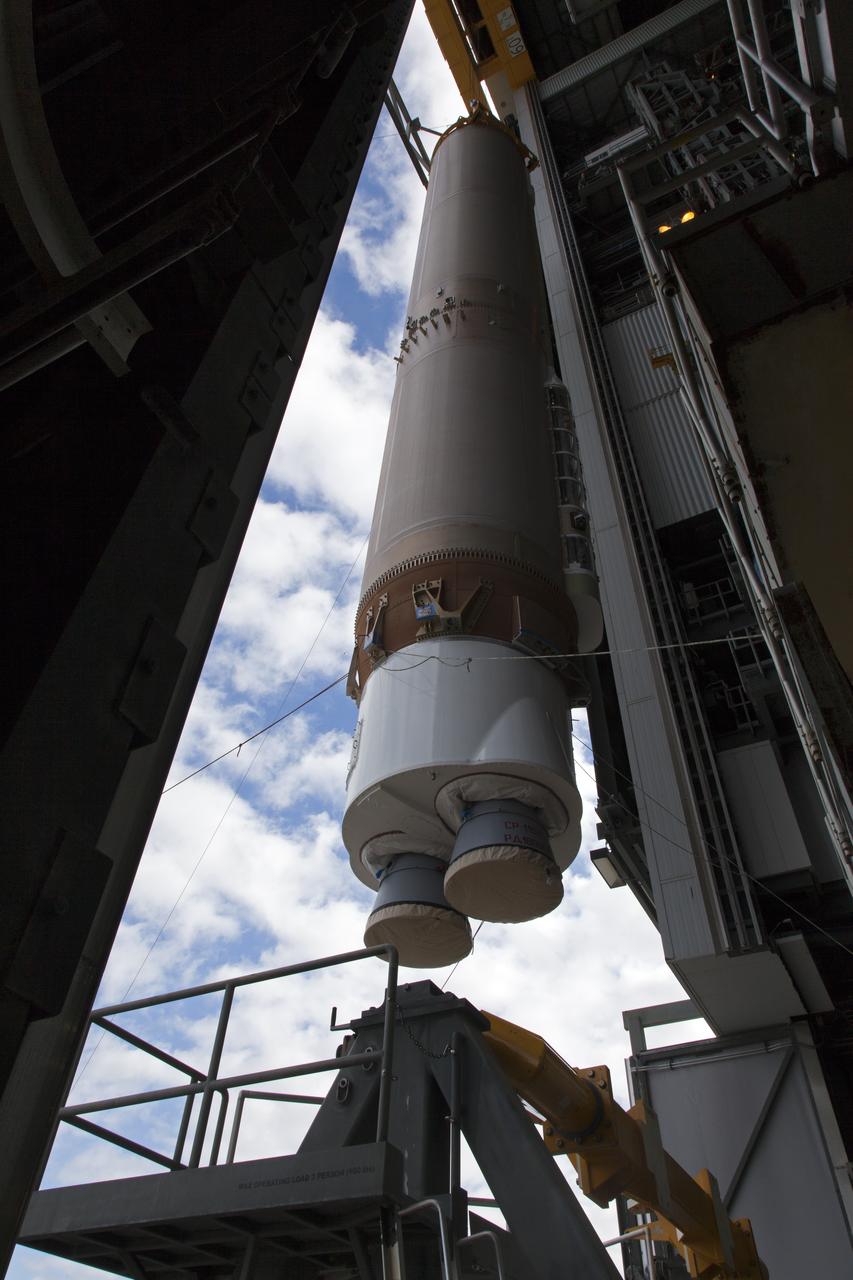
A crane lifts a United Launch Alliance Atlas V first stage into the Vertical Integration Facility at Space Launch Complex 41 at Cape Canaveral Air Force Station in Florida. The rocket will be positioned on its launcher to boost the Geostationary Operational Environmental Satellite, or GOES-S. It will be the second in a series of four advanced geostationary weather satellites and will significantly improve the detection and observation of environmental phenomena that directly affect public safety. GOES-S is slated to launch March 1, 2018.
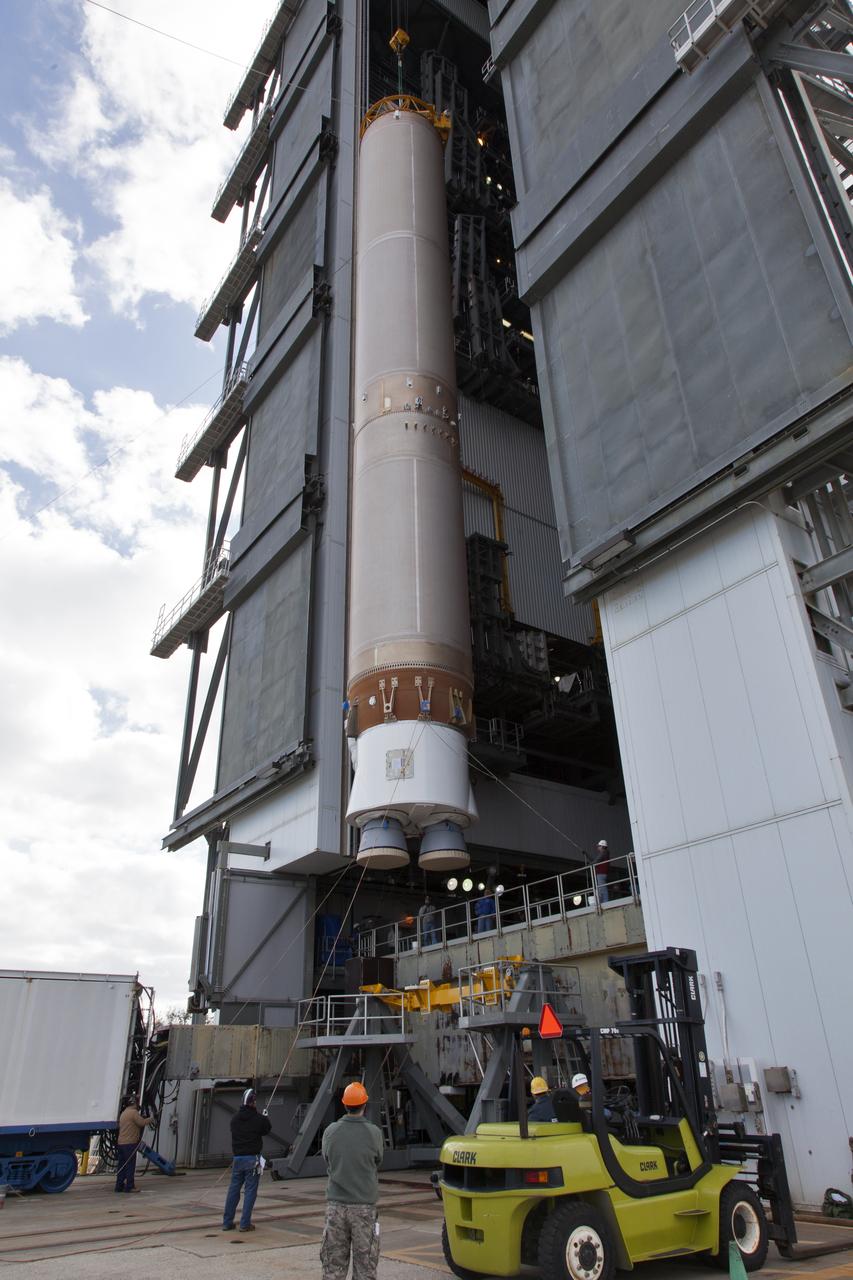
A crane lifts a United Launch Alliance Atlas V first stage into the Vertical Integration Facility at Space Launch Complex 41 at Cape Canaveral Air Force Station in Florida. The rocket will be positioned on its launcher to boost the Geostationary Operational Environmental Satellite, or GOES-S. It will be the second in a series of four advanced geostationary weather satellites and will significantly improve the detection and observation of environmental phenomena that directly affect public safety. GOES-S is slated to launch March 1, 2018.
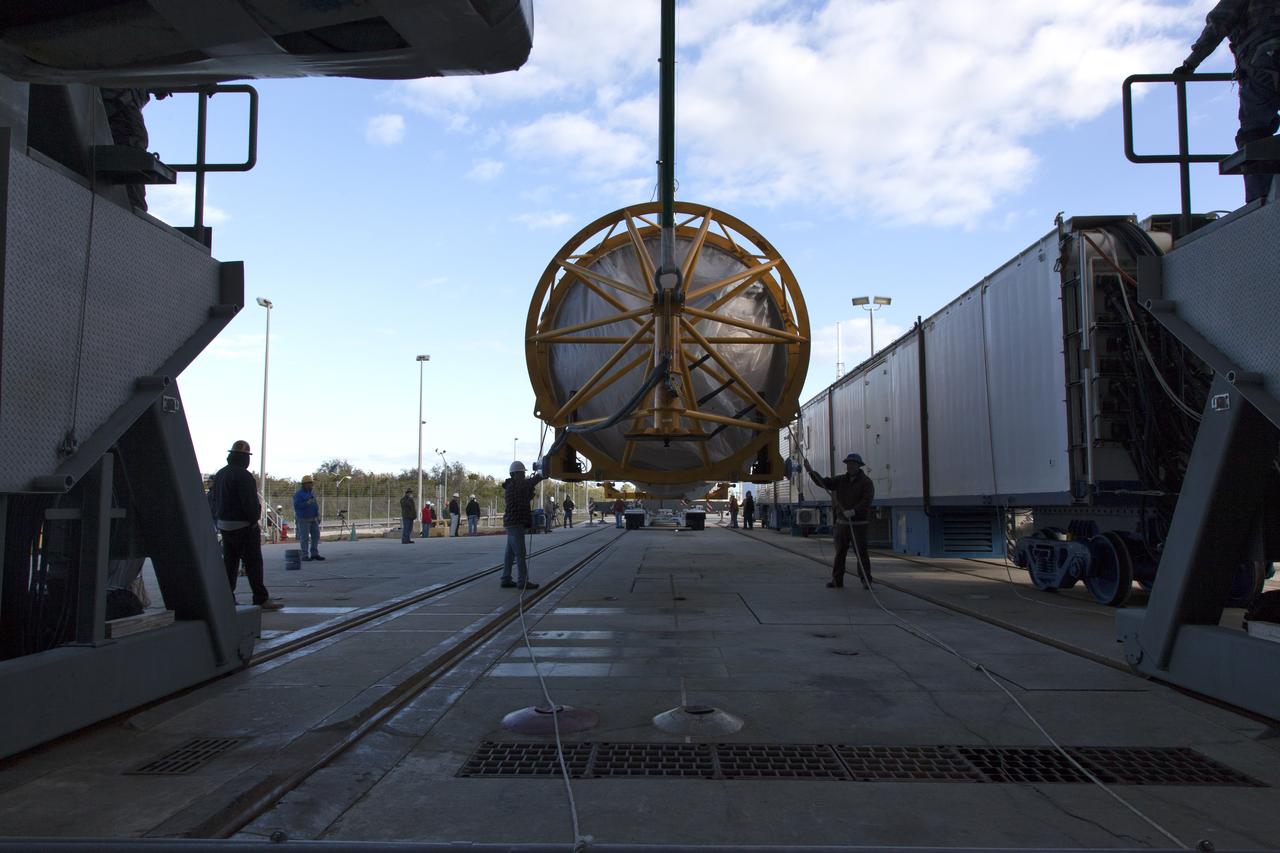
A crane lifts a United Launch Alliance Atlas V first stage at the Vertical Integration Facility at Space Launch Complex 41 at Cape Canaveral Air Force Station in Florida. The rocket will be positioned on its launcher to boost the Geostationary Operational Environmental Satellite, or GOES-S. It will be the second in a series of four advanced geostationary weather satellites and will significantly improve the detection and observation of environmental phenomena that directly affect public safety. GOES-S is slated to launch March 1, 2018.
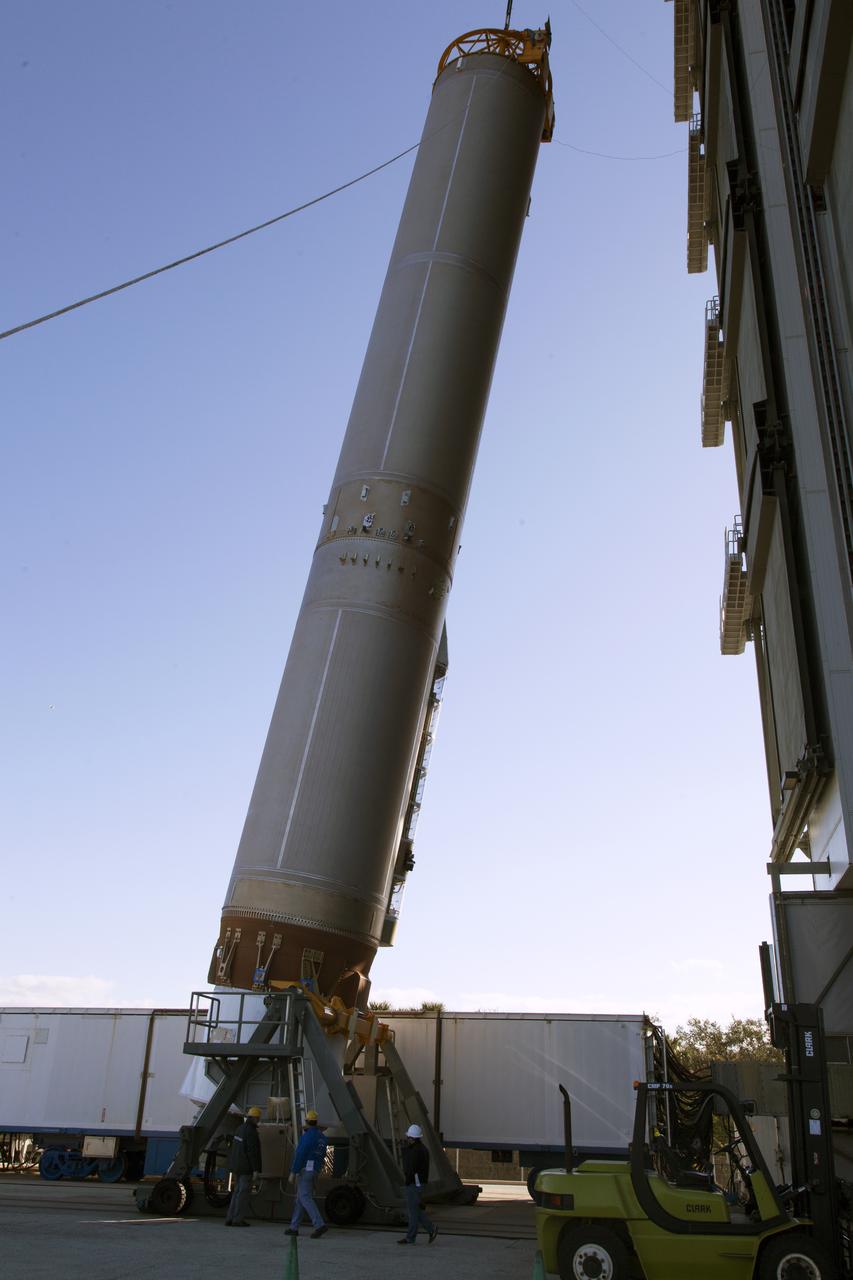
A crane lifts a United Launch Alliance Atlas V first stage at the Vertical Integration Facility at Space Launch Complex 41 at Cape Canaveral Air Force Station in Florida. The rocket will be positioned on its launcher to boost the Geostationary Operational Environmental Satellite, or GOES-S. It will be the second in a series of four advanced geostationary weather satellites and will significantly improve the detection and observation of environmental phenomena that directly affect public safety. GOES-S is slated to launch March 1, 2018.

A technician adjusts a crane that will lift a United Launch Alliance Atlas V first stage at the Vertical Integration Facility at Space Launch Complex 41 at Cape Canaveral Air Force Station in Florida. The rocket will be positioned on its launcher to boost the Geostationary Operational Environmental Satellite, or GOES-S. It will be the second in a series of four advanced geostationary weather satellites and will significantly improve the detection and observation of environmental phenomena that directly affect public safety. GOES-S is slated to launch March 1, 2018.
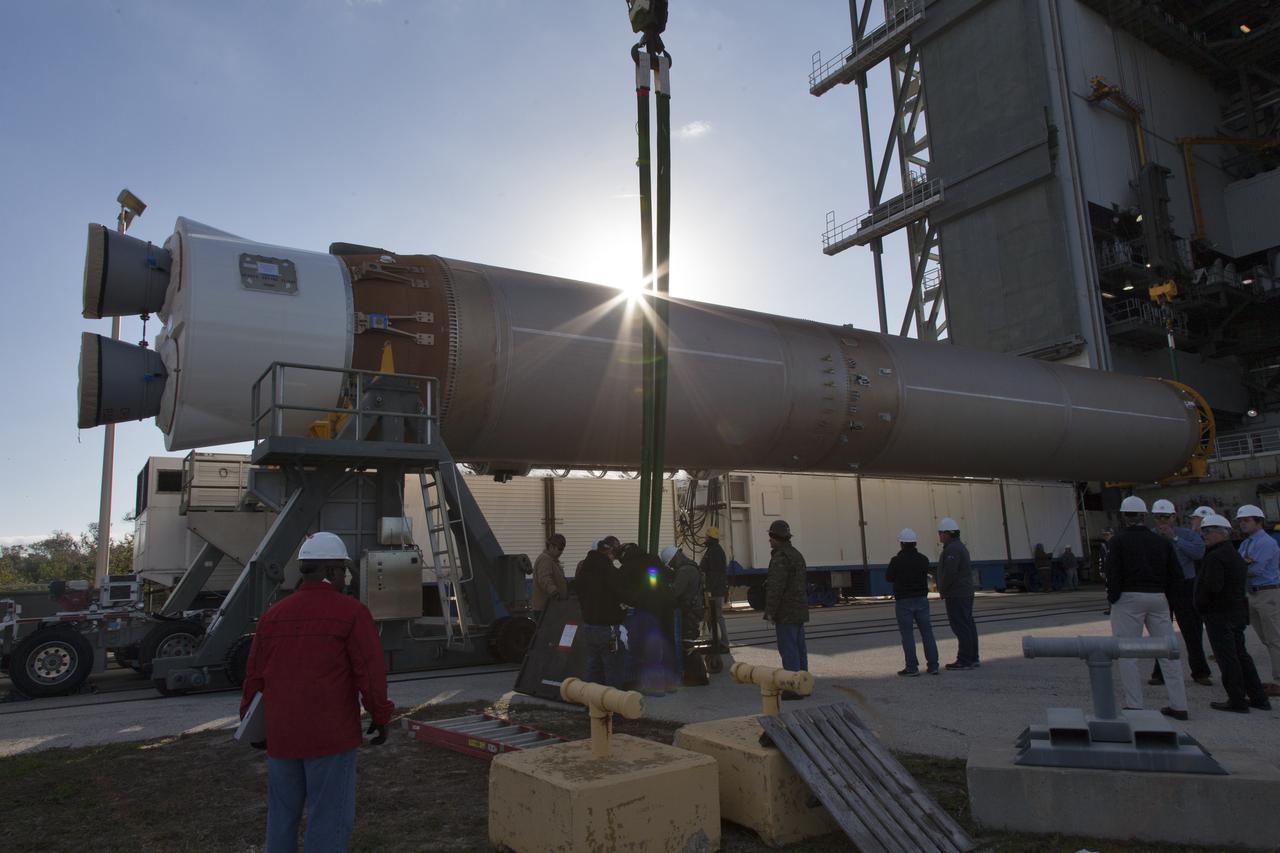
A crane lifts a United Launch Alliance Atlas V first stage at the Vertical Integration Facility at Space Launch Complex 41 at Cape Canaveral Air Force Station in Florida. The rocket will be positioned on its launcher to boost the Geostationary Operational Environmental Satellite, or GOES-S. It will be the second in a series of four advanced geostationary weather satellites and will significantly improve the detection and observation of environmental phenomena that directly affect public safety. GOES-S is slated to launch March 1, 2018.
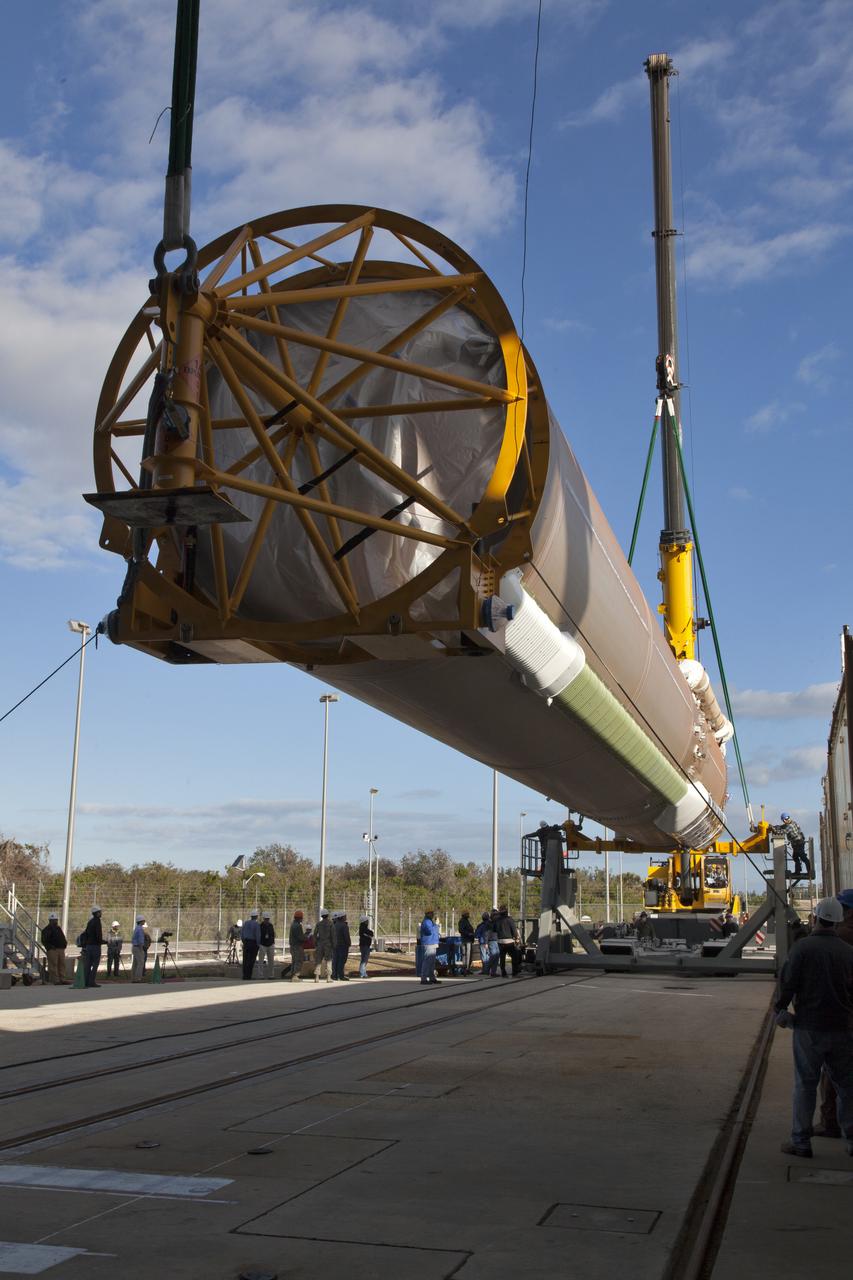
A crane lifts a United Launch Alliance Atlas V first stage at the Vertical Integration Facility at Space Launch Complex 41 at Cape Canaveral Air Force Station in Florida. The rocket will be positioned on its launcher to boost the Geostationary Operational Environmental Satellite, or GOES-S. It will be the second in a series of four advanced geostationary weather satellites and will significantly improve the detection and observation of environmental phenomena that directly affect public safety. GOES-S is slated to launch March 1, 2018.
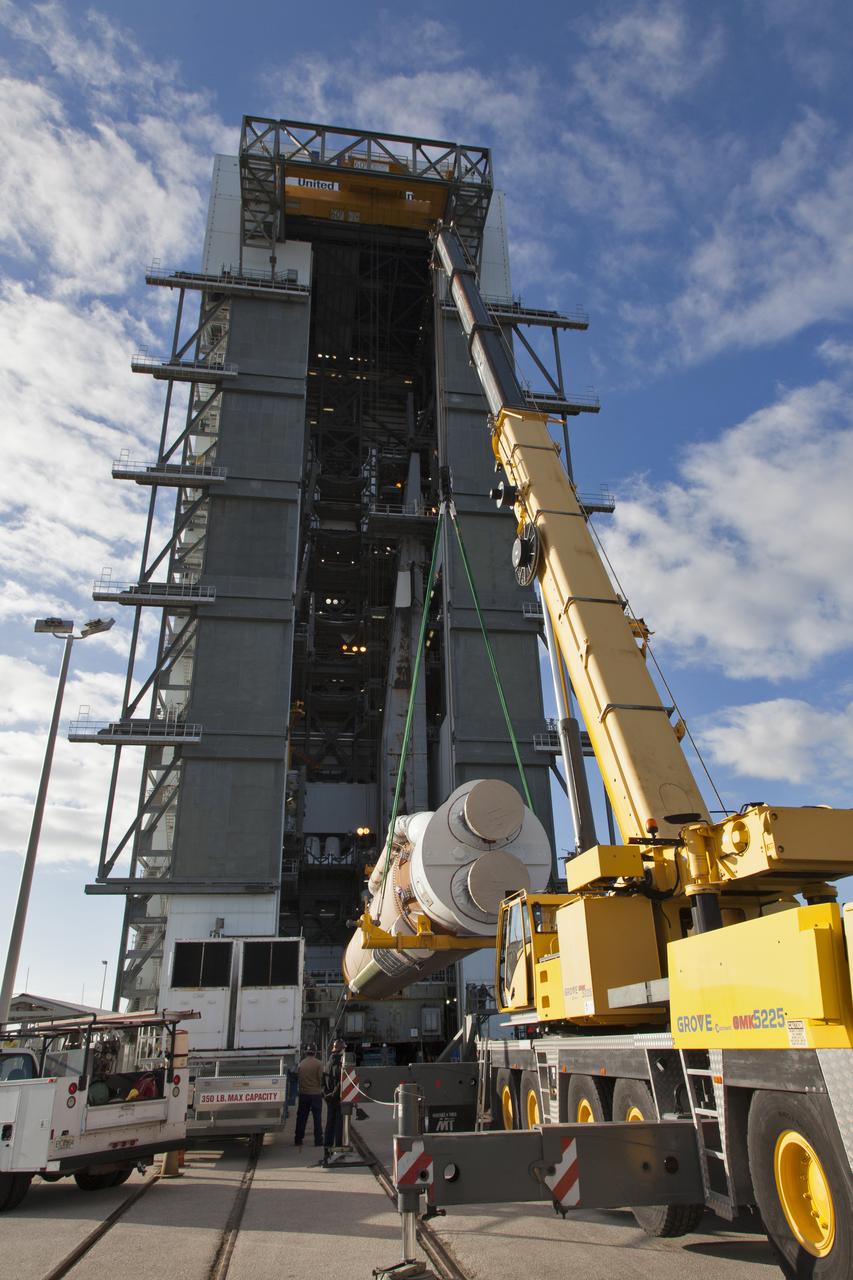
A crane lifts a United Launch Alliance Atlas V first stage at the Vertical Integration Facility at Space Launch Complex 41 at Cape Canaveral Air Force Station in Florida. The rocket will be positioned on its launcher to boost the Geostationary Operational Environmental Satellite, or GOES-S. It will be the second in a series of four advanced geostationary weather satellites and will significantly improve the detection and observation of environmental phenomena that directly affect public safety. GOES-S is slated to launch March 1, 2018.
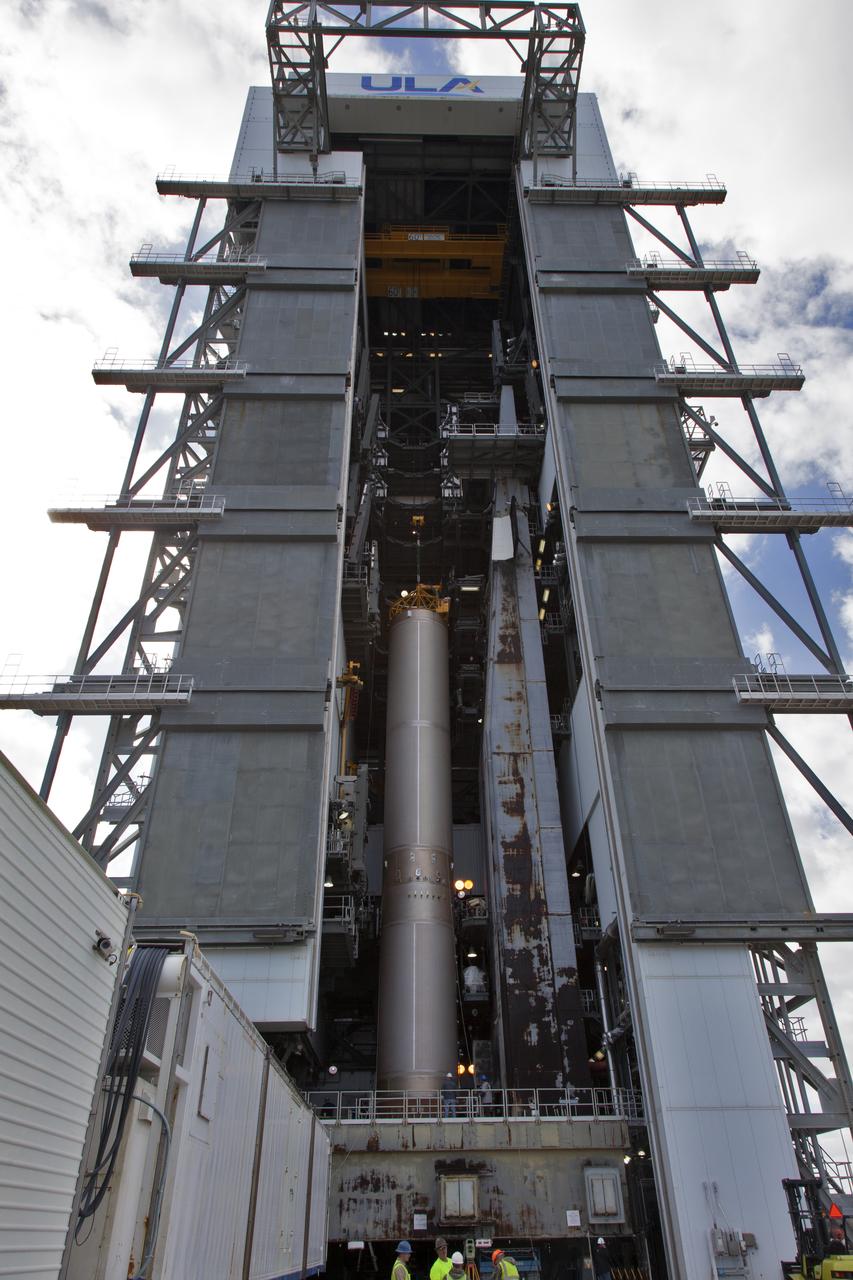
A crane lifts a United Launch Alliance Atlas V first stage into the Vertical Integration Facility at Space Launch Complex 41 at Cape Canaveral Air Force Station in Florida. The rocket will be positioned on its launcher to boost the Geostationary Operational Environmental Satellite, or GOES-S. It will be the second in a series of four advanced geostationary weather satellites and will significantly improve the detection and observation of environmental phenomena that directly affect public safety. GOES-S is slated to launch March 1, 2018.
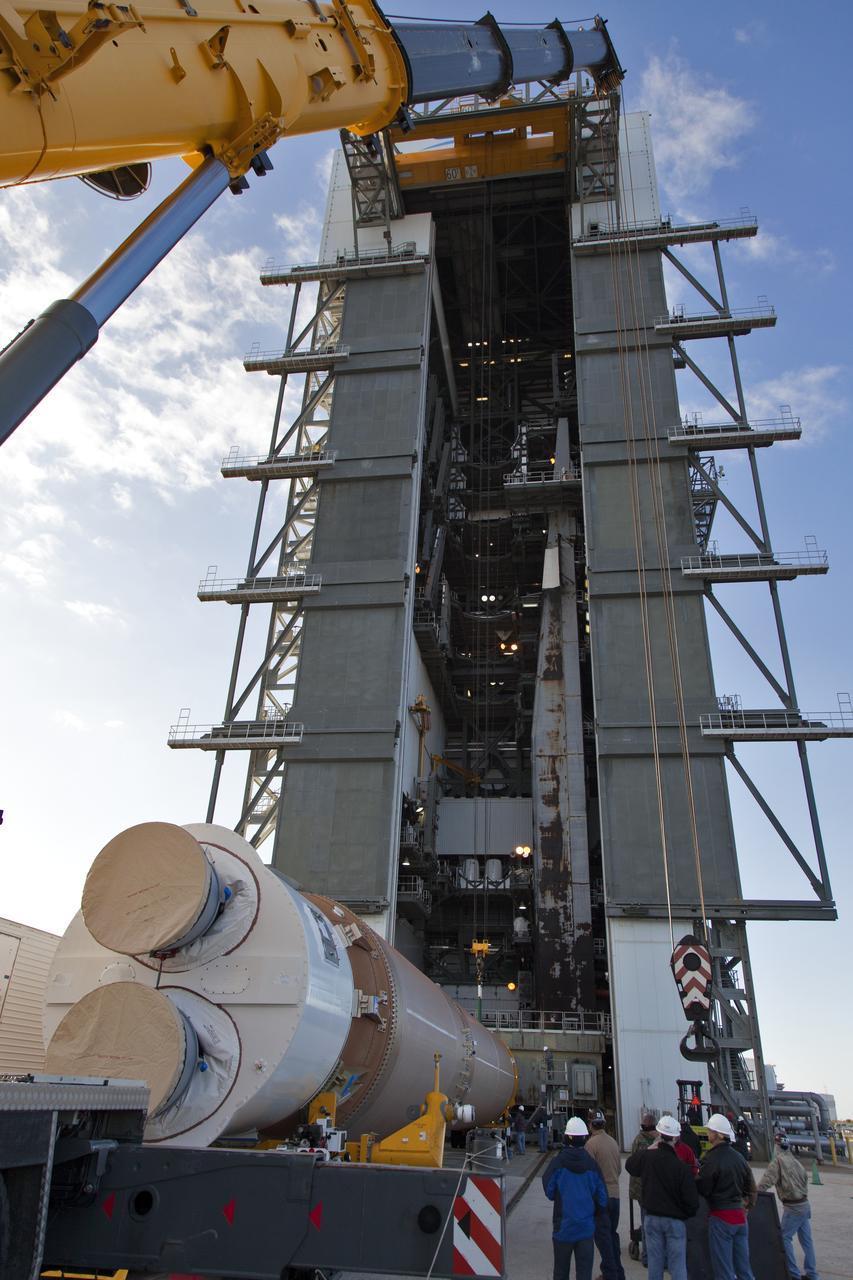
A crane lifts a United Launch Alliance Atlas V first stage at the Vertical Integration Facility at Space Launch Complex 41 at Cape Canaveral Air Force Station in Florida. The rocket will be positioned on its launcher to boost the Geostationary Operational Environmental Satellite, or GOES-S. It will be the second in a series of four advanced geostationary weather satellites and will significantly improve the detection and observation of environmental phenomena that directly affect public safety. GOES-S is slated to launch March 1, 2018.
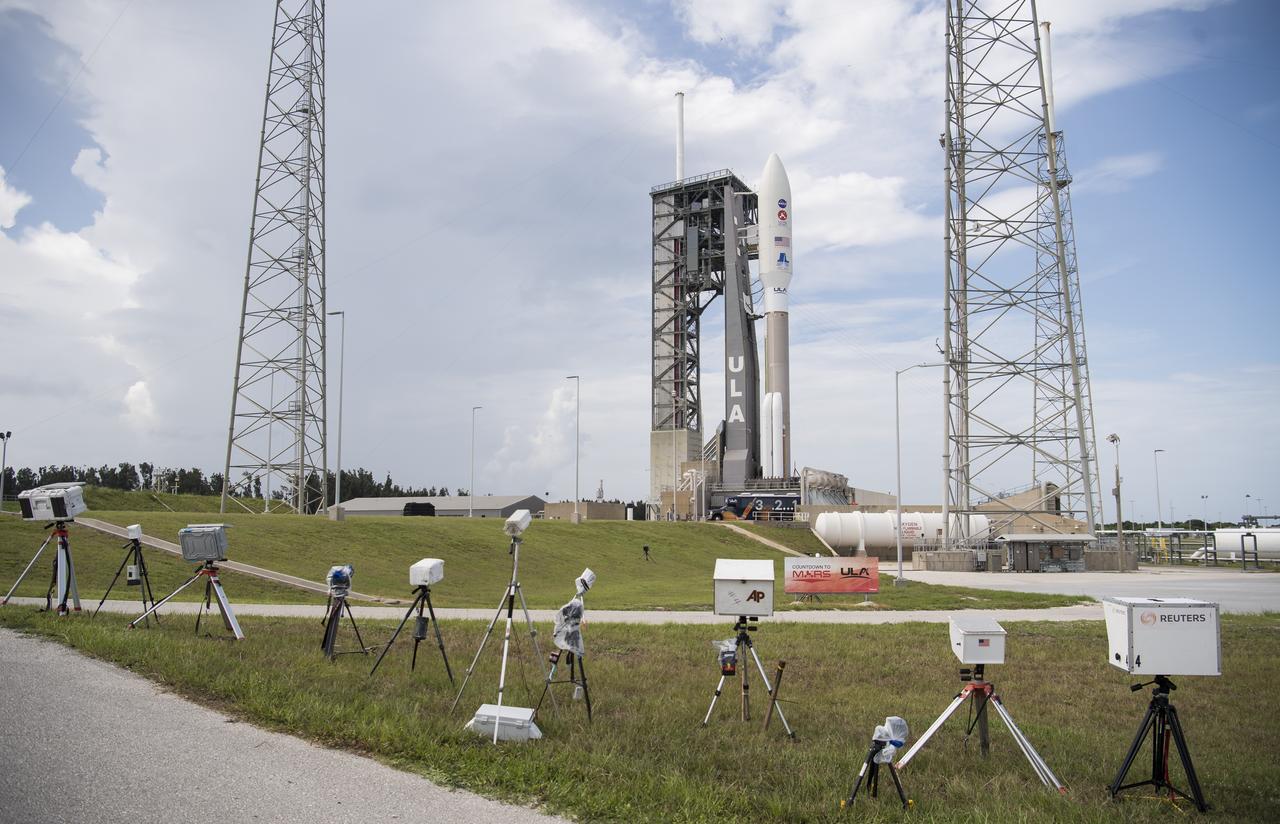
Remote cameras setup to capture the launch of a United Launch Alliance Atlas V rocket with NASA’s Mars 2020 Perseverance rover onboard are seen on the launch pad at Space Launch Complex 41, Wednesday, July 29, 2020, as preparations continue for a planned launch on July 30 at Cape Canaveral Air Force Station in Florida. The Perseverance rover is part of NASA’s Mars Exploration Program, a long-term effort of robotic exploration of the Red Planet. Photo Credit: (NASA/Joel Kowsky)
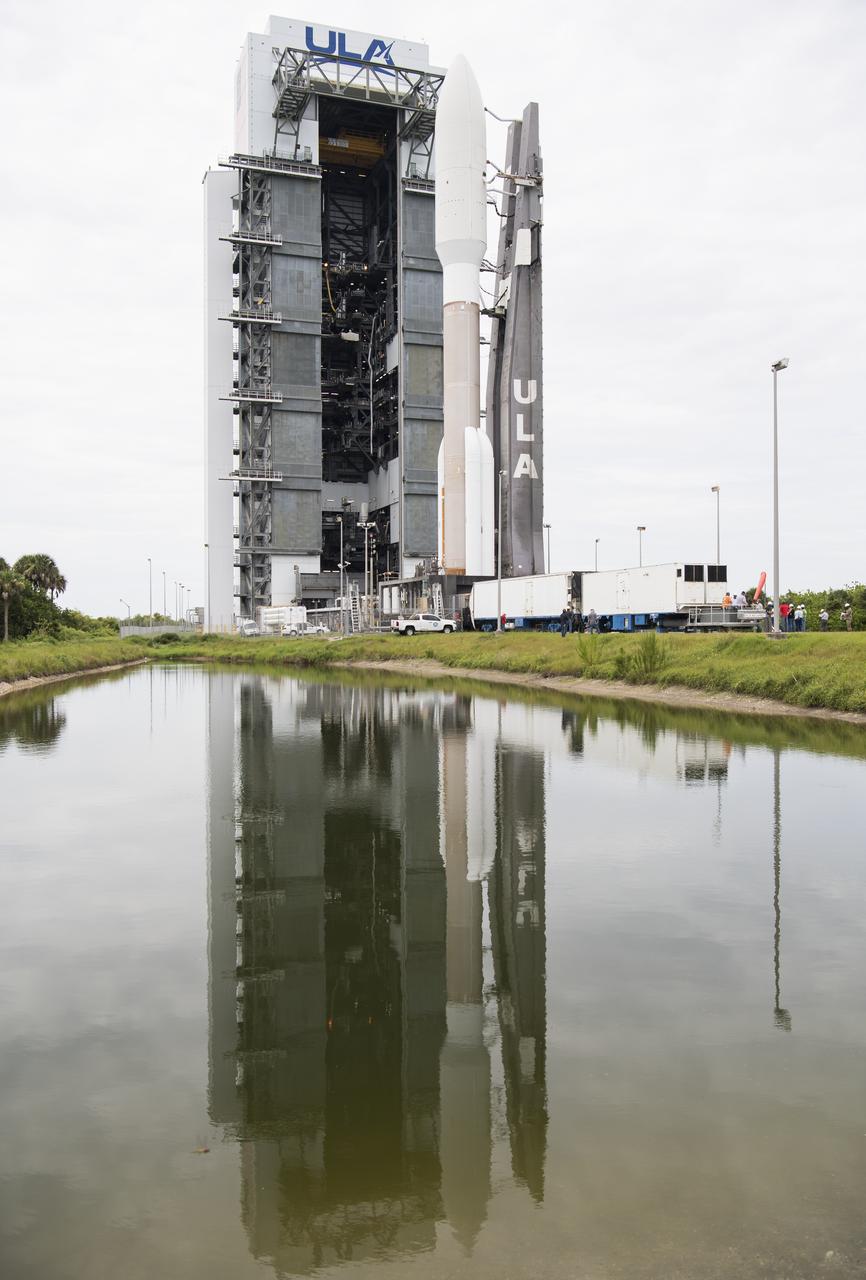
A United Launch Alliance Atlas V rocket with NASA’s Mars 2020 Perseverance rover onboard is seen as it is rolled out of the Vertical Integration Facility to the launch pad at Space Launch Complex 41, Tuesday, July 28, 2020, at Cape Canaveral Air Force Station in Florida. The Perseverance rover is part of NASA’s Mars Exploration Program, a long-term effort of robotic exploration of the Red Planet. Launch is scheduled for Thursday, July 30. Photo Credit: (NASA/Joel Kowsky)
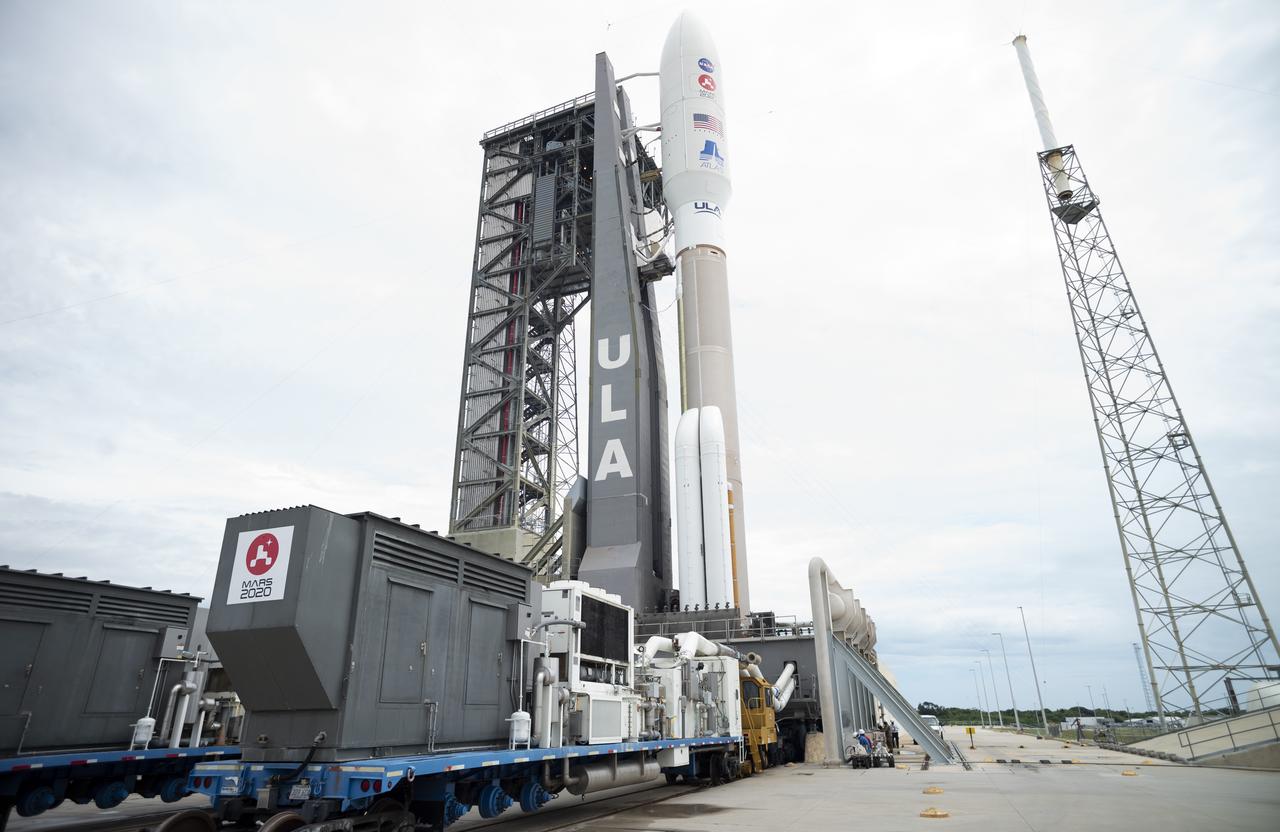
A United Launch Alliance Atlas V rocket with NASA’s Mars 2020 Perseverance rover onboard is seen on the launch pad at Space Launch Complex 41 after being rolled out of the Vertical Integration Facility, Tuesday, July 28, 2020, at Cape Canaveral Air Force Station in Florida. The Perseverance rover is part of NASA’s Mars Exploration Program, a long-term effort of robotic exploration of the Red Planet. Launch is scheduled for Thursday, July 30. Photo Credit: (NASA/Joel Kowsky)
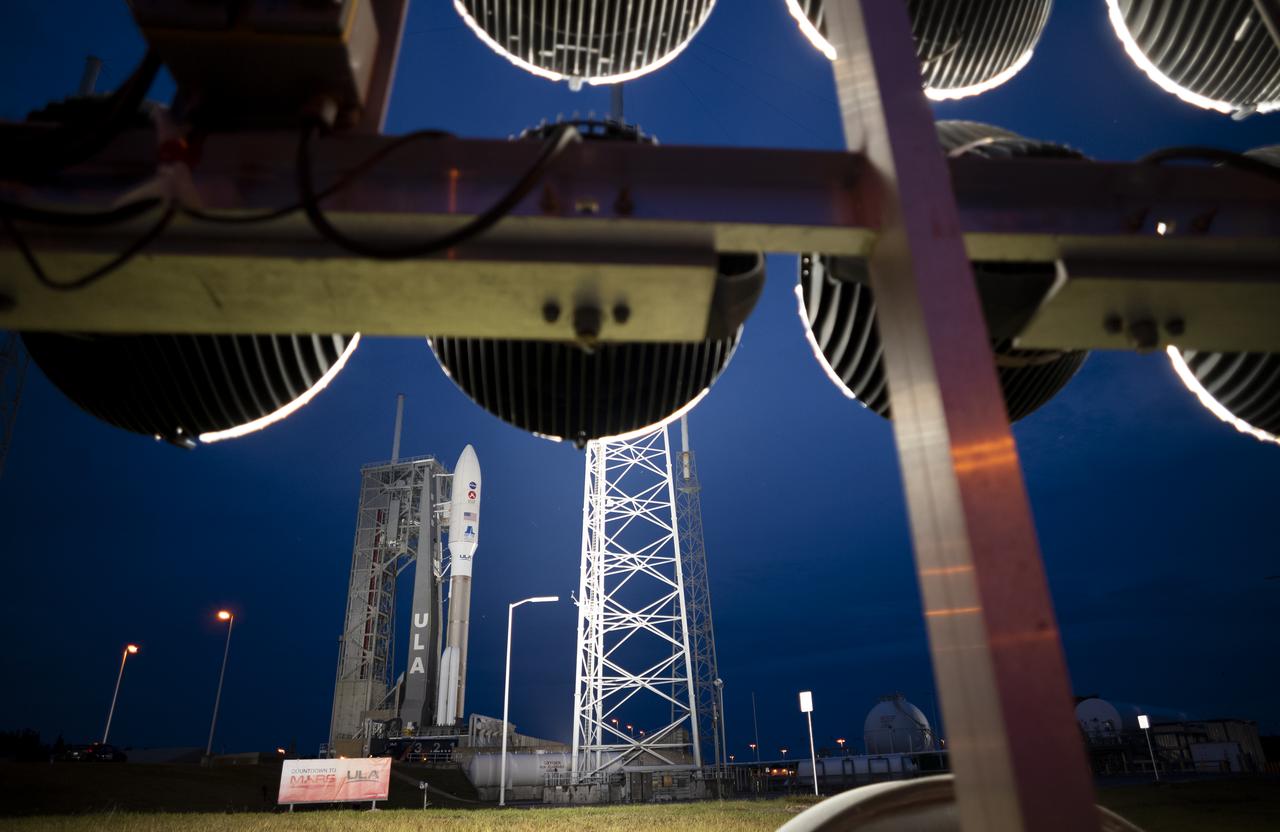
A United Launch Alliance Atlas V rocket with NASA’s Mars 2020 Perseverance rover onboard is seen illuminated by spotlights on the launch pad at Space Launch Complex 41, Tuesday, July 28, 2020, at Cape Canaveral Air Force Station in Florida. The Perseverance rover is part of NASA’s Mars Exploration Program, a long-term effort of robotic exploration of the Red Planet. Launch is scheduled for Thursday, July 30. Photo Credit: (NASA/Joel Kowsky)
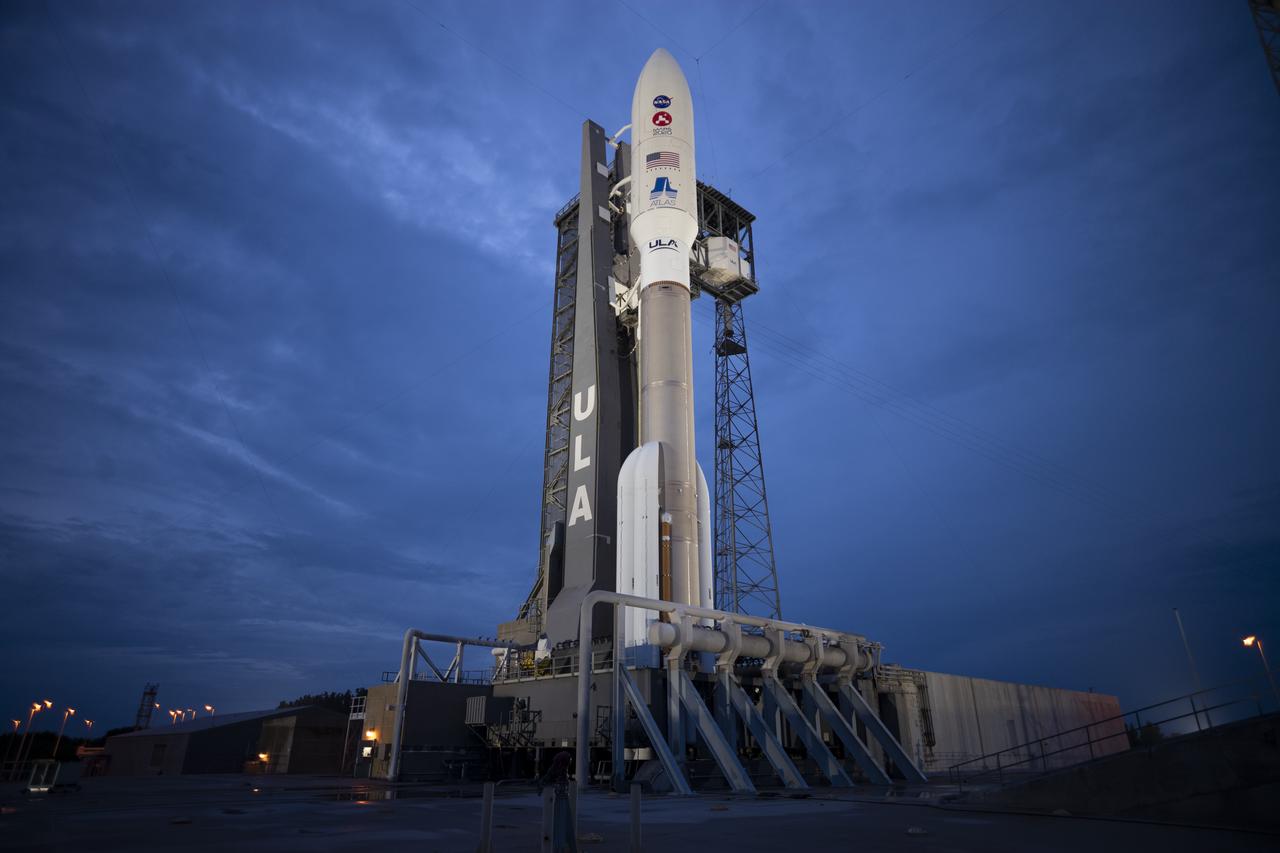
A United Launch Alliance Atlas V rocket with NASA’s Mars 2020 Perseverance rover onboard is seen illuminated by spotlights on the launch pad at Space Launch Complex 41, Tuesday, July 28, 2020, at Cape Canaveral Air Force Station in Florida. The Perseverance rover is part of NASA’s Mars Exploration Program, a long-term effort of robotic exploration of the Red Planet. Launch is scheduled for Thursday, July 30. Photo Credit: (NASA/Joel Kowsky)
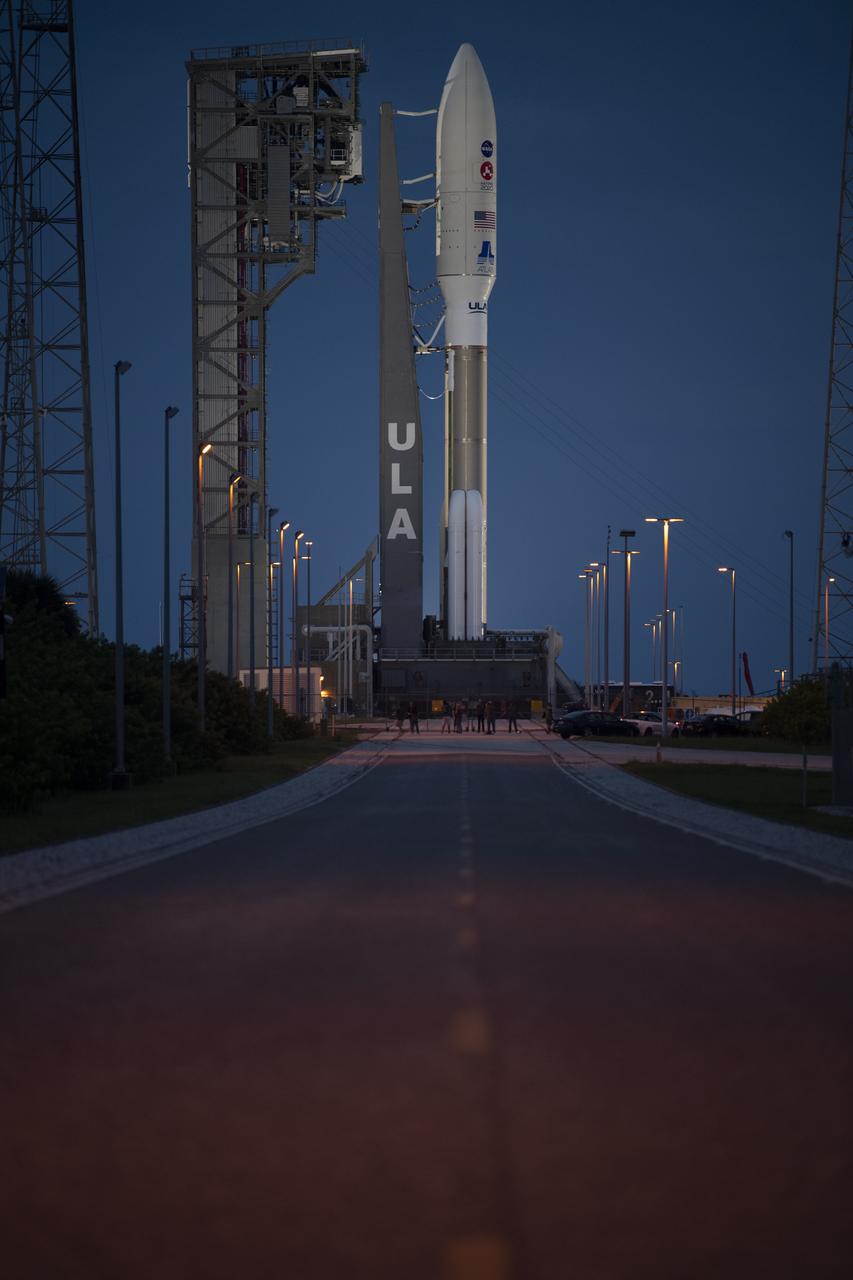
A United Launch Alliance Atlas V rocket with NASA’s Mars 2020 Perseverance rover onboard is seen illuminated by spotlights on the launch pad at Space Launch Complex 41, Wednesday, July 29, 2020, at Cape Canaveral Air Force Station in Florida. The Perseverance rover is part of NASA’s Mars Exploration Program, a long-term effort of robotic exploration of the Red Planet. Launch is scheduled for Thursday, July 30. Photo Credit: (NASA/Joel Kowsky)
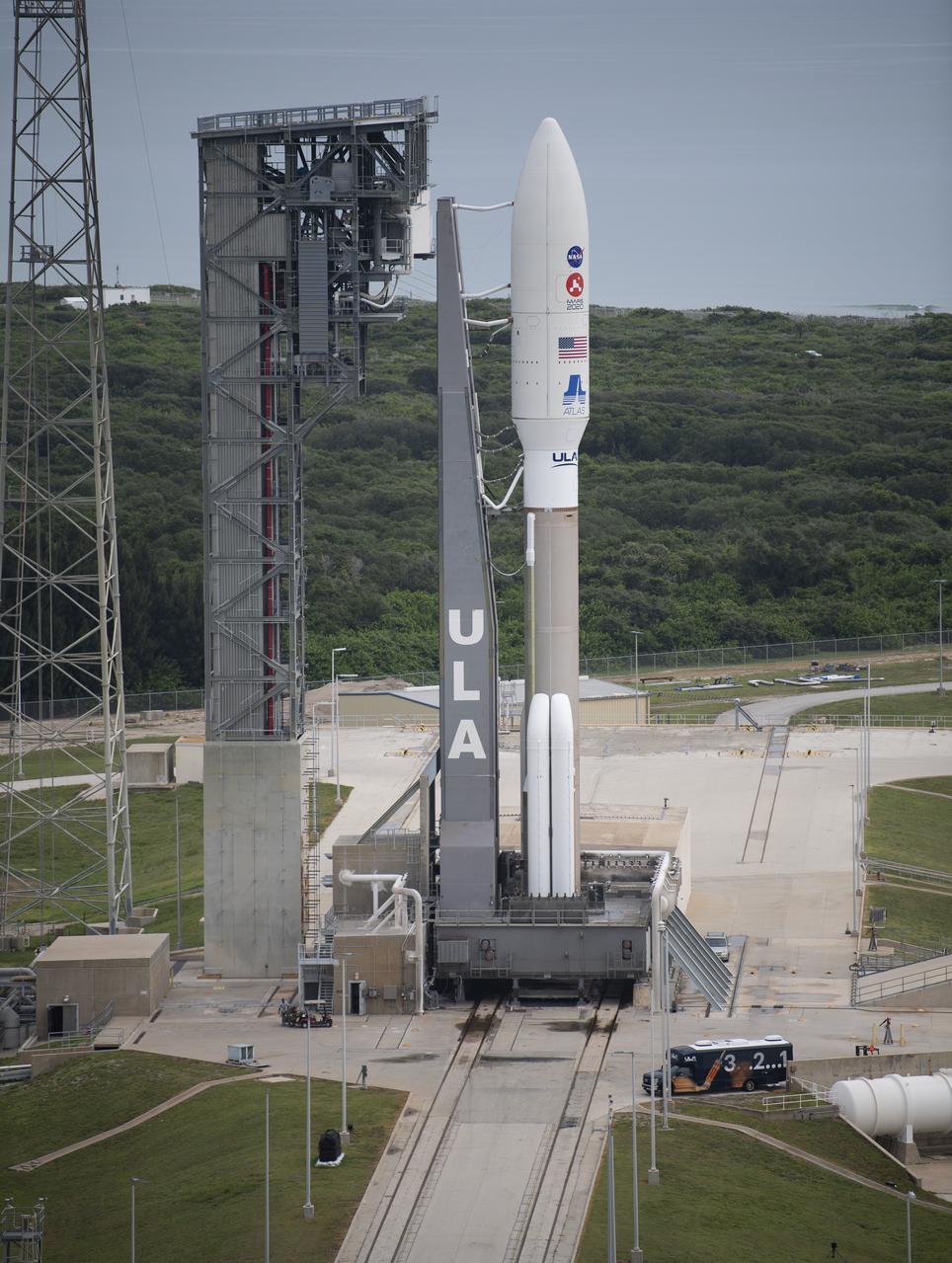
A United Launch Alliance Atlas V rocket with NASA’s Mars 2020 Perseverance rover onboard is seen on the launch pad at Space Launch Complex 41, Wednesday, July 29, 2020, at Cape Canaveral Air Force Station in Florida. The Perseverance rover is part of NASA’s Mars Exploration Program, a long-term effort of robotic exploration of the Red Planet. Launch is scheduled for Thursday, July 30. Photo Credit: (NASA/Joel Kowsky)
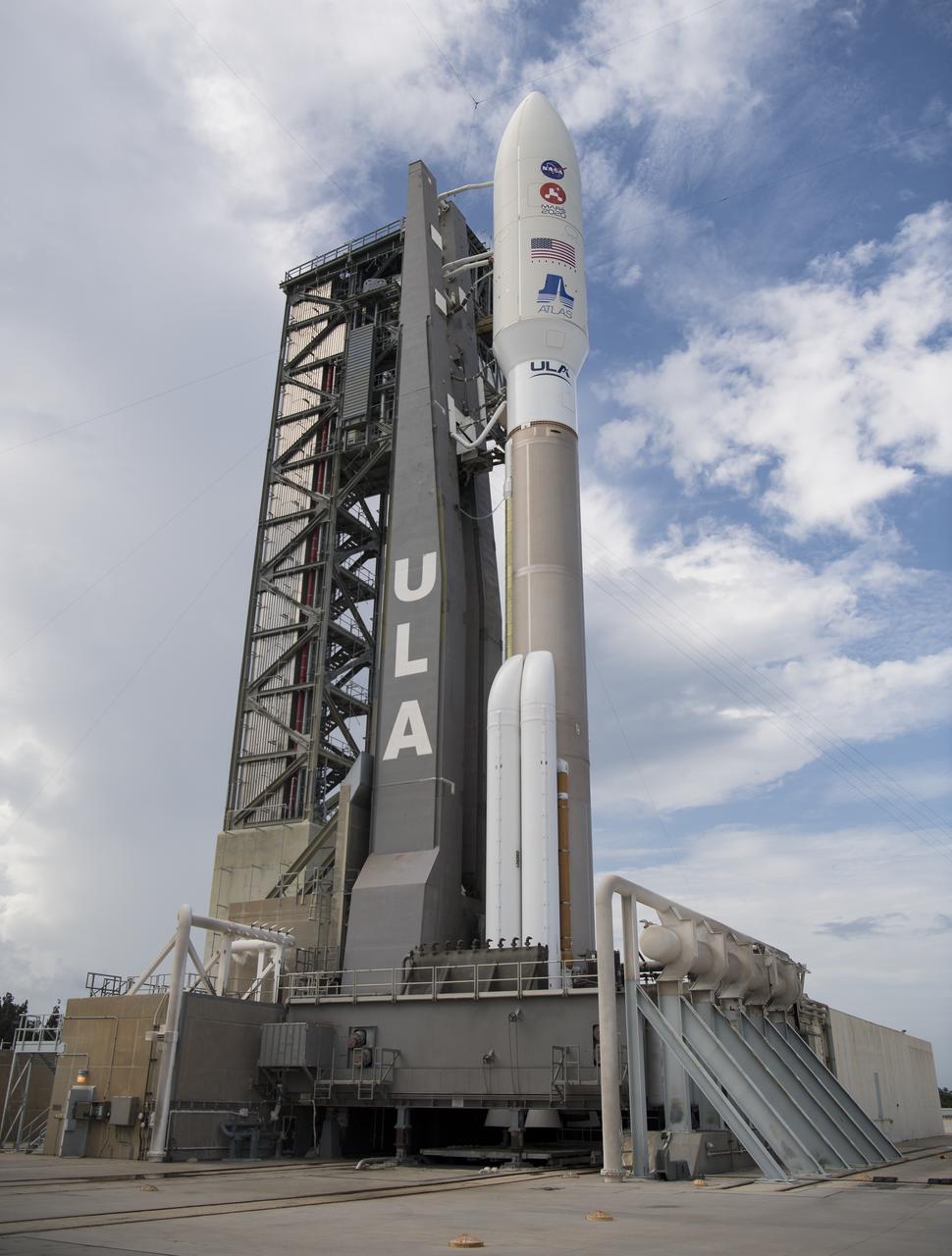
A United Launch Alliance Atlas V rocket with NASA’s Mars 2020 Perseverance rover onboard is seen on the launch pad at Space Launch Complex 41, Wednesday, July 29, 2020, at Cape Canaveral Air Force Station in Florida. The Perseverance rover is part of NASA’s Mars Exploration Program, a long-term effort of robotic exploration of the Red Planet. Launch is scheduled for Thursday, July 30. Photo Credit: (NASA/Joel Kowsky)
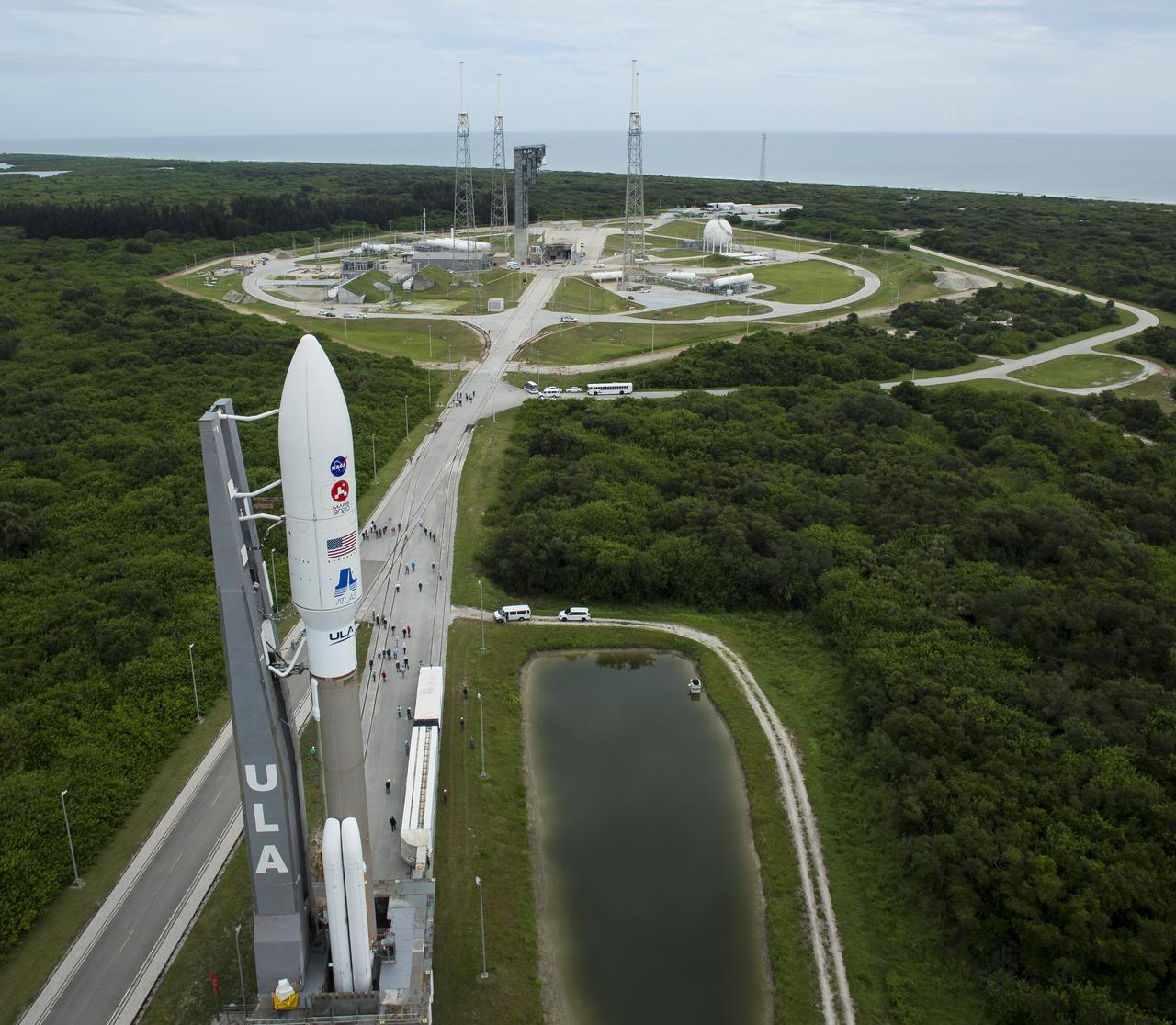
A United Launch Alliance Atlas V rocket with NASA’s Mars 2020 Perseverance rover onboard is seen as it is rolled out of the Vertical Integration Facility to the launch pad at Space Launch Complex 41, Tuesday, July 28, 2020, at Cape Canaveral Air Force Station in Florida. The Perseverance rover is part of NASA’s Mars Exploration Program, a long-term effort of robotic exploration of the Red Planet. Launch is scheduled for Thursday, July 30. Photo Credit: (NASA/Joel Kowsky)
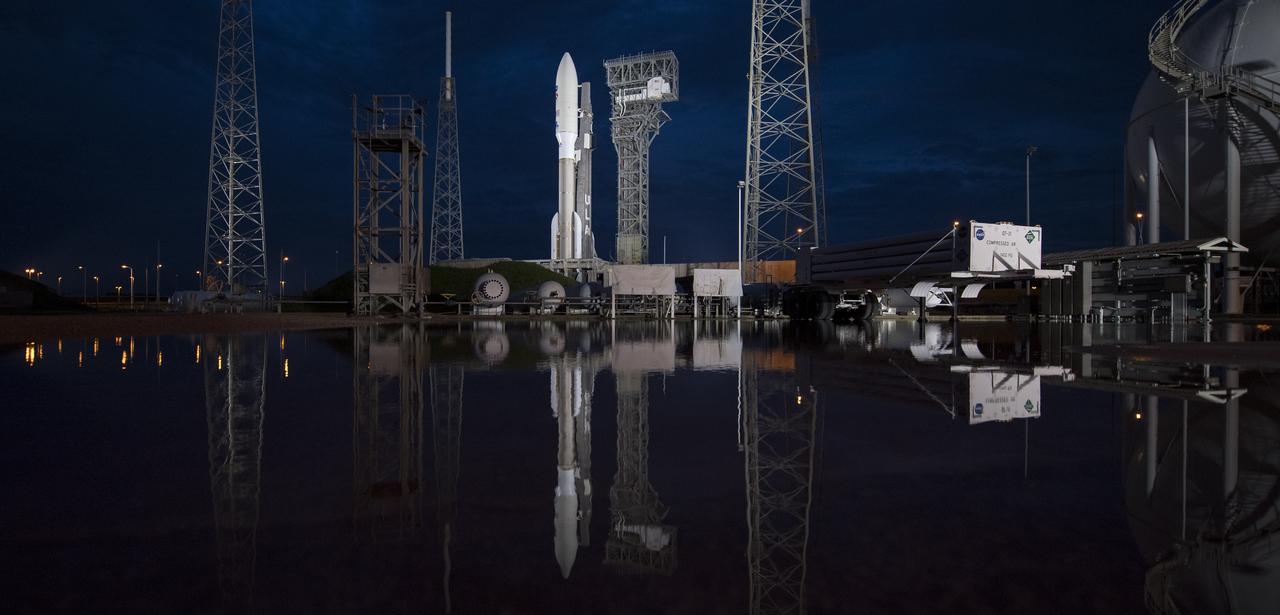
A United Launch Alliance Atlas V rocket with NASA’s Mars 2020 Perseverance rover onboard is seen illuminated by spotlights on the launch pad at Space Launch Complex 41, Tuesday, July 28, 2020, at Cape Canaveral Air Force Station in Florida. The Perseverance rover is part of NASA’s Mars Exploration Program, a long-term effort of robotic exploration of the Red Planet. Launch is scheduled for Thursday, July 30. Photo Credit: (NASA/Joel Kowsky)
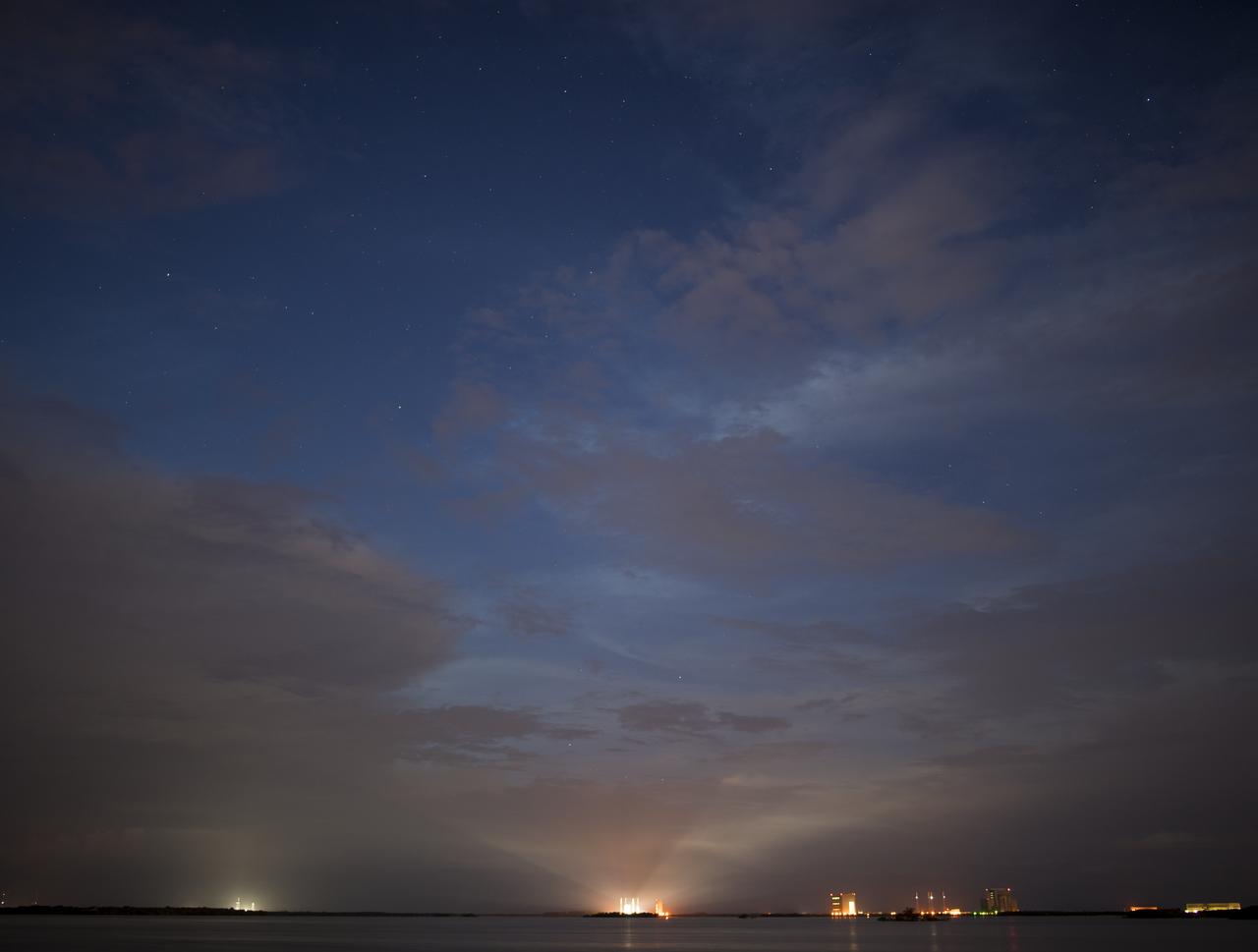
Space Launch Complex 41 is seen illuminated by spotlights, Wednesday, July 29, 2020, ahead of the launch of a United Launch Alliance Atlas V rocket with NASA’s Mars 2020 Perseverance rover onboard from Cape Canaveral Air Force Station in Florida. The Perseverance rover is part of NASA’s Mars Exploration Program, a long-term effort of robotic exploration of the Red Planet. Launch is scheduled for Thursday, July 30. Photo Credit: (NASA/Joel Kowsky)
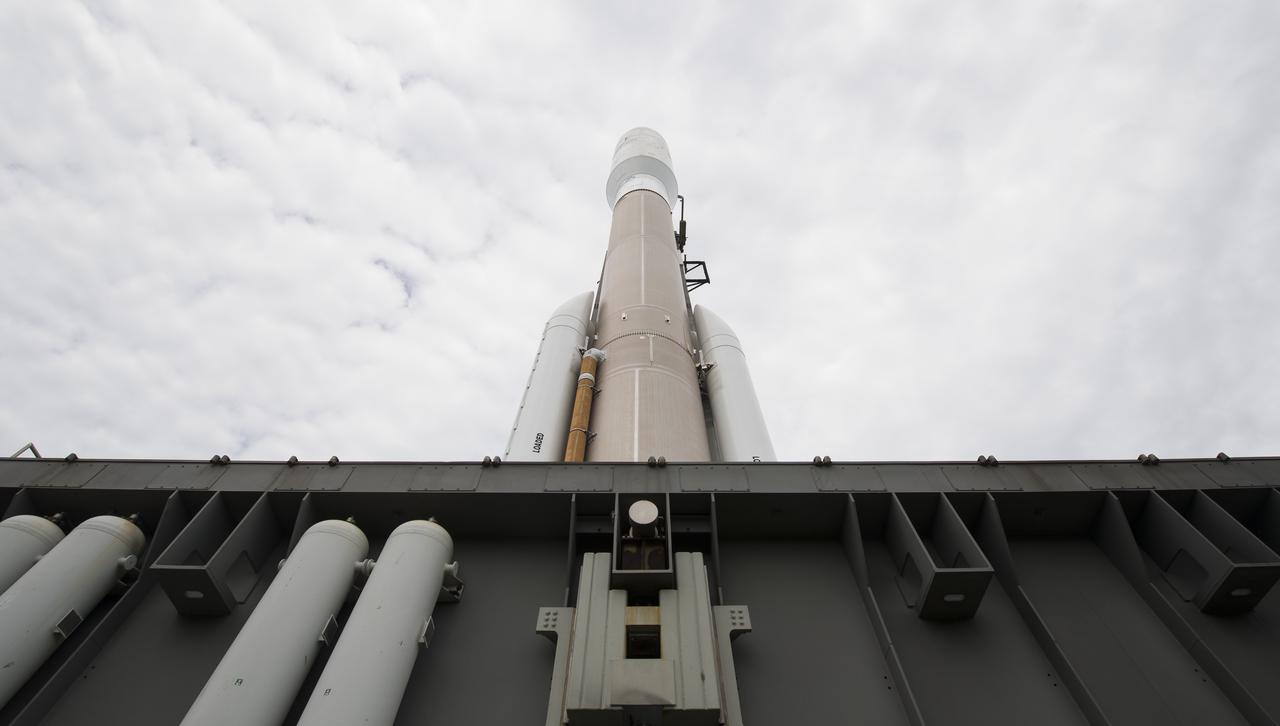
A United Launch Alliance Atlas V rocket with NASA’s Mars 2020 Perseverance rover onboard is seen as it is rolled out of the Vertical Integration Facility to the launch pad at Space Launch Complex 41, Tuesday, July 28, 2020, at Cape Canaveral Air Force Station in Florida. The Perseverance rover is part of NASA’s Mars Exploration Program, a long-term effort of robotic exploration of the Red Planet. Launch is scheduled for Thursday, July 30. Photo Credit: (NASA/Joel Kowsky)
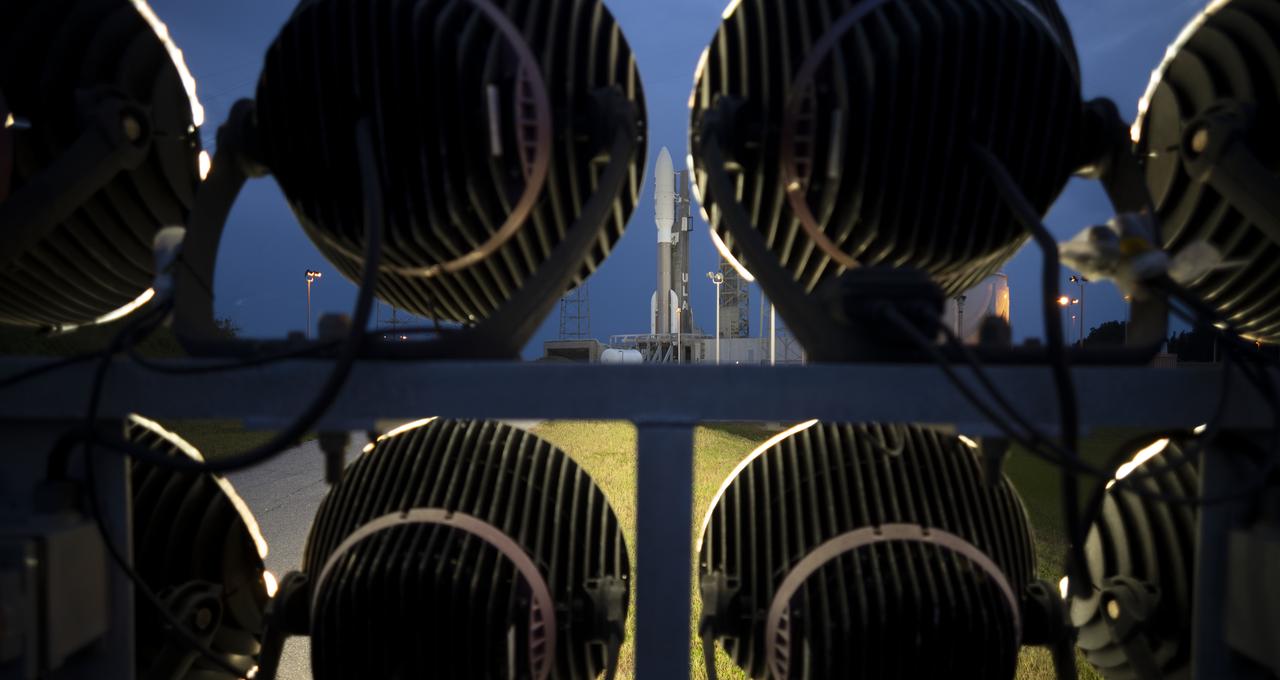
A United Launch Alliance Atlas V rocket with NASA’s Mars 2020 Perseverance rover onboard is seen illuminated by spotlights on the launch pad at Space Launch Complex 41, Wednesday, July 29, 2020, at Cape Canaveral Air Force Station in Florida. The Perseverance rover is part of NASA’s Mars Exploration Program, a long-term effort of robotic exploration of the Red Planet. Launch is scheduled for Thursday, July 30. Photo Credit: (NASA/Joel Kowsky)
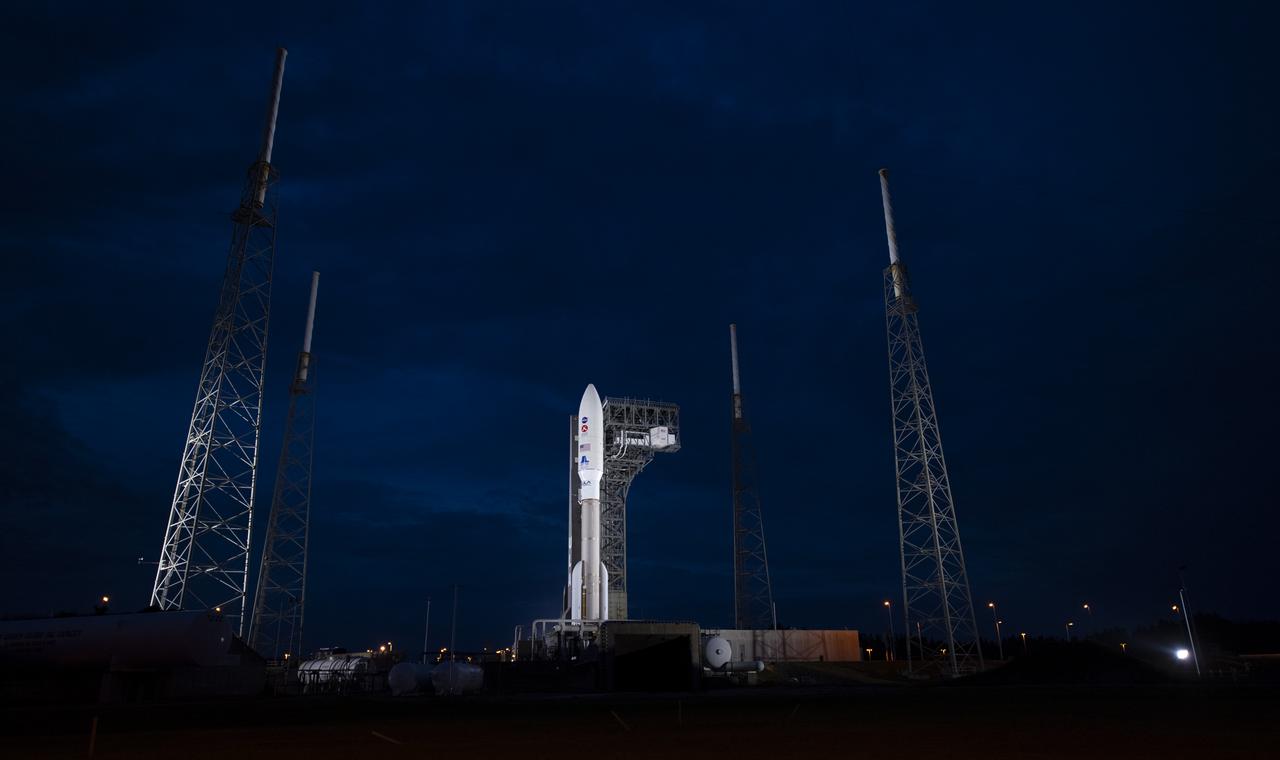
A United Launch Alliance Atlas V rocket with NASA’s Mars 2020 Perseverance rover onboard is seen illuminated by spotlights on the launch pad at Space Launch Complex 41, Tuesday, July 28, 2020, at Cape Canaveral Air Force Station in Florida. The Perseverance rover is part of NASA’s Mars Exploration Program, a long-term effort of robotic exploration of the Red Planet. Launch is scheduled for Thursday, July 30. Photo Credit: (NASA/Joel Kowsky)
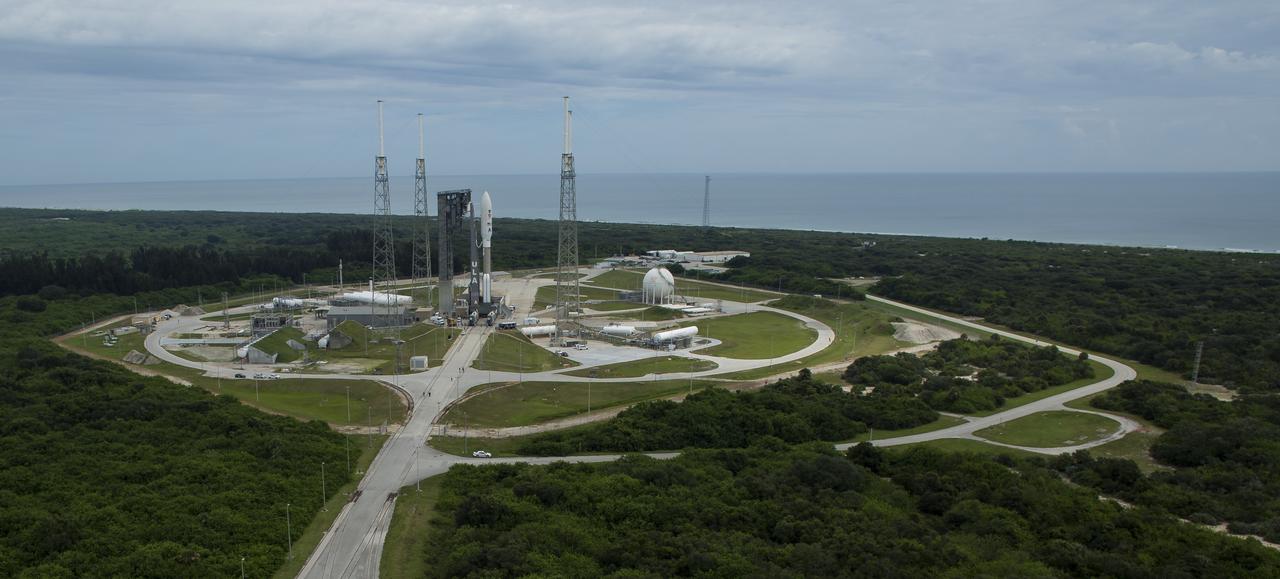
A United Launch Alliance Atlas V rocket with NASA’s Mars 2020 Perseverance rover onboard is seen on the launch pad at Space Launch Complex 41 after being rolled out of the Vertical Integration Facility, Tuesday, July 28, 2020, at Cape Canaveral Air Force Station in Florida. The Perseverance rover is part of NASA’s Mars Exploration Program, a long-term effort of robotic exploration of the Red Planet. Launch is scheduled for Thursday, July 30. Photo Credit: (NASA/Joel Kowsky)
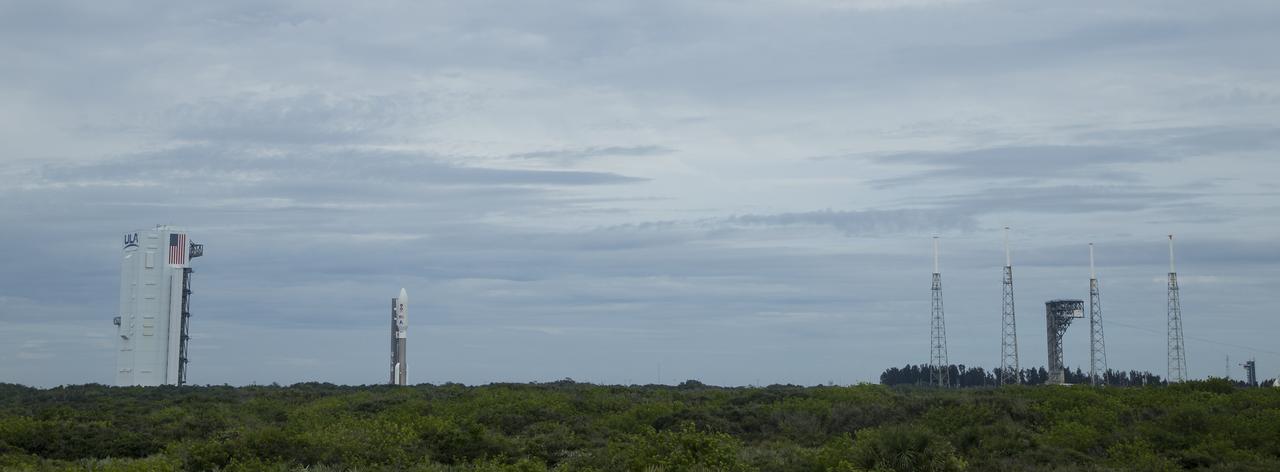
A United Launch Alliance Atlas V rocket with NASA’s Mars 2020 Perseverance rover onboard is seen as it is rolled out of the Vertical Integration Facility to the launch pad at Space Launch Complex 41, Tuesday, July 28, 2020, at Cape Canaveral Air Force Station in Florida. The Perseverance rover is part of NASA’s Mars Exploration Program, a long-term effort of robotic exploration of the Red Planet. Launch is scheduled for Thursday, July 30. Photo Credit: (NASA/Joel Kowsky)
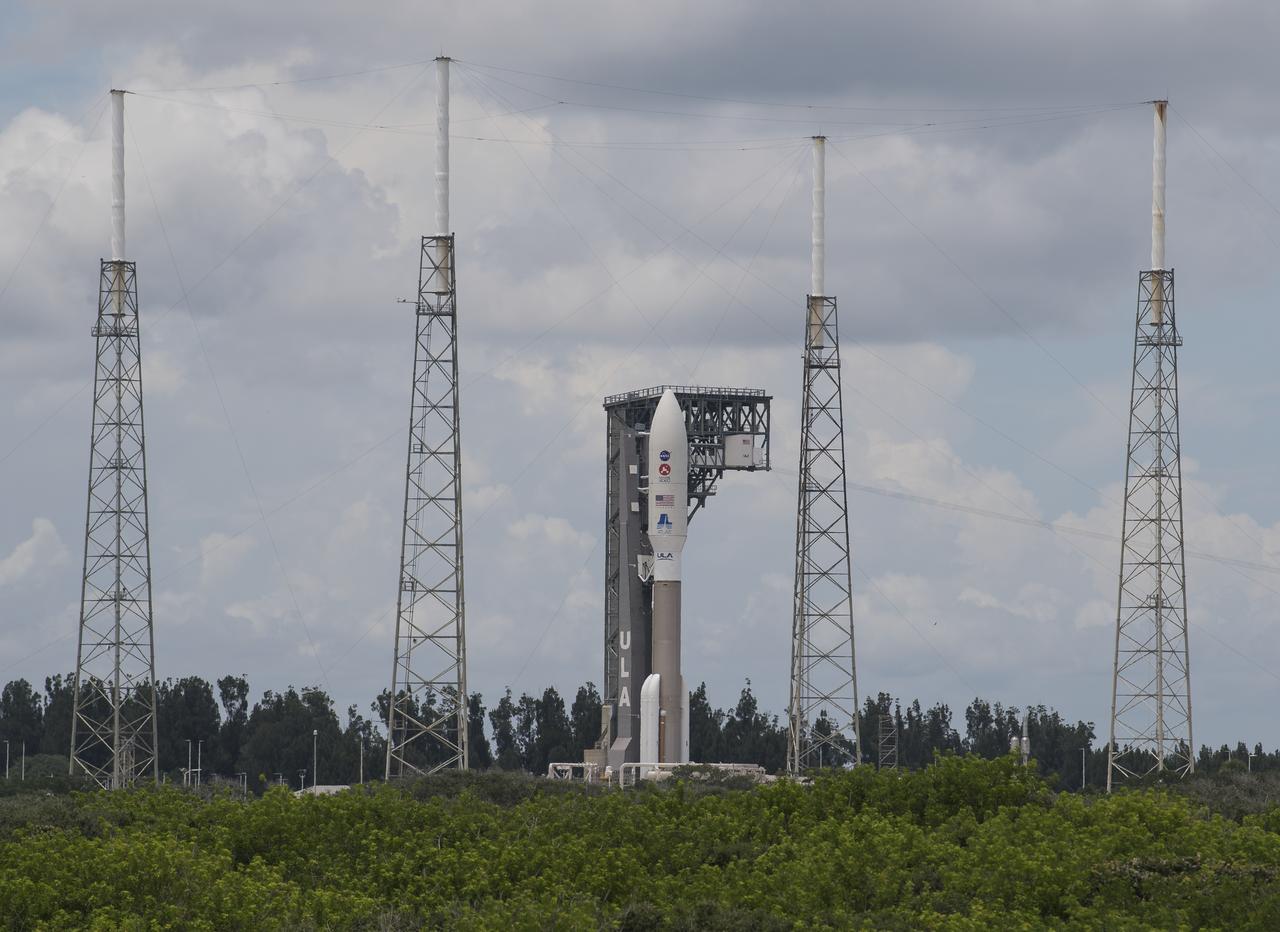
A United Launch Alliance Atlas V rocket with NASA’s Mars 2020 Perseverance rover onboard is seen on the launch pad at Space Launch Complex 41, Tuesday, July 28, 2020, at Cape Canaveral Air Force Station in Florida. The Perseverance rover is part of NASA’s Mars Exploration Program, a long-term effort of robotic exploration of the Red Planet. Launch is scheduled for Thursday, July 30. Photo Credit: (NASA/Joel Kowsky)
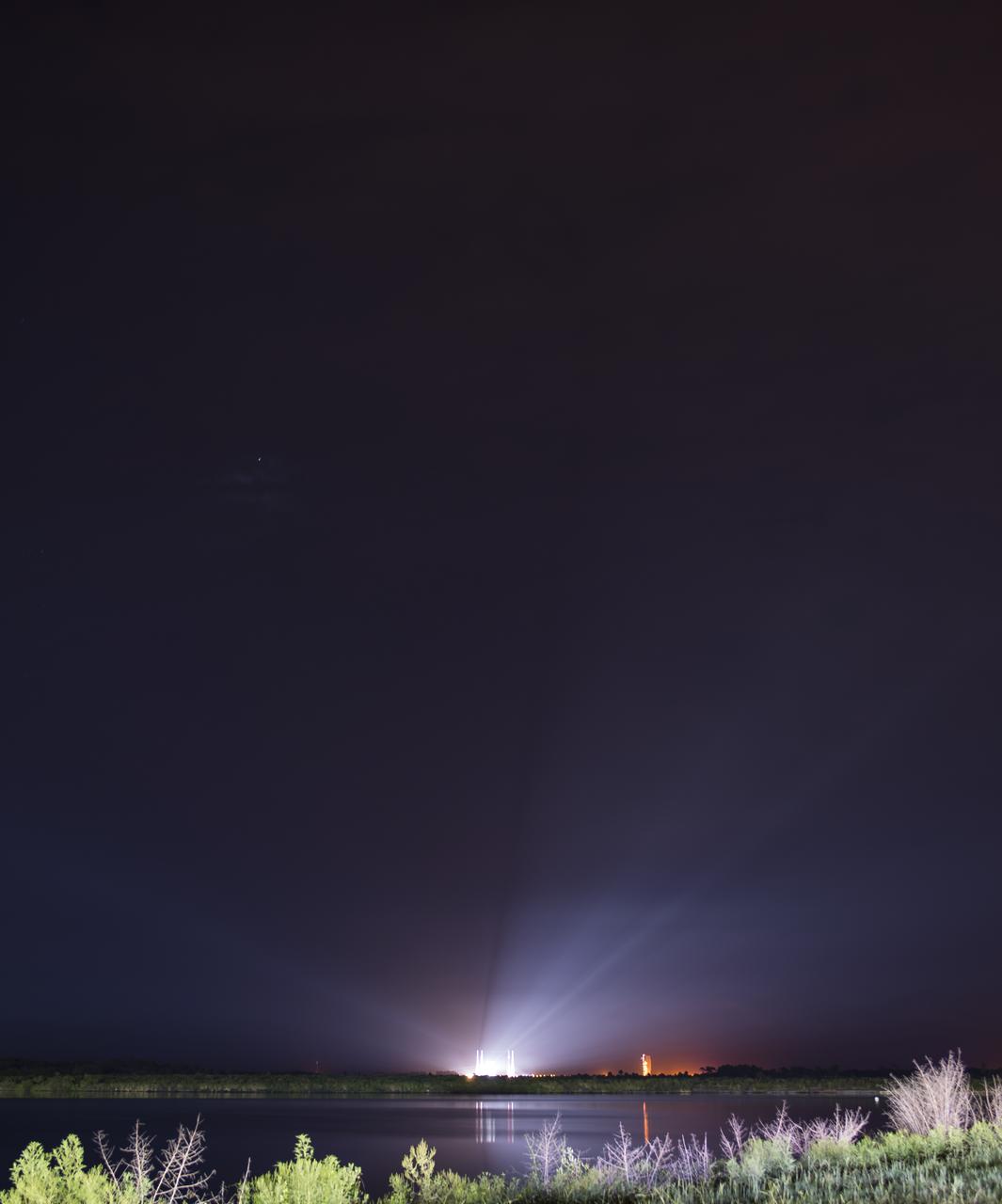
In this long exposure image, a United Launch Alliance Atlas V rocket with NASA’s Mars 2020 Perseverance rover onboard is seen illuminated by spotlights on the launch pad at Space Launch Complex 41 at Cape Canaveral Air Force Station, Thursday, July 30, 2020, from NASA’s Kennedy Space Center in Florida. The Perseverance rover is part of NASA’s Mars Exploration Program, a long-term effort of robotic exploration of the Red Planet. Launch is scheduled for Thursday, July 30. Photo Credit: (NASA/Joel Kowsky)
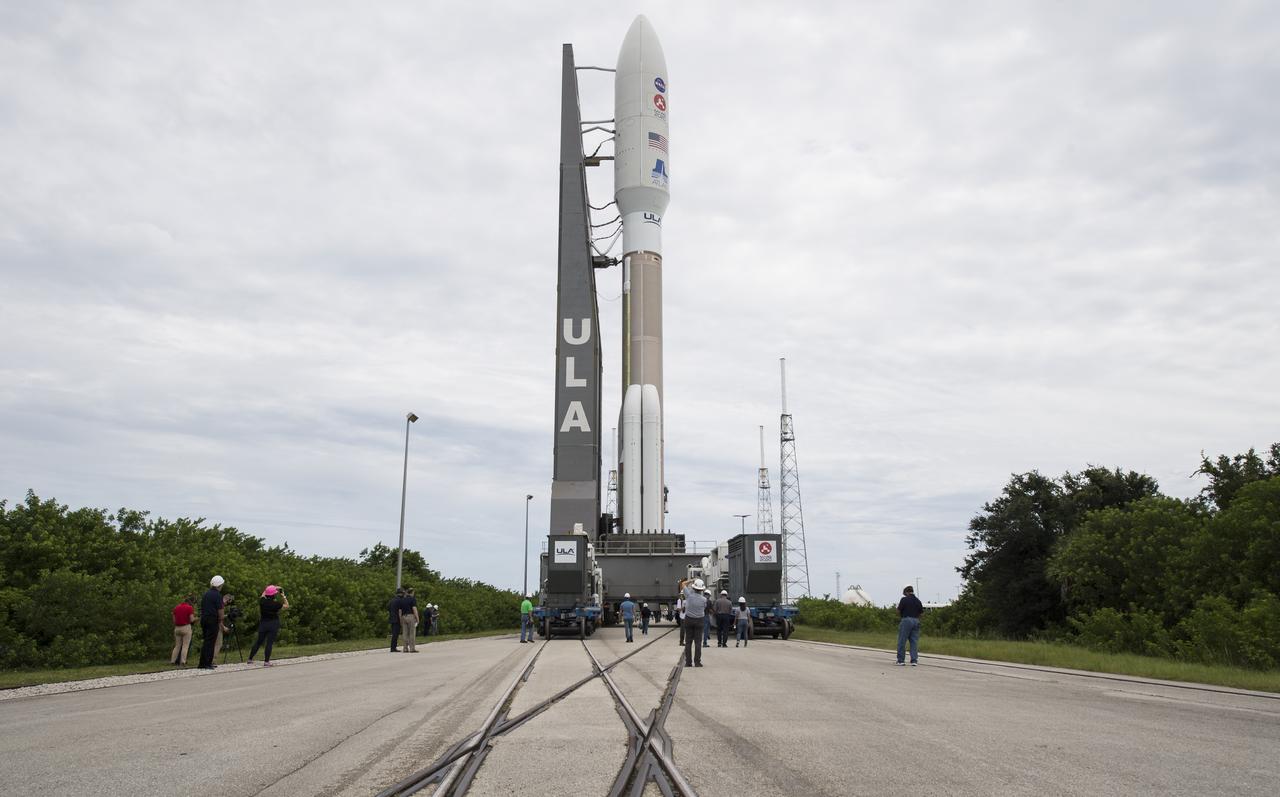
A United Launch Alliance Atlas V rocket with NASA’s Mars 2020 Perseverance rover onboard is seen as it is rolled out of the Vertical Integration Facility to the launch pad at Space Launch Complex 41, Tuesday, July 28, 2020, at Cape Canaveral Air Force Station in Florida. The Perseverance rover is part of NASA’s Mars Exploration Program, a long-term effort of robotic exploration of the Red Planet. Launch is scheduled for Thursday, July 30. Photo Credit: (NASA/Joel Kowsky)
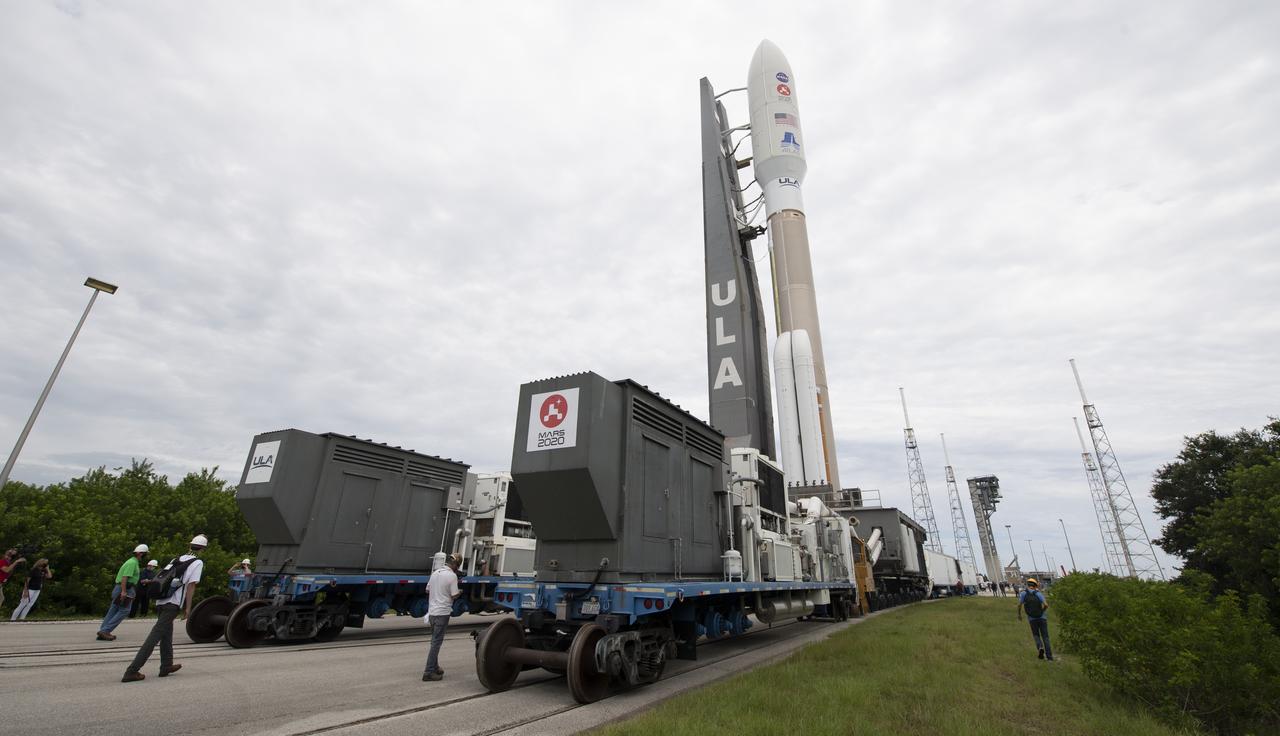
A United Launch Alliance Atlas V rocket with NASA’s Mars 2020 Perseverance rover onboard is seen as it is rolled out of the Vertical Integration Facility to the launch pad at Space Launch Complex 41, Tuesday, July 28, 2020, at Cape Canaveral Air Force Station in Florida. The Perseverance rover is part of NASA’s Mars Exploration Program, a long-term effort of robotic exploration of the Red Planet. Launch is scheduled for Thursday, July 30. Photo Credit: (NASA/Joel Kowsky)
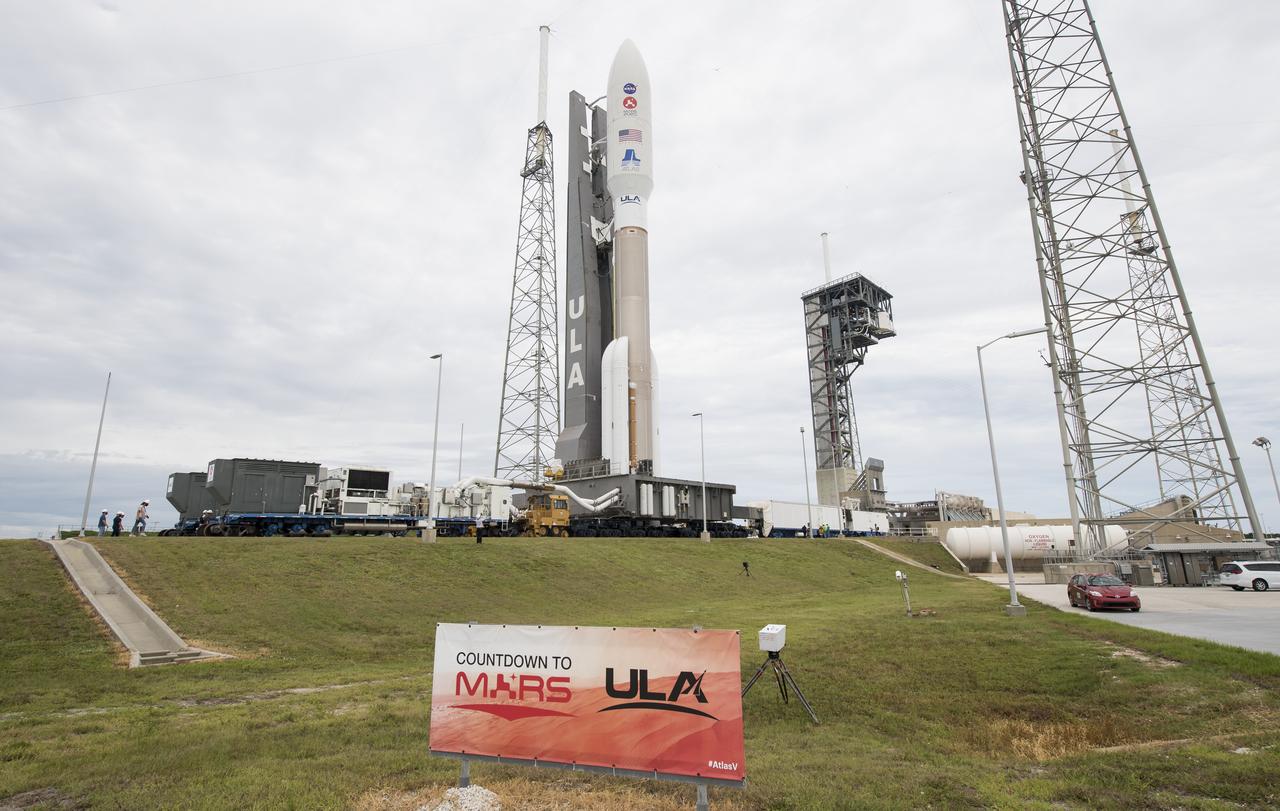
A United Launch Alliance Atlas V rocket with NASA’s Mars 2020 Perseverance rover onboard is seen as it is rolled out of the Vertical Integration Facility to the launch pad at Space Launch Complex 41, Tuesday, July 28, 2020, at Cape Canaveral Air Force Station in Florida. The Perseverance rover is part of NASA’s Mars Exploration Program, a long-term effort of robotic exploration of the Red Planet. Launch is scheduled for Thursday, July 30. Photo Credit: (NASA/Joel Kowsky)
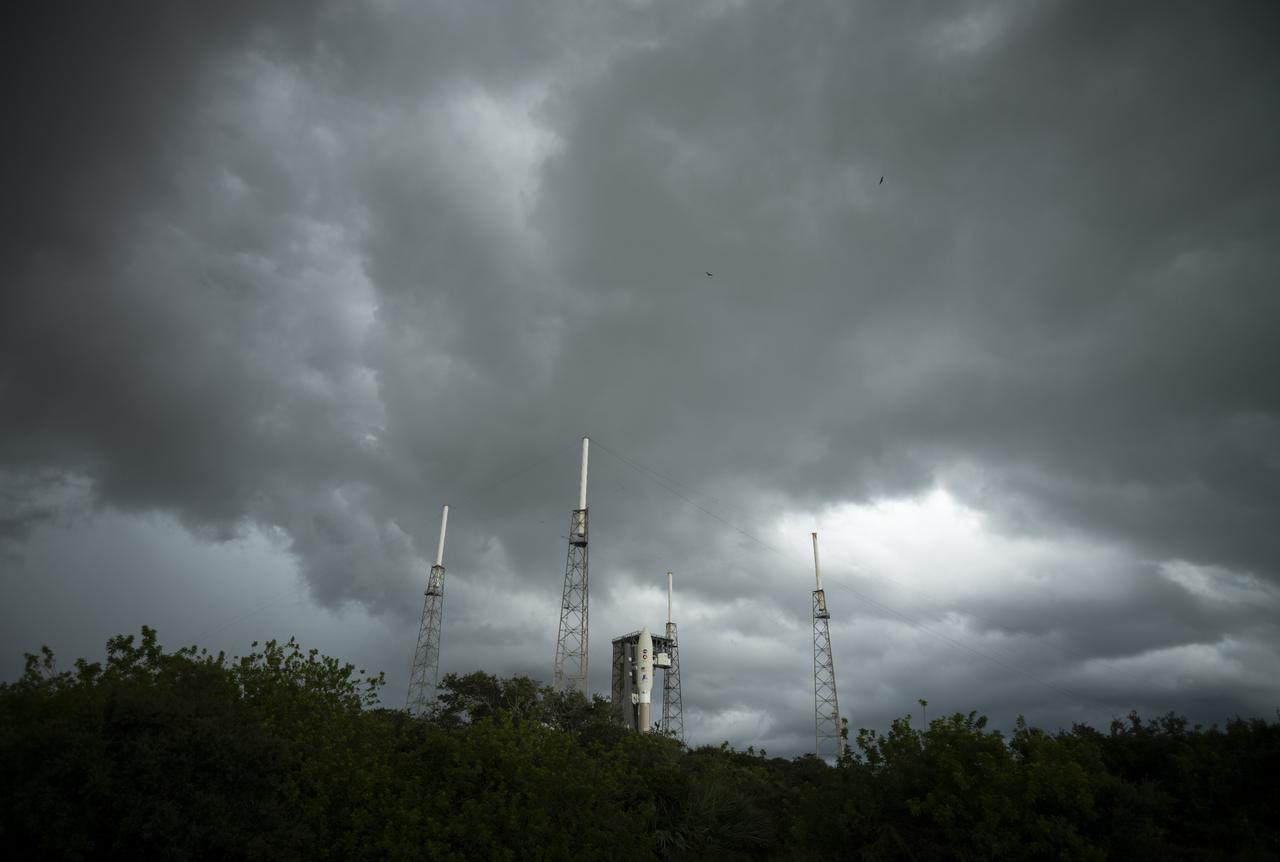
A United Launch Alliance Atlas V rocket with NASA’s Mars 2020 Perseverance rover onboard is seen on the launch pad at Space Launch Complex 41, Tuesday, July 28, 2020, at Cape Canaveral Air Force Station in Florida. The Perseverance rover is part of NASA’s Mars Exploration Program, a long-term effort of robotic exploration of the Red Planet. Launch is scheduled for Thursday, July 30. Photo Credit: (NASA/Joel Kowsky)
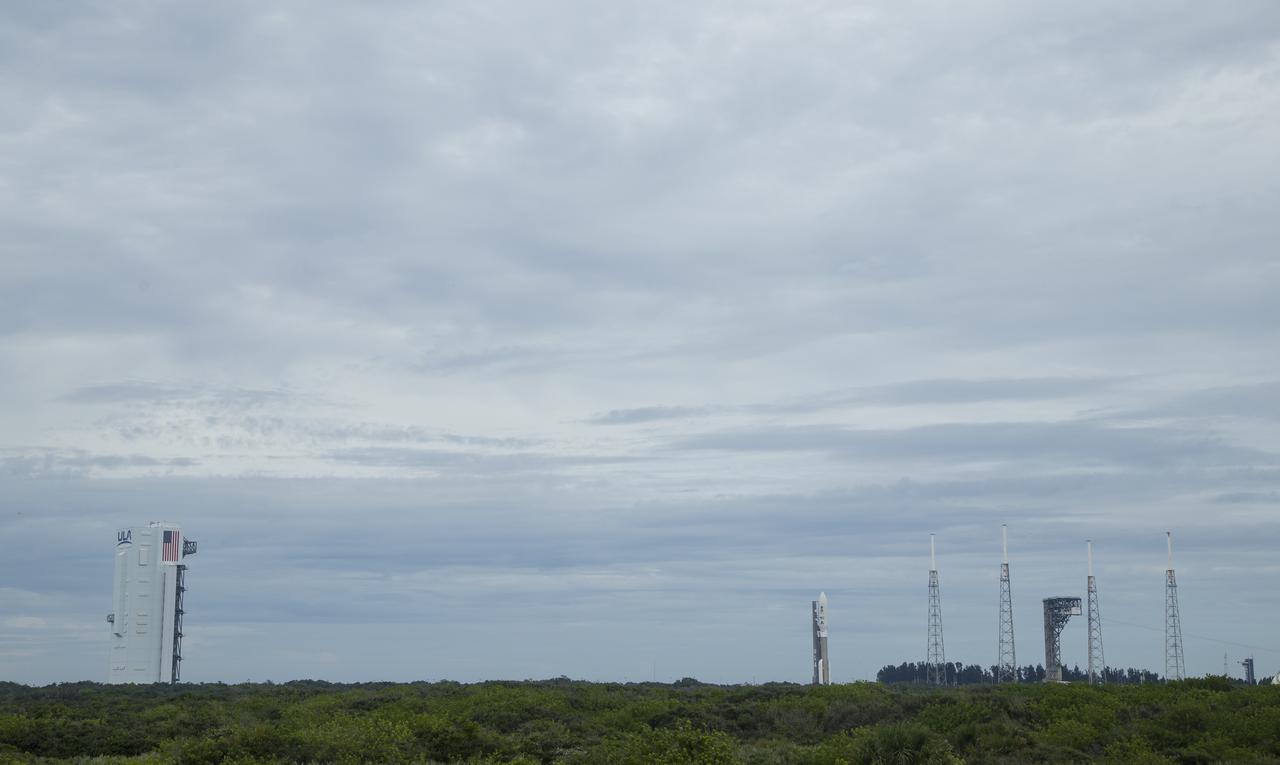
A United Launch Alliance Atlas V rocket with NASA’s Mars 2020 Perseverance rover onboard is seen as it is rolled out of the Vertical Integration Facility to the launch pad at Space Launch Complex 41, Tuesday, July 28, 2020, at Cape Canaveral Air Force Station in Florida. The Perseverance rover is part of NASA’s Mars Exploration Program, a long-term effort of robotic exploration of the Red Planet. Launch is scheduled for Thursday, July 30. Photo Credit: (NASA/Joel Kowsky)
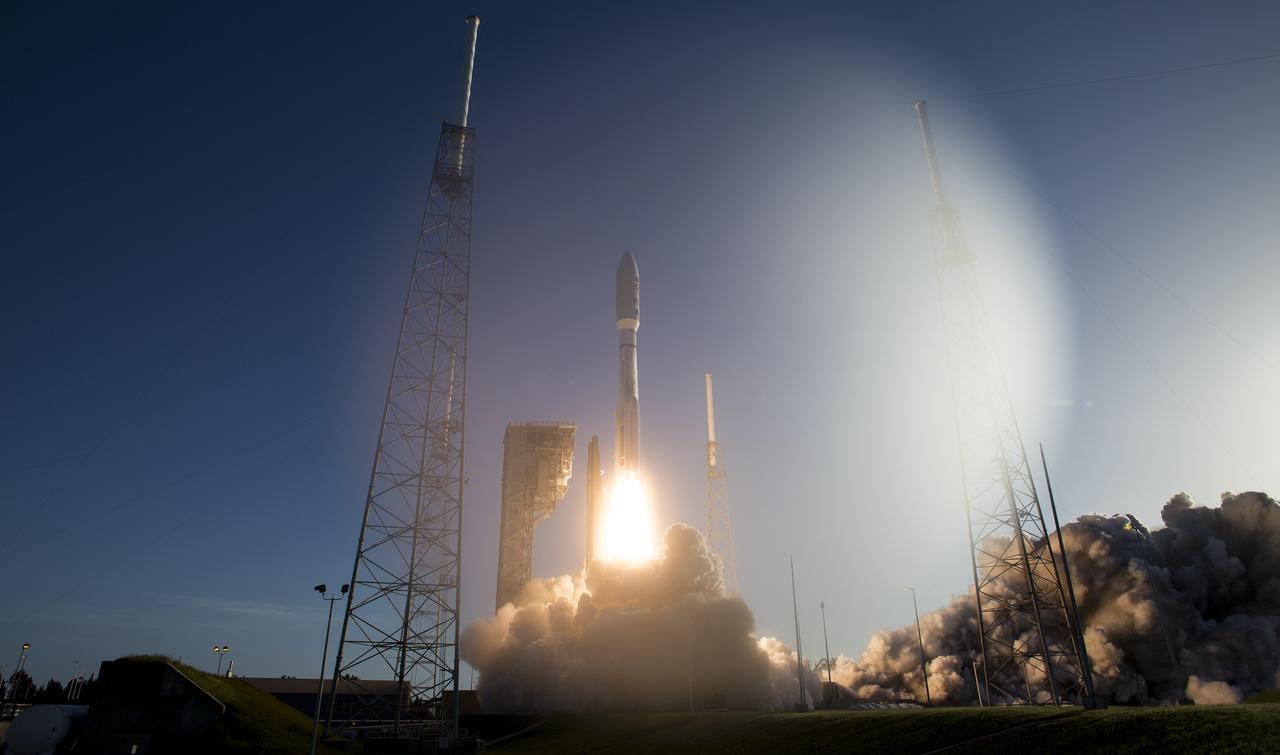
A United Launch Alliance Atlas V rocket with NASA’s Mars 2020 Perseverance rover onboard launches from Space Launch Complex 41, Thursday, July 30, 2020, at Cape Canaveral Air Force Station in Florida. The Perseverance rover is part of NASA’s Mars Exploration Program, a long-term effort of robotic exploration of the Red Planet. Photo Credit: (NASA/Joel Kowsky)
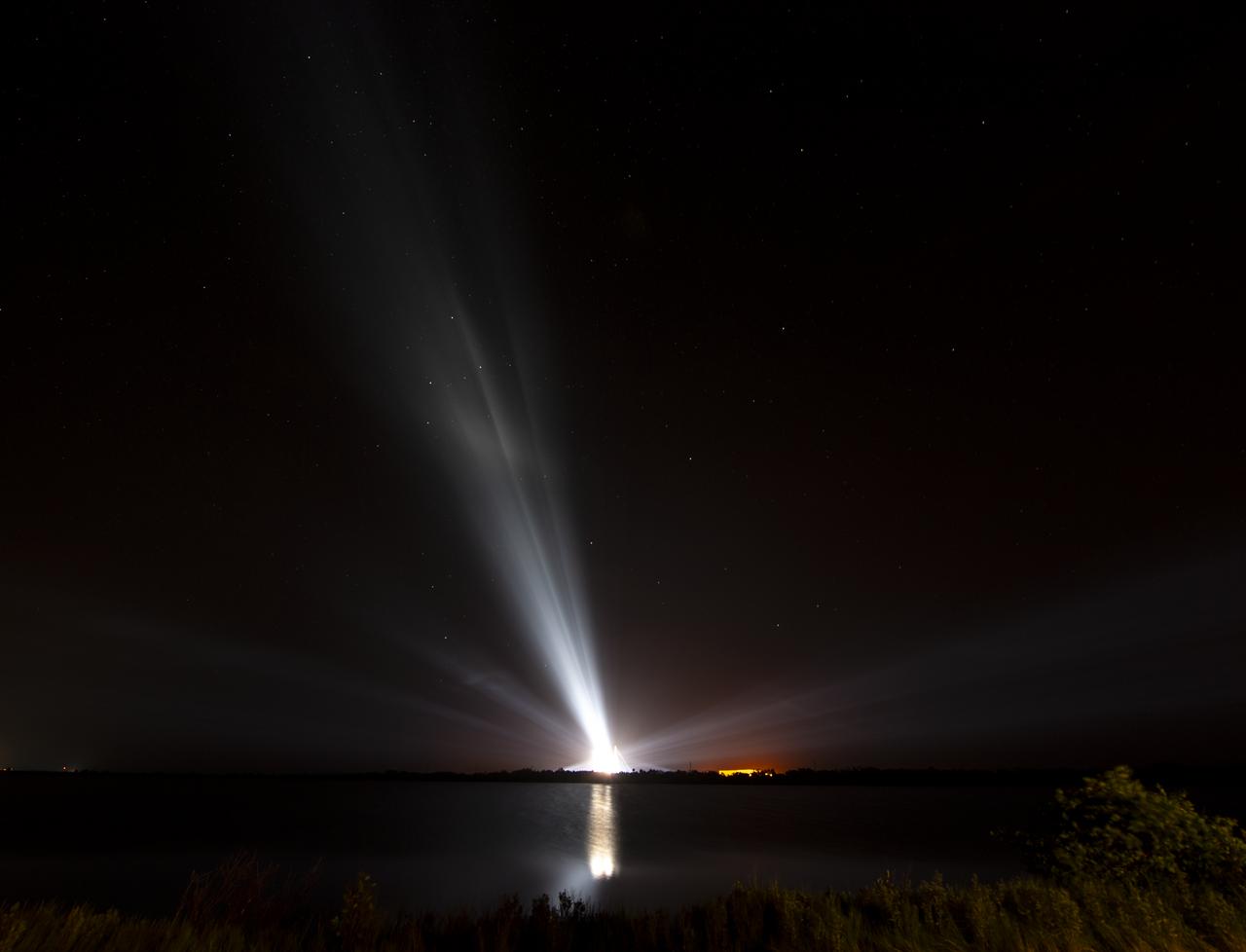
The United Launch Alliance Delta IV Heavy rocket with the Parker Solar Probe is illuminated ahead of launch, Saturday, Aug. 11, 2018, Launch Complex 37 at Cape Canaveral Air Force Station in Florida. Parker Solar Probe is humanity’s first-ever mission into a part of the Sun’s atmosphere called the corona. Here it will directly explore solar processes that are key to understanding and forecasting space weather events that can impact life on Earth. Photo Credit: (NASA/Bill Ingalls)
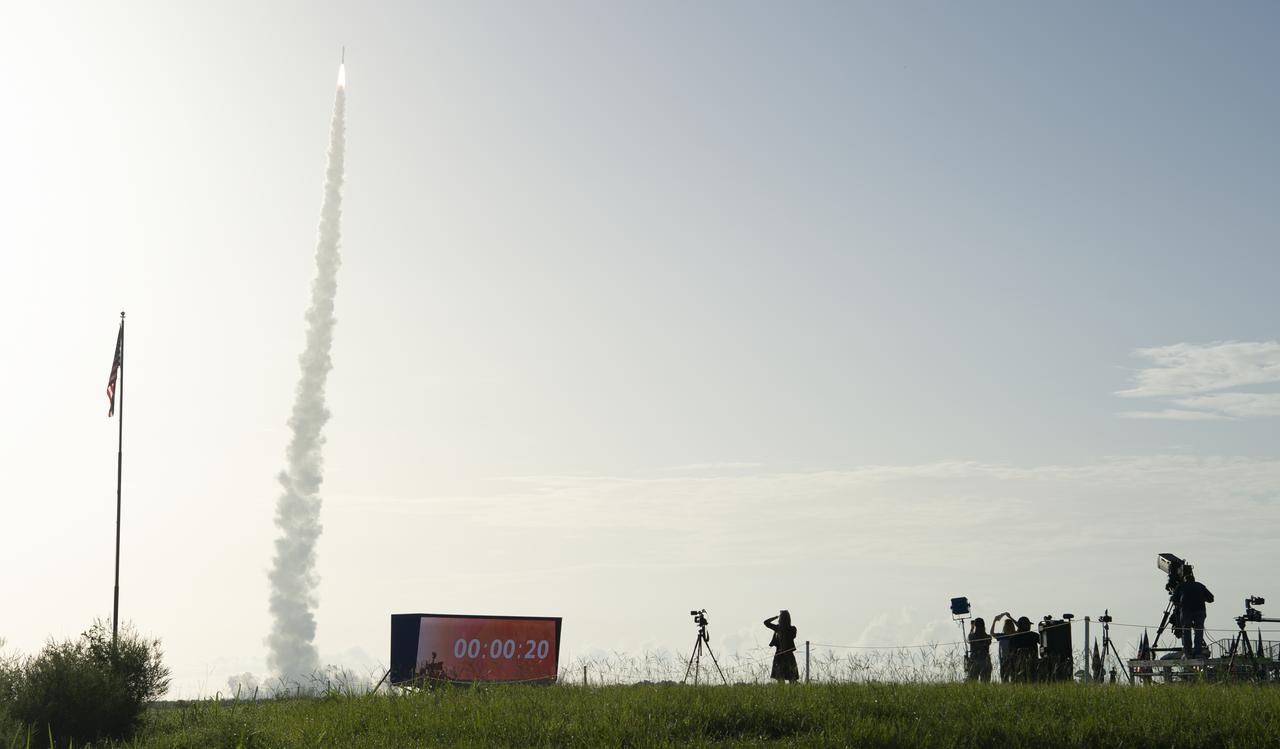
A United Launch Alliance Atlas V rocket with NASA’s Mars 2020 Perseverance rover onboard launches from Space Launch Complex 41 at Cape Canaveral Air Force Station, Thursday, July 30, 2020, from NASA’s Kennedy Space Center in Florida. The Perseverance rover is part of NASA’s Mars Exploration Program, a long-term effort of robotic exploration of the Red Planet. Photo Credit: (NASA/Joel Kowsky)
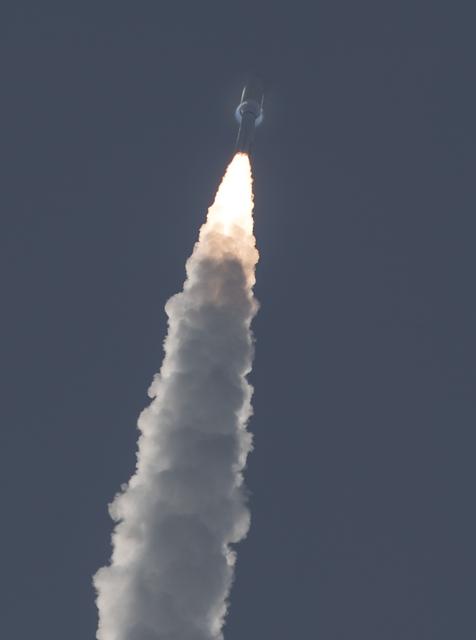
A United Launch Alliance Atlas V rocket with NASA’s Mars 2020 Perseverance rover onboard launches from Space Launch Complex 41 at Cape Canaveral Air Force Station, Thursday, July 30, 2020, from NASA’s Kennedy Space Center in Florida. The Perseverance rover is part of NASA’s Mars Exploration Program, a long-term effort of robotic exploration of the Red Planet. Photo Credit: (NASA/Joel Kowsky)
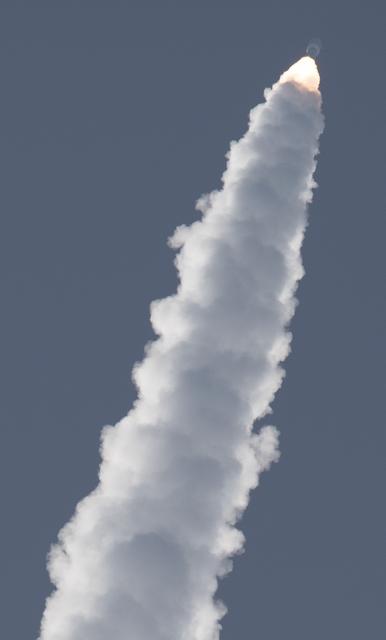
A United Launch Alliance Atlas V rocket with NASA’s Mars 2020 Perseverance rover onboard launches from Space Launch Complex 41 at Cape Canaveral Air Force Station, Thursday, July 30, 2020, from NASA’s Kennedy Space Center in Florida. The Perseverance rover is part of NASA’s Mars Exploration Program, a long-term effort of robotic exploration of the Red Planet. Photo Credit: (NASA/Joel Kowsky)
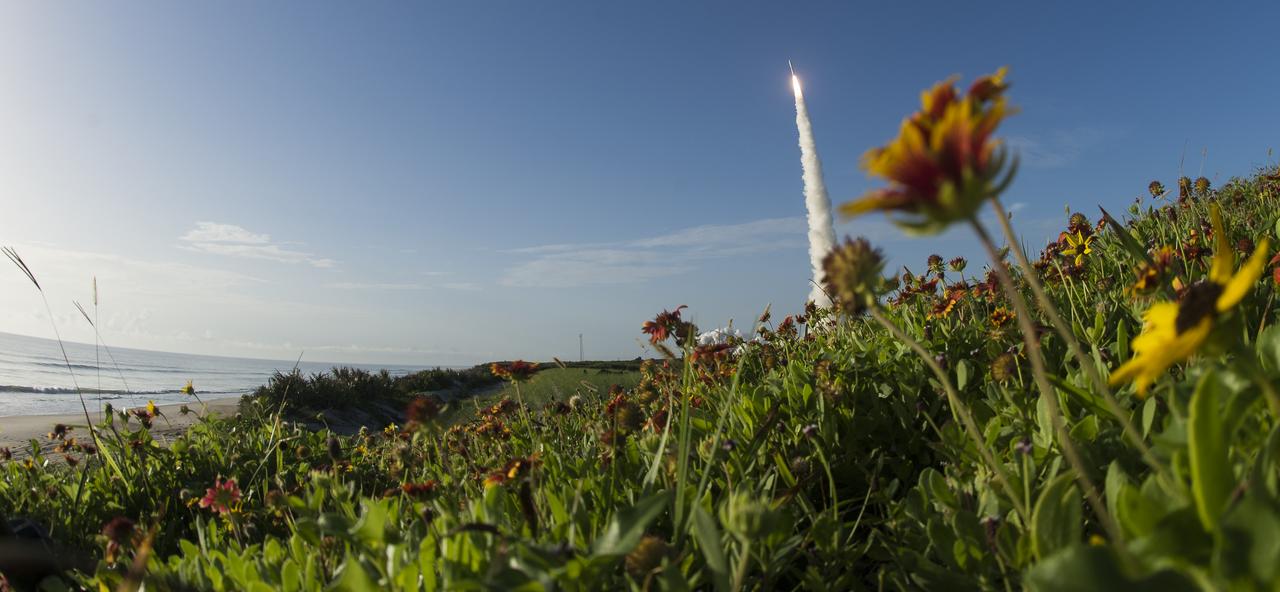
A United Launch Alliance Atlas V rocket with NASA’s Mars 2020 Perseverance rover onboard launches from Space Launch Complex 41, Thursday, July 30, 2020, at Cape Canaveral Air Force Station in Florida. The Perseverance rover is part of NASA’s Mars Exploration Program, a long-term effort of robotic exploration of the Red Planet. Photo Credit: (NASA/Joel Kowsky)
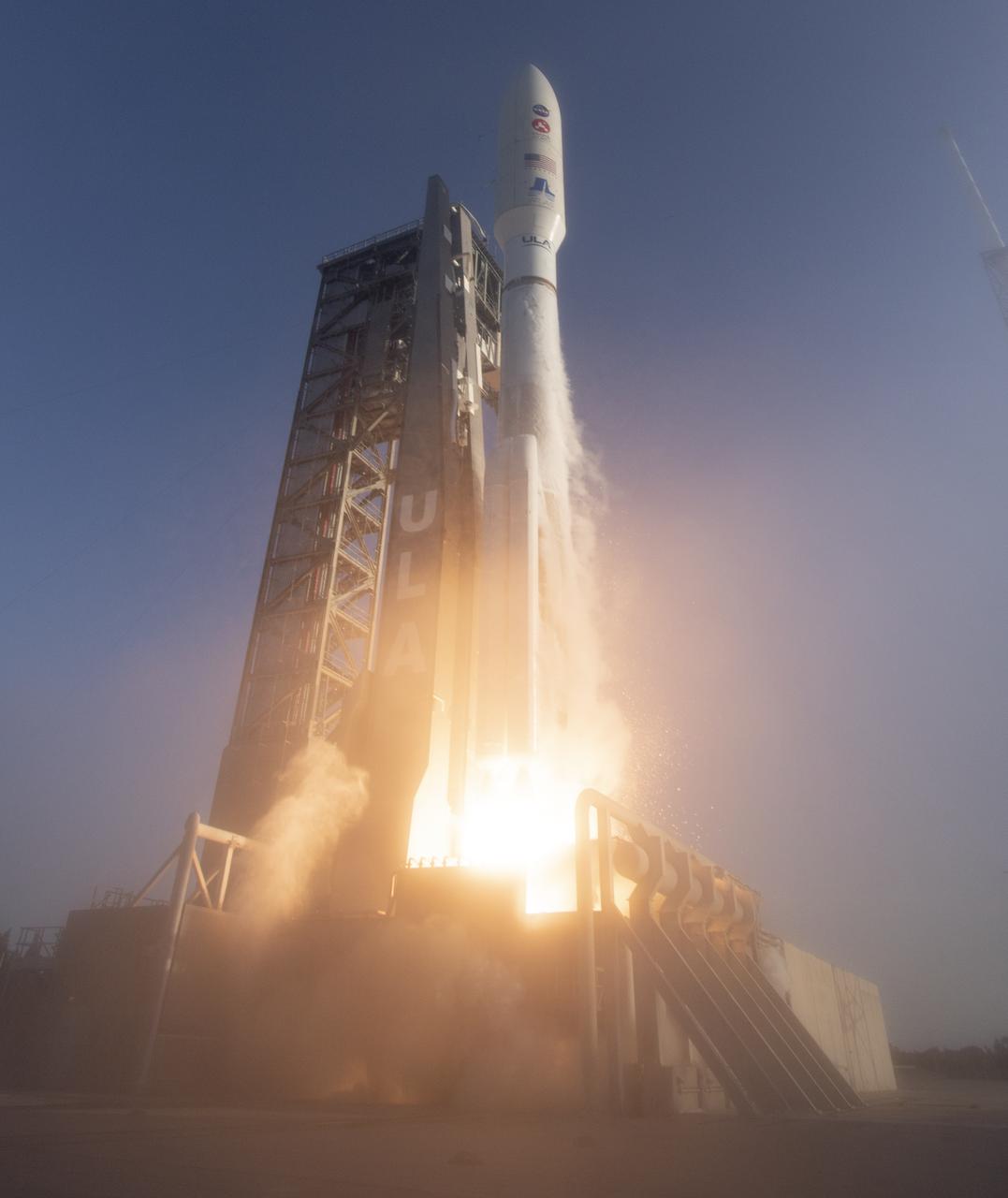
A United Launch Alliance Atlas V rocket with NASA’s Mars 2020 Perseverance rover onboard launches from Space Launch Complex 41, Thursday, July 30, 2020, at Cape Canaveral Air Force Station in Florida. The Perseverance rover is part of NASA’s Mars Exploration Program, a long-term effort of robotic exploration of the Red Planet. Photo Credit: (NASA/Joel Kowsky)
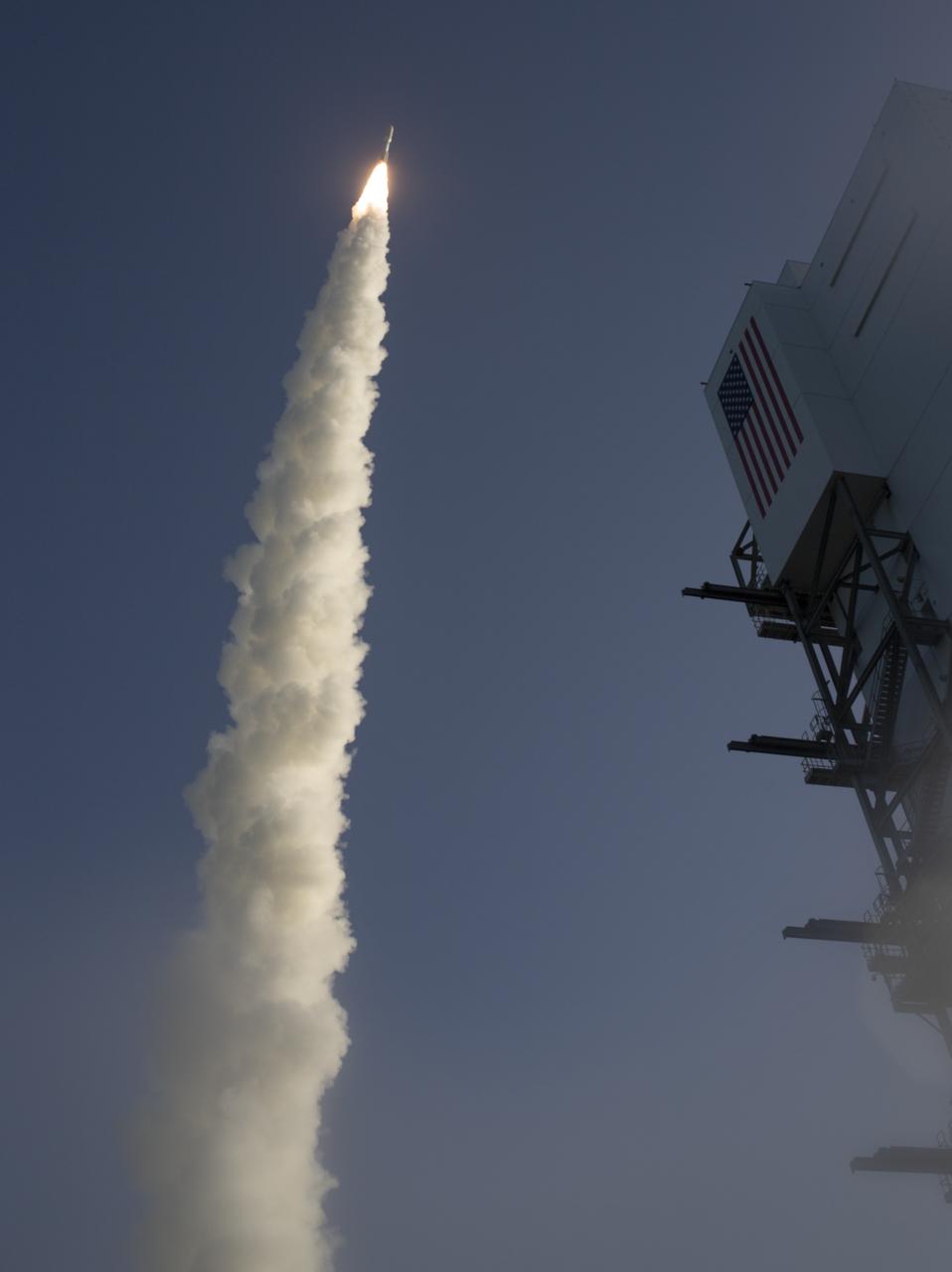
A United Launch Alliance Atlas V rocket with NASA’s Mars 2020 Perseverance rover onboard launches from Space Launch Complex 41, Thursday, July 30, 2020, at Cape Canaveral Air Force Station in Florida. The Perseverance rover is part of NASA’s Mars Exploration Program, a long-term effort of robotic exploration of the Red Planet. Photo Credit: (NASA/Joel Kowsky)
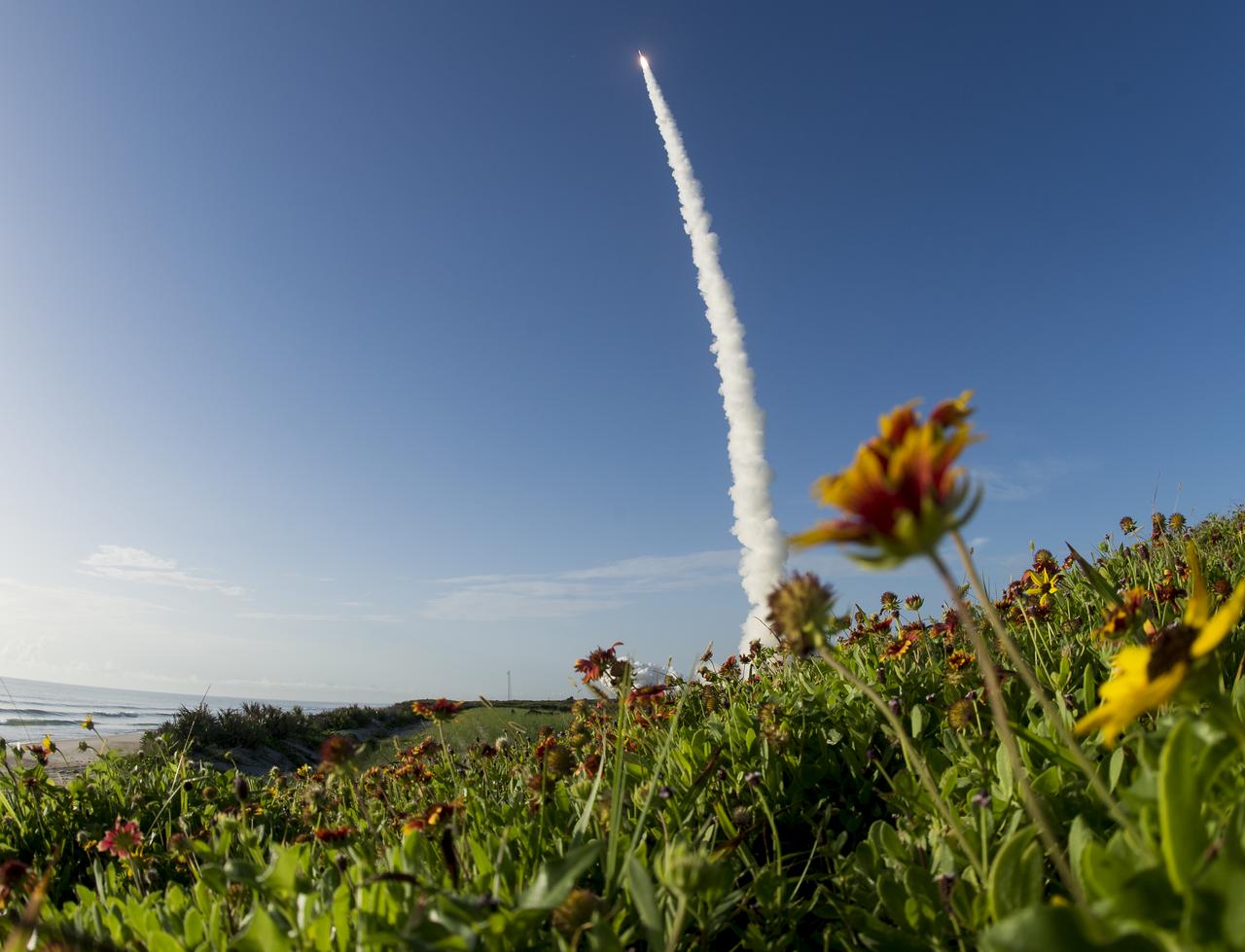
A United Launch Alliance Atlas V rocket with NASA’s Mars 2020 Perseverance rover onboard launches from Space Launch Complex 41, Thursday, July 30, 2020, at Cape Canaveral Air Force Station in Florida. The Perseverance rover is part of NASA’s Mars Exploration Program, a long-term effort of robotic exploration of the Red Planet. Photo Credit: (NASA/Joel Kowsky)
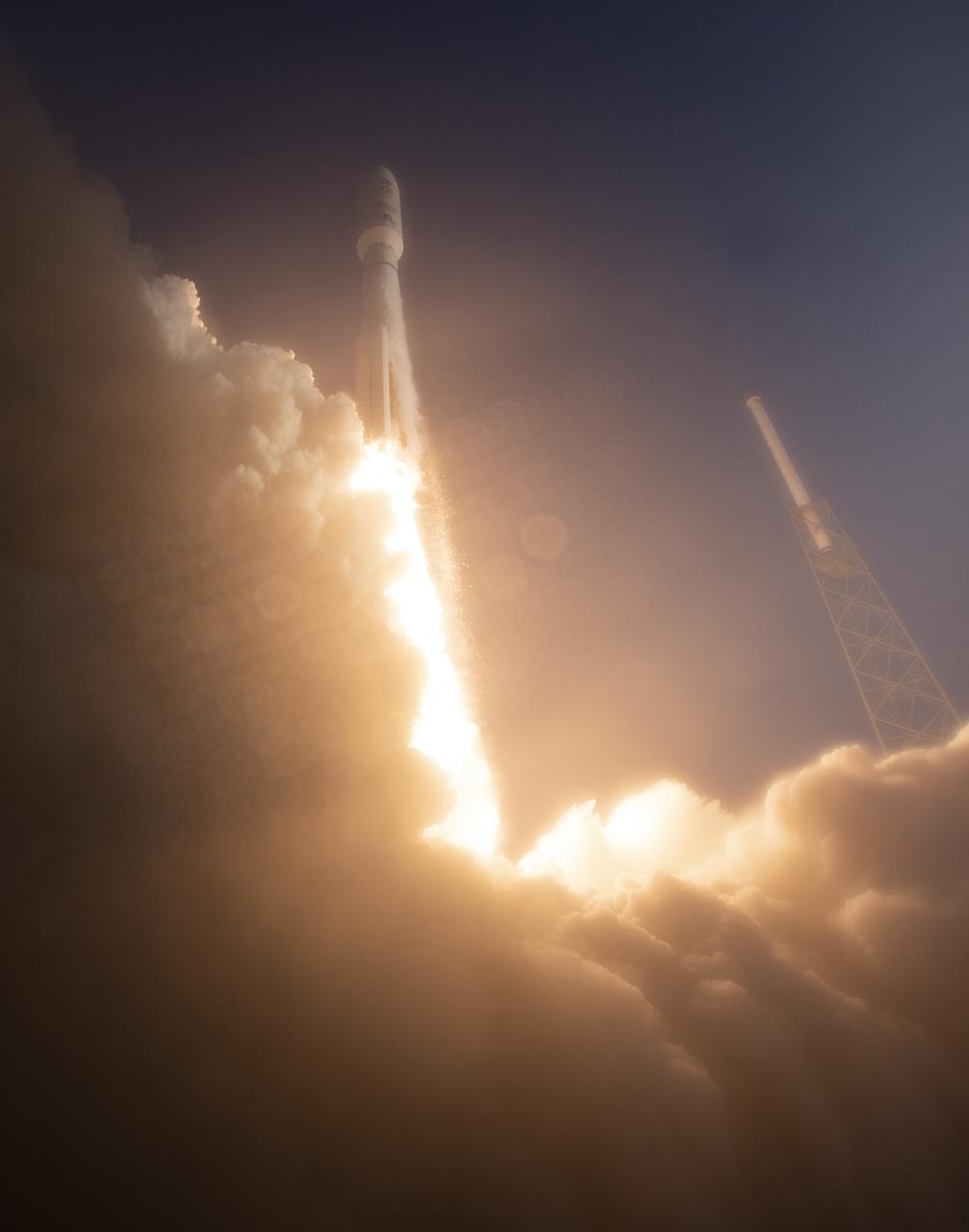
A United Launch Alliance Atlas V rocket with NASA’s Mars 2020 Perseverance rover onboard launches from Space Launch Complex 41, Thursday, July 30, 2020, at Cape Canaveral Air Force Station in Florida. The Perseverance rover is part of NASA’s Mars Exploration Program, a long-term effort of robotic exploration of the Red Planet. Photo Credit: (NASA/Joel Kowsky)
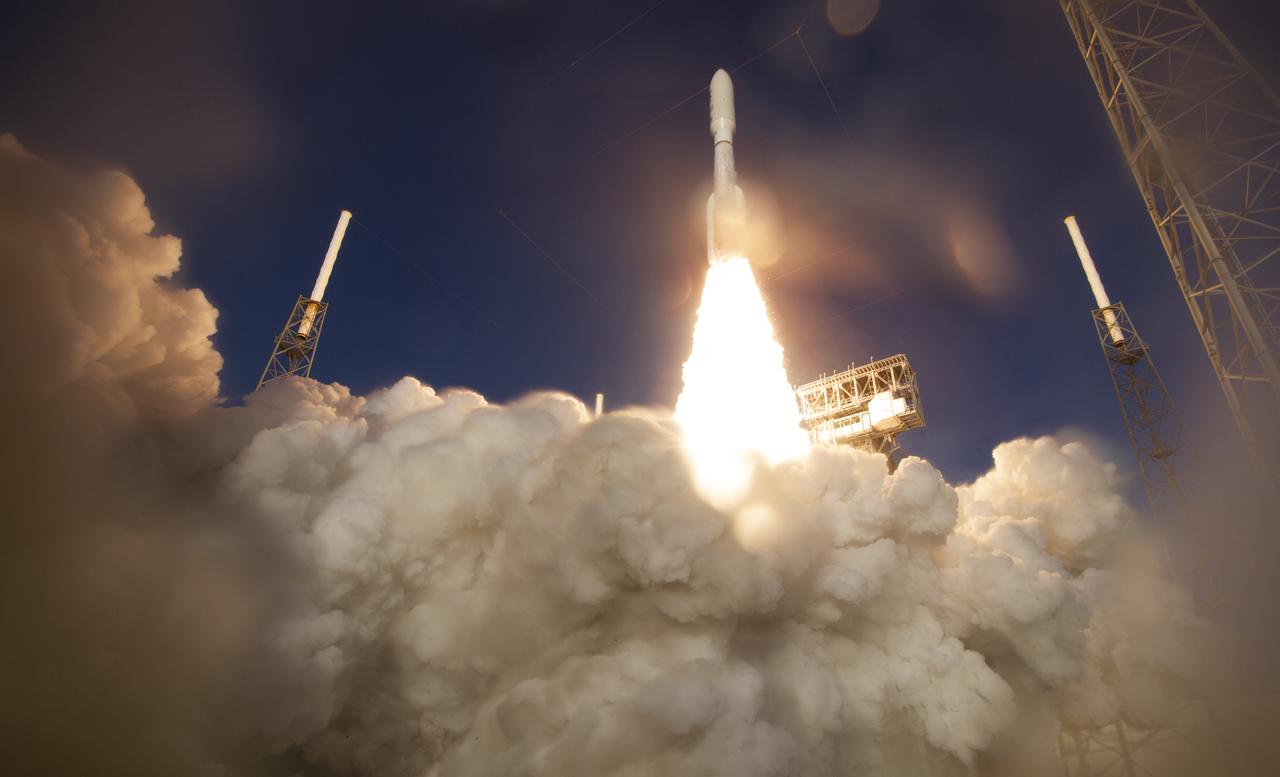
A United Launch Alliance Atlas V rocket with NASA’s Mars 2020 Perseverance rover onboard launches from Space Launch Complex 41, Thursday, July 30, 2020, at Cape Canaveral Air Force Station in Florida. The Perseverance rover is part of NASA’s Mars Exploration Program, a long-term effort of robotic exploration of the Red Planet. Photo Credit: (NASA/Joel Kowsky)
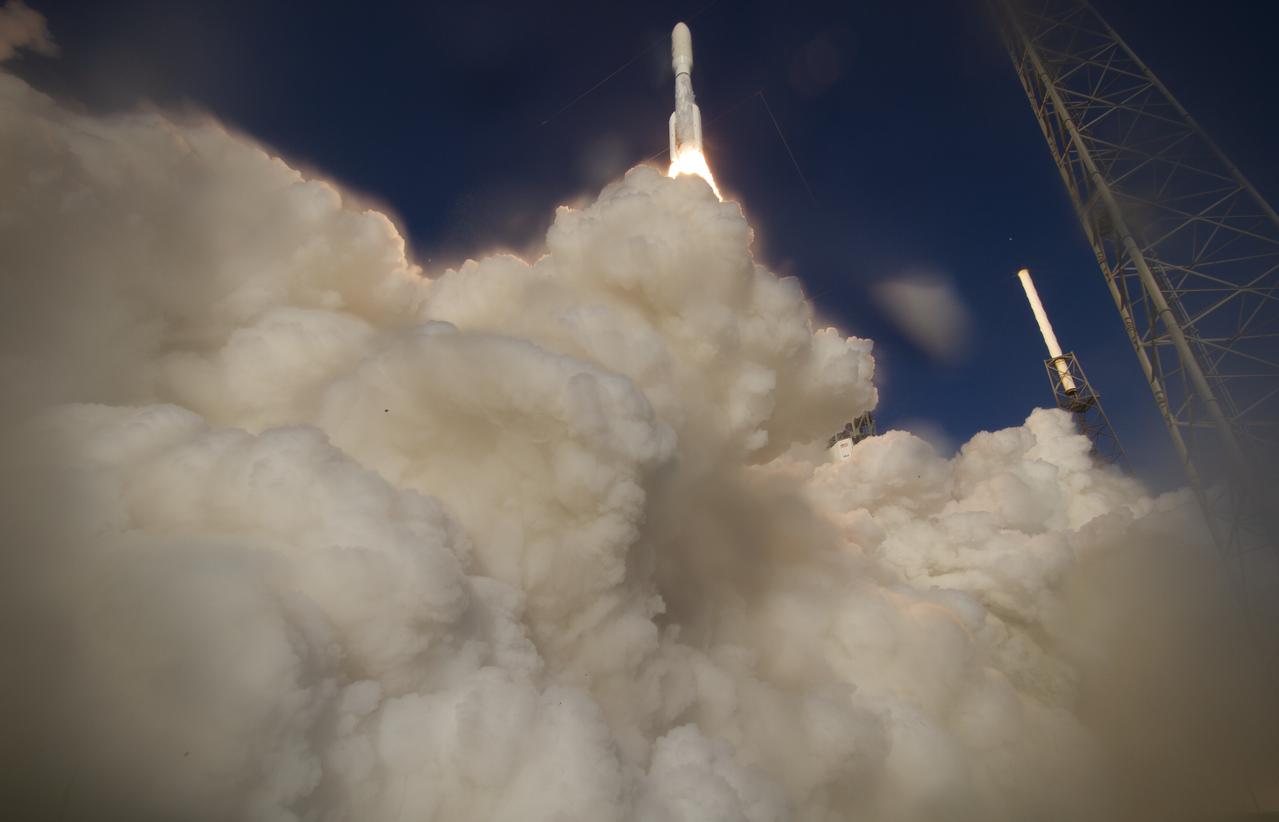
A United Launch Alliance Atlas V rocket with NASA’s Mars 2020 Perseverance rover onboard launches from Space Launch Complex 41, Thursday, July 30, 2020, at Cape Canaveral Air Force Station in Florida. The Perseverance rover is part of NASA’s Mars Exploration Program, a long-term effort of robotic exploration of the Red Planet. Photo Credit: (NASA/Joel Kowsky)
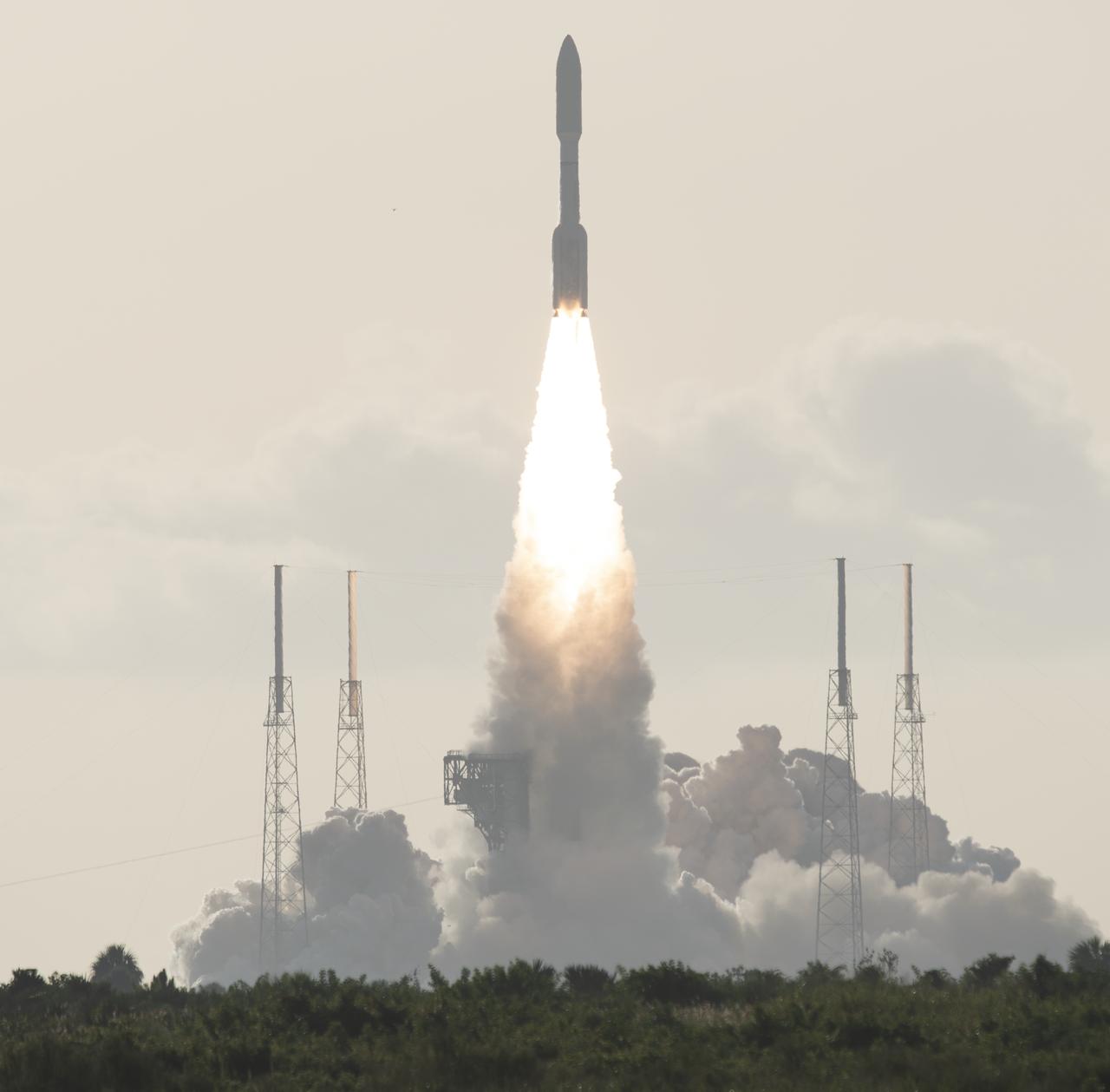
A United Launch Alliance Atlas V rocket with NASA’s Mars 2020 Perseverance rover onboard launches from Space Launch Complex 41 at Cape Canaveral Air Force Station, Thursday, July 30, 2020, from NASA’s Kennedy Space Center in Florida. The Perseverance rover is part of NASA’s Mars Exploration Program, a long-term effort of robotic exploration of the Red Planet. Photo Credit: (NASA/Joel Kowsky)
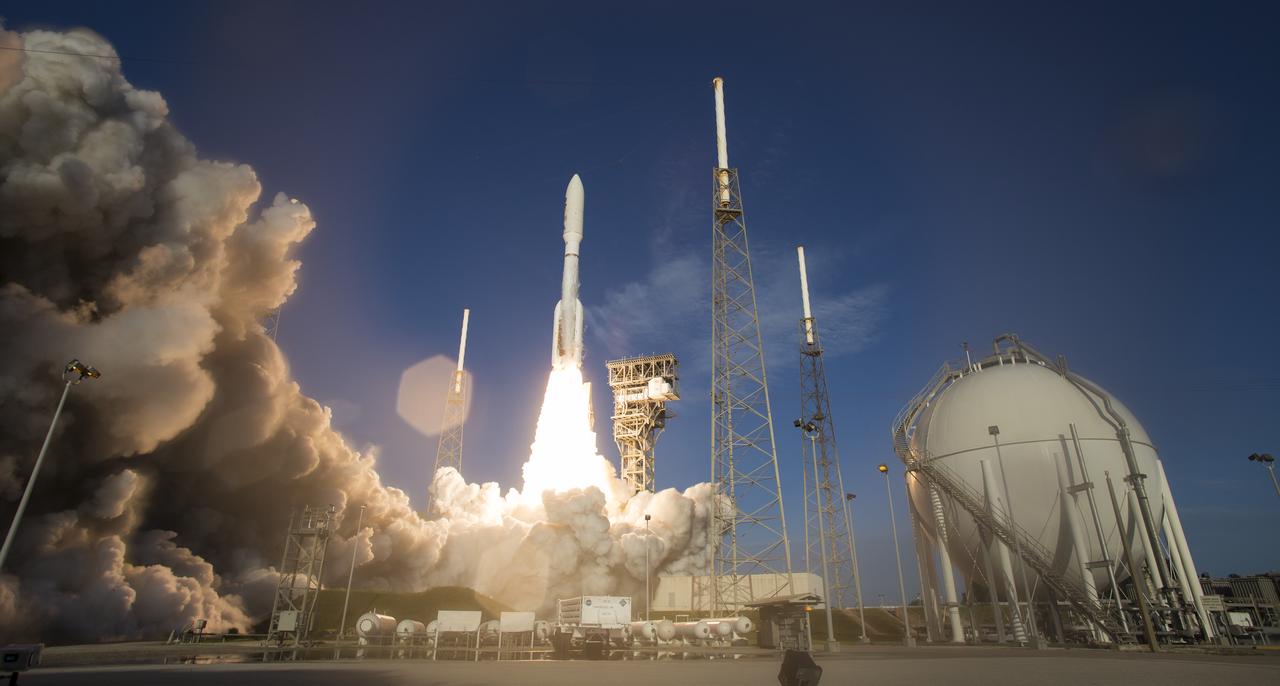
A United Launch Alliance Atlas V rocket with NASA’s Mars 2020 Perseverance rover onboard launches from Space Launch Complex 41, Thursday, July 30, 2020, at Cape Canaveral Air Force Station in Florida. The Perseverance rover is part of NASA’s Mars Exploration Program, a long-term effort of robotic exploration of the Red Planet. Photo Credit: (NASA/Joel Kowsky)
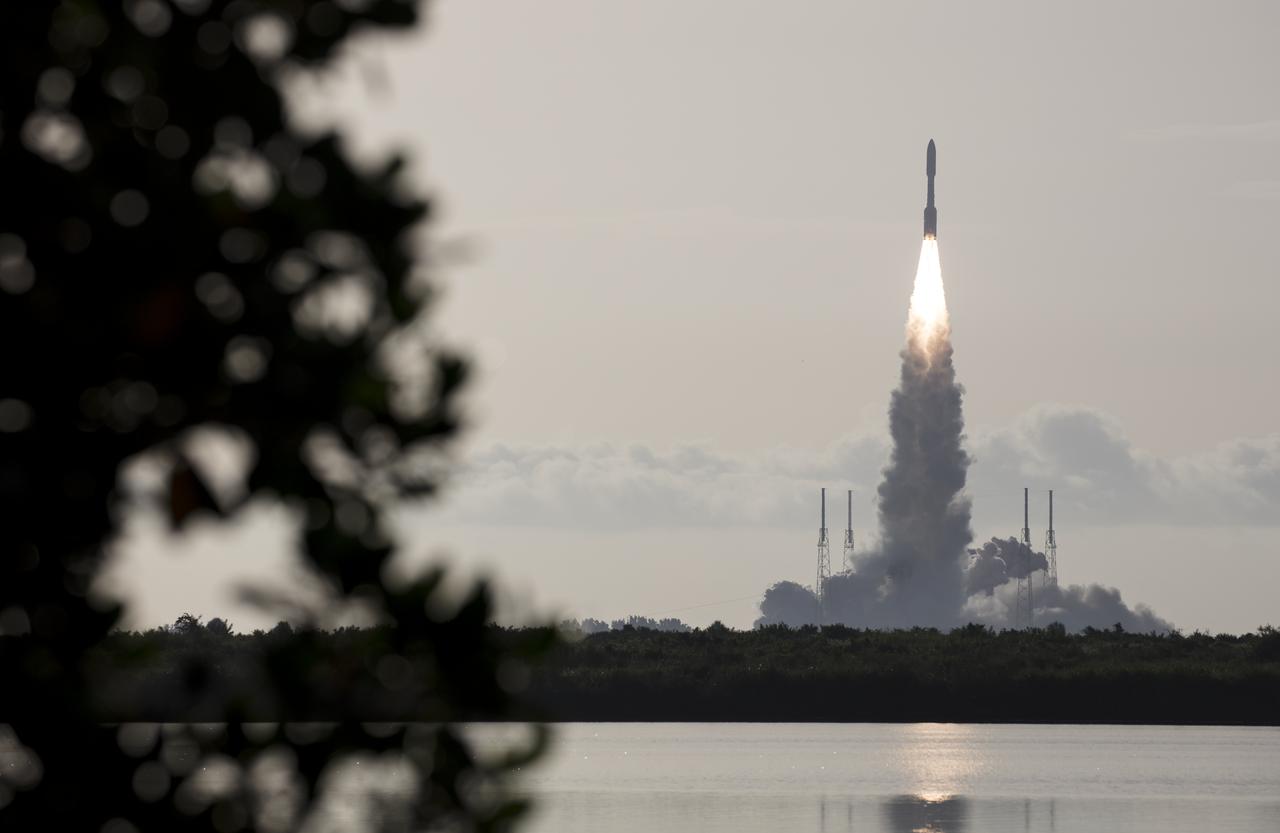
A United Launch Alliance Atlas V rocket with NASA’s Mars 2020 Perseverance rover onboard launches from Space Launch Complex 41 at Cape Canaveral Air Force Station, Thursday, July 30, 2020, from NASA’s Kennedy Space Center in Florida. The Perseverance rover is part of NASA’s Mars Exploration Program, a long-term effort of robotic exploration of the Red Planet. Photo Credit: (NASA/Joel Kowsky)
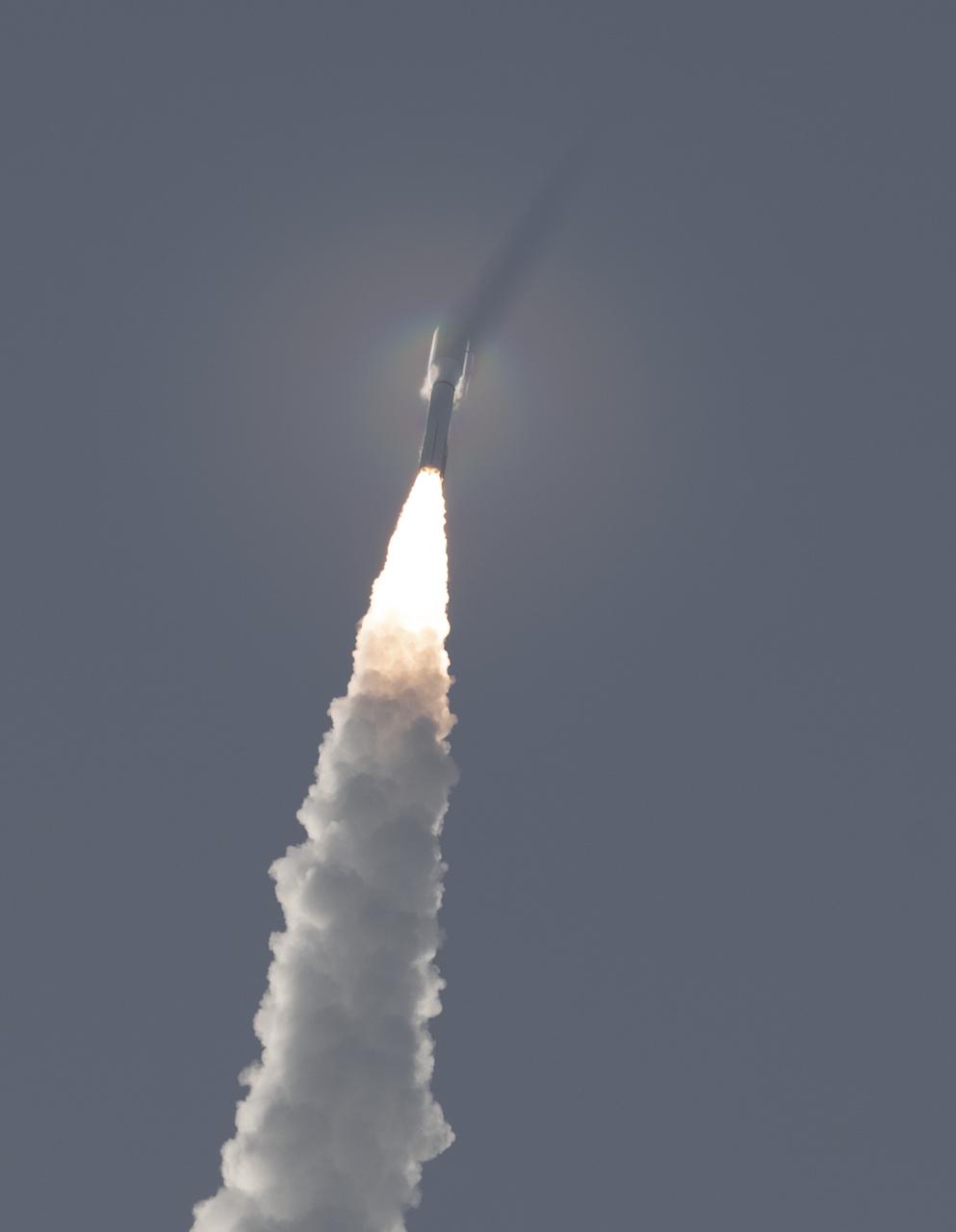
A United Launch Alliance Atlas V rocket with NASA’s Mars 2020 Perseverance rover onboard launches from Space Launch Complex 41 at Cape Canaveral Air Force Station, Thursday, July 30, 2020, from NASA’s Kennedy Space Center in Florida. The Perseverance rover is part of NASA’s Mars Exploration Program, a long-term effort of robotic exploration of the Red Planet. Photo Credit: (NASA/Joel Kowsky)
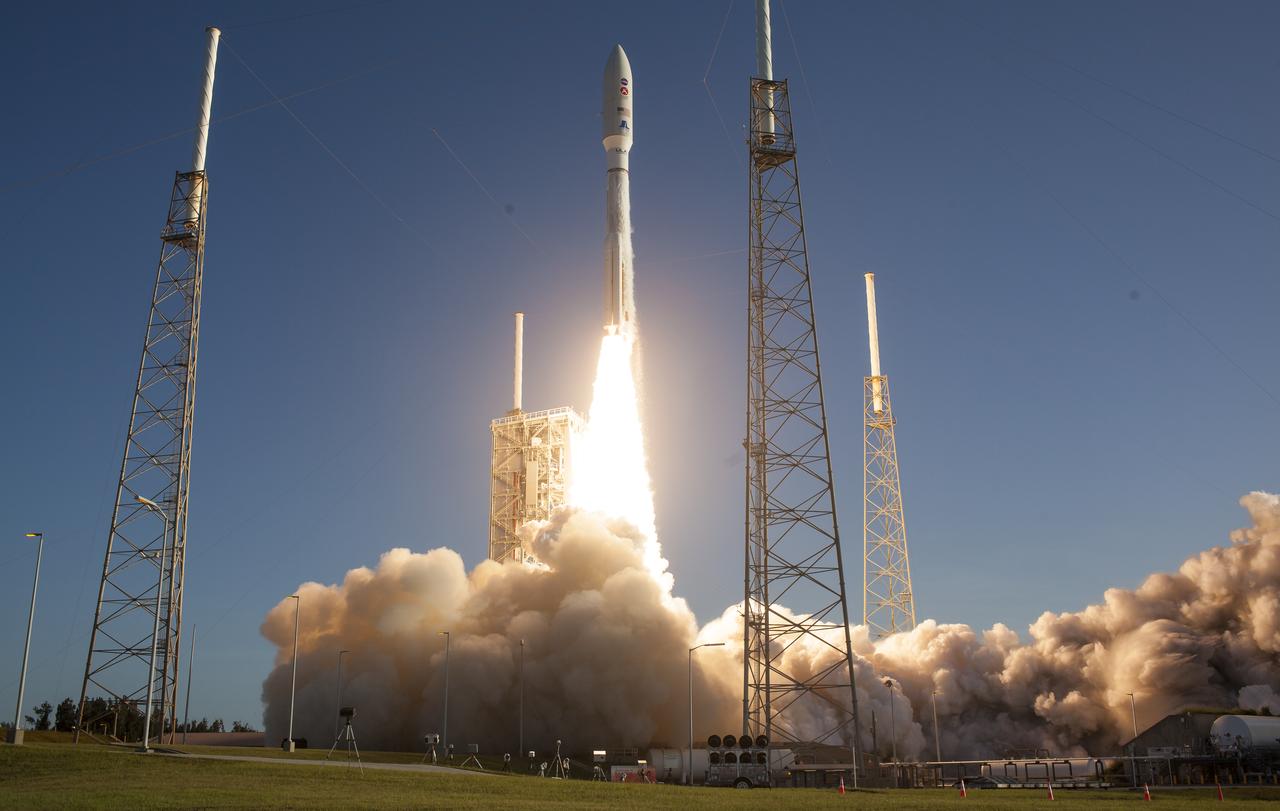
A United Launch Alliance Atlas V rocket with NASA’s Mars 2020 Perseverance rover onboard launches from Space Launch Complex 41, Thursday, July 30, 2020, at Cape Canaveral Air Force Station in Florida. The Perseverance rover is part of NASA’s Mars Exploration Program, a long-term effort of robotic exploration of the Red Planet. Photo Credit: (NASA/Joel Kowsky)
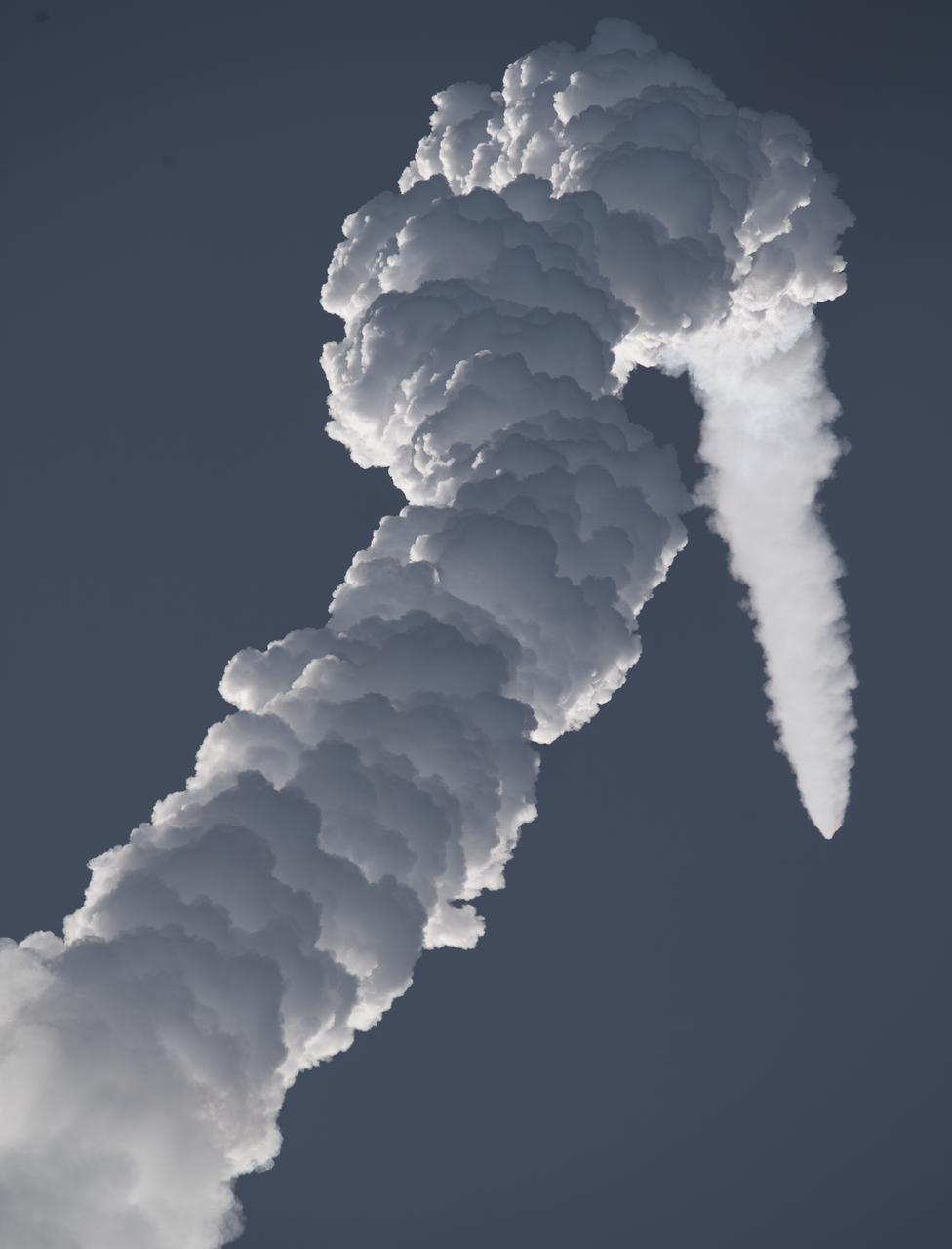
A United Launch Alliance Atlas V rocket with NASA’s Mars 2020 Perseverance rover onboard launches from Space Launch Complex 41 at Cape Canaveral Air Force Station, Thursday, July 30, 2020, from NASA’s Kennedy Space Center in Florida. The Perseverance rover is part of NASA’s Mars Exploration Program, a long-term effort of robotic exploration of the Red Planet. Photo Credit: (NASA/Joel Kowsky)
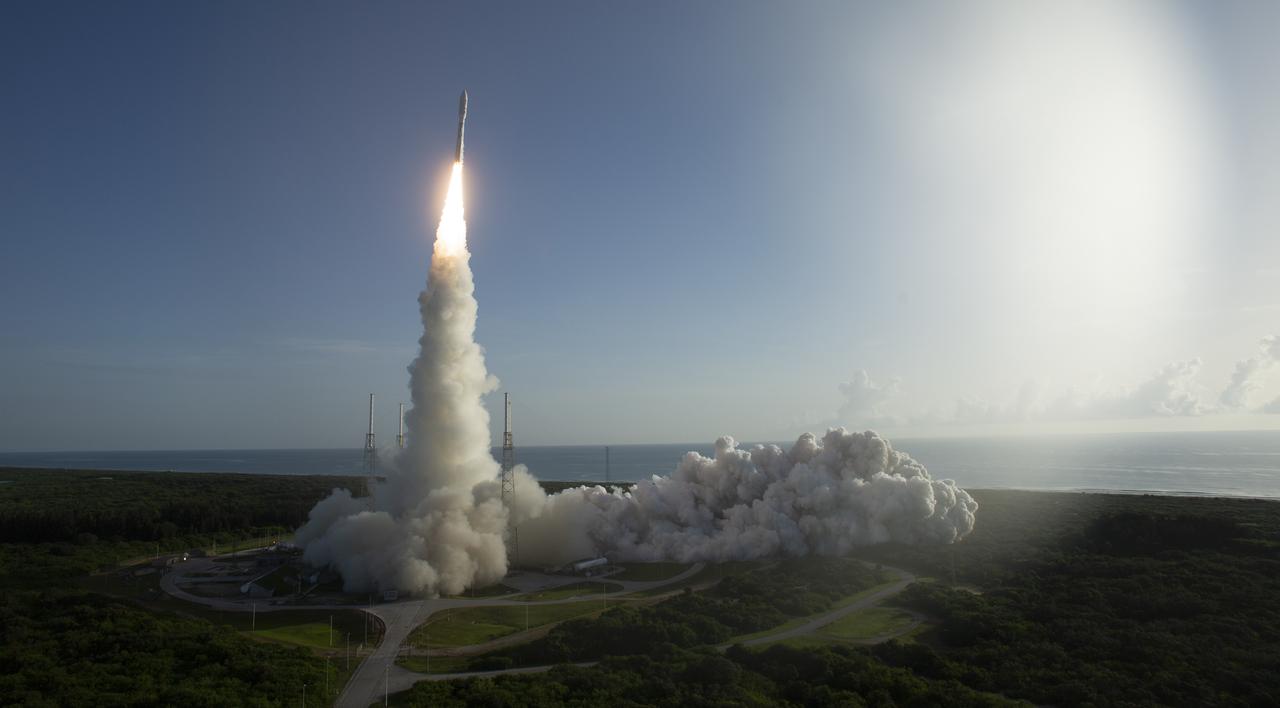
A United Launch Alliance Atlas V rocket with NASA’s Mars 2020 Perseverance rover onboard launches from Space Launch Complex 41, Thursday, July 30, 2020, at Cape Canaveral Air Force Station in Florida. The Perseverance rover is part of NASA’s Mars Exploration Program, a long-term effort of robotic exploration of the Red Planet. Photo Credit: (NASA/Joel Kowsky)
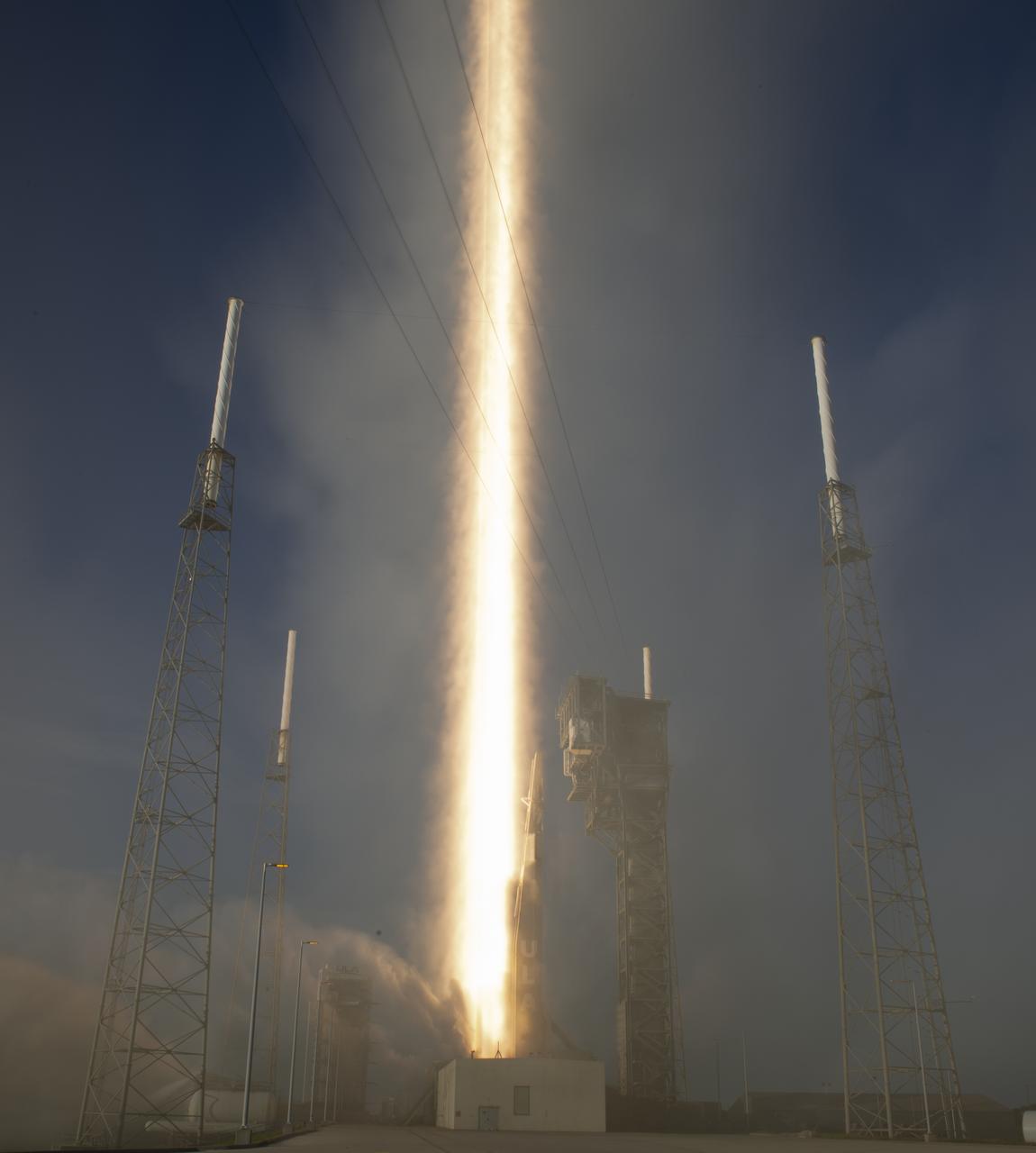
In this twenty second exposure, a United Launch Alliance Atlas V rocket with NASA’s Mars 2020 Perseverance rover onboard is seen as it launches from Space Launch Complex 41, Thursday, July 30, 2020, at Cape Canaveral Air Force Station in Florida. The Perseverance rover is part of NASA’s Mars Exploration Program, a long-term effort of robotic exploration of the Red Planet. Photo Credit: (NASA/Joel Kowsky)
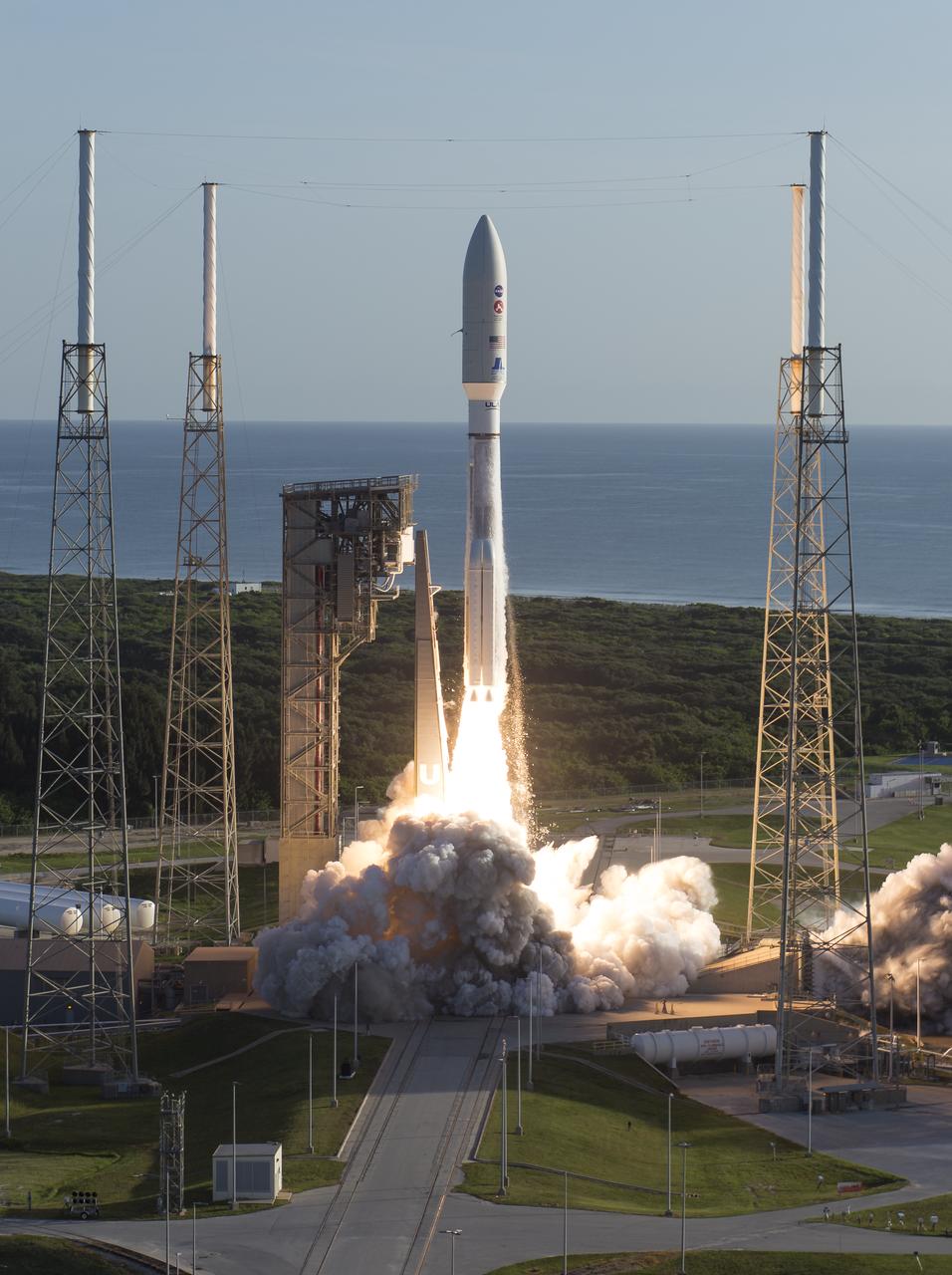
A United Launch Alliance Atlas V rocket with NASA’s Mars 2020 Perseverance rover onboard launches from Space Launch Complex 41, Thursday, July 30, 2020, at Cape Canaveral Air Force Station in Florida. The Perseverance rover is part of NASA’s Mars Exploration Program, a long-term effort of robotic exploration of the Red Planet. Photo Credit: (NASA/Joel Kowsky)
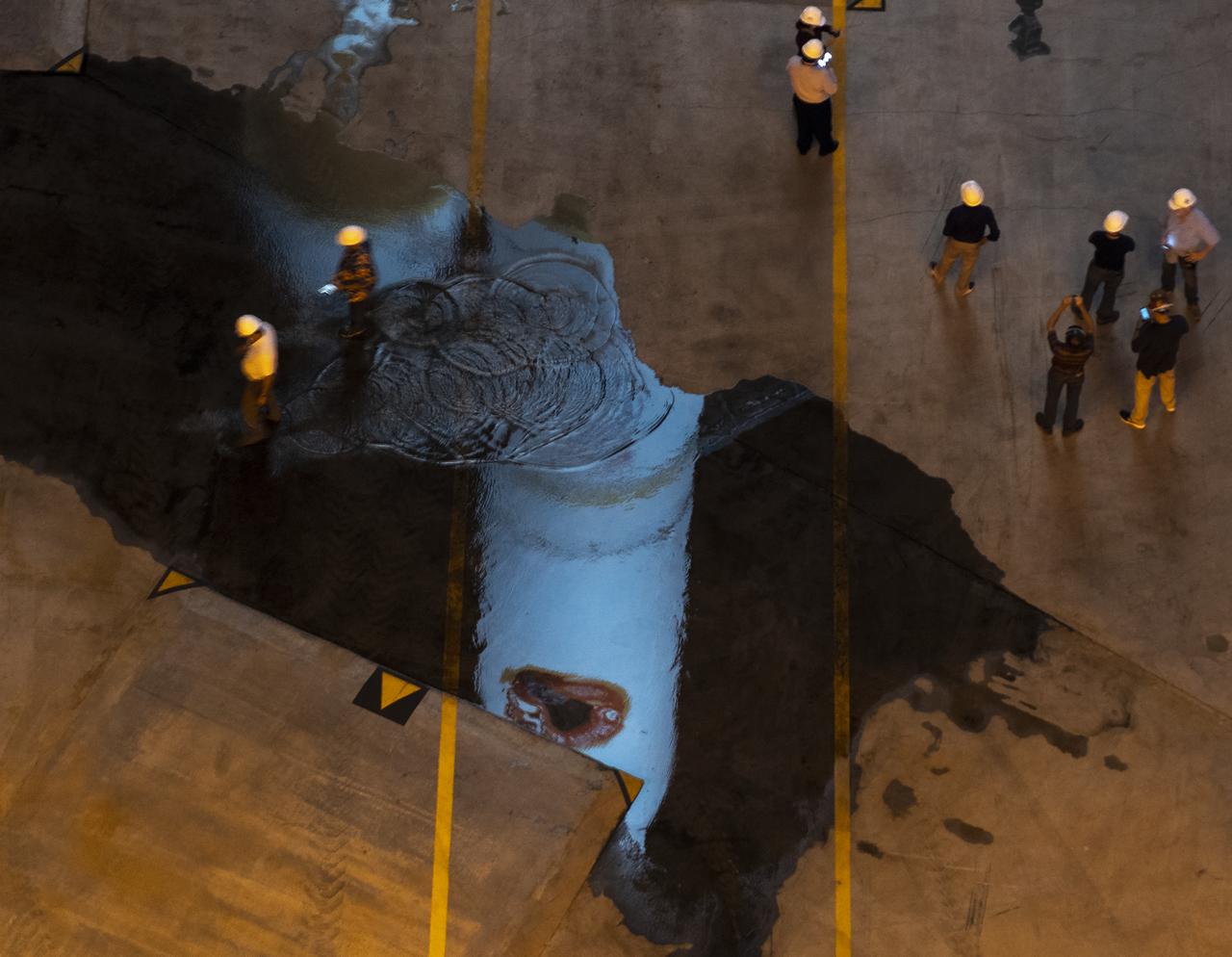
The United Launch Alliance Delta IV Heavy rocket with the Parker Solar Probe onboard, is reflected in water on the launch pad, Saturday, Aug. 11, 2018, Launch Complex 37 at Cape Canaveral Air Force Station in Florida. Parker Solar Probe is humanity’s first-ever mission into a part of the Sun’s atmosphere called the corona. Here it will directly explore solar processes that are key to understanding and forecasting space weather events that can impact life on Earth. Photo Credit: (NASA/Bill Ingalls)
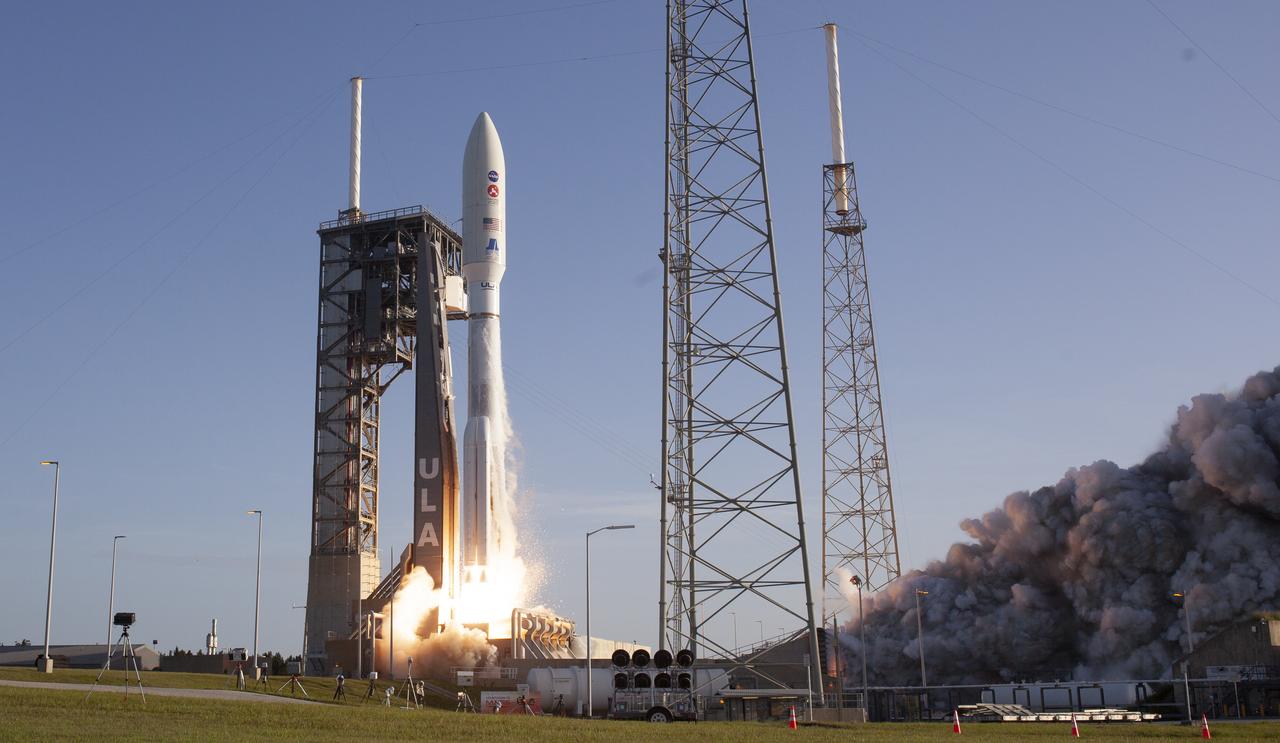
A United Launch Alliance Atlas V rocket with NASA’s Mars 2020 Perseverance rover onboard launches from Space Launch Complex 41, Thursday, July 30, 2020, at Cape Canaveral Air Force Station in Florida. The Perseverance rover is part of NASA’s Mars Exploration Program, a long-term effort of robotic exploration of the Red Planet. Photo Credit: (NASA/Joel Kowsky)

In this black and white infrared image, a United Launch Alliance Atlas V rocket with NASA’s Mars 2020 Perseverance rover onboard launches from Space Launch Complex 41, Thursday, July 30, 2020, at Cape Canaveral Air Force Station in Florida. The Perseverance rover is part of NASA’s Mars Exploration Program, a long-term effort of robotic exploration of the Red Planet. Photo Credit: (NASA/Joel Kowsky)
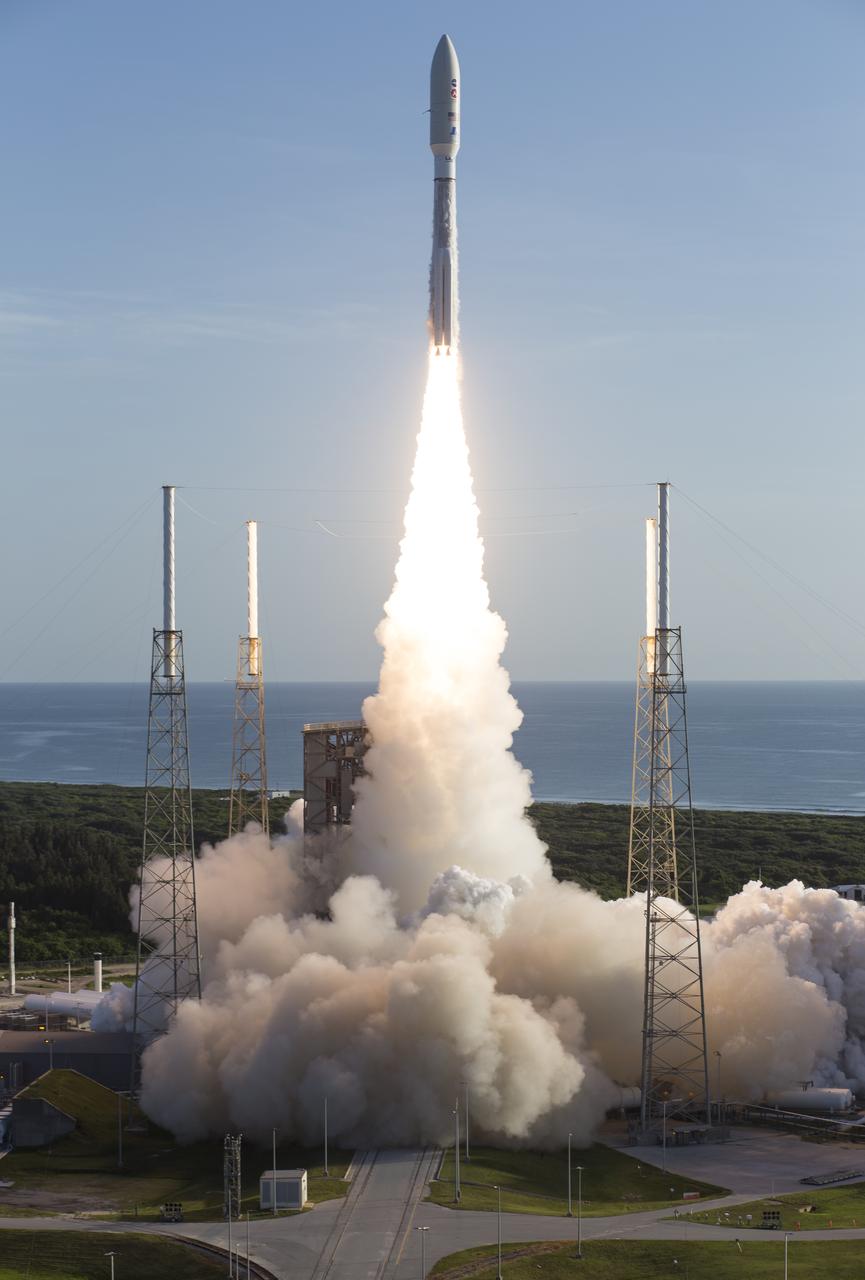
A United Launch Alliance Atlas V rocket with NASA’s Mars 2020 Perseverance rover onboard launches from Space Launch Complex 41, Thursday, July 30, 2020, at Cape Canaveral Air Force Station in Florida. The Perseverance rover is part of NASA’s Mars Exploration Program, a long-term effort of robotic exploration of the Red Planet. Photo Credit: (NASA/Joel Kowsky)
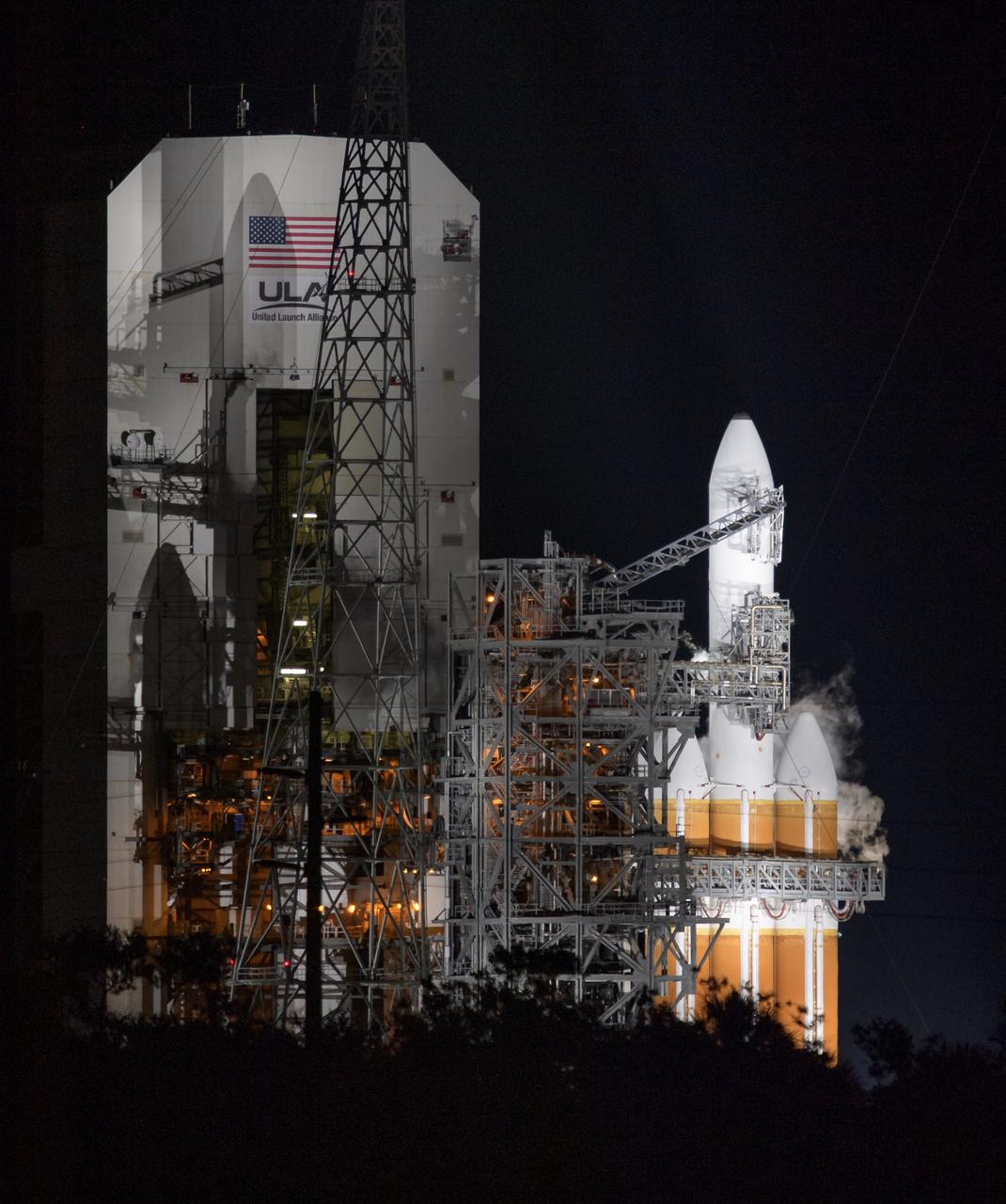
The United Launch Alliance Delta IV Heavy rocket with the Parker Solar Probe onboard is seen moments before launch, Sunday, Aug. 12, 2018, Launch Complex 37 at Cape Canaveral Air Force Station in Florida. Parker Solar Probe is humanity’s first-ever mission into a part of the Sun’s atmosphere called the corona. Here it will directly explore solar processes that are key to understanding and forecasting space weather events that can impact life on Earth. Photo Credit: (NASA/Bill Ingalls)
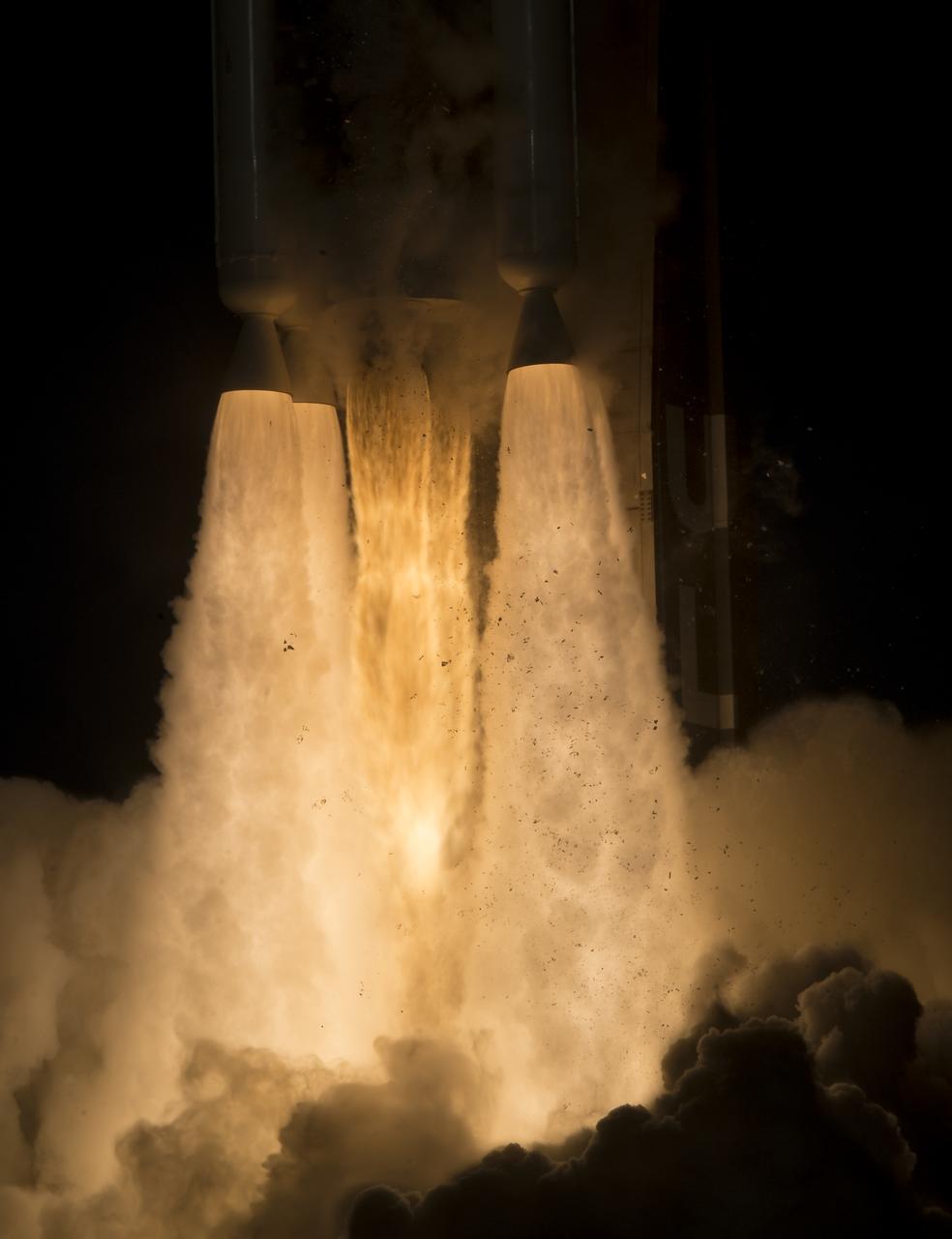
A United Launch Alliance Atlas V rocket with NASA’s Mars 2020 Perseverance rover onboard launches from Space Launch Complex 41, Thursday, July 30, 2020, at Cape Canaveral Air Force Station in Florida. The Perseverance rover is part of NASA’s Mars Exploration Program, a long-term effort of robotic exploration of the Red Planet. Photo Credit: (NASA/Joel Kowsky)