
NASA Administrator Jared Isaacman is seen during a helicopter flight, Friday, May 29, 2026, at Cape Canaveral Space Force Station in Florida. The flight surveyed Launch Complex 36 following a New Glenn hotfire test anomaly on May 28. Photo Credit: (NASA/John Kraus)
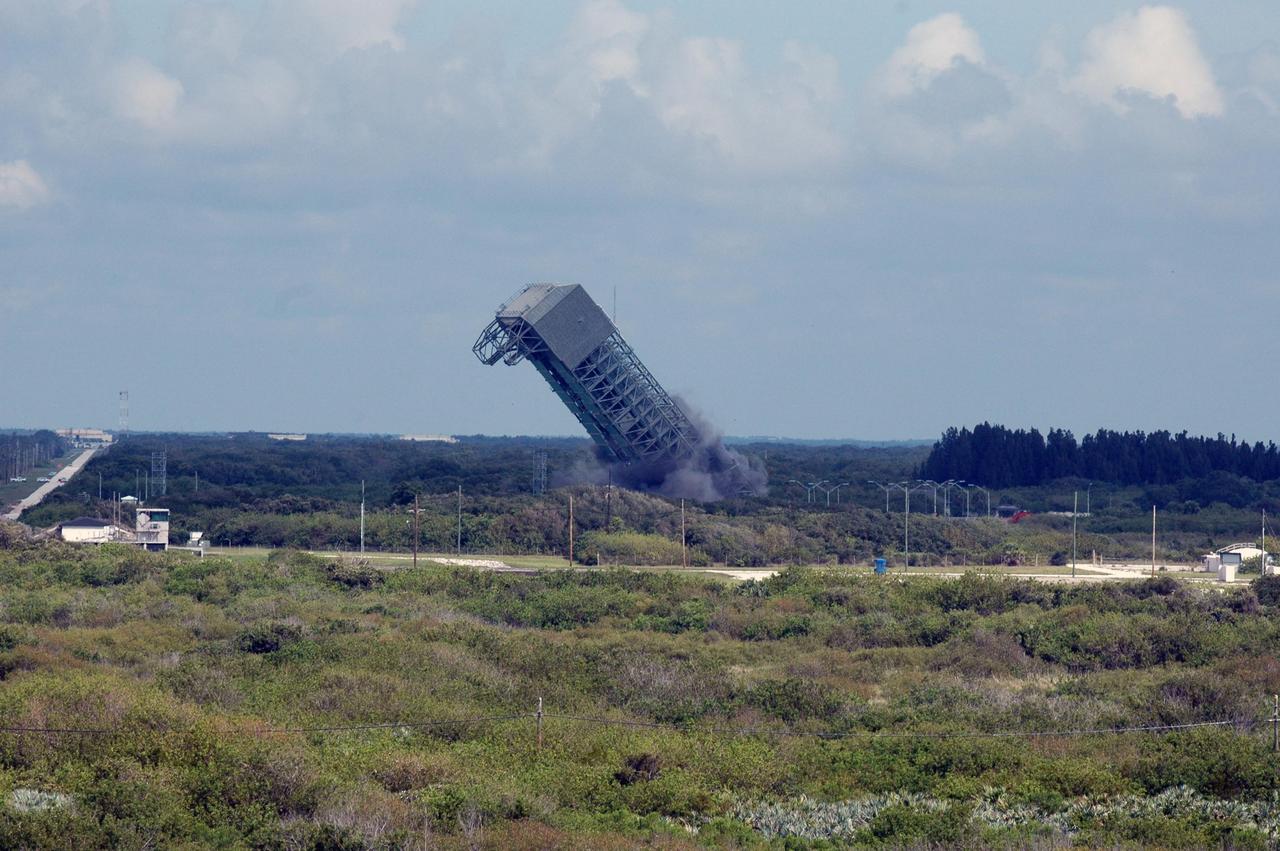
KENNEDY SPACE CENTER, FLA. -- At Space Launch Complex 36 on Cape Canaveral Air Force Station, the 209-foot-tall mobile service tower on Pad 36-B crashes to the ground. It is one of two that were identified for demolition. The old towers are being toppled as part of the ongoing project to demolish the historic site to prevent corrosion from becoming a safety concern. A majority of the steel will be recycled and the rest will be taken to the landfill at CCAFS. Complex 36 was the birthplace of NASA's planetary launch program. It was built for the Atlas/Centaur development program and was operated under NASA's sponsorship until the late 1980s. Complex 36 hosted many historic missions over the years including Surveyor that landed on the moon and Mariner that orbited Mars and included one to Mercury. Two of the most historic launches were the Pioneer 10 and 11 space probes that were launched to Jupiter and are now outside of the solar system in interstellar space. Also, the historic Pioneer Venus spacecraft included an orbiter and a set of probes that were dispatched to the surface. While Launch Complex 36 is gone, the Atlas/Centaur rocket continues to be launched as the Atlas V from Complex 41. Photo credit: NASA/Charisse Nahser
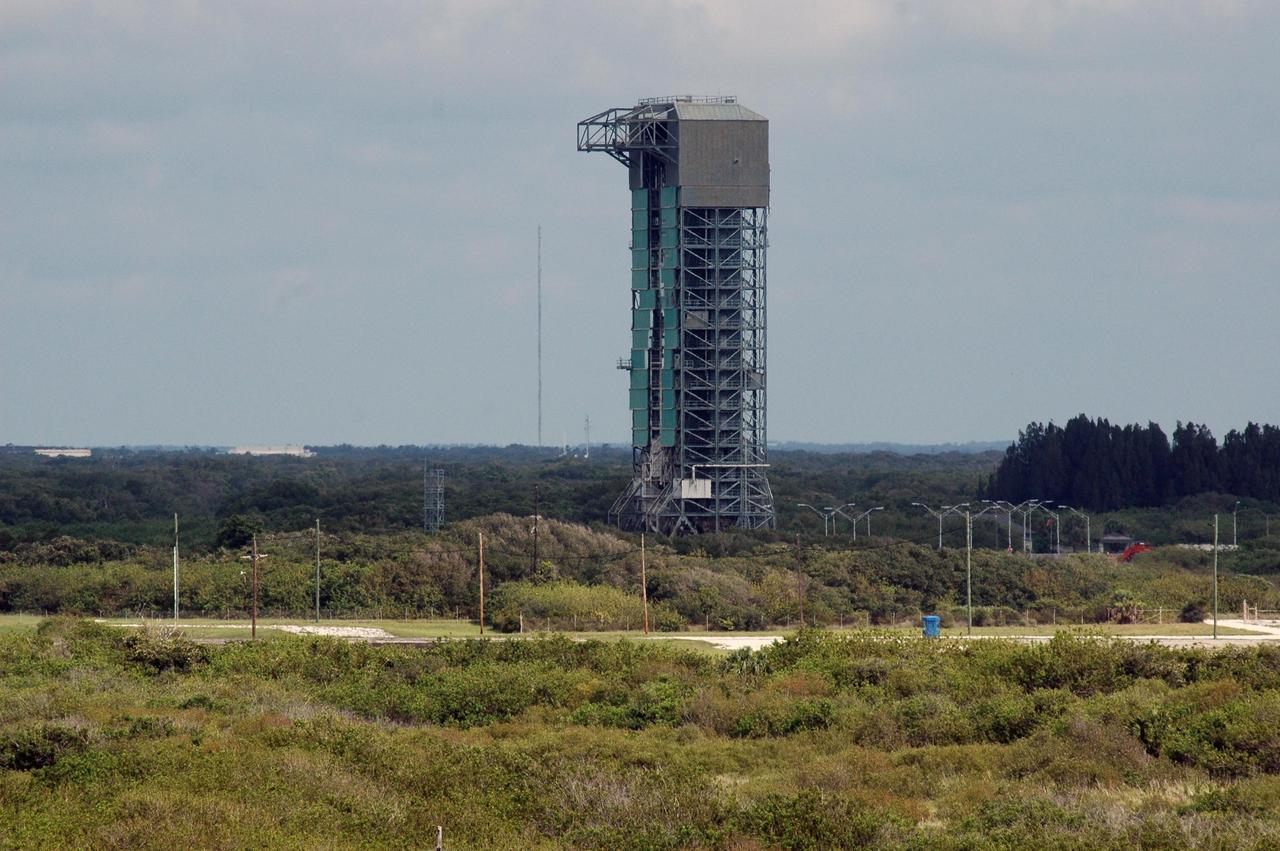
KENNEDY SPACE CENTER, FLA. -- At Space Launch Complex 36 on Cape Canaveral Air Force Station, the 209-foot-tall mobile service tower on Pad 36-B has been identified for demolition. The old towers are being toppled as part of the ongoing project to demolish the historic site to prevent corrosion from becoming a safety concern. A majority of the steel will be recycled and the rest will be taken to the landfill at CCAFS. Complex 36 was the birthplace of NASA's planetary launch program. It was built for the Atlas/Centaur development program and was operated under NASA's sponsorship until the late 1980s. Complex 36 hosted many historic missions over the years including Surveyor that landed on the moon and Mariner that orbited Mars and included one to Mercury. Two of the most historic launches were the Pioneer 10 and 11 space probes that were launched to Jupiter and are now outside of the solar system in interstellar space. Also, the historic Pioneer Venus spacecraft included an orbiter and a set of probes that were dispatched to the surface. While Launch Complex 36 is gone, the Atlas/Centaur rocket continues to be launched as the Atlas V from Complex 41. Photo credit: NASA/Charisse Nahser
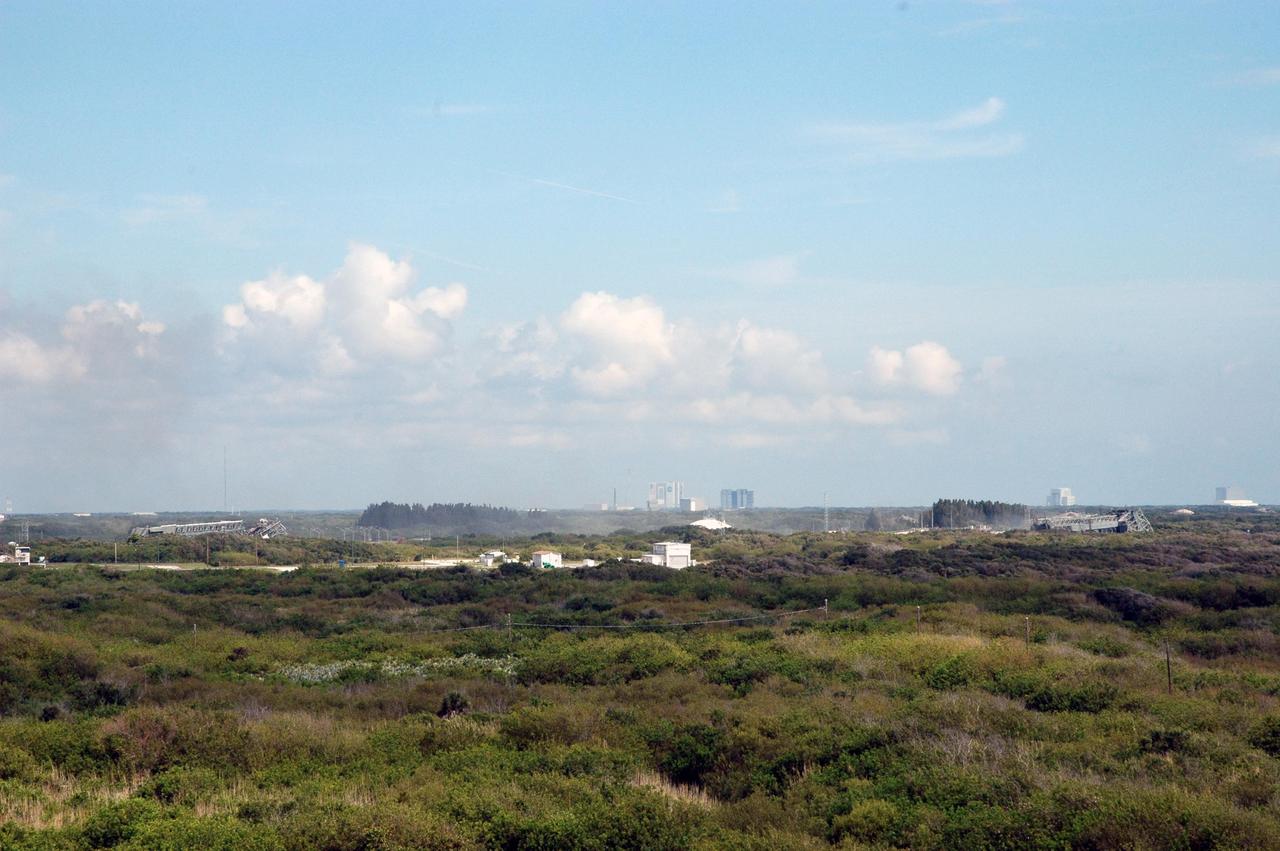
KENNEDY SPACE CENTER, FLA. -- This panoramic view of Space Launch Complex 36 on Cape Canaveral Air Force Station shows the two mobile service towers on the ground after their demolition. The old towers are being toppled as part of the ongoing project to demolish the historic site to prevent corrosion from becoming a safety concern. A majority of the steel will be recycled and the rest will be taken to the landfill at CCAFS. Complex 36 was the birthplace of NASA's planetary launch program. It was built for the Atlas/Centaur development program and was operated under NASA's sponsorship until the late 1980s. Complex 36 hosted many historic missions over the years including Surveyor that landed on the moon and Mariner that orbited Mars and included one to Mercury. Two of the most historic launches were the Pioneer 10 and 11 space probes that were launched to Jupiter and are now outside of the solar system in interstellar space. Also, the historic Pioneer Venus spacecraft included an orbiter and a set of probes that were dispatched to the surface. While Launch Complex 36 is gone, the Atlas/Centaur rocket continues to be launched as the Atlas V from Complex 41. Photo credit: NASA/Charisse Nahser
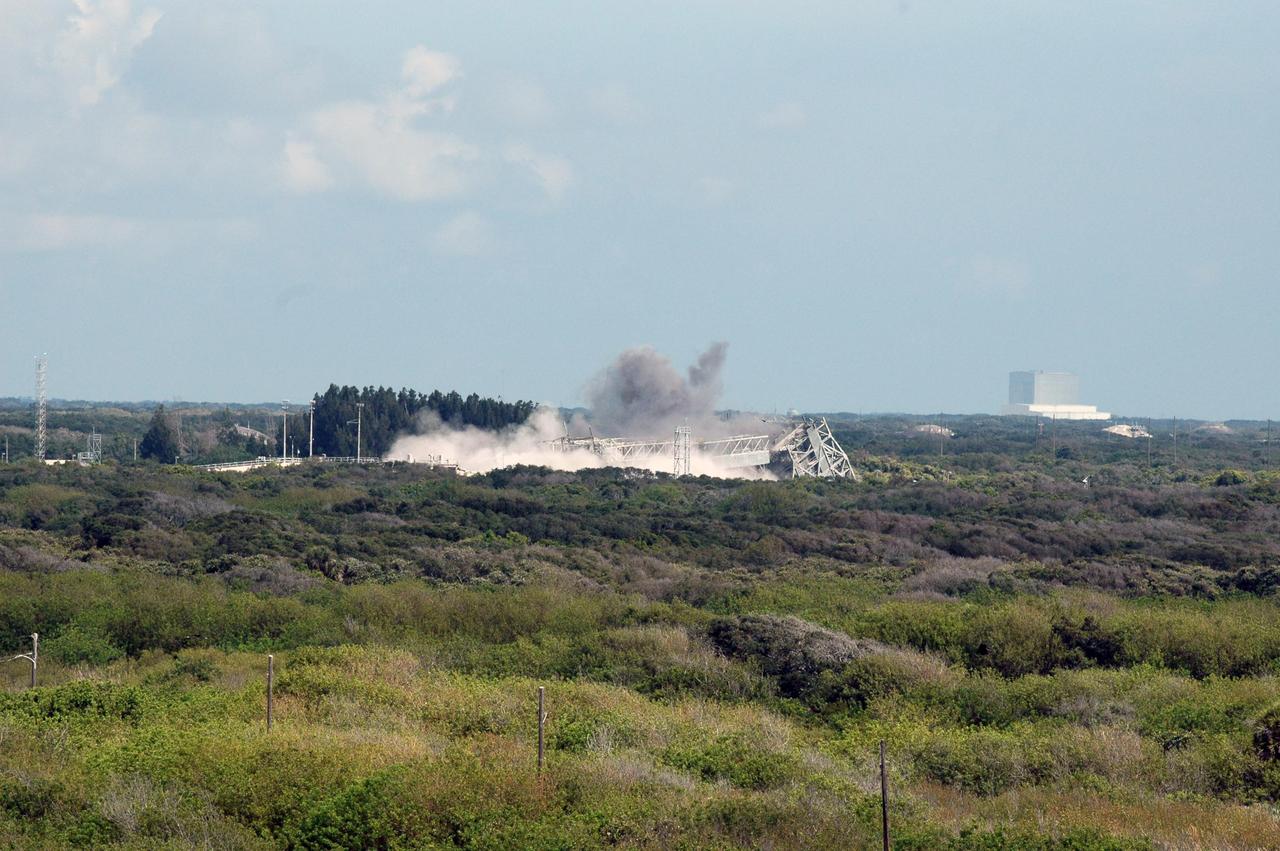
KENNEDY SPACE CENTER, FLA. -- Smoke and dust rising from the ground of Space Launch Complex 36 on Cape Canaveral Air Force Station signifies the destruction of the 209-foot-tall mobile service tower on Pad 39-A. The tower is one of two that were identified for demolition. The old towers are being toppled as part of the ongoing project to demolish the historic site to prevent corrosion from becoming a safety concern. A majority of the steel will be recycled and the rest will be taken to the landfill at CCAFS. Complex 36 was the birthplace of NASA's planetary launch program. It was built for the Atlas/Centaur development program and was operated under NASA's sponsorship until the late 1980s. Complex 36 hosted many historic missions over the years including Surveyor that landed on the moon and Mariner that orbited Mars and included one to Mercury. Two of the most historic launches were the Pioneer 10 and 11 space probes that were launched to Jupiter and are now outside of the solar system in interstellar space. Also, the historic Pioneer Venus spacecraft included an orbiter and a set of probes that were dispatched to the surface. While Launch Complex 36 is gone, the Atlas/Centaur rocket continues to be launched as the Atlas V from Complex 41. Photo credit: NASA/Charisse Nahser
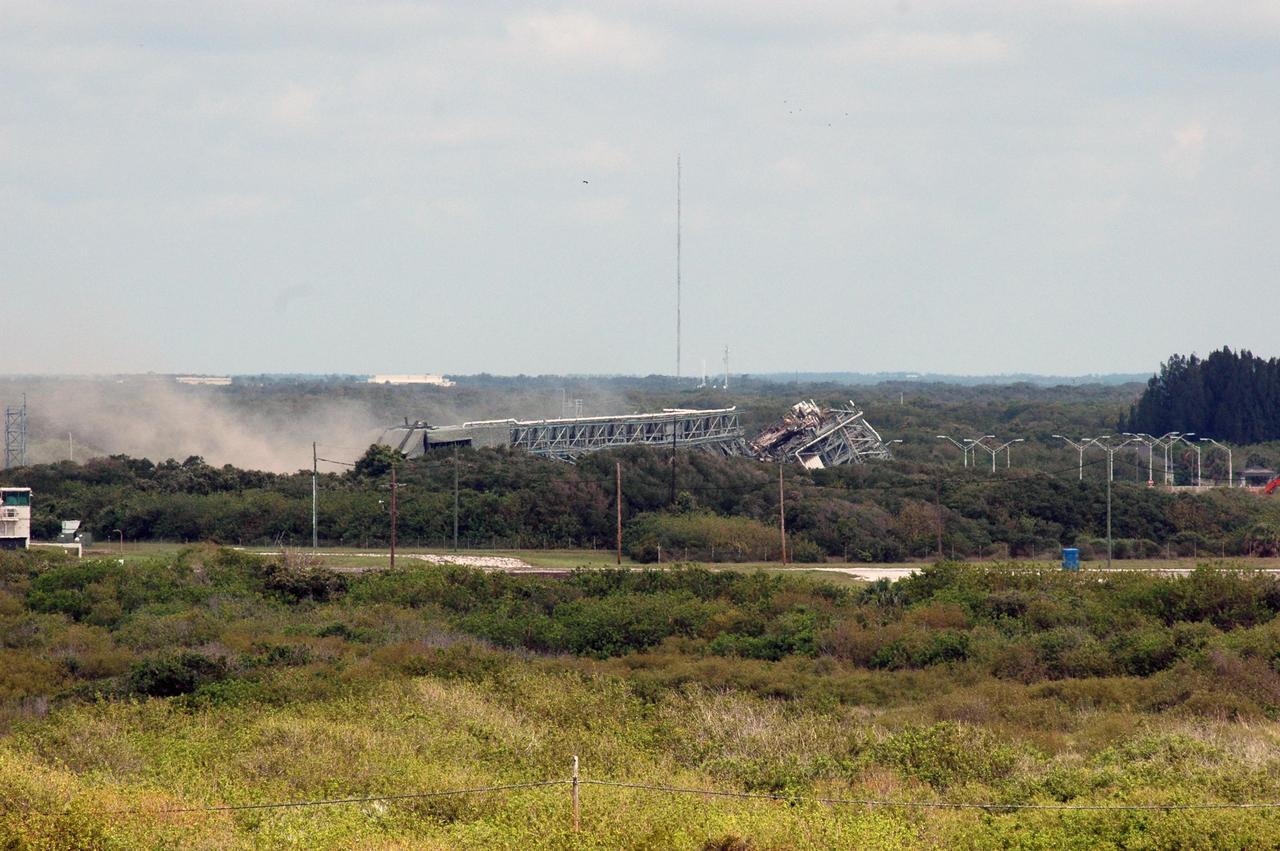
KENNEDY SPACE CENTER, FLA. -- After the dust settles at Space Launch Complex 36 on Cape Canaveral Air Force Station, the ruins of the 209-foot-tall mobile service tower on Pad 39-B are visible. The tower is one of two that were identified for demolition. The old towers are being toppled as part of the ongoing project to demolish the historic site to prevent corrosion from becoming a safety concern. A majority of the steel will be recycled and the rest will be taken to the landfill at CCAFS. Complex 36 was the birthplace of NASA's planetary launch program. It was built for the Atlas/Centaur development program and was operated under NASA's sponsorship until the late 1980s. Complex 36 hosted many historic missions over the years including Surveyor that landed on the moon and Mariner that orbited Mars and included one to Mercury. Two of the most historic launches were the Pioneer 10 and 11 space probes that were launched to Jupiter and are now outside of the solar system in interstellar space. Also, the historic Pioneer Venus spacecraft included an orbiter and a set of probes that were dispatched to the surface. While Launch Complex 36 is gone, the Atlas/Centaur rocket continues to be launched as the Atlas V from Complex 41. Photo credit: NASA/Charisse Nahser
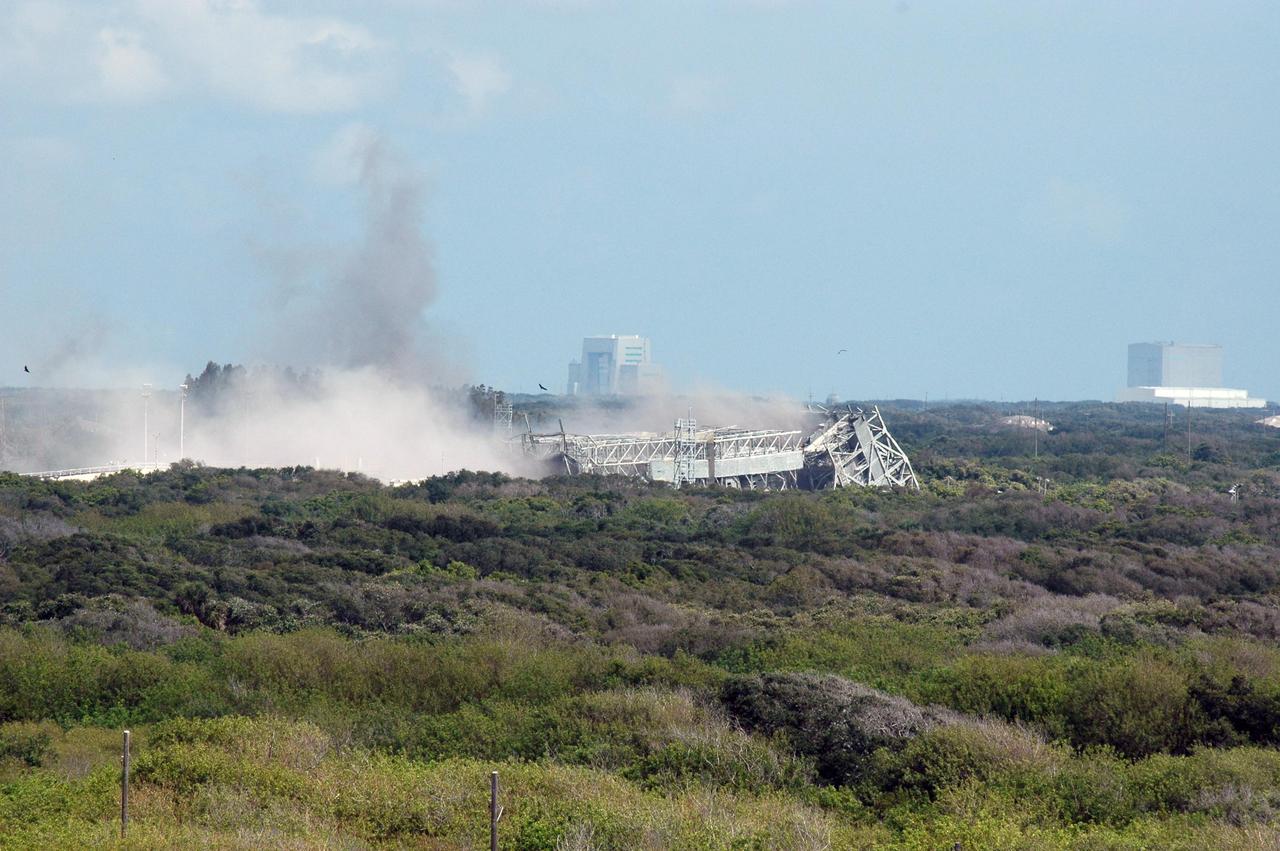
KENNEDY SPACE CENTER, FLA. -- Smoke and dust rising from the ground of Space Launch Complex 36 on Cape Canaveral Air Force Station signifies the destruction of the 209-foot-tall mobile service tower on Pad 39-A. The tower is one of two that were identified for demolition. The old towers are being toppled as part of the ongoing project to demolish the historic site to prevent corrosion from becoming a safety concern. A majority of the steel will be recycled and the rest will be taken to the landfill at CCAFS. Complex 36 was the birthplace of NASA's planetary launch program. It was built for the Atlas/Centaur development program and was operated under NASA's sponsorship until the late 1980s. Complex 36 hosted many historic missions over the years including Surveyor that landed on the moon and Mariner that orbited Mars and included one to Mercury. Two of the most historic launches were the Pioneer 10 and 11 space probes that were launched to Jupiter and are now outside of the solar system in interstellar space. Also, the historic Pioneer Venus spacecraft included an orbiter and a set of probes that were dispatched to the surface. While Launch Complex 36 is gone, the Atlas/Centaur rocket continues to be launched as the Atlas V from Complex 41. Photo credit: NASA/Charisse Nahser
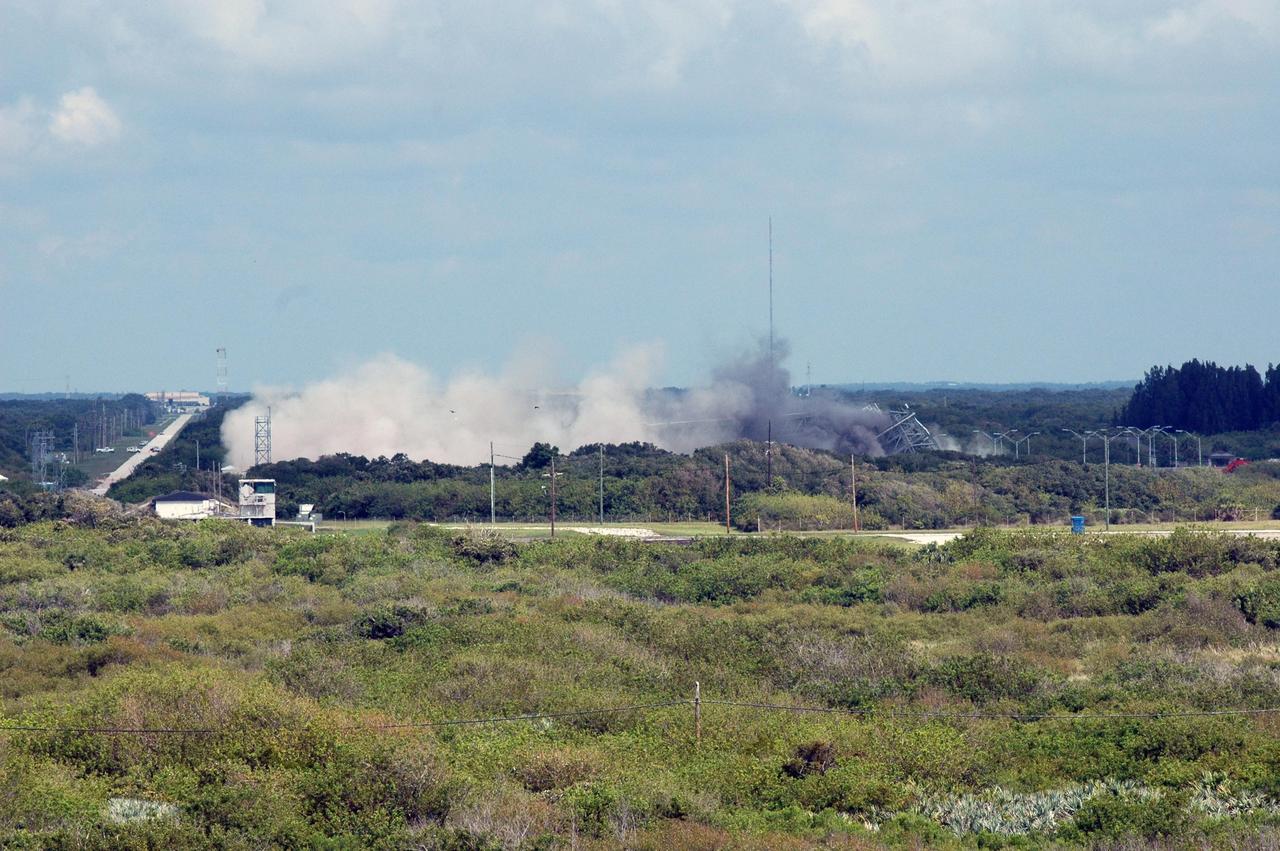
KENNEDY SPACE CENTER, FLA. -- The destruction of the 209-foot-tall mobile service tower on Pad 39-B at Space Launch Complex 36 on Cape Canaveral Air Force Station kicks up a wall of dust. The tower is one of two that were identified for demolition. The old towers are being toppled as part of the ongoing project to demolish the historic site to prevent corrosion from becoming a safety concern. A majority of the steel will be recycled and the rest will be taken to the landfill at CCAFS. Complex 36 was the birthplace of NASA's planetary launch program. It was built for the Atlas/Centaur development program and was operated under NASA's sponsorship until the late 1980s. Complex 36 hosted many historic missions over the years including Surveyor that landed on the moon and Mariner that orbited Mars and included one to Mercury. Two of the most historic launches were the Pioneer 10 and 11 space probes that were launched to Jupiter and are now outside of the solar system in interstellar space. Also, the historic Pioneer Venus spacecraft included an orbiter and a set of probes that were dispatched to the surface. While Launch Complex 36 is gone, the Atlas/Centaur rocket continues to be launched as the Atlas V from Complex 41. Photo credit: NASA/Charisse Nahser
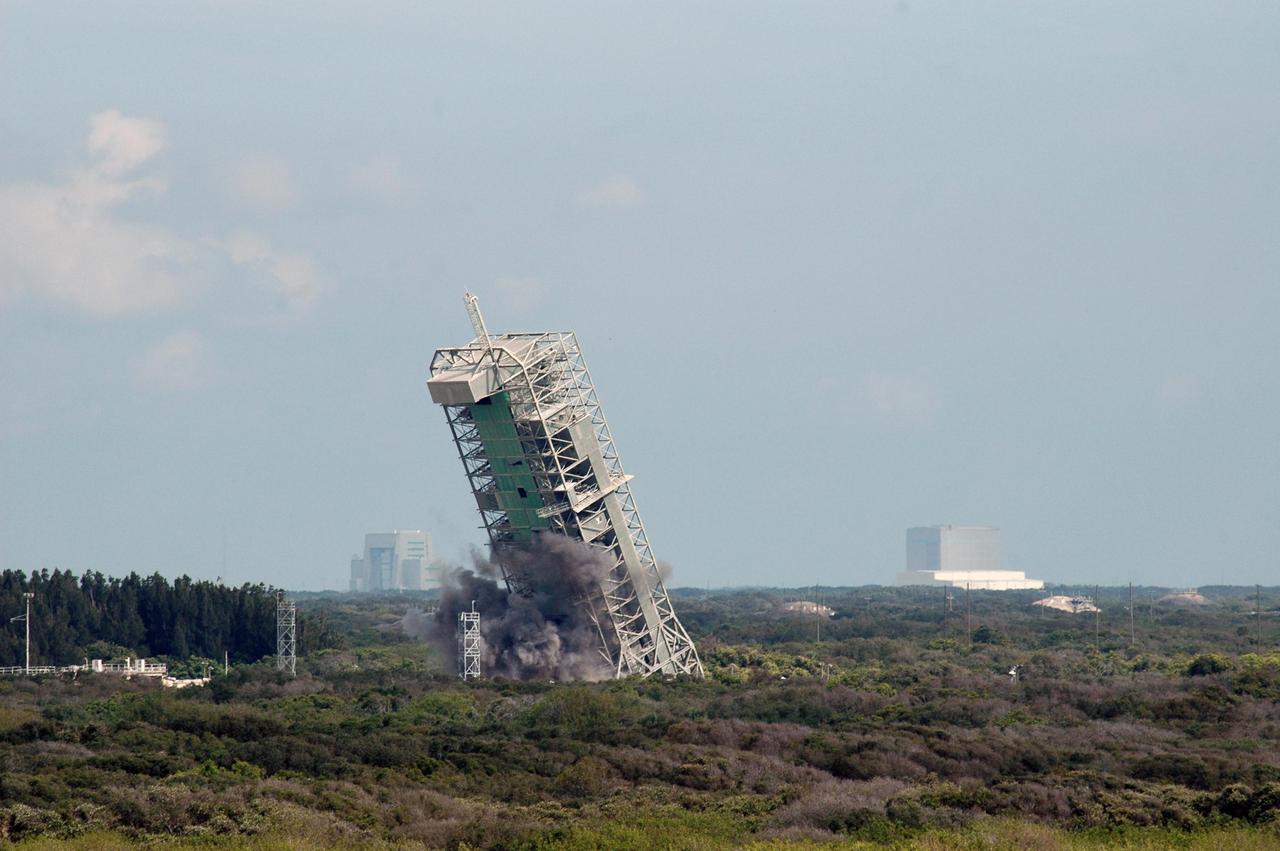
KENNEDY SPACE CENTER, FLA. -- The 209-foot-tall mobile service tower on Pad 39-A of Space Launch Complex 36 on Cape Canaveral Air Force Station careens to the left after 122 pounds of explosives eliminated the base. The tower is one of two that were identified for demolition. The old towers are being toppled as part of the ongoing project to demolish the historic site to prevent corrosion from becoming a safety concern. A majority of the steel will be recycled and the rest will be taken to the landfill at CCAFS. Complex 36 was the birthplace of NASA's planetary launch program. It was built for the Atlas/Centaur development program and was operated under NASA's sponsorship until the late 1980s. Complex 36 hosted many historic missions over the years including Surveyor that landed on the moon and Mariner that orbited Mars and included one to Mercury. Two of the most historic launches were the Pioneer 10 and 11 space probes that were launched to Jupiter and are now outside of the solar system in interstellar space. Also, the historic Pioneer Venus spacecraft included an orbiter and a set of probes that were dispatched to the surface. While Launch Complex 36 is gone, the Atlas/Centaur rocket continues to be launched as the Atlas V from Complex 41. Photo credit: NASA/Charisse Nahser
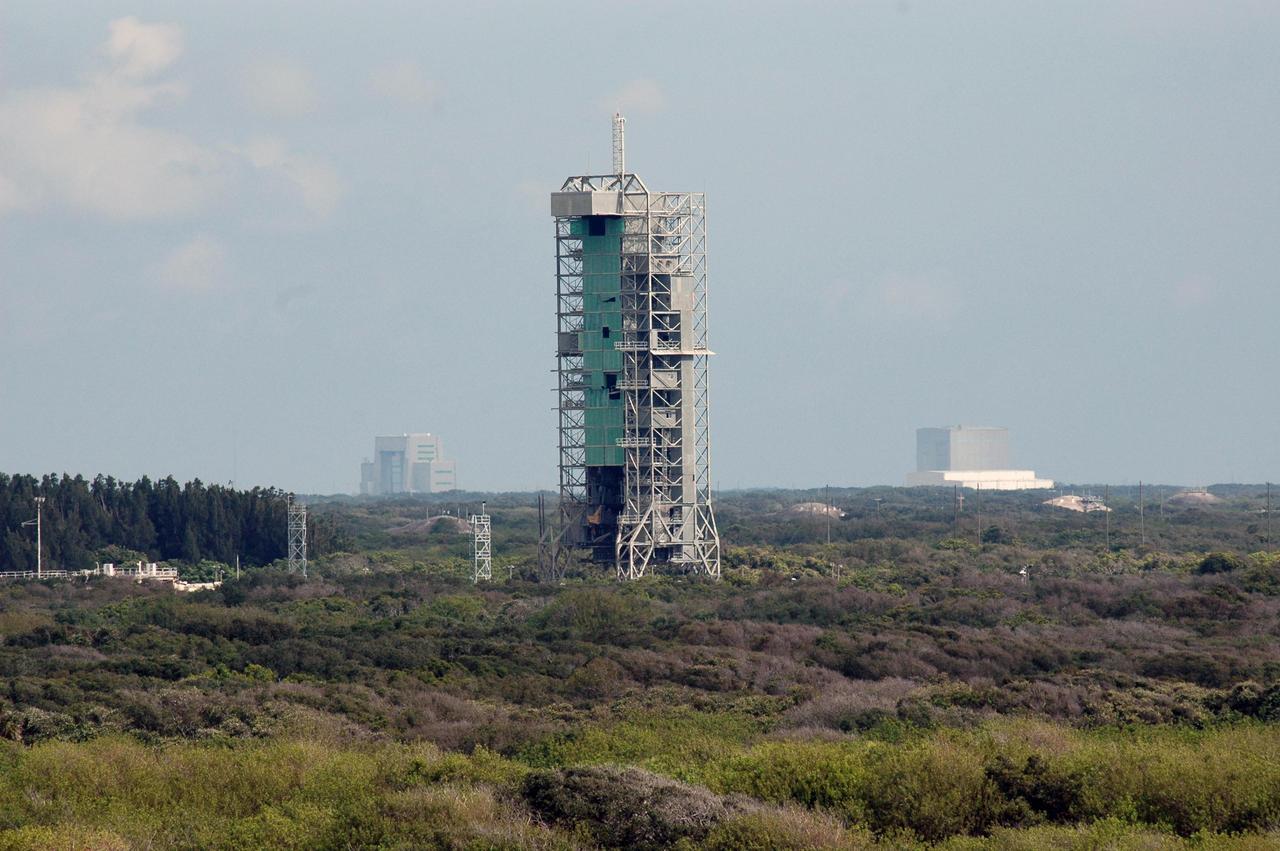
KENNEDY SPACE CENTER, FLA. -- Within sight of the KSC Vehicle Assembly Building (at left on the horizon), the 209-foot-tall mobile service tower on Pad 39-A of Space Launch Complex 36 on Cape Canaveral Air Force Station waits for its demise. The tower is one of two that were identified for demolition. The old towers are being toppled as part of the ongoing project to demolish the historic site to prevent corrosion from becoming a safety concern. A majority of the steel will be recycled and the rest will be taken to the landfill at CCAFS. Complex 36 was the birthplace of NASA's planetary launch program. It was built for the Atlas/Centaur development program and was operated under NASA's sponsorship until the late 1980s. Complex 36 hosted many historic missions over the years including Surveyor that landed on the moon and Mariner that orbited Mars and included one to Mercury. Two of the most historic launches were the Pioneer 10 and 11 space probes that were launched to Jupiter and are now outside of the solar system in interstellar space. Also, the historic Pioneer Venus spacecraft included an orbiter and a set of probes that were dispatched to the surface. While Launch Complex 36 is gone, the Atlas/Centaur rocket continues to be launched as the Atlas V from Complex 41. Photo credit: NASA/Charisse Nahser

The first stage of the Geostationary Operational Environmental Satellite-M (GOES-M) Atlas II rocket arrives at Complex 36-A, Cape Canaveral Air Force Station. It will be raised and lifted up the gantry for mating with other stages. The last in the current series of advanced geostationary weather satellites in service, GOES-M has a new instrument not on earlier spacecraft, a Solar X-ray Imager that can be used in forecasting space weather, the effects of solar storms that create electromagnetic disturbances on earth that affect other satellites, communications and power grids. GOES-M is scheduled to launch from Launch Complex 36-A, Cape Canaveral Air Force Station July 15
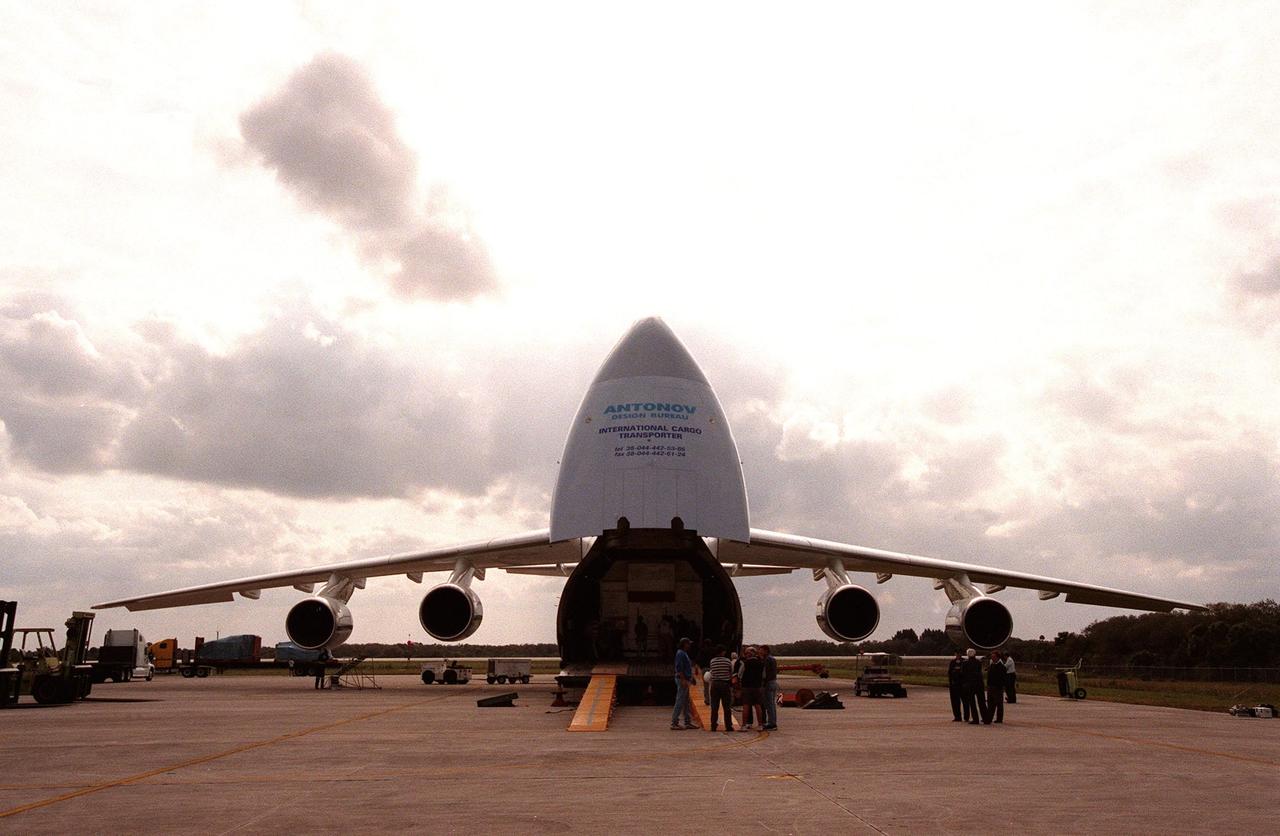
After delivering a French satellite for the EUTELSat Consortium, a Russian cargo plane, the Antonov 124, sits on the end of the Shuttle Landing Facility at KSC. The satellite is targeted to be launched April 12 aboard an Atlas IIAS rocket from Complex 36, Cape Canaveral Air Station

The Atlas 1 (AC-73) carrying the GOES-1, the first of five next-generation advanced weather satellites for the National Oceanic and Atmospheric Administration (NOAA), sits poised on Complex 36-B at Cape Canaveral Air Force Station ready for launch.
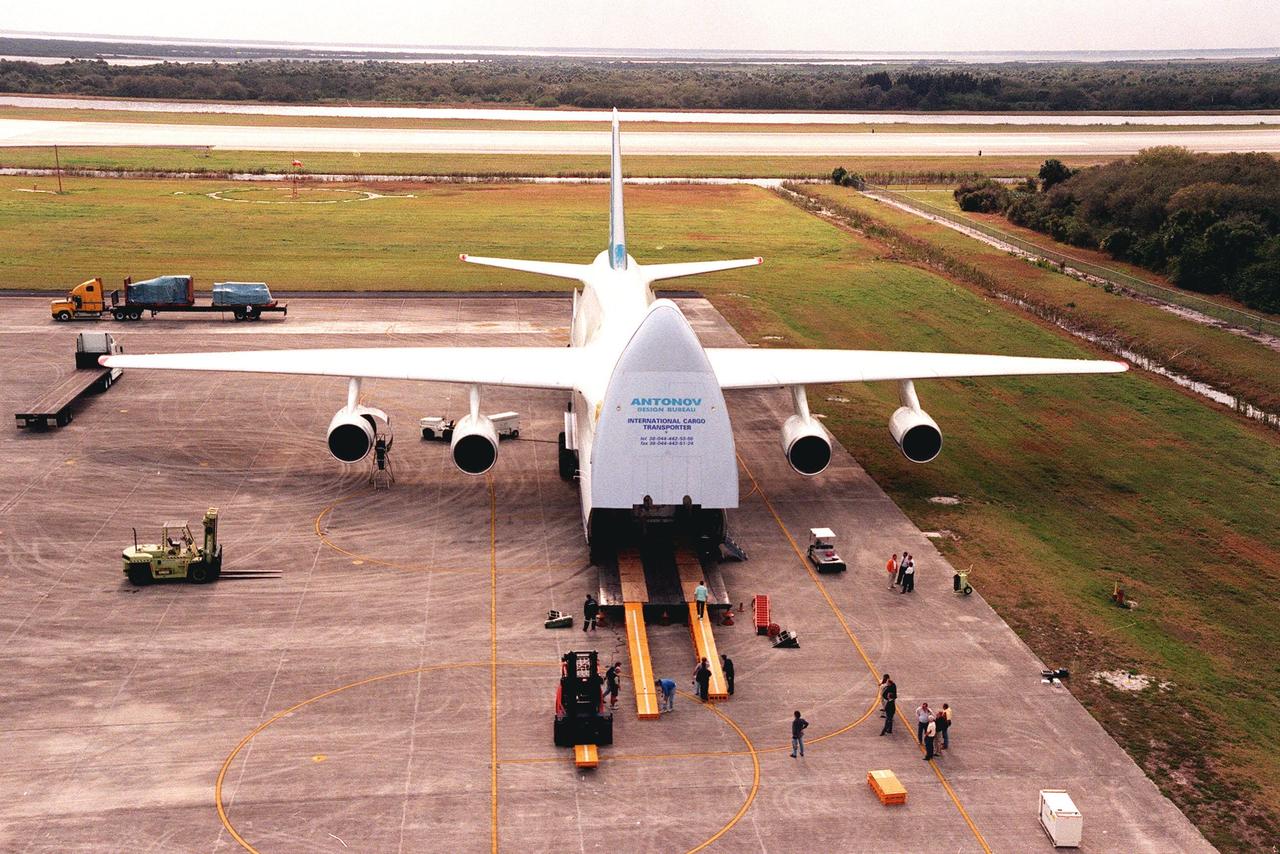
A Russian cargo plane, the Antonov 124, sits on the end of the Shuttle Landing Facility at KSC after delivering a French satellite for the EUTELSat Consortium. The satellite is targeted to be launched April 12 aboard an Atlas IIAS rocket from Complex 36, Cape Canaveral Air Station
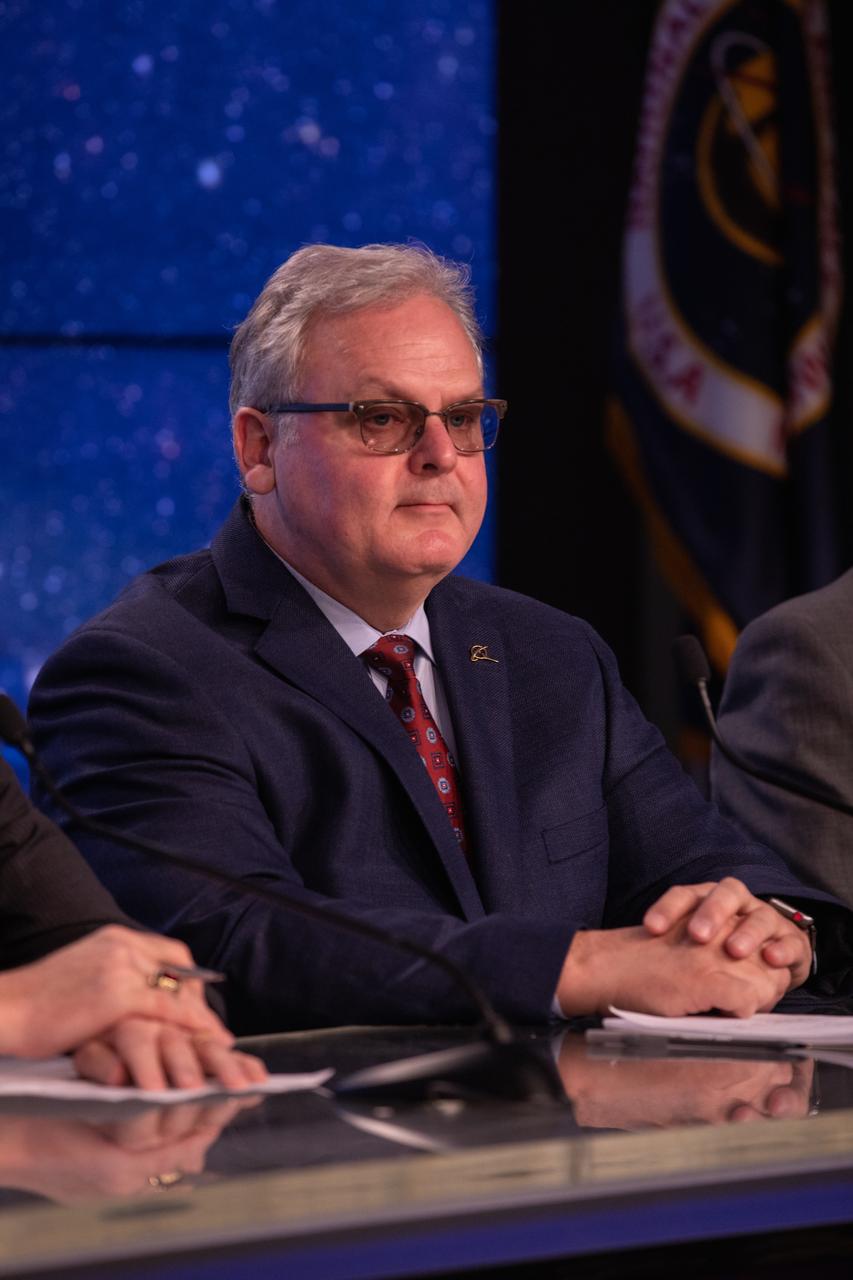
Jim Chilton, Boeing senior vice president, Space and Launch Division, listens during a briefing at NASA’s Kennedy Space Center in Florida following launch of Boeing’s Orbital Flight Test, Dec. 20, 2019. Boeing’s CST-100 Starliner spacecraft launched atop a United Launch Alliance Atlas V rocket from Space Launch Complex 41 at Cape Canaveral Air Force Station at 6:36 a.m. EST. The uncrewed Orbital Flight Test is the Starliner’s first flight for NASA’s Commercial Crew Program.

Tory Bruno, president and CEO of United Launch Alliance, listens during a briefing at NASA’s Kennedy Space Center in Florida following launch of Boeing’s Orbital Flight Test, Dec. 20, 2019. Boeing’s CST-100 Starliner spacecraft launched atop a United Launch Alliance Atlas V rocket from Space Launch Complex 41 at Cape Canaveral Air Force Station at 6:36 a.m. EST. The uncrewed Orbital Flight Test is the Starliner’s first flight for NASA’s Commercial Crew Program.

This picture is of an Atlas/Centaur launch vehicle, carrying the High Energy Astronomy Observatory (HEAO)-1, on Launch Complex 36 at the Air Force Eastern Test Range prior to launch on August 12, 1977. The Kennedy Space Center managed the launch operations that included a pre-aunch checkout, launch, and flight, up through the observatory separation in orbit.
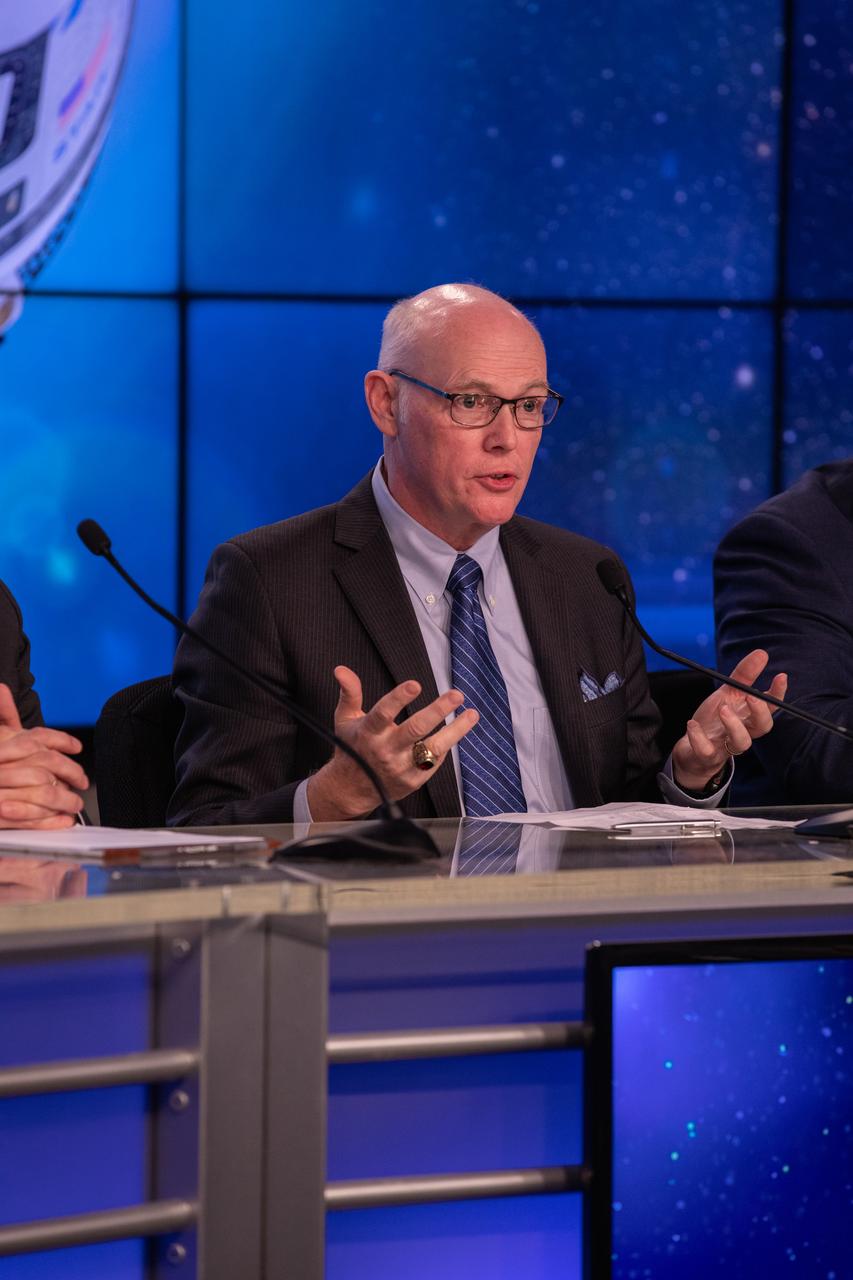
Tory Bruno, president and CEO of United Launch Alliance, speaks during a briefing at NASA’s Kennedy Space Center in Florida following launch of Boeing’s Orbital Flight Test, Dec. 20, 2019. Boeing’s CST-100 Starliner spacecraft launched atop a United Launch Alliance Atlas V rocket from Space Launch Complex 41 at Cape Canaveral Air Force Station at 6:36 a.m. EST. The uncrewed Orbital Flight Test is the Starliner’s first flight for NASA’s Commercial Crew Program.
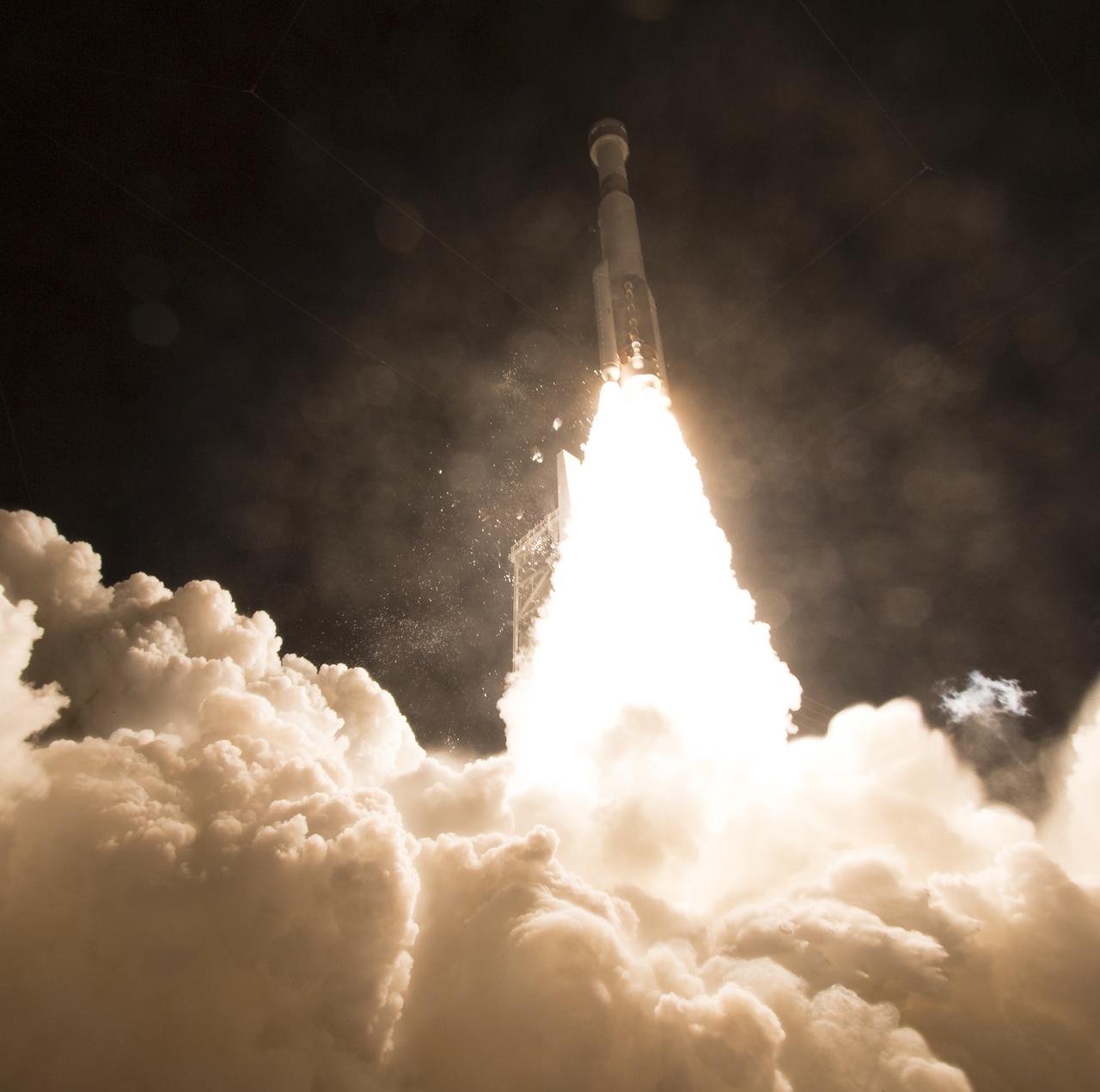
A United Launch Alliance Atlas V rocket with Boeing’s CST-100 Starliner spacecraft launches from Space Launch Complex 41, Friday, Dec. 20, 2019, at Cape Canaveral Air Force Station in Florida. After a successful launch at 6:36 a.m. EST, Boeing’s CST-100 Starliner is in an unplanned, but stable orbit. The team is assessing what test objectives can be achieved before the spacecraft’s return to land in White Sands, New Mexico. Photo Credit: (NASA/Joel Kowsky)

A United Launch Alliance Atlas V rocket with Boeing’s CST-100 Starliner spacecraft launches from Space Launch Complex 41, Friday, Dec. 20, 2019, at Cape Canaveral Air Force Station in Florida. After a successful launch at 6:36 a.m. EST, Boeing’s CST-100 Starliner is in an unplanned, but stable orbit. The team is assessing what test objectives can be achieved before the spacecraft’s return to land in White Sands, New Mexico. Photo Credit: (NASA/Joel Kowsky)
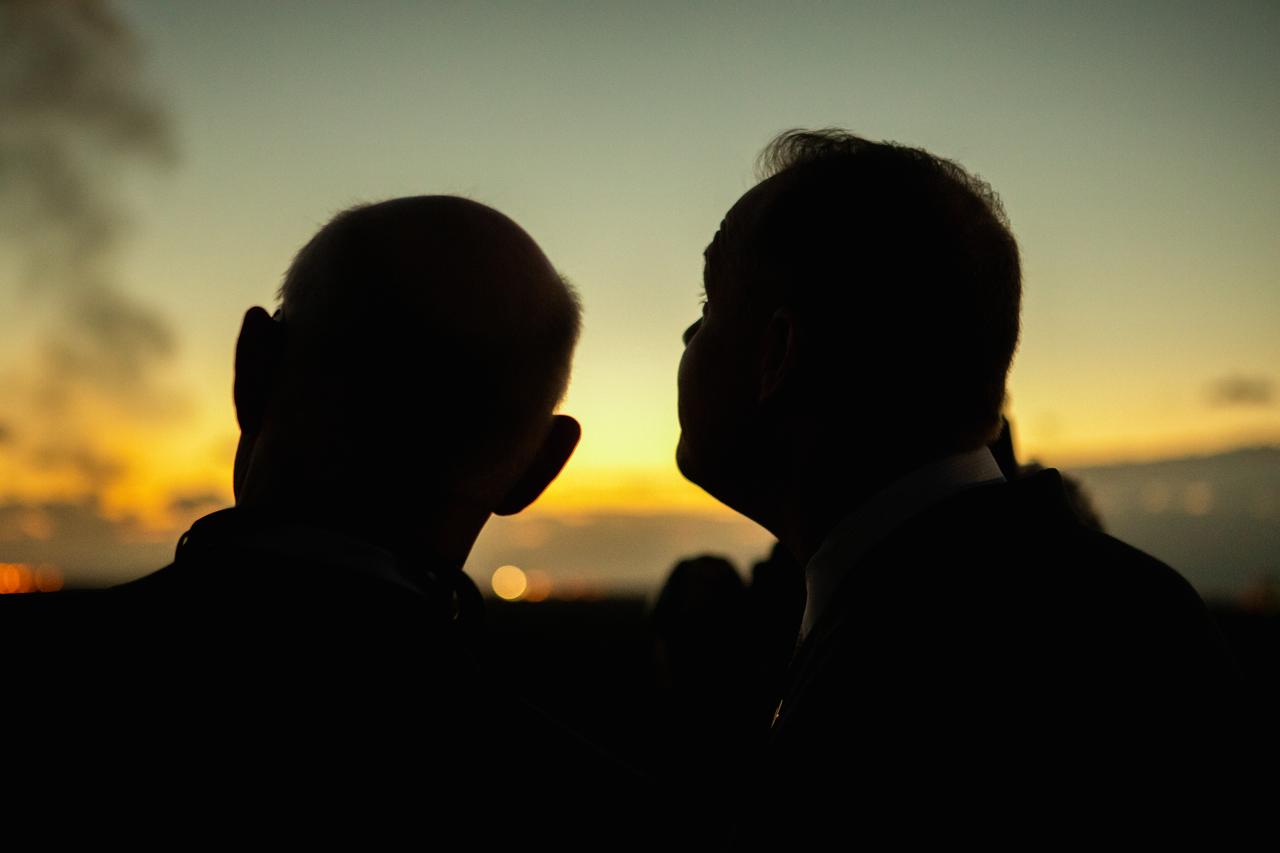
Tory Bruno, president and chief executive officer of United Launch Alliance, left, and NASA Administrator Jim Bridenstine watch the launch of a United Launch Alliance Atlas V rocket carrying Boeing’s CST-100 Starliner spacecraft for Boeing’s Orbital Flight Test, Dec. 20, 2019. Liftoff occurred at 6:36 a.m. EST from Space Launch Complex 41 at Florida’s Cape Canaveral Air Force Station. The uncrewed Orbital Flight Test is the Starliner’s first flight for NASA’s Commercial Crew Program.

NASA astronaut Nicole Mann listens during a briefing at the agency’s Kennedy Space Center in Florida following launch of Boeing’s Orbital Flight Test, Dec. 20, 2019. Boeing’s CST-100 Starliner spacecraft launched atop a United Launch Alliance Atlas V rocket from Space Launch Complex 41 at Cape Canaveral Air Force Station at 6:36 a.m. EST. The uncrewed Orbital Flight Test is the Starliner’s first flight for NASA’s Commercial Crew Program.
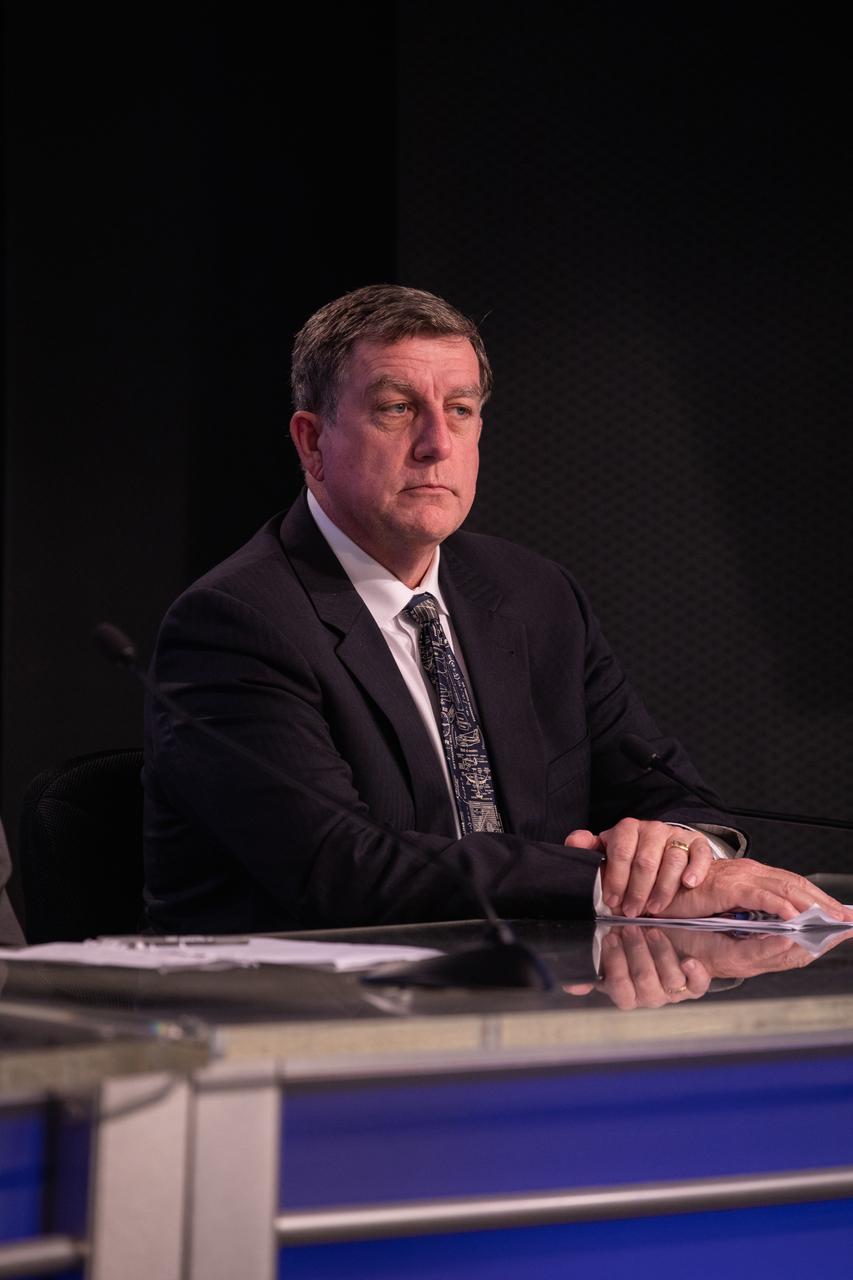
Kirk Shireman, manager of NASA’s International Space Station Program, listens during a briefing at the agency’s Kennedy Space Center in Florida following launch of Boeing’s Orbital Flight Test, Dec. 20, 2019. Boeing’s CST-100 Starliner spacecraft launched atop a United Launch Alliance Atlas V rocket from Space Launch Complex 41 at Cape Canaveral Air Force Station at 6:36 a.m. EST. The uncrewed Orbital Flight Test is the Starliner’s first flight for NASA’s Commercial Crew Program.

A United Launch Alliance Atlas V rocket with Boeing’s CST-100 Starliner spacecraft launches from Space Launch Complex 41, Friday, Dec. 20, 2019, at Cape Canaveral Air Force Station in Florida. After a successful launch at 6:36 a.m. EST, Boeing’s CST-100 Starliner is in an unplanned, but stable orbit. The team is assessing what test objectives can be achieved before the spacecraft’s return to land in White Sands, New Mexico. Photo Credit: (NASA/Joel Kowsky)
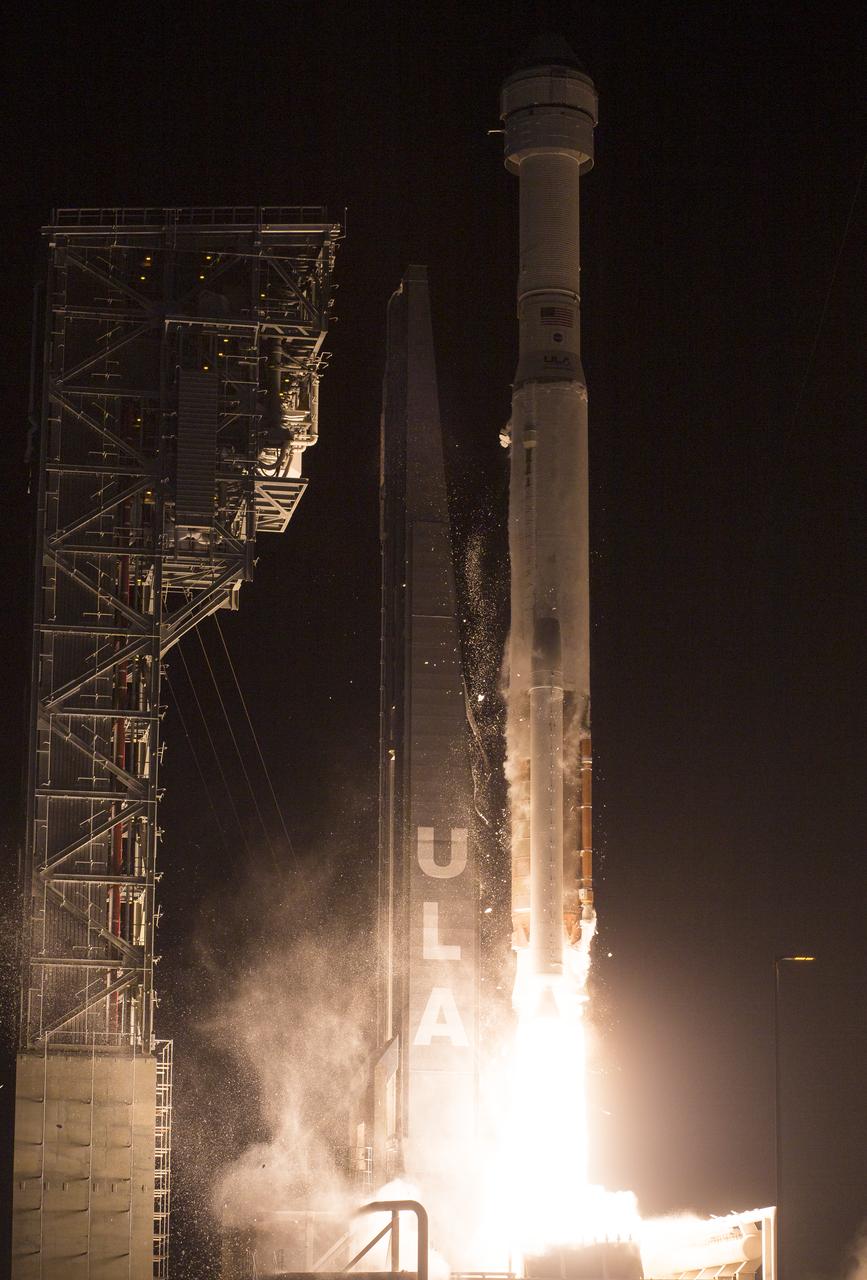
A United Launch Alliance Atlas V rocket with Boeing’s CST-100 Starliner spacecraft launches from Space Launch Complex 41, Friday, Dec. 20, 2019, at Cape Canaveral Air Force Station in Florida. After a successful launch at 6:36 a.m. EST, Boeing’s CST-100 Starliner is in an unplanned, but stable orbit. The team is assessing what test objectives can be achieved before the spacecraft’s return to land in White Sands, New Mexico. Photo Credit: (NASA/Joel Kowsky)
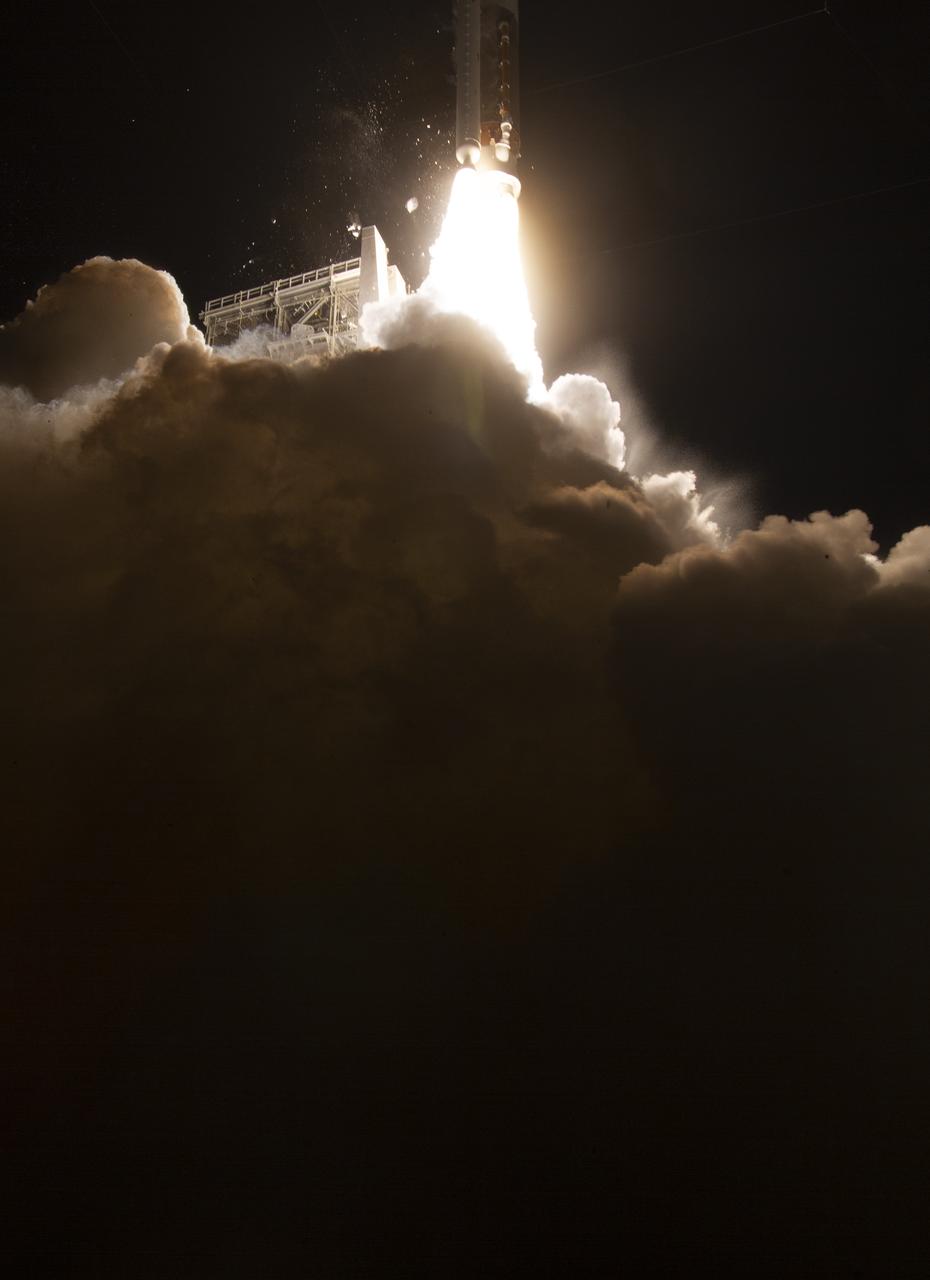
A United Launch Alliance Atlas V rocket with Boeing’s CST-100 Starliner spacecraft launches from Space Launch Complex 41, Friday, Dec. 20, 2019, at Cape Canaveral Air Force Station in Florida. After a successful launch at 6:36 a.m. EST, Boeing’s CST-100 Starliner is in an unplanned, but stable orbit. The team is assessing what test objectives can be achieved before the spacecraft’s return to land in White Sands, New Mexico. Photo Credit: (NASA/Joel Kowsky)
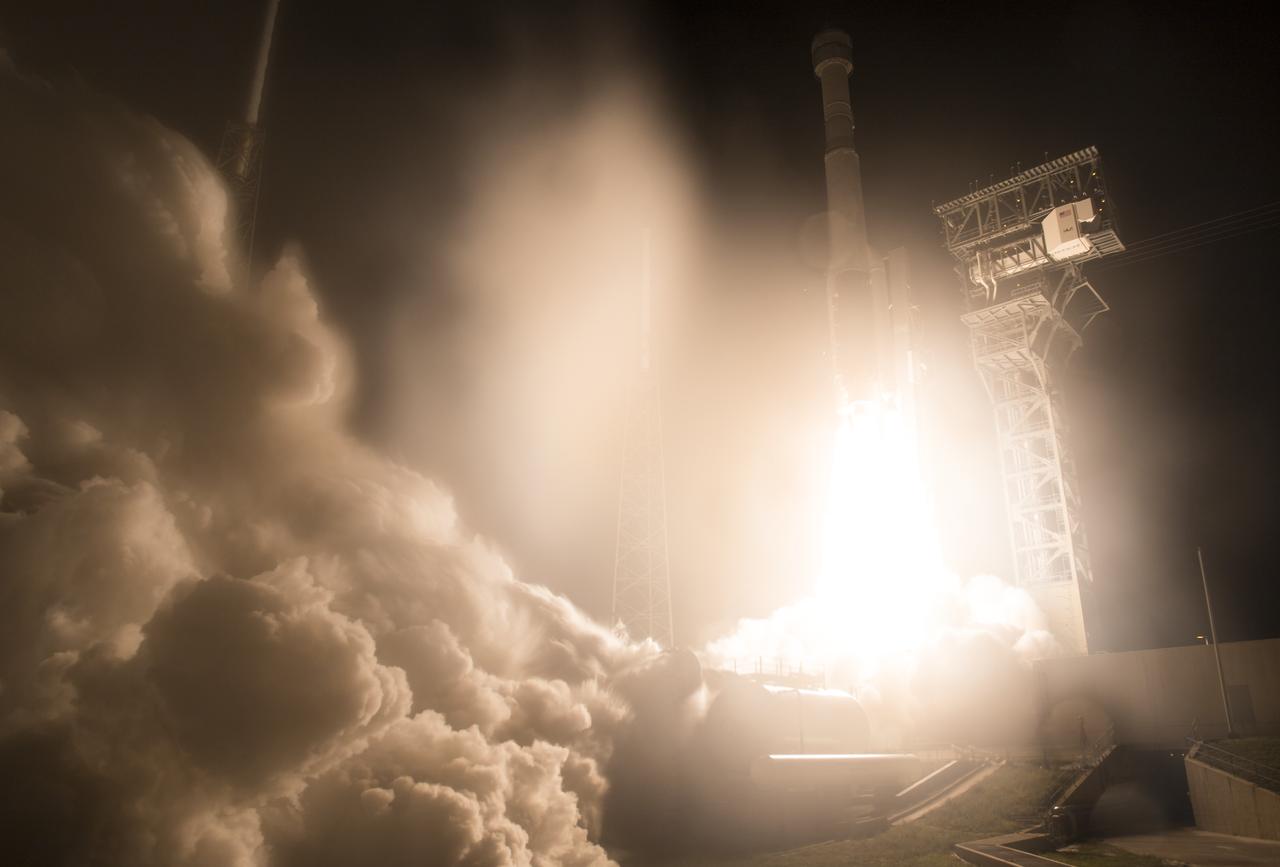
A United Launch Alliance Atlas V rocket with Boeing’s CST-100 Starliner spacecraft launches from Space Launch Complex 41, Friday, Dec. 20, 2019, at Cape Canaveral Air Force Station in Florida. After a successful launch at 6:36 a.m. EST, Boeing’s CST-100 Starliner is in an unplanned, but stable orbit. The team is assessing what test objectives can be achieved before the spacecraft’s return to land in White Sands, New Mexico. Photo Credit: (NASA/Joel Kowsky)
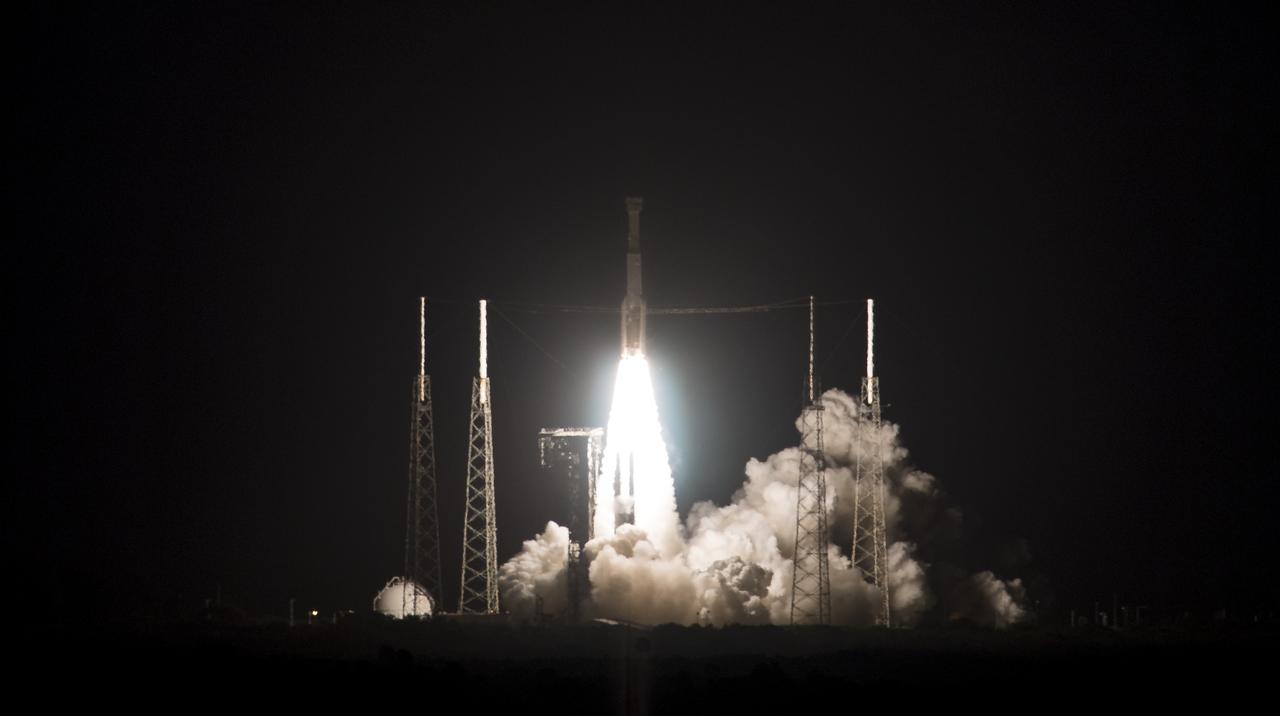
A United Launch Alliance Atlas V rocket with Boeing’s CST-100 Starliner spacecraft launches from Space Launch Complex 41, Friday, Dec. 20, 2019, at Cape Canaveral Air Force Station in Florida. The uncrewed Orbital Flight Test launched at 6:36 a.m. EST and is Starliner’s maiden mission to the International Space Station for NASA's Commercial Crew Program. The mission will serve as an end-to-end test of the system's capabilities. Photo Credit: (NASA/Joel Kowsky)
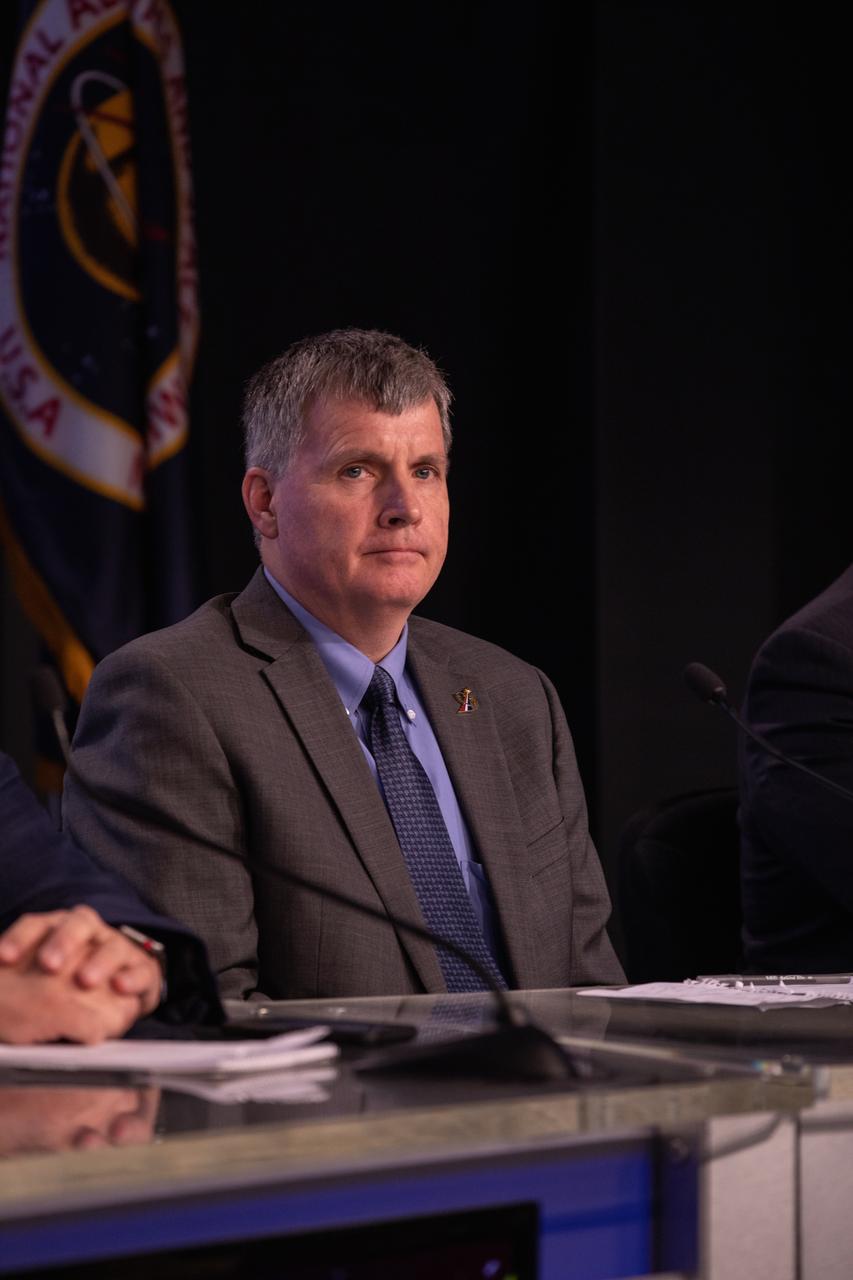
Steve Stich, deputy manager, NASA Commercial Crew Program, listens during a briefing at the agency’s Kennedy Space Center in Florida following launch of Boeing’s Orbital Flight Test, Dec. 20, 2019. Boeing’s CST-100 Starliner spacecraft launched atop a United Launch Alliance Atlas V rocket from Space Launch Complex 41 at Cape Canaveral Air Force Station at 6:36 a.m. EST. The uncrewed Orbital Flight Test is the Starliner’s first flight for NASA’s Commercial Crew Program.

News media cover a briefing at the agency’s Kennedy Space Center in Florida following launch of Boeing’s Orbital Flight Test, Dec. 20, 2019. Boeing’s CST-100 Starliner spacecraft launched atop a United Launch Alliance Atlas V rocket from Space Launch Complex 41 at Cape Canaveral Air Force Station at 6:36 a.m. EST. The uncrewed Orbital Flight Test is the Starliner’s first flight for NASA’s Commercial Crew Program.
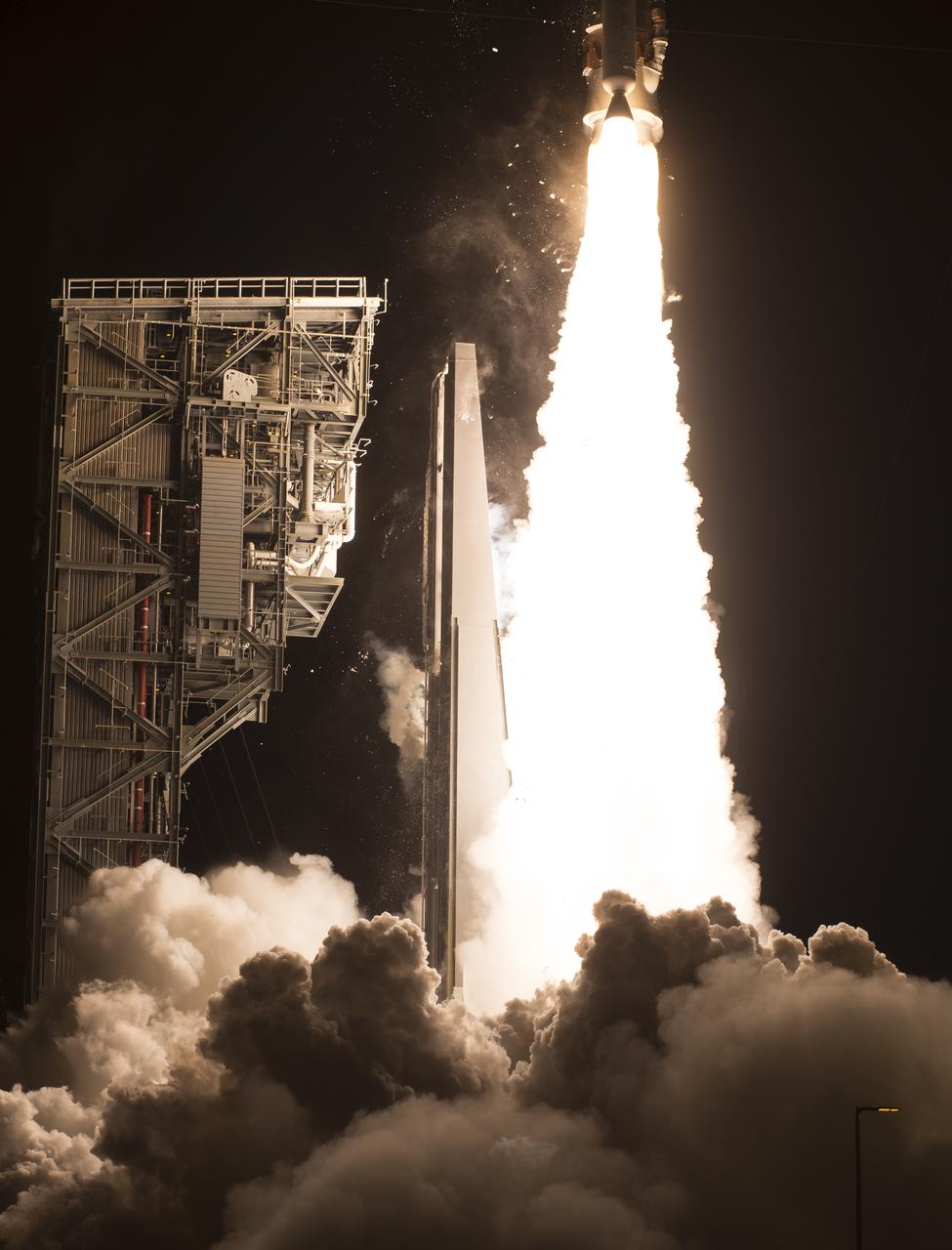
A United Launch Alliance Atlas V rocket with Boeing’s CST-100 Starliner spacecraft launches from Space Launch Complex 41, Friday, Dec. 20, 2019, at Cape Canaveral Air Force Station in Florida. After a successful launch at 6:36 a.m. EST, Boeing’s CST-100 Starliner is in an unplanned, but stable orbit. The team is assessing what test objectives can be achieved before the spacecraft’s return to land in White Sands, New Mexico. Photo Credit: (NASA/Joel Kowsky)
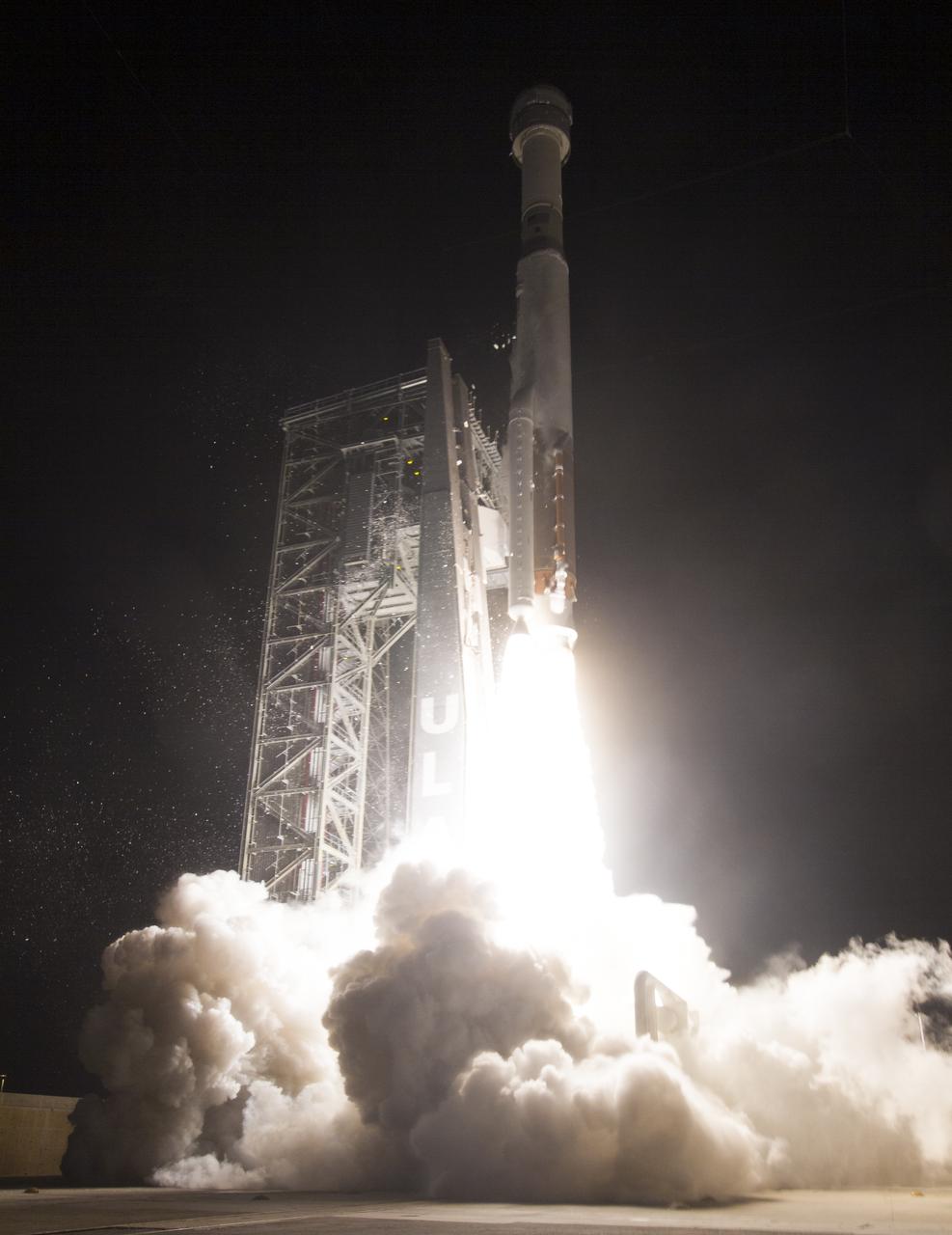
A United Launch Alliance Atlas V rocket with Boeing’s CST-100 Starliner spacecraft launches from Space Launch Complex 41, Friday, Dec. 20, 2019, at Cape Canaveral Air Force Station in Florida. After a successful launch at 6:36 a.m. EST, Boeing’s CST-100 Starliner is in an unplanned, but stable orbit. The team is assessing what test objectives can be achieved before the spacecraft’s return to land in White Sands, New Mexico. Photo Credit: (NASA/Joel Kowsky)

NASA Administrator Jim Bridenstine speaks during a briefing at the agency’s Kennedy Space Center in Florida following launch of Boeing’s Orbital Flight Test, Dec. 20, 2019. Boeing’s CST-100 Starliner spacecraft launched atop a United Launch Alliance Atlas V rocket from Space Launch Complex 41 at Cape Canaveral Air Force Station at 6:36 a.m. EST. The uncrewed Orbital Flight Test is the Starliner’s first flight for NASA’s Commercial Crew Program.
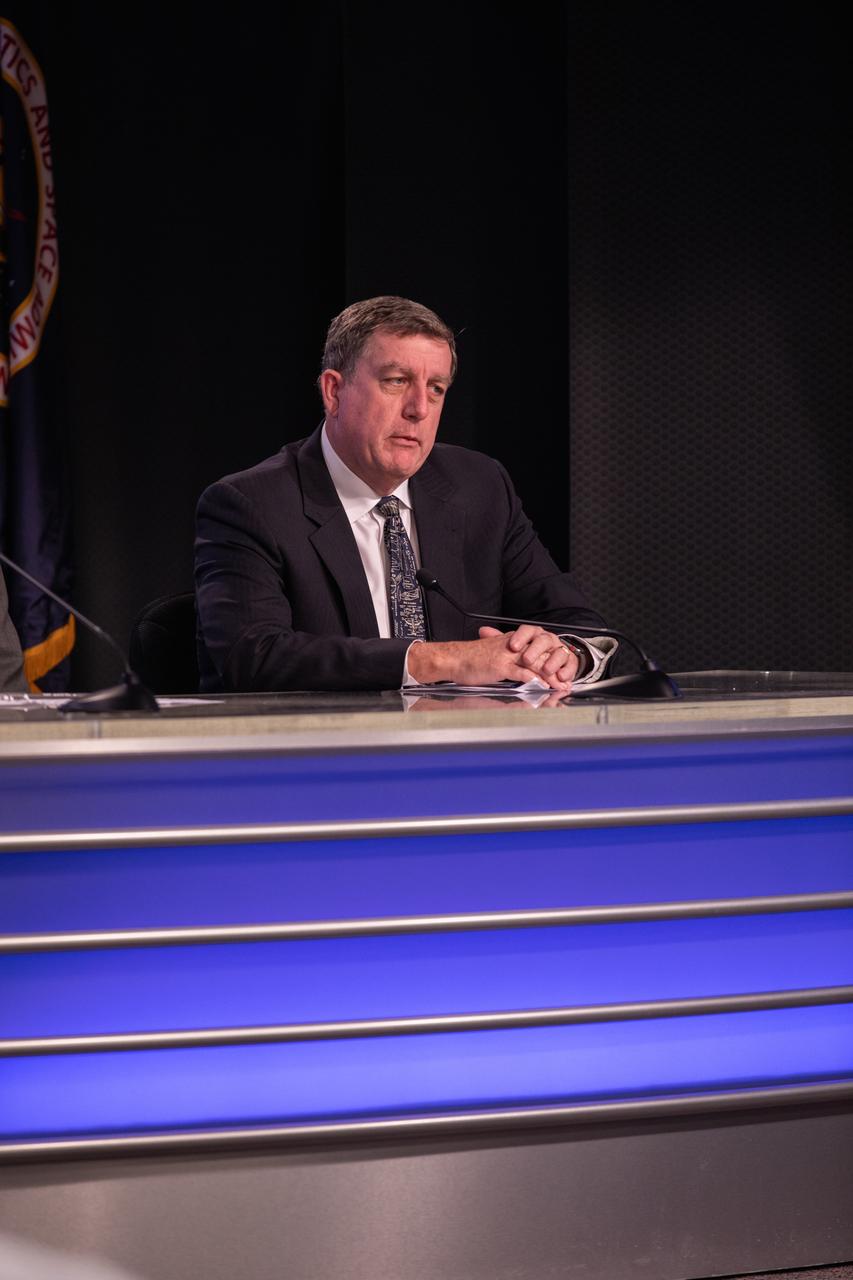
Kirk Shireman, manager of NASA’s International Space Station Program, speaks during a briefing at the agency’s Kennedy Space Center in Florida following launch of Boeing’s Orbital Flight Test, Dec. 20, 2019. Boeing’s CST-100 Starliner spacecraft launched atop a United Launch Alliance Atlas V rocket from Space Launch Complex 41 at Cape Canaveral Air Force Station at 6:36 a.m. EST. The uncrewed Orbital Flight Test is the Starliner’s first flight for NASA’s Commercial Crew Program.

NASA astronaut Mike Fincke listens during a briefing at the agency’s Kennedy Space Center in Florida following launch of Boeing’s Orbital Flight Test, Dec. 20, 2019. Boeing’s CST-100 Starliner spacecraft launched atop a United Launch Alliance Atlas V rocket from Space Launch Complex 41 at Cape Canaveral Air Force Station at 6:36 a.m. EST. The uncrewed Orbital Flight Test is the Starliner’s first flight for NASA’s Commercial Crew Program.
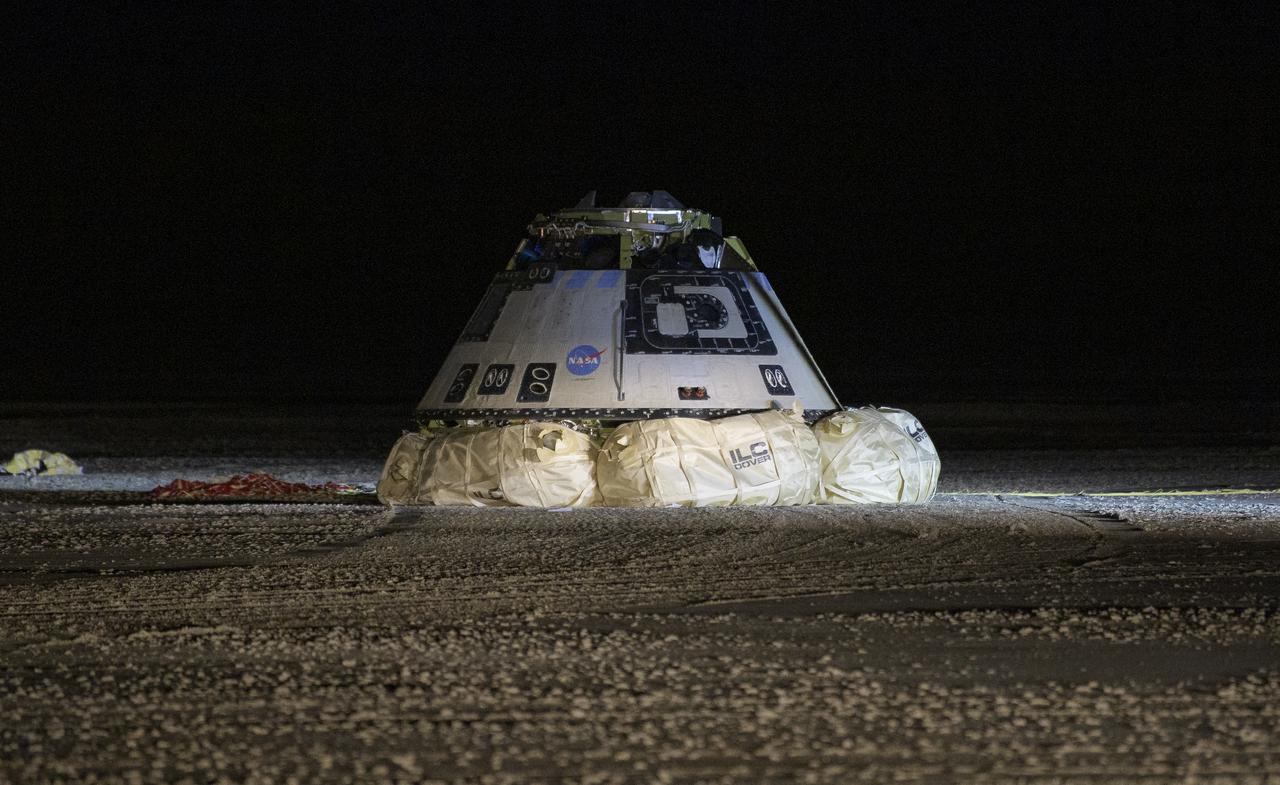
The Boeing CST-100 Starliner spacecraft is seen after it landed in White Sands, New Mexico, Sunday, Dec. 22, 2019. The landing completes an abbreviated Orbital Flight Test for the company that still meets several mission objectives for NASA’s Commercial Crew program. The Starliner spacecraft launched on a United Launch Alliance Atlas V rocket at 6:36 a.m. Friday, Dec. 20 from Space Launch Complex 41 at Cape Canaveral Air Force Station in Florida. Photo Credit: (NASA/Bill Ingalls)
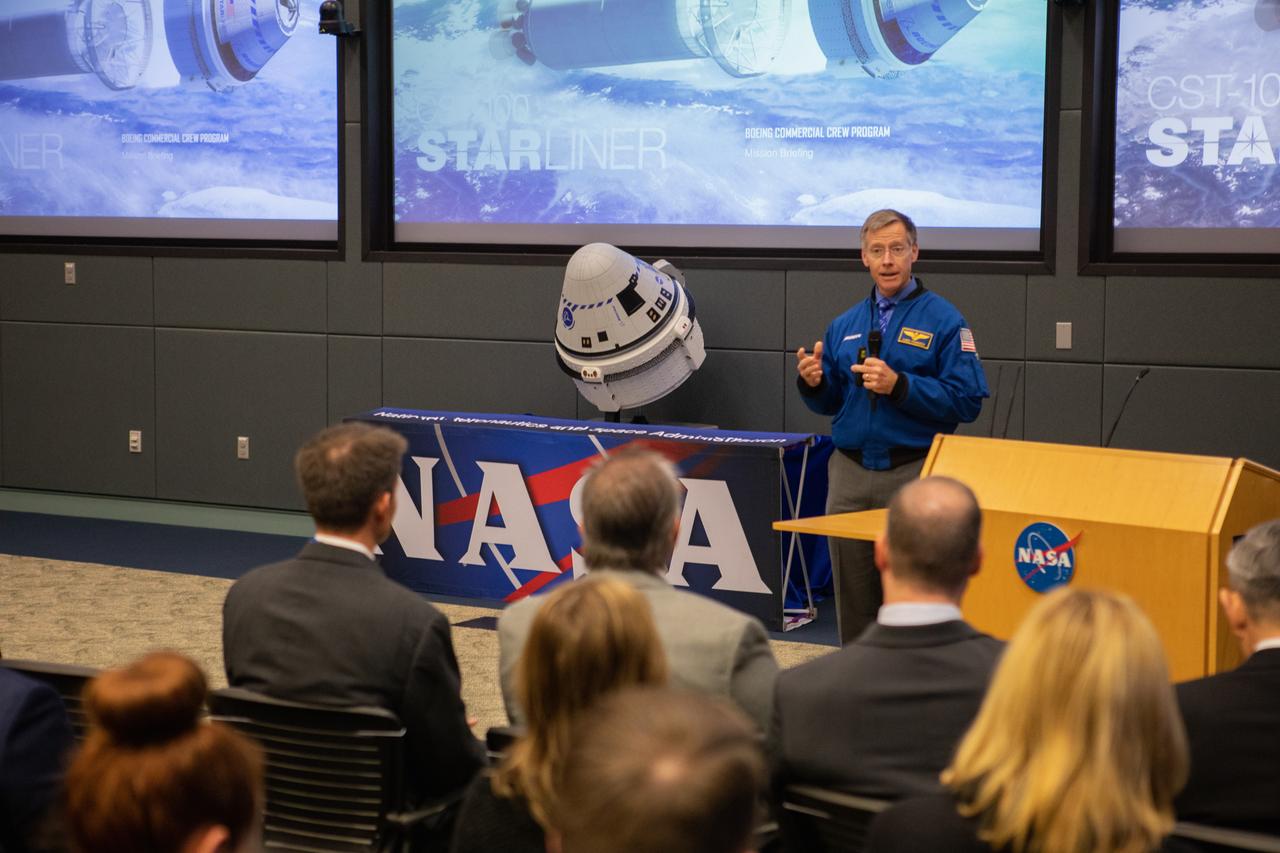
Boeing astronaut Chris Ferguson speaks to invited guests at NASA’s Kennedy Space Center in Florida during a prelaunch briefing for Boeing’s uncrewed Orbital Flight Test, Dec. 20, 2019. A United Launch Alliance Atlas V rocket carrying Boeing’s CST-100 Starliner spacecraft launched at 6:36 a.m. EST from Space Launch Complex 41 at Florida’s Cape Canaveral Air Force Station. The Orbital Flight Test is the Starliner’s first flight for NASA’s Commercial Crew Program.
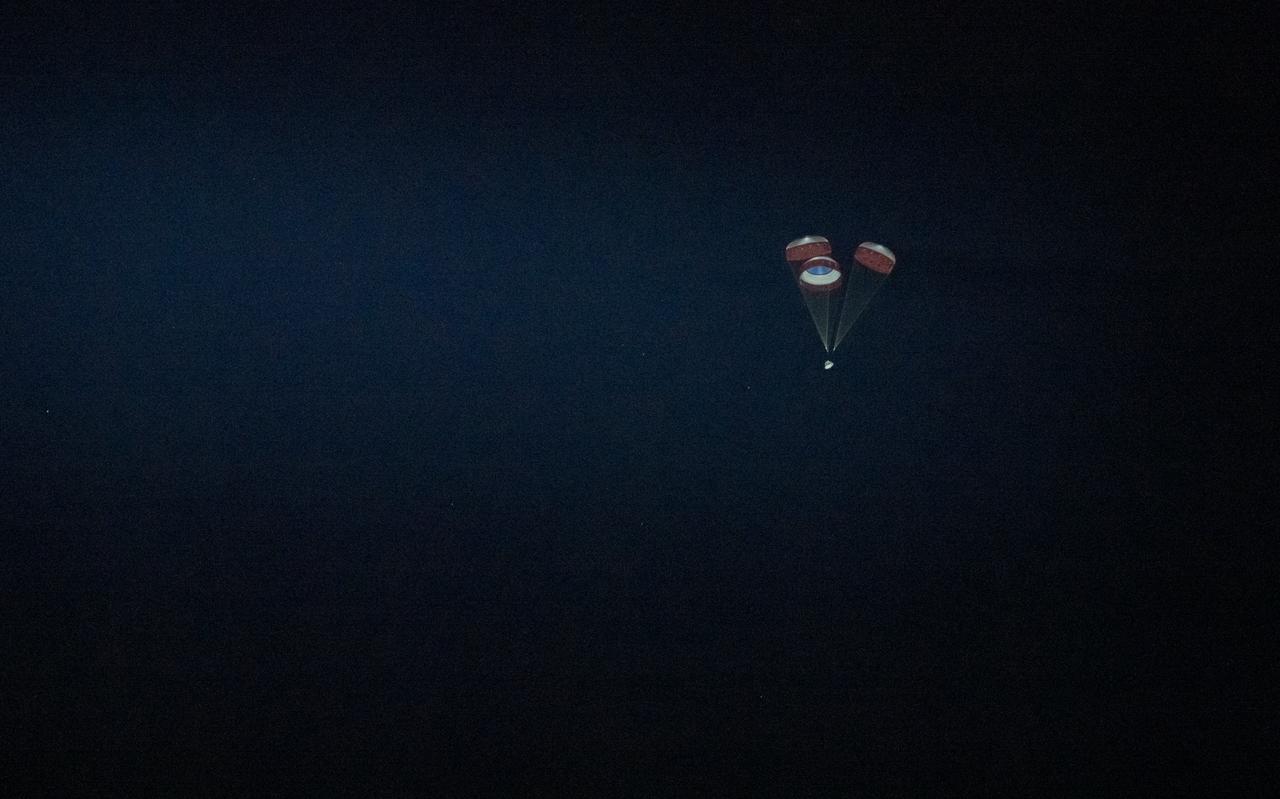
The Boeing CST-100 Starliner spacecraft lands in White Sands, New Mexico, Sunday, Dec. 22, 2019. The landing completes an abbreviated Orbital Flight Test for the company that still meets several mission objectives for NASA’s Commercial Crew program. The Starliner spacecraft launched on a United Launch Alliance Atlas V rocket at 6:36 a.m. Friday, Dec. 20 from Space Launch Complex 41 at Cape Canaveral Air Force Station in Florida. Photo Credit: (NASA/Aubrey Gemignani)
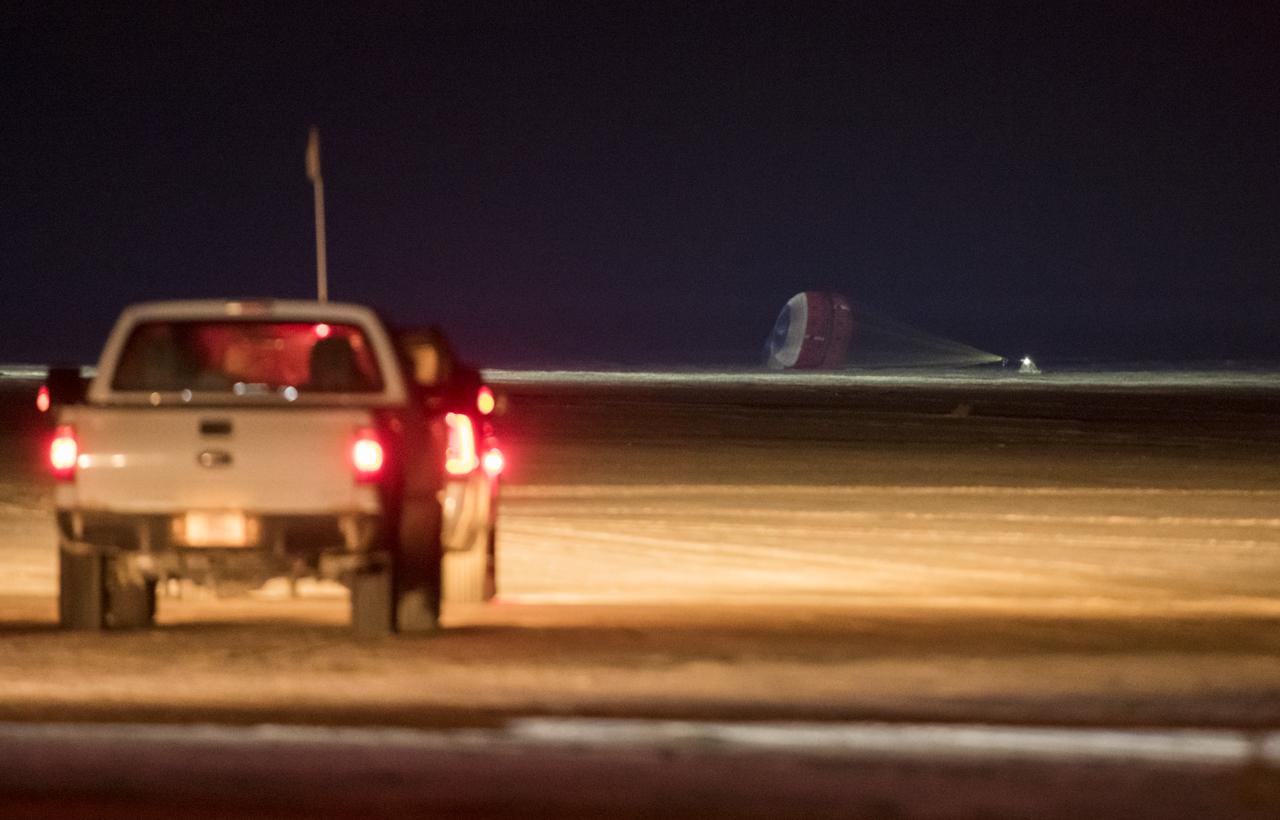
The Boeing CST-100 Starliner spacecraft lands in White Sands, New Mexico, Sunday, Dec. 22, 2019. The landing completes an abbreviated Orbital Flight Test for the company that still meets several mission objectives for NASA’s Commercial Crew program. The Starliner spacecraft launched on a United Launch Alliance Atlas V rocket at 6:36 a.m. Friday, Dec. 20 from Space Launch Complex 41 at Cape Canaveral Air Force Station in Florida. Photo Credit: (NASA/Aubrey Gemignani)
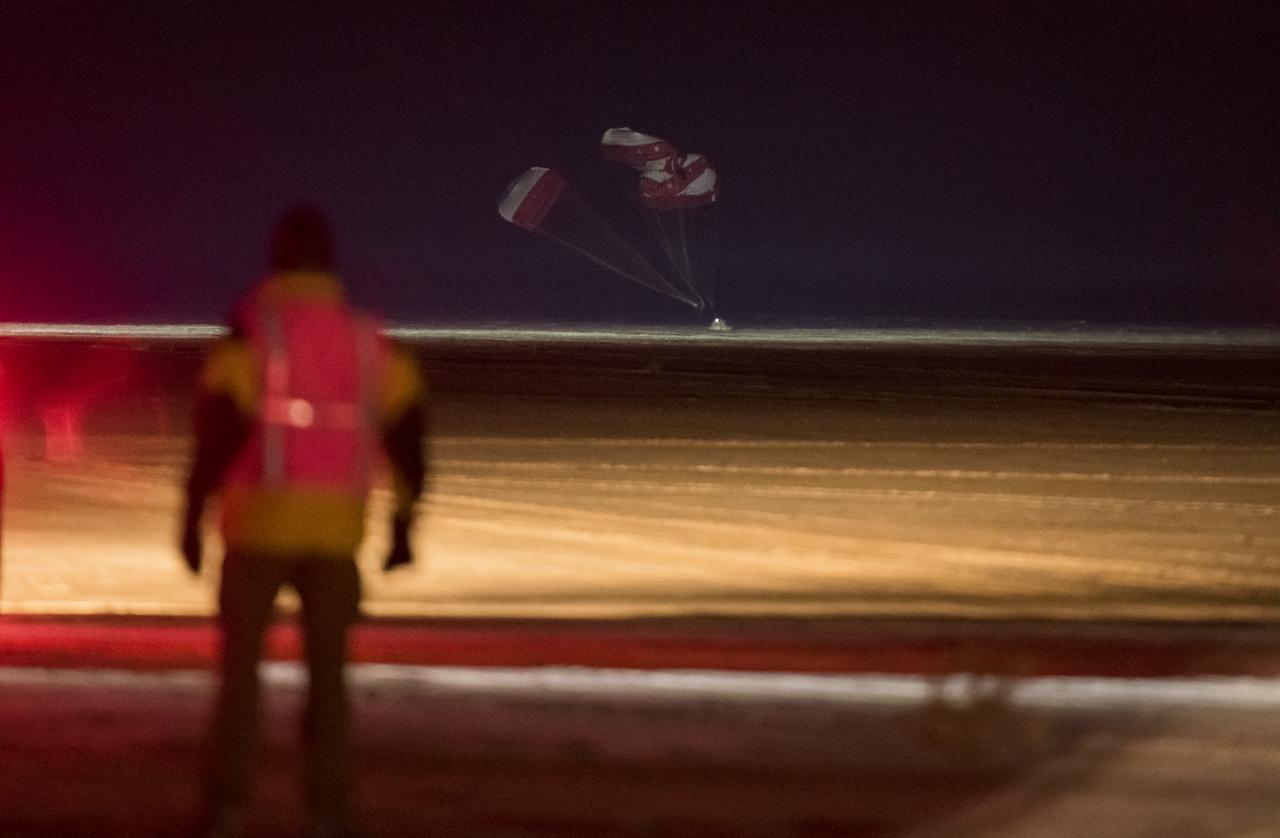
The Boeing CST-100 Starliner spacecraft lands in White Sands, New Mexico, Sunday, Dec. 22, 2019. The landing completes an abbreviated Orbital Flight Test for the company that still meets several mission objectives for NASA’s Commercial Crew program. The Starliner spacecraft launched on a United Launch Alliance Atlas V rocket at 6:36 a.m. Friday, Dec. 20 from Space Launch Complex 41 at Cape Canaveral Air Force Station in Florida. Photo Credit: (NASA/Aubrey Gemignani)
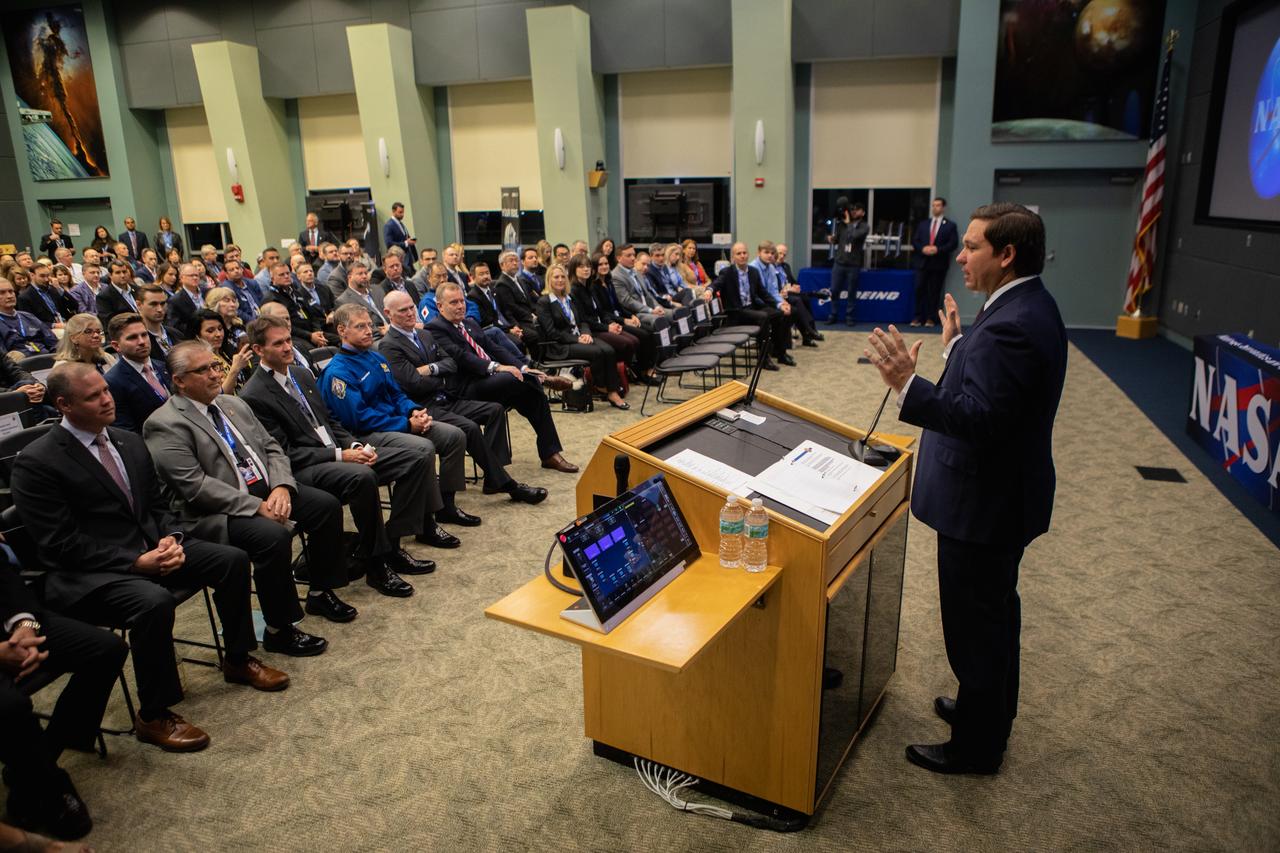
Florida Governor Ron DeSantis speaks to invited guests at NASA’s Kennedy Space Center in Florida during a prelaunch briefing for Boeing’s uncrewed Orbital Flight Test, Dec. 20, 2019. A United Launch Alliance Atlas V rocket carrying Boeing’s CST-100 Starliner spacecraft launched at 6:36 a.m. EST from Space Launch Complex 41 at Florida’s Cape Canaveral Air Force Station. The Orbital Flight Test is the Starliner’s first flight for NASA’s Commercial Crew Program.
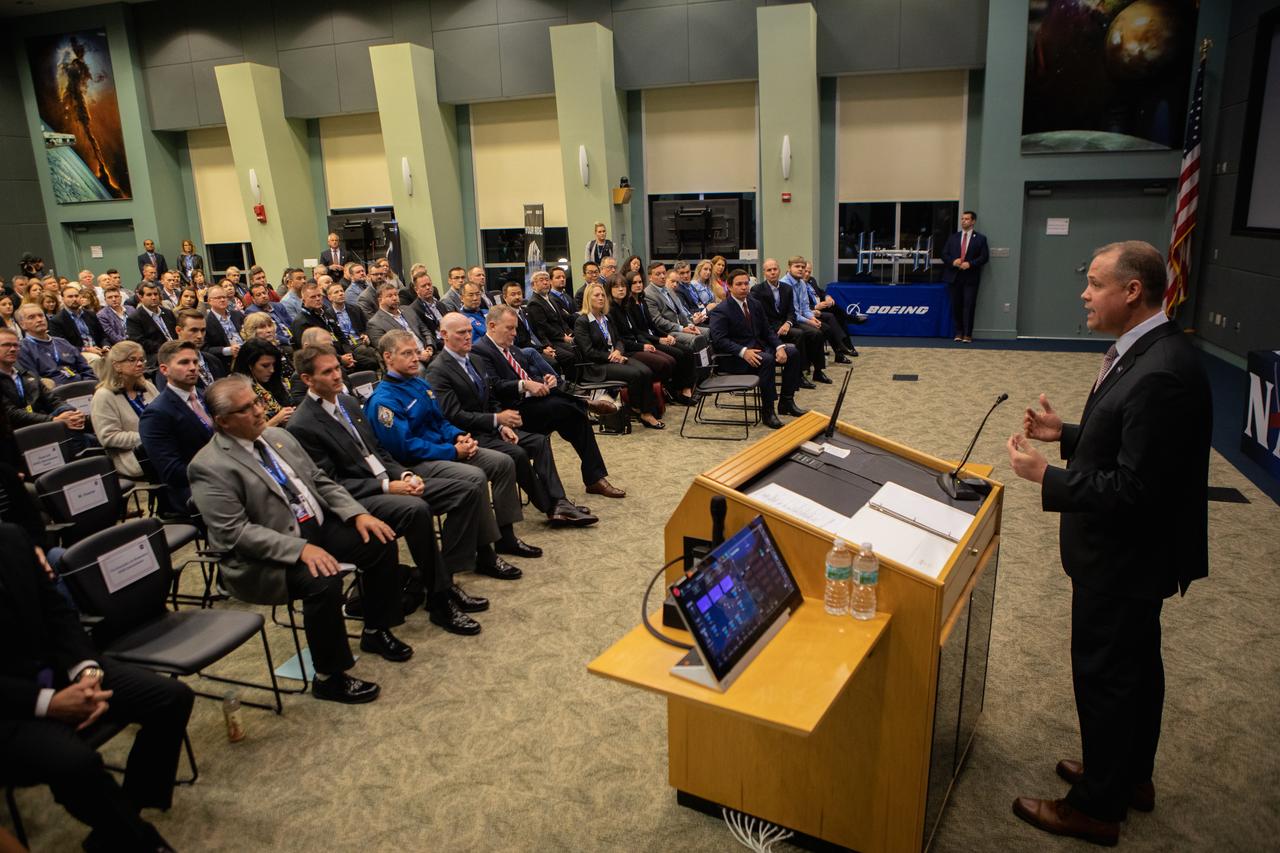
NASA Administrator Jim Bridenstine speaks to invited guests at NASA’s Kennedy Space Center in Florida during a prelaunch briefing for Boeing’s uncrewed Orbital Flight Test, Dec. 20, 2019. A United Launch Alliance Atlas V rocket carrying Boeing’s CST-100 Starliner spacecraft launched at 6:36 a.m. EST from Space Launch Complex 41 at Florida’s Cape Canaveral Air Force Station. The Orbital Flight Test is the Starliner’s first flight for NASA’s Commercial Crew Program.
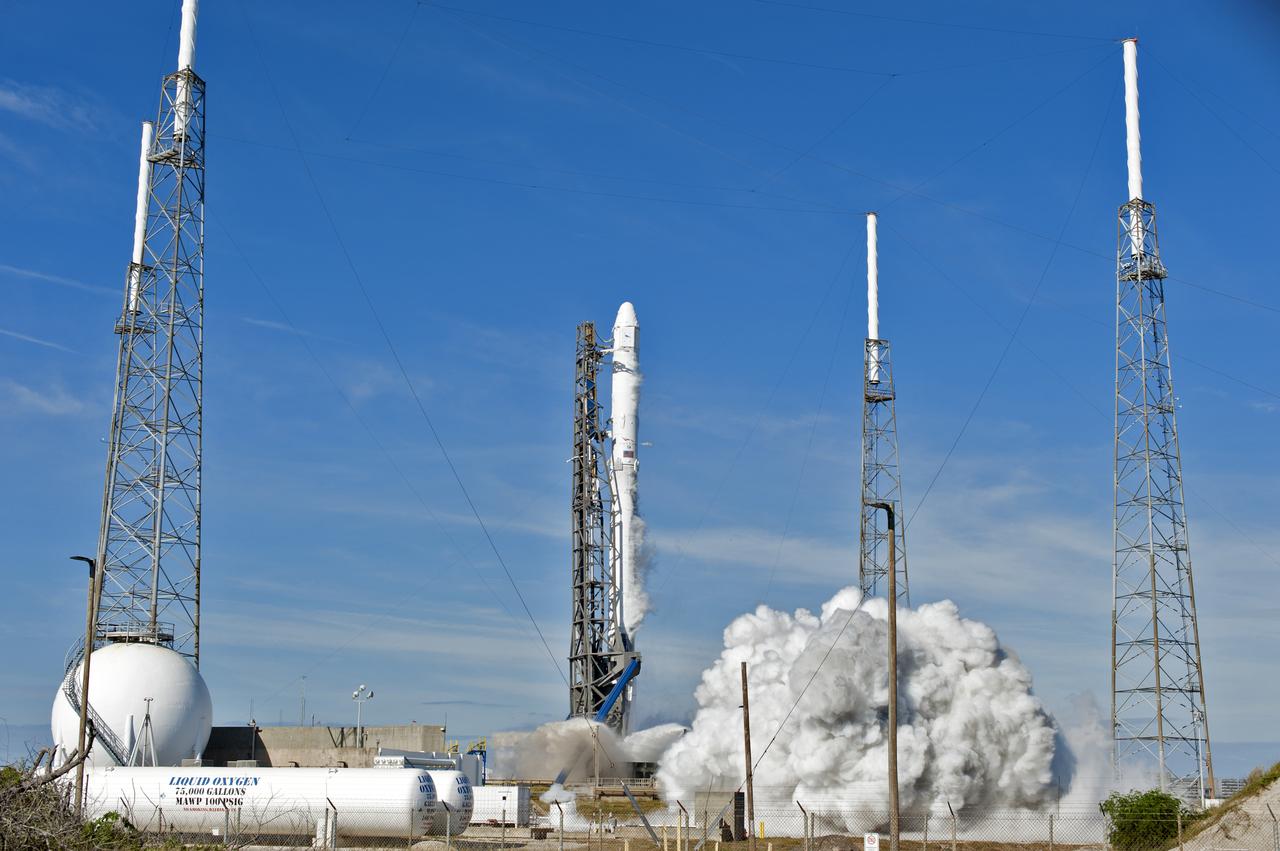
The two-stage Falcon 9 launch vehicle lifts off Space Launch Complex 40 at Cape Canaveral Air Force Station carrying the Dragon resupply spacecraft to the International Space Station. Liftoff was at 10:36 a.m. EST. On its 13th commercial resupply services mission to the International Space Station, Dragon will bring up supplies, equipment and new science experiments for technology research. The SpaceX Dragon spacecraft will deliver about 4,800 pounds of cargo and material to support science investigations aboard the space station.
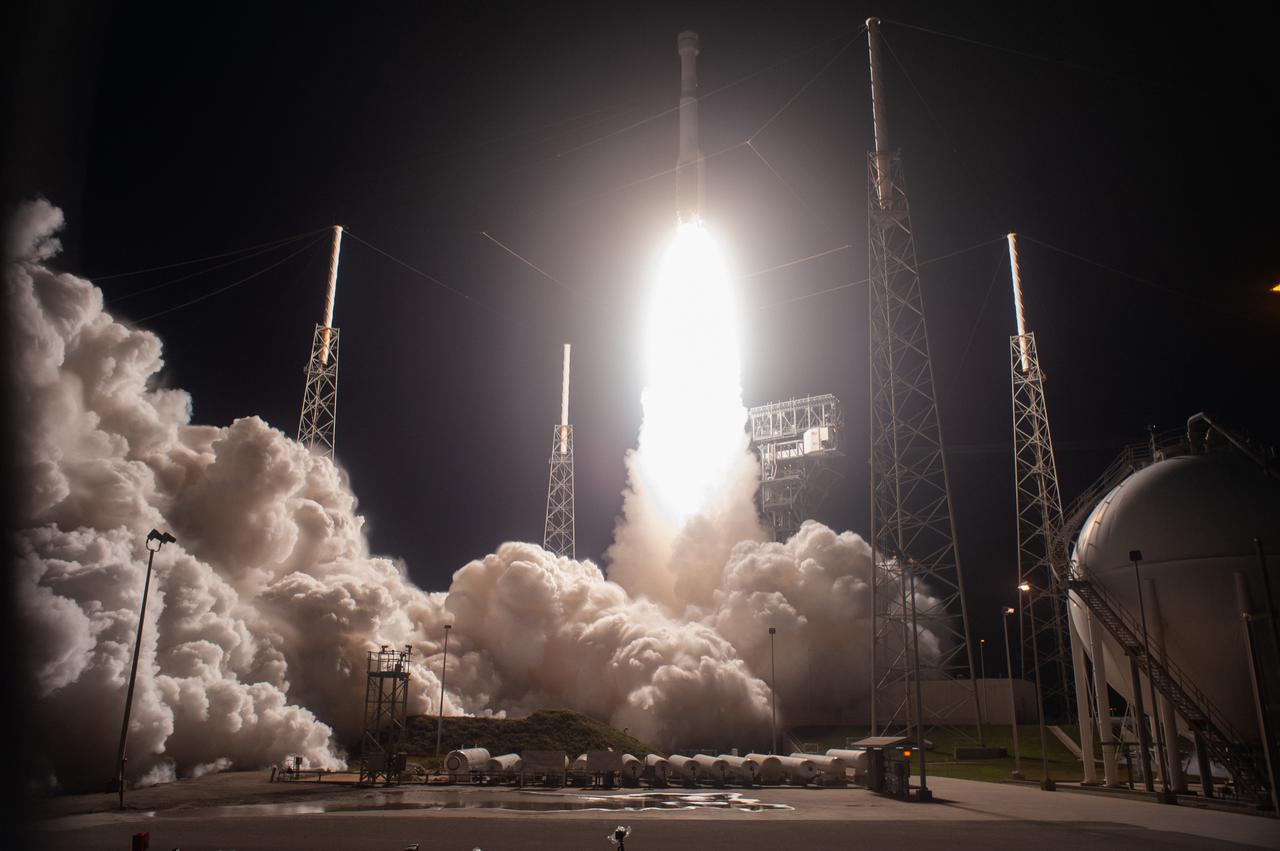
A two-stage United Launch Alliance Atlas V rocket lifts off from Space Launch Complex 41 at Cape Canaveral Air Force Station in Florida for Boeing’s Orbital Flight Test, Dec. 20, 2019. Liftoff occurred at 6:36 a.m. EST. The uncrewed Orbital Flight Test is the Starliner’s first flight for NASA’s Commercial Crew Program.
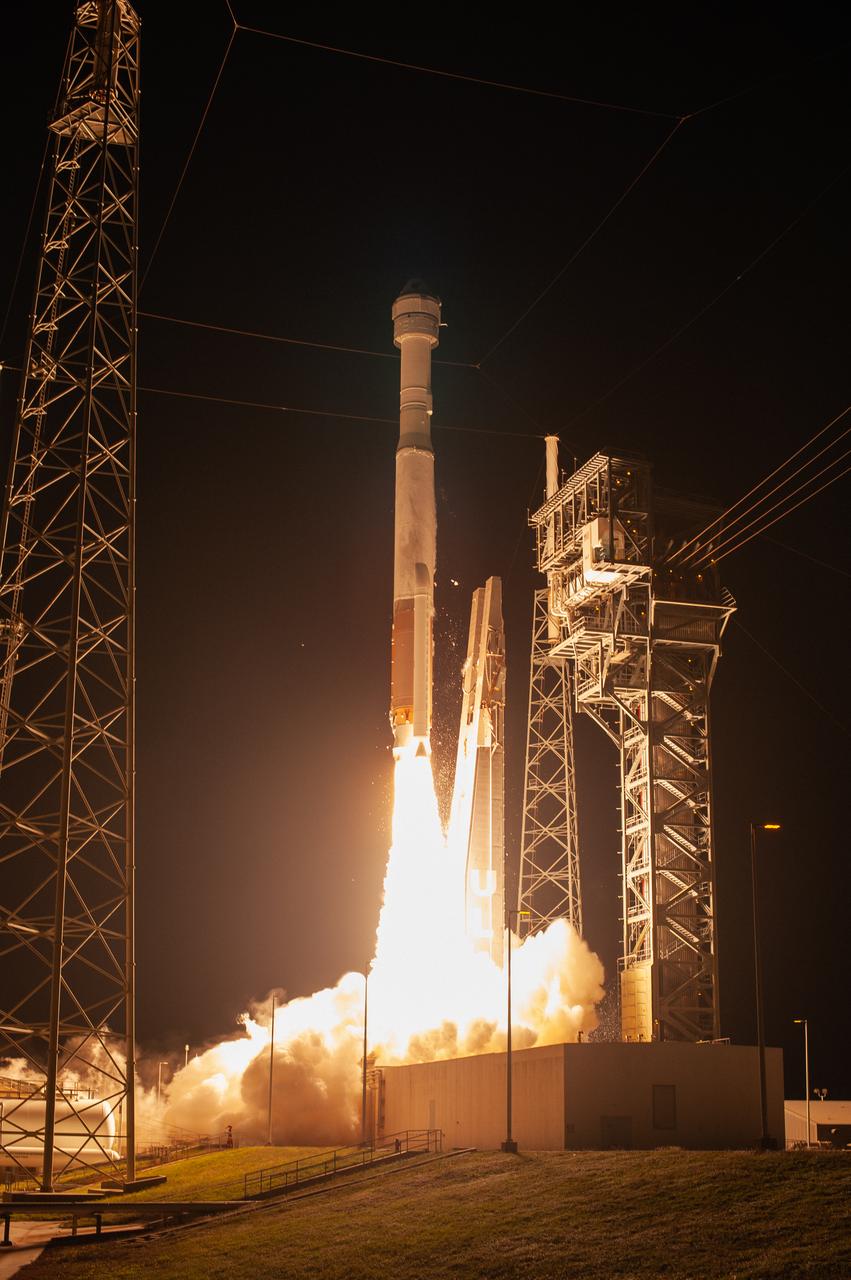
A two-stage United Launch Alliance Atlas V rocket lifts off from Space Launch Complex 41 at Cape Canaveral Air Force Station in Florida for Boeing’s Orbital Flight Test, Dec. 20, 2019. Liftoff occurred at 6:36 a.m. EST. The uncrewed Orbital Flight Test is the Starliner’s first flight for NASA’s Commercial Crew Program.
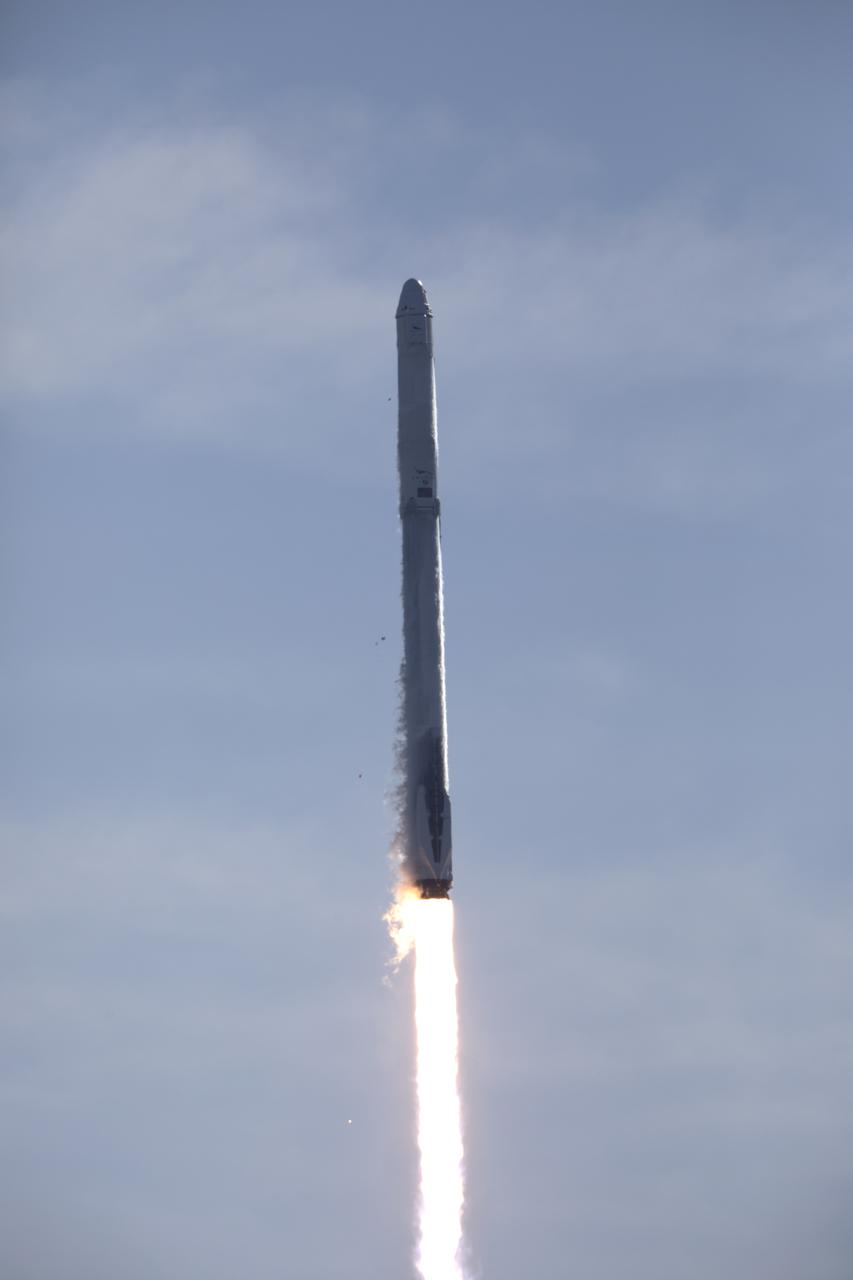
The two-stage Falcon 9 launch vehicle lifts off Space Launch Complex 40 at Cape Canaveral Air Force Station carrying the Dragon resupply spacecraft to the International Space Station. Liftoff was at 10:36 a.m. EST. On its 13th commercial resupply services mission to the International Space Station, Dragon will bring up supplies, equipment and new science experiments for technology research. The SpaceX Dragon spacecraft will deliver about 4,800 pounds of cargo and material to support science investigations aboard the space station.
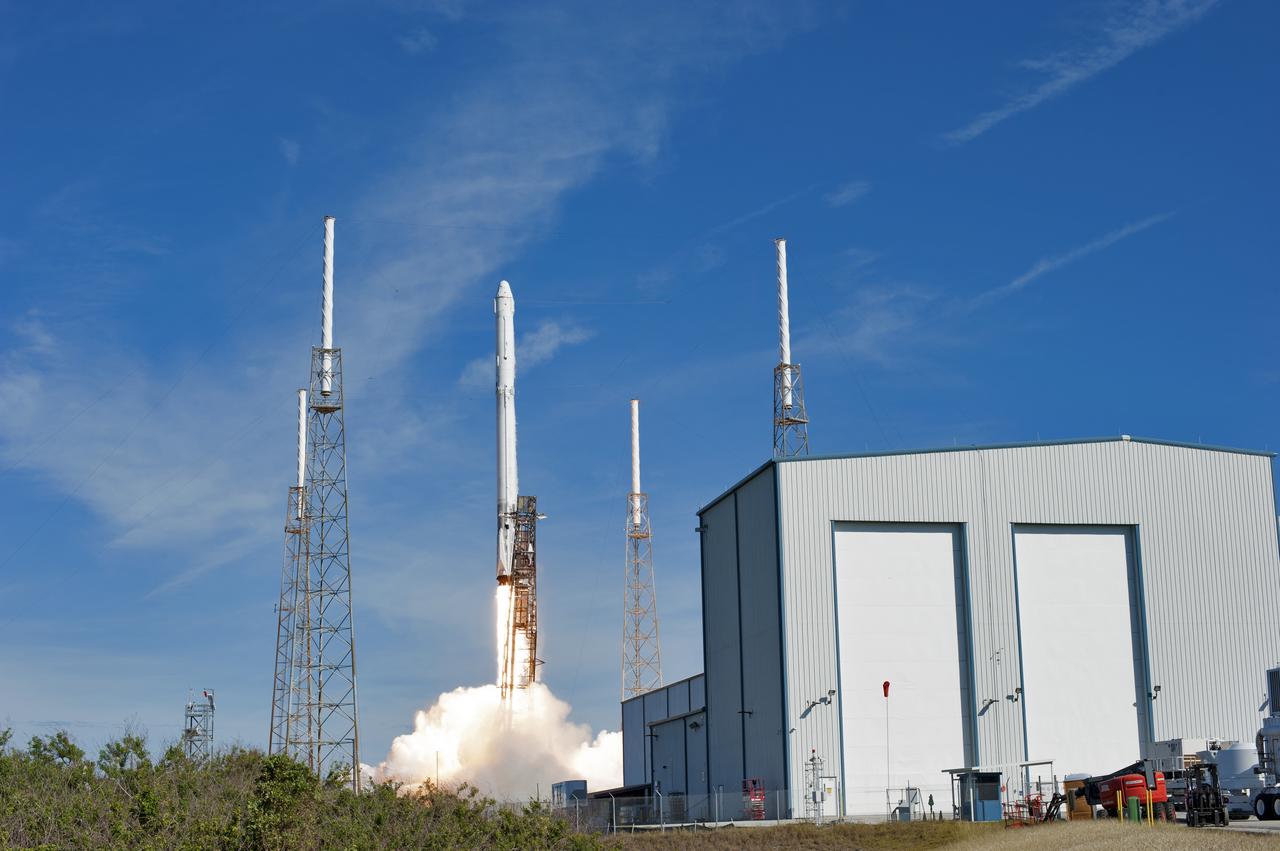
The two-stage Falcon 9 launch vehicle lifts off Space Launch Complex 40 at Cape Canaveral Air Force Station carrying the Dragon resupply spacecraft to the International Space Station. Liftoff was at 10:36 a.m. EST. On its 13th commercial resupply services mission to the International Space Station, Dragon will bring up supplies, equipment and new science experiments for technology research. The SpaceX Dragon spacecraft will deliver about 4,800 pounds of cargo and material to support science investigations aboard the space station.
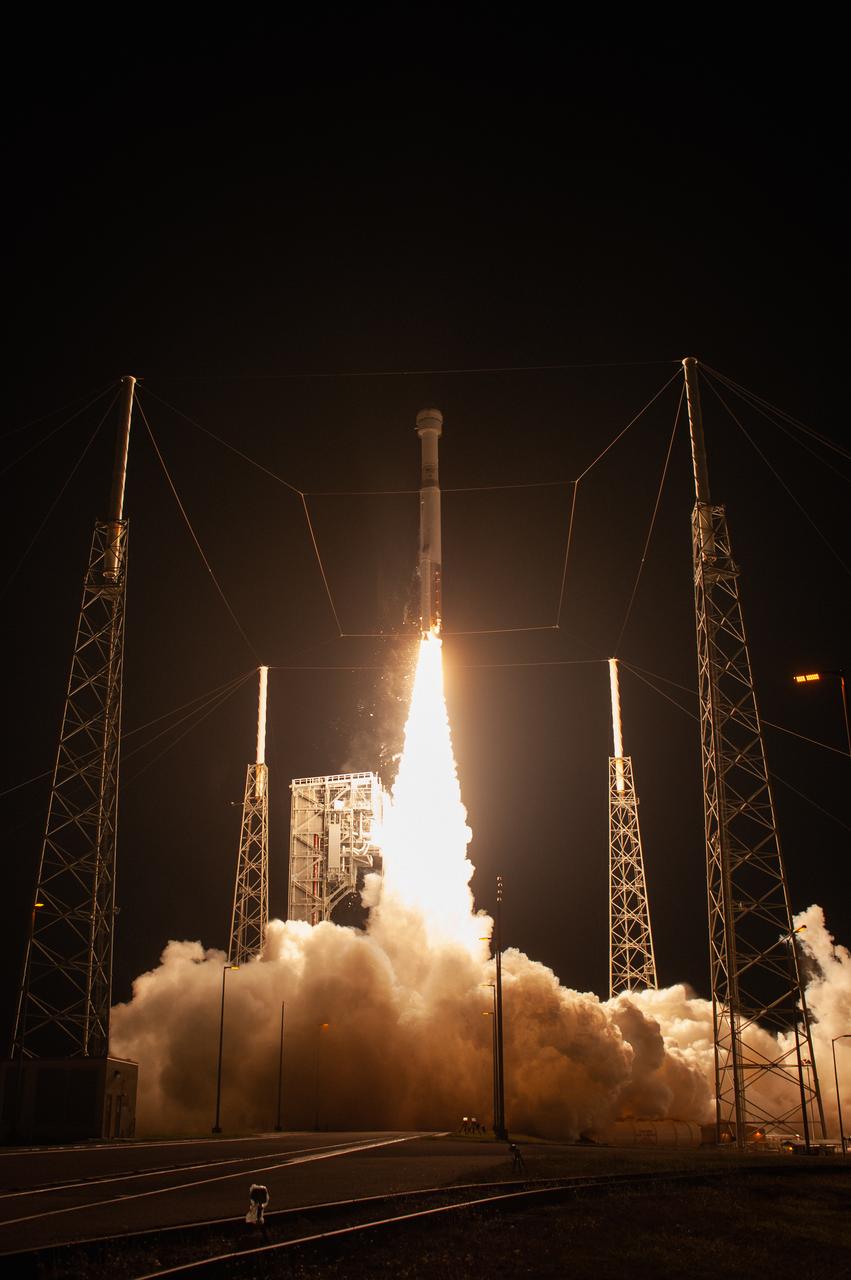
A two-stage United Launch Alliance Atlas V rocket lifts off from Space Launch Complex 41 at Cape Canaveral Air Force Station in Florida for Boeing’s Orbital Flight Test, Dec. 20, 2019. Liftoff occurred at 6:36 a.m. EST. The uncrewed Orbital Flight Test is the Starliner’s first flight for NASA’s Commercial Crew Program.
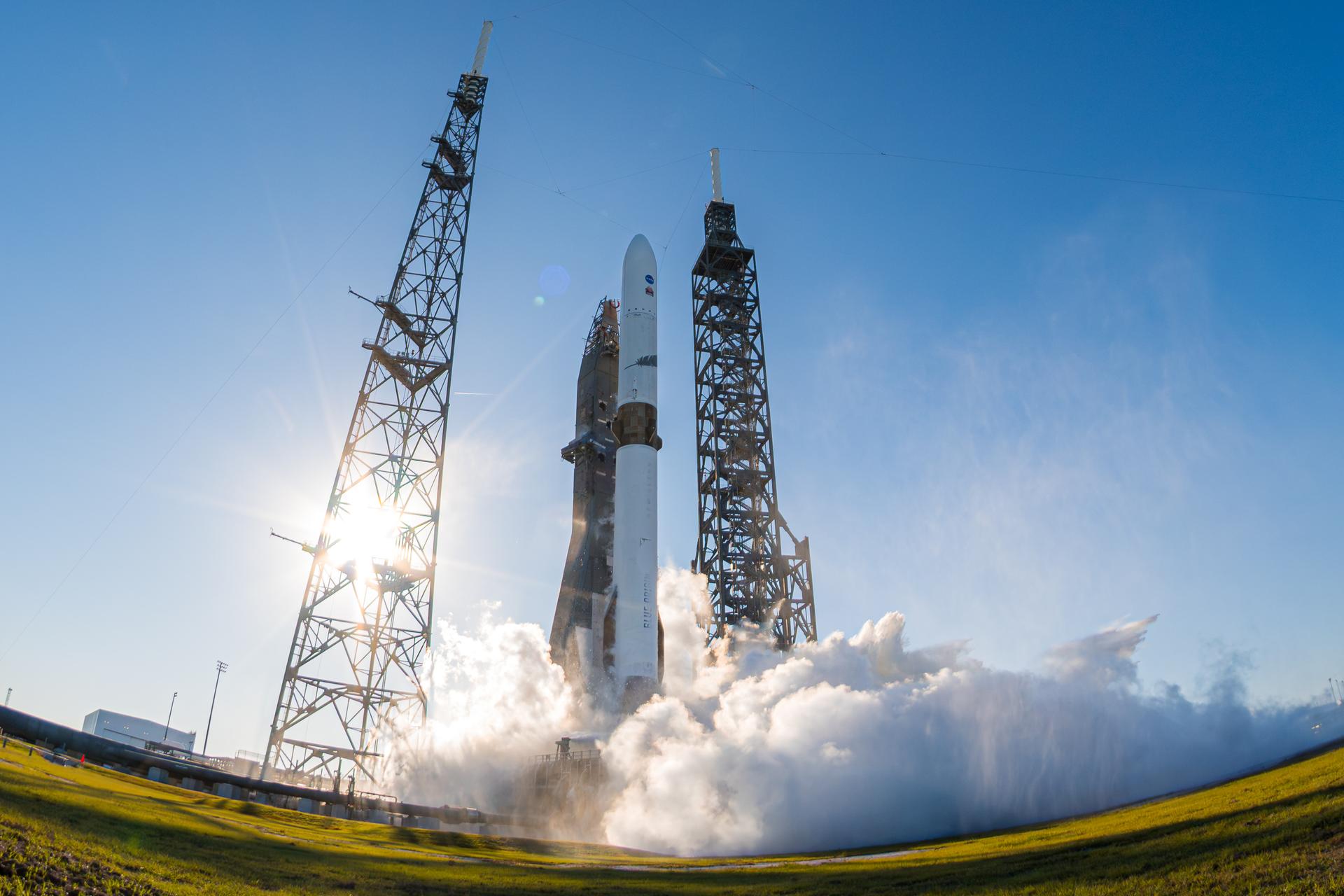
Blue Origin’s New Glenn rocket carrying NASA’s twin ESCAPADE (Escape and Plasma Acceleration and Dynamics Explorers) spacecraft launches at 3:55 p.m. EST, Thursday, Nov. 13, 2025, from Launch Complex 36 at Cape Canaveral Space Force Station in Florida. The ESCAPADE mission, built by Rocket Lab, will study how solar wind and plasma interact with Mars’ magnetosphere and how this interaction drives the planet’s atmospheric escape to prepare for future human missions on Mars.
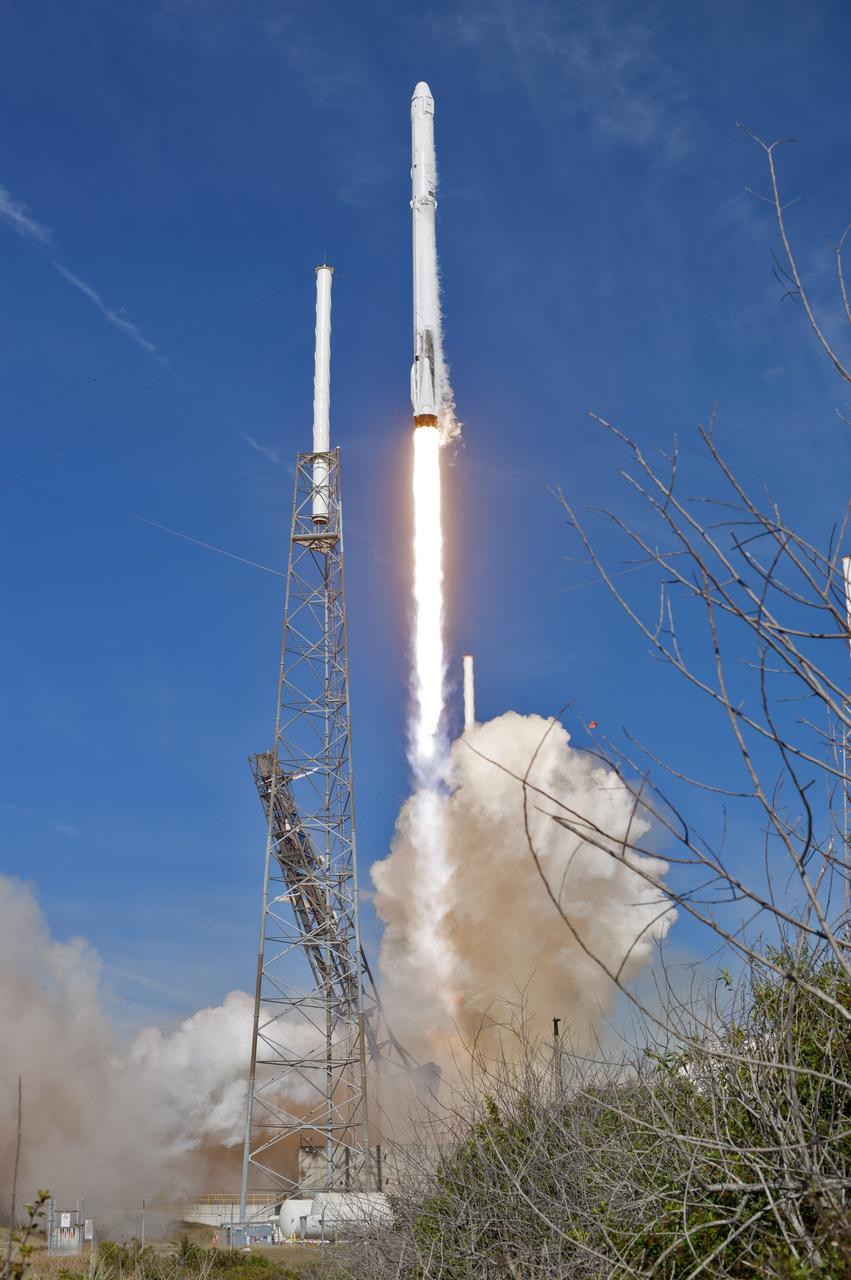
The two-stage Falcon 9 launch vehicle lifts off Space Launch Complex 40 at Cape Canaveral Air Force Station carrying the Dragon resupply spacecraft to the International Space Station. Liftoff was at 10:36 a.m. EST. On its 13th commercial resupply services mission to the International Space Station, Dragon will bring up supplies, equipment and new science experiments for technology research. The SpaceX Dragon spacecraft will deliver about 4,800 pounds of cargo and material to support science investigations aboard the space station.
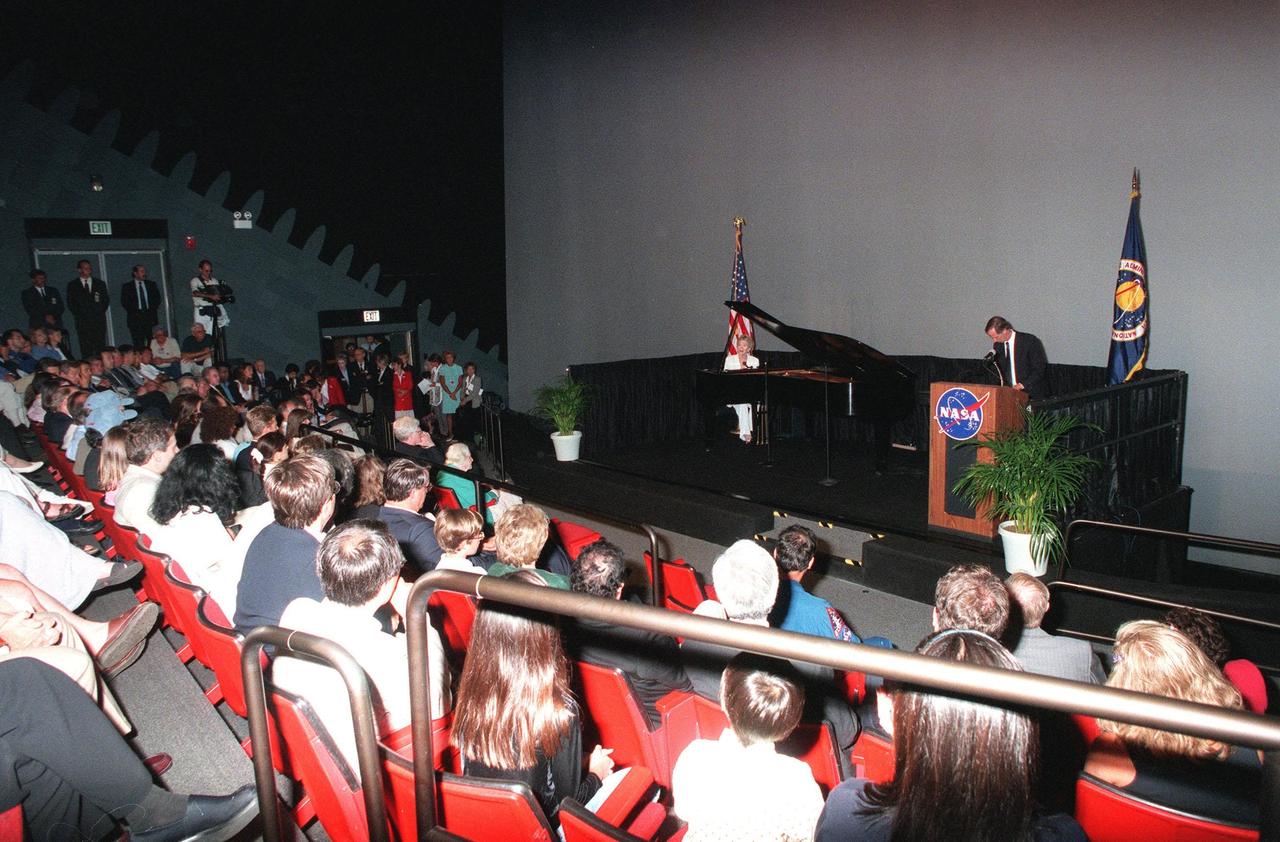
At the piano, singer-songwriter Judy Collins performs her original song, "Beyond the Sky," at the KSC Visitor Complex's Imax Theater for an audience waiting for the launch of STS-93. The song, commissioned by NASA through the Nasa Art Program, honored Eileen Collins, the first woman to command a Space Shuttle. The attendees are planning to view the launch at the Banana Creek viewing sight. Liftoff is scheduled for July 20 at 12:36 a.m. EDT
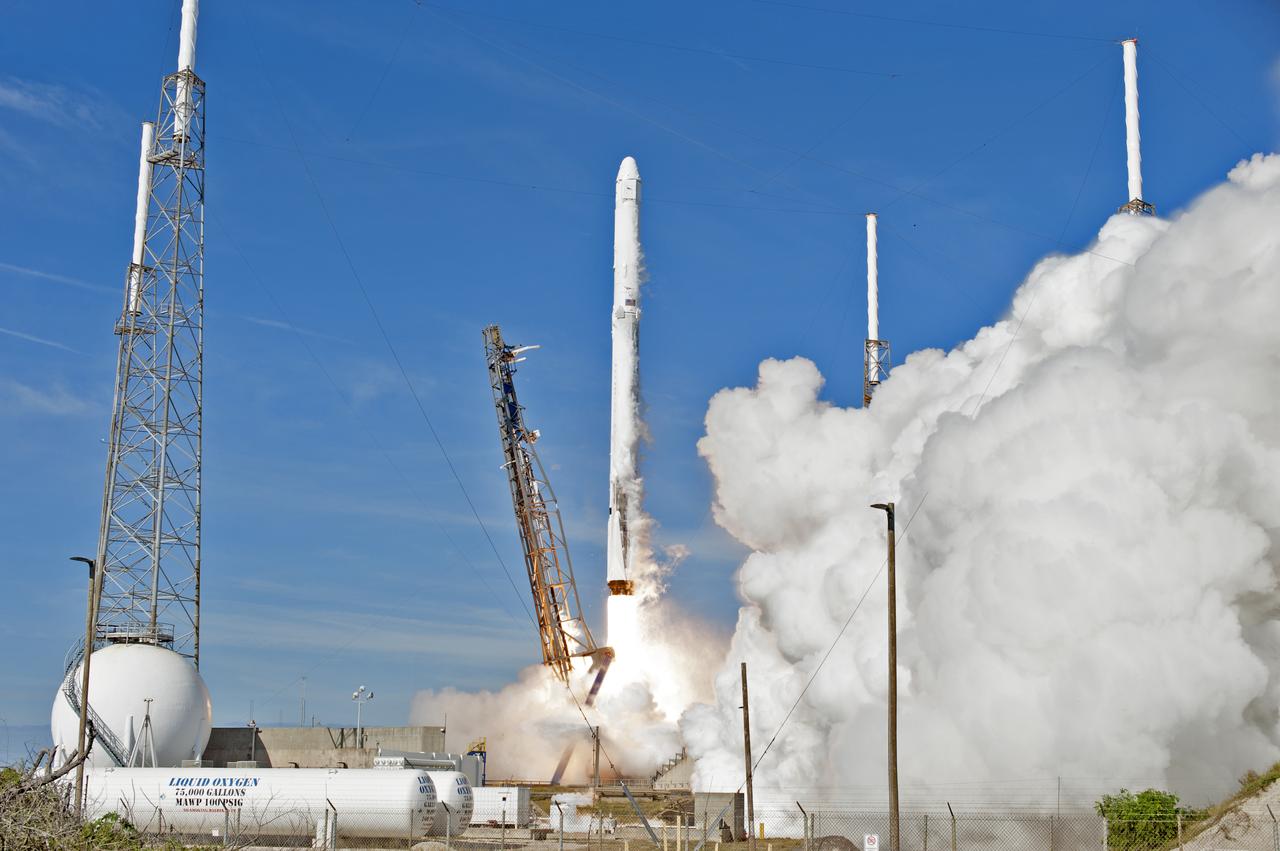
The two-stage Falcon 9 launch vehicle lifts off Space Launch Complex 40 at Cape Canaveral Air Force Station carrying the Dragon resupply spacecraft to the International Space Station. Liftoff was at 10:36 a.m. EST. On its 13th commercial resupply services mission to the International Space Station, Dragon will bring up supplies, equipment and new science experiments for technology research. The SpaceX Dragon spacecraft will deliver about 4,800 pounds of cargo and material to support science investigations aboard the space station.
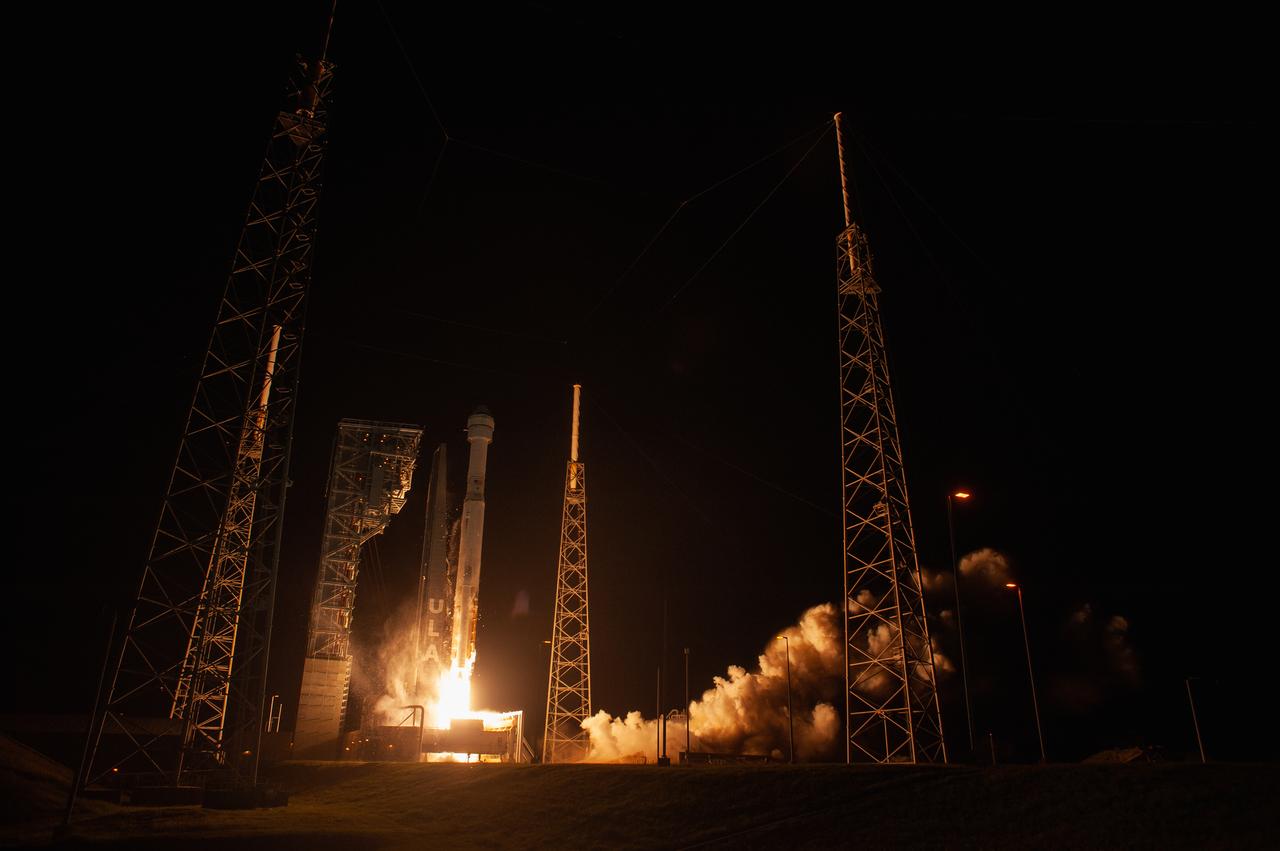
A two-stage United Launch Alliance Atlas V rocket lifts off from Space Launch Complex 41 at Cape Canaveral Air Force Station in Florida for Boeing’s Orbital Flight Test, Dec. 20, 2019. Liftoff occurred at 6:36 a.m. EST. The uncrewed Orbital Flight Test is the Starliner’s first flight for NASA’s Commercial Crew Program.
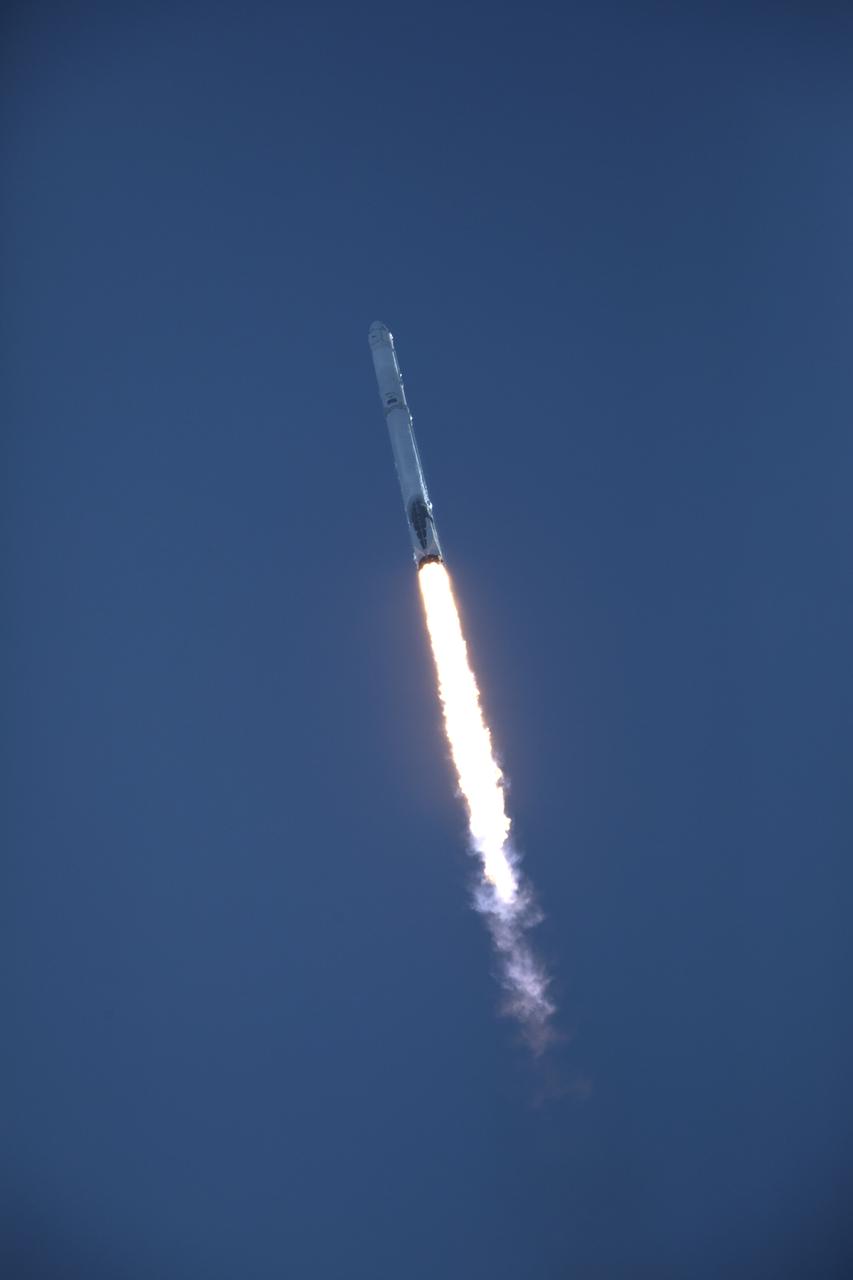
The two-stage Falcon 9 launch vehicle lifts off Space Launch Complex 40 at Cape Canaveral Air Force Station carrying the Dragon resupply spacecraft to the International Space Station. Liftoff was at 10:36 a.m. EST. On its 13th commercial resupply services mission to the International Space Station, Dragon will bring up supplies, equipment and new science experiments for technology research. The SpaceX Dragon spacecraft will deliver about 4,800 pounds of cargo and material to support science investigations aboard the space station.
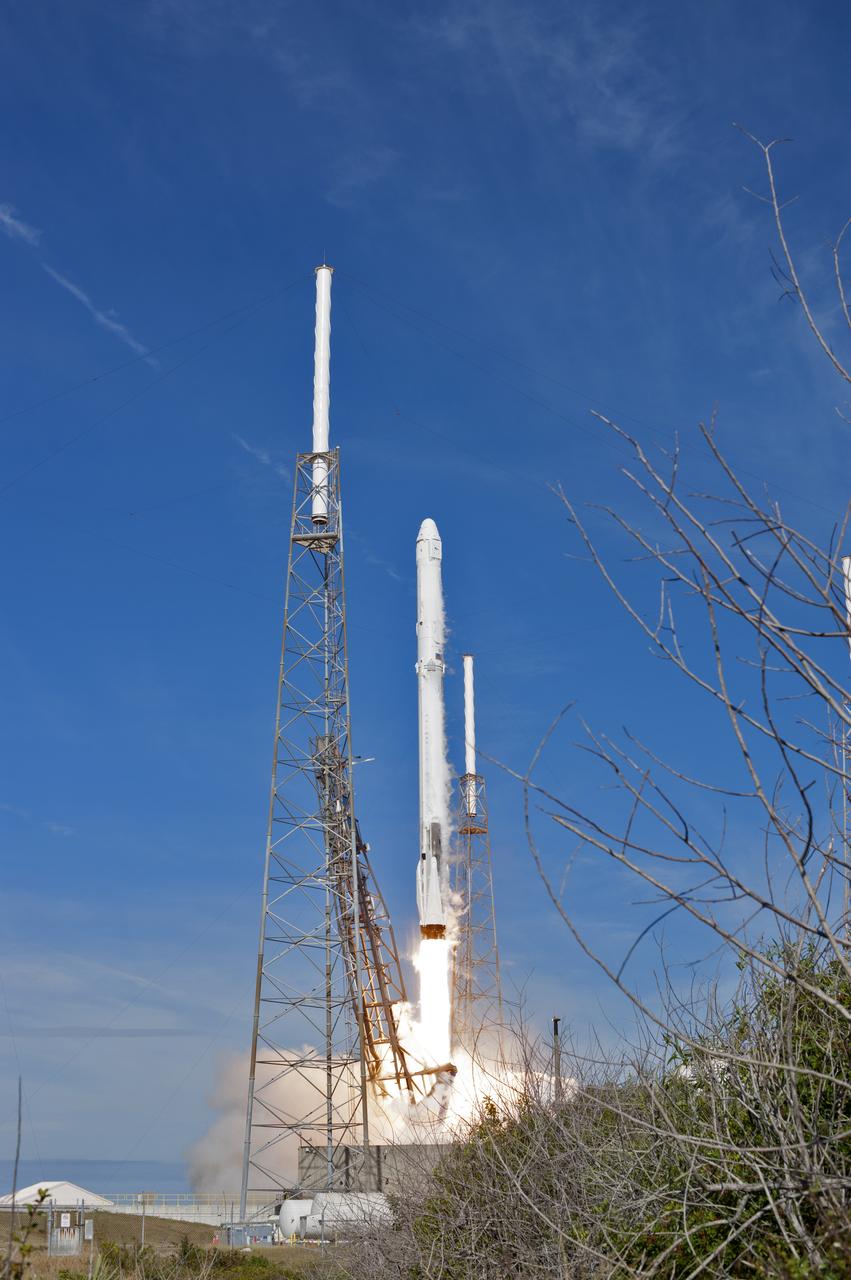
The two-stage Falcon 9 launch vehicle lifts off Space Launch Complex 40 at Cape Canaveral Air Force Station carrying the Dragon resupply spacecraft to the International Space Station. Liftoff was at 10:36 a.m. EST. On its 13th commercial resupply services mission to the International Space Station, Dragon will bring up supplies, equipment and new science experiments for technology research. The SpaceX Dragon spacecraft will deliver about 4,800 pounds of cargo and material to support science investigations aboard the space station.

Blue Origin’s New Glenn rocket carrying NASA’s twin ESCAPADE (Escape and Plasma Acceleration and Dynamics Explorers) spacecraft launches at 3:55 p.m. EST, Thursday, Nov. 13, 2025, from Launch Complex 36 at Cape Canaveral Space Force Station in Florida. The ESCAPADE mission, built by Rocket Lab, will study how solar wind and plasma interact with Mars’ magnetosphere and how this interaction drives the planet’s atmospheric escape to prepare for future human missions on Mars.
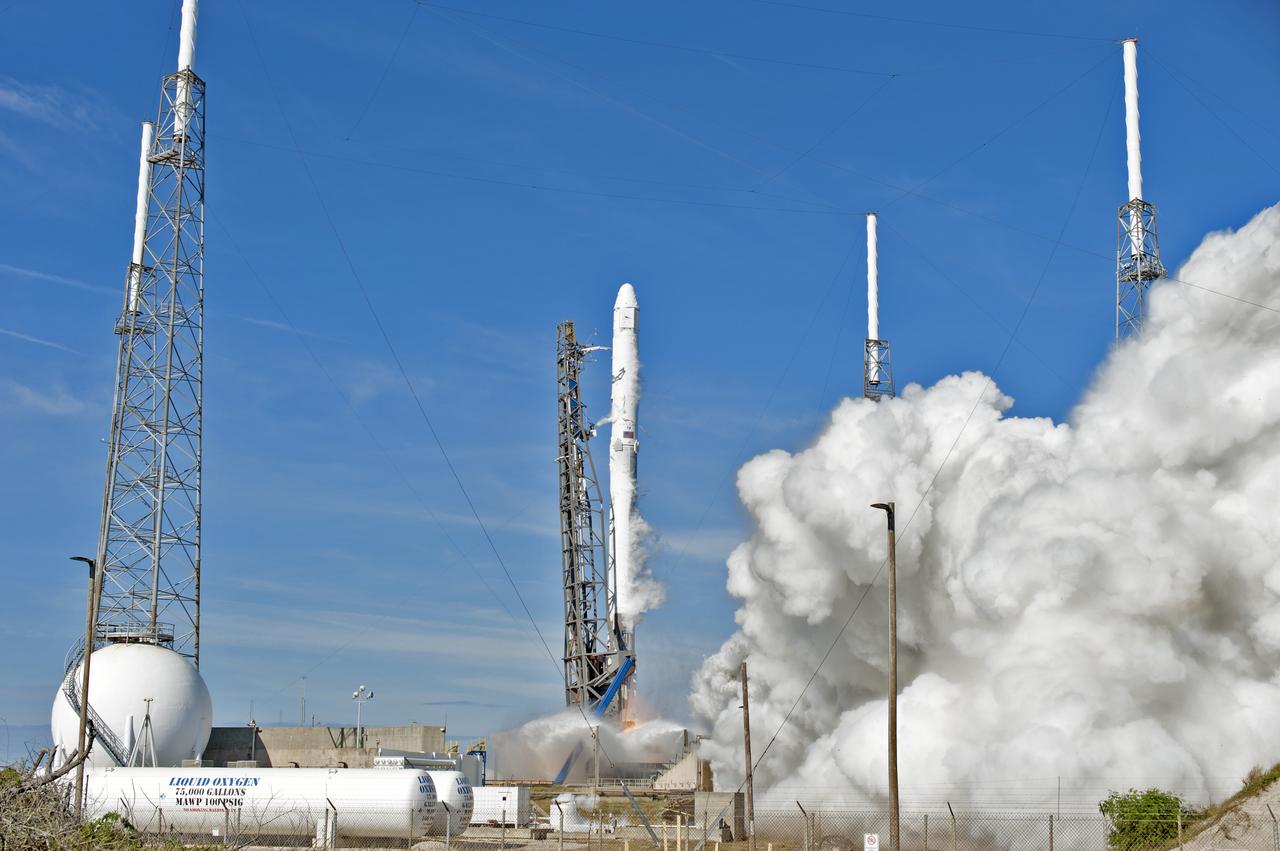
The two-stage Falcon 9 launch vehicle lifts off Space Launch Complex 40 at Cape Canaveral Air Force Station carrying the Dragon resupply spacecraft to the International Space Station. Liftoff was at 10:36 a.m. EST. On its 13th commercial resupply services mission to the International Space Station, Dragon will bring up supplies, equipment and new science experiments for technology research. The SpaceX Dragon spacecraft will deliver about 4,800 pounds of cargo and material to support science investigations aboard the space station.
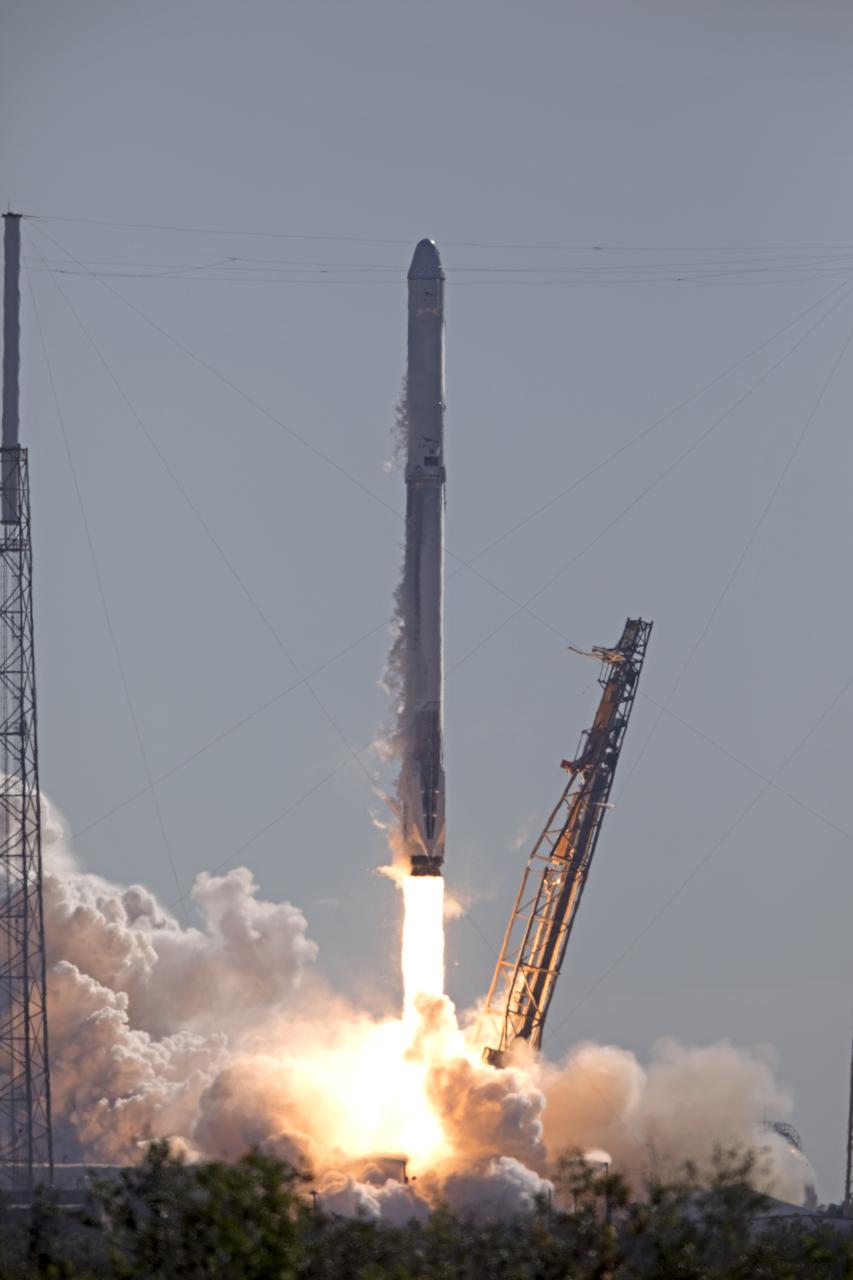
The two-stage Falcon 9 launch vehicle lifts off Space Launch Complex 40 at Cape Canaveral Air Force Station carrying the Dragon resupply spacecraft to the International Space Station. Liftoff was at 10:36 a.m. EST. On its 13th commercial resupply services mission to the International Space Station, Dragon will bring up supplies, equipment and new science experiments for technology research. The SpaceX Dragon spacecraft will deliver about 4,800 pounds of cargo and material to support science investigations aboard the space station.
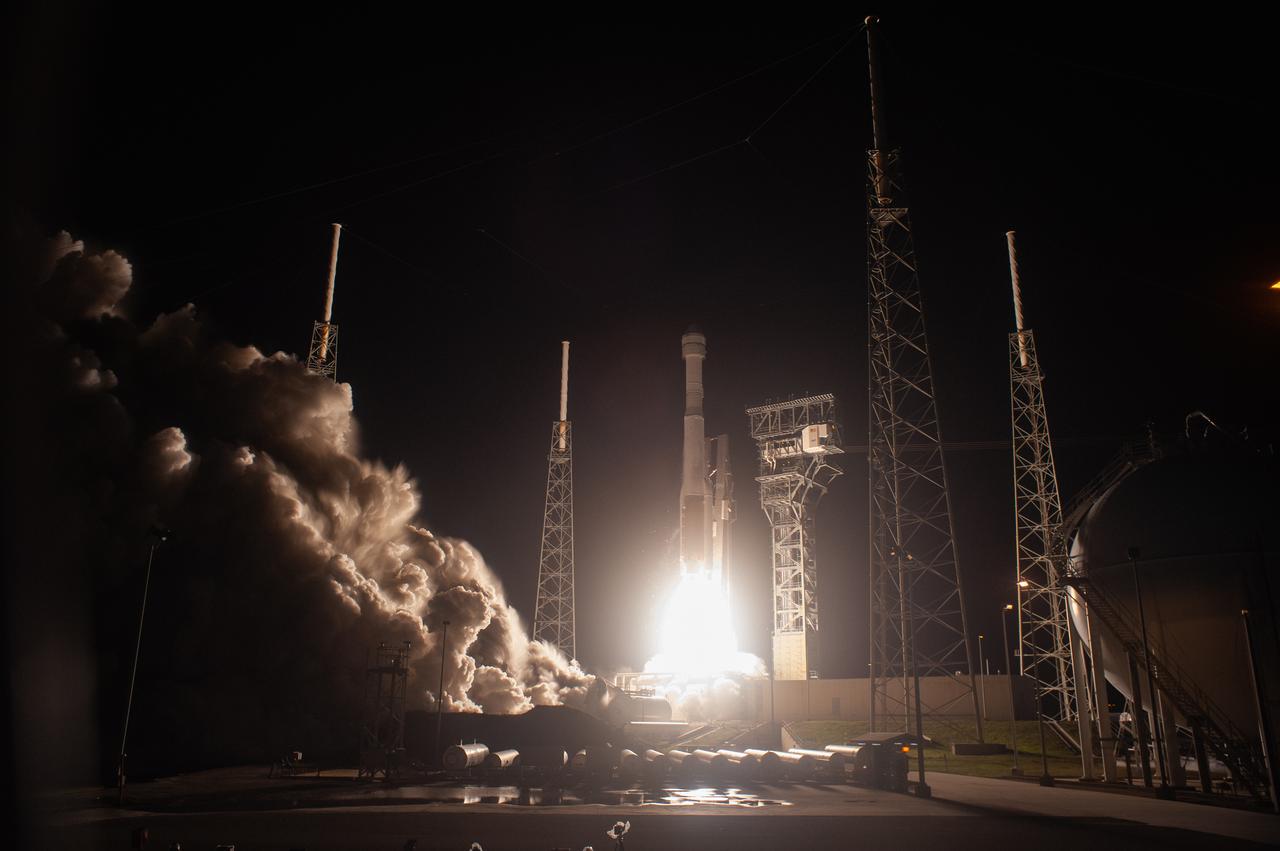
A two-stage United Launch Alliance Atlas V rocket lifts off from Space Launch Complex 41 at Cape Canaveral Air Force Station in Florida for Boeing’s Orbital Flight Test, Dec. 20, 2019. Liftoff occurred at 6:36 a.m. EST. The uncrewed Orbital Flight Test is the Starliner’s first flight for NASA’s Commercial Crew Program.
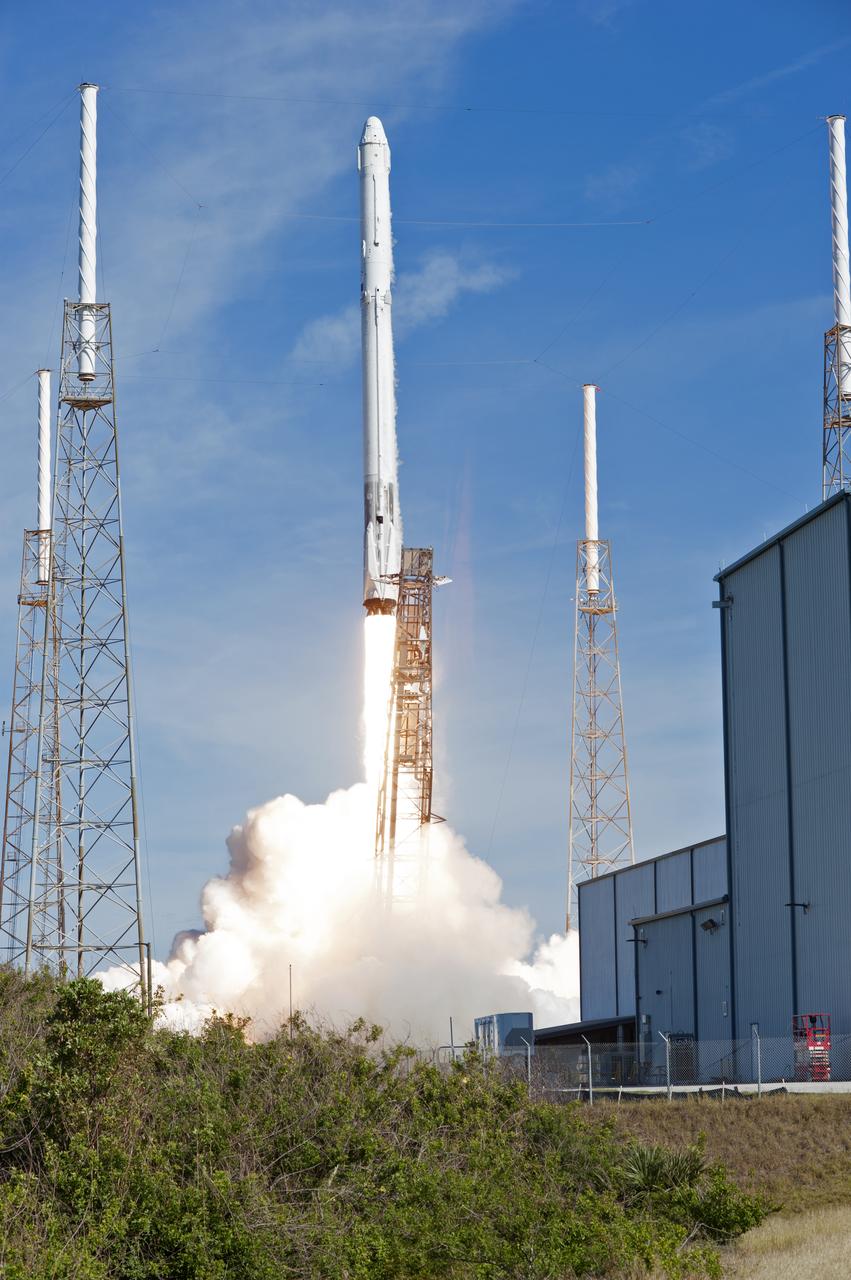
The two-stage Falcon 9 launch vehicle lifts off Space Launch Complex 40 at Cape Canaveral Air Force Station carrying the Dragon resupply spacecraft to the International Space Station. Liftoff was at 10:36 a.m. EST. On its 13th commercial resupply services mission to the International Space Station, Dragon will bring up supplies, equipment and new science experiments for technology research. The SpaceX Dragon spacecraft will deliver about 4,800 pounds of cargo and material to support science investigations aboard the space station.
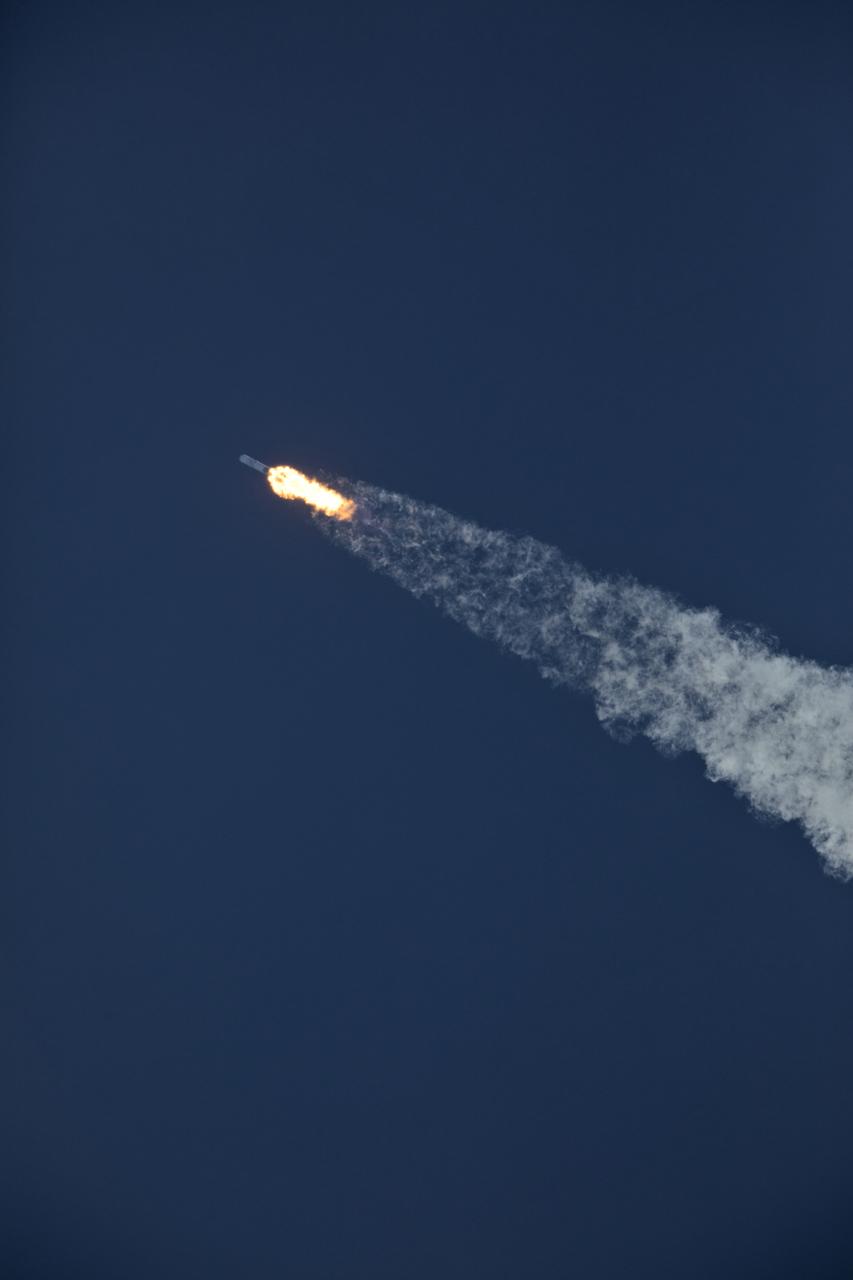
The two-stage Falcon 9 launch vehicle lifts off Space Launch Complex 40 at Cape Canaveral Air Force Station carrying the Dragon resupply spacecraft to the International Space Station. Liftoff was at 10:36 a.m. EST. On its 13th commercial resupply services mission to the International Space Station, Dragon will bring up supplies, equipment and new science experiments for technology research. The SpaceX Dragon spacecraft will deliver about 4,800 pounds of cargo and material to support science investigations aboard the space station.
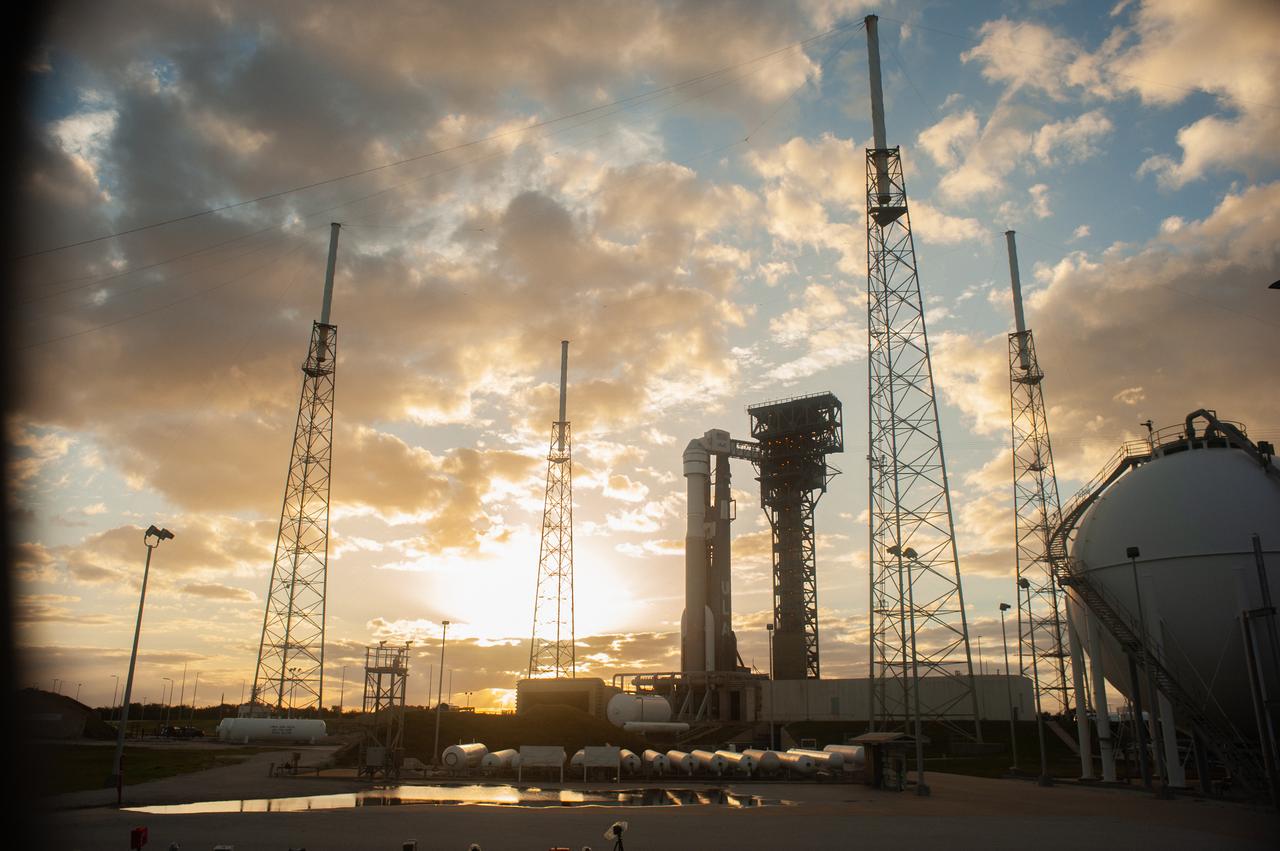
A two-stage United Launch Alliance Atlas V rocket lifts off from Space Launch Complex 41 at Cape Canaveral Air Force Station in Florida for Boeing’s Orbital Flight Test, Dec. 20, 2019. Liftoff occurred at 6:36 a.m. EST. The uncrewed Orbital Flight Test is the Starliner’s first flight for NASA’s Commercial Crew Program.
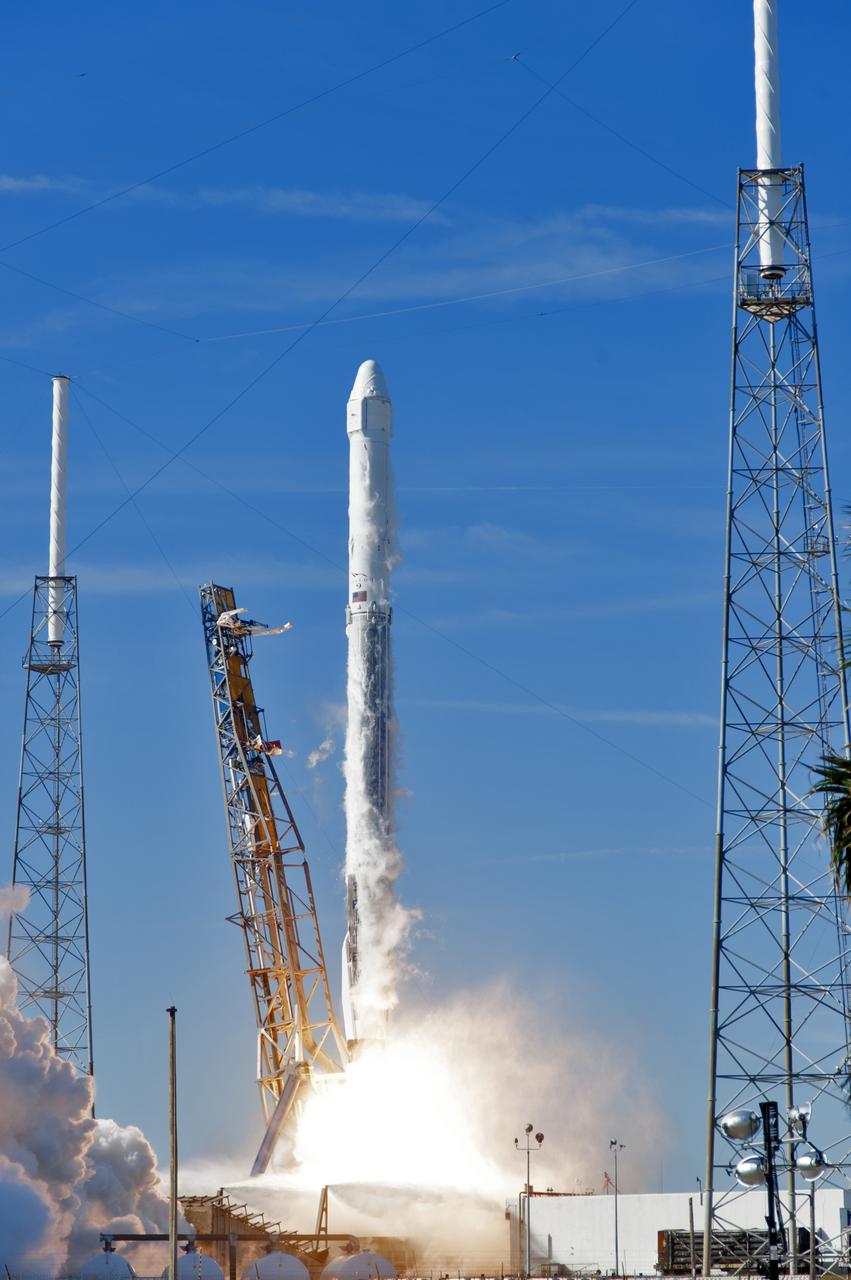
The two-stage Falcon 9 launch vehicle lifts off Space Launch Complex 40 at Cape Canaveral Air Force Station carrying the Dragon resupply spacecraft to the International Space Station. Liftoff was at 10:36 a.m. EST. On its 13th commercial resupply services mission to the International Space Station, Dragon will bring up supplies, equipment and new science experiments for technology research. The SpaceX Dragon spacecraft will deliver about 4,800 pounds of cargo and material to support science investigations aboard the space station.
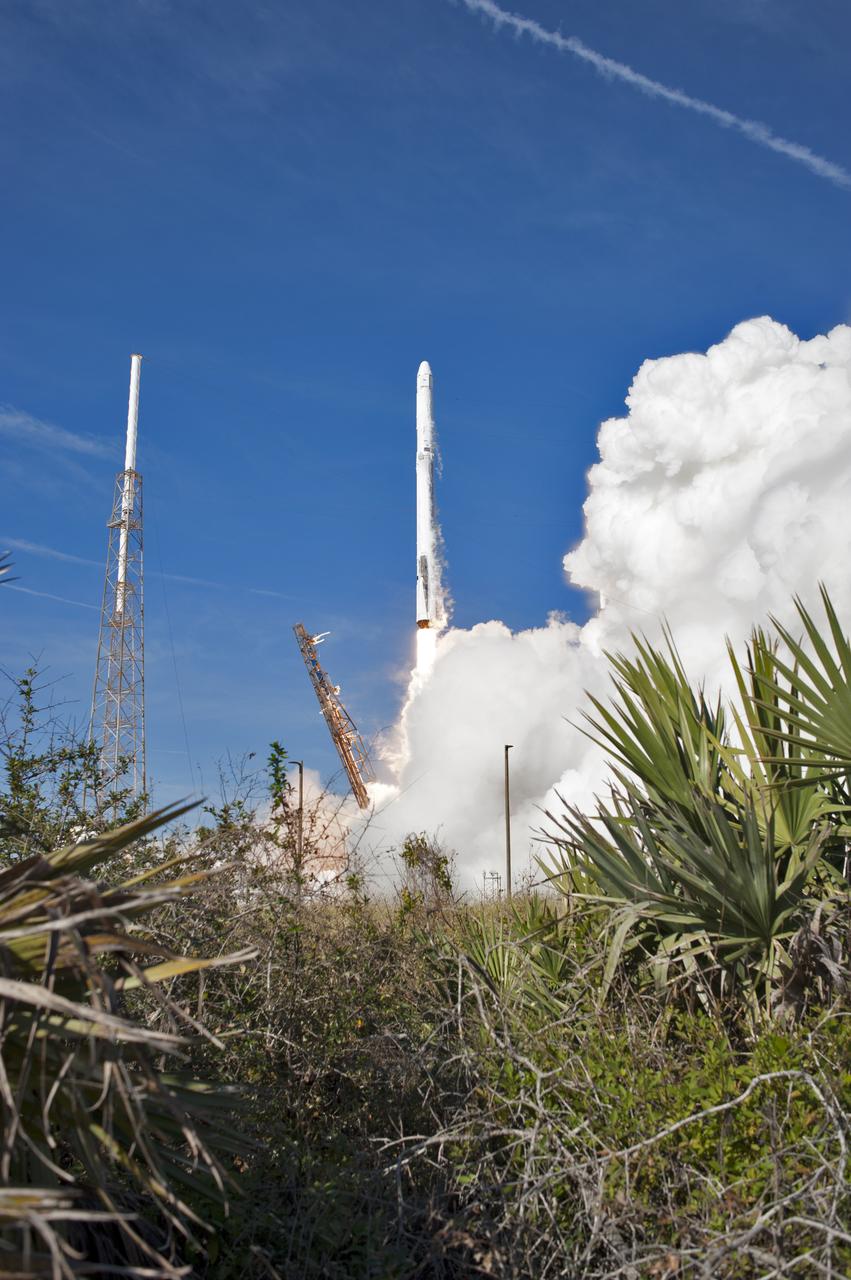
The two-stage Falcon 9 launch vehicle lifts off Space Launch Complex 40 at Cape Canaveral Air Force Station carrying the Dragon resupply spacecraft to the International Space Station. Liftoff was at 10:36 a.m. EST. On its 13th commercial resupply services mission to the International Space Station, Dragon will bring up supplies, equipment and new science experiments for technology research. The SpaceX Dragon spacecraft will deliver about 4,800 pounds of cargo and material to support science investigations aboard the space station.
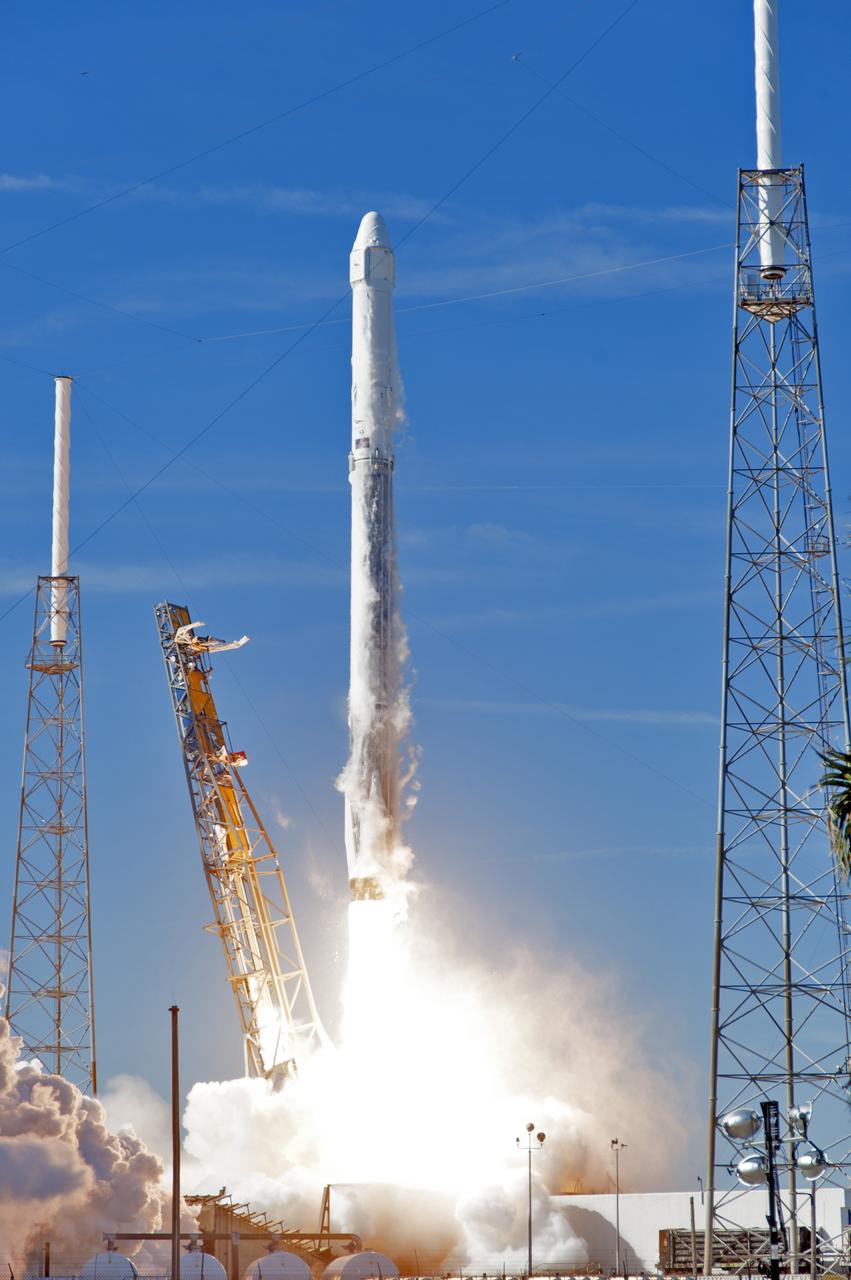
The two-stage Falcon 9 launch vehicle lifts off Space Launch Complex 40 at Cape Canaveral Air Force Station carrying the Dragon resupply spacecraft to the International Space Station. Liftoff was at 10:36 a.m. EST. On its 13th commercial resupply services mission to the International Space Station, Dragon will bring up supplies, equipment and new science experiments for technology research. The SpaceX Dragon spacecraft will deliver about 4,800 pounds of cargo and material to support science investigations aboard the space station.
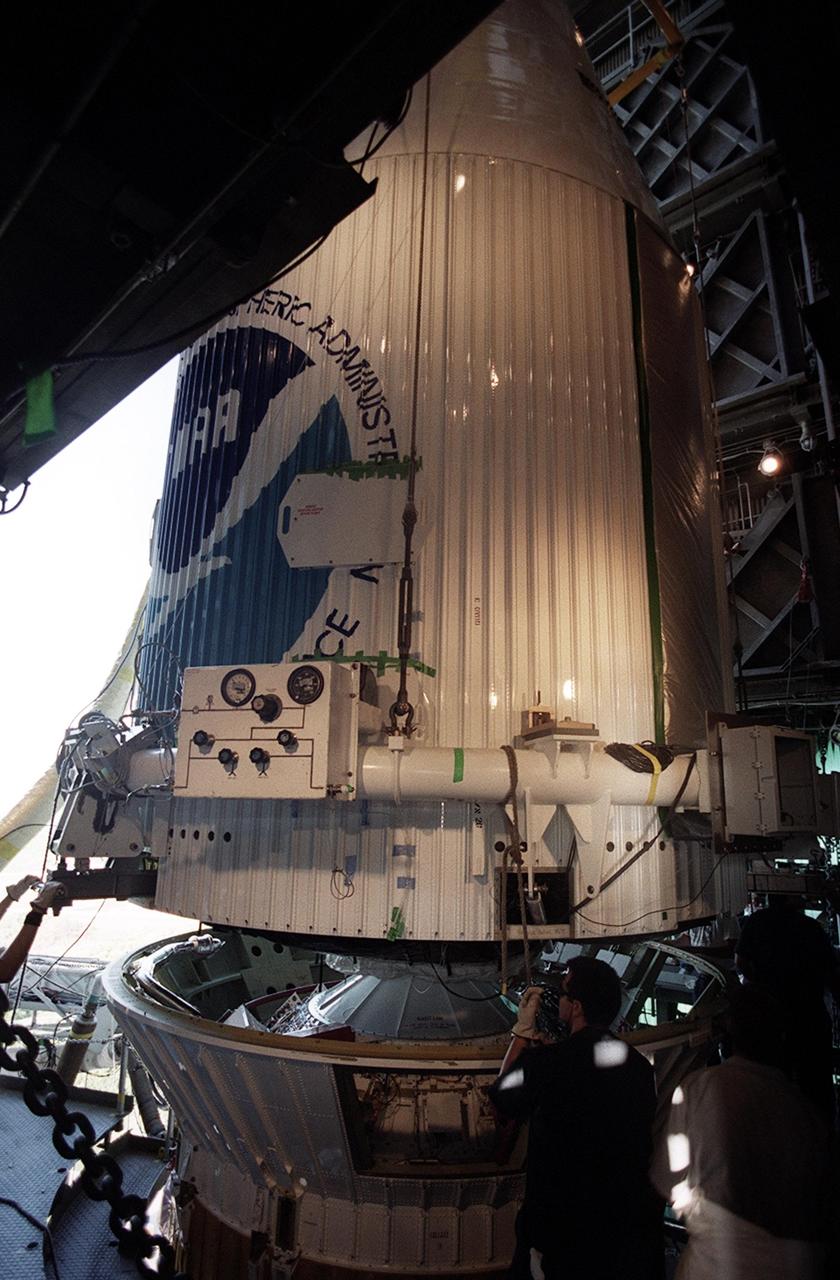
KENNEDY SPACE CENTER, Fla. -- The GOES-M satellite is lowered toward the Atlas rocket in the launch tower at Complex 36-A, Cape Canaveral Air Force Station. GOES-M is the last in the current series of advanced geostationary weather satellites in service. GOES-M has a new instrument not on earlier spacecraft, a Solar X-ray Imager, which can be used in forecasting space weather and the effects of solar storms. The satellite is scheduled to launch atop an Atlas rocket July 15
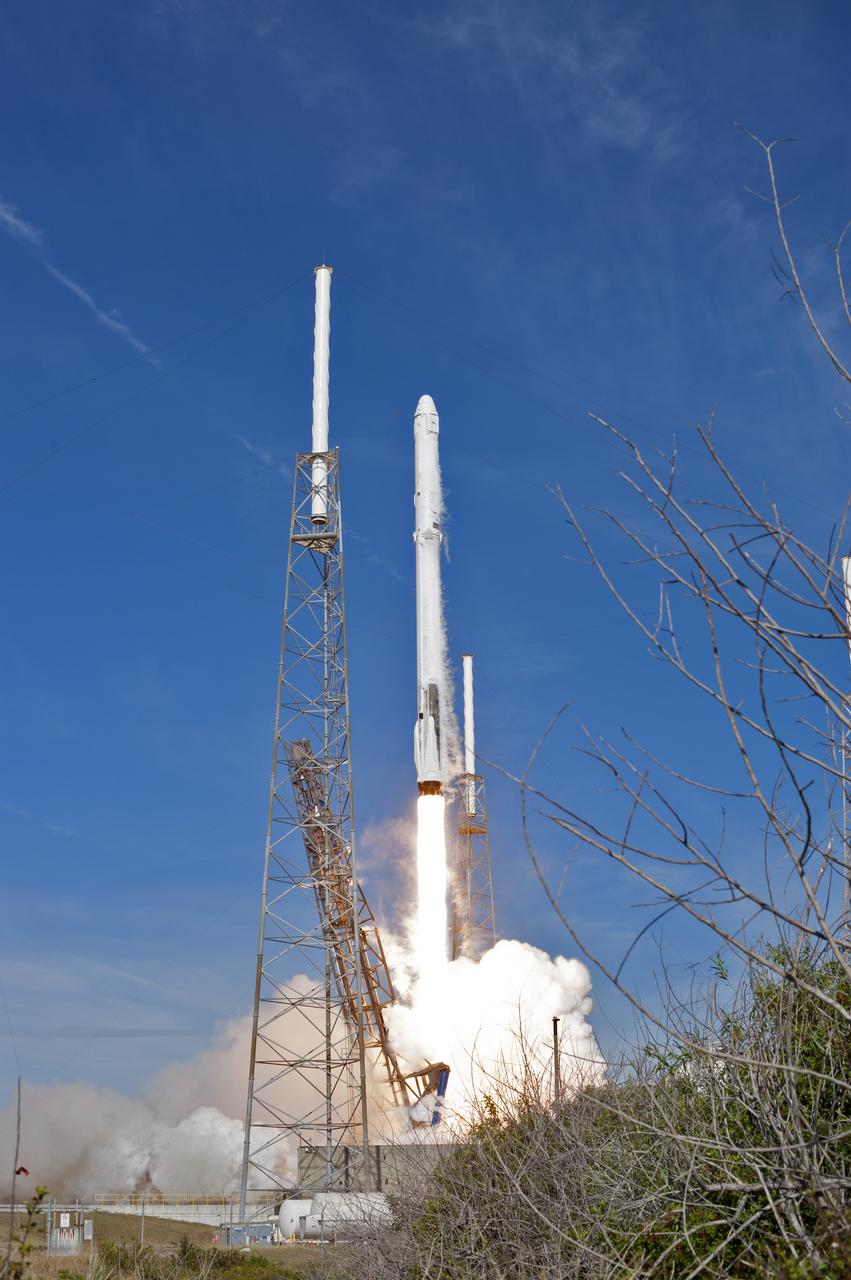
The two-stage Falcon 9 launch vehicle lifts off Space Launch Complex 40 at Cape Canaveral Air Force Station carrying the Dragon resupply spacecraft to the International Space Station. Liftoff was at 10:36 a.m. EST. On its 13th commercial resupply services mission to the International Space Station, Dragon will bring up supplies, equipment and new science experiments for technology research. The SpaceX Dragon spacecraft will deliver about 4,800 pounds of cargo and material to support science investigations aboard the space station.
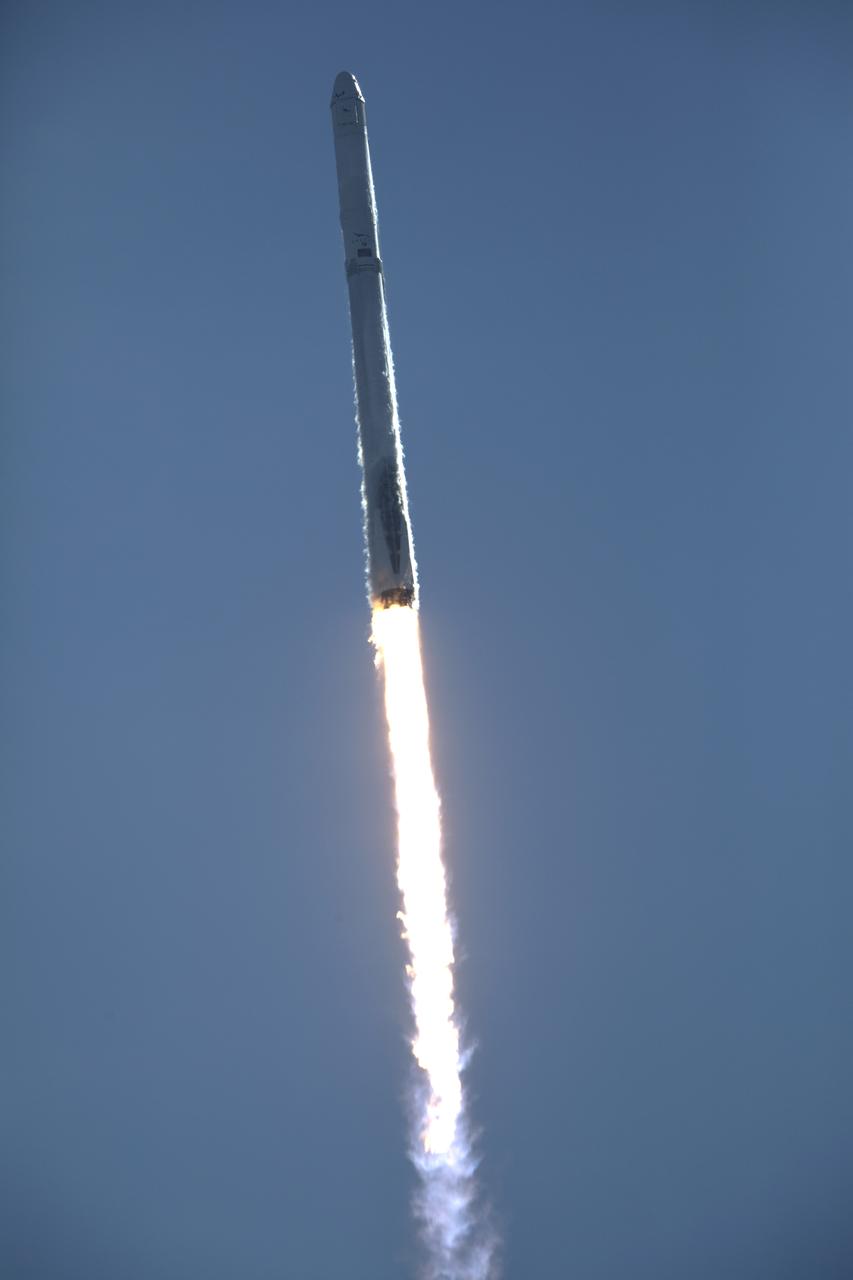
The two-stage Falcon 9 launch vehicle lifts off Space Launch Complex 40 at Cape Canaveral Air Force Station carrying the Dragon resupply spacecraft to the International Space Station. Liftoff was at 10:36 a.m. EST. On its 13th commercial resupply services mission to the International Space Station, Dragon will bring up supplies, equipment and new science experiments for technology research. The SpaceX Dragon spacecraft will deliver about 4,800 pounds of cargo and material to support science investigations aboard the space station.
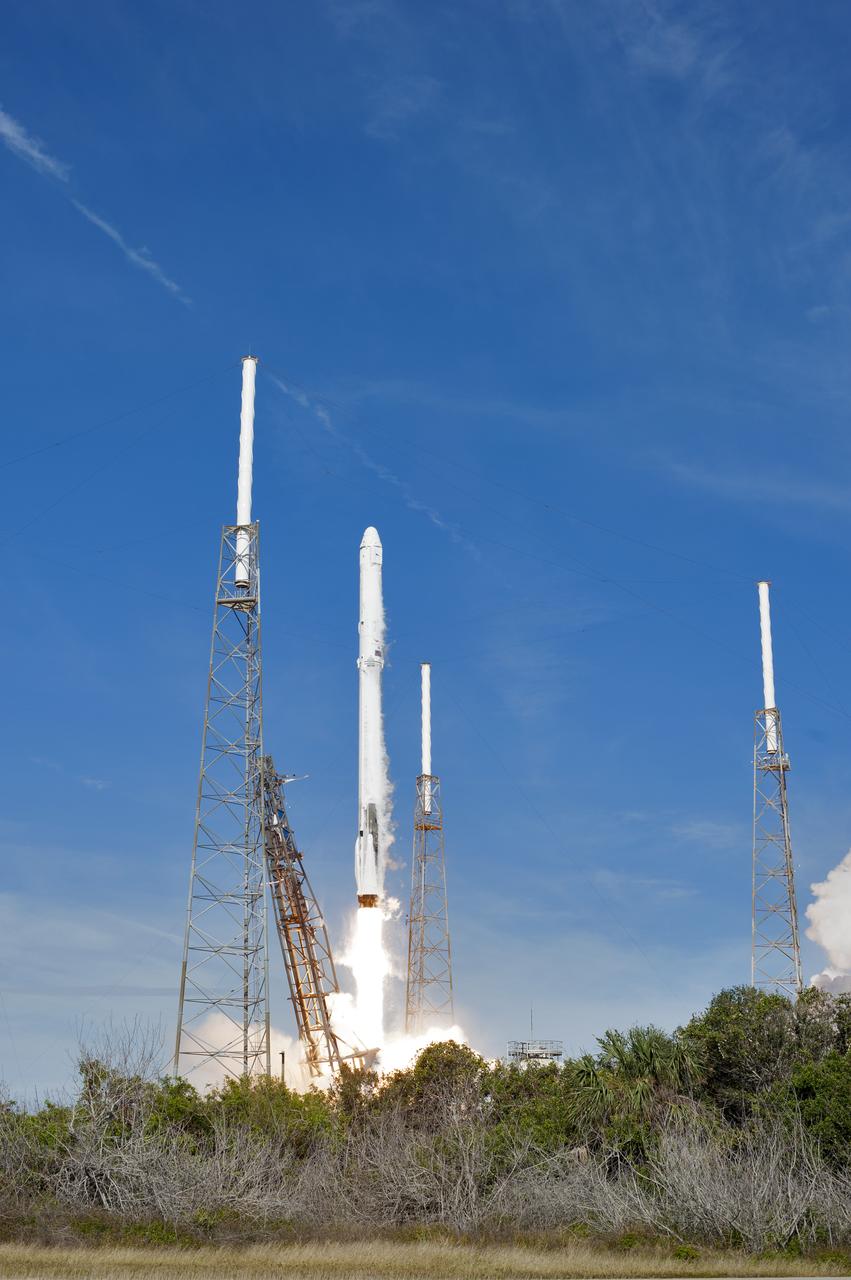
The two-stage Falcon 9 launch vehicle lifts off Space Launch Complex 40 at Cape Canaveral Air Force Station carrying the Dragon resupply spacecraft to the International Space Station. Liftoff was at 10:36 a.m. EST. On its 13th commercial resupply services mission to the International Space Station, Dragon will bring up supplies, equipment and new science experiments for technology research. The SpaceX Dragon spacecraft will deliver about 4,800 pounds of cargo and material to support science investigations aboard the space station.
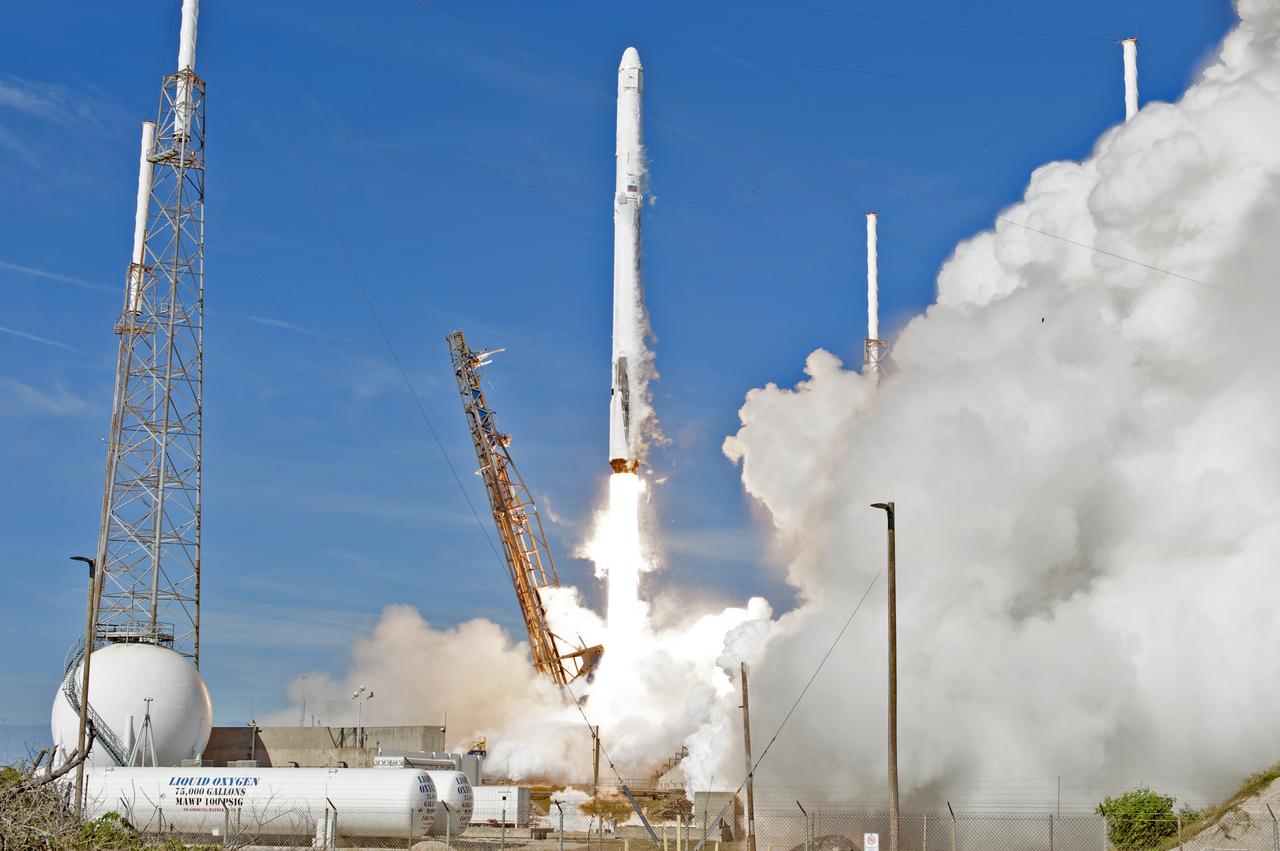
The two-stage Falcon 9 launch vehicle lifts off Space Launch Complex 40 at Cape Canaveral Air Force Station carrying the Dragon resupply spacecraft to the International Space Station. Liftoff was at 10:36 a.m. EST. On its 13th commercial resupply services mission to the International Space Station, Dragon will bring up supplies, equipment and new science experiments for technology research. The SpaceX Dragon spacecraft will deliver about 4,800 pounds of cargo and material to support science investigations aboard the space station.
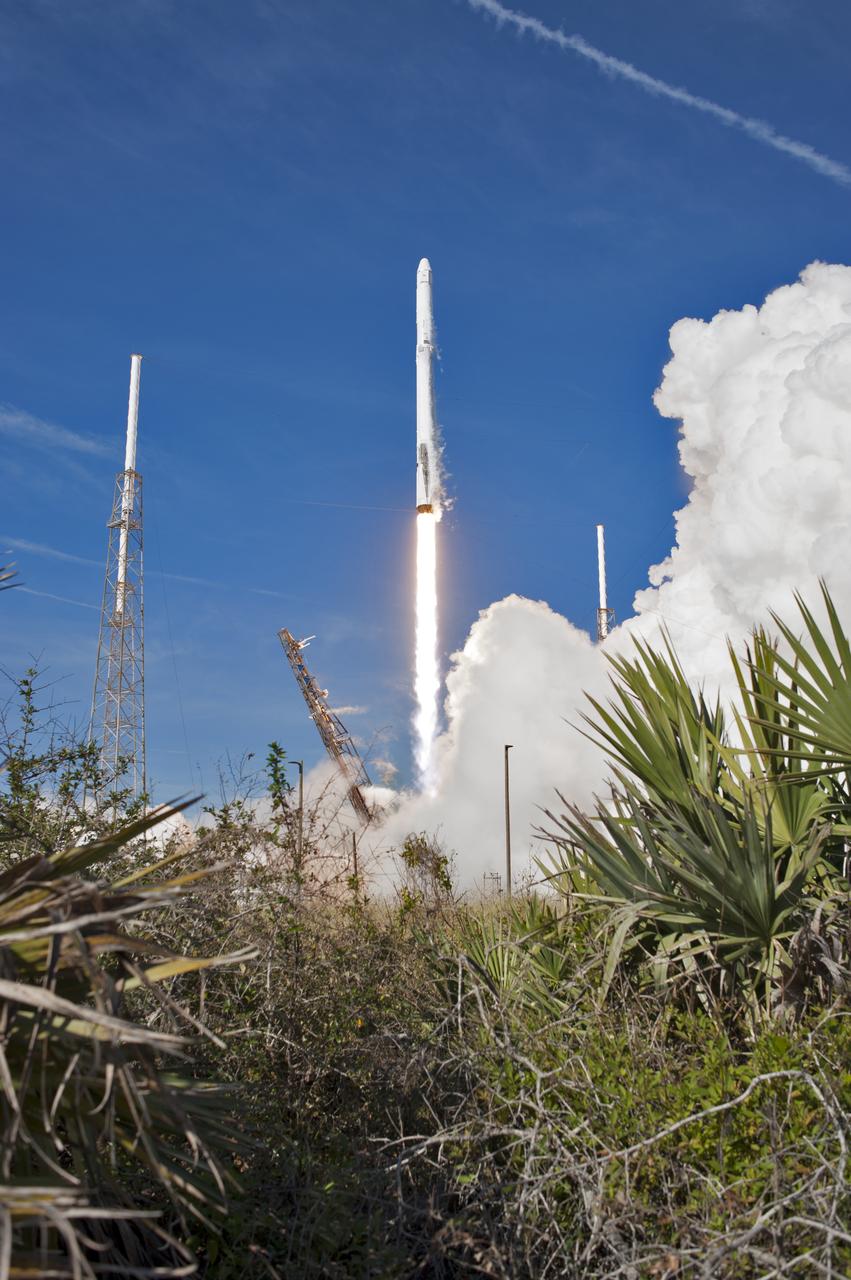
The two-stage Falcon 9 launch vehicle lifts off Space Launch Complex 40 at Cape Canaveral Air Force Station carrying the Dragon resupply spacecraft to the International Space Station. Liftoff was at 10:36 a.m. EST. On its 13th commercial resupply services mission to the International Space Station, Dragon will bring up supplies, equipment and new science experiments for technology research. The SpaceX Dragon spacecraft will deliver about 4,800 pounds of cargo and material to support science investigations aboard the space station.
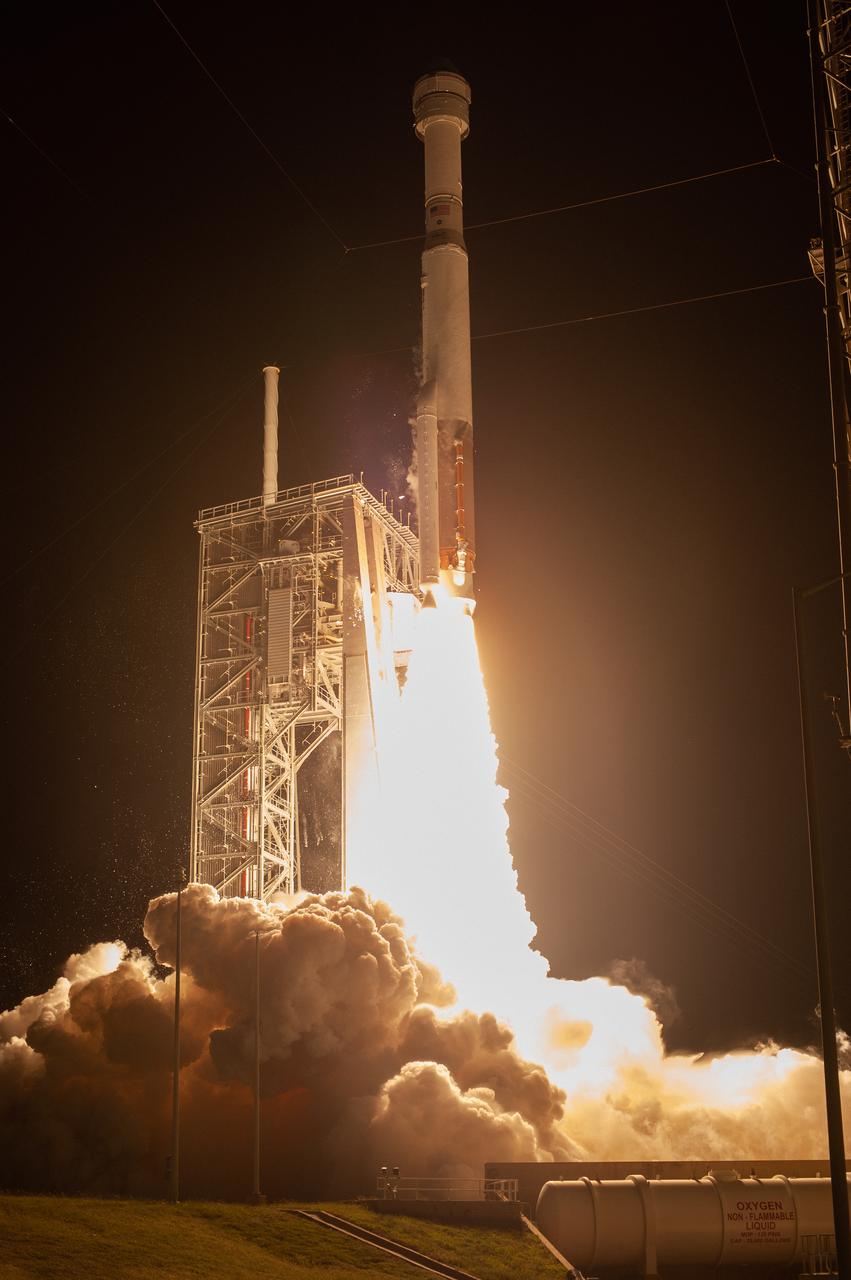
A two-stage United Launch Alliance Atlas V rocket lifts off from Space Launch Complex 41 at Cape Canaveral Air Force Station in Florida for Boeing’s Orbital Flight Test, Dec. 20, 2019. Liftoff occurred at 6:36 a.m. EST. The uncrewed Orbital Flight Test is the Starliner’s first flight for NASA’s Commercial Crew Program.
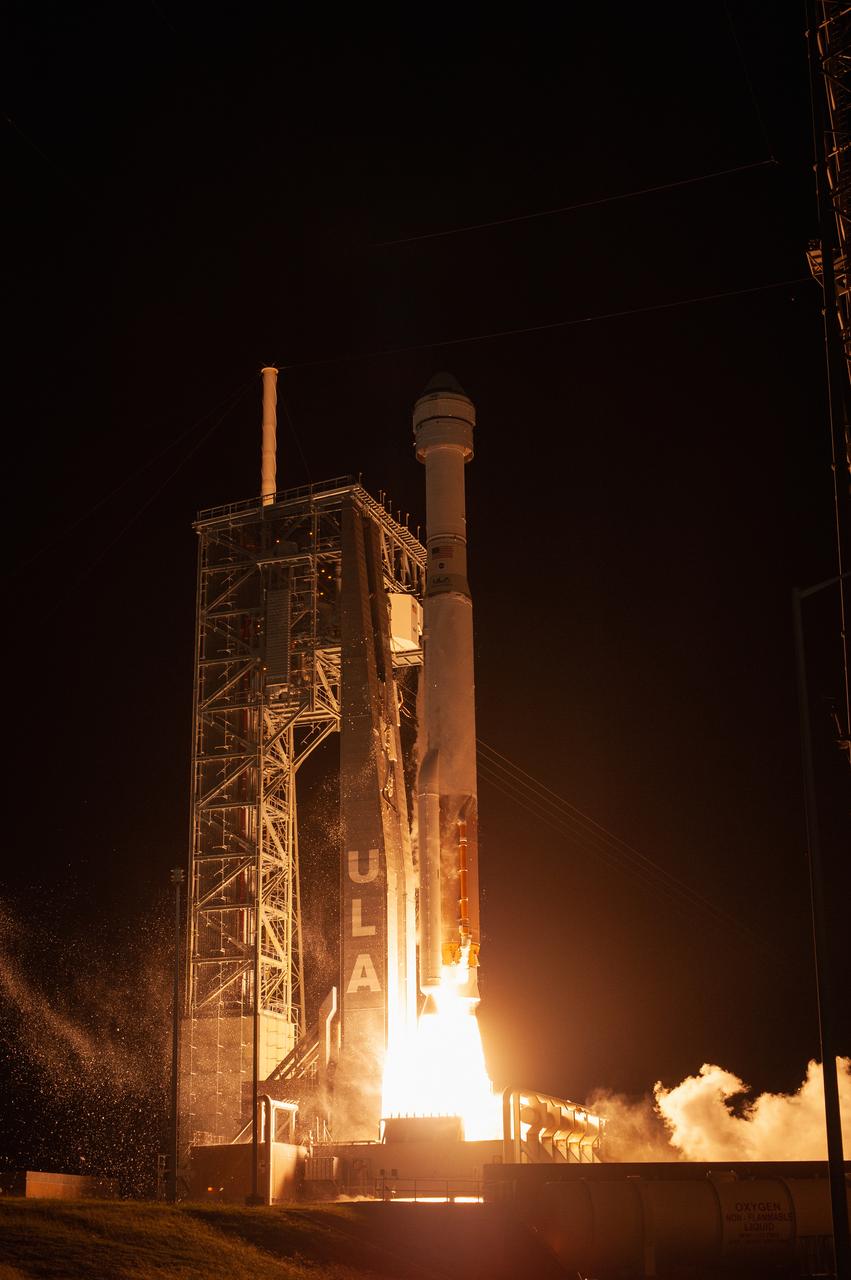
A two-stage United Launch Alliance Atlas V rocket lifts off from Space Launch Complex 41 at Cape Canaveral Air Force Station in Florida for Boeing’s Orbital Flight Test, Dec. 20, 2019. Liftoff occurred at 6:36 a.m. EST. The uncrewed Orbital Flight Test is the Starliner’s first flight for NASA’s Commercial Crew Program.
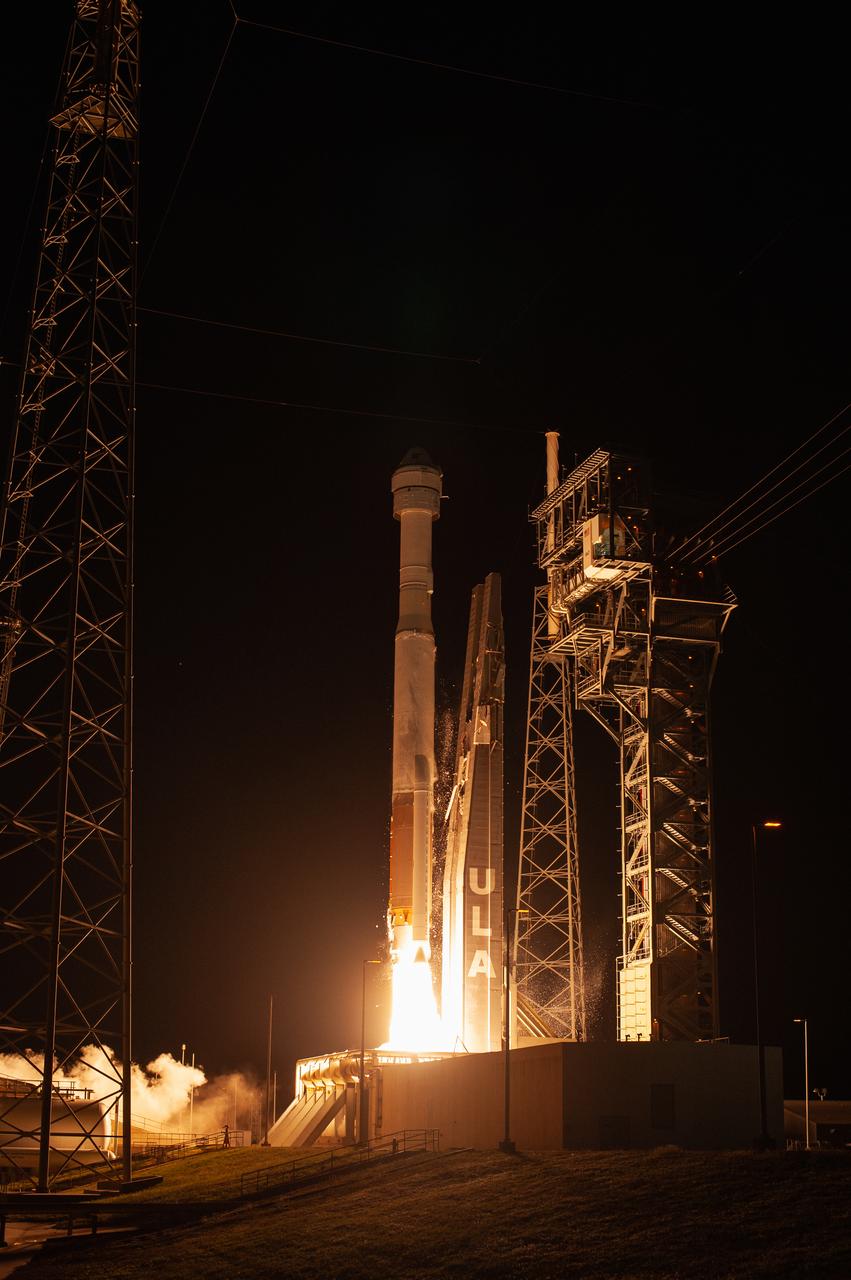
A two-stage United Launch Alliance Atlas V rocket lifts off from Space Launch Complex 41 at Cape Canaveral Air Force Station in Florida for Boeing’s Orbital Flight Test, Dec. 20, 2019. Liftoff occurred at 6:36 a.m. EST. The uncrewed Orbital Flight Test is the Starliner’s first flight for NASA’s Commercial Crew Program.
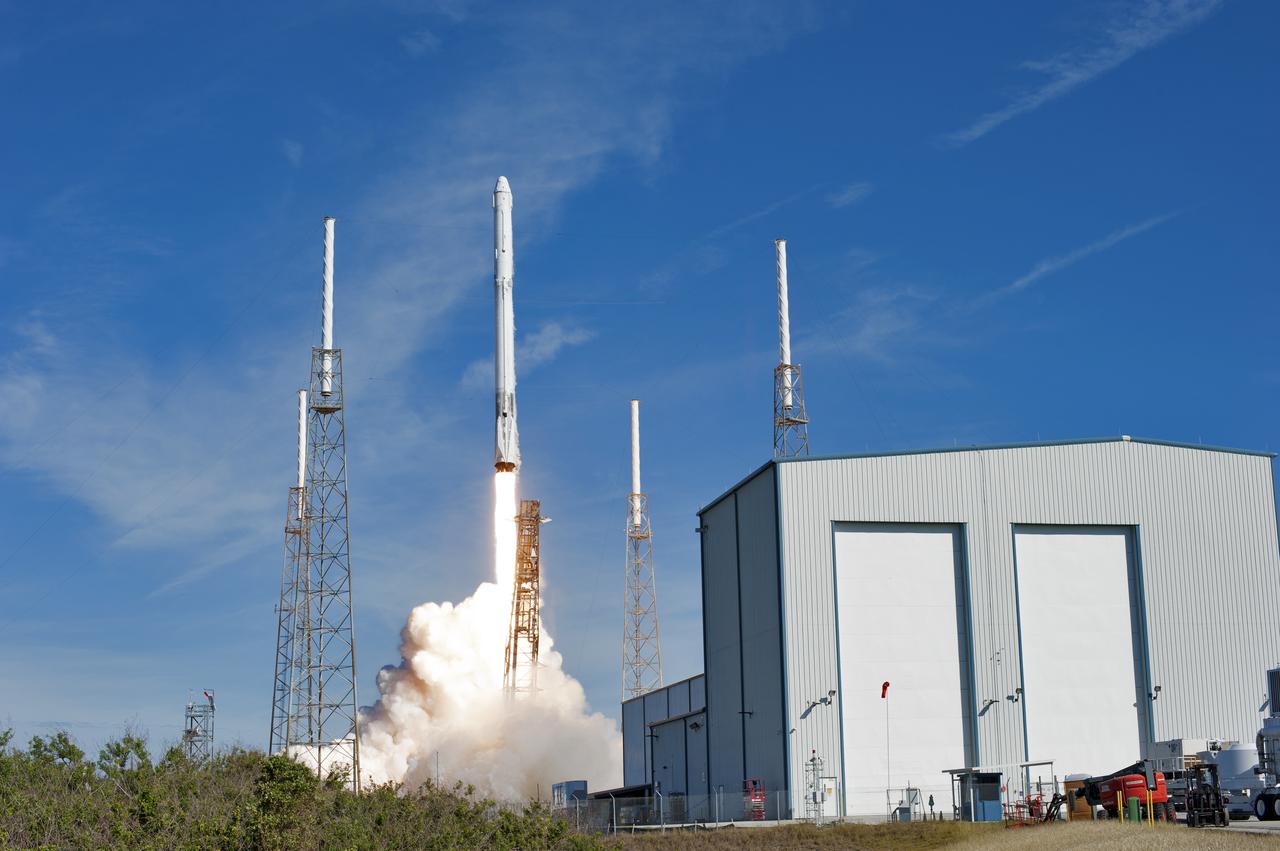
The two-stage Falcon 9 launch vehicle lifts off Space Launch Complex 40 at Cape Canaveral Air Force Station carrying the Dragon resupply spacecraft to the International Space Station. Liftoff was at 10:36 a.m. EST. On its 13th commercial resupply services mission to the International Space Station, Dragon will bring up supplies, equipment and new science experiments for technology research. The SpaceX Dragon spacecraft will deliver about 4,800 pounds of cargo and material to support science investigations aboard the space station.
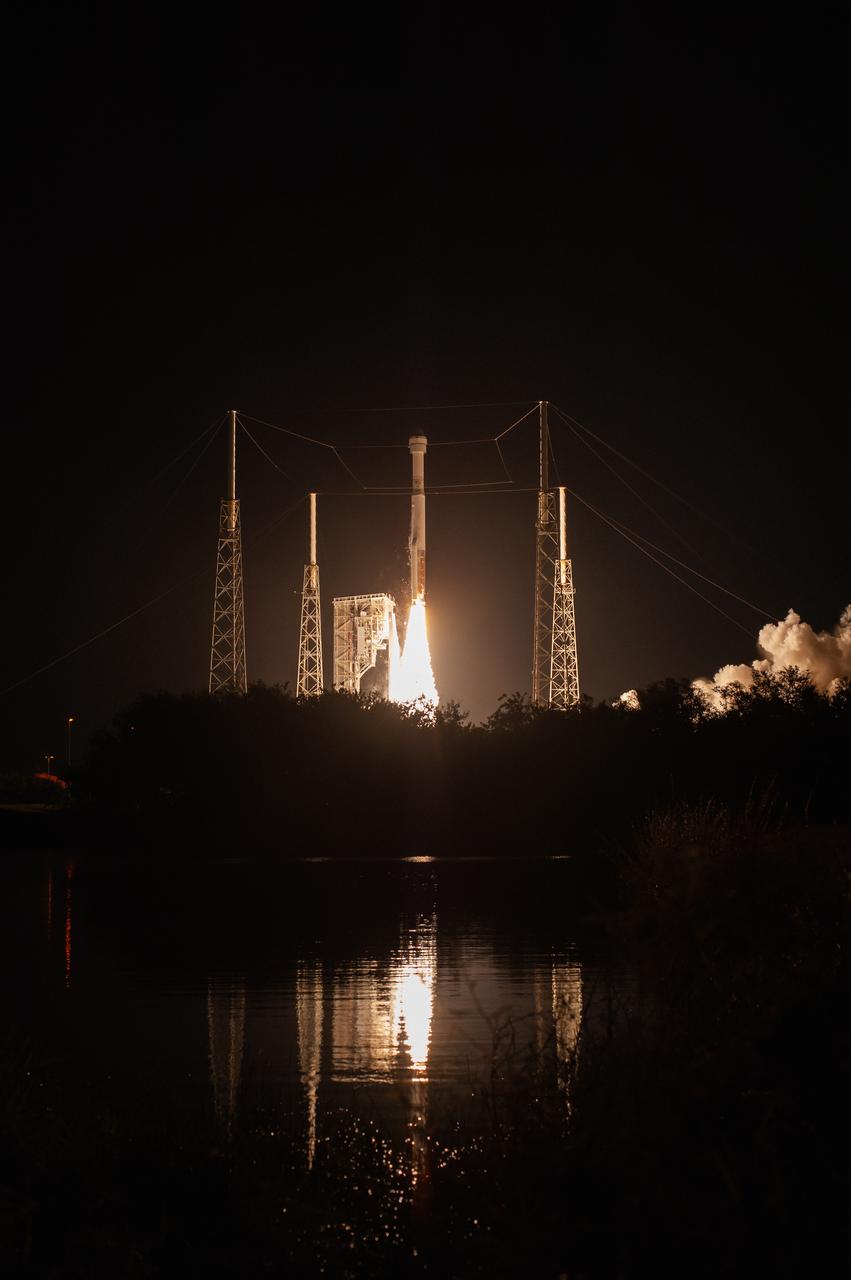
A two-stage United Launch Alliance Atlas V rocket lifts off from Space Launch Complex 41 at Cape Canaveral Air Force Station in Florida for Boeing’s Orbital Flight Test, Dec. 20, 2019. Liftoff occurred at 6:36 a.m. EST. The uncrewed Orbital Flight Test is the Starliner’s first flight for NASA’s Commercial Crew Program.
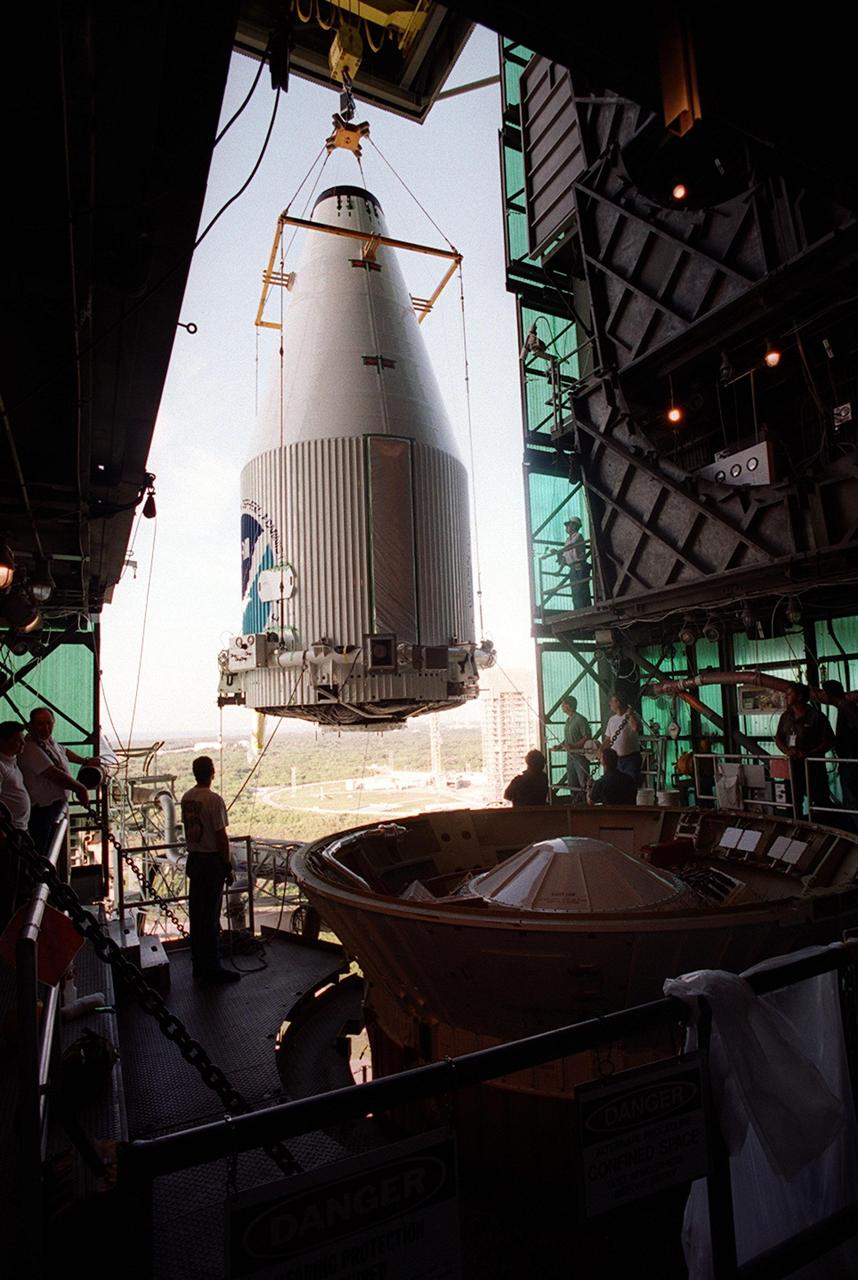
KENNEDY SPACE CENTER, Fla. -- The GOES-M satellite is moved toward the Atlas rocket in the launch tower at Complex 36-A, Cape Canaveral Air Force Station. GOES-M is the last in the current series of advanced geostationary weather satellites in service. GOES-M has a new instrument not on earlier spacecraft, a Solar X-ray Imager, which can be used in forecasting space weather and the effects of solar storms. The satellite is scheduled to launch atop an Atlas rocket July 15.
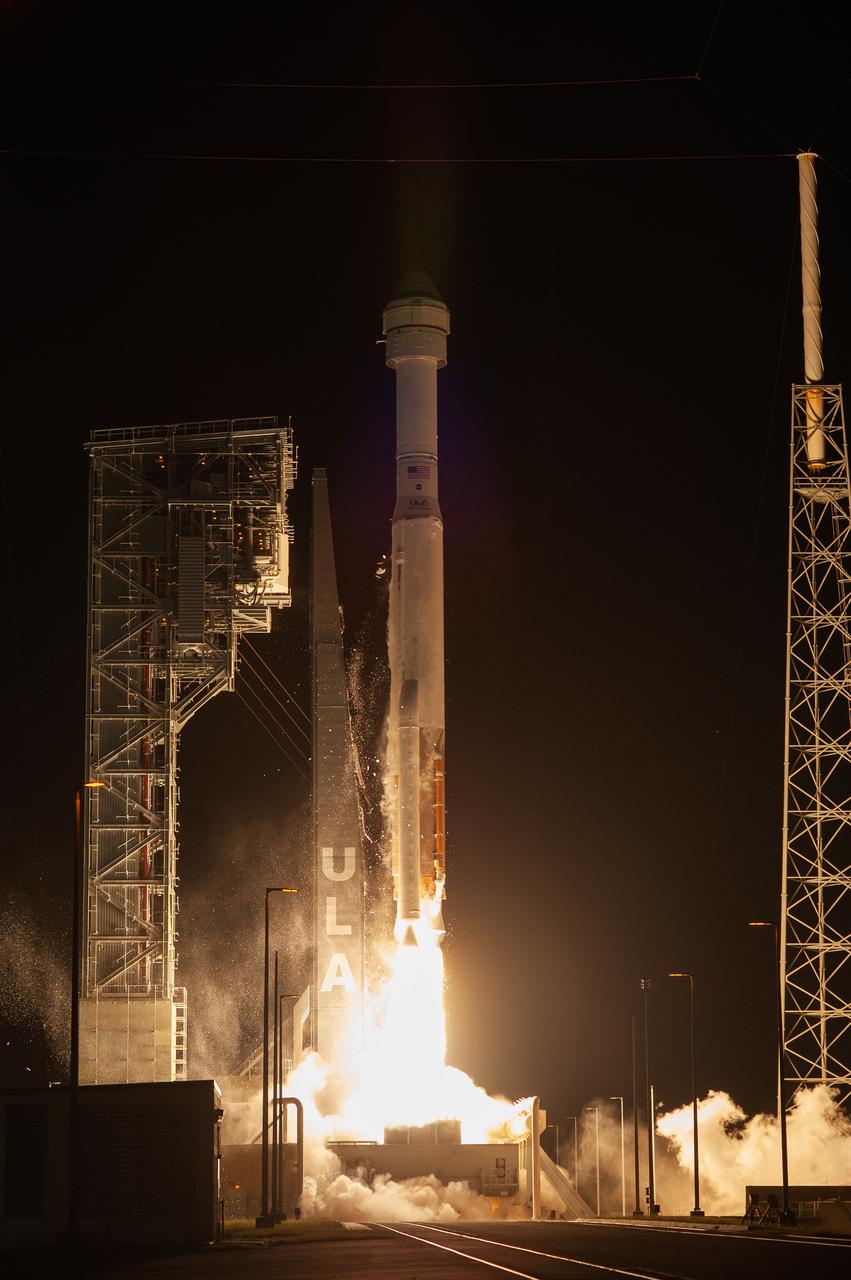
A two-stage United Launch Alliance Atlas V rocket lifts off from Space Launch Complex 41 at Cape Canaveral Air Force Station in Florida for Boeing’s Orbital Flight Test, Dec. 20, 2019. Liftoff occurred at 6:36 a.m. EST. The uncrewed Orbital Flight Test is the Starliner’s first flight for NASA’s Commercial Crew Program.
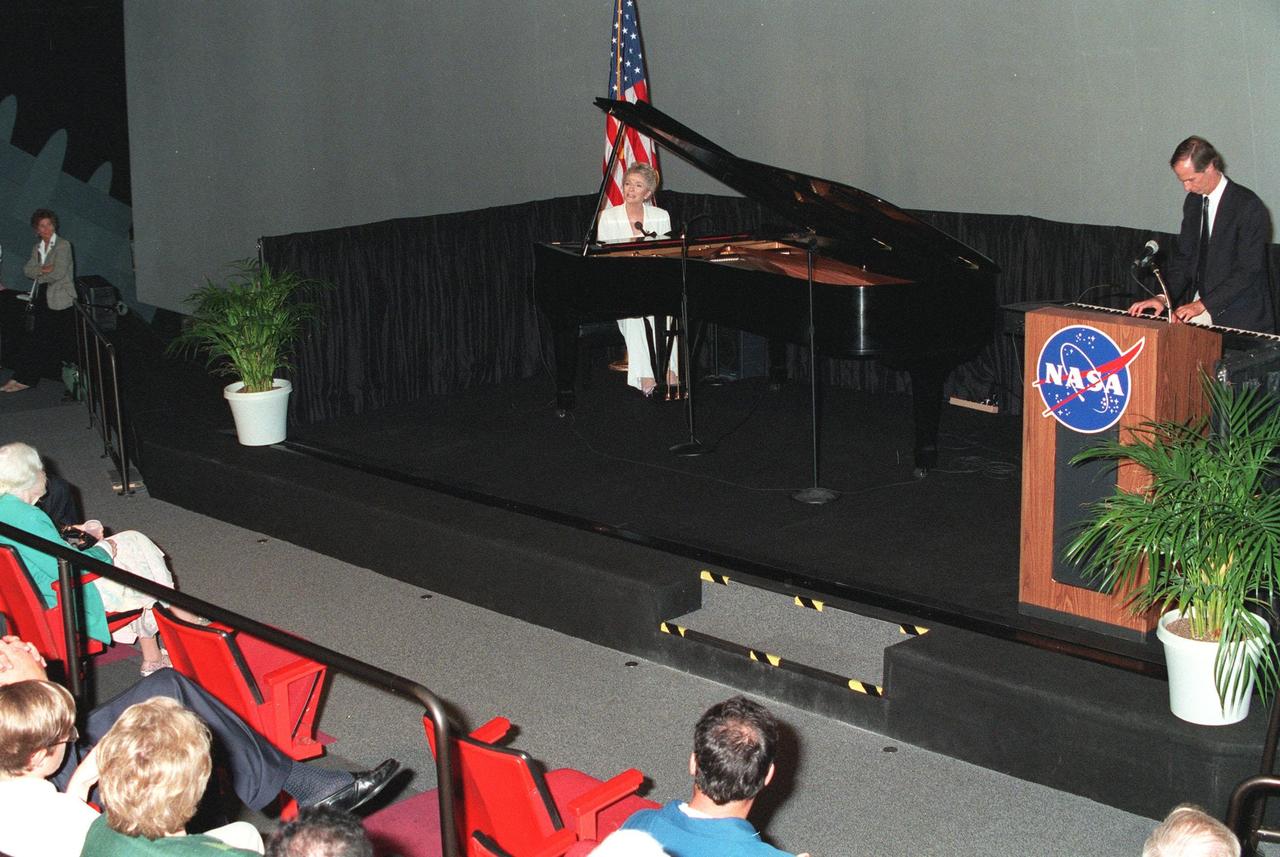
At the piano, singer-songwriter Judy Collins performs her original song, "Beyond the Sky," at the KSC Visitor Complex's Imax Theater for an audience waiting for the launch of STS-93. The song, commissioned by NASA through the Nasa Art Program, honored Eileen Collins, the first woman to command a Space Shuttle. The attendees are planning to view the launch at the Banana Creek viewing sight. Liftoff is scheduled for July 20 at 12:36 a.m. EDT
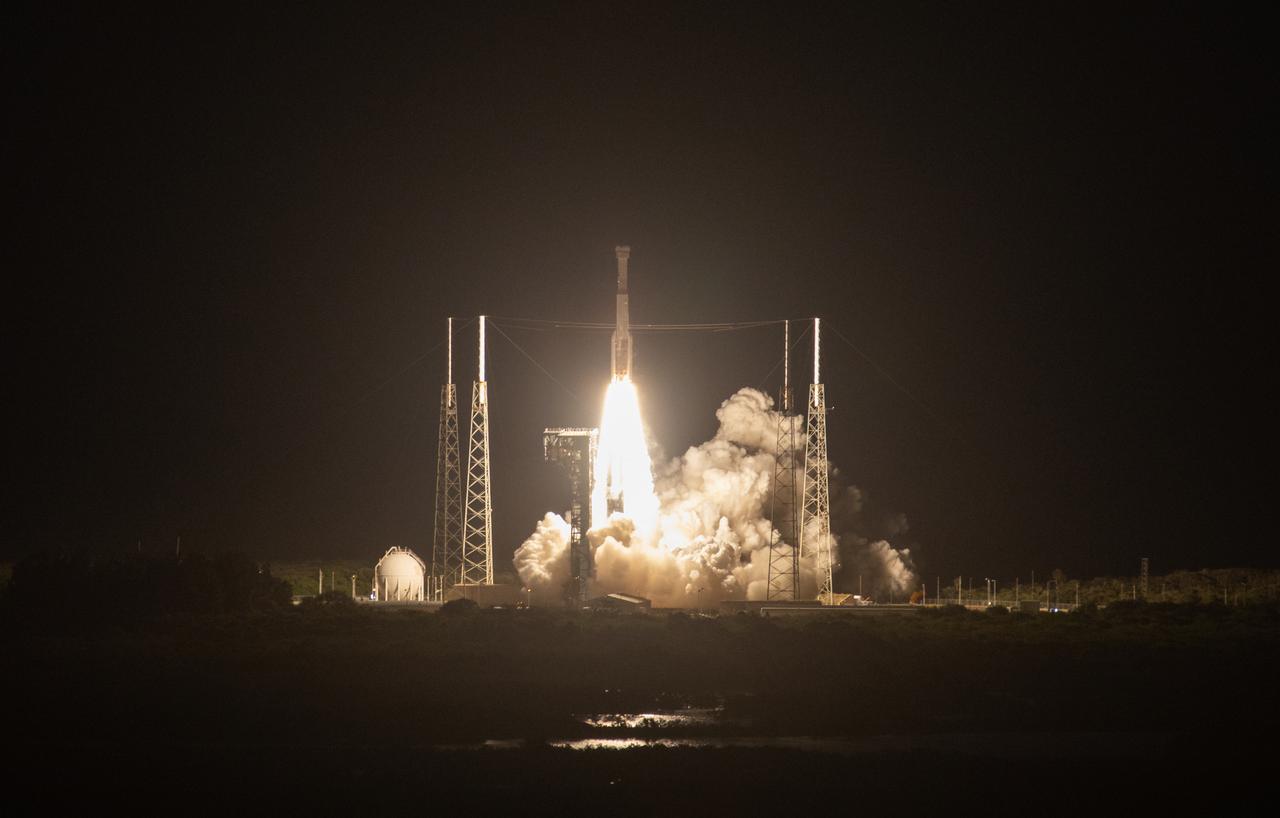
A two-stage United Launch Alliance Atlas V rocket lifts off from Space Launch Complex 41 at Cape Canaveral Air Force Station in Florida for Boeing’s Orbital Flight Test, Dec. 20, 2019. Liftoff occurred at 6:36 a.m. EST. The uncrewed Orbital Flight Test is the Starliner’s first flight for NASA’s Commercial Crew Program.
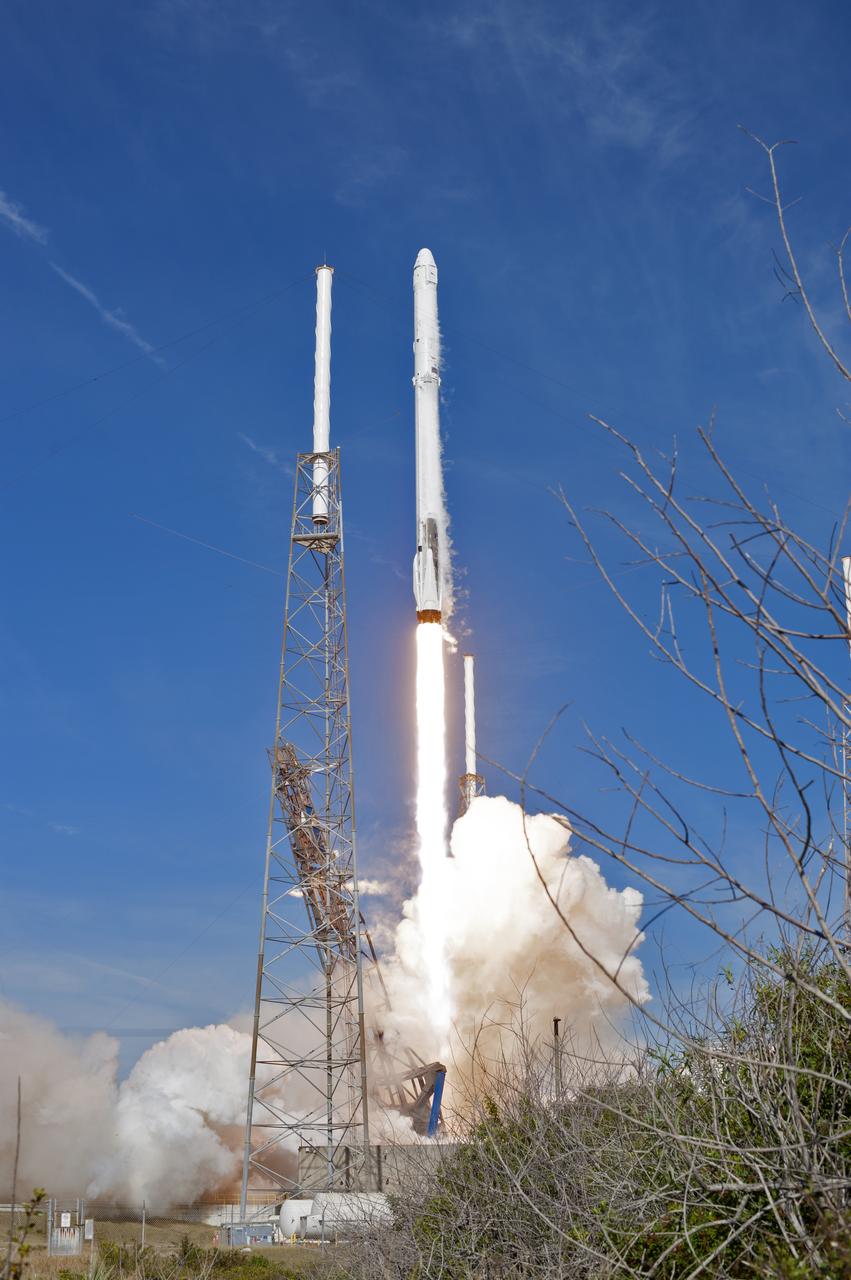
The two-stage Falcon 9 launch vehicle lifts off Space Launch Complex 40 at Cape Canaveral Air Force Station carrying the Dragon resupply spacecraft to the International Space Station. Liftoff was at 10:36 a.m. EST. On its 13th commercial resupply services mission to the International Space Station, Dragon will bring up supplies, equipment and new science experiments for technology research. The SpaceX Dragon spacecraft will deliver about 4,800 pounds of cargo and material to support science investigations aboard the space station.
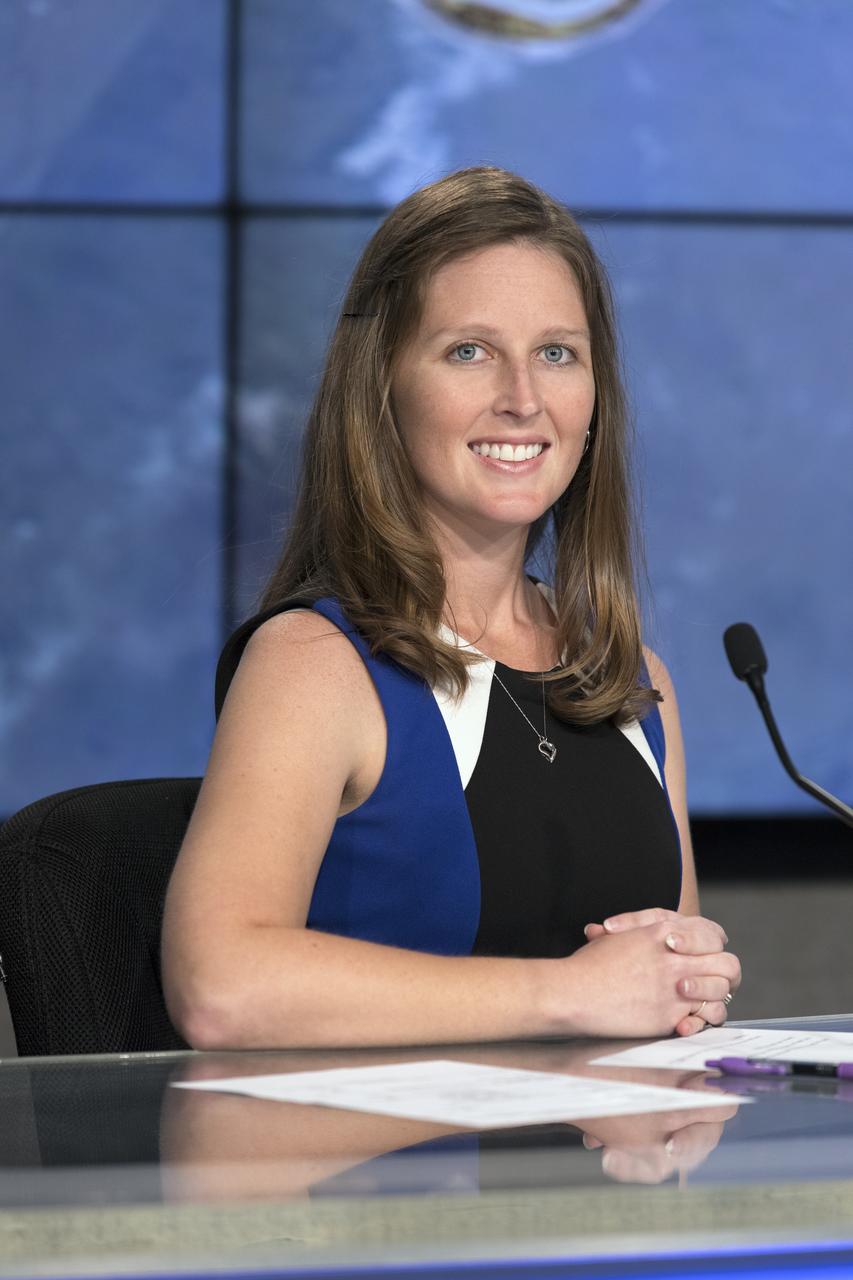
In the Press Site auditorium of NASA's Kennedy Space Center in Florida, from left, Stephanie Martin of NASA Communications, speaks to media at a post-launch news conference following the liftoff of SpaceX CRS-13. The flight is a commercial resupply services mission to the International Space Station. SpaceX CRS-13 lifted off atop a Falcon 9 rocket from Space Launch Complex 40 at Cape Canaveral Air Force Station at 10:36 a.m. EST with supplies and equipment and new science experiments for technology research.
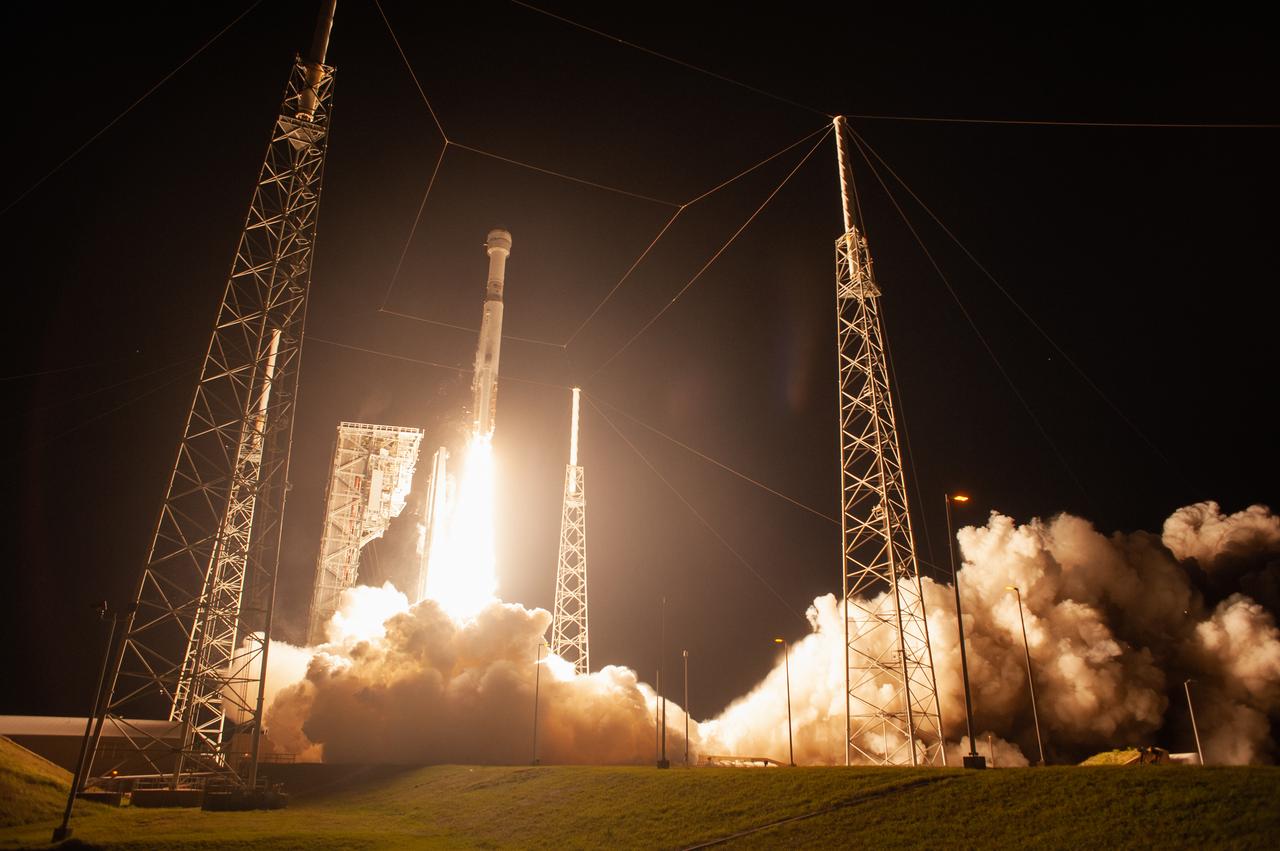
A two-stage United Launch Alliance Atlas V rocket lifts off from Space Launch Complex 41 at Cape Canaveral Air Force Station in Florida for Boeing’s Orbital Flight Test, Dec. 20, 2019. Liftoff occurred at 6:36 a.m. EST. The uncrewed Orbital Flight Test is the Starliner’s first flight for NASA’s Commercial Crew Program.
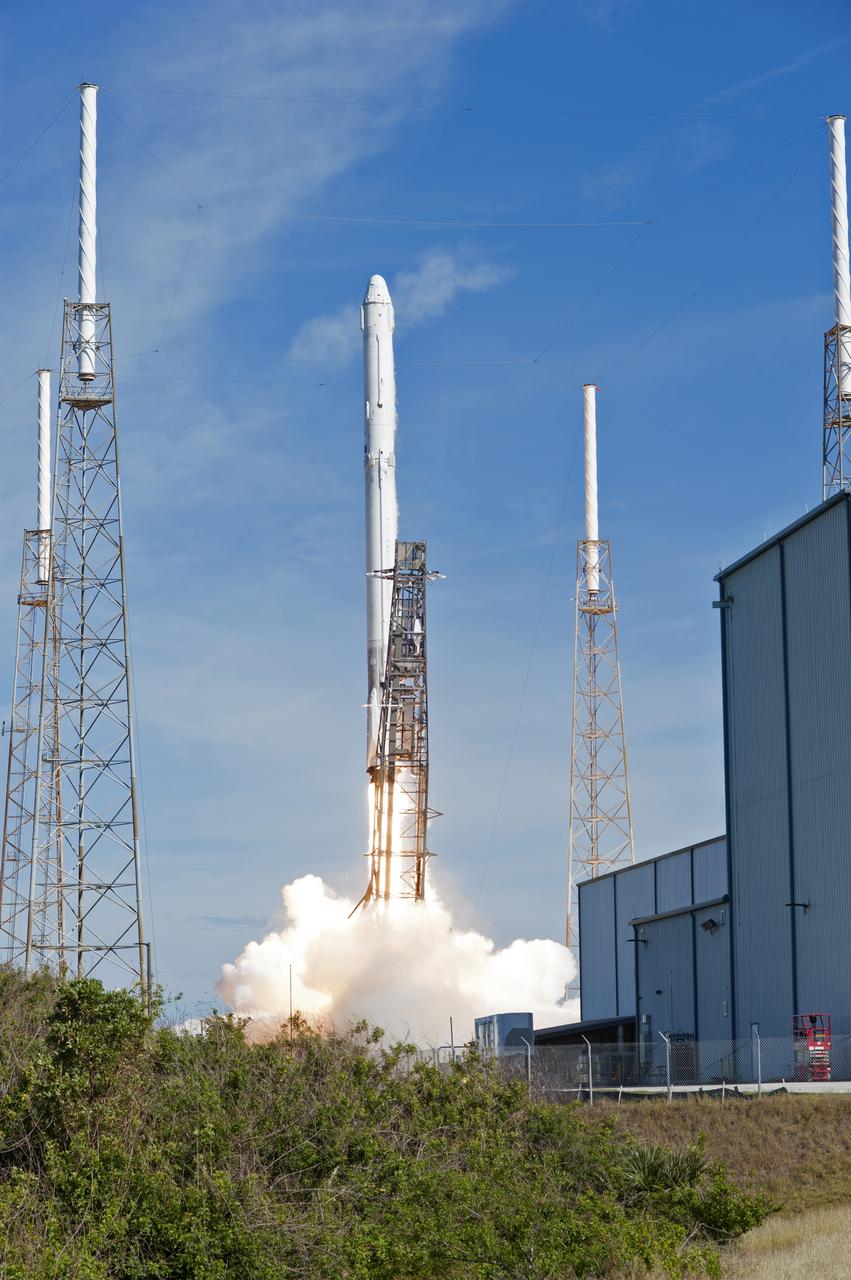
The two-stage Falcon 9 launch vehicle lifts off Space Launch Complex 40 at Cape Canaveral Air Force Station carrying the Dragon resupply spacecraft to the International Space Station. Liftoff was at 10:36 a.m. EST. On its 13th commercial resupply services mission to the International Space Station, Dragon will bring up supplies, equipment and new science experiments for technology research. The SpaceX Dragon spacecraft will deliver about 4,800 pounds of cargo and material to support science investigations aboard the space station.
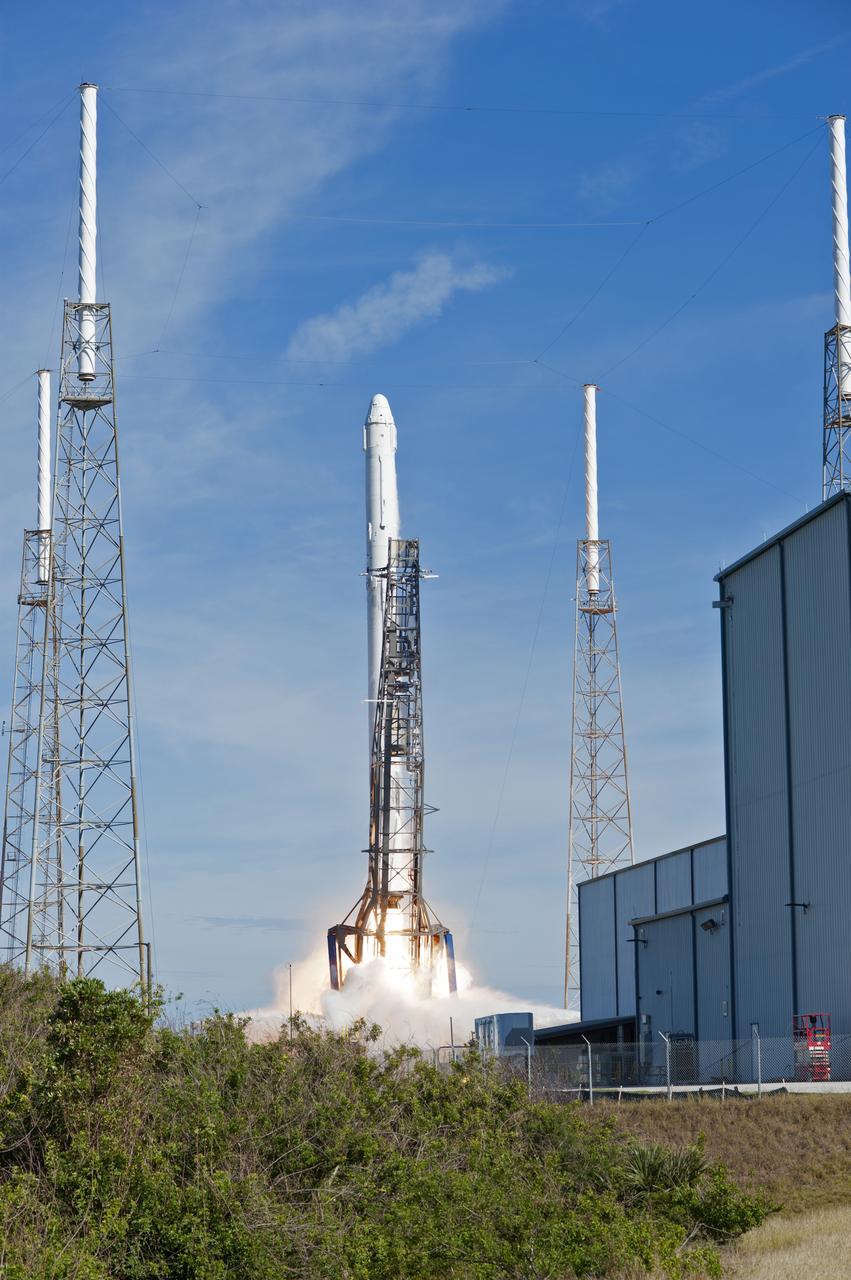
The two-stage Falcon 9 launch vehicle lifts off Space Launch Complex 40 at Cape Canaveral Air Force Station carrying the Dragon resupply spacecraft to the International Space Station. Liftoff was at 10:36 a.m. EST. On its 13th commercial resupply services mission to the International Space Station, Dragon will bring up supplies, equipment and new science experiments for technology research. The SpaceX Dragon spacecraft will deliver about 4,800 pounds of cargo and material to support science investigations aboard the space station.
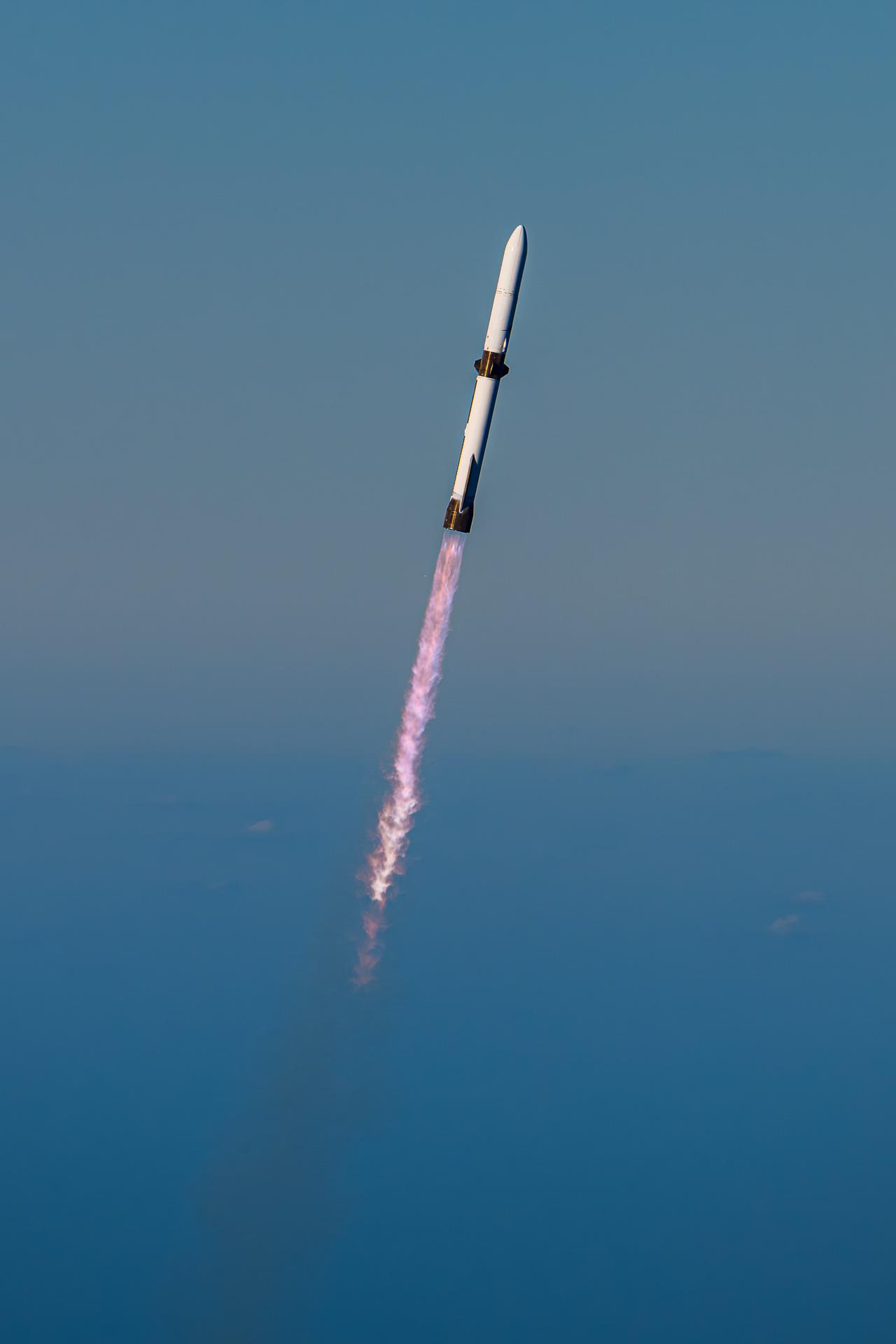
Blue Origin’s New Glenn rocket carrying NASA’s twin ESCAPADE (Escape and Plasma Acceleration and Dynamics Explorers) spacecraft launches at 3:55 p.m. EST, Thursday, Nov. 13, 2025, from Launch Complex 36 at Cape Canaveral Space Force Station in Florida. The ESCAPADE mission, built by Rocket Lab, will study how solar wind and plasma interact with Mars’ magnetosphere and how this interaction drives the planet’s atmospheric escape to prepare for future human missions on Mars.
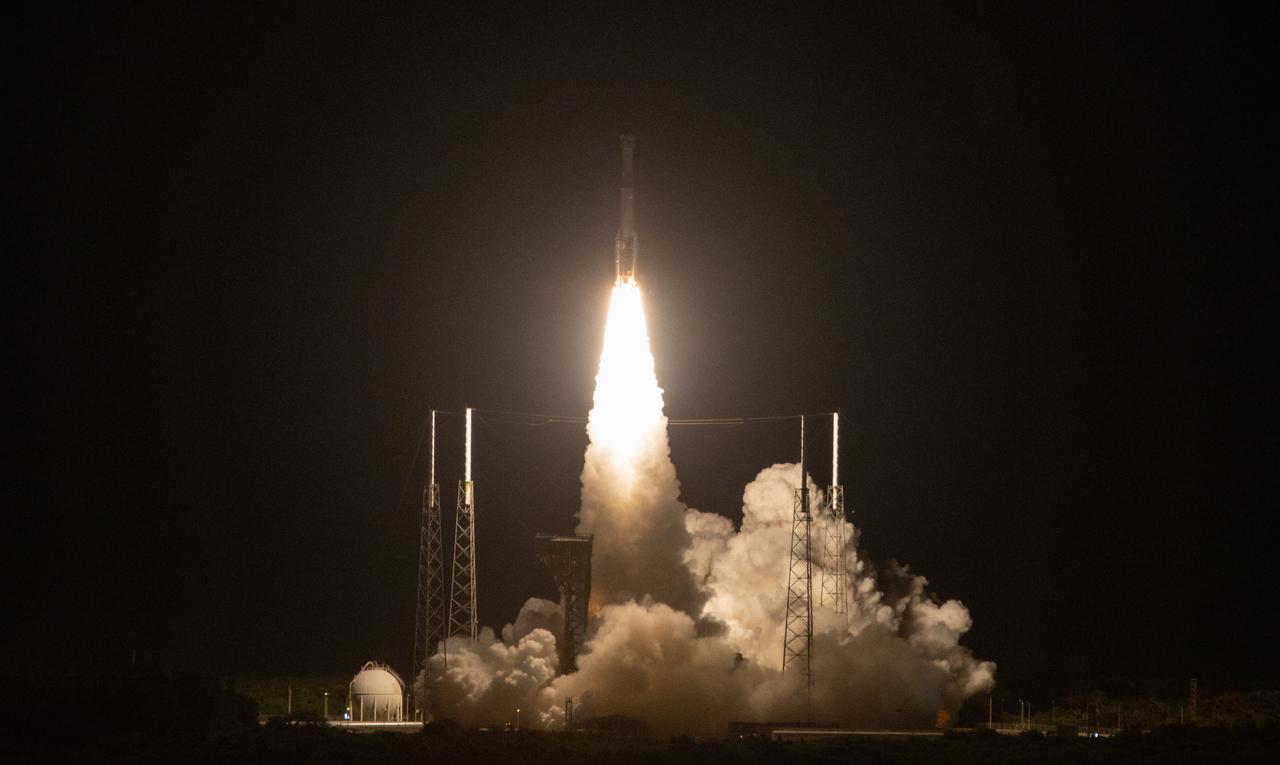
A two-stage United Launch Alliance Atlas V rocket lifts off from Space Launch Complex 41 at Cape Canaveral Air Force Station in Florida for Boeing’s Orbital Flight Test, Dec. 20, 2019. Liftoff occurred at 6:36 a.m. EST. The uncrewed Orbital Flight Test is the Starliner’s first flight for NASA’s Commercial Crew Program.
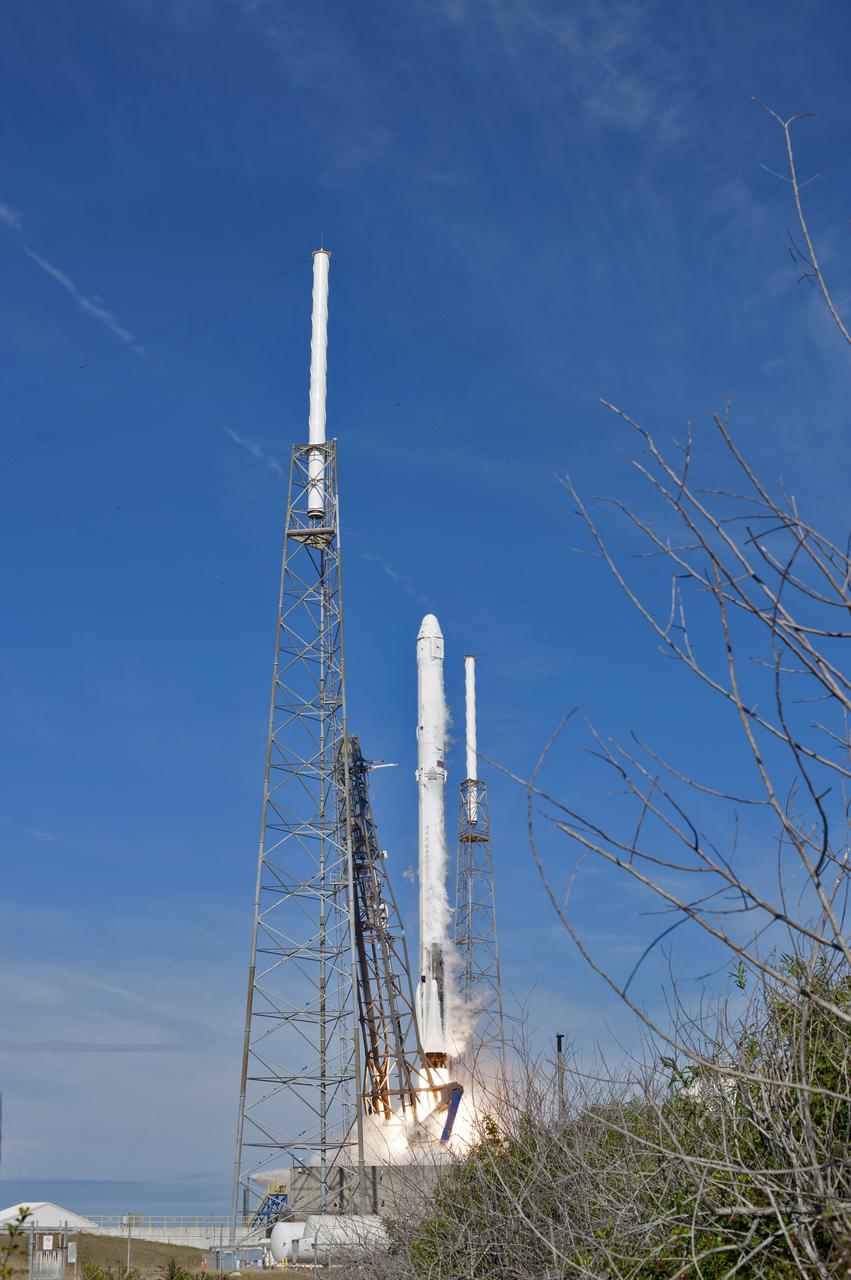
The two-stage Falcon 9 launch vehicle lifts off Space Launch Complex 40 at Cape Canaveral Air Force Station carrying the Dragon resupply spacecraft to the International Space Station. Liftoff was at 10:36 a.m. EST. On its 13th commercial resupply services mission to the International Space Station, Dragon will bring up supplies, equipment and new science experiments for technology research. The SpaceX Dragon spacecraft will deliver about 4,800 pounds of cargo and material to support science investigations aboard the space station.
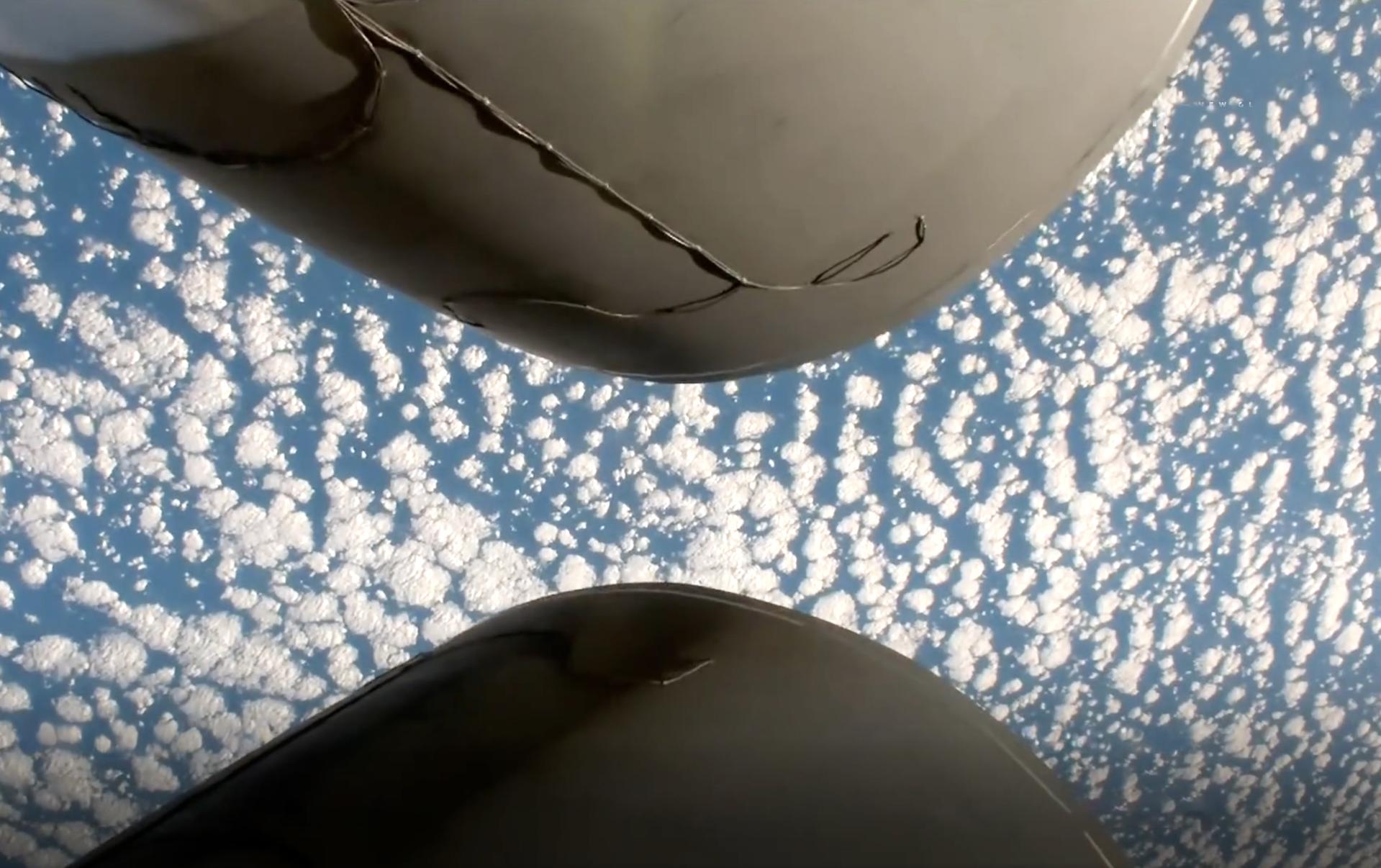
Blue Origin’s New Glenn rocket carrying NASA’s twin ESCAPADE (Escape and Plasma Acceleration and Dynamics Explorers) spacecraft launches at 3:55 p.m. EST, Thursday, Nov. 13, 2025, from Launch Complex 36 at Cape Canaveral Space Force Station in Florida. The ESCAPADE mission, built by Rocket Lab, will study how solar wind and plasma interact with Mars’ magnetosphere and how this interaction drives the planet’s atmospheric escape to prepare for future human missions on Mars.

The two-stage Falcon 9 launch vehicle lifts off Space Launch Complex 40 at Cape Canaveral Air Force Station carrying the Dragon resupply spacecraft to the International Space Station. Liftoff was at 10:36 a.m. EST. On its 13th commercial resupply services mission to the International Space Station, Dragon will bring up supplies, equipment and new science experiments for technology research. The SpaceX Dragon spacecraft will deliver about 4,800 pounds of cargo and material to support science investigations aboard the space station.
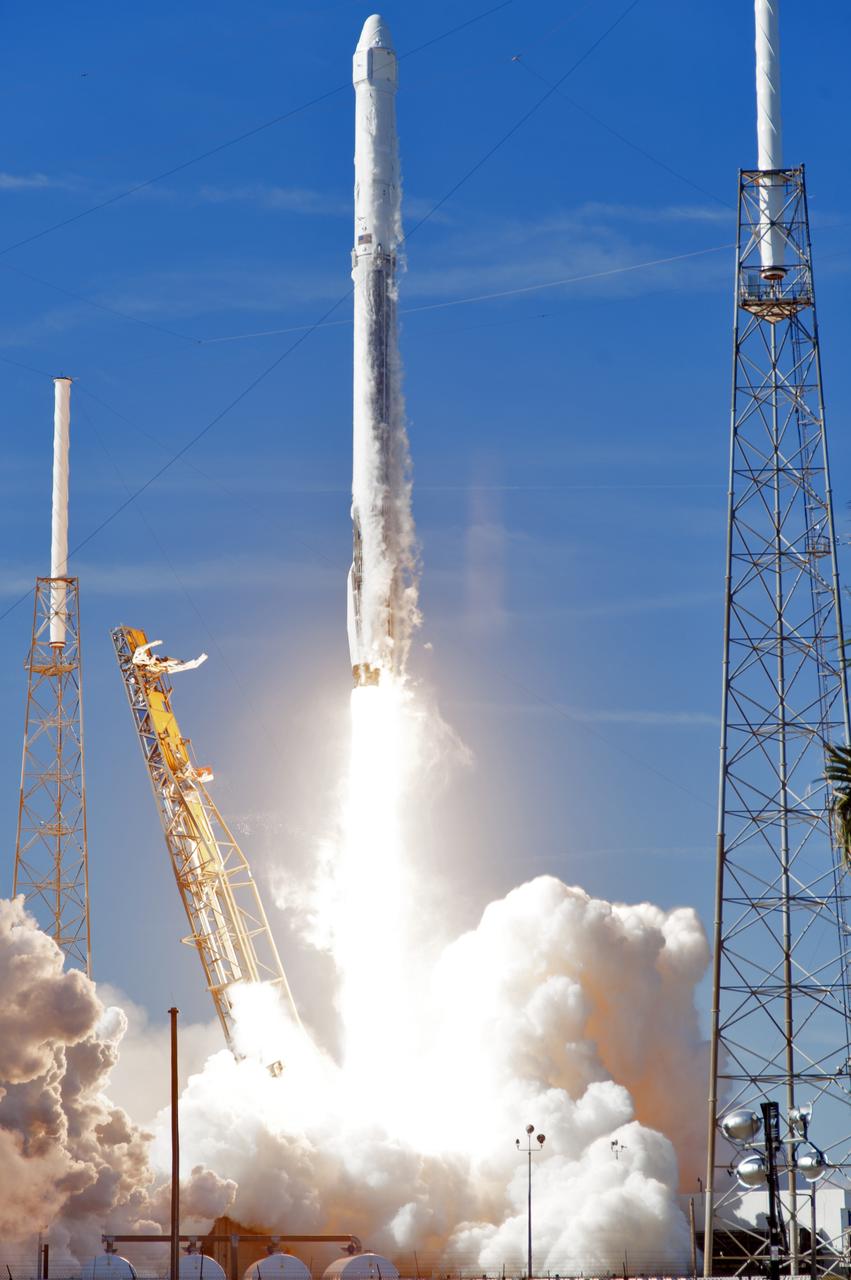
The two-stage Falcon 9 launch vehicle lifts off Space Launch Complex 40 at Cape Canaveral Air Force Station carrying the Dragon resupply spacecraft to the International Space Station. Liftoff was at 10:36 a.m. EST. On its 13th commercial resupply services mission to the International Space Station, Dragon will bring up supplies, equipment and new science experiments for technology research. The SpaceX Dragon spacecraft will deliver about 4,800 pounds of cargo and material to support science investigations aboard the space station.
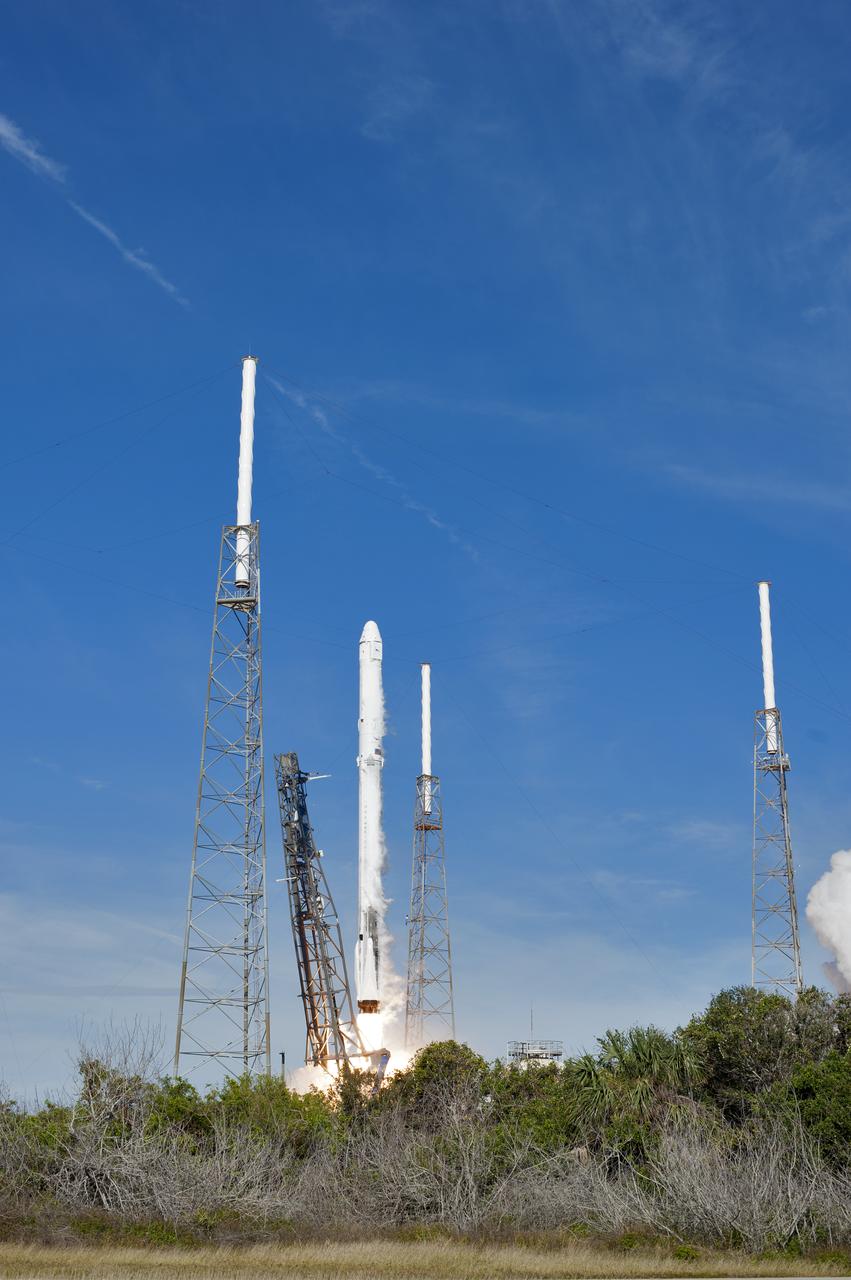
The two-stage Falcon 9 launch vehicle lifts off Space Launch Complex 40 at Cape Canaveral Air Force Station carrying the Dragon resupply spacecraft to the International Space Station. Liftoff was at 10:36 a.m. EST. On its 13th commercial resupply services mission to the International Space Station, Dragon will bring up supplies, equipment and new science experiments for technology research. The SpaceX Dragon spacecraft will deliver about 4,800 pounds of cargo and material to support science investigations aboard the space station.

Singer-songwriter Judy Collins performs her original song, "Beyond the Sky," at the KSC Visitor Complex's Imax Theater for an audience waiting for the launch of STS-93. The song, commissioned by NASA through the nASA Art Program, honored Eileen Collins, the first woman to command a Space Shuttle. The attendees are planning to view the launch at the Banana Creek viewing sight. Liftoff is scheduled for July 20 at 12:36 a.m. EDT
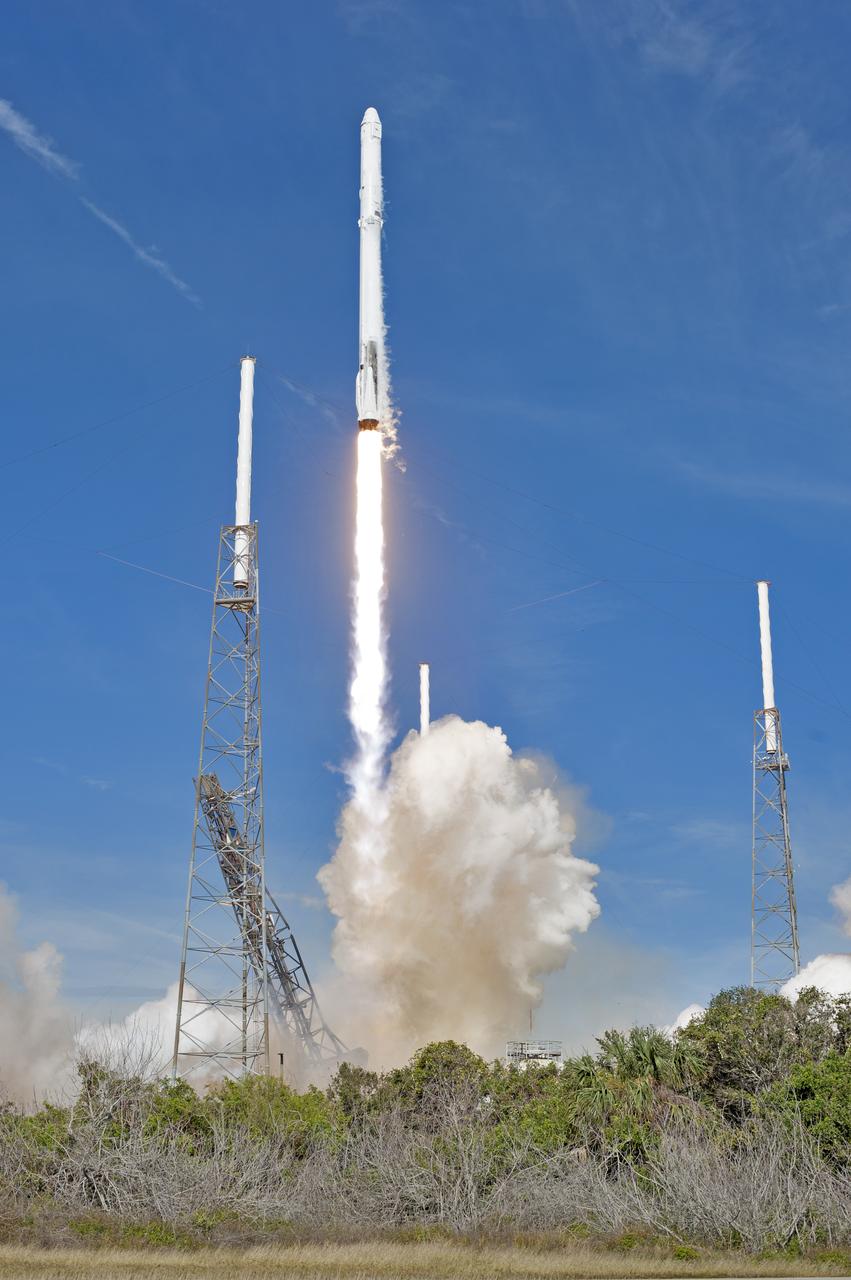
The two-stage Falcon 9 launch vehicle lifts off Space Launch Complex 40 at Cape Canaveral Air Force Station carrying the Dragon resupply spacecraft to the International Space Station. Liftoff was at 10:36 a.m. EST. On its 13th commercial resupply services mission to the International Space Station, Dragon will bring up supplies, equipment and new science experiments for technology research. The SpaceX Dragon spacecraft will deliver about 4,800 pounds of cargo and material to support science investigations aboard the space station.
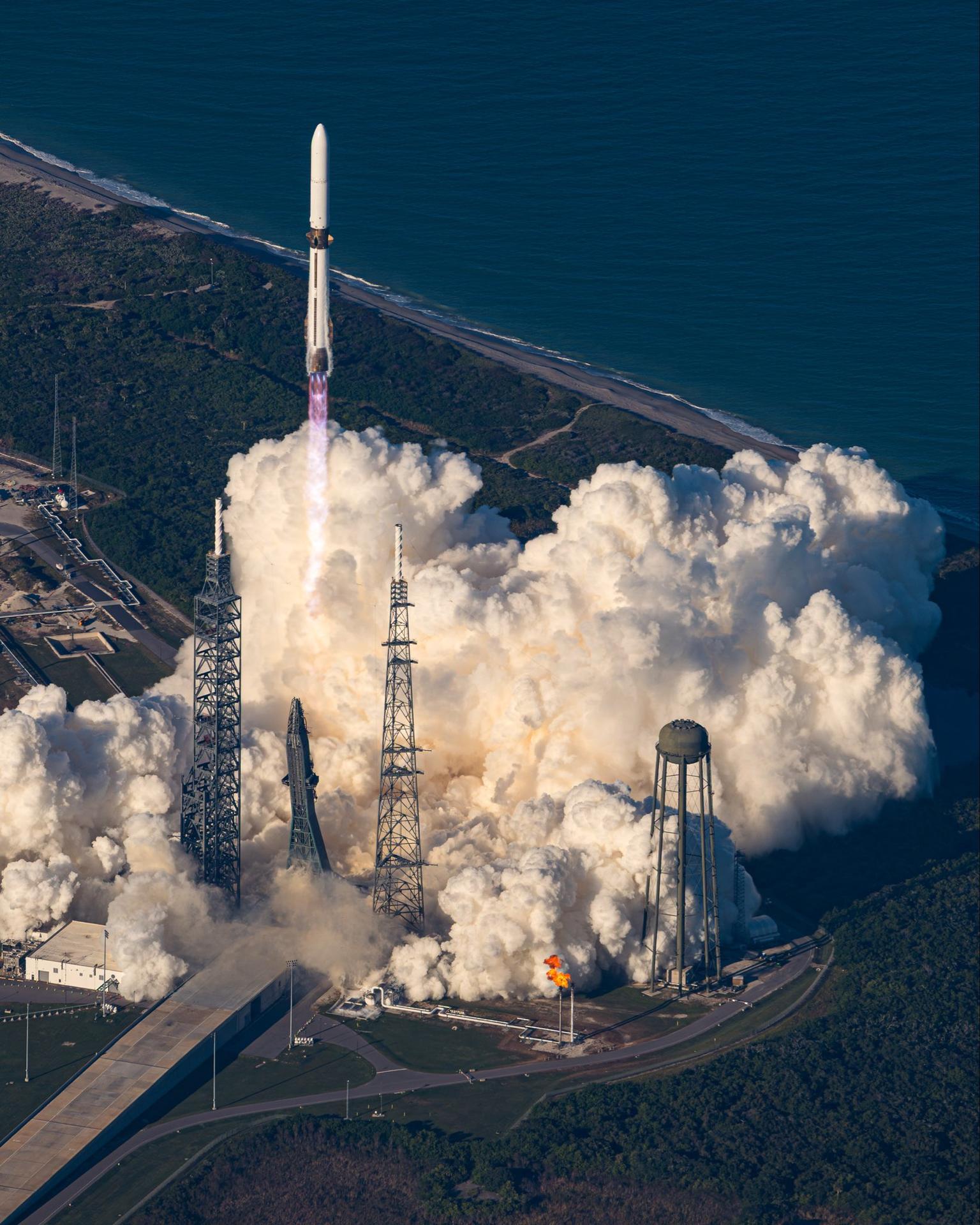
Blue Origin’s New Glenn rocket carrying NASA’s twin ESCAPADE (Escape and Plasma Acceleration and Dynamics Explorers) spacecraft launches at 3:55 p.m. EST, Thursday, Nov. 13, 2025, from Launch Complex 36 at Cape Canaveral Space Force Station in Florida. The ESCAPADE mission, built by Rocket Lab, will study how solar wind and plasma interact with Mars’ magnetosphere and how this interaction drives the planet’s atmospheric escape to prepare for future human missions on Mars.
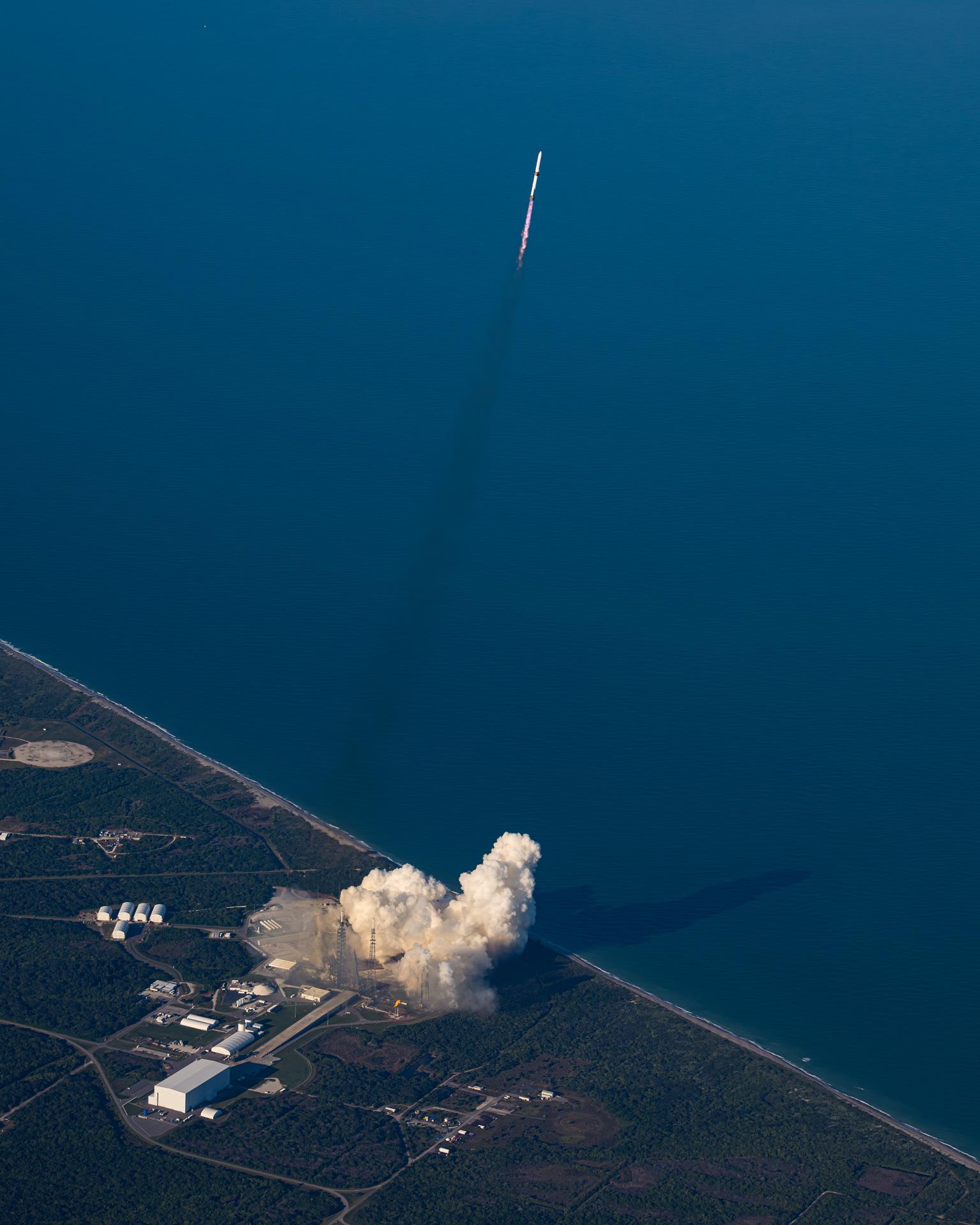
Blue Origin’s New Glenn rocket carrying NASA’s twin ESCAPADE (Escape and Plasma Acceleration and Dynamics Explorers) spacecraft launches at 3:55 p.m. EST, Thursday, Nov. 13, 2025, from Launch Complex 36 at Cape Canaveral Space Force Station in Florida. The ESCAPADE mission, built by Rocket Lab, will study how solar wind and plasma interact with Mars’ magnetosphere and how this interaction drives the planet’s atmospheric escape to prepare for future human missions on Mars.
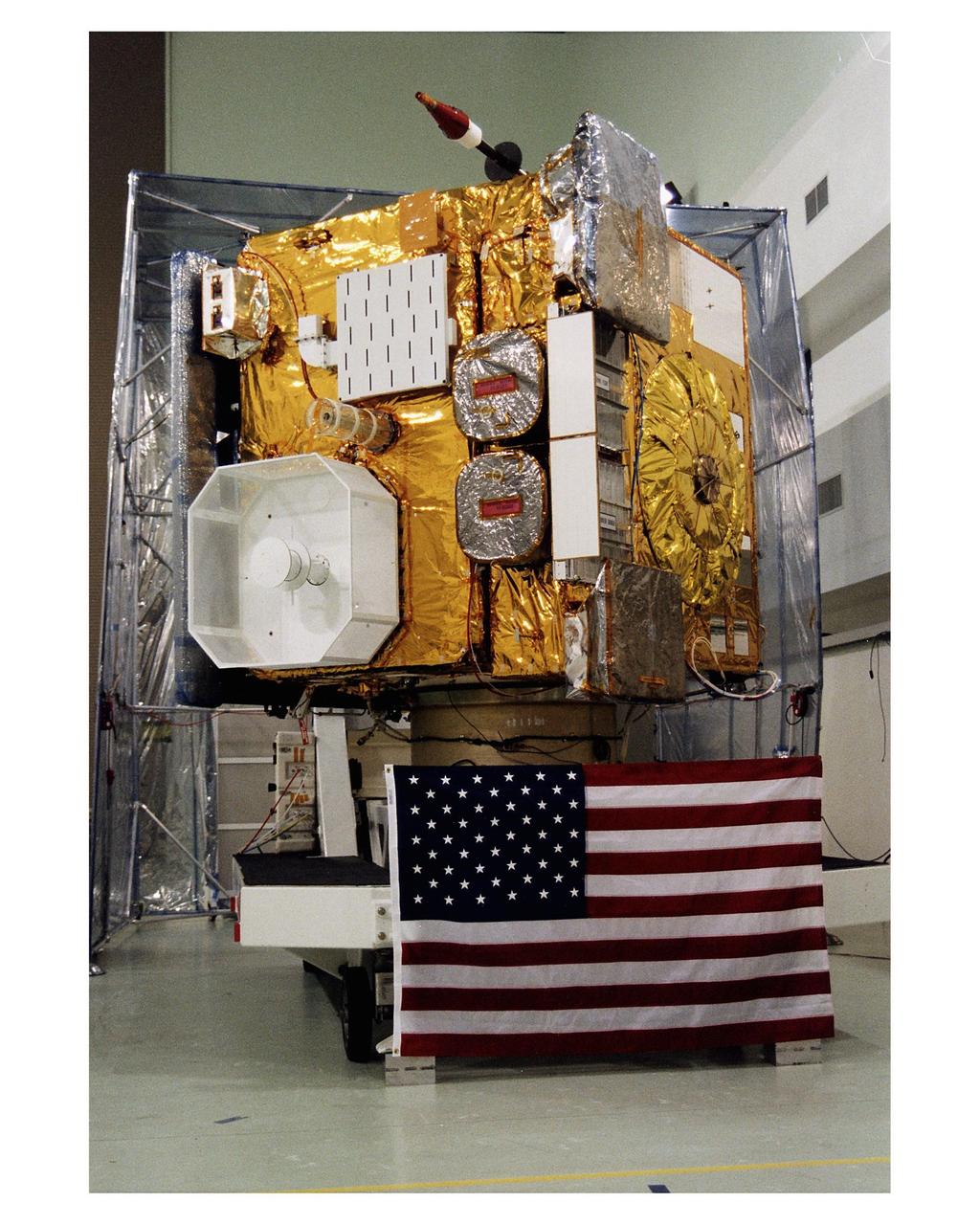
The Geostationary Operational Environmental Satellite-K (GOES-K) is placed on display for news media representatives at the Astrotech Space Operations LP facility in Titusville. GOES-K, the latest in the current series of advanced geostationary weather satellites in service, is scheduled to be launched into space aboard an Atlas 1 rocket on April 24 from Launch Complex 36, Pad B, Cape Canaveral Air Station. Once in orbit, GOES-K will become GOES-10, joining GOES-8 and GOES-9 in space
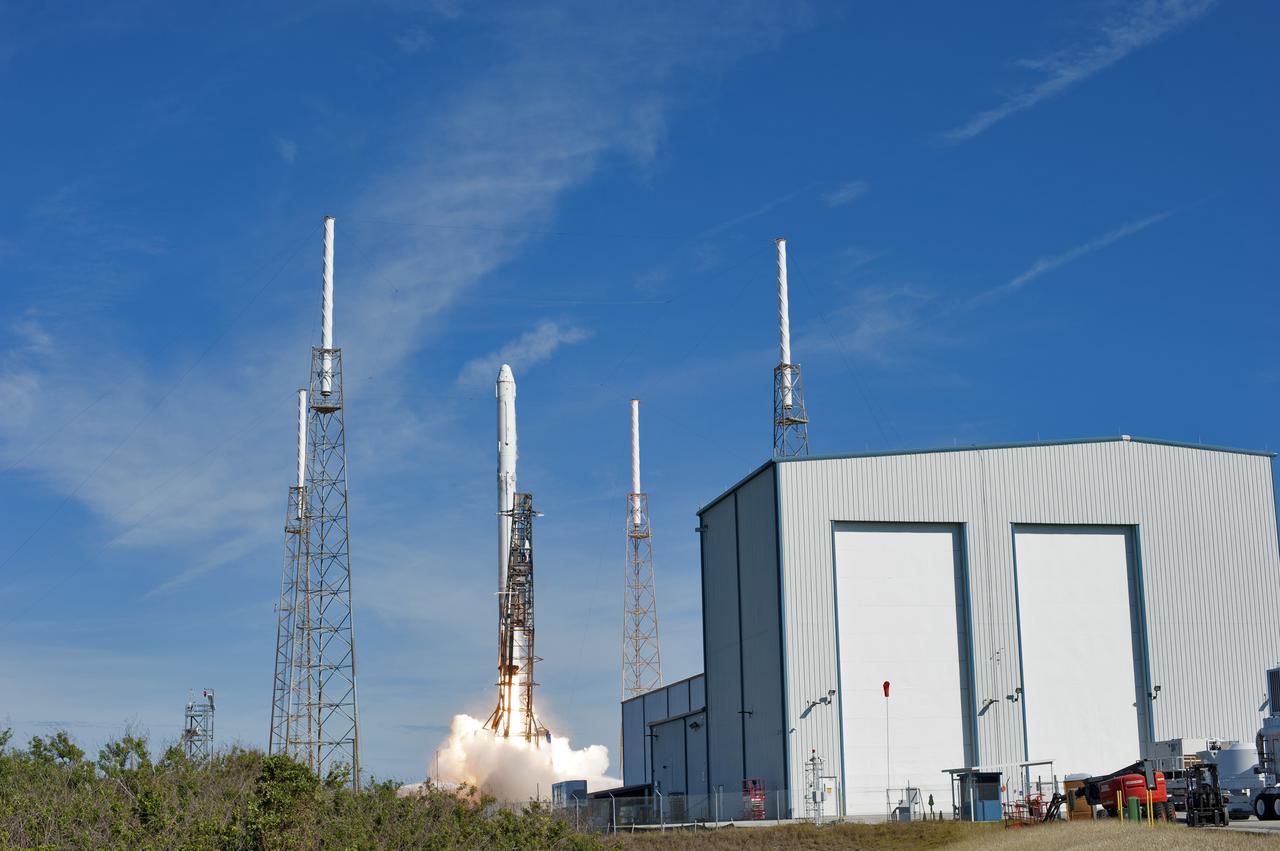
The two-stage Falcon 9 launch vehicle lifts off Space Launch Complex 40 at Cape Canaveral Air Force Station carrying the Dragon resupply spacecraft to the International Space Station. Liftoff was at 10:36 a.m. EST. On its 13th commercial resupply services mission to the International Space Station, Dragon will bring up supplies, equipment and new science experiments for technology research. The SpaceX Dragon spacecraft will deliver about 4,800 pounds of cargo and material to support science investigations aboard the space station.
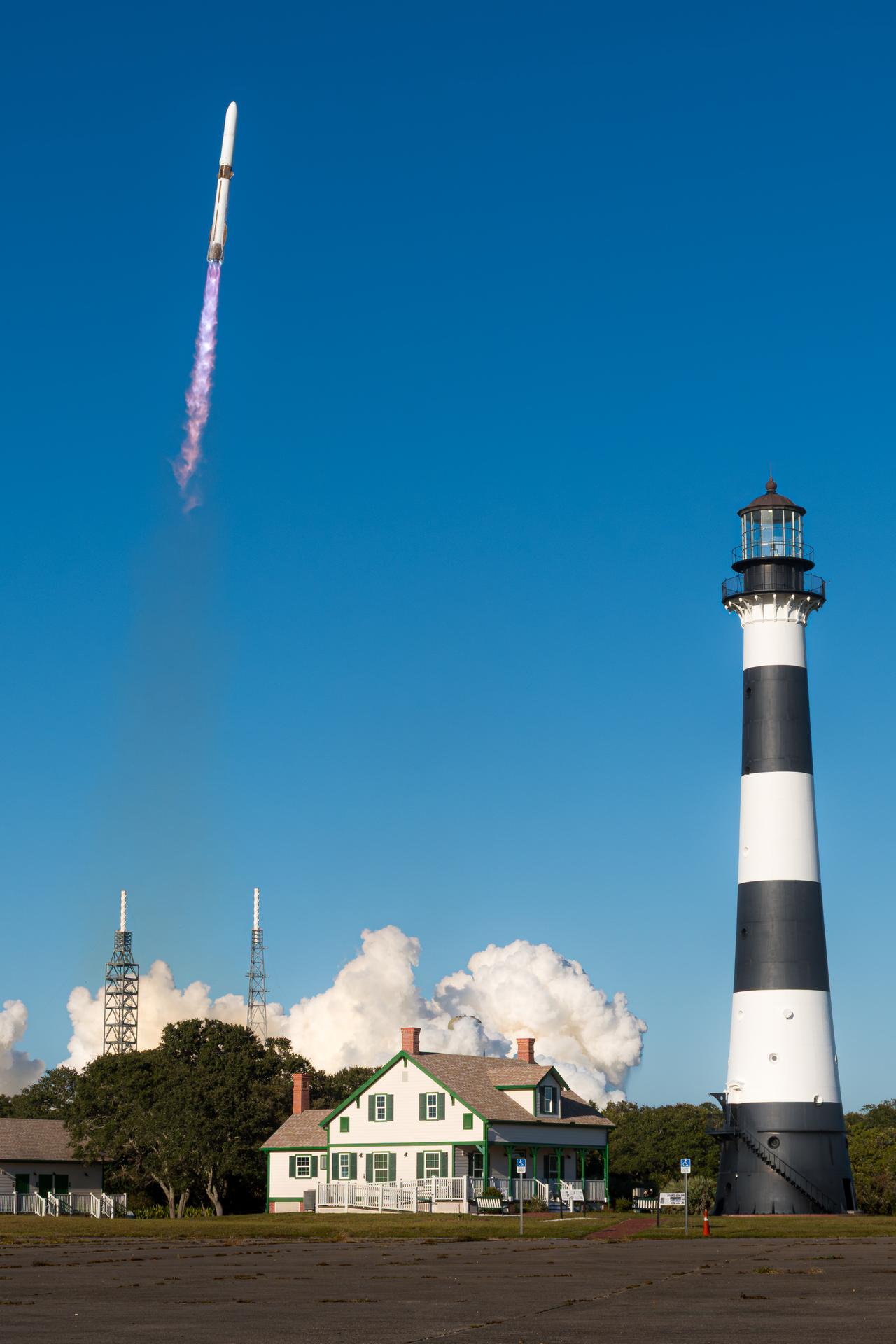
Near Cape Canaveral Lighthouse, Blue Origin’s New Glenn rocket carrying NASA’s twin ESCAPADE (Escape and Plasma Acceleration and Dynamics Explorers) spacecraft launches at 3:55 p.m. EST, Thursday, Nov. 13, 2025, from Launch Complex 36 at Cape Canaveral Space Force Station in Florida. The ESCAPADE mission, built by Rocket Lab, will study how solar wind and plasma interact with Mars’ magnetosphere and how this interaction drives the planet’s atmospheric escape to prepare for future human missions on Mars.
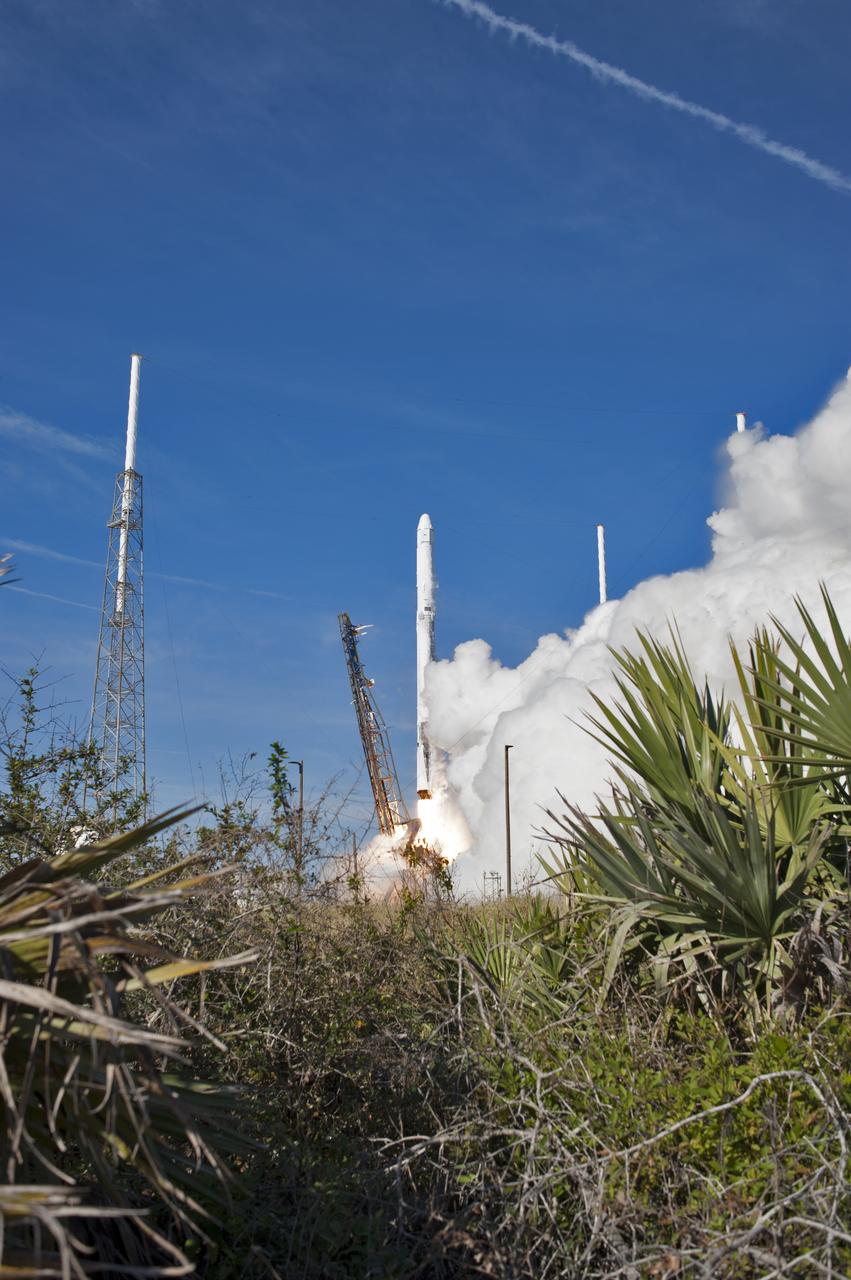
The two-stage Falcon 9 launch vehicle lifts off Space Launch Complex 40 at Cape Canaveral Air Force Station carrying the Dragon resupply spacecraft to the International Space Station. Liftoff was at 10:36 a.m. EST. On its 13th commercial resupply services mission to the International Space Station, Dragon will bring up supplies, equipment and new science experiments for technology research. The SpaceX Dragon spacecraft will deliver about 4,800 pounds of cargo and material to support science investigations aboard the space station.