
S73-34367 (16 Nov. 1973) --- A view at the Kennedy Space Center showing in the near distance the Skylab 4/Saturn 1B space vehicle on Pad B, Launch Complex 39, on the morning of the launch. Photo credit: NASA
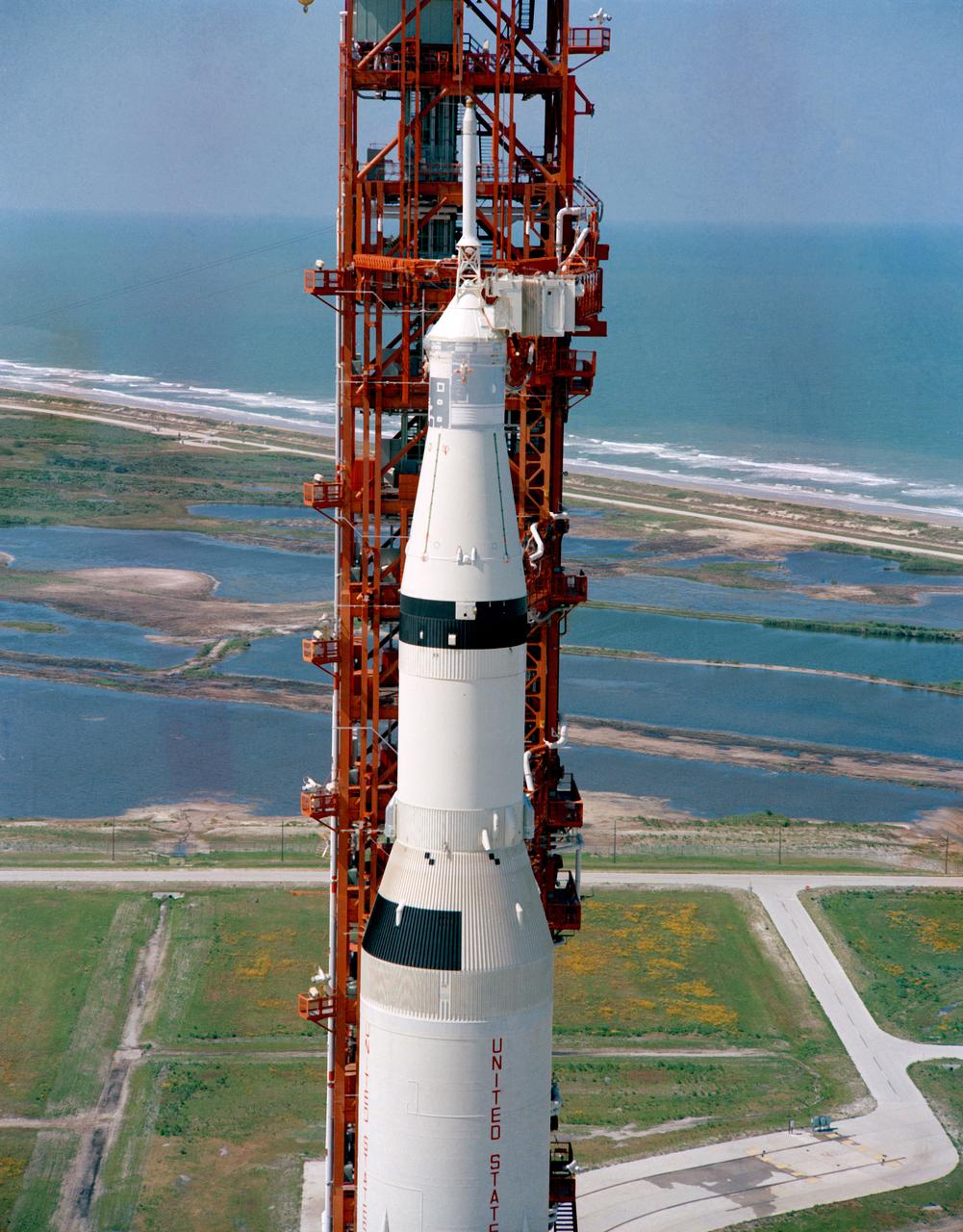
S69-33854 (4 May 1969) --- Aerial (high-angle, clasp) view of the Apollo 10 (Spacecraft 106/Lunar Module 4/Saturn 505) space vehicle on Pad B, Launch Complex 39, Kennedy Space Center. This photograph of the 363-feet tall Apollo/Saturn V stack was taken during pull back of the mobile service structure. The Apollo 10 crew will be astronauts Thomas P. Stafford, John W. Young, and Eugene A. Cernan.
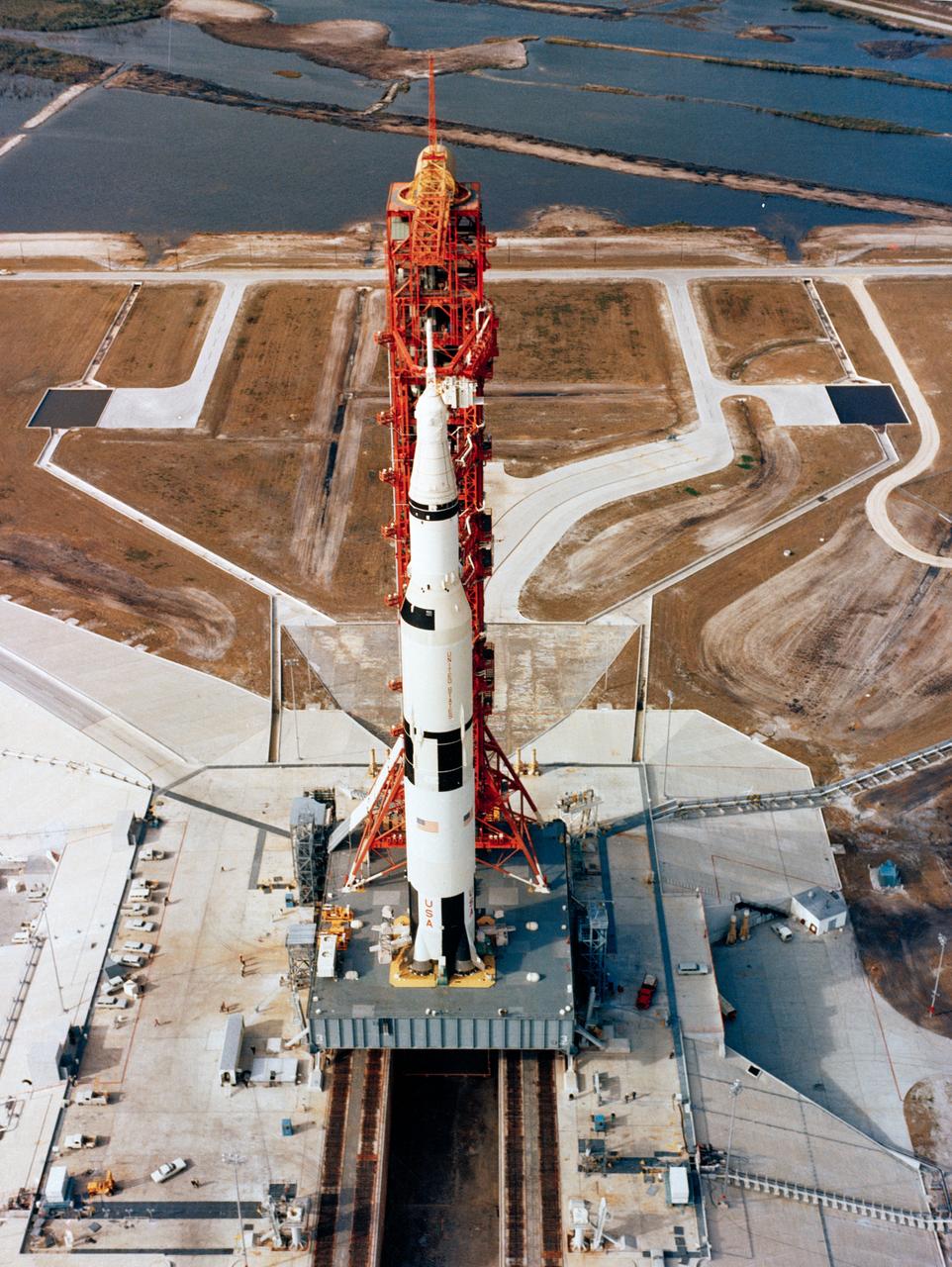
S69-34327 (13 May 1969) --- Aerial, high-angle, view of the Apollo 10 (Spacecraft 106/Lunar Module 4/Saturn 505) space vehicle at Pad B, Launch Complex 39, Kennedy Space Center, Florida. The crew of the Apollo 10 lunar orbit mission will be astronauts Thomas P. Stafford, commander; John W. Young, command module pilot; and Eugene A. Cernan, lunar module pilot.
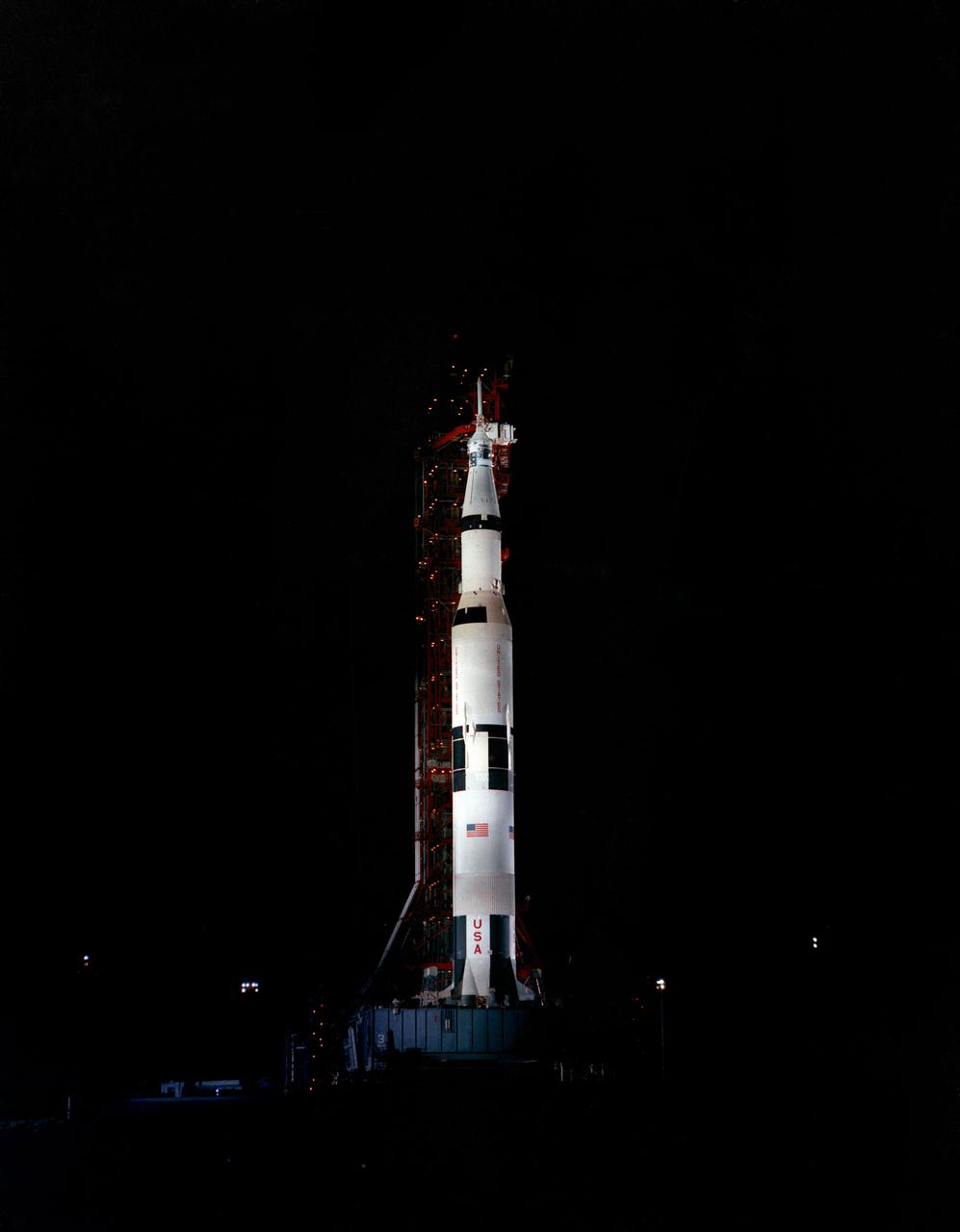
S69-33855 (4 May 1969) --- Nighttime, ground-level view of the Apollo 10 (Spacecraft 106/Lunar Module 4/Saturn 505) space vehicle on Pad B, Launch Complex 39, Kennedy Space Center. This photograph of the 363-feet tall Apollo/Saturn V stack was taken during pull back of the mobile service structure. The Apollo 10 crew will be astronauts Thomas P. Stafford, John W. Young, and Eugene A. Cernan.

S69-34328 (17 May 1969) --- Ground level view of the 363-feet tall Apollo 10 (Spacecraft 106/Lunar Module 4/Saturn 505) space vehicle on Pad B, Launch Complex 39, Kennedy Space Center. The Apollo 10 crew will be astronauts Thomas P. Stafford, commander; John W. Young, command module pilot; and Eugene A. Cernan, lunar module pilot.
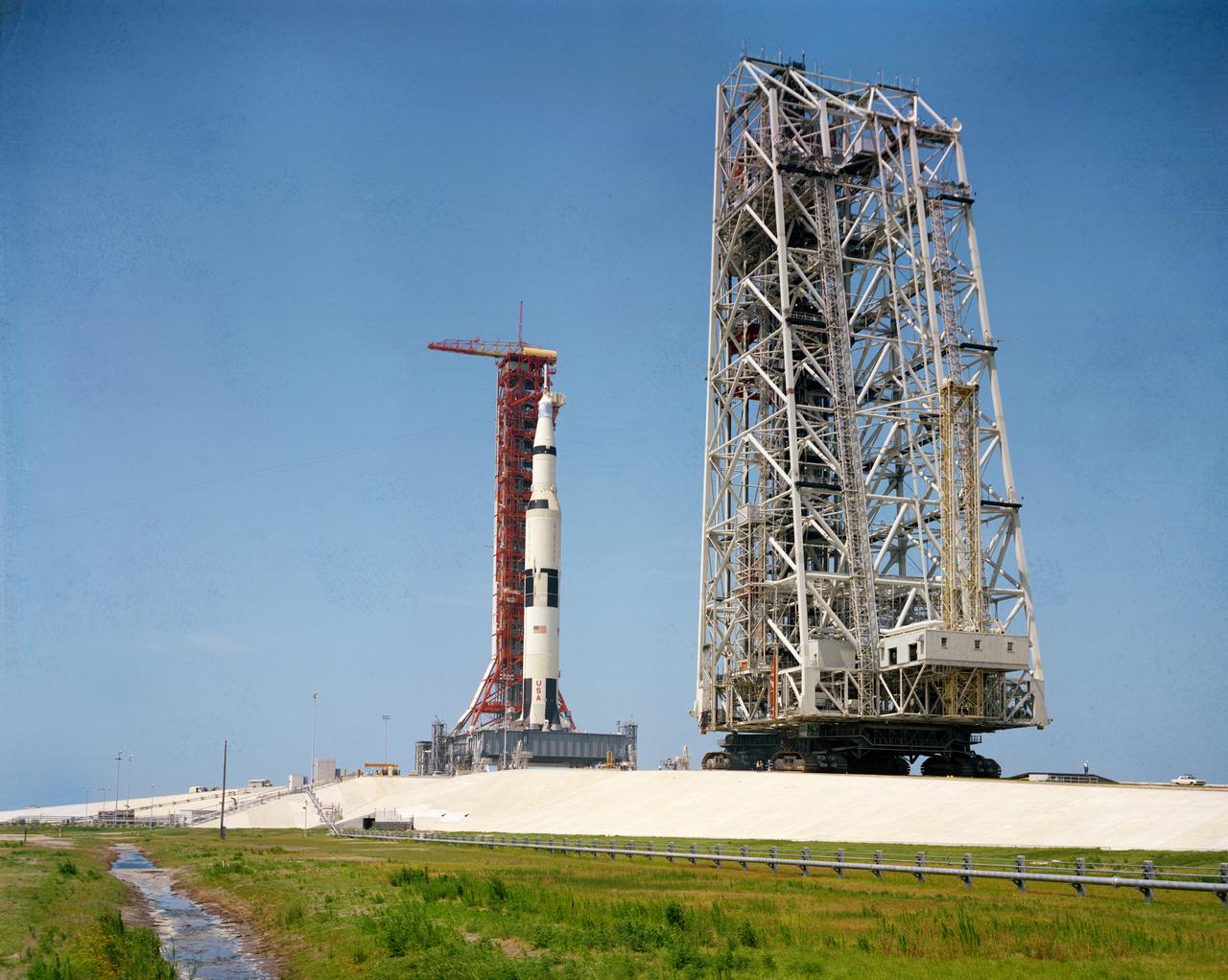
S69-34320 (17 May 1969) --- Ground level view of the 363-feet tall Apollo 10 (Spacecraft 106/Lunar Module 4/Saturn 505) space vehicle on Pad B, Launch Complex 39, Kennedy Space Center. The service structure is in the right foreground. The crew of the Apollo 10 lunar orbit mission will be astronauts Thomas P. Stafford, commander; John W. Young, command module pilot; and Eugene A. Cernan, lunar module pilot.

S69-27916 (11 March 1969) --- Aerial view at Launch Complex 39, Kennedy Space Center, showing the Apollo 10 (Spacecraft 106/Lunar Module-4/Saturn 505) space vehicle on its way to Pad B. The Saturn V stack and its mobile launch tower are atop a huge crawler-transporter. The Apollo 10 flight is scheduled as a lunar orbit mission. The Apollo 10 crew will be astronauts Thomas P. Stafford, commander; John W. Young, command module pilot; and Eugene A. Cernan, lunar module pilot.
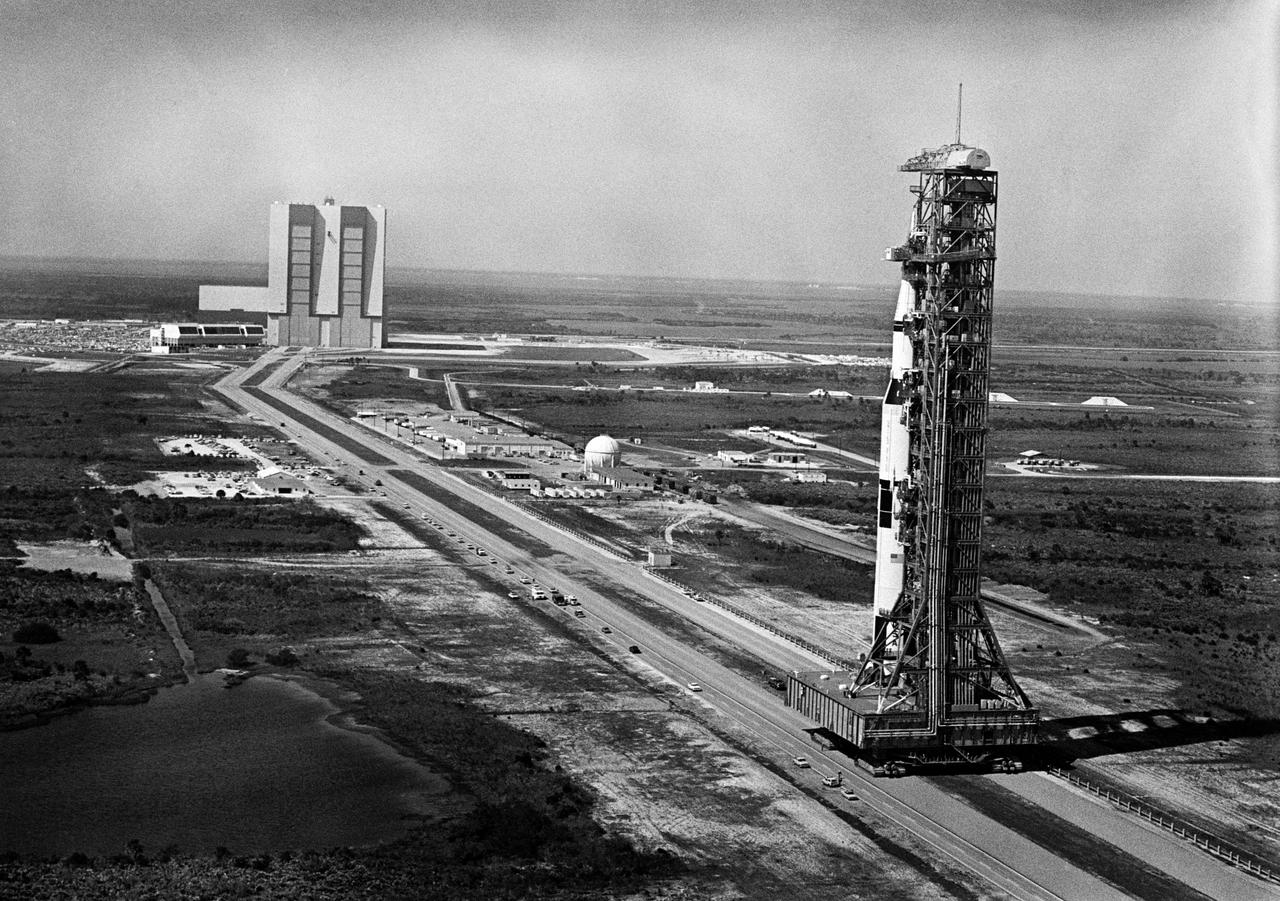
S69-27741 (11 March 1969) --- Aerial view at Launch Complex 39, Kennedy Space Center, showing the 363-feet tall Apollo 10 (Spacecraft 106/Lunar Module-4/Saturn 505) space vehicle on its way to Pad B. The Vehicle Assembly Building is in the background. The Saturn V stack and its mobile launch tower are atop a huge crawler-transporter. The Apollo 10 flight is schedule as a lunar orbit mission. The Apollo 10 crew will be astronauts Thomas P. Stafford, commander; John W. Young, command module pilot; and Eugene A. Cernan, lunar module pilot.

S73-32568 (20 July 1973) --- Floodlights illuminate this nighttime view of the Skylab 3/Saturn 1B space vehicle at Pad B, Launch Complex 39, Kennedy Space Center, Florida, during prelaunch preparations. The reflection is the water adds to the scene. In addition to the Command/Service Module and its launch escapte system, the Skylab 3 space vehicle consists of the Saturn 1B first (S-1B) stage and the Saturn 1B second (S-IVB) stage. The crew for the scheduled 59-day Skylab 3 mission in Earth orbit will be astronauts Alan L. Bean, Owen K. Garriott and Jack R. Lousma. Skylab 3 was launched on July 28, 1973. Photo credit: NASA
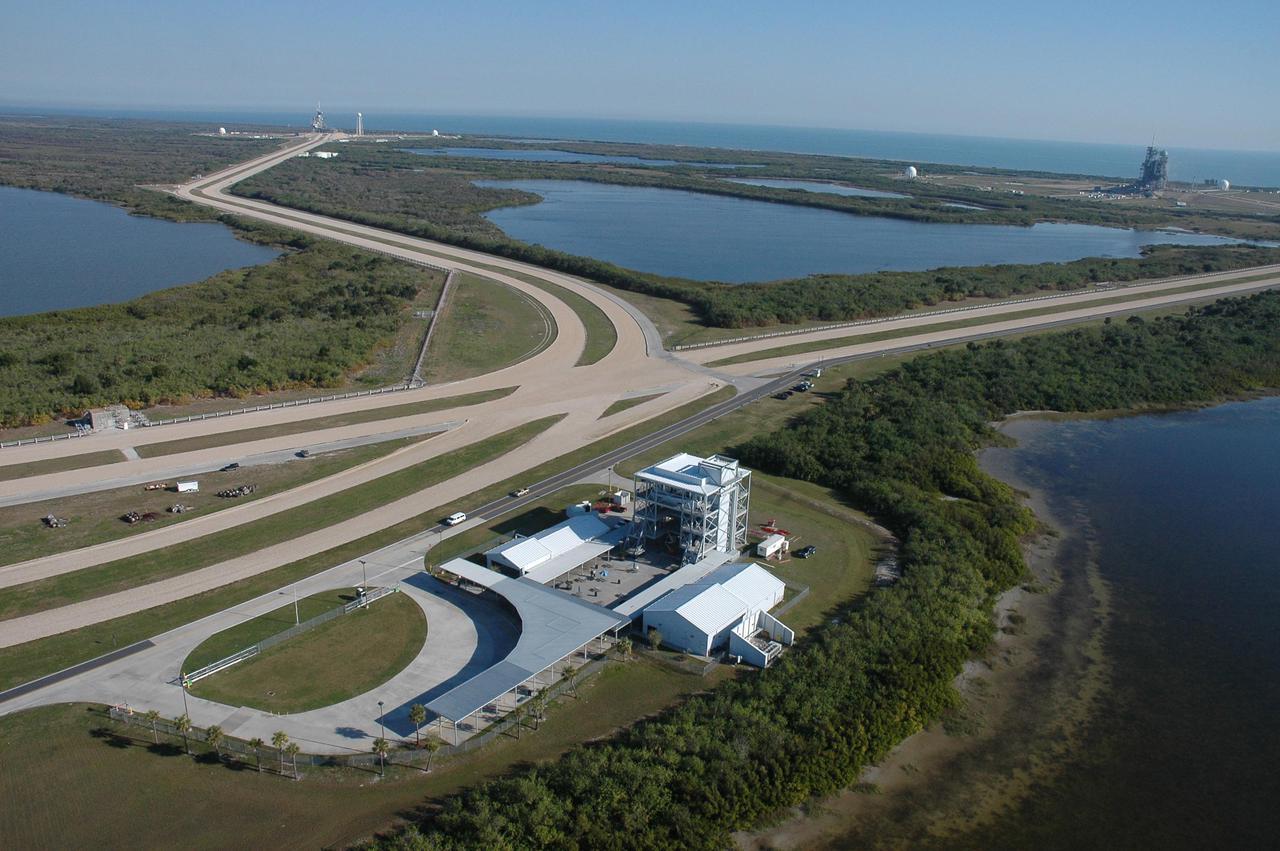
KENNEDY SPACE CENTER, FLA. - This aerial view on NASA's Kennedy Space Center shows the Launch Complex 39 Observation Gantry in the foreground, the crawlerways leading to the launch pads, and space shuttle Launch Complex 39 Pad A (left) and Pad B in the background, silhouetted by the Atlantic Ocean. Photo credit: Cory Huston
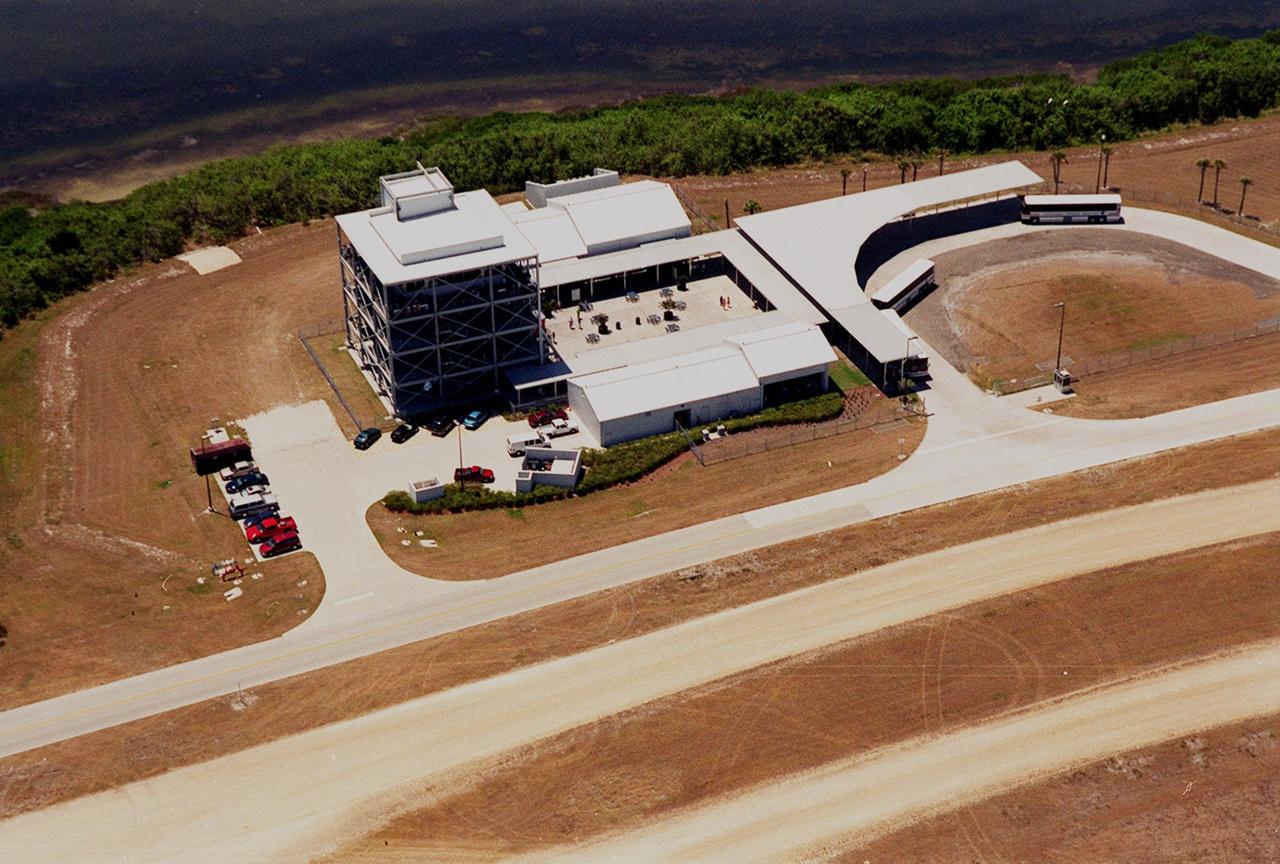
This aerial view is of a tour stop on the KSC bus tour, the Launch Complex 39 Observation Gantry. This stop allows visitors to view and photograph Pads A and B in Launch Complex 39 from an elevated vantage point. The roadway leading to the tour stop runs next to the crawlerway (foreground) which is used to transport Space Shuttles to the pads
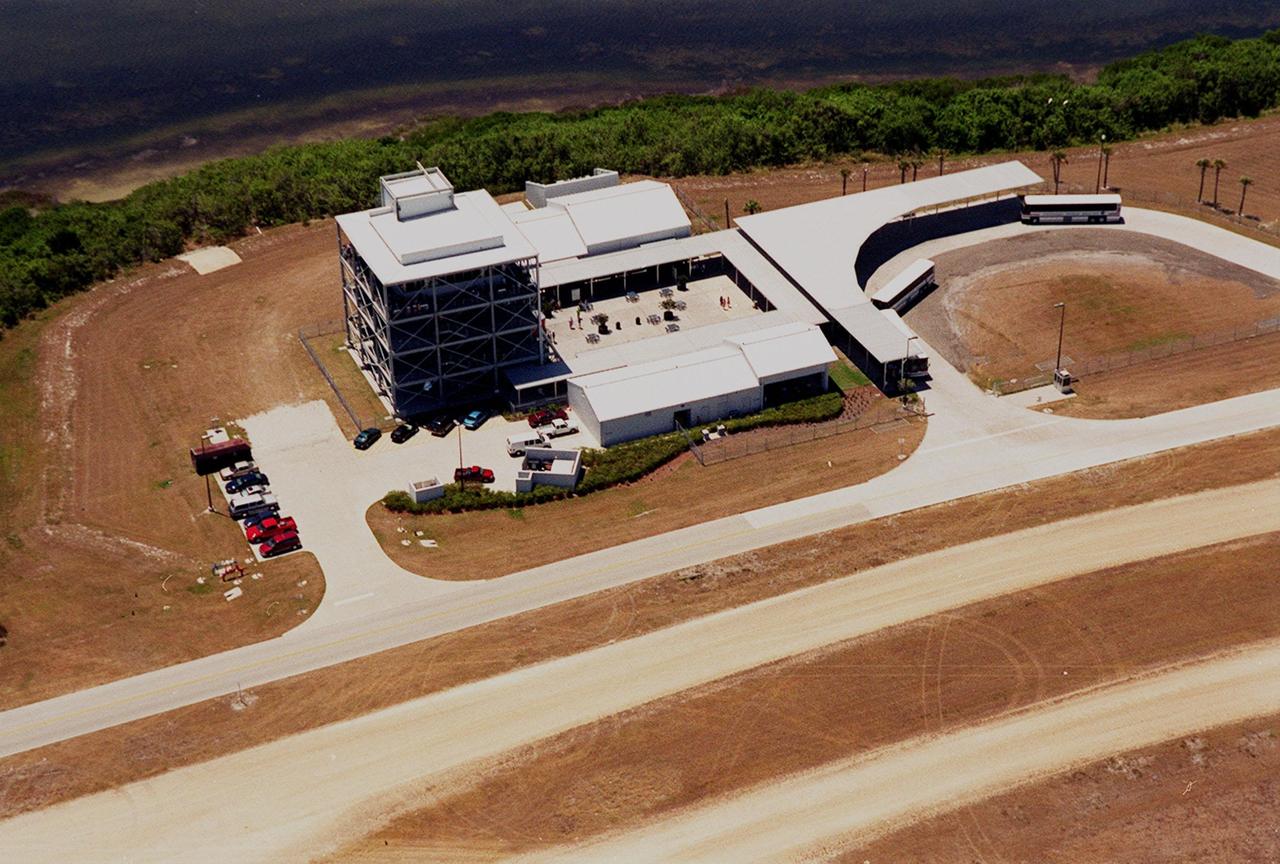
This aerial view is of a tour stop on the KSC bus tour, the Launch Complex 39 Observation Gantry. This stop allows visitors to view and photograph Pads A and B in Launch Complex 39 from an elevated vantage point. The roadway leading to the tour stop runs next to the crawlerway (foreground) which is used to transport Space Shuttles to the pads
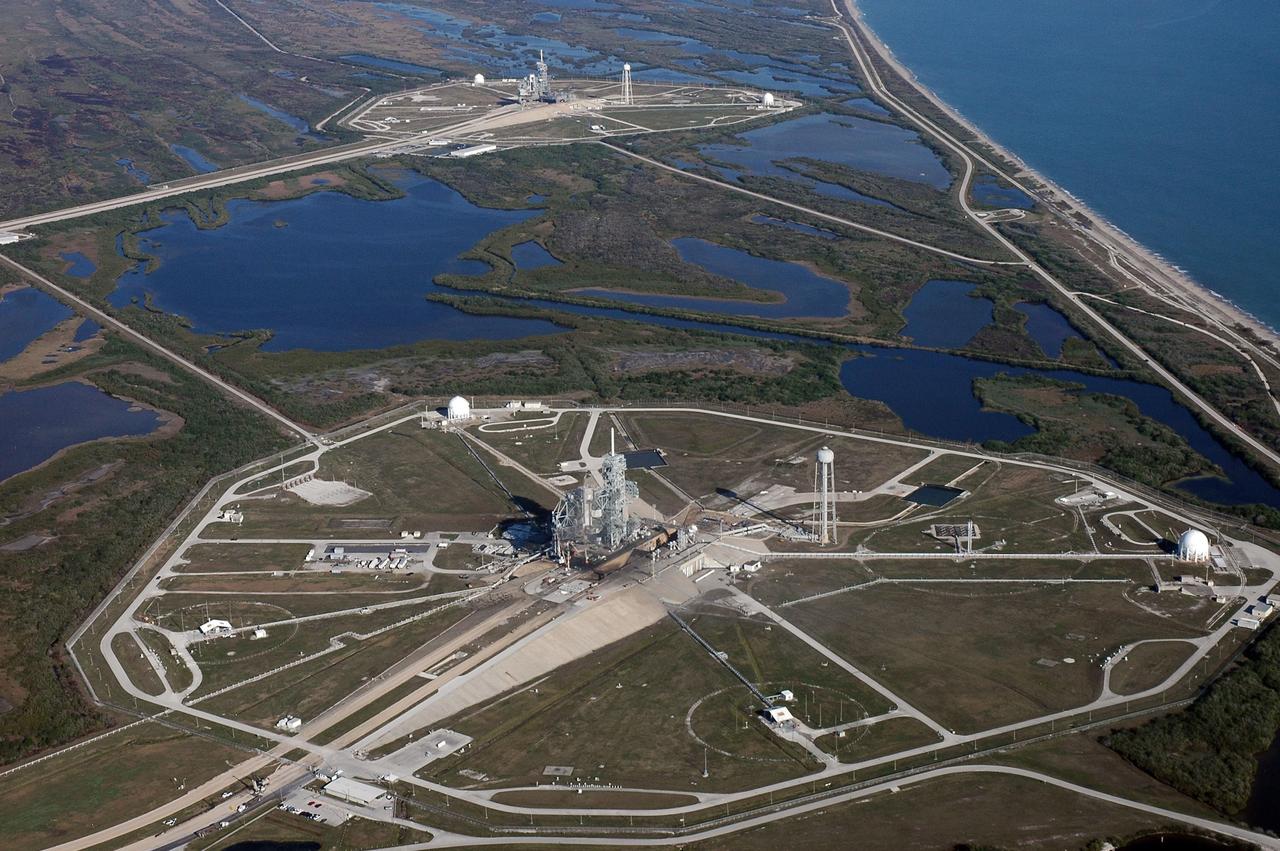
KENNEDY SPACE CENTER, FLA. - This aerial view looking north shows space shuttle Complex 39 Launch Pads A (foreground) and B at NASA's Kennedy Space Center. To the right is the Atlantic Ocean. Photo credit: Cory Huston
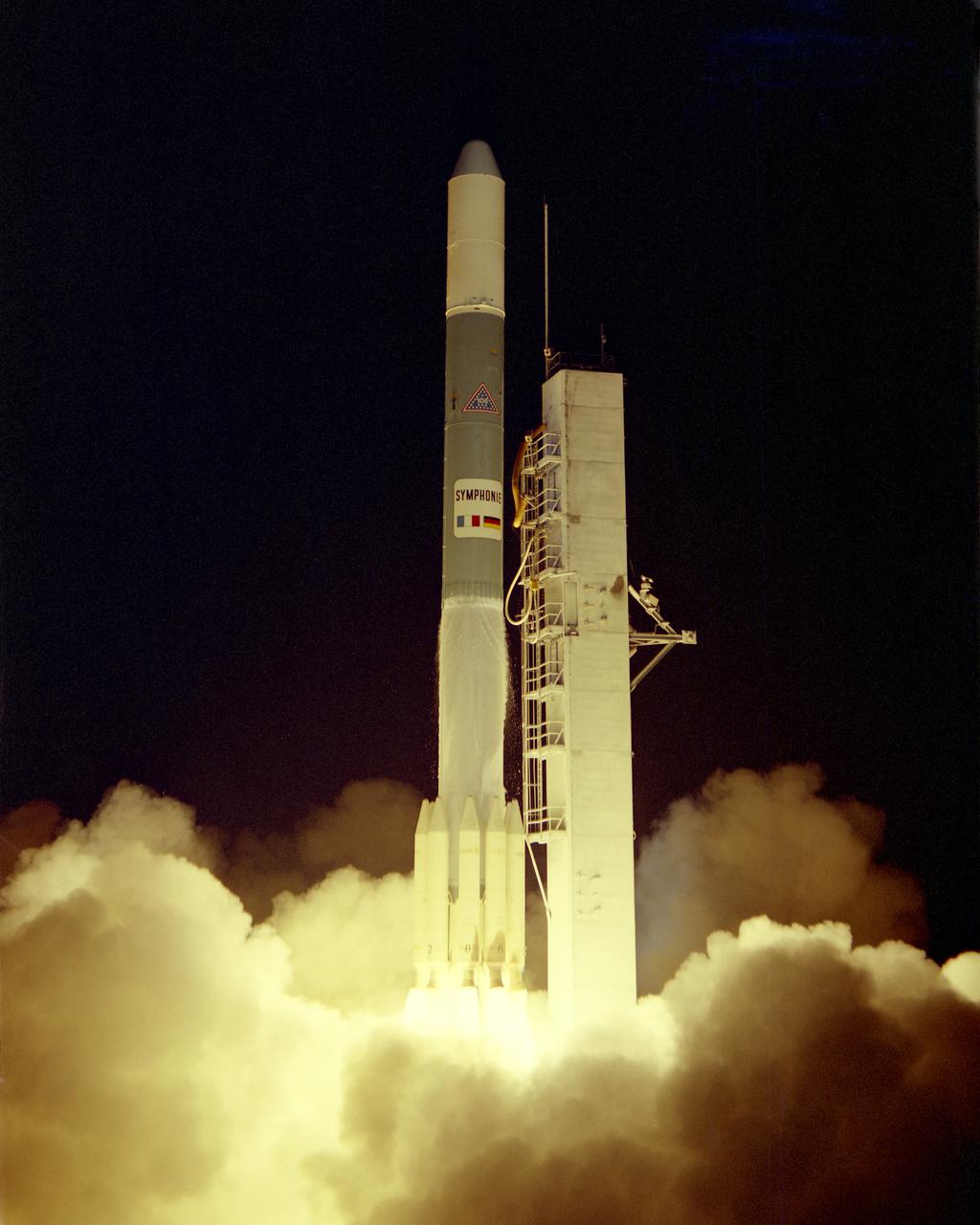
CAPE CANAVERAL, Fla. -- Launch of Symphonie-A on Complex 17-B at 9:39 p.m. EST. Symphonie-A is a communications satellite for a Franco-German industrial consortium. Photo credit: NASA
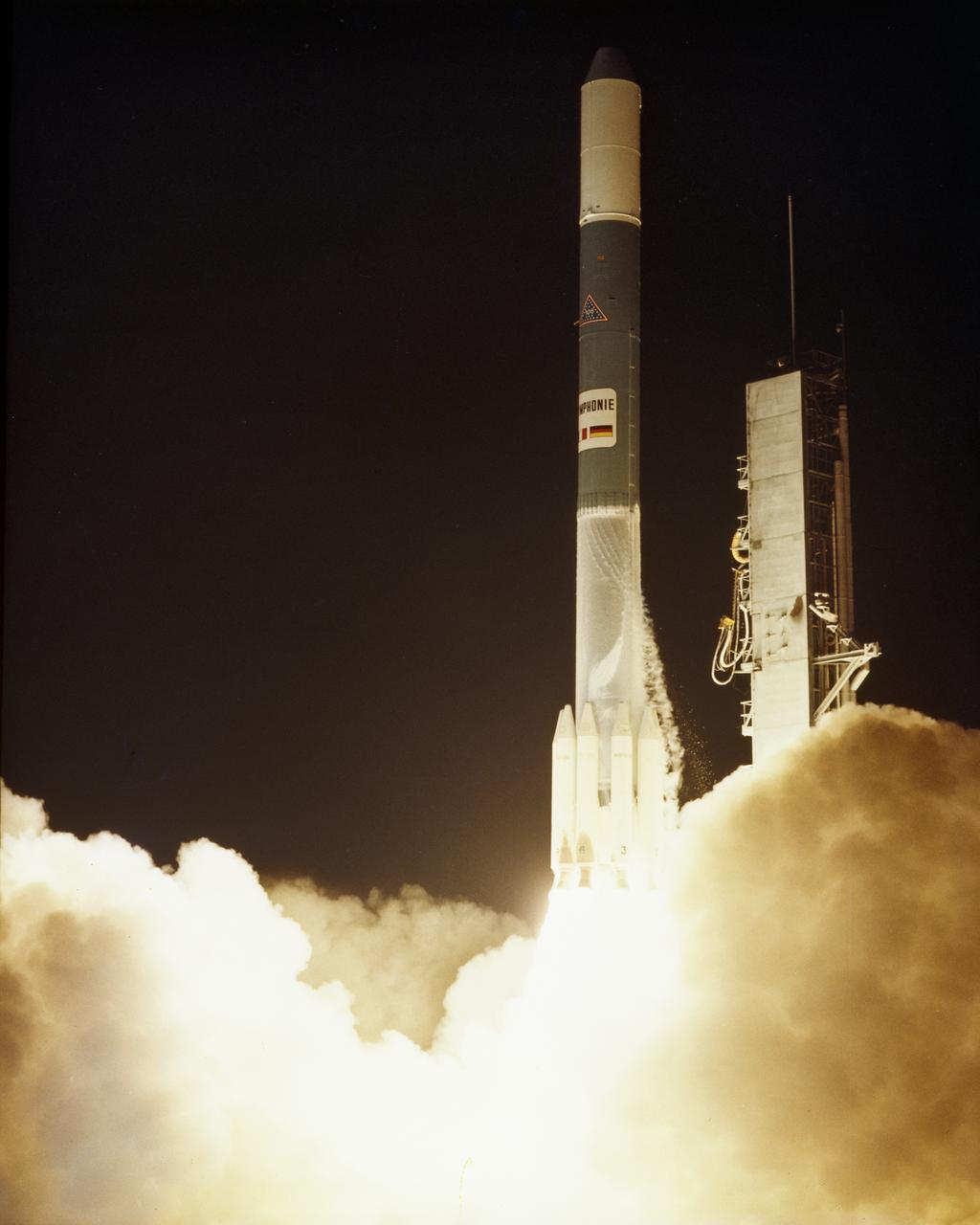
CAPE CANAVERAL, Fla. -- Launch of Symphonie-A on Complex 17-B at 9:39 p.m. EST. Symphonie-A is a communications satellite for a Franco-German industrial consortium. Photo credit: NASA
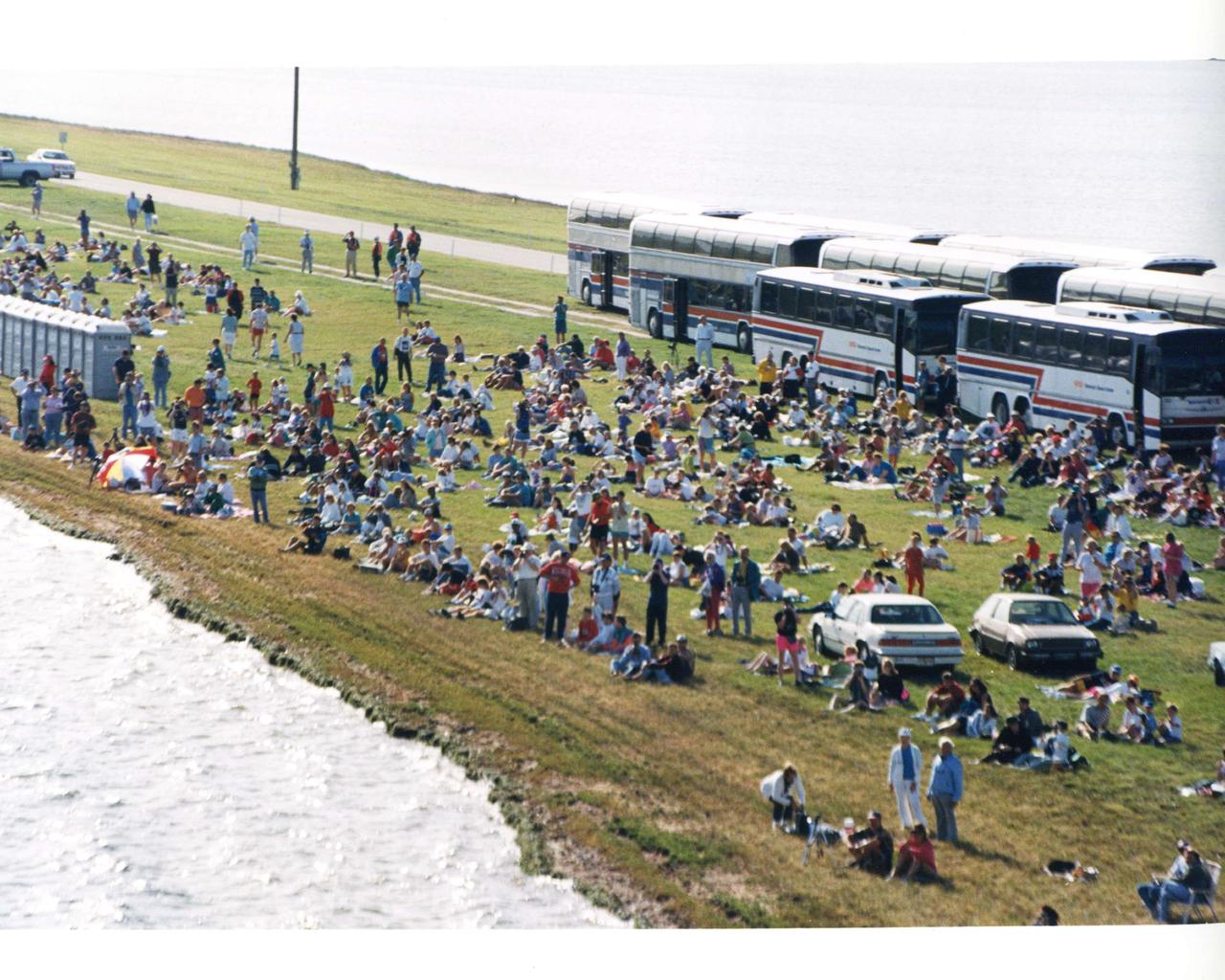
This aerial view is of a tour stop on the KSC bus tour, the Launch Complex 39 Observation Gantry. This stop allows visitors to view and photograph Pads A and B in Launch Complex 39 from an elevated vantage point. The roadway leading to the tour stop runs next to the crawlerway (left) which is used to transport Space Shuttles from the Vehicle Assembly Building to the pads. Pad A can be seen in the background.
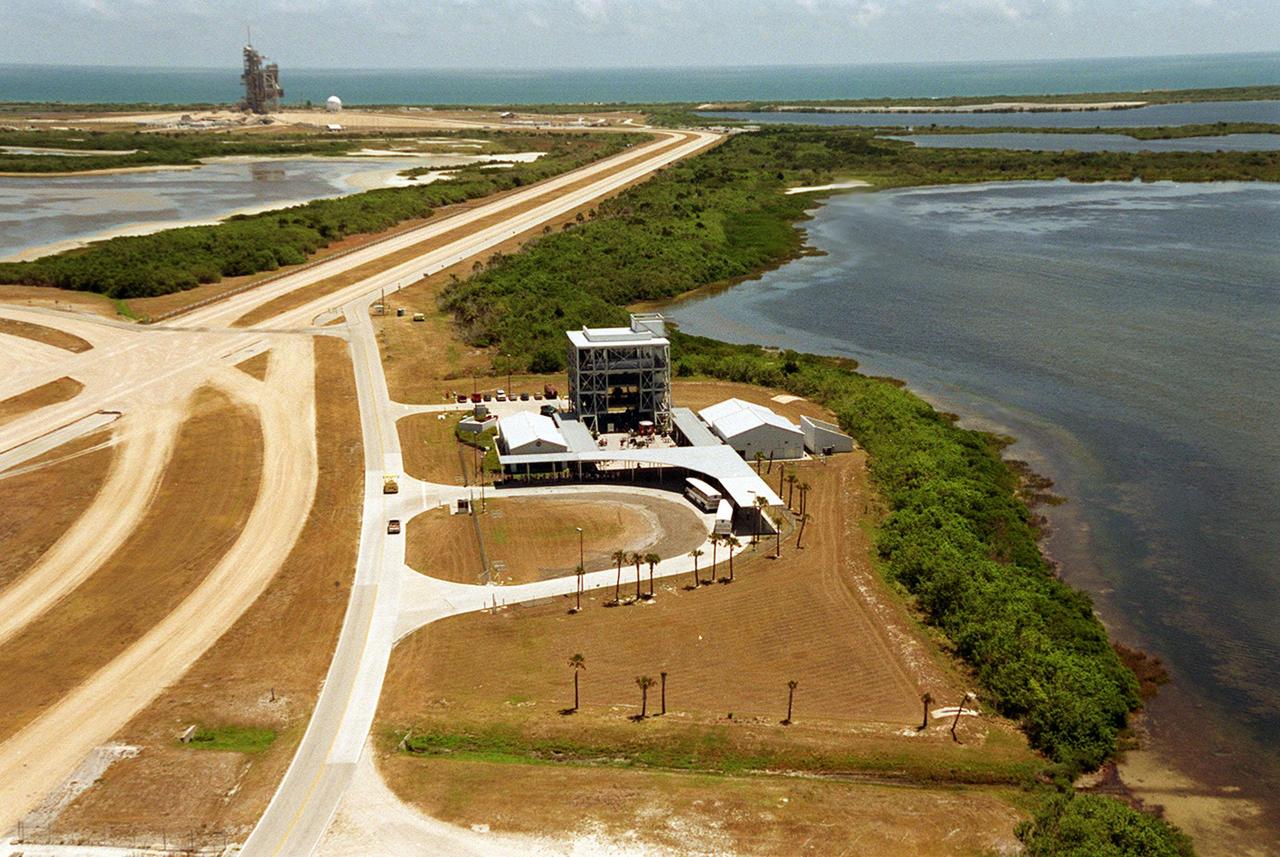
This aerial view is of a tour stop on the KSC bus tour, the Launch Complex 39 Observation Gantry. This stop allows visitors to view and photograph Pads A and B in Launch Complex 39 from an elevated vantage point. The roadway leading to the tour stop runs next to the crawlerway (left) which is used to transport Space Shuttles from the Vehicle Assembly Building to the pads. Pad A can be seen in the background.
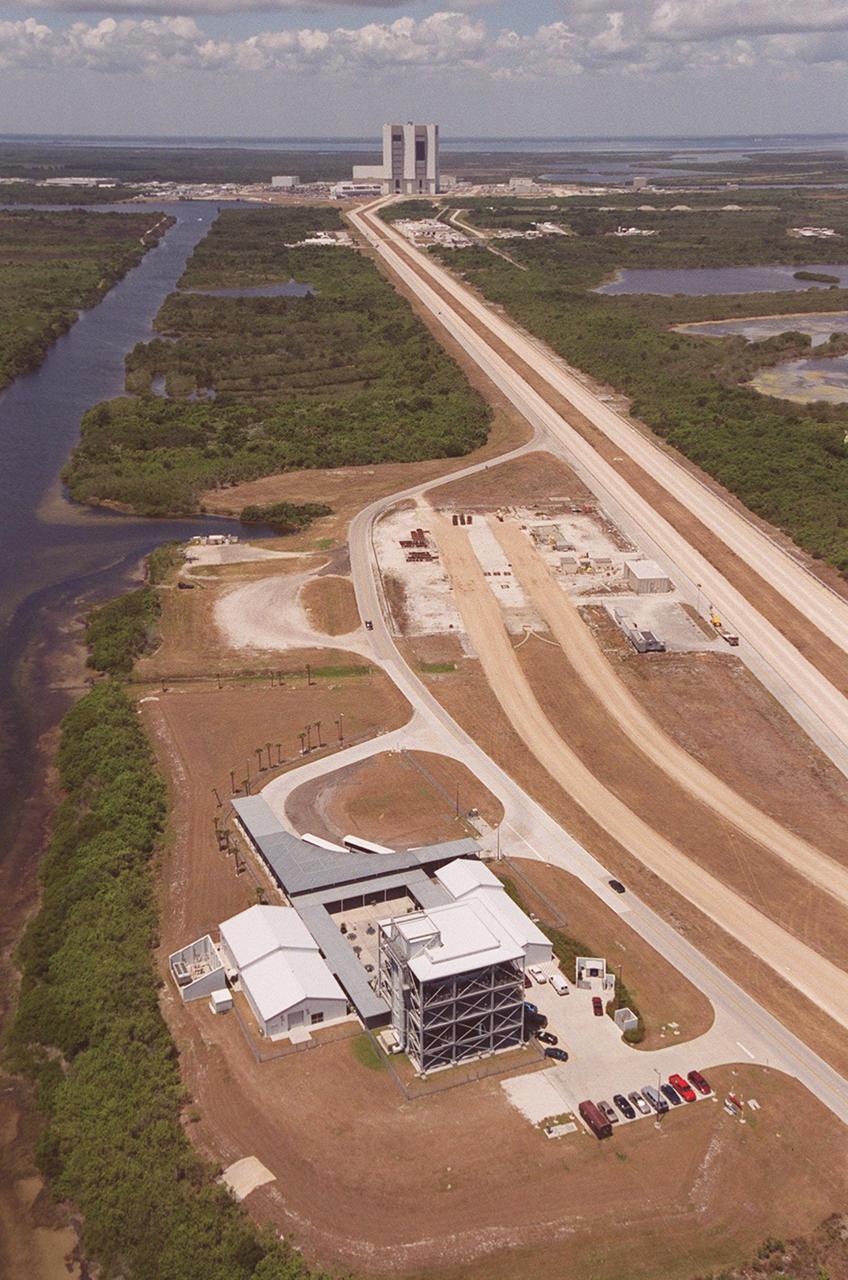
This aerial view is of a tour stop on the KSC bus tour, the Launch Complex 39 Observation Gantry. This stop allows visitors to view and photograph Pads A and B in Launch Complex 39 from an elevated vantage point. The roadway leading to the tour stop runs next to the crawlerway (right) which is used to transport Space Shuttles from the Vehicle Assembly Building (background) to the pads
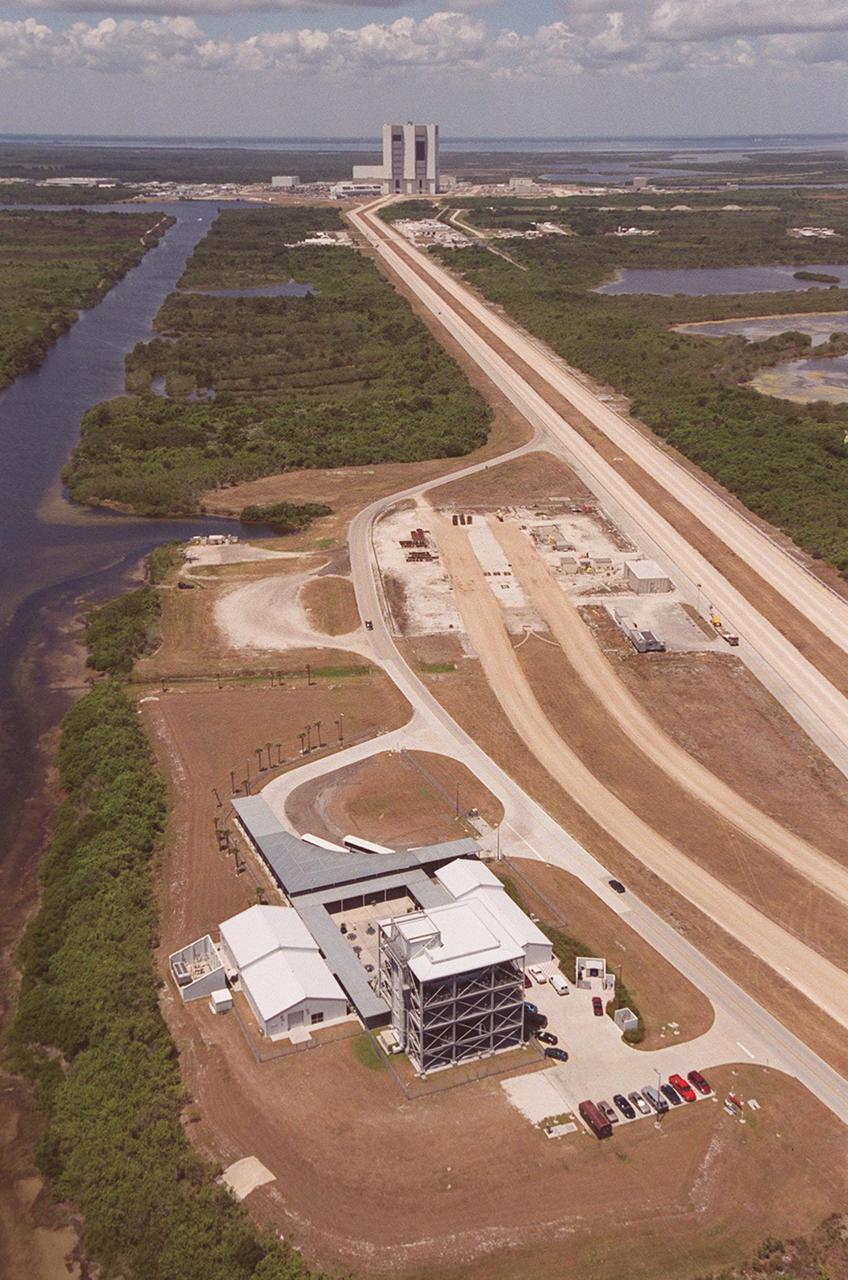
This aerial view is of a tour stop on the KSC bus tour, the Launch Complex 39 Observation Gantry. This stop allows visitors to view and photograph Pads A and B in Launch Complex 39 from an elevated vantage point. The roadway leading to the tour stop runs next to the crawlerway (right) which is used to transport Space Shuttles from the Vehicle Assembly Building (background) to the pads
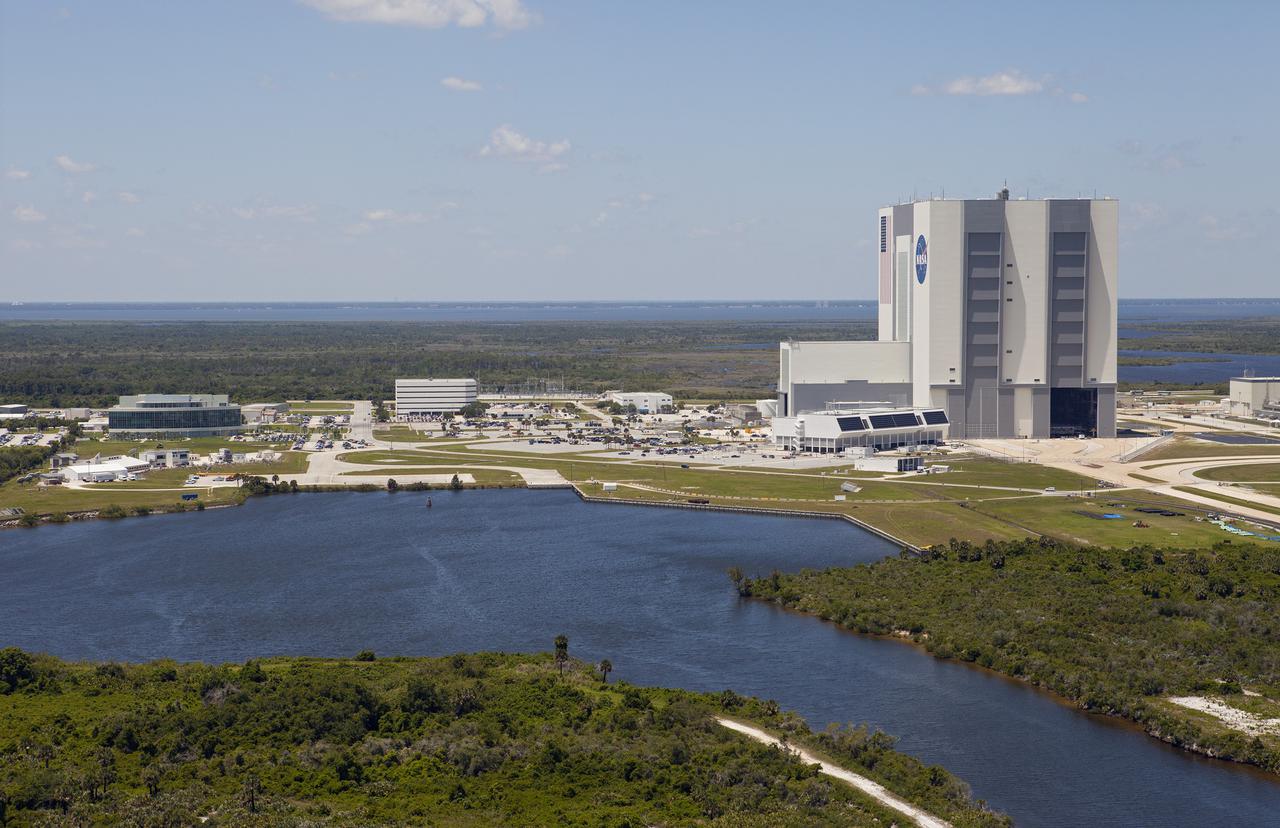
CAPE CANAVERAL, Fla. – An up close aerial view of the Vehicle Assembly Building and other facilities in the Launch Complex 39 area at NASA’s Kennedy Space Center in Florida. In front of the VAB is the Launch Control Center. To the left are the Operations Support Buildings I and II. Upgrades are underway at Pad B and other facilities in the Launch Complex 39 area. The Ground Systems Development and Operations, or GSDO, Program office at Kennedy is leading the center’s transformation from a historically government-only launch complex to a spaceport that can safely handle a variety of rockets and spacecraft, including NASA’s Space Launch System. For more information about GSDO, visit: http:__go.nasa.gov_groundsystems. Photo credit: NASA_Kim Shiflett
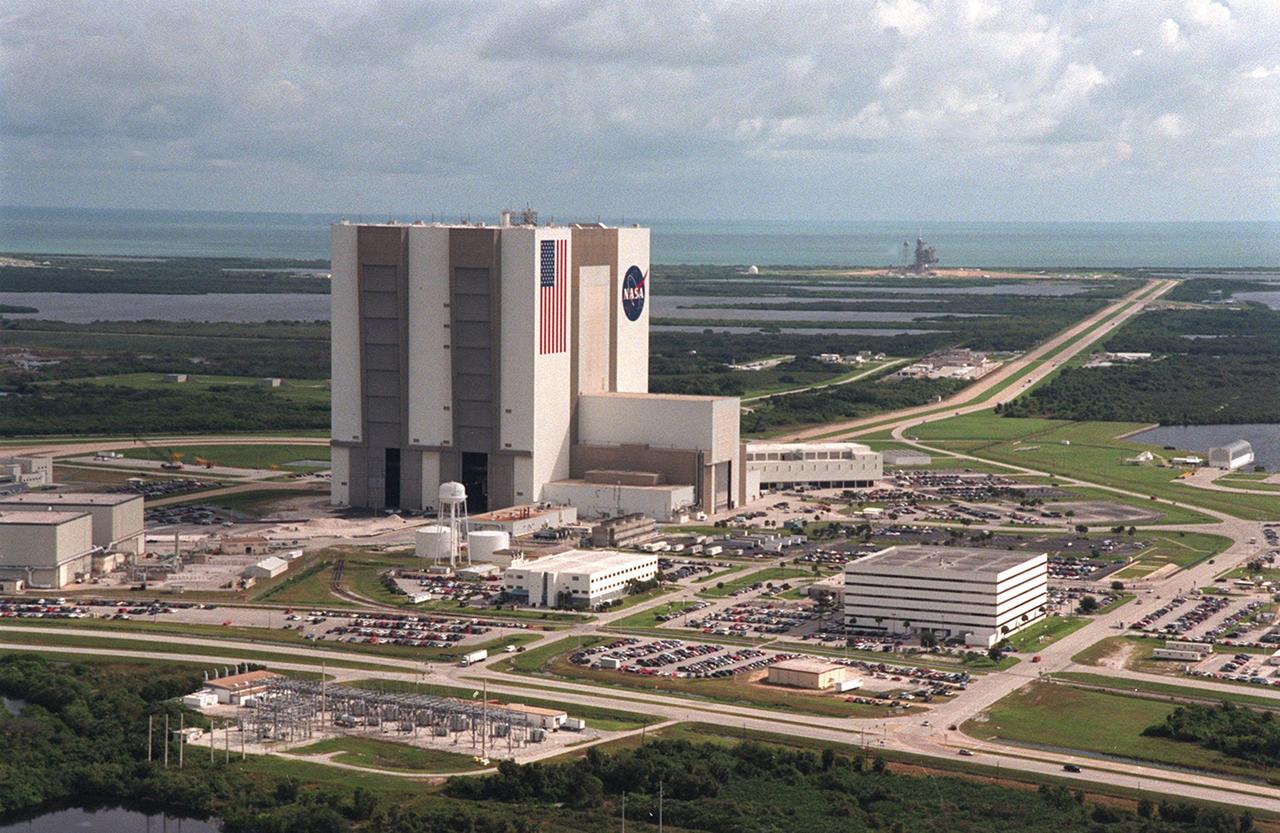
An aerial view of Launch Complex 39 area shows the Vehicle Assembly Building (center), with the Launch Control Center on its right. On the west side (lower end) are (left to right) the Orbiter Processing Facility, Process Control Center and Operations Support Building. Looking east (upper end) are Launch Pads 39-A (right) and 39-B (just above the VAB). The crawlerway stretches between the VAB and the launch pads toward the Atlantic Ocean, seen beyond them. At right is the turn basin where new external tanks are brought via ship, shown at its offloading site.
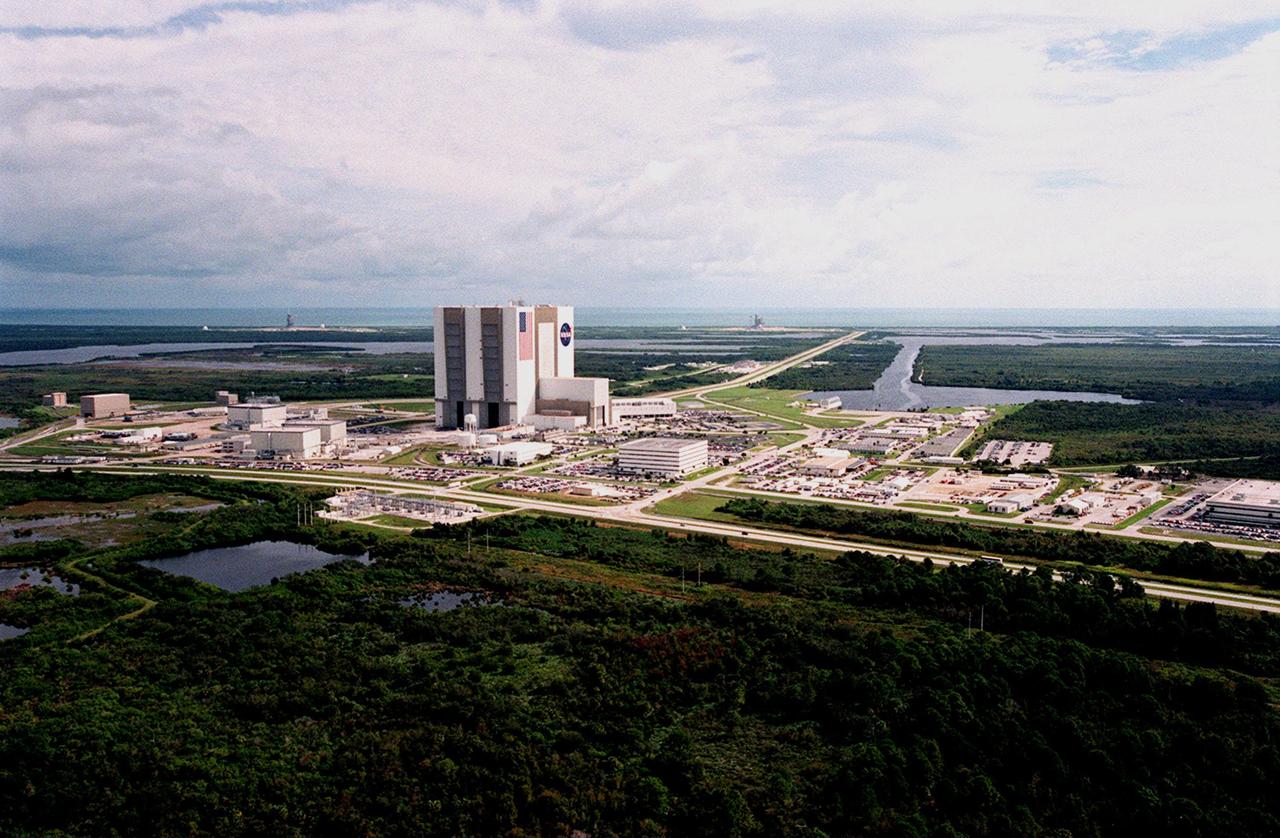
An aerial view of Launch Complex 39 Area shows the Vehicle Assembly Building (center), surrounded by (right) the Launch Control Center, (lower area, left to right) the Orbiter Processing Facility, Process Control Center and Operations Support Building. Looking toward the Atlantic Ocean (top) can be seen Launch Pads 39-A (right) and 39-B. The crawlerway stretches between the VAB and the launch pads. To the right of the crawlerway is the turn basin where new external tanks are brought from Louisiana via ship. The road bordering the buildings is Kennedy Parkway North.
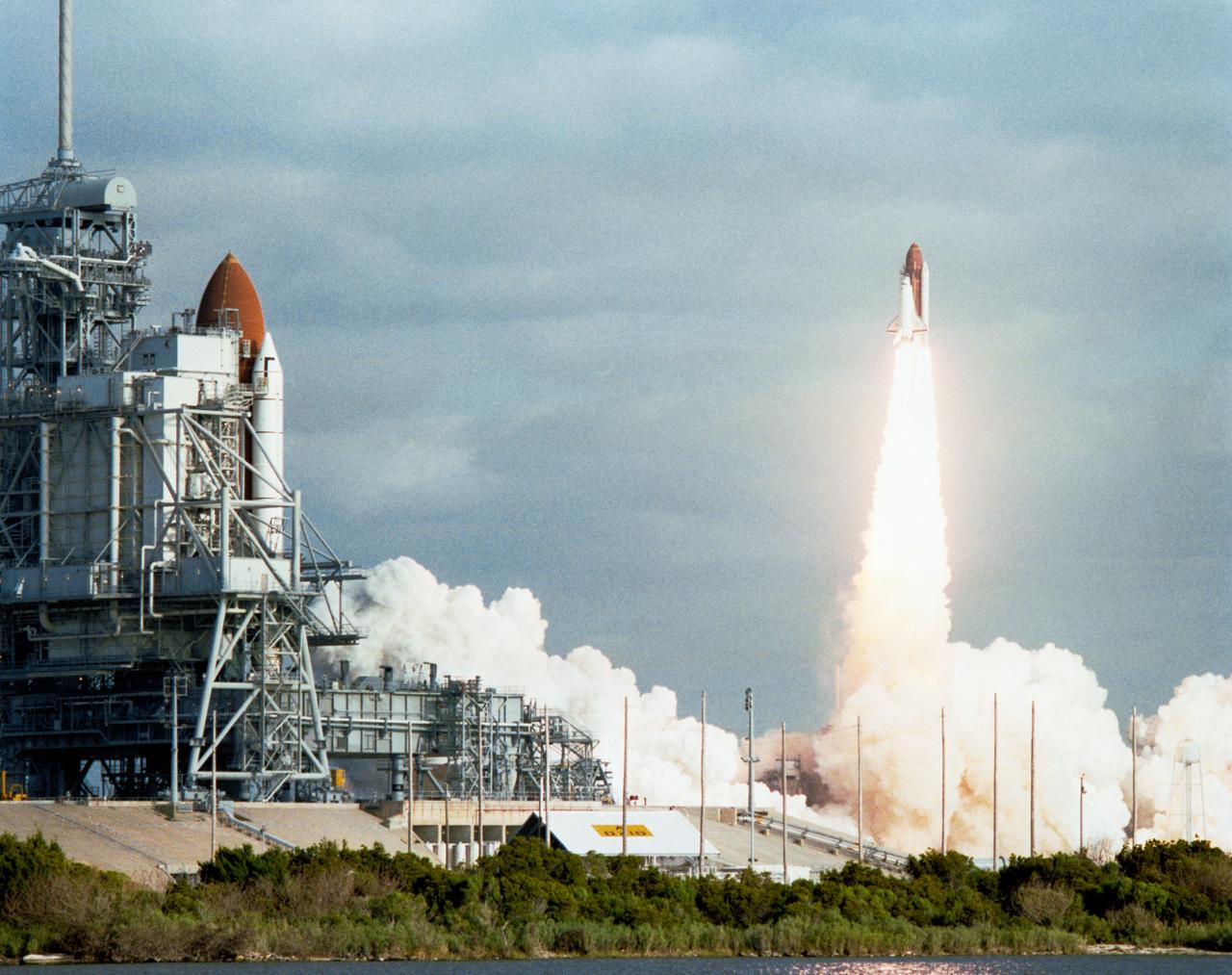
STS-31 Discovery, Orbiter Vehicle (OV) 103, lifts off from Kennedy Space Center (KSC) Launch Complex (LC) 39 Pad B. In the foreground STS-35 Columbia, OV-102, is visible on launch pad 39A. This event marked the first time since January 1986 that there was an orbiter on each pad. LC 39 pads are separated by 1.6 miles. View provided by KSC with alternate number KSC-90PC-610.
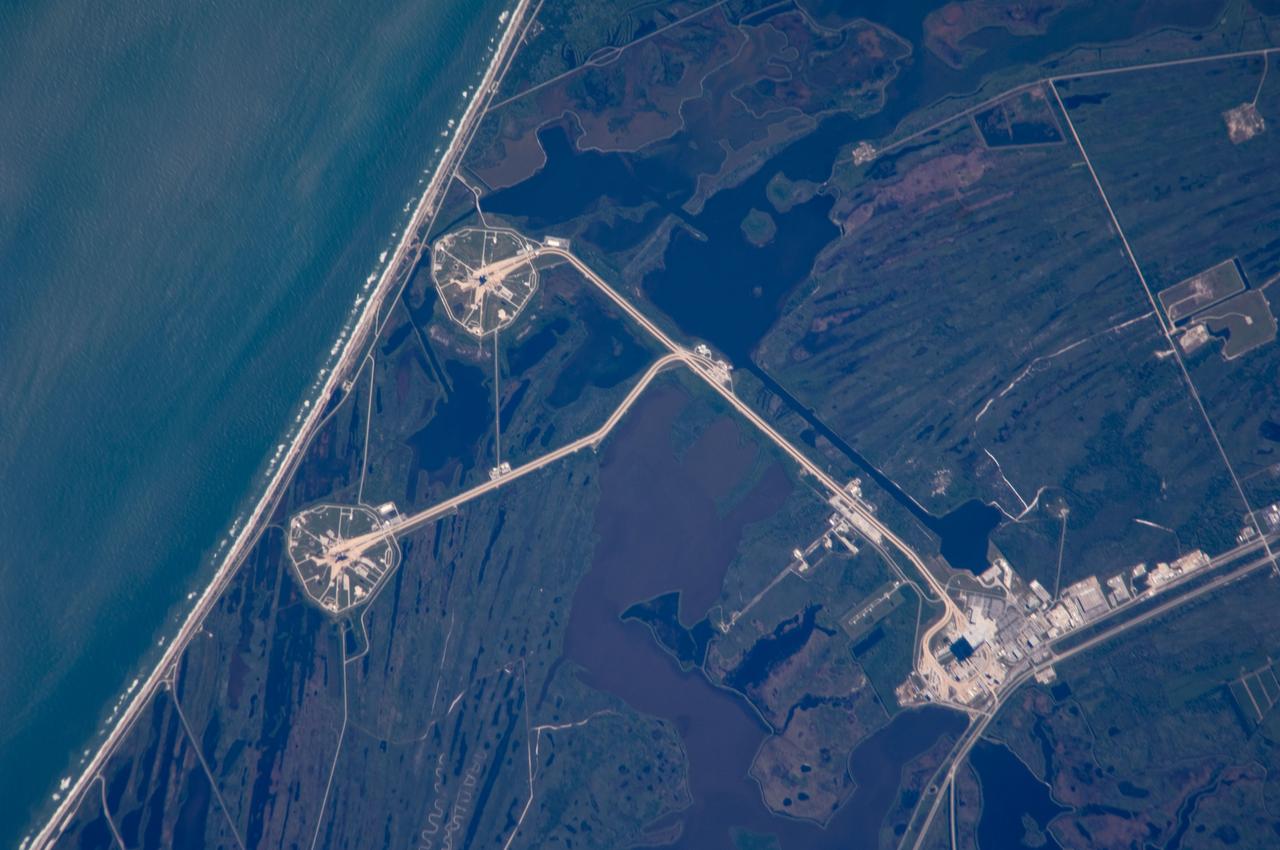
ISS018-E-006077 (29 Oct. 2008) --- Kennedy Space Center and Cape Canaveral, Florida are featured in this image photographed by an Expedition 18 crewmember on the International Space Station. Launch complex 39, with pads A and B, is visible at center left. The Vehicle Assembly Building (VAB) is visible at lower right.
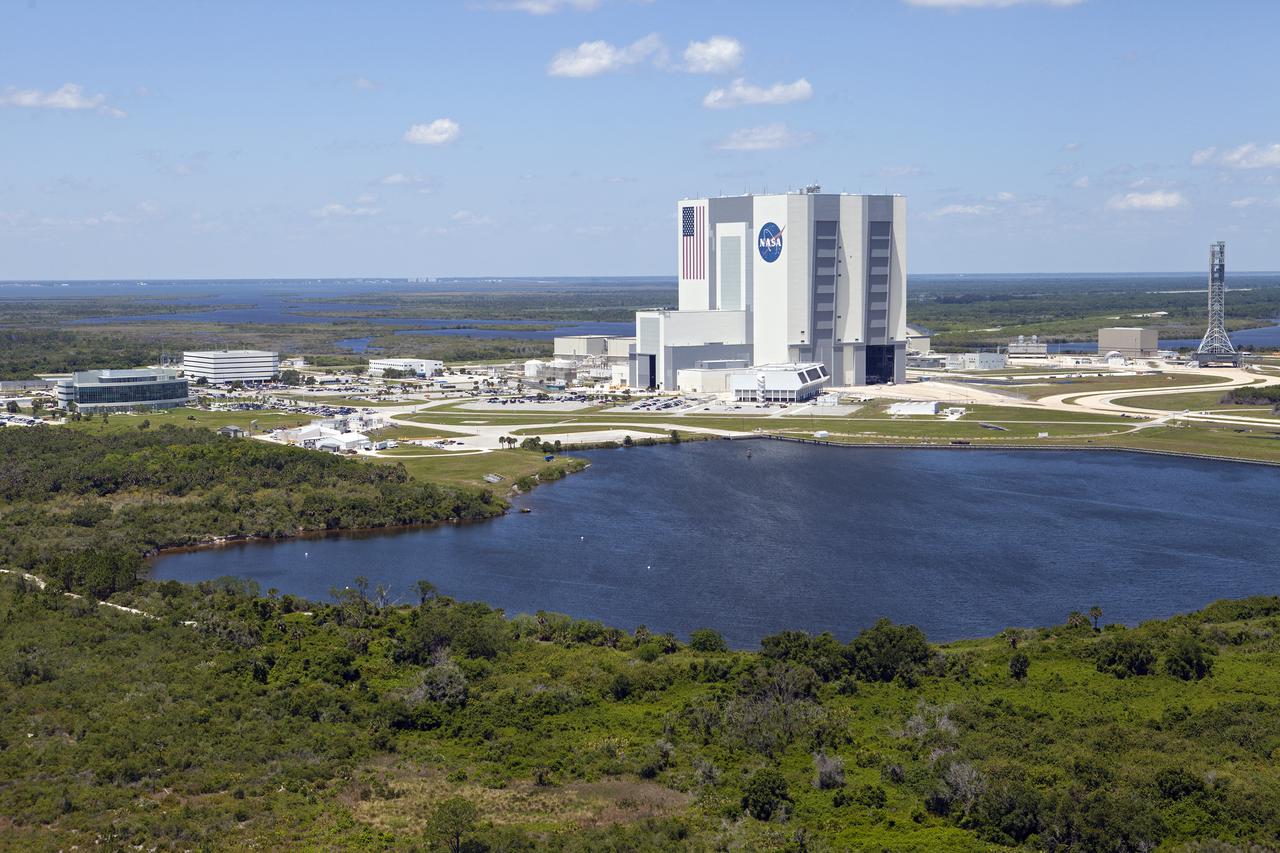
CAPE CANAVERAL, Fla. – An aerial view of the Vehicle Assembly Building, or VAB, and other buildings in the Launch Complex 39 area at NASA’s Kennedy Space Center in Florida. The Launch Control Center is in front of the VAB. To the right is the mobile launcher that will be used to transport NASA’s Space Launch System rocket and the Orion crew capsule to Launch Pad 39B. Upgrades are underway at Pad B and other facilities in the Launch Complex 39 area. The Ground Systems Development and Operations, or GSDO, Program office at Kennedy is leading the center’s transformation from a historically government-only launch complex to a spaceport that can safely handle a variety of rockets and spacecraft, including NASA’s Space Launch System. For more information about GSDO, visit: http:__go.nasa.gov_groundsystems. Photo credit: NASA_Kim Shiflett
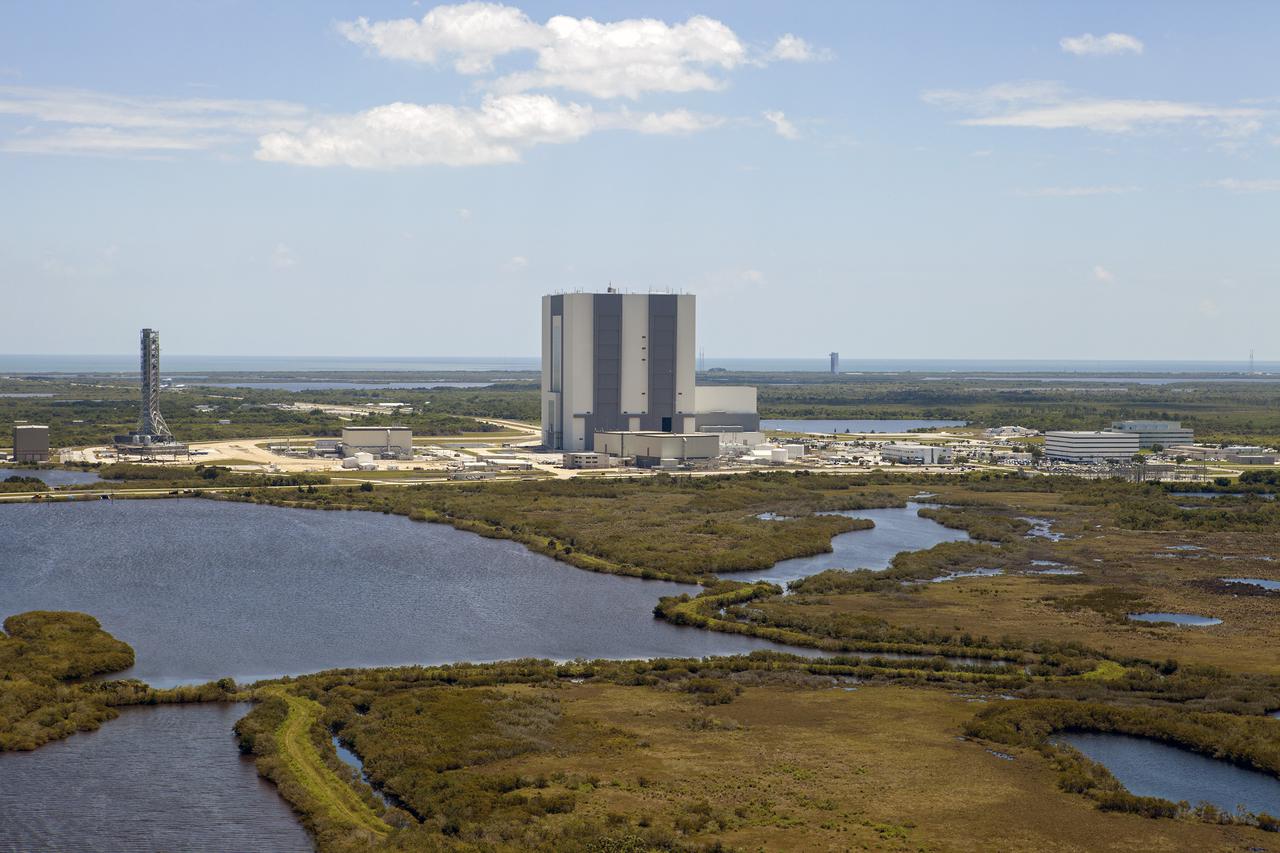
CAPE CANAVERAL, Fla. – An aerial view of the Vehicle Assembly Building and other buildings in the Launch Complex 39 area at NASA’s Kennedy Space Center in Florida. To the left is the mobile launcher that will be used to transport NASA’s Space Launch System rocket and the Orion crew capsule to Launch Pad 39B. Upgrades are underway at Pad B and other facilities in the Launch Complex 39 area. The Ground Systems Development and Operations, or GSDO, Program office at Kennedy is leading the center’s transformation from a historically government-only launch complex to a spaceport that can safely handle a variety of rockets and spacecraft, including NASA’s Space Launch System. For more information about GSDO, visit: http:__go.nasa.gov_groundsystems. Photo credit: NASA_Kim Shiflett
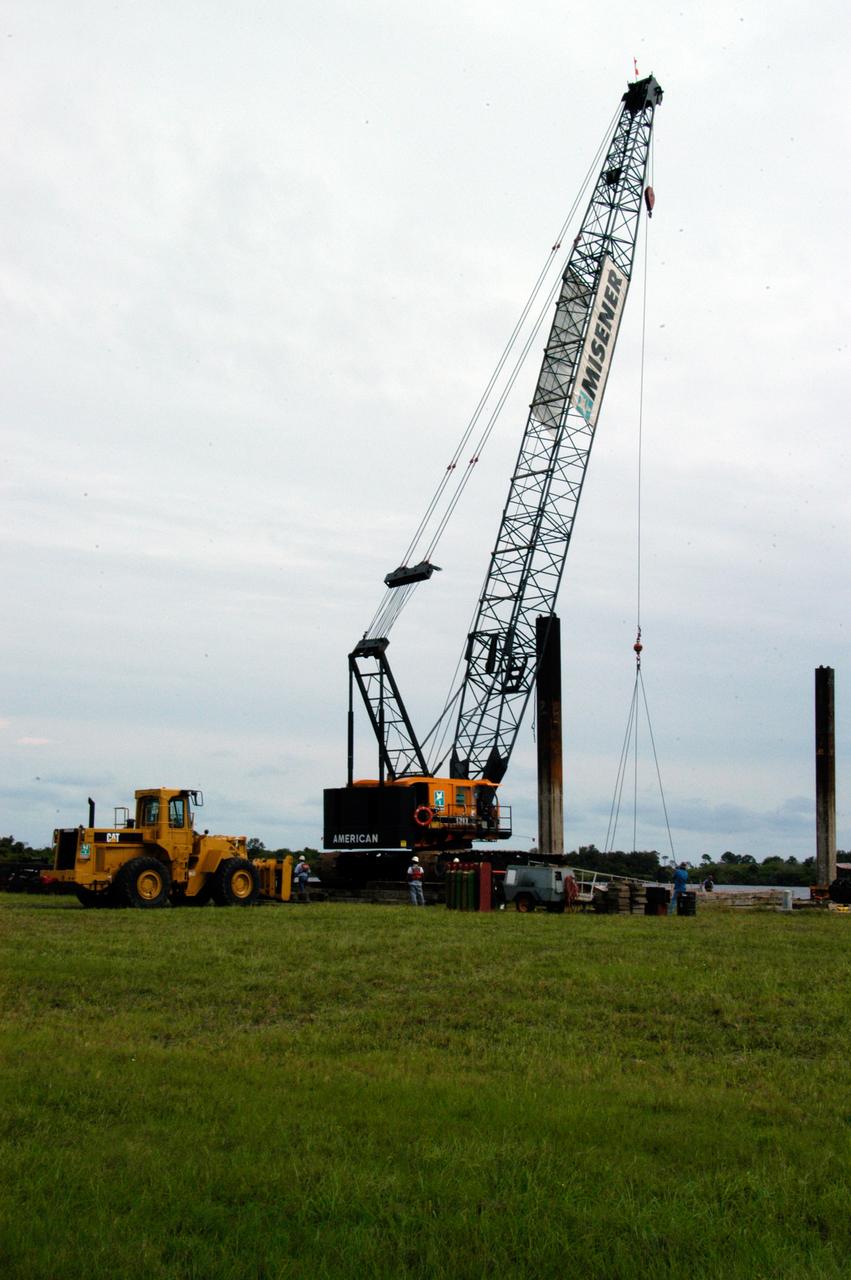
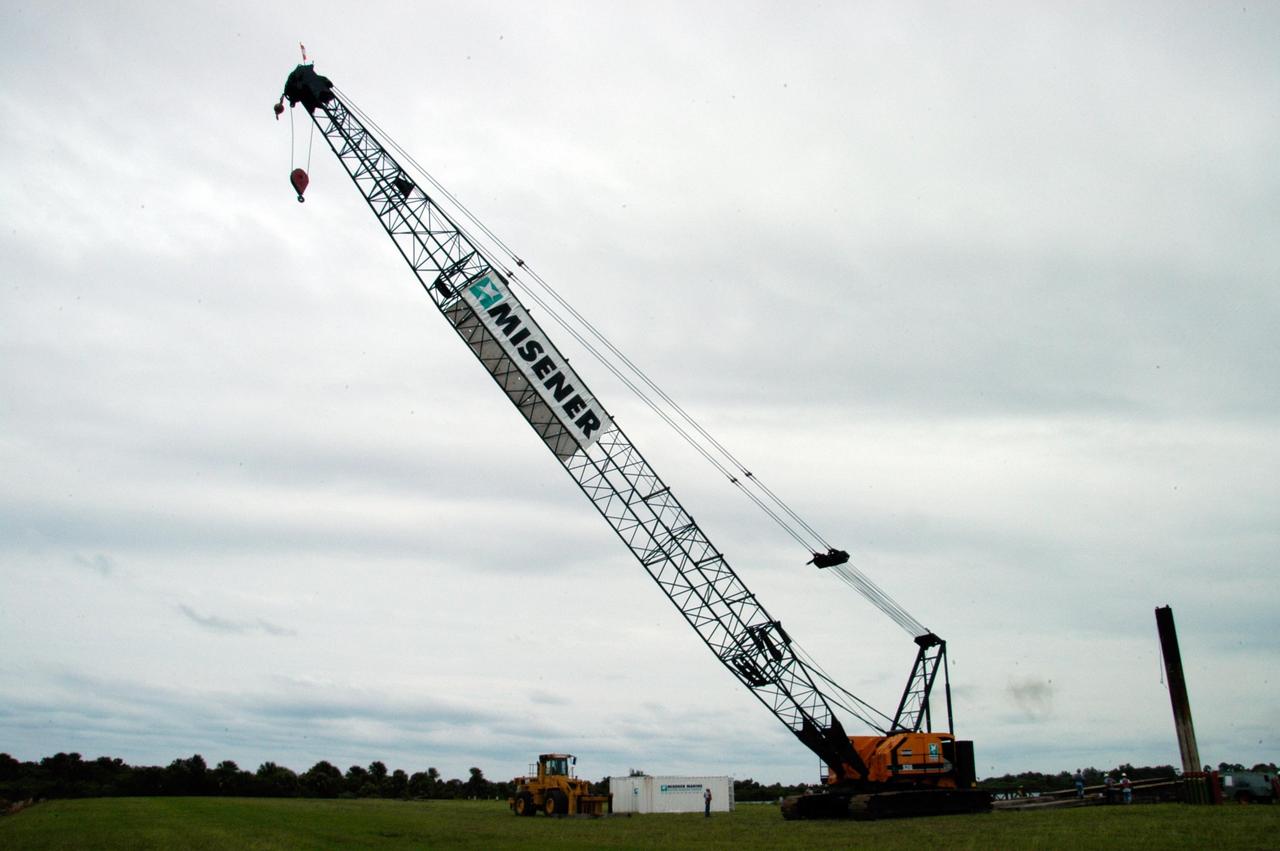
A large crawler crane arrives at the turn basin at the Launch Complex 39 Area on NASA's Kennedy Space Center. The crane with its 70-foot boom will be moved to Launch Pad 39B and used to construct a new lightning protection system for the Constellation Program and Ares/Orion launches. Pad B will be the site of the first Ares vehicle launch, including Ares I-X which is scheduled for April 2009.
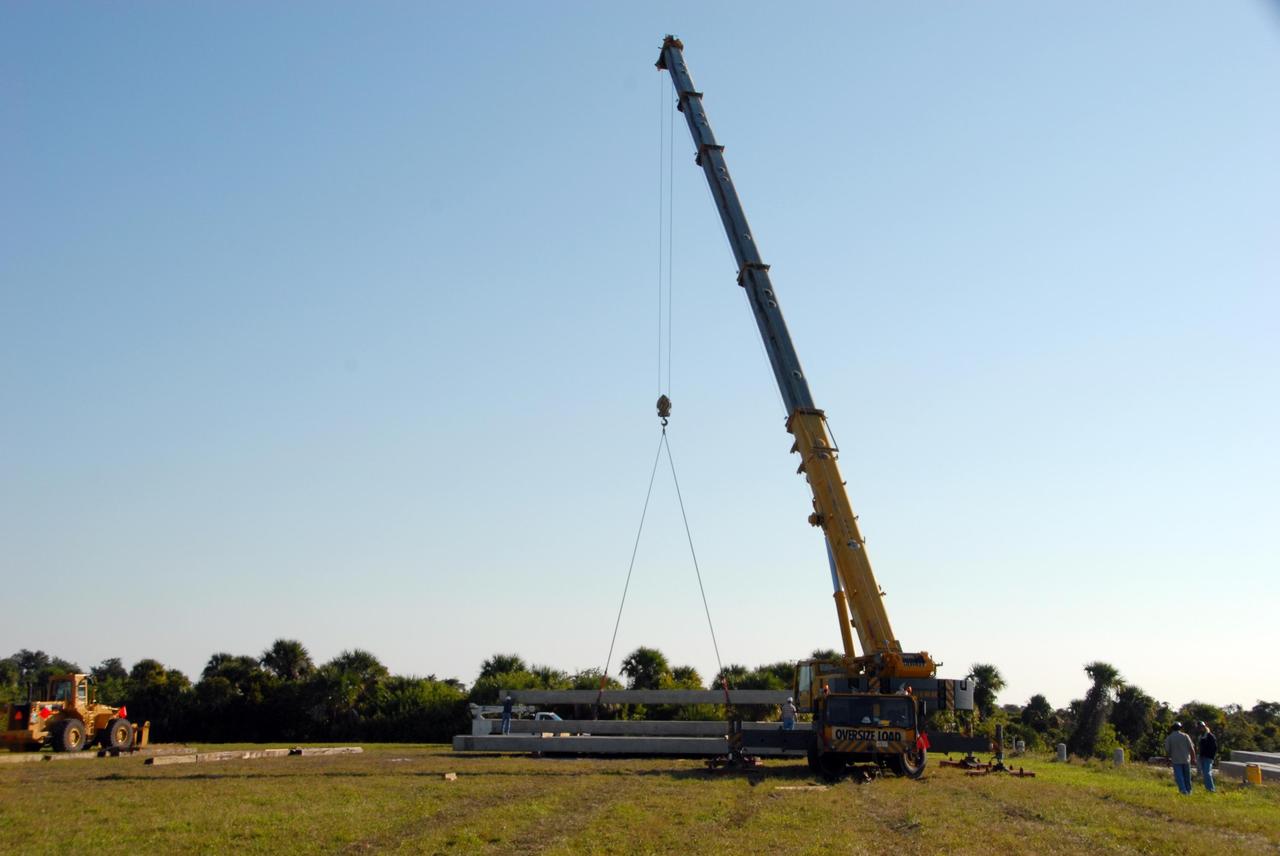
KENNEDY SPACE CENTER, FLA. -- In the Launch Complex 39 Area turn basin at NASA's Kennedy Space Center, the crane crawler moves pilings it lifted from the barge. The pilings will be used to help construct new lightning towers on Launch Pad 39B for the Constellation Program and Ares/Orion launches. Pad B will be the site of the first Ares vehicle launch, including Ares I-X which is scheduled for April 2009. Photo credit: NASA/George Shelton
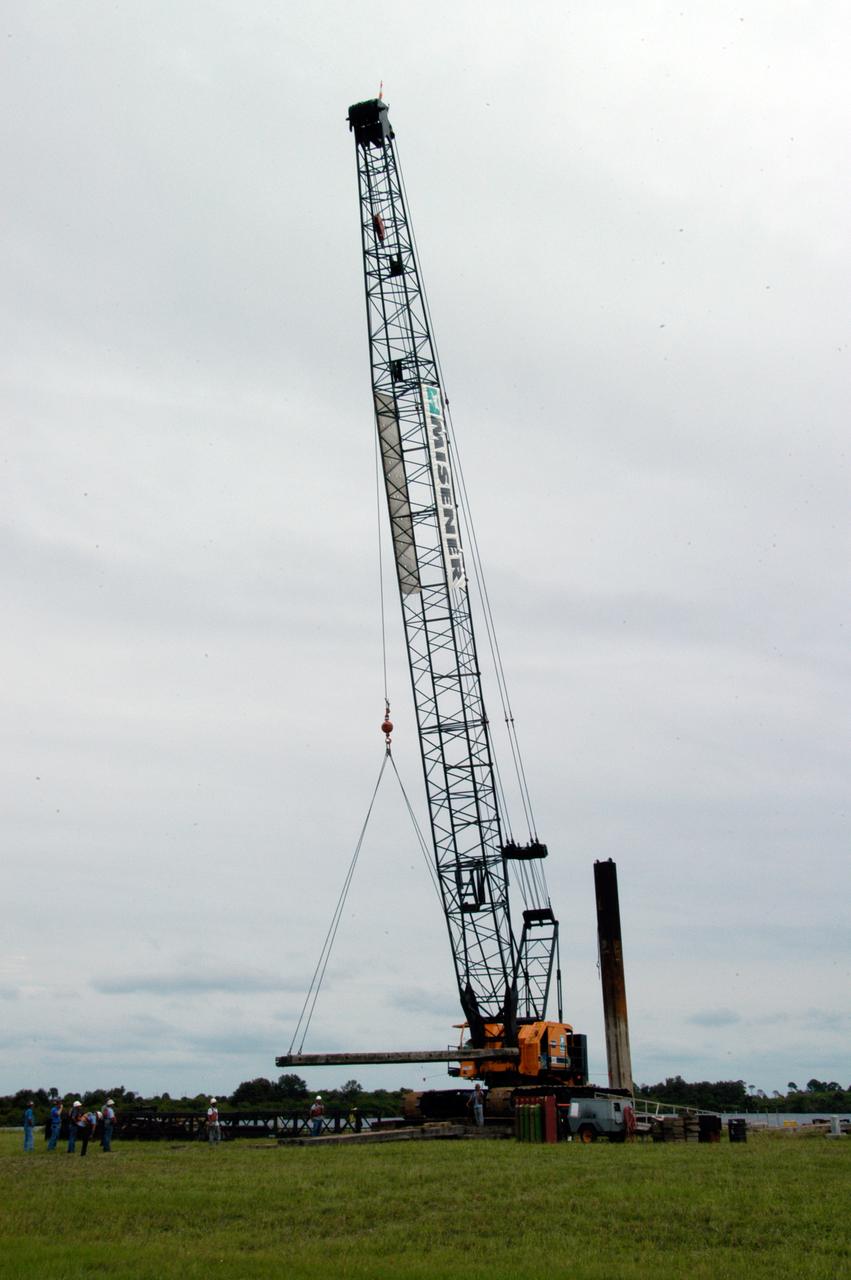
A large crawler crane arrives at the turn basin at the Launch Complex 39 Area on NASA's Kennedy Space Center. The crane with its 70-foot boom will be moved to Launch Pad 39B and used to construct a new lightning protection system for the Constellation Program and Ares/Orion launches. Pad B will be the site of the first Ares vehicle launch, including Ares I-X which is scheduled for April 2009.
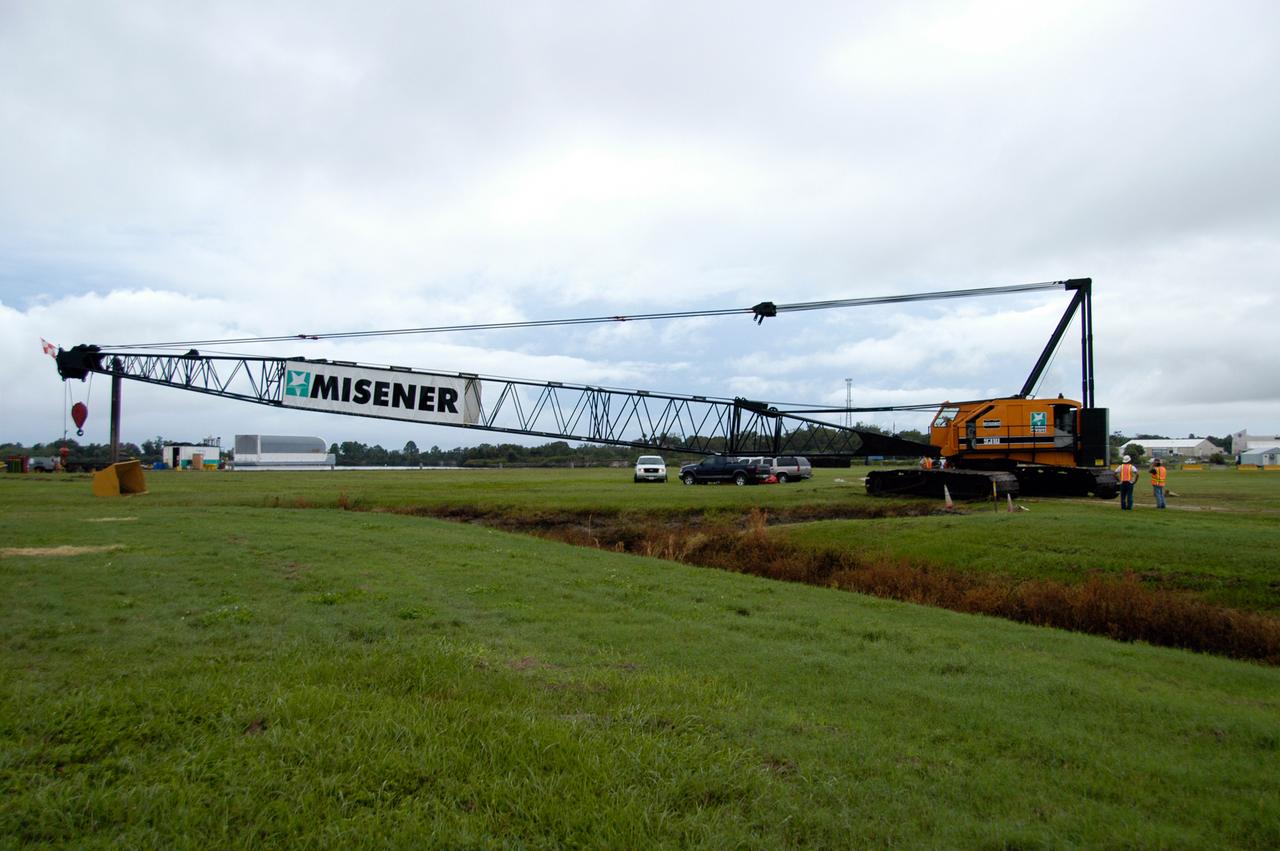
A large crawler crane begins moving away from the turn basin at the Launch Complex 39 Area on NASA's Kennedy Space Center. The crane with its 70-foot boom will be moved to Launch Pad 39B and used to construct a new lightning protection system for the Constellation Program and Ares/Orion launches. Pad B will be the site of the first Ares vehicle launch, including Ares I-X which is scheduled for April 2009.
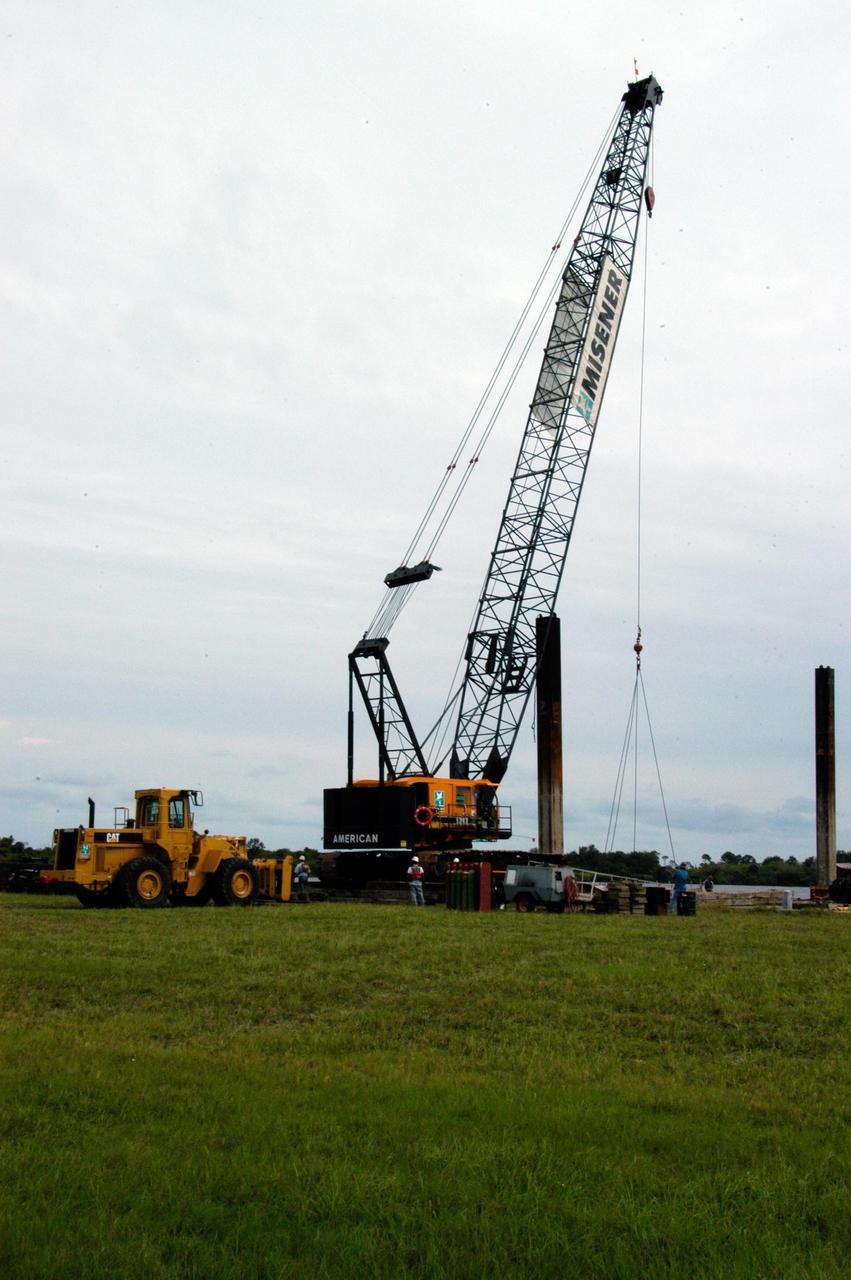
KENNEDY SPACE CENTER, FLA. -- A large crawler crane arrives at the turn basin at the Launch Complex 39 Area on NASA's Kennedy Space Center. The crane with its 70-foot boom will be moved to Launch Pad 39B and used to construct a new lightning protection system for the Constellation Program and Ares/Orion launches. Pad B will be the site of the first Ares vehicle launch, including Ares I-X which is scheduled for April 2009. Photo credit: NASA/George Shelton
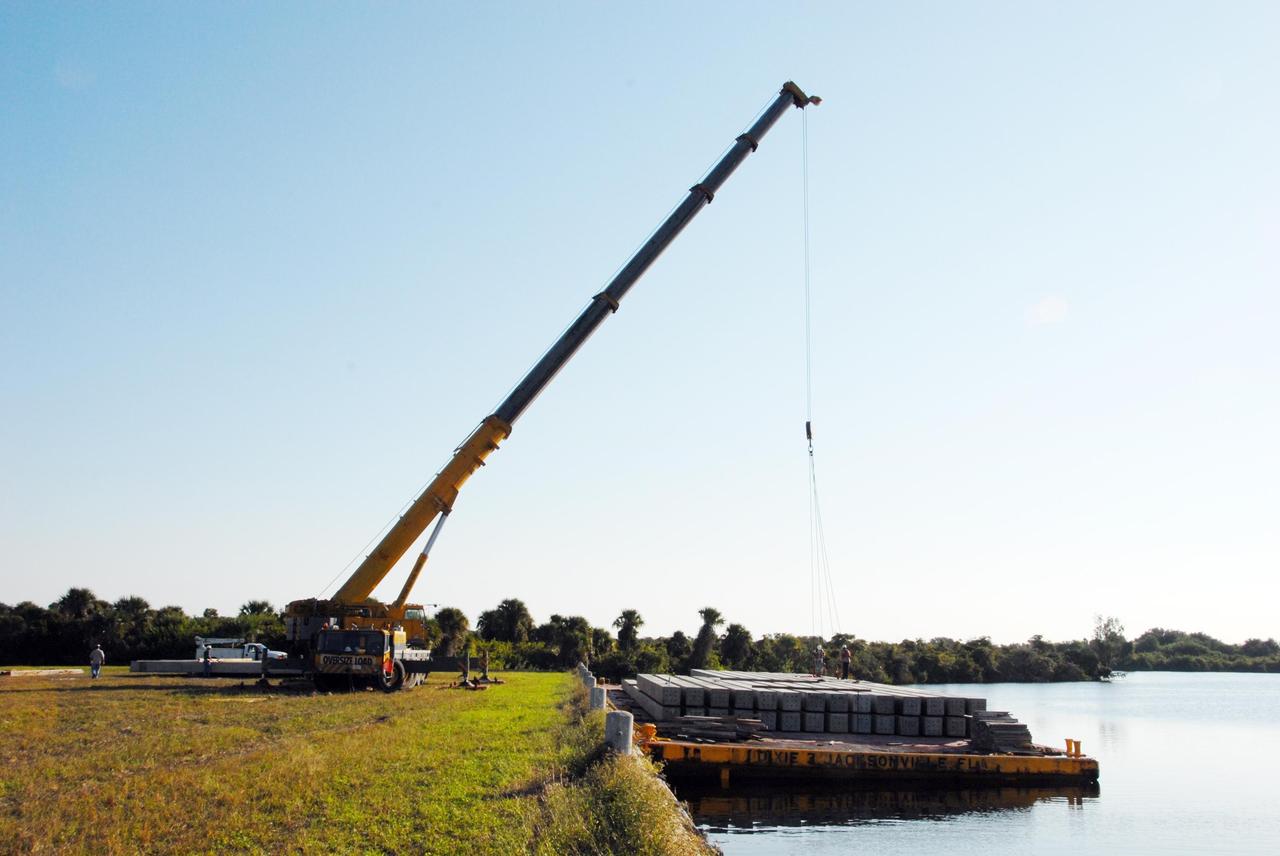
KENNEDY SPACE CENTER, FLA. -- In the Launch Complex 39 Area turn basin at NASA's Kennedy Space Center, the crane crawler is being used to lift pilings from a barge. The pilings will be used to help construct new lightning towers on Launch Pad 39B for the Constellation Program and Ares/Orion launches. Pad B will be the site of the first Ares vehicle launch, including Ares I-X which is scheduled for April 2009. Photo credit: NASA/George Shelton
KENNEDY SPACE CENTER, FLA. -- A large crawler crane begins moving away from the turn basin at the Launch Complex 39 Area on NASA's Kennedy Space Center. The crane with its 70-foot boom will be moved to Launch Pad 39B and used to construct a new lightning protection system for the Constellation Program and Ares/Orion launches. Pad B will be the site of the first Ares vehicle launch, including Ares I-X which is scheduled for April 2009. Photo credit: NASA/George Shelton
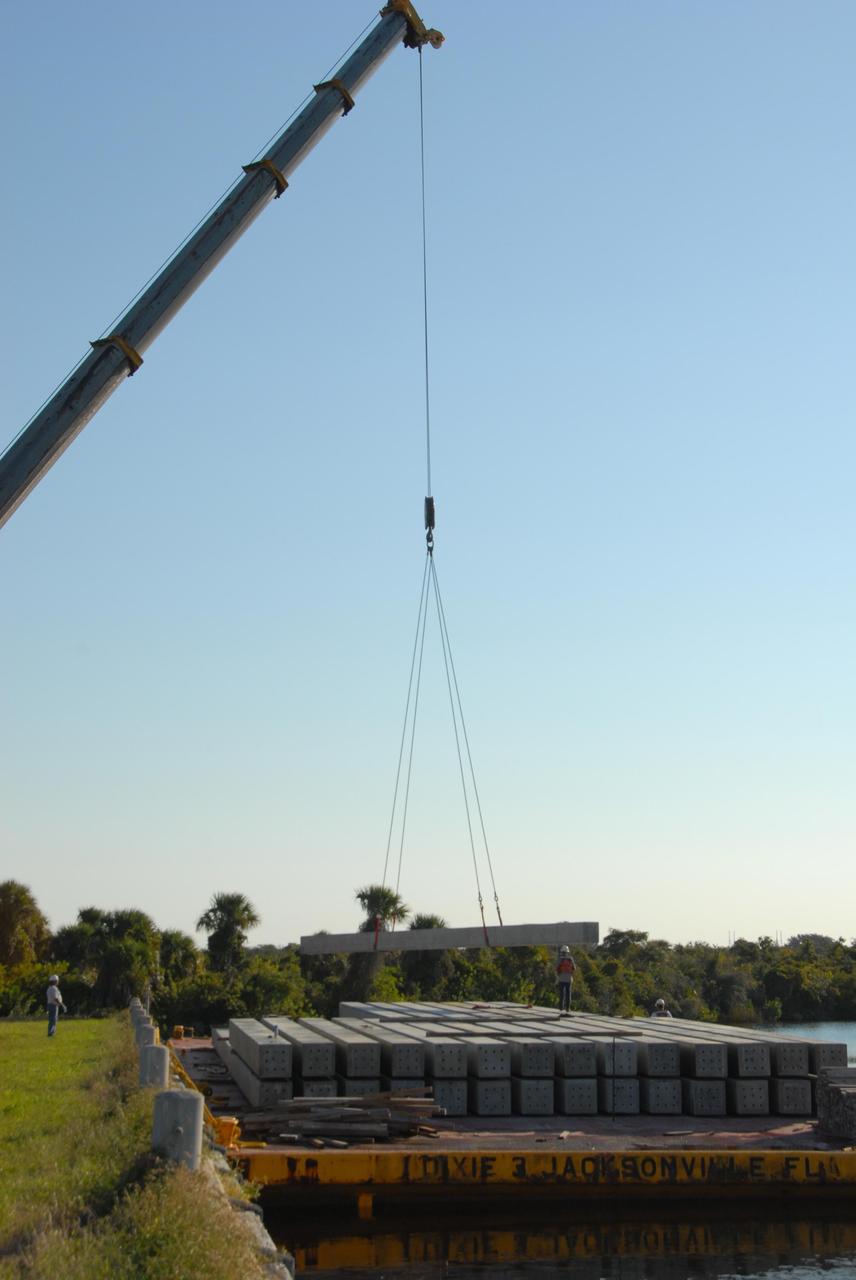
KENNEDY SPACE CENTER, FLA. -- In the Launch Complex 39 Area turn basin at NASA's Kennedy Space Center, the crane crawler begins lifting pilings from the barge. The pilings will be used to help construct new lightning towers on Launch Pad 39B for the Constellation Program and Ares/Orion launches. Pad B will be the site of the first Ares vehicle launch, including Ares I-X which is scheduled for April 2009. Photo credit: NASA/George Shelton
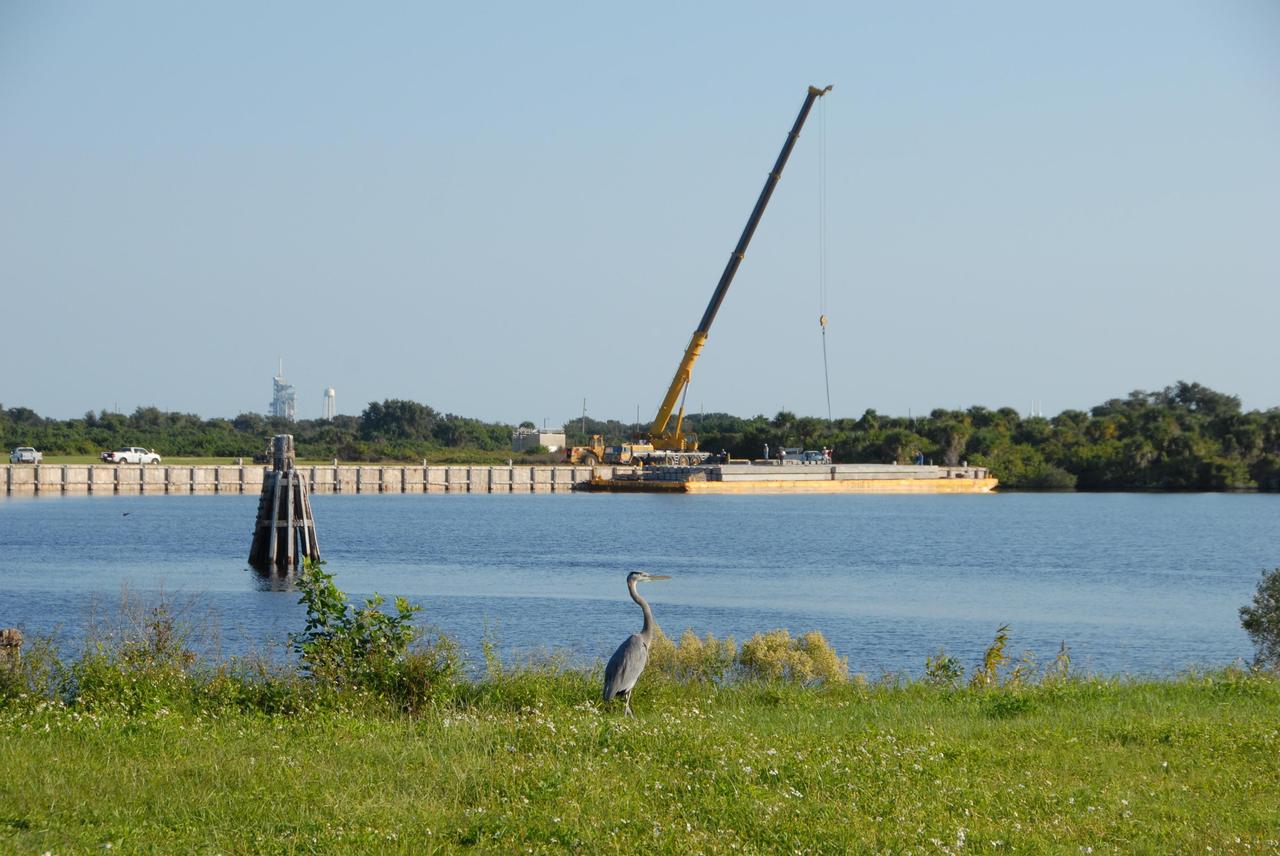
KENNEDY SPACE CENTER, FLA. -- In the Launch Complex 39 Area turn basin at NASA's Kennedy Space Center, the crane crawler is being used to lift pilings from a barge. The pilings will be used to help construct new lightning towers on Launch Pad 39B for the Constellation Program and Ares/Orion launches. Pad B will be the site of the first Ares vehicle launch, including Ares I-X which is scheduled for April 2009. Photo credit: NASA/George Shelton
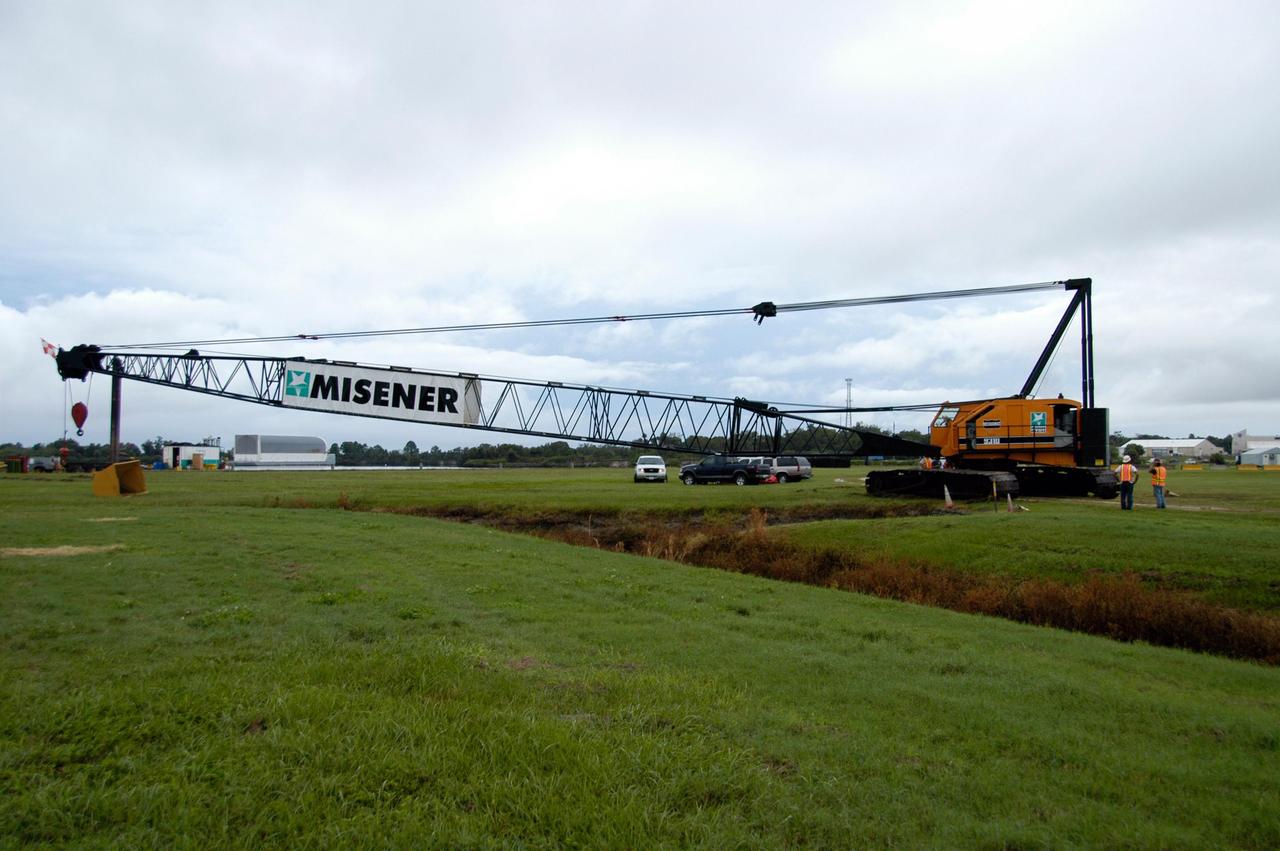
KENNEDY SPACE CENTER, FLA. -- A large crawler crane begins moving away from the turn basin at the Launch Complex 39 Area on NASA's Kennedy Space Center. The crane with its 70-foot boom will be moved to Launch Pad 39B and used to construct a new lightning protection system for the Constellation Program and Ares/Orion launches. Pad B will be the site of the first Ares vehicle launch, including Ares I-X which is scheduled for April 2009. Photo credit: NASA/George Shelton
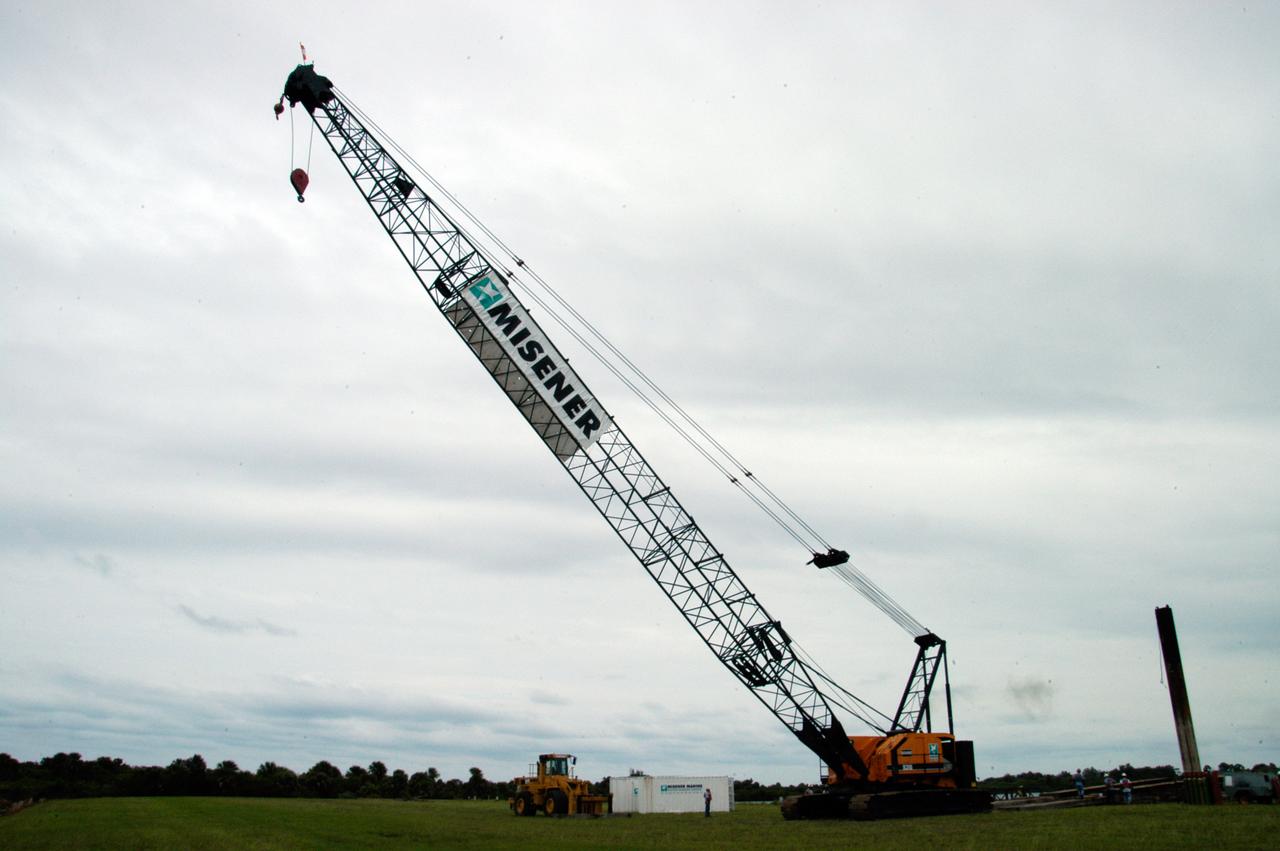
A large crawler crane begins moving away from the turn basin at the Launch Complex 39 Area on NASA's Kennedy Space Center. The crane with its 70-foot boom will be moved to Launch Pad 39B and used to construct a new lightning protection system for the Constellation Program and Ares/Orion launches. Pad B will be the site of the first Ares vehicle launch, including Ares I-X which is scheduled for April 2009.
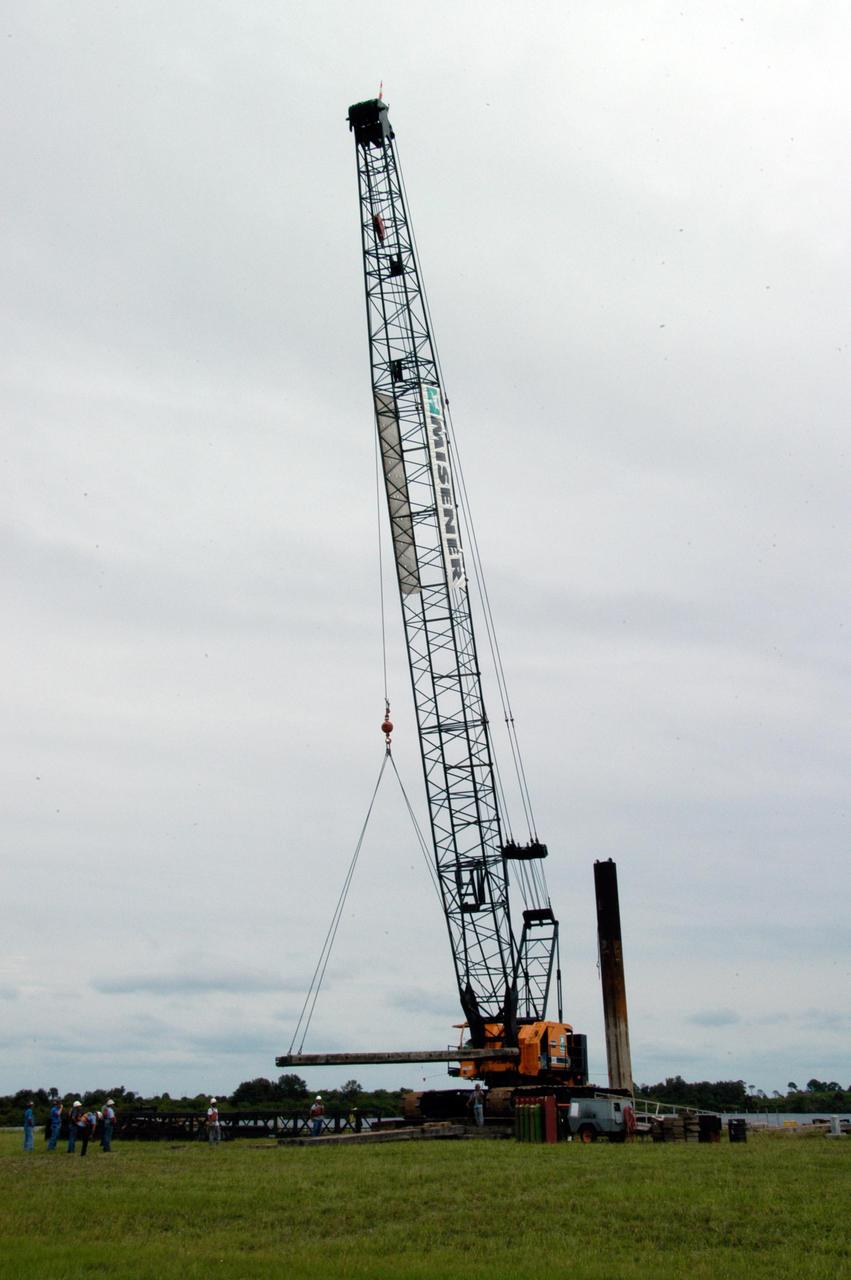
KENNEDY SPACE CENTER, FLA. -- A large crawler crane arrives at the turn basin at the Launch Complex 39 Area on NASA's Kennedy Space Center. The crane with its 70-foot boom will be moved to Launch Pad 39B and used to construct a new lightning protection system for the Constellation Program and Ares/Orion launches. Pad B will be the site of the first Ares vehicle launch, including Ares I-X which is scheduled for April 2009. Photo credit: NASA/George Shelton
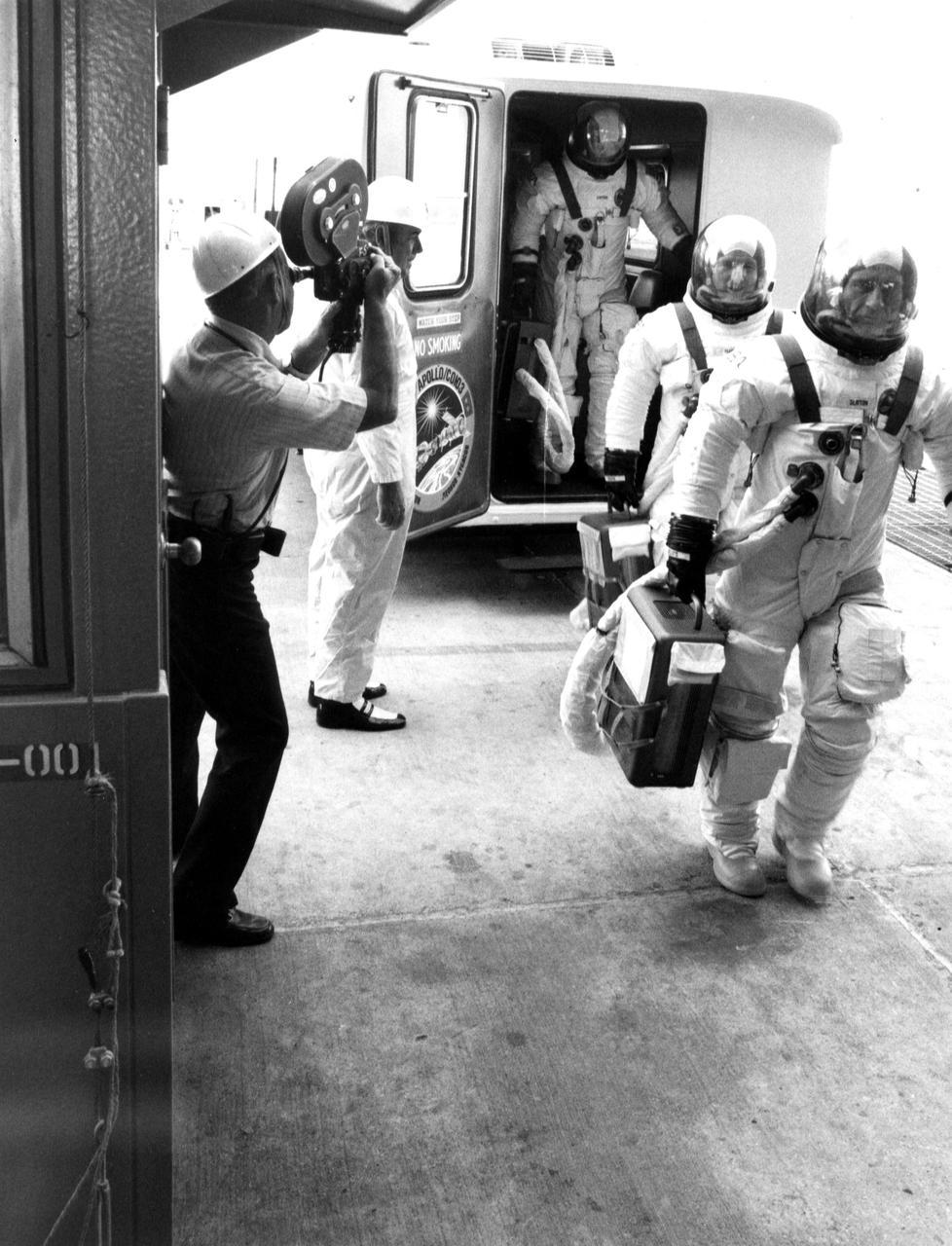
KENNEDY SPACE CENTER, FLA. -- ASTP asstronauts Donald slayton, Vance Brand and Thomas Stafford leave the transfer van at Complex 39's Pad B and enter the pad elevator during the Countdown Demonstration Test. The test, a step-by-step dress rehearsal for the July 15 launch, simulates the actual countdown but without the propellants in the Saturn IB launch vehicle's fuel tanks. The fueled portion of the test was conducted yesterday.
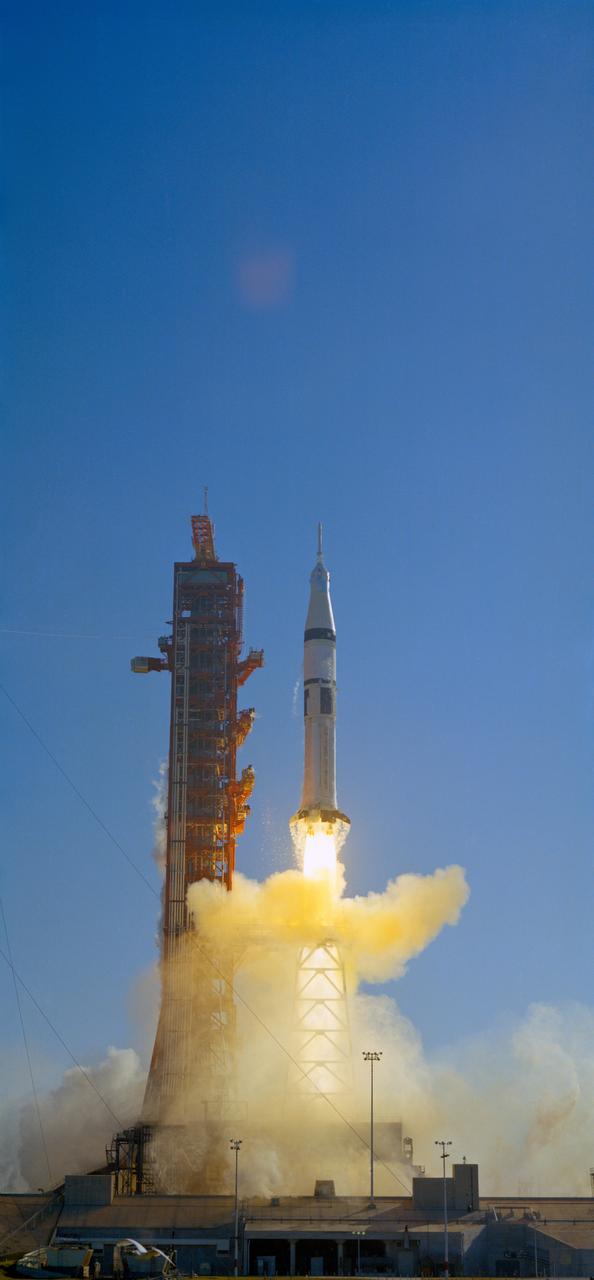
S73-37287 (16 Nov. 1973) --- The Skylab 4/Saturn 1B space vehicle is launched from Pad B, Launch Complex 39, Kennedy Space Center, Florida, at 9:01:23 a.m., Friday, Nov. 16, 1973. Skylab 4 is the third and last of three scheduled manned Skylab missions. Photo credit: NASA
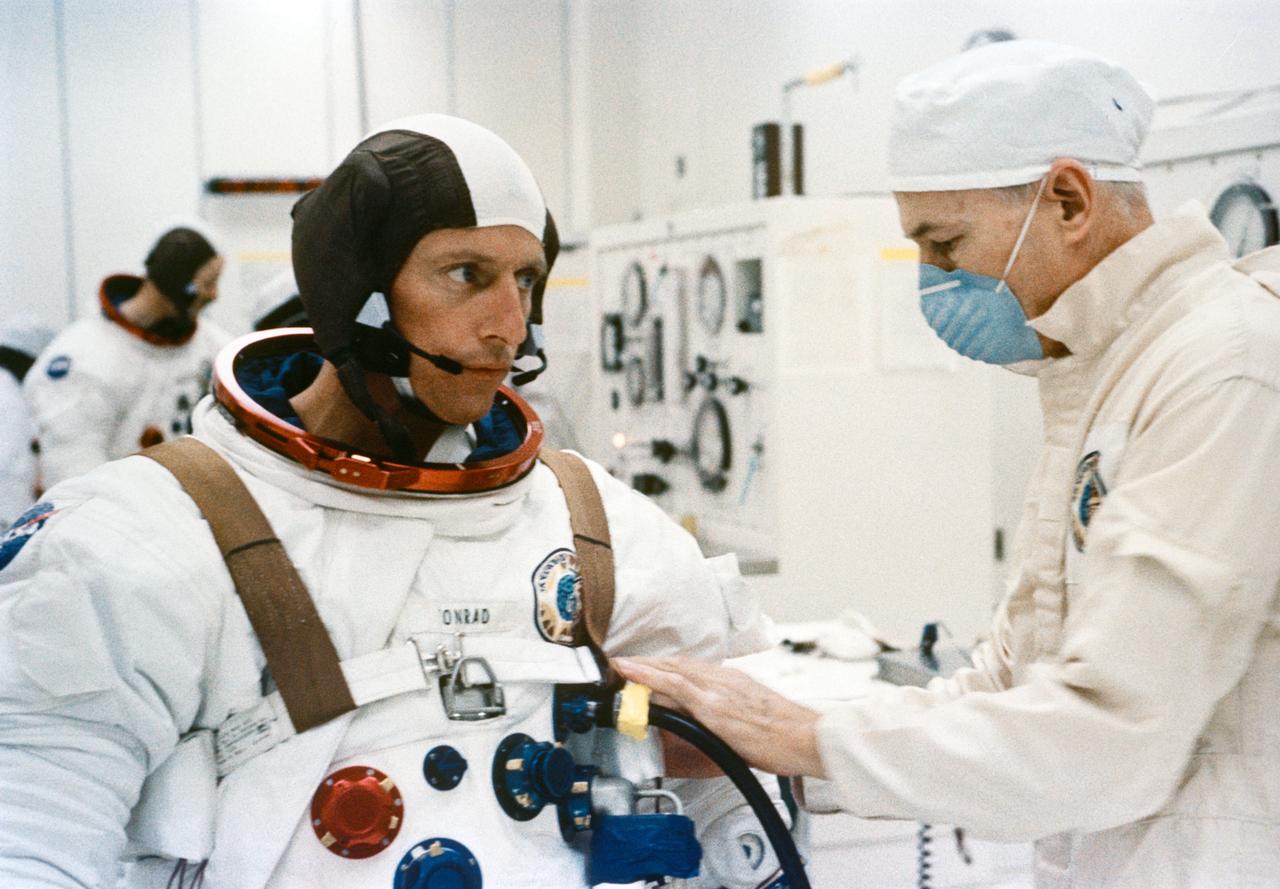
S73-25901 (25 May 1973) --- Astronaut Charles Conrad Jr., commander of the Skylab 2 mission, is suited up in the Manned Spacecraft Operations Building at the Kennedy Space Center during Skylab 2 prelaunch preparations. Skylab 2, with astronauts Conrad, Joseph P. Kerwin and Paul J. Weitz aboard, was launched from KSC's Pad B, Launch Complex 39, at 9:00 a.m. (EDT), May 25, 1973. Photo credit: NASA
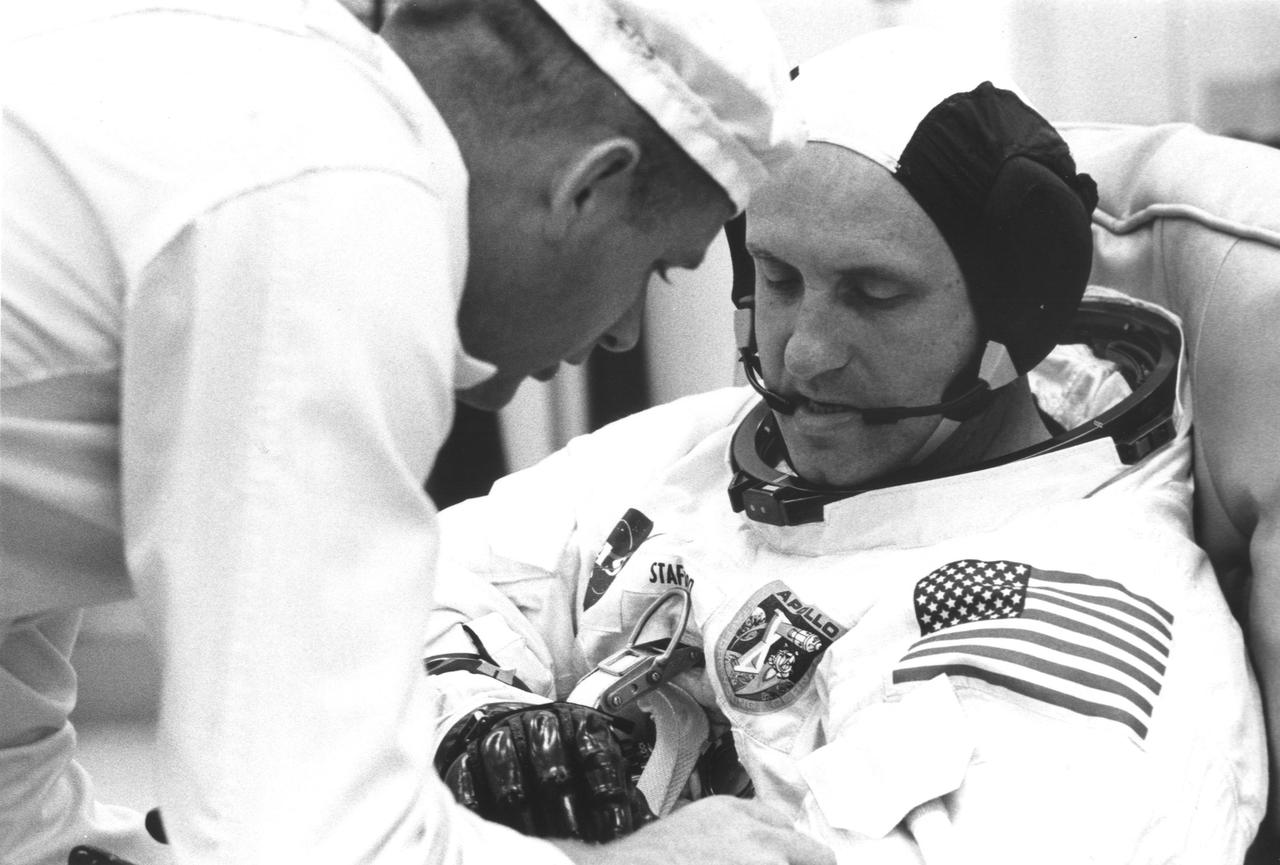
KENNEDY SPACE CENTER, FLA. -- A technician helps astronaut Thomas P. Stafford, Apollo 10 commander, suit up for the Countdown Demonstration Test (CDDT) which ended successfully at 1:01 p.m. today. The CDDT is a dress rehearsal for the launch of Apollo 10 from Pad B at Launch Complex 39 May 18 at 12:49 p.m.
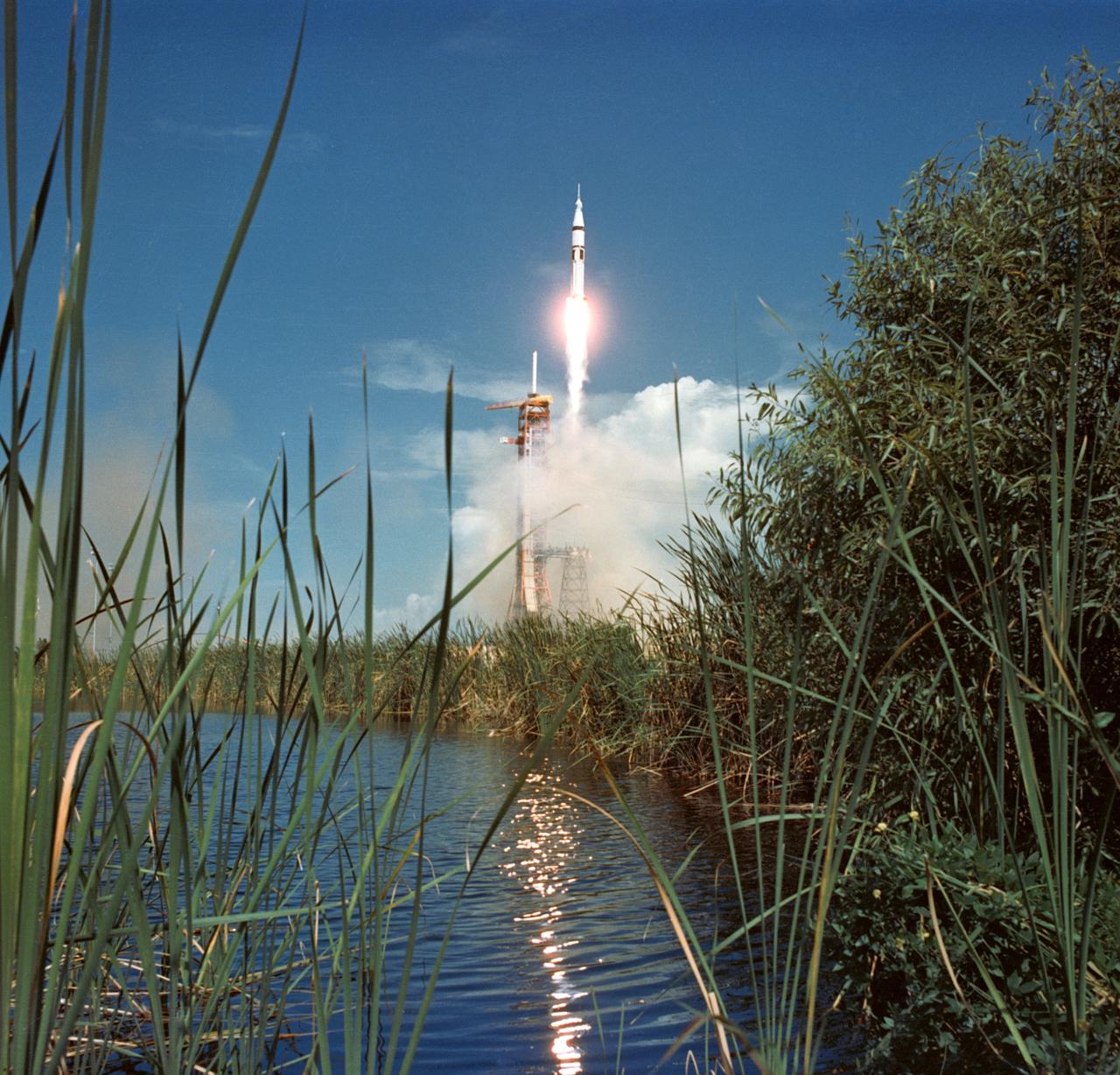
S75-28547 (15 July 1975) --- The Apollo-Soyuz Test Project's (ASTP) NASA Apollo/Saturn 1B space vehicle is launched from Pad B, Launch Complex 39, Kennedy Space Center (KSC), Florida, at 3:50 p.m. (EDT), July 15, 1975, to begin Apollo's catch-up journey toward the already Earth-orbiting Soviet Soyuz spacecraft. Aboard the Apollo spacecraft were astronauts Thomas P. Stafford, Vance D. Brand and Donald K. (Deke) Slayton.
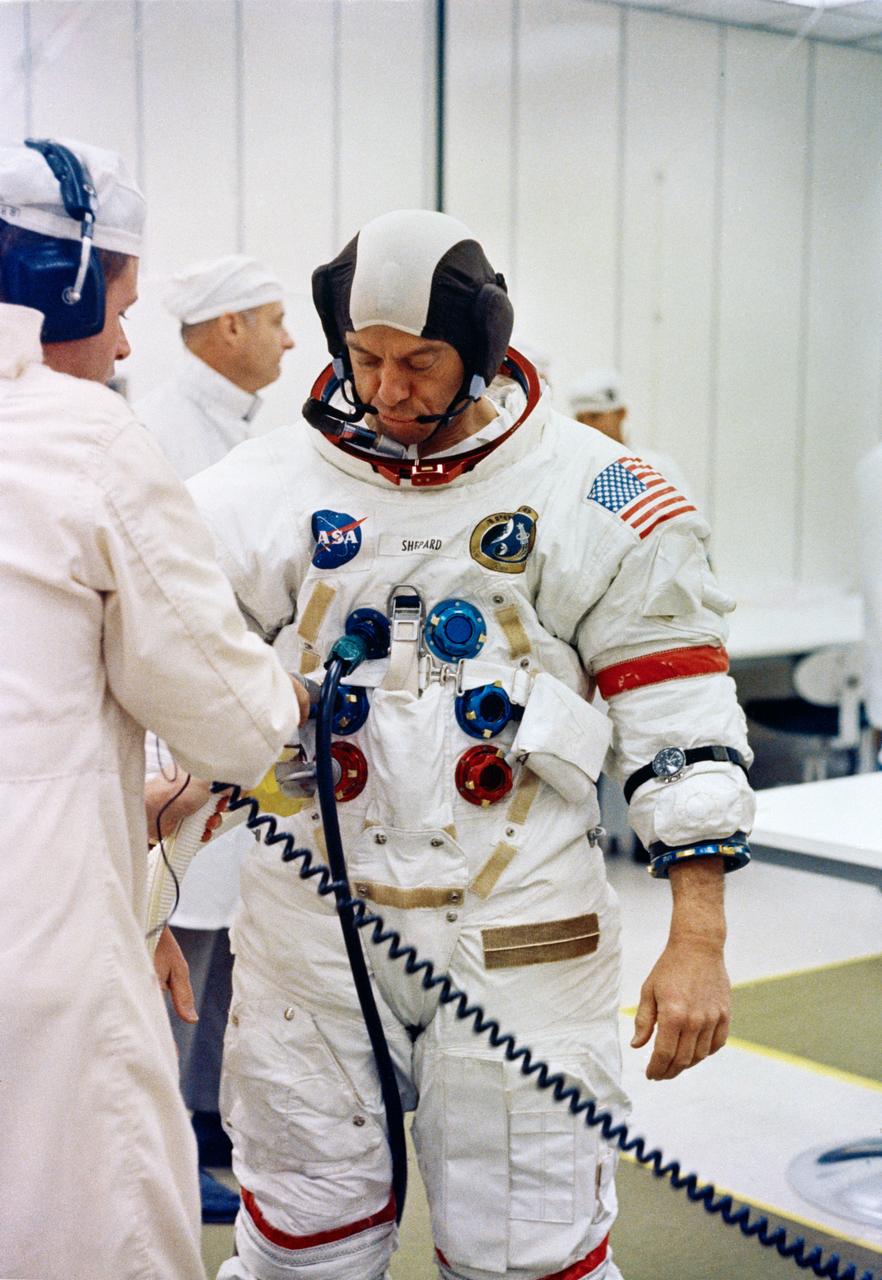
S71-16638 (31 Jan. 1971) --- Astronaut Alan B. Shepard Jr., commander, undergoes suiting up operations at the Kennedy Space Center (KSC) during the Apollo 14 prelaunch countdown. Apollo 14, with astronauts Shepard; Edgar D. Mitchell, lunar module pilot; and Stuart A. Roosa, command module pilot; aboard was launched from Pad A, Launch Complex 39 at 4:03:02 p.m. (EST), Jan. 31, 1971.
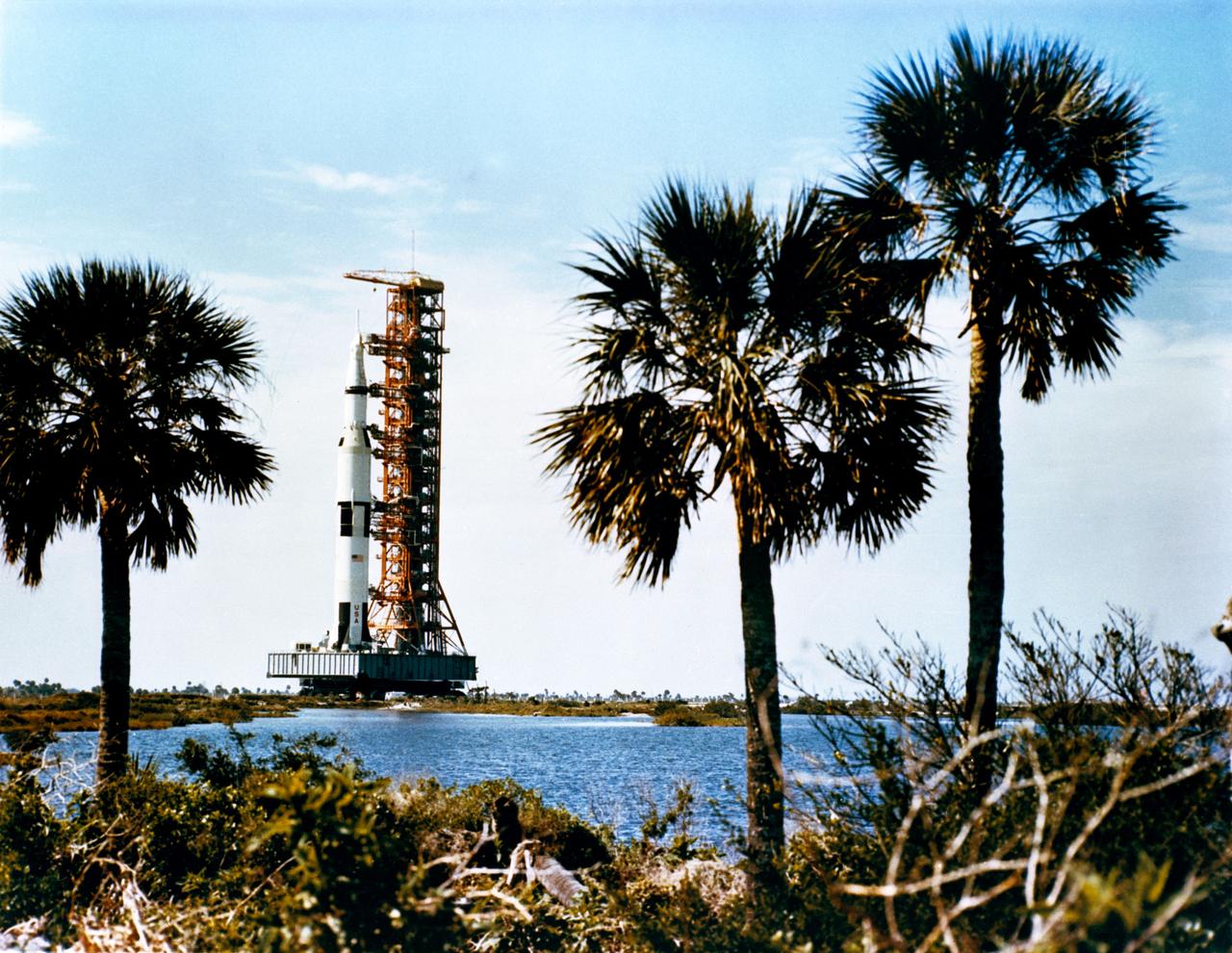
S69-34319 (11 March 1969) --- The 363-feet tall Apollo 10 (Spacecraft 106/Lunar Module 4/Saturn 505) space vehicle on the way from the Vehicle Assembly Building to Pad B, Launch Complex 39, Kennedy Space Center. The Saturn V stack and its mobile launch tower are atop a huge crawler-transporter.
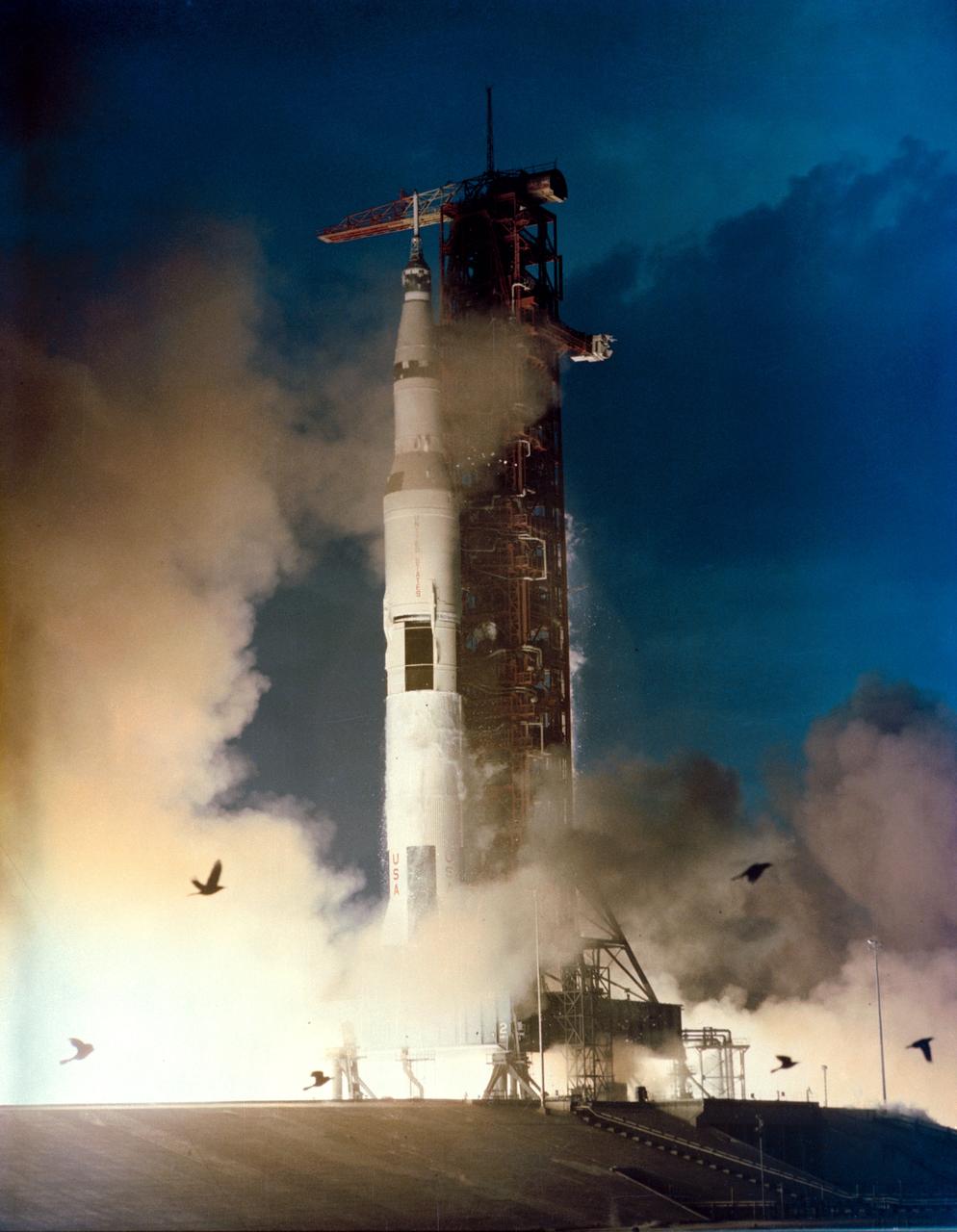
S71-18395 (31 Jan. 1971) --- The huge, 363-feet tall Apollo 14 (Spacecraft 110/Lunar Module 8/Saturn 509) space vehicle is launched from Pad A, Launch Complex 39, Kennedy Space Center (KSC), Florida at 4:03:02 p.m. (EST), Jan. 31, 1971, on a lunar landing mission. Aboard the Apollo 14 spacecraft were astronauts Alan B. Shepard Jr., commander; Stuart A. Roosa, command module pilot; and Edgar D. Mitchell, lunar module pilot.
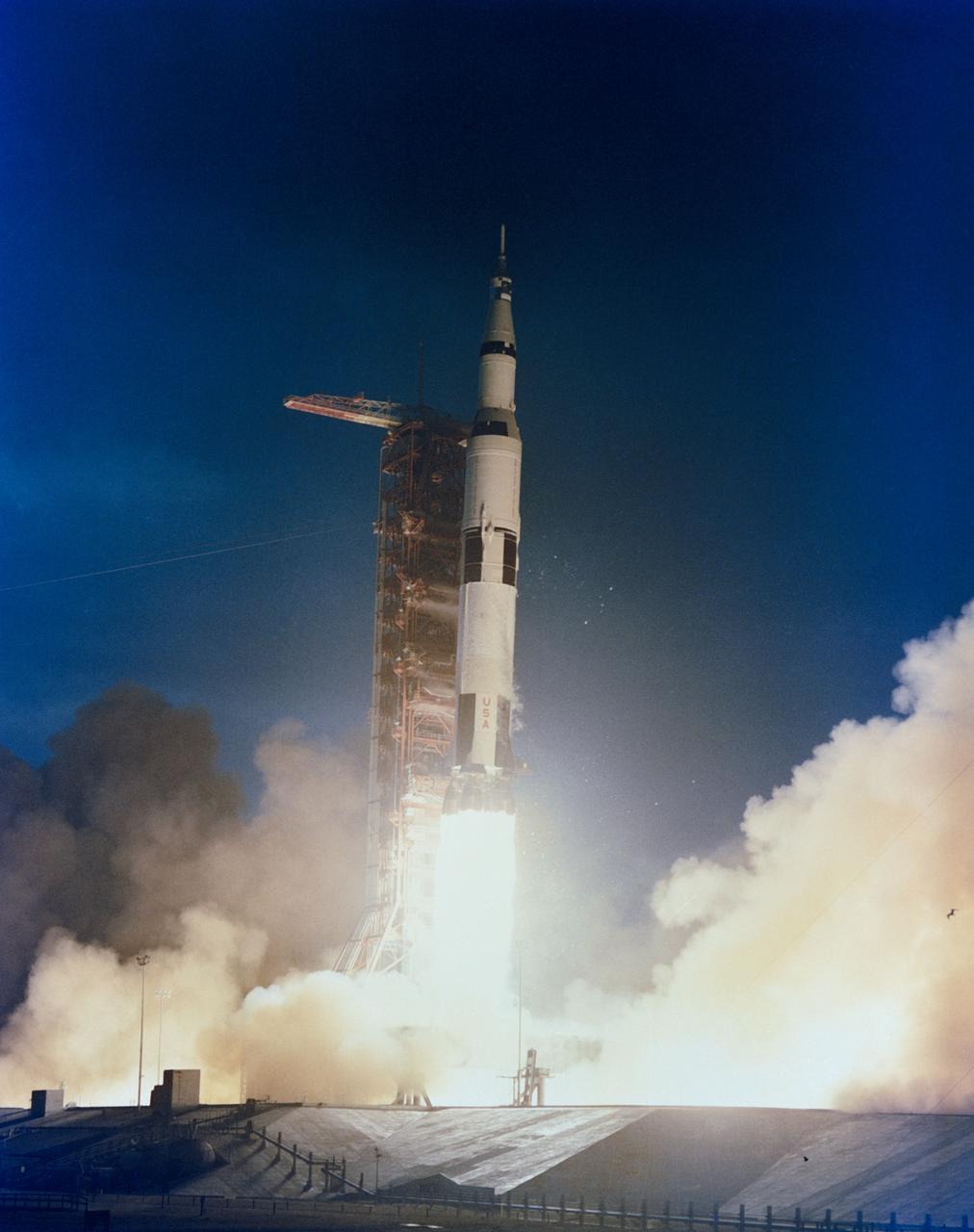
S71-17621 (31 Jan. 1971) --- The huge, 363-feet tall Apollo 14 (Spacecraft 110/Lunar Module 8/Saturn 509) space vehicle is launched from Pad A, Launch Complex 39, Kennedy Space Center, Florida, at 4:03:02 p.m. (EST), Jan. 31, 1981, on a lunar landing mission. Aboard the Apollo 14 spacecraft were astronauts Alan B. Shepard Jr., commander; Stuart A. Roosa, command module pilot; and Edgar D. Mitchell, lunar module pilot.
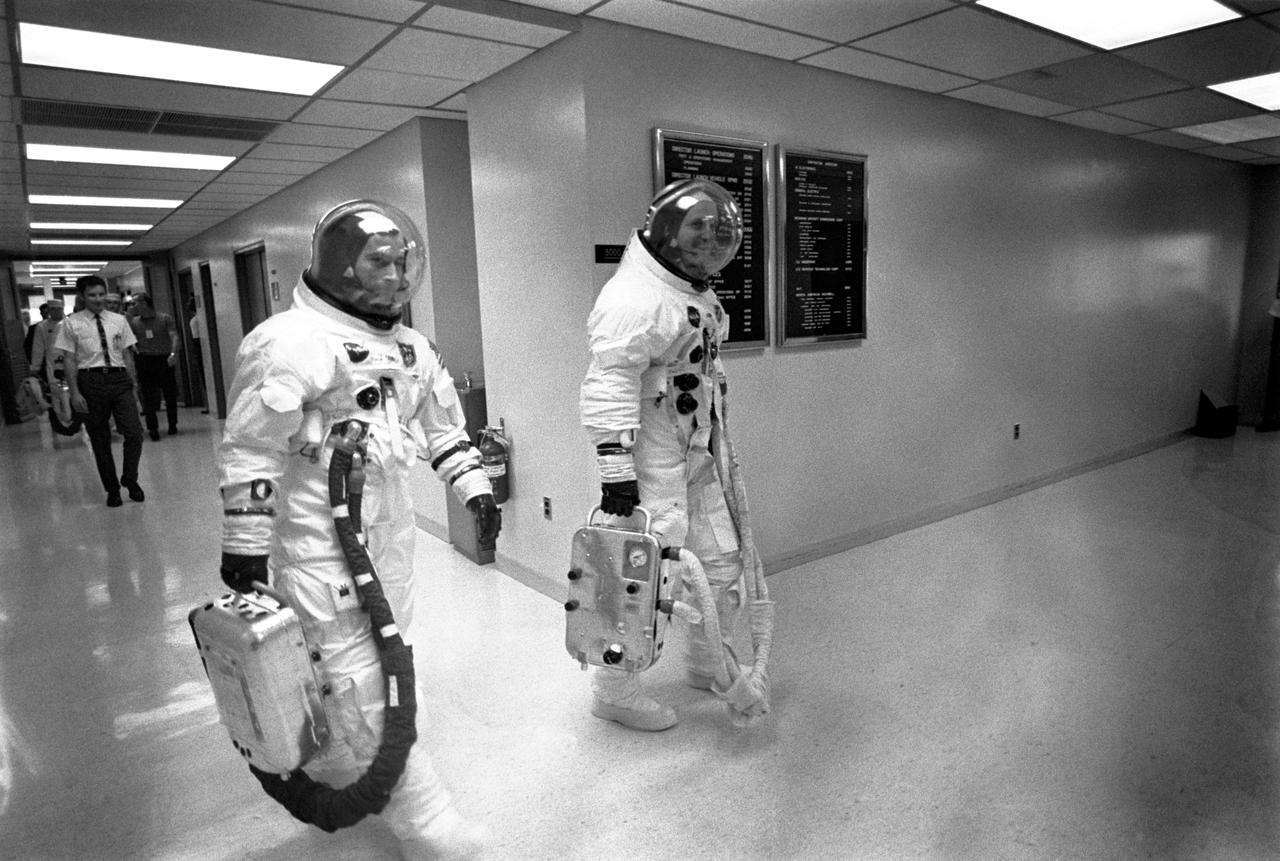
S69-34337 (6 May 1969) --- Apollo 10 astronauts John W. Young (left), command module pilot; and Thomas P. Stafford, commander, leave the Kennedy Space Center's (KSC) Manned Spacecraft Operations Building for Pad B, Launch Complex 39, where they participated in dry portion of Countdown Demonstration Test. Apollo 10, with astronauts Stafford, Young and Eugene A. Cernan aboard, is scheduled for launch on May 13, 1969. Cernan is the lunar module pilot.
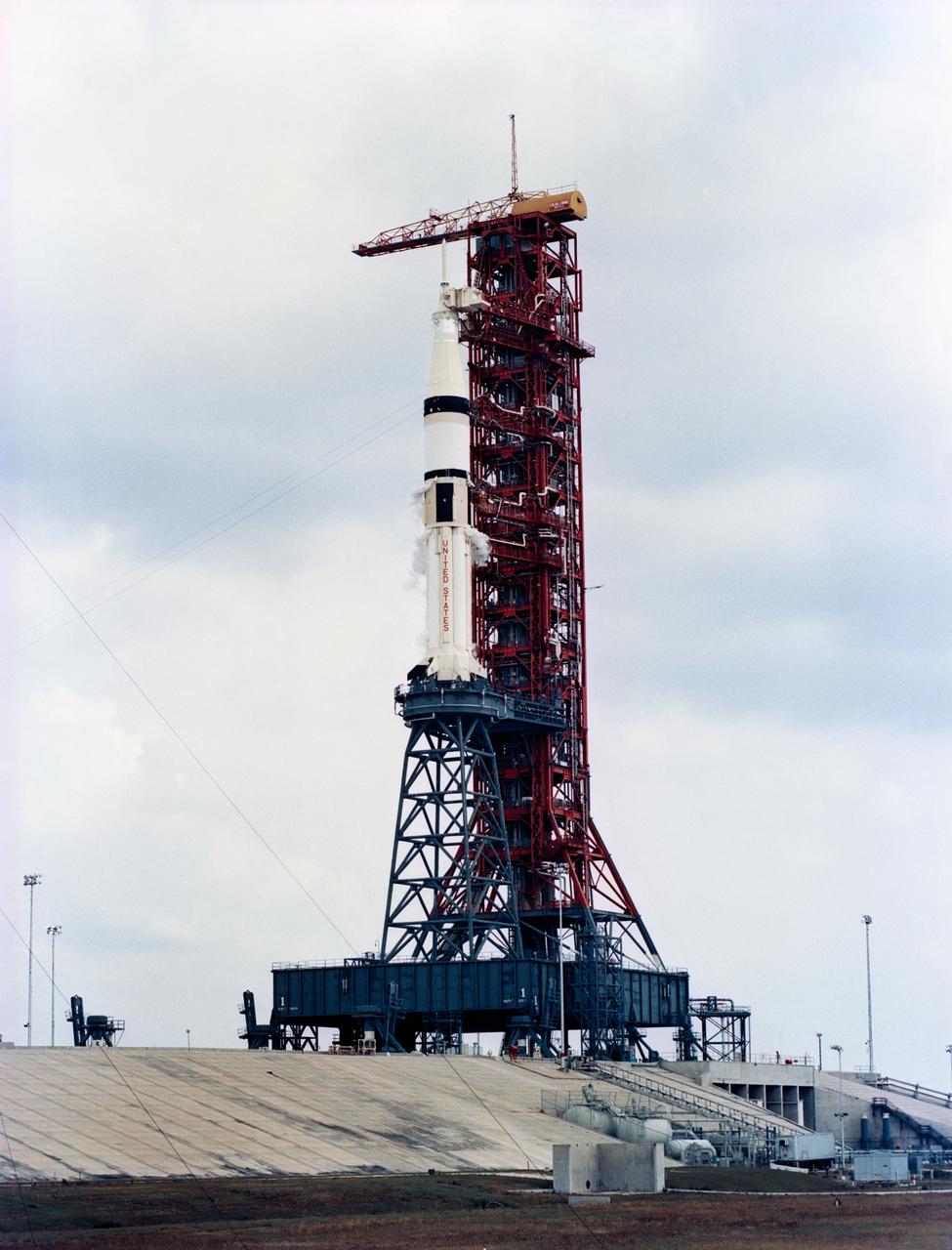
S73-25696 (15 May 1973) --- An overall view of Pad B, Launch Complex 39, Kennedy Space Center, Florida, showing the Skylab 2/Saturn 1B space vehicle during a Countdown Demonstration Test (CDDT). This is the launch vehicle for the first manned Skylab mission. The vapor being emitted from the vehicle is the venting of cryogenic propellants. Photo credit: NASA
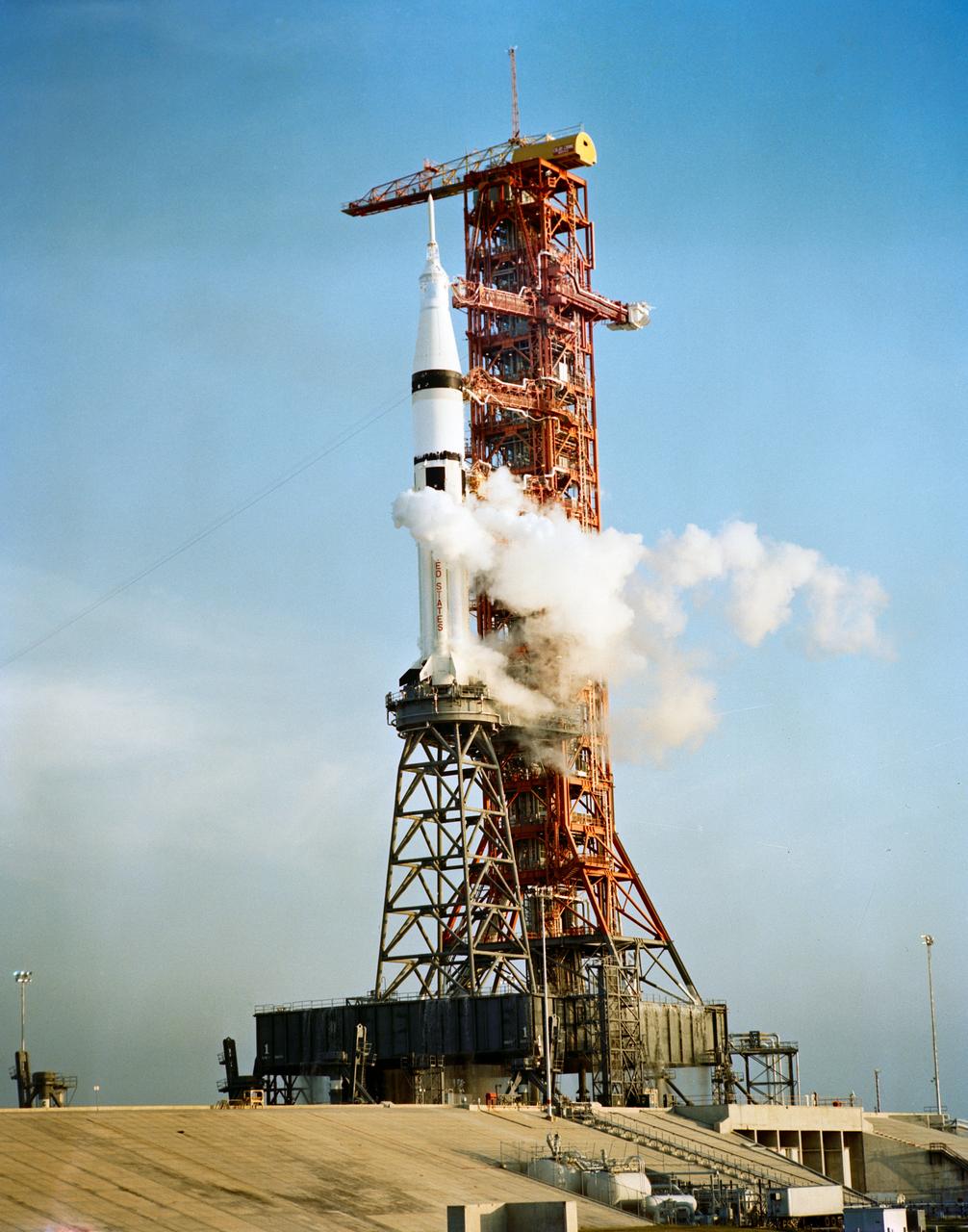
S73-31697 (20 July 1973) --- A ground-level view of Pad B, Launch Complex 39, Kennedy Space Center, Florida, showing the Skylab 3/Saturn 1B space vehicle during prelaunch preparations. The launch vehicle is venting liquid oxygen during pre-final countdown cryogenic loading. Photo credit: NASA
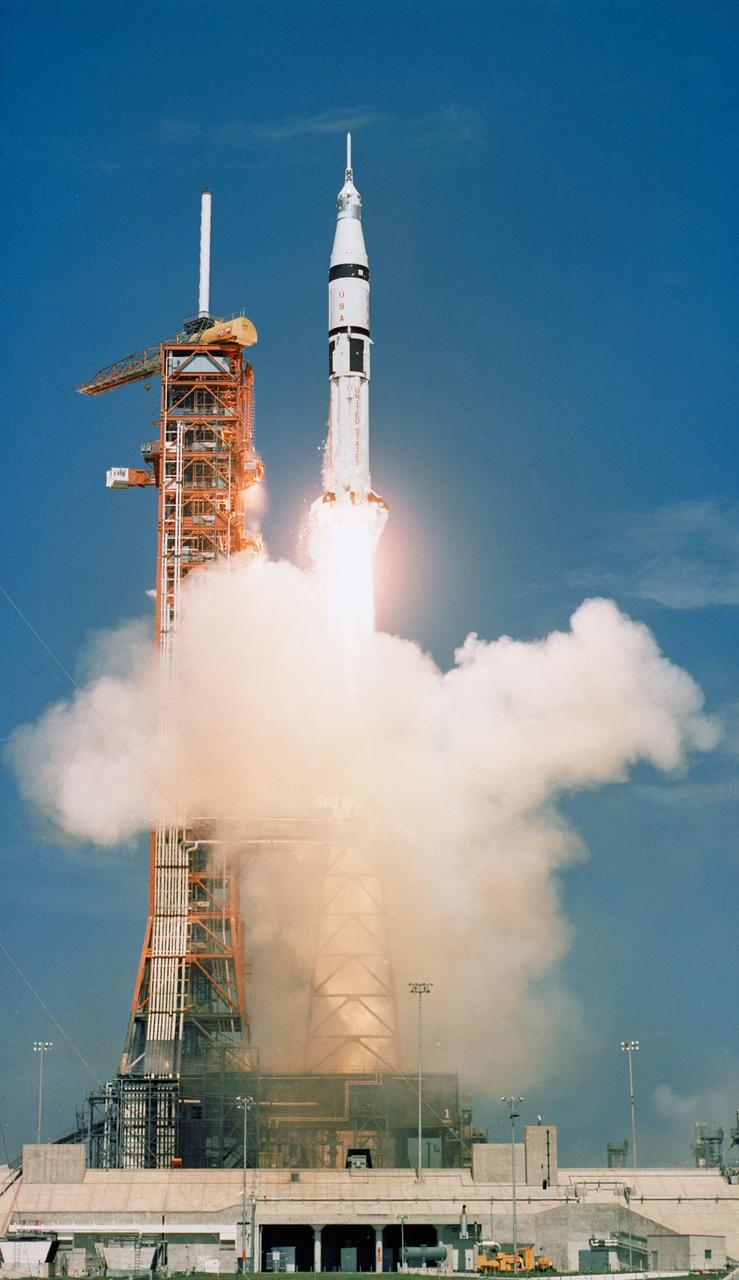
S75-28550 (15 July 1975) --- The Apollo-Soyuz Test Project's (ASTP) NASA Apollo/Saturn 1B space vehicle is launched from Pad B, Launch Complex 39, Kennedy Space Center (KSC), Florida, at 3:50 p.m. (EDT), July 15, 1975, to begin Apollo's catch-up journey toward the already Earth-orbiting Soviet Soyuz spacecraft. Aboard the Apollo spacecraft were astronauts Thomas P. Stafford, Vance D. Brand and Donald K. (Deke) Slayton.
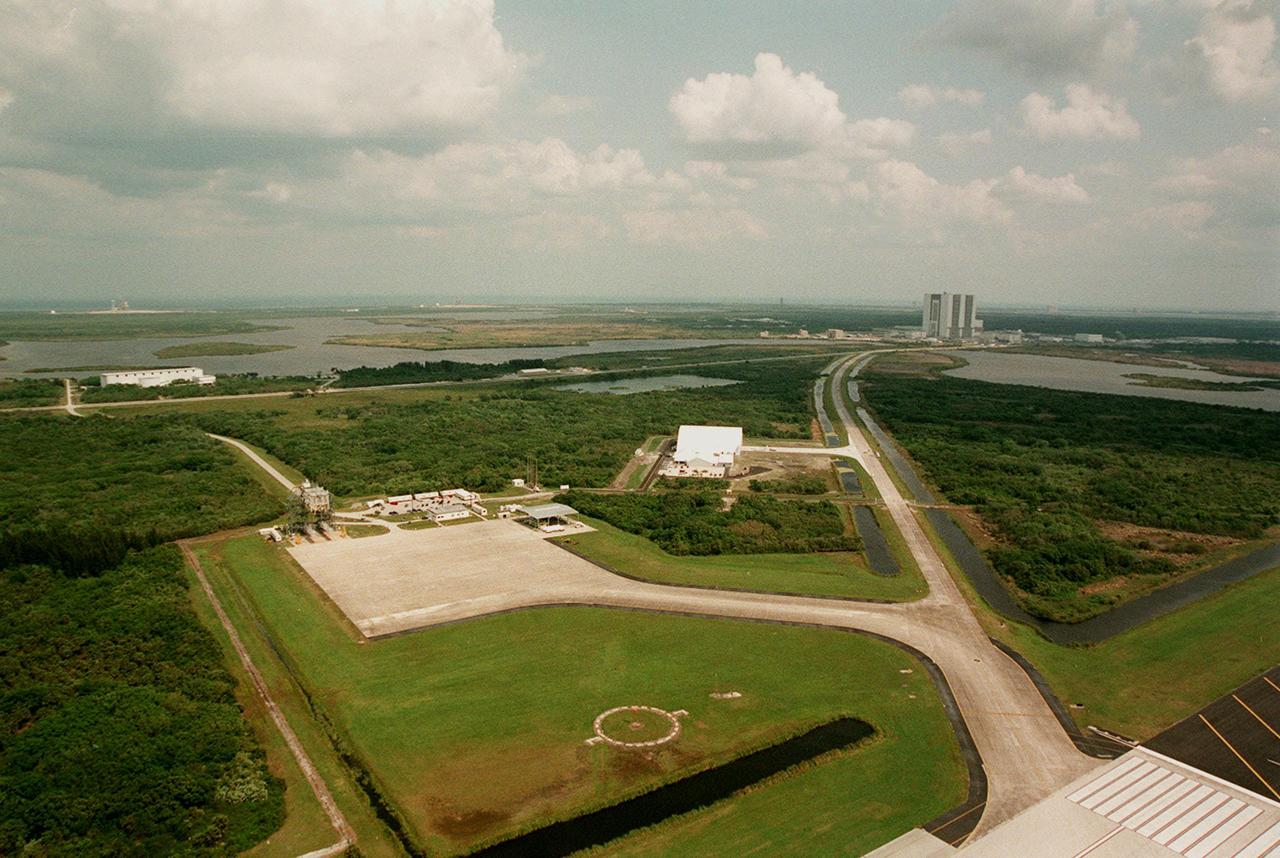
A broad aerial view west of Launch Complex 39 Area shows a multitude of facilities. Starting with the Shuttle Landing Facility, at bottom center is a circle around a windsock, a landing aid for pilots; at bottom right is a portion of the landing strip. In the center is the parking tarmac with its mate/demate device on the left corner. To the right is the remote launch vehicle hangar, still under construction. At the upper right is the Vehicle Assembly Building (VAB). The tow-way road runs from the landing strip to the Orbiter Processing Facility, next to the VAB. The Kennedy Parkway North extends from the left side toward the VAB. The long white building next to the parkway is the Apollo/Saturn V Center. Above it, slightly visible on the horizon (left), is Launch Complex 39, Pad B.
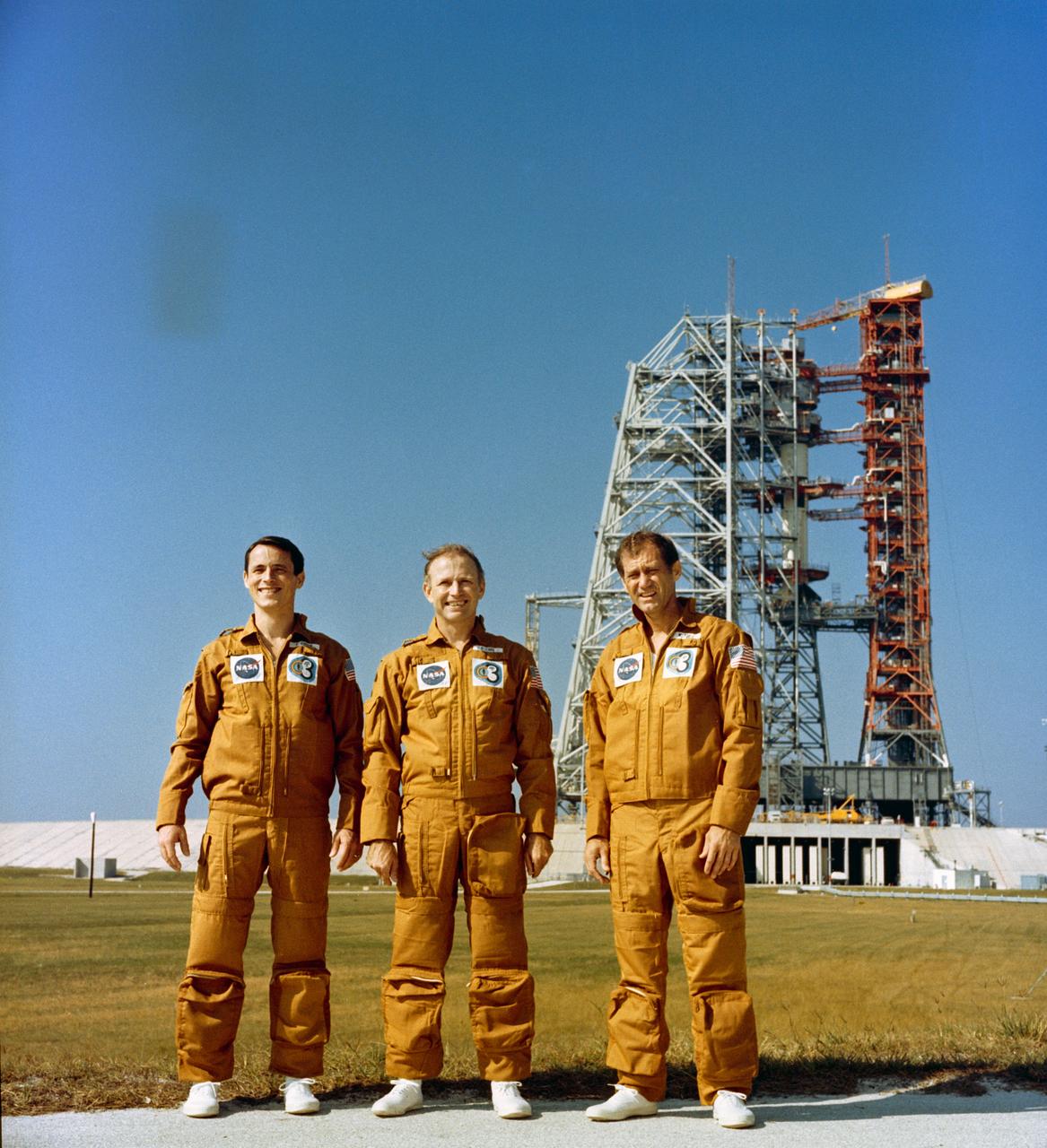
S73-36904 (8 Nov. 1973) --- The three members of the Skylab 4 crew are photographed standing near Pad B, Launch Complex 39, Kennedy Space Cneter, Florida, during the preflight activity. They are, left to right, scientist-astronaut Edward G. Gibson, science pilot; astronaut Gerald P. Carr, commander; and astronaut William R. Pogue, pilot. Photo credit: NASA
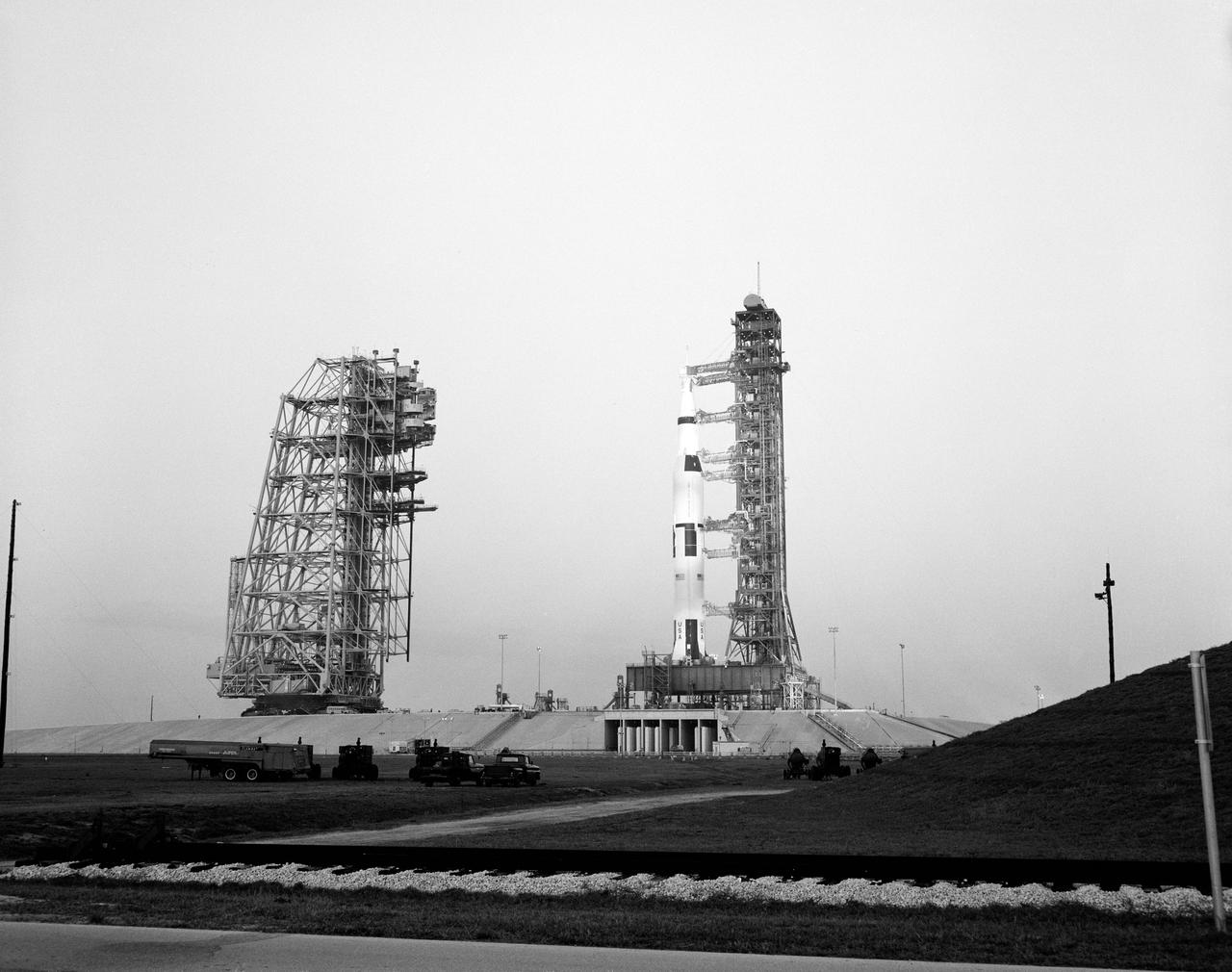
S69-27089 (11 March 1969) --- Overall view of Pad B, Launch Complex 39, Kennedy Space Center, showing the Apollo 10 (Spacecraft 106/Lunar Module-4/Saturn 505) space vehicle during a Countdown Demonstration Test. The Apollo 10 flight is scheduled as a lunar orbit mission. The Apollo 10 crew will be astronauts Thomas P. Stafford, commander; John W. Young, command module pilot; and Eugene A. Cernan, lunar module pilot.
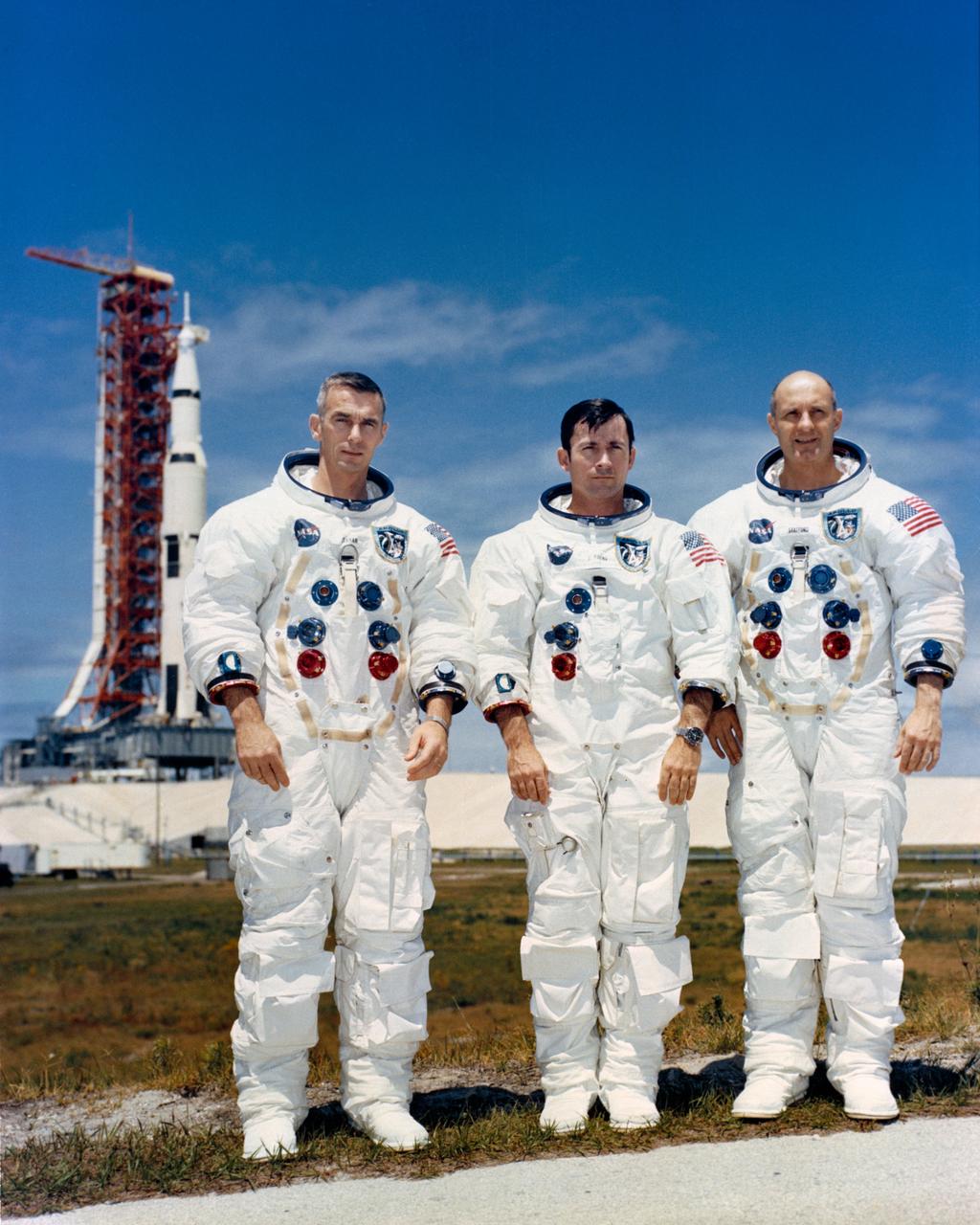
S69-34329 (13 May 1969) --- The prime crew of the Apollo 10 lunar orbit mission sits for photograph while at the Kennedy Space Center for preflight training. Left to right are astronauts Eugene A. Cernan, lunar module pilot; John W. Young, command module pilot; and Thomas P. Stafford, commander. In the left background is the Apollo 10 space vehicle on Pad B, Launch Complex 39, Kennedy Space Center. The three crewmen had just completed a Countdown Demonstration Test exercise.
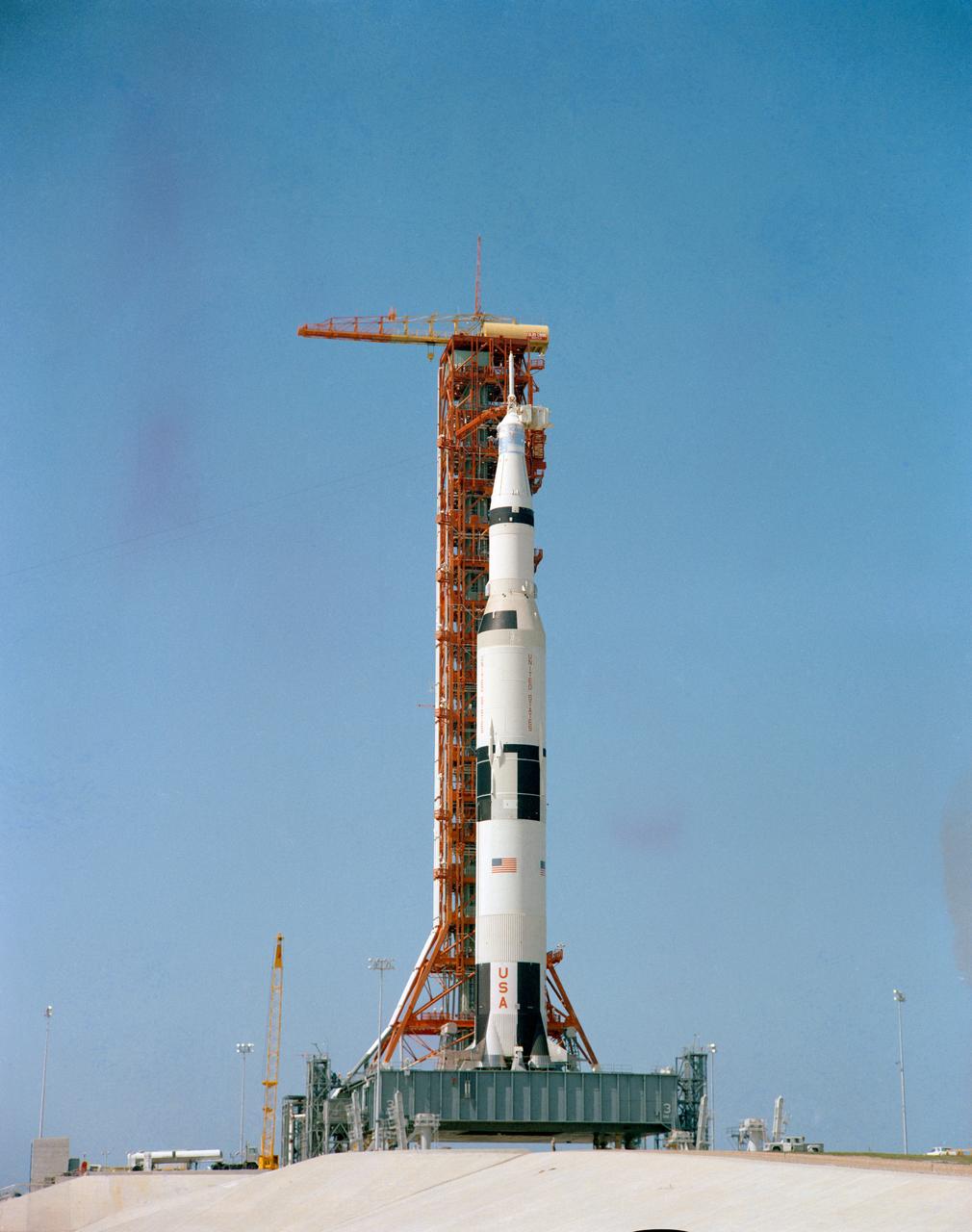
S69-33853 (4 May 1969) --- Ground-level view of the Apollo 10 (Spacecraft 106/Lunar Module 4/Saturn 505) space vehicle on Pad B, Launch Complex 39, Kennedy Space Center, Florida. This photograph of the 363-feet tall Apollo/Saturn V stack was taken during Countdown Demonstration Test (CDDT) activity. The Apollo 10 crew will be astronauts Thomas P. Stafford, commander; John W. Young, command module pilot; and Eugene A. Cernan, lunar module pilot.
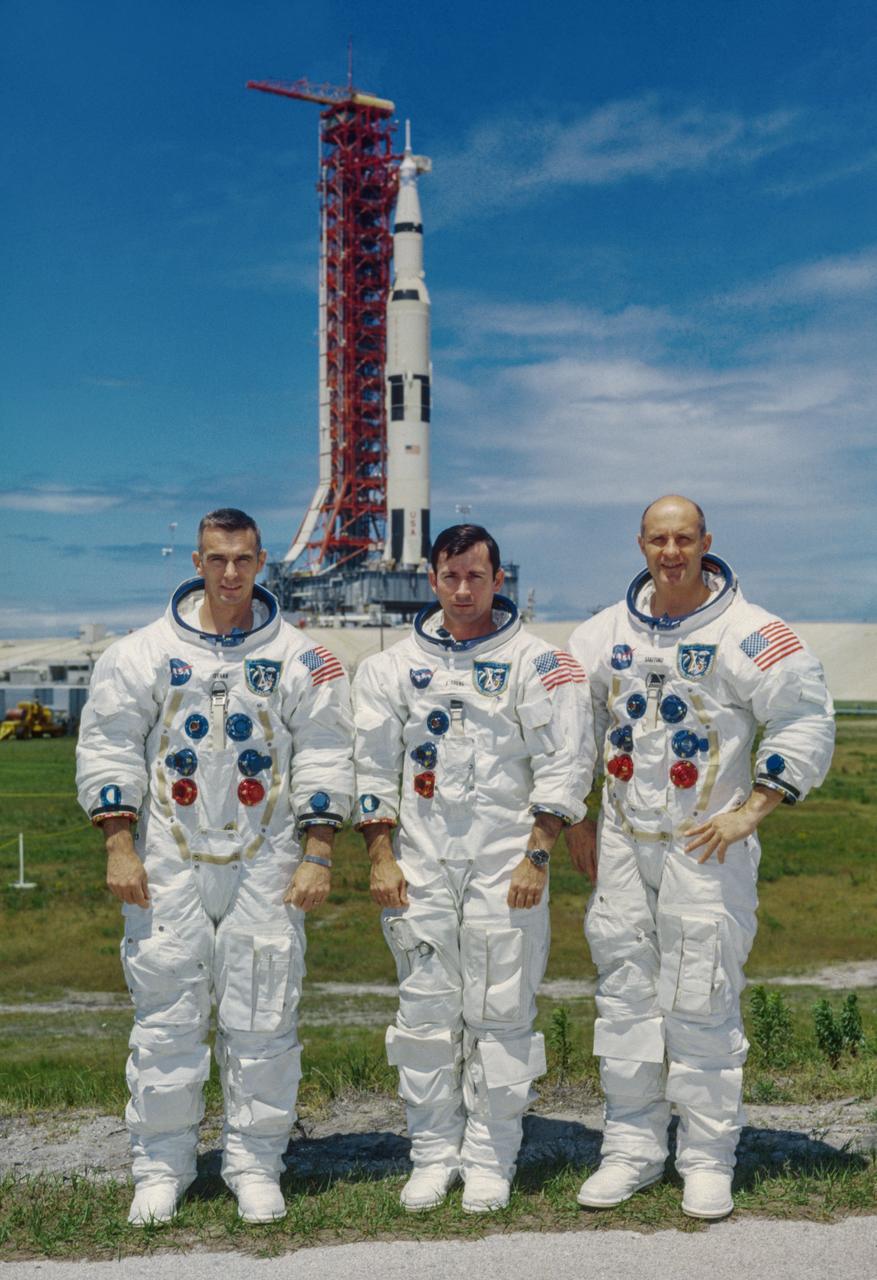
S69-34385 (13 May 1969) --- These three astronauts are the prime crew of the Apollo 10 lunar orbit mission. Left to right, are Eugene A. Cernan, lunar module pilot; John W. Young, command module pilot; and Thomas P. Stafford, commander. In the background is the Apollo 10 space vehicle on Pad B, Launch Complex 39, Kennedy Space Center, Florida.
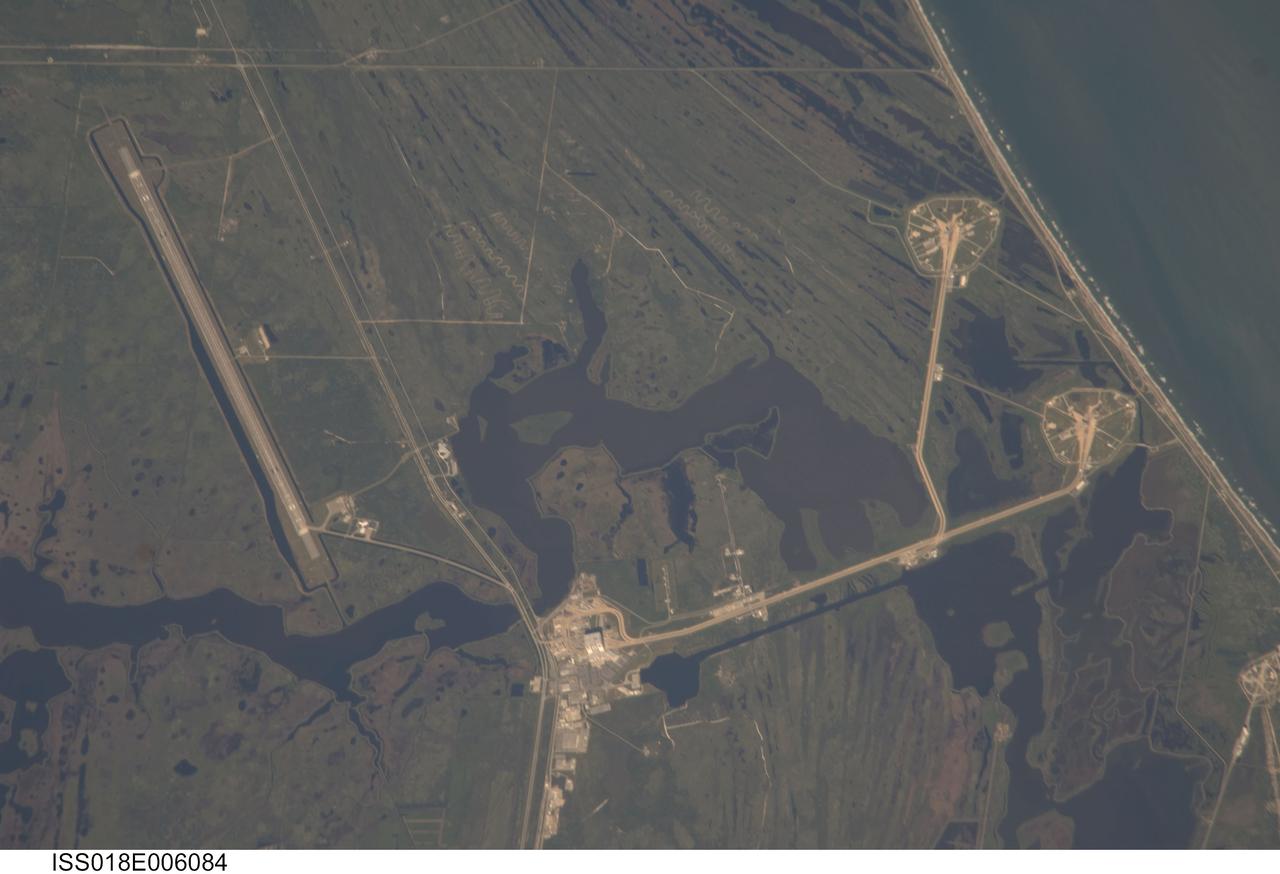
ISS018-E-006084 (29 Oct. 2008) --- Kennedy Space Center and Cape Canaveral, Florida are featured in this image photographed by an Expedition 18 crewmember on the International Space Station. Launch complex 39, with pads A and B, is visible at right. The Vehicle Assembly Building (VAB) is visible at bottom center. The Shuttle Landing Facility appears as a long thin strip at left.
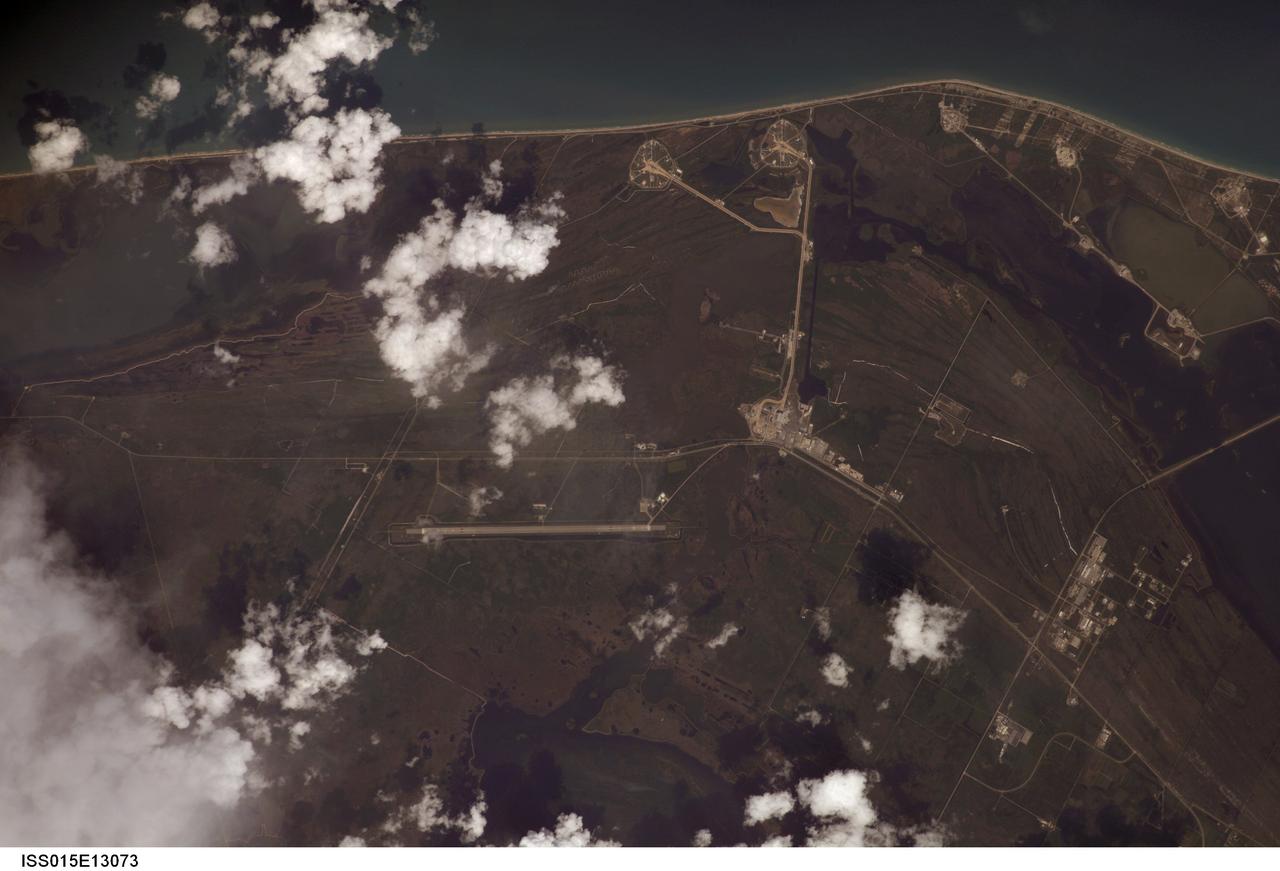
ISS015-E-13073 (20 June 2007) --- Kennedy Space Center and Cape Canaveral, Florida are featured in this image photographed by an Expedition 15 crewmember on the International Space Station. Launch complex 39, with pads A and B, is visible at top center. The Vehicle Assembly Building (VAB) is visible near center. The Shuttle Landing Facility appears as a long thin strip just below center.
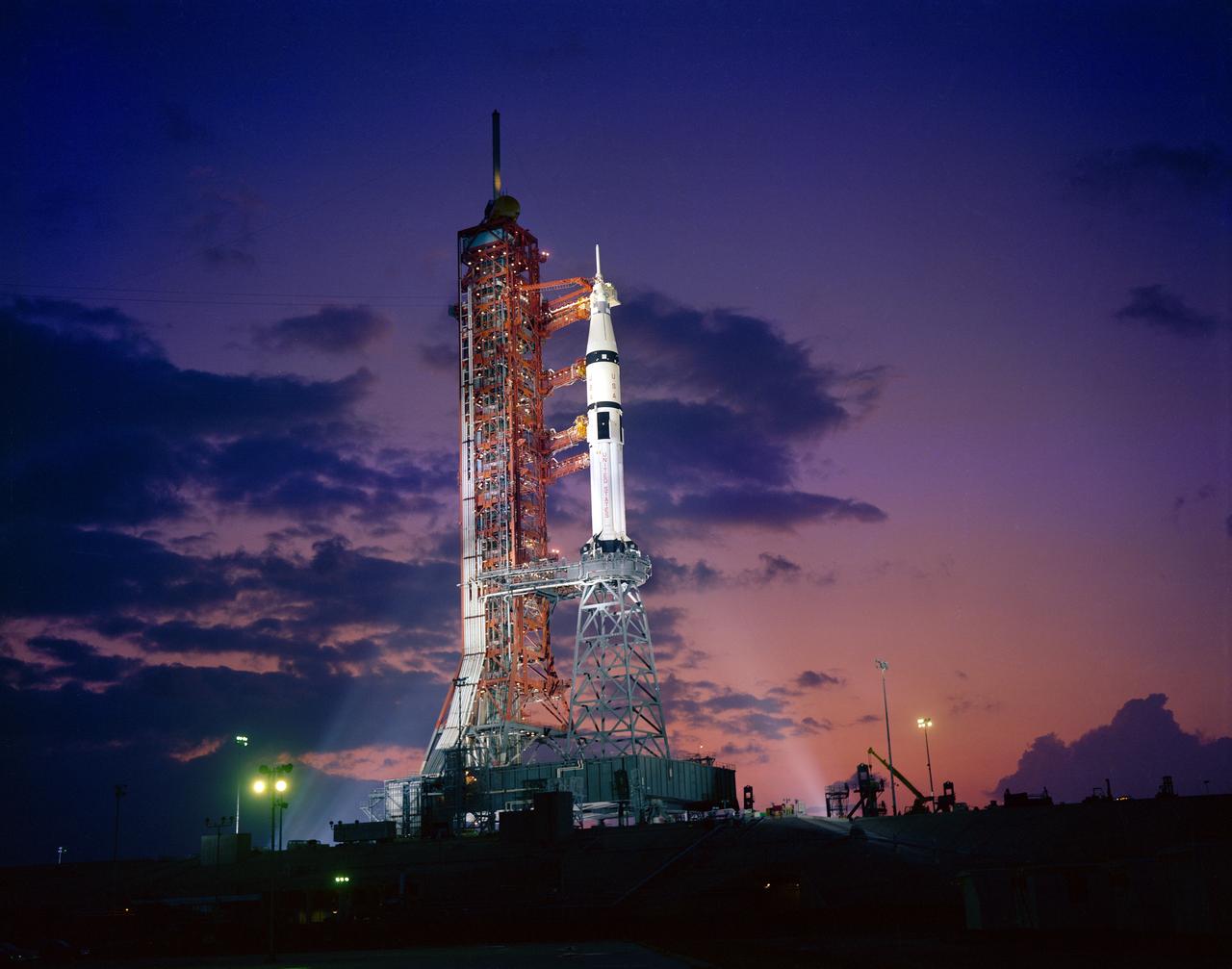
S75-28386 (2 July 1975) --- An early morning view of Pad B, Launch Complex 39, Kennedy Space Center, showing the ASTP Apollo/Saturn 1B space vehicle on the pad during Apollo-Soyuz Test Project prelaunch preparations. An ASTP countdown demonstration "wet" test (CDDT) was being conducted at KSC when this photograph was taken. The liftoff was on July 15, 1975.
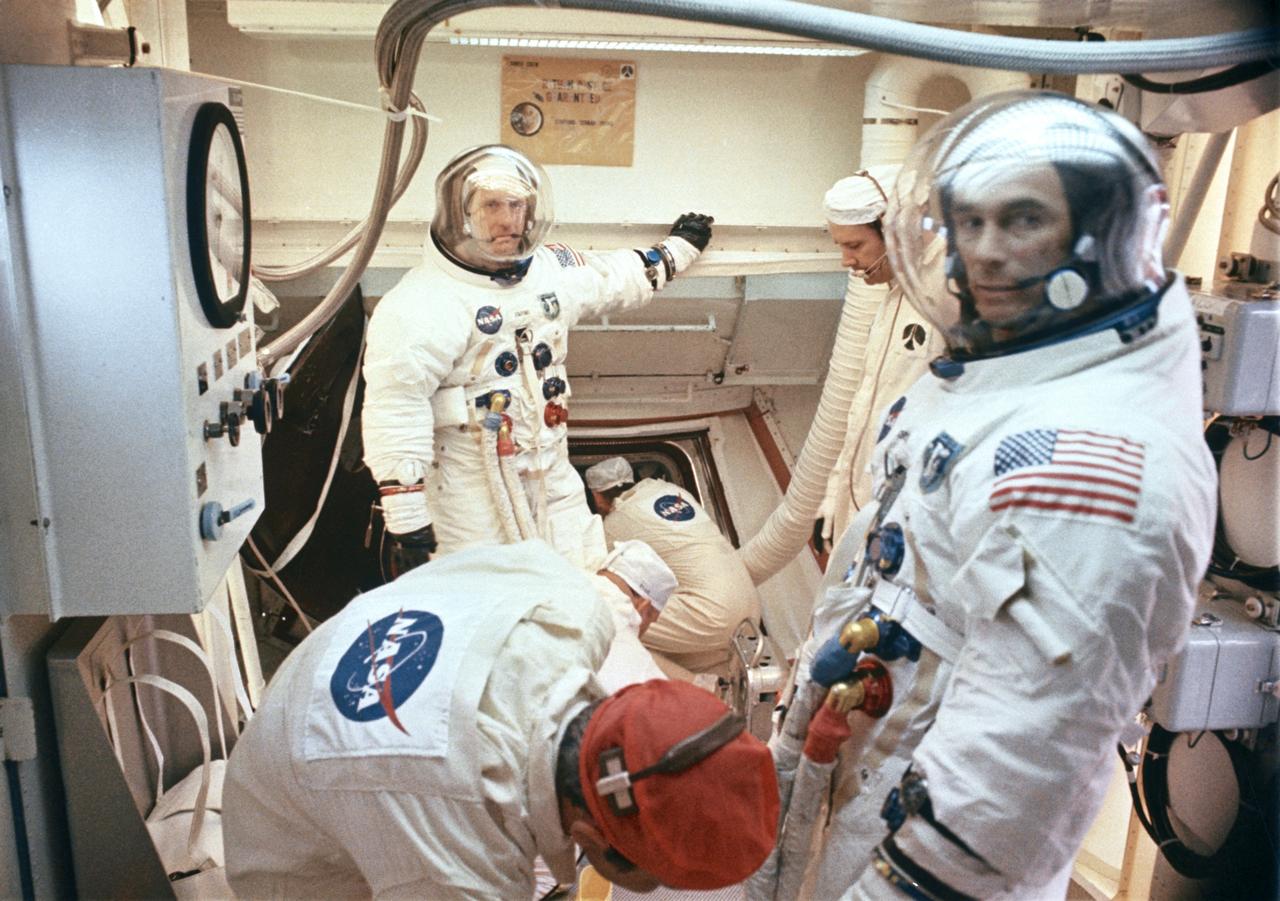
S69-35317 (18 May 1969) --- ? Interior view of the White Room at Pad B, Launch Complex 39, Kennedy Space Center, showing preparations being made for insertion of the Apollo 10 crew into their spacecraft during the prelaunch countdown. In the background is astronaut Thomas P. Stafford, commander. Astronaut Eugene A. Cernan, lunar module pilot, is in right foreground. Out of view is astronaut John W. Young, command module pilot. Liftoff for the lunar orbit mission was at 12:49 p.m. (EDT), May 18, 1969.
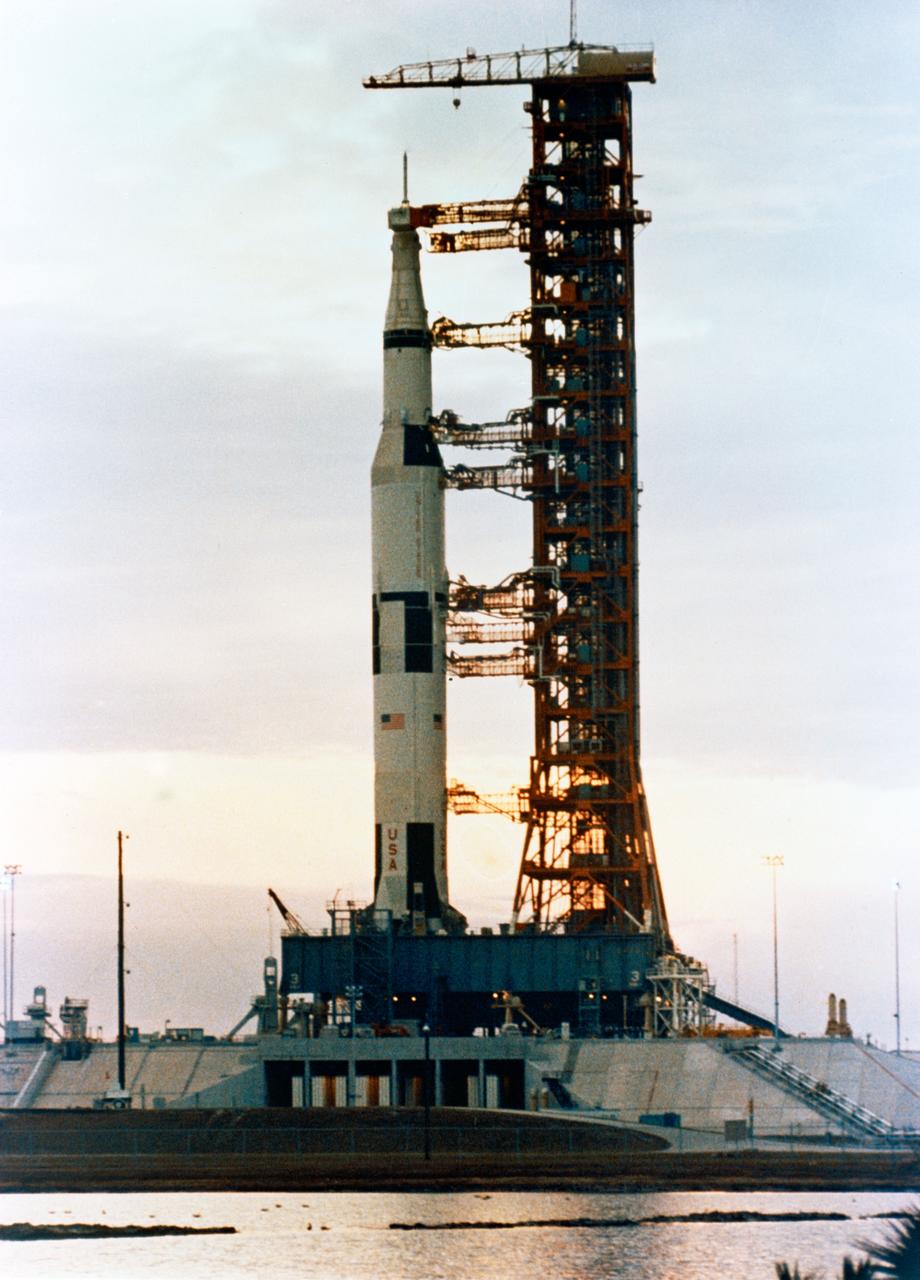
S69-34318 (11 March 1969) --- Ground-level view at sunset of the Apollo 10 (Spacecraft 106/Lunar Module 4/Saturn 505) space vehicle at Pad B, Launch Complex 39, Kennedy Space Center. The Apollo 10 stack had just been positioned after being rolled out from the Vehicle Assembly Building. The Apollo 10 crew will be astronauts Thomas P. Stafford, commander; John W. Young, command module pilot; and Eugene A. Cernan, lunar module pilot.
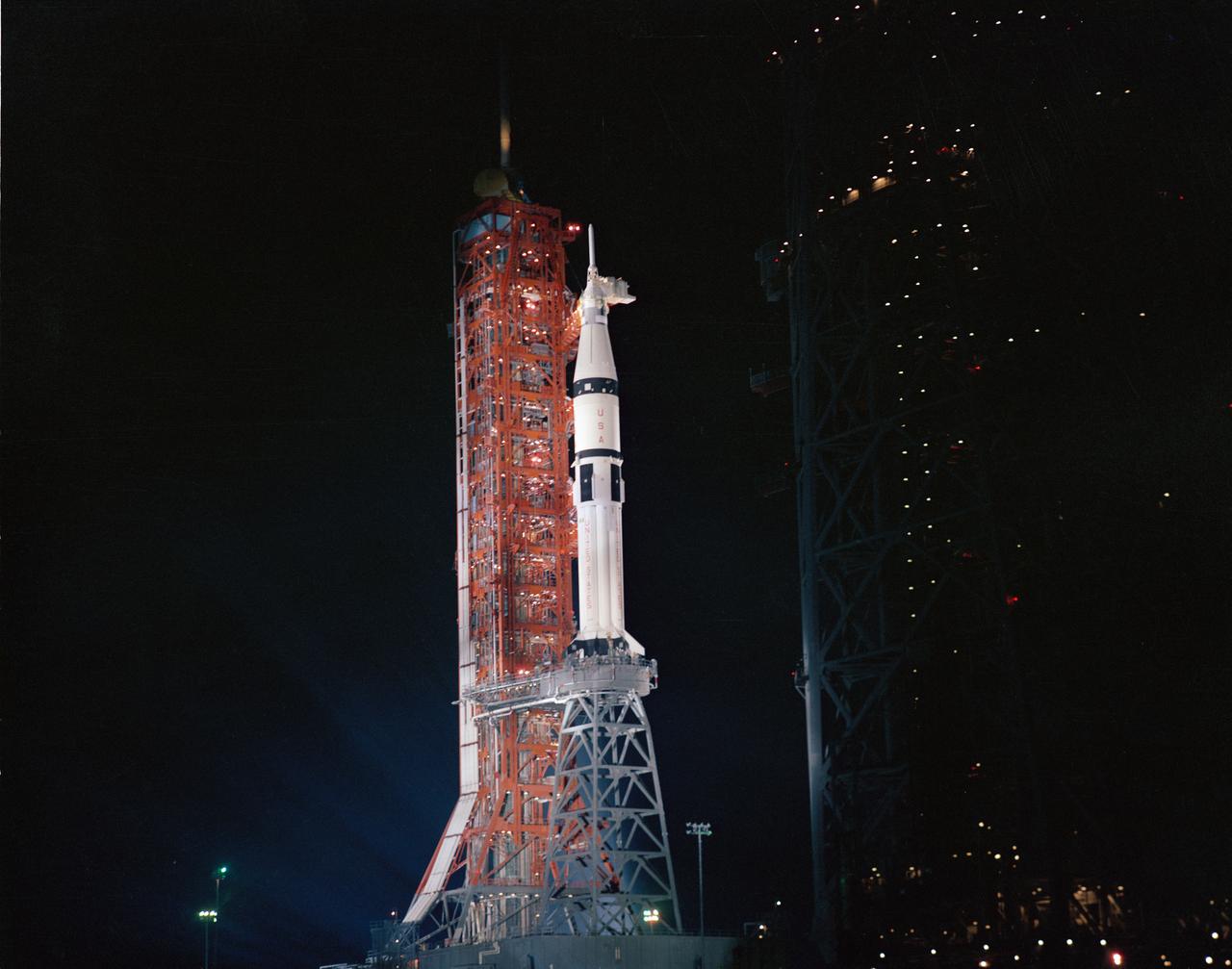
S75-28387 (2 July 1975) --- A nighttime view of Pad B, Launch Complex 39, Kennedy Space Center, showing the ASTP Apollo/Saturn 1B space vehicle on the pad during Apollo-Soyuz Test Project prelaunch preparations. An ASTP countdown demonstration ?wet? test (CDDT) was being conducted at KSC when this photograph was taken. The liftoff was on July 15, 1975.
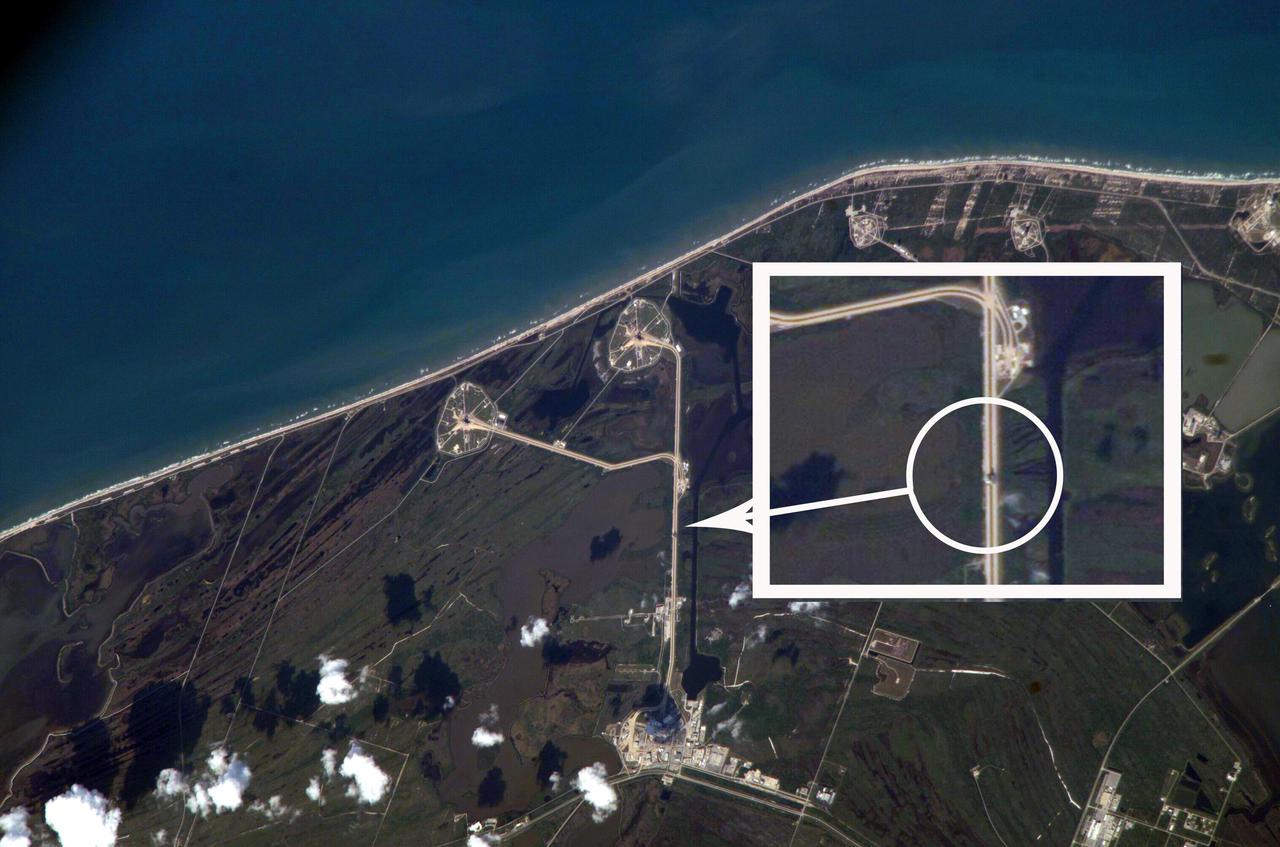
INTERNATIONAL SPACE STATION - Aboard the International Space Station, Expedition 10 Commander Leroy Chiao used a digital camera April 6 to photograph the rollout of the Space Shuttle Discovery at NASA’s Kennedy Space Center from an altitude of 220 statute miles. Chiao captured the rollout at 4:35 p.m. Eastern Daylight Time as the Station flew directly over the launch site. Visible in the image are the Shuttle’s two launch pads at Launch Complex 39. Discovery’s launch pad, 39-B, is on the left. Chiao used the same lens arrangement for the photograph that will be used by the next Station crew to photograph Discovery's heat shield as it approaches the Station on its Return to Flight. The imagery the Station crew will take of Discovery as it approaches is one of several new things that will be done to provide imagery to be used in assessing the health of the Shuttle.
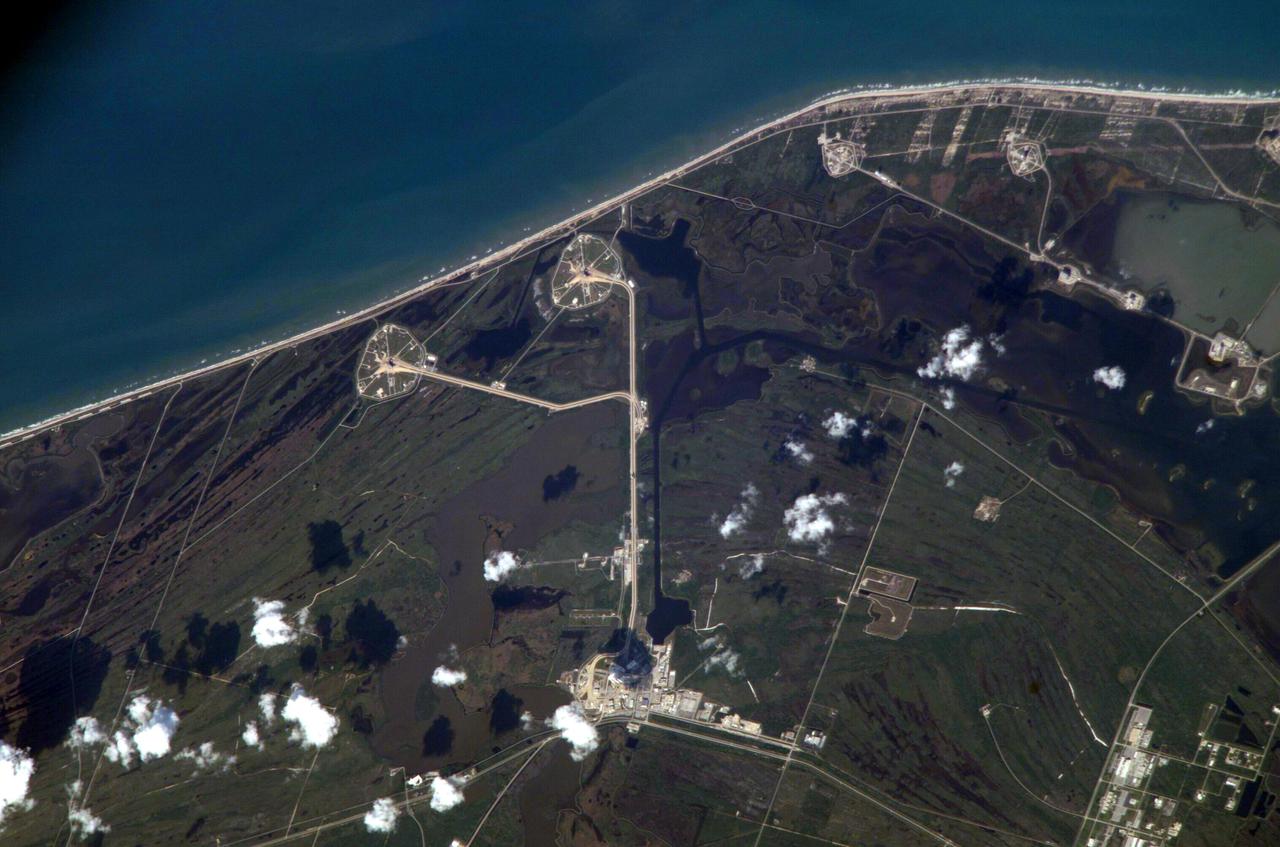
INTERNATIONAL SPACE STATION - Aboard the International Space Station, Expedition 10 Commander Leroy Chiao used a digital camera April 6 to photograph the rollout of the Space Shuttle Discovery at NASA’s Kennedy Space Center from an altitude of 220 statute miles. Chiao captured the rollout at 4:35 p.m. Eastern Daylight Time as the Station flew directly over the launch site. Visible in the image are the Shuttle’s two launch pads at Launch Complex 39. Discovery’s launch pad, 39-B, is on the left. Chiao used the same lens arrangement for the photograph that will be used by the next Station crew to photograph Discovery's heat shield as it approaches the Station on its Return to Flight. The imagery the Station crew will take of Discovery as it approaches is one of several new things that will be done to provide imagery to be used in assessing the health of the Shuttle.
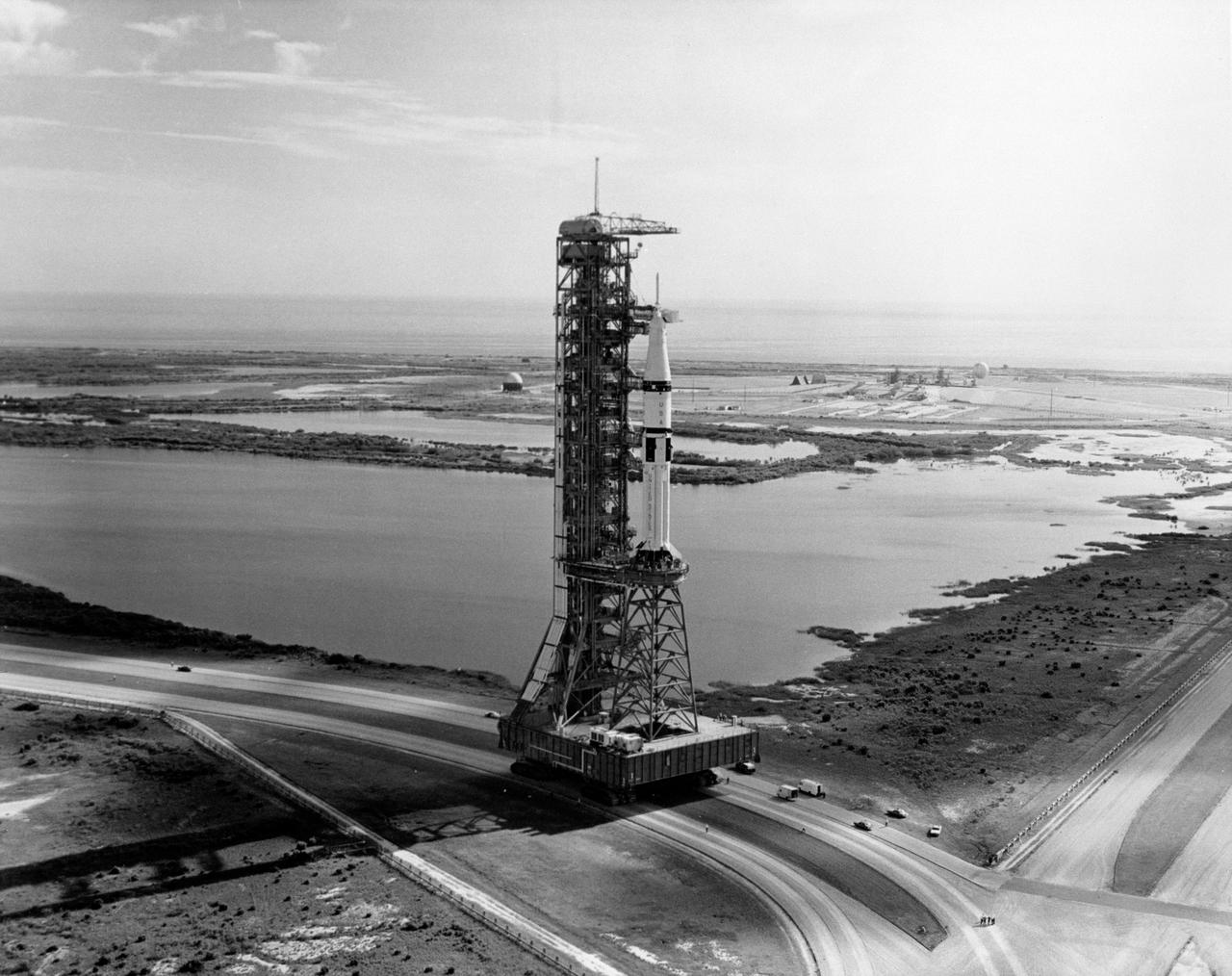
S73-34369 (14 Aug. 1973) --- A Saturn 1B launch vehicle is rolled to Launch Complex 39, Pad B. The space vehicle, to be launched by the Saturn 1B, will carry the third Skylab crew (Skylab 4) to the now-orbiting Orbital Workshop (OWS) and the other four components making up the cluster. The Skylab crewmen, astronaut Gerald P. Carr, commander; scientist-astronaut Edward G. Gibson, science pilot; and astronaut William R. Pogue, pilot, are scheduled to be launched from here in November 1973. Photo credit: NASA
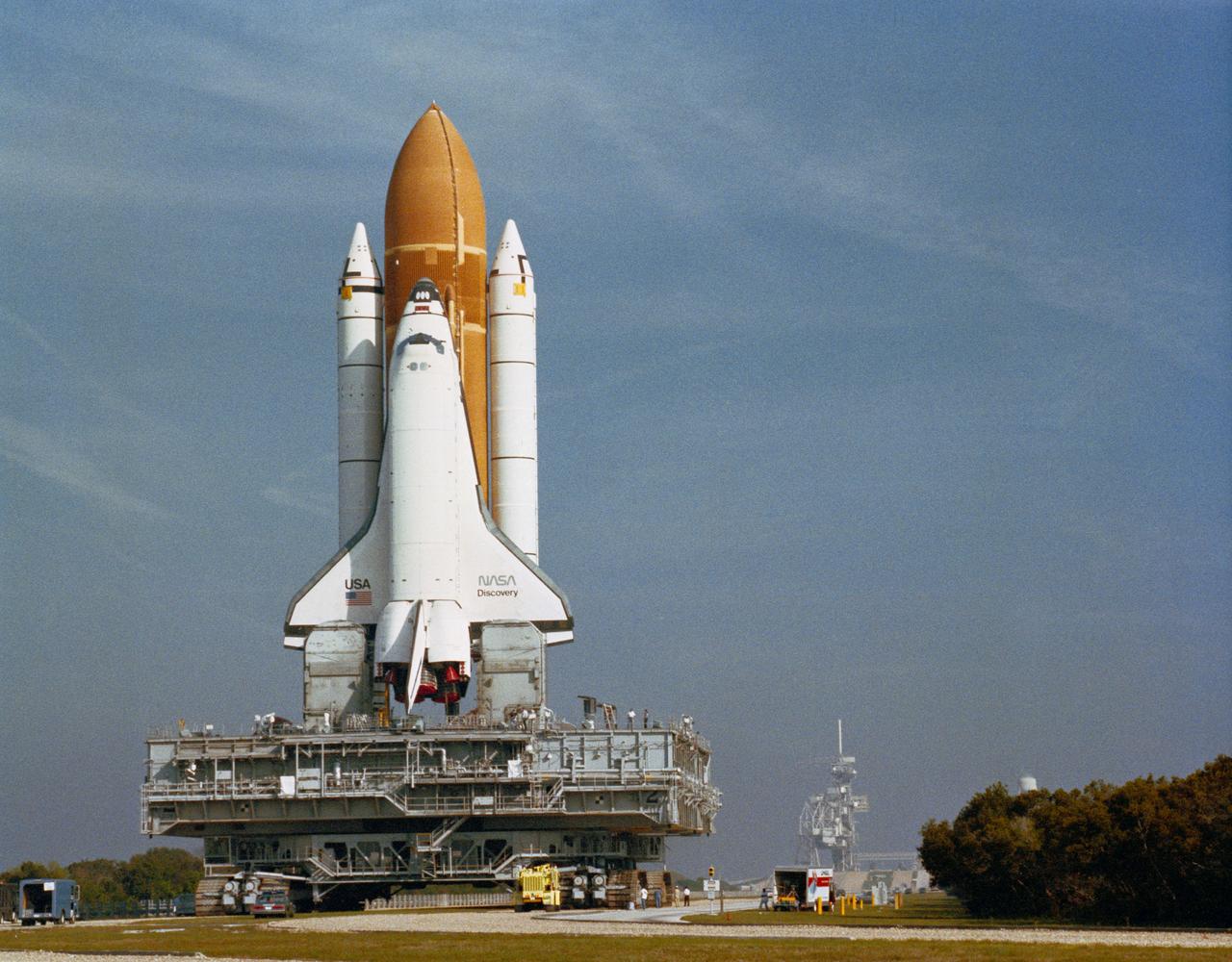
S89-28110 (3 Feb 1989) ---The Space Shuttle Discovery, atop a mobile launch platform, is rolled toward Kennedy Space Center's Launch Pad 39-B on Feb. 3, l989. It rolled through the doors of the huge vehicle assembly building (VAB) at 6 a.m.,several hours ago. The Launch Complex is in view here. The trip to the pad takes approximately 5 and 1/2 hours. Onboard the spacecraft in mid-March for a five-day mission, on which will be deployed a third tracking and data relay satellite (TDRS-D), will be Astronauts Michael L. Coats, John E. Blaha, James F. Buchli, James P. Bagian and Robert C. Springer.
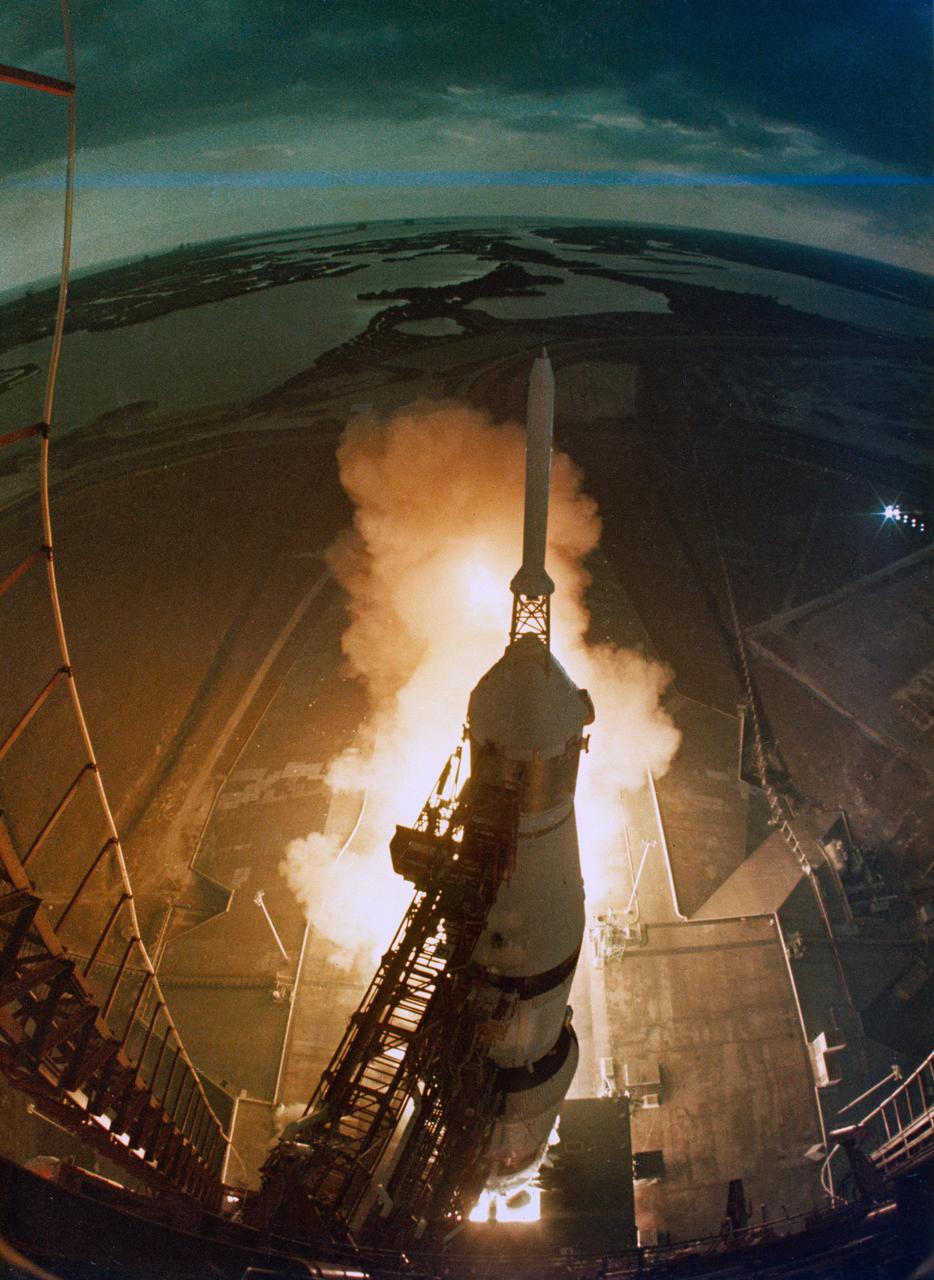
S71-17620 (31 Jan. 1971) --- The huge, 363-feet tall Apollo 14 (Spacecraft 110/Lunar Module 8/Saturn 509) space vehicle is launched from Pad A, Launch Complex 39, Kennedy Space Center, Florida, at 4:03:02 p.m. (EST), Jan. 31, 1981, on a lunar landing mission. This view of the liftoff was taken by a camera mounted on the mobile launch tower. Aboard the Apollo 14 spacecraft were astronauts Alan B. Shepard Jr., commander; Stuart A. Roosa, command module pilot; and Edgar D. Mitchell, lunar module pilot.
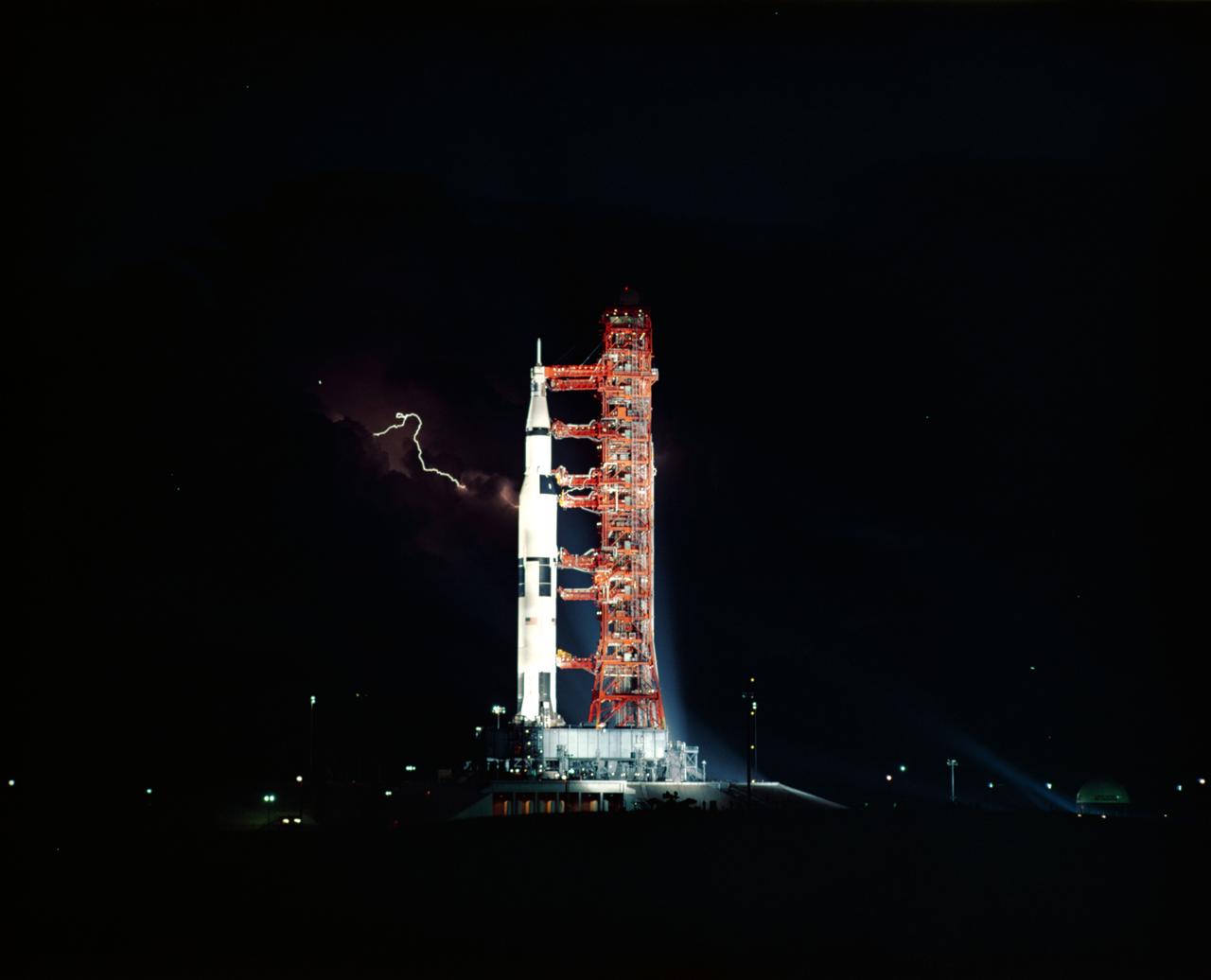
S89-41564 (25 July 1971) --- Lightning streaks through the sky around the Apollo 15 stack of hardware prior to the Apollo 15 launch. The huge 363-feet tall Apollo 15 (Spacecraft 112/Lunar Module 10/Saturn 510) space vehicle is scheduled to launch from Pad A, Launch Complex 39, at 9:34:00:79 p.m. (EDT) on July 26, 1971. The prime crewmembers for the Apollo 15 mission are astronauts David R. Scott, commander; James B. Irwin, lunar module pilot; and Alfred M. Worden, command module pilot.
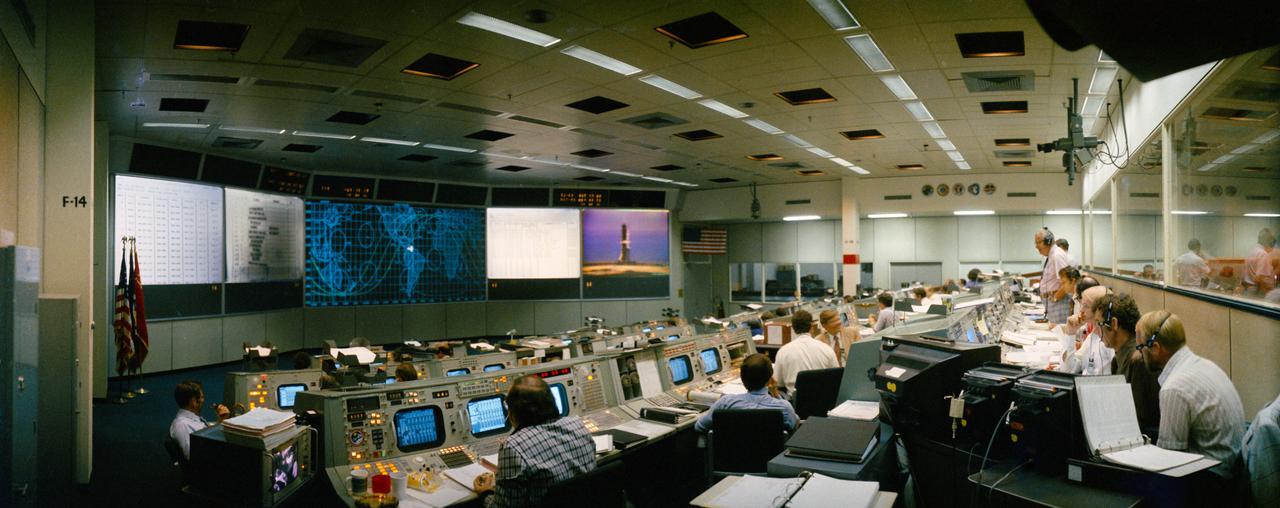
S75-28519 (15 July 1975) --- An overall view of the Mission Operations Control Room in the Mission Control Center, Building 30, Johnson Space Center, on the first day of the Apollo-Soyuz Test Project docking mission in Earth orbit. This photograph was taken shortly before the American ASTP launch from the Kennedy Space Center. The television monitor in the center background shows the ASTP Apollo-Saturn 1B space vehicle on Pad B at KSC?s Launch Complex 39. The American ASTP liftoff followed the Soviet ASTP launch of the Soyuz space vehicle from Baikonur, Kazakhstan by seven and one-half hours.
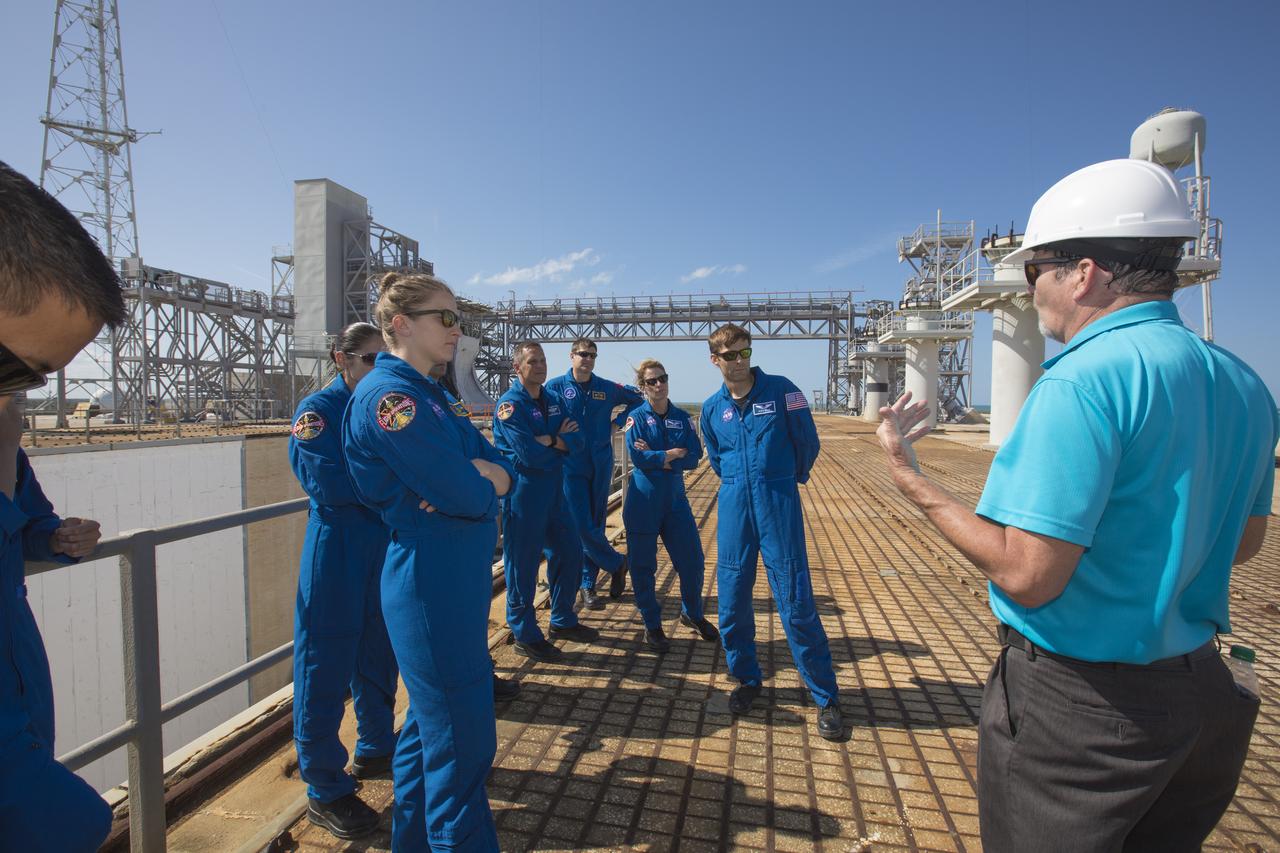
Members of the 2017 class of astronaut candidates are on the surface of Launch Pad 39B during a familiarization tour of facilities at NASA's Kennedy Space Center in Florida. The candidates toured center facilities, including the Vehicle Assembly Building, Launch Control Center, Neil Armstrong Operations and Checkout Building high bay and the Space Station Processing Facility. They also toured Boeing's Commercial Crew and Cargo Facility, United Launch Alliance's Space Launch Complex 41 at Cape Canaveral Air Force Station, and SpaceX's Launch Pad 39A at Kennedy. The candidates will spend about two years getting to know the space station systems and learning how to spacewalk, speak Russian, control the International Space Station's robotic arm and fly T-38s, before they're eligible to be assigned to a mission.
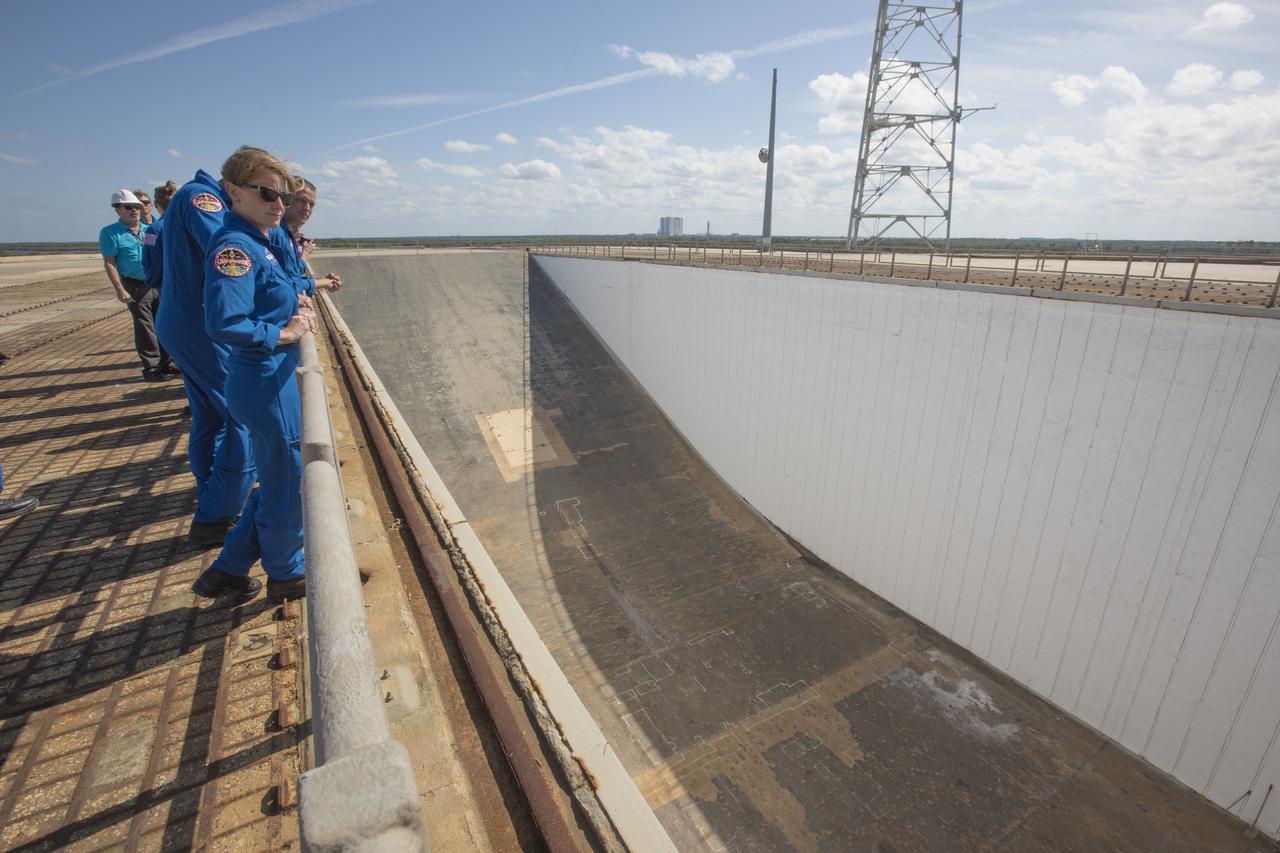
Members of the 2017 class of astronaut candidates view the flame trench at Launch Pad 39B during a familiarization tour of facilities at NASA's Kennedy Space Center in Florida. The candidates toured center facilities, including the Vehicle Assembly Building, Launch Control Center, Neil Armstrong Operations and Checkout Building high bay and the Space Station Processing Facility. They also toured Boeing's Commercial Crew and Cargo Facility, United Launch Alliance's Space Launch Complex 41 at Cape Canaveral Air Force Station, and SpaceX's Launch Pad 39A at Kennedy. The candidates will spend about two years getting to know the space station systems and learning how to spacewalk, speak Russian, control the International Space Station's robotic arm and fly T-38s, before they're eligible to be assigned to a mission.
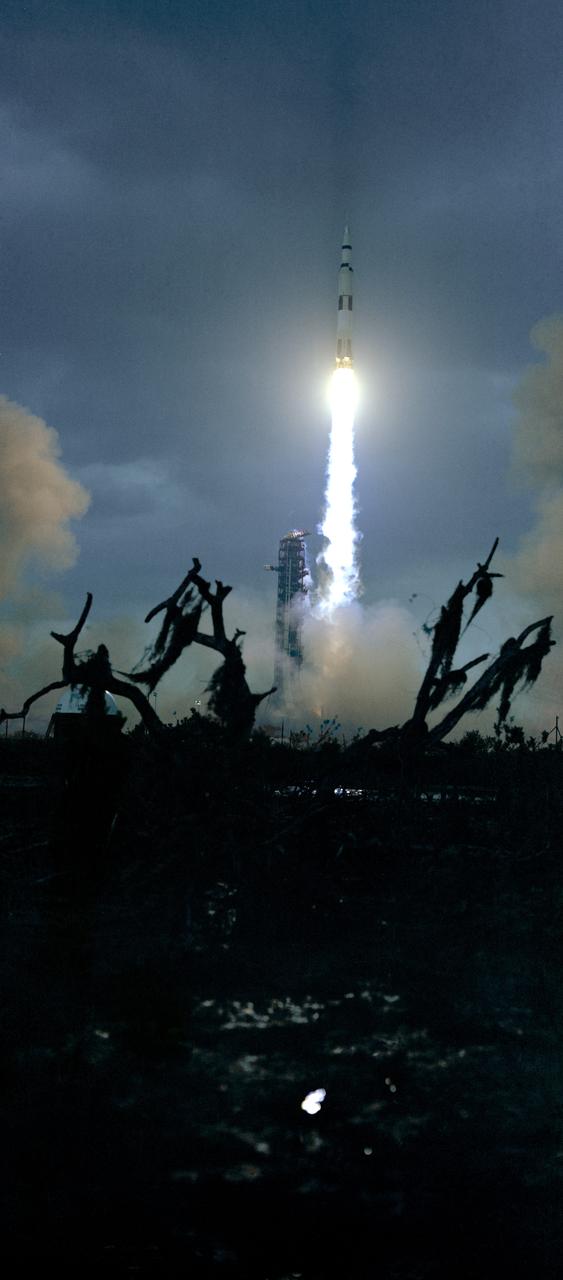
S71-18398 (31 Jan. 1971) --- The huge, 363-feet tall Apollo 14 (Spacecraft 110/Lunar Module 8/Saturn 509) space vehicle is launched from Pad A, Launch Complex 39, Kennedy Space Center (KSC), Florida at 4:03:02 p.m. (EST), Jan. 31, 1971, on a lunar landing mission. This view is framed by moss-covered dead trees in the dark foreground. Aboard the Apollo 14 spacecraft were astronauts Alan B. Shepard Jr., commander; Stuart A. Roosa, command module pilot; and Edgar D. Mitchell, lunar module pilot.
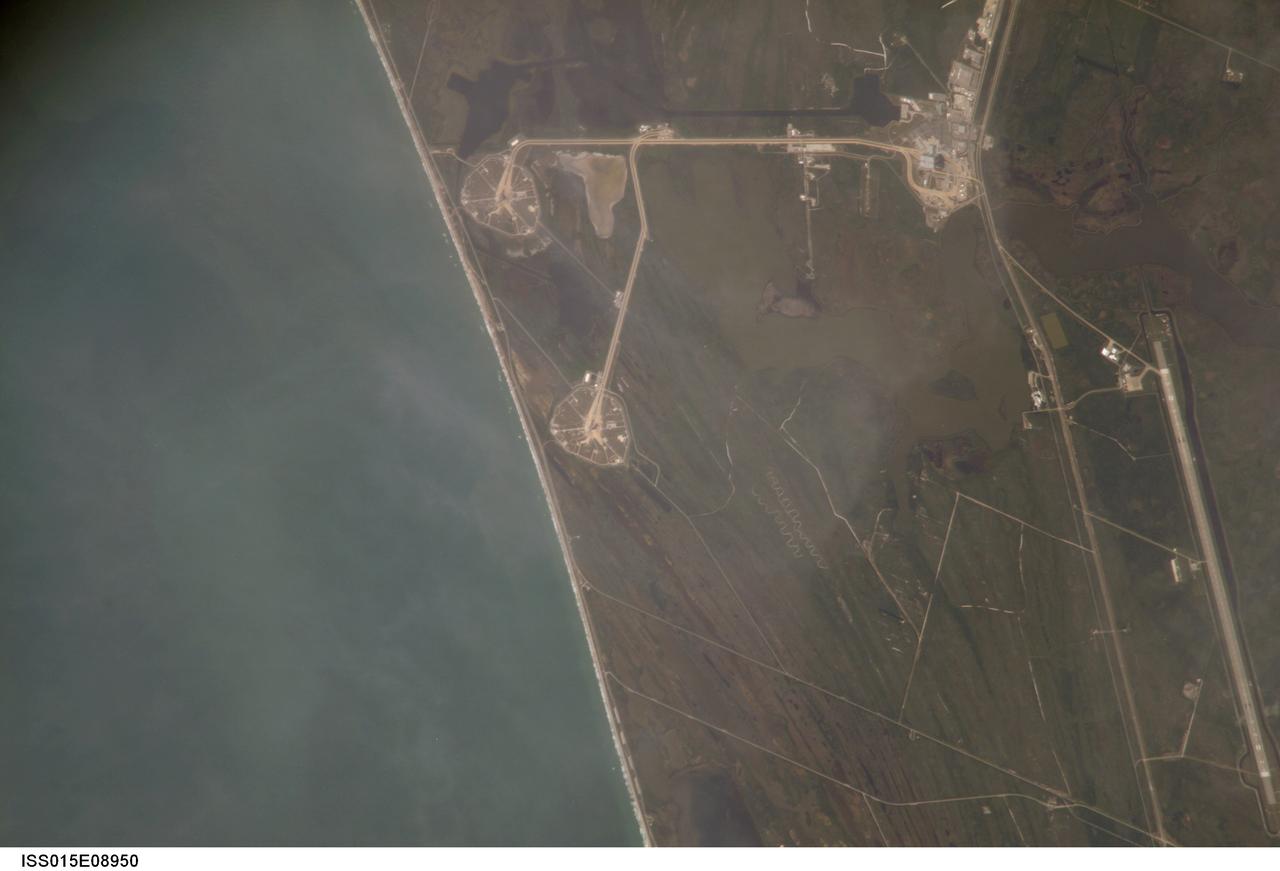
ISS015-E-08950 (21 May 2007) --- An 800-mm lens look from the International Space Station shows the Kennedy Space Center around midday on May 21, 2007. Astronaut Sunita L. Williams, Expedition 15 flight engineer, took the photo. The Space Shuttle Atlantis, scheduled for a launch no earlier than June 8, sits on Pad A (near top center frame) at launch complex 39. Pad B can be seen near center frame. The giant Vehicle Assembly Building (upper right) and part of the Shuttle Landing Facility (near lower right edge) are among other facilities seen in the digital frame.
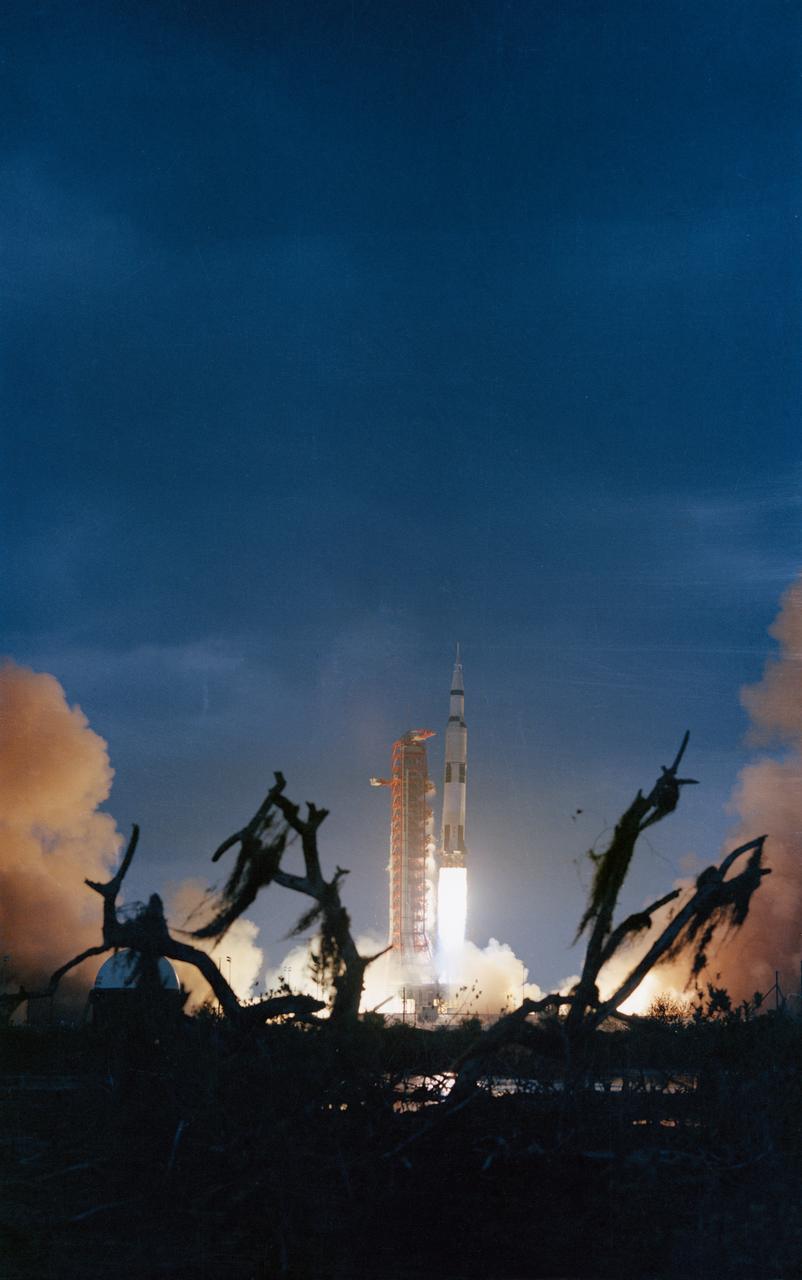
S71-18399 (31 Jan. 1971) --- The huge, 363-feet tall Apollo 14 (Spacecraft 110/Lunar Module 8/Saturn 509) space vehicle is launched from Pad A, Launch Complex 39, Kennedy Space Center (KSC), Florida at 4:03:02 p.m. (EST), Jan. 31, 1971, on a lunar landing mission. This view is framed by moss-covered dead trees in the dark foreground. Aboard the Apollo 14 spacecraft were astronauts Alan B. Shepard Jr., commander; Stuart A. Roosa, command module pilot; and Edgar D. Mitchell, lunar module pilot.
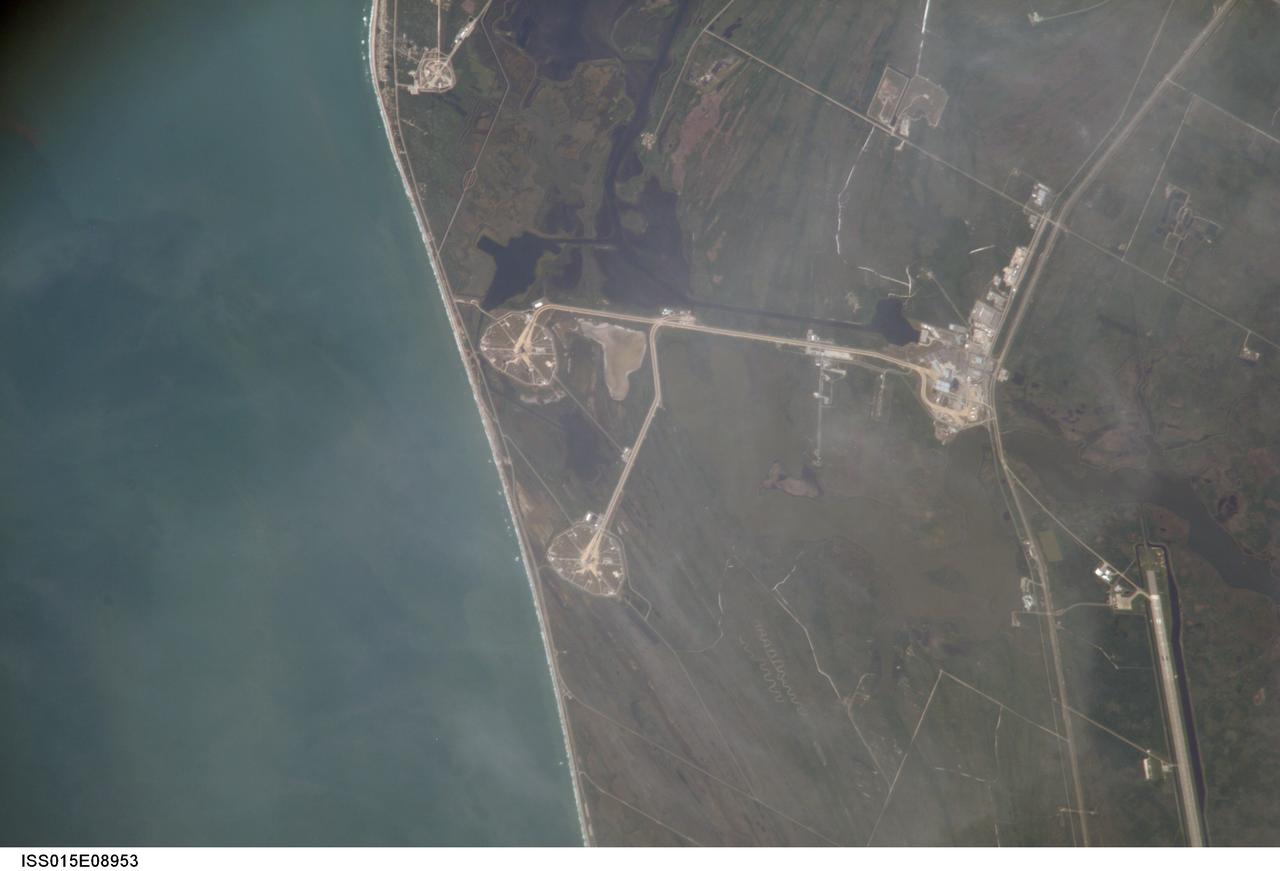
ISS015-E-08953 (21 May 2007) --- An 800-mm lens look from the International Space Station shows the Kennedy Space Center around midday on May 21, 2007. Astronaut Sunita L. Williams, Expedition 15 flight engineer, took the photo. The Space Shuttle Atlantis, scheduled for a launch no earlier than June 8, sits on Pad A (center frame) at launch complex 39. Pad B can be seen near bottom. The giant Vehicle Assembly Building (right center) and part of the Shuttle Landing Facility (lower right edge) are among other facilities seen in the digital frame
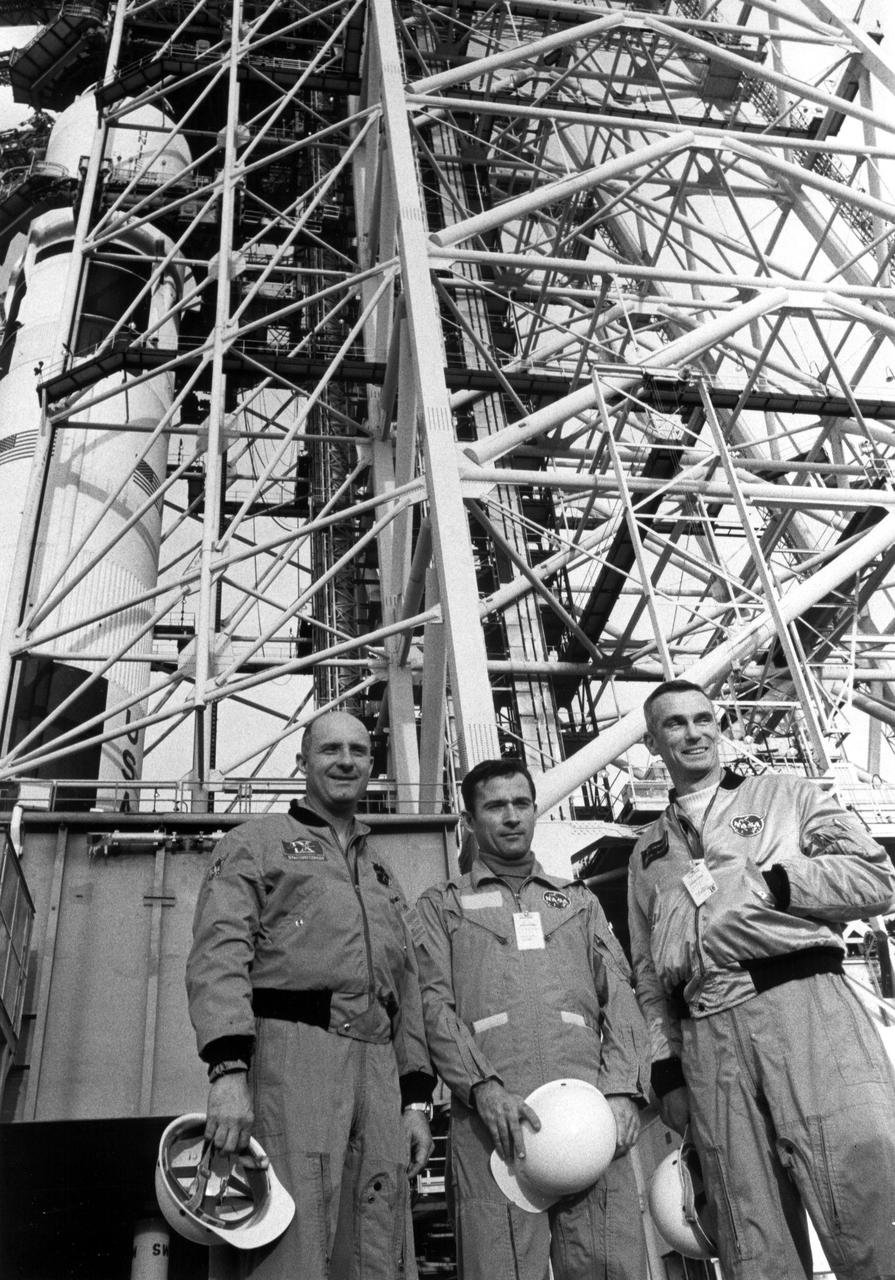
KENNEDY SPACE CENTER, FLA. -- The May 18 launch date for the Apollo 10 mission is now little more than a month away for its prime crew, shown here at Complex 39's Pad B. From left are Thomas P. Stafford, commander; John W. Young, command module pilot; and Eugene A. Cernan, lunar module pilot. Visible through the girders of the Mobile Service Structure is the launch vehicle which will hurl them toward the Moon in a mission that is to carry Stafford and Cernan to within 50,000 feet of the lunar surface.
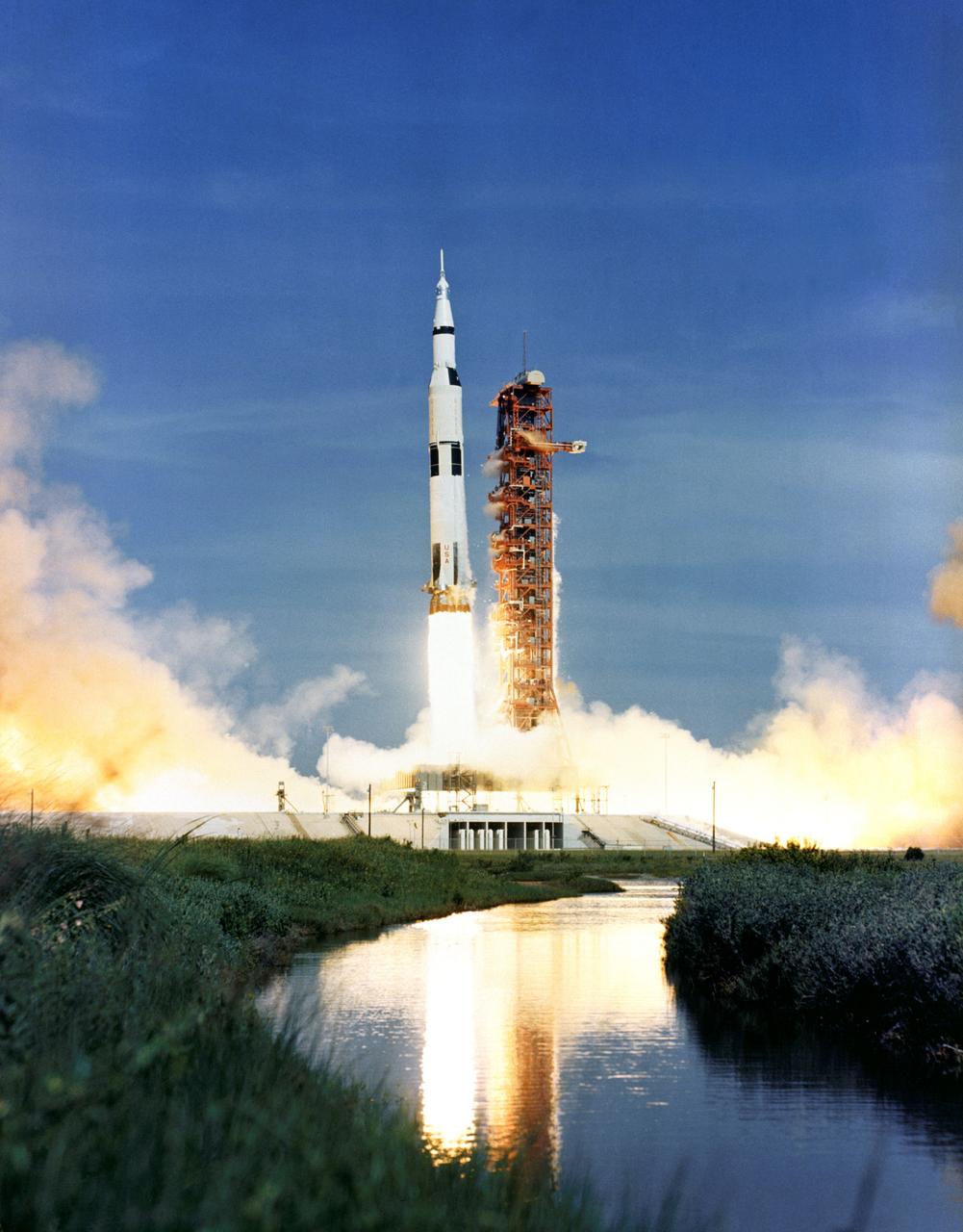
S71-41810 (26 July 1971) --- The 363-feet tall Apollo 15 (Spacecraft 112/Lunar Module 10/Saturn 510) space vehicle is launched from Pad A, Launch Complex 39, Kennedy Space Center, Florida, at 9:34:00.79 a.m., July 26, 1971, on a lunar landing mission. Aboard the Apollo 15 spacecraft were astronauts David R. Scott, commander; Alfred M. Worden, commander module pilot; and James B. Irwin, lunar module pilot. Apollo 15 is the National Aeronautics and Space Administration's (NASA) fourth manned lunar landing mission.
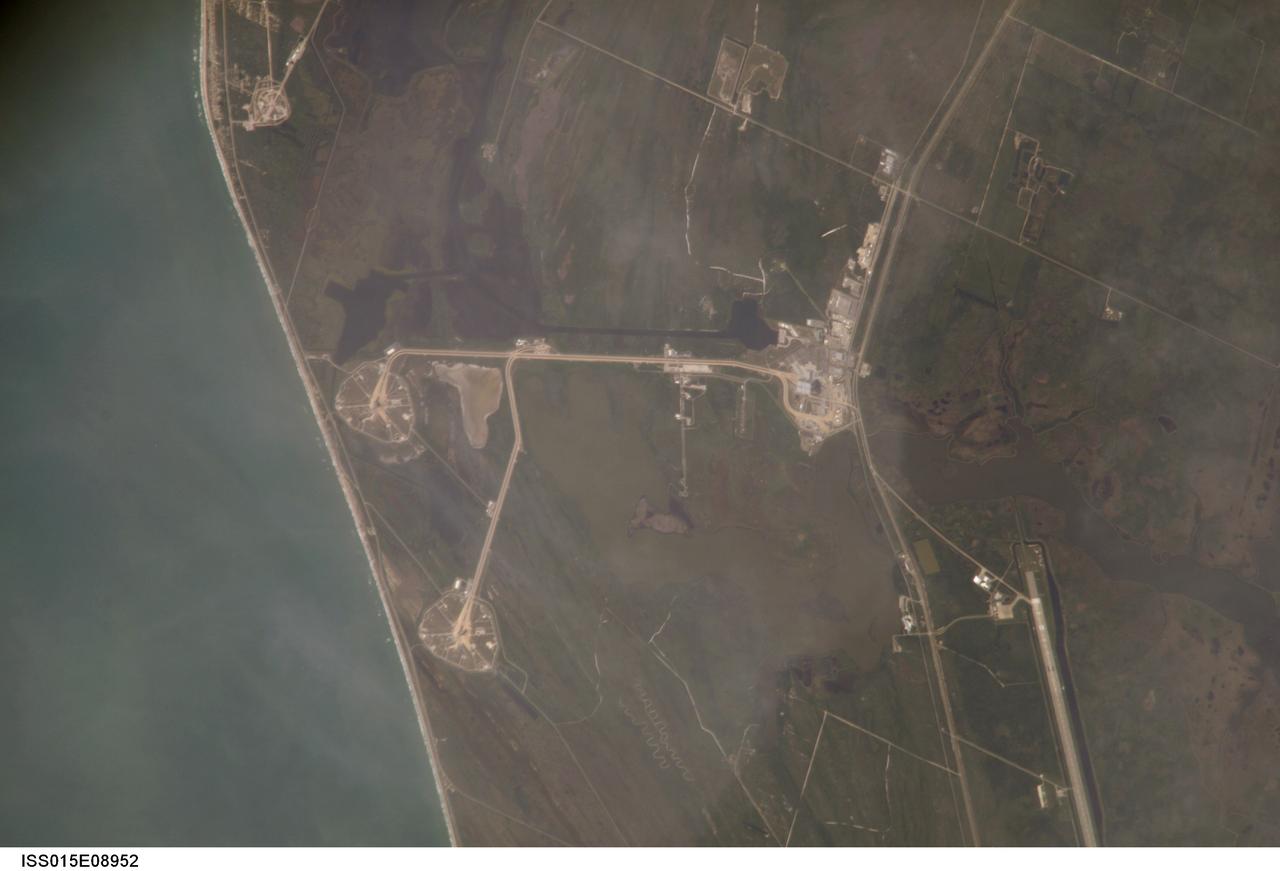
ISS015-E-08952 (21 May 2007) --- An 800-mm lens look from the International Space Station shows the Kennedy Space Center around midday on May 21, 2007. Astronaut Sunita L. Williams, Expedition 15 flight engineer, took the photo. The Space Shuttle Atlantis, scheduled for a launch no earlier than June 8, sits on Pad A (center left) at launch complex 39. Pad B can be seen near bottom. The giant Vehicle Assembly Building (right center) and part of the Shuttle Landing Facility (lower right) are among other facilities seen in the digital frame.
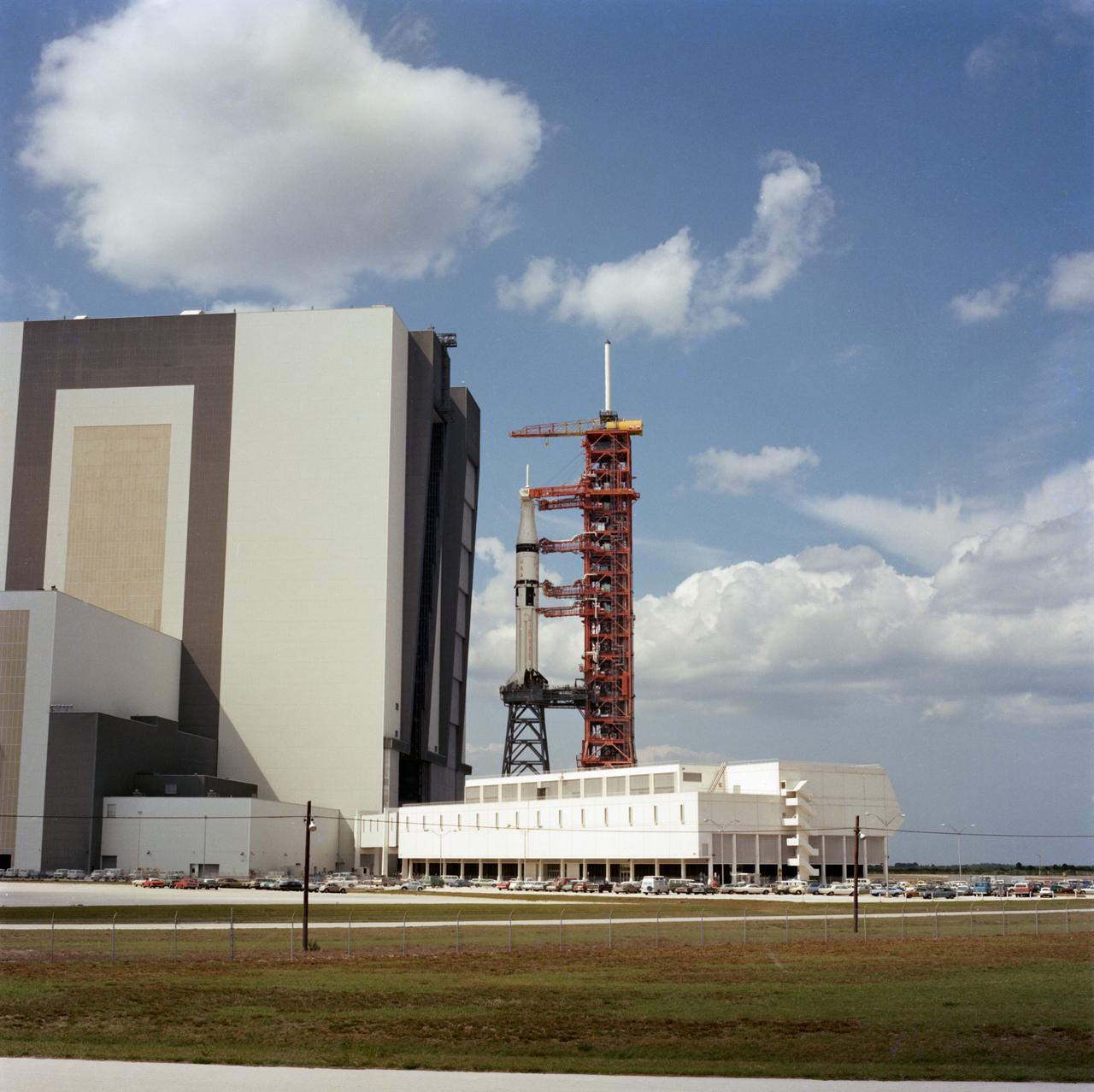
S75-24007 (24 March 1975) --- The Saturn 1B space vehicle for the Apollo-Soyuz Test Project mission, with its launch umbilical tower, rides atop a huge crawler-transporter as it moves slowly away from the Vehicle Assembly Building on its 4.24-mile journey to Pad B, Launch Complex 39, at NASA's Kennedy Space Center. The ASTP vehicle is composed of a Saturn 1B (first) stage, a Saturn IVB (second) stage, and a payload consisting of a Command/Service Module and a Docking Module. The joint U.S.-USSR ASTP docking mission in Earth orbit is scheduled for July 1975.
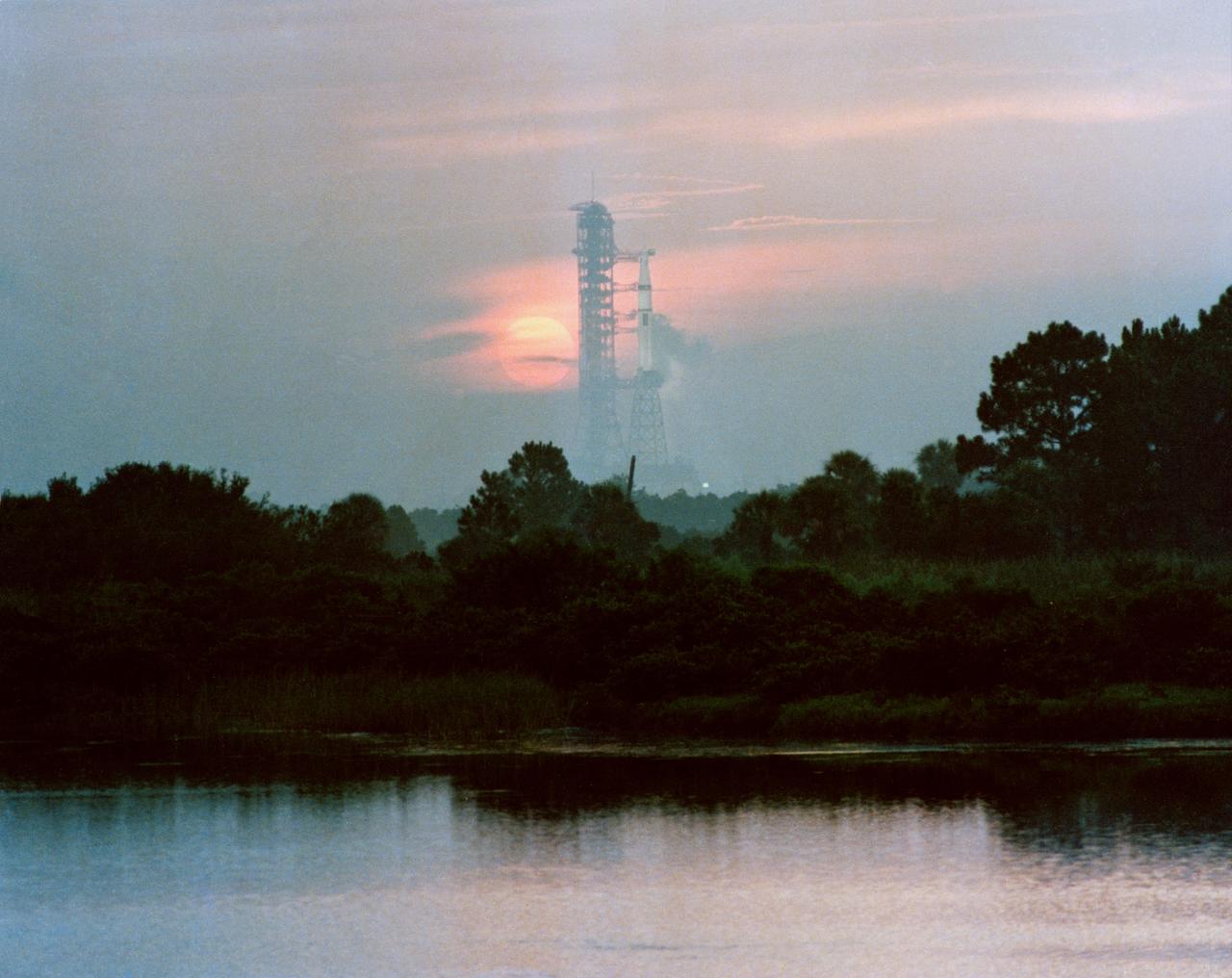
S73-37929 (16 Nov. 1973) --- A sunrise view at the Kennedy Space Center showing in the near distance the Skylab 4/Saturn 1B space vehicle on Pad B, Launch Complex 39, on the morning of the launch. The liftoff was at 9:01:23 a.m. (EST), Friday, Nov. 16, 1973. Skylab 4 is the third and last of three scheduled manned Skylab missions. Aboard the Skylab 4 Command/Service Module were astronauts Gerald P. Carr, Edward G. Gibson and William R. Pogue. This picture was photographed by astronaut Bruce McCandless II. Photo credit: NASA
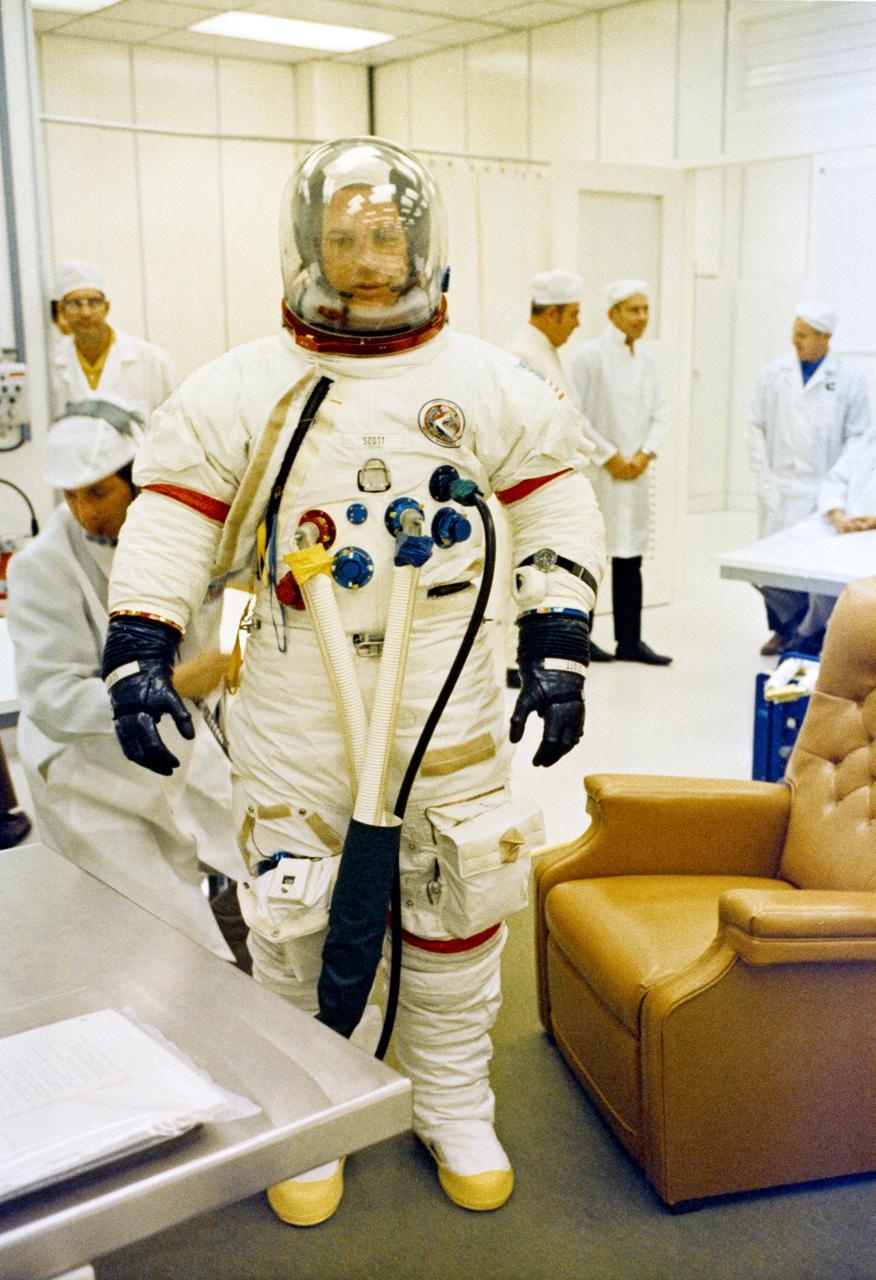
S71-41409 (26 July 1971) --- Astronaut David R. Scott, commander of the Apollo 15 lunar landing mission, goes through suiting up operations in the Kennedy Space Center's (KSC) Manned Spacecraft Operations Building (MSOB) during the Apollo 15 prelaunch countdown. Minutes later astronauts Scott; Alfred M. Worden, command module pilot; and James B. Irwin, lunar module pilot, rode a special transport van over to Pad A, Launch Complex 39, where their spacecraft awaited them. The Apollo 15 space vehicle was launched at 9:34:00:79 a.m. (EDT), July 26, 1971.
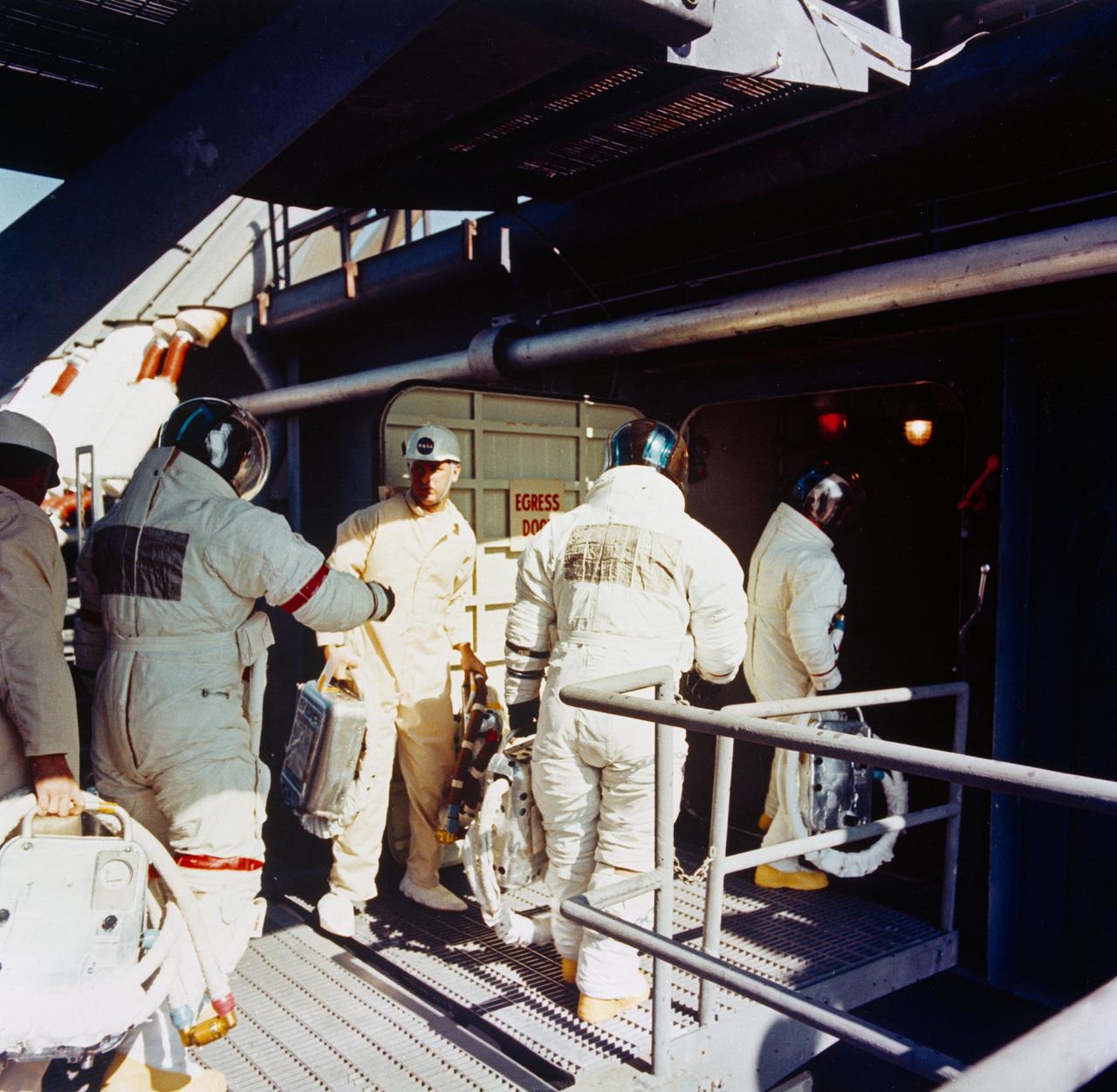
S71-16635 (31 Jan. 1971) --- The three Apollo 14 astronauts arrive at the White Room atop Pad A, Launch Complex 39, during the Apollo 14 prelaunch countdown. Apollo 14, with Alan B. Shepard Jr., commander; Stuart A. Roosa, command module pilot; and Edgar D. Mitchell, lunar module pilot, aboard was launched at 4:03:02 p.m. (EST), Jan. 31, 1971, on a lunar landing mission. Note identifying bands on the sleeve and leg of Shepard. Standing in the center foreground is astronaut Thomas P. Stafford, chief of the MSC Astronaut Office.
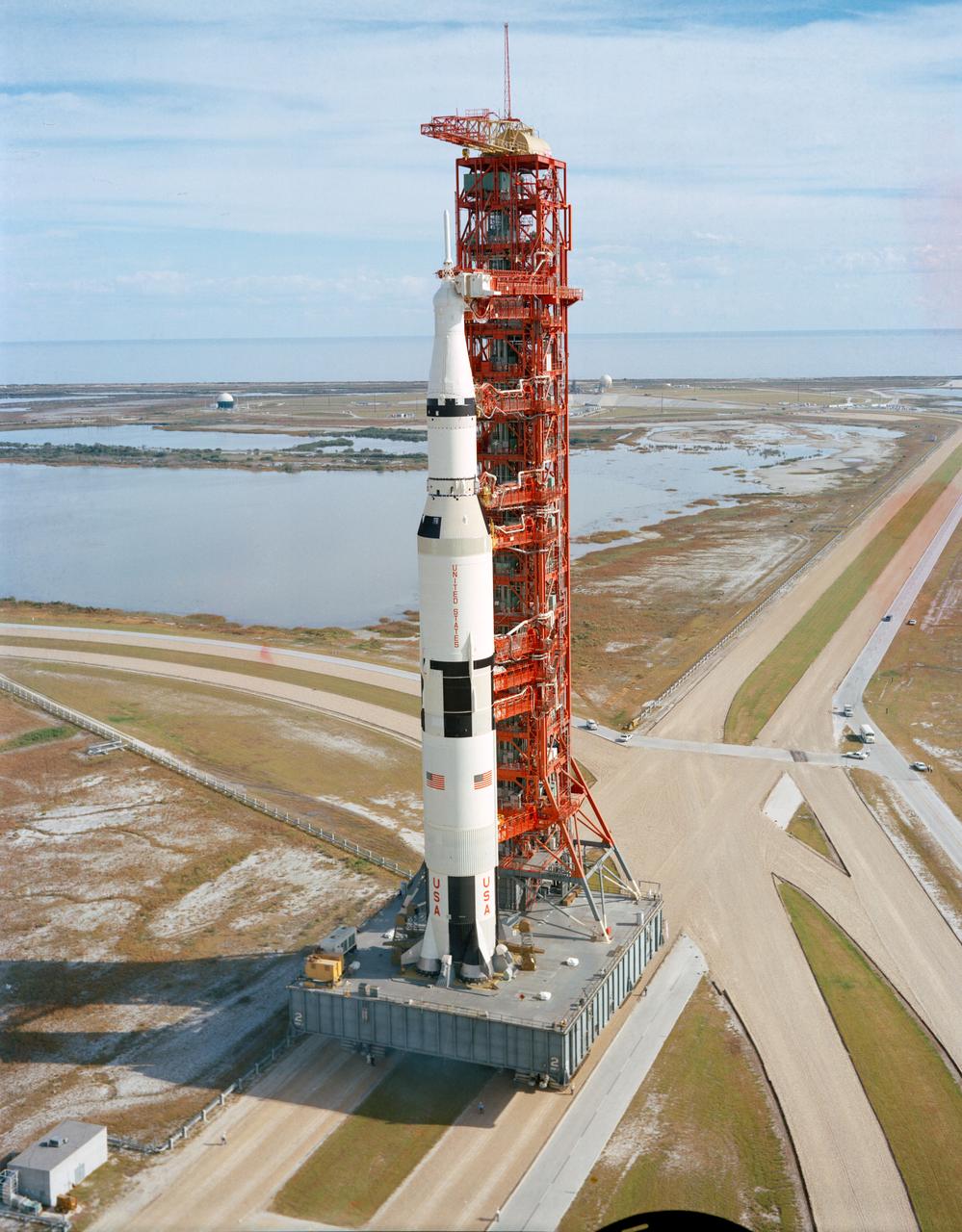
S70-54127 (9 Nov. 1970) --- A high-angle view at Launch Complex 39, Kennedy Space Center (KSC), showing the Apollo 14 (Spacecraft 110/Lunar Module 8/Saturn 509) space vehicle on the way from the Vehicle Assembly Building (VAB) to Pad A. The Saturn V stack and its mobile launch tower sit atop a huge crawler-transporter. The Apollo 14 crewmen will be astronauts Alan B. Shepard Jr., commander; Stuart A. Roosa, command module pilot; and Edgar D. Mitchell, lunar module pilot.
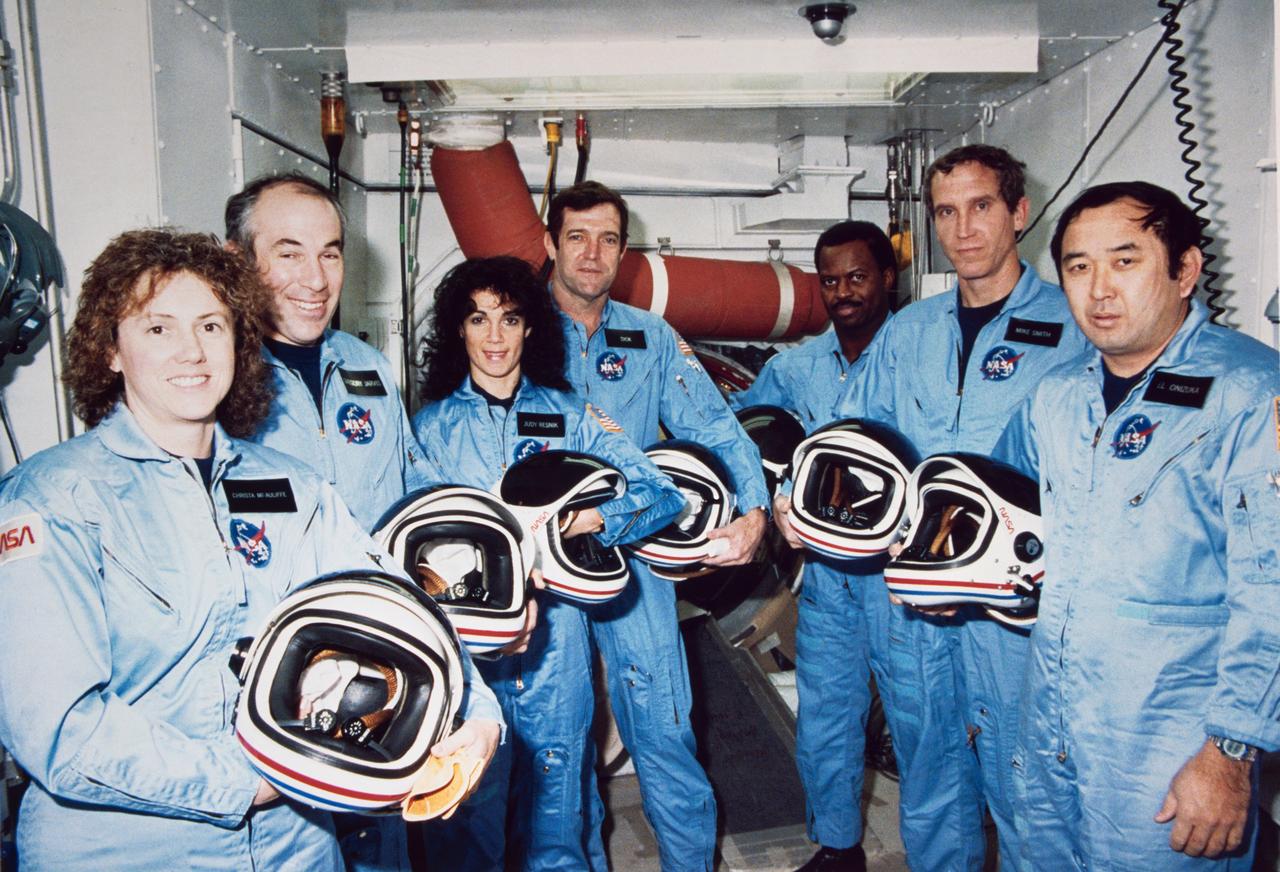
S86-30460 (9 Jan. 1986) --- NASA's STS-51L crew members pose for photographs during a break in countdown training at the White Room, Launch Complex 39, Pad B. Left to right are Teacher-in-Space payload specialist Sharon Christa McAuliffe; payload specialist Gregory Jarvis; and astronauts Judith A. Resnik, mission specialist; Francis R. (Dick) Scobee, mission commander; Ronald E. McNair, mission specialist; Mike J. Smith, pilot; and Ellison S. Onizuka, mission specialist. EDITOR'S NOTE: The STS-51L crew lost their lives in an explosion, onboard the space shuttle Challenger, following launch Jan. 28, 1986. Photo credit: NASA
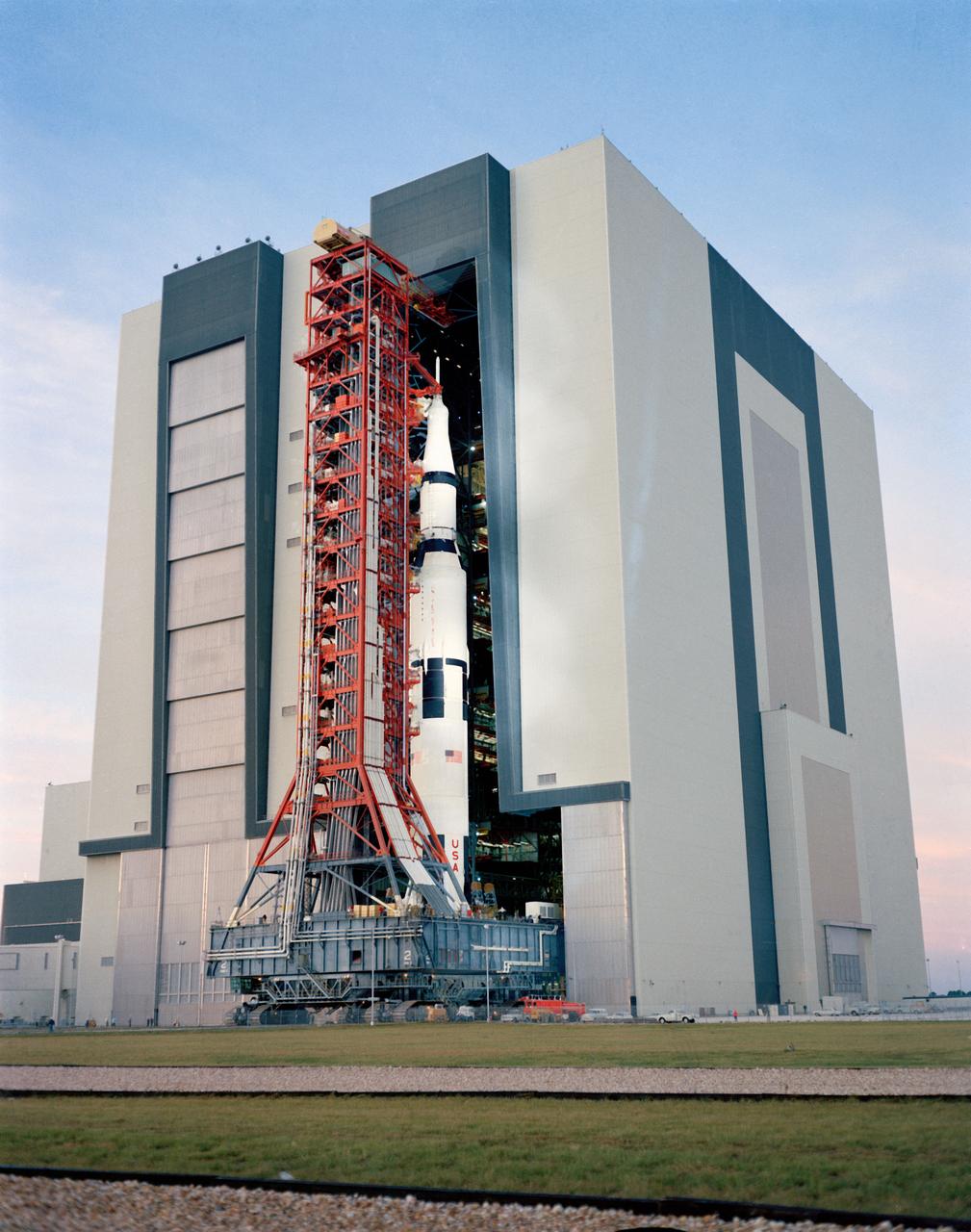
S70-54121 (9 Nov. 1970) --- A ground level view at Launch Complex 39, Kennedy Space Center (KSC), showing the Apollo 14 (Spacecraft 110/Lunar Module 8/Saturn 509) space vehicle leaving the Vehicle Assembly Building (VAB). The Saturn V stack and its mobile launch tower, atop a huge crawler-transporter, were rolled out to Pad A. The Apollo 14 crewmen will be astronauts Alan B. Shepard Jr., commander; Stuart A. Roosa, command module pilot; and Edgar D. Mitchell, lunar module pilot.
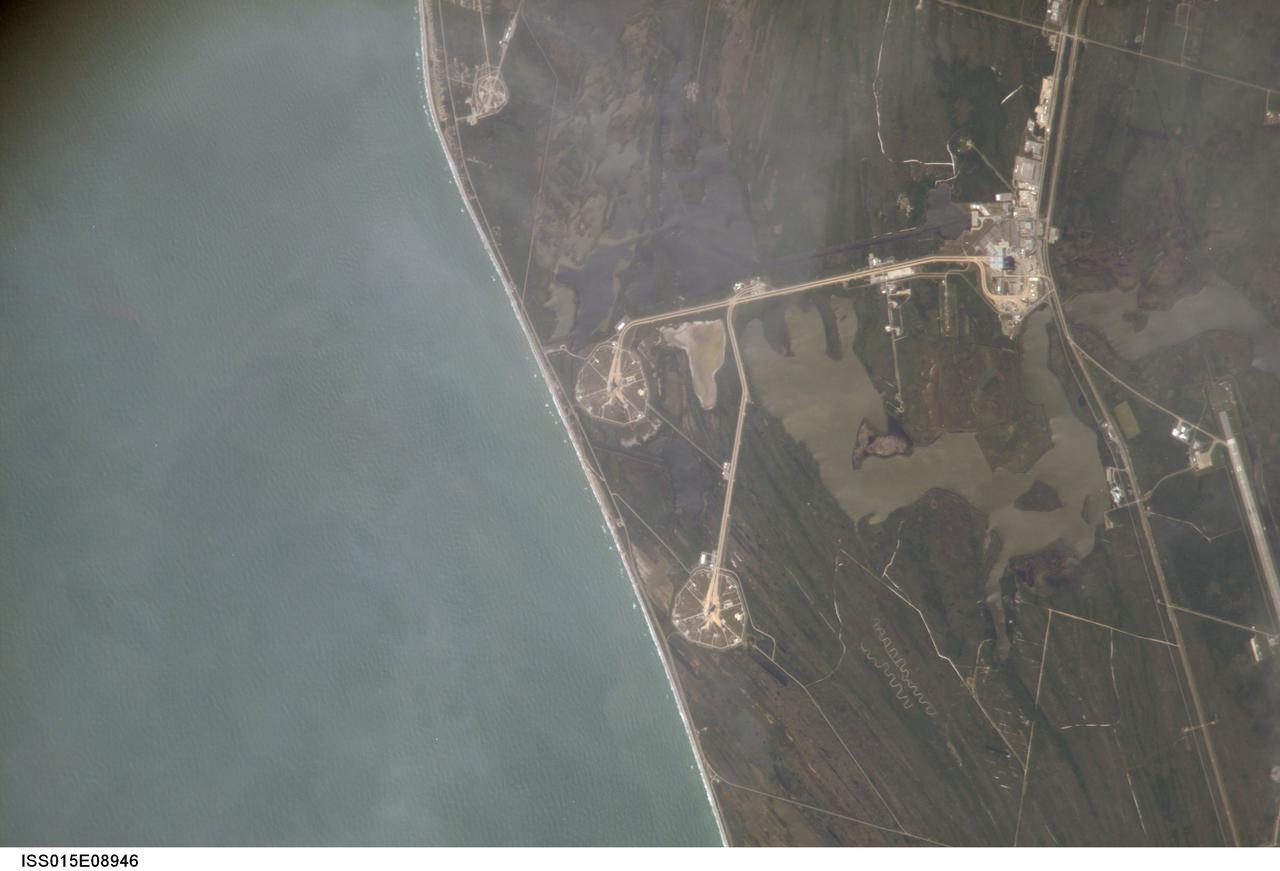
ISS015-E-08946 (21 May 2007) --- An 800-mm lens look from the International Space Station shows the Kennedy Space Center around midday on May 21, 2007. Astronaut Sunita L. Williams, Expedition 15 flight engineer, took the photo. The Space Shuttle Atlantis, scheduled for a launch no earlier than June 8, sits on Pad A (center frame) at launch complex 39. Pad B can be seen near bottom. The giant Vehicle Assembly Building (right center) and part of the Shuttle Landing Facility (right edge) are among other facilities seen in the digital frame.
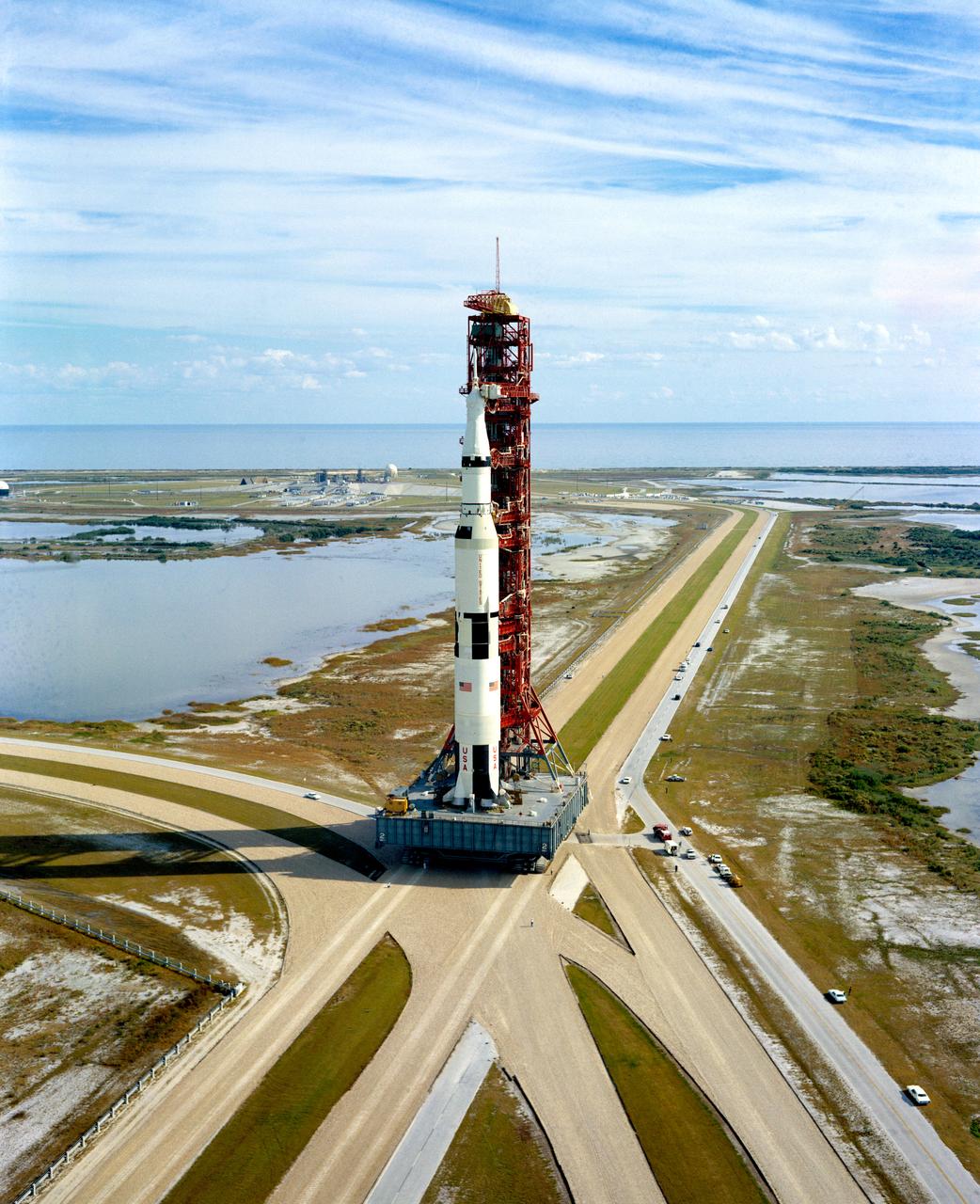
S70-54119 (9 Nov. 1970) --- A high-angle view at Launch Complex 39, Kennedy Space Center (KSC), showing the Apollo 14 (Spacecraft 110/Lunar Module 8/Saturn 509) space vehicle on the way from the Vehicle Assembly Building (VAB) to Pad A. The Saturn V stack and its mobile launch tower sit atop a huge crawler-transporter. The Apollo 14 crewmen will be astronauts Alan B. Shepard Jr., commander; Stuart A. Roosa, command module pilot; and Edgar D. Mitchell, lunar module pilot.
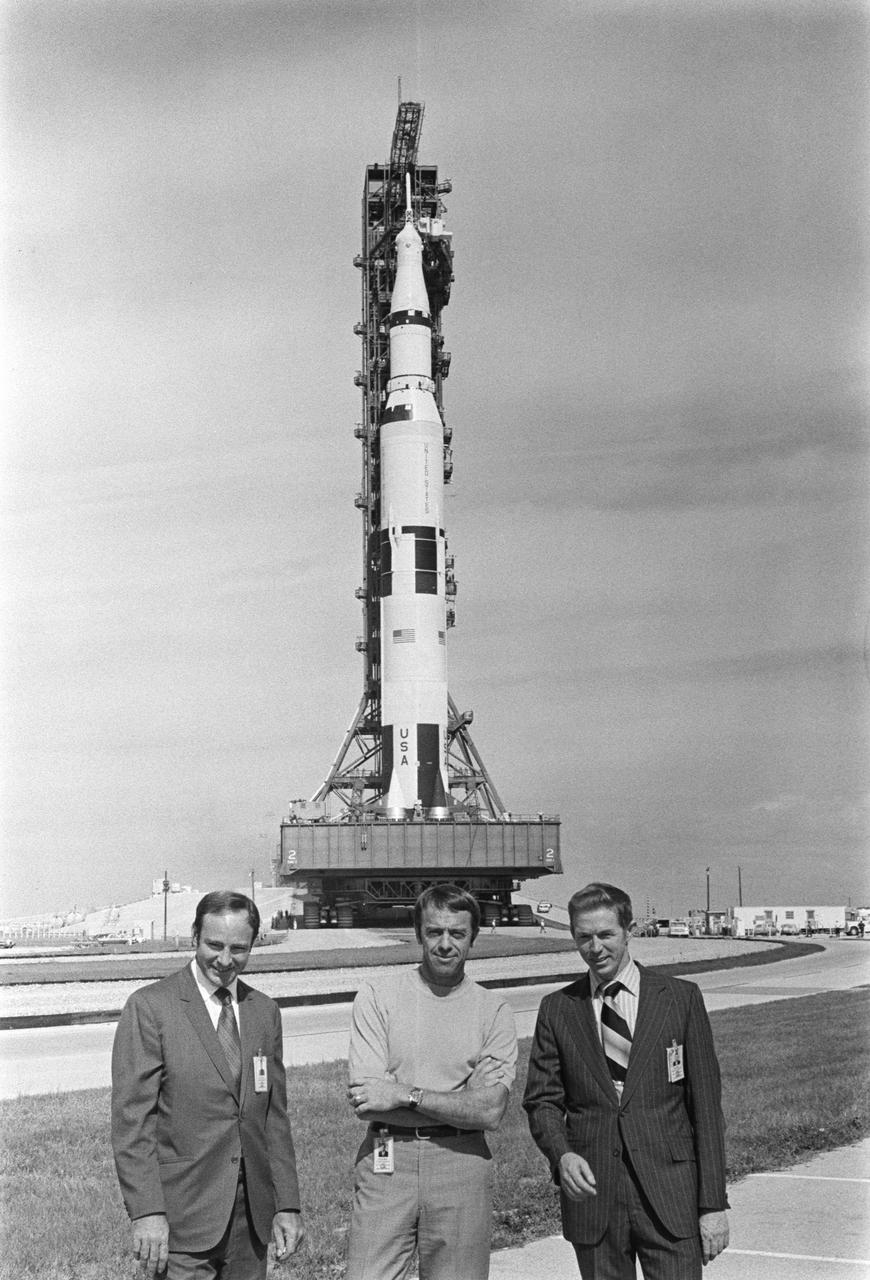
S70-55689 (9 Nov. 1970) --- The Apollo 14 (Spacecraft 110/Lunar Module 8/Saturn 509) space vehicle arrives at Pad A, Launch Complex 39, during the Apollo 14 roll out from the Kennedy Space Center's Vehicle Assembly Building. The Saturn V stack and its mobile launch tower atop a huge crawler-transporter. The three members of the Apollo 14 prime crew are in the foreground. They are (left to right) astronauts Edgar D. Mitchell, lunar module pilot; Alan B. Shepard Jr., commander; and Stuart A. Roosa, command module pilot.
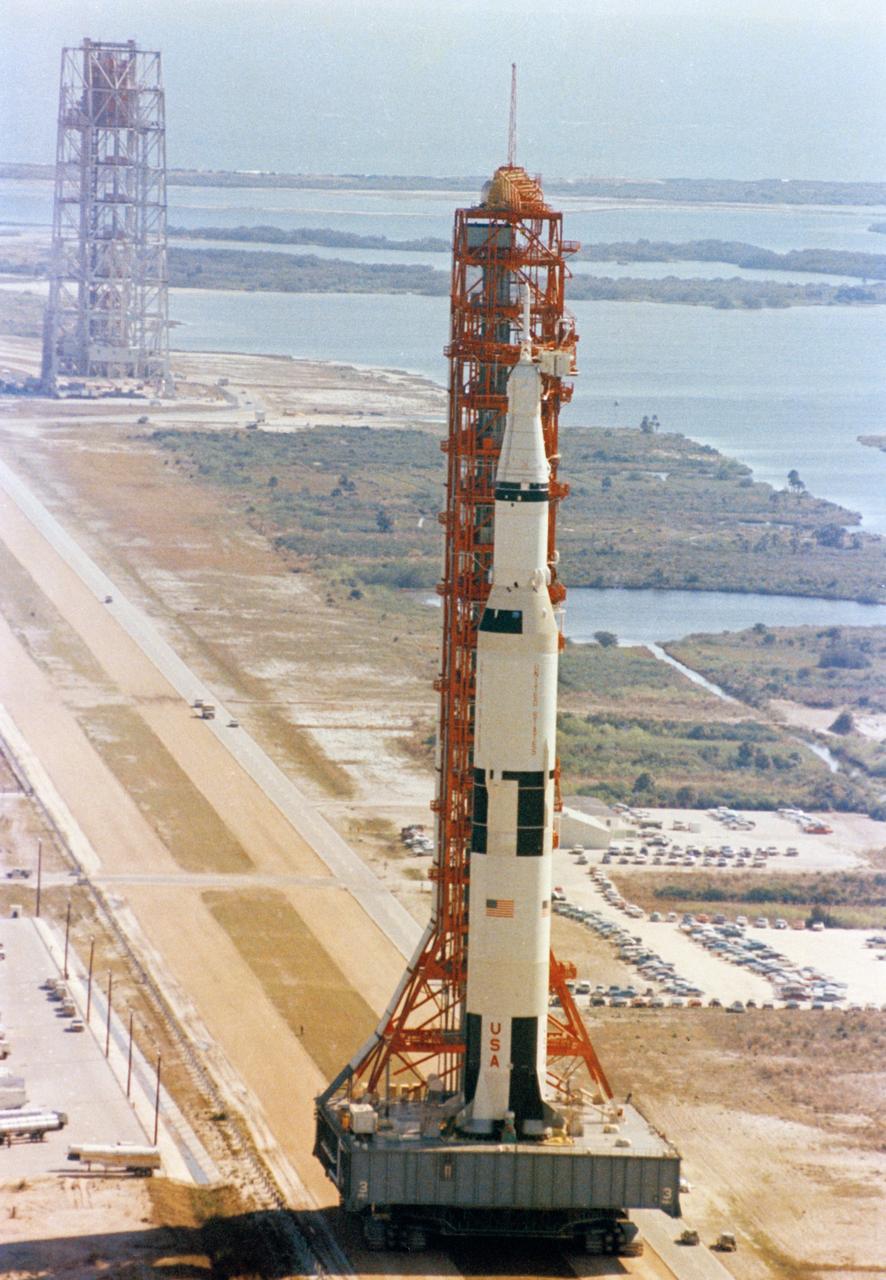
S69-27915 (11 March 1969) --- Aerial view at Launch Complex 39, Kennedy Space Center, showing a close-up of the 363-feet tall Apollo 10 (Spacecraft 106/Lunar Module 4/Saturn 505) space vehicle on its way to Pad B. The Saturn V stack and its mobile launch tower are atop a huge crawler-transporter. The Apollo 10 flight is scheduled as a lunar orbit mission. The Apollo 10 crew will be astronauts Thomas P. Stafford, commander; John W. Young, command module pilot; and Eugene A. Cernan, lunar module pilot.
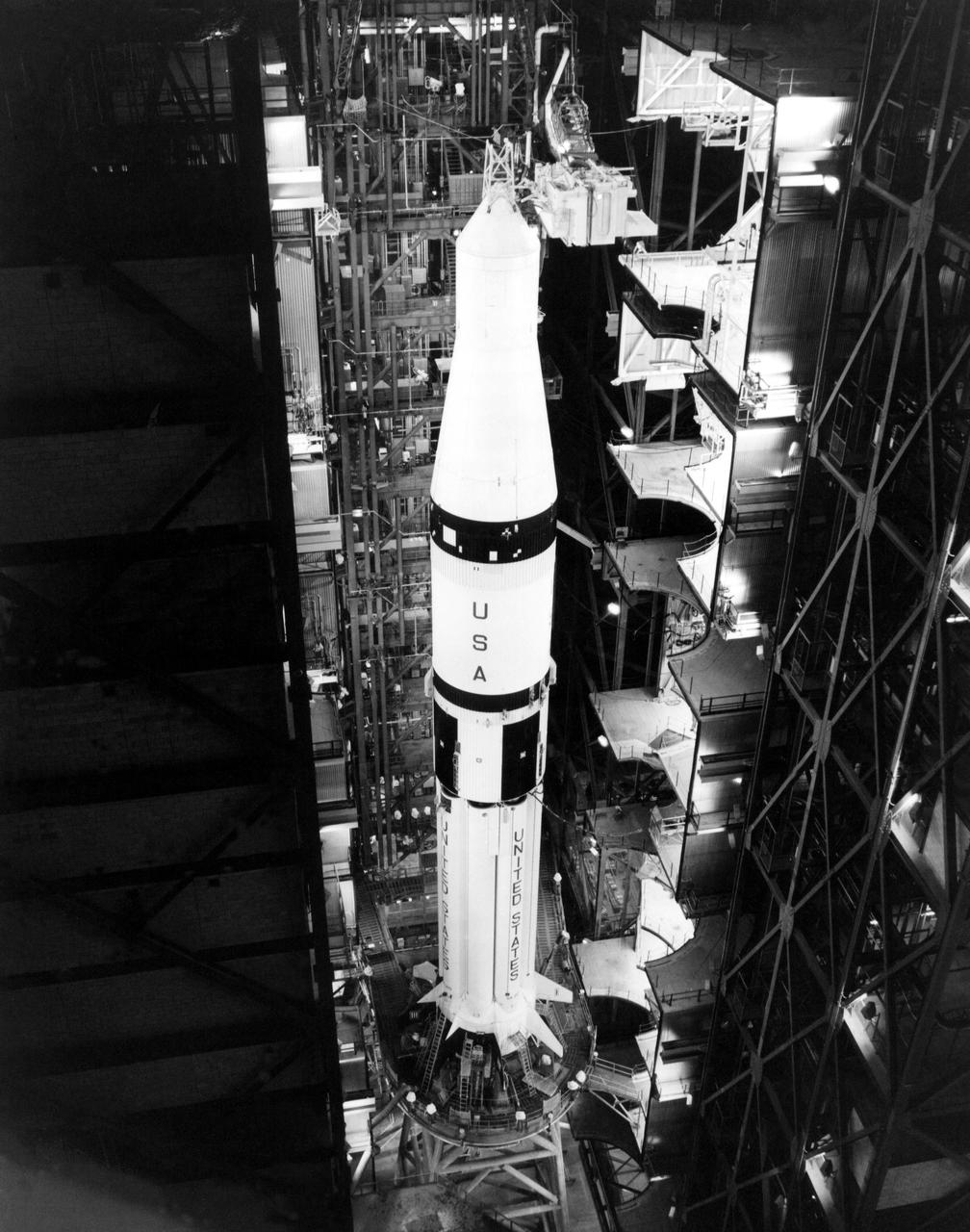
KENNEDY SPACE CENTER, FLA. -- The Saturn IB booster for the United States mission of the Apollo Soyuz Test Project is shown on its mobile launcher in a Vehicle Assembly Building high bay with a boilerplate Apollo spacecraft installed atop the instrument unit. The encapsulated Apollo spacecraft, docking module and docking adapter that will be launched atop the Chrysler-built booster will replace the boilerplate spacecraft prior to rollout of the space vehicle to Complex 39's Pad B, now scheduled March 24. Launch is scheduled at 3:50 p.m. EDT July 15.
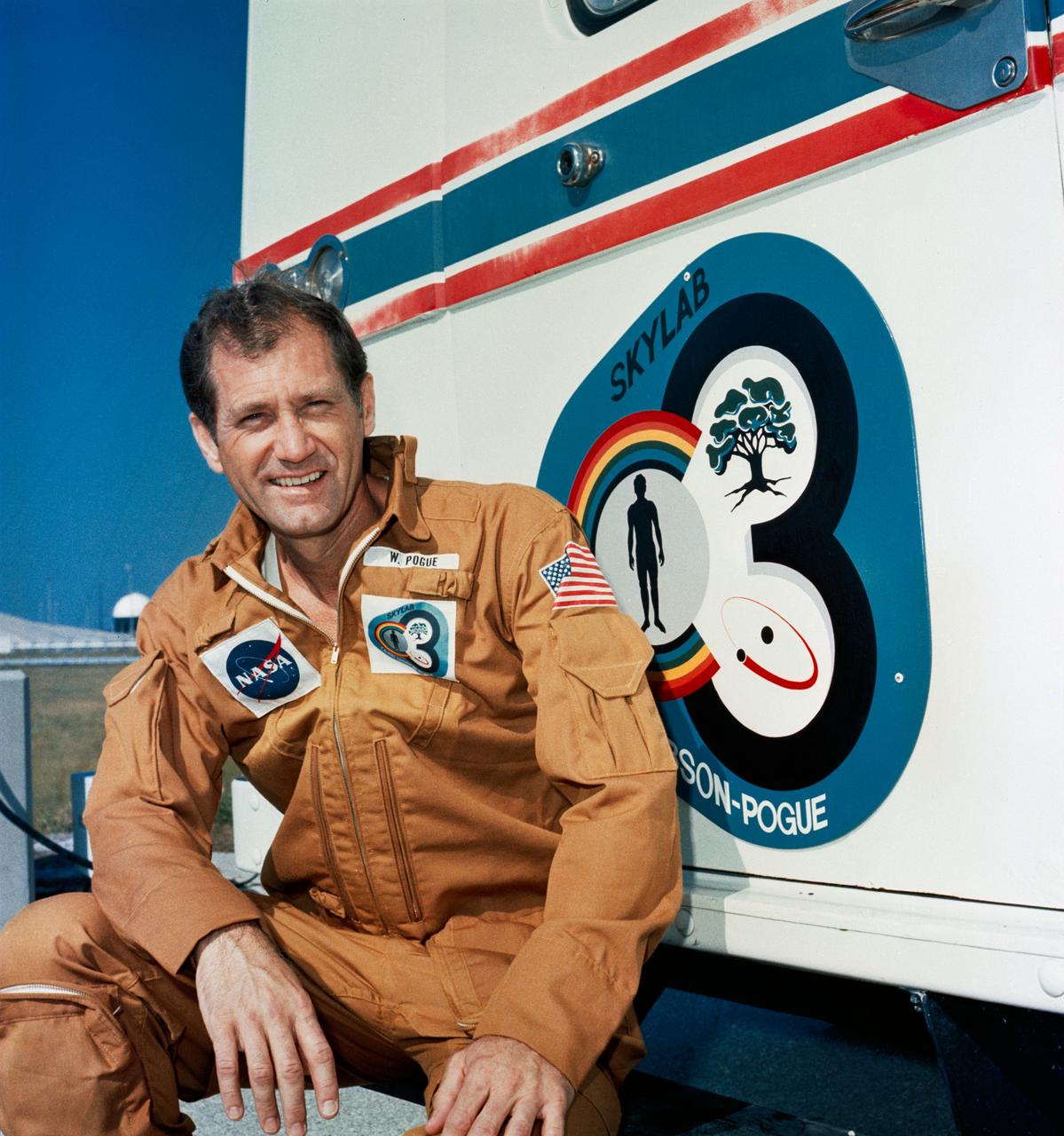
S73-36901 (8 Nov. 1973) --- Astronaut William R. Pogue, pilot of the Skylab 4 mission, relaxes on the running board of the transfer van during a visit to the Skylab 4/Saturn 1B space vehicle at Pad B, Launch Complex 39, Kennedy Space Center, Florida. On the morning of the launch the transfer van will transport astronauts Pogue, Gerald P. Carr, commander; and Edward G. Gibson, science pilot, from the suiting building to Pad B. Skylab 4, the third and last visit to the Skylab space station in Earth orbit, will return additional information on the Earth and sun, as well as provide a favorable location from which to observe the recently discovered Comet Kohoutek. Photo credit: NASA
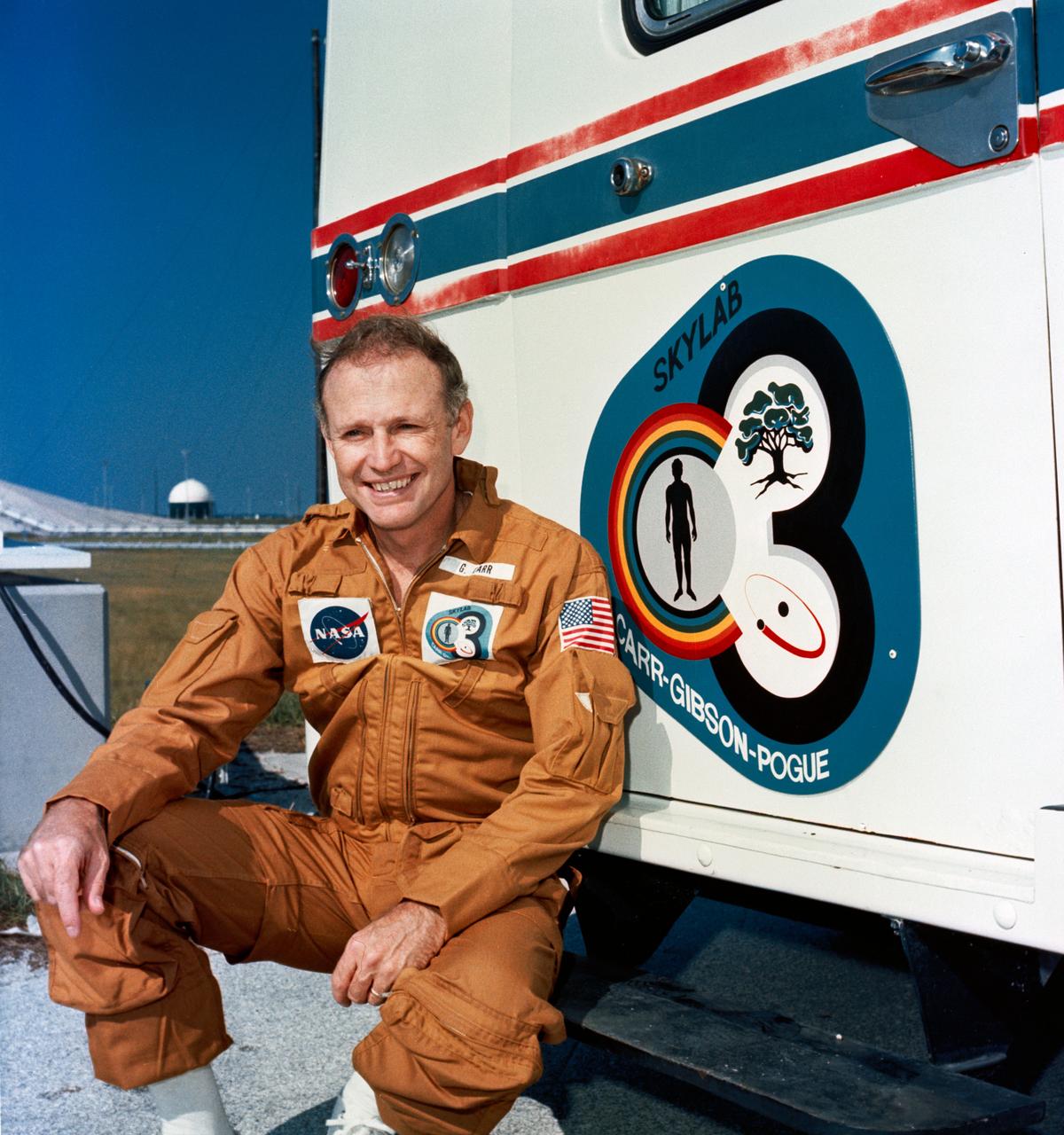
S73-36902 (8 Nov. 1973) --- Astronaut Gerald P. Carr, commander of the Skylab 4 mission, relaxes on the running board of the transfer van during a visit to the Skylab 4/Saturn 1B space vehicle at Pad B, Launch Complex 39, at the Kennedy Space Center, Florida. On the morning of the launch the transfer van will transport astronauts Carr; William R. Pogue, pilot; and Edward G. Gibson, science pilot, from the suiting building to Pad B. Skylab 4, the third and last visit to the Skylab space station in Earth orbit, will return additional information the Earth and sun, as well as provide a favorable location from which to observe the recently discovered Comet Kohoutek. Photo credit: NASA
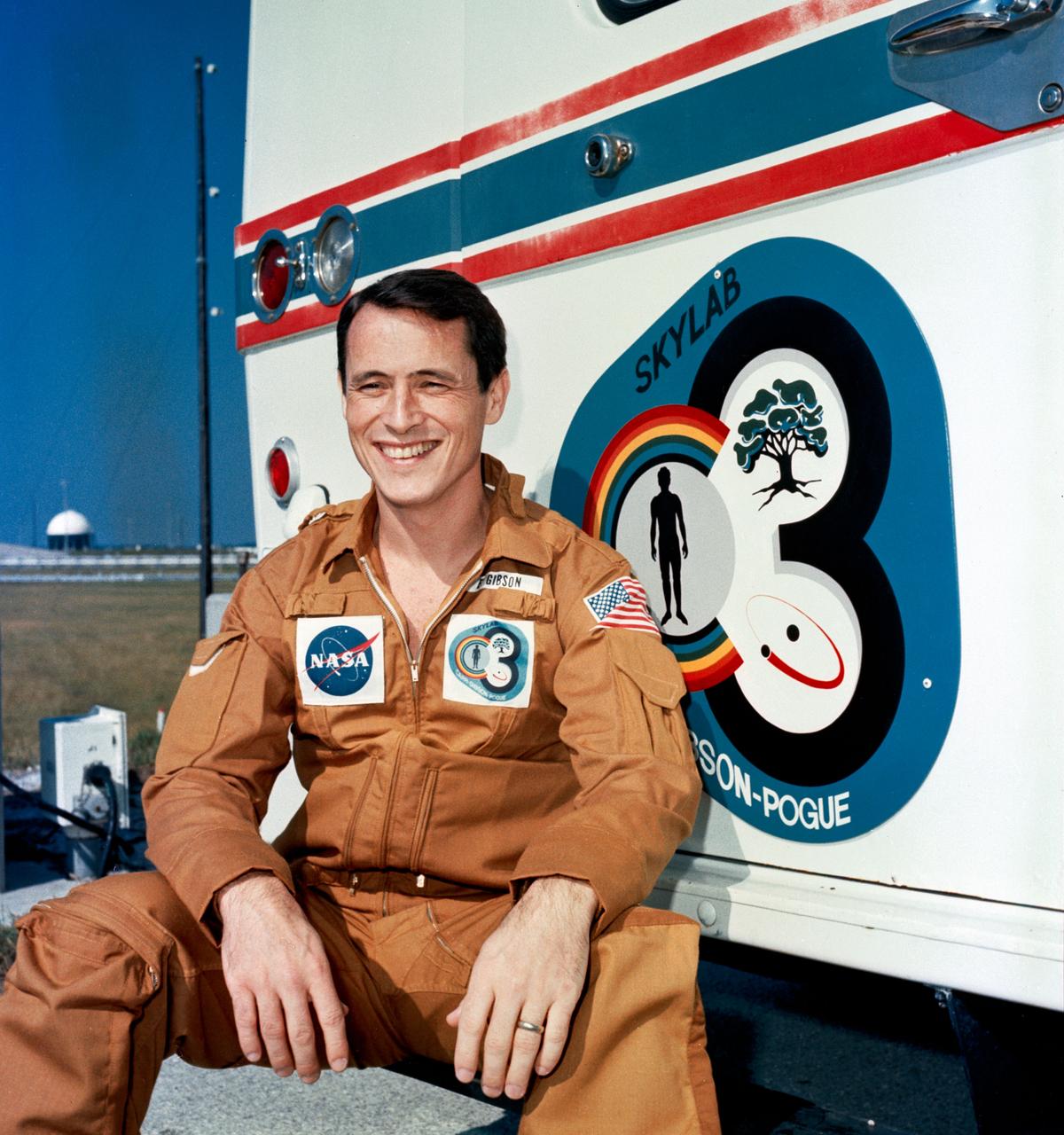
S73-36903 (8 Nov. 1973) --- Scientist-astronaut Edward G. Gibson, Skylab 4 science pilot, relaxes on the running board of the transfer van during a visit to the Skylab 4/Saturn 1B space vehicle at Pad B, Launch Complex 39, Kennedy Space Center, Florida. On the morning of the launch the transfer van will transport astronauts Gibson; Gerald P. Carr, commander; and William R. Pogue, pilot, from the suiting building to Pad B. Skylab 4, the third and last visit to the Skylab space station in Earth orbit, will return additional information on the Earth and sun, as well as provide a favorable location from which to observe the recently discovered Comet Kohoutek. Photo credit: NASA
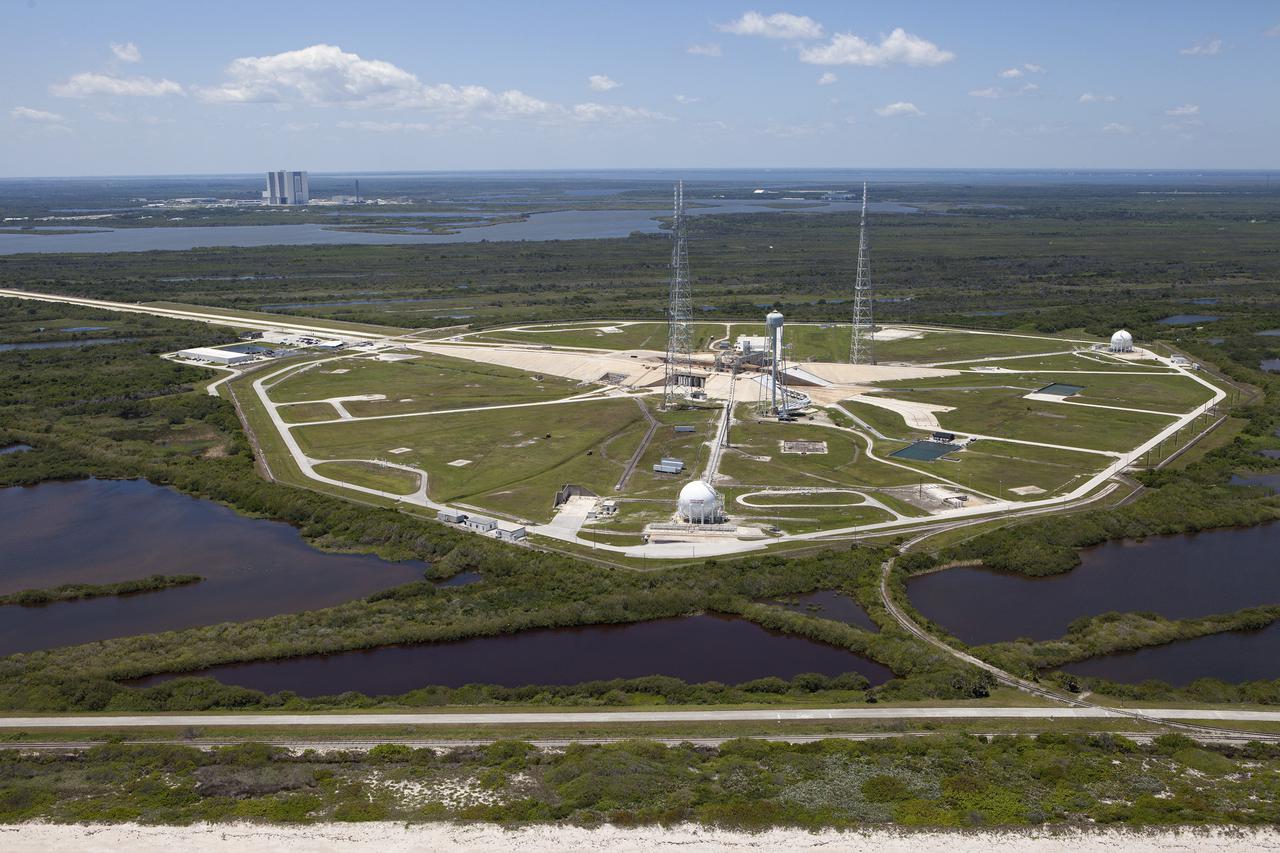
CAPE CANAVERAL, Fla. – An aerial view, from the east looking toward the west, shows the entire Launch Pad 39B area at NASA’s Kennedy Space Center in Florida. A new elevator has been constructed on the surface of the pad and the crawlerway leading up to the surface is being repaired. Repairs also are being made to the crawler track panels and catacomb roof below on either side of the flame trench. Also in view are the water tower and the three tall lightning towers that surround the pad. To the left, in the background is the Vehicle Assembly Building. Upgrades are underway at Pad B and other facilities in the Launch Complex 39 area. The Ground Systems Development and Operations, or GSDO, Program office at Kennedy is leading the center’s transformation from a historically government-only launch complex to a spaceport that can safely handle a variety of rockets and spacecraft, including NASA’s Space Launch System. For more information about GSDO, visit: http:__go.nasa.gov_groundsystems. Photo credit: NASA_Kim Shiflett
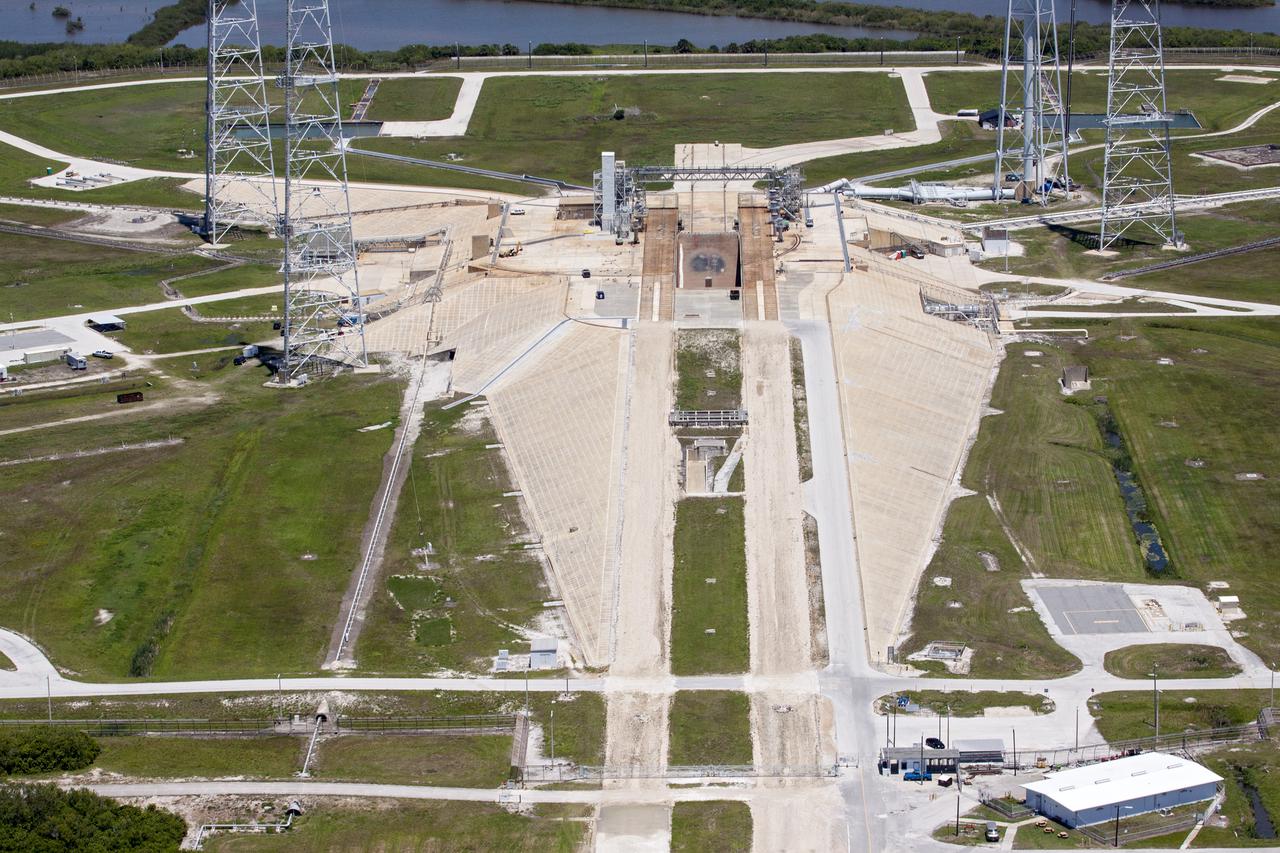
CAPE CANAVERAL, Fla. – An aerial view shows construction progress at Launch Pad 39B at NASA’s Kennedy Space Center in Florida. A new elevator has been constructed on the surface of the pad and the crawlerway leading up to the surface is being repaired. Repairs also are being made to the crawler track panels and catacomb roof below on either side of the flame trench. Also in view are portions of the water tower and the three tall lightning towers that surround the pad. Upgrades are underway at Pad B and other facilities in the Launch Complex 39 area. The Ground Systems Development and Operations, or GSDO, Program office at Kennedy is leading the center’s transformation from a historically government-only launch complex to a spaceport that can safely handle a variety of rockets and spacecraft, including NASA’s Space Launch System. For more information about GSDO, visit: http:__go.nasa.gov_groundsystems. Photo credit: NASA_Kim Shiflett
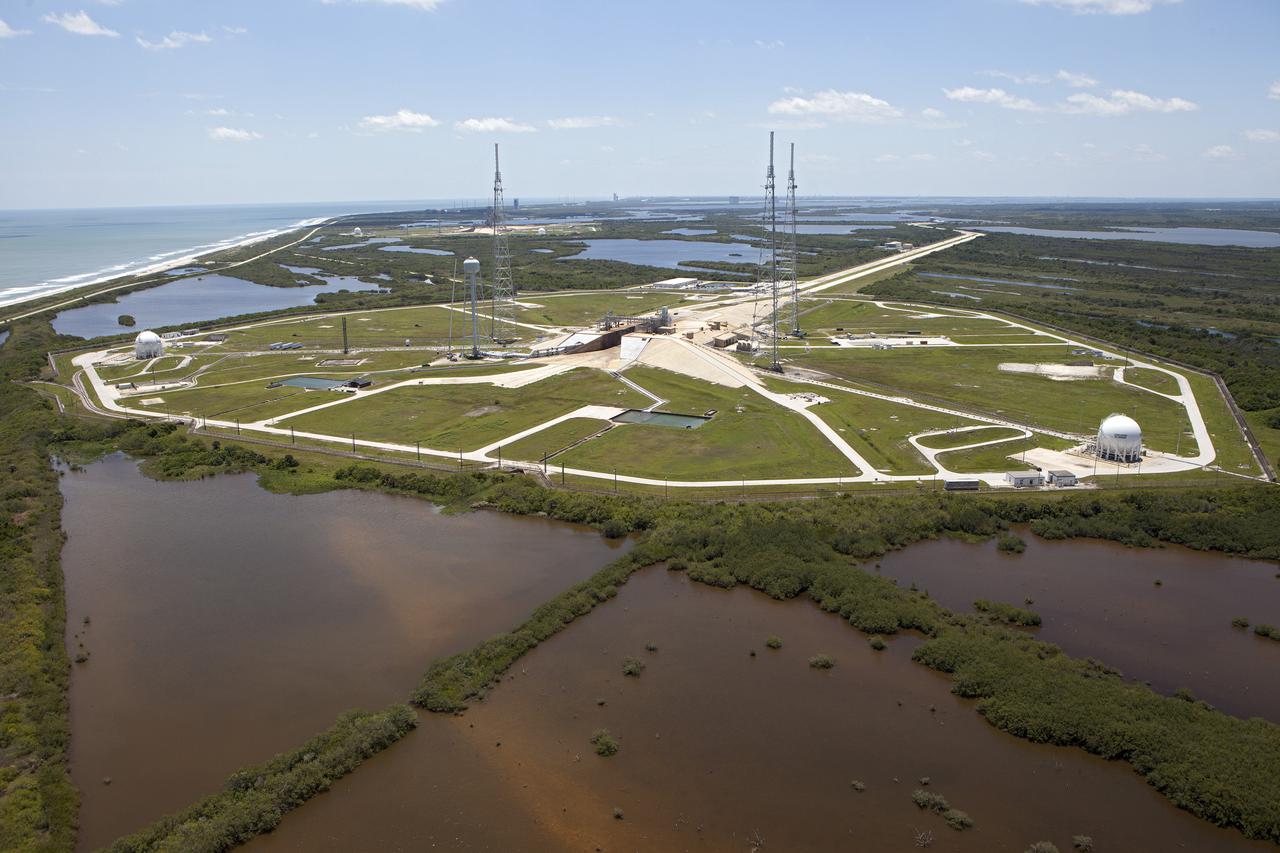
CAPE CANAVERAL, Fla. – An aerial view, from the west looking toward the east, shows the entire Launch Pad 39B area at NASA’s Kennedy Space Center in Florida. A new elevator has been constructed on the surface of the pad and the crawlerway leading up to the surface is being repaired. Repairs also are being made to the crawler track panels and catacomb roof below on either side of the flame trench. Also in view are the water tower and the three tall lightning towers that surround the pad. To the east is the Atlantic Ocean. Upgrades are underway at Pad B and other facilities in the Launch Complex 39 area. The Ground Systems Development and Operations, or GSDO, Program office at Kennedy is leading the center’s transformation from a historically government-only launch complex to a spaceport that can safely handle a variety of rockets and spacecraft, including NASA’s Space Launch System. For more information about GSDO, visit: http:__go.nasa.gov_groundsystems. Photo credit: NASA_Kim Shiflett
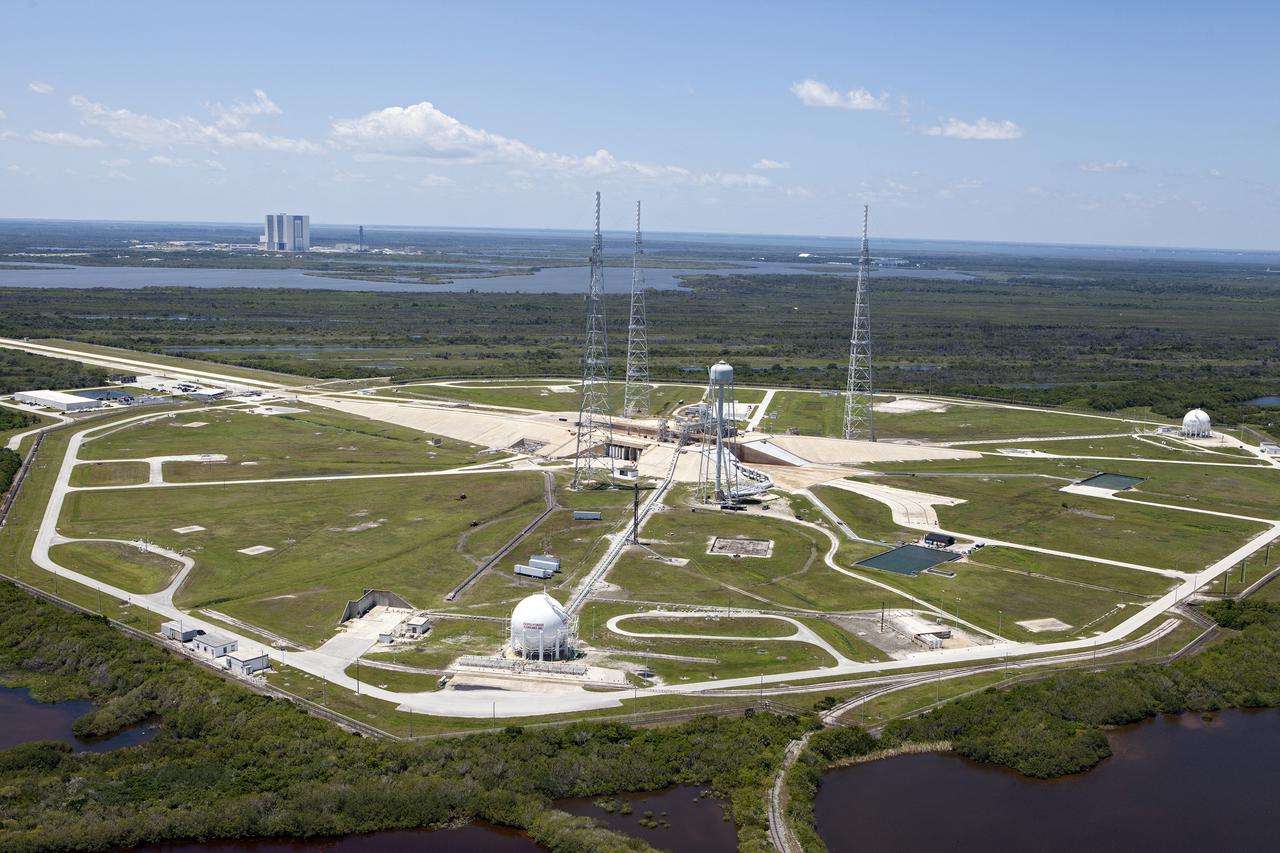
CAPE CANAVERAL, Fla. – An aerial view shows Launch Pad 39B at NASA’s Kennedy Space Center in Florida. A new elevator has been constructed on the surface of the pad and the crawlerway leading up to the surface is being repaired. Repairs also are being made to the crawler track panels and catacomb roof below on either side of the flame trench. Also in view are the water tower and the three tall lightning towers that surround the pad. To the left, in the background is the Vehicle Assembly Building. Upgrades are underway at Pad B and other facilities in the Launch Complex 39 area. The Ground Systems Development and Operations, or GSDO, Program office at Kennedy is leading the center’s transformation from a historically government-only launch complex to a spaceport that can safely handle a variety of rockets and spacecraft, including NASA’s Space Launch System. For more information about GSDO, visit: http:__go.nasa.gov_groundsystems. Photo credit: NASA_Kim Shiflett
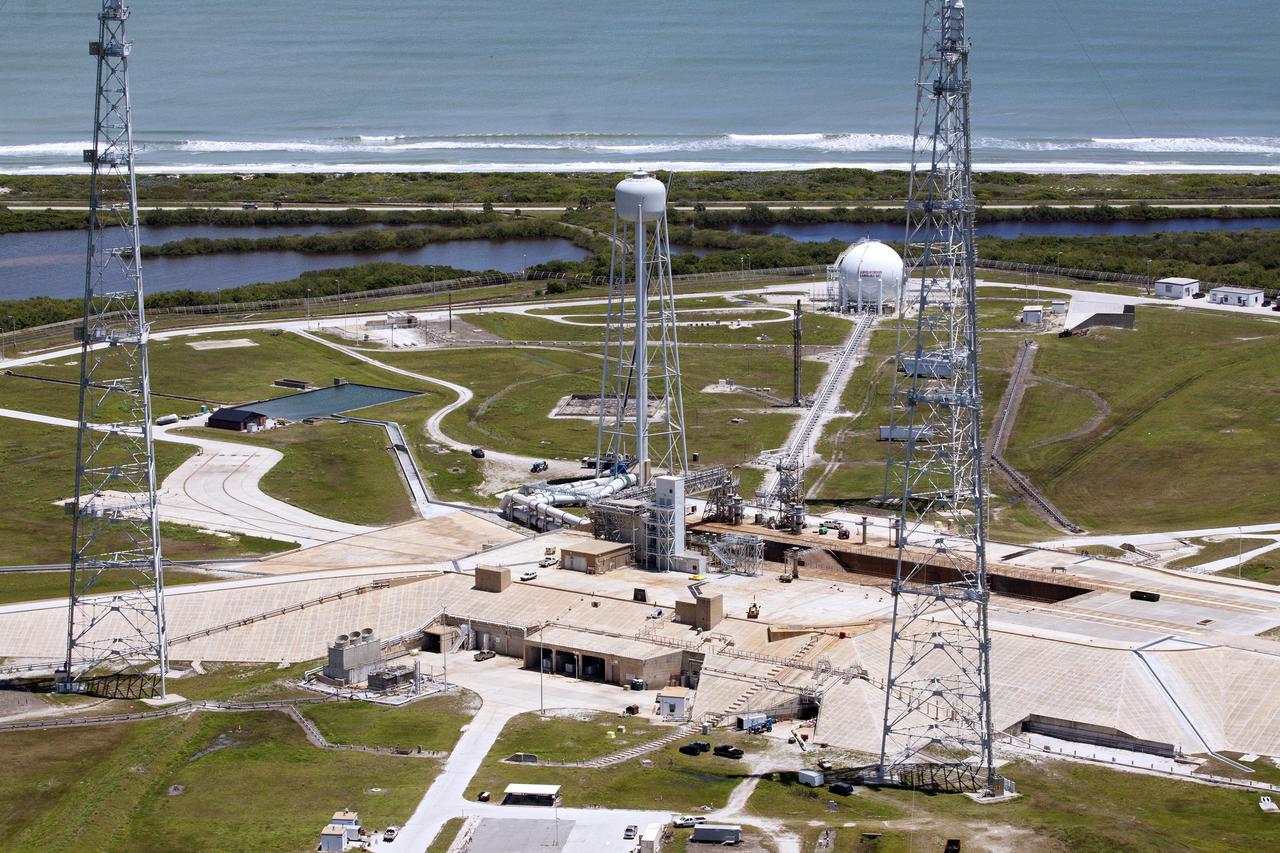
CAPE CANAVERAL, Fla. – An aerial view shows construction progress at Launch Pad 39B at NASA’s Kennedy Space Center in Florida. A new elevator has been constructed on the surface of the pad and the crawlerway leading up to the surface is being repaired. Repairs also are being made to the crawler track panels and catacomb roof below on either side of the flame trench. Also in view are the water tower and two of the three tall lightning towers that surround the pad. Upgrades are underway at Pad B and other facilities in the Launch Complex 39 area. The Ground Systems Development and Operations, or GSDO, Program office at Kennedy is leading the center’s transformation from a historically government-only launch complex to a spaceport that can safely handle a variety of rockets and spacecraft, including NASA’s Space Launch System. For more information about GSDO, visit: http:__go.nasa.gov_groundsystems. Photo credit: NASA_Kim Shiflett
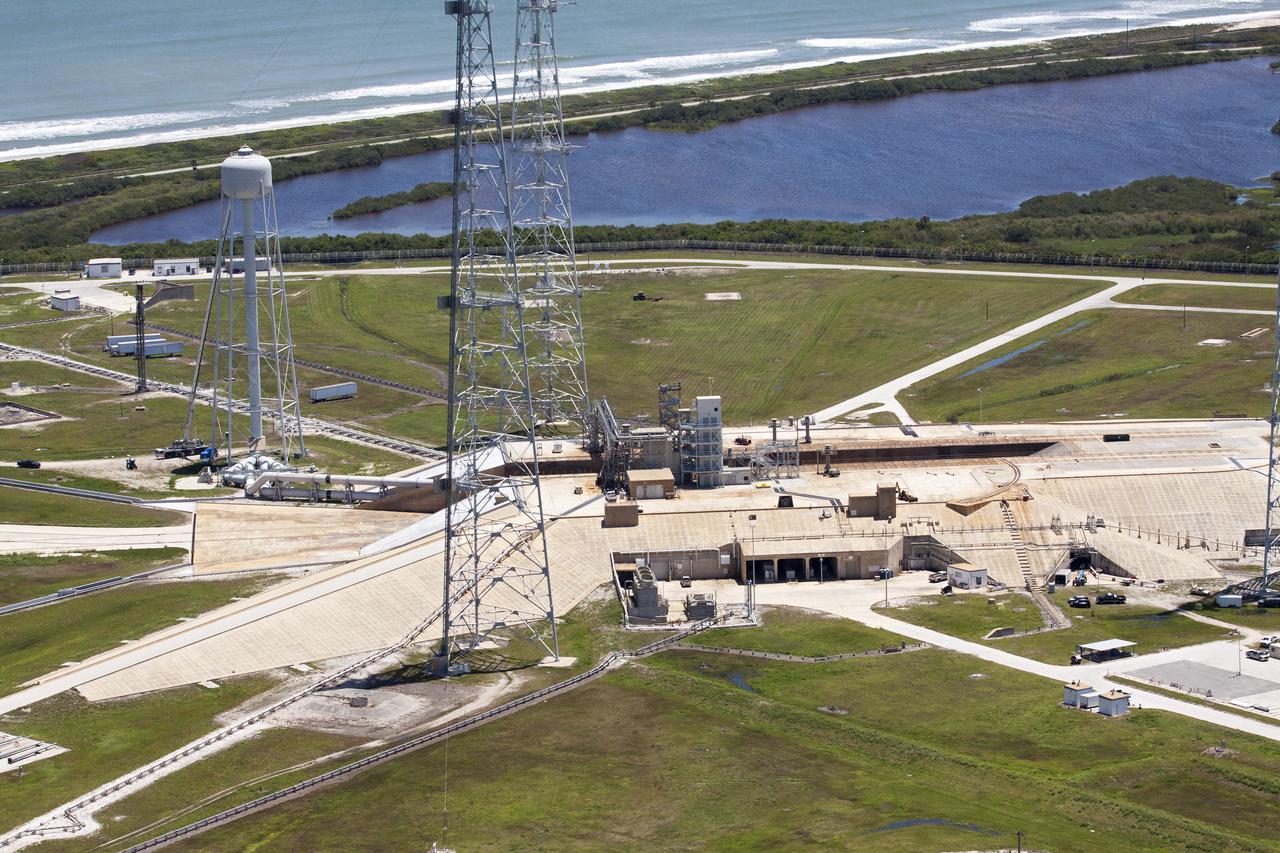
CAPE CANAVERAL, Fla. – An aerial view shows construction progress at Launch Pad 39B at NASA’s Kennedy Space Center in Florida. A new elevator has been constructed on the surface of the pad and the crawlerway leading up to the surface is being repaired. Repairs also are being made to the crawler track panels and catacomb roof below on either side of the flame trench. Also in view are the water tower and two of the three tall lightning towers that surround the pad. Upgrades are underway at Pad B and other facilities in the Launch Complex 39 area. The Ground Systems Development and Operations, or GSDO, Program office at Kennedy is leading the center’s transformation from a historically government-only launch complex to a spaceport that can safely handle a variety of rockets and spacecraft, including NASA’s Space Launch System. For more information about GSDO, visit: http:__go.nasa.gov_groundsystems. Photo credit: NASA_Kim Shiflett