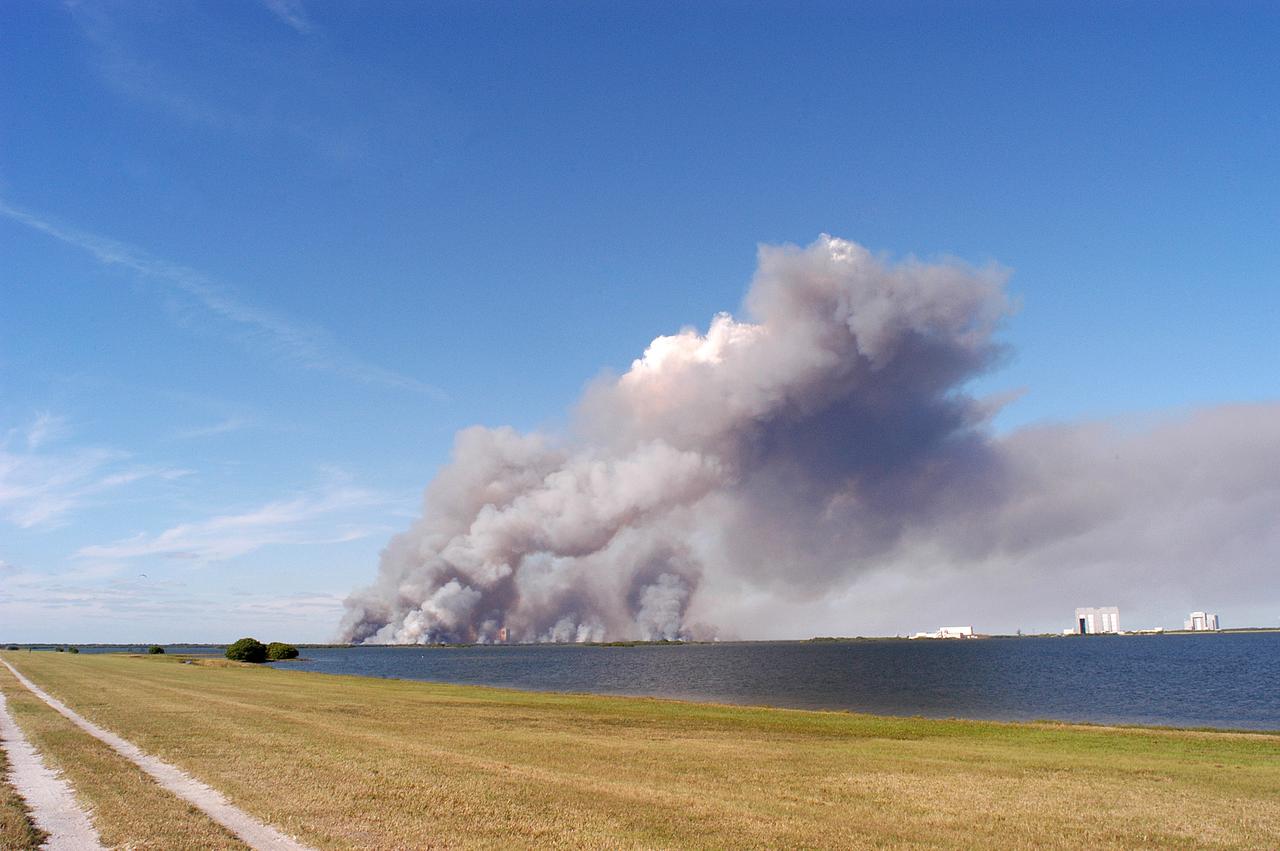
KENNEDY SPACE CENTER, FLA. - A successful controlled burn near KSC’s Launch Complex 39 area creates clouds of smoke in a clear blue sky. The water seen is the Banana River.
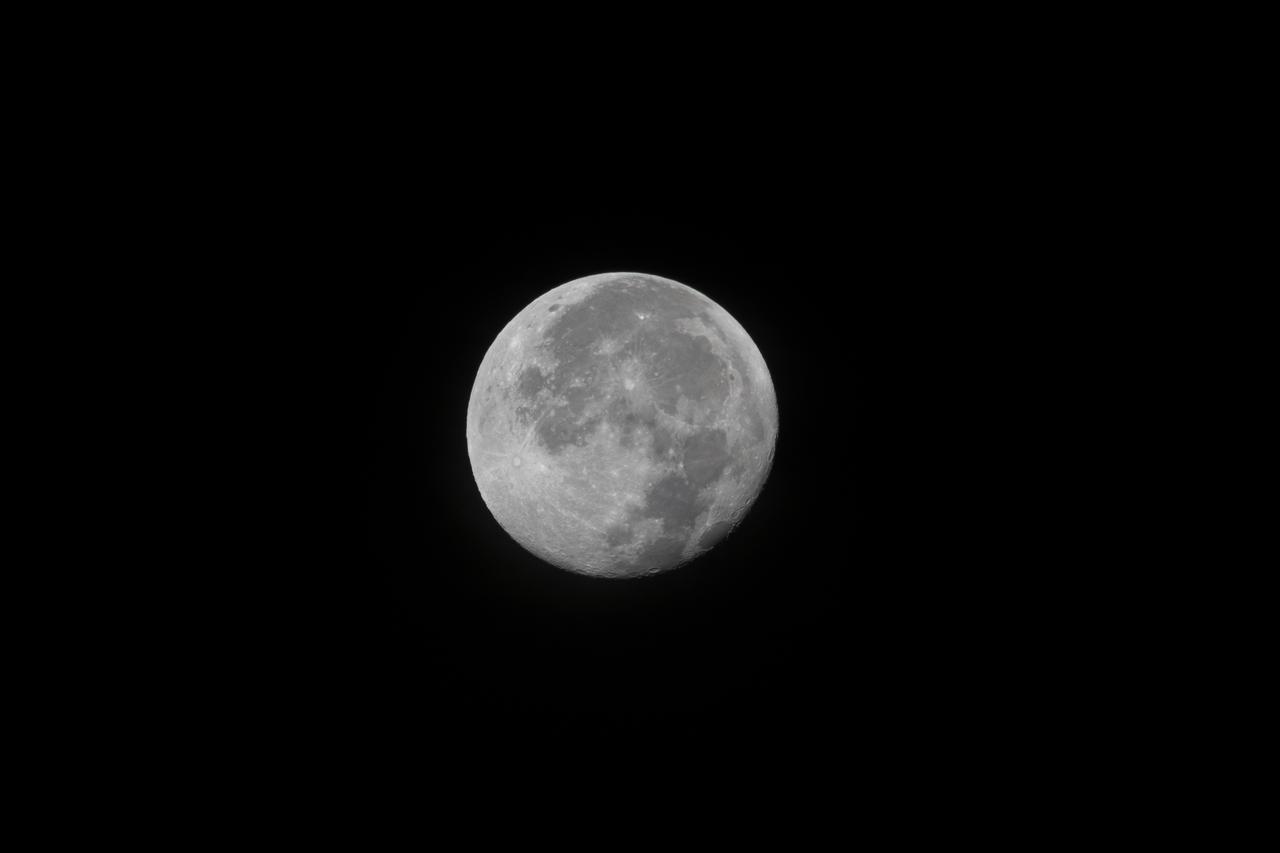
A brilliant full moon rises over the Launch Complex 39 area at NASA's Kennedy Space Center in Florida. A brilliant full moon rises over the Launch Complex 39 area at NASA's Kennedy Space Center in Florida.
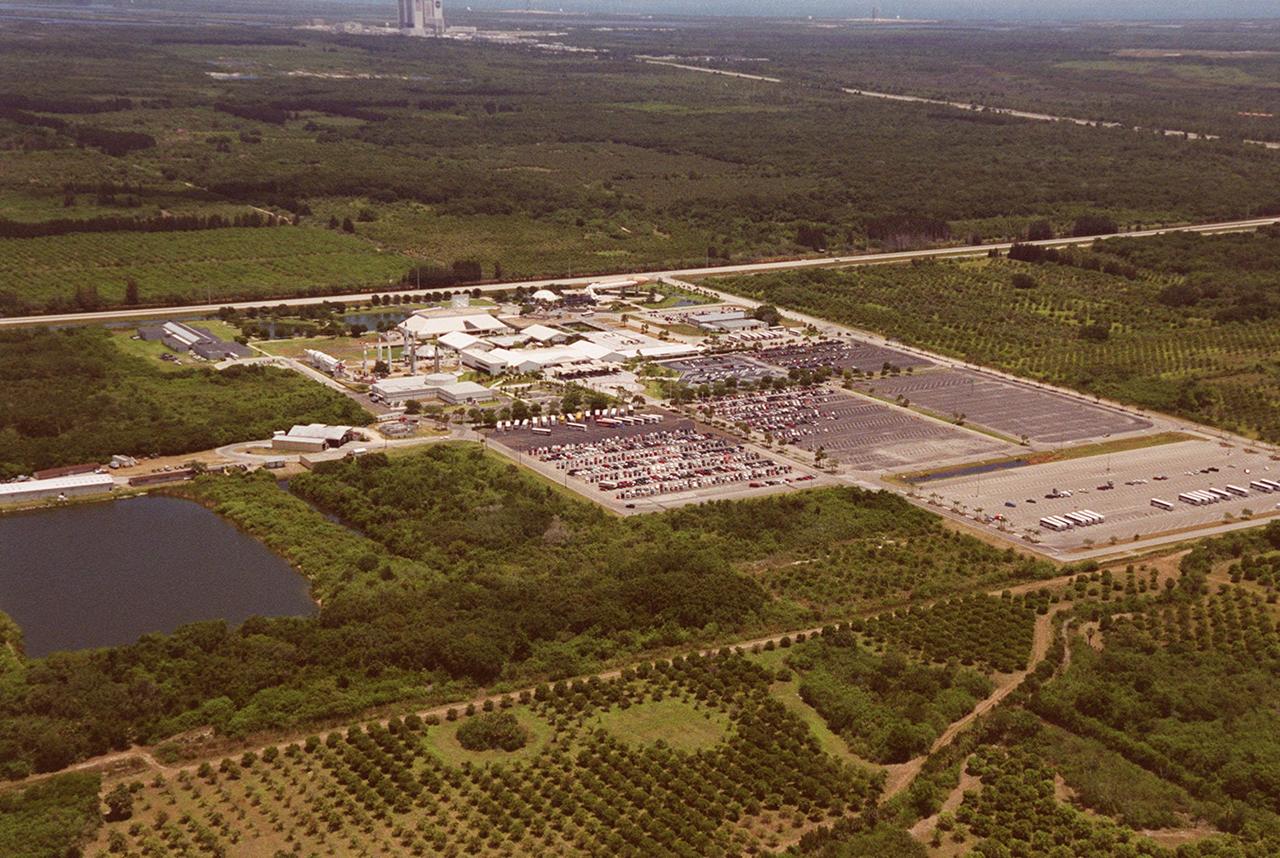
This aerial view is of Kennedy Space Center's Visitor Complex. The Vehicle Assembly Building, located in the Launch Complex 39 area, can be seen in the background
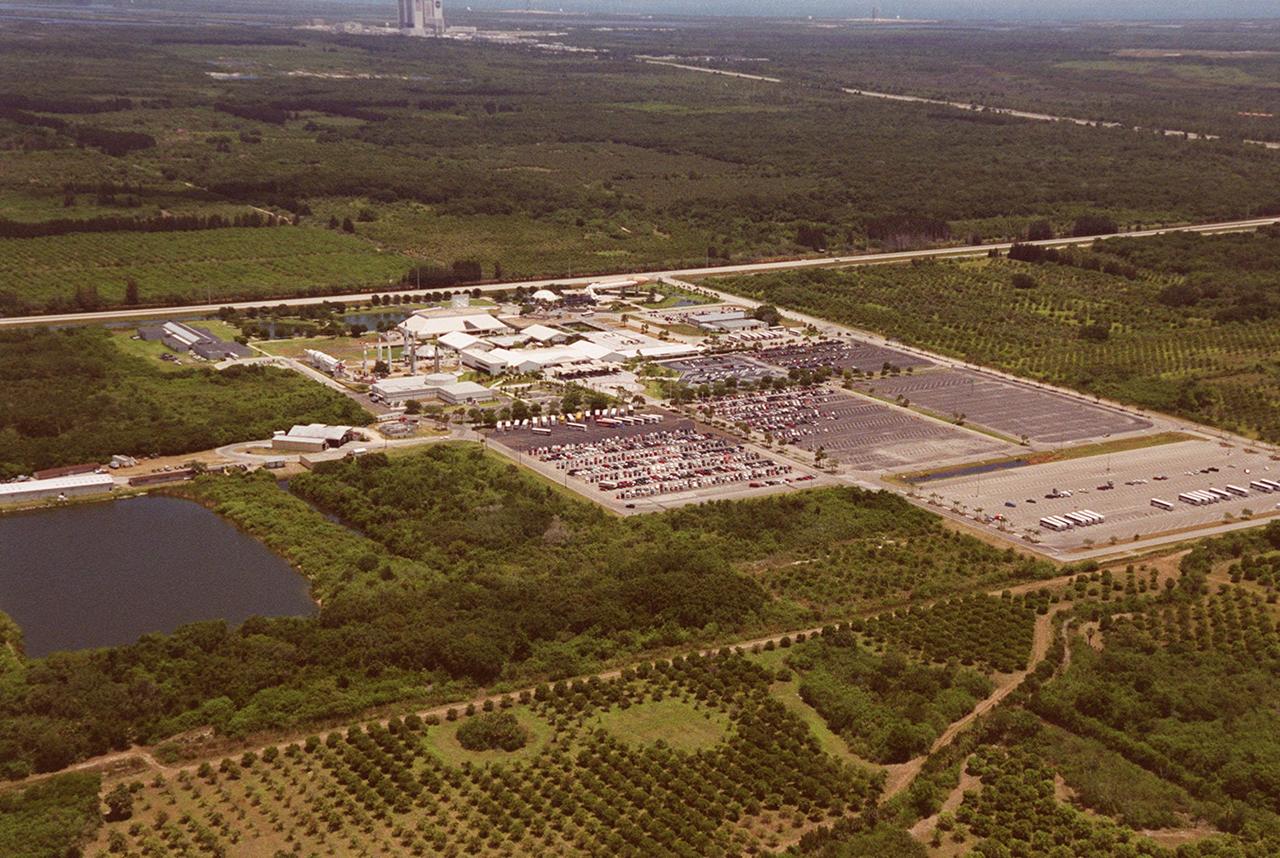
This aerial view is of Kennedy Space Center's Visitor Complex. The Vehicle Assembly Building, located in the Launch Complex 39 area, can be seen in the background
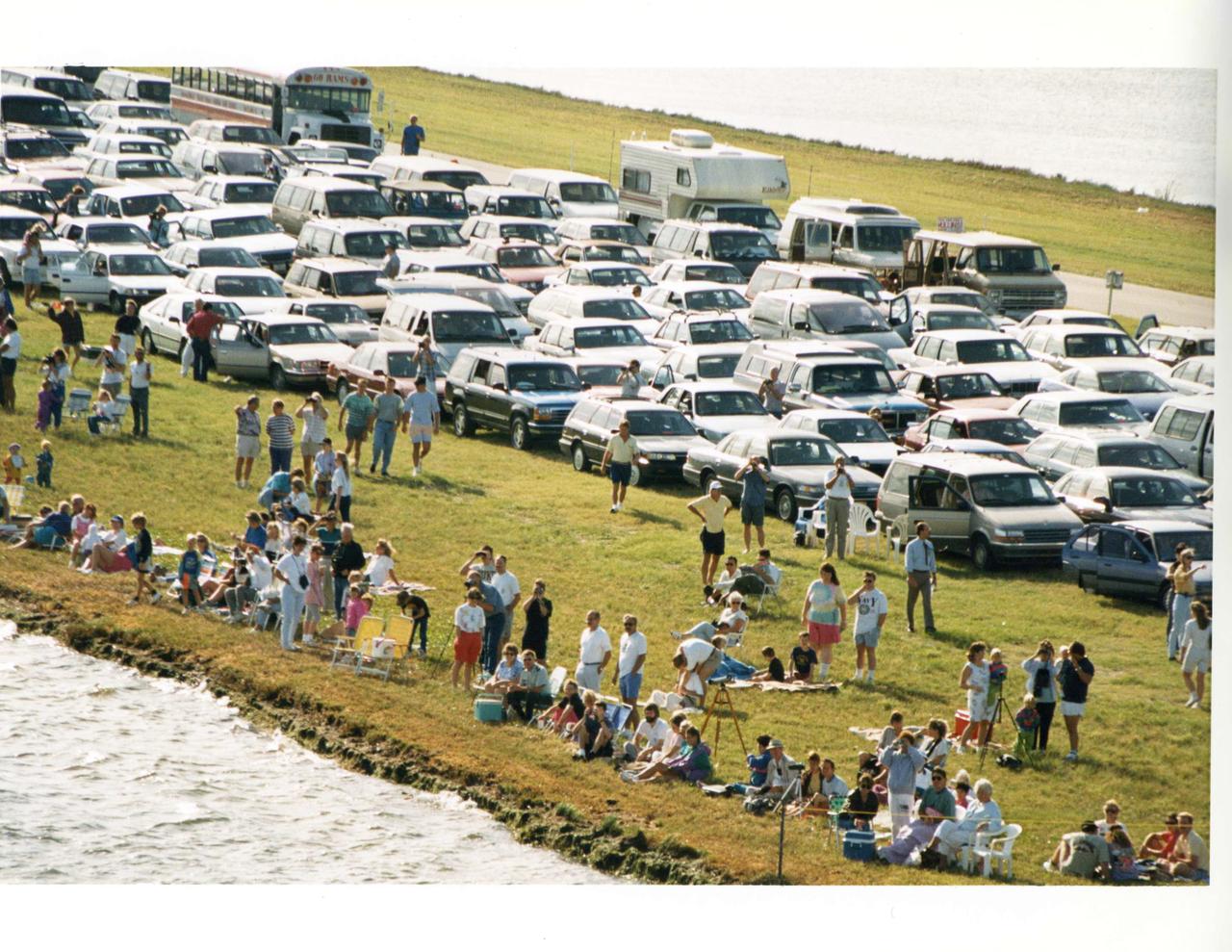
Aerial of the NASA Causeway East showing the viewing area set up for space shuttle launch viewers with car passes. Launch Complex 39 is to the north.
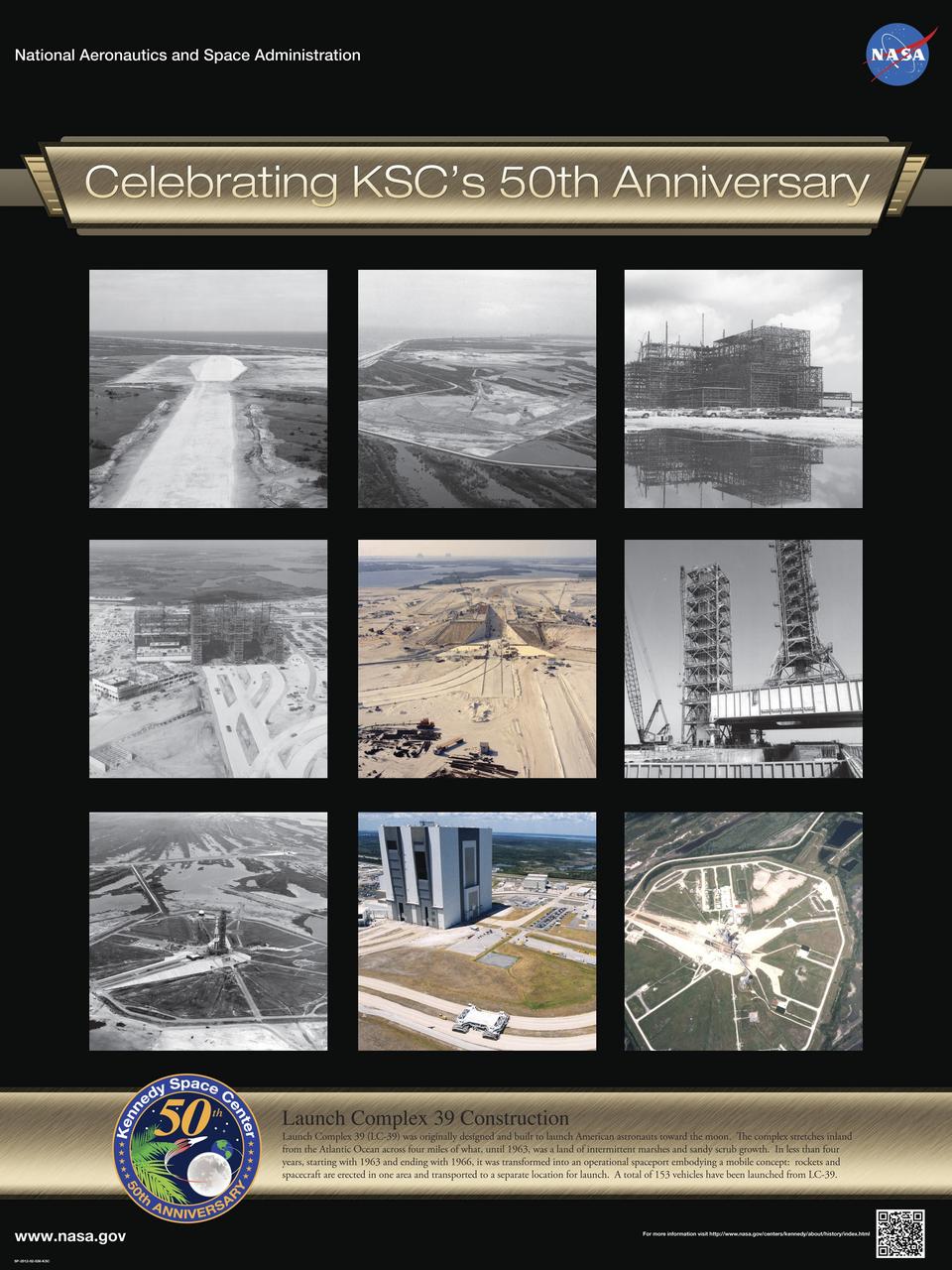
Launch Complex 39 Construction: Launch Complex 39 LC-39 was originally designed and built to launch American astronauts toward the moon. The complex stretches inland from the Atlantic Ocean across four miles of what, until 1963, was a land of intermittent marshes and sandy scrub growth. In less than four years, starting with 1963 and ending with 1966, it was transformed into an operational spaceport embodying a mobile concept: rockets and spacecraft are erected in one area and transported to a separate location for launch. A total of 153 vehicles have been launched from LC-39. Poster designed by Kennedy Space Center Graphics Department/Greg Lee. Credit: NASA
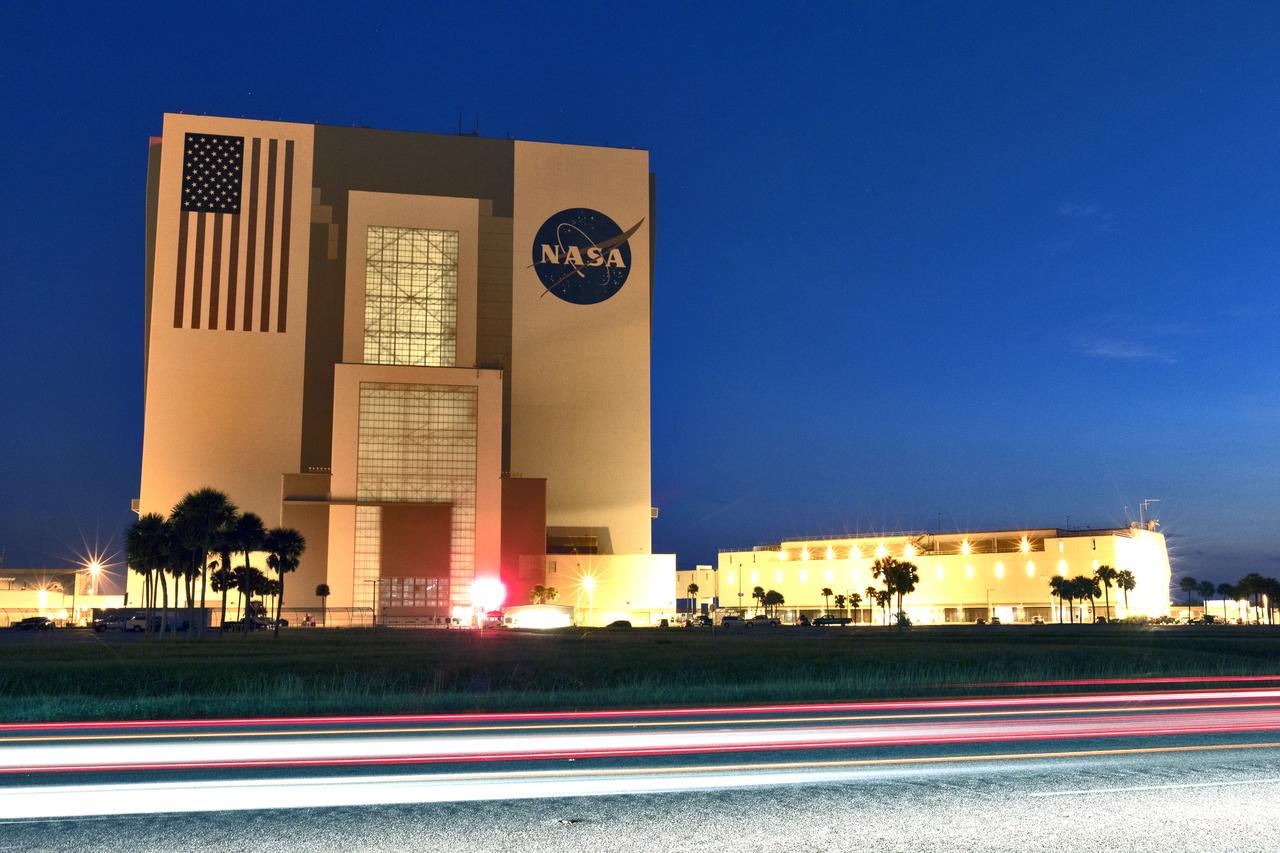
A sunrise time-lapse panoramic view of the iconic Vehicle Assembly Building (VAB) and Launch Control Center at NASA's Kennedy Space Center in Florida. Ten levels of work platforms have been installed in High Bay 3 of the VAB. They will surround and provide access for service and processing of NASA's Space Launch System (SLS) rocket and Orion spacecraft. Exploration Ground Systems oversaw the upgrades and installation of the new work platforms to support the launch of the SLS and Orion on Exploration Mission-1 and deep space missions.
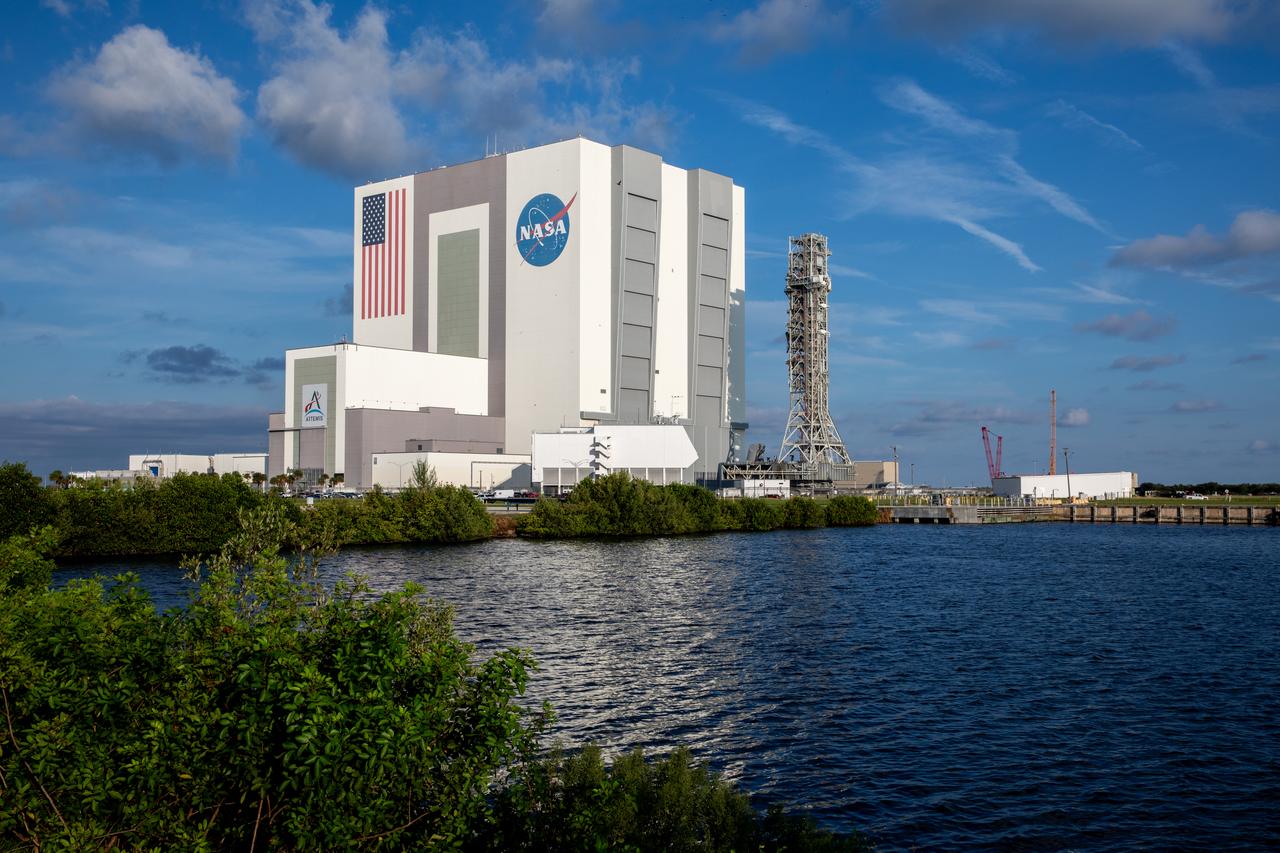
Teams with NASA’s Exploration Ground Systems Program transport the 380-foot-tall mobile launcher 1 along a 4.2-mile stretch to the iconic Vehicle Assembly Building at NASA’s Kennedy Space Center in Florida on Thursday, Oct. 3, 2024. The crawler transporter recently reached 2,500 miles traveling to the launch pad since its construction in 1965. The mobile launcher has been at Launch Complex 39B since August 2023 undergoing upgrades and tests in preparation for NASA’s Artemis II mission. The mobile launcher will be used to assemble, process, and launch NASA’s SLS (Space Launch Systems) and Orion spacecraft to the Moon and beyond.
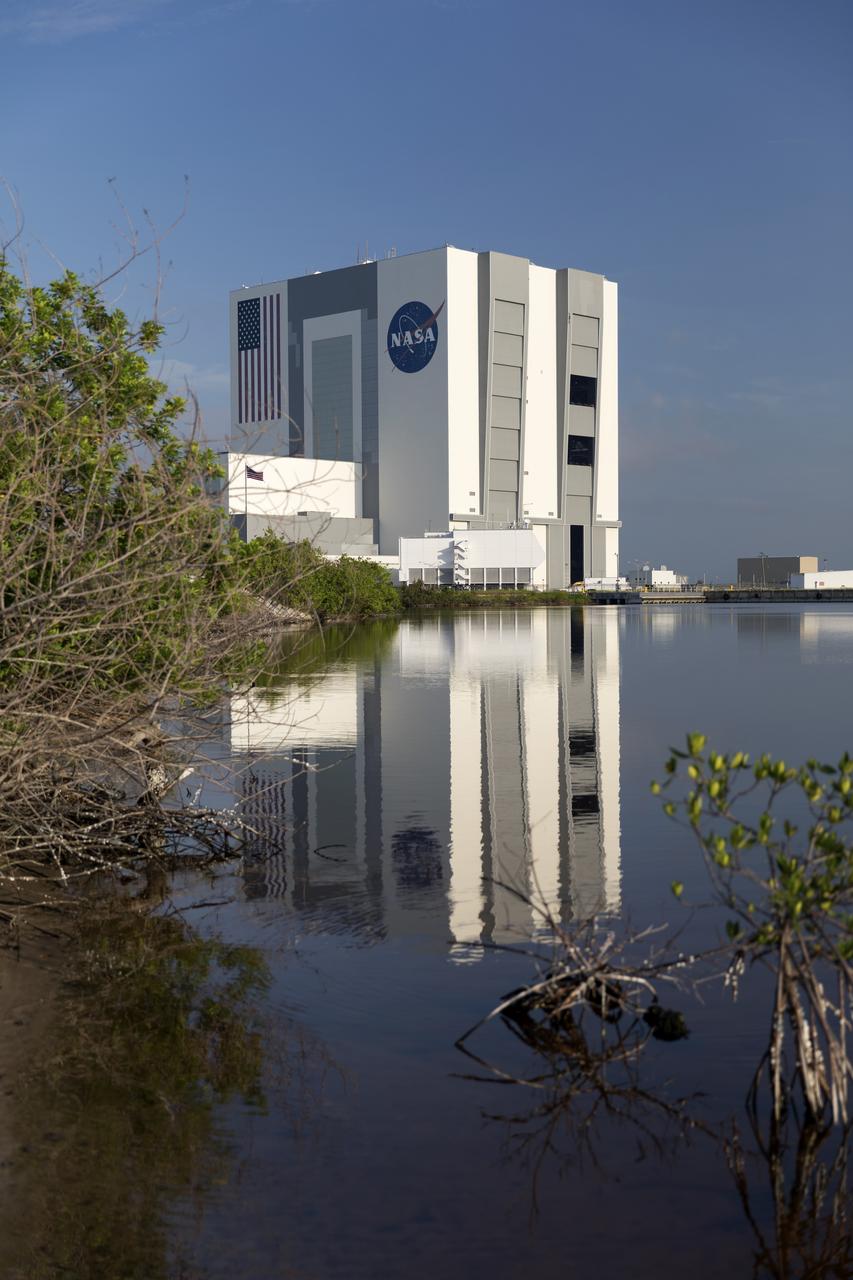
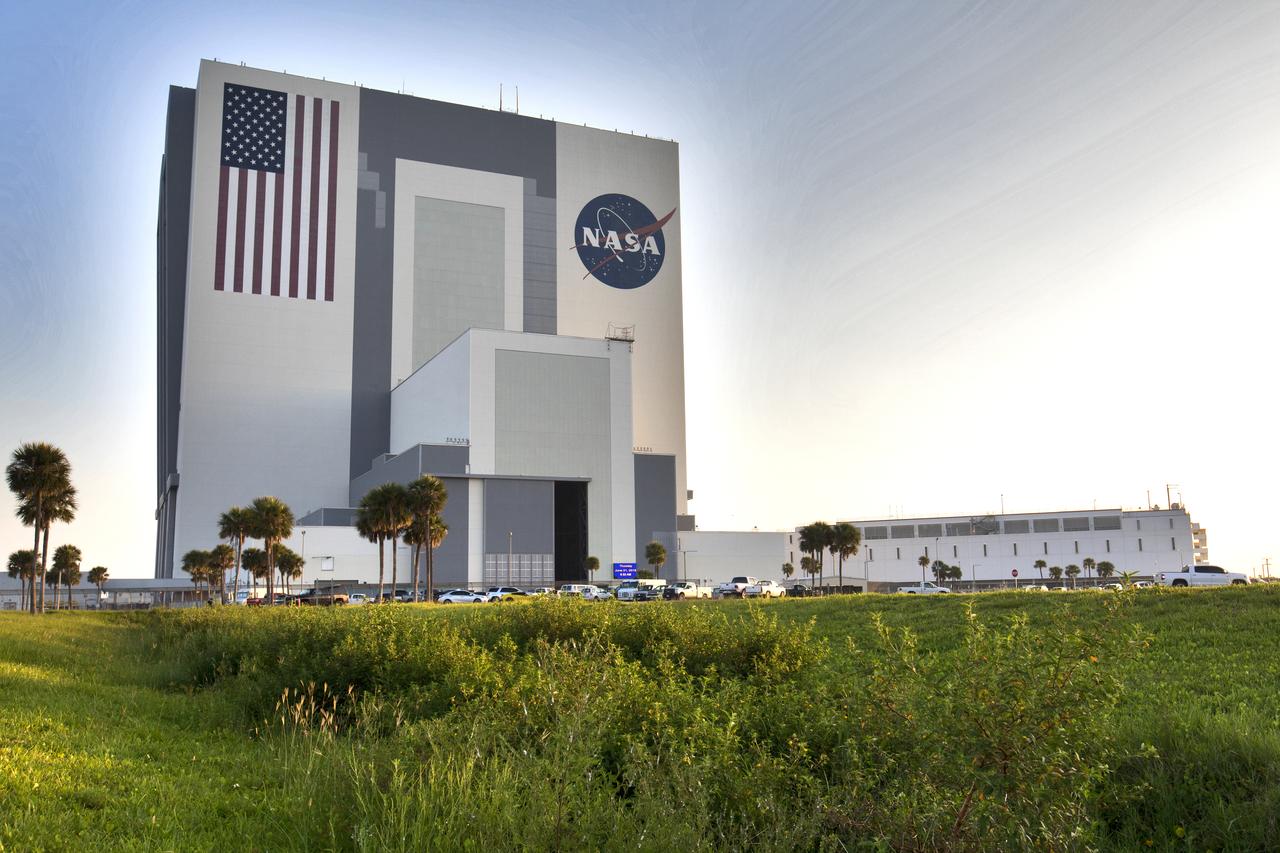
A brilliant blue sky forms the backdrop for a view of the south and east sides of the iconic Vehicle Assembly Building (VAB) at NASA's Kennedy Space Center in Florida. Exploration Ground Systems oversaw the upgrades. The building casts a reflection in a surrounding waterway. Ten levels of new work platforms have been installed in VAB High Bay 3. They will surround and provide access for service and processing of NASA's Space Launch System (SLS) rocket and Orion spacecraft. Exploration Ground Systems oversaw the upgrades and installation of the new work platforms to support the launch of the SLS and Orion on Exploration Mission-1 and deep space missions.
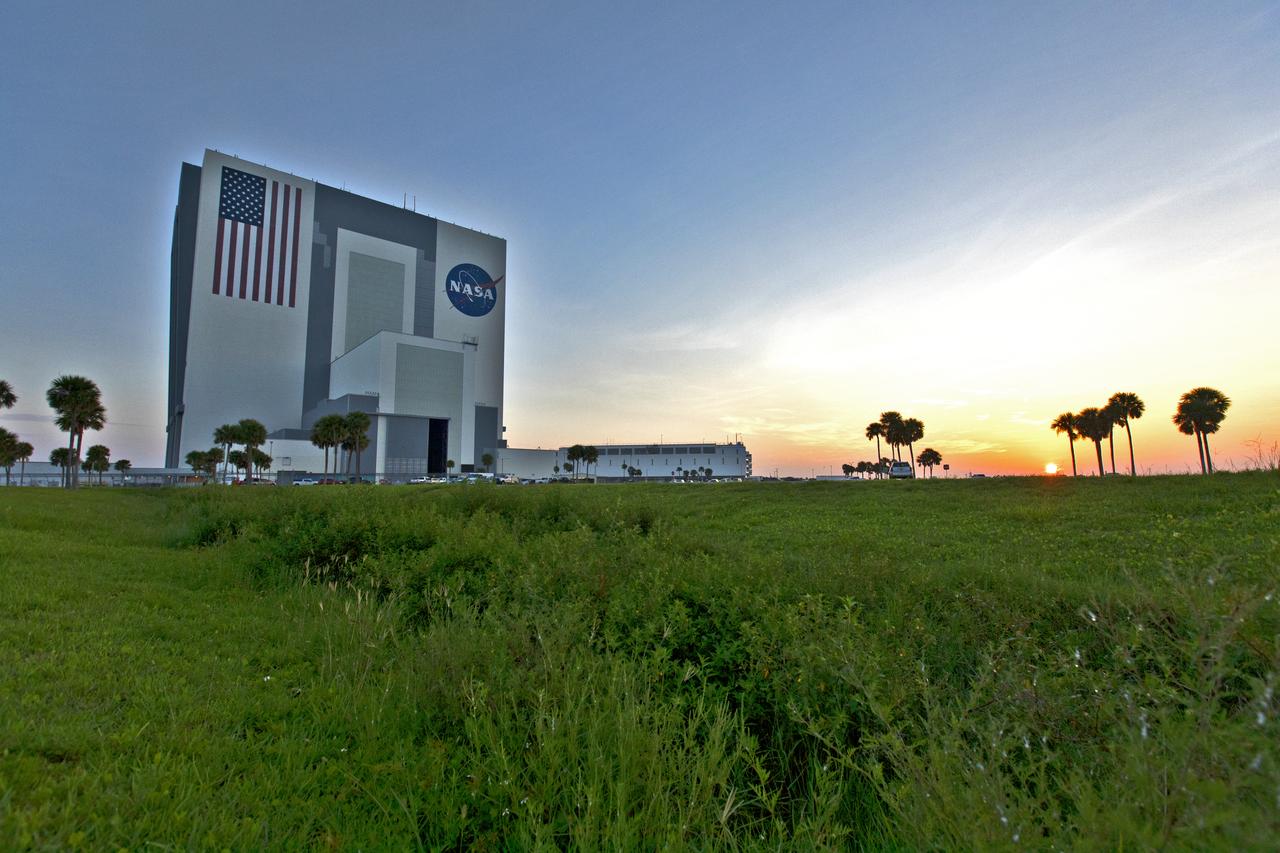
A sunrise panoramic view of the iconic Vehicle Assembly Building (VAB) and Launch Control Center at NASA's Kennedy Space Center in Florida. Ten levels of work platforms have been installed in High Bay 3 of the VAB. They will surround and provide access for service and processing of NASA's Space Launch System (SLS) rocket and Orion spacecraft. Exploration Ground Systems oversaw the upgrades and installation of the new work platforms to support the launch of the SLS and Orion on Exploration Mission-1 and deep space missions.
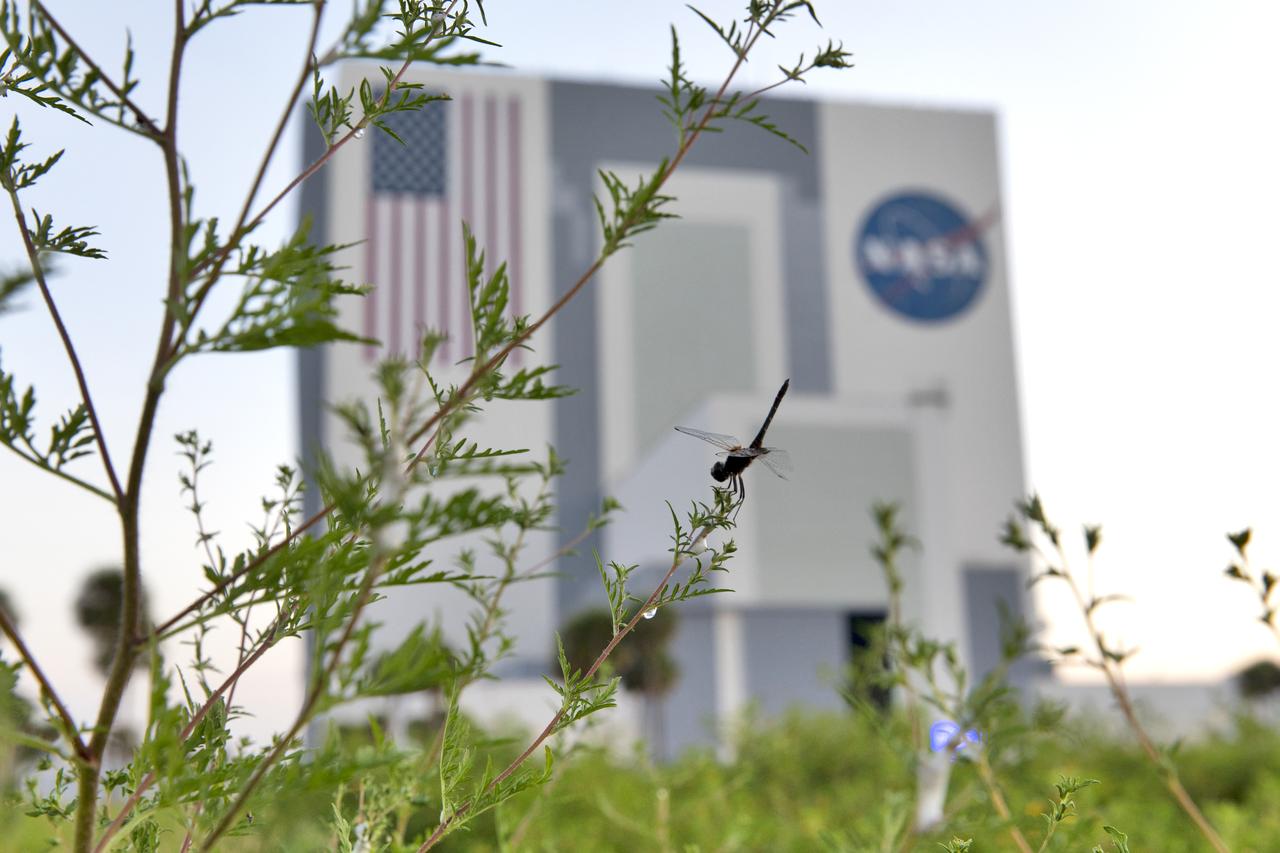
A dragonfly perches on a tree branch with the iconic Vehicle Assembly Building (VAB) in view in the background at NASA's Kennedy Space Center in Florida. Ten levels of new work platforms have been installed in VAB High Bay 3. They will surround and provide access for service and processing of NASA's Space Launch System (SLS) rocket and Orion spacecraft. Exploration Ground Systems oversaw the upgrades and installation of the new work platforms to support the launch of the SLS and Orion on Exploration Mission-1 and deep space missions.
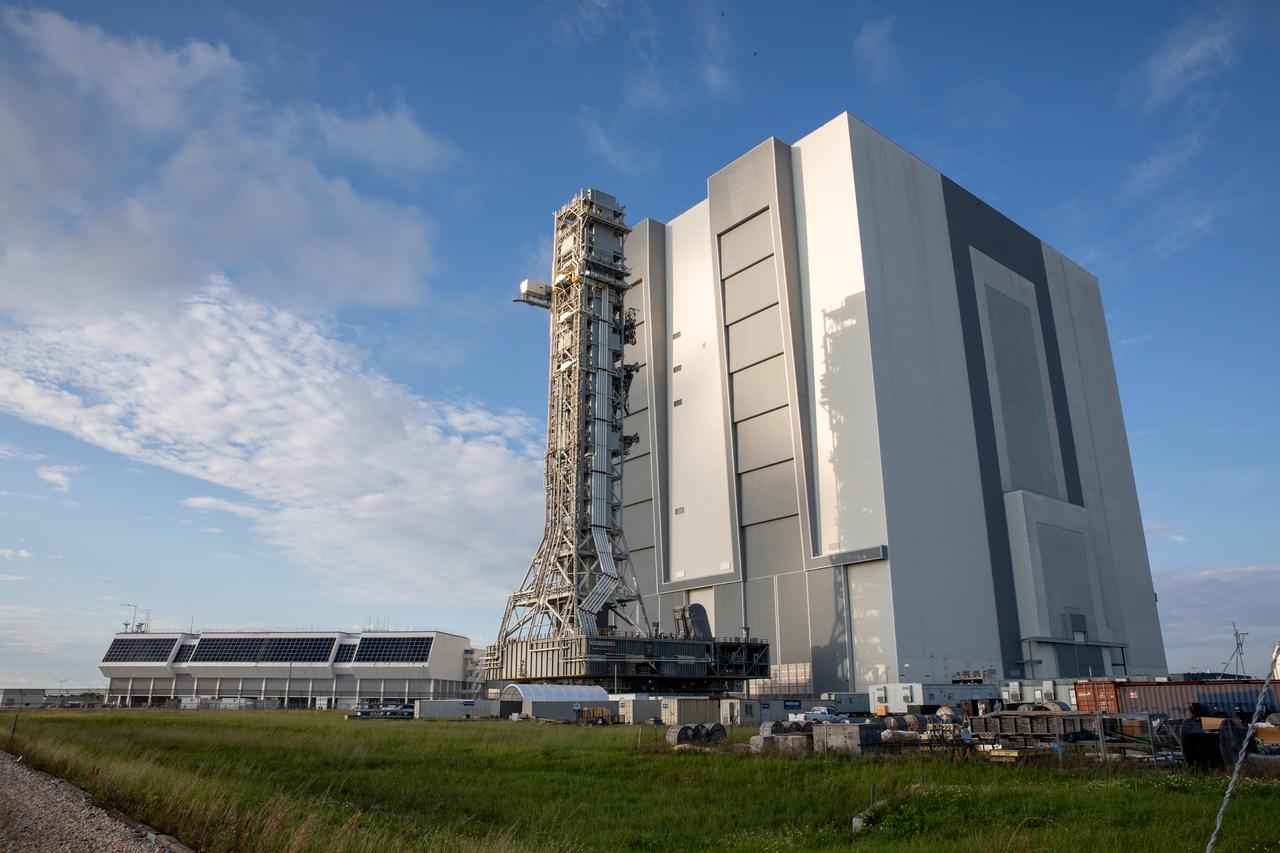
Teams with NASA’s Exploration Ground Systems Program transport the 380-foot-tall mobile launcher 1 along a 4.2-mile stretch to the iconic Vehicle Assembly Building at NASA’s Kennedy Space Center in Florida on Thursday, Oct. 3, 2024. The crawler transporter recently reached 2,500 miles traveling to the launch pad since its construction in 1965. The mobile launcher has been at Launch Complex 39B since August 2023 undergoing upgrades and tests in preparation for NASA’s Artemis II mission. The mobile launcher will be used to assemble, process, and launch NASA’s SLS (Space Launch Systems) and Orion spacecraft to the Moon and beyond.

Teams with NASA’s Exploration Ground Systems Program transport the 380-foot-tall mobile launcher 1 along a 4.2-mile stretch to the iconic Vehicle Assembly Building at NASA’s Kennedy Space Center in Florida on Thursday, Oct. 3, 2024. The crawler transporter recently reached 2,500 miles traveling to the launch pad since its construction in 1965. The mobile launcher has been at Launch Complex 39B since August 2023 undergoing upgrades and tests in preparation for NASA’s Artemis II mission. The mobile launcher will be used to assemble, process, and launch NASA’s SLS (Space Launch Systems) and Orion spacecraft to the Moon and beyond.
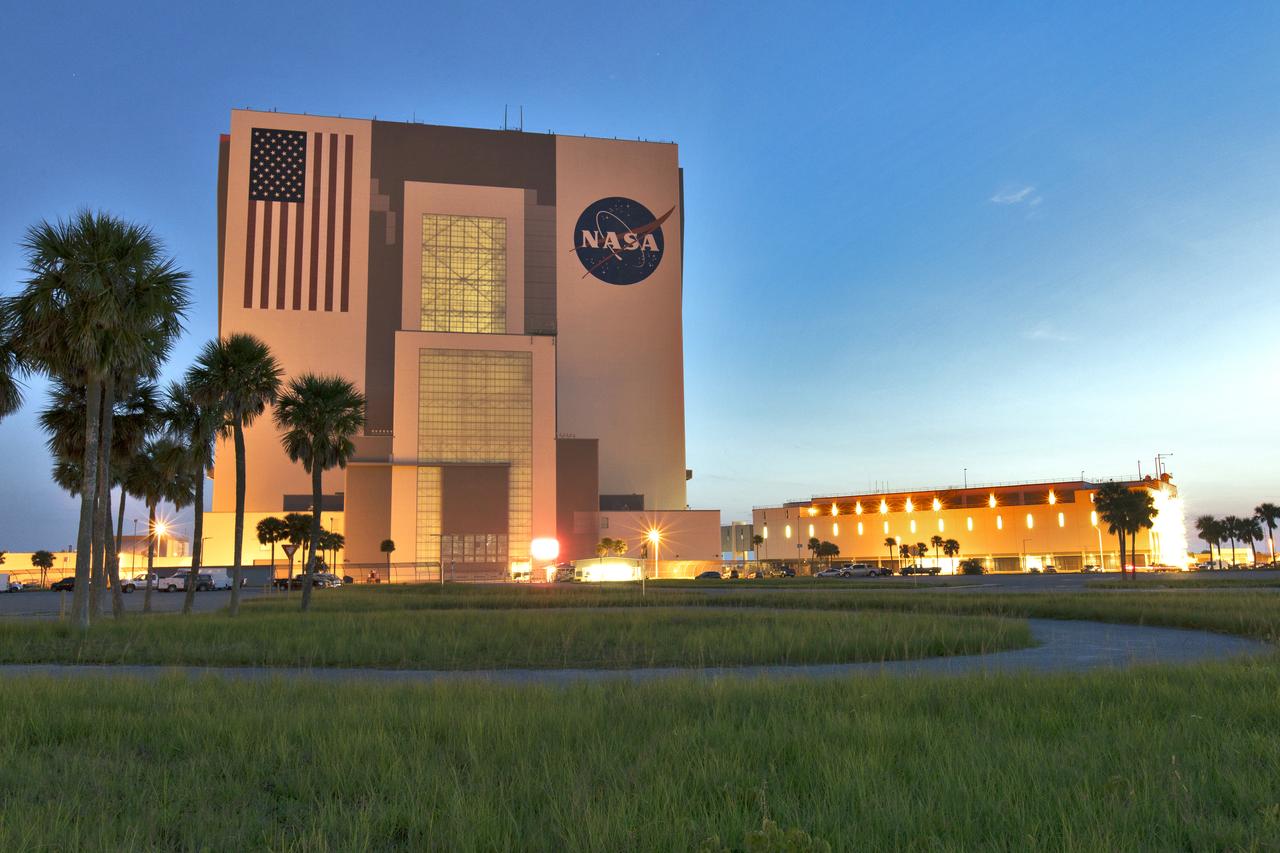
A sunrise panoramic view of the iconic Vehicle Assembly Building (VAB) and Launch Control Center at NASA's Kennedy Space Center in Florida. Ten levels of work platforms have been installed in High Bay 3 of the VAB. They will surround and provide access for service and processing of NASA's Space Launch System (SLS) rocket and Orion spacecraft. Exploration Ground Systems oversaw the upgrades and installation of the new work platforms to support the launch of the SLS and Orion on Exploration Mission-1 and deep space missions.
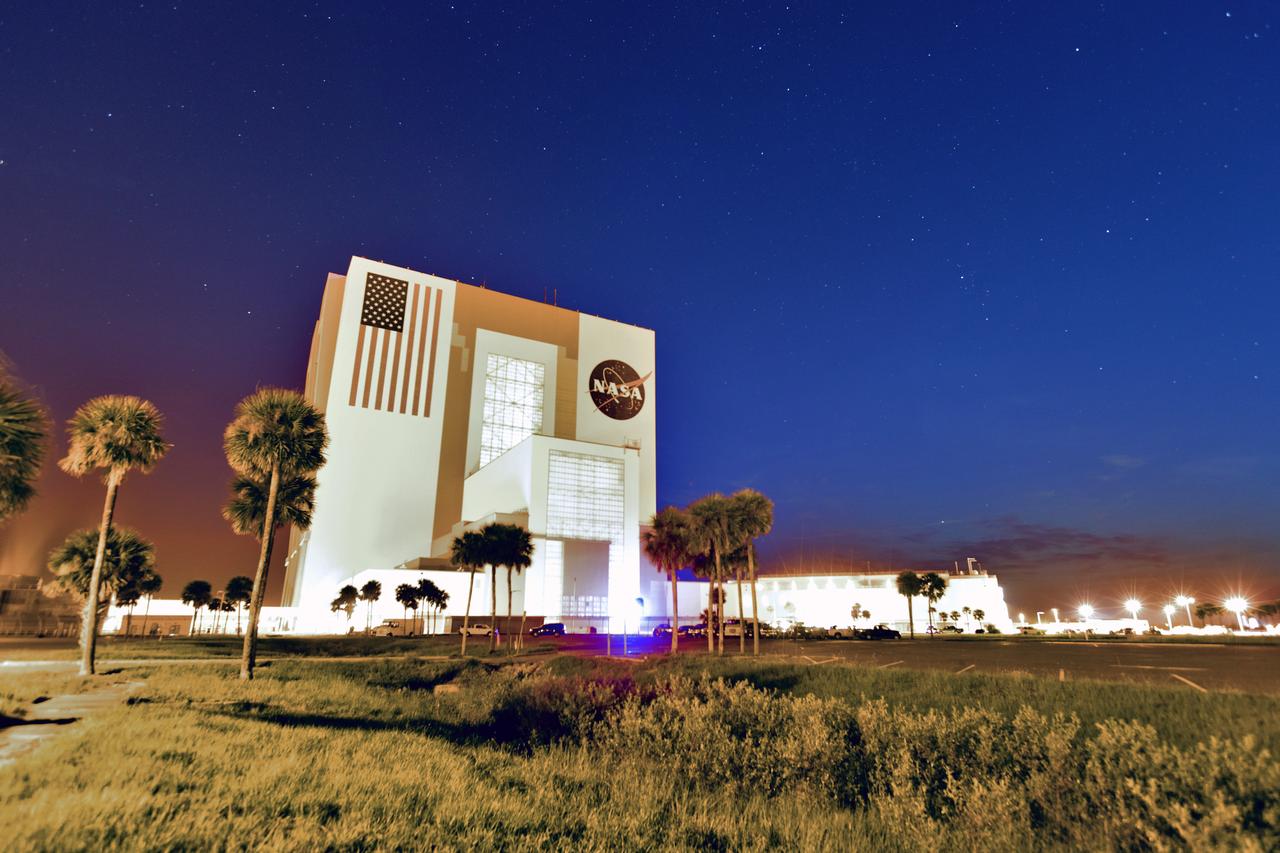
A sunrise creative view of the iconic Vehicle Assembly Building (VAB) and Launch Control Center at NASA's Kennedy Space Center in Florida. Ten levels of work platforms have been installed in High Bay 3 of the VAB. They will surround and provide access for service and processing of NASA's Space Launch System (SLS) rocket and Orion spacecraft. Exploration Ground Systems oversaw the upgrades and installation of the new work platforms to support the launch of the SLS and Orion on Exploration Mission-1 and deep space missions.
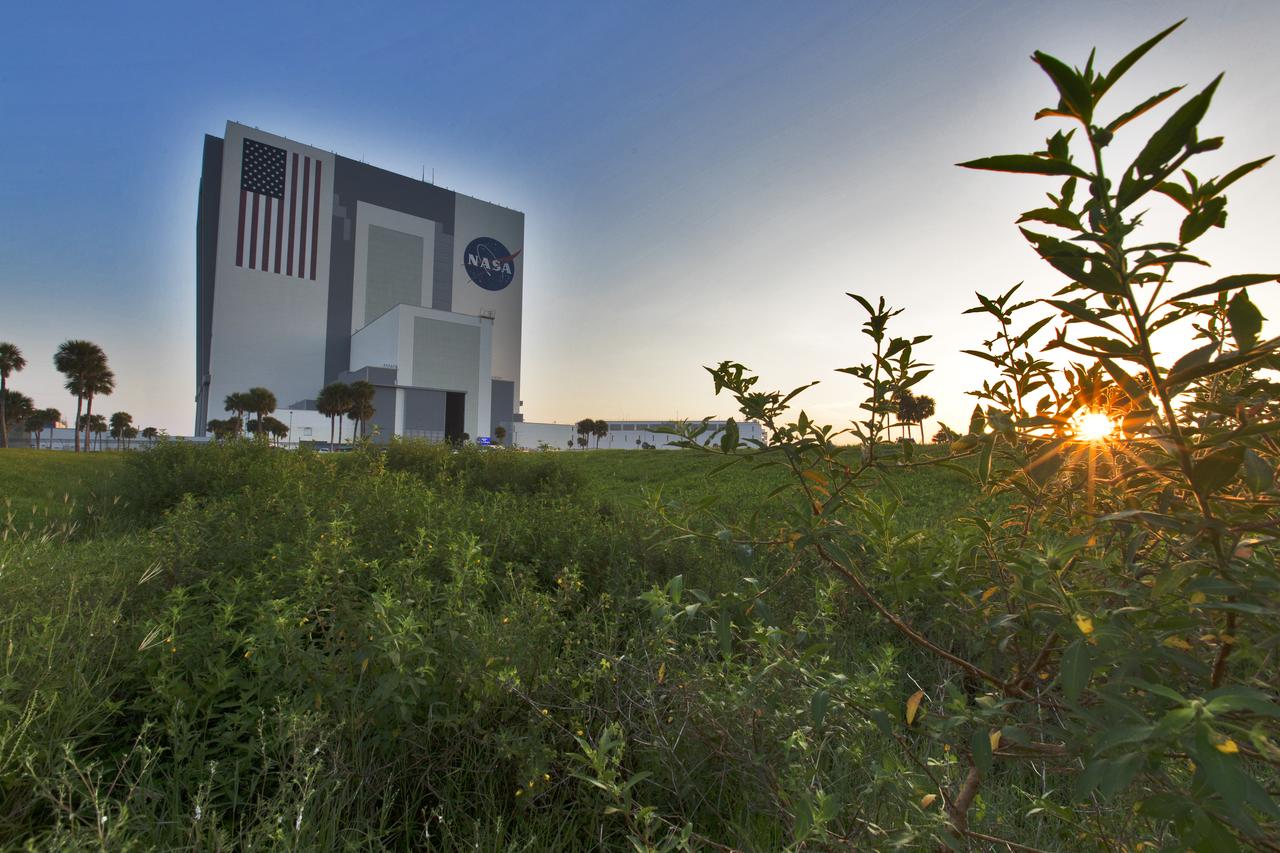
A sunrise panoramic view of the iconic Vehicle Assembly Building (VAB) at NASA's Kennedy Space Center in Florida. Ten levels of work platforms have been installed in High Bay 3 of the VAB. They will surround and provide access for service and processing of NASA's Space Launch System (SLS) rocket and Orion spacecraft. Exploration Ground Systems oversaw the upgrades and installation of the new work platforms to support the launch of the SLS and Orion on Exploration Mission-1 and deep space missions.
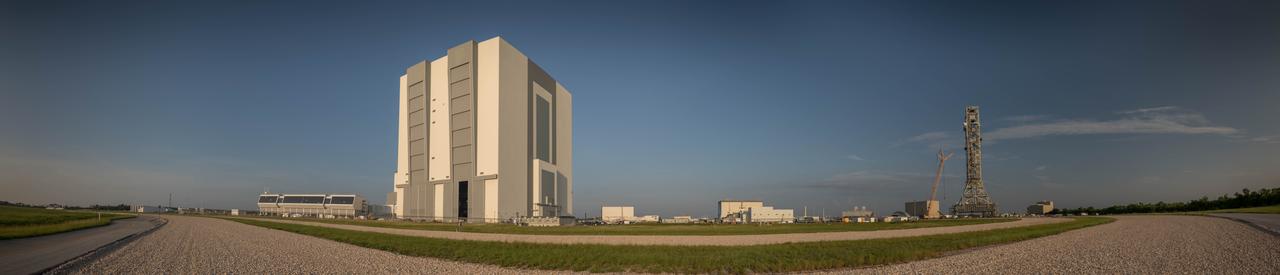
A brilliant blue sky forms the backdrop for a fish-eye panoramic view of the south side of the iconic Vehicle Assembly Building (VAB) and Launch Control Center at NASA's Kennedy Space Center in Florida. Ten levels of new work platforms have been installed in VAB High Bay 3. They will surround and provide access for service and processing of NASA's Space Launch System (SLS) rocket and Orion spacecraft. Exploration Ground Systems oversaw the upgrades and installation of the new work platforms to support the launch of the SLS and Orion on Exploration Mission-1 (EM-1) and deep space missions. At left is the Launch Control Center, where Firing Room 1 has been upgraded to support EM-1.
A brilliant blue sky forms the background for a panoramic view of the iconic Vehicle Assembly Building (VAB) and Launch Control Center at NASA's Kennedy Space Center in Florida. Ten levels of work platforms have been installed in High Bay 3 of the VAB. They will surround and provide access for service and processing of NASA's Space Launch System (SLS) rocket and Orion spacecraft. Exploration Ground Systems oversaw the upgrades and installation of the new work platforms to support the launch of the SLS and Orion on Exploration Mission-1 and deep space missions.
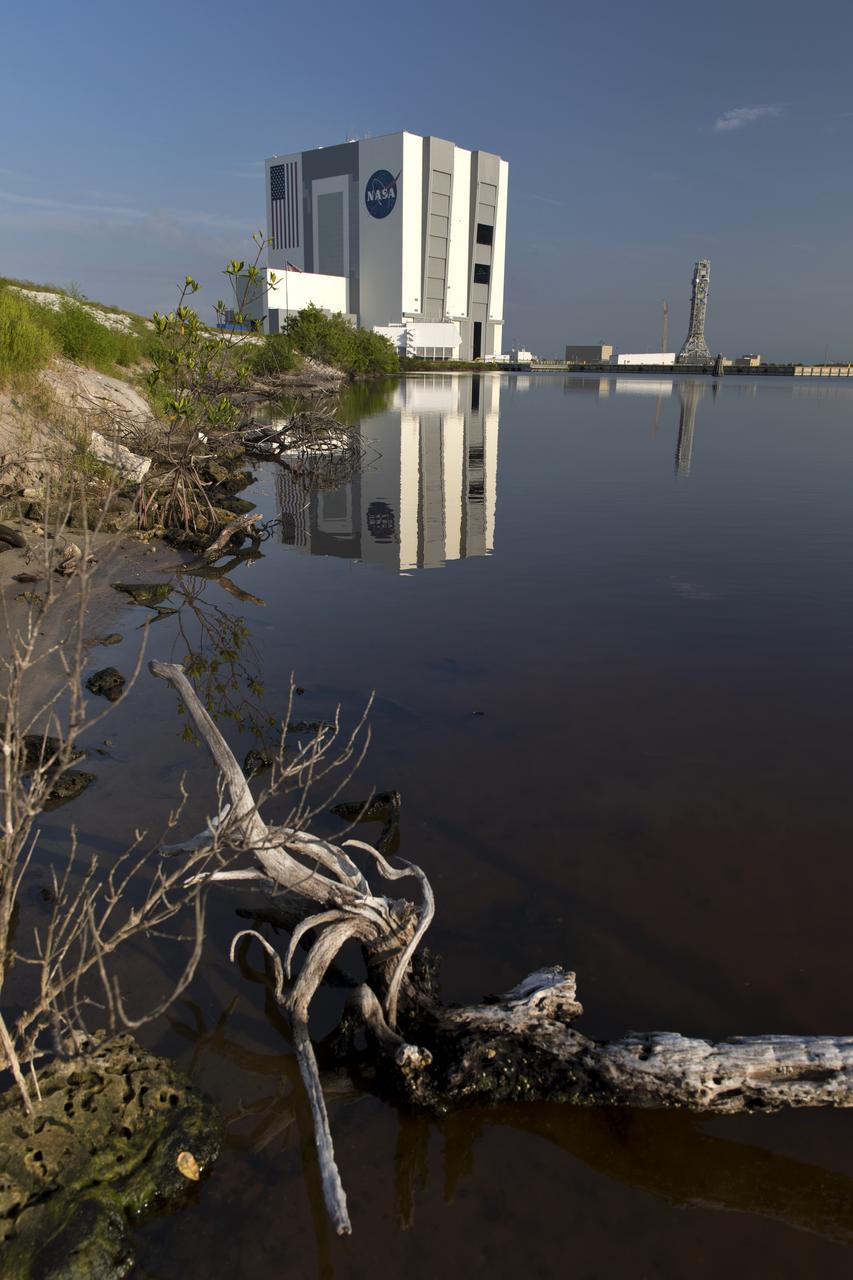
The iconic Vehicle Assembly Building (VAB) casts a reflection in a surrounding waterway at NASA's Kennedy Space Center in Florida. In view are the south and east sides of the building. Ten levels of new work platforms have been installed in VAB High Bay 3. They will surround and provide access for service and processing of NASA's Space Launch System (SLS) rocket and Orion spacecraft. Exploration Ground Systems oversaw the upgrades and installation of the new work platforms to support the launch of the SLS and Orion on Exploration Mission-1 and deep space missions.
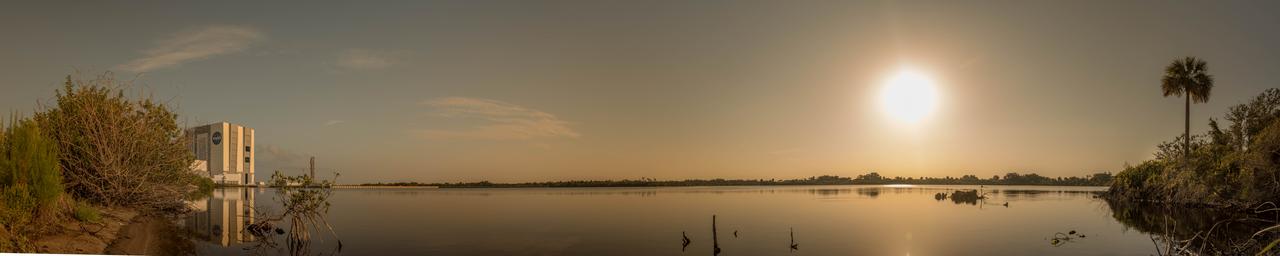
A sunrise panoramic view of the iconic Vehicle Assembly Building (VAB) and surrounding waterways at NASA's Kennedy Space Center in Florida. Ten levels of new work platforms have been installed in VAB High Bay 3. They will surround and provide access for service and processing of NASA's Space Launch System (SLS) rocket and Orion spacecraft. Exploration Ground Systems oversaw the upgrades and installation of the new work platforms to support the launch of the SLS and Orion on Exploration Mission-1 and deep space missions.
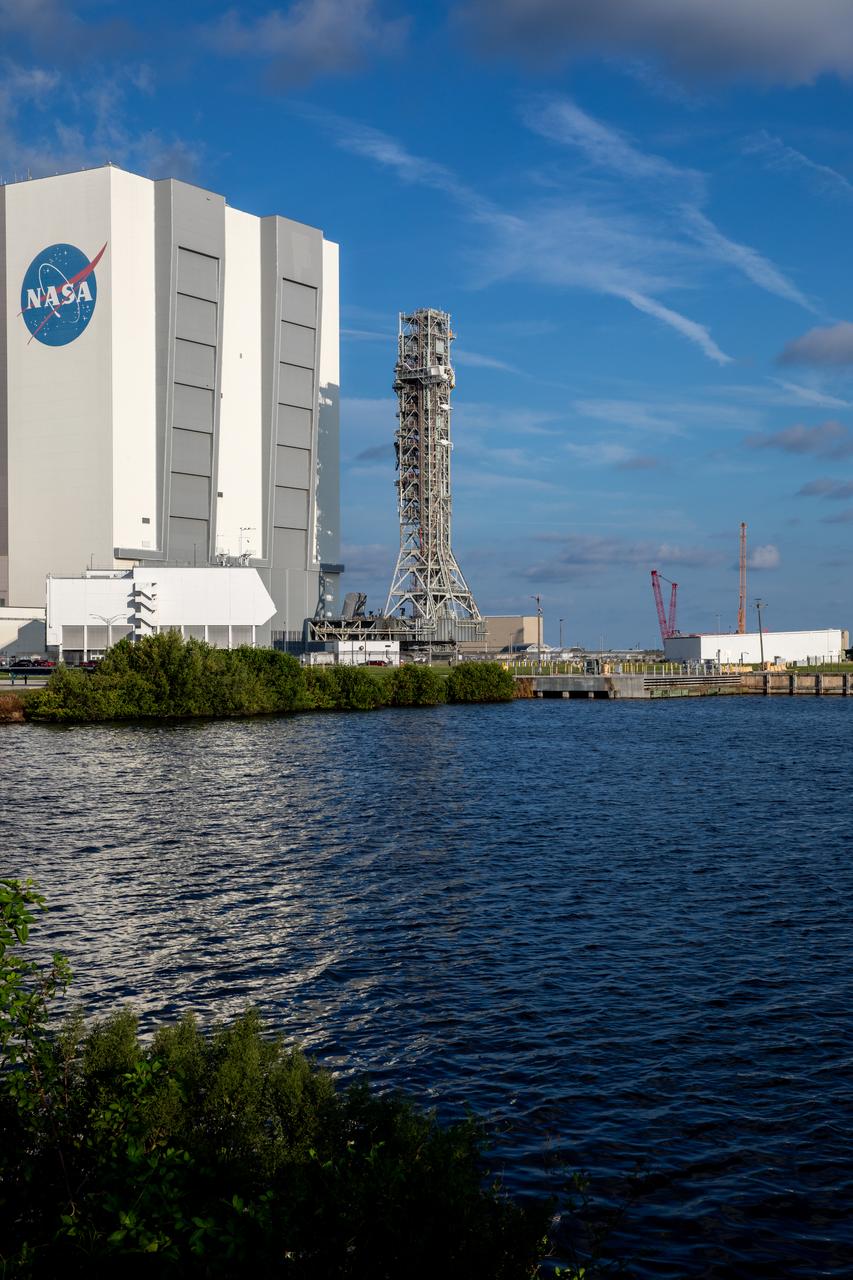
Teams with NASA’s Exploration Ground Systems Program transport the 380-foot-tall mobile launcher 1 along a 4.2-mile stretch to the iconic Vehicle Assembly Building at NASA’s Kennedy Space Center in Florida on Thursday, Oct. 3, 2024. The crawler transporter recently reached 2,500 miles traveling to the launch pad since its construction in 1965. The mobile launcher has been at Launch Complex 39B since August 2023 undergoing upgrades and tests in preparation for NASA’s Artemis II mission. The mobile launcher will be used to assemble, process, and launch NASA’s SLS (Space Launch Systems) and Orion spacecraft to the Moon and beyond.
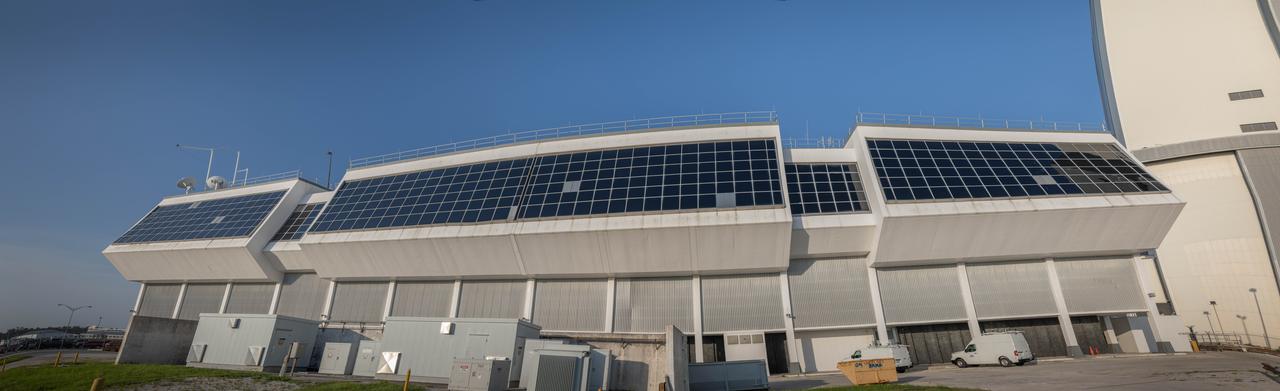
A brilliant blue sky forms the backdrop for a fish-eye panoramic view of the south side of the Launch Control Center (LCC) at NASA's Kennedy Space Center in Florida. Firing Room 1 inside the LCC has been completely upgraded and modernized to support the testing, processing, countdown and launch of NASA's Space Launch System (SLS) rocket and Orion spacecraft on Exploration Mission-1 and deep space mission. Exploration Ground Systems oversaw the upgrades.

Teams with NASA’s Exploration Ground Systems Program transport the 380-foot-tall mobile launcher 1 along a 4.2-mile stretch to the iconic Vehicle Assembly Building at NASA’s Kennedy Space Center in Florida on Thursday, Oct. 3, 2024. The crawler transporter recently reached 2,500 miles traveling to the launch pad since its construction in 1965. The mobile launcher has been at Launch Complex 39B since August 2023 undergoing upgrades and tests in preparation for NASA’s Artemis II mission. The mobile launcher will be used to assemble, process, and launch NASA’s SLS (Space Launch Systems) and Orion spacecraft to the Moon and beyond.
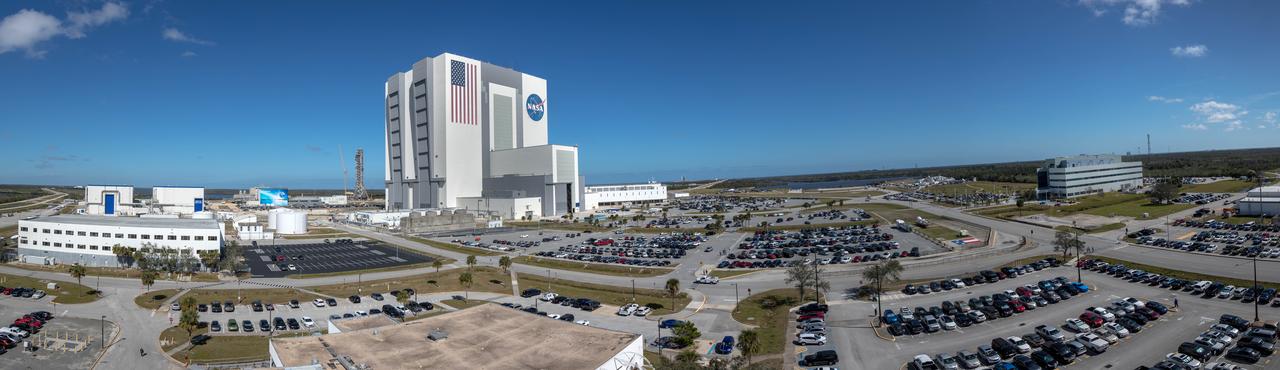
A brilliant blue sky serves as the backdrop for a panoramic view of the iconic Vehicle Assembly Building, mobile launcher at left, and Launch Control Center at right, at NASA's Kennedy Space Center in Florida. These facilities are being upgraded for NASA's Space Launch System and Orion spacecraft for launches to deep space destinations, including the Moon, Mars and beyond.
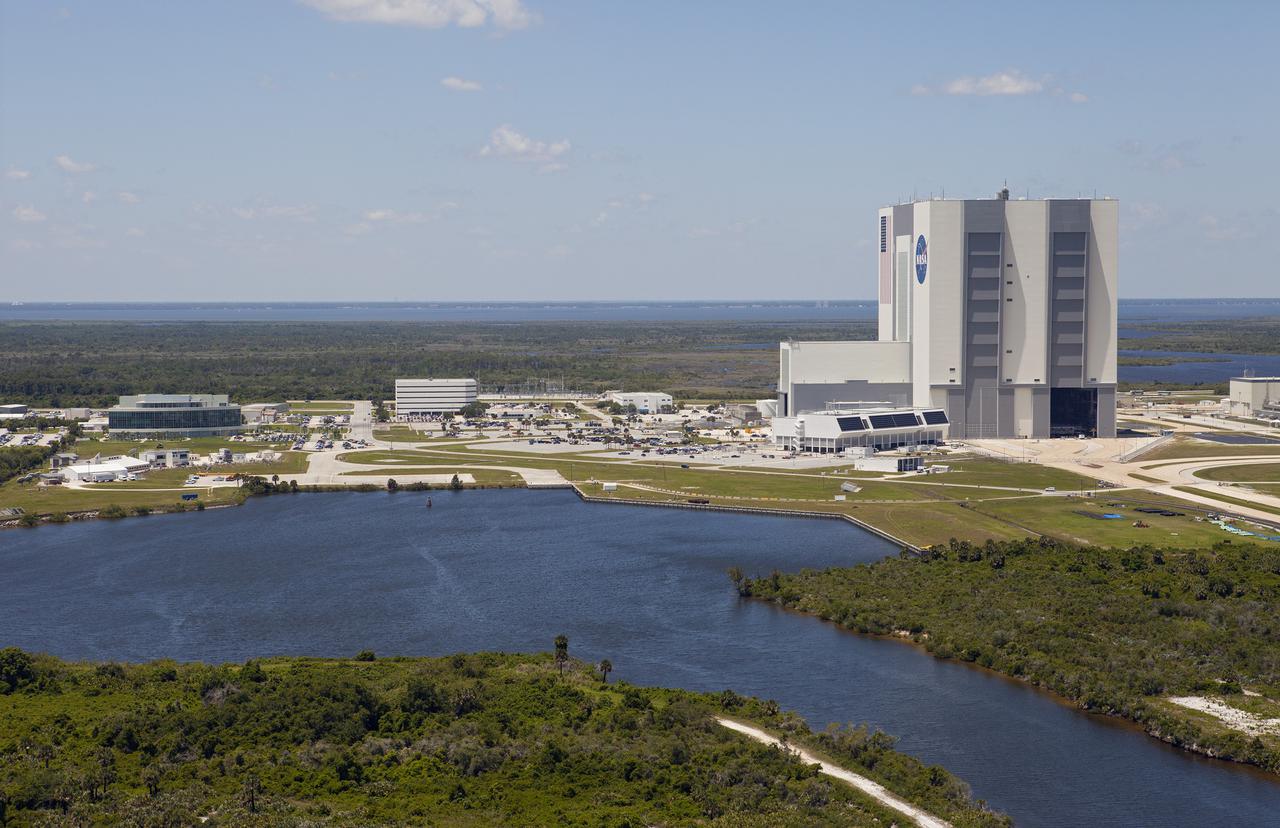
CAPE CANAVERAL, Fla. – An up close aerial view of the Vehicle Assembly Building and other facilities in the Launch Complex 39 area at NASA’s Kennedy Space Center in Florida. In front of the VAB is the Launch Control Center. To the left are the Operations Support Buildings I and II. Upgrades are underway at Pad B and other facilities in the Launch Complex 39 area. The Ground Systems Development and Operations, or GSDO, Program office at Kennedy is leading the center’s transformation from a historically government-only launch complex to a spaceport that can safely handle a variety of rockets and spacecraft, including NASA’s Space Launch System. For more information about GSDO, visit: http:__go.nasa.gov_groundsystems. Photo credit: NASA_Kim Shiflett
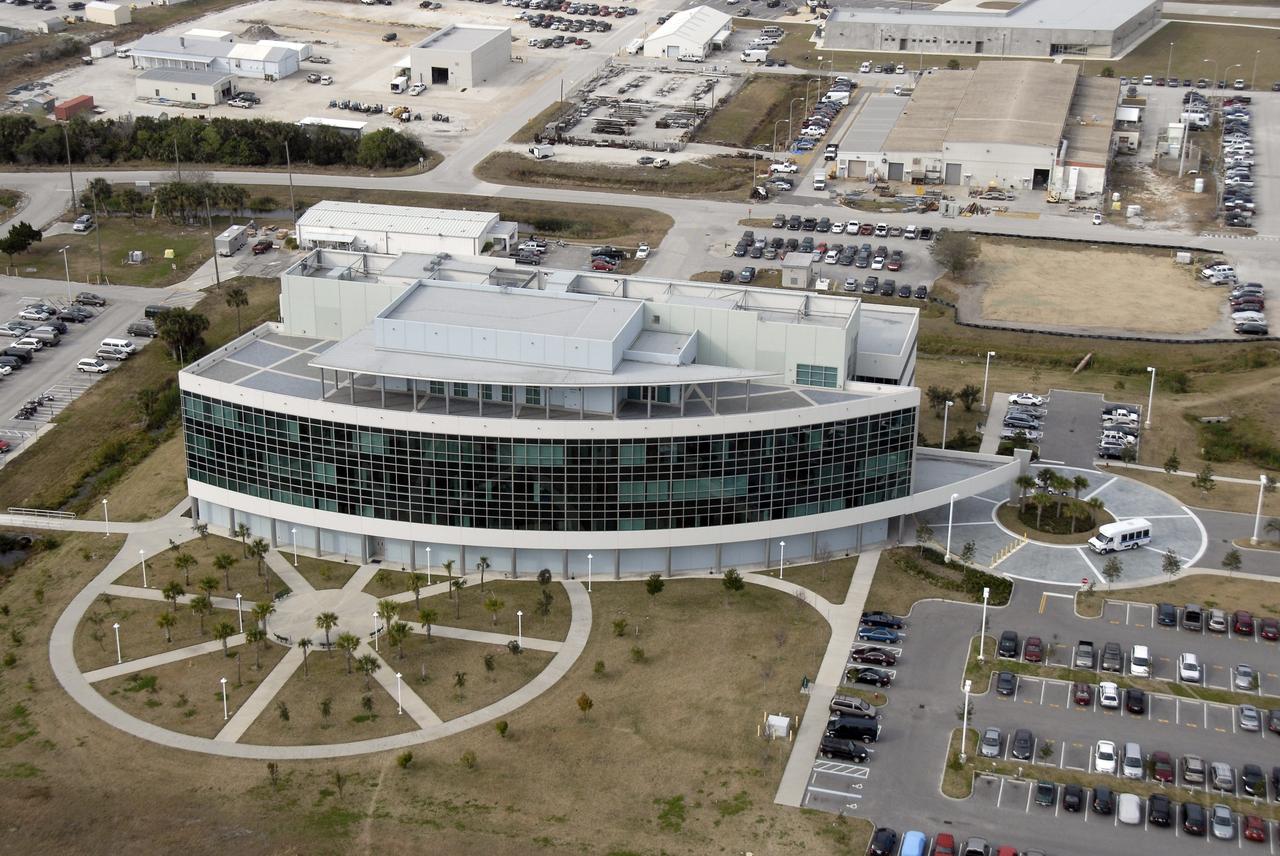
CAPE CANAVERAL, Fla. – An aerial view of the Operations Support Building II in the Launch Complex 39 Area at NASA's Kennedy Space Center in Florida. The panorama of windows faces the launch pads. Photo credit: NASA/Kim Shiflett
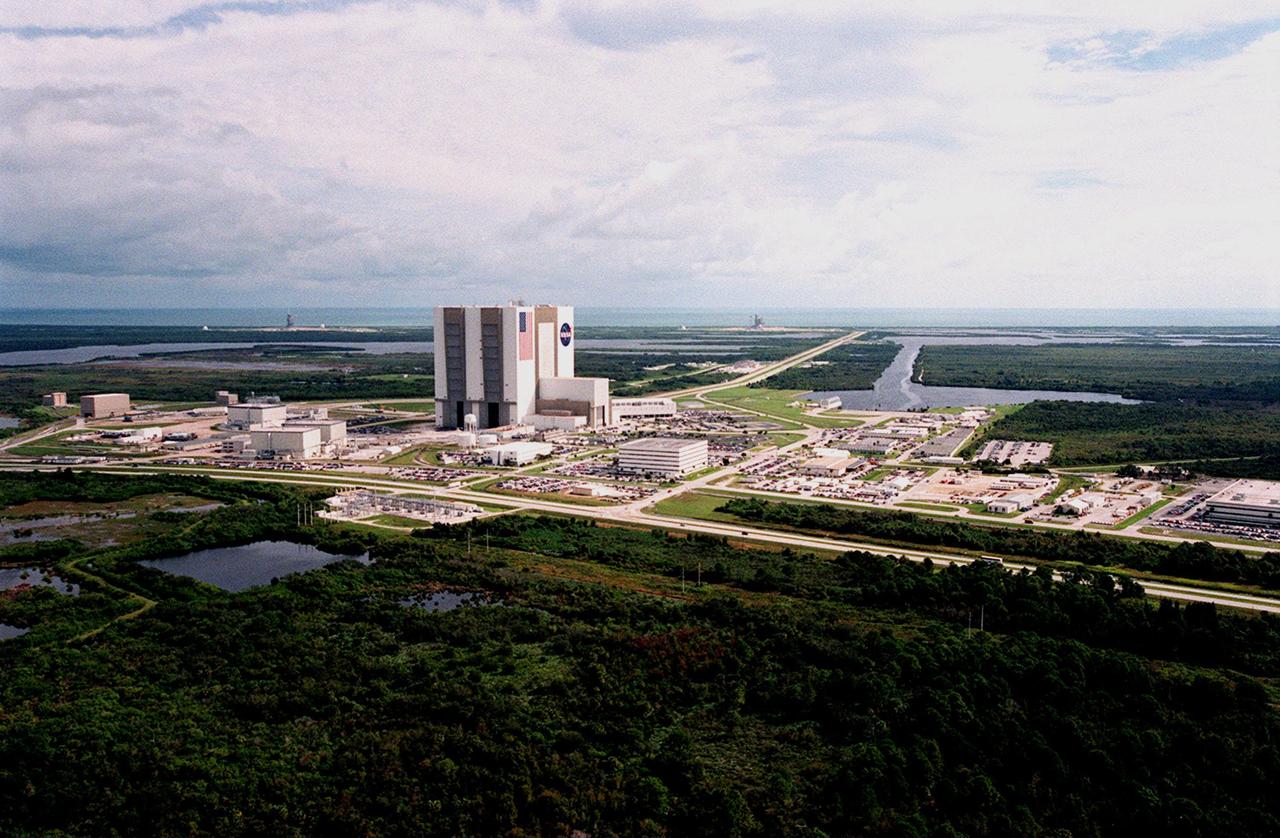
An aerial view of Launch Complex 39 Area shows the Vehicle Assembly Building (center), surrounded by (right) the Launch Control Center, (lower area, left to right) the Orbiter Processing Facility, Process Control Center and Operations Support Building. Looking toward the Atlantic Ocean (top) can be seen Launch Pads 39-A (right) and 39-B. The crawlerway stretches between the VAB and the launch pads. To the right of the crawlerway is the turn basin where new external tanks are brought from Louisiana via ship. The road bordering the buildings is Kennedy Parkway North.
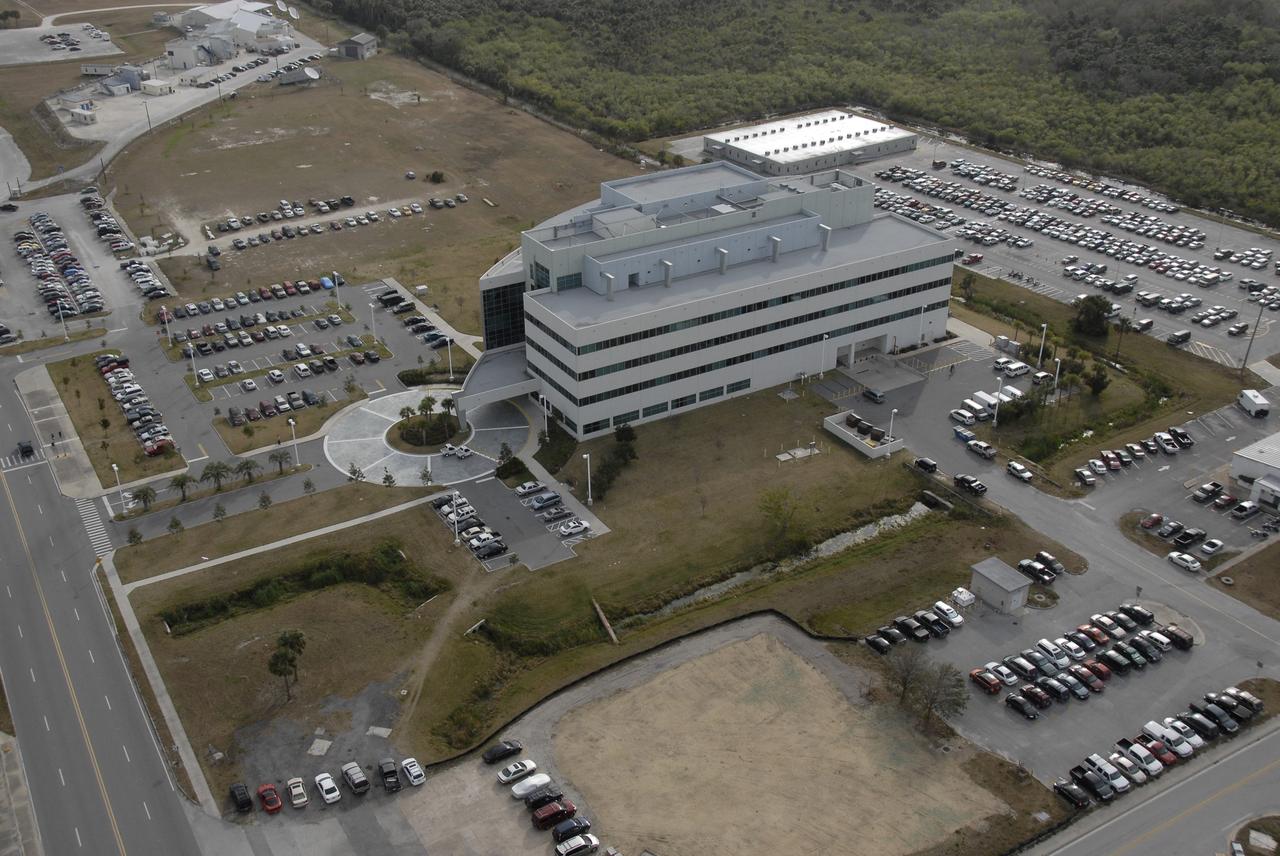
CAPE CANAVERAL, Fla. – – An aerial view of the Operations Support Building II in the Launch Complex 39 Area at NASA's Kennedy Space Center in Florida. Photo credit: NASA/Kim Shiflett
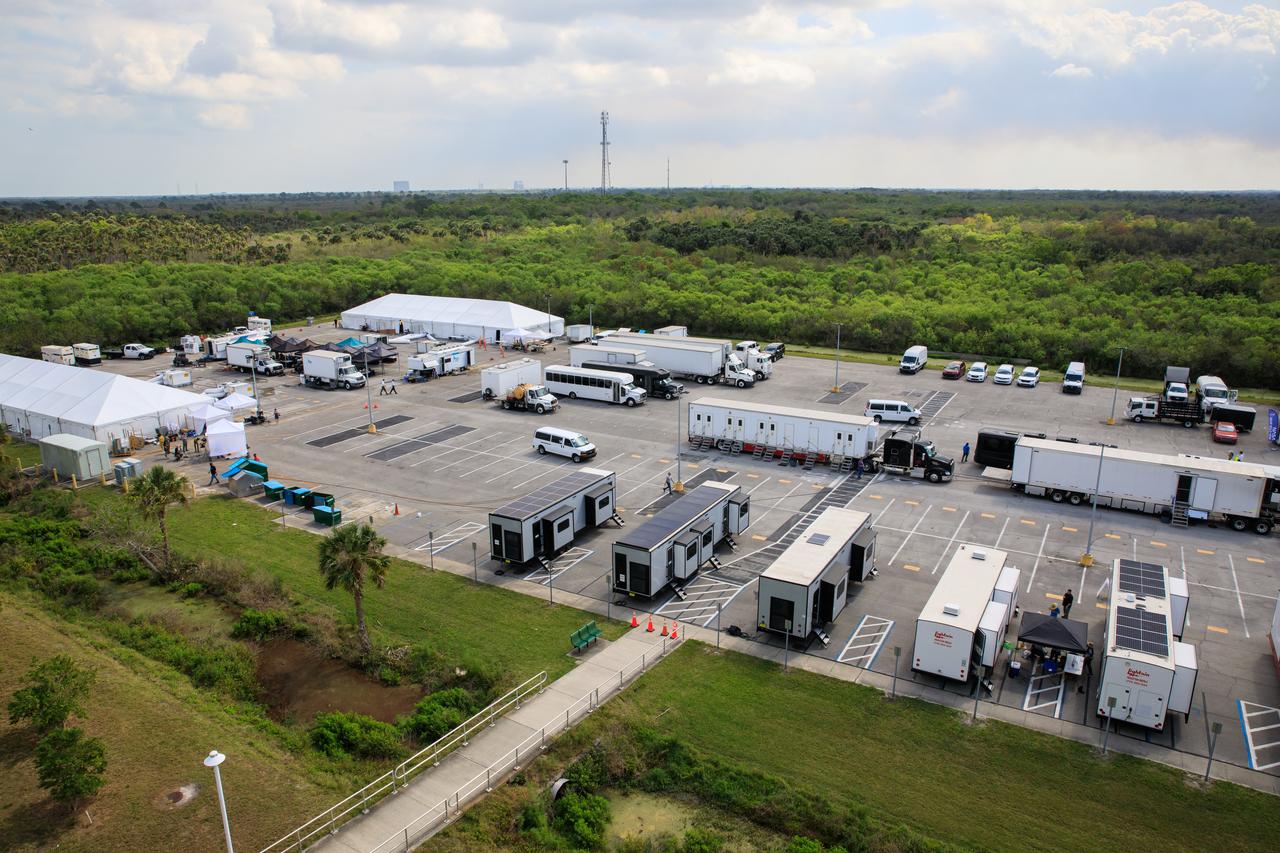
A major motion picture is being filmed in February 2023 at NASA’s Kennedy Space Center in Florida. In view is Base Camp #1 in the Launch Complex 39 area that includes support buildings for the film project.
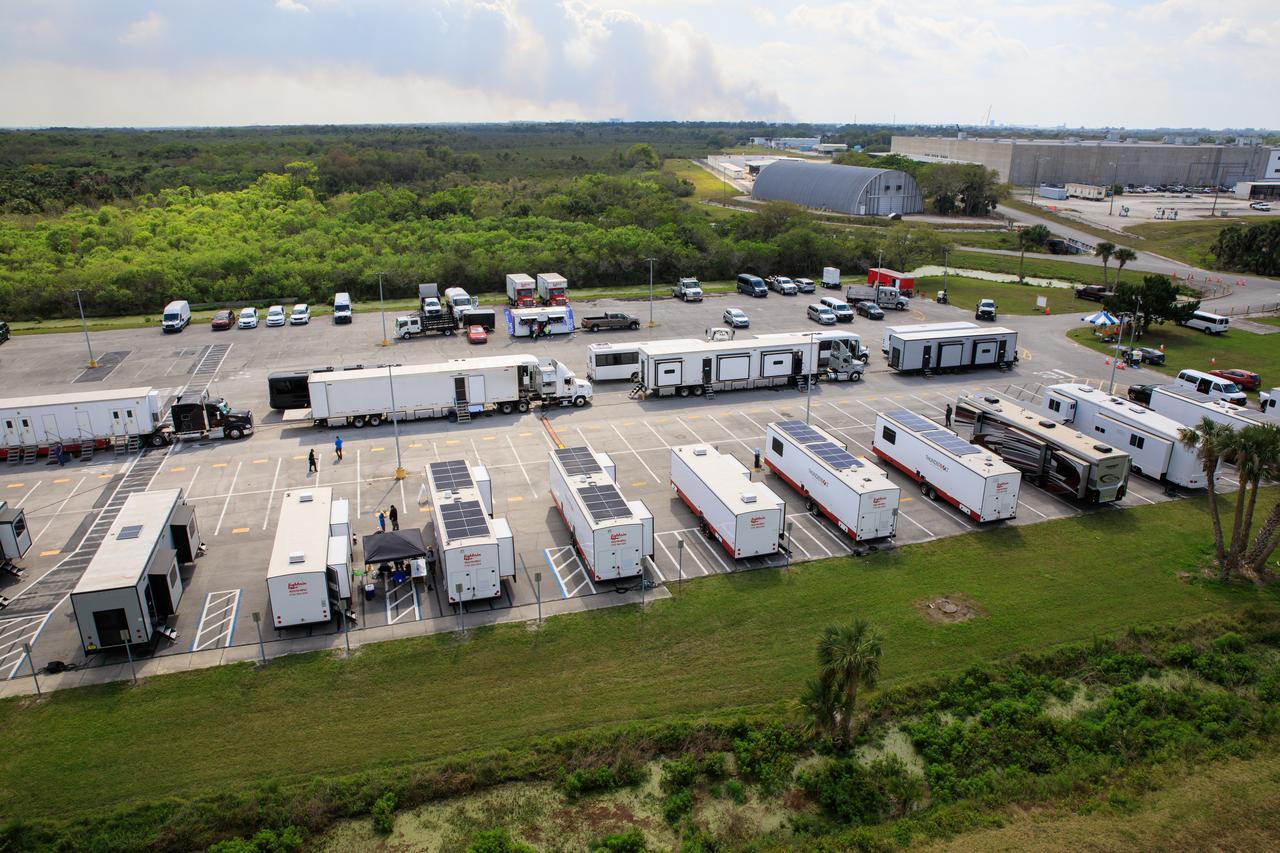
A major motion picture is being filmed in February 2023 at NASA’s Kennedy Space Center in Florida. In view is Base Camp #1 in the Launch Complex 39 area that includes support buildings for the film project.
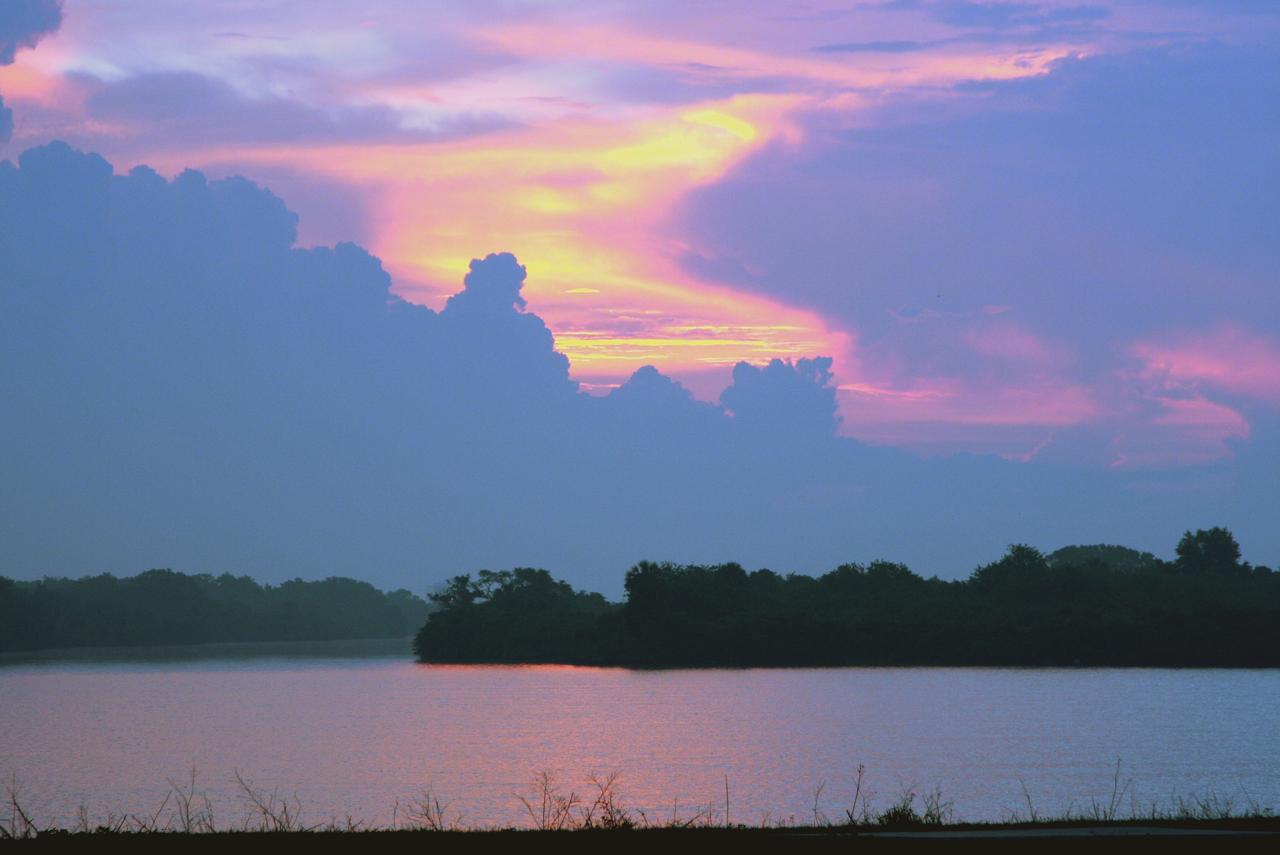
CAPE CANAVERAL, Fla. – Gathering clouds filter the painted sky over the turn basin in the Launch Complex 39 Area at NASA's Kennedy Space Center. Photo credit: NASA/Dimitri Gerondidakis
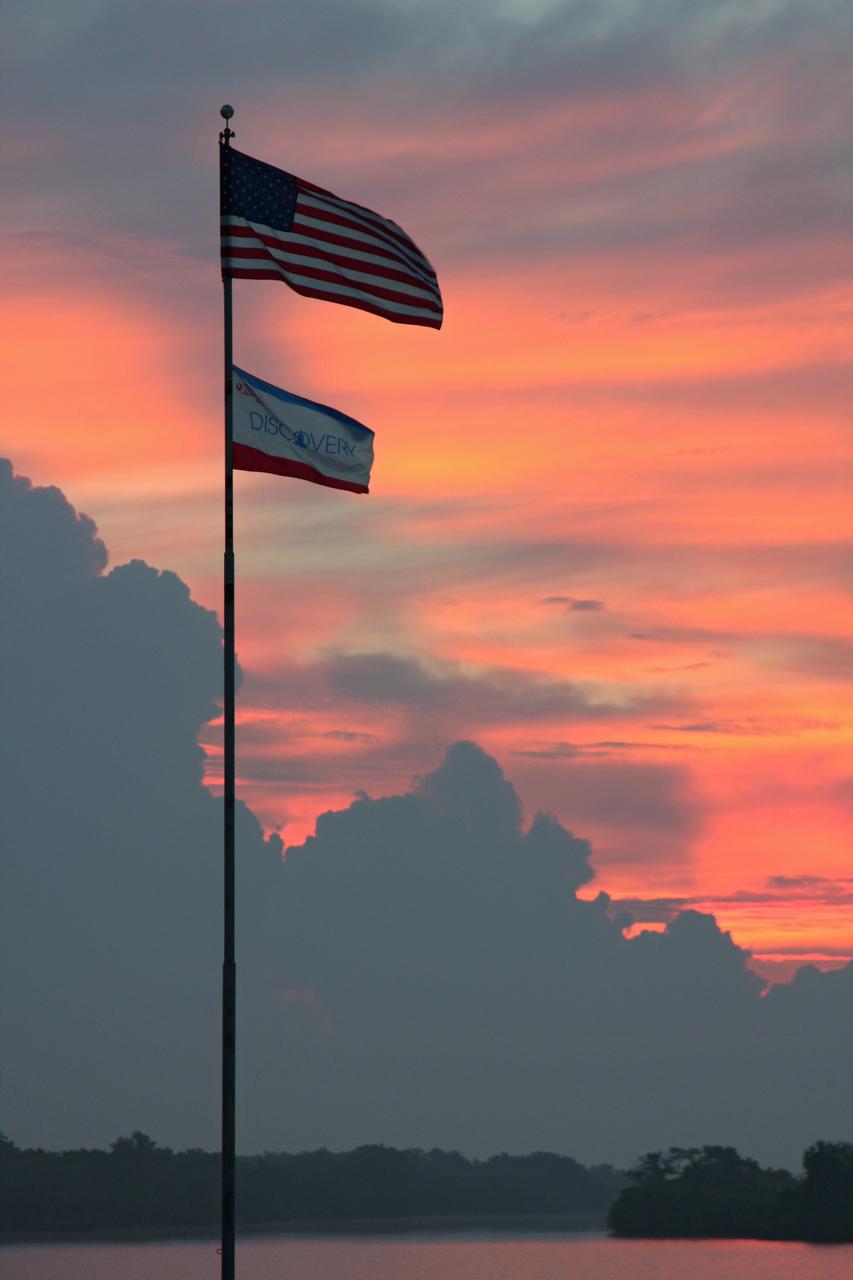
CAPE CANAVERAL, Fla. – A rising sun paints the sky a blazing orange behind gathering clouds over the Launch Complex 39 Area at NASA's Kennedy Space Center. Photo credit: NASA/Dimitri Gerondidakis
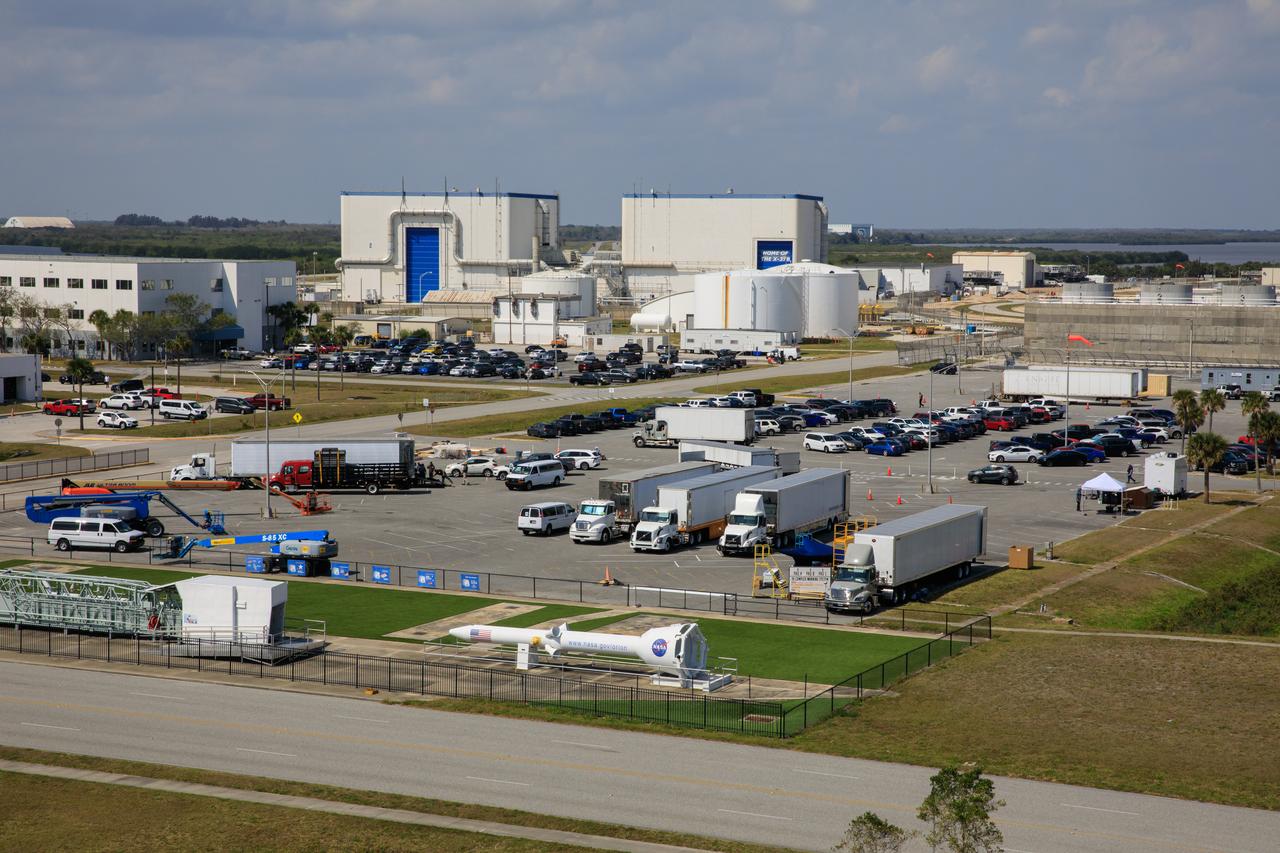
A major motion picture is being filmed in February 2023 at NASA’s Kennedy Space Center in Florida. In view are some of the support vehicles in use for the film project in the Launch Complex 39 area.
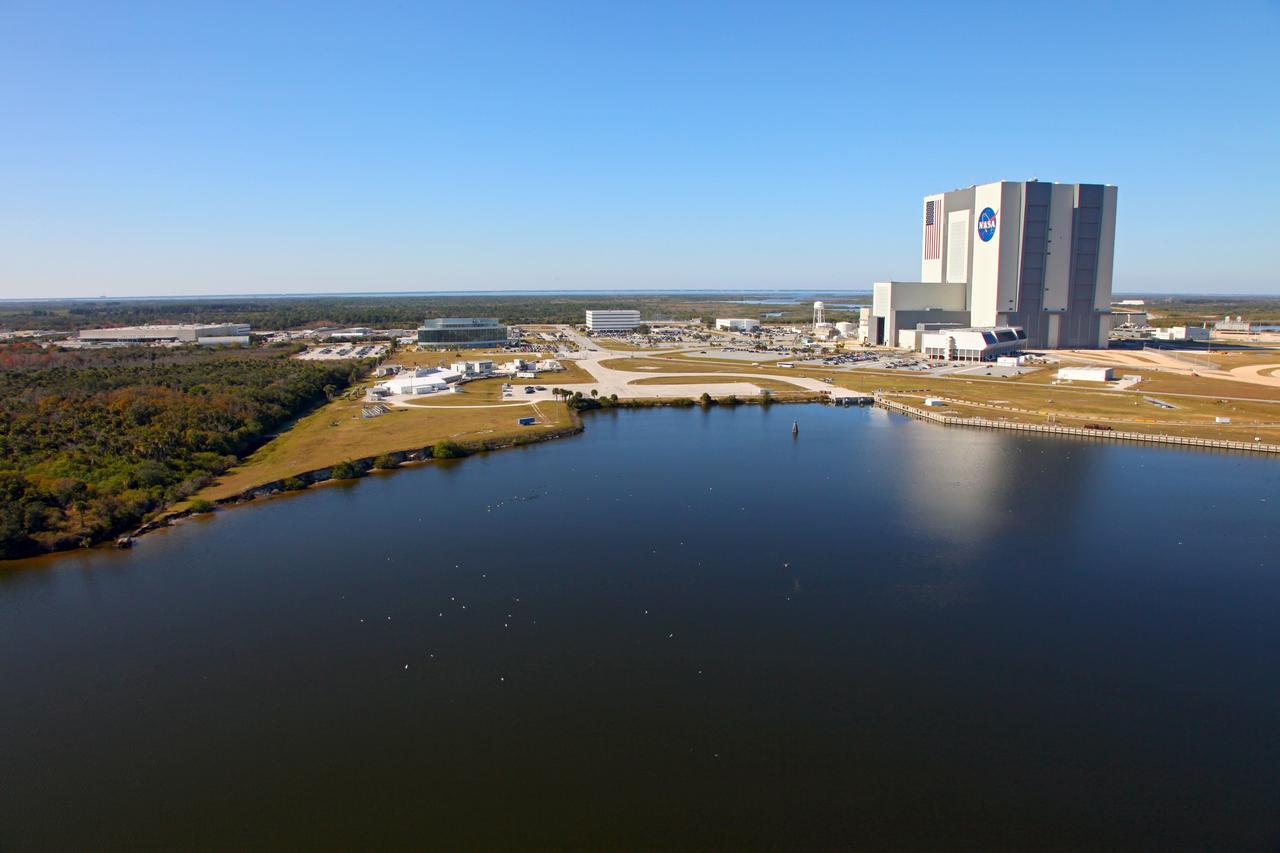
CAPE CANAVERAL, Fla. -- The Launch Complex 39 area is seen from above the Turn Basin at NASA's Kennedy Space Center in Florida. Photo credit: NASA/Frank Michaux
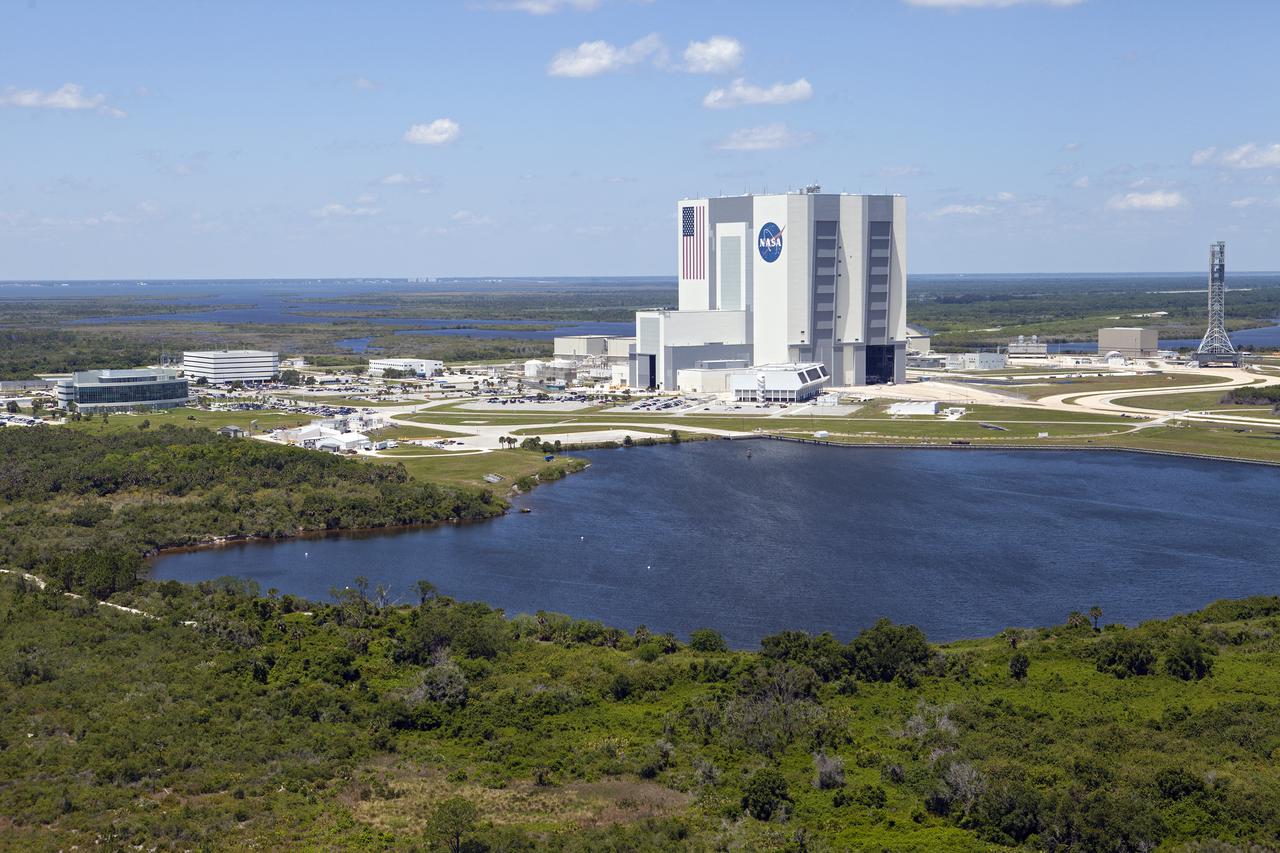
CAPE CANAVERAL, Fla. – An aerial view of the Vehicle Assembly Building, or VAB, and other buildings in the Launch Complex 39 area at NASA’s Kennedy Space Center in Florida. The Launch Control Center is in front of the VAB. To the right is the mobile launcher that will be used to transport NASA’s Space Launch System rocket and the Orion crew capsule to Launch Pad 39B. Upgrades are underway at Pad B and other facilities in the Launch Complex 39 area. The Ground Systems Development and Operations, or GSDO, Program office at Kennedy is leading the center’s transformation from a historically government-only launch complex to a spaceport that can safely handle a variety of rockets and spacecraft, including NASA’s Space Launch System. For more information about GSDO, visit: http:__go.nasa.gov_groundsystems. Photo credit: NASA_Kim Shiflett
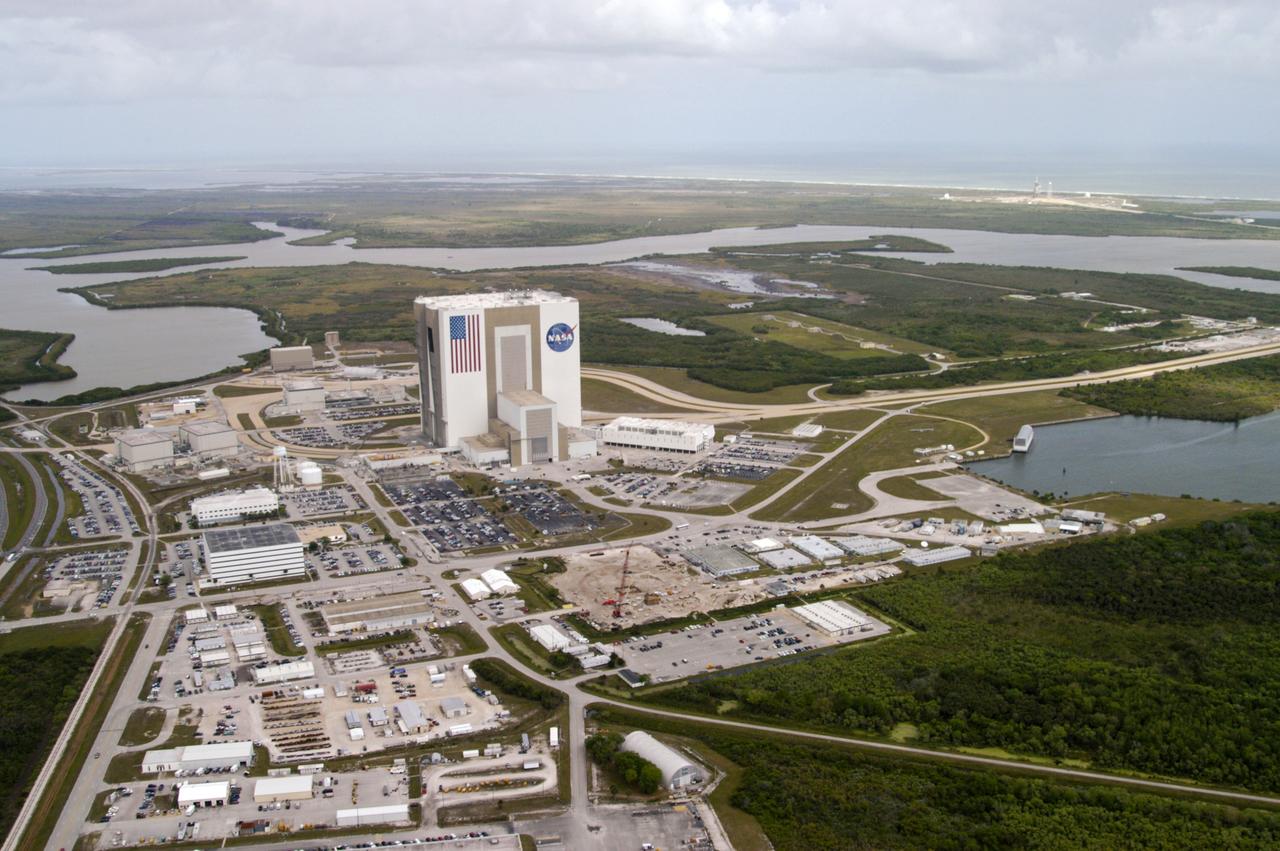
CAPE CANAVERAL, Fla. -- The 525-foot high Vehicle Assembly Building dominates the Launch Complex 39 Area. On the right is the Launch Control Center. Behind the VAB meanders the Banana Creek. The two-lane crawlerway stretches from the VAB toward the coast, site of Launch Pad 39A and 39B, seen here. The Turn Basin is at right, ending at the parking area for the NASA KSC News Center. At center foreground is the construction area for Operations Support Building 2. Photo credit: NASA
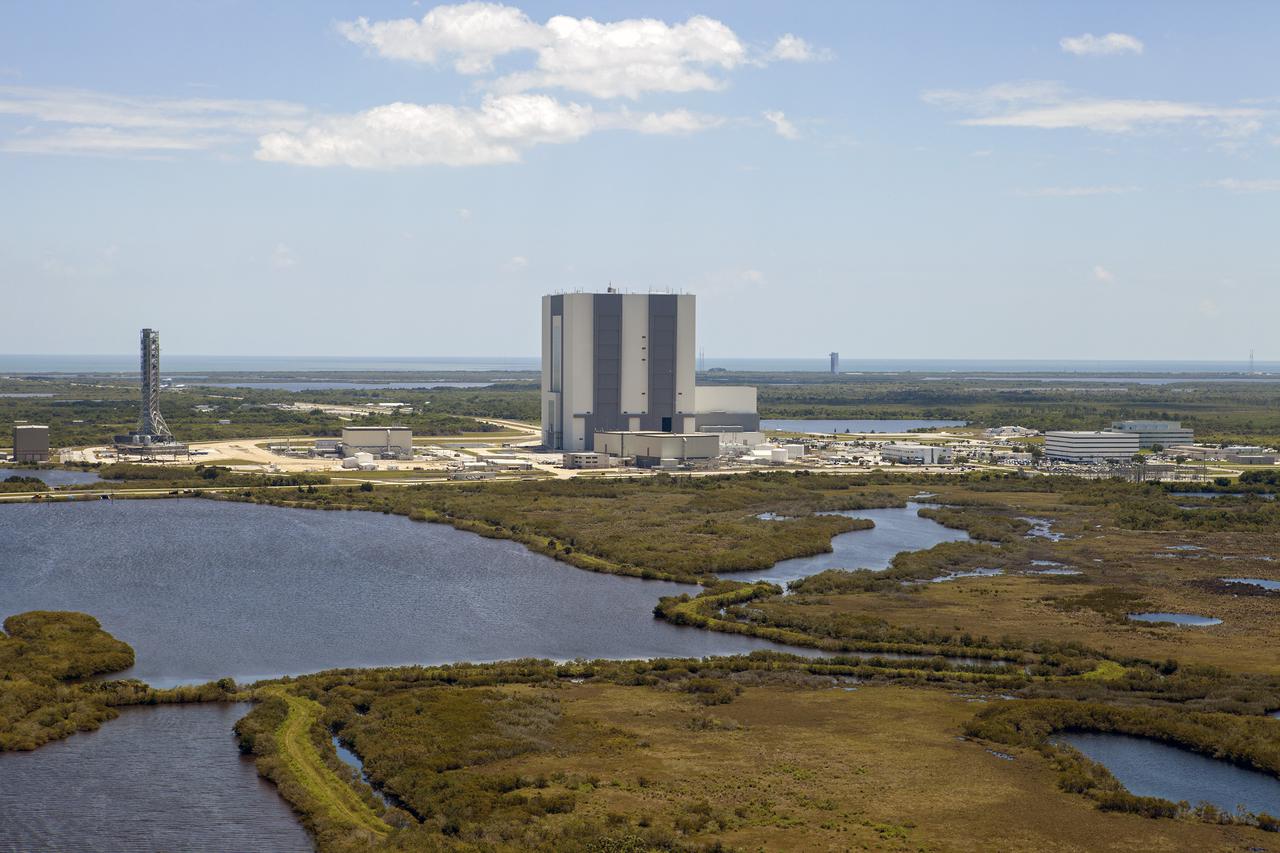
CAPE CANAVERAL, Fla. – An aerial view of the Vehicle Assembly Building and other buildings in the Launch Complex 39 area at NASA’s Kennedy Space Center in Florida. To the left is the mobile launcher that will be used to transport NASA’s Space Launch System rocket and the Orion crew capsule to Launch Pad 39B. Upgrades are underway at Pad B and other facilities in the Launch Complex 39 area. The Ground Systems Development and Operations, or GSDO, Program office at Kennedy is leading the center’s transformation from a historically government-only launch complex to a spaceport that can safely handle a variety of rockets and spacecraft, including NASA’s Space Launch System. For more information about GSDO, visit: http:__go.nasa.gov_groundsystems. Photo credit: NASA_Kim Shiflett
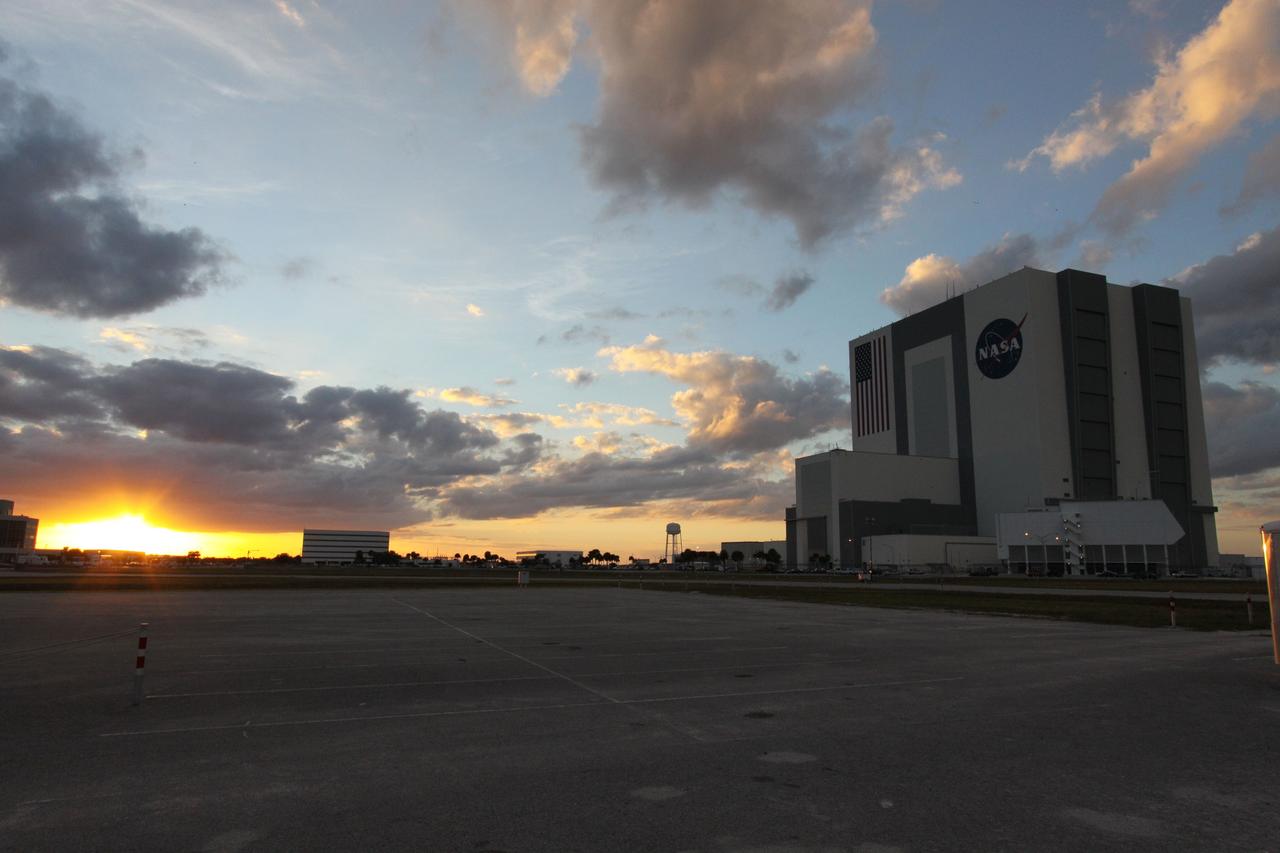
CAPE CANAVERAL, Fla. -- From the Press Site parking lot at NASA's Kennedy Space Center in Florida, the sun sets over the Launch Complex 39 area. At center, are the Operations Support Building I and Processing Control Center. At right, are the Vehicle Assembly Building and Launch Control Center. Photo credit: NASA/Troy Cryder
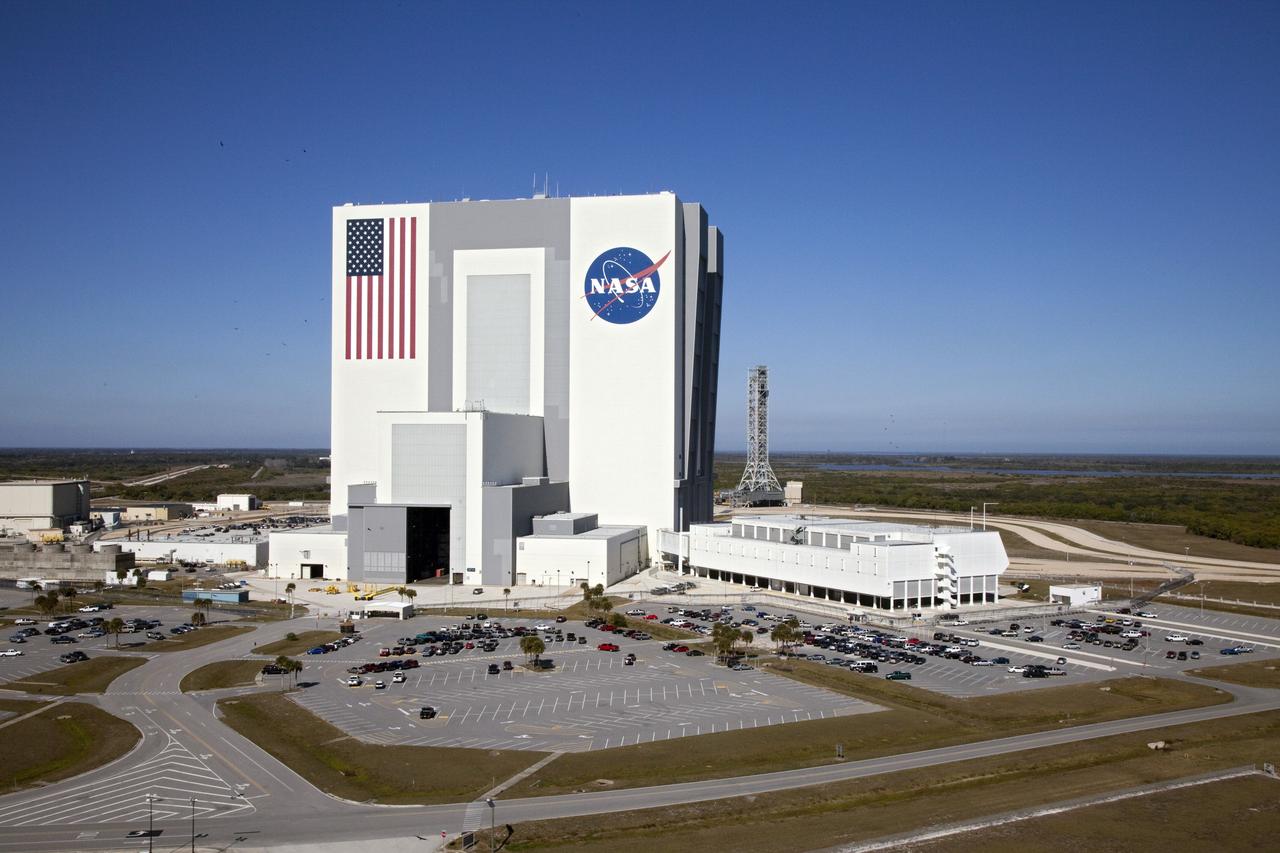
CAPE CANAVERAL, Fla. -- This is an aerial view of the Vehicle Assembly Building, center, Launch Control Center, right, and NASA's new mobile launcher, back, in the Launch Complex 39 area of NASA's Kennedy Space Center in Florida. Photo credit: NASA/Frank Michaux
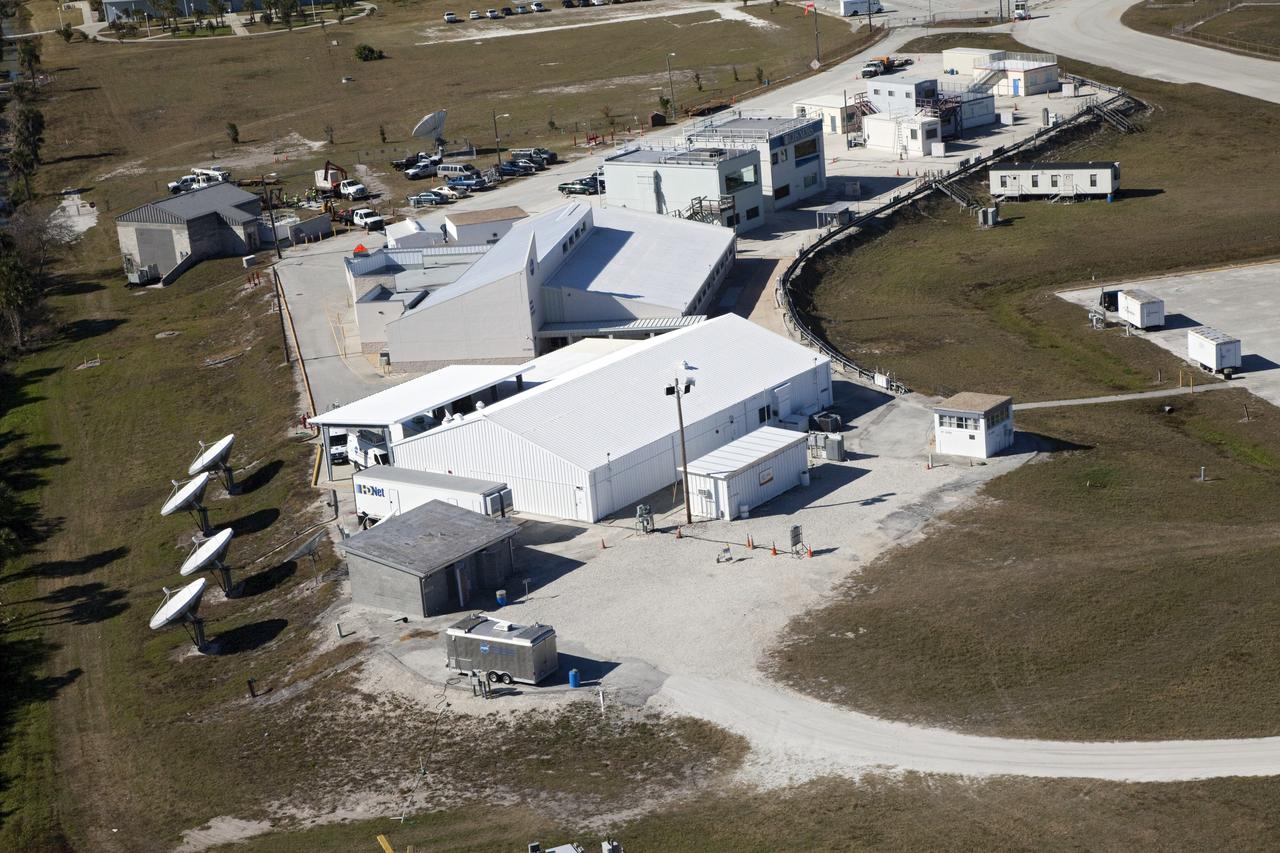
CAPE CANAVERAL, Fla. -- This is the Press Site in the Launch Complex 39 area of NASA's Kennedy Space Center in Florida, where media from all over the world gather to cover launches from the Space Coast. Photo credit: NASA/Frank Michaux
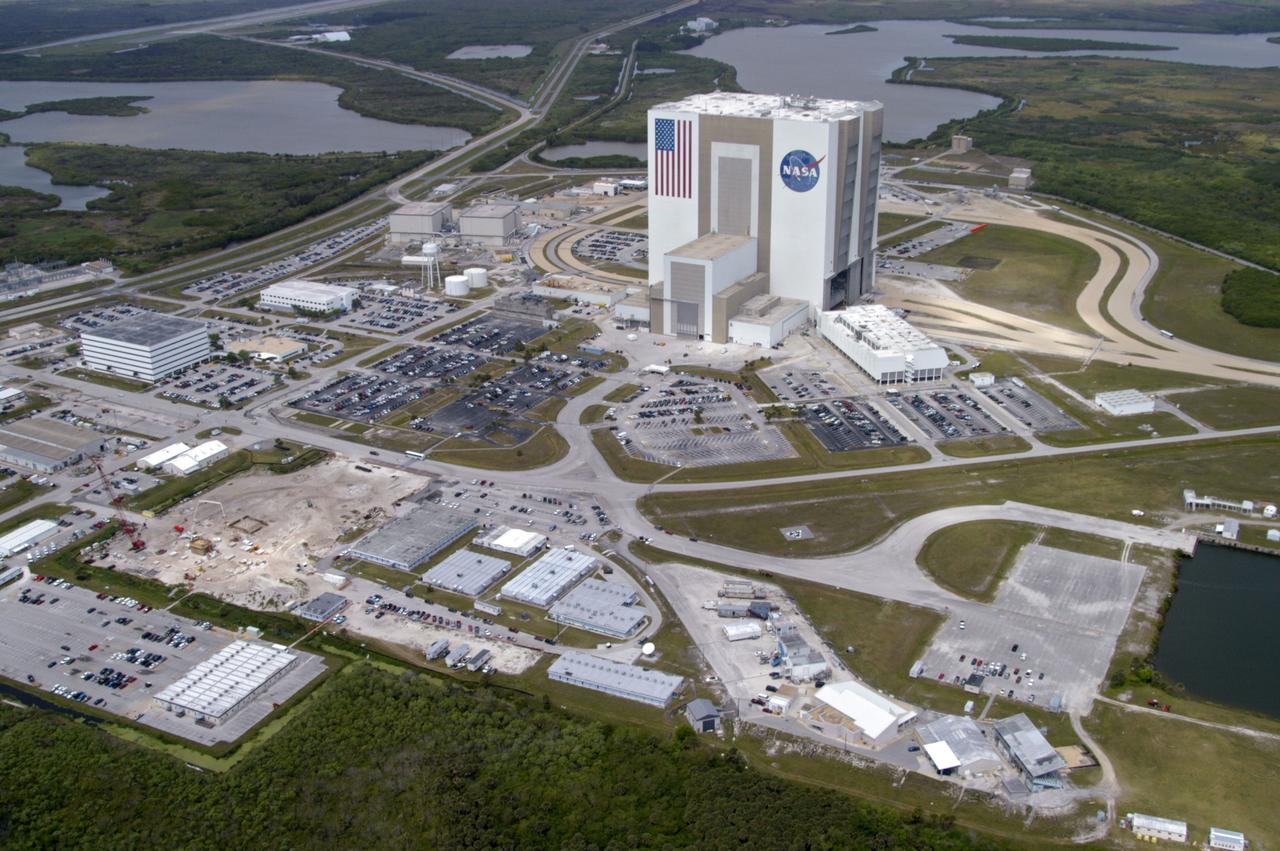
CAPE CANAVERAL, Fla. -- The 525-foot-high Vehicle Assembly Building dominates the Launch Complex 39 Area. The major buildings surrounding it, counterclockwise, are the Orbiter Processing Facility, Operations Support Building, construction site of OSB-2, the NASA KSC News Center and Launch Control Center. Photo credit: NASA
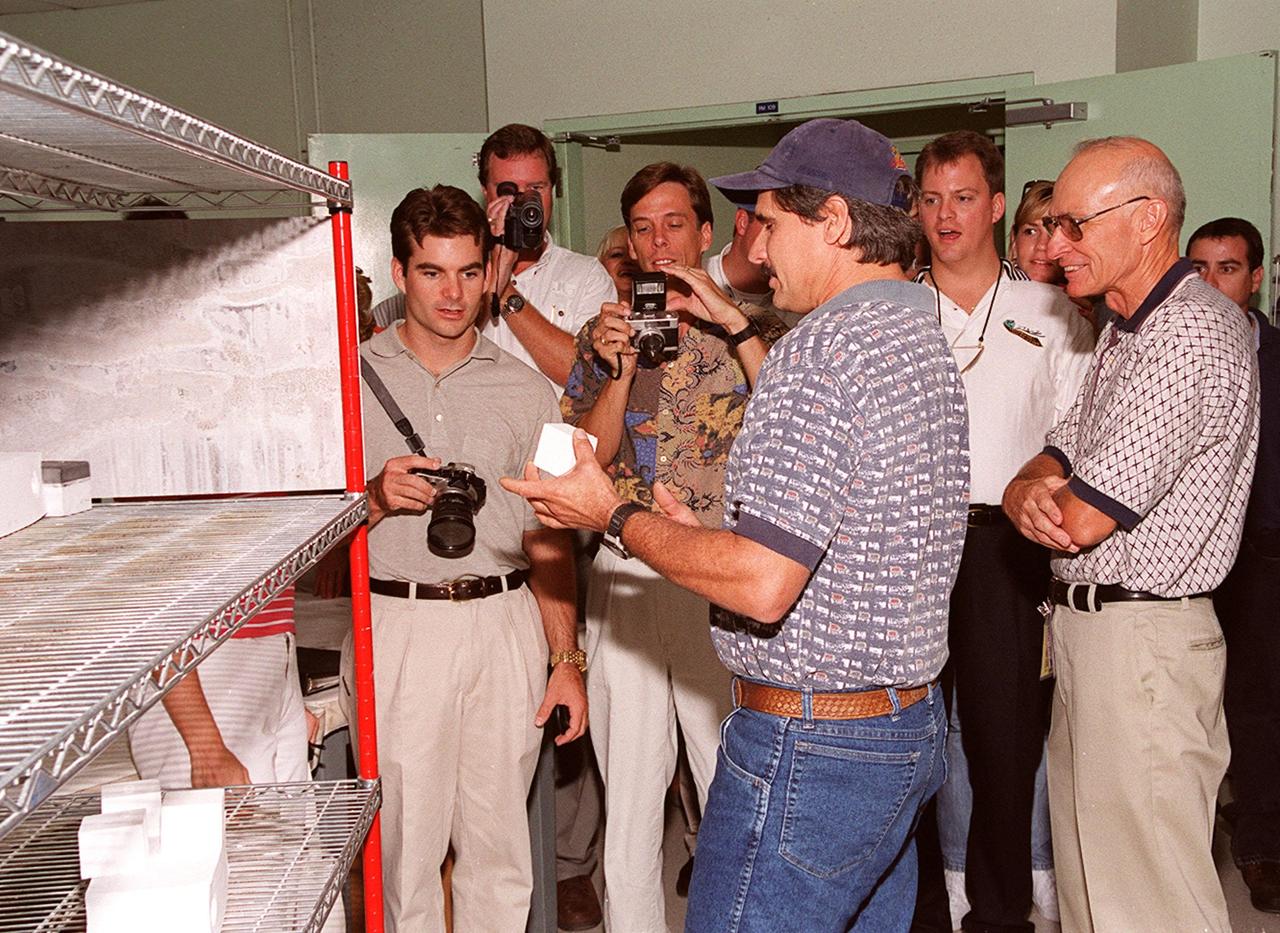
KENNEDY SPACE CENTER, FLA. -- During a visit to KSC, NASCAR race driver Jeff Gordon (left) looks at a tile in the Tile Shop in the Launch Complex 39 area. Former KSC launch director Bob Sieck (far right) looks on
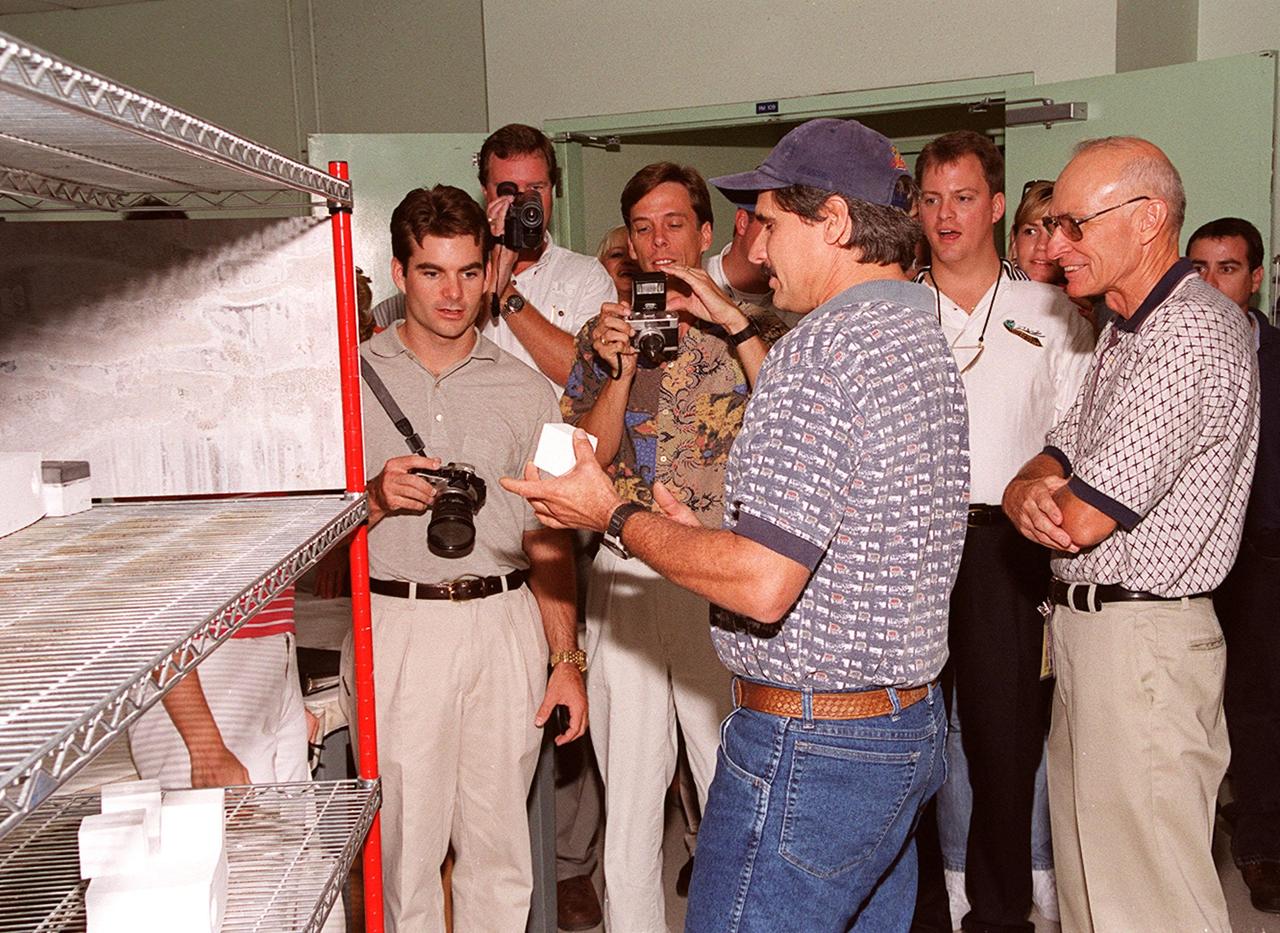
KENNEDY SPACE CENTER, FLA. -- During a visit to KSC, NASCAR race driver Jeff Gordon (left) looks at a tile in the Tile Shop in the Launch Complex 39 area. Former KSC launch director Bob Sieck (far right) looks on
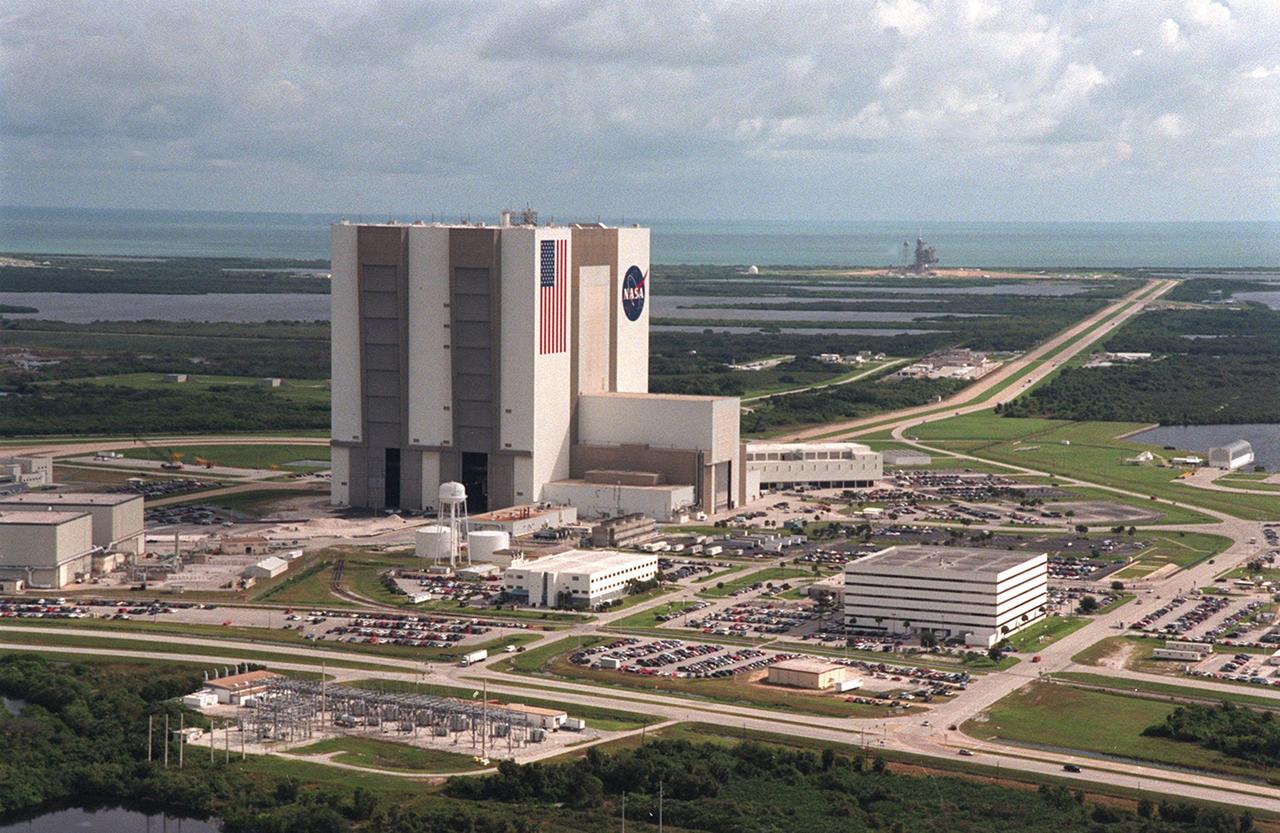
An aerial view of Launch Complex 39 area shows the Vehicle Assembly Building (center), with the Launch Control Center on its right. On the west side (lower end) are (left to right) the Orbiter Processing Facility, Process Control Center and Operations Support Building. Looking east (upper end) are Launch Pads 39-A (right) and 39-B (just above the VAB). The crawlerway stretches between the VAB and the launch pads toward the Atlantic Ocean, seen beyond them. At right is the turn basin where new external tanks are brought via ship, shown at its offloading site.
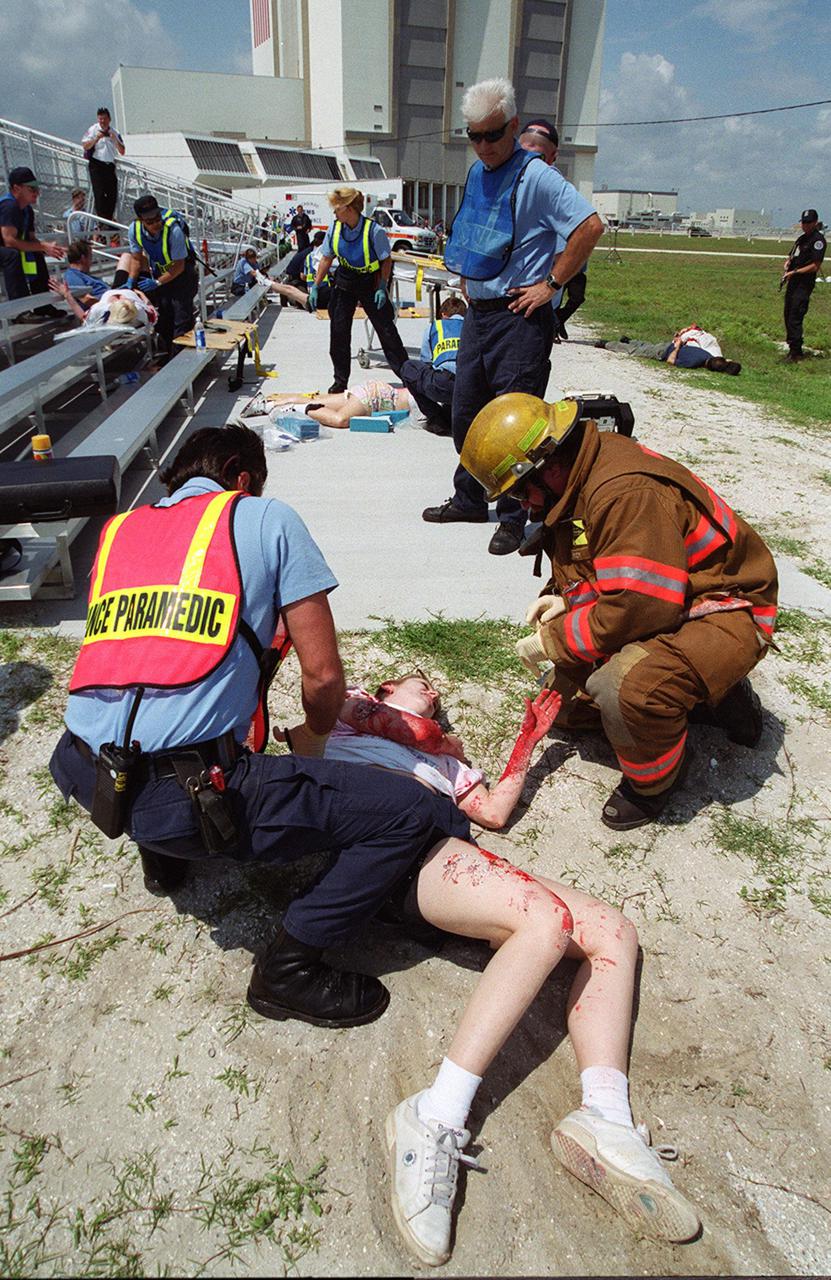
KENNEDY SPACE CENTER, FLA. -- During a staged mass casualty exercise in the Launch Complex 39 area, a paramedic checks an injured woman on the ground. Employees are playing the role of victims during a sniper scenario. The exercise is being staged to validate capabilities of KSC’ fire, medical, helicopter transport and security personnel to respond to such an event.
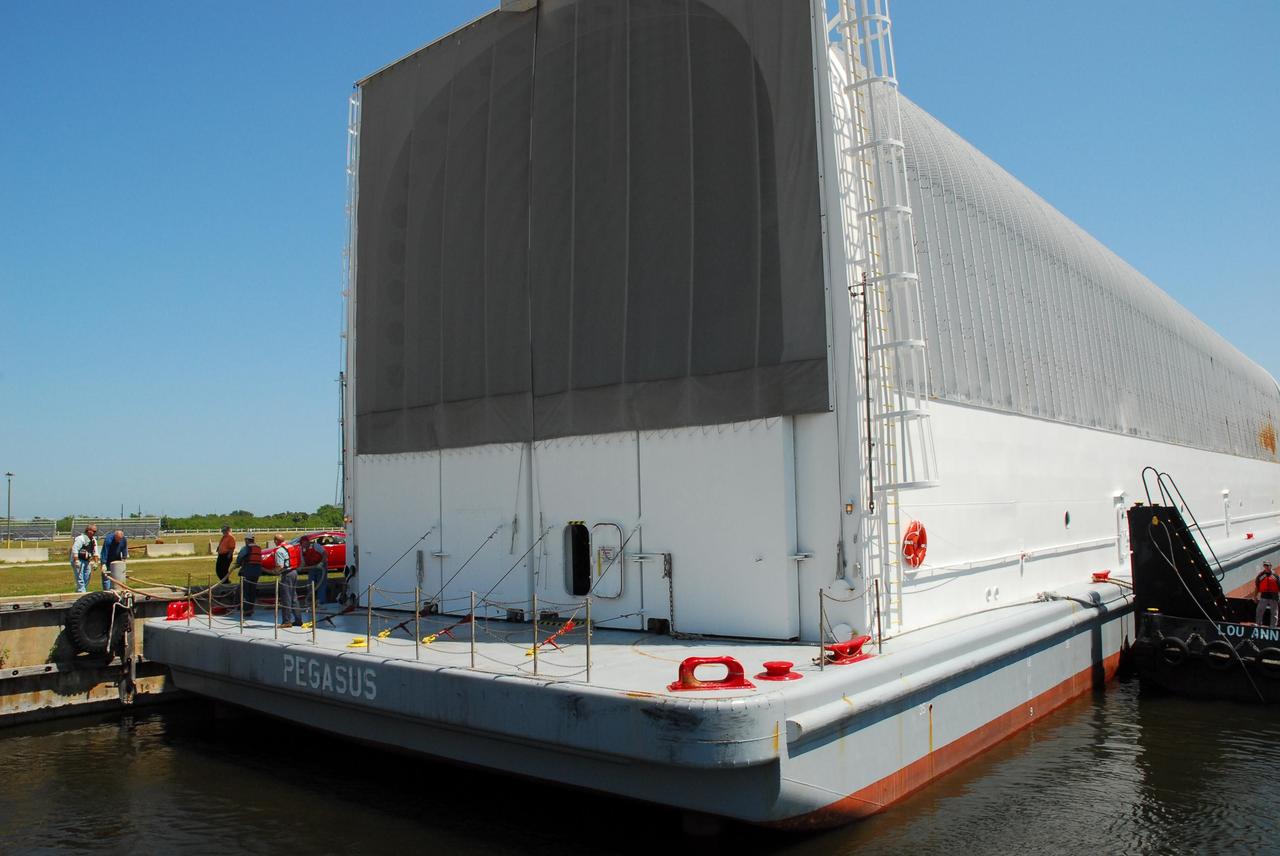
KENNEDY SPACE CENTER, FLA. -- The Pegasus barge is tied up at the dock in the turn basin of the Launch Complex 39 Area. The barge's cargo is the external tank prepared for mission STS-118 by the Michoud Assembly Facility near New Orleans. The tank will later be offloaded and moved to the Vehicle Assembly Building. Photo credit: Jack Pfaller
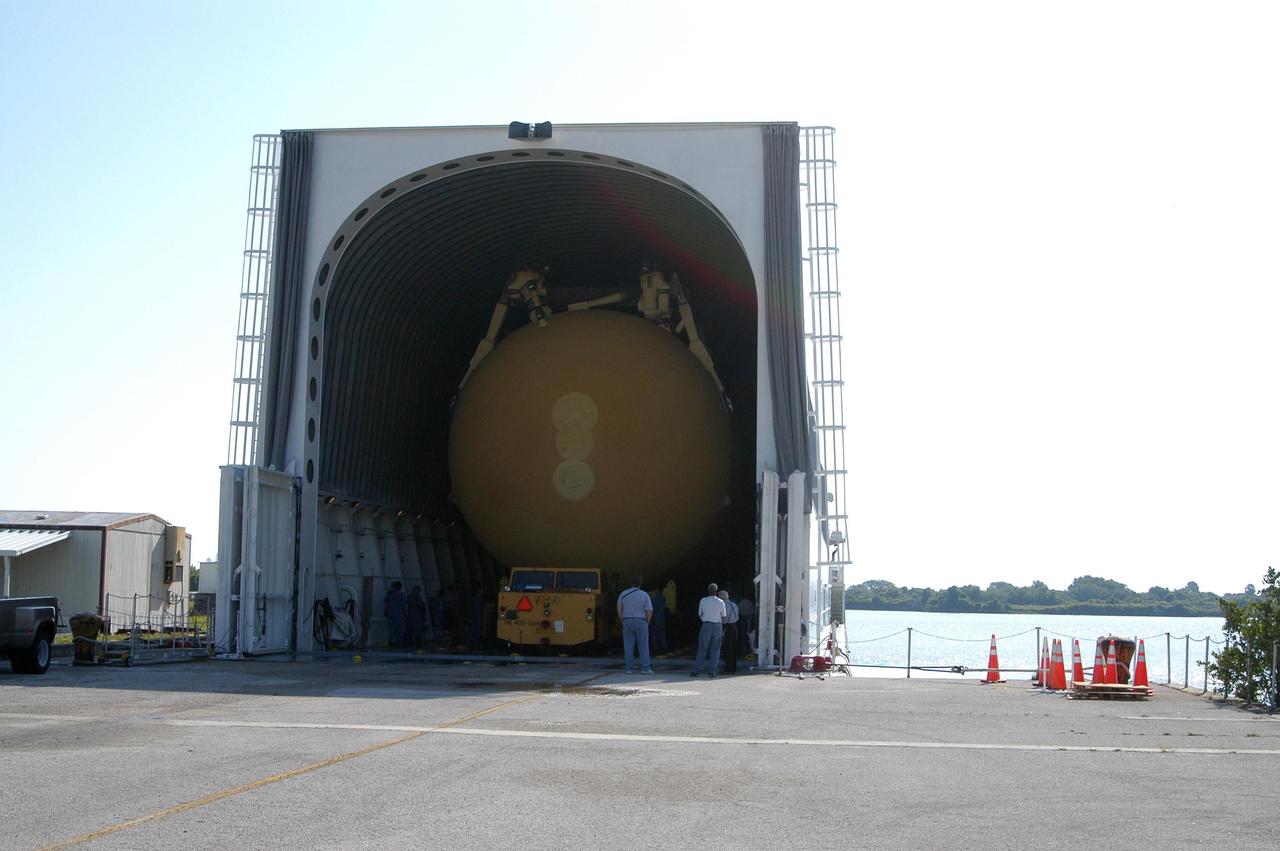
KENNEDY SPACE CENTER, FLA. - After leaving the Vehicle Assembly Building, the external tank is loaded onto the barge at the Turn Basin on Launch Complex Area 39. The barge will deliver the tank to the Michoud Space Systems Assembly Facility near New Orleans where redesign of the external tank is underway for Return to Flight.
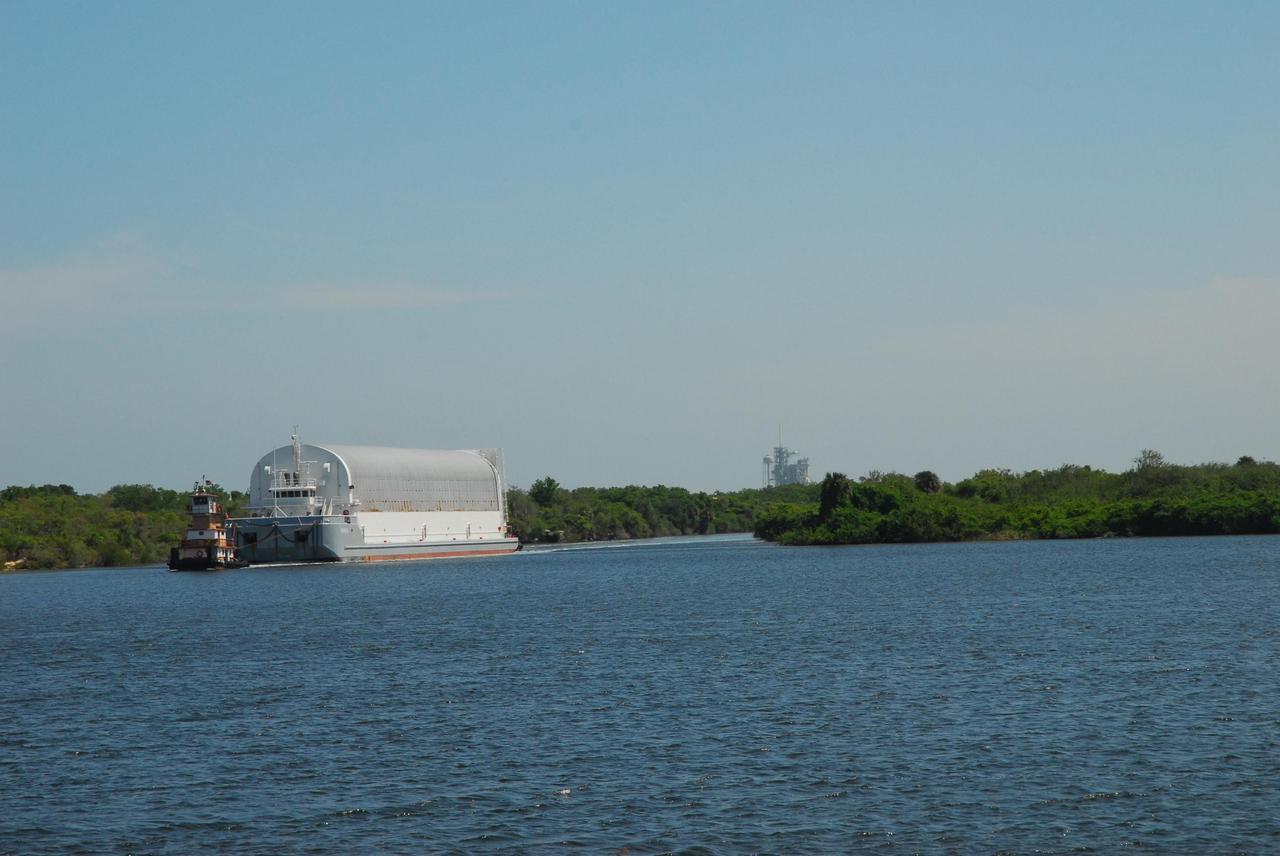
KENNEDY SPACE CENTER, FLA. -- The Pegasus barge is towed into the turn basin in the Launch Complex 39 Area. The barge's cargo is the external tank prepared for mission STS-118 by the Michoud Assembly Facility near New Orleans. After docking, the tank will eventually be offloaded and moved to the Vehicle Assembly Building. Photo credit: Jack Pfaller
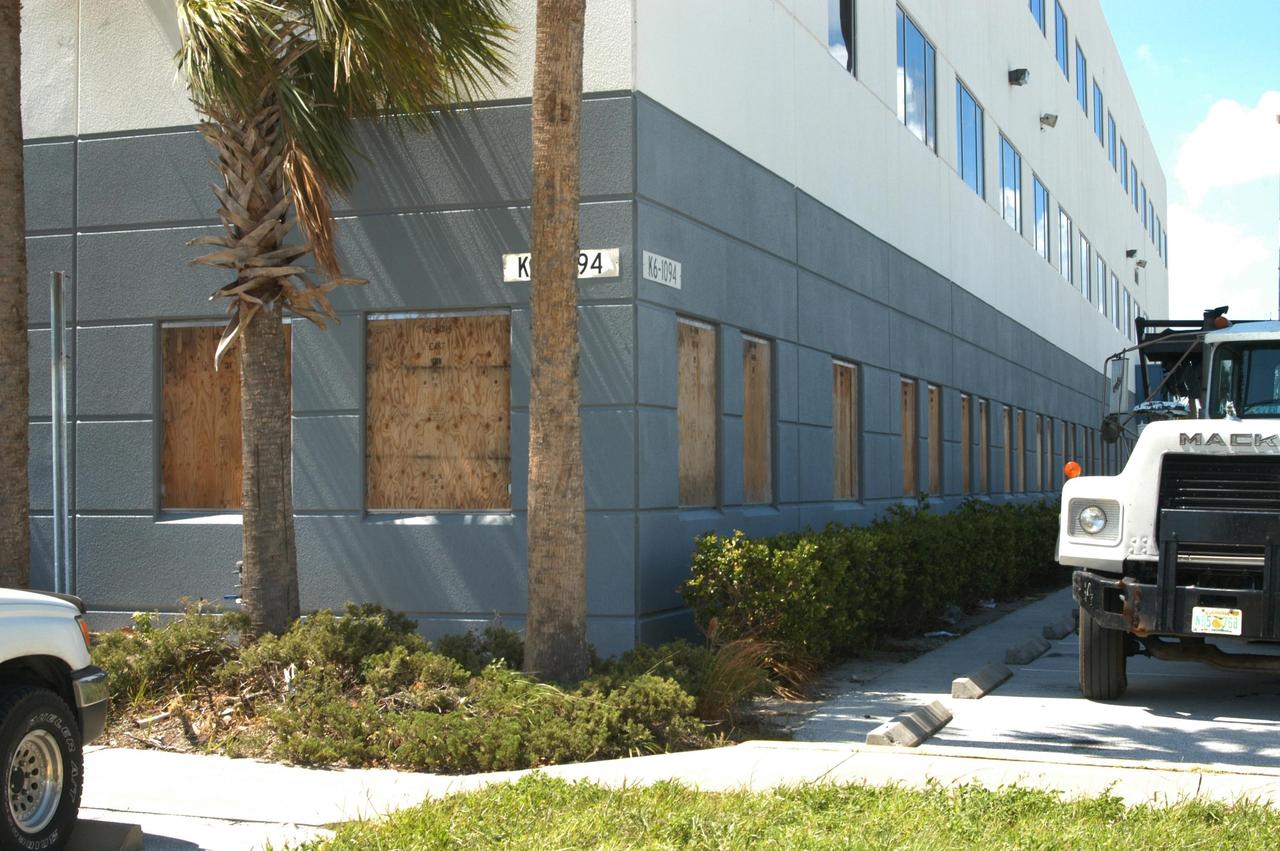
KENNEDY SPACE CENTER, FLA. - Plywood covers the lower windows of the Processing Control Center in the Launch Complex 39 Area in preparation for the arrival of Hurricane Jeanne, expected to impact Central Florida Sunday. This is the fourth hurricane in 45 days to make landfall somewhere in the state.
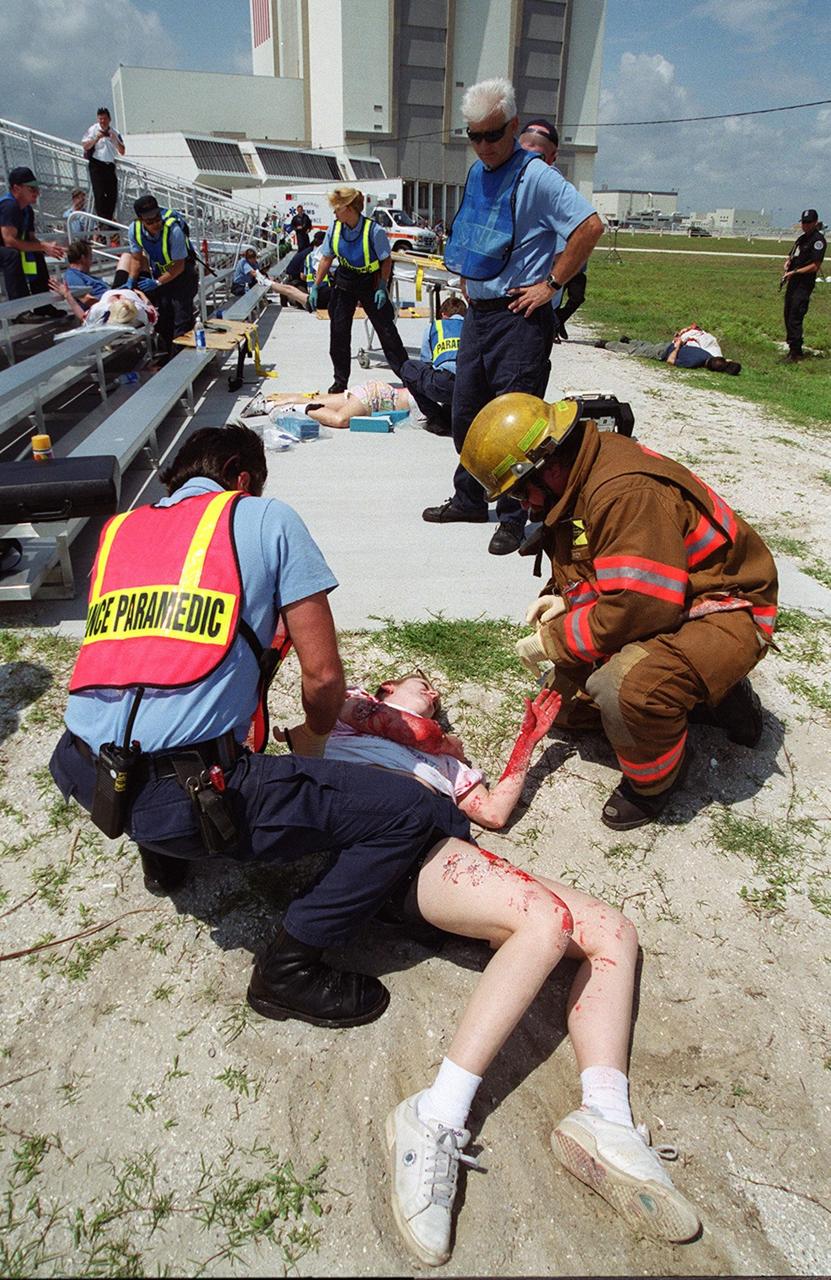
KENNEDY SPACE CENTER, FLA. -- During a staged mass casualty exercise in the Launch Complex 39 area, a paramedic checks an injured woman on the ground. Employees are playing the role of victims during a sniper scenario. The exercise is being staged to validate capabilities of KSC’ fire, medical, helicopter transport and security personnel to respond to such an event.
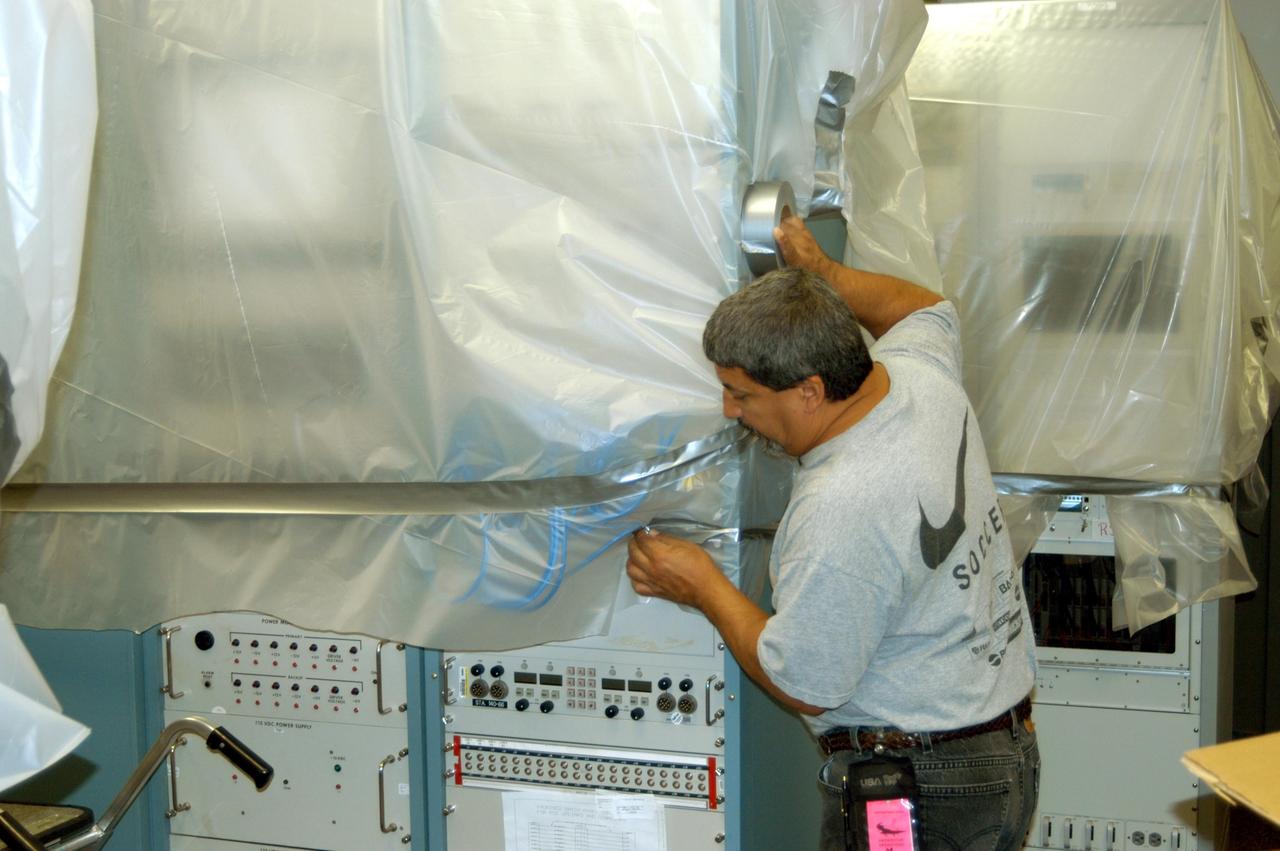
KENNEDY SPACE CENTER, FLA. - A worker covers large pieces of equipment in the Processing Control Center in the Launch Complex 39 Area in preparation for the arrival of Hurricane Jeanne, expected to impact Central Florida Sunday. This is the fourth hurricane in 45 days to make landfall somewhere in the state.
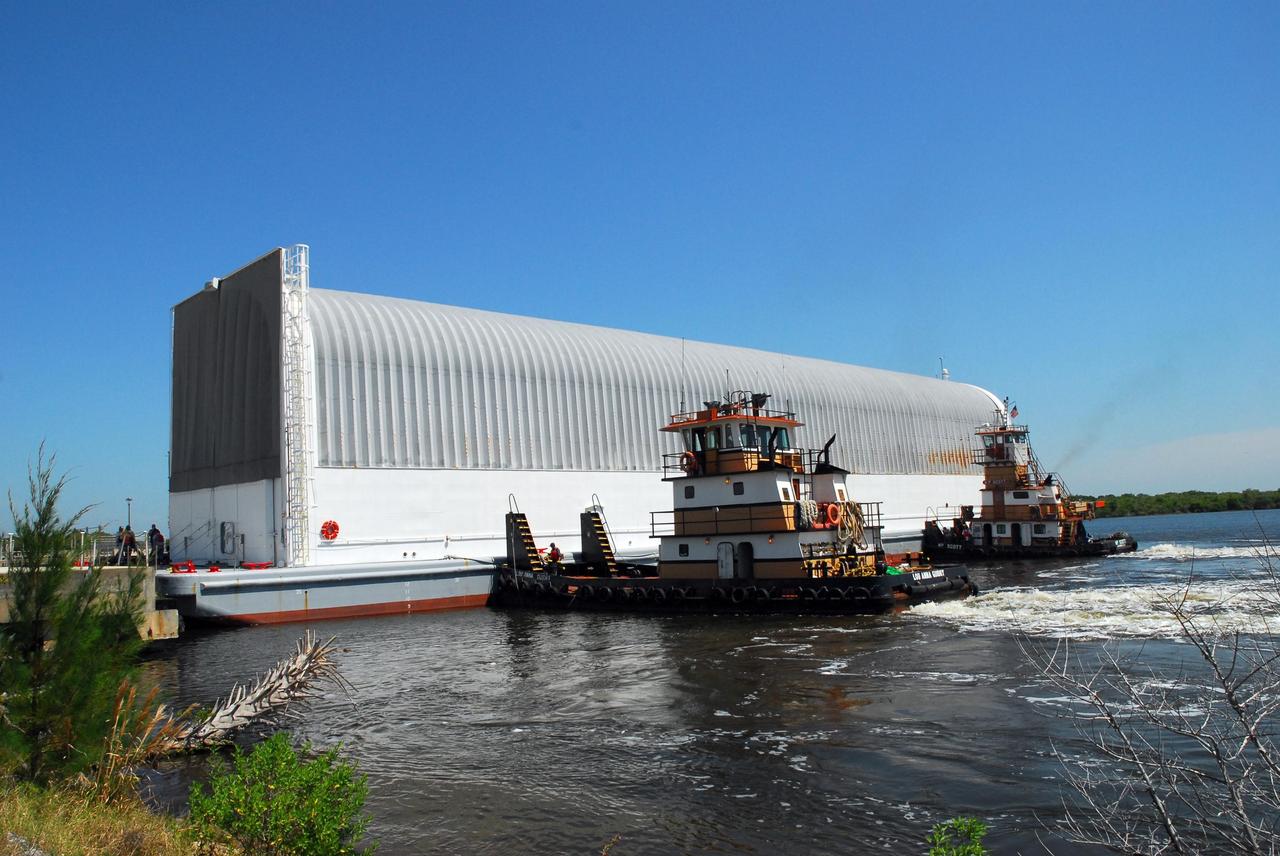
KENNEDY SPACE CENTER, FLA. -- Tugboats maneuver the Pegasus barge closer to the dock in the Launch Complex 39 Area. The barge's cargo is the external tank prepared for mission STS-118 by the Michoud Assembly Facility near New Orleans. The tank will later be offloaded and moved to the Vehicle Assembly Building. Photo credit: Jack Pfaller
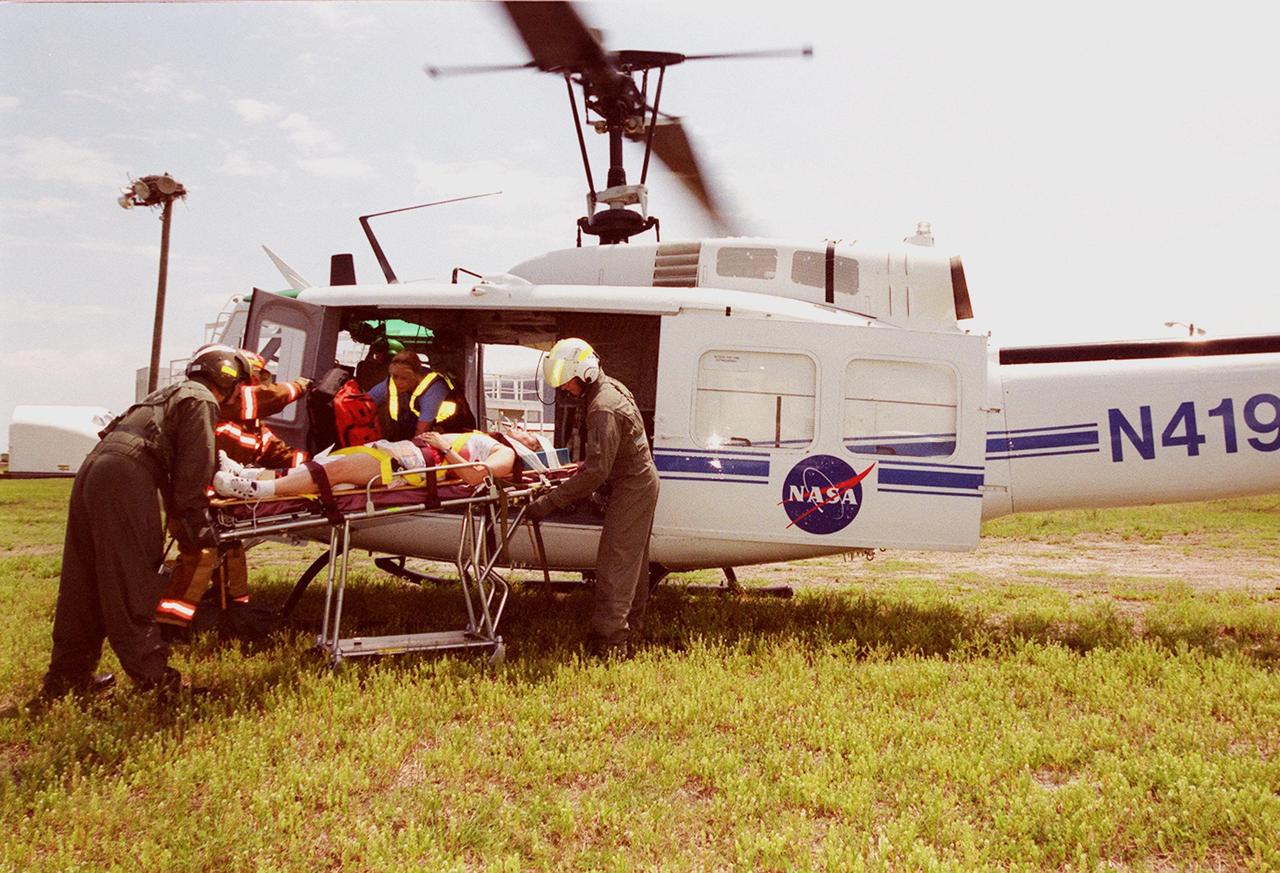
KENNEDY SPACE CENTER, FLA. -- A medevac helicopter assists with transporting “victims” during a staged mass casualty exercise in the Launch Complex 39 area. Employees are playing roles in the fictitious sniper attack that is being staged to validate capabilities of KSC’s fire, medical, helicopter transport and security personnel to respond to such an event.
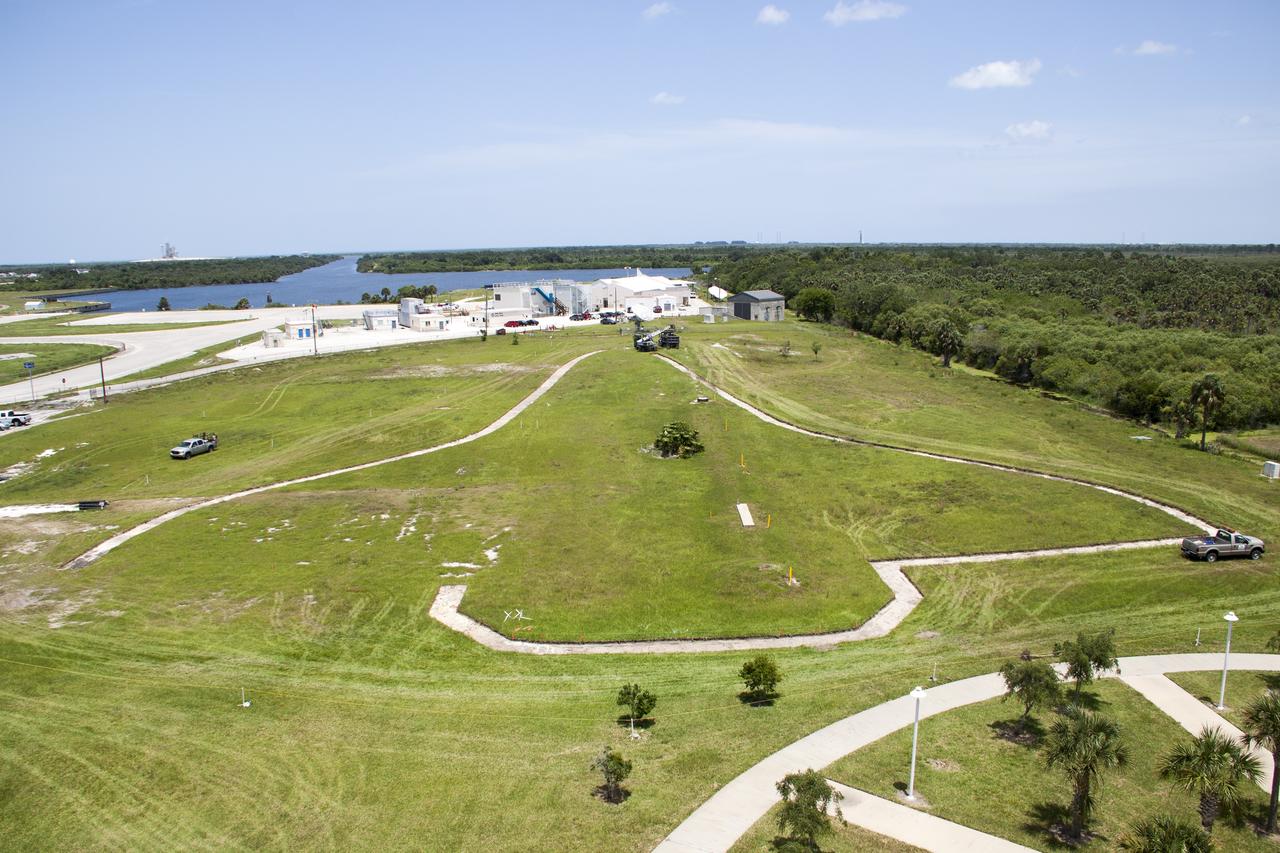
CAPE CANAVERAL, Fla. – At the Kennedy Space Center in Florida, a fitness trail is under construction in the Launch Complex 39 area just west of the Press Site. Designed in the shape of a space shuttle, the trail will provide an opportunity for employees at the spaceport to stay physically fit. Photo credit: NASA/Jim Grossmann
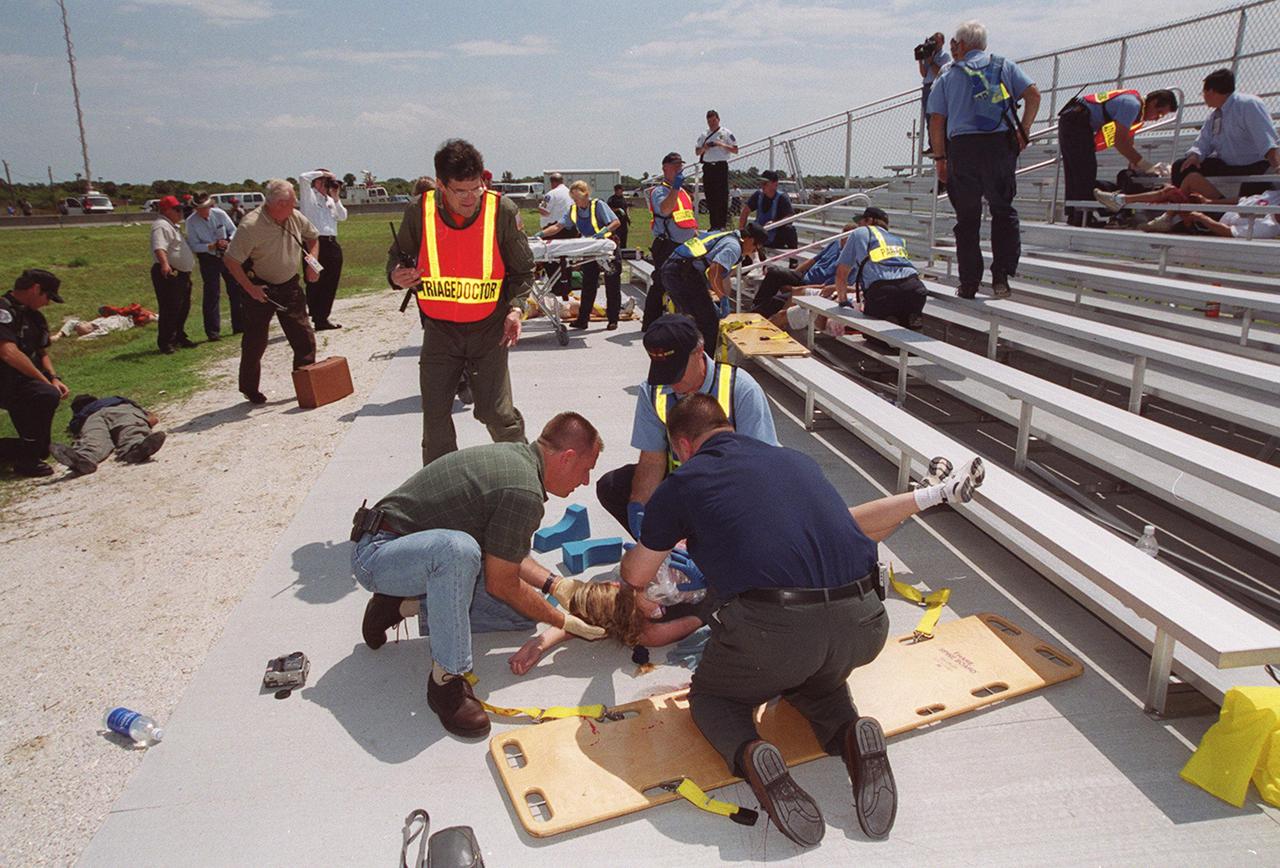
KENNEDY SPACE CENTER, FLA. -- During a staged mass casualty exercise in the Launch Complex 39 area, security and medical personnel take care of a “victim” on the ground by the bleachers. Employees are playing roles in the fictitious sniper attack that is being staged to validate capabilities of KSC’s fire, medical, helicopter transport and security personnel to respond to such an event
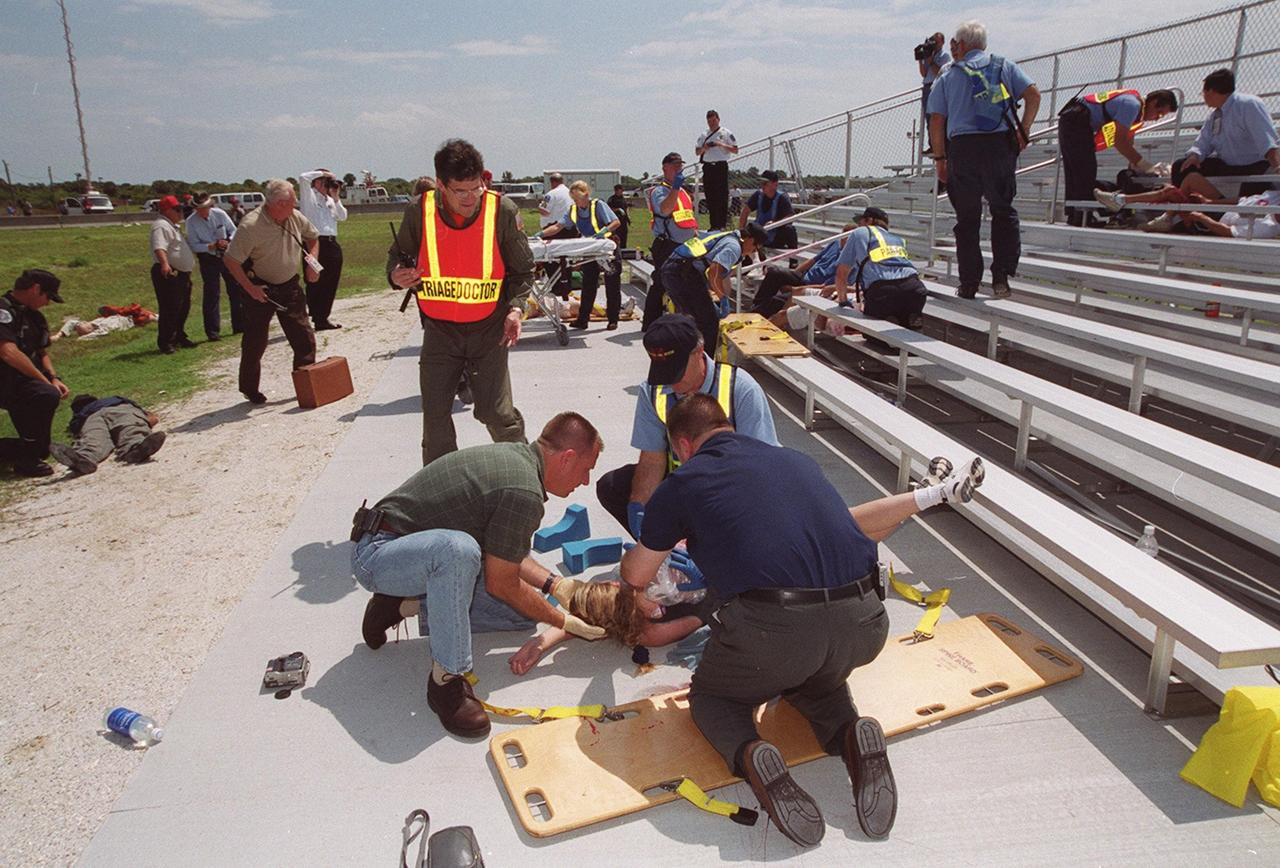
KENNEDY SPACE CENTER, FLA. -- During a staged mass casualty exercise in the Launch Complex 39 area, security and medical personnel take care of a “victim” on the ground by the bleachers. Employees are playing roles in the fictitious sniper attack that is being staged to validate capabilities of KSC’s fire, medical, helicopter transport and security personnel to respond to such an event
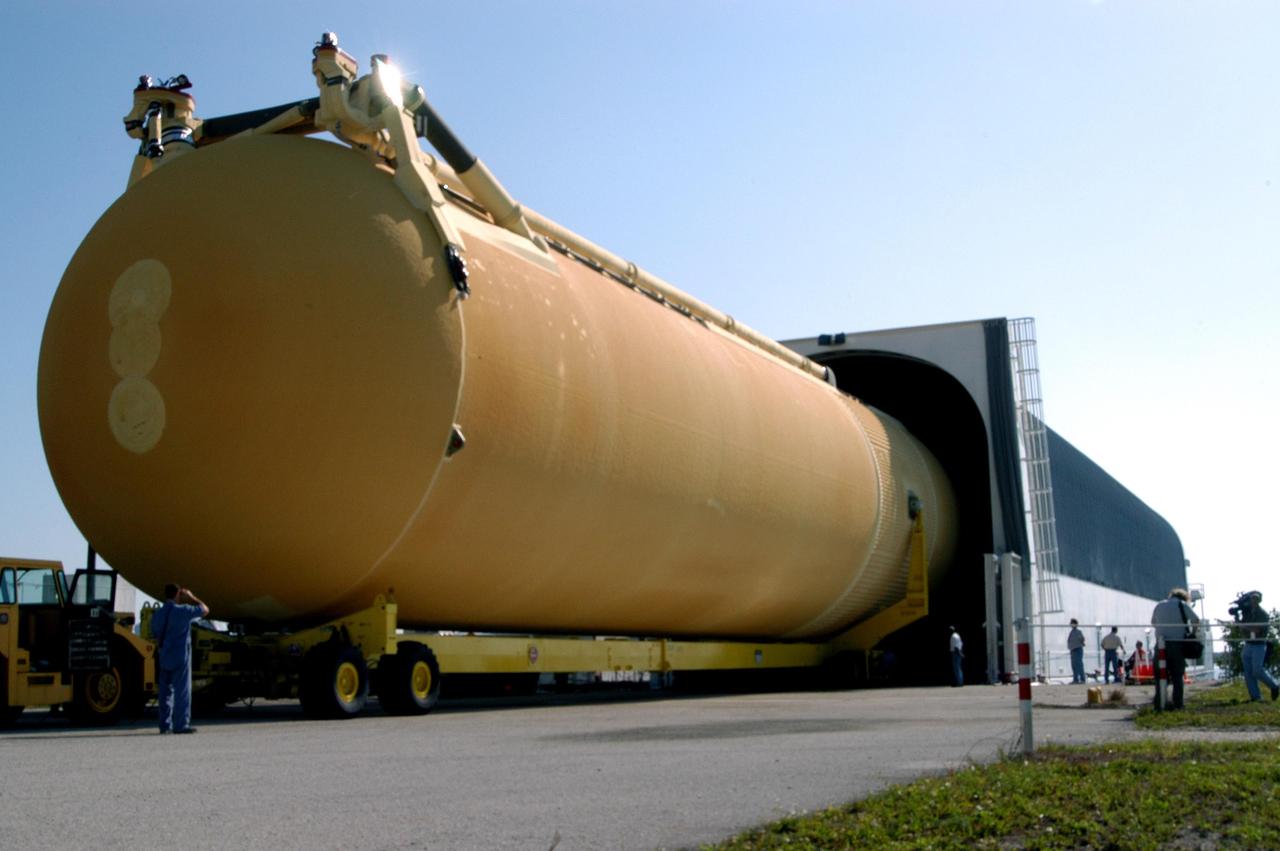
KENNEDY SPACE CENTER, FLA. - After leaving the Vehicle Assembly Building, the external tank moves into the barge at the Turn Basin on Launch Complex Area 39. Once loaded, the barge will deliver it to the Michoud Space Systems Assembly Facility near New Orleans where redesign of the external tank is underway for Return to Flight.
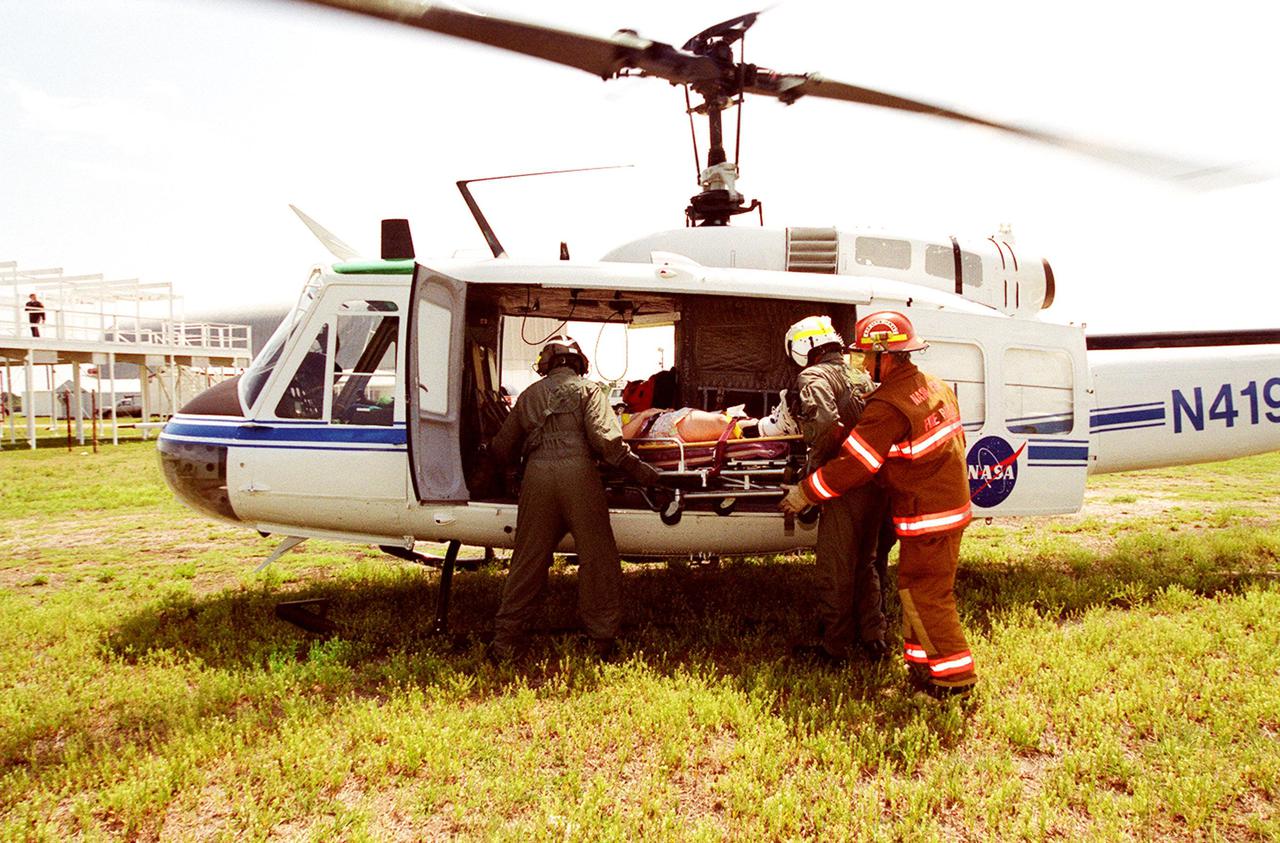
KENNEDY SPACE CENTER, FLA. -- Rescue personnel place a “victim” in a medevac helicopter during a staged mass casualty exercise in the Launch Complex 39 area. Employees are playing roles in the fictitious sniper attack that is being staged to validate capabilities of KSC’s fire, medical, helicopter transport and security personnel to respond to such an event
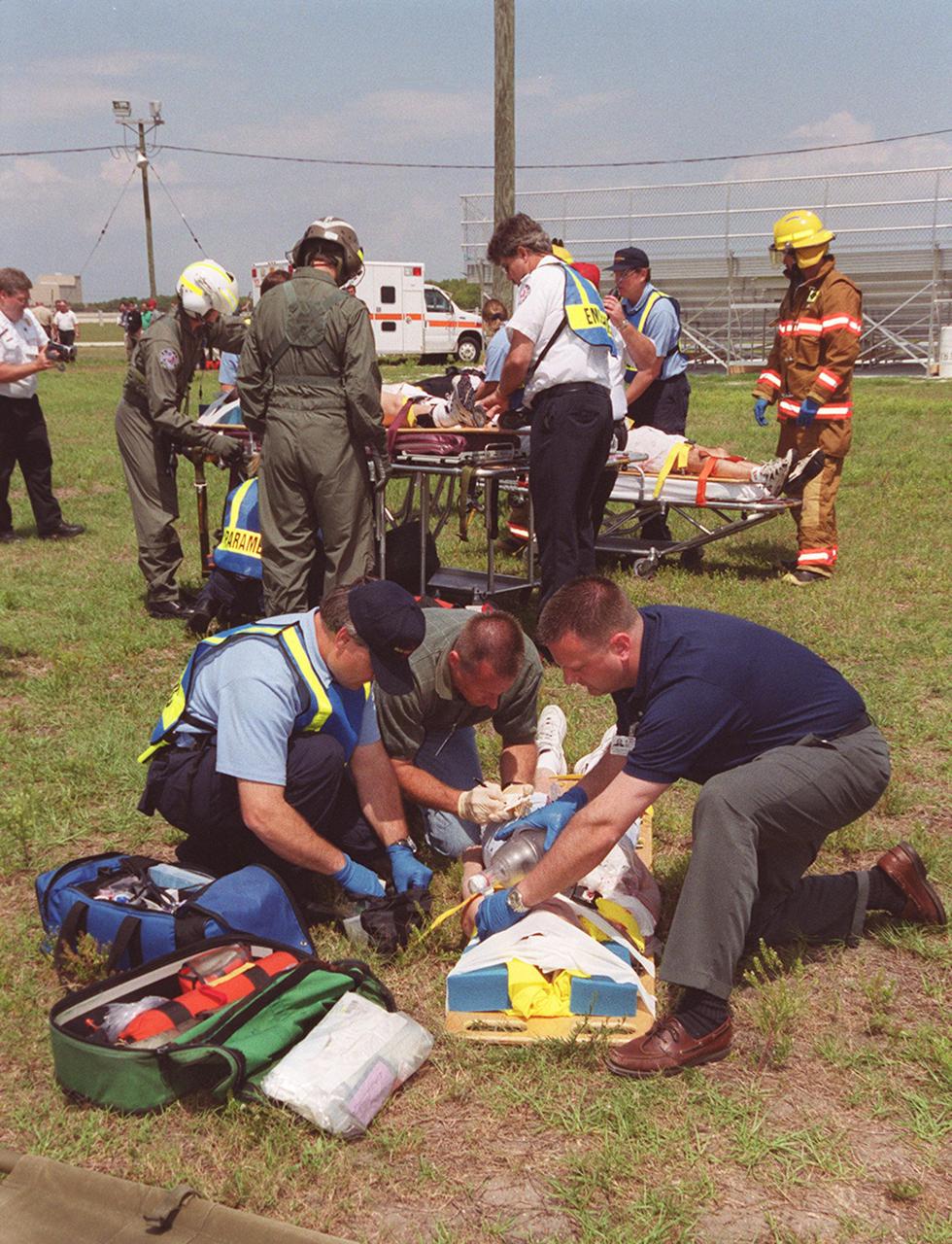
KENNEDY SPACE CENTER, FLA. -- Medical, paramedic and other personnel attend to role-playing “victims” on the grass in the Launch Complex 39 area. It is the site of a staged mass casualty exercise designed to validate capabilities of KSC’s fire, medical, helicopter transport and security personnel to respond to an event such as this fictitious sniper attack
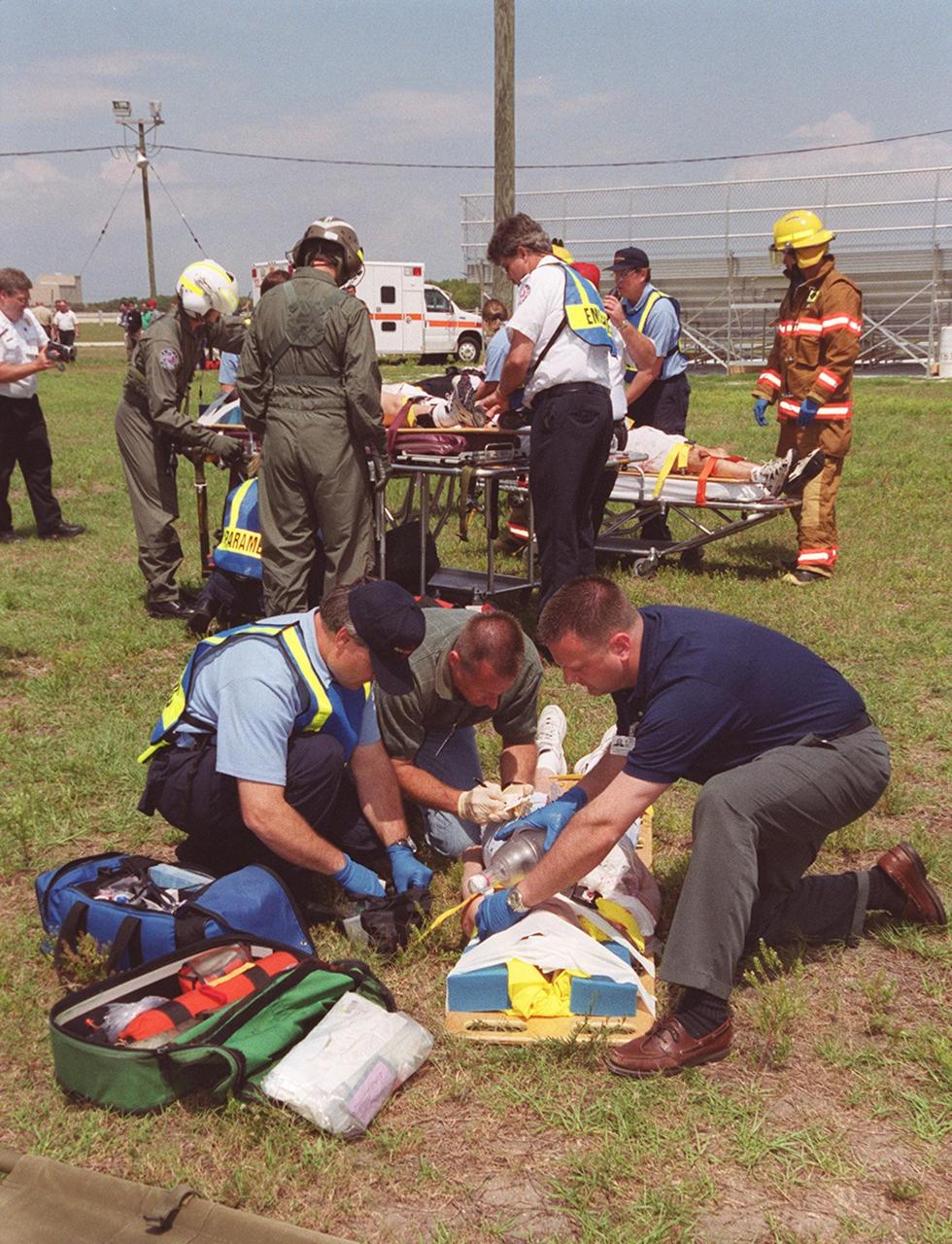
KENNEDY SPACE CENTER, FLA. -- Medical, paramedic and other personnel attend to role-playing “victims” on the grass in the Launch Complex 39 area. It is the site of a staged mass casualty exercise designed to validate capabilities of KSC’s fire, medical, helicopter transport and security personnel to respond to an event such as this fictitious sniper attack
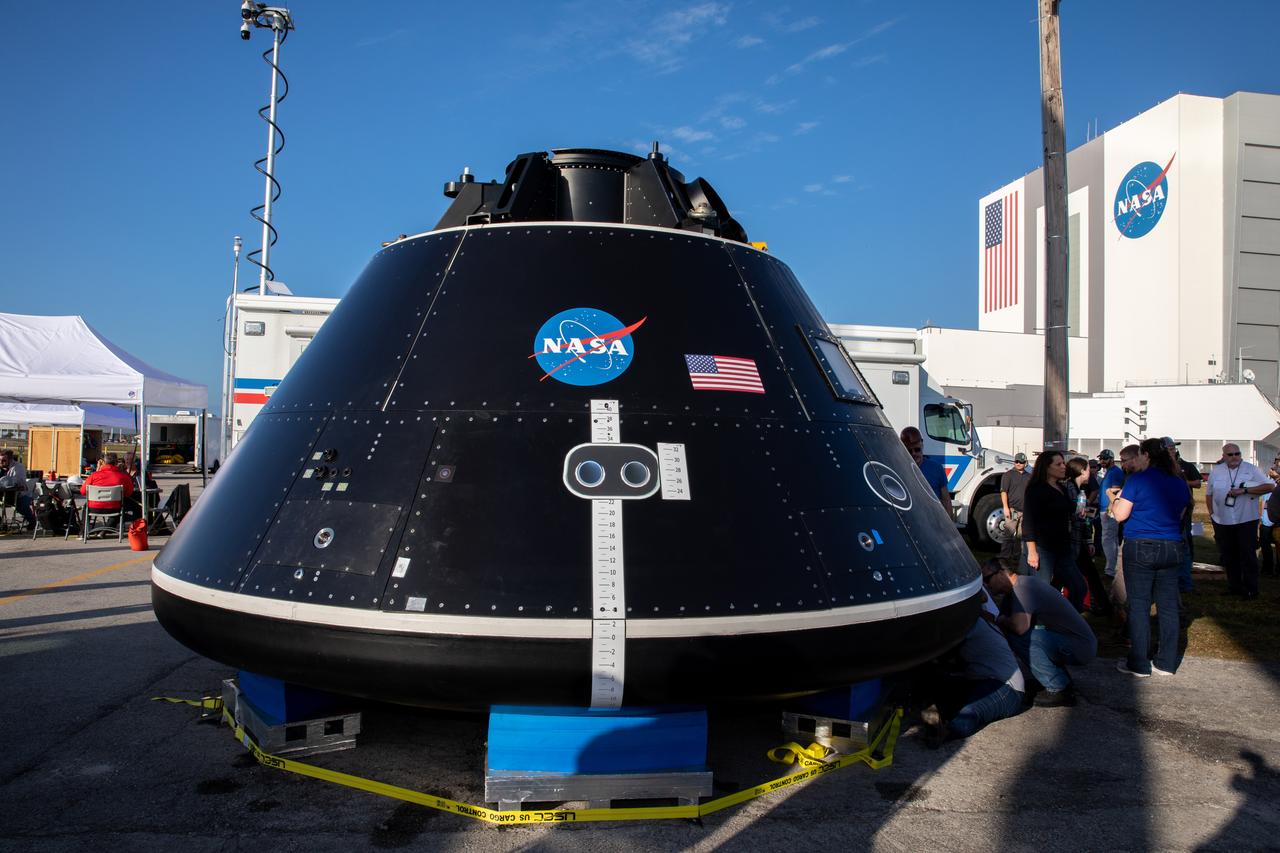
The Crew Module Test Article (CMTA) is in view at the turn basin in the Launch Complex 39 area at NASA’s Kennedy Space Center in Florida on Jan. 30, 2023. The CMTA is being used to practice recovery after splashdown of the Orion spacecraft to prepare for the Artemis II crewed mission. Exploration Ground Systems leads recovery efforts.
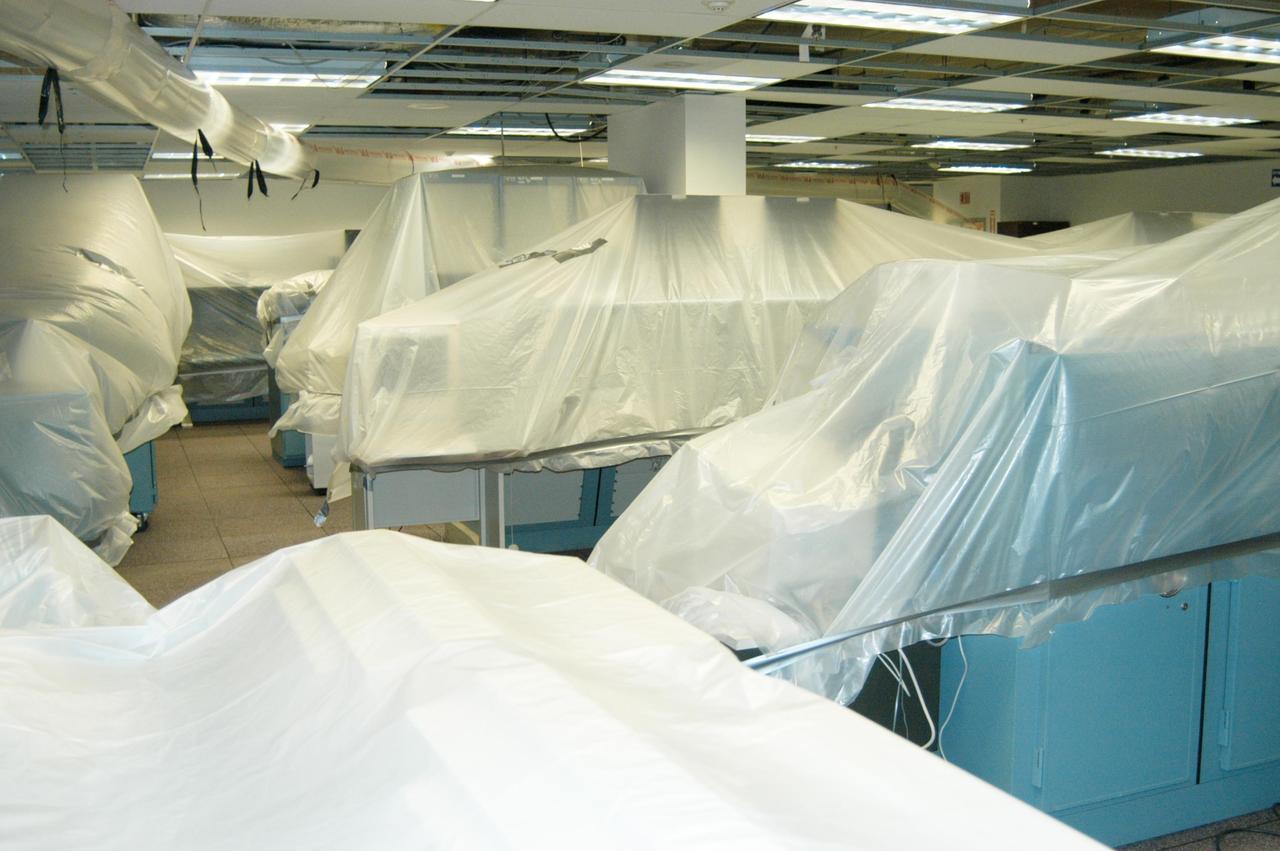
KENNEDY SPACE CENTER, FLA. - Large pieces of equipment in the Processing Control Center in the Launch Complex 39 Area are covered in plastic in preparation for the arrival of Hurricane Jeanne, expected to impact Central Florida Sunday. This is the fourth hurricane in 45 days to make landfall somewhere in the state.
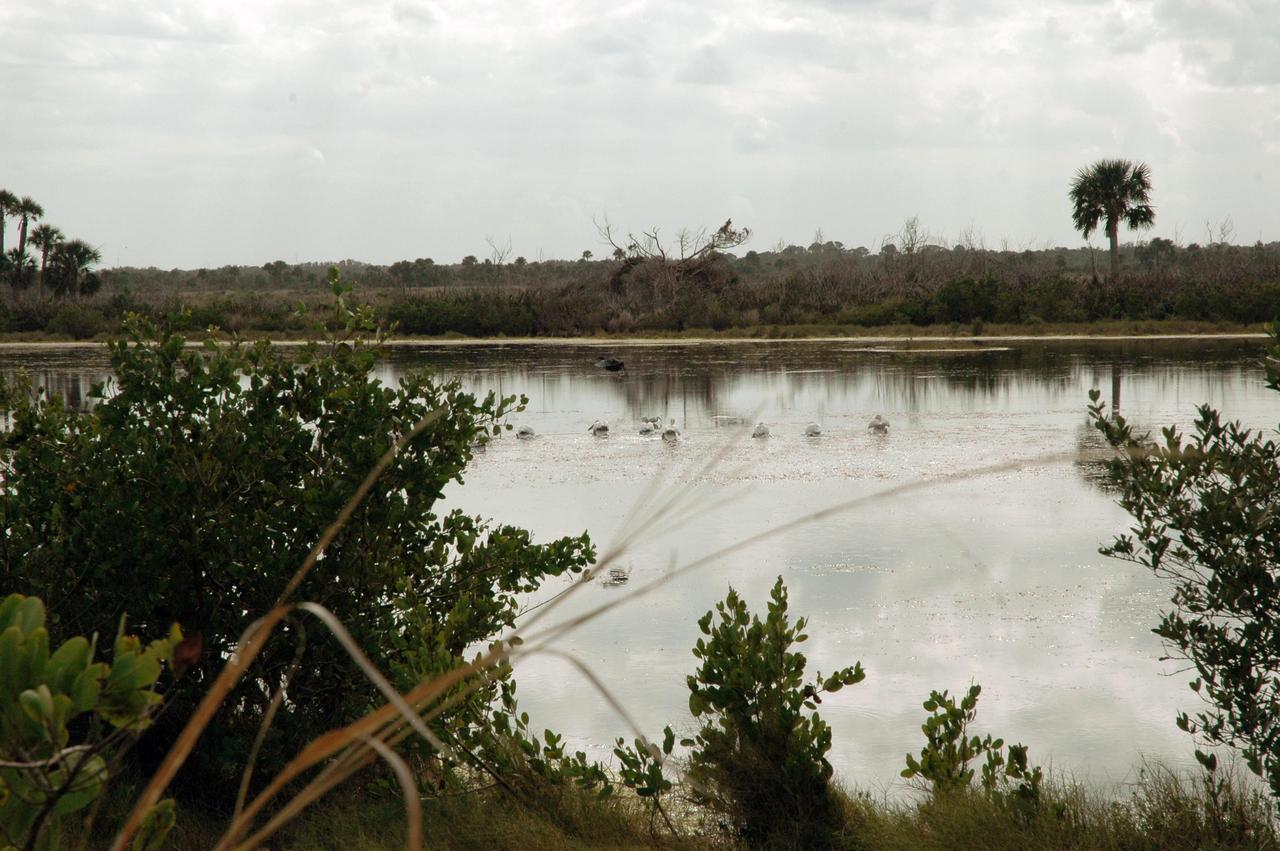
KENNEDY SPACE CENTER, FLA. - Pelicans settle onto the water at an area north of the Launch Complex 39 Area at NASA Kennedy Space Center. The area is part of the Merritt Island National Wildlife Refuge, which shares a boundary with the center. The wildlife refuge is a habitat for more than 310 species of birds, 25 mammals, 117 fishes and 65 amphibians and reptiles. In addition, the Refuge supports 19 endangered or threatened wildlife species on Federal or State lists, more than any other single refuge in the U.S.
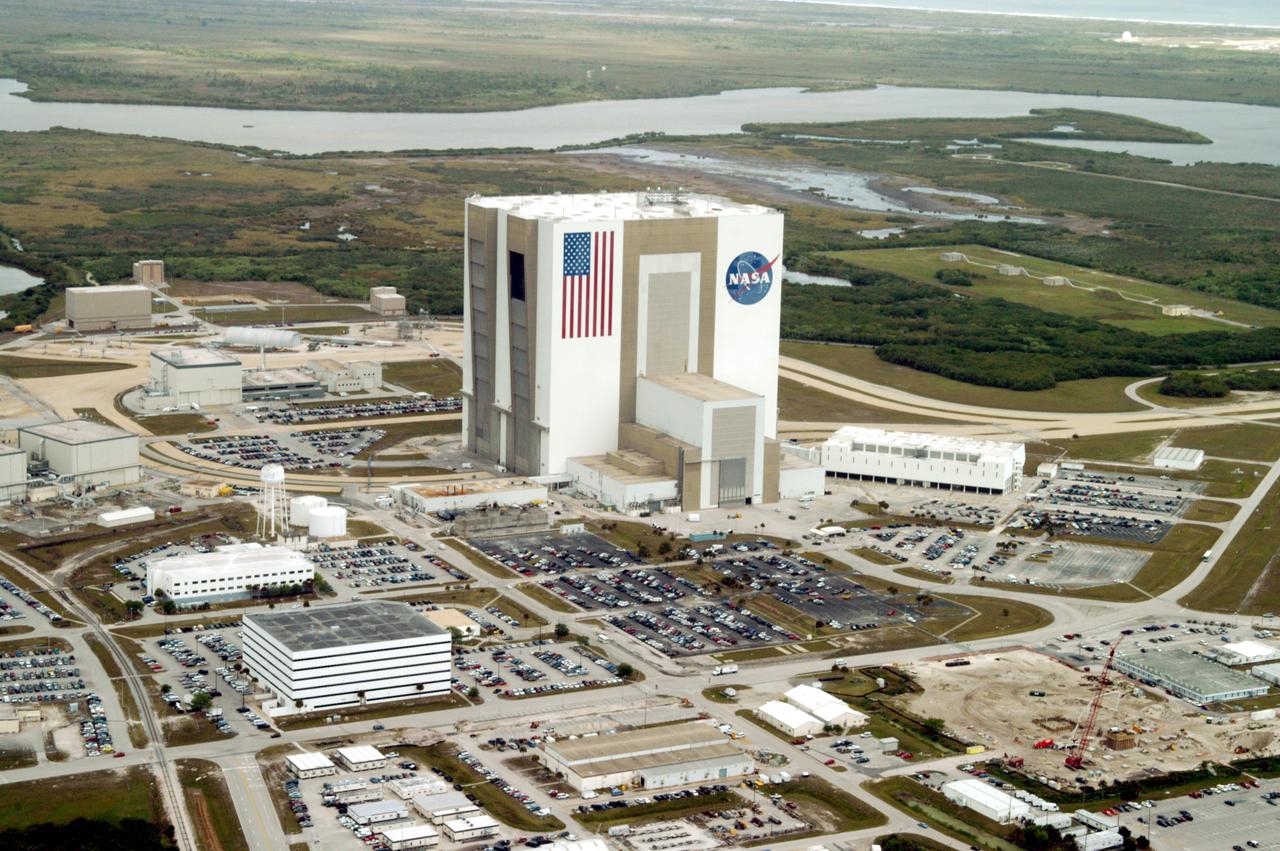
CAPE CANAVERAL, Fla. -- The 525-foot high Vehicle Assembly Building dominates the Launch Complex 39 Area. On the right is the Launch Control Center. To the left are the Orbiter Processing Facility Bays 1, 2 and 3. At lower left is the Operation Support Building at lower right is the construction area for Operations Support Building 2. Behind the VAB meanders the Banana Creek. Photo credit: NASA
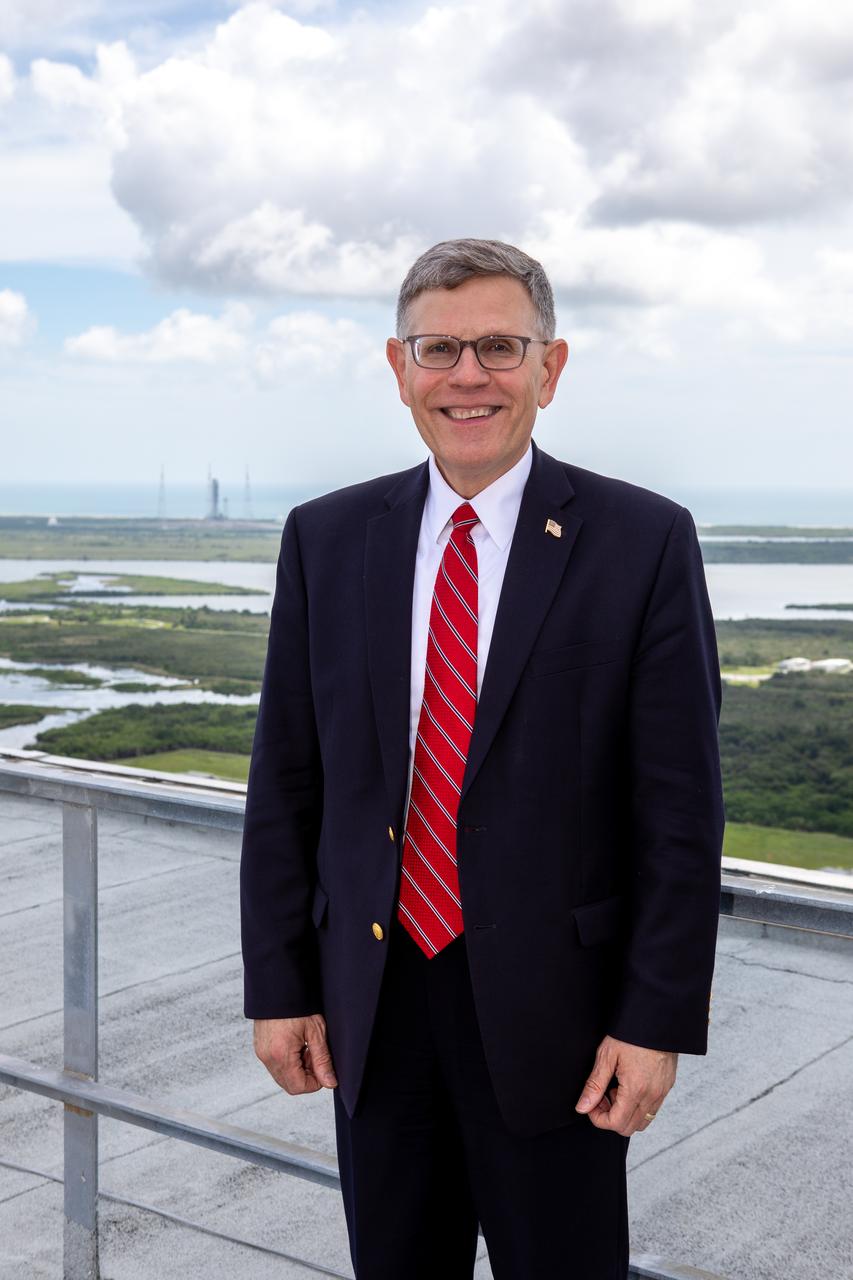
White House Office of Science and Technology Policy Director Kelvin Droegemeier visits the roof of the Vehicle Assembly Building at NASA’s Kennedy Space Center in Florida on July 10, 2019. In the background is Launch Complex 39B, where the mobile launcher is undergoing testing in preparation for launch of the agency’s Space Launch System rocket for the first Artemis mission. Droegemeier visited the iconic rocket-assembly facility in the heart of Kennedy’s Launch Complex 39 Area during a tour of the multi-user spaceport.
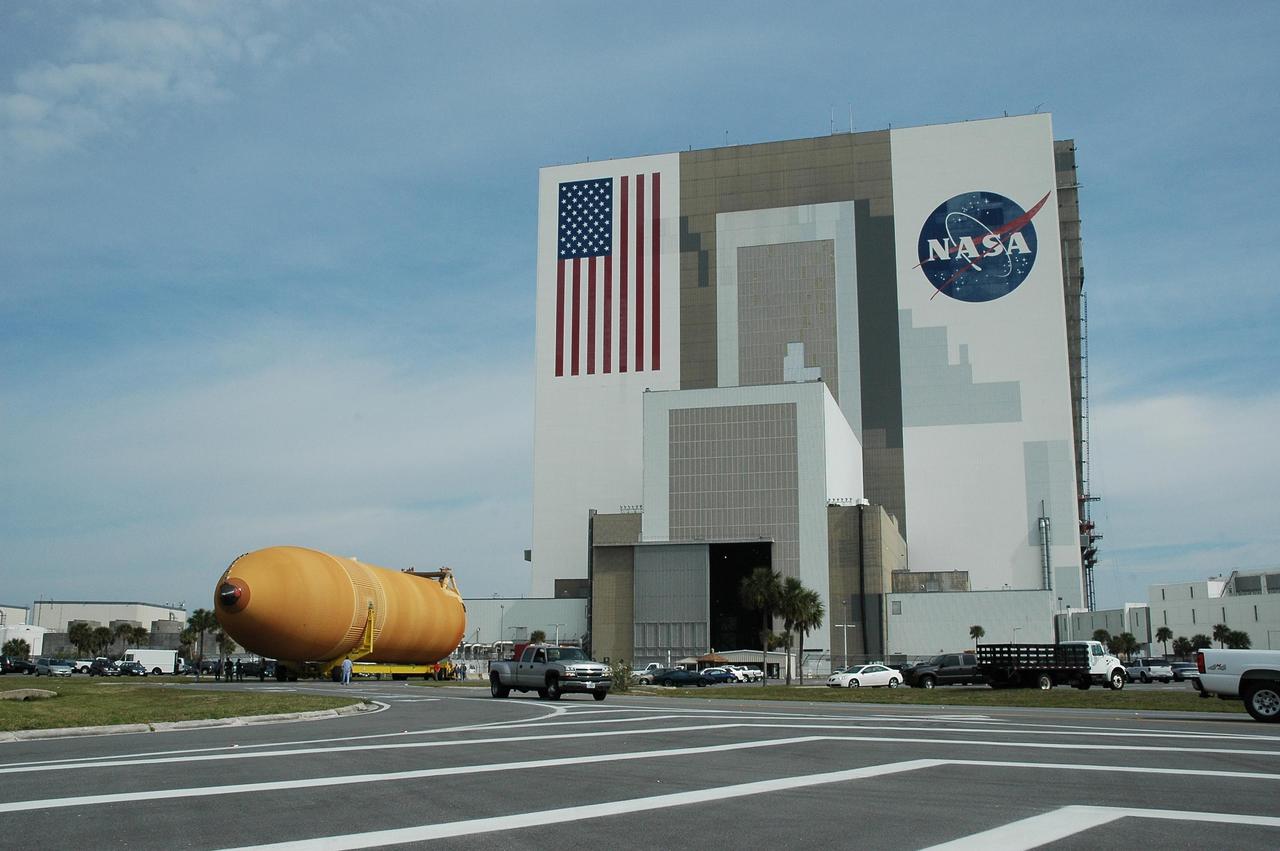
KENNEDY SPACE CENTER, FLA. -- External tank No. 117 leaves the parking area at NASA's Vehicle Assembly Building. It is heading for the barge waiting at the Turn Basin in the Launch Complex 39 Area. The tank is being shipped to NASA’s Michoud Assembly Facility in Louisiana for modifications. The barge will be moved to Port Canaveral where one of NASA’s solid rocket booster retrieval ships will take it and tow it around the Florida peninsula to Michoud. Photo credit: NASA/Jack Pfaller
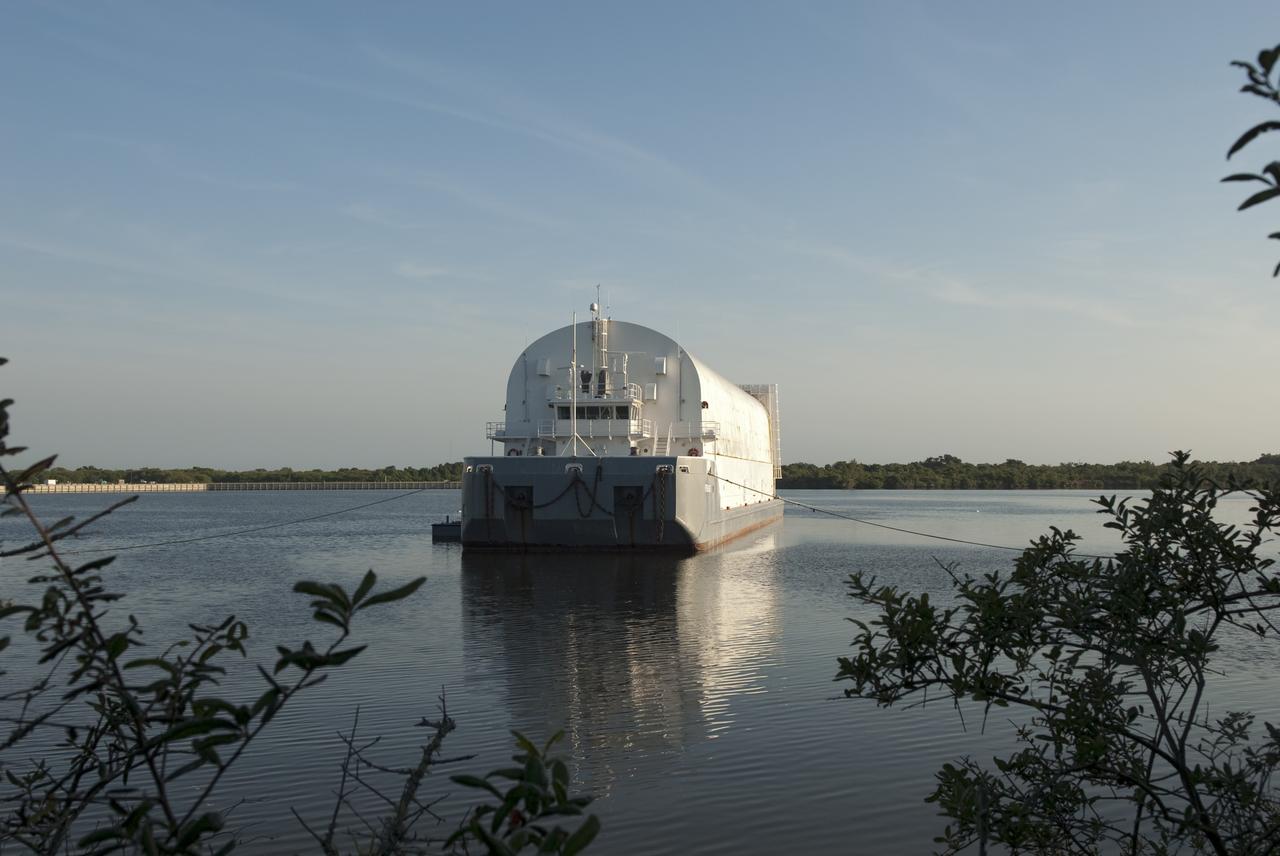
CAPE CANAVERAL, Fla. -- Tugboats in the Turn Basin in the Launch Complex 39 area at NASA's Kennedy Space Center in Florida have towed the Pegasus Barge from the dock to a more secure mooring area. The barge is 266 ft long and 50 ft wide and has been used by the Space Shuttle Program to transport external fuel tanks over 900 miles of inland and open ocean waterways from the Michoud Assembly Facility in Louisiana to Kennedy. Photo credit: NASA/Jim Grossmann
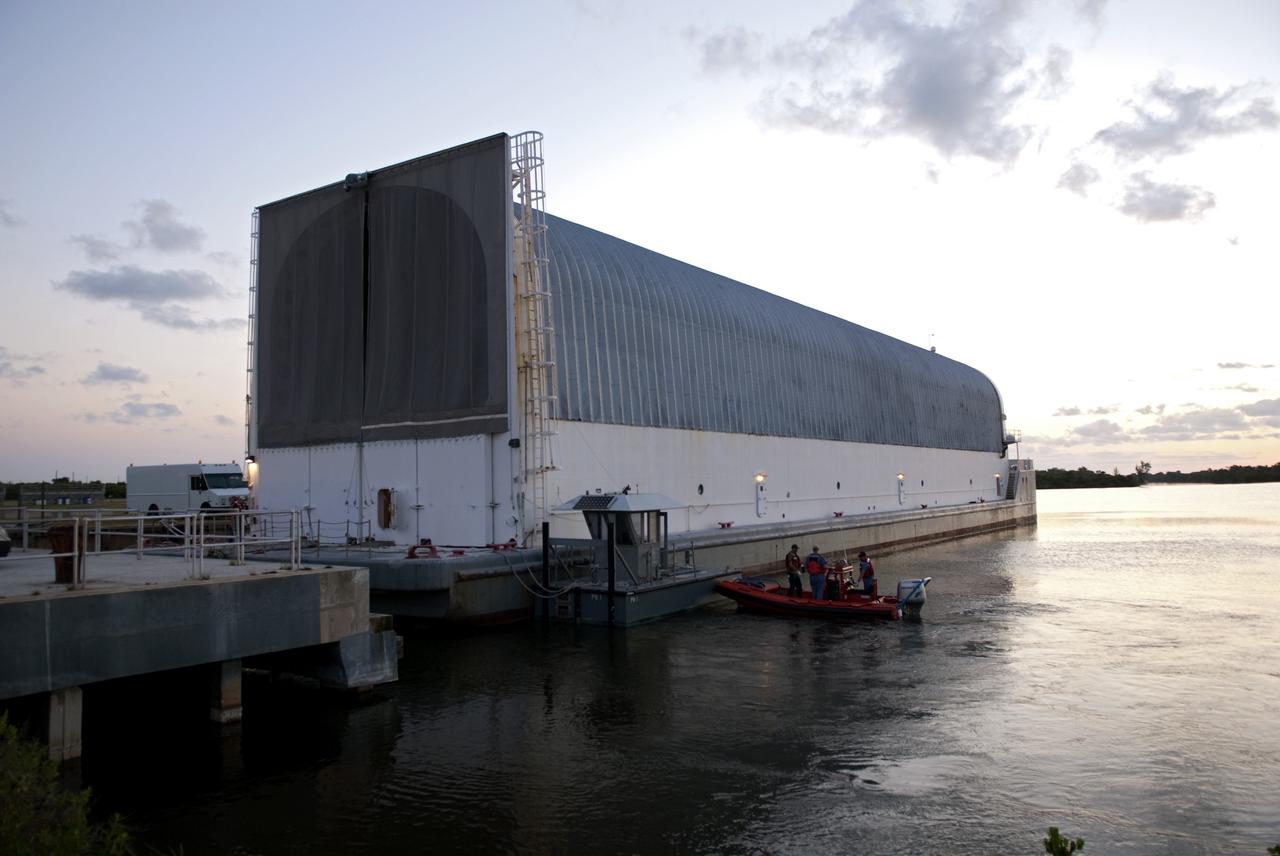
CAPE CANAVERAL, Fla. -- Workers in a skiff prepare the Pegasus Barge floating in the Launch Complex 39 area Turn Basin at NASA's Kennedy Space Center in Florida, for its move from the dock to a more secure mooring area. The barge is 266 ft long and 50 ft wide and has been used by the Space Shuttle Program to transport external fuel tanks over 900 miles of inland and open ocean waterways from the Michoud Assembly Facility in Louisiana to Kennedy. Photo credit: NASA/Jim Grossmann
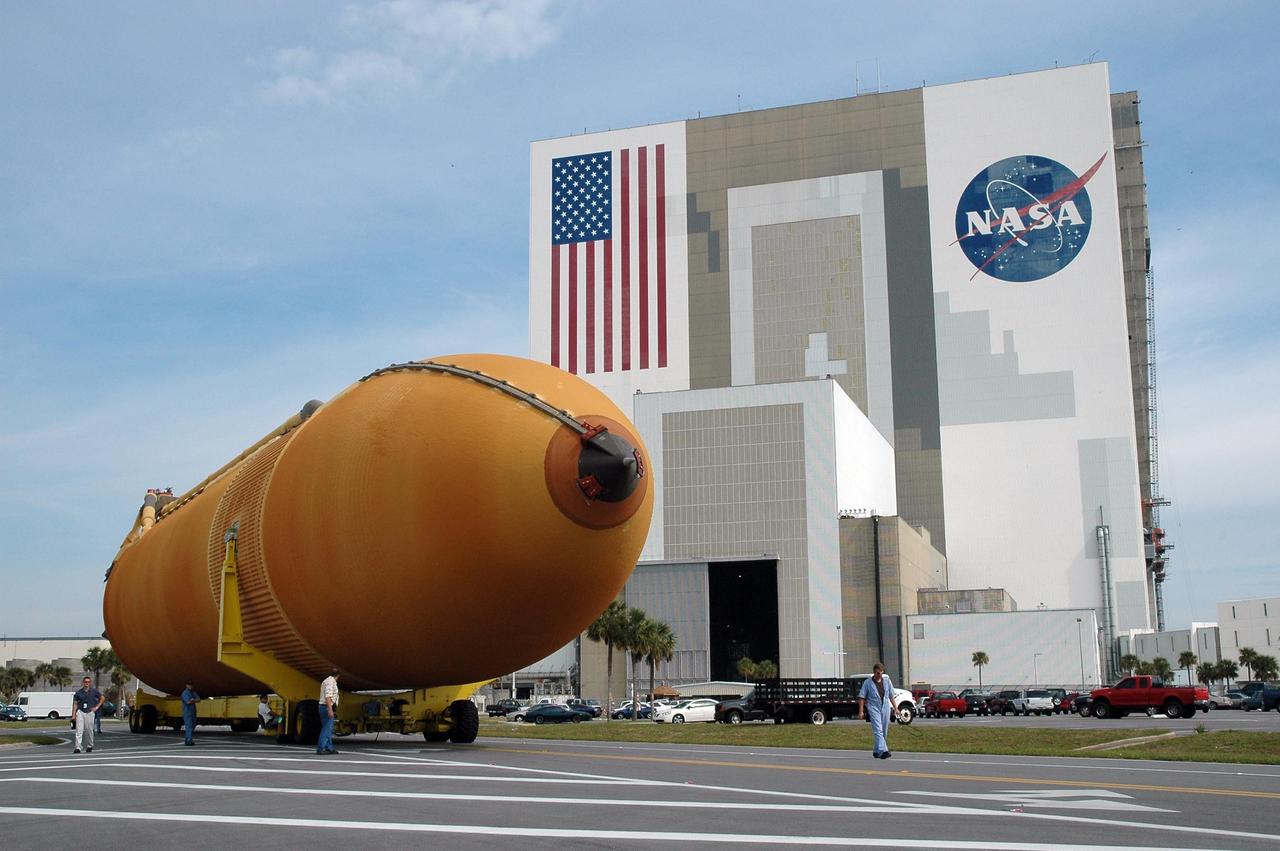
KENNEDY SPACE CENTER, FLA. -- External tank No. 117 makes the turn from the parking area at NASA's Vehicle Assembly Building. It is heading for the barge waiting at the Turn Basin in the Launch Complex 39 Area. The tank is being shipped to NASA’s Michoud Assembly Facility in Louisiana for modifications. The barge will be moved to Port Canaveral where one of NASA’s solid rocket booster retrieval ships will take it and tow it around the Florida peninsula to Michoud. Photo credit: NASA/Jack Pfaller

CAPE CANAVERAL, Fla. -- At sunrise, tugboats in the Turn Basin in the Launch Complex 39 area at NASA's Kennedy Space Center in Florida are towing the Pegasus Barge from the dock to a more secure mooring area. The barge is 266 ft long and 50 ft wide and has been used by the Space Shuttle Program to transport external fuel tanks over 900 miles of inland and open ocean waterways from the Michoud Assembly Facility in Louisiana to Kennedy. Photo credit: NASA/Jim Grossmann
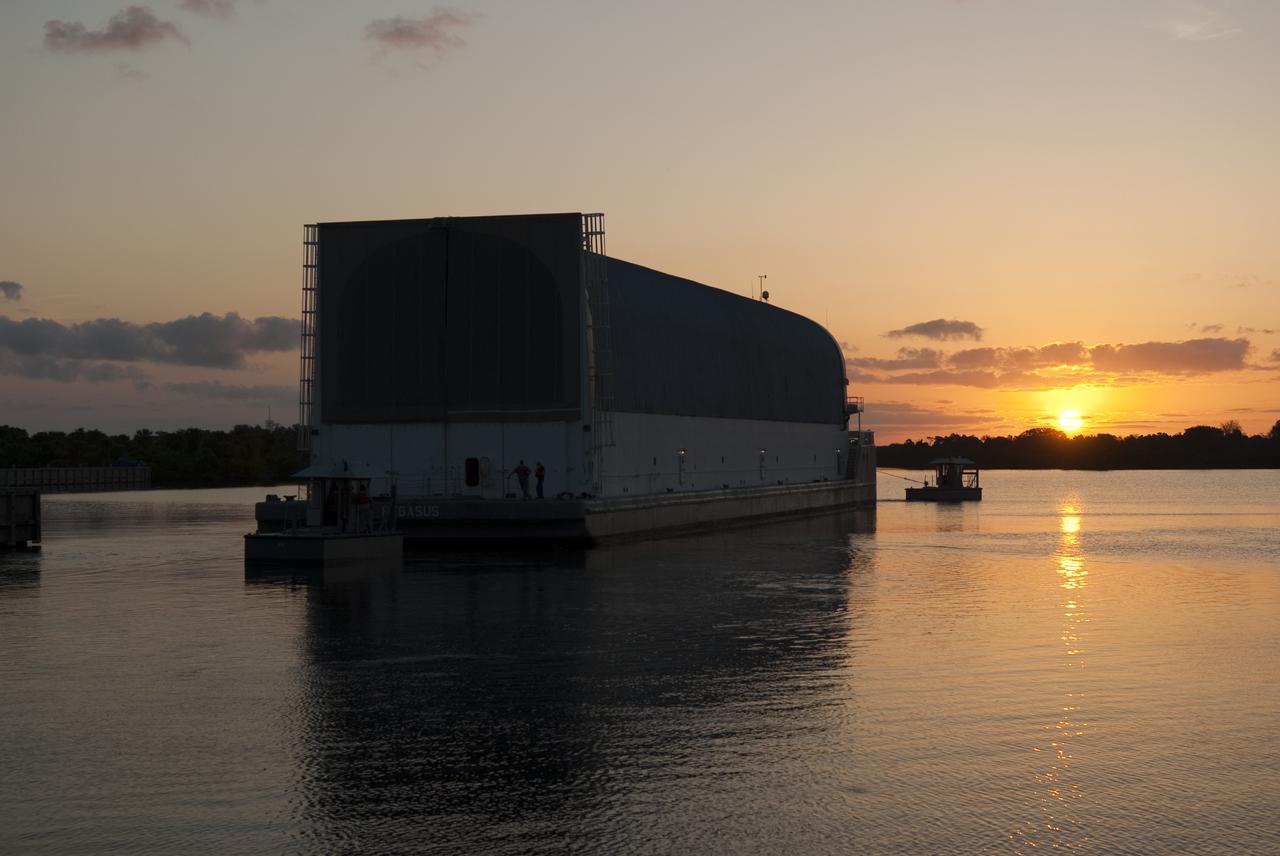
CAPE CANAVERAL, Fla. -- The morning sun rises over the Pegasus Barge floating in the Launch Complex 39 area Turn Basin at NASA's Kennedy Space Center in Florida, as it is being towed from the dock to a more secure mooring area. The barge is 266 ft long and 50 ft wide and has been used by the Space Shuttle Program to transport external fuel tanks over 900 miles of inland and open ocean waterways from the Michoud Assembly Facility in Louisiana to Kennedy. Photo credit: Jim Grossmann

CAPE CANAVERAL, Fla. -- With the Vehicle Assembly Building in the background the Pegasus Barge is moored in a secure area of the Turn Basin in the Launch Complex 39 area at NASA's Kennedy Space Center in Florida. The barge is 266 ft long and 50 ft wide and has been used by the Space Shuttle Program to transport external fuel tanks over 900 miles of inland and open ocean waterways from the Michoud Assembly Facility in Louisiana to Kennedy. Photo credit: NASA/Jim Grossmann
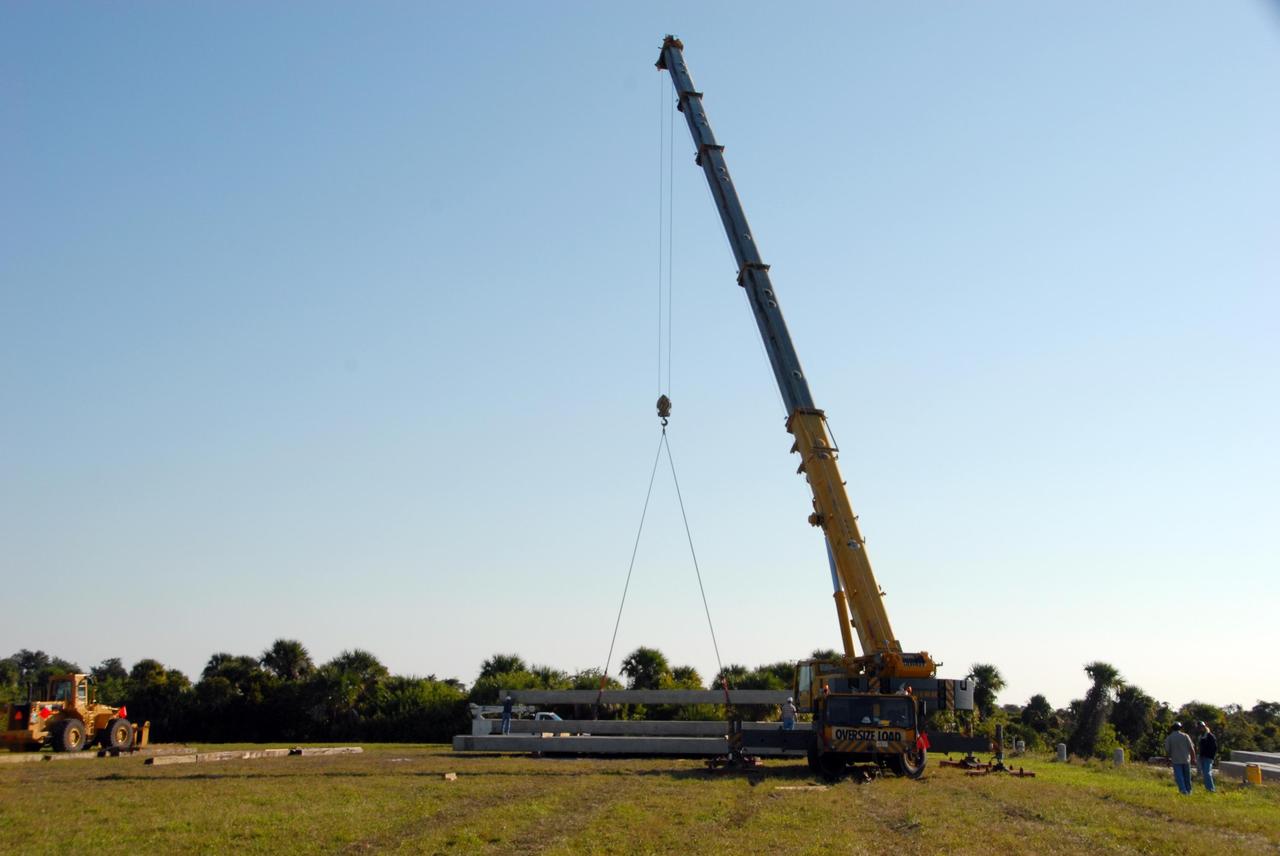
KENNEDY SPACE CENTER, FLA. -- In the Launch Complex 39 Area turn basin at NASA's Kennedy Space Center, the crane crawler moves pilings it lifted from the barge. The pilings will be used to help construct new lightning towers on Launch Pad 39B for the Constellation Program and Ares/Orion launches. Pad B will be the site of the first Ares vehicle launch, including Ares I-X which is scheduled for April 2009. Photo credit: NASA/George Shelton
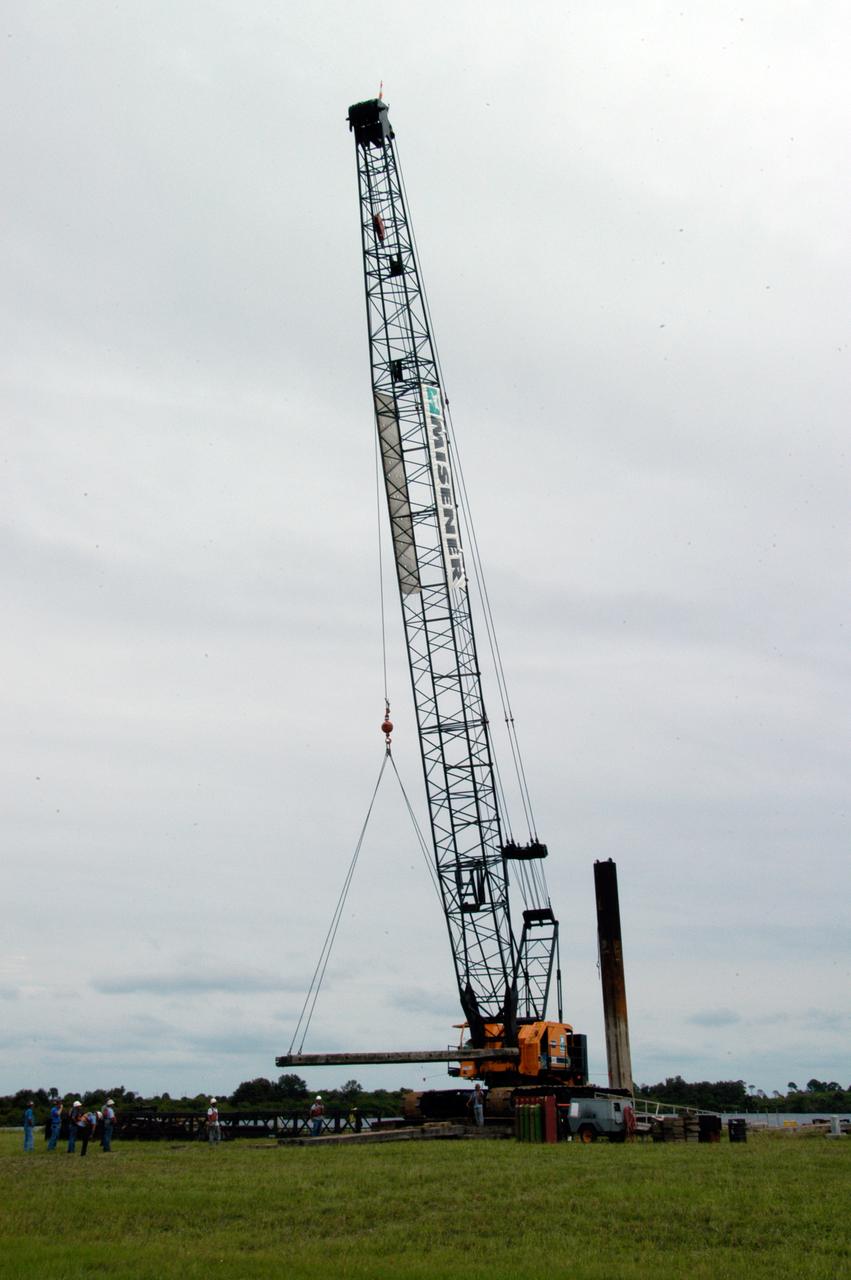
A large crawler crane arrives at the turn basin at the Launch Complex 39 Area on NASA's Kennedy Space Center. The crane with its 70-foot boom will be moved to Launch Pad 39B and used to construct a new lightning protection system for the Constellation Program and Ares/Orion launches. Pad B will be the site of the first Ares vehicle launch, including Ares I-X which is scheduled for April 2009.
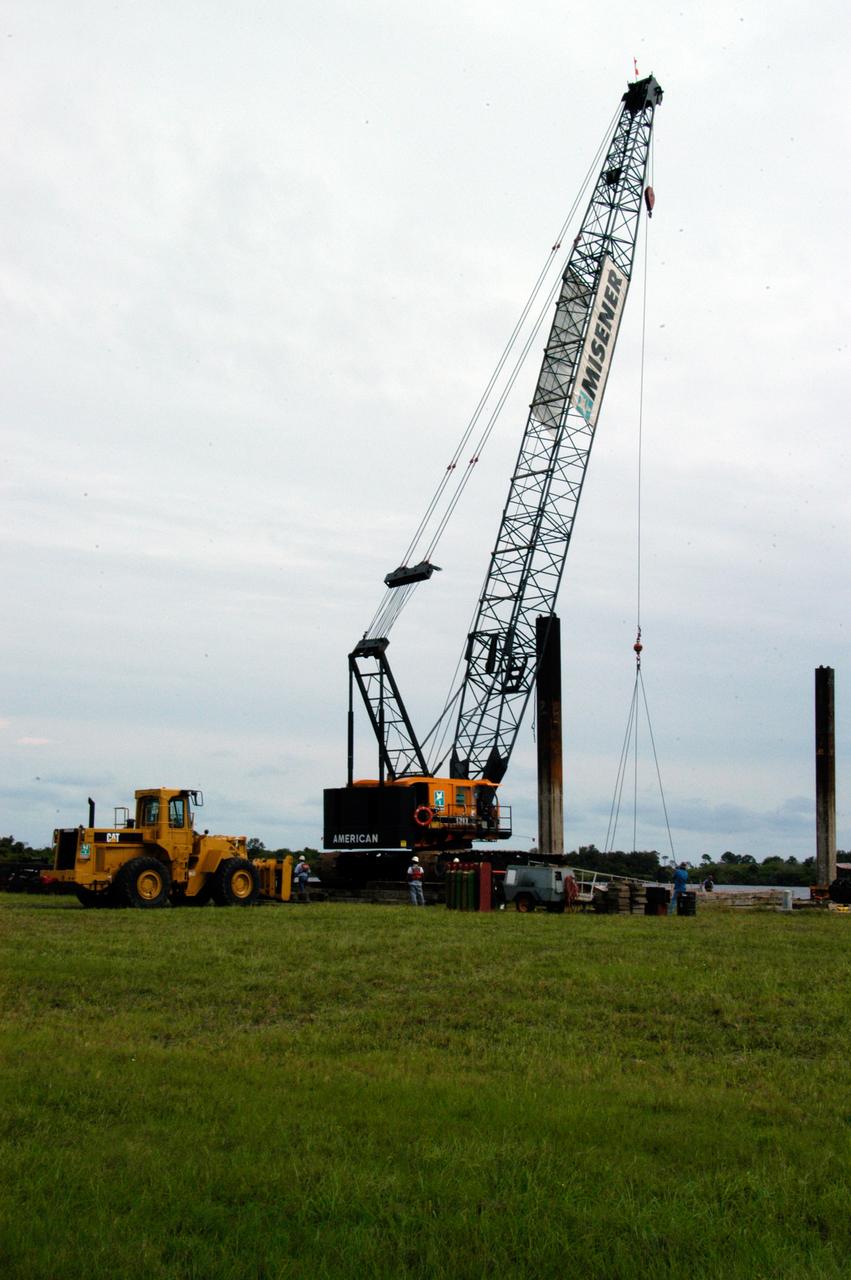
A large crawler crane arrives at the turn basin at the Launch Complex 39 Area on NASA's Kennedy Space Center. The crane with its 70-foot boom will be moved to Launch Pad 39B and used to construct a new lightning protection system for the Constellation Program and Ares/Orion launches. Pad B will be the site of the first Ares vehicle launch, including Ares I-X which is scheduled for April 2009.
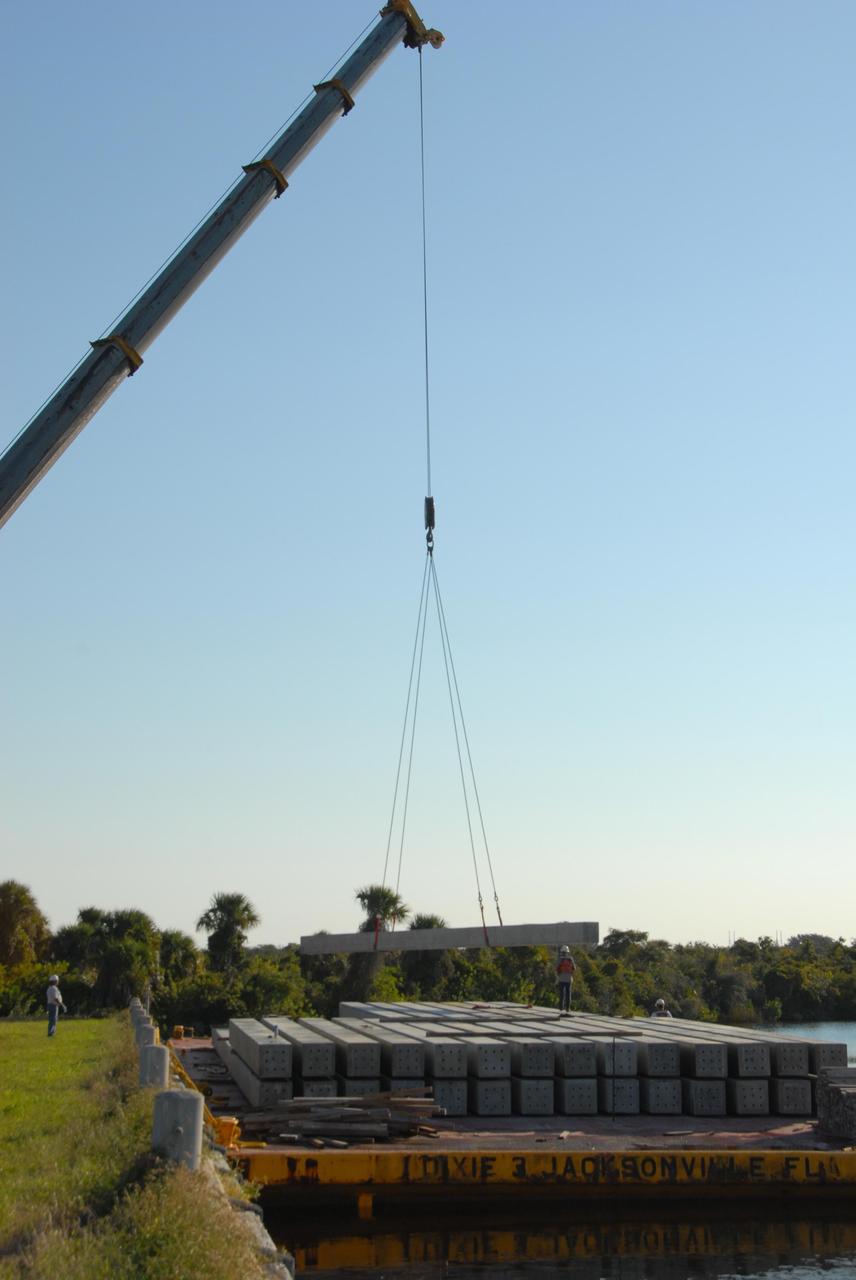
KENNEDY SPACE CENTER, FLA. -- In the Launch Complex 39 Area turn basin at NASA's Kennedy Space Center, the crane crawler begins lifting pilings from the barge. The pilings will be used to help construct new lightning towers on Launch Pad 39B for the Constellation Program and Ares/Orion launches. Pad B will be the site of the first Ares vehicle launch, including Ares I-X which is scheduled for April 2009. Photo credit: NASA/George Shelton
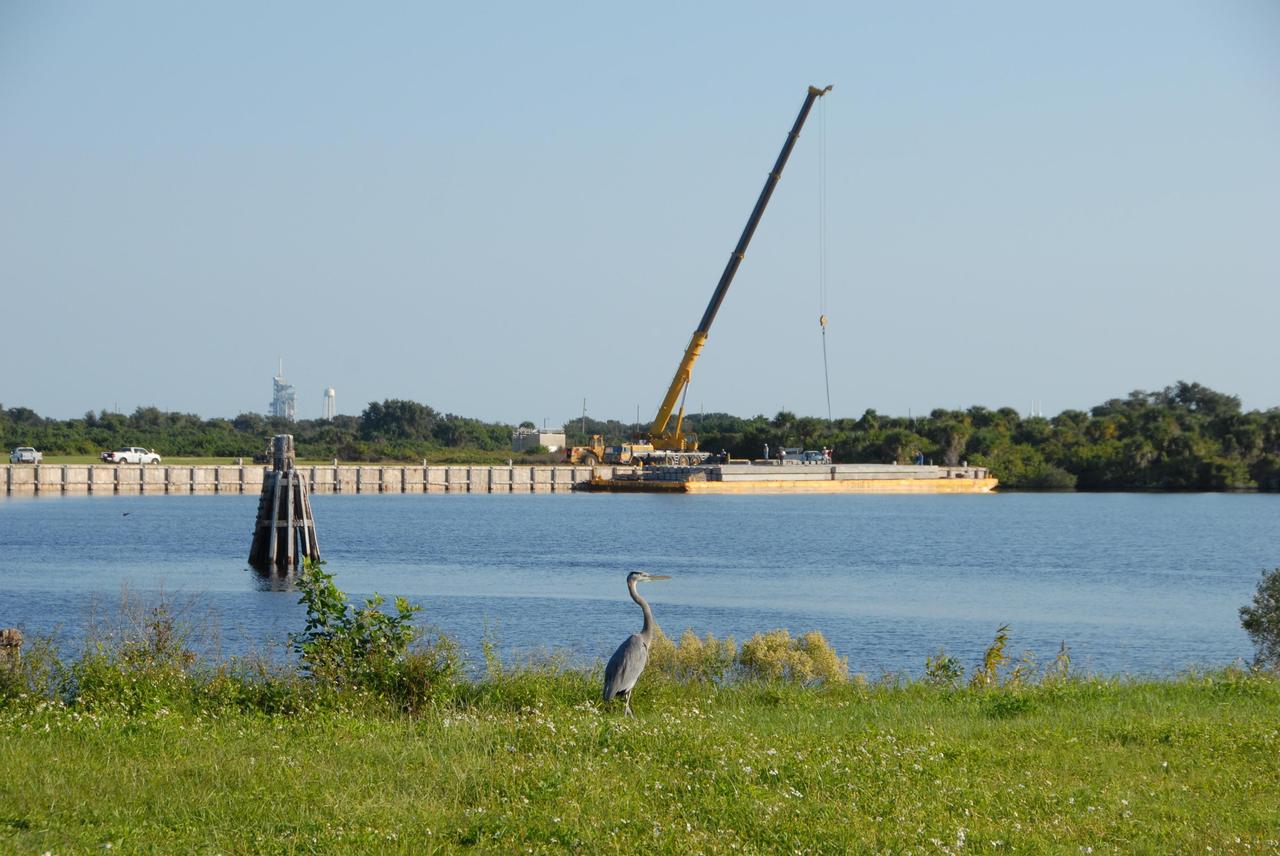
KENNEDY SPACE CENTER, FLA. -- In the Launch Complex 39 Area turn basin at NASA's Kennedy Space Center, the crane crawler is being used to lift pilings from a barge. The pilings will be used to help construct new lightning towers on Launch Pad 39B for the Constellation Program and Ares/Orion launches. Pad B will be the site of the first Ares vehicle launch, including Ares I-X which is scheduled for April 2009. Photo credit: NASA/George Shelton
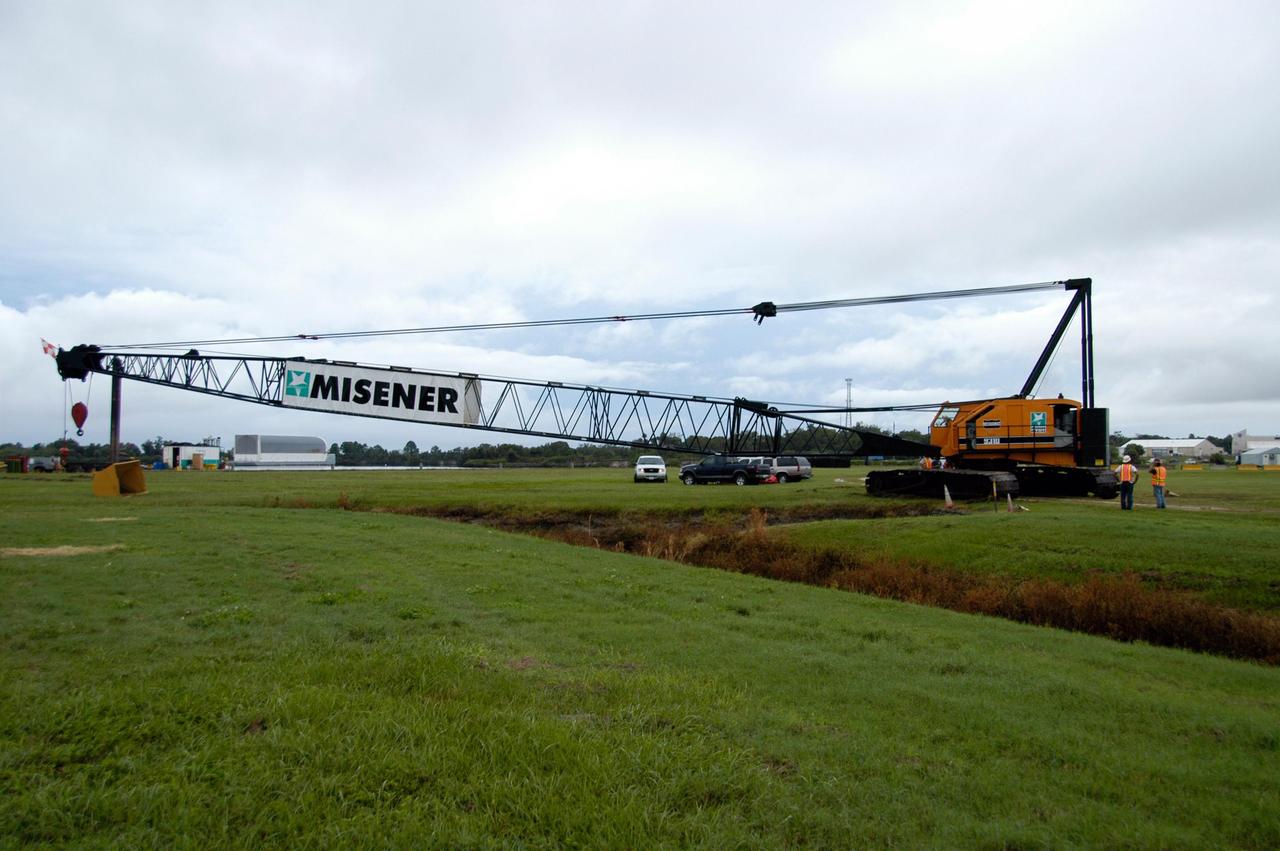
KENNEDY SPACE CENTER, FLA. -- A large crawler crane begins moving away from the turn basin at the Launch Complex 39 Area on NASA's Kennedy Space Center. The crane with its 70-foot boom will be moved to Launch Pad 39B and used to construct a new lightning protection system for the Constellation Program and Ares/Orion launches. Pad B will be the site of the first Ares vehicle launch, including Ares I-X which is scheduled for April 2009. Photo credit: NASA/George Shelton
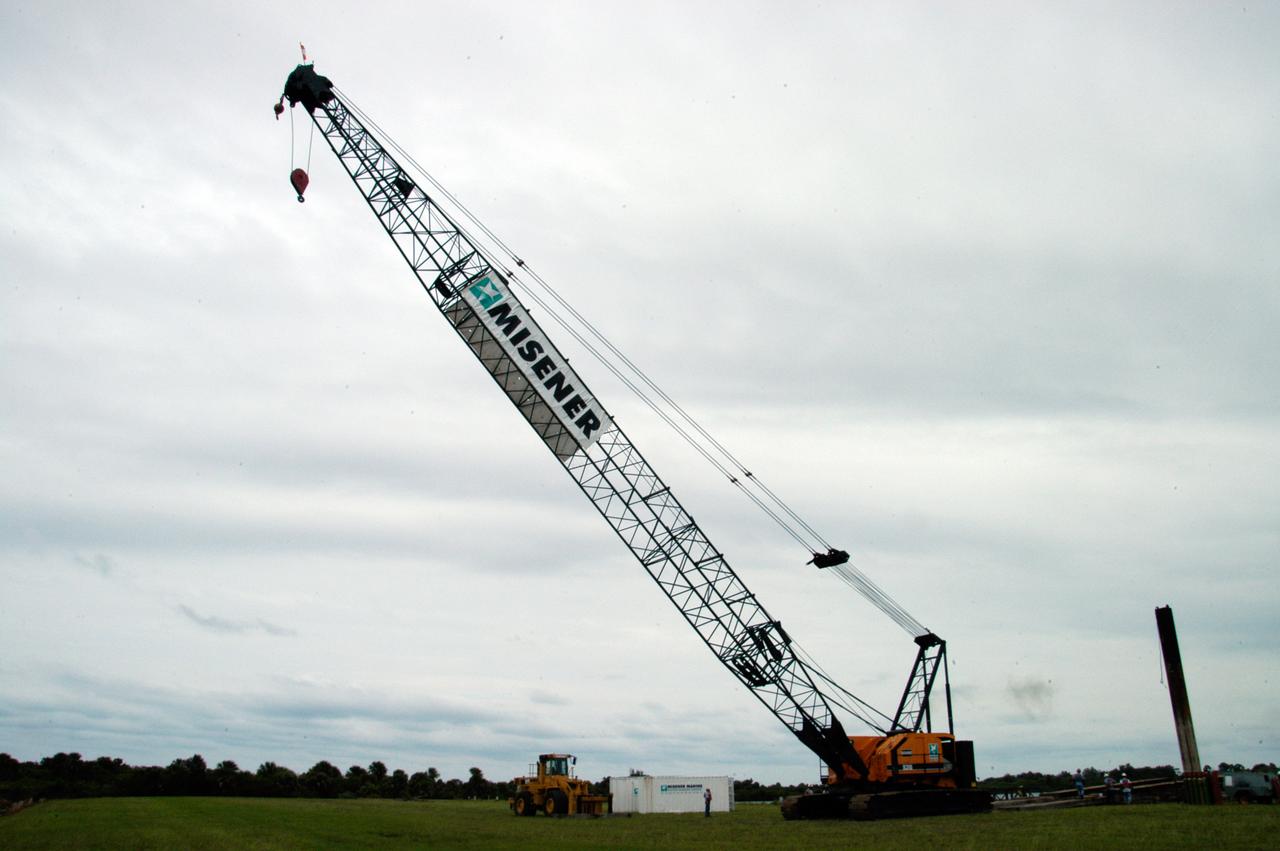
A large crawler crane begins moving away from the turn basin at the Launch Complex 39 Area on NASA's Kennedy Space Center. The crane with its 70-foot boom will be moved to Launch Pad 39B and used to construct a new lightning protection system for the Constellation Program and Ares/Orion launches. Pad B will be the site of the first Ares vehicle launch, including Ares I-X which is scheduled for April 2009.
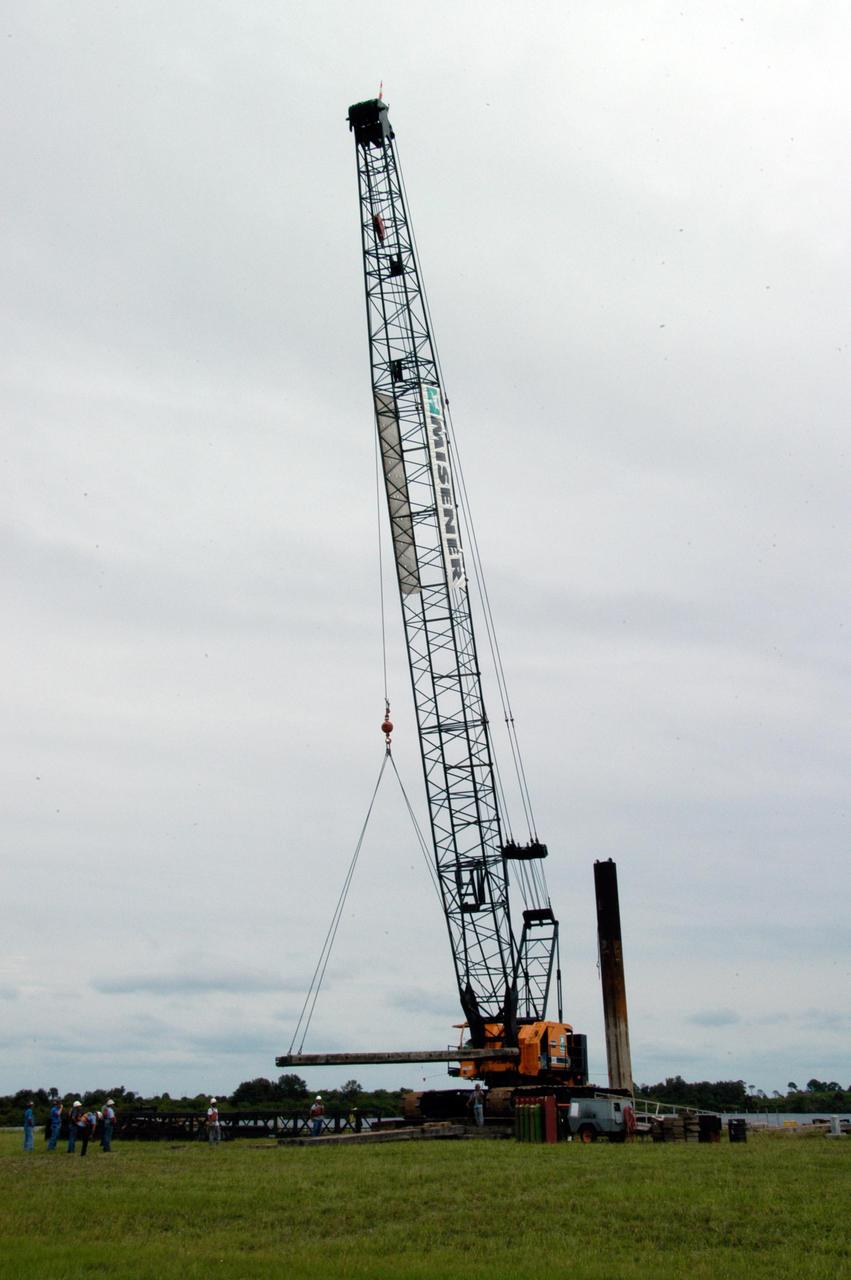
KENNEDY SPACE CENTER, FLA. -- A large crawler crane arrives at the turn basin at the Launch Complex 39 Area on NASA's Kennedy Space Center. The crane with its 70-foot boom will be moved to Launch Pad 39B and used to construct a new lightning protection system for the Constellation Program and Ares/Orion launches. Pad B will be the site of the first Ares vehicle launch, including Ares I-X which is scheduled for April 2009. Photo credit: NASA/George Shelton
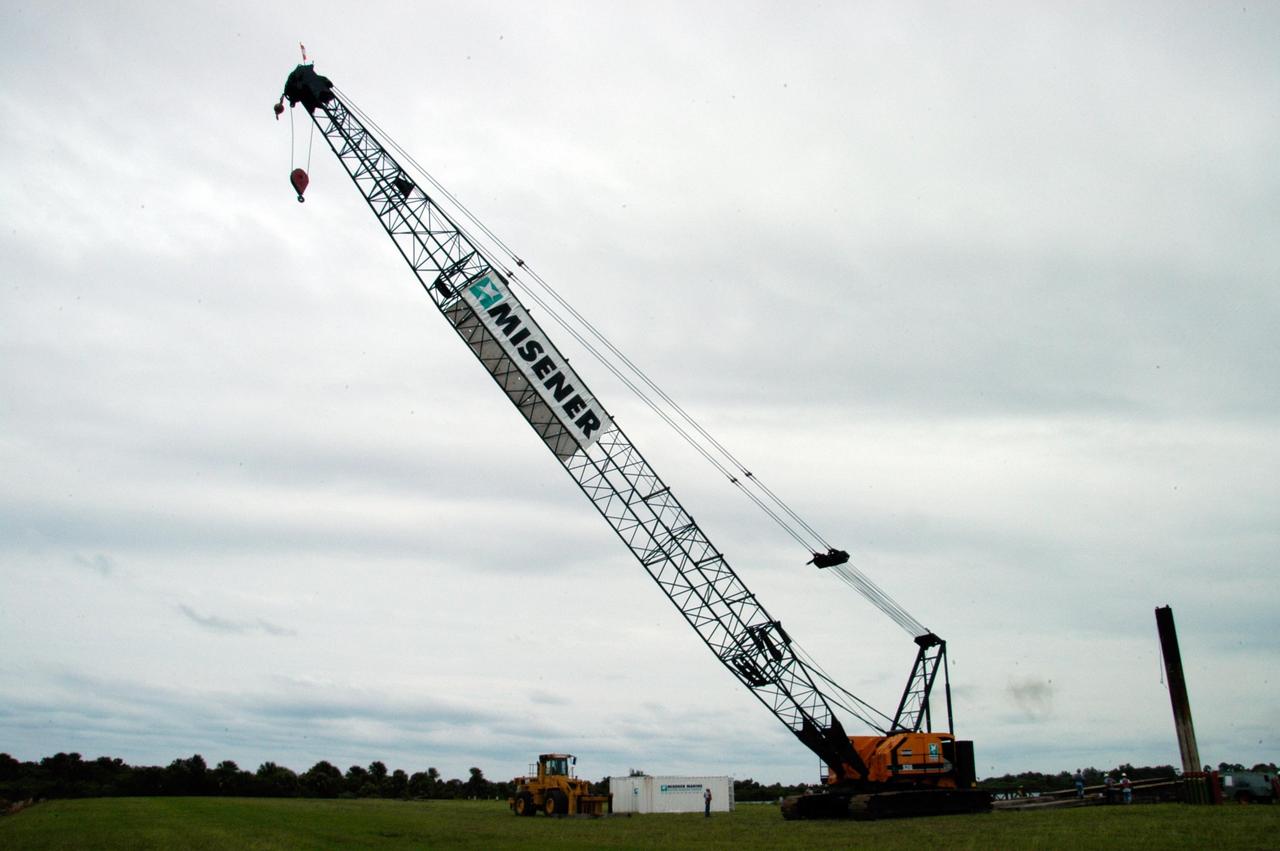
KENNEDY SPACE CENTER, FLA. -- A large crawler crane begins moving away from the turn basin at the Launch Complex 39 Area on NASA's Kennedy Space Center. The crane with its 70-foot boom will be moved to Launch Pad 39B and used to construct a new lightning protection system for the Constellation Program and Ares/Orion launches. Pad B will be the site of the first Ares vehicle launch, including Ares I-X which is scheduled for April 2009. Photo credit: NASA/George Shelton
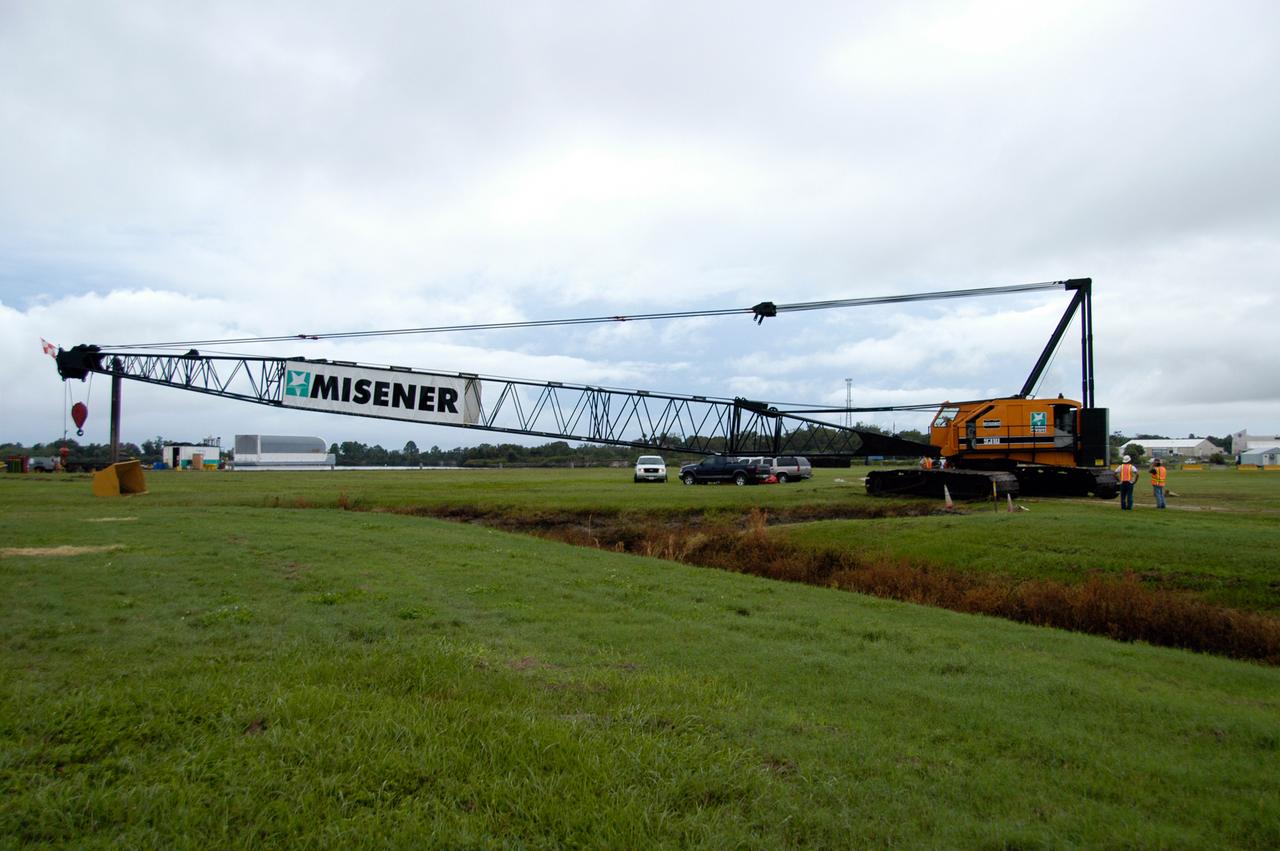
A large crawler crane begins moving away from the turn basin at the Launch Complex 39 Area on NASA's Kennedy Space Center. The crane with its 70-foot boom will be moved to Launch Pad 39B and used to construct a new lightning protection system for the Constellation Program and Ares/Orion launches. Pad B will be the site of the first Ares vehicle launch, including Ares I-X which is scheduled for April 2009.
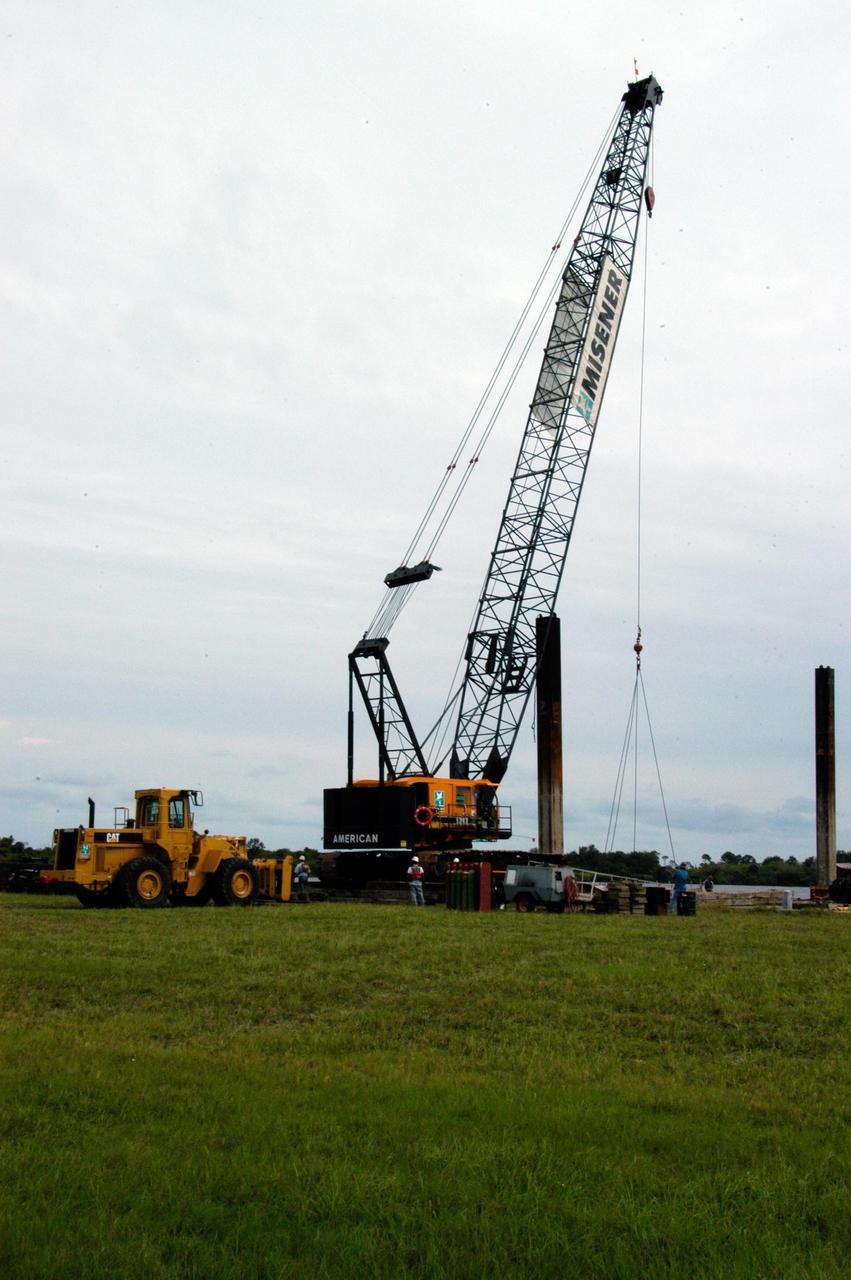
KENNEDY SPACE CENTER, FLA. -- A large crawler crane arrives at the turn basin at the Launch Complex 39 Area on NASA's Kennedy Space Center. The crane with its 70-foot boom will be moved to Launch Pad 39B and used to construct a new lightning protection system for the Constellation Program and Ares/Orion launches. Pad B will be the site of the first Ares vehicle launch, including Ares I-X which is scheduled for April 2009. Photo credit: NASA/George Shelton
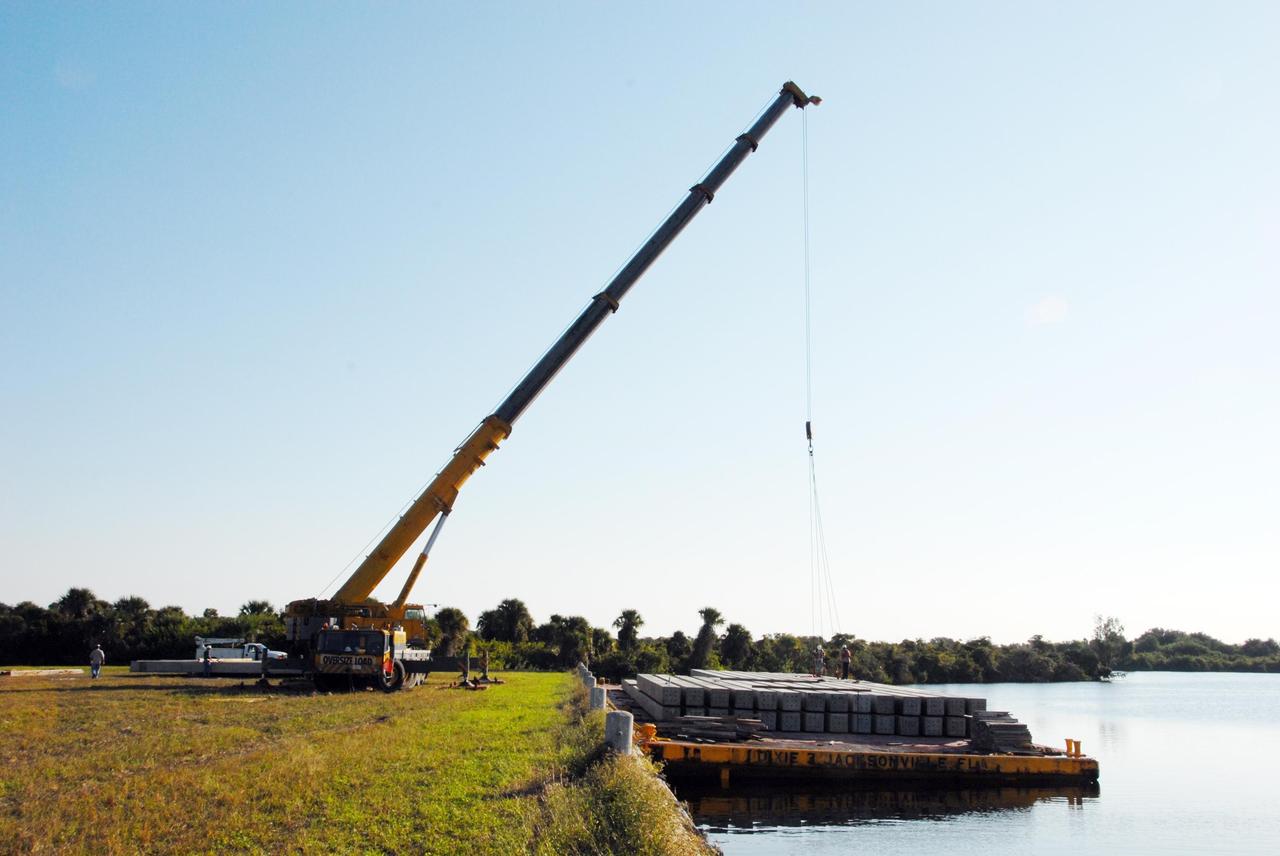
KENNEDY SPACE CENTER, FLA. -- In the Launch Complex 39 Area turn basin at NASA's Kennedy Space Center, the crane crawler is being used to lift pilings from a barge. The pilings will be used to help construct new lightning towers on Launch Pad 39B for the Constellation Program and Ares/Orion launches. Pad B will be the site of the first Ares vehicle launch, including Ares I-X which is scheduled for April 2009. Photo credit: NASA/George Shelton
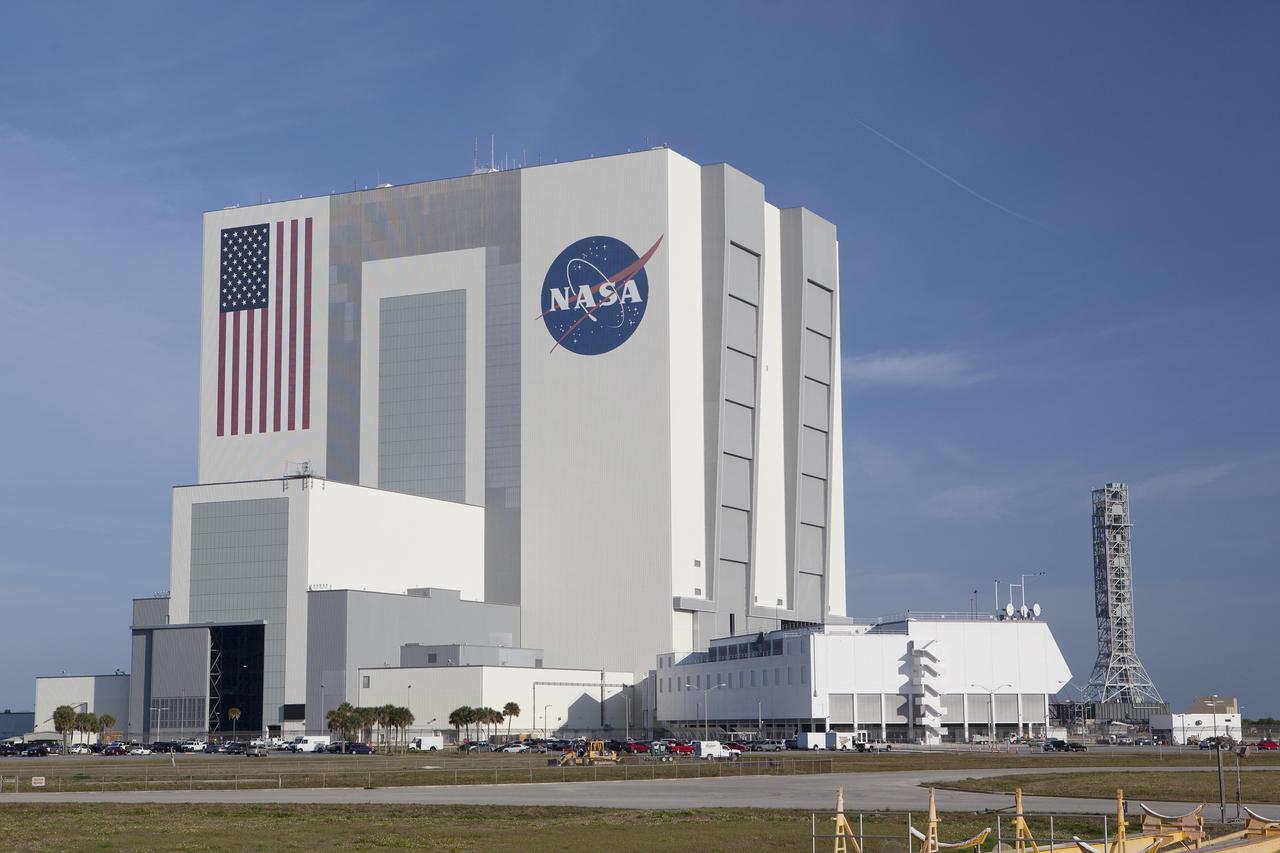
CAPE CANAVERAL, Fla. – The Vehicle Assembly Building, Launch Control Center and Mobile Launcher are in this view of the Launch Complex 39 area at NASA's Kennedy Space Center in Florida. Inside the Launch Control Center, the Ground Systems Development and Operations Program is overseeing efforts to create a new firing room based on a multi-user concept in Firing Room 4. The design of Firing Room 4 will incorporate five control room areas that are flexible to meet current and future NASA and commercial user requirements. The equipment and most of the consoles from Firing Room 4 were moved to Firing Room 2 for possible future reuse. Photo credit: NASA/Ben Smegelsky
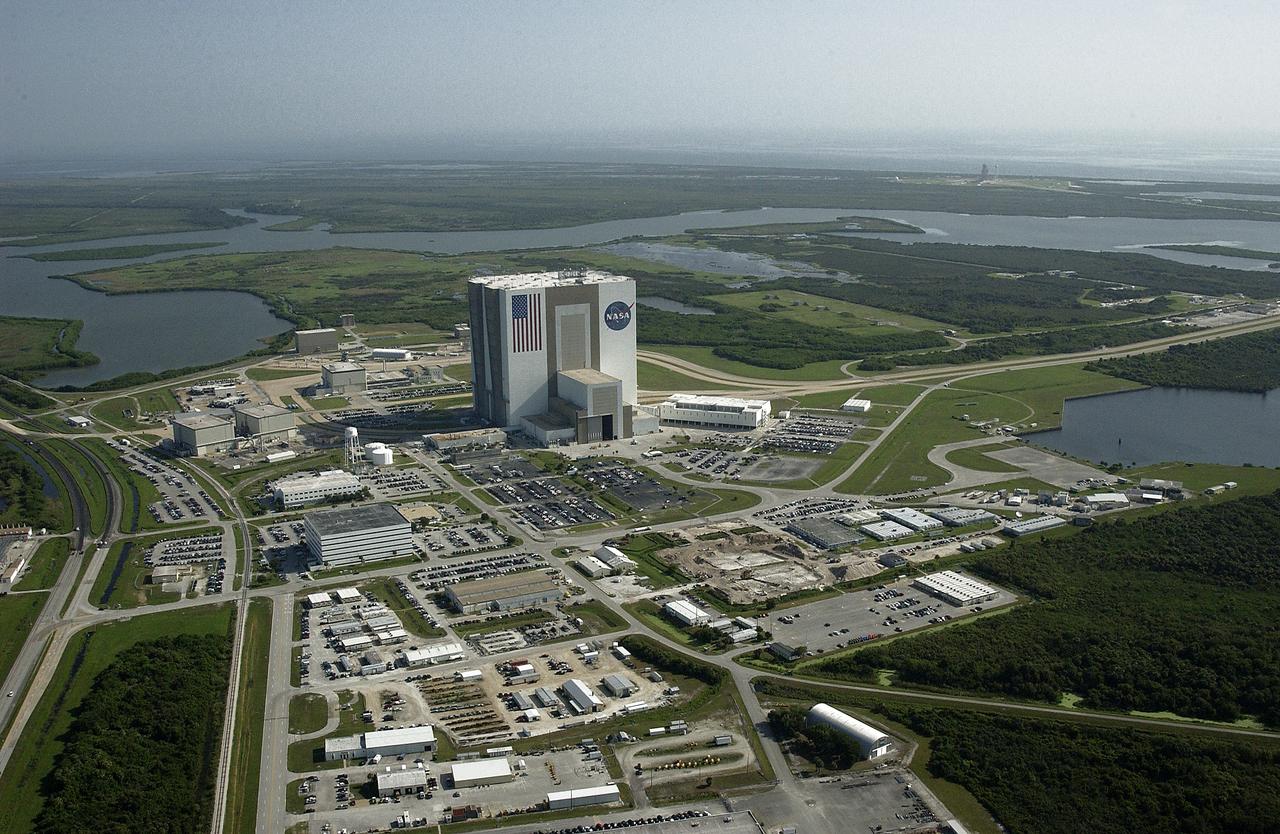
KENNEDY SPACE CENTER, FLA. – This view shows much of the Launch Complex 39 Area looking north. At center is the 525-foot-tall Vehicle Assembly Building. Other buildings surrounding it are (counter clockwise from left) the Orbiter Processing Facility, Multi-Function Facility, Operations Support Building and Launch Control Center (next to VAB). The crawlerway leads from the VAB toward the launch pads. In the background are the waters of the Banana Creek.
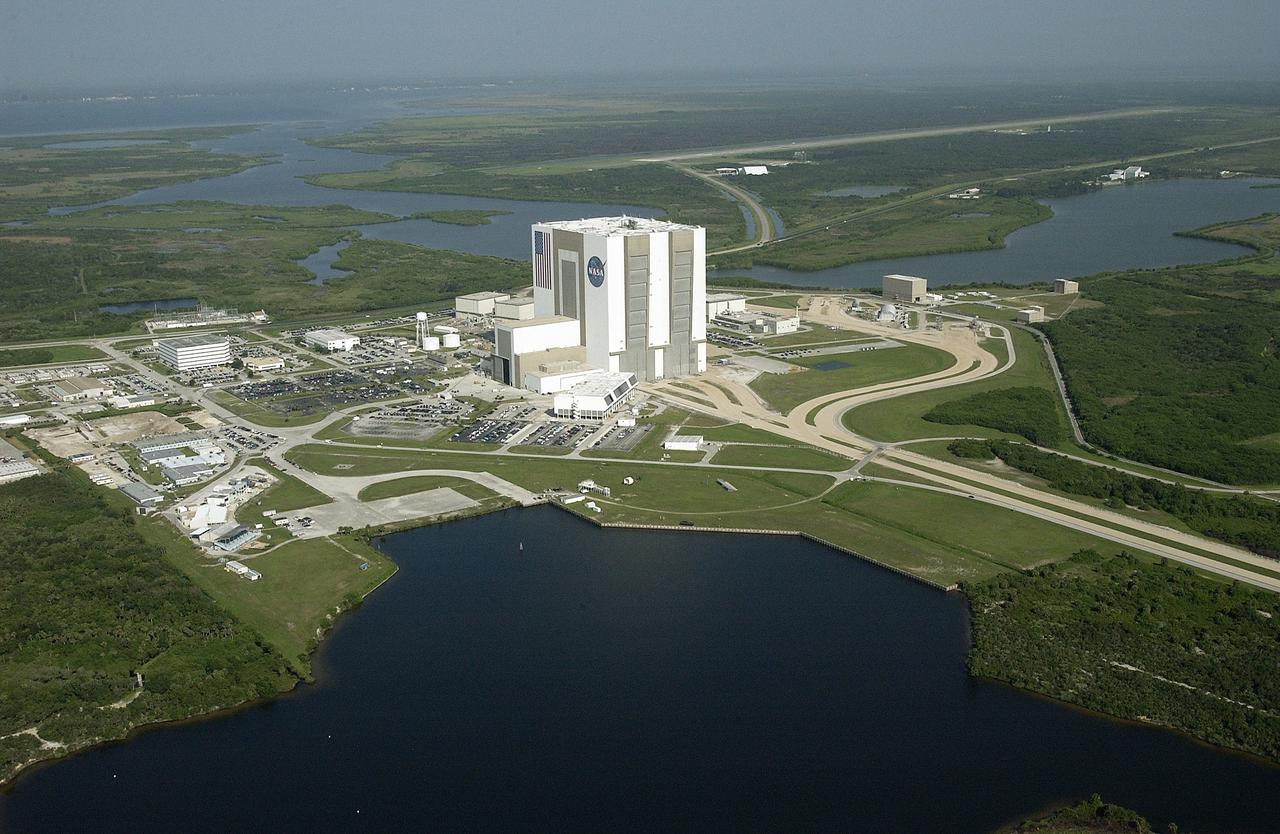
CAPE CANAVERAL, Fla. -- This view shows much of the Launch Complex 39 Area stretching beyond the Turn Basin in the foreground. At center is the 525-foot-tall Vehicle Assembly Building, with the starting and endpoint of the crawlerway that leads to both launch pads. The low building attached to the VAB is the Launch Control Center. At center left is the Operations and Support Building. At upper right can be seen the runway at the Shuttle Landing Facility. Surrounding waters are part of Banana Creek. Photo credit: NASA
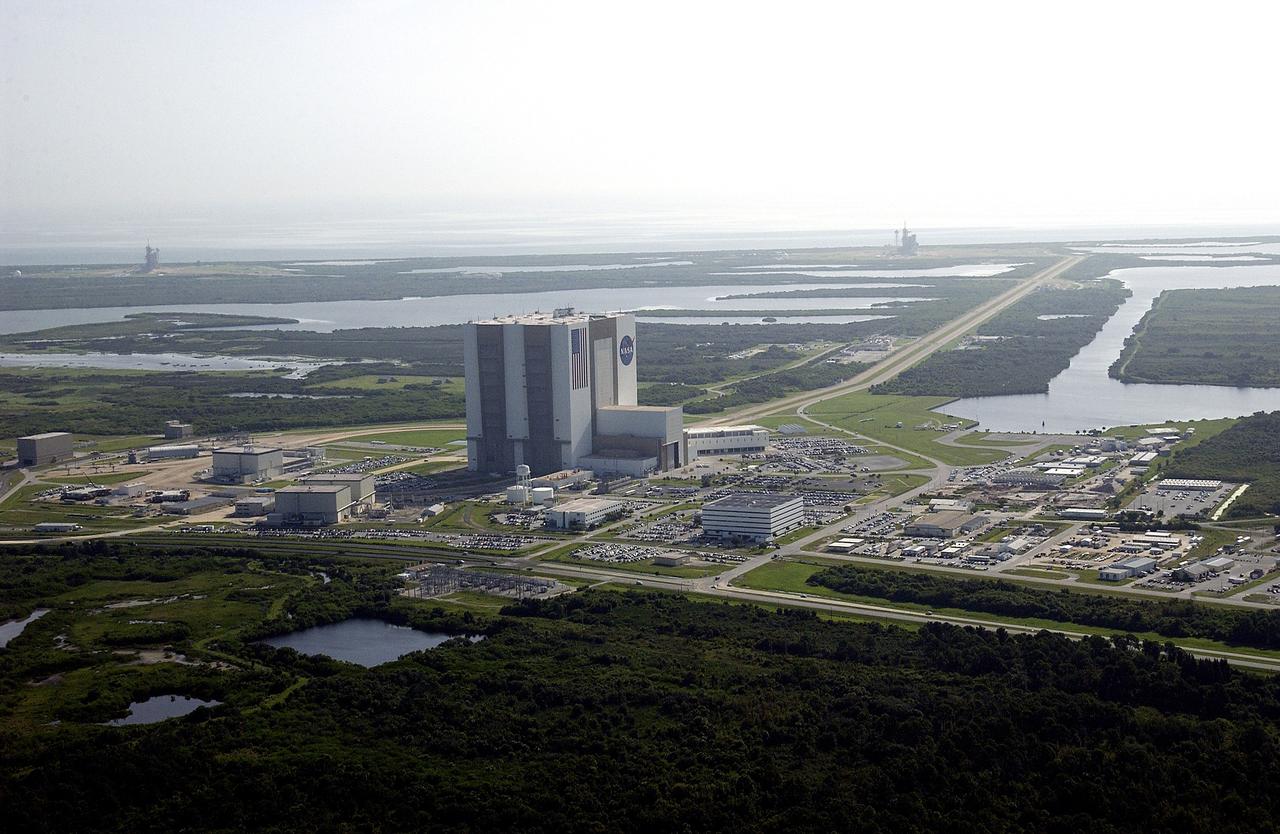
CAPE CANAVERAL, Fla. -- This aerial view shows the Launch Complex 39 Area. At center is the 525-foot-tall Vehicle Assembly Building. On the horizon at the far left is Launch Pad 39B to the right is Launch Pad 39A. The crawlerway can be seen stretching from the VAB toward Pad A. Waters of the Banana Creek and Banana River surround the pads. At center right is the Turn Basin. Photo credit: NASA
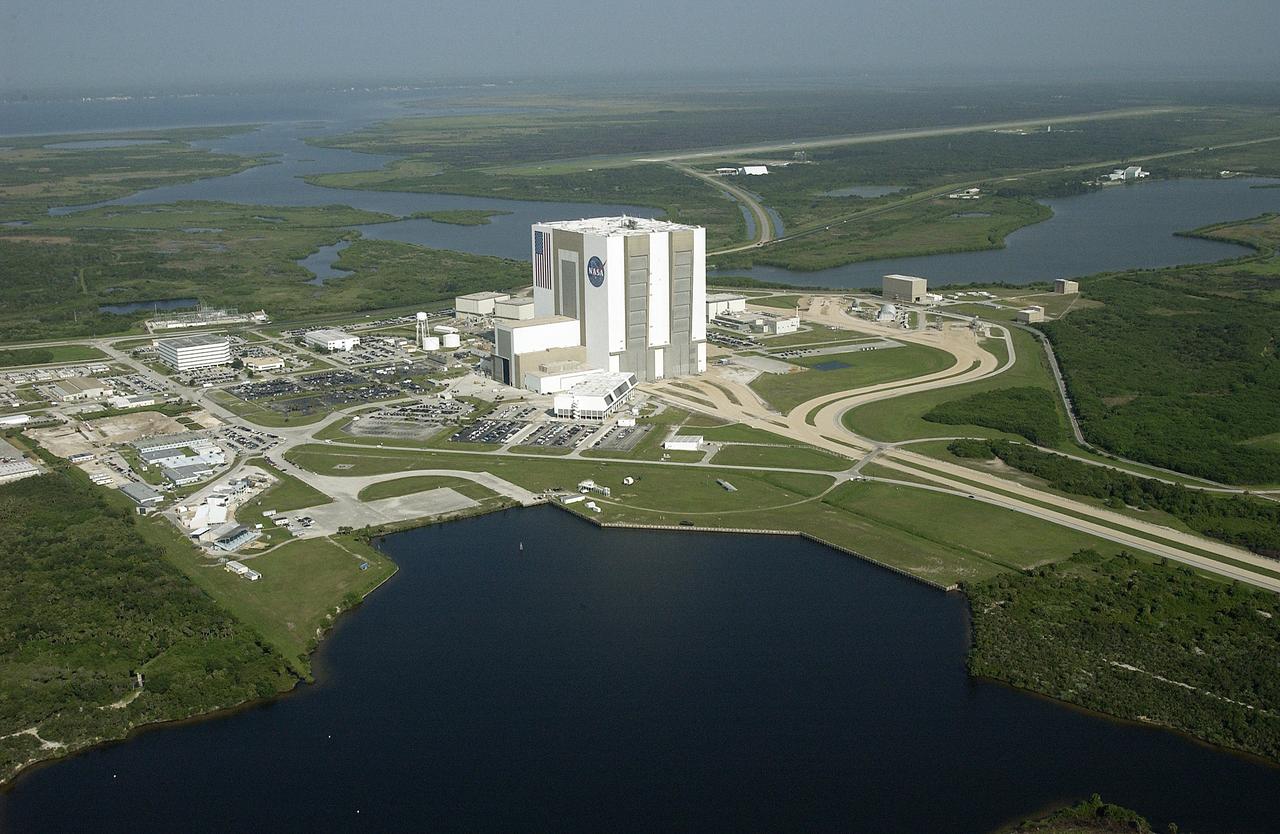
KENNEDY SPACE CENTER, FLA. – This view shows much of the Launch Complex 39 Area stretching beyond the Turn Basin in the foreground. At center is the 525-foot-tall Vehicle Assembly Building, with the starting and endpoint of the crawlerway that leads to both launch pads. The low building attached to the VAB is the Launch Control Center. At center left is the Operations and Support Building. At upper right can be seen the Runway at the Shuttle Landing Facility. Surrounding waters are part of Banana Creek.
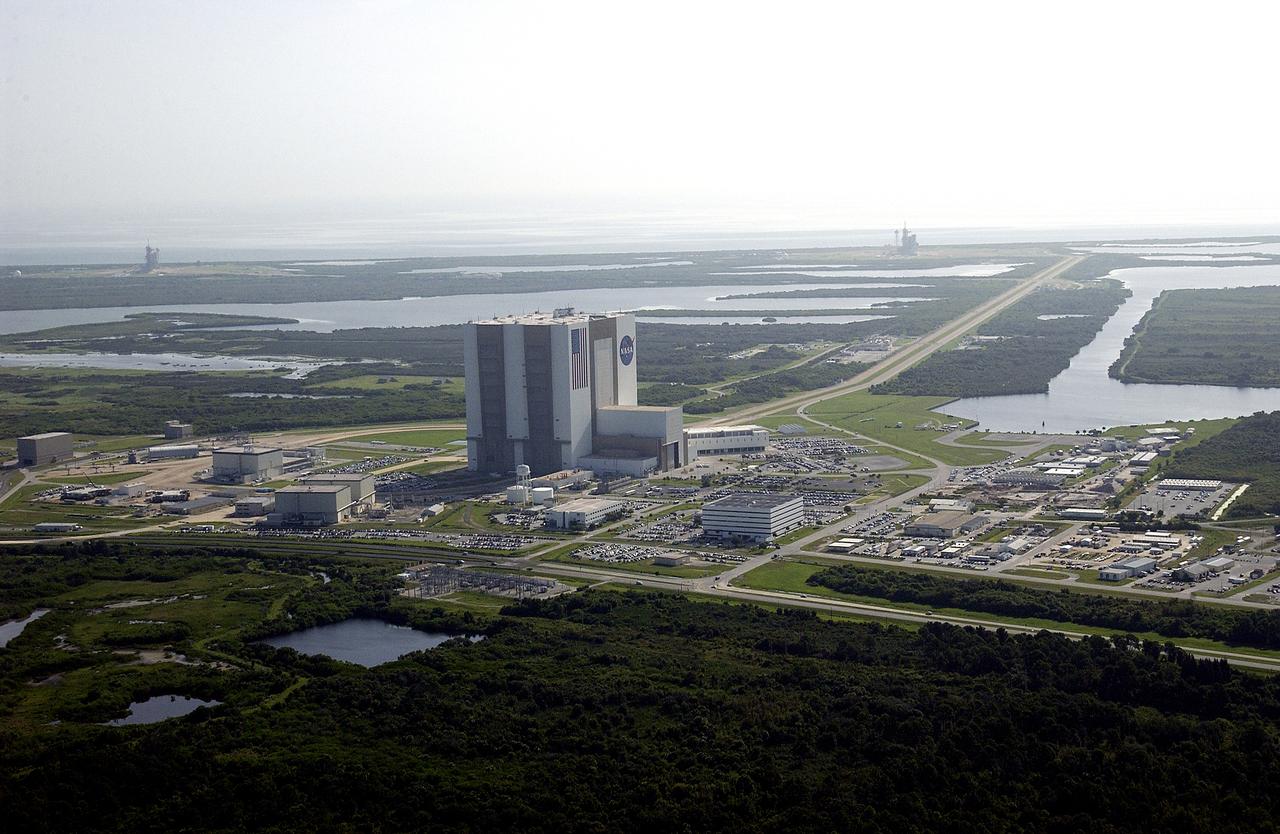
KENNEDY SPACE CENTER, FLA. – This aerial view shows Launch Complex 39 Area. At center is the 525-foot-tall Vehicle Assembly Building. On the horizon at the far left is Launch Pad 39B; to the right is Launch Pad 39A. The crawlerway can be seen stretching from the VAB toward Pad A. Waters of the Banana Creek and Banana River surround the pads. At center right is the Turn Basin.
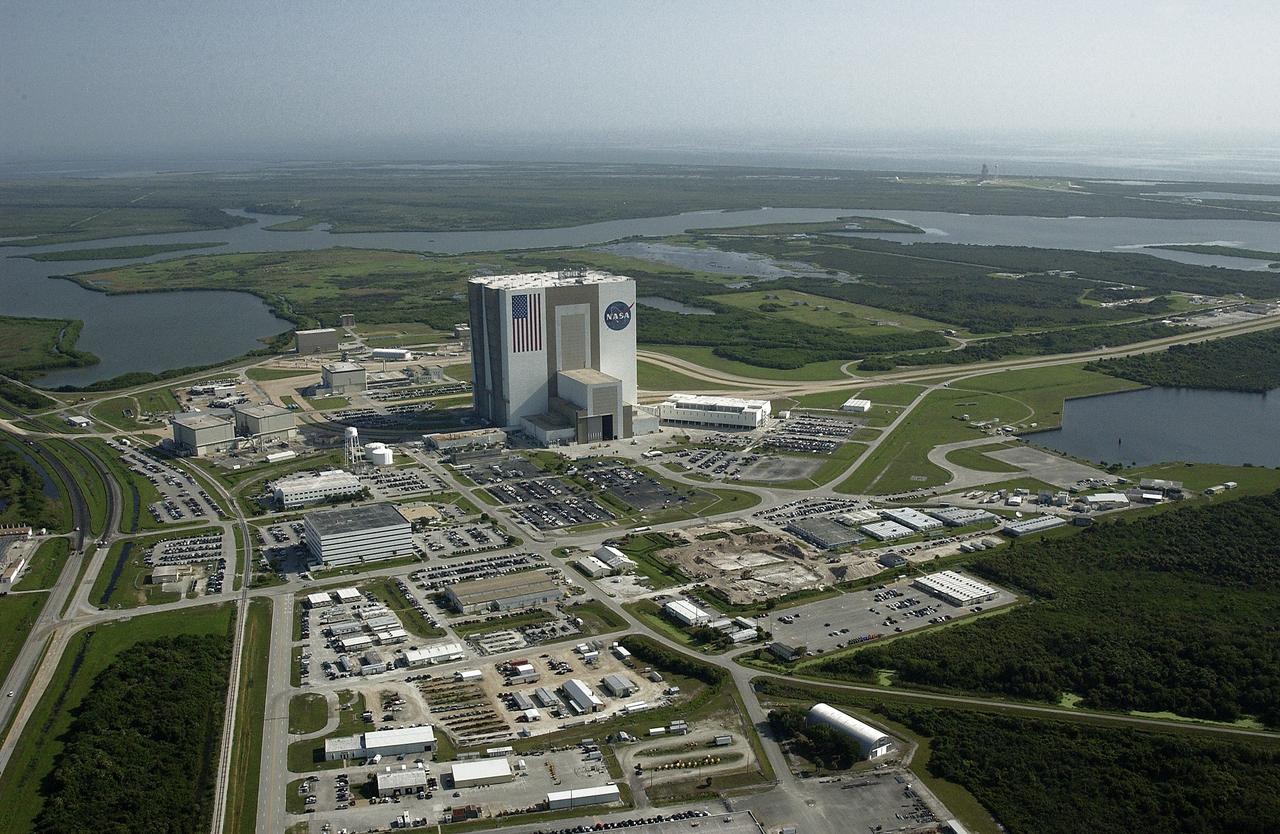
CAPE CANAVERAL, Fla. -- This view shows much of the Launch Complex 39 Area looking north. At center is the 525-foot-tall Vehicle Assembly Building. Other buildings surrounding it are counter clockwise from left the Orbiter Processing Facility, Multi-Function Facility, Operations Support Building and Launch Control Center, next to the VAB. The crawlerway leads from the VAB toward the launch pads. In the background are the waters of the Banana Creek. Photo credit: NASA
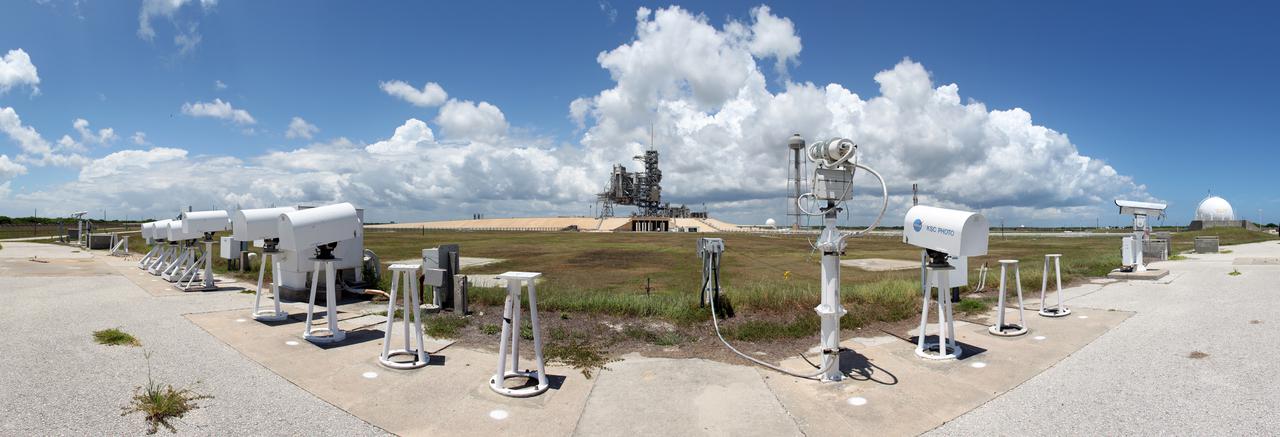
CAPE CANAVERAL, Fla. -- At NASA's Kennedy Space Center in Florida, remote cameras look toward Launch Pad 39A. The cameras capture space shuttle launches as well as lightning and wildlife in and the Launch Complex 39 area. There also are cameras on each shuttle, their solid rocket boosters and external fuel tank. Photo credit: NASA_Frankie Martin
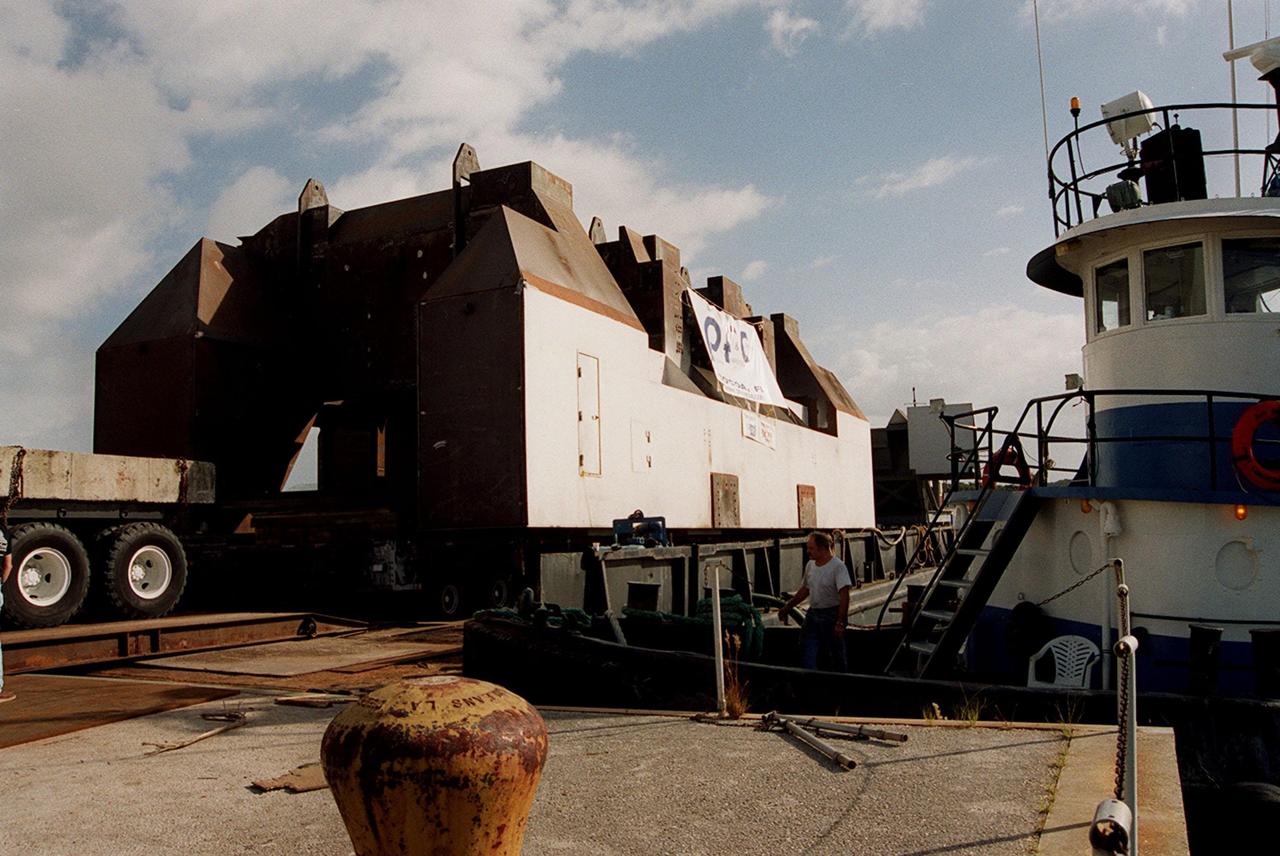
A launch table fabricated by Jered Industries in Georgia is ready for transfer to Launch Complex 37B, Cape Canaveral Air Force Station, after being stabilized aboard the barge that brought it to the turn basin in KSC’s Launch Complex 39 Area. In the background is the Vehicle Assembly Building. The table was built in support of the Delta Evolved Expendable Launch Vehicle (EELV) program, known as Delta IV. It was floated on the barge down the Intercoastal Waterway, through the Barge Canal to the turn basin. The table is approximately 70 feet long, 40 feet wide and 50 feet high, and weighs about 600,000 pounds. Accompanying the launch table on the barge are flame deflectors, which are also to be erected on pad 37B
A launch table fabricated by Jered Industries in Georgia waits for transfer to Launch Complex 37B, Cape Canaveral Air Force Station, after being moved off the barge that brought it to the turn basin in KSC’s Launch Complex 39 Area. In the background is the Vehicle Assembly Building. The table was built in support of the Delta Evolved Expendable Launch Vehicle (EELV) program, known as Delta IV. It was floated on the barge down the Intercoastal Waterway, through the Barge Canal to the turn basin. The table is approximately 70 feet long, 40 feet wide and 50 feet high, and weighs about 600,000 pounds. Accompanying the launch table on the barge are flame deflectors, which are also to be erected on pad 37B
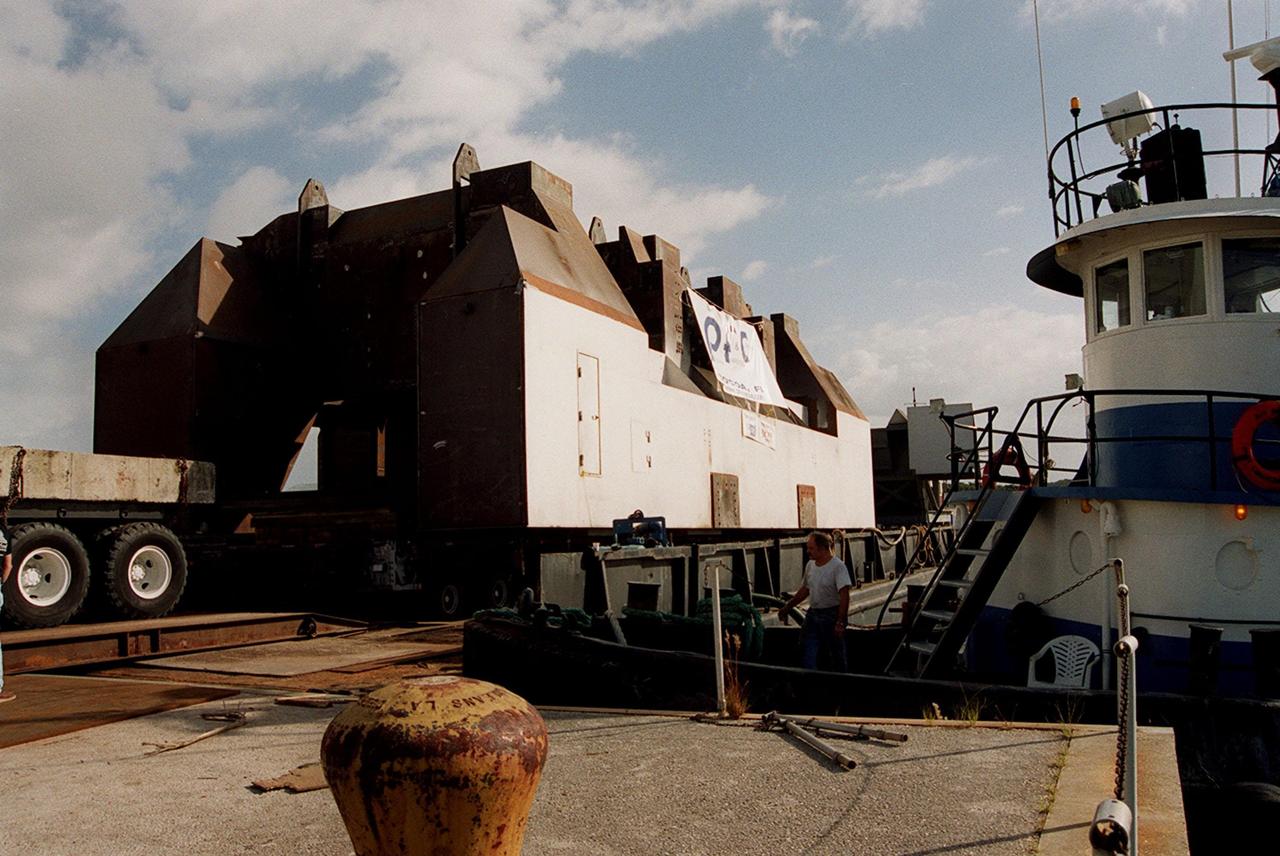
A launch table fabricated by Jered Industries in Georgia is ready for transfer to Launch Complex 37B, Cape Canaveral Air Force Station, after being stabilized aboard the barge that brought it to the turn basin in KSC’s Launch Complex 39 Area. In the background is the Vehicle Assembly Building. The table was built in support of the Delta Evolved Expendable Launch Vehicle (EELV) program, known as Delta IV. It was floated on the barge down the Intercoastal Waterway, through the Barge Canal to the turn basin. The table is approximately 70 feet long, 40 feet wide and 50 feet high, and weighs about 600,000 pounds. Accompanying the launch table on the barge are flame deflectors, which are also to be erected on pad 37B
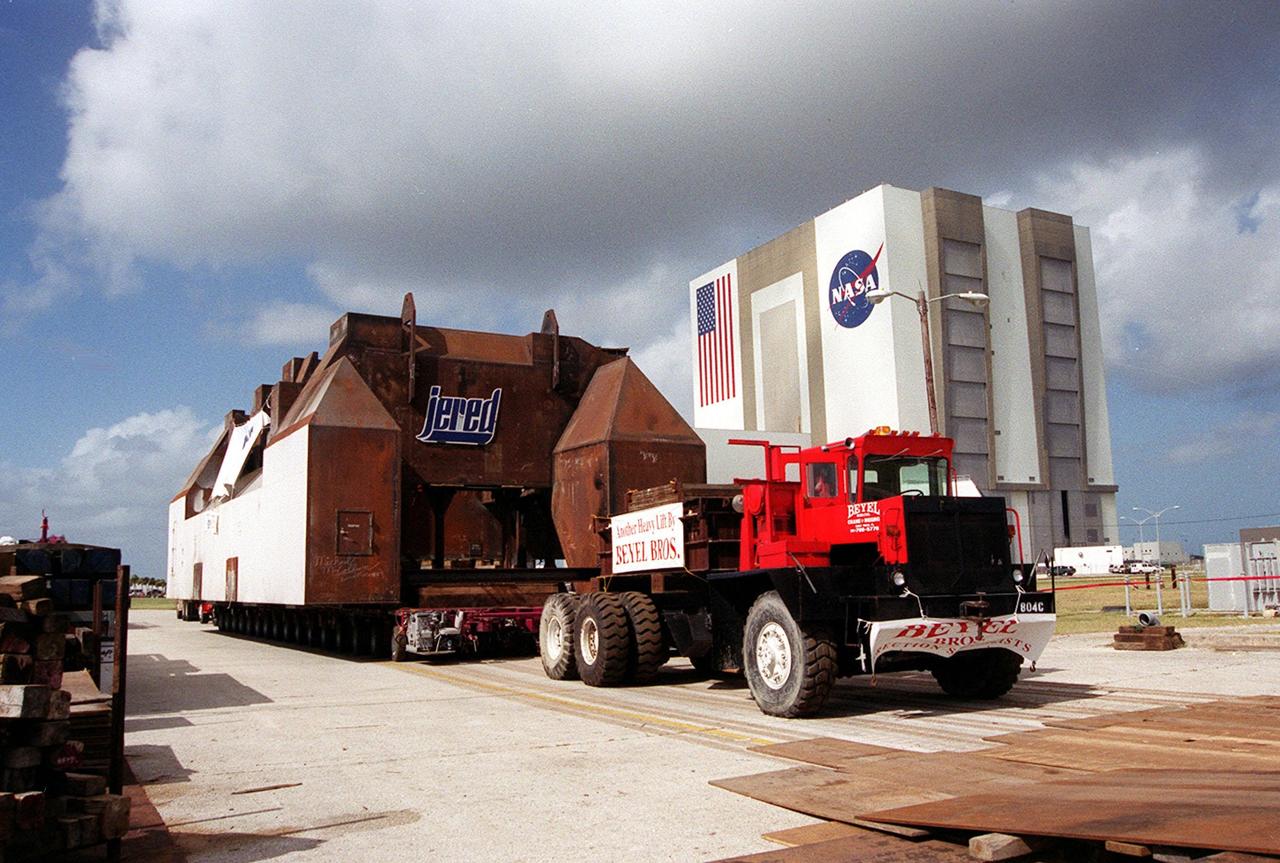
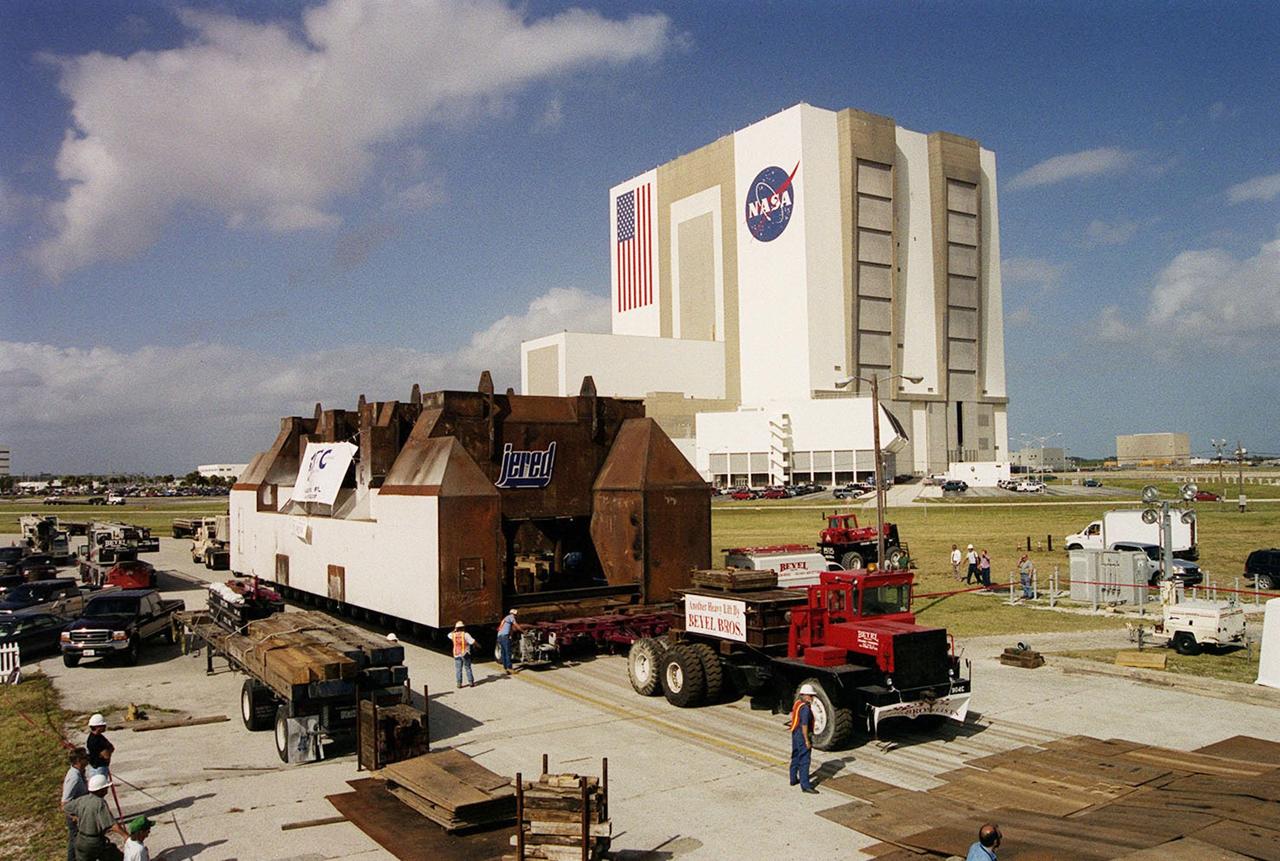
A launch table fabricated by Jered Industries in Georgia is ready for transfer to Launch Complex 37B, Cape Canaveral Air Force Station, after being moved off the barge that brought it to the turn basin in KSC’s Launch Complex 39 Area. In the background is the Vehicle Assembly Building. The table was built in support of the Delta Evolved Expendable Launch Vehicle (EELV) program, known as Delta IV. It was floated on the barge down the Intercoastal Waterway, through the Barge Canal to the turn basin. The table is approximately 70 feet long, 40 feet wide and 50 feet high, and weighs about 600,000 pounds. Accompanying the launch table on the barge are flame deflectors, which are also to be erected on pad 37B
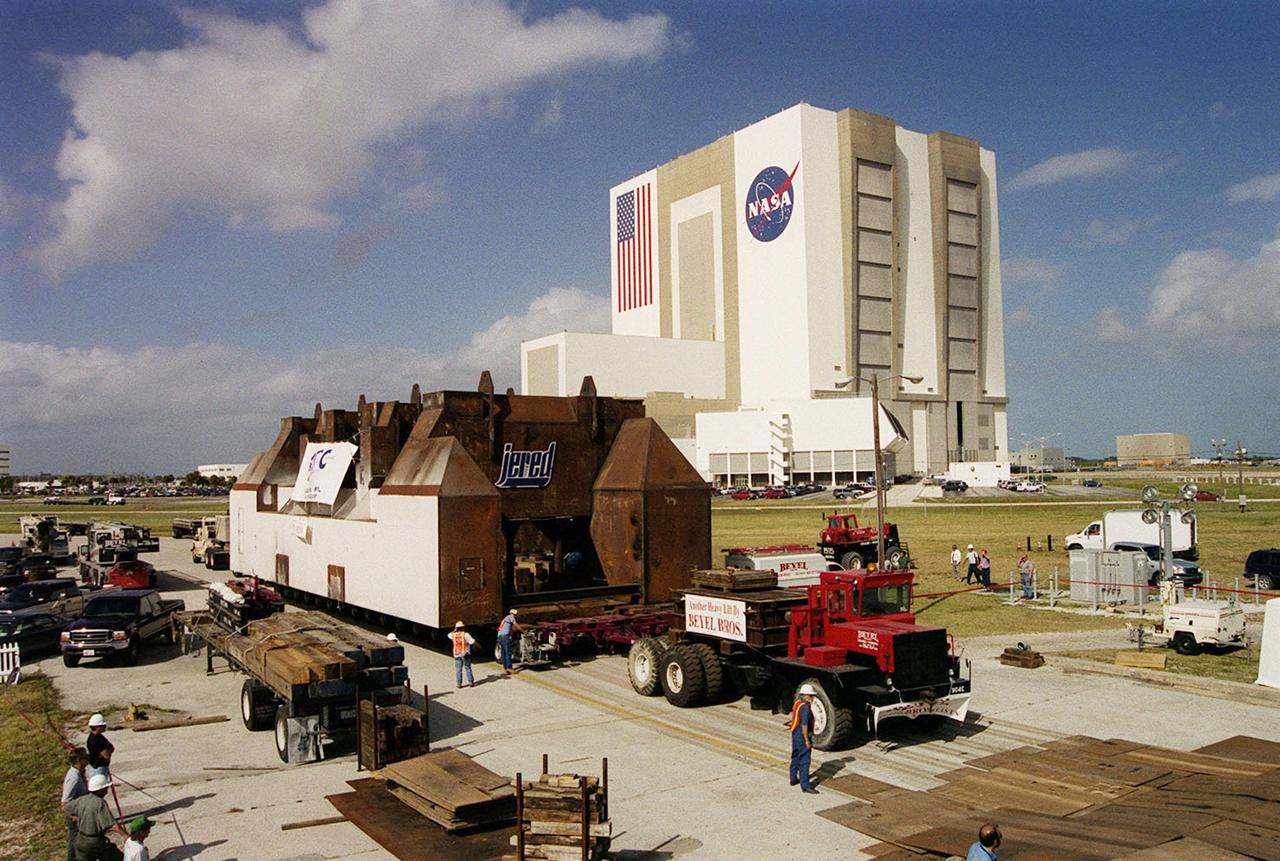
A launch table fabricated by Jered Industries in Georgia waits for transfer to Launch Complex 37B, Cape Canaveral Air Force Station, after being moved off the barge that brought it to the turn basin in KSC’s Launch Complex 39 Area. In the background is the Vehicle Assembly Building. The table was built in support of the Delta Evolved Expendable Launch Vehicle (EELV) program, known as Delta IV. It was floated on the barge down the Intercoastal Waterway, through the Barge Canal to the turn basin. The table is approximately 70 feet long, 40 feet wide and 50 feet high, and weighs about 600,000 pounds. Accompanying the launch table on the barge are flame deflectors, which are also to be erected on pad 37B
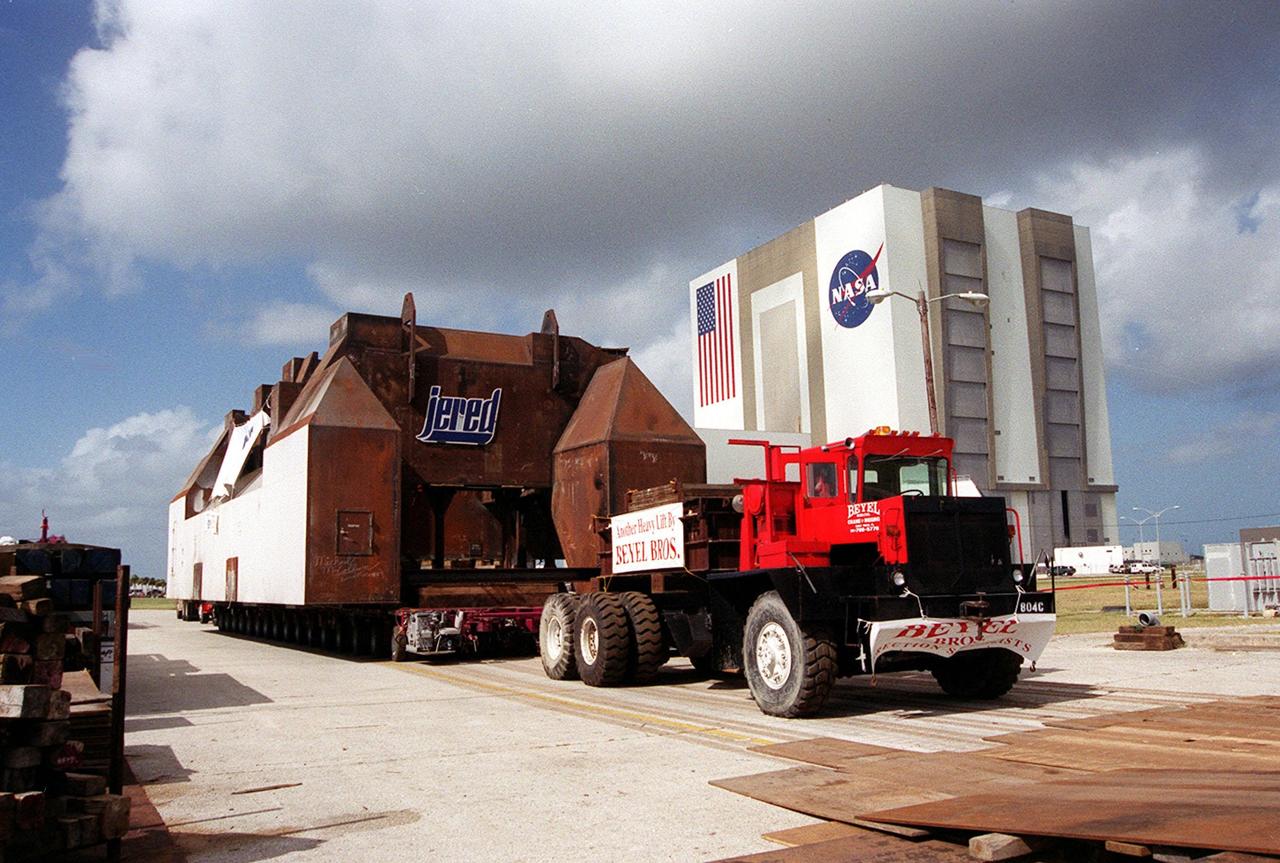
A launch table fabricated by Jered Industries in Georgia is ready for transfer to Launch Complex 37B, Cape Canaveral Air Force Station, after being moved off the barge that brought it to the turn basin in KSC’s Launch Complex 39 Area. In the background is the Vehicle Assembly Building. The table was built in support of the Delta Evolved Expendable Launch Vehicle (EELV) program, known as Delta IV. It was floated on the barge down the Intercoastal Waterway, through the Barge Canal to the turn basin. The table is approximately 70 feet long, 40 feet wide and 50 feet high, and weighs about 600,000 pounds. Accompanying the launch table on the barge are flame deflectors, which are also to be erected on pad 37B
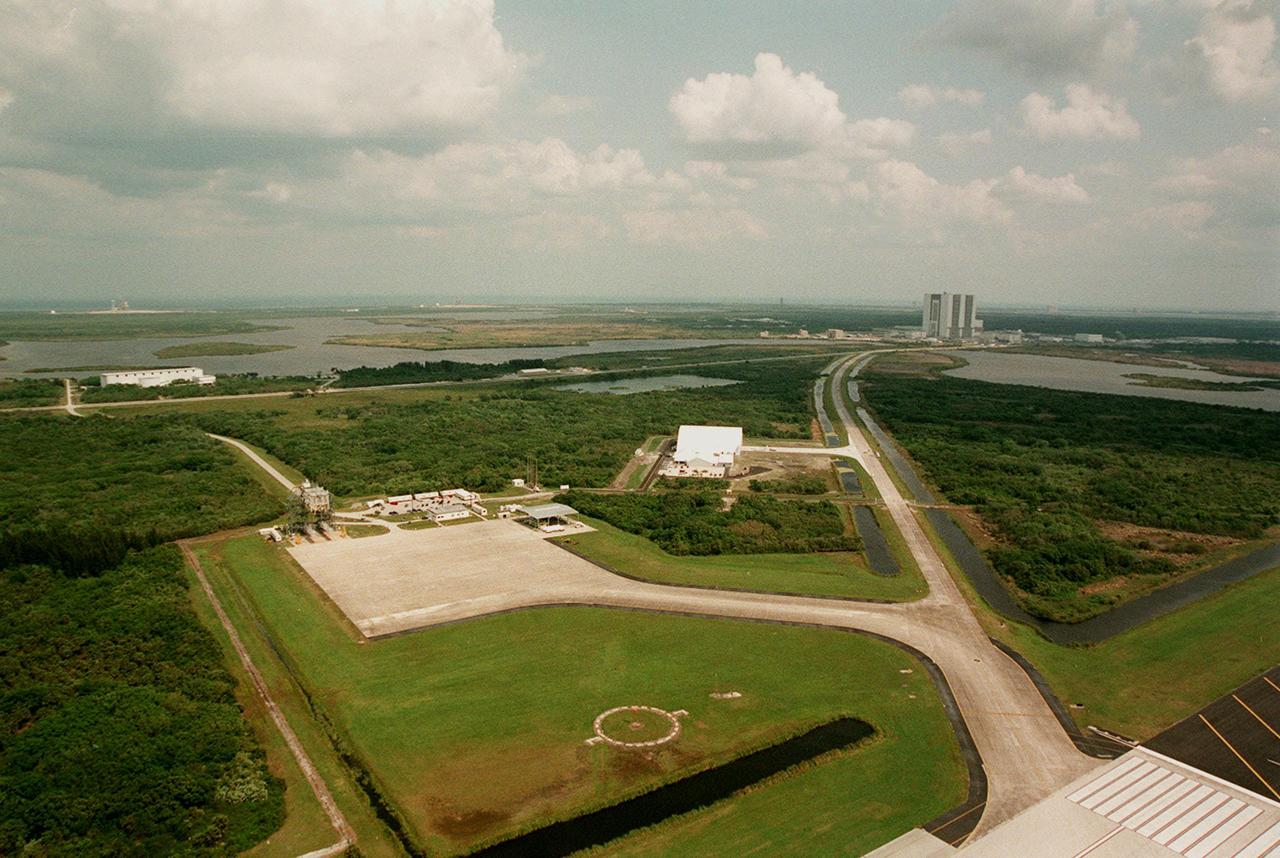
A broad aerial view west of Launch Complex 39 Area shows a multitude of facilities. Starting with the Shuttle Landing Facility, at bottom center is a circle around a windsock, a landing aid for pilots; at bottom right is a portion of the landing strip. In the center is the parking tarmac with its mate/demate device on the left corner. To the right is the remote launch vehicle hangar, still under construction. At the upper right is the Vehicle Assembly Building (VAB). The tow-way road runs from the landing strip to the Orbiter Processing Facility, next to the VAB. The Kennedy Parkway North extends from the left side toward the VAB. The long white building next to the parkway is the Apollo/Saturn V Center. Above it, slightly visible on the horizon (left), is Launch Complex 39, Pad B.
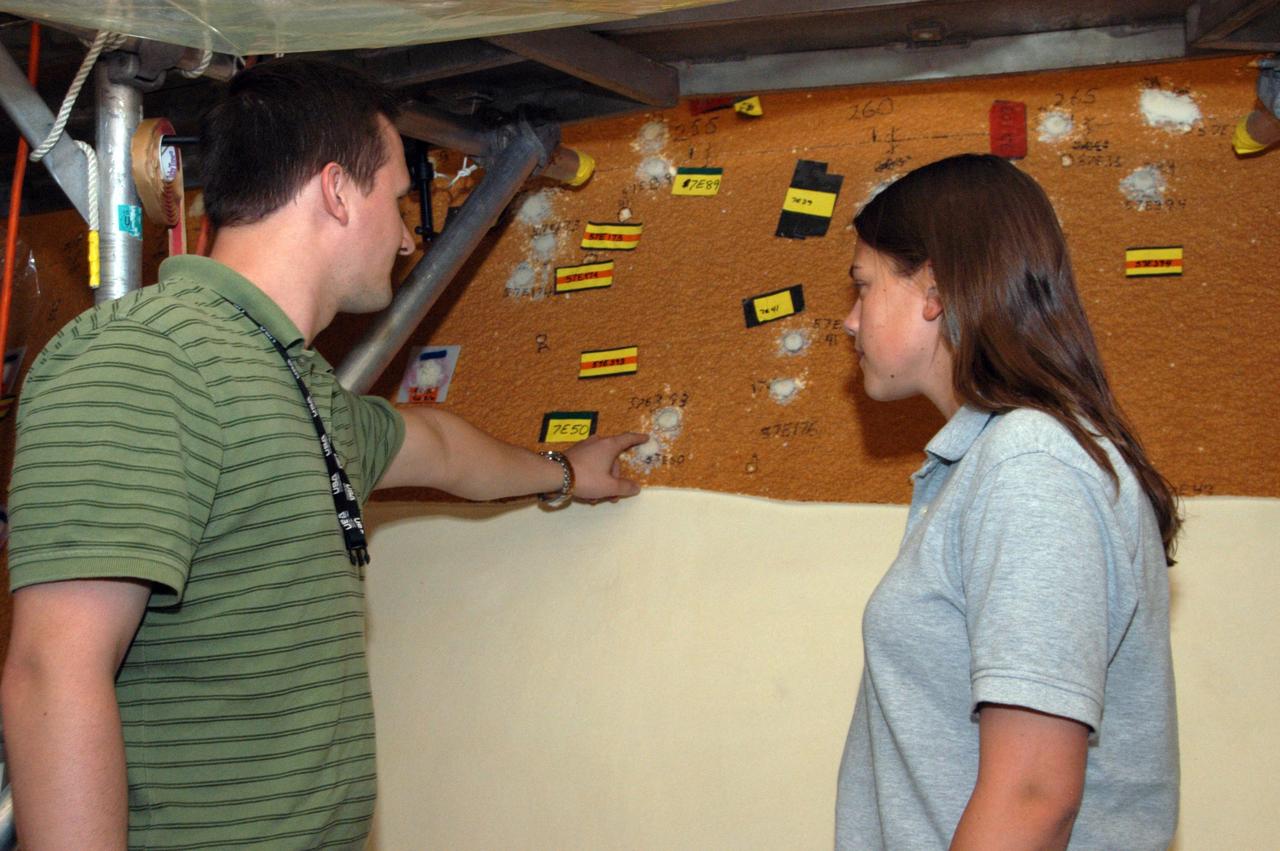
KENNEDY SPACE CENTER, FLA. -- In the Vehicle Assembly Building, Mike Ravenscroft, with United Space Alliance, points to some of the foam repair done on the external tank of Space Shuttle Atlantis. Holes filled with foam are sanded flush with the adjacent area. In late February, Atlantis' external tank received hail damage during a severe thunderstorm that passed through the Kennedy Space Center Launch Complex 39 area. The hail caused visible divots in the giant tank's foam insulation as well as minor surface damage to about 26 heat shield tiles on the shuttle's left wing. The launch now is targeted for June 8. Photo credit: NASA/George Shelton