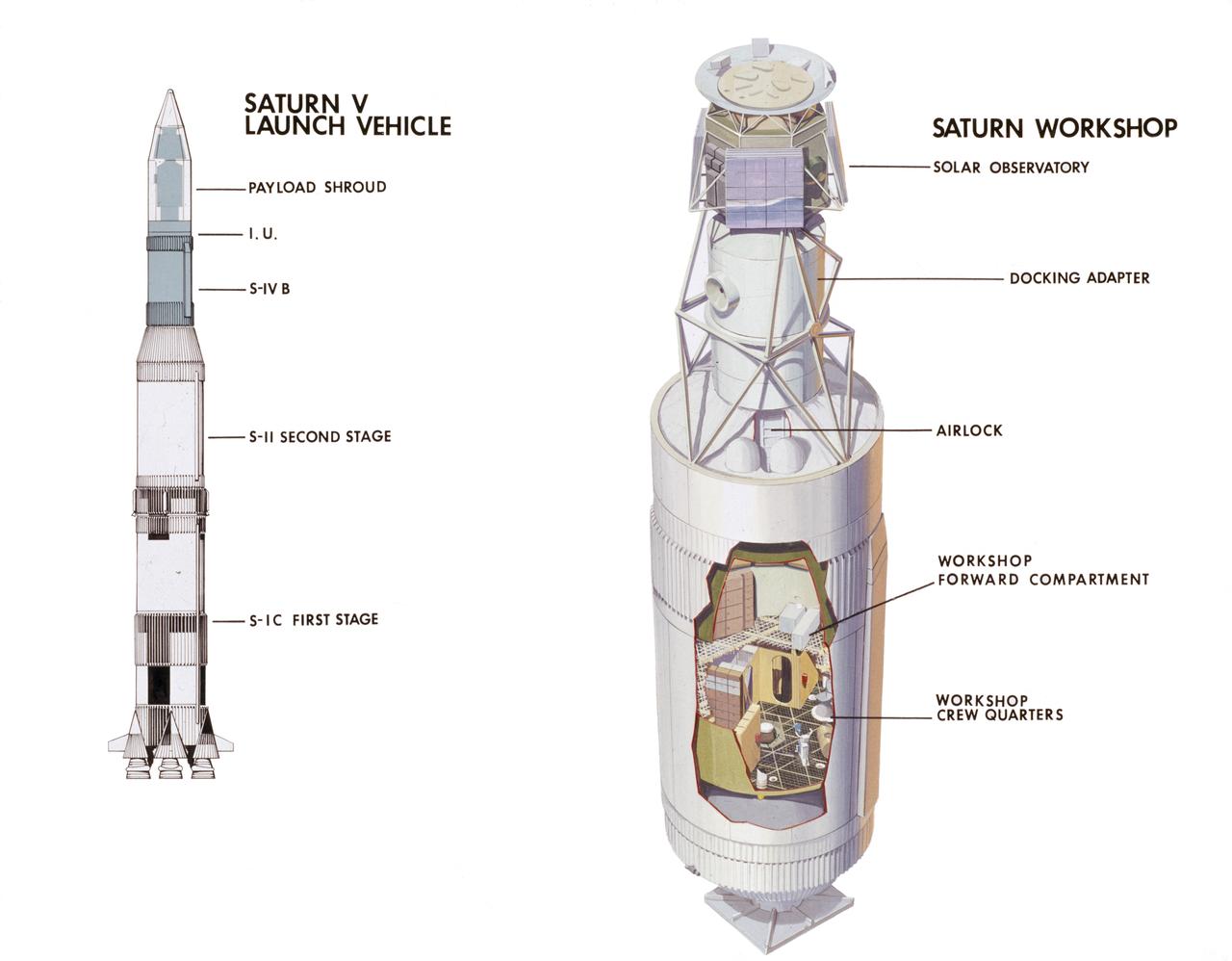
This cutaway drawing illustrates major Skylab components in launch configuration on top of the Saturn V. In an early effort to extend the use of Apollo for further applications, NASA established the Apollo Applications Program (AAP) in August of 1965. The AAP was to include long duration Earth orbital missions during which astronauts would carry out scientific, technological, and engineering experiments in space by utilizing modified Saturn launch vehicles and the Apollo spacecraft. Established in 1970, the Skylab Program was the forerurner of the AAP. The goals of the Skylab were to enrich our scientific knowledge of the Earth, the Sun, the stars, and cosmic space; to study the effects of weightlessness on living organisms, including man; to study the effects of the processing and manufacturing of materials utilizing the absence of gravity; and to conduct Earth resource observations. The Skylab also conducted 19 selected experiments submitted by high school students. Skylab's 3 different 3-man crews spent up to 84 days in Earth orbit. The Marshall Space Flight Center (MSFC) had responsibility for developing and integrating most of the major components of the Skylab: the Orbital Workshop (OWS), Airlock Module (AM), Multiple Docking Adapter (MDA), Apollo Telescope Mount (ATM), Payload Shroud (PS), and most of the experiments. MSFC was also responsible for providing the Saturn IB launch vehicles for three Apollo spacecraft and crews and a Saturn V launch vehicle for the Skylab.
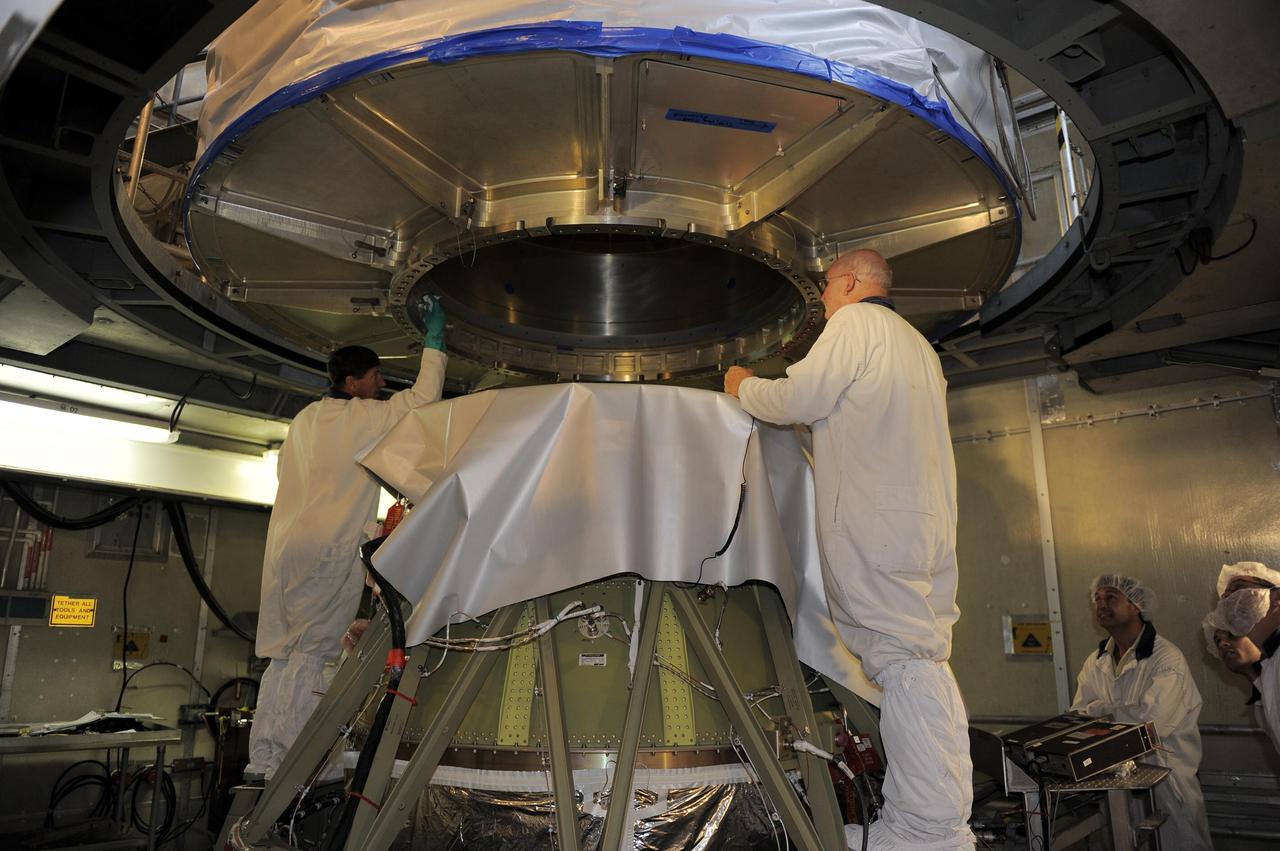
NASA twin Gravity Recovery and Interior Laboratory GRAIL spacecraft are lowered onto the second stage of their Delta II launch vehicle. At top is the spacecraft adapter ring which holds the two lunar probes in their side-by-side launch configuration.
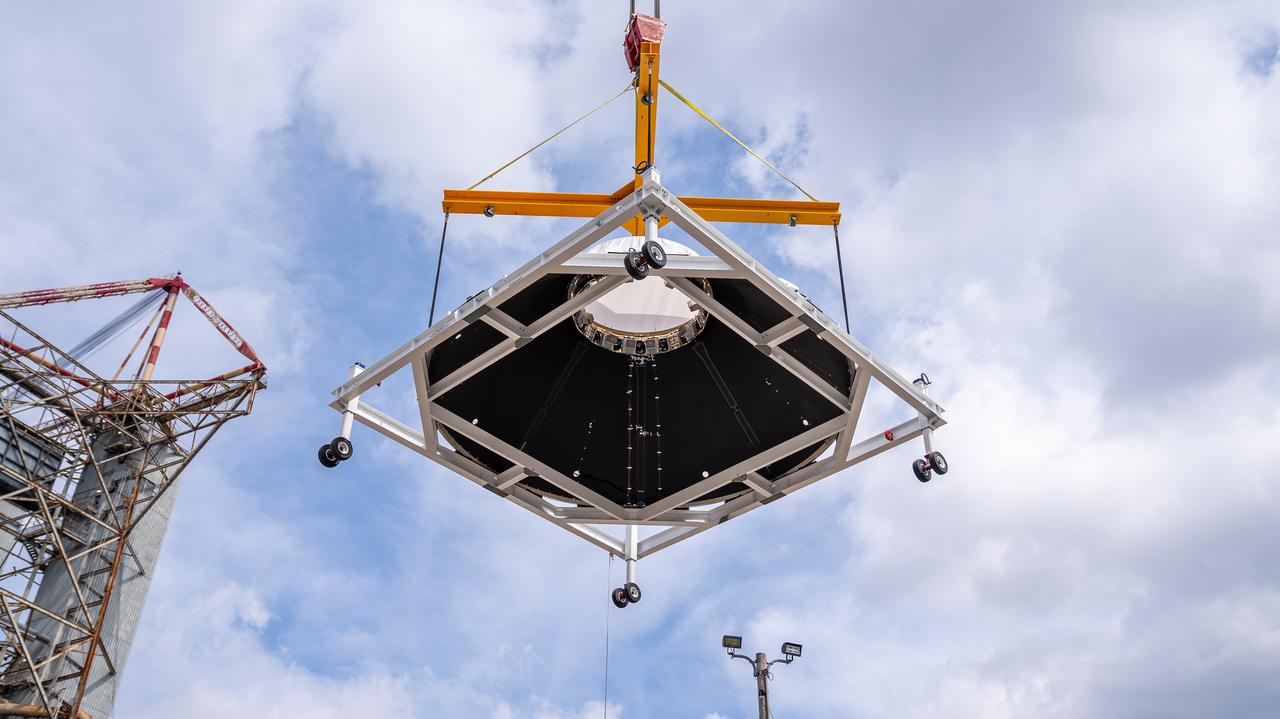
Crews at NASA’s Marshall Space Flight Center in Huntsville, Alabama, moved and installed the payload adapter that will be used in the Block 1B configuration of the SLS (Space Launch System) rocket from Building 4708, where it was manufactured, into Structural Test Stand 4697 at NASA’s Marshall Space Flight Center on March 13.
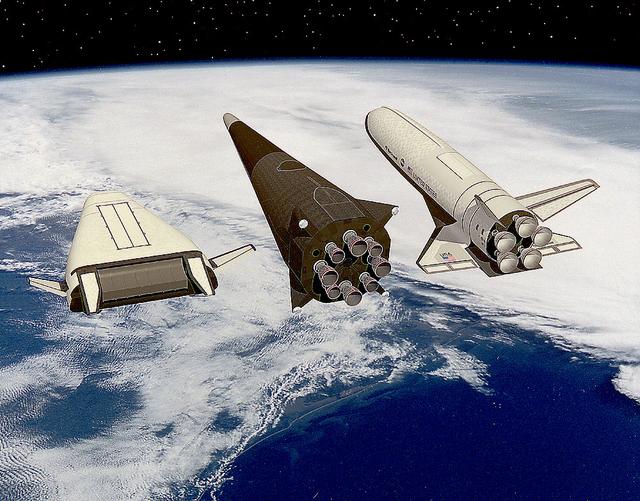
Artist John Frassanito's concept of three Single-Stage-to-Orbit (SSTO) Reusable Launch Vehicles (RLV's). Depicted from the left are: The Lockheed-Martin lifting body configuration that uses an integrated linear aerospike main engine; the McDornell Douglas vertical landing configuration; and the Rockwell wing body configuration that uses liquid oxygen and hydrogen bell engines.
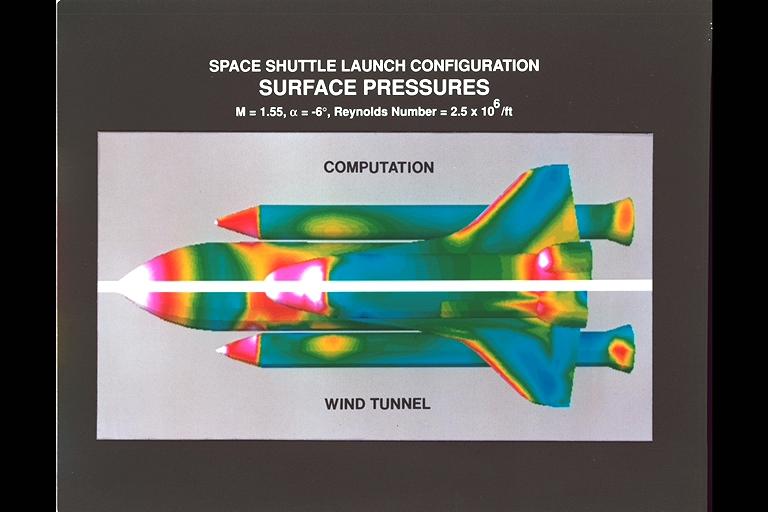
CFD: Space Shuttle Launch Configuration surface pressure comparison (right) computation and wind tunnel
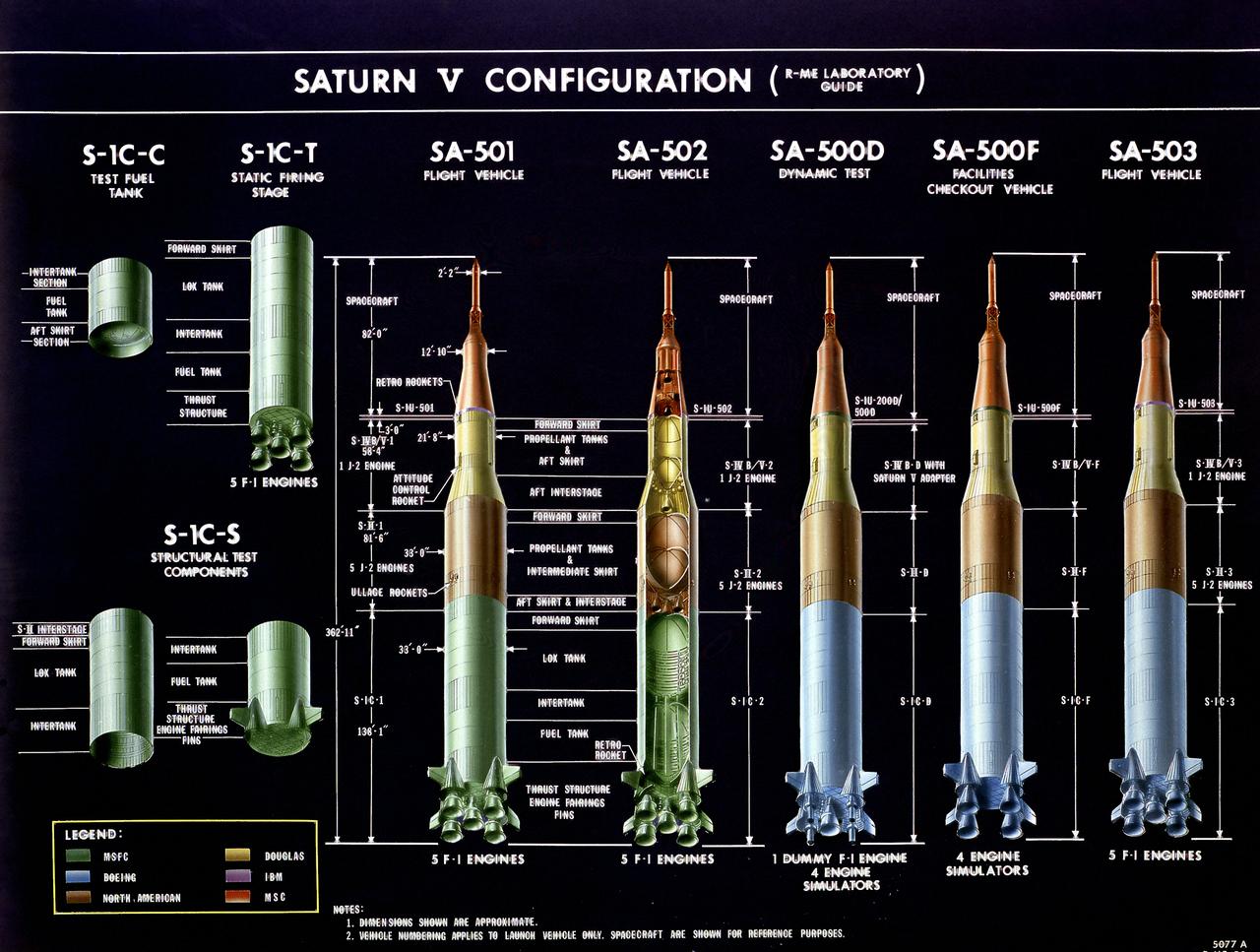
This chart illustrates the testing vehicle and flight vehicle configurations, in addition to the approximate dimensions of the stages of the Saturn V launch vehicle.
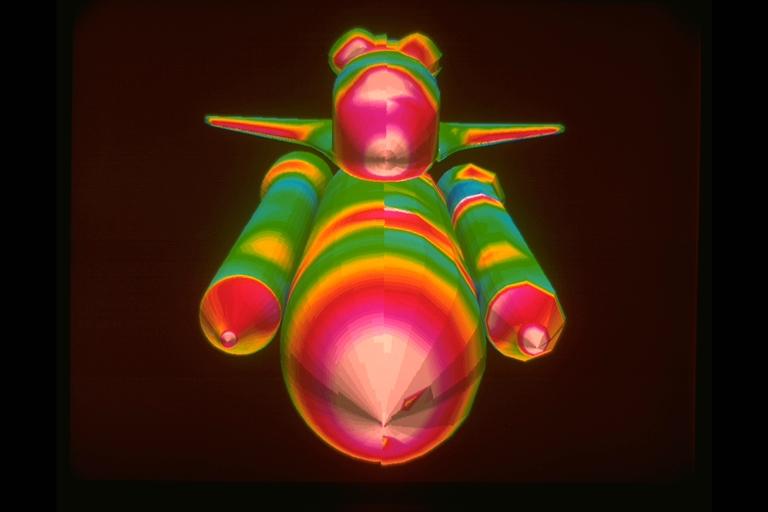
NAS CGI Space Shuttle Launch configuration showing surface pressure comparison (Computational/W.T.)
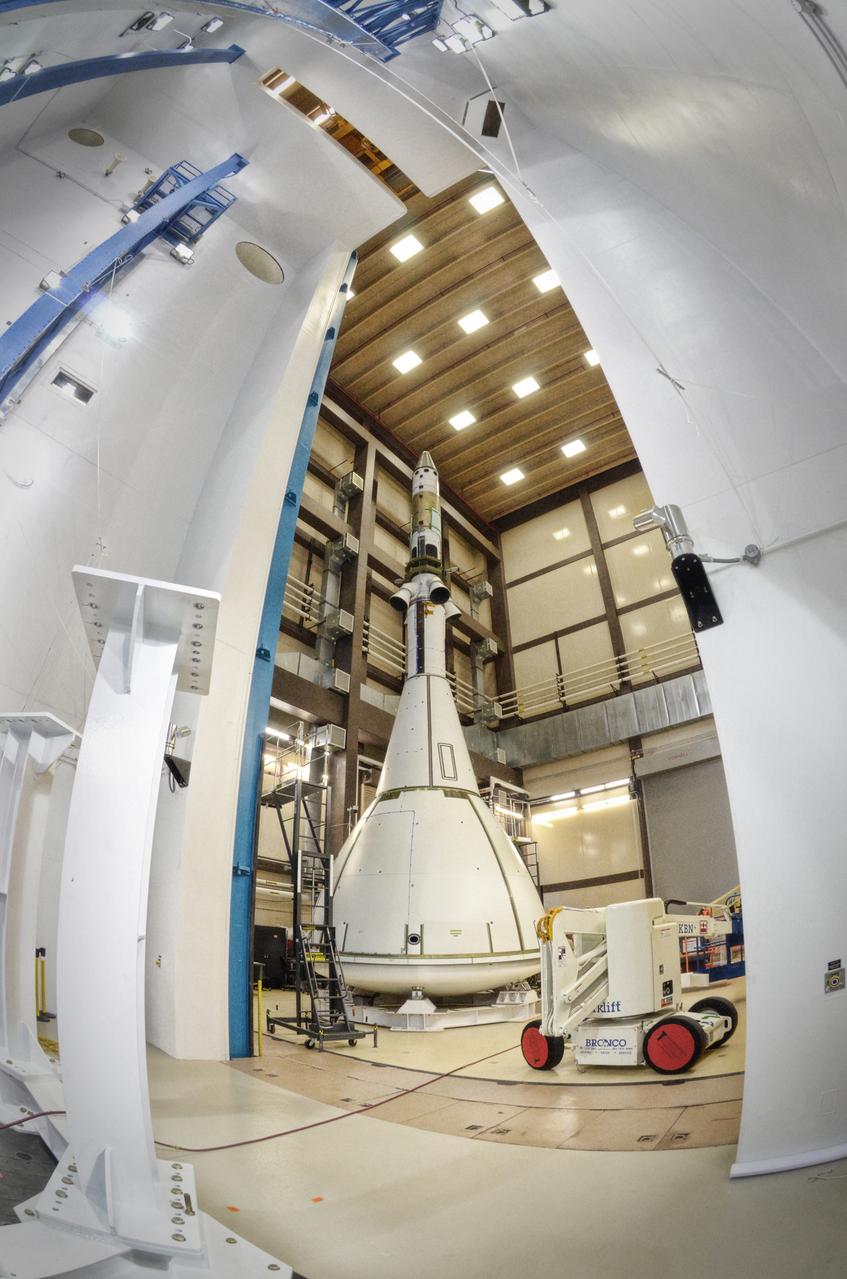
The Orion ground test vehicle is prepared for the Launch Abort Vehicle Configuration Test at Lockheed Martin's facilities in Denver on Sept. 15, 2011. For this test, the vehicle was covered with fillets and ogive panels that resemble the vehicle's launch configuration. The spacecraft underwent testing at sound pressure levels that emulate those experienced at launch and in the event an abort is needed to carry the crew to safety away from a potential problem on the launch pad or during ascent. Part of Batch image transfer from Flickr.
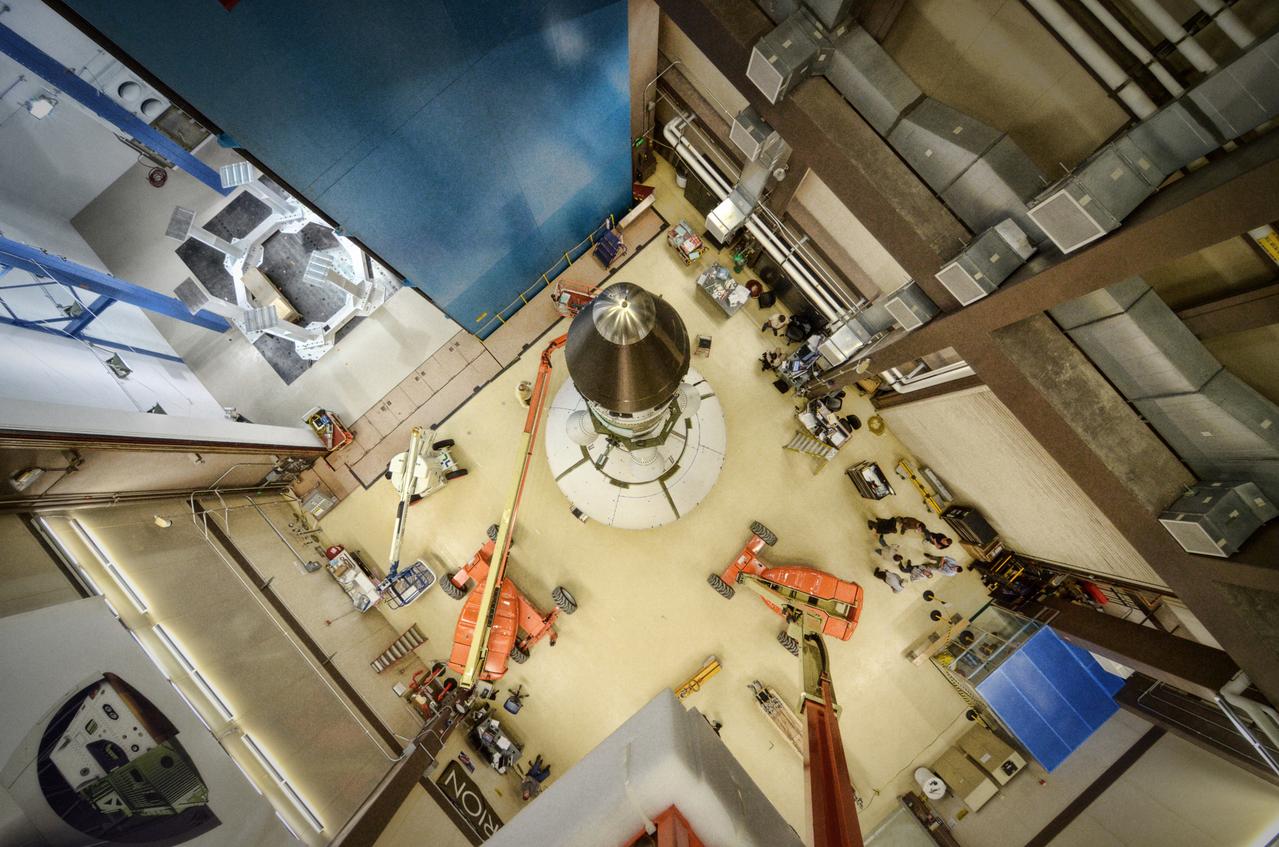
The Orion ground test vehicle is prepared for the Launch Abort Vehicle Configuration Test at Lockheed Martin's facilities in Denver on Sept. 15, 2011. For this test, the vehicle was covered with fillets and ogive panels that resemble the vehicle's launch configuration. The spacecraft underwent testing at sound pressure levels that emulate those experienced at launch and in the event an abort is needed to carry the crew to safety away from a potential problem on the launch pad or during ascent. Part of Batch image transfer from Flickr.
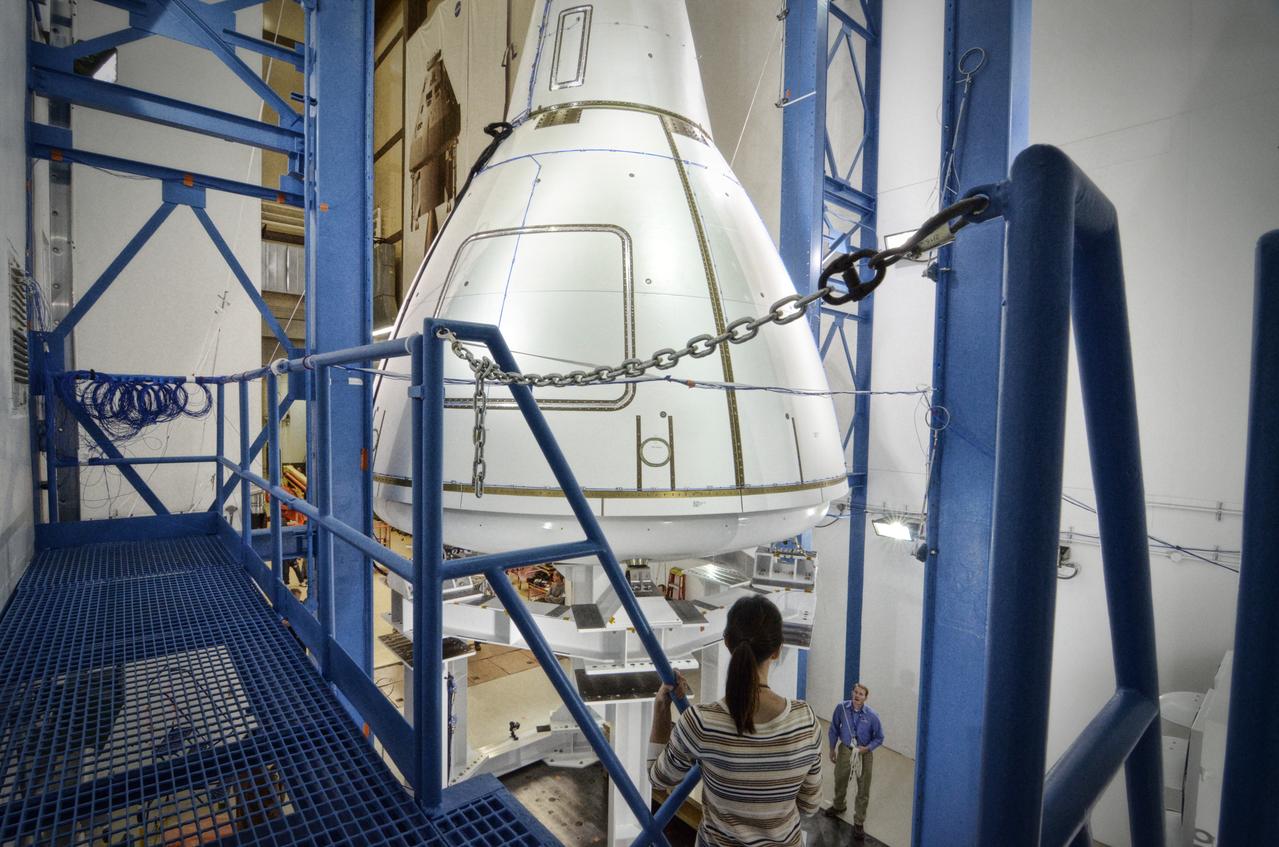
The Orion ground test vehicle is prepared for the Launch Abort Vehicle Configuration Test at Lockheed Martin's facilities in Denver on Sept. 15, 2011. For this test, the vehicle was covered with fillets and ogive panels that resemble the vehicle's launch configuration. The spacecraft underwent testing at sound pressure levels that emulate those experienced at launch and in the event an abort is needed to carry the crew to safety away from a potential problem on the launch pad or during ascent. Part of Batch image transfer from Flickr.

The Orion ground test vehicle is prepared for the Launch Abort Vehicle Configuration Test at Lockheed Martin's facilities in Denver on Sept. 15, 2011. For this test, the vehicle was covered with fillets and ogive panels that resemble the vehicle's launch configuration. The spacecraft underwent testing at sound pressure levels that emulate those experienced at launch and in the event an abort is needed to carry the crew to safety away from a potential problem on the launch pad or during ascent. Part of Batch image transfer from Flickr.

The Orion ground test vehicle is prepared for the Launch Abort Vehicle Configuration Test at Lockheed Martin's facilities in Denver on Sept. 15, 2011. For this test, the vehicle was covered with fillets and ogive panels that resemble the vehicle's launch configuration. The spacecraft underwent testing at sound pressure levels that emulate those experienced at launch and in the event an abort is needed to carry the crew to safety away from a potential problem on the launch pad or during ascent. Part of Batch image transfer from Flickr.
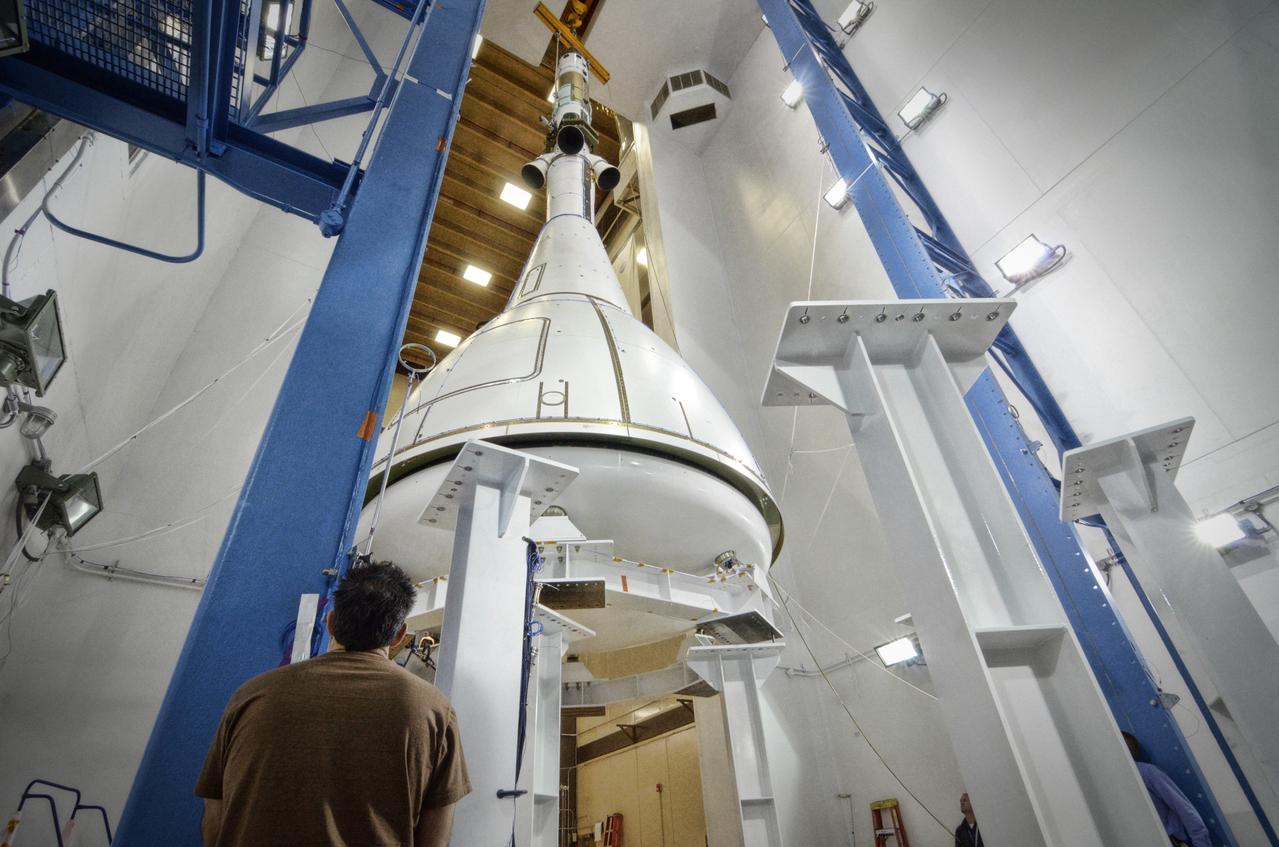
The Orion ground test vehicle is prepared for the Launch Abort Vehicle Configuration Test at Lockheed Martin's facilities in Denver on Sept. 15, 2011. For this test, the vehicle was covered with fillets and ogive panels that resemble the vehicle's launch configuration. The spacecraft underwent testing at sound pressure levels that emulate those experienced at launch and in the event an abort is needed to carry the crew to safety away from a potential problem on the launch pad or during ascent. Part of Batch image transfer from Flickr.
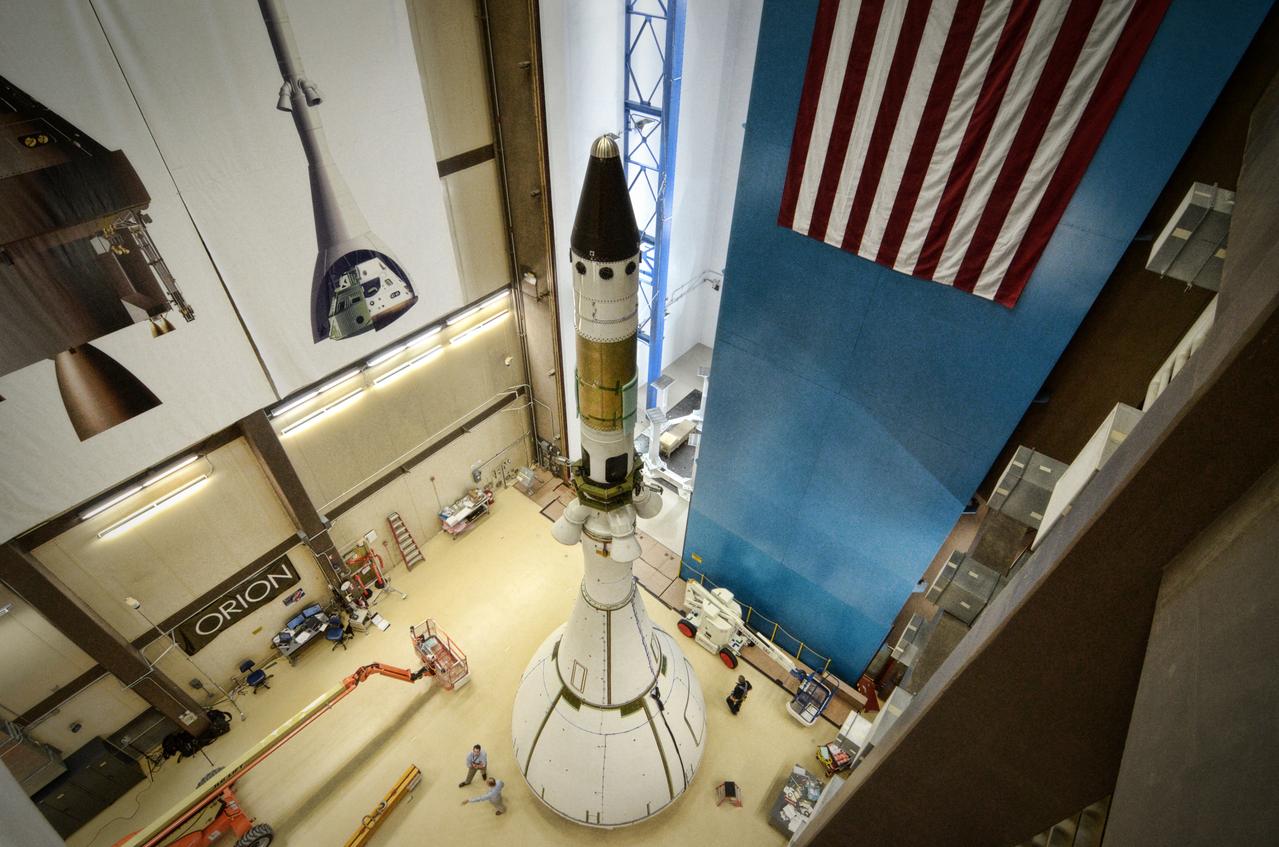
The Orion ground test vehicle is prepared for the Launch Abort Vehicle Configuration Test at Lockheed Martin's facilities in Denver on Sept. 15, 2011. For this test, the vehicle was covered with fillets and ogive panels that resemble the vehicle's launch configuration. The spacecraft underwent testing at sound pressure levels that emulate those experienced at launch and in the event an abort is needed to carry the crew to safety away from a potential problem on the launch pad or during ascent. Part of Batch image transfer from Flickr.

The Orion ground test vehicle is prepared for the Launch Abort Vehicle Configuration Test at Lockheed Martin's facilities in Denver on Sept. 15, 2011. For this test, the vehicle was covered with fillets and ogive panels that resemble the vehicle's launch configuration. The spacecraft underwent testing at sound pressure levels that emulate those experienced at launch and in the event an abort is needed to carry the crew to safety away from a potential problem on the launch pad or during ascent. Part of Batch image transfer from Flickr.
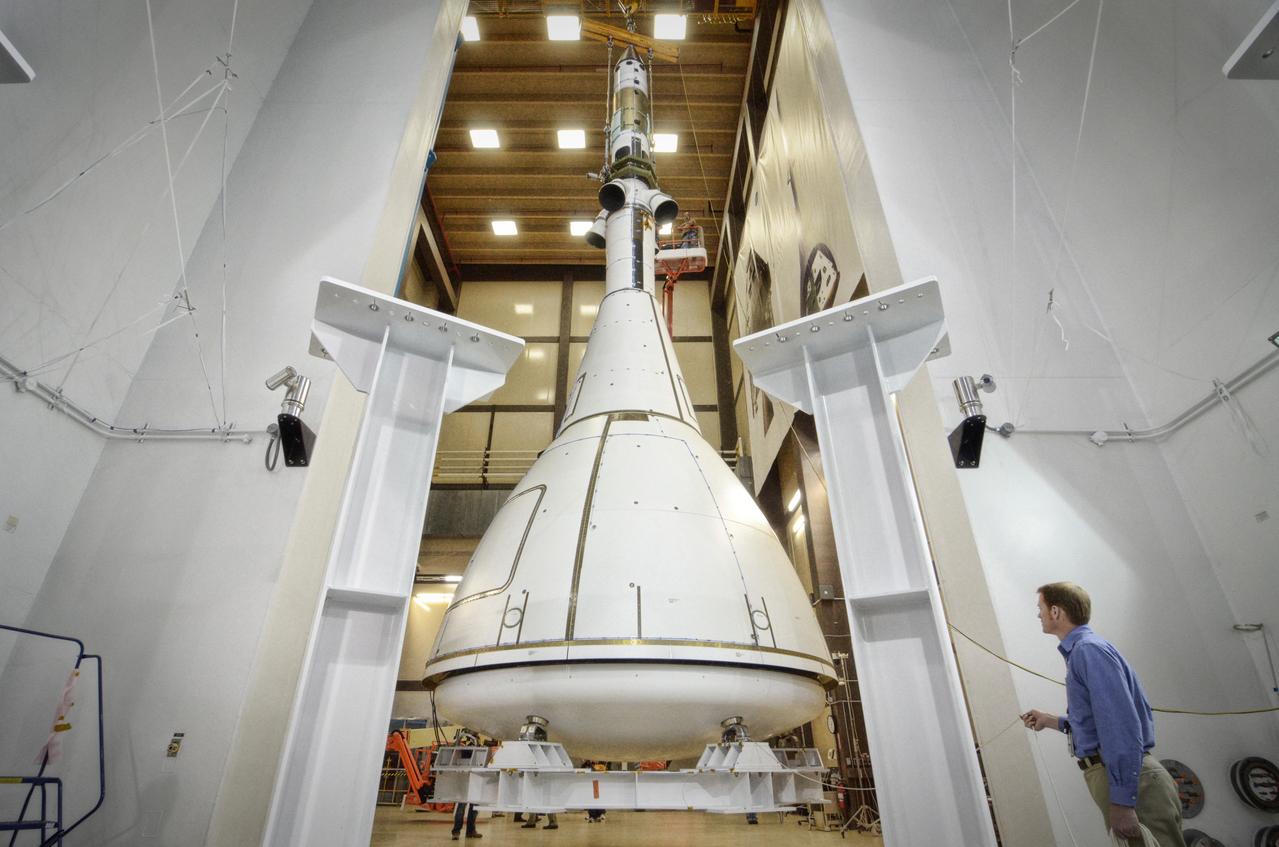
The Orion ground test vehicle is prepared for the Launch Abort Vehicle Configuration Test at Lockheed Martin's facilities in Denver on Sept. 15, 2011. For this test, the vehicle was covered with fillets and ogive panels that resemble the vehicle's launch configuration. The spacecraft underwent testing at sound pressure levels that emulate those experienced at launch and in the event an abort is needed to carry the crew to safety away from a potential problem on the launch pad or during ascent. Part of Batch image transfer from Flickr.
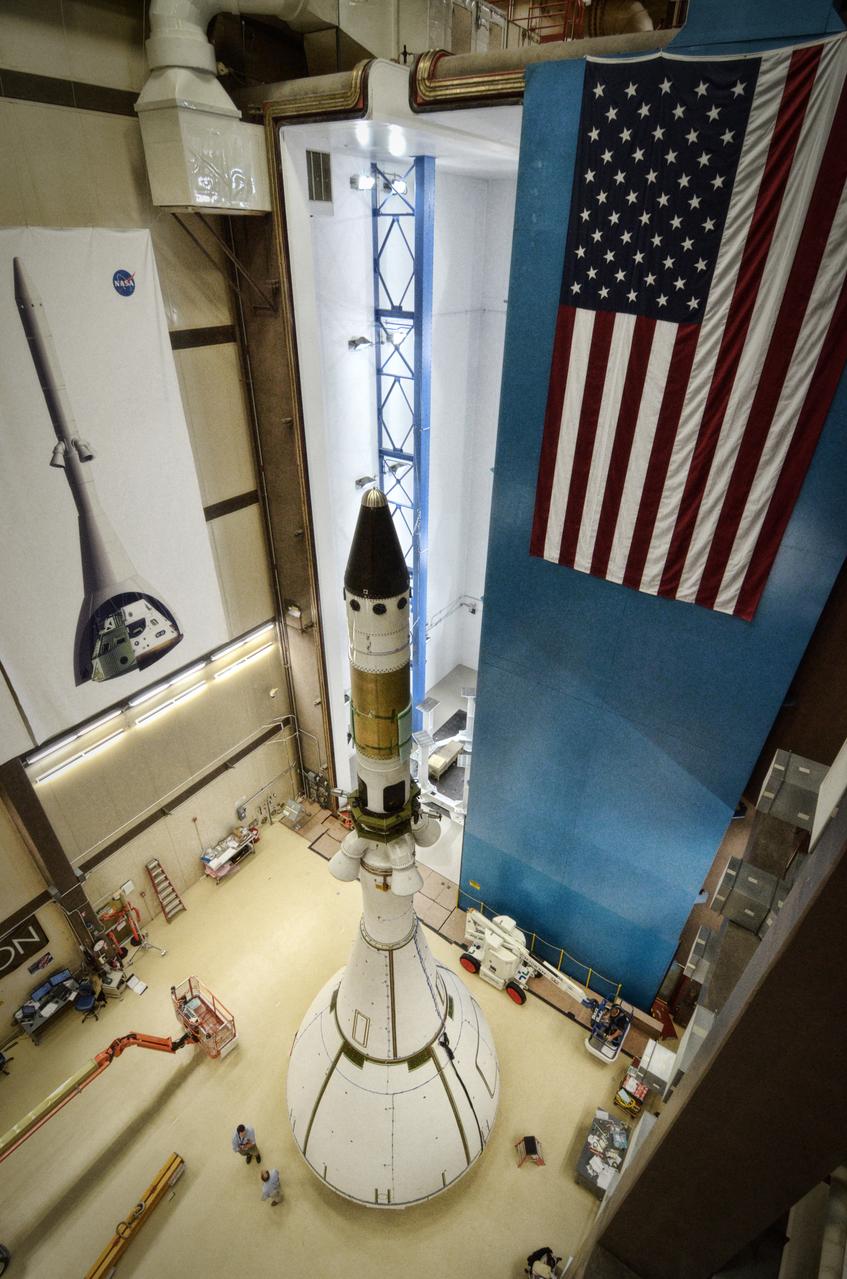
The Orion ground test vehicle is prepared for the Launch Abort Vehicle Configuration Test at Lockheed Martin's facilities in Denver on Sept. 15, 2011. For this test, the vehicle was covered with fillets and ogive panels that resemble the vehicle's launch configuration. The spacecraft underwent testing at sound pressure levels that emulate those experienced at launch and in the event an abort is needed to carry the crew to safety away from a potential problem on the launch pad or during ascent. Part of Batch image transfer from Flickr.
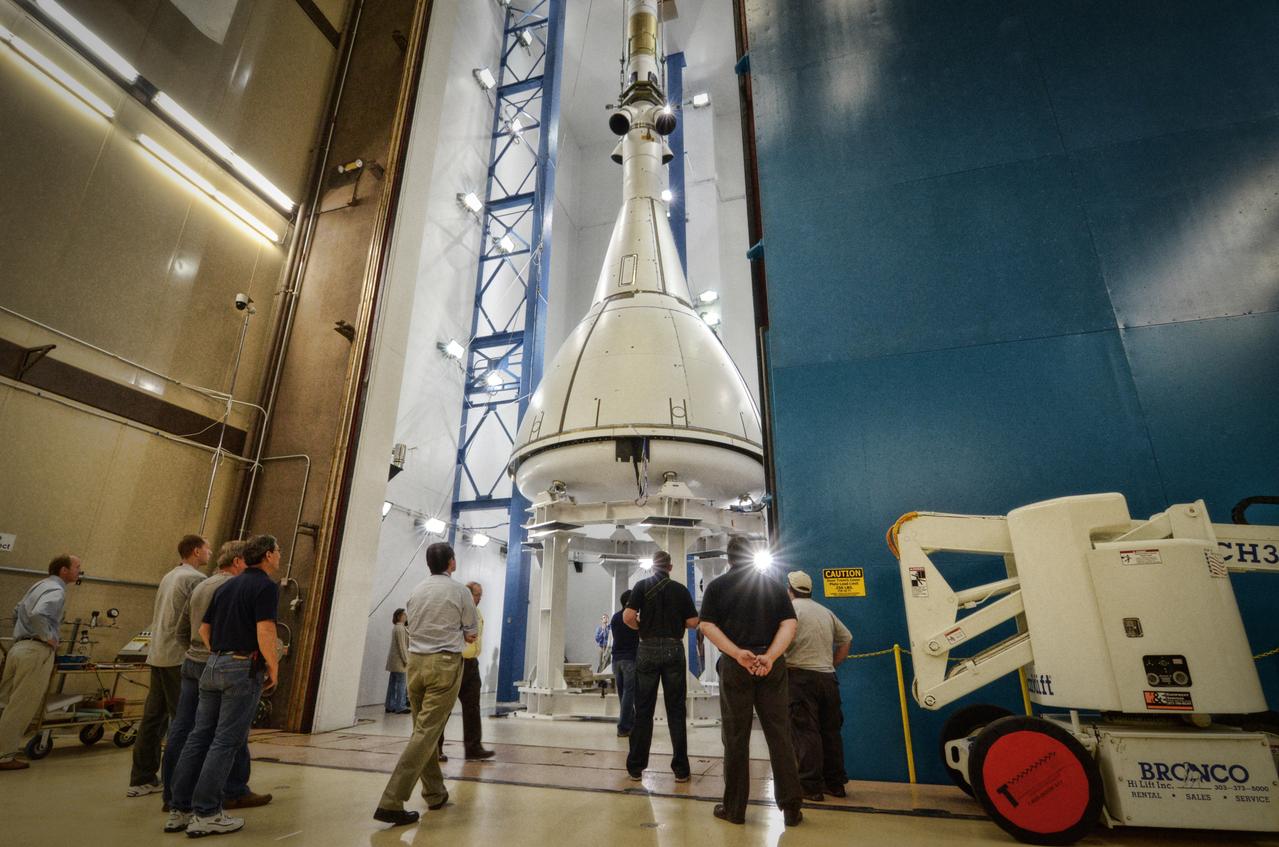
The Orion ground test vehicle is prepared for the Launch Abort Vehicle Configuration Test at Lockheed Martin's facilities in Denver on Sept. 15, 2011. For this test, the vehicle was covered with fillets and ogive panels that resemble the vehicle's launch configuration. The spacecraft underwent testing at sound pressure levels that emulate those experienced at launch and in the event an abort is needed to carry the crew to safety away from a potential problem on the launch pad or during ascent. Part of Batch image transfer from Flickr.
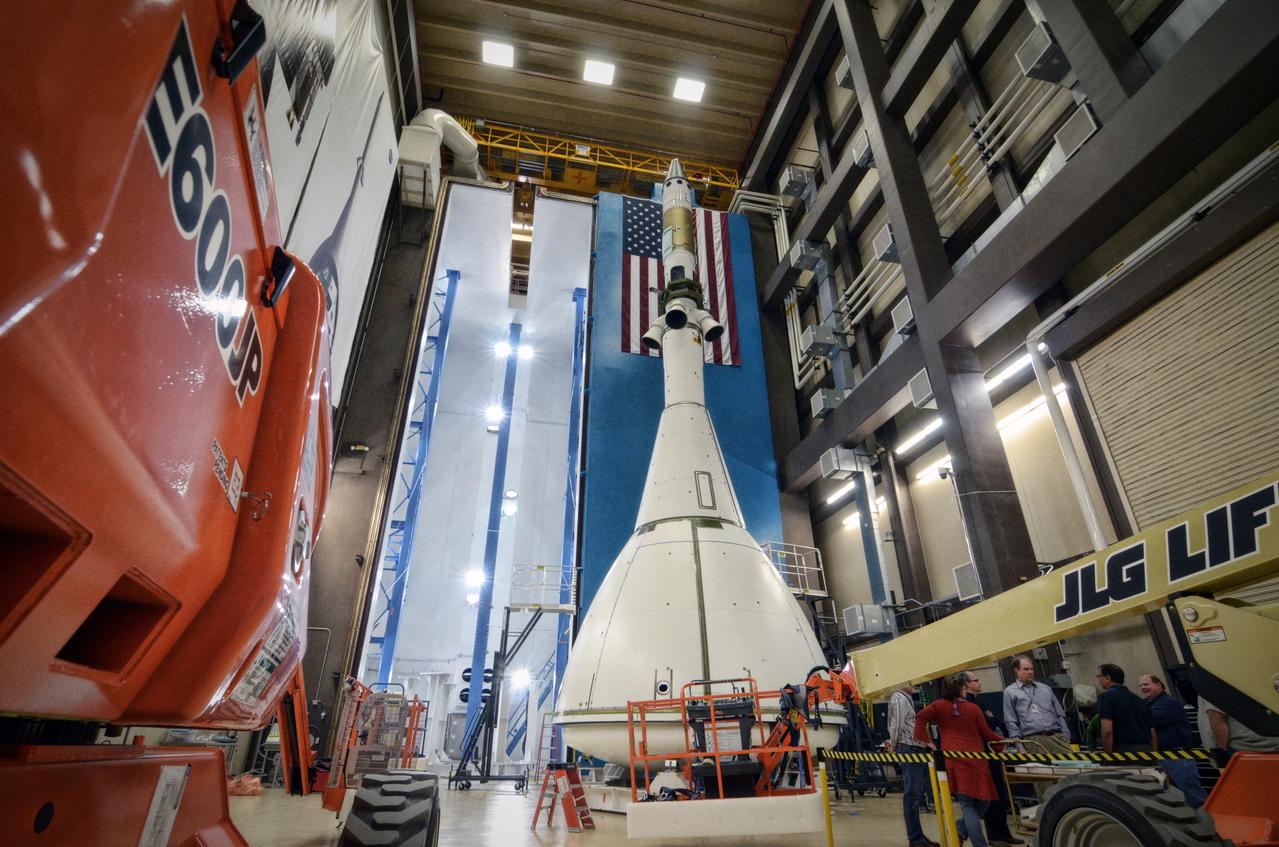
The Orion ground test vehicle is prepared for the Launch Abort Vehicle Configuration Test at Lockheed Martin's facilities in Denver on Sept. 14, 2011. For this test, the vehicle was covered with fillets and ogive panels that resemble the vehicle's launch configuration. The spacecraft underwent testing at sound pressure levels that emulate those experienced at launch and in the event an abort is needed to carry the crew to safety away from a potential problem on the launch pad or during ascent. Part of Batch image transfer from Flickr.
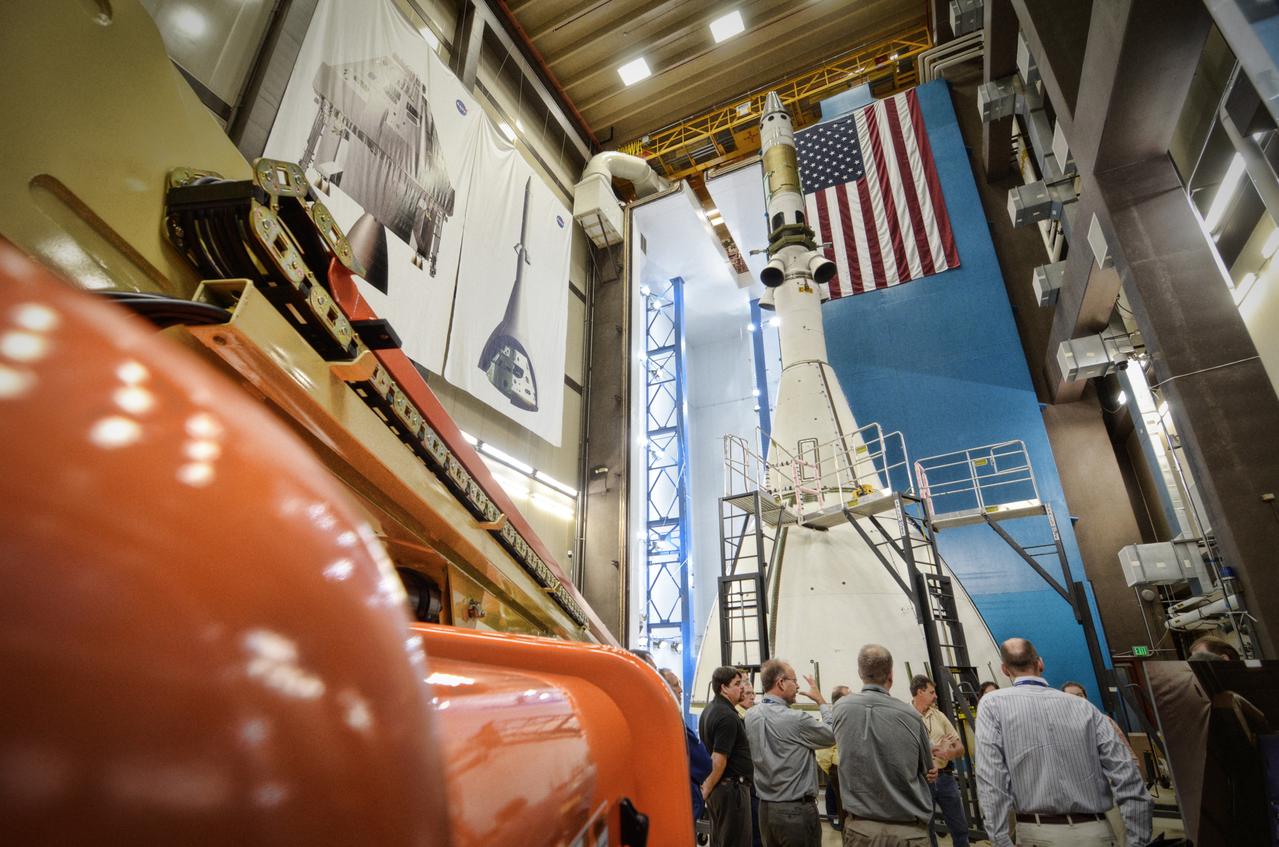
The Orion ground test vehicle is prepared for the Launch Abort Vehicle Configuration Test at Lockheed Martin's facilities in Denver on Sept. 15, 2011. For this test, the vehicle was covered with fillets and ogive panels that resemble the vehicle's launch configuration. The spacecraft underwent testing at sound pressure levels that emulate those experienced at launch and in the event an abort is needed to carry the crew to safety away from a potential problem on the launch pad or during ascent. Part of Batch image transfer from Flickr.
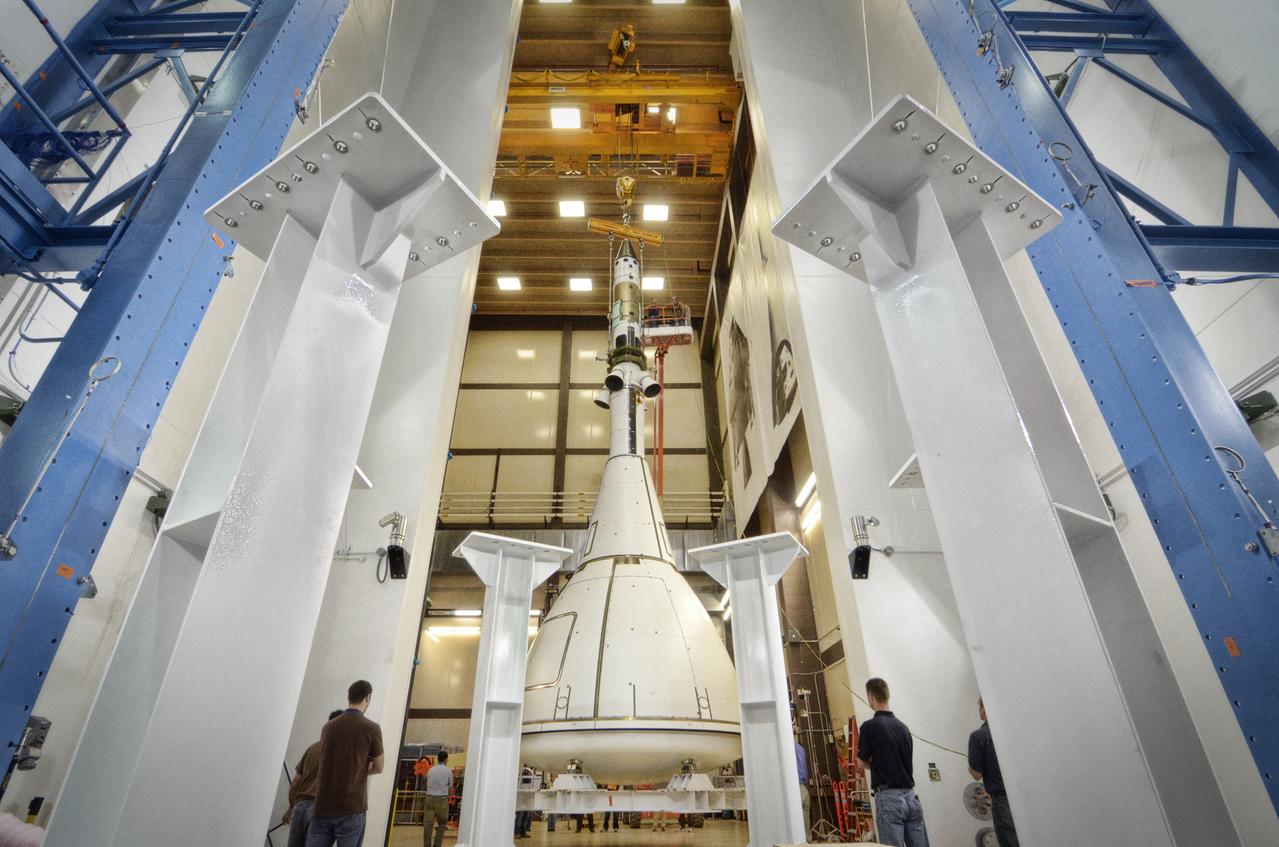
The Orion ground test vehicle is prepared for the Launch Abort Vehicle Configuration Test at Lockheed Martin's facilities in Denver on Sept. 15, 2011. For this test, the vehicle was covered with fillets and ogive panels that resemble the vehicle's launch configuration. The spacecraft underwent testing at sound pressure levels that emulate those experienced at launch and in the event an abort is needed to carry the crew to safety away from a potential problem on the launch pad or during ascent. Part of Batch image transfer from Flickr.

The Orion ground test vehicle is prepared for the Launch Abort Vehicle Configuration Test at Lockheed Martin's facilities in Denver on Sept. 15, 2011. For this test, the vehicle was covered with fillets and ogive panels that resemble the vehicle's launch configuration. The spacecraft underwent testing at sound pressure levels that emulate those experienced at launch and in the event an abort is needed to carry the crew to safety away from a potential problem on the launch pad or during ascent. Part of Batch image transfer from Flickr.

The Orion ground test vehicle is prepared for the Launch Abort Vehicle Configuration Test at Lockheed Martin's facilities in Denver on Sept. 14, 2011. For this test, the vehicle was covered with fillets and ogive panels that resemble the vehicle's launch configuration. The spacecraft underwent testing at sound pressure levels that emulate those experienced at launch and in the event an abort is needed to carry the crew to safety away from a potential problem on the launch pad or during ascent. Part of Batch image transfer from Flickr.
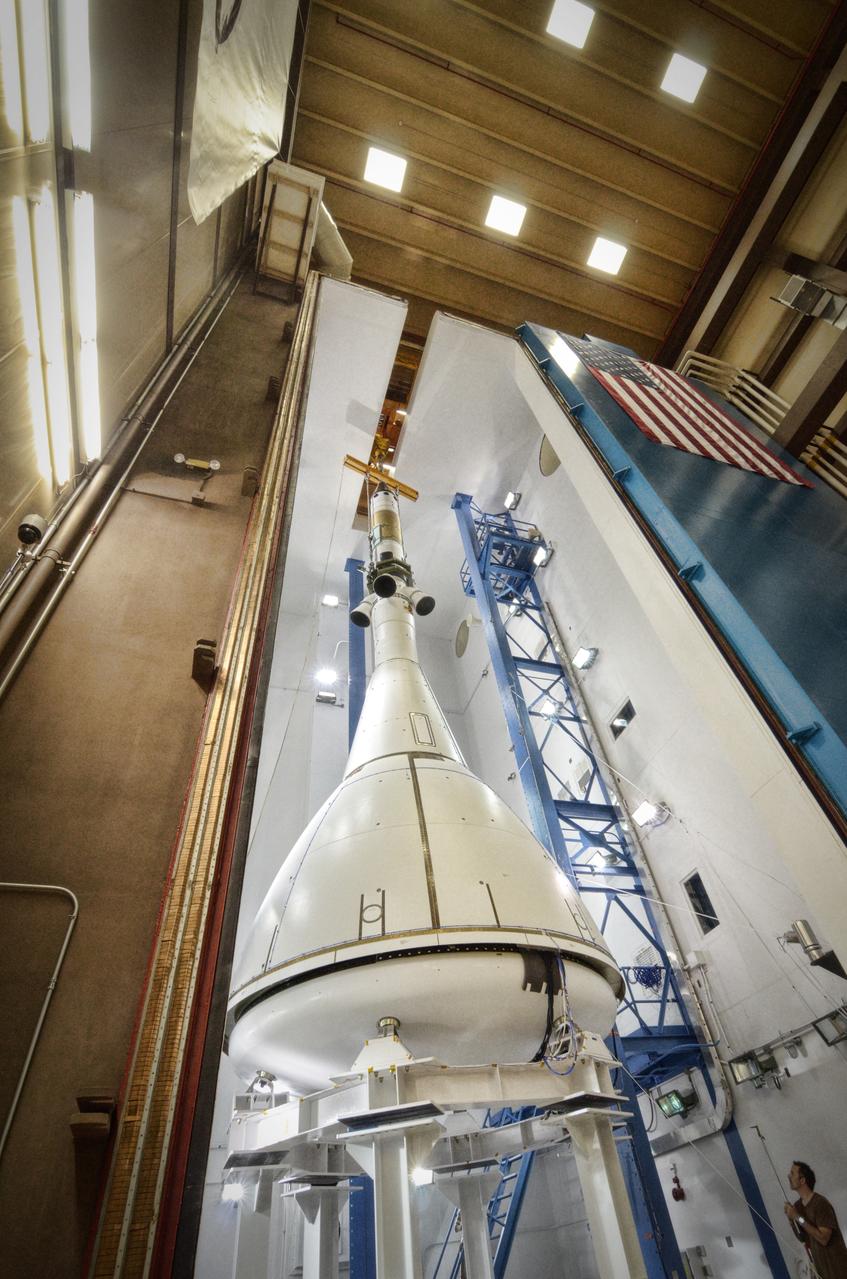
The Orion ground test vehicle is prepared for the Launch Abort Vehicle Configuration Test at Lockheed Martin's facilities in Denver on Sept. 15, 2011. For this test, the vehicle was covered with fillets and ogive panels that resemble the vehicle's launch configuration. The spacecraft underwent testing at sound pressure levels that emulate those experienced at launch and in the event an abort is needed to carry the crew to safety away from a potential problem on the launch pad or during ascent. Part of Batch image transfer from Flickr.
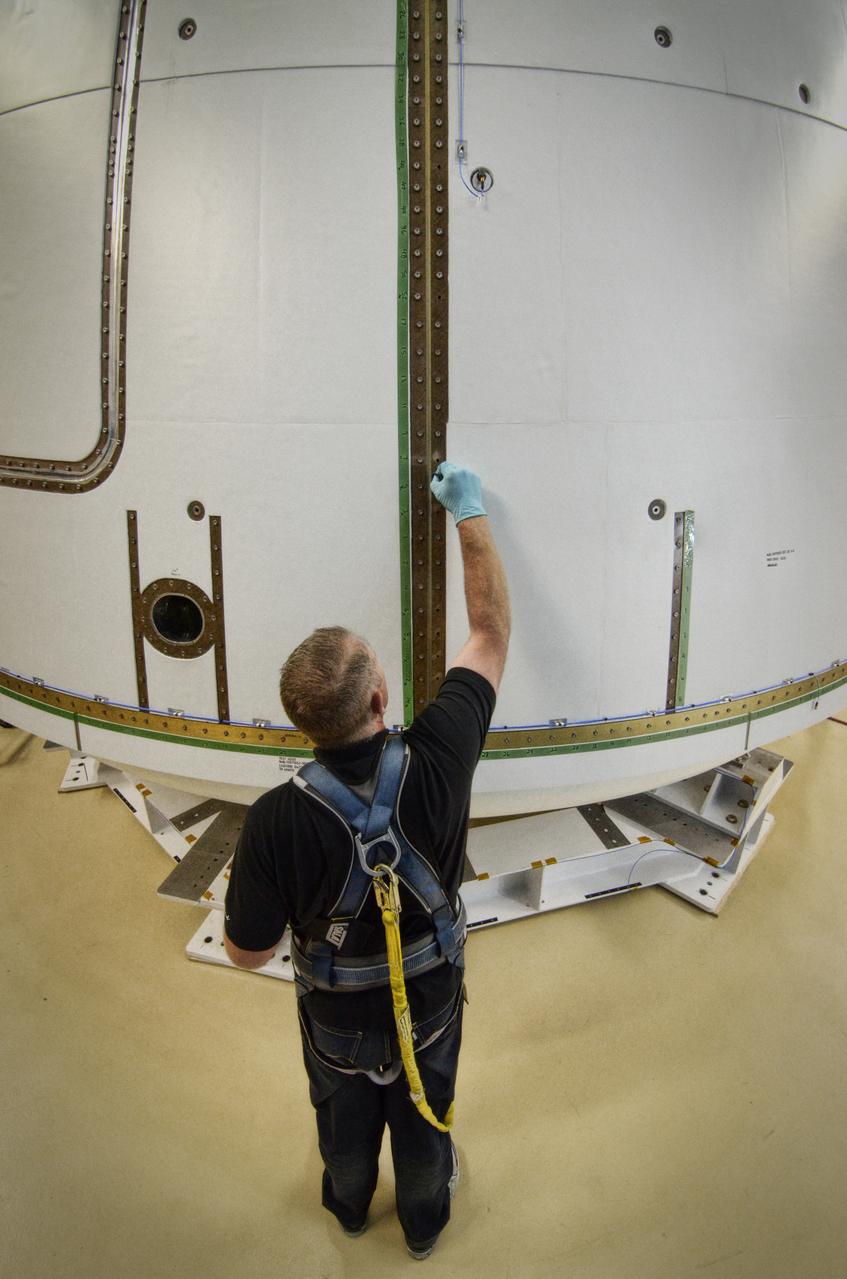
The Orion ground test vehicle is prepared for the Launch Abort Vehicle Configuration Test at Lockheed Martin's facilities in Denver on Sept. 15, 2011. For this test, the vehicle was covered with fillets and ogive panels that resemble the vehicle's launch configuration. The spacecraft underwent testing at sound pressure levels that emulate those experienced at launch and in the event an abort is needed to carry the crew to safety away from a potential problem on the launch pad or during ascent. Part of Batch image transfer from Flickr.

The Orion ground test vehicle is prepared for the Launch Abort Vehicle Configuration Test at Lockheed Martin's facilities in Denver on Sept. 15, 2011. For this test, the vehicle was covered with fillets and ogive panels that resemble the vehicle's launch configuration. The spacecraft underwent testing at sound pressure levels that emulate those experienced at launch and in the event an abort is needed to carry the crew to safety away from a potential problem on the launch pad or during ascent. Part of Batch image transfer from Flickr.
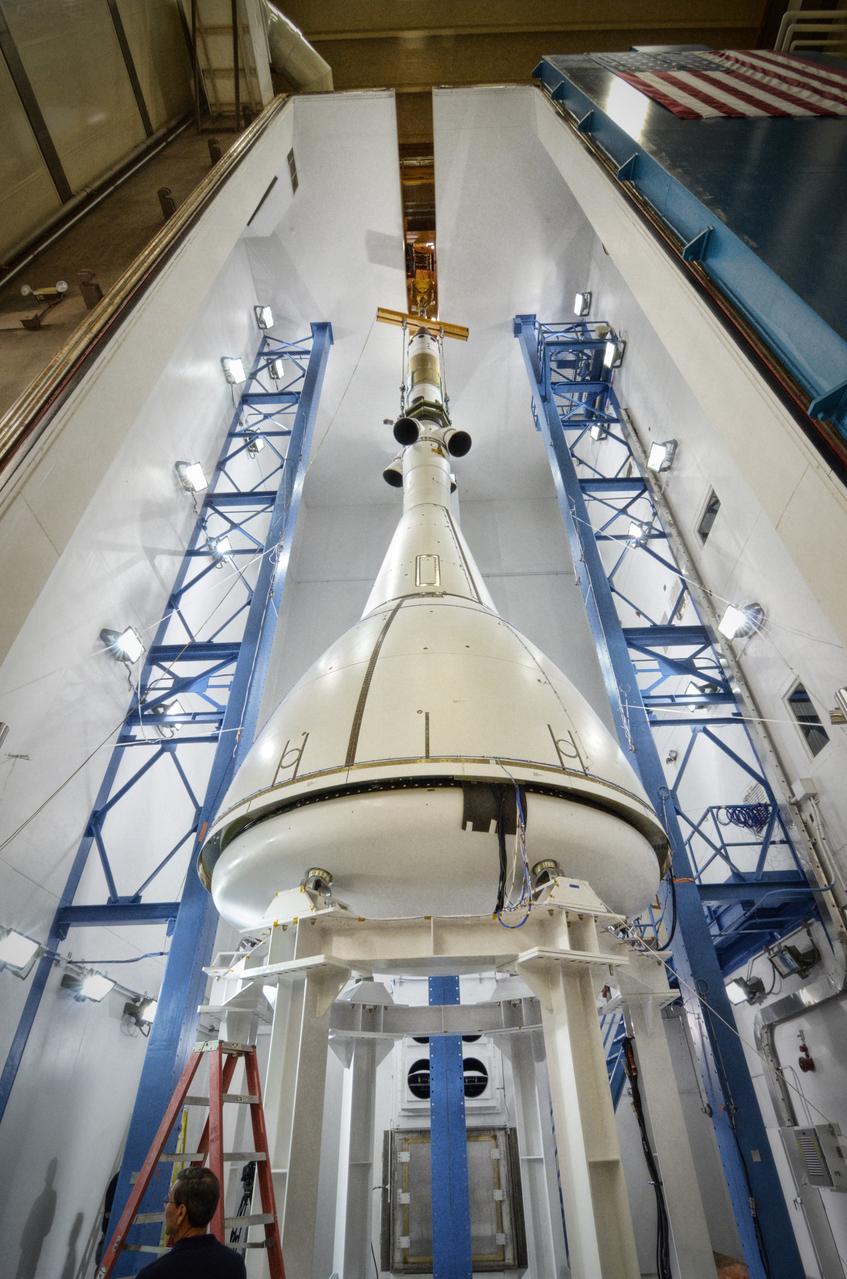
The Orion ground test vehicle is prepared for the Launch Abort Vehicle Configuration Test at Lockheed Martin's facilities in Denver on Sept. 15, 2011. For this test, the vehicle was covered with fillets and ogive panels that resemble the vehicle's launch configuration. The spacecraft underwent testing at sound pressure levels that emulate those experienced at launch and in the event an abort is needed to carry the crew to safety away from a potential problem on the launch pad or during ascent. Part of Batch image transfer from Flickr.
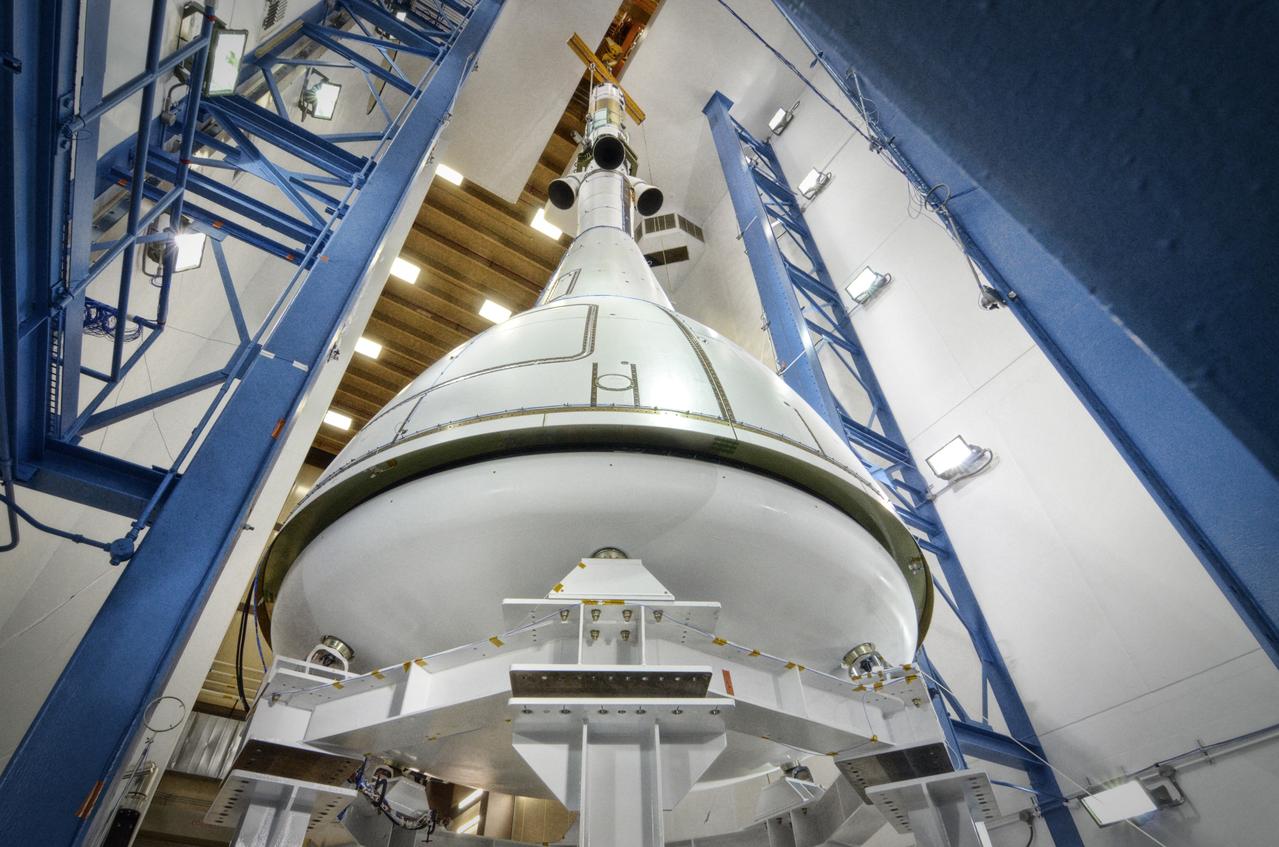
The Orion ground test vehicle is prepared for the Launch Abort Vehicle Configuration Test at Lockheed Martin's facilities in Denver on Sept. 15, 2011. For this test, the vehicle was covered with fillets and ogive panels that resemble the vehicle's launch configuration. The spacecraft underwent testing at sound pressure levels that emulate those experienced at launch and in the event an abort is needed to carry the crew to safety away from a potential problem on the launch pad or during ascent. Part of Batch image transfer from Flickr.
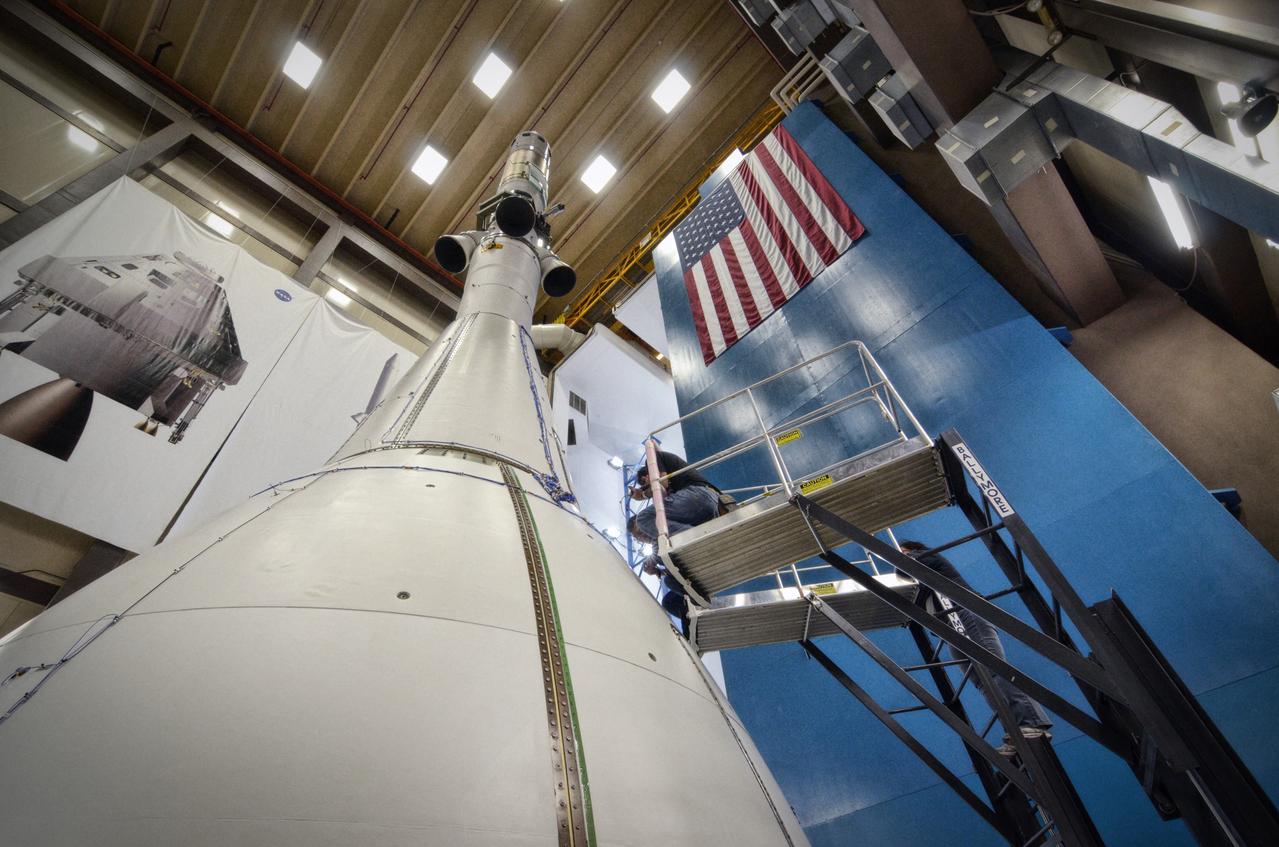
The Orion ground test vehicle is prepared for the Launch Abort Vehicle Configuration Test at Lockheed Martin's facilities in Denver on Sept. 14, 2011. For this test, the vehicle was covered with fillets and ogive panels that resemble the vehicle's launch configuration. The spacecraft underwent testing at sound pressure levels that emulate those experienced at launch and in the event an abort is needed to carry the crew to safety away from a potential problem on the launch pad or during ascent. Part of Batch image transfer from Flickr.
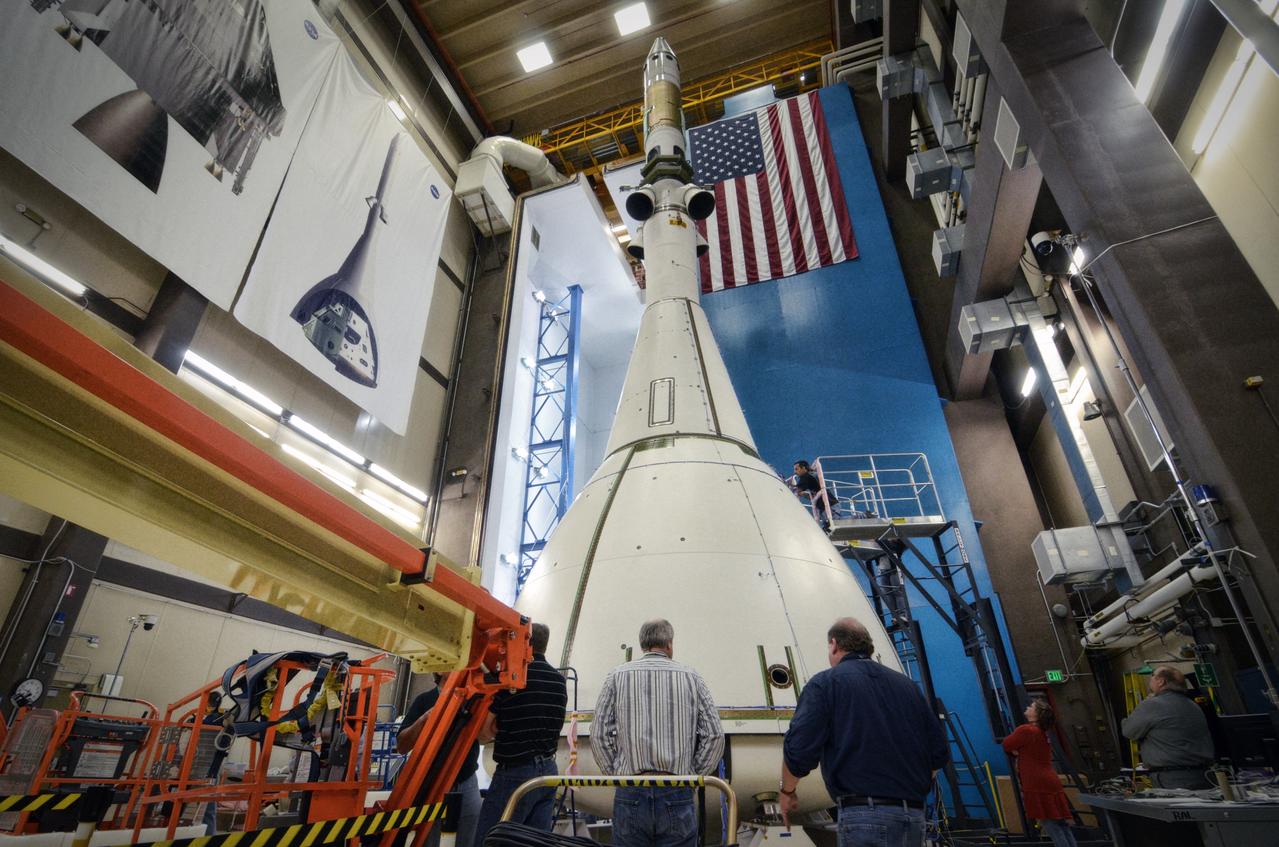
The Orion ground test vehicle is prepared for the Launch Abort Vehicle Configuration Test at Lockheed Martin's facilities in Denver on Sept. 14, 2011. For this test, the vehicle was covered with fillets and ogive panels that resemble the vehicle's launch configuration. The spacecraft underwent testing at sound pressure levels that emulate those experienced at launch and in the event an abort is needed to carry the crew to safety away from a potential problem on the launch pad or during ascent. Part of Batch image transfer from Flickr.
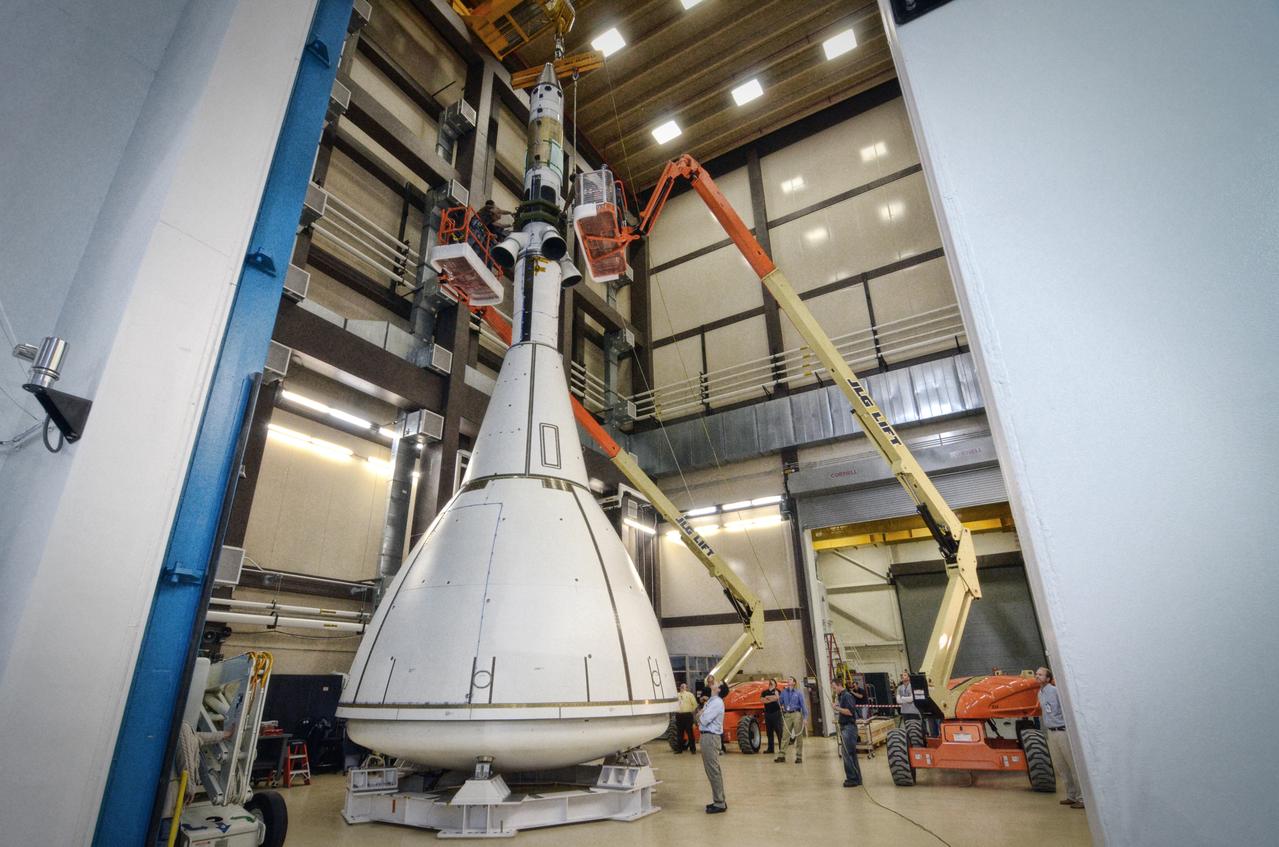
The Orion ground test vehicle is prepared for the Launch Abort Vehicle Configuration Test at Lockheed Martin's facilities in Denver on Sept. 15, 2011. For this test, the vehicle was covered with fillets and ogive panels that resemble the vehicle's launch configuration. The spacecraft underwent testing at sound pressure levels that emulate those experienced at launch and in the event an abort is needed to carry the crew to safety away from a potential problem on the launch pad or during ascent. Part of Batch image transfer from Flickr.
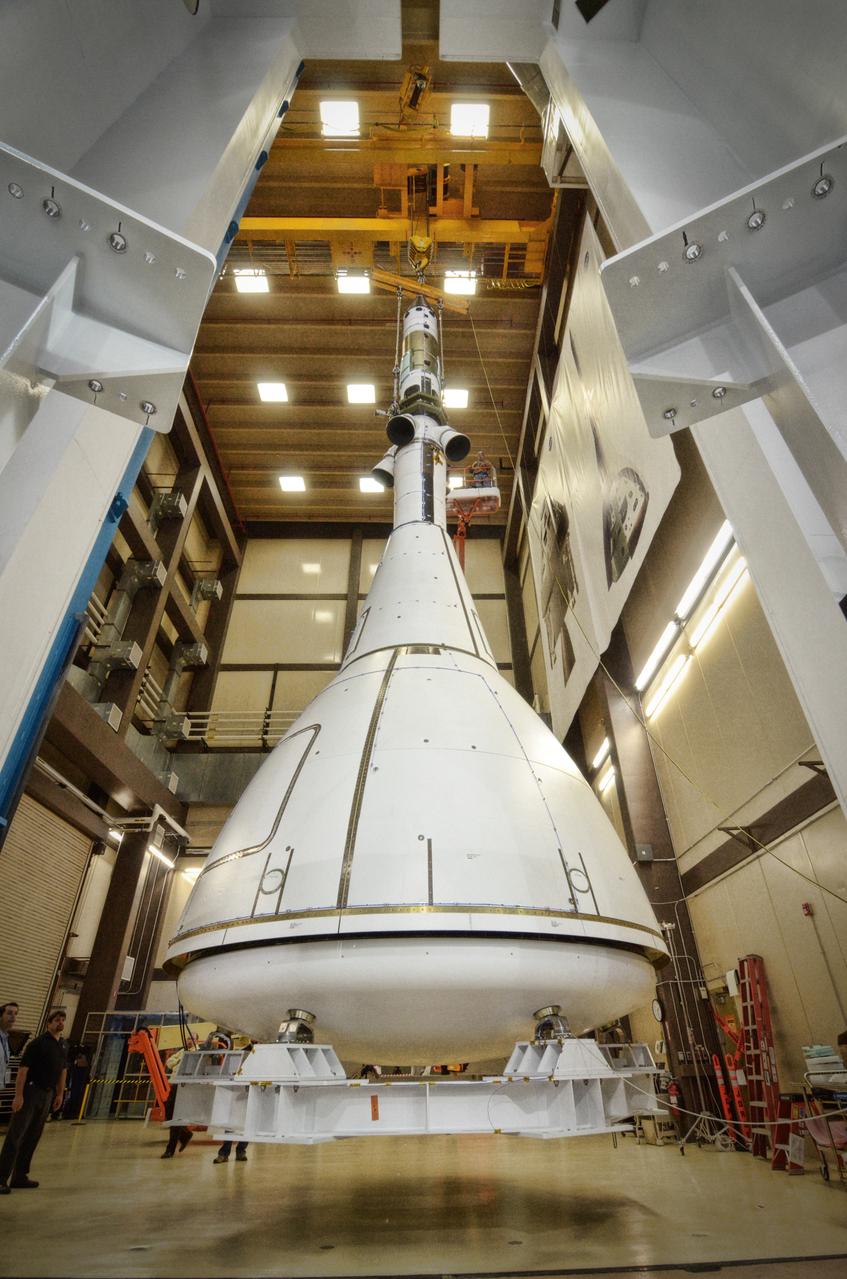
The Orion ground test vehicle is prepared for the Launch Abort Vehicle Configuration Test at Lockheed Martin's facilities in Denver on Sept. 15, 2011. For this test, the vehicle was covered with fillets and ogive panels that resemble the vehicle's launch configuration. The spacecraft underwent testing at sound pressure levels that emulate those experienced at launch and in the event an abort is needed to carry the crew to safety away from a potential problem on the launch pad or during ascent. Part of Batch image transfer from Flickr.
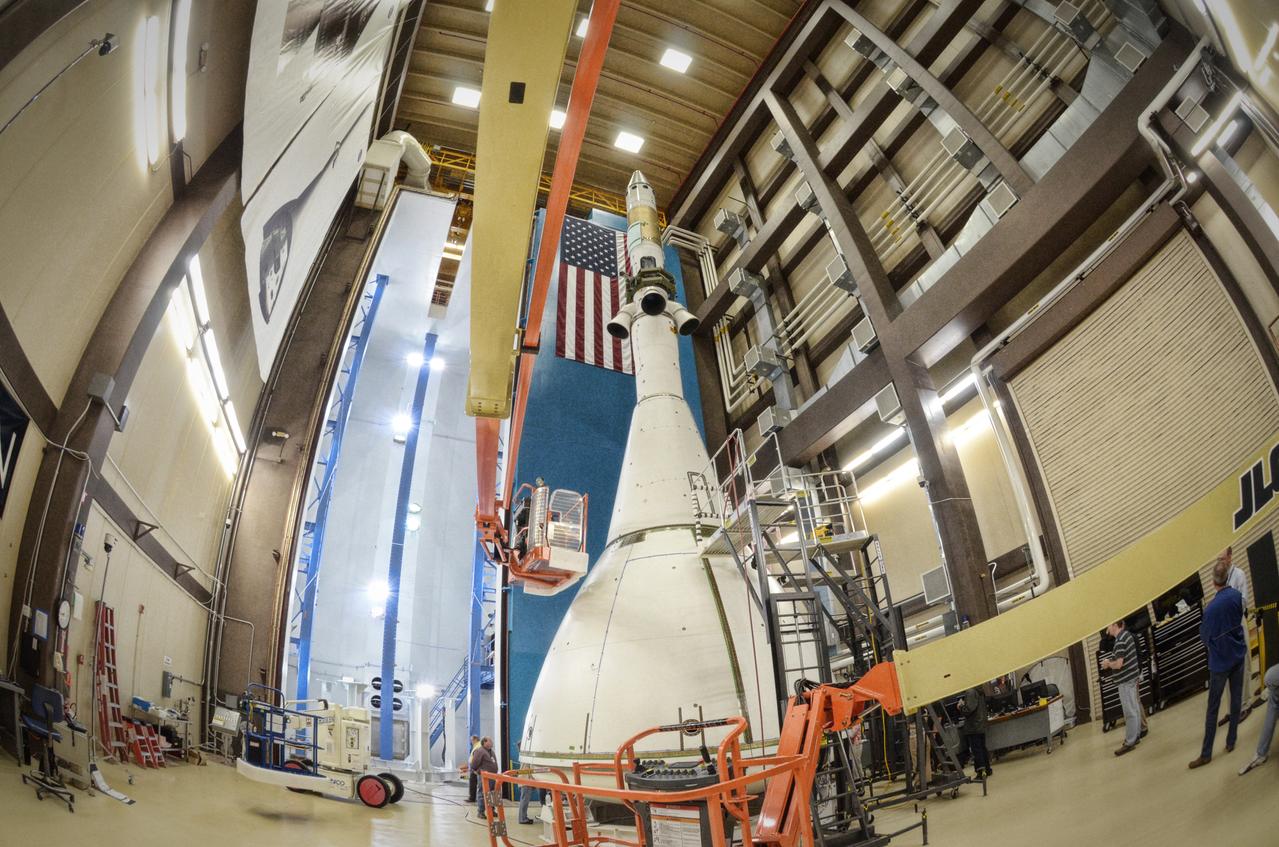
The Orion ground test vehicle is prepared for the Launch Abort Vehicle Configuration Test at Lockheed Martin's facilities in Denver on Sept. 15, 2011. For this test, the vehicle was covered with fillets and ogive panels that resemble the vehicle's launch configuration. The spacecraft underwent testing at sound pressure levels that emulate those experienced at launch and in the event an abort is needed to carry the crew to safety away from a potential problem on the launch pad or during ascent. Part of Batch image transfer from Flickr.

The Orion ground test vehicle is prepared for the Launch Abort Vehicle Configuration Test at Lockheed Martin's facilities in Denver on Sept. 15, 2011. For this test, the vehicle was covered with fillets and ogive panels that resemble the vehicle's launch configuration. The spacecraft underwent testing at sound pressure levels that emulate those experienced at launch and in the event an abort is needed to carry the crew to safety away from a potential problem on the launch pad or during ascent. Part of Batch image transfer from Flickr.
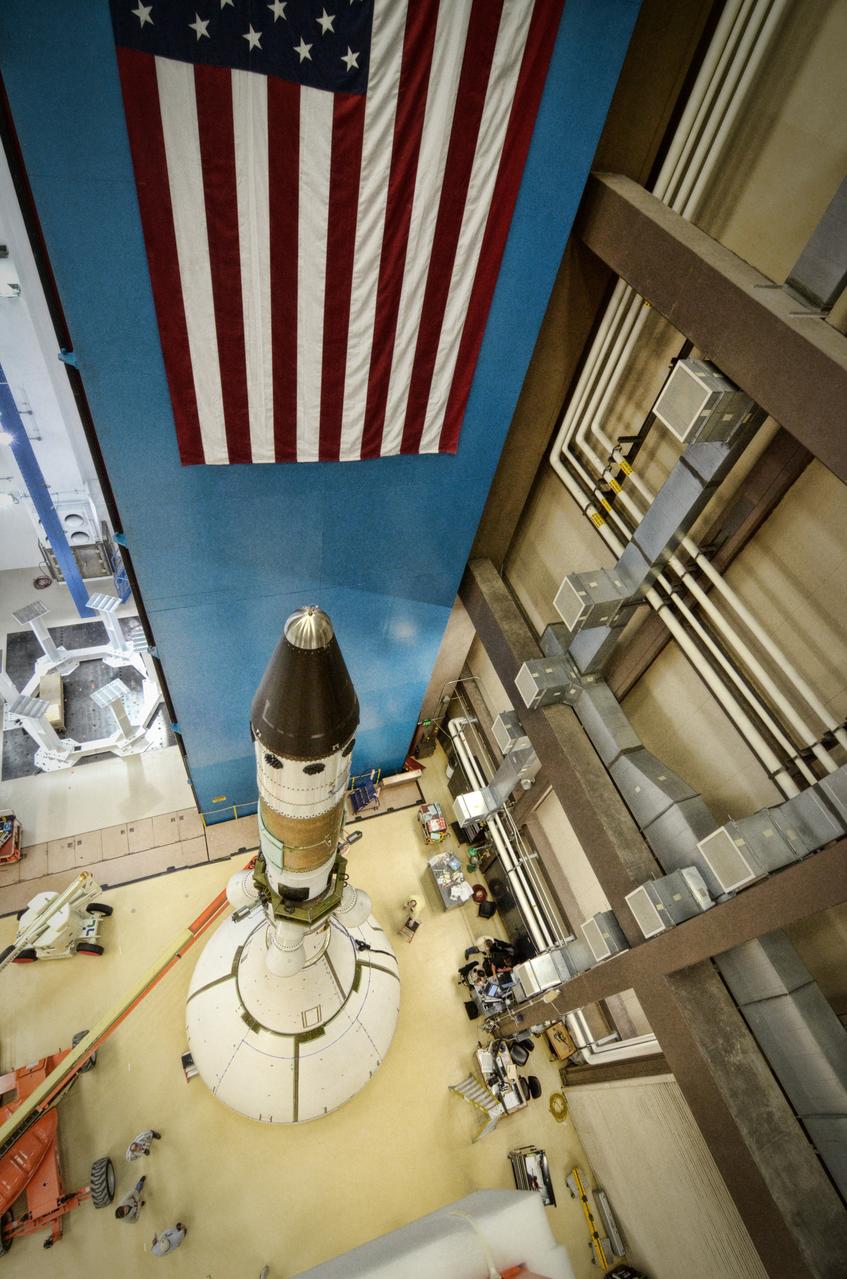
The Orion ground test vehicle is prepared for the Launch Abort Vehicle Configuration Test at Lockheed Martin's facilities in Denver on Sept. 15, 2011. For this test, the vehicle was covered with fillets and ogive panels that resemble the vehicle's launch configuration. The spacecraft underwent testing at sound pressure levels that emulate those experienced at launch and in the event an abort is needed to carry the crew to safety away from a potential problem on the launch pad or during ascent. Part of Batch image transfer from Flickr.
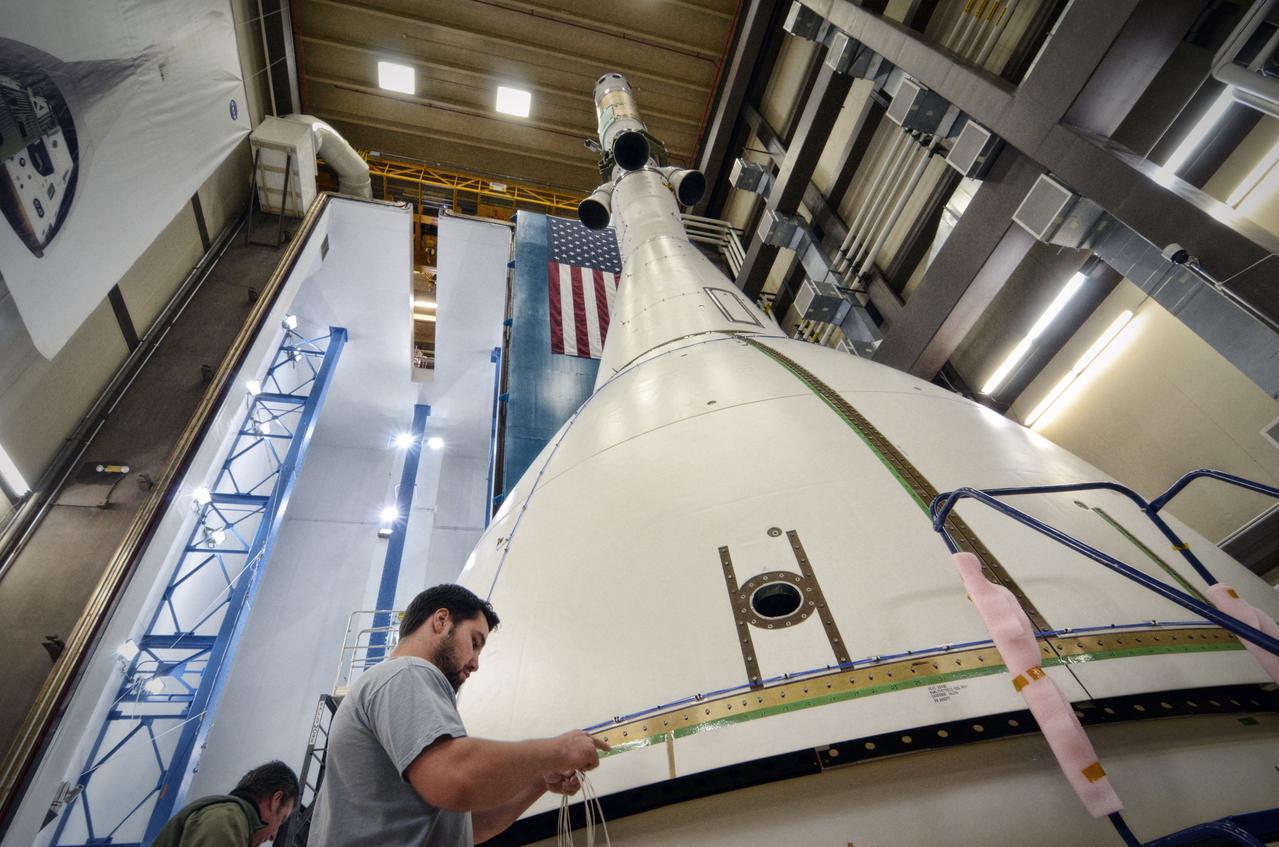
The Orion ground test vehicle is prepared for the Launch Abort Vehicle Configuration Test at Lockheed Martin's facilities in Denver on Sept. 14, 2011. For this test, the vehicle was covered with fillets and ogive panels that resemble the vehicle's launch configuration. The spacecraft underwent testing at sound pressure levels that emulate those experienced at launch and in the event an abort is needed to carry the crew to safety away from a potential problem on the launch pad or during ascent. Part of Batch image transfer from Flickr.

The Orion ground test vehicle is prepared for the Launch Abort Vehicle Configuration Test at Lockheed Martin's facilities in Denver on Sept. 15, 2011. For this test, the vehicle was covered with fillets and ogive panels that resemble the vehicle's launch configuration. The spacecraft underwent testing at sound pressure levels that emulate those experienced at launch and in the event an abort is needed to carry the crew to safety away from a potential problem on the launch pad or during ascent. Part of Batch image transfer from Flickr.
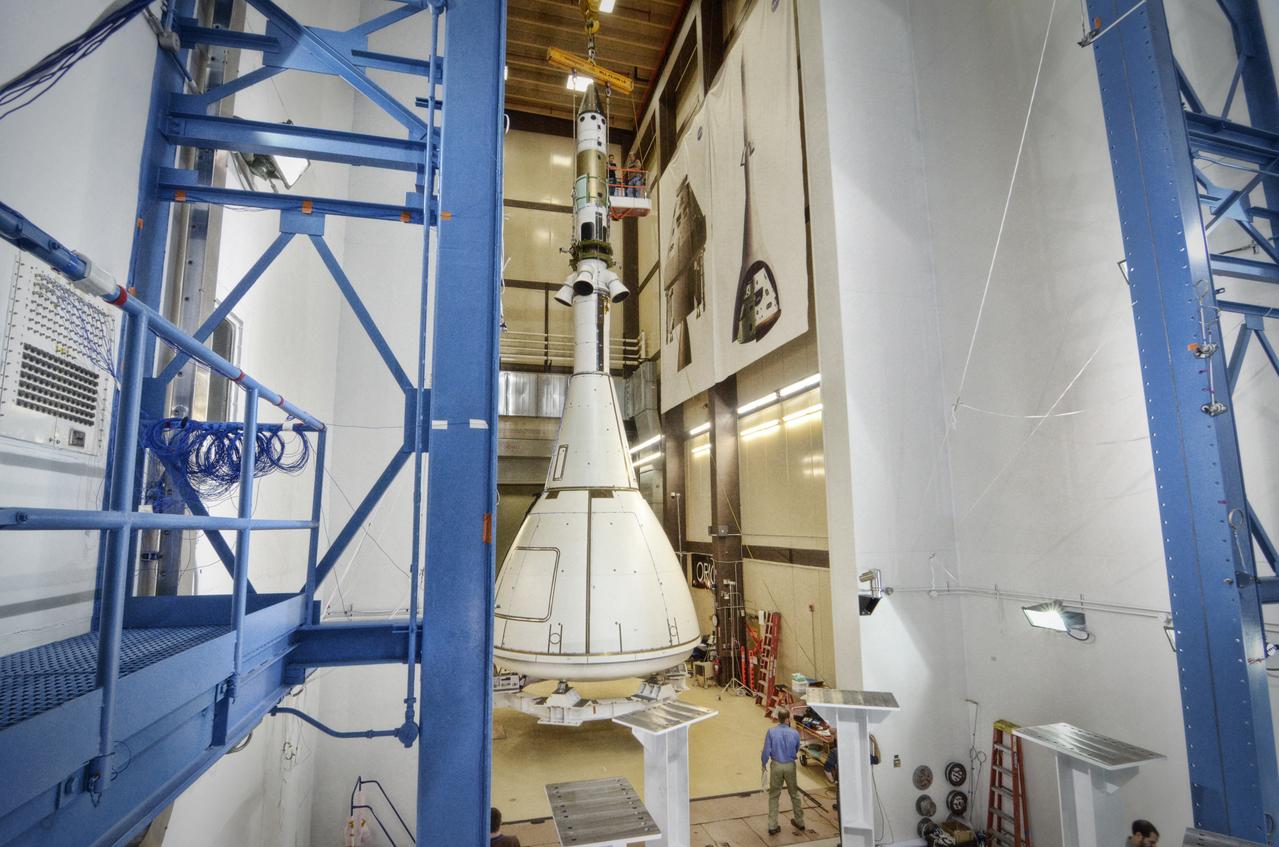
The Orion ground test vehicle is prepared for the Launch Abort Vehicle Configuration Test at Lockheed Martin's facilities in Denver on Sept. 15, 2011. For this test, the vehicle was covered with fillets and ogive panels that resemble the vehicle's launch configuration. The spacecraft underwent testing at sound pressure levels that emulate those experienced at launch and in the event an abort is needed to carry the crew to safety away from a potential problem on the launch pad or during ascent. Part of Batch image transfer from Flickr.
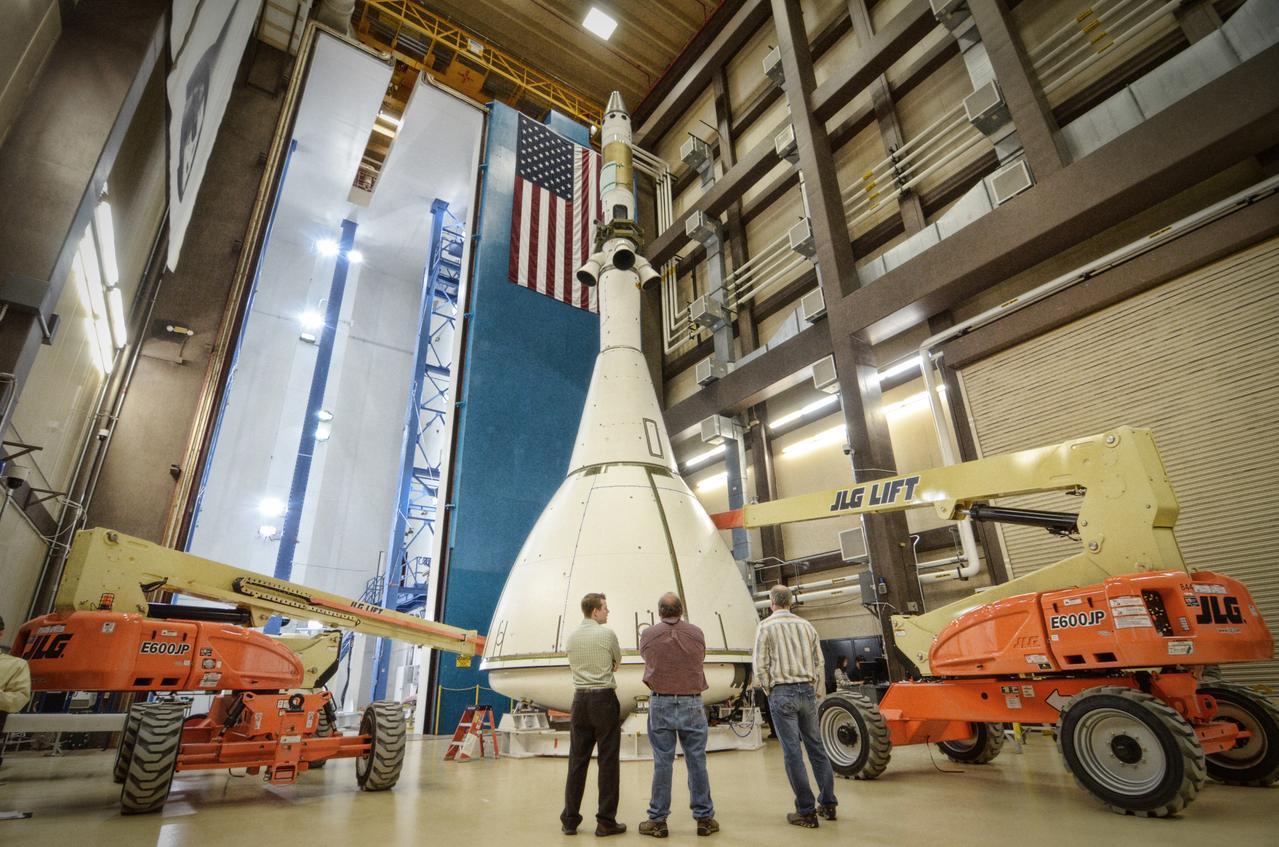
The Orion ground test vehicle is prepared for the Launch Abort Vehicle Configuration Test at Lockheed Martin's facilities in Denver on Sept. 15, 2011. For this test, the vehicle was covered with fillets and ogive panels that resemble the vehicle's launch configuration. The spacecraft underwent testing at sound pressure levels that emulate those experienced at launch and in the event an abort is needed to carry the crew to safety away from a potential problem on the launch pad or during ascent. Part of Batch image transfer from Flickr.
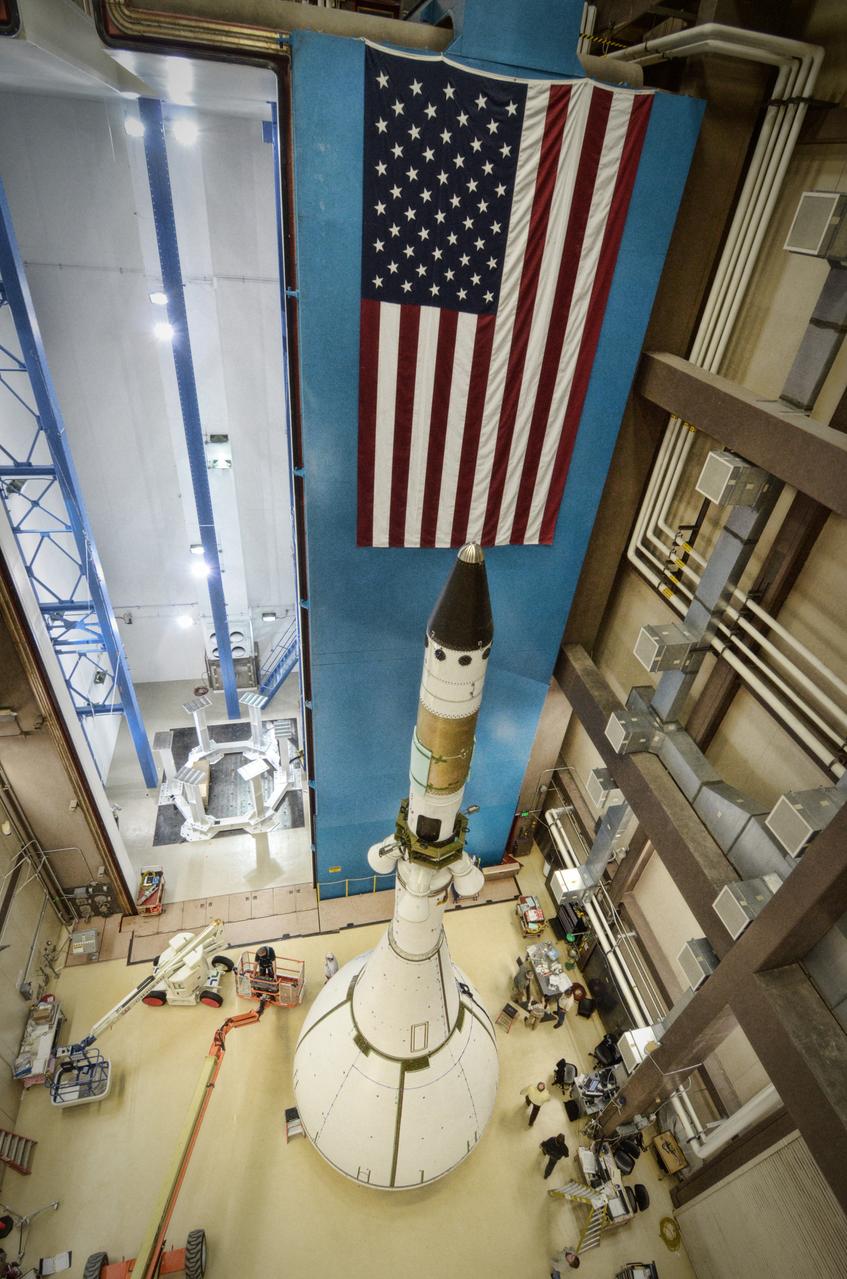
The Orion ground test vehicle is prepared for the Launch Abort Vehicle Configuration Test at Lockheed Martin's facilities in Denver on Sept. 15, 2011. For this test, the vehicle was covered with fillets and ogive panels that resemble the vehicle's launch configuration. The spacecraft underwent testing at sound pressure levels that emulate those experienced at launch and in the event an abort is needed to carry the crew to safety away from a potential problem on the launch pad or during ascent. Part of Batch image transfer from Flickr.
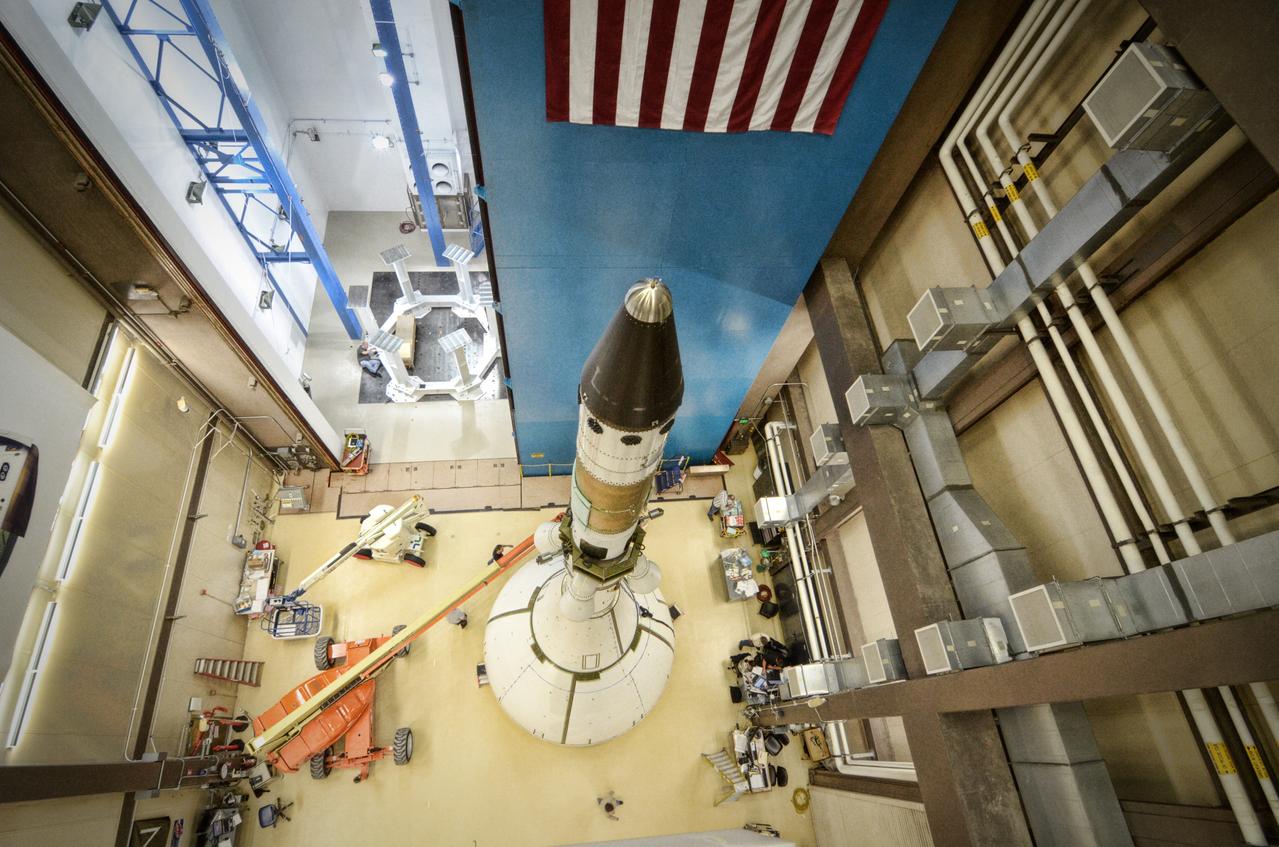
The Orion ground test vehicle is prepared for the Launch Abort Vehicle Configuration Test at Lockheed Martin's facilities in Denver on Sept. 15, 2011. For this test, the vehicle was covered with fillets and ogive panels that resemble the vehicle's launch configuration. The spacecraft underwent testing at sound pressure levels that emulate those experienced at launch and in the event an abort is needed to carry the crew to safety away from a potential problem on the launch pad or during ascent. Part of Batch image transfer from Flickr.
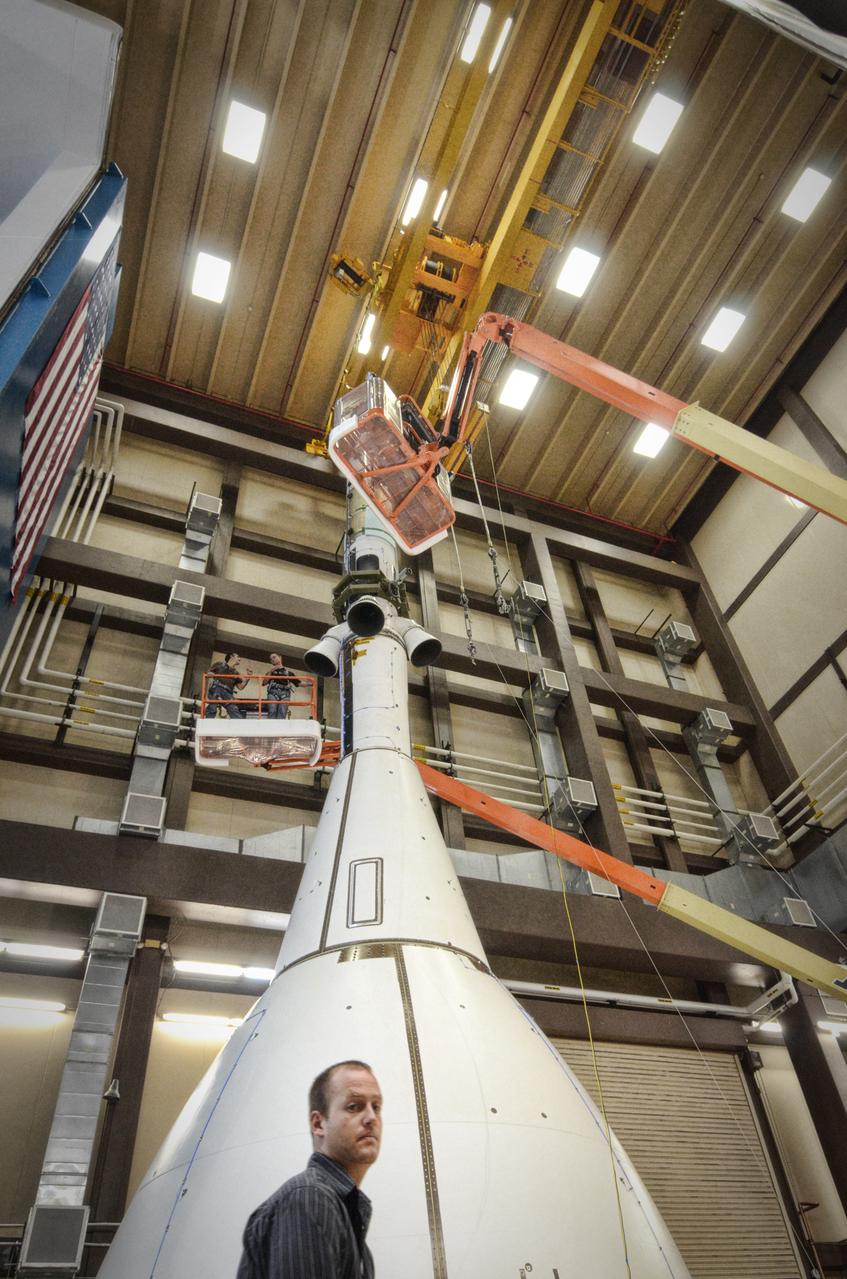
The Orion ground test vehicle is prepared for the Launch Abort Vehicle Configuration Test at Lockheed Martin's facilities in Denver on Sept. 15, 2011. For this test, the vehicle was covered with fillets and ogive panels that resemble the vehicle's launch configuration. The spacecraft underwent testing at sound pressure levels that emulate those experienced at launch and in the event an abort is needed to carry the crew to safety away from a potential problem on the launch pad or during ascent. Part of Batch image transfer from Flickr.

The Orion ground test vehicle is prepared for the Launch Abort Vehicle Configuration Test at Lockheed Martin's facilities in Denver on Sept. 15, 2011. For this test, the vehicle was covered with fillets and ogive panels that resemble the vehicle's launch configuration. The spacecraft underwent testing at sound pressure levels that emulate those experienced at launch and in the event an abort is needed to carry the crew to safety away from a potential problem on the launch pad or during ascent. Part of Batch image transfer from Flickr.
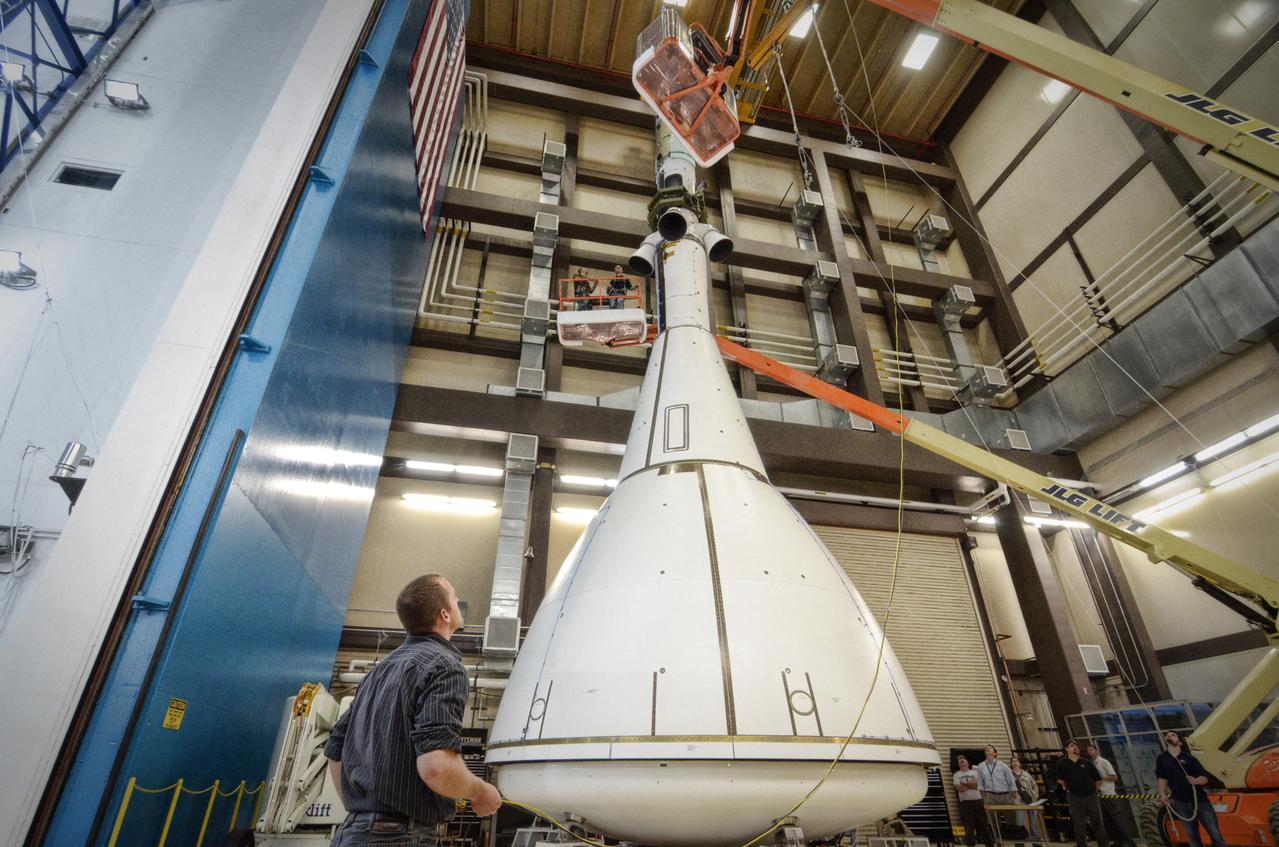
The Orion ground test vehicle is prepared for the Launch Abort Vehicle Configuration Test at Lockheed Martin's facilities in Denver on Sept. 15, 2011. For this test, the vehicle was covered with fillets and ogive panels that resemble the vehicle's launch configuration. The spacecraft underwent testing at sound pressure levels that emulate those experienced at launch and in the event an abort is needed to carry the crew to safety away from a potential problem on the launch pad or during ascent. Part of Batch image transfer from Flickr.
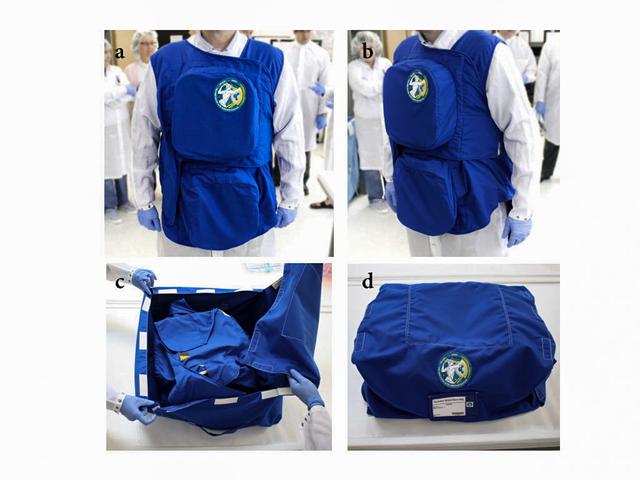
jsc2021e009421 (3/2/2021) --- A preflight view of the PERSEO garment prototype inspection and configuration for launch. (a,b) Garment worn during pre-flight inspections at Johnson Space Center (JSC) in Houston, USA, before launch, front and lateral view. (c) Garment folded in the transport bag for the launch configuration. (d) Closed transport bag containing.the garment. Image courtesy of the Italian Space Agency (ASI).
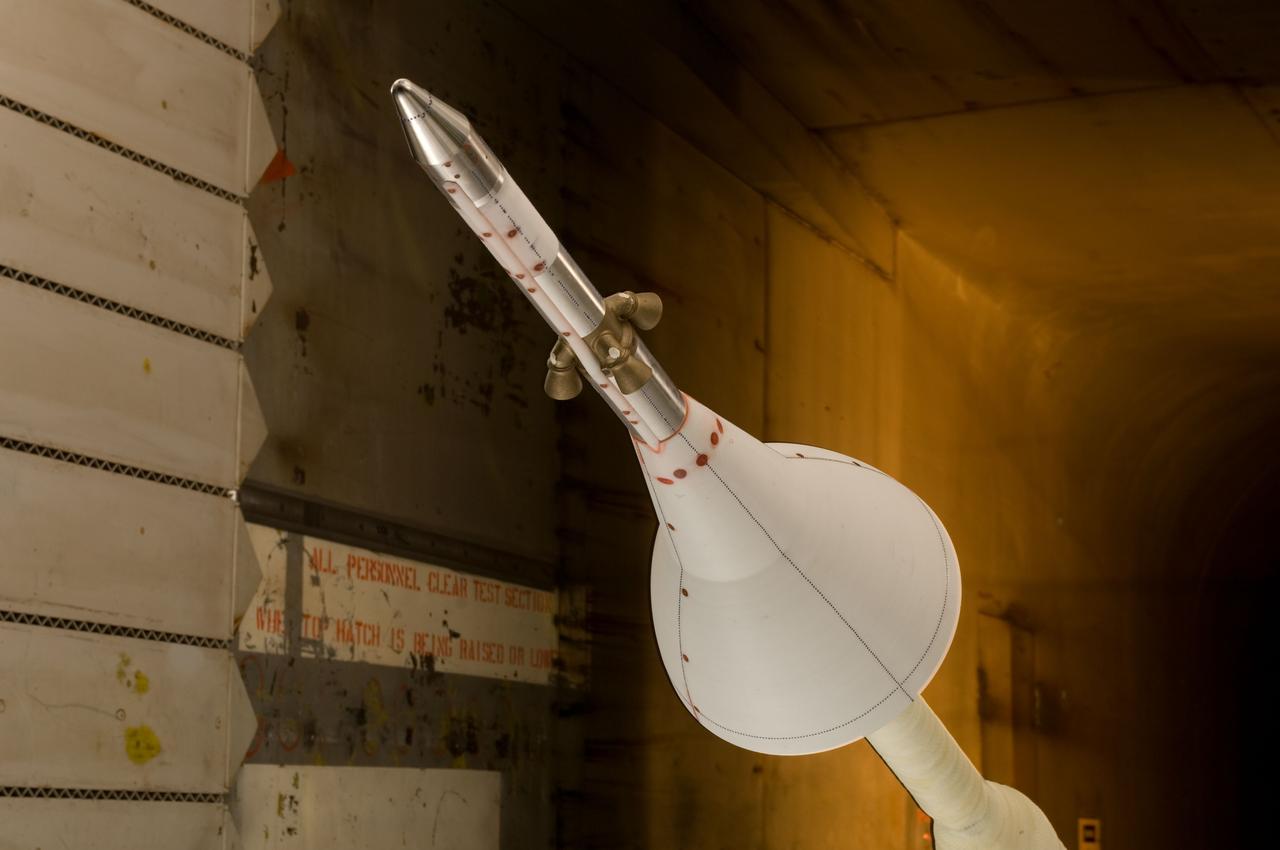
CEV (Crew Escape Vehicle) Alternaive Launch Abort System (ALAS) configuration test in the Ames 11ft wind tunnel. Test-11-0172
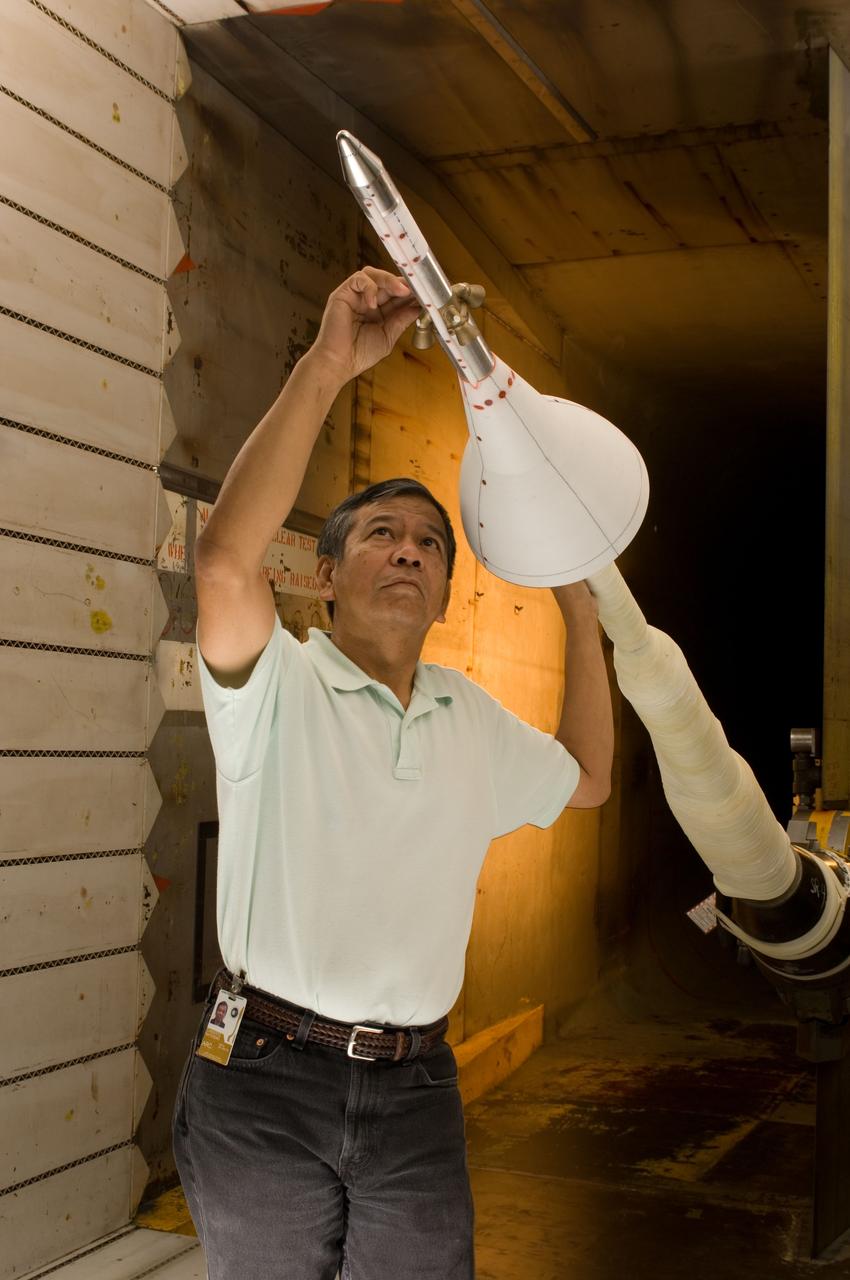
CEV (Crew Escape Vehicle) Alternative Launch Abort System (ALAS) configuration test in the Ames 11ft wind tunnel. Test-11-0172 with Paul Espinosa
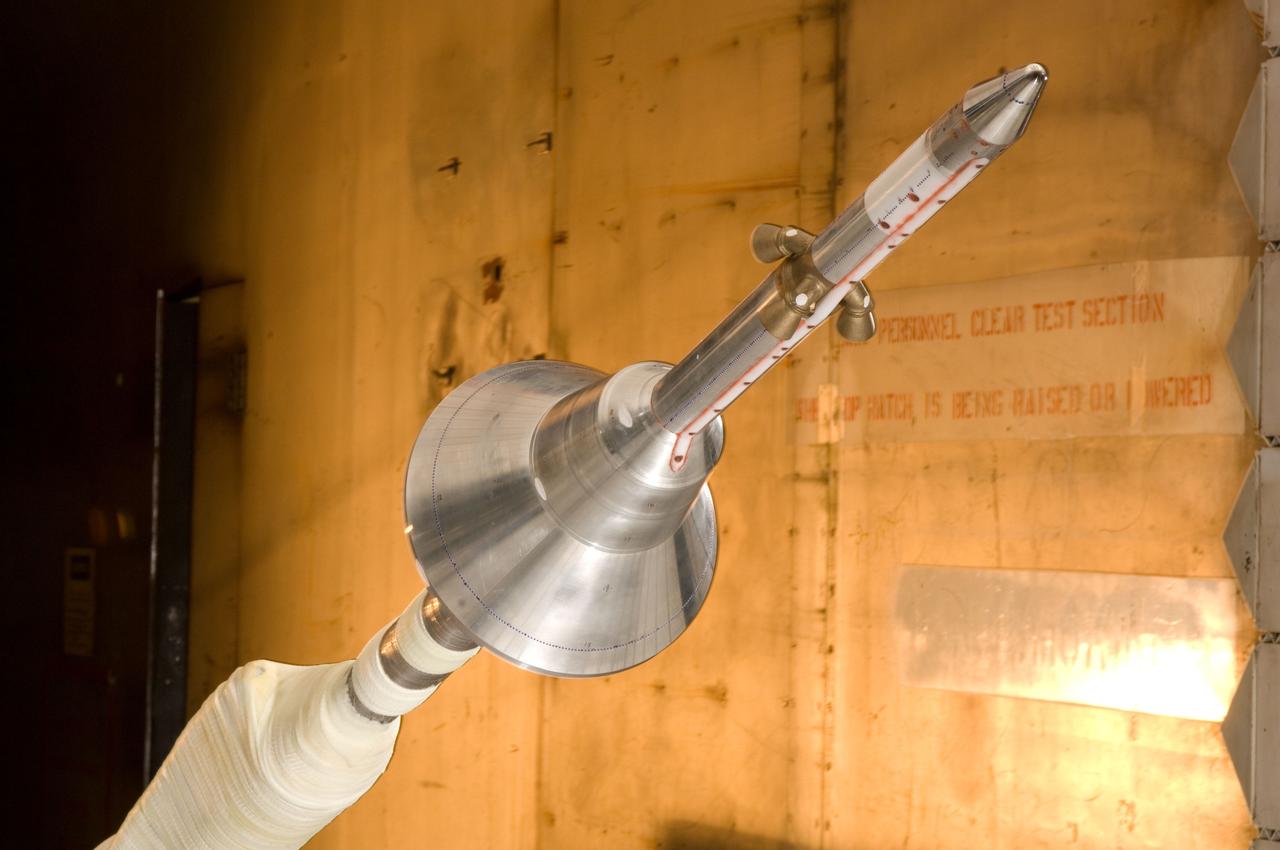
CEV (Crew Escape Vehicle) Alternative Launch Abort System (ALAS) configuration test in the Ames 11ft wind tunnel. Test-11-0172
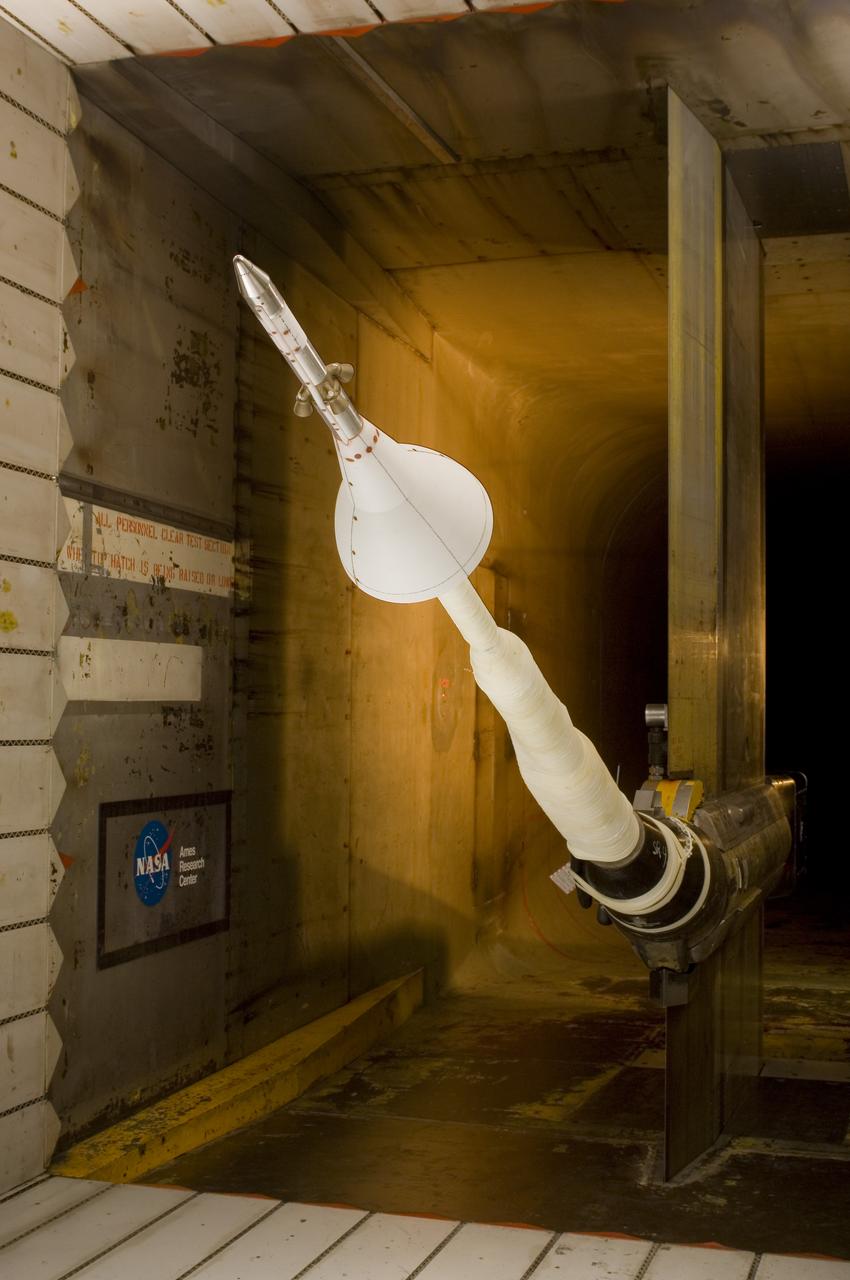
CEV (Crew Escape Vehicle) Alternative Launch Abort System (ALAS) configuration test in the Ames 11ft wind tunnel. Test-11-0172
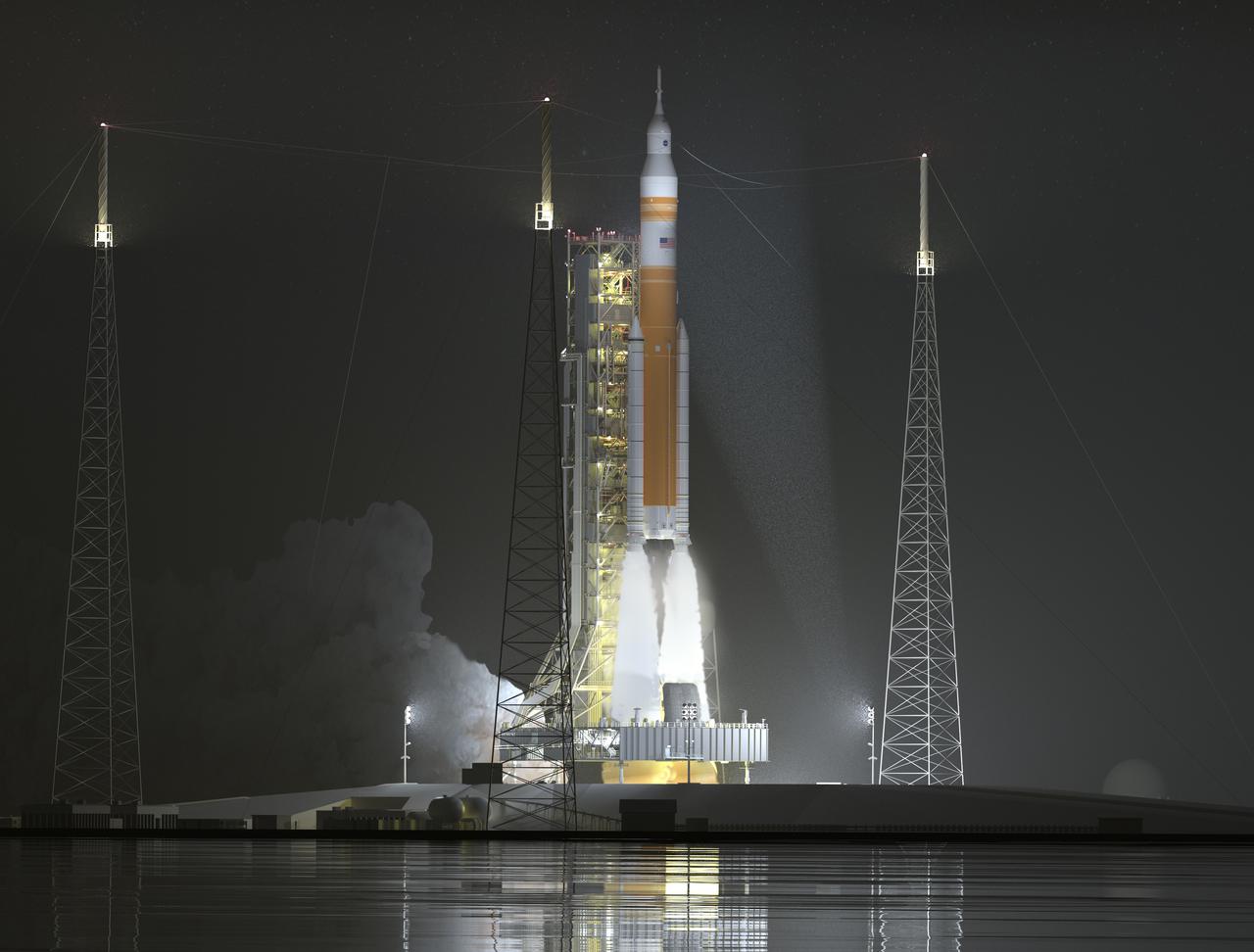
Illustration of the evolved SLS Block 1B Crew variant night launch. This configuration of the rocket, with the Exploration Upper Stage, will provide in-space propulsion to send astronauts in NASA’s Orion spacecraft and heavy cargo on a precise trajectory to the Moon. The evolution of the rocket to SLS Block 1B configuration with EUS enables SLS to launch 40% more cargo to the Moon along with the crew. Manufacturing both the core stage and Exploration Upper Stage is a collaborative effort between NASA and Boeing, the lead contractor for EUS and the SLS core stage. SLS is the only rocket that can send Orion, astronauts, and supplies to the Moon in a single mission. The SLS rocket, NASA’s Orion spacecraft, Gateway, and human landing system are part of NASA’s backbone for deep space exploration. Under the Artemis program, NASA is working to land the first woman and the next man on the Moon to pave the way for sustainable exploration at the Moon and future missions to Mars. (NASA) In album: B1B_Crew_SLS
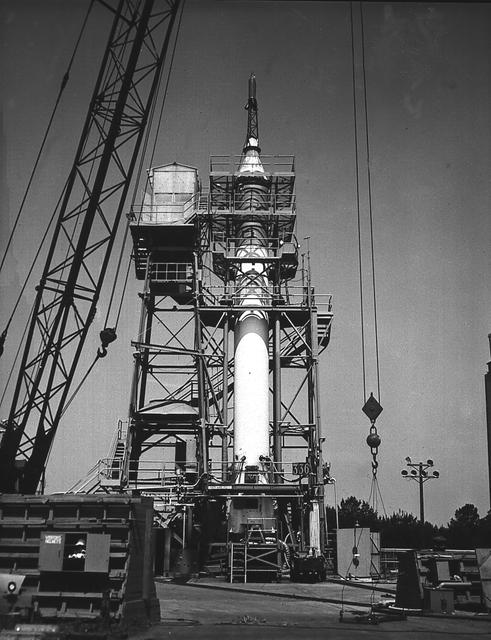
A Mercury-Redstone launch vehicle awaits test-firing in the Redstone Test Stand during the late 1950s. Between 1953 and 1960, the rocket team at Redstone Arsenal in Huntsville, Alabama performed hundreds of test firings on the Redstone rocket, over 200 on the Mercury-Redstone vehicle configuration alone. It was this configuration which launched America's first two marned space missions, Freedom 7 and Liberty Bell 7,in 1961.
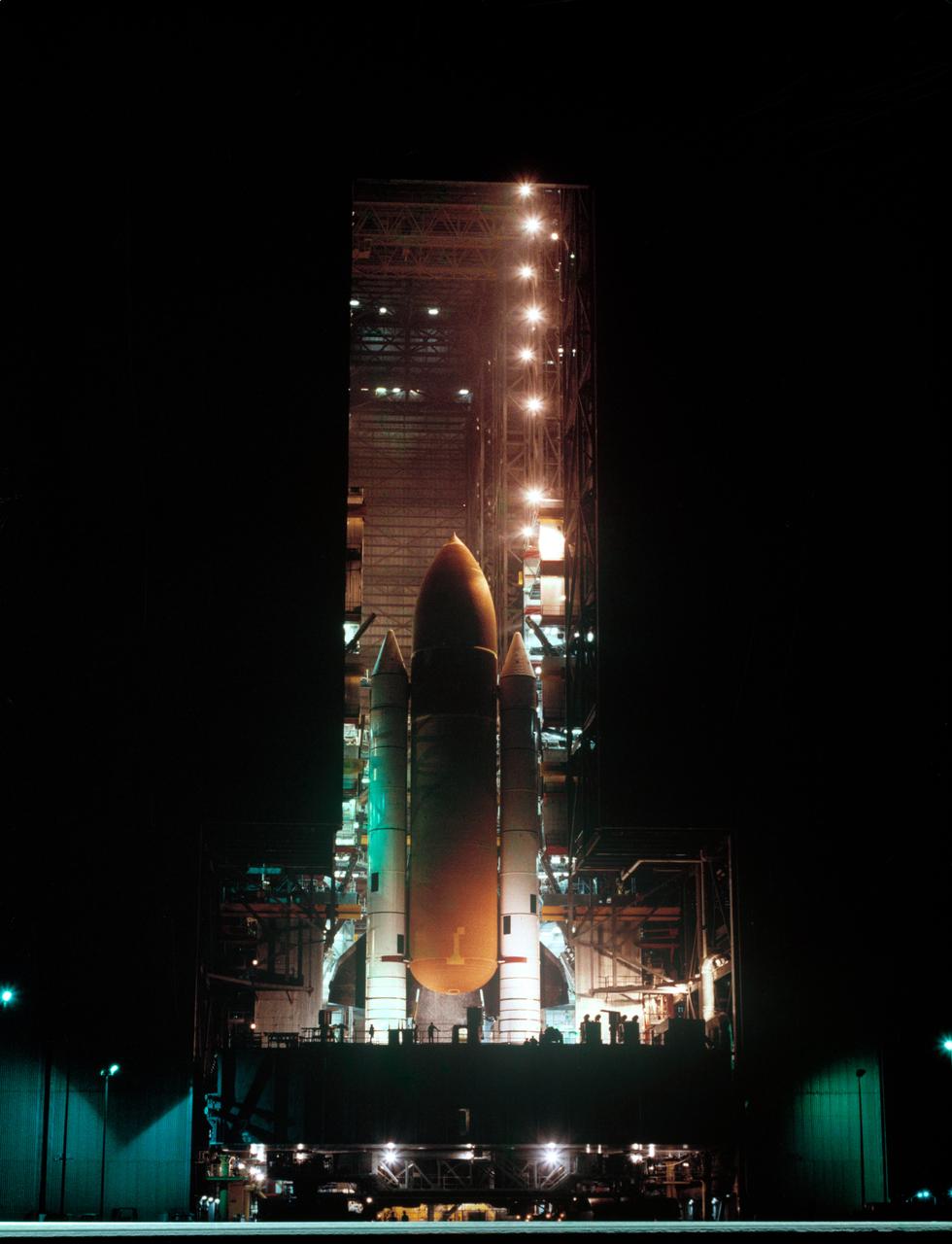
S83-39238 (1 Aug. 1983) --- The giant cluster of spaceflight hardware for NASA's eighth Space Transportation System (STS) mission begins its slow move to the launch pad at launch complex 39 at NASA's Kennedy Space Center (KSC). Following its mating to the two solid rocket boosters (SRB) and the external fuel tank (ET) in the huge vehicle assembly building (VAB), the space shuttle Challenger is slowly moved to the launch pad atop the mobile launch platform. Photo credit: NASA
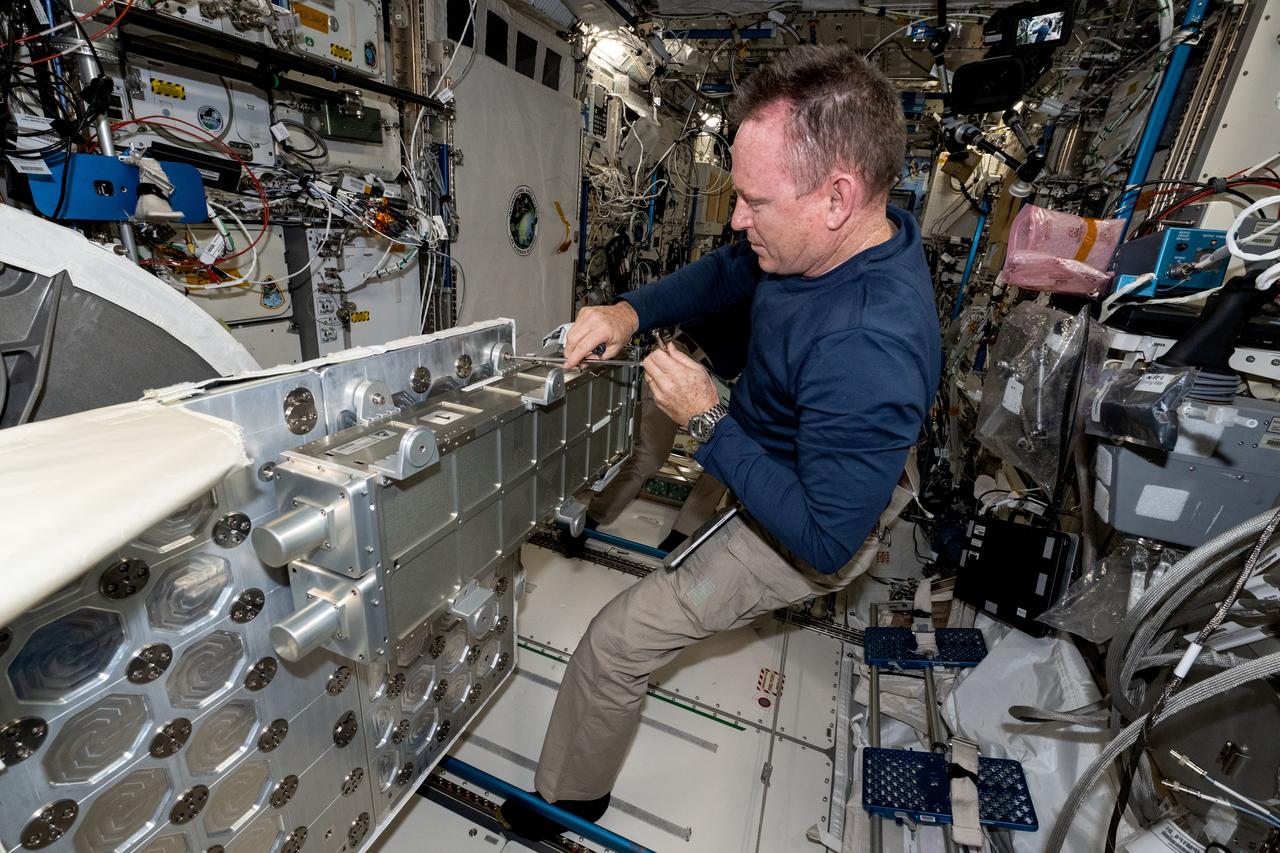
iss071e523308 (Aug. 21, 2024) --- NASA astronaut and Commander for Boeing's Crew Flight Test Butch Wilmore checks CubeSat configurations packed inside launch cases installed in the Kibo laboratory module's Small Satellite Orbital Deployer.
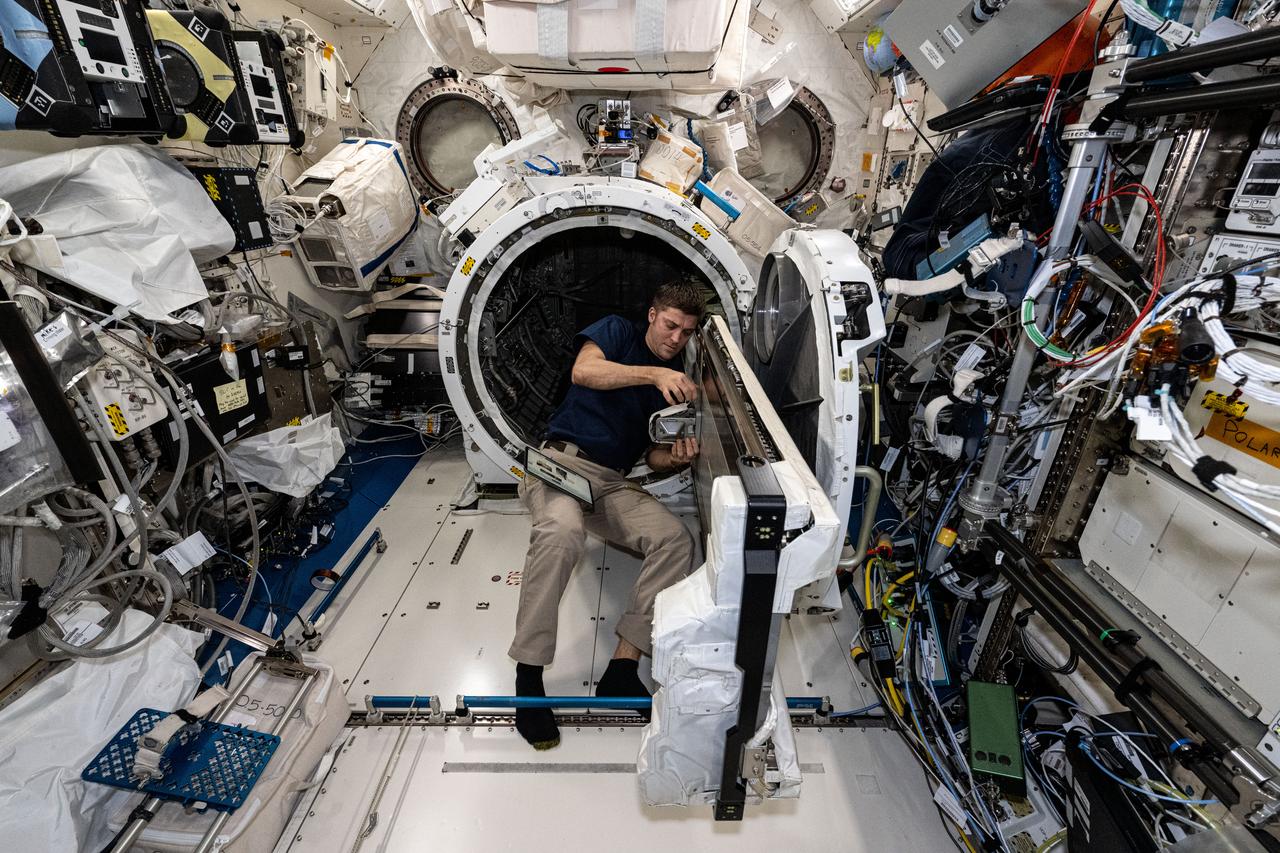
iss071e522256 (Aug. 21, 2024) --- NASA astronaut and Expedition 71 Flight Engineer Matthew Dominick checks CubeSat configurations packed inside launch cases installed in the Kibo laboratory module's Small Satellite Orbital Deployer.
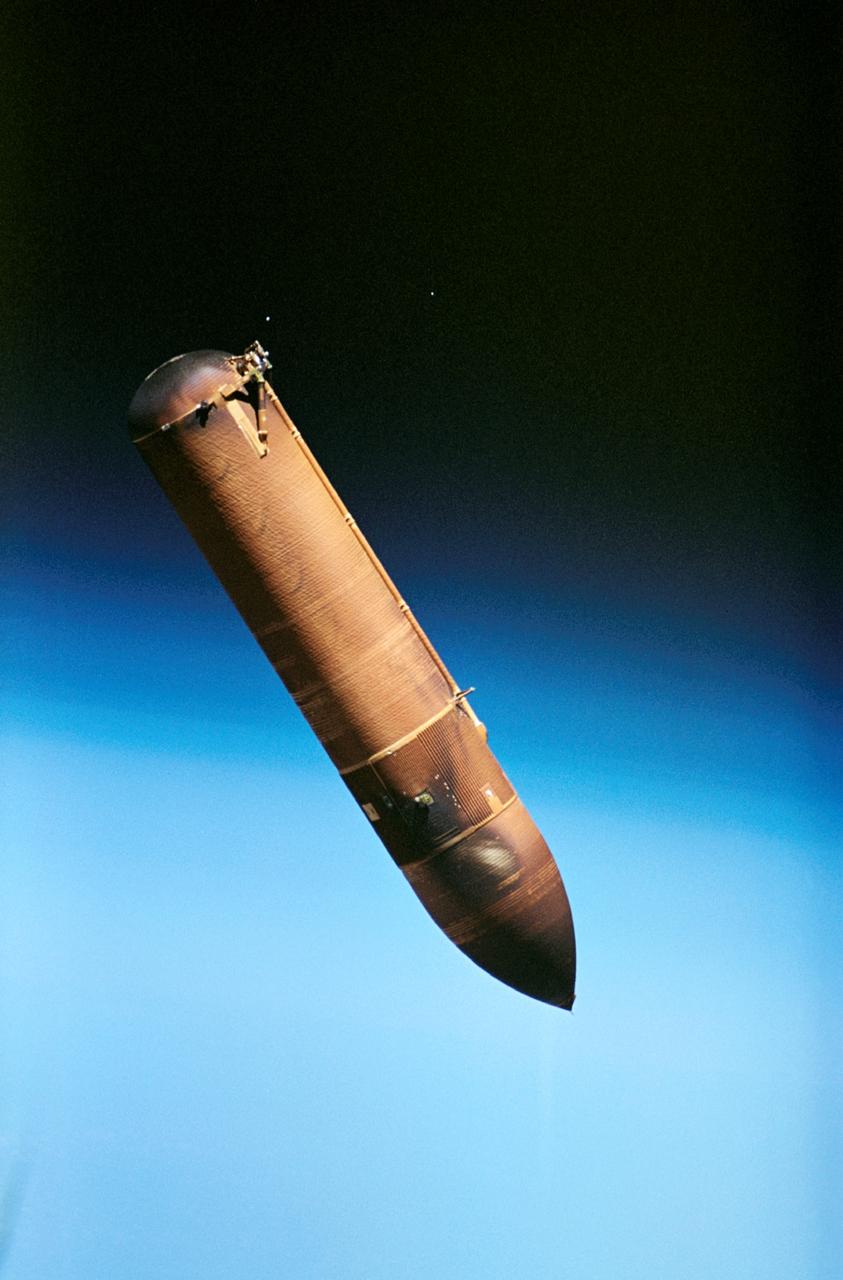
STS057-03-017 (21 June 1993) --- The external fuel tank falls toward Earth after being jettisoned from the Space Shuttle Endeavour as the spacecraft headed toward its ten-day stay in Earth orbit. A 35mm camera was used to record the ET jettison.
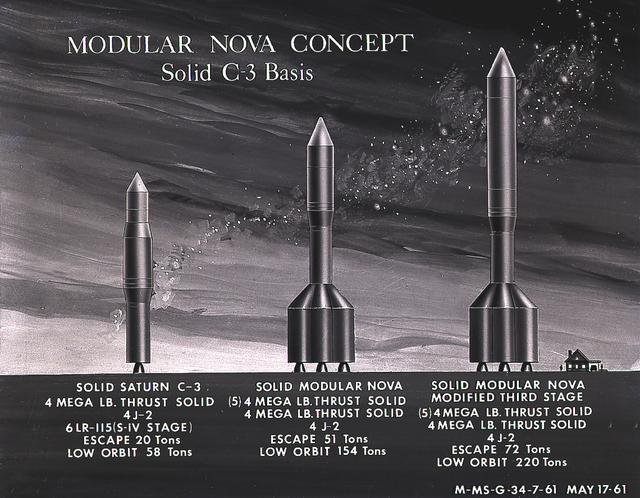
This artist's concept illustrates the Module Nova concept - Solid C-3 Basis. From 1960 to 1962, the Marshall Space Flight Center considered the Nova launch vehicle as a means to achieve a marned lunar landing with a direct flight to the Moon. Various configurations of the vehicle were examined. The latest configuration was a five-stage vehicle using eight F-1 engines in the first stage. Although the program was canceled after NASA planners selected the lunar/orbital rendezvous mode, the proposed F-1 engine would eventually be used in the Apollo Program to propel the first stage of the Saturn V launch vehicle.
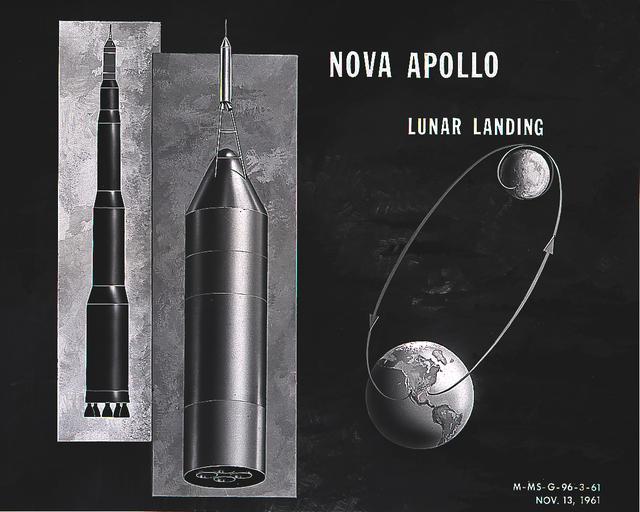
This artist's concept illustrates the Module Nova concept - Solid C-3 Basis. From 1960 to 1962, the Marshall Space Flight Center considered the Nova launch vehicle as a means to achieve a marned lunar landing with a direct flight to the Moon. Various configurations of the vehicle were examined. The latest configuration was a five-stage vehicle using eight F-1 engines in the first stage. Although the program was canceled after NASA planners selected the lunar/orbital rendezvous mode, the proposed F-1 engine would eventually be used in the Apollo Program to propel the first stage of the Saturn V launch vehicle.
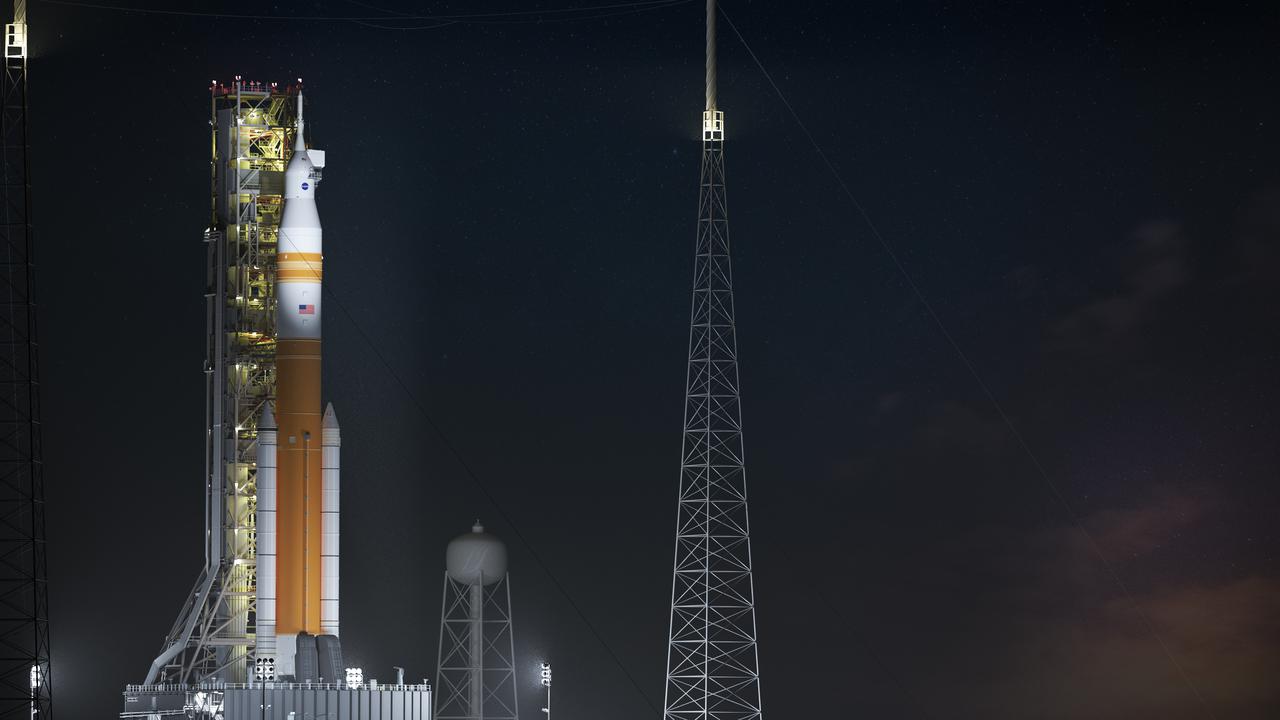
Illustration of nighttime scene of the evolved SLS Block 1B Crew variant on Pad 39B.. This configuration of the rocket, with the Exploration Upper Stage, will provide in-space propulsion to send astronauts in NASA’s Orion spacecraft and heavy cargo on a precise trajectory to the Moon. The evolution of the rocket to SLS Block 1B configuration with EUS enables SLS to launch 40% more cargo to the Moon along with the crew. Manufacturing both the core stage and Exploration Upper Stage is a collaborative effort between NASA and Boeing, the lead contractor for EUS and the SLS core stage. SLS is the only rocket that can send Orion, astronauts, and supplies to the Moon in a single mission. The SLS rocket, NASA’s Orion spacecraft, Gateway, and human landing system are part of NASA’s backbone for deep space exploration. Under the Artemis program, NASA is working to land the first woman and the next man on the Moon to pave the way for sustainable exploration at the Moon and future missions to Mars. (NASA)
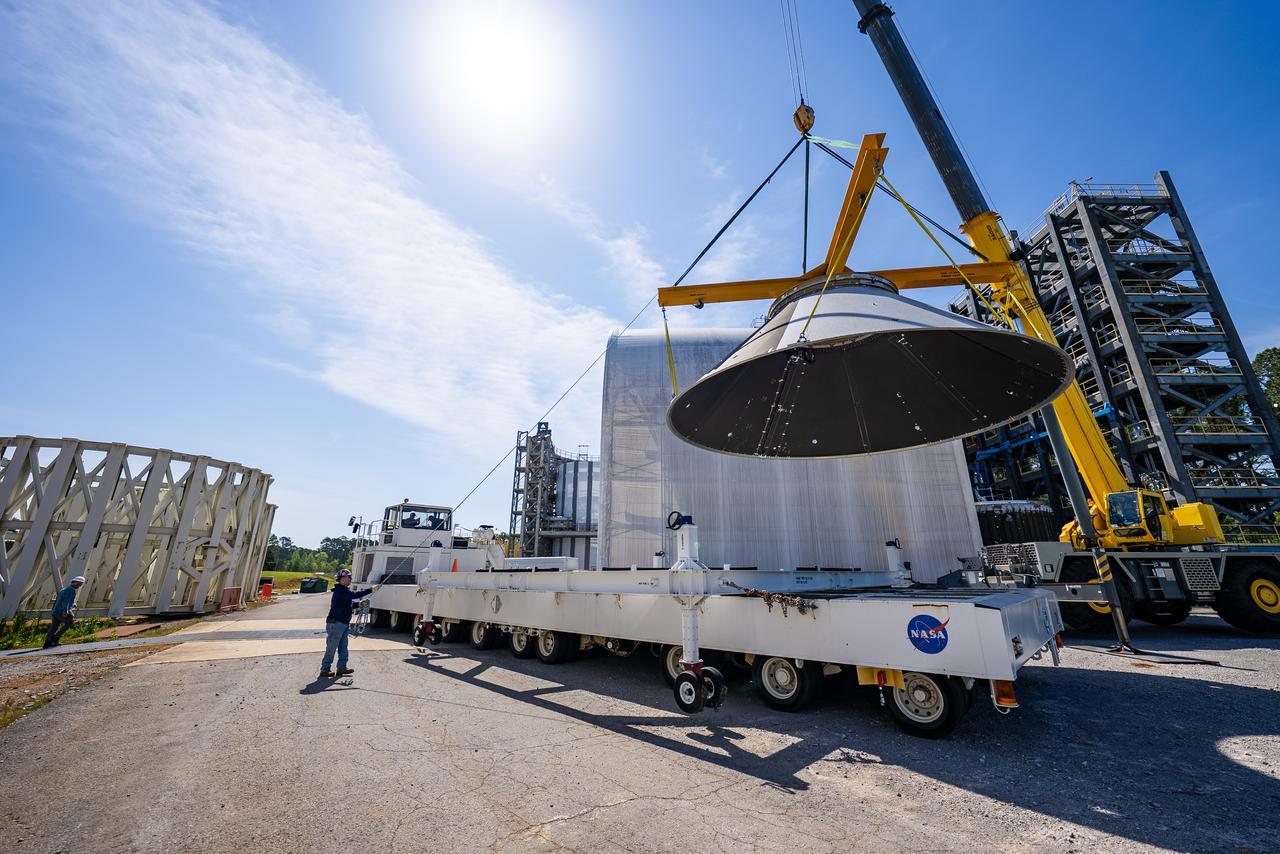
Technicians at NASA’s Marshall Space Flight Center in Huntsville, Alabama, are seen in these images taken April 17, 2025, moving the payload adapter test article from Building 4697 to Building 4705 for storage. This move marks the end of structural testing for the test article. Next, engineers will complete the qualification article and conduct additional for further testing before building the final flight hardware. Manufactured at Marshall, the test article underwent extensive and rigorous testing to validate the design before engineers finalized the configuration for the flight article. The newly completed composite payload adapter is an evolution from the Orion stage adapter to be used in the upgraded Block 1B configuration of the SLS (Space Launch System) rocket, debuting with Artemis IV.
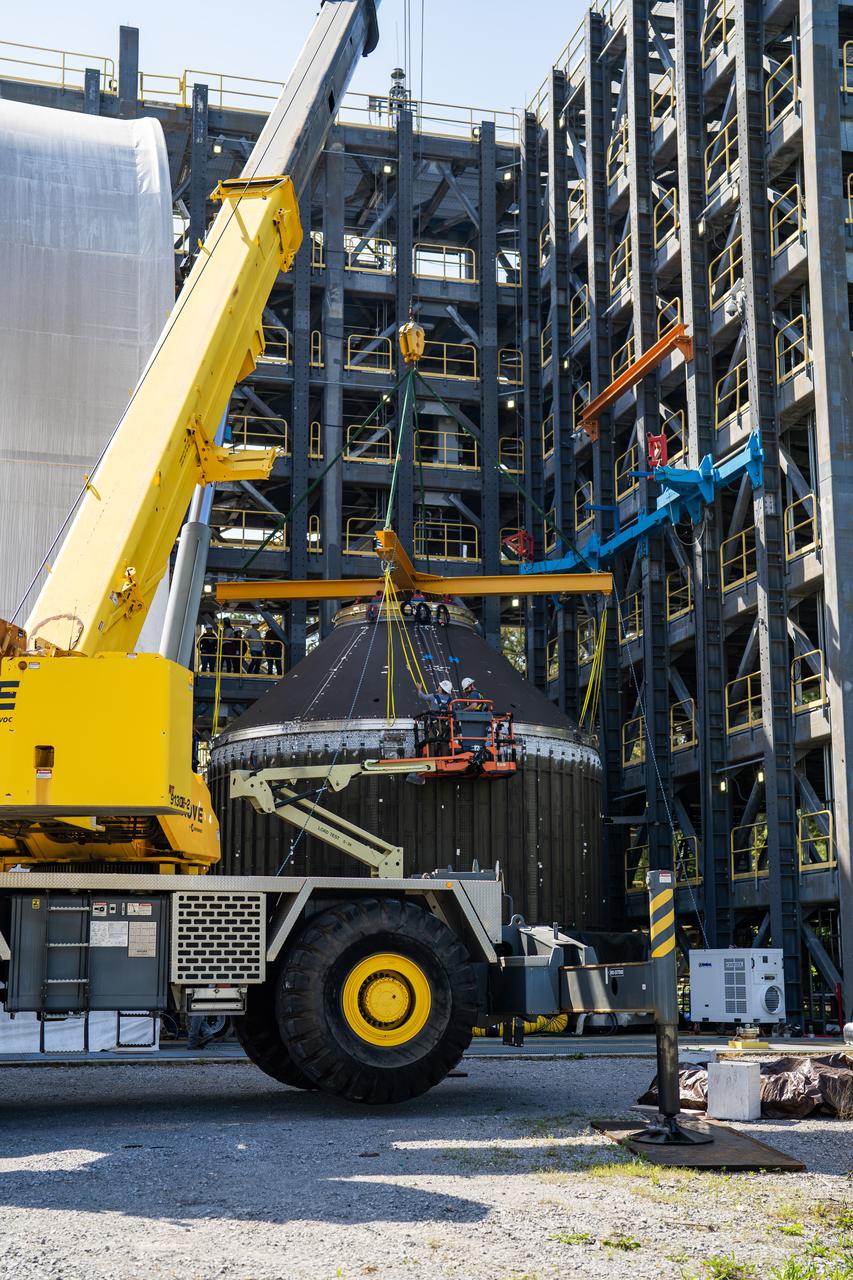
Technicians at NASA’s Marshall Space Flight Center in Huntsville, Alabama, are seen in these images taken April 17, 2025, moving the payload adapter test article from Building 4697 to Building 4705 for storage. This move marks the end of structural testing for the test article. Next, engineers will complete the qualification article and conduct additional for further testing before building the final flight hardware. Manufactured at Marshall, the test article underwent extensive and rigorous testing to validate the design before engineers finalized the configuration for the flight article. The newly completed composite payload adapter is an evolution from the Orion stage adapter to be used in the upgraded Block 1B configuration of the SLS (Space Launch System) rocket, debuting with Artemis IV.

Illustration of the SLS Exploration Upper Stage, or EUS. The Exploration Upper Stage will be used on the second configuration of the SLS rocket, known as Block 1B, and will provide in-space propulsion to send astronauts in NASA’s Orion spacecraft and heavy cargo on a precise trajectory to the Moon. The evolution of the rocket to SLS Block 1B configuration with EUS enables SLS to launch 40% more cargo to the Moon along with the crew. Manufacturing both the core stage and Exploration Upper Stage is a collaborative effort between NASA and Boeing, the lead contractor for EUS and the SLS core stage. SLS is the only rocket that can send Orion, astronauts, and supplies to the Moon in a single mission. The SLS rocket, NASA’s Orion spacecraft, Gateway, and human landing system are part of NASA’s backbone for deep space exploration. Under the Artemis program, NASA is working to land the first woman and the next man on the Moon to pave the way for sustainable exploration at the Moon and future missions to Mars. (NASA)
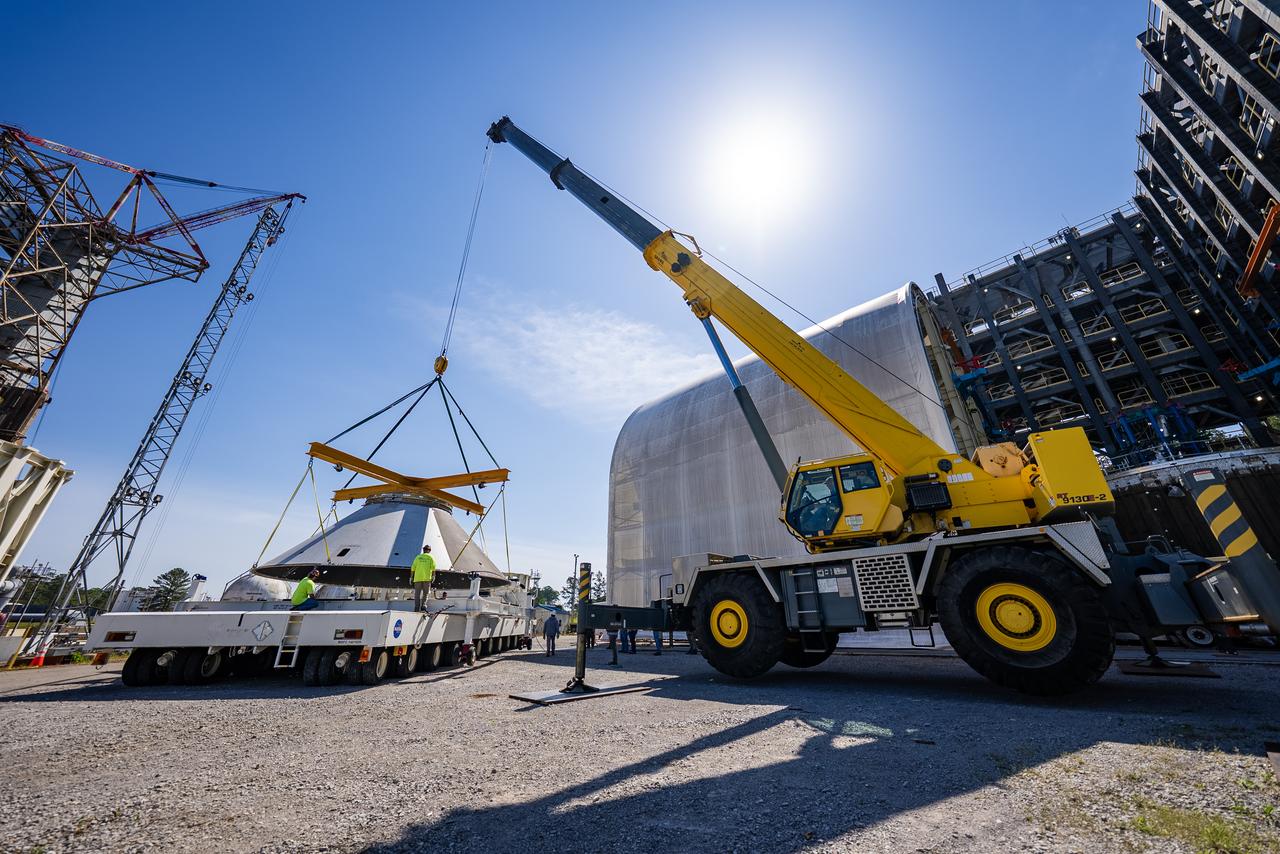
Technicians at NASA’s Marshall Space Flight Center in Huntsville, Alabama, are seen in these images taken April 17, 2025, moving the payload adapter test article from Building 4697 to Building 4705 for storage. This move marks the end of structural testing for the test article. Next, engineers will complete the qualification article and conduct additional for further testing before building the final flight hardware. Manufactured at Marshall, the test article underwent extensive and rigorous testing to validate the design before engineers finalized the configuration for the flight article. The newly completed composite payload adapter is an evolution from the Orion stage adapter to be used in the upgraded Block 1B configuration of the SLS (Space Launch System) rocket, debuting with Artemis IV.

Technicians at NASA’s Marshall Space Flight Center in Huntsville, Alabama, are seen in these images taken April 17, 2025, moving the payload adapter test article from Building 4697 to Building 4705 for storage. This move marks the end of structural testing for the test article. Next, engineers will complete the qualification article and conduct additional for further testing before building the final flight hardware. Manufactured at Marshall, the test article underwent extensive and rigorous testing to validate the design before engineers finalized the configuration for the flight article. The newly completed composite payload adapter is an evolution from the Orion stage adapter to be used in the upgraded Block 1B configuration of the SLS (Space Launch System) rocket, debuting with Artemis IV.
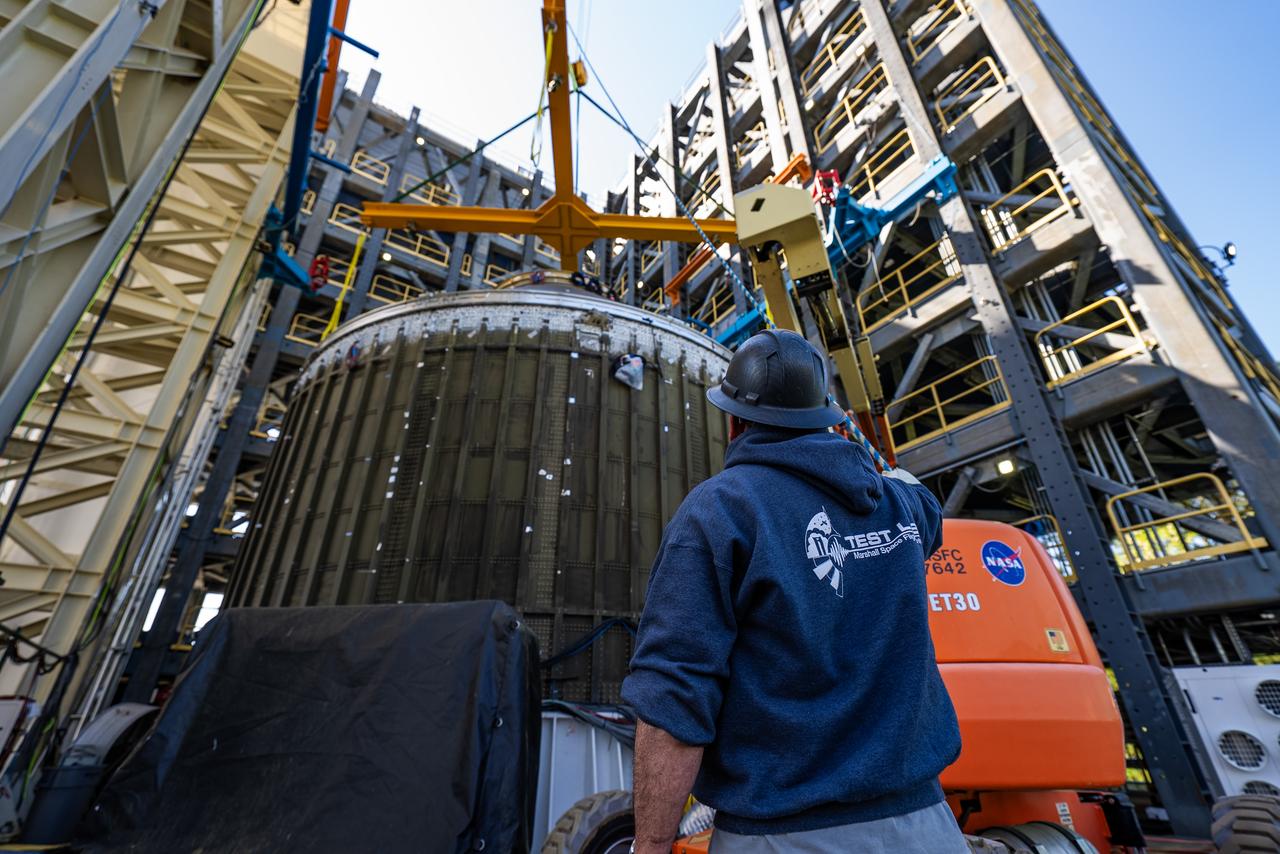
Technicians at NASA’s Marshall Space Flight Center in Huntsville, Alabama, are seen in these images taken April 17, 2025, moving the payload adapter test article from Building 4697 to Building 4705 for storage. This move marks the end of structural testing for the test article. Next, engineers will complete the qualification article and conduct additional for further testing before building the final flight hardware. Manufactured at Marshall, the test article underwent extensive and rigorous testing to validate the design before engineers finalized the configuration for the flight article. The newly completed composite payload adapter is an evolution from the Orion stage adapter to be used in the upgraded Block 1B configuration of the SLS (Space Launch System) rocket, debuting with Artemis IV.
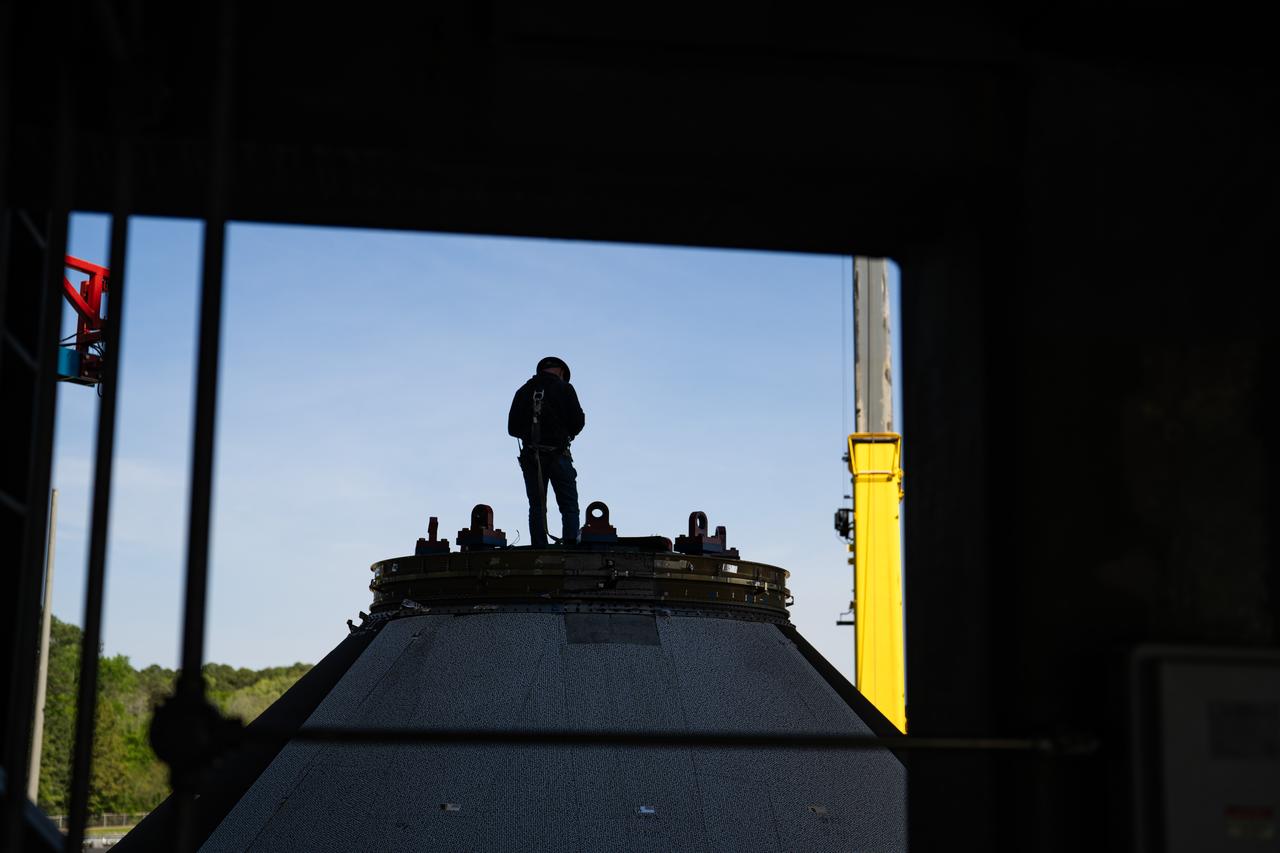
Technicians at NASA’s Marshall Space Flight Center in Huntsville, Alabama, are seen in these images taken April 17, 2025, moving the payload adapter test article from Building 4697 to Building 4705 for storage. This move marks the end of structural testing for the test article. Next, engineers will complete the qualification article and conduct additional for further testing before building the final flight hardware. Manufactured at Marshall, the test article underwent extensive and rigorous testing to validate the design before engineers finalized the configuration for the flight article. The newly completed composite payload adapter is an evolution from the Orion stage adapter to be used in the upgraded Block 1B configuration of the SLS (Space Launch System) rocket, debuting with Artemis IV.
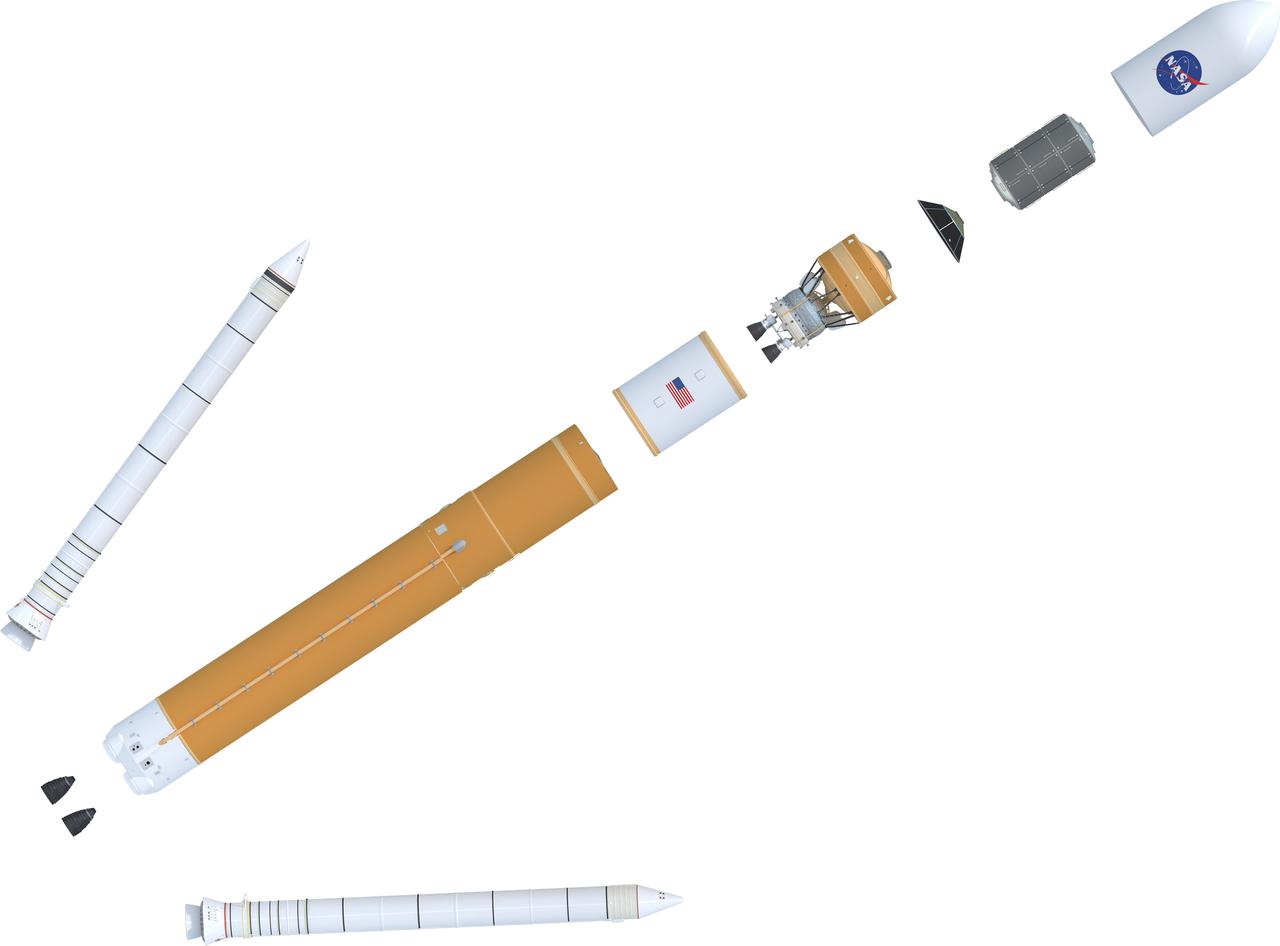
Expanded view illustration of elements of the evolved SLS Block 1B Crew variant. This configuration of the rocket, with the Exploration Upper Stage, will provide in-space propulsion to send astronauts in NASA’s Orion spacecraft and heavy cargo on a precise trajectory to the Moon. The evolution of the rocket to SLS Block 1B configuration with EUS enables SLS to launch 40% more cargo to the Moon along with the crew. Manufacturing both the core stage and Exploration Upper Stage is a collaborative effort between NASA and Boeing, the lead contractor for EUS and the SLS core stage. SLS is the only rocket that can send Orion, astronauts, and supplies to the Moon in a single mission. The SLS rocket, NASA’s Orion spacecraft, Gateway, and human landing system are part of NASA’s backbone for deep space exploration. Under the Artemis program, NASA is working to land the first woman and the next man on the Moon to pave the way for sustainable exploration at the Moon and future missions to Mars. (NASA)

Illustration of the SLS Exploration Upper Stage, or EUS. This configuration of the rocket, with the Exploration Upper Stage, will provide in-space propulsion to send astronauts in NASA’s Orion spacecraft and heavy cargo on a precise trajectory to the Moon. The evolution of the rocket to SLS Block 1B configuration with EUS enables SLS to launch 40% more cargo to the Moon along with the crew. Manufacturing both the core stage and Exploration Upper Stage is a collaborative effort between NASA and Boeing, the lead contractor for EUS and the SLS core stage. SLS is the only rocket that can send Orion, astronauts, and supplies to the Moon in a single mission. The SLS rocket, NASA’s Orion spacecraft, Gateway, and human landing system are part of NASA’s backbone for deep space exploration. Under the Artemis program, NASA is working to land the first woman and the next man on the Moon to pave the way for sustainable exploration at the Moon and future missions to Mars. (NASA)
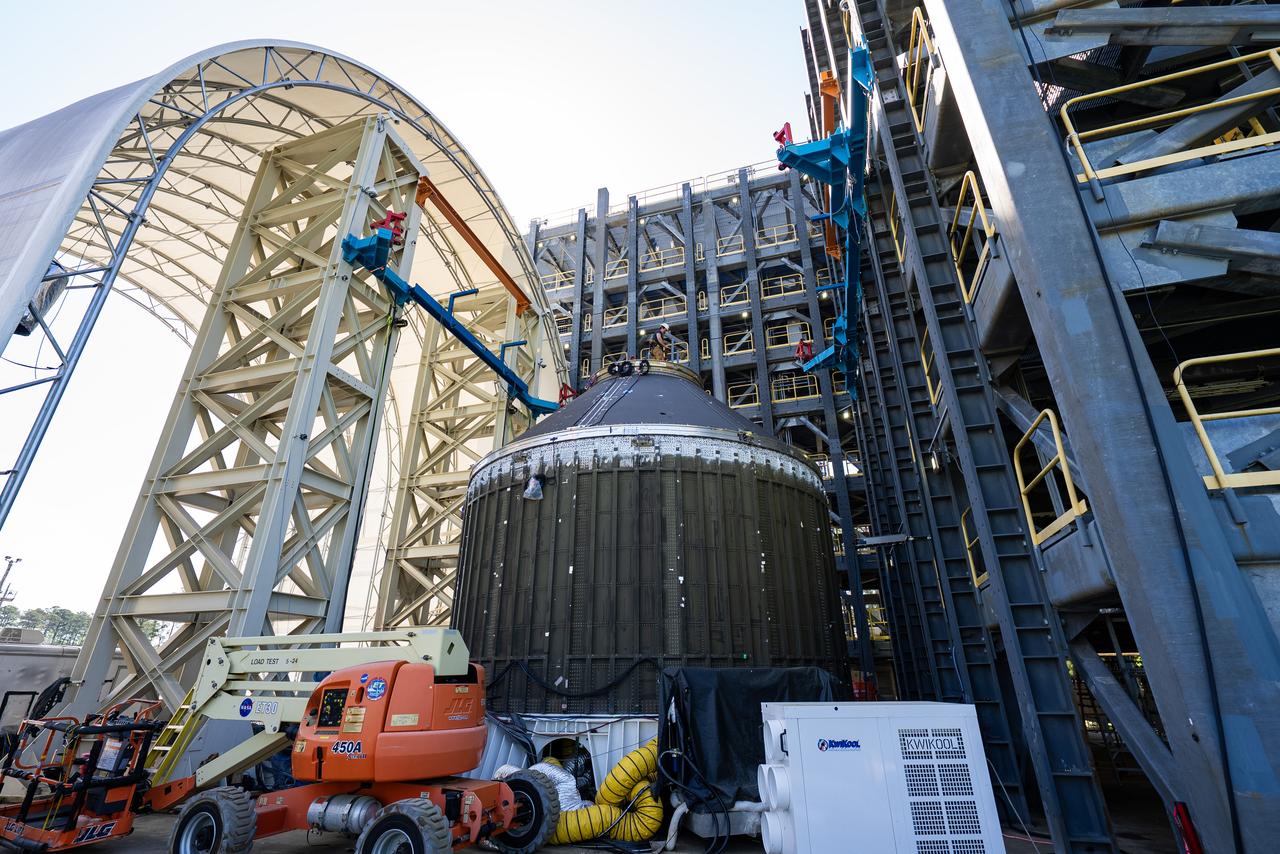
Technicians at NASA’s Marshall Space Flight Center in Huntsville, Alabama, are seen in these images taken April 17, 2025, moving the payload adapter test article from Building 4697 to Building 4705 for storage. This move marks the end of structural testing for the test article. Next, engineers will complete the qualification article and conduct additional for further testing before building the final flight hardware. Manufactured at Marshall, the test article underwent extensive and rigorous testing to validate the design before engineers finalized the configuration for the flight article. The newly completed composite payload adapter is an evolution from the Orion stage adapter to be used in the upgraded Block 1B configuration of the SLS (Space Launch System) rocket, debuting with Artemis IV.
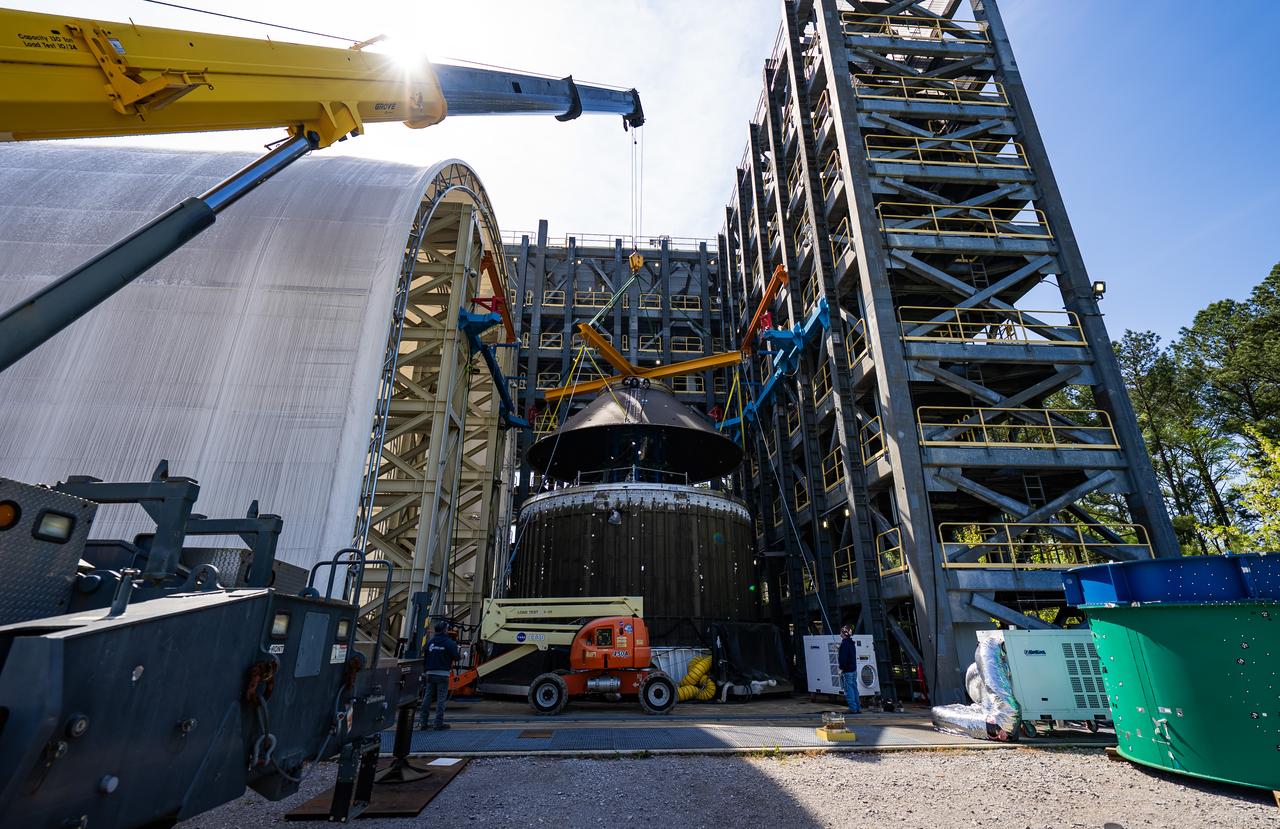
Technicians at NASA’s Marshall Space Flight Center in Huntsville, Alabama, are seen in these images taken April 17, 2025, moving the payload adapter test article from Building 4697 to Building 4705 for storage. This move marks the end of structural testing for the test article. Next, engineers will complete the qualification article and conduct additional for further testing before building the final flight hardware. Manufactured at Marshall, the test article underwent extensive and rigorous testing to validate the design before engineers finalized the configuration for the flight article. The newly completed composite payload adapter is an evolution from the Orion stage adapter to be used in the upgraded Block 1B configuration of the SLS (Space Launch System) rocket, debuting with Artemis IV.
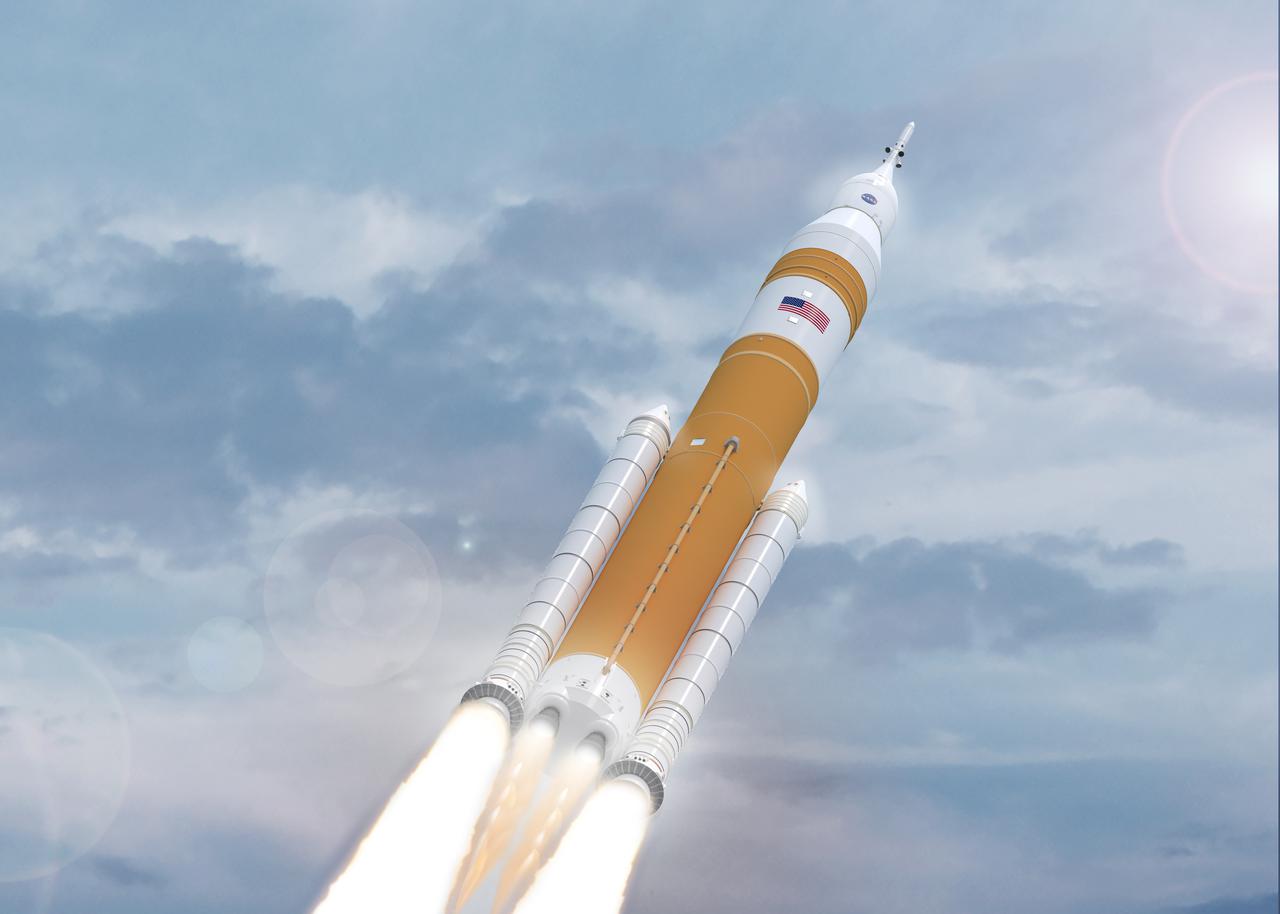
Illustration of evolved SLS Block 1B Crew variant in flight. This configuration of the rocket, with the Exploration Upper Stage, will provide in-space propulsion to send astronauts in NASA’s Orion spacecraft and heavy cargo on a precise trajectory to the Moon. The evolution of the rocket to SLS Block 1B configuration with EUS enables SLS to launch 40% more cargo to the Moon along with the crew. Manufacturing both the core stage and Exploration Upper Stage is a collaborative effort between NASA and Boeing, the lead contractor for EUS and the SLS core stage. SLS is the only rocket that can send Orion, astronauts, and supplies to the Moon in a single mission. The SLS rocket, NASA’s Orion spacecraft, Gateway, and human landing system are part of NASA’s backbone for deep space exploration. Under the Artemis program, NASA is working to land the first woman and the next man on the Moon to pave the way for sustainable exploration at the Moon and future missions to Mars. (NASA)

Illustration of the evolved SLS Block 1B Crew variant outer mold line. This configuration of the rocket, with the Exploration Upper Stage, will provide in-space propulsion to send astronauts in NASA’s Orion spacecraft and heavy cargo on a precise trajectory to the Moon. The evolution of the rocket to SLS Block 1B configuration with EUS enables SLS to launch 40% more cargo to the Moon along with the crew. Manufacturing both the core stage and Exploration Upper Stage is a collaborative effort between NASA and Boeing, the lead contractor for EUS and the SLS core stage. SLS is the only rocket that can send Orion, astronauts, and supplies to the Moon in a single mission. The SLS rocket, NASA’s Orion spacecraft, Gateway, and human landing system are part of NASA’s backbone for deep space exploration. Under the Artemis program, NASA is working to land the first woman and the next man on the Moon to pave the way for sustainable exploration at the Moon and future missions to Mars. (NASA)

Seen here, is a nighttime rendering of the evolved SLS Block 1B Crew variant positioned on the mobile launcher. This configuration of the rocket, with the Exploration Upper Stage, will provide in-space propulsion to send astronauts in NASA’s Orion spacecraft and heavy cargo on a precise trajectory to the Moon. The evolution of the rocket to SLS Block 1B configuration with EUS enables SLS to launch 40% more cargo to the Moon along with the crew. Manufacturing both the core stage and Exploration Upper Stage is a collaborative effort between NASA and Boeing, the lead contractor for EUS and the SLS core stage. SLS is the only rocket that can send Orion, astronauts, and supplies to the Moon in a single mission. The SLS rocket, NASA’s Orion spacecraft, Gateway, and human landing system are part of NASA’s backbone for deep space exploration. Under the Artemis program, NASA is working to land the first woman and the next man on the Moon to pave the way for sustainable exploration at the Moon and future missions to Mars. (NASA)
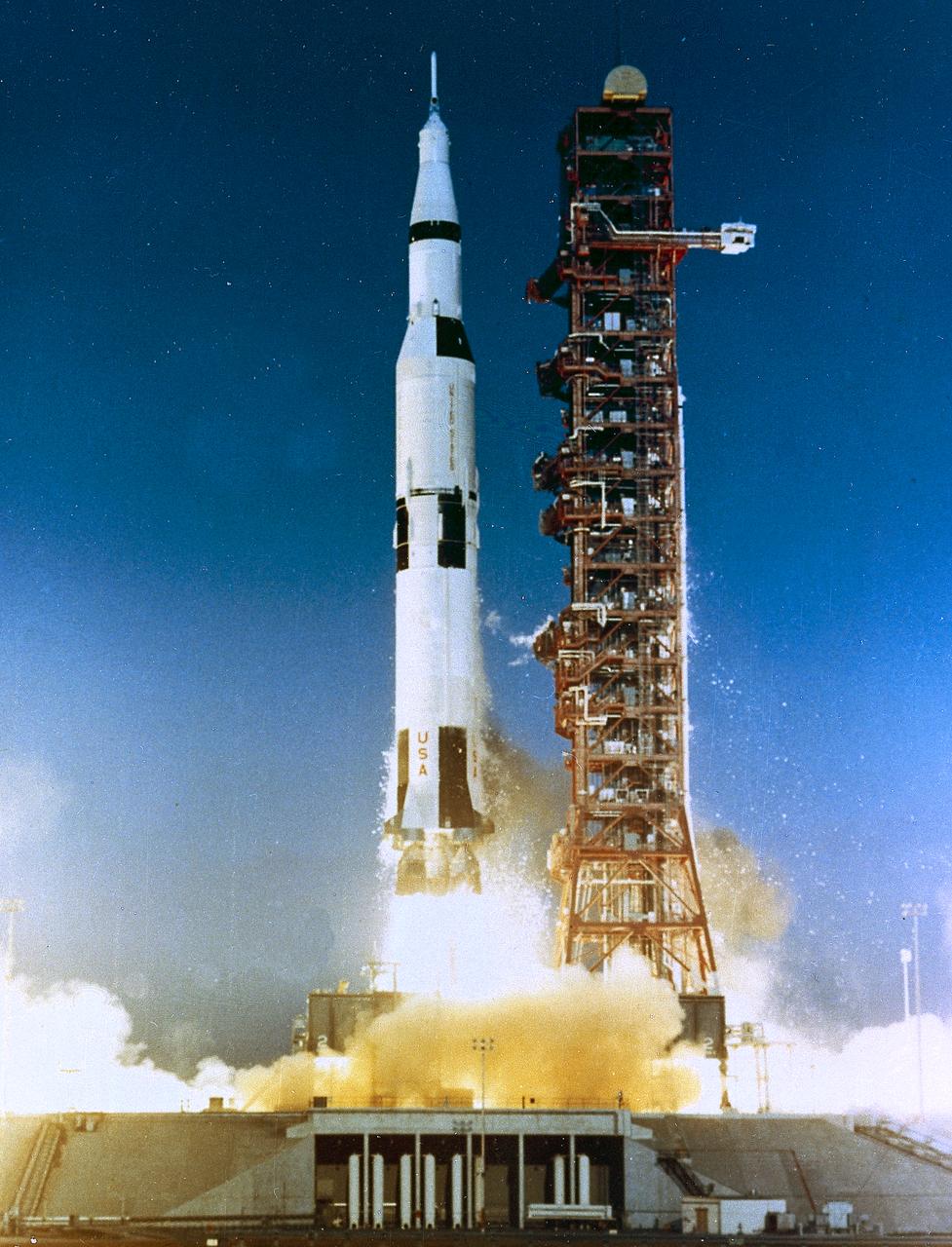
The second Saturn V launch vehicle (SA-502) for the Apollo 6 mission lifted off from the Kennedy Space Center launch complex on April 4, 1968. This unmanned Saturn V launch vehicle tested the emergency detection system in closed loop configuration.
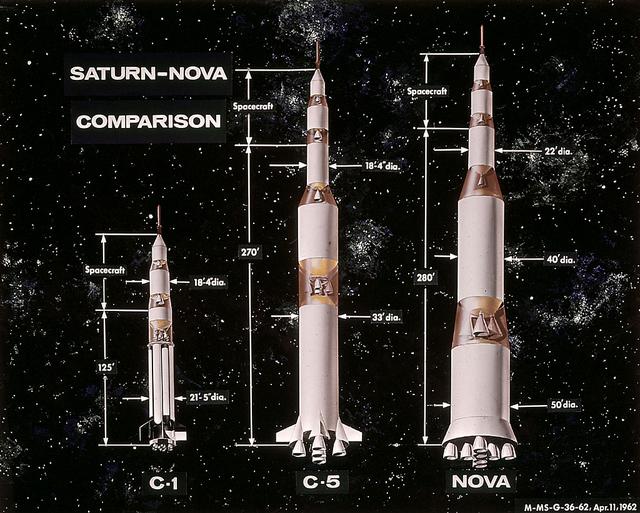
In this 1962 artist's concept , a proposed Nova rocket, shown at right, is compared to a Saturn C-1, left, and a Saturn C-5, center. The Marshall Space Flight Center directed studies of Nova configuration from 1960 to 1962 as a means of achieving a marned lunar landing with a direct flight to the Moon. Various configurations of the vehicle were examined, the largest being a five-stage vehicle using eight F-1 engines in the first stage. Although the program was effectively cancelled in 1962 when NASA planners selected the lunar-orbital rendezvous mode, the proposed F-1 engine was eventually used to propel the first stage of the Saturn V launch vehicle in the Apollo Program.
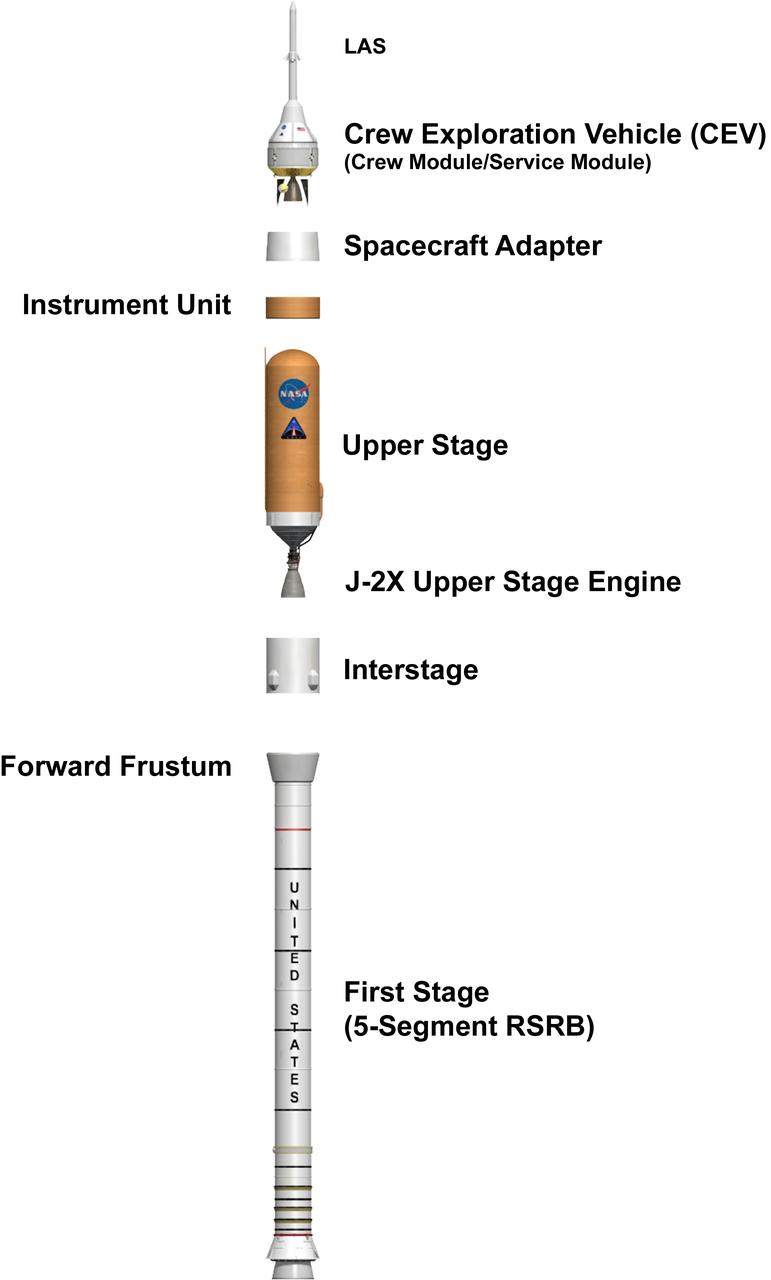
Named for the Greek god associated with Mars, the NASA developed Ares launch vehicles will return humans to the moon and later take them to Mars and other destinations. This is an illustration of the Ares I with call outs. Ares I is an inline, two-stage rocket configuration topped by the Orion crew vehicle and its launch abort system. In addition to the primary mission of carrying crews of four to six astronauts to Earth orbit, Ares I may also use its 25-ton payload capacity to deliver resources and supplies to the International Space Station, or to "park" payloads in orbit for retrieval by other spacecraft bound for the moon or other destinations. Ares I employs a single five-segment solid rocket booster, a derivative of the space shuttle solid rocket booster, for the first stage. A liquid oxygen/liquid hydrogen J-2X engine derived from the J-2 engine used on the Apollo second stage will power the Ares I second stage. The Ares I can lift more than 55,000 pounds to low Earth orbit. Ares I is subject to configuration changes before it is actually launched. This illustration reflects the latest configuration as of January 2007.
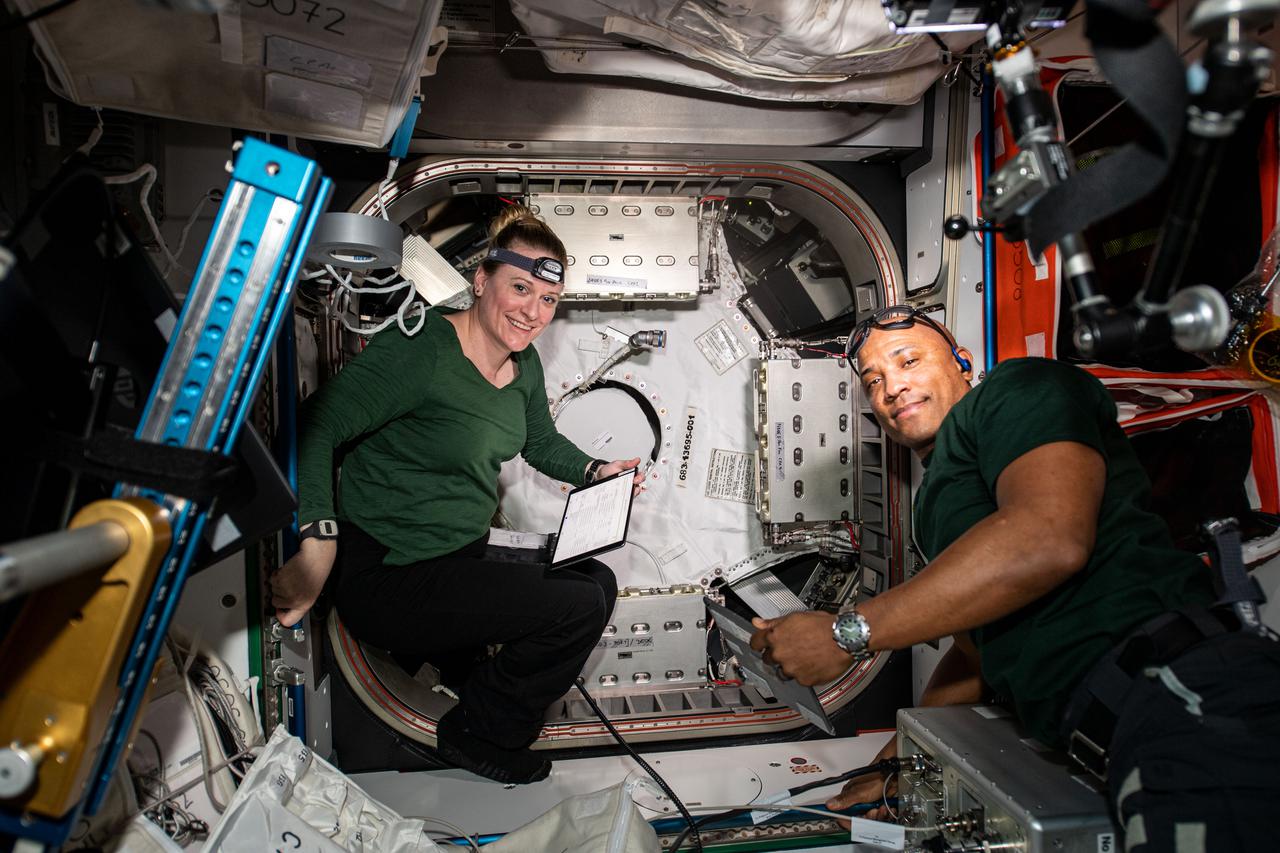
iss064e030014 (February 8, 2021) --- NASA astronauts Kate Rubins and Victor Glover work on configuration and opening of Nanoracks Bishop Airlock attached to the Tranquility module. Launched in the trunk of a SpaceX Dragon capsule, Bishop enables more commercial research, satellite deployments, and cargo operations outside in the vacuum of space.
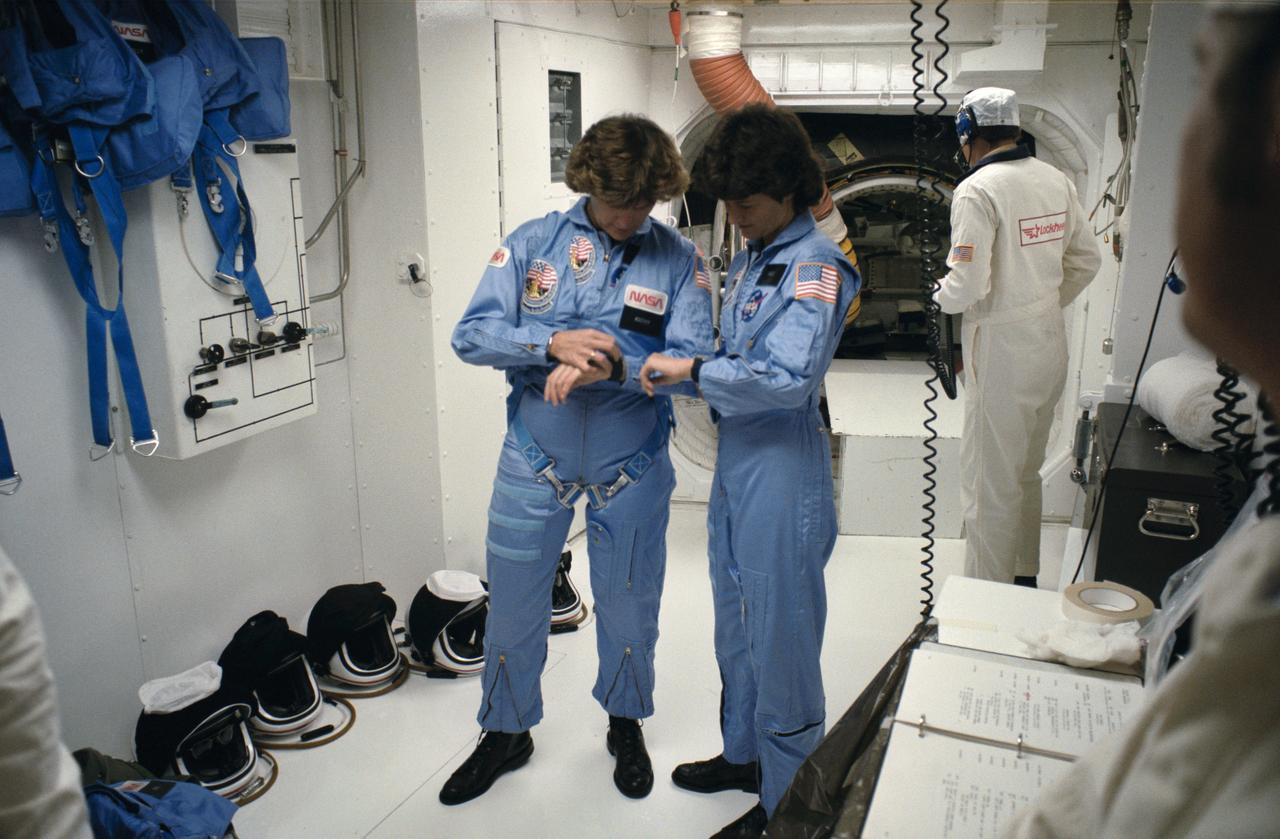
41G-90082 / S17-90082 (5 Oct 1984) --- Astronauts Sally K. Ride (right) and Kathryn D. Sullivan, two of three mission specialists, synchronize their watches prior to ingressing the Space Shuttle Challenger on the launch pad at Kennedy Space Center (KSC). They are in the White Room leading to the entry hatch of the vertically configured spacecraft.
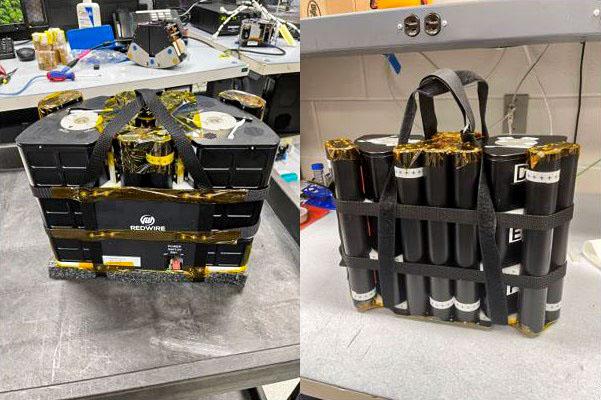
jsc2024e036957 (5/24/2024) --- Six modules configured in their Powered Carrier for ascent. The carrier helps perfuse media through the tissue while launched in a cold bag, maintaining approximately 37°C for the Maturation of Vascularized Liver Tissue Construct in Zero Gravity (MVP Cell-07) investigation. Image courtesy of Grant Vellinger, Redwire.
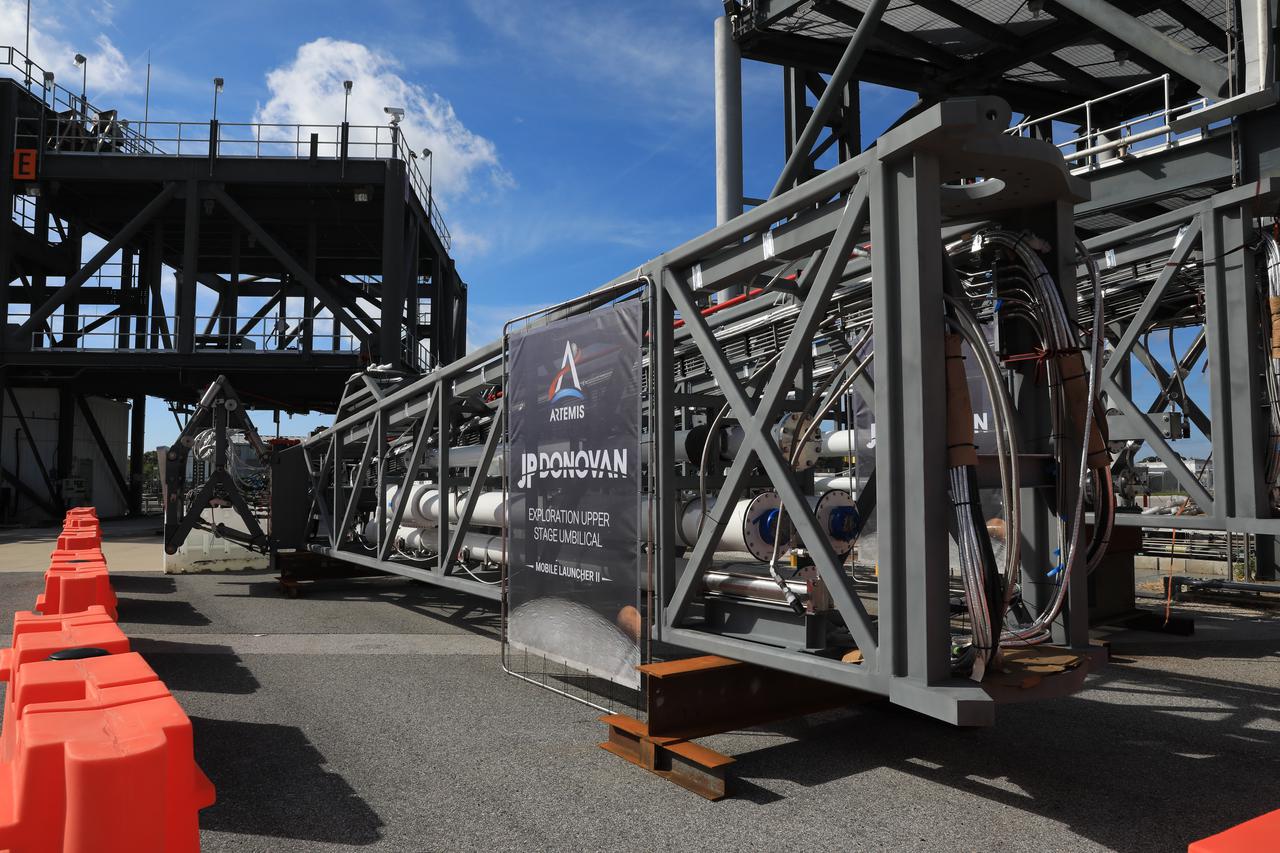
The first umbilical – one of many swing arms that will provide power, communications, and propellants to a larger configuration of NASA’s Space Launch System (SLS) rocket – for the agency’s mobile launcher 2 (ML2) arrives at the Launch Equipment Test Facility (LETF) at NASA’s Kennedy Space Center in Florida on Oct. 28, 2021. The umbilical will go through rounds of testing at the LETF to verify it functions properly before getting installed on the ML2 tower. This particular umbilical will provide propellants, environmental control systems, and a variety of purge gasses to the rocket’s Exploration Upper Stage. ML2 will be used to launch SLS Block 1B and Block 2 configurations to the Moon, starting with the Artemis IV mission, allowing NASA to send astronauts and heavy cargo to the lunar surface.
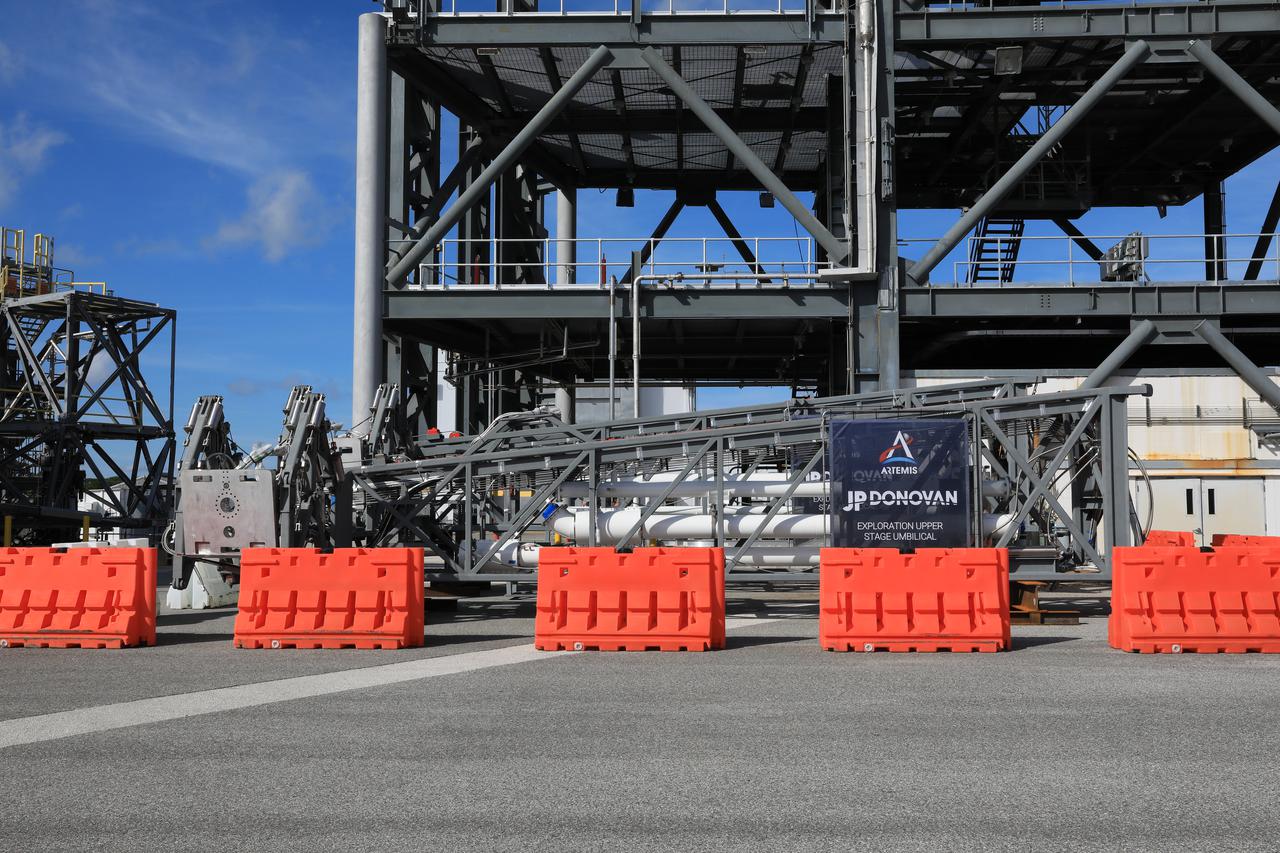
The first umbilical – one of many swing arms that will provide power, communications, and propellants to a larger configuration of NASA’s Space Launch System (SLS) rocket – for the agency’s mobile launcher 2 (ML2) arrives at the Launch Equipment Test Facility (LETF) at NASA’s Kennedy Space Center in Florida on Oct. 28, 2021. The umbilical will go through rounds of testing at the LETF to verify it functions properly before getting installed on the ML2 tower. This particular umbilical will provide propellants, environmental control systems, and a variety of purge gasses to the rocket’s Exploration Upper Stage. ML2 will be used to launch SLS Block 1B and Block 2 configurations to the Moon, starting with the Artemis IV mission, allowing NASA to send astronauts and heavy cargo to the lunar surface.
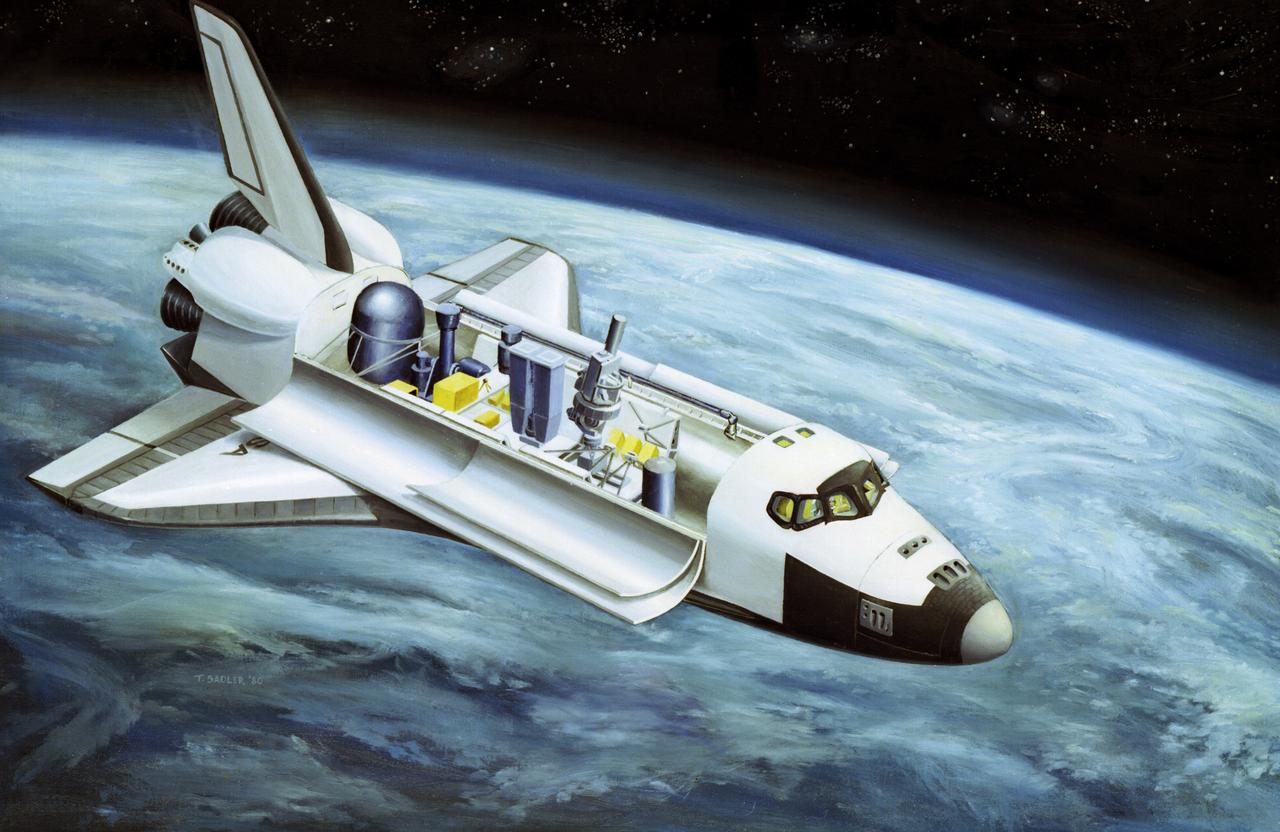
This illustration depicts the configuration of the Spacelab-2 in the cargo bay of the orbiter. Spacelab was a versatile laboratory carried in the Space Shuttle's cargo bay for scientific research flights. Each Spacelab mission had a unique design appropriate to the mission's goals. A number of Spacelab configurations could be assembled from pressurized habitation modules and exposed platforms called pallets. Spacelab-2 was the first pallet-only mission. One of the goals of the mission was to verify that the pallets' configuration was satisfactory for observations and research. Except for two biological experiments and an experiment that used ground-based instruments, the Spacelab-2 scientific instruments needed direct exposure to space. On the first pallet, three solar instruments and one atmospheric instrument were mounted on the Instrument Pointing System, which was being tested on its first flight. The second Spacelab pallet held a large double x-ray telescope and three plasma physics detectors. The last pallet supported an infrared telescope, a superfluid helium technology experiment, and a small plasma diagnostics satellite. The Spacelab-2 mission was designed to capitalize on the Shuttle-Spacelab capabilities, to launch and retrieve satellites, and to point several instruments independently with accuracy and stability. Spacelab-2 (STS-51F, 19th Shuttle mission) was launched aboard Space Shuttle Orbiter Challenger on July 29, 1985. The Marshall Space Flight Center had overall management responsibilities of the Spacelab missions.
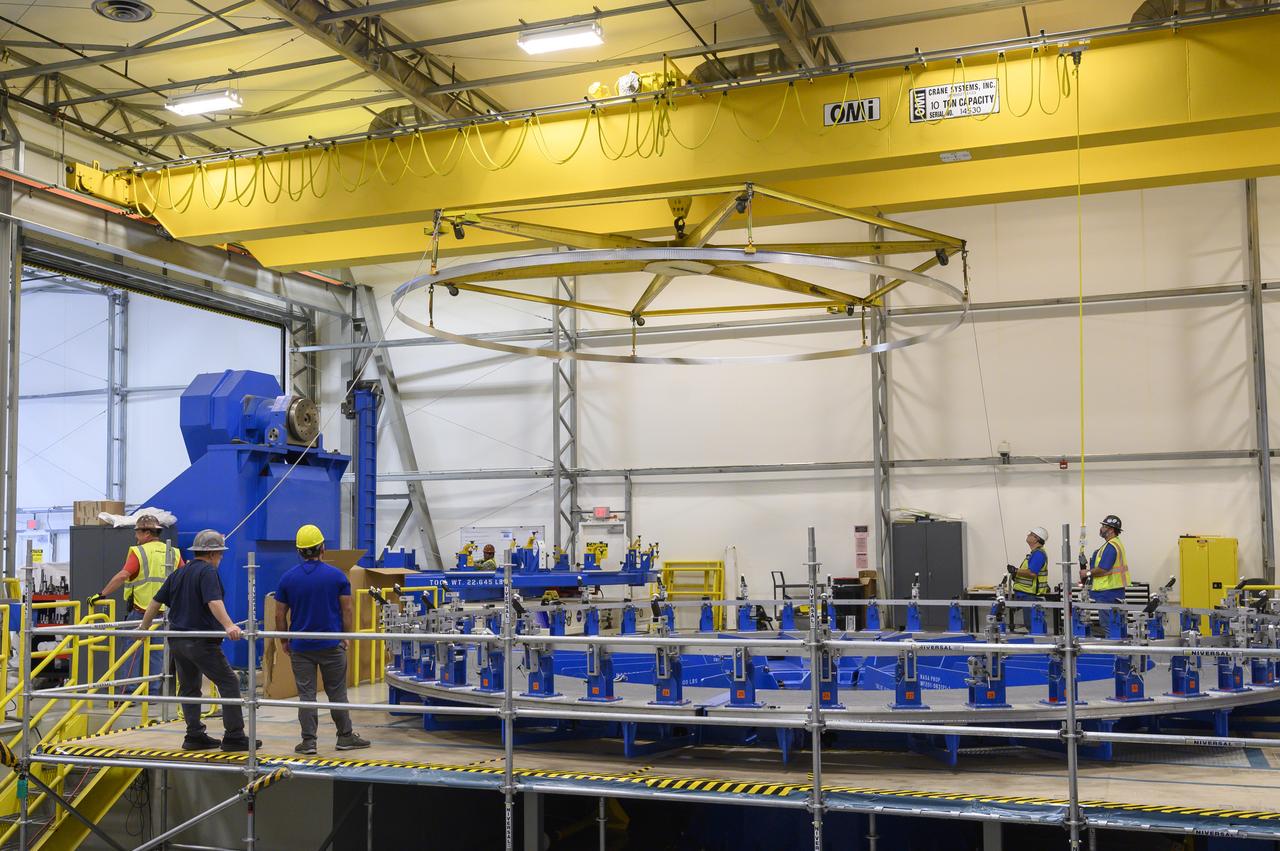
Technicians at NASA’s Michoud Assembly Facility in New Orleans lift a ring for the Exploration Upper Stage (EUS) of the SLS (Space Launch System) rocket to move it to another location in the 43-acre factory for further inspection and production. Flight hardware of the SLS EUS, a more powerful in-space propulsion stage beginning with Artemis IV, is in early production at Michoud. The rings make up the barrel sections for the flight hardware. The Exploration Upper Stage will be used on the second configuration of the SLS rocket, known as Block 1B, and will provide in-space propulsion to send astronauts in NASA’s Orion spacecraft and heavy cargo on a precise trajectory to the Moon. EUS will replace the interim cryogenic propulsion stage for the Block 1 configuration of SLS. It has larger propellant tanks and four RL10 engines, enabling SLS to launch 40% more cargo to the Moon along with crew. NASA and Boeing, the SLS lead contractor for the core stage and EUS, are currently manufacturing stages for Artemis II, III, IV, and V at the factory. NASA is working to land the first woman and first person of color on the Moon under Artemis. SLS is part of NASA’s backbone for deep space exploration, along with Orion and the Gateway in orbit around the Moon. SLS is the only rocket that can send Orion, astronauts, and supplies to the Moon in a single mission.
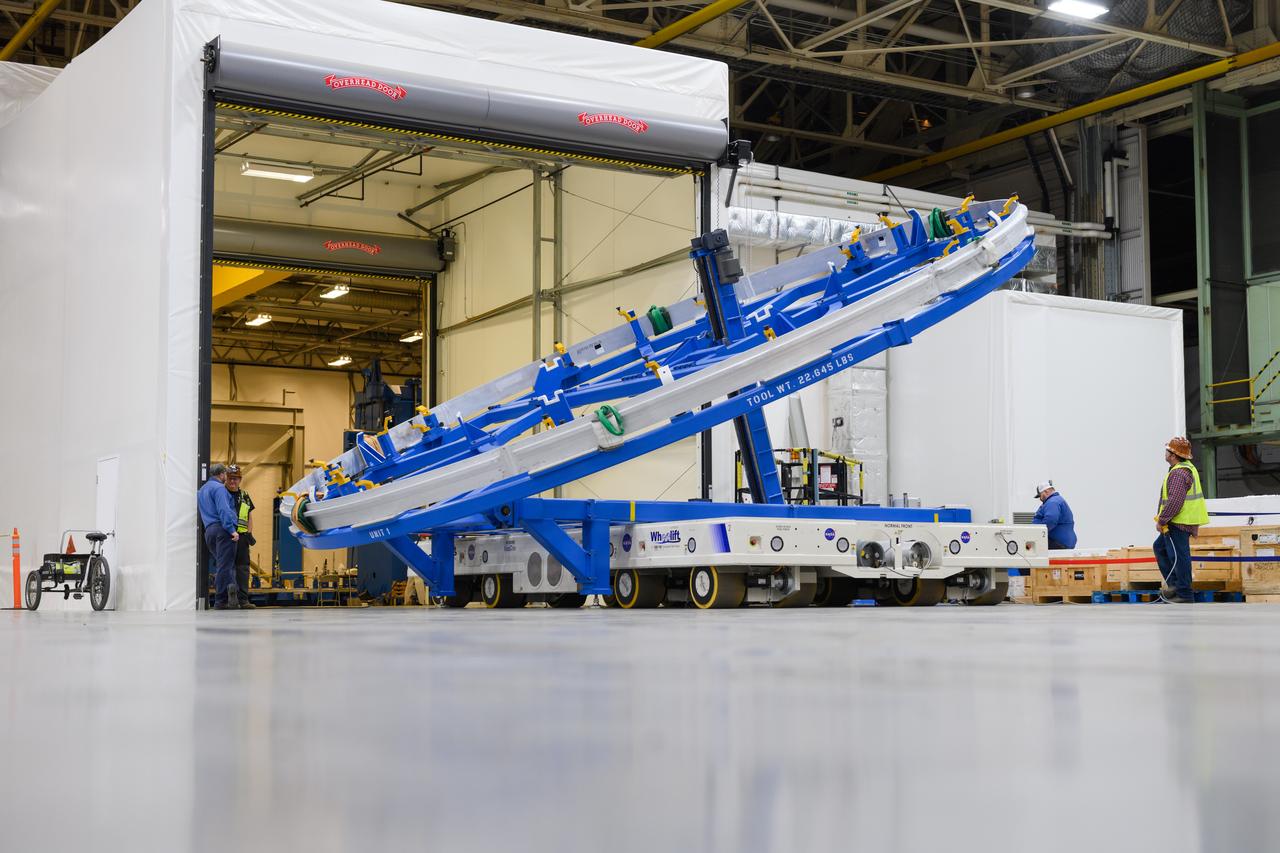
Technicians at NASA’s Michoud Assembly Facility in New Orleans lift a ring for the Exploration Upper Stage (EUS) of the SLS (Space Launch System) rocket to move it to another location in the 43-acre factory for further inspection and production. Flight hardware of the SLS EUS, a more powerful in-space propulsion stage beginning with Artemis IV, is in early production at Michoud. The rings make up the barrel sections for the flight hardware. The Exploration Upper Stage will be used on the second configuration of the SLS rocket, known as Block 1B, and will provide in-space propulsion to send astronauts in NASA’s Orion spacecraft and heavy cargo on a precise trajectory to the Moon. EUS will replace the interim cryogenic propulsion stage for the Block 1 configuration of SLS. It has larger propellant tanks and four RL10 engines, enabling SLS to launch 40% more cargo to the Moon along with crew. NASA and Boeing, the SLS lead contractor for the core stage and EUS, are currently manufacturing stages for Artemis II, III, IV, and V at the factory. NASA is working to land the first woman and first person of color on the Moon under Artemis. SLS is part of NASA’s backbone for deep space exploration, along with Orion and the Gateway in orbit around the Moon. SLS is the only rocket that can send Orion, astronauts, and supplies to the Moon in a single mission.
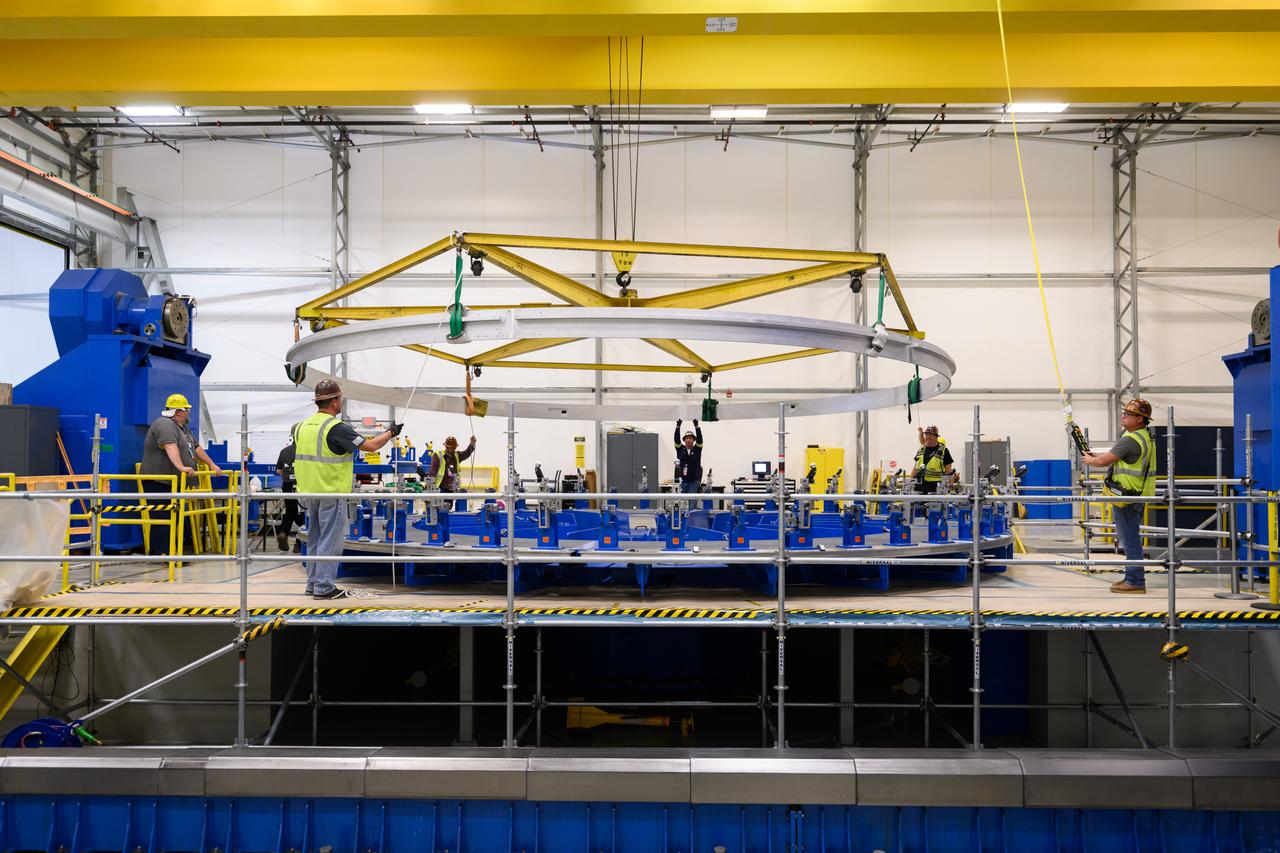
Technicians at NASA’s Michoud Assembly Facility in New Orleans lift a ring for the Exploration Upper Stage (EUS) of the SLS (Space Launch System) rocket to move it to another location in the 43-acre factory for further inspection and production. Flight hardware of the SLS EUS, a more powerful in-space propulsion stage beginning with Artemis IV, is in early production at Michoud. The rings make up the barrel sections for the flight hardware. The Exploration Upper Stage will be used on the second configuration of the SLS rocket, known as Block 1B, and will provide in-space propulsion to send astronauts in NASA’s Orion spacecraft and heavy cargo on a precise trajectory to the Moon. EUS will replace the interim cryogenic propulsion stage for the Block 1 configuration of SLS. It has larger propellant tanks and four RL10 engines, enabling SLS to launch 40% more cargo to the Moon along with crew. NASA and Boeing, the SLS lead contractor for the core stage and EUS, are currently manufacturing stages for Artemis II, III, IV, and V at the factory. NASA is working to land the first woman and first person of color on the Moon under Artemis. SLS is part of NASA’s backbone for deep space exploration, along with Orion and the Gateway in orbit around the Moon. SLS is the only rocket that can send Orion, astronauts, and supplies to the Moon in a single mission.
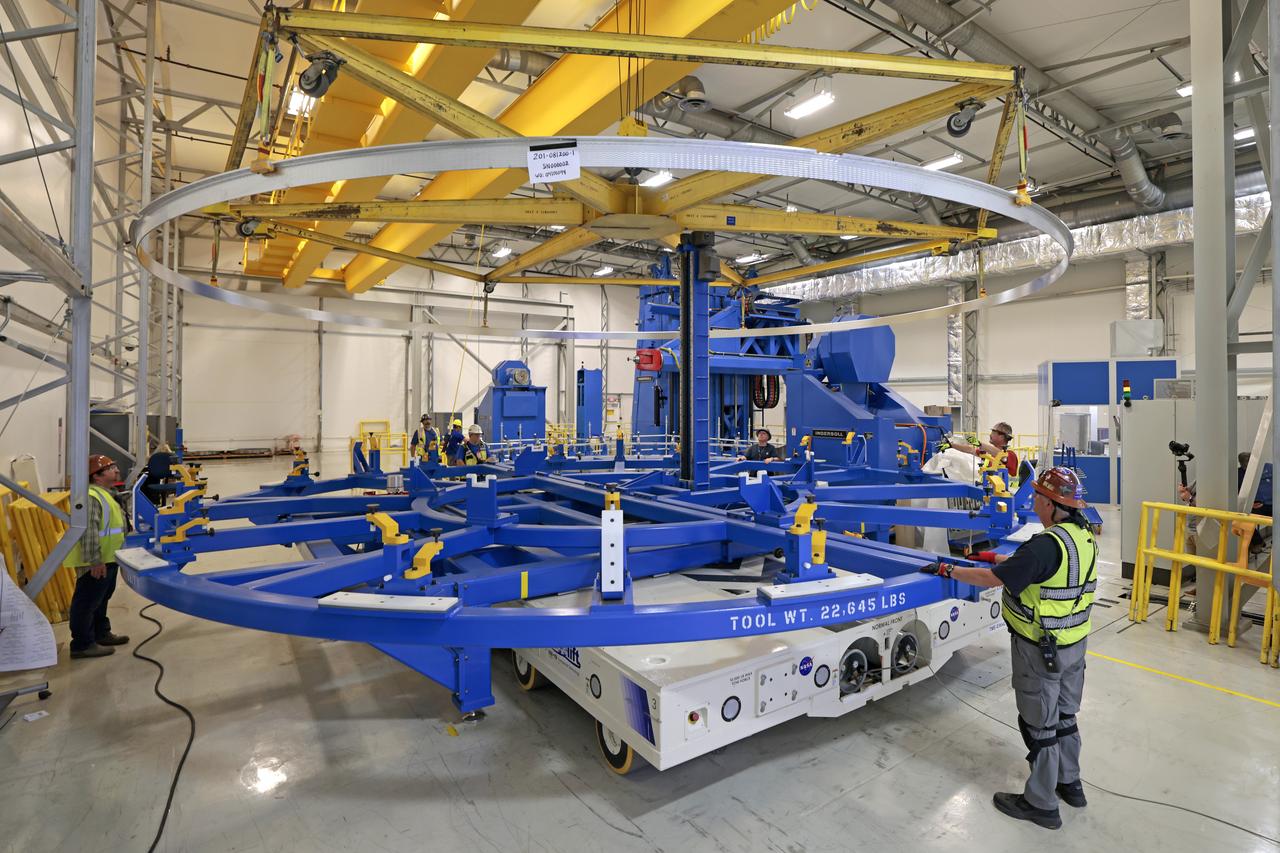
Technicians at NASA’s Michoud Assembly Facility in New Orleans lift a ring for the Exploration Upper Stage (EUS) of the SLS (Space Launch System) rocket to move it to another location in the 43-acre factory for further inspection and production. Flight hardware of the SLS EUS, a more powerful in-space propulsion stage beginning with Artemis IV, is in early production at Michoud. The rings make up the barrel sections for the flight hardware. The Exploration Upper Stage will be used on the second configuration of the SLS rocket, known as Block 1B, and will provide in-space propulsion to send astronauts in NASA’s Orion spacecraft and heavy cargo on a precise trajectory to the Moon. EUS will replace the interim cryogenic propulsion stage for the Block 1 configuration of SLS. It has larger propellant tanks and four RL10 engines, enabling SLS to launch 40% more cargo to the Moon along with crew. NASA and Boeing, the SLS lead contractor for the core stage and EUS, are currently manufacturing stages for Artemis II, III, IV, and V at the factory. NASA is working to land the first woman and first person of color on the Moon under Artemis. SLS is part of NASA’s backbone for deep space exploration, along with Orion and the Gateway in orbit around the Moon. SLS is the only rocket that can send Orion, astronauts, and supplies to the Moon in a single mission.
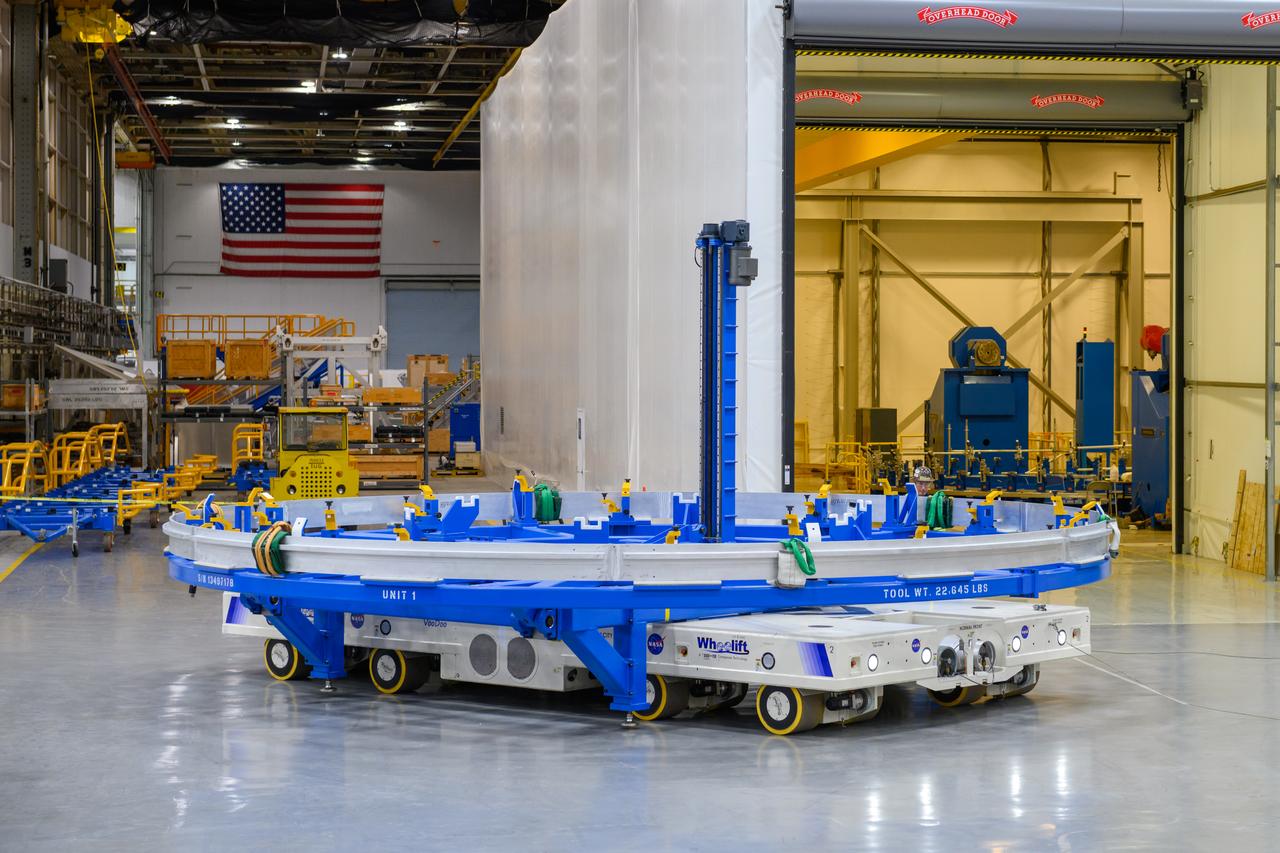
Technicians at NASA’s Michoud Assembly Facility in New Orleans lift a ring for the Exploration Upper Stage (EUS) of the SLS (Space Launch System) rocket to move it to another location in the 43-acre factory for further inspection and production. Flight hardware of the SLS EUS, a more powerful in-space propulsion stage beginning with Artemis IV, is in early production at Michoud. The rings make up the barrel sections for the flight hardware. The Exploration Upper Stage will be used on the second configuration of the SLS rocket, known as Block 1B, and will provide in-space propulsion to send astronauts in NASA’s Orion spacecraft and heavy cargo on a precise trajectory to the Moon. EUS will replace the interim cryogenic propulsion stage for the Block 1 configuration of SLS. It has larger propellant tanks and four RL10 engines, enabling SLS to launch 40% more cargo to the Moon along with crew. NASA and Boeing, the SLS lead contractor for the core stage and EUS, are currently manufacturing stages for Artemis II, III, IV, and V at the factory. NASA is working to land the first woman and first person of color on the Moon under Artemis. SLS is part of NASA’s backbone for deep space exploration, along with Orion and the Gateway in orbit around the Moon. SLS is the only rocket that can send Orion, astronauts, and supplies to the Moon in a single mission.
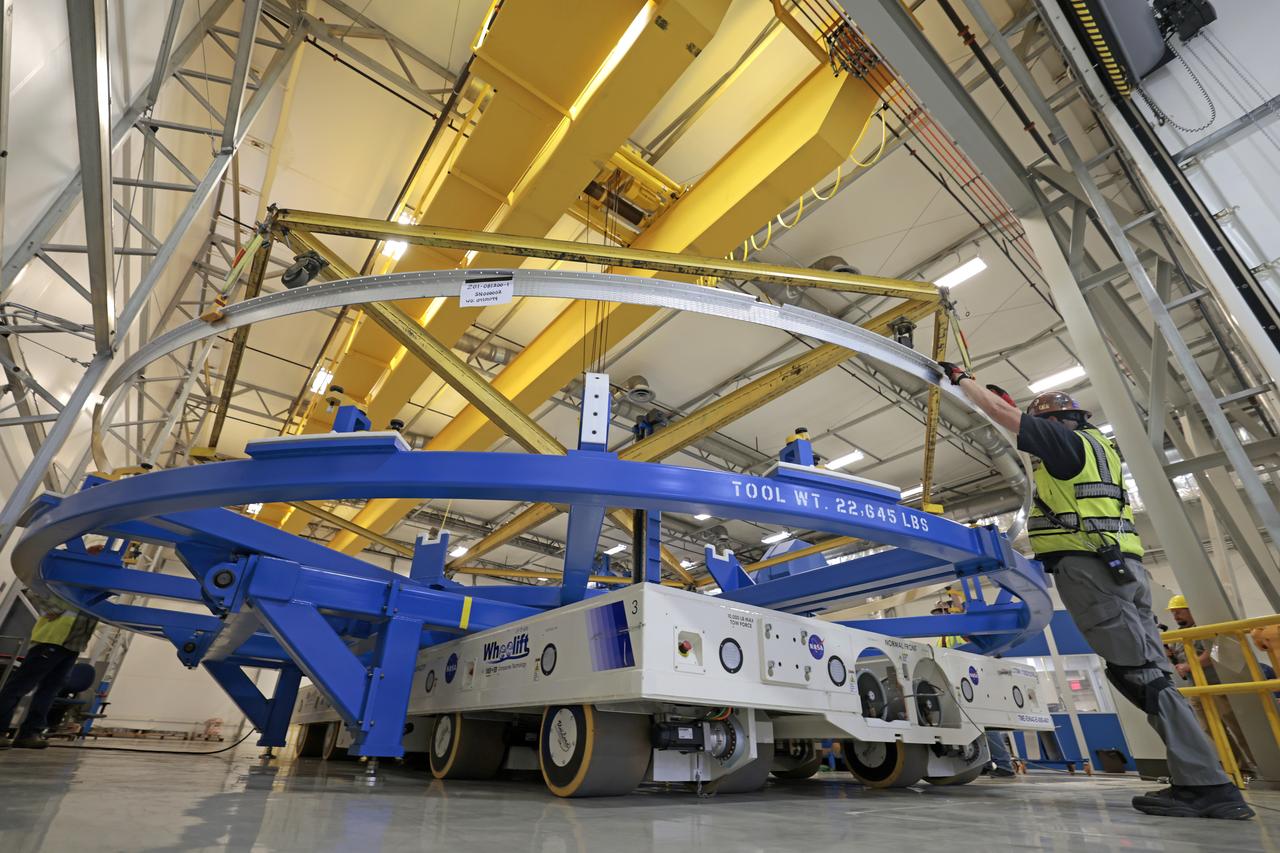
Technicians at NASA’s Michoud Assembly Facility in New Orleans lift a ring for the Exploration Upper Stage (EUS) of the SLS (Space Launch System) rocket to move it to another location in the 43-acre factory for further inspection and production. Flight hardware of the SLS EUS, a more powerful in-space propulsion stage beginning with Artemis IV, is in early production at Michoud. The rings make up the barrel sections for the flight hardware. The Exploration Upper Stage will be used on the second configuration of the SLS rocket, known as Block 1B, and will provide in-space propulsion to send astronauts in NASA’s Orion spacecraft and heavy cargo on a precise trajectory to the Moon. EUS will replace the interim cryogenic propulsion stage for the Block 1 configuration of SLS. It has larger propellant tanks and four RL10 engines, enabling SLS to launch 40% more cargo to the Moon along with crew. NASA and Boeing, the SLS lead contractor for the core stage and EUS, are currently manufacturing stages for Artemis II, III, IV, and V at the factory. NASA is working to land the first woman and first person of color on the Moon under Artemis. SLS is part of NASA’s backbone for deep space exploration, along with Orion and the Gateway in orbit around the Moon. SLS is the only rocket that can send Orion, astronauts, and supplies to the Moon in a single mission.
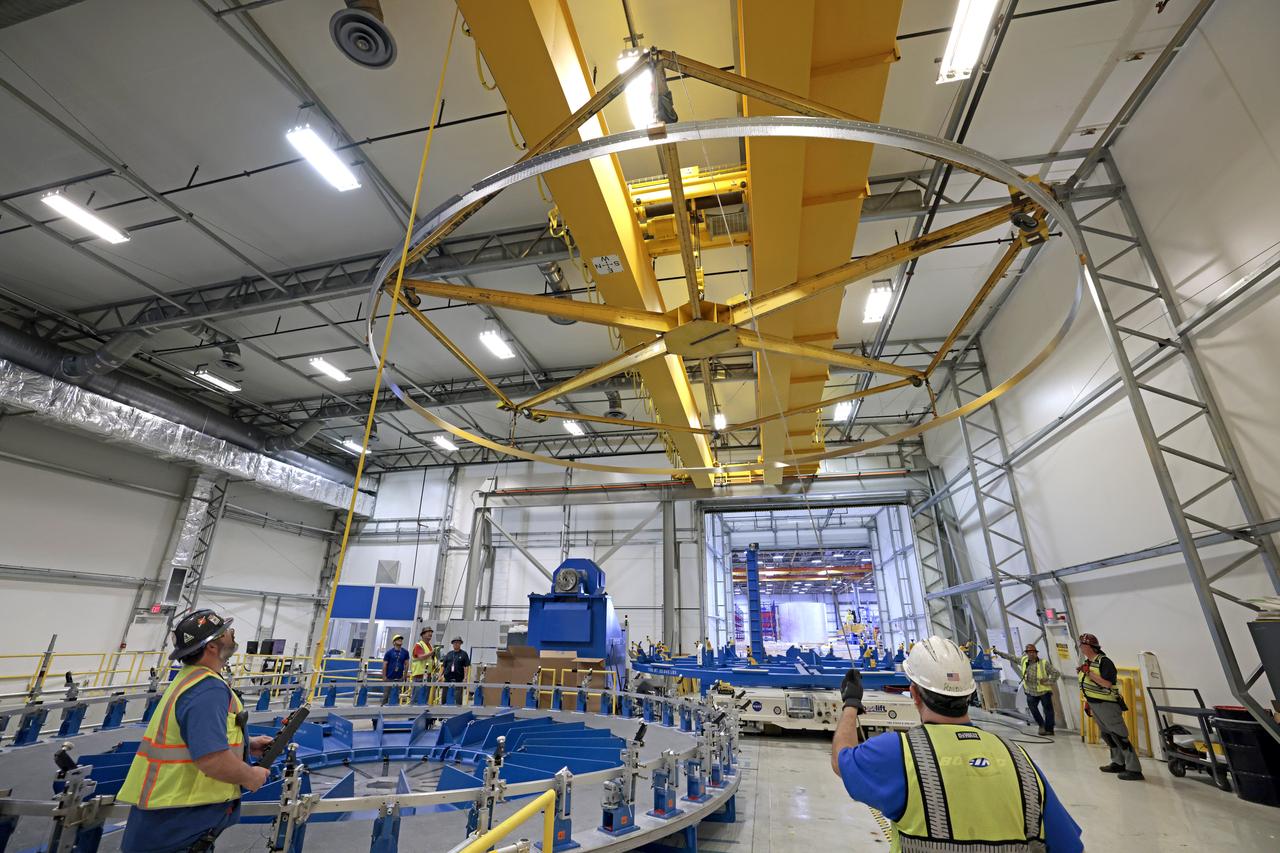
Technicians at NASA’s Michoud Assembly Facility in New Orleans lift a ring for the Exploration Upper Stage (EUS) of the SLS (Space Launch System) rocket to move it to another location in the 43-acre factory for further inspection and production. Flight hardware of the SLS EUS, a more powerful in-space propulsion stage beginning with Artemis IV, is in early production at Michoud. The rings make up the barrel sections for the flight hardware. The Exploration Upper Stage will be used on the second configuration of the SLS rocket, known as Block 1B, and will provide in-space propulsion to send astronauts in NASA’s Orion spacecraft and heavy cargo on a precise trajectory to the Moon. EUS will replace the interim cryogenic propulsion stage for the Block 1 configuration of SLS. It has larger propellant tanks and four RL10 engines, enabling SLS to launch 40% more cargo to the Moon along with crew. NASA and Boeing, the SLS lead contractor for the core stage and EUS, are currently manufacturing stages for Artemis II, III, IV, and V at the factory. NASA is working to land the first woman and first person of color on the Moon under Artemis. SLS is part of NASA’s backbone for deep space exploration, along with Orion and the Gateway in orbit around the Moon. SLS is the only rocket that can send Orion, astronauts, and supplies to the Moon in a single mission.
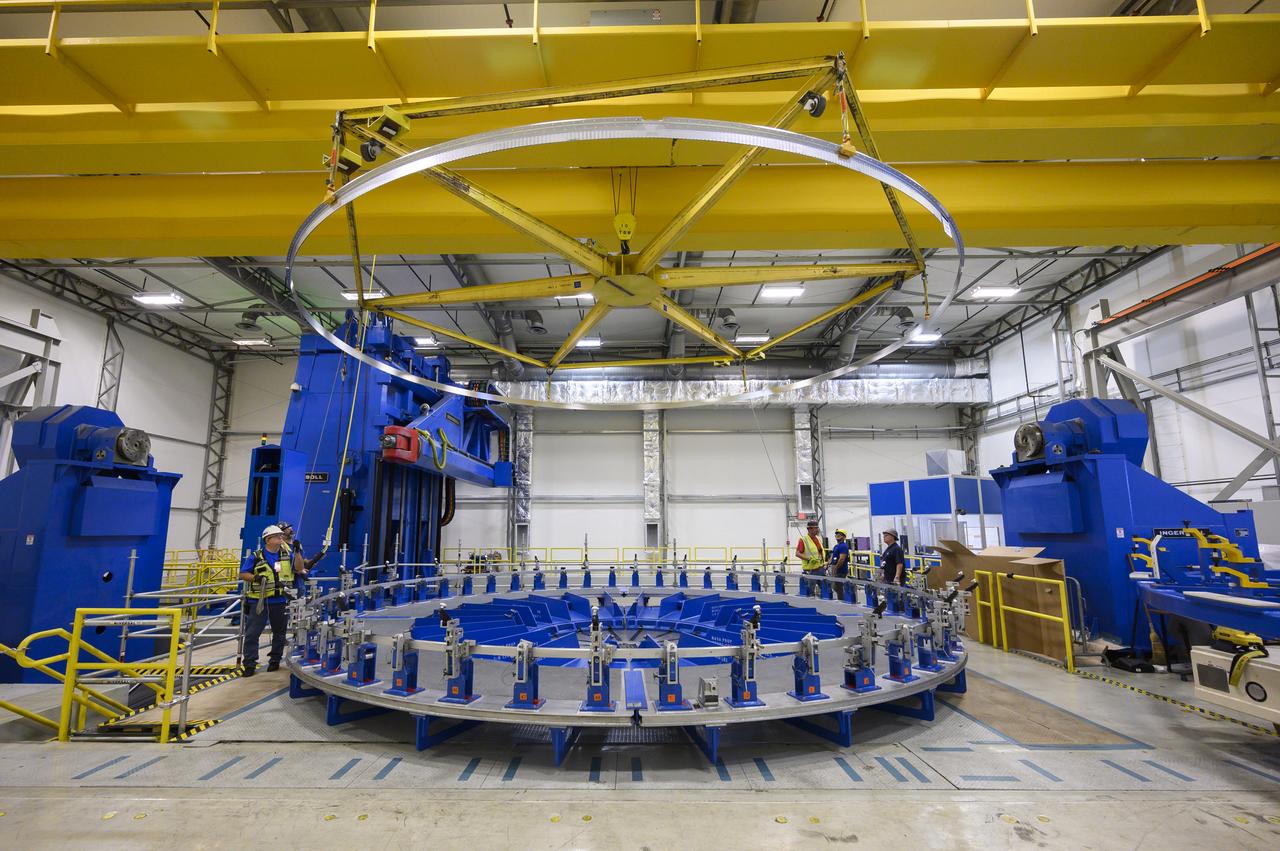
Technicians at NASA’s Michoud Assembly Facility in New Orleans lift a ring for the Exploration Upper Stage (EUS) of the SLS (Space Launch System) rocket to move it to another location in the 43-acre factory for further inspection and production. Flight hardware of the SLS EUS, a more powerful in-space propulsion stage beginning with Artemis IV, is in early production at Michoud. The rings make up the barrel sections for the flight hardware. The Exploration Upper Stage will be used on the second configuration of the SLS rocket, known as Block 1B, and will provide in-space propulsion to send astronauts in NASA’s Orion spacecraft and heavy cargo on a precise trajectory to the Moon. EUS will replace the interim cryogenic propulsion stage for the Block 1 configuration of SLS. It has larger propellant tanks and four RL10 engines, enabling SLS to launch 40% more cargo to the Moon along with crew. NASA and Boeing, the SLS lead contractor for the core stage and EUS, are currently manufacturing stages for Artemis II, III, IV, and V at the factory. NASA is working to land the first woman and first person of color on the Moon under Artemis. SLS is part of NASA’s backbone for deep space exploration, along with Orion and the Gateway in orbit around the Moon. SLS is the only rocket that can send Orion, astronauts, and supplies to the Moon in a single mission.
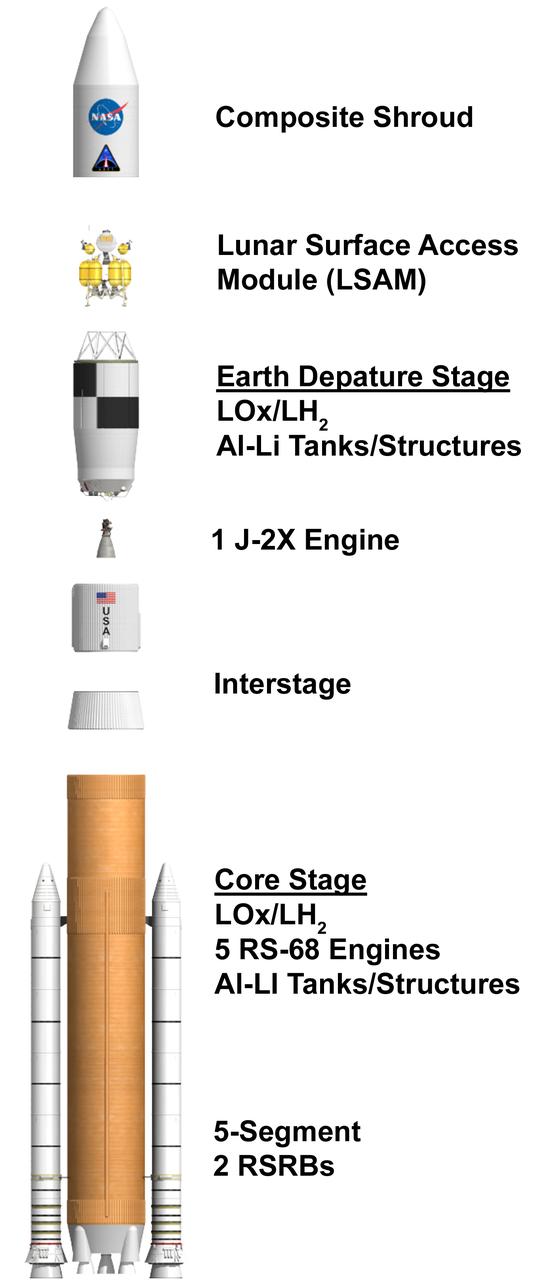
The NASA developed Ares rockets, named for the Greek god associated with Mars, will return humans to the moon and later take them to Mars and other destinations. This is an illustration of the Ares V with call outs. The Ares V is a heavy lift launch vehicle that will use five RS-68 liquid oxygen/liquid hydrogen engines mounted below a larger version of the space shuttle external tank, and two five-segment solid propellant rocket boosters for the first stage. The upper stage will use the same J-2X engine as the Ares I and past Apollo vehicles. The Ares V can lift more than 286,000 pounds to low Earth orbit and stands approximately 360 feet tall. This versatile system will be used to carry cargo and the components into orbit needed to go to the moon and later to Mars. Ares V is subject to configuration changes before it is actually launched. This illustration reflects the latest configuration as of January 2007.
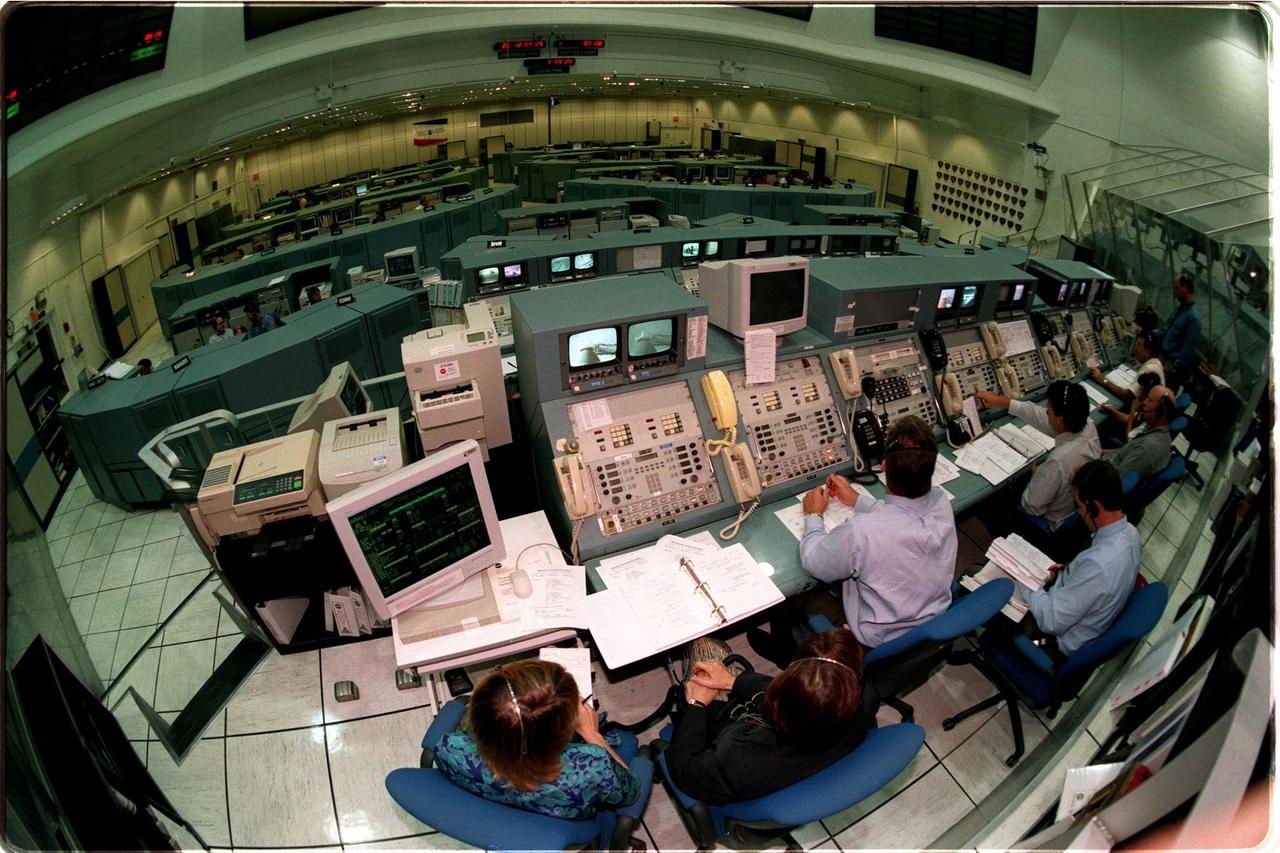
KENNEDY SPACE CENTER, FLA. -- In Firing Room 1 at KSC, Shuttle launch team members put the Shuttle system through an integrated simulation. The control room is set up with software used to simulate flight and ground systems in the launch configuration. A Simulation Team, comprisING KSC engineers, introduce 12 or more major problems to prepare the launch team for worst-case scenarios. Such tests and simulations keep the Shuttle launch team sharp and ready for liftoff. The next liftoff is targeted for Oct. 29.
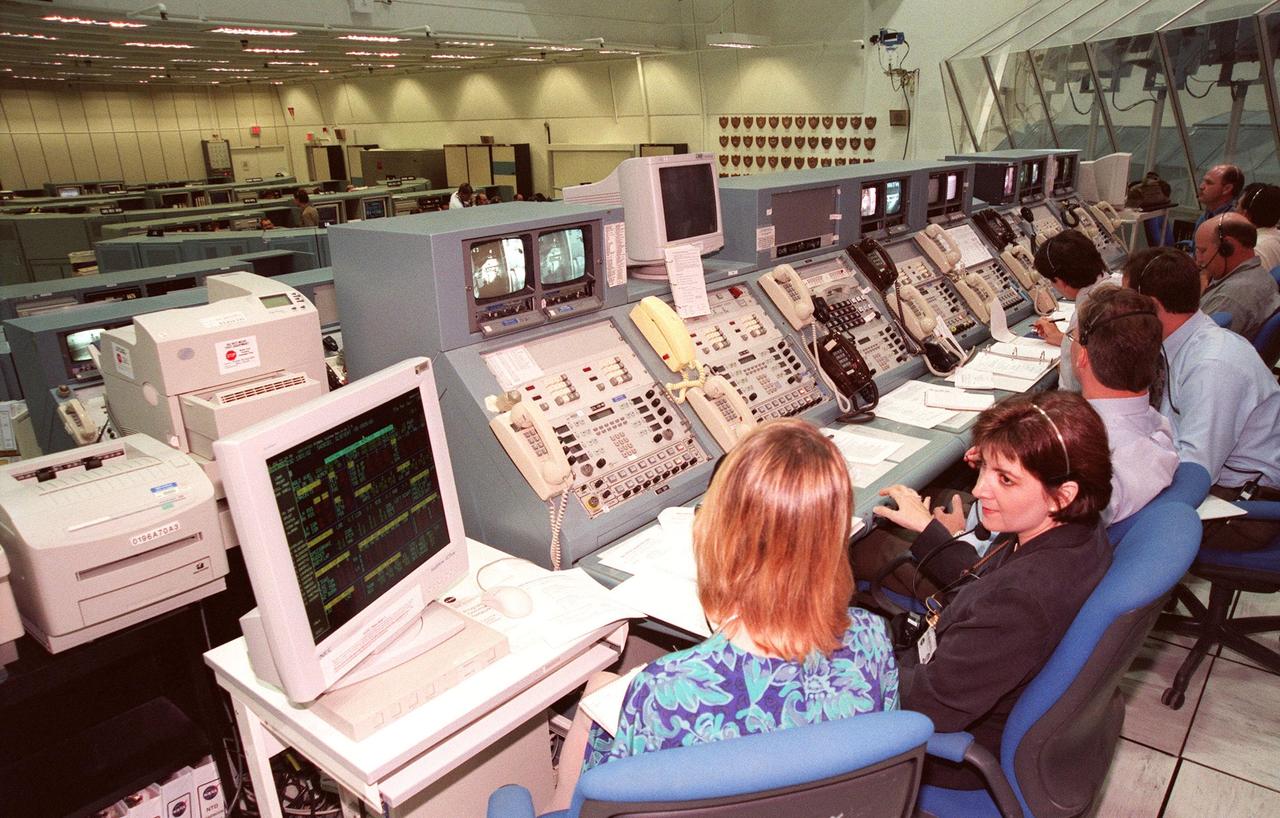
KENNEDY SPACE CENTER, FLA. -- In Firing Room 1 at KSC, Shuttle launch team members put the Shuttle system through an integrated simulation. The control room is set up with software used to simulate flight and ground systems in the launch configuration. A Simulation Team, comprising KSC engineers, introduce 12 or more major problems to prepare the launch team for worst-case scenarios. Such tests and simulations keep the Shuttle launch team sharp and ready for liftoff. The next liftoff is targeted for Oct. 29
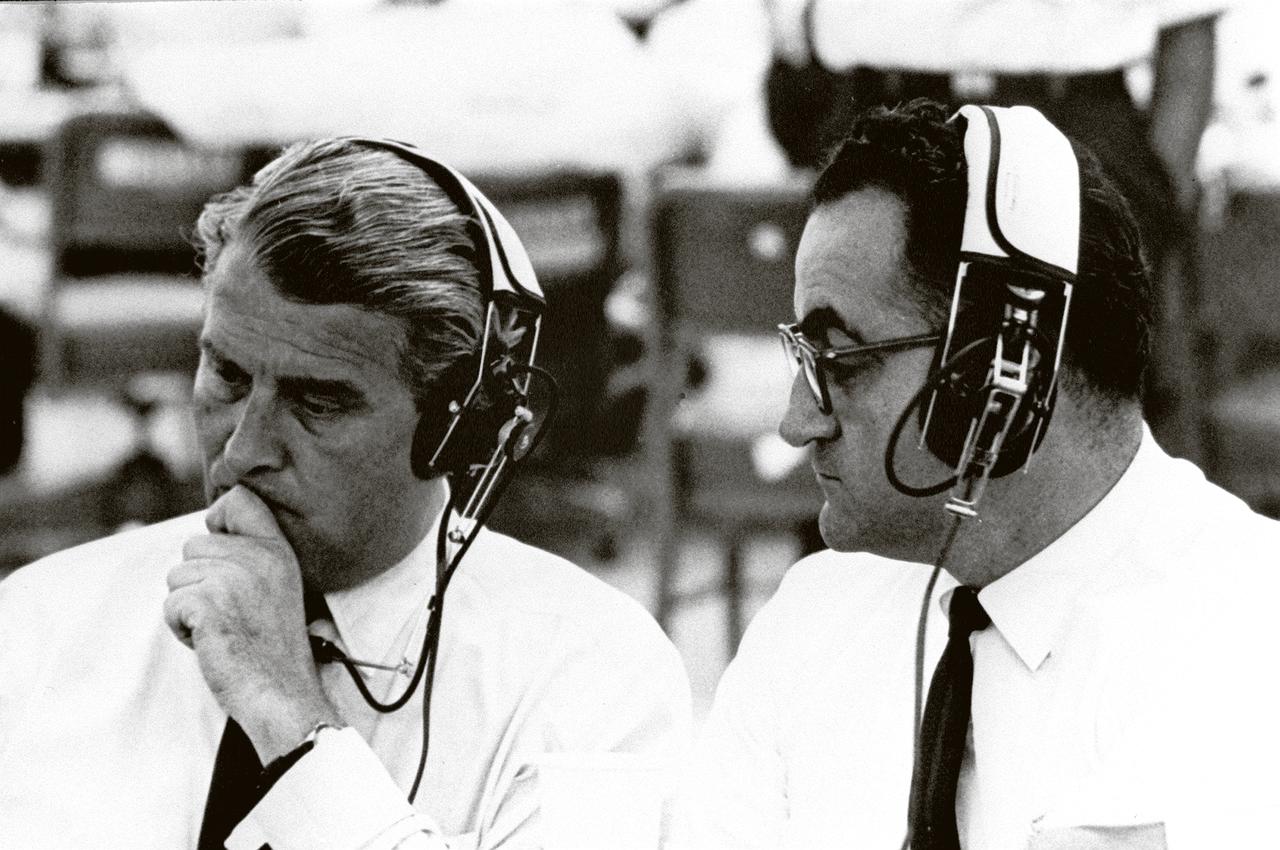
Marshall Space Flight Center (MSFC) Director Dr. Wernher von Braun (left) with Kennedy Space Center (KSC) Rocco Petrone prior to the January 29, 1964 launch of SA-5, the first Block II configuration of the Saturn I launch vehicle. Petrone played key roles at KSC in the development of Saturn launch facilities before becoming director of launch operations in 1966.
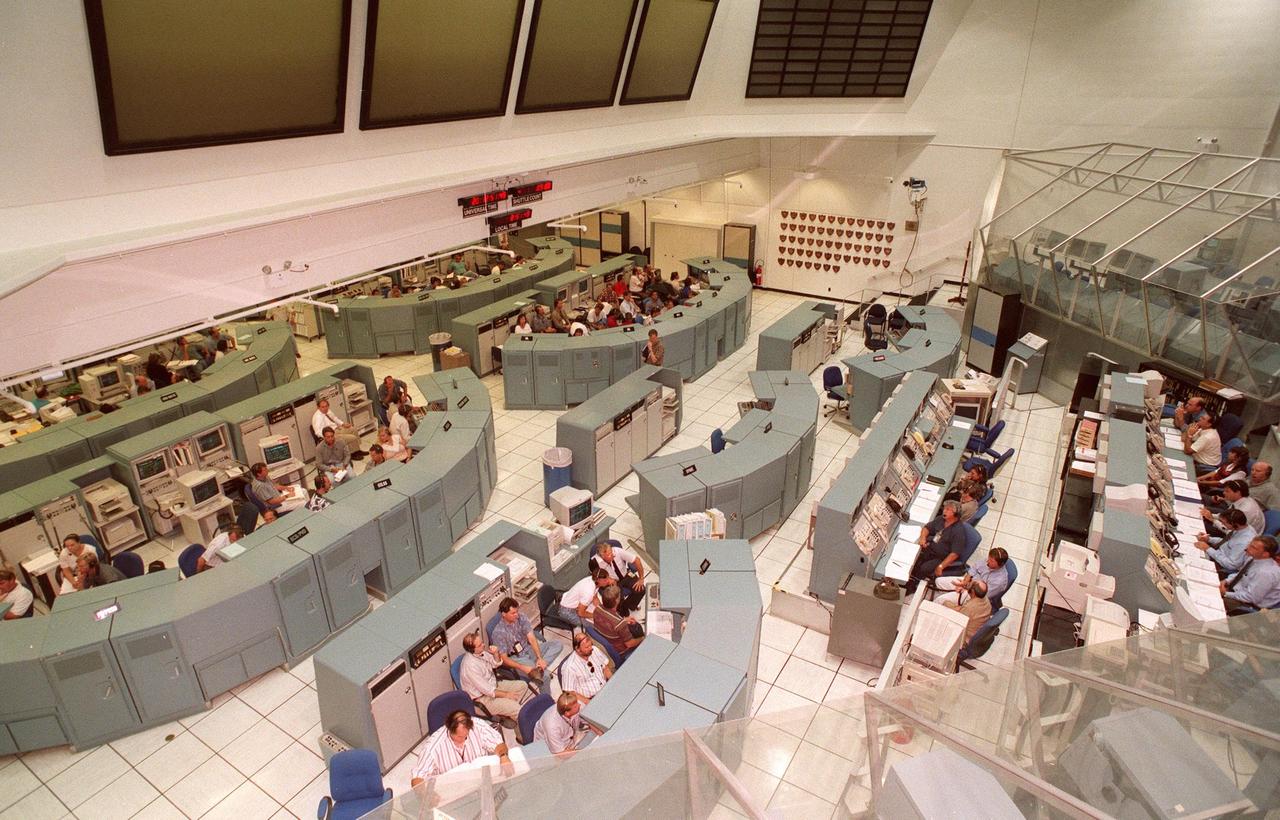
In Firing Room 1 at KSC, Shuttle launch team members put the Shuttle system through an integrated simulation. The control room is set up with software used to simulate flight and ground systems in the launch configuration. A Simulation Team, comprised of KSC engineers, introduce 12 or more major problems to prepare the launch team for worst-case scenarios. Such tests and simulations keep the Shuttle launch team sharp and ready for liftoff. The next liftoff is targeted for Oct. 29
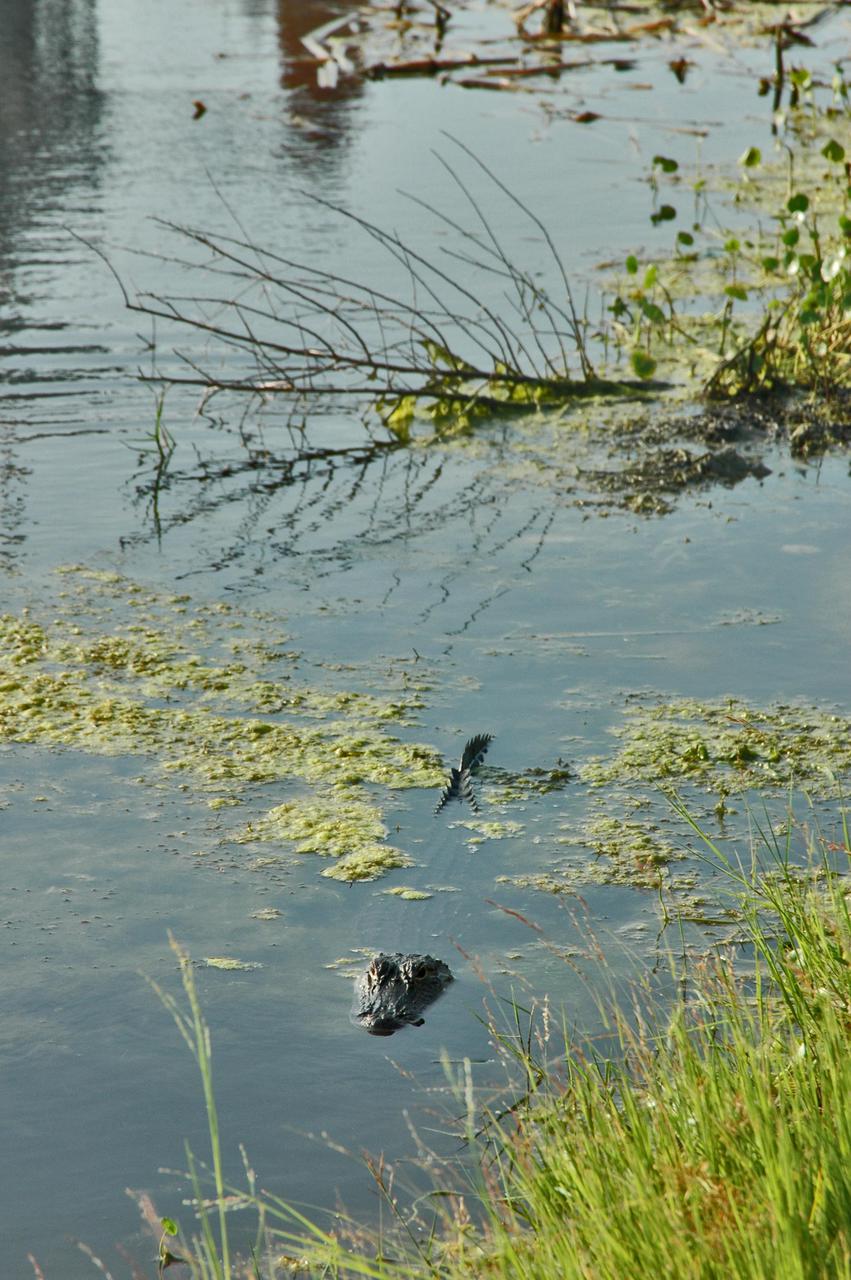
KENNEDY SPACE CENTER, FLA. - In a pond near Launch Pad 39B, an alligator lurks near the tall grass. Nearby is Space Shuttle Discovery, in full launch configuration after rollback of the Rotating Service Structure (RSS). Rollback of the RSS is a major preflight milestone, typically occurring during the T-11-hour hold on L-1 (the day before launch). Discovery is scheduled to lift off on the historic Return to Flight mission STS-114 at 10:39 a.m. EDT July 26 with a crew of seven.
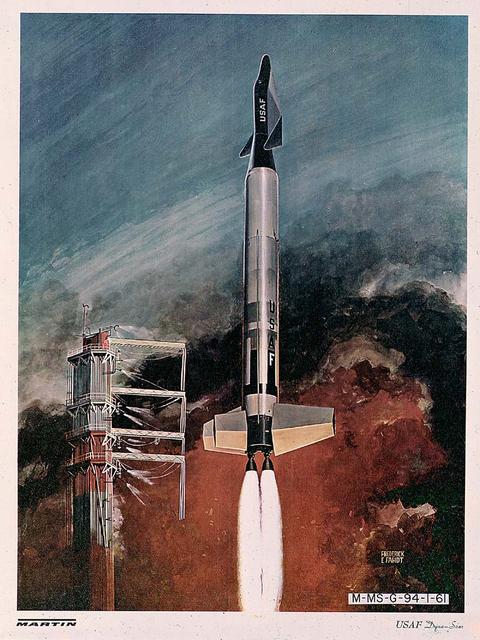
A Dyna-Soar (Dynamic Soaring) vehicle clears the launch tower atop an Air Force Titan II launch vehicle in this 1961 artist's concept. Originally conceived by the U.S. Air Force in 1957 as a marned, rocket-propelled glider in a delta-winged configuration, the Dyna-Soar was considered by Marshall Space Flight Center planners as an upper stage for the Saturn C-2 launch vehicle.
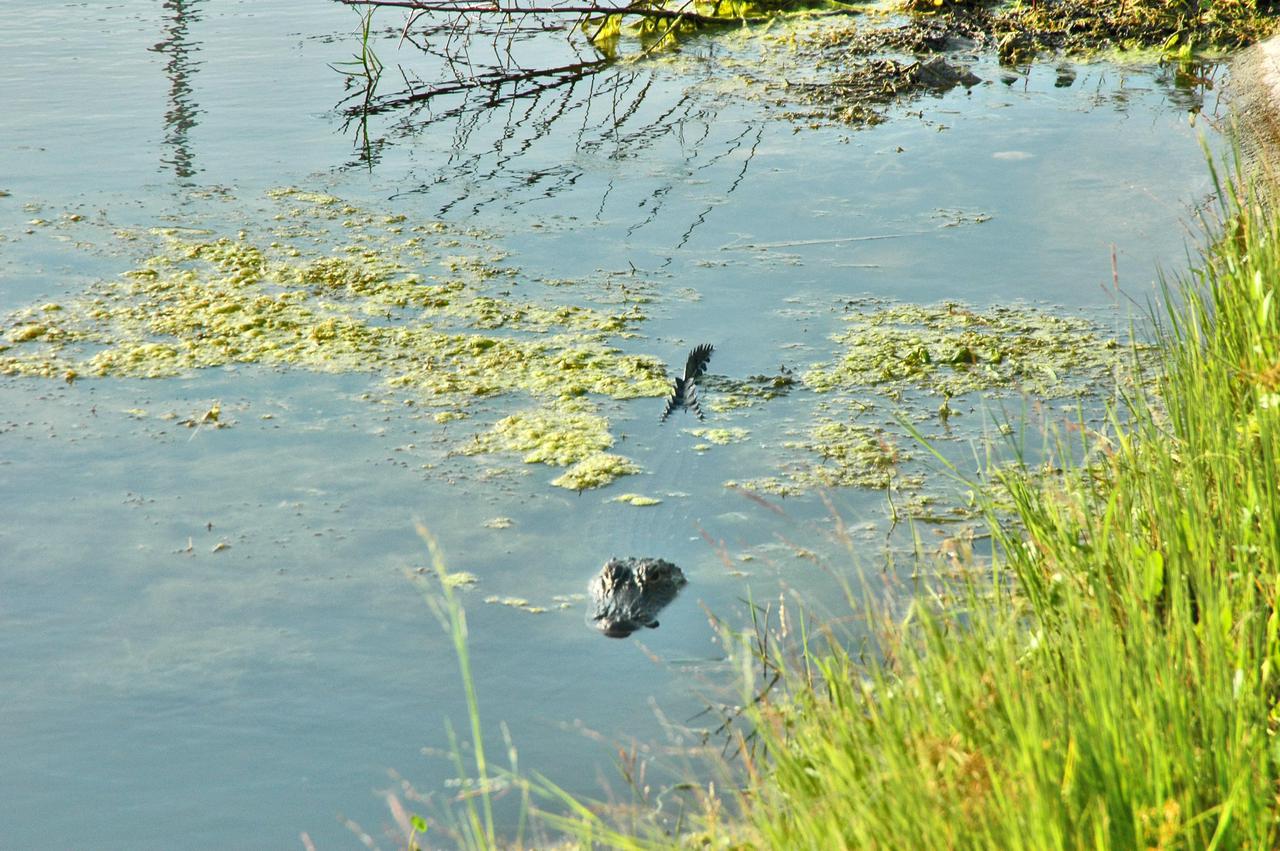
KENNEDY SPACE CENTER, FLA. - In a pond near Launch Pad 39B, an alligator lurks near the tall grass. Nearby is Space Shuttle Discovery, in full launch configuration after rollback of the Rotating Service Structure (RSS). Rollback of the RSS is a major preflight milestone, typically occurring during the T-11-hour hold on L-1 (the day before launch). Discovery is scheduled to lift off on the historic Return to Flight mission STS-114 at 10:39 a.m. EDT July 26 with a crew of seven.
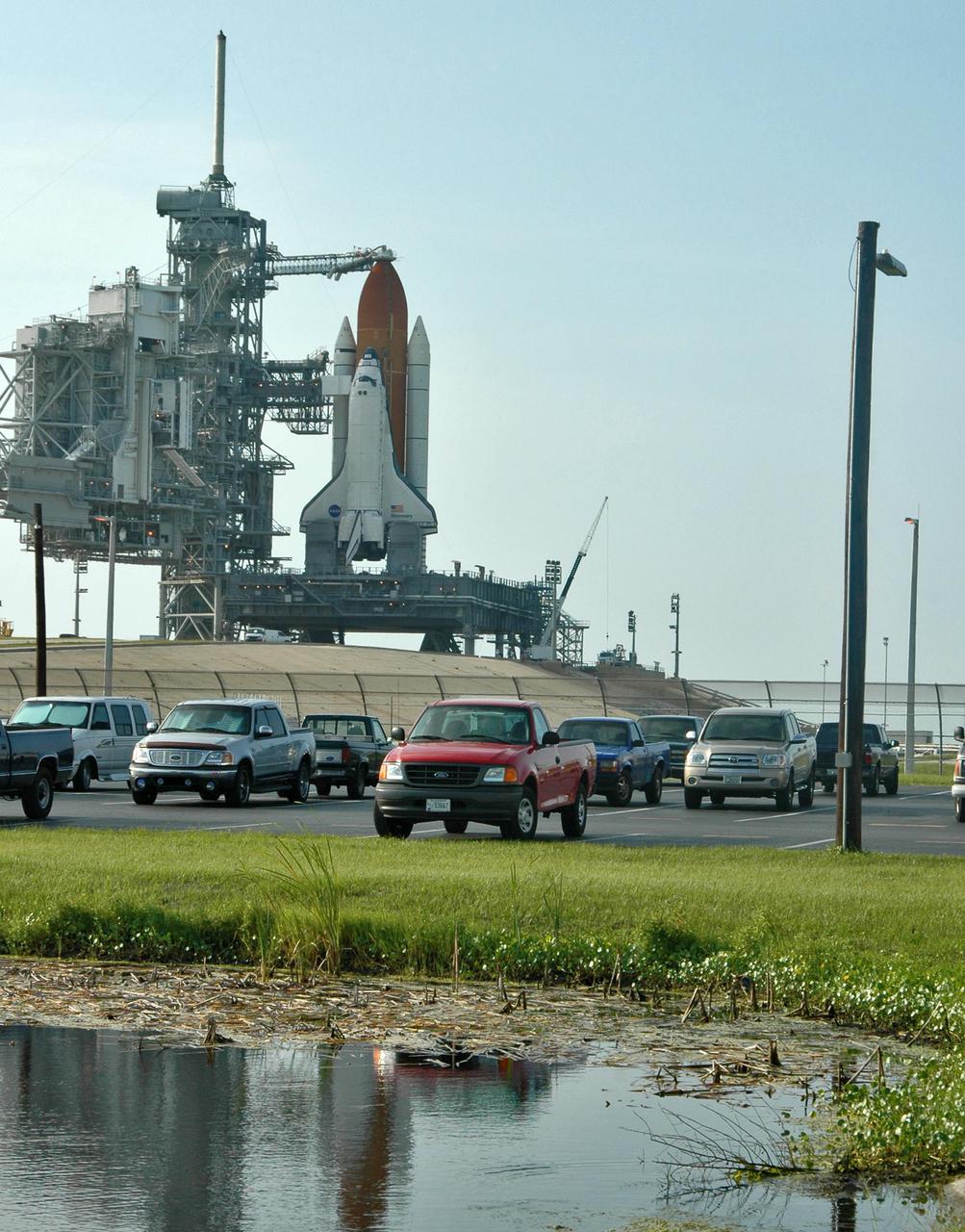
KENNEDY SPACE CENTER, FLA. - Space Shuttle Discovery in full launch configuration is revealed after the Rotating Service Structure (RSS) was rotated back at Launch Pad 39B at NASA Kennedy Space Center. Rollback of the RSS is a major preflight milestone, typically occurring during the T-11-hour hold on L-1 (the day before launch). Discovery is scheduled to lift off on the historic Return to Flight mission STS-114 at 10:39 a.m. EDT July 26 with a crew of seven.
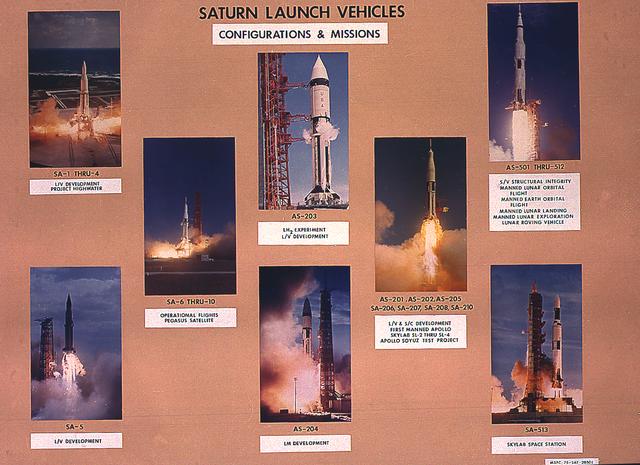
This montage illustrates the various configurations and missions of the three classes of the Saturn vehicles developed by the Marshall Space Flight Center. The missions for the Saturn I included atmospheric science investigations and the deployment of the Pegasus meteroid-detection satellite as well as launch vehicle development. The Saturn IB vehicle tested the Apollo spacecraft and launched the three marned Skylab missions as well as the Apollo Soyuz test project. The Saturn V vehicle launched the manned lunar orbital/landing missions, and the Skylab Orbital Workshop in 1973.
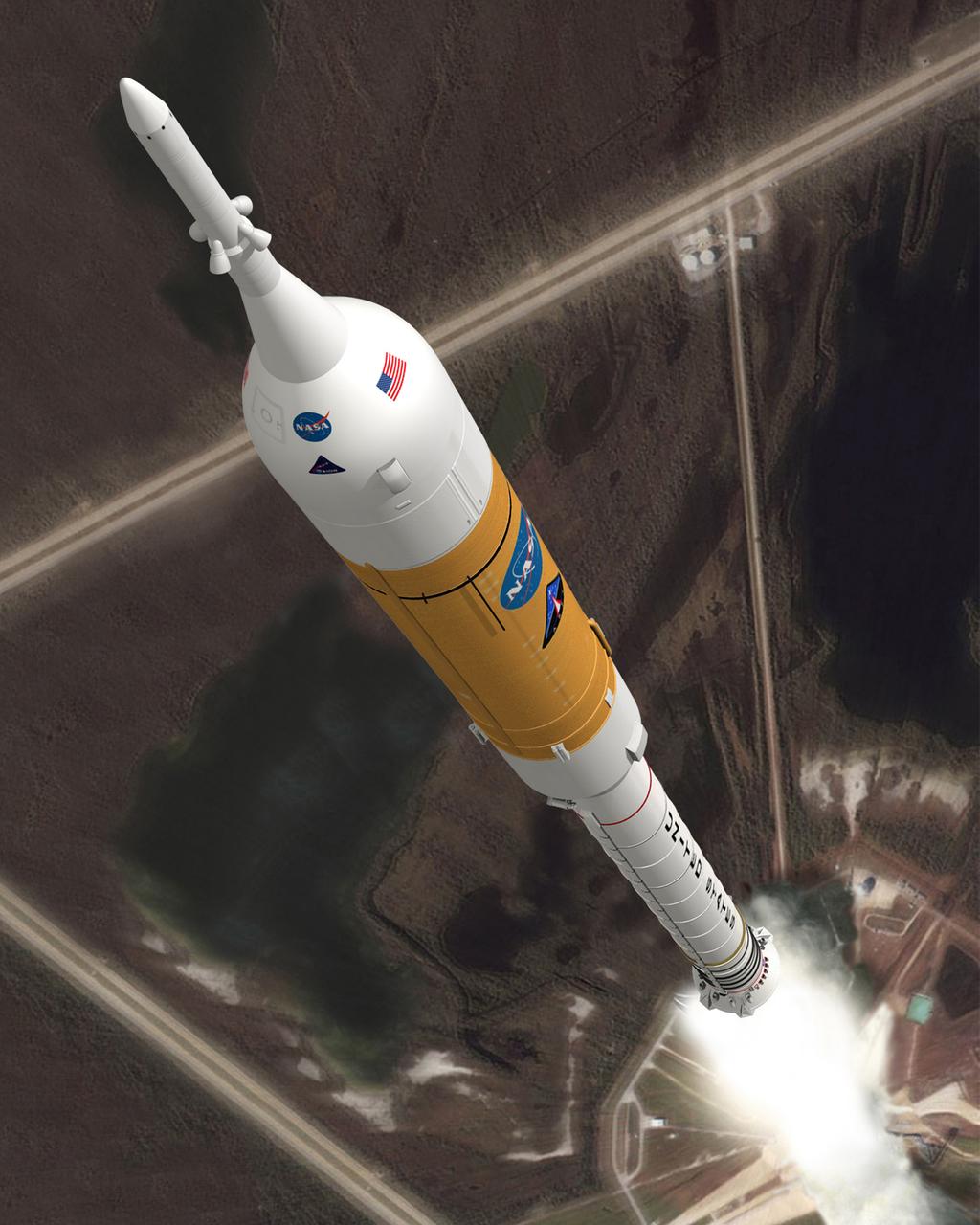
A CONCEPT IMAGE SHOWS THE ARES I CREW LAUNCH VEHICLE DURING ASCENT. ARES I IS AN IN-LINE, TWO-STAGE ROCKET CONFIGURATION TOPED BY THE ORION CREW EXPLORATION VEHICLE AND LAUNCH ABORT SYSTEM. THE ARES I FIRST STAGE IS A SINGLE, FIVE-SEGMENT REUSABLE SOLID ROCKET BOOSTER, DERIVED FROM THE SPACE SHUTTLE. ITS UPPER STAGE IS POWERED BY A J-2X ENGINE. ARES I WILL CARRY THE ORION WITH ITS CRW OF UP TO SIX ASTRONAUTS TO EARTH ORBIT.