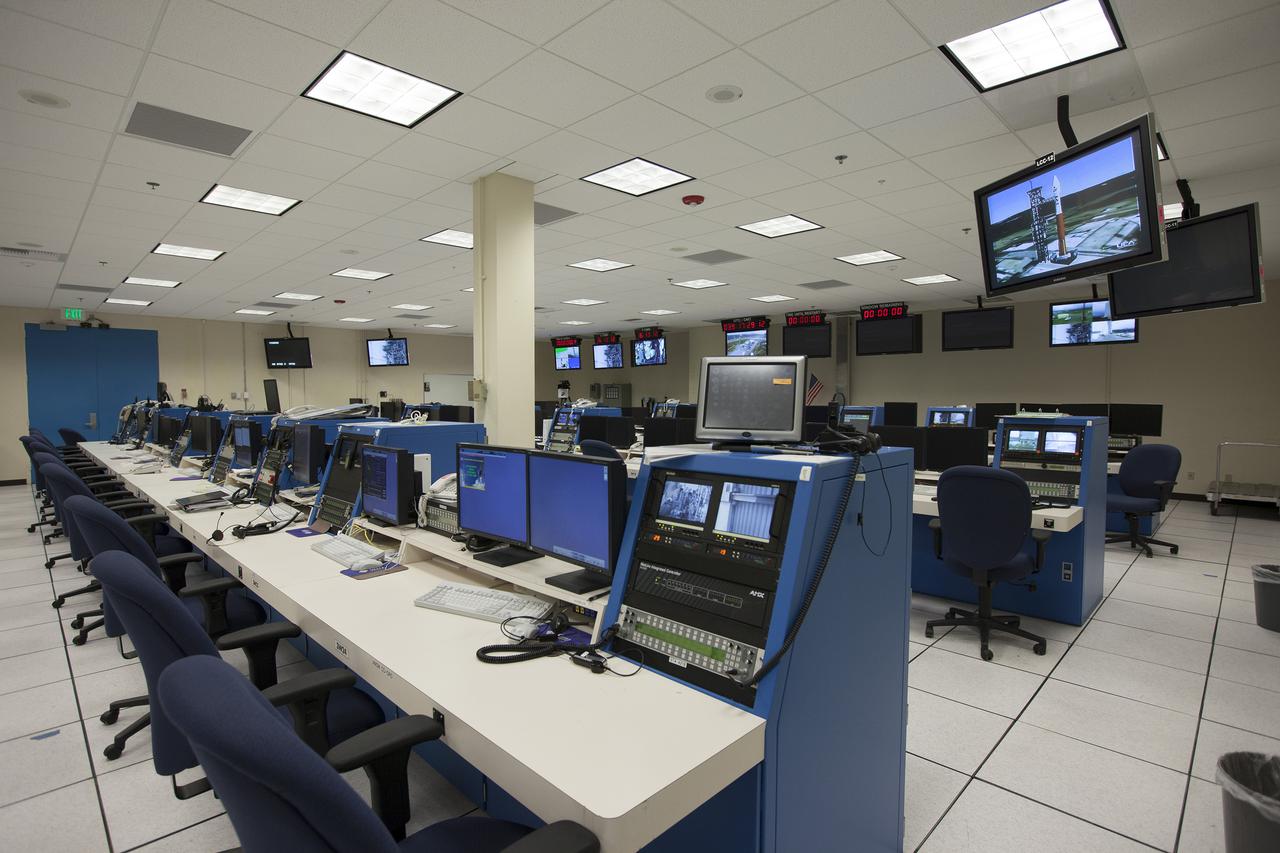
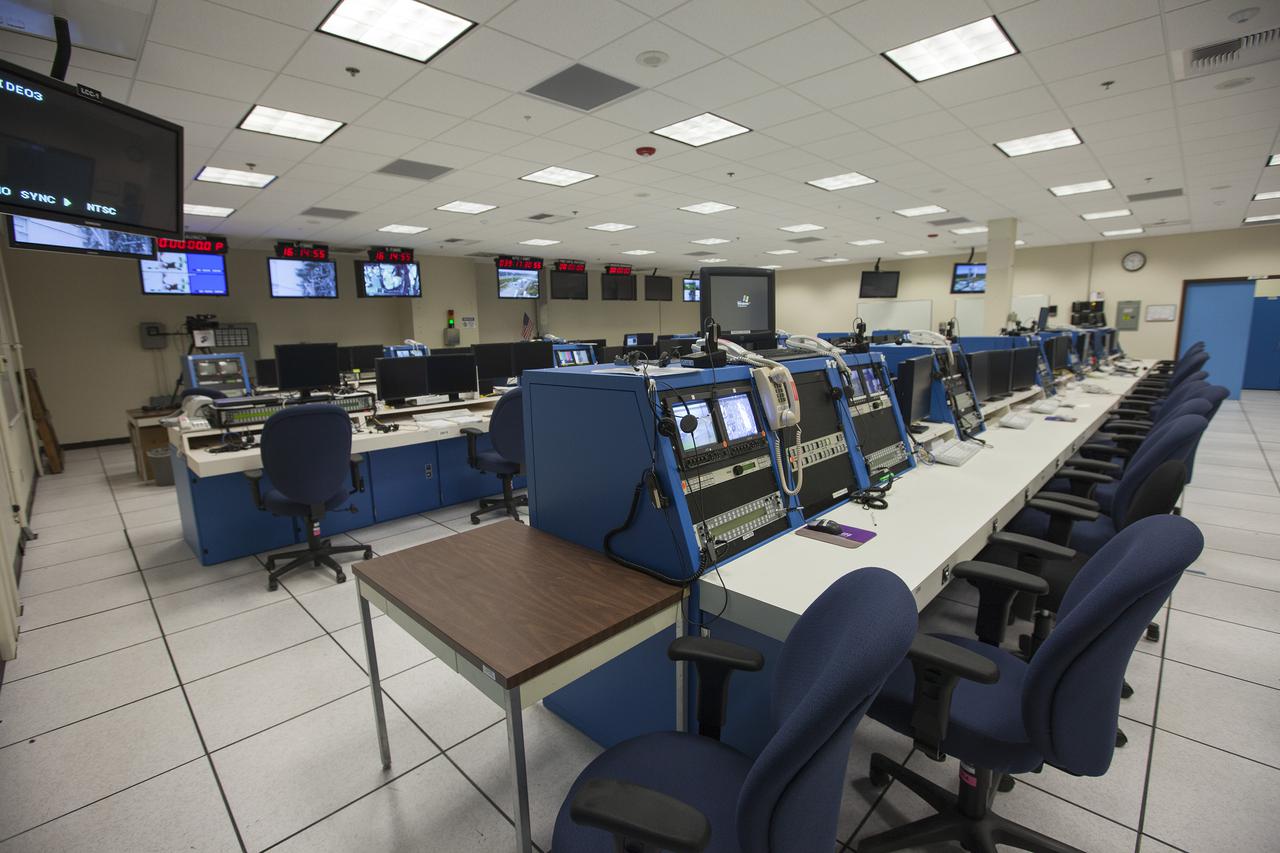
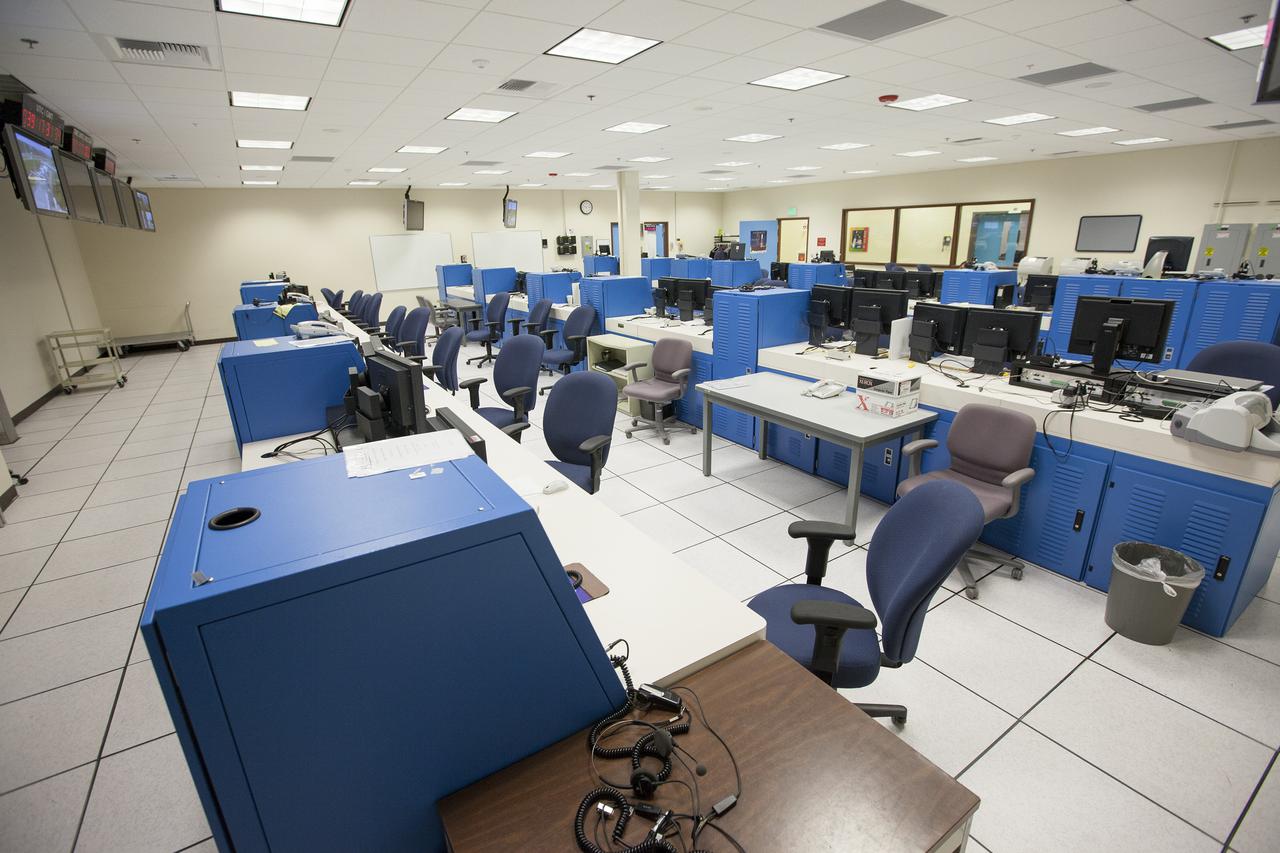
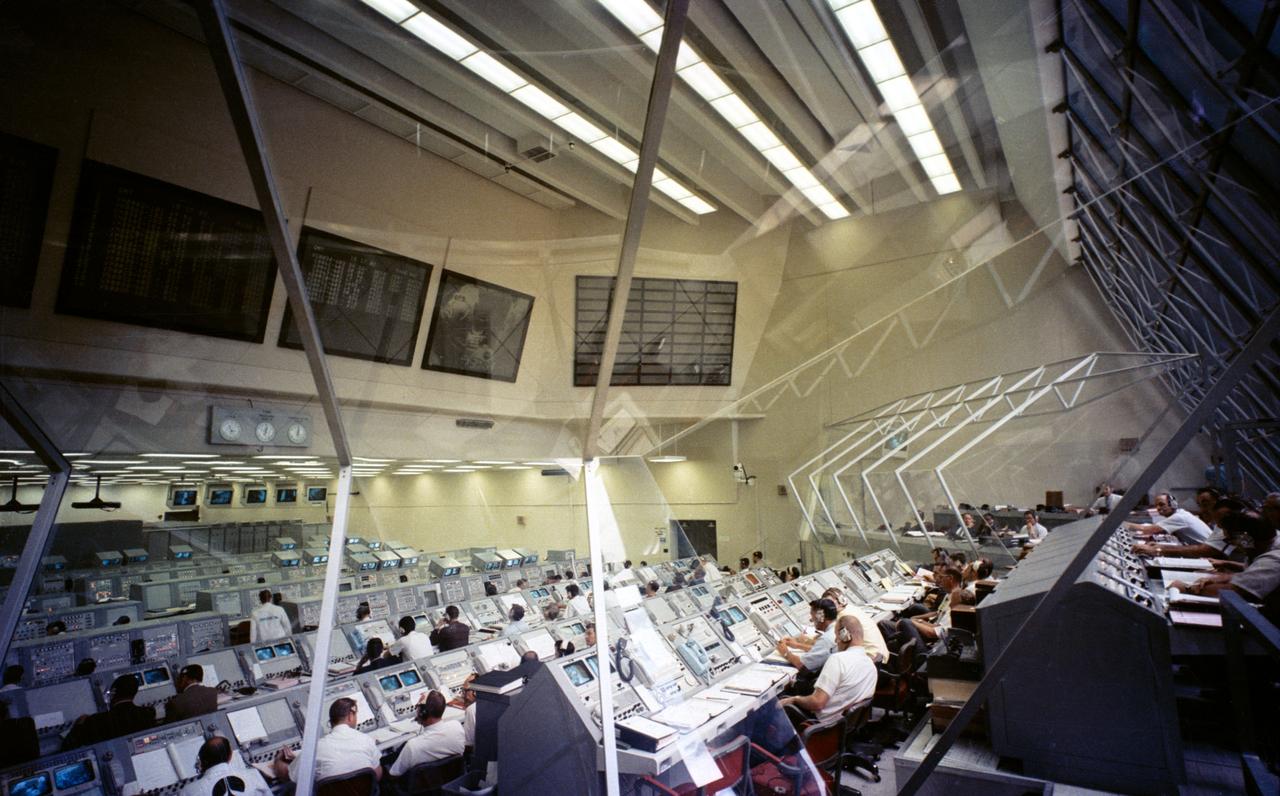
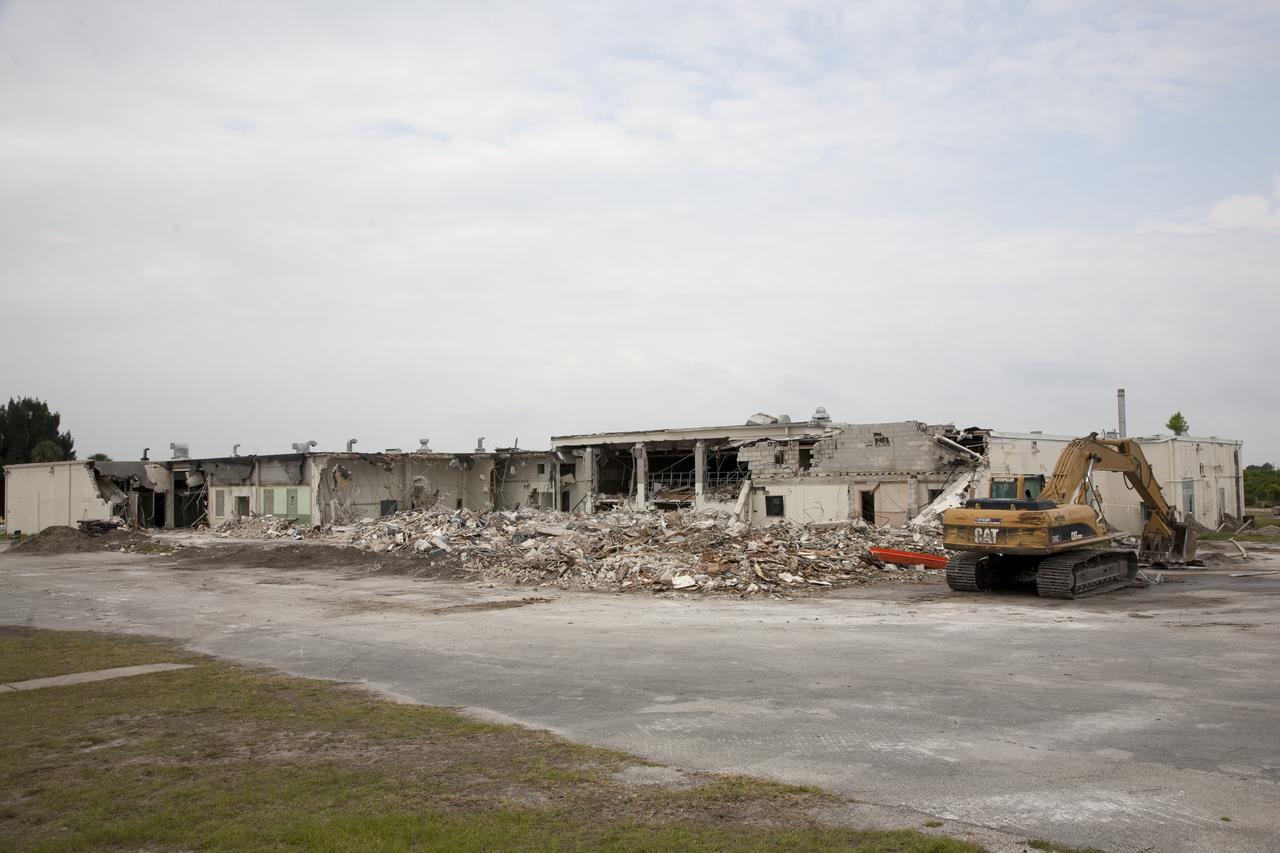
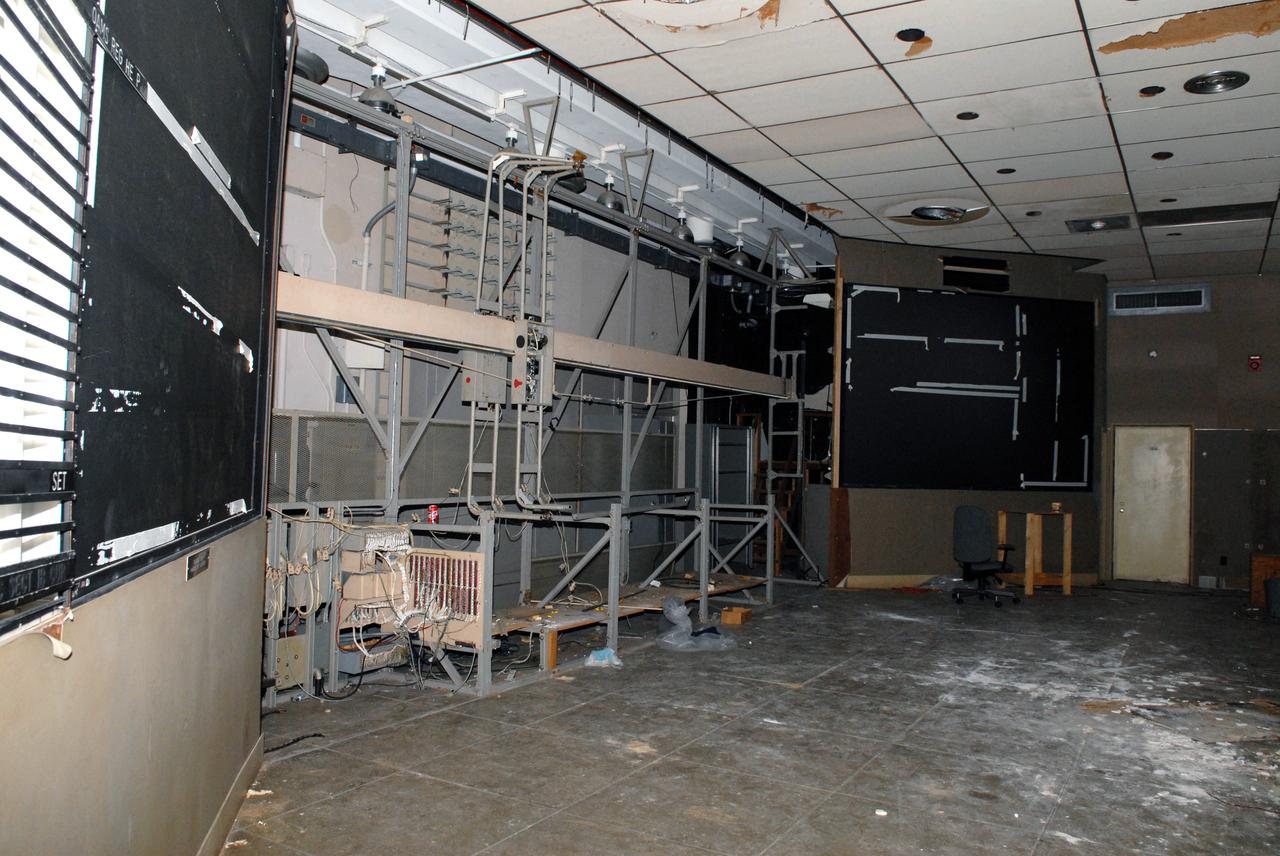
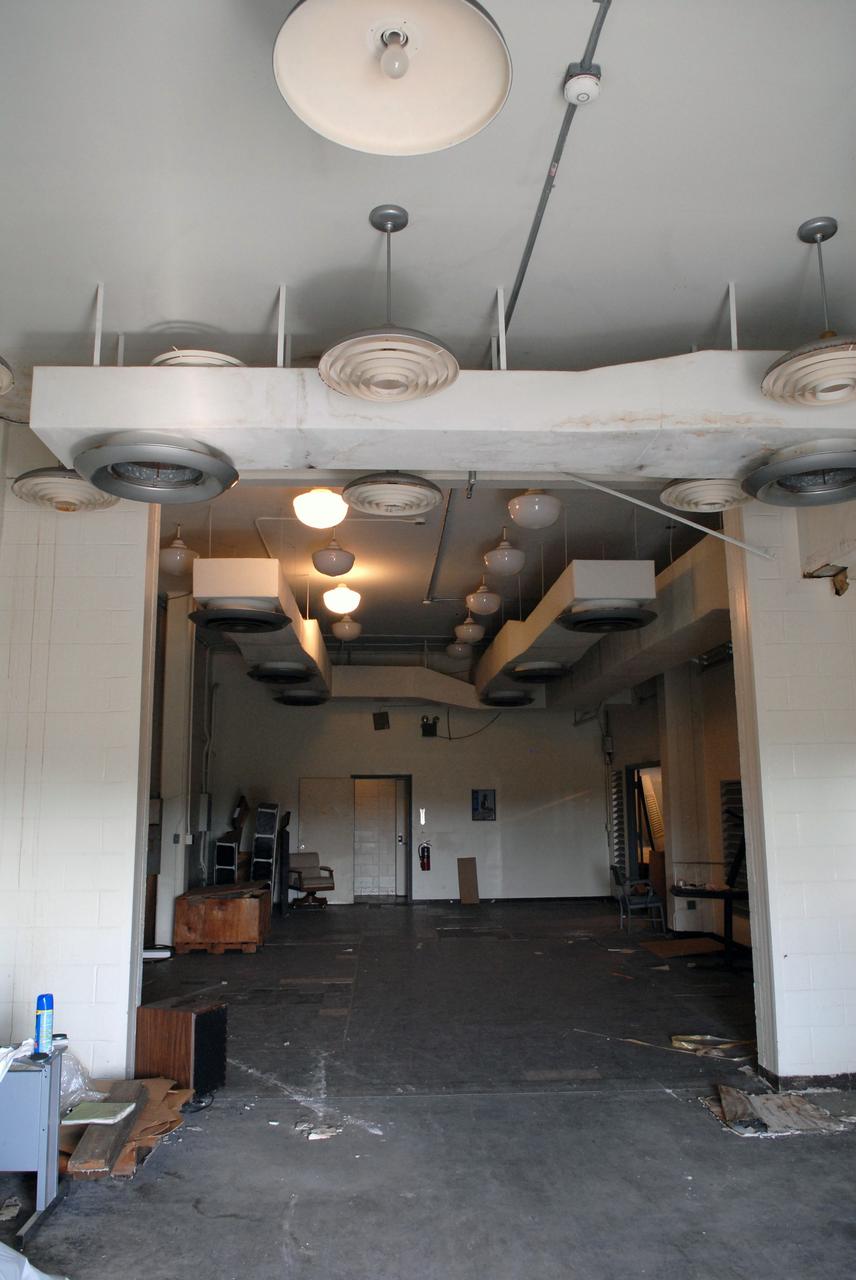
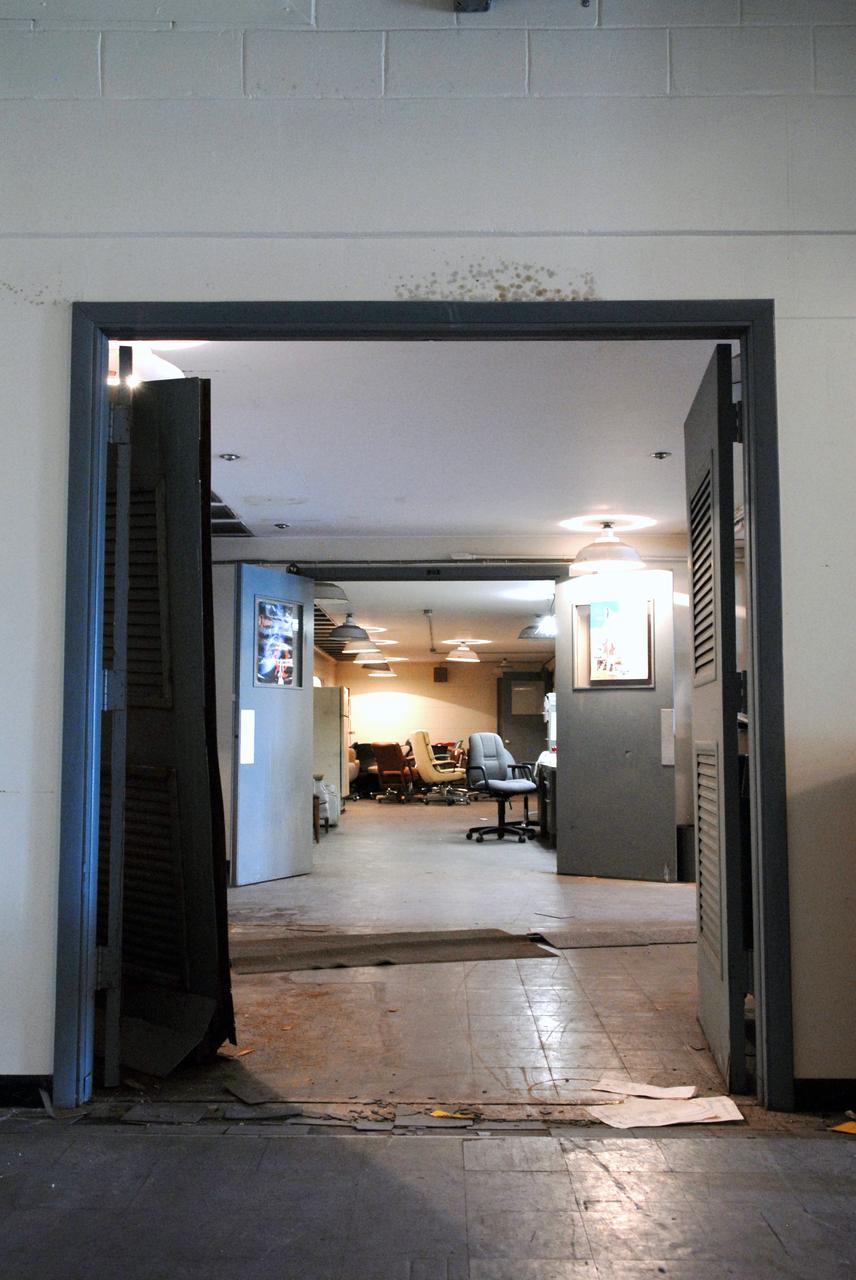
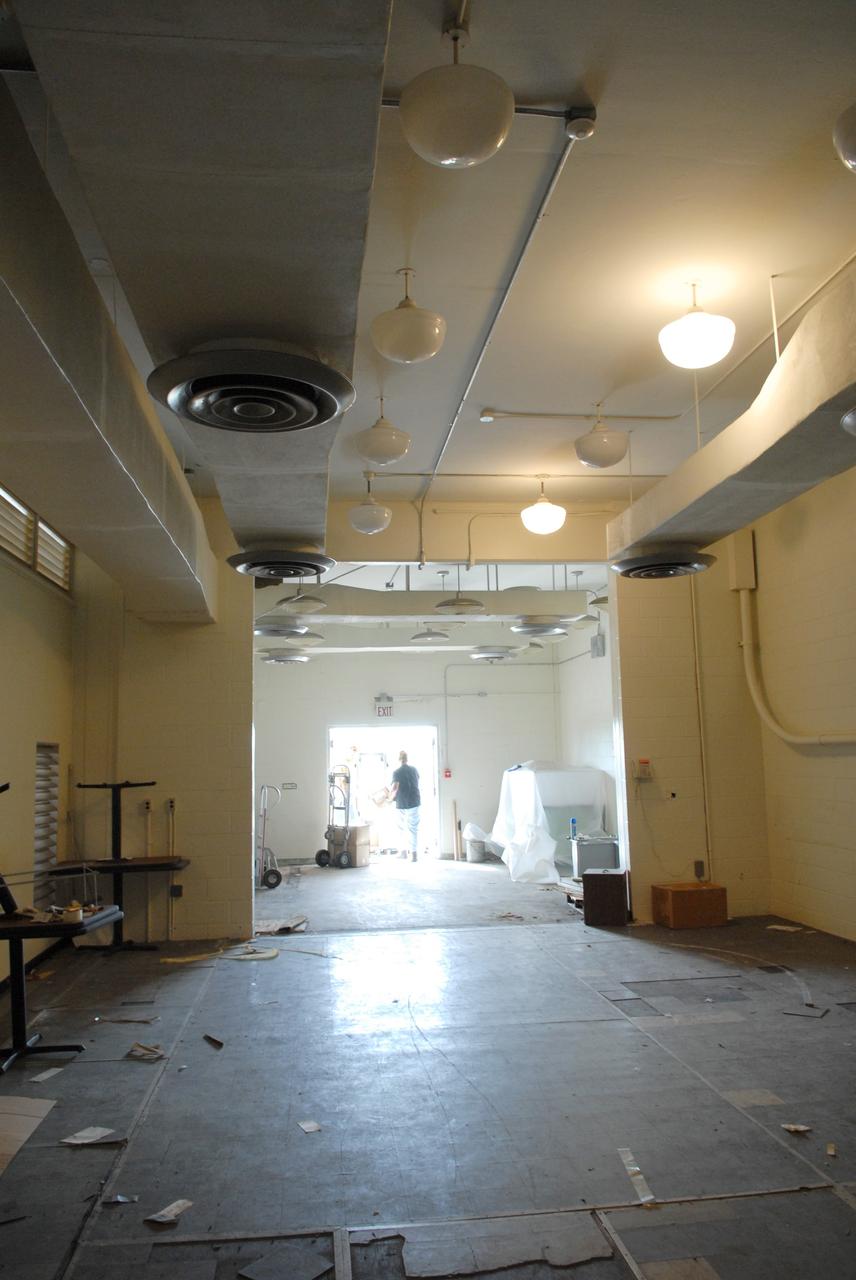
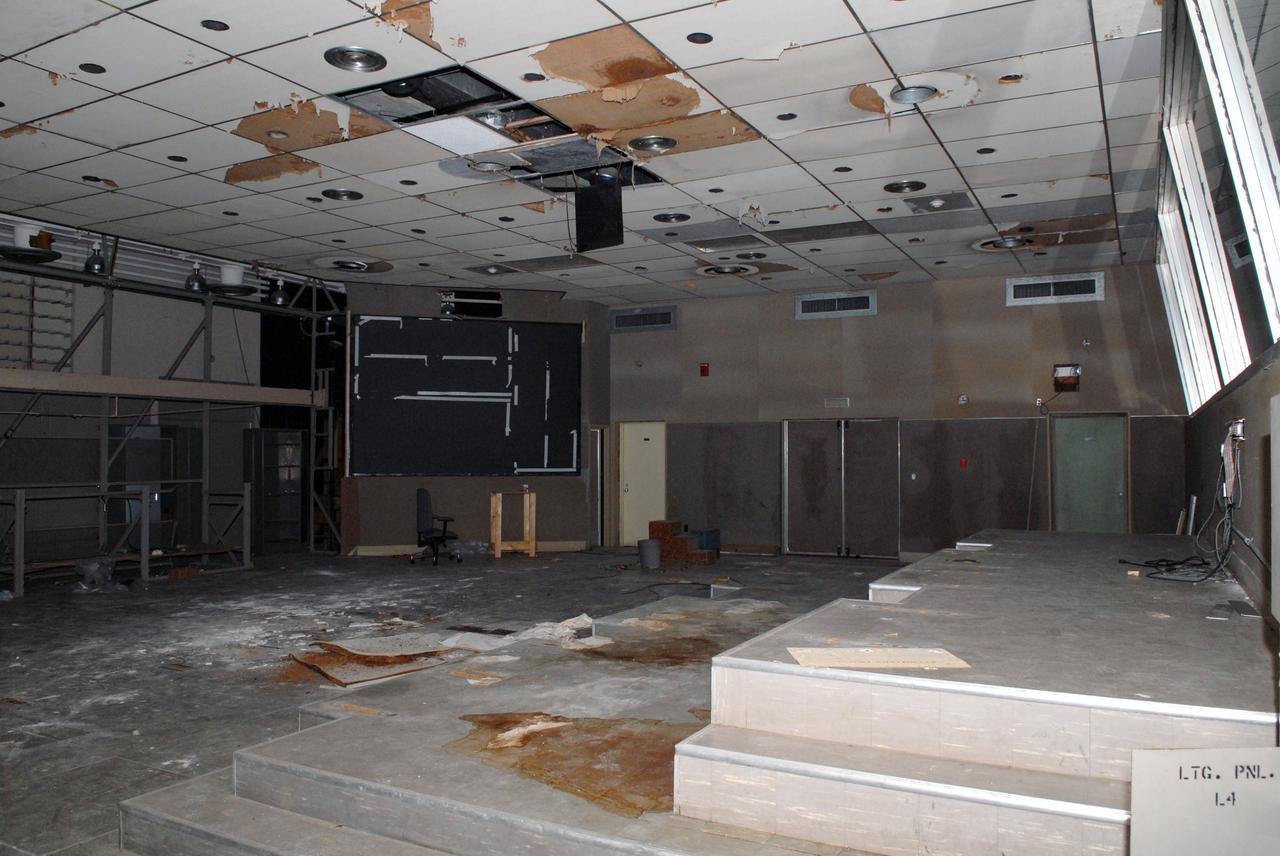
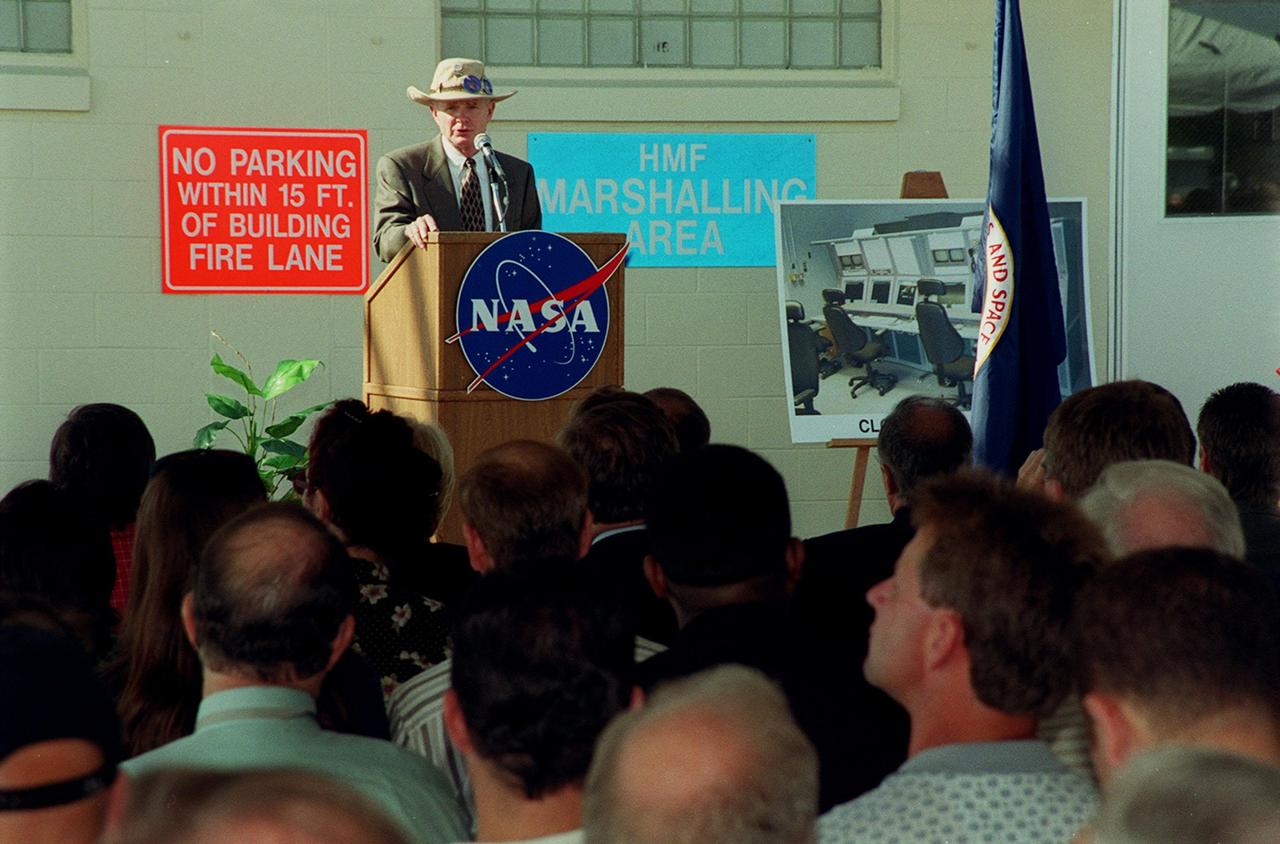
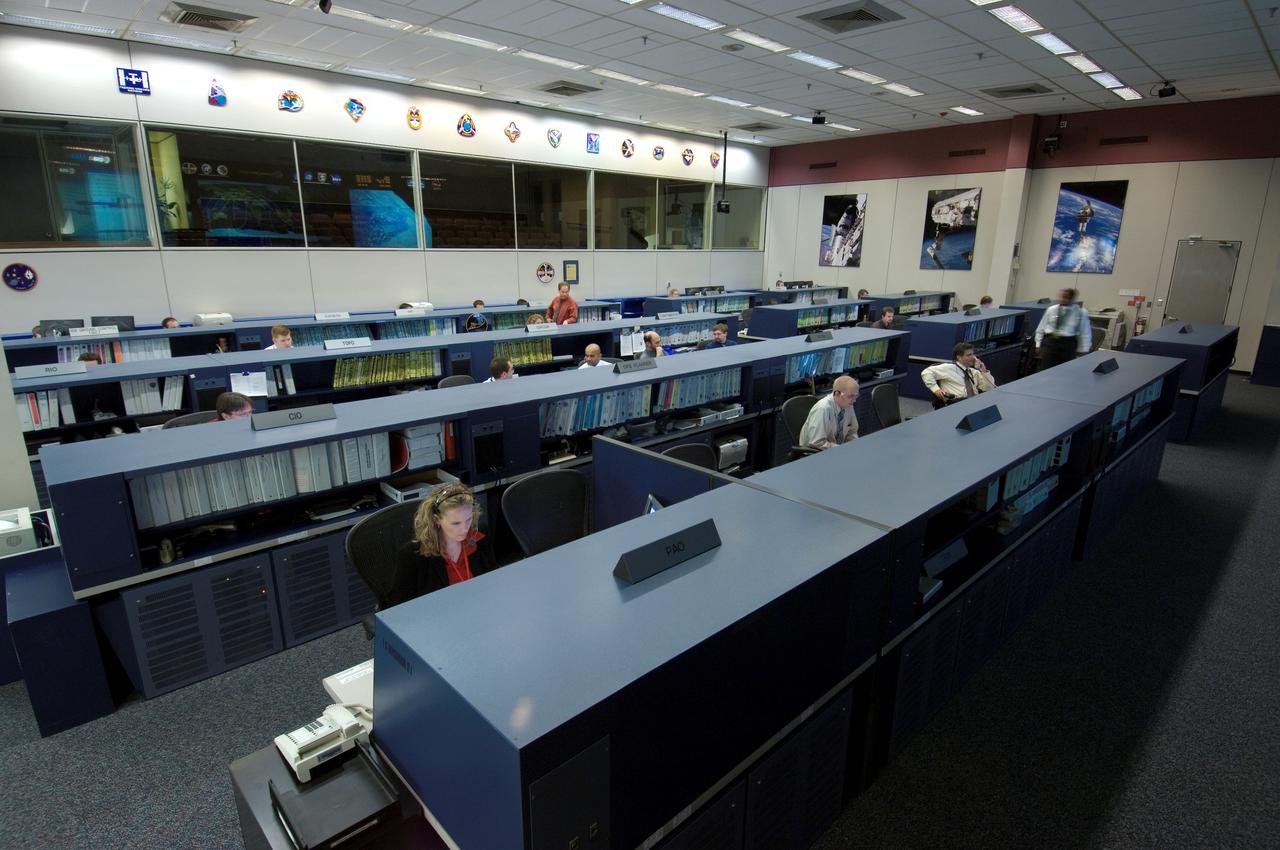
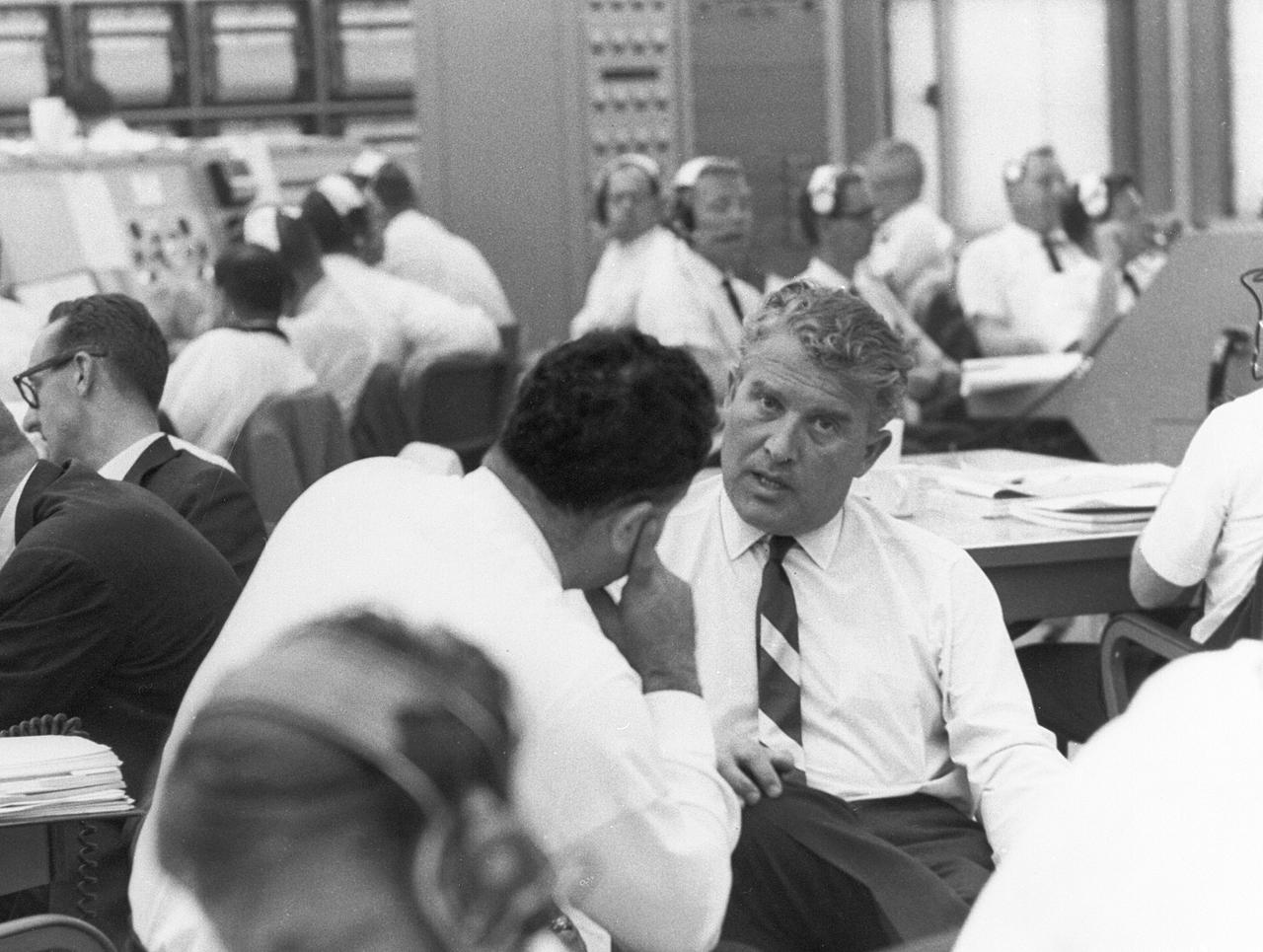
This photograph is not dated. It was probably taken in the late 1960s. Dr. von Braun appears to be in the launch control facilities at the Kennedy Space Center.
Wernher von Braun
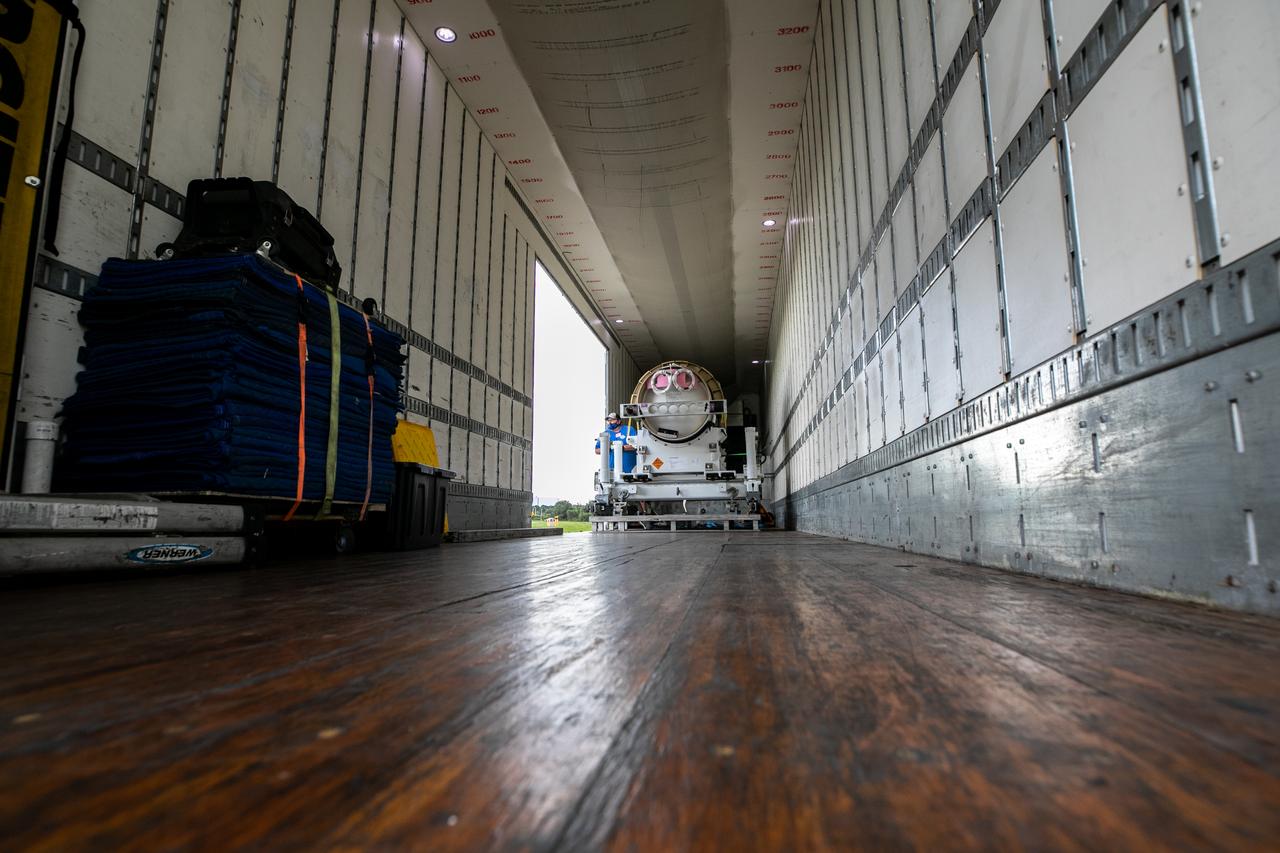
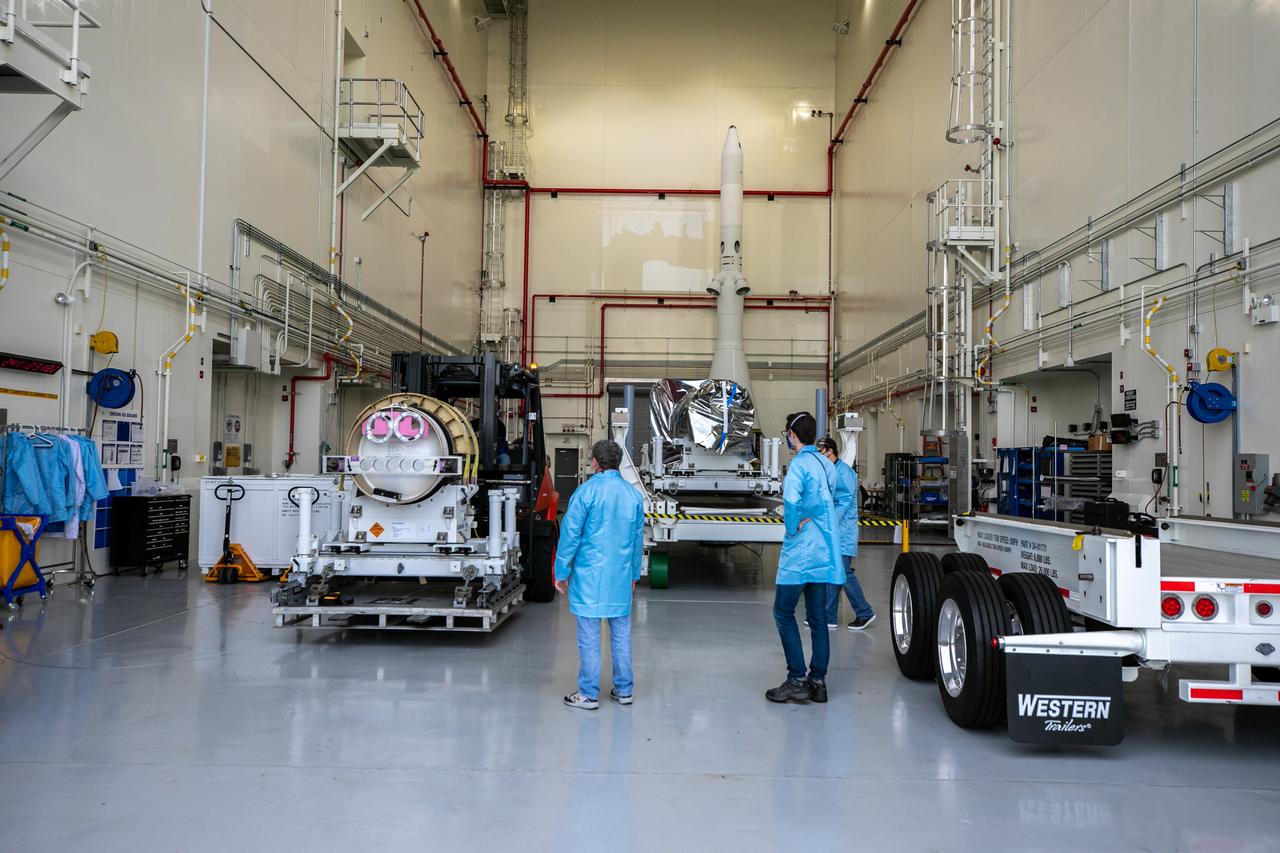
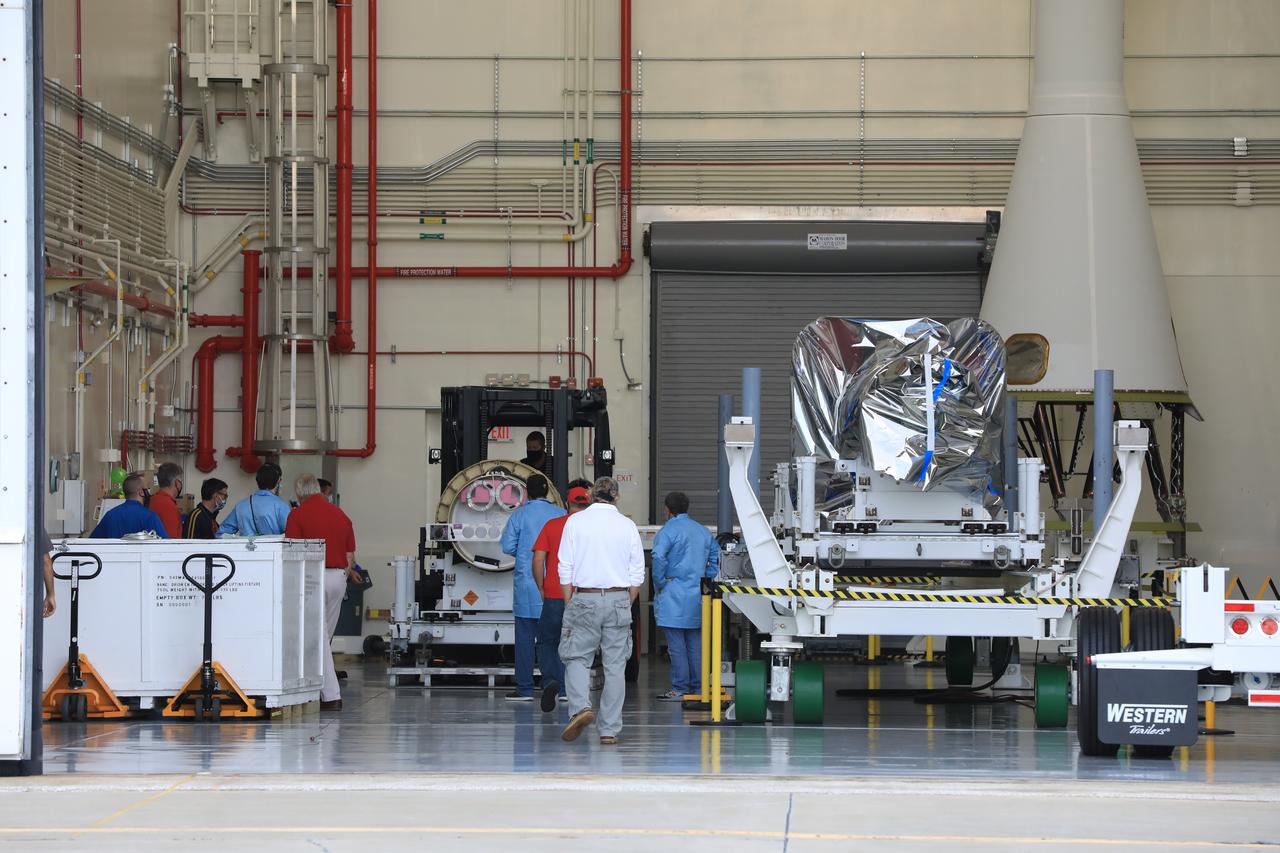
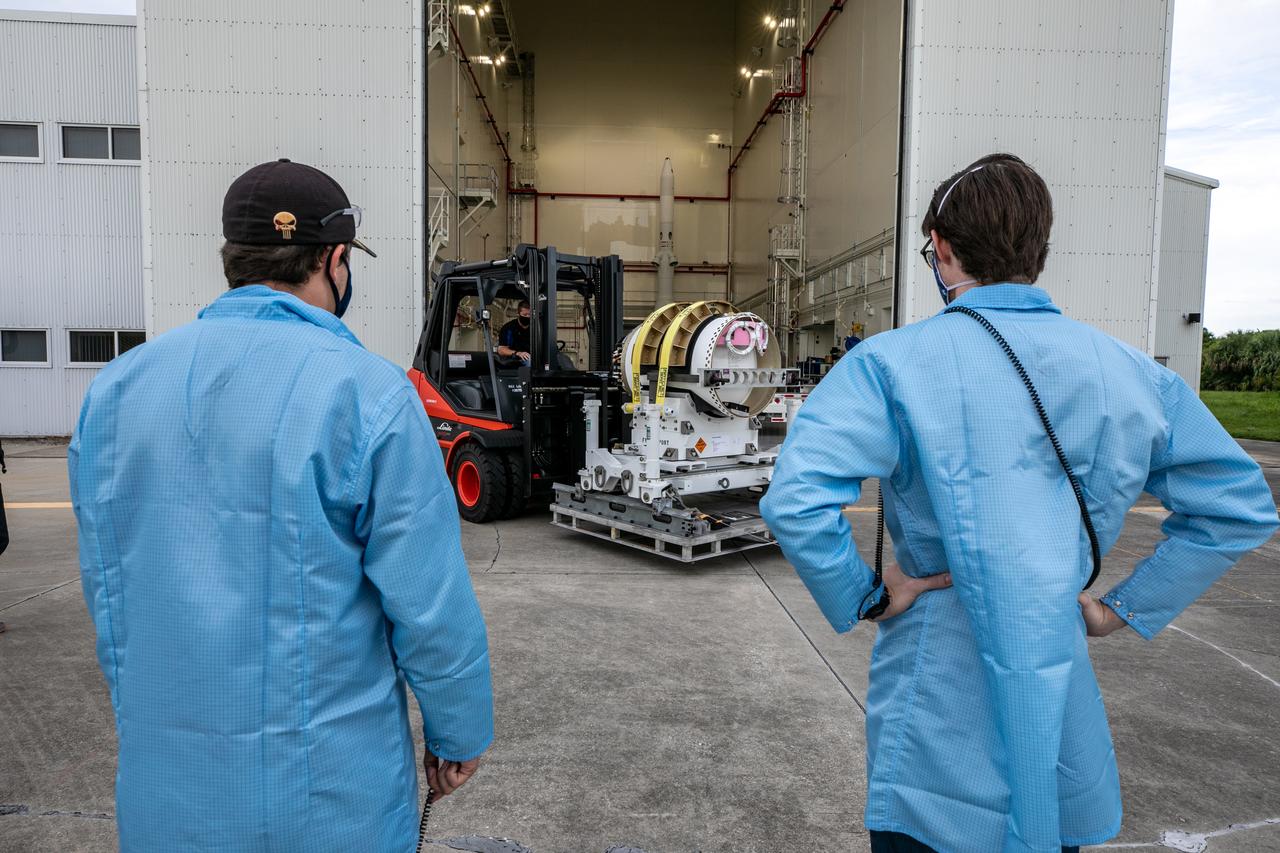
The last of three motors required to assemble the Launch Abort System for NASA’s Artemis II mission, the attitude control motor (ACM), arrives at Kennedy Space Center in Florida on August 28. The attitude control motor (ACM) was delivered by truck from Northrop Grumman’s manufacturing facility in Maryland, to the Launch Abort System Facility (LASF) at Kennedy. During launch of Orion atop the agency’s Space Launch System rocket, the LAS motors work together to separate the spacecraft from the rocket in the unlikely event of an emergency during launch. The LAS includes three motors – the launch abort motor, the jettison motor, and the attitude control motor—that once activated, will steer the spacecraft carrying the astronauts to safety. The ACM operates to keep Orion’s crew module on a controlled flight path in the event it needs to jettison and steer away from the rocket. Artemis II is the first crewed flight in a series of increasingly complex missions to the Moon that will lay the foundation for exploration of Mars and beyond. Artemis II will confirm all of the Orion spacecraft’s systems operate as designed in the actual environment of deep space with astronauts aboard. As part of the Artemis program, NASA will send the first woman and next man to the Moon in 2024.
Artemis II ACM Arrival at KSC
The last of three motors required to assemble the Launch Abort System for NASA’s Artemis II mission, the attitude control motor (ACM), arrives at Kennedy Space Center in Florida on August 28. The attitude control motor (ACM) was delivered by truck from Northrop Grumman’s manufacturing facility in Maryland, to the Launch Abort System Facility (LASF) at Kennedy. During launch of Orion atop the agency’s Space Launch System rocket, the LAS motors work together to separate the spacecraft from the rocket in the unlikely event of an emergency during launch. The LAS includes three motors – the launch abort motor, the jettison motor, and the attitude control motor—that once activated, will steer the spacecraft carrying the astronauts to safety. The ACM operates to keep Orion’s crew module on a controlled flight path in the event it needs to jettison and steer away from the rocket. Artemis II is the first crewed flight in a series of increasingly complex missions to the Moon that will lay the foundation for exploration of Mars and beyond. Artemis II will confirm all of the Orion spacecraft’s systems operate as designed in the actual environment of deep space with astronauts aboard. As part of the Artemis program, NASA will send the first woman and next man to the Moon in 2024.
Artemis II ACM Arrival at KSC
The last of three motors required to assemble the Launch Abort System for NASA’s Artemis II mission, the attitude control motor (ACM), arrives at Kennedy Space Center in Florida on August 28. The attitude control motor (ACM) was delivered by truck from Northrop Grumman’s manufacturing facility in Maryland, to the Launch Abort System Facility (LASF) at Kennedy. During launch of Orion atop the agency’s Space Launch System rocket, the LAS motors work together to separate the spacecraft from the rocket in the unlikely event of an emergency during launch. The LAS includes three motors – the launch abort motor, the jettison motor, and the attitude control motor—that once activated, will steer the spacecraft carrying the astronauts to safety. The ACM operates to keep Orion’s crew module on a controlled flight path in the event it needs to jettison and steer away from the rocket. Artemis II is the first crewed flight in a series of increasingly complex missions to the Moon that will lay the foundation for exploration of Mars and beyond. Artemis II will confirm all of the Orion spacecraft’s systems operate as designed in the actual environment of deep space with astronauts aboard. As part of the Artemis program, NASA will send the first woman and next man to the Moon in 2024.
Artemis II ACM Arrival at KSC
The last of three motors required to assemble the Launch Abort System for NASA’s Artemis II mission, the attitude control motor (ACM), arrives at Kennedy Space Center in Florida on August 28. The attitude control motor (ACM) was delivered by truck from Northrop Grumman’s manufacturing facility in Maryland, to the Launch Abort System Facility (LASF) at Kennedy. During launch of Orion atop the agency’s Space Launch System rocket, the LAS motors work together to separate the spacecraft from the rocket in the unlikely event of an emergency during launch. The LAS includes three motors – the launch abort motor, the jettison motor, and the attitude control motor—that once activated, will steer the spacecraft carrying the astronauts to safety. The ACM operates to keep Orion’s crew module on a controlled flight path in the event it needs to jettison and steer away from the rocket. Artemis II is the first crewed flight in a series of increasingly complex missions to the Moon that will lay the foundation for exploration of Mars and beyond. Artemis II will confirm all of the Orion spacecraft’s systems operate as designed in the actual environment of deep space with astronauts aboard. As part of the Artemis program, NASA will send the first woman and next man to the Moon in 2024.
Artemis II ACM Arrival at KSC
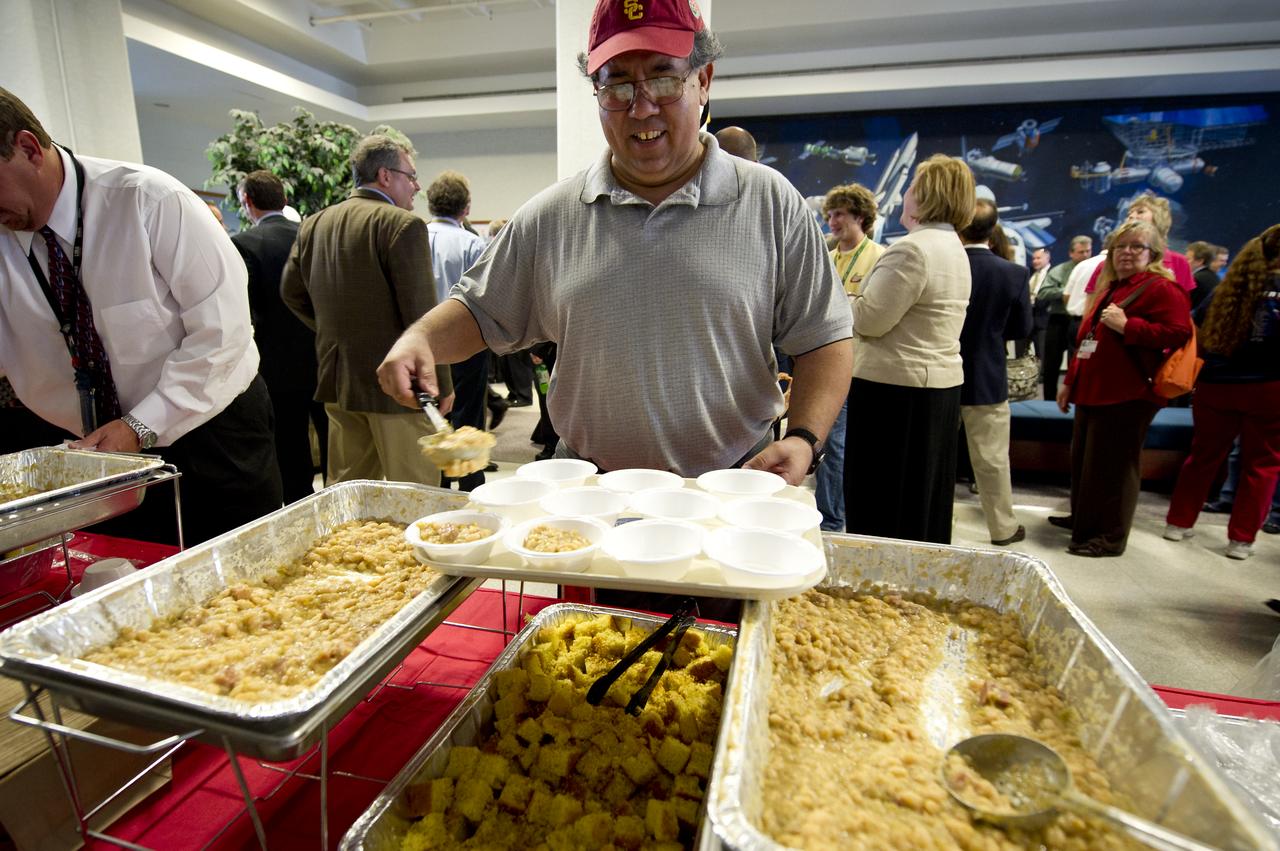
NASA Orbital Processing Facility Inspector Janaro Negrete, fills cups with the post launch traditional beans and cornbread to take share with his colleagues at the Launch Control Center (LCC) after the launch of the space shuttle Discovery (STS-133) at the Kennedy Space Center, Thursday, Feb. 24, 2011, in Cape Canaveral, Fla. Discovery, on its 39th and final flight, is carrying the Italian-built Permanent Multipurpose Module (PMM), Express Logistics Carrier 4 (ELC4) and Robonaut 2, the first humanoid robot in space to the International Space Station. Photo Credit: (NASA/Bill Ingalls)
Space Shuttle Discovery Launch
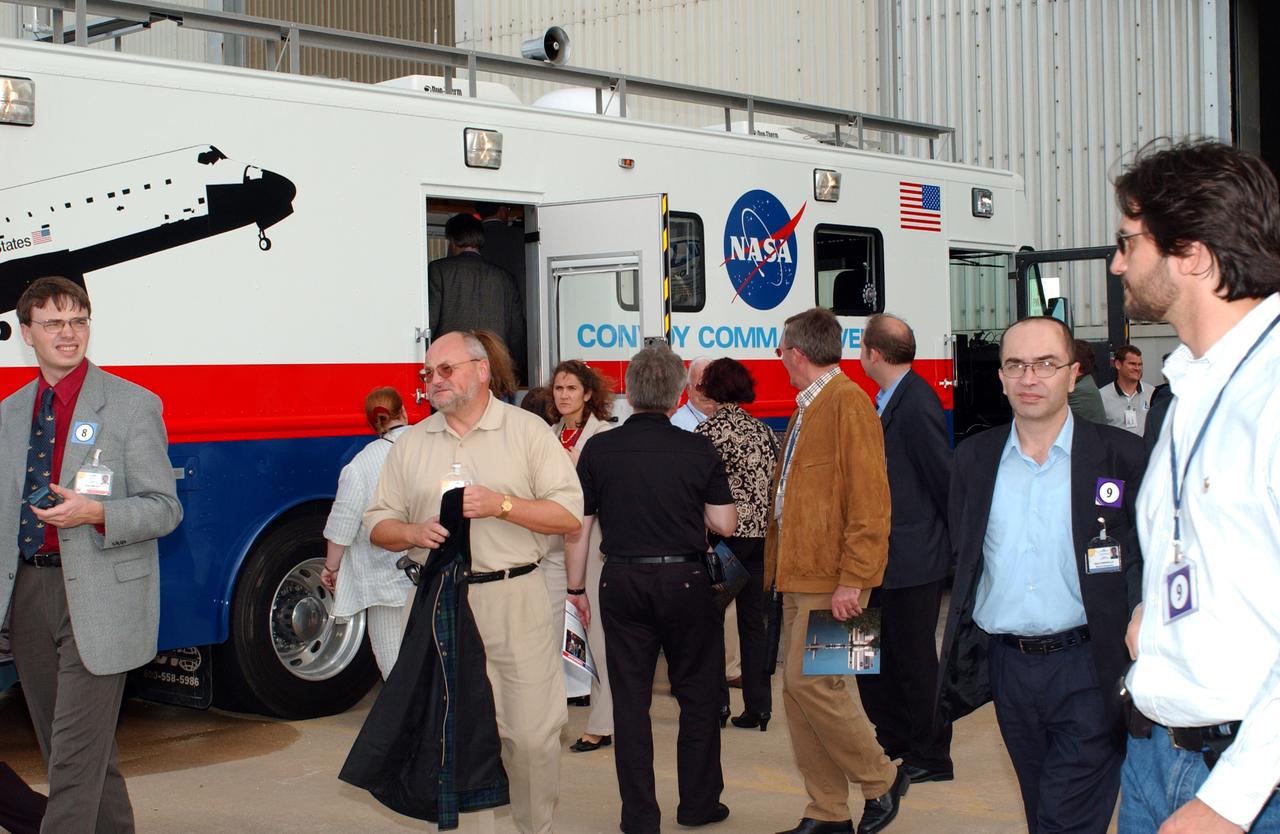
KENNEDY SPACE CENTER, FLA. - During their tour of KSC, members of the North American Treaty Organization (NATO) Parliamentary Assembly visit the Convoy Command Center, the prime vehicle to control critical communications between the orbiter, the crew and the Launch Control Center after a Shuttle landing, to monitor the health of the Shuttle Orbiter systems and to direct convoy operations at the Shuttle Landing Facility. The Parliamentarians are meeting in Orlando this year for their 49th annual gathering.  They chose to visit KSC with their families during their one-day excursion break from meetings.
KENNEDY SPACE CENTER, FLA. - During their tour of KSC, members of the North American Treaty Organization (NATO) Parliamentary Assembly visit the Convoy Command Center, the prime vehicle to control critical communications between the orbiter, the crew and the Launch Control Center after a Shuttle landing, to monitor the health of the Shuttle Orbiter systems and to direct convoy operations at the Shuttle Landing Facility. The Parliamentarians are meeting in Orlando this year for their 49th annual gathering. They chose to visit KSC with their families during their one-day excursion break from meetings.
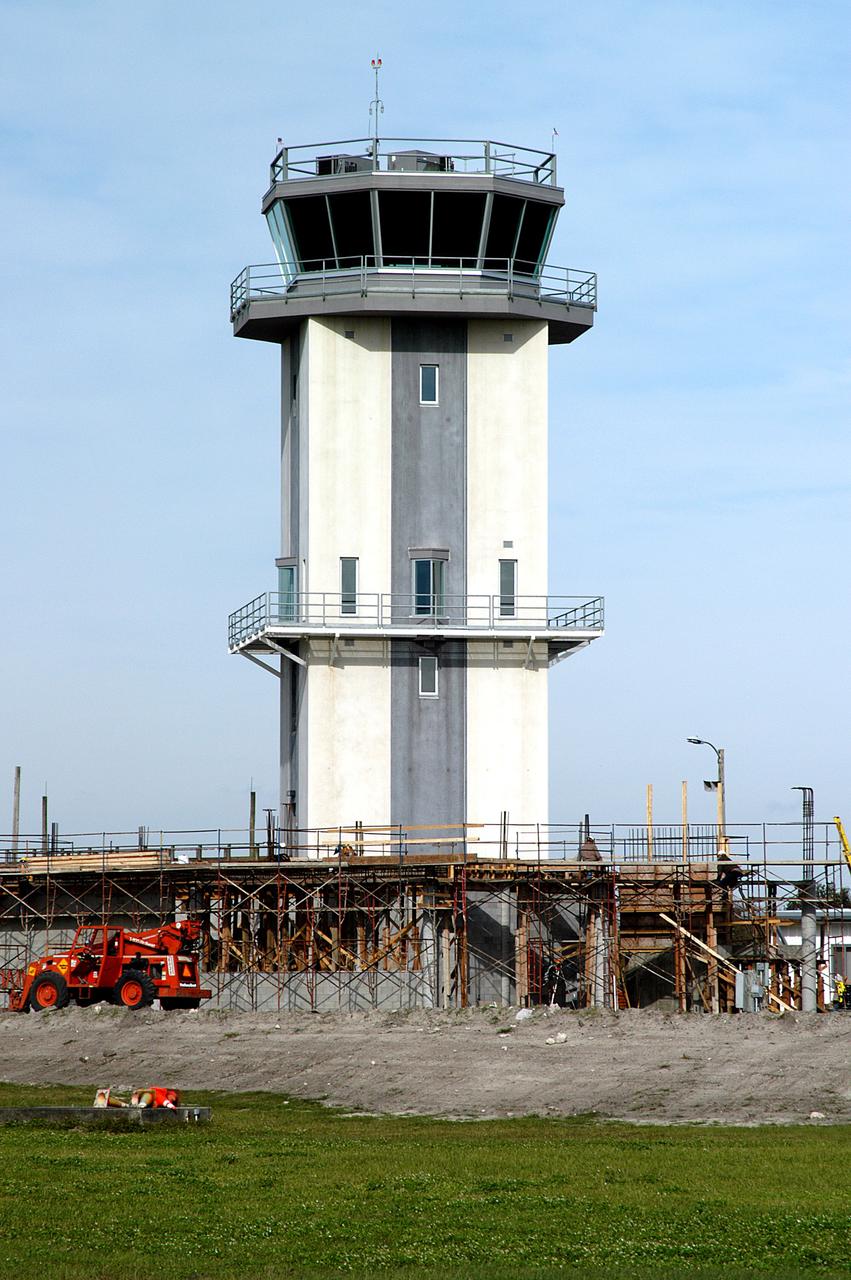
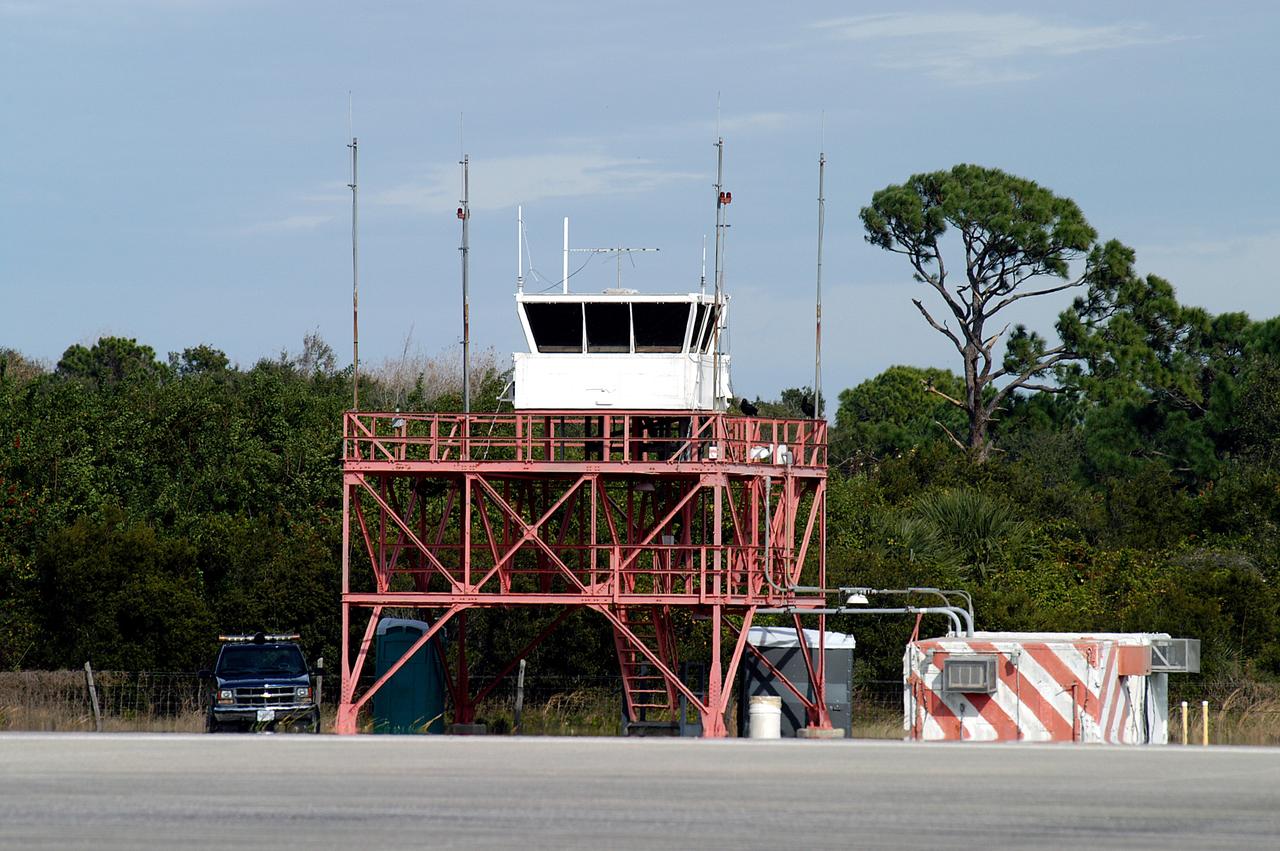
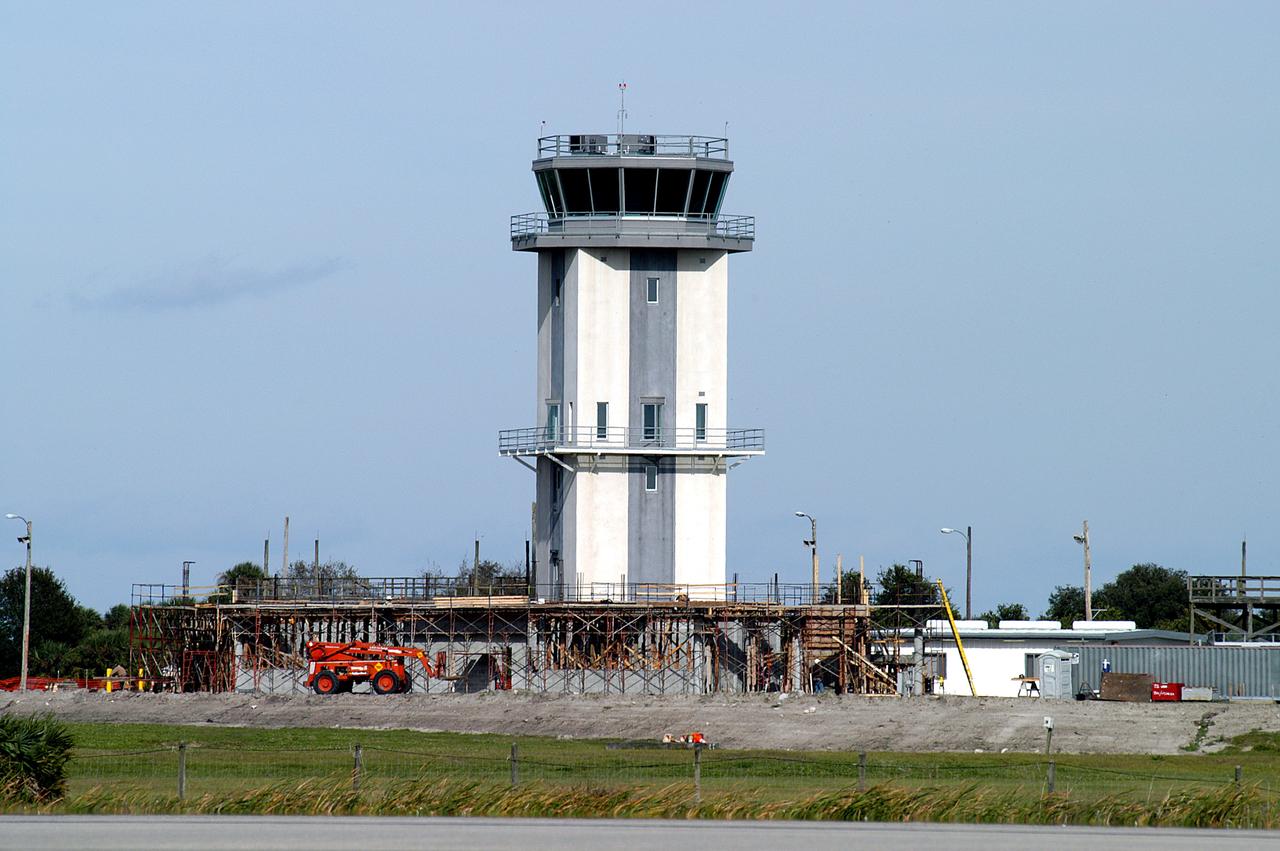
KENNEDY SPACE CENTER, FLA. -- A new control tower is nearing completion at the KSC Shuttle Landing Facility.  It will replace the old tower in use since 1987.   The old tower stands only 20 feet above the runway surface, too low to see the launch pads to the east. During nighttime landing operations, those inside the tower have been hindered by the eight-billion candlepower xenon lights that illuminate the runway.  The new control tower is built atop an existing mound, rising nearly 100 feet over the midpoint of the runway.  The height gives controllers a spectacular 360-degree view of NASA-KSC and northern Brevard County. The new facility will also replace the SLF Operations Building. The operations building is home to the Military Radar Unit that monitors NASA-KSC airspace 24 hours a day, as well as runway light controls, navigational aids, weather and wind speed instrumentation, and gate controls. In the new tower, the computer displays will be fully modernized to Federal Aviation Administration standards with touch-screen technology. Construction on the new facility began in February 2003 and is nearly ready for occupancy. Only some final inspections and approvals remain. A support building and Public Affairs viewing deck, to be used for observing future landing operations, will be added and are already in work.
KENNEDY SPACE CENTER, FLA. -- A new control tower is nearing completion at the KSC Shuttle Landing Facility. It will replace the old tower in use since 1987. The old tower stands only 20 feet above the runway surface, too low to see the launch pads to the east. During nighttime landing operations, those inside the tower have been hindered by the eight-billion candlepower xenon lights that illuminate the runway. The new control tower is built atop an existing mound, rising nearly 100 feet over the midpoint of the runway. The height gives controllers a spectacular 360-degree view of NASA-KSC and northern Brevard County. The new facility will also replace the SLF Operations Building. The operations building is home to the Military Radar Unit that monitors NASA-KSC airspace 24 hours a day, as well as runway light controls, navigational aids, weather and wind speed instrumentation, and gate controls. In the new tower, the computer displays will be fully modernized to Federal Aviation Administration standards with touch-screen technology. Construction on the new facility began in February 2003 and is nearly ready for occupancy. Only some final inspections and approvals remain. A support building and Public Affairs viewing deck, to be used for observing future landing operations, will be added and are already in work.
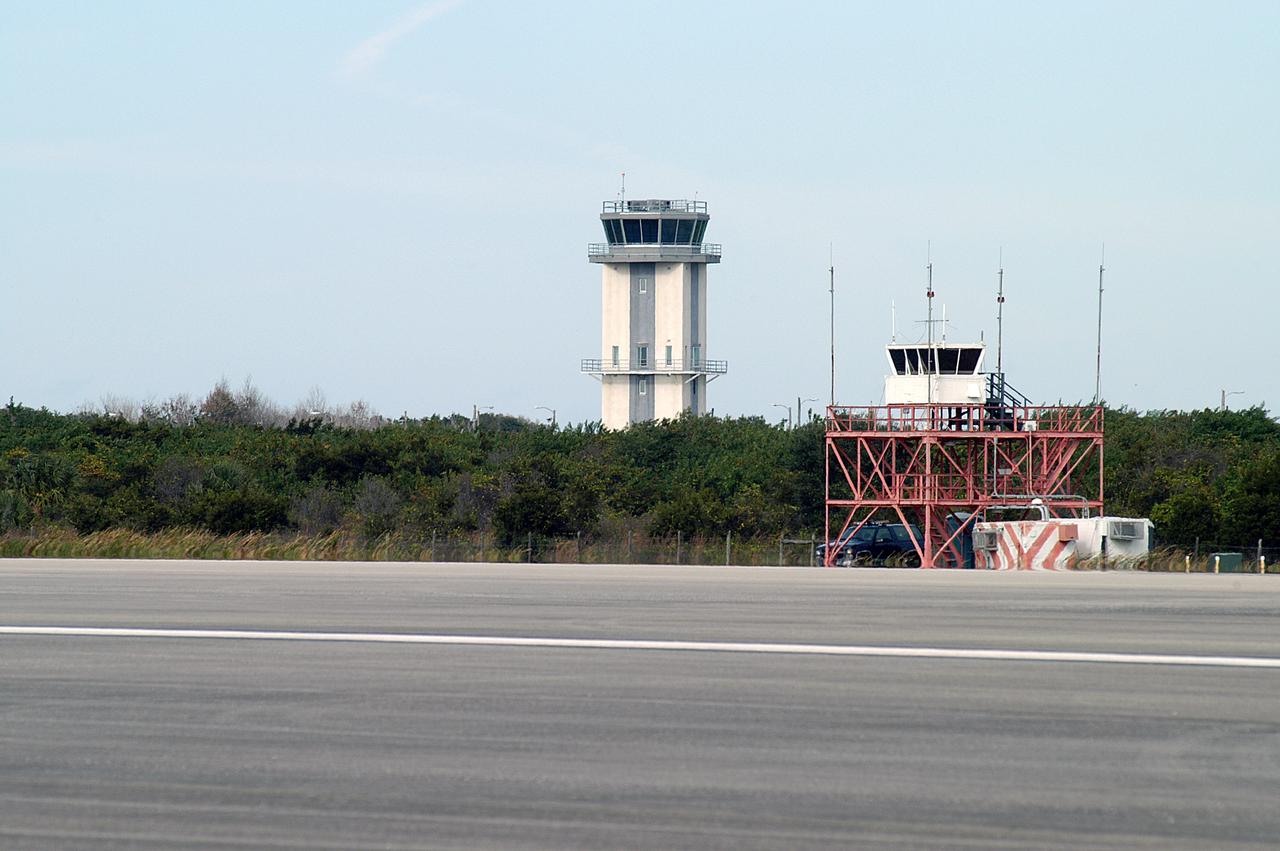
KENNEDY SPACE CENTER, FLA. -- Two control towers are seen at the edge of the KSC Shuttle Landing Facility, the old one in front and the nearly completed new tower in back.  The old tower stands only 20 feet above the runway surface, too low to see the launch pads to the east. During nighttime landing operations, those inside the tower have been hindered by the eight-billion candlepower xenon lights that illuminate the runway.  The new control tower is built atop an existing mound, rising nearly 100 feet over the midpoint of the runway.  The height gives controllers a spectacular 360-degree view of NASA-KSC and northern Brevard County. The new facility will also replace the SLF Operations Building. The operations building is home to the Military Radar Unit that monitors NASA-KSC airspace 24 hours a day, as well as runway light controls, navigational aids, weather and wind speed instrumentation, and gate controls. In the new tower, the computer displays will be fully modernized to Federal Aviation Administration standards with touch-screen technology. Construction on the new facility began in February 2003 and is nearly ready for occupancy. Only some final inspections and approvals remain. A support building and Public Affairs viewing deck, to be used for observing future landing operations, will be added and are already in work.
KENNEDY SPACE CENTER, FLA. -- Two control towers are seen at the edge of the KSC Shuttle Landing Facility, the old one in front and the nearly completed new tower in back. The old tower stands only 20 feet above the runway surface, too low to see the launch pads to the east. During nighttime landing operations, those inside the tower have been hindered by the eight-billion candlepower xenon lights that illuminate the runway. The new control tower is built atop an existing mound, rising nearly 100 feet over the midpoint of the runway. The height gives controllers a spectacular 360-degree view of NASA-KSC and northern Brevard County. The new facility will also replace the SLF Operations Building. The operations building is home to the Military Radar Unit that monitors NASA-KSC airspace 24 hours a day, as well as runway light controls, navigational aids, weather and wind speed instrumentation, and gate controls. In the new tower, the computer displays will be fully modernized to Federal Aviation Administration standards with touch-screen technology. Construction on the new facility began in February 2003 and is nearly ready for occupancy. Only some final inspections and approvals remain. A support building and Public Affairs viewing deck, to be used for observing future landing operations, will be added and are already in work.
KENNEDY SPACE CENTER, FLA. -- The existing control tower seen here at the edge of the KSC Shuttle Landing Facility is being replaced.  In use since 1987, the old tower stands only 20 feet above the runway surface, too low to see the launch pads to the east. During nighttime landing operations, those inside the tower have been hindered by the eight-billion candlepower xenon lights that illuminate the runway.  The new control tower is built atop an existing mound, rising nearly 100 feet over the midpoint of the runway.  The height gives controllers a spectacular 360-degree view of NASA-KSC and northern Brevard County. The new facility will also replace the SLF Operations Building. The operations building is home to the Military Radar Unit that monitors NASA-KSC airspace 24 hours a day, as well as runway light controls, navigational aids, weather and wind speed instrumentation, and gate controls. In the new tower, the computer displays will be fully modernized to Federal Aviation Administration standards with touch-screen technology. Construction on the new facility began in February 2003 and is nearly ready for occupancy. Only some final inspections and approvals remain. A support building and Public Affairs viewing deck, to be used for observing future landing operations, will be added and are already in work.
KENNEDY SPACE CENTER, FLA. -- The existing control tower seen here at the edge of the KSC Shuttle Landing Facility is being replaced. In use since 1987, the old tower stands only 20 feet above the runway surface, too low to see the launch pads to the east. During nighttime landing operations, those inside the tower have been hindered by the eight-billion candlepower xenon lights that illuminate the runway. The new control tower is built atop an existing mound, rising nearly 100 feet over the midpoint of the runway. The height gives controllers a spectacular 360-degree view of NASA-KSC and northern Brevard County. The new facility will also replace the SLF Operations Building. The operations building is home to the Military Radar Unit that monitors NASA-KSC airspace 24 hours a day, as well as runway light controls, navigational aids, weather and wind speed instrumentation, and gate controls. In the new tower, the computer displays will be fully modernized to Federal Aviation Administration standards with touch-screen technology. Construction on the new facility began in February 2003 and is nearly ready for occupancy. Only some final inspections and approvals remain. A support building and Public Affairs viewing deck, to be used for observing future landing operations, will be added and are already in work.
KENNEDY SPACE CENTER, FLA. -- A new control tower is nearing completion at the KSC Shuttle Landing Facility.  It will replace the old tower in use since 1987.   The old tower stands only 20 feet above the runway surface, too low to see the launch pads to the east. During nighttime landing operations, those inside the tower have been hindered by the eight-billion candlepower xenon lights that illuminate the runway.  The new control tower is built atop an existing mound, rising nearly 100 feet over the midpoint of the runway.  The height gives controllers a spectacular 360-degree view of NASA-KSC and northern Brevard County. The new facility will also replace the SLF Operations Building. The operations building is home to the Military Radar Unit that monitors NASA-KSC airspace 24 hours a day, as well as runway light controls, navigational aids, weather and wind speed instrumentation, and gate controls. In the new tower, the computer displays will be fully modernized to Federal Aviation Administration standards with touch-screen technology. Construction on the new facility began in February 2003 and is nearly ready for occupancy. Only some final inspections and approvals remain. A support building and Public Affairs viewing deck, to be used for observing future landing operations, will be added and are already in work.
KENNEDY SPACE CENTER, FLA. -- A new control tower is nearing completion at the KSC Shuttle Landing Facility. It will replace the old tower in use since 1987. The old tower stands only 20 feet above the runway surface, too low to see the launch pads to the east. During nighttime landing operations, those inside the tower have been hindered by the eight-billion candlepower xenon lights that illuminate the runway. The new control tower is built atop an existing mound, rising nearly 100 feet over the midpoint of the runway. The height gives controllers a spectacular 360-degree view of NASA-KSC and northern Brevard County. The new facility will also replace the SLF Operations Building. The operations building is home to the Military Radar Unit that monitors NASA-KSC airspace 24 hours a day, as well as runway light controls, navigational aids, weather and wind speed instrumentation, and gate controls. In the new tower, the computer displays will be fully modernized to Federal Aviation Administration standards with touch-screen technology. Construction on the new facility began in February 2003 and is nearly ready for occupancy. Only some final inspections and approvals remain. A support building and Public Affairs viewing deck, to be used for observing future landing operations, will be added and are already in work.
VANDENBERG AFB, Calif. – The Launch Control Center LCC inside the Remote Launch Control Center RLCC at Vandenberg Air Force Base in California. The facility is involved with launches of Atlas V and Delta IV rockets. Photo credit: Kim Shiflett
KSC-2013-1824
VANDENBERG AFB, Calif. – The Launch Control Center LCC inside the Remote Launch Control Center RLCC at Vandenberg Air Force Base in California. The facility is involved with launches of Atlas V and Delta IV rockets. Photo credit: Kim Shiflett
KSC-2013-1823
VANDENBERG AFB, Calif. – The Launch Control Center LCC inside the Remote Launch Control Center RLCC at Vandenberg Air Force Base in California. The facility is involved with launches of Atlas V and Delta IV rockets. Photo credit: Kim Shiflett
KSC-2013-1822
S69-34332 (13 May 1969) --- Overall view of Firing Room 3 of the Launch Control Center, Launch Complex 39, Kennedy Space Center, Florida, during an Apollo 10 Countdown Demonstration Test. The crew of the scheduled Apollo 10 lunar orbit mission will be astronauts Thomas P. Stafford, commander; John W. Young, command module pilot; and Eugene A. Cernan, lunar module pilot. The Launch Control Center is at the Vehicle Assembly Building. The Apollo 10 space vehicle will be launched from Pad 39B.
Firing Room 3 of Launch Control Center, Launch Complex 39 countdown test
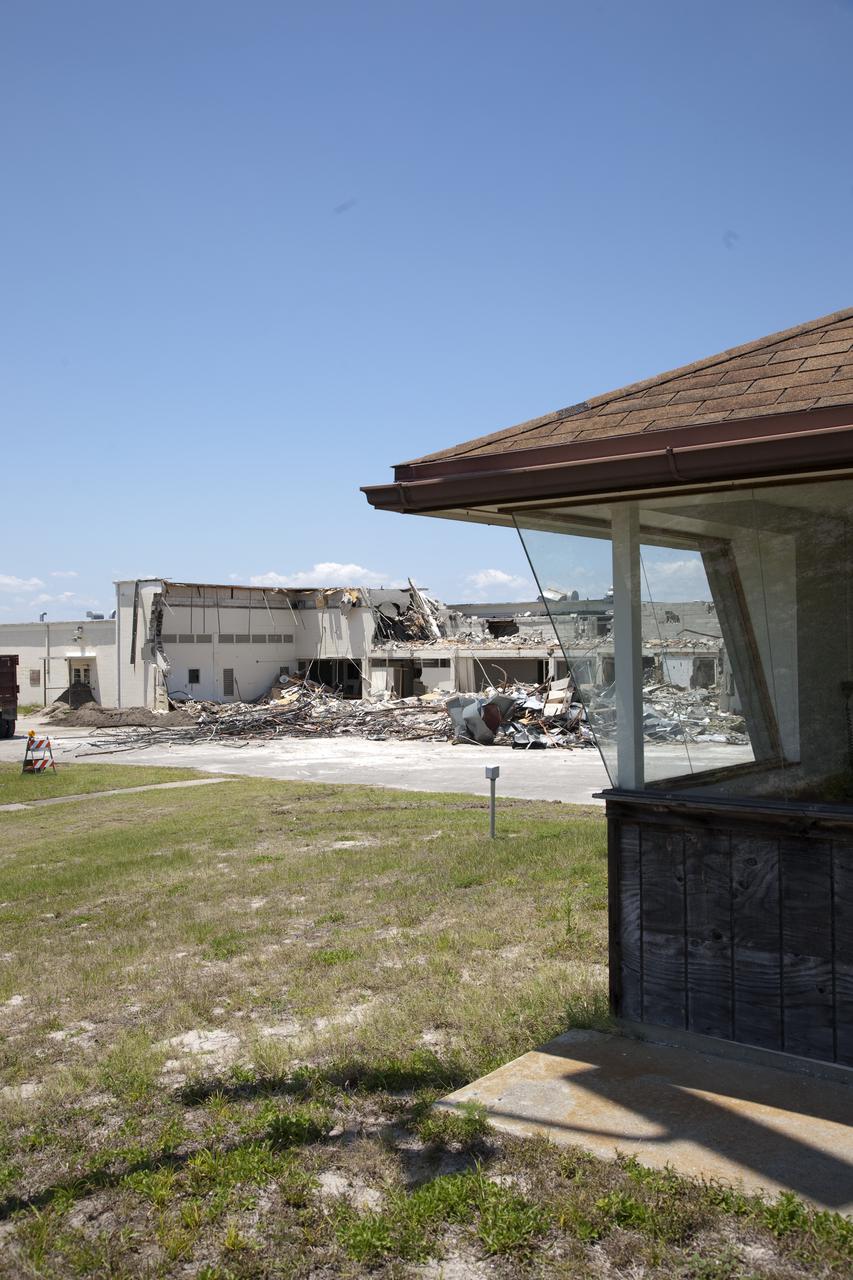
CAPE CANAVERAL, Fla. – At Cape Canaveral Air Force Station in Florida, the control room of the Mercury Mission Control Center is exposed to the elements during the deconstruction of the dilapidated facility.   The original building, constructed between 1956 and 1958, was last modified in 1963.  The center succumbed to the two worst enemies of structures along the space coast - time and salt air - necessitating that it be demolished as a safety measure.  The facility served as mission control during all the Project Mercury missions, as well as the first three flights of the Gemini Program. The center housed the flight controllers whose duty was to take over flight control after liftoff and follow it through until splashdown. Additionally, it supported vehicle checkout, spacecraft tracking, and astronaut training. With Gemini IV, mission control moved to Houston, and the facility took on the roles of launch control and tracking station. In 1999, much of the equipment and furnishings from the flight control area was moved to Kennedy Space Center's Visitor Complex.  A re-created mission control room currently is on display in the complex's Dr. Kurt H. Debus Conference Facility.  Speegle II of Cocoa, Fla., was awarded the contract for the deconstruction project.  Frank-Lin Excavating is performing the demolition for Sunrise Systems of Brevard, a subcontractor to Speegle II.  Photo credit: NASA_Dimitri Gerondidakis
KSC-2010-3153
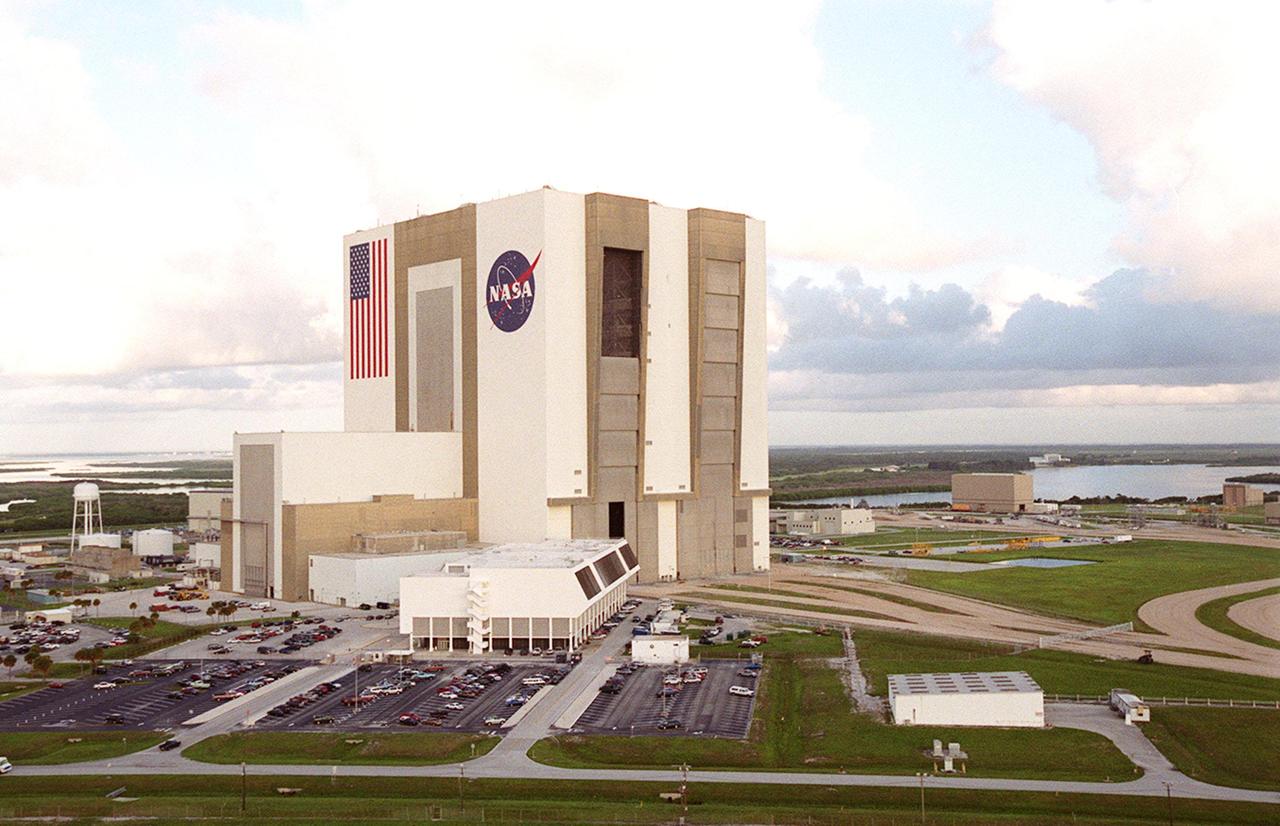
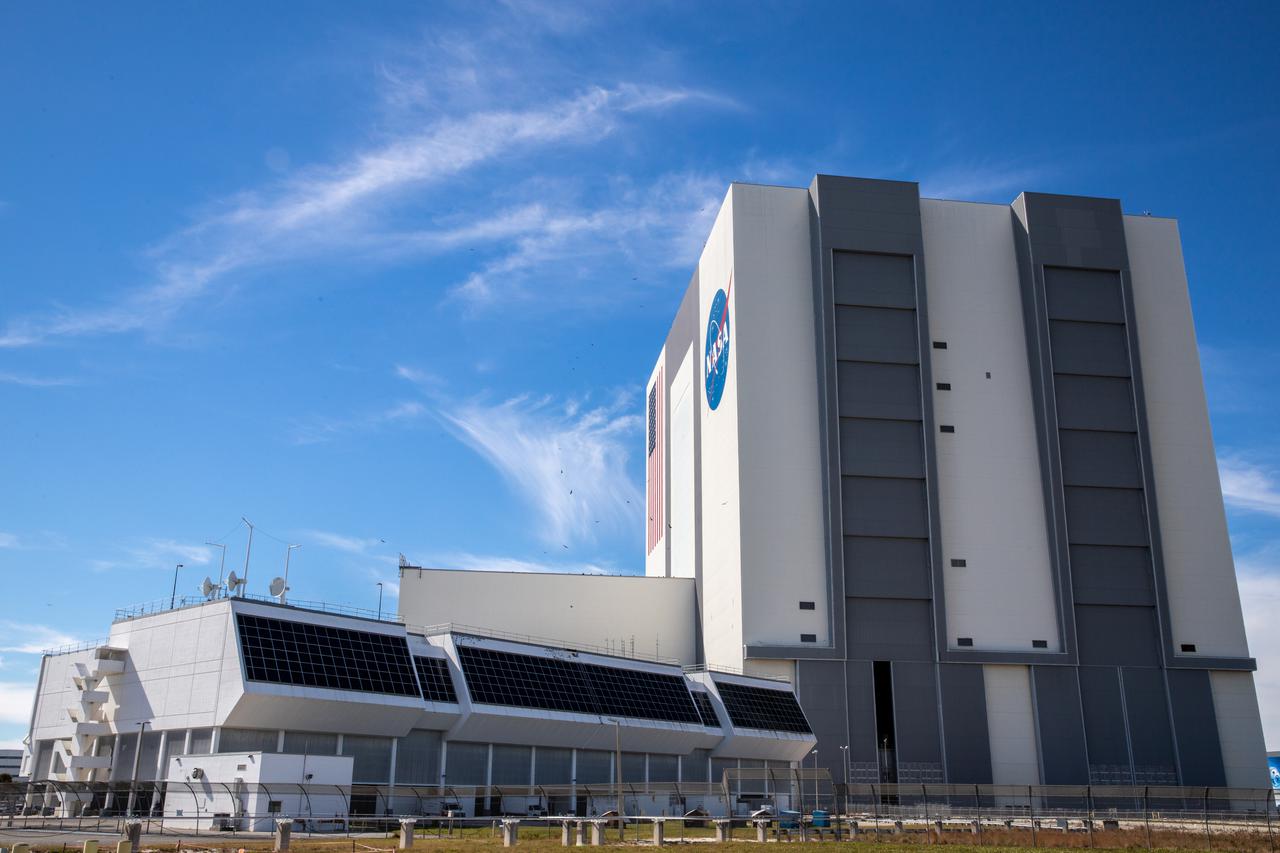
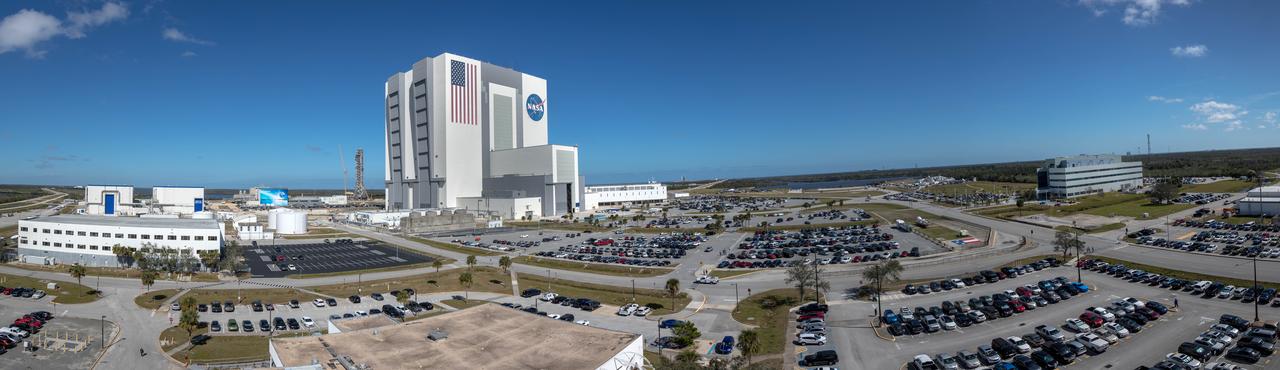
Even in this aerial view at KSC, the Vehicle Assembly Building is imposing. In front of it is the Launch Control Center. In the background is the Rotation/Processing Facility, next to the Banana Creek. In the foreground is the Saturn Causeway that leads to Launch Pads 39A and 39B.
KSC-00PP-1432
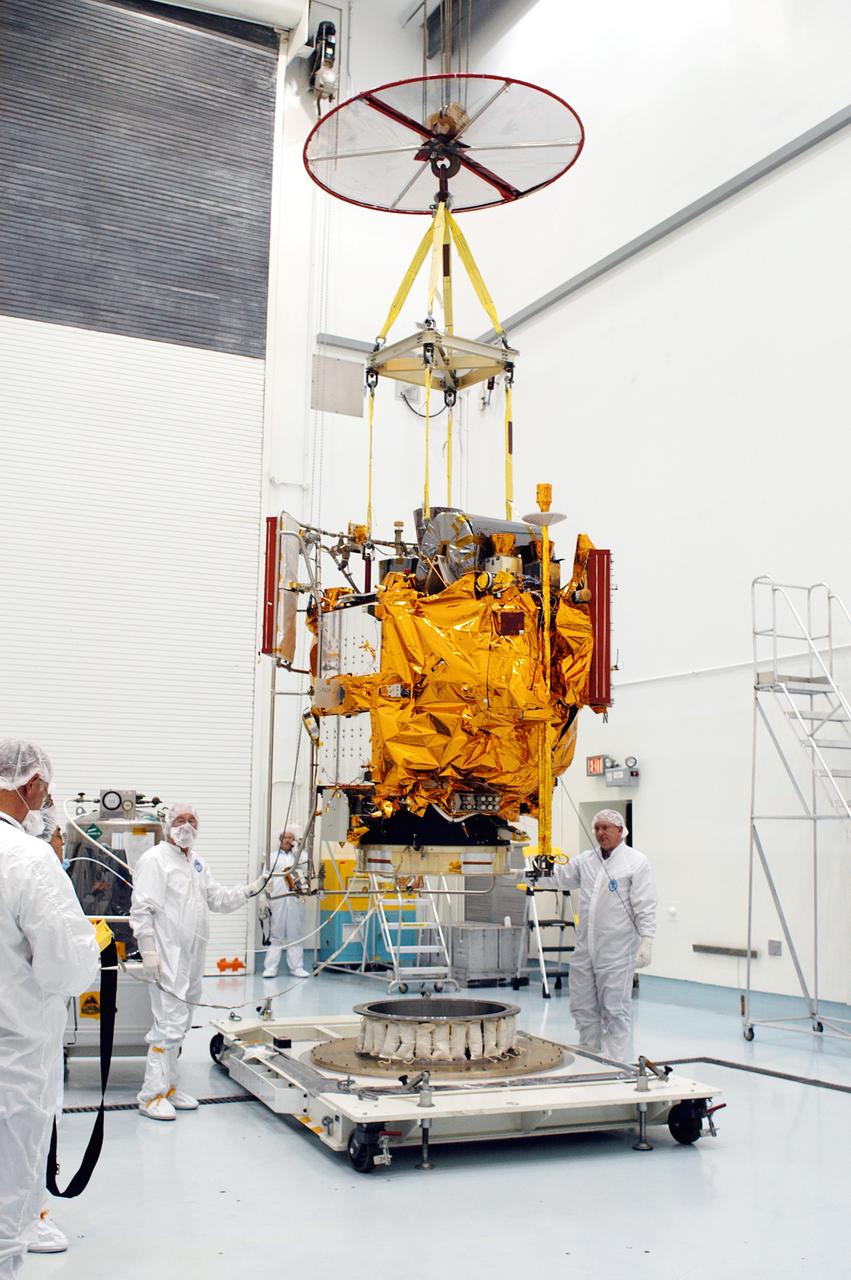
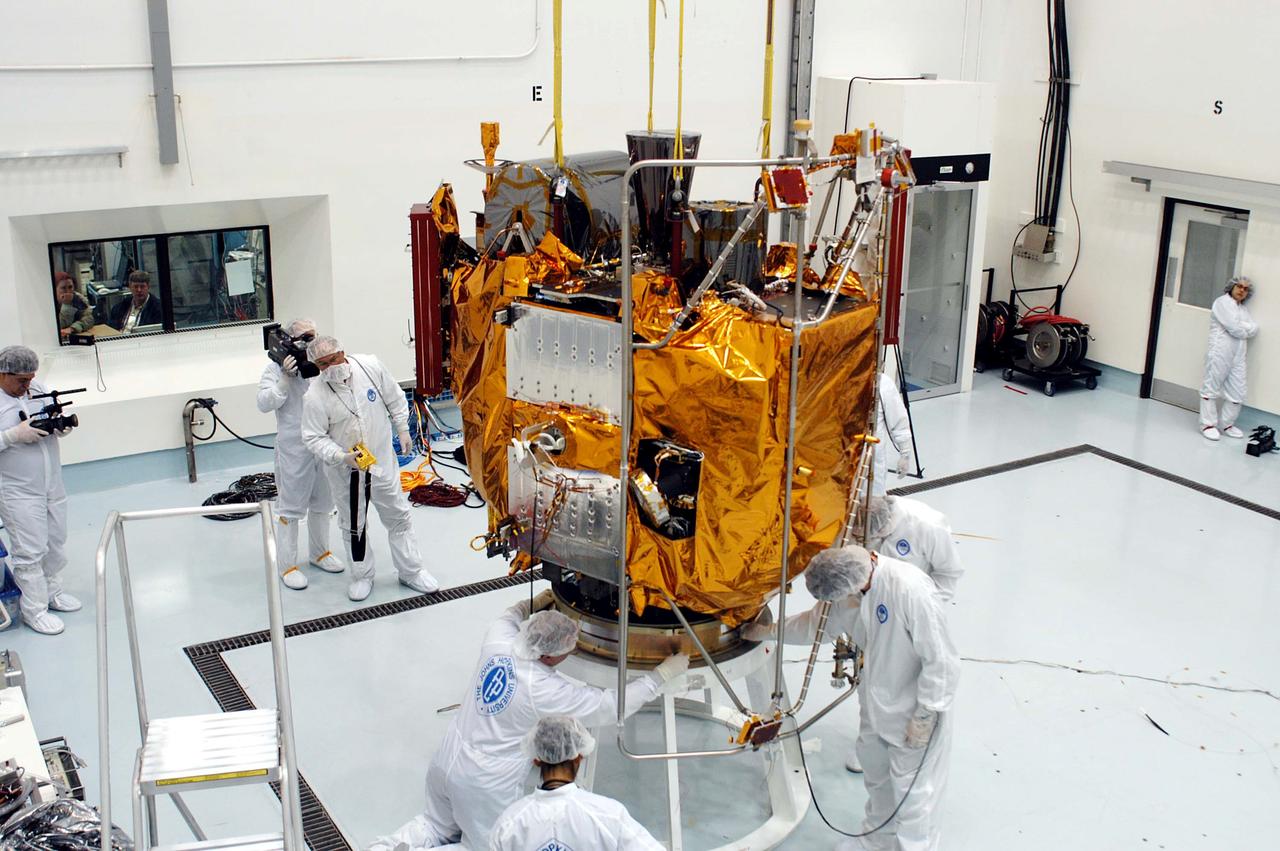
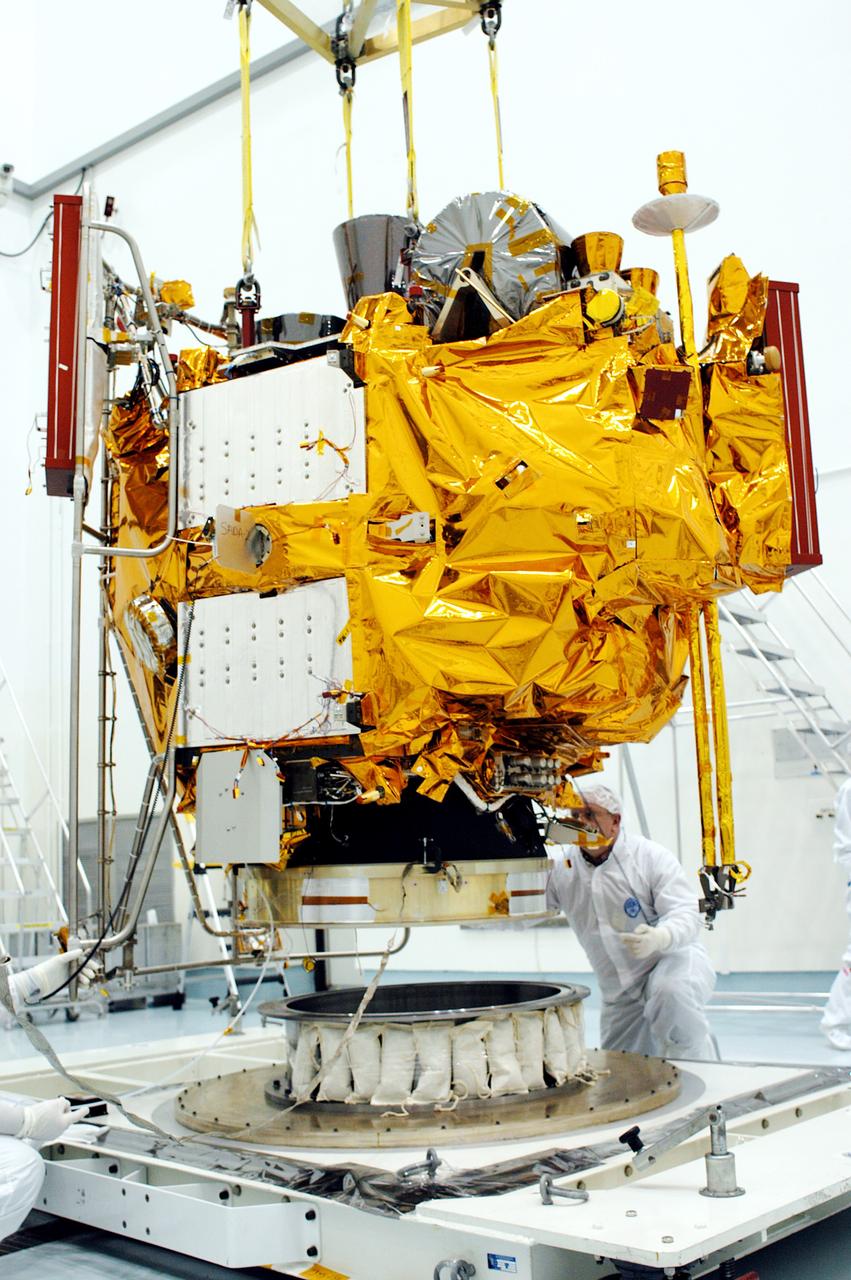
KENNEDY SPACE CENTER, FLA. -  At the Astrotech Space Operations processing facilities, an overhead crane moves NASA’s MESSENGER spacecraft toward a work stand. There employees of the Johns Hopkins University Applied Physics Laboratory, builders of the spacecraft, will perform an initial state-of-health check.  Then processing for launch can begin, including checkout of the power systems, communications systems and control systems.  The thermal blankets will also be attached for flight.  MESSENGER - short for MErcury Surface, Space ENvironment, GEochemistry and Ranging - will be launched May 11 on a six-year mission aboard a Boeing Delta II rocket.  Liftoff is targeted for 2:26 a.m. EDT on Tuesday, May 11.
KENNEDY SPACE CENTER, FLA. - At the Astrotech Space Operations processing facilities, an overhead crane moves NASA’s MESSENGER spacecraft toward a work stand. There employees of the Johns Hopkins University Applied Physics Laboratory, builders of the spacecraft, will perform an initial state-of-health check. Then processing for launch can begin, including checkout of the power systems, communications systems and control systems. The thermal blankets will also be attached for flight. MESSENGER - short for MErcury Surface, Space ENvironment, GEochemistry and Ranging - will be launched May 11 on a six-year mission aboard a Boeing Delta II rocket. Liftoff is targeted for 2:26 a.m. EDT on Tuesday, May 11.
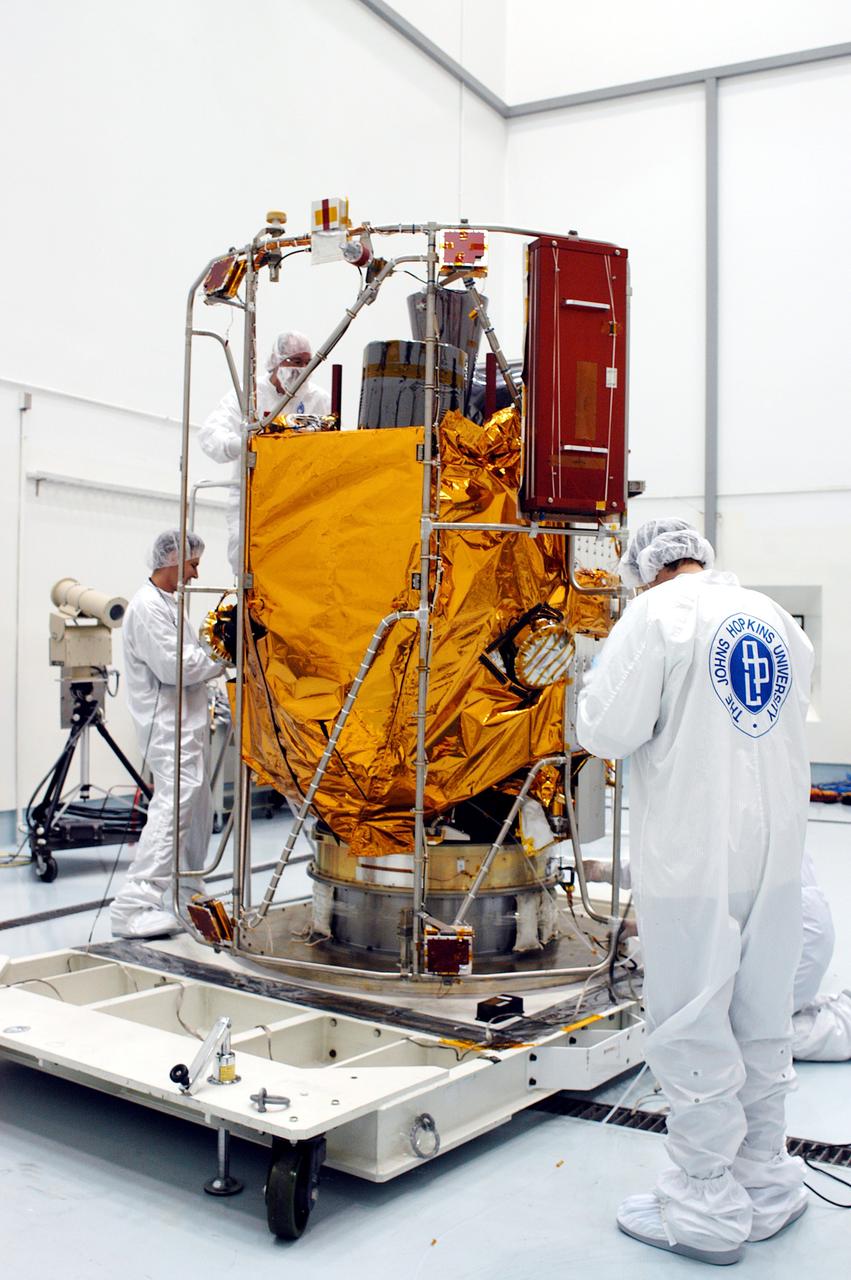
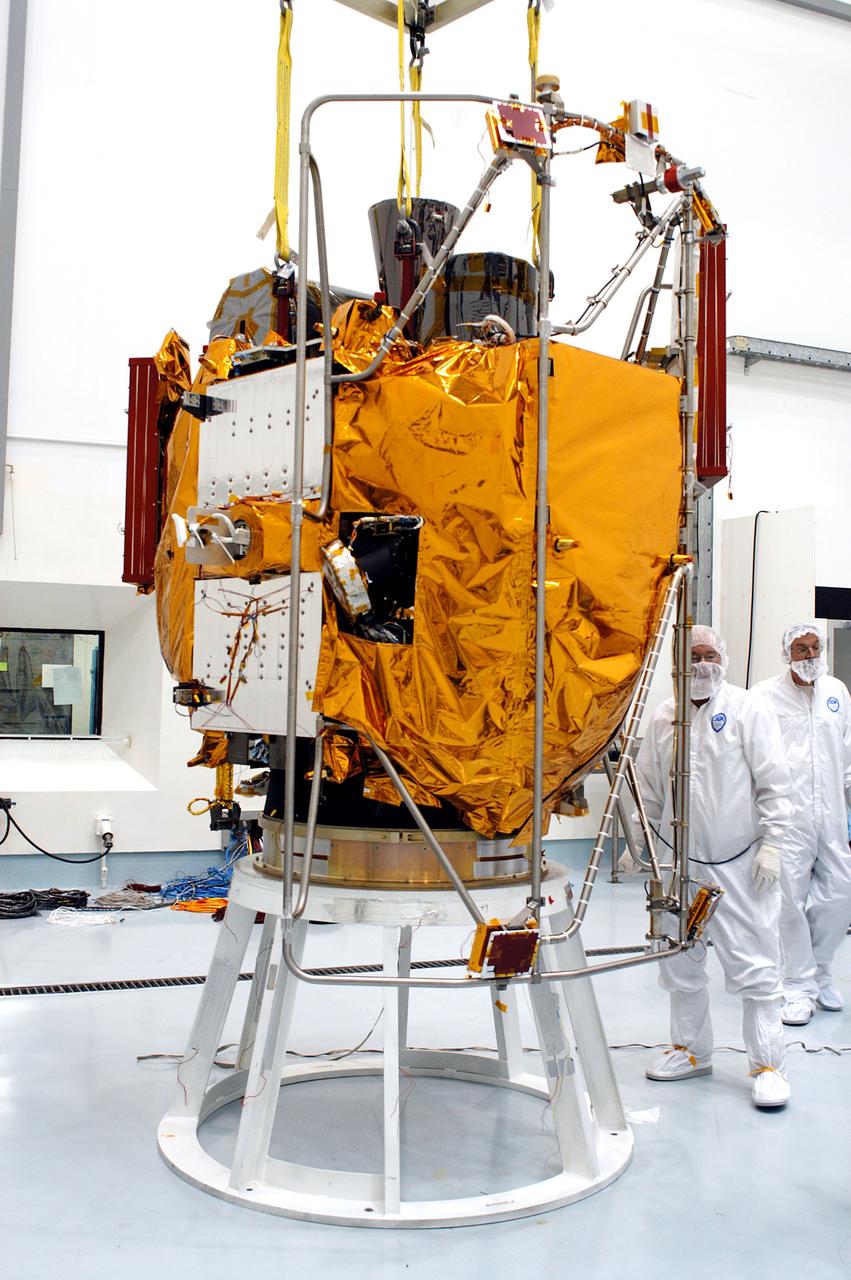
KENNEDY SPACE CENTER, FLA. -  At the Astrotech Space Operations processing facilities, NASA’s MESSENGER spacecraft is secure after transfer to the work stand. There employees of the Johns Hopkins University Applied Physics Laboratory, builders of the spacecraft, will perform an initial state-of-health check.  Then processing for launch can begin, including checkout of the power systems, communications systems and control systems.  The thermal blankets will also be attached for flight.  MESSENGER - short for MErcury Surface, Space ENvironment, GEochemistry and Ranging - will be launched May 11 on a six-year mission aboard a Boeing Delta II rocket.  Liftoff is targeted for 2:26 a.m. EDT on Tuesday, May 11.
KENNEDY SPACE CENTER, FLA. - At the Astrotech Space Operations processing facilities, NASA’s MESSENGER spacecraft is secure after transfer to the work stand. There employees of the Johns Hopkins University Applied Physics Laboratory, builders of the spacecraft, will perform an initial state-of-health check. Then processing for launch can begin, including checkout of the power systems, communications systems and control systems. The thermal blankets will also be attached for flight. MESSENGER - short for MErcury Surface, Space ENvironment, GEochemistry and Ranging - will be launched May 11 on a six-year mission aboard a Boeing Delta II rocket. Liftoff is targeted for 2:26 a.m. EDT on Tuesday, May 11.
KENNEDY SPACE CENTER, FLA. -  At the Astrotech Space Operations processing facilities, an overhead crane lowers NASA’s MESSENGER spacecraft onto a work stand. There employees of the Johns Hopkins University Applied Physics Laboratory, builders of the spacecraft, will perform an initial state-of-health check.  Then processing for launch can begin, including checkout of the power systems, communications systems and control systems.  The thermal blankets will also be attached for flight.  MESSENGER - short for MErcury Surface, Space ENvironment, GEochemistry and Ranging - will be launched May 11 on a six-year mission aboard a Boeing Delta II rocket.  Liftoff is targeted for 2:26 a.m. EDT on Tuesday, May 11.
KENNEDY SPACE CENTER, FLA. - At the Astrotech Space Operations processing facilities, an overhead crane lowers NASA’s MESSENGER spacecraft onto a work stand. There employees of the Johns Hopkins University Applied Physics Laboratory, builders of the spacecraft, will perform an initial state-of-health check. Then processing for launch can begin, including checkout of the power systems, communications systems and control systems. The thermal blankets will also be attached for flight. MESSENGER - short for MErcury Surface, Space ENvironment, GEochemistry and Ranging - will be launched May 11 on a six-year mission aboard a Boeing Delta II rocket. Liftoff is targeted for 2:26 a.m. EDT on Tuesday, May 11.
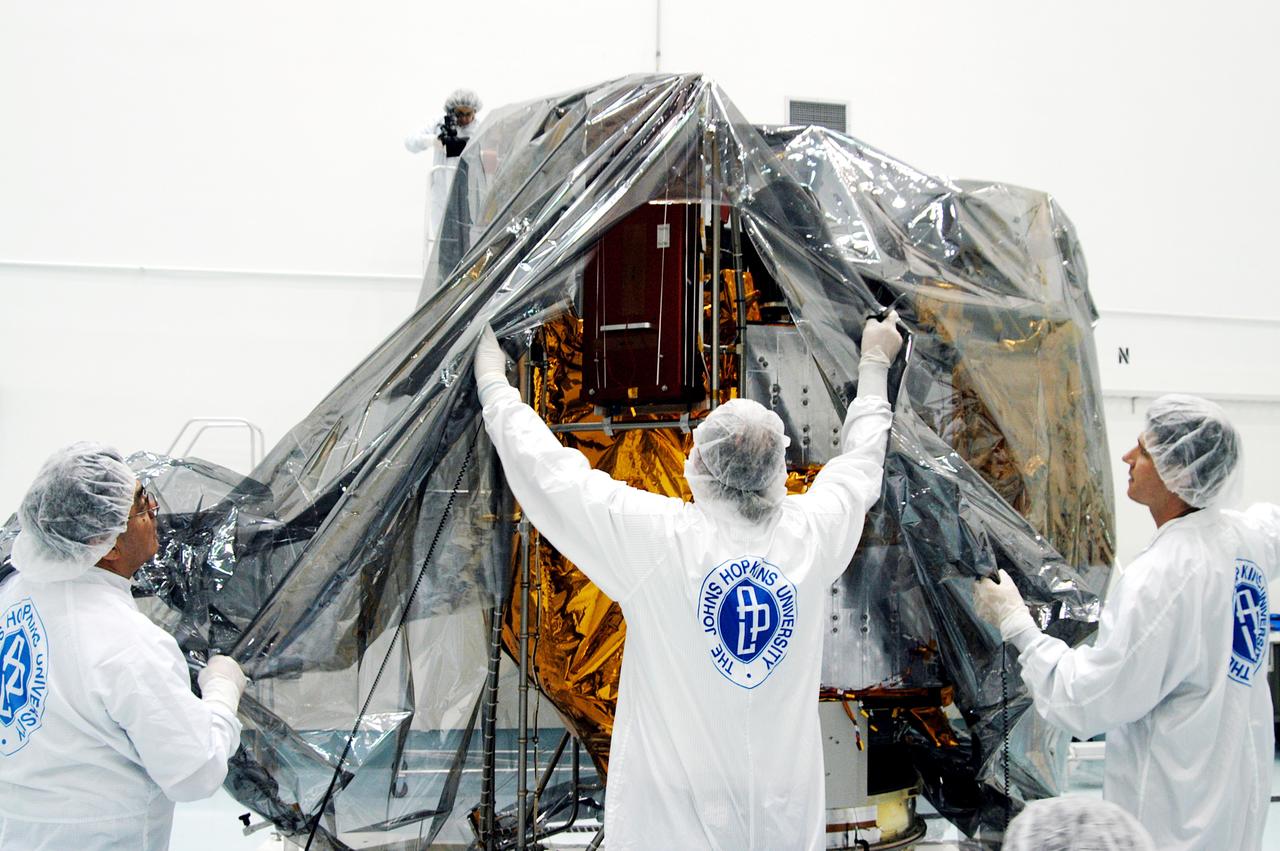
KENNEDY SPACE CENTER, FLA. -  In the high bay clean room at the Astrotech Space Operations processing facilities near KSC, NASA’s MESSENGER spacecraft is revealed.  Employees of the Johns Hopkins University Applied Physics Laboratory, builders of the spacecraft, will perform an initial state-of-health check.  Then processing for launch can begin, including checkout of the power systems, communications systems and control systems.  The thermal blankets will also be attached for flight.  MESSENGER - short for MErcury Surface, Space ENvironment, GEochemistry and Ranging - will be launched May 11 on a six-year mission aboard a Boeing Delta II rocket.  Liftoff is targeted for 2:26 a.m. EDT on Tuesday, May 11.
KENNEDY SPACE CENTER, FLA. - In the high bay clean room at the Astrotech Space Operations processing facilities near KSC, NASA’s MESSENGER spacecraft is revealed. Employees of the Johns Hopkins University Applied Physics Laboratory, builders of the spacecraft, will perform an initial state-of-health check. Then processing for launch can begin, including checkout of the power systems, communications systems and control systems. The thermal blankets will also be attached for flight. MESSENGER - short for MErcury Surface, Space ENvironment, GEochemistry and Ranging - will be launched May 11 on a six-year mission aboard a Boeing Delta II rocket. Liftoff is targeted for 2:26 a.m. EDT on Tuesday, May 11.
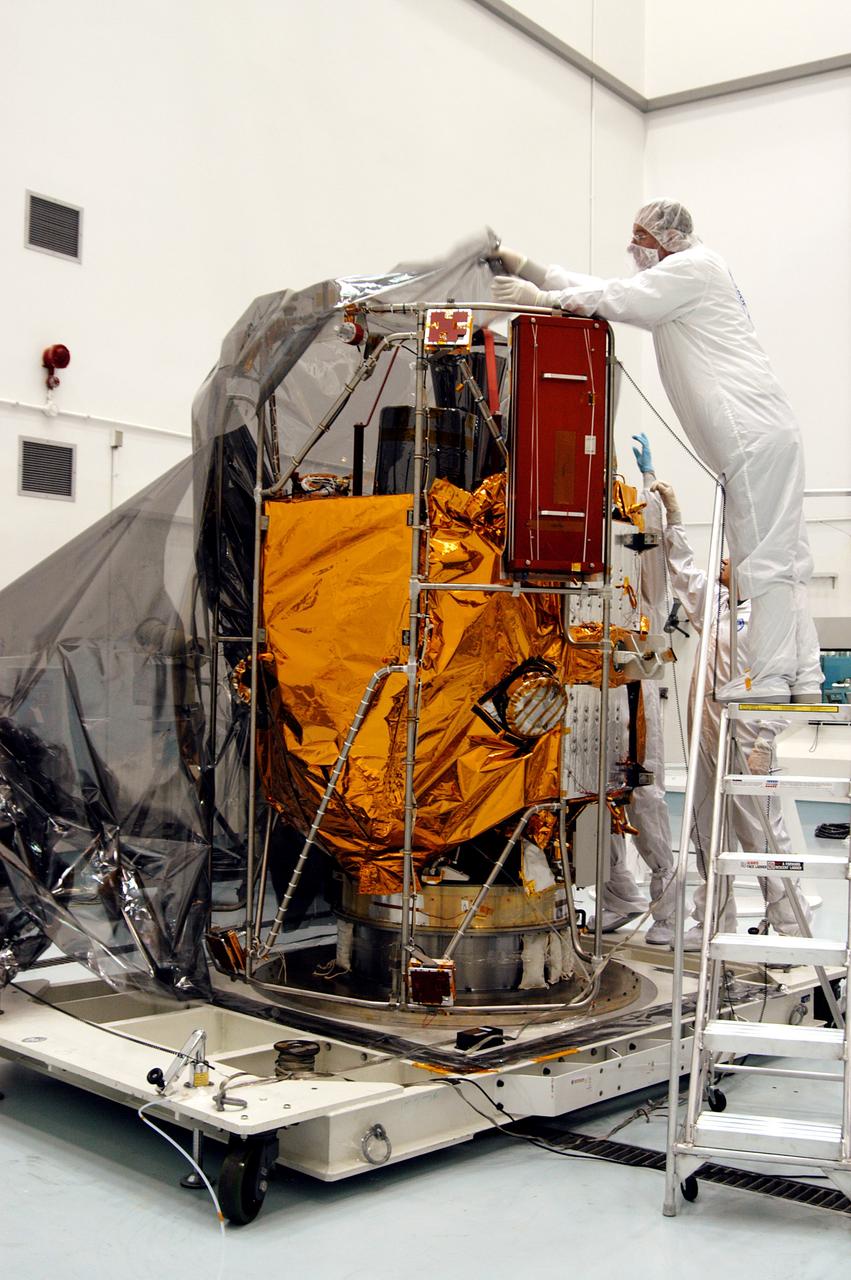
KENNEDY SPACE CENTER, FLA. -  In the high bay clean room at the Astrotech Space Operations processing facilities near KSC, workers remove the protective cover from NASA’s MESSENGER spacecraft.  Employees of the Johns Hopkins University Applied Physics Laboratory, builders of the spacecraft, will perform an initial state-of-health check.  Then processing for launch can begin, including checkout of the power systems, communications systems and control systems.  The thermal blankets will also be attached for flight.  MESSENGER - short for MErcury Surface, Space ENvironment, GEochemistry and Ranging - will be launched May 11 on a six-year mission aboard a Boeing Delta II rocket.  Liftoff is targeted for 2:26 a.m. EDT on Tuesday, May 11.
KENNEDY SPACE CENTER, FLA. - In the high bay clean room at the Astrotech Space Operations processing facilities near KSC, workers remove the protective cover from NASA’s MESSENGER spacecraft. Employees of the Johns Hopkins University Applied Physics Laboratory, builders of the spacecraft, will perform an initial state-of-health check. Then processing for launch can begin, including checkout of the power systems, communications systems and control systems. The thermal blankets will also be attached for flight. MESSENGER - short for MErcury Surface, Space ENvironment, GEochemistry and Ranging - will be launched May 11 on a six-year mission aboard a Boeing Delta II rocket. Liftoff is targeted for 2:26 a.m. EDT on Tuesday, May 11.
KENNEDY SPACE CENTER, FLA. -  At the Astrotech Space Operations processing facilities, workers check the placement of NASA’s MESSENGER spacecraft on a work stand. There employees of the Johns Hopkins University Applied Physics Laboratory, builders of the spacecraft, will perform an initial state-of-health check.  Then processing for launch can begin, including checkout of the power systems, communications systems and control systems.  The thermal blankets will also be attached for flight.  MESSENGER - short for MErcury Surface, Space ENvironment, GEochemistry and Ranging - will be launched May 11 on a six-year mission aboard a Boeing Delta II rocket.  Liftoff is targeted for 2:26 a.m. EDT on Tuesday, May 11.
KENNEDY SPACE CENTER, FLA. - At the Astrotech Space Operations processing facilities, workers check the placement of NASA’s MESSENGER spacecraft on a work stand. There employees of the Johns Hopkins University Applied Physics Laboratory, builders of the spacecraft, will perform an initial state-of-health check. Then processing for launch can begin, including checkout of the power systems, communications systems and control systems. The thermal blankets will also be attached for flight. MESSENGER - short for MErcury Surface, Space ENvironment, GEochemistry and Ranging - will be launched May 11 on a six-year mission aboard a Boeing Delta II rocket. Liftoff is targeted for 2:26 a.m. EDT on Tuesday, May 11.
KENNEDY SPACE CENTER, FLA. -  In the high bay clean room at the Astrotech Space Operations processing facilities near KSC, workers remove the protective cover from NASA’s MESSENGER spacecraft.  Employees of the Johns Hopkins University Applied Physics Laboratory, builders of the spacecraft, will perform an initial state-of-health check.  Then processing for launch can begin, including checkout of the power systems, communications systems and control systems.  The thermal blankets will also be attached for flight.  MESSENGER - short for MErcury Surface, Space ENvironment, GEochemistry and Ranging - will be launched May 11 on a six-year mission aboard a Boeing Delta II rocket.  Liftoff is targeted for 2:26 a.m. EDT on Tuesday, May 11.
KENNEDY SPACE CENTER, FLA. - In the high bay clean room at the Astrotech Space Operations processing facilities near KSC, workers remove the protective cover from NASA’s MESSENGER spacecraft. Employees of the Johns Hopkins University Applied Physics Laboratory, builders of the spacecraft, will perform an initial state-of-health check. Then processing for launch can begin, including checkout of the power systems, communications systems and control systems. The thermal blankets will also be attached for flight. MESSENGER - short for MErcury Surface, Space ENvironment, GEochemistry and Ranging - will be launched May 11 on a six-year mission aboard a Boeing Delta II rocket. Liftoff is targeted for 2:26 a.m. EDT on Tuesday, May 11.
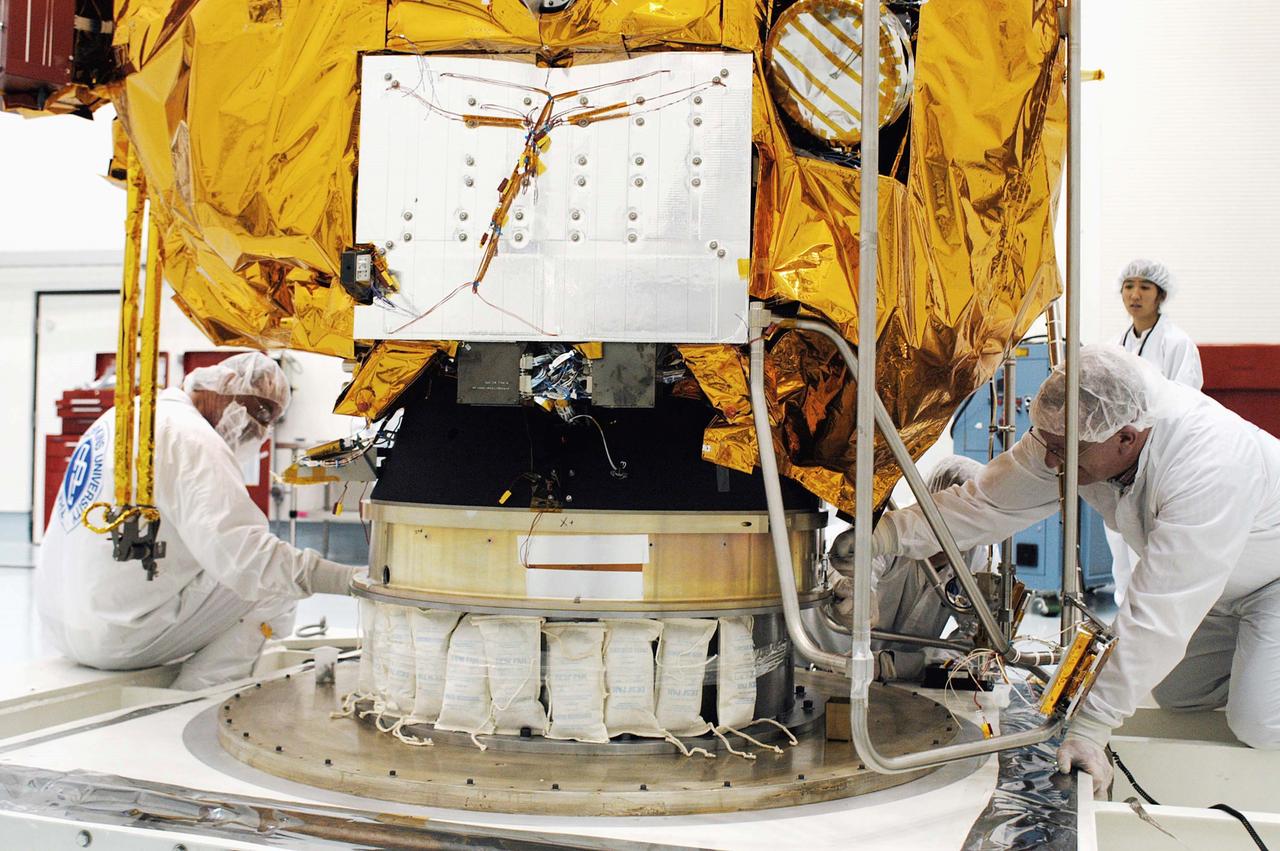
KENNEDY SPACE CENTER, FLA. -  In the high bay clean room at the Astrotech Space Operations processing facilities near KSC, workers prepare NASA’s MESSENGER spacecraft for transfer to a work stand.  There employees of the Johns Hopkins University Applied Physics Laboratory, builders of the spacecraft, will perform an initial state-of-health check.  Then processing for launch can begin, including checkout of the power systems, communications systems and control systems.  The thermal blankets will also be attached for flight.  MESSENGER - short for MErcury Surface, Space ENvironment, GEochemistry and Ranging - will be launched May 11 on a six-year mission aboard a Boeing Delta II rocket.  Liftoff is targeted for 2:26 a.m. EDT on Tuesday, May 11.
KENNEDY SPACE CENTER, FLA. - In the high bay clean room at the Astrotech Space Operations processing facilities near KSC, workers prepare NASA’s MESSENGER spacecraft for transfer to a work stand. There employees of the Johns Hopkins University Applied Physics Laboratory, builders of the spacecraft, will perform an initial state-of-health check. Then processing for launch can begin, including checkout of the power systems, communications systems and control systems. The thermal blankets will also be attached for flight. MESSENGER - short for MErcury Surface, Space ENvironment, GEochemistry and Ranging - will be launched May 11 on a six-year mission aboard a Boeing Delta II rocket. Liftoff is targeted for 2:26 a.m. EDT on Tuesday, May 11.
KENNEDY SPACE CENTER, FLA. -  At the Astrotech Space Operations processing facilities, an overhead crane lowers NASA’s MESSENGER spacecraft onto a work stand. There employees of the Johns Hopkins University Applied Physics Laboratory, builders of the spacecraft, will perform an initial state-of-health check.  Then processing for launch can begin, including checkout of the power systems, communications systems and control systems.  The thermal blankets will also be attached for flight.  MESSENGER - short for MErcury Surface, Space ENvironment, GEochemistry and Ranging - will be launched May 11 on a six-year mission aboard a Boeing Delta II rocket.  Liftoff is targeted for 2:26 a.m. EDT on Tuesday, May 11.
KENNEDY SPACE CENTER, FLA. - At the Astrotech Space Operations processing facilities, an overhead crane lowers NASA’s MESSENGER spacecraft onto a work stand. There employees of the Johns Hopkins University Applied Physics Laboratory, builders of the spacecraft, will perform an initial state-of-health check. Then processing for launch can begin, including checkout of the power systems, communications systems and control systems. The thermal blankets will also be attached for flight. MESSENGER - short for MErcury Surface, Space ENvironment, GEochemistry and Ranging - will be launched May 11 on a six-year mission aboard a Boeing Delta II rocket. Liftoff is targeted for 2:26 a.m. EDT on Tuesday, May 11.
KENNEDY SPACE CENTER, FLA. -  At the Astrotech Space Operations processing facilities, NASA’s MESSENGER spacecraft is lifted off the pallet for transfer to a work stand. There employees of the Johns Hopkins University Applied Physics Laboratory, builders of the spacecraft, will perform an initial state-of-health check.  Then processing for launch can begin, including checkout of the power systems, communications systems and control systems.  The thermal blankets will also be attached for flight.  MESSENGER - short for MErcury Surface, Space ENvironment, GEochemistry and Ranging - will be launched May 11 on a six-year mission aboard a Boeing Delta II rocket.  Liftoff is targeted for 2:26 a.m. EDT on Tuesday, May 11.
KENNEDY SPACE CENTER, FLA. - At the Astrotech Space Operations processing facilities, NASA’s MESSENGER spacecraft is lifted off the pallet for transfer to a work stand. There employees of the Johns Hopkins University Applied Physics Laboratory, builders of the spacecraft, will perform an initial state-of-health check. Then processing for launch can begin, including checkout of the power systems, communications systems and control systems. The thermal blankets will also be attached for flight. MESSENGER - short for MErcury Surface, Space ENvironment, GEochemistry and Ranging - will be launched May 11 on a six-year mission aboard a Boeing Delta II rocket. Liftoff is targeted for 2:26 a.m. EDT on Tuesday, May 11.
KENNEDY SPACE CENTER, FLA. -  At the Astrotech Space Operations processing facilities near KSC, workers move NASA’s MESSENGER spacecraft into a high bay clean room.  Employees of the Johns Hopkins University Applied Physics Laboratory, builders of the spacecraft, will perform an initial state-of-health check.  Then processing for launch can begin, including checkout of the power systems, communications systems and control systems.  The thermal blankets will also be attached for flight.  MESSENGER - short for MErcury Surface, Space ENvironment, GEochemistry and Ranging - will be launched May 11 on a six-year mission aboard a Boeing Delta II rocket.  Liftoff is targeted for 2:26 a.m. EDT on Tuesday, May 11.
KENNEDY SPACE CENTER, FLA. - At the Astrotech Space Operations processing facilities near KSC, workers move NASA’s MESSENGER spacecraft into a high bay clean room. Employees of the Johns Hopkins University Applied Physics Laboratory, builders of the spacecraft, will perform an initial state-of-health check. Then processing for launch can begin, including checkout of the power systems, communications systems and control systems. The thermal blankets will also be attached for flight. MESSENGER - short for MErcury Surface, Space ENvironment, GEochemistry and Ranging - will be launched May 11 on a six-year mission aboard a Boeing Delta II rocket. Liftoff is targeted for 2:26 a.m. EDT on Tuesday, May 11.
KENNEDY SPACE CENTER, FLA. -  At the Astrotech Space Operations processing facilities, NASA’s MESSENGER spacecraft is lifted off the pallet for transfer to a work stand. There employees of the Johns Hopkins University Applied Physics Laboratory, builders of the spacecraft, will perform an initial state-of-health check.  Then processing for launch can begin, including checkout of the power systems, communications systems and control systems.  The thermal blankets will also be attached for flight.  MESSENGER - short for MErcury Surface, Space ENvironment, GEochemistry and Ranging - will be launched May 11 on a six-year mission aboard a Boeing Delta II rocket.  Liftoff is targeted for 2:26 a.m. EDT on Tuesday, May 11.
KENNEDY SPACE CENTER, FLA. - At the Astrotech Space Operations processing facilities, NASA’s MESSENGER spacecraft is lifted off the pallet for transfer to a work stand. There employees of the Johns Hopkins University Applied Physics Laboratory, builders of the spacecraft, will perform an initial state-of-health check. Then processing for launch can begin, including checkout of the power systems, communications systems and control systems. The thermal blankets will also be attached for flight. MESSENGER - short for MErcury Surface, Space ENvironment, GEochemistry and Ranging - will be launched May 11 on a six-year mission aboard a Boeing Delta II rocket. Liftoff is targeted for 2:26 a.m. EDT on Tuesday, May 11.
KENNEDY SPACE CENTER, FLA. -  At the Astrotech Space Operations processing facilities, workers check the placement of NASA’s MESSENGER spacecraft on a work stand. There employees of the Johns Hopkins University Applied Physics Laboratory, builders of the spacecraft, will perform an initial state-of-health check.  Then processing for launch can begin, including checkout of the power systems, communications systems and control systems.  The thermal blankets will also be attached for flight.  MESSENGER - short for MErcury Surface, Space ENvironment, GEochemistry and Ranging - will be launched May 11 on a six-year mission aboard a Boeing Delta II rocket.  Liftoff is targeted for 2:26 a.m. EDT on Tuesday, May 11.
KENNEDY SPACE CENTER, FLA. - At the Astrotech Space Operations processing facilities, workers check the placement of NASA’s MESSENGER spacecraft on a work stand. There employees of the Johns Hopkins University Applied Physics Laboratory, builders of the spacecraft, will perform an initial state-of-health check. Then processing for launch can begin, including checkout of the power systems, communications systems and control systems. The thermal blankets will also be attached for flight. MESSENGER - short for MErcury Surface, Space ENvironment, GEochemistry and Ranging - will be launched May 11 on a six-year mission aboard a Boeing Delta II rocket. Liftoff is targeted for 2:26 a.m. EDT on Tuesday, May 11.
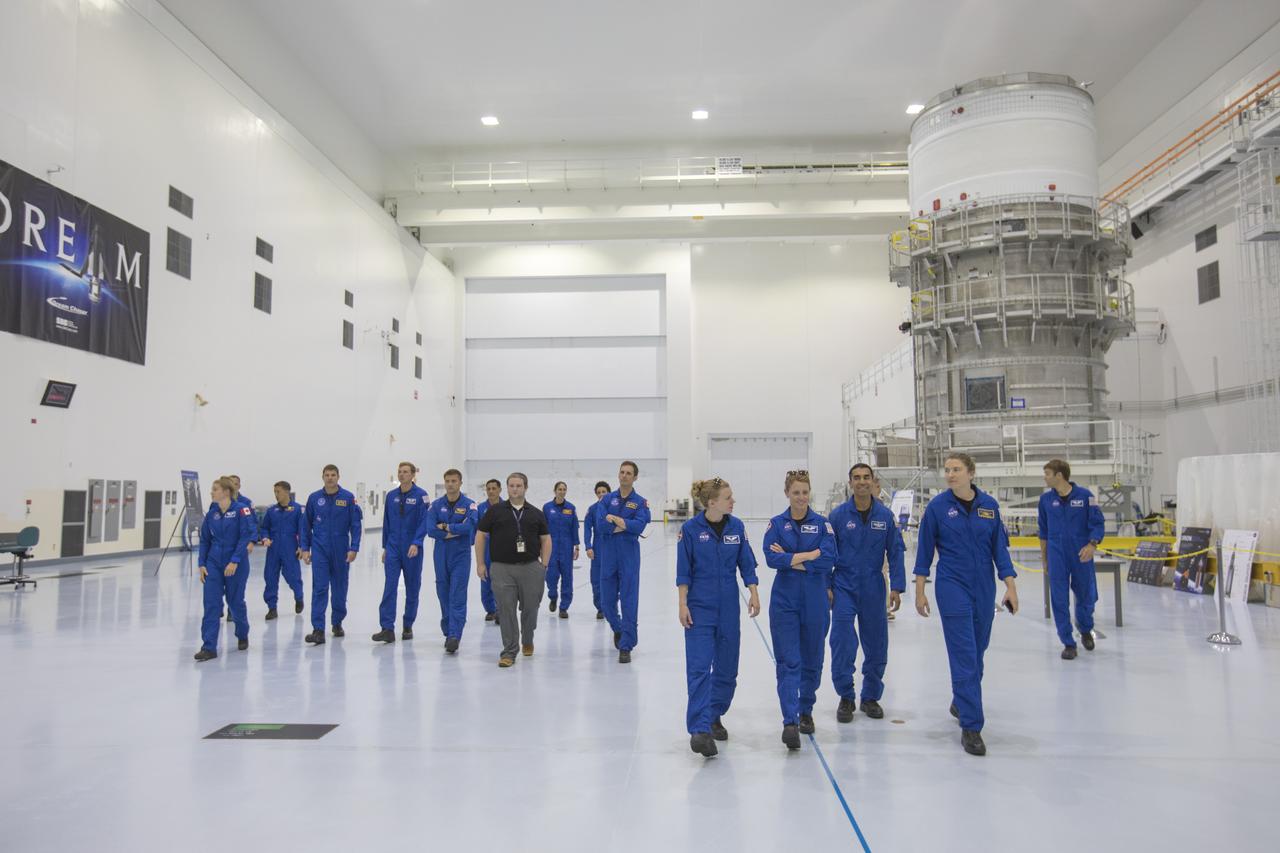
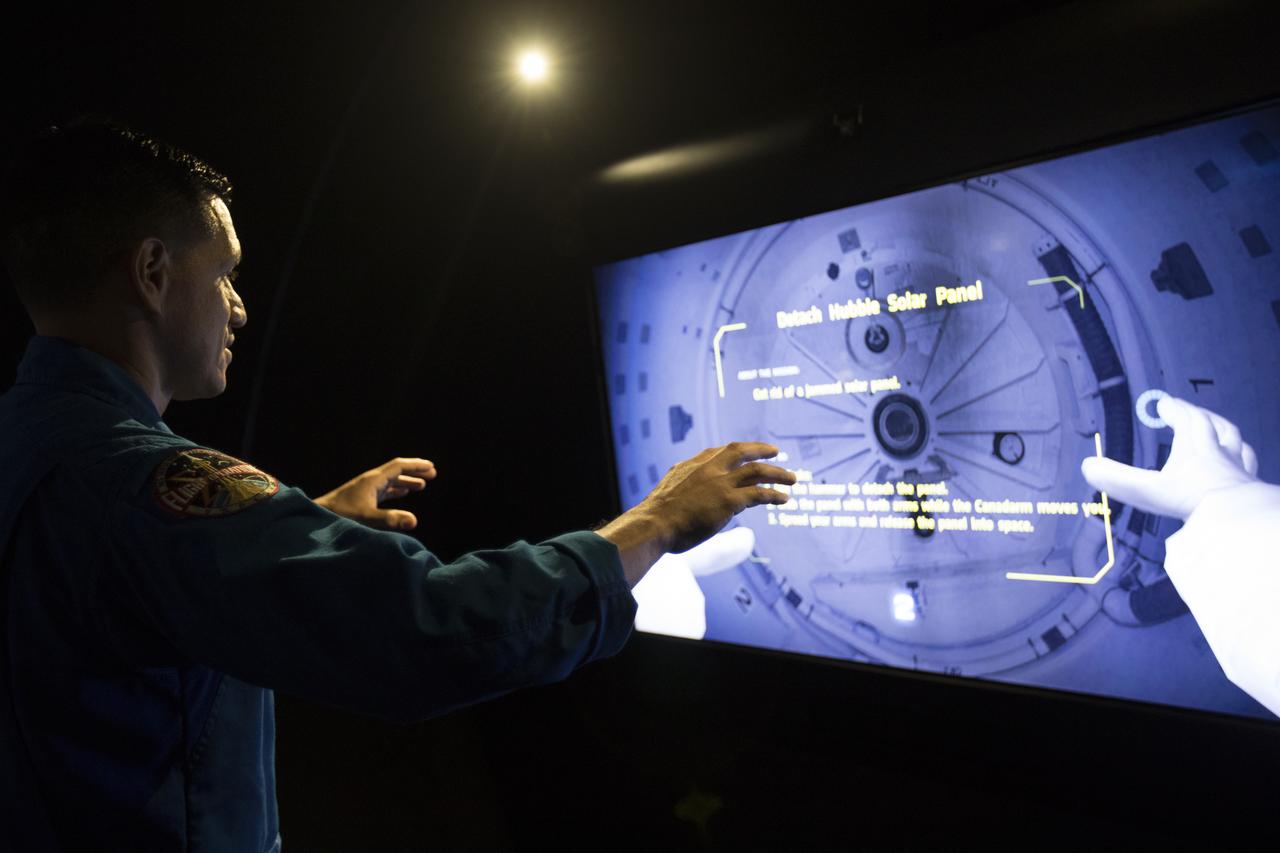
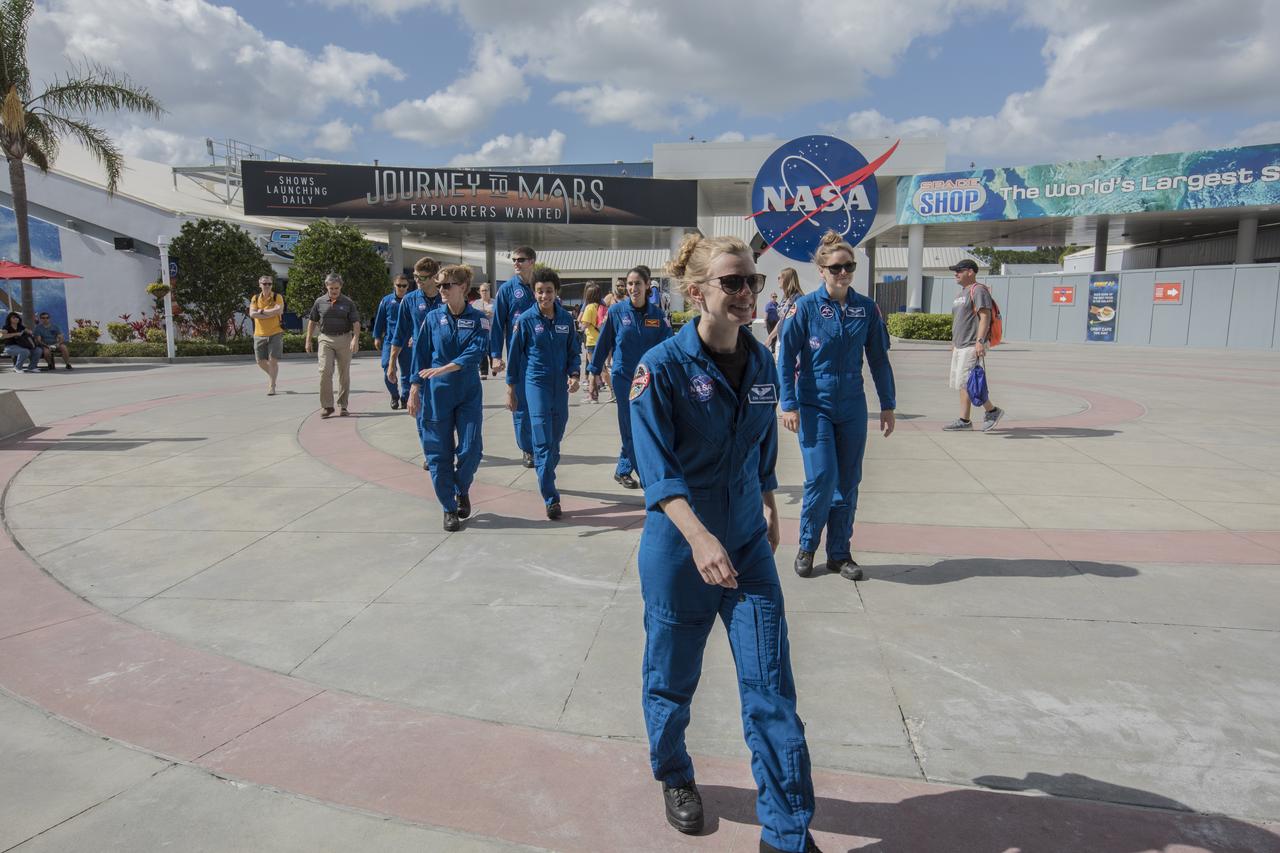
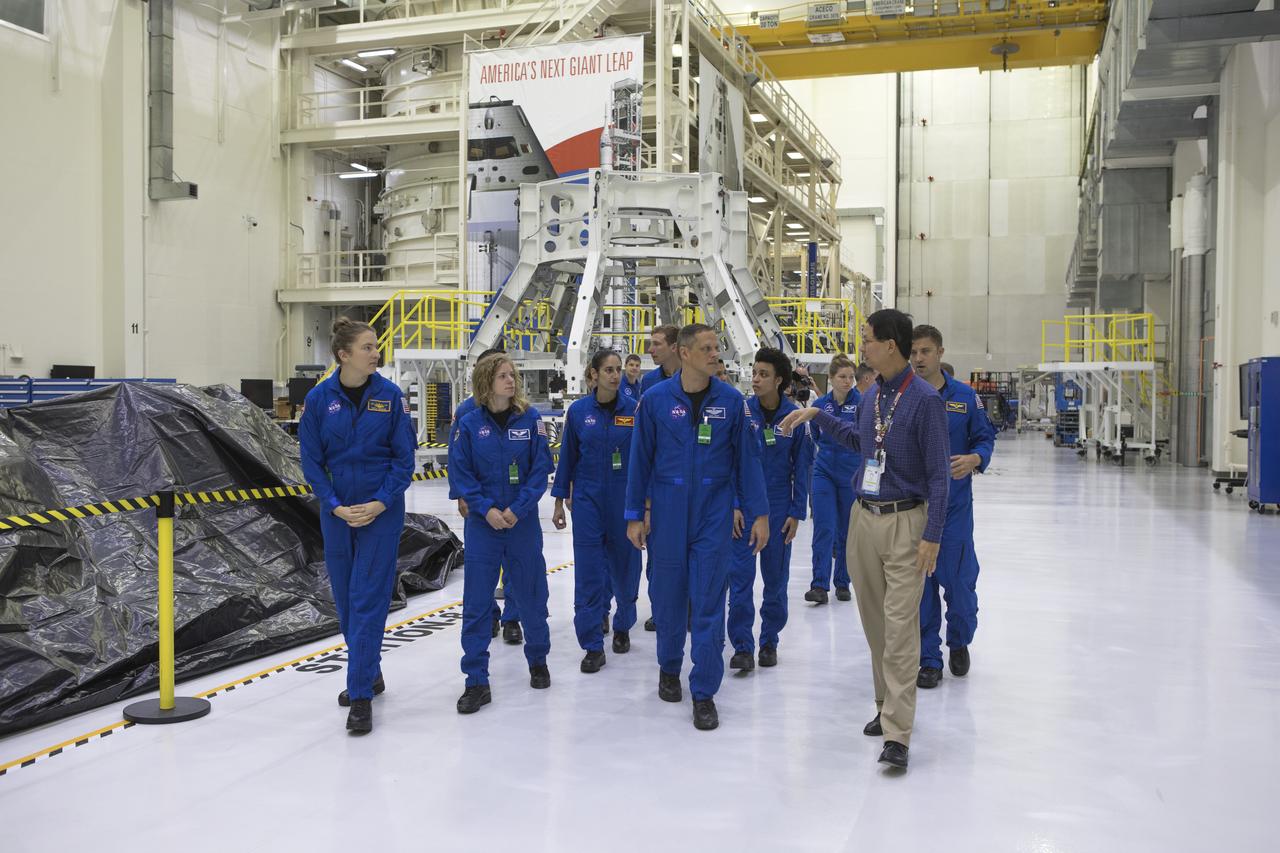
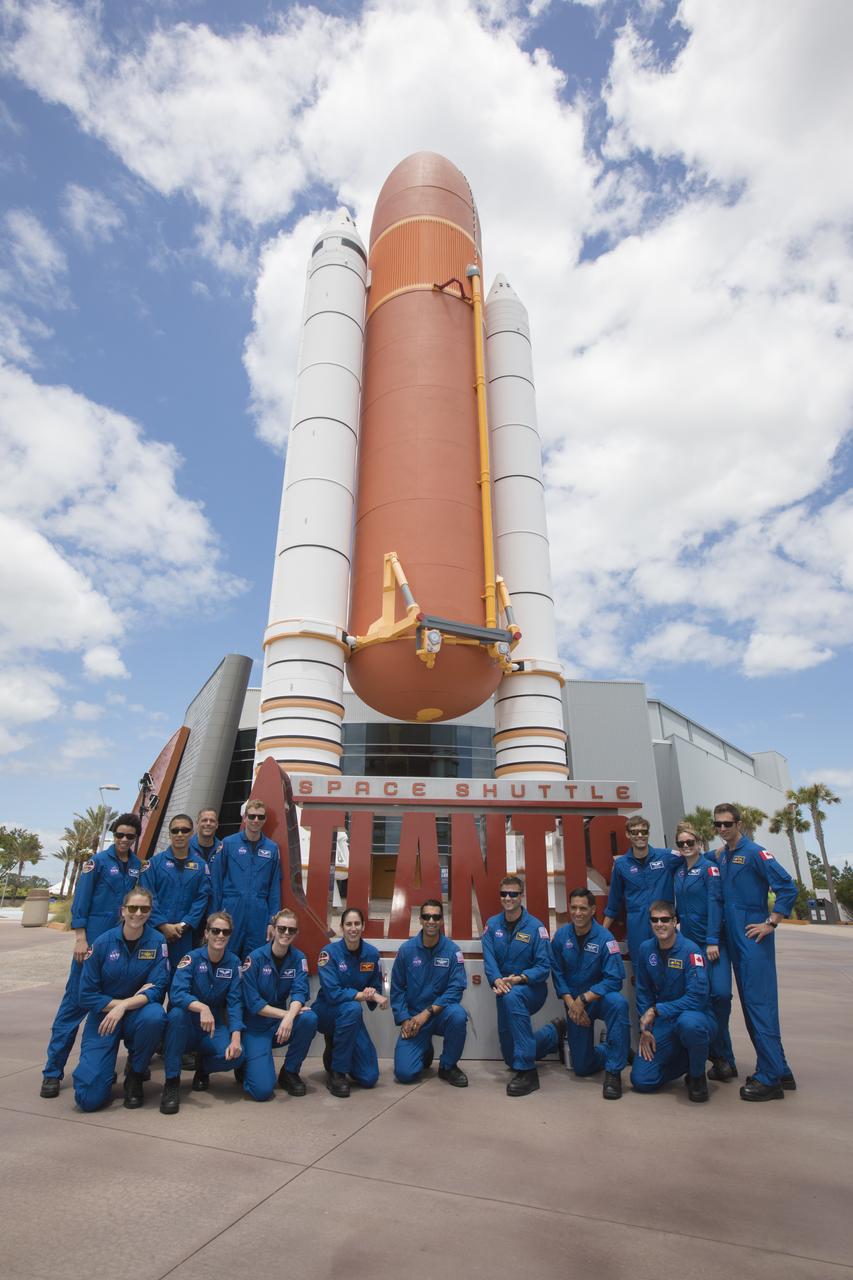
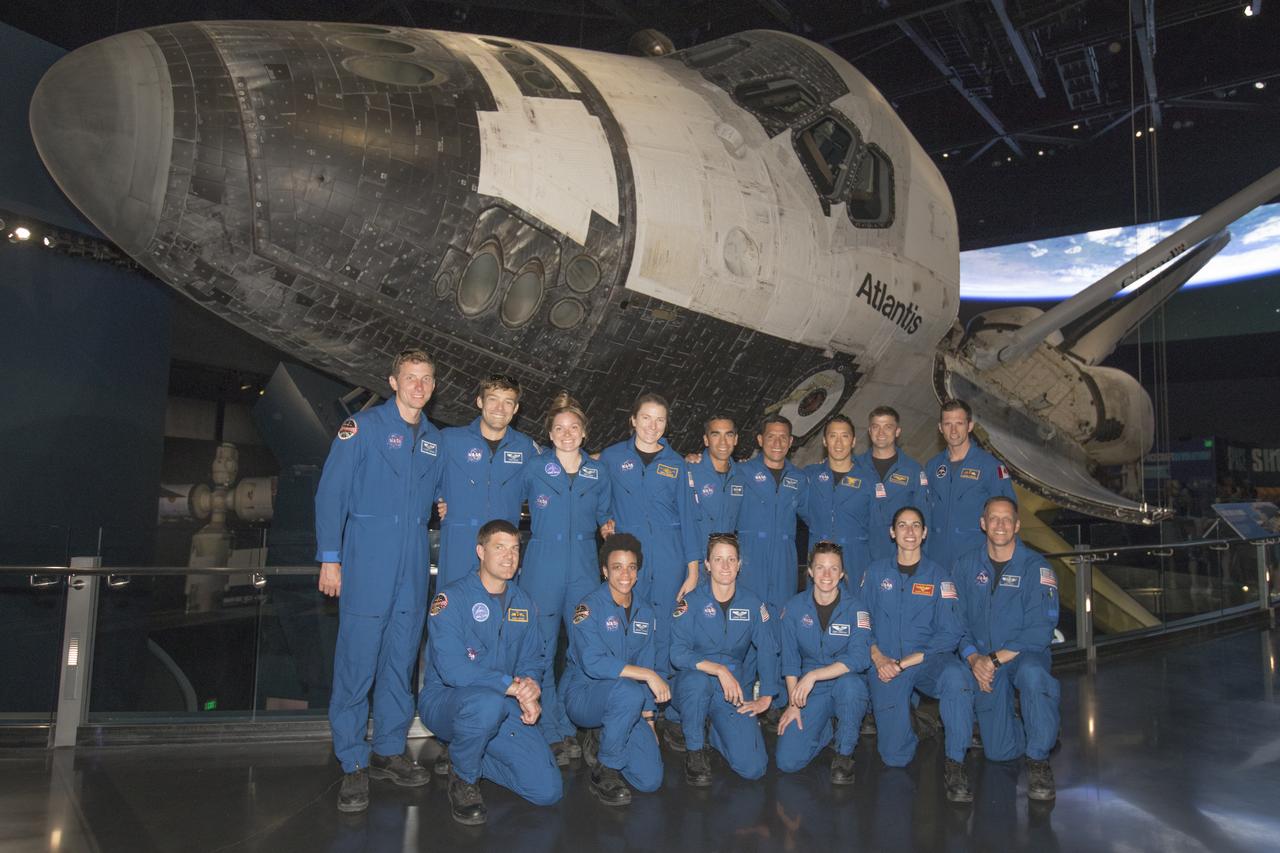
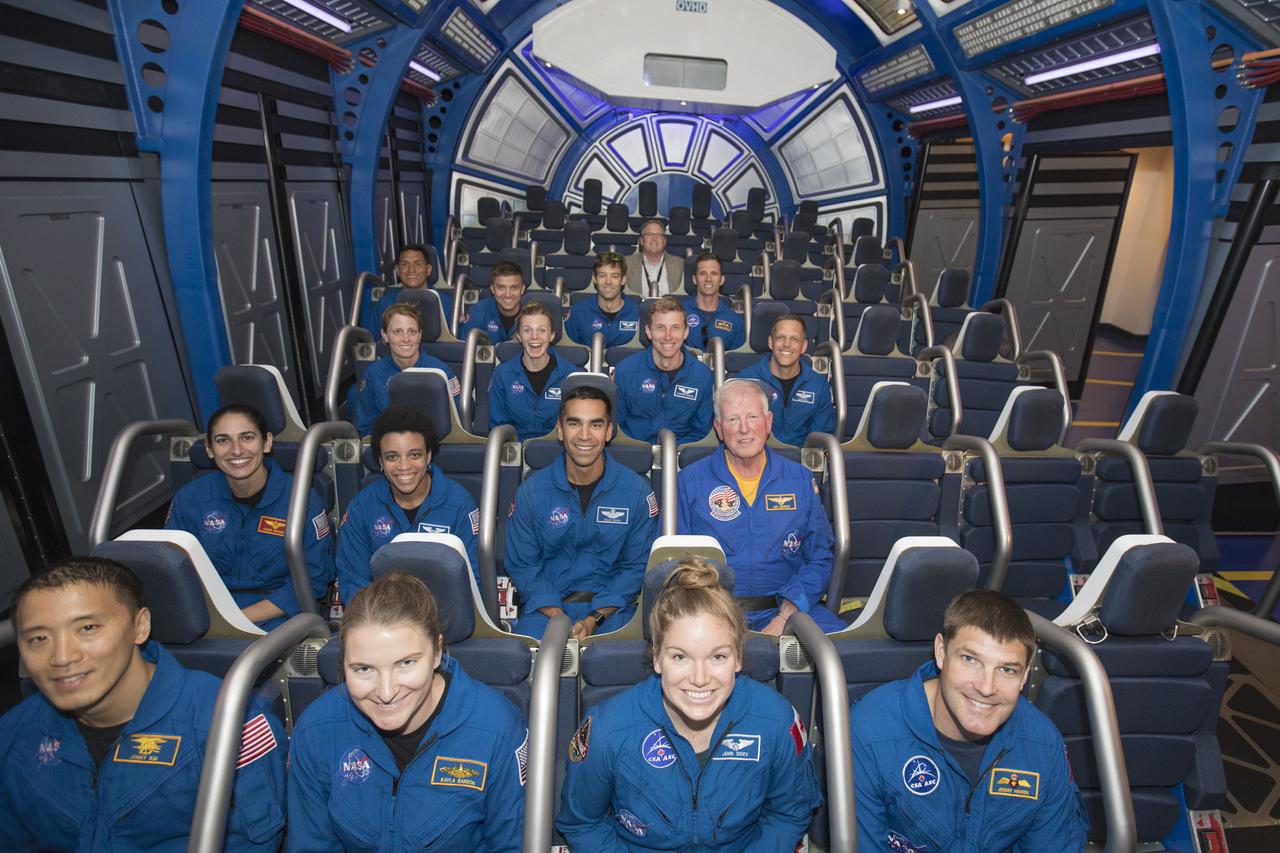
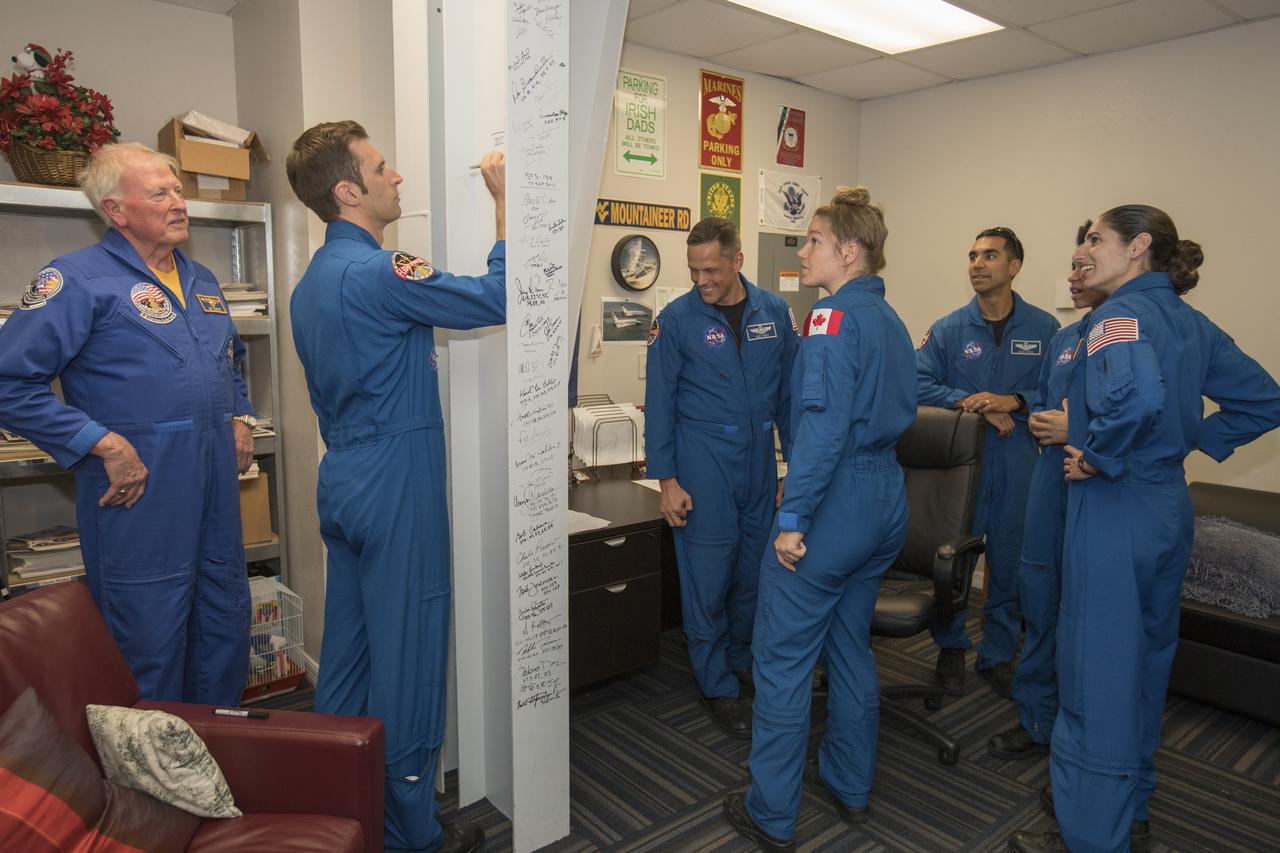
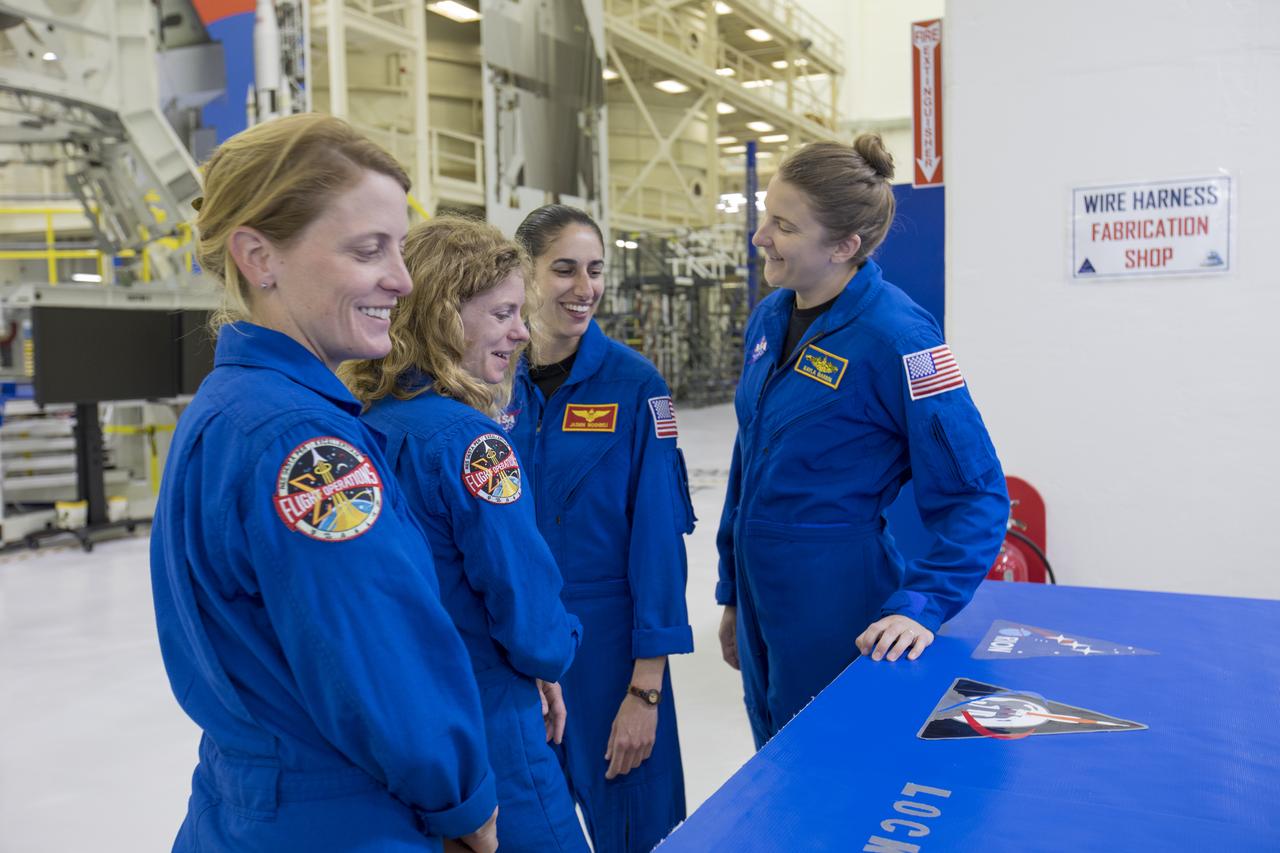
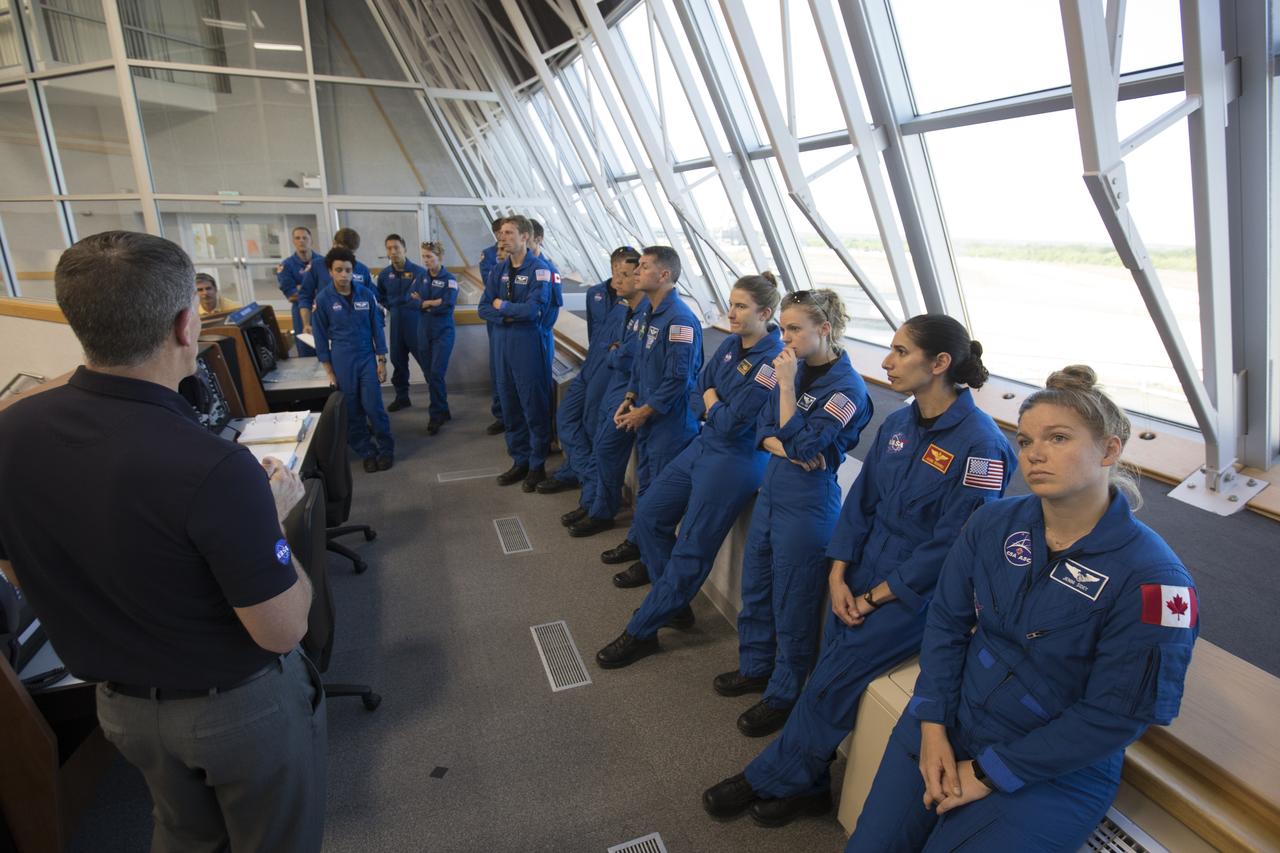
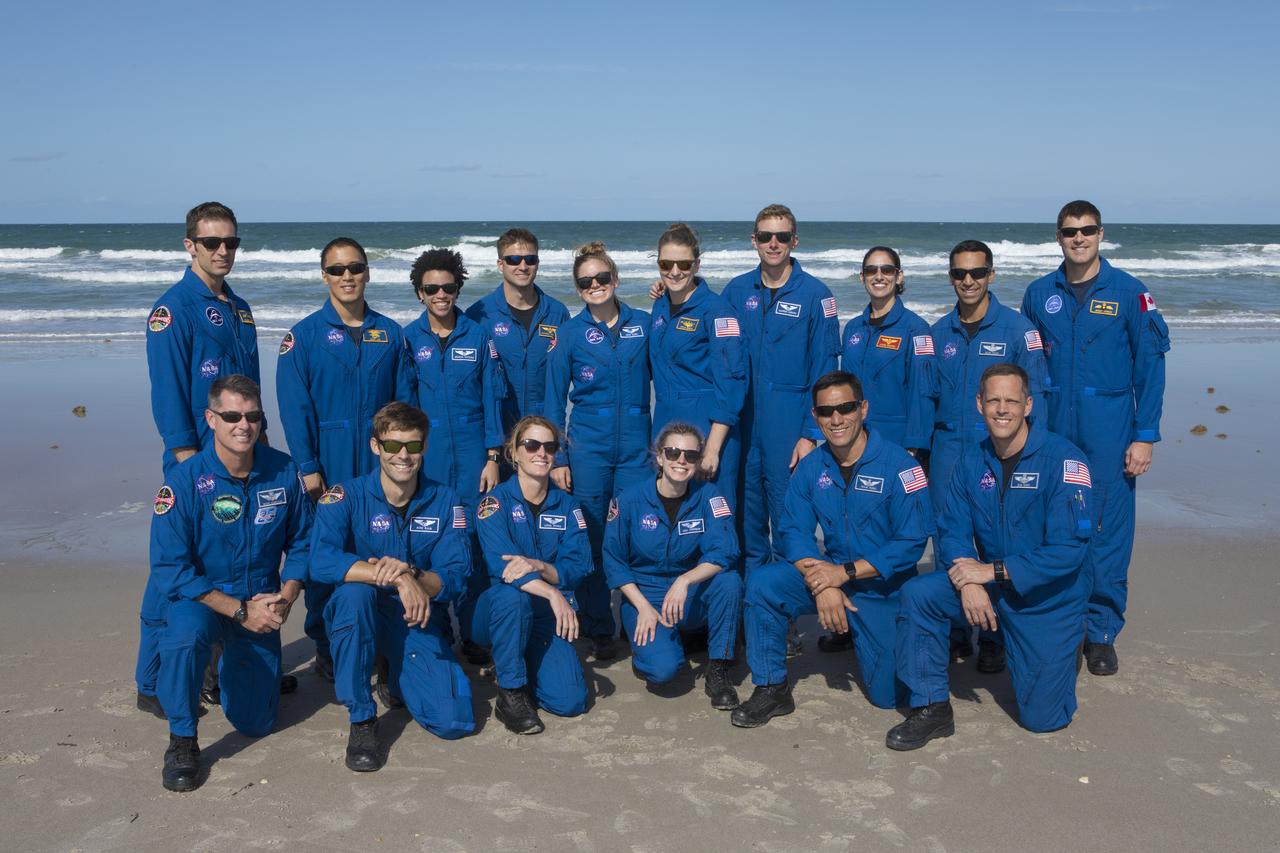
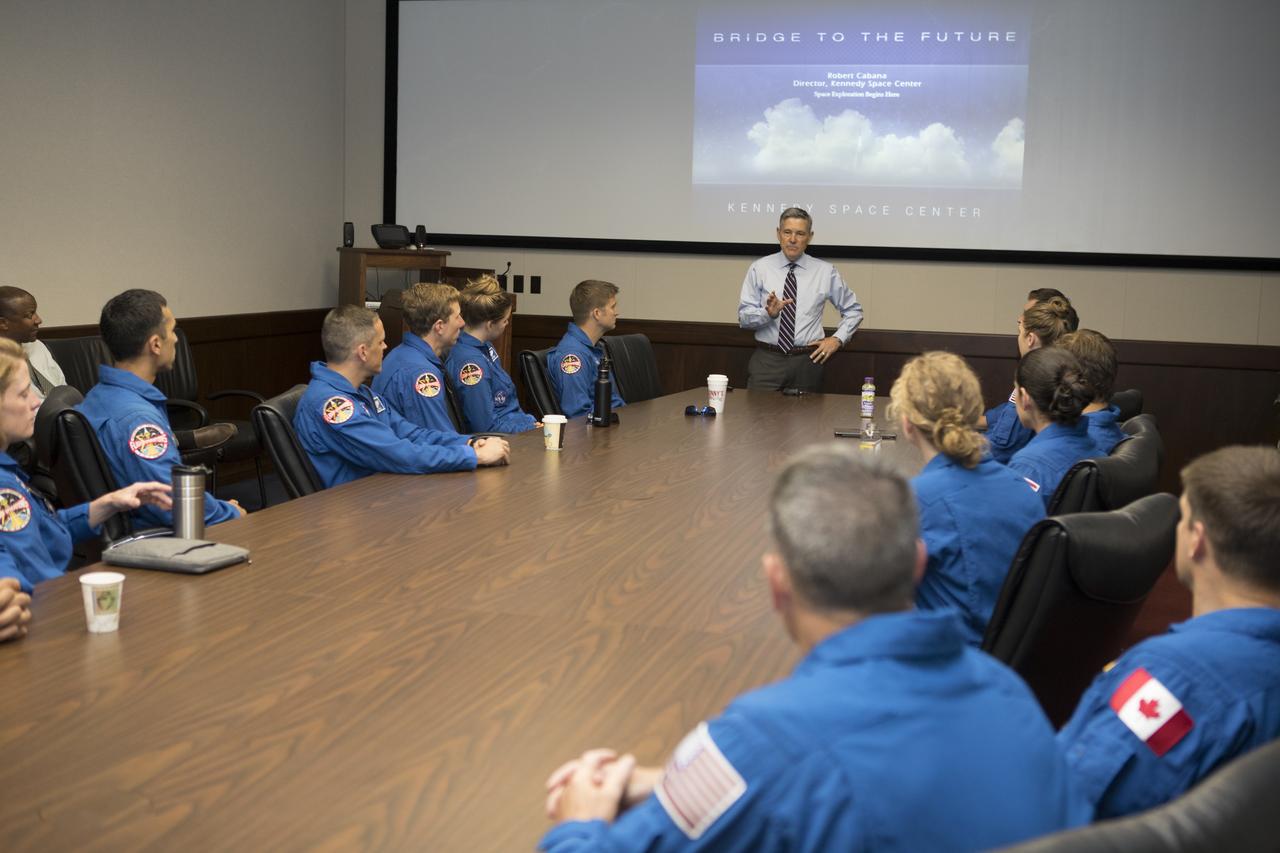
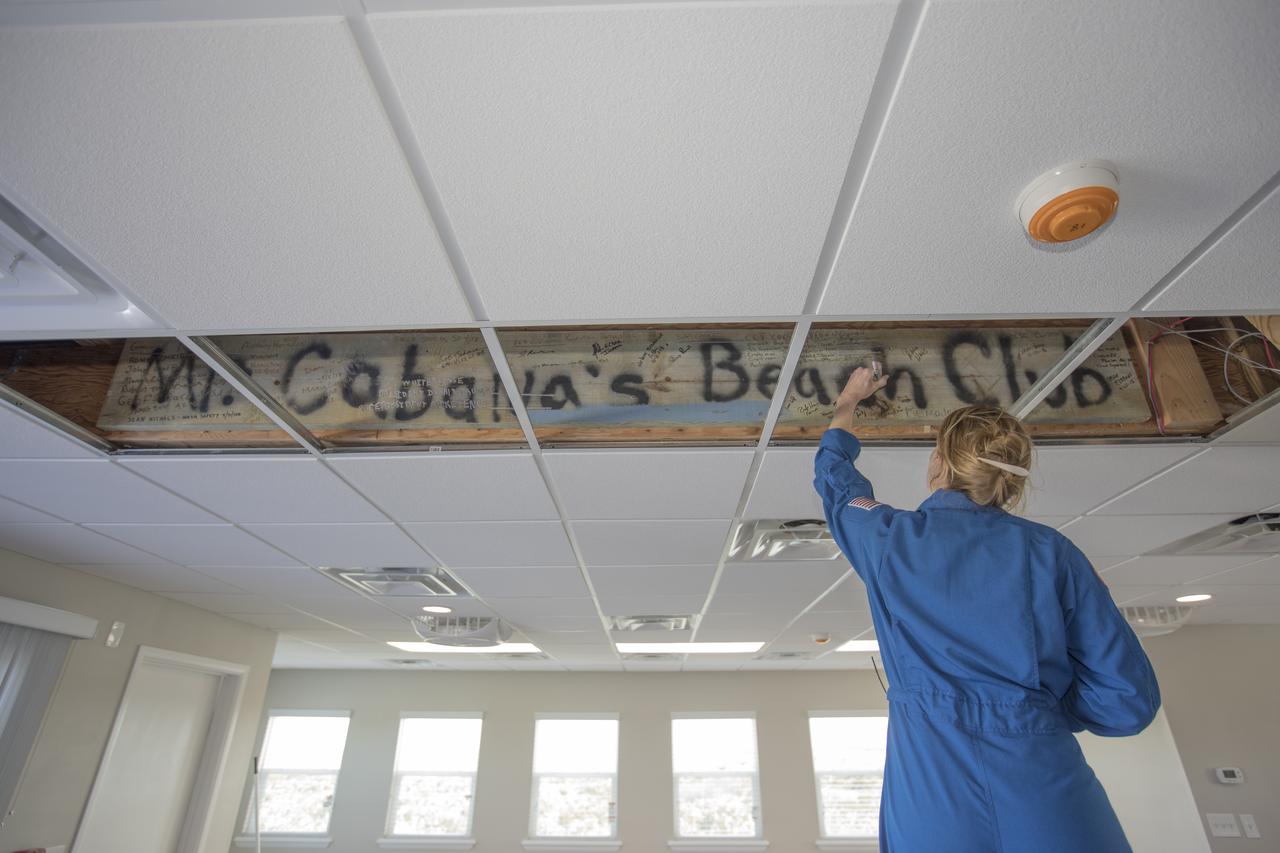
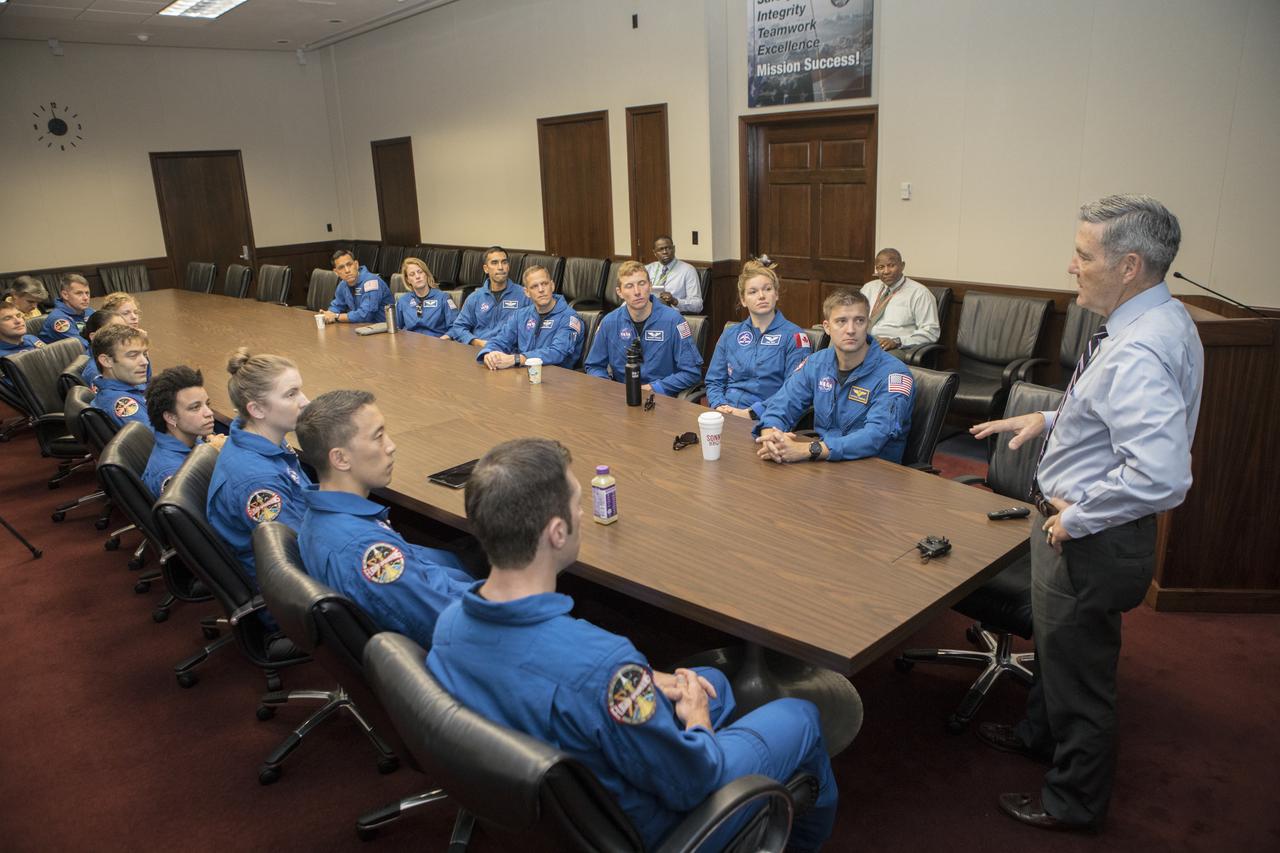
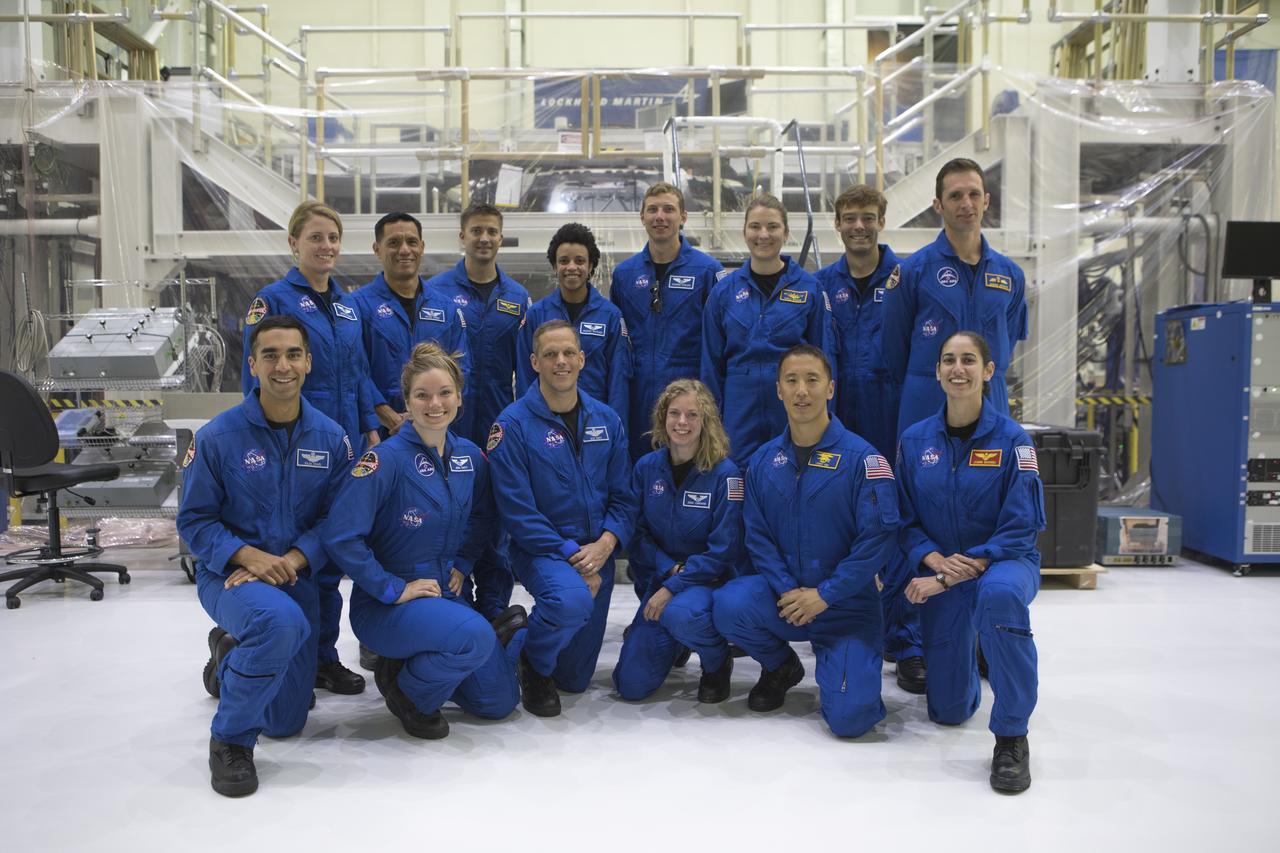
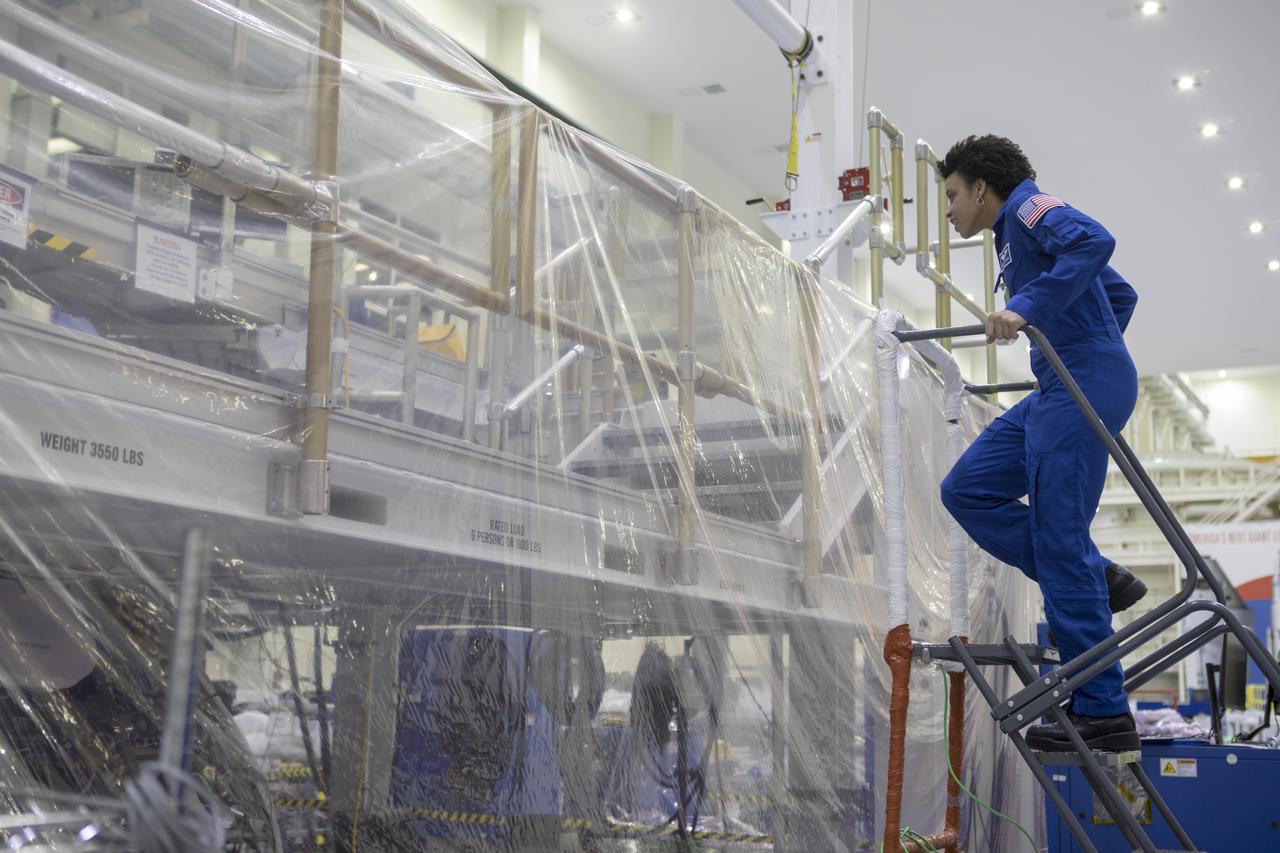
The 2017 class of astronaut candidates are at United Launch Alliance's Space Launch Complex 41 at Cape Canaveral Air Force Station (CCAFS) in Florida for a familiarization tour. They also toured facilities at Kennedy Space Center, including the Neil Armstrong Operations and Checkout Building high bay; the Launch Control Center, Launch Complex 39B, the Vehicle Assembly Building, Boeing's Commercial Crew and Cargo Facility, and SpaceX's Launch Complex 39A. The candidates will spend about two years getting to know the space station systems and learning how to spacewalk, speak Russian, control the International Space Station's robotic arm and fly T-38s, before they're eligible to be assigned to a mission.
2017 ASCAN Tour of KSC
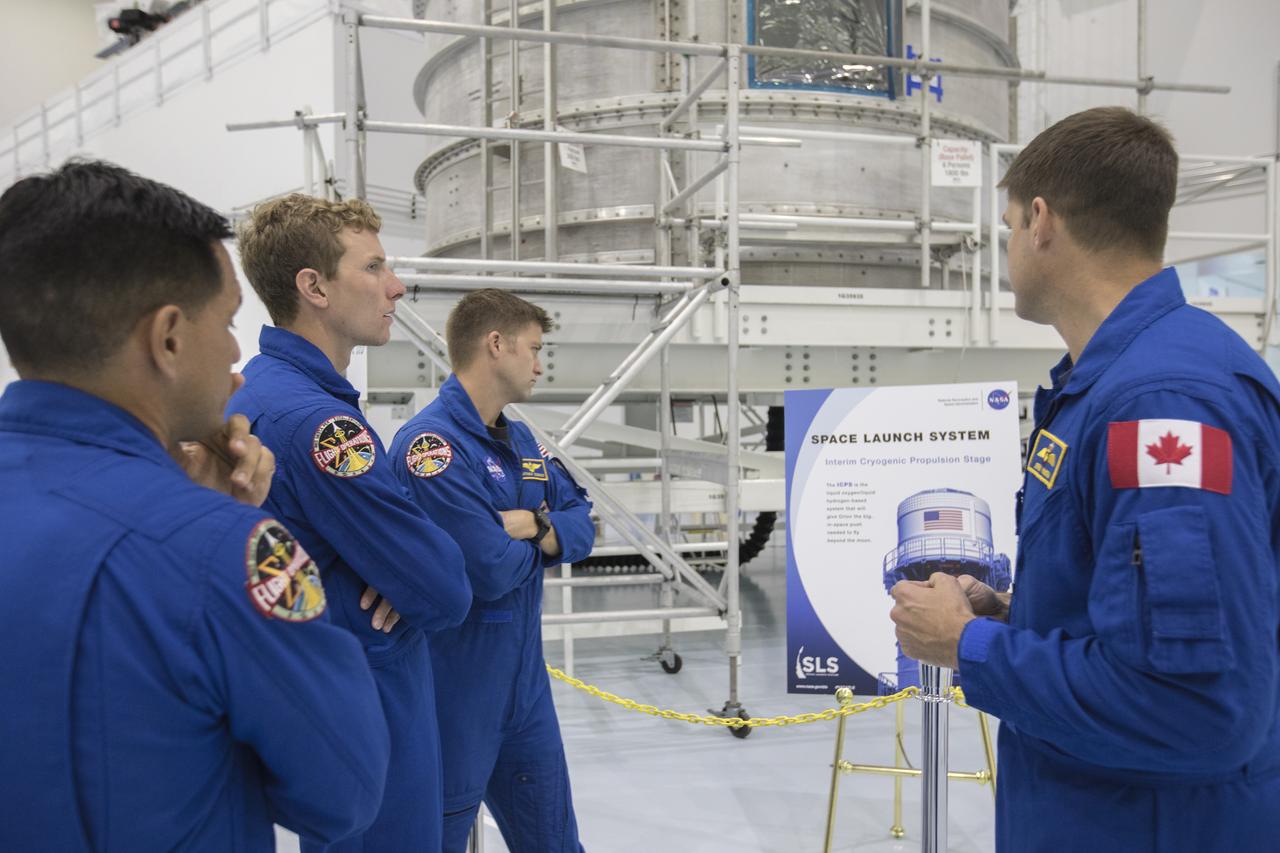
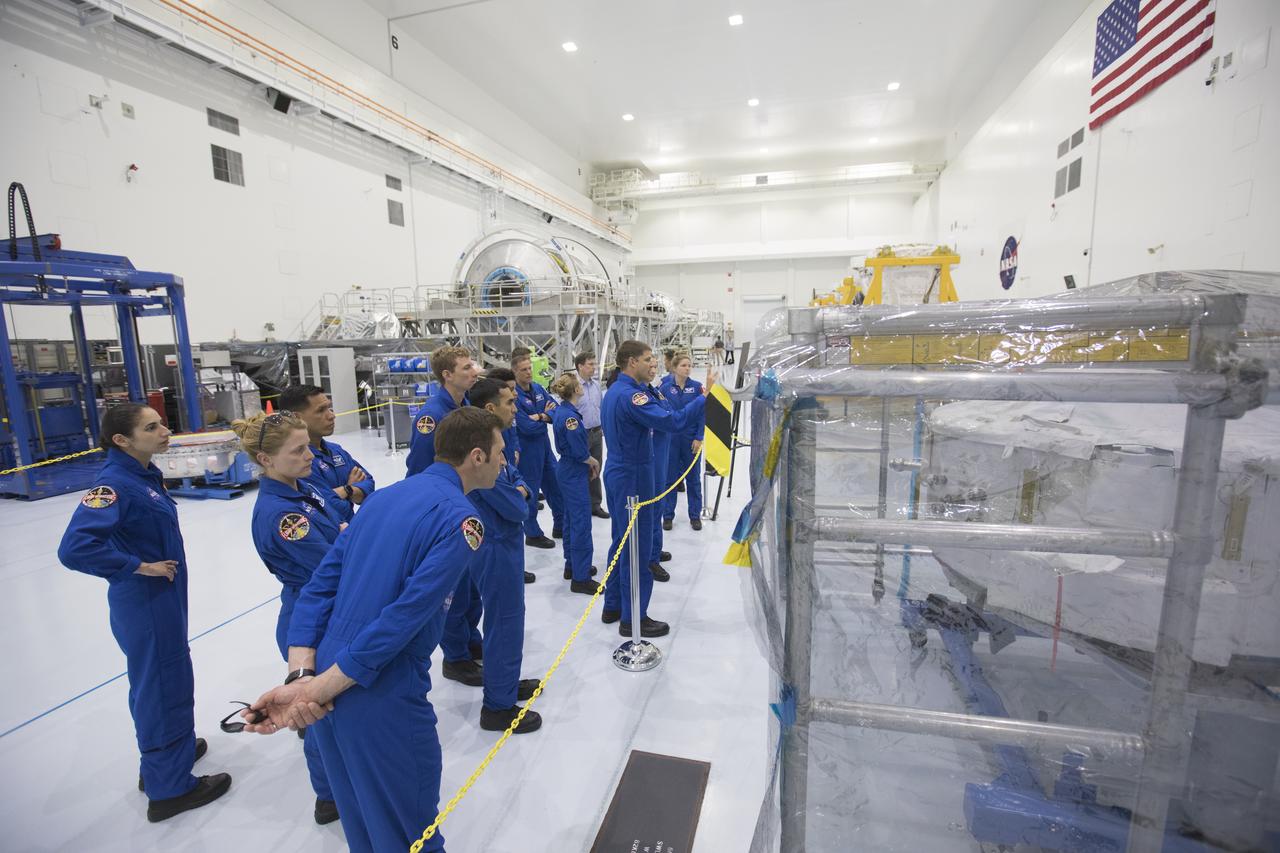
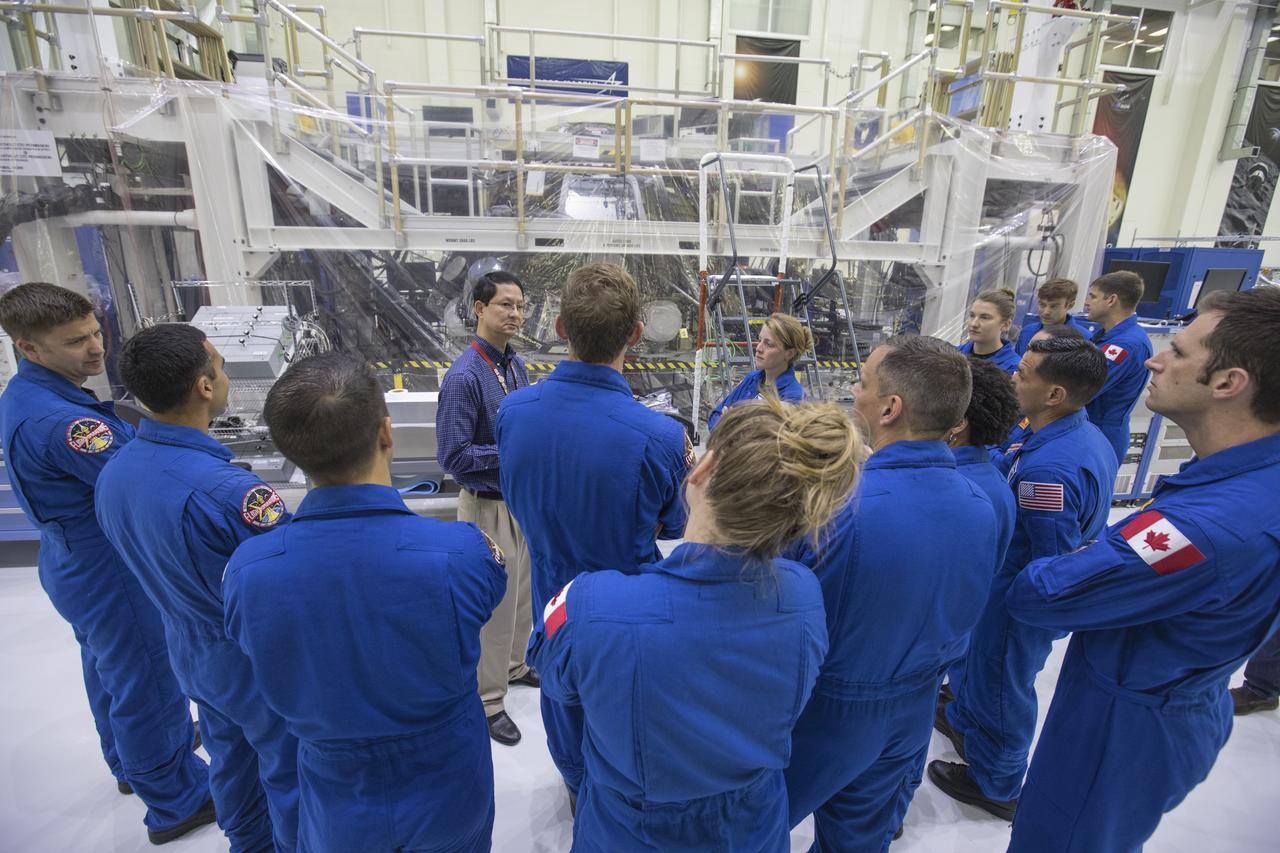
The 2017 class of astronaut candidates are inside the Space Station Processing Facility high bay during a familiarization tour of facilities at NASA's Kennedy Space Center in Florida. They are viewing the Interim Cryogenic Propulsion System for NASA's Space Launch System rocket. The candidates toured center facilities, including the Neil Armstrong Operations and Checkout Building high bay; the Launch Control Center, Launch Pad 39B, and the Vehicle Assembly Building. They also toured Boeing's Commercial Crew and Cargo Facility, United Launch Alliance's Space Launch Complex 41 at Cape Canaveral Air Force Station, and SpaceX's Launch Pad 39A at Kennedy. The candidates will spend about two years getting to know the space station systems and learning how to spacewalk, speak Russian, control the International Space Station's robotic arm and fly T-38s, before they're eligible to be assigned to a mission.
2017 ASCAN Tour of KSC
The 2017 class of astronaut candidates are inside the Space Station Processing Facility high bay during a familiarization tour of facilities at NASA's Kennedy Space Center in Florida. They are viewing the Interim Cryogenic Propulsion System for NASA's Space Launch System rocket. The candidates toured center facilities, including the Neil Armstrong Operations and Checkout Building high bay; the Launch Control Center, Launch Pad 39B, and the Vehicle Assembly Building. They also toured Boeing's Commercial Crew and Cargo Facility, United Launch Alliance's Space Launch Complex 41 at Cape Canaveral Air Force Station, and SpaceX's Launch Pad 39A at Kennedy. The candidates will spend about two years getting to know the space station systems and learning how to spacewalk, speak Russian, control the International Space Station's robotic arm and fly T-38s, before they're eligible to be assigned to a mission.
2017 ASCAN Tour of KSC
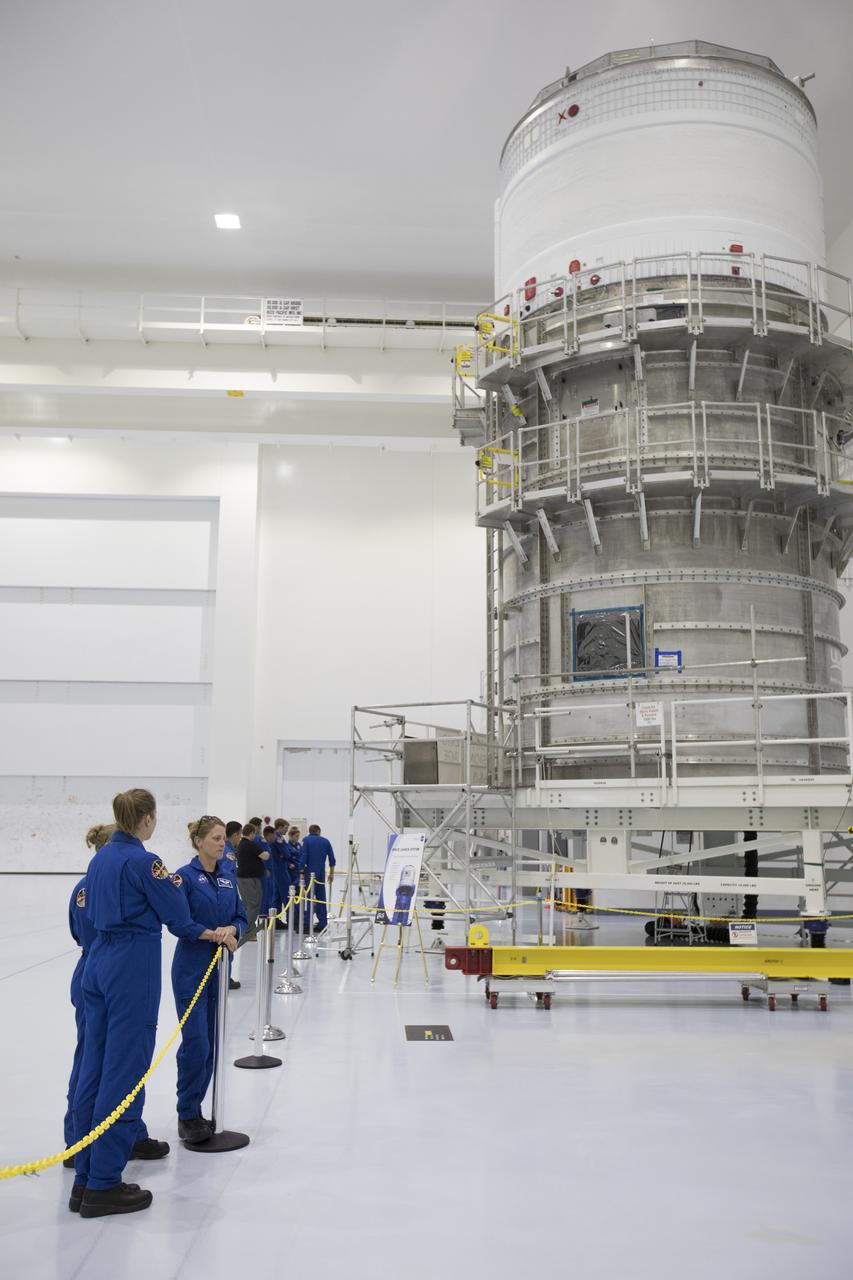
The 2017 class of astronaut candidates are inside the Space Station Processing Facility high bay during a familiarization tour of facilities at NASA's Kennedy Space Center in Florida. Behind them is the Interim Cryogenic Propulsion System for NASA's Space Launch System rocket. The candidates toured center facilities, including the Neil Armstrong Operations and Checkout Building high bay; the Launch Control Center, Launch Pad 39B, and the Vehicle Assembly Building. They also toured Boeing's Commercial Crew and Cargo Facility, United Launch Alliance's Space Launch Complex 41 at Cape Canaveral Air Force Station, and SpaceX's Launch Pad 39A at Kennedy. The candidates will spend about two years getting to know the space station systems and learning how to spacewalk, speak Russian, control the International Space Station's robotic arm and fly T-38s, before they're eligible to be assigned to a mission.
2017 ASCAN Tour of KSC
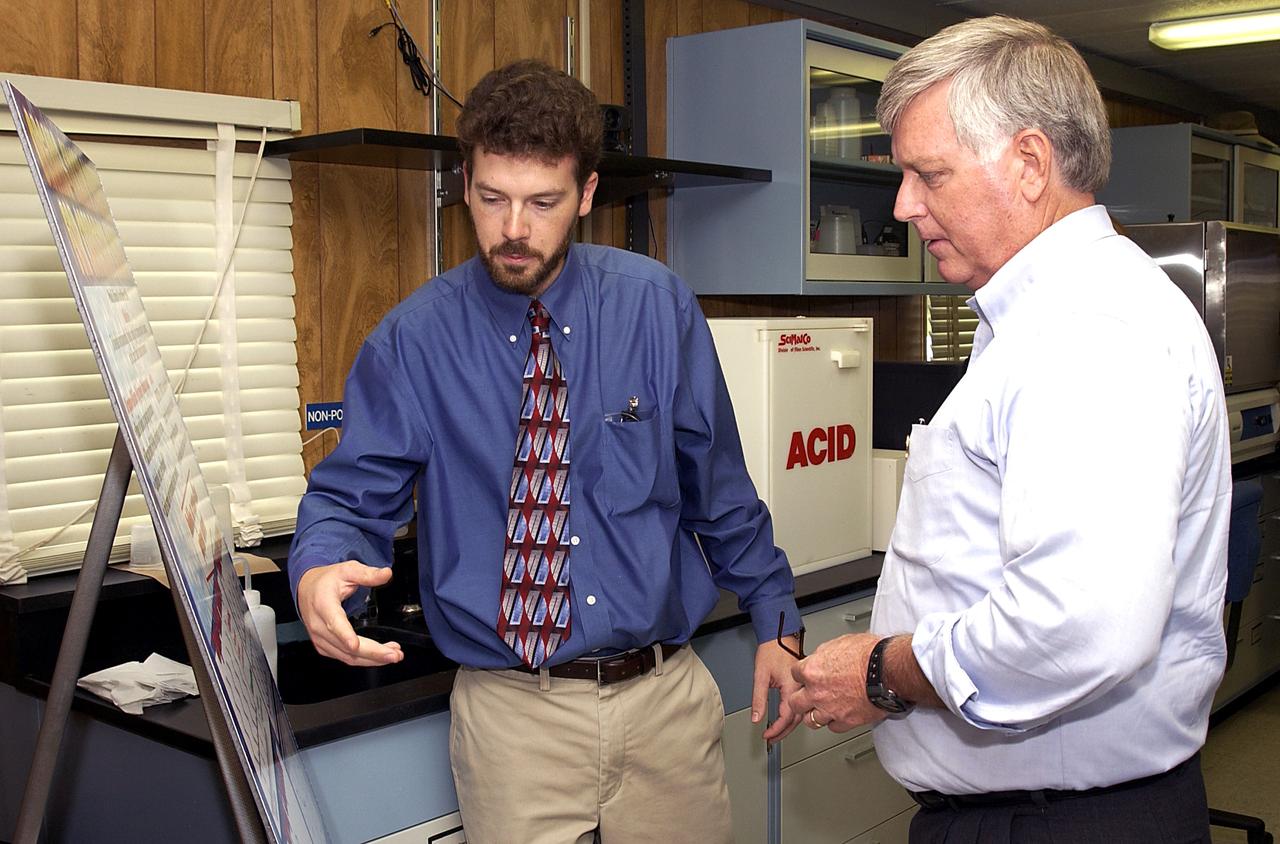
KENNEDY SPACE CENTER, FLA. -   Dr. Paul Hintze (left) explains to Center Director Jim Kennedy a project he is working at the KSC Beach Corrosion Test Site. Hitze is doing post-graduate work for the National Research Council.  The test facility site was established in the 1960s and has provided more than 30 years of historical information on the long-term performance of many materials in use at KSC and other locations around the world. Located 100 feet from the Atlantic Ocean approximately 1 mile south of the Space Shuttle launch sites, the test facility includes an atmospheric exposure site, a flowing seawater exposure site, and an on-site electrochemistry laboratory and monitoring station. The beach laboratory is used to conduct real-time corrosion experiments and provides for the remote monitoring of surrounding weather conditions. The newly added flowing seawater immersion facility provides for the immersion testing of materials and devices under controlled conditions.
KENNEDY SPACE CENTER, FLA. - Dr. Paul Hintze (left) explains to Center Director Jim Kennedy a project he is working at the KSC Beach Corrosion Test Site. Hitze is doing post-graduate work for the National Research Council. The test facility site was established in the 1960s and has provided more than 30 years of historical information on the long-term performance of many materials in use at KSC and other locations around the world. Located 100 feet from the Atlantic Ocean approximately 1 mile south of the Space Shuttle launch sites, the test facility includes an atmospheric exposure site, a flowing seawater exposure site, and an on-site electrochemistry laboratory and monitoring station. The beach laboratory is used to conduct real-time corrosion experiments and provides for the remote monitoring of surrounding weather conditions. The newly added flowing seawater immersion facility provides for the immersion testing of materials and devices under controlled conditions.
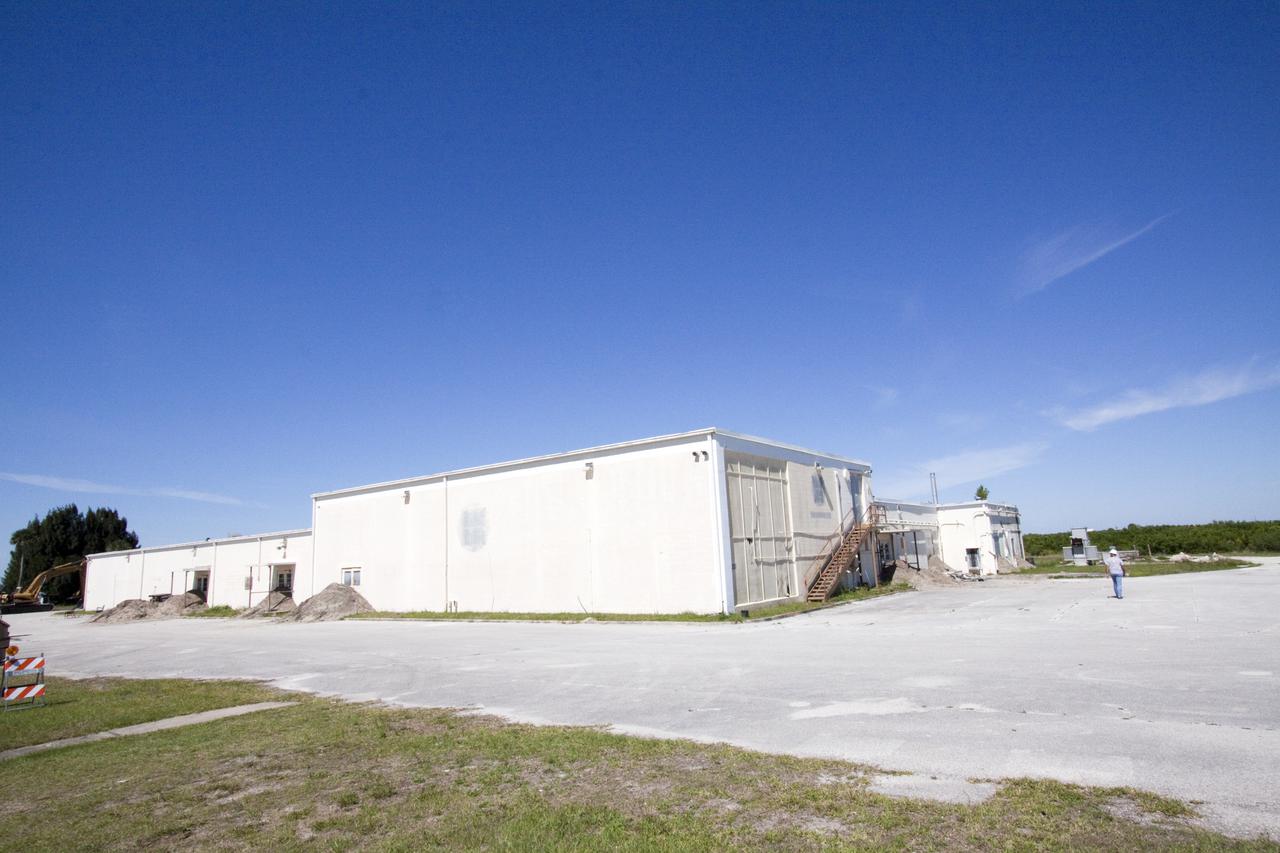
CAPE CANAVERAL, Fla. – At Cape Canaveral Air Force Station in Florida, preparations are under way to tear down the Mercury Mission Control Center.  The original building, constructed between 1956 and 1958, was last modified in 1963.  The center succumbed to the two worst enemies of structures along the space coast - time and salt air - necessitating that it be demolished as a safety measure.  The facility served as mission control during all the Project Mercury missions, as well as the first three flights of the Gemini Program. The center housed the flight controllers whose duty was to take over flight control after liftoff and follow it through until splashdown. Additionally, it supported vehicle checkout, spacecraft tracking, and astronaut training. With Gemini IV, mission control moved to Houston, and the facility took on the roles of launch control and tracking station. In 1999, much of the equipment and furnishings from the flight control area was moved to Kennedy Space Center's Visitor Complex.  A re-created mission control room currently is on display in the complex's Dr. Kurt H. Debus Conference Facility.  Speegle II of Cocoa, Fla., was awarded the contract for the deconstruction project.  Frank-Lin Excavating is performing the demolition for Sunrise Systems of Brevard, a subcontractor to Speegle II.  Photo credit: NASA_Jack Pfaller
KSC-2010-3102
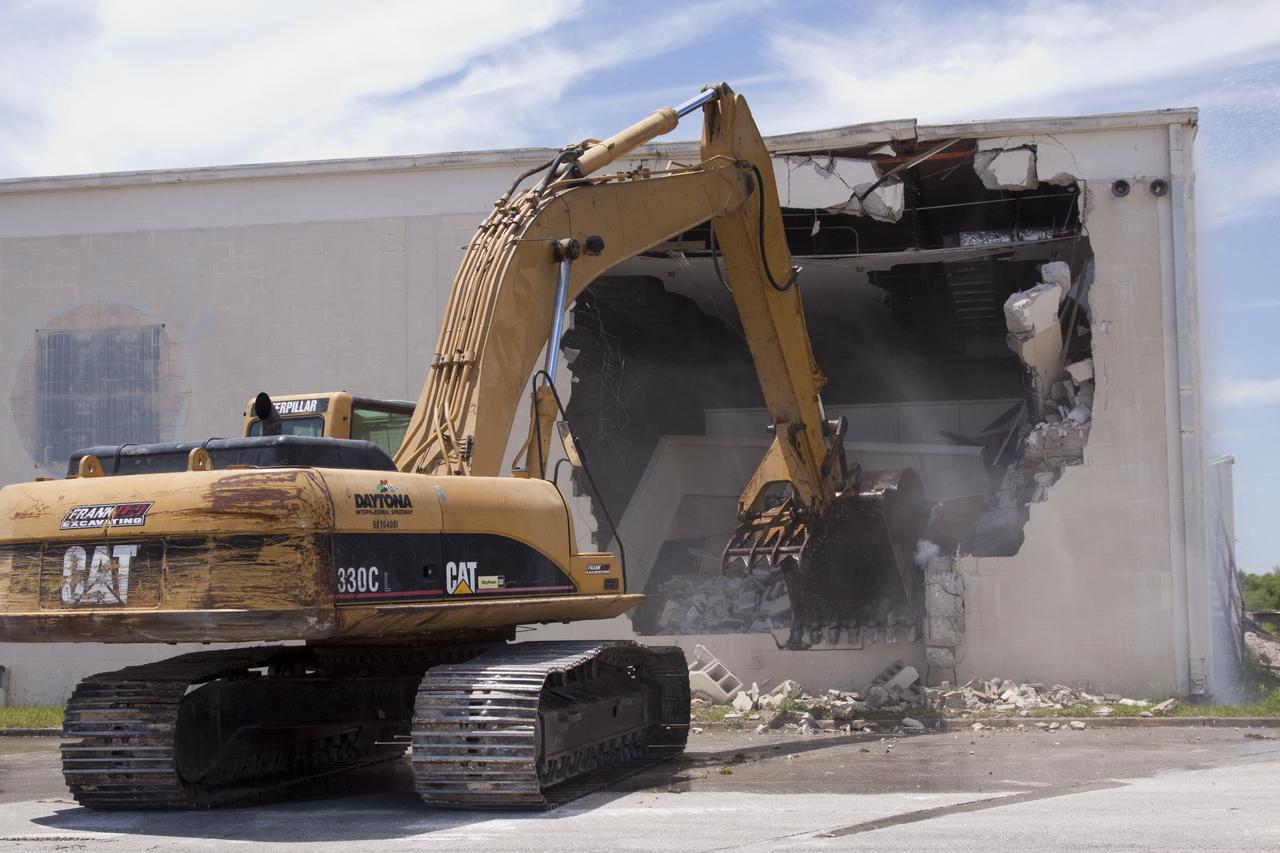
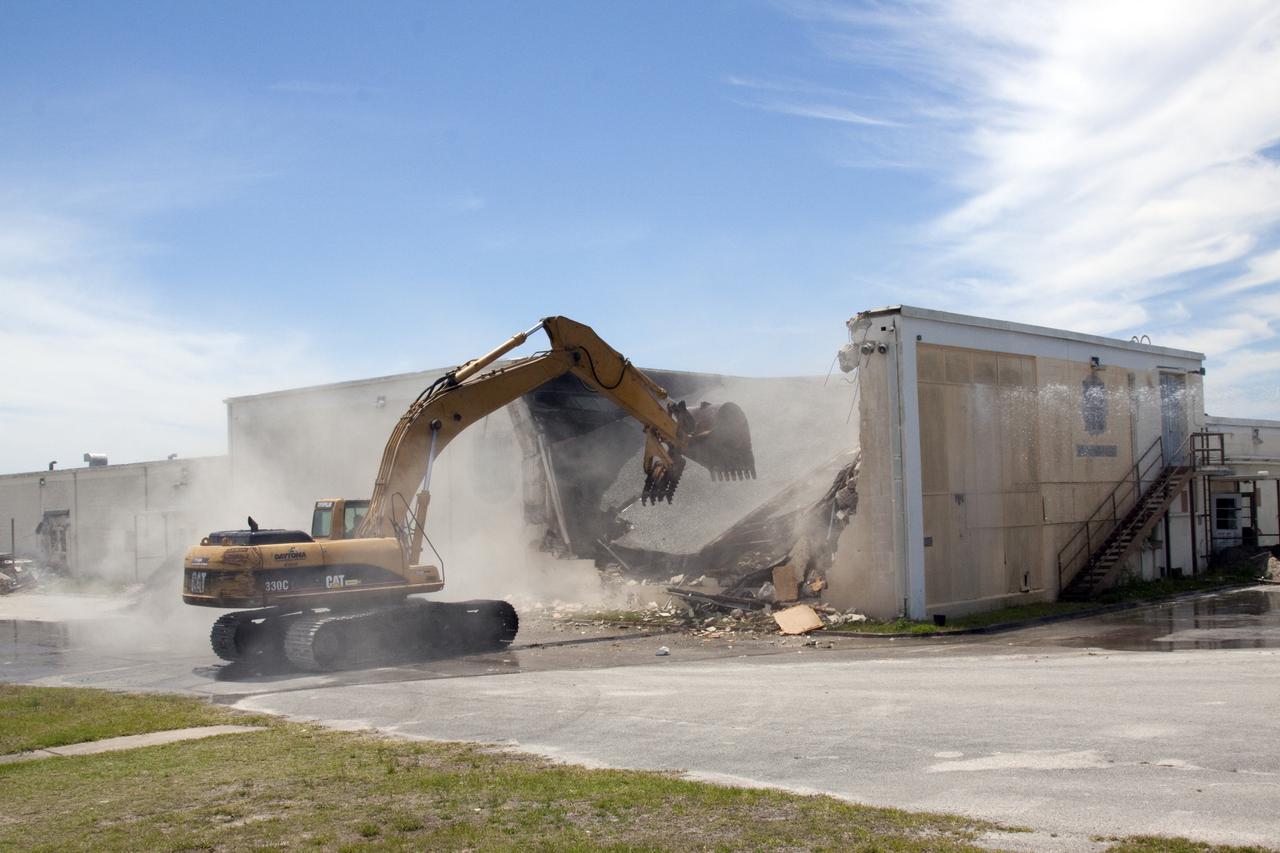
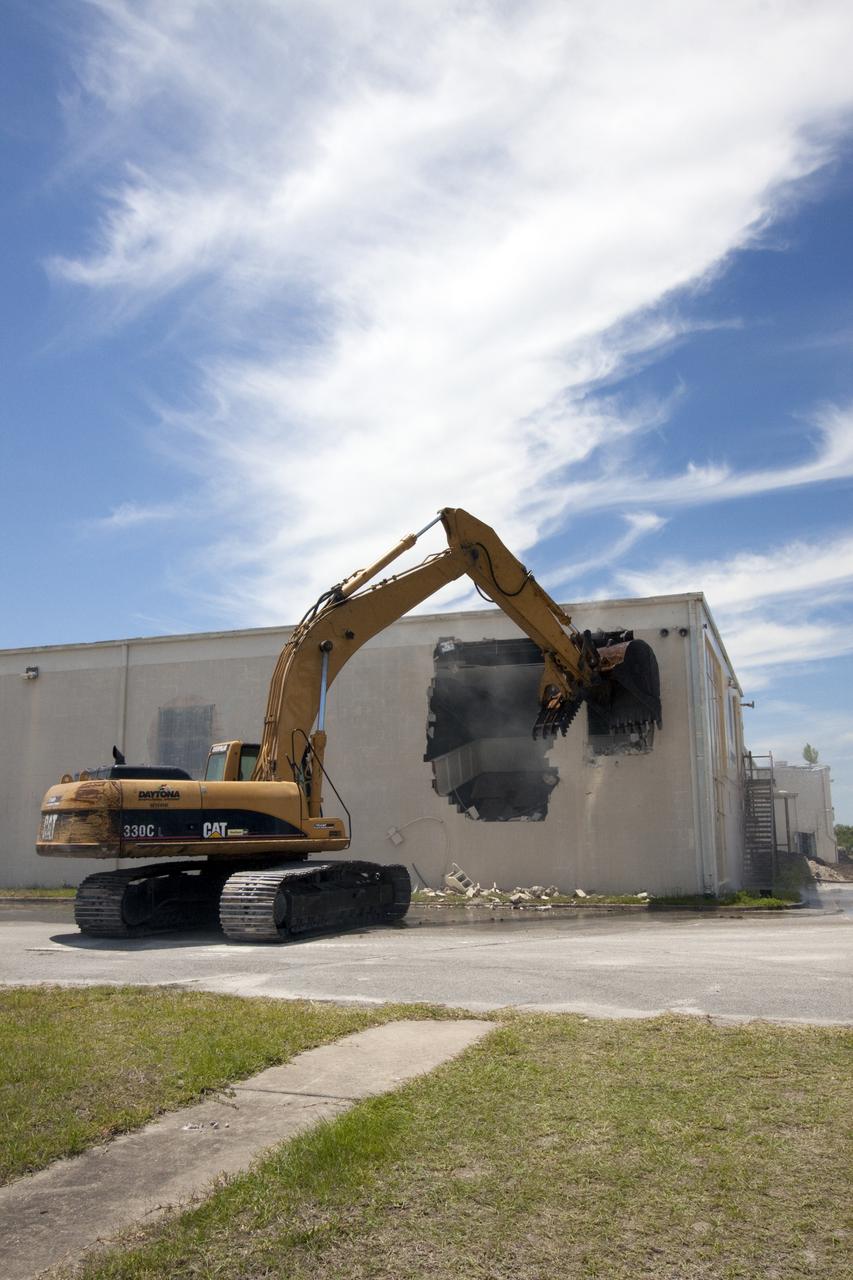
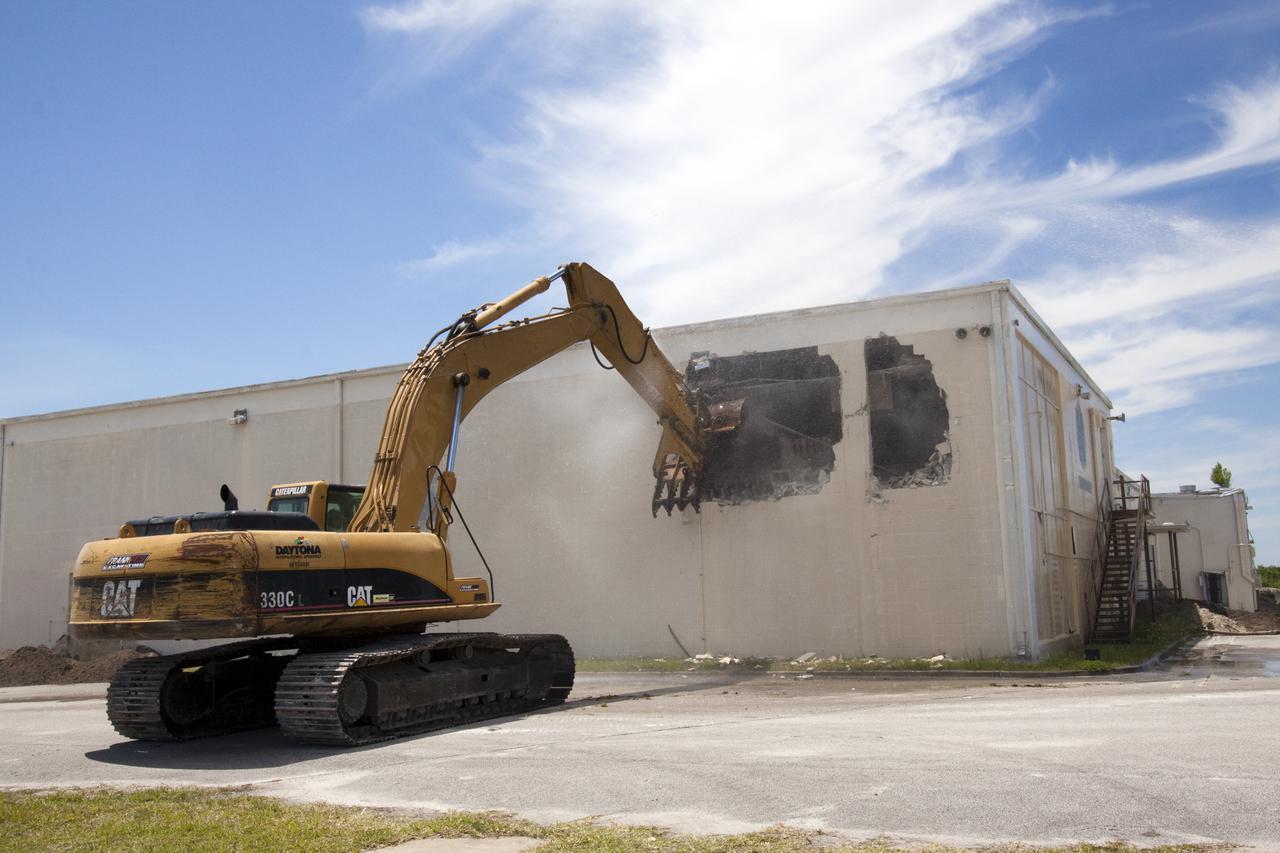
CAPE CANAVERAL, Fla. – At Cape Canaveral Air Force Station in Florida, a Caterpillar 330 track-hoe punches a hole in the wall of the Mercury Mission Control Center.  The original building, constructed between 1956 and 1958, was last modified in 1963.  The center succumbed to the two worst enemies of structures along the space coast - time and salt air - necessitating that it be demolished as a safety measure.  The facility served as mission control during all the Project Mercury missions, as well as the first three flights of the Gemini Program. The center housed the flight controllers whose duty was to take over flight control after liftoff and follow it through until splashdown. Additionally, it supported vehicle checkout, spacecraft tracking, and astronaut training. With Gemini IV, mission control moved to Houston, and the facility took on the roles of launch control and tracking station. In 1999, much of the equipment and furnishings from the flight control area was moved to Kennedy Space Center's Visitor Complex.  A re-created mission control room currently is on display in the complex's Dr. Kurt H. Debus Conference Facility.  Speegle II of Cocoa, Fla., was awarded the contract for the deconstruction project.  Frank-Lin Excavating is performing the demolition for Sunrise Systems of Brevard, a subcontractor to Speegle II.  Photo credit: NASA_Jack Pfaller
KSC-2010-3103
CAPE CANAVERAL, Fla. – At Cape Canaveral Air Force Station in Florida, a Caterpillar 330 track-hoe rips through the wall of the Mercury Mission Control Center.  The original building, constructed between 1956 and 1958, was last modified in 1963.  The center succumbed to the two worst enemies of structures along the space coast - time and salt air - necessitating that it be demolished as a safety measure.  The facility served as mission control during all the Project Mercury missions, as well as the first three flights of the Gemini Program. The center housed the flight controllers whose duty was to take over flight control after liftoff and follow it through until splashdown. Additionally, it supported vehicle checkout, spacecraft tracking, and astronaut training. With Gemini IV, mission control moved to Houston, and the facility took on the roles of launch control and tracking station. In 1999, much of the equipment and furnishings from the flight control area was moved to Kennedy Space Center's Visitor Complex.  A re-created mission control room currently is on display in the complex's Dr. Kurt H. Debus Conference Facility.  Speegle II of Cocoa, Fla., was awarded the contract for the deconstruction project.  Frank-Lin Excavating is performing the demolition for Sunrise Systems of Brevard, a subcontractor to Speegle II.  Photo credit: NASA_Jack Pfaller
KSC-2010-3104
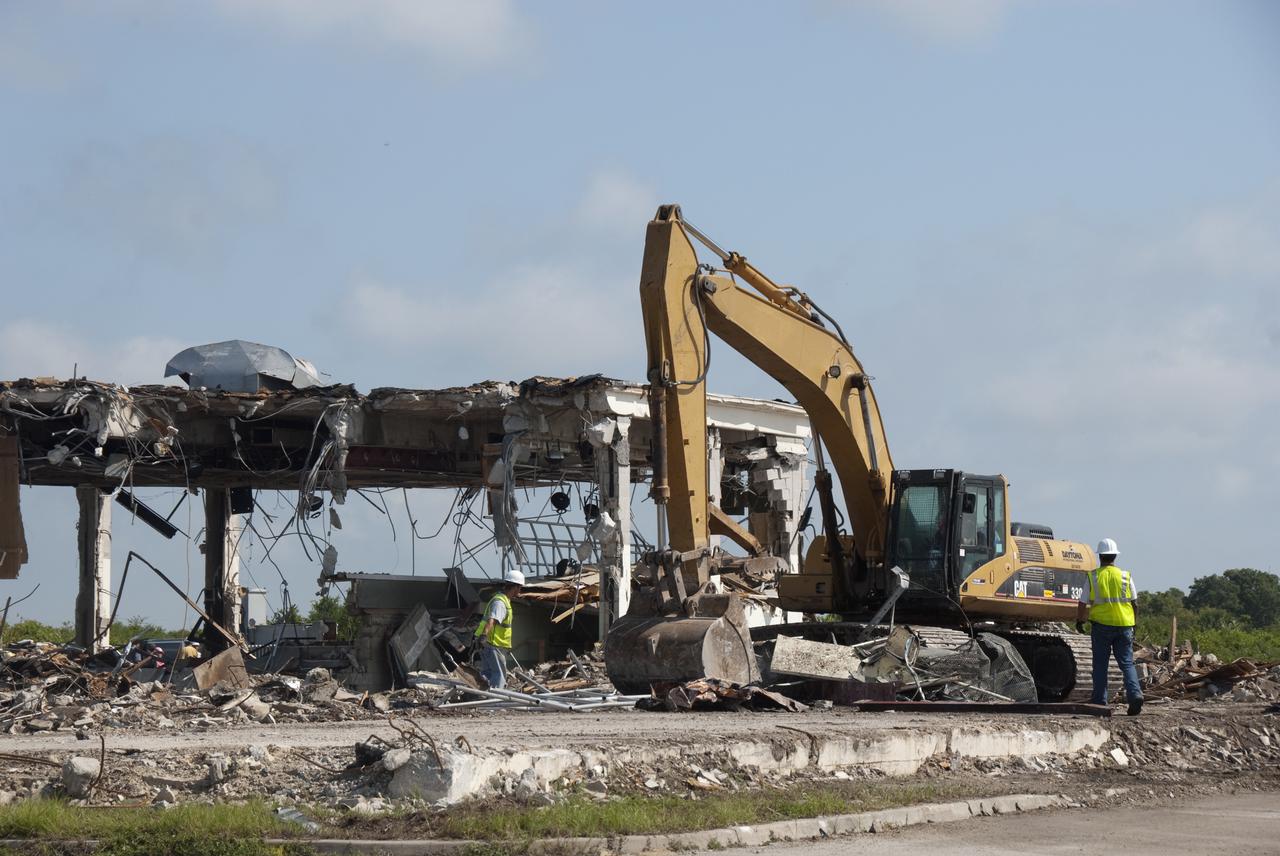
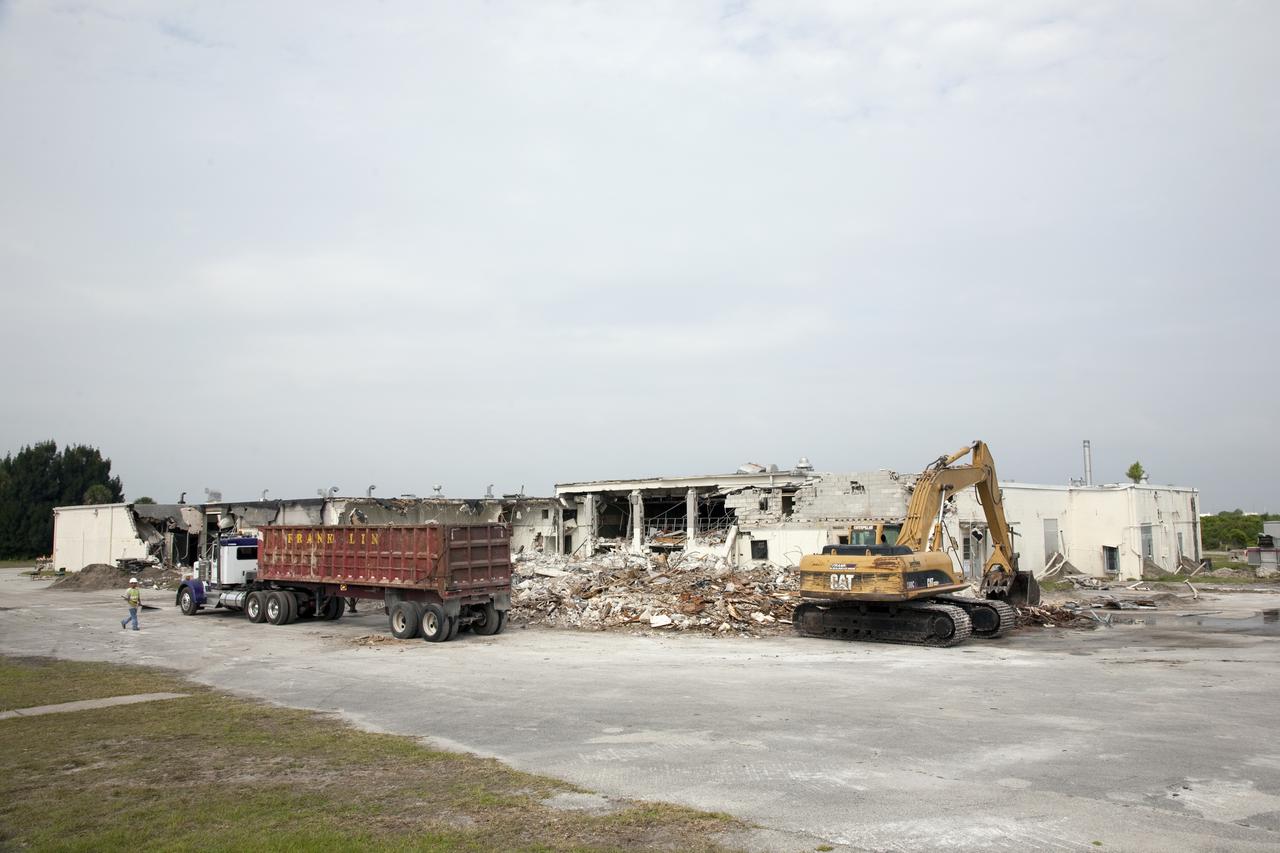
CAPE CANAVERAL, Fla. – At Cape Canaveral Air Force Station in Florida, a Caterpillar 330 track-hoe, at right, cleans up the rubble it has made of the Mercury Mission Control Center during its deconstruction.  The original building, constructed between 1956 and 1958, was last modified in 1963.  The center succumbed to the two worst enemies of structures along the space coast - time and salt air - necessitating that it be demolished as a safety measure.  The facility served as mission control during all the Project Mercury missions, as well as the first three flights of the Gemini Program. The center housed the flight controllers whose duty was to take over flight control after liftoff and follow it through until splashdown. Additionally, it supported vehicle checkout, spacecraft tracking, and astronaut training. With Gemini IV, mission control moved to Houston, and the facility took on the roles of launch control and tracking station. In 1999, much of the equipment and furnishings from the flight control area was moved to Kennedy Space Center's Visitor Complex.  A re-created mission control room currently is on display in the complex's Dr. Kurt H. Debus Conference Facility.  Speegle II of Cocoa, Fla., was awarded the contract for the deconstruction project.  Frank-Lin Excavating is performing the demolition for Sunrise Systems of Brevard, a subcontractor to Speegle II.  Photo credit: NASA_Dimitri Gerondidakis
KSC-2010-3151
CAPE CANAVERAL, Fla. – At Cape Canaveral Air Force Station in Florida, a Caterpillar 330 track-hoe knocks down the Mercury Mission Control Center.  The original building, constructed between 1956 and 1958, was last modified in 1963.  The center succumbed to the two worst enemies of structures along the space coast - time and salt air - necessitating that it be demolished as a safety measure.  The facility served as mission control during all the Project Mercury missions, as well as the first three flights of the Gemini Program. The center housed the flight controllers whose duty was to take over flight control after liftoff and follow it through until splashdown. Additionally, it supported vehicle checkout, spacecraft tracking, and astronaut training. With Gemini IV, mission control moved to Houston, and the facility took on the roles of launch control and tracking station. In 1999, much of the equipment and furnishings from the flight control area was moved to Kennedy Space Center's Visitor Complex.  A re-created mission control room currently is on display in the complex's Dr. Kurt H. Debus Conference Facility.  Speegle II of Cocoa, Fla., was awarded the contract for the deconstruction project.  Frank-Lin Excavating is performing the demolition for Sunrise Systems of Brevard, a subcontractor to Speegle II.  Photo credit: NASA_Jack Pfaller
KSC-2010-3105
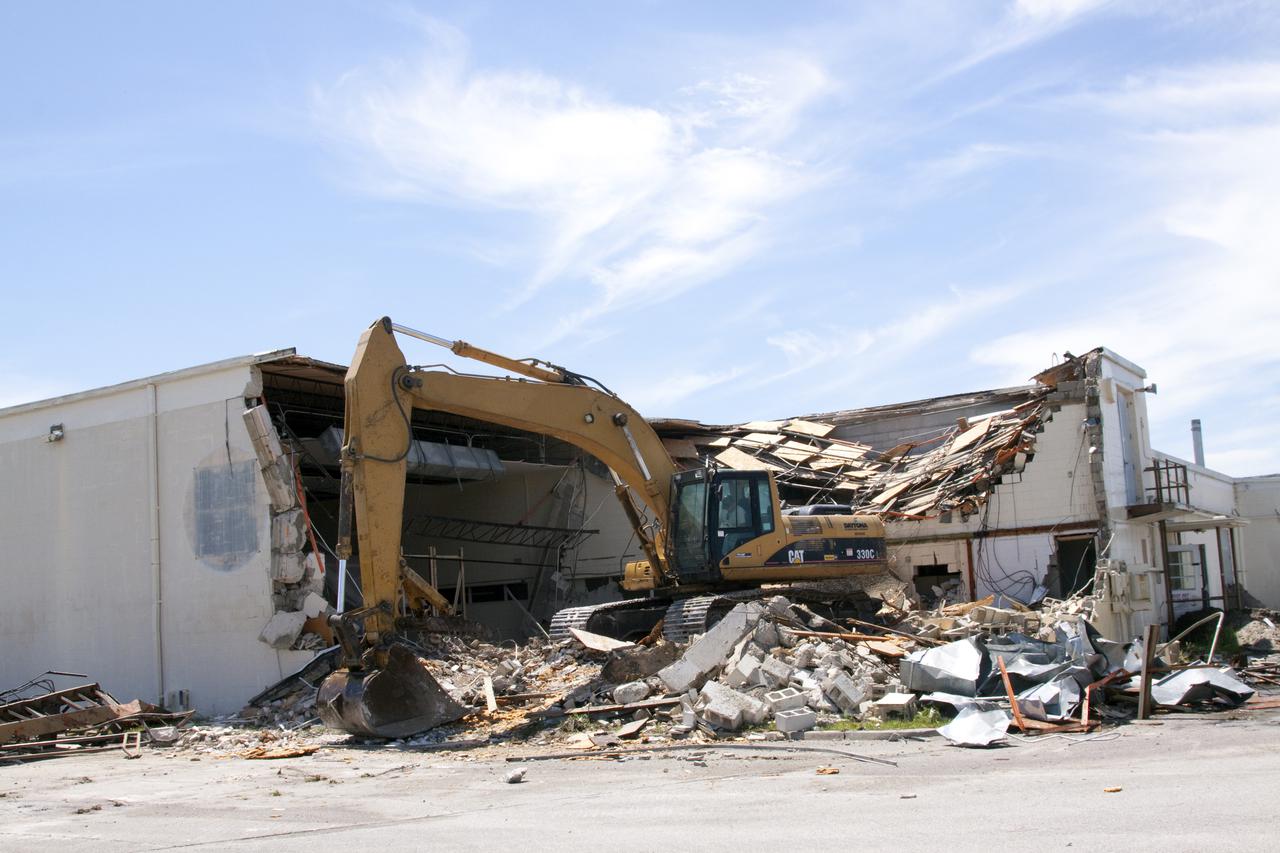
CAPE CANAVERAL, Fla. – At Cape Canaveral Air Force Station in Florida, the walls of the Mercury Mission Control Center tumble down under the careful guidance of a Caterpillar 330 track-hoe.  The original building, constructed between 1956 and 1958, was last modified in 1963.  The center succumbed to the two worst enemies of structures along the space coast - time and salt air - necessitating that it be demolished as a safety measure.  The facility served as mission control during all the Project Mercury missions, as well as the first three flights of the Gemini Program. The center housed the flight controllers whose duty was to take over flight control after liftoff and follow it through until splashdown. Additionally, it supported vehicle checkout, spacecraft tracking, and astronaut training. With Gemini IV, mission control moved to Houston, and the facility took on the roles of launch control and tracking station. In 1999, much of the equipment and furnishings from the flight control area was moved to Kennedy Space Center's Visitor Complex.  A re-created mission control room currently is on display in the complex's Dr. Kurt H. Debus Conference Facility.  Speegle II of Cocoa, Fla., was awarded the contract for the deconstruction project.  Frank-Lin Excavating is performing the demolition for Sunrise Systems of Brevard, a subcontractor to Speegle II.  Photo credit: NASA_Jack Pfaller
KSC-2010-3109
CAPE CANAVERAL, Fla. – At Cape Canaveral Air Force Station in Florida, workers take time out from operation of a Caterpillar 330 track-hoe and the demolition of NASA's Mercury Mission Control Center to determine their next steps.  The deconstruction project began on April 28. The original building, constructed between 1956 and 1958, was last modified in 1963.  The center succumbed to the two worst enemies of structures along the space coast - time and salt air - necessitating that it be demolished as a safety measure.  The facility served as mission control during all the Project Mercury missions, as well as the first three flights of the Gemini Program. The center housed the flight controllers whose duty was to take over flight control after liftoff and follow it through until splashdown. Additionally, it supported vehicle checkout, spacecraft tracking, and astronaut training. With Gemini IV, mission control moved to Houston, and the facility took on the roles of launch control and tracking station. In 1999, much of the equipment and furnishings from the flight control area was moved to Kennedy Space Center's Visitor Complex.  A re-created mission control room currently is on display in the complex's Dr. Kurt H. Debus Conference Facility.  Speegle II of Cocoa, Fla., was awarded the contract for the deconstruction project.  Frank-Lin Excavating is performing the demolition for Sunrise Systems of Brevard, a subcontractor to Speegle II.  Photo credit: NASA_Jack Pfaller
KSC-2010-3462
CAPE CANAVERAL, Fla. – At Cape Canaveral Air Force Station in Florida, demolition of the Mercury Mission Control Center has begun.  The original building, constructed between 1956 and 1958, was last modified in 1963.  The center succumbed to the two worst enemies of structures along the space coast - time and salt air - necessitating that it be demolished as a safety measure.  The facility served as mission control during all the Project Mercury missions, as well as the first three flights of the Gemini Program. The center housed the flight controllers whose duty was to take over flight control after liftoff and follow it through until splashdown. Additionally, it supported vehicle checkout, spacecraft tracking, and astronaut training. With Gemini IV, mission control moved to Houston, and the facility took on the roles of launch control and tracking station. In 1999, much of the equipment and furnishings from the flight control area was moved to Kennedy Space Center's Visitor Complex.  A re-created mission control room currently is on display in the complex's Dr. Kurt H. Debus Conference Facility.  Speegle II of Cocoa, Fla., was awarded the contract for the deconstruction project.  Frank-Lin Excavating is performing the demolition for Sunrise Systems of Brevard, a subcontractor to Speegle II.  Photo credit: NASA_Dimitri Gerondidakis
KSC-2010-3126
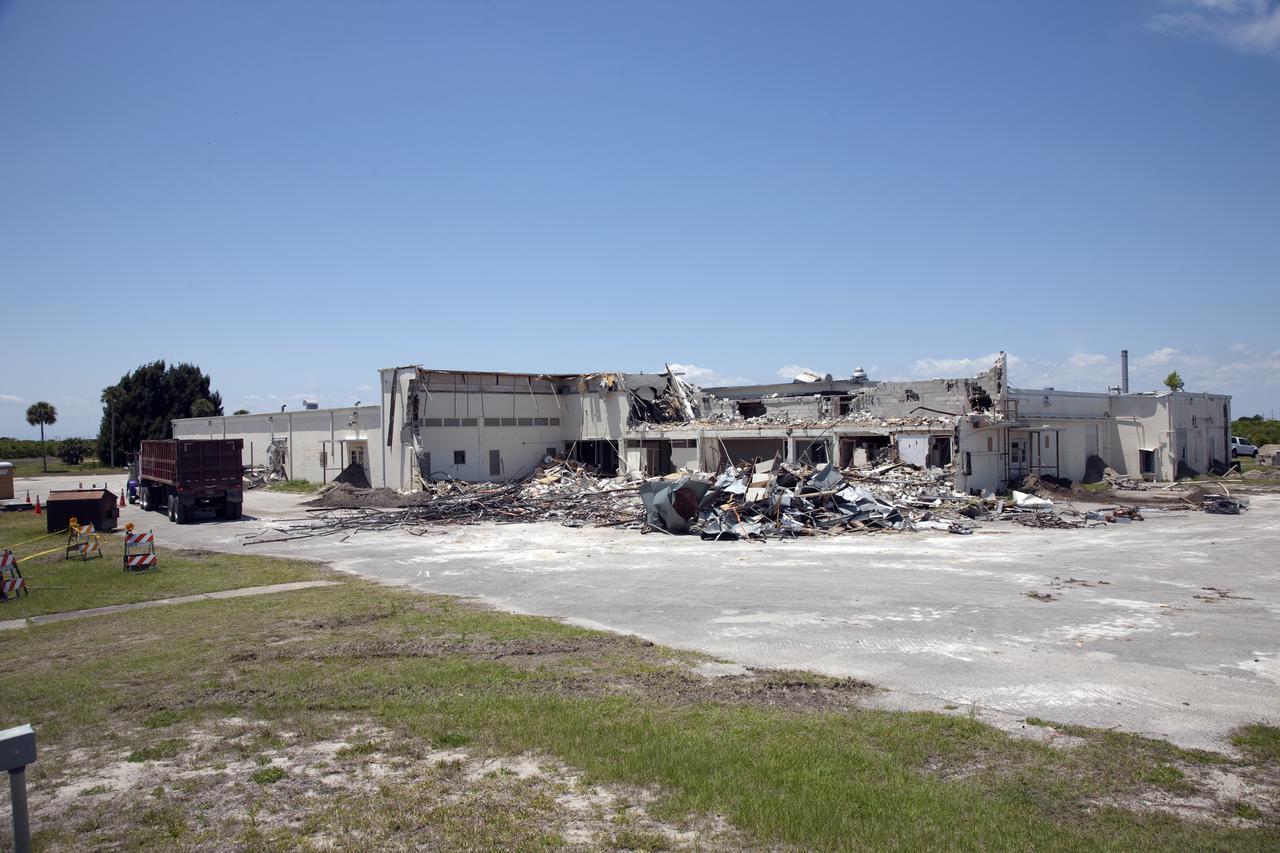
CAPE CANAVERAL, Fla. – At Cape Canaveral Air Force Station in Florida, a Caterpillar 330 track-hoe turns the Mercury Mission Control Center into a pile of rubble.  The original building, constructed between 1956 and 1958, was last modified in 1963.  The center succumbed to the two worst enemies of structures along the space coast - time and salt air - necessitating that it be demolished as a safety measure.  The facility served as mission control during all the Project Mercury missions, as well as the first three flights of the Gemini Program. The center housed the flight controllers whose duty was to take over flight control after liftoff and follow it through until splashdown. Additionally, it supported vehicle checkout, spacecraft tracking, and astronaut training. With Gemini IV, mission control moved to Houston, and the facility took on the roles of launch control and tracking station. In 1999, much of the equipment and furnishings from the flight control area was moved to Kennedy Space Center's Visitor Complex.  A re-created mission control room currently is on display in the complex's Dr. Kurt H. Debus Conference Facility.  Speegle II of Cocoa, Fla., was awarded the contract for the deconstruction project.  Frank-Lin Excavating is performing the demolition for Sunrise Systems of Brevard, a subcontractor to Speegle II.  Photo credit: NASA_Jack Pfaller
KSC-2010-3106
CAPE CANAVERAL, Fla. – At Cape Canaveral Air Force Station in Florida, deconstruction of the Mercury Mission Control Center is under way.  The original building, constructed between 1956 and 1958, was last modified in 1963.  The center succumbed to the two worst enemies of structures along the space coast - time and salt air - necessitating that it be demolished as a safety measure.  The facility served as mission control during all the Project Mercury missions, as well as the first three flights of the Gemini Program. The center housed the flight controllers whose duty was to take over flight control after liftoff and follow it through until splashdown. Additionally, it supported vehicle checkout, spacecraft tracking, and astronaut training. With Gemini IV, mission control moved to Houston, and the facility took on the roles of launch control and tracking station. In 1999, much of the equipment and furnishings from the flight control area was moved to Kennedy Space Center's Visitor Complex.  A re-created mission control room currently is on display in the complex's Dr. Kurt H. Debus Conference Facility.  Speegle II of Cocoa, Fla., was awarded the contract for the deconstruction project.  Frank-Lin Excavating is performing the demolition for Sunrise Systems of Brevard, a subcontractor to Speegle II.  Photo credit: NASA_Dimitri Gerondidakis
KSC-2010-3125
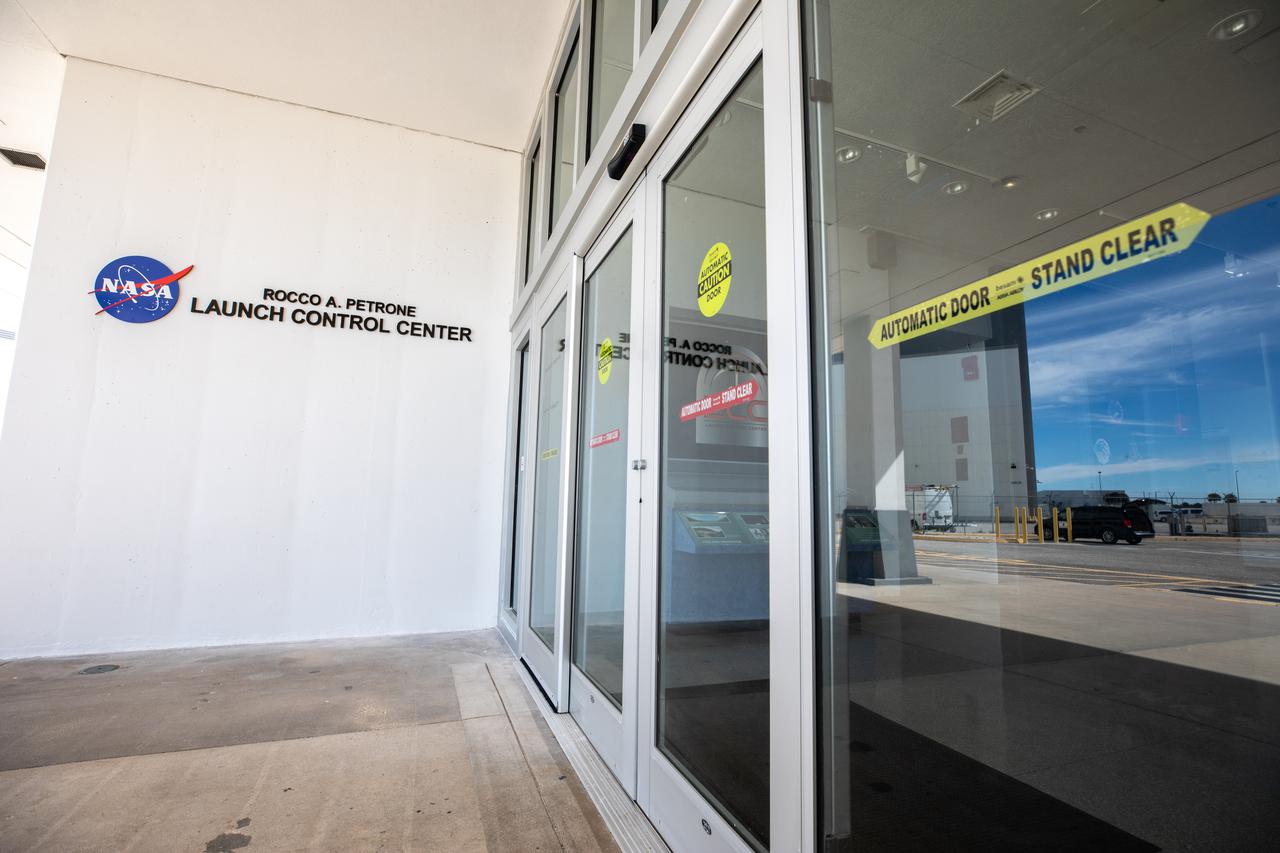
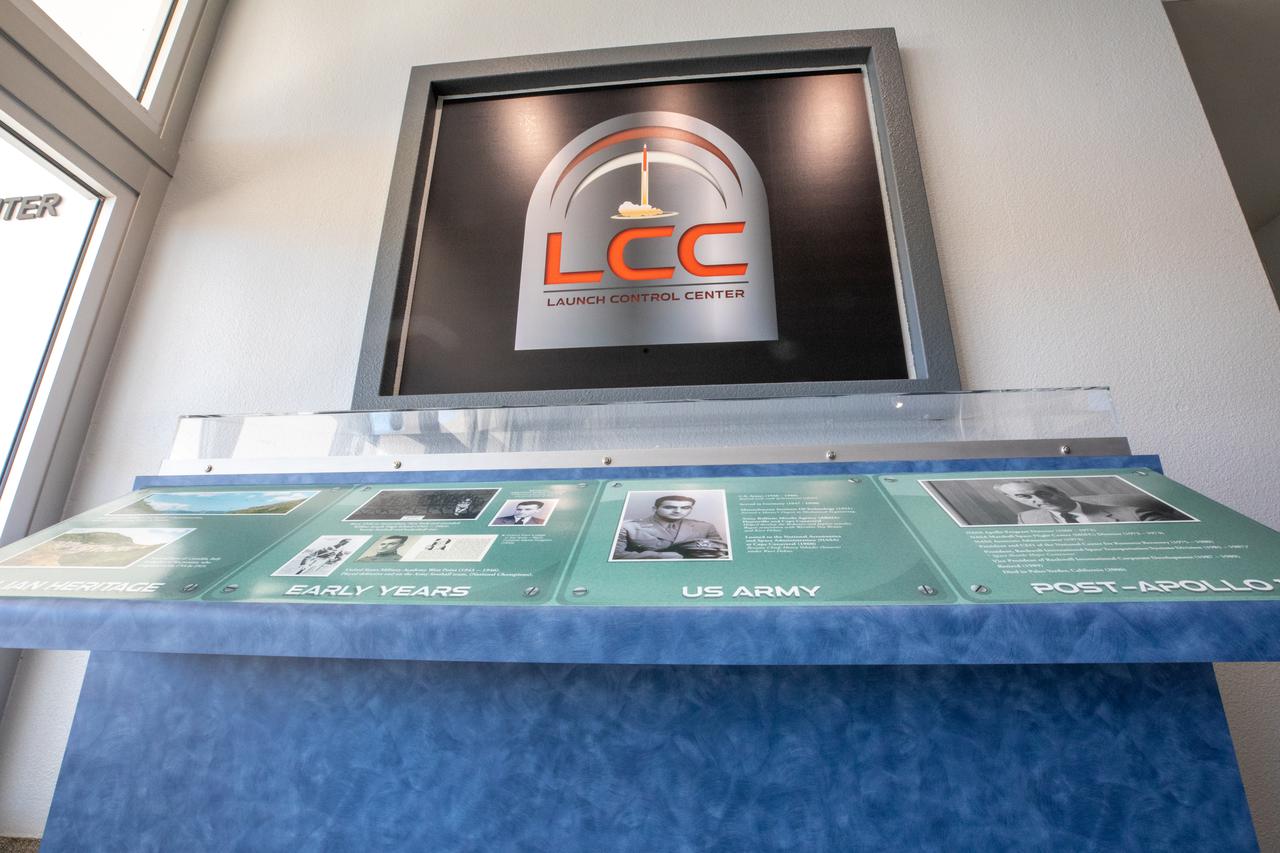
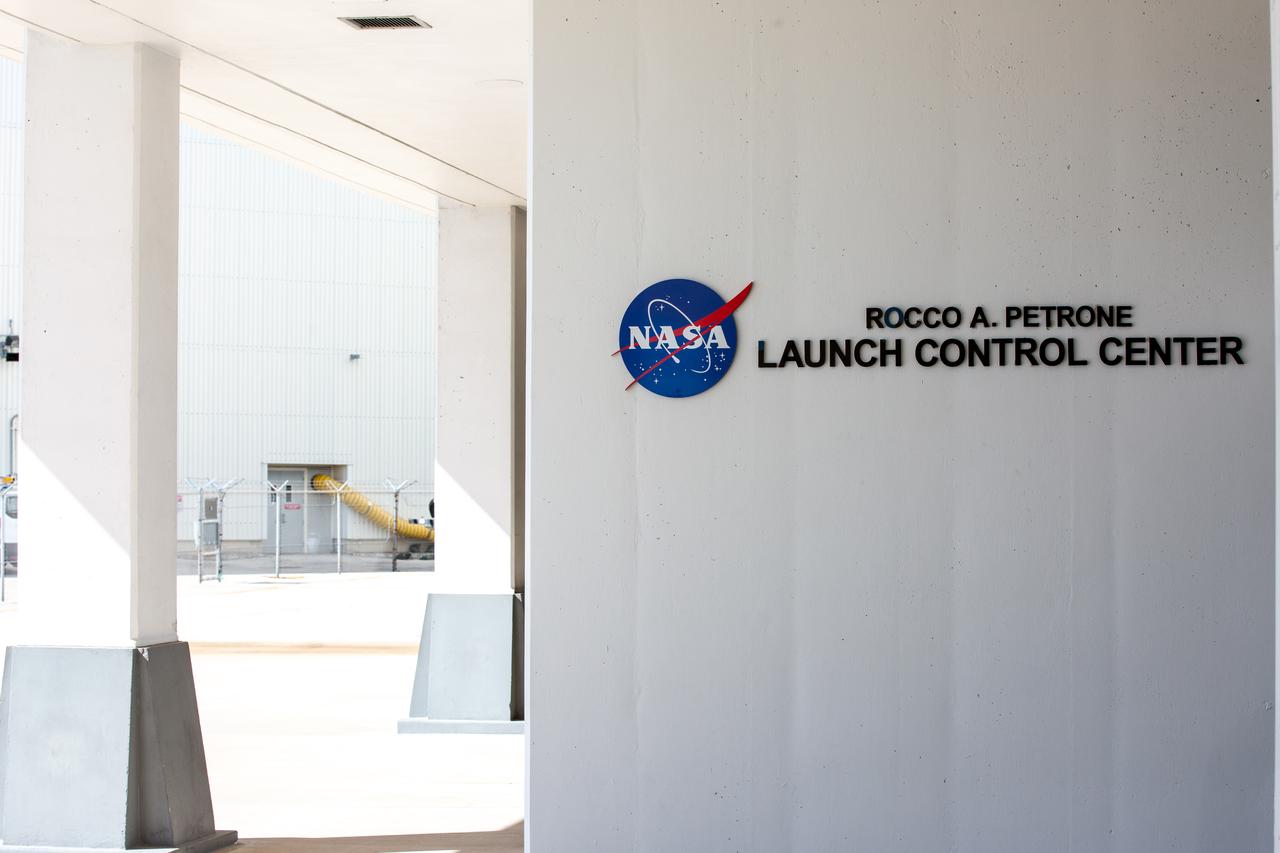
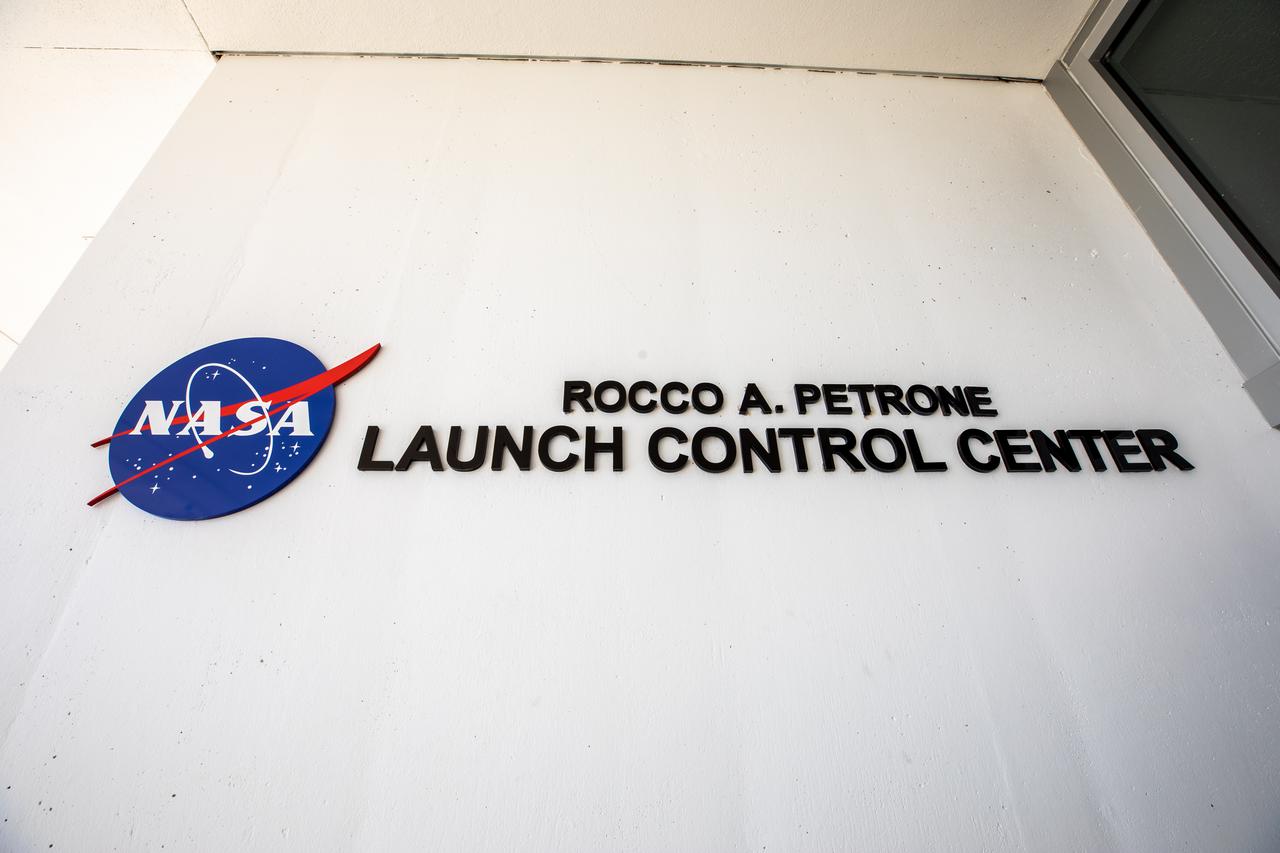
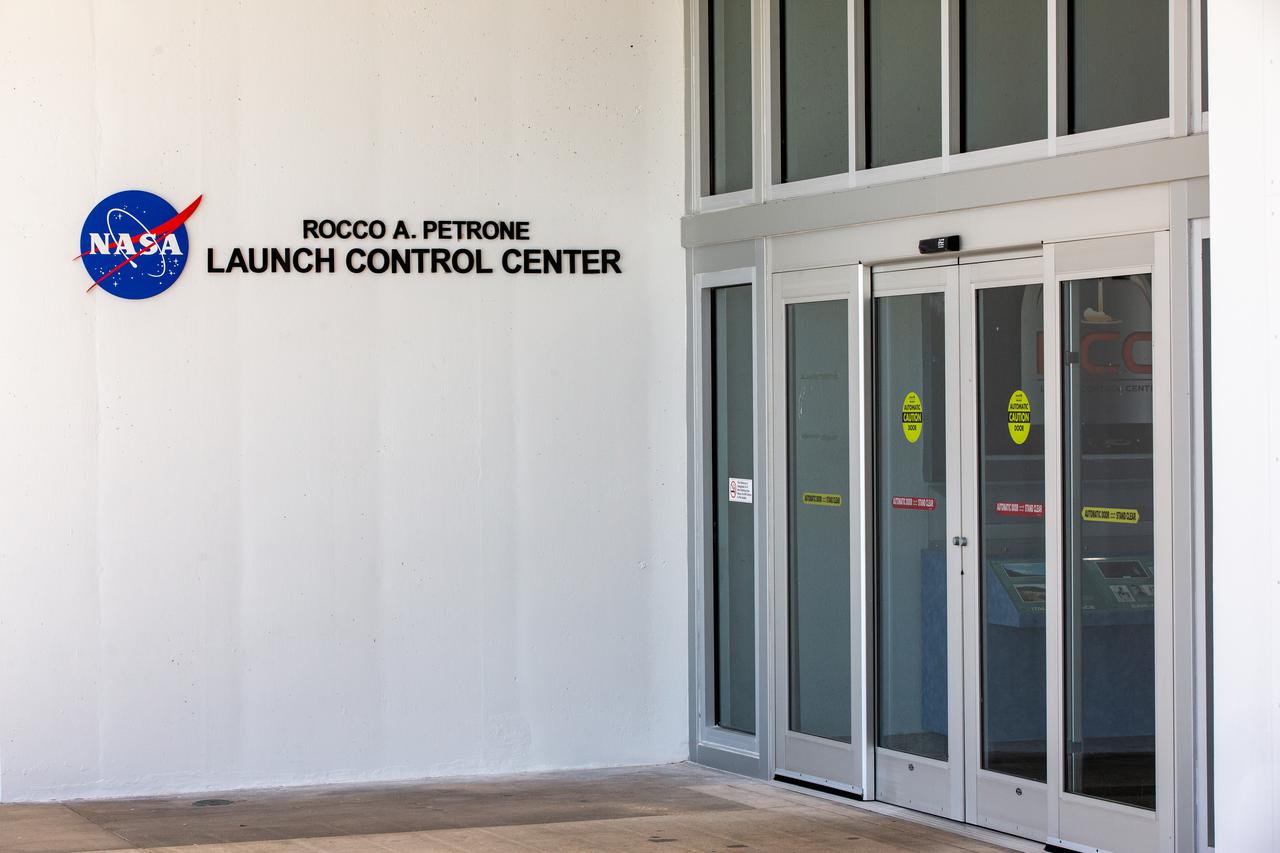
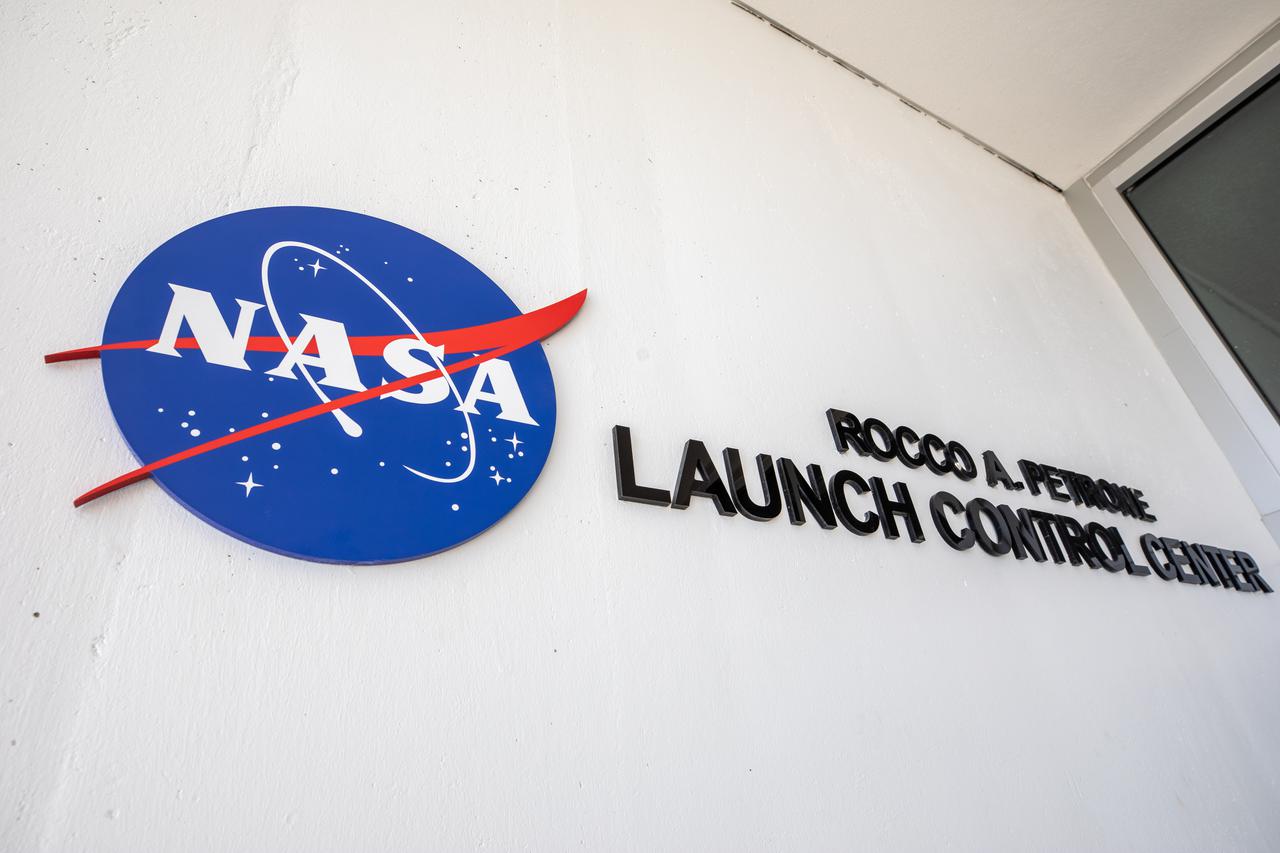
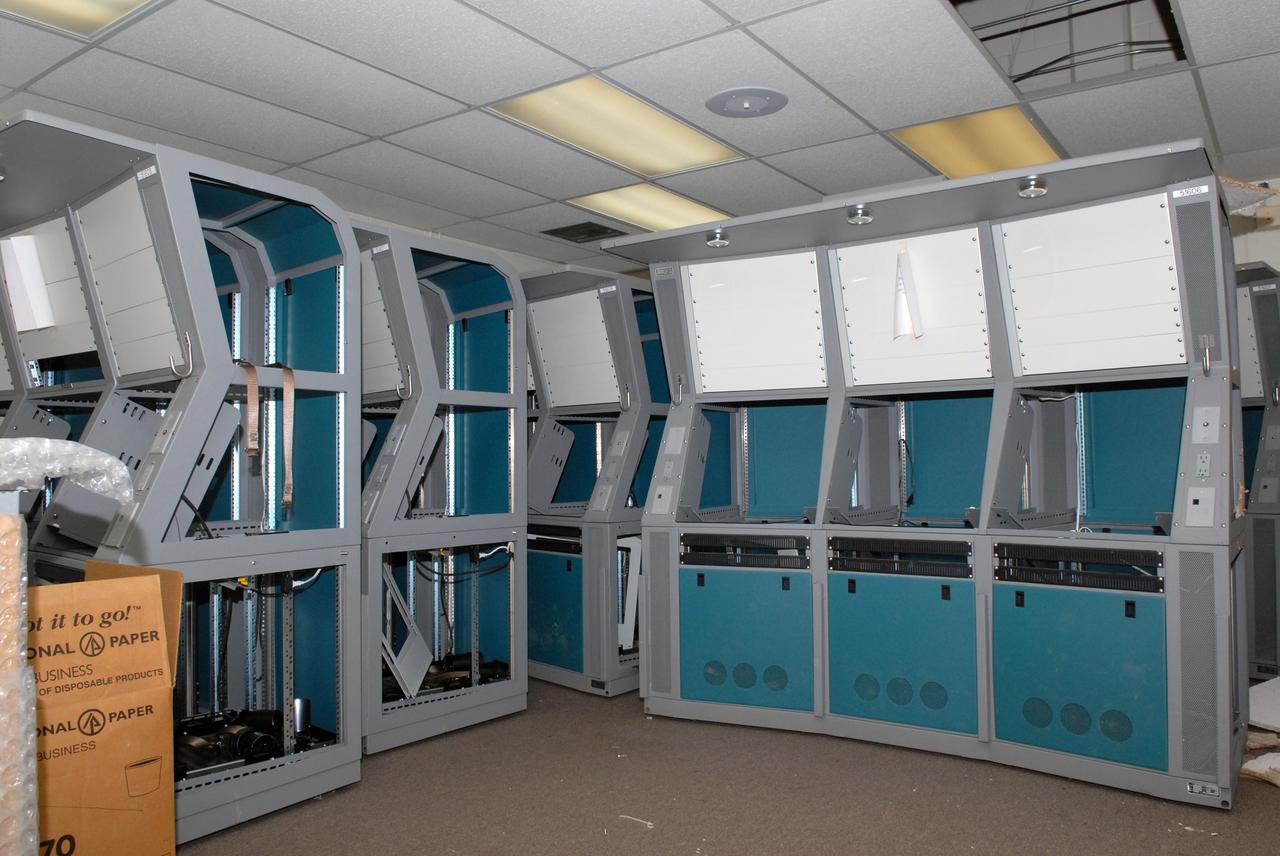
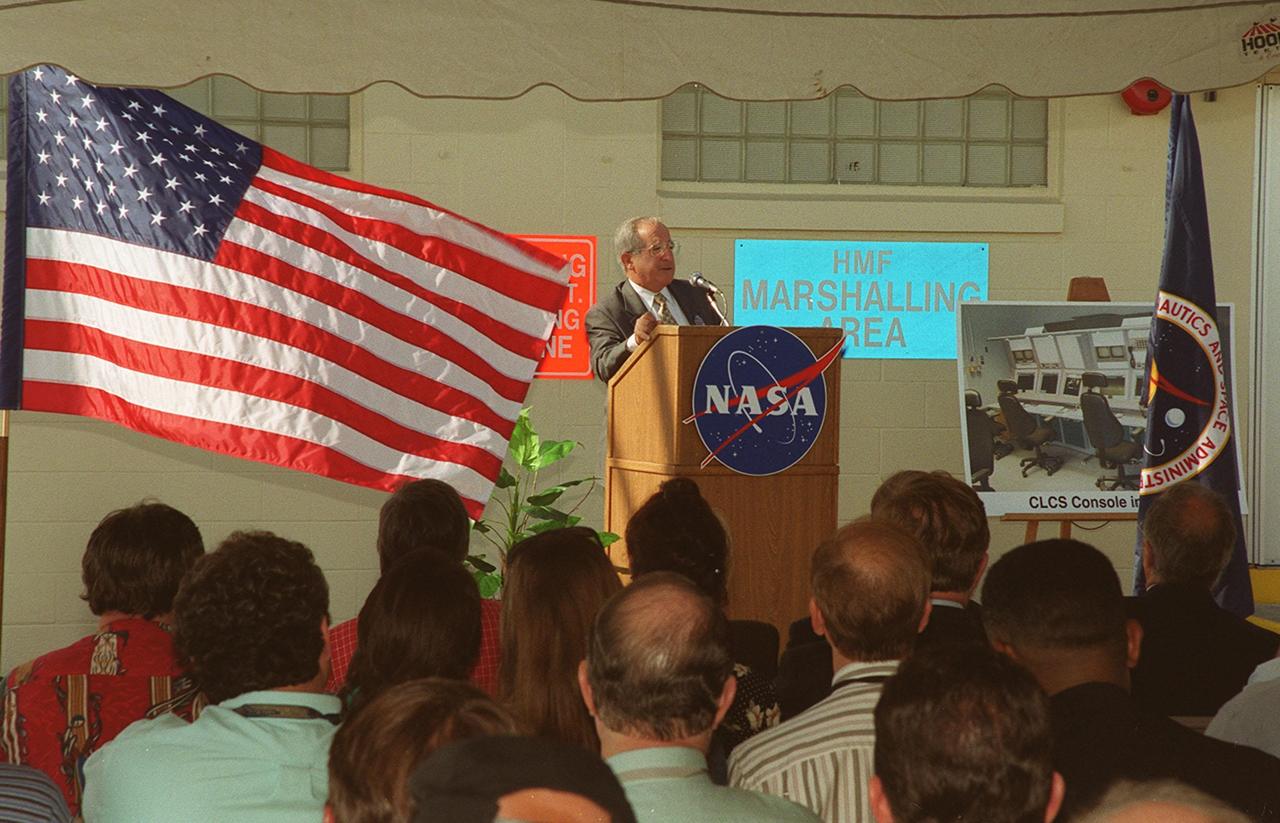
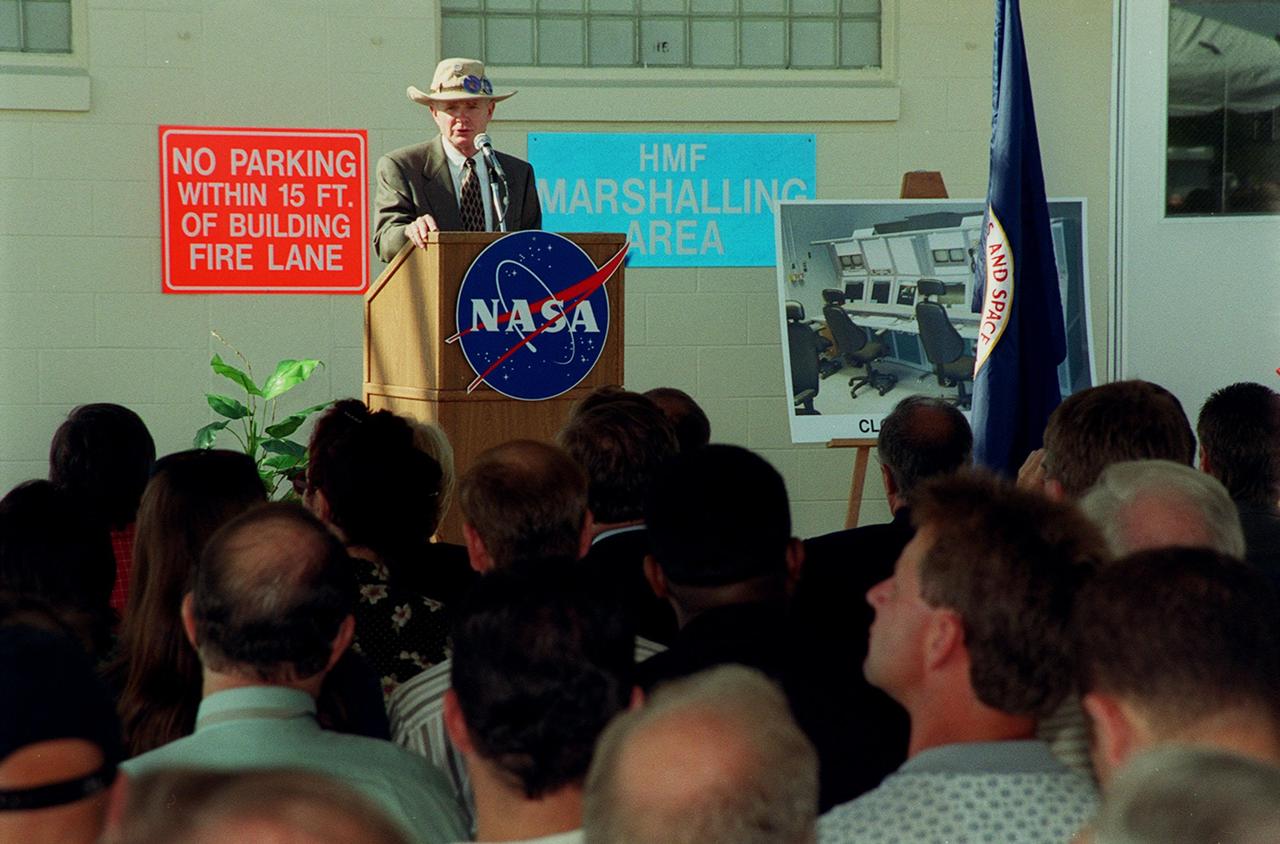
Following a ceremony at NASA’s Kennedy Space Center, the Florida spaceport’s launch control center was officially renamed the Rocco A. Petrone Launch Control Center. The facility serves as a nerve center where engineers and the launch director will monitor their flight consoles and give the “go” for the upcoming launch of Artemis I and later missions that will establish a sustainable presence on the Moon to prepare for missions to Mars. Petrone, who was instrumental in America’s first voyages to the Moon and headed the Apollo program, died in 2006 at the age of 80.
LCC Renaming
Following a ceremony at NASA’s Kennedy Space Center, the Florida spaceport’s launch control center was officially renamed the Rocco A. Petrone Launch Control Center. The facility serves as a nerve center where engineers and the launch director will monitor their flight consoles and give the “go” for the upcoming launch of Artemis I and later missions that will establish a sustainable presence on the Moon to prepare for missions to Mars. Petrone, who was instrumental in America’s first voyages to the Moon and headed the Apollo program, died in 2006 at the age of 80.
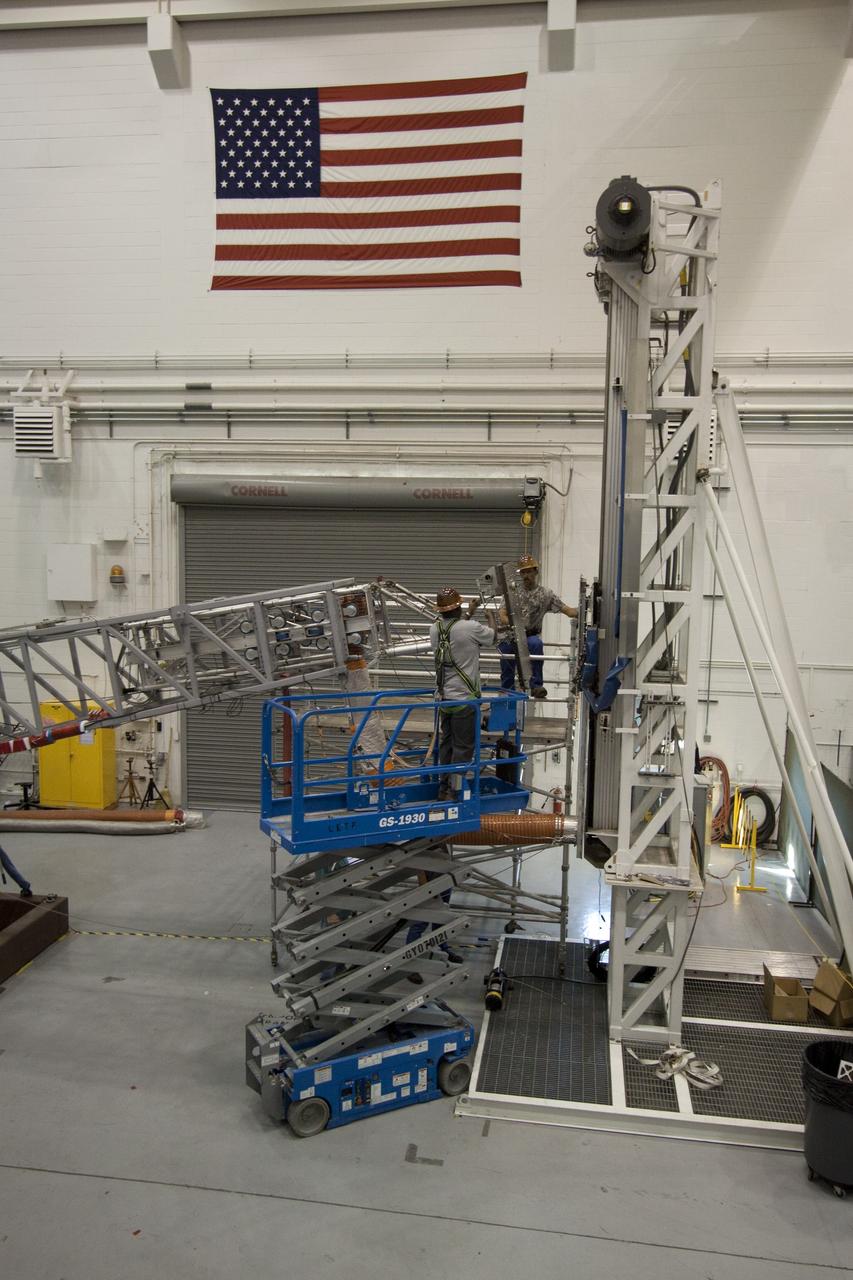
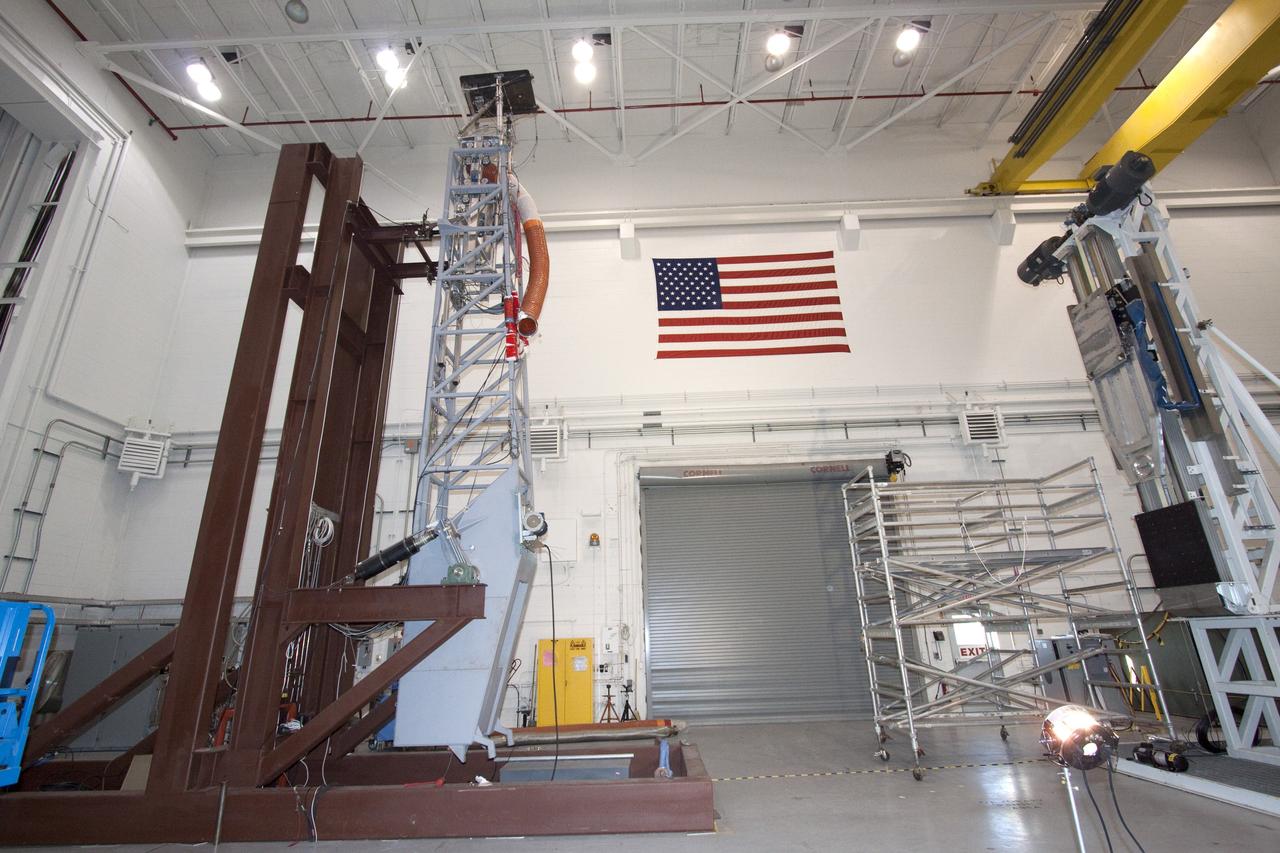
LCC Renaming
Following a ceremony at NASA’s Kennedy Space Center, the Florida spaceport’s launch control center was officially renamed the Rocco A. Petrone Launch Control Center. The facility serves as a nerve center where engineers and the launch director will monitor their flight consoles and give the “go” for the upcoming launch of Artemis I and later missions that will establish a sustainable presence on the Moon to prepare for missions to Mars. Petrone, who was instrumental in America’s first voyages to the Moon and headed the Apollo program, died in 2006 at the age of 80.
LCC Renaming
Following a ceremony at NASA’s Kennedy Space Center, the Florida spaceport’s launch control center was officially renamed the Rocco A. Petrone Launch Control Center. The facility serves as a nerve center where engineers and the launch director will monitor their flight consoles and give the “go” for the upcoming launch of Artemis I and later missions that will establish a sustainable presence on the Moon to prepare for missions to Mars. Petrone, who was instrumental in America’s first voyages to the Moon and headed the Apollo program, died in 2006 at the age of 80.
LCC Renaming
Following a ceremony at NASA’s Kennedy Space Center, the Florida spaceport’s launch control center was officially renamed the Rocco A. Petrone Launch Control Center. The facility serves as a nerve center where engineers and the launch director will monitor their flight consoles and give the “go” for the upcoming launch of Artemis I and later missions that will establish a sustainable presence on the Moon to prepare for missions to Mars. Petrone, who was instrumental in America’s first voyages to the Moon and headed the Apollo program, died in 2006 at the age of 80.
LCC Renaming
Following a ceremony at NASA’s Kennedy Space Center, the Florida spaceport’s launch control center was officially renamed the Rocco A. Petrone Launch Control Center. The facility serves as a nerve center where engineers and the launch director will monitor their flight consoles and give the “go” for the upcoming launch of Artemis I and later missions that will establish a sustainable presence on the Moon to prepare for missions to Mars. Petrone, who was instrumental in America’s first voyages to the Moon and headed the Apollo program, died in 2006 at the age of 80.
LCC Renaming
Following a ceremony at NASA’s Kennedy Space Center, the Florida spaceport’s launch control center was officially renamed the Rocco A. Petrone Launch Control Center. The facility serves as a nerve center where engineers and the launch director will monitor their flight consoles and give the “go” for the upcoming launch of Artemis I and later missions that will establish a sustainable presence on the Moon to prepare for missions to Mars. Petrone, who was instrumental in America’s first voyages to the Moon and headed the Apollo program, died in 2006 at the age of 80.
LCC Renaming
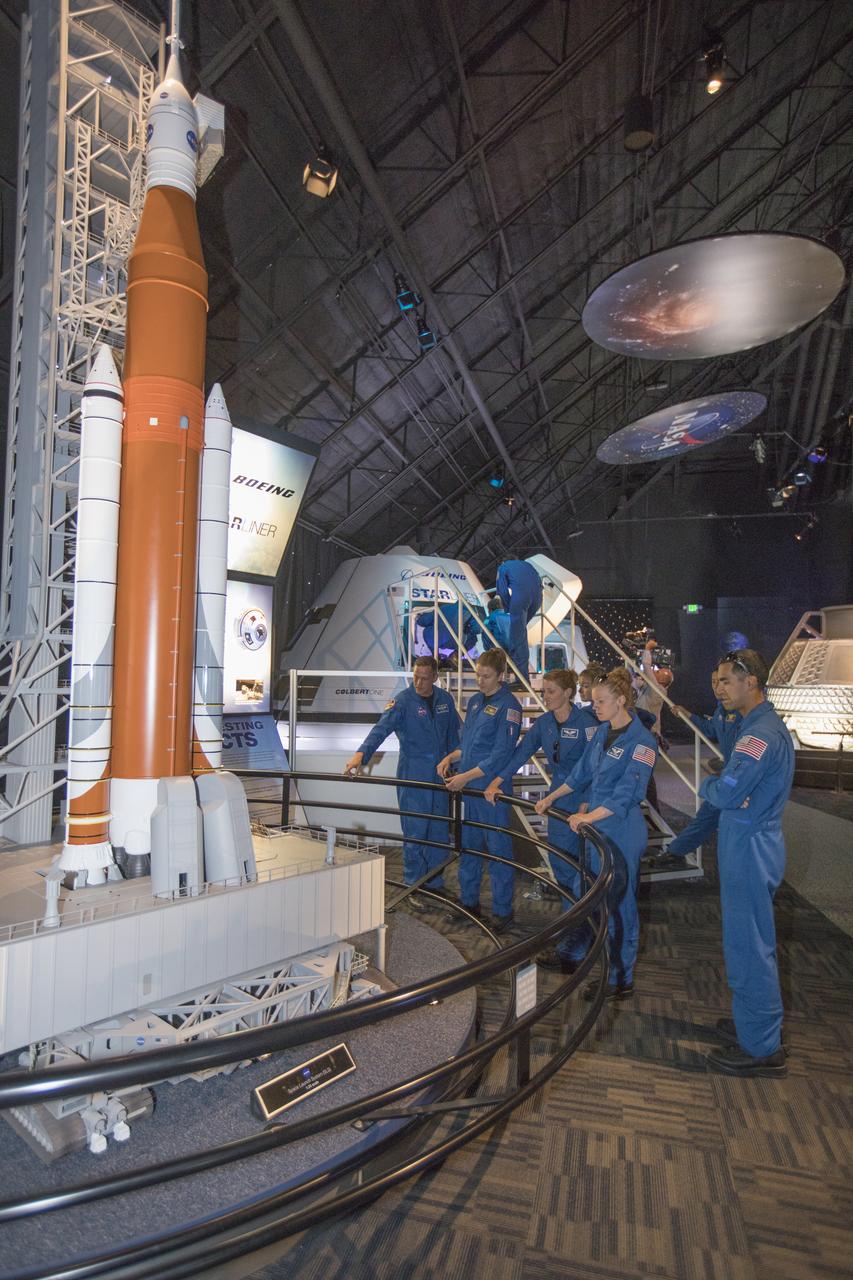
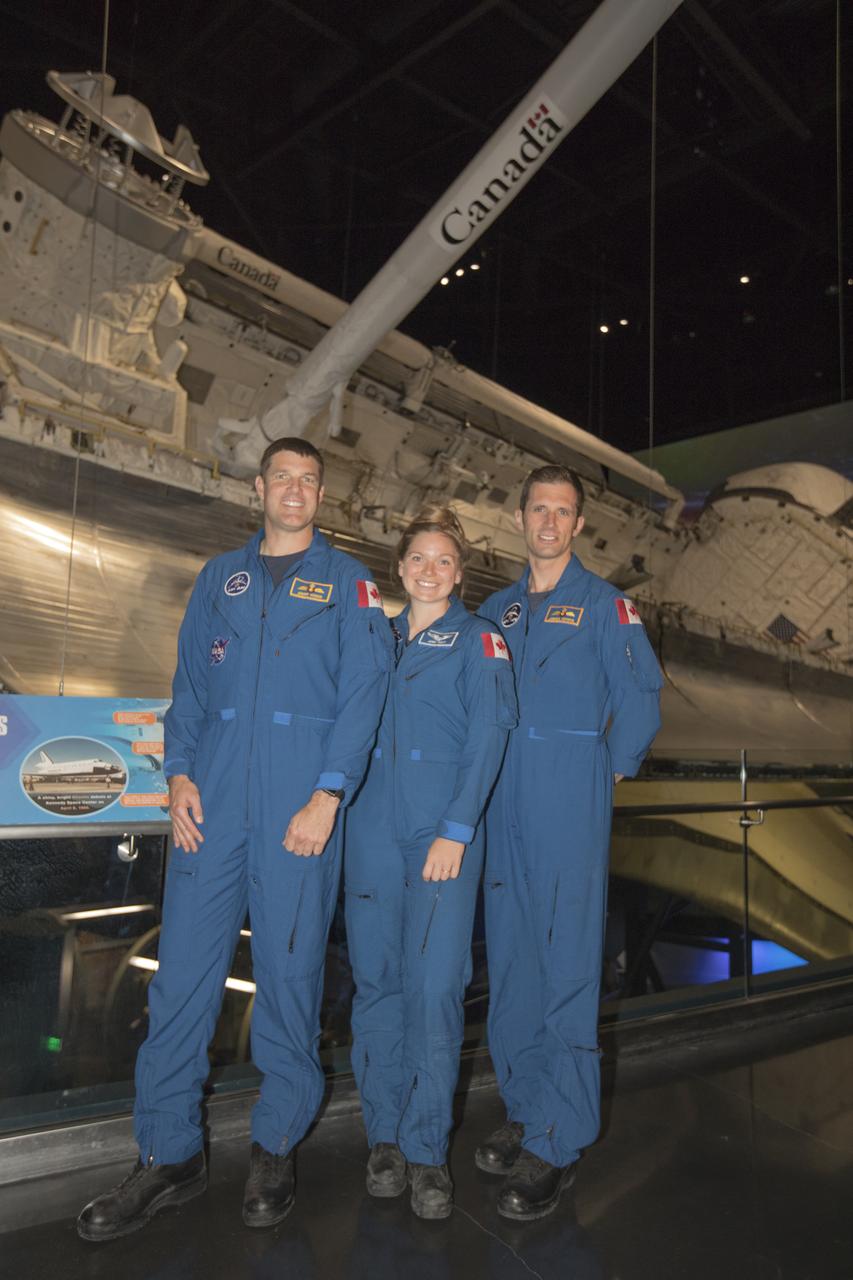
The 2017 class of astronaut candidates toured the Kennedy Space Center Visitor Complex and viewed exhibits, including Space Shuttle Atlantis, during a familiarization tour of facilities at NASA's Kennedy Space Center in Florida. The candidates toured center facilities, including the Neil Armstrong Operations and Checkout Building high bay; Launch Control Center, Launch Pad 39B and the Space Station Processing Facility. They also toured Boeing's Commercial Crew and Cargo Facility, United Launch Alliance's Space Launch Complex 41 at Cape Canaveral Air Force Station, and SpaceX's Launch Pad 39A at Kennedy. The candidates will spend about two years getting to know the space station systems and learning how to spacewalk, speak Russian, control the International Space Station's robotic arm and fly T-38s, before they're eligible to be assigned to a mission.
2017 ASCAN Tour of KSC
The 2017 class of astronaut candidates are inside the Neil Armstrong Operations and Checkout Building high bay during a familiarization tour of facilities at NASA's Kennedy Space Center in Florida. The candidates toured center facilities, including the Launch Control Center, Launch Pad 39B, the Vehicle Assembly Building and the Space Station Processing Facility. They also toured Boeing's Commercial Crew and Cargo Facility, United Launch Alliance's Space Launch Complex 41 at Cape Canaveral Air Force Station, and SpaceX's Launch Pad 39A at Kennedy. The candidates will spend about two years getting to know the space station systems and learning how to spacewalk, speak Russian, control the International Space Station's robotic arm and fly T-38s, before they're eligible to be assigned to a mission.
2017 ASCAN Tour of KSC
The 2017 class of astronaut candidates toured the Kennedy Space Center Visitor Complex and viewed exhibits, including Space Shuttle Atlantis, during a familiarization tour of facilities at NASA's Kennedy Space Center in Florida. The candidates toured center facilities, including the Neil Armstrong Operations and Checkout Building high bay; Launch Control Center, Launch Pad 39B and the Space Station Processing Facility. They also toured Boeing's Commercial Crew and Cargo Facility, United Launch Alliance's Space Launch Complex 41 at Cape Canaveral Air Force Station, and SpaceX's Launch Pad 39A at Kennedy. The candidates will spend about two years getting to know the space station systems and learning how to spacewalk, speak Russian, control the International Space Station's robotic arm and fly T-38s, before they're eligible to be assigned to a mission.
2017 ASCAN Tour of KSC
The 2017 class of astronaut candidates are inside the Space Station Processing Facility high bay during a familiarization tour of facilities at NASA's Kennedy Space Center in Florida. The candidates toured center facilities, including the Neil Armstrong Operations and Checkout Building high bay; the Launch Control Center, Launch Pad 39B, and the Vehicle Assembly Building. They also toured Boeing's Commercial Crew and Cargo Facility, United Launch Alliance's Space Launch Complex 41 at Cape Canaveral Air Force Station, and SpaceX's Launch Pad 39A at Kennedy. The candidates will spend about two years getting to know the space station systems and learning how to spacewalk, speak Russian, control the International Space Station's robotic arm and fly T-38s, before they're eligible to be assigned to a mission.
2017 ASCAN Tour of KSC
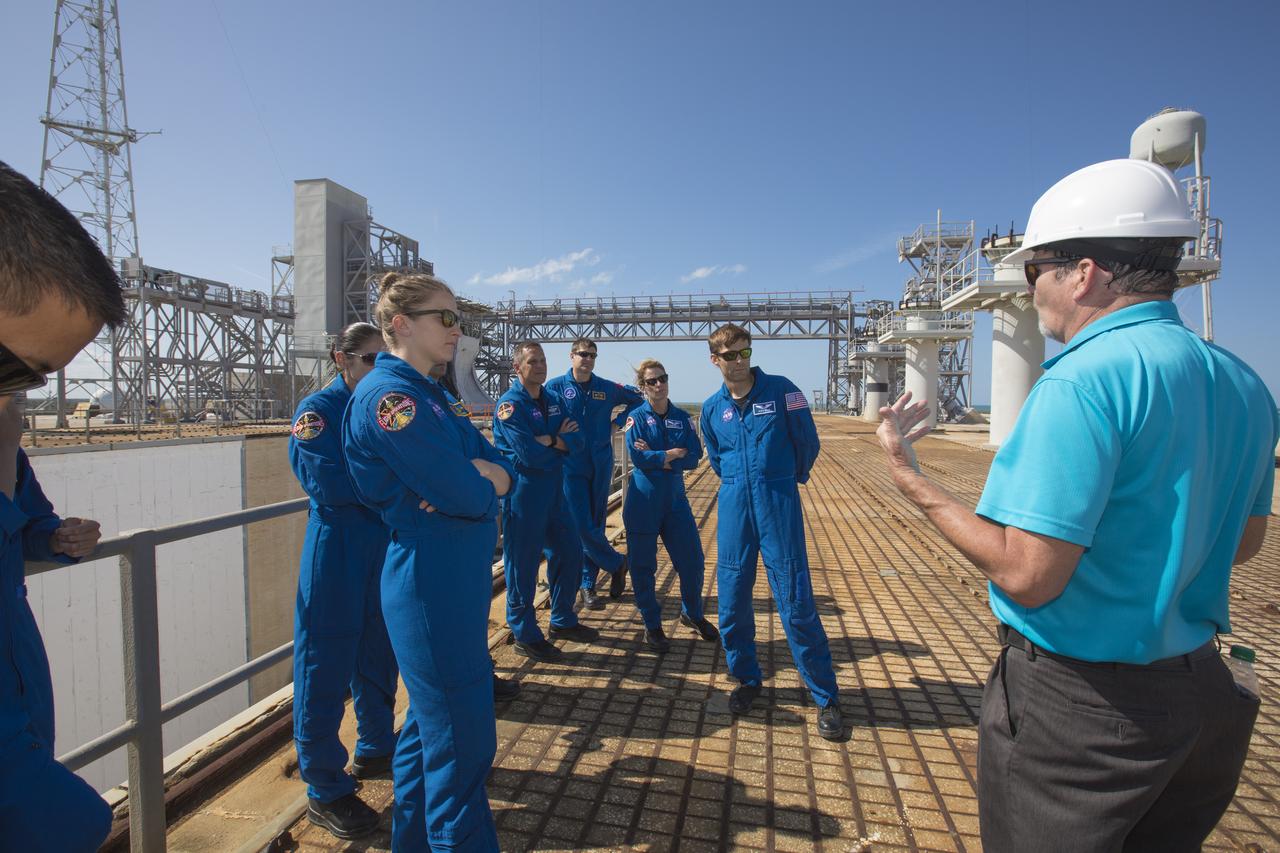
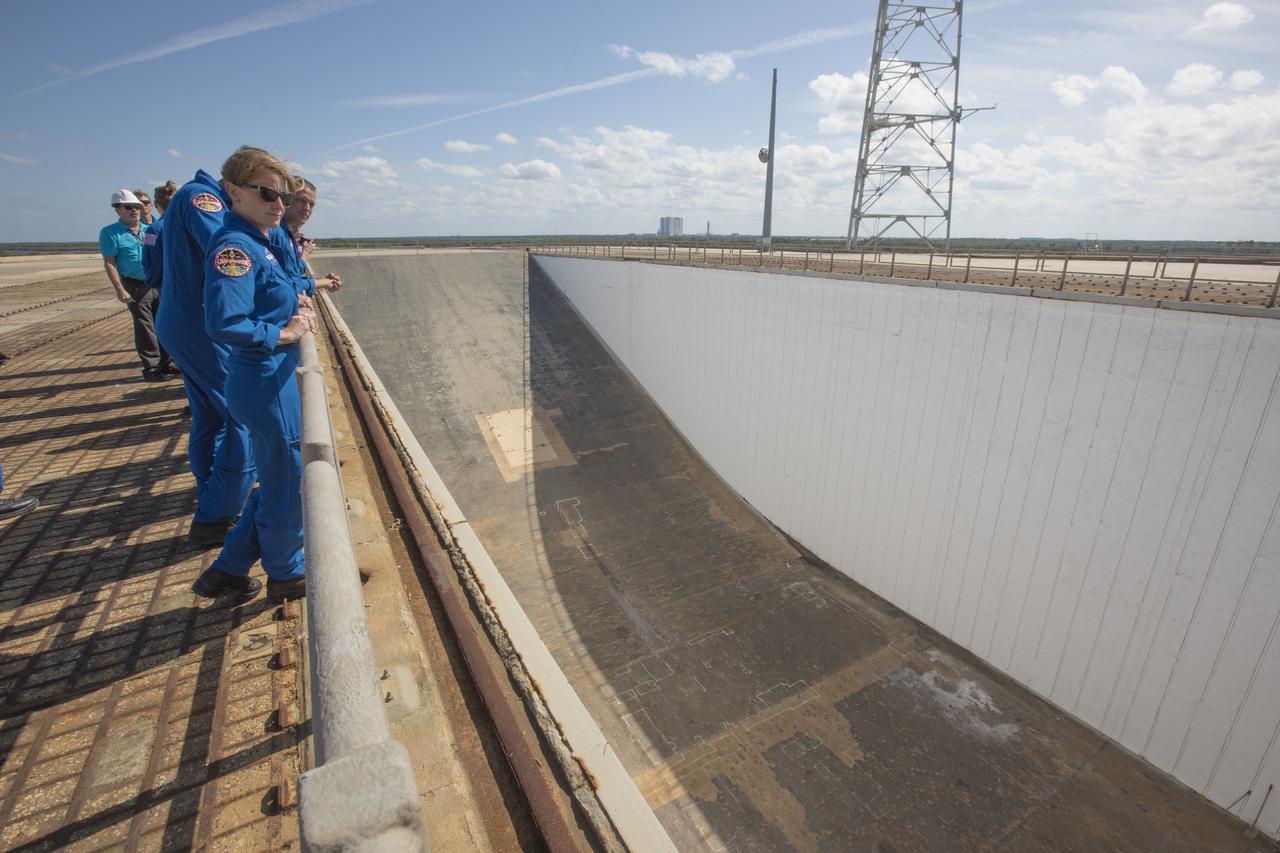
Members of the 2017 class of astronaut candidates are on the surface of Launch Pad 39B during a familiarization tour of facilities at NASA's Kennedy Space Center in Florida. The candidates toured center facilities, including the Vehicle Assembly Building, Launch Control Center, Neil Armstrong Operations and Checkout Building high bay and the Space Station Processing Facility. They also toured Boeing's Commercial Crew and Cargo Facility, United Launch Alliance's Space Launch Complex 41 at Cape Canaveral Air Force Station, and SpaceX's Launch Pad 39A at Kennedy. The candidates will spend about two years getting to know the space station systems and learning how to spacewalk, speak Russian, control the International Space Station's robotic arm and fly T-38s, before they're eligible to be assigned to a mission.
2017 ASCAN Tour of KSC
The 2017 class of astronaut candidates toured the Kennedy Space Center Visitor Complex and viewed exhibits, including Space Shuttle Atlantis, during a familiarization tour of facilities at NASA's Kennedy Space Center in Florida. The candidates toured center facilities, including the Neil Armstrong Operations and Checkout Building high bay; Launch Control Center, Launch Pad 39B and the Space Station Processing Facility. They also toured Boeing's Commercial Crew and Cargo Facility, United Launch Alliance's Space Launch Complex 41 at Cape Canaveral Air Force Station, and SpaceX's Launch Pad 39A at Kennedy. The candidates will spend about two years getting to know the space station systems and learning how to spacewalk, speak Russian, control the International Space Station's robotic arm and fly T-38s, before they're eligible to be assigned to a mission.
2017 ASCAN Tour of KSC
Members of the 2017 class of astronaut candidates view the flame trench at Launch Pad 39B during a familiarization tour of facilities at NASA's Kennedy Space Center in Florida. The candidates toured center facilities, including the Vehicle Assembly Building, Launch Control Center, Neil Armstrong Operations and Checkout Building high bay and the Space Station Processing Facility. They also toured Boeing's Commercial Crew and Cargo Facility, United Launch Alliance's Space Launch Complex 41 at Cape Canaveral Air Force Station, and SpaceX's Launch Pad 39A at Kennedy. The candidates will spend about two years getting to know the space station systems and learning how to spacewalk, speak Russian, control the International Space Station's robotic arm and fly T-38s, before they're eligible to be assigned to a mission.
2017 ASCAN Tour of KSC
The 2017 class of astronaut candidates toured the Kennedy Space Center Visitor Complex and viewed exhibits, including Space Shuttle Atlantis, during a familiarization tour of facilities at NASA's Kennedy Space Center in Florida. The candidates toured center facilities, including the Neil Armstrong Operations and Checkout Building high bay; Launch Control Center, Launch Pad 39B and the Space Station Processing Facility. They also toured Boeing's Commercial Crew and Cargo Facility, United Launch Alliance's Space Launch Complex 41 at Cape Canaveral Air Force Station, and SpaceX's Launch Pad 39A at Kennedy. The candidates will spend about two years getting to know the space station systems and learning how to spacewalk, speak Russian, control the International Space Station's robotic arm and fly T-38s, before they're eligible to be assigned to a mission.
2017 ASCAN Tour of KSC
The 2017 class of astronaut candidates toured the Kennedy Space Center Visitor Complex and viewed exhibits, including Space Shuttle Atlantis, during a familiarization tour of facilities at NASA's Kennedy Space Center in Florida. The candidates toured center facilities, including the Neil Armstrong Operations and Checkout Building high bay; Launch Control Center, Launch Pad 39B and the Space Station Processing Facility. They also toured Boeing's Commercial Crew and Cargo Facility, United Launch Alliance's Space Launch Complex 41 at Cape Canaveral Air Force Station, and SpaceX's Launch Pad 39A at Kennedy. The candidates will spend about two years getting to know the space station systems and learning how to spacewalk, speak Russian, control the International Space Station's robotic arm and fly T-38s, before they're eligible to be assigned to a mission.
2017 ASCAN Tour of KSC
The 2017 class of astronaut candidates toured the Kennedy Space Center Visitor Complex and viewed exhibits, including Space Shuttle Atlantis, during a familiarization tour of facilities at NASA's Kennedy Space Center in Florida. The candidates toured center facilities, including the Neil Armstrong Operations and Checkout Building high bay; Launch Control Center, Launch Pad 39B and the Space Station Processing Facility. They also toured Boeing's Commercial Crew and Cargo Facility, United Launch Alliance's Space Launch Complex 41 at Cape Canaveral Air Force Station, and SpaceX's Launch Pad 39A at Kennedy. The candidates will spend about two years getting to know the space station systems and learning how to spacewalk, speak Russian, control the International Space Station's robotic arm and fly T-38s, before they're eligible to be assigned to a mission.
2017 ASCAN Tour of KSC
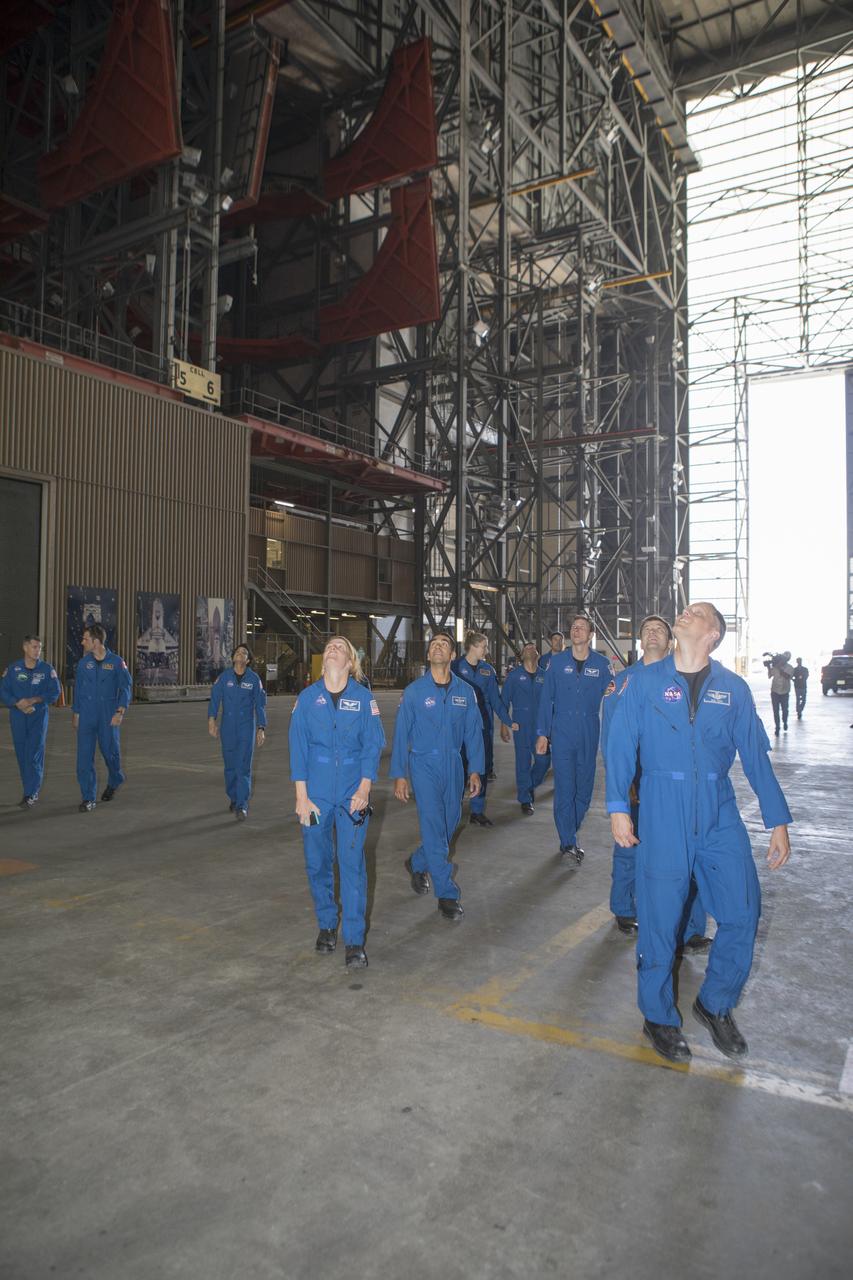
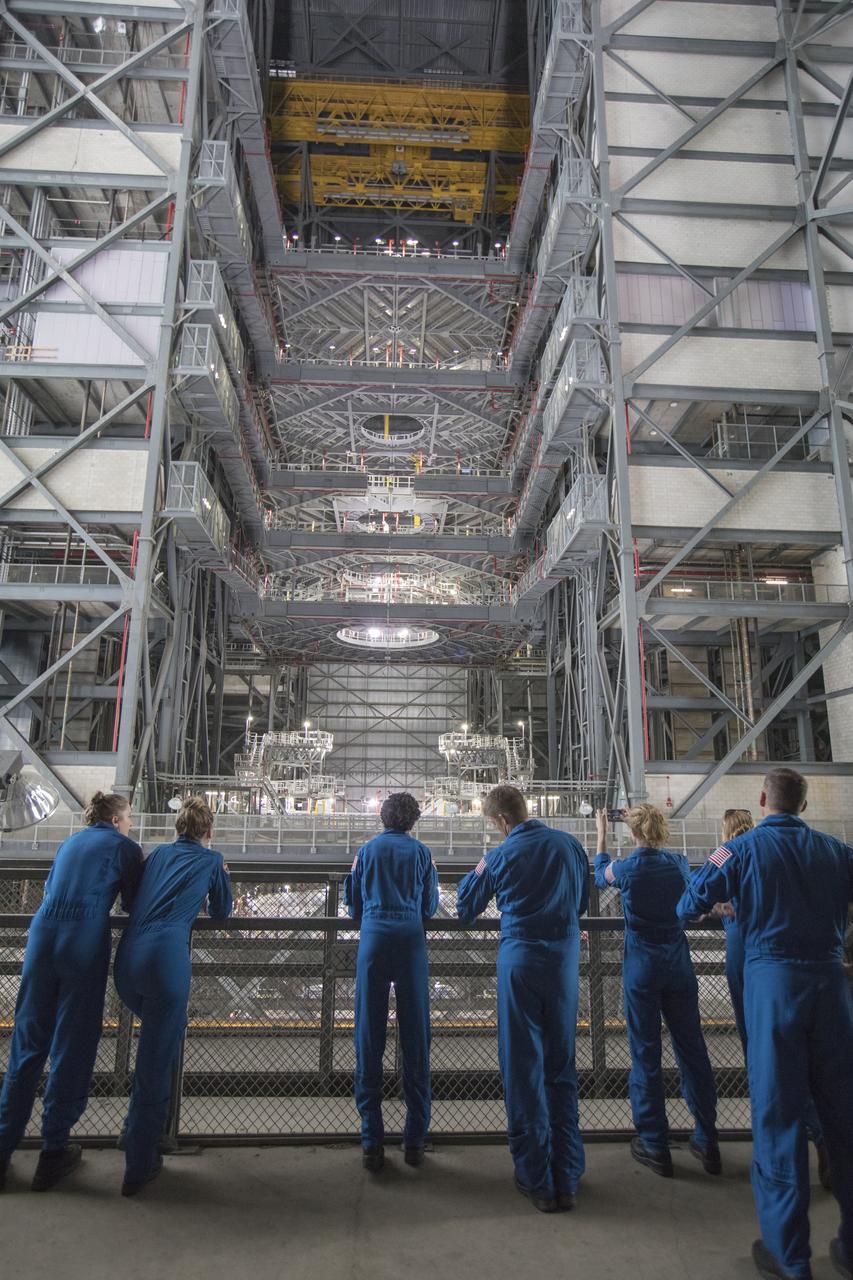
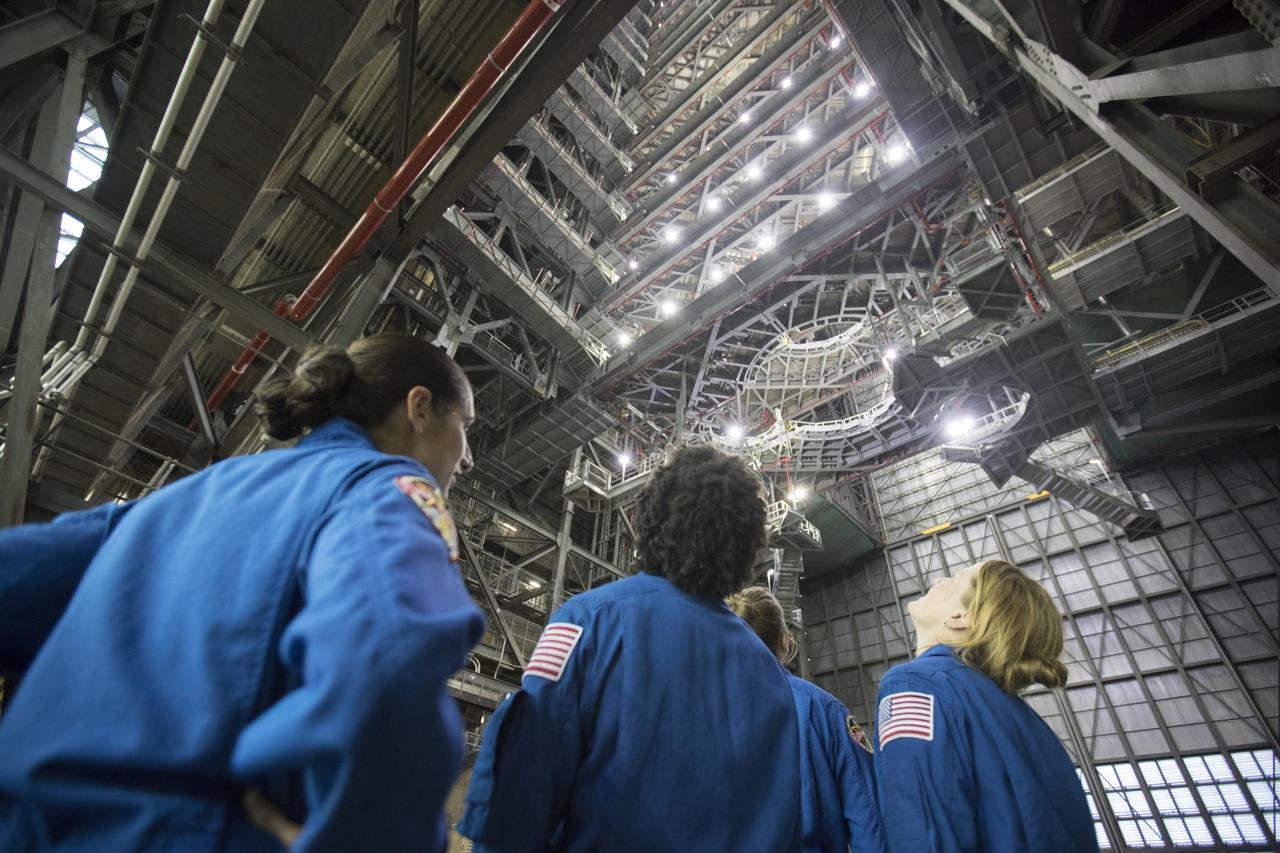
The 2017 class of astronaut candidates are inside the Vehicle Assembly Building during a familiarization tour of facilities at NASA's Kennedy Space Center in Florida. The candidates toured center facilities, including the Neil Armstrong Operations and Checkout Building high bay; Launch Control Center, Launch Pad 39B, and the Space Station Processing Facility. They also toured Boeing's Commercial Crew and Cargo Facility, United Launch Alliance's Space Launch Complex 41 at Cape Canaveral Air Force Station, and SpaceX's Launch Pad 39A at Kennedy. The candidates will spend about two years getting to know the space station systems and learning how to spacewalk, speak Russian, control the International Space Station's robotic arm and fly T-38s, before they're eligible to be assigned to a mission.
2017 ASCAN Tour of KSC
The 2017 class of astronaut candidates toured the Kennedy Space Center Visitor Complex and viewed exhibits, including Space Shuttle Atlantis, during a familiarization tour of facilities at NASA's Kennedy Space Center in Florida. The candidates toured center facilities, including the Neil Armstrong Operations and Checkout Building high bay; Launch Control Center, Launch Pad 39B and the Space Station Processing Facility. They also toured Boeing's Commercial Crew and Cargo Facility, United Launch Alliance's Space Launch Complex 41 at Cape Canaveral Air Force Station, and SpaceX's Launch Pad 39A at Kennedy. The candidates will spend about two years getting to know the space station systems and learning how to spacewalk, speak Russian, control the International Space Station's robotic arm and fly T-38s, before they're eligible to be assigned to a mission.
2017 ASCAN Tour of KSC
The 2017 class of astronaut candidates toured the Kennedy Space Center Visitor Complex and viewed exhibits, including Space Shuttle Atlantis, during a familiarization tour of facilities at NASA's Kennedy Space Center in Florida. The candidates toured center facilities, including the Neil Armstrong Operations and Checkout Building high bay; Launch Control Center, Launch Pad 39B and the Space Station Processing Facility. They also toured Boeing's Commercial Crew and Cargo Facility, United Launch Alliance's Space Launch Complex 41 at Cape Canaveral Air Force Station, and SpaceX's Launch Pad 39A at Kennedy. The candidates will spend about two years getting to know the space station systems and learning how to spacewalk, speak Russian, control the International Space Station's robotic arm and fly T-38s, before they're eligible to be assigned to a mission.
2017 ASCAN Tour of KSC
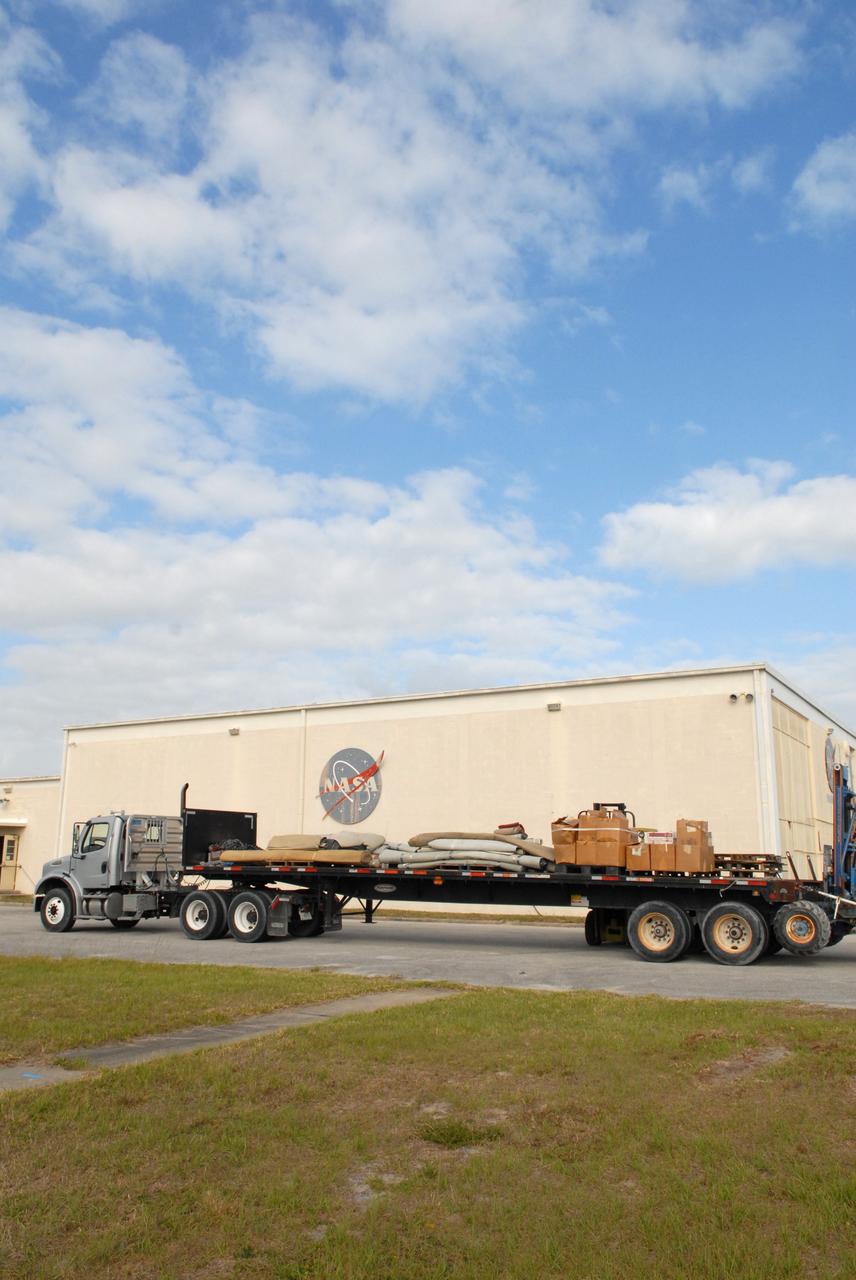
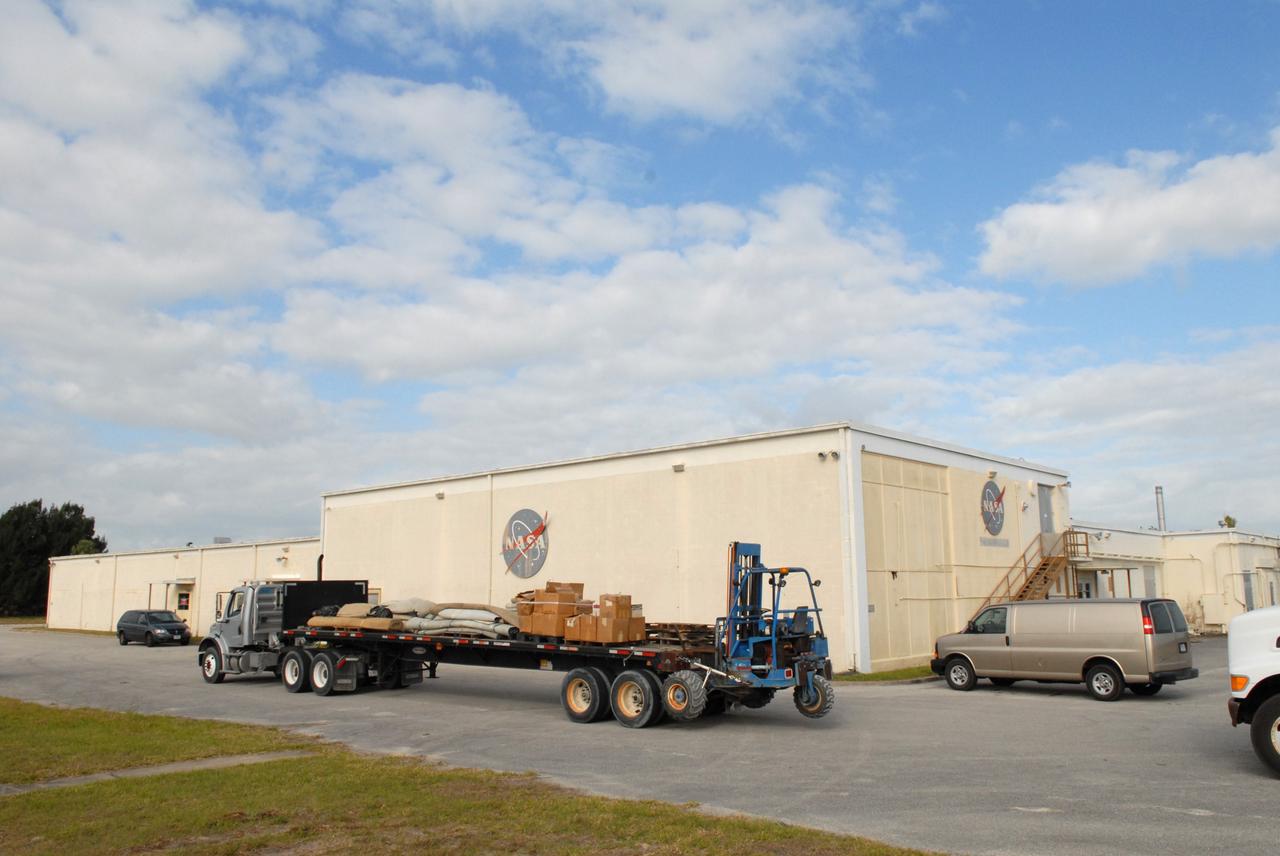
CAPE CANAVERAL, Fla. – A trailer hauls boxes and equipment from the 50-year-old Mission Control Center on the Cape Canaveral Air Force Station in Florida.  Out of use for many years, and with no valid operational or other use for the facility, NASA plans to demolish the site. The facility once controlled all manned Mercury space flights and the first two unmanned Gemini flights from May 1961-1963.  It provided launch, orbital, re-entry and landing control for the flights.  That function was later transferred to NASA's Johnson Space Center in Houston.  Photo credit: NASA/Jack Pfaller
KSC-2009-2877
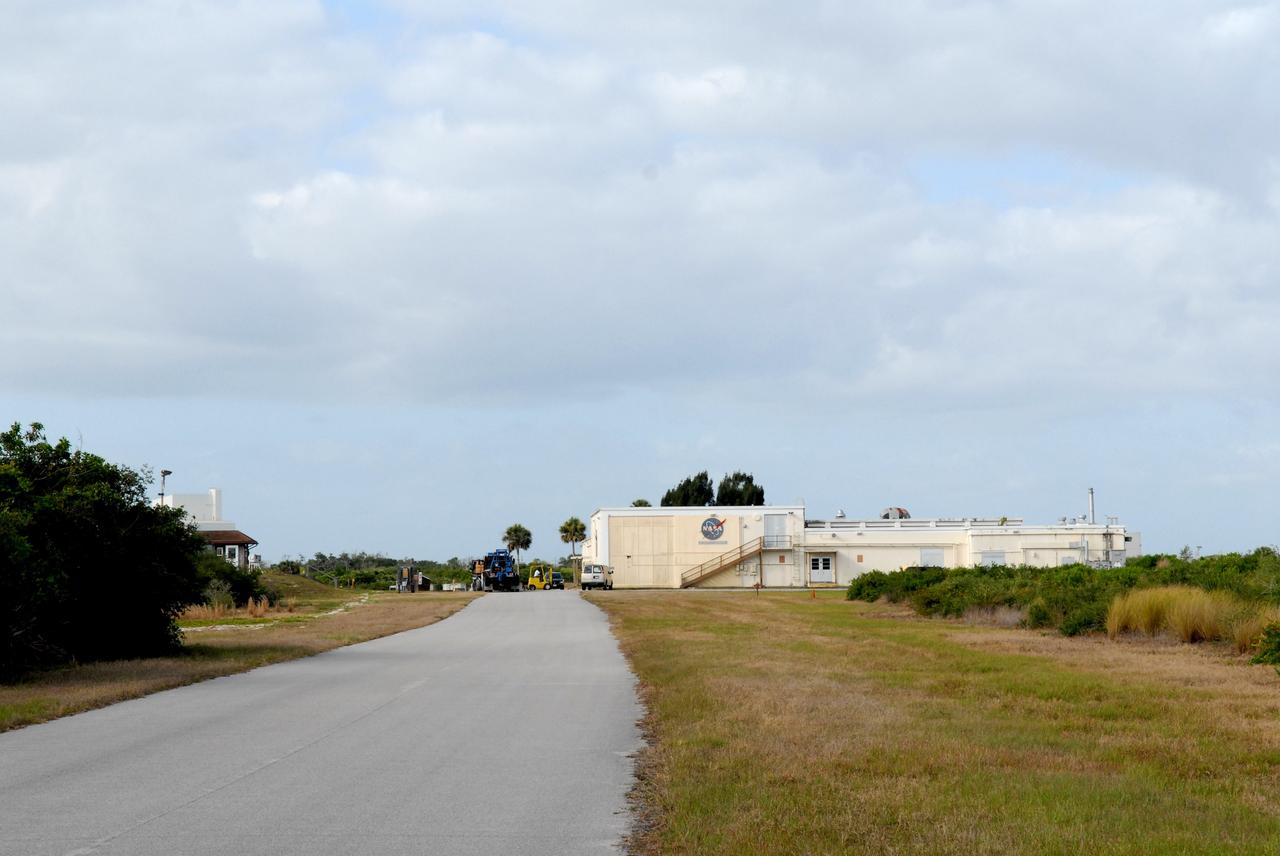
CAPE CANAVERAL, Fla. – Built in 1958, the Mission Control Center is located on the Cape Canaveral Air Force Station in Florida.  Out of use for many years, and with no valid operational or other use for the facility, NASA plans to demolish the site. The facility once controlled all manned Mercury space flights and the first two unmanned Gemini flights from May 1961-1963.  It provided launch, orbital, re-entry and landing control for the flights.  That function was later transferred to NASA's Johnson Space Center in Houston.  Photo credit: NASA/Jack Pfaller
KSC-2009-2875
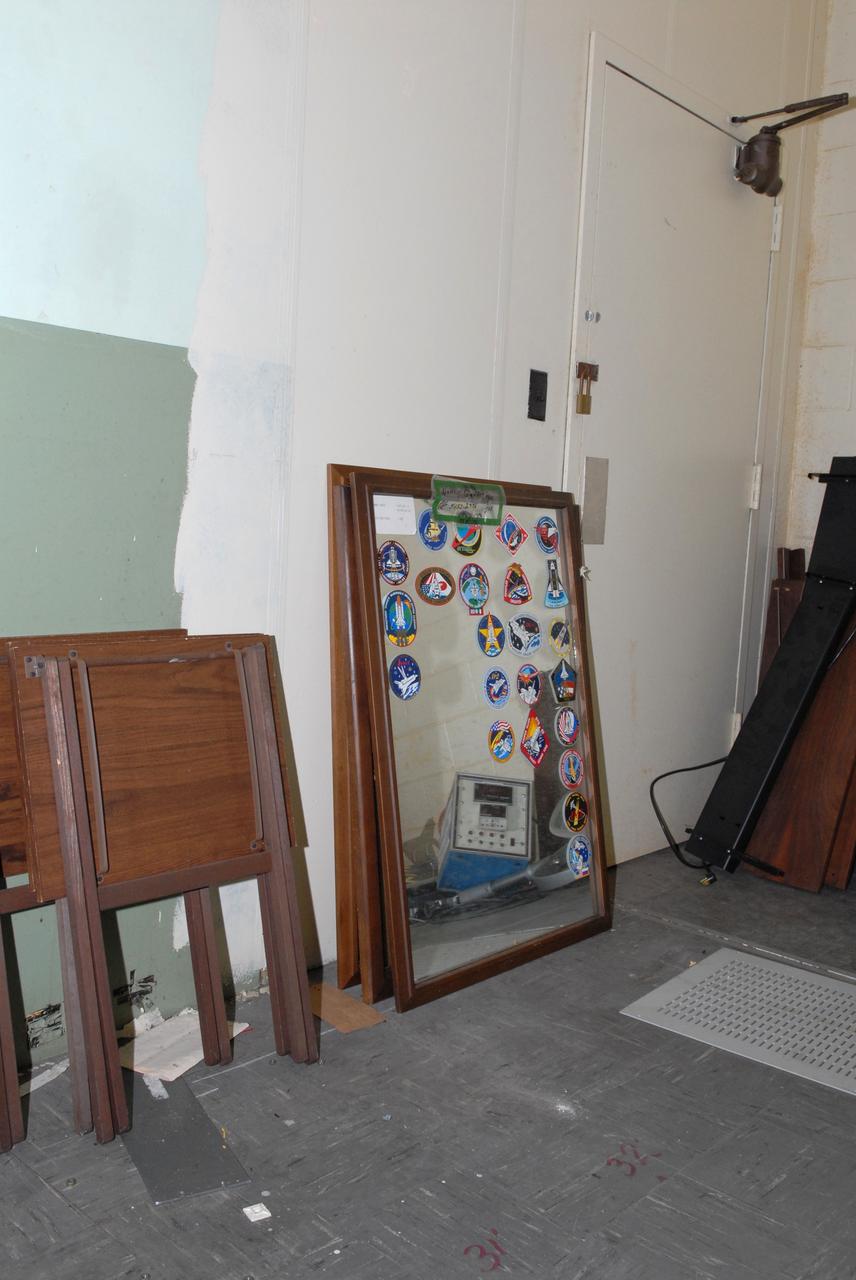
CAPE CANAVERAL, Fla. – Outdated furniture and display items are being moved out of the 50-year-old Mission Control Center on the Cape Canaveral Air Force Station in Florida. Out of use for many years, and with no valid operational or other use for the facility, NASA plans to demolish the site.  The facility once controlled all manned Mercury space flights and the first two unmanned Gemini flights from May 1961-1963.  It provided launch, orbital, re-entry and landing control for the flights.  That function was later transferred to NASA's Johnson Space Center in Houston.  Photo credit: NASA/Jack Pfaller
KSC-2009-2882
CAPE CANAVERAL, Fla. – Rooms are being dismantled in the 50-year-old Mission Control Center on the Cape Canaveral Air Force Station in Florida. Out of use for many years, and with no valid operational or other use for the facility, NASA plans to demolish the site.  The facility once controlled all manned Mercury space flights and the first two unmanned Gemini flights from May 1961-1963.  It provided launch, orbital, re-entry and landing control for the flights.  That function was later transferred to NASA's Johnson Space Center in Houston.  Photo credit: NASA/Jack Pfaller
KSC-2009-2884
CAPE CANAVERAL, Fla. – Equipment is staged for removal from the 50-year-old Mission Control Center on the Cape Canaveral Air Force Station in Florida. Out of use for many years, and with no valid operational or other use for the facility, NASA plans to demolish the site.  The facility once controlled all manned Mercury space flights and the first two unmanned Gemini flights from May 1961-1963.  It provided launch, orbital, re-entry and landing control for the flights.  That function was later transferred to NASA's Johnson Space Center in Houston.  Photo credit: NASA/Jack Pfaller
KSC-2009-2881
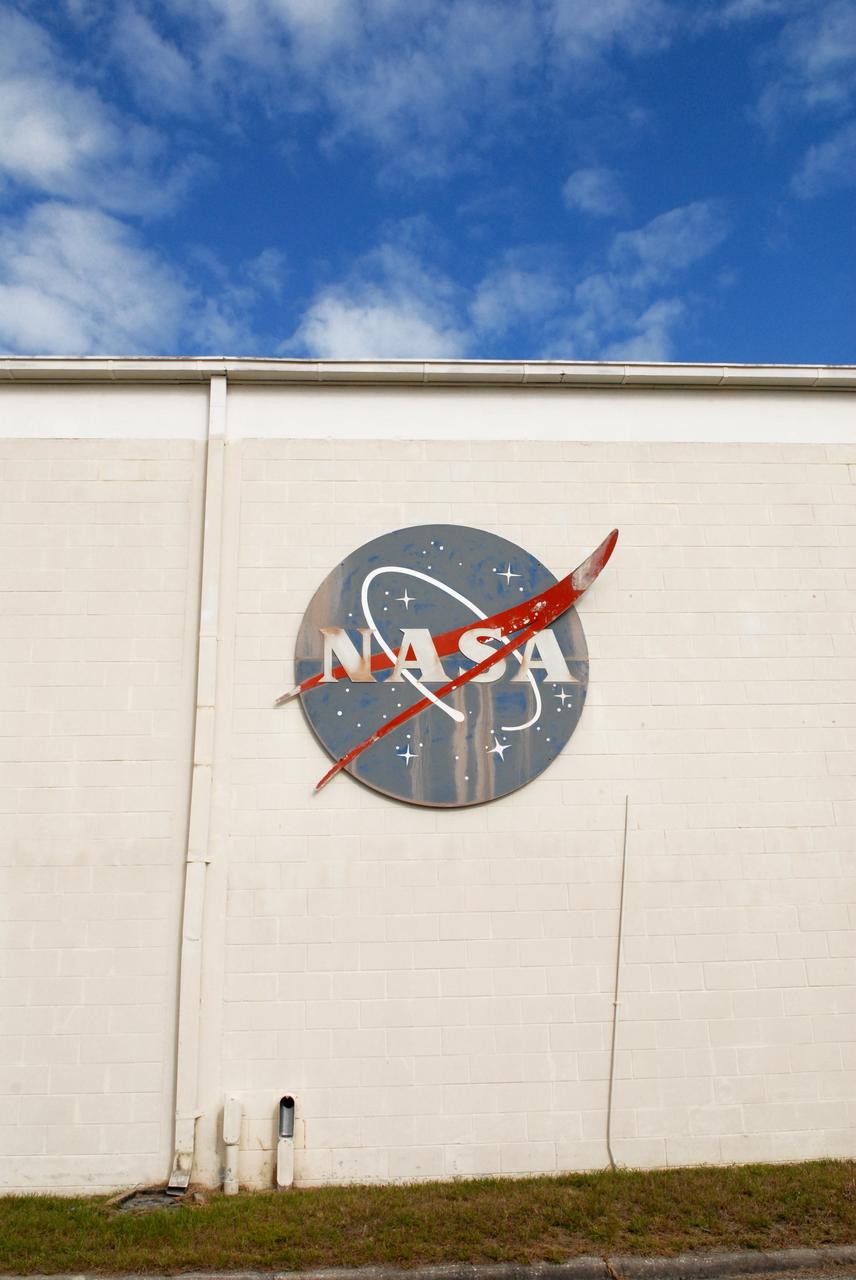
CAPE CANAVERAL, Fla. – The NASA insignia has faded on the 50-year-old Mission Control Center on the Cape Canaveral Air Force Station in Florida. Out of use for many years, and with no valid operational or other use for the facility, NASA plans to demolish the site.  The facility once controlled all manned Mercury space flights and the first two unmanned Gemini flights from May 1961-1963.  It provided launch, orbital, re-entry and landing control for the flights.  That function was later transferred to NASA's Johnson Space Center in Houston.  Photo credit: NASA/Jack Pfaller
KSC-2009-2878
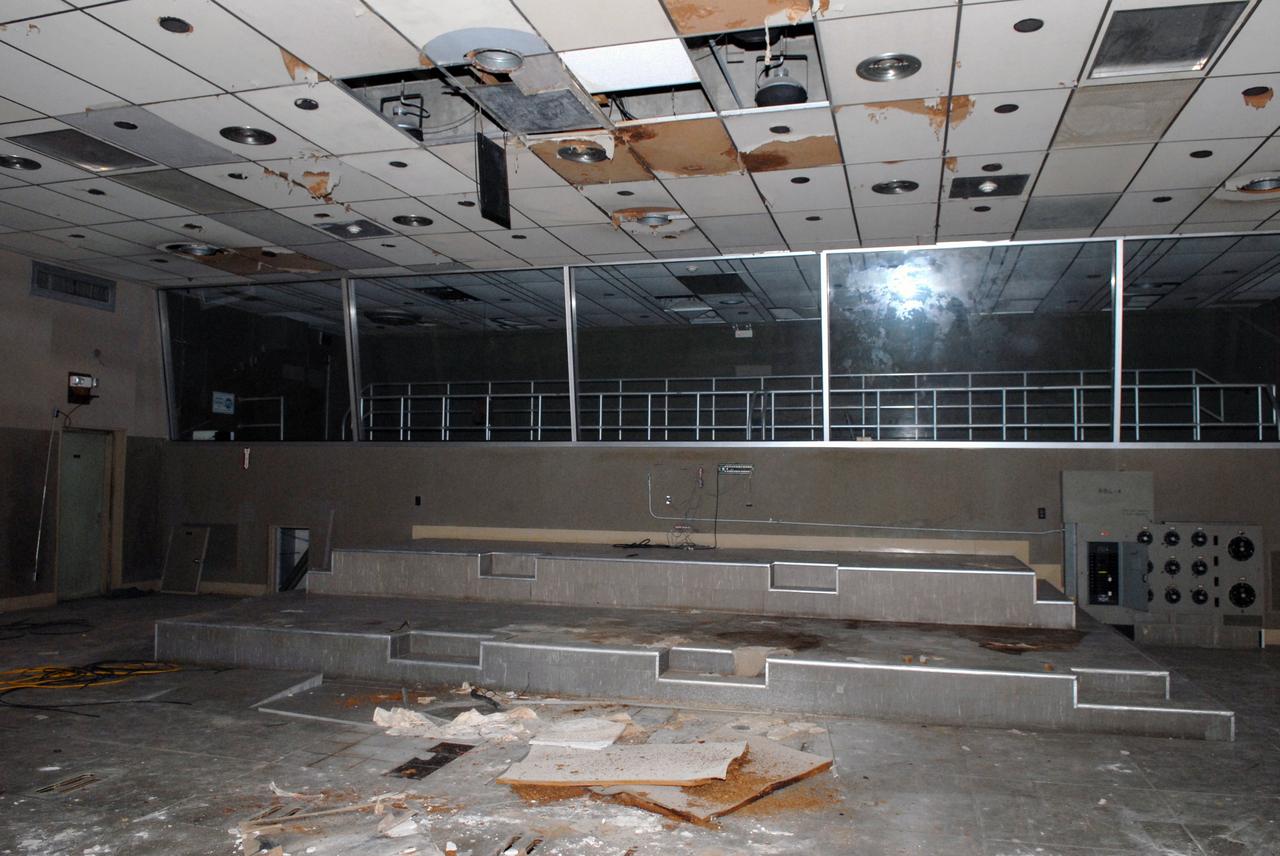
CAPE CANAVERAL, Fla. – Water damage and mold in rooms in the 50-year-old Mission Control Center on the Cape Canaveral Air Force Station in Florida are part of the reason for NASA's decision to demolish the site. The center has been out of use for many years, and NASA has found no valid operational or other use for the facility. The facility once controlled all manned Mercury space flights and the first two unmanned Gemini flights from May 1961-1963.  It provided launch, orbital, re-entry and landing control for the flights.  That function was later transferred to NASA's Johnson Space Center in Houston.  Photo credit: NASA/Jack Pfaller
KSC-2009-2883
CAPE CANAVERAL, Fla. – Furniture and equipment is being moved out of the 50-year-old Mission Control Center on the Cape Canaveral Air Force Station in Florida. Out of use for many years, and with no valid operational or other use for the facility, NASA plans to demolish the site. The facility once controlled all manned Mercury space flights and the first two unmanned Gemini flights from May 1961-1963.  It provided launch, orbital, re-entry and landing control for the flights.  That function was later transferred to NASA's Johnson Space Center in Houston.  Photo credit: NASA/Jack Pfaller
KSC-2009-2887
CAPE CANAVERAL, Fla. – A trailer hauls boxes and equipment from the 50-year-old Mission Control Center on the Cape Canaveral Air Force Station in Florida.  Out of use for many years, and with no valid operational or other use for the facility, NASA plans to demolish the site. The facility once controlled all manned Mercury space flights and the first two unmanned Gemini flights from May 1961-1963.  It provided launch, orbital, re-entry and landing control for the flights.  That function was later transferred to NASA's Johnson Space Center in Houston.  Photo credit: NASA/Jack Pfaller
KSC-2009-2876
CAPE CANAVERAL, Fla. – Water damage and mold in rooms in the 50-year-old Mission Control Center on the Cape Canaveral Air Force Station in Florida are part of the reason for NASA's decision to demolish the site. The center has been out of use for many years, and NASA has found no valid operational or other use for the facility.  The facility once controlled all manned Mercury space flights and the first two unmanned Gemini flights from May 1961-1963.  It provided launch, orbital, re-entry and landing control for the flights.  That function was later transferred to NASA's Johnson Space Center in Houston.  Photo credit: NASA/Jack Pfaller
KSC-2009-2885
CAPE CANAVERAL, Fla. – Furniture and equipment is being moved out of the 50-year-old Mission Control Center on the Cape Canaveral Air Force Station in Florida. Out of use for many years, and with no valid operational or other use for the facility, NASA plans to demolish the site. The facility once controlled all manned Mercury space flights and the first two unmanned Gemini flights from May 1961-1963.  It provided launch, orbital, re-entry and landing control for the flights.  That function was later transferred to NASA's Johnson Space Center in Houston.  Photo credit: NASA/Jack Pfaller
KSC-2009-2880
CAPE CANAVERAL, Fla. – Furniture no longer in use is stored in the far room of the 50-year-old Mission Control Center on the Cape Canaveral Air Force Station in Florida. Out of use for many years, and with no valid operational or other use for the facility, NASA plans to demolish the site.  The facility once controlled all manned Mercury space flights and the first two unmanned Gemini flights from May 1961-1963.  It provided launch, orbital, re-entry and landing control for the flights.  That function was later transferred to NASA's Johnson Space Center in Houston.  Photo credit: NASA/Jack Pfaller
KSC-2009-2886
Members of the 2017 class of astronaut candidates are inside the Neil Armstrong Operations and Checkout Building high bay during a familiarization tour of facilities at NASA's Kennedy Space Center in Florida. The candidates toured center facilities, including the Vehicle Assembly Building, Launch Control Center, Launch Pad 39B and the Space Station Processing Facility. They also toured Boeing's Commercial Crew and Cargo Facility, and United Launch Alliance's Space Launch Complex 41 at Cape Canaveral Air Force Station. The candidates will spend about two years getting to know the space station systems and learning how to spacewalk, speak Russian, control the International Space Station's robotic arm and fly T-38s, before they're eligible to be assigned to a mission.
2017 ASCAN Tour of KSC
NASA Associate Administrator for Space Flight Joseph Rothenberg addresses attendees at a ribbon cutting for the new Checkout and Launch Control System (CLCS) at the Hypergolic Maintenance Facility (HMF). The CLCS was declared operational in a ribbon cutting ceremony earlier. The new control room will be used to process the Orbital Maneuvering System pods and Forward Reaction Control System modules at the HMF. This hardware is removed from Space Shuttle orbiters and routinely taken to the HMF for checkout and servicing
KSC-00pp1243
KSC Director Roy Bridges addresses attendees at a ribbon cutting for the new Checkout and Launch Control System (CLCS) at the Hypergolic Maintenance Facility (HMF). The CLCS was declared operational in a ribbon cutting ceremony earlier. The new control room will be used to process the Orbital Maneuvering System pods and Forward Reaction Control System modules at the HMF. This hardware is removed from Space Shuttle orbiters and routinely taken to the HMF for checkout and servicing
KSC00pp1242
KSC Director Roy Bridges addresses attendees at a ribbon cutting for the new Checkout and Launch Control System (CLCS) at the Hypergolic Maintenance Facility (HMF). The CLCS was declared operational in a ribbon cutting ceremony earlier. The new control room will be used to process the Orbital Maneuvering System pods and Forward Reaction Control System modules at the HMF. This hardware is removed from Space Shuttle orbiters and routinely taken to the HMF for checkout and servicing
KSC-00pp1242
A members of the 2017 class of astronaut candidates signs her name to a wooden sign inside the Beach House during a familiarization tour at NASA's Kennedy Space Center in Florida. The candidates toured center facilities, including the Vehicle Assembly Building, Launch Control Center, Neil Armstrong Operations and Checkout Building high bay, Launch Pad 39B and the Space Station Processing Facility. They also toured Boeing's Commercial Crew and Cargo Facility, United Launch Alliance's Space Launch Complex 41 at Cape Canaveral Air Force Station, and SpaceX's Launch Pad 39A at Kennedy. The candidates will spend about two years getting to know the space station systems and learning how to spacewalk, speak Russian, control the International Space Station's robotic arm and fly T-38s, before they're eligible to be assigned to a mission.
2017 ASCAN Tour of KSC
The 2017 class of astronaut candidates view the new work platforms in High Bay 3 of the Vehicle Assembly Building during a familiarization tour at NASA's Kennedy Space Center in Florida. The candidates toured center facilities, including the Neil Armstrong Operations and Checkout Building high bay; Launch Control Center, Launch Pad 39B, and the Space Station Processing Facility. They also toured Boeing's Commercial Crew and Cargo Facility, United Launch Alliance's Space Launch Complex 41 at Cape Canaveral Air Force Station, and Space Launch Complex 39A at Kennedy. The candidates will spend about two years getting to know the space station systems and learning how to spacewalk, speak Russian, control the International Space Station's robotic arm and fly T-38s, before they're eligible to be assigned to a mission.
2017 ASCAN Tour of KSC
The 2017 class of astronaut candidates listen to NASA Kennedy Space Center Director Bob Cabana, far right, during their tour and familiarization with the center. Sitting behind the candidates, at right is Kelvin Manning, Kennedy associate director. The candidates toured center facilities, including the Vehicle Assembly Building, Launch Control Center, Neil Armstrong Operations and Checkout Building, Launch Pad 39B, and the Space Station Processing Facility. They also toured Boeing's Commercial Crew and Cargo Facility, United Launch Alliance's Space Launch Complex 41 at Cape Canaveral Air Force Station, and SpaceX's Launch Pad 39A at Kennedy. The candidates will spend about two years getting to know the space station systems and learning how to spacewalk, speak Russian, control the International Space Station's robotic arm and fly T-38s, before they're eligible to be assigned to a mission.
2017 ASCAN Tour of KSC
The 2017 class of astronaut candidates listen to NASA Kennedy Space Center Director Bob Cabana, standing, during their tour and familiarization with the center. The candidates toured center facilities, including the Vehicle Assembly Building, Launch Control Center, Neil Armstrong Operations and Checkout Building, Launch Pad 39B, and the Space Station Processing Facility. They also toured Boeing's Commercial Crew and Cargo Facility, United Launch Alliance's Space Launch Complex 41 at Cape Canaveral Air Force Station, and SpaceX's Launch Pad 39A at Kennedy. The candidates will spend about two years getting to know the space station systems and learning how to spacewalk, speak Russian, control the International Space Station's robotic arm and fly T-38s, before they're eligible to be assigned to a mission.
2017 ASCAN Tour of KSC
Members of the 2017 class of astronaut candidates view the new work platforms in High Bay 3 of the Vehicle Assembly Building during a familiarization tour at NASA's Kennedy Space Center in Florida. The candidates toured center facilities, including the Neil Armstrong Operations and Checkout Building high bay, Launch Control Center, Launch Pad 39B, and the Space Station Processing Facility. They also toured Boeing's Commercial Crew and Cargo Facility, United Launch Alliance's Space Launch Complex 41 at Cape Canaveral Air Force Station, and SpaceX's Launch Pad 39A at Kennedy. The candidates will spend about two years getting to know the space station systems and learning how to spacewalk, speak Russian, control the International Space Station's robotic arm and fly T-38s, before they're eligible to be assigned to a mission.
2017 ASCAN Tour of KSC
Members of the 2017 class of astronaut candidates pause for a group photo on the beach after a familiarization tour of the Beach House at NASA's Kennedy Space Center in Florida. The candidates toured center facilities, including the Vehicle Assembly Building, Launch Control Center, Neil Armstrong Operations and Checkout Building high bay, Launch Pad 39B and the Space Station Processing Facility. They also toured Boeing's Commercial Crew and Cargo Facility, United Launch Alliance's Space Launch Complex 41 at Cape Canaveral Air Force Station, and SpaceX's Launch Pad 39A at Kennedy. The candidates will spend about two years getting to know the space station systems and learning how to spacewalk, speak Russian, control the International Space Station's robotic arm and fly T-38s, before they're eligible to be assigned to a mission.
2017 ASCAN Tour of KSC
Member of the 2017 class of astronaut candidates are in Firing Room 1 inside the Launch Control Center during a familiarization tour at NASA's Kennedy Space Center in Florida. The candidates toured center facilities, including the Vehicle Assembly Building, Launch Pad 39B, the Neil Armstrong Operations and Checkout Building high bay and the Space Station Processing Facility. They also toured Boeing's Commercial Crew and Cargo Facility, United Launch Alliance's Space Launch Complex 41 at Cape Canaveral Air Force Station, and SpaceX's Launch Pad 39A at Kennedy. The candidates will spend about two years getting to know the space station systems and learning how to spacewalk, speak Russian, control the International Space Station's robotic arm and fly T-38s, before they're eligible to be assigned to a mission.
2017 ASCAN Tour of KSC
CAPE CANAVERAL, Fla. - At the Propellants North Administrative and Maintenance Facility at NASA's Kennedy Space Center in Florida, workers prepare to install window glazing and framing recycled from the iconic firing rooms of the Launch Control Center. New energy-efficient windows will be set at the same orientation and angle as the old windows were at the control center, looking out toward Launch Complex 39. The green facility will have a two-story administrative building to house managers, mechanics and technicians who fuel spacecraft at Kennedy adjacent to a single-story shop to store cryogenic fuel transfer equipment.   The facility is striving to qualify for the U.S. Green Building Council’s Leadership in Energy and Environmental Design, or LEED, Platinum certification. If successful, it will be the first NASA facility to achieve this highest of LEED ratings after it is completed in December 2010. The facility was designed for NASA by Jones Edmunds and Associates. H. W. Davis Construction is the construction contractor. Photo credit: NASA_Jim Grossmann
KSC-2010-3482
A brilliant blue sky serves as the backdrop for a panoramic view of the iconic Vehicle Assembly Building, mobile launcher at left, and Launch Control Center at right, at NASA's Kennedy Space Center in Florida. These facilities are being upgraded for NASA's Space Launch System and Orion spacecraft for launches to deep space destinations, including the Moon, Mars and beyond.
Panoramic Photo of LC 39 Area at KSC
JSC2011-E-044083 (16 May 2011) --- Inside the space shuttle flight control room in Houston?s Mission Control Center, astronaut Barry Wilmore works at the spacecraft communicator (CAPCOM) console during the prelaunch and launch activities both at the Houston facility and the launch pad several hundred miles away in Florida. Space shuttle Endeavour lifted off from Pad 39A at NASA's Kennedy Space Center on time at 8:56 a.m. (EDT) on May 16, 2011. Photo credit: NASA
STS-134 Flight Controllers on Console - Launch. Flight Director: Richard Jones
JSC2006-E-43860 (6 Oct. 2006)--- International Space Station flight controllers have this area as their new home with increased technical capabilities, more workspace and a long, distinguished history. The newly updated facility is just down the hall from its predecessor at NASA's Johnson Space Center, Houston. Known as Flight Control Room 1, it was first used to control a space flight 38 years ago, the mission of Apollo 7 launched Oct. 11, 1968. It was one of two control rooms for NASA's manned missions. The room it replaces in its new ISS role, designated the Blue Flight Control Room, had been in operation since the first station component was launched in 1998.
Document handover of ISS Flight Control room to new Flight Control Room in old MCC
JSC2006-E-43863 (6 Oct. 2006)--- International Space Station flight controllers have this area as their new home with increased technical capabilities, more workspace and a long, distinguished history. The newly updated facility is just down the hall from its predecessor at NASA's Johnson Space Center, Houston. This view is toward the rear of the "new" room.  Known as Flight Control Room 1, it was first used to control a space flight 38 years ago, the mission of Apollo 7 launched Oct. 11, 1968. It was one of two control rooms for NASA's manned missions. The room it replaces in its new ISS role, designated the Blue Flight Control Room, had been in operation since the first station component was launched in 1998.
Document handover of ISS Flight Control room to new Flight Control Room in old MCC
The 2017 class of astronaut candidates tour the Neil Armstrong Operations and Checkout Building high bay during a familiarization tour at NASA's Kennedy Space Center in Florida. In front, at right, is Glenn Chin, deputy manager, Orion Production Operations Office. The candidates toured center facilities, including the Vehicle Assembly Building; Launch Control Center, Launch Pad 39B and the Space Station Processing Facility. They also toured Boeing's Commercial Crew and Cargo Facility, and United Launch Alliance's Space Launch Complex 41 at Cape Canaveral Air Force Station. The candidates will spend about two years getting to know the space station systems and learning how to spacewalk, speak Russian, control the International Space Station's robotic arm and fly T-38s, before they're eligible to be assigned to a mission.
2017 ASCAN Tour of KSC
A member of the 2017 class of astronaut candidates views the Orion crew module for Exploration Mission-1 inside the Neil Armstrong Operations and Checkout Building high bay during a familiarization tour at NASA's Kennedy Space Center in Florida. The candidates toured center facilities, including the Vehicle Assembly Building, Launch Pad 39B, the Launch Control Center and the Space Station Processing Facility. They also toured Boeing's Commercial Crew and Cargo Facility, and United Launch Alliance's Space Launch Complex 41 at Cape Canaveral Air Force Station. The candidates will spend about two years getting to know the space station systems and learning how to spacewalk, speak Russian, control the International Space Station's robotic arm and fly T-38s, before they're eligible to be assigned to a mission.
2017 ASCAN Tour of KSC
The 2017 class of astronaut candidates pause for a group photograph inside the Neil Armstrong Operations and Checkout Building high bay during a familiarization tour at NASA's Kennedy Space Center in Florida. The candidates toured center facilities, including the Vehicle Assembly Building, Launch Control Center, Launch Pad 39B, and the Space Station Processing Facility. They also toured Boeing's Commercial Crew and Cargo Facility, and United Launch Alliance's Space Launch Complex 41 at Cape Canaveral Air Force Station. The candidates will spend about two years getting to know the space station systems and learning how to spacewalk, speak Russian, control the International Space Station's robotic arm and fly T-38s, before they're eligible to be assigned to a mission.
2017 ASCAN Tour of KSC
CAPE CANAVERAL, Fla. -- At NASA's Kennedy Space Center in Florida, testing of the Tilt-Up Umbilical Arm (TUUA) prototype's Environmental Control System Quick Disconnect takes place in the Launch Equipment Test Facility's 6,000-square-foot high bay. The prototype is used to demonstrate the safe disconnect and retraction of ground umbilical plates and associated hardware of a launch vehicle's upper stage and service module. The Environmental Control System consists of regulated air, which would be used to purge an inner tank and crew module.     Since 1977, the facility has supported NASA’s Launch Services, shuttle, International Space Station, and Constellation programs, as well as commercial providers. The facility recently underwent a major upgrade to support even more programs, projects and customers. It houses a cable fabrication and molding shop, pneumatics shop, machine and weld shop and full-scale control room. Outside, the facility features a water flow test loop, vehicle motion simulator, 600-ton test fixture, launch simulation towers and a cryogenic system. Photo credit: NASA/Jack Pfaller
KSC-2010-5293
CAPE CANAVERAL, Fla. -- At NASA's Kennedy Space Center in Florida, testing of the Tilt-Up Umbilical Arm (TUUA) prototype's Environmental Control System Quick Disconnect takes place in the Launch Equipment Test Facility's 6,000-square-foot high bay. The prototype is used to demonstrate the safe disconnect and retraction of ground umbilical plates and associated hardware of a launch vehicle's upper stage and service module. The Environmental Control System consists of regulated air, which would be used to purge an inner tank and crew module.         Since 1977, the facility has supported NASA’s Launch Services, shuttle, International Space Station, and Constellation programs, as well as commercial providers. The facility recently underwent a major upgrade to support even more programs, projects and customers. It houses a cable fabrication and molding shop, pneumatics shop, machine and weld shop and full-scale control room. Outside, the facility features a water flow test loop, vehicle motion simulator, 600-ton test fixture, launch simulation towers and a cryogenic system. Photo credit: NASA/Jack Pfaller
KSC-2010-5291
CAPE CANAVERAL, Fla. -- At NASA's Kennedy Space Center in Florida, testing of the Tilt-Up Umbilical Arm (TUUA) prototype's Environmental Control System Quick Disconnect takes place in the Launch Equipment Test Facility's 6,000-square-foot high bay. The prototype is used to demonstrate the safe disconnect and retraction of ground umbilical plates and associated hardware of a launch vehicle's upper stage and service module. The Environmental Control System consists of regulated air, which would be used to purge an inner tank and crew module.       Since 1977, the facility has supported NASA’s Launch Services, shuttle, International Space Station, and Constellation programs, as well as commercial providers. The facility recently underwent a major upgrade to support even more programs, projects and customers. It houses a cable fabrication and molding shop, pneumatics shop, machine and weld shop and full-scale control room. Outside, the facility features a water flow test loop, vehicle motion simulator, 600-ton test fixture, launch simulation towers and a cryogenic system. Photo credit: NASA/Jack Pfaller
KSC-2010-5292
VANDENBERG AFB, Calif. – The Mission Director's Center MDC inside the Remote Launch Control Center RLCC at Vandenberg Air Force Base in California. The facility is involved with launches of Atlas V and Delta IV rockets. Photo credit: Kim Shiflett
KSC-2013-1820