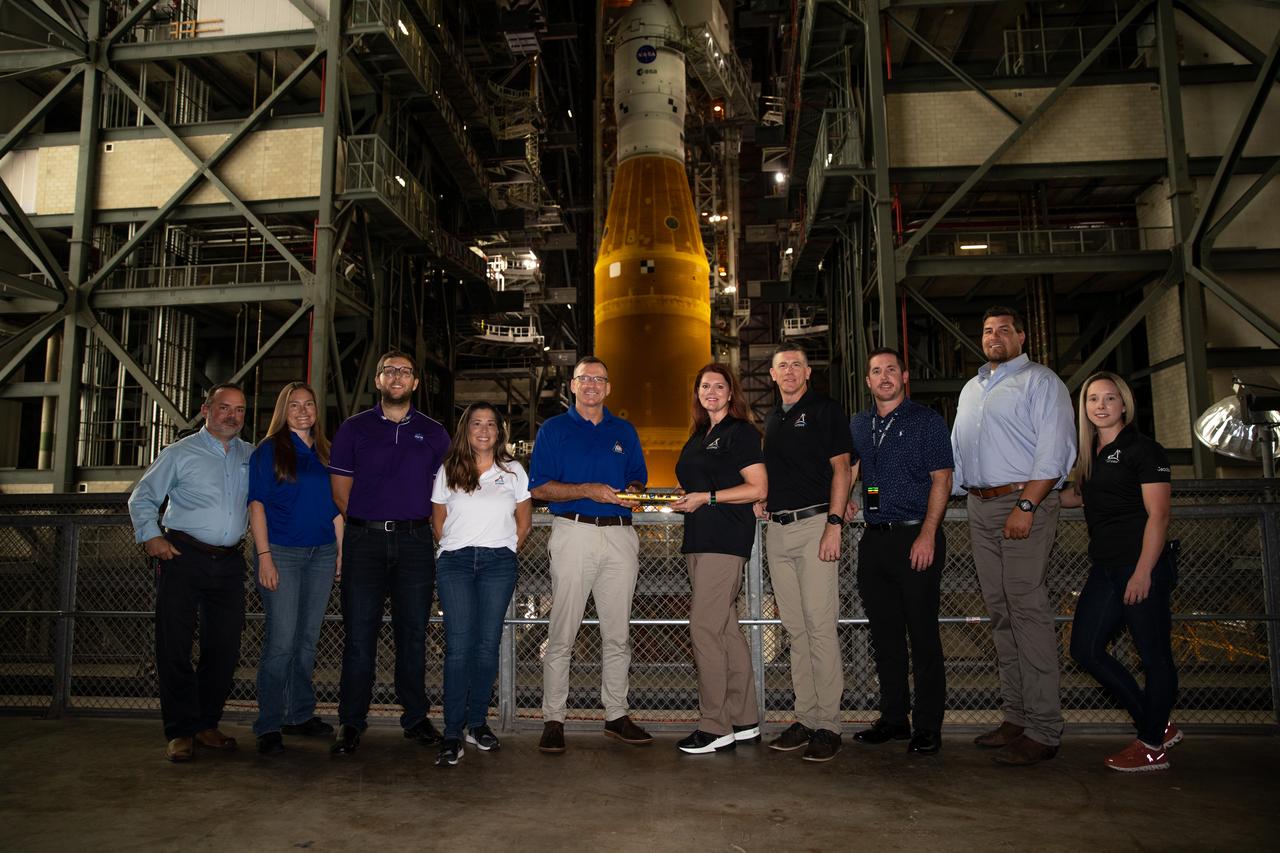
Cliff Lanham, fifth from the left, ground operations manager with NASA’s Exploration Ground Systems (EGS), hands off the baton to Charlie Blackwell-Thompson, Artemis I launch director, inside the Vehicle Assembly building at NASA’s Kennedy Space Center in Florida on Aug. 15, 2022. Also pictured are members of Kennedy’s EGS and Artemis launch teams. NASA’s Space Launch System (SLS) rocket, with the agency’s Orion spacecraft atop, is targeted to start its rollout to Launch Pad 39B on Aug. 16 at approximately 9 p.m., in preparation for the Artemis I launch – set for no earlier than Aug. 29. Artemis I will be the first integrated test of the SLS and Orion. In later missions, NASA will land the first woman and the first person of color on the Moon, paving the way for a long-term lunar presence and serving as a steppingstone on the way to Mars.
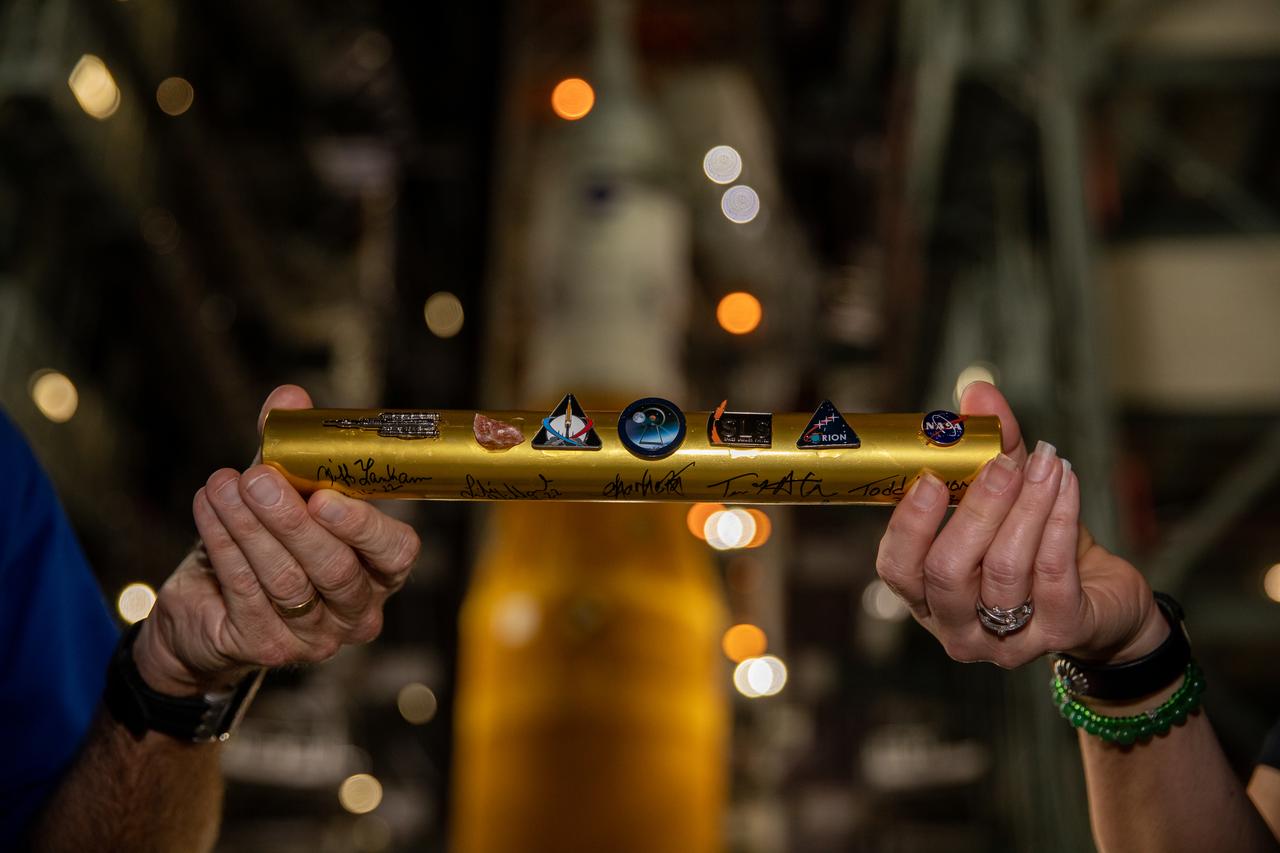
Cliff Lanham, ground operations manager with NASA’s Exploration Ground Systems, hands off the baton to Charlie Blackwell-Thompson, Artemis I launch director, inside the Vehicle Assembly building at NASA’s Kennedy Space Center in Florida on Aug. 15, 2022. NASA’s Space Launch System (SLS) rocket, with the agency’s Orion spacecraft atop, is targeted to start its rollout to Launch Pad 39B on Aug. 16 at approximately 9 p.m., in preparation for the Artemis I launch – set for no earlier than Aug. 29. Artemis I will be the first integrated test of the SLS and Orion. In later missions, NASA will land the first woman and the first person of color on the Moon, paving the way for a long-term lunar presence and serving as a steppingstone on the way to Mars.
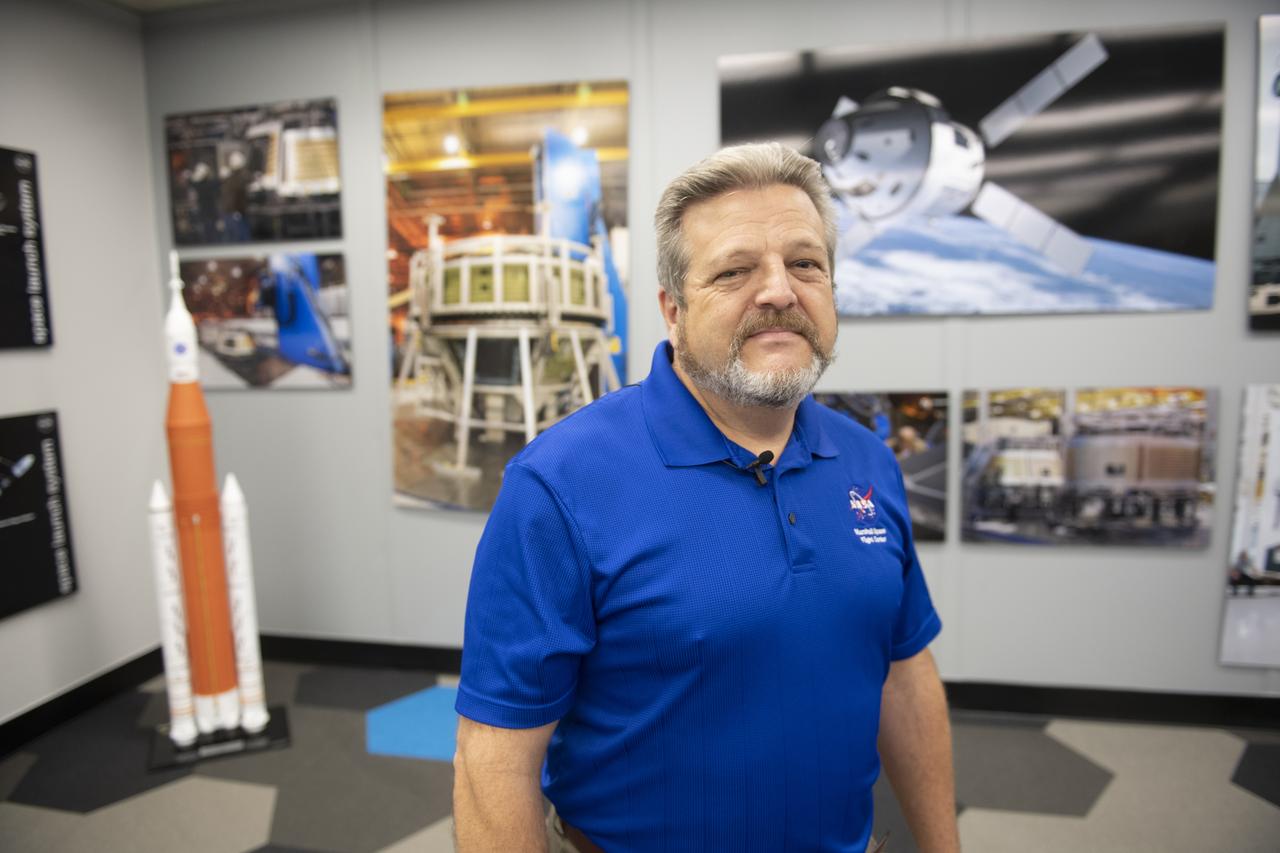
MAF Director Robert Champion stands within the Michoud Assembly Facility model room to showcase the Artemis program, Space Launch System (SLS) hardware, and facility resources of America’s Rocket Factory.
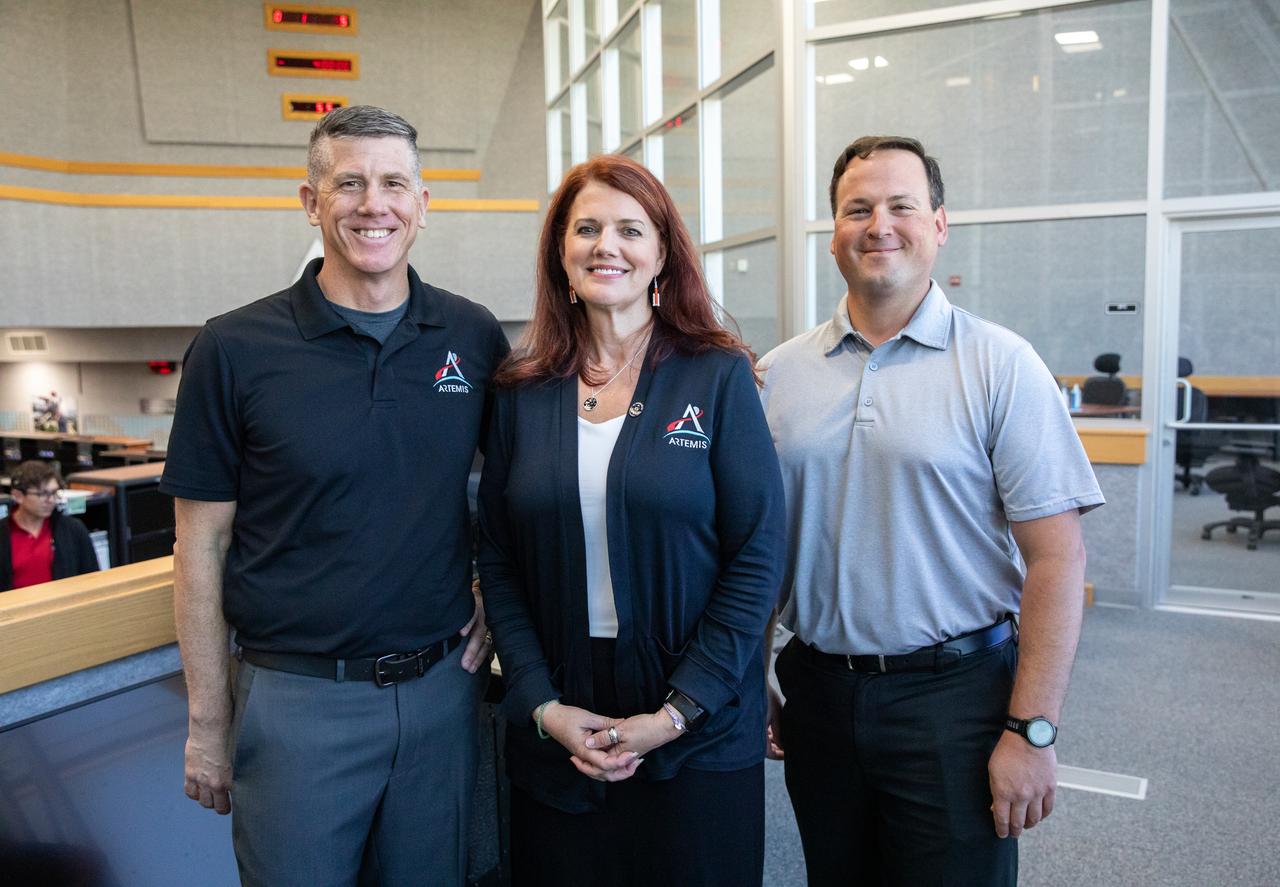
Artemis Launch Director Charlie Blackwell-Thompson, center, is inside Firing Room 1 of the Launch Control Center at NASA’s Kennedy Space Center in Florida during the inaugural Artemis I launch director awards and plaque ceremony on March 24, 2023. At left is Jeremy Graeber, Artemis assistant launch director. At right is Wes Mosedale, technical assistant to the launch director. Following tradition from the Apollo and Space Shuttle Programs, the Artemis I plaque was added to the wall in Firing Room 1 by Blackwell-Thompson. The first in a series of increasingly complex missions, Artemis I launched successfully from Kennedy’s Launch Pad 39B at 1:47 a.m. EST on Nov. 16, 2022.
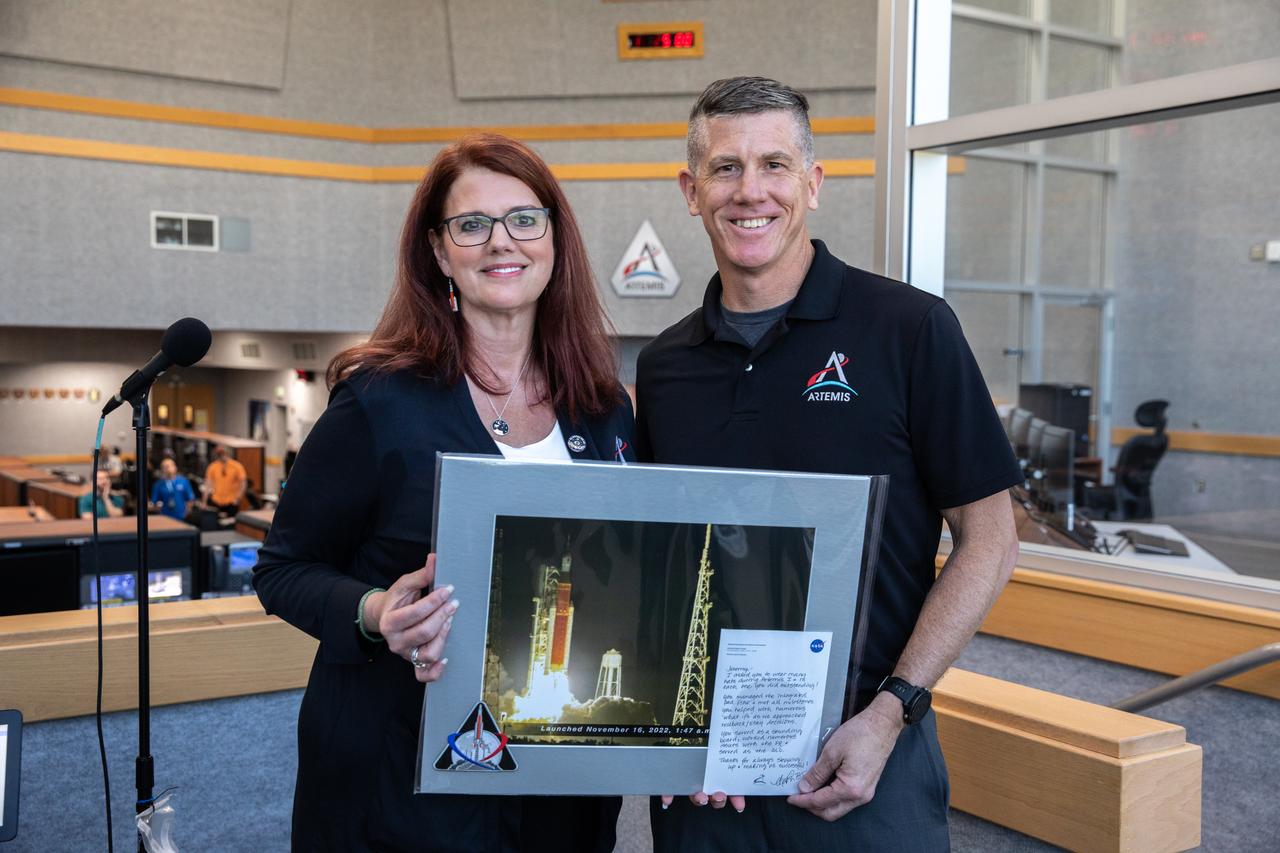
Artemis Launch Director Charlie Blackwell-Thompson (left) acknowledged and honored members of the Artemis team during the inaugural Artemis Launch Director Awards, held March 24, 2023, inside Firing Room 1 of the Rocco A. Petrone Launch Control Center at NASA’s Kennedy Space Center in Florida. Award recipients included Assistant Launch Director Jeremy Graeber, who directly supports and assists Blackwell-Thompson during launch countdown operations. Artemis I launched successfully from Kennedy's Launch Pad 39B at 1:47 a.m. EST on Nov. 16, 2022.
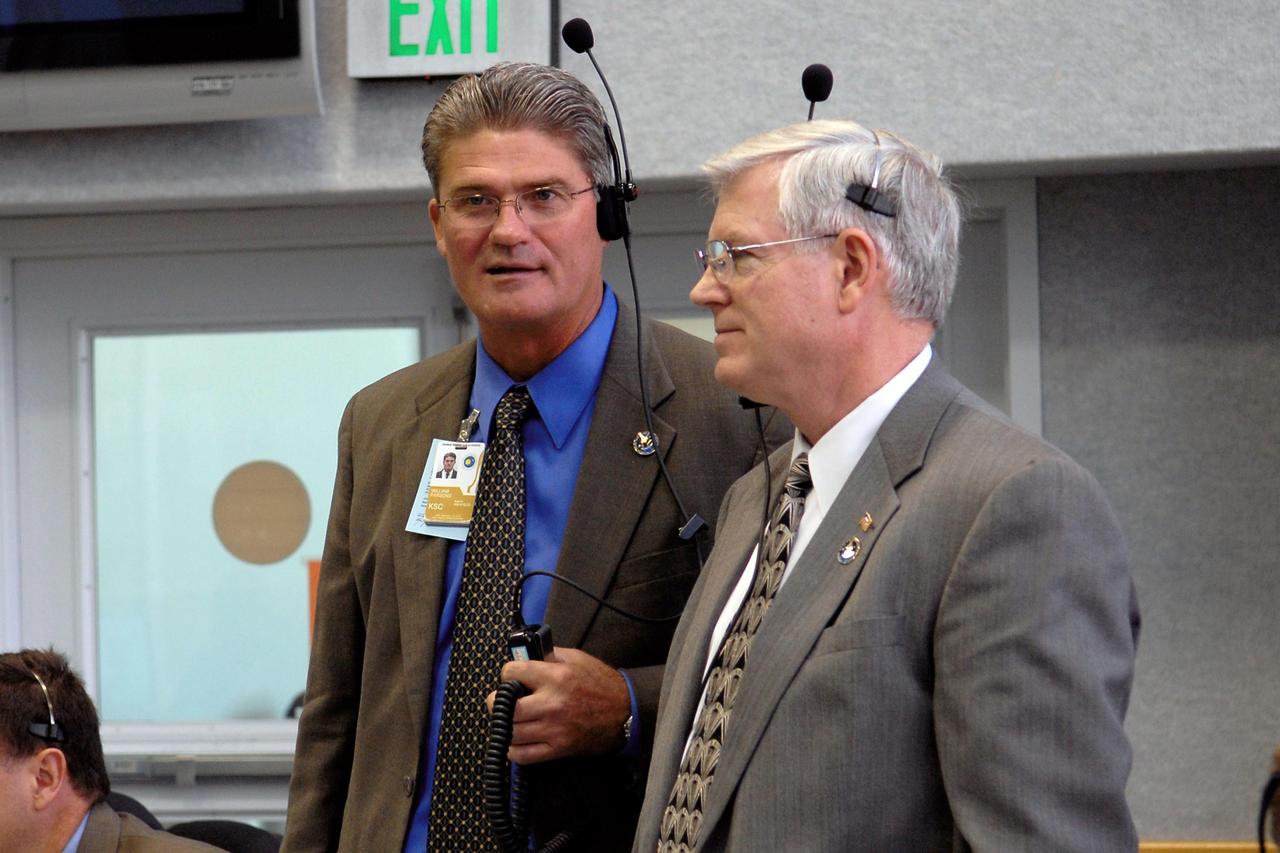
STS120-S-012 (23 Oct. 2007) --- In the firing room of the Launch Control Center at NASA's Kennedy Space Center, KSC Director Bill Parsons (left) and Johnson Space Center Director Michael Coats wait for the final countdown of Space Shuttle Discovery on mission STS-120. Liftoff was on time at 11:38:19 a.m. (EDT). Discovery carries the Italian-built U.S. Node 2, called Harmony. During the 14-day STS-120 mission, the crew will install Harmony and move the P6 solar arrays to their permanent position and deploy them.

Artemis Launch Director Charlie Blackwell-Thompson, at left, holds the Artemis I plaque inside the lobby of the Launch Control Center at NASA’s Kennedy Space Center in Florida on March 24, 2023. Joining her from left are Shawn Quinn, manager, Exploration Ground Systems; and Kelvin Manning, Kennedy deputy director. Following tradition from the Apollo and Space Shuttle Programs, the plaque will be added to the wall behind them. The first in a series of increasingly complex missions, Artemis I launched successfully from Kennedy’s Launch Pad 39B at 1:47 a.m. EST on Nov. 16, 2022.
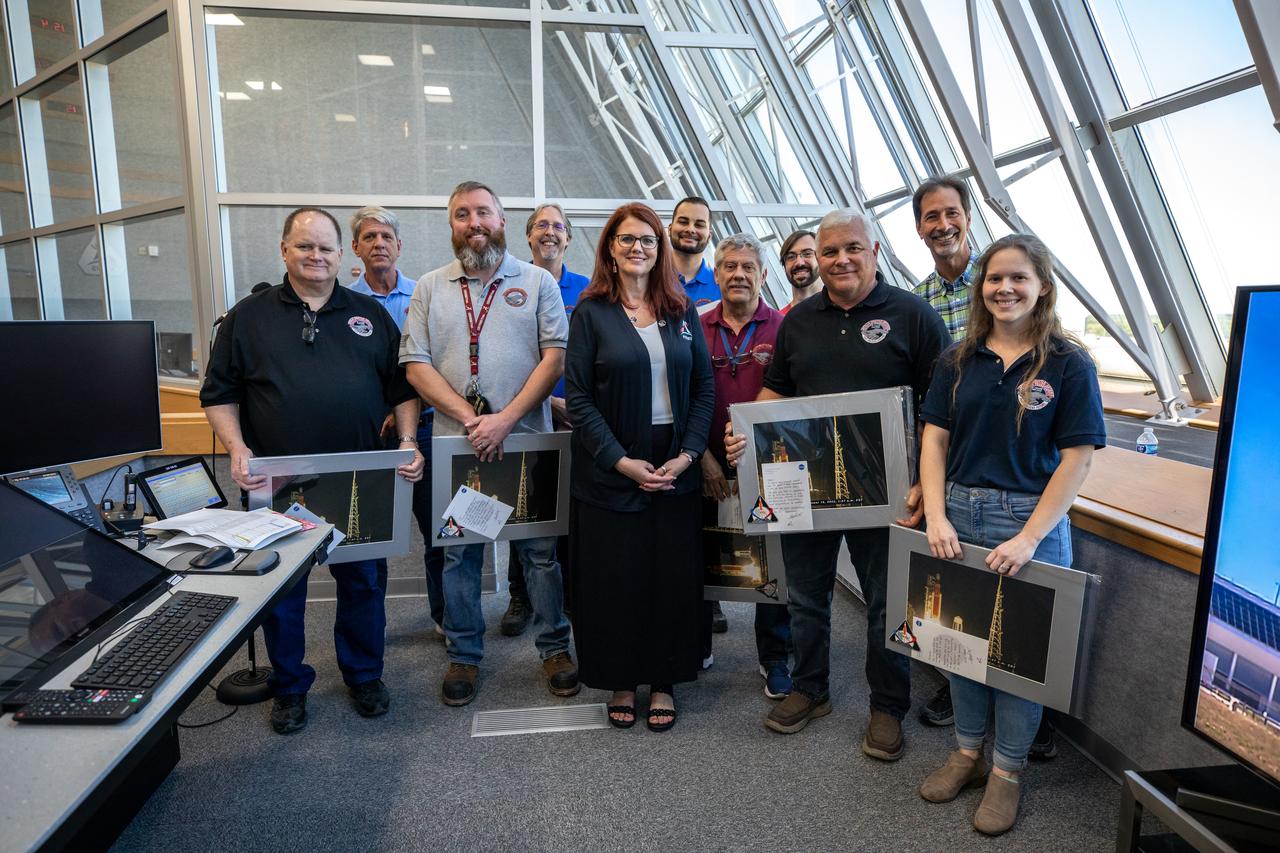
Artemis Launch Director Charlie Blackwell-Thompson (center) acknowledged and honored members of the Artemis team during the inaugural Artemis Launch Director Awards, held March 24, 2023, inside Firing Room 1 of the Rocco A. Petrone Launch Control Center at NASA’s Kennedy Space Center in Florida. Award recipients included members of the crawler transporter team, which using Crawler-Transporter 2, carried the agency’s mobile launcher with the Space Launch System rocket and Orion spacecraft 4.2 miles from the Vehicle Assembly Building to Launch Pad 39B for the launch of Artemis I. The first in a series of increasingly complex missions, Artemis I launched successfully at 1:47 a.m. EST on Nov. 16, 2022.
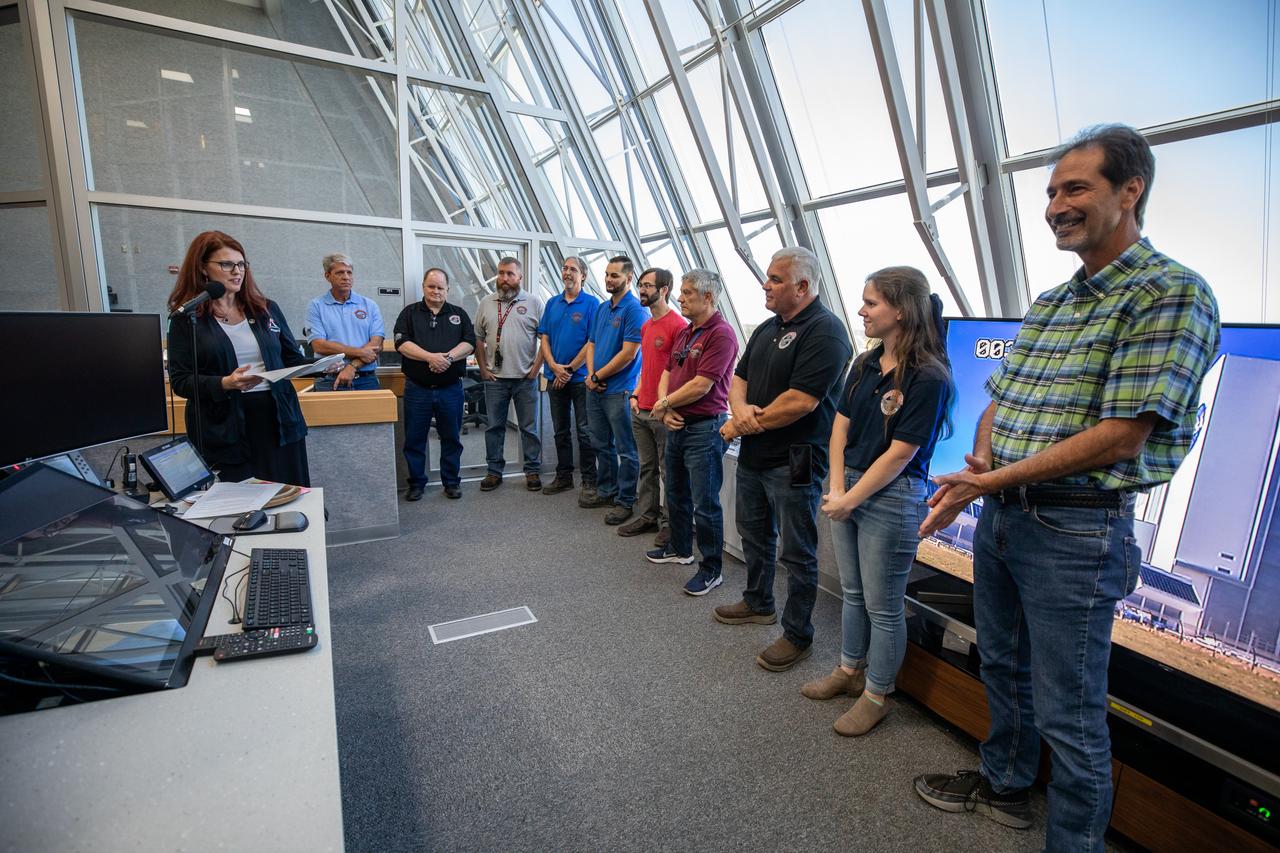
Artemis Launch Director Charlie Blackwell-Thompson (left) acknowledged and honored members of the Artemis team during the inaugural Artemis Launch Director Awards, held March 24, 2023, inside Firing Room 1 of the Rocco A. Petrone Launch Control Center at NASA’s Kennedy Space Center in Florida. Award recipients included members of the crawler transporter team, which using Crawler-Transporter 2, carried the agency’s mobile launcher with the Space Launch System rocket and Orion spacecraft 4.2 miles from the Vehicle Assembly Building to Launch Pad 39B for the launch of Artemis I. The first in a series of increasingly complex missions, Artemis I launched successfully at 1:47 a.m. EST on Nov. 16, 2022.
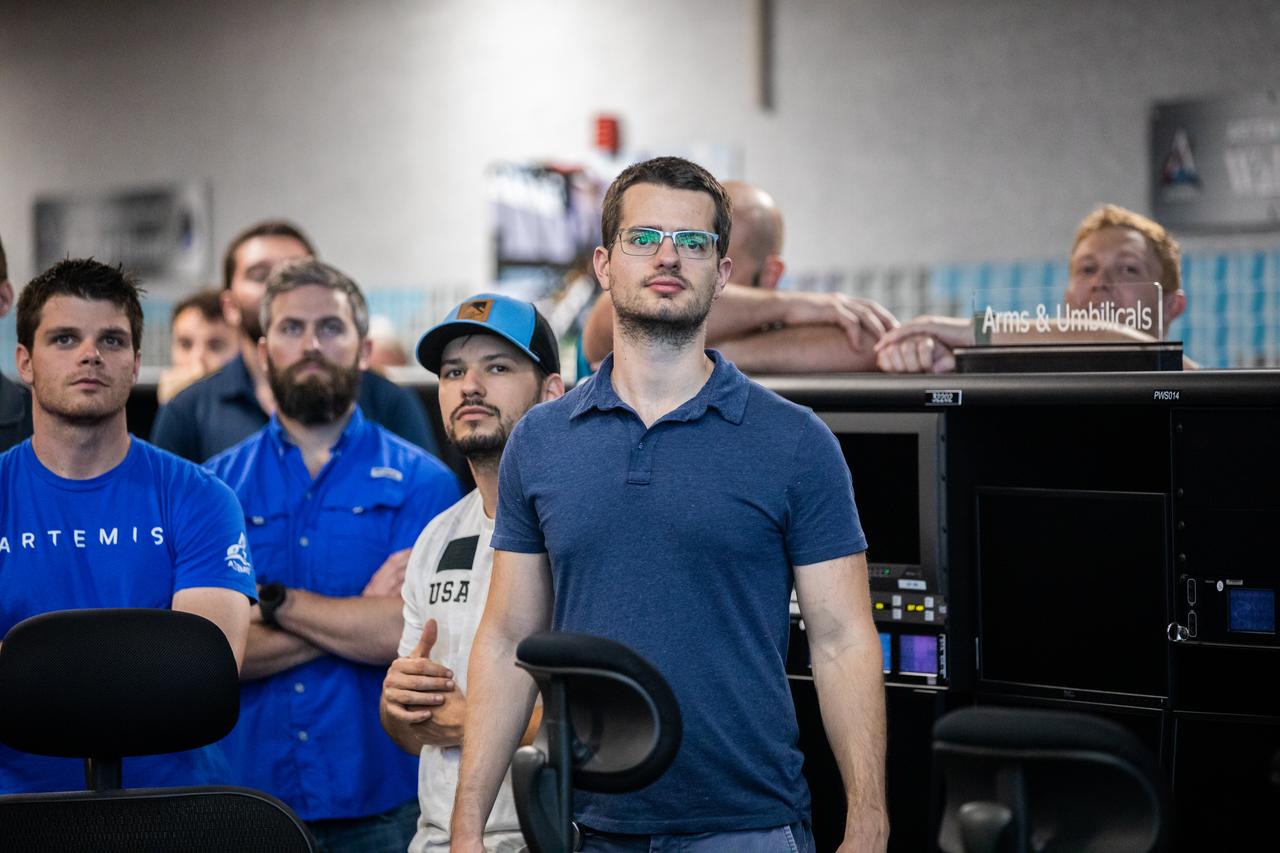
Artemis team members gather around Firing Room 1 of the Launch Control Center at NASA’s Kennedy Space Center in Florida on March 24, 2023 for the inaugural Artemis Launch Director Awards. The first in a series of increasingly complex missions, Artemis I launched successfully from Kennedy’s Launch Pad 39B at 1:47 a.m. EST on Nov. 16, 2022.
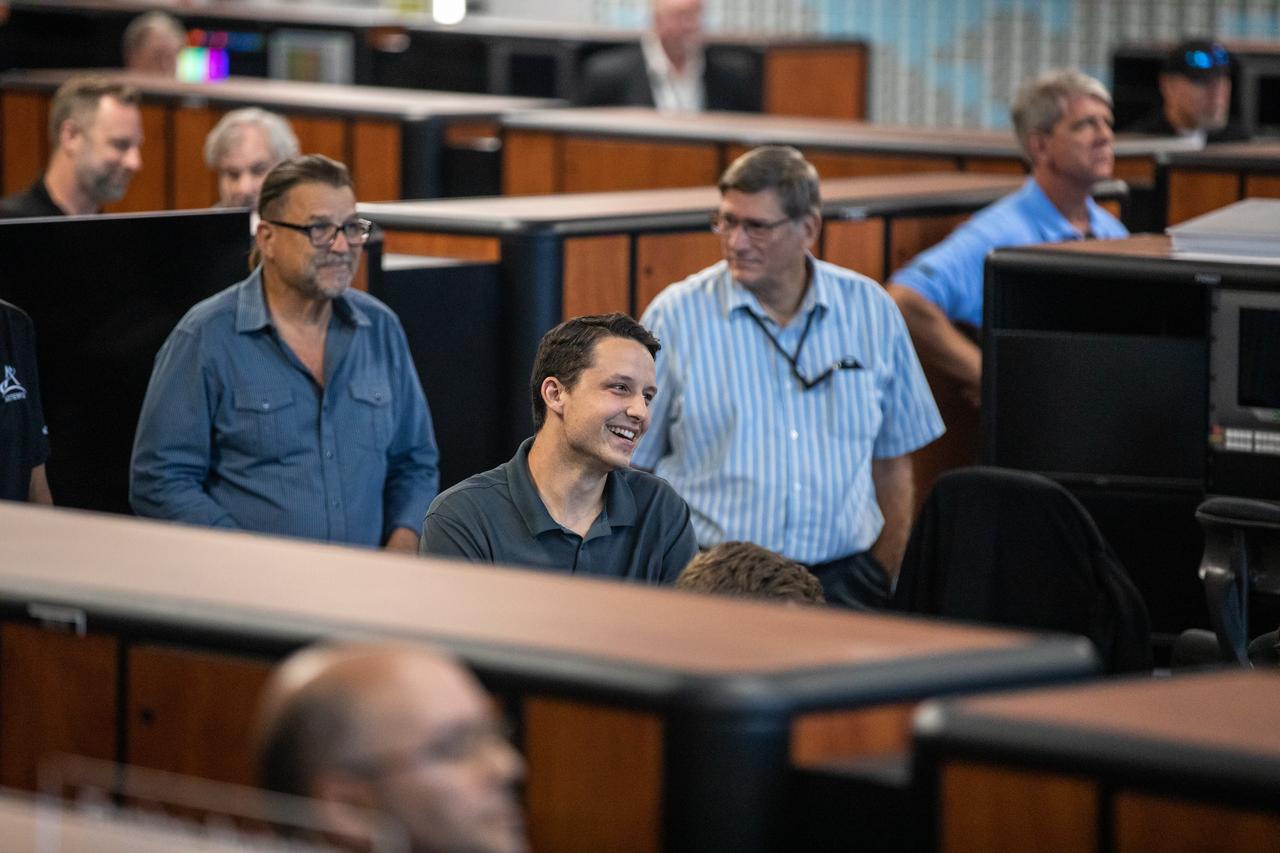
Artemis team members gather around Firing Room 1 of the Launch Control Center at NASA’s Kennedy Space Center in Florida on March 24, 2023 for the inaugural Artemis Launch Director Awards. The first in a series of increasingly complex missions, Artemis I launched successfully from Kennedy’s Launch Pad 39B at 1:47 a.m. EST on Nov. 16, 2022.
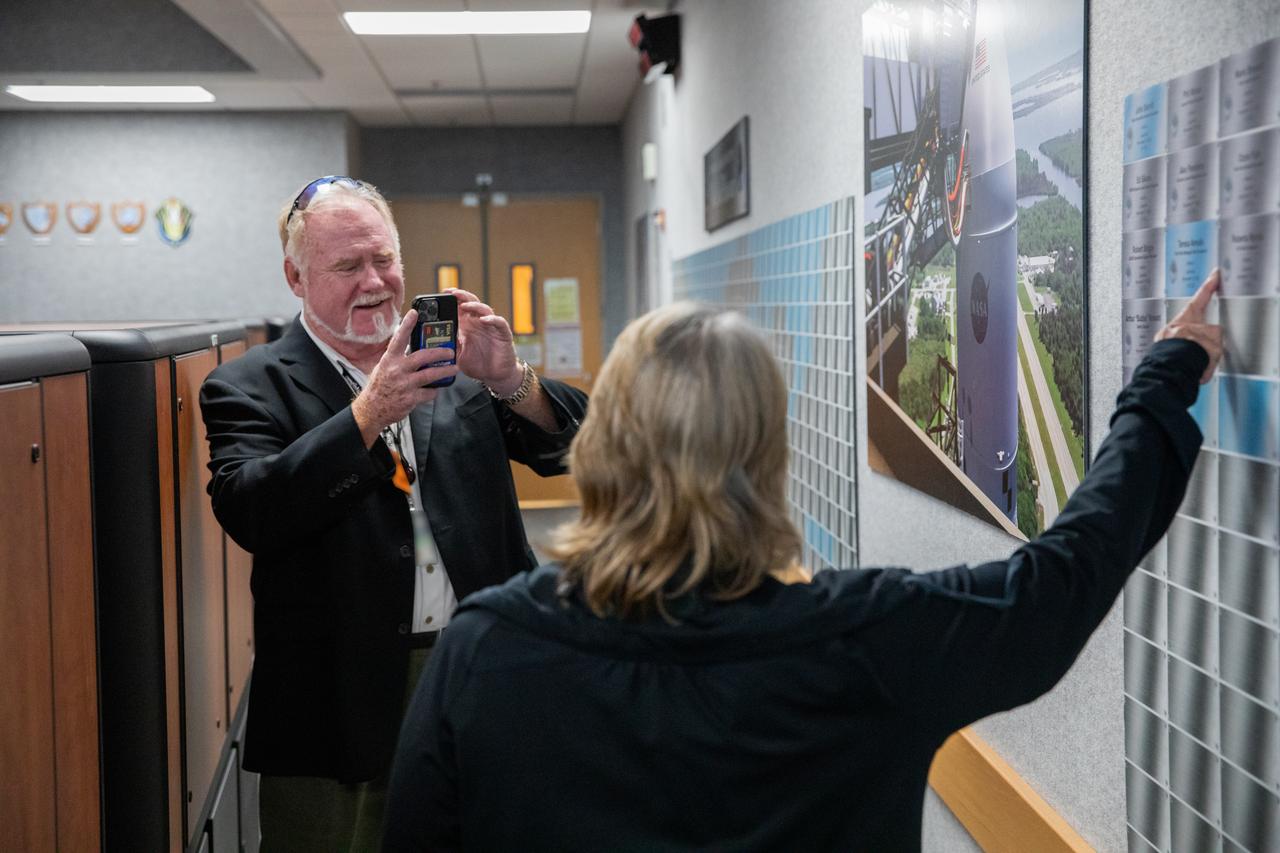
Artemis team members gather around Firing Room 1 of the Launch Control Center at NASA’s Kennedy Space Center in Florida on March 24, 2023 for the inaugural Artemis Launch Director Awards. The first in a series of increasingly complex missions, Artemis I launched successfully from Kennedy’s Launch Pad 39B at 1:47 a.m. EST on Nov. 16, 2022.
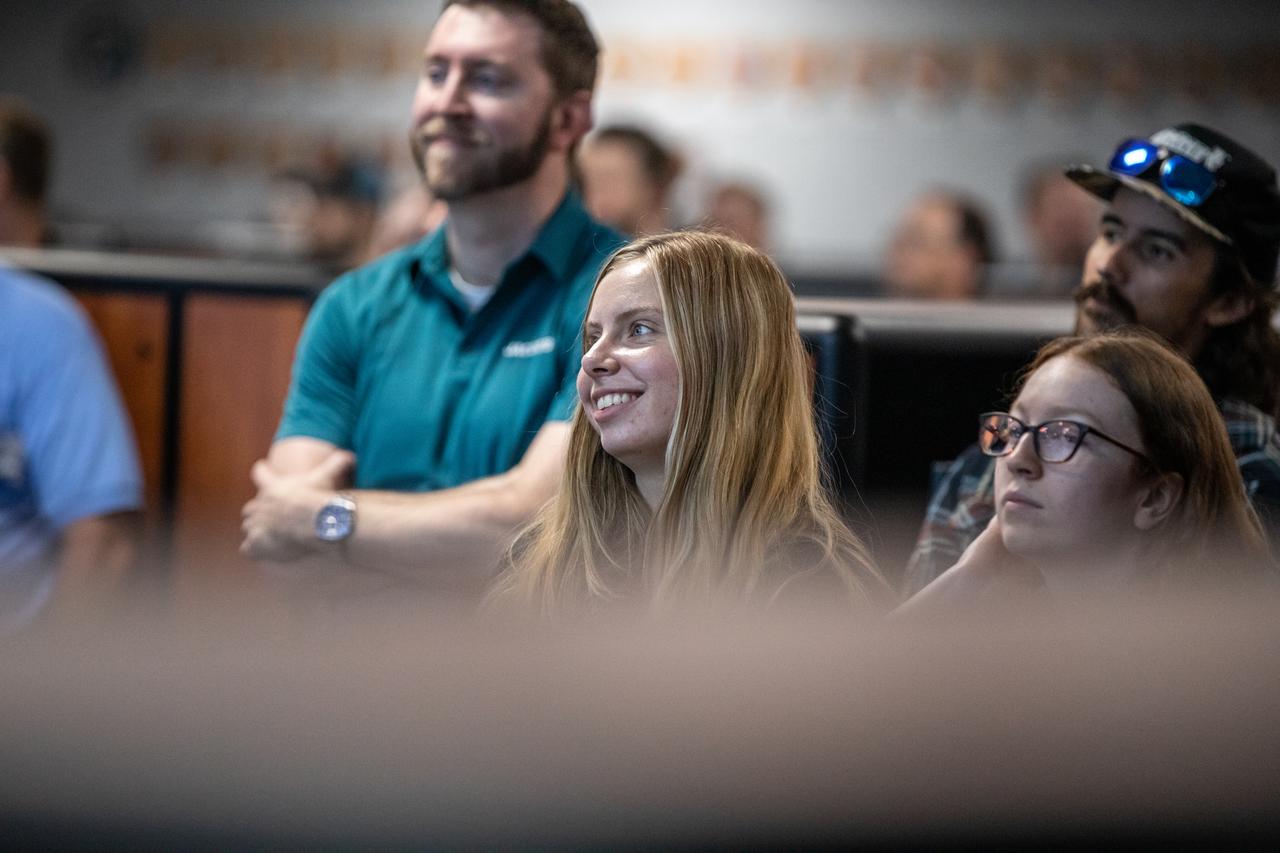
Artemis team members gather around Firing Room 1 of the Launch Control Center at NASA’s Kennedy Space Center in Florida on March 24, 2023 for the inaugural Artemis Launch Director Awards. The first in a series of increasingly complex missions, Artemis I launched successfully from Kennedy’s Launch Pad 39B at 1:47 a.m. EST on Nov. 16, 2022.
Artemis team members gather around Firing Room 1 of the Launch Control Center at NASA’s Kennedy Space Center in Florida on March 24, 2023 for the inaugural Artemis Launch Director Awards. The first in a series of increasingly complex missions, Artemis I launched successfully from Kennedy’s Launch Pad 39B at 1:47 a.m. EST on Nov. 16, 2022.
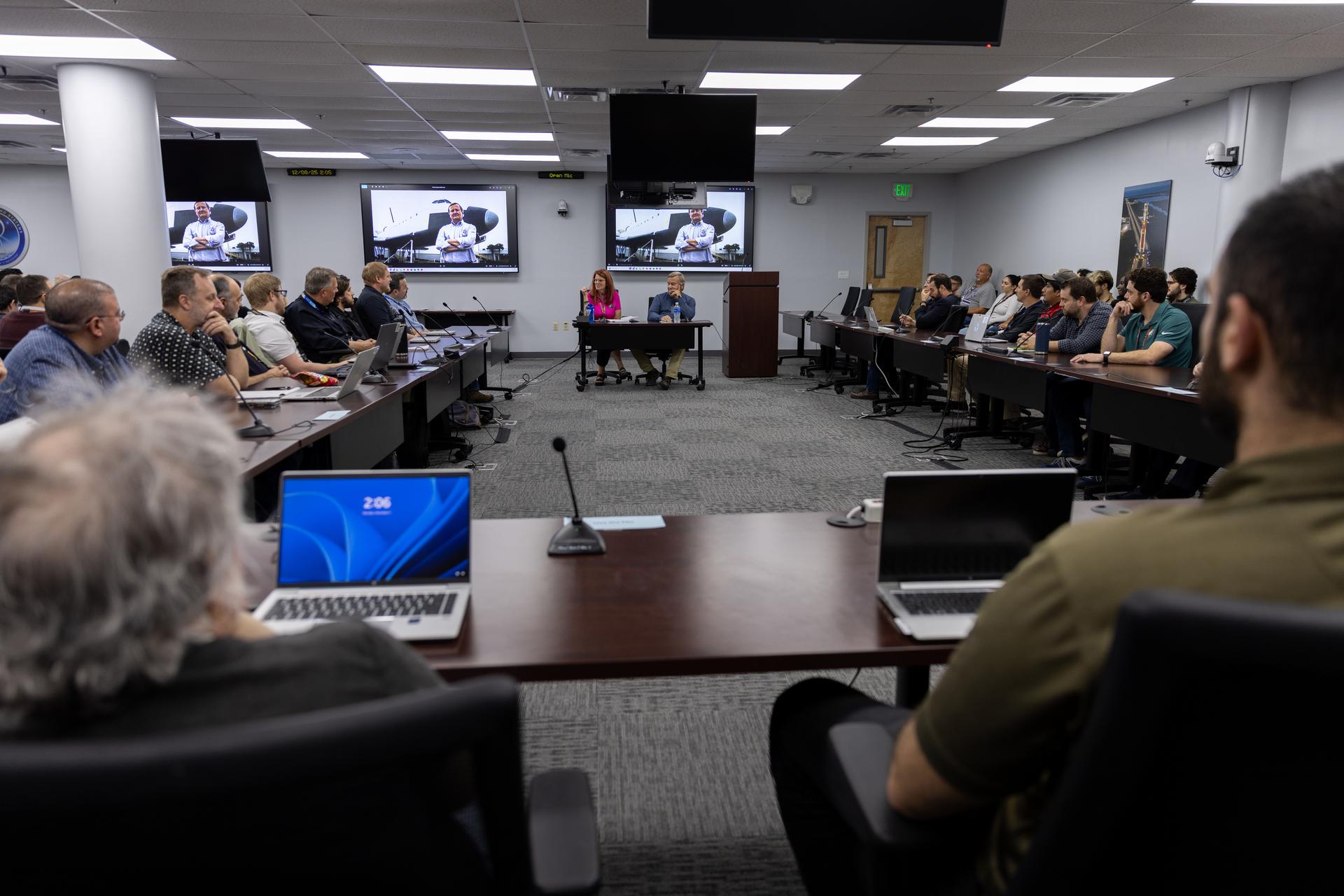
From left, Artemis Launch Director Charlie Blackwell-Thompson with the Exploration Ground Systems Program and former NASA Space Shuttle Launch Director Mike Leinbach speak during a meetup inside the Operations Support Building I at NASA’s Kennedy Space Center in Florida on Monday, Dec. 8, 2025. Leinbach spoke about his experience as the launch director for several space shuttle missions and discussed the upcoming Artemis II mission that will send four astronauts around the Moon and back in early 2026 from the spaceport’s Launch Complex 39B at NASA Kennedy.
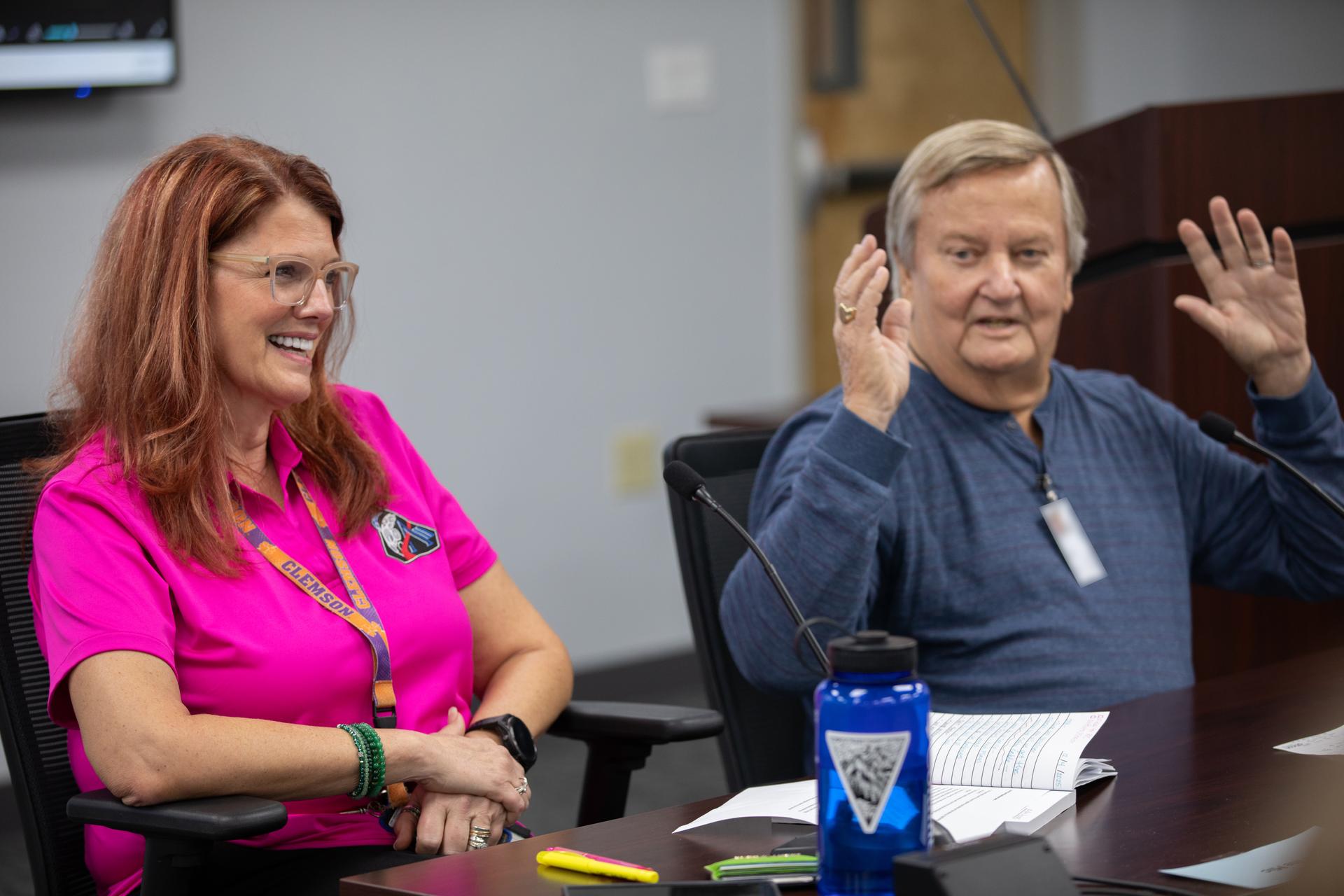
From left, Artemis Launch Director Charlie Blackwell-Thompson with the Exploration Ground Systems Program and former NASA Space Shuttle Launch Director Mike Leinbach speak during a meetup inside the Operations Support Building I at NASA’s Kennedy Space Center in Florida on Monday, Dec. 8, 2025. Leinbach spoke about his experience as the launch director for several space shuttle missions and discussed the upcoming Artemis II mission that will send four astronauts around the Moon and back in early 2026 from the spaceport’s Launch Complex 39B at NASA Kennedy.
From left, Artemis Launch Director Charlie Blackwell-Thompson with the Exploration Ground Systems Program and former NASA Space Shuttle Launch Director Mike Leinbach speak during a meetup inside the Operations Support Building I at NASA’s Kennedy Space Center in Florida on Monday, Dec. 8, 2025. Leinbach spoke about his experience as the launch director for several space shuttle missions and discussed the upcoming Artemis II mission that will send four astronauts around the Moon and back in early 2026 from the spaceport’s Launch Complex 39B at NASA Kennedy.
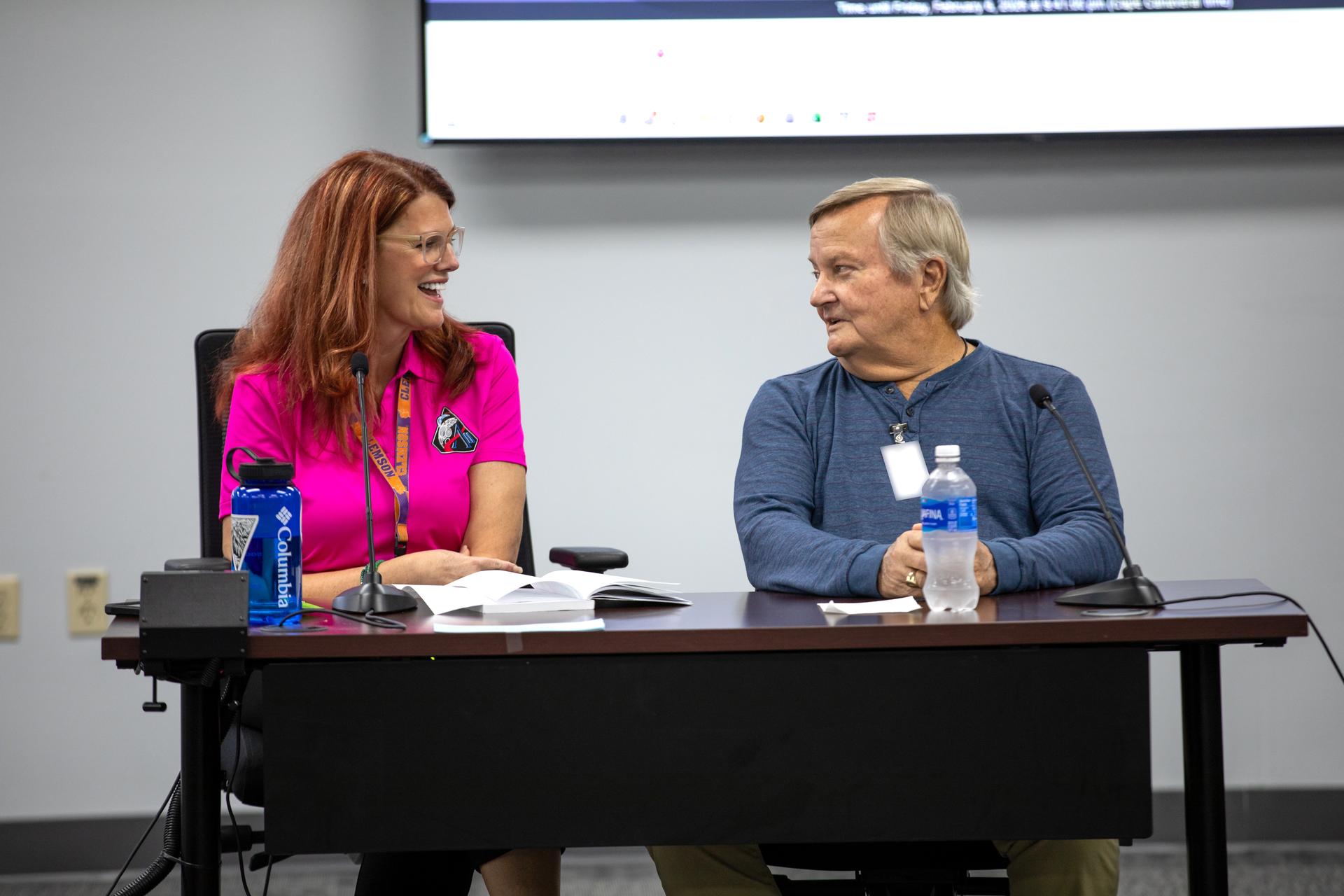
From left, Artemis Launch Director Charlie Blackwell-Thompson with the Exploration Ground Systems Program and former NASA Space Shuttle Launch Director Mike Leinbach speak during a meetup inside the Operations Support Building I at NASA’s Kennedy Space Center in Florida on Monday, Dec. 8, 2025. Leinbach spoke about his experience as the launch director for several space shuttle missions and discussed the upcoming Artemis II mission that will send four astronauts around the Moon and back in early 2026 from the spaceport’s Launch Complex 39B at NASA Kennedy.
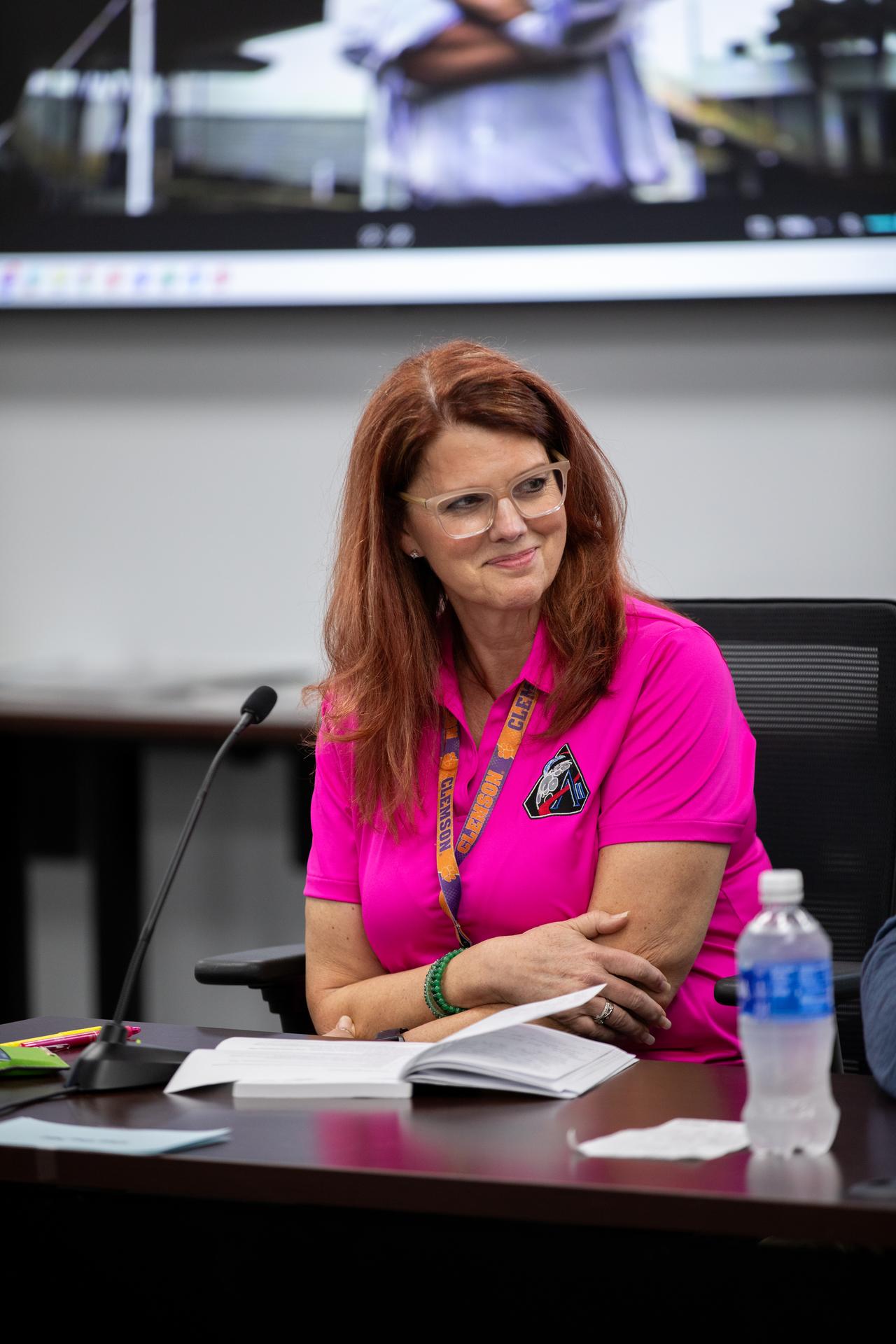
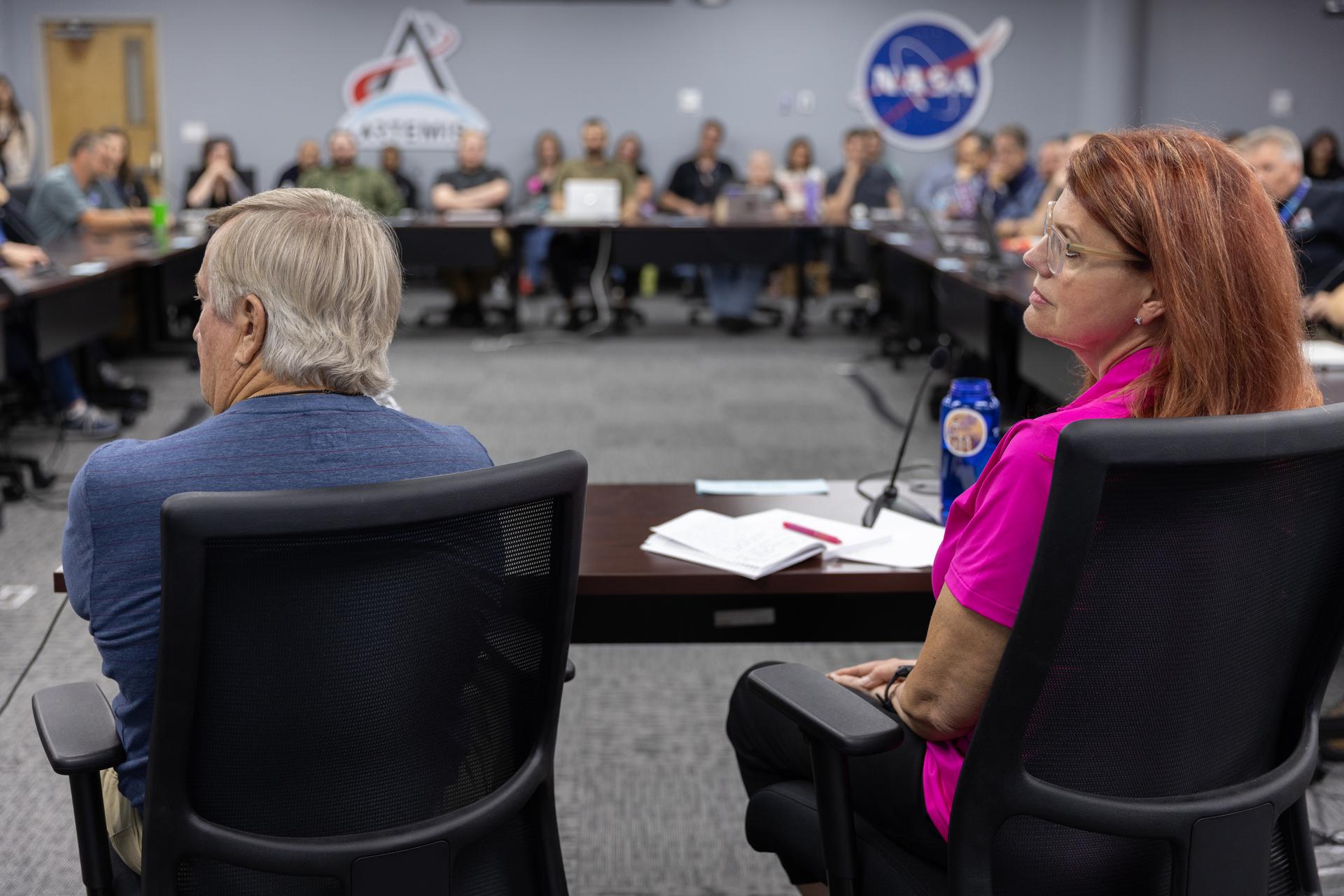
Artemis Launch Director Charlie Blackwell-Thompson with the Exploration Ground Systems Program listens during a presentation by former NASA Space Shuttle Launch Director Mike Leinbach inside the Operations Support Building I at NASA’s Kennedy Space Center in Florida on Monday, Dec. 8, 2025. Leinbach spoke about his experience as the launch director for several space shuttle missions and discussed the upcoming Artemis II mission that will send four astronauts around the Moon and back in early 2026 from the spaceport’s Launch Complex 39B at NASA Kennedy.
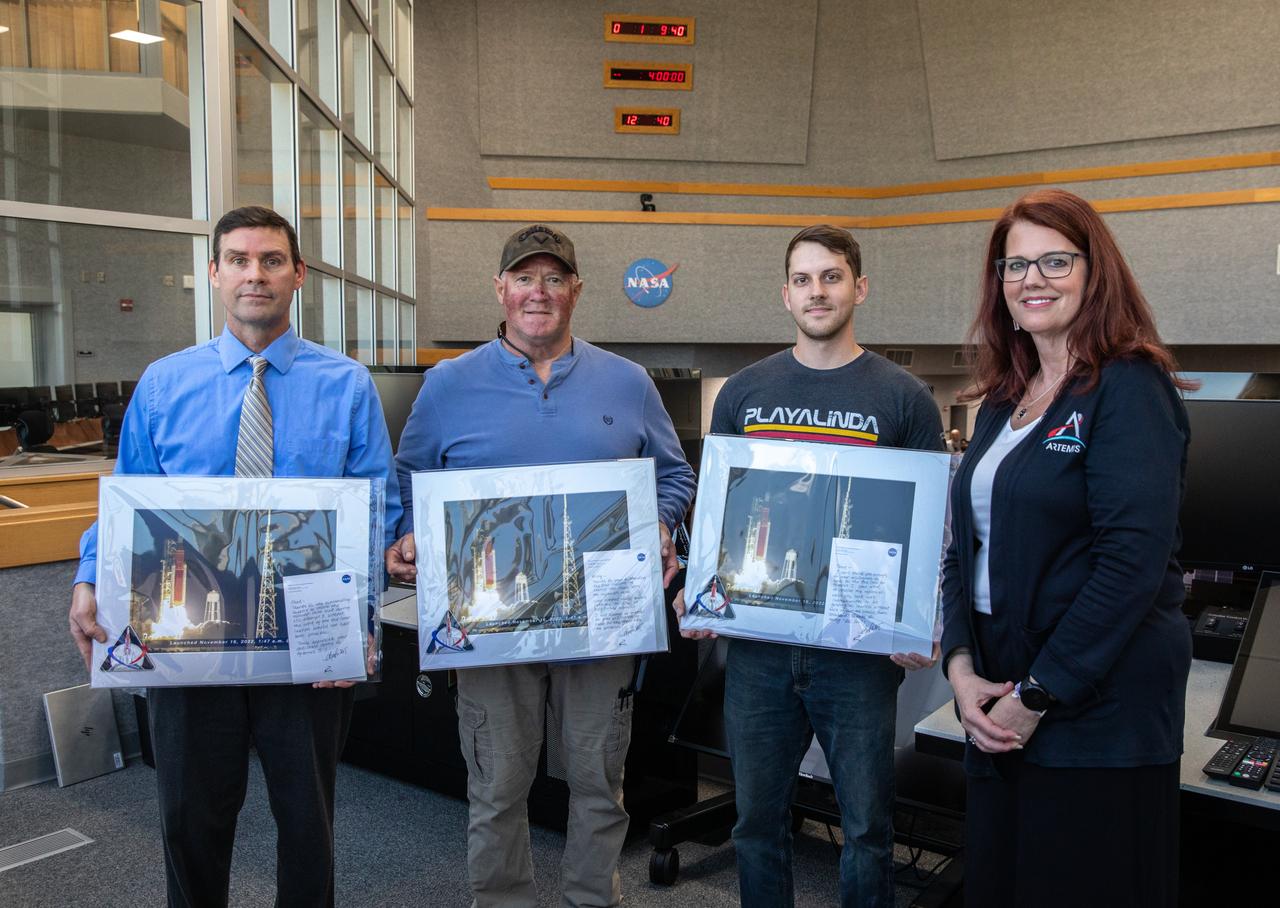
Artemis Launch Director Charlie Blackwell-Thompson (right) acknowledged and honored members of the Artemis team during the inaugural Artemis Launch Director Awards, held March 24, 2023, inside Firing Room 1 of the Rocco A. Petrone Launch Control Center at NASA’s Kennedy Space Center in Florida. Award recipients included members of the red crew, who are employees of ERC – a company that partners with Jacobs, which is the prime contractor on NASA’s Test and Operations Support Contract. From left are ERC employees Chad Garrett, safety engineer; Billy Cairns, cryogenic engineering technician; and Trent Annis, cryogenic engineering technician. The team of technicians are part of the personnel specially trained to conduct operations at the launch pad during cryogenic loading operations at the launch pad. Prior to the launch of Artemis I, the red crew entered the zero deck, or base, of the mobile launcher and tightened several bolts to troubleshoot a valve used to replenish the core stage with liquid hydrogen, which showed a leak with readings above limits. Artemis I launched successfully from Kennedy's Launch Pad 39B at 1:47 a.m. EST on Nov. 16, 2022.
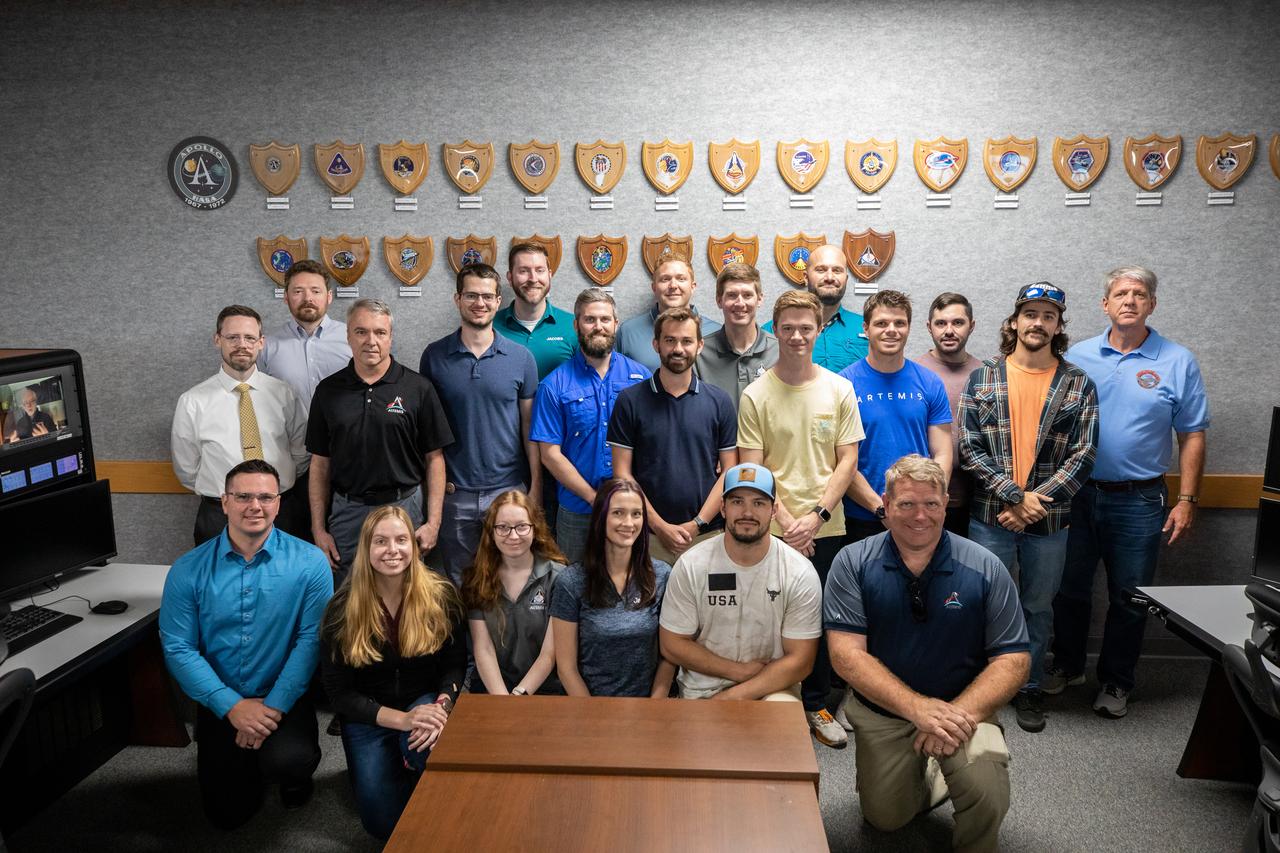
The Arms and Umbilicals (AUS) engineering team gather for a photograph during the Artemis launch director awards and plaque ceremony inside Firing Room 1 of the Launch Control Center at NASA’s Kennedy Space Center in Florida on March 24, 2023. Following tradition from the Apollo and Space Shuttle Programs, the AUS teams hung the Artemis I mission plaque to the wall behind them. The first in a series of increasingly complex missions, Artemis I launched successfully from Kennedy’s Launch Pad 39B at 1:47 a.m. EST on Nov. 16, 2022.
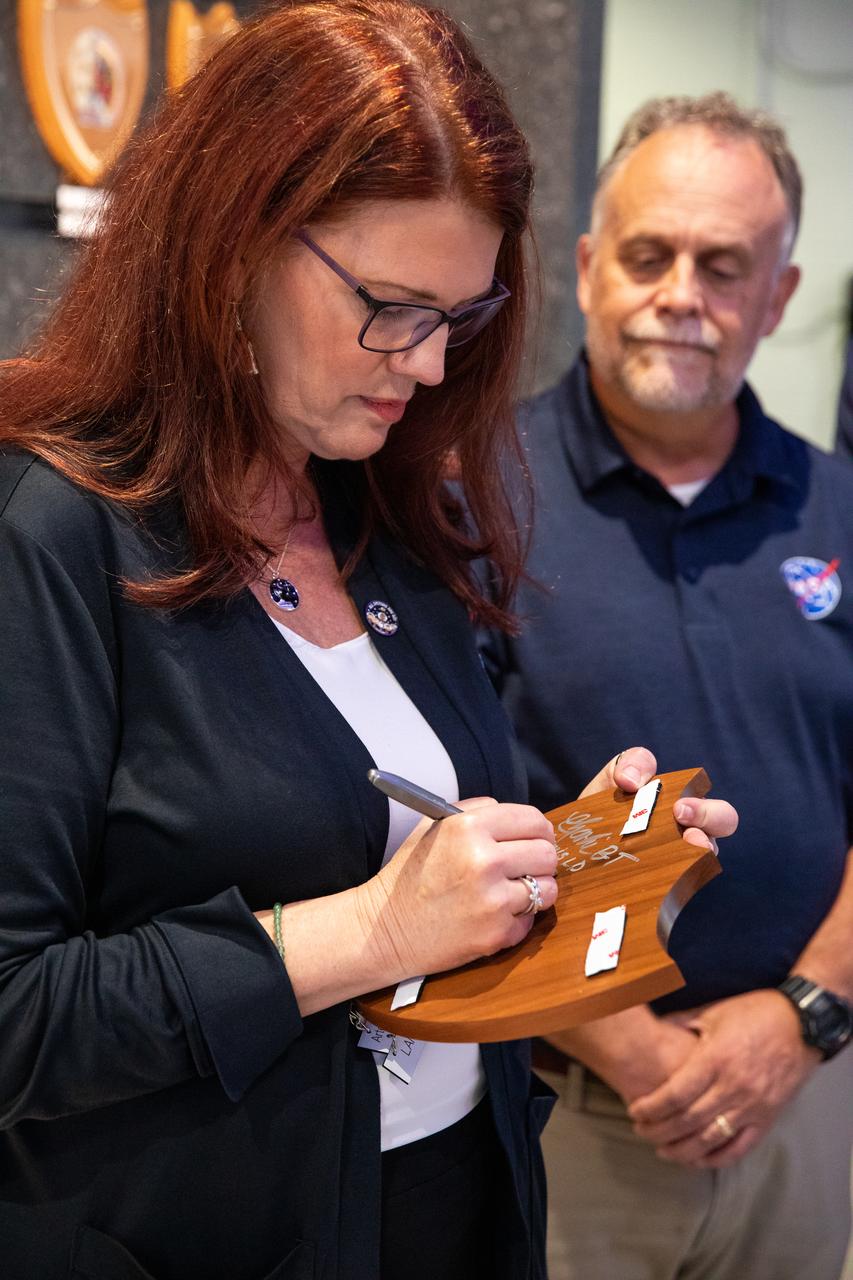
Artemis Launch Director Charlie Blackwell-Thompson, at left, signs the back of the Artemis I plaque inside the lobby of the Launch Control Center at NASA’s Kennedy Space Center in Florida on March 24, 2023. Joining her is Shawn Quinn, manager, Exploration Ground Systems. Following tradition from the Apollo and Space Shuttle Programs, the plaque will be added to the wall behind them. The first in a series of increasingly complex missions, Artemis I launched successfully from Kennedy’s Launch Pad 39B at 1:47 a.m. EST on Nov. 16, 2022.
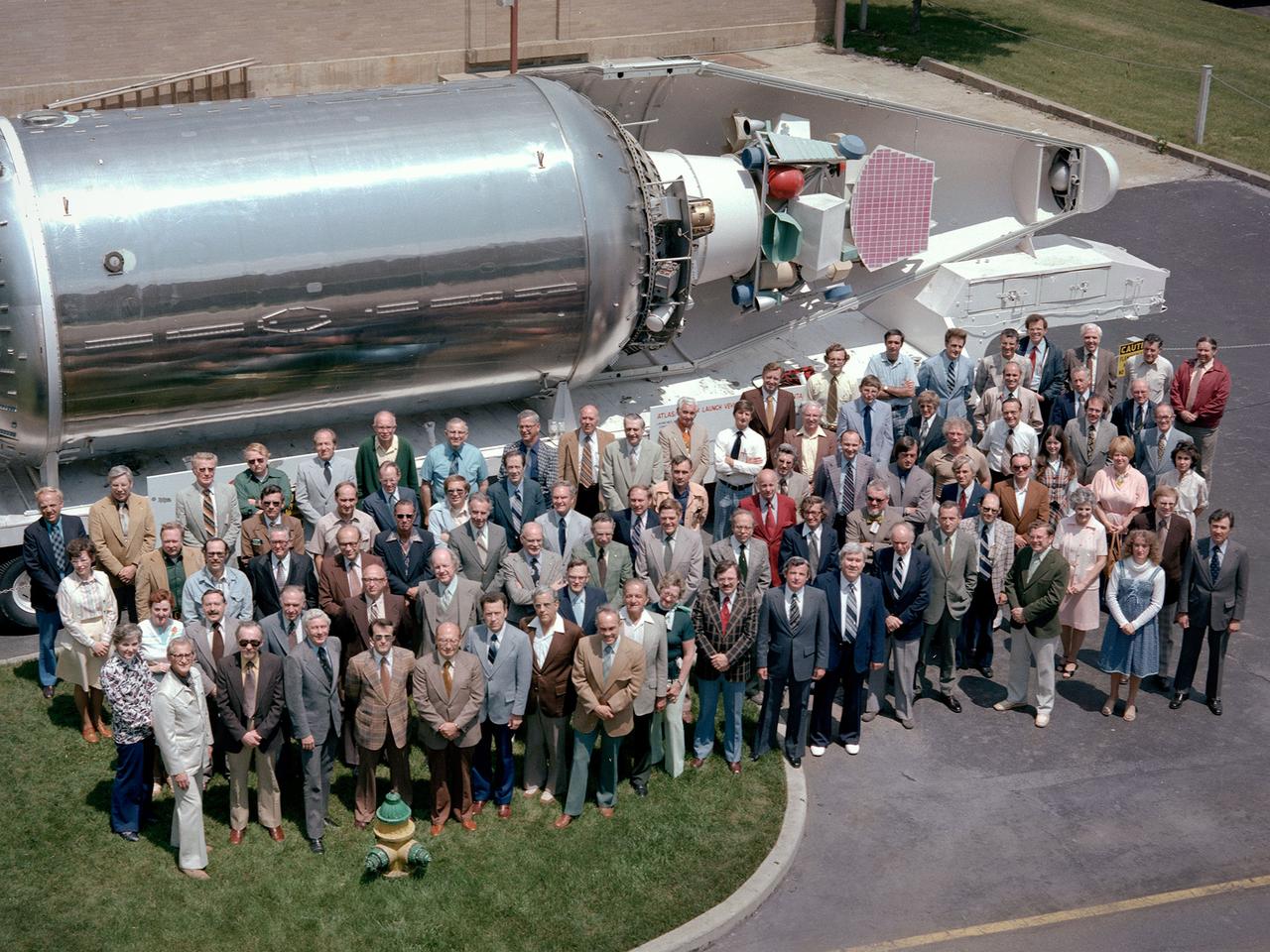
The National Aeronautics and Space Administration (NASA) Lewis Research Center’s Launch Vehicle Directorate in front of a full-scale model of the Centaur second-stage rocket. The photograph was taken to mark Centaur’s fiftieth launch. NASA Lewis managed the Centaur Program since 1962. At that time, the only prior launch attempt ended in failure. Lewis improved the spacecraft and tested it extensively throughout the early 1960s. In May 1966 an Atlas-Centaur sent the Surveyor spacecraft to the moon. It was the first successful soft landing on another planet. The Launch Vehicles Division was formed in 1969 to handle the increasing number of Centaur launches. The Lewis team became experts at integrating the payload with the Centaur and calculating proper trajectories for the missions. Centaur’s first 50 missions included Orbiting Astronomical Observatories, the Mariner 6 and 7 flybys of Mars, Mariner 9 which was the first spacecraft to orbit around another planet, the Pioneer 10 and 11 missions to the outer solar system, the Mariner 10 flyby of Venus and Mercury, the Viking 1 and 2 Mars landers, Voyagers 1 and 2 missions to Jupiter, Saturn, Uranus, and Neptune, and the Pioneer 12 and 13 flights to Venus.
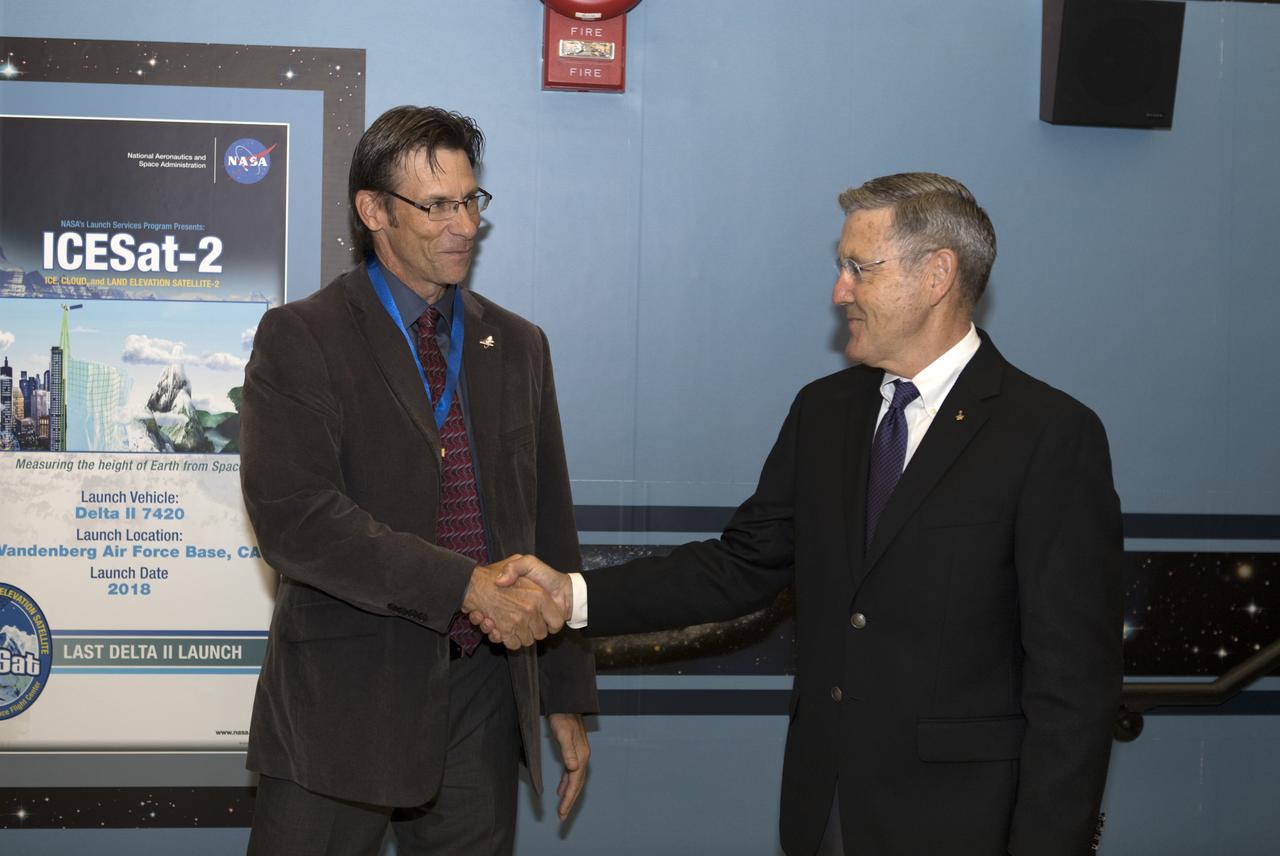
NASA Kennedy Space Center Director Bob Cabana, at right, congratulates Chuck Dovale, deputy program manager for the Launch Services Program (LSP), on Aug. 7, 2018. During a visit to the center, NASA Administrator Jim Bridenstine presents a NASA Distinguished Service Medal to Dovale. During his tour of Hangar AE and LSP's Mission Director's Center, Bridenstine received updates on LSP missions and accomplishments.
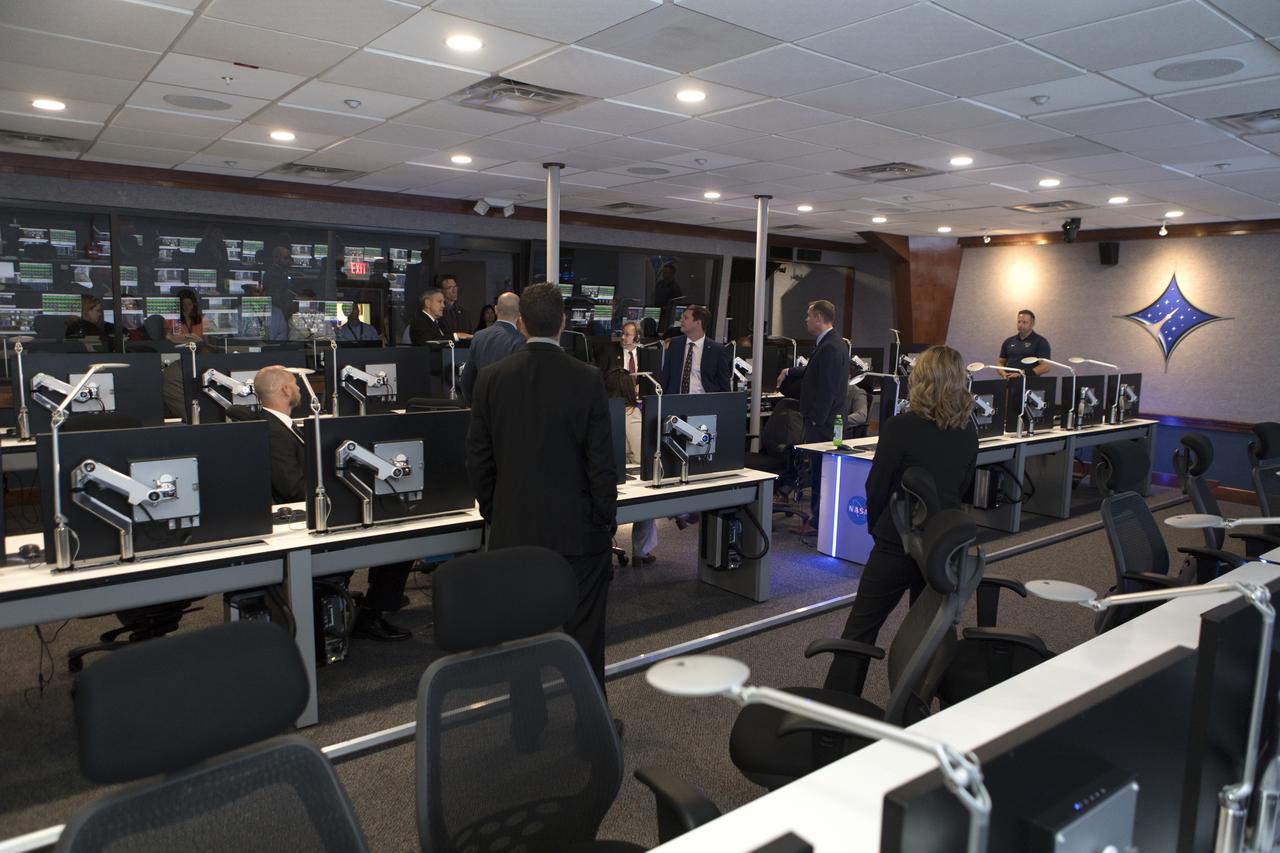
NASA Administrator Jim Bridenstine, third row from front, second from right, tours the Launch Services Program's Mission Director's Center in Hangar AE, on Aug. 7, 2018, at Cape Canaveral Air Force Station in Florida. Kennedy Space Center Director Bob Cabana, first row up front, center, updates the administrator on LSP missions and accomplishments.
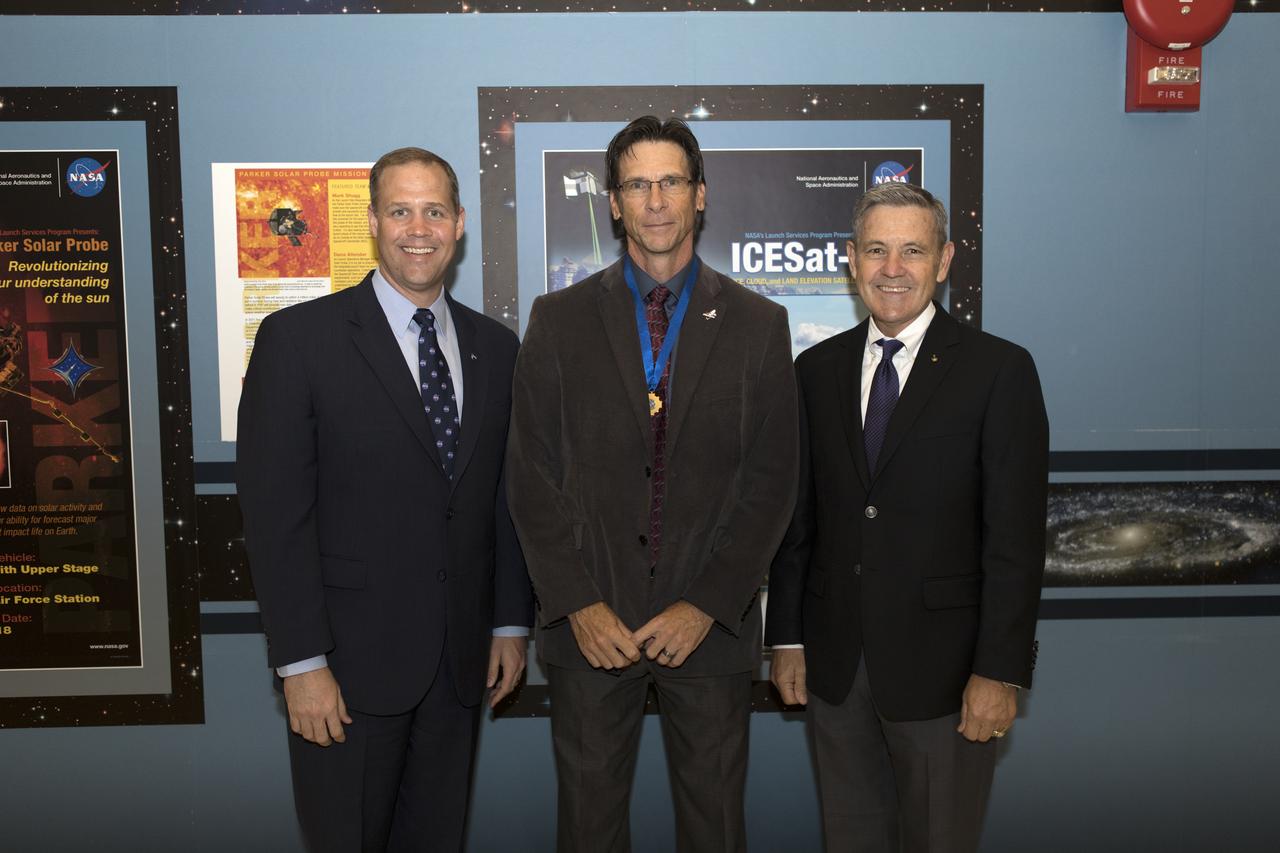
NASA Administrator Jim Bridenstine, left, tours Kennedy Space Center facilities and awards Chuck Dovale, center, deputy program manager for the Launch Services Program (LSP), a NASA Distinguished Service Medal on Aug. 7, 2018. At right is Kennedy Center Director Bob Cabana. During his tour of Hangar AE and LSP's Mission Director's Center, Bridenstine received updates on LSP missions and accomplishments.
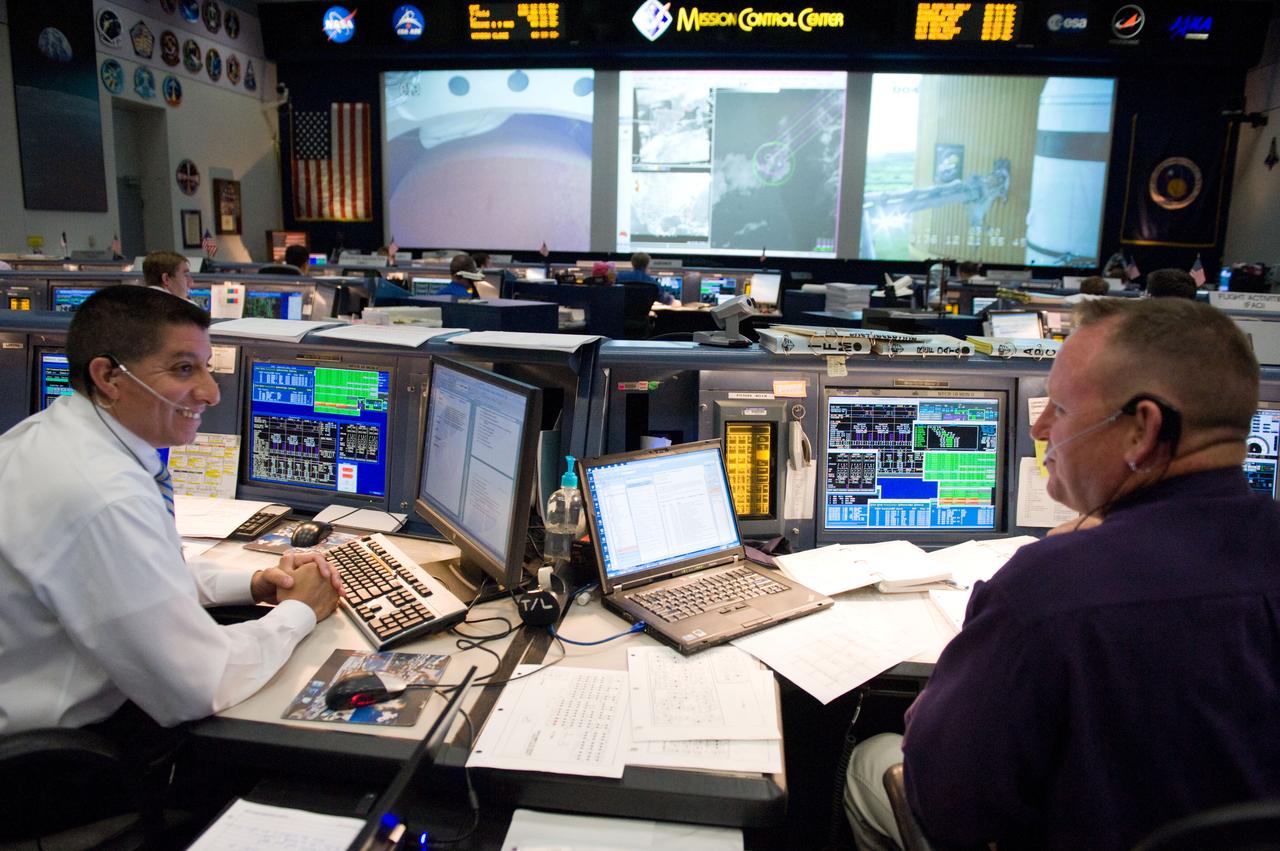
JSC2011-E-044079 (16 May 2011) --- Richard Jones, left, views data at the flight director?s console in the shuttle flight control room in Houston?s Mission Control Center as preparations are underway several hundred miles away in Florida for the final launch of Endeavour. Astronaut Barry Wilmore, spacecraft communicator, is at the CAPCOM console for the prelaunch and launch activities. Endeavour lifted off from Pad 39A at NASA's Kennedy Space Center on time at 8:56 a.m. (EDT) on May 16, 2011. Photo credit: NASA
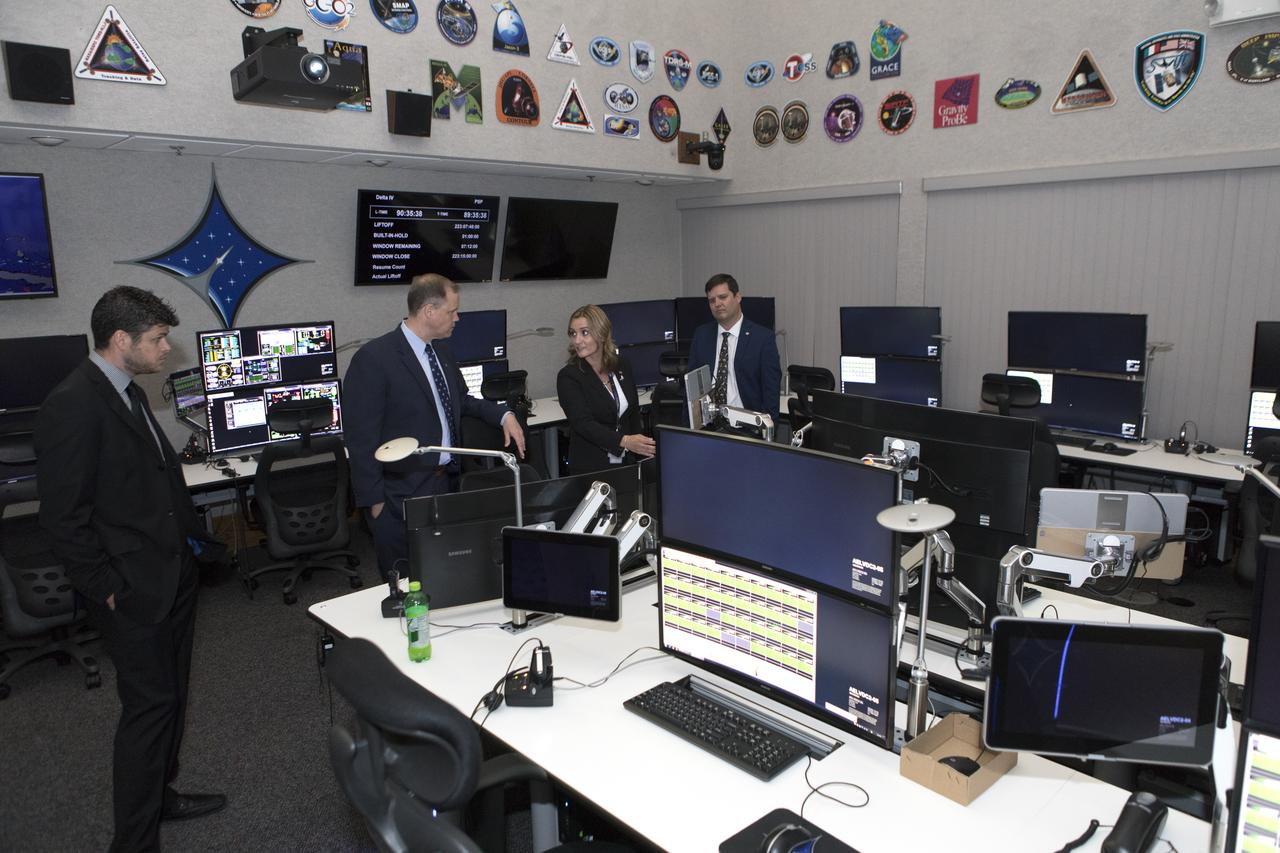
NASA Administrator Jim Bridenstine, second from left, tours the Launch Services Program's Mission Director's Center in Hangar AE, on Aug. 7, 2018, at Cape Canaveral Air Force Station in Florida. Bridenstine talked with workers and received updates on LSP missions and accomplishments.
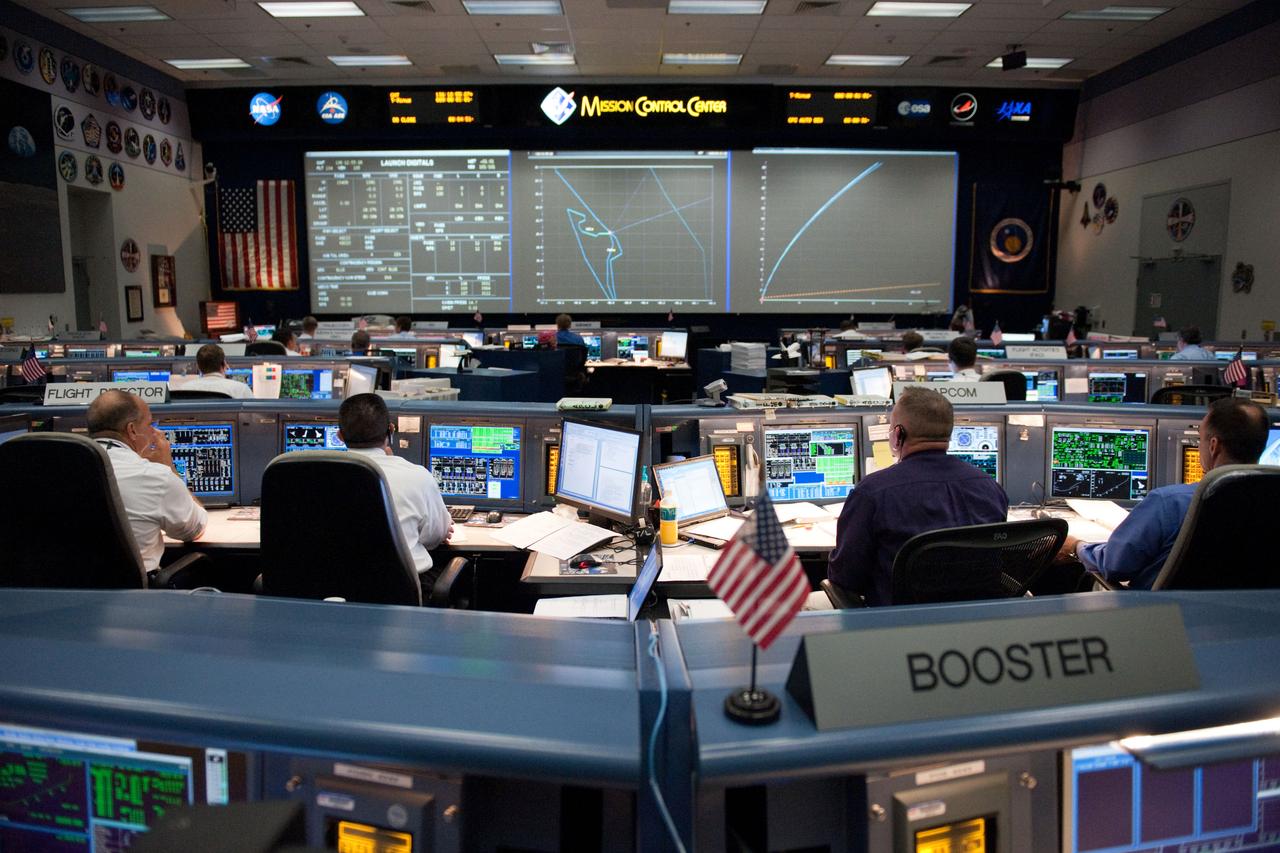
JSC2011-E-044082 (16 May 2011) --- Inside the space shuttle flight control room in Houston?s Mission Control Center, four key personnel follow activities at the Kennedy Space Center Launch Pad 39A, several hundred miles away in Florida. From left to right are Tony Ceccacci and Richard Jones, both flight directors, along with astronauts Barry Wilmore and Lee Archambault, both spacecraft communicators or CAPCOMs. Space shuttle Endeavour lifted off from NASA's Kennedy Space Center on time at 8:56 a.m. (EDT) on May 16, 2011. Photo credit: NASA
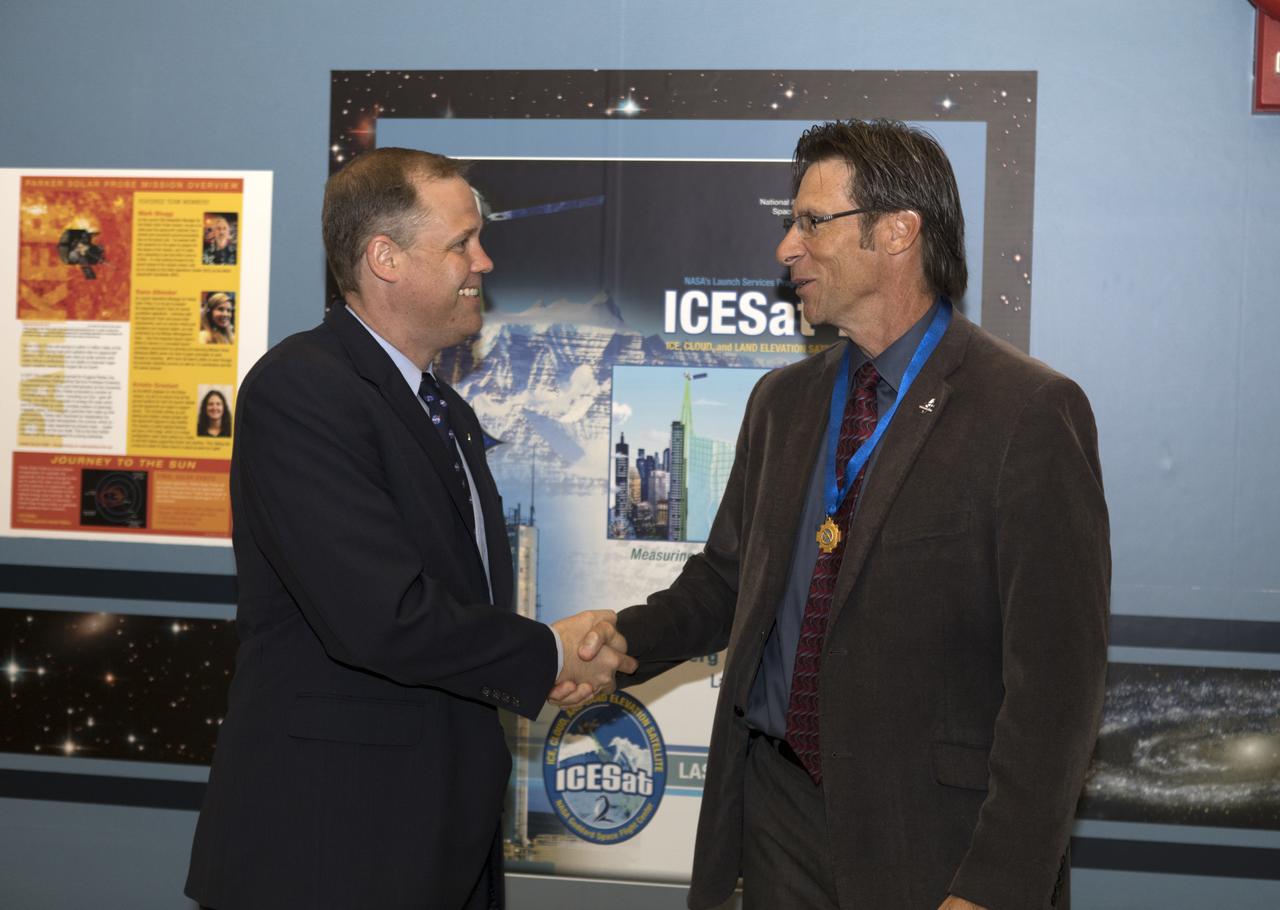
NASA Administrator Jim Bridenstine, left, congratulates Chuck Dovale, deputy program manager for the Launch Services Program (LSP), on Aug. 7, 2018, during a visit to the agency's Kennedy Space Center in Florida. Bridenstine presented a NASA Distinguished Service Medal to Dovale. During his tour of Hangar AE and LSP's Mission Director's Center, Bridenstine received updates on LSP missions and accomplishments.
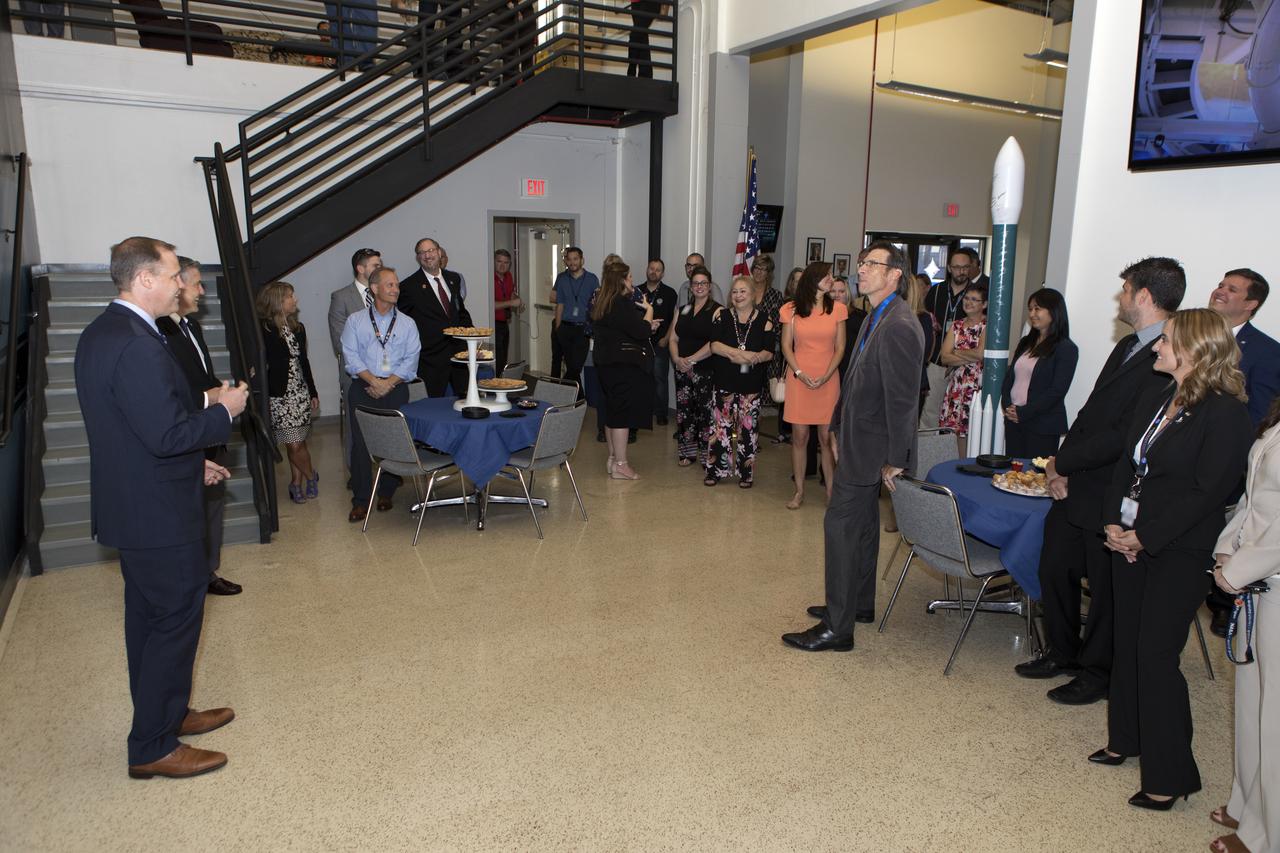
NASA Administrator Jim Bridenstine, left, tours Hangar AE and the Launch Services Program's (LSP) Mission Director's Center at Cape Canaveral Air Force Station in Florida on Aug. 7, 2018. Bridenstine spoke to workers and received updates on LSP missions and accomplishments. At right, standing near a chair, is Chuck Dovale, deputy program manager for LSP. Bridenstine presented a NASA Distinguished Service Medal to Dovale.
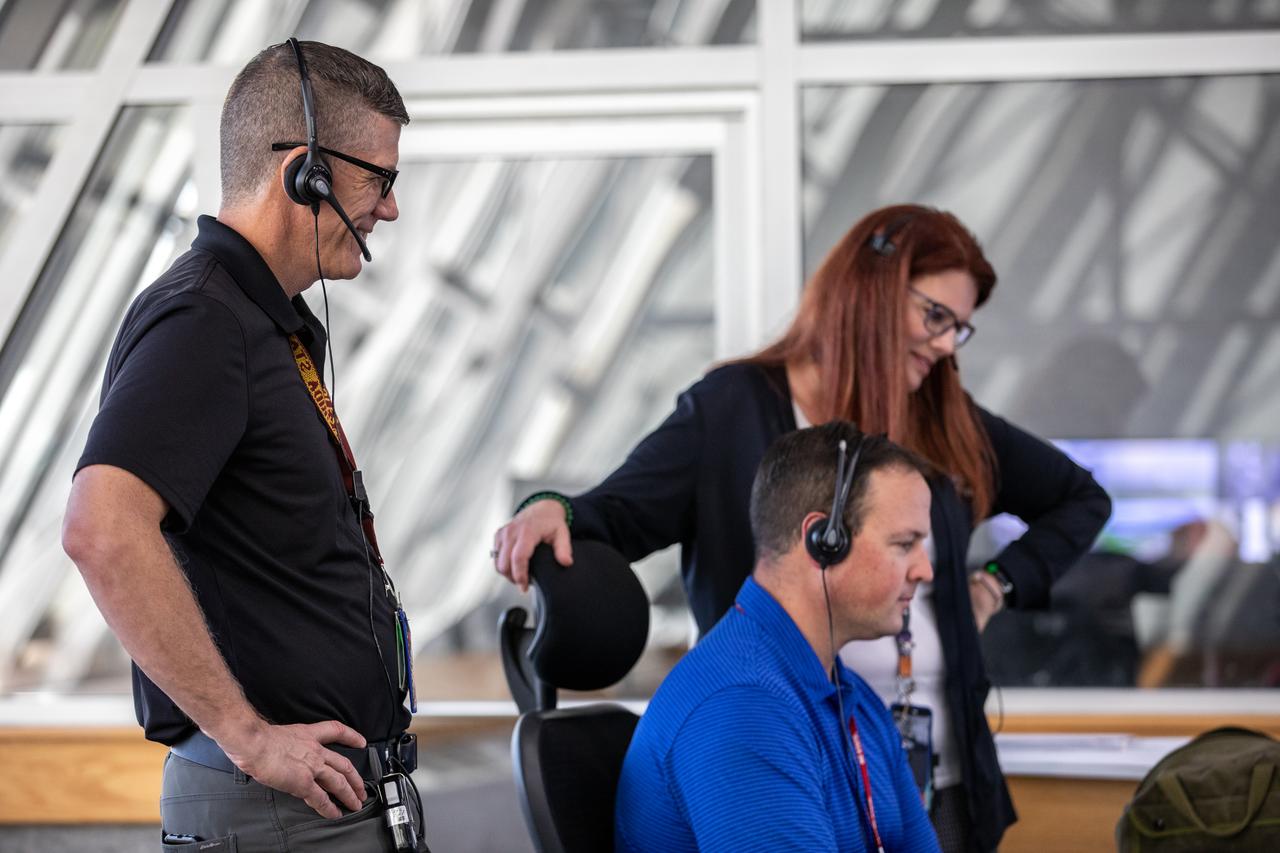
Artemis I Launch Director Charlie Blackwell-Thompson, at right, monitors data inside Firing Room 1 of the Rocco A. Petrone Launch Control Center at NASA’s Kennedy Space Center in Florida during a cryogenic propellant tanking demonstration on Sept. 21, 2022. Seated at his console is Wes Mosedale, technical assistant to the launch director. At left is Jeremy Graeber, Artemis I assistant launch director. The first in a series of increasingly complex missions, Artemis I will provide a foundation for human deep space exploration and demonstrate our commitment and capability to extend human presence to the Moon and beyond. The primary goal of Artemis I is to thoroughly test the integrated systems before crewed missions by operating the spacecraft in a deep space environment, testing Orion’s heat shield, and recovering the crew module after reentry, descent, and splashdown.
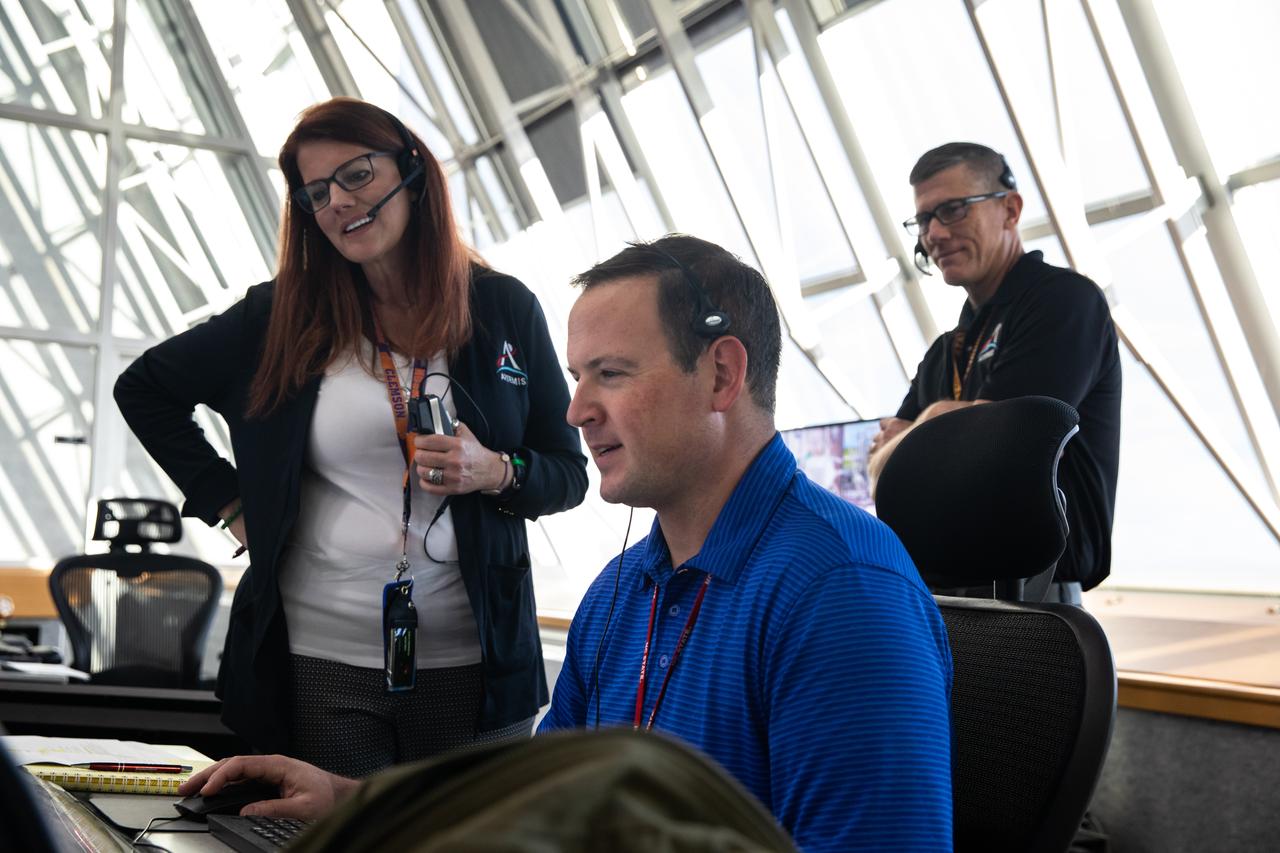
Artemis I Launch Director Charlie Blackwell-Thompson, at left, monitors data inside Firing Room 1 of the Rocco A. Petrone Launch Control Center at NASA’s Kennedy Space Center in Florida during a cryogenic propellant tanking demonstration on Sept. 21, 2022. At right is Wes Mosedale, technical assistant to the launch director. Behind them is Jeremy Graeber, Artemis I assistant launch director. The first in a series of increasingly complex missions, Artemis I will provide a foundation for human deep space exploration and demonstrate our commitment and capability to extend human presence to the Moon and beyond. The primary goal of Artemis I is to thoroughly test the integrated systems before crewed missions by operating the spacecraft in a deep space environment, testing Orion’s heat shield, and recovering the crew module after reentry, descent, and splashdown.
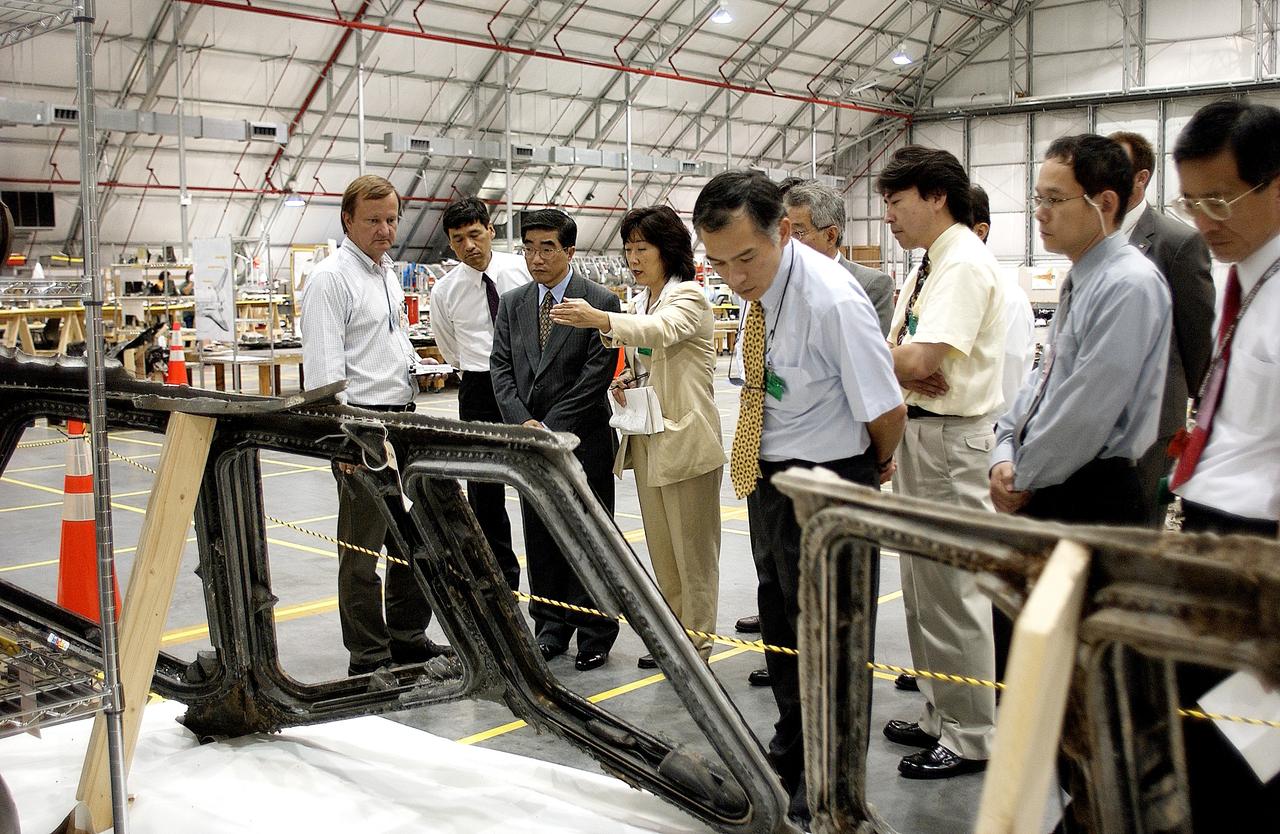
KENNEDY SPACE CENTER, FLA. - Shuttle Launch Director Mike Leinbach (left) accompanies Executive Director of NASDA Koji Yamamoto (third from left) and others visiting the Columbia Debris Hangar. Mr. Yamamoto is at KSC for a welcome ceremony involving the arrival of the newest Space Station module, the Japanese Experiment Module/pressurized module.

Russ DeLoach, director of Safety and Mission Assurance, speaks to Kennedy Space Center employees about plans for the coming year. The event took place in the Lunar Theater at the Kennedy Space Center Visitor Complex’s Apollo Saturn V Center. The year will be highlighted with NASA's partners preparing test flights for crewed missions to the International Space Station as part of the agency's Commercial Crew Program and six launches by the Launch Services Program. Exploration Ground Systems will be completing facilities to support the Space Launch System rocket and Orion spacecraft. Exploration Research and Technology Programs will continue to provide supplies to the space station launched as part of the Commercial Resupply Services effort.

Kennedy Space Center Director Bob Cabana speaks to employees at the Florida spaceport about plans for the coming year. The event took place in the Lunar Theater at the Kennedy Space Center Visitor Complex’s Apollo Saturn V Center. The year will be highlighted with NASA's partners preparing test flights for crewed missions to the International Space Station as part of the agency's Commercial Crew Program and six launches by the Launch Services Program. Exploration Ground Systems will be completing facilities to support the Space Launch System rocket and Orion spacecraft. Exploration Research and Technology Programs will continue to provide supplies to the space station launched as part of the Commercial Resupply Services effort.

Kennedy Space Center Director Bob Cabana speaks to employees at the Florida spaceport about plans for the coming year. The event took place in the Lunar Theater at the Kennedy Space Center Visitor Complex’s Apollo Saturn V Center. The year will be highlighted with NASA's partners preparing test flights for crewed missions to the International Space Station as part of the agency's Commercial Crew Program and six launches by the Launch Services Program. Exploration Ground Systems will be completing facilities to support the Space Launch System rocket and Orion spacecraft. Exploration Research and Technology Programs will continue to provide supplies to the space station launched as part of the Commercial Resupply Services effort.

Kennedy Space Center Director Bob Cabana speaks to employees at the Florida spaceport about plans for the coming year. The event took place in the Lunar Theater at the Kennedy Space Center Visitor Complex’s Apollo Saturn V Center. The year will be highlighted with NASA's partners preparing test flights for crewed missions to the International Space Station as part of the agency's Commercial Crew Program and six launches by the Launch Services Program. Exploration Ground Systems will be completing facilities to support the Space Launch System rocket and Orion spacecraft. Exploration Research and Technology Programs will continue to provide supplies to the space station launched as part of the Commercial Resupply Services effort.

Josie Burnett, director or Exploration Research and Technology Programs, speaks to Kennedy Space Center employees about plans for the coming year. The event took place in the Lunar Theater at the Kennedy Space Center Visitor Complex’s Apollo Saturn V Center. The year will be highlighted with NASA's partners preparing test flights for crewed missions to the International Space Station as part of the agency's Commercial Crew Program and six launches by the Launch Services Program. Exploration Ground Systems will be completing facilities to support the Space Launch System rocket and Orion spacecraft. Exploration Research and Technology Programs will continue to provide supplies to the space station launched as part of the Commercial Resupply Services effort.

Kennedy Space Center Director Bob Cabana speaks to employees at the Florida spaceport about plans for the coming year. The event took place in the Lunar Theater at the Kennedy Space Center Visitor Complex’s Apollo Saturn V Center. The year will be highlighted with NASA's partners preparing test flights for crewed missions to the International Space Station as part of the agency's Commercial Crew Program and six launches by the Launch Services Program. Exploration Ground Systems will be completing facilities to support the Space Launch System rocket and Orion spacecraft. Exploration Research and Technology Programs will continue to provide supplies to the space station launched as part of the Commercial Resupply Services effort.
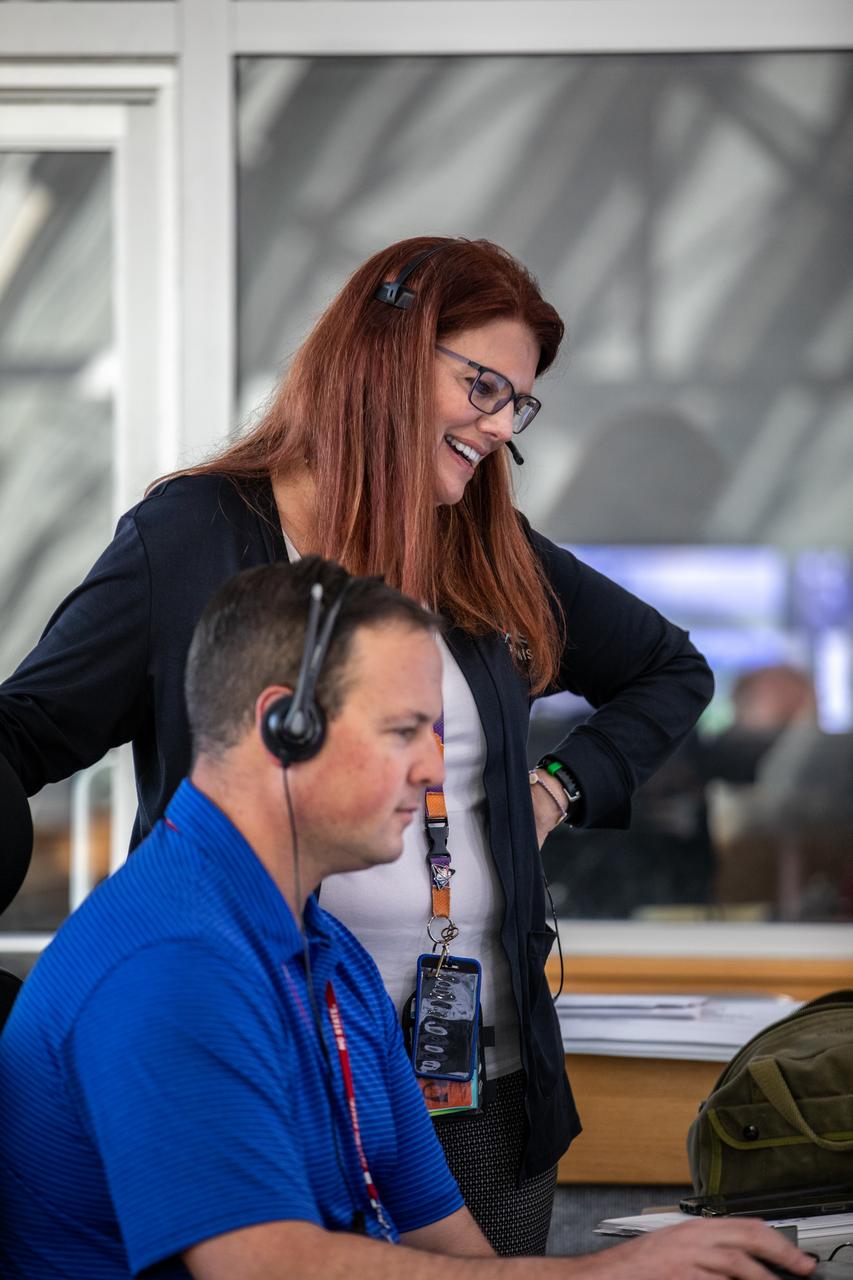
Artemis I Launch Director Charlie Blackwell-Thompson, standing, leads a cryogenic propellant tanking demonstration inside Firing Room 1 of the Rocco A. Petrone Launch Control Center at NASA’s Kennedy Space Center in Florida on Sept. 21, 2022. Seated at his console is Wes Mosedale, technical assistant to the launch director. The first in a series of increasingly complex missions, Artemis I will provide a foundation for human deep space exploration and demonstrate our commitment and capability to extend human presence to the Moon and beyond. The primary goal of Artemis I is to thoroughly test the integrated systems before crewed missions by operating the spacecraft in a deep space environment, testing Orion’s heat shield, and recovering the crew module after reentry, descent, and splashdown.
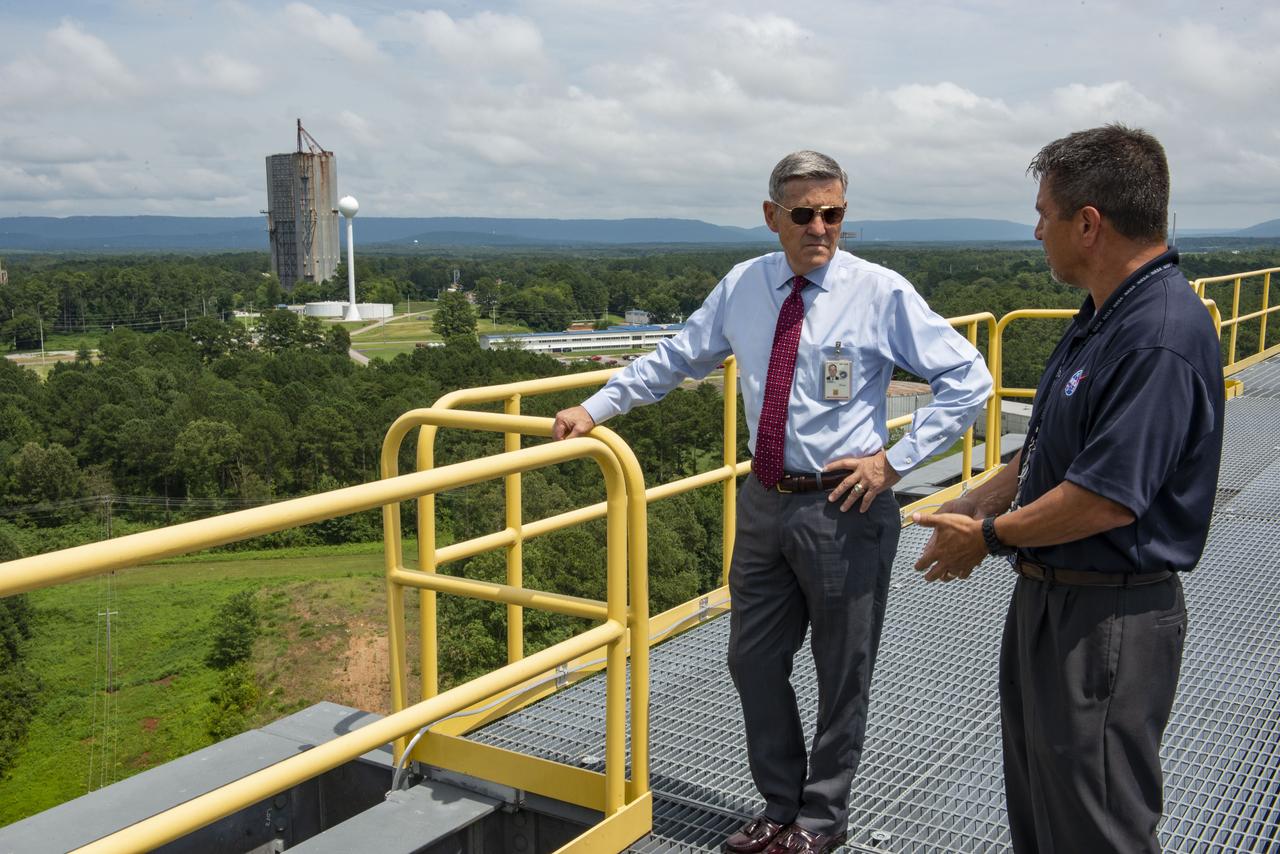
NASA's Kennedy Space Center Director Robert Cabana visited Marshall Space Flight Center July 16. With the Dynamic Test Stand in the background, Cabana, left, talks with Tim Flores, integration manager for stages in the Space Launch System Program Office, on top of Test Stand 4693, NASA’s largest SLS structural test stand. In addition to viewing SLS hardware, Cabana spoke to the Marshall Association and National Space Club Huntsville during his visit.
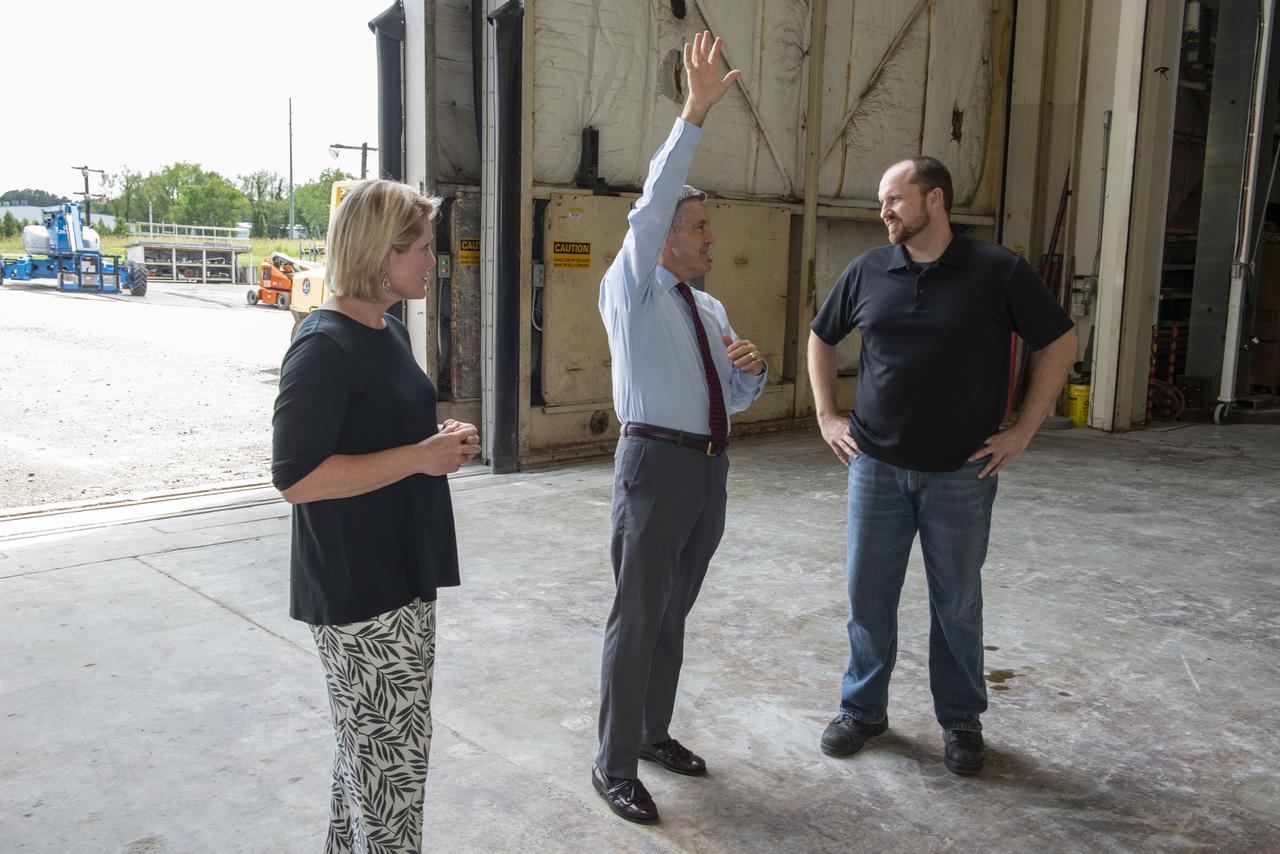
Kennedy Space Center Director Robert Cabana, center, receives an update on SLS hardware from Heather Haney, left, an engineer in the Space Launch System stages office, and Mark White, lead test engineer for the SLS core stage engine section, on July 16 in Marshall's Building 4619. Cabana, Haney and White are standing in front of a structural test version of the Intertank, the 212-foot-tall backbone of the SLS rocket. The structural test article is undergoing critical testing as engineers push, pull and bend the hardware with millions of pounds of force to ensure it can withstand the forces of launch and ascent.

Flight Director Matt Smith studies the data during the second post-launch trajectory correction maneuver during Perseverance's cruise to Mars. The team is in the Mission Support Area at NASA's Jet Propulsion Laboratory in Southern California. https://photojournal.jpl.nasa.gov/catalog/PIA24195
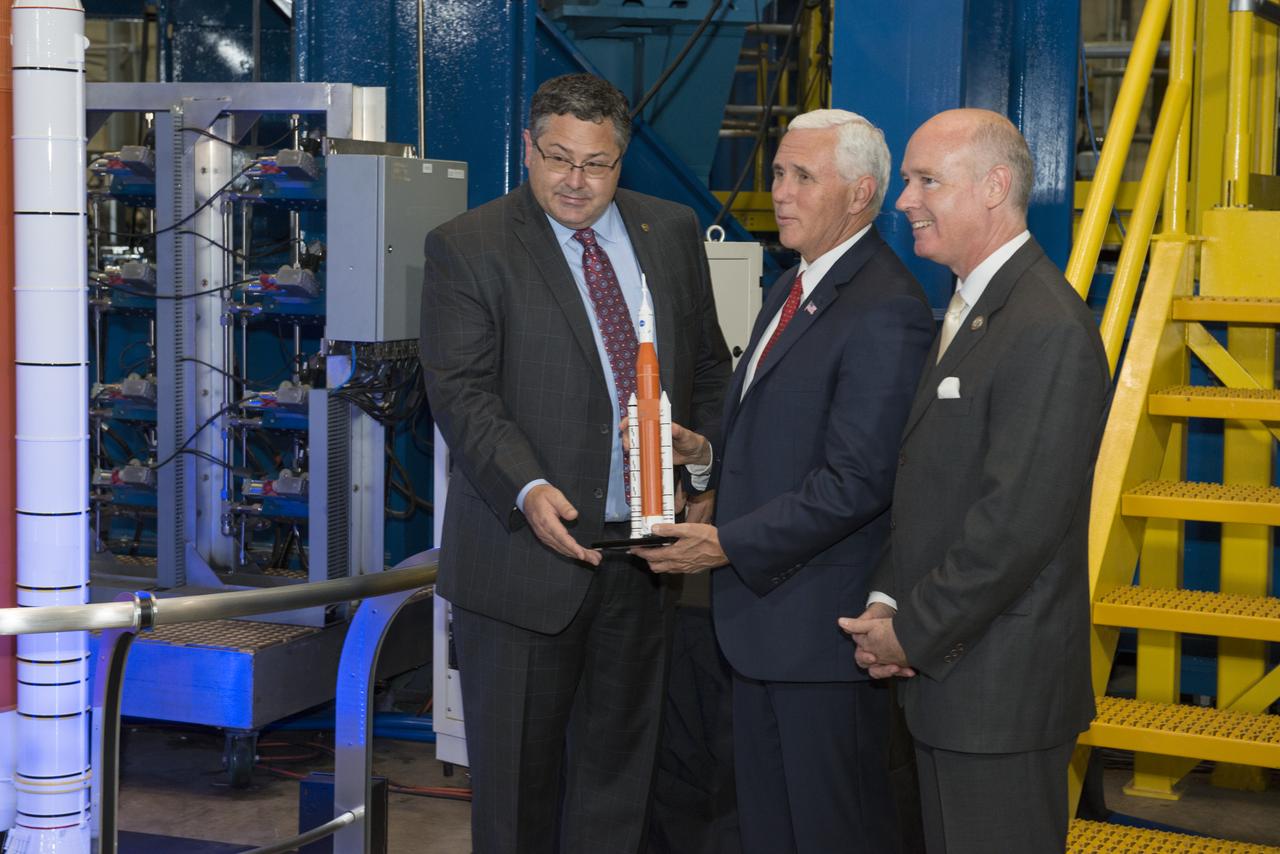
Marshall Space Flight Center Director Todd May (left) presents Vice President Mike Pence (center) with a Space Launch System model. May, Vice President Pence, and Congressman Robert Aderholt (R-AL) (right) are standing in front of an SLS test stand where the engine section, the bottom section of the 212-foot-tall core stage, is being tested. Earlier, engineers working on the test gave the Vice President a close up look at test hardware. The test hardware is for the SLS core stage engine section, which is the bottom of the core stage where the four RS-25 engines are housed. The engine section structure must withstand the incredible stresses produced by more than 8 million pounds of thrust during launch and ascent.
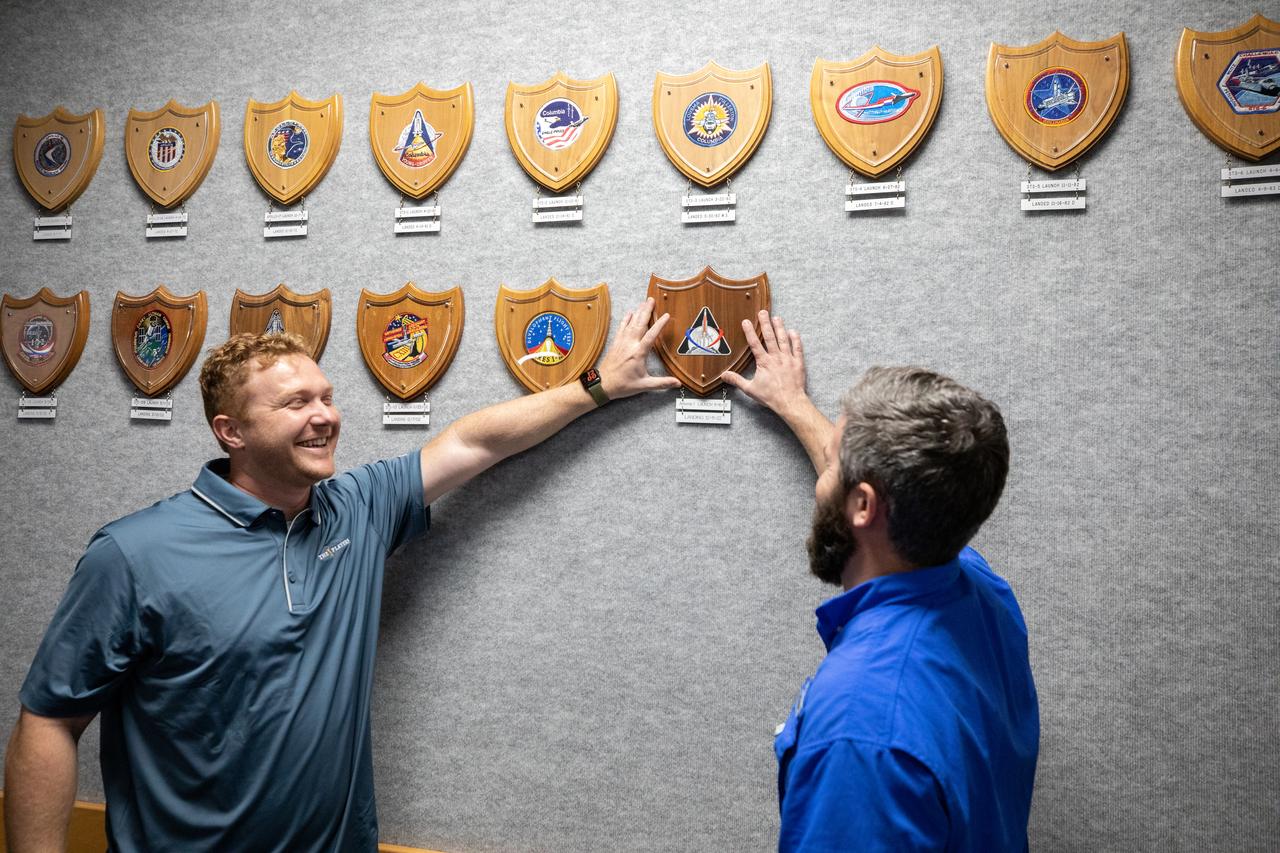
The Artemis plaque is attached to the wall in Firing Room 1 of the Launch Control Center at NASA’s Kennedy Space Center in Florida during a ceremony on March 24, 2023. Hanging the plaque on the wall are Elliot Payne (left) and Devin Aikman (right), members of the Arms and Umbilicals engineering team. The first in a series of increasingly complex missions, Artemis I launched successfully from Kennedy’s Launch Pad 39B at 1:47 a.m. EST on Nov. 16, 2022.
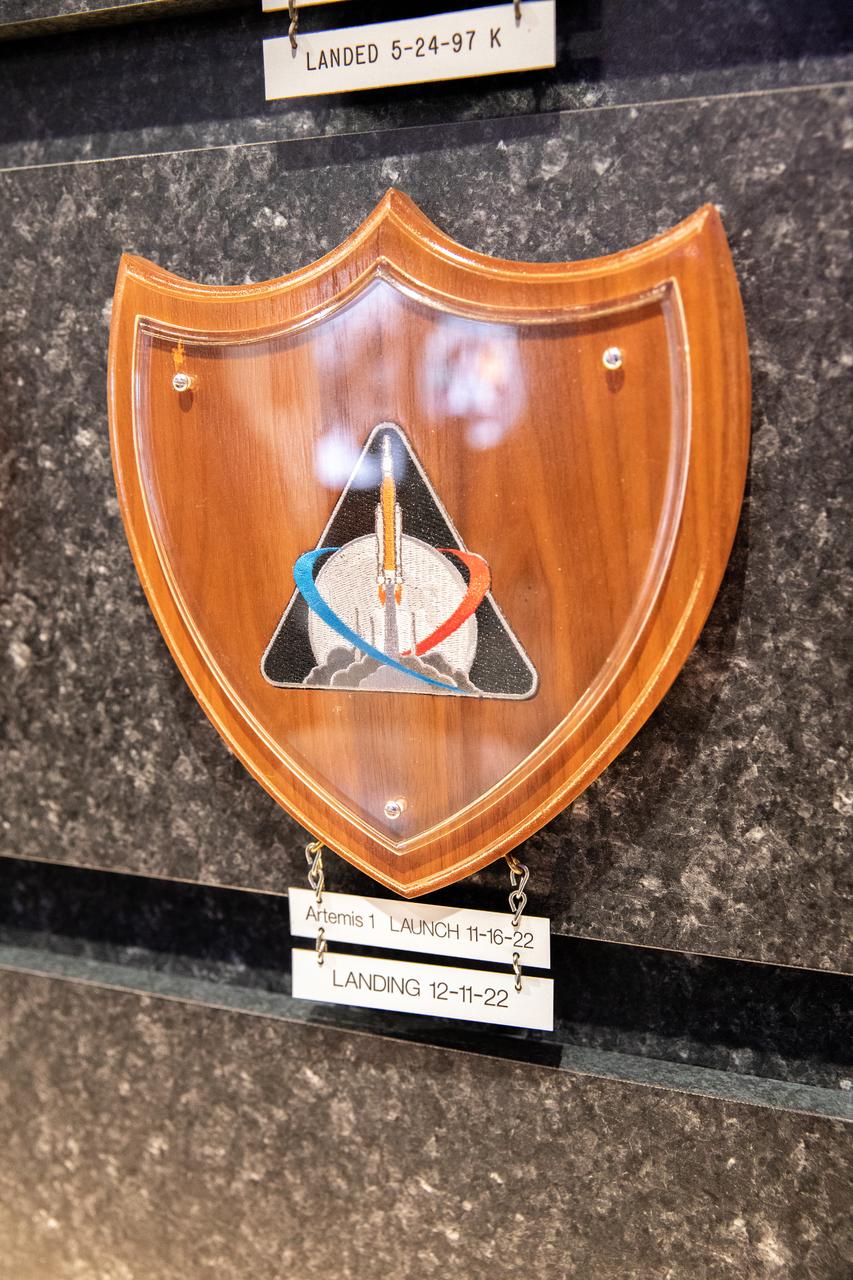
The Artemis I plaque is attached to the wall inside the lobby of the Launch Control Center at NASA’s Kennedy Space Center in Florida during a ceremony on March 24, 2023. The first in a series of increasingly complex missions, Artemis I launched successfully from Kennedy’s Launch Pad 39B at 1:47 a.m. EST on Nov. 16, 2022.
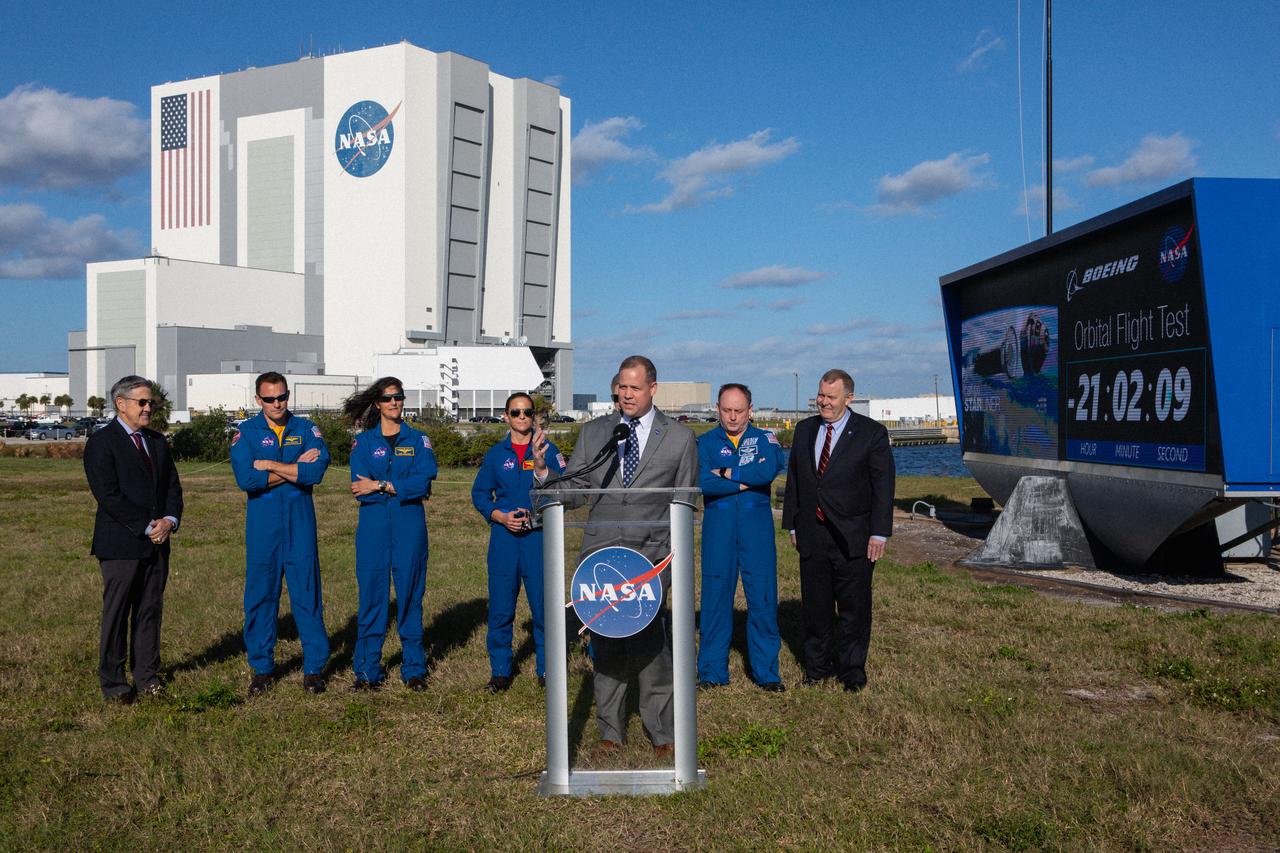
Jim Bridenstine, NASA administrator, participates in a Boeing Orbital Flight Test media briefing near the countdown clock at the Florida spaceport on Dec. 19, 2019. In the background from left to right are Kennedy Space Center Director Bob Cabana; NASA astronauts Josh Cassada, Suni Williams, Nicole Mann and Mike Finke; and NASA Deputy Administrator Jim Morhard. Boeing’s CST-100 Starliner spacecraft will launch atop a United Launch Alliance Atlas V rocket from Space Launch Complex 41 at Cape Canaveral Air Force Station. The uncrewed Orbital Flight Test will be the Starliner’s first flight to the International Space Station for NASA’s Commercial Crew Program.

Bob Cabana, Kennedy Space Center director, participates in a Boeing Orbital Flight Test media briefing near the countdown clock at the Florida spaceport on Dec. 19, 2019. In the background from left to right are NASA astronaut Nicole Mann, Boeing astronaut Chris Ferguson and NASA astronaut Mike Finke. Boeing’s CST-100 Starliner spacecraft will launch atop a United Launch Alliance Atlas V rocket from Space Launch Complex 41 at Cape Canaveral Air Force Station. The uncrewed Orbital Flight Test will be the Starliner’s first flight to the International Space Station for NASA’s Commercial Crew Program.
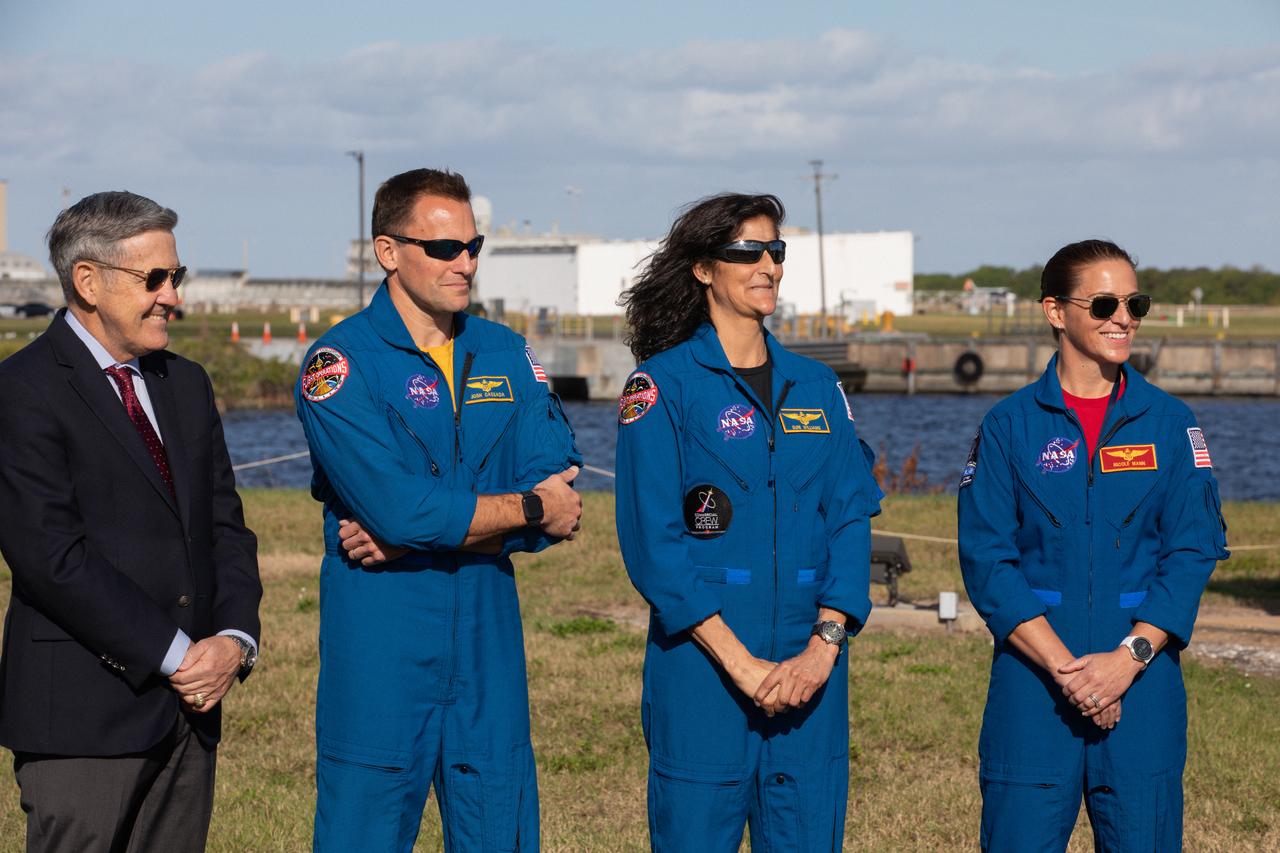
From left, Kennedy Space Center Director Bob Cabana and NASA astronauts Josh Cassada, Suni Williams and Nicole Mann participate in a Boeing Orbital Flight Test media briefing near the countdown clock at the Florida spaceport on Dec. 19, 2019. Boeing’s CST-100 Starliner spacecraft will launch atop a United Launch Alliance Atlas V rocket from Space Launch Complex 41 at Cape Canaveral Air Force Station. The uncrewed Orbital Flight Test will be the Starliner’s first flight to the International Space Station for NASA’s Commercial Crew Program.
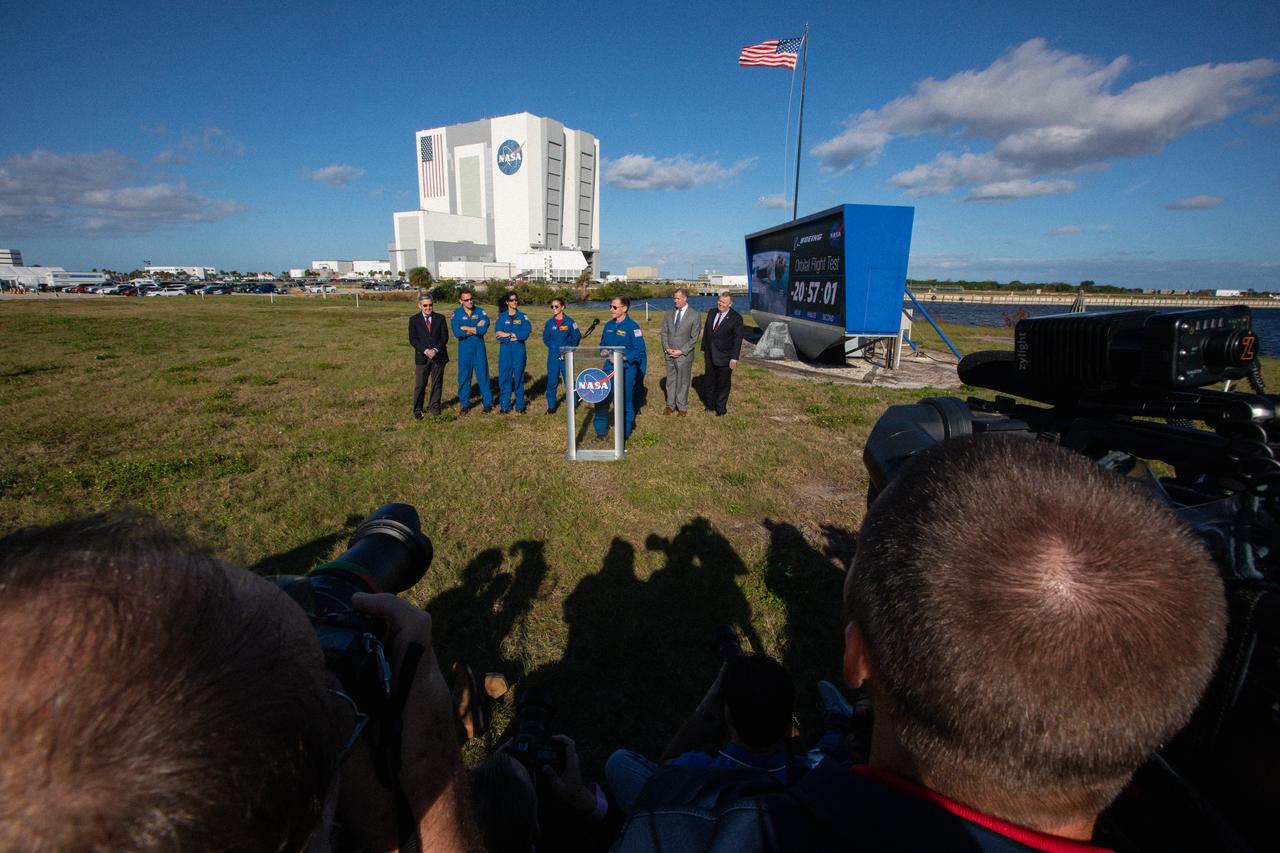
Chris Ferguson, Boeing astronaut, participates in a Boeing Orbital Flight Test media briefing near the countdown clock at the Florida spaceport on Dec. 19, 2019. In the background from left to right are Kennedy Space Center Director Bob Cabana; NASA astronauts Josh Cassada, Suni Williams and Nicole Mann; NASA Administrator Jim Bridenstine; and Deputy Administrator Jim Morhard. Boeing’s CST-100 Starliner spacecraft will launch atop a United Launch Alliance Atlas V rocket from Space Launch Complex 41 at Cape Canaveral Air Force Station. The uncrewed Orbital Flight Test will be the Starliner’s first flight to the International Space Station for NASA’s Commercial Crew Program.
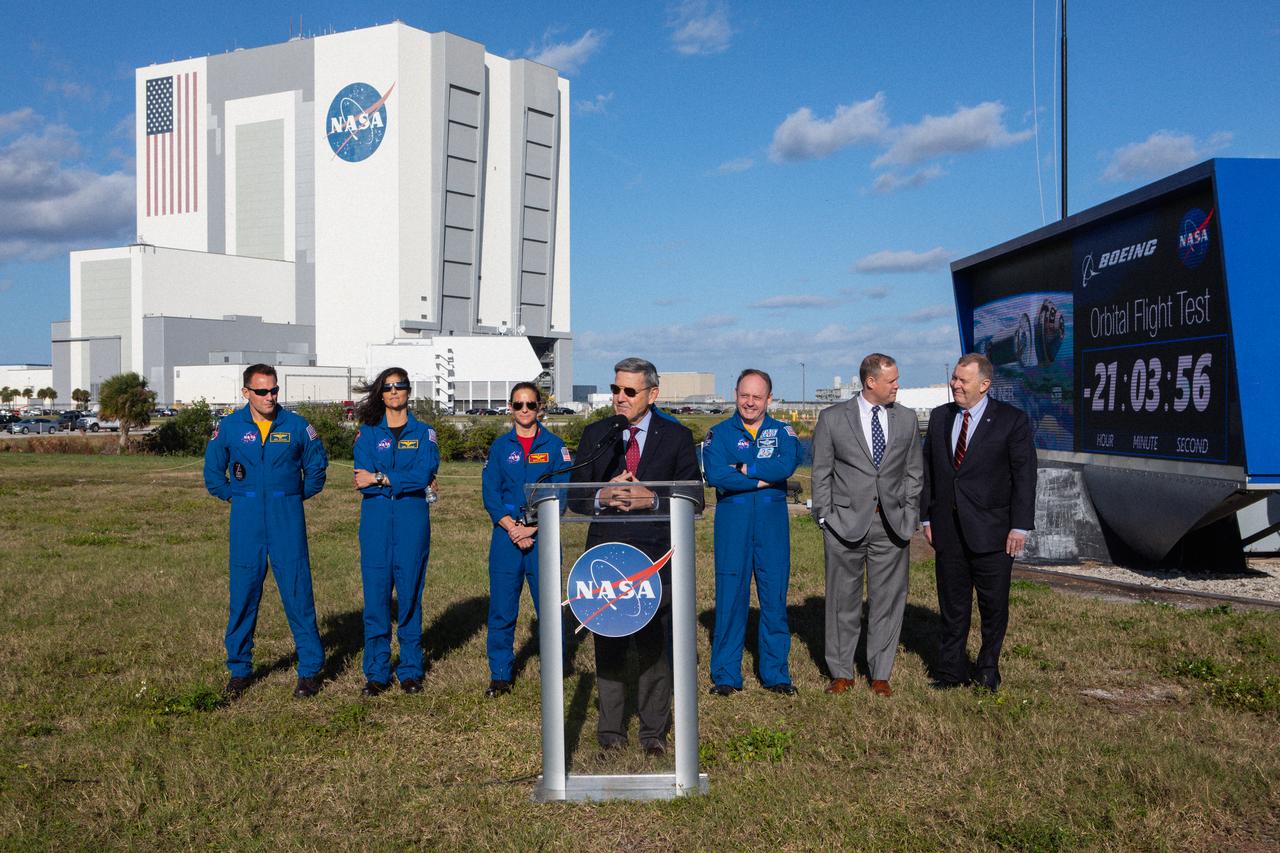
Bob Cabana, Kennedy Space Center director, participates in a Boeing Orbital Flight Test media briefing near the countdown clock at the Florida spaceport on Dec. 19, 2019. In the background from left to right are NASA astronauts Josh Cassada, Suni Williams, Nicole Mann and Mike Finke; NASA Administrator Jim Bridenstine; and Deputy Administrator Jim Morhard. Boeing’s CST-100 Starliner spacecraft will launch atop a United Launch Alliance Atlas V rocket from Space Launch Complex 41 at Cape Canaveral Air Force Station. The uncrewed Orbital Flight Test will be the Starliner’s first flight to the International Space Station for NASA’s Commercial Crew Program.
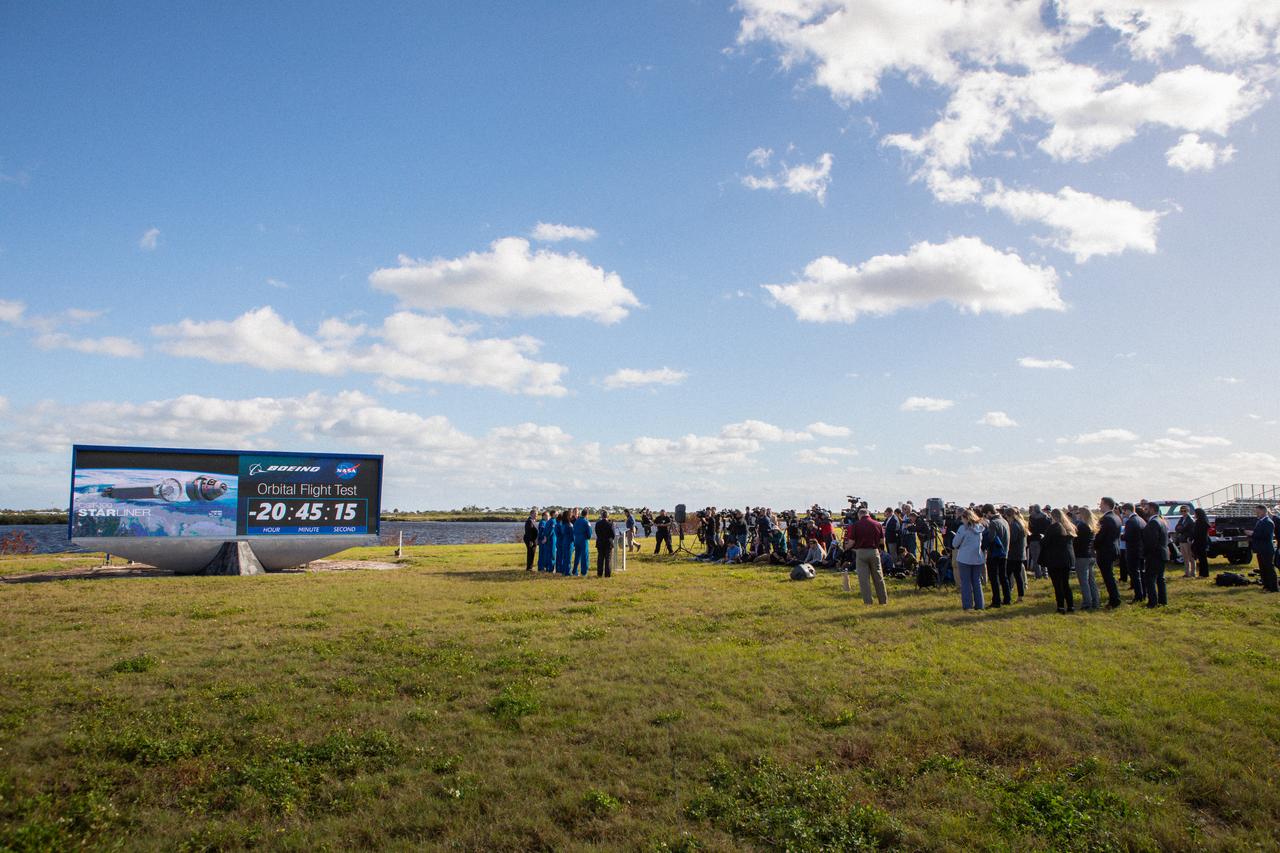
NASA Administrator Jim Bridenstine, Kennedy Space Center Director Bob Cabana, and astronauts representing NASA and Boeing participate in a Boeing Orbital Flight Test media briefing near the countdown clock at the Florida spaceport on Dec. 19, 2019. Boeing’s CST-100 Starliner spacecraft will launch atop a United Launch Alliance Atlas V rocket from Space Launch Complex 41 at Cape Canaveral Air Force Station. The uncrewed Orbital Flight Test will be the Starliner’s first flight to the International Space Station for NASA’s Commercial Crew Program.
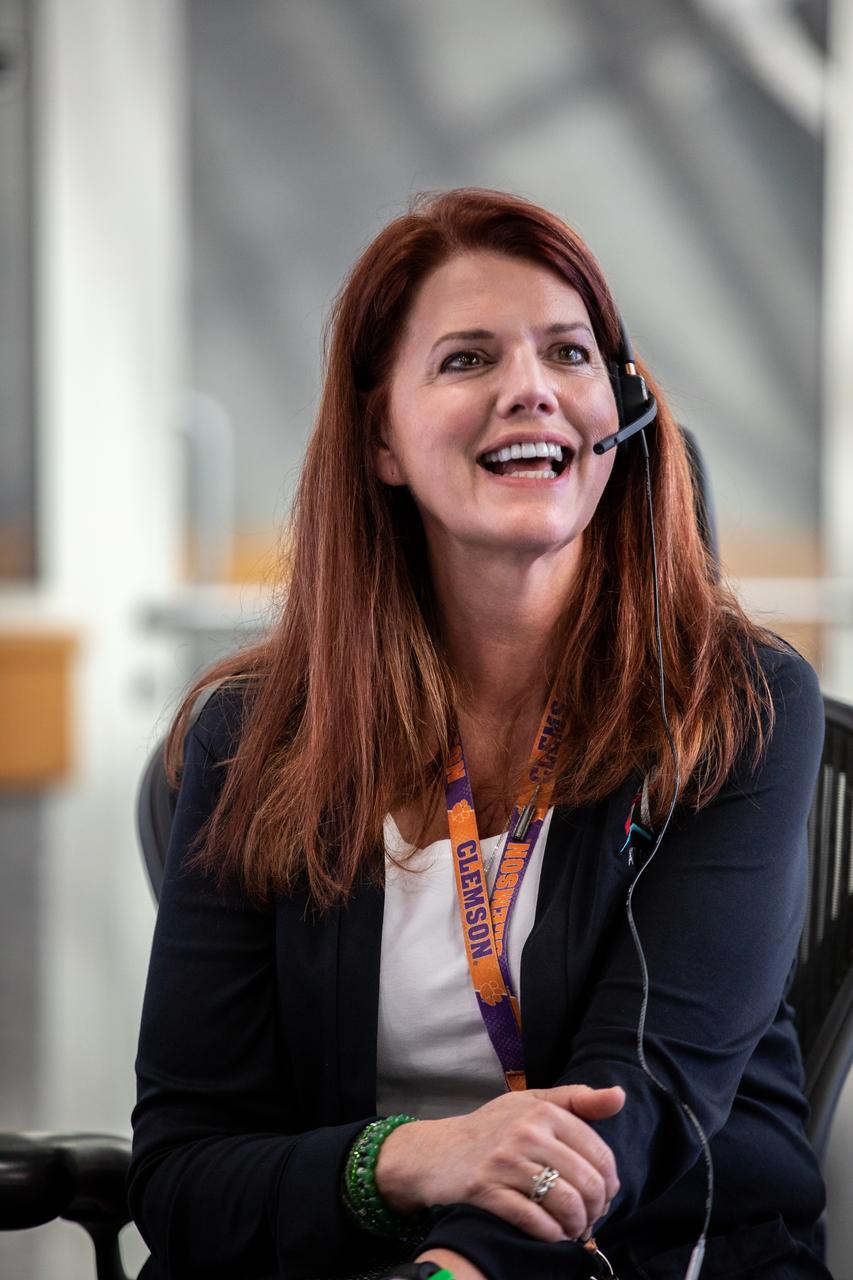
Artemis I Launch Director Charlie Blackwell-Thompson leads a cryogenic propellant tanking demonstration inside Firing Room 1 of the Rocco A. Petrone Launch Control Center at NASA’s Kennedy Space Center in Florida on Sept. 21, 2022. The first in a series of increasingly complex missions, Artemis I will provide a foundation for human deep space exploration and demonstrate our commitment and capability to extend human presence to the Moon and beyond. The primary goal of Artemis I is to thoroughly test the integrated systems before crewed missions by operating the spacecraft in a deep space environment, testing Orion’s heat shield, and recovering the crew module after reentry, descent, and splashdown.
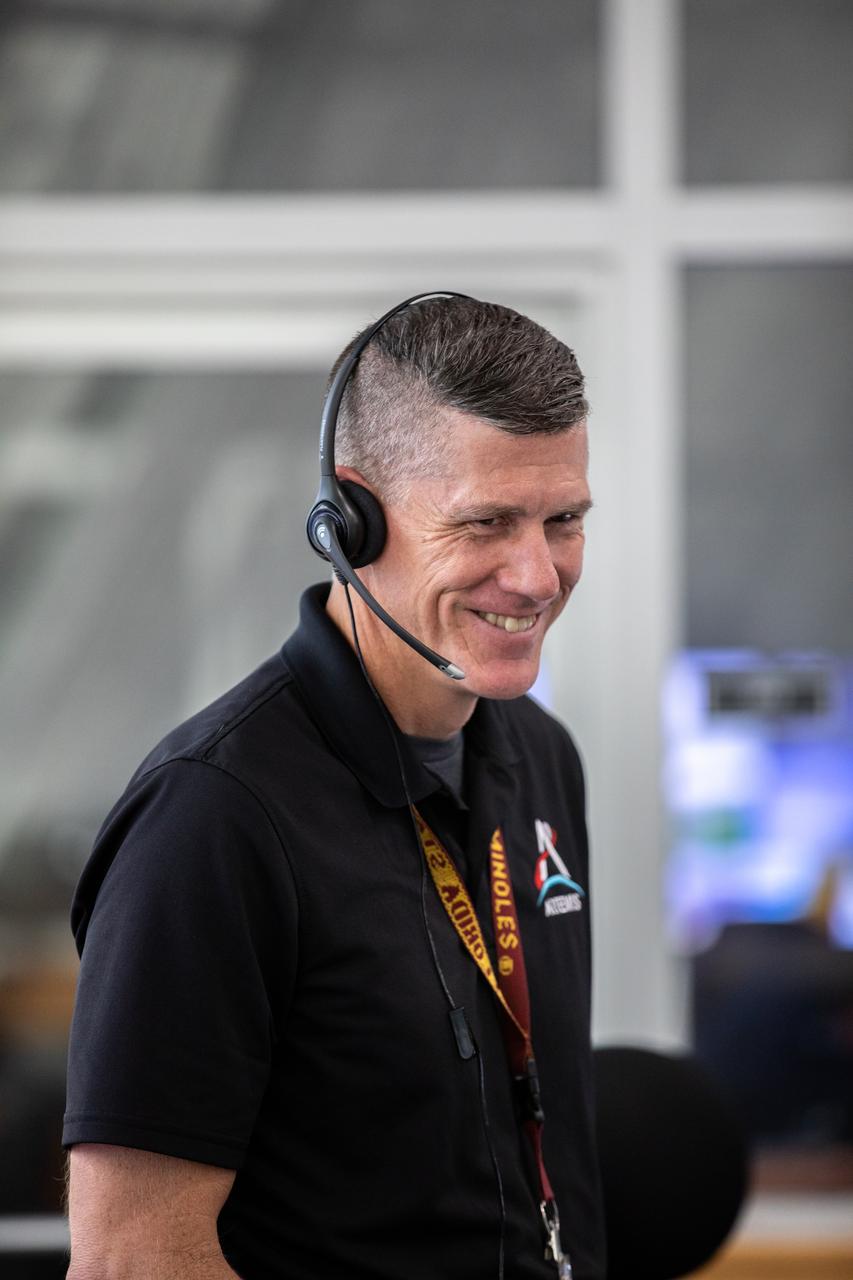
Artemis I Assistant Launch Director Jeremy Graeber helps lead a cryogenic propellant tanking demonstration inside Firing Room 1 of the Rocco A. Petrone Launch Control Center at NASA’s Kennedy Space Center in Florida on Sept. 21, 2022. The first in a series of increasingly complex missions, Artemis I will provide a foundation for human deep space exploration and demonstrate our commitment and capability to extend human presence to the Moon and beyond. The primary goal of Artemis I is to thoroughly test the integrated systems before crewed missions by operating the spacecraft in a deep space environment, testing Orion’s heat shield, and recovering the crew module after reentry, descent, and splashdown.
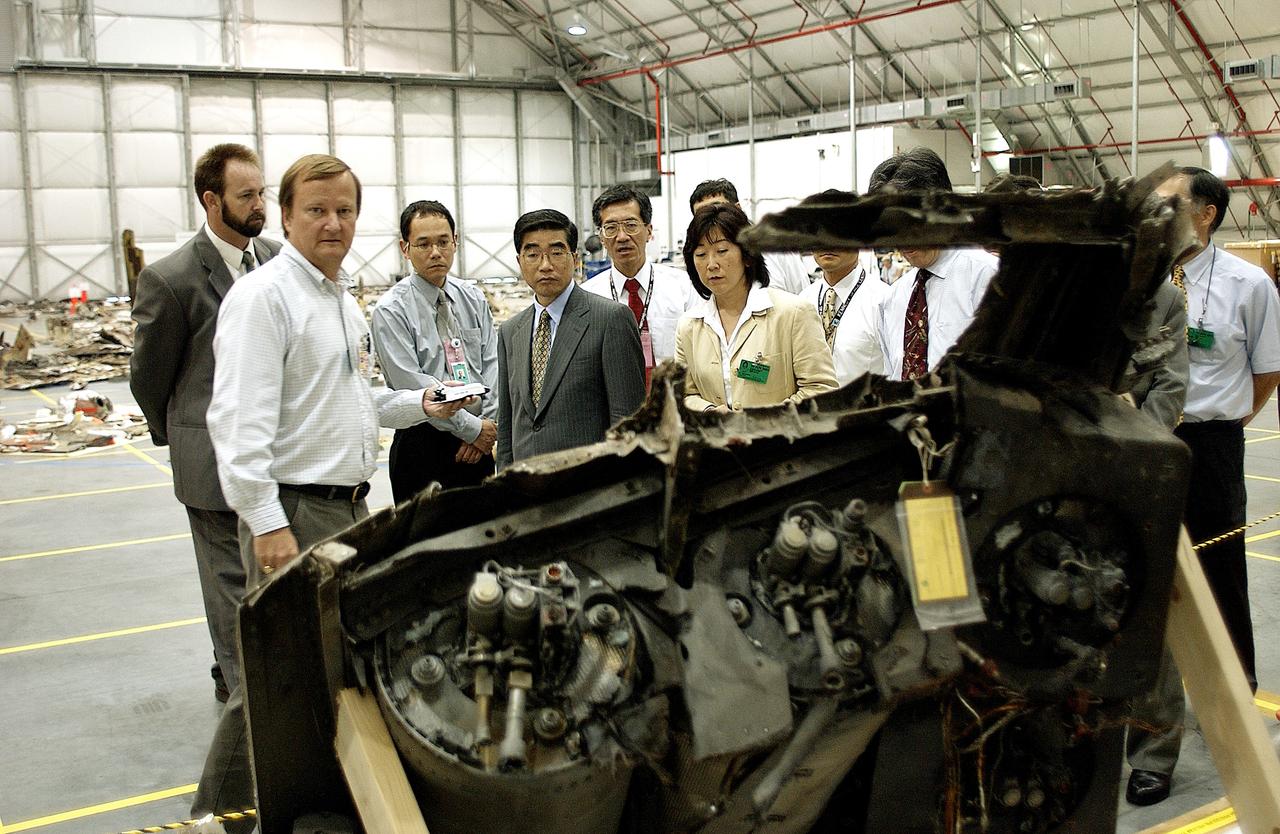
KENNEDY SPACE CENTER, FLA. - Shuttle Launch Director Mike Leinbach (second from left) accompanies Executive Director of NASDA Koji Yamamoto (fourth from left) and others visiting the Columbia Debris Hangar. Mr. Yamamoto is at KSC for a welcome ceremony involving the arrival of the newest Space Station module, the Japanese Experiment Module/pressurized module.
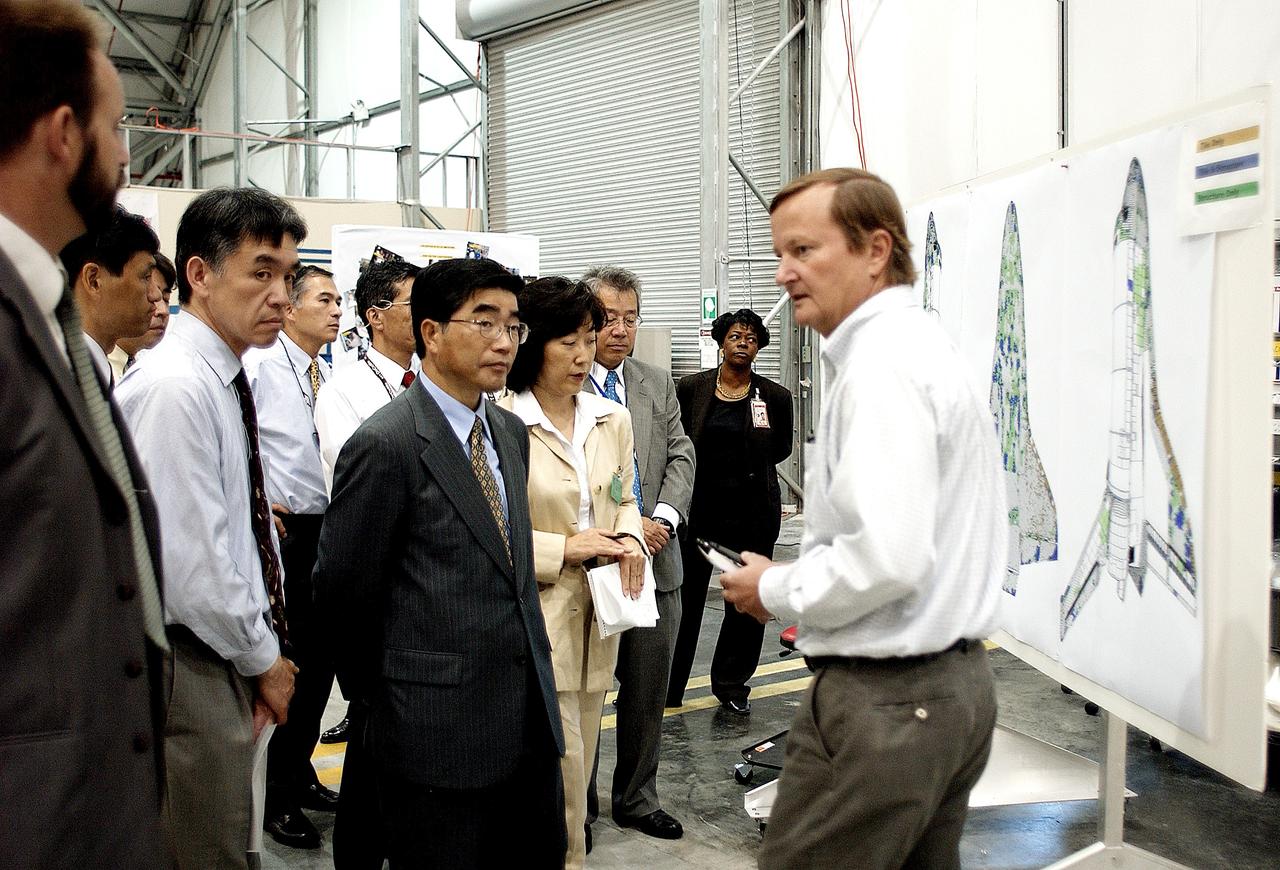
KENNEDY SPACE CENTER, FLA. - Shuttle Launch Director Mike Leinbach (right) explains recovery and reconstruction efforts of Columbia to the Executive Director of NASDA Koji Yamamoto (center, foreground) and others visiting the Columbia Debris Hangar. Mr. Yamamoto is at KSC for a welcome ceremony involving the arrival of the newest Space Station module, the Japanese Experiment Module/pressurized module.
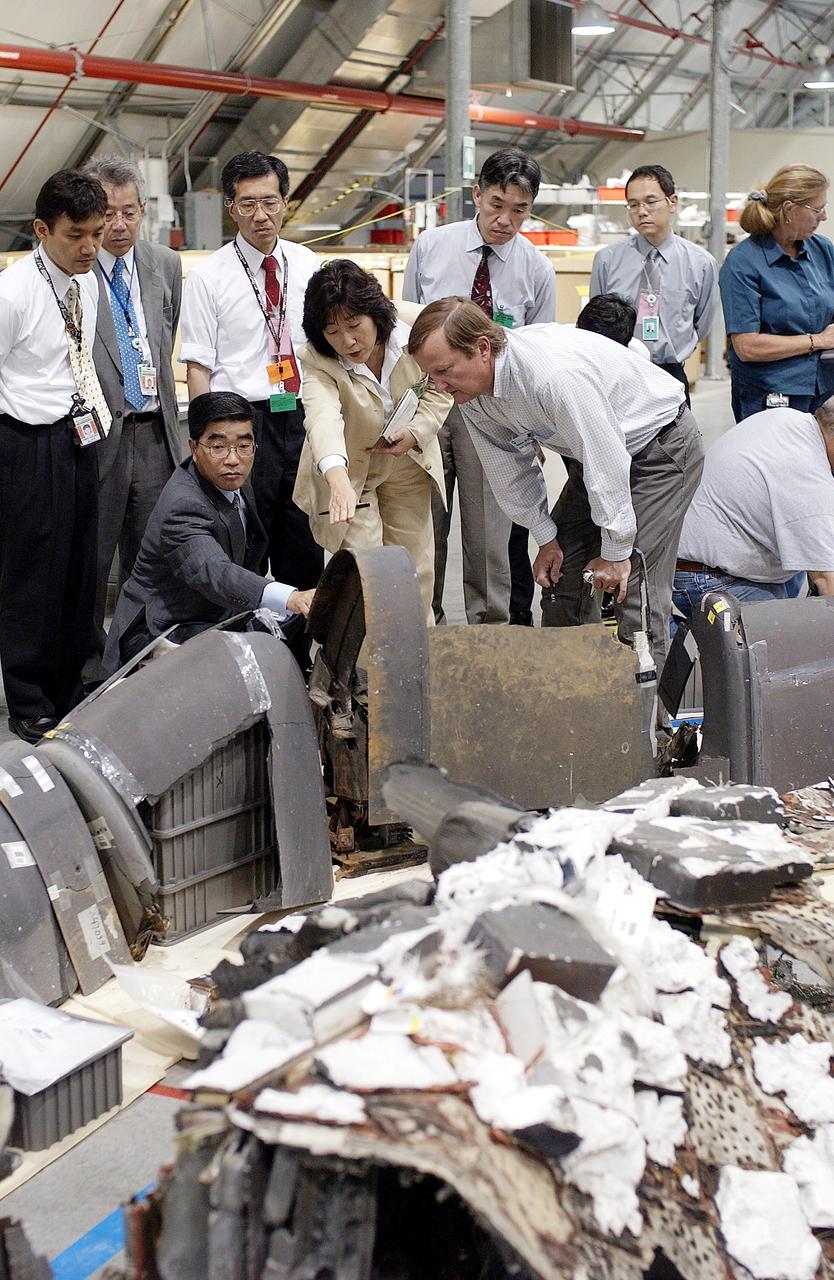
KENNEDY SPACE CENTER, FLA. - On a KSC visit, Executive Director of NASDA Koji Yamamoto (kneeling, left) reaches out to a piece of Columbia debris in the Columbia Debris Hangar. At right is Shuttle Launch Director Mike Leinbach, who is explaining recovery and reconstruction efforts. Mr. Yamamoto is at KSC for a welcome ceremony involving the arrival of the newest Space Station module, the Japanese Experiment Module/pressurized module.
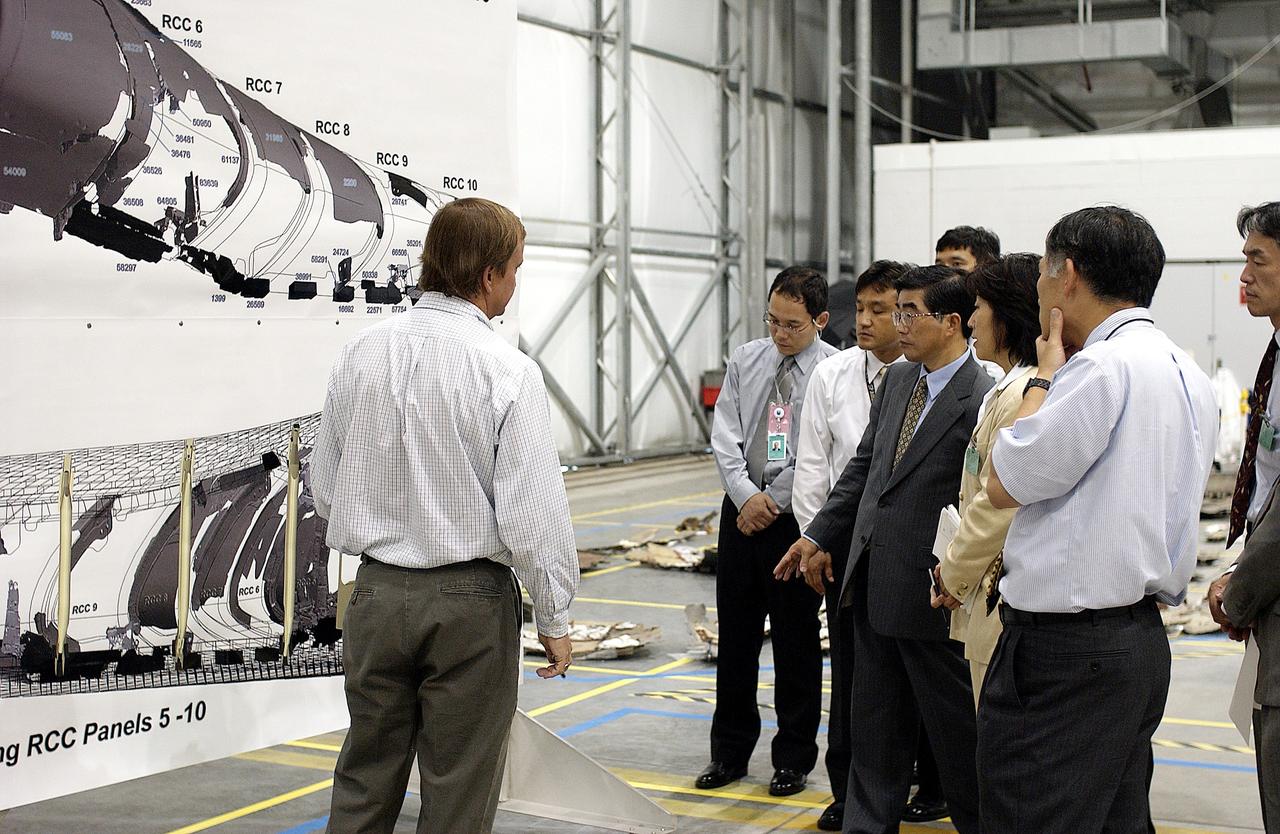
KENNEDY SPACE CENTER, FLA. - Shuttle Launch Director Mike Leinbach (left) explains recovery and reconstruction efforts of Columbia to the Executive Director of NASDA Koji Yamamoto (second from left) and others visiting the Columbia Debris Hangar. Mr. Yamamoto is at KSC for a welcome ceremony involving the arrival of the newest Space Station module, the Japanese Experiment Module/pressurized module.
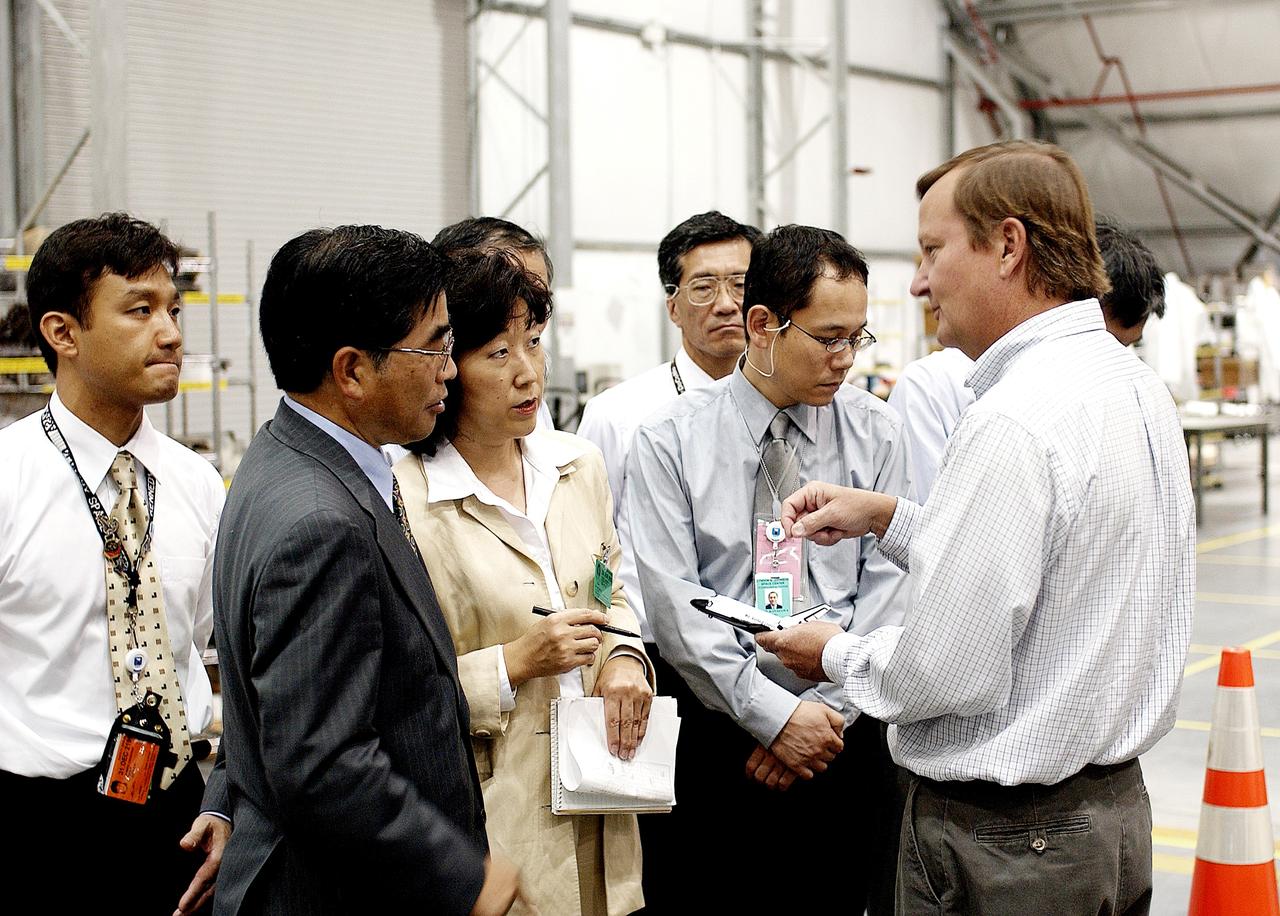
KENNEDY SPACE CENTER, FLA. - Shuttle Launch Director Mike Leinbach (right) explains recovery and reconstruction efforts of Columbia to the Executive Director of NASDA Koji Yamamoto (second from left) and others visiting the Columbia Debris Hangar. Mr. Yamamoto is at KSC for a welcome ceremony involving the arrival of the newest Space Station module, the Japanese Experiment Module/pressurized module.
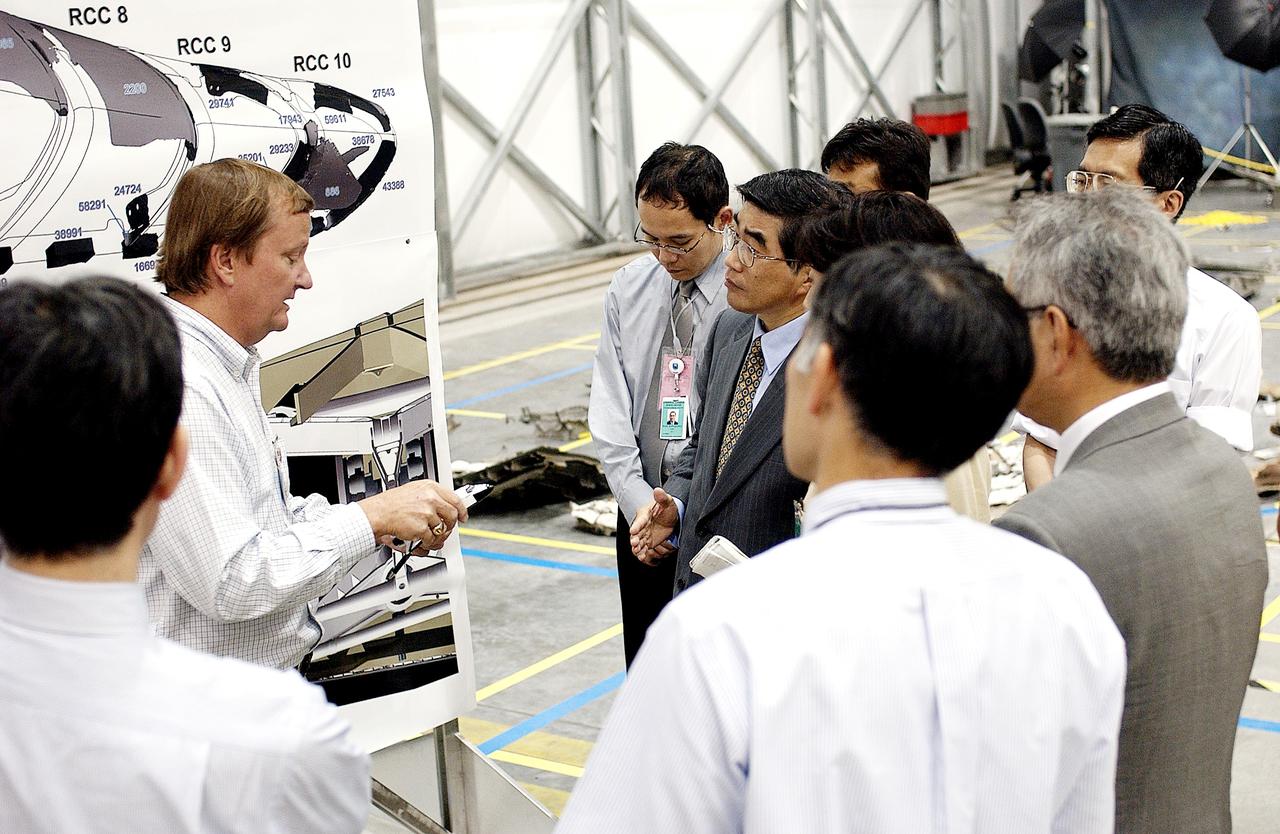
KENNEDY SPACE CENTER, FLA. - Shuttle Launch Director Mike Leinbach (second from left) explains recovery and reconstruction efforts of Columbia to the Executive Director of NASDA Koji Yamamoto (fourth from left) and others visiting the Columbia Debris Hangar. Mr. Yamamoto is at KSC for a welcome ceremony involving the arrival of the newest Space Station module, the Japanese Experiment Module/pressurized module.
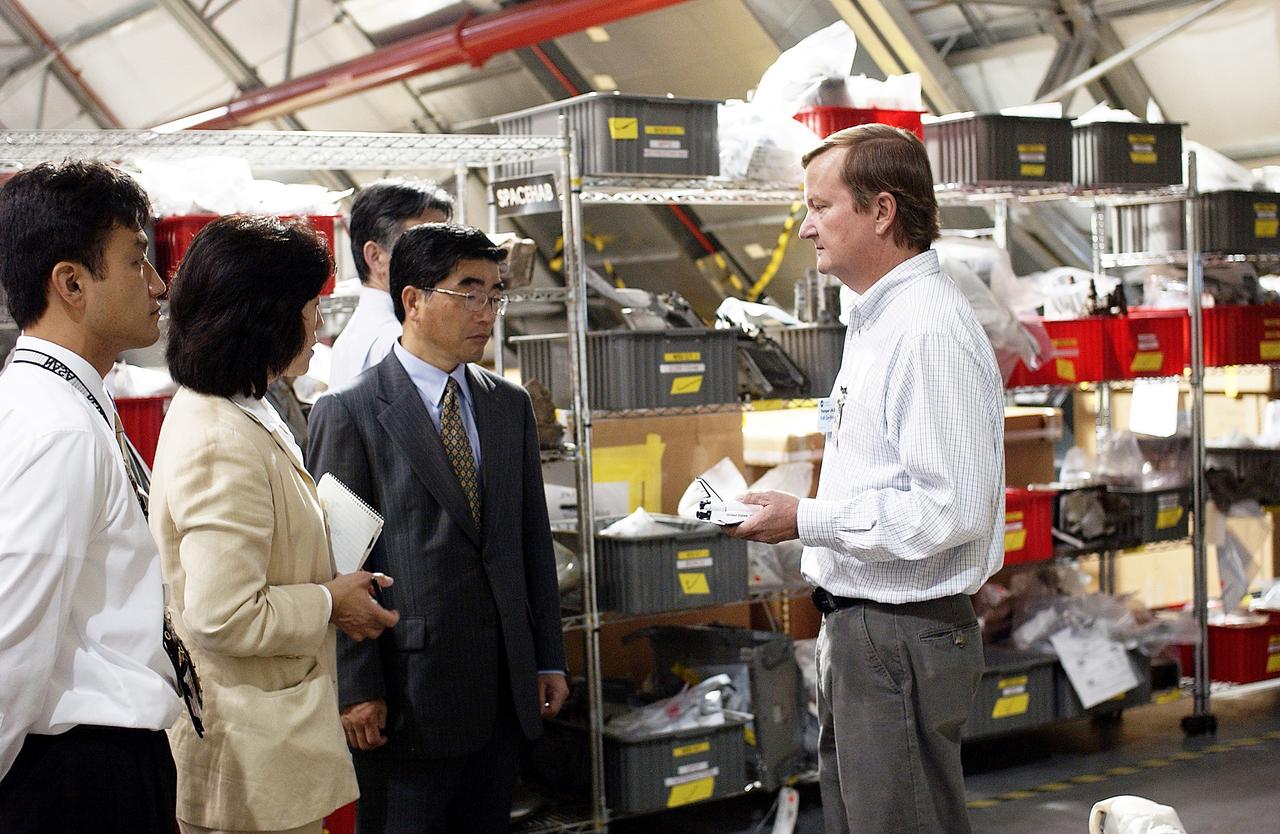
KENNEDY SPACE CENTER, FLA. - Shuttle Launch Director Mike Leinbach (right) explains recovery and reconstruction efforts of Columbia to the Executive Director of NASDA Koji Yamamoto (third from left) and others visiting the Columbia Debris Hangar. Mr. Yamamoto is at KSC for a welcome ceremony involving the arrival of the newest Space Station module, the Japanese Experiment Module/pressurized module.
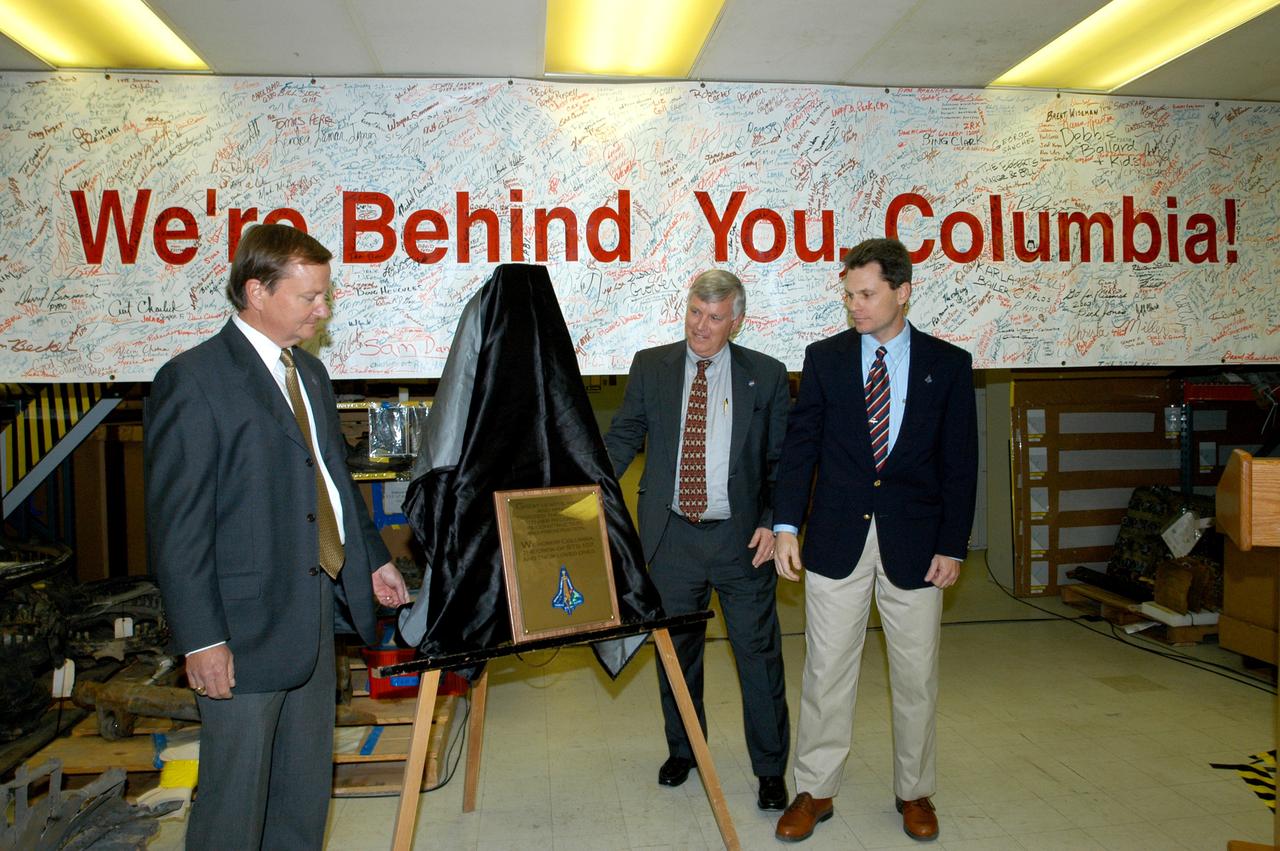
KENNEDY SPACE CENTER, FLA. - In the Vehicle Assembly Building, Shuttle Launch Director Mike Leinbach, Center Director Jim Kennedy and NASA Vehicle Manager Scott Thurston unveil a plaque honoring “Columbia, the crew of STS-107, and their loved ones.” The site is the “Columbia room,” a permanent repository of the debris collected in the aftermath of the tragic accident Feb. 1, 2003, that claimed the orbiter and lives of the seven-member crew. The dedication of the plaque was made in front of the 40-member preservation team.
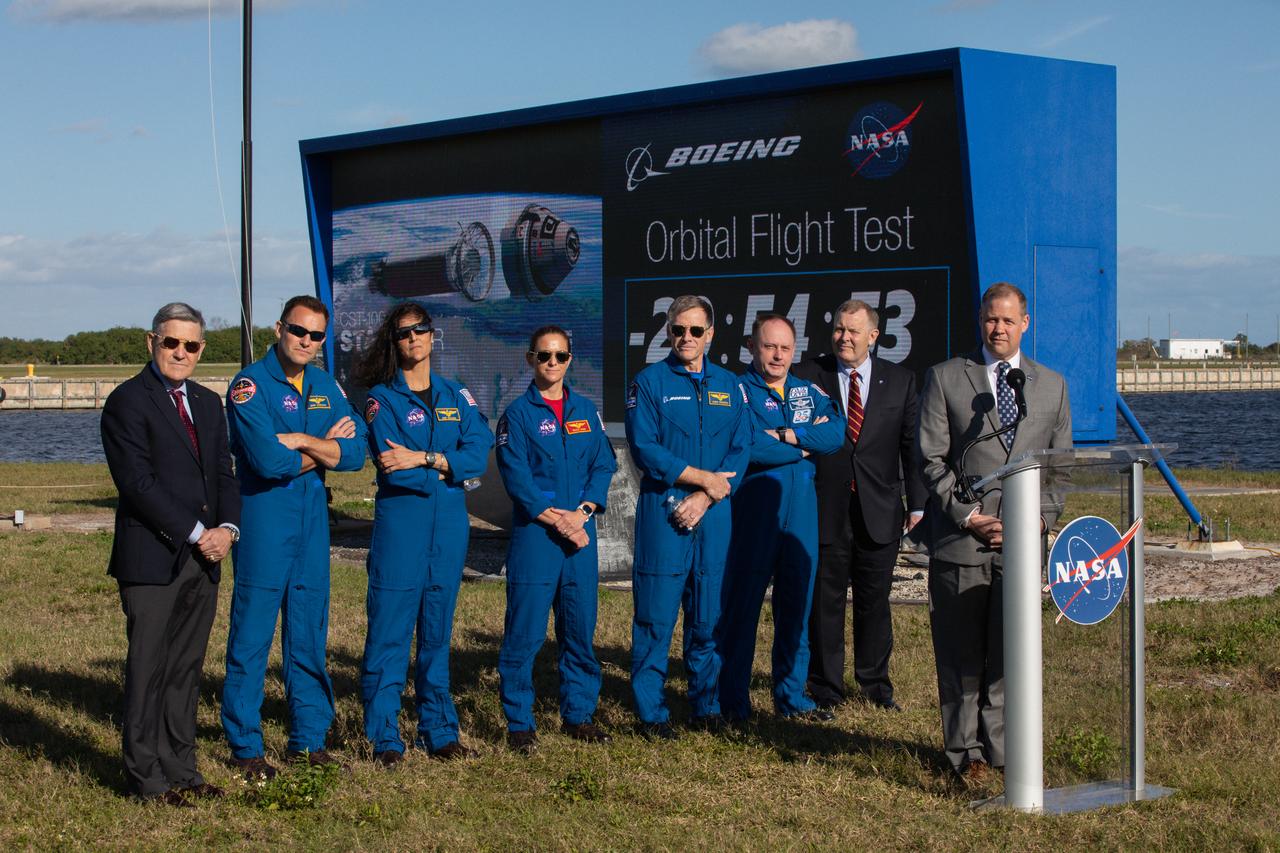
NASA Administrator Jim Bridenstine, Kennedy Space Center Director Bob Cabana, and astronauts representing NASA and Boeing participate in a Boeing Orbital Flight Test media briefing near the countdown clock at the Florida spaceport on Dec. 19, 2019. From left to right are Cabana; NASA astronauts Josh Cassada, Suni Williams and Nicole Mann; Boeing astronaut Chris Ferguson; NASA astronaut Mike Finke; NASA Deputy Administrator Jim Morhard; and Bridenstine. Boeing’s CST-100 Starliner spacecraft will launch atop a United Launch Alliance Atlas V rocket from Space Launch Complex 41 at Cape Canaveral Air Force Station. The uncrewed Orbital Flight Test will be the Starliner’s first flight to the International Space Station for NASA’s Commercial Crew Program.

NASA Administrator Jim Bridenstine, Kennedy Space Center Director Bob Cabana, and astronauts representing NASA and Boeing participate in a Boeing Orbital Flight Test media briefing near the countdown clock at the Florida spaceport on Dec. 19, 2019. From left to right are Cabana; NASA astronauts Josh Cassada, Suni Williams and Nicole Mann; Boeing astronaut Chris Ferguson; NASA astronaut Mike Finke; NASA Deputy Administrator Jim Morhard; and Bridenstine. Boeing’s CST-100 Starliner spacecraft will launch atop a United Launch Alliance Atlas V rocket from Space Launch Complex 41 at Cape Canaveral Air Force Station. The uncrewed Orbital Flight Test will be the Starliner’s first flight to the International Space Station for NASA’s Commercial Crew Program.
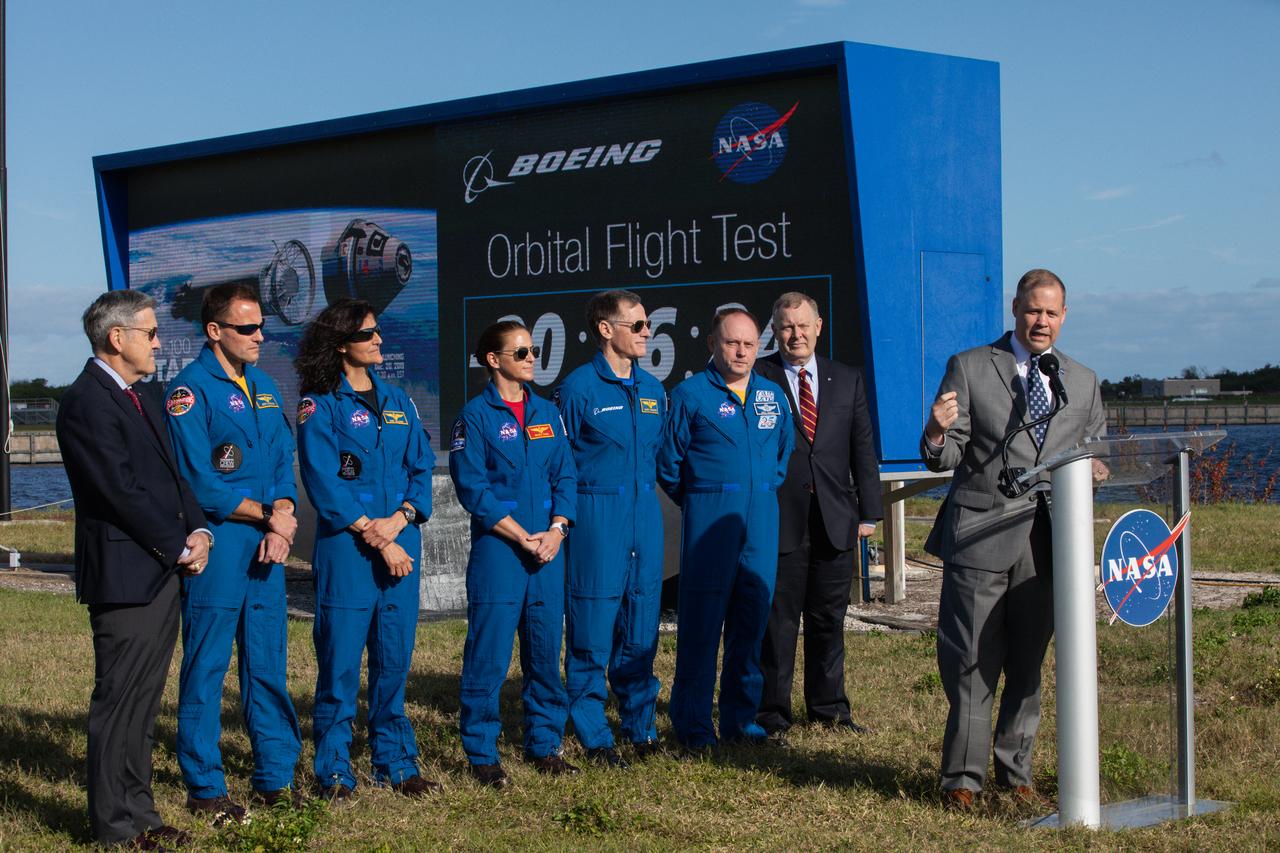
NASA Administrator Jim Bridenstine, Kennedy Space Center Director Bob Cabana, and astronauts representing NASA and Boeing participate in a Boeing Orbital Flight Test media briefing near the countdown clock at the Florida spaceport on Dec. 19, 2019. From left to right are Cabana; NASA astronauts Josh Cassada, Suni Williams and Nicole Mann; Boeing astronaut Chris Ferguson; NASA astronaut Mike Finke; NASA Deputy Administrator Jim Morhard; and Bridenstine. Boeing’s CST-100 Starliner spacecraft will launch atop a United Launch Alliance Atlas V rocket from Space Launch Complex 41 at Cape Canaveral Air Force Station. The uncrewed Orbital Flight Test will be the Starliner’s first flight to the International Space Station for NASA’s Commercial Crew Program.
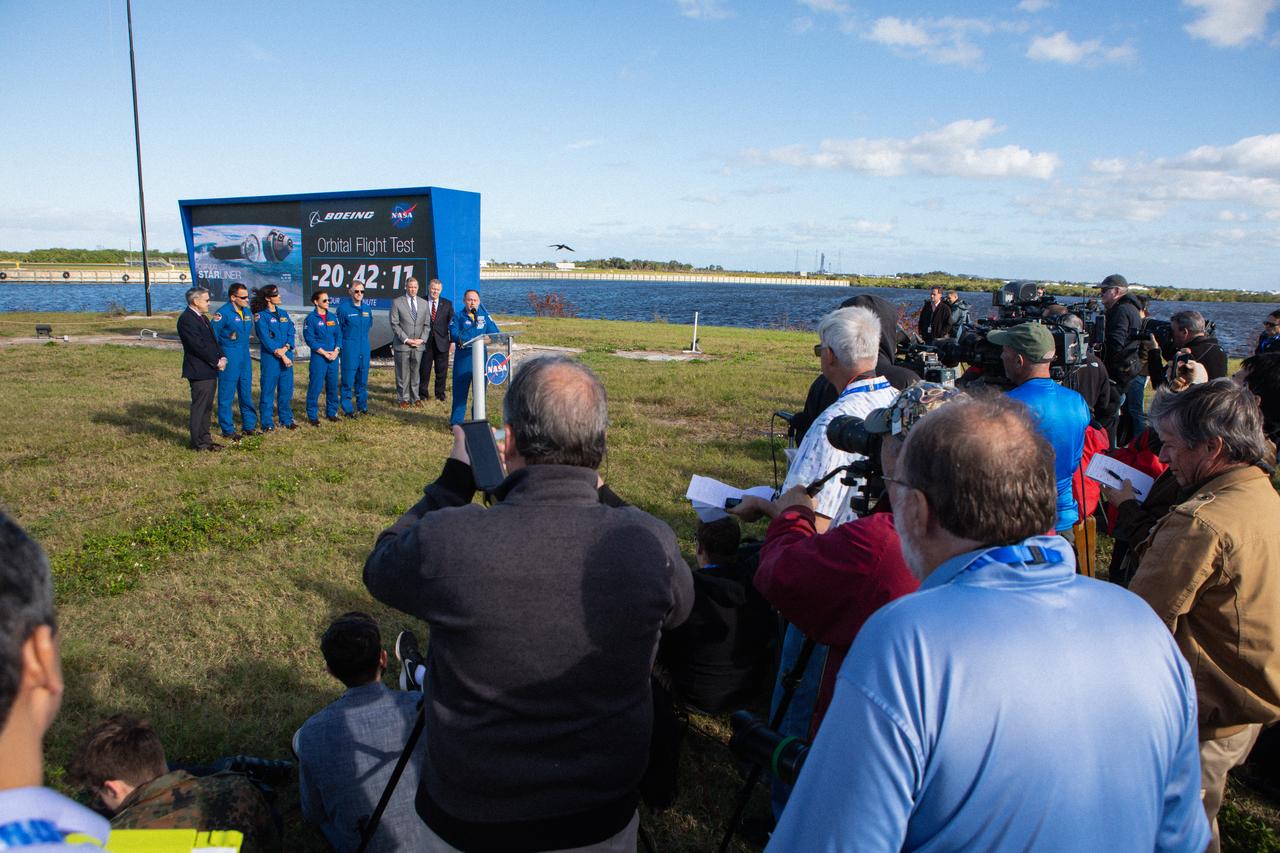
NASA Administrator Jim Bridenstine, Kennedy Space Center Director Bob Cabana, and astronauts representing NASA and Boeing participate in a Boeing Orbital Flight Test media briefing near the countdown clock at the Florida spaceport on Dec. 19, 2019. From left to right are Cabana; NASA astronauts Josh Cassada, Suni Williams and Nicole Mann; Boeing astronaut Chris Ferguson; Bridenstine; NASA Deputy Administrator Jim Morhard; and NASA astronaut Mike Finke. Boeing’s CST-100 Starliner spacecraft will launch atop a United Launch Alliance Atlas V rocket from Space Launch Complex 41 at Cape Canaveral Air Force Station. The uncrewed Orbital Flight Test will be the Starliner’s first flight to the International Space Station for NASA’s Commercial Crew Program.
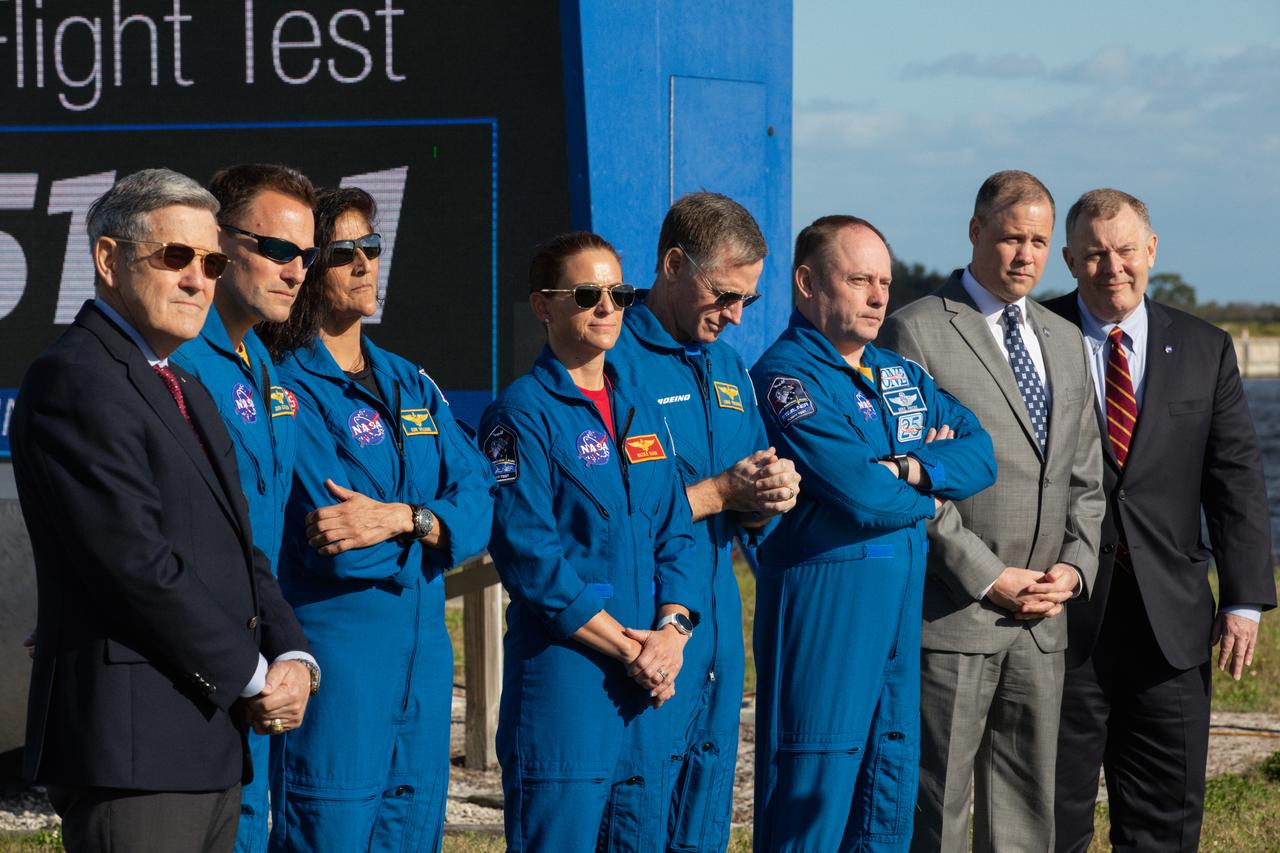
NASA Administrator Jim Bridenstine, Kennedy Space Center Director Bob Cabana, and astronauts representing NASA and Boeing participate in a Boeing Orbital Flight Test media briefing near the countdown clock at the Florida spaceport on Dec. 19, 2019. From left to right are Cabana; NASA astronauts Josh Cassada, Suni Williams and Nicole Mann; Boeing astronaut Chris Ferguson; NASA astronaut Mike Finke; Bridenstine; and NASA Deputy Administrator Jim Morhard. Boeing’s CST-100 Starliner spacecraft will launch atop a United Launch Alliance Atlas V rocket from Space Launch Complex 41 at Cape Canaveral Air Force Station. The uncrewed Orbital Flight Test will be the Starliner’s first flight to the International Space Station for NASA’s Commercial Crew Program.
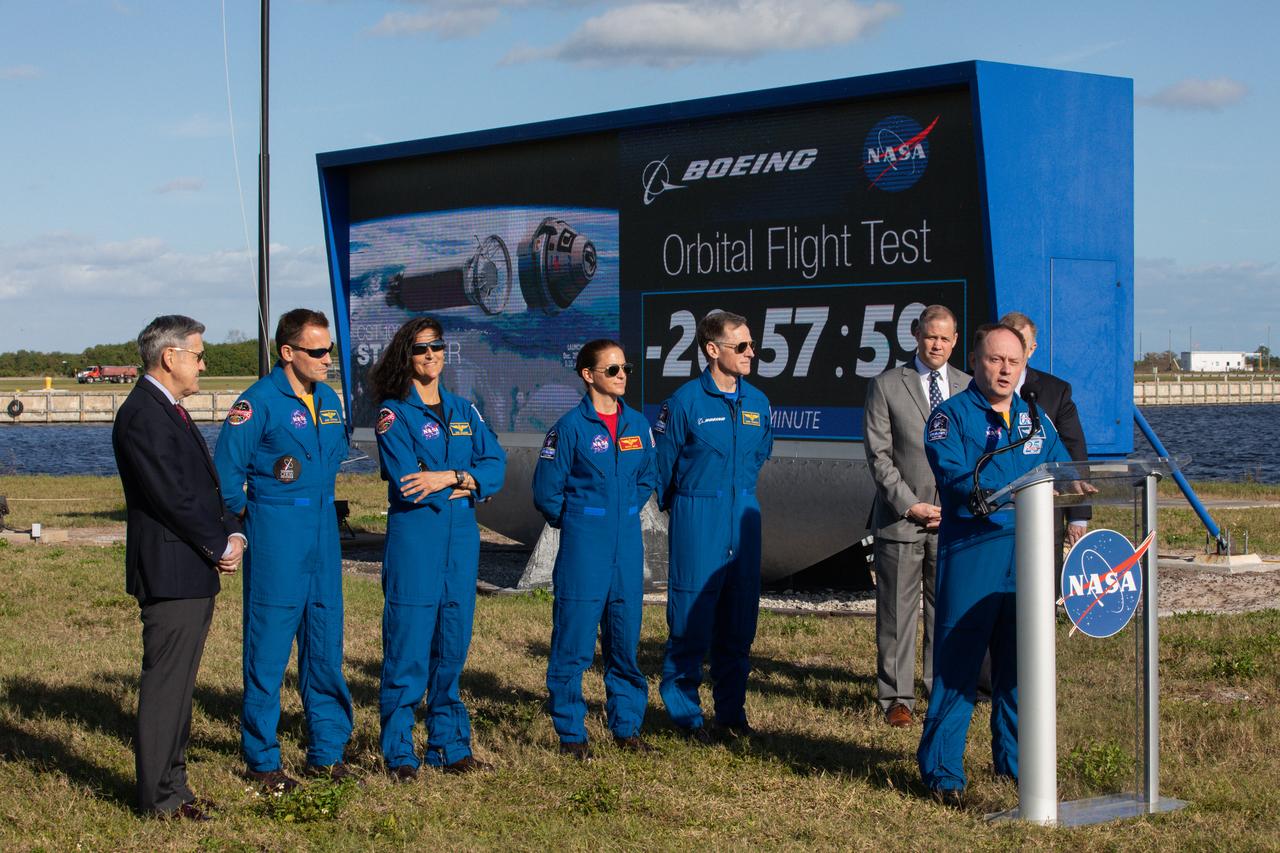
Mike Finke, NASA astronaut, participates in a Boeing Orbital Flight Test media briefing near the countdown clock at the Florida spaceport on Dec. 19, 2019. In the background from left to right are Kennedy Space Center Director Bob Cabana; NASA astronauts Josh Cassada, Suni Williams and Nicole Mann; Boeing astronaut Chris Ferguson; NASA Administrator Jim Bridenstine; and Deputy Administrator Jim Morhard. Boeing’s CST-100 Starliner spacecraft will launch atop a United Launch Alliance Atlas V rocket from Space Launch Complex 41 at Cape Canaveral Air Force Station. The uncrewed Orbital Flight Test will be the Starliner’s first flight to the International Space Station for NASA’s Commercial Crew Program.
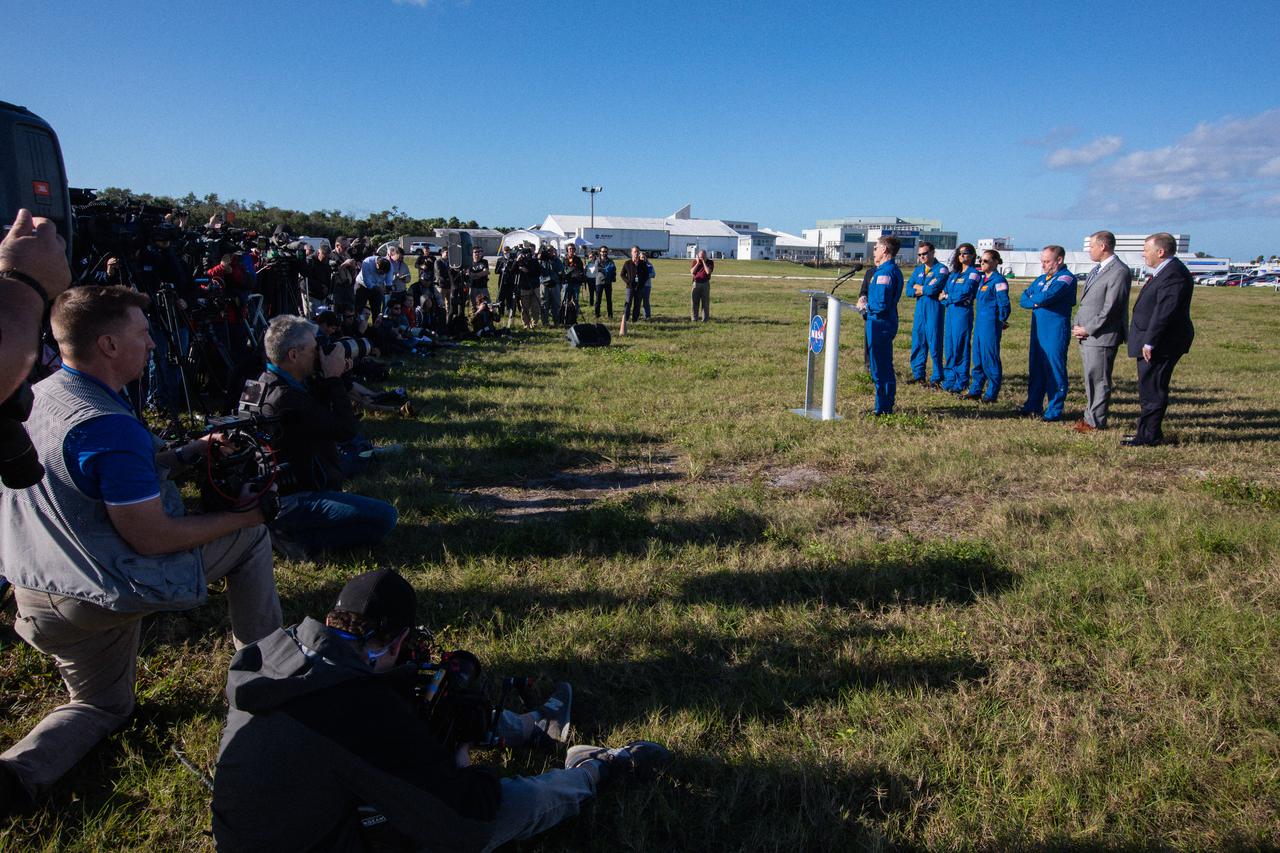
Chris Ferguson, Boeing astronaut, participates in a Boeing Orbital Flight Test media briefing near the countdown clock at the Florida spaceport on Dec. 19, 2019. In the background from left to right are Kennedy Space Center Director Bob Cabana; NASA astronauts Josh Cassada, Suni Williams, Nicole Mann and Mike Finke; NASA Administrator Jim Bridenstine; and Deputy Administrator Jim Morhard. Boeing’s CST-100 Starliner spacecraft will launch atop a United Launch Alliance Atlas V rocket from Space Launch Complex 41 at Cape Canaveral Air Force Station. The uncrewed Orbital Flight Test will be the Starliner’s first flight to the International Space Station for NASA’s Commercial Crew Program.

This image depicts the tension in the Launch Control Center of the Launch Complex 37 at Cape Canaveral, Florida, during the SA-8 on May 25, 1965. Pointing, center is Dr. Kurt Debus, Director, Launch Operations Directorate, MSFC. To the right is Dr. Hans Gruene, Deputy Director, Launch Operations Directorate, MSFC; Dr. von Braun, Director, Marshall Space Flight Center (MSFC); and leaning, Dr. Eberhard Rees, Director, Deputy Director for Research and Development, MSFC. The SA-8 mission, with a Saturn I launch vehicle, made the first night launch and deployed Pegasus II, micrometeoroid detection satellite.
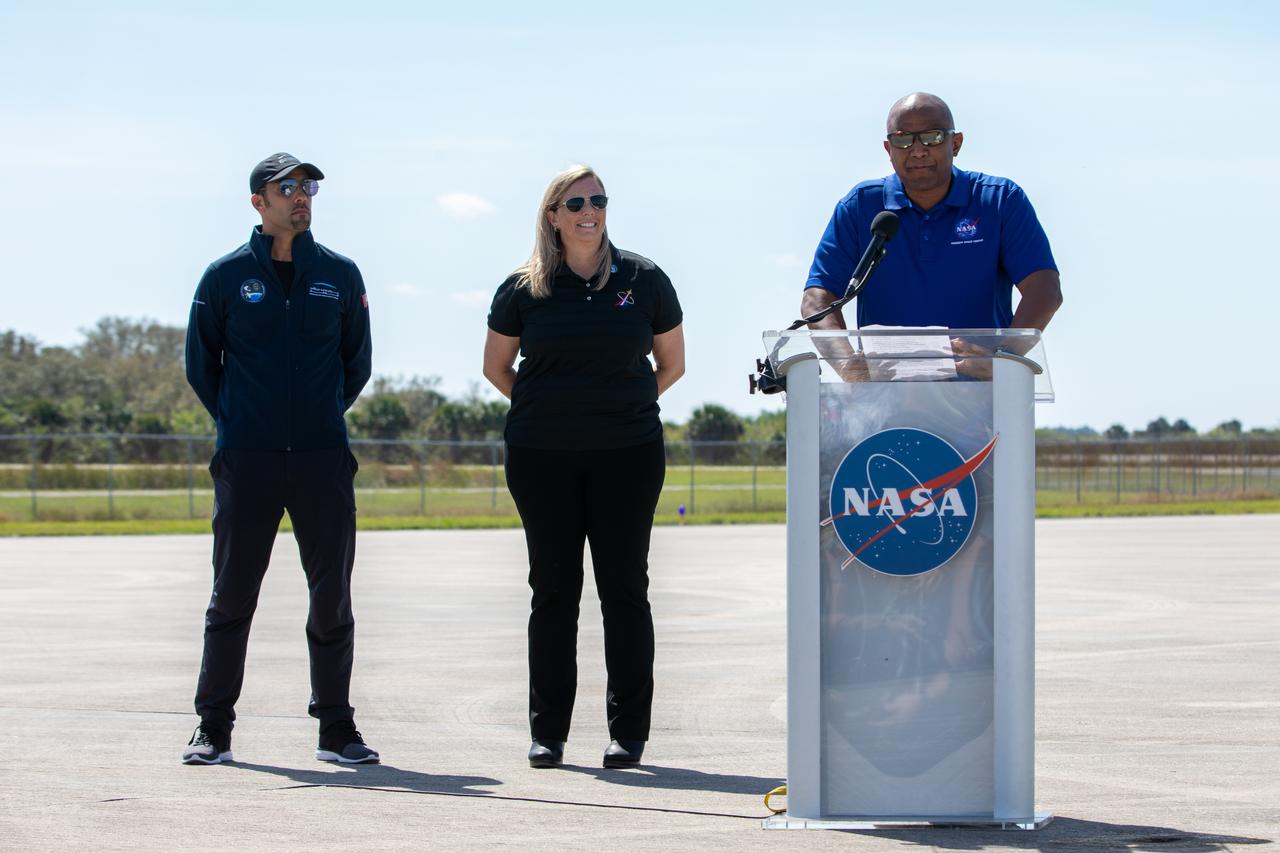
Kennedy Space Center Deputy Director Kelvin Manning speaks to members of the news media during crew arrival for NASA’s SpaceX Crew-6 mission at Kennedy’s Launch and Landing Facility in Florida on Feb. 21, 2023. Behind him, from left, are Salem AlMarri, director general, Mohammed Bin Rashid Space Centre, and Dana Hutcherson, deputy manager, NASA’s Commercial Crew Program. NASA astronauts Stephen Bowen and Warren “Woody” Hoburg, UAE (United Arab Emirates) astronaut Sultan Alneyadi, and Roscosmos cosmonaut Andrey Fedyaev will launch to the International Space Station aboard the Crew Dragon on a SpaceX Falcon 9. Launch is targeted for no earlier than Feb. 26 at 2:07 a.m. EST from Launch Complex 39A. Crew-6 is the sixth crew rotation mission with SpaceX to the station, and the seventh flight of Dragon with people as part of the agency’s Commercial Crew Program.
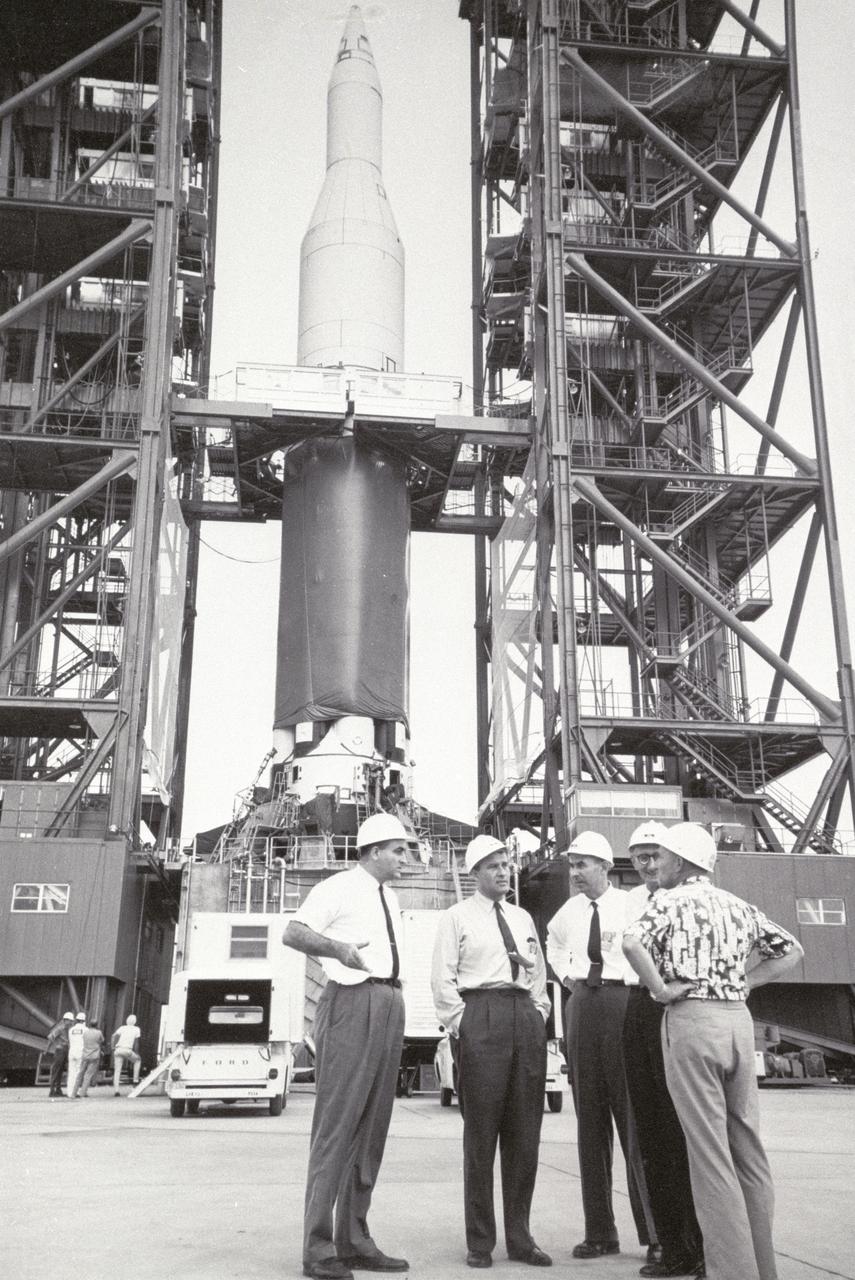
Pictured in front of the Saturn 1 launch vehicle are (L to R): Dr. Rocco Petrone, Director of Launch Operations at Kennedy Space Center; Dr. Werher von Braun, Director of Marshall Space Flight Center; Dr. Oswald Lange, Director of the Saturn Systems Office; Mr. Hans. H. Maus, Director of Fabrication and Assembly Engineering Division; and Dr. Hans Gruene, Deputy Director of Launch Operations Directorate. Maus and Gruene were original members of von Braun's rocket team.
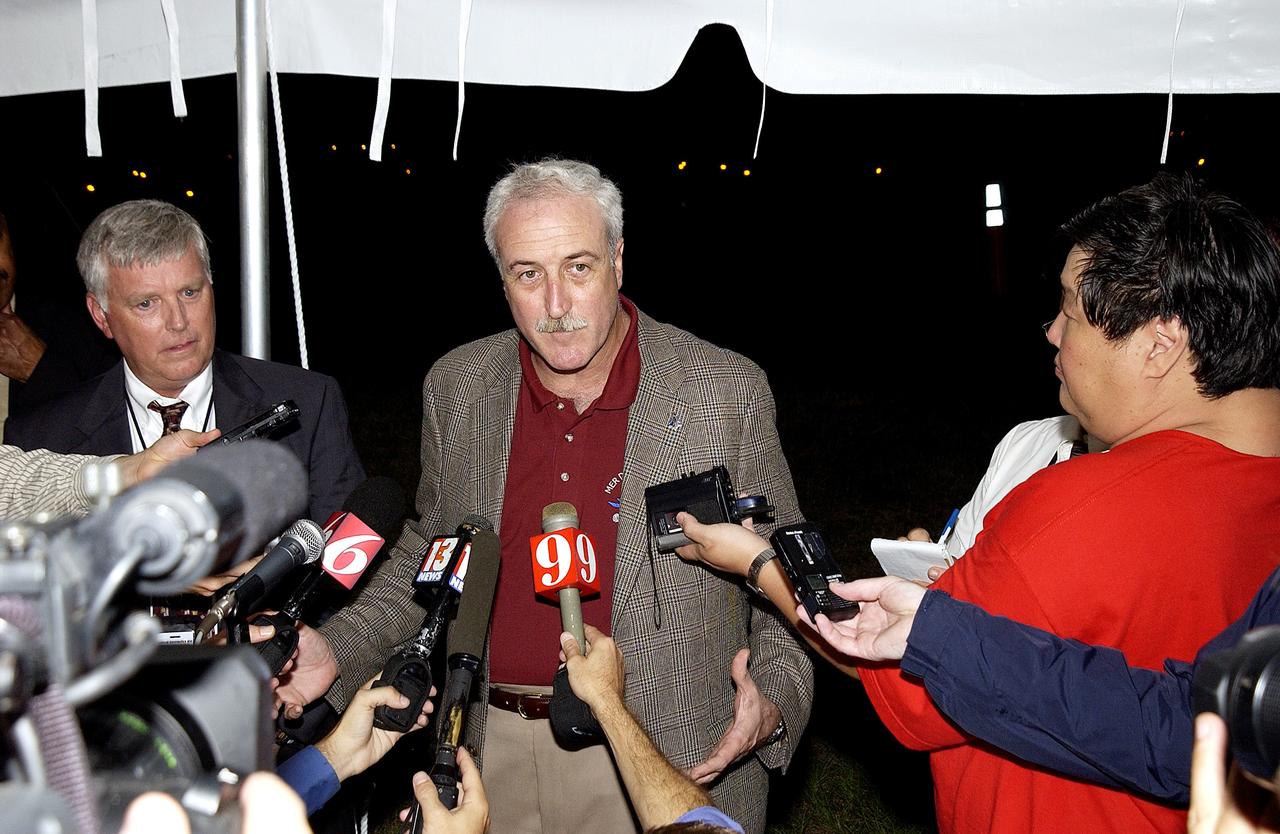
KENNEDY SPACE CENTER, FLA. - Newly appointed KSC Director James W. Kennedy (left) and NASA Administrator Sean O'Keefe (center) talk to the media following the launch of the Mars Exploration Rover "Opportunity" at the Trident Basin berm press site at Cape Canaveral Air Force Station.
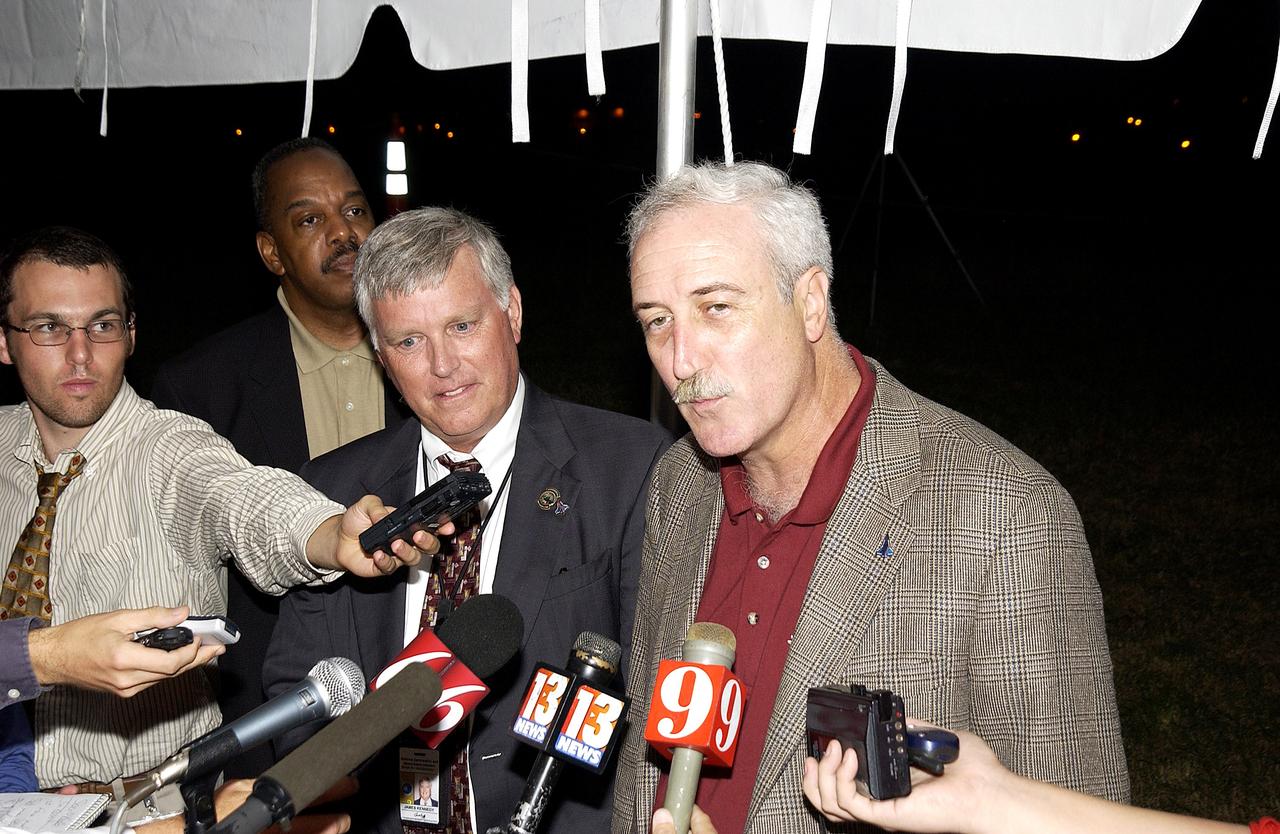
KENNEDY SPACE CENTER, FLA. - Newly appointed KSC Director James W. Kennedy (second from left) and NASA Administrator Sean O'Keefe (right) talk to the media following the launch of the Mars Exploration Rover "Opportunity" at the Trident Basin berm press site at Cape Canaveral Air Force Station.
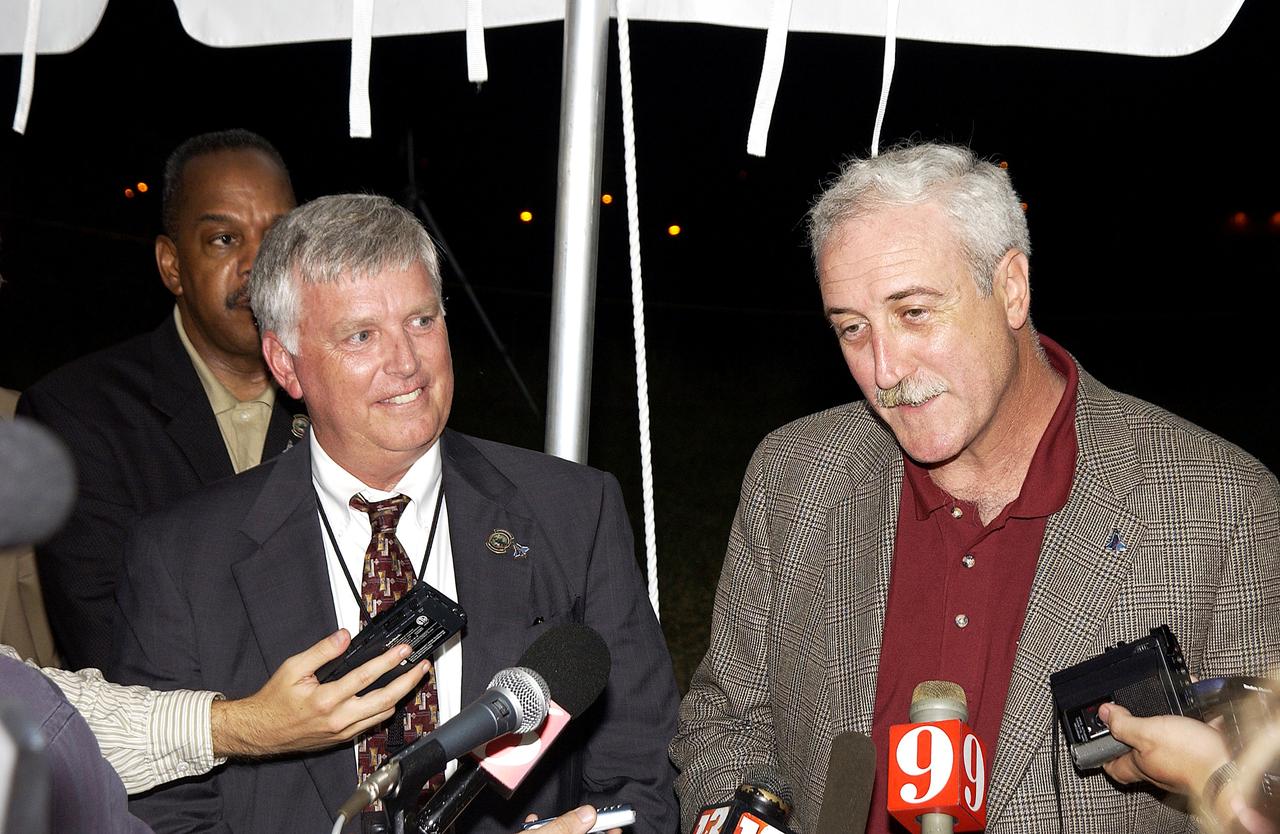
KENNEDY SPACE CENTER, FLA. - Newly appointed KSC Director James W. Kennedy (left) and NASA Administrator Sean O'Keefe (right) talk to the media following the launch of the Mars Exploration Rover "Opportunity" at the Trident Basin berm press site at Cape Canaveral Air Force Station.
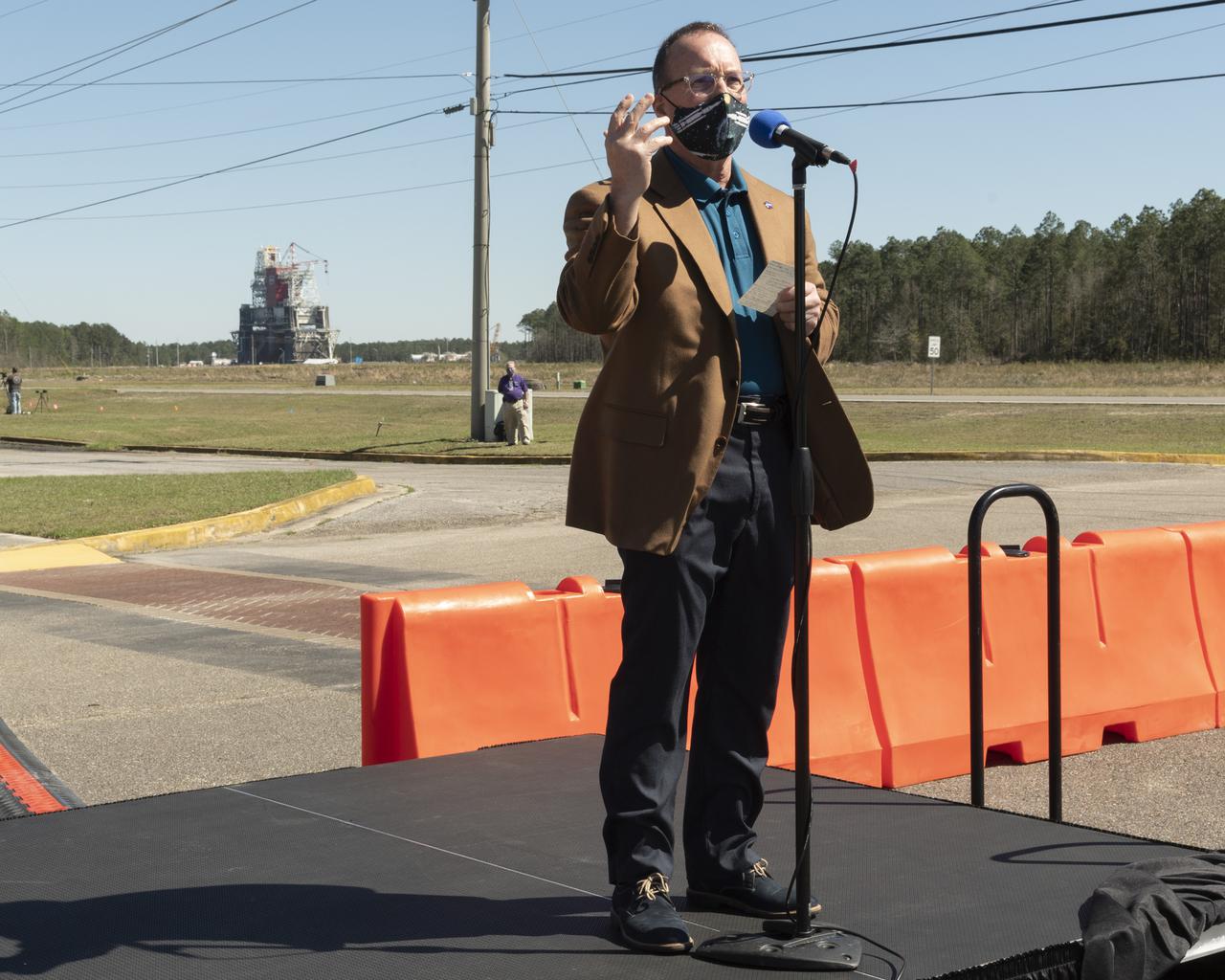
Rick Gilbrech, director of NASA's Stennis Space Center, speaks to invited guests ahead of a second hot fire test of the core stage for the first flight of NASA’s Space Launch System rocket in the B-2 Test Stand, Thursday, March 18, 2021, at NASA’s Stennis Space Center near Bay St. Louis, Mississippi. The hot fire test is the final stage of the Green Run test series, a comprehensive assessment of the Space Launch System’s core stage prior to launching the Artemis I mission to the Moon. Photo Credit: (NASA/Robert Markowitz)
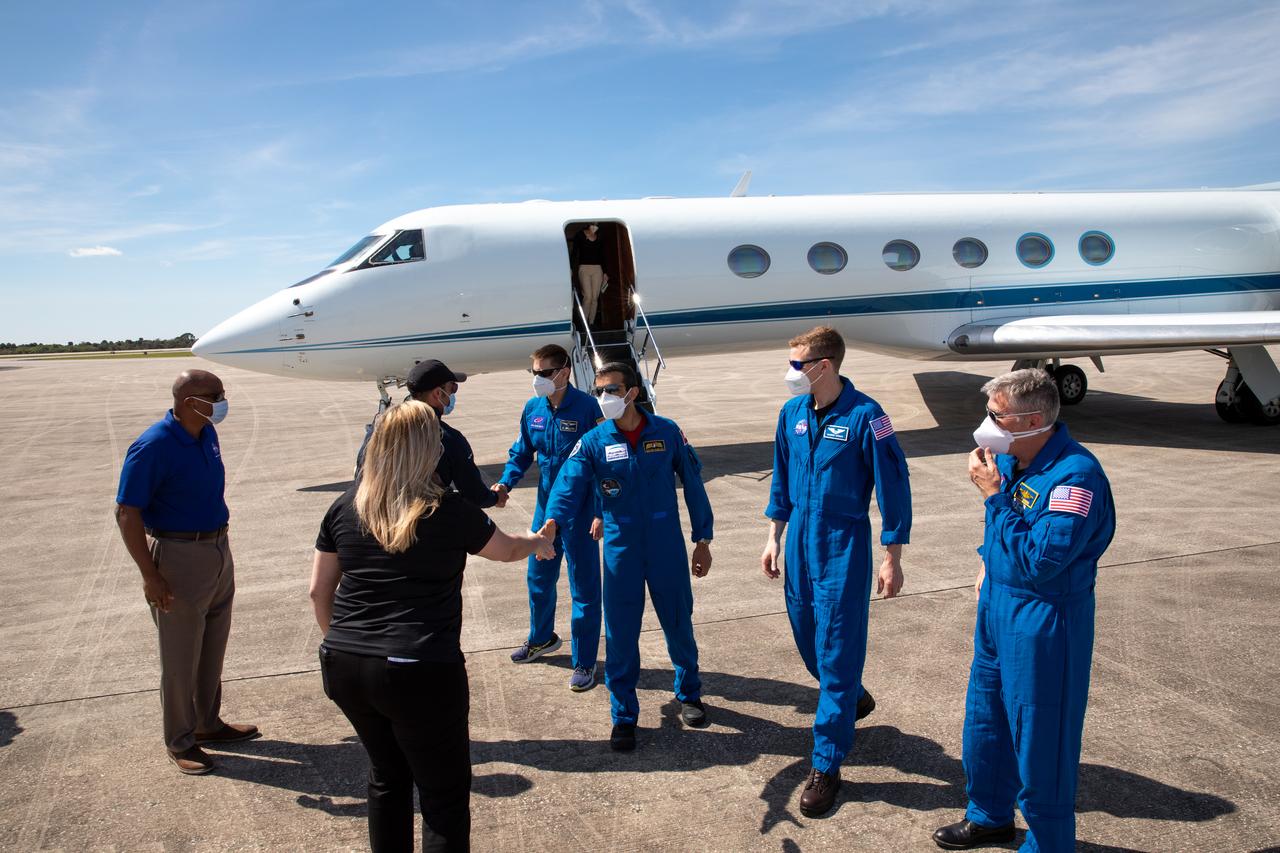
Kennedy Space Center Deputy Director Kelvin Manning, Dana Hutcherson, deputy manager, NASA’s Commercial Crew Program, and Salem AlMarri, director general, Mohammed Bin Rashid Space Centre, greet the crew members of NASA’s SpaceX Crew-6 mission after their arrival at the center’s Launch and Landing Facility in Florida on Feb. 21, 2023. From left are Manning, Hutcherson, AlMarri, Roscosmos cosmonaut Andrey Fedyaev, UAE (United Arab Emirates) astronaut Sultan Alneyadi, and NASA astronauts Warren “Woody” Hoburg and Stephen Bowen. Crew-6 will launch aboard the Crew Dragon on a SpaceX Falcon 9 rocket. Launch is targeted for no earlier than Feb. 26 at 2:07 a.m. EST.
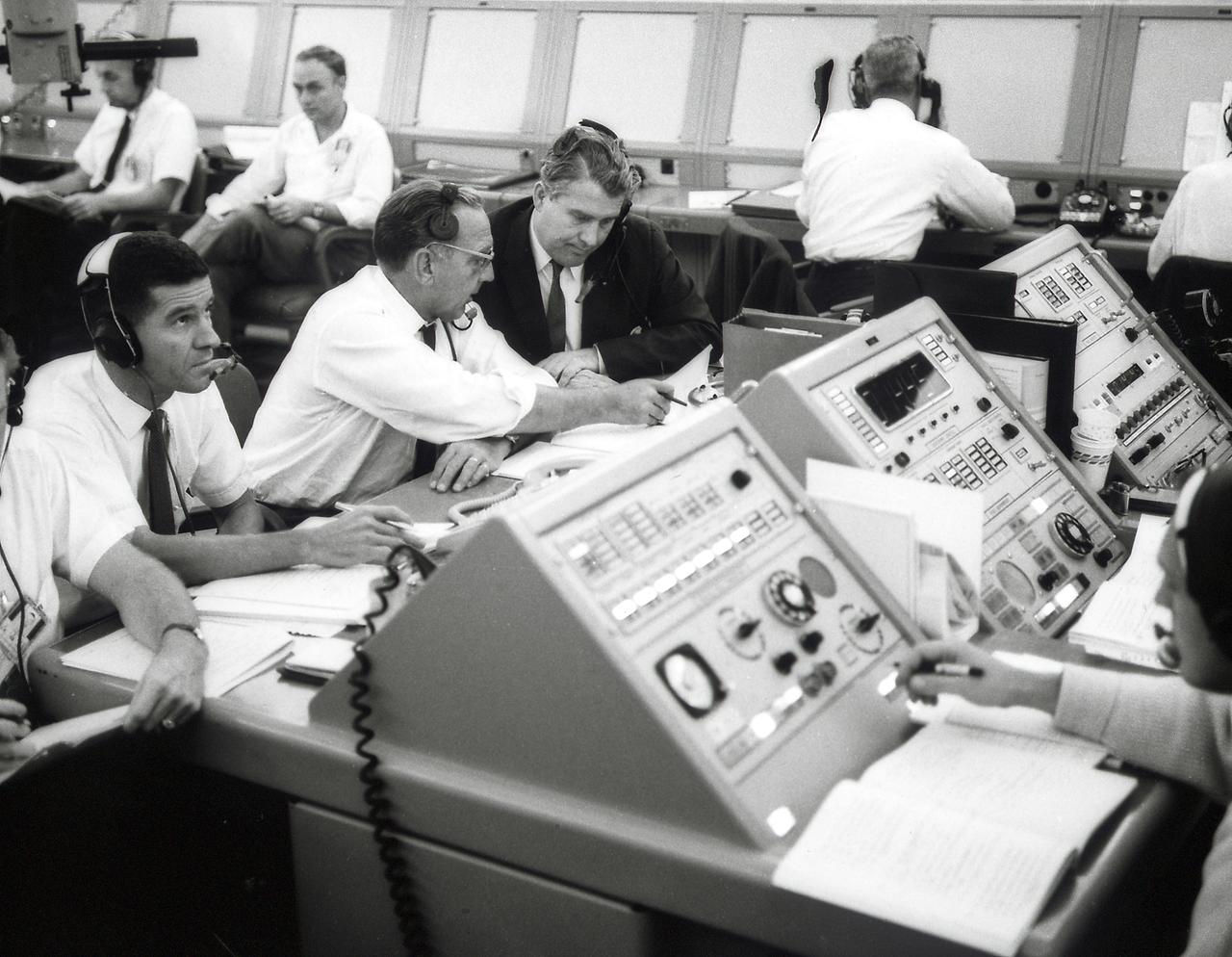
Dr. von Braun, Director of the Marshall Space Flight Center (MSFC), and Dr. Debus, Director of Launch Operations Directorate, photographed in the blockhouse during the Apollo launch simulation.
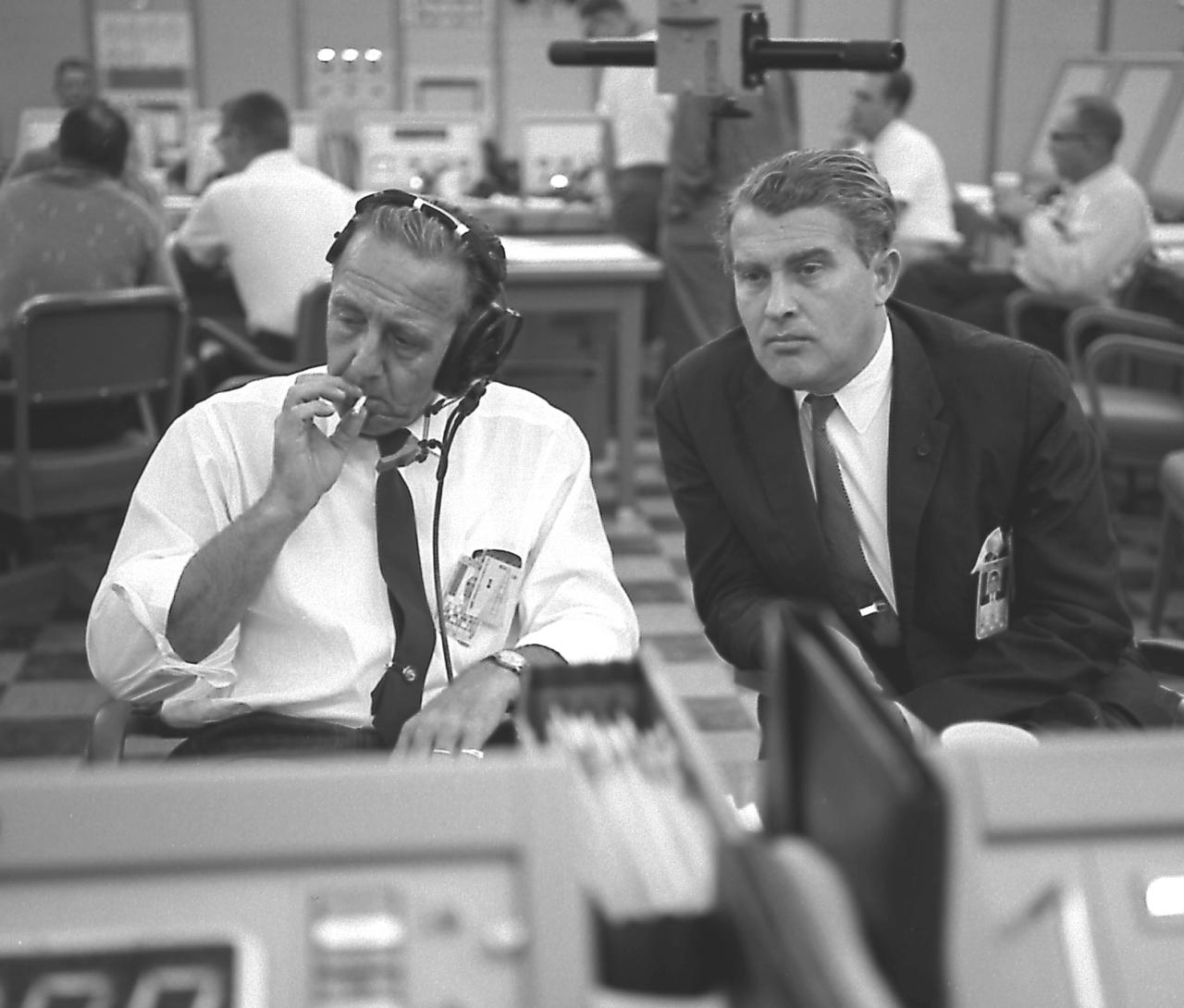
Dr. von Braun, Director of the Marshall Space Flight Center (MSFC), and Dr. Debus, Director of Launch Operations Directorate, photographed in the blockhouse during the Apollo launch simulation.
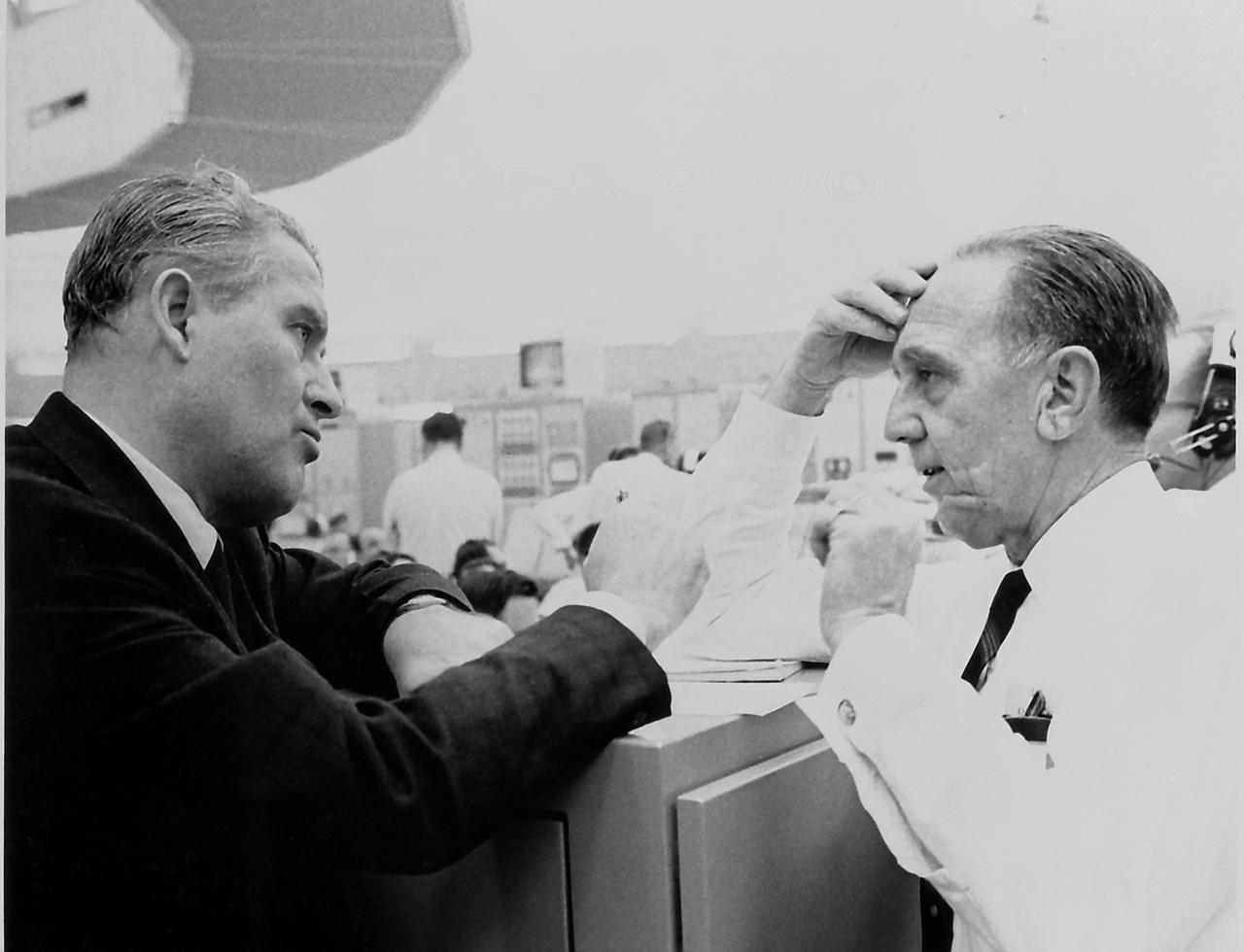
Marshall Space Flight Center (MSFC) Director, Dr. Wernher von Braun (left) confers with the Director of the MSFC Launch Operation Directorate, Dr. Debus, during the countdown for the Saturn/Pegasus (Saturn I, SA-9) launch. The successful launch of the Pegasus satellite marked the largest unmarned instrumented satellite in orbit up to 1965.
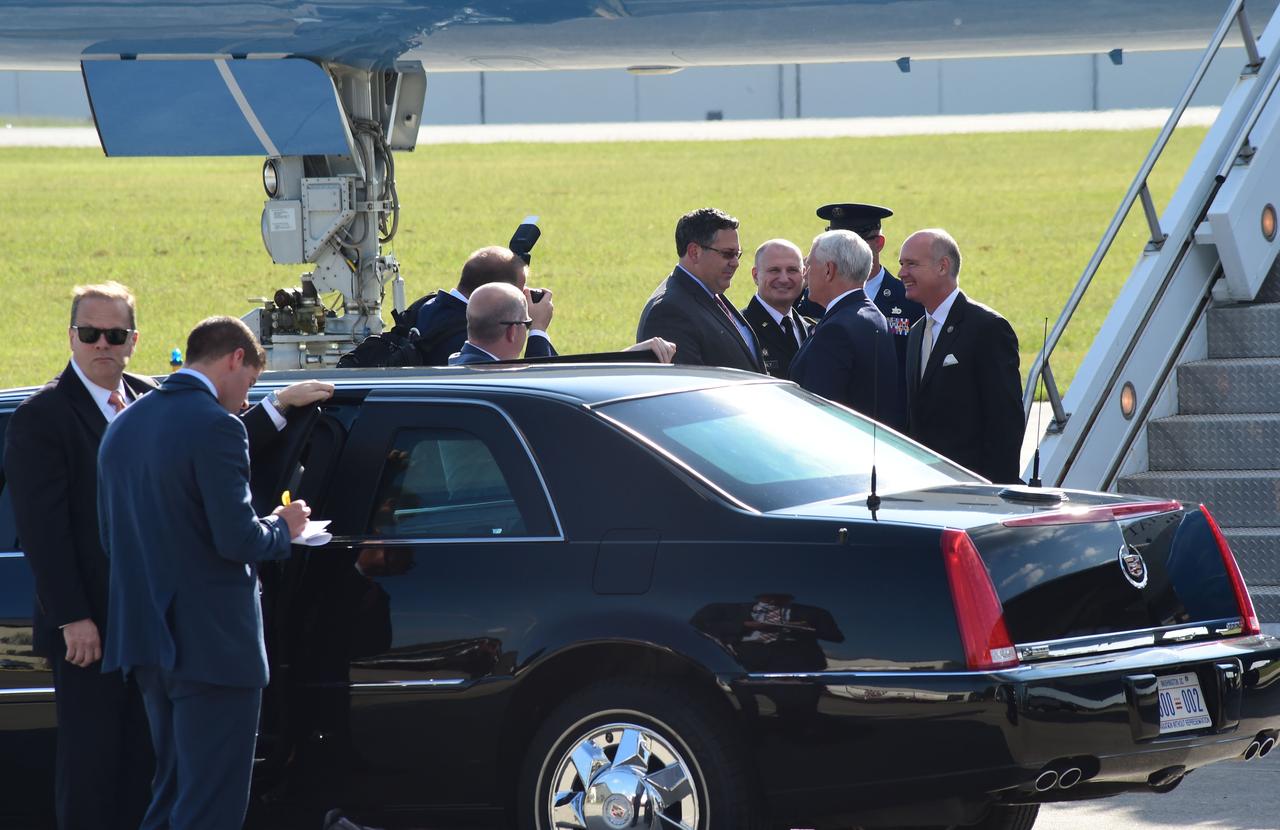
Air Force Two lands with Vice President Mike Pence along with Congressman Robert Aderholt at the Redstone Army Airfield in Huntsville, Alabama, on Monday, Sept. 25. They were greeted by NASA’s Marshall Space Flight Center Director Todd May and Redstone Arsenal’s Lt. Gen. Edward Daly. The Vice President is visiting NASA’s Marshall Center to meet with employees, view test hardware for NASA’s Space Launch System — America’s new deep-space rocket, and tour the Payload Operations Integration Center, “science central” for the International Space Station. Photo Credit: (NASA/Emmett Given)
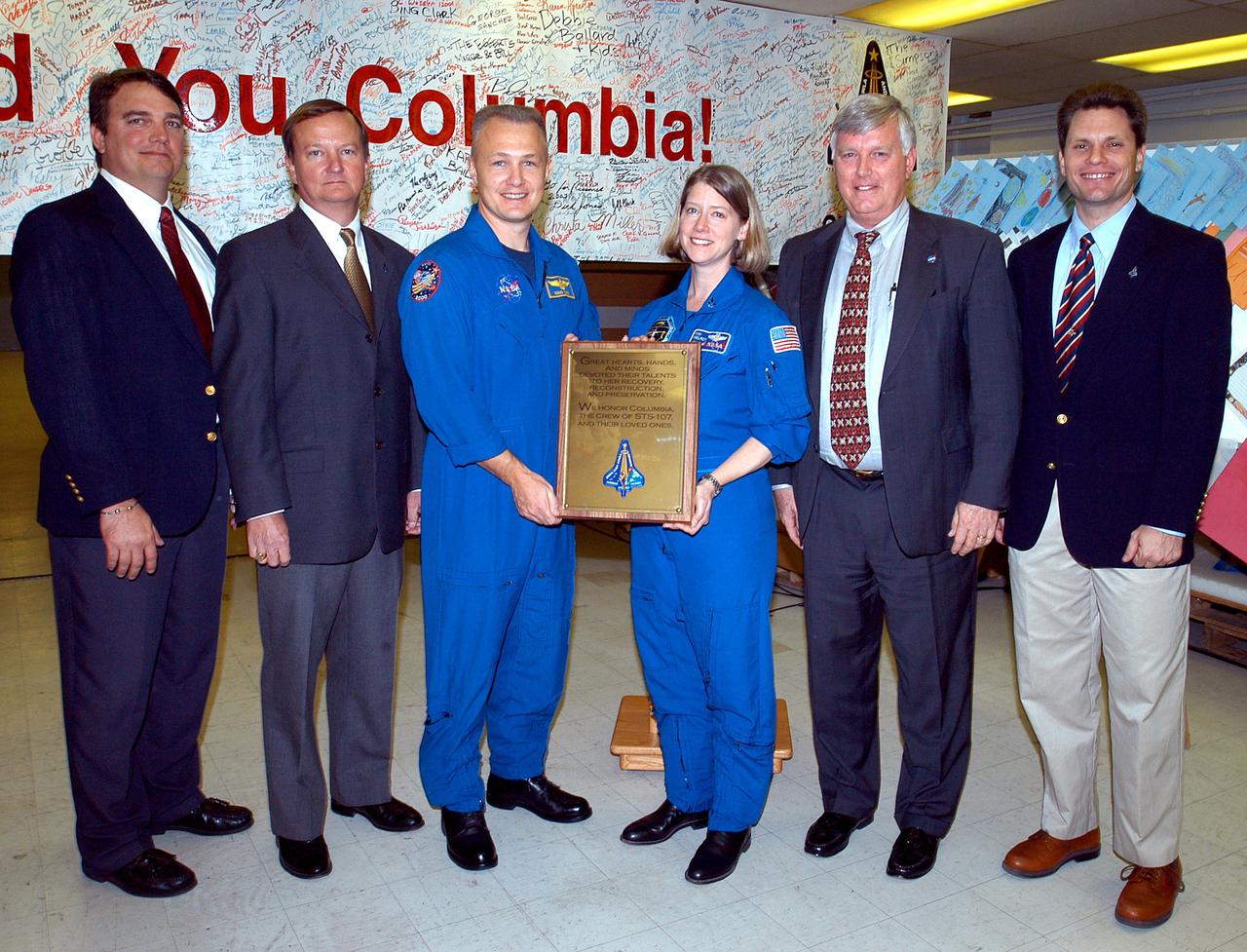
KENNEDY SPACE CENTER, FLA. - Posing with the plaque dedicated to Columbia Jan. 29, 2004, are (left to right) United Space Alliance project leader for Columbia reconstruction Jim Comer, Shuttle Launch Director Mike Leinbach, astronauts Douglas Hurley and Pam Melroy, Center Director Jim Kennedy and NASA Vehicle Manager Scott Thurston. The dedication of the plaque was made in front of the 40-member preservation team in the “Columbia room,” a permanent repository in the Vehicle Assembly Building of the debris collected in the aftermath of the tragic accident Feb. 1, 2003, that claimed the orbiter and lives of the seven-member crew.
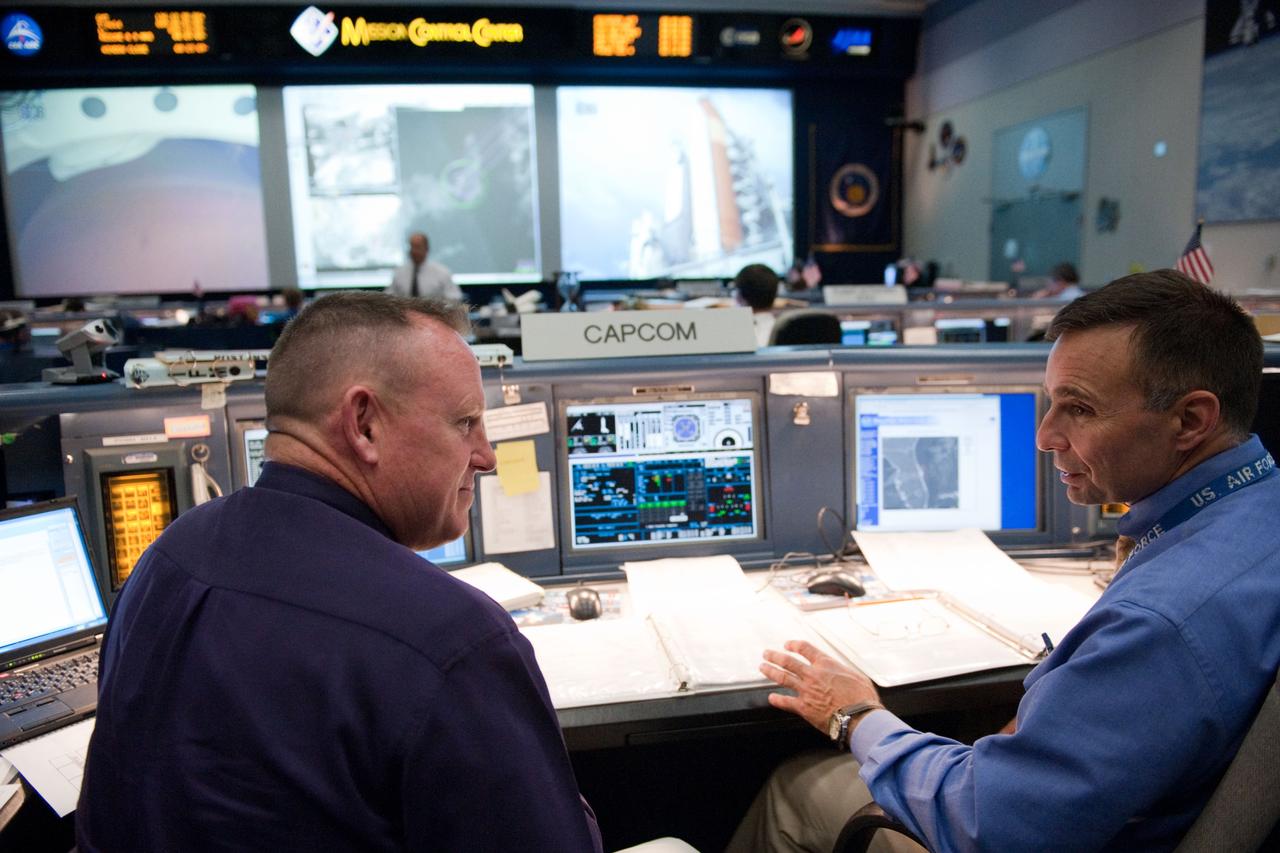
JSC2011-E-044080 (16 May 2011) --- Inside the space shuttle flight control room in Houston?s Mission Control Center two spacecraft communicators discuss the preparations in both Houston and the launch pad several hundred miles away in Florida for the final launch of Endeavour. Astronauts Barry Wilmore (left) and Lee Archambault staff the CAPCOM console for the prelaunch and launch activities. The shuttle lifted off from Pad 39A at NASA's Kennedy Space Center on time at 8:56 a.m. (EDT) on May 16, 2011. Photo credit: NASA
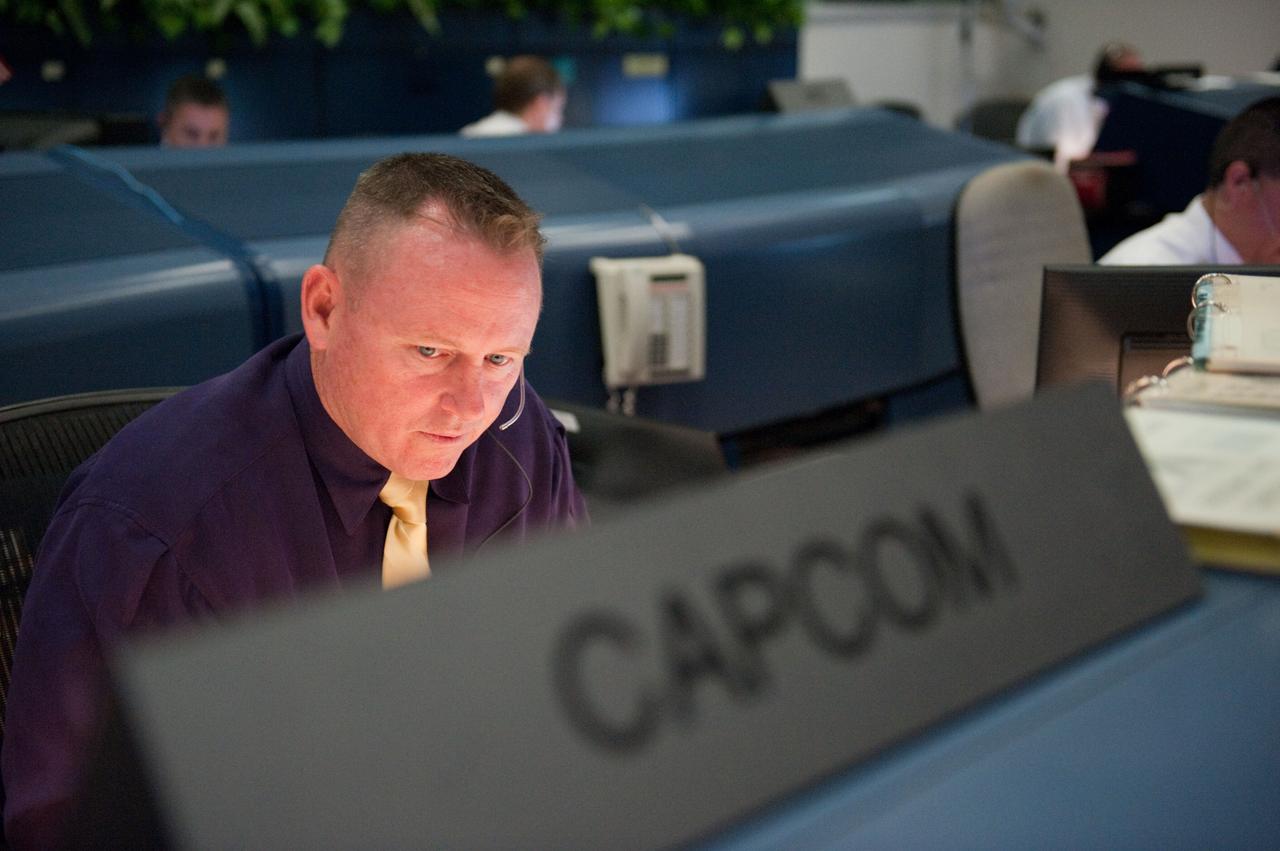
JSC2011-E-044083 (16 May 2011) --- Inside the space shuttle flight control room in Houston?s Mission Control Center, astronaut Barry Wilmore works at the spacecraft communicator (CAPCOM) console during the prelaunch and launch activities both at the Houston facility and the launch pad several hundred miles away in Florida. Space shuttle Endeavour lifted off from Pad 39A at NASA's Kennedy Space Center on time at 8:56 a.m. (EDT) on May 16, 2011. Photo credit: NASA
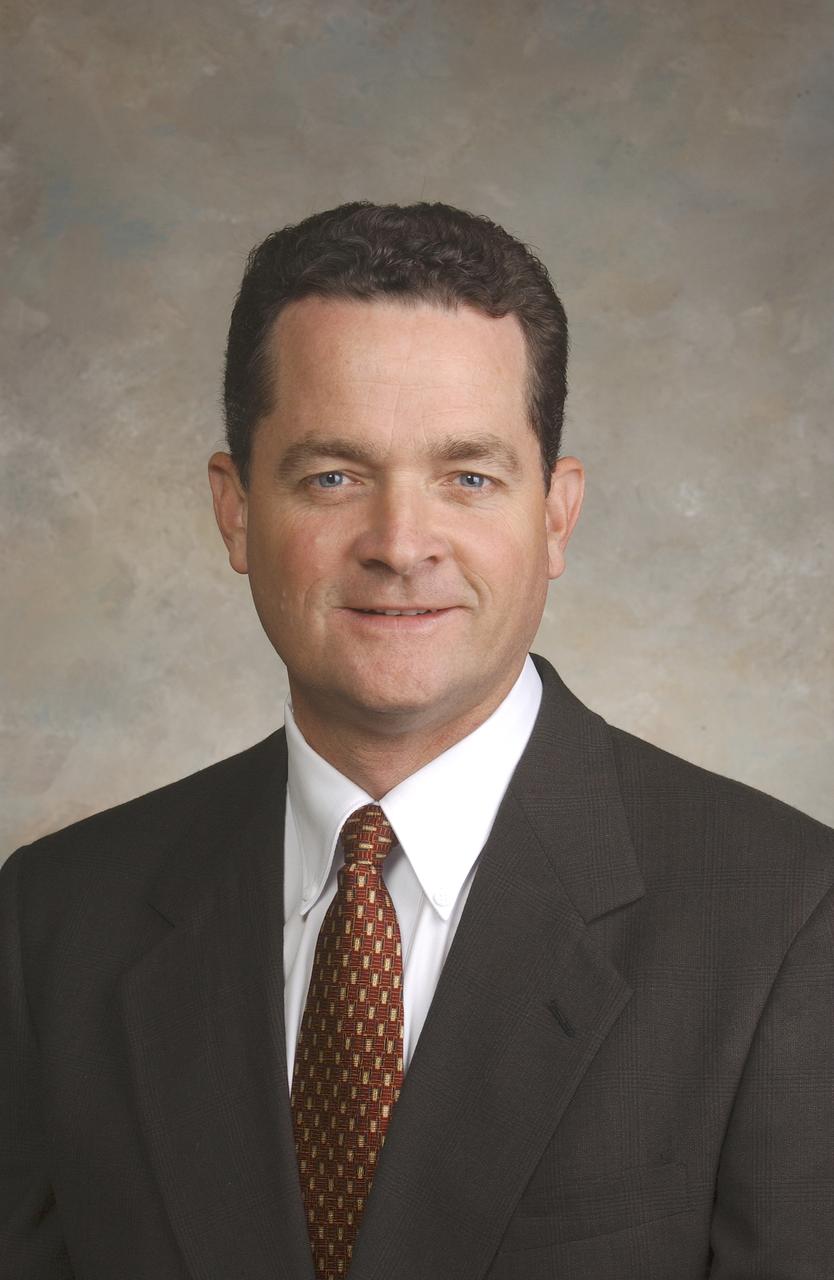
Mr. David A. King has been named the tenth Director of NASA's Marshall Space Flight Center (MSFC). Appointed to take Director's office June 15, 2003, King has been serving as Deputy Director of MSFC since November 2002. With 20 years experience in spacecraft and high-technology systems, Mr. King began his NASA career at NASA's Kennedy Space Center, Florida in 1983 as a main propulsion system engineer. He later served as flow director for the Space Shuttle Discovery and then as the acting deputy director of the installation Operations Directorate. He was appointed deputy director of Shuttle Processing in 1996, Launch Director in 1997, and director of Shuttle Processing in 1999.
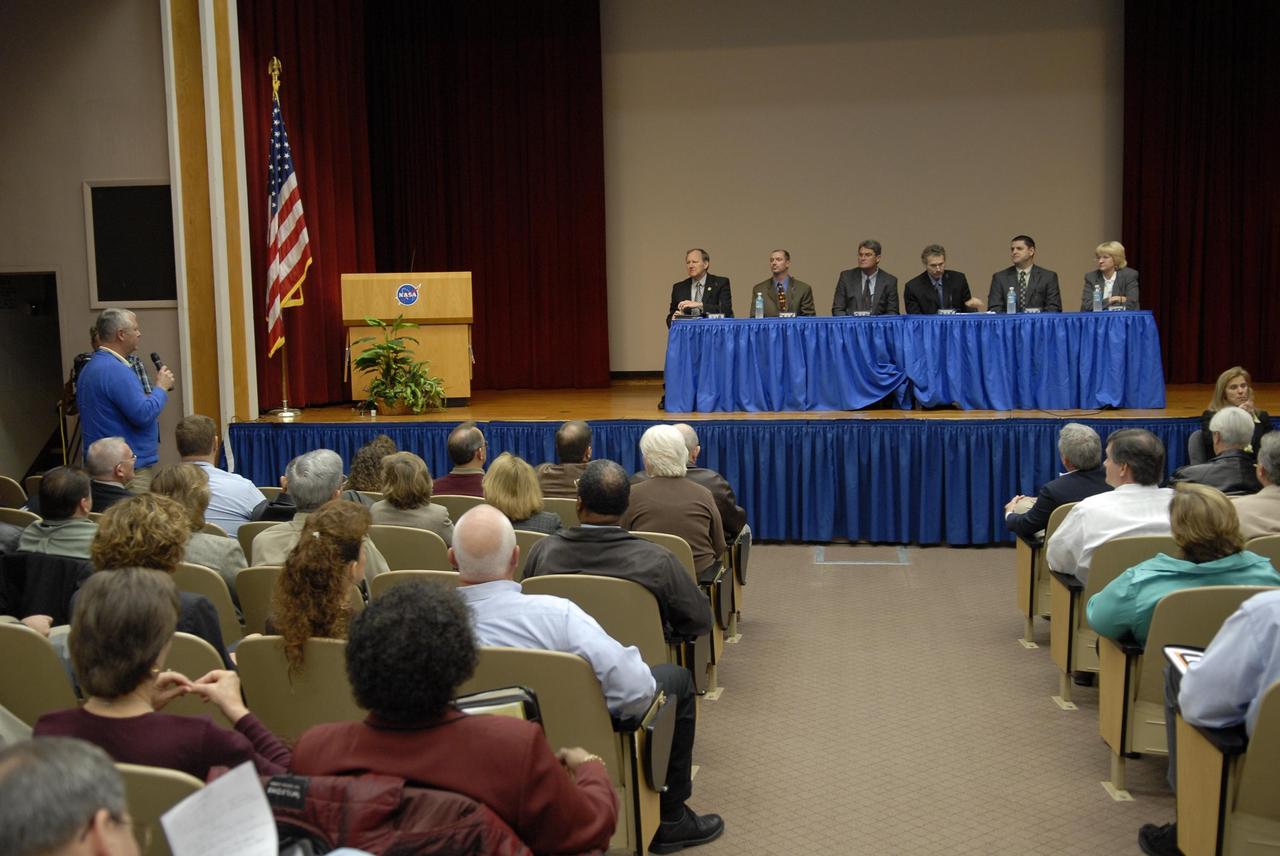
KENNEDY SPACE CENTER, FLA. -- During an all-hands meeting led by Center Director Bill Parsons (center left at the table), an employee asks for more information. Topics discussed included the year ahead at KSC. At the table on stage (from left) are Steve Francois, manager of Launch Services Program; Pepper Phillips, deputy director of the Constellation Program office; Parsons; Russ Romanella, director of the ISS & Spacecraft Processing Directorate; Jeff Angermeier, chief of the Project Control office in the Launch Vehicle Processing Directorate; and Shannon Bartell, director of NASA Safety and Mission Assurance. Photo credit: NASA/Kim Shiflett
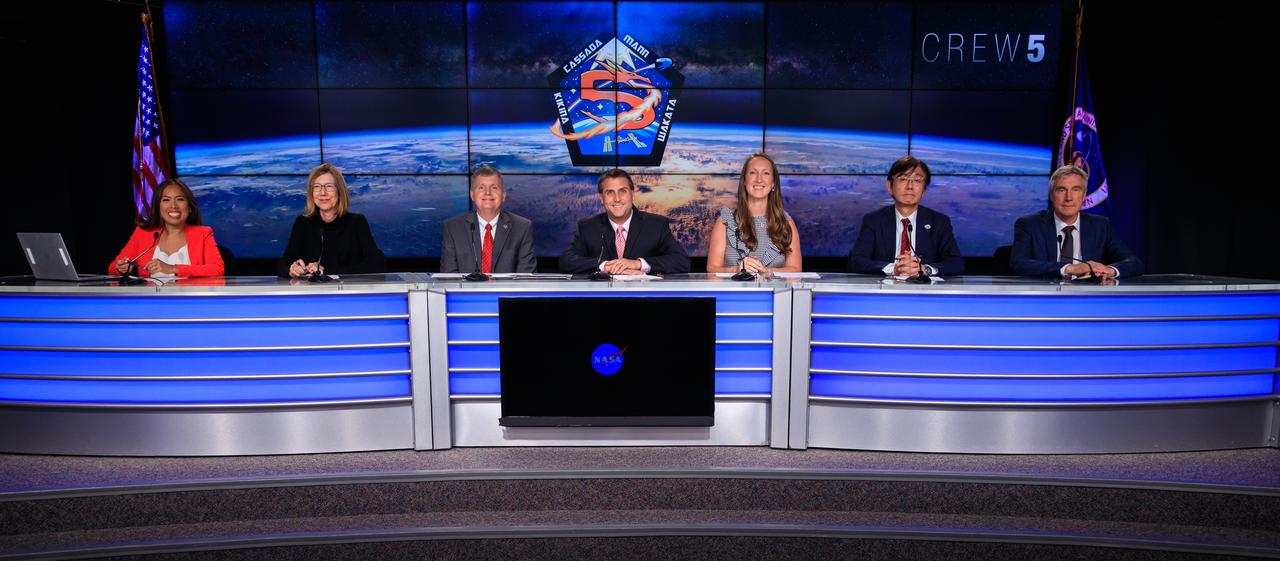
A postlaunch news conference for NASA’s SpaceX Crew-5 mission is held inside the News Auditorium at the agency’s Kennedy Space Center in Florida on Oct. 5, 2022. Participants are, from left: Megan Cruz, moderator, NASA Communications; Kathy Lueders, associate administrator, Human Exploration and Operations Mission Directorate, NASA Headquarters; Steve Stich, manager, Commercial Crew Program, Kennedy; Joel Montalbano, manager, International Space Station, Johnson Space Center; Sarah Walker, director, Dragon Mission Management, SpaceX; Hiroshi Sasaki, vice president and director general, JAXA’s (Japan Aerospace Exploration Agency) Human Spaceflight Technology Directorate; and Sergei Krikalev, executive director, Human Space Flight Programs, Roscosmos. SpaceX’s Dragon Endurance is carrying NASA astronauts Nicole Mann, commander; Josh Cassada, pilot; and Mission Specialists Koichi Wakata, of JAXA (Japan Aerospace Exploration Agency), and Roscosmos cosmonaut Anna Kikina to the International Space Station for a science expedition mission as part of NASA’s Commercial Crew Program. SpaceX’s Falcon 9 rocket lifted off at noon EDT from Kennedy’s Launch Complex 39A.
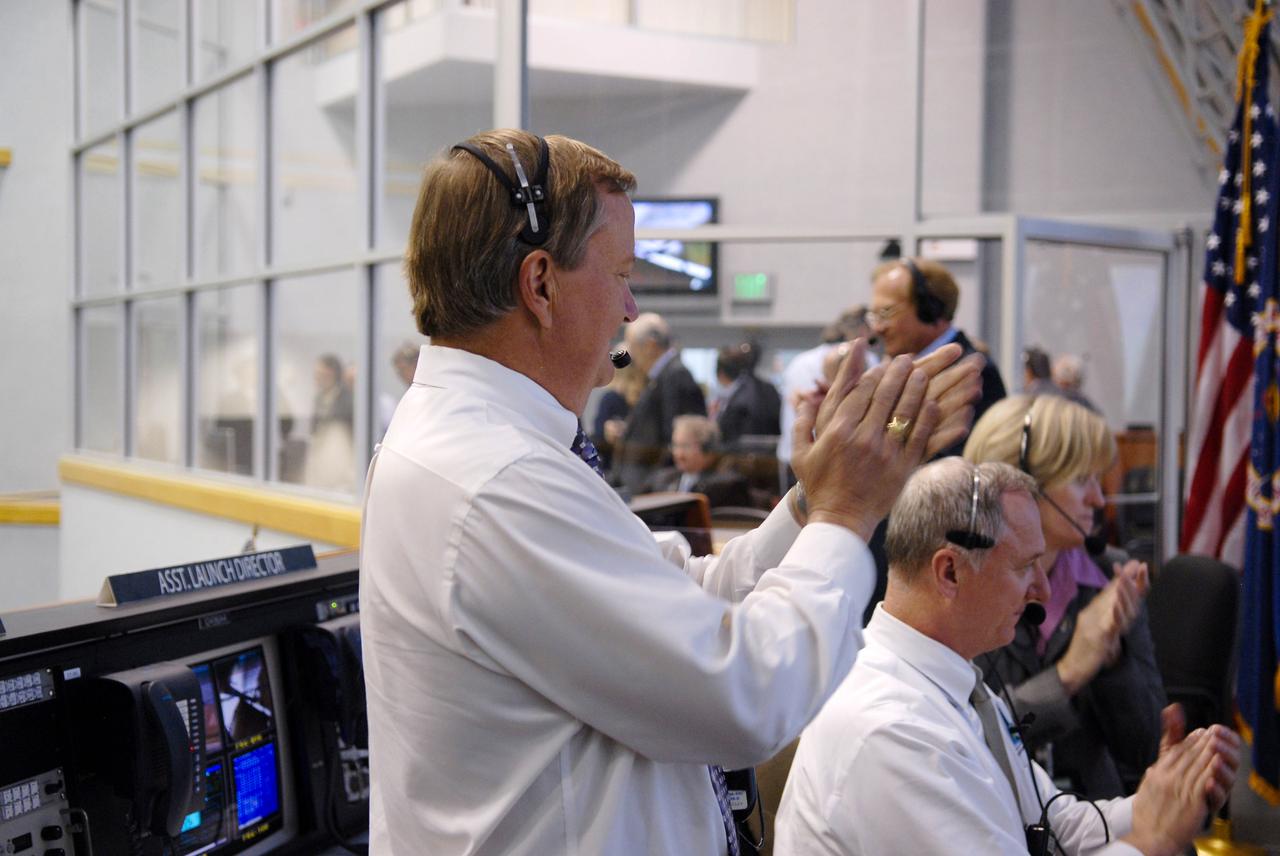
STS129-S-058 (16 Nov. 2009) --- In Firing Room 4 of NASA Kennedy Space Center's Launch Control Center, shuttle launch director Michael Leinbach (standing), assistant launch director Peter Nickolenko and Atlantis flow director Angie Brewer (both seated), applaud the launch team upon the successful launch of Space Shuttle Atlantis. Liftoff of Atlantis from Launch Pad 39A on its STS-129 mission to the International Space Station came at 2:28 p.m. (EST) Nov. 16, 2009.
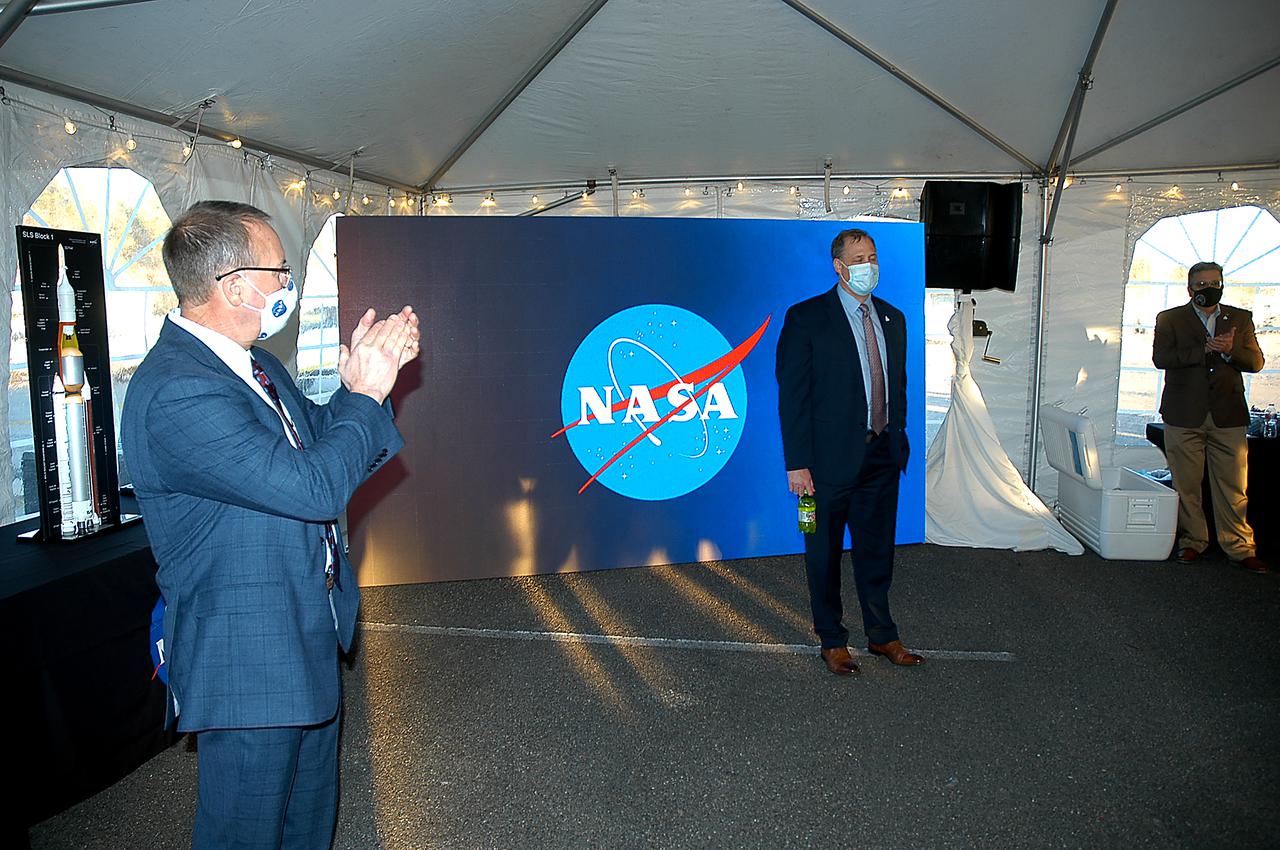
Outgoing NASA Administrator Jim Bridenstine (right) receives a round of applause from Stennis Director Rick Gilbrech and guests for comments following the Green Run hot fire test of the core stage for NASA’s Space Launch System (SLS) rocket at Stennis Space Center near Bay St. Louis, Mississippi, on Saturday, January 16, 2021. NASA conducted a hot fire test of the core stage’s four RS-25 engines on the B-2 Test Stand at Stennis. Scheduled for as long as eight minutes, the engines fired for a little more than one minute to generate a combined 1.6 million pounds of thrust, just as will occur during an actual launch. The hot fire is the final test of the Green Run test series, a comprehensive assessment of the SLS core stage prior to launching the Artemis I mission to the Moon. (NASA/Michael Badon)
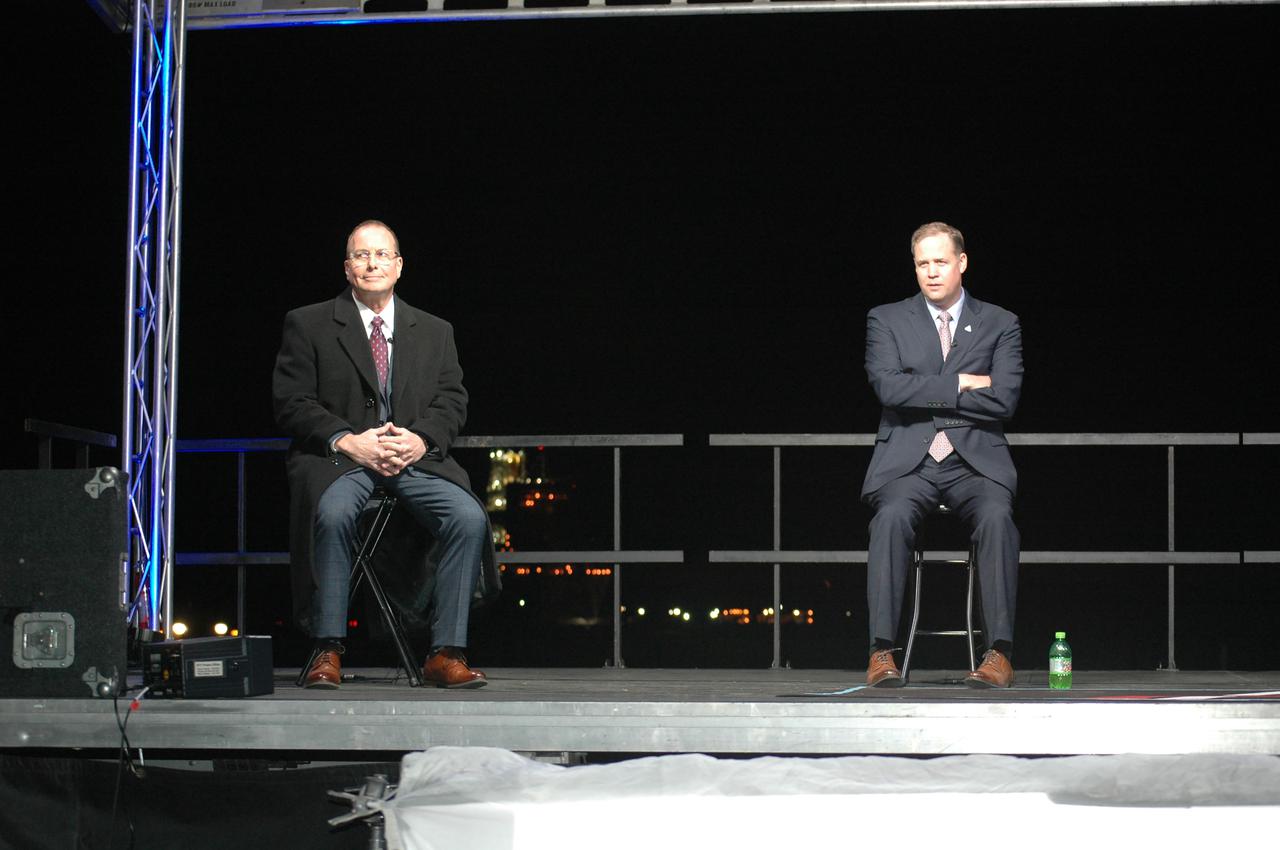
Outgoing NASA Administrator Jim Bridenstine (right) and Stennis Space Center Director Rick Gilbrech participate in a press conference following the Green Run hot fire test of the core stage for NASA’s Space Launch System (SLS) rocket on Saturday, January 16, 2021. NASA conducted a hot fire test of the core stage’s four RS-25 engines on the B-2 Test Stand at Stennis Space Center near Bay St. Louis, Mississippi. Scheduled for as long as eight minutes, the engines fired for a little more than one minute to generate a combined 1.6 million pounds of thrust, just as will occur during an actual launch. The hot fire is the final test of the Green Run test series, a comprehensive assessment of the SLS core stage prior to launching the Artemis I mission to the Moon.
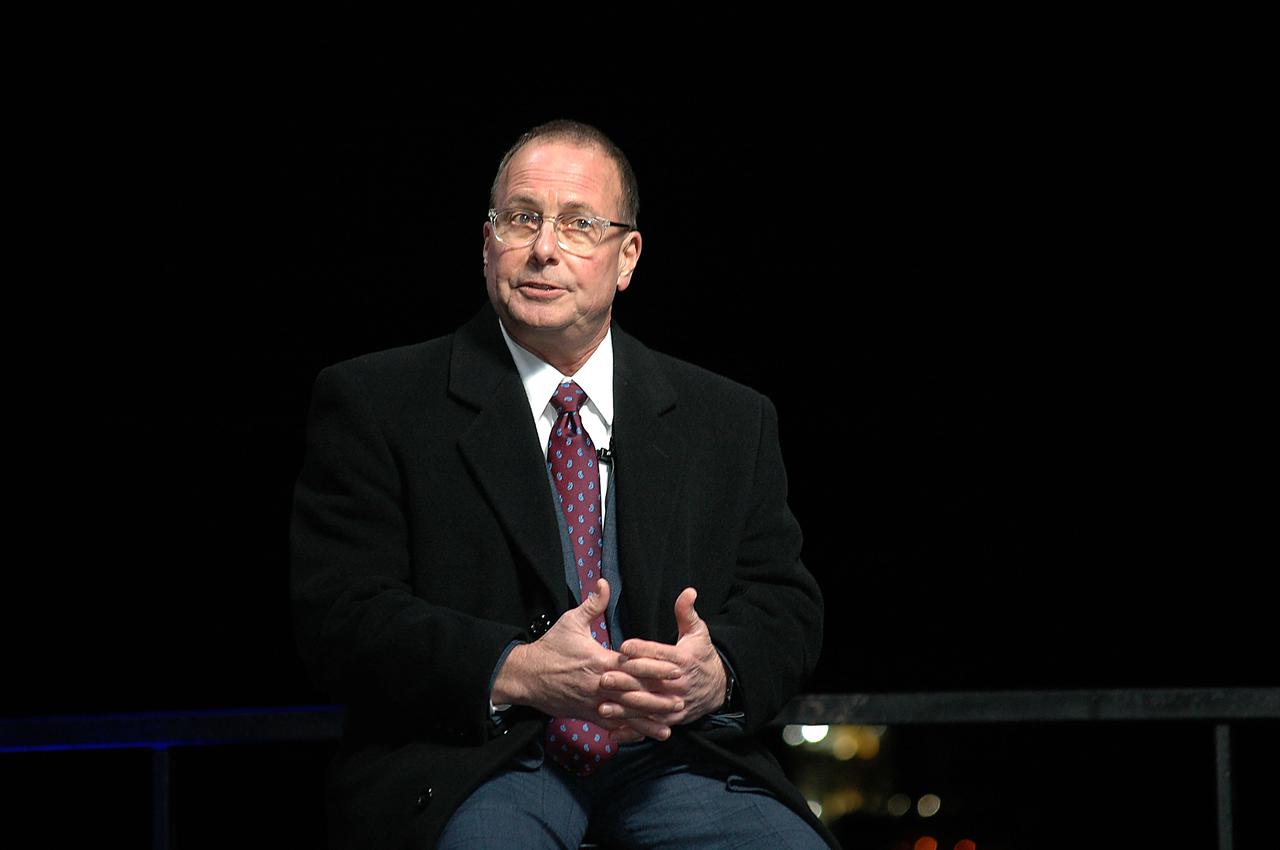
Stennis Space Center Director Rick Gilbrech participates in a press conference following the Green Run hot fire test of the core stage for NASA’s Space Launch System (SLS) rocket on Saturday, January 16, 2021. NASA conducted a hot fire test of the core stage’s four RS-25 engines on the B-2 Test Stand at Stennis Space Center near Bay St. Louis, Mississippi. Scheduled for as long as eight minutes, the engines fired for a little more than one minute to generate a combined 1.6 million pounds of thrust, just as will occur during an actual launch. The hot fire is the final test of the Green Run test series, a comprehensive assessment of the SLS core stage prior to launching the Artemis I mission to the Moon.
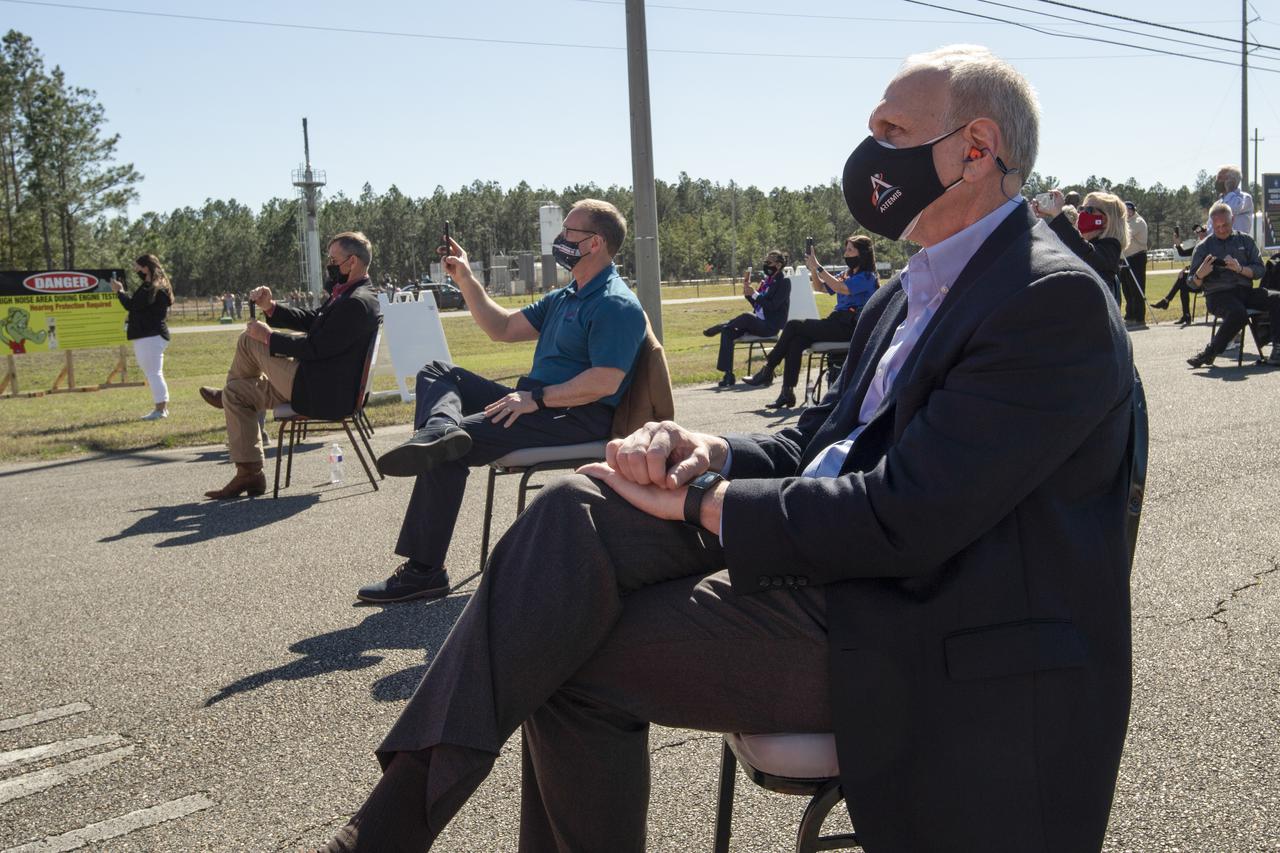
Acting NASA Administrator Steve Jurczyk, right, and Rick Gilbrech, director of NASA's Stennis Space Center, center, watch as the core stage for the first flight of NASA’s Space Launch System rocket undergoes a second hot fire test in the B-2 Test Stand, Thursday, March 18, 2021, at NASA’s Stennis Space Center near Bay St. Louis, Mississippi. The four RS-25 engines fired for the full-duration of 8 minutes during the test and generated 1.6 million pounds of thrust. The hot fire test is the final stage of the Green Run test series, a comprehensive assessment of the Space Launch System’s core stage prior to launching the Artemis I mission to the Moon. Photo Credit: (NASA/Robert Markowitz)
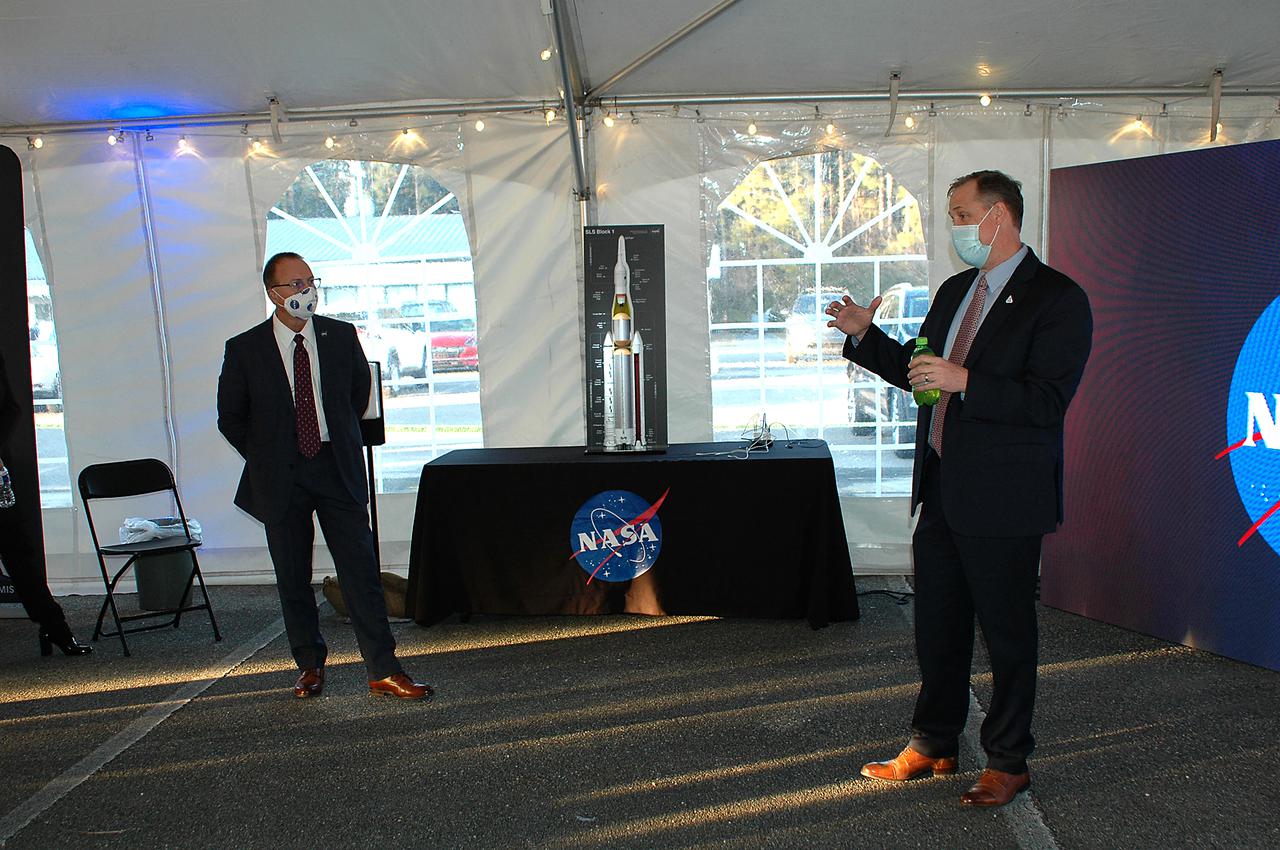
Outgoing NASA Administrator Jim Bridenstine (right), as Stennis Director Rick Gilbrech looks on, speaks to guests following the Green Run hot fire test of the core stage for NASA’s Space Launch System (SLS) rocket at Stennis Space Center near Bay St. Louis, Mississippi, on Saturday, January 16, 2021. NASA conducted a hot fire test of the core stage’s four RS-25 engines on the B-2 Test Stand at Stennis. Scheduled for as long as eight minutes, the engines fired for a little more than one minute to generate a combined 1.6 million pounds of thrust, just as will occur during an actual launch. The hot fire is the final test of the Green Run test series, a comprehensive assessment of the SLS core stage prior to launching the Artemis I mission to the Moon.
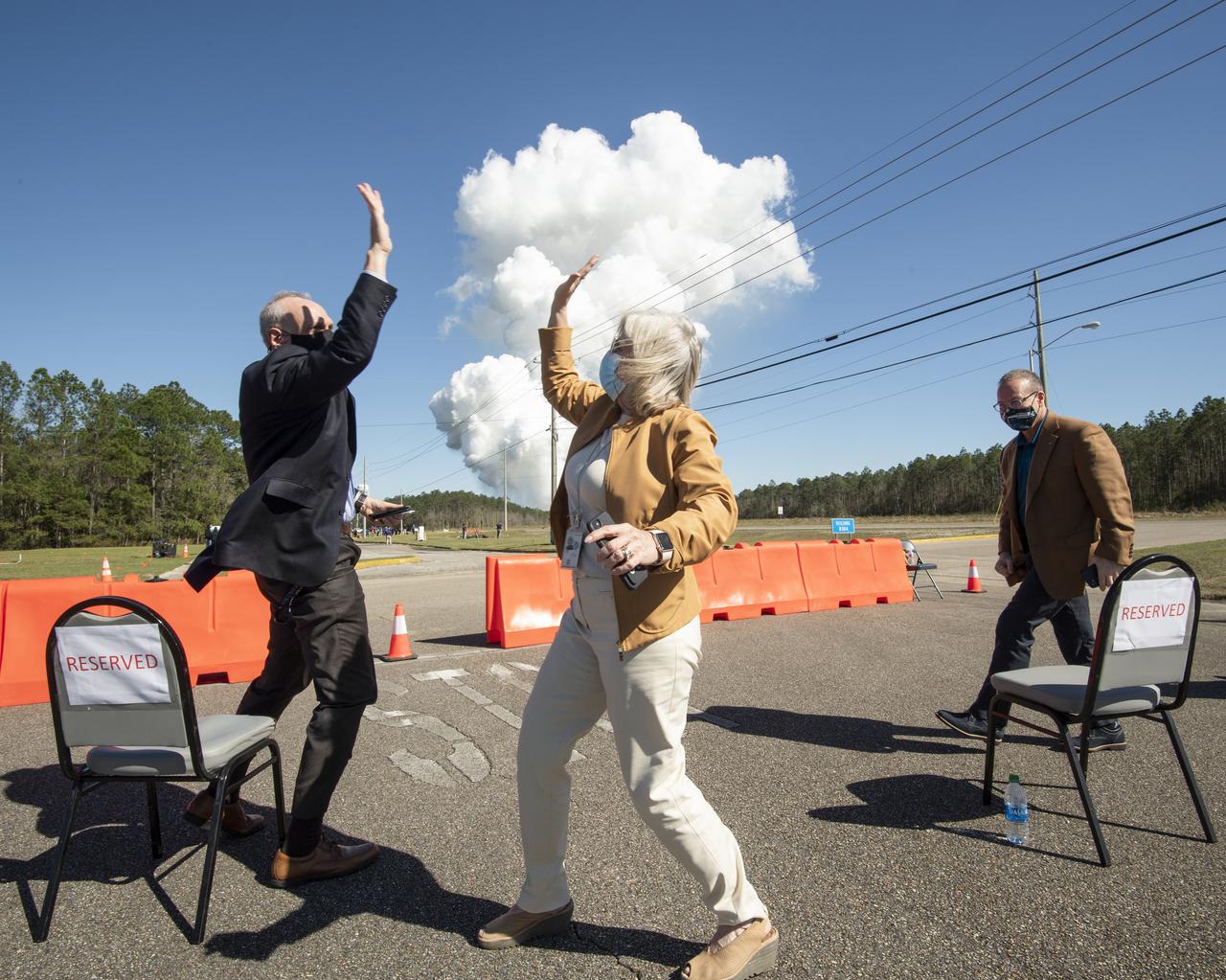
Acting NASA Administrator Steve Jurczyk, left, and Jody Singer, director of NASA's Marshall Space Flight Center, right, high five following a second hot fire test of the core stage for the first flight of NASA’s Space Launch System rocket in the B-2 Test Stand, Thursday, March 18, 2021, at NASA’s Stennis Space Center near Bay St. Louis, Mississippi. The four RS-25 engines fired for the full-duration of 8 minutes during the test and generated 1.6 million pounds of thrust. The hot fire test is the final stage of the Green Run test series, a comprehensive assessment of the Space Launch System’s core stage prior to launching the Artemis I mission to the Moon. Photo Credit: (NASA/Robert Markowitz)
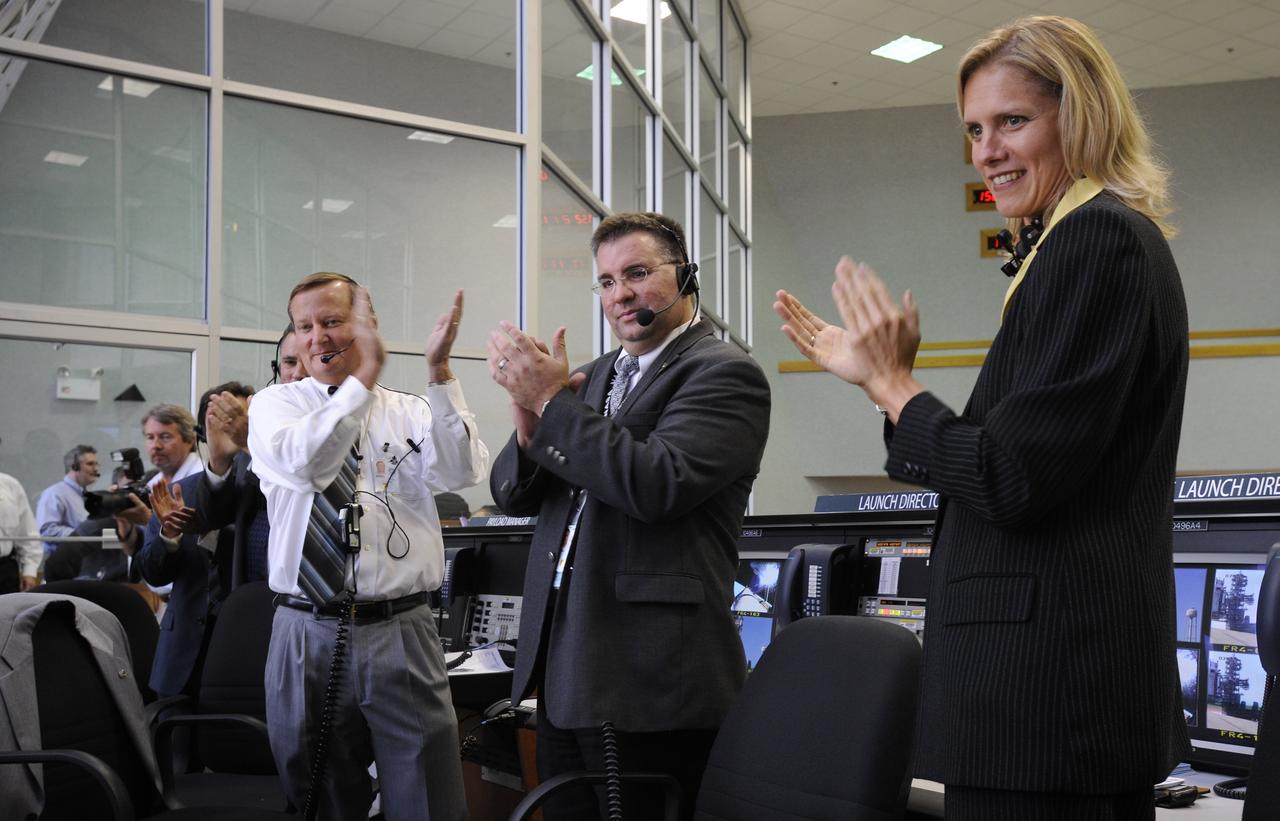
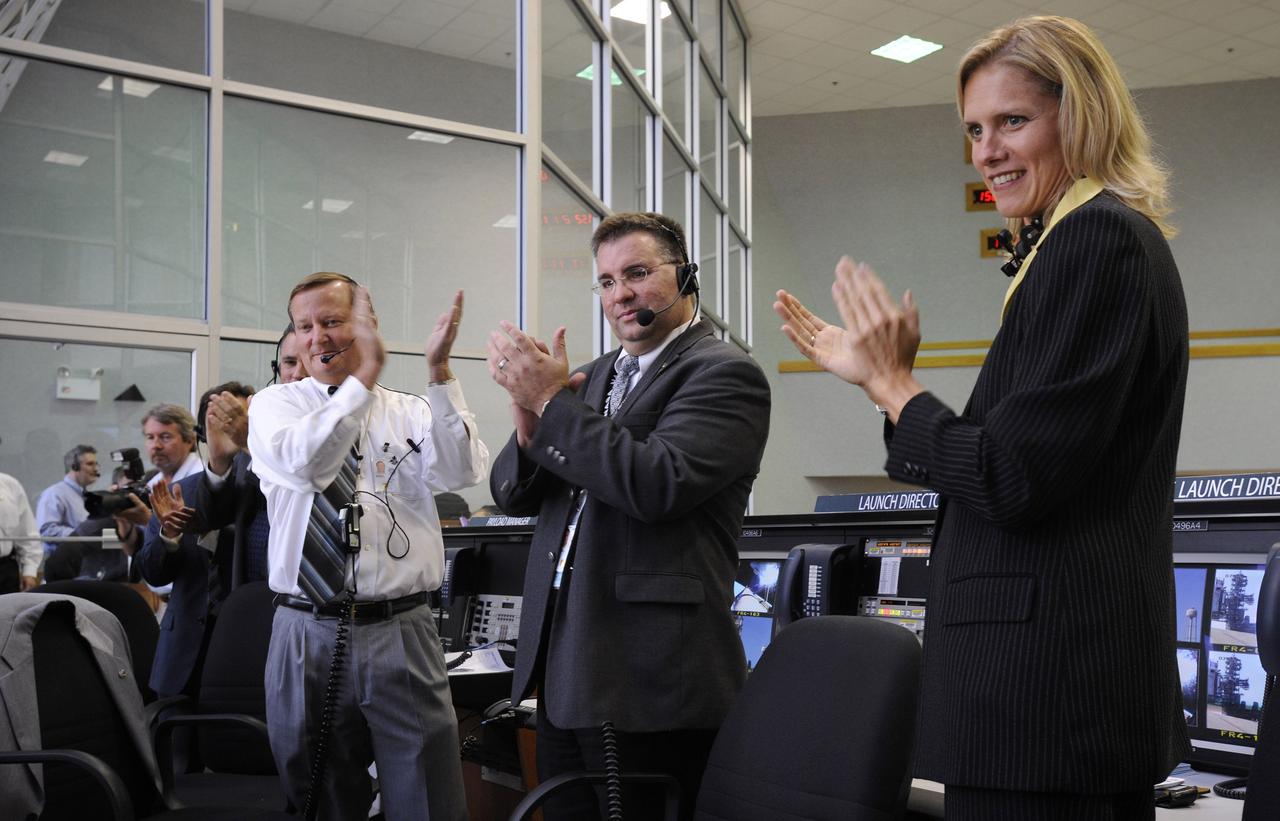
NASA Shuttle Launch Director Michael Leinbach, left, STS-124 Assistant Launch Director Ed Mango, center, and Flow Director for Space Shuttle Discovery Stephanie Stilson clap in the the Launch Control Center after the main engine cut off and successful launch of the Space Shuttle Discovery (STS-124) Saturday, May 31, 2008, at the Kennedy Space Center in Cape Canaveral, Fla. The Shuttle lifted off from launch pad 39A at 5:02 p.m. EDT. Photo Credit: (NASA/Bill Ingalls)
NASA Shuttle Launch Director Michael Leinbach, left, STS-124 Assistant Launch Director Ed Mango, center, and Flow Director for Space Shuttle Discovery Stephanie Stilson clap in the the Launch Control Center after the main engine cut off and successful launch of the Space Shuttle Discovery (STS-124) Saturday, May 31, 2008, at the Kennedy Space Center in Cape Canaveral, Fla. The Shuttle lifted off from launch pad 39A at 5:02 p.m. EDT. Photo Credit: (NASA/Bill Ingalls)
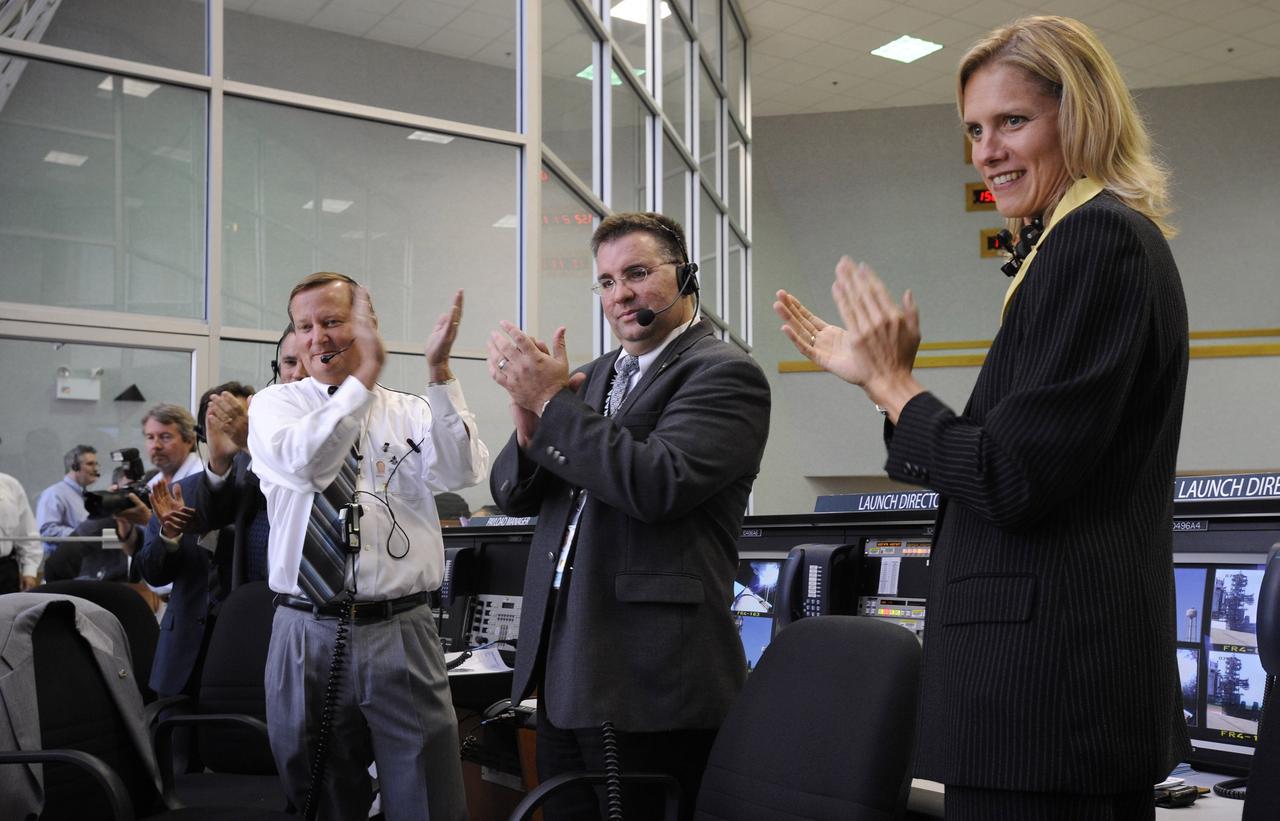
CAPE CANAVERAL, Fla. -- NASA Shuttle Launch Director Michael Leinbach, left, STS-124 Assistant Launch Director Ed Mango, center, and Flow Director for space shuttle Discovery Stephanie Stilson clap in the Launch Control Center after the main engine cut-off and successful launch of Discovery on the STS-124 mission Saturday, May 31, 2008, at NASA's Kennedy Space Center. The shuttle lifted off from Launch Pad 39A at 5:02 p.m. EDT. Photo credit: NASA/Bill Ingalls
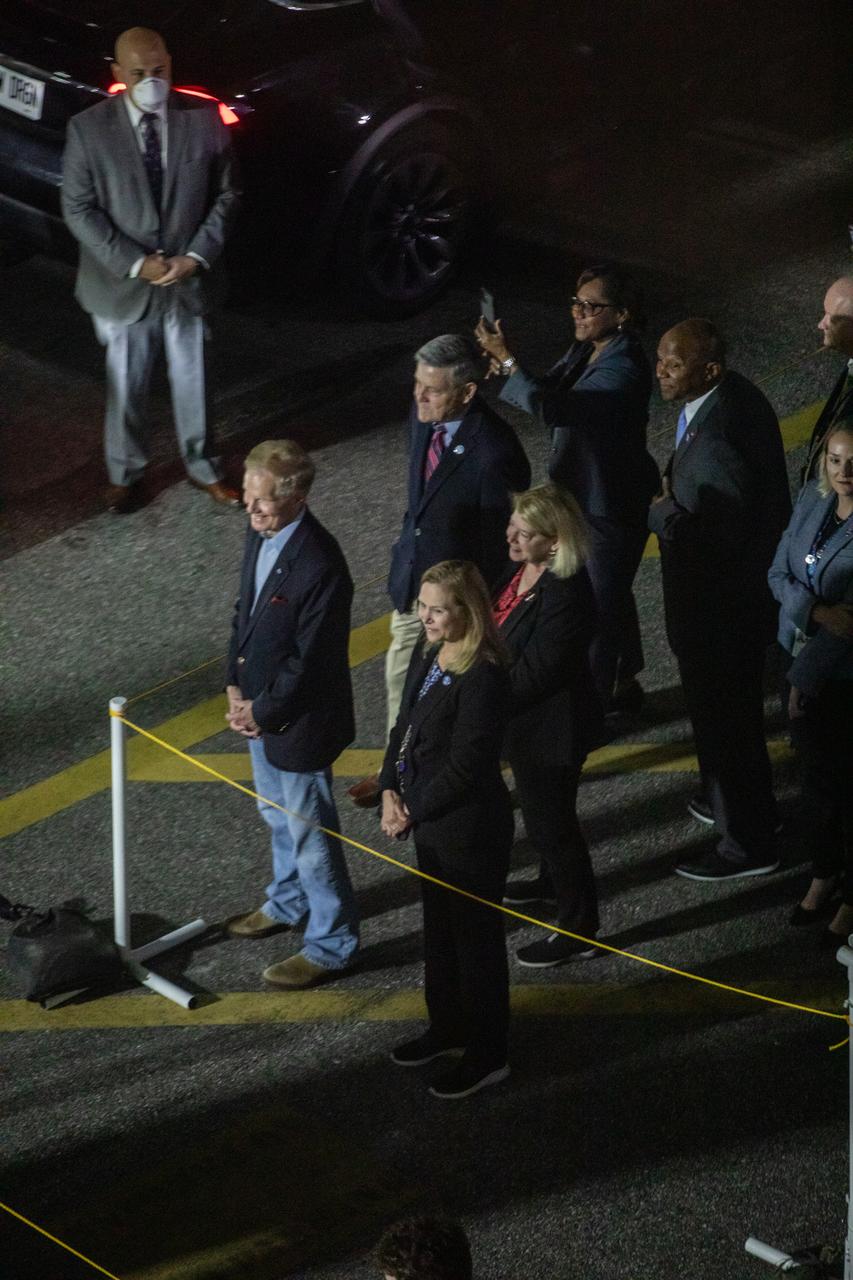
NASA Administrator Bill Nelson, in front, left, along with Kennedy Space Center Director Janet Petro, wait to greet NASA’s SpaceX Crew-6 crewmembers as they exit the Neil Armstrong Operations and Checkout Building at Kennedy Space Center in Florida on Feb. 26, 2023. Also in view in the second row, from left are Bob Cabana, NASA associate administrator, and Pam Melroy, NASA deputy administrator. In view in the third row, middle, is Kelvin Manning, Kennedy deputy director. The Crew-6 astronauts will board two Tesla vehicles for transport to Launch Complex 39A for launch to the International Space Station aboard the Dragon spacecraft Endeavour atop the Falcon 9 rocket. Launch was targeted for 1:45 a.m. EST on Feb. 27 from Launch Complex 39A, but was scrubbed for the day. Crew-6 is the sixth crew rotation mission with SpaceX to the station, and the seventh flight of Dragon with people as part of the agency’s Commercial Crew Program.
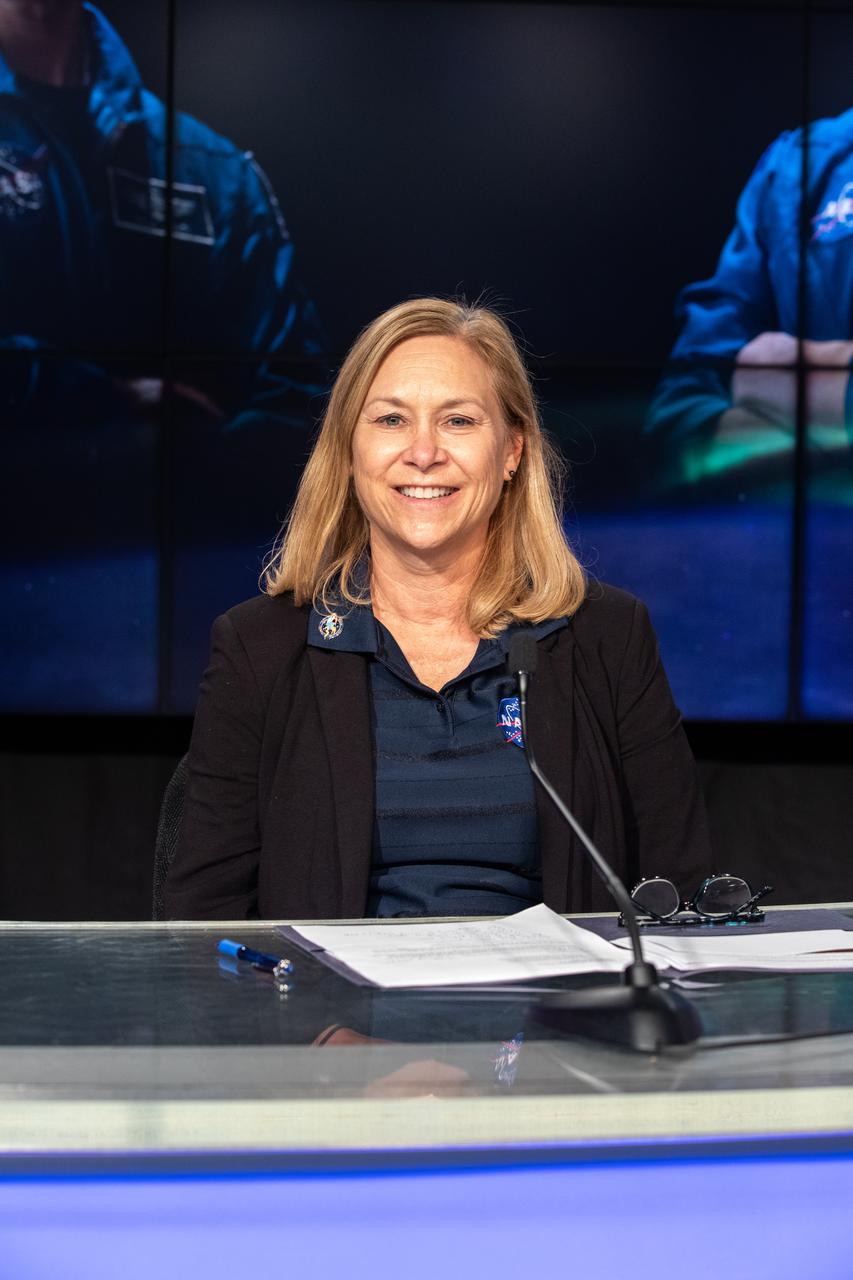
Kennedy Space Center Director Janet Petro speaks during a NASA Administrator briefing for the upcoming SpaceX Crew-3 mission at the center on Oct. 29, 2021. The SpaceX Falcon 9 with Crew Dragon atop is scheduled to launch Oct. 31 at 2:21 a.m. EDT from Launch Complex 39A at Kennedy. Crew Dragon will carry four astronauts to the International Space Station for NASA’s Commercial Crew Program. Crew-3 is the third crew rotation flight to the space station, and the first flight of a new Crew Dragon spacecraft.