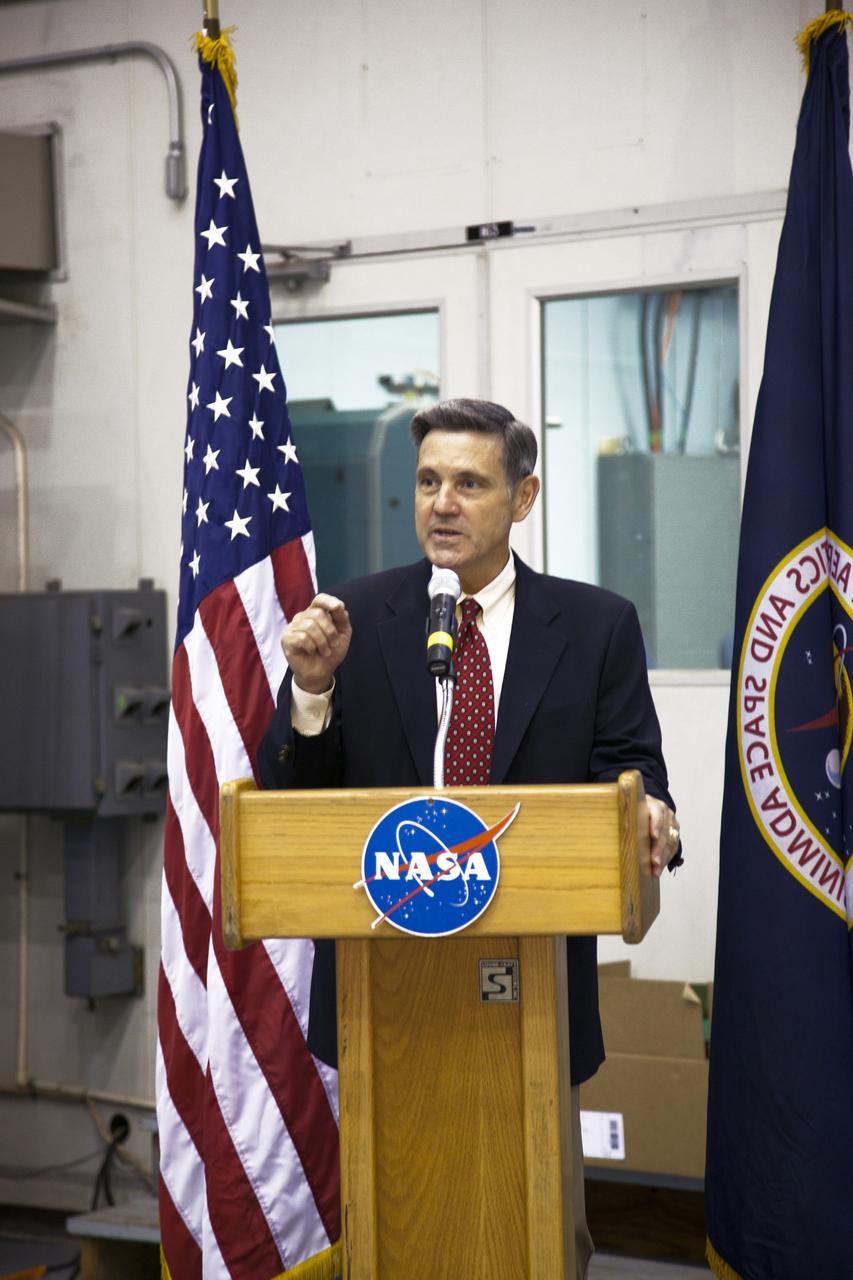
CAPE CANAVERAL, Fla. -- At NASA's Kennedy Space Center in Florida, Center Director Bob Cabana talks to workers at the Launch Equipment Test Facility (LETF), which recently underwent a $35 million comprehensive upgrade that lasted four years. The LETF was established in the 1970s to support the qualification of the Space Shuttle Program’s umbilical and T-0 mechanisms. Throughout the years, it has supported the development of systems for shuttle and the International Space Station, Delta and Atlas rockets, and various research and development programs. The LETF has unique capabilities to evolve into a versatile test and development area that supports a wide spectrum of programs. For information on NASA's future plans, visit www.nasa.gov. Photo credit: NASA/Dimitri Gerondidakis
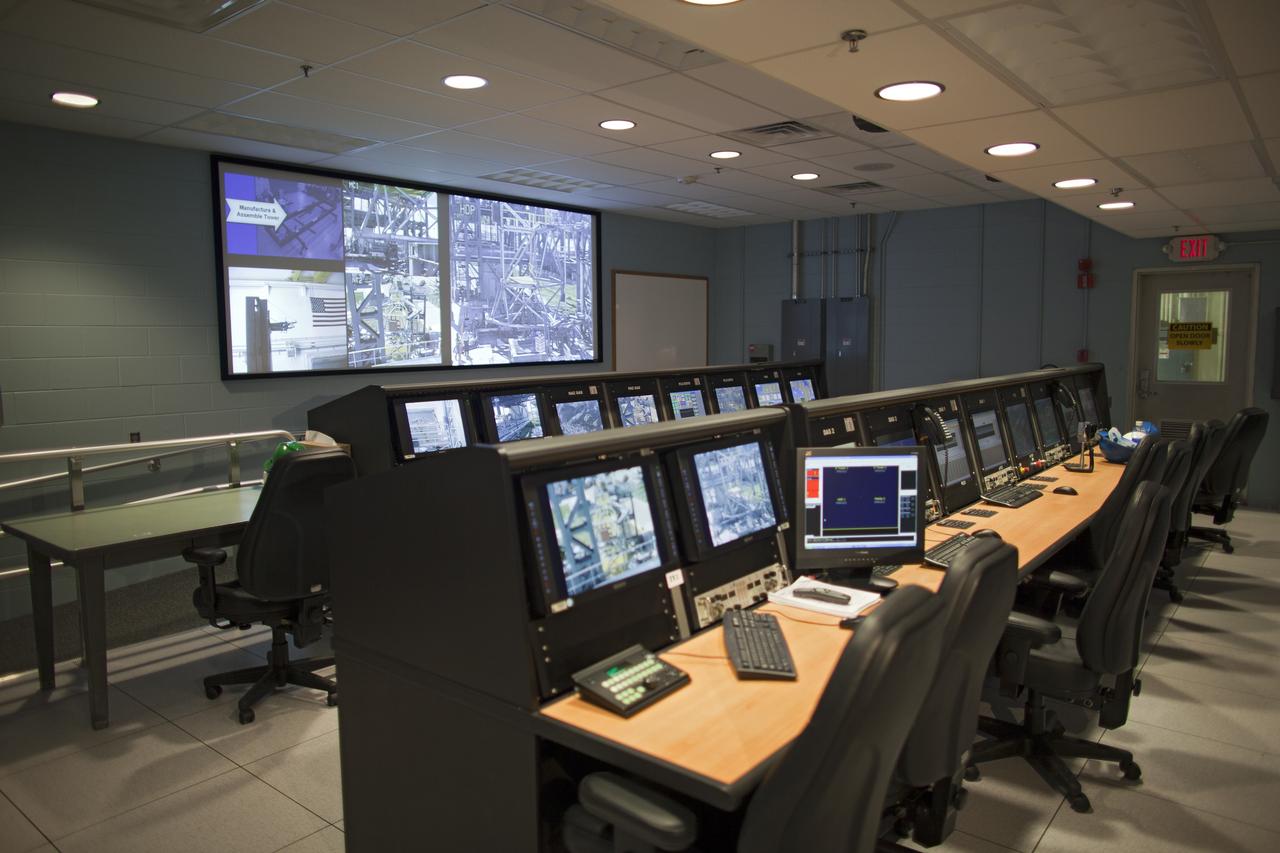
CAPE CANAVERAL, Fla. -- At NASA's Kennedy Space Center in Florida is the control room of the Launch Equipment Test Facility (LETF). The LETF recently underwent a $35 million comprehensive upgrade that lasted four years. The LETF was established in the 1970s to support the qualification of the Space Shuttle Program’s umbilical and T-0 mechanisms. Throughout the years, it has supported the development of systems for shuttle and the International Space Station, Delta and Atlas rockets, and various research and development programs. The LETF has unique capabilities to evolve into a versatile test and development area that supports a wide spectrum of programs. For information on NASA's future plans, visit www.nasa.gov. Photo credit: NASA/Dimitri Gerondidakis
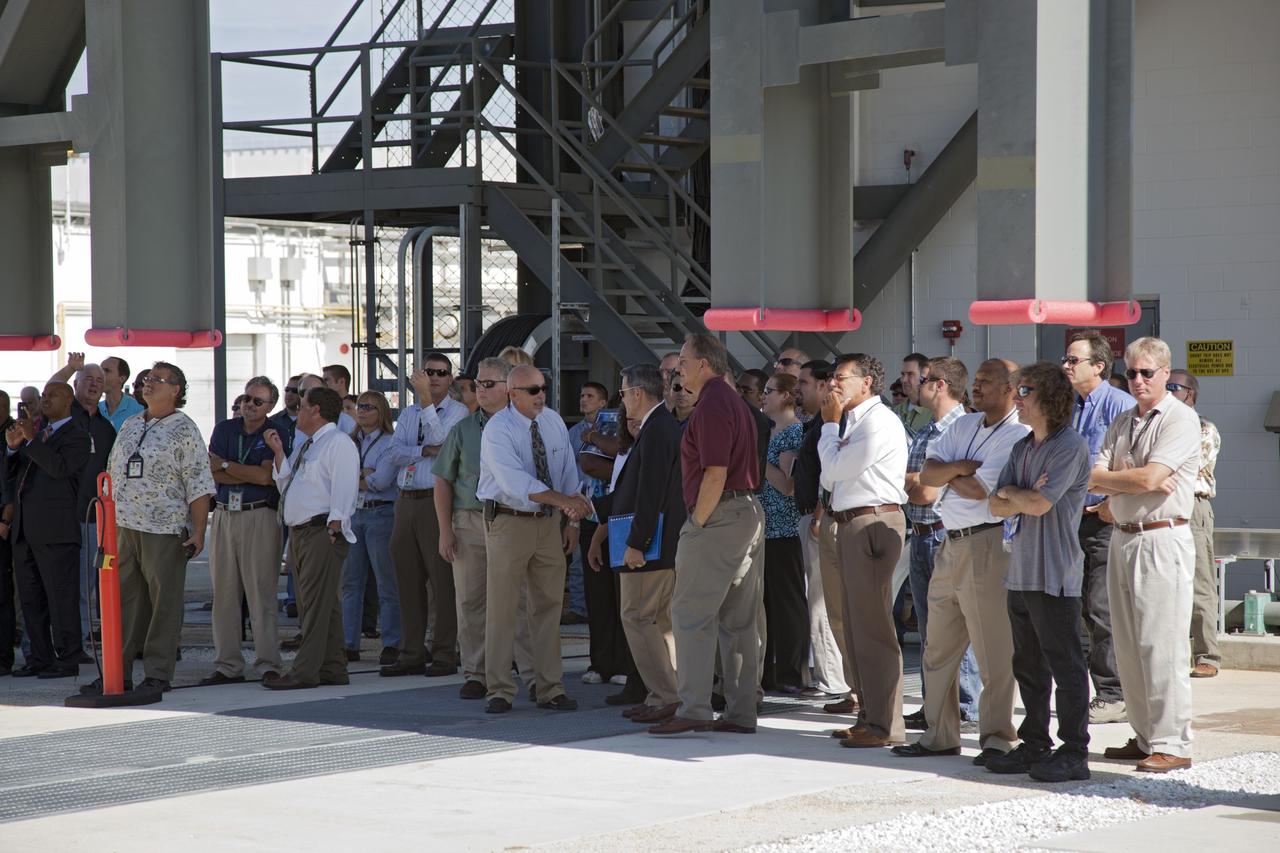
CAPE CANAVERAL, Fla. -- At NASA's Kennedy Space Center in Florida, workers watch the vehicle motion simulator, or VMS, simulate all of the movements a space vehicle could experience from rollout to launch. The VMS is part of the Launch Equipment Test Facility's (LETF) $35 million comprehensive upgrade that lasted four years. The LETF was established in the 1970s to support the qualification of the Space Shuttle Program’s umbilical and T-0 mechanisms. Throughout the years, it has supported the development of systems for shuttle and the International Space Station, Delta and Atlas rockets, and various research and development programs. The LETF has unique capabilities to evolve into a versatile test and development area that supports a wide spectrum of programs. For information on NASA's future plans, visit www.nasa.gov. Photo credit: NASA/Dimitri Gerondidakis
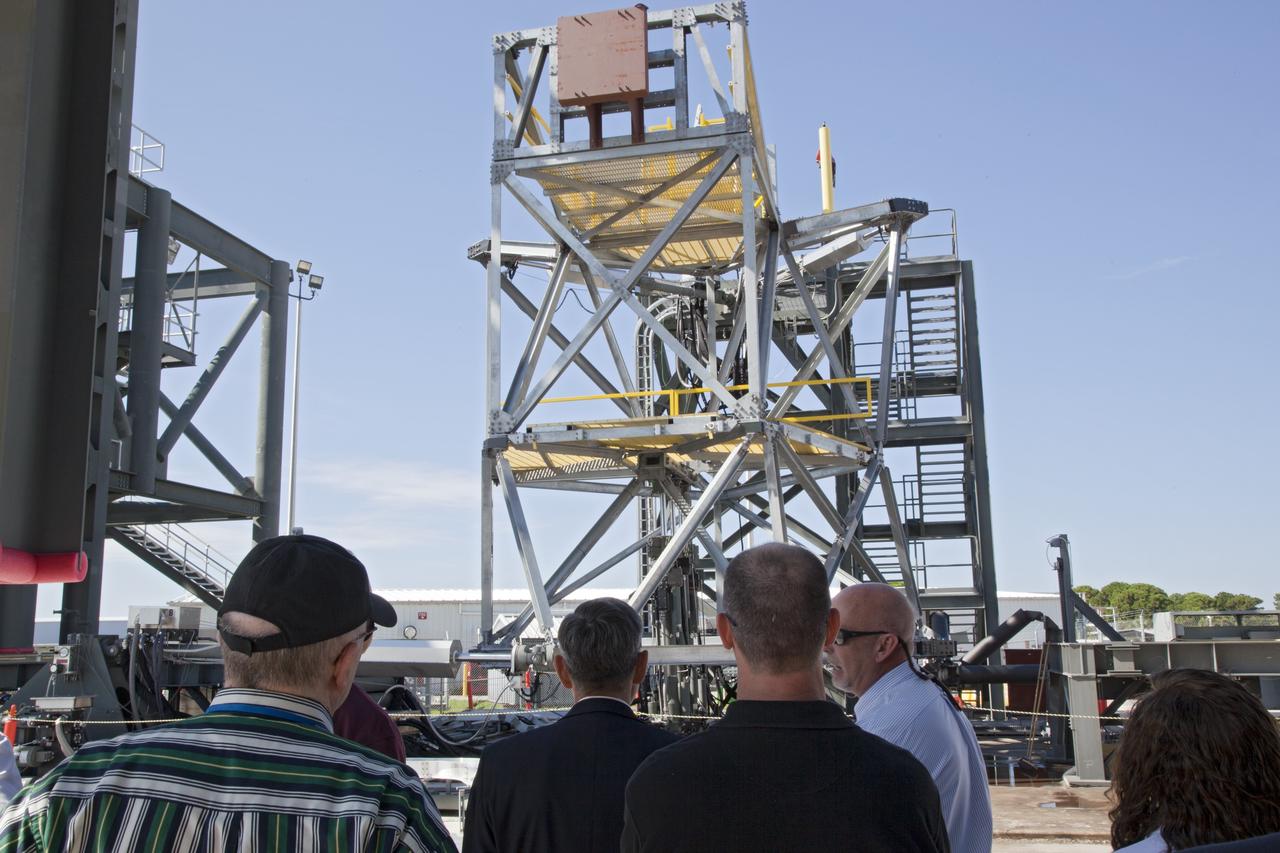
CAPE CANAVERAL, Fla. -- At NASA's Kennedy Space Center in Florida, workers watch the vehicle motion simulator, or VMS, simulate all of the movements a space vehicle could experience from rollout to launch. The VMS is part of the Launch Equipment Test Facility's (LETF) $35 million comprehensive upgrade that lasted four years. The LETF was established in the 1970s to support the qualification of the Space Shuttle Program’s umbilical and T-0 mechanisms. Throughout the years, it has supported the development of systems for shuttle and the International Space Station, Delta and Atlas rockets, and various research and development programs. The LETF has unique capabilities to evolve into a versatile test and development area that supports a wide spectrum of programs. For information on NASA's future plans, visit www.nasa.gov. Photo credit: NASA/Dimitri Gerondidakis
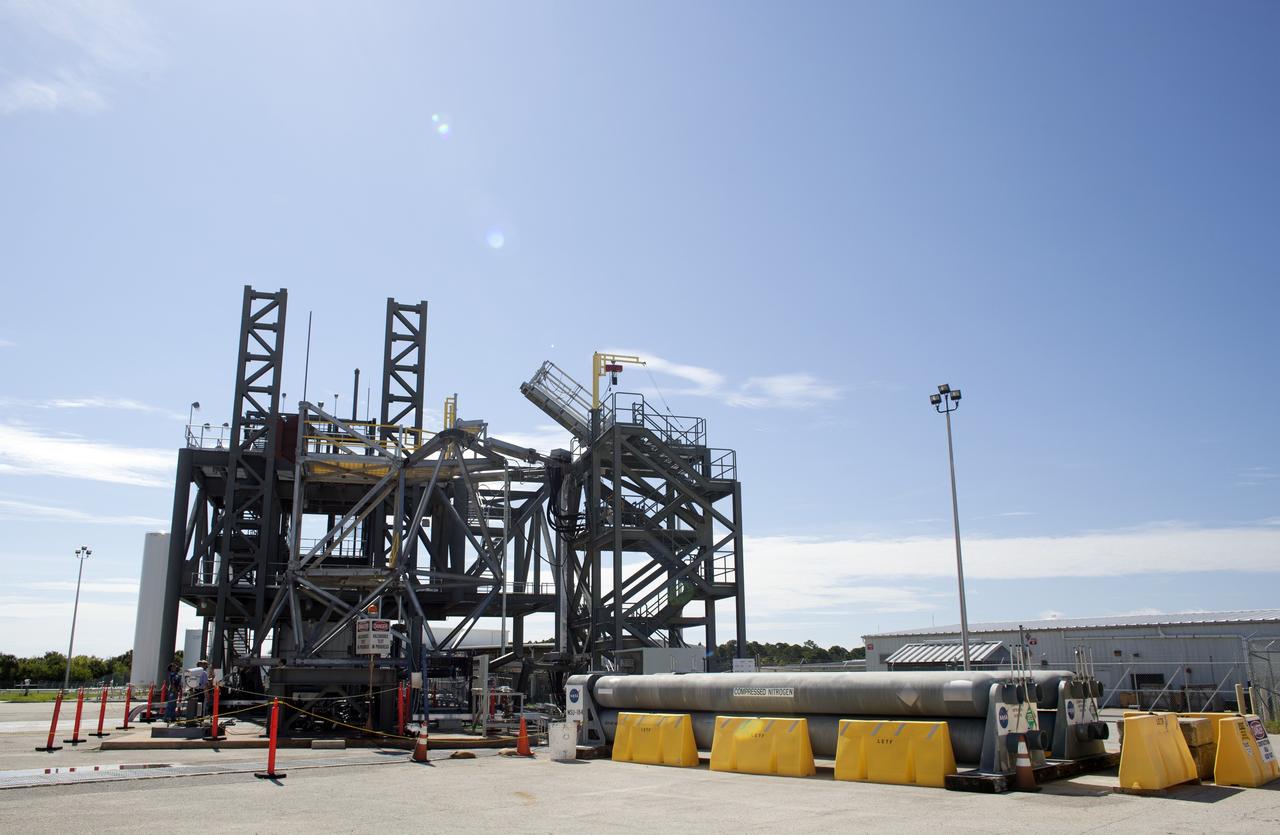
CAPE CANAVERAL, Fla. -- At NASA's Kennedy Space Center in Florida is the vehicle motion simulator, or VMS, which simulates all of the movements a space vehicle could experience from rollout to launch. The VMS is part of the Launch Equipment Test Facility's (LETF) $35 million comprehensive upgrade that lasted four years. The LETF was established in the 1970s to support the qualification of the Space Shuttle Program’s umbilical and T-0 mechanisms. Throughout the years, it has supported the development of systems for shuttle and the International Space Station, Delta and Atlas rockets, and various research and development programs. The LETF has unique capabilities to evolve into a versatile test and development area that supports a wide spectrum of programs. For information on NASA's future plans, visit www.nasa.gov. Photo credit: NASA/Dimitri Gerondidakis
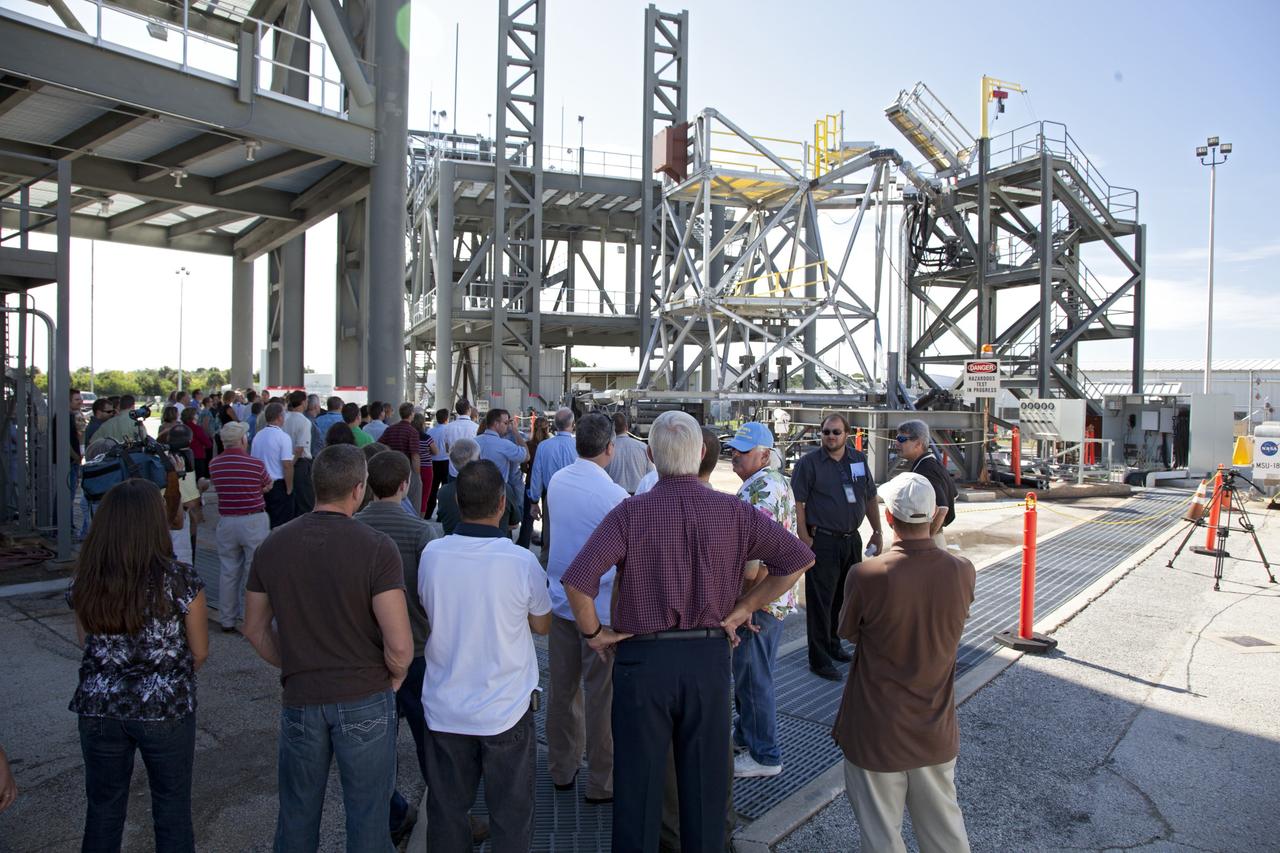
CAPE CANAVERAL, Fla. -- At NASA's Kennedy Space Center in Florida, workers watch the vehicle motion simulator, or VMS, simulate all of the movements a space vehicle could experience from rollout to launch. The VMS is part of the Launch Equipment Test Facility's (LETF) $35 million comprehensive upgrade that lasted four years. The LETF was established in the 1970s to support the qualification of the Space Shuttle Program’s umbilical and T-0 mechanisms. Throughout the years, it has supported the development of systems for shuttle and the International Space Station, Delta and Atlas rockets, and various research and development programs. The LETF has unique capabilities to evolve into a versatile test and development area that supports a wide spectrum of programs. For information on NASA's future plans, visit www.nasa.gov. Photo credit: NASA/Dimitri Gerondidakis
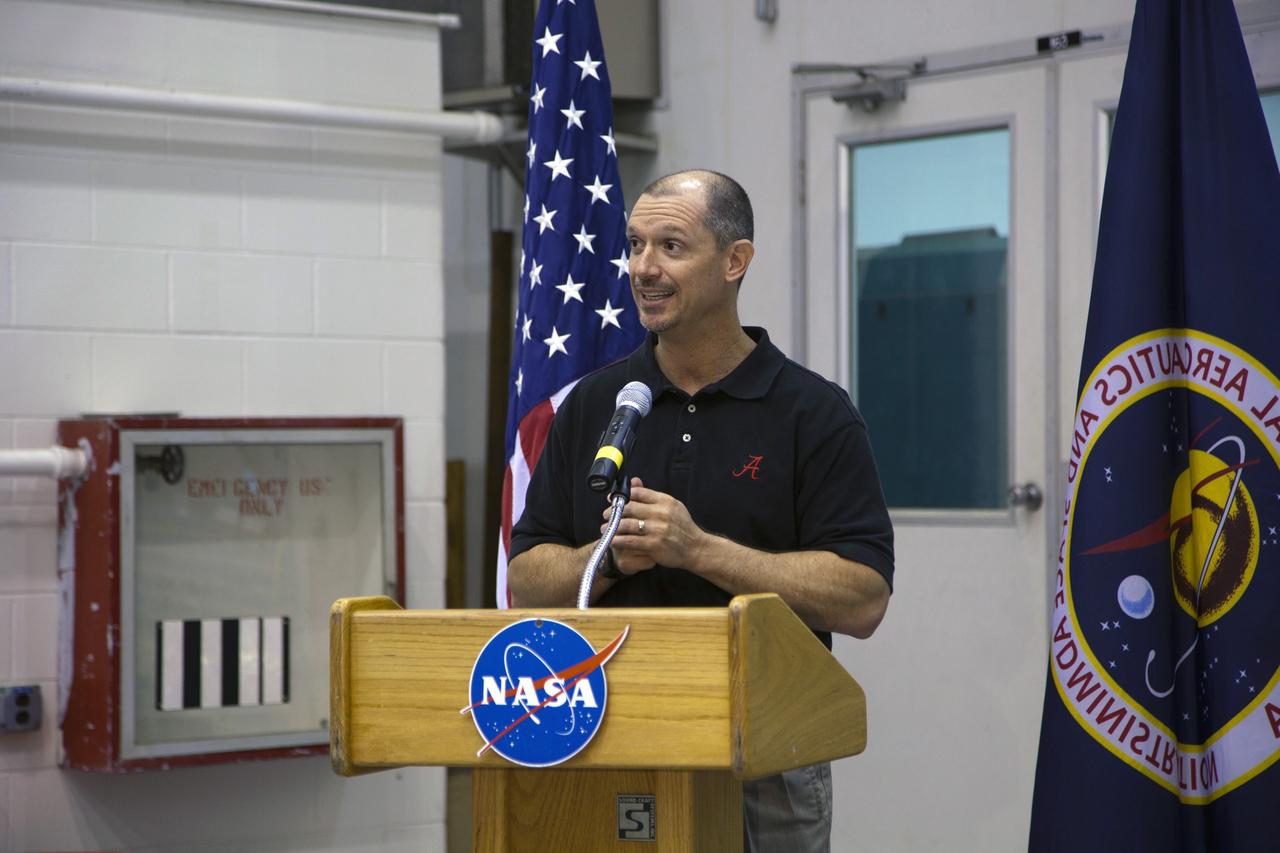
CAPE CANAVERAL, Fla. -- At NASA's Kennedy Space Center in Florida, Director of the center's Constellation Project Office Pepper Phillips talks to workers at the Launch Equipment Test Facility (LETF), which recently underwent a $35 million comprehensive upgrade that lasted four years. The LETF was established in the 1970s to support the qualification of the Space Shuttle Program’s umbilical and T-0 mechanisms. Throughout the years, it has supported the development of systems for shuttle and the International Space Station, Delta and Atlas rockets, and various research and development programs. The LETF has unique capabilities to evolve into a versatile test and development area that supports a wide spectrum of programs. For information on NASA's future plans, visit www.nasa.gov. Photo credit: NASA/Dimitri Gerondidakis
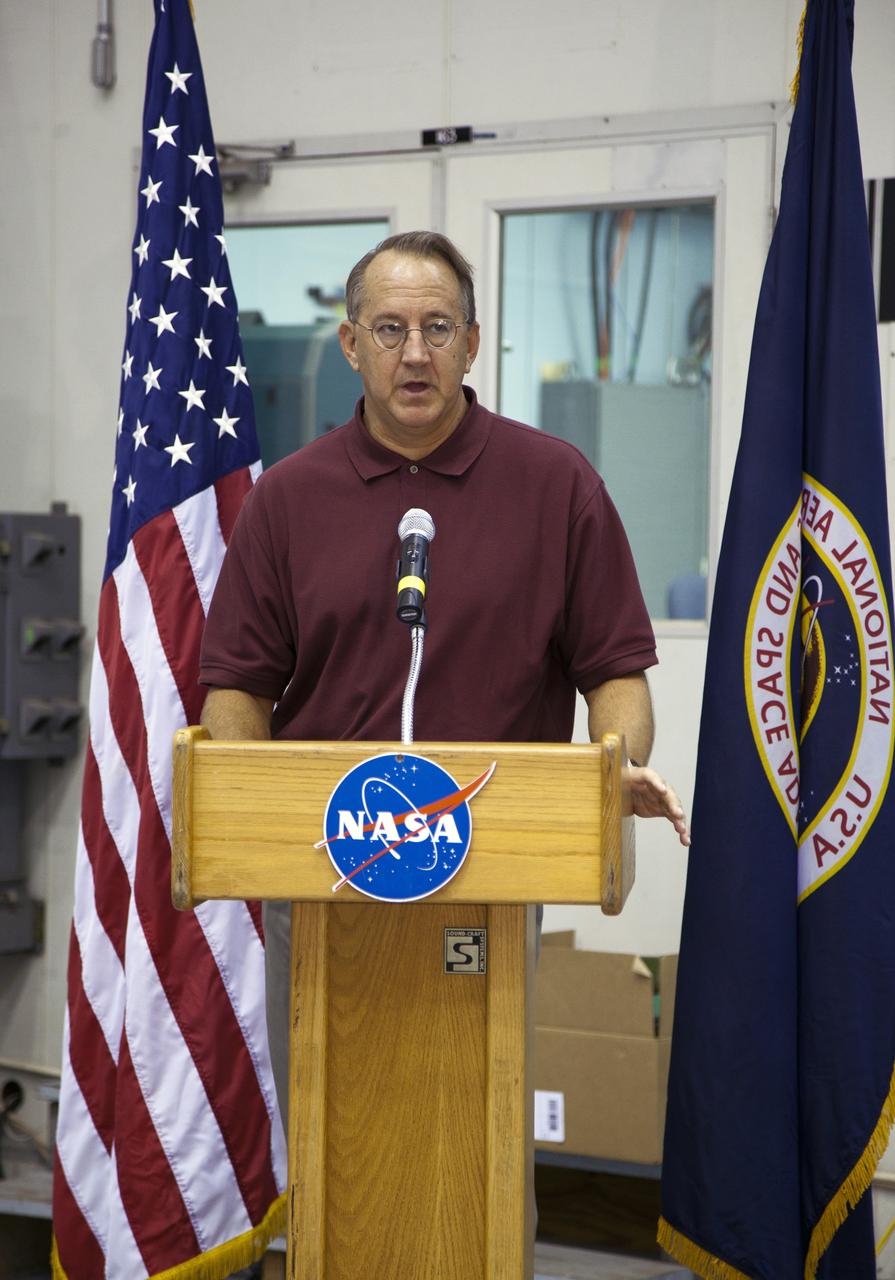
CAPE CANAVERAL, Fla. -- At NASA's Kennedy Space Center in Florida, Director of the center's Engineering Directorate Pat Simpkins talks to workers at the Launch Equipment Test Facility (LETF), which recently underwent a $35 million comprehensive upgrade that lasted four years. The LETF was established in the 1970s to support the qualification of the Space Shuttle Program’s umbilical and T-0 mechanisms. Throughout the years, it has supported the development of systems for shuttle and the International Space Station, Delta and Atlas rockets, and various research and development programs. The LETF has unique capabilities to evolve into a versatile test and development area that supports a wide spectrum of programs. For information on NASA's future plans, visit www.nasa.gov. Photo credit: NASA/Dimitri Gerondidakis
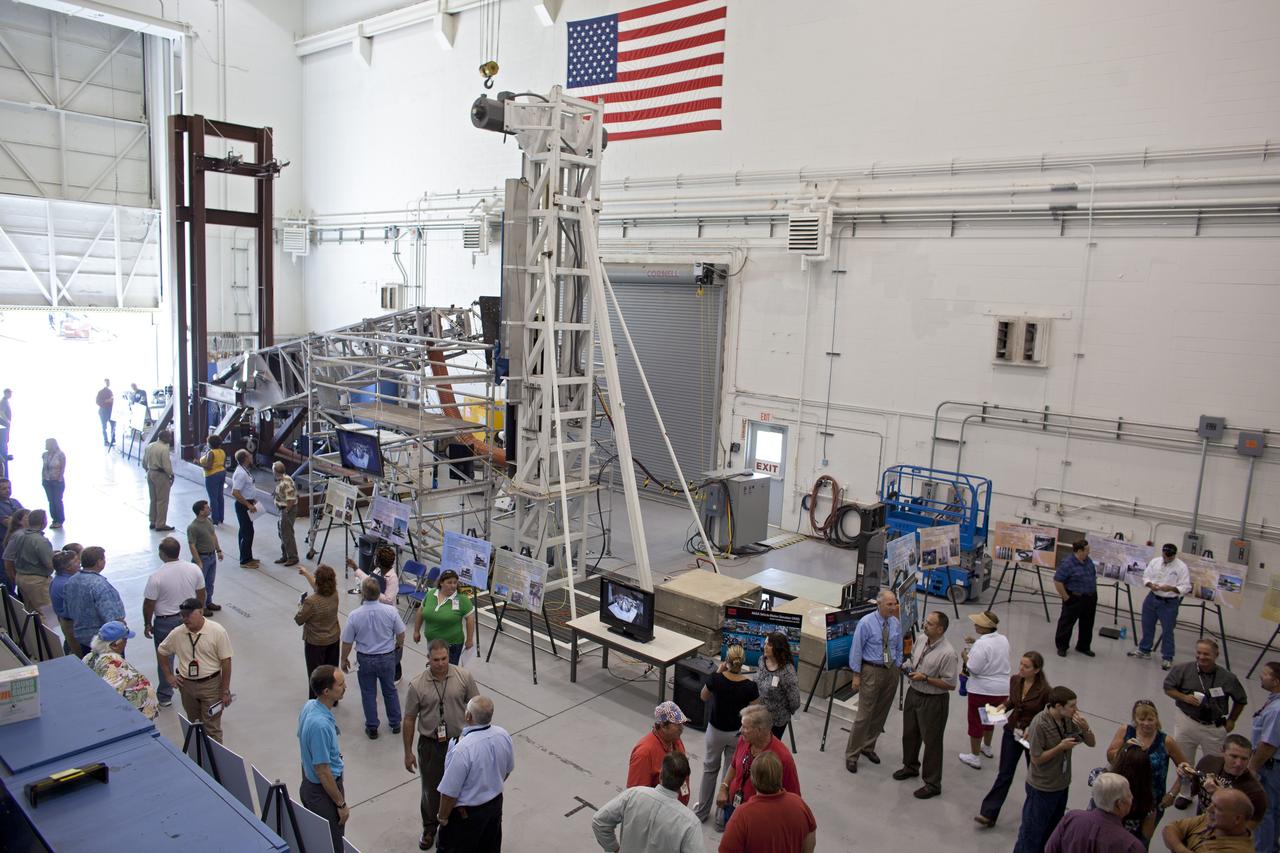
CAPE CANAVERAL, Fla. -- At NASA's Kennedy Space Center in Florida, workers check out the 6,000-square-foot high bay of the Launch Equipment Test Facility (LETF). The LETF recently underwent a $35 million comprehensive upgrade that lasted four years. The LETF was established in the 1970s to support the qualification of the Space Shuttle Program’s umbilical and T-0 mechanisms. Throughout the years, it has supported the development of systems for shuttle and the International Space Station, Delta and Atlas rockets, and various research and development programs. The LETF has unique capabilities to evolve into a versatile test and development area that supports a wide spectrum of programs. For information on NASA's future plans, visit www.nasa.gov. Photo credit: NASA/Dimitri Gerondidakis
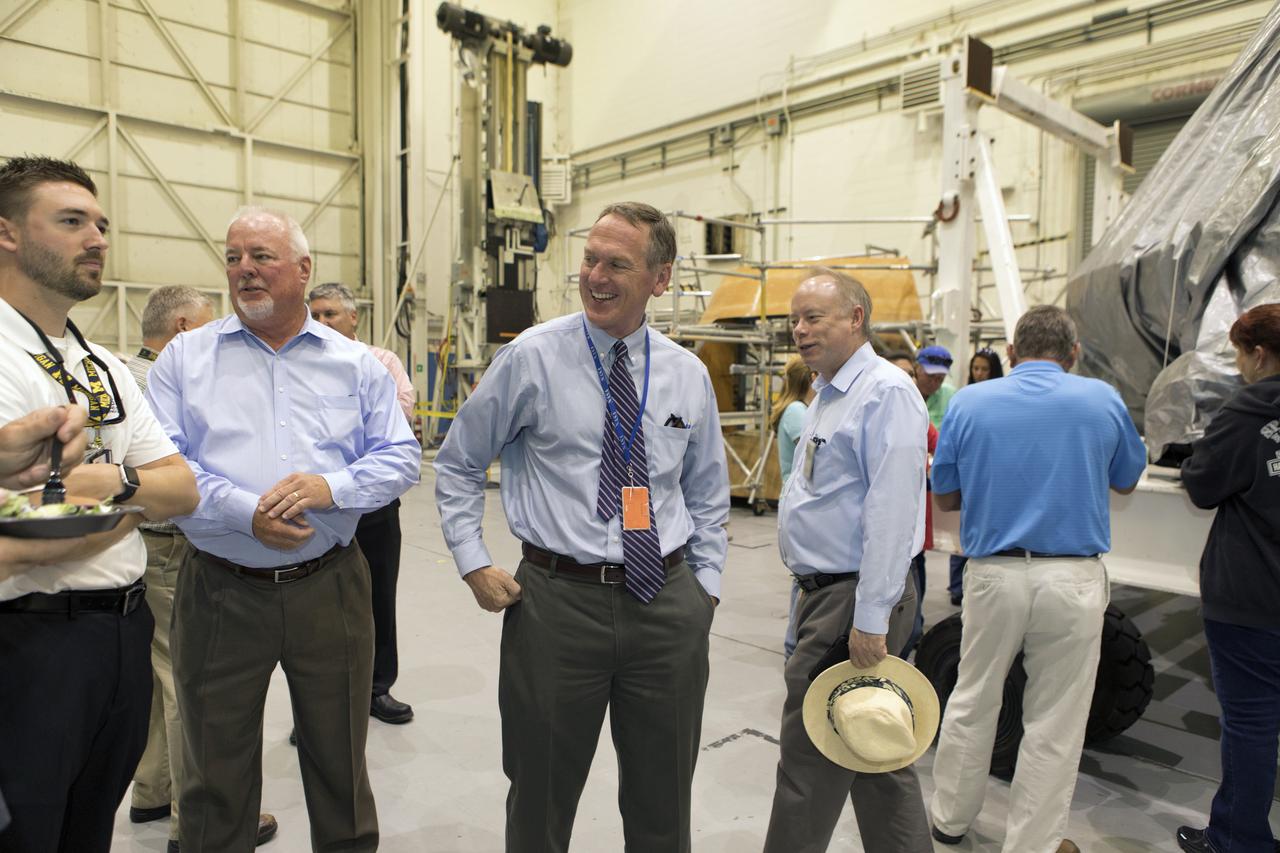
The team that tested the umbilical lines and accessories that will connect from the mobile launcher to NASA's Space Launch System rocket and Orion spacecraft for Exploration Mission-1 hold a banner signing event July 24, 2018, to mark completion of testing at the Launch Equipment Test Facility (LETF) at NASA's Kennedy Space Center in Florida. Attending the event is Mike Bolger, center, Exploration Ground Systems manager. A total of 21 umbilicals and launch accessories were tested on various simulators at the LETF before they were transferred to the mobile launcher for installation.
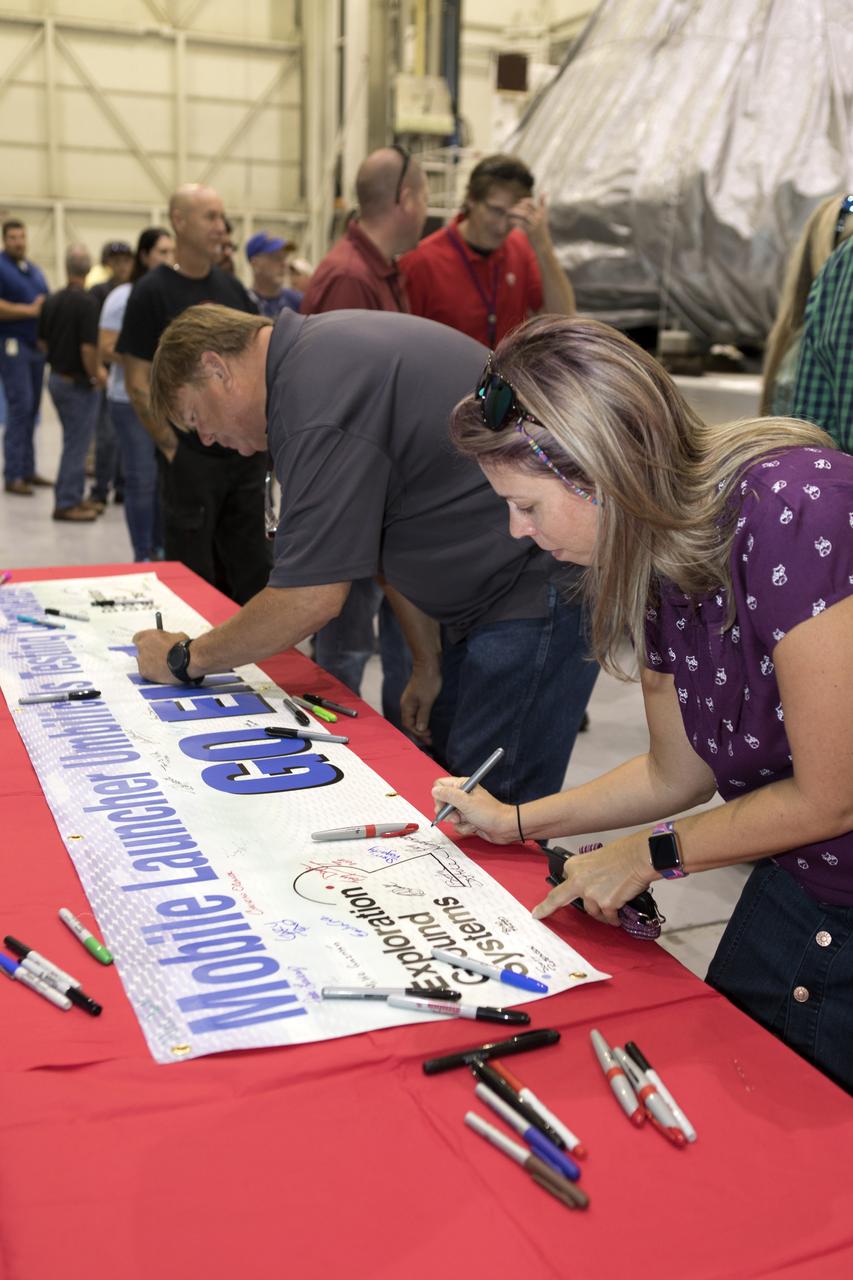
The team that tested the umbilical lines and accessories that will connect from the mobile launcher to NASA's Space Launch System rocket and Orion spacecraft for Exploration Mission-1 hold a banner signing event July 24, 2018, to mark completion of testing at the Launch Equipment Test Facility (LETF) at NASA's Kennedy Space Center in Florida. A total of 21 umbilicals and launch accessories were tested on various simulators at the LETF before they were transferred to the mobile launcher for installation.
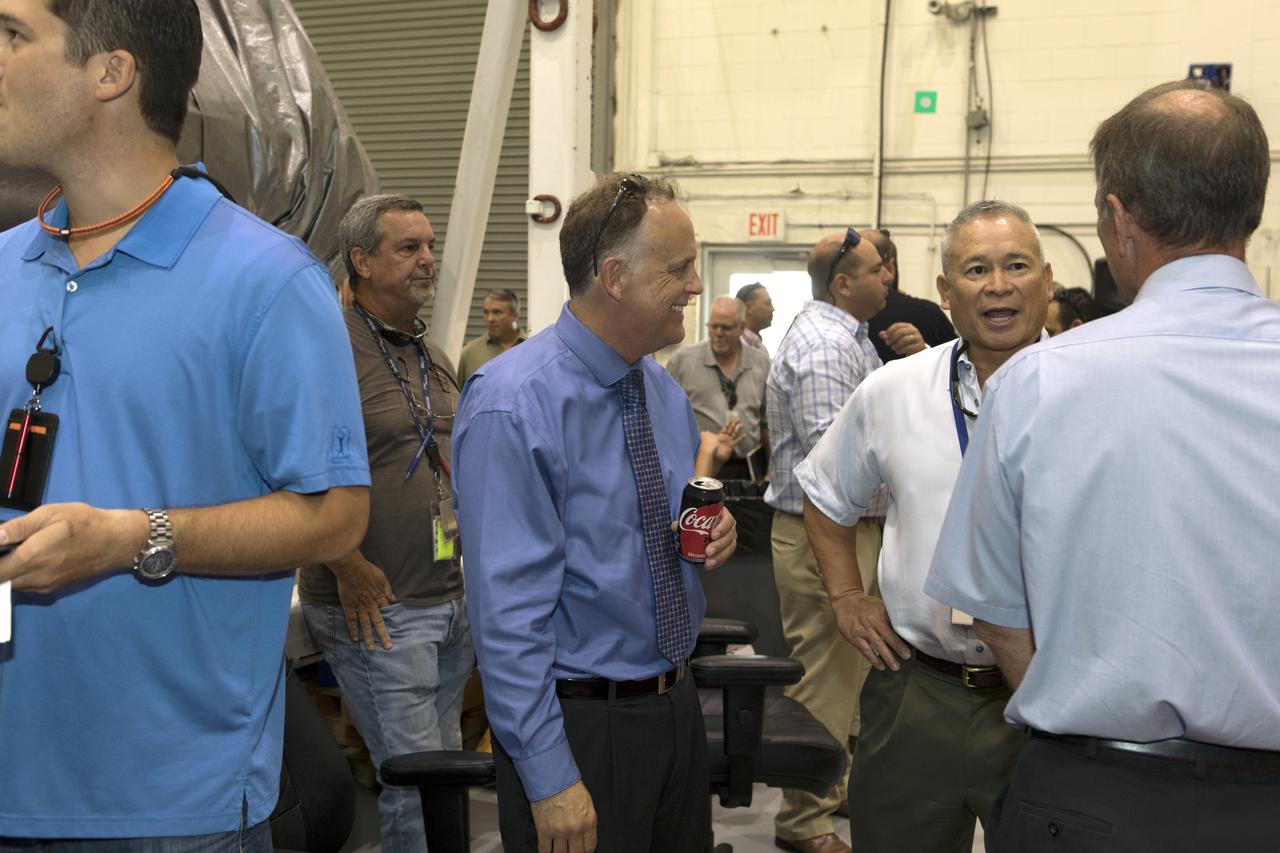
The team that tested the umbilical lines and accessories that will connect from the mobile launcher to NASA's Space Launch System rocket and Orion spacecraft for Exploration Mission-1 hold a banner signing event July 24, 2018, to mark completion of testing at the Launch Equipment Test Facility (LETF) at NASA's Kennedy Space Center in Florida. Attending the event is Shawn Quinn, center, director of Engineering. A total of 21 umbilicals and launch accessories were tested on various simulators at the LETF before they were transferred to the mobile launcher for installation.
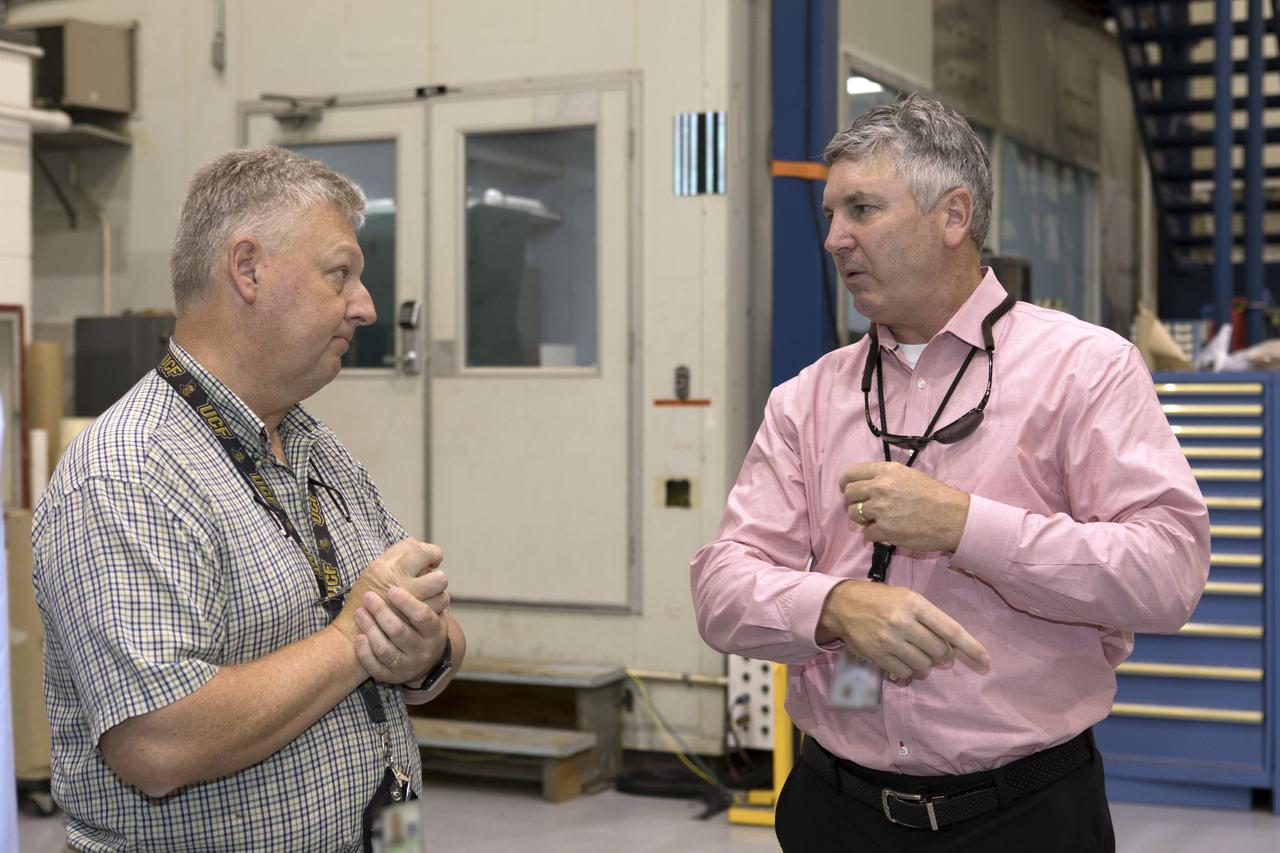
The team that tested the umbilical lines and accessories that will connect from the mobile launcher to NASA's Space Launch System rocket and Orion spacecraft for Exploration Mission-1 hold a banner signing event July 24, 2018, to mark completion of testing at the Launch Equipment Test Facility (LETF) at NASA's Kennedy Space Center in Florida. Attending the event is Scott Colloredo, at right, deputy director of Engineering. A total of 21 umbilicals and launch accessories were tested on various simulators at the LETF before they were transferred to the mobile launcher for installation.
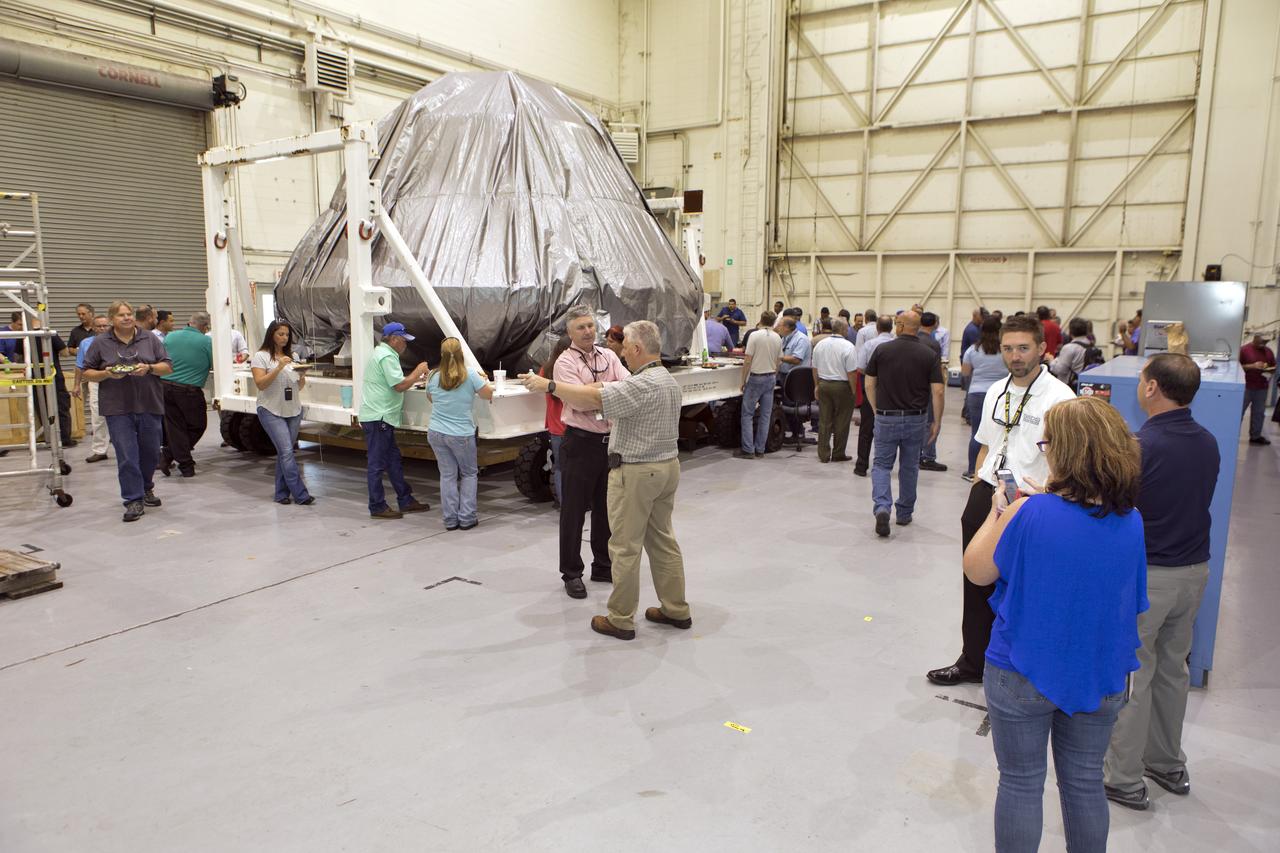
The team that tested the umbilical lines and accessories that will connect from the mobile launcher to NASA's Space Launch System rocket and Orion spacecraft for Exploration Mission-1 hold a banner signing event July 24, 2018, to mark completion of testing at the Launch Equipment Test Facility (LETF) at NASA's Kennedy Space Center in Florida. A total of 21 umbilicals and launch accessories were tested on various simulators at the LETF before they were transferred to the mobile launcher for installation.
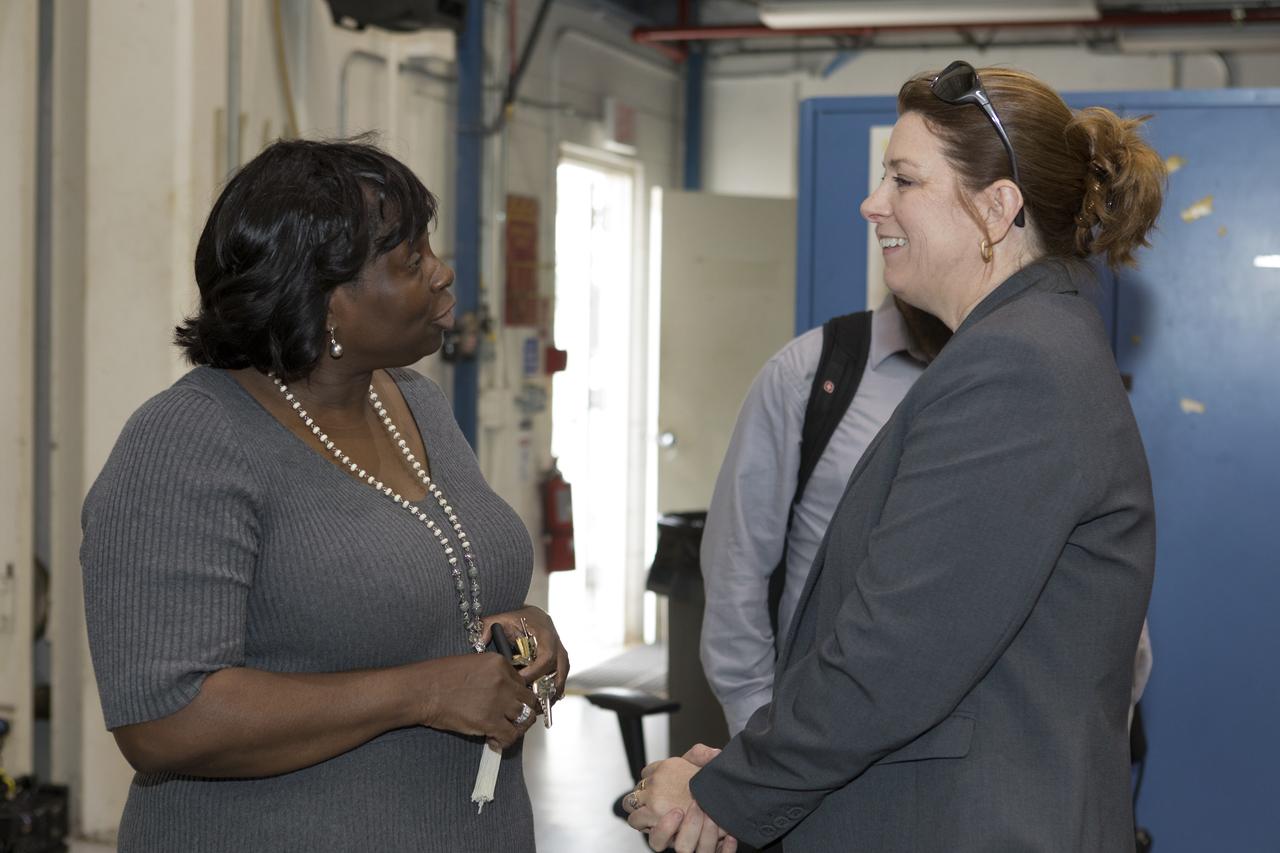
The team that tested the umbilical lines and accessories that will connect from the mobile launcher to NASA's Space Launch System rocket and Orion spacecraft for Exploration Mission-1 hold a banner signing event July 24, 2018, to mark completion of testing at the Launch Equipment Test Facility (LETF) at NASA's Kennedy Space Center in Florida. Attendees visit during the event. A total of 21 umbilicals and launch accessories were tested on various simulators at the LETF before they were transferred to the mobile launcher for installation.
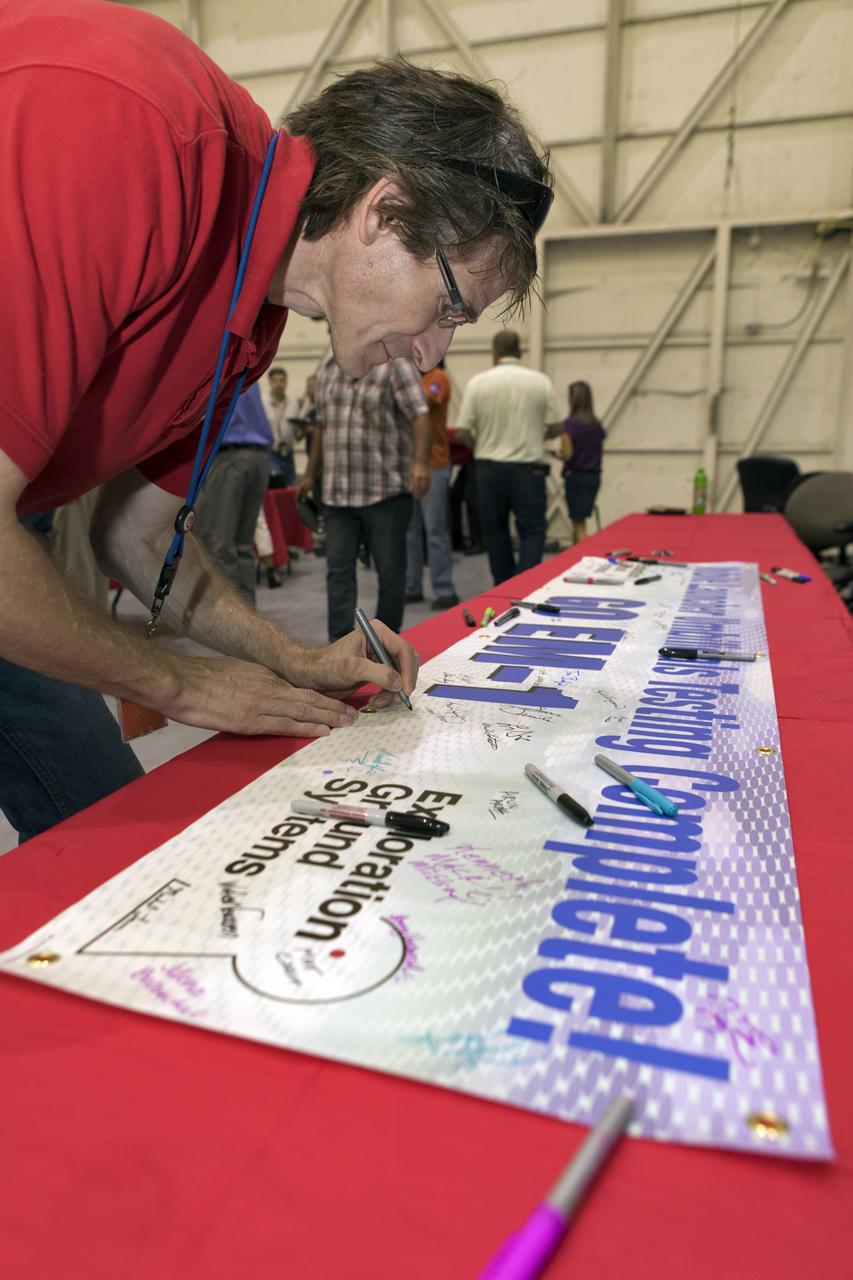
The team that tested the umbilical lines and accessories that will connect from the mobile launcher to NASA's Space Launch System rocket and Orion spacecraft for Exploration Mission-1 hold a banner signing event July 24, 2018, to mark completion of testing at the Launch Equipment Test Facility (LETF) at NASA's Kennedy Space Center in Florida. A total of 21 umbilicals and launch accessories were tested on various simulators at the LETF before they were transferred to the mobile launcher for installation.
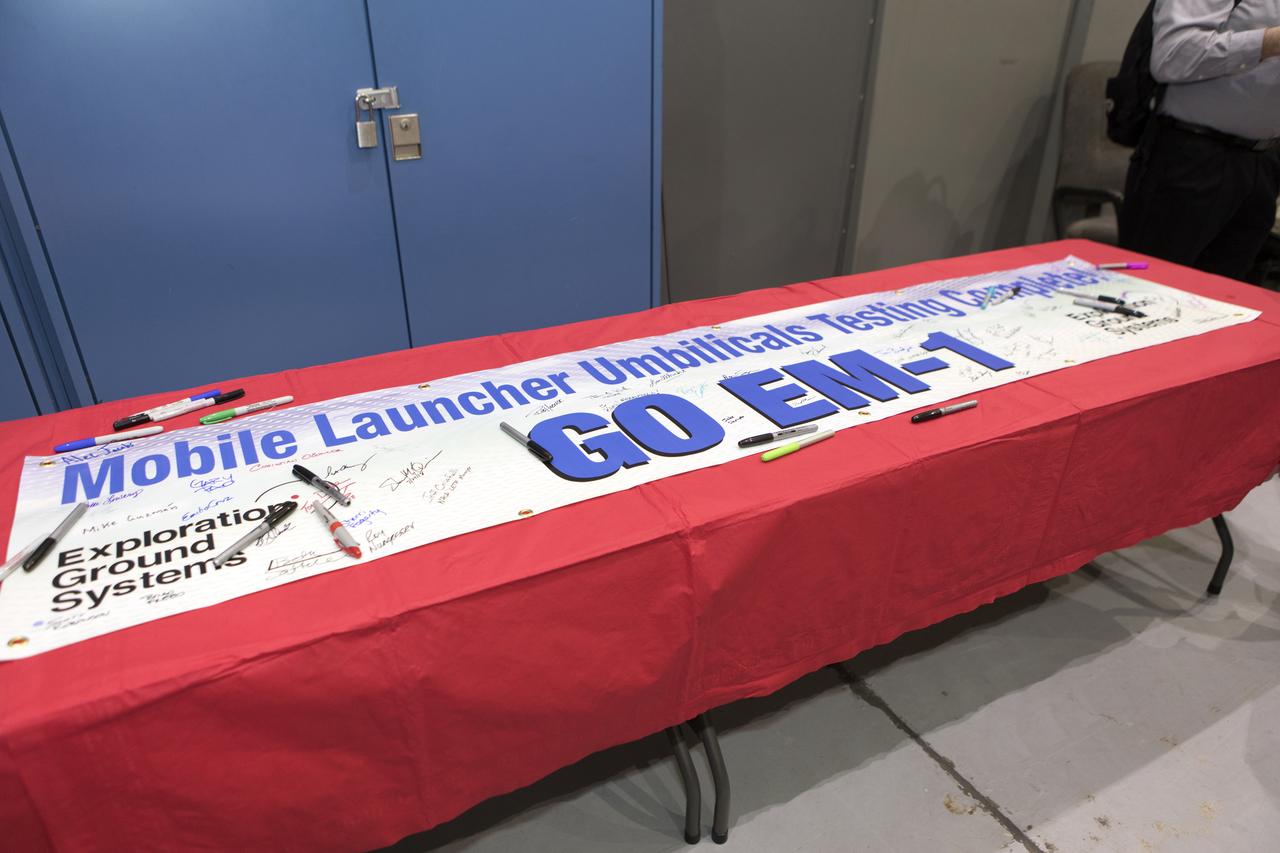
The team that tested the umbilical lines and accessories that will connect from the mobile launcher to NASA's Space Launch System rocket and Orion spacecraft for Exploration Mission-1 hold a banner signing event July 24, 2018, to mark completion of testing at the Launch Equipment Test Facility (LETF) at NASA's Kennedy Space Center in Florida. A total of 21 umbilicals and launch accessories were tested on various simulators at the LETF before they were transferred to the mobile launcher for installation.
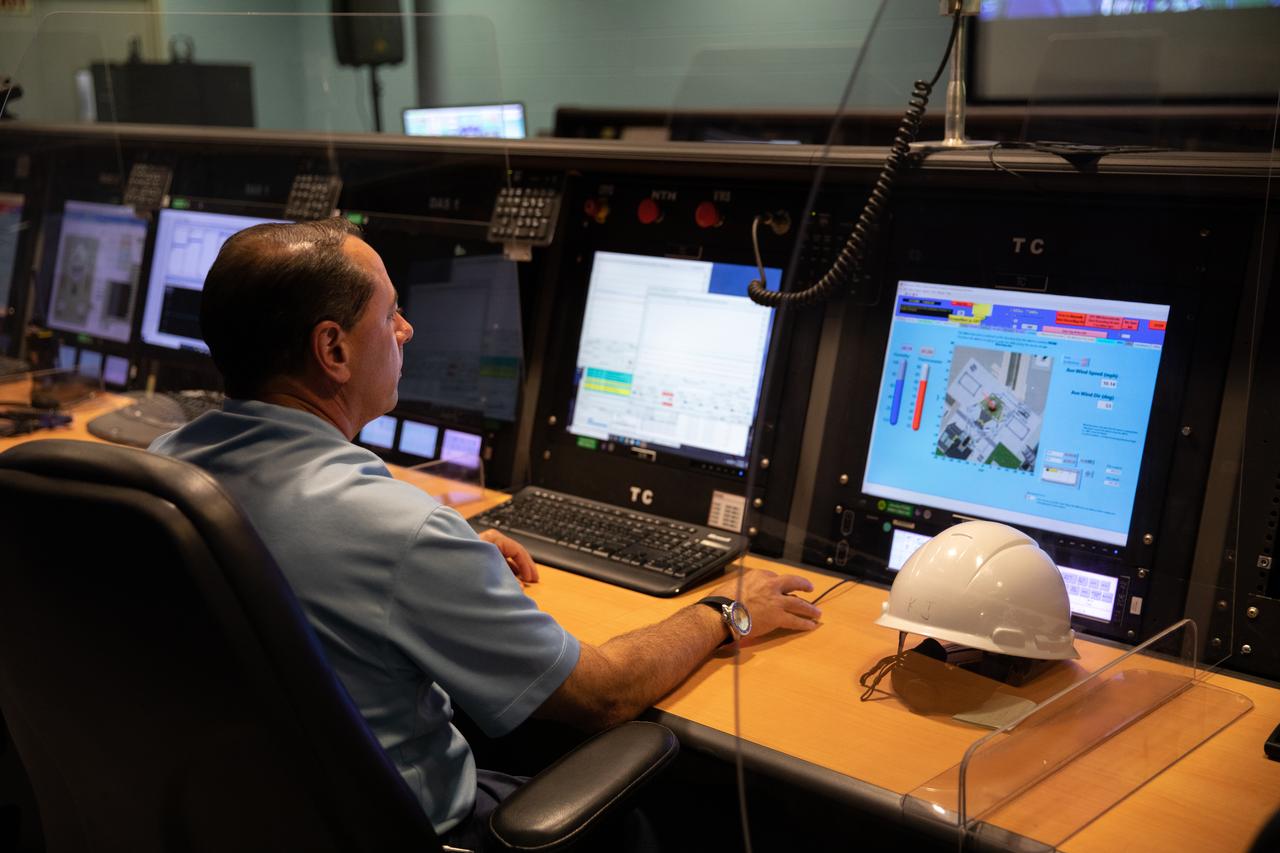
An engineer reviews test data inside a control room at the Launch Equipment Test Facility (LETF) on Oct. 19, 2020, at NASA’s Kennedy Space Center in Florida. The LETF is a unique set of structures, equipment and tools built to test full-scale umbilicals and release mechanisms for the space shuttle. The facility also was used to test the umbilicals and other mechanisms for the mobile launcher. The mobile launcher will carry the Space Launch System and Orion spacecraft to Launch Pad 39B for Artemis I, a mission that will test the rocket and spacecraft as an integrated system ahead of crewed flights to the Moon. NASA will land the first woman and the next man on the Moon in 2024.
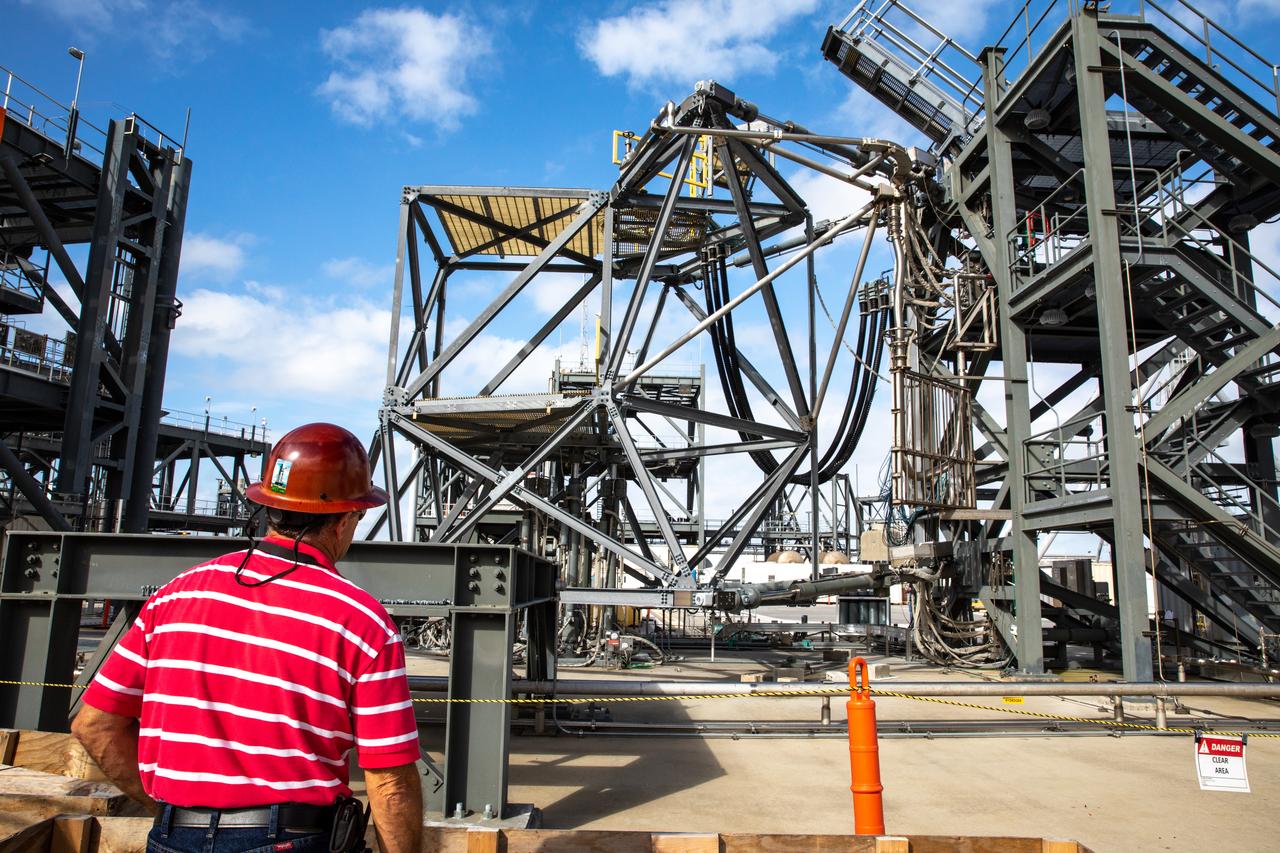
A view of one of the large test structures located at the Launch Equipment Test Facility (LETF) on Oct. 19, 2020, at NASA’s Kennedy Space Center in Florida. The LETF is a unique set of structures, equipment and tools built to test full-scale umbilicals and release mechanisms for the space shuttle. The facility also was used to test the umbilicals and other mechanisms for the mobile launcher. The mobile launcher will carry the Space Launch System and Orion spacecraft to Launch Pad 39B for Artemis I, a mission that will test the rocket and spacecraft as an integrated system ahead of crewed flights to the Moon. NASA will land the first woman and the next man on the Moon in 2024.
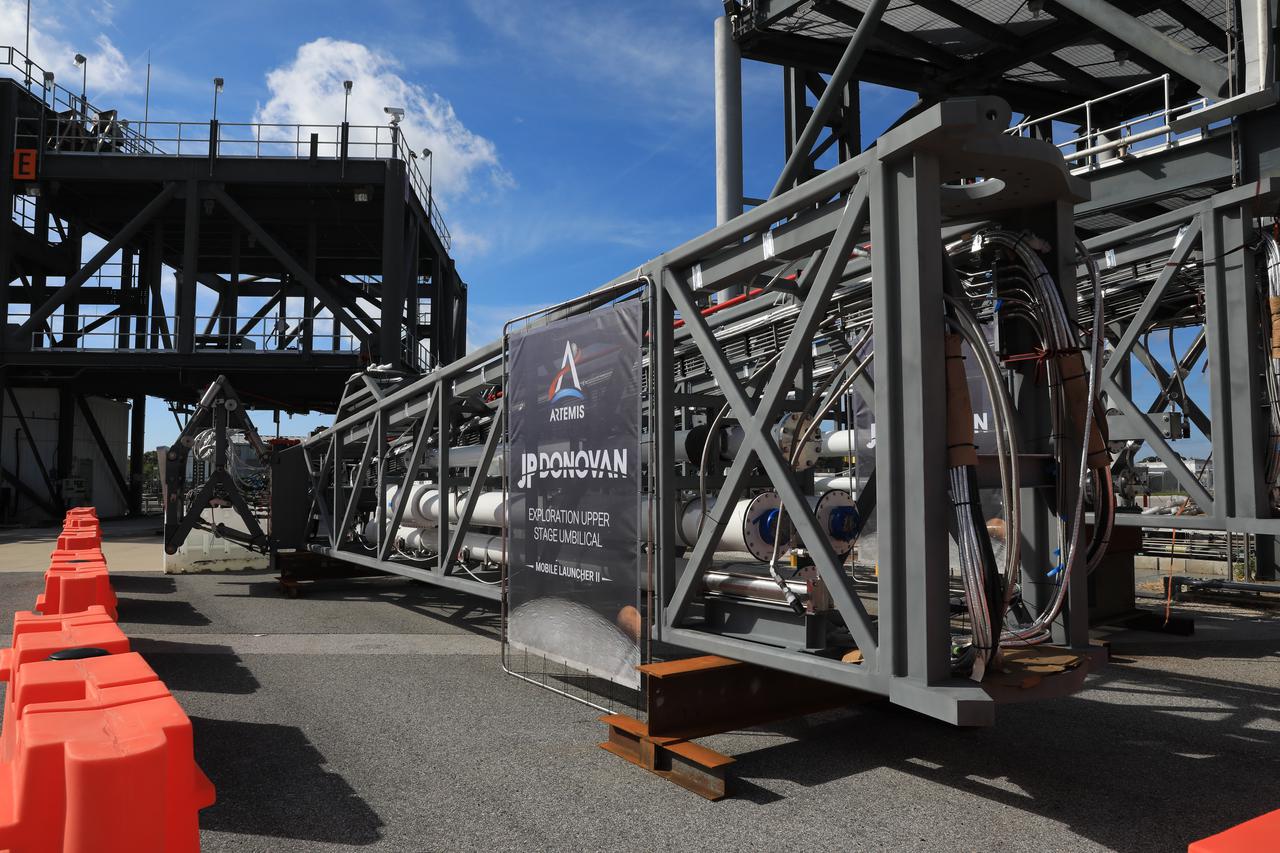
The first umbilical – one of many swing arms that will provide power, communications, and propellants to a larger configuration of NASA’s Space Launch System (SLS) rocket – for the agency’s mobile launcher 2 (ML2) arrives at the Launch Equipment Test Facility (LETF) at NASA’s Kennedy Space Center in Florida on Oct. 28, 2021. The umbilical will go through rounds of testing at the LETF to verify it functions properly before getting installed on the ML2 tower. This particular umbilical will provide propellants, environmental control systems, and a variety of purge gasses to the rocket’s Exploration Upper Stage. ML2 will be used to launch SLS Block 1B and Block 2 configurations to the Moon, starting with the Artemis IV mission, allowing NASA to send astronauts and heavy cargo to the lunar surface.
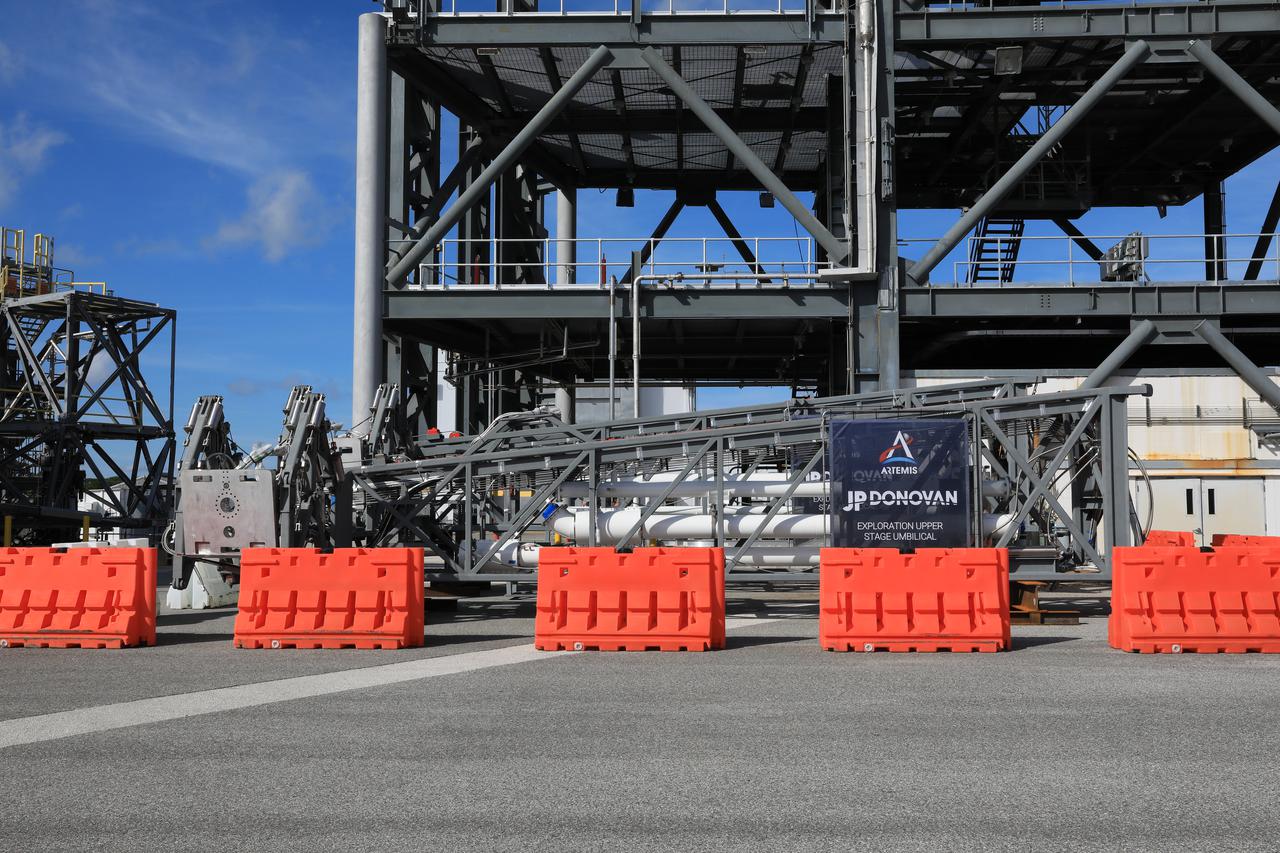
The first umbilical – one of many swing arms that will provide power, communications, and propellants to a larger configuration of NASA’s Space Launch System (SLS) rocket – for the agency’s mobile launcher 2 (ML2) arrives at the Launch Equipment Test Facility (LETF) at NASA’s Kennedy Space Center in Florida on Oct. 28, 2021. The umbilical will go through rounds of testing at the LETF to verify it functions properly before getting installed on the ML2 tower. This particular umbilical will provide propellants, environmental control systems, and a variety of purge gasses to the rocket’s Exploration Upper Stage. ML2 will be used to launch SLS Block 1B and Block 2 configurations to the Moon, starting with the Artemis IV mission, allowing NASA to send astronauts and heavy cargo to the lunar surface.

The team that tested the umbilical lines and accessories that will connect from the mobile launcher to NASA's Space Launch System rocket and Orion spacecraft for Exploration Mission-1 hold a banner signing event July 24, 2018, to mark completion of testing at the Launch Equipment Test Facility (LETF) at NASA's Kennedy Space Center in Florida. Speaking at the event is Andy Allen, far right, program manager for Jacobs TOSC. Next to him, from left, are Shawn Quinn, director of Engineering; Scott Colloredo, deputy director of Engineering; and Russ Deloach, director of Safety and Mission Assurance. A total of 21 umbilicals and launch accessories were tested on various simulators at the LETF before they were transferred to the mobile launcher for installation.
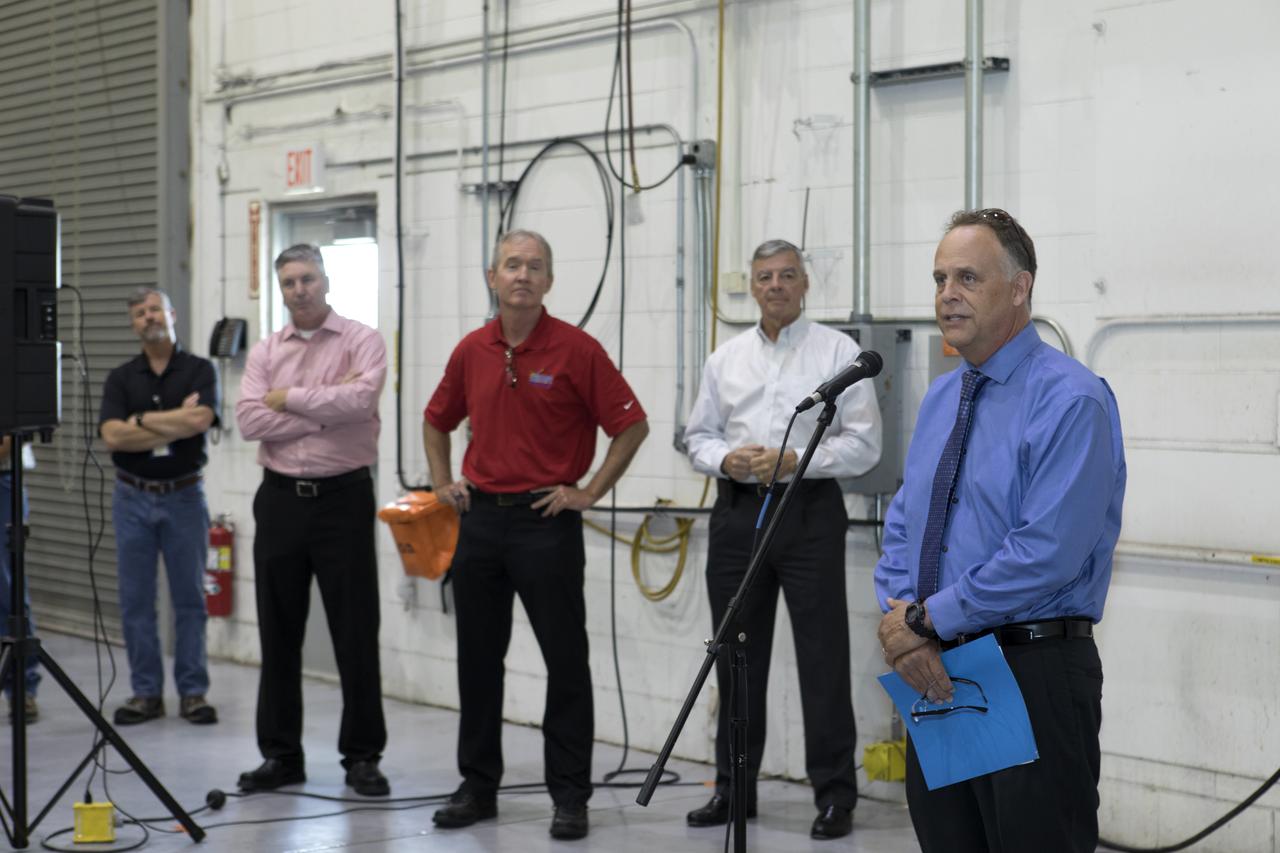
The team that tested the umbilical lines and accessories that will connect from the mobile launcher to NASA's Space Launch System rocket and Orion spacecraft for Exploration Mission-1 hold a banner signing event July 24, 2018, to mark completion of testing at the Launch Equipment Test Facility (LETF) at NASA's Kennedy Space Center in Florida. Speaking at the event is Shawn Quinn, far right, director of Engineering. Next to him, from left, are Scott Colloredo, deputy director of Engineering; Russ Deloach, director of Safety and Mission Assurance; and Andy Allen, program manager for Jacobs TOSC. A total of 21 umbilicals and launch accessories were tested on various simulators at the LETF before they were transferred to the mobile launcher for installation.

The team that tested the umbilical lines and accessories that will connect from the mobile launcher to NASA's Space Launch System rocket and Orion spacecraft for Exploration Mission-1 hold a banner signing event July 24, 2018, to mark completion of testing at the Launch Equipment Test Facility (LETF) at NASA's Kennedy Space Center in Florida. Speaking at the event is Andy Allen, far right, program manager for Jacobs TOSC. Next to him, from left, are Shawn Quinn, director of Engineering; Scott Colloredo, deputy director of Engineering; and Russ Deloach, director of Safety and Mission Assurance. A total of 21 umbilicals and launch accessories were tested on various simulators at the LETF before they were transferred to the mobile launcher for installation.
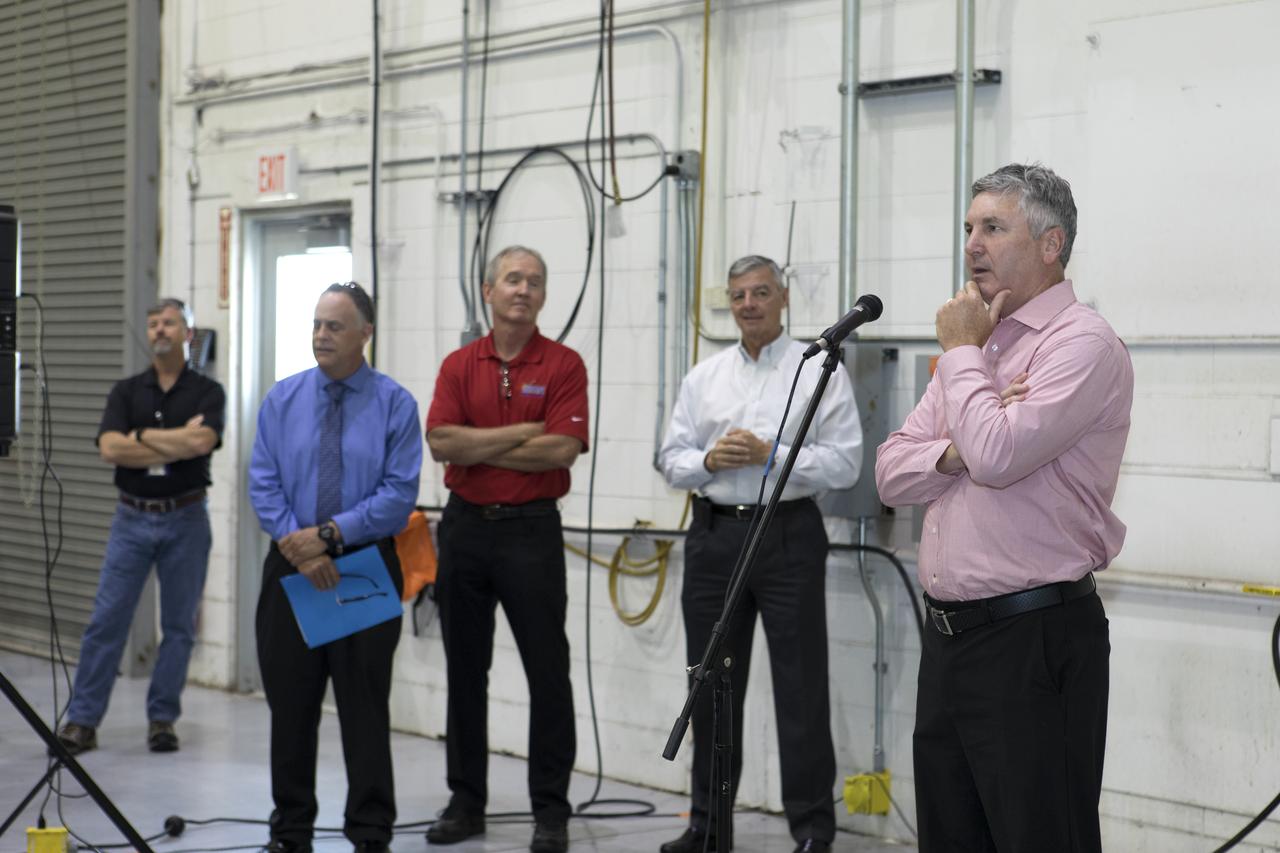
The team that tested the umbilical lines and accessories that will connect from the mobile launcher to NASA's Space Launch System rocket and Orion spacecraft for Exploration Mission-1 hold a banner signing event July 24, 2018, to mark completion of testing at the Launch Equipment Test Facility (LETF) at NASA's Kennedy Space Center in Florida. Speaking at the event is Scott Colloredo, far right, deputy director of Engineering. Next to him, from left, are Shawn Quinn, director of Engineering. Russ Deloach, director of Safety and Mission Assurance; and Andy Allen, program manager for Jacobs TOSC. A total of 21 umbilicals and launch accessories were tested on various simulators at the LETF before they were transferred to the mobile launcher for installation.
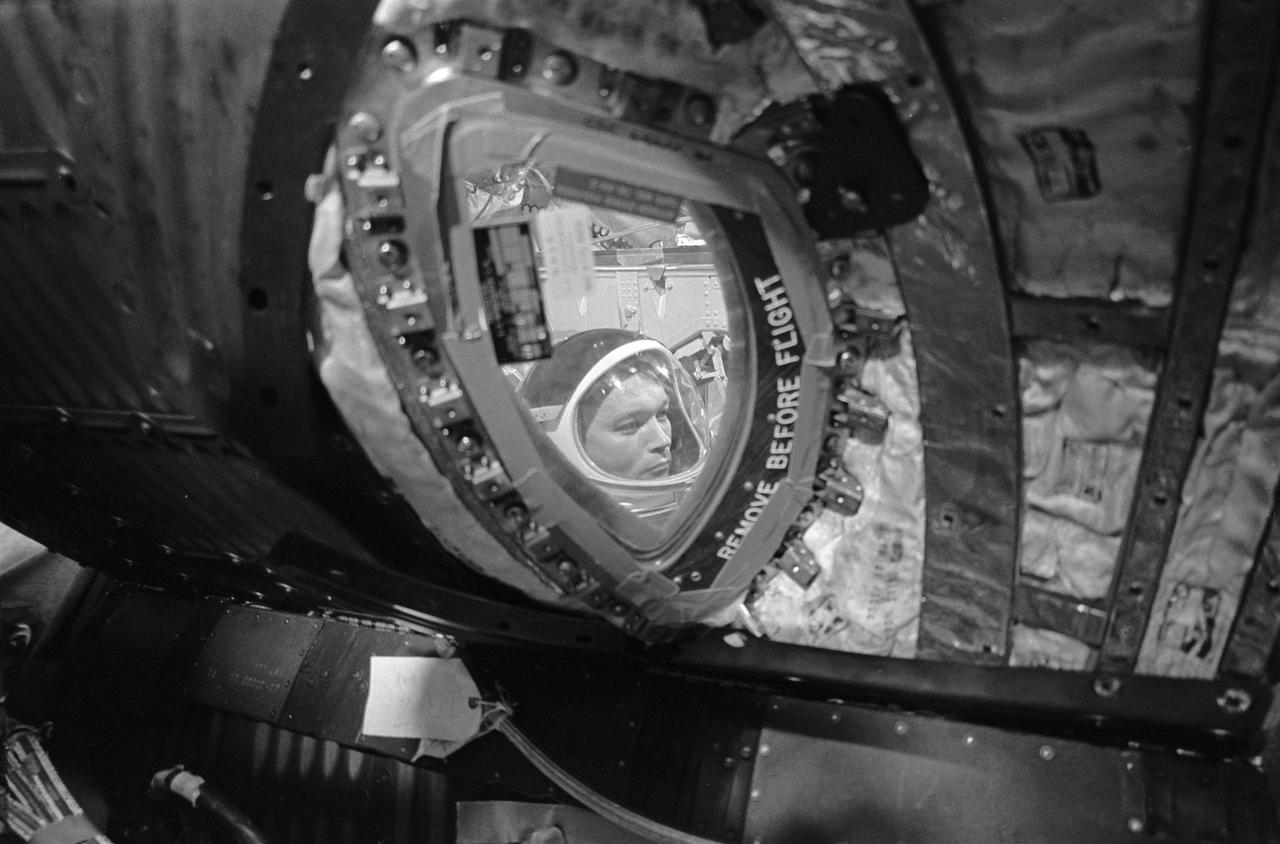
S66-42704 (12 July 1966) --- Astronaut Michael Collins, prime crew pilot for the Gemini-10 spaceflight, is seen through a hatch in the spacecraft during a Simultaneous Launch Demonstration in the White Room atop Pad 19, Cape Kennedy, Florida. Photo credit: NASA
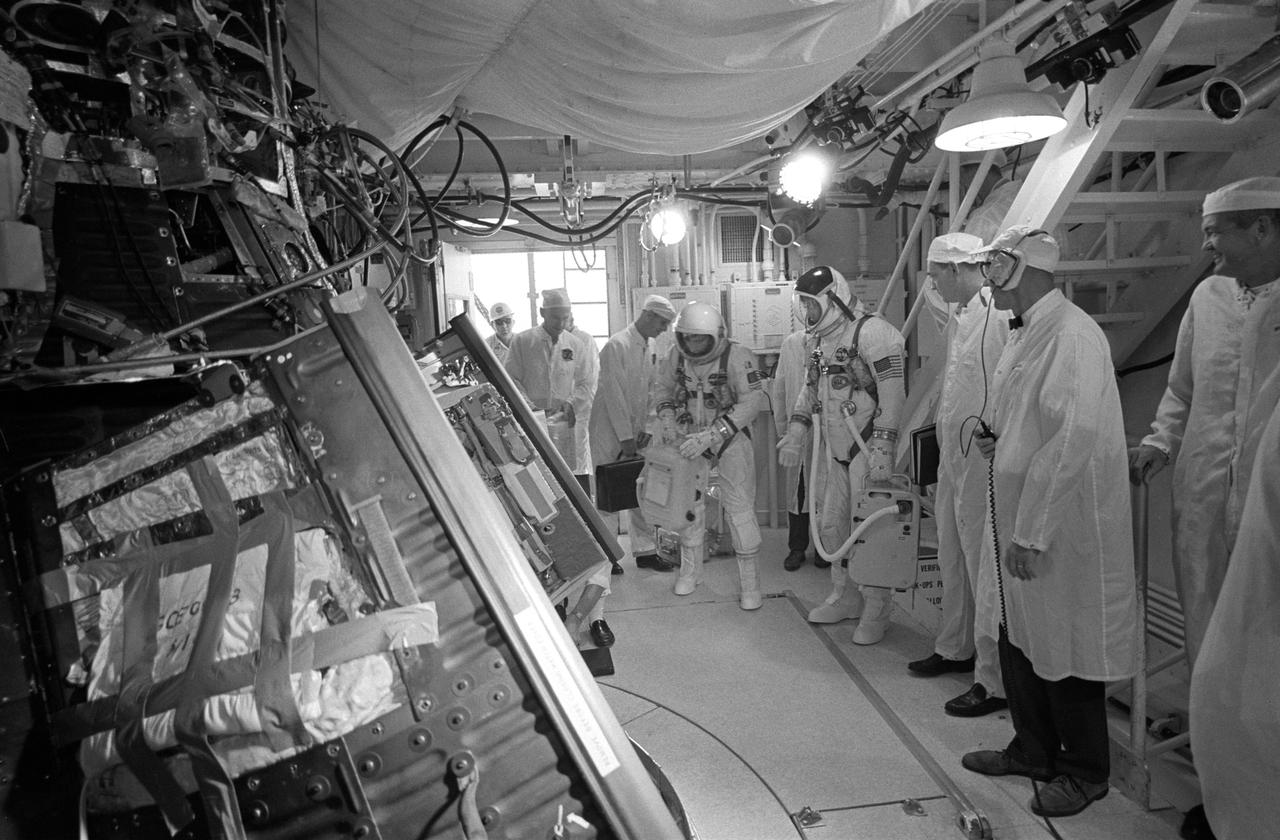
S66-42702 (12 July 1966) --- Gemini-10 prime crew, astronauts John W. Young (left), command pilot, and Michael Collins (right), pilot, check equipment in the White Room atop Pad 19 where they participated in a Simultaneous Launch Demonstration. Photo credit: NASA
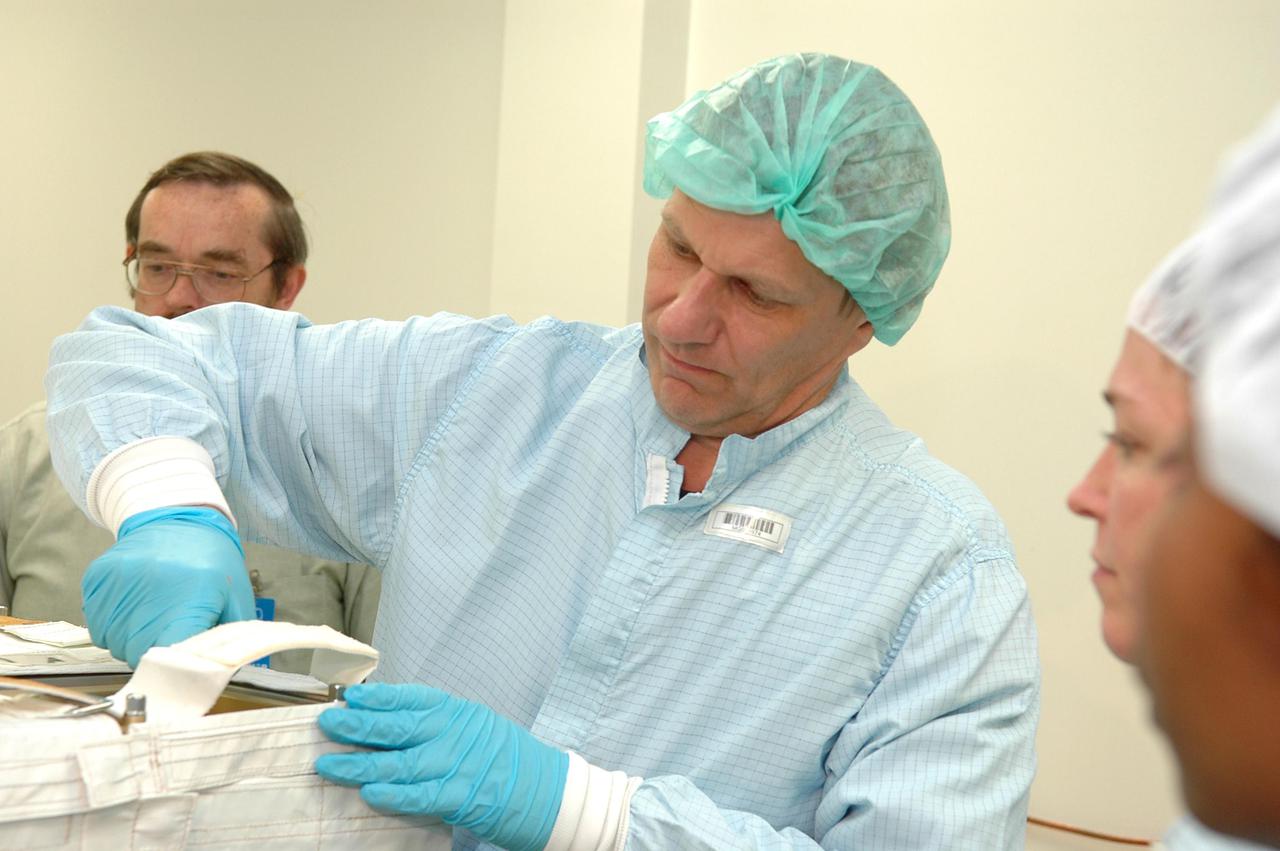
KENNEDY SPACE CENTER, FLA. - Mission Specialist Piers J. Sellers, Ph.D., got some recent hands-on experience with equipment he will soon take into space. He is working with the SPACEHAB Oceaneering Enhanced Deployable latch release. The astronauts of the second Return to Flight mission, STS-121, were at the SPACEHAB facility in Cape Canaveral to participate in the Crew Equipment Interface Test (CEIT). This test allows the astronauts to become familiar with equipment they will be using on their upcoming mission. STS-121 is scheduled to launch in July aboard Space Shuttle Atlantis.
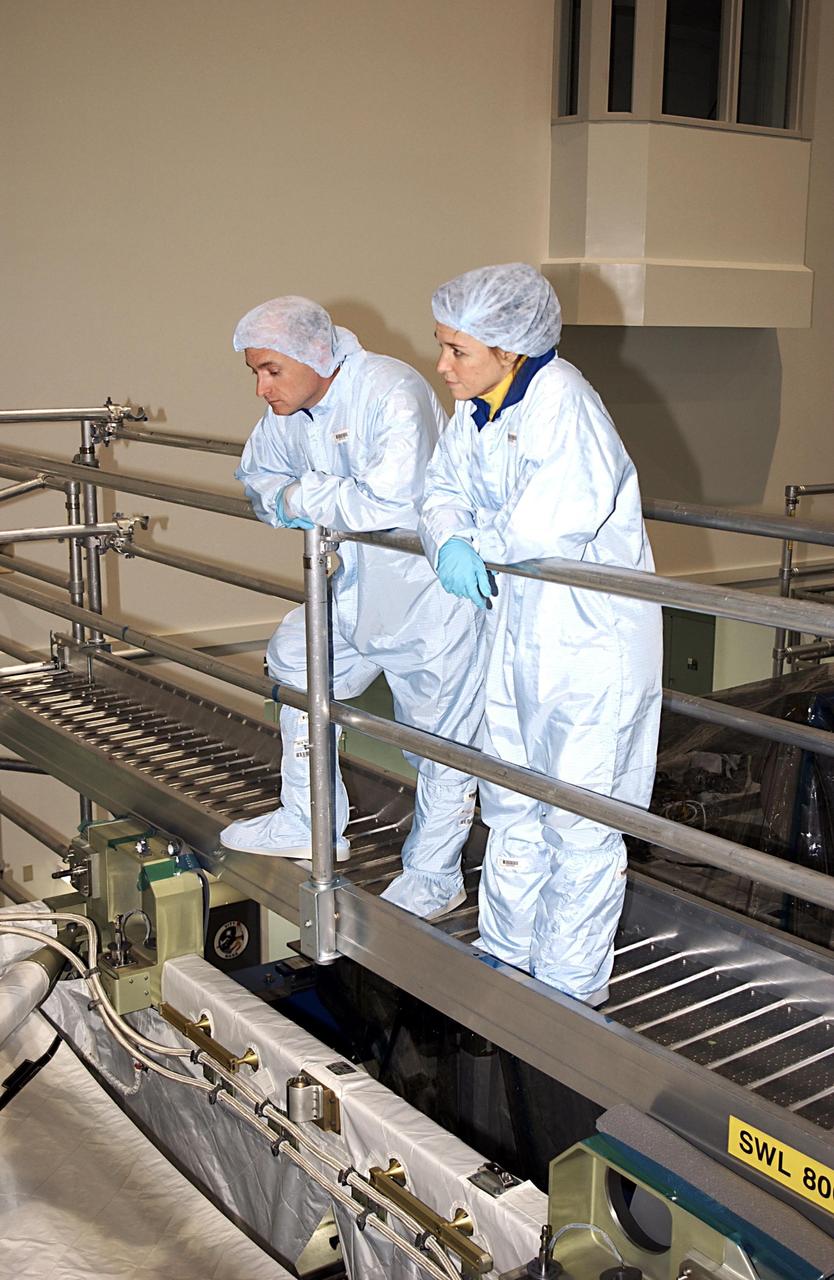
KENNEDY SPACE CENTER, FLA. - STS-118 Commander Scott Kelly (left) and Mission Specialist Lisa Nowak look over equipment in the Space Station Processing Facility Facility during Crew Equipment Interface Test activities. The mission to the International Space Station will be delivering the third starboard truss segment, the ITS S5, which will be attached to the station, and a SPACEHAB Single Cargo Module with supplies and equipment. Launch aboard Space Shuttle Columbia is scheduled for Nov. 13, 2003.
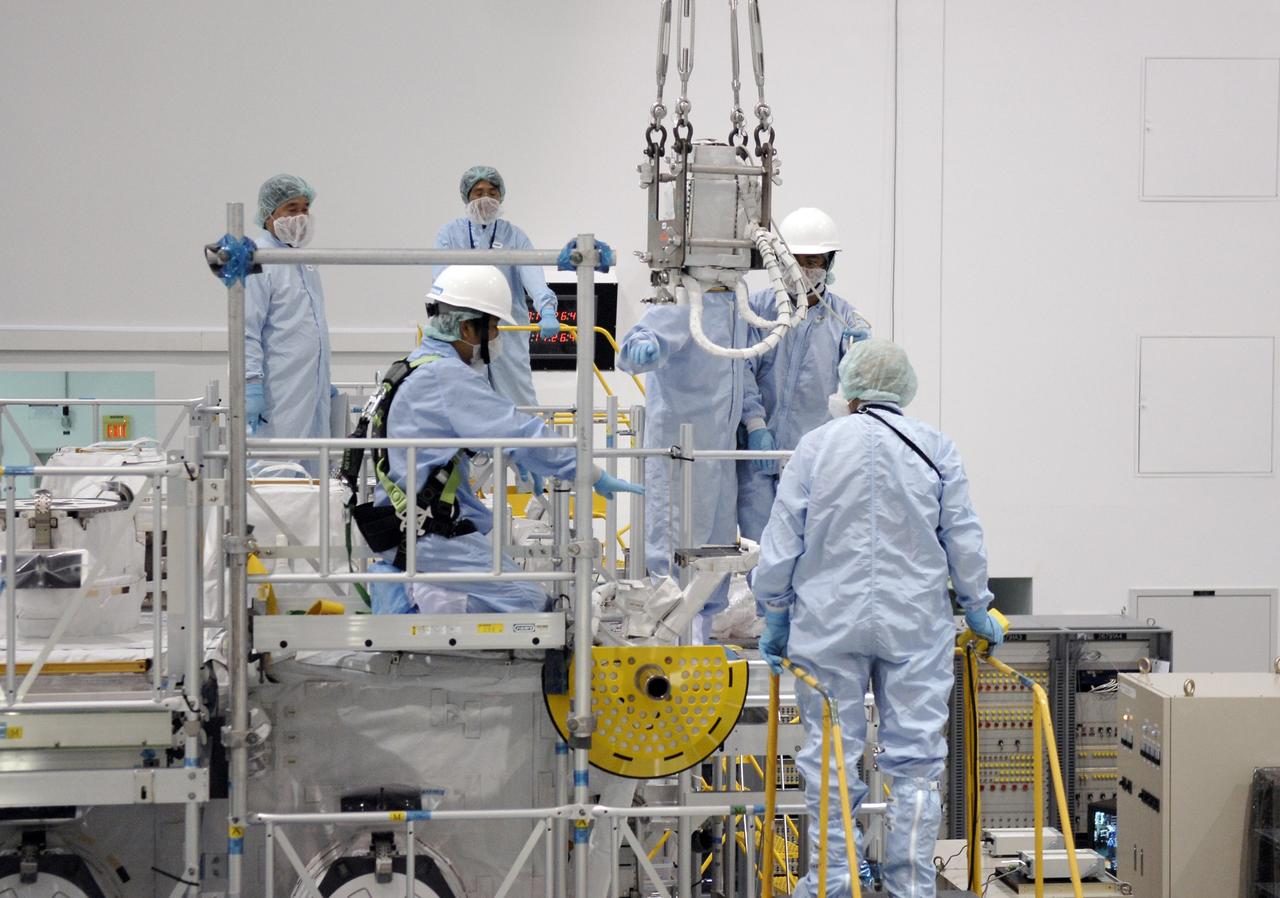
CAPE CANAVERAL, Fla. – In the Space Station Processing Facility at NASA's Kennedy Space Center in Florida, STS-127 crew members get hands-on familiarization with equipment to be used on the mission. They are looking at the hoist of one of two Japanese Aerospace Exploration Agency's Visual Equipments, or VE. These are used to support on-orbit cameras. The visual equipment flies on top of the Japanese Experiment Module External Facility, or JEM-EF, and will be installed on orbit to the outer perimeter of the EF. The view is the hoist from the top of the EF. The mission payload includes the Japanese Experiment Module, or JEM, Extended Facility and the Inter-orbit Communication System Extended Facility, or ICS-EF. Equipment familiarization is part of a Crew Equipment Interface Test. The payload will be launched to the International Space Station aboard the space shuttle Endeavour on the STS-127 mission, targeted for launch on May 15, 2009. Photo credit: NASA/Kim Shiflett
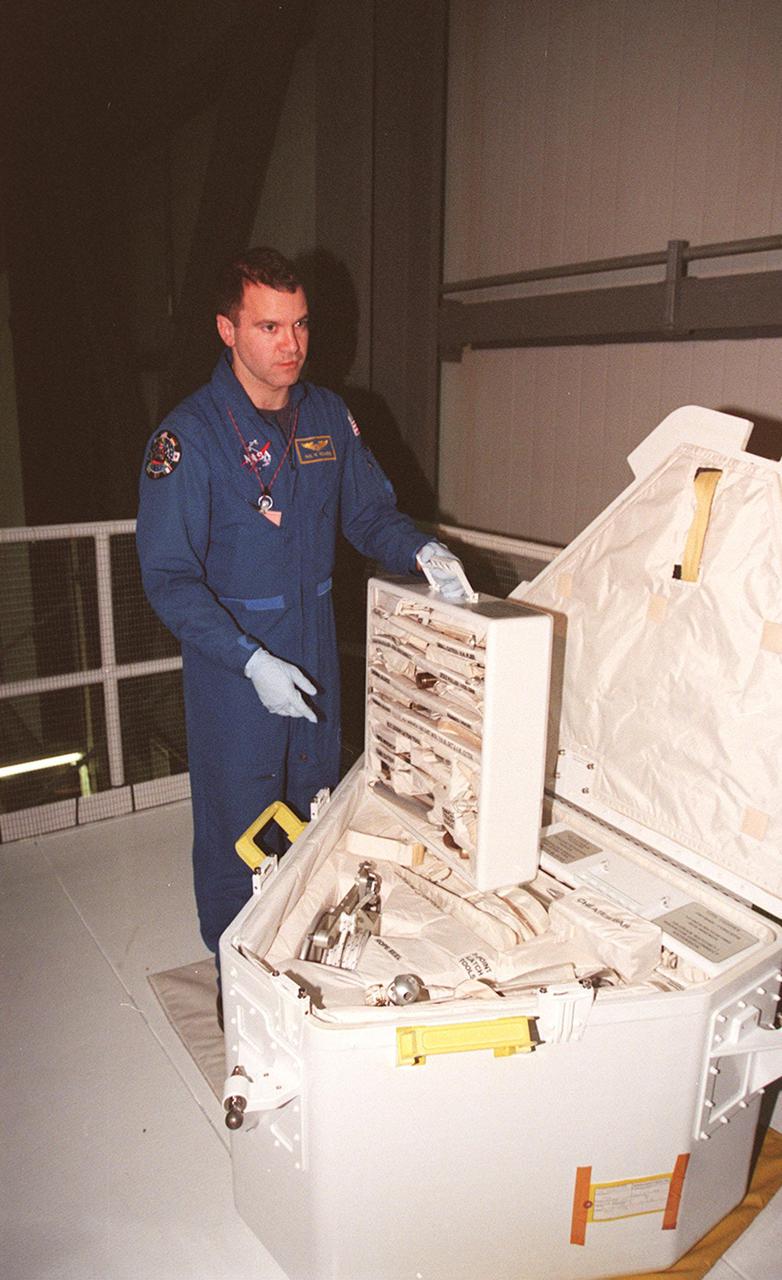
In the Orbiter Processing Facility bay 1, STS-102 Mission Specialist Paul D. Richards looks over tools in the tool caddy that is carried on launches. The mission crew is at KSC for Crew Equipment Interface Test activities
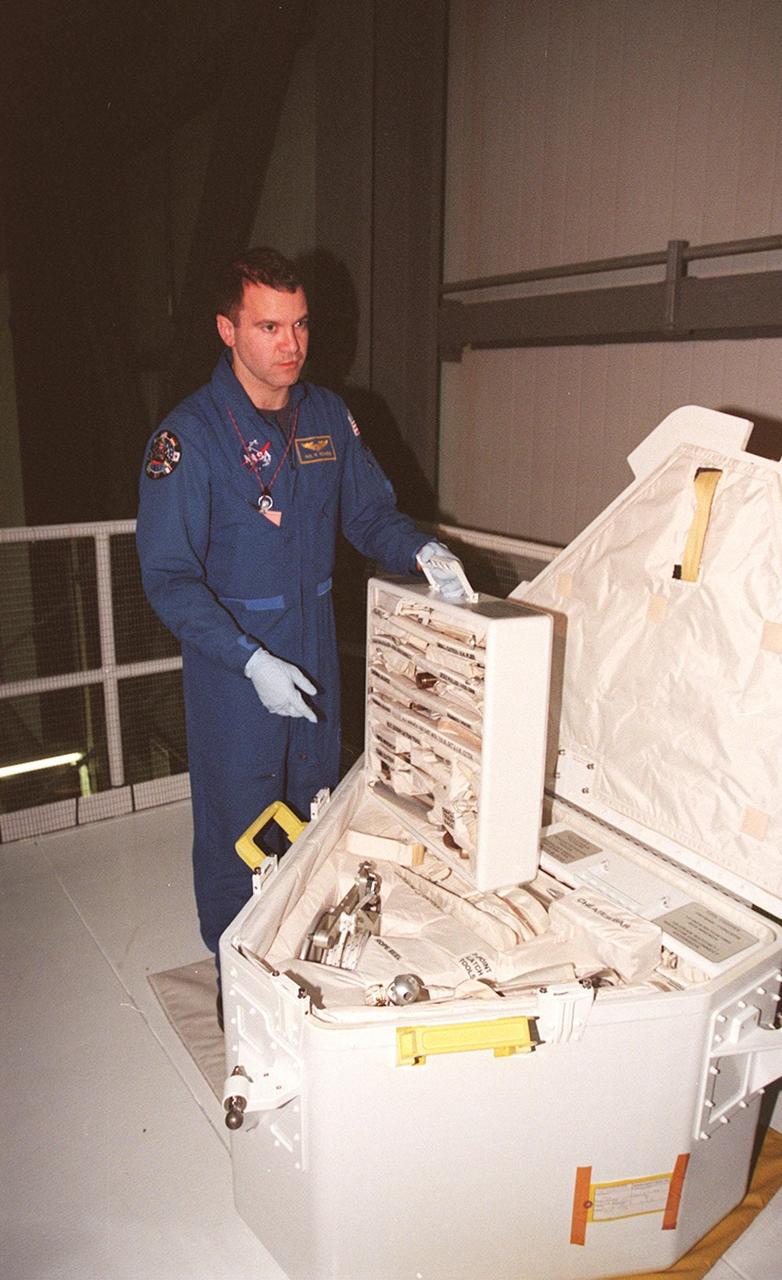
In the Orbiter Processing Facility bay 1, STS-102 Mission Specialist Paul D. Richards looks over tools in the tool caddy that is carried on launches. The mission crew is at KSC for Crew Equipment Interface Test activities
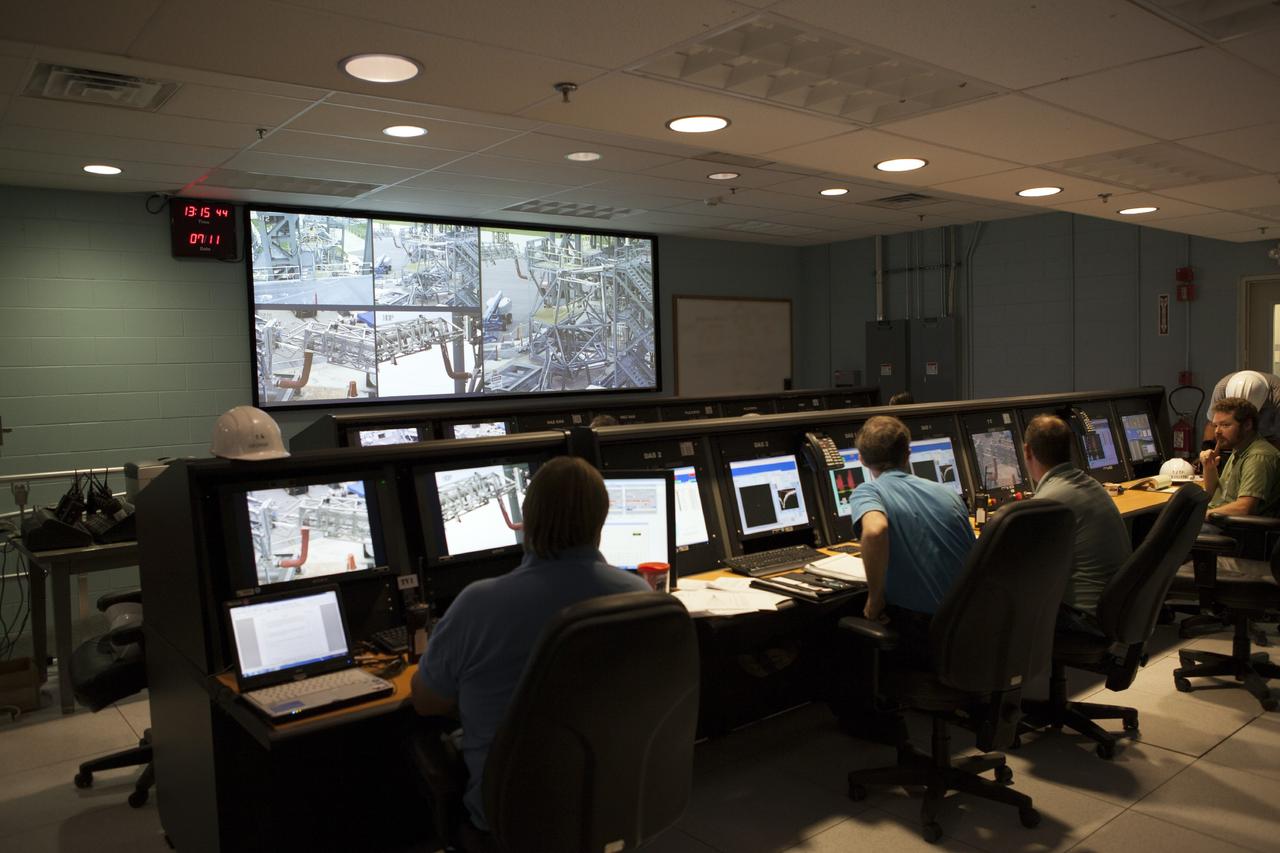
CAPE CANAVERAL, Fla. -- Engineers in a control center at the Launch Equipment Test Facility at NASA’s Kennedy Space Center in Florida monitor a test on the quick disconnect for a modified instrument unit and liquid hydrogen tilt up umbilical at the Launch Equipment Test Facility. The test is being performed by the Ground Systems Development and Operations Program. The umbilical will be partially reutilized for the Orion Service Module Unit. Orion is the exploration spacecraft designed to carry crews to space beyond low Earth orbit. It will provide emergency abort capability, sustain the crew during the space travel and provide safe re-entry from deep space return velocities. The first unpiloted test flight of the Orion is scheduled to launch in 2014 atop a Delta IV rocket and in 2017 on a Space Launch System rocket. For more information, visit http://www.nasa.gov/orion. Photo credit: NASA/Dimitri Gerondidakis

CAPE CANAVERAL, Fla. – In the Space Station Processing Facility at NASA's Kennedy Space Center in Florida, STS-127 crew members get hands-on familiarization with equipment to be used on the mission. They are looking at the hoist of one of two Japanese Aerospace Exploration Agency's Visual Equipments, or VE. The photo shows the hoist of the VE to its final position on the outer perimeter of the Japanese Experiment Module External Facility, or JEM-EF. The VE has to be installed to the final position on orbit because it is outside of the payload bay envelope. The mission payload includes the Japanese Experiment Module, or JEM, Extended Facility and the Inter-orbit Communication System Extended Facility, or ICS-EF. Equipment familiarization is part of a Crew Equipment Interface Test. The payload will be launched to the International Space Station aboard the space shuttle Endeavour on the STS-127 mission, targeted for launch on May 15, 2009. Photo credit: NASA/Kim Shiflett
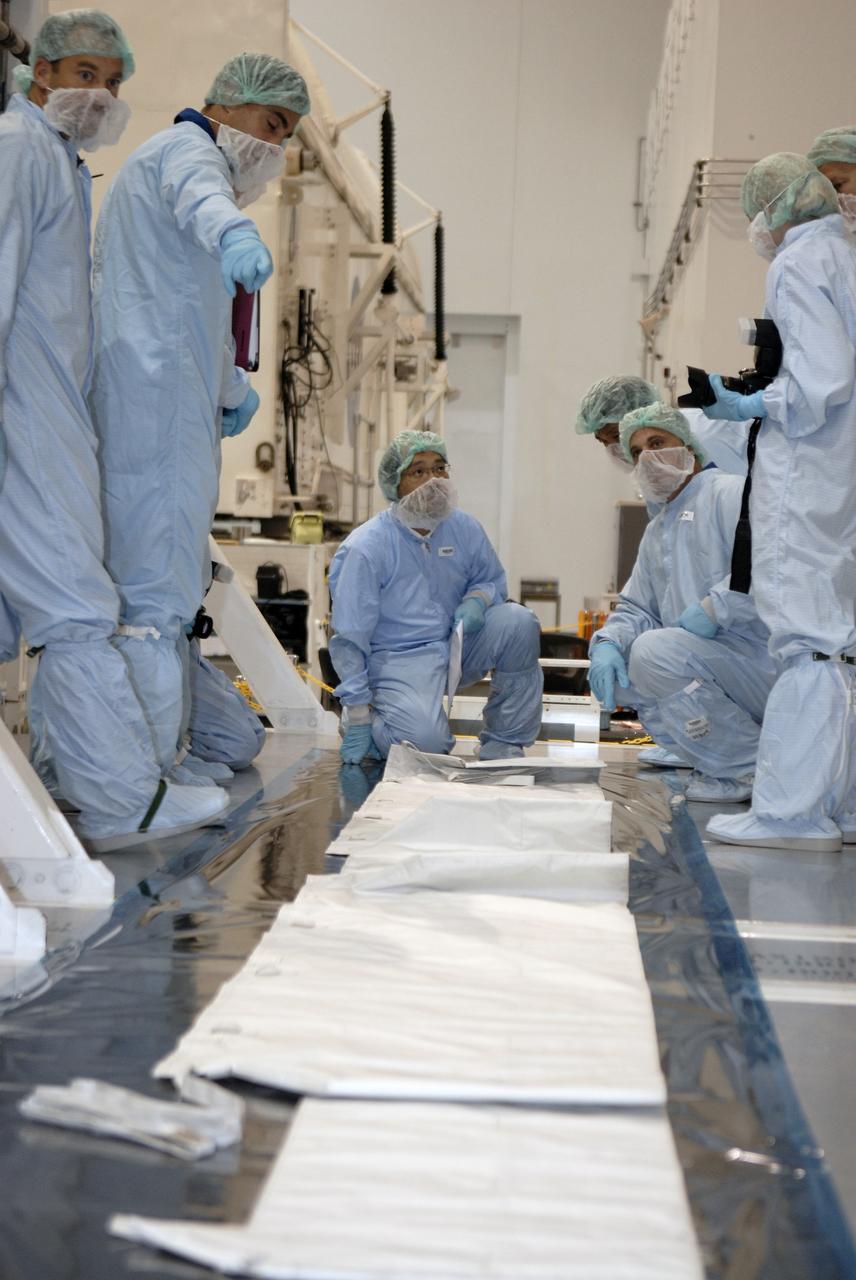
CAPE CANAVERAL, Fla. - In the Space Station Processing Facility at NASA's Kennedy Space Center in Florida, STS-127 crew members get a close look at equipment for their mission, which will install final components of the Japanese Aerospace Exploration Agency’s Japanese Experiment Module. Equipment familiarization is part of a Crew Equipment Interface Test. The JEM components include the Inter Orbit Communication System Extended Facility, or ICS-EF, the Extended Facility and Experiment Logistics Module-Exposed Section. The payload will launch aboard space shuttle Endeavour targeted for May 15, 2009. Photo credit: NASA/Kim Shiflett
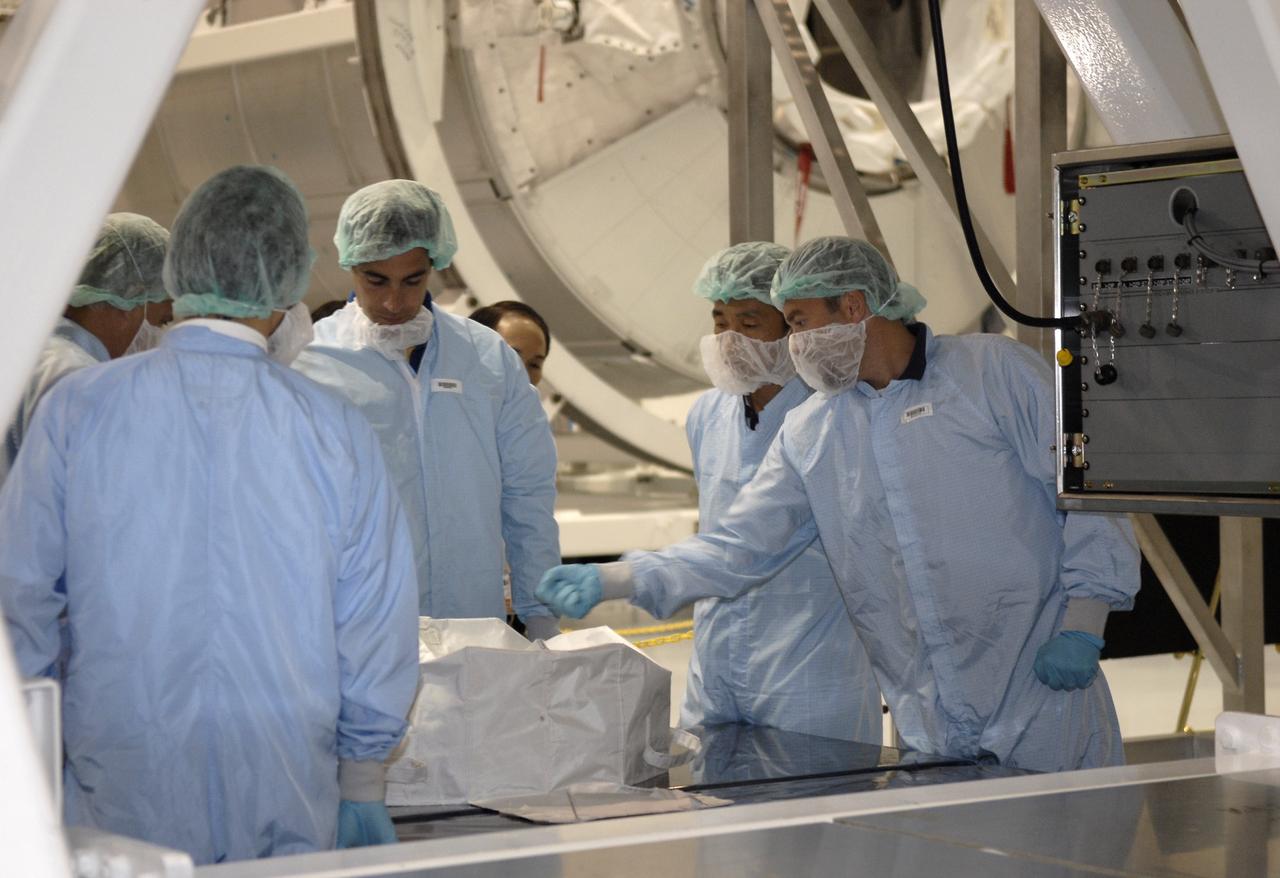
CAPE CANAVERAL, Fla. - In the Space Station Processing Facility at NASA's Kennedy Space Center in Florida, STS-127 crew members get a close look at equipment for their mission, which will install final components of the Japanese Aerospace Exploration Agency’s Japanese Experiment Module, or JEM. Equipment familiarization is part of a Crew Equipment Interface Test. The JEM components include the Inter Orbit Communication System Extended Facility, or ICS-EF, the Extended Facility and Experiment Logistics Module-Exposed Section. The payload will launch aboard space shuttle Endeavour targeted for May 15, 2009. Photo credit: NASA/Kim Shiflett
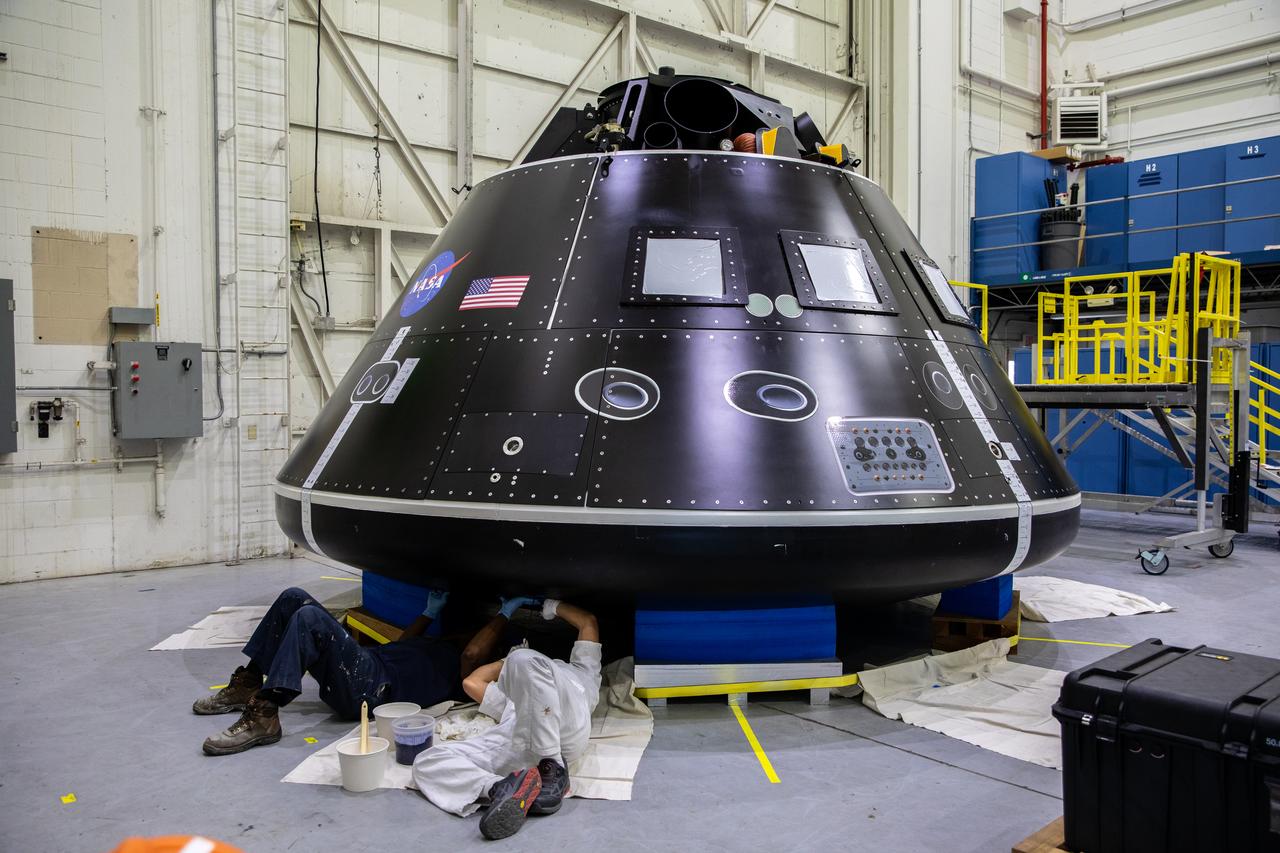
The Artemis Orion crew module test article (CMTA) is in view in the high bay inside the Launch Equipment Test Facility at NASA's Kennedy Space Center in Florida on March 18, 2022. The CMTA is used to practice recovery after splashdown of the Orion spacecraft to prepare for Artemis missions. Exploration Ground Systems leads recovery efforts.
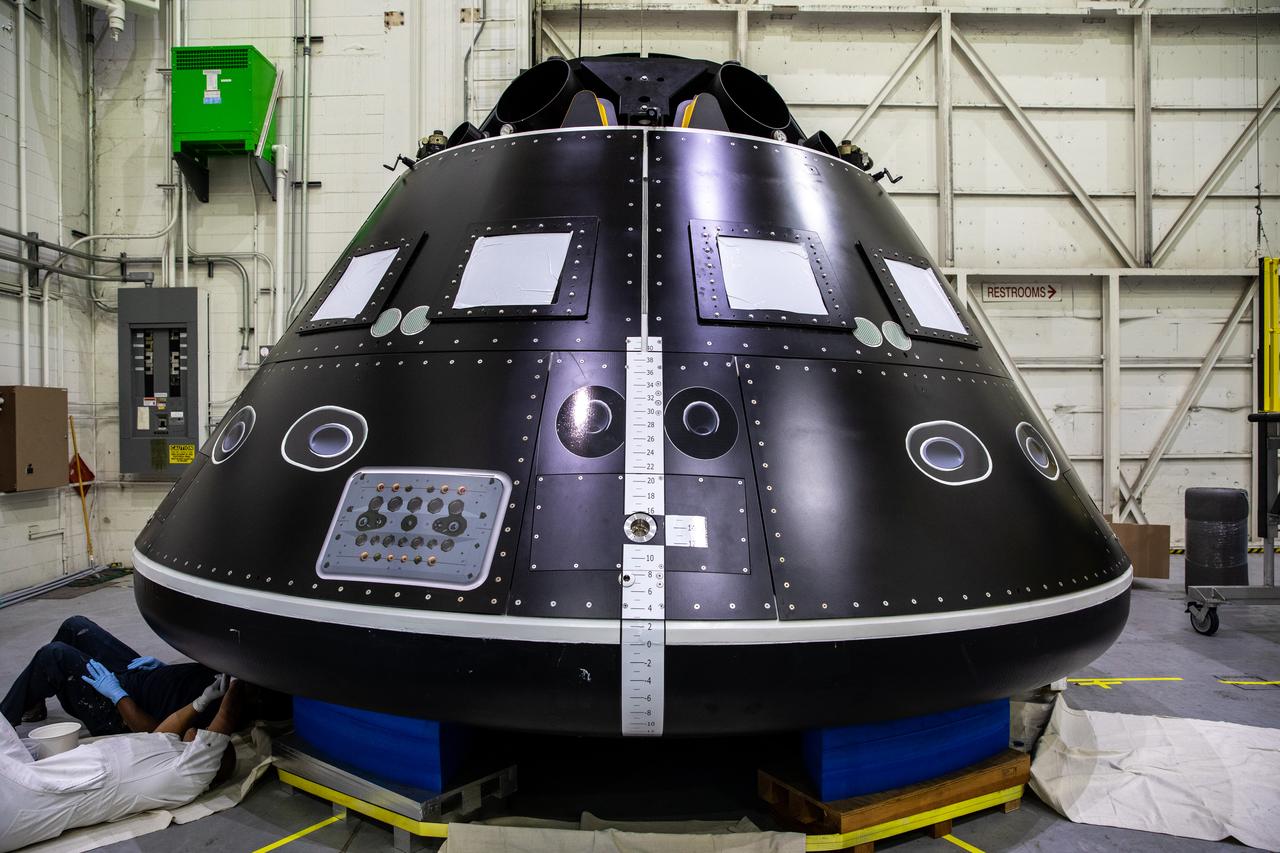
The Artemis Orion crew module test article (CMTA) is in view in the high bay inside the Launch Equipment Test Facility at NASA's Kennedy Space Center in Florida on March 18, 2022. The CMTA is used to practice recovery after splashdown of the Orion spacecraft to prepare for Artemis missions. Exploration Ground Systems leads recovery efforts.
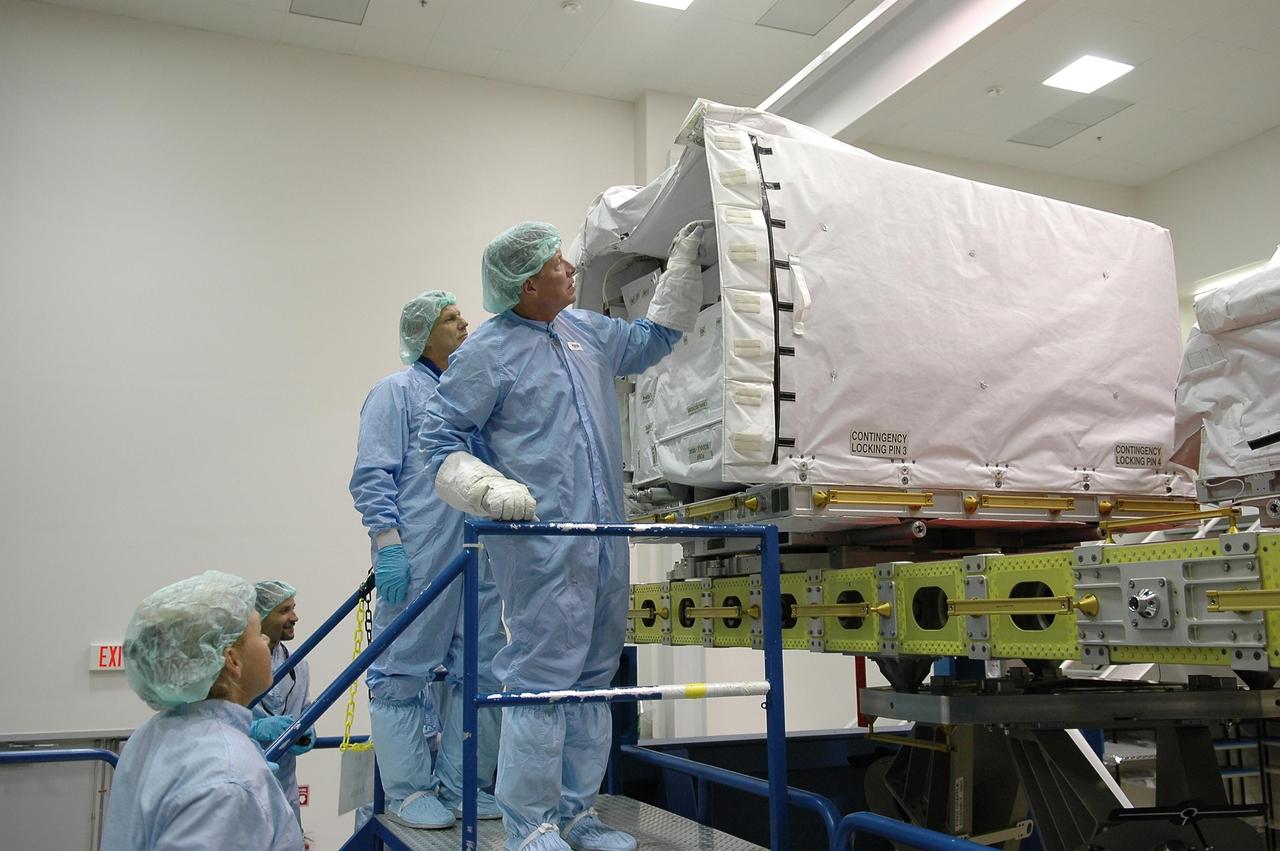
KENNEDY SPACE CENTER, FLA. - Members of the STS-121 crew are at the SPACEHAB facility in Cape Canaveral to participate in a Crew Equipment Interface Test. On the top of the stand are Mission Specialists Piers Sellers (left) and Michael Fossum. This test allows the astronauts to become familiar with equipment they will be using on their upcoming mission. STS-121 is scheduled to launch in July aboard Space Shuttle Discovery. Photo credit: NASA/Kim Shiflett
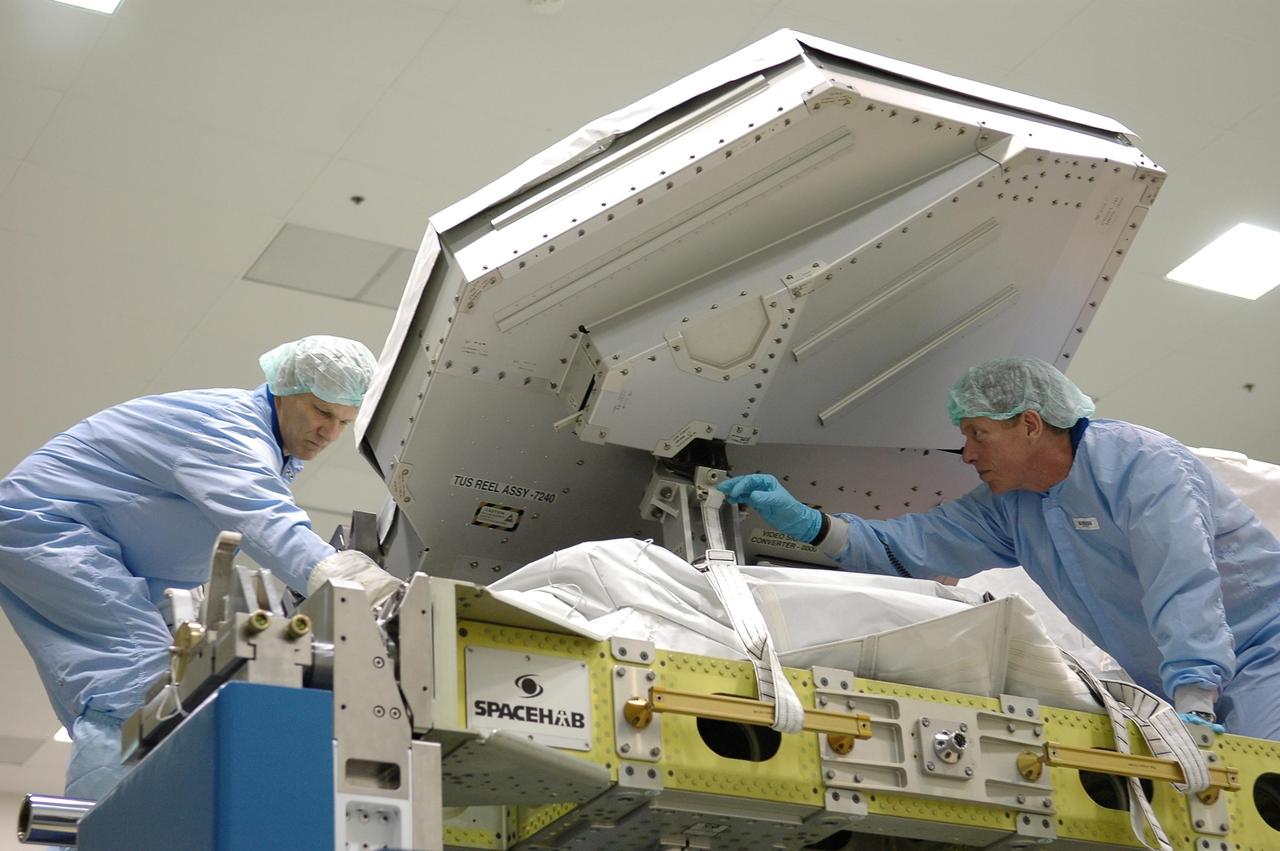
KENNEDY SPACE CENTER, FLA. - STS-121 Mission Specialist Piers Sellers (left) and Commander Steven Lindsey (right) are practicing removing the cover and strap on the trailing umbilical assembly at the SPACEHAB facility in Cape Canaveral during a Crew Equipment Interface Test. This test allows the astronauts to become familiar with equipment they will be using on their upcoming mission. STS-121 is scheduled to launch in July aboard Space Shuttle Discovery. Photo credit: NASA/Kim Shiflett
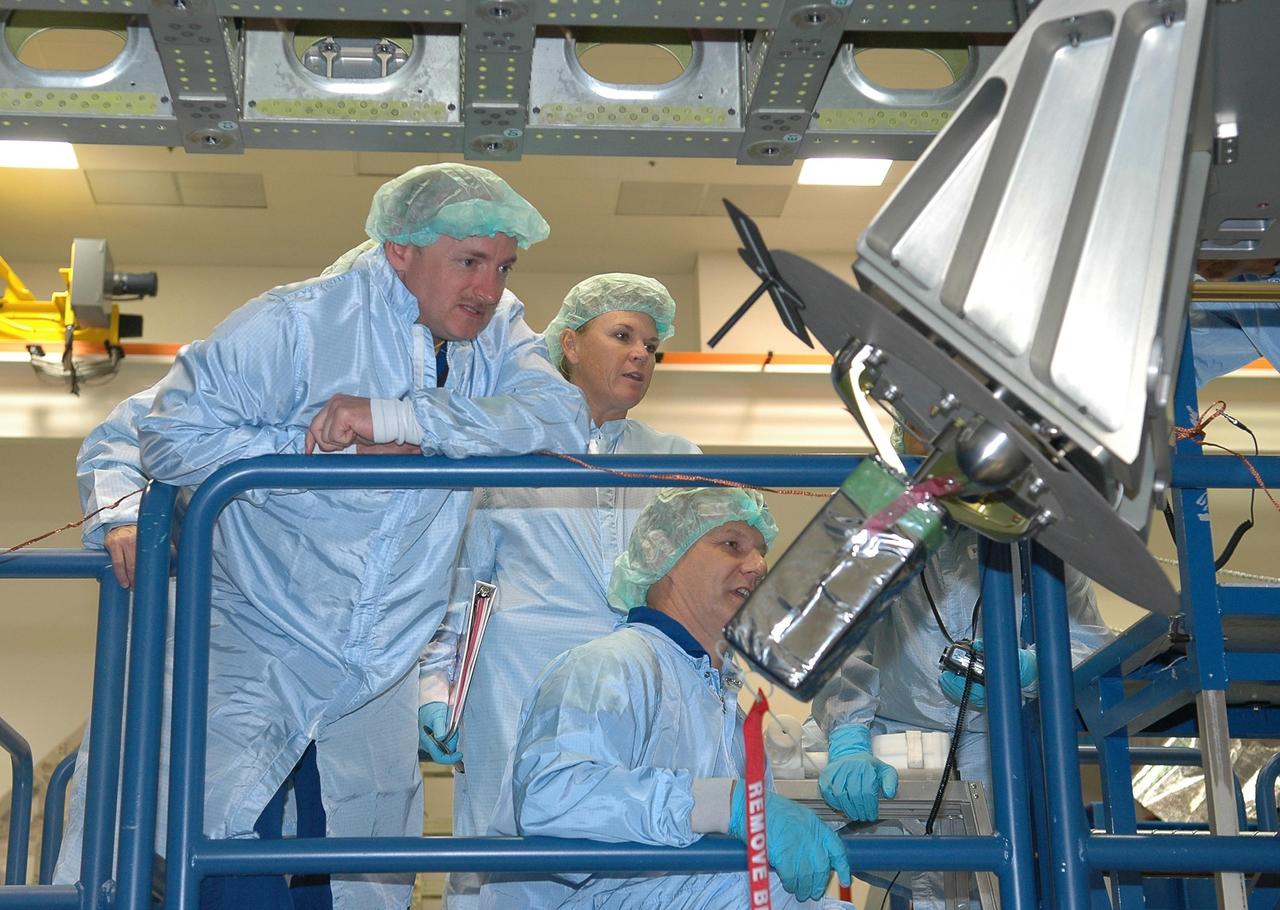
KENNEDY SPACE CENTER, FLA. - Mission STS-121 Pilot Mark Kelly (left) and Mission Specialist Piers Sellers (kneeling) get a close look at the Integrated Cargo Carrier at the SPACEHAB facility in Cape Canaveral during a Crew Equipment Interface Test. This test allows the astronauts to become familiar with equipment they will be using on their upcoming mission. STS-121 is scheduled to launch in July aboard Space Shuttle Discovery. Photo credit: NASA/Kim Shiflett
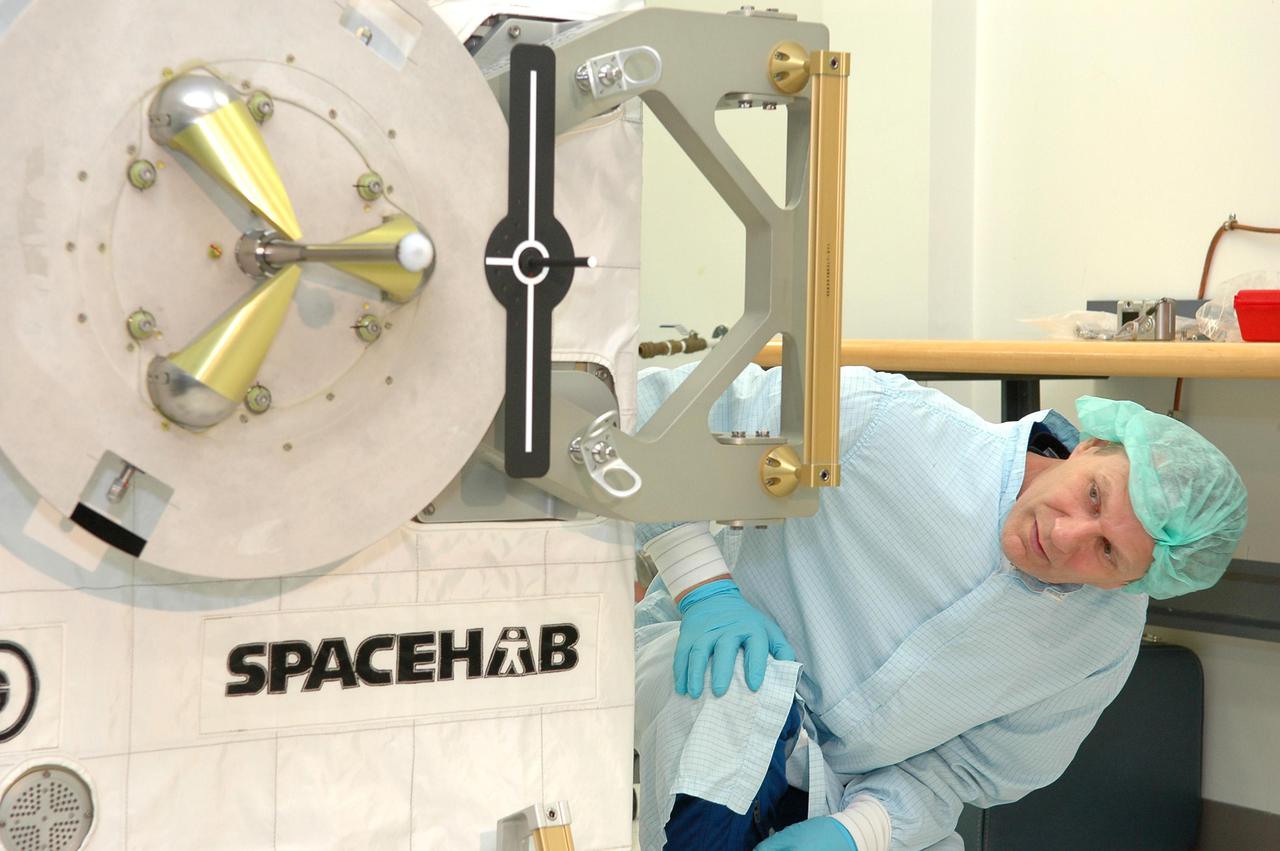
KENNEDY SPACE CENTER, FLA. - Mission Specialist Piers J. Sellers, Ph.D., looks at the adjustable grapple bar on the SPACEHAB Oceaneering Enhanced Deployable box. The astronauts of the second Return to Flight mission, STS-121, were at the SPACEHAB facility in Cape Canaveral to participate in the Crew Equipment Interface Test (CEIT). This test allows the astronauts to become familiar with equipment they will be using on their upcoming mission. STS-121 is scheduled to launch in July aboard Space Shuttle Atlantis.
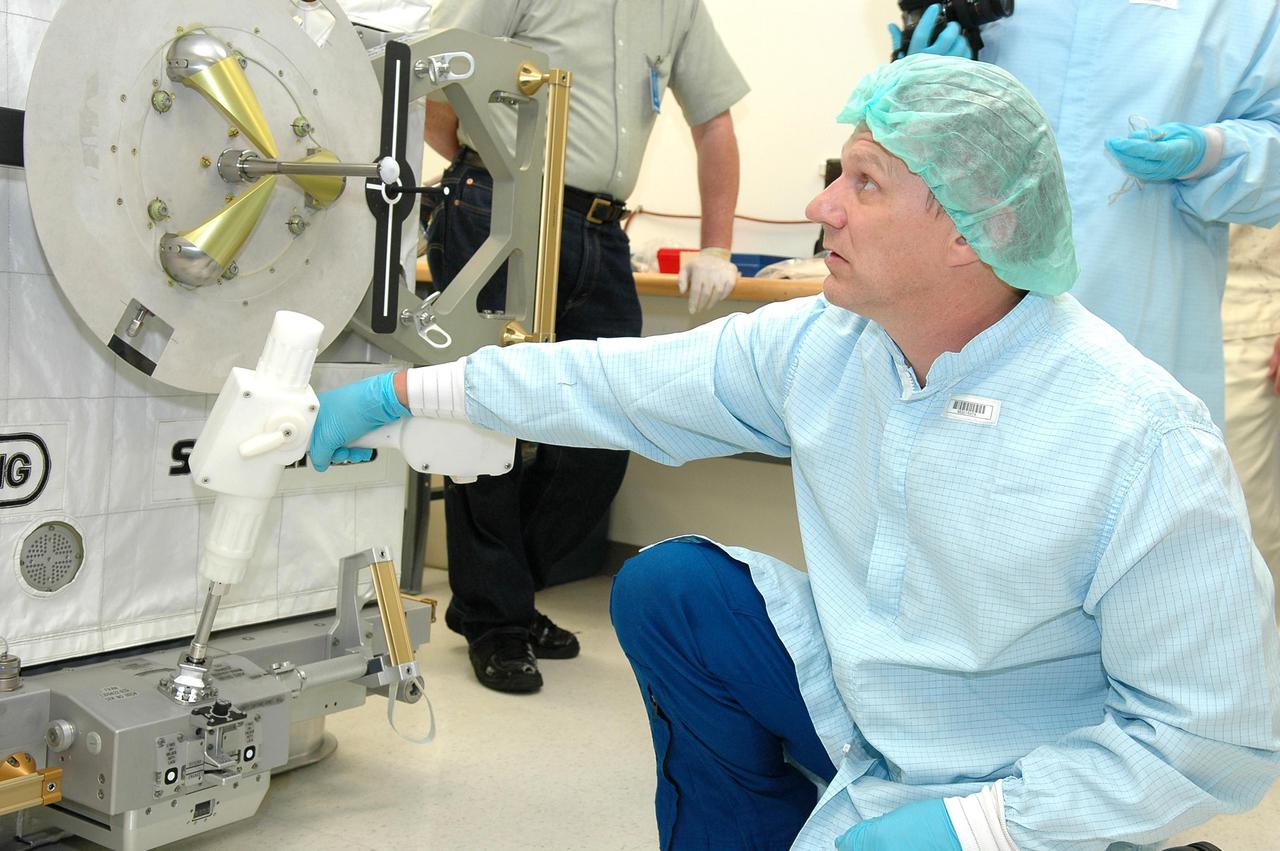
KENNEDY SPACE CENTER, FLA. - Mission Specialist Piers J. Sellers, Ph.D., checks out the release mechanism on the SPACEHAB Oceneering Enhanced Deployable FRAM. The astronauts of the second Return to Flight mission, STS-121, were at the SPACEHAB facility in Cape Canaveral to participate in the Crew Equipment Interface Test (CEIT). This test allows the astronauts to become familiar with equipment they will be using on their upcoming mission. STS-121 is scheduled to launch in July aboard Space Shuttle Atlantis.
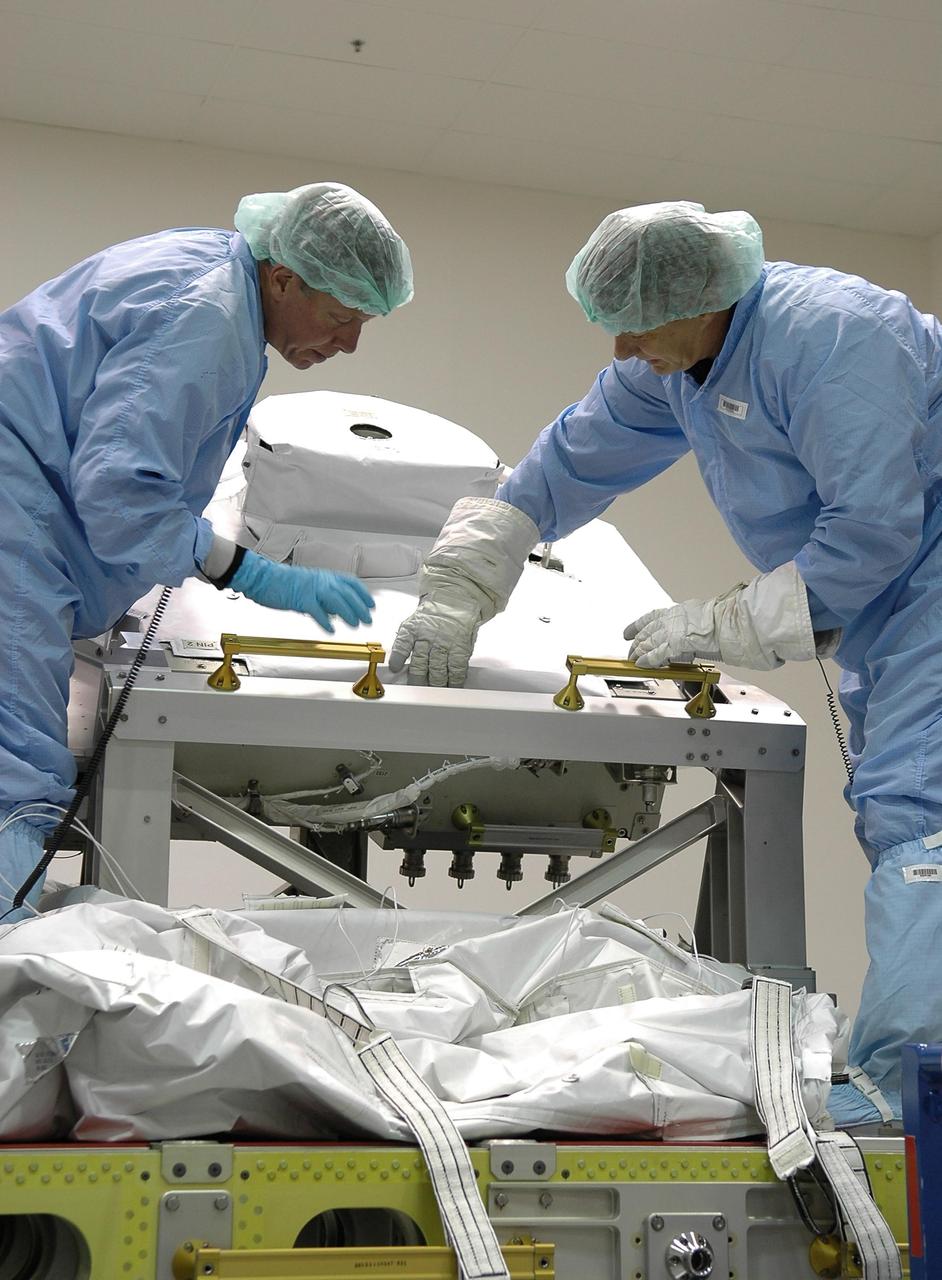
KENNEDY SPACE CENTER, FLA. - STS-121 Commander Steven Lindsey (left) and Mission Specialist Piers Sellers (right) are removing a cover on the trailing umbilical assembly at the SPACEHAB facility in Cape Canaveral during a Crew Equipment Interface Test. This test allows the astronauts to become familiar with equipment they will be using on their upcoming mission. STS-121 is scheduled to launch in July aboard Space Shuttle Discovery. Photo credit: NASA/Kim Shiflett

KENNEDY SPACE CENTER, FLA. - Mission STS-121 Pilot Mark Kelly, and Mission Specialist Piers Sellers (kneeling) and Commander Steven Lindsey (right) get a close look at the Integrated Cargo Carrier at the SPACEHAB facility in Cape Canaveral during a Crew Equipment Interface Test. This test allows the astronauts to become familiar with equipment they will be using on their upcoming mission. STS-121 is scheduled to launch in July aboard Space Shuttle Discovery. Photo credit: NASA/Kim Shiflett
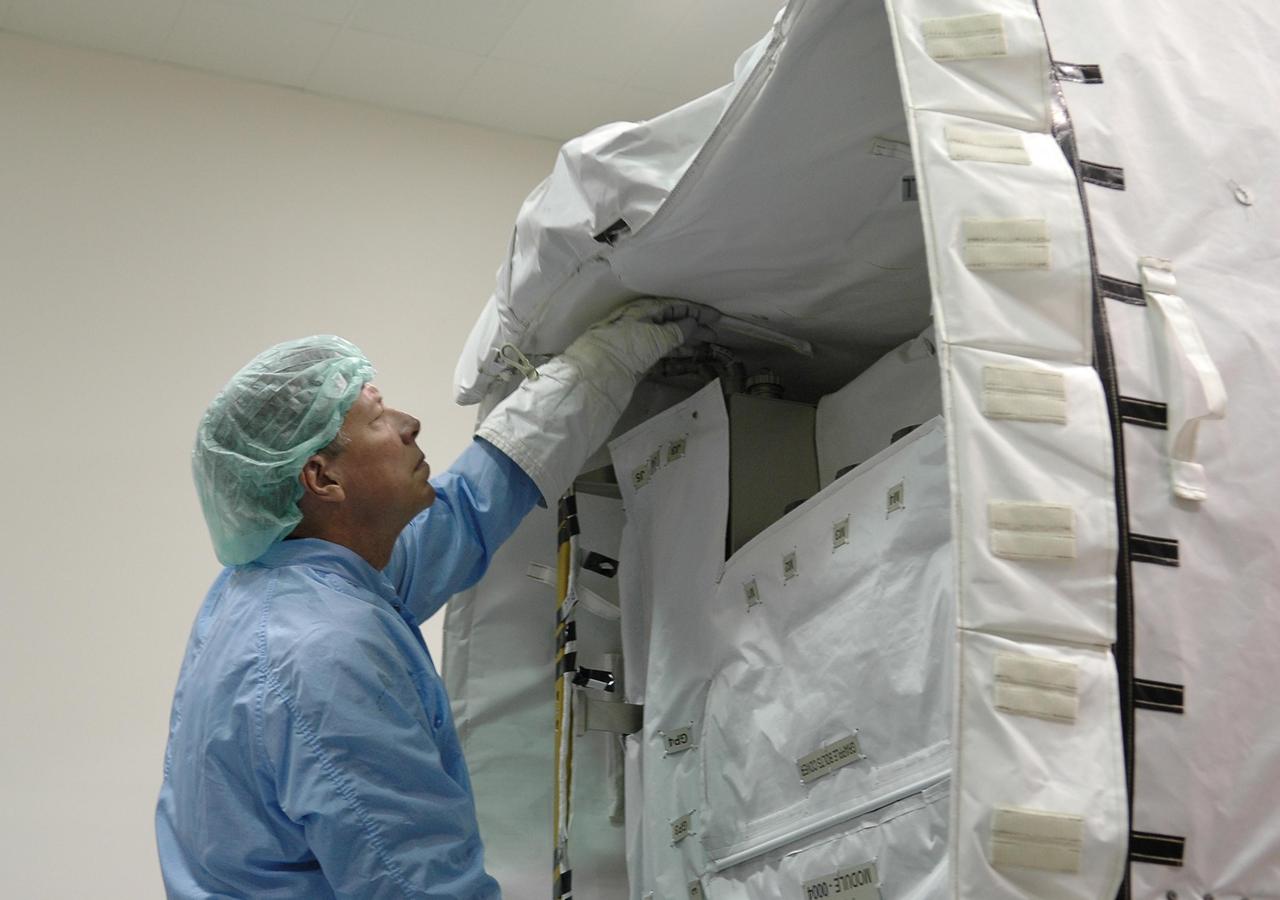
KENNEDY SPACE CENTER, FLA. - Mission Specialist Michael Fossum looks at the pump module at the SPACEHAB facility in Cape Canaveral during a Crew Equipment Interface Test. This test allows the astronauts to become familiar with equipment they will be using on their upcoming mission. STS-121 is scheduled to launch in July aboard Space Shuttle Discovery. Photo credit: NASA/Kim Shiflett
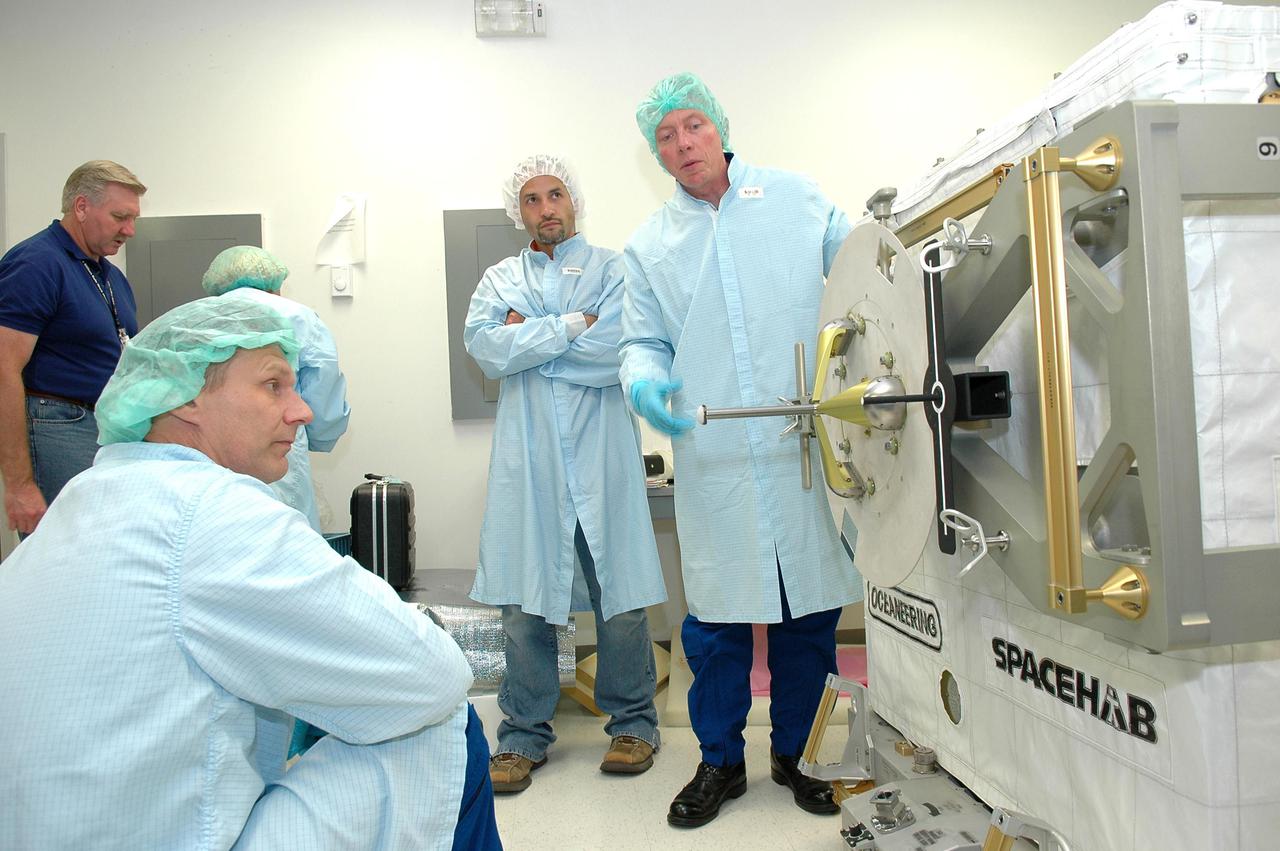
KENNEDY SPACE CENTER, FLA. - Mission Specialist Piers J. Sellers, Ph.D., (kneeling, left) and Michael E. Fossum (right) look at the adjustable grapple bar on the SPACEHAB Oceaneering Enhanced Deployable box. The astronauts of the second Return to Flight mission, STS-121, were at the SPACEHAB facility in Cape Canaveral to participate in the Crew Equipment Interface Test (CEIT). This test allows the astronauts to become familiar with equipment they will be using on their upcoming mission. STS-121 is scheduled to launch in July aboard Space Shuttle Atlantis.
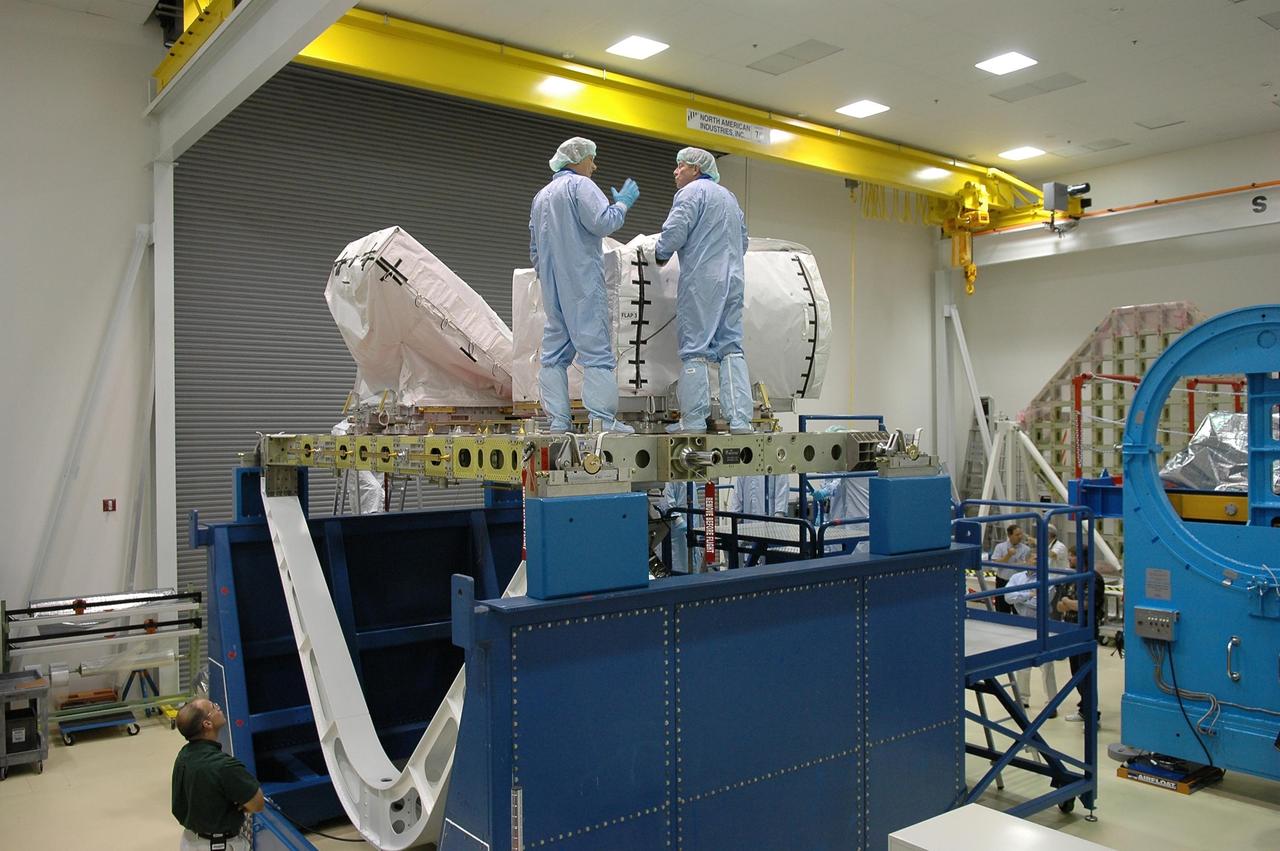
KENNEDY SPACE CENTER, FLA. - Mission Specialist Piers Sellers (left) and Commander Steven Lindsey (right) are working with the pump module at the SPACEHAB facility in Cape Canaveral during a Crew Equipment Interface Test. This test allows the astronauts to become familiar with equipment they will be using on their upcoming mission. STS-121 is scheduled to launch in July aboard Space Shuttle Discovery. Photo credit: NASA/Kim Shiflett
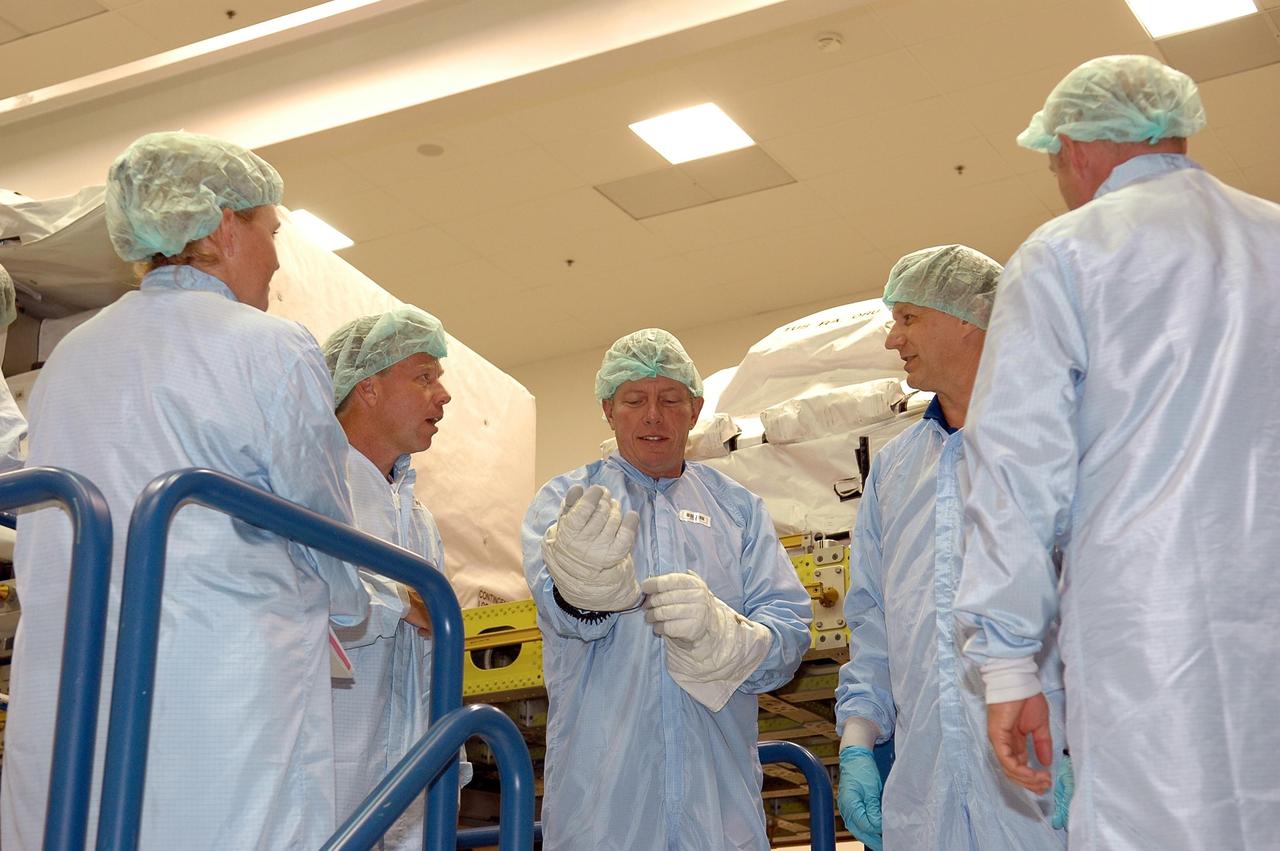
KENNEDY SPACE CENTER, FLA. - While STS-121 Mission Specialist Michael Fossum (center) fixes his glove, Commander Steven Lindsey (left) and Mission Specialist Piers Sellers (right) talk about their next step in the Crew Equipment Interface Test at the SPACEHAB facility in Cape Canaveral. This test allows the astronauts to become familiar with equipment they will be using on their upcoming mission. STS-121 is scheduled to launch in July aboard Space Shuttle Discovery. Photo credit: NASA/Kim Shiflett
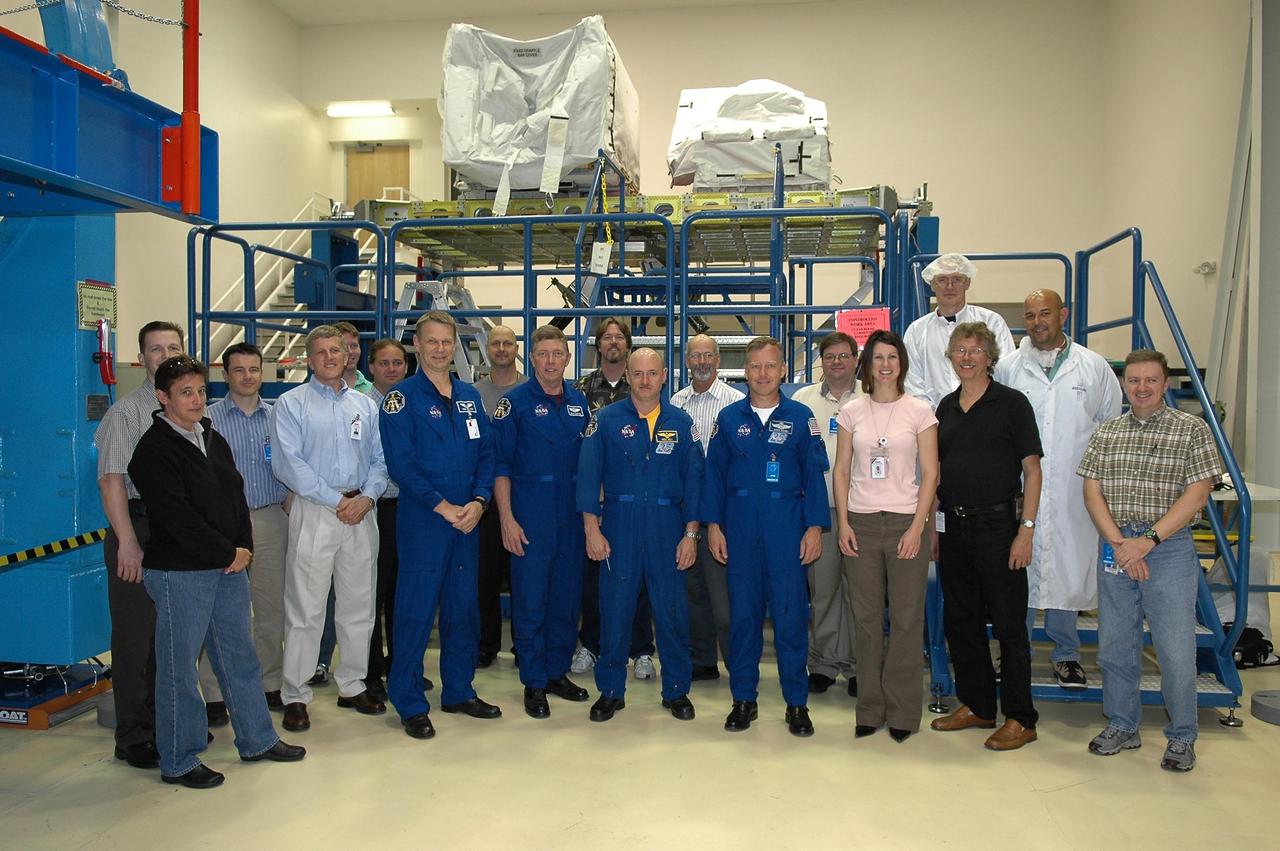
KENNEDY SPACE CENTER, FLA. - Members of the STS-121 crew pose with workers in the SPACEHAB facility in Cape Canaveral during the Crew Equipment Interface Test. The astronauts (in blue suits) are Mission Specialists Piers Sellers and Michael Fossum, Pilot Mark Kelly and Commander Steven Lindsey. This test allows the astronauts to become familiar with equipment they will be using on their upcoming mission. STS-121 is scheduled to launch in July aboard Space Shuttle Discovery. Photo credit: NASA/Kim Shiflett
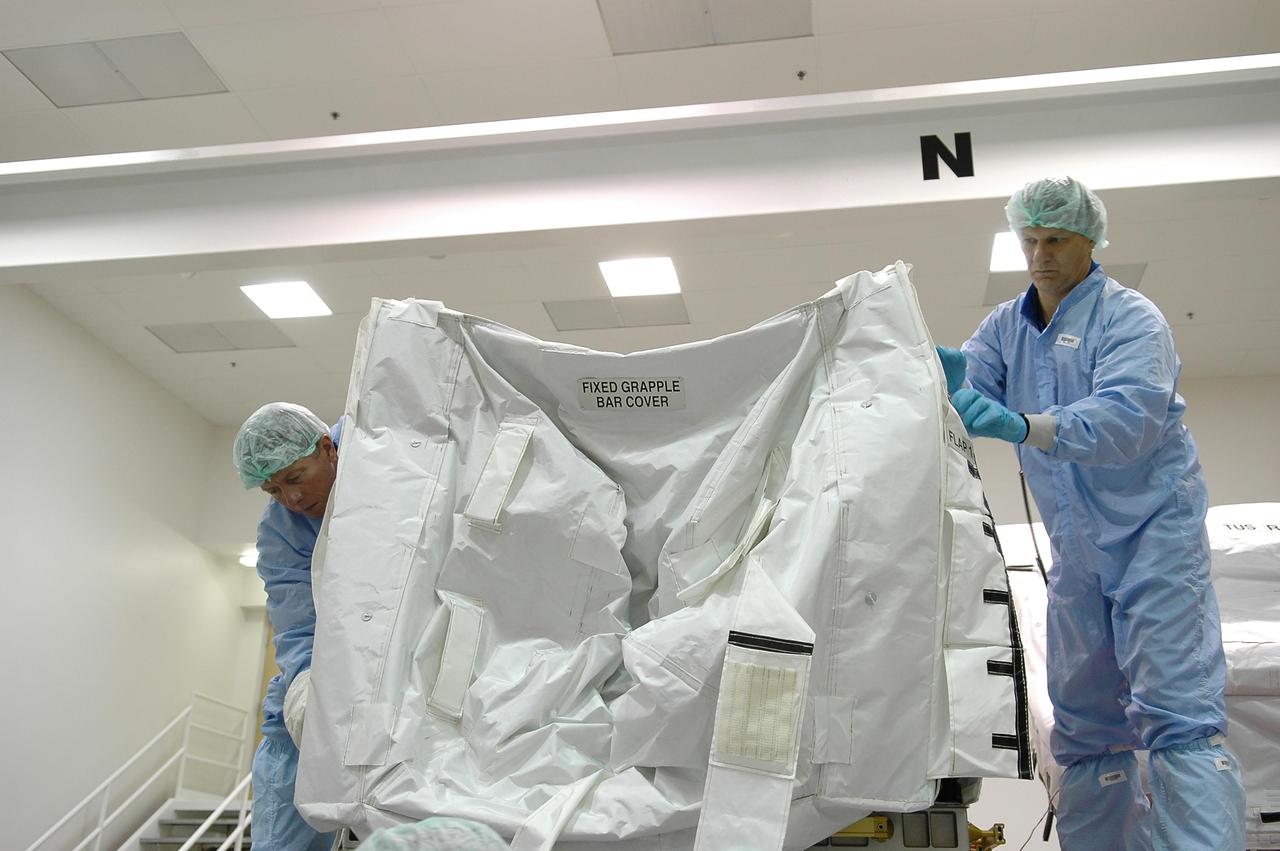
KENNEDY SPACE CENTER, FLA. - STS-121 Mission Specialist Piers Sellers (left) and Commander Steven Lindsey (right)are practicing removing the cover on the pump module at the SPACEHAB facility in Cape Canaveral during a Crew Equipment Interface Test. This test allows the astronauts to become familiar with equipment they will be using on their upcoming mission. STS-121 is scheduled to launch in July aboard Space Shuttle Discovery. Photo credit: NASA/Kim Shiflett
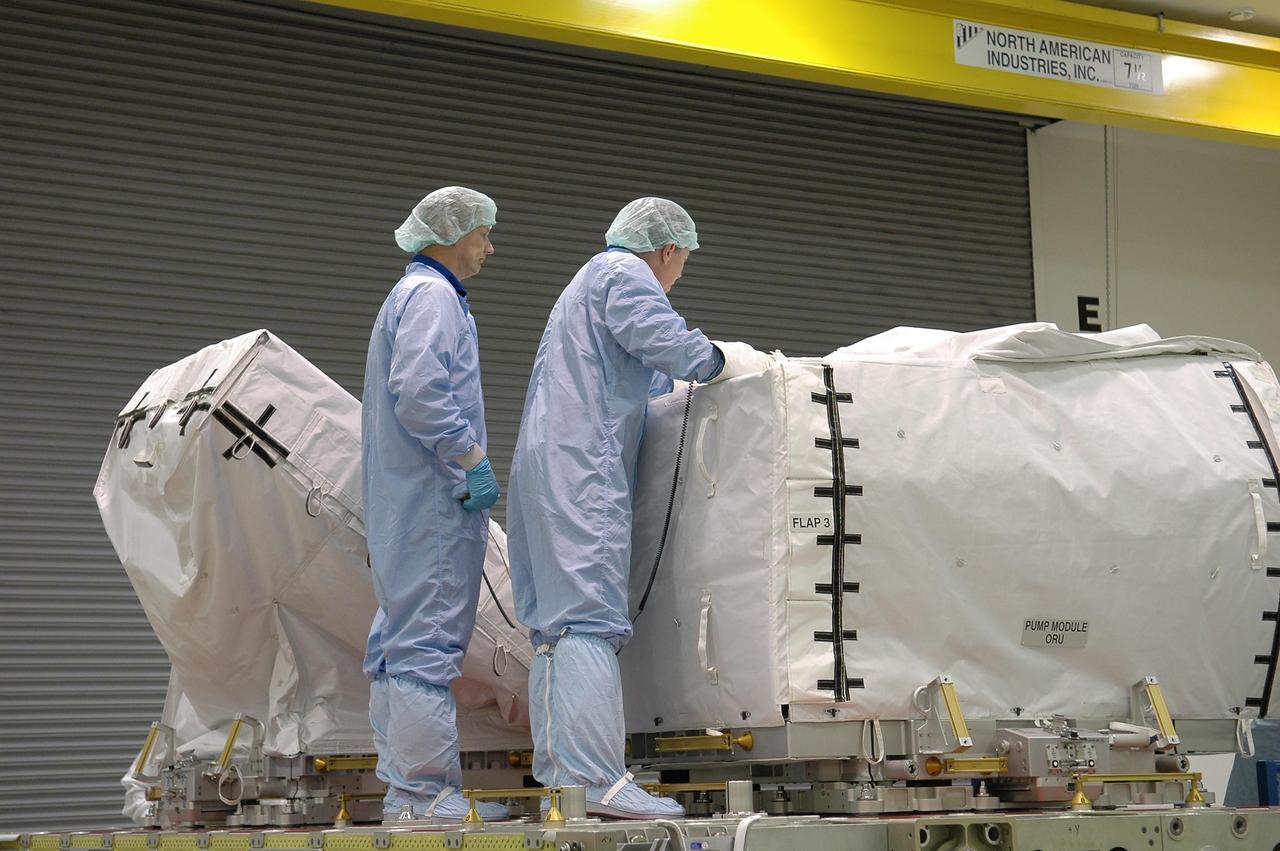
KENNEDY SPACE CENTER, FLA. - Mission Specialist Piers Sellers (left) and Commander Steven Lindsey work with the pump module at the SPACEHAB facility in Cape Canaveral during a Crew Equipment Interface Test. This test allows the astronauts to become familiar with equipment they will be using on their upcoming mission. STS-121 is scheduled to launch in July aboard Space Shuttle Discovery. Photo credit: NASA/Kim Shiflett
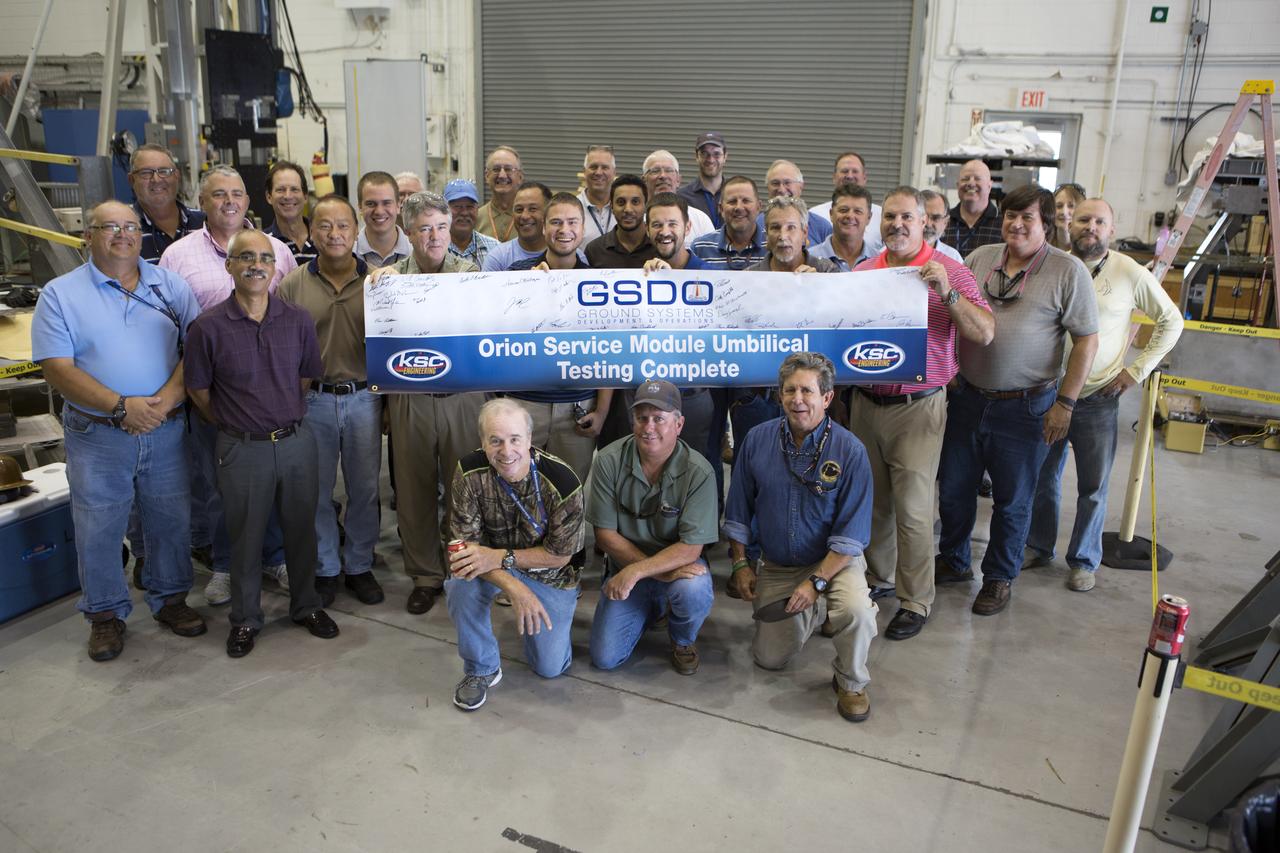
Testing of the Orion Service Module Umbilical (OSMU) was completed at the Launch Equipment Test Facility at NASA’s Kennedy Space Center in Florida. The OSMU was attached to Vehicle Motion Simulator 1 for a series of simulated launch tests to validate it for installation on the mobile launcher. The test team gathered with a special banner during an event to mark the end of testing. The mobile launcher tower will be equipped with a number of lines, called umbilicals that will connect to the Space Launch System rocket and Orion spacecraft for Exploration Mission-1 (EM-1). The OSMU will be located high on the mobile launcher tower and, prior to launch, will transfer liquid coolant for the electronics and air for the Environmental Control System to the Orion service module that houses these critical systems to support the spacecraft. Kennedy's Engineering Directorate is providing support to the Ground Systems Development and Operations Program for testing of the OSMU. EM-1 is scheduled to launch in 2018.

Testing of the Orion Service Module Umbilical (OSMU) was completed at the Launch Equipment Test Facility at NASA’s Kennedy Space Center in Florida. The OSMU was attached to Vehicle Motion Simulator 1 for a series of simulated launch tests to validate it for installation on the mobile launcher. One of the test team members signs a banner during an event to mark the end of testing. The mobile launcher tower will be equipped with a number of lines, called umbilicals that will connect to the Space Launch System rocket and Orion spacecraft for Exploration Mission-1 (EM-1). The OSMU will be located high on the mobile launcher tower and, prior to launch, will transfer liquid coolant for the electronics and air for the Environmental Control System to the Orion service module that houses these critical systems to support the spacecraft. Kennedy's Engineering Directorate is providing support to the Ground Systems Development and Operations Program for testing of the OSMU. EM-1 is scheduled to launch in 2018.
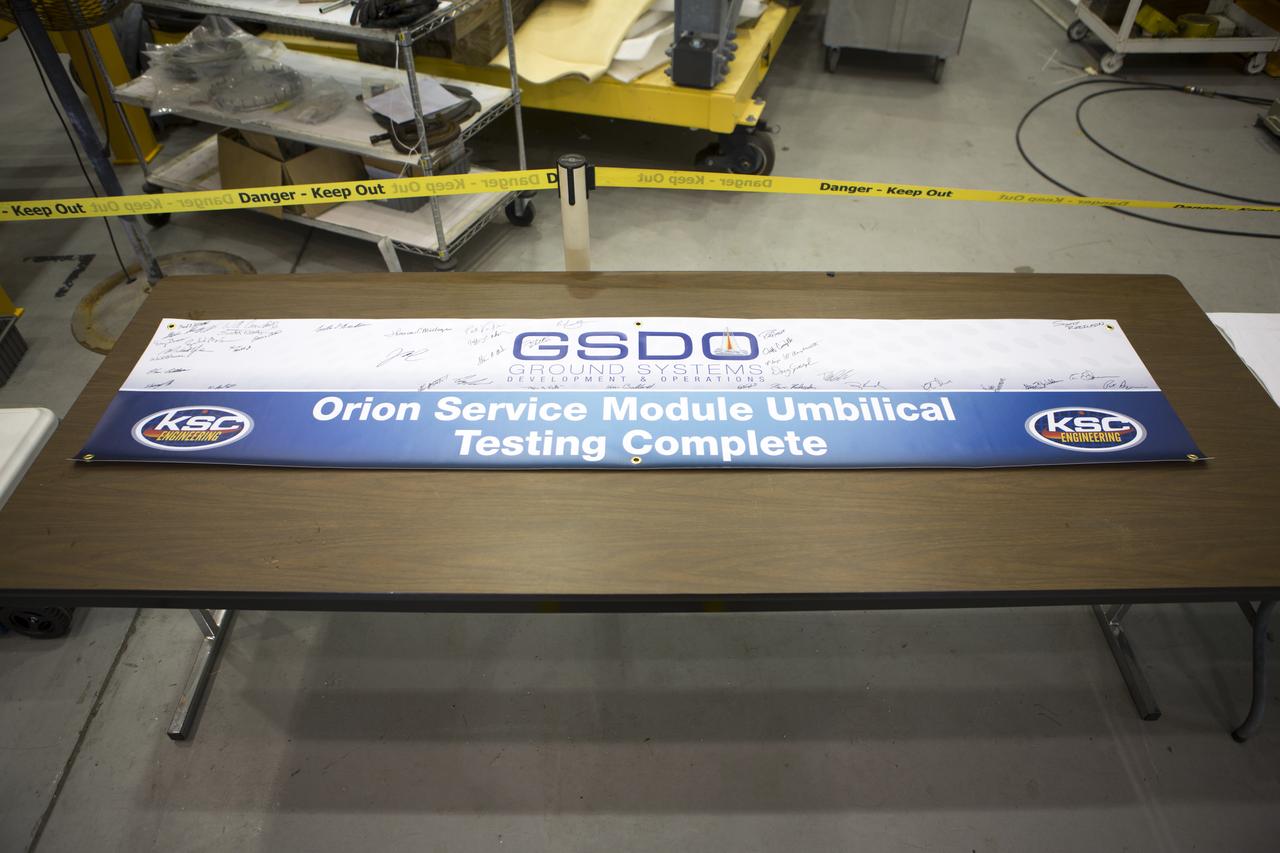
Testing of the Orion Service Module Umbilical (OSMU) was completed at the Launch Equipment Test Facility at NASA’s Kennedy Space Center in Florida. The OSMU was attached to Vehicle Motion Simulator 1 for a series of simulated launch tests to validate it for installation on the mobile launcher. The test team signed a special banner during an event to mark the end of testing. The mobile launcher tower will be equipped with a number of lines, called umbilicals that will connect to the Space Launch System rocket and Orion spacecraft for Exploration Mission-1 (EM-1). The OSMU will be located high on the mobile launcher tower and, prior to launch, will transfer liquid coolant for the electronics and air for the Environmental Control System to the Orion service module that houses these critical systems to support the spacecraft. Kennedy's Engineering Directorate is providing support to the Ground Systems Development and Operations Program for testing of the OSMU. EM-1 is scheduled to launch in 2018.
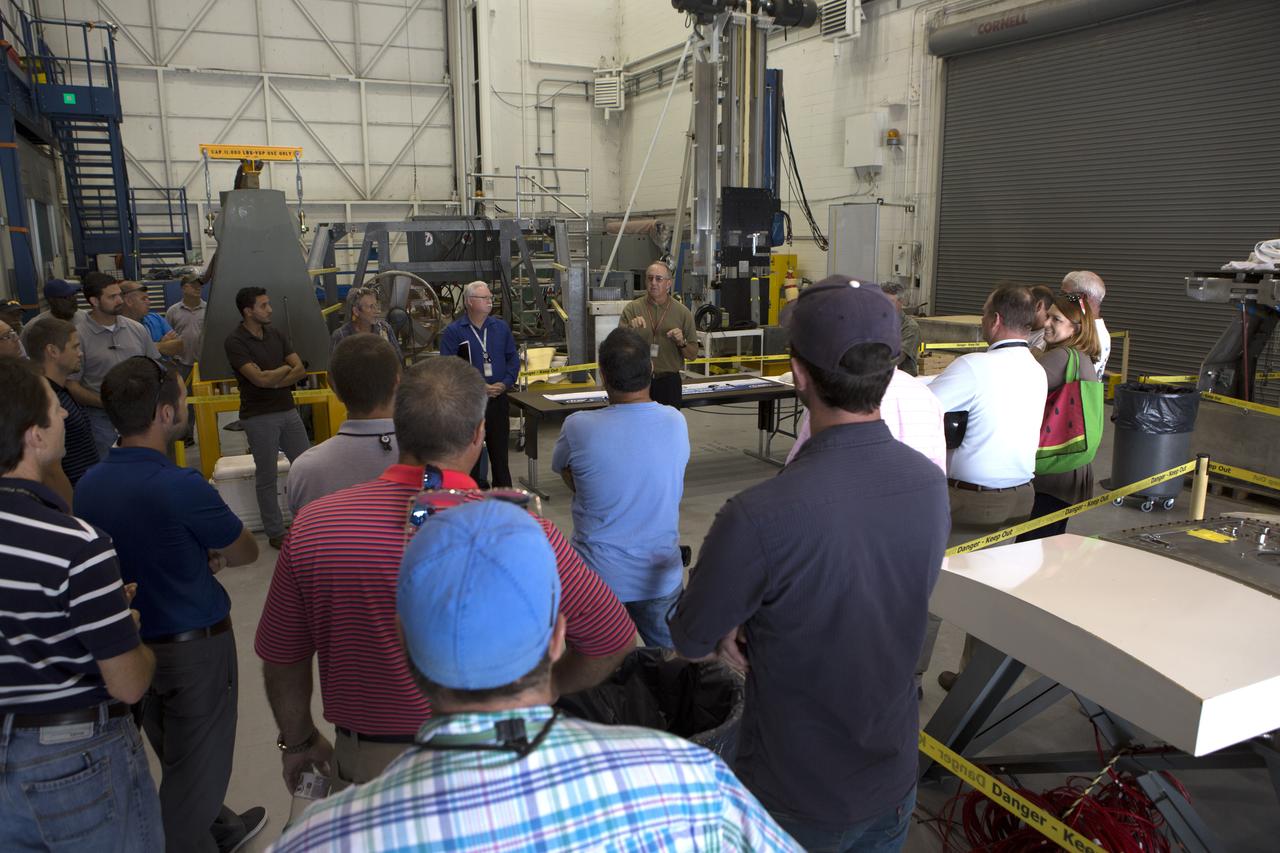
Testing of the Orion Service Module Umbilical (OSMU) was completed at the Launch Equipment Test Facility at NASA’s Kennedy Space Center in Florida. The OSMU was attached to Vehicle Motion Simulator 1 for a series of simulated launch tests to validate it for installation on the mobile launcher. Patrick Simpkins, director of Engineering, speaks to the test team during an event to mark the end of testing. The mobile launcher tower will be equipped with a number of lines, called umbilicals that will connect to the Space Launch System rocket and Orion spacecraft for Exploration Mission-1 (EM-1). The OSMU will be located high on the mobile launcher tower and, prior to launch, will transfer liquid coolant for the electronics and air for the Environmental Control System to the Orion service module that houses these critical systems to support the spacecraft. Kennedy's Engineering Directorate is providing support to the Ground Systems Development and Operations Program for testing of the OSMU. EM-1 is scheduled to launch in 2018.
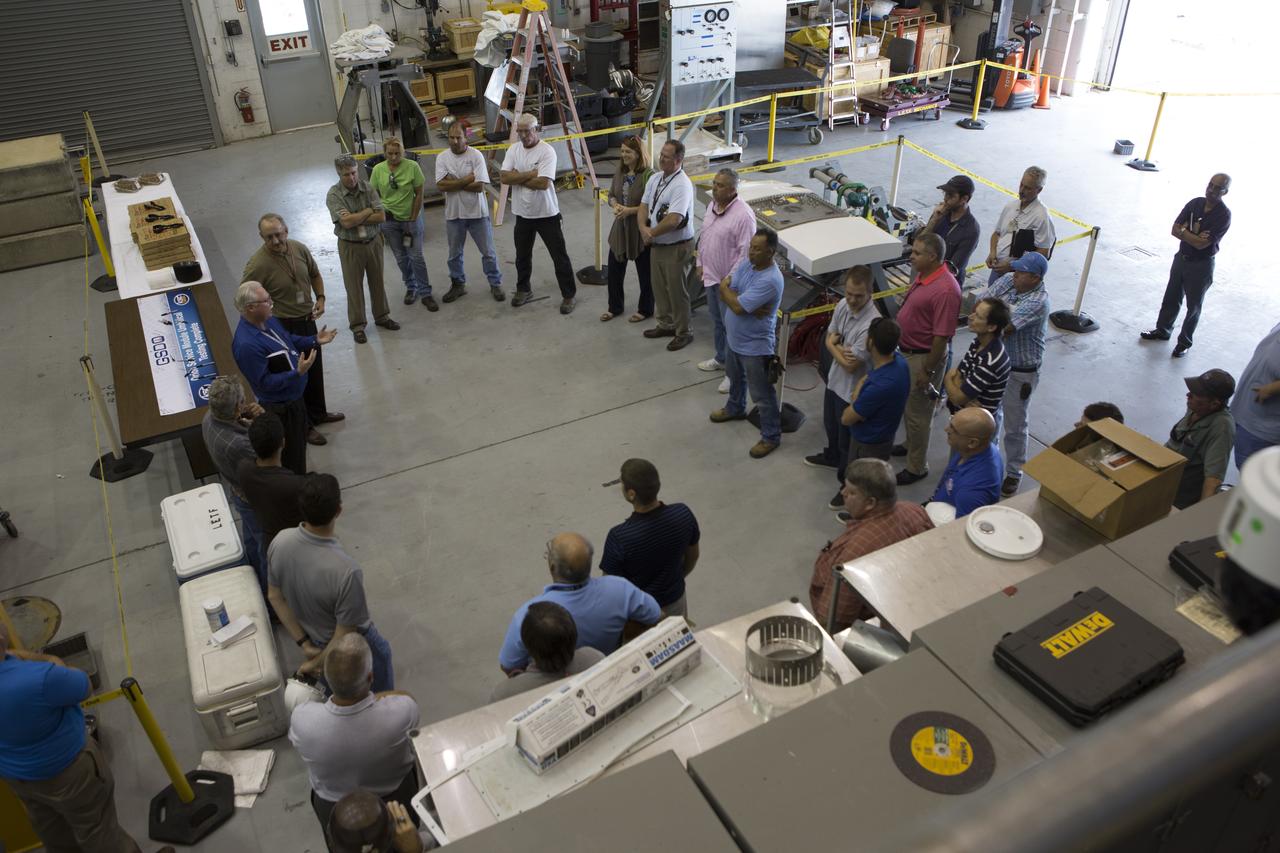
Testing of the Orion Service Module Umbilical (OSMU) was completed at the Launch Equipment Test Facility at NASA’s Kennedy Space Center in Florida. The OSMU was attached to Vehicle Motion Simulator 1 for a series of simulated launch tests to validate it for installation on the mobile launcher. The test team gathered for an event to mark the end of testing. The mobile launcher tower will be equipped with a number of lines, called umbilicals that will connect to the Space Launch System rocket and Orion spacecraft for Exploration Mission-1 (EM-1). The OSMU will be located high on the mobile launcher tower and, prior to launch, will transfer liquid coolant for the electronics and air for the Environmental Control System to the Orion service module that houses these critical systems to support the spacecraft. Kennedy's Engineering Directorate is providing support to the Ground Systems Development and Operations Program for testing of the OSMU. EM-1 is scheduled to launch in 2018.
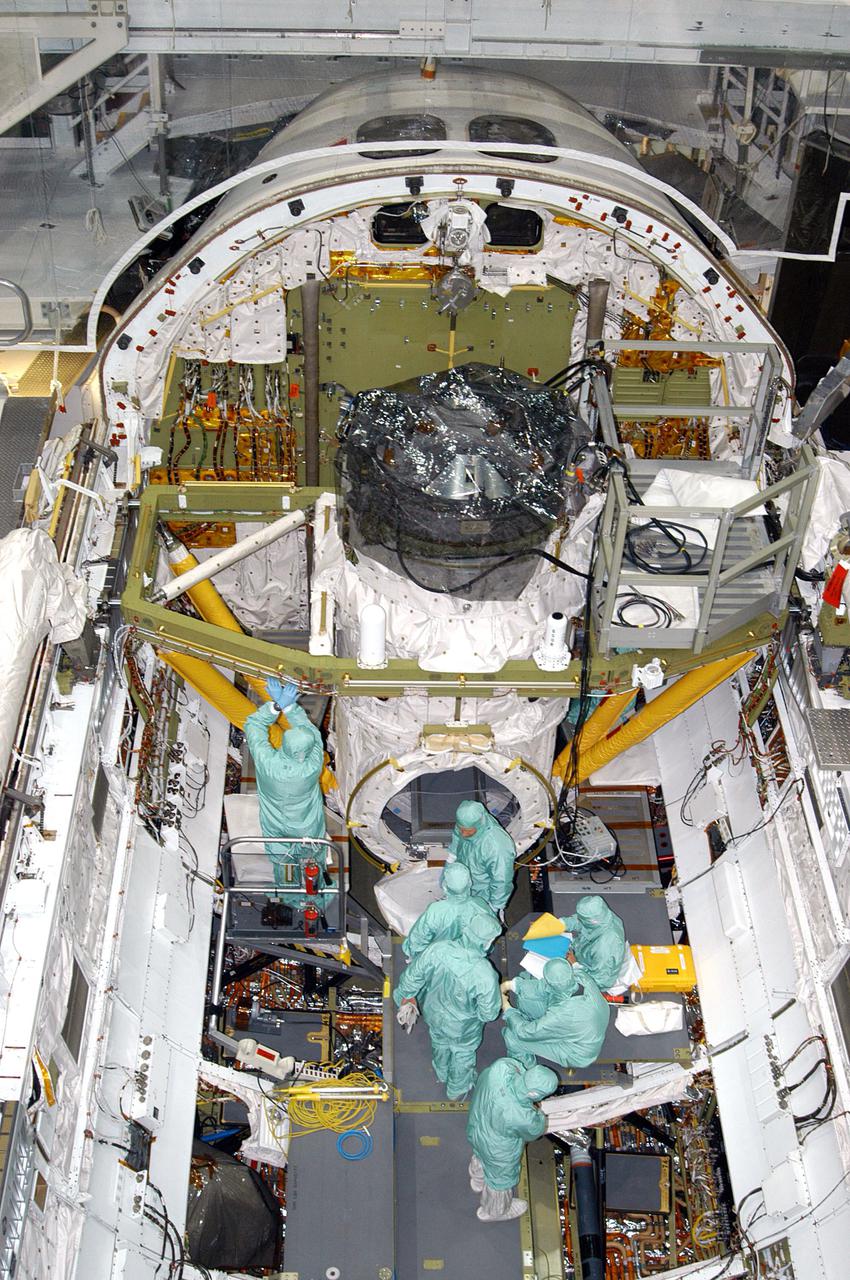
KENNEDY SPACE CENTER, FLA. - During Crew Equipment Interface Test (CEIT) in the Orbiter Processing Facility at NASA’s Kennedy Space Center, STS-121 crew members take a close look at equipment in the payload bay of Atlantis. The Airlock is in the center. During CEIT, the crew has an opportunity to get a hands-on look at the orbiter and equipment they will be working with on their mission. Mission STS-121 is scheduled to launch aboard Space Shuttle Atlantis in July.
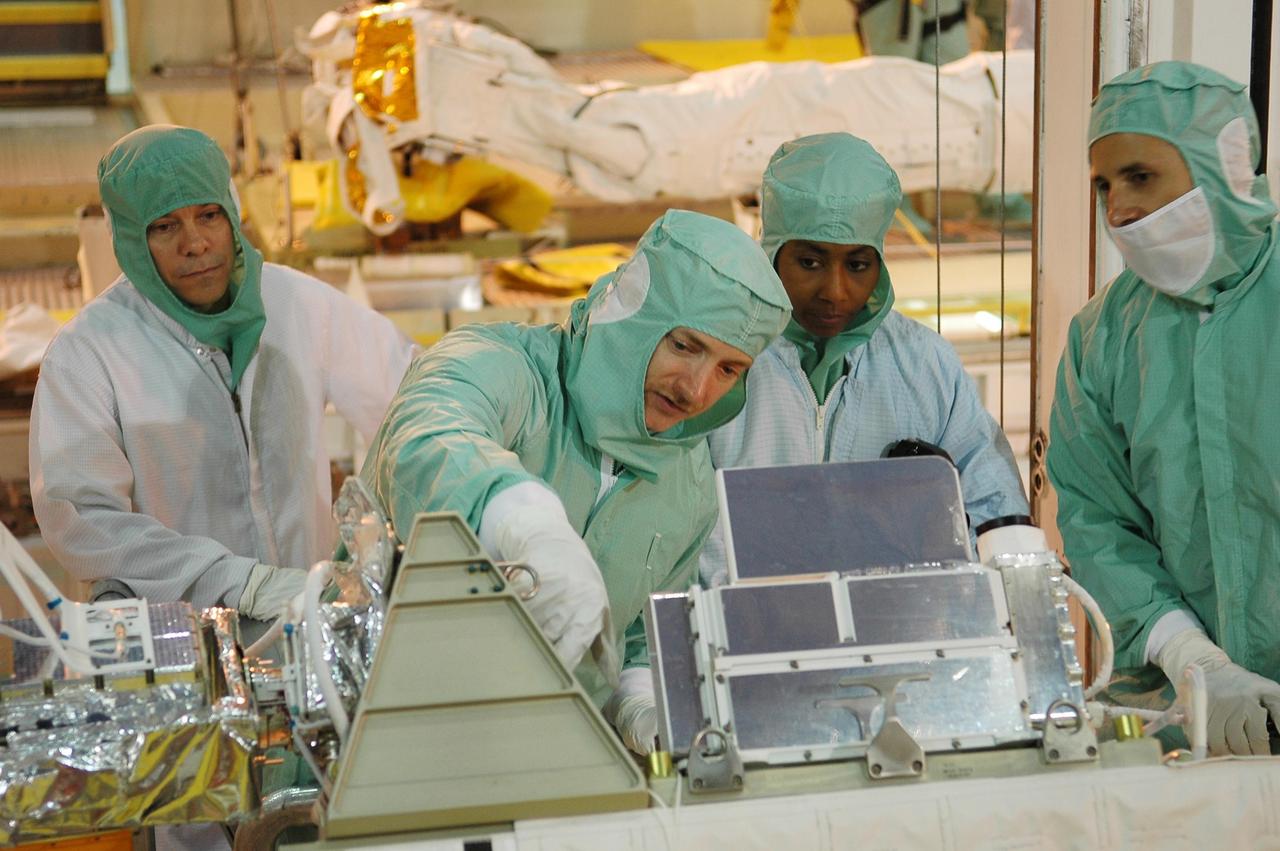
KENNEDY SPACE CENTER, FLA. - In NASA Kennedy Space Center's Orbiter Processing Facility bay 3, STS-121 Pilot Mark Kelly and Mission Specialist Stephanie Wilson are joined by two shuttle technicians as they work with equipment that will be on the mission. The crew is at Kennedy to take part in the crew equipment interface test, which provides hands-on experience with equipment to be used on-orbit. Launch of Space Shuttle Discovery on mission STS-121, the second return-to-flight mission, is scheduled no earlier than May.
KENNEDY SPACE CENTER, FLA. - In NASA Kennedy Space Center's Orbiter Processing Facility bay 3, STS-121 Pilot Mark Kelly and Mission Specialist Stephanie Wilson are joined by two shuttle technicians as they work with equipment that will be on the mission. The crew is at Kennedy to take part in the crew equipment interface test, which provides hands-on experience with equipment to be used on-orbit. Launch of Space Shuttle Discovery on mission STS-121, the second return-to-flight mission, is scheduled no earlier than May.
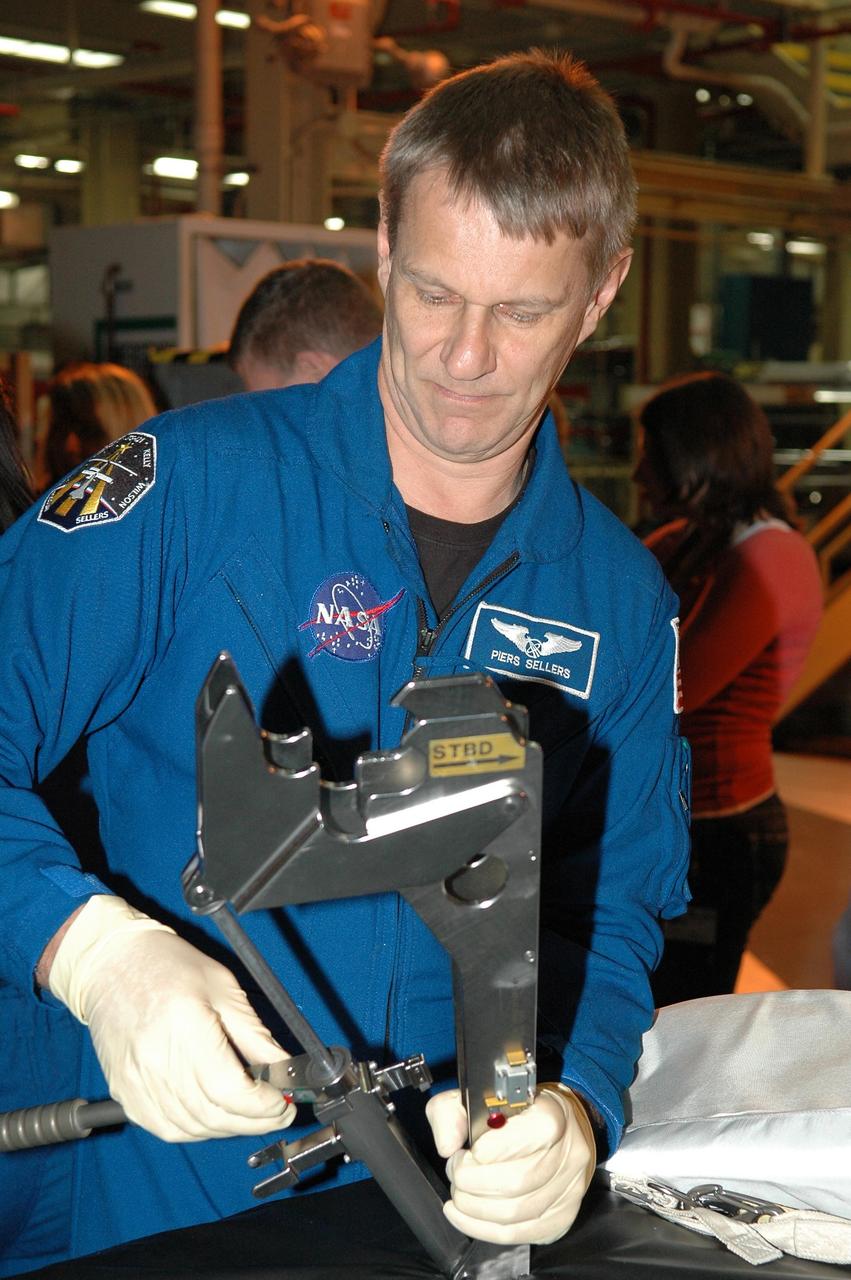
KENNEDY SPACE CENTER, FLA. - In NASA Kennedy Space Center's Orbiter Processing Facility bay 3, STS-121 Mission Specialist Piers Sellers practices using a piece of equipment that will be on the mission. The crew is at Kennedy to take part in the crew equipment interface test, which provides hands-on experience with equipment to be used on-orbit. Launch of Space Shuttle Discovery on mission STS-121, the second return-to-flight mission, is scheduled no earlier than May.
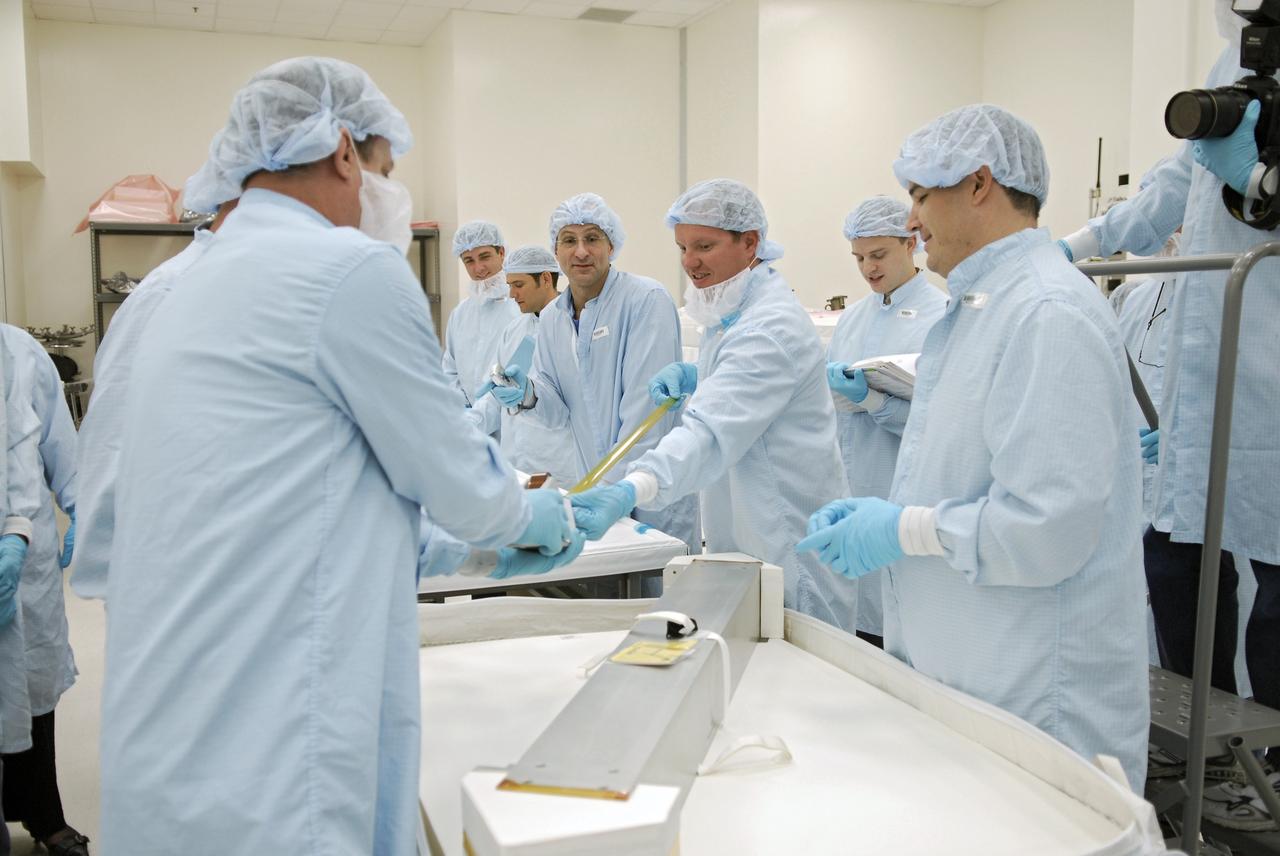
CAPE CANAVERAL, Fla. – In the Space Station Processing Facility at NASA's Kennedy Space Center, STS-126 crew members handle equipment that will fly on the mission. At center is Mission Specialist Donald Pettit; on the right is Pilot Eric Boe. Shuttle crews frequently visit Kennedy to get hands-on experience, called a crew equipment interface test, with hardware and equipment for their missions. On STS-126, Endeavour will deliver a multi-purpose logistics module to the International Space Station. Launch is targeted for Nov. 10. Photo credit: NASA/Kim Shiflett
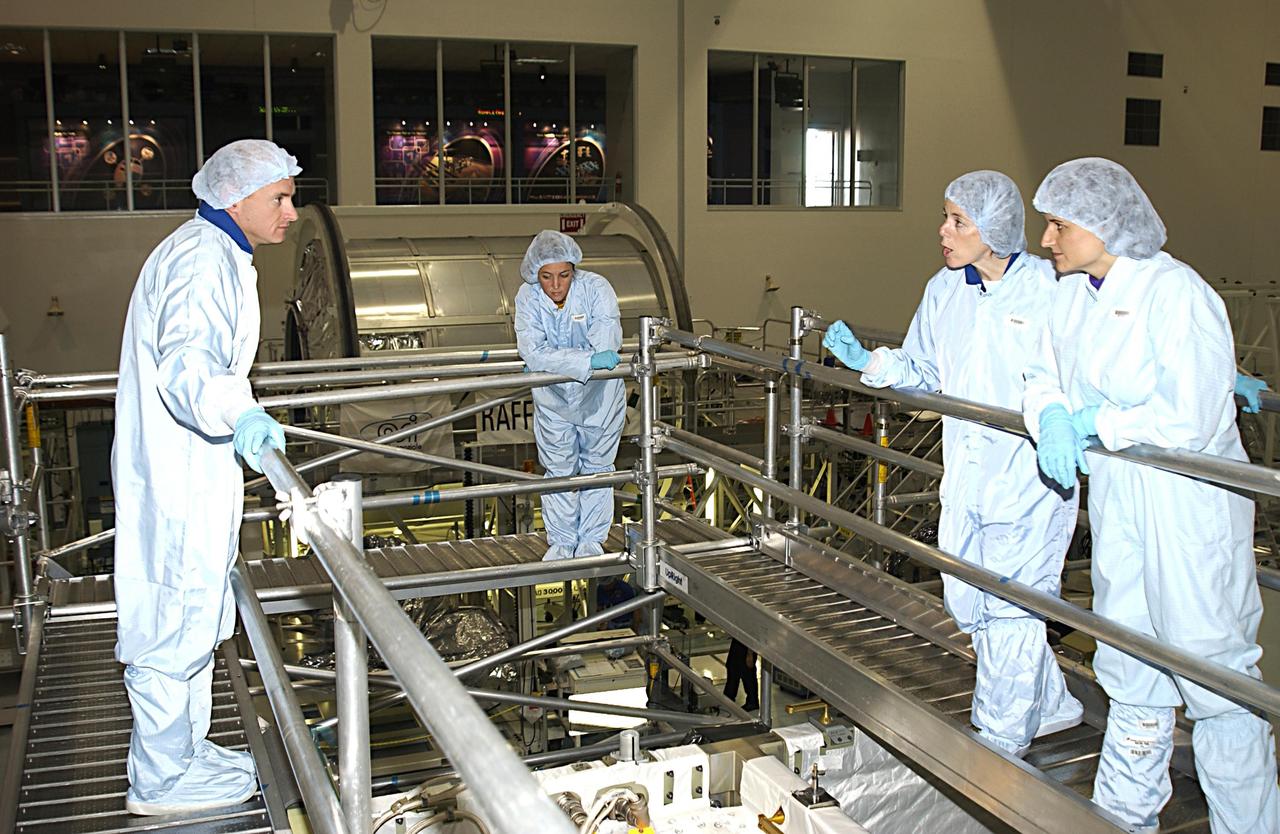
KENNEDY SPACE CENTER, FLA. - In the Space Station Processing Facility, STS-118 Commander Scott Kelly (left) and Mission Specialist Barbara Morgan (center) are briefed on equipment during Crew Equipment Interface Test activities. The mission to the International Space Station will be delivering the third starboard truss segment, the ITS S5, which will be attached to the station, and a SPACEHAB Single Cargo Module with supplies and equipment. Launch aboard Space Shuttle Columbia is scheduled for Nov. 13, 2003.
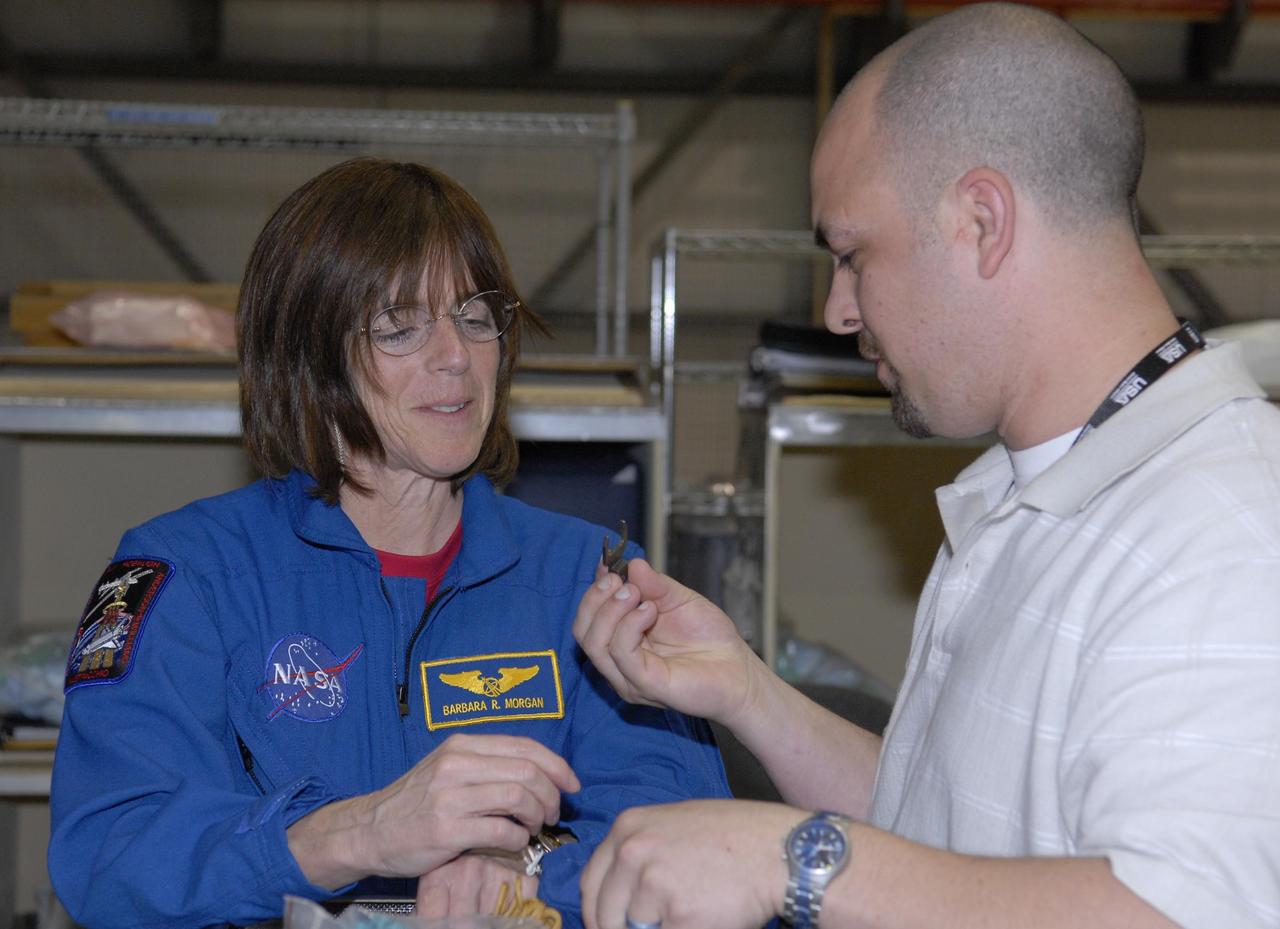
KENNEDY SPACE CENTER, FLA. -- During crew equipment interface test activities in Orbiter Processing Facility bay 3 at KSC, STS-118 Mission Specialist Barbara Morgan learns about a tool that is part of the equipment on the flight. The STS-118 mission will be delivering the third starboard truss segment, the ITS S5, to the International Space Station, as well as the SPACEHAB single cargo module filled with supplies and equipment. Launch aboard Space Shuttle Endeavour is targeted for Aug. 9. Photo credit: NASA/Kim Shiflett
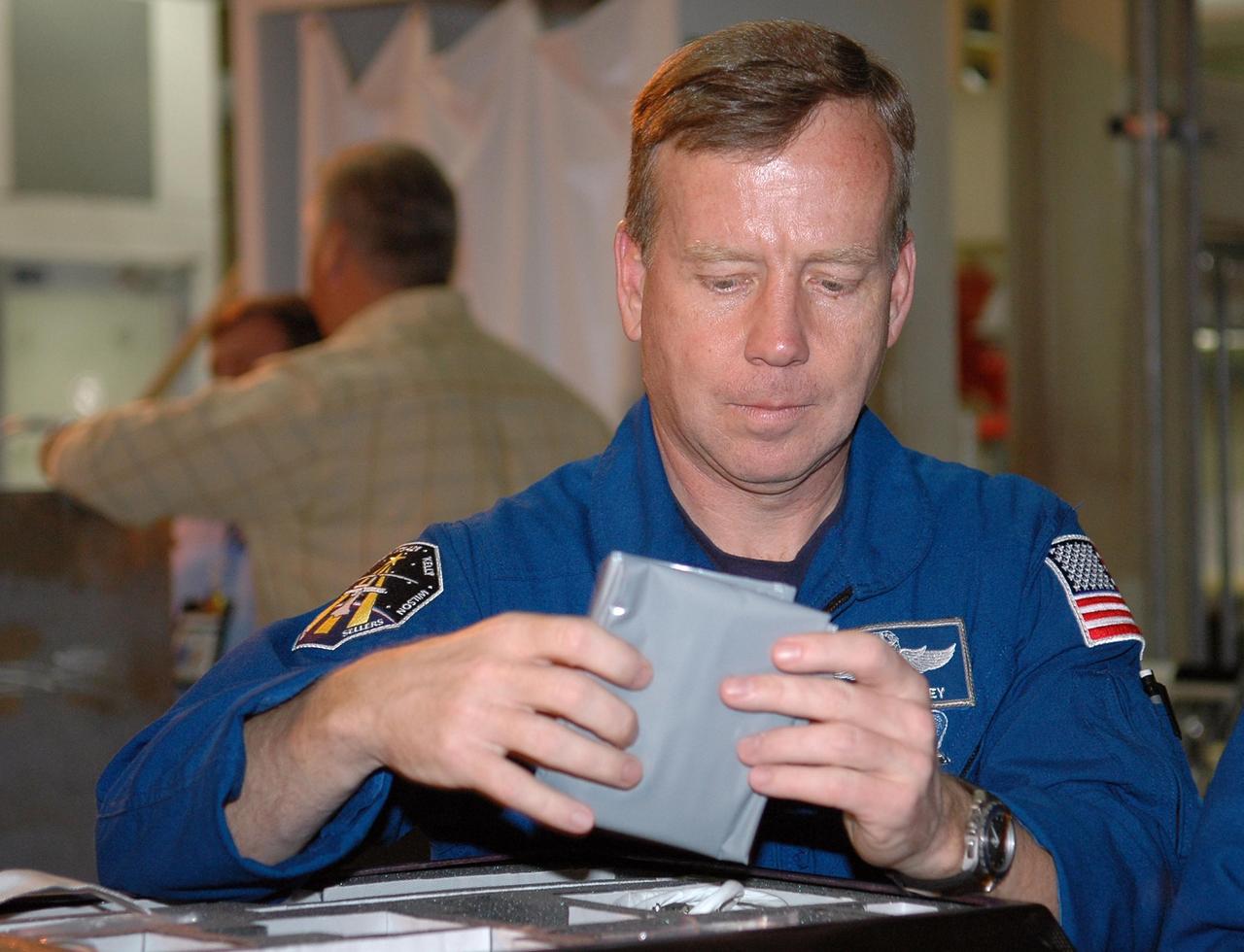
KENNEDY SPACE CENTER, FLA. - In NASA Kennedy Space Center's Orbiter Processing Facility bay 3, STS-121 Commander Steve Lindsey works with equipment that will be on the mission. The crew is at Kennedy to take part in the crew equipment interface test, which provides hands-on experience with equipment to be used on-orbit. Launch of Space Shuttle Discovery on mission STS-121, the second return-to-flight mission, is scheduled no earlier than May.
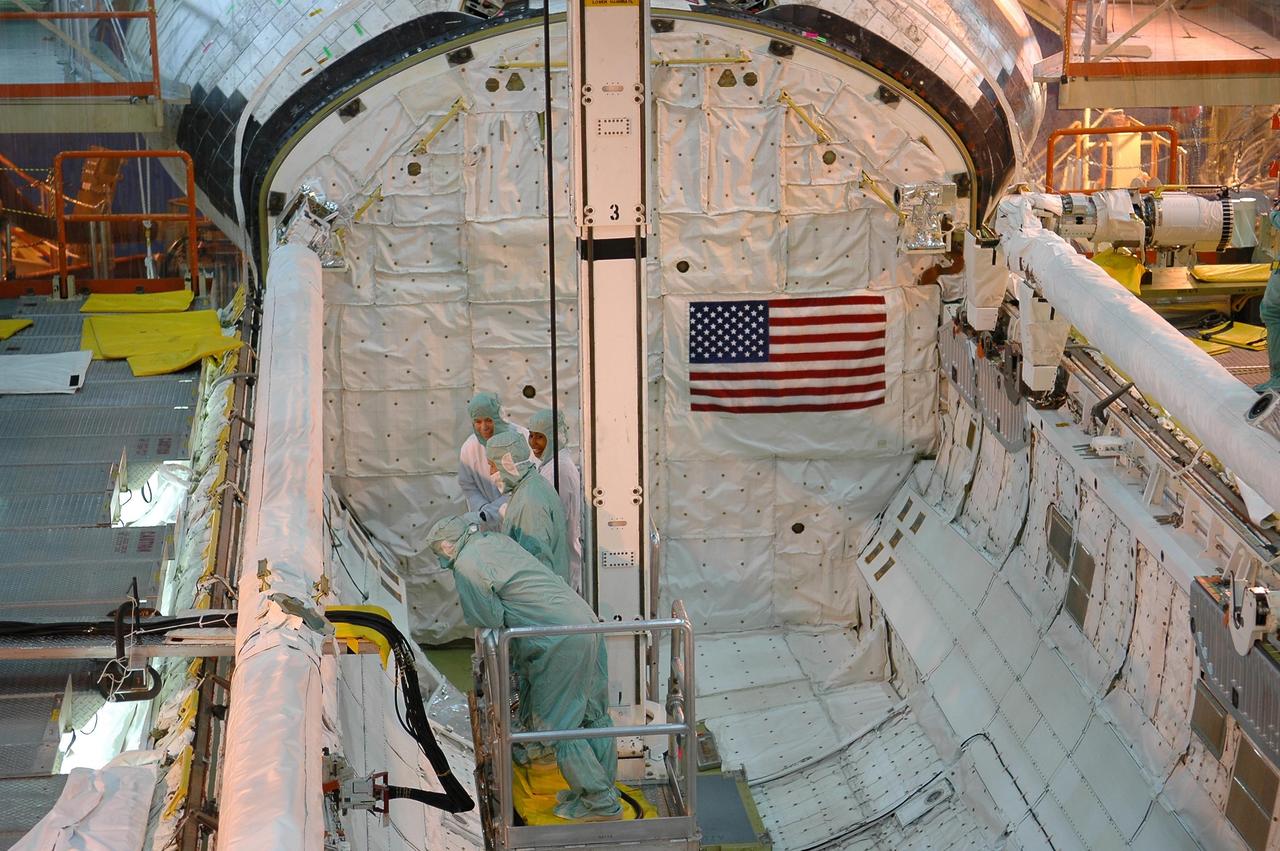
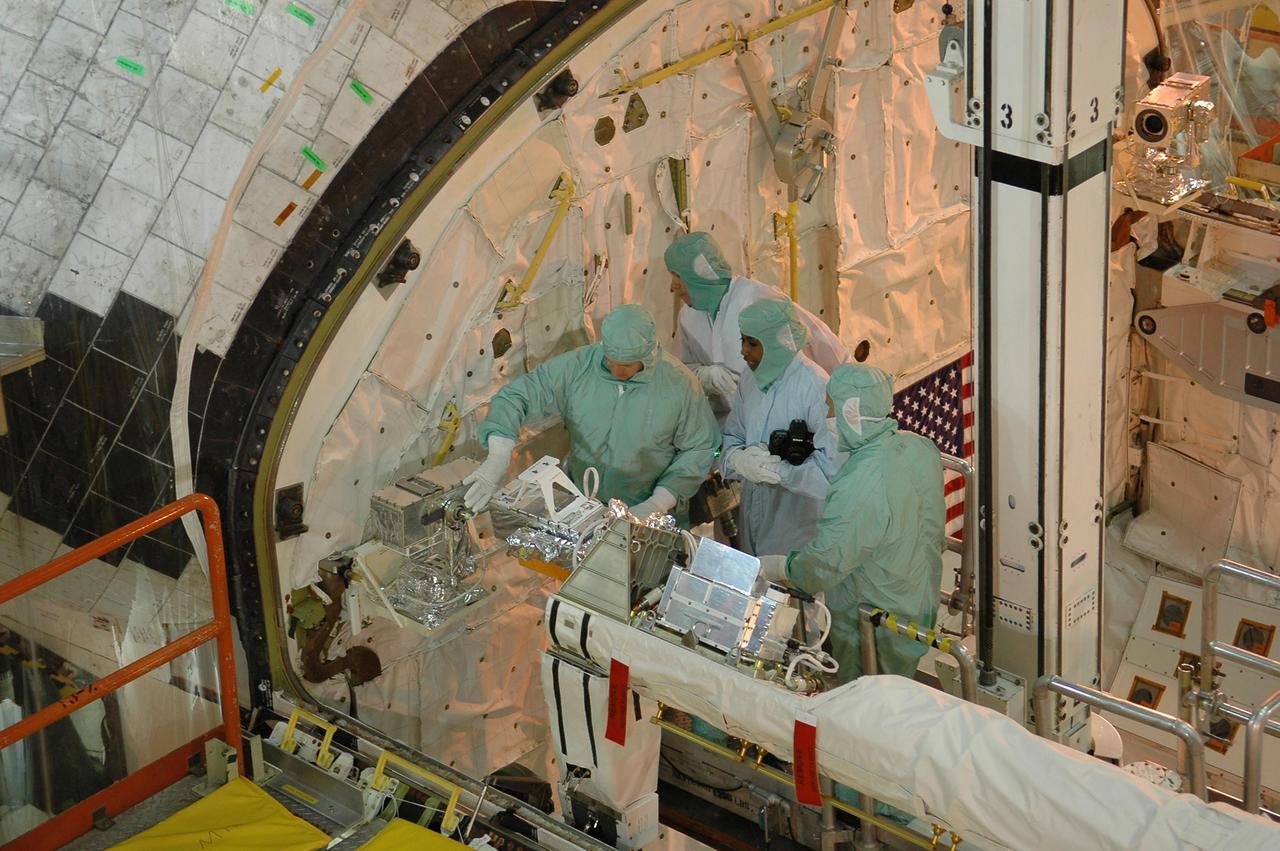
KENNEDY SPACE CENTER, FLA. - In NASA Kennedy Space Center's Orbiter Processing Facility bay 3, STS-121 Pilot Mark Kelly and Mission Specialist Stephanie Wilson are joined by two shuttle technicians in Discovery's payload bay as they examine equipment that will be on the mission. The crew is at Kennedy to take part in the crew equipment interface test, which provides hands-on experience with equipment to be used on-orbit. Launch of Space Shuttle Discovery on mission STS-121, the second return-to-flight mission, is scheduled no earlier than May.

KENNEDY SPACE CENTER, FLA. - STS-118 Mission Specialist Dafydd Williams (Canadian Space Agency) tests a tool that is part of equipment for the mission. The crew is taking part in equipment familiarization in the Space Station Processing Facility. The STS-118 mission will be delivering and installing the third starboard truss segment, the ITS S5, to the International Space Station, and carry a SPACEHAB Single Cargo Module with supplies and equipment. Launch date is under review.
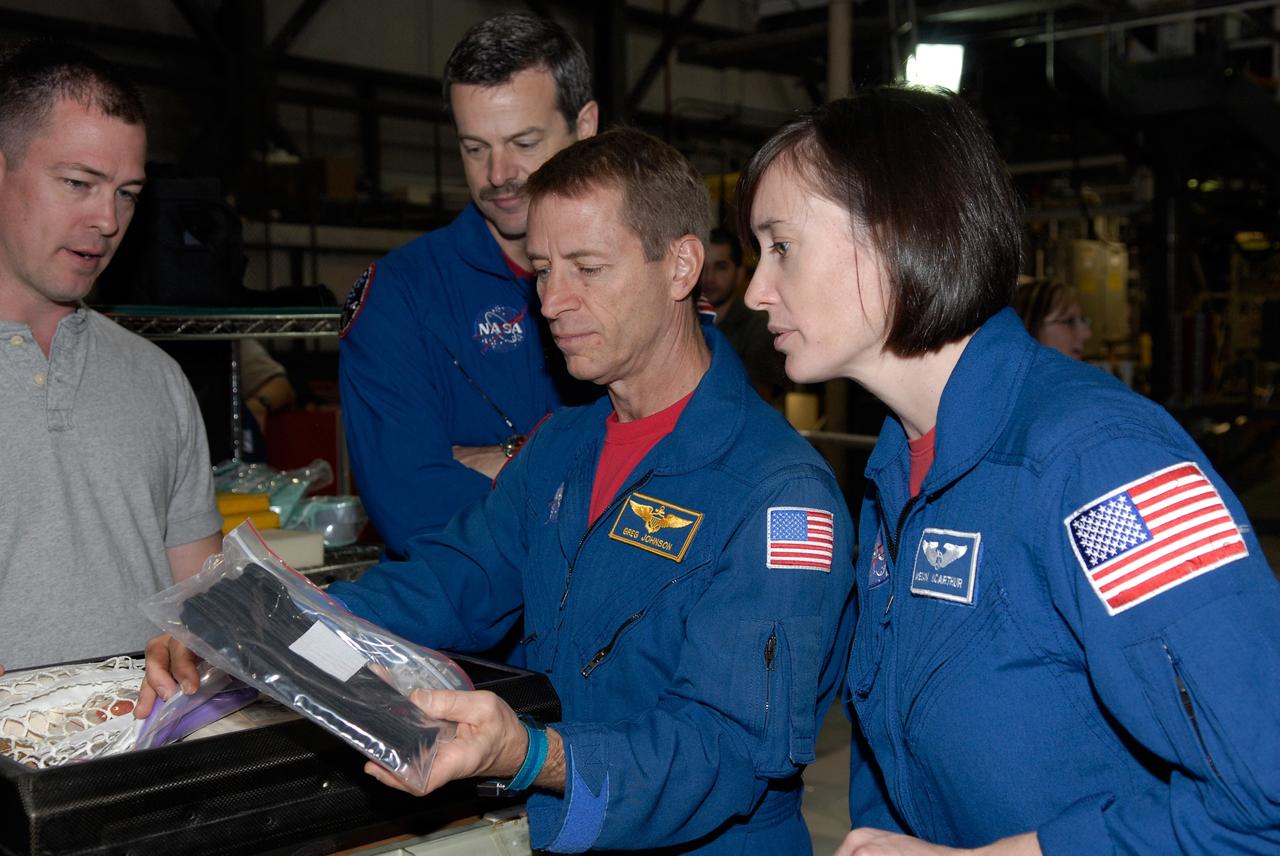
CAPE CANAVERAL, Fla. – In the Orbiter Processing Facility at NASA's Kennedy Space Center, STS-125 crew members look at some of the equipment that will be on their mission. From right are Mission Specialist Megan McArthur, Pilot Gregory C. Johnson and Commander Scott Altman. The crew is at Kennedy for a crew equipment interface test, which provides hands-on experience with hardware and equipment for the mission. Atlantis is targeted to launch on the STS-125 Hubble Servicing Mission 4 on Oct. 8. Photo credit: NASA/Kim Shiflett
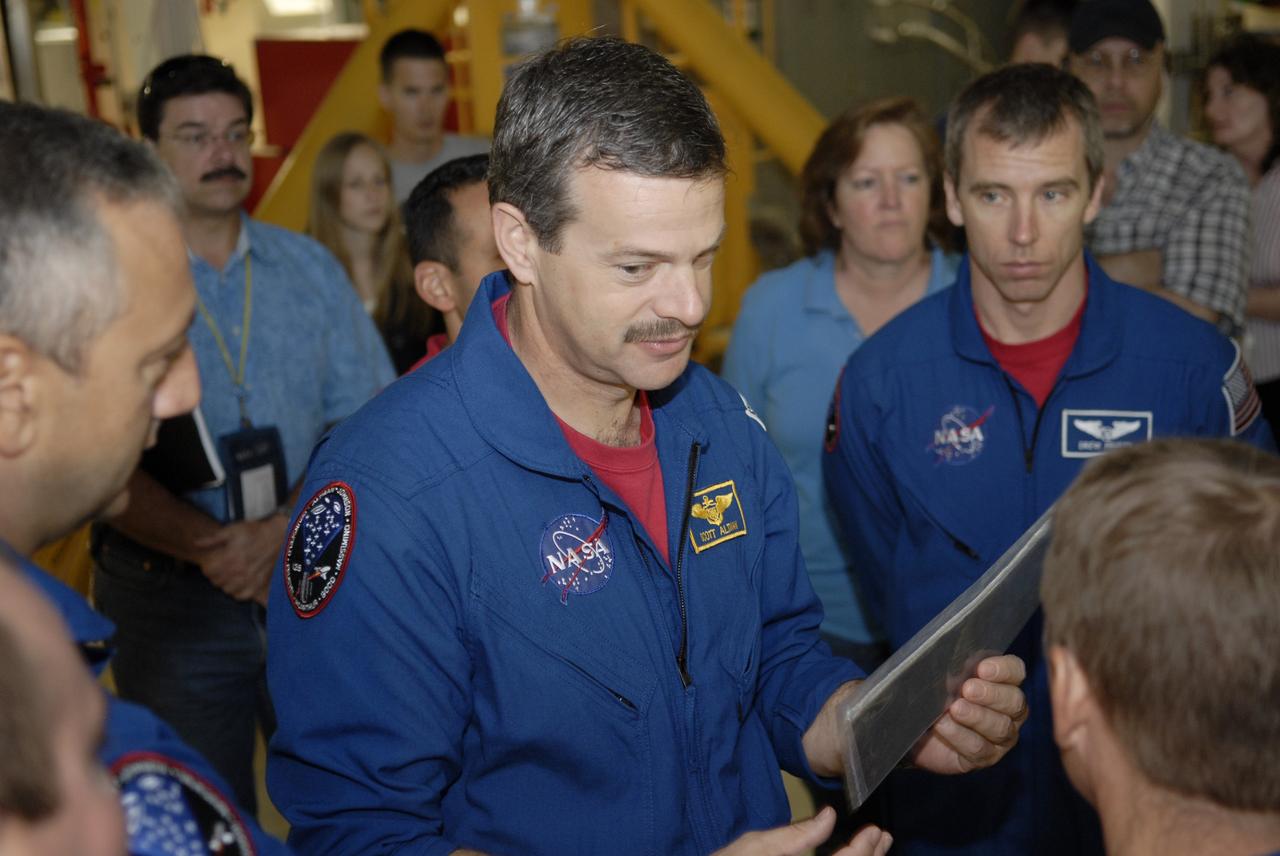
CAPE CANAVERAL, Fla. – In the Orbiter Processing Facility at NASA's Kennedy Space Center, STS-125 Commander Scott Altman looks at a piece of equipment. On either side are Mission Specialists Mike Massimino (left) and Andrew Feustel. Crew members are at Kennedy for a crew equipment interface test, which provides hands-on experience with hardware and equipment for their mission. Atlantis is targeted to launch on the STS-125 Hubble Servicing Mission 4 on Oct. 8. Photo credit: NASA/Kim Shiflett

KENNEDY SPACE CENTER, FLA. - In NASA Kennedy Space Center's Orbiter Processing Facility bay 3, STS-121 Pilot Mark Kelly works with equipment that will be on the mission. The crew is at Kennedy to take part in the crew equipment interface test, which provides hands-on experience with equipment to be used on-orbit. Launch of Space Shuttle Discovery on mission STS-121, the second return-to-flight mission, is scheduled no earlier than May.
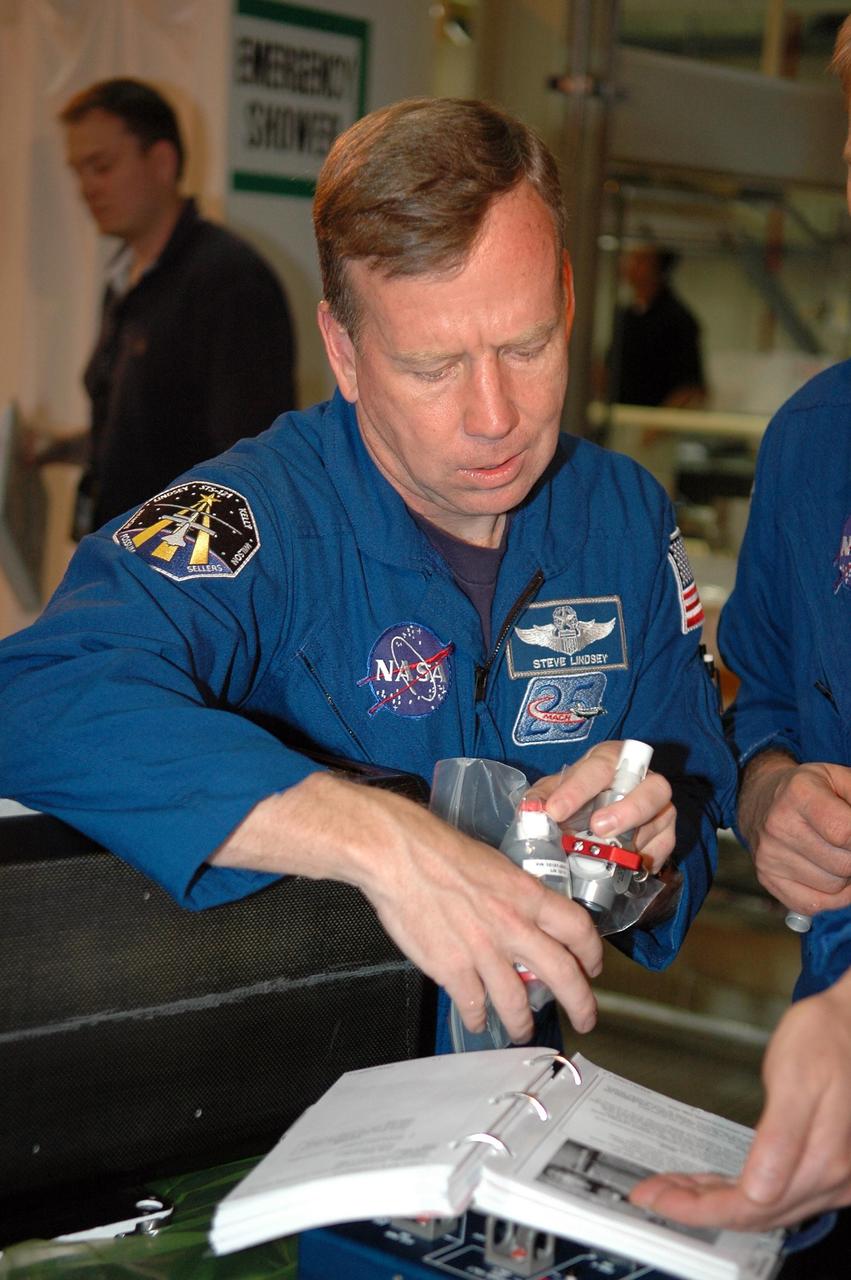
KENNEDY SPACE CENTER, FLA. - In NASA Kennedy Space Center's Orbiter Processing Facility bay 3, STS-121 Commander Steve Lindsey works with equipment that will be on the mission. The crew is at Kennedy to take part in the crew equipment interface test, which provides hands-on experience with equipment to be used on-orbit. Launch of Space Shuttle Discovery on mission STS-121, the second return-to-flight mission, is scheduled no earlier than May.
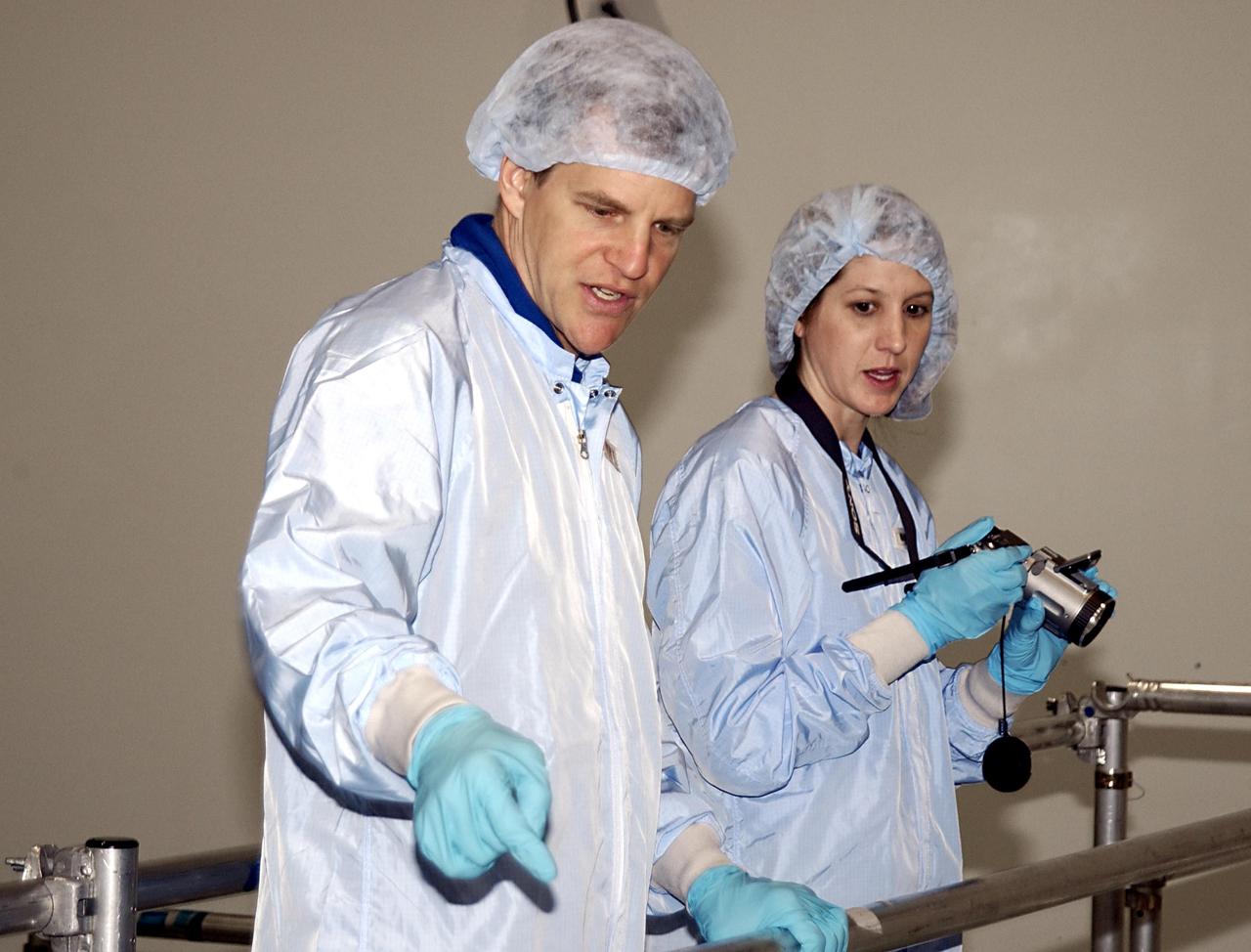
KENNEDY SPACE CENTER, FLA. - STS-118 Mission Specialist Scott Parazynski (left) and a technician in the Space Station Processing Facility look over equipment during Crew Equipment Interface Test activities. The mission to the International Space Station will be delivering the third starboard truss segment, the ITS S5, which will be attached to the station, and a SPACEHAB Single Cargo Module with supplies and equipment. Launch aboard Space Shuttle Columbia is scheduled for Nov. 13, 2003.
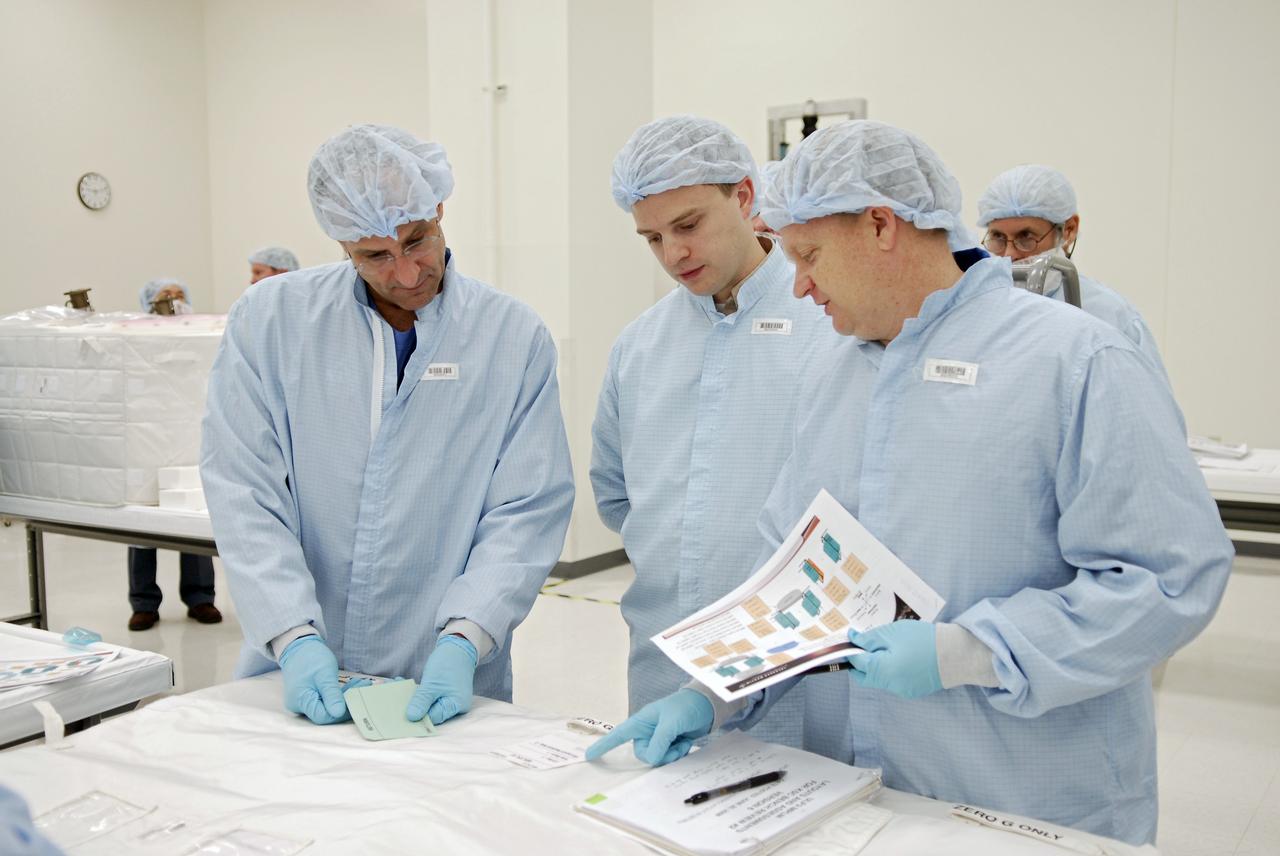
CAPE CANAVERAL, Fla. – In the Space Station Processing Facility at NASA's Kennedy Space Center, STS-126 Mission Specialist Donald Pettit (left) and Pilot Eric Boe (right) check data on equipment that will fly on the mission. Shuttle crews frequently visit Kennedy to get hands-on experience, called a crew equipment interface test, with hardware and equipment for their missions. On STS-126, Endeavour will deliver a multi-purpose logistics module to the International Space Station. Launch is targeted for Nov. 10. Photo credit: NASA/Kim Shiflett
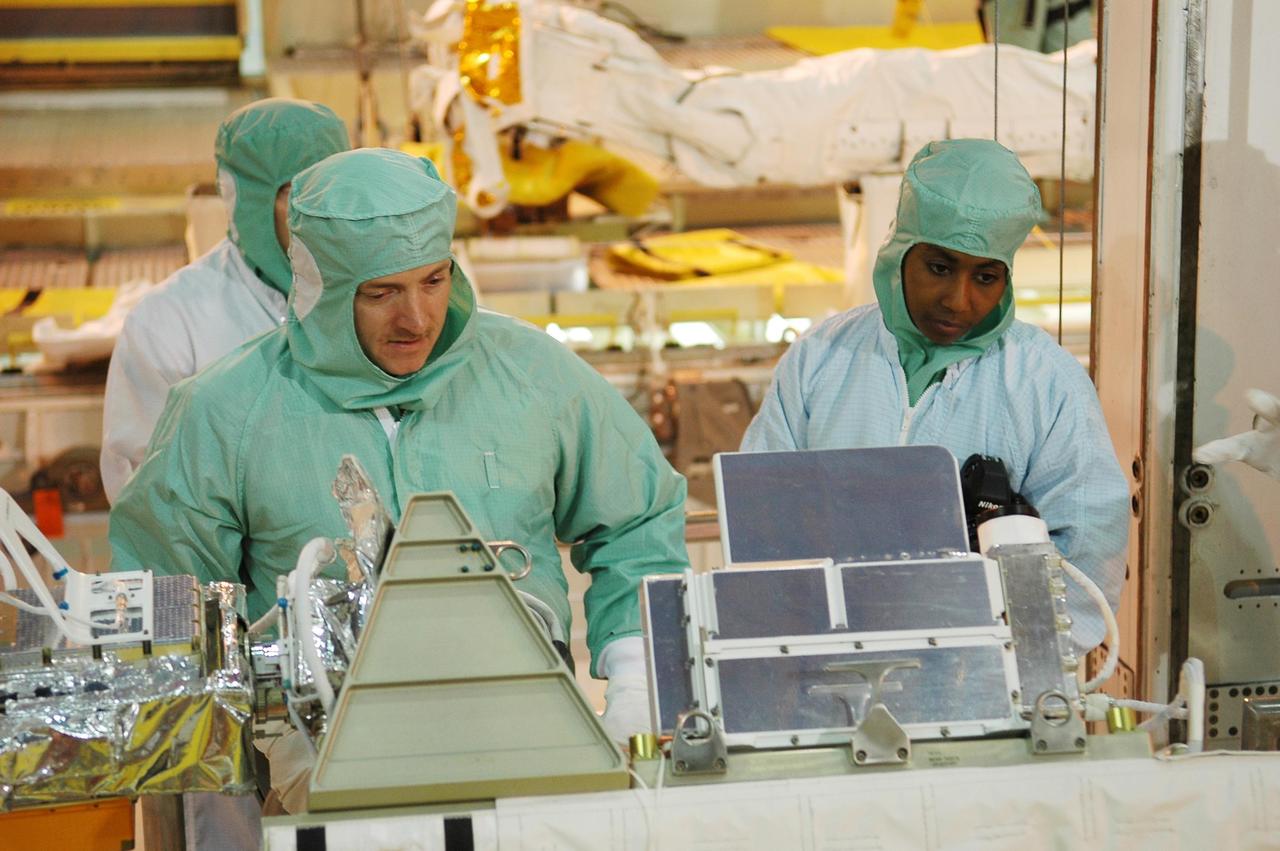
KENNEDY SPACE CENTER, FLA. - In NASA Kennedy Space Center's Orbiter Processing Facility bay 3, STS-121 Pilot Mark Kelly and Mission Specialist Stephanie Wilson work with equipment that will be on the mission. The crew is at Kennedy to take part in the crew equipment interface test, which provides hands-on experience with equipment to be used on-orbit. Launch of Space Shuttle Discovery on mission STS-121, the second return-to-flight mission, is scheduled no earlier than May.
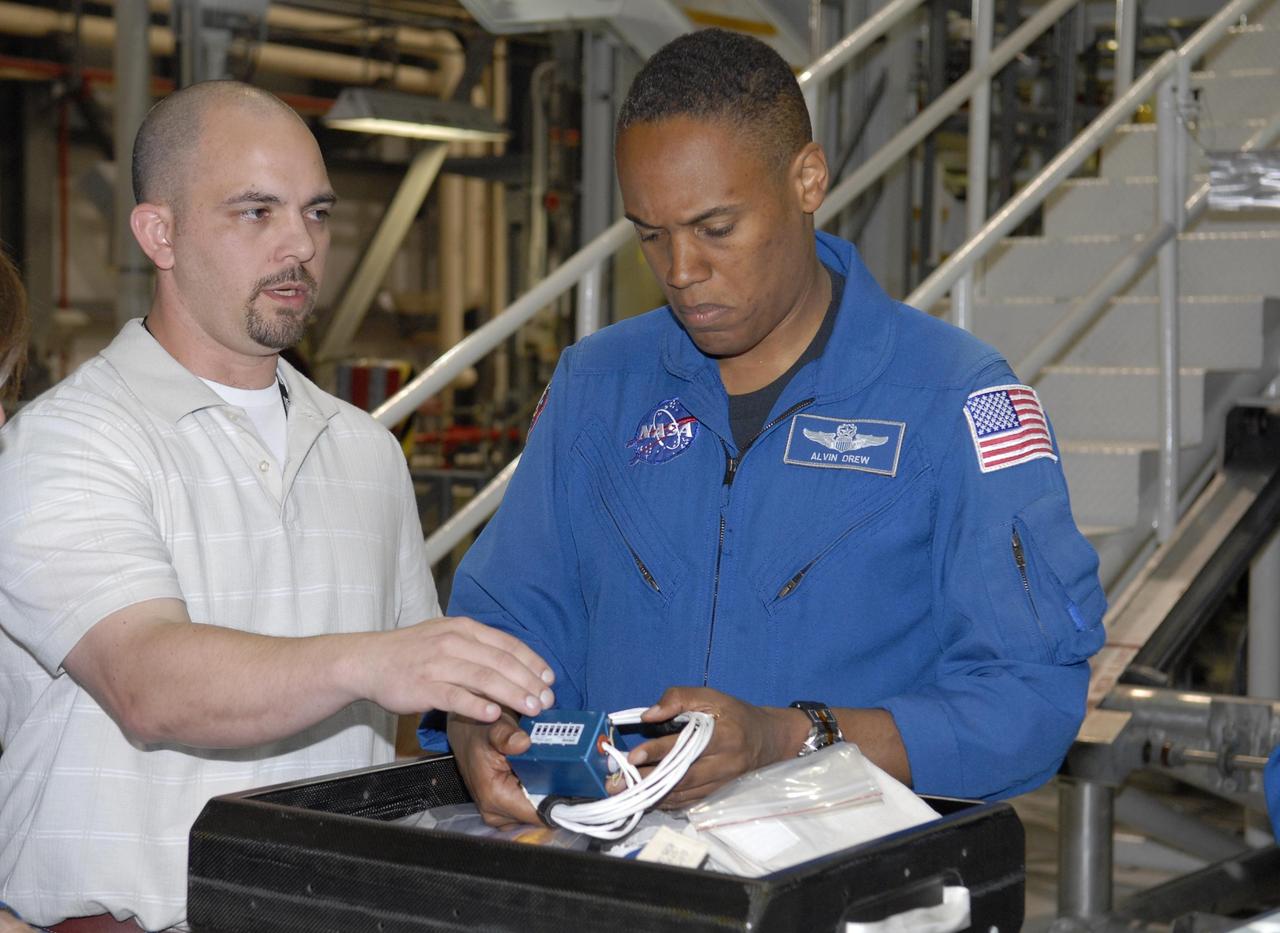
KENNEDY SPACE CENTER, FLA. -- During crew equipment interface test activities in Orbiter Processing Facility bay 3 at KSC, STS-118 Mission Specialist Benjamin Drew gets a close look at equipment that will be used on the flight. The STS-118 mission will be delivering the third starboard truss segment, the ITS S5, to the International Space Station, as well as the SPACEHAB single cargo module filled with supplies and equipment. Launch aboard Space Shuttle Endeavour is targeted for Aug. 9. Photo credit: NASA/Kim Shiflett
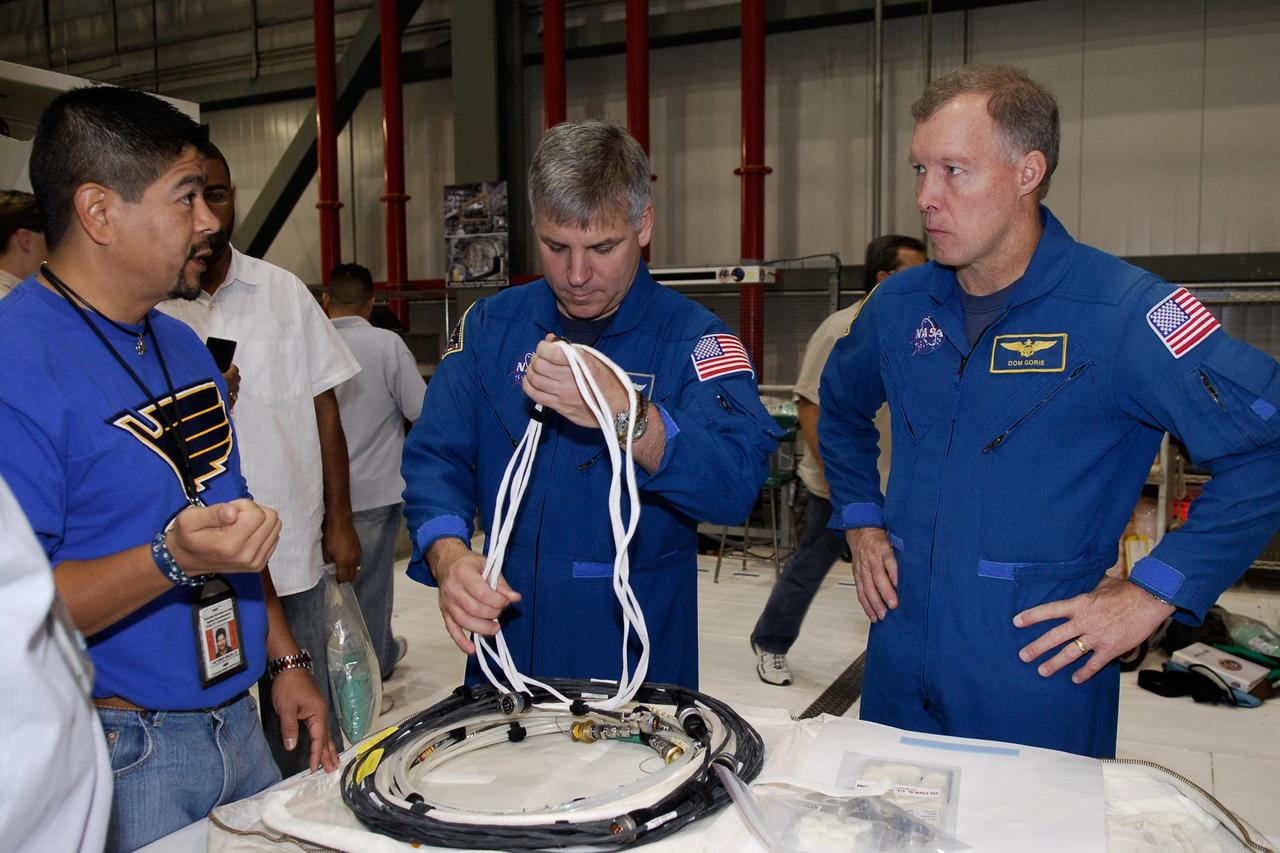
KENNEDY SPACE CENTER, FLA. -- In the Orbiter Processing Facility at NASA's Kennedy Space Center, space shuttle Endeavour's STS-123 Pilot Gregory Johnson (center) handles equipment that will be carried on the mission. At right, Commander Dominic Gorie listens to a technician describing the equipment. The crew is at Kennedy for crew equipment interface test, a process of familiarization with payloads, hardware and the space shuttle. The STS-123 mission is targeted for launch on Feb. 14. It will be the 25th assembly flight of the station. Photo credit: NASA/Kim Shiflett
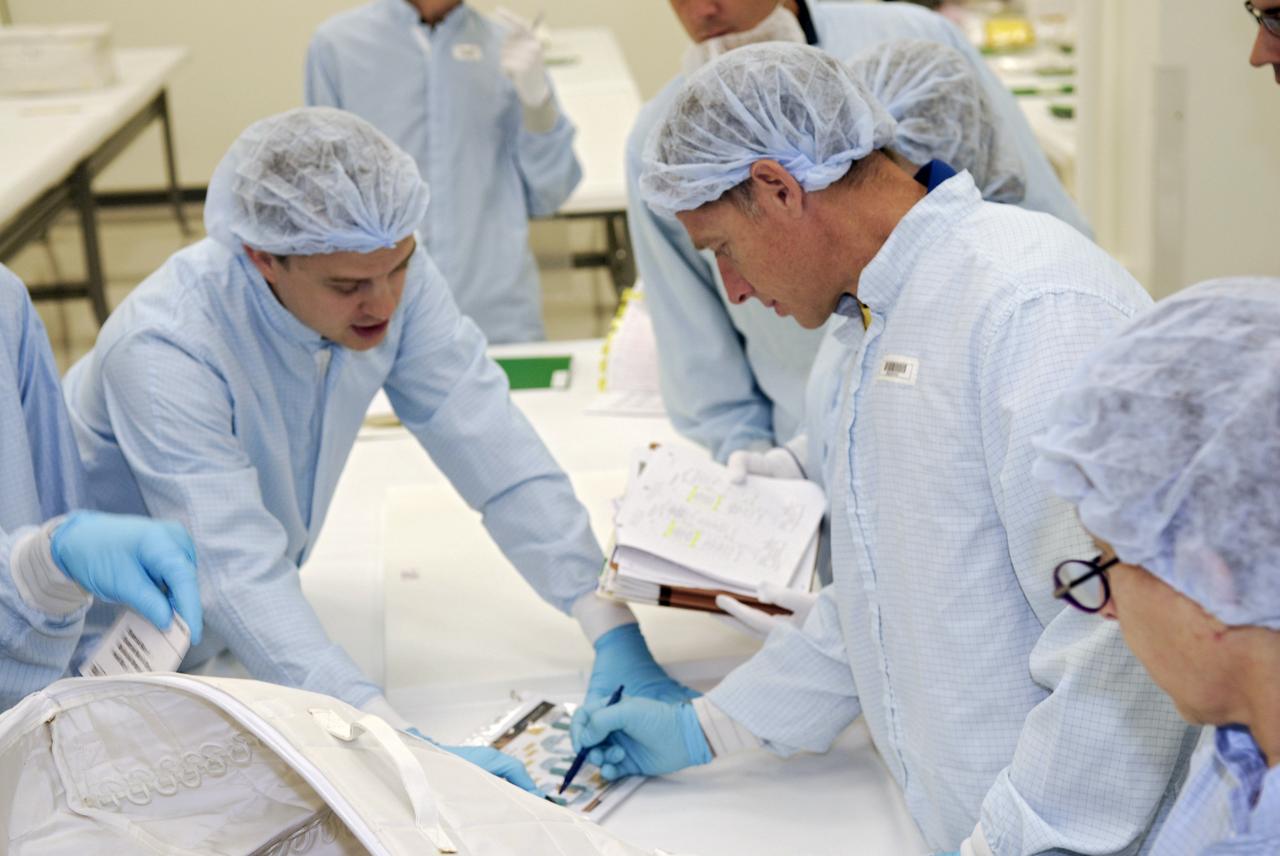
CAPE CANAVERAL, Fla. – In the Space Station Processing Facility at NASA's Kennedy Space Center, STS-126 Commander Christopher Ferguson checks data on equipment that will fly on the mission. Shuttle crews frequently visit Kennedy to get hands-on experience, called a crew equipment interface test, with hardware and equipment for their missions. On STS-126, Endeavour will deliver a multi-purpose logistics module to the International Space Station. Launch is targeted for Nov. 10. Photo credit: NASA/Kim Shiflett
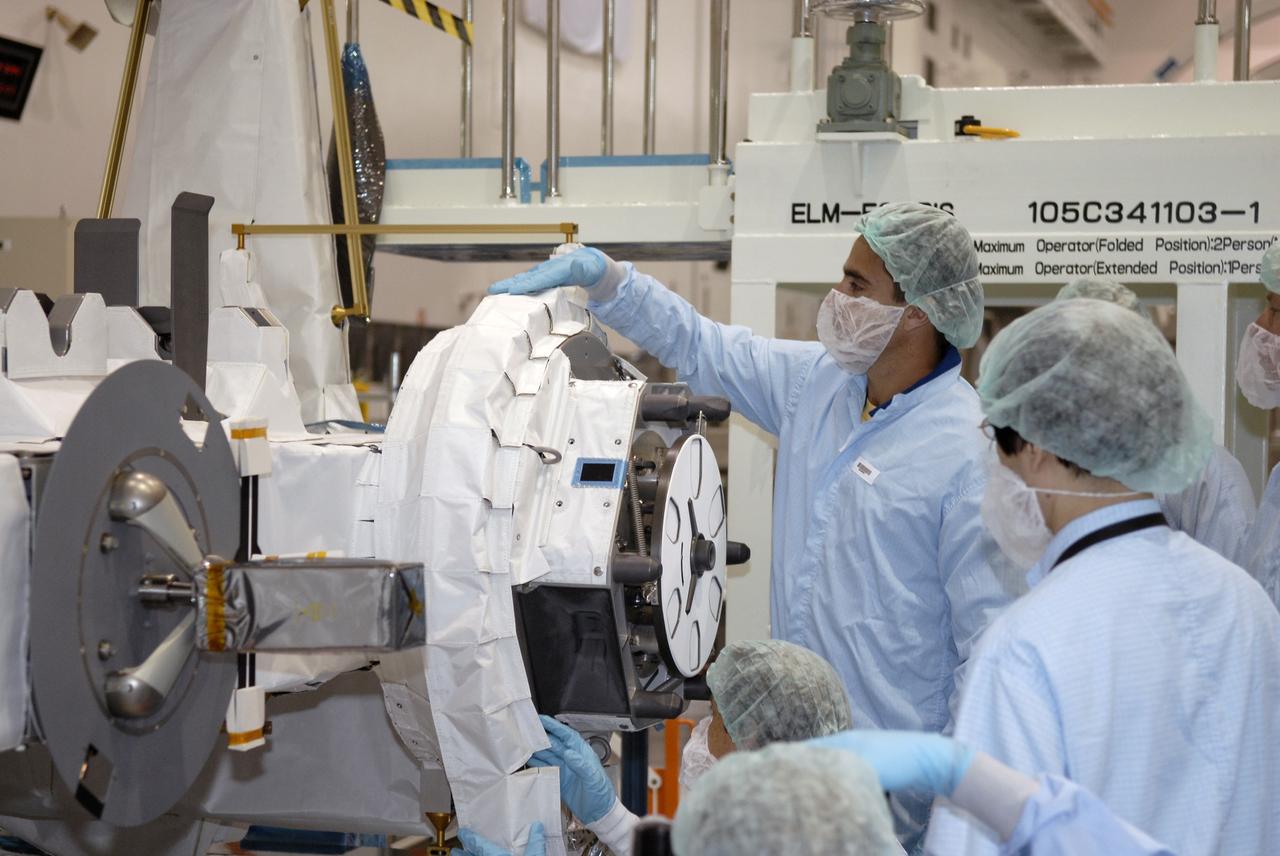
CAPE CANAVERAL, Fla. - In the Space Station Processing Facility at NASA's Kennedy Space Center in Florida, STS-127 crew members become familiar with the payload and hardware for their mission. Here they are looking at the Experiment Logistics Module - Exposed Section, or ELM-ES, berthing mechanism. The mission payload also includes the Extended Facility and the Inter Orbit Communication System Extended Facility, or ICS-EF. Equipment familiarization is part of a Crew Equipment Interface Test. The payload will be launched to the International Space Station aboard the space shuttle Endeavour on the STS-127 mission, targeted for launch on May 15, 2009. Photo credit: NASA/Kim Shiflett
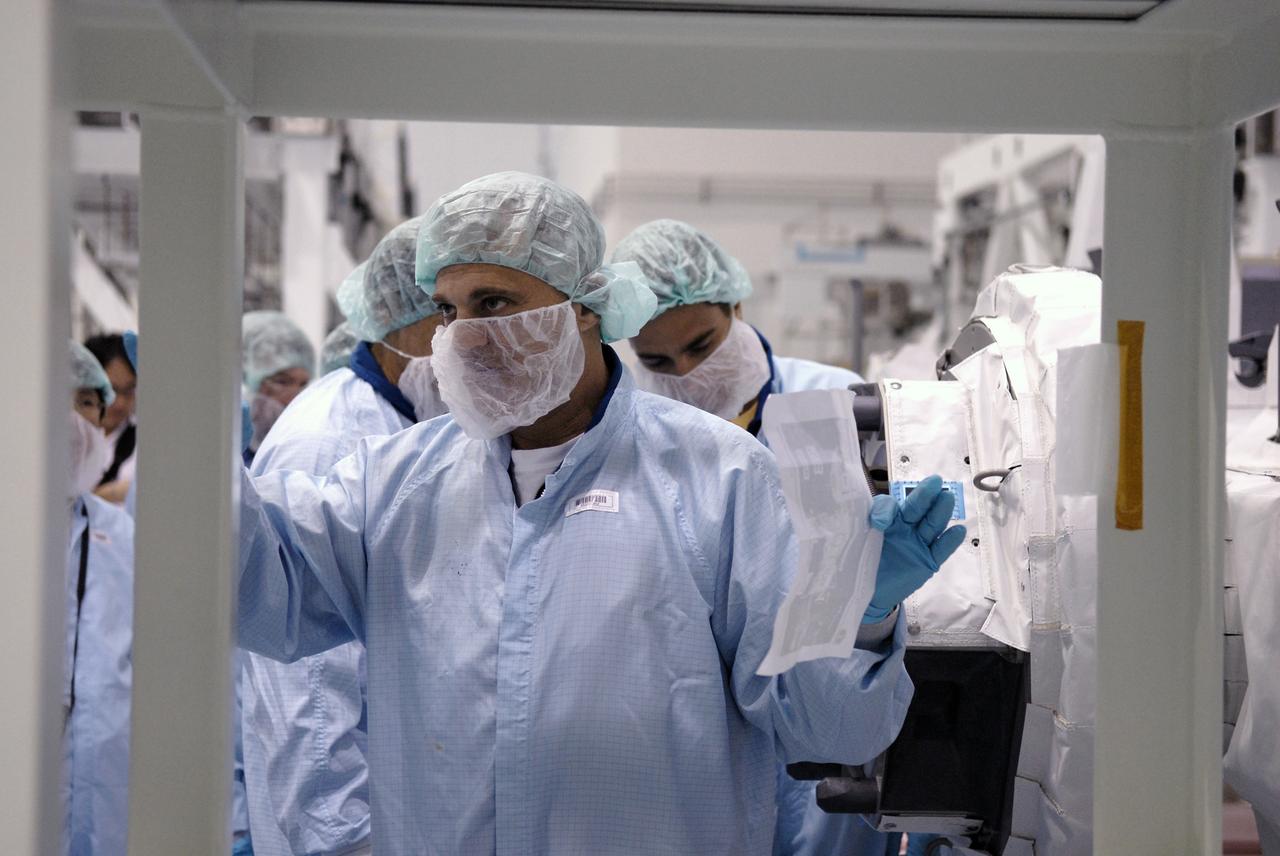
CAPE CANAVERAL, Fla. - In the Space Station Processing Facility at NASA's Kennedy Space Center in Florida, STS-127 crew members become familiar with the payload and hardware for their mission. Here they are looking at the Experiment Logistics Module - Exposed Section, or ELM-ES, berthing mechanism. The mission payload also includes the Extended Facility and the Inter Orbit Communication System Extended Facility, or ICS-EF. Equipment familiarization is part of a Crew Equipment Interface Test. The payload will be launched to the International Space Station aboard the space shuttle Endeavour on the STS-127 mission, targeted for launch on May 15, 2009. Photo credit: NASA/Kim Shiflett
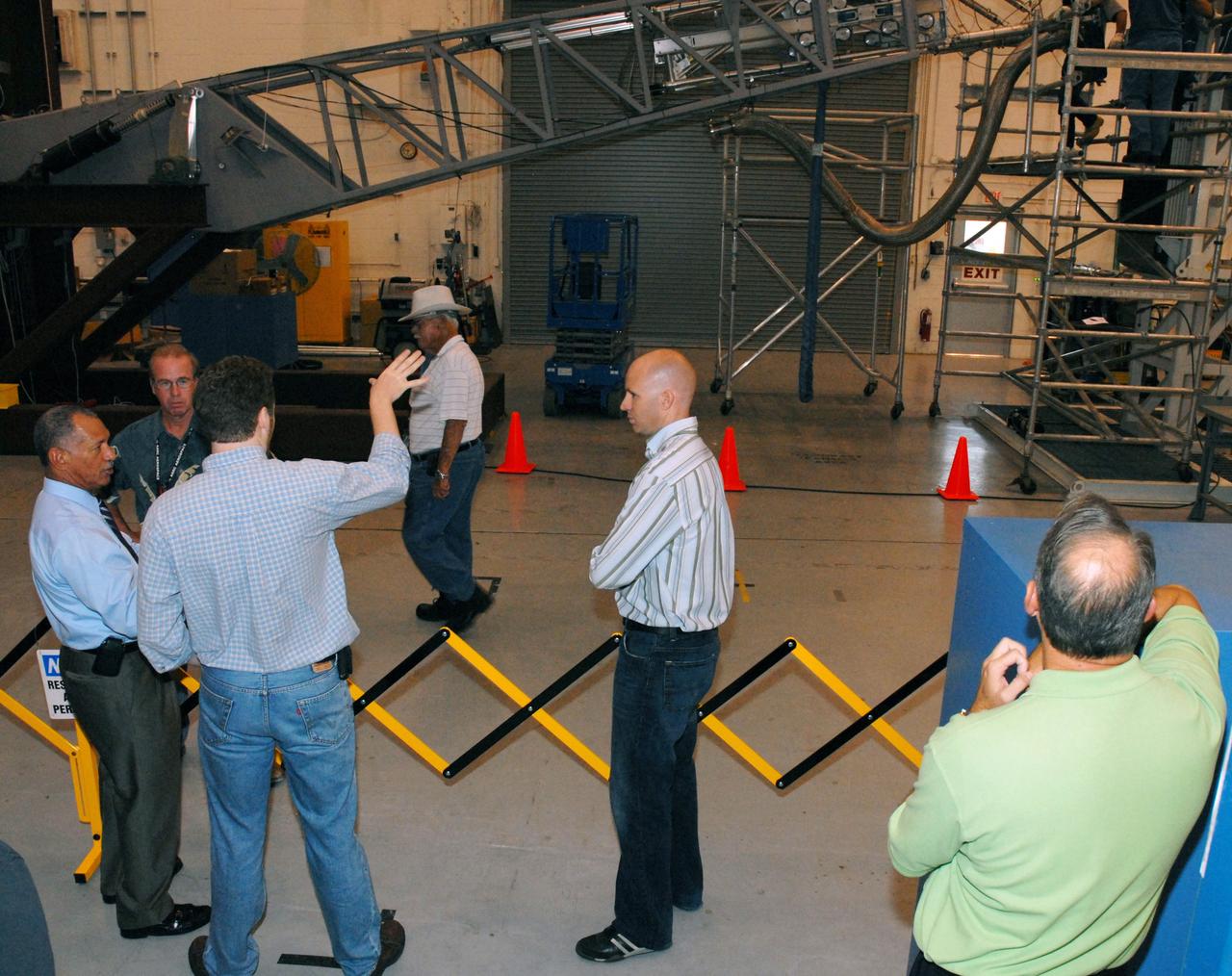
CAPE CANAVERAL, Fla. – In the Launch Equipment Test Facility at NASA's Kennedy Space Center in Florida, NASA Administrator Charles Bolden (far left) learns about the demonstration about to start on the umbilical line for Constellation test equipment. Bolden is touring several facilities at Kennedy involved with NASA's Constellation Program. Bolden also was at Kennedy for several events, including the landing of space shuttle Endeavour's STS-127 mission and the signing of the joint NASA-Japan Aerospace Exploration Agency agreement defining the terms of cooperation between the agencies on the Global Precipitation Measurement, or GPM, mission. Photo credit: NASA/Kim Shiflett
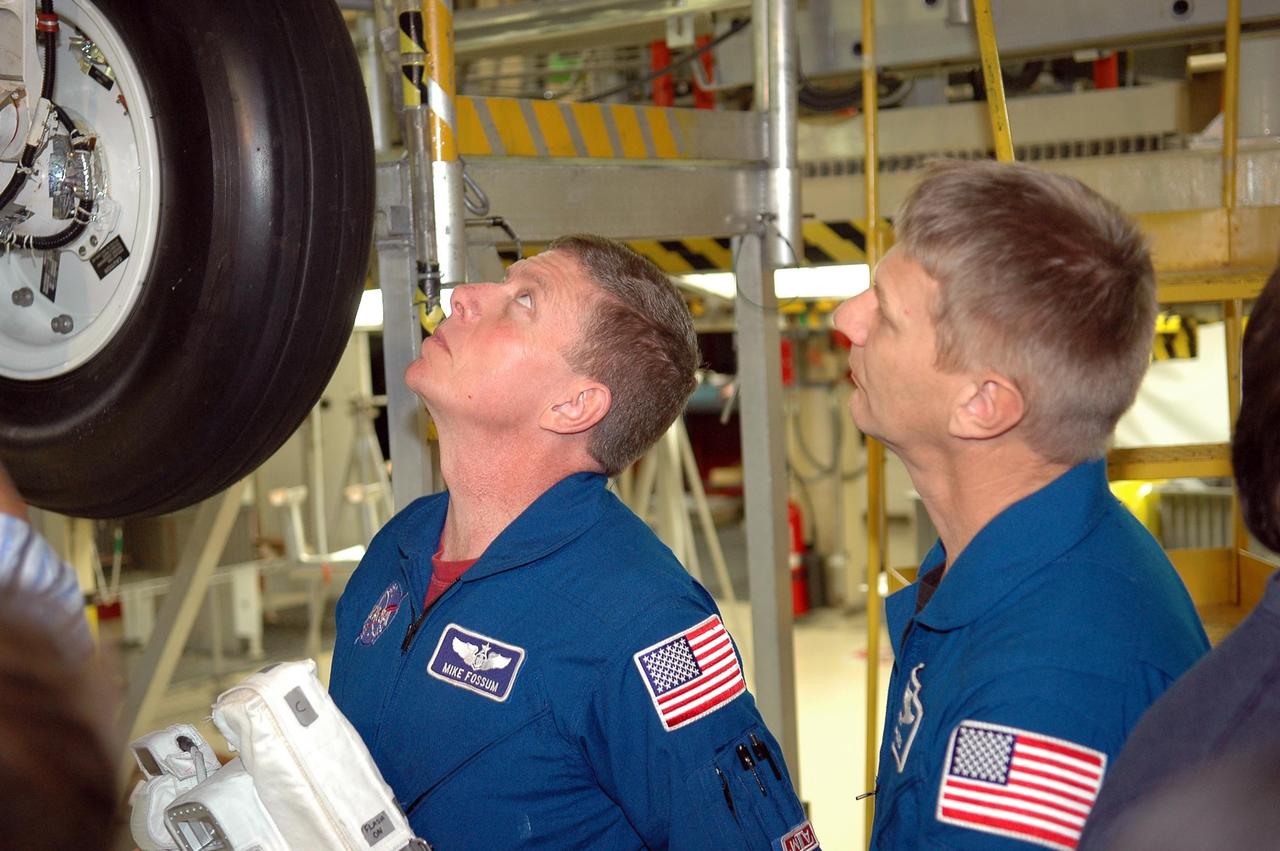
KENNEDY SPACE CENTER, FLA. - Inside the Orbiter Processing Facility bay 3 at NASA's Kennedy Space Center, members of the STS-121 crew take a close look at the wheels on Discovery, the launch vehicle for the mission. From left are Mission Specialists Michael Fossum and Piers Sellers. The crew is at Kennedy for the crew equipment interface test, which provides hands-on experience with equipment they will use on orbit. Launch of STS-121, the second return-to-flight mission, is scheduled for no earlier than May. Photo credit: NASA/Kim Shiflett
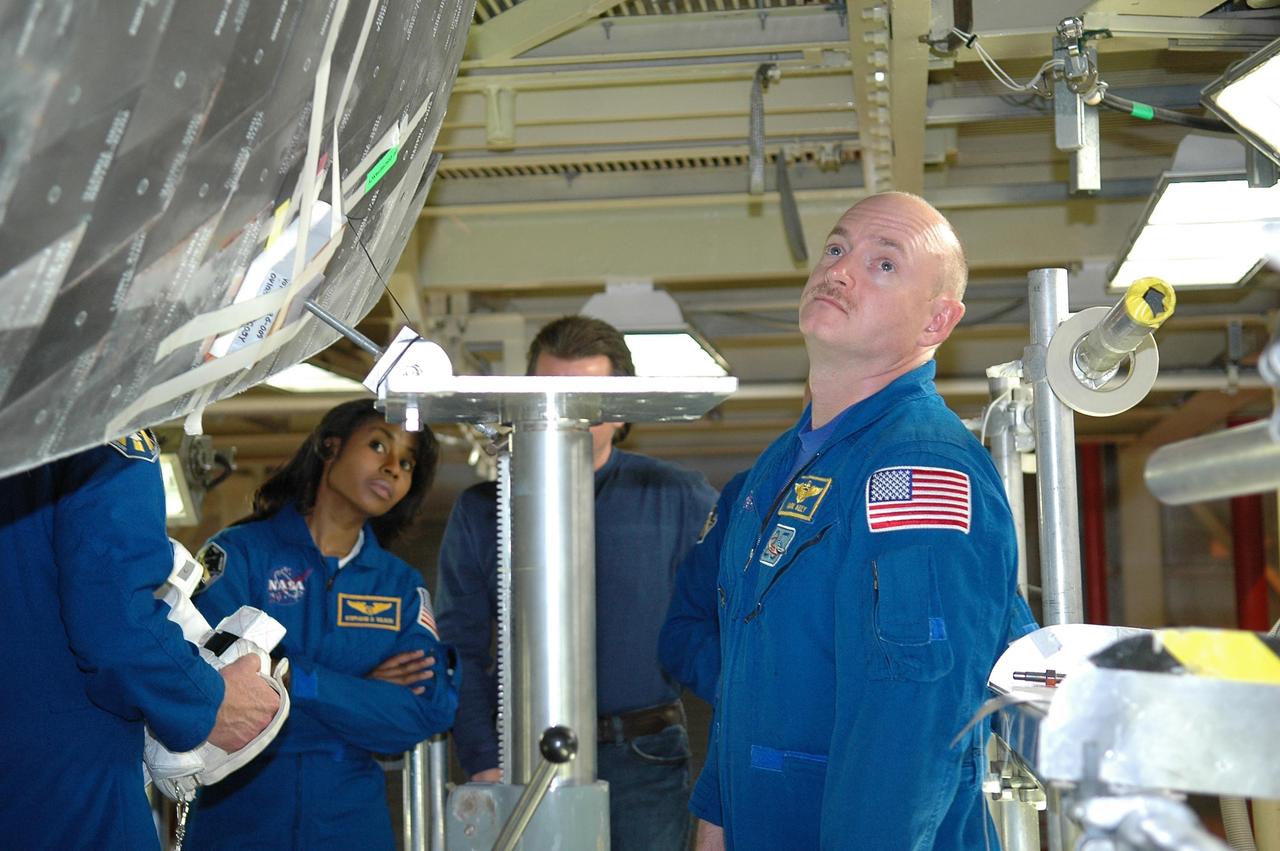
KENNEDY SPACE CENTER, FLA. - Inside the Orbiter Processing Facility bay 3 at NASA's Kennedy Space Center, members of the STS-121 crew take a close look at Discovery, the launch vehicle for the mission. Seen are Mission Specialist Stephanie Wilson and Pilot Mark Kelly. The crew is at Kennedy for the crew equipment interface test, which provides hands-on experience with equipment they will use on orbit. Launch of STS-121, the second return-to-flight mission, is scheduled for no earlier than May. Photo credit: NASA/Kim Shiflett
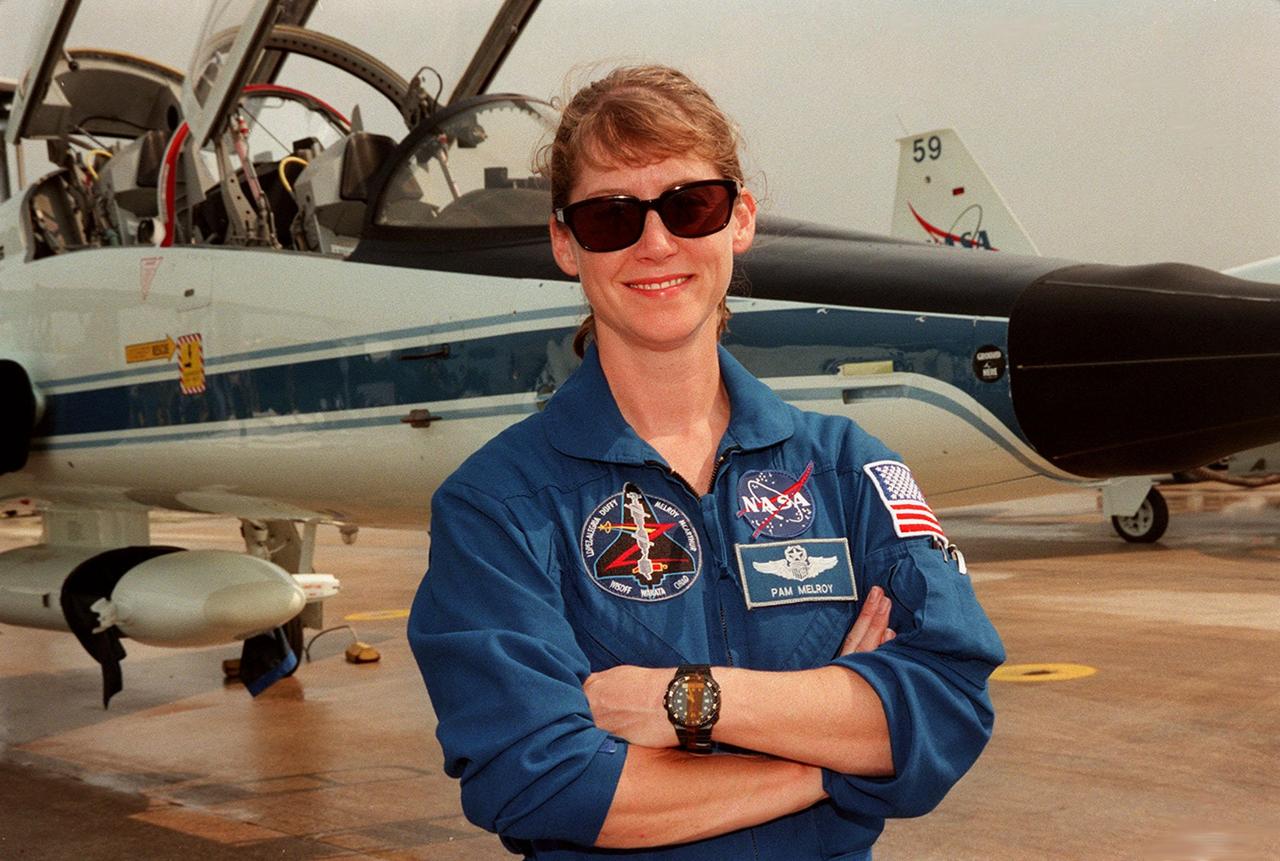
STS-92 Pilot Pam Melroy poses at the Shuttle Landing Facility before flying back to Houston. She and other crew members completed their Crew Equipment Interface Test activities, looking over their mission payload and related equipment. STS-92 is scheduled to launch Oct. 5 on Shuttle Discovery from Launch Pad 39A on the fifth flight to the International Space Station. Discovery will carry the Integrated Truss Structure (ITS) Z1, the PMA-3, Ku-band Communications System, and Control Moment Gyros (CMGs)
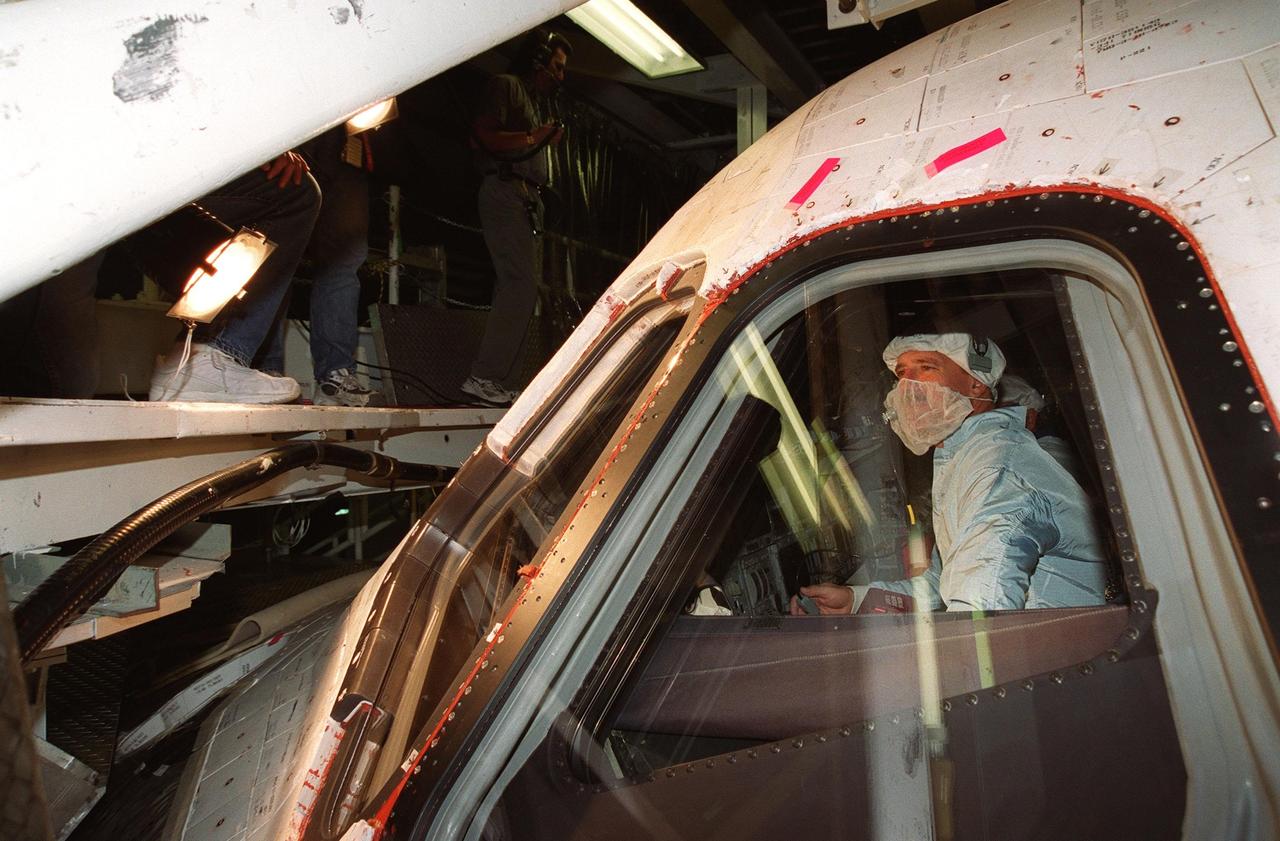
KENNEDY SPACE CENTER, FLA. -- During Crew Equipment Interface Test activities, STS-105 Commander Scott “Doc” Horowitz checks out the orbiter Discovery in Orbiter Processing Facility bay 2. STS-105 is the 11th mission to the International Space Station. The payload includes the Multi-Purpose Logistics Module Leonardo, which was built by the Italian Space Agency. Leonardo will be outfitted with 12 racks of experiments and equipment. Discovery is scheduled to launch July 12 from Launch Pad 39A
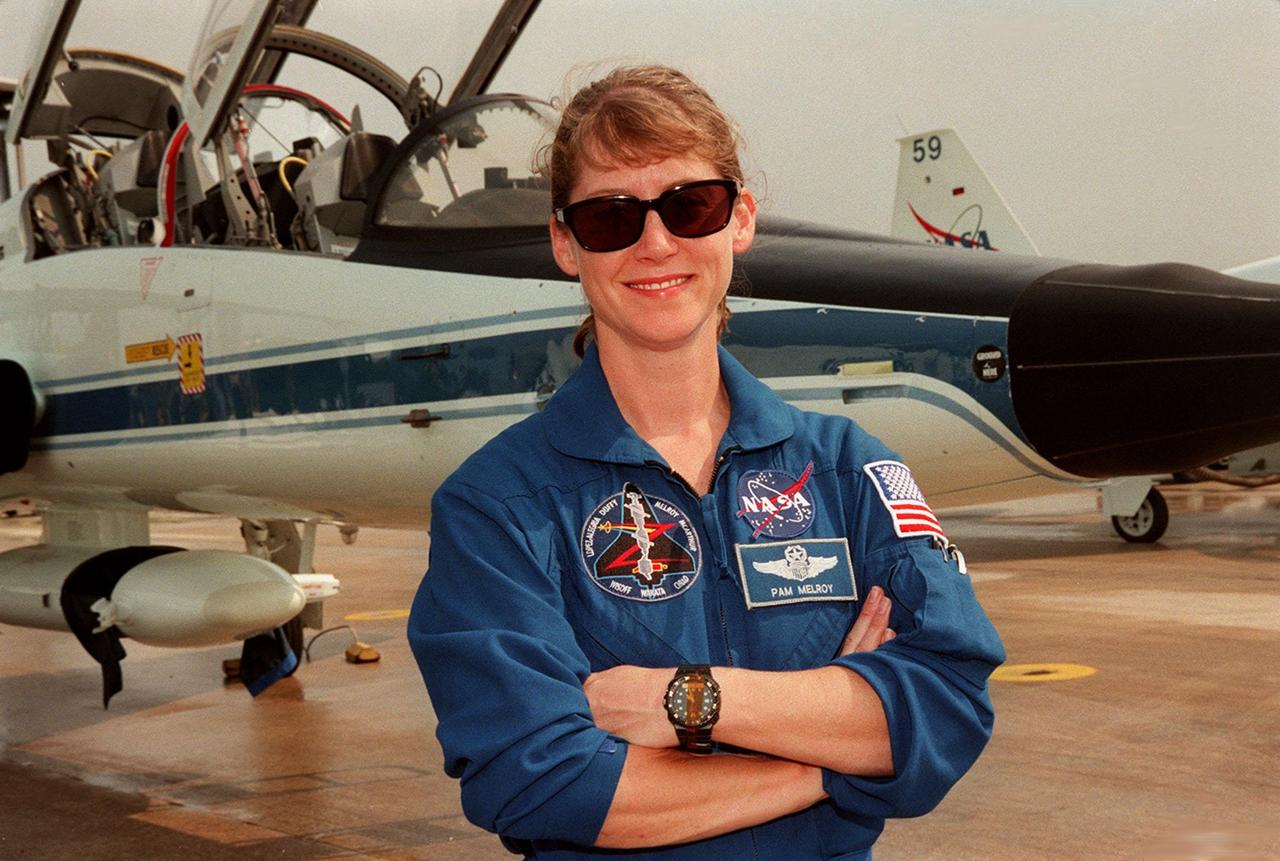
STS-92 Pilot Pam Melroy poses at the Shuttle Landing Facility before flying back to Houston. She and other crew members completed their Crew Equipment Interface Test activities, looking over their mission payload and related equipment. STS-92 is scheduled to launch Oct. 5 on Shuttle Discovery from Launch Pad 39A on the fifth flight to the International Space Station. Discovery will carry the Integrated Truss Structure (ITS) Z1, the PMA-3, Ku-band Communications System, and Control Moment Gyros (CMGs)
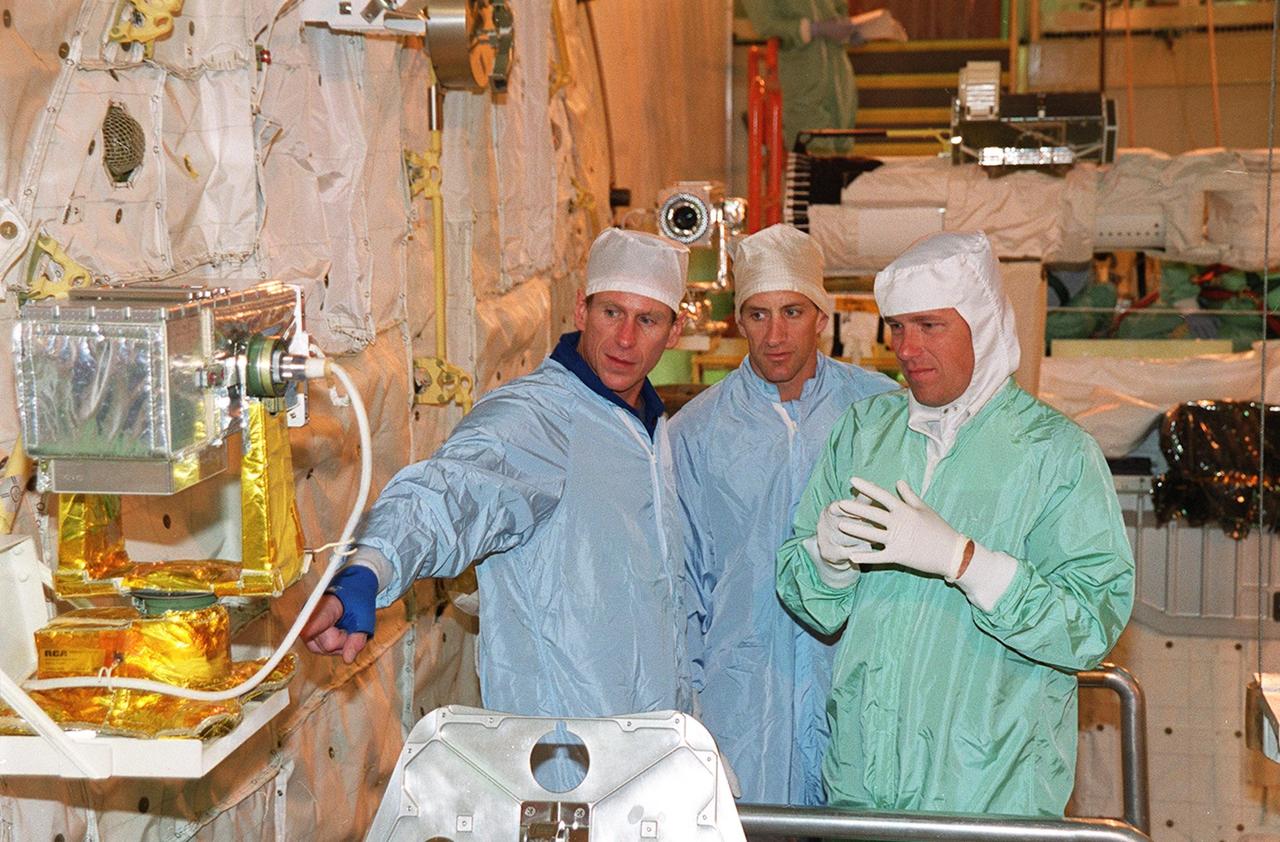
KENNEDY SPACE CENTER, FLA. -- In the Orbiter Processing Facility, STS-104 Mission Specialist Michael Gernhardt (left) and Pilot Charles Hobaugh (center) check out equipment in the payload bay of Atlantis. The STS-104 crew is at KSC to continue Crew Equipment Interface Test activities such as payload familiarization. The Joint Airlock Module is the primary payload on their mission, scheduled to launch no earlier than June 14, 2001, from Launch Pad 39B
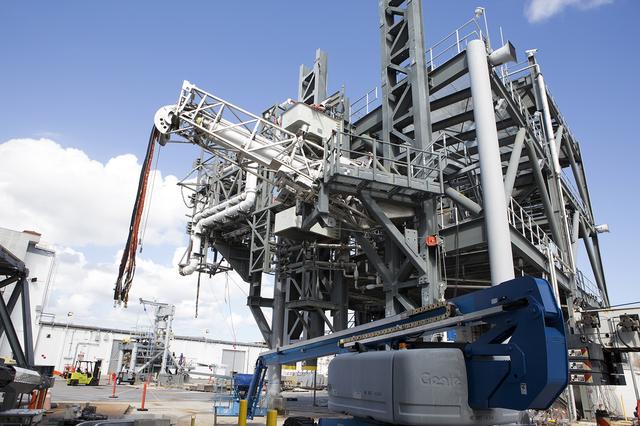
Testing of the Orion Service Module Umbilical (OSMU) was completed at the Launch Equipment Test Facility at NASA’s Kennedy Space Center in Florida. The OSMU was attached to Vehicle Motion Simulator 1 for a series of simulated launch tests to validate it for installation on the mobile launcher. The mobile launcher tower will be equipped with a number of lines, called umbilicals that will connect to the Space Launch System rocket and Orion spacecraft for Exploration Mission-1 (EM-1). The OSMU will be located high on the mobile launcher tower and, prior to launch, will transfer liquid coolant for the electronics and air for the Environmental Control System to the Orion service module that houses these critical systems to support the spacecraft. Kennedy's Engineering Directorate is providing support to the Ground Systems Development and Operations Program for testing of the OSMU. EM-1 is scheduled to launch in 2018.

CAPE CANAVERAL, Fla. -- At NASA's Kennedy Space Center in Florida, the 600-Ton Test Fixture outside the Launch Equipment Test Facility conducts a 500,000-pound pull test of a bridge crane lifting element, which is used to lift space shuttles in the Vehicle Assembly Building. The fixture proofload tests, in tension and compression, a variety of ground support equipment, including slings, lifting beams and other critical lifting hardware that require periodic proofloading. Since 1977, the facility has supported NASA’s Launch Services, shuttle, International Space Station, and Constellation programs, as well as commercial providers. The facility recently underwent a major upgrade to support even more programs, projects and customers. It houses a 6,000-square-foot high bay, cable fabrication and molding shop, pneumatics shop, machine and weld shop and full-scale control room. Outside, the facility features a water flow test loop, vehicle motion simulator, launch simulation towers and a cryogenic system. Photo credit: NASA/Jim Grossmann
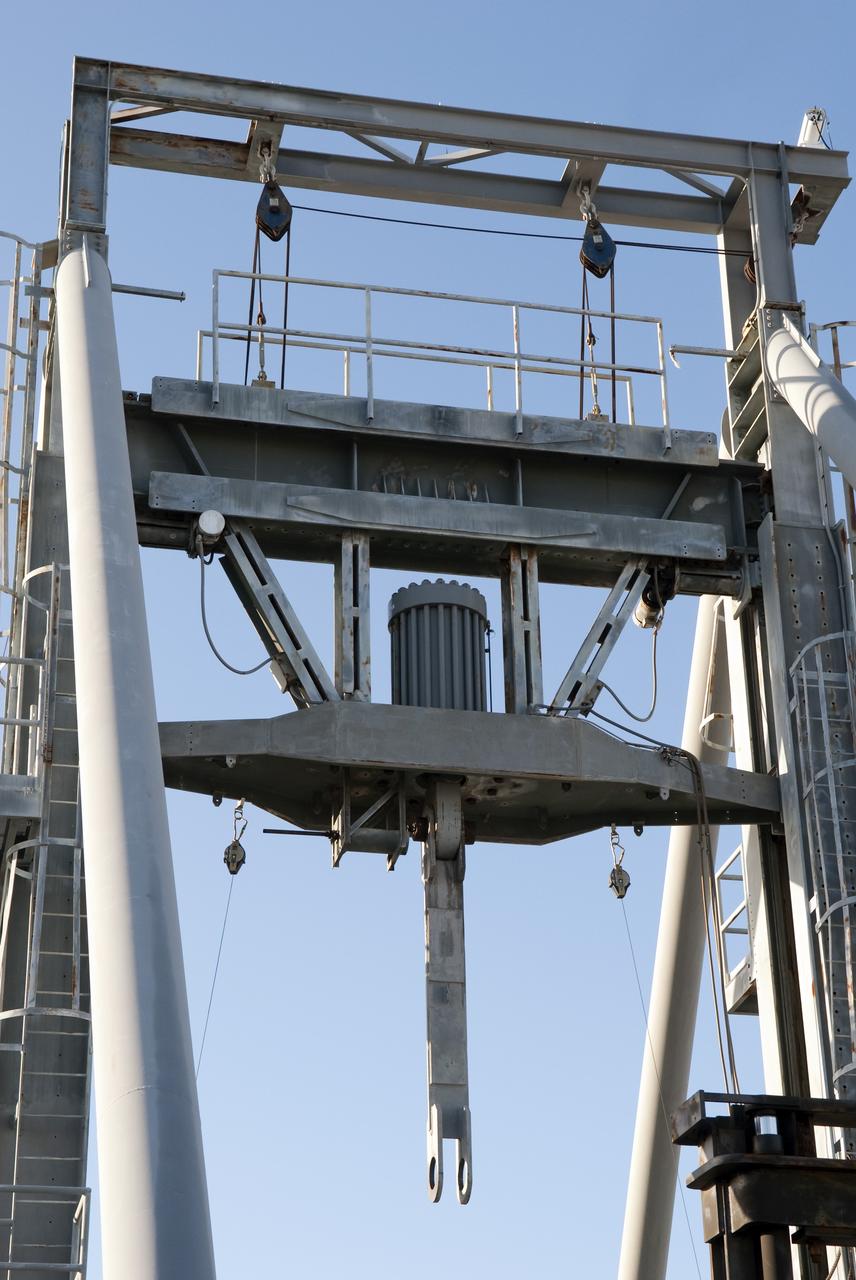
CAPE CANAVERAL, Fla. -- At NASA's Kennedy Space Center in Florida, the 600-Ton Test Fixture outside the Launch Equipment Test Facility is prepared to conduct a 500,000-pound pull test of a bridge crane lifting element, which is used to lift space shuttles in the Vehicle Assembly Building. The fixture proofload tests, in tension and compression, a variety of ground support equipment, including slings, lifting beams and other critical lifting hardware that require periodic proofloading. Since 1977, the facility has supported NASA’s Launch Services, shuttle, International Space Station, and Constellation programs, as well as commercial providers. The facility recently underwent a major upgrade to support even more programs, projects and customers. It houses a 6,000-square-foot high bay, cable fabrication and molding shop, pneumatics shop, machine and weld shop and full-scale control room. Outside, the facility features a water flow test loop, vehicle motion simulator, launch simulation towers and a cryogenic system. Photo credit: NASA/Jim Grossmann
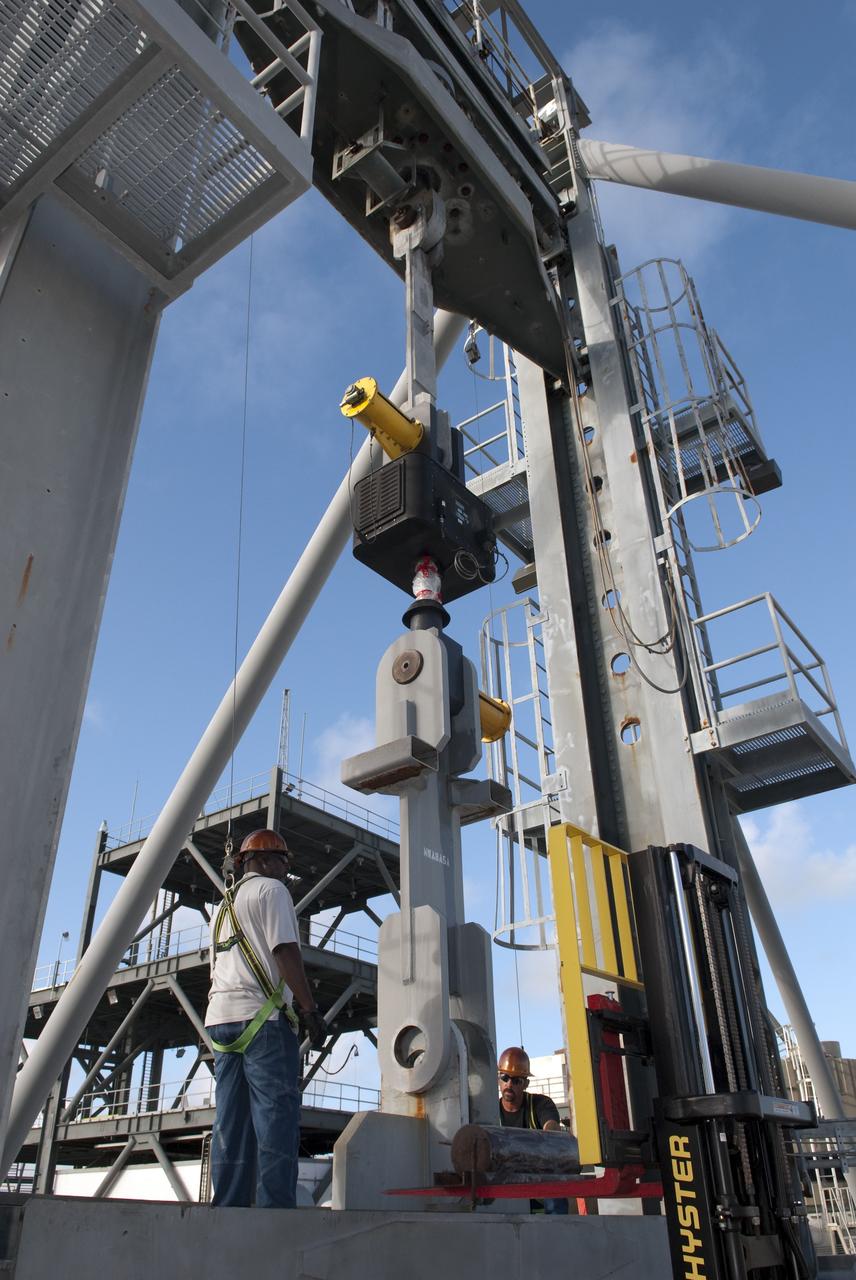
CAPE CANAVERAL, Fla. -- At NASA's Kennedy Space Center in Florida, the 600-Ton Test Fixture outside the Launch Equipment Test Facility conducts a 500,000-pound pull test of a bridge crane lifting element, which is used to lift space shuttles in the Vehicle Assembly Building. The fixture proofload tests, in tension and compression, a variety of ground support equipment, including slings, lifting beams and other critical lifting hardware that require periodic proofloading. Since 1977, the facility has supported NASA’s Launch Services, shuttle, International Space Station, and Constellation programs, as well as commercial providers. The facility recently underwent a major upgrade to support even more programs, projects and customers. It houses a 6,000-square-foot high bay, cable fabrication and molding shop, pneumatics shop, machine and weld shop and full-scale control room. Outside, the facility features a water flow test loop, vehicle motion simulator, launch simulation towers and a cryogenic system. Photo credit: NASA/Jim Grossmann

CAPE CANAVERAL, Fla. -- At NASA's Kennedy Space Center in Florida, the 600-Ton Test Fixture outside the Launch Equipment Test Facility conducts a 500,000-pound pull test of a bridge crane lifting element, which is used to lift space shuttles in the Vehicle Assembly Building. The fixture proofload tests, in tension and compression, a variety of ground support equipment, including slings, lifting beams and other critical lifting hardware that require periodic proofloading. Since 1977, the facility has supported NASA’s Launch Services, shuttle, International Space Station, and Constellation programs, as well as commercial providers. The facility recently underwent a major upgrade to support even more programs, projects and customers. It houses a 6,000-square-foot high bay, cable fabrication and molding shop, pneumatics shop, machine and weld shop and full-scale control room. Outside, the facility features a water flow test loop, vehicle motion simulator, launch simulation towers and a cryogenic system. Photo credit: NASA/Jim Grossmann
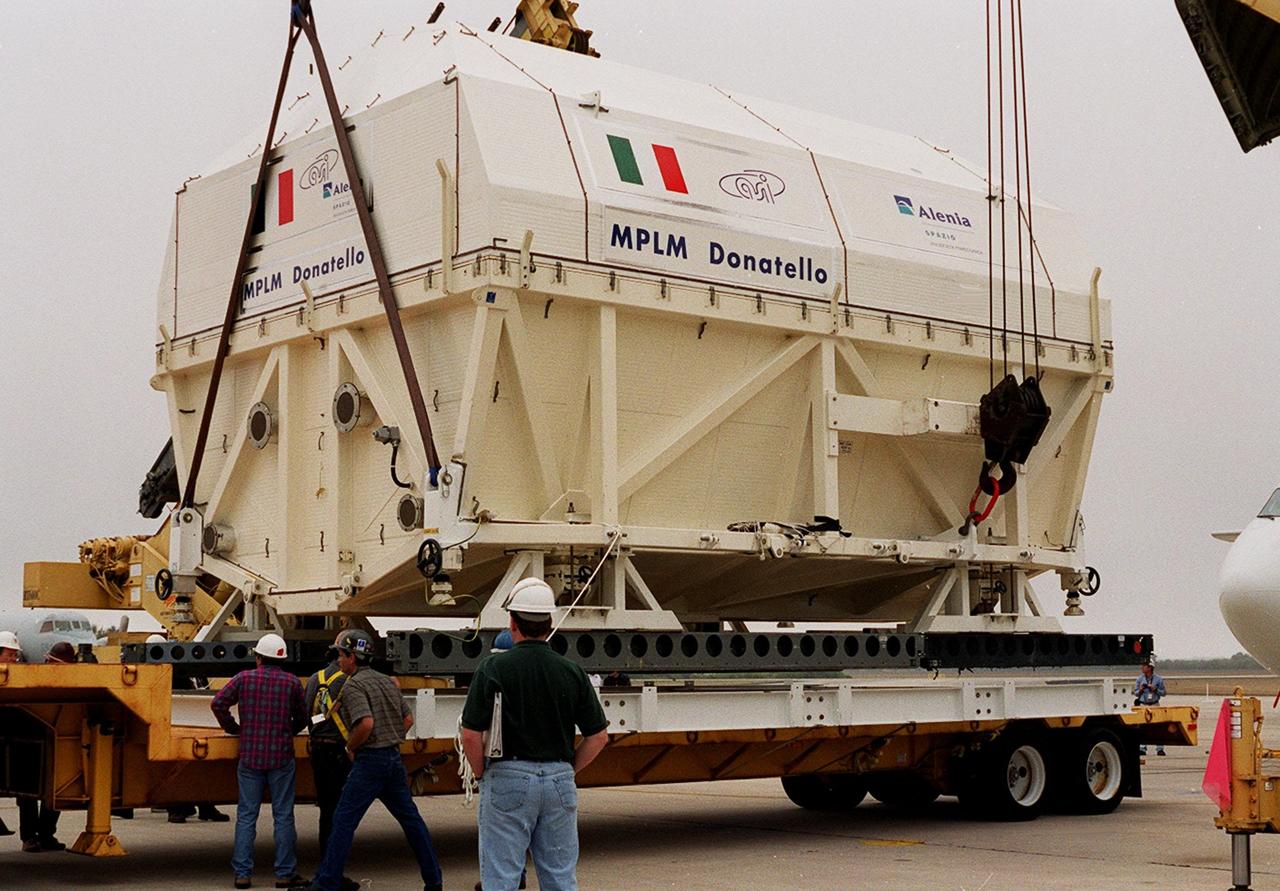
At the Shuttle Landing Facility, workers watch as cranes lower the Italian Space Agency’s Multi-Purpose Logistics Module Donatello onto a flat bed for transport to the Space Station Processing Facility for processing. Among the activities for the payload test team are integrated electrical tests with other Station elements in the SSPF, leak tests, electrical and software compatibility tests with the Space Shuttle (using the Cargo Integrated Test equipment) and an Interface Verification Test once the module is installed in the Space Shuttle’s payload bay at the launch pad. The most significant mechanical task to be performed on Donatello in the SSPF is the installation and outfitting of the racks for carrying the various experiments and cargo
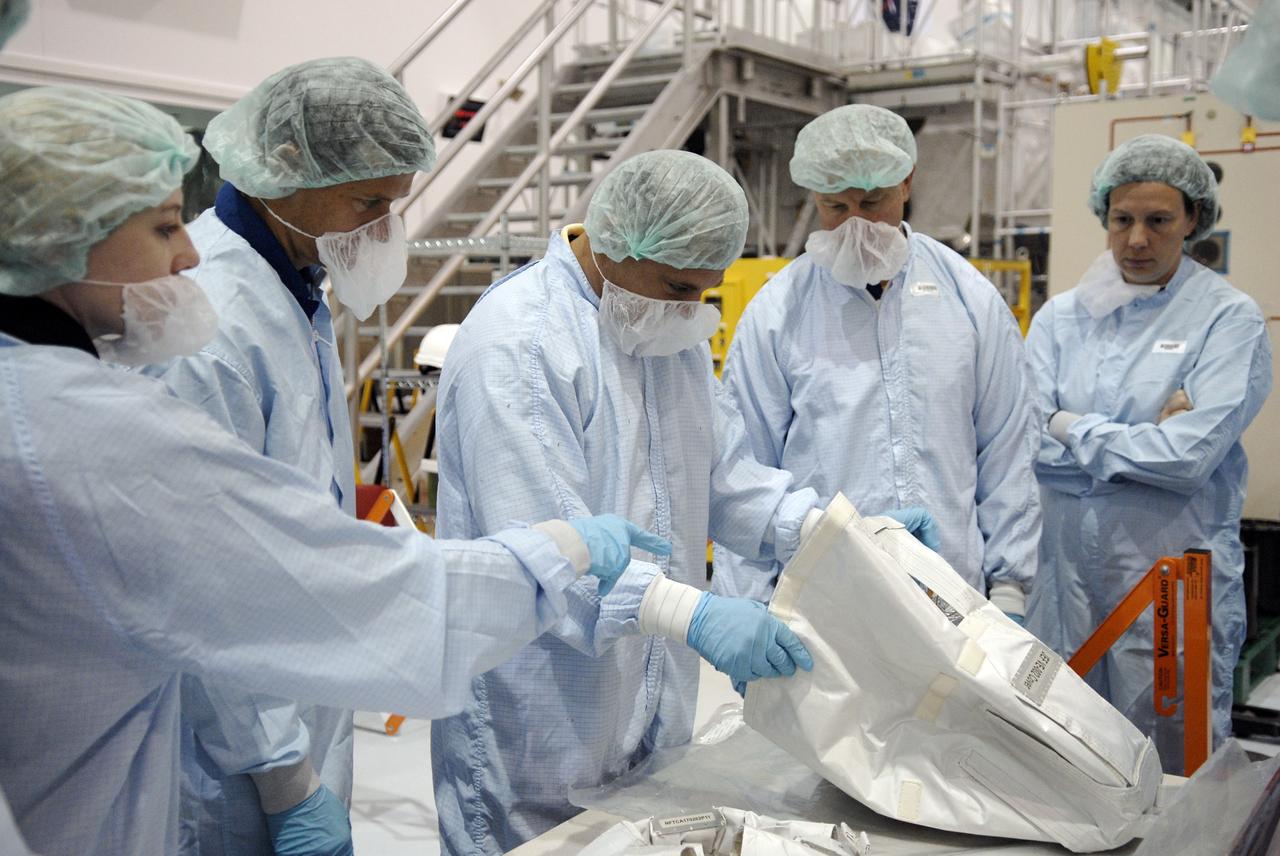
CAPE CANAVERAL, Fla. – In the Space Station Processing Facility at NASA's Kennedy Space Center in Florida, STS-127 mission crew members get hands-on familiarization with equipment to be used on the mission. Crew members are Commander Mark Polansky, Pilot Doug Hurley and Mission Specialists Christopher Cassidy, Tom Marshburn, Dave Wolf, Julie Payette and Tim Kopra. The mission payload includes the Japanese Experiment Module, or JEM, Extended Facility and the Inter-orbit Communication System Extended Facility, or ICS-EF. Equipment familiarization is part of a Crew Equipment Interface Test. The payload will be launched to the International Space Station aboard the space shuttle Endeavour on the STS-127 mission, targeted for launch on May 15, 2009. Photo credit: NASA/Kim Shiflett
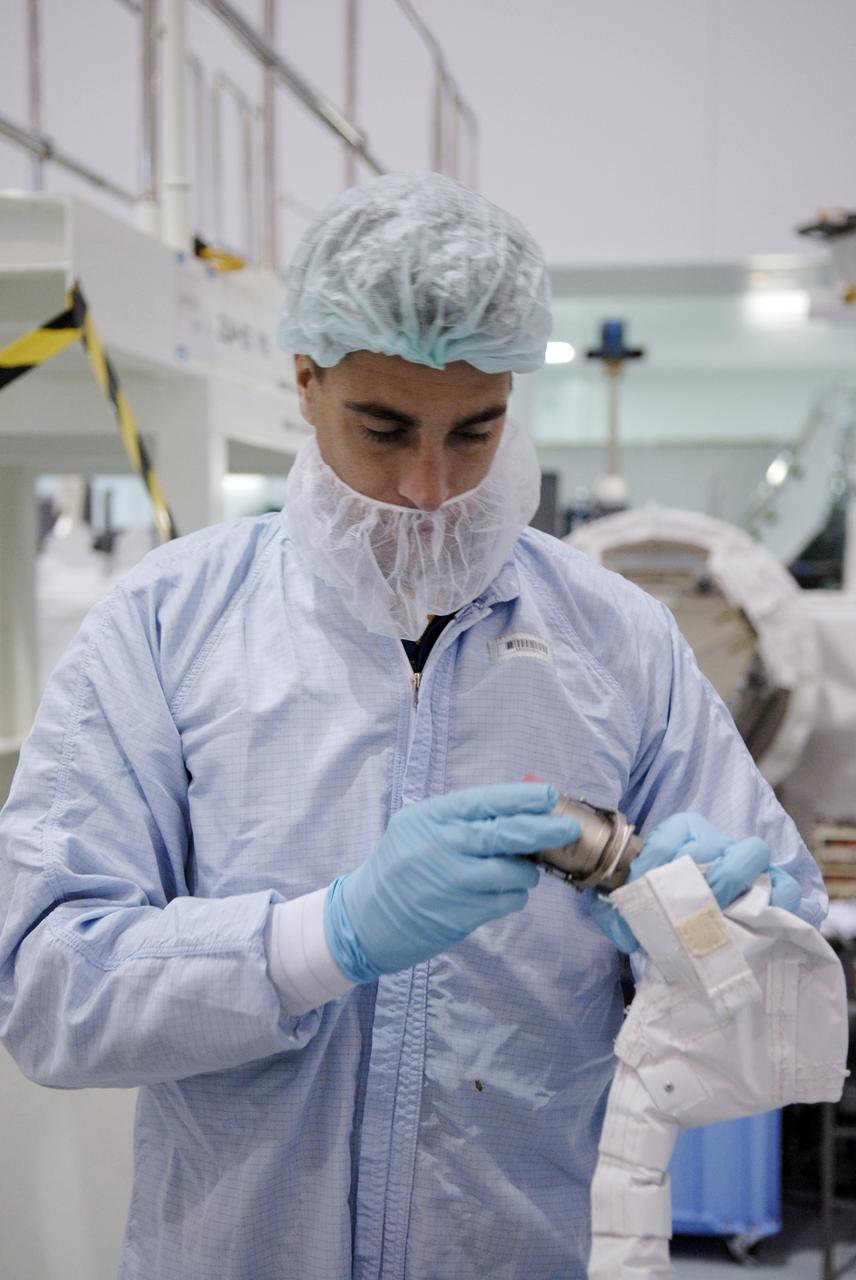
CAPE CANAVERAL, Fla. – In the Space Station Processing Facility at NASA's Kennedy Space Center in Florida, STS-127 Mission Specialist Christopher Cassidy looks at a piece of equipment to be used on the mission. Other crew members are Commander Mark Polansky, Pilot Doug Hurley and Mission Specialists Tom Marshburn, Dave Wolf, Julie Payette and Tim Kopra. The mission payload includes the Japanese Experiment Module, or JEM, Extended Facility and the Inter-orbit Communication System Extended Facility, or ICS-EF. Equipment familiarization is part of a Crew Equipment Interface Test. The payload will be launched to the International Space Station aboard the space shuttle Endeavour on the STS-127 mission, targeted for launch on May 15, 2009. Photo credit: NASA/Kim Shiflett
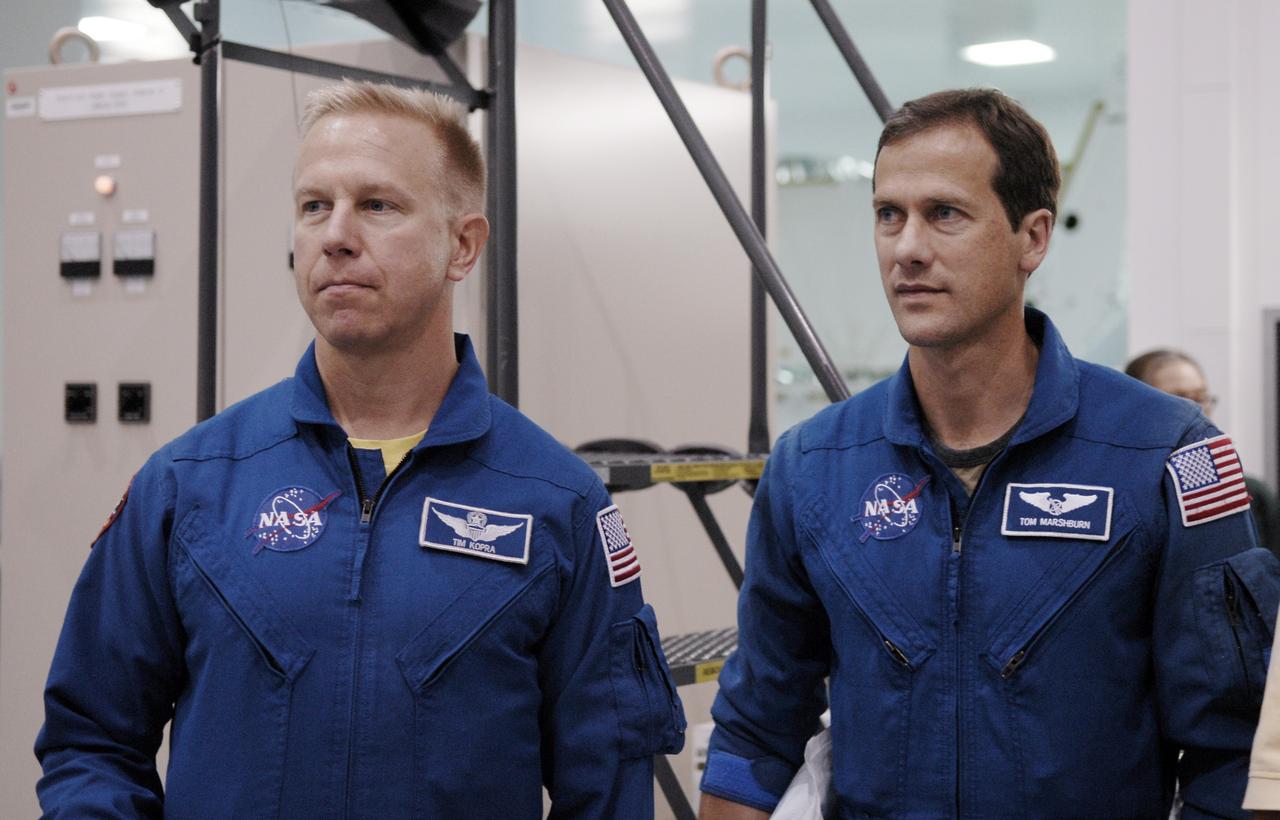
CAPE CANAVERAL, Fla. – STS-127 Mission Specialists Tim Kopra (left) and Tom Marshburn are in the Space Station Processing Facility at NASA's Kennedy Space Center in Florida to gain familiarization with hardware and equipment that will be used on the mission. Other crew members are Commander Mark Polansky, Pilot Doug Hurley and Mission Specialists Christopher Cassidy, Dave Wolf and Julie Payette. The mission payload includes the Japanese Experiment Module, or JEM, Extended Facility and the Inter-orbit Communication System Extended Facility, or ICS-EF. Equipment familiarization is part of a Crew Equipment Interface Test. The payload will be launched to the International Space Station aboard the space shuttle Endeavour on the STS-127 mission, targeted for launch on May 15, 2009. Photo credit: NASA/Kim Shiflett
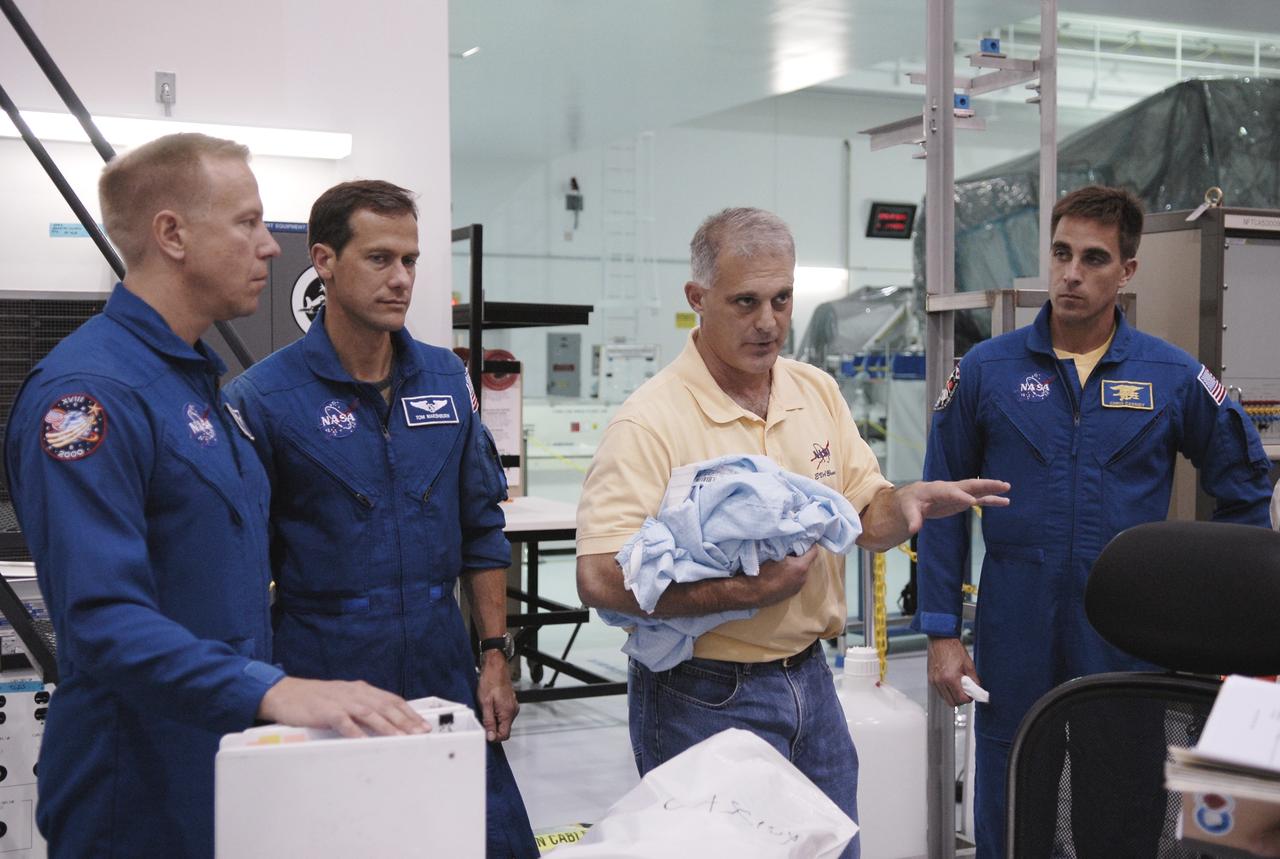
CAPE CANAVERAL, Fla. – In the Space Station Processing Facility at NASA's Kennedy Space Center in Florida, STS-127 crew members discuss some of the equipment for the mission. From left are Mission Specialists Tim Kopra, Tom Marshburn, Dave Wolf and Christopher Cassidy. Other crew members are Commander Mark Polansky, Pilot Doug Hurley and Mission Specialist Julie Payette. The mission payload includes the Japanese Experiment Module, or JEM, Extended Facility and the Inter-orbit Communication System Extended Facility, or ICS-EF. Equipment familiarization is part of a Crew Equipment Interface Test. The payload will be launched to the International Space Station aboard the space shuttle Endeavour on the STS-127 mission, targeted for launch on May 15, 2009. Photo credit: NASA/Kim Shiflett
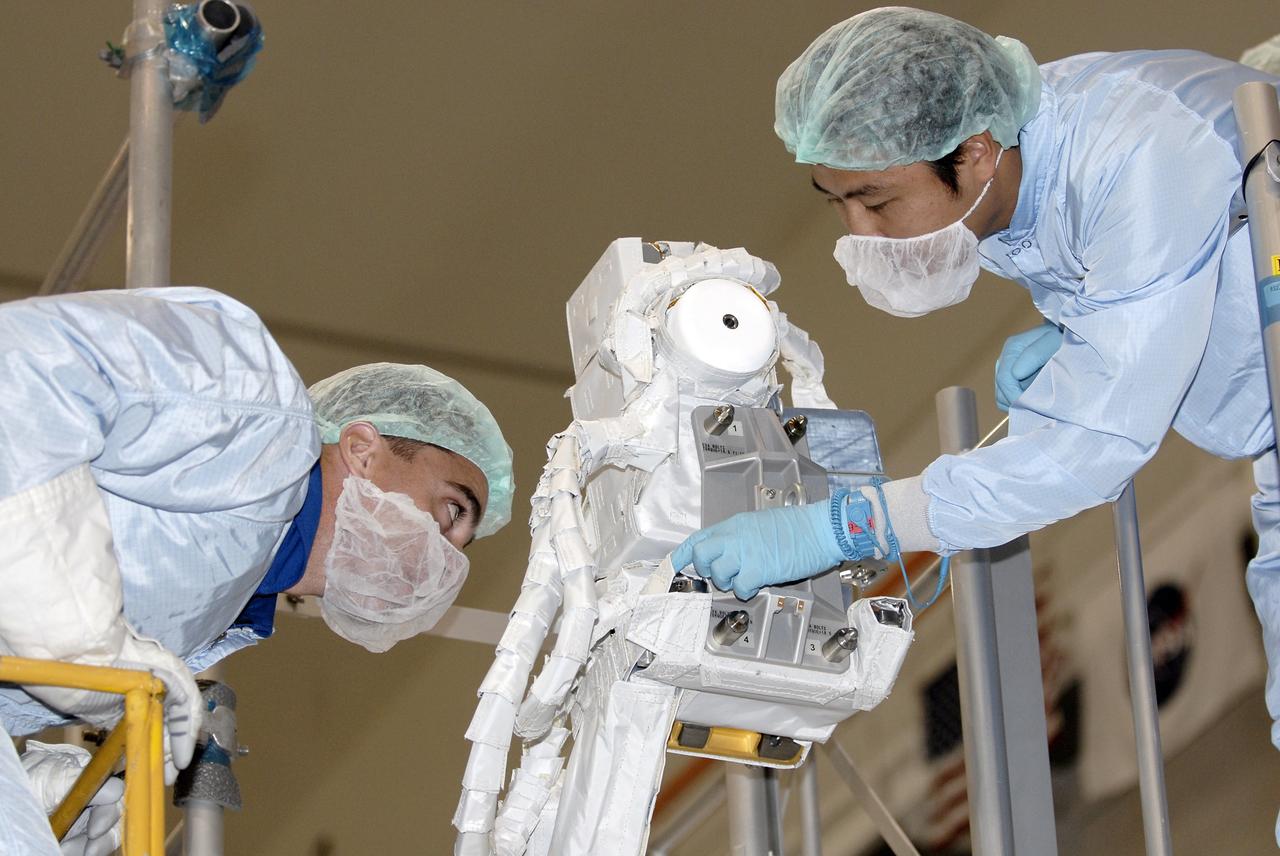
CAPE CANAVERAL, Fla. – In the Space Station Processing Facility at NASA's Kennedy Space Center in Florida, STS-127 mission crew members inspect the installation of the Japanese Aerospace Exploration Agency's Visual Equipments, or VE, to its final spot since they will have to do this as part of an EVA on the mission. The VE has to be installed to the final position on orbit because it is outside of the payload bay envelope. The mission payload includes the Japanese Experiment Module, or JEM, Extended Facility and the Inter-orbit Communication System Extended Facility, or ICS-EF. Equipment familiarization is part of a Crew Equipment Interface Test. The payload will be launched to the International Space Station aboard the space shuttle Endeavour on the STS-127 mission, targeted for launch on May 15, 2009. Photo credit: NASA/Kim Shiflett
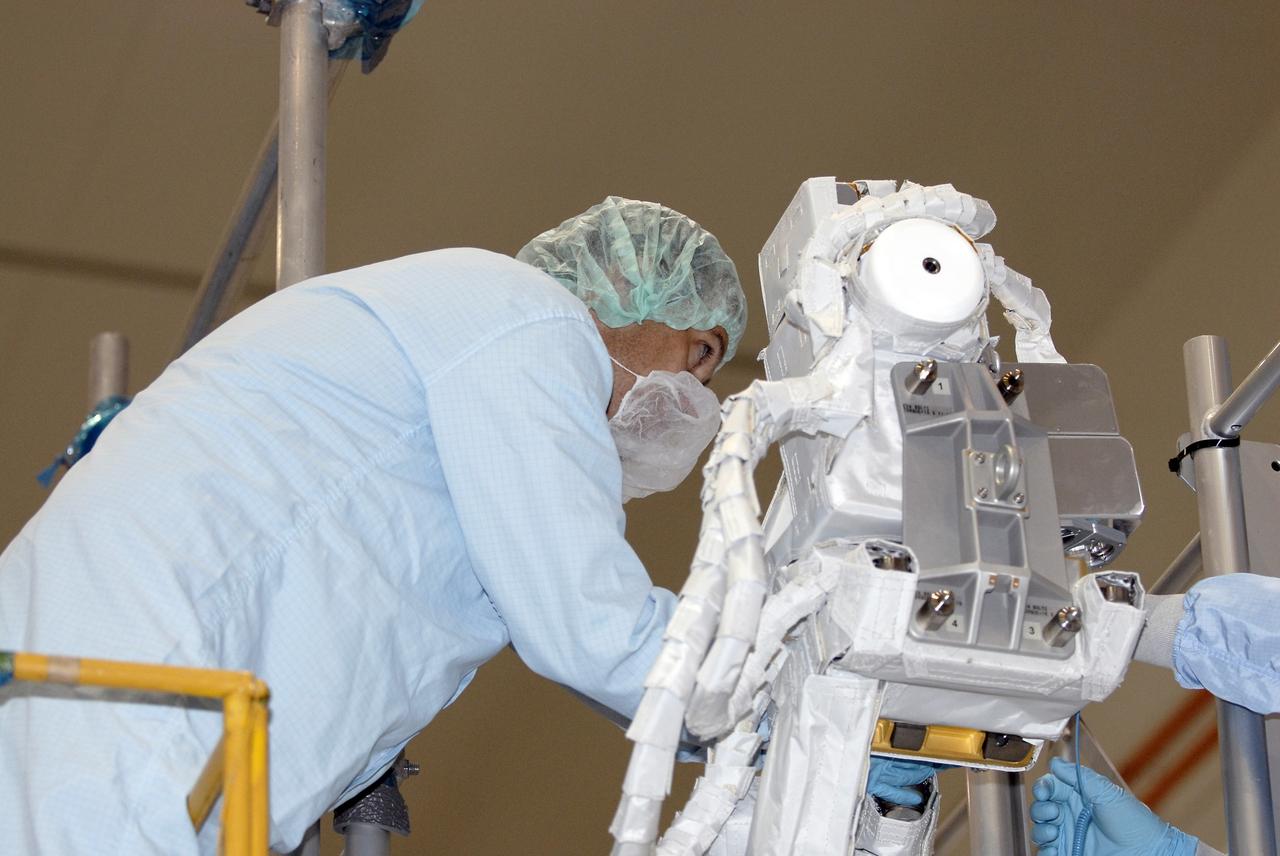
CAPE CANAVERAL, Fla. – In the Space Station Processing Facility at NASA's Kennedy Space Center in Florida, STS-127 mission crew members inspect the installation of the Japanese Aerospace Exploration Agency's Visual Equipments, or VE, to its final spot since they will have to do this as part of an EVA on the mission. The VE has to be installed to the final position on orbit because it is outside of the payload bay envelope. The mission payload includes the Japanese Experiment Module, or JEM, Extended Facility and the Inter-orbit Communication System Extended Facility, or ICS-EF. Equipment familiarization is part of a Crew Equipment Interface Test. The payload will be launched to the International Space Station aboard the space shuttle Endeavour on the STS-127 mission, targeted for launch on May 15, 2009. Photo credit: NASA/Kim Shiflett
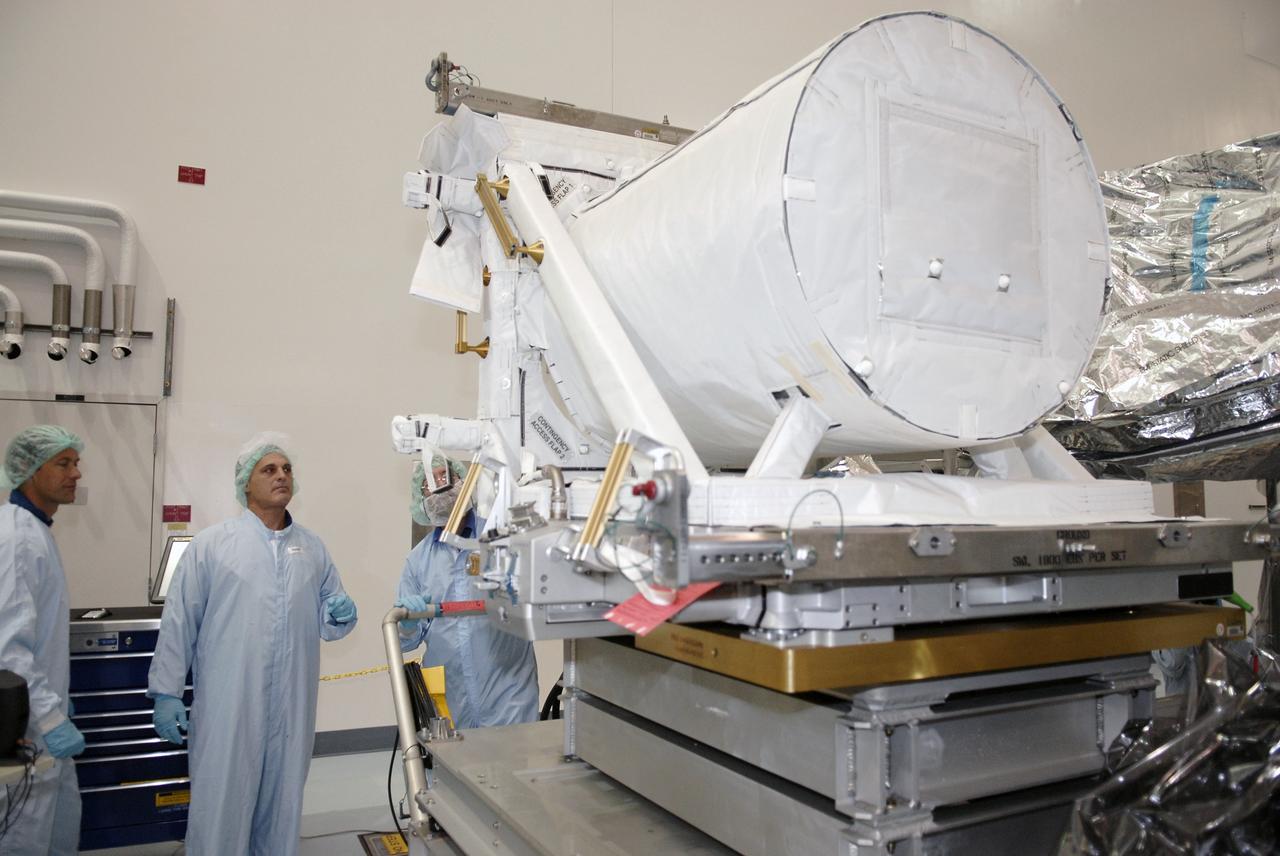
CAPE CANAVERAL, Fla. - In the Space Station Processing Facility at NASA's Kennedy Space Center in Florida, STS-127 crew members become familiar with the payload and hardware for their mission. Seen at left are Mission Specialists Tom Marshburn and Dave Wolf. Here they are looking at the Space-to-Ground ANTenna, or SGANT, Flight Support Equipment that will fly on the Integrated Cargo Carrier. The mission payload also includes the Extended Facility and the Inter Orbit Communication System Extended Facility, or ICS-EF. Equipment familiarization is part of a Crew Equipment Interface Test. The payload will be launched to the International Space Station aboard the space shuttle Endeavour on the STS-127 mission, targeted for launch on May 15, 2009. Photo credit: NASA/Kim Shiflett
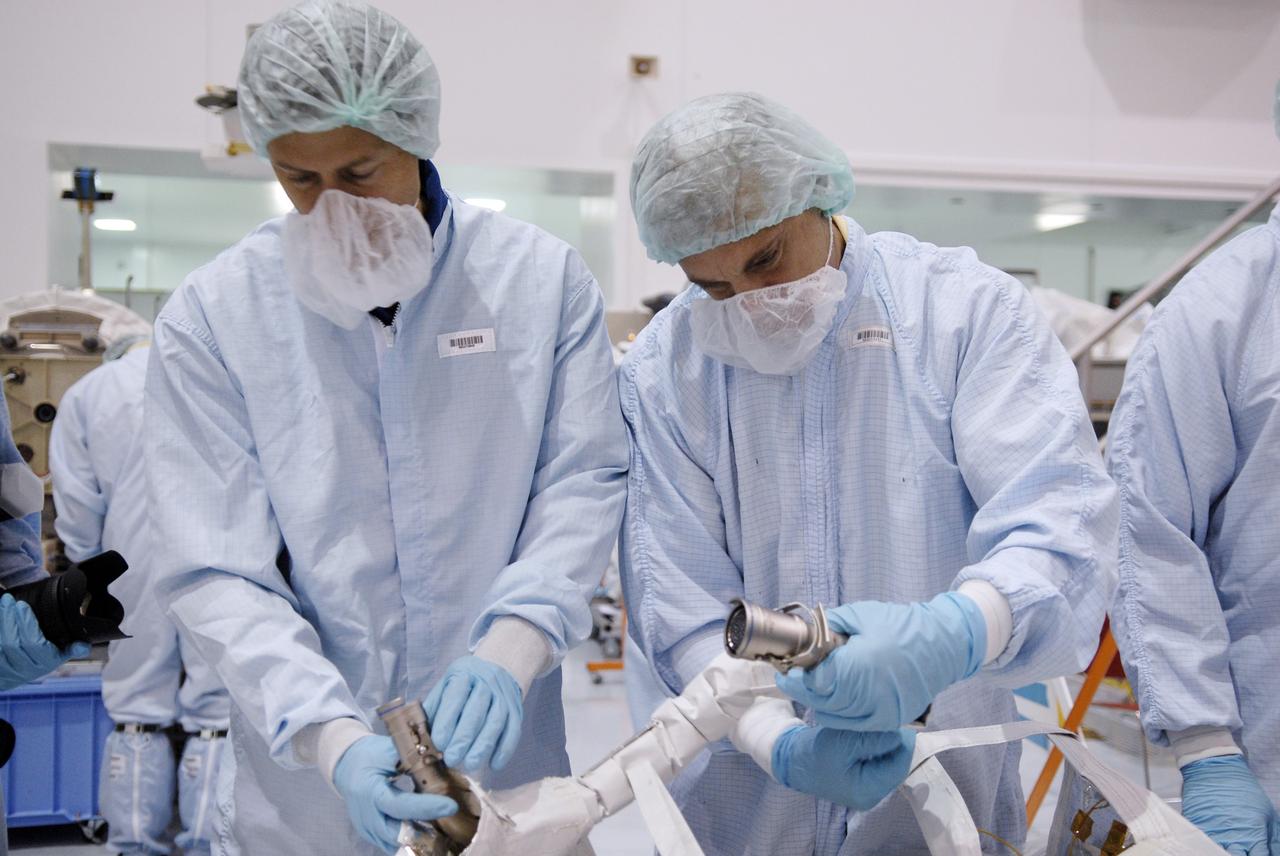
CAPE CANAVERAL, Fla. – In the Space Station Processing Facility at NASA's Kennedy Space Center in Florida, STS-127 mission crew members get hands-on familiarization with equipment to be used on the mission. Crew members are Commander Mark Polansky, Pilot Doug Hurley and Mission Specialists Christopher Cassidy, Tom Marshburn, Dave Wolf, Julie Payette and Tim Kopra. The mission payload includes the Japanese Experiment Module, or JEM, Extended Facility and the Inter-orbit Communication System Extended Facility, or ICS-EF. Equipment familiarization is part of a Crew Equipment Interface Test. The payload will be launched to the International Space Station aboard the space shuttle Endeavour on the STS-127 mission, targeted for launch on May 15, 2009. Photo credit: NASA/Kim Shiflett