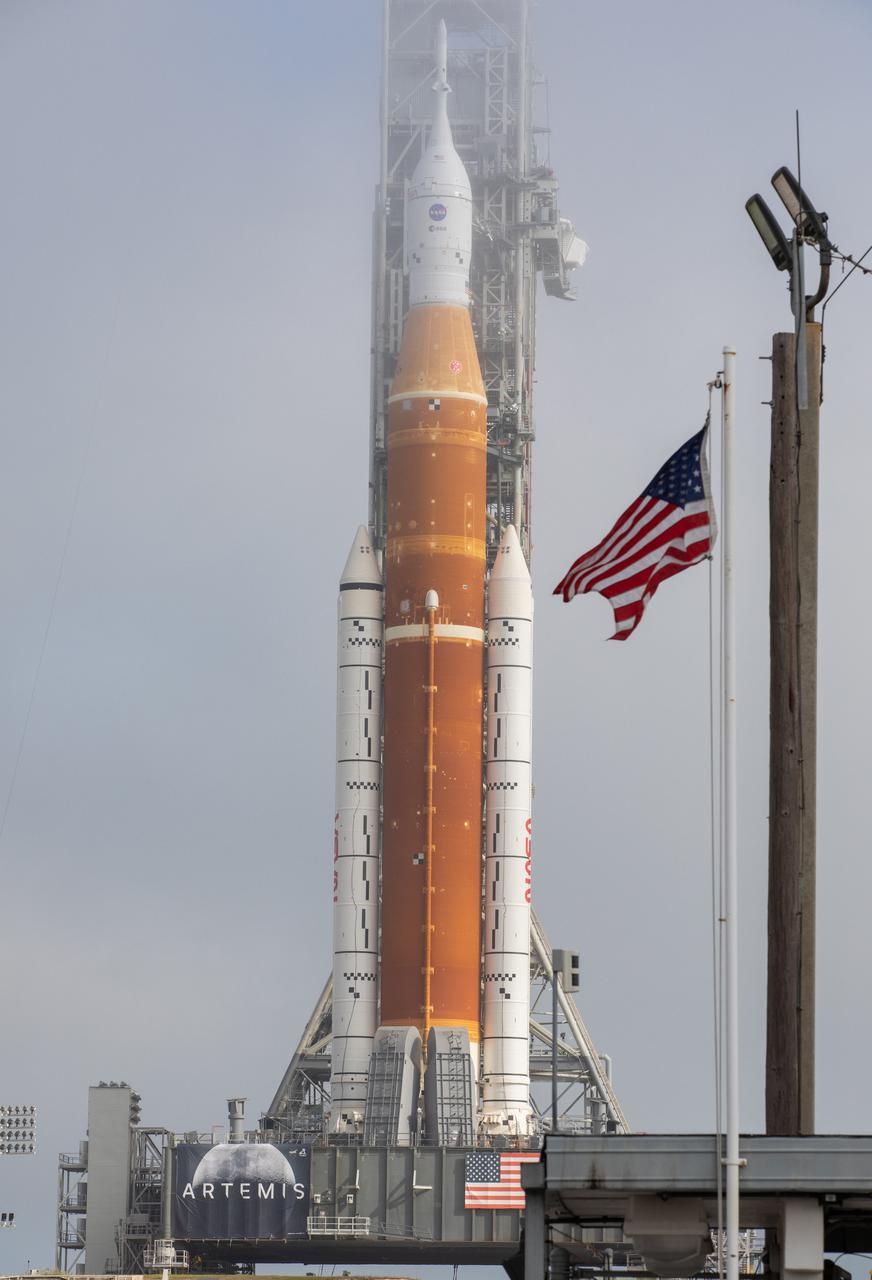
Standing atop the mobile launcher, NASA’s Space Launch System (SLS) rocket and Orion spacecraft arrive at Launch Pad 39B at the agency’s Kennedy Space Center in Florida on March 18, 2022. The Artemis I stack was carried from the Vehicle Assembly Building to the pad – a 4.2-mile journey that took nearly 11 hours to complete – by the agency’s crawler-transporter 2 for a wet dress rehearsal ahead of the uncrewed launch. Artemis I will test SLS and Orion as an integrated system prior to crewed flights to the Moon. Through Artemis, NASA will land the first woman and the first person of color on the lunar surface, paving the way for a long-term lunar presence and serving as a steppingstone on the way to Mars.
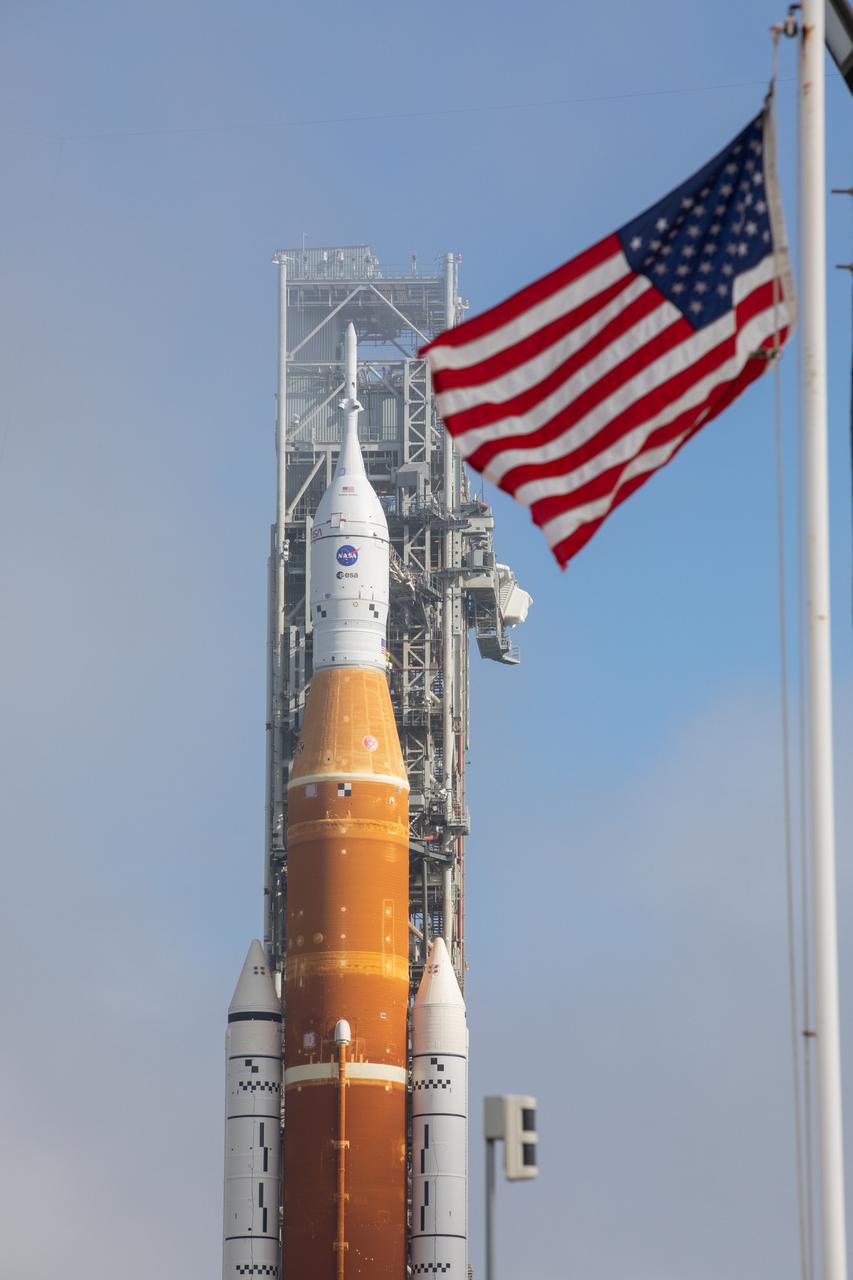
NASA’s Space Launch System (SLS) rocket arrives at Launch Pad 39B at the agency’s Kennedy Space Center in Florida on March 18, 2022, for a wet dress rehearsal ahead of the uncrewed Artemis I launch. The rocket, with the Orion spacecraft atop, was carried from the Vehicle Assembly Building to the pad – a 4.2-mile journey that took nearly 11 hours to complete – by the agency’s crawler-transporter 2. Artemis I will test SLS and Orion as an integrated system prior to crewed flights to the Moon. Through Artemis, NASA will land the first woman and the first person of color on the lunar surface, paving the way for a long-term lunar presence and serving as a steppingstone on the way to Mars.
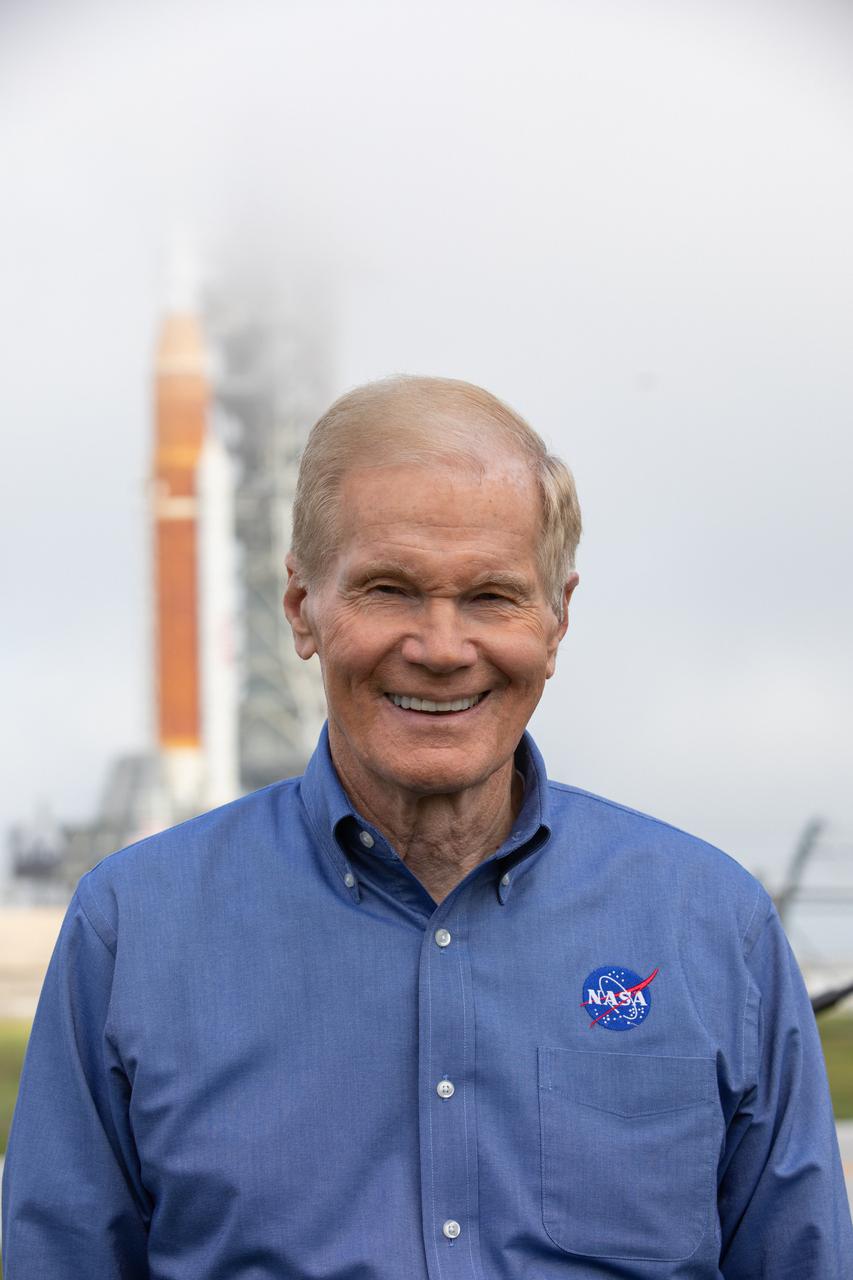
NASA Administrator Bill Nelson visits Kennedy Space Center’s Launch Pad 39B in Florida, following the Space Launch System (SLS) rocket’s arrival at the pad on March 18, 2022. The rocket, with the Orion spacecraft atop, was carried from the Vehicle Assembly Building to the pad – a 4.2-mile journey that took nearly 11 hours to complete – by the agency’s crawler-transporter 2 for a wet dress rehearsal ahead of the uncrewed Artemis I launch. Artemis I will test SLS and Orion as an integrated system prior to crewed flights to the Moon. Through Artemis, NASA will land the first woman and the first person of color on the lunar surface, paving the way for a long-term lunar presence and serving as a steppingstone on the way to Mars.
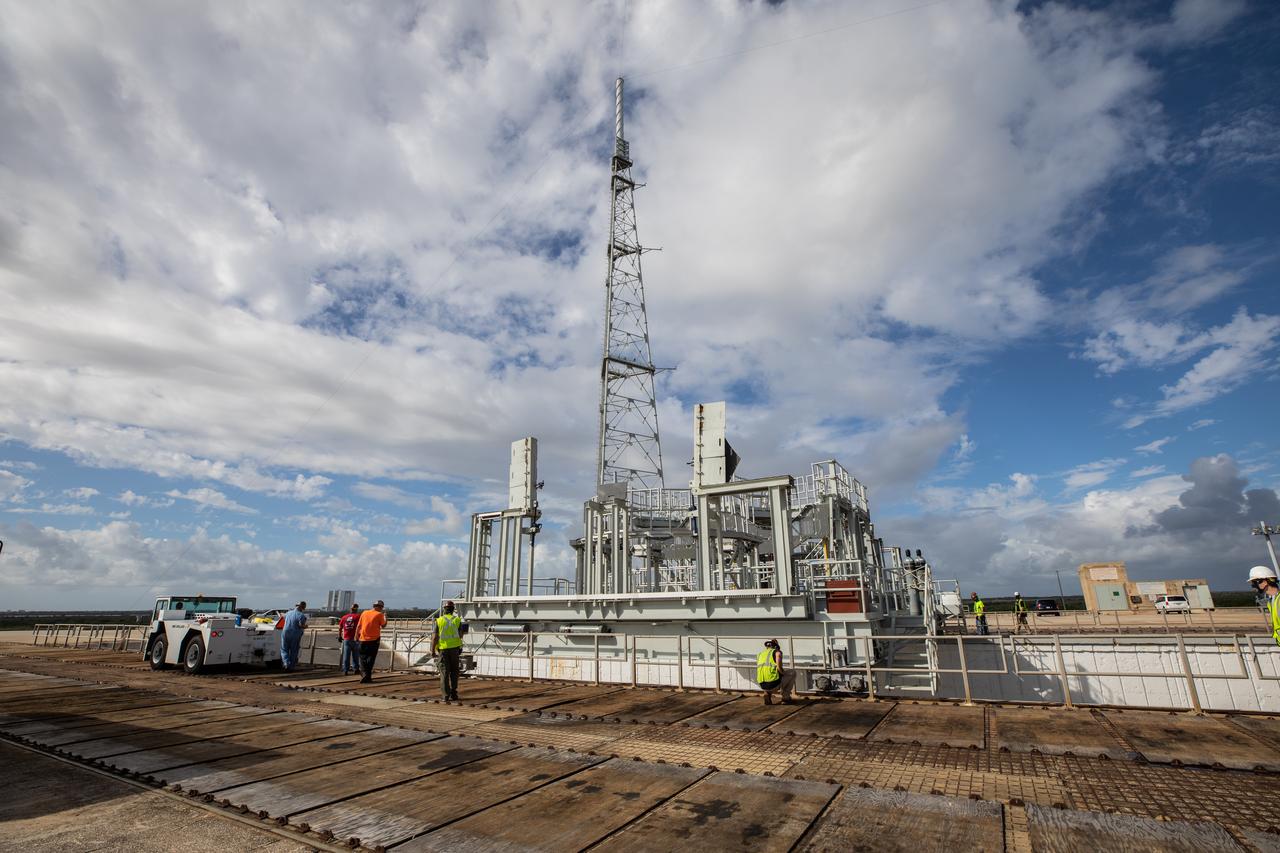
A view of Launch Complex 39B at NASA’s Kennedy Space Center in Florida on Oct. 23, 2020. The mobile launcher for Artemis I is at the pad. The nearly 400-foot-tall mobile launcher is at the pad while engineers with Exploration Ground Systems and Jacobs complete several tasks, including a timing test to validate the launch team’s countdown timeline, and a thorough, top-to-bottom wash down of the mobile launcher to remove any debris remaining from construction and installation of the umbilical arms. Artemis I will test the Orion spacecraft and Space Launch System as an integrated system ahead of crewed flights to the Moon. Under the Artemis program, NASA will land the first woman and the next man on the Moon in 2024.
A view of the mobile launcher for the Artemis I mission at Launch Pad 39B at NASA’s Kennedy Space Center in Florida on Oct. 23, 2020. The nearly 400-foot-tall mobile launcher is at the pad while engineers with Exploration Ground Systems and Jacobs complete several tasks, including a timing test to validate the launch team’s countdown timeline, and a thorough, top-to-bottom wash down of the mobile launcher to remove any debris remaining from construction and installation of the umbilical arms. Artemis I will test the Orion spacecraft and Space Launch System as an integrated system ahead of crewed flights to the Moon. Under the Artemis program, NASA will land the first woman and the next man on the Moon in 2024.
A view of the mobile launcher for the Artemis I mission at Launch Pad 39B at NASA’s Kennedy Space Center in Florida on Oct. 23, 2020. The nearly 400-foot-tall mobile launcher is at the pad while engineers with Exploration Ground Systems and Jacobs complete several tasks, including a timing test to validate the launch team’s countdown timeline, and a thorough, top-to-bottom wash down of the mobile launcher to remove any debris remaining from construction and installation of the umbilical arms. Artemis I will test the Orion spacecraft and Space Launch System as an integrated system ahead of crewed flights to the Moon. Under the Artemis program, NASA will land the first woman and the next man on the Moon in 2024.
The mobile launcher for the Artemis I mission is in view on the top of Launch Pad 39B at NASA’s Kennedy Space Center in Florida on Oct. 23, 2020. The nearly 400-foot-tall mobile launcher is at the pad to allow engineers with Exploration Ground Systems and Jacobs to complete several tasks, including a timing test to validate the launch team’s countdown timeline, and a thorough, top-to-bottom wash down of the mobile launcher to remove any debris remaining from construction and installation of the umbilical arms. Artemis I will test the Orion spacecraft and Space Launch System as an integrated system ahead of crewed flights to the Moon. Under the Artemis program, NASA will land the first woman and the next man on the Moon in 2024.
The mobile launcher for the Artemis I mission is in view on the top of Launch Pad 39B at NASA’s Kennedy Space Center in Florida on Oct. 23, 2020. The nearly 400-foot-tall mobile launcher is at the pad to allow engineers with Exploration Ground Systems and Jacobs to complete several tasks, including a timing test to validate the launch team’s countdown timeline, and a thorough, top-to-bottom wash down of the mobile launcher to remove any debris remaining from construction and installation of the umbilical arms. Artemis I will test the Orion spacecraft and Space Launch System as an integrated system ahead of crewed flights to the Moon. Under the Artemis program, NASA will land the first woman and the next man on the Moon in 2024.
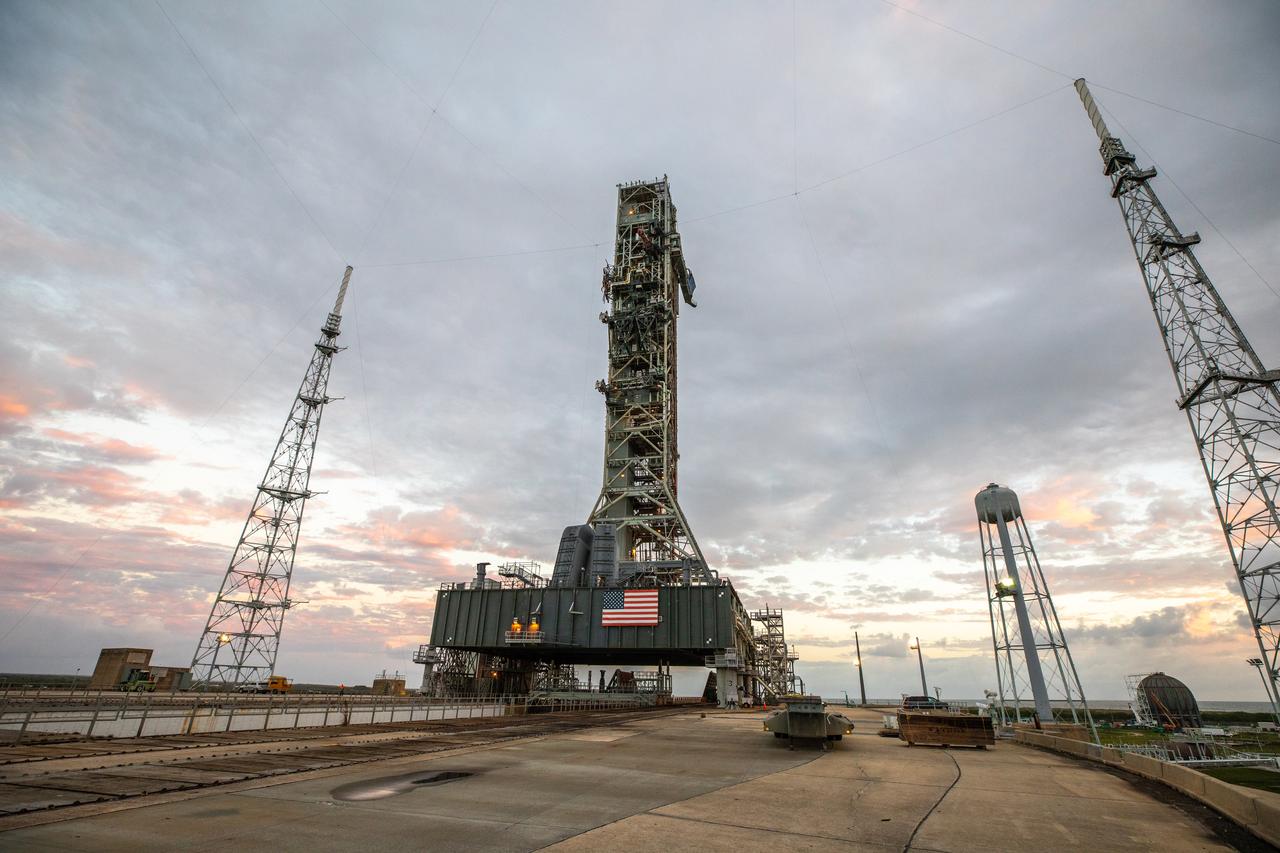
The mobile launcher for the Artemis I mission is in view on the top of Launch Pad 39B at NASA’s Kennedy Space Center in Florida on Oct. 23, 2020. The nearly 400-foot-tall mobile launcher is at the pad to allow engineers with Exploration Ground Systems and Jacobs to complete several tasks, including a timing test to validate the launch team’s countdown timeline, and a thorough, top-to-bottom wash down of the mobile launcher to remove any debris remaining from construction and installation of the umbilical arms. Artemis I will test the Orion spacecraft and Space Launch System as an integrated system ahead of crewed flights to the Moon. Under the Artemis program, NASA will land the first woman and the next man on the Moon in 2024.

On Oct. 23, 2020, an engineer with Exploration Ground Systems (EGS) is at Launch Pad 39B at NASA’s Kennedy Space Center in Florida as a brilliant sunrise illuminates the sky. The mobile launcher for the Artemis I mission is at the pad to allow engineers with EGS and Jacobs to complete several tasks, including a timing test to validate the launch team’s countdown timeline, and a thorough, top-to-bottom wash down of the mobile launcher to remove any debris remaining from construction and installation of the umbilical arms. Artemis I will test the Orion spacecraft and Space Launch System as an integrated system ahead of crewed flights to the Moon. Under the Artemis program, NASA will land the first woman and the next man on the Moon in 2024.
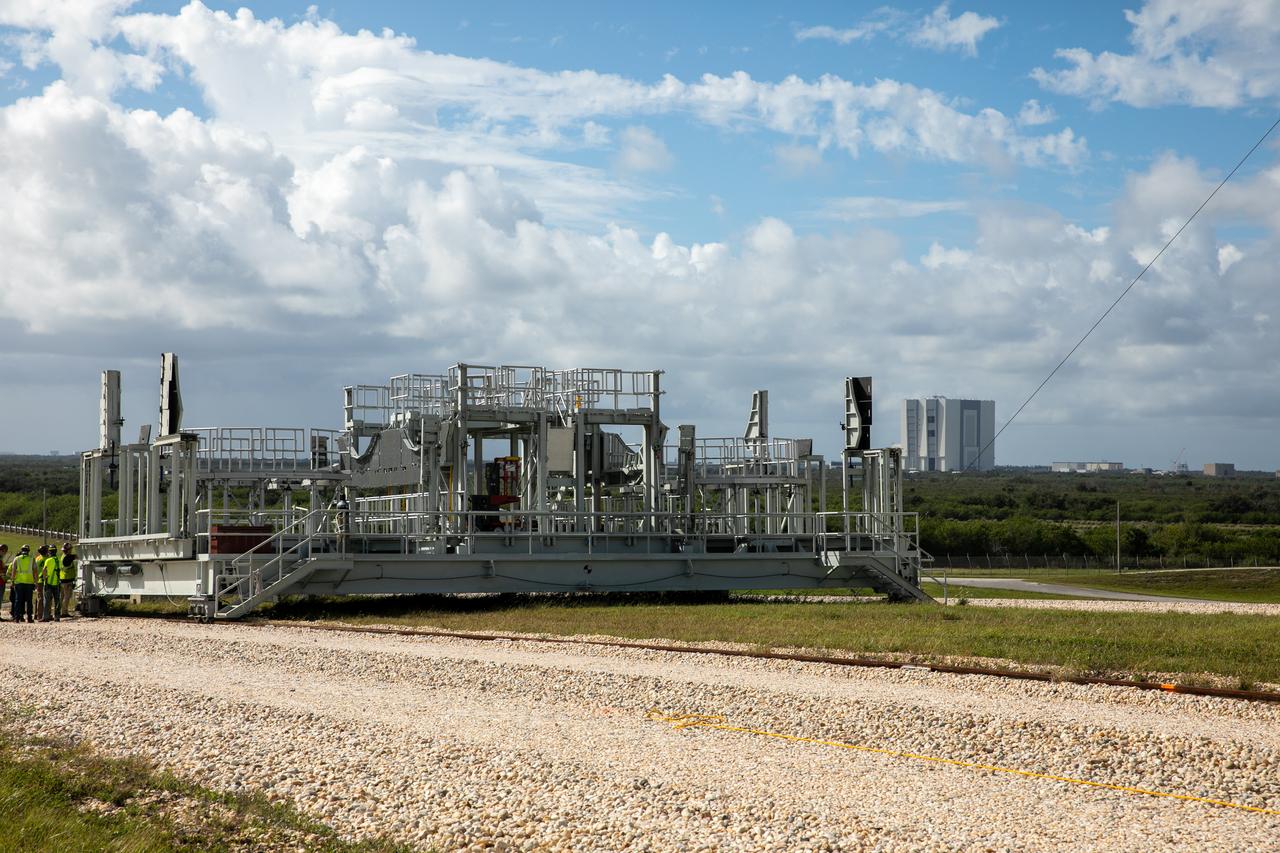
The engine service platform has been lowered and removed from the mobile launcher for Artemis I at Launch Pad 39B at NASA’s Kennedy Space Center in Florida on Oct. 23, 2020. It is being moved from the pad. The nearly 400-foot-tall mobile launcher is at the pad while engineers with Exploration Ground Systems and Jacobs complete several tasks, including a timing test to validate the launch team’s countdown timeline, and a thorough, top-to-bottom wash down of the mobile launcher to remove any debris remaining from construction and installation of the umbilical arms. Artemis I will test the Orion spacecraft and Space Launch System as an integrated system ahead of crewed flights to the Moon. Under the Artemis program, NASA will land the first woman and the next man on the Moon in 2024.
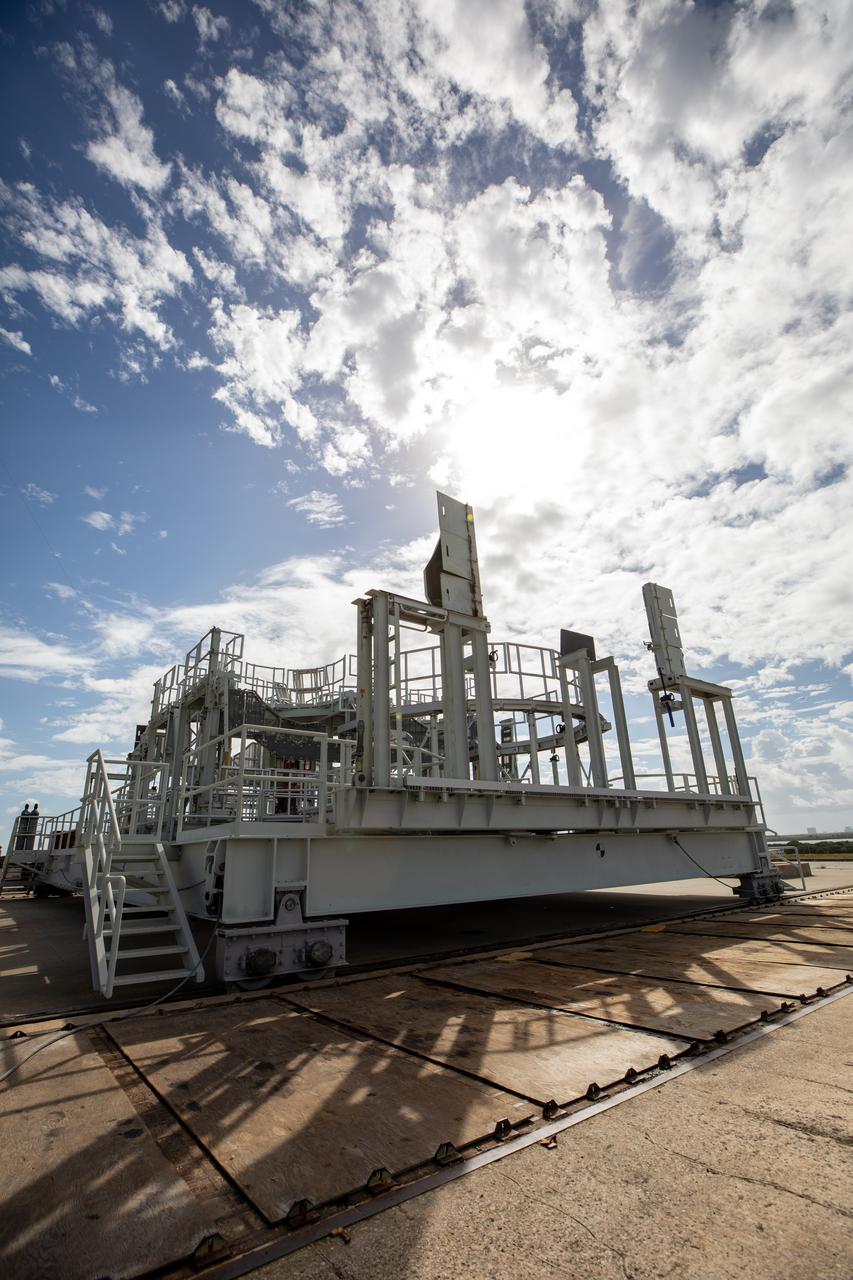
The engine service platform has been lowered and removed from the mobile launcher for Artemis I at Launch Pad 39B at NASA’s Kennedy Space Center in Florida on Oct. 23, 2020. It is staged on the top of the pad. The nearly 400-foot-tall mobile launcher is at the pad while engineers with Exploration Ground Systems and Jacobs complete several tasks, including a timing test to validate the launch team’s countdown timeline, and a thorough, top-to-bottom wash down of the mobile launcher to remove any debris remaining from construction and installation of the umbilical arms. Artemis I will test the Orion spacecraft and Space Launch System as an integrated system ahead of crewed flights to the Moon. Under the Artemis program, NASA will land the first woman and the next man on the Moon in 2024.
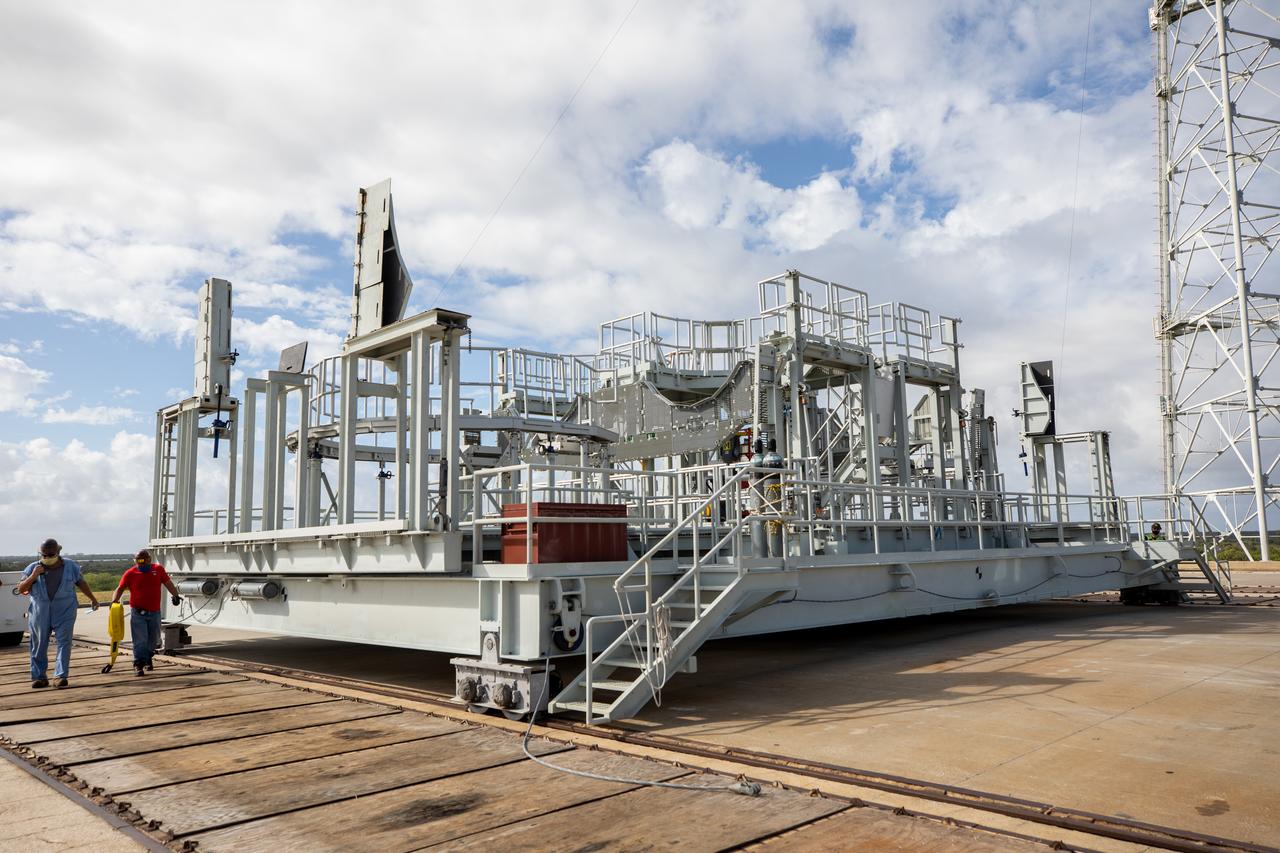
The engine service platform has been lowered and removed from the mobile launcher for Artemis I at Launch Pad 39B at NASA’s Kennedy Space Center in Florida on Oct. 23, 2020. It is staged on the top of the pad. The nearly 400-foot-tall mobile launcher is at the pad while engineers with Exploration Ground Systems and Jacobs complete several tasks, including a timing test to validate the launch team’s countdown timeline, and a thorough, top-to-bottom wash down of the mobile launcher to remove any debris remaining from construction and installation of the umbilical arms. Artemis I will test the Orion spacecraft and Space Launch System as an integrated system ahead of crewed flights to the Moon. Under the Artemis program, NASA will land the first woman and the next man on the Moon in 2024.
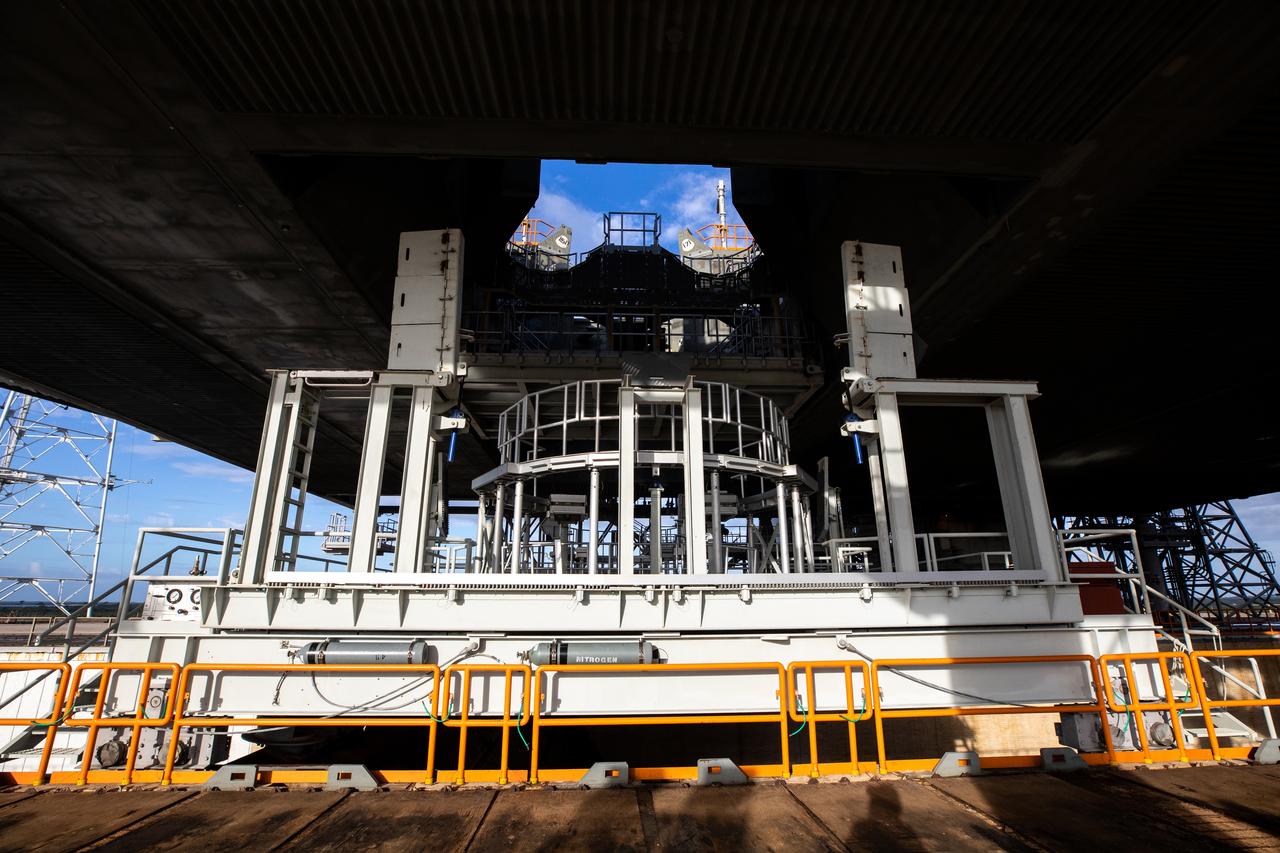
The engine service platform is moved into position beneath the mobile launcher for Artemis I at Launch Pad 39B on Oct. 23, 2020, at NASA’s Kennedy Space Center in Florida. The service platform allows access to the RS-25 engines on the Space Launch System core stage for routine work or inspections. The nearly 400-foot-tall mobile launcher will remain at the pad while engineers with Exploration Ground Systems and Jacobs will complete several tasks, including a timing test to validate the launch team’s countdown timeline, and a thorough, top-to-bottom wash down of the mobile launcher to remove any debris remaining from construction and installation of the umbilical arms. Artemis I will test the Orion spacecraft and Space Launch System as an integrated system ahead of crewed flights to the Moon. Under the Artemis program, NASA will land the first woman and the next man on the Moon in 2024.
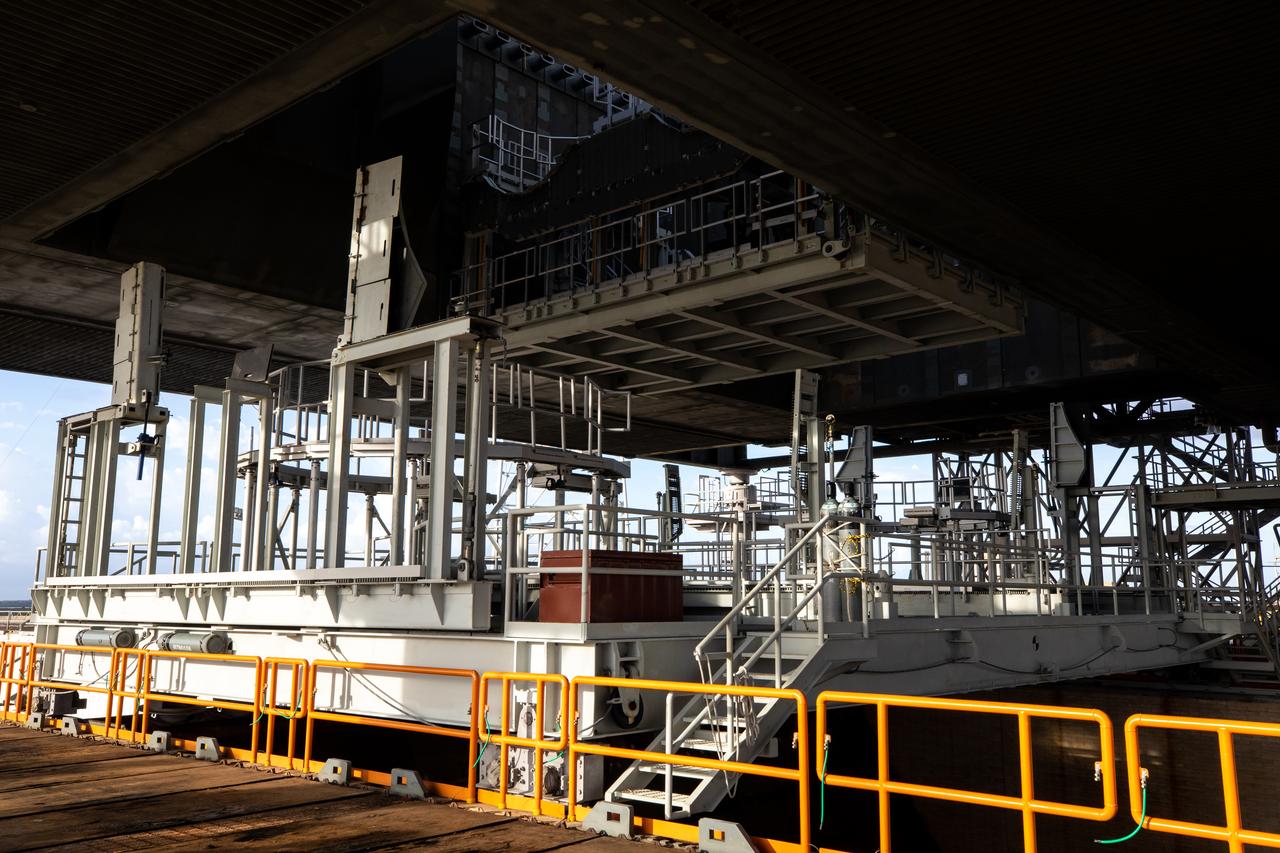
The engine service platform is moved into position beneath the mobile launcher for Artemis I at Launch Pad 39B on Oct. 23, 2020, at NASA’s Kennedy Space Center in Florida. The service platform allows access to the RS-25 engines on the Space Launch System core stage for routine work or inspections. The nearly 400-foot-tall mobile launcher will remain at the pad while engineers with Exploration Ground Systems and Jacobs complete several tasks, including a timing test to validate the launch team’s countdown timeline, and a thorough, top-to-bottom wash down of the mobile launcher to remove any debris remaining from construction and installation of the umbilical arms. Artemis I will test the Orion spacecraft and Space Launch System as an integrated system ahead of crewed flights to the Moon. Under the Artemis program, NASA will land the first woman and the next man on the Moon in 2024.
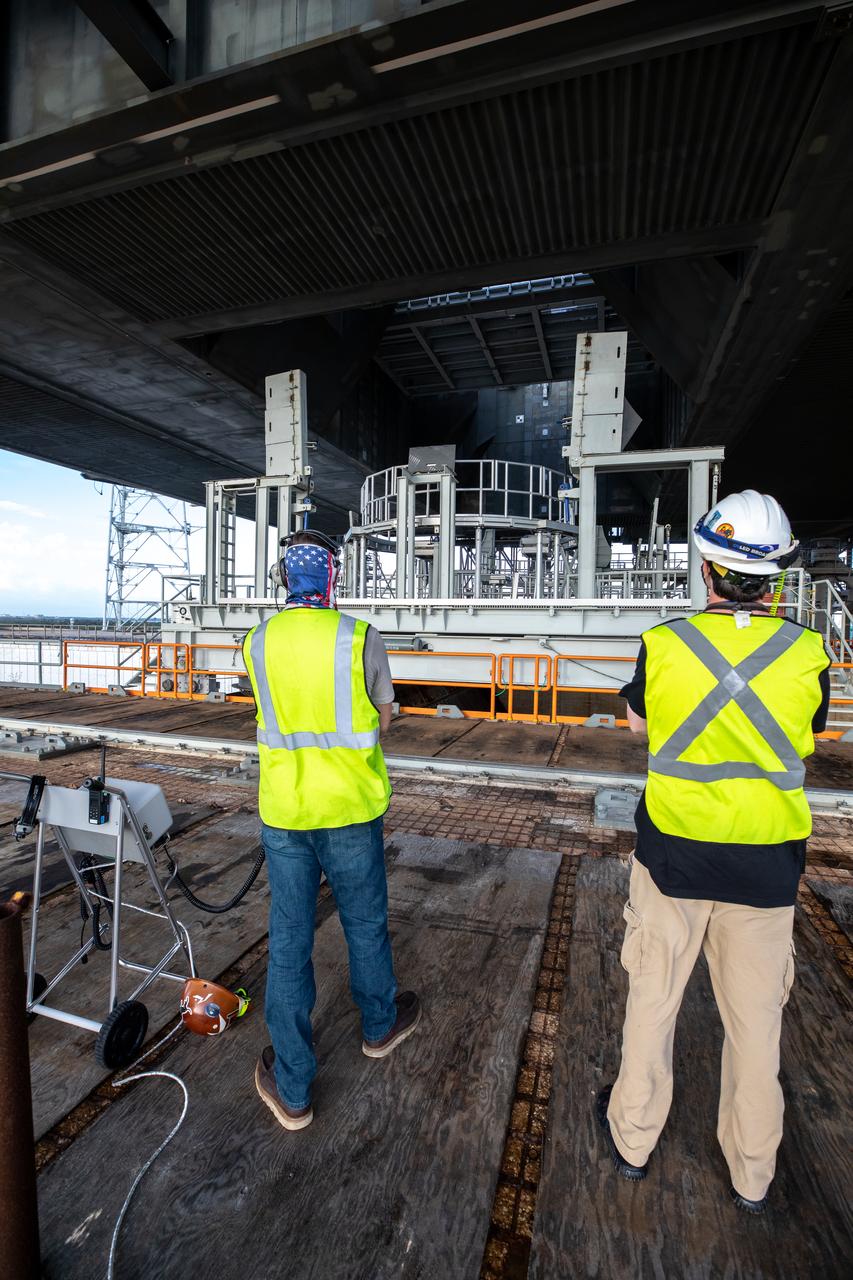
The engine service platform is moved into position beneath the mobile launcher for Artemis I at Launch Pad 39B on Oct. 23, 2020, at NASA’s Kennedy Space Center in Florida. The service platform allows access to the RS-25 engines on the Space Launch System core stage for routine work or inspections. The nearly 400-foot-tall mobile launcher will remain at the pad while engineers with Exploration Ground Systems and Jacobs will complete several tasks, including a timing test to validate the launch team’s countdown timeline, and a thorough, top-to-bottom wash down of the mobile launcher to remove any debris remaining from construction and installation of the umbilical arms. Artemis I will test the Orion spacecraft and Space Launch System as an integrated system ahead of crewed flights to the Moon. Under the Artemis program, NASA will land the first woman and the next man on the Moon in 2024.
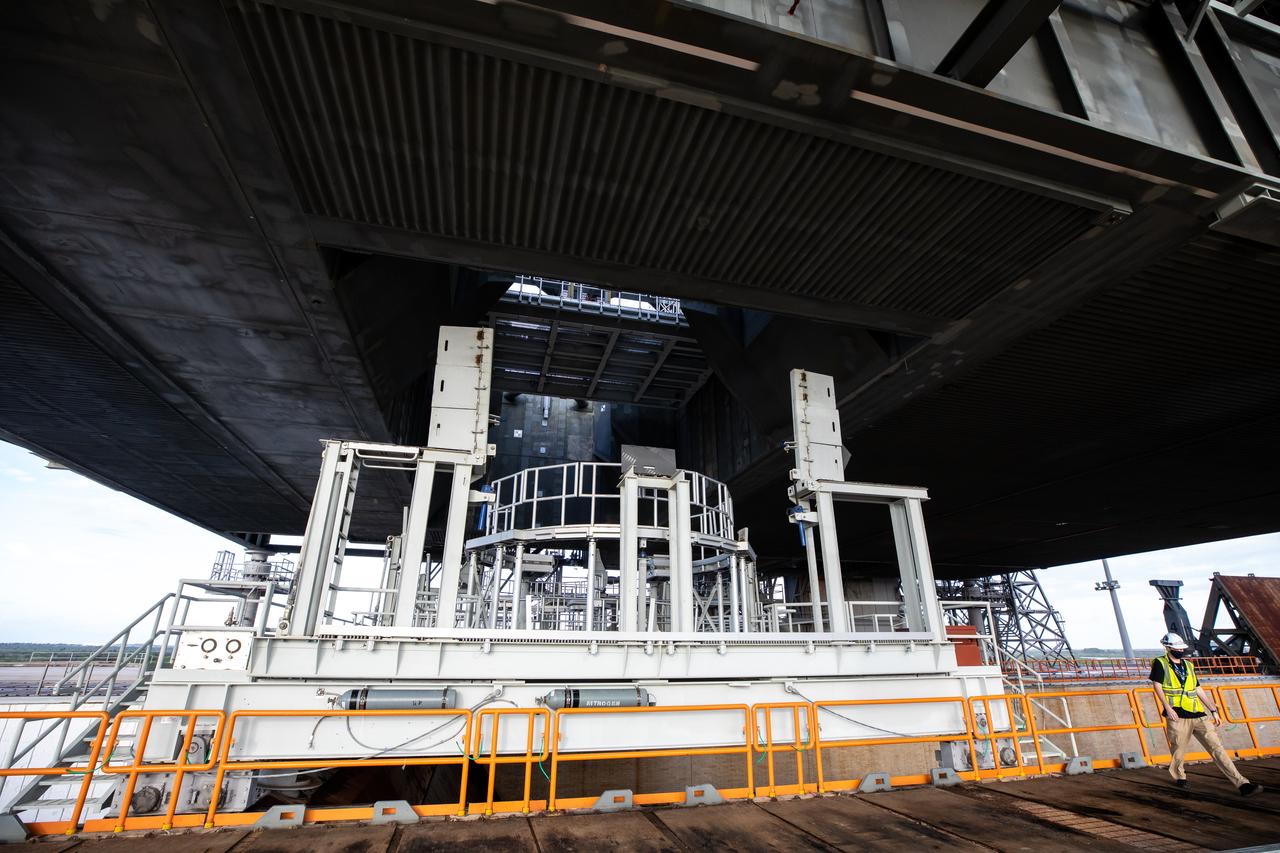
The engine service platform is moved into position beneath the mobile launcher for Artemis I at Launch Pad 39B on Oct. 23, 2020, at NASA’s Kennedy Space Center in Florida. The service platform allows access to the RS-25 engines on the Space Launch System core stage for routine work or inspections. The nearly 400-foot-tall mobile launcher will remain at the pad while engineers with Exploration Ground Systems and Jacobs complete several tasks, including a timing test to validate the launch team’s countdown timeline, and a thorough, top-to-bottom wash down of the mobile launcher to remove any debris remaining from construction and installation of the umbilical arms. Artemis I will test the Orion spacecraft and Space Launch System as an integrated system ahead of crewed flights to the Moon. Under the Artemis program, NASA will land the first woman and the next man on the Moon in 2024.
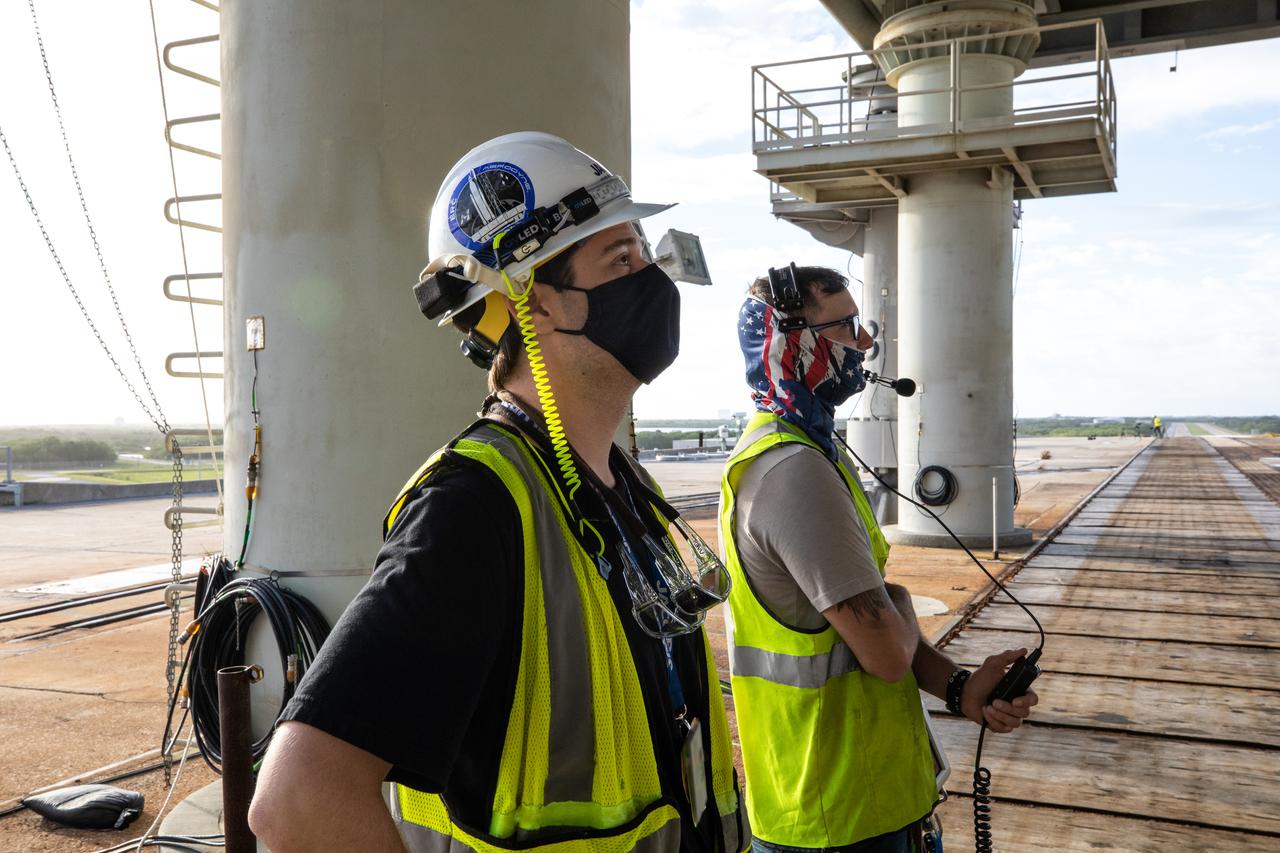
Workers stand on the surface of Launch Pad 39B at NASA’s Kennedy Space Center in Florida on Oct. 23, 2020. They are monitoring launch countdown timeline demonstration activities occurring on the mobile launcher for Artemis I. The nearly 400-foot-tall mobile launcher is at the pad while engineers with Exploration Ground Systems and Jacobs complete several tasks, including a timing test to validate the launch team’s countdown timeline, and a thorough, top-to-bottom wash down of the mobile launcher to remove any debris remaining from construction and installation of the umbilical arms. Artemis I will test the Orion spacecraft and Space Launch System as an integrated system ahead of crewed flights to the Moon. Under the Artemis program, NASA will land the first woman and the next man on the Moon in 2024.
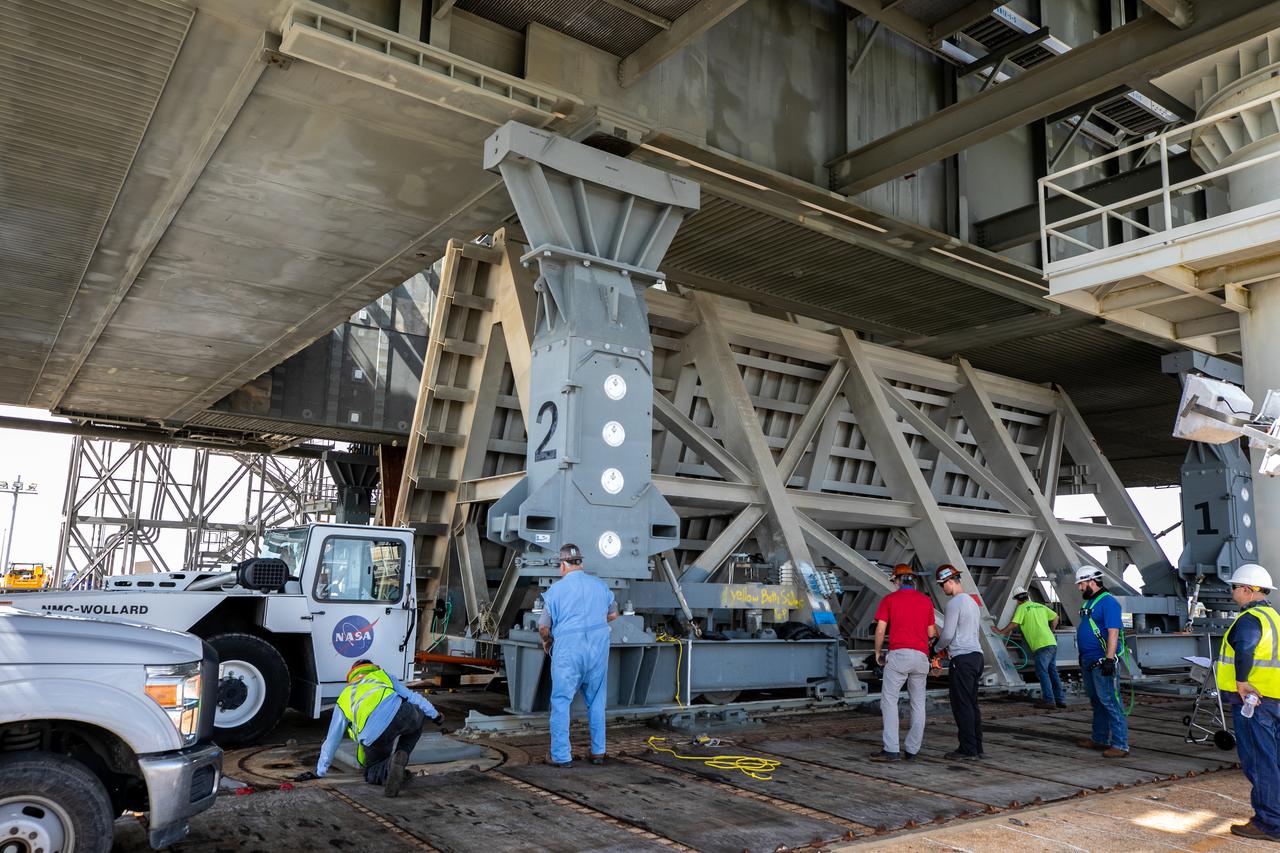
Special ground support equipment is used to move one of two side flame deflectors underneath the mobile launcher for Artemis I during a countdown demonstration test at Launch Pad 39B at NASA’s Kennedy Space Center in Florida on Oct. 23, 2020. The nearly 400-foot-tall mobile launcher is at the pad while engineers with Exploration Ground Systems and Jacobs complete several tasks, including a timing test to validate the launch team’s countdown timeline, and a thorough, top-to-bottom wash down of the mobile launcher to remove any debris remaining from construction and installation of the umbilical arms. Artemis I will test the Orion spacecraft and Space Launch System as an integrated system ahead of crewed flights to the Moon. Under the Artemis program, NASA will land the first woman and the next man on the Moon in 2024.
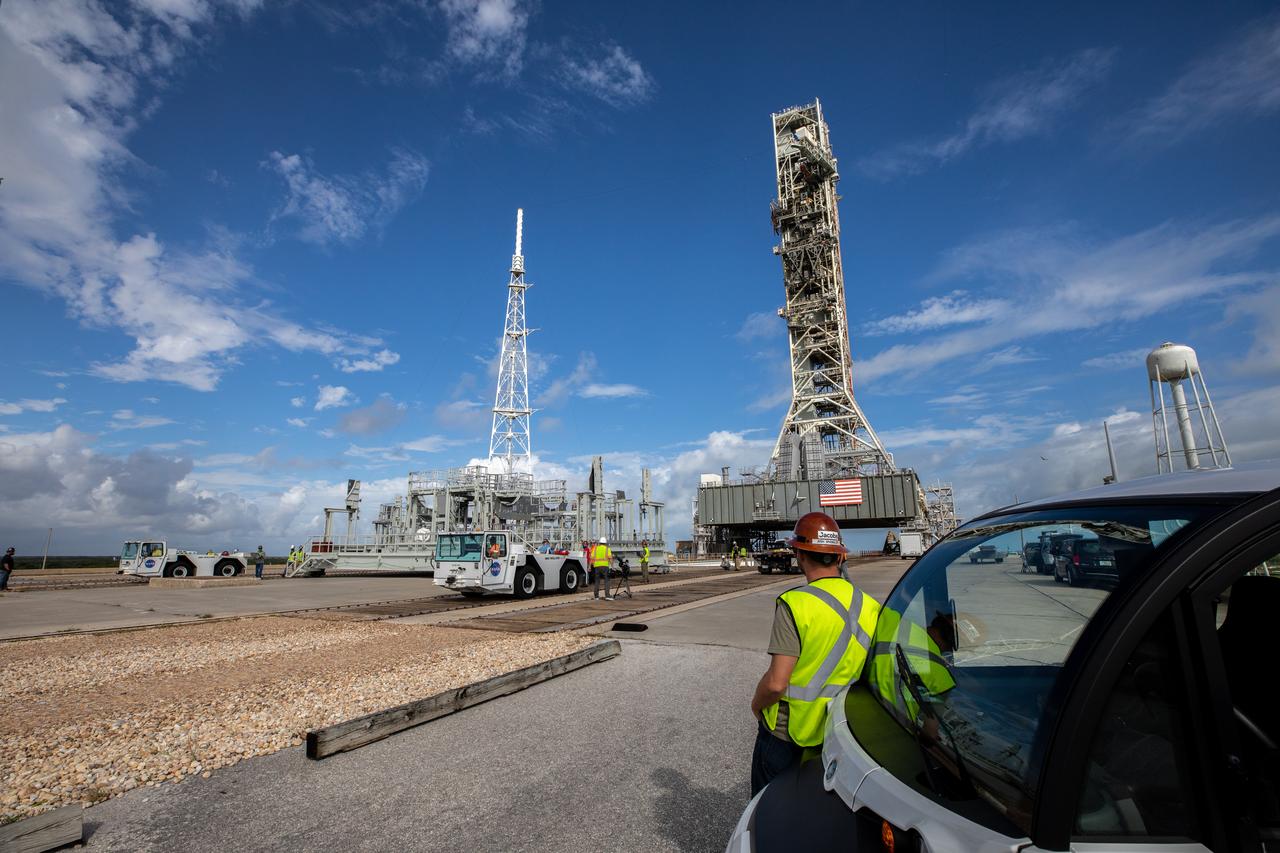
A view of the mobile launcher for Artemis I on Launch Pad 39B at NASA’s Kennedy Space Center in Florida on Oct. 23, 2020. The engine service platform has been lowered and removed from the mobile launcher and is in view on a flatbed carrier. The nearly 400-foot-tall mobile launcher is at the pad while engineers with Exploration Ground Systems and Jacobs complete several tasks, including a timing test to validate the launch team’s countdown timeline, and a thorough, top-to-bottom wash down of the mobile launcher to remove any debris remaining from construction and installation of the umbilical arms. Artemis I will test the Orion spacecraft and Space Launch System as an integrated system ahead of crewed flights to the Moon. Under the Artemis program, NASA will land the first woman and the next man on the Moon in 2024.
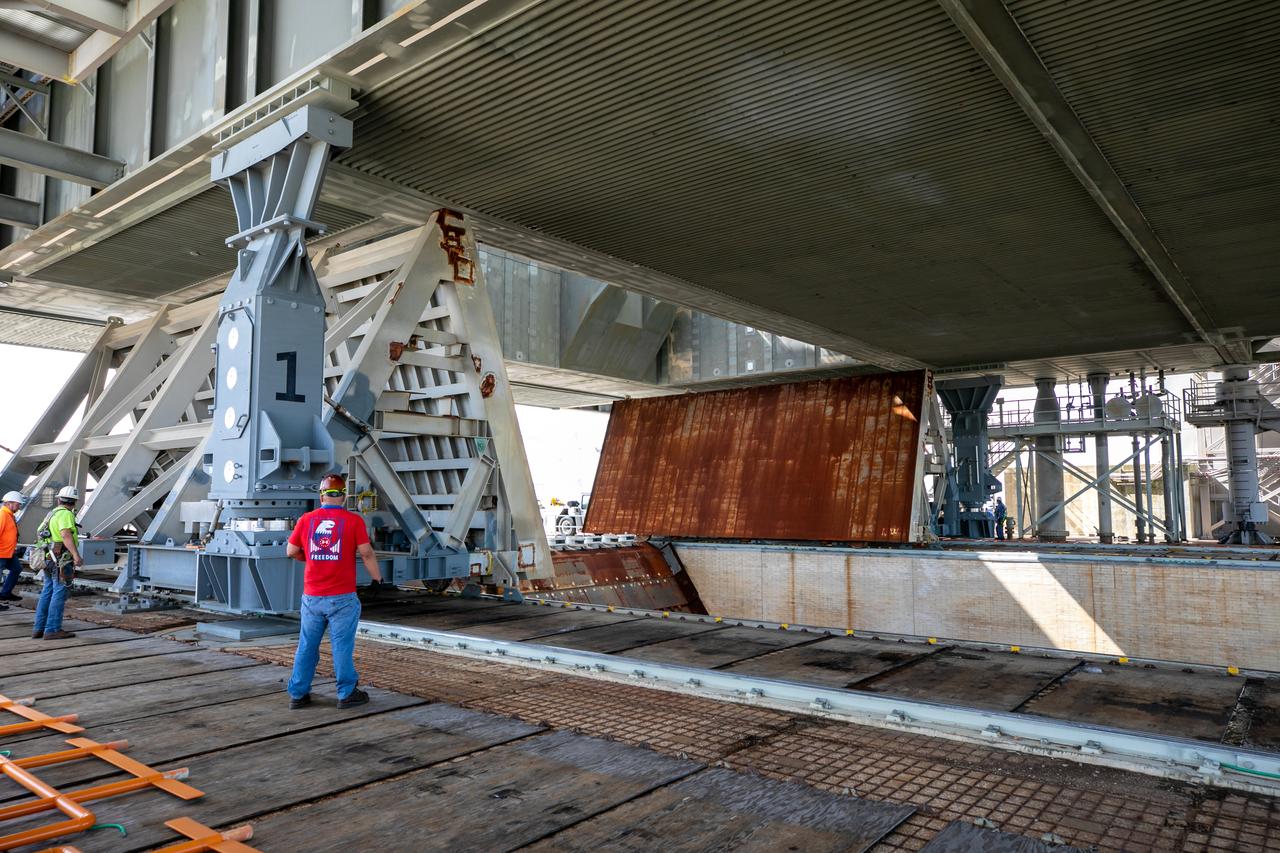
Special ground support equipment is used to position the two side flame deflectors underneath the mobile launcher for Artemis I during a countdown demonstration test at Launch Pad 39B at NASA’s Kennedy Space Center in Florida on Oct. 23, 2020. The nearly 400-foot-tall mobile launcher is at the pad while engineers with Exploration Ground Systems and Jacobs complete several tasks, including a timing test to validate the launch team’s countdown timeline, and a thorough, top-to-bottom wash down of the mobile launcher to remove any debris remaining from construction and installation of the umbilical arms. Artemis I will test the Orion spacecraft and Space Launch System as an integrated system ahead of crewed flights to the Moon. Under the Artemis program, NASA will land the first woman and the next man on the Moon in 2024.
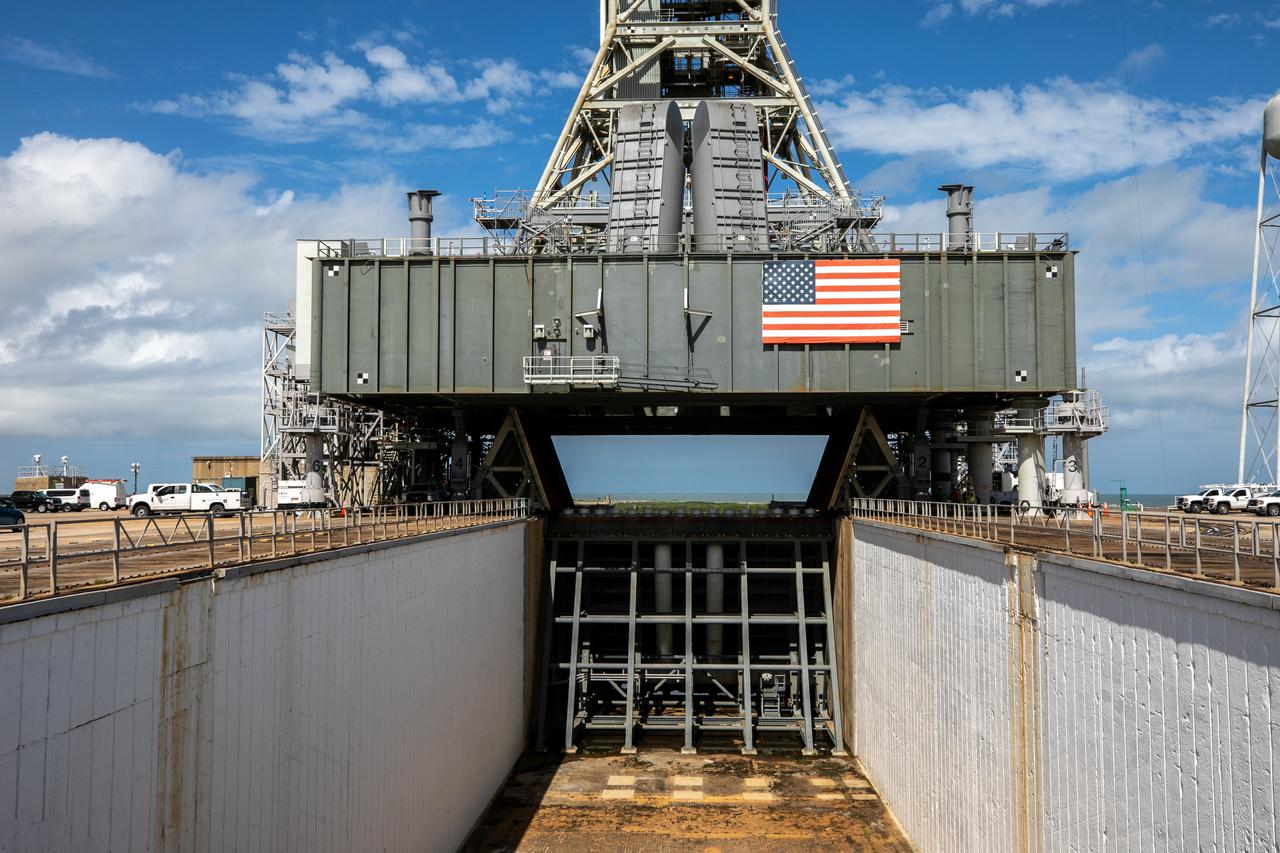
A close-up view of the mobile launcher for Artemis I with the two side flame deflectors positioned underneath during a countdown demonstration test at Launch Pad 39B at NASA’s Kennedy Space Center in Florida on Oct. 23, 2020. Also in view is the main flame deflector in the flame trench. The nearly 400-foot-tall mobile launcher is at the pad while engineers with Exploration Ground Systems and Jacobs complete several tasks, including a timing test to validate the launch team’s countdown timeline, and a thorough, top-to-bottom wash down of the mobile launcher to remove any debris remaining from construction and installation of the umbilical arms. Artemis I will test the Orion spacecraft and Space Launch System as an integrated system ahead of crewed flights to the Moon. Under the Artemis program, NASA will land the first woman and the next man on the Moon in 2024.
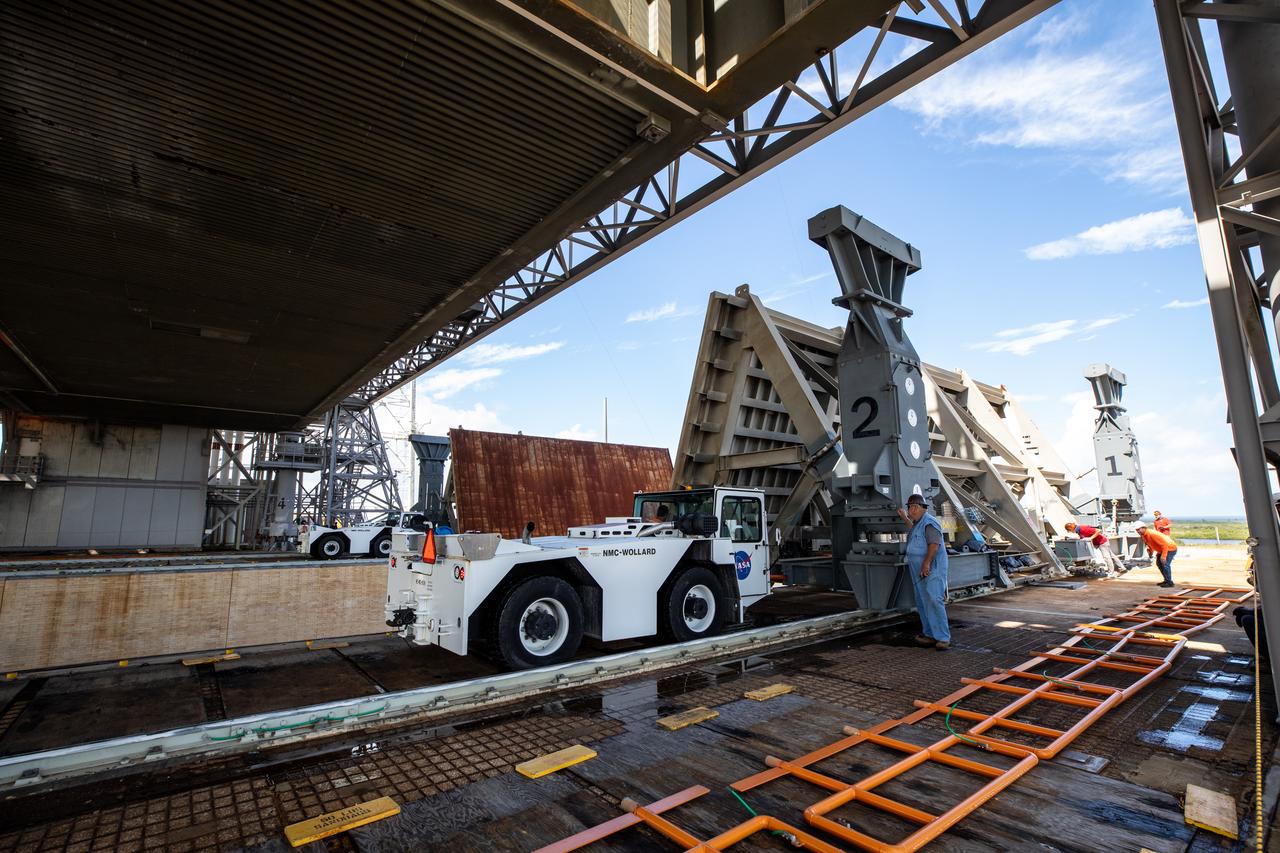
Special ground support equipment is used to move one of two side flame deflectors underneath the mobile launcher for Artemis I during a countdown demonstration test at Launch Pad 39B at NASA’s Kennedy Space Center in Florida on Oct. 23, 2020. The nearly 400-foot-tall mobile launcher is at the pad while engineers with Exploration Ground Systems and Jacobs complete several tasks, including a timing test to validate the launch team’s countdown timeline, and a thorough, top-to-bottom wash down of the mobile launcher to remove any debris remaining from construction and installation of the umbilical arms. Artemis I will test the Orion spacecraft and Space Launch System as an integrated system ahead of crewed flights to the Moon. Under the Artemis program, NASA will land the first woman and the next man on the Moon in 2024.
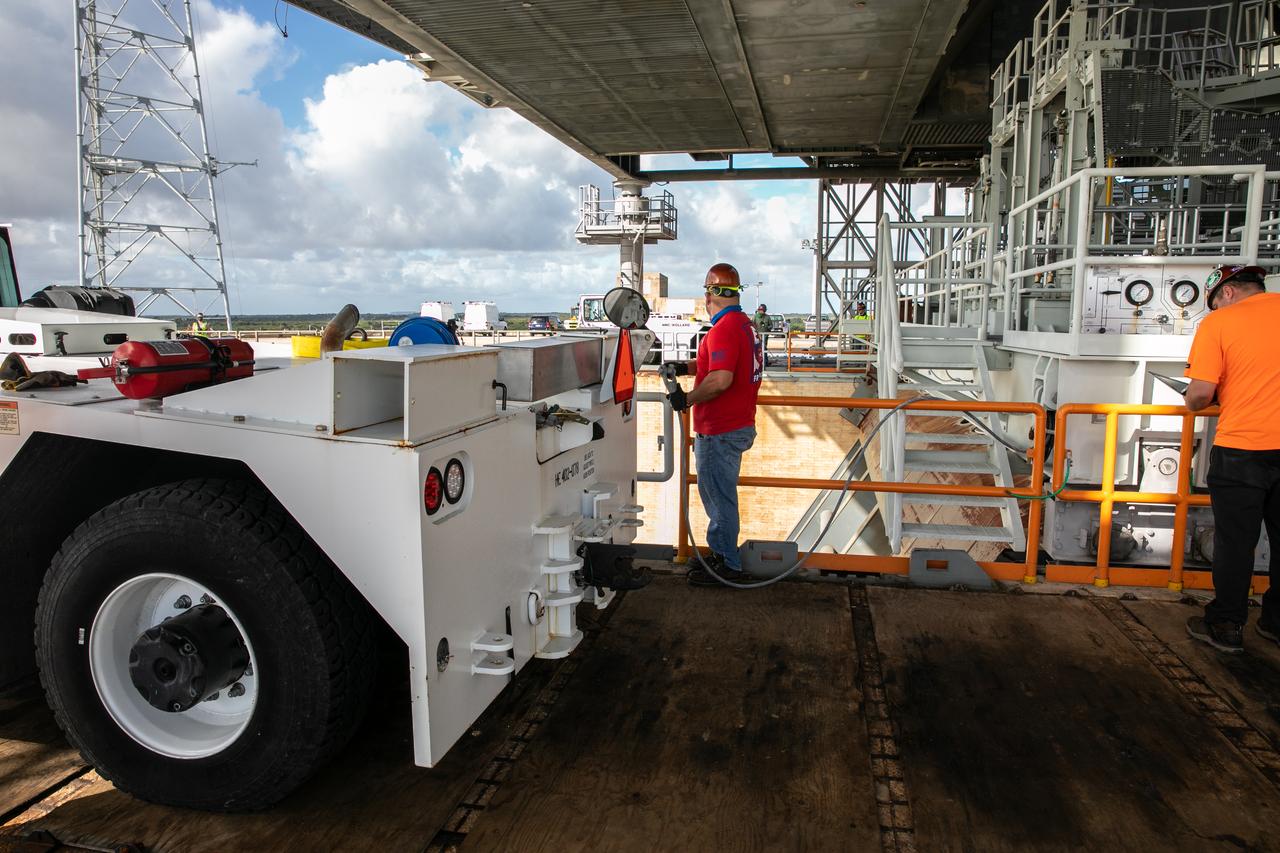
Engineers with Exploration Ground Systems and Jacobs assist with raising the engine service platform beneath the mobile launcher for Artemis I at Launch Pad 39B at NASA’s Kennedy Space Center in Florida on Oct. 23, 2020. The nearly 400-foot-tall mobile launcher is at the pad while engineers with Exploration Ground Systems and Jacobs complete several tasks, including a timing test to validate the launch team’s countdown timeline, and a thorough, top-to-bottom wash down of the mobile launcher to remove any debris remaining from construction and installation of the umbilical arms. Artemis I will test the Orion spacecraft and Space Launch System as an integrated system ahead of crewed flights to the Moon. Under the Artemis program, NASA will land the first woman and the next man on the Moon in 2024.
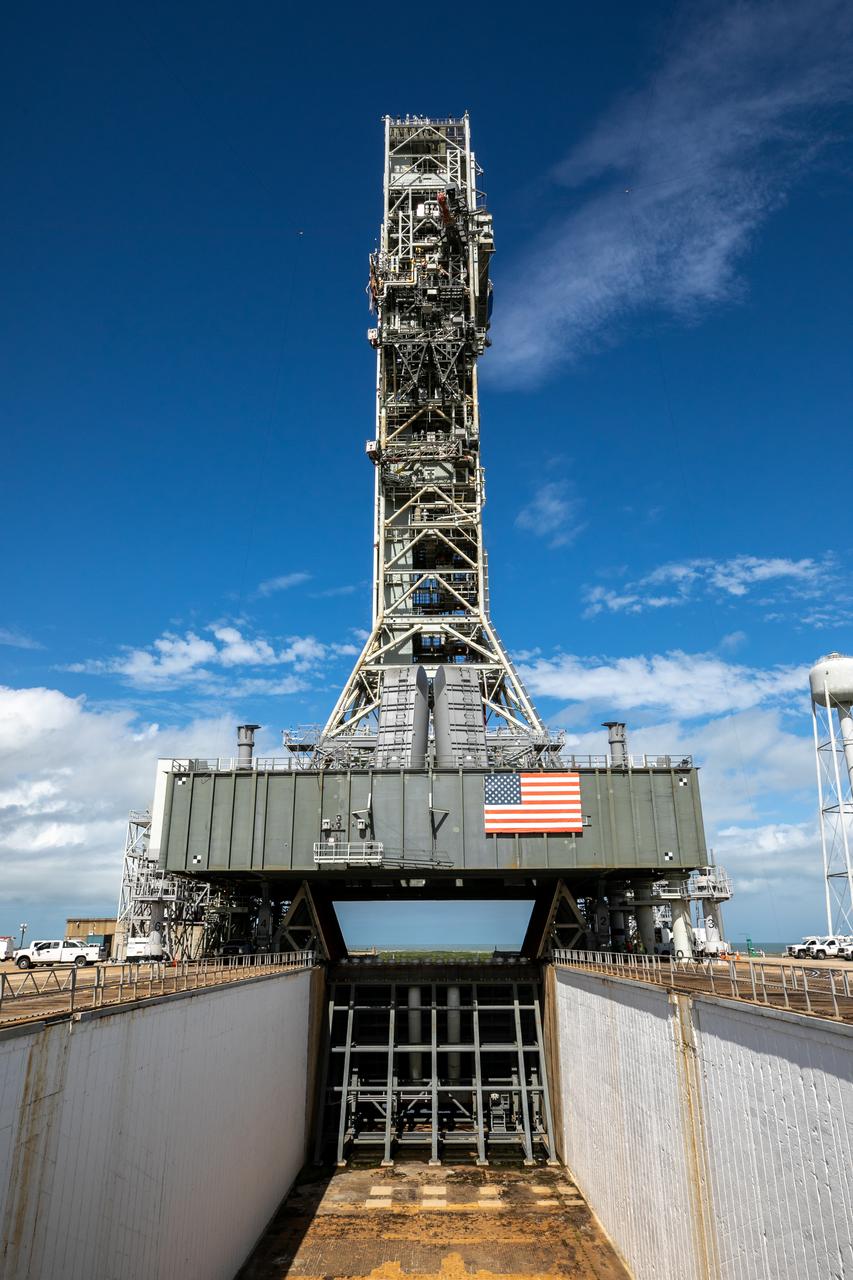
A view of the mobile launcher for Artemis I with the two side flame deflectors positioned underneath during a countdown demonstration test at Launch Pad 39B at NASA’s Kennedy Space Center in Florida on Oct. 23, 2020. Also in view is the main flame deflector in the flame trench. The nearly 400-foot-tall mobile launcher is at the pad while engineers with Exploration Ground Systems and Jacobs complete several tasks, including a timing test to validate the launch team’s countdown timeline, and a thorough, top-to-bottom wash down of the mobile launcher to remove any debris remaining from construction and installation of the umbilical arms. Artemis I will test the Orion spacecraft and Space Launch System as an integrated system ahead of crewed flights to the Moon. Under the Artemis program, NASA will land the first woman and the next man on the Moon in 2024.
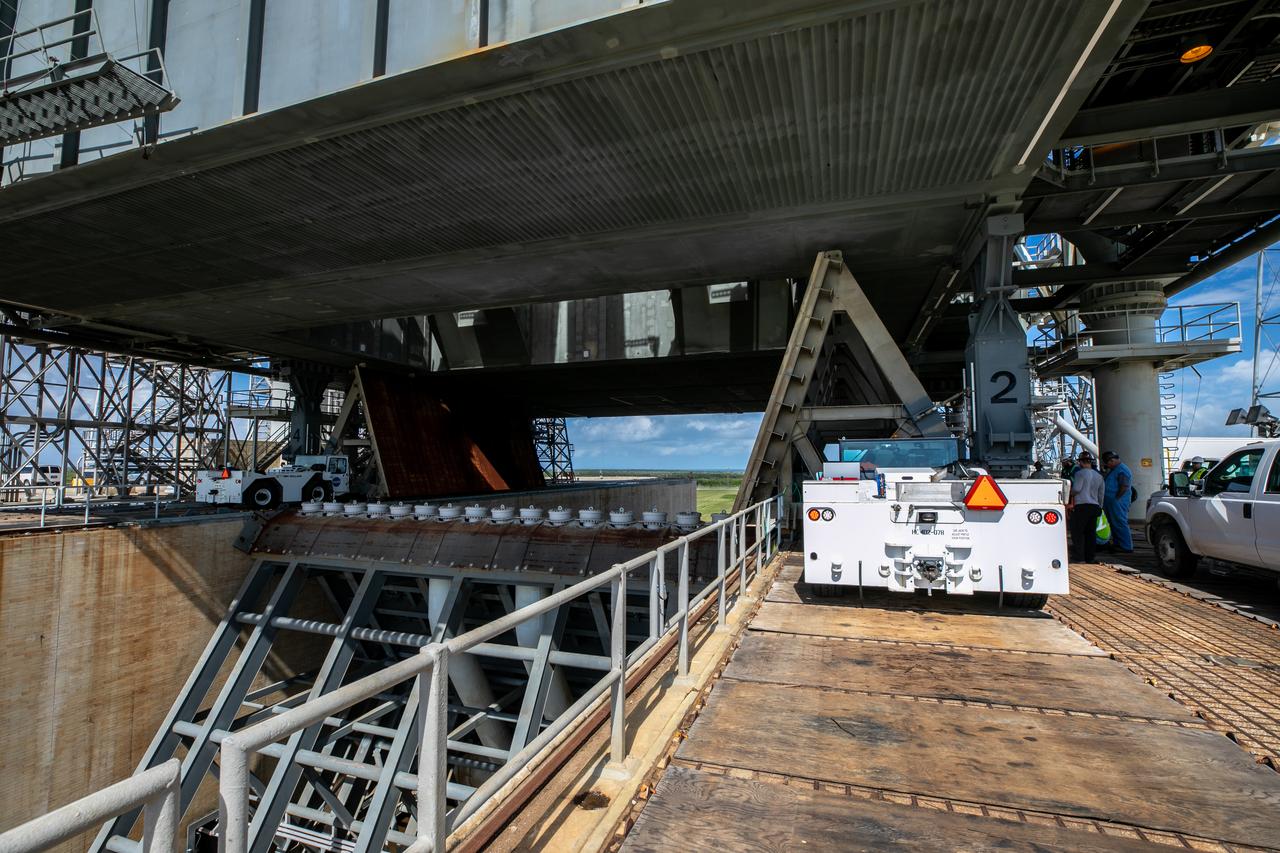
The engine service platform has been lowered and removed from underneath the mobile launcher for Artemis I at Launch Pad 39B at NASA’s Kennedy Space Center in Florida on Oct. 23, 2020. The nearly 400-foot-tall mobile launcher is at the pad while engineers with Exploration Ground Systems and Jacobs complete several tasks, including a timing test to validate the launch team’s countdown timeline, and a thorough, top-to-bottom wash down of the mobile launcher to remove any debris remaining from construction and installation of the umbilical arms. Artemis I will test the Orion spacecraft and Space Launch System as an integrated system ahead of crewed flights to the Moon. Under the Artemis program, NASA will land the first woman and the next man on the Moon in 2024.

The engine service platform has been lowered and removed from the mobile launcher for Artemis I at Launch Pad 39B at NASA’s Kennedy Space Center in Florida on Oct. 23, 2020. The platform is in view on a flatbed truck. The nearly 400-foot-tall mobile launcher is at the pad while engineers with Exploration Ground Systems and Jacobs complete several tasks, including a timing test to validate the launch team’s countdown timeline, and a thorough, top-to-bottom wash down of the mobile launcher to remove any debris remaining from construction and installation of the umbilical arms. Artemis I will test the Orion spacecraft and Space Launch System as an integrated system ahead of crewed flights to the Moon. Under the Artemis program, NASA will land the first woman and the next man on the Moon in 2024.
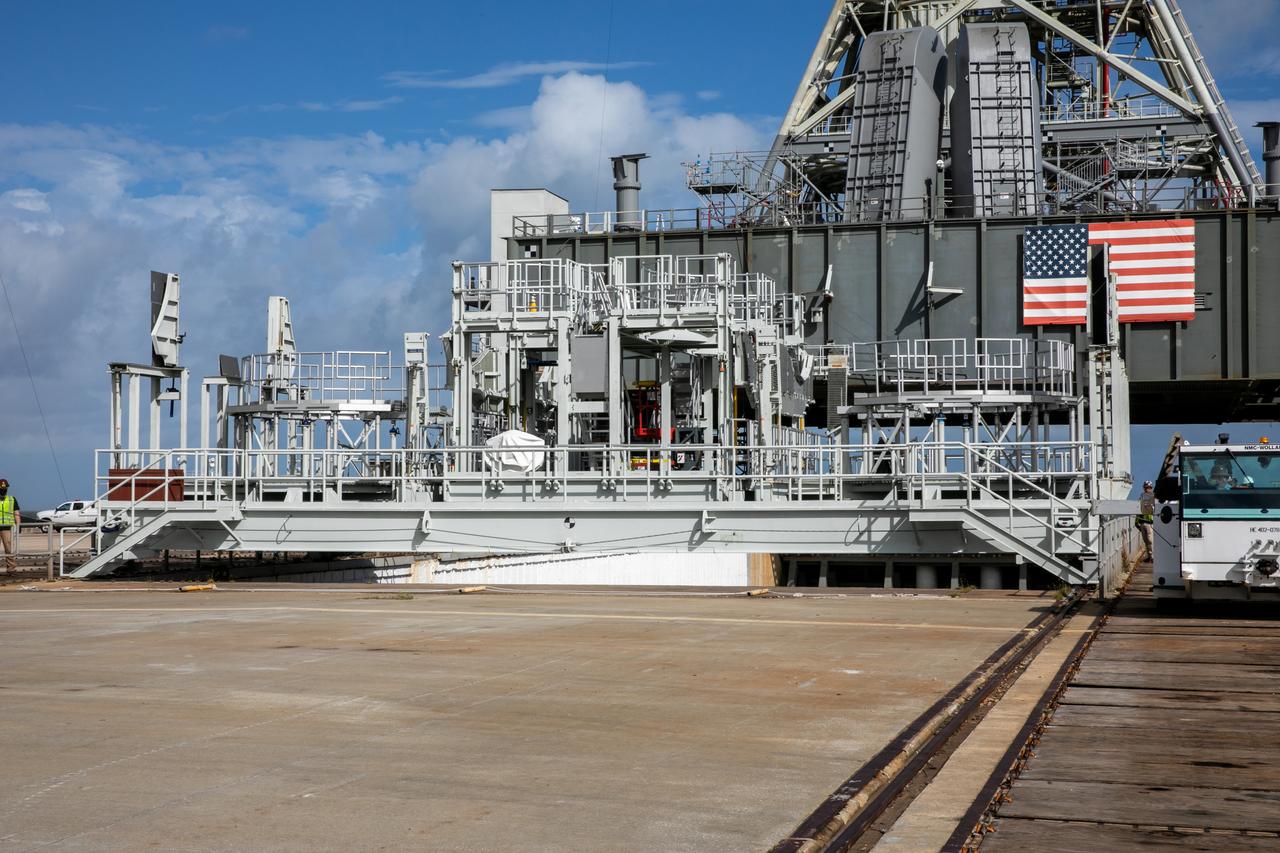
Special ground support equipment is used to move the side flame deflectors into place during a countdown demonstration test using the mobile launcher for the Artemis I mission at Launch Pad 39B at NASA’s Kennedy Space Center in Florida on Oct. 23, 2020. The nearly 400-foot-tall mobile launcher is at the pad while engineers with Exploration Ground Systems and Jacobs complete several tasks, including a timing test to validate the launch team’s countdown timeline, and a thorough, top-to-bottom wash down of the mobile launcher to remove any debris remaining from construction and installation of the umbilical arms. Artemis I will test the Orion spacecraft and Space Launch System as an integrated system ahead of crewed flights to the Moon. Under the Artemis program, NASA will land the first woman and the next man on the Moon in 2024.
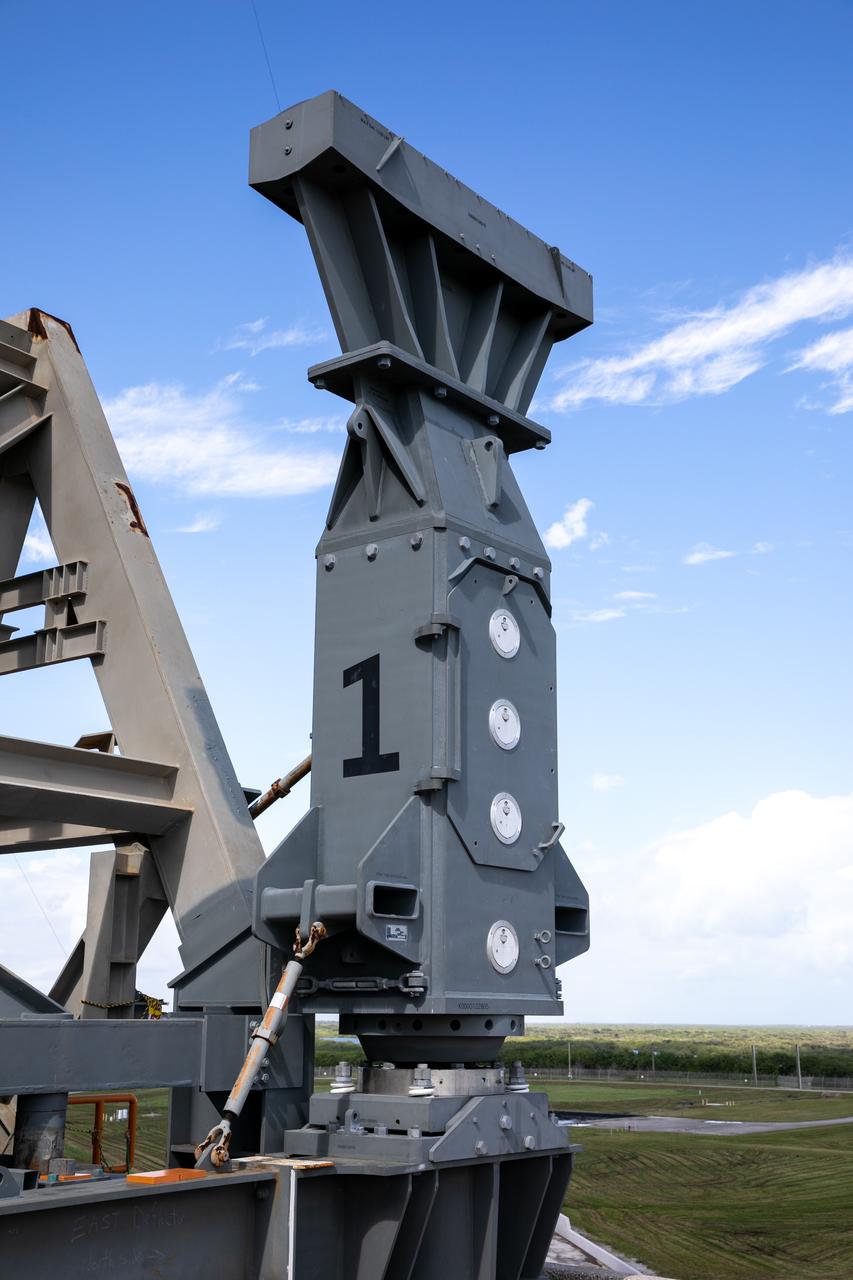
Special ground support equipment is used to move one of two side flame deflectors underneath the mobile launcher for Artemis I during a countdown demonstration test at Launch Pad 39B at NASA’s Kennedy Space Center in Florida on Oct. 23, 2020. The nearly 400-foot-tall mobile launcher is at the pad while engineers with Exploration Ground Systems and Jacobs complete several tasks, including a timing test to validate the launch team’s countdown timeline, and a thorough, top-to-bottom wash down of the mobile launcher to remove any debris remaining from construction and installation of the umbilical arms. Artemis I will test the Orion spacecraft and Space Launch System as an integrated system ahead of crewed flights to the Moon. Under the Artemis program, NASA will land the first woman and the next man on the Moon in 2024.
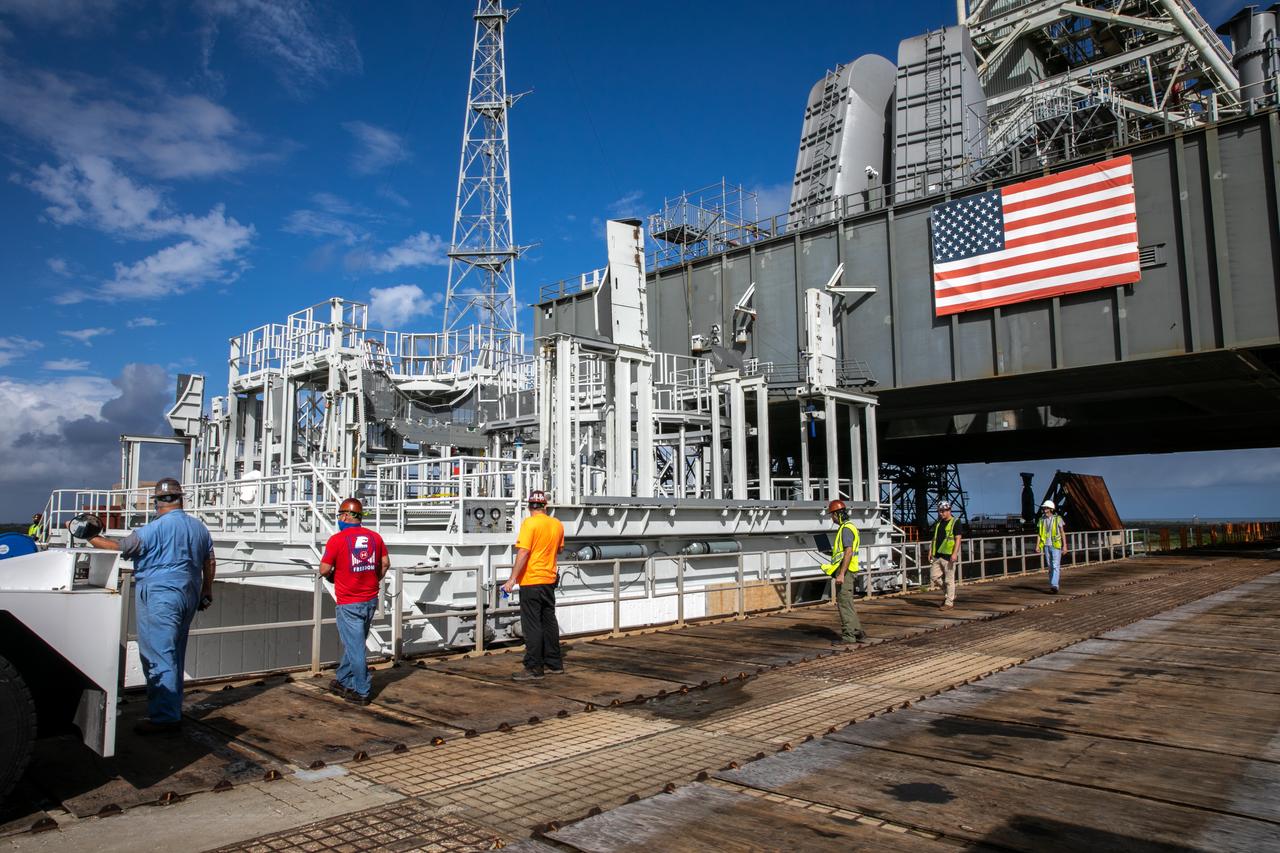
The engine service platform has been lowered and removed from the mobile launcher for Artemis I at Launch Pad 39B at NASA’s Kennedy Space Center in Florida on Oct. 23, 2020. The platform is in view on a flatbed truck. The nearly 400-foot-tall mobile launcher is at the pad while engineers with Exploration Ground Systems and Jacobs complete several tasks, including a timing test to validate the launch team’s countdown timeline, and a thorough, top-to-bottom wash down of the mobile launcher to remove any debris remaining from construction and installation of the umbilical arms. Artemis I will test the Orion spacecraft and Space Launch System as an integrated system ahead of crewed flights to the Moon. Under the Artemis program, NASA will land the first woman and the next man on the Moon in 2024.

An engineer with Exploration Ground Systems monitors countdown demonstration activities occurring on the mobile launcher for Artemis I on Oct. 23, 2020, at Launch Pad 39B at NASA’s Kennedy Space Center in Florida. The nearly 400-foot-tall mobile launcher is at the pad while engineers with Exploration Ground Systems and Jacobs complete several tasks, including a timing test to validate the launch team’s countdown timeline, and a thorough, top-to-bottom wash down of the mobile launcher to remove any debris remaining from construction and installation of the umbilical arms. Artemis I will test the Orion spacecraft and Space Launch System as an integrated system ahead of crewed flights to the Moon. Under the Artemis program, NASA will land the first woman and the next man on the Moon in 2024.
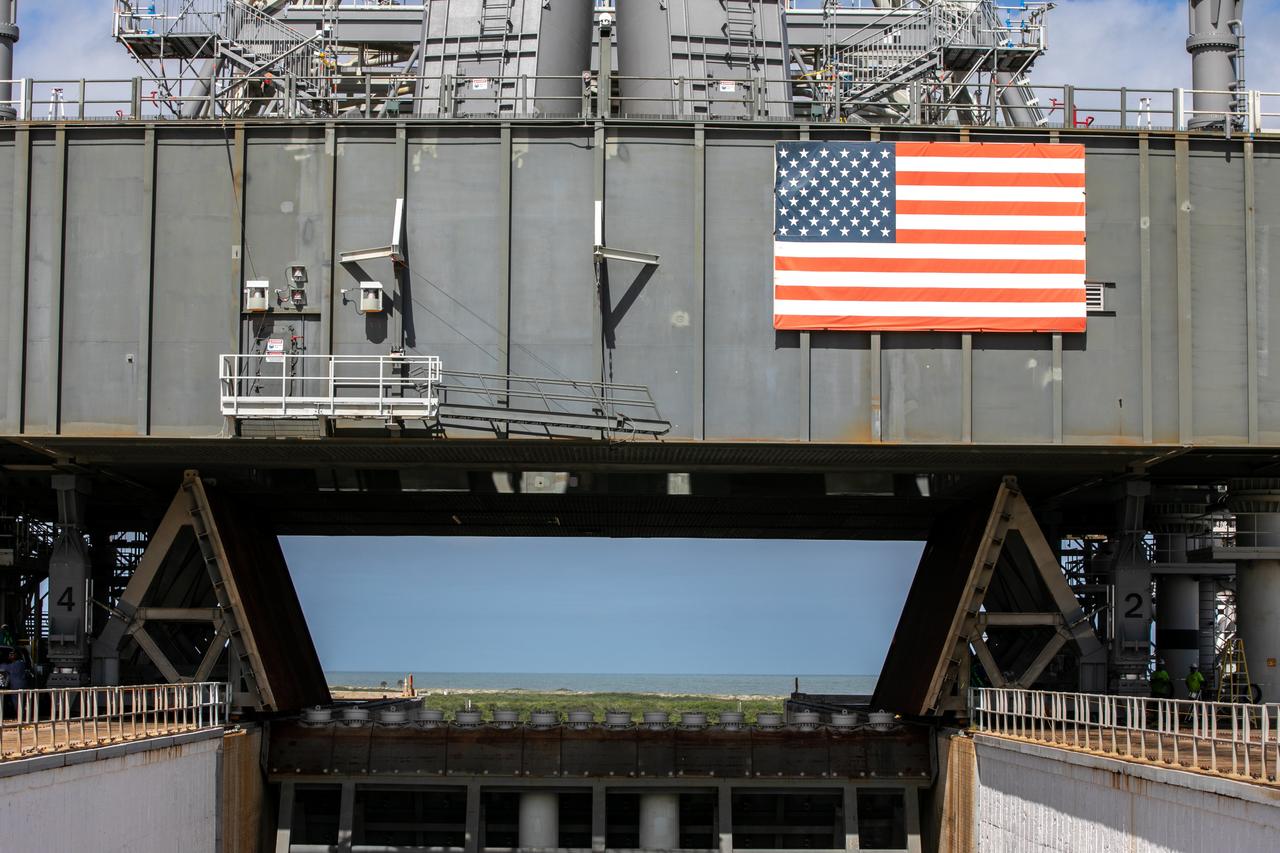
A close-up view of the base of the mobile launcher for Artemis I with the two side flame deflectors positioned underneath during a countdown demonstration test at Launch Pad 39B at NASA’s Kennedy Space Center in Florida on Oct. 23, 2020. The nearly 400-foot-tall mobile launcher is at the pad while engineers with Exploration Ground Systems and Jacobs complete several tasks, including a timing test to validate the launch team’s countdown timeline, and a thorough, top-to-bottom wash down of the mobile launcher to remove any debris remaining from construction and installation of the umbilical arms. Artemis I will test the Orion spacecraft and Space Launch System as an integrated system ahead of crewed flights to the Moon. Under the Artemis program, NASA will land the first woman and the next man on the Moon in 2024.
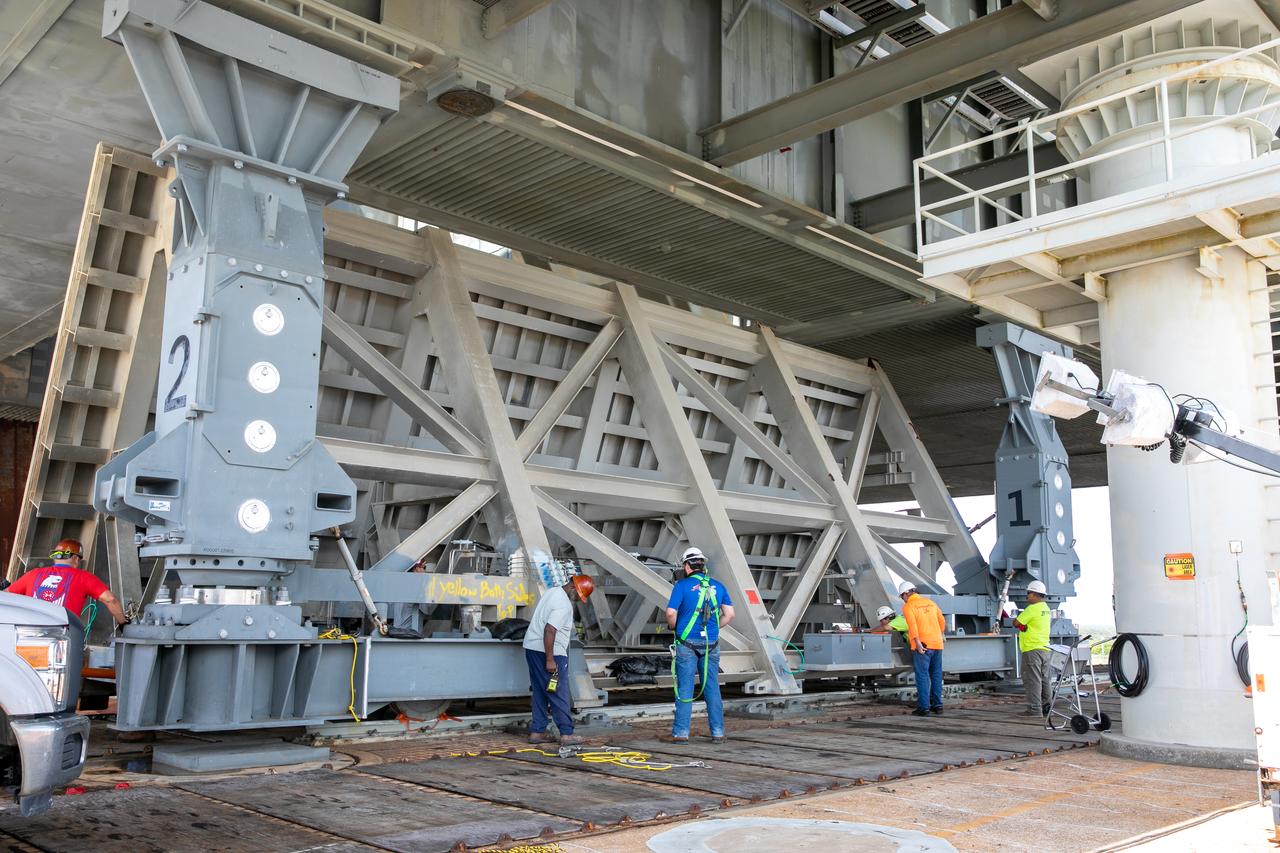
Special ground support equipment is used to position one of two side flame deflectors underneath the mobile launcher for Artemis I during a countdown demonstration test at Launch Pad 39B at NASA’s Kennedy Space Center in Florida on Oct. 23, 2020. The nearly 400-foot-tall mobile launcher is at the pad while engineers with Exploration Ground Systems and Jacobs complete several tasks, including a timing test to validate the launch team’s countdown timeline, and a thorough, top-to-bottom wash down of the mobile launcher to remove any debris remaining from construction and installation of the umbilical arms. Artemis I will test the Orion spacecraft and Space Launch System as an integrated system ahead of crewed flights to the Moon. Under the Artemis program, NASA will land the first woman and the next man on the Moon in 2024.
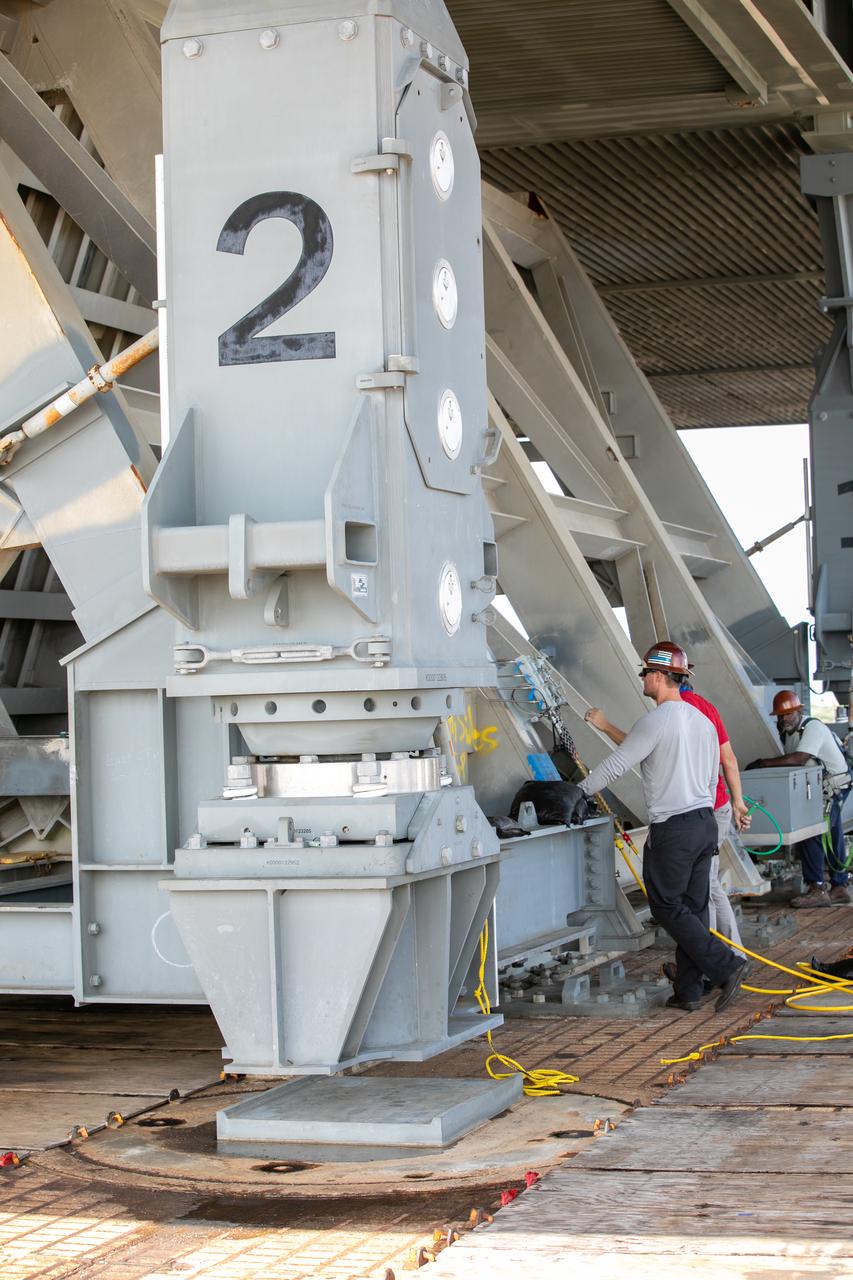
Special ground support equipment is used to position one of two side flame deflectors underneath the mobile launcher for Artemis I during a countdown demonstration test at Launch Pad 39B at NASA’s Kennedy Space Center in Florida on Oct. 23, 2020. The nearly 400-foot-tall mobile launcher is at the pad while engineers with Exploration Ground Systems and Jacobs complete several tasks, including a timing test to validate the launch team’s countdown timeline, and a thorough, top-to-bottom wash down of the mobile launcher to remove any debris remaining from construction and installation of the umbilical arms. Artemis I will test the Orion spacecraft and Space Launch System as an integrated system ahead of crewed flights to the Moon. Under the Artemis program, NASA will land the first woman and the next man on the Moon in 2024.
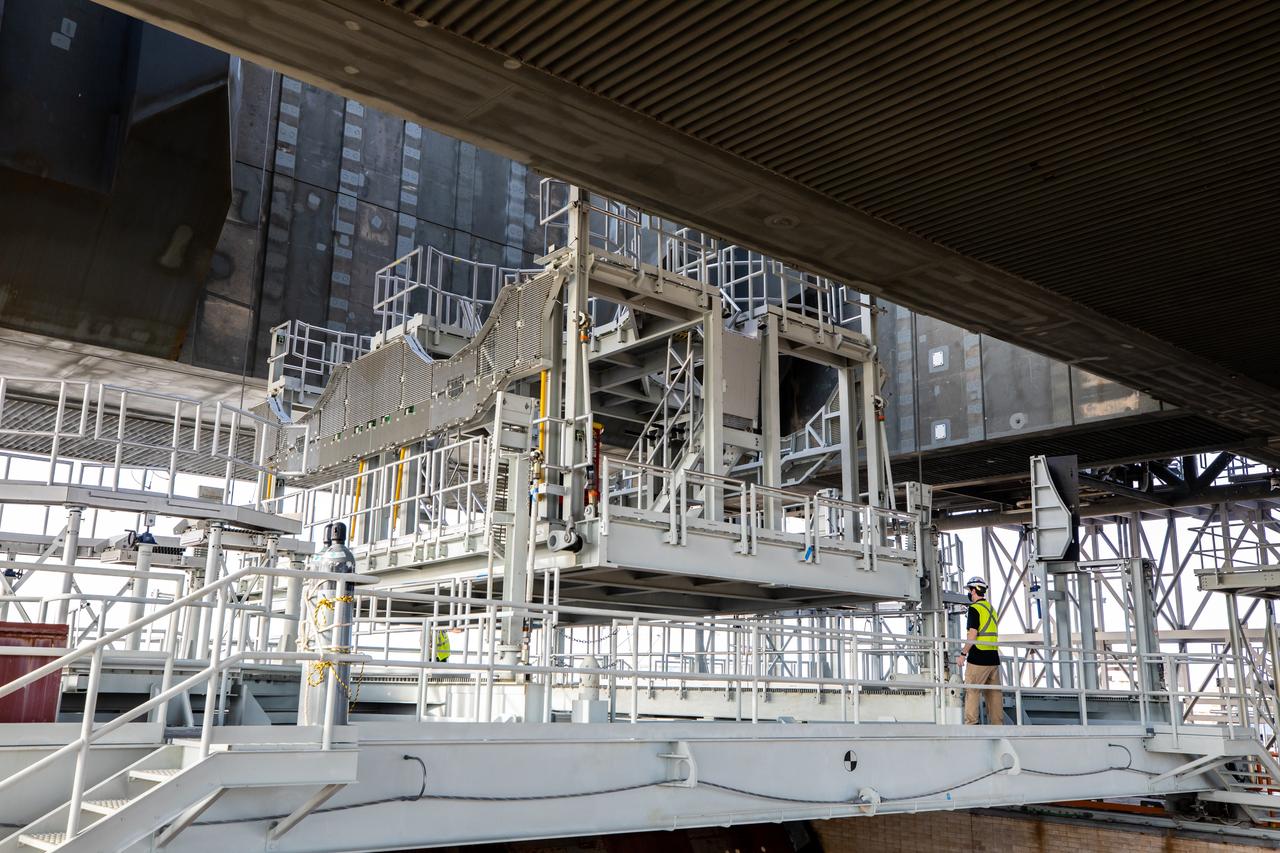
The engine service platform is being raised beneath the mobile launcher for Artemis I at Launch Pad 39B at NASA’s Kennedy Space Center in Florida on Oct. 23, 2020. The nearly 400-foot-tall mobile launcher is at the pad while engineers with Exploration Ground Systems and Jacobs complete several tasks, including a timing test to validate the launch team’s countdown timeline, and a thorough, top-to-bottom wash down of the mobile launcher to remove any debris remaining from construction and installation of the umbilical arms. Artemis I will test the Orion spacecraft and Space Launch System as an integrated system ahead of crewed flights to the Moon. Under the Artemis program, NASA will land the first woman and the next man on the Moon in 2024.

Special ground support equipment is used to move the side flame deflectors into place during a countdown demonstration test using the mobile launcher for the Artemis I mission at Launch Pad 39B at NASA’s Kennedy Space Center in Florida on Oct. 23, 2020. The nearly 400-foot-tall mobile launcher is at the pad while engineers with Exploration Ground Systems and Jacobs complete several tasks, including a timing test to validate the launch team’s countdown timeline, and a thorough, top-to-bottom wash down of the mobile launcher to remove any debris remaining from construction and installation of the umbilical arms. Artemis I will test the Orion spacecraft and Space Launch System as an integrated system ahead of crewed flights to the Moon. Under the Artemis program, NASA will land the first woman and the next man on the Moon in 2024.
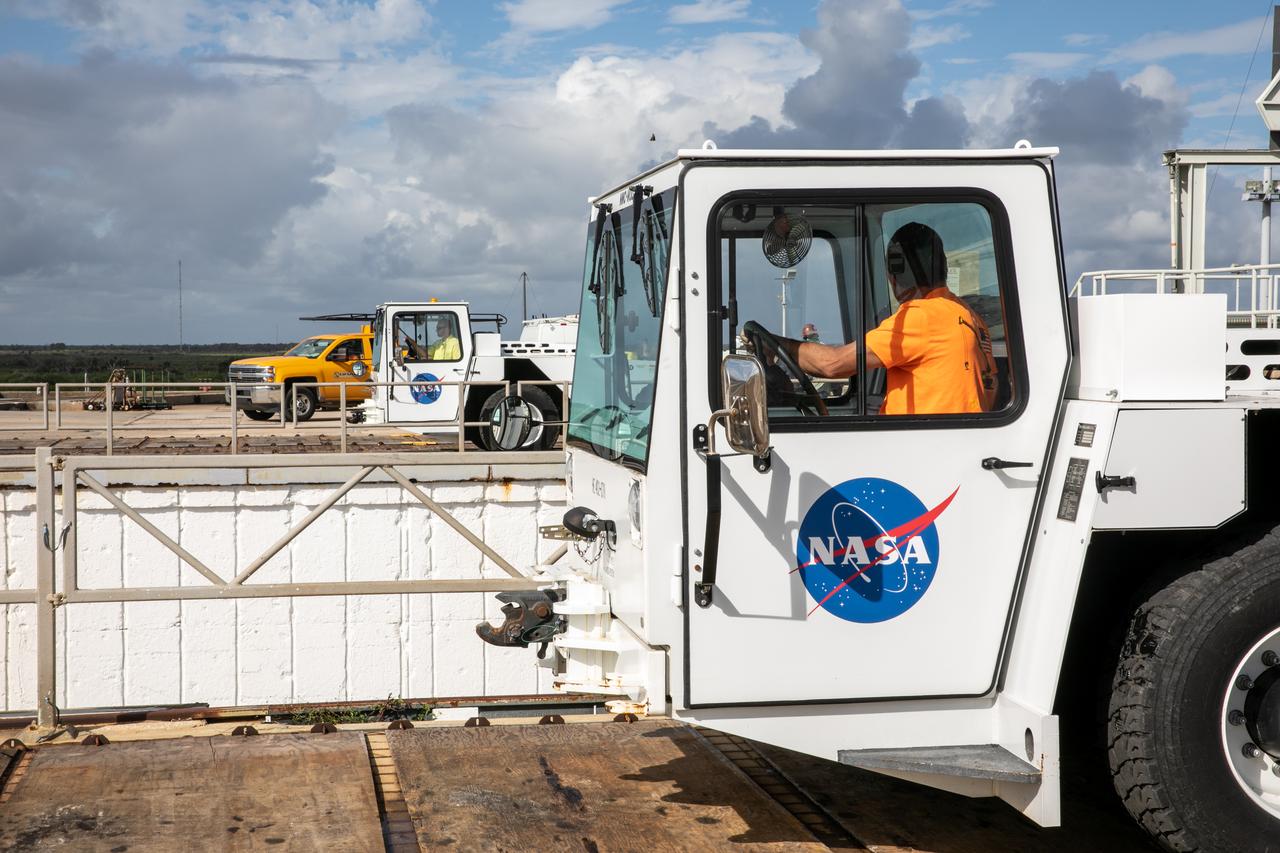
A flatbed carrier is in view on the surface of Launch Pad 39B at NASA’s Kennedy Space Center in Florida on Oct. 23, 2020. It is carrying the engine service platform that was lowered and removed from the mobile launcher for Artemis I. The nearly 400-foot-tall mobile launcher is at the pad while engineers with Exploration Ground Systems and Jacobs complete several tasks, including a timing test to validate the launch team’s countdown timeline, and a thorough, top-to-bottom wash down of the mobile launcher to remove any debris remaining from construction and installation of the umbilical arms. Artemis I will test the Orion spacecraft and Space Launch System as an integrated system ahead of crewed flights to the Moon. Under the Artemis program, NASA will land the first woman and the next man on the Moon in 2024.
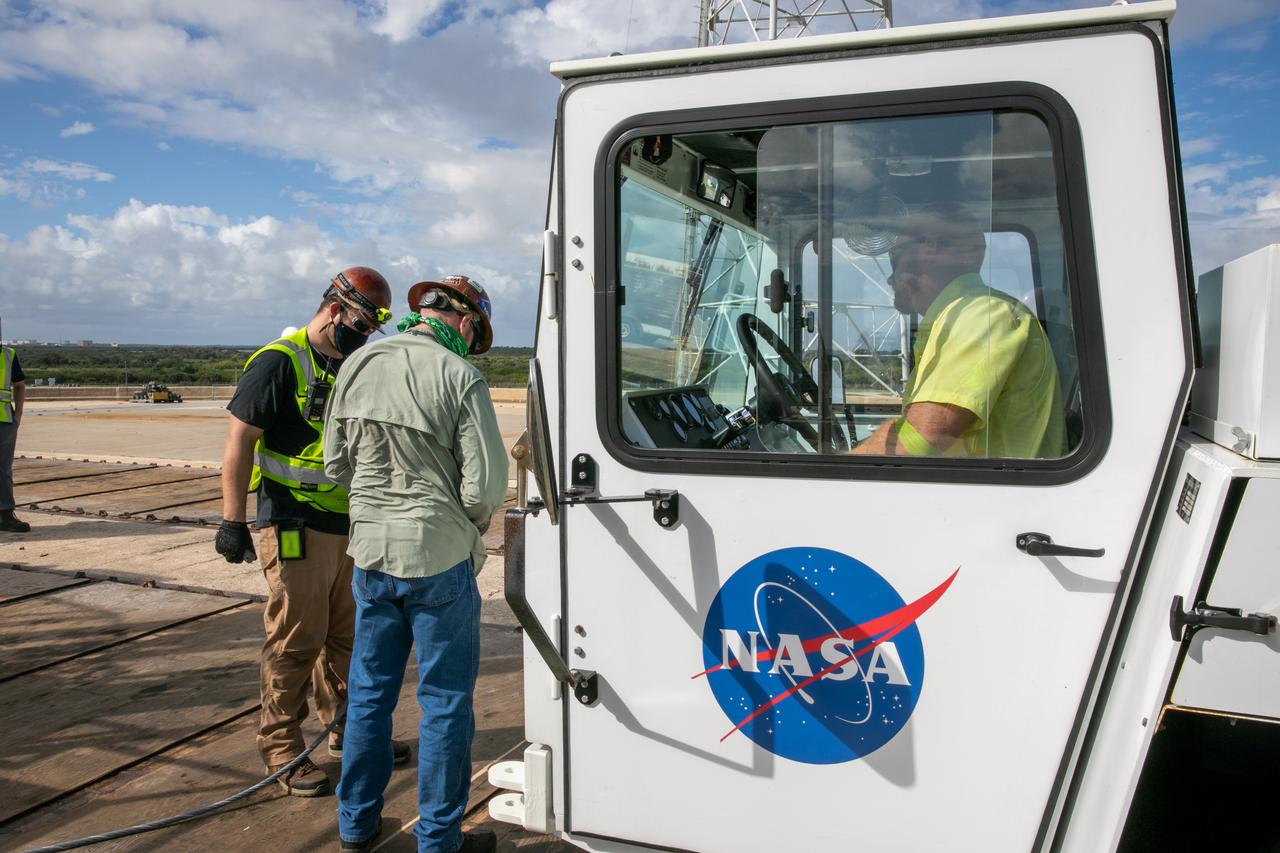
The cab of a flatbed carrier is in view on the surface of Launch Pad 39B at NASA’s Kennedy Space Center in Florida on Oct. 23, 2020. It will carry the engine service platform that was lowered and removed from the mobile launcher for Artemis I. The nearly 400-foot-tall mobile launcher is at the pad while engineers with Exploration Ground Systems and Jacobs complete several tasks, including a timing test to validate the launch team’s countdown timeline, and a thorough, top-to-bottom wash down of the mobile launcher to remove any debris remaining from construction and installation of the umbilical arms. Artemis I will test the Orion spacecraft and Space Launch System as an integrated system ahead of crewed flights to the Moon. Under the Artemis program, NASA will land the first woman and the next man on the Moon in 2024.
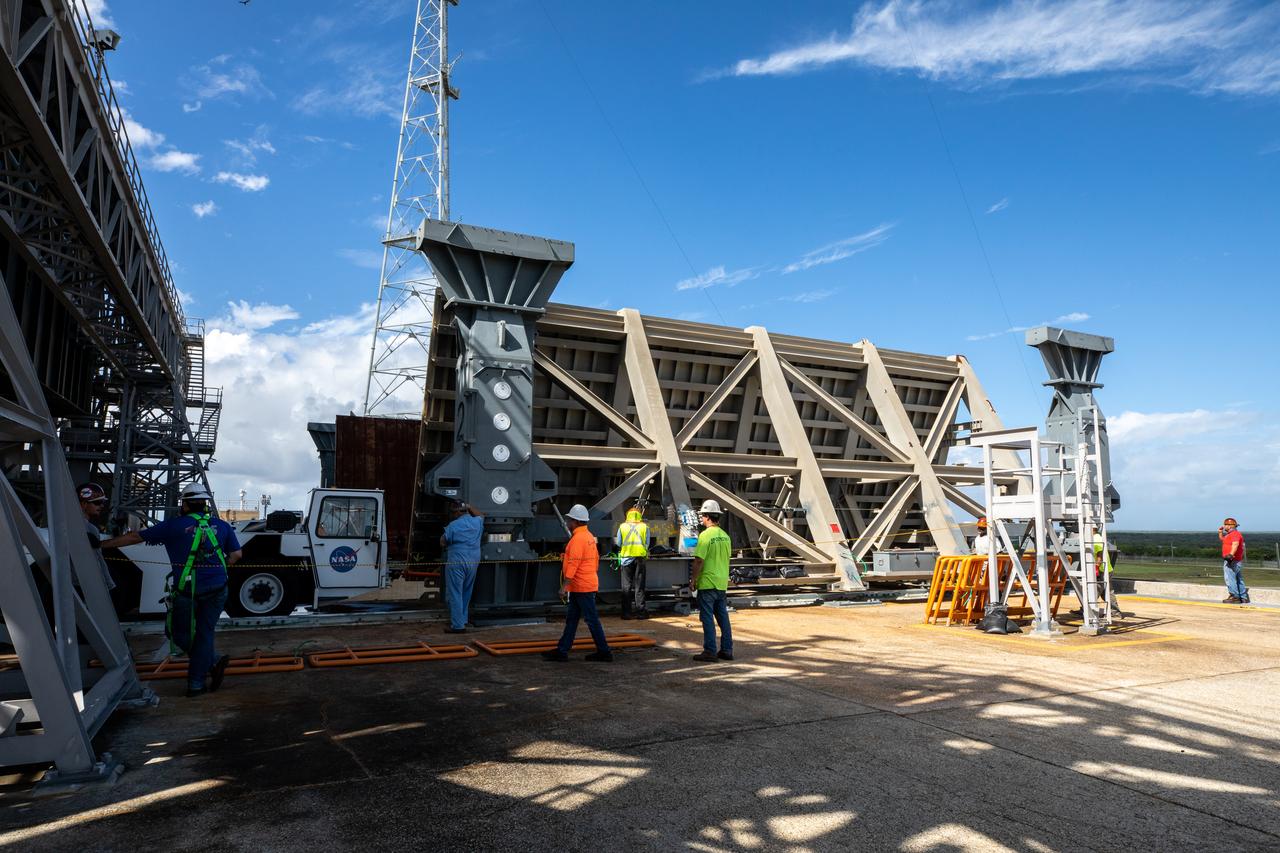
Special ground support equipment is used to move the side flame deflectors into place during a countdown demonstration test using the mobile launcher for the Artemis I mission at Launch Pad 39B at NASA’s Kennedy Space Center in Florida on Oct. 23, 2020. The nearly 400-foot-tall mobile launcher is at the pad while engineers with Exploration Ground Systems and Jacobs complete several tasks, including a timing test to validate the launch team’s countdown timeline, and a thorough, top-to-bottom wash down of the mobile launcher to remove any debris remaining from construction and installation of the umbilical arms. Artemis I will test the Orion spacecraft and Space Launch System as an integrated system ahead of crewed flights to the Moon. Under the Artemis program, NASA will land the first woman and the next man on the Moon in 2024.
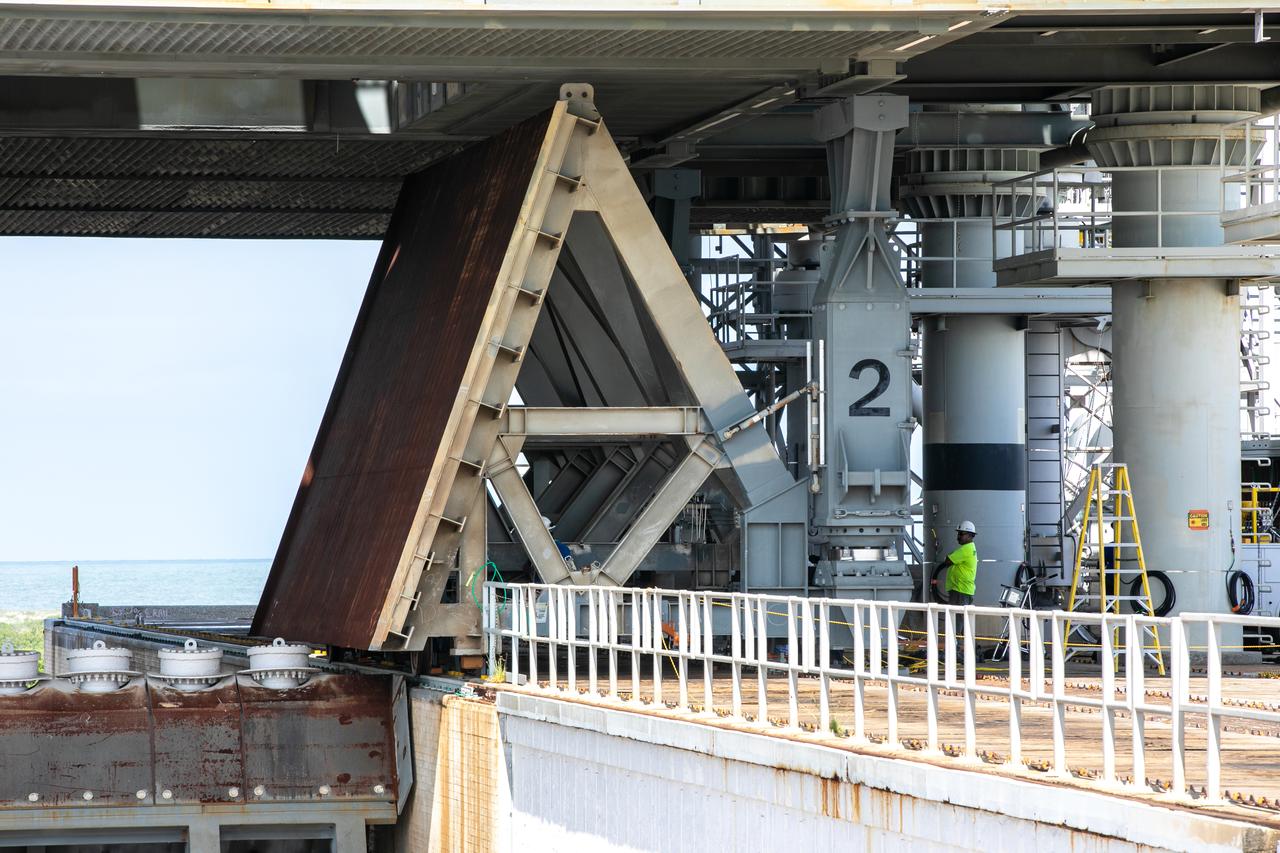
A close-up view of the base of one of the side flame deflectors positioned underneath the mobile launcher for Artemis I during a countdown demonstration test at Launch Pad 39B at NASA’s Kennedy Space Center in Florida on Oct. 23, 2020. The nearly 400-foot-tall mobile launcher is at the pad while engineers with Exploration Ground Systems and Jacobs complete several tasks, including a timing test to validate the launch team’s countdown timeline, and a thorough, top-to-bottom wash down of the mobile launcher to remove any debris remaining from construction and installation of the umbilical arms. Artemis I will test the Orion spacecraft and Space Launch System as an integrated system ahead of crewed flights to the Moon. Under the Artemis program, NASA will land the first woman and the next man on the Moon in 2024.
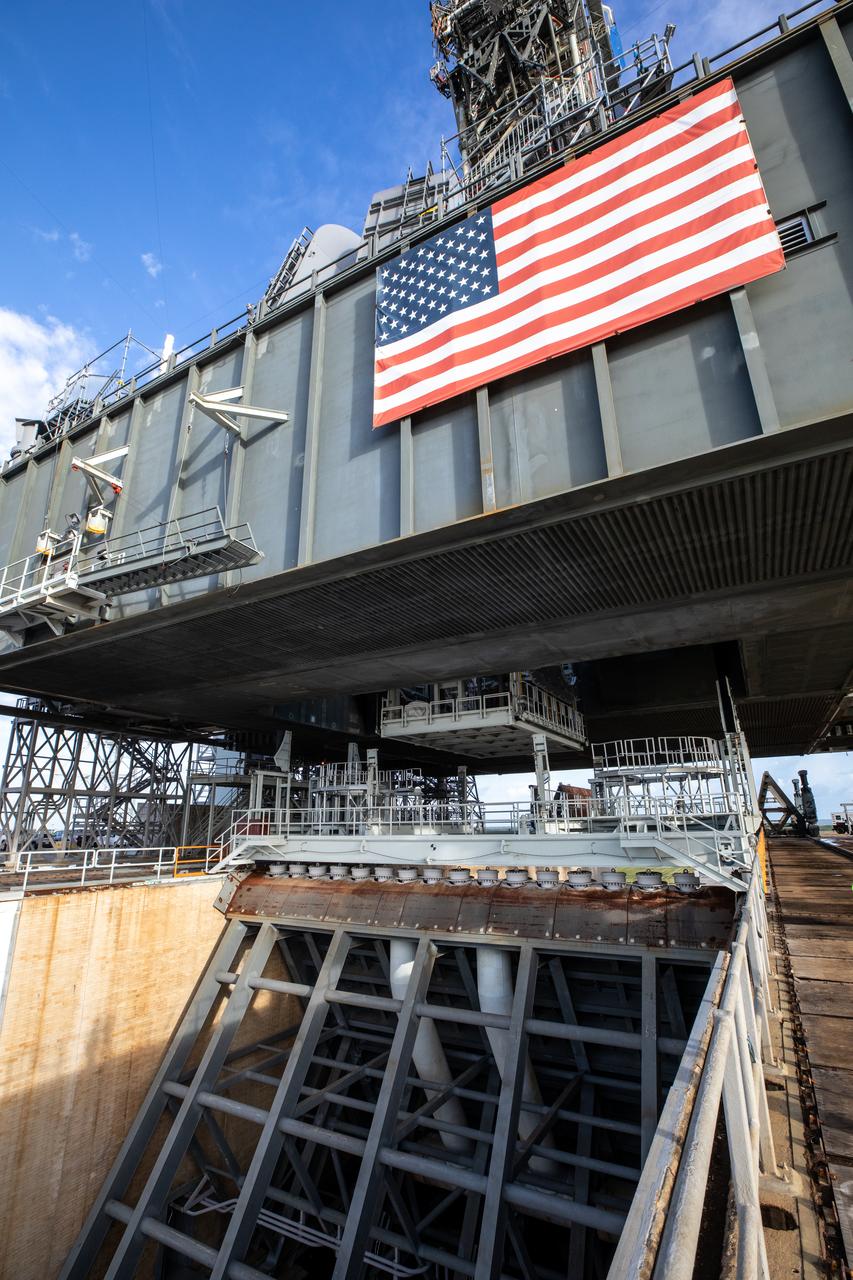
A view of the base of the mobile launcher for Artemis I and the flame trench below as the engine service platform is being raised into position below the mobile launcher at Launch Pad 39B at NASA’s Kennedy Space Center in Florida on Oct. 23, 2020. The nearly 400-foot-tall mobile launcher is at the pad while engineers with Exploration Ground Systems and Jacobs complete several tasks, including a timing test to validate the launch team’s countdown timeline, and a thorough, top-to-bottom wash down of the mobile launcher to remove any debris remaining from construction and installation of the umbilical arms. Artemis I will test the Orion spacecraft and Space Launch System as an integrated system ahead of crewed flights to the Moon. Under the Artemis program, NASA will land the first woman and the next man on the Moon in 2024.
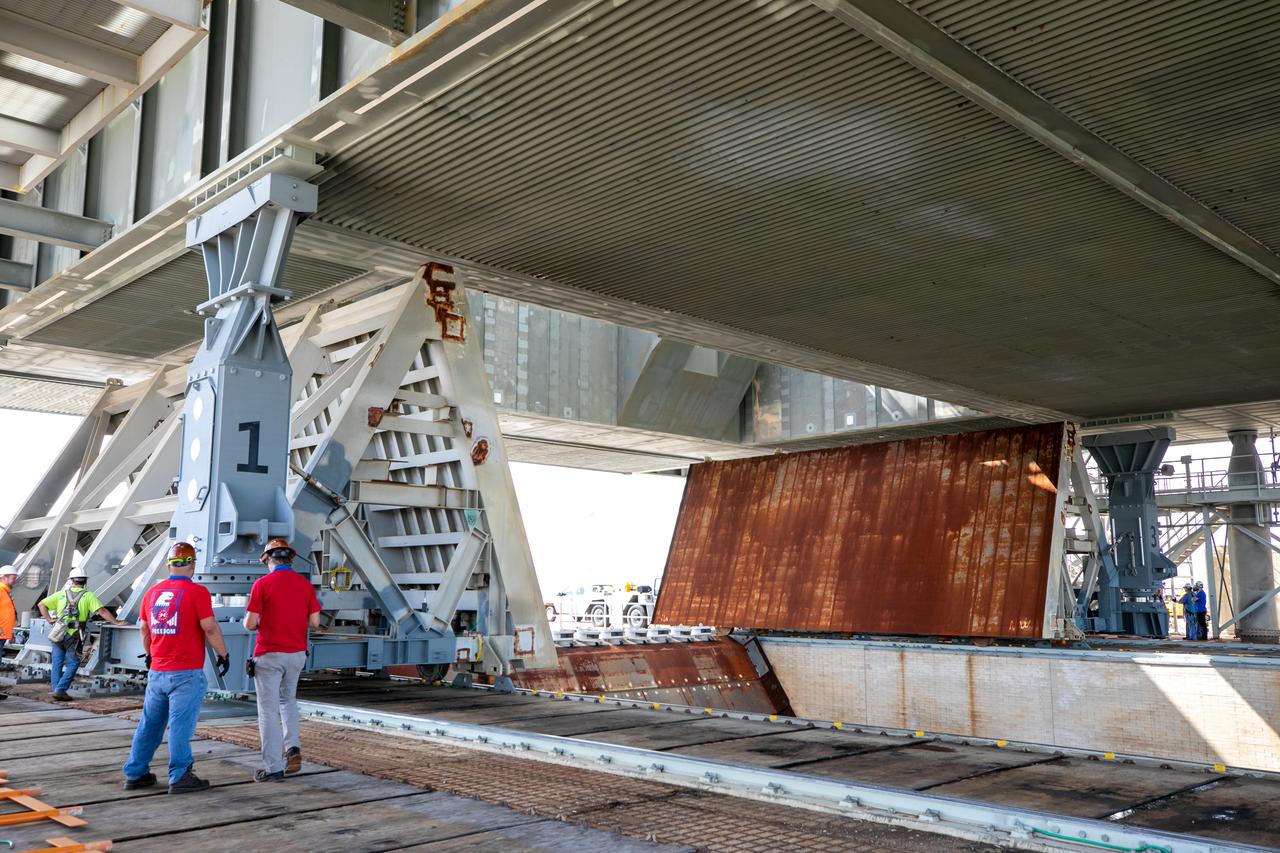
Special ground support equipment is used to position the two side flame deflectors underneath the mobile launcher for Artemis I during a countdown demonstration test at Launch Pad 39B at NASA’s Kennedy Space Center in Florida on Oct. 23, 2020. The nearly 400-foot-tall mobile launcher is at the pad while engineers with Exploration Ground Systems and Jacobs complete several tasks, including a timing test to validate the launch team’s countdown timeline, and a thorough, top-to-bottom wash down of the mobile launcher to remove any debris remaining from construction and installation of the umbilical arms. Artemis I will test the Orion spacecraft and Space Launch System as an integrated system ahead of crewed flights to the Moon. Under the Artemis program, NASA will land the first woman and the next man on the Moon in 2024.

Special ground support equipment is used to move the side flame deflectors into place during a countdown demonstration test using the mobile launcher for the Artemis I mission at Launch Pad 39B at NASA’s Kennedy Space Center in Florida on Oct. 23, 2020. The nearly 400-foot-tall mobile launcher is at the pad while engineers with Exploration Ground Systems and Jacobs complete several tasks, including a timing test to validate the launch team’s countdown timeline, and a thorough, top-to-bottom wash down of the mobile launcher to remove any debris remaining from construction and installation of the umbilical arms. Artemis I will test the Orion spacecraft and Space Launch System as an integrated system ahead of crewed flights to the Moon. Under the Artemis program, NASA will land the first woman and the next man on the Moon in 2024.
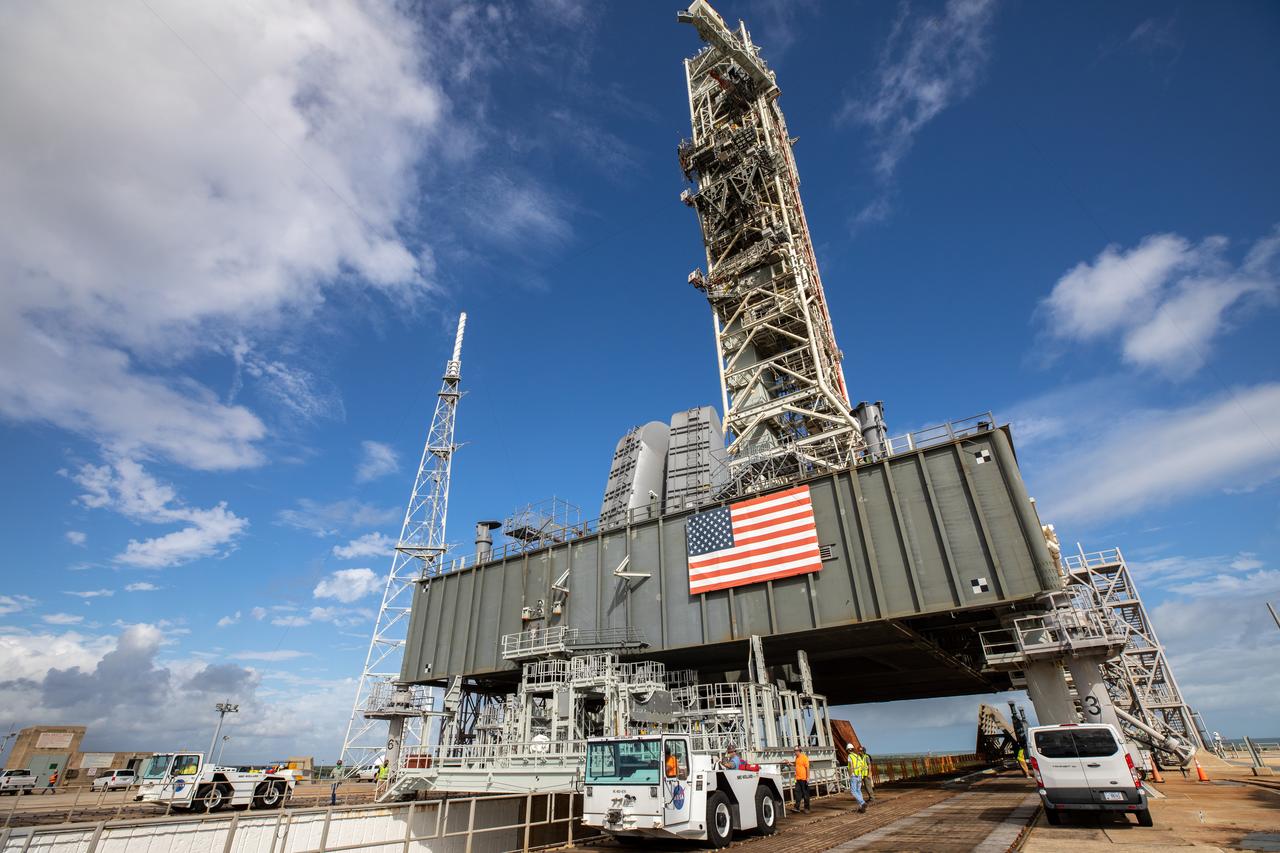
Engineers with Exploration Ground Systems and Jacobs assist with lowering the engine service platform beneath the mobile launcher for Artemis I at Launch Pad 39B at NASA’s Kennedy Space Center in Florida on Oct. 23, 2020. The nearly 400-foot-tall mobile launcher is at the pad while engineers with Exploration Ground Systems and Jacobs complete several tasks, including a timing test to validate the launch team’s countdown timeline, and a thorough, top-to-bottom wash down of the mobile launcher to remove any debris remaining from construction and installation of the umbilical arms. Artemis I will test the Orion spacecraft and Space Launch System as an integrated system ahead of crewed flights to the Moon. Under the Artemis program, NASA will land the first woman and the next man on the Moon in 2024.
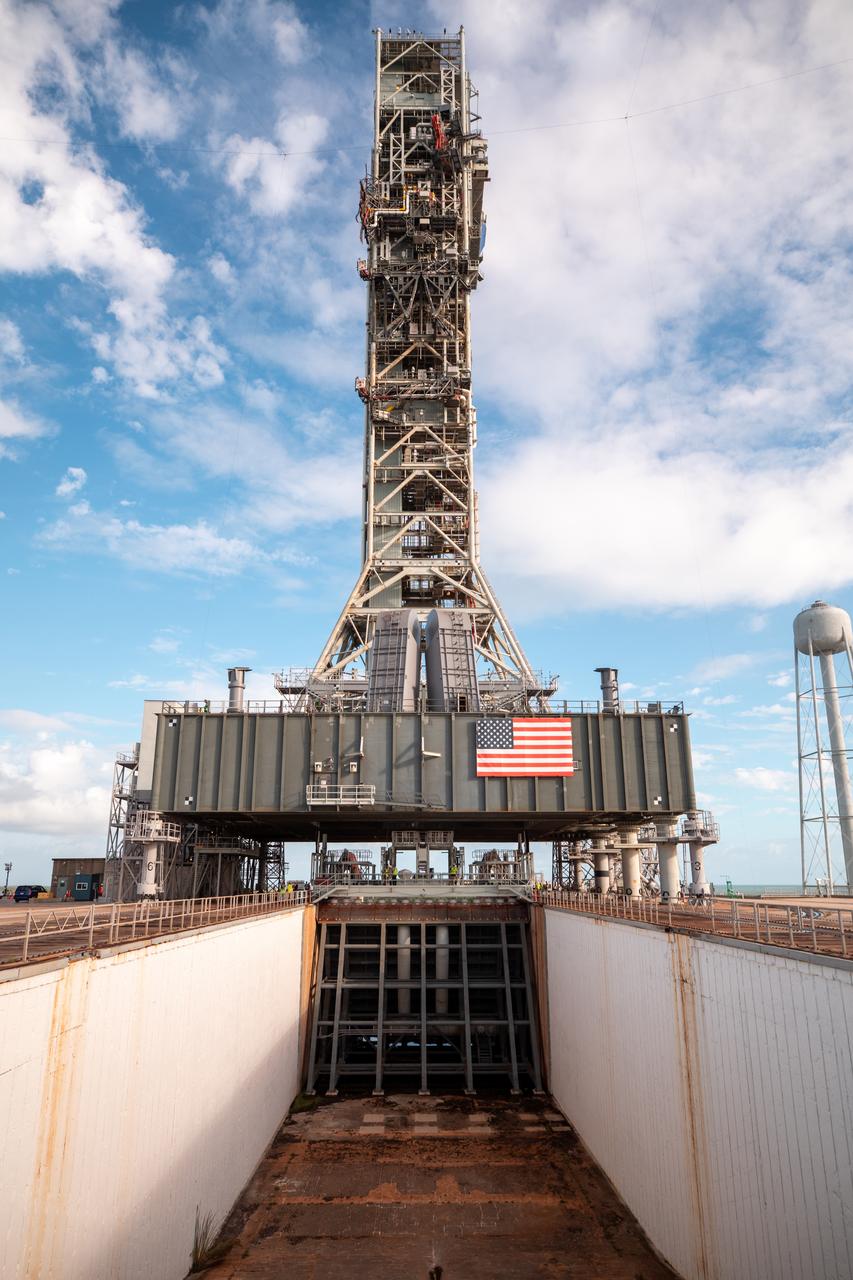
A view of the mobile launcher for the Artemis I mission on Launch Pad 39B at NASA’s Kennedy Space Center in Florida on Oct. 23, 2020. The flame trench and flame deflector are in view below the mobile launcher. The nearly 400-foot-tall mobile launcher will remain at the pad while engineers with Exploration Ground Systems and Jacobs complete several tasks, including a timing test to validate the launch team’s countdown timeline, and a thorough, top-to-bottom wash down of the mobile launcher to remove any debris remaining from construction and installation of the umbilical arms. Artemis I will test the Orion spacecraft and Space Launch System as an integrated system ahead of crewed flights to the Moon. Under the Artemis program, NASA will land the first woman and the next man on the Moon in 2024.
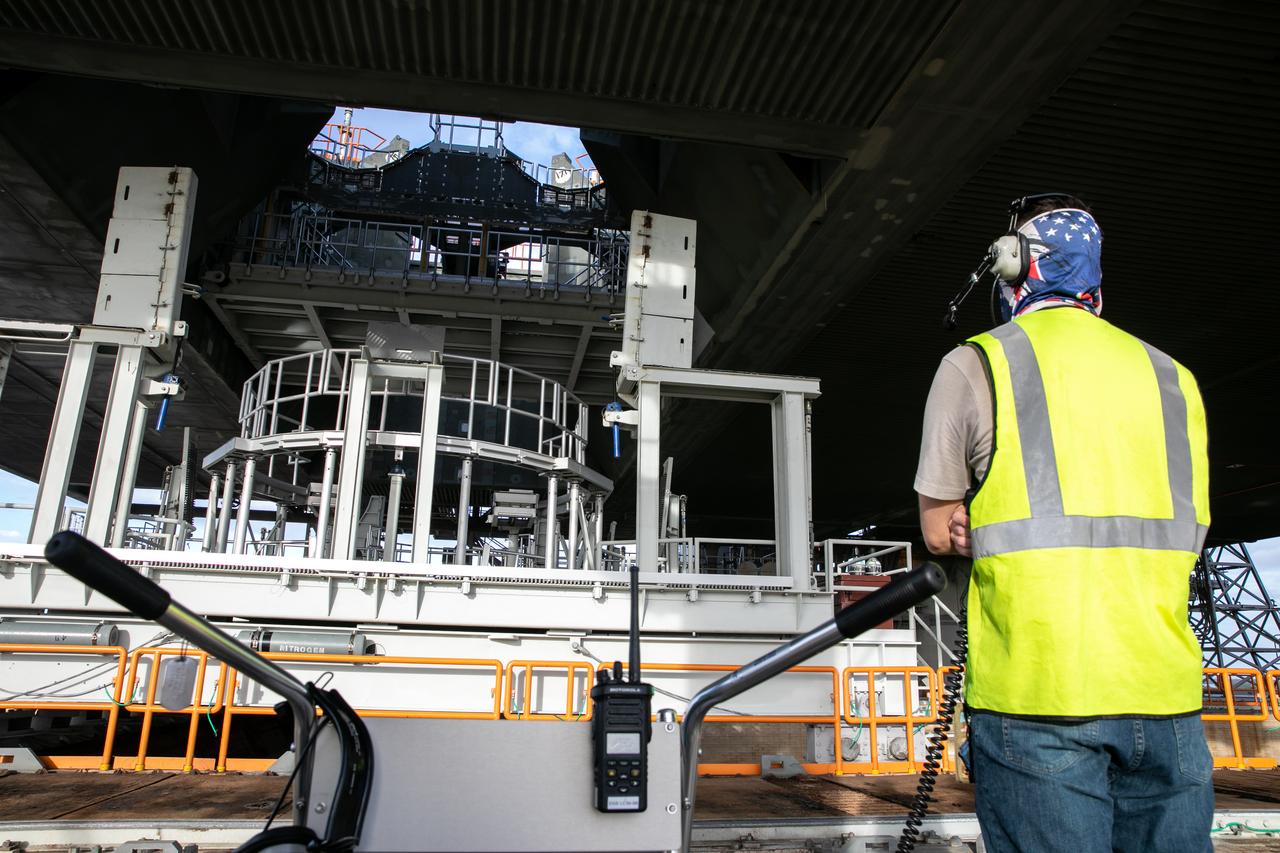
Workers assists with raising the engine service platform beneath the mobile launcher for Artemis I at Launch Pad 39B at NASA’s Kennedy Space Center in Florida on Oct. 23, 2020. The nearly 400-foot-tall mobile launcher is at the pad while engineers with Exploration Ground Systems and Jacobs complete several tasks, including a timing test to validate the launch team’s countdown timeline, and a thorough, top-to-bottom wash down of the mobile launcher to remove any debris remaining from construction and installation of the umbilical arms. Artemis I will test the Orion spacecraft and Space Launch System as an integrated system ahead of crewed flights to the Moon. Under the Artemis program, NASA will land the first woman and the next man on the Moon in 2024.
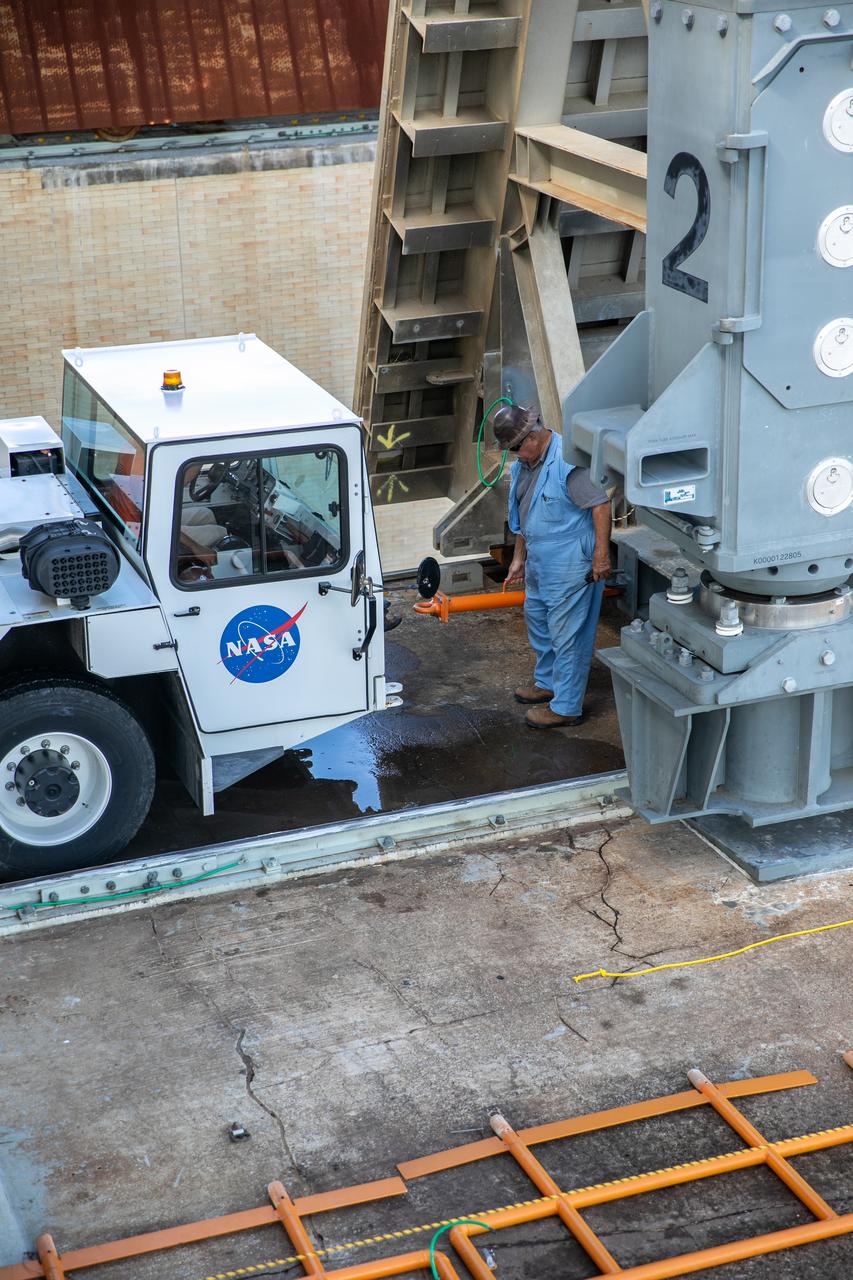
Special ground support equipment is used to move the side flame deflectors into place during a countdown demonstration test using the mobile launcher for the Artemis I mission at Launch Pad 39B at NASA’s Kennedy Space Center in Florida on Oct. 23, 2020. The nearly 400-foot-tall mobile launcher is at the pad while engineers with Exploration Ground Systems and Jacobs complete several tasks, including a timing test to validate the launch team’s countdown timeline, and a thorough, top-to-bottom wash down of the mobile launcher to remove any debris remaining from construction and installation of the umbilical arms. Artemis I will test the Orion spacecraft and Space Launch System as an integrated system ahead of crewed flights to the Moon. Under the Artemis program, NASA will land the first woman and the next man on the Moon in 2024.
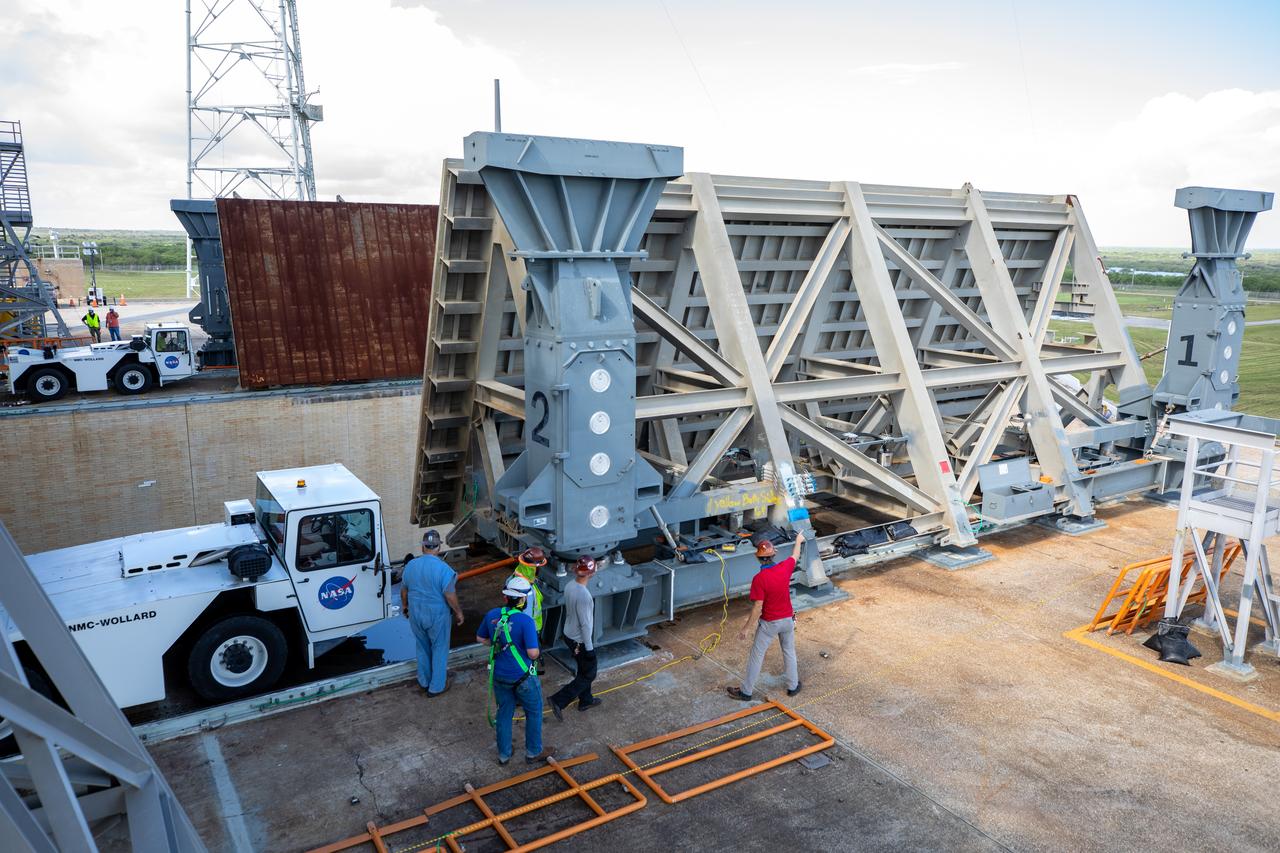
Technicians help move the side flame deflectors into place during a countdown demonstration test using the mobile launcher for the Artemis I mission at Launch Pad 39B at NASA’s Kennedy Space Center in Florida on Oct. 23, 2020. The nearly 400-foot-tall mobile launcher is at the pad while engineers with Exploration Ground Systems and Jacobs complete several tasks, including a timing test to validate the launch team’s countdown timeline, and a thorough, top-to-bottom wash down of the mobile launcher to remove any debris remaining from construction and installation of the umbilical arms. Artemis I will test the Orion spacecraft and Space Launch System as an integrated system ahead of crewed flights to the Moon. Under the Artemis program, NASA will land the first woman and the next man on the Moon in 2024.
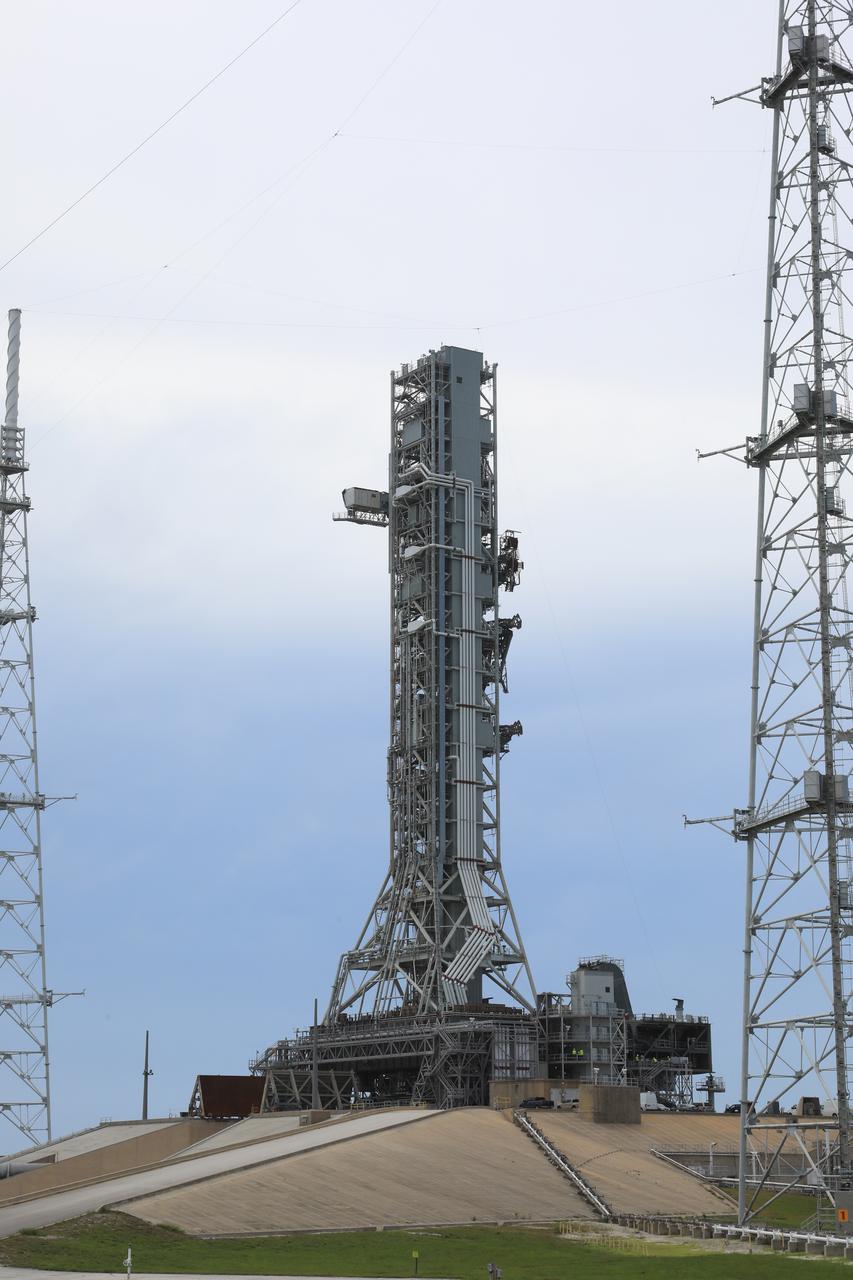
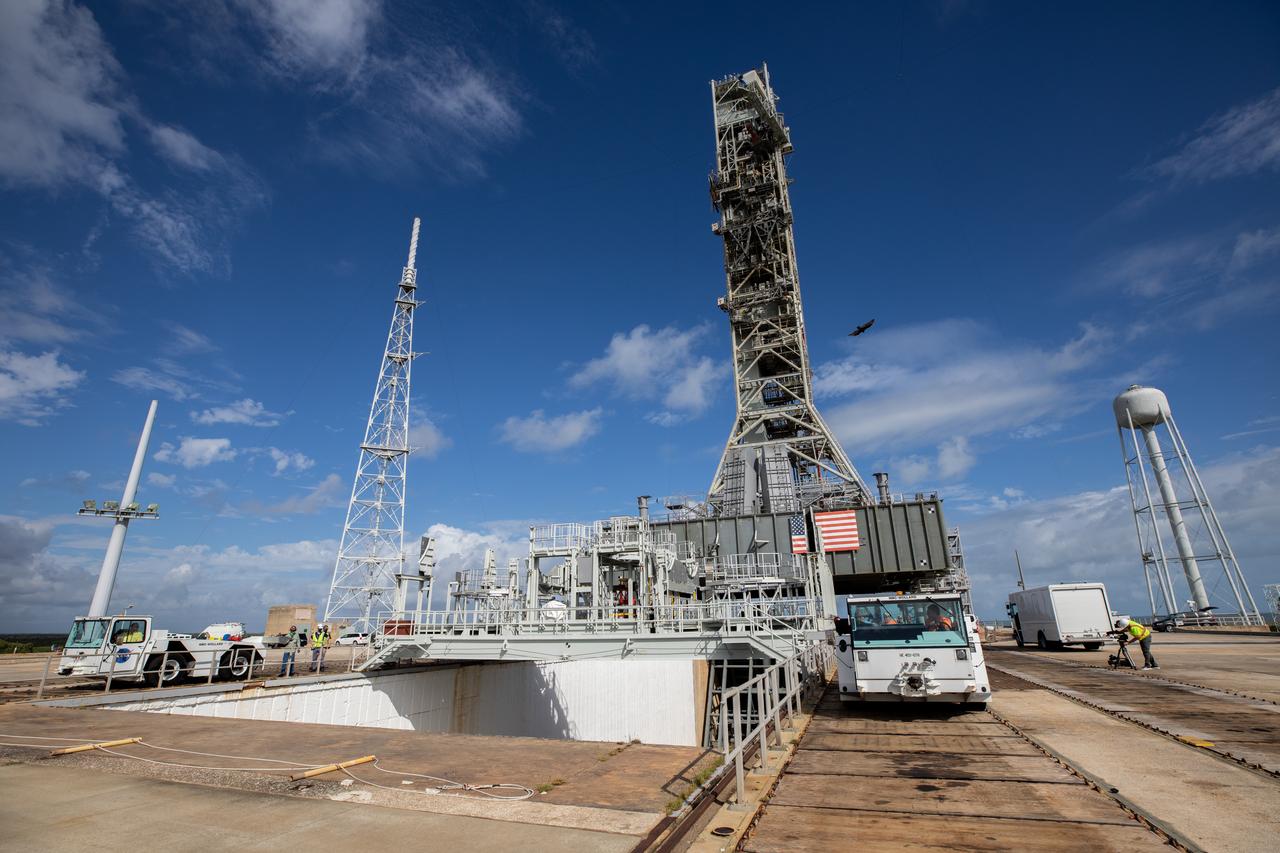
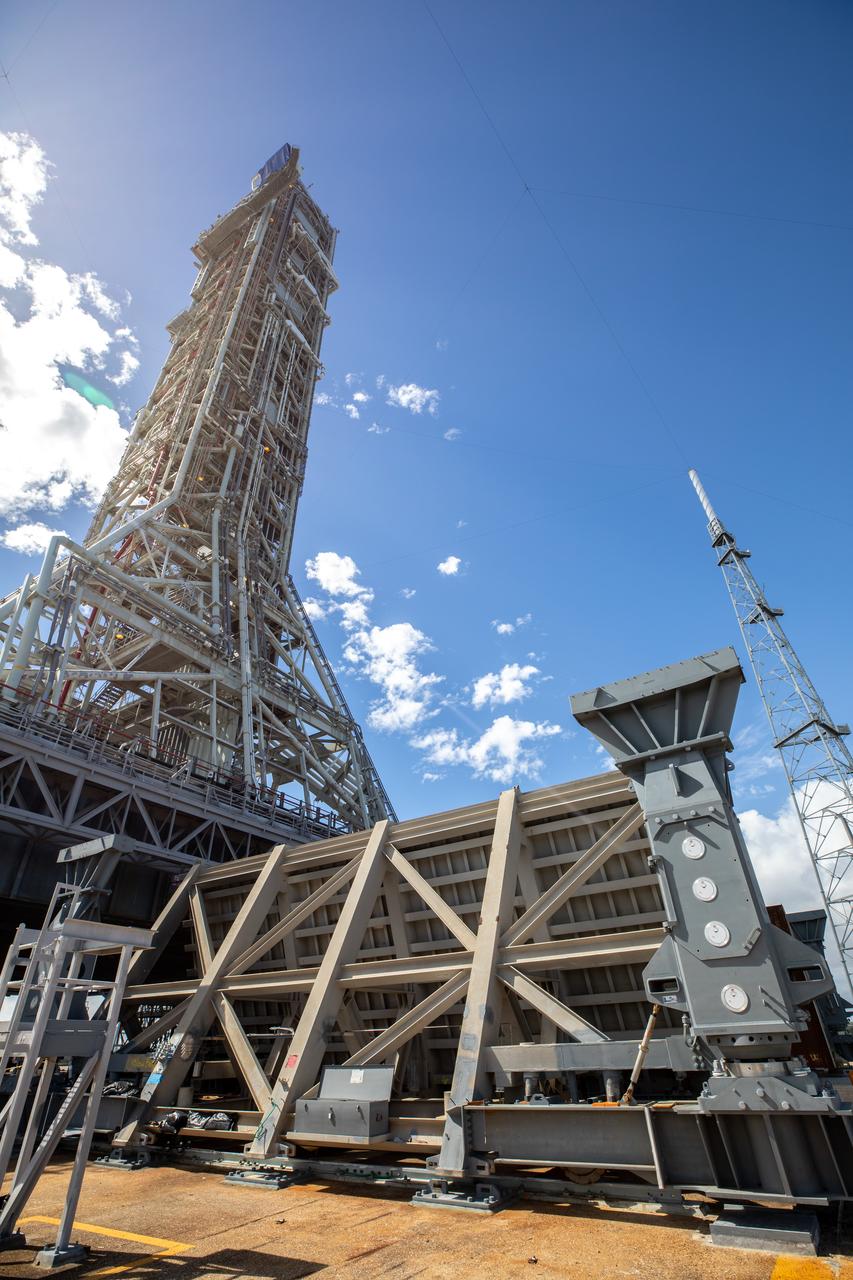
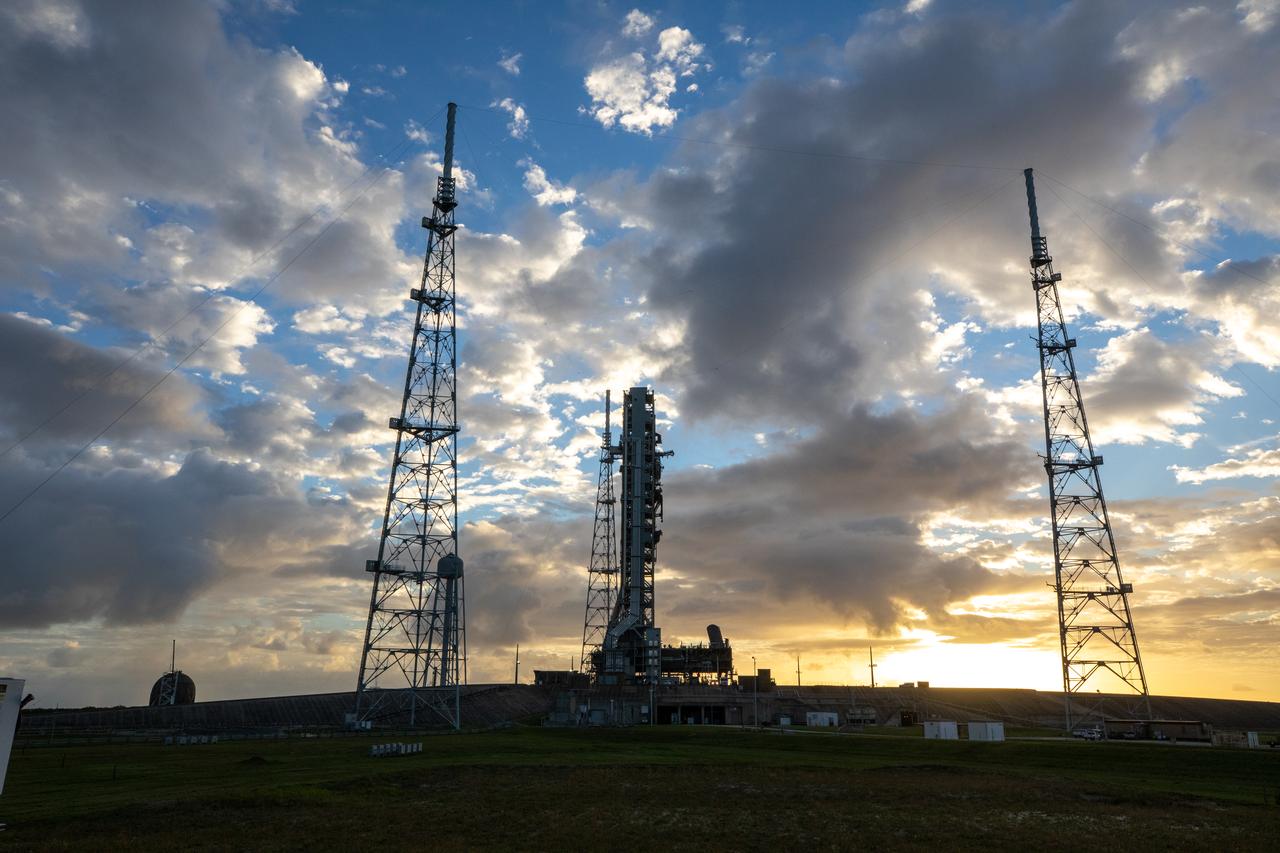
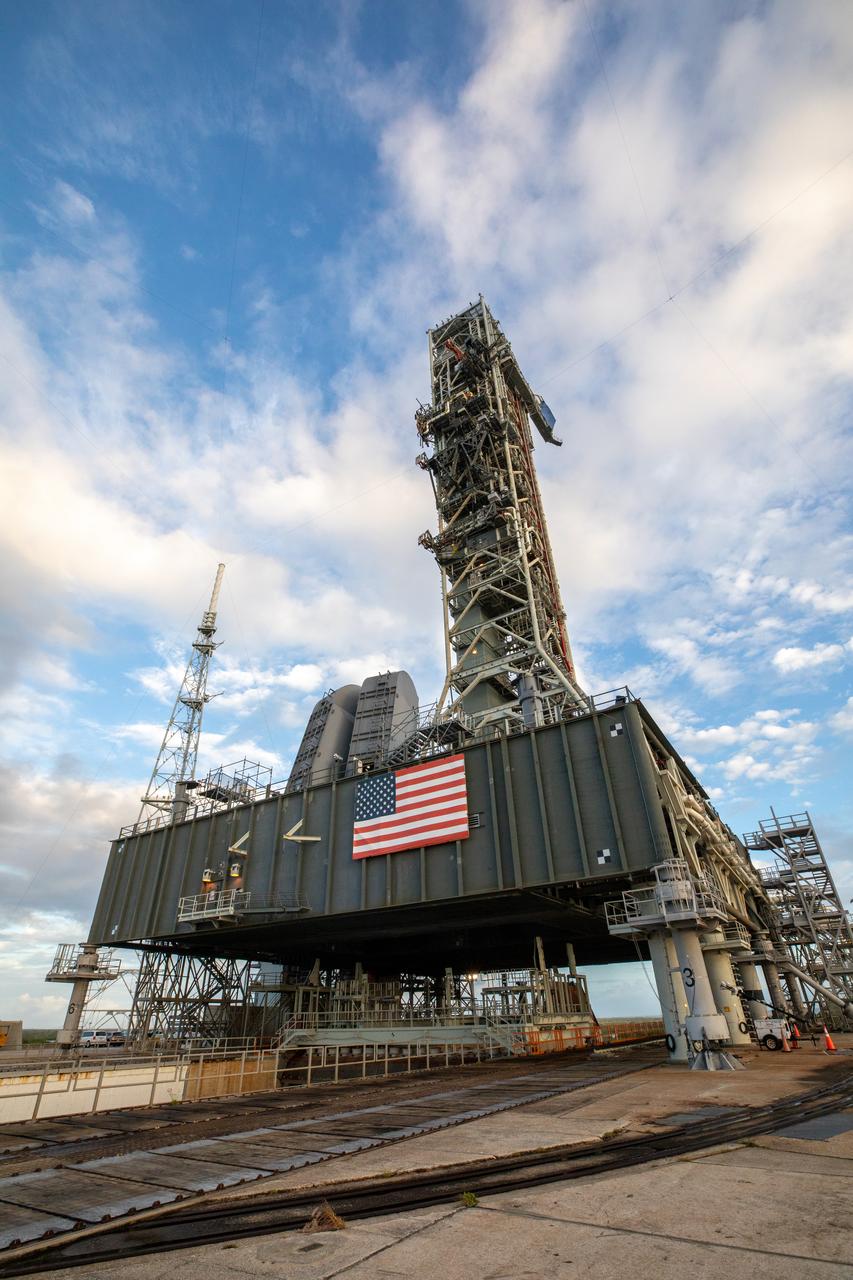
After successfully arriving at Kennedy Space Center’s Launch Complex 39B, Exploration Ground Systems’ mobile launcher is photographed at the pad surface on June 28, 2019. The mobile launcher began its final solo trek to the pad at midnight on June 27, departing from NASA’s Vehicle Assembly Building. The mobile launcher will remain at the pad over the summer, undergoing final testing and checkouts. Its next roll to the pad will be with the agency’s Space Launch System rocket and Orion in preparation for the launch of Artemis 1.
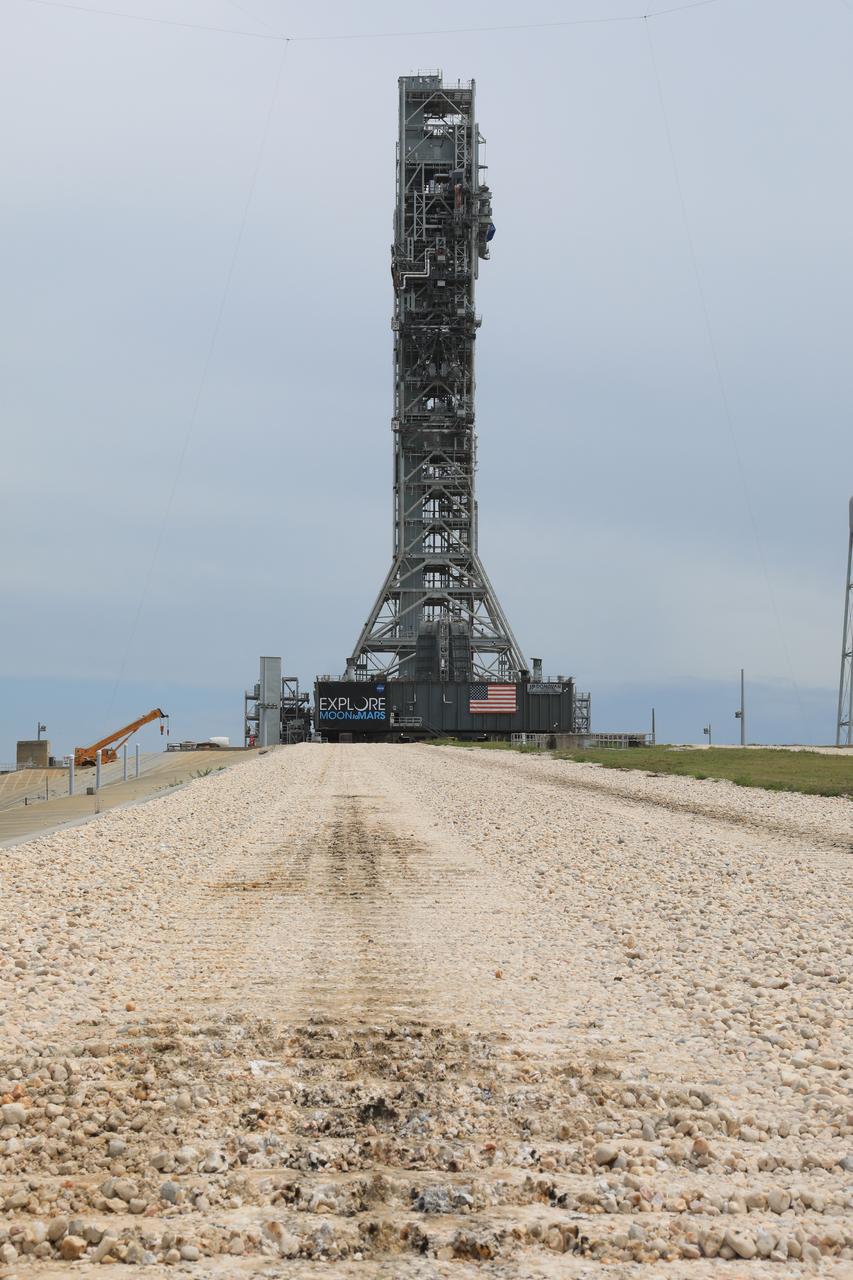
After successfully arriving at Kennedy Space Center’s Launch Complex 39B, Exploration Ground Systems’ mobile launcher is photographed at the pad surface on June 28, 2019. The mobile launcher began its final solo trek to the pad at midnight on June 27, departing from NASA’s Vehicle Assembly Building. The mobile launcher will remain at the pad over the summer, undergoing final testing and checkouts. Its next roll to the pad will be with the agency’s Space Launch System rocket and Orion in preparation for the launch of Artemis 1.
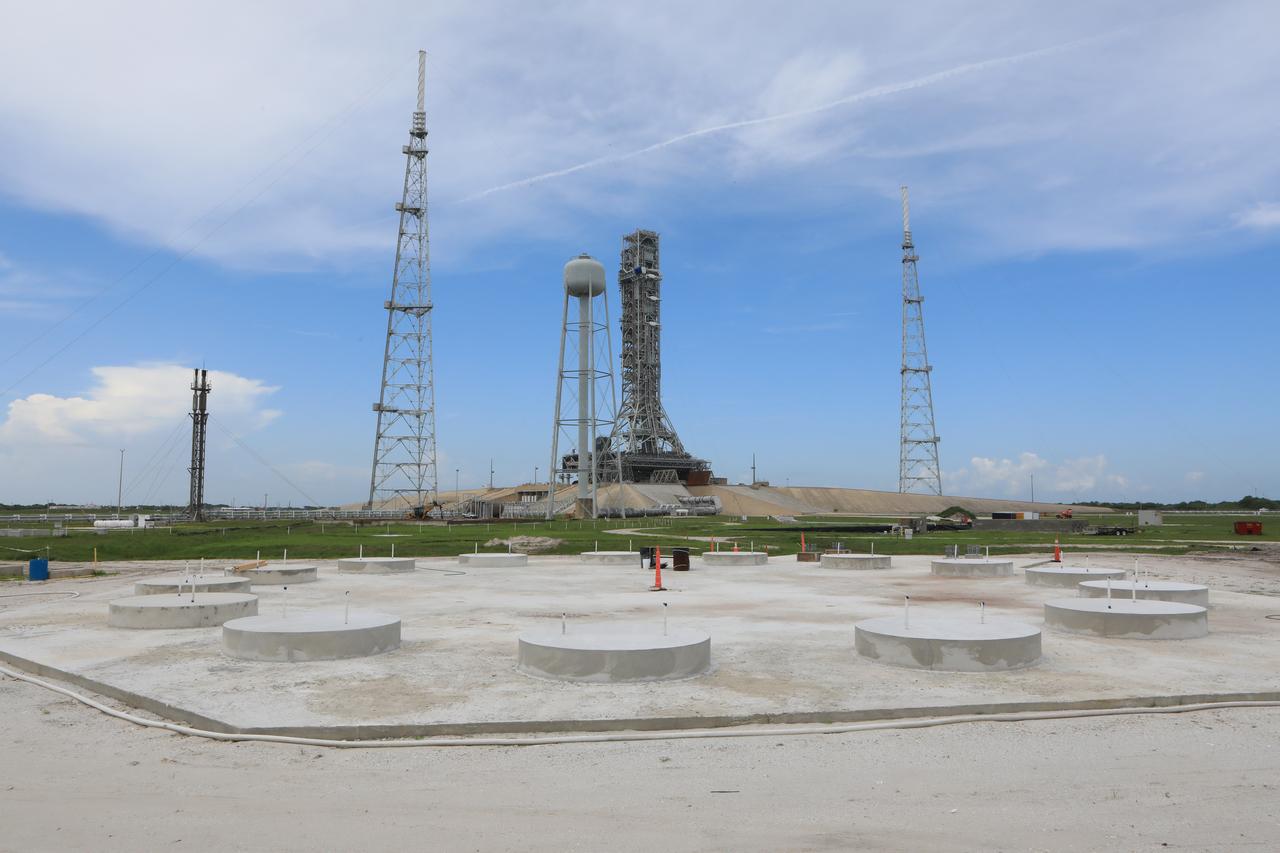
After successfully arriving at Kennedy Space Center’s Launch Complex 39B, Exploration Ground Systems’ mobile launcher is photographed at the pad surface on June 28, 2019. The mobile launcher began its final solo trek to the pad at midnight on June 27, departing from NASA’s Vehicle Assembly Building. The mobile launcher will remain at the pad over the summer, undergoing final testing and checkouts. Its next roll to the pad will be with the agency’s Space Launch System rocket and Orion in preparation for the launch of Artemis 1.
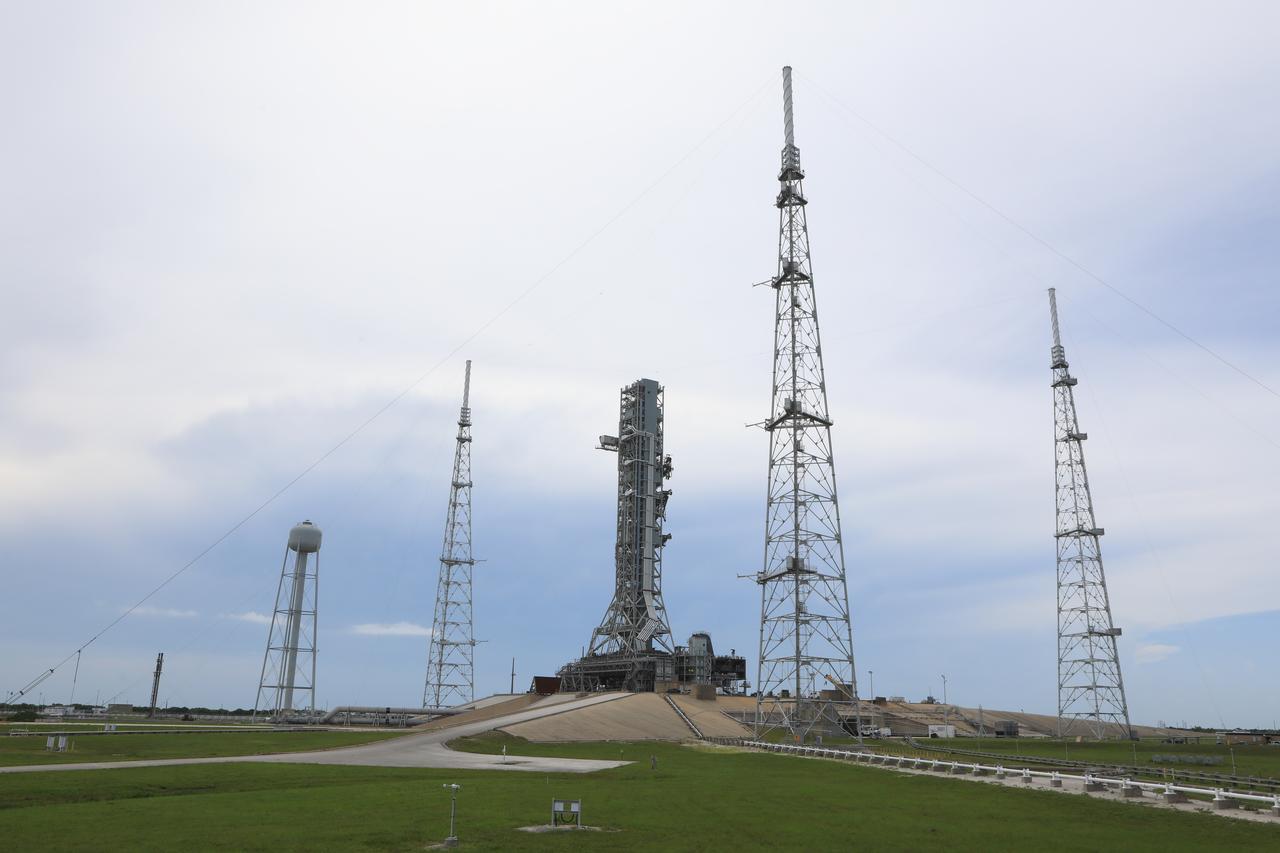
After successfully arriving at Kennedy Space Center’s Launch Complex 39B, Exploration Ground Systems’ mobile launcher is photographed at the pad surface on June 28, 2019. The mobile launcher began its final solo trek to the pad at midnight on June 27, departing from NASA’s Vehicle Assembly Building. The mobile launcher will remain at the pad over the summer, undergoing final testing and checkouts. Its next roll to the pad will be with the agency’s Space Launch System rocket and Orion in preparation for the launch of Artemis 1.
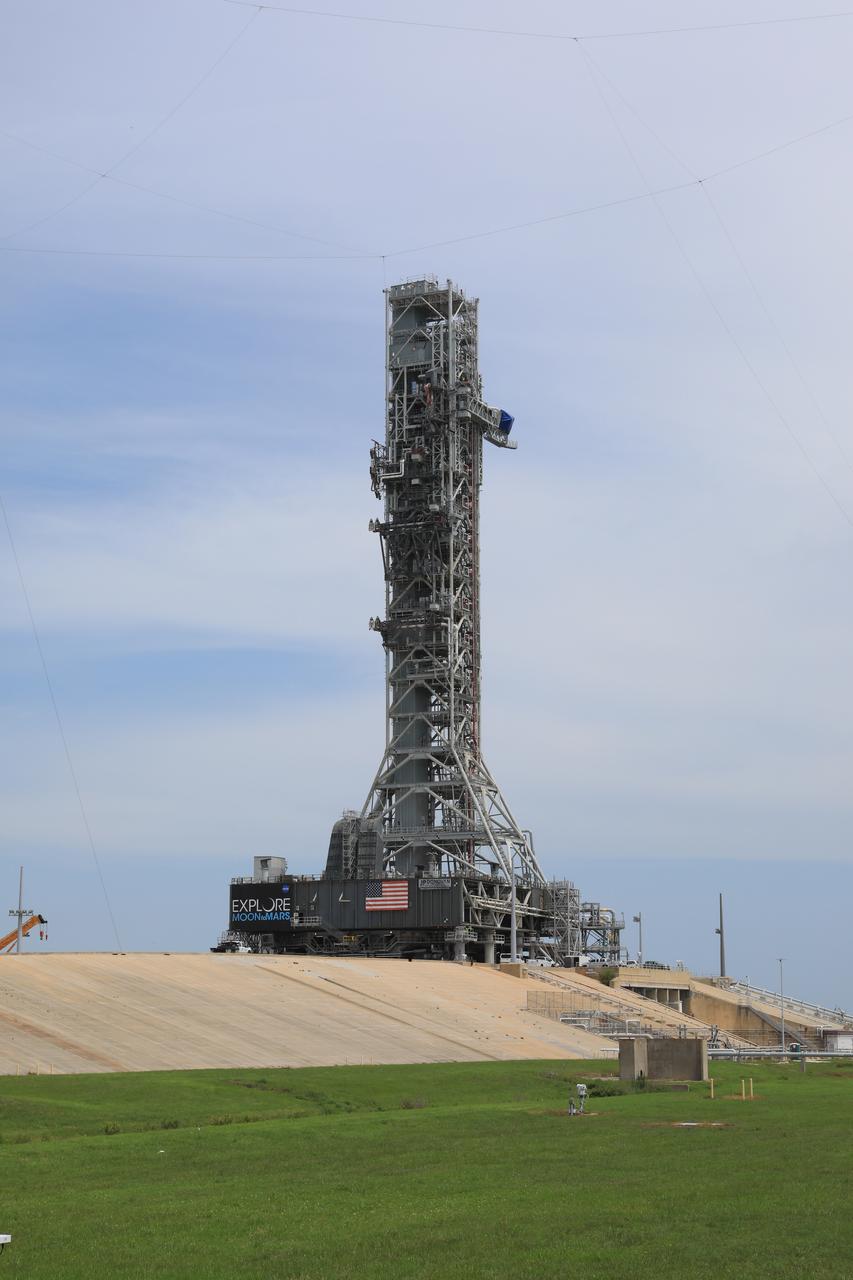
After successfully arriving at Kennedy Space Center’s Launch Complex 39B, Exploration Ground Systems’ mobile launcher is photographed at the pad surface on June 28, 2019. The mobile launcher began its final solo trek to the pad at midnight on June 27, departing from NASA’s Vehicle Assembly Building. The mobile launcher will remain at the pad over the summer, undergoing final testing and checkouts. Its next roll to the pad will be with the agency’s Space Launch System rocket and Orion in preparation for the launch of Artemis 1.
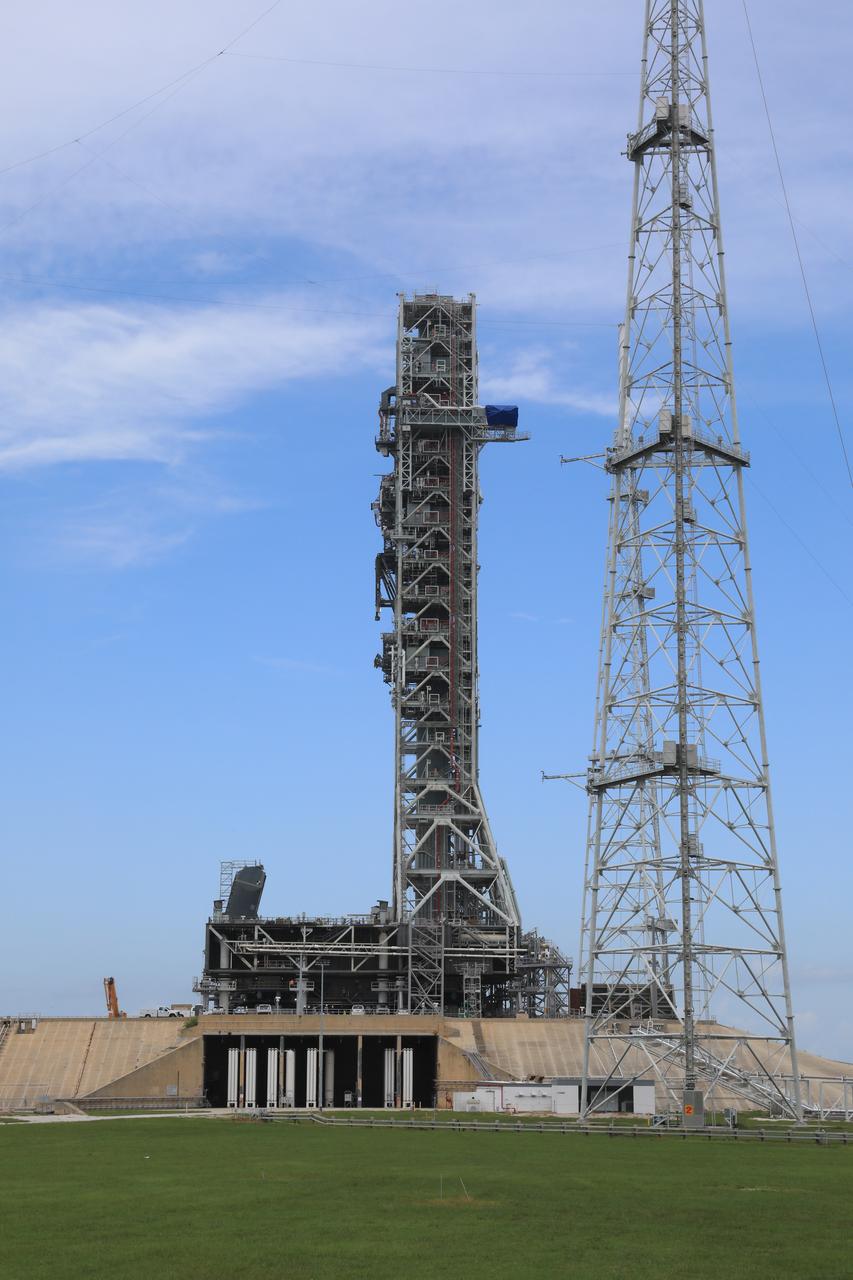
After successfully arriving at Kennedy Space Center’s Launch Complex 39B, Exploration Ground Systems’ mobile launcher is photographed at the pad surface on June 28, 2019. The mobile launcher began its final solo trek to the pad at midnight on June 27, departing from NASA’s Vehicle Assembly Building. The mobile launcher will remain at the pad over the summer, undergoing final testing and checkouts. Its next roll to the pad will be with the agency’s Space Launch System rocket and Orion in preparation for the launch of Artemis 1.
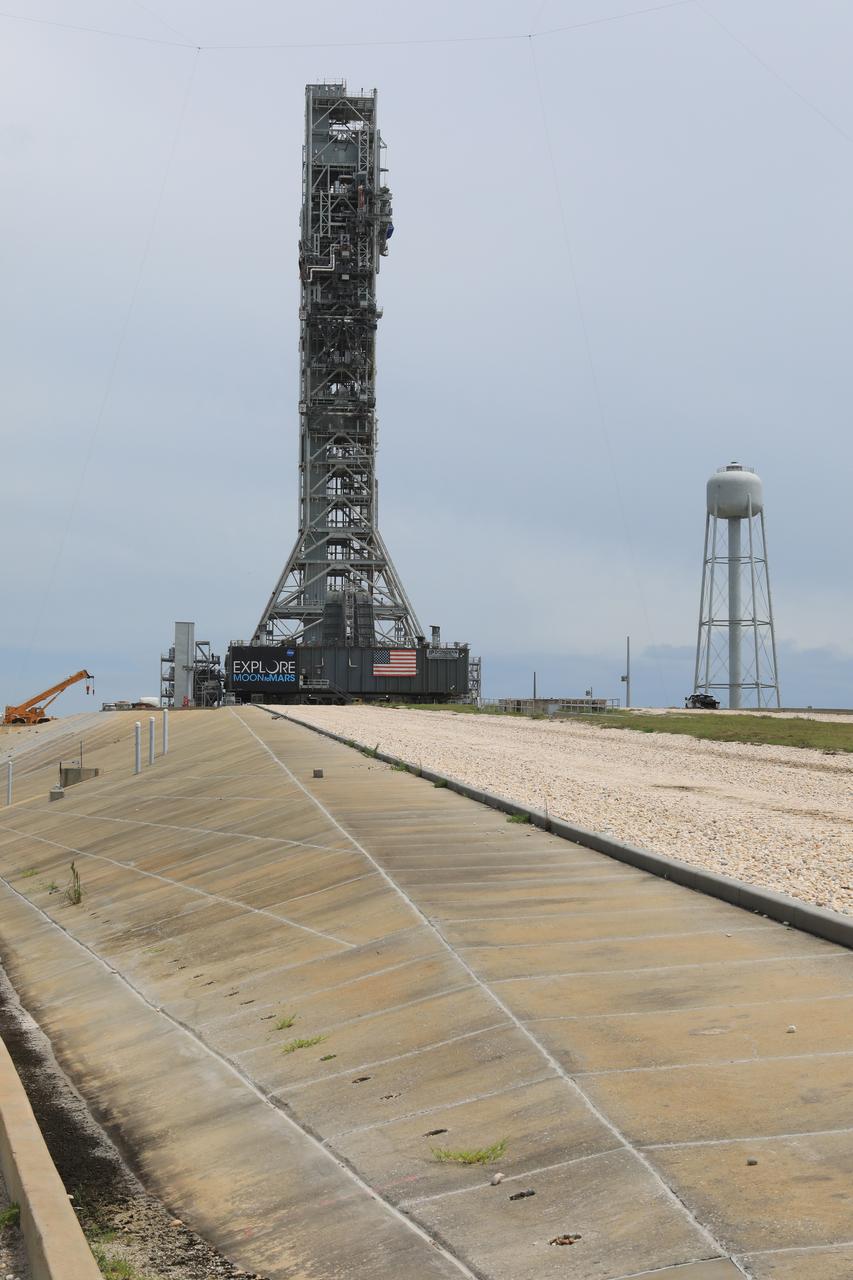
After successfully arriving at Kennedy Space Center’s Launch Complex 39B, Exploration Ground Systems’ mobile launcher is photographed at the pad surface on June 28, 2019. The mobile launcher began its final solo trek to the pad at midnight on June 27, departing from NASA’s Vehicle Assembly Building. The mobile launcher will remain at the pad over the summer, undergoing final testing and checkouts. Its next roll to the pad will be with the agency’s Space Launch System rocket and Orion in preparation for the launch of Artemis 1.
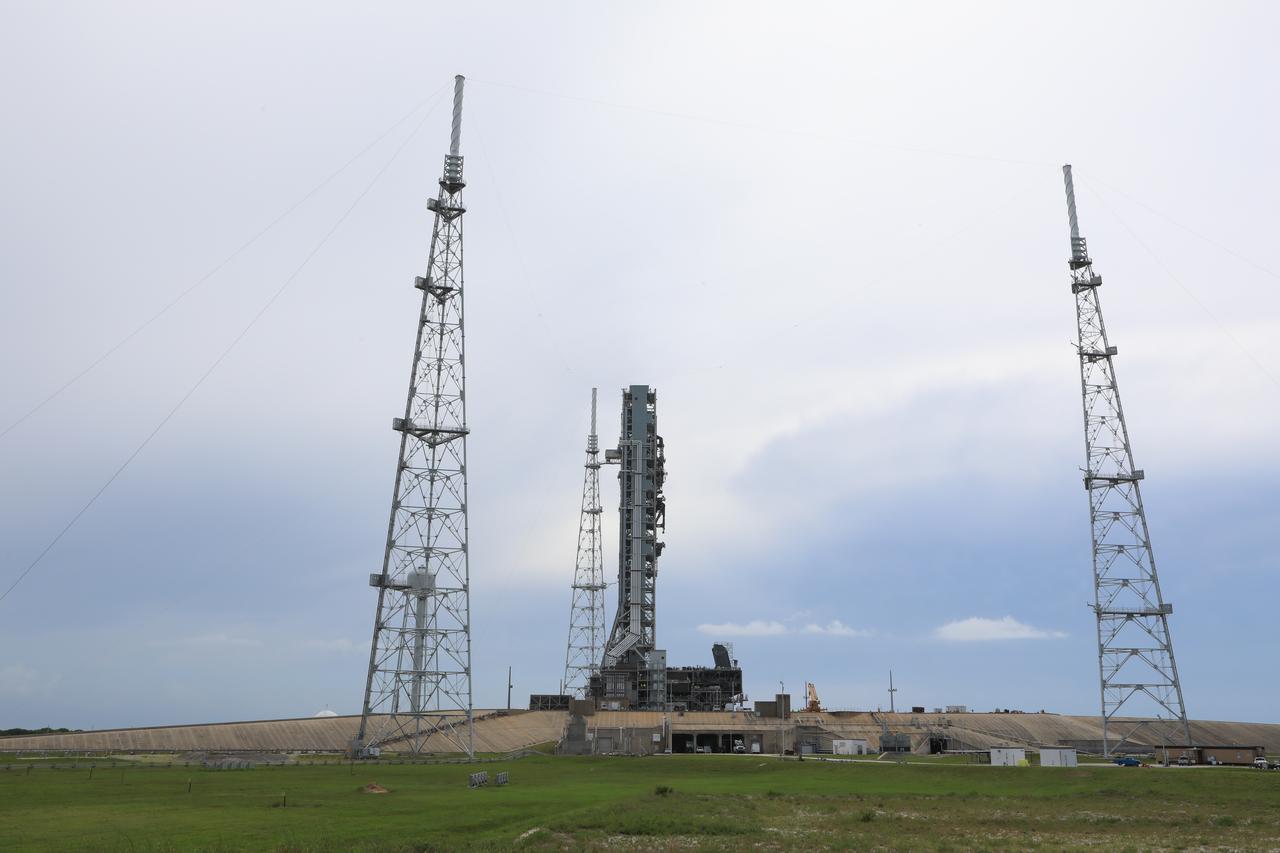
After successfully arriving at Kennedy Space Center’s Launch Complex 39B, Exploration Ground Systems’ mobile launcher is photographed at the pad surface on June 28, 2019. The mobile launcher began its final solo trek to the pad at midnight on June 27, departing from NASA’s Vehicle Assembly Building. The mobile launcher will remain at the pad over the summer, undergoing final testing and checkouts. Its next roll to the pad will be with the agency’s Space Launch System rocket and Orion in preparation for the launch of Artemis 1.

After successfully arriving at Kennedy Space Center’s Launch Complex 39B, Exploration Ground Systems’ mobile launcher is photographed at the pad surface on June 28, 2019. The mobile launcher began its final solo trek to the pad at midnight on June 27, departing from NASA’s Vehicle Assembly Building. The mobile launcher will remain at the pad over the summer, undergoing final testing and checkouts. Its next roll to the pad will be with the agency’s Space Launch System rocket and Orion in preparation for the launch of Artemis 1.
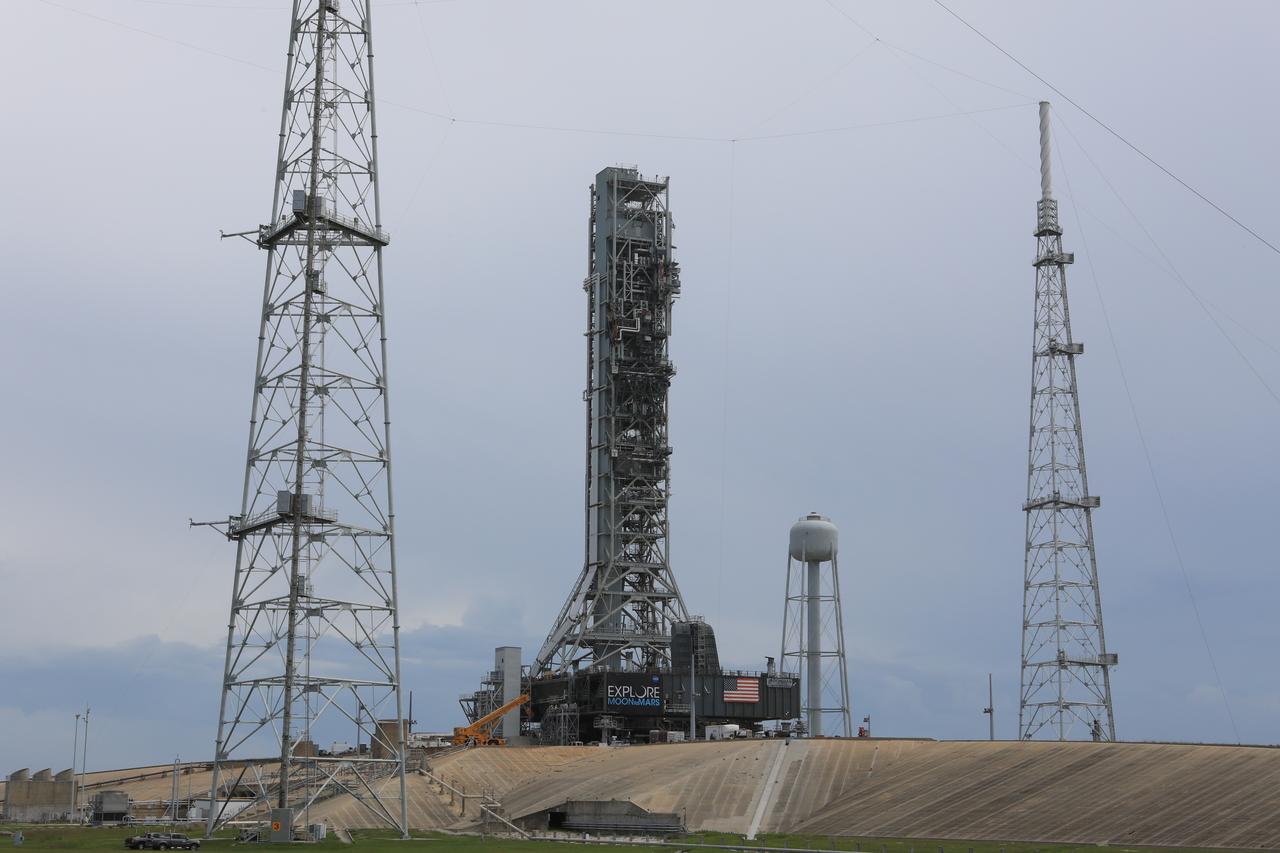
After successfully arriving at Kennedy Space Center’s Launch Complex 39B, Exploration Ground Systems’ mobile launcher is photographed at the pad surface on June 28, 2019. The mobile launcher began its final solo trek to the pad at midnight on June 27, departing from NASA’s Vehicle Assembly Building. The mobile launcher will remain at the pad over the summer, undergoing final testing and checkouts. Its next roll to the pad will be with the agency’s Space Launch System rocket and Orion in preparation for the launch of Artemis 1.
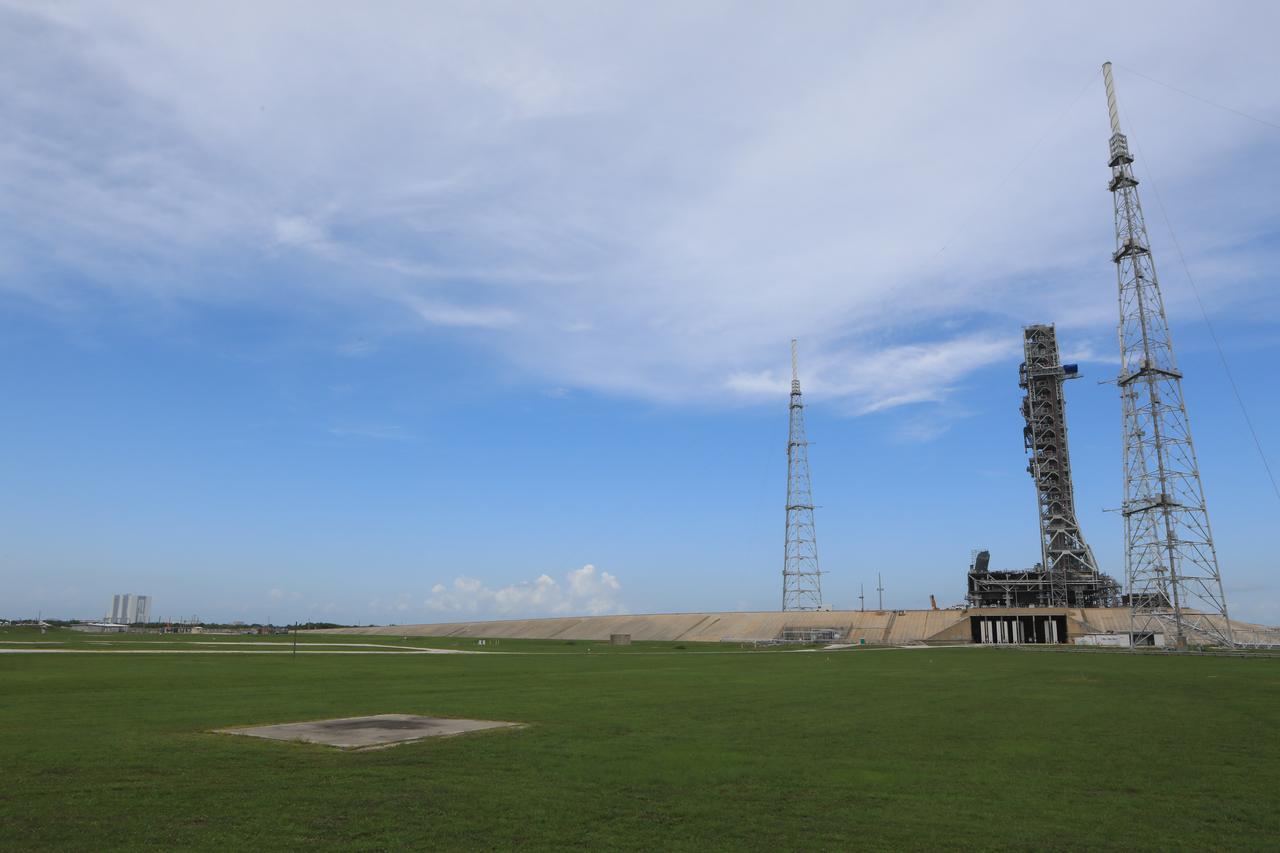
After successfully arriving at Kennedy Space Center’s Launch Complex 39B, Exploration Ground Systems’ mobile launcher is photographed at the pad surface on June 28, 2019. The mobile launcher began its final solo trek to the pad at midnight on June 27, departing from NASA’s Vehicle Assembly Building. The mobile launcher will remain at the pad over the summer, undergoing final testing and checkouts. Its next roll to the pad will be with the agency’s Space Launch System rocket and Orion in preparation for the launch of Artemis 1.
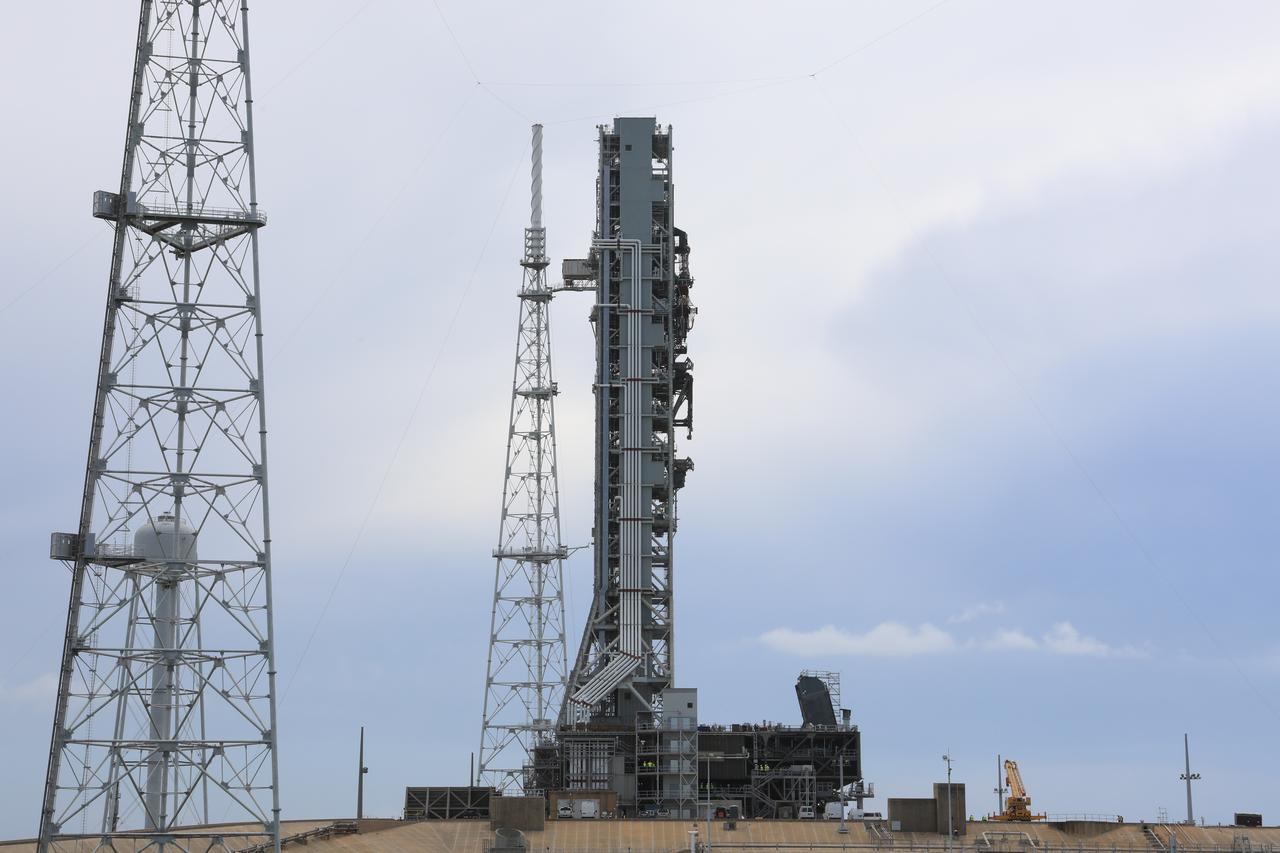
After successfully arriving at Kennedy Space Center’s Launch Complex 39B, Exploration Ground Systems’ mobile launcher is photographed at the pad surface on June 28, 2019. The mobile launcher began its final solo trek to the pad at midnight on June 27, departing from NASA’s Vehicle Assembly Building. The mobile launcher will remain at the pad over the summer, undergoing final testing and checkouts. Its next roll to the pad will be with the agency’s Space Launch System rocket and Orion in preparation for the launch of Artemis 1.
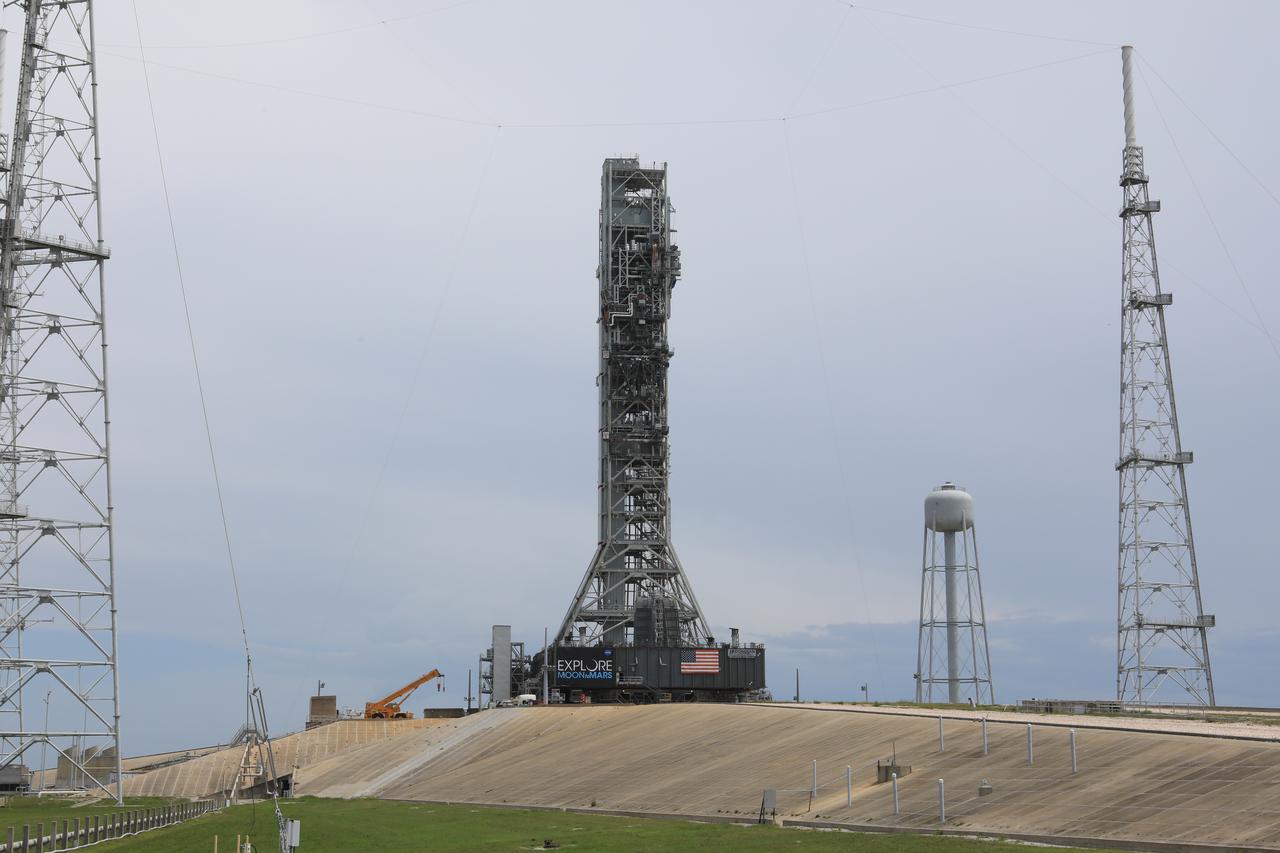
After successfully arriving at Kennedy Space Center’s Launch Complex 39B, Exploration Ground Systems’ mobile launcher is photographed at the pad surface on June 28, 2019. The mobile launcher began its final solo trek to the pad at midnight on June 27, departing from NASA’s Vehicle Assembly Building. The mobile launcher will remain at the pad over the summer, undergoing final testing and checkouts. Its next roll to the pad will be with the agency’s Space Launch System rocket and Orion in preparation for the launch of Artemis 1.
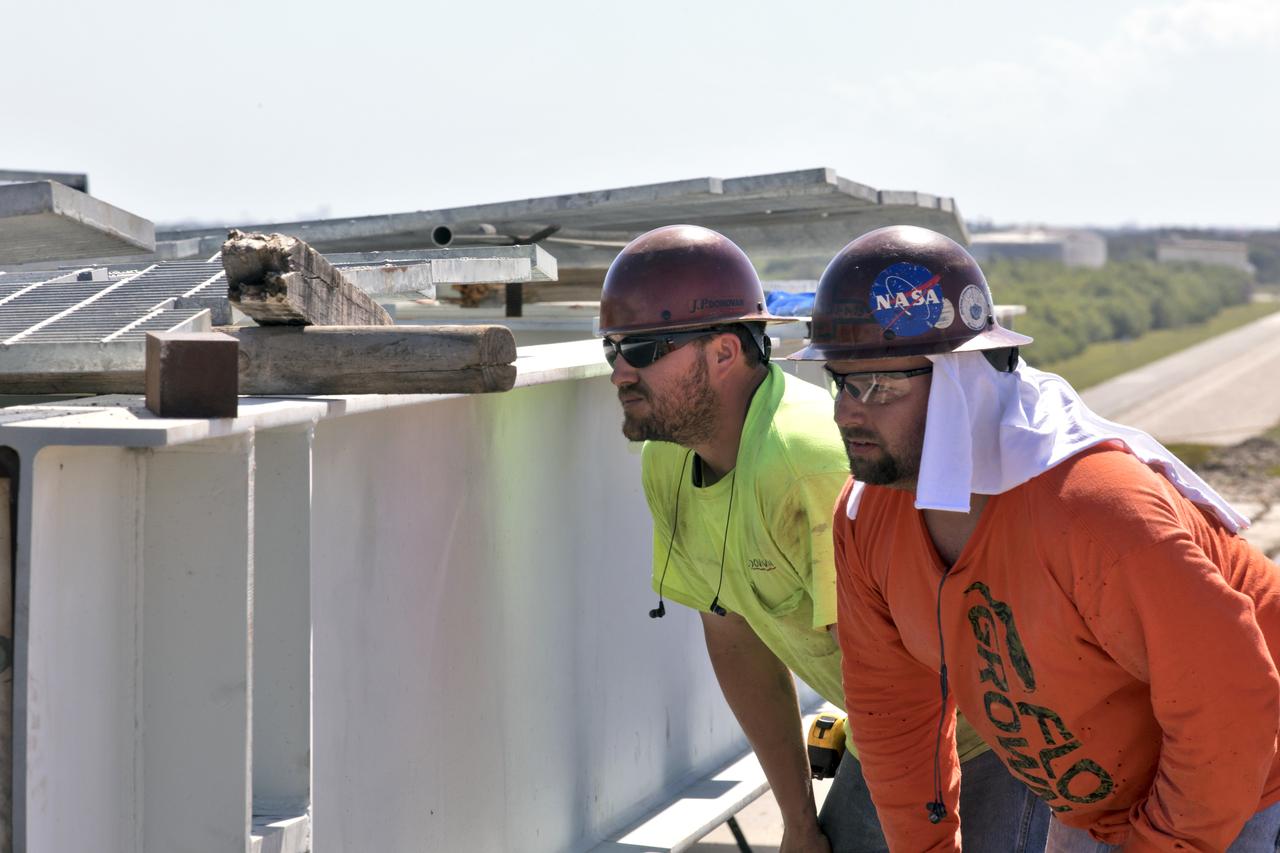
Construction workers assess the repairs needed on the surface of Launch Pad 39B at NASA’s Kennedy Space Center in Florida on Feb. 22, 2019. The launch pad has undergone upgrades and modifications to accommodate NASA's Space Launch System and Orion spacecraft for Exploration Mission-1 and subsequent missions. Upgrades include new heat-resistant bricks on the walls of the flame trench and installation of a new flame deflector. All of the upgrades have been managed by Exploration Ground Systems.
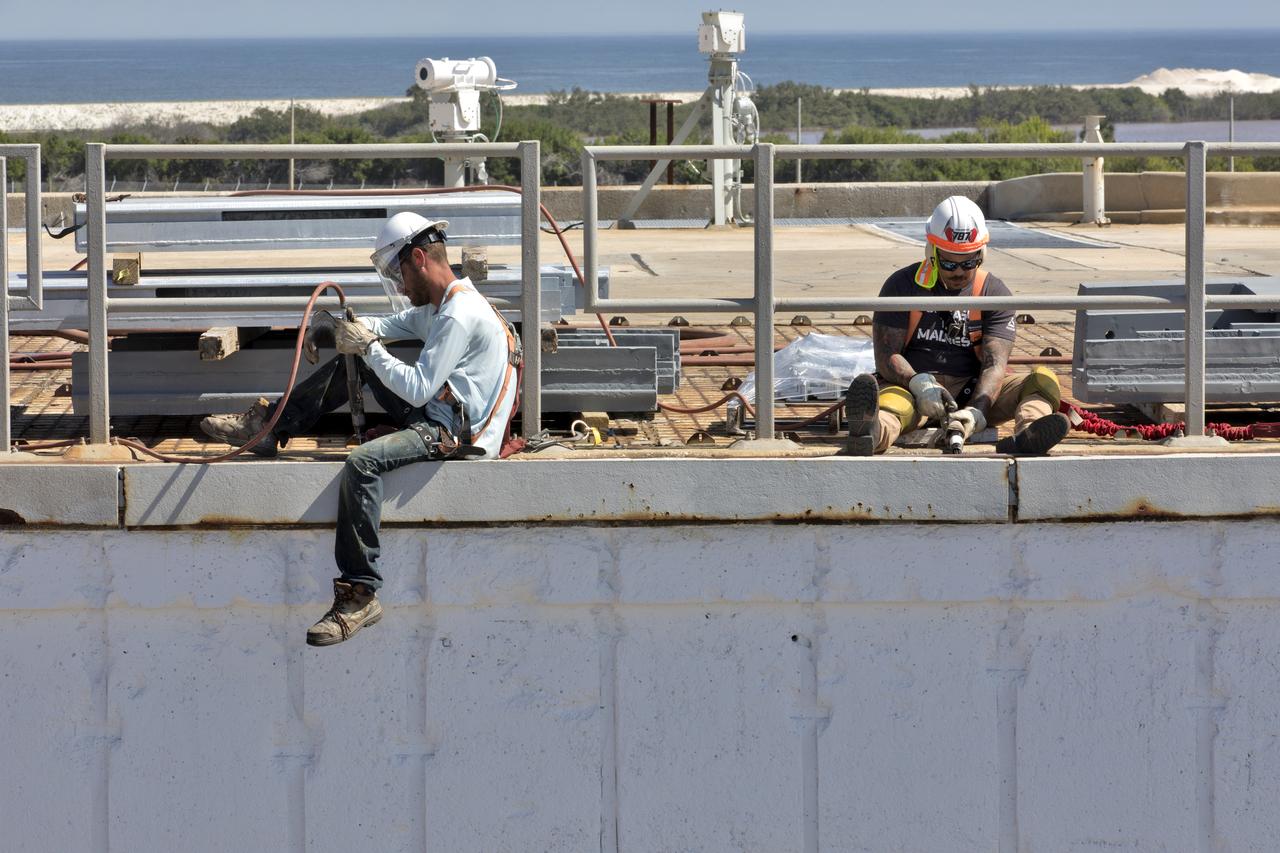
Constructions workers are busy repairing the concrete on the surface of Launch Pad 39B at NASA’s Kennedy Space Center in Florida on Feb. 22, 2019. The launch pad has undergone upgrades and modifications to accommodate NASA's Space Launch System and Orion spacecraft for Exploration Mission-1 and subsequent missions. Upgrades include new heat-resistant bricks on the walls of the flame trench and installation of a new flame deflector. All of the upgrades have been managed by Exploration Ground Systems.
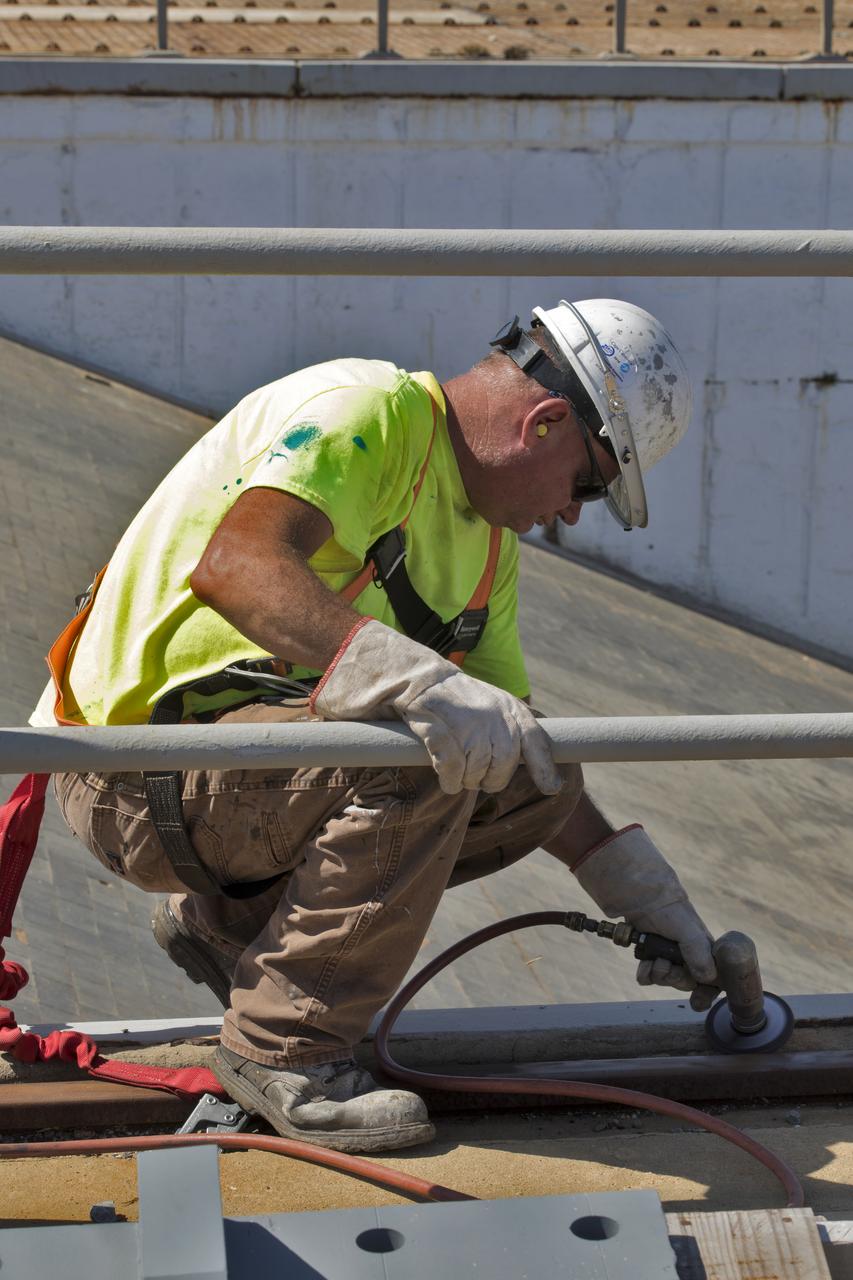
A construction worker sands a section of a wood beam on the surface of Launch Pad 39B at NASA’s Kennedy Space Center in Florida on Feb. 22, 2019. The launch pad has undergone upgrades and modifications to accommodate NASA's Space Launch System and Orion spacecraft for Exploration Mission-1 and subsequent missions. Upgrades include new heat-resistant bricks on the walls of the flame trench and installation of a new flame deflector. All of the upgrades have been managed by Exploration Ground Systems.
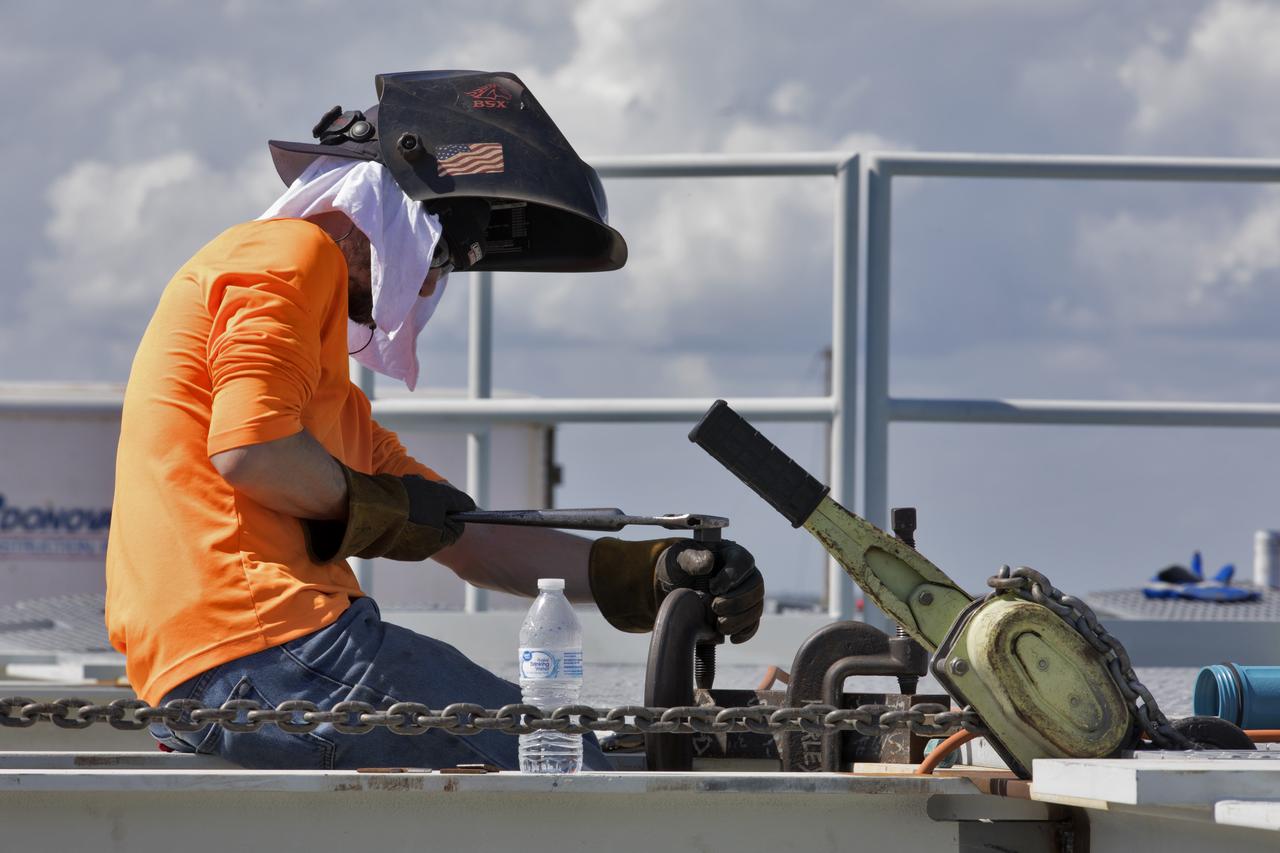
To continue his work, a construction worker secures clamps on a section of metal on the surface of Launch Pad 39B at NASA's Kennedy Space Center in Florida on July 26, 2018. The launch pad has undergone upgrades and modifications to accommodate NASA's Space Launch System and Orion spacecraft for Exploration Mission-1 and subsequent missions. Upgrades include new heat-resistant bricks on the walls of the flame trench and installation of a new flame deflector. All of the upgrades have been managed by Exploration Ground Systems.
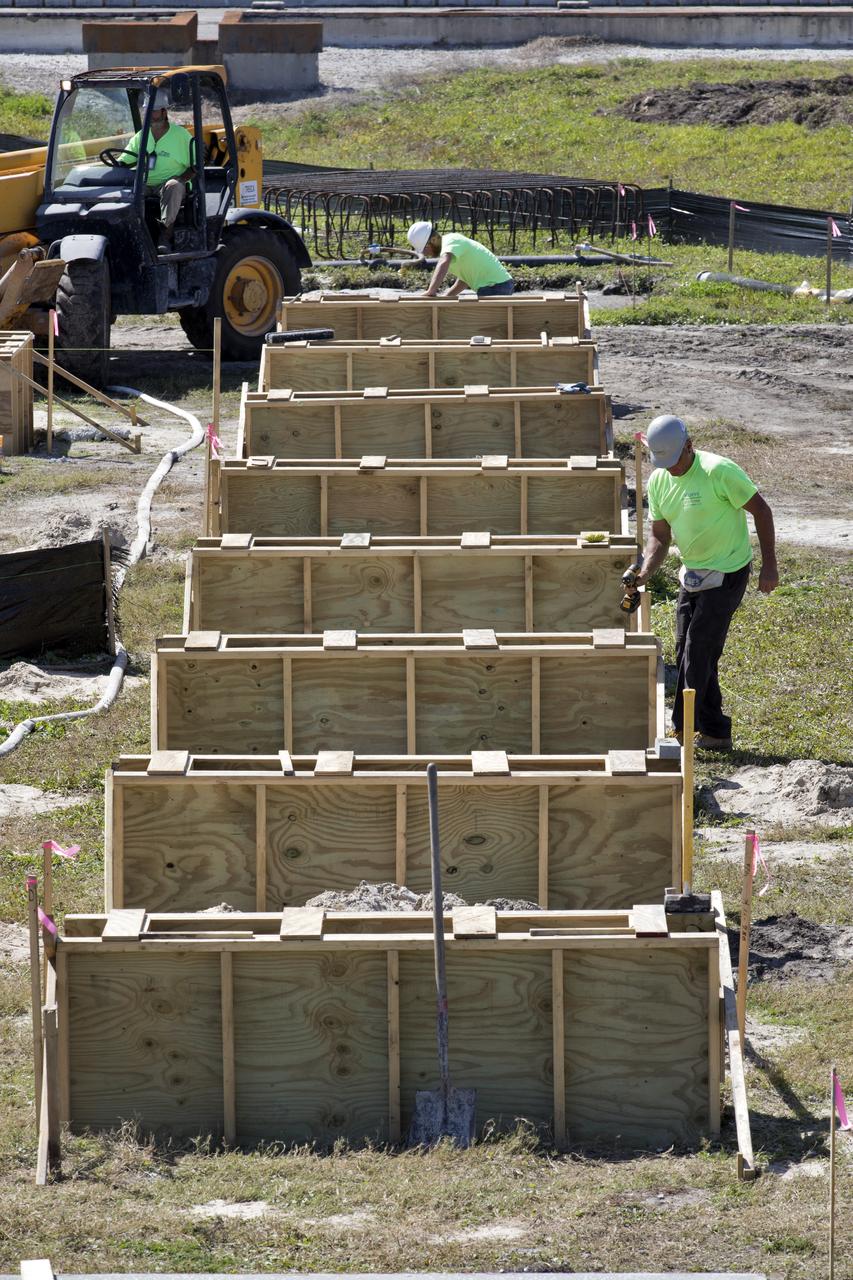
Construction workers stage parts and equipment nearby Launch Pad 39B at NASA’s Kennedy Space Center in Florida on Feb. 22, 2019. The launch pad has undergone upgrades and modifications to accommodate NASA's Space Launch System and Orion spacecraft for Exploration Mission-1 and subsequent missions. Upgrades include new heat-resistant bricks on the walls of the flame trench and installation of a new flame deflector. All of the upgrades have been managed by Exploration Ground Systems.
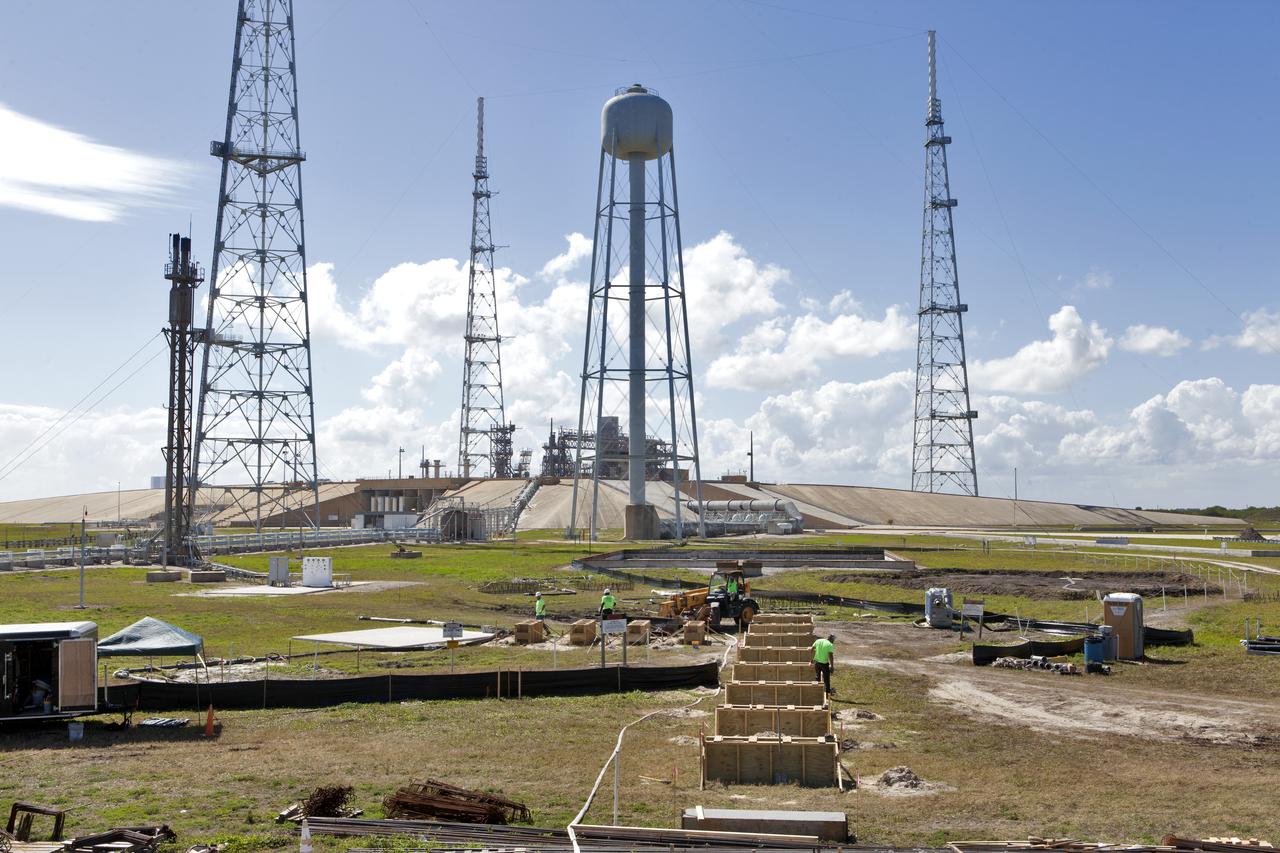
Construction workers stage parts and equipment nearby Launch Pad 39B at NASA’s Kennedy Space Center in Florida on Feb. 22, 2019. The launch pad has undergone upgrades and modifications to accommodate NASA's Space Launch System and Orion spacecraft for Exploration Mission-1 and subsequent missions. Upgrades include new heat-resistant bricks on the walls of the flame trench and installation of a new flame deflector. All of the upgrades have been managed by Exploration Ground Systems.
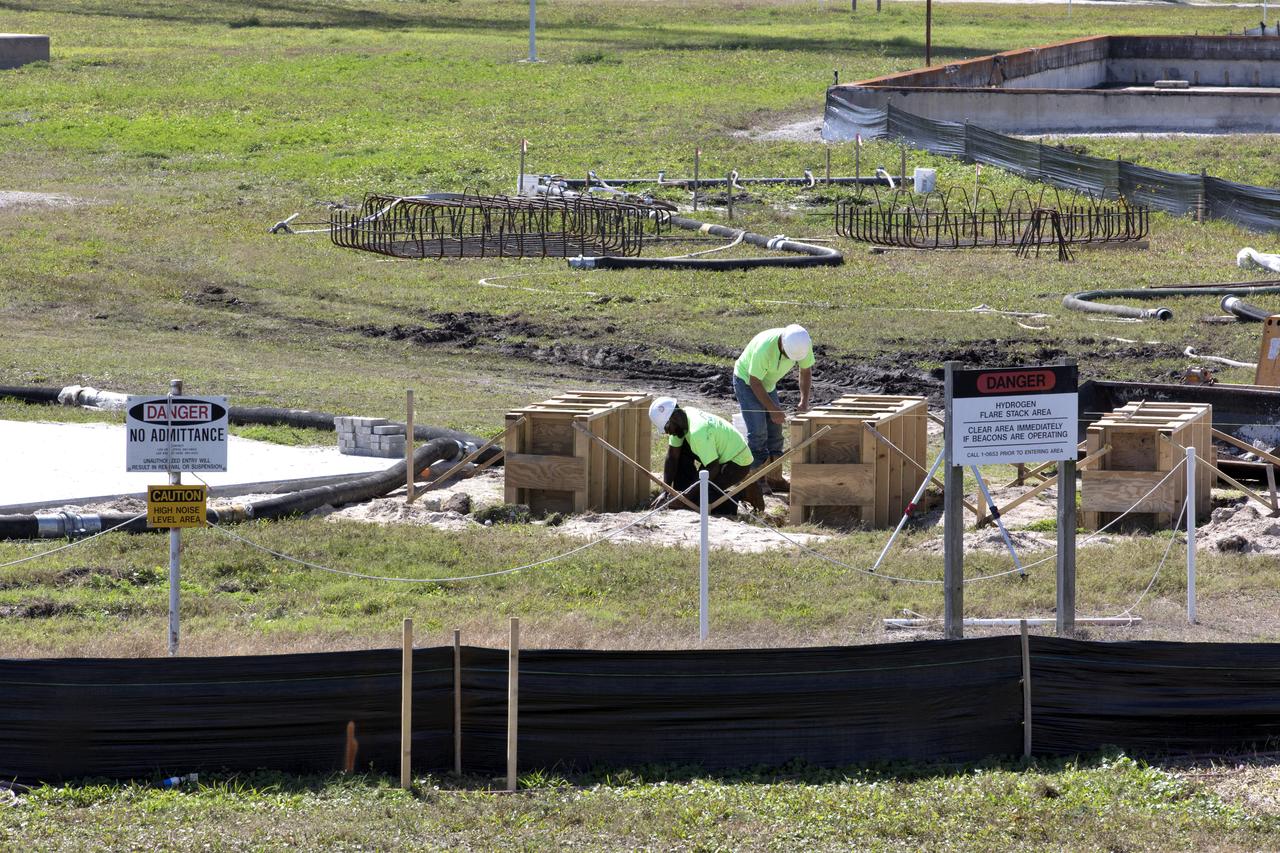
Construction workers stage parts and equipment nearby Launch Pad 39B at NASA’s Kennedy Space Center in Florida on Feb. 22, 2019. The launch pad has undergone upgrades and modifications to accommodate NASA's Space Launch System and Orion spacecraft for Exploration Mission-1 and subsequent missions. Upgrades include new heat-resistant bricks on the walls of the flame trench and installation of a new flame deflector. All of the upgrades have been managed by Exploration Ground Systems.
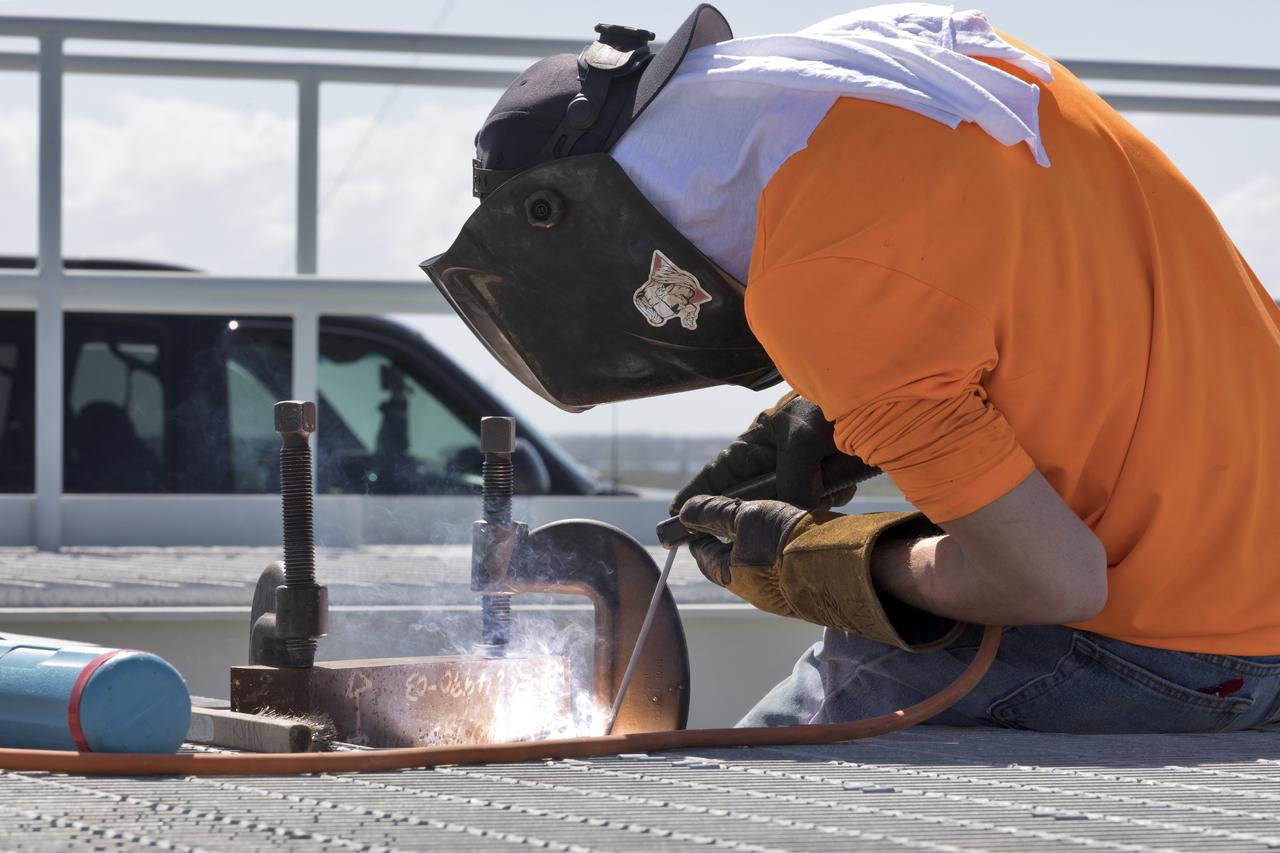
A construction worker welds a section of metal on the surface of Launch Pad 39B at NASA’s Kennedy Space Center in Florida on Feb. 22, 2019. The launch pad has undergone upgrades and modifications to accommodate NASA's Space Launch System and Orion spacecraft for Exploration Mission-1 and subsequent missions. Upgrades include new heat-resistant bricks on the walls of the flame trench and installation of a new flame deflector. All of the upgrades have been managed by Exploration Ground Systems.
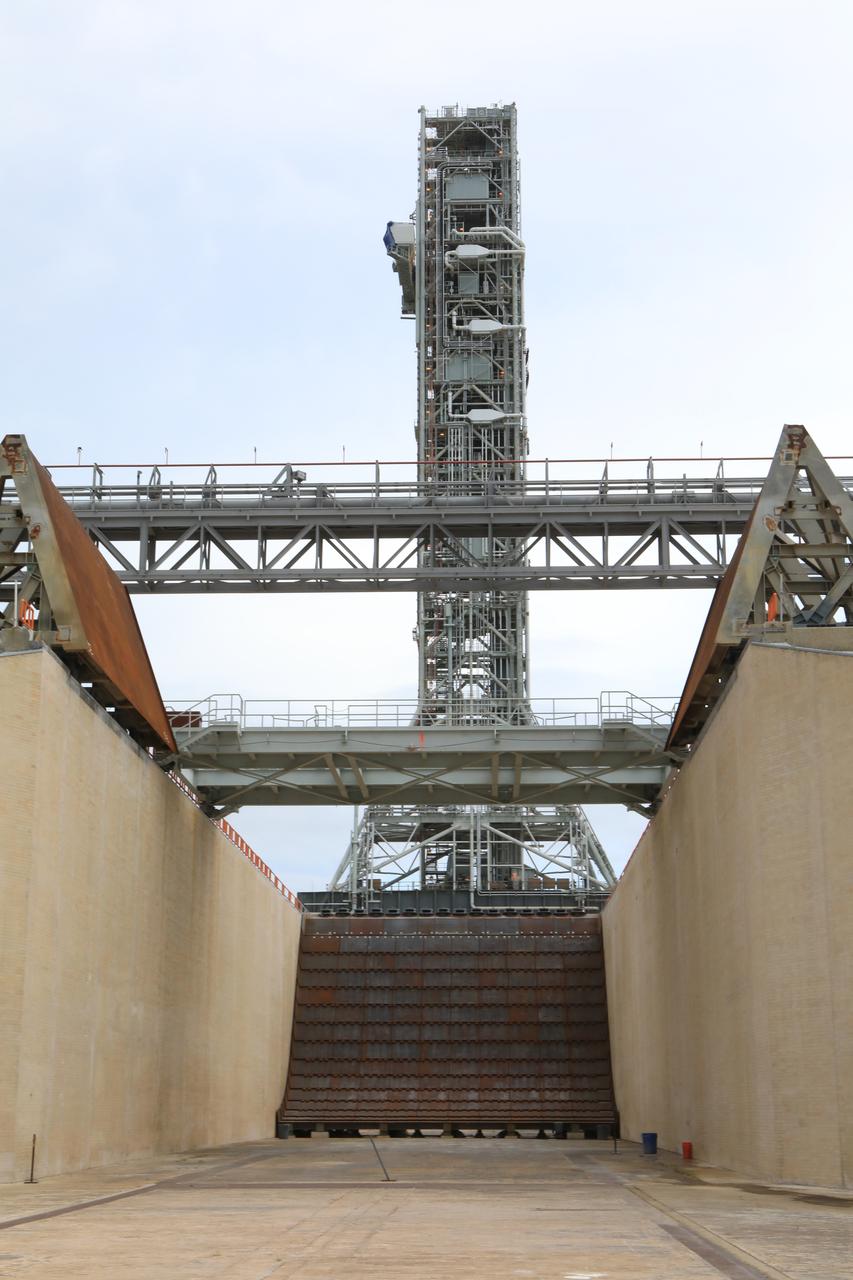
In this view from the flame trench at Kennedy Space Center’s Launch Complex 39B in Florida, Exploration Ground Systems’ mobile launcher can be seen on the pad surface on June 28, 2019. The mobile launcher began its final solo trek – atop crawler-transporter 2 – to the pad at midnight on June 27, departing from NASA’s Vehicle Assembly Building and continuing up to the pad surface on June 28. The mobile launcher will remain at the pad over the summer, undergoing final testing and checkouts. Its next roll to the pad will be with the agency’s Space Launch System rocket and Orion in preparation for the launch of Artemis 1.
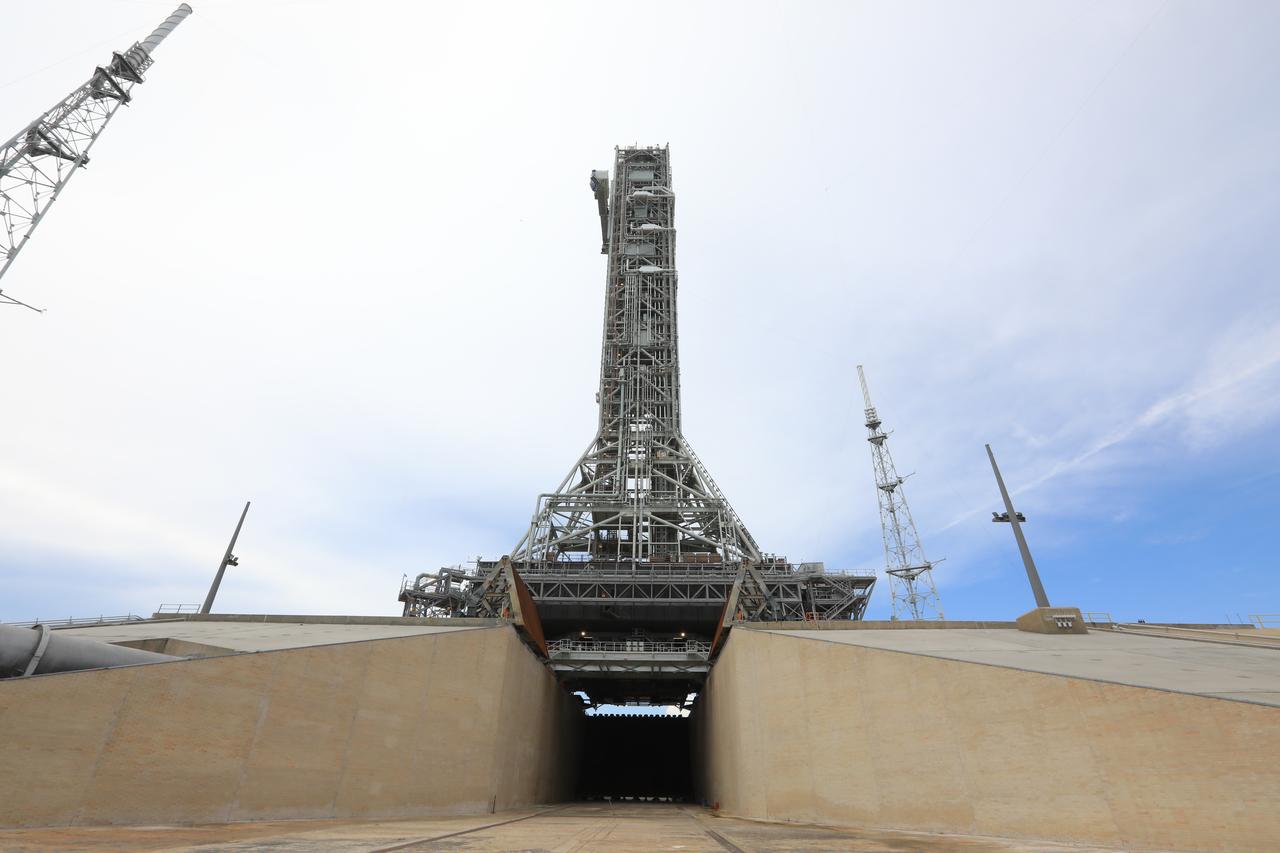
In this view from the flame trench at Kennedy Space Center’s Launch Complex 39B in Florida, Exploration Ground Systems’ mobile launcher can be seen on the pad surface on June 28, 2019. The mobile launcher began its final solo trek – atop crawler-transporter 2 – to the pad at midnight on June 27, departing from NASA’s Vehicle Assembly Building and continuing up to the pad surface on June 28. The mobile launcher will remain at the pad over the summer, undergoing final testing and checkouts. Its next roll to the pad will be with the agency’s Space Launch System rocket and Orion in preparation for the launch of Artemis 1.
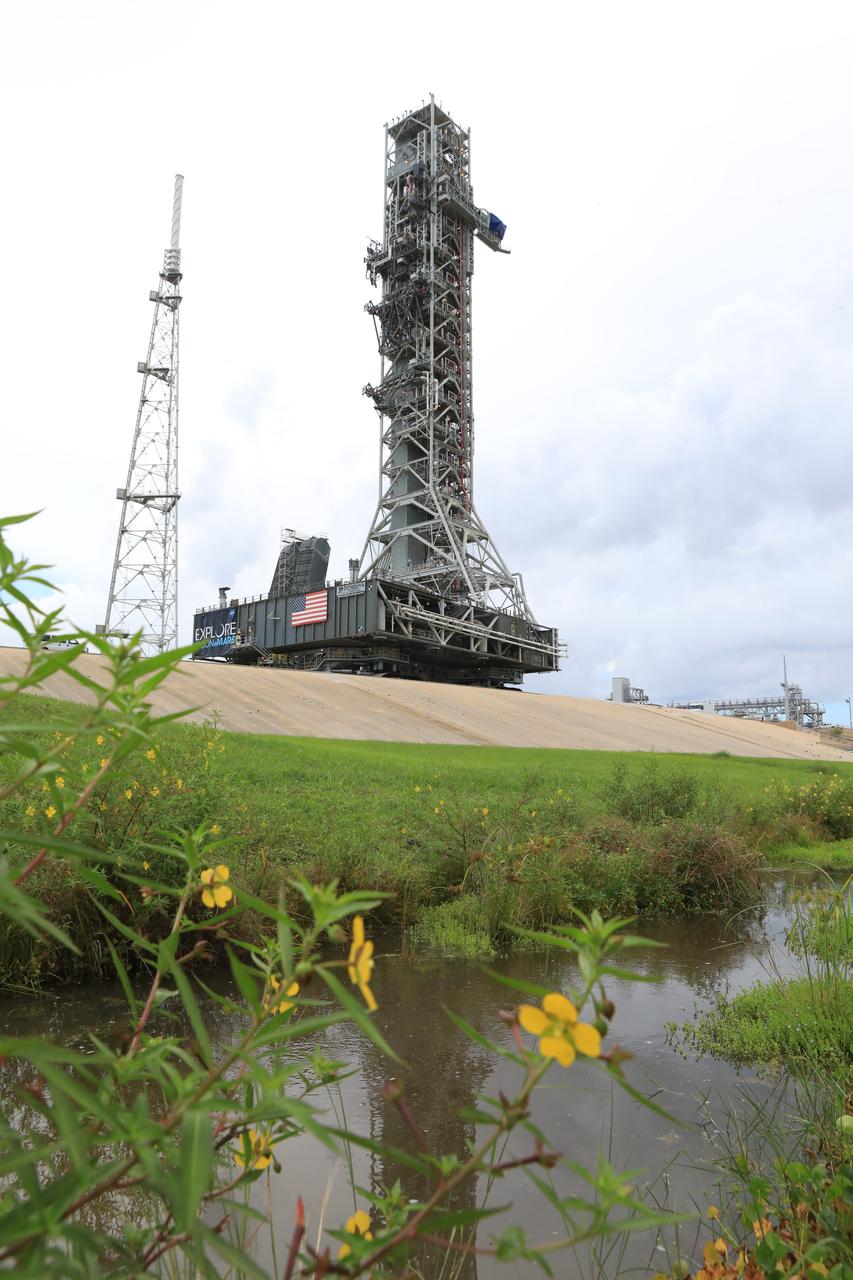
After successfully arriving at Kennedy Space Center’s Launch Complex 39B, Exploration Ground Systems’ mobile launcher is photographed at the pad surface atop crawler-transporter 2 on June 28, 2019. The mobile launcher began its final solo trek to the pad at midnight on June 27, departing from NASA’s Vehicle Assembly Building. The mobile launcher will remain at the pad over the summer, undergoing final testing and checkouts. Its next roll to the pad will be with the agency’s Space Launch System rocket and Orion in preparation for the launch of Artemis 1.
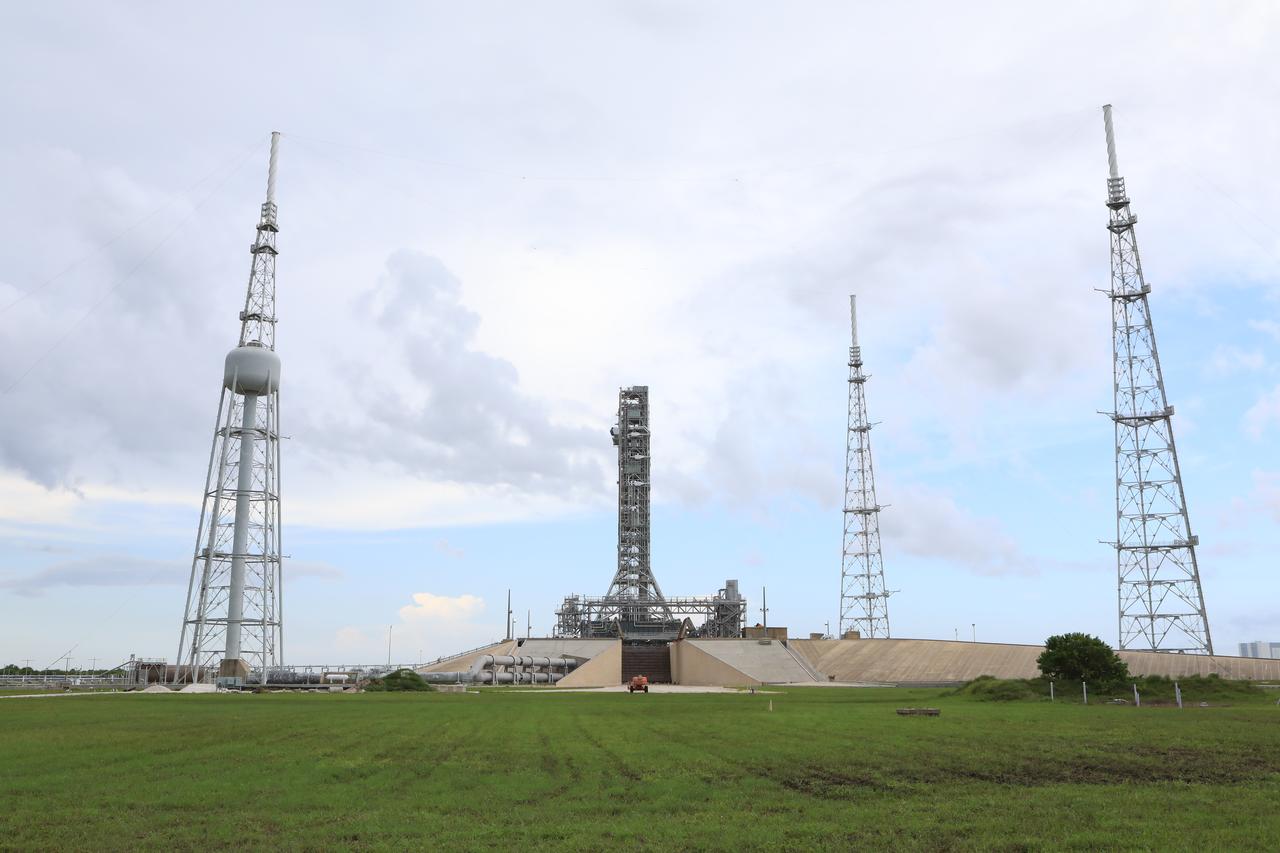
After successfully arriving at Kennedy Space Center’s Launch Complex 39B, Exploration Ground Systems’ mobile launcher is photographed at the pad surface atop crawler-transporter 2 on June 28, 2019. The mobile launcher began its final solo trek to the pad at midnight on June 27, departing from NASA’s Vehicle Assembly Building. The mobile launcher will remain at the pad over the summer, undergoing final testing and checkouts. Its next roll to the pad will be with the agency’s Space Launch System rocket and Orion in preparation for the launch of Artemis 1.
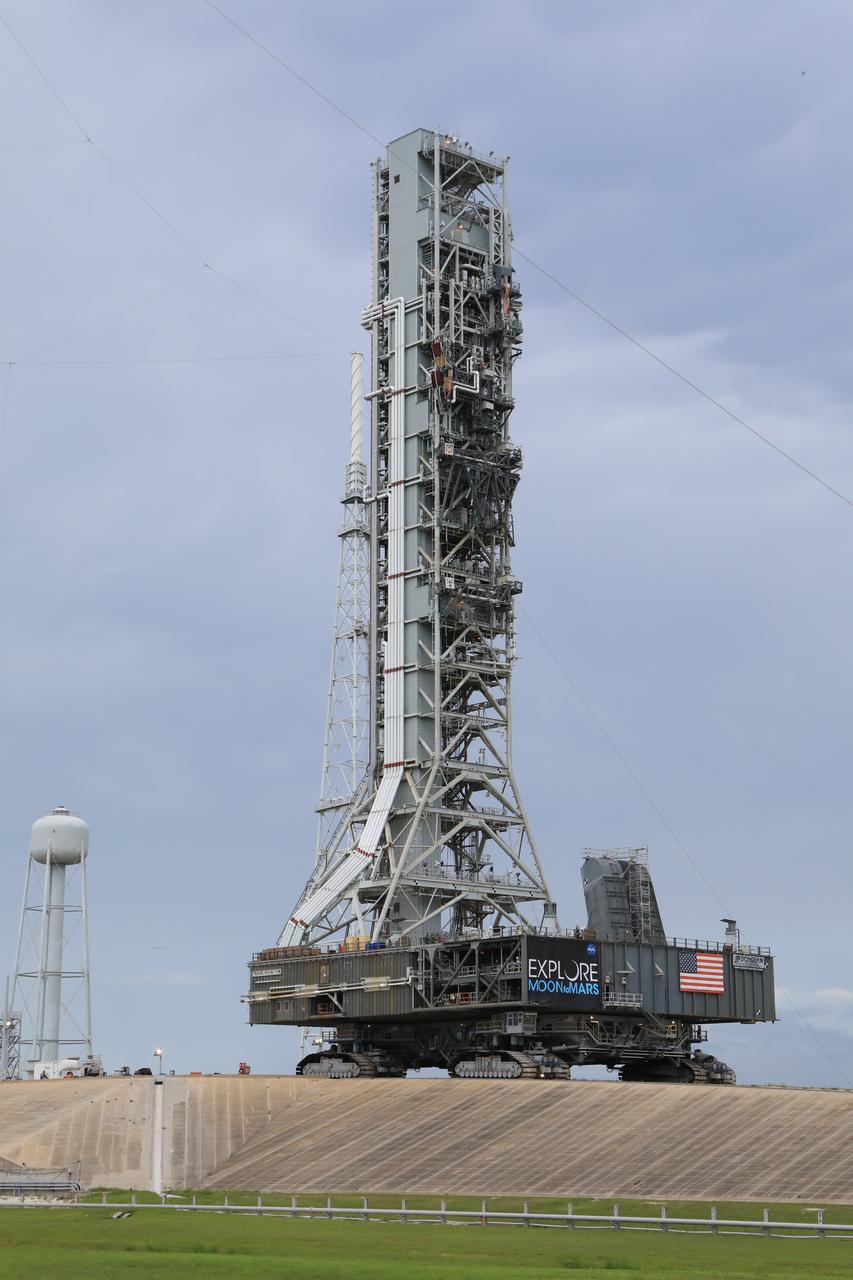
After successfully arriving at Kennedy Space Center’s Launch Complex 39B, Exploration Ground Systems’ mobile launcher is photographed at the pad surface atop crawler-transporter 2 on June 28, 2019. The mobile launcher began its final solo trek to the pad at midnight on June 27, departing from NASA’s Vehicle Assembly Building. The mobile launcher will remain at the pad over the summer, undergoing final testing and checkouts. Its next roll to the pad will be with the agency’s Space Launch System rocket and Orion in preparation for the launch of Artemis 1.
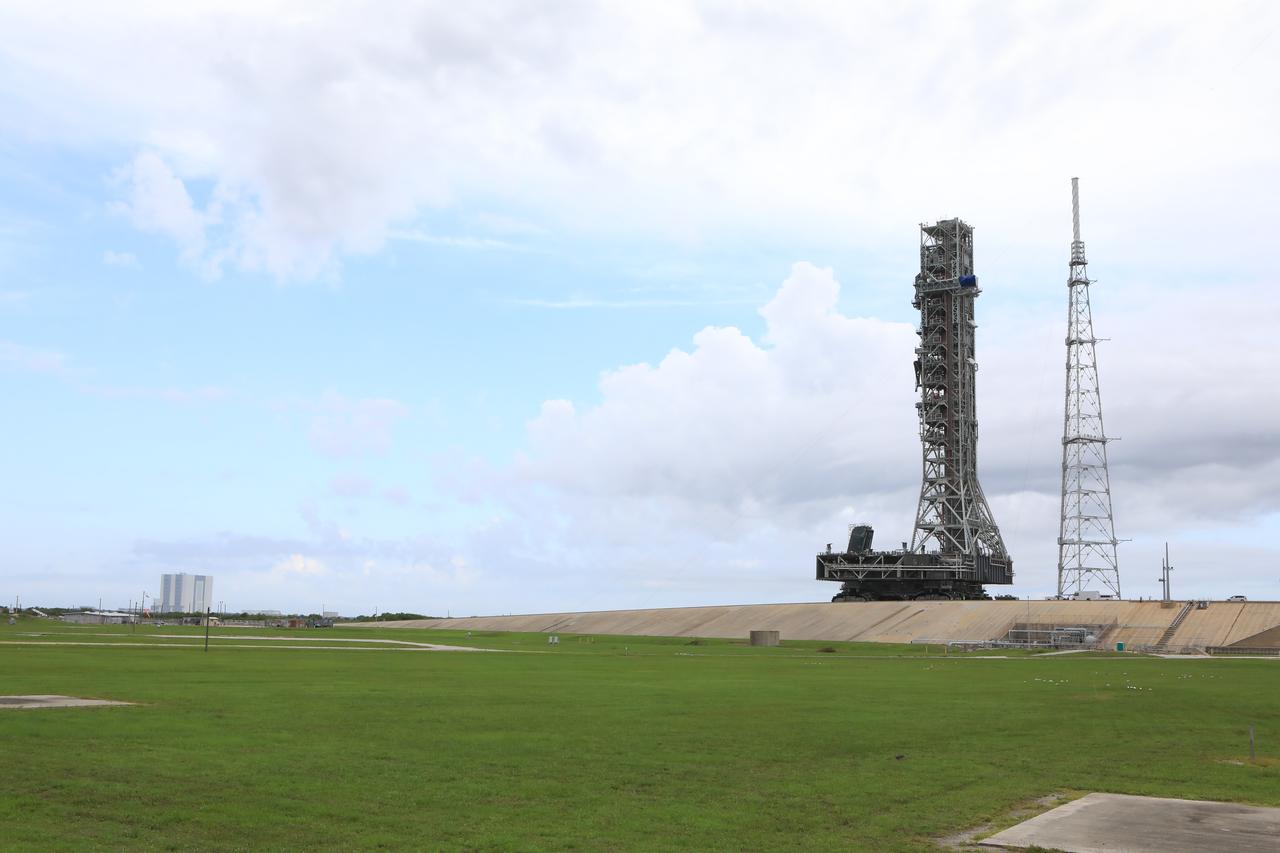
After successfully arriving at Kennedy Space Center’s Launch Complex 39B, Exploration Ground Systems’ mobile launcher is photographed at the pad surface atop crawler-transporter 2 on June 28, 2019. The mobile launcher began its final solo trek to the pad at midnight on June 27, departing from NASA’s Vehicle Assembly Building. The mobile launcher will remain at the pad over the summer, undergoing final testing and checkouts. Its next roll to the pad will be with the agency’s Space Launch System rocket and Orion in preparation for the launch of Artemis 1.
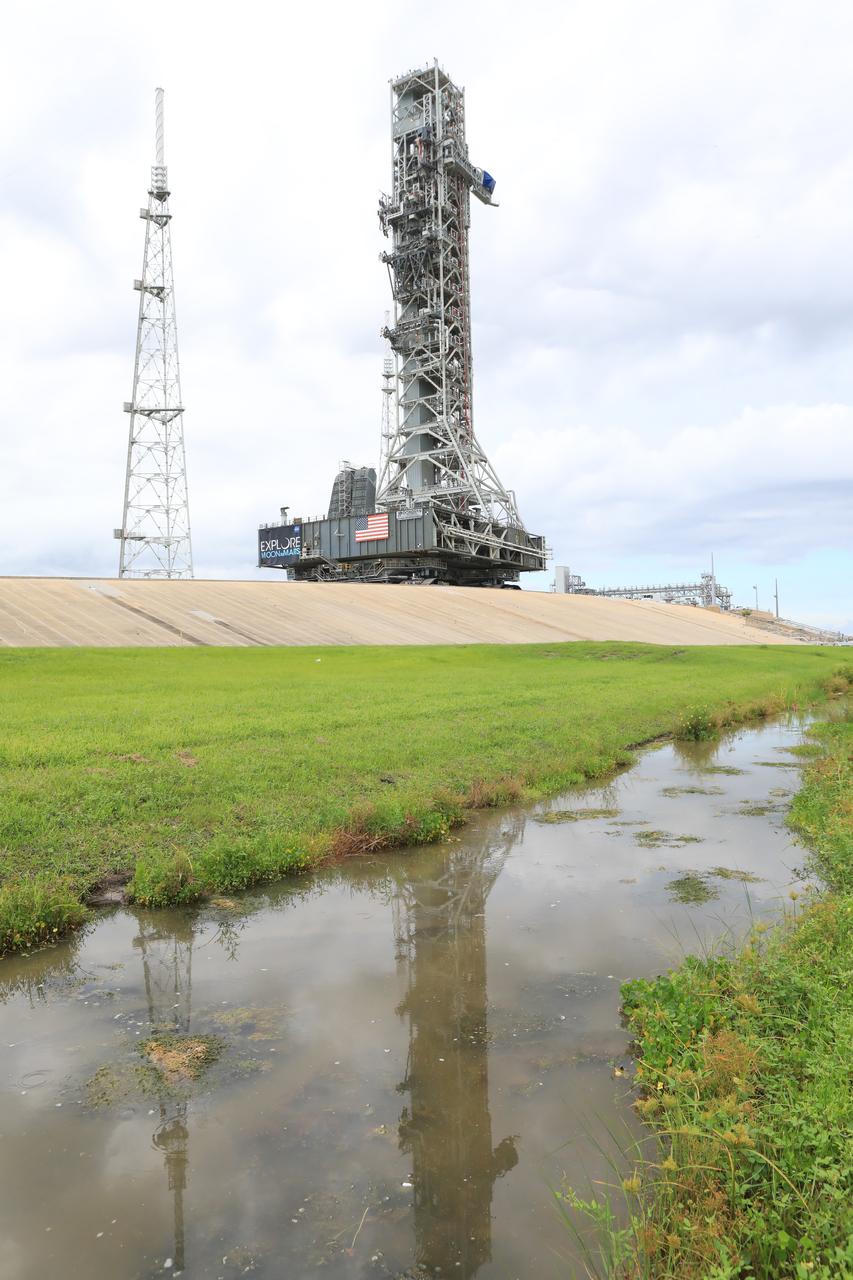
After successfully arriving at Kennedy Space Center’s Launch Complex 39B, Exploration Ground Systems’ mobile launcher is photographed at the pad surface atop crawler-transporter 2 on June 28, 2019. The mobile launcher began its final solo trek to the pad at midnight on June 27, departing from NASA’s Vehicle Assembly Building. The mobile launcher will remain at the pad over the summer, undergoing final testing and checkouts. Its next roll to the pad will be with the agency’s Space Launch System rocket and Orion in preparation for the launch of Artemis 1.
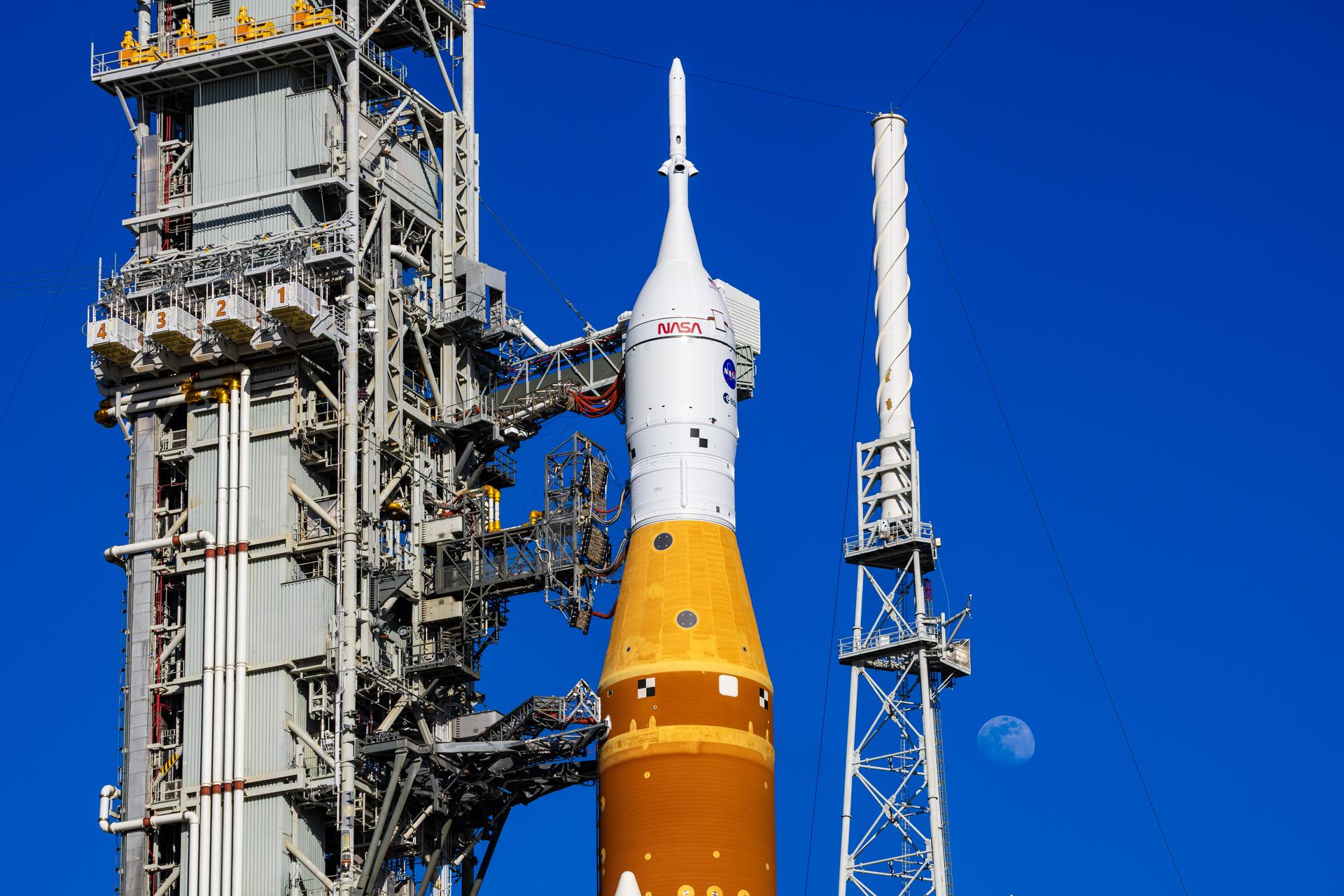
The Moon is seen behind the SLS (Space Launch System) and Orion spacecraft, atop the mobile launcher on January 28, 2026. The rocket is currently at Launch Pad 39B at NASA’s Kennedy Space Center in Florida, as teams are preparing for a wet dress rehearsal to practice timelines and procedures for the launch of Artemis II. 508 Description:The Moon is seen shining over the SLS (Space Launch System) and Orion spacecraft, atop the mobile launcher on January 29, 2026. The rocket is currently at Launch Pad 39B at NASA’s Kennedy Space Center in Florida, as teams are preparing for a wet dress rehearsal to practice timelines and procedures for the launch of Artemis II.
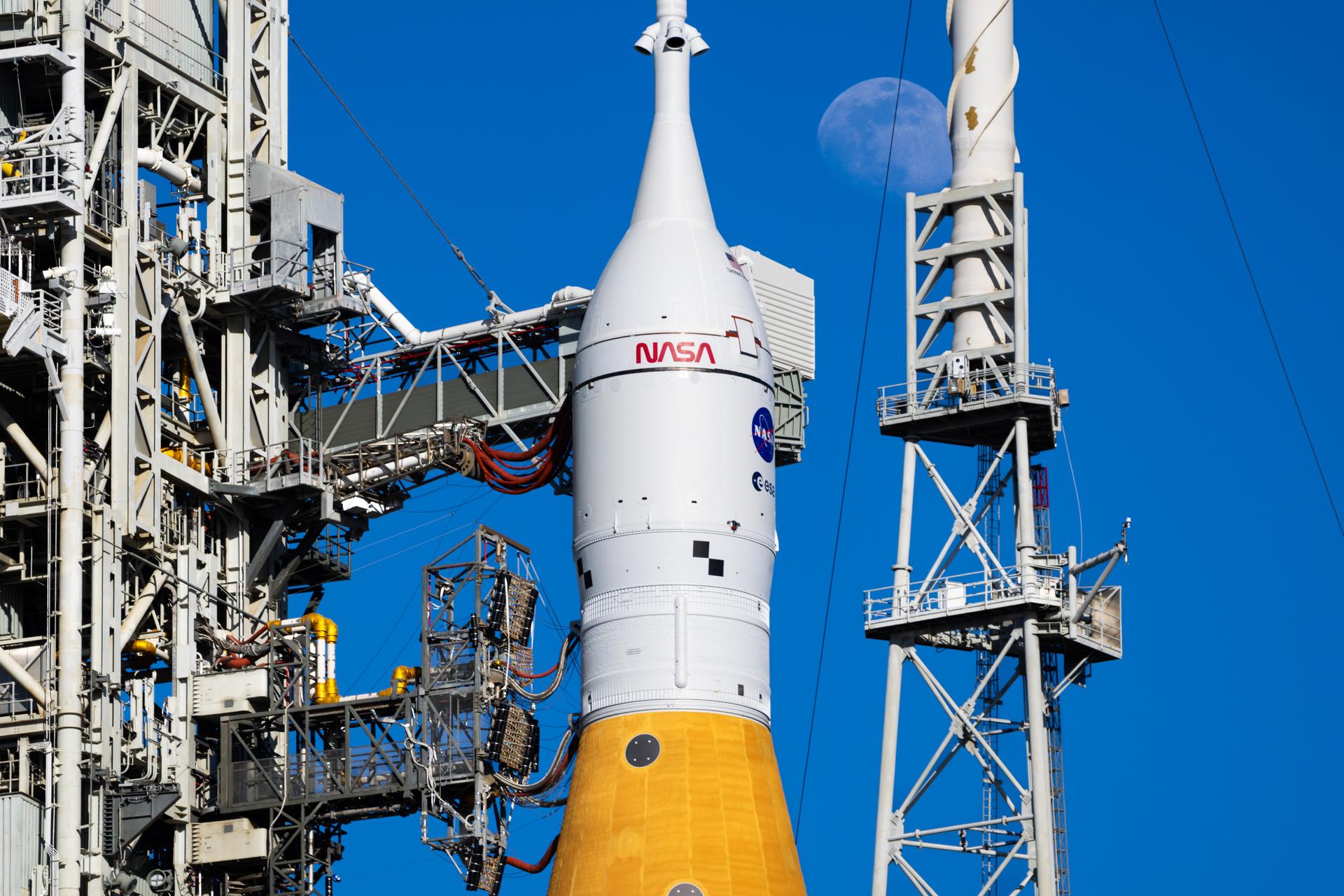
The Moon is seen shining over the SLS (Space Launch System) and Orion spacecraft, atop the mobile launcher on January 28, 2026. The rocket is currently at Launch Pad 39B at NASA’s Kennedy Space Center in Florida, as teams are preparing for a wet dress rehearsal to practice timelines and procedures for the launch of Artemis II. 508 Description:The Moon is seen shining over the SLS (Space Launch System) and Orion spacecraft, atop the mobile launcher on January 29, 2026. The rocket is currently at Launch Pad 39B at NASA’s Kennedy Space Center in Florida, as teams are preparing for a wet dress rehearsal to practice timelines and procedures for the launch of Artemis II.
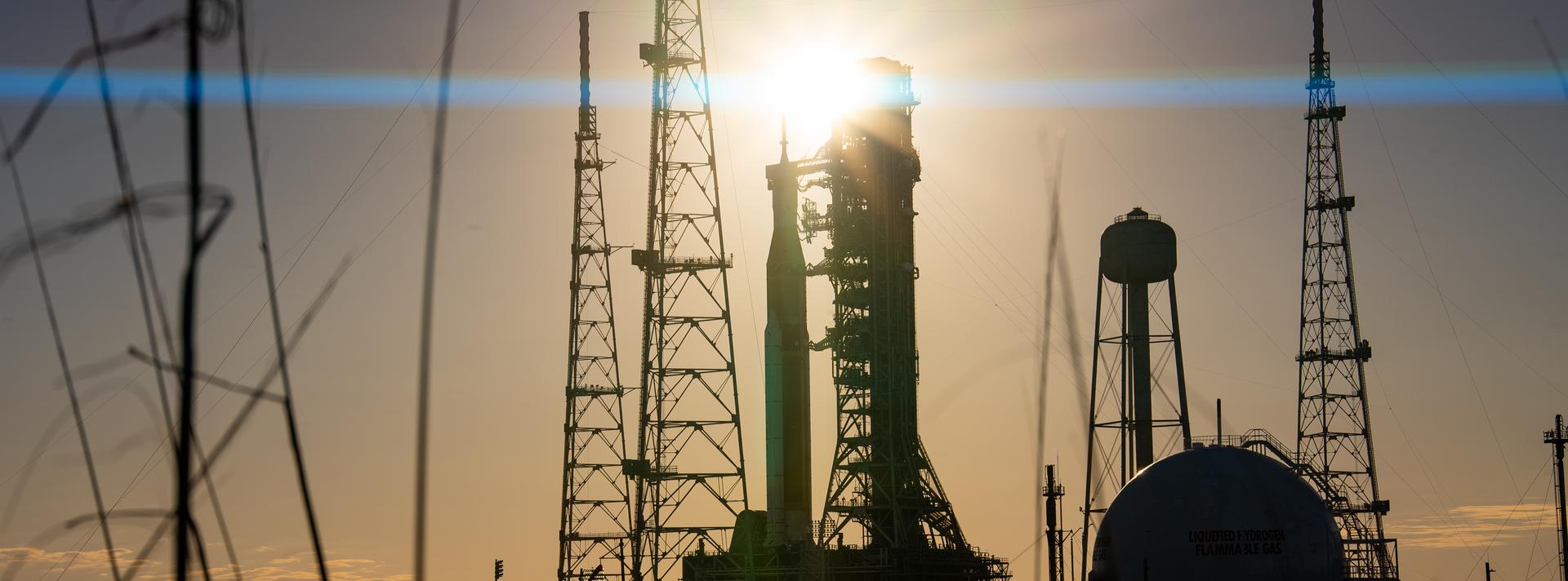
The sun is seen setting behind NASA’s SLS (Space Launch System) and Orion spacecraft, atop the mobile launcher on January 31, 2026. The rocket is currently at Launch Pad 39B at NASA’s Kennedy Space Center in Florida, as teams are preparing for a wet dress rehearsal to practice timelines and procedures for the launch of Artemis II.
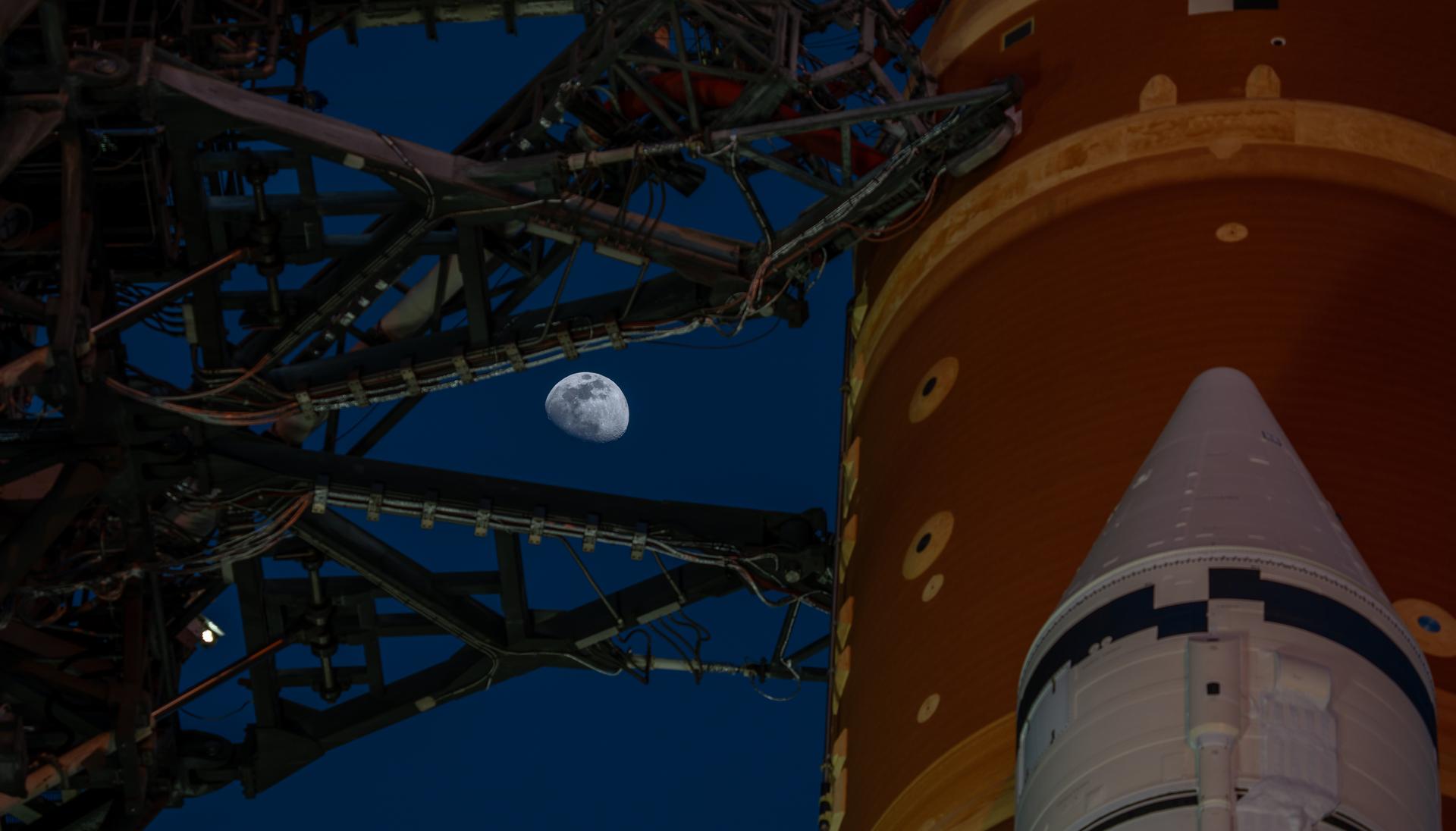
The Moon is seen shining over the SLS (Space Launch System) and Orion spacecraft, atop the mobile launcher on January 28, 2026. The rocket is currently at Launch Pad 39B at NASA’s Kennedy Space Center in Florida, as teams are preparing for a wet dress rehearsal to practice timelines and procedures for the launch of Artemis II.
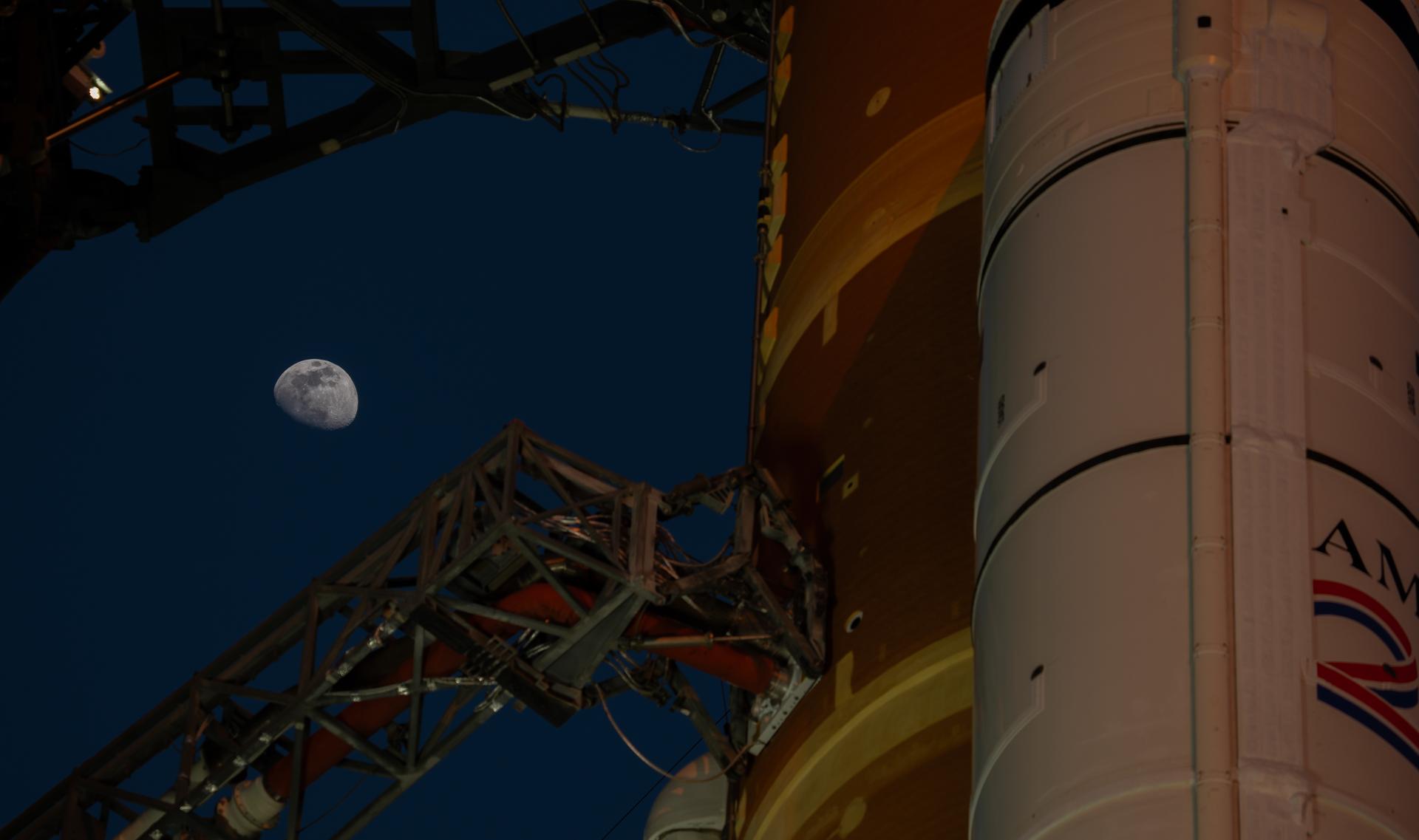
The Moon is seen shining over the SLS (Space Launch System) and Orion spacecraft, atop the mobile launcher on January 28, 2026. The rocket is currently at Launch Pad 39B at NASA’s Kennedy Space Center in Florida, as teams are preparing for a wet dress rehearsal to practice timelines and procedures for the launch of Artemis II.
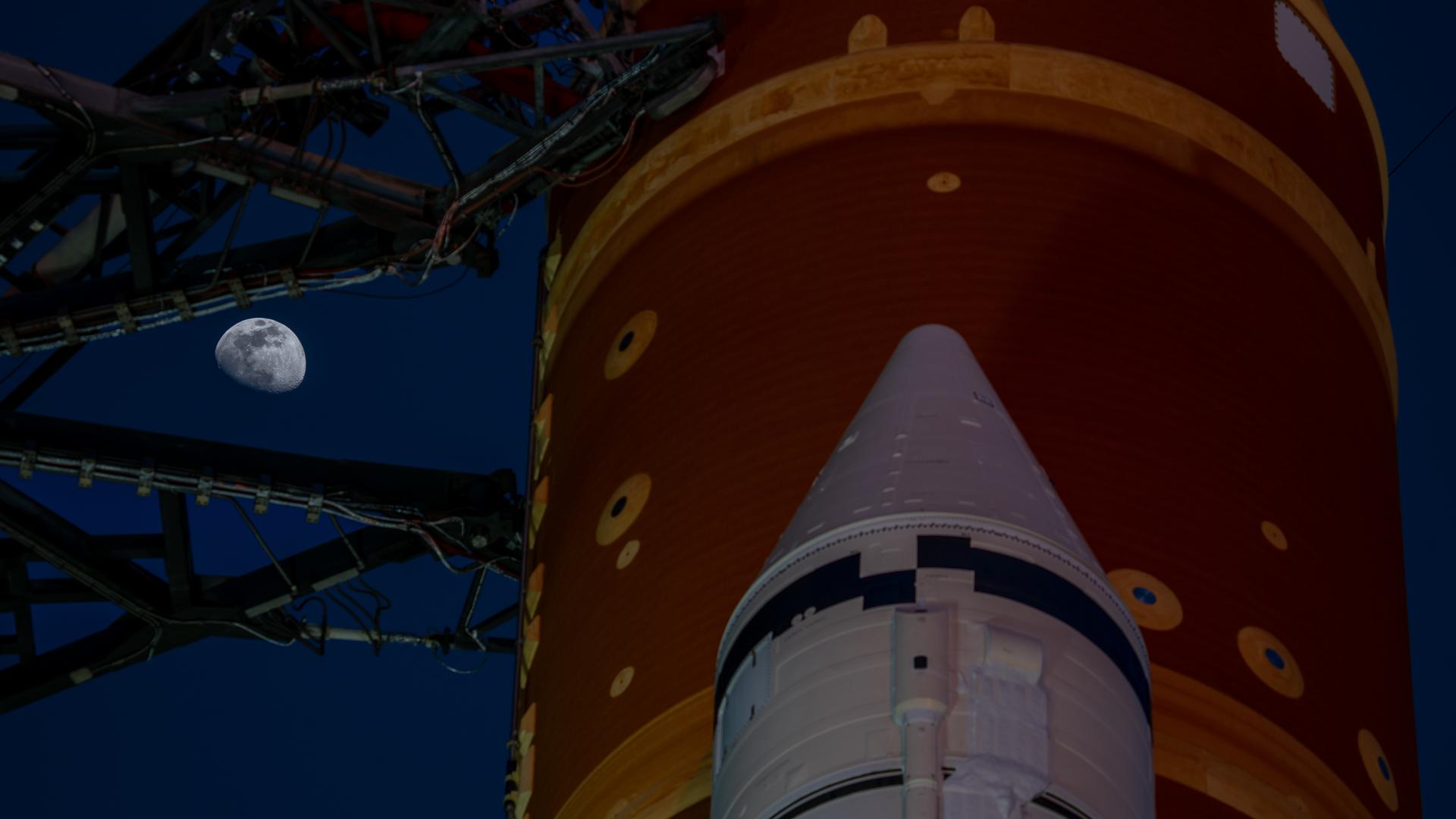
The Moon is seen shining over the SLS (Space Launch System) and Orion spacecraft, atop the mobile launcher on January 28, 2026. The rocket is currently at Launch Pad 39B at NASA’s Kennedy Space Center in Florida, as teams are preparing for a wet dress rehearsal to practice timelines and procedures for the launch of Artemis II.
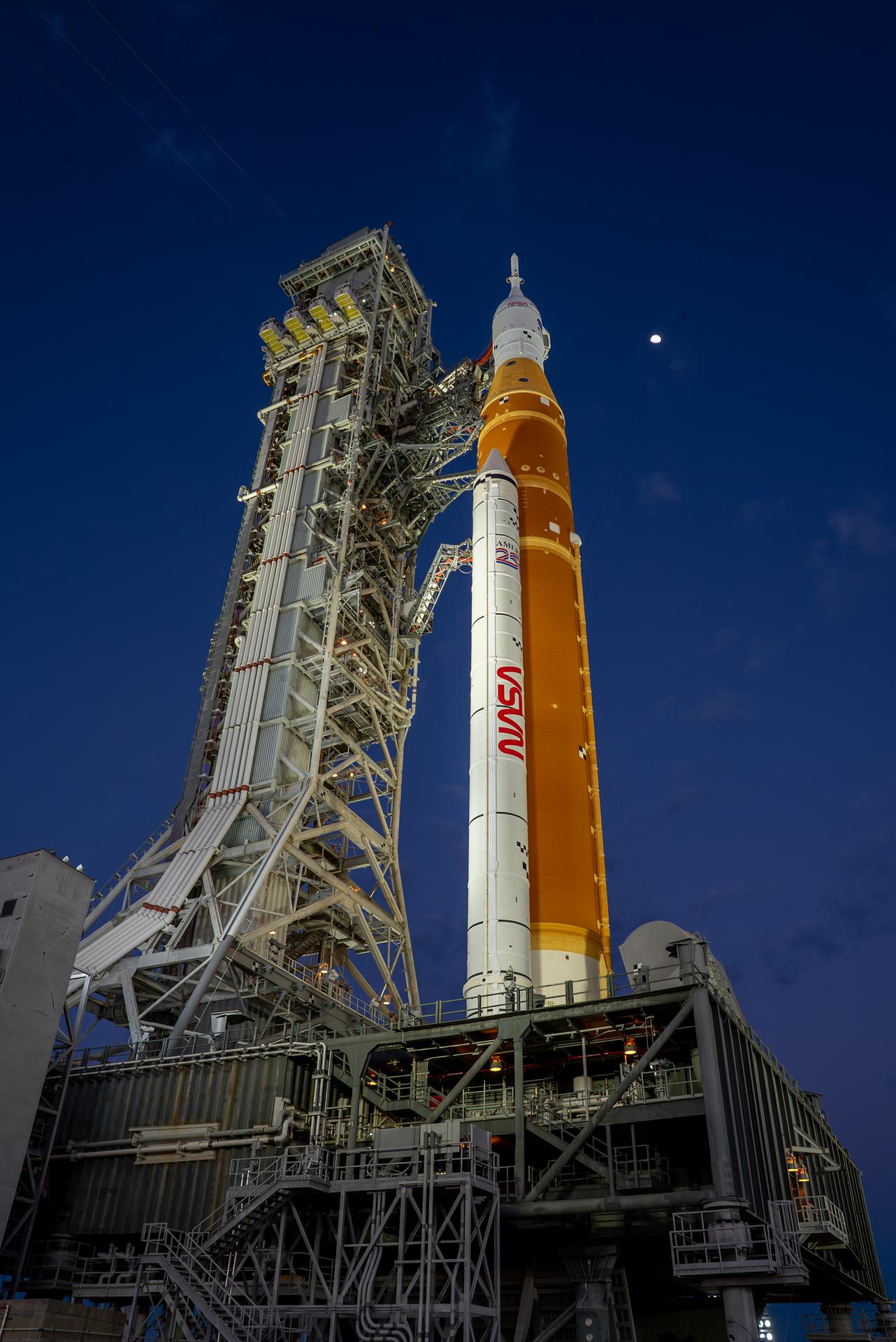
The Moon is seen shining over the SLS (Space Launch System) and Orion spacecraft, atop the mobile launcher on January 28, 2026. The rocket is currently at Launch Pad 39B at NASA’s Kennedy Space Center in Florida, as teams are preparing for a wet dress rehearsal to practice timelines and procedures for the launch of Artemis II.
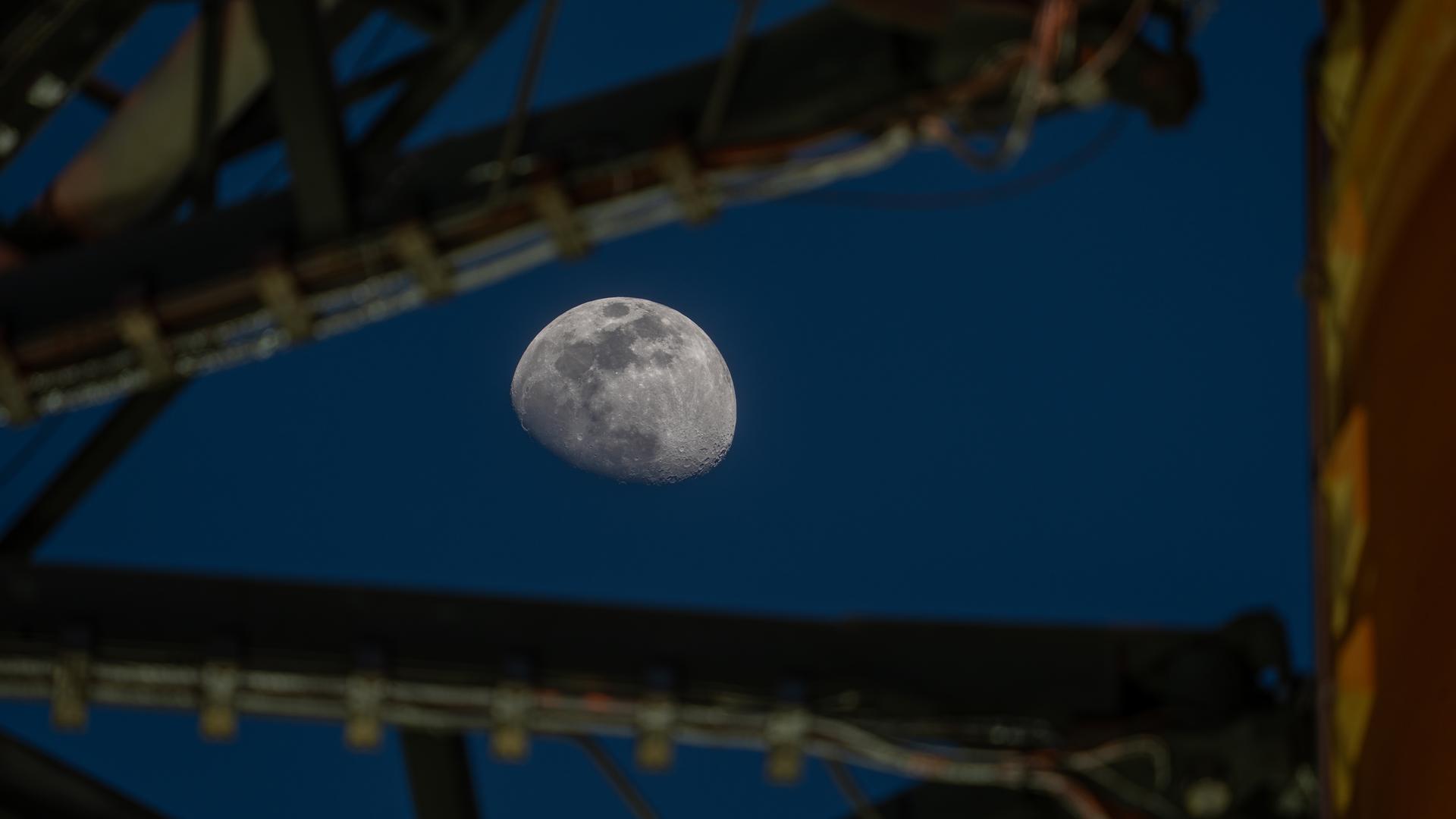
The Moon is seen shining over the SLS (Space Launch System) and Orion spacecraft, atop the mobile launcher on January 28, 2026. The rocket is currently at Launch Pad 39B at NASA’s Kennedy Space Center in Florida, as teams are preparing for a wet dress rehearsal to practice timelines and procedures for the launch of Artemis II.
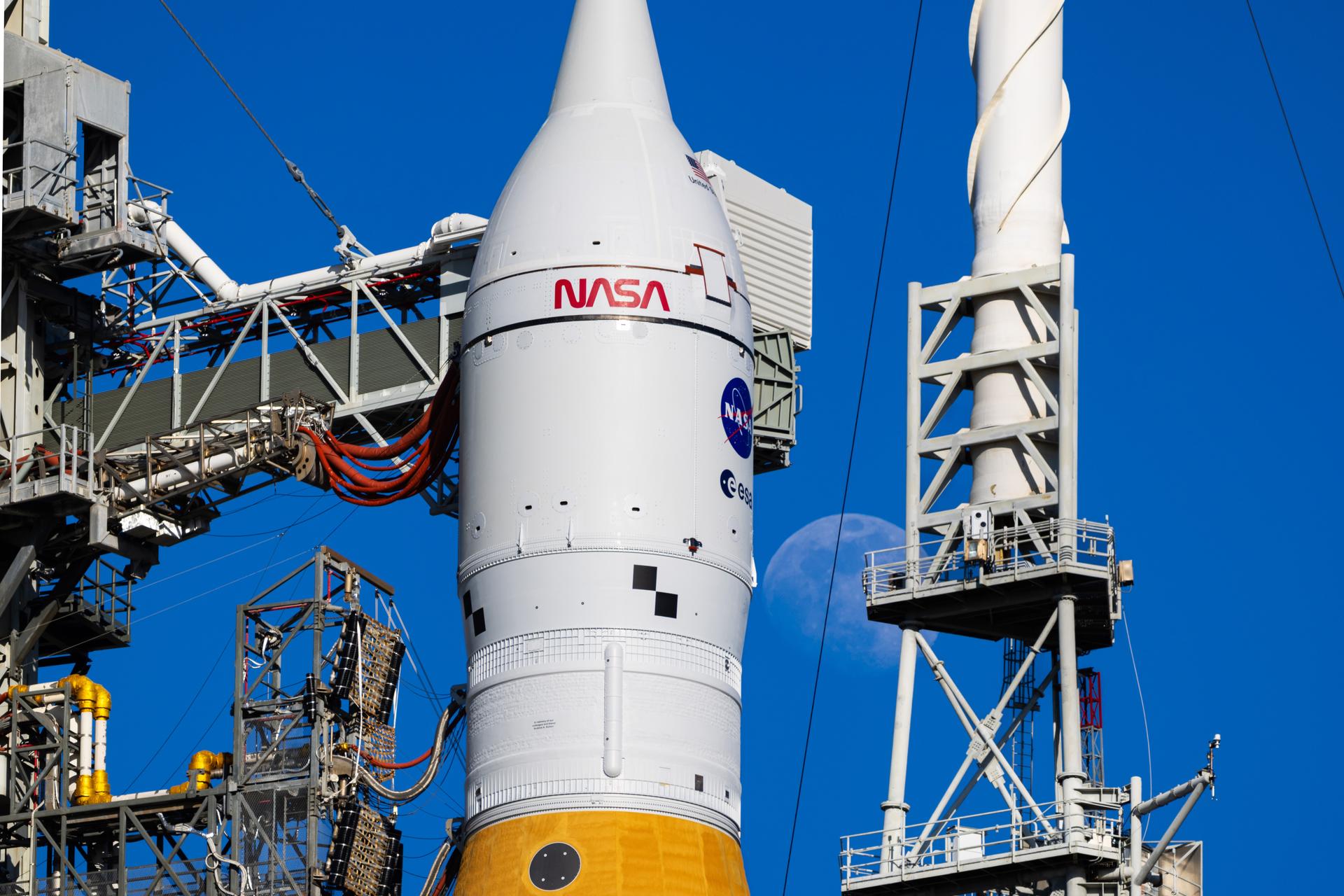
The Moon is seen shining over the SLS (Space Launch System) and Orion spacecraft, atop the mobile launcher on January 29, 2026. The rocket is currently at Launch Pad 39B at NASA’s Kennedy Space Center in Florida, as teams are preparing for a wet dress rehearsal to practice timelines and procedures for the launch of Artemis II.
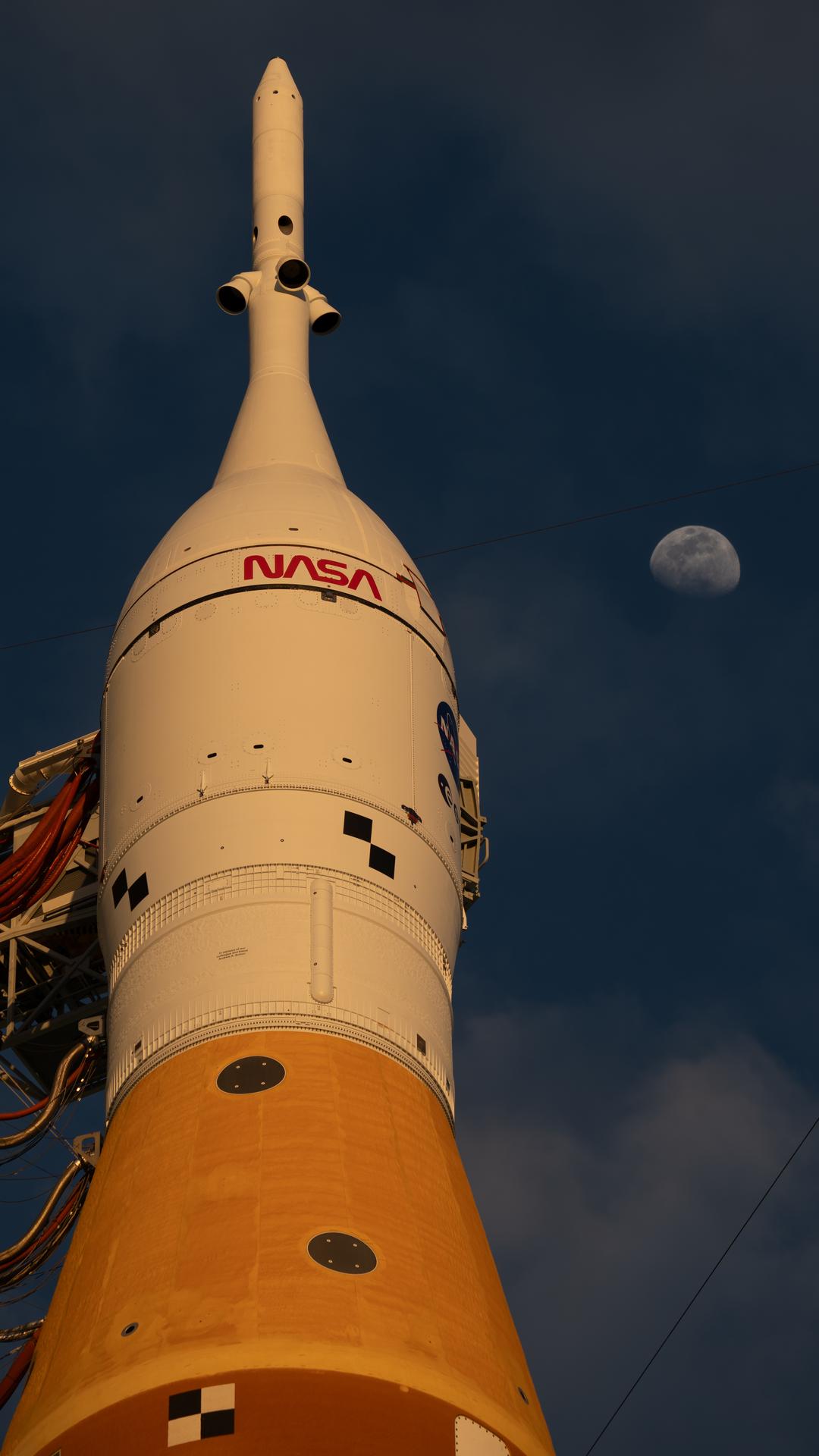
The Moon is seen shining over the SLS (Space Launch System) and Orion spacecraft, atop the mobile launcher on January 28, 2026. The rocket is currently at Launch Pad 39B at NASA’s Kennedy Space Center in Florida, as teams are preparing for a wet dress rehearsal to practice timelines and procedures for the launch of Artemis II.
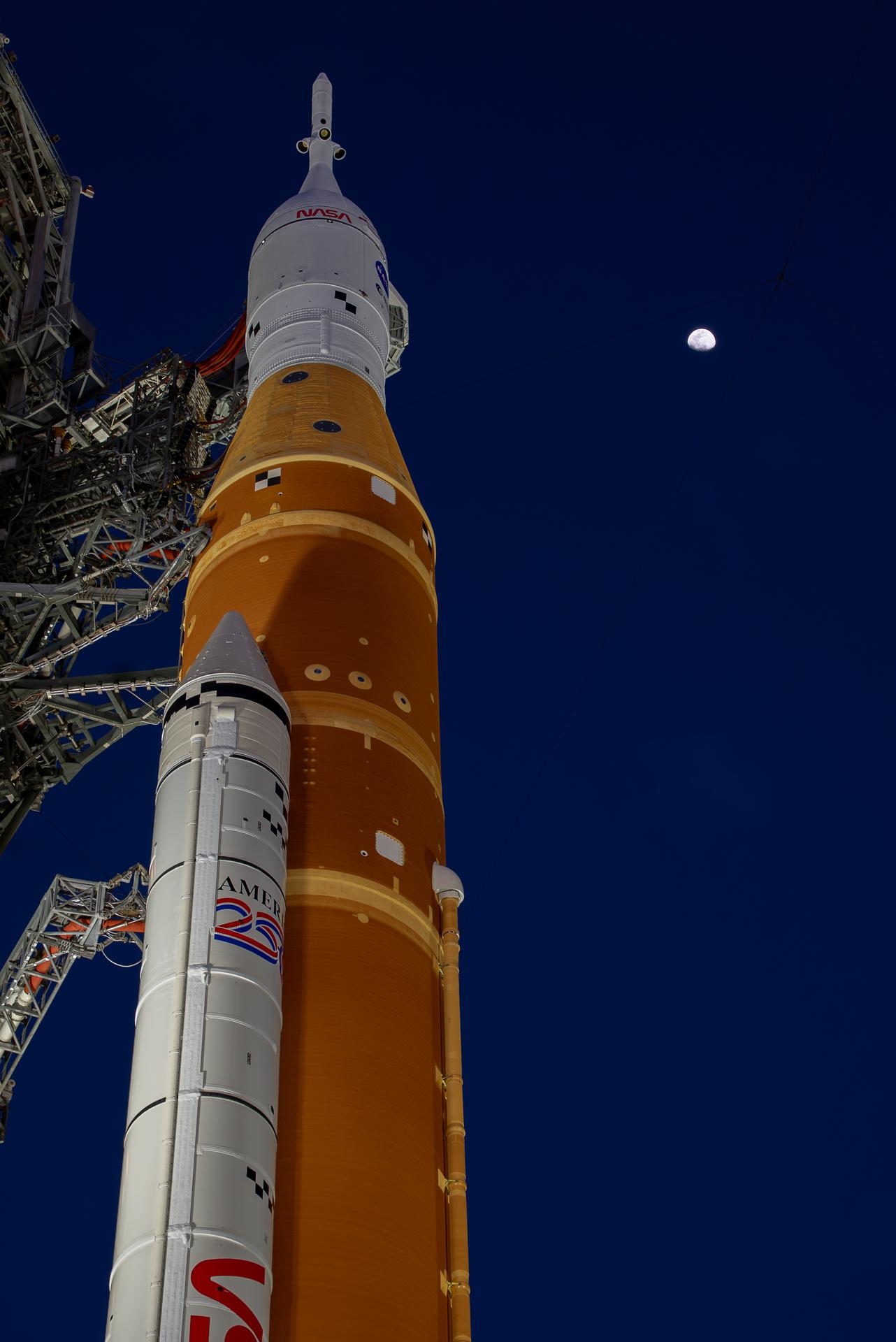
The Moon is seen shining over the SLS (Space Launch System) and Orion spacecraft, atop the mobile launcher on January 28, 2026. The rocket is currently at Launch Pad 39B at NASA’s Kennedy Space Center in Florida, as teams are preparing for a wet dress rehearsal to practice timelines and procedures for the launch of Artemis II.
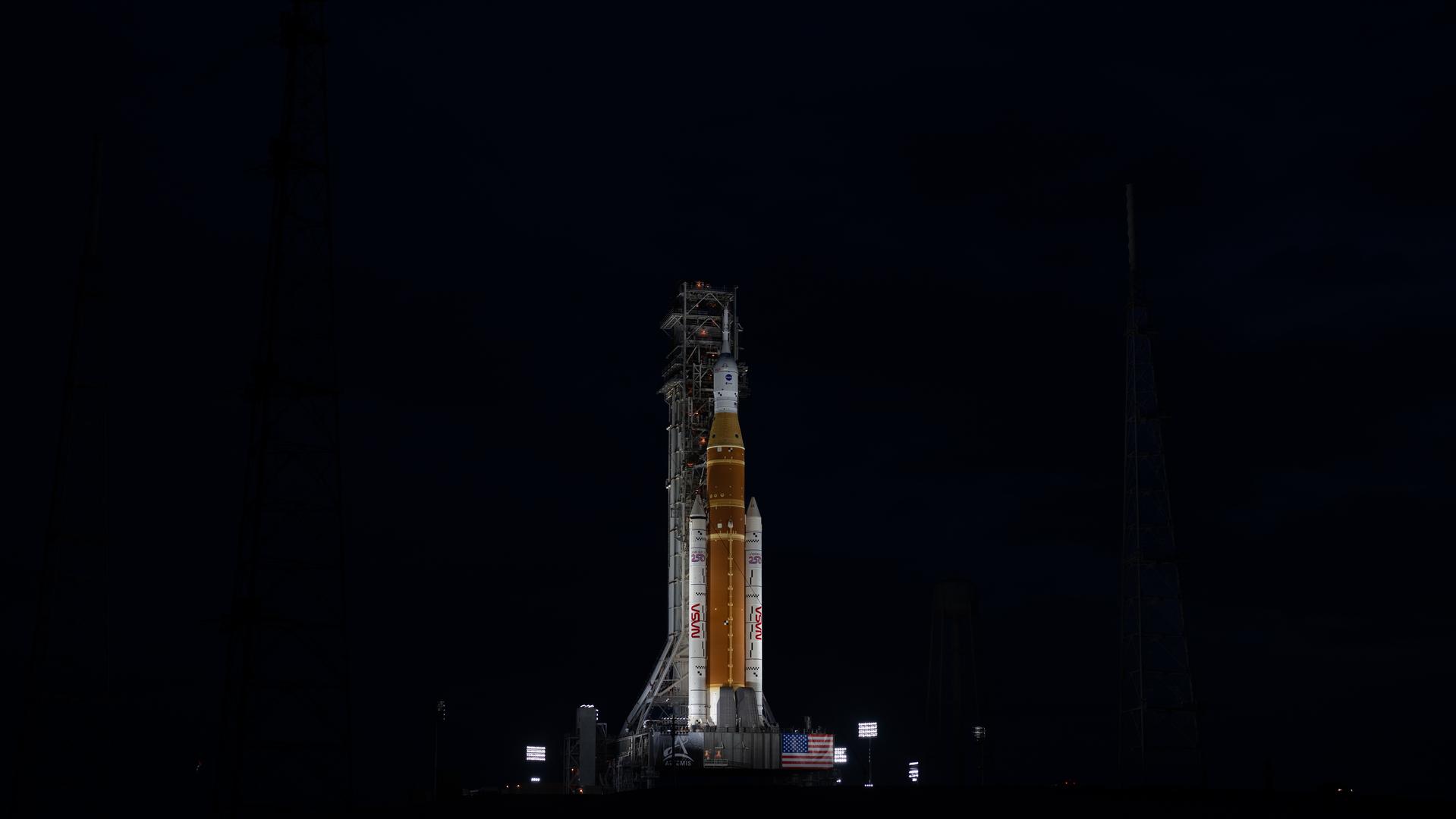
Lights illuminate NASA’s Artemis II SLS (Space Launch System) rocket and Orion spacecraft at Launch Complex 39B at NASA’s Kennedy Space Center in Florida on 01/17/2026. In the coming days, engineers will prepare for the wet dress rehearsal, a two-day test that simulates launch day. The Artemis II test flight will take Commander Reid Wiseman, Pilot Victor Glover, and Mission Specialist Christina Koch from NASA, and Mission Specialist Jeremy Hansen from the CSA (Canadian Space Agency), around the Moon and back to Earth no later than April 2026.
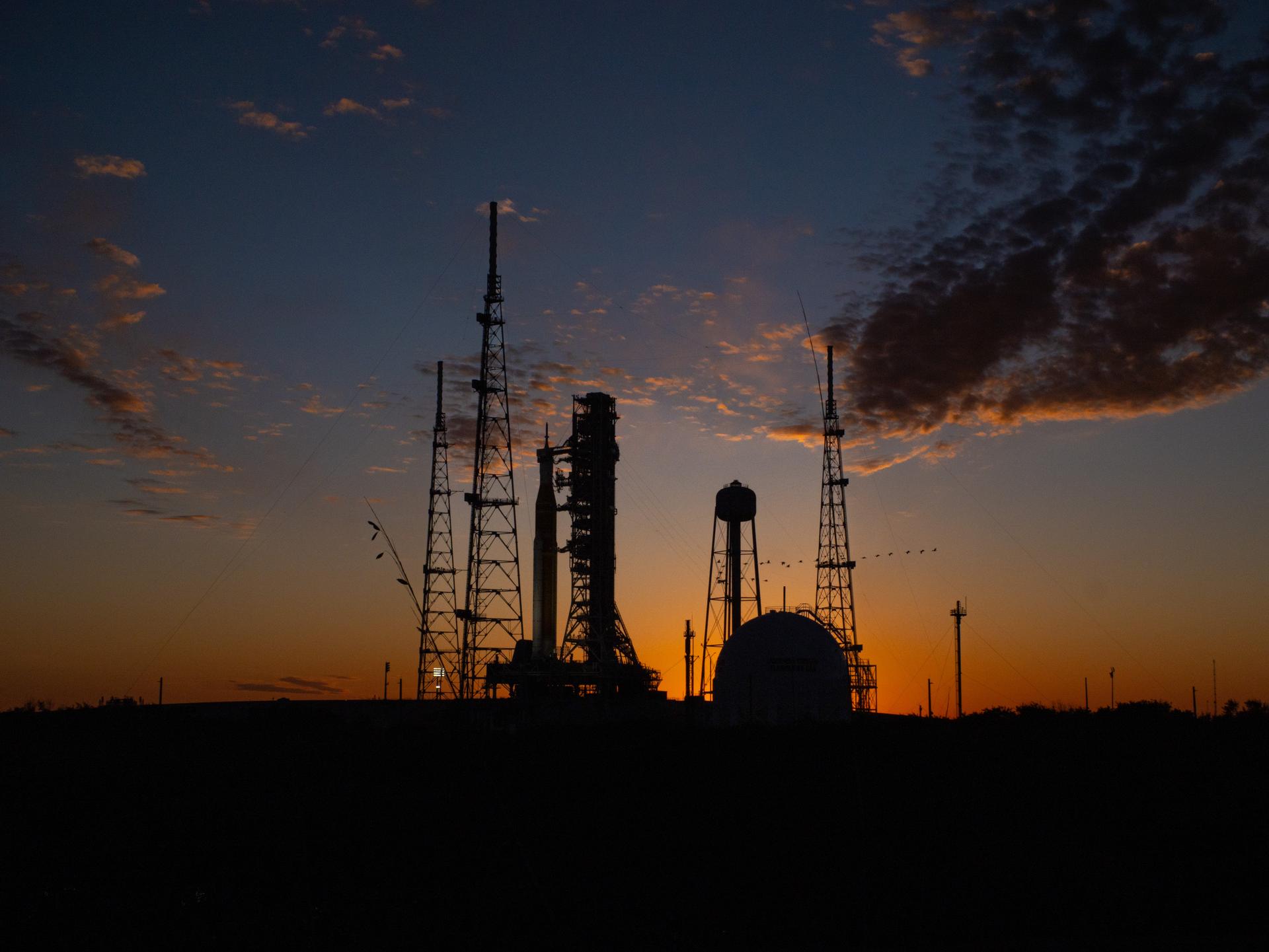
The sun sets behind NASA’s Space Launch System (SLS) rocket and Orion spacecraft as they stand fully assembled atop the mobile launcher at Launch Pad 39B at NASA’s Kennedy Space Center in Florida. The sky glows with warm shades of orange and pink, silhouetting the towering rocket and its solid rocket boosters against the fading light. Photographed on January 31, 2026, the scene captures teams preparing for a wet dress rehearsal for the Artemis II mission, rehearsing launch countdown timelines and procedures as day turns to night.
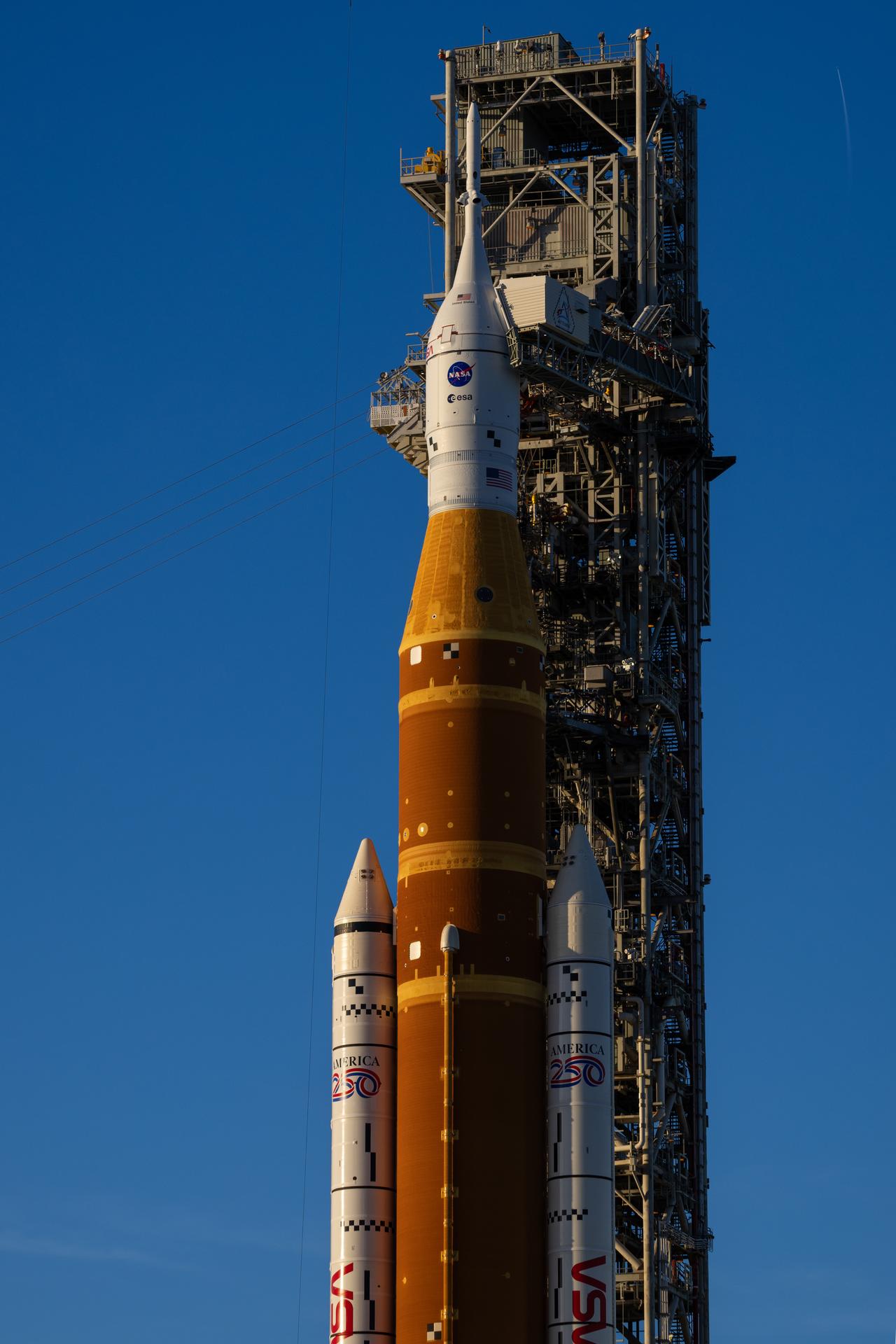
The sun sets on NASA’s Space Launch System (SLS) rocket and Orion spacecraft as they stand fully assembled atop the mobile launcher at Launch Pad 39B at NASA’s Kennedy Space Center in Florida. The sky glows with warm shades of orange and pink, silhouetting the towering rocket and its solid rocket boosters against the fading light. Photographed on January 31, 2026, the scene captures teams preparing for a wet dress rehearsal for the Artemis II mission, rehearsing launch countdown timelines and procedures as day turns to night.
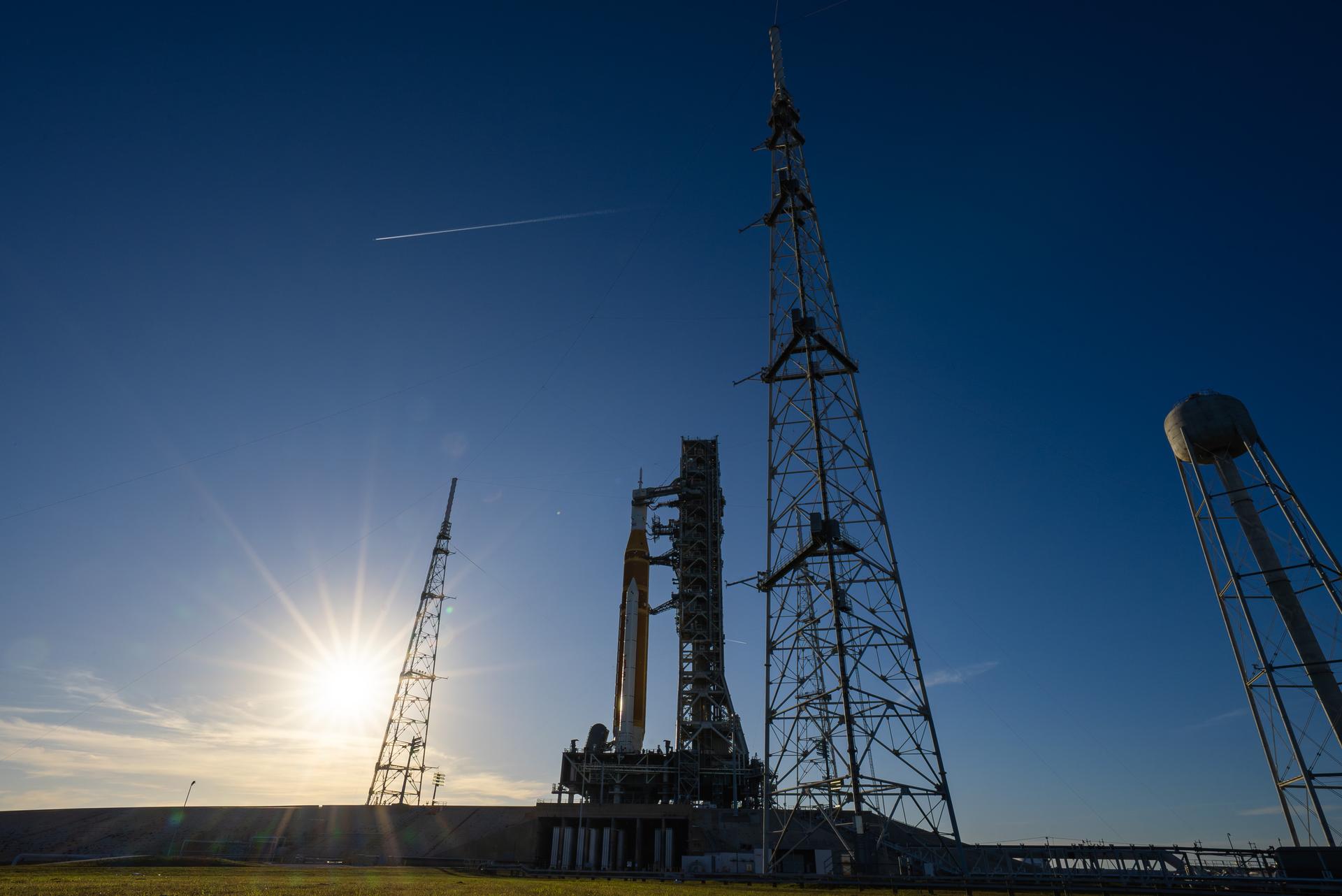
The sun sets on NASA’s Space Launch System (SLS) rocket and Orion spacecraft as they stand fully assembled atop the mobile launcher at Launch Pad 39B at NASA’s Kennedy Space Center in Florida. The sky glows with warm shades of orange and pink, silhouetting the towering rocket and its solid rocket boosters against the fading light. Photographed on January 31, 2026, the scene captures teams preparing for a wet dress rehearsal for the Artemis II mission, rehearsing launch countdown timelines and procedures as day turns to night.
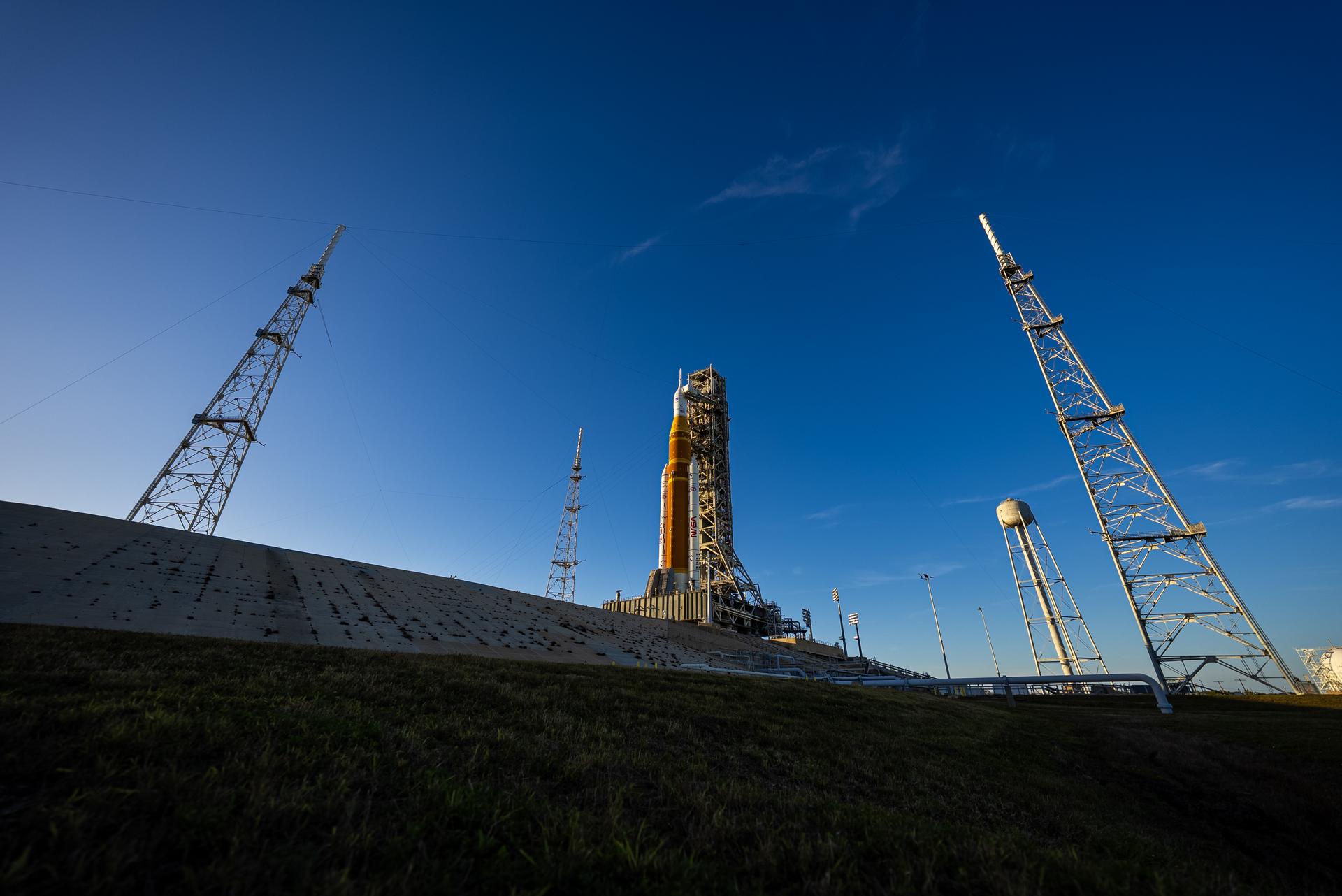
The sun sets on NASA’s Space Launch System (SLS) rocket and Orion spacecraft as they stand fully assembled atop the mobile launcher at Launch Pad 39B at NASA’s Kennedy Space Center in Florida. The sky glows with warm shades of orange and pink, silhouetting the towering rocket and its solid rocket boosters against the fading light. Photographed on January 31, 2026, the scene captures teams preparing for a wet dress rehearsal for the Artemis II mission, rehearsing launch countdown timelines and procedures as day turns to night.
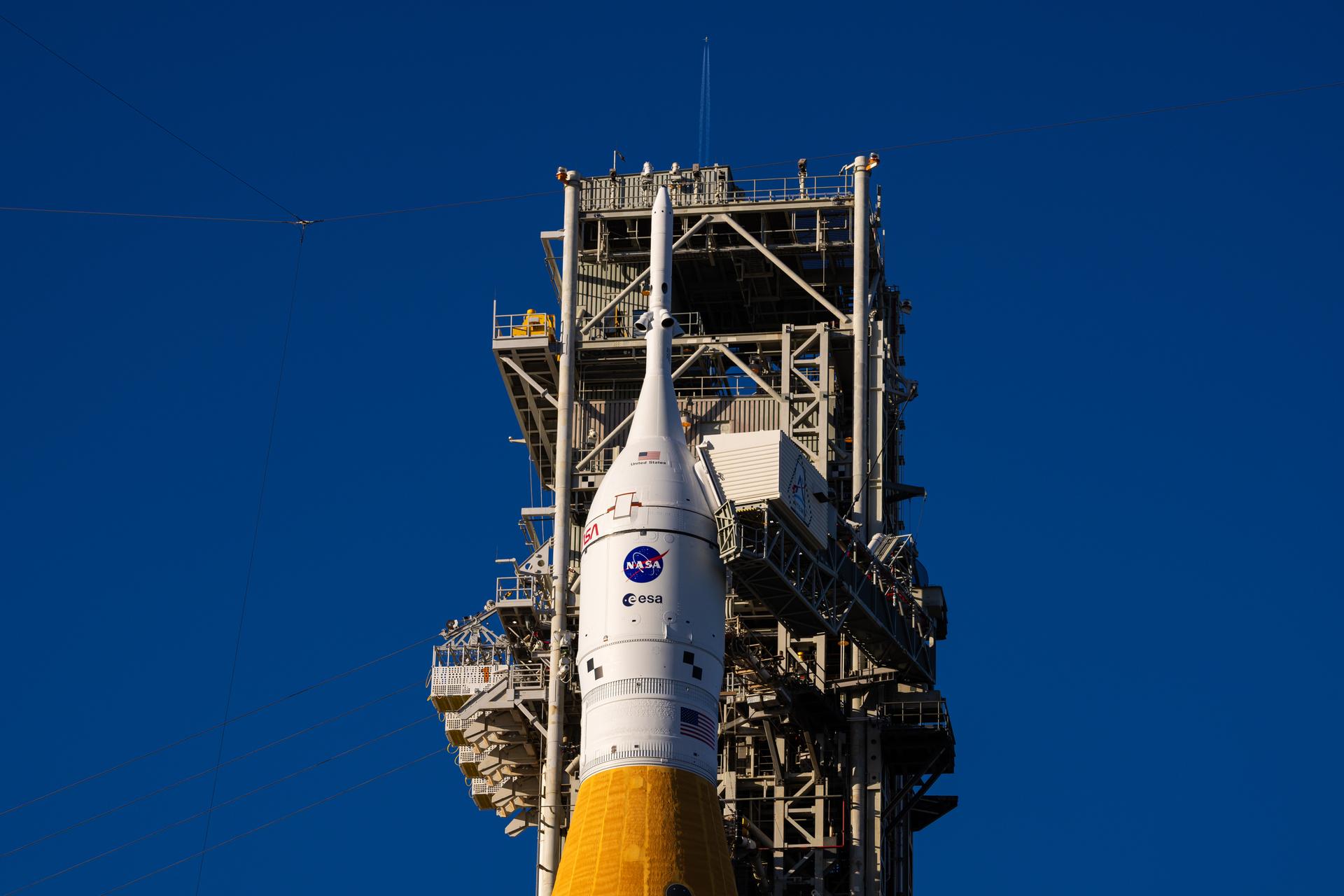
The sun sets on NASA’s Space Launch System (SLS) rocket and Orion spacecraft as they stand fully assembled atop the mobile launcher at Launch Pad 39B at NASA’s Kennedy Space Center in Florida. The sky glows with warm shades of orange and pink, silhouetting the towering rocket and its solid rocket boosters against the fading light. Photographed on January 31, 2026, the scene captures teams preparing for a wet dress rehearsal for the Artemis II mission, rehearsing launch countdown timelines and procedures as day turns to night.
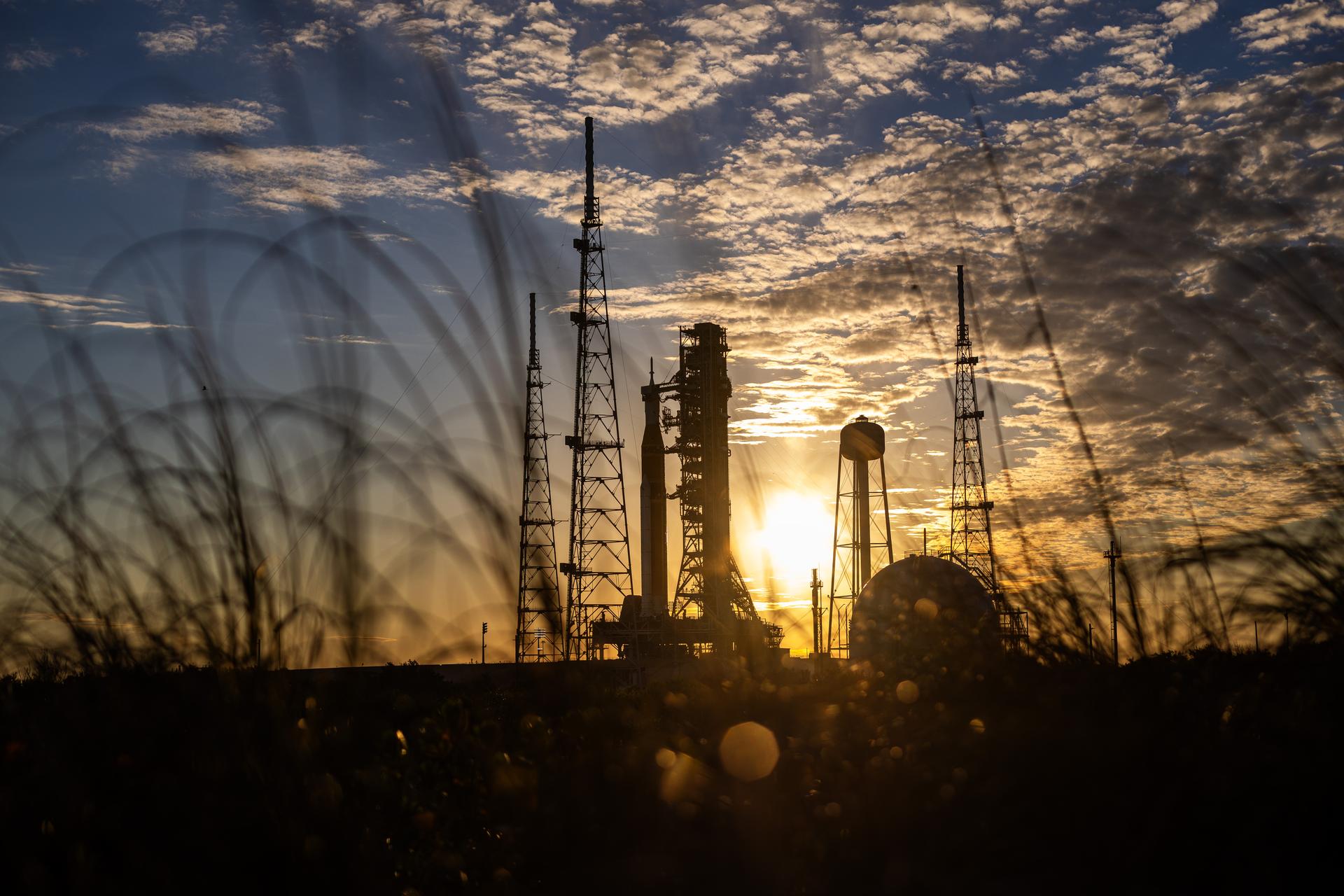
The sun sets behind NASA’s Space Launch System (SLS) rocket and Orion spacecraft as they stand fully assembled atop the mobile launcher at Launch Pad 39B at NASA’s Kennedy Space Center in Florida. The sky glows with warm shades of orange and pink, silhouetting the towering rocket and its solid rocket boosters against the fading light. Photographed on January 31, 2026, the scene captures teams preparing for a wet dress rehearsal for the Artemis II mission, rehearsing launch countdown timelines and procedures as day turns to night.
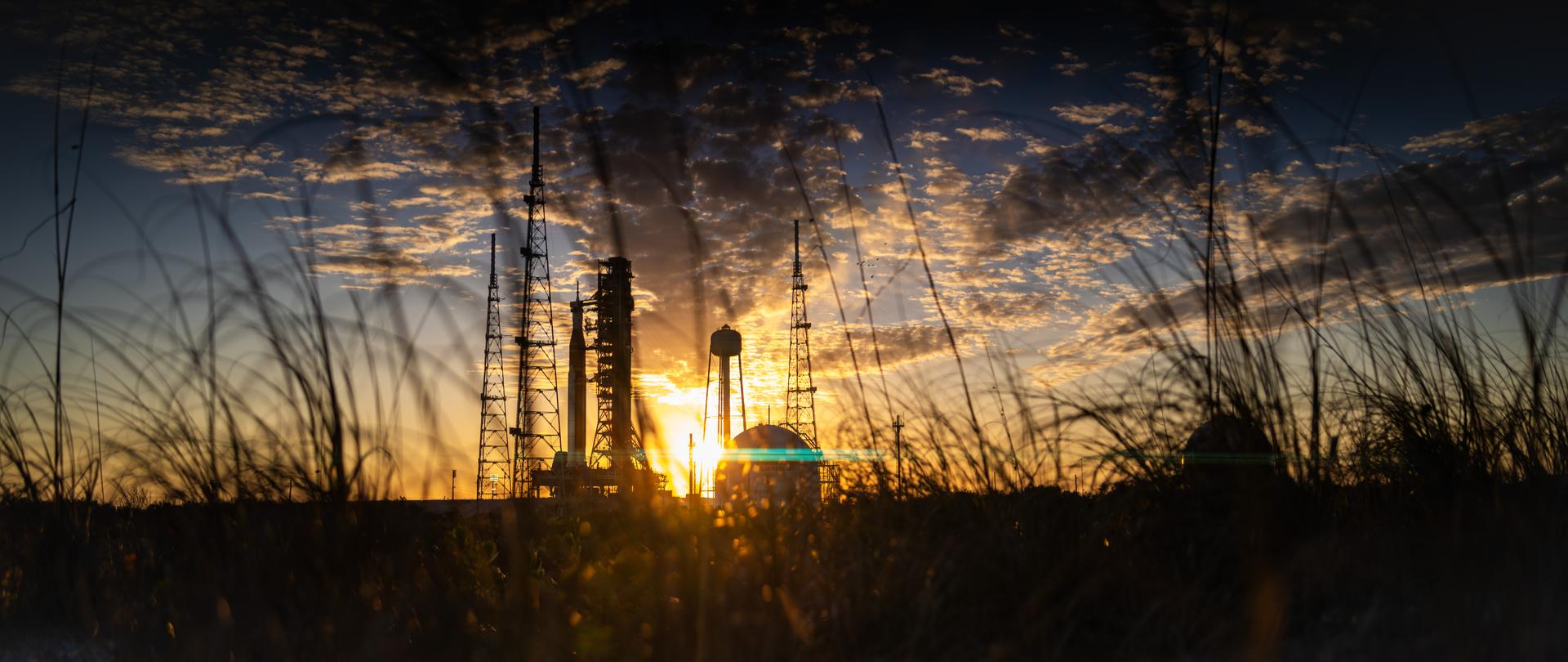
The sun sets behind NASA’s Space Launch System (SLS) rocket and Orion spacecraft as they stand fully assembled atop the mobile launcher at Launch Pad 39B at NASA’s Kennedy Space Center in Florida. The sky glows with warm shades of orange and pink, silhouetting the towering rocket and its solid rocket boosters against the fading light. Photographed on January 31, 2026, the scene captures teams preparing for a wet dress rehearsal for the Artemis II mission, rehearsing launch countdown timelines and procedures as day turns to night.
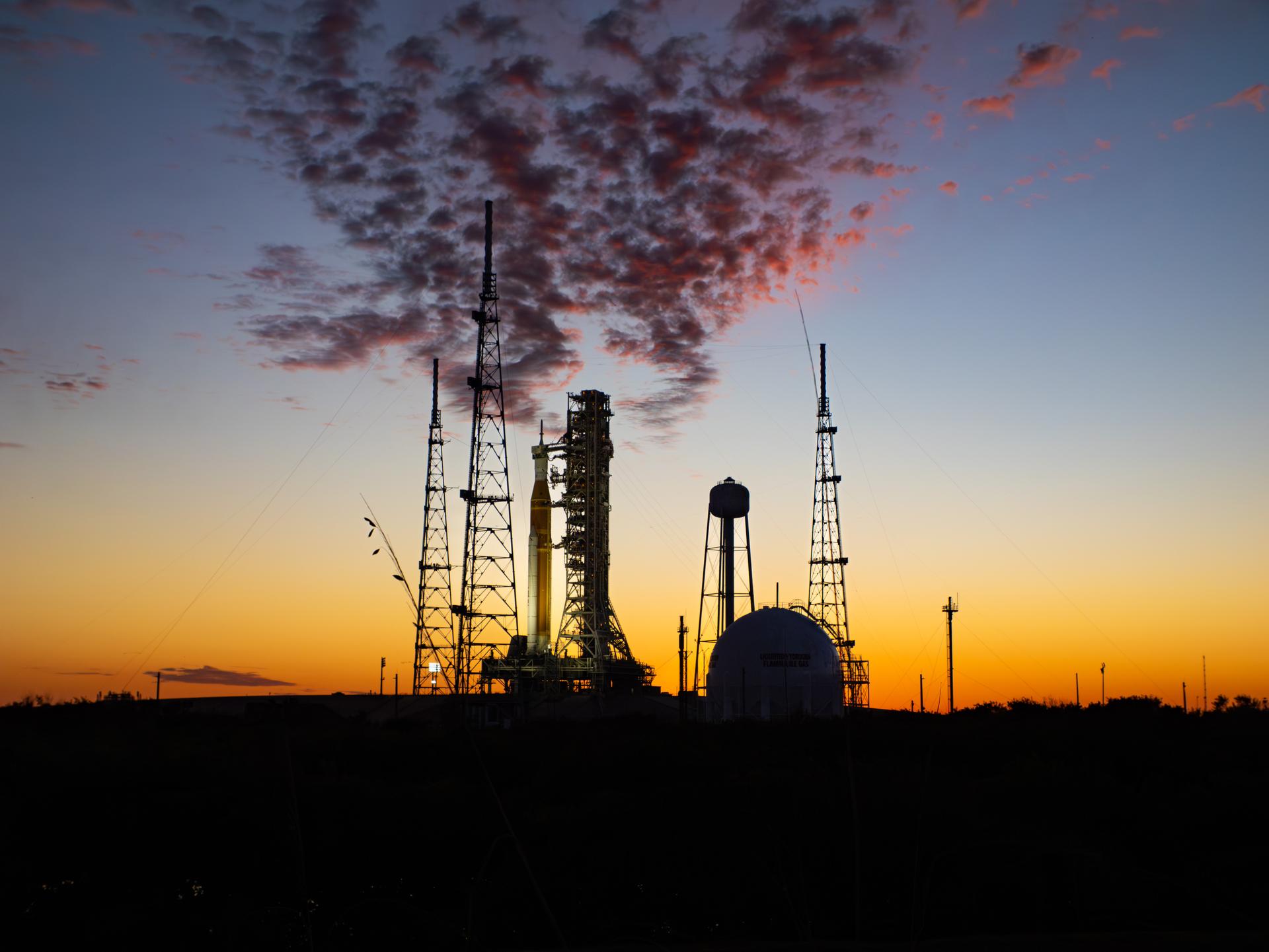
The sun sets behind NASA’s Space Launch System (SLS) rocket and Orion spacecraft as they stand fully assembled atop the mobile launcher at Launch Pad 39B at NASA’s Kennedy Space Center in Florida. The sky glows with warm shades of orange and pink, silhouetting the towering rocket and its solid rocket boosters against the fading light. Photographed on January 31, 2026, the scene captures teams preparing for a wet dress rehearsal for the Artemis II mission, rehearsing launch countdown timelines and procedures as day turns to night.
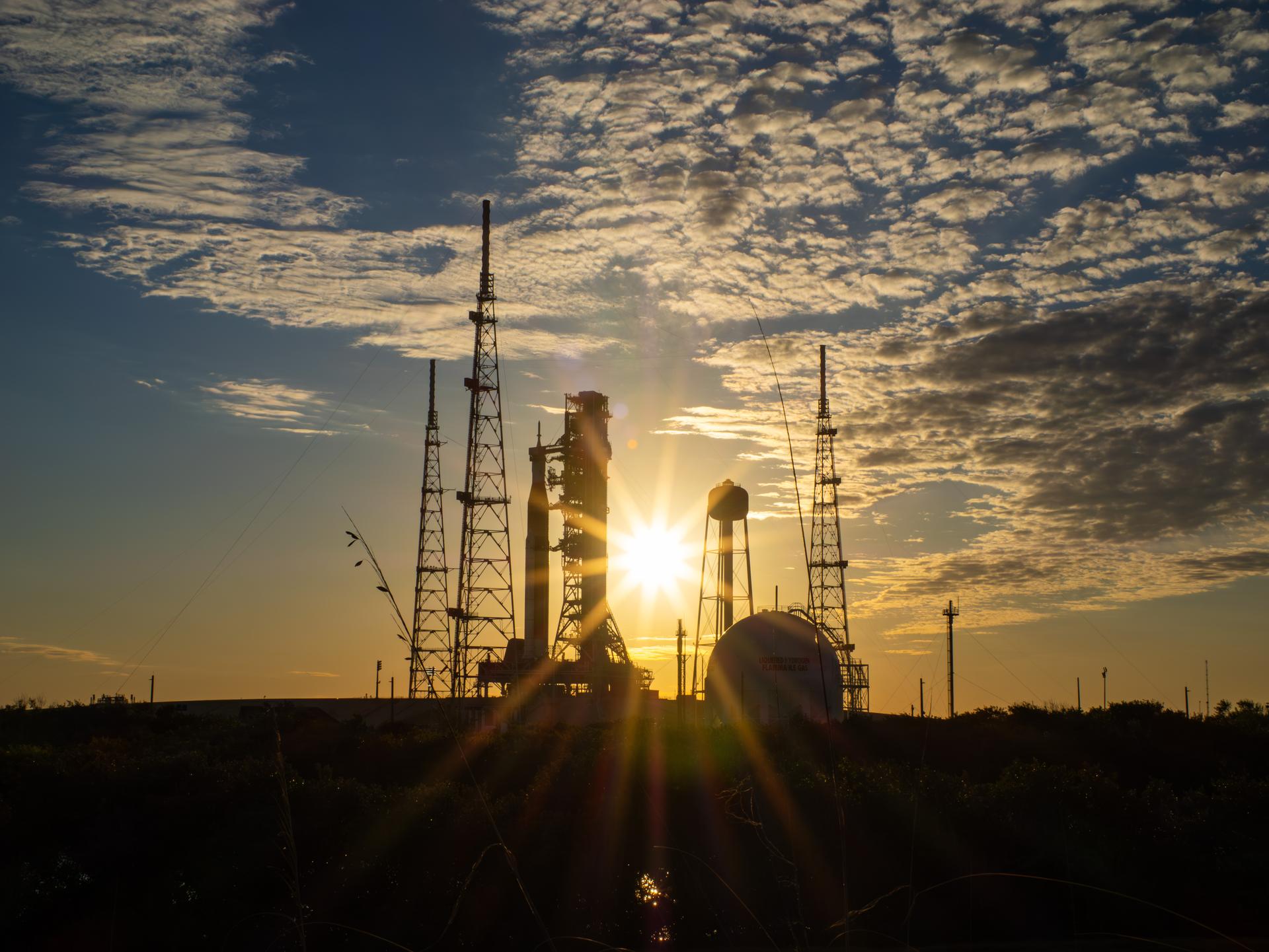
The sun sets behind NASA’s Space Launch System (SLS) rocket and Orion spacecraft as they stand fully assembled atop the mobile launcher at Launch Pad 39B at NASA’s Kennedy Space Center in Florida. The sky glows with warm shades of orange and pink, silhouetting the towering rocket and its solid rocket boosters against the fading light. Photographed on January 31, 2026, the scene captures teams preparing for a wet dress rehearsal for the Artemis II mission, rehearsing launch countdown timelines and procedures as day turns to night.
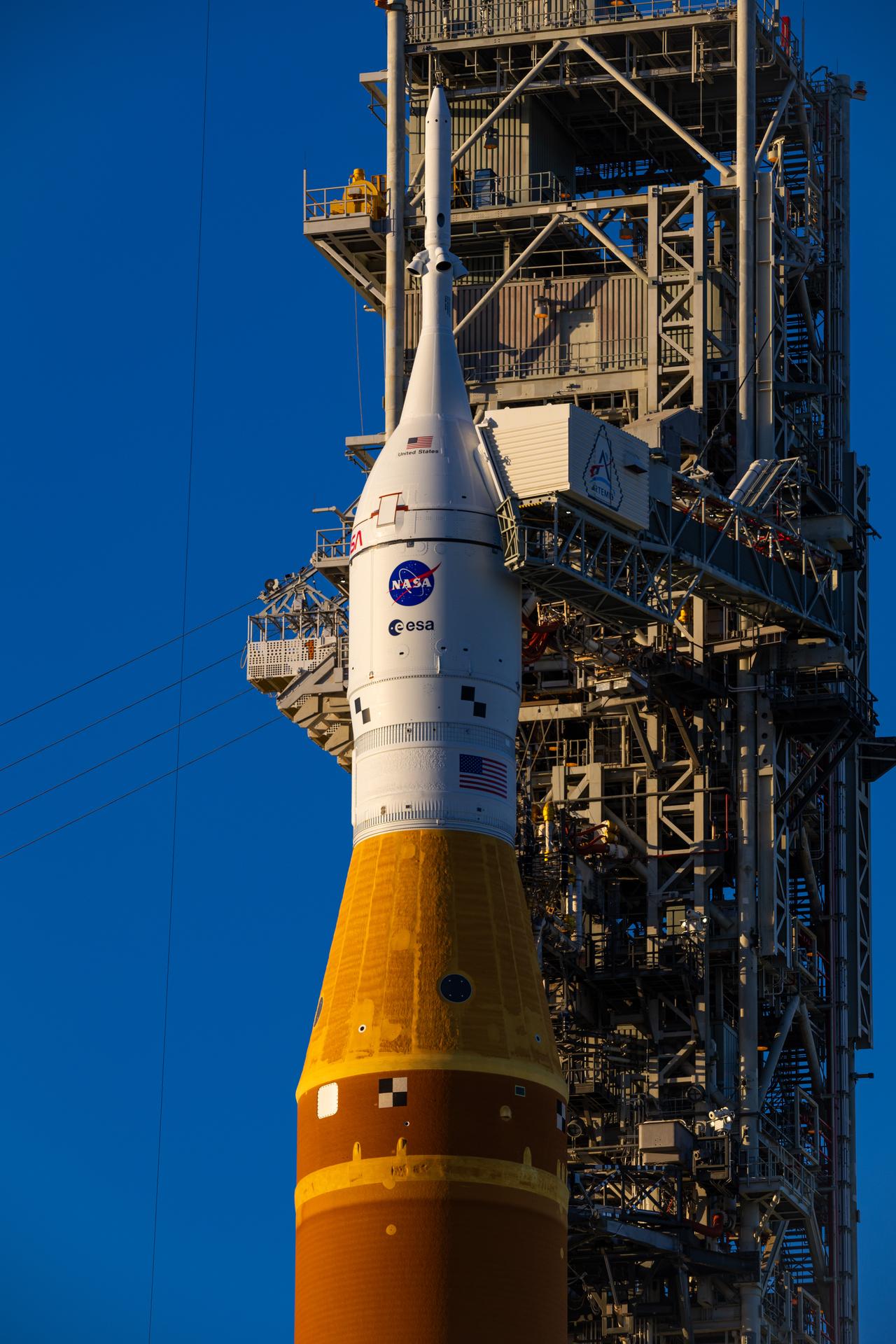
The sun setting NASA’s SLS (Space Launch System) and Orion spacecraft, atop the mobile launcher on January 31, 2026. The rocket is currently at Launch Pad 39B at NASA’s Kennedy Space Center in Florida, as teams are preparing for a wet dress rehearsal to practice timelines and procedures for the launch of Artemis II.
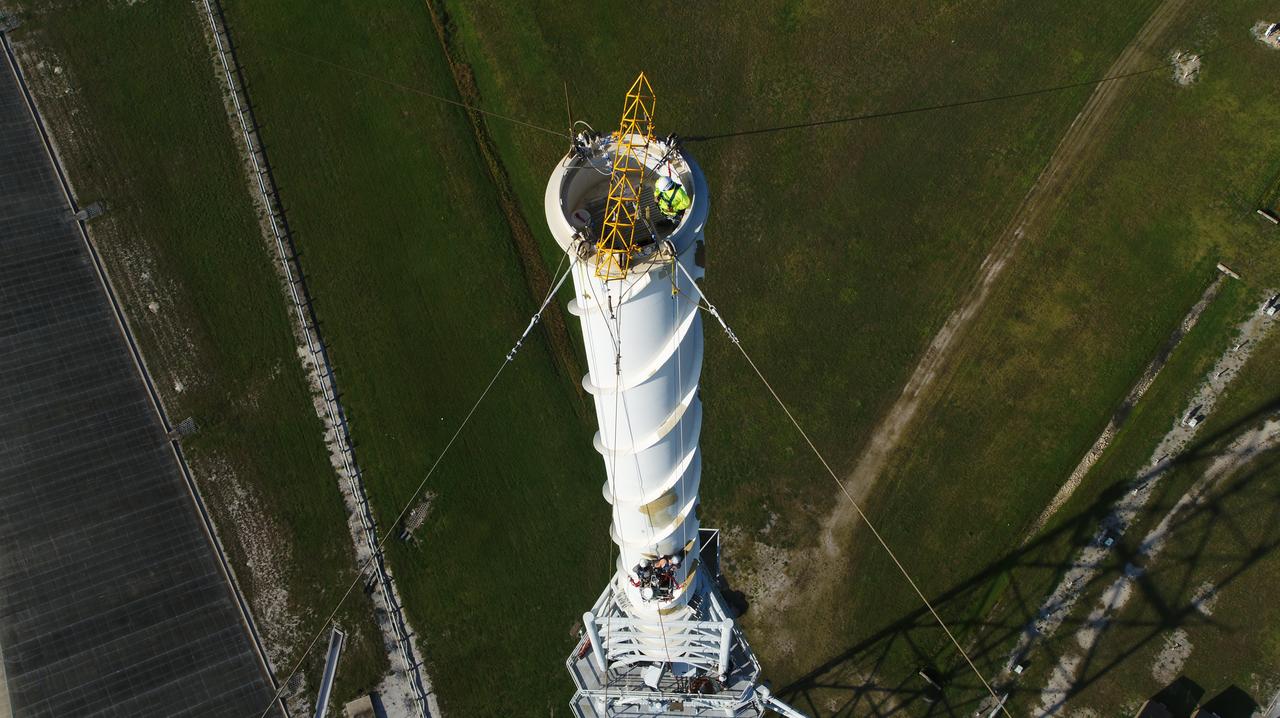
An aerial view shows workers preparing the surface of one of the three lightning protection system towers for painting at Exploration Ground Systems’ Launch Complex 39B at NASA’s Kennedy Space Center in Florida on May 30, 2019. The old paint was removed by the most recent hurricane. Pad 39B is the site of future launches of the agency’s Space Launch System rocket with the Orion spacecraft on Artemis missions. The 600-foot-tall lightning towers will help prevent lightning strikes at the pad during prelaunch and launch activities.
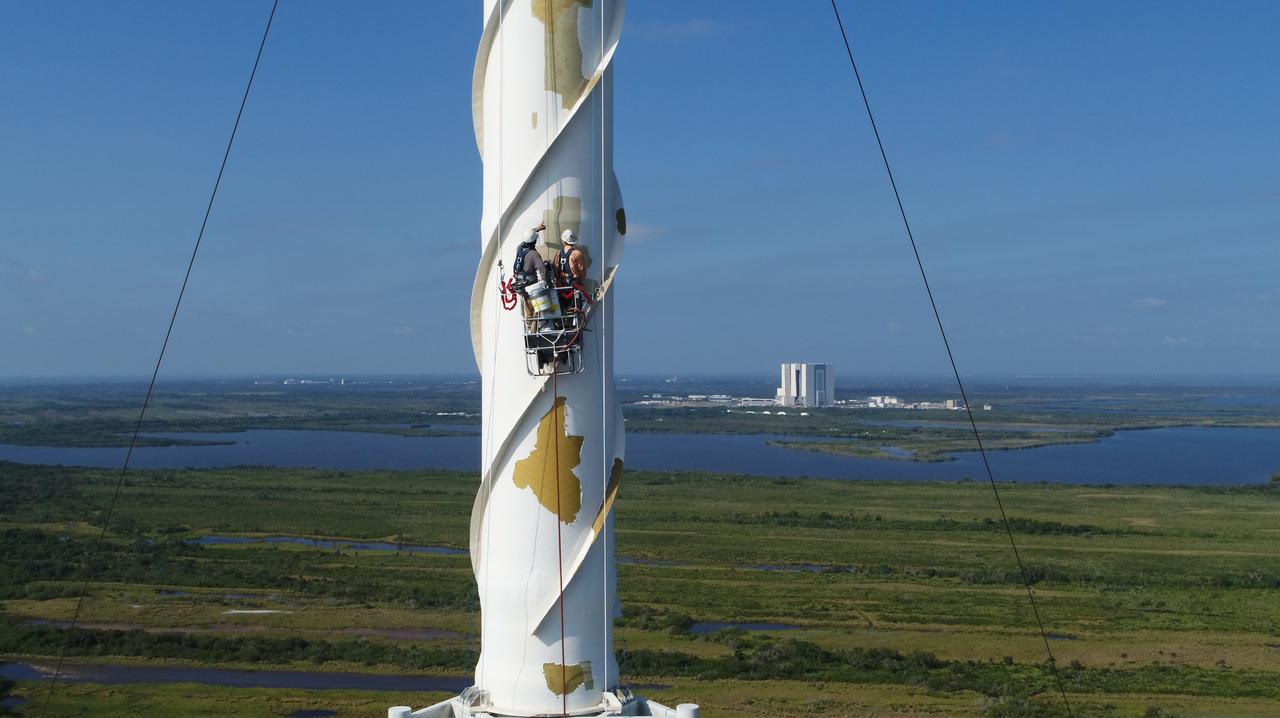
An aerial view shows workers preparing the surface of one of the three lightning protection system towers for painting at Exploration Ground Systems’ Launch Complex 39B at NASA’s Kennedy Space Center in Florida on May 30, 2019. The old paint was removed by the most recent hurricane. Pad 39B is the site of future launches of the agency’s Space Launch System rocket with the Orion spacecraft on Artemis missions. The 600-foot-tall lightning towers will help prevent lightning strikes at the pad during prelaunch and launch activities.