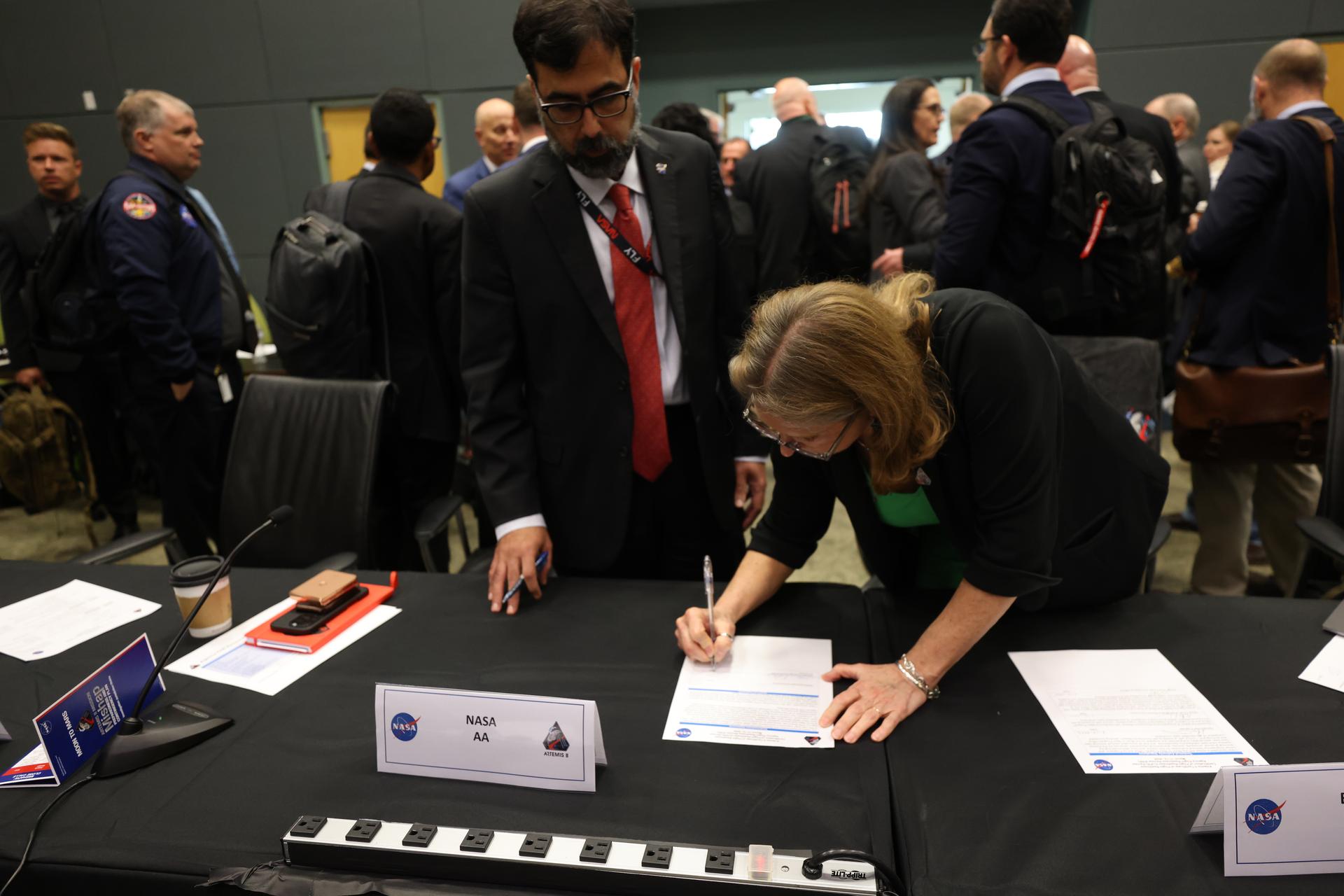
With NASA Associate Administrator Amit Kshatriya looking on, Lori Glaze, acting associate administrator, Exploration Systems Development Mission Directorate, signs the certification for flight readiness following the completion of the Flight Readiness Review for the Artemis II test flight on Thursday, March 12, 2026, at NASA’s Kennedy Space Center in Florida. The review is an assessment of the readiness of NASA’s SLS (Space Launch System) rocket and Orion spacecraft to support the Artemis II test flight as four astronauts journey around the Moon and return to Earth.

NASA Associate Administrator Amit Kshatriya signs the certification for flight readiness following the completion of the Flight Readiness Review for the Artemis II test flight on Thursday, March 12, 2026, at NASA’s Kennedy Space Center in Florida. The review is an assessment of the readiness of NASA’s SLS (Space Launch System) rocket and Orion spacecraft to support the Artemis II test flight as four astronauts journey around the Moon and return to Earth.

From left, NASA Associate Administrator Amit Kshatriya and Lori Glaze, acting associate administrator, Exploration Systems Development Mission Directorate, shake hands after each signing the certification for flight readiness following the completion of the Flight Readiness Review for the Artemis II test flight on Thursday, March 12, 2026, at NASA’s Kennedy Space Center in Florida. The review is an assessment of the readiness of NASA’s SLS (Space Launch System) rocket and Orion spacecraft to support the Artemis II test flight as four astronauts journey around the Moon and return to Earth.
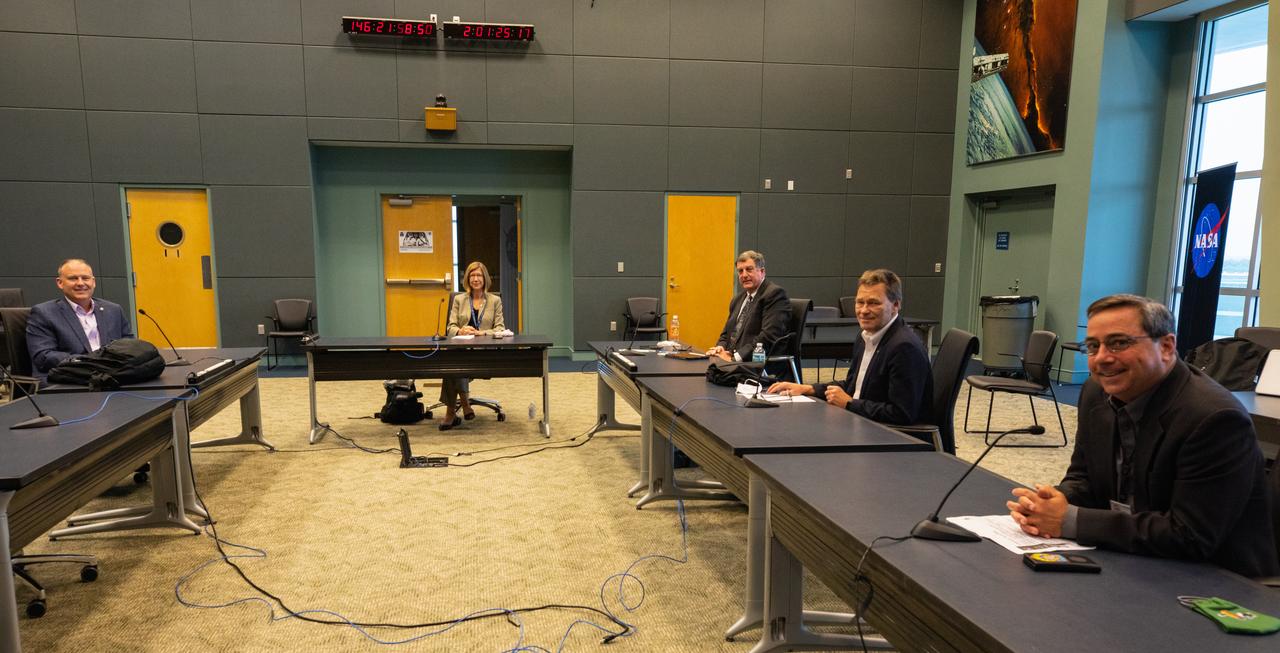
Representatives from NASA, SpaceX and the U.S. Space Force 45th Weather Squadron participate in a news conference following the Launch Readiness Review at the agency’s Kennedy Space Center in Florida on Monday, May 25, 2020, in advance of NASA’s SpaceX Demo-2 Flight Test to the International Space Station as part of NASA’s Commercial Crew Program. From the left are: Norm Knight, deputy director, NASA Johnson Space Center Flight Operations Kathy Lueders, manager, NASA Commercial Crew Program; Kirk Shireman, manager, International Space Station Program; Hans Koenigsmann, vice president, Build and Flight Reliability, SpaceX; and Mike McAleenan, launch weather officer, 45th Weather Squadron. Launch is currently targeted for 4:33 p.m. EDT Wednesday, May 27. The SpaceX Crew Dragon spacecraft will launch on a Falcon 9 rocket from historic Launch Complex 39A at NASA’s Kennedy Space Center in Florida.

From left, Charlie Blackwell-Thompson, launch director, Exploration Ground Systems Program and Lili Villarreal, Artemis II landing and recovery director in Exploration Ground Systems Program at NASA’s Kennedy Space Center in Florida, participate in the Artemis II Flight Readiness Review with NASA leadership on Wednesday, March 11, 2026, at NASA Kennedy. The review is an assessment of the readiness of NASA’s SLS (Space Launch System) rocket and Orion spacecraft to support the Artemis II test flight as four astronauts journey around the Moon and return to Earth.

From left, Kennedy Space Center Director Janet Petro and Charlie Blackwell-Thompson, launch director, Exploration Ground Systems Program, participate in the Artemis II Flight Readiness Review with NASA leadership on Wednesday, March 11, 2026, at NASA’s Kennedy Space Center in Florida. The review is an assessment of the readiness of NASA’s SLS (Space Launch System) rocket and Orion spacecraft to support the Artemis II test flight as four astronauts journey around the Moon and return to Earth.

From left, Kennedy Space Center Director Janet Petro; Charlie Blackwell-Thompson, launch director, Exploration Ground Systems Program; and Shawn Quinn, manager, Exploration Ground Systems Program, participate in the Artemis II Flight Readiness Review with NASA leadership on Wednesday, March 11, 2026, at NASA’s Kennedy Space Center in Florida. The review is an assessment of the readiness of NASA’s SLS (Space Launch System) rocket and Orion spacecraft to support the Artemis II test flight as four astronauts journey around the Moon and return to Earth.

NASA Associate Administrator Amit Kshatriya participates in the Artemis II Flight Readiness Review with NASA leadership on Wednesday, March 11, 2026, at NASA’s Kennedy Space Center in Florida. The review is an assessment of the readiness of NASA’s SLS (Space Launch System) rocket and Orion spacecraft to support the Artemis II test flight as four astronauts journey around the Moon and return to Earth.

From left, NASA Associate Administrator Amit Kshatriya and Lori Glaze, acting associate administrator, Exploration Systems Development Mission Directorate, participate in the Artemis II Flight Readiness Review with NASA leadership on Wednesday, March 11, 2026, at NASA’s Kennedy Space Center in Florida. The review is an assessment of the readiness of NASA’s SLS (Space Launch System) rocket and Orion spacecraft to support the Artemis II test flight as four astronauts journey around the Moon and return to Earth.

Kennedy Space Center Deputy Director Kelvin Manning participates in the Artemis II Flight Readiness Review with NASA leadership on Wednesday, March 11, 2026, at NASA’s Kennedy Space Center in Florida. The review is an assessment of the readiness of NASA’s SLS (Space Launch System) rocket and Orion spacecraft to support the Artemis II test flight as four astronauts journey around the Moon and return to Earth.
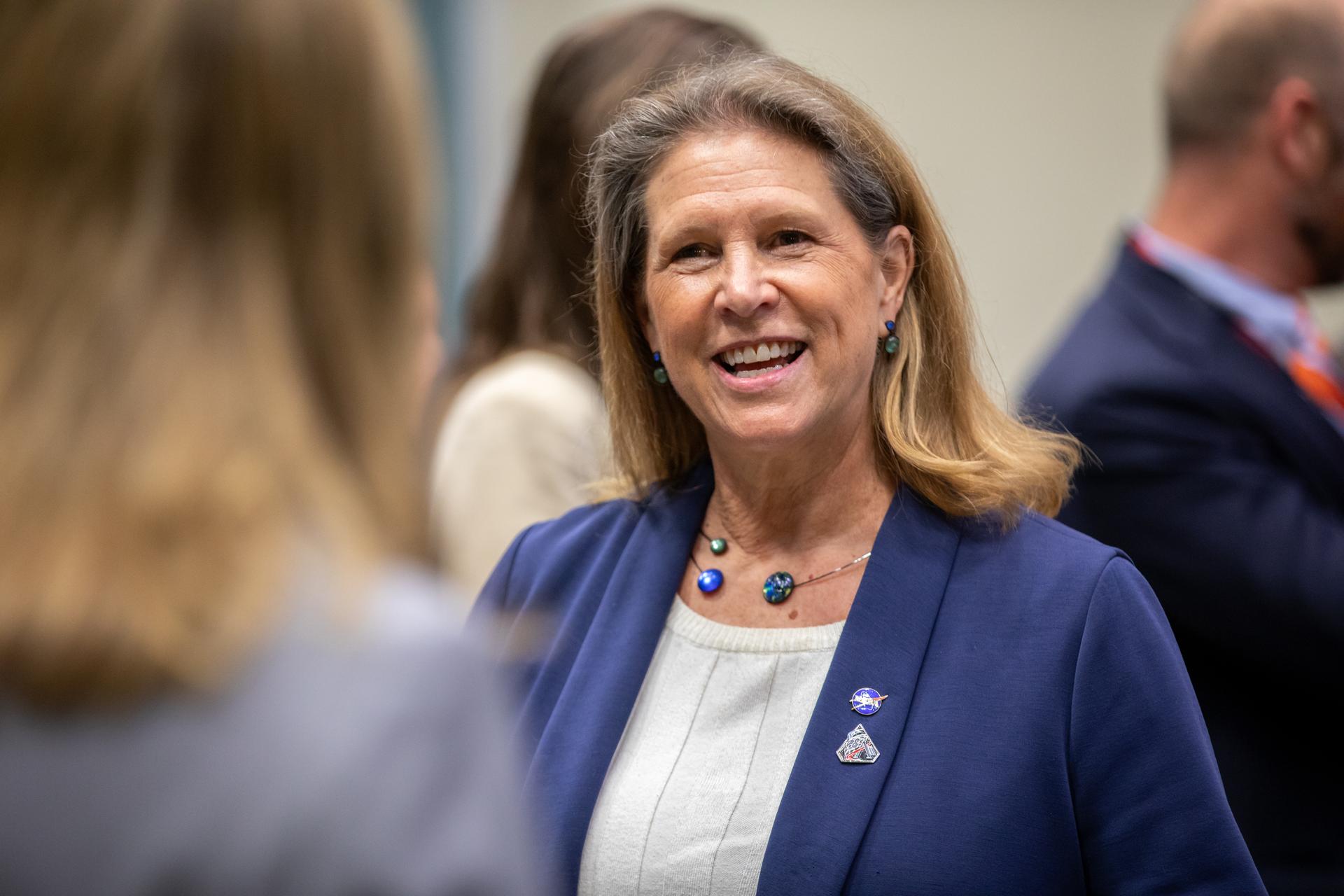
Lori Glaze, acting associate administrator, NASA’s Exploration Systems Development Mission Directorate, participates in the Artemis II Flight Readiness Review with NASA leadership on Wednesday, March 11, 2026, at NASA’s Kennedy Space Center in Florida. The review is an assessment of the readiness of NASA’s SLS (Space Launch System) rocket and Orion spacecraft to support the Artemis II test flight as four astronauts journey around the Moon and return to Earth.

NASA astronaut Randy Bresnik participates in the Artemis II Flight Readiness Review with NASA leadership on Wednesday, March 11, 2026, at NASA’s Kennedy Space Center in Florida. The review is an assessment of the readiness of NASA’s SLS (Space Launch System) rocket and Orion spacecraft to support the Artemis II test flight as four astronauts journey around the Moon and return to Earth.

NASA leadership, with Artemis II astronauts Christina Koch, Victor Glover, Reid Wiseman, and CSA (Canadian Space Agency) Jeremy Hansen joining virtually, participate in the Artemis II Flight Readiness Review on Wednesday, March 11, 2026, at NASA’s Kennedy Space Center in Florida. The review is an assessment of the readiness of NASA’s SLS (Space Launch System) rocket and Orion spacecraft to support the Artemis II test flight as four astronauts journey around the Moon and return to Earth.

From left, Joel Montalbano acting associate administrator for NASA’s Space Operations Mission Directorate at NASA Headquarters and Nicky Fox, associate administrator, Science Mission Directorate, NASA Headquarters, participate in the Artemis II Flight Readiness Review with NASA leadership on Wednesday, March 11, 2026, at NASA’s Kennedy Space Center in Florida. The review is an assessment of the readiness of NASA’s SLS (Space Launch System) rocket and Orion spacecraft to support the Artemis II test flight as four astronauts journey around the Moon and return to Earth.

Kennedy Space Center Director Janet Petro participates in the Artemis II Flight Readiness Review with NASA leadership on Wednesday, March 11, 2026, at NASA’s Kennedy Space Center in Florida. The review is an assessment of the readiness of NASA’s SLS (Space Launch System) rocket and Orion spacecraft to support the Artemis II test flight as four astronauts journey around the Moon and return to Earth.

NASA leadership, with Artemis II astronauts Christina Koch, Victor Glover, Reid Wiseman, and CSA (Canadian Space Agency) Jeremy Hansen joining virtually, participate in the Artemis II Flight Readiness Review on Wednesday, March 11, 2026, at NASA’s Kennedy Space Center in Florida. The review is an assessment of the readiness of NASA’s SLS (Space Launch System) rocket and Orion spacecraft to support the Artemis II test flight as four astronauts journey around the Moon and return to Earth.
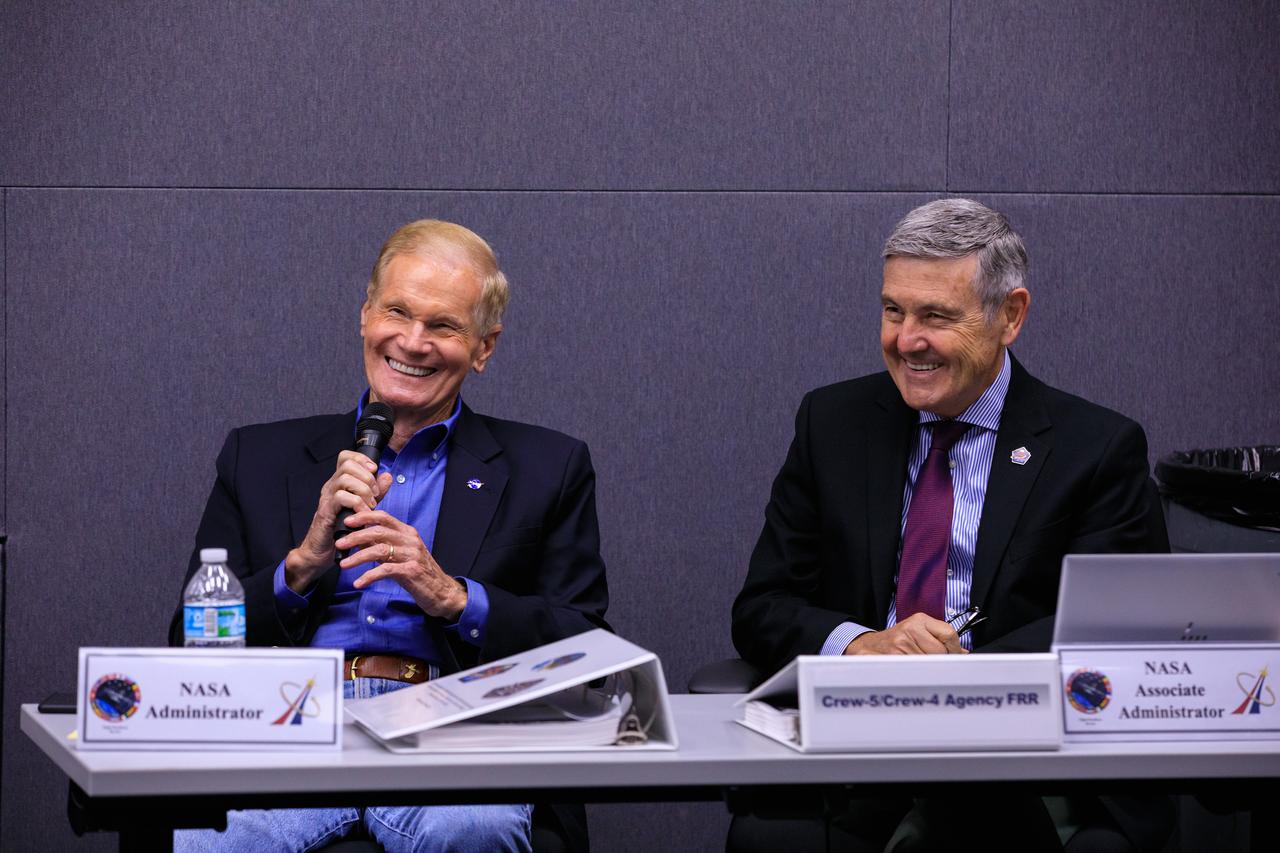
NASA Administrator Bill Nelson, left, and Associate Administrator Bob Cabana participate in a Flight Readiness Review for the agency’s Crew-5 mission at Kennedy Space Center in Florida on Sept. 26, 2022. NASA and SpaceX managers held the review to confirm the SpaceX Falcon 9 rocket and Crew Dragon spacecraft are ready for launch. Crew-5 is scheduled to launch to the International Space Station from Kennedy’s Launch Complex 39A as part of the agency’s Commercial Crew Program. This will be the fifth crew rotation mission of SpaceX’s human transportation system and its sixth flight with astronauts, including the Demo-2 test flight, to the space station.
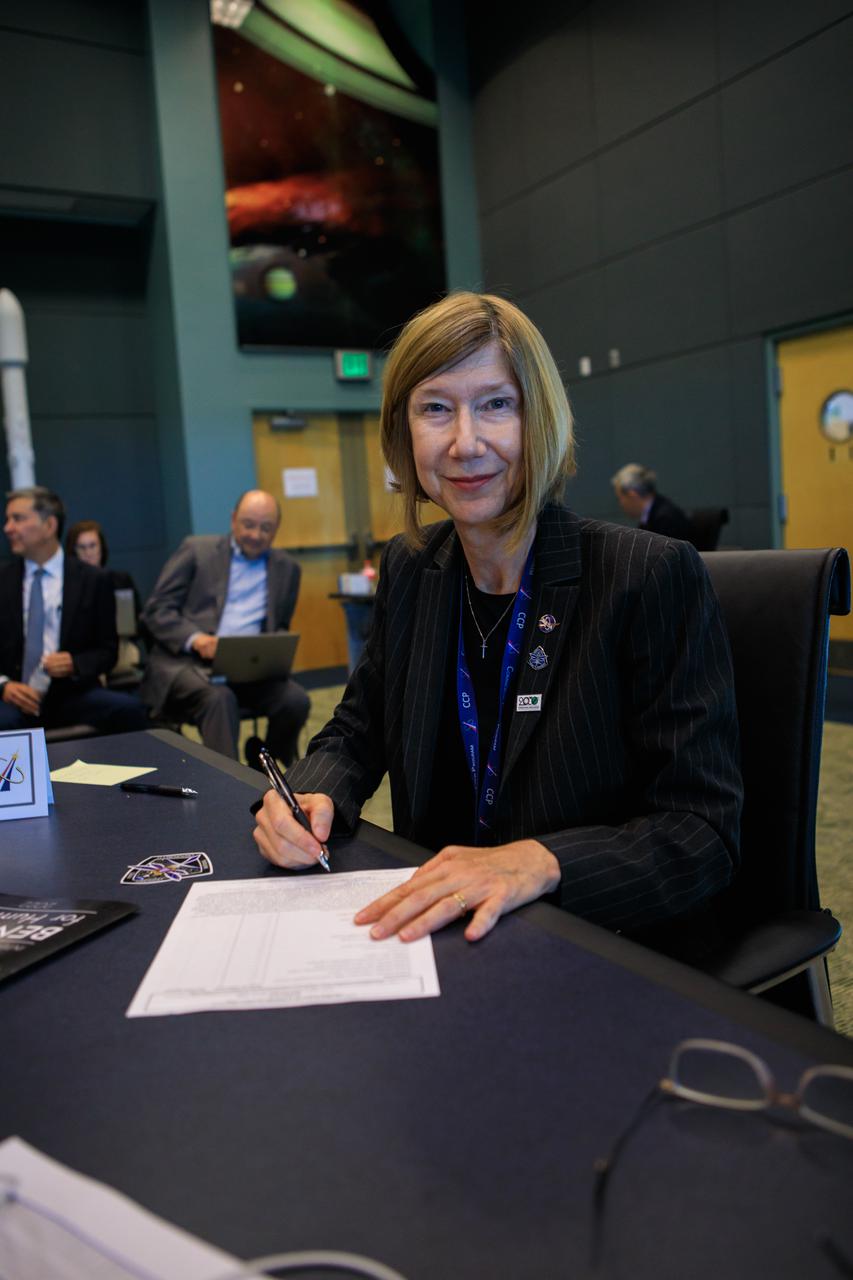
Kathy Lueders, associate administrator, Space Operations Mission Directorate, NASA Headquarters, signs a document during the Flight Readiness Review for the agency’s SpaceX Crew-4 mission at the agency’s Kennedy Space Center in Florida on April 15, 2022. International partners also participated. NASA and SpaceX mission managers held the review to confirm the SpaceX Falcon 9 rocket and Crew Dragon spacecraft are ready for launch. Crew-4 is scheduled to launch to the International Space Station from Kennedy’s Launch Complex 39A on April 23, 2022, as part of NASA’s Commercial Crew Program. Liftoff of the Falcon 9 rocket and Crew Dragon spacecraft is targeted for 5:26 a.m. EDT.

Kennedy Space Center Deputy Director Kelvin Manning participates in a Flight Readiness Review for NASA’s Crew-5 mission at the Florida spaceport on Sept. 26, 2022. NASA and SpaceX managers held the review to confirm the SpaceX Falcon 9 rocket and Crew Dragon spacecraft are ready for launch. Crew-5 is scheduled to launch to the International Space Station from Kennedy’s Launch Complex 39A as part of the agency’s Commercial Crew Program. This will be the fifth crew rotation mission of SpaceX’s human transportation system and its sixth flight with astronauts, including the Demo-2 test flight, to the space station.
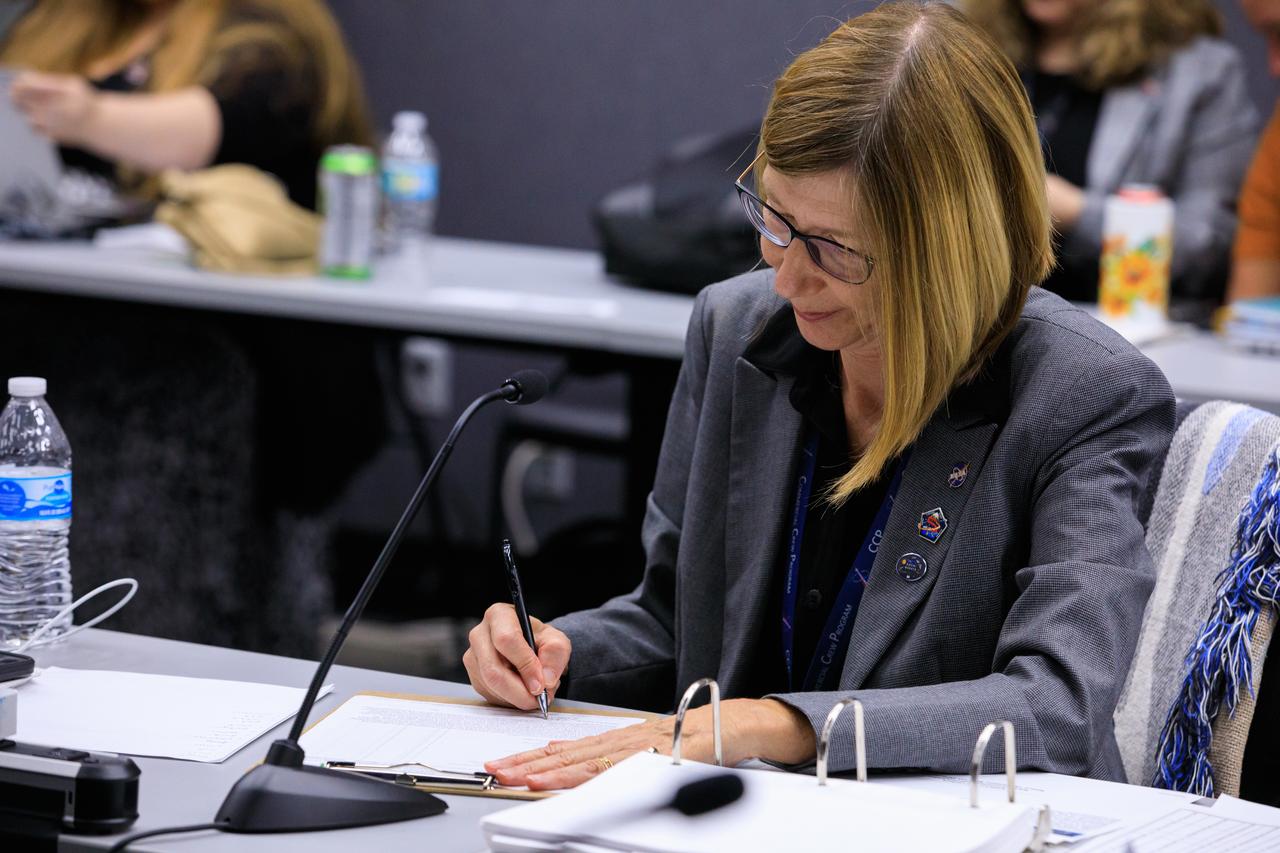
Kathryn Lueders, associate administrator for NASA’s Space Operations Mission Directorate, participates in a Flight Readiness Review for the agency’s Crew-5 mission at Kennedy Space Center in Florida on Sept. 26, 2022. NASA and SpaceX managers held the review to confirm the SpaceX Falcon 9 rocket and Crew Dragon spacecraft are ready for launch. Crew-5 is scheduled to launch to the International Space Station from Kennedy’s Launch Complex 39A as part of the agency’s Commercial Crew Program. This will be the fifth crew rotation mission of SpaceX’s human transportation system and its sixth flight with astronauts, including the Demo-2 test flight, to the space station.
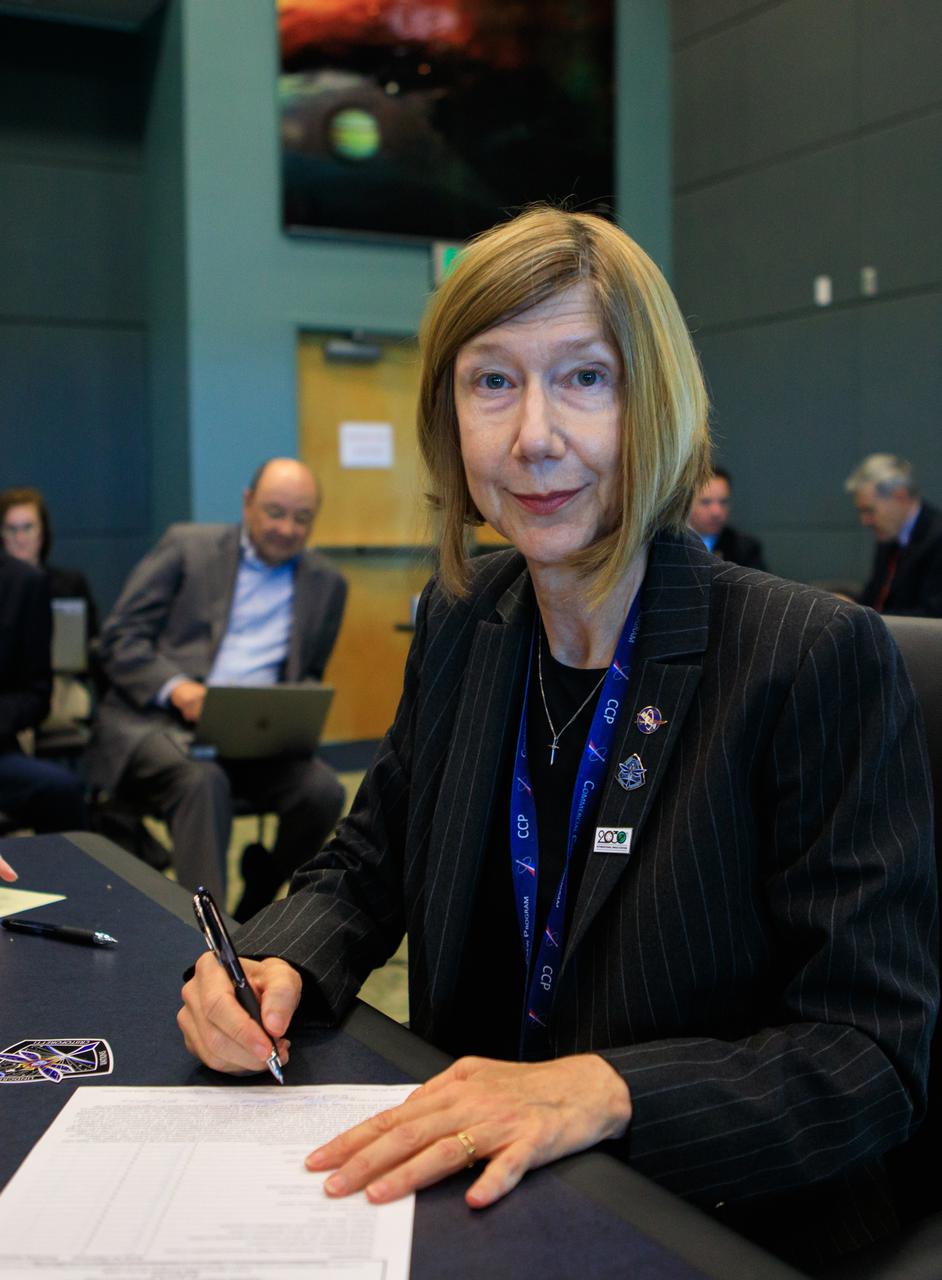
Kathy Lueders, associate administrator, Space Operations Mission Directorate, NASA Headquarters, participates in a Flight Readiness Review for the agency’s SpaceX Crew-4 mission at the agency’s Kennedy Space Center in Florida on April 15, 2022. International partners also participated. NASA and SpaceX mission managers held the review to confirm the SpaceX Falcon 9 rocket and Crew Dragon spacecraft are ready for launch. Crew-4 is scheduled to launch to the International Space Station from Kennedy’s Launch Complex 39A on April 23, 2022, as part of NASA’s Commercial Crew Program. Liftoff of the Falcon 9 rocket and Crew Dragon spacecraft is targeted for 5:26 a.m. EDT.
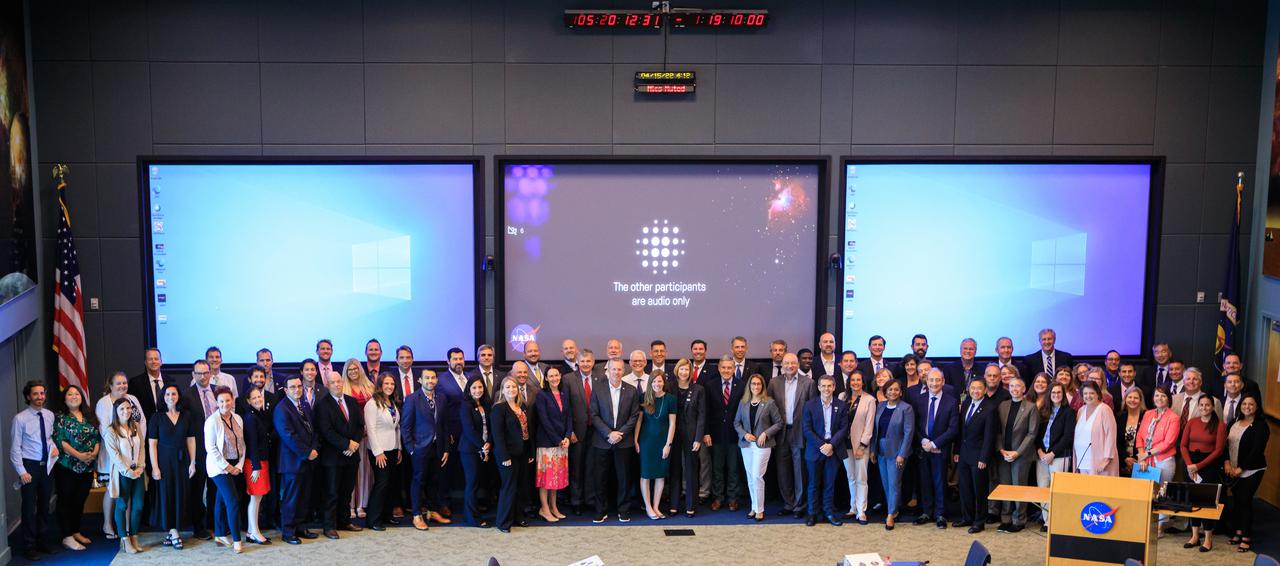
NASA and SpaceX managers and International partners gathered for a group photo at the conclusion of the SpaceX Crew-4 Flight Readiness Review at Kennedy Space Center in Florida on April 15, 2022. NASA and SpaceX mission managers held the review to confirm the SpaceX Falcon 9 rocket and Crew Dragon spacecraft are ready for launch. Crew-4 is scheduled to launch to the International Space Station from Kennedy’s Launch Complex 39A on April 23, 2022, as part of NASA’s Commercial Crew Program. Liftoff of the Falcon 9 rocket and Crew Dragon spacecraft is targeted for 5:26 a.m. EDT.
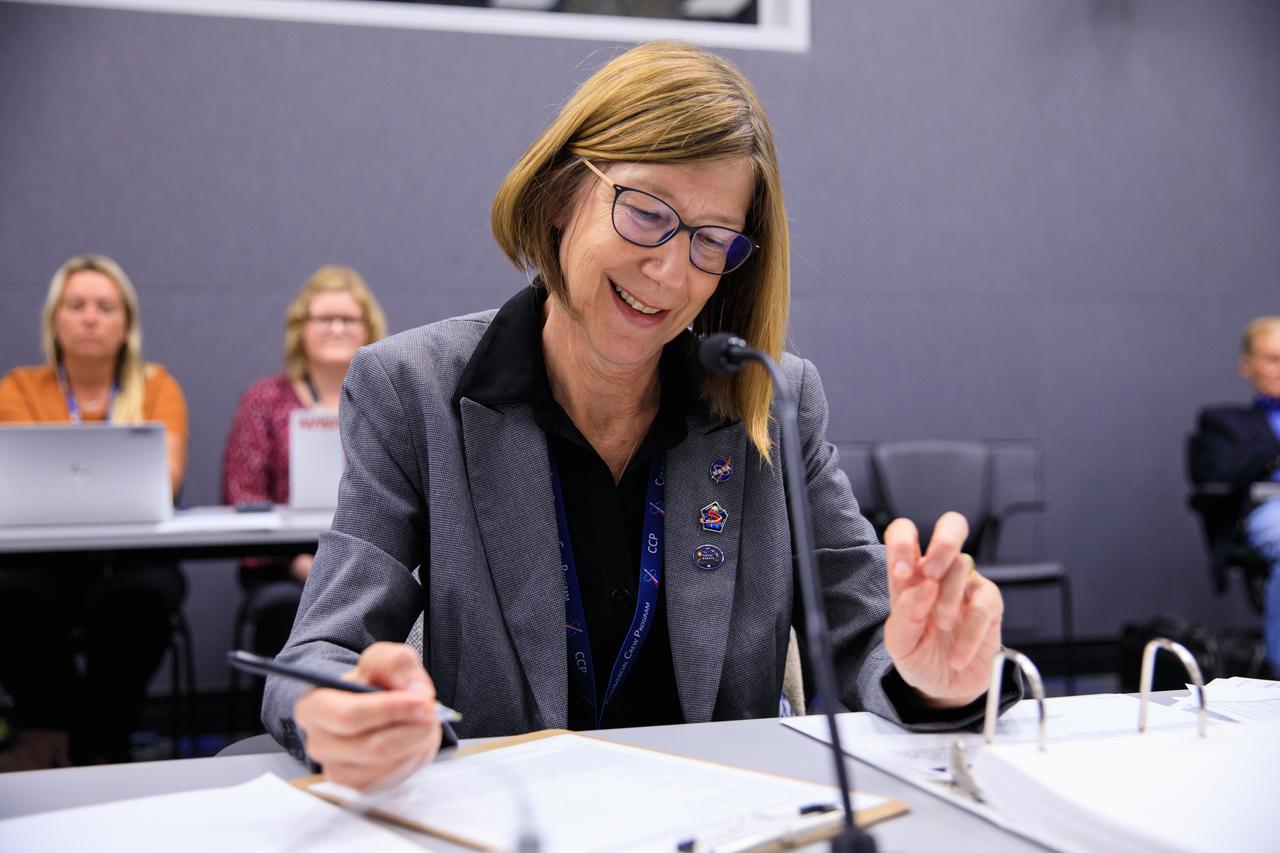
Kathryn Lueders, associate administrator for NASA’s Space Operations Mission Directorate, participates in a Flight Readiness Review for the agency’s Crew-5 mission at Kennedy Space Center in Florida on Sept. 26, 2022. NASA and SpaceX managers held the review to confirm the SpaceX Falcon 9 rocket and Crew Dragon spacecraft are ready for launch. Crew-5 is scheduled to launch to the International Space Station from Kennedy’s Launch Complex 39A as part of the agency’s Commercial Crew Program. This will be the fifth crew rotation mission of SpaceX’s human transportation system and its sixth flight with astronauts, including the Demo-2 test flight, to the space station.
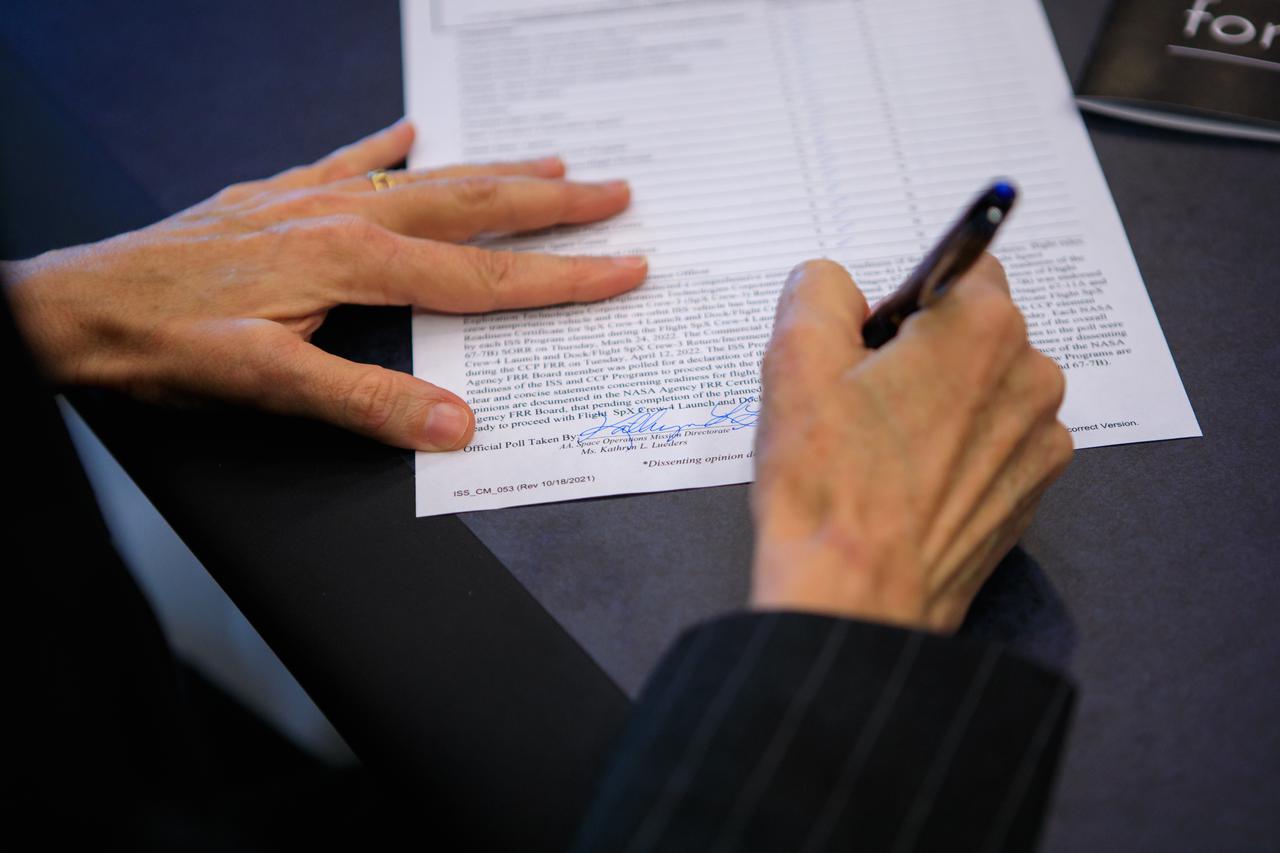
Kathy Lueders, associate administrator, Space Operations Mission Directorate, NASA Headquarters, signs a document during the Flight Readiness Review for the agency’s SpaceX Crew-4 mission at the agency’s Kennedy Space Center in Florida on April 15, 2022. International partners also participated. NASA and SpaceX mission managers held the review to confirm the SpaceX Falcon 9 rocket and Crew Dragon spacecraft are ready for launch. Crew-4 is scheduled to launch to the International Space Station from Kennedy’s Launch Complex 39A on April 23, 2022, as part of NASA’s Commercial Crew Program. Liftoff of the Falcon 9 rocket and Crew Dragon spacecraft is targeted for 5:26 a.m. EDT.

From left, Cliff Lanham, deputy manager, Exploration Ground Systems; Charlie Blackwell-Thompson, launch director, Exploration Ground Systems Program; and Lili Villarreal, Artemis II landing and recovery director in Exploration Ground Systems Program at NASA’s Kennedy Space Center in Florida, participate in the Artemis II Flight Readiness Review with NASA leadership on Wednesday, March 11, 2026, at NASA Kennedy. The review is an assessment of the readiness of NASA’s SLS (Space Launch System) rocket and Orion spacecraft to support the Artemis II test flight as four astronauts journey around the Moon and return to Earth.

From left, Shawn Quinn, manager, Exploration Ground Systems Program; Cliff Lanham, deputy manager, Exploration Ground Systems; and Charlie Blackwell-Thompson, launch director, Exploration Ground Systems Program Program at NASA’s Kennedy Space Center in Florida, participate in the Artemis II Flight Readiness Review with NASA leadership on Wednesday, March 11, 2026, at NASA Kennedy. The review is an assessment of the readiness of NASA’s SLS (Space Launch System) rocket and Orion spacecraft to support the Artemis II test flight as four astronauts journey around the Moon and return to Earth.
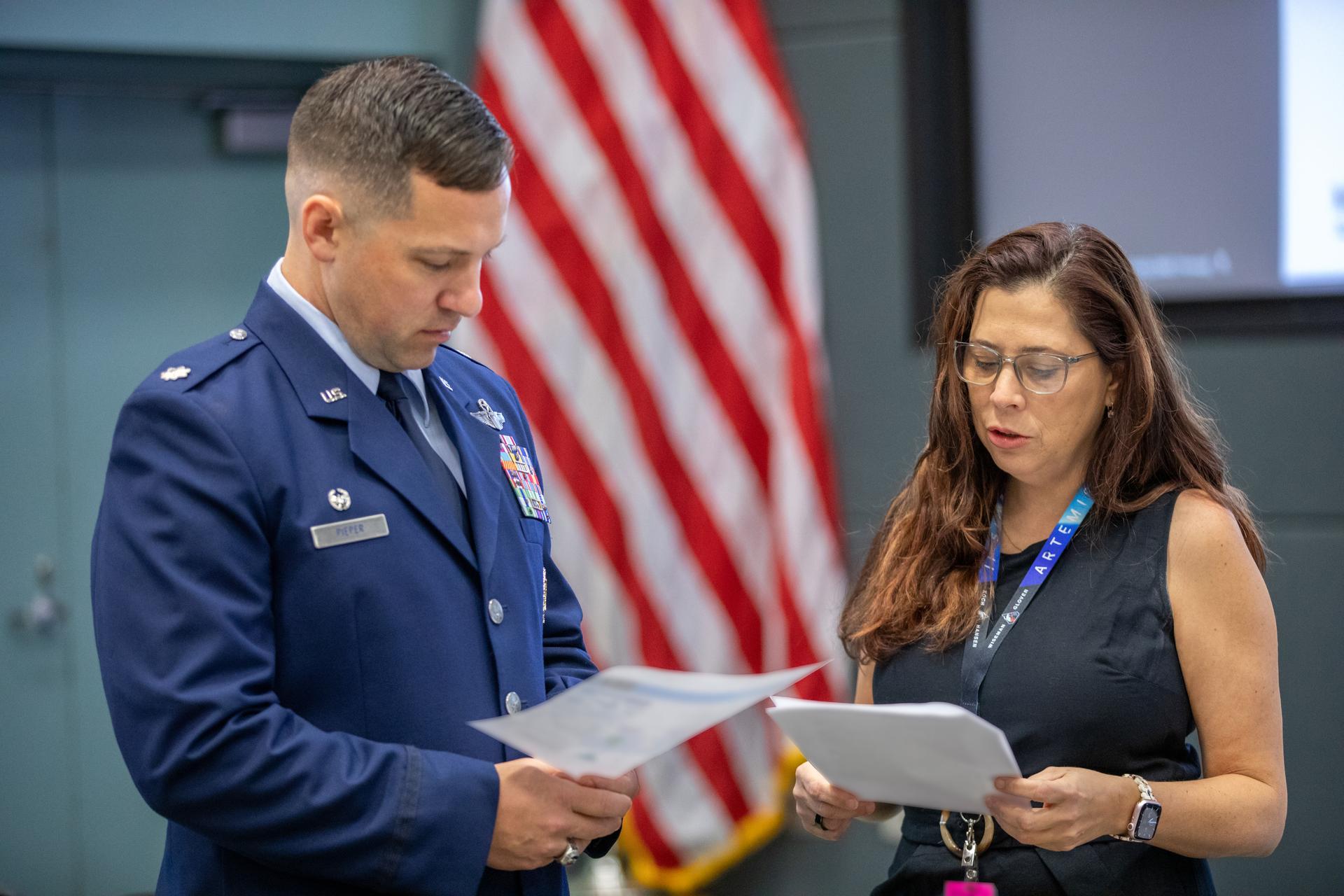
From left, Lieutenant Colonel Kevin M. Pieper, 1st Air Force, Detachment 3 at Patrick Space Force Base in Florida and Lili Villarreal, Artemis II landing and recovery director in Exploration Ground Systems Program at NASA’s Kennedy Space Center in Florida, participate in the Artemis II Flight Readiness Review with NASA leadership on Wednesday, March 11, 2026, at NASA Kennedy. The review is an assessment of the readiness of NASA’s SLS (Space Launch System) rocket and Orion spacecraft to support the Artemis II test flight as four astronauts journey around the Moon and return to Earth.

From left, NASA Associate Administrator Amit Kshatriya; Lori Glaze, acting associate administrator, Exploration Systems Development Mission Directorate; and John Honeycutt, chair, Artemis II mission management team, participate in the Artemis II Flight Readiness Review with NASA leadership on Wednesday, March 11, 2026, at NASA’s Kennedy Space Center in Florida. The review is an assessment of the readiness of NASA’s SLS (Space Launch System) rocket and Orion spacecraft to support the Artemis II test flight as four astronauts journey around the Moon and return to Earth.

From left, John Honeycutt, chair, Artemis II mission management team and Lori Glaze, acting associate administrator, Exploration Systems Development Mission Directorate, with Artemis II astronauts Christina Koch, Victor Glover, Reid Wiseman, and CSA (Canadian Space Agency) Jeremy Hansen joining virtually, participate in the Artemis II Flight Readiness Review with NASA leadership on Wednesday, March 11, 2026, at NASA’s Kennedy Space Center in Florida. The review is an assessment of the readiness of NASA’s SLS (Space Launch System) rocket and Orion spacecraft to support the Artemis II test flight as four astronauts journey around the Moon and return to Earth.
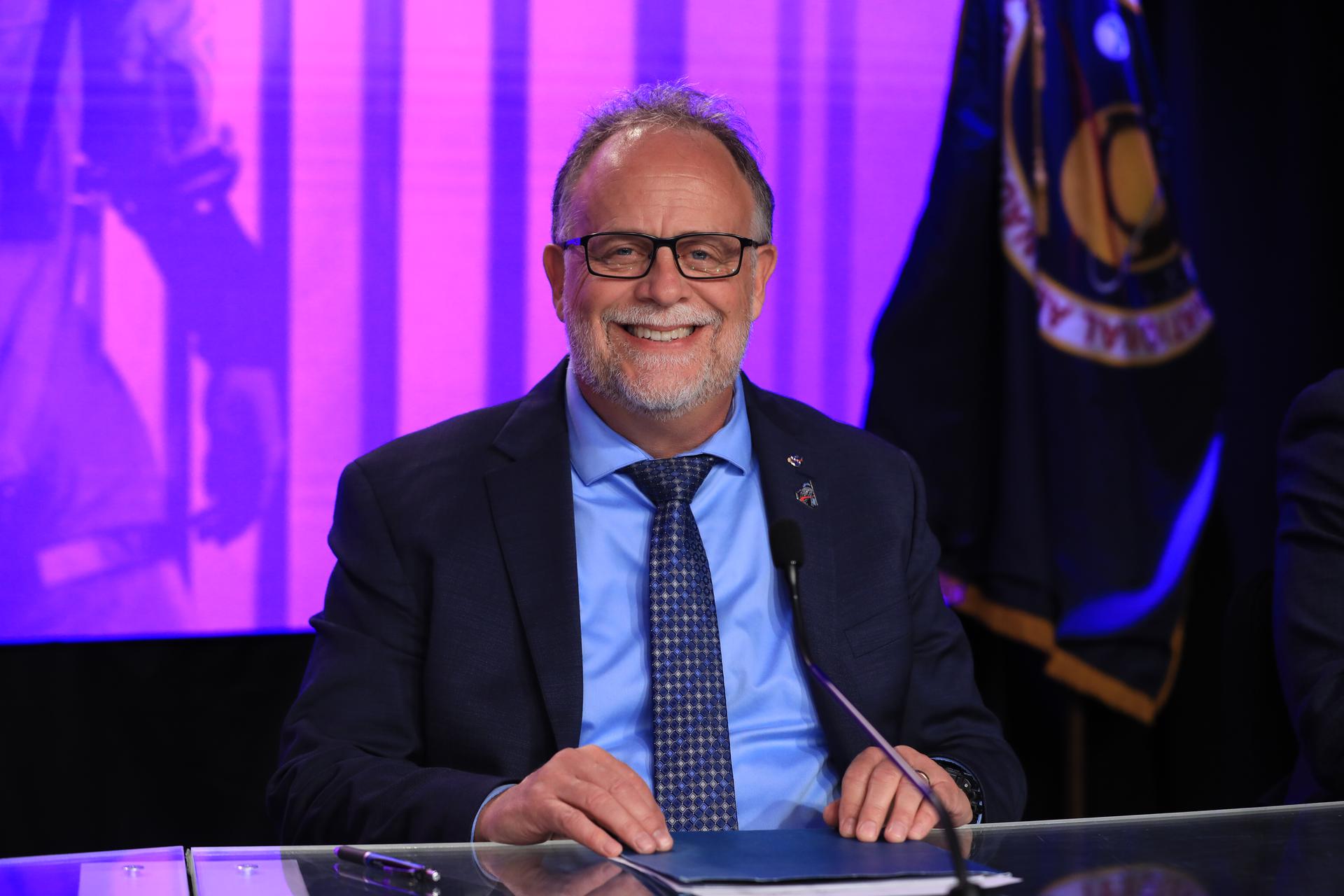
Shawn Quinn, manager, Exploration Ground Systems Program, participates in a post-Flight Readiness Review news conference for the Artemis II test flight inside the John Holliman Auditorium of the NASA News Center at the agency’s Kennedy Space Center in Florida on Thursday, March 12, 2026. The review is an assessment of the readiness of NASA’s SLS (Space Launch System) rocket and Orion spacecraft to support the Artemis II test flight as four astronauts journey around the Moon and return to Earth.
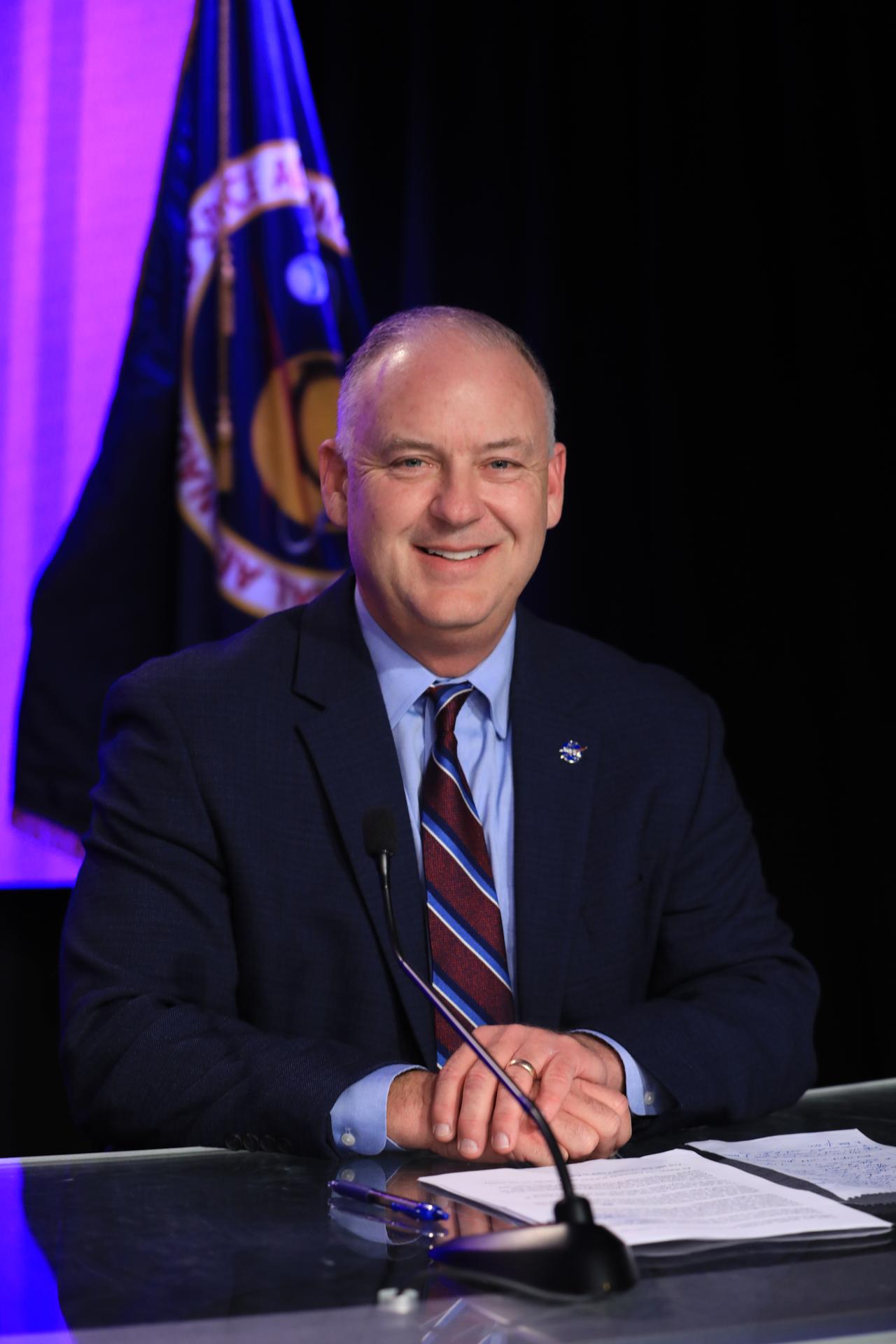
Norm Knight, director, Flight Operations Directorate, participates in a post-Flight Readiness Review news conference for the Artemis II test flight inside the John Holliman Auditorium of the NASA News Center at the agency’s Kennedy Space Center in Florida on Thursday, March 12, 2026. The review is an assessment of the readiness of NASA’s SLS (Space Launch System) rocket and Orion spacecraft to support the Artemis II test flight as four astronauts journey around the Moon and return to Earth.

John Honeycutt, chair, Artemis II Mission Management Team, participates in a post-Flight Readiness Review news conference for the Artemis II test flight inside the John Holliman Auditorium of the NASA News Center at the agency’s Kennedy Space Center in Florida on Thursday, March 12, 2026. The review is an assessment of the readiness of NASA’s SLS (Space Launch System) rocket and Orion spacecraft to support the Artemis II test flight as four astronauts journey around the Moon and return to Earth.
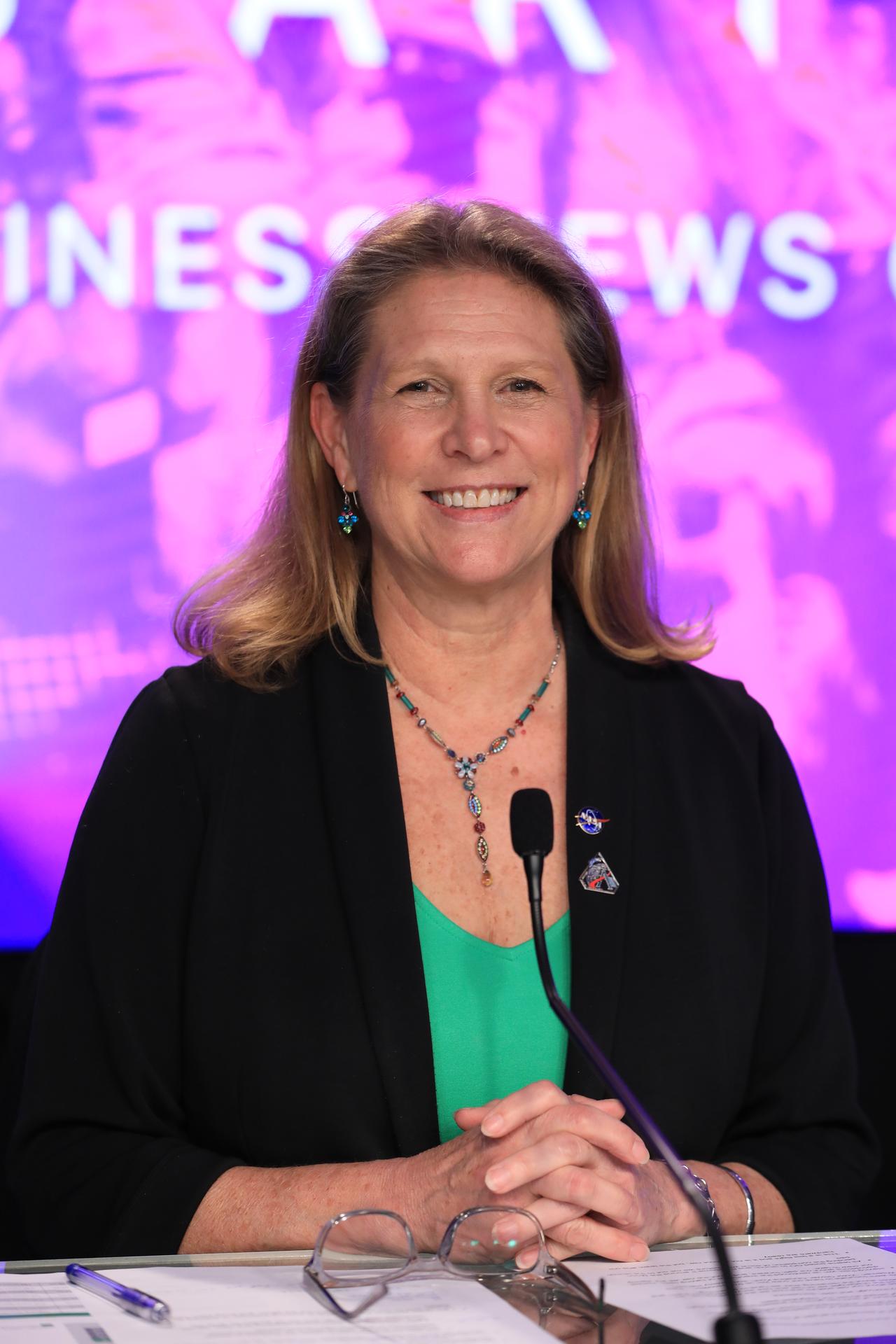
Lori Glaze, acting associate administrator, Exploration Systems Development Mission Directorate, participates in a post-Flight Readiness Review news conference for the Artemis II test flight inside the John Holliman Auditorium of the NASA News Center at the agency’s Kennedy Space Center in Florida on Thursday, March 12, 2026. The review is an assessment of the readiness of NASA’s SLS (Space Launch System) rocket and Orion spacecraft to support the Artemis II test flight as four astronauts journey around the Moon and return to Earth.

Rachel Kraft, NASA Communications, participates in a post-Flight Readiness Review news conference for the Artemis II test flight inside the John Holliman Auditorium of the NASA News Center at the agency’s Kennedy Space Center in Florida on Thursday, March 12, 2026. The review is an assessment of the readiness of NASA’s SLS (Space Launch System) rocket and Orion spacecraft to support the Artemis II test flight as four astronauts journey around the Moon and return to Earth.
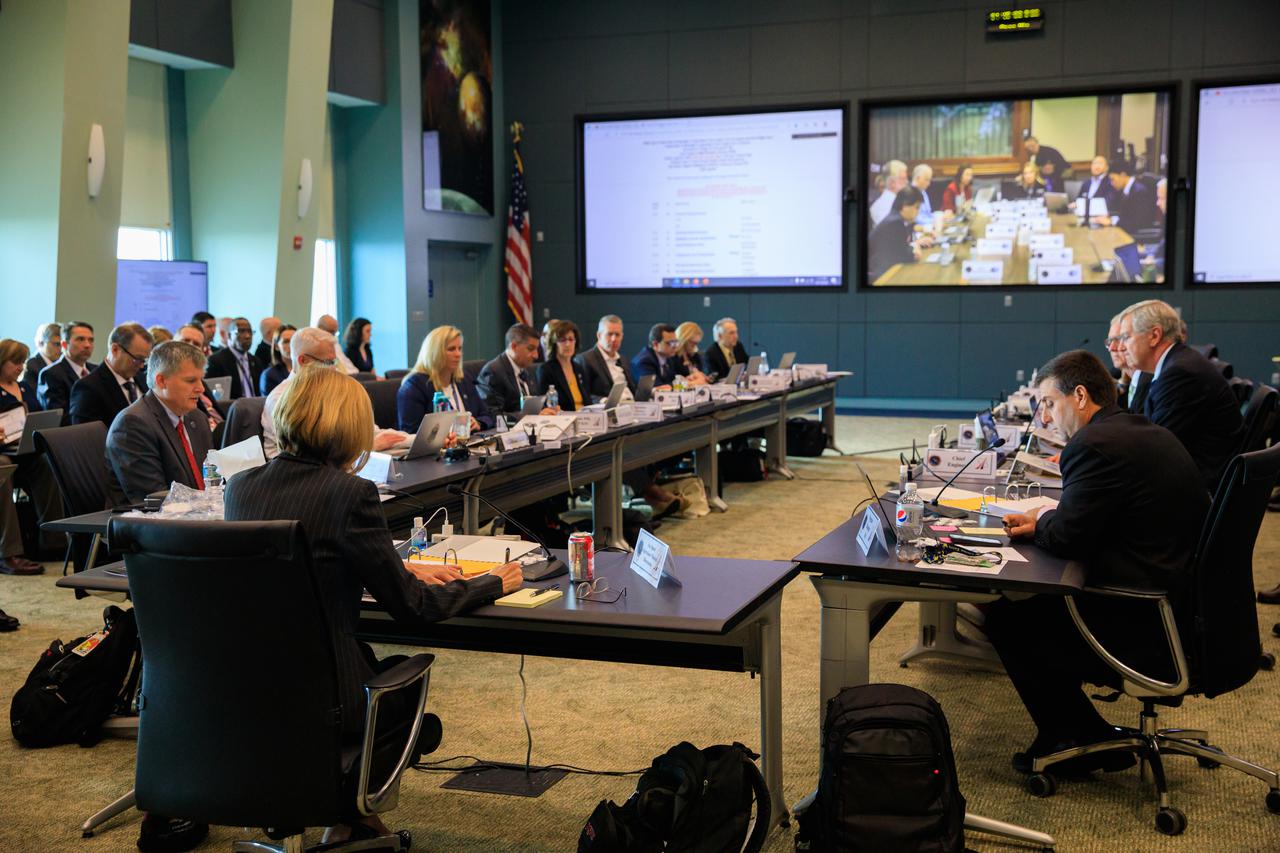
NASA’s SpaceX Crew-4 Flight Readiness Review takes place at Kennedy Space Center on April 15, 2022. The mission is targeted to launch from the Florida Spaceport’s Launch Complex 39A on April 23, 2022, at 5:26 a.m. EDT. NASA astronauts Kjell Lindgren, Bob Hines, and Jessica Watkins, and ESA (European Space Agency) astronaut Samantha Cristoforetti will fly to the station aboard SpaceX’s Crew Dragon, powered by the company’s Falcon 9 rocket.
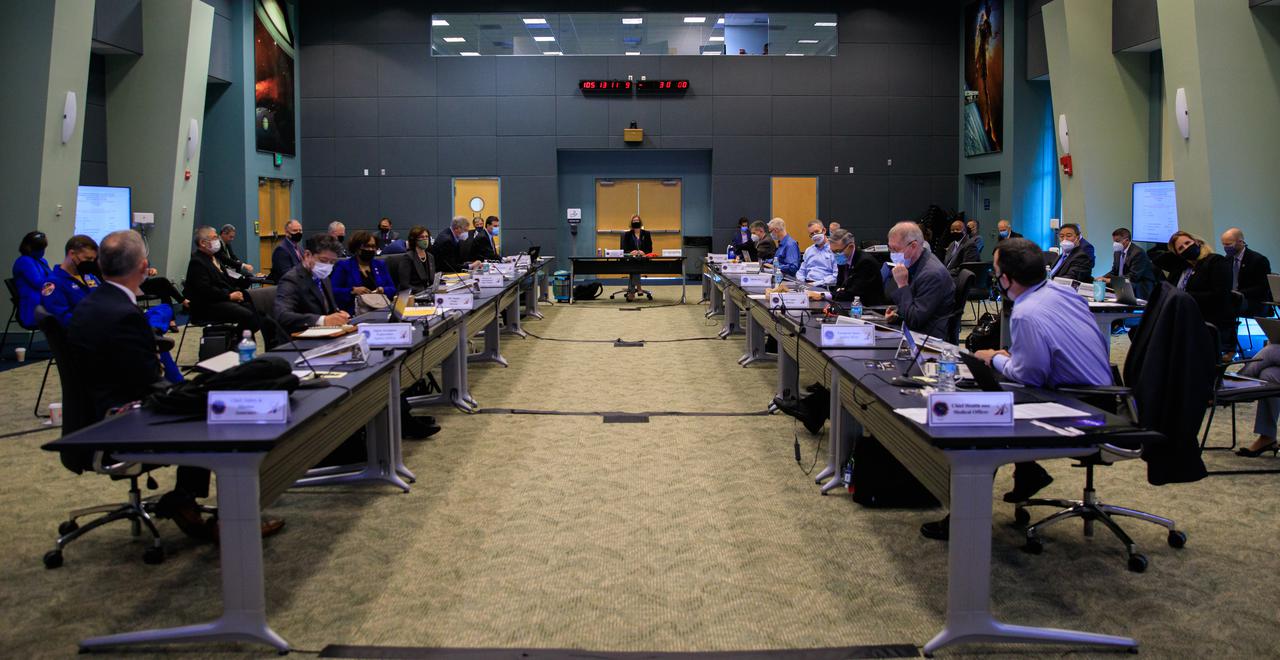
NASA’s SpaceX Crew-2 Flight Readiness Review takes place at NASA’s Kennedy Space Center on April 15, 2021. Crew-2 is targeted to launch from the Florida Spaceport’s Launch Complex 39A on April 22 at 6:11 a.m. EDT. NASA astronauts Shane Kimbrough and Megan McArthur, JAXA astronaut Akihiko Hoshide, and ESA astronaut Thomas Pesquet will fly to the International Space Station aboard SpaceX’s Crew Dragon Endeavour, powered by the company’s Falcon 9 rocket.
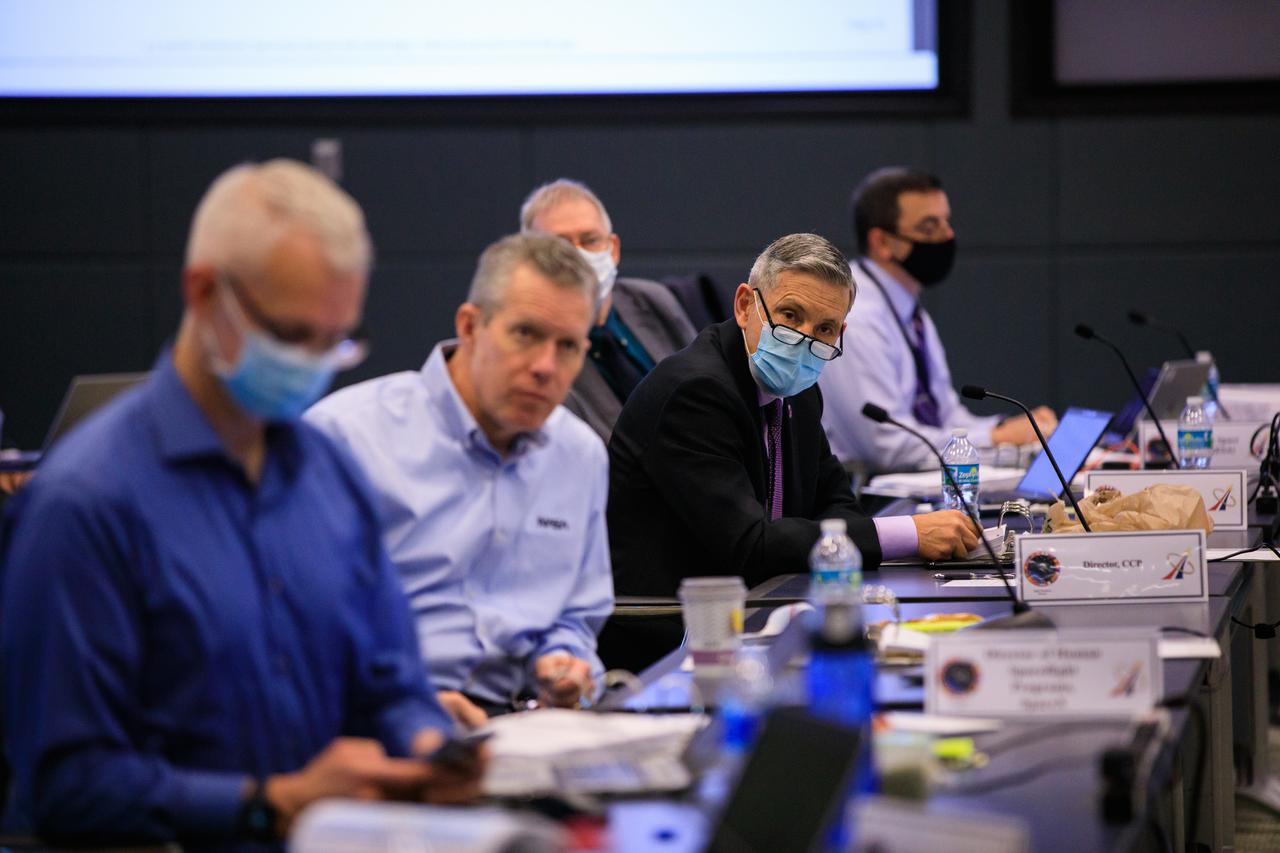
NASA’s SpaceX Crew-2 Flight Readiness Review takes place at NASA’s Kennedy Space Center on April 15, 2021. Crew-2 is targeted to launch from the Florida Spaceport’s Launch Complex 39A on April 22 at 6:11 a.m. EDT. NASA astronauts Shane Kimbrough and Megan McArthur, JAXA astronaut Akihiko Hoshide, and ESA astronaut Thomas Pesquet will fly to the International Space Station aboard SpaceX’s Crew Dragon Endeavour, powered by the company’s Falcon 9 rocket.
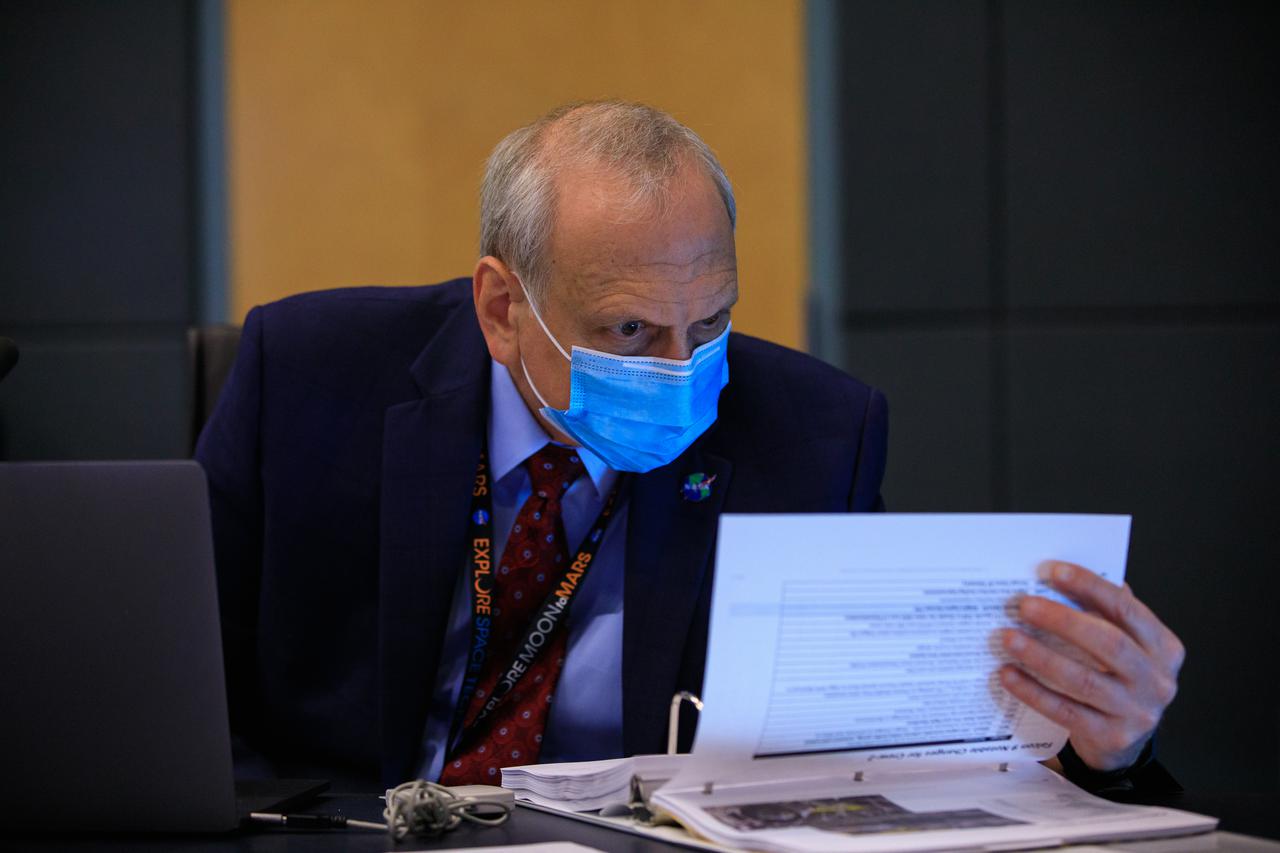
Steve Jurczyk, acting administrator, NASA, participates in NASA’s SpaceX Crew-2 Flight Readiness Review at Kennedy Space Center on April 15, 2021. The mission is targeted to launch from the Florida Spaceport’s Launch Complex 39A on April 22 at 6:11 a.m. EDT. NASA astronauts Shane Kimbrough and Megan McArthur, JAXA astronaut Akihiko Hoshide, and ESA astronaut Thomas Pesquet will fly to the International Space Station aboard SpaceX’s Crew Dragon Endeavour, powered by the company’s Falcon 9 rocket.
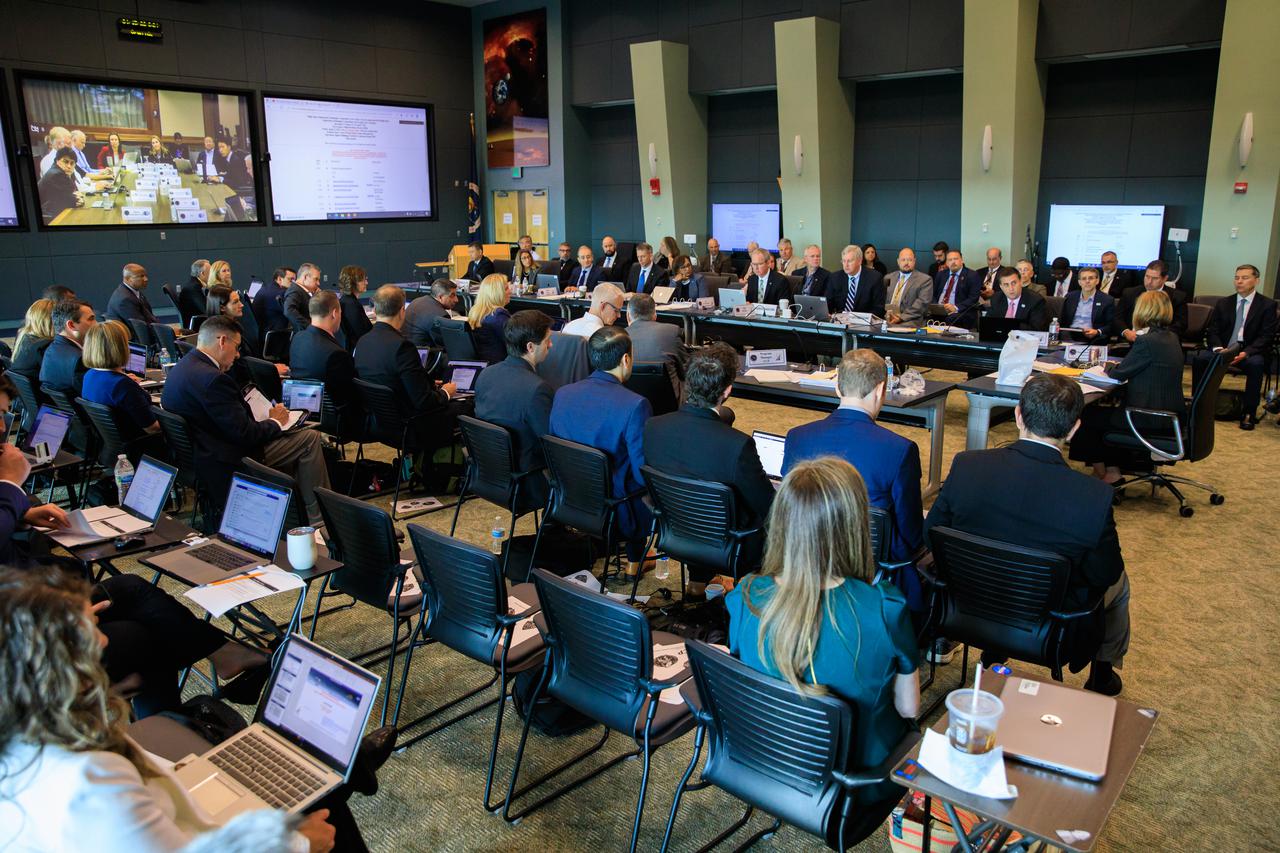
NASA’s SpaceX Crew-4 Flight Readiness Review takes place at Kennedy Space Center on April 15, 2022. The mission is targeted to launch from the Florida Spaceport’s Launch Complex 39A on April 23, 2022, at 5:26 a.m. EDT. NASA astronauts Kjell Lindgren, Bob Hines, and Jessica Watkins, and ESA (European Space Agency) astronaut Samantha Cristoforetti will fly to the station aboard SpaceX’s Crew Dragon, powered by the company’s Falcon 9 rocket.
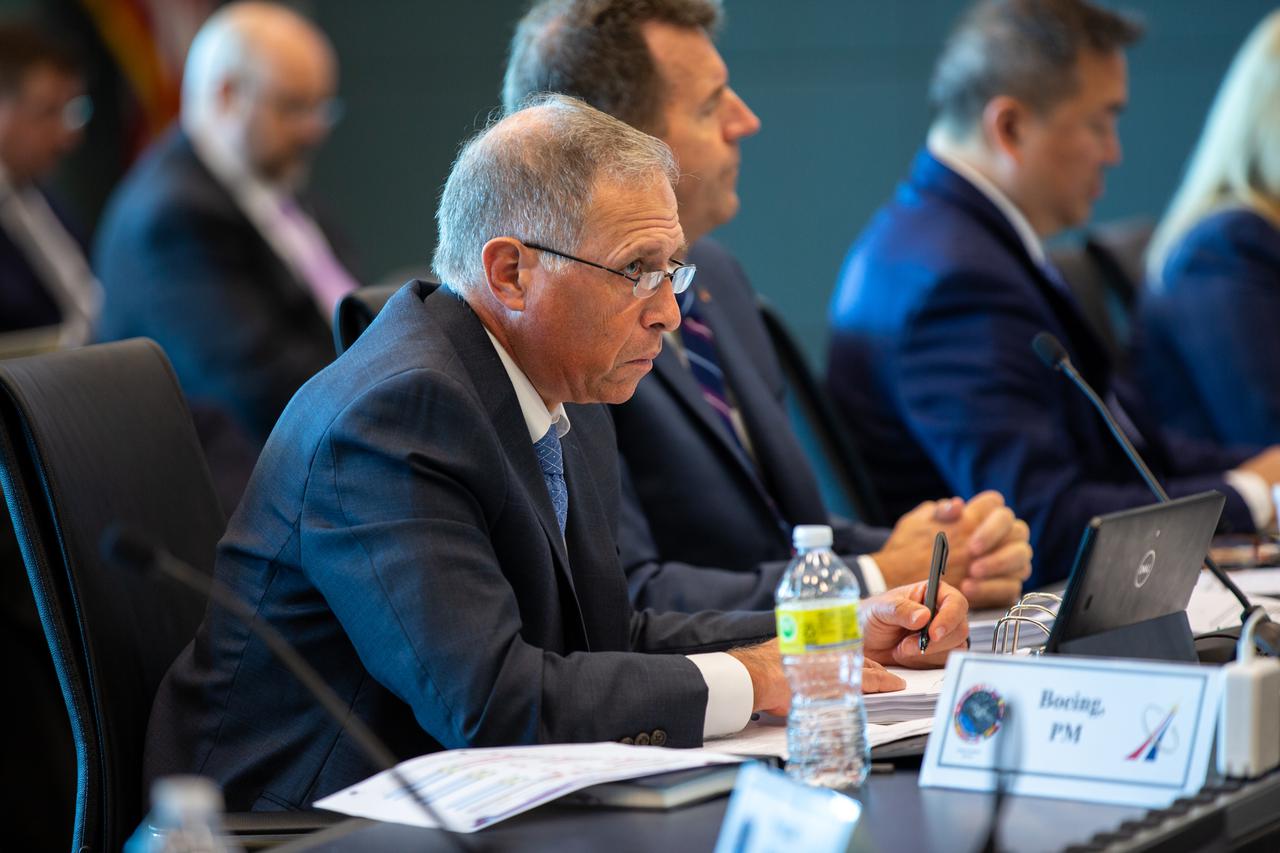
Mark Nappi, vice president and program manager, Boeing Commercial Crew Program, participates in the Flight Readiness Review for NASA’s Boeing Orbital Flight Test-2 (OFT-2) inside the Operations Support Building II at NASA's Kennedy Space Center in Florida, May 11, 2022. Boeing's CST-100 Starliner spacecraft will launch atop a United Launch Alliance Atlas V rocket from Space Launch Complex41 at Cape Canaveral Space Force Station at 6:54 p.m. EDT on Thursday, May 19. The uncrewed flight test will be Starliner’s second flight for NASA’s Commercial Crew Program.
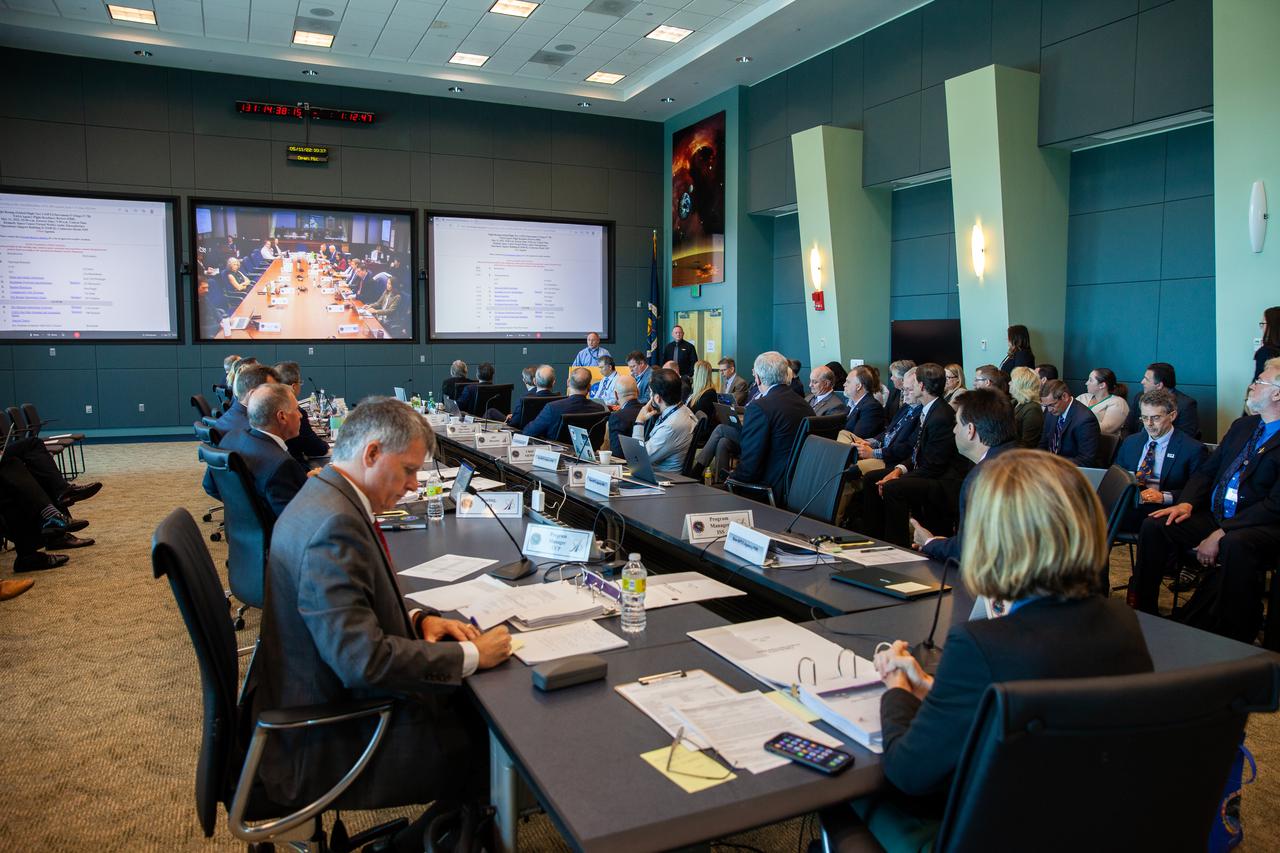
NASA and Boeing managers take part in the Flight Readiness Review for NASA’s Boeing Orbital Flight Test-2 (OFT-2) inside the Operations Support Building II at NASA's Kennedy Space Center in Florida, May 11, 2022. Boeing's CST-100 Starliner spacecraft will launch atop a United Launch Alliance Atlas V rocket from Space Launch Complex 41 at Cape Canaveral Space Force Station at 6:54 p.m. EDT on Thursday, May 19. The uncrewed flight test will be Starliner’s second flight for NASA’s Commercial Crew Program.
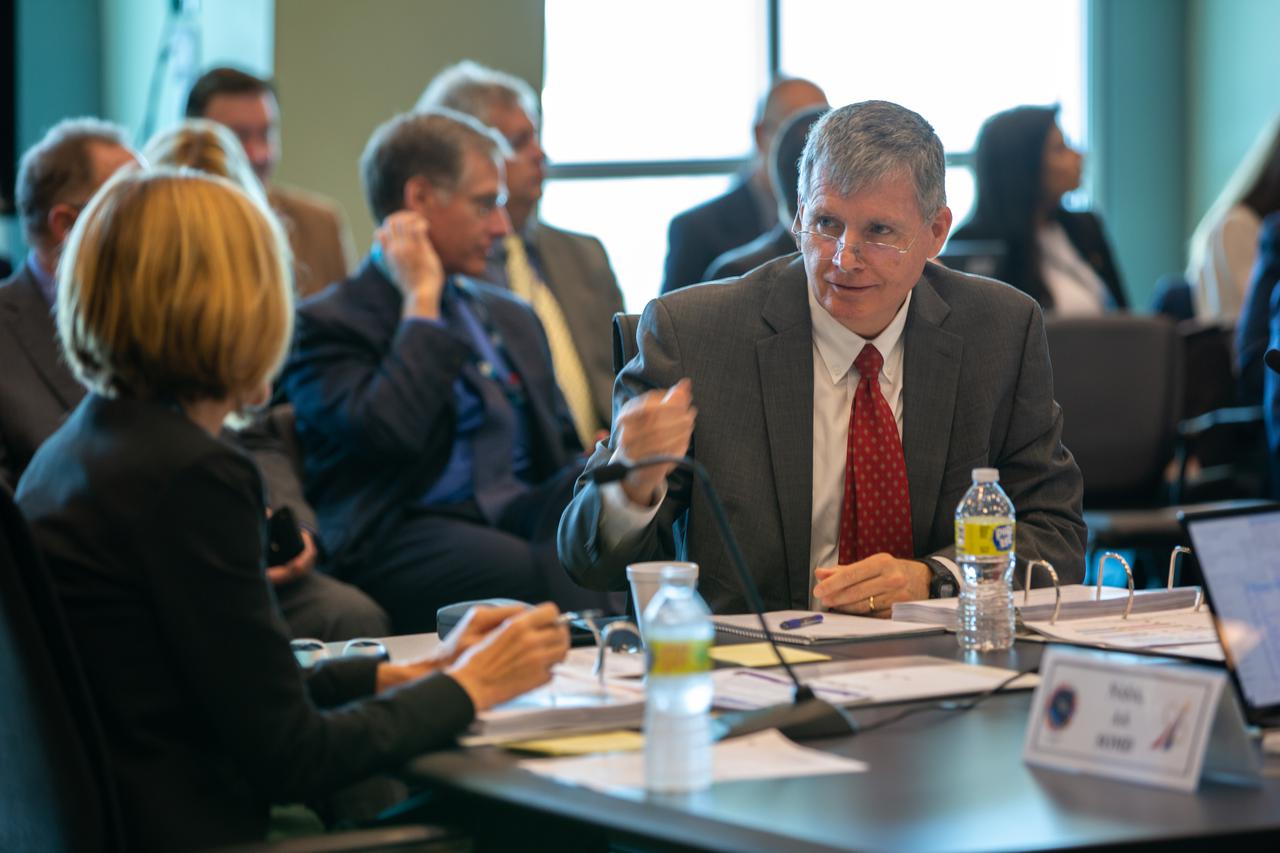
Steve Stich (right), manager, NASA’s Commercial Crew Program and Kathryn Lueders (left), associate administrator, Space Operations Mission Directorate at NASA participate in the Flight Readiness Review for NASA’s Boeing Orbital Flight Test-2 (OFT-2) inside the Operations Support Building II at NASA's Kennedy Space Center in Florida, May 11, 2022. Boeing's CST-100 Starliner spacecraft will launch atop a United Launch Alliance Atlas V rocket from Space Launch Complex -41 at Cape Canaveral Space Force Station at 6:54 p.m. EDT on Thursday, May 19. The uncrewed flight test will be Starliner’s second flight for NASA’s Commercial Crew Program.
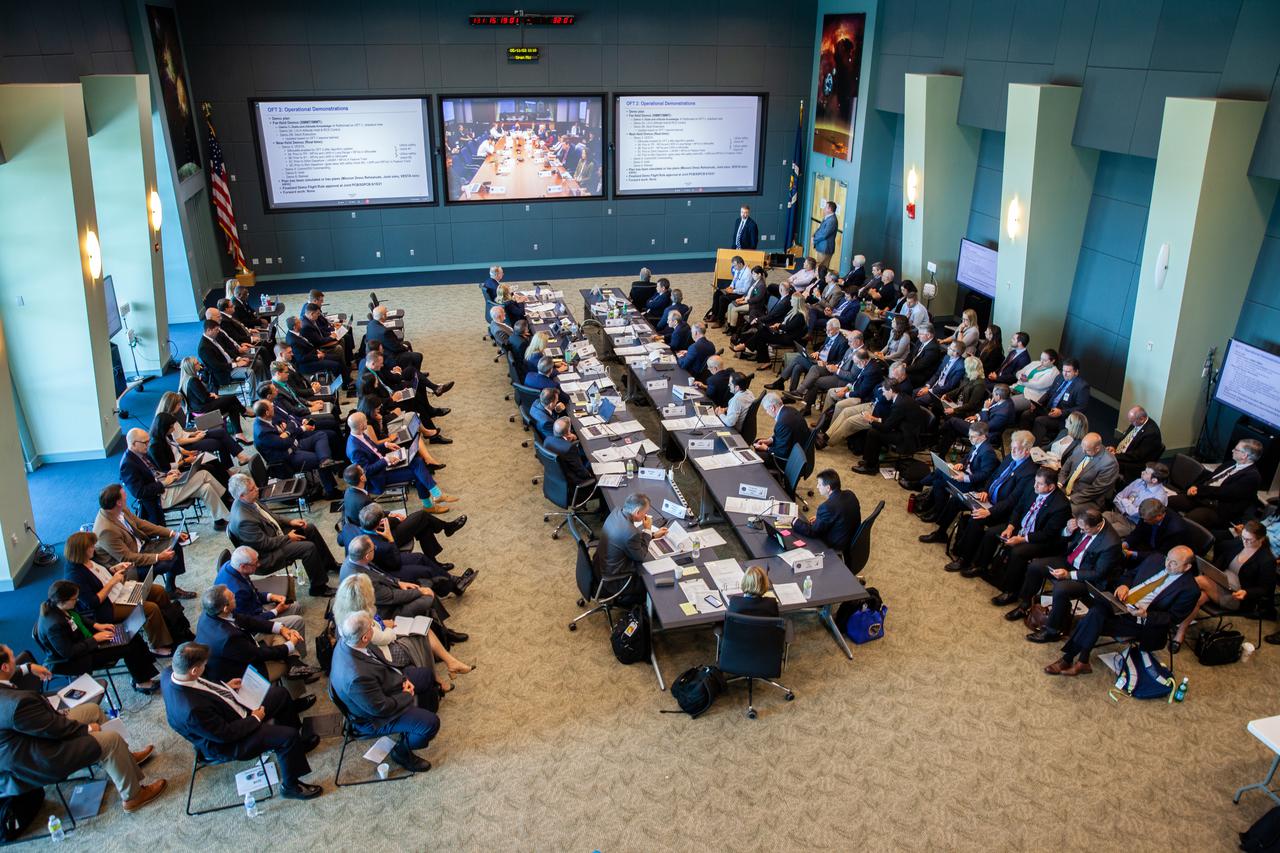
NASA and Boeing managers take part in the Flight Readiness Review for NASA’s Boeing Orbital Flight Test-2 (OFT-2) inside the Operations Support Building II at NASA's Kennedy Space Center in Florida, May 11, 2022. Boeing's CST-100 Starliner spacecraft will launch atop a United Launch Alliance Atlas V rocket from Space Launch Complex 41 at Cape Canaveral Space Force Station at 6:54 p.m. EDT on Thursday, May 19. The uncrewed flight test will be Starliner’s second flight for NASA’s Commercial Crew Program.
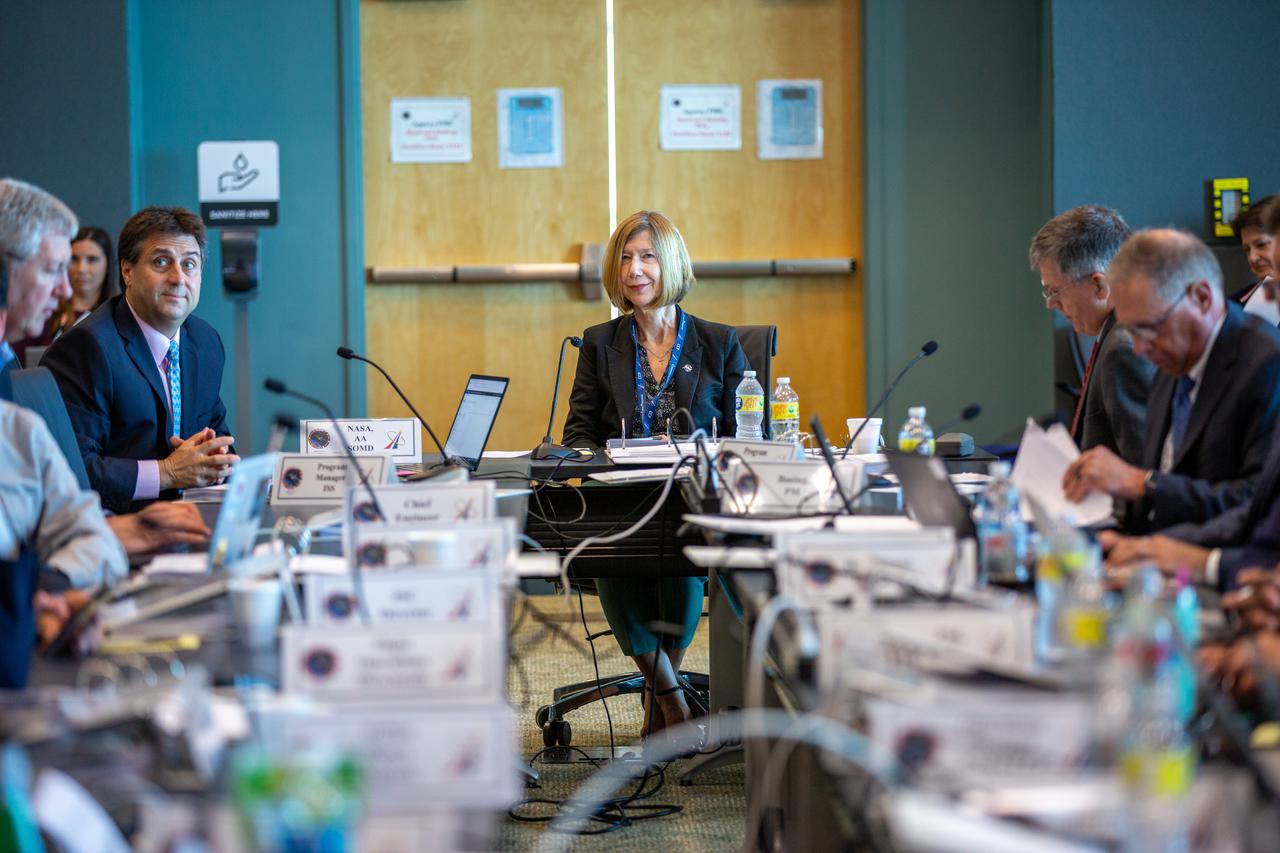
Kathryn Lueders (center), associate administrator, Space Operations Mission Directorate at NASA participates in the Flight Readiness Review for NASA’s Boeing Orbital Flight Test-2 (OFT-2) inside the Operations Support Building II at NASA's Kennedy Space Center in Florida, May 11, 2022. Boeing's CST-100 Starliner spacecraft will launch atop a United Launch Alliance Atlas V rocket from Space Launch Complex-41 at Cape Canaveral Space Force Station at 6:54 p.m. EDT on Thursday, May 19. The uncrewed flight test will be Starliner’s second flight for NASA’s Commercial Crew Program.
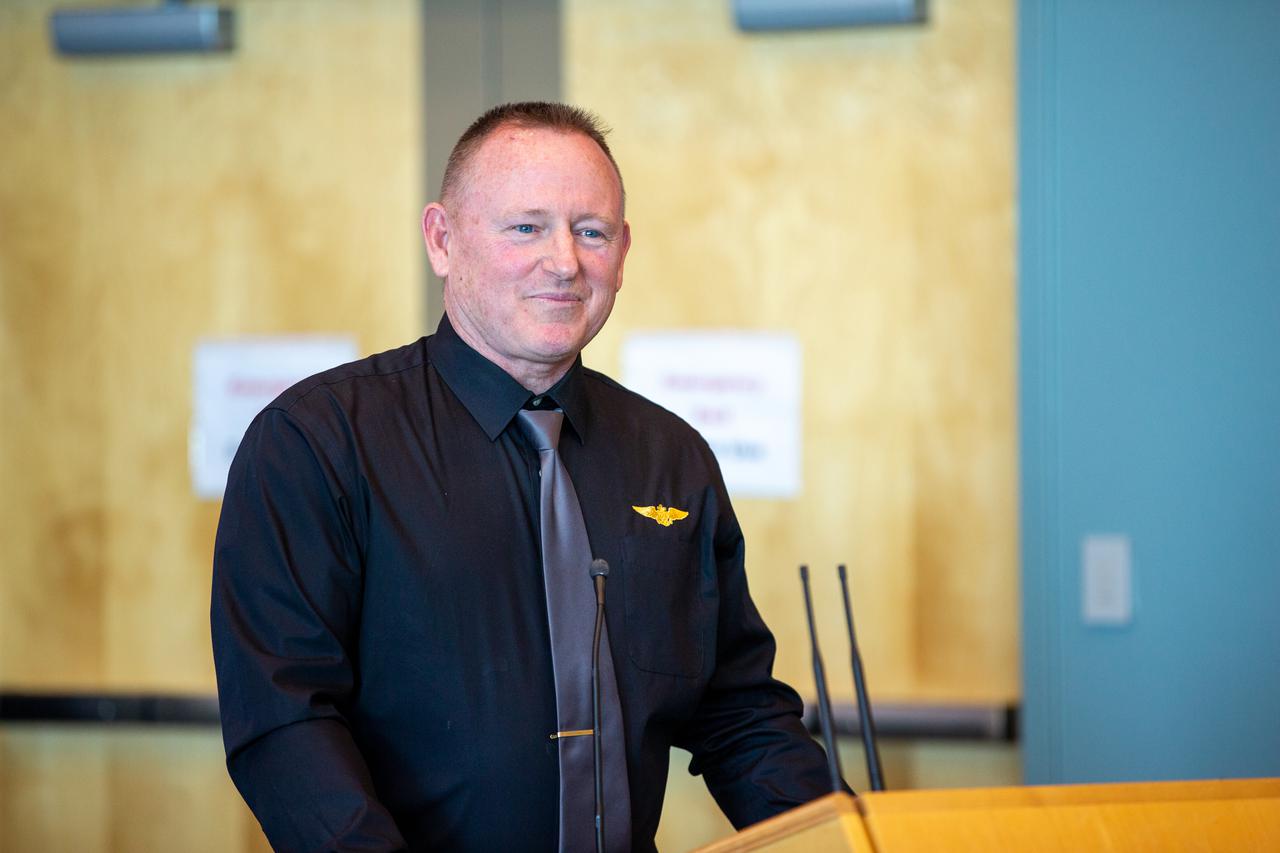
As part of the Flight Readiness Review for NASA’s Boeing Orbital Flight Test-2 (OFT-2), NASA astronaut and commander of Boeing’s Crew Flight Test, Barry “Butch” Wilmore addresses NASA and Boeing managers inside the Operations Support Building II at NASA's Kennedy Space Center in Florida, May 11, 2022. Boeing's CST-100 Starliner spacecraft will launch atop a United Launch Alliance Atlas V rocket from Space Launch Complex-41 at Cape Canaveral Space Force Station at 6:54 p.m. EDT on Thursday, May 19. The uncrewed flight test will be Starliner’s second flight for NASA’s Commercial Crew Program.
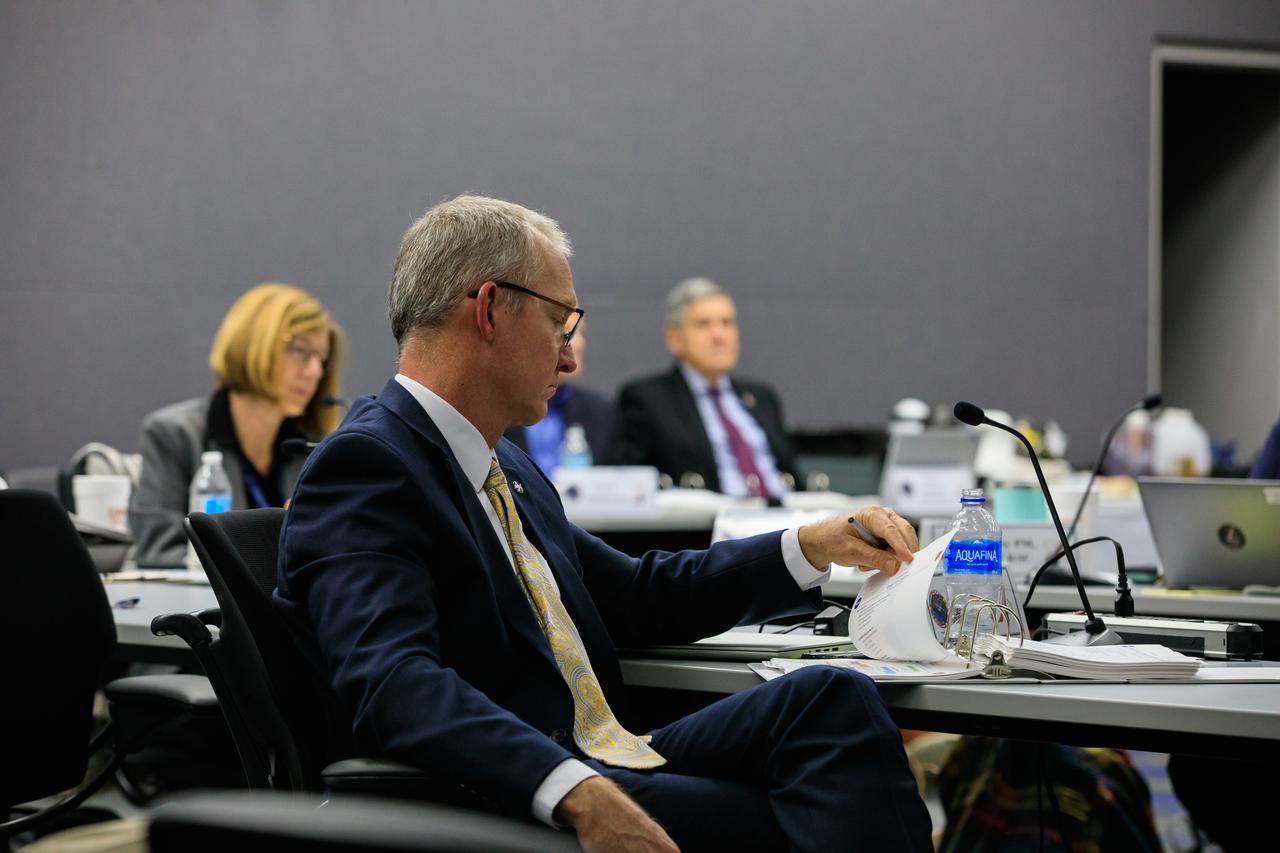
W. Russ DeLoach, chief of Safety and Mission Assurance at NASA, participates in a Flight Readiness Review for the agency’s Crew-5 mission at Kennedy Space Center in Florida on Sept. 26, 2022, to confirm the SpaceX Falcon 9 rocket and Crew Dragon spacecraft are ready for launch. In the background and to the left is Kathryn Lueders, associate administrator for NASA’s Space Operations Mission Directorate, and to the right is NASA Associate Administrator Bob Cabana. Crew-5 is scheduled to launch to the International Space Station from Kennedy’s Launch Complex 39A as part of the agency’s Commercial Crew Program. This will be the fifth crew rotation mission of SpaceX’s human transportation system and its sixth flight with astronauts, including the Demo-2 test flight, to the space station.
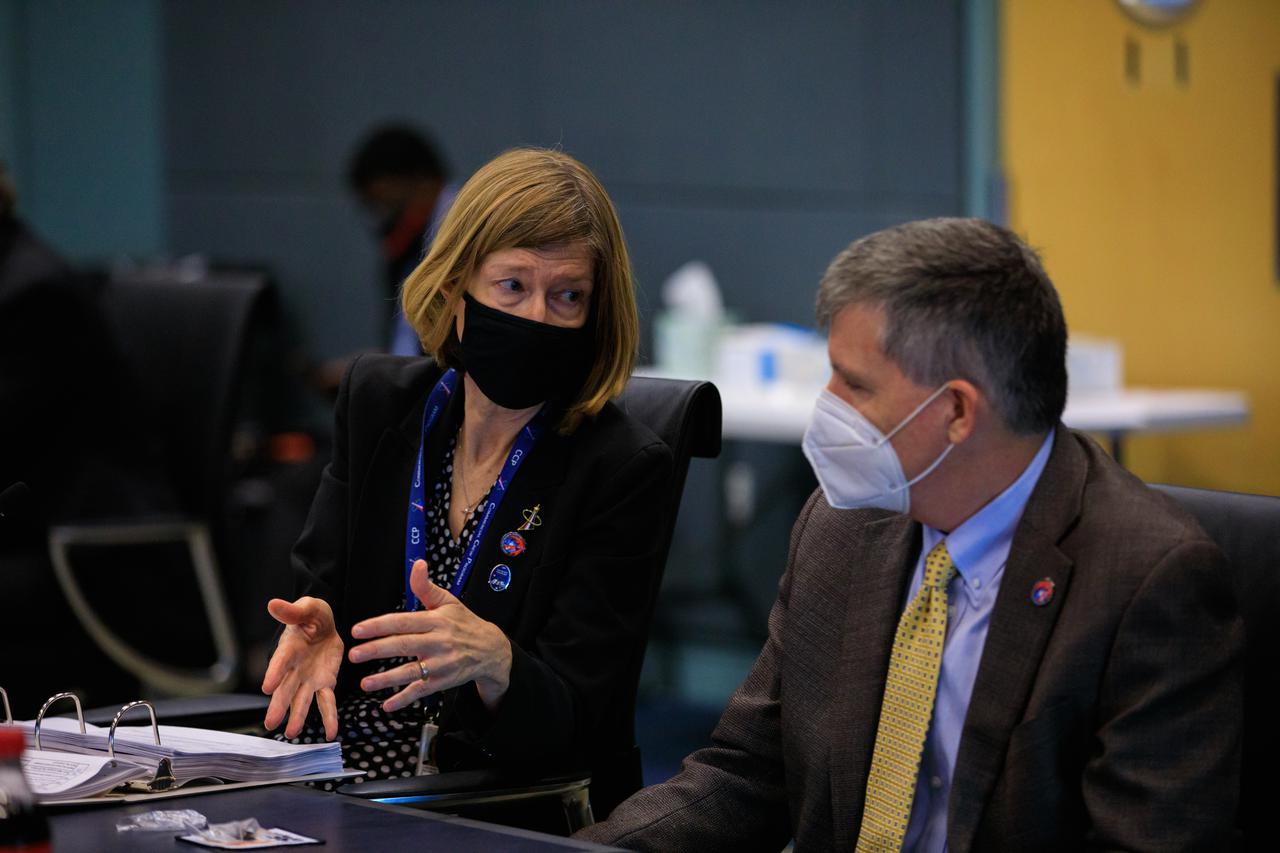
Kathy Lueders, associate administrator, Human Exploration and Operations Mission Directorate, NASA Headquarters, left, talks with Steve Stich, manager, Commercial Crew Program, Kennedy Space Center, during NASA’s SpaceX Crew-2 Flight Readiness Review at Kennedy Space Center on April 15, 2021. The mission is targeted to launch from the Florida Spaceport’s Launch Complex 39A on April 22 at 6:11 a.m. EDT. NASA astronauts Shane Kimbrough and Megan McArthur, JAXA astronaut Akihiko Hoshide, and ESA astronaut Thomas Pesquet will fly to the International Space Station aboard SpaceX’s Crew Dragon Endeavour, powered by the company’s Falcon 9 rocket.

Dana Hutcherson, deputy program manager of NASA’s Commercial Crew Program, smiles during NASA’s SpaceX Crew-4 Flight Readiness Review at Kennedy Space Center on April 15, 2022. The mission is targeted to launch from the Florida Spaceport’s Launch Complex 39A on April 23, 2022, at 5:26 a.m. EDT. NASA astronauts Kjell Lindgren, Bob Hines, and Jessica Watkins, and ESA (European Space Agency) astronaut Samantha Cristoforetti will fly to the station aboard SpaceX’s Crew Dragon, powered by the company’s Falcon 9 rocket.
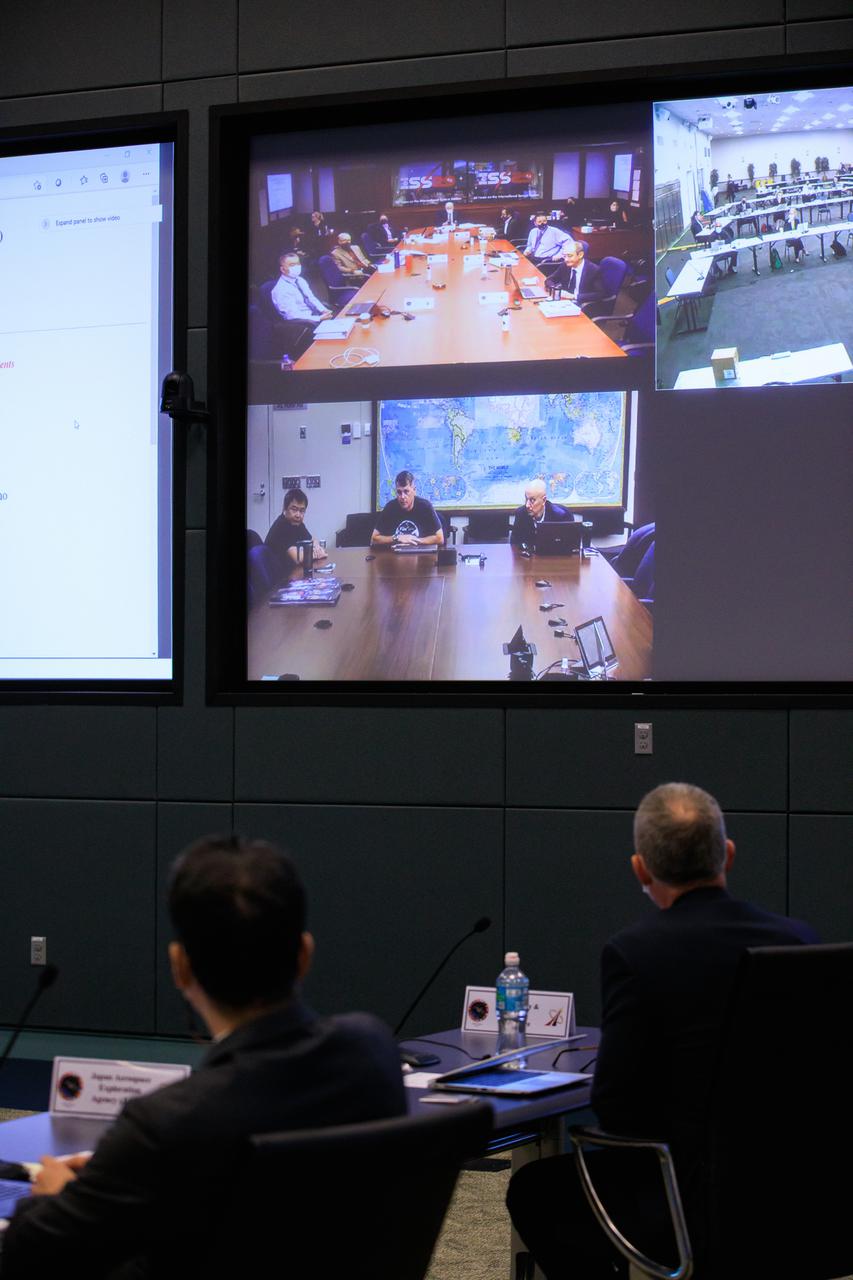
NASA’s SpaceX Crew-2 Flight Readiness Review takes place at NASA’s Kennedy Space Center on April 15, 2021. Appearing on the screens are virtual participants from Johnson Space Center in Houston. Crew-2 is targeted to launch from the Florida Spaceport’s Launch Complex 39A on April 22 at 6:11 a.m. EDT. NASA astronauts Shane Kimbrough and Megan McArthur, JAXA astronaut Akihiko Hoshide, and ESA astronaut Thomas Pesquet will fly to the International Space Station aboard SpaceX’s Crew Dragon Endeavour, powered by the company’s Falcon 9 rocket.
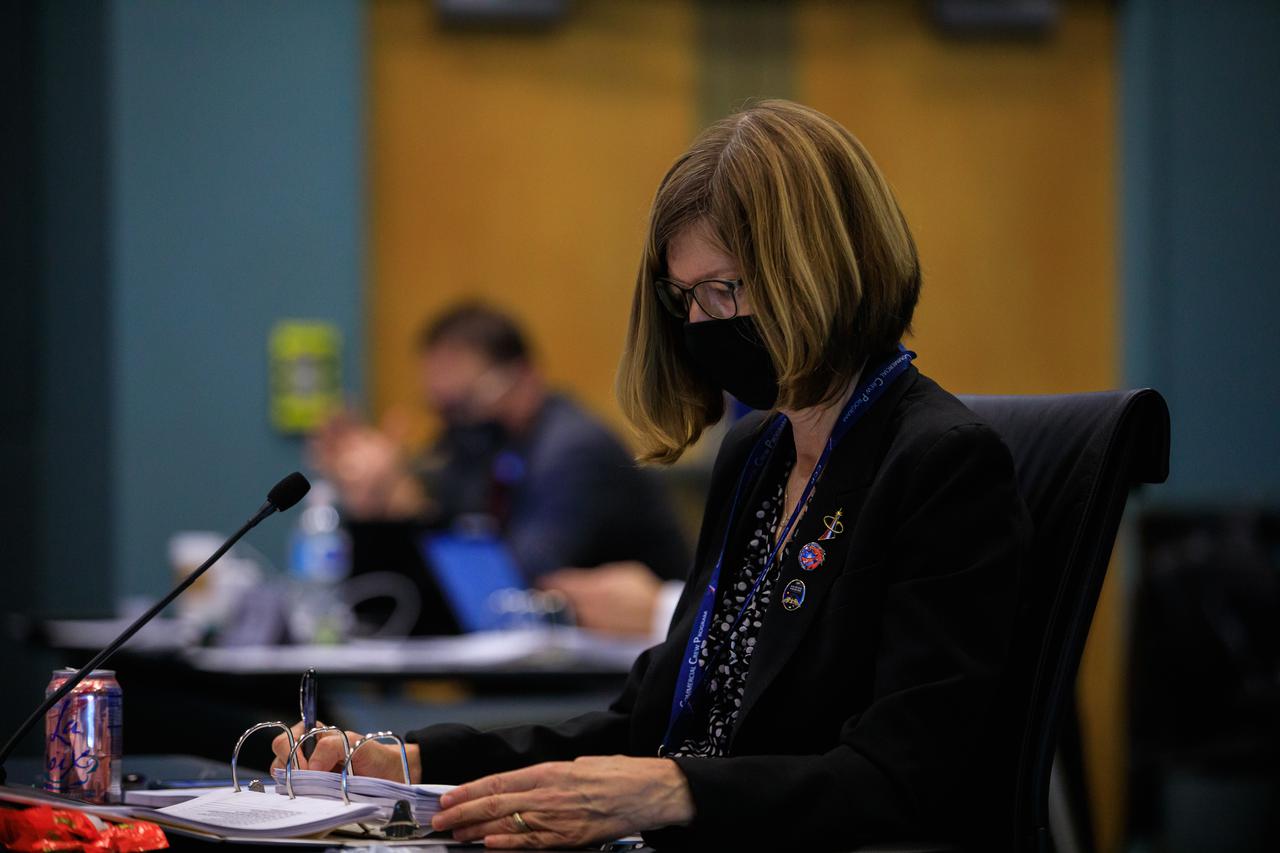
Kathy Lueders, associate administrator, Human Exploration and Operations Mission Directorate, NASA Headquarters, participates in NASA’s SpaceX Crew-2 Flight Readiness Review at Kennedy Space Center on April 15, 2021. The mission is targeted to launch from the Florida Spaceport’s Launch Complex 39A on April 22 at 6:11 a.m. EDT. NASA astronauts Shane Kimbrough and Megan McArthur, JAXA astronaut Akihiko Hoshide, and ESA astronaut Thomas Pesquet will fly to the International Space Station aboard SpaceX’s Crew Dragon Endeavour, powered by the company’s Falcon 9 rocket.
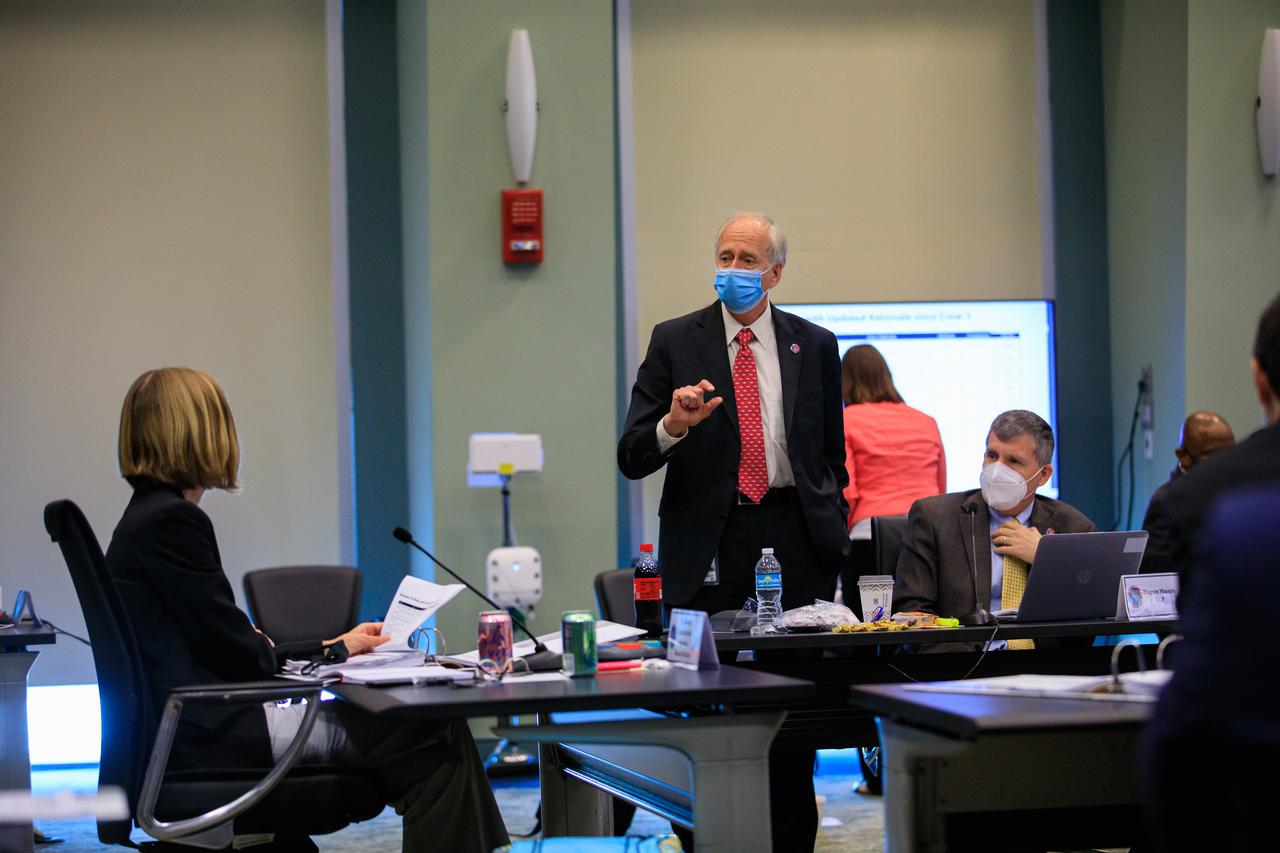
William Gerstenmaier, vice president of Mission Assurance, SpaceX, center, participates in NASA’s SpaceX Crew-2 Flight Readiness Review at Kennedy Space Center on April 15, 2021. The mission is targeted to launch from the Florida Spaceport’s Launch Complex 39A on April 22 at 6:11 a.m. EDT. NASA astronauts Shane Kimbrough and Megan McArthur, JAXA astronaut Akihiko Hoshide, and ESA astronaut Thomas Pesquet will fly to the International Space Station aboard SpaceX’s Crew Dragon Endeavour, powered by the company’s Falcon 9 rocket.
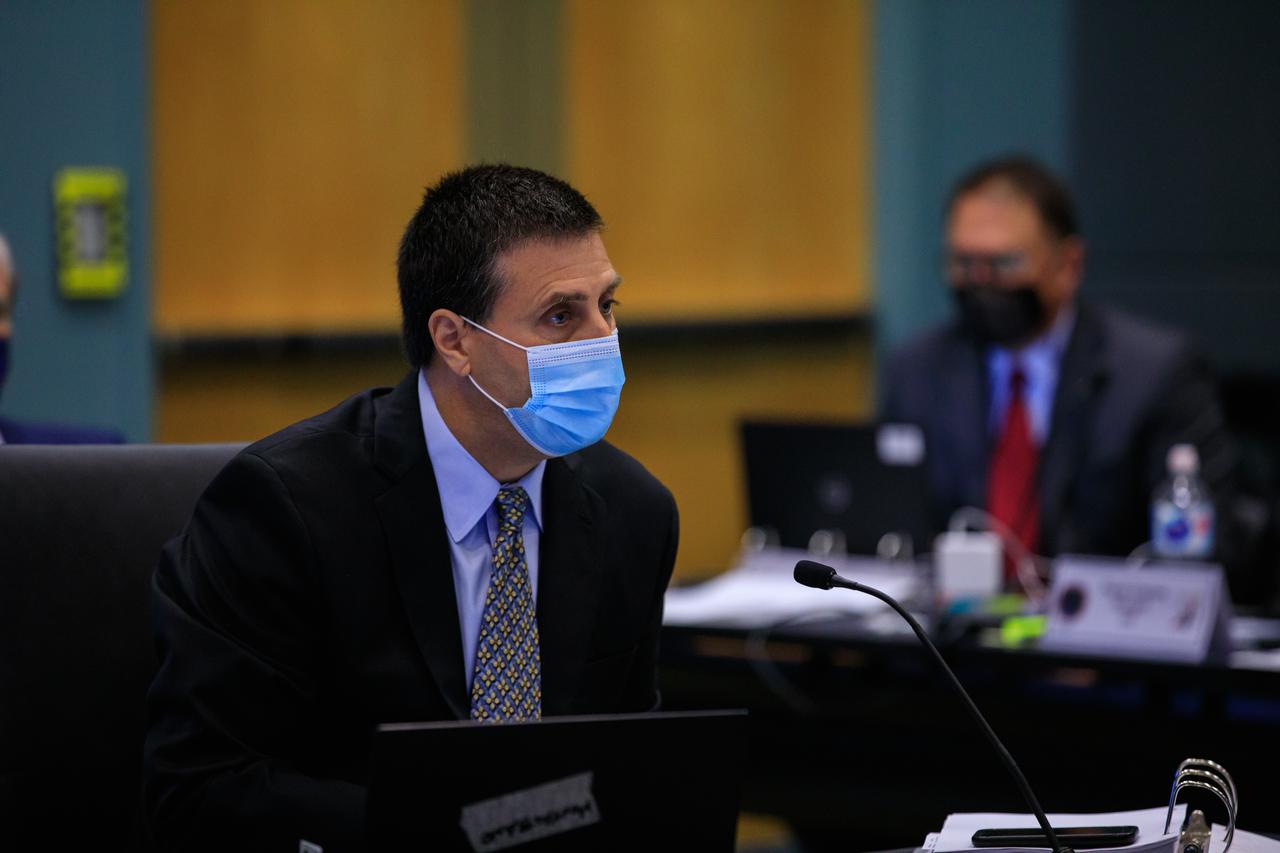
Joel Montalbano, manger, International Space Station, Johnson Space Center, listens in during NASA’s SpaceX Crew-2 Flight Readiness Review at Kennedy Space Center on April 15, 2021. The mission is targeted to launch from the Florida Spaceport’s Launch Complex 39A on April 22 at 6:11 a.m. EDT. NASA astronauts Shane Kimbrough and Megan McArthur, JAXA astronaut Akihiko Hoshide, and ESA astronaut Thomas Pesquet will fly to the station aboard SpaceX’s Crew Dragon Endeavour, powered by the company’s Falcon 9 rocket.
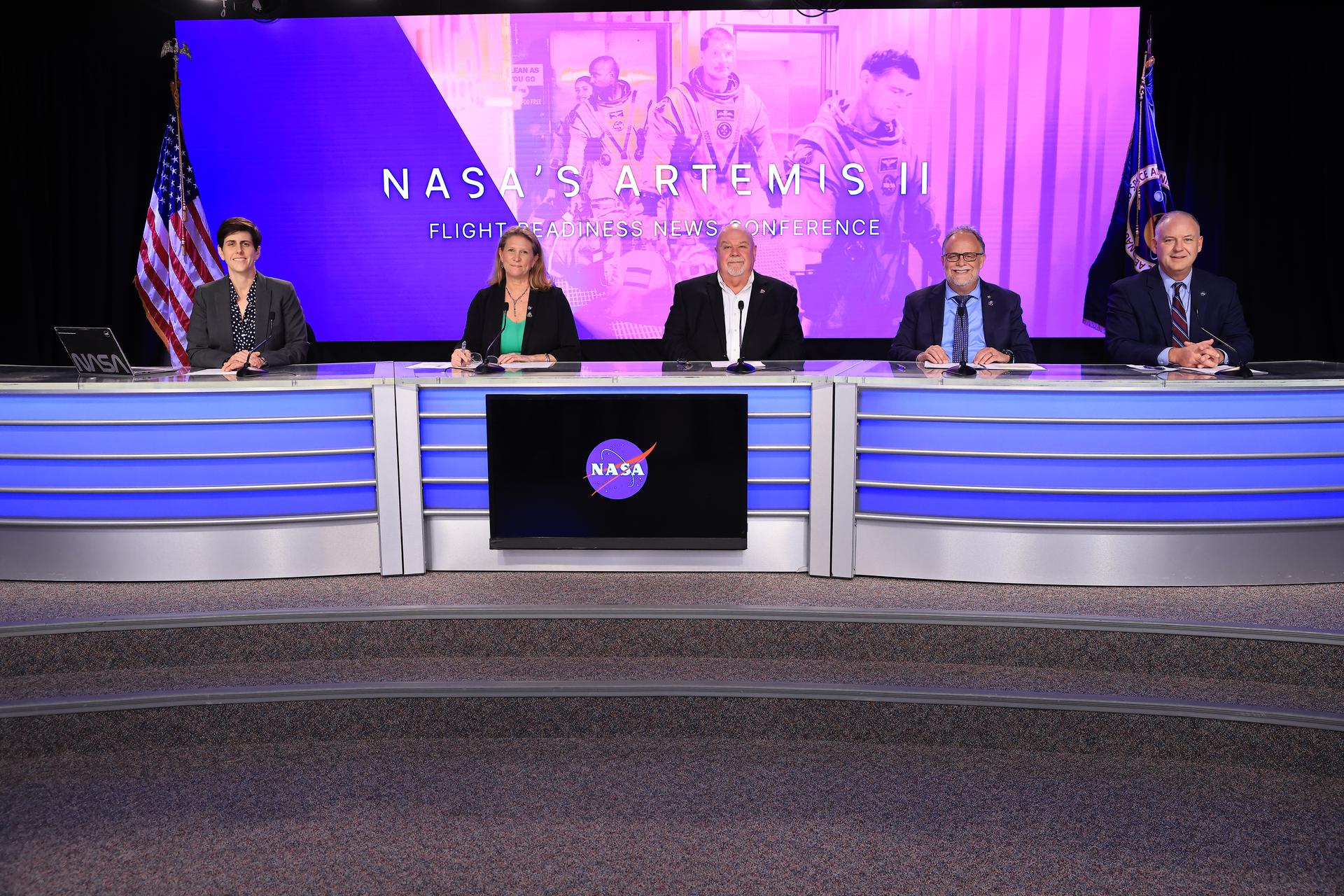
From left to right, Rachel Kraft, NASA Communications; Lori Glaze, acting associate administrator, Exploration Systems Development Mission Directorate; John Honeycutt, chair, Artemis II Mission Management Team; Shawn Quinn, manager, Exploration Ground Systems Program; and Norm Knight, director, Flight Operations Directorate, participate in a post-Flight Readiness Review news conference for the Artemis II test flight inside the John Holliman Auditorium of the NASA News Center at the agency’s Kennedy Space Center in Florida on Thursday, March 12, 2026. The review is an assessment of the readiness of NASA’s SLS (Space Launch System) rocket and Orion spacecraft to support the Artemis II test flight as four astronauts journey around the Moon and return to Earth.
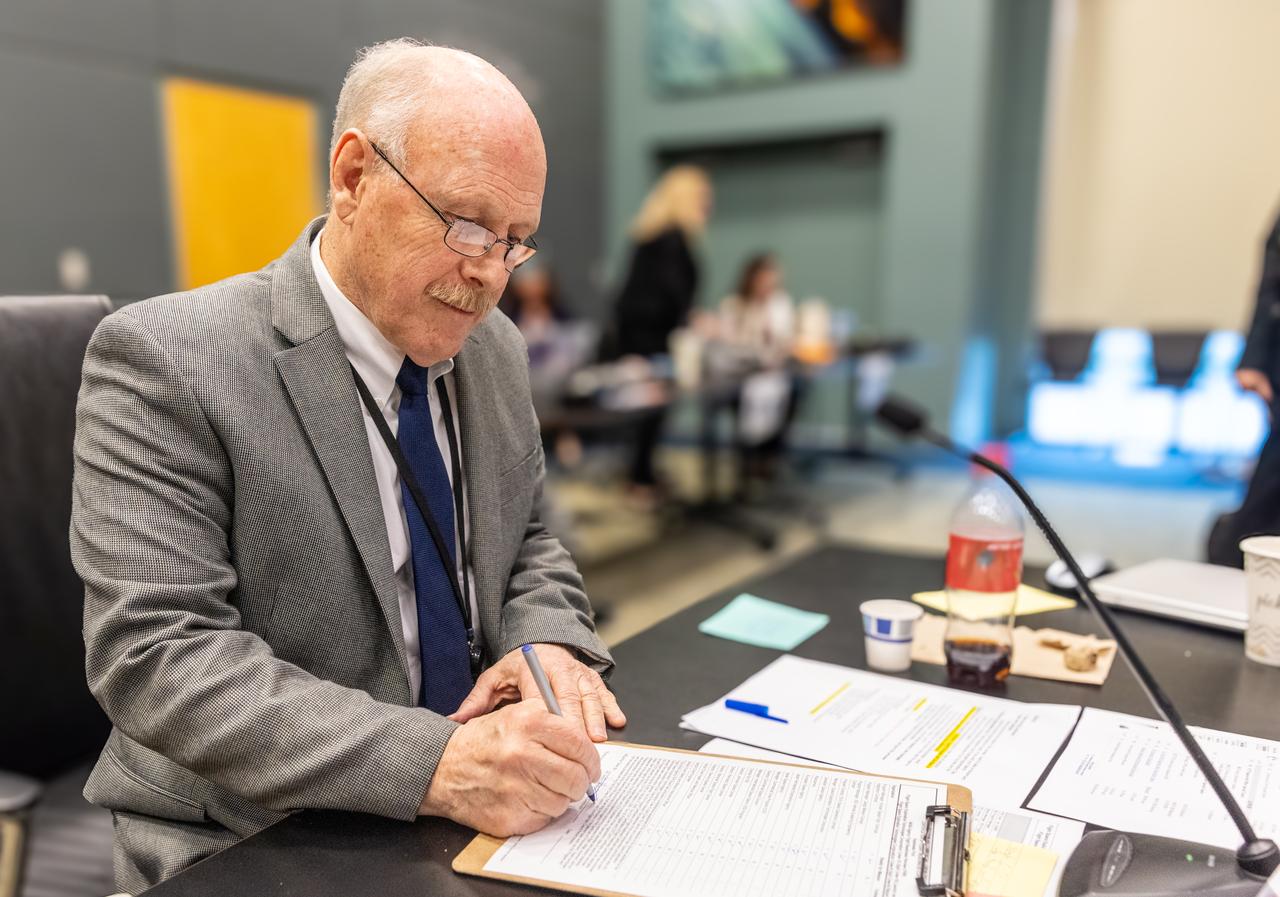
Kenneth Bowersox, associate administrator for NASA’s Space Operations Mission Directorate, participates in NASA’s SpaceX Crew-10 Flight Readiness Review at the agency’s Kennedy Space Center in Florida on Friday, March 7, 2025. Launch is targeted for 7:48 p.m. EDT on Wednesday, March 12, 2025, from Launch Complex 39A at NASA Kennedy. NASA astronauts Anne McClain and Nichole Ayers, along with JAXA (Japan Aerospace Exploration Agency) astronaut Takuya Onishi and Roscosmos cosmonaut Kirill Peskov will launch to the International Space Station aboard SpaceX’s Dragon spacecraft and Falcon 9 rocket on the company’s 10th crew rotation mission for NASA as part of the agency’s Commercial Crew Program.
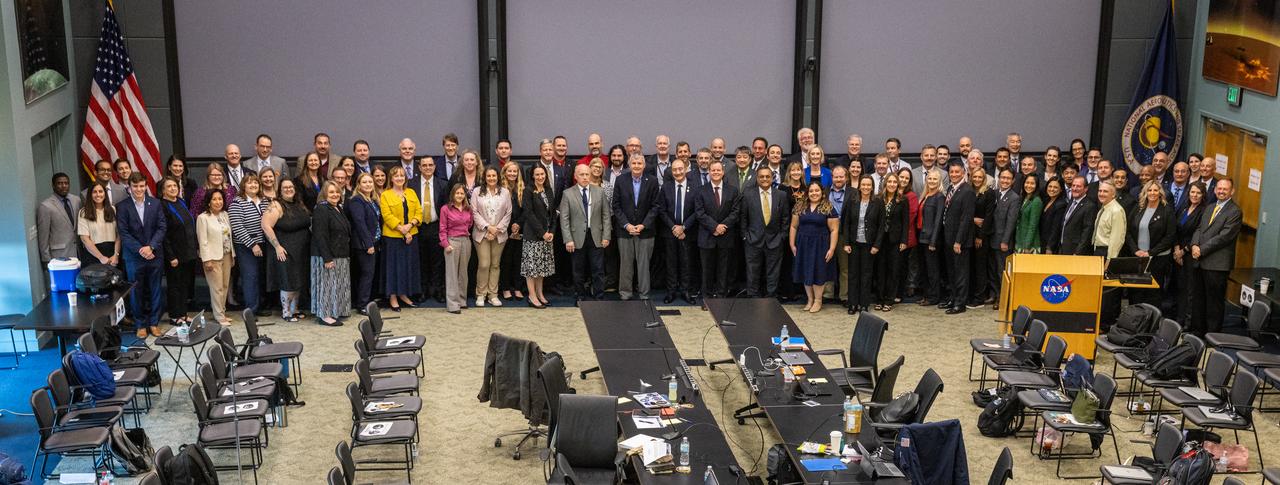
Managers with NASA and SpaceX, along with international partners, participate in NASA’s SpaceX Crew-10 Flight Readiness Review at the agency’s Kennedy Space Center in Florida on Friday, March 7, 2025. Launch is targeted for 7:48 p.m. EDT on Wednesday, March 12, 2025, from Launch Complex 39A at NASA Kennedy. NASA astronauts Anne McClain and Nichole Ayers, along with JAXA (Japan Aerospace Exploration Agency) astronaut Takuya Onishi and Roscosmos cosmonaut Kirill Peskov will launch to the International Space Station aboard SpaceX’s Dragon spacecraft and Falcon 9 rocket on the company’s 10th crew rotation mission for NASA as part of the agency’s Commercial Crew Program.
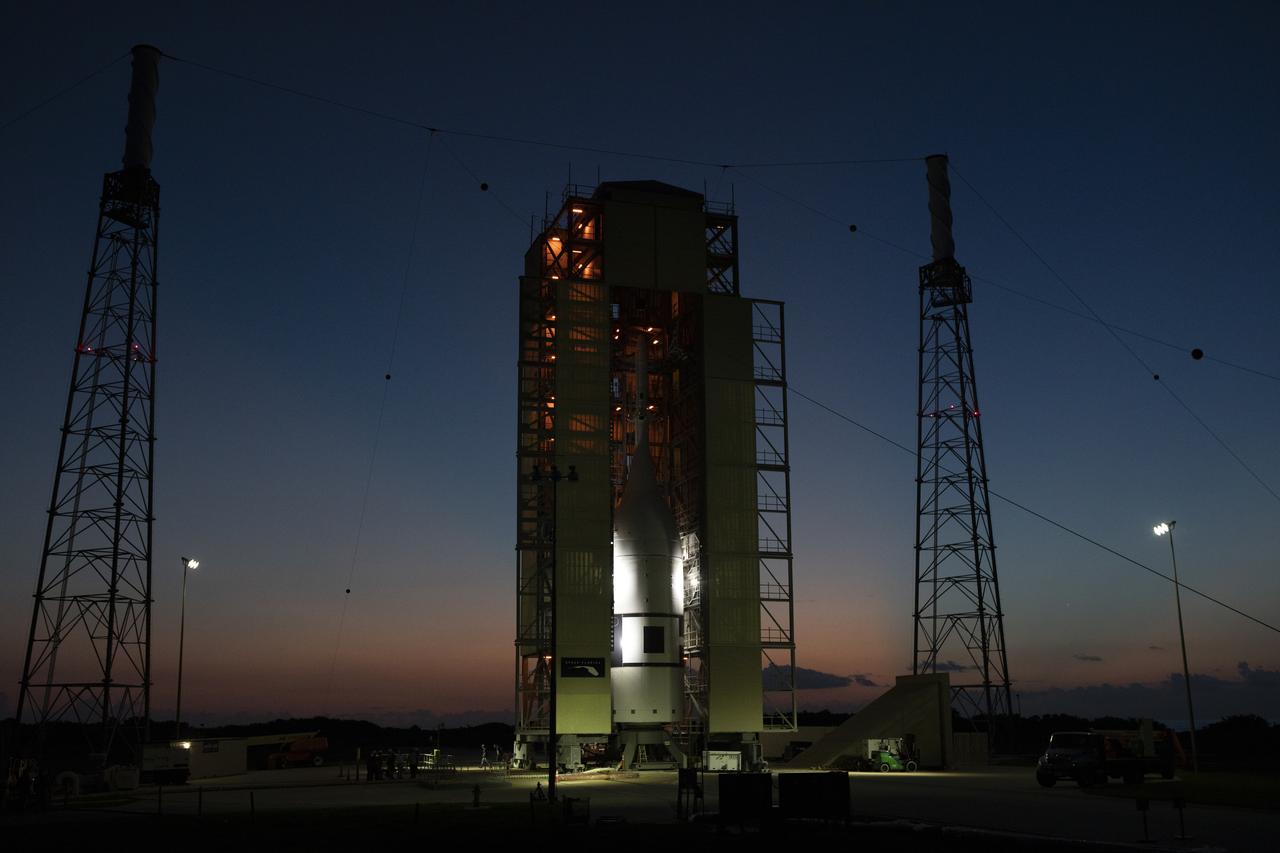
A test version of NASA’s Orion crew module is ready for rollback at Space Launch Complex 46 at Cape Canaveral Air Force Station in Florida. During a Launch Readiness Review on June 28, the team preparing to launch Orion’s Ascent Abort-2 flight test gave a “go” to proceed to launch on Tuesday, July 2.
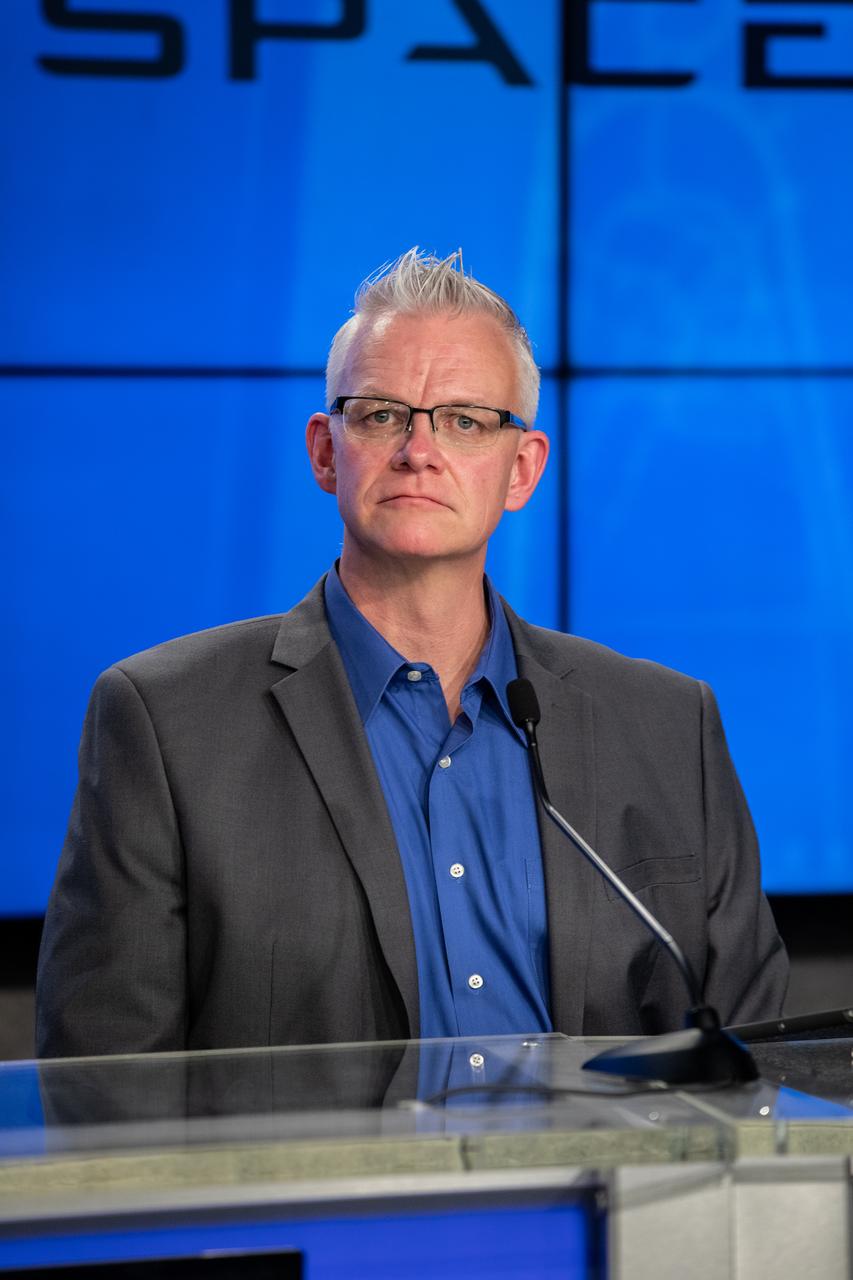
Benji Reed, director of Crew Mission Management at SpaceX, participates in a news briefing inside the Press Site auditorium at NASA’s Kennedy Space Center in Florida on May 22, 2020, following the conclusion of the flight readiness review for the agency’s SpaceX Demo-2 mission, with NASA astronauts Robert Behnken and Douglas Hurley, to the International Space Station. This will be SpaceX’s final flight test for NASA’s Commercial Crew Program. Behnken and Hurley will fly to the orbiting laboratory in a SpaceX Crew Dragon spacecraft, launching atop a Falcon 9 rocket from Kennedy’s Launch Complex 39A. Liftoff is scheduled for 4:33 p.m. EDT on Wednesday, May 27.
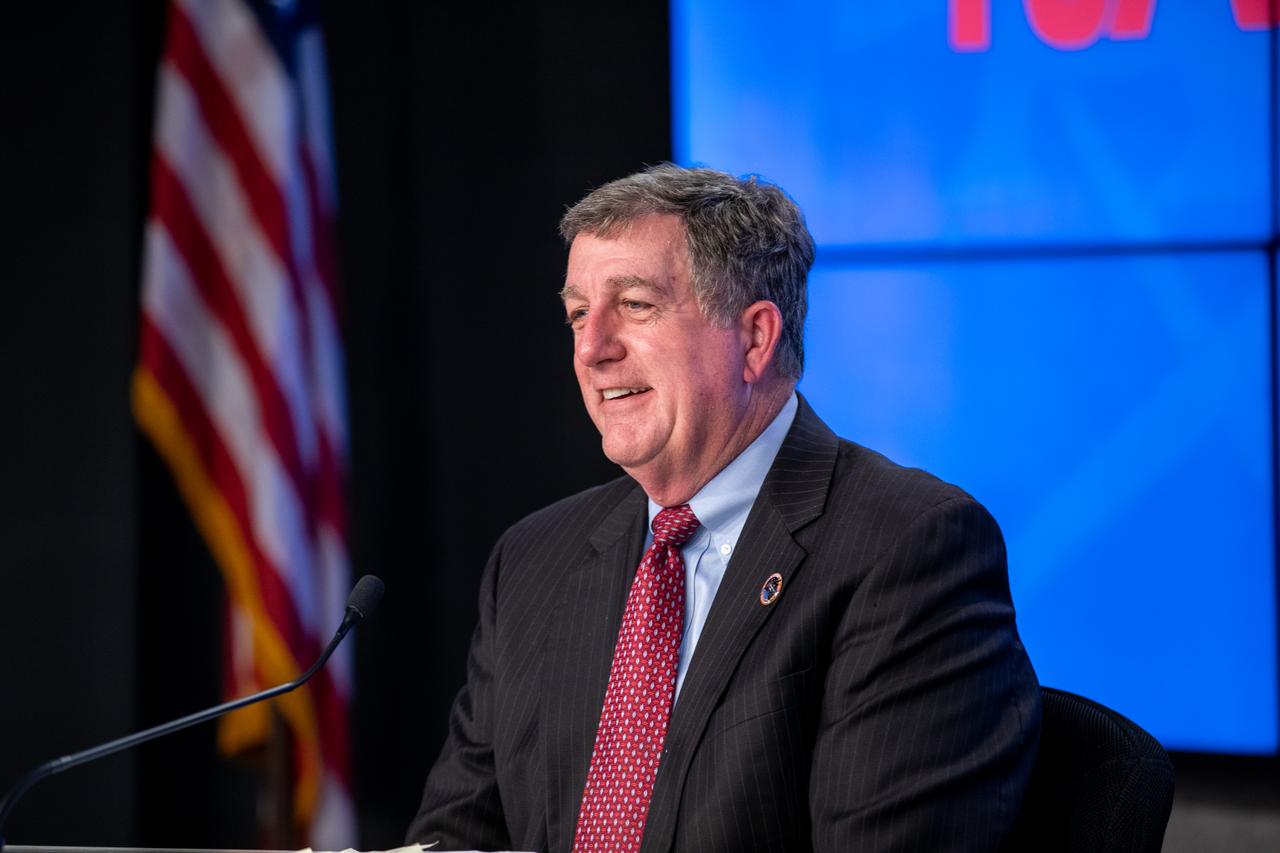
International Space Station Program Manager Kirk Shireman participates in a news briefing inside the Press Site auditorium at NASA’s Kennedy Space Center in Florida on May 22, 2020, following the conclusion of the flight readiness review for NASA’s SpaceX Demo-2 mission, with NASA astronauts Robert Behnken and Douglas Hurley, to the International Space Station. This will be SpaceX’s final flight test for NASA’s Commercial Crew Program. Behnken and Hurley will fly to the orbiting laboratory in a SpaceX Crew Dragon spacecraft, launching atop a Falcon 9 rocket from Kennedy’s Launch Complex 39A. Liftoff is scheduled for 4:33 p.m. EDT on Wednesday, May 27.
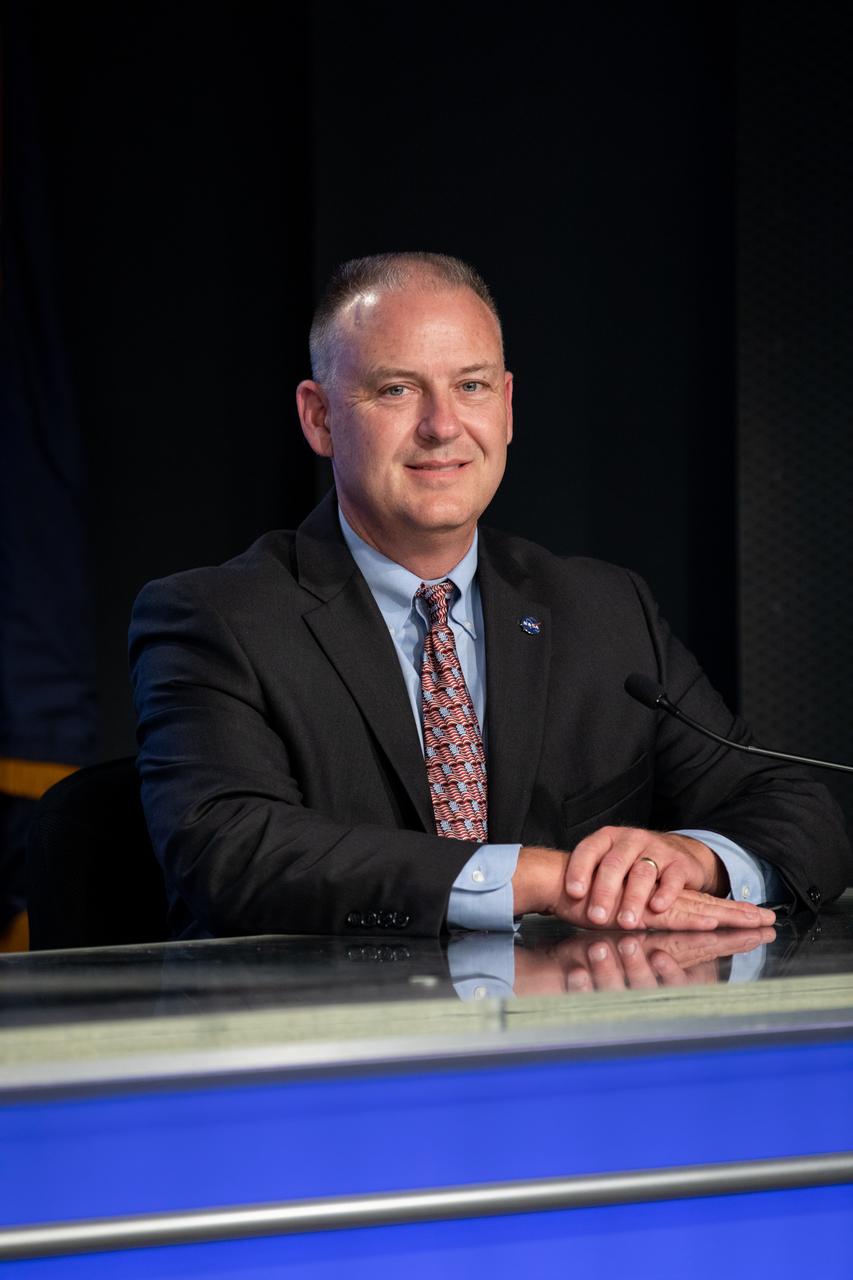
Norm Knight, deputy director of NASA’s Johnson Space Center’s Flight Control, participates in a news briefing inside the Press Site auditorium at the agency’s Kennedy Space Center in Florida on May 22, 2020, following the conclusion of the flight readiness review for the NASA’s SpaceX Demo-2 mission, with NASA astronauts Robert Behnken and Douglas Hurley, to the International Space Station. This will be SpaceX’s final flight test for NASA’s Commercial Crew Program. Behnken and Hurley will fly to the orbiting laboratory in a SpaceX Crew Dragon spacecraft, launching atop a Falcon 9 rocket from Kennedy’s Launch Complex 39A. Liftoff is scheduled for 4:33 p.m. EDT on Wednesday, May 27.
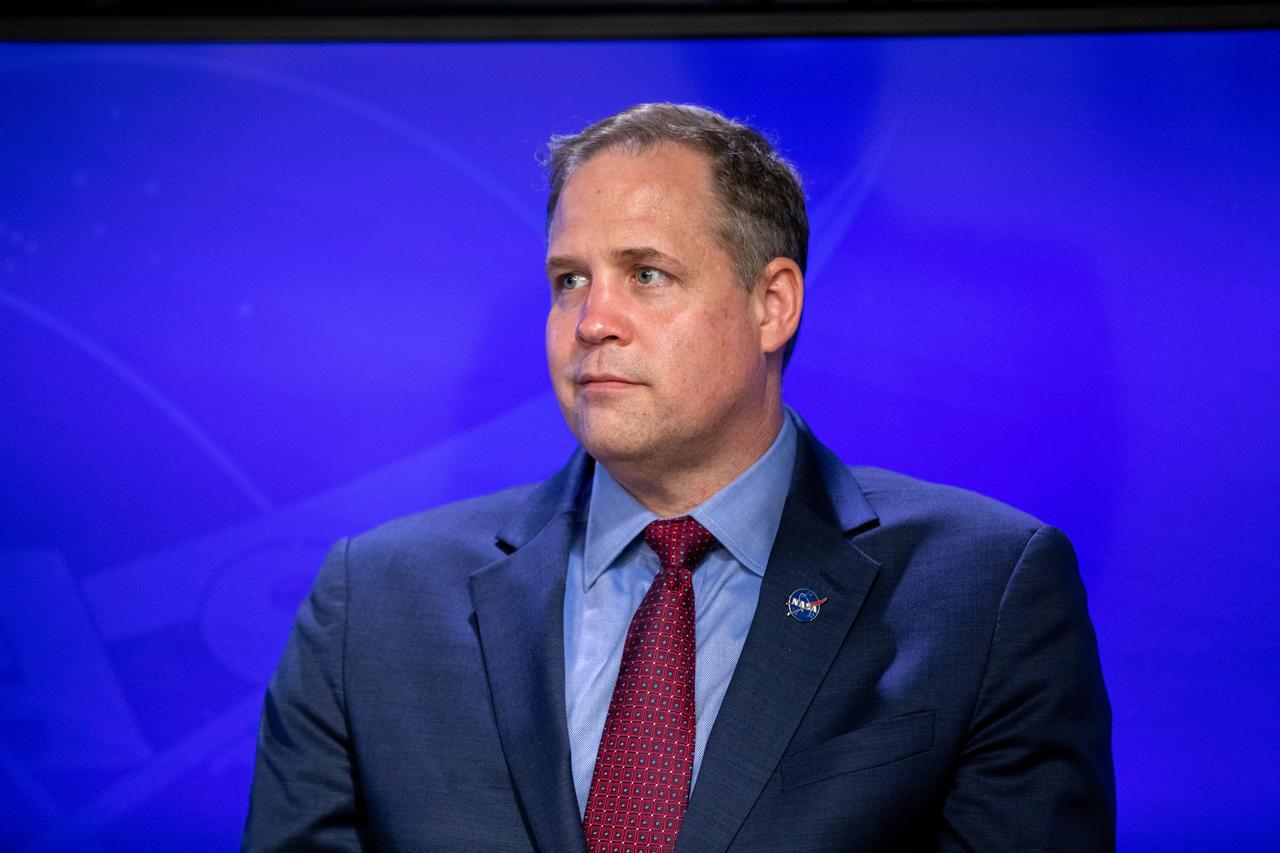
NASA Administrator Jim Bridenstine participates in a news briefing inside the Press Site auditorium at the agency’s Kennedy Space Center in Florida on May 22, 2020, following the conclusion of the flight readiness review for NASA’s SpaceX Demo-2 mission, with NASA astronauts Robert Behnken and Douglas Hurley, to the International Space Station. This will be SpaceX’s final flight test for NASA’s Commercial Crew Program. Behnken and Hurley will fly to the orbiting laboratory in a SpaceX Crew Dragon spacecraft, launching atop a Falcon 9 rocket from Kennedy’s Launch Complex 39A. Liftoff is scheduled for 4:33 p.m. EDT on Wednesday, May 27.
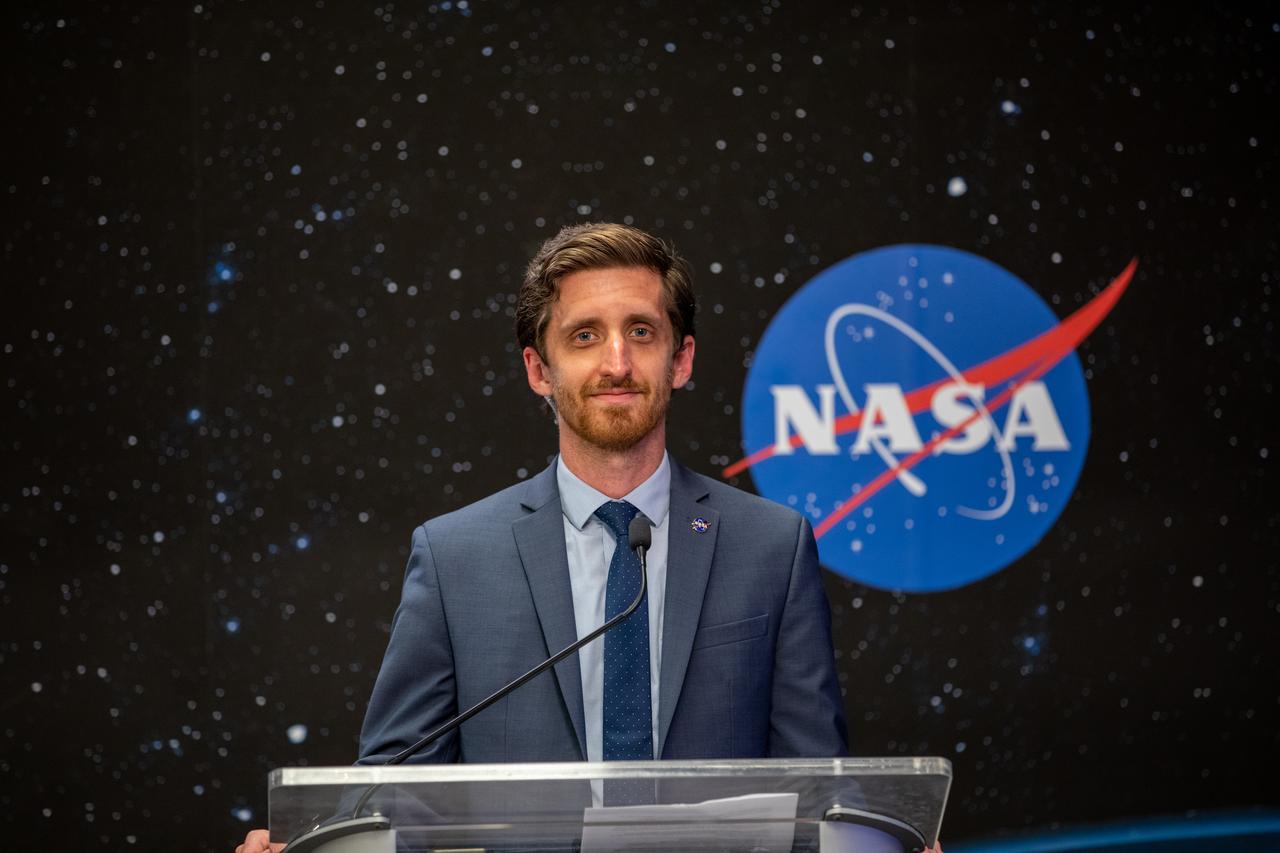
Josh Finch with NASA Communications moderates a news briefing inside the Press Site auditorium at the agency’s Kennedy Space Center in Florida on May 22, 2020, following the conclusion of the flight readiness review for NASA’s SpaceX Demo-2 mission, with NASA astronauts Robert Behnken and Douglas Hurley, to the International Space Station. This will be SpaceX’s final flight test for NASA’s Commercial Crew Program. Behnken and Hurley will fly to the orbiting laboratory in a SpaceX Crew Dragon spacecraft, launching atop a Falcon 9 rocket from Kennedy’s Launch Complex 39A. Liftoff is scheduled for 4:33 p.m. EDT on Wednesday, May 27.
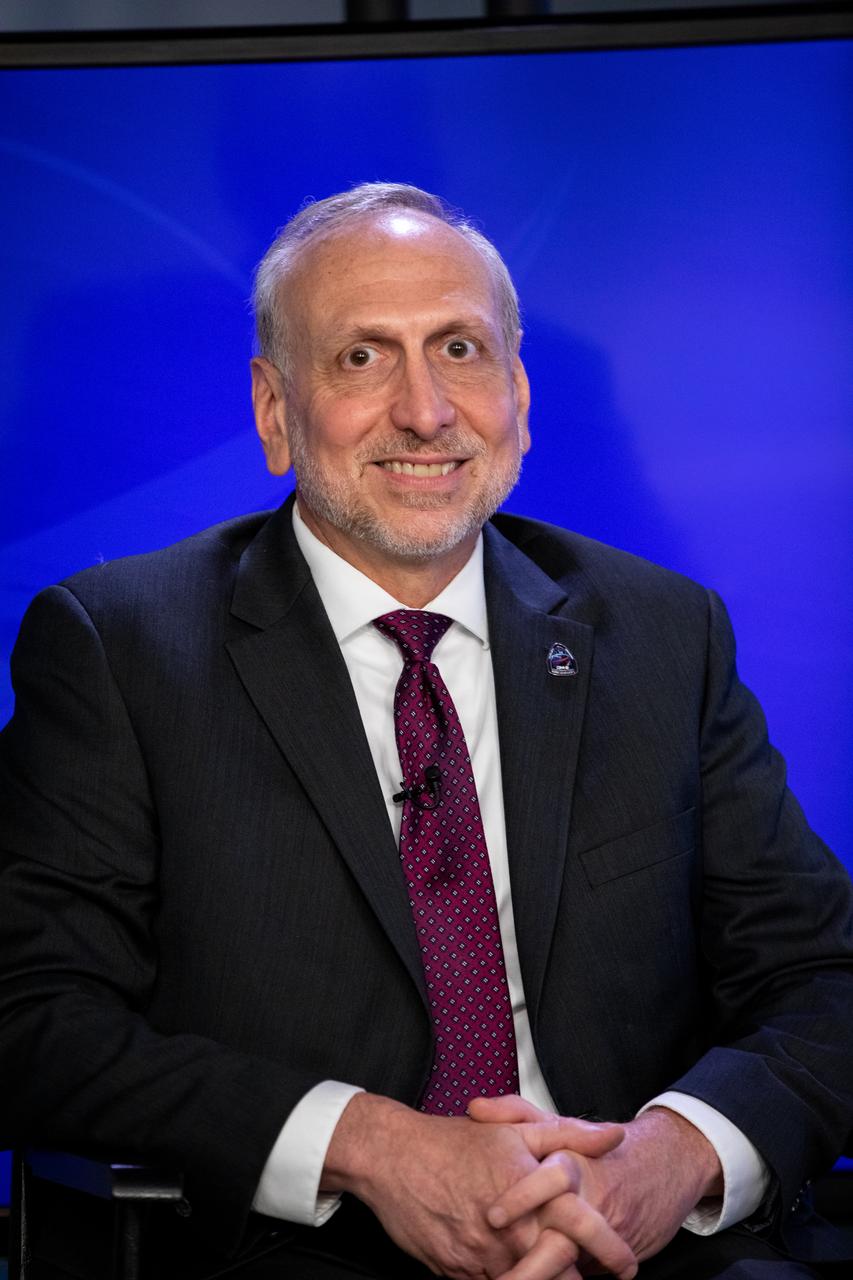
NASA Associate Administrator Steve Jurczyk participates in a news briefing inside the Press Site auditorium at the agency’s Kennedy Space Center in Florida on May 22, 2020, following the conclusion of the flight readiness review for NASA’s SpaceX Demo-2 mission, with NASA astronauts Robert Behnken and Douglas Hurley, to the International Space Station. This will be SpaceX’s final flight test for NASA’s Commercial Crew Program. Behnken and Hurley will fly to the orbiting laboratory in a SpaceX Crew Dragon spacecraft, launching atop a Falcon 9 rocket from Kennedy’s Launch Complex 39A. Liftoff is scheduled for 4:33 p.m. EDT on Wednesday, May 27.

Commercial Crew Program Manager Kathy Lueders participates in a news briefing inside the Press Site auditorium at NASA’s Kennedy Space Center in Florida on May 22, 2020, following the conclusion of the flight readiness review for NASA’s SpaceX Demo-2 mission, with NASA astronauts Robert Behnken and Douglas Hurley, to the International Space Station. This will be SpaceX’s final flight test for NASA’s Commercial Crew Program. Behnken and Hurley will fly to the orbiting laboratory in a SpaceX Crew Dragon spacecraft, launching atop a Falcon 9 rocket from Kennedy’s Launch Complex 39A. Liftoff is scheduled for 4:33 p.m. EDT on Wednesday, May 27.

NASA Associate Administrator Bob Cabana participates in NASA’s SpaceX Crew-7 Flight Readiness Review at Kennedy Space Center on Monday, Aug. 21, 2023. The mission is targeted to lift off from the Florida spaceport’s Launch Complex 39A at 3:49 a.m. EDT Friday, Aug. 25, 2023. NASA astronaut Jasmin Moghbeli, ESA (European Space Agency) astronaut Andreas Mogensen, JAXA (Japan Aerospace Exploration Agency) astronaut Satoshi Furukawa, and Roscosmos cosmonaut Konstantin Borisov will fly to the International Space Station aboard SpaceX’s Dragon spacecraft, powered by the company’s Falcon 9 rocket.
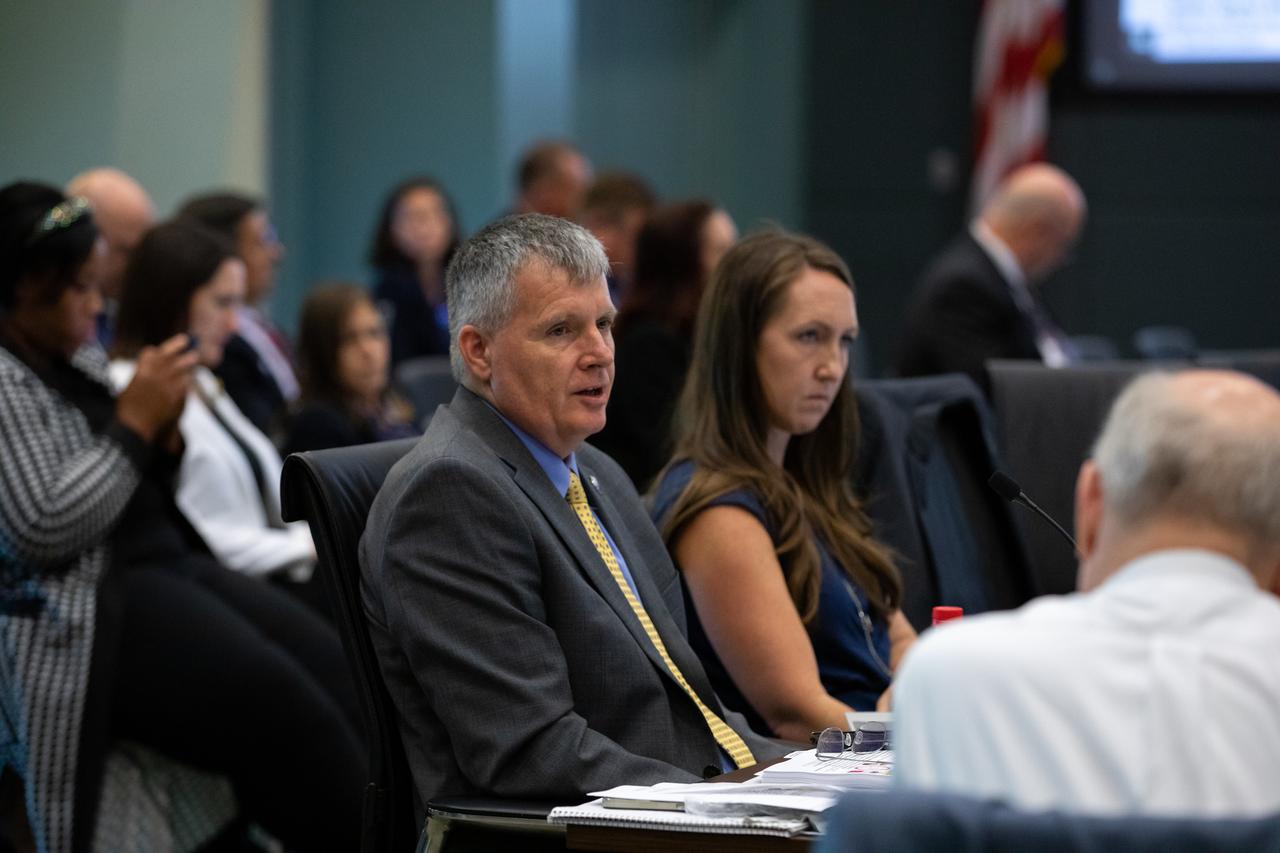
Steve Stich, manager of NASA’s Commercial Crew Program at Kennedy Space Center, participates in NASA’s SpaceX Crew-7 Flight Readiness Review at the Florida spaceport on Monday, Aug. 21, 2023. The mission is targeted to lift off from Kennedy’s Launch Complex 39A at 3:49 a.m. EDT Friday, Aug. 25, 2023. NASA astronaut Jasmin Moghbeli, ESA (European Space Agency) astronaut Andreas Mogensen, JAXA (Japan Aerospace Exploration Agency) astronaut Satoshi Furukawa, and Roscosmos cosmonaut Konstantin Borisov will fly to the International Space Station aboard SpaceX’s Dragon spacecraft, powered by the company’s Falcon 9 rocket.
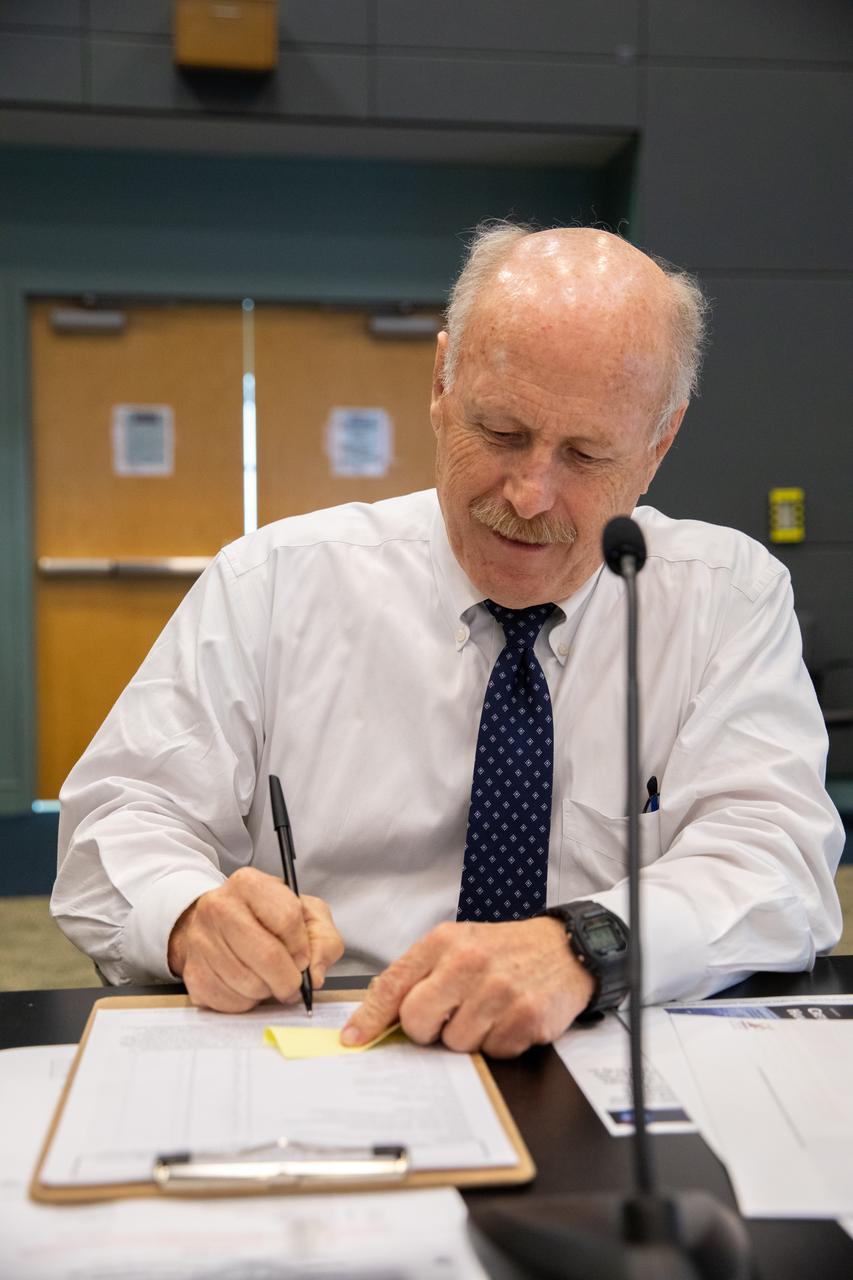
Ken Bowersox, associate administrator, Human Exploration and Operations Mission Directorate, NASA Headquarters, participates in NASA’s SpaceX Crew-7 Flight Readiness Review at Kennedy Space Center on Monday, Aug. 21, 2023. The mission is targeted to lift off from the Florida spaceport’s Launch Complex 39A at 3:49 a.m. EDT Friday, Aug. 25, 2023. NASA astronaut Jasmin Moghbeli, ESA (European Space Agency) astronaut Andreas Mogensen, JAXA (Japan Aerospace Exploration Agency) astronaut Satoshi Furukawa, and Roscosmos cosmonaut Konstantin Borisov will fly to the International Space Station aboard SpaceX’s Dragon spacecraft, powered by the company’s Falcon 9 rocket.
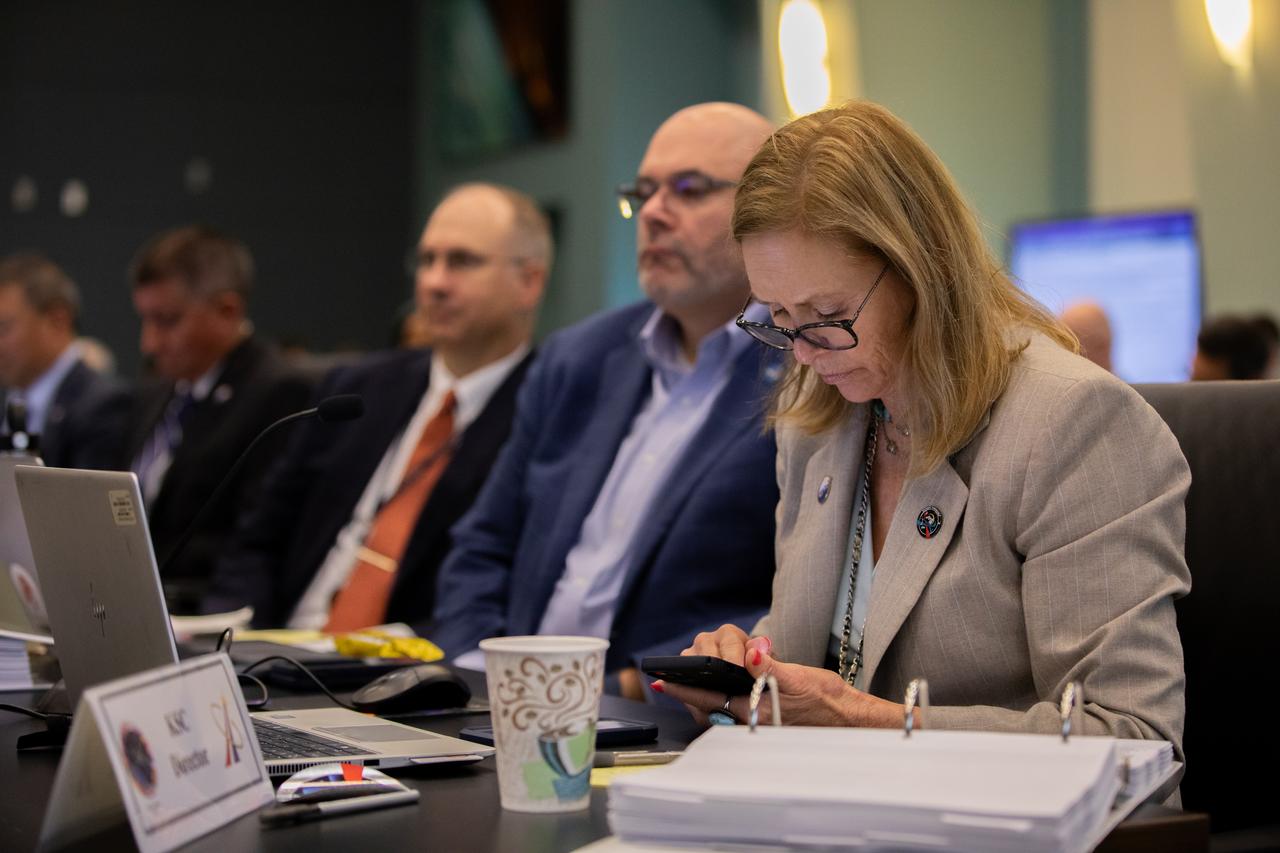
Kennedy Space Center Director Janet Petro participates in NASA’s SpaceX Crew-7 Flight Readiness Review at Kennedy Space Center on Monday, Aug. 21, 2023. The mission is targeted to lift off from the Florida spaceport’s Launch Complex 39A at 3:49 a.m. EDT Friday, Aug. 25, 2023. NASA astronaut Jasmin Moghbeli, ESA (European Space Agency) astronaut Andreas Mogensen, JAXA (Japan Aerospace Exploration Agency) astronaut Satoshi Furukawa, and Roscosmos cosmonaut Konstantin Borisov will fly to the International Space Station aboard SpaceX’s Dragon spacecraft, powered by the company’s Falcon 9 rocket.
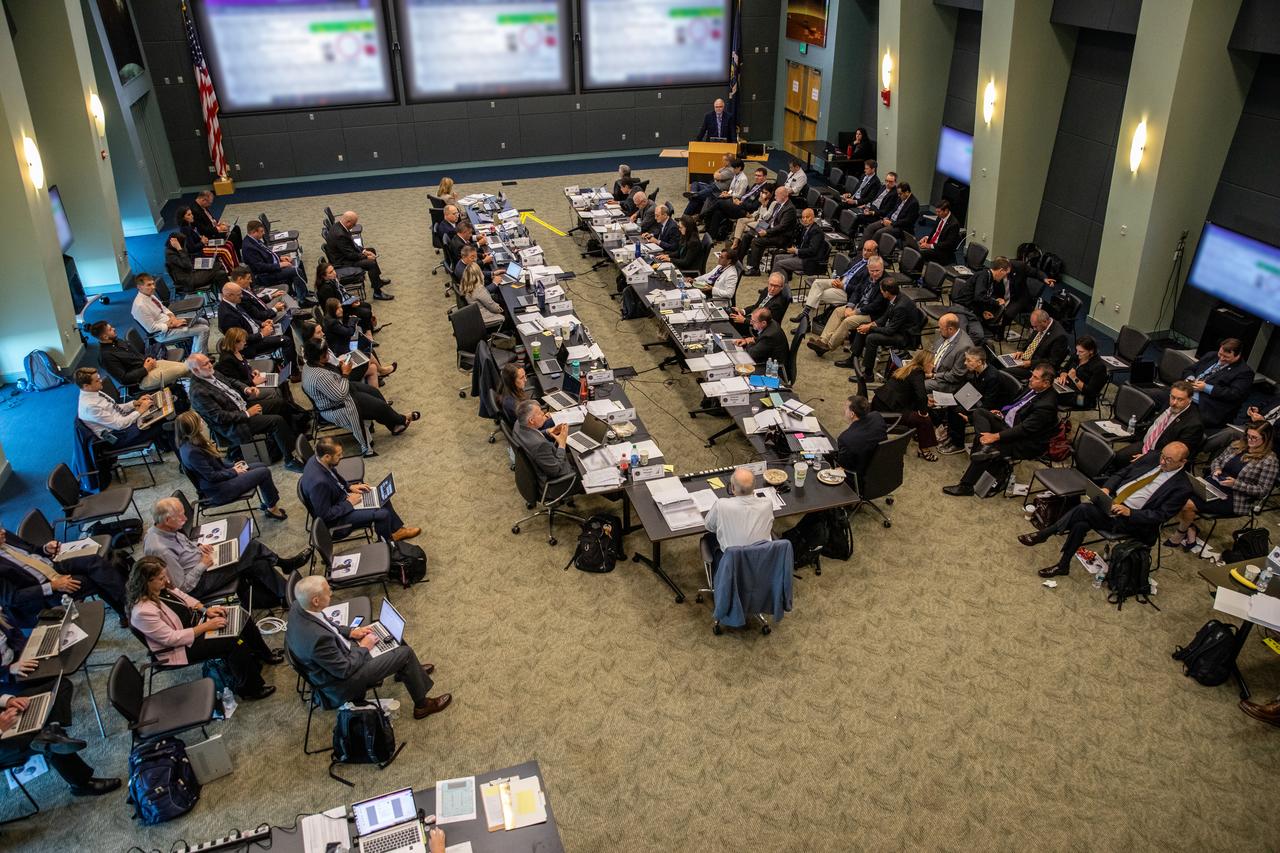
NASA’s SpaceX Crew-7 Flight Readiness Review takes place at Kennedy Space Center on Monday, Aug. 21, 2023. The mission is targeted to lift off from the Florida spaceport’s Launch Complex 39A at 3:49 a.m. EDT Friday, Aug. 25, 2023. NASA astronaut Jasmin Moghbeli, ESA (European Space Agency) astronaut Andreas Mogensen, JAXA (Japan Aerospace Exploration Agency) astronaut Satoshi Furukawa, and Roscosmos cosmonaut Konstantin Borisov will fly to the International Space Station aboard SpaceX’s Dragon spacecraft, powered by the company’s Falcon 9 rocket.
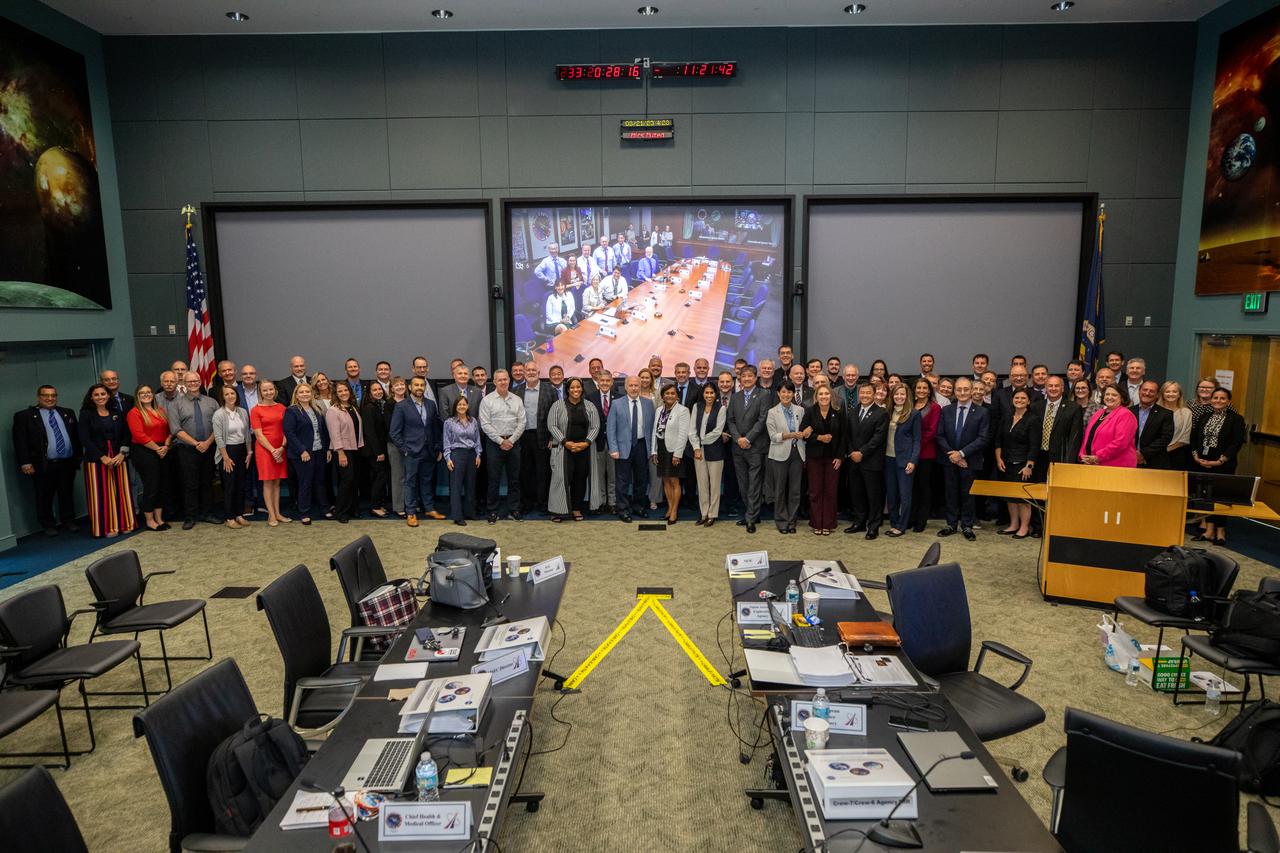
Managers with NASA and SpaceX, along with international partners, pose for a photo after completion of NASA’s SpaceX Crew-7 Flight Readiness Review at Kennedy Space Center on Monday, Aug. 21, 2023. The mission is targeted to lift off from the Florida spaceport’s Launch Complex 39A at 3:49 a.m. EDT Friday, Aug. 25, 2023. NASA astronaut Jasmin Moghbeli, ESA (European Space Agency) astronaut Andreas Mogensen, JAXA (Japan Aerospace Exploration Agency) astronaut Satoshi Furukawa, and Roscosmos cosmonaut Konstantin Borisov will fly to the International Space Station aboard SpaceX’s Dragon spacecraft, powered by the company’s Falcon 9 rocket.
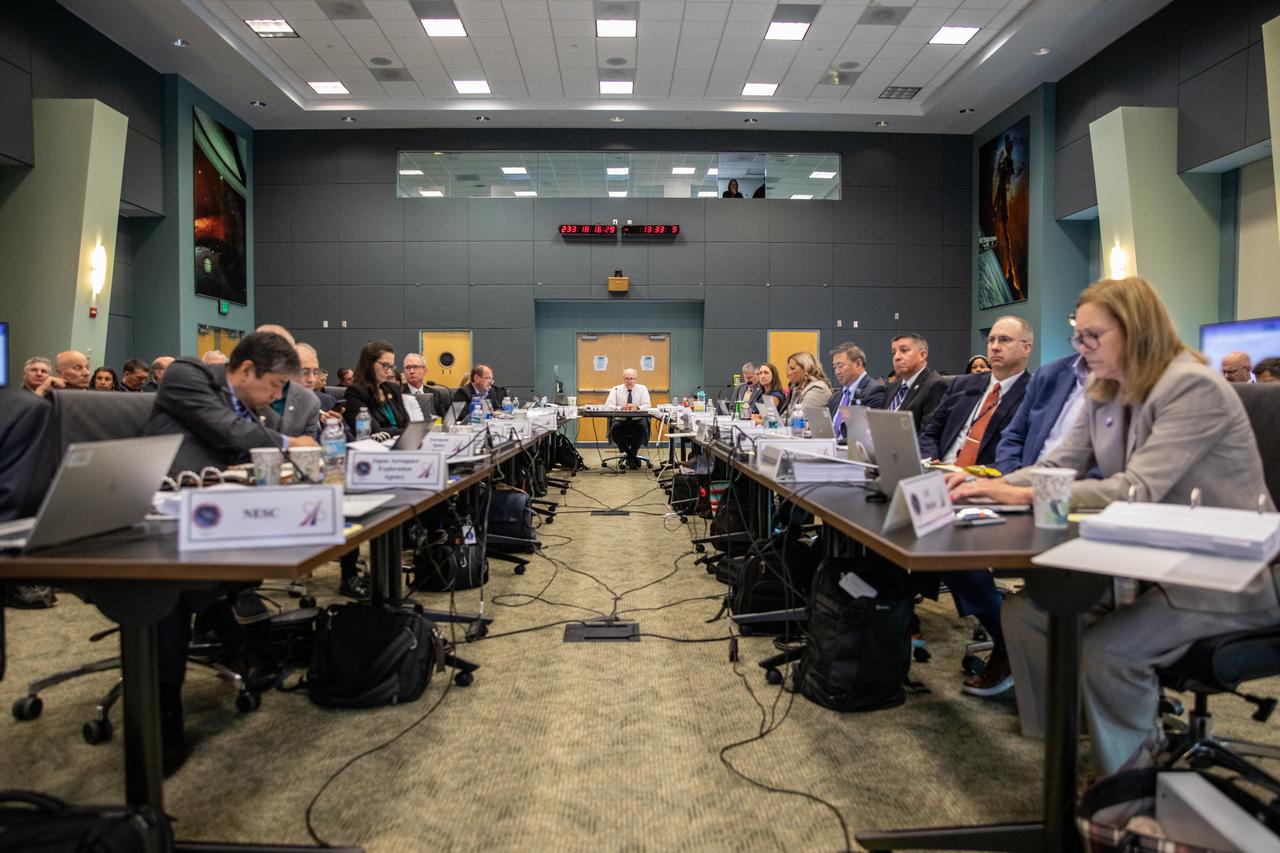
NASA’s SpaceX Crew-7 Flight Readiness Review takes place at Kennedy Space Center on Monday, Aug. 21, 2023. The mission is targeted to lift off from the Florida spaceport’s Launch Complex 39A at 3:49 a.m. EDT Friday, Aug. 25, 2023. NASA astronaut Jasmin Moghbeli, ESA (European Space Agency) astronaut Andreas Mogensen, JAXA (Japan Aerospace Exploration Agency) astronaut Satoshi Furukawa, and Roscosmos cosmonaut Konstantin Borisov will fly to the International Space Station aboard SpaceX’s Dragon spacecraft, powered by the company’s Falcon 9 rocket.

Ken Bowersox, associate administrator, Human Exploration and Operations Mission Directorate, NASA Headquarters participates in NASA’s SpaceX Crew-7 Flight Readiness Review at Kennedy Space Center on Monday, Aug. 21, 2023. The mission is targeted to lift off from the Florida spaceport’s Launch Complex 39A at 3:49 a.m. EDT Friday, Aug. 25, 2023. NASA astronaut Jasmin Moghbeli, ESA (European Space Agency) astronaut Andreas Mogensen, JAXA (Japan Aerospace Exploration Agency) astronaut Satoshi Furukawa, and Roscosmos cosmonaut Konstantin Borisov will fly to the International Space Station aboard SpaceX’s Dragon spacecraft, powered by the company’s Falcon 9 rocket.
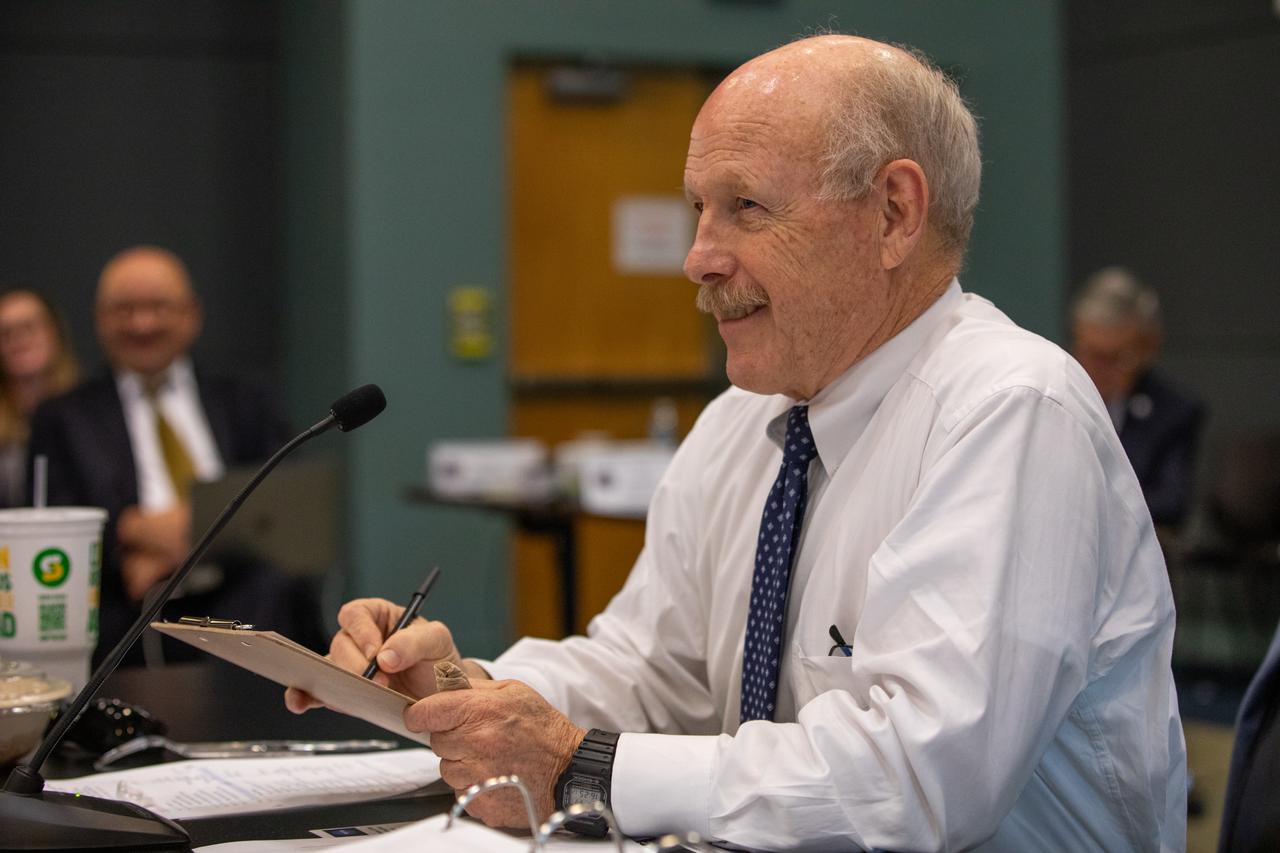
Ken Bowersox, associate administrator, Human Exploration and Operations Mission Directorate, NASA Headquarters, participates in NASA’s SpaceX Crew-7 Flight Readiness Review at Kennedy Space Center on Monday, Aug. 21, 2023. The mission is targeted to lift off from the Florida spaceport’s Launch Complex 39A at 3:49 a.m. EDT Friday, Aug. 25, 2023. NASA astronaut Jasmin Moghbeli, ESA (European Space Agency) astronaut Andreas Mogensen, JAXA (Japan Aerospace Exploration Agency) astronaut Satoshi Furukawa, and Roscosmos cosmonaut Konstantin Borisov will fly to the International Space Station aboard SpaceX’s Dragon spacecraft, powered by the company’s Falcon 9 rocket.
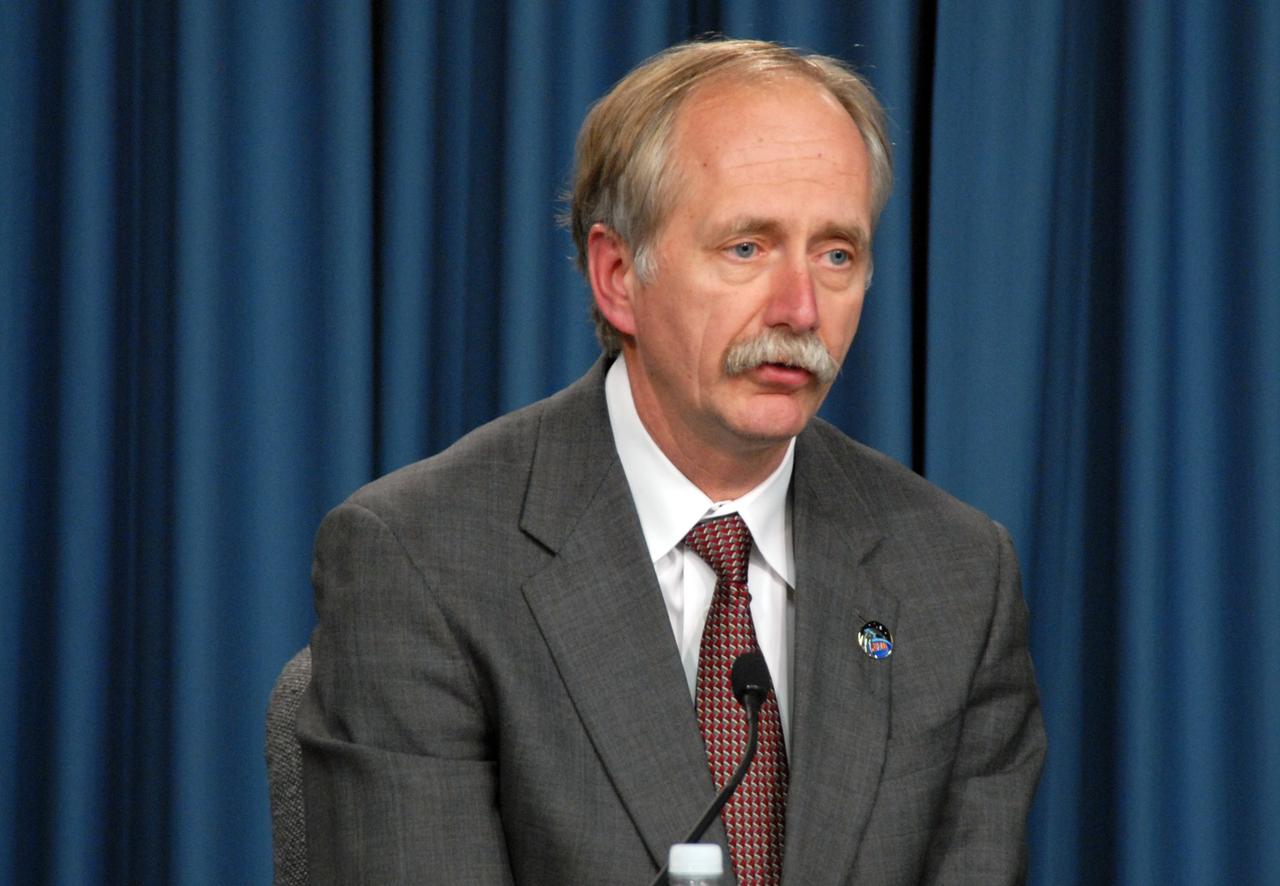
CAPE CANAVERAL, Fla. – At the flight readiness review news conference for space shuttle Discovery's STS-119 mission, Associate Administrator for Space Operations Bill Gerstenmaier talks about the review by mission managers of Discovery's readiness for flight. NASA managers decided Feb. 20 more data and possible testing are required before proceeding to launch. Engineering teams have been working to identify what caused damage to a flow control valve on shuttle Endeavour during its November 2008 flight. A new launch date has not been determined. Photo credit: NASA/Glenn Benson
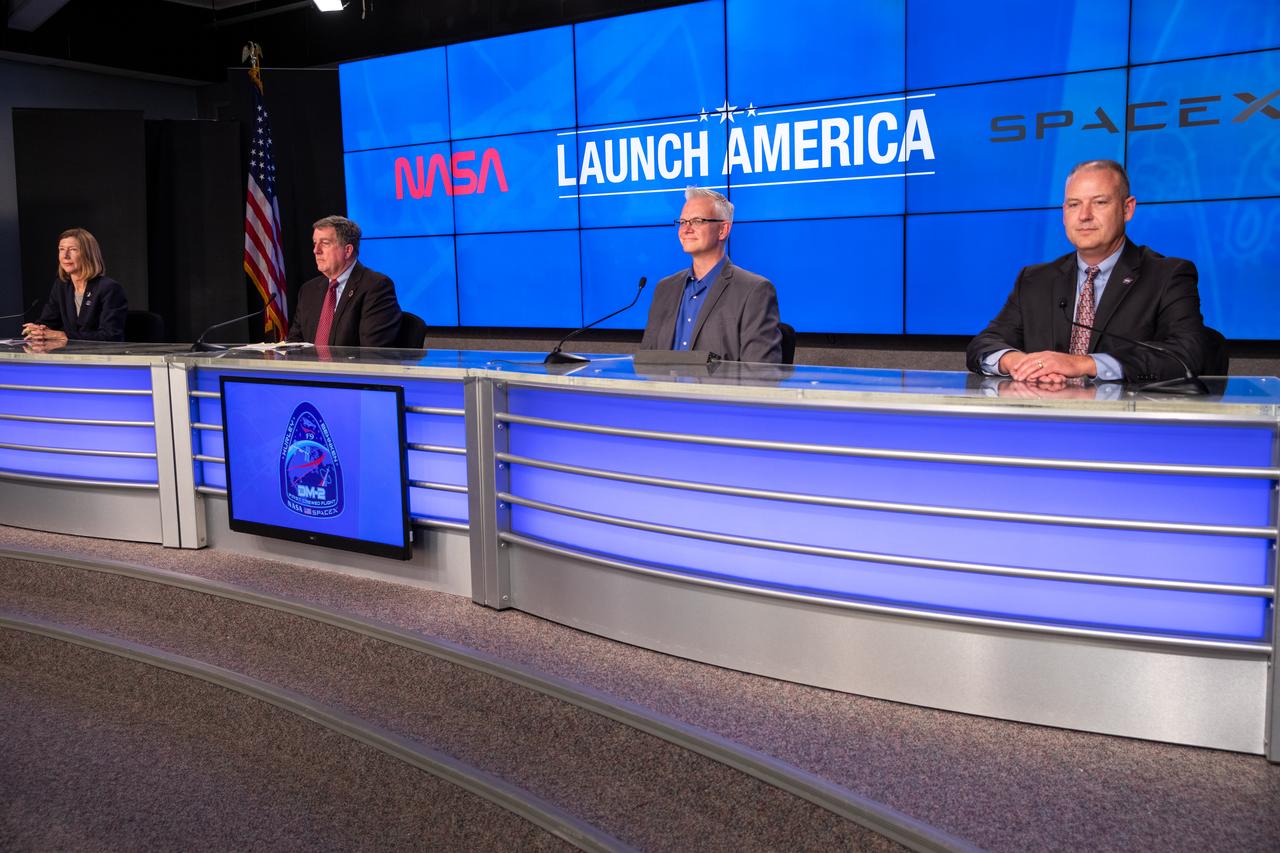
Inside the Press Site auditorium at NASA’s Kennedy Space Center in Florida, agency and industry leaders conduct a virtual news conference with members of the media on May 22, 2020, following the conclusion of the flight readiness review for NASA’s SpaceX Demo-2 mission, with NASA astronauts Robert Behnken and Douglas Hurley, to the International Space Station. From left are Kathy Lueders, Commercial Crew Program manager; Kirk Shireman, International Space Station Program manager; Benji Reed, director of Crew Mission Management, SpaceX; and Norm Knight, deputy director of NASA’s Johnson Space Center’s Flight Operations. This will be SpaceX’s final flight test for NASA’s Commercial Crew Program. Behnken and Hurley will fly to the orbiting laboratory in a SpaceX Crew Dragon spacecraft, launching atop a Falcon 9 rocket from Kennedy’s Launch Complex 39A. Liftoff is scheduled for 4:33 p.m. EDT on Wednesday, May 27.
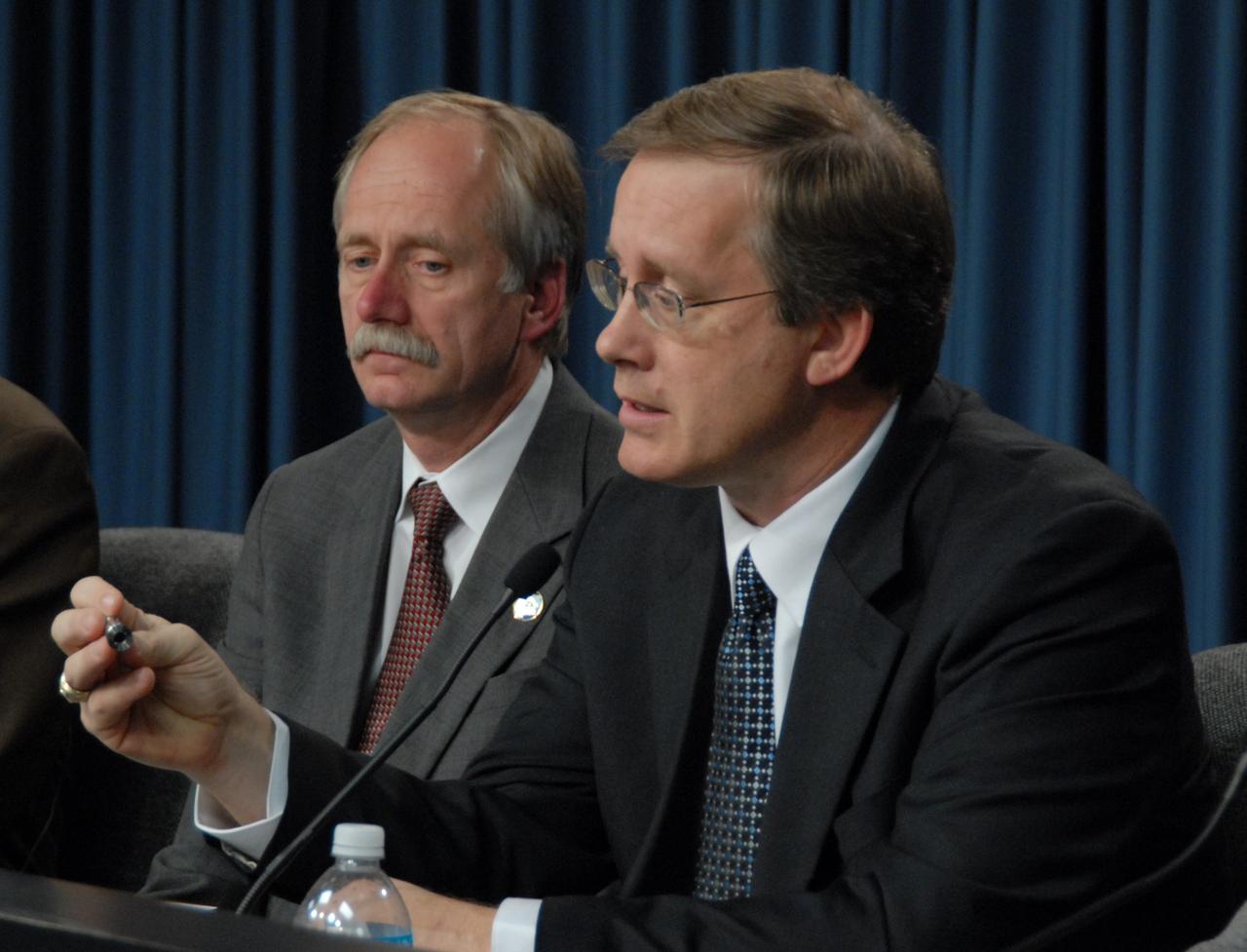
CAPE CANAVERAL, Fla. – At the flight readiness review news conference for space shuttle Discovery's STS-119 mission, Space Shuttle Program Manager John Shannon (right) talks about the discussion surrounding Discovery's readiness for flight. At left is Associate Administrator for Space Operations Bill Gerstenmaier. Shannon is holding a flow control valve that is under review and testing. Engineering teams have been working to identify what caused damage to a flow control valve on shuttle Endeavour during its November 2008 flight. A new launch date has not been determined. Photo credit: NASA/Glenn Benson
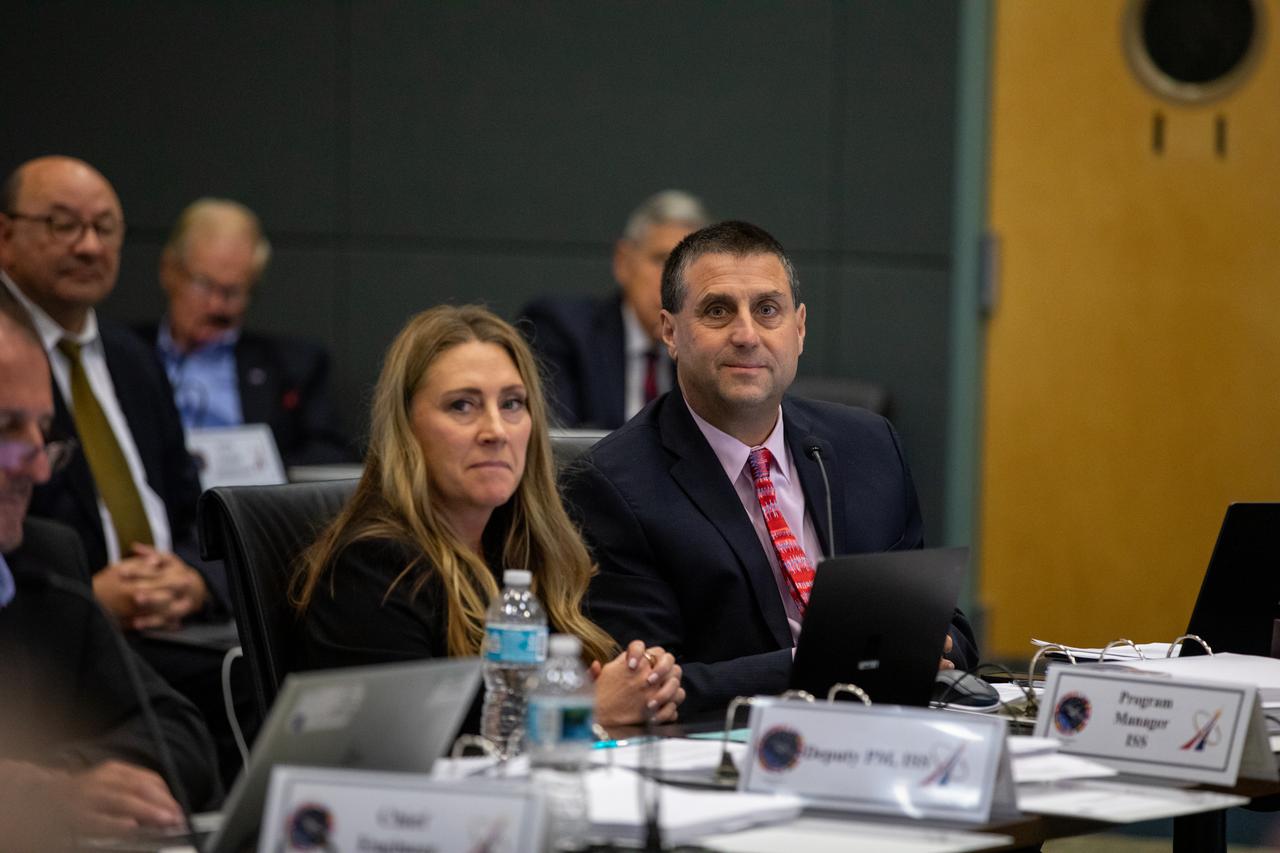
From left, Dana Weigel, International Space Station deputy program manager, and Joel Montalbano, manager, International Space Station Program, Johnson Space Center, participate in NASA’s SpaceX Crew-7 Flight Readiness Review at the Florida spaceport on Monday, Aug. 21, 2023. The mission is targeted to lift off from Kennedy’s Launch Complex 39A at 3:49 a.m. EDT Friday, Aug. 25, 2023. NASA astronaut Jasmin Moghbeli, ESA (European Space Agency) astronaut Andreas Mogensen, JAXA (Japan Aerospace Exploration Agency) astronaut Satoshi Furukawa, and Roscosmos cosmonaut Konstantin Borisov will fly to the International Space Station aboard SpaceX’s Dragon spacecraft, powered by the company’s Falcon 9 rocket.
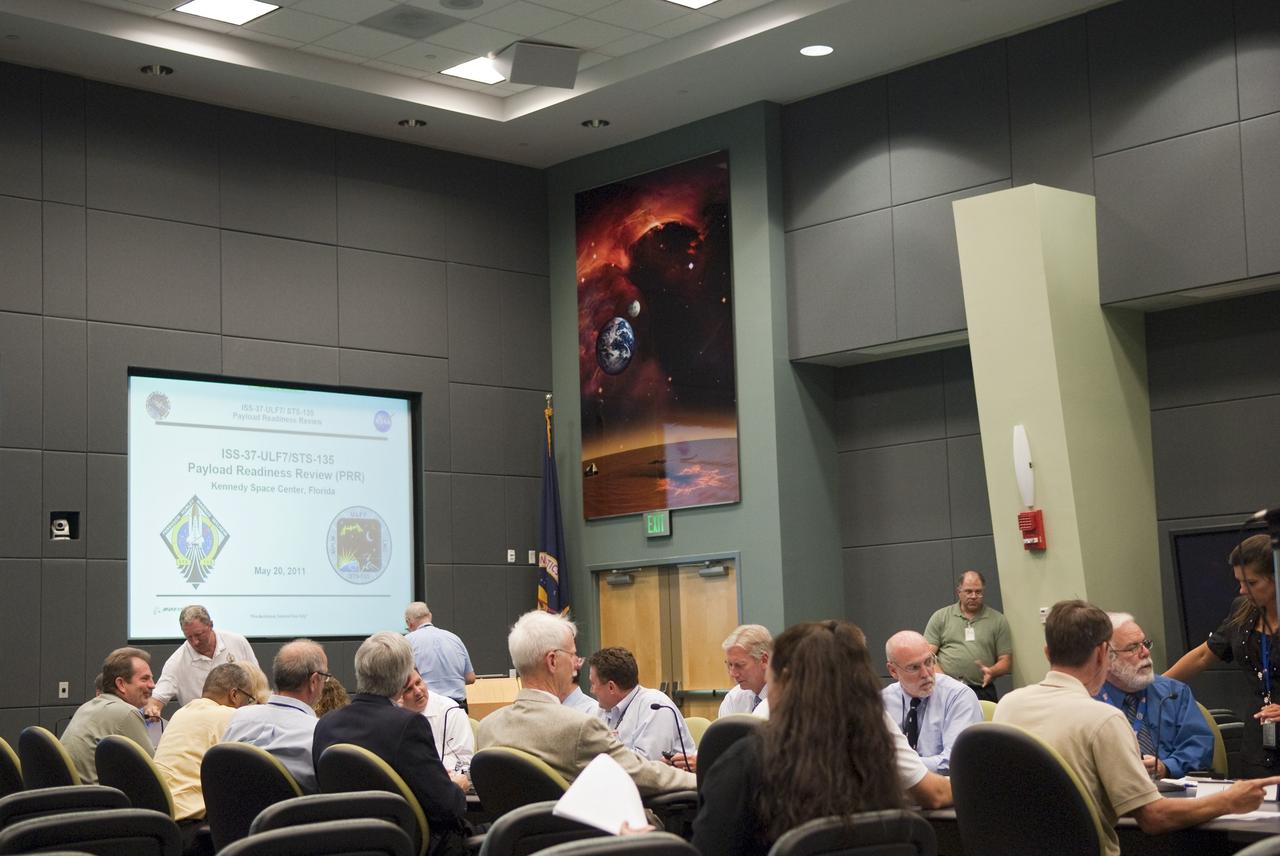
Cape Canaveral, Fla. -- NASA managers meet in Operations Support Building II at NASA's Kennedy Space Center to discuss the readiness of the payload for shuttle Atlantis' STS-135 mission to the International Space Station. Just before a payload is installed in the shuttle's payload bay, a Payload Readiness Review is held at Kennedy. This review, one of the last in a long process, assesses the readiness of the shuttle and the payload for what are called the "payload on-line integration activities." The last major cargo/shuttle review prior to launch is the Flight Readiness Review which verifies that all integration operations have been completed satisfactorily and gives final certification that the flight elements are ready to go. Commander Chris Ferguson, Pilot Doug Hurley and Mission Specialists Sandra Magnus and Rex Walheim are targeted to launch on July 8, taking with them the Raffaello multi-purpose logistics module packed with supplies, logistics and spare parts. The STS-135 mission also will fly a system to investigate the potential for robotically refueling existing spacecraft and return a failed ammonia pump module to help NASA better understand the failure mechanism and improve pump designs for future systems. STS-135 will be the 33rd flight of Atlantis, the 37th shuttle mission to the space station, and the 135th and final mission of NASA's Space Shuttle Program. For more information visit, www.nasa.gov/mission_pages/shuttle/shuttlemissions/sts135/index.html. Photo credit: NASA/Jim Grossmann
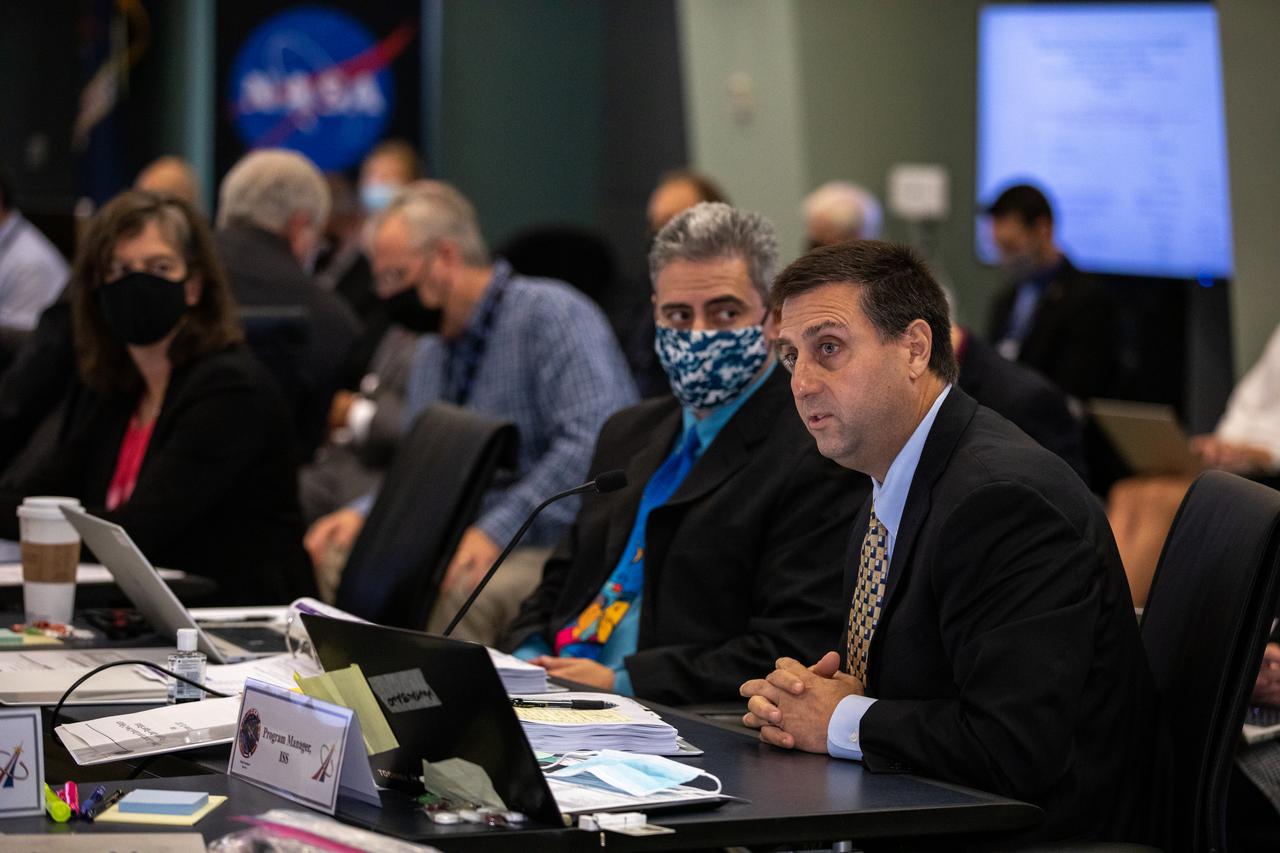
Joel Montalbano, at right, manager, International Space Station, NASA’s Johnson Space Center, participates in a Flight Readiness Review for the agency’s SpaceX Crew-3 mission at Kennedy Space Center in Florida on Oct. 25, 2021. International partners also participated. NASA and SpaceX mission managers held the FRR to confirm the SpaceX Falcon 9 and Crew Dragon spacecraft are ready for launch. Crew-3 is scheduled to launch to the International Space Station from Kennedy’s Launch Complex 39A on Oct. 31, 2021 as part of NASA’s Commercial Crew Program. Liftoff of the Falcon 9 rocket and Crew Dragon spacecraft is targeted for 2:21 a.m. EDT.
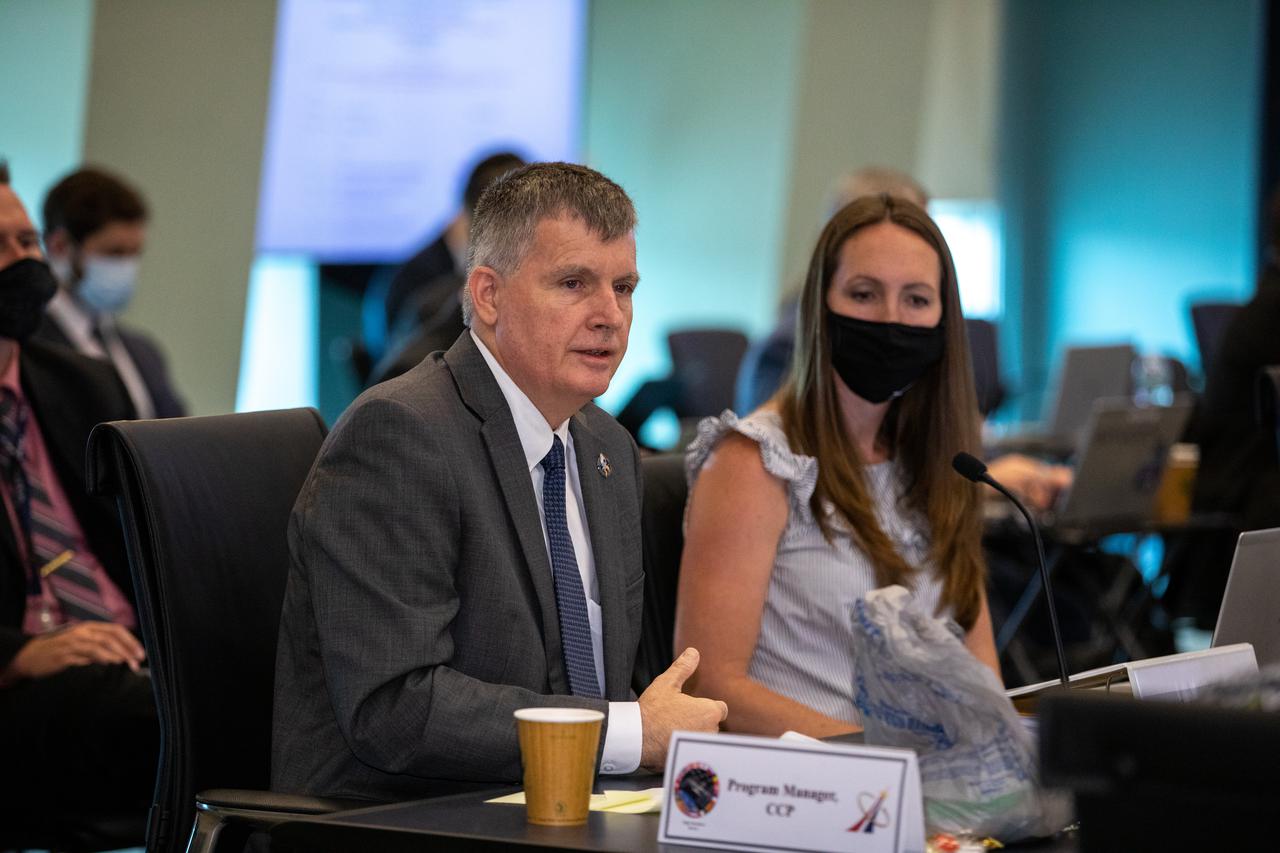
Steve Stich, at left, manager, Commercial Crew Program at Kennedy Space Center, participates in a Flight Readiness Review for the agency’s SpaceX Crew-3 mission at the center in Florida on Oct. 25, 2021. International partners also participated. NASA and SpaceX mission managers held the FRR to confirm the SpaceX Falcon 9 and Crew Dragon spacecraft are ready for launch. Crew-3 is scheduled to launch to the International Space Station from Kennedy’s Launch Complex 39A on Oct. 31, 2021 as part of NASA’s Commercial Crew Program. Liftoff of the Falcon 9 rocket and Crew Dragon spacecraft is targeted for 2:21 a.m. EDT.
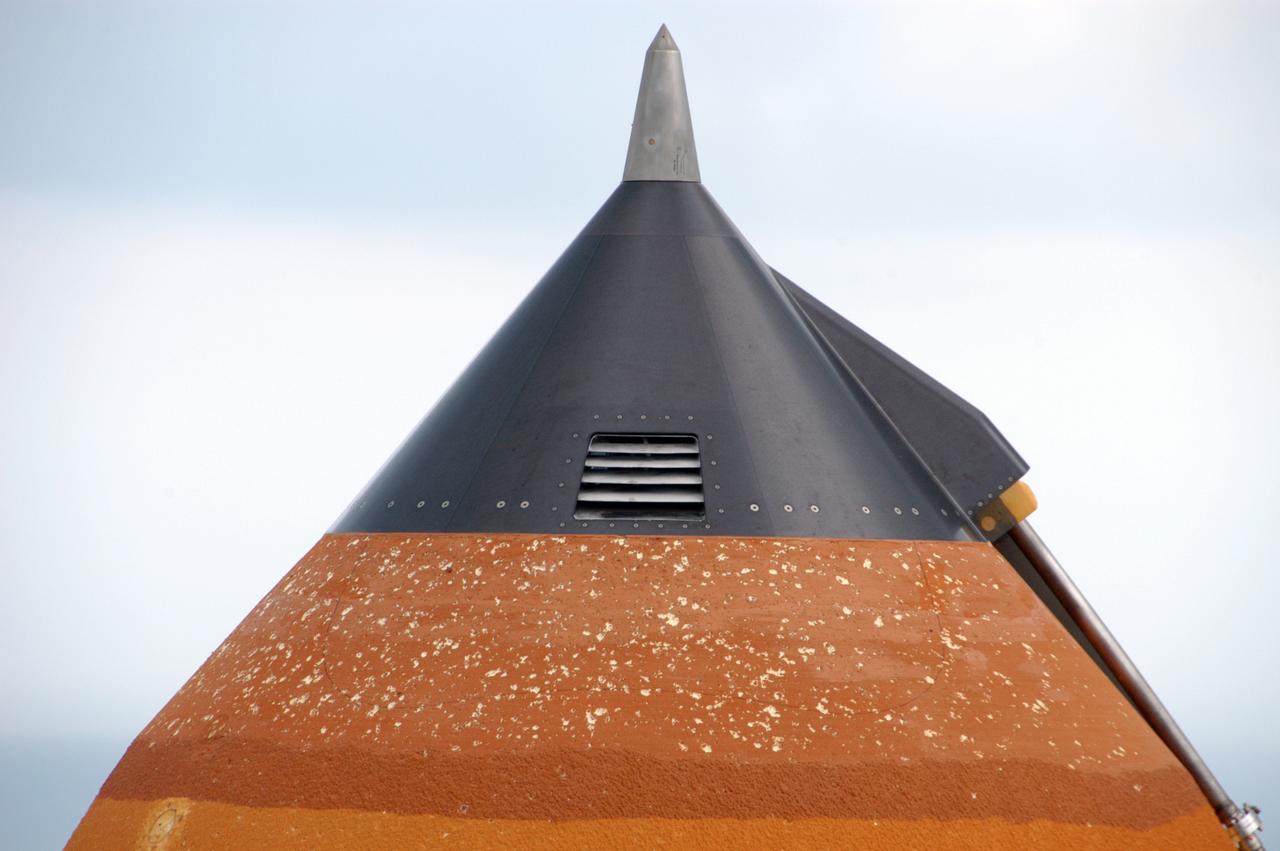
At Launch Pad 39A, the external tank attached to Space Shuttle Atlantis shows damage from hail bombardment during a strong thunderstorm that passed through Kennedy Space Center about 5 p.m. EST on Feb. 26. A full assessment of the storm's impact is under way. The two-day STS-117 Flight Readiness Review is being held concurrently with the assessment. Hail also impacted Space Shuttle Columbia before the launch of STS-4 in 1982; Atlantis, being readied for STS-38 in 1990; and Discovery, before the launch of STS-96 in 1999.
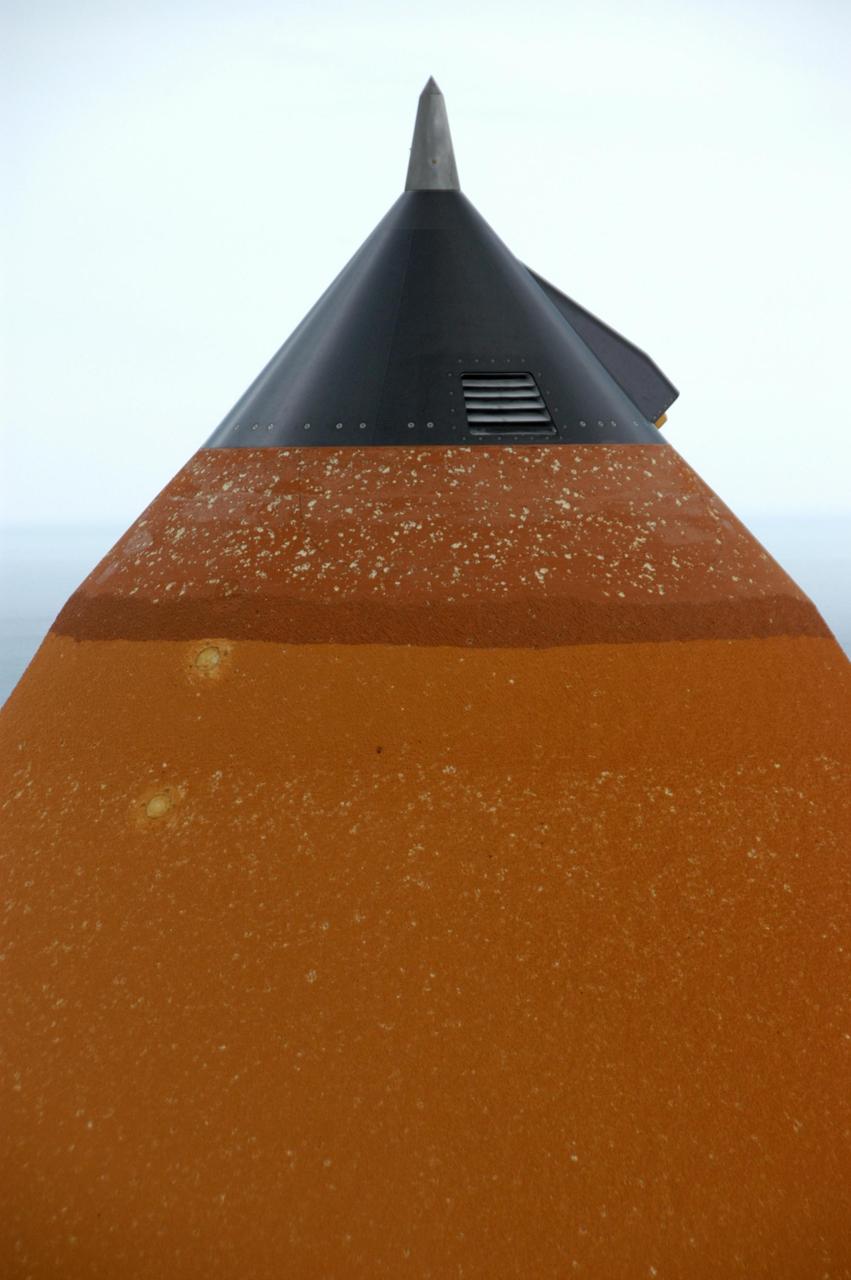
KENNEDY SPACE CENTER, FLA. -- At Launch Pad 39A, the external tank attached to Space Shuttle Atlantis shows damage from hail bombardment during a strong thunderstorm that passed through Kennedy Space Center about 5 p.m. EST on Feb. 26. A full assessment of the storm's impact is under way. The two-day STS-117 Flight Readiness Review is being held concurrently with the assessment. Hail also impacted Space Shuttle Columbia before the launch of STS-4 in 1982; Atlantis, being readied for STS-38 in 1990; and Discovery, before the launch of STS-96 in 1999.
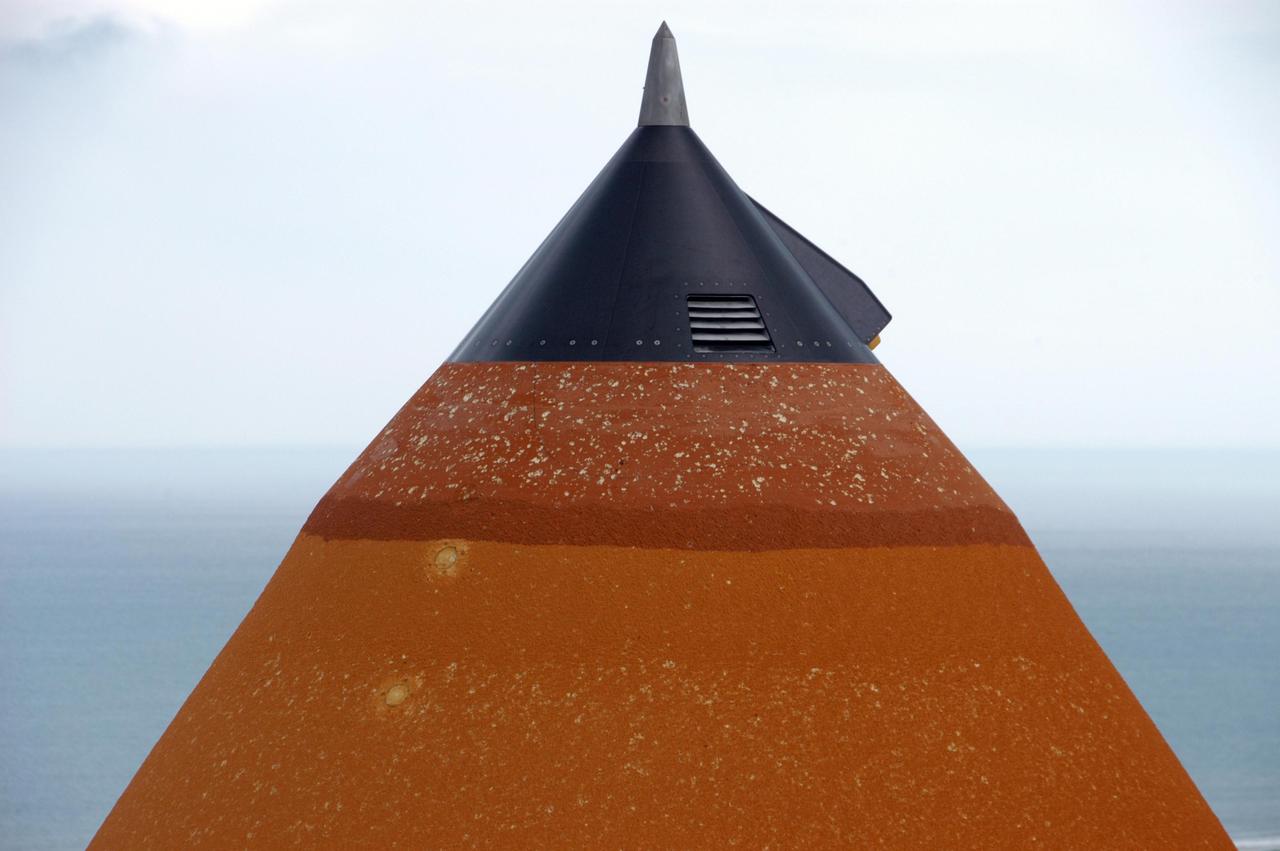
KENNEDY SPACE CENTER, FLA. -- At Launch Pad 39A, the external tank attached to Space Shuttle Atlantis shows damage from hail bombardment during a strong thunderstorm that passed through Kennedy Space Center about 5 p.m. EST on Feb. 26. A full assessment of the storm's impact is under way. The two-day STS-117 Flight Readiness Review is being held concurrently with the assessment. Hail also impacted Space Shuttle Columbia before the launch of STS-4 in 1982; Atlantis, being readied for STS-38 in 1990; and Discovery, before the launch of STS-96 in 1999.
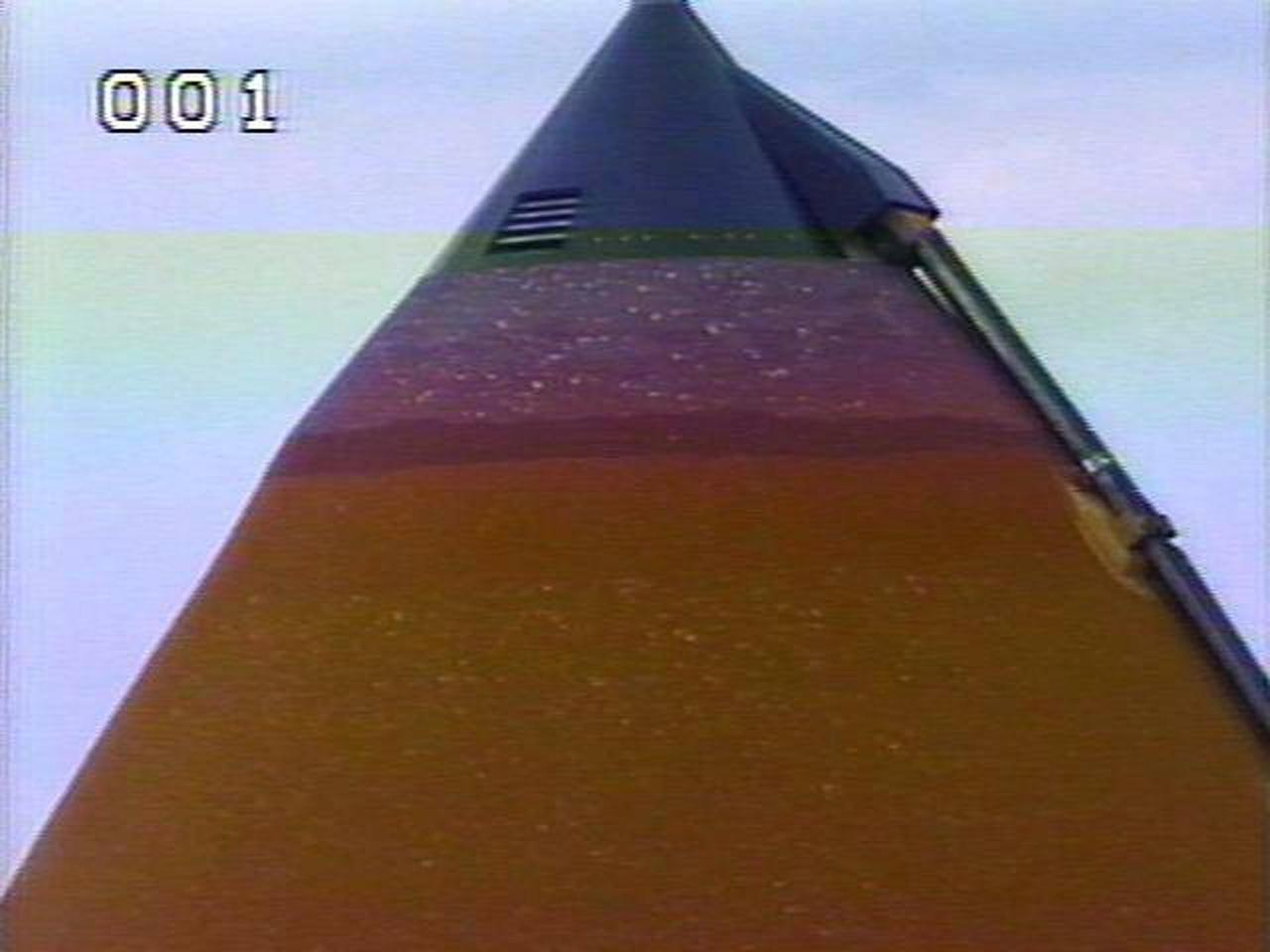
KENNEDY SPACE CENTER, FLA. -- At Launch Pad 39A, the external tank attached to Space Shuttle Atlantis shows damage from hail bombardment during a strong thunderstorm that passed through Kennedy Space Center about 5 p.m. EST on Feb. 26. A full assessment of the storm's impact is under way. The two-day STS-117 Flight Readiness Review is being held concurrently with the assessment. Hail also impacted Space Shuttle Columbia before the launch of STS-4 in 1982; Atlantis, being readied for STS-38 in 1990; and Discovery, before the launch of STS-96 in 1999.
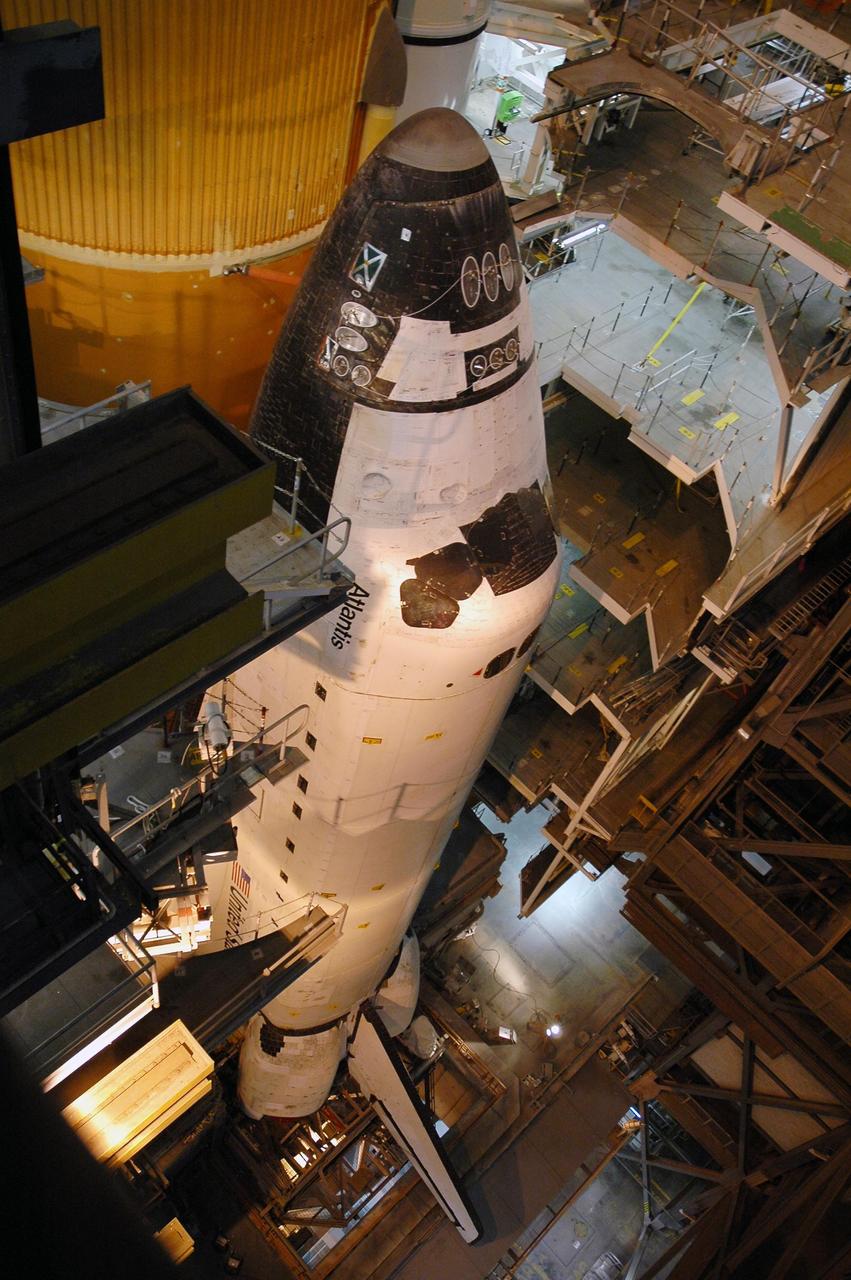
KENNEDY SPACE CENTER, FLA. -- In high bay No. 1 of the Vehicle Assembly Building, Space Shuttle Atlantis is ready for its return to Launch Pad 39A. In late February, Atlantis' external tank received hail damage during a severe thunderstorm that passed through the Kennedy Space Center Launch Complex 39 area. The hail caused visible divots in the giant tank's foam insulation, as well as minor surface damage to about 26 heat shield tiles on the shuttle's left wing. The launch of Space Shuttle Atlantis on mission STS-117 is now targeted for June 8. A flight readiness review will be held on May 30 and 31. Photo credit: NASA/Troy Cryder
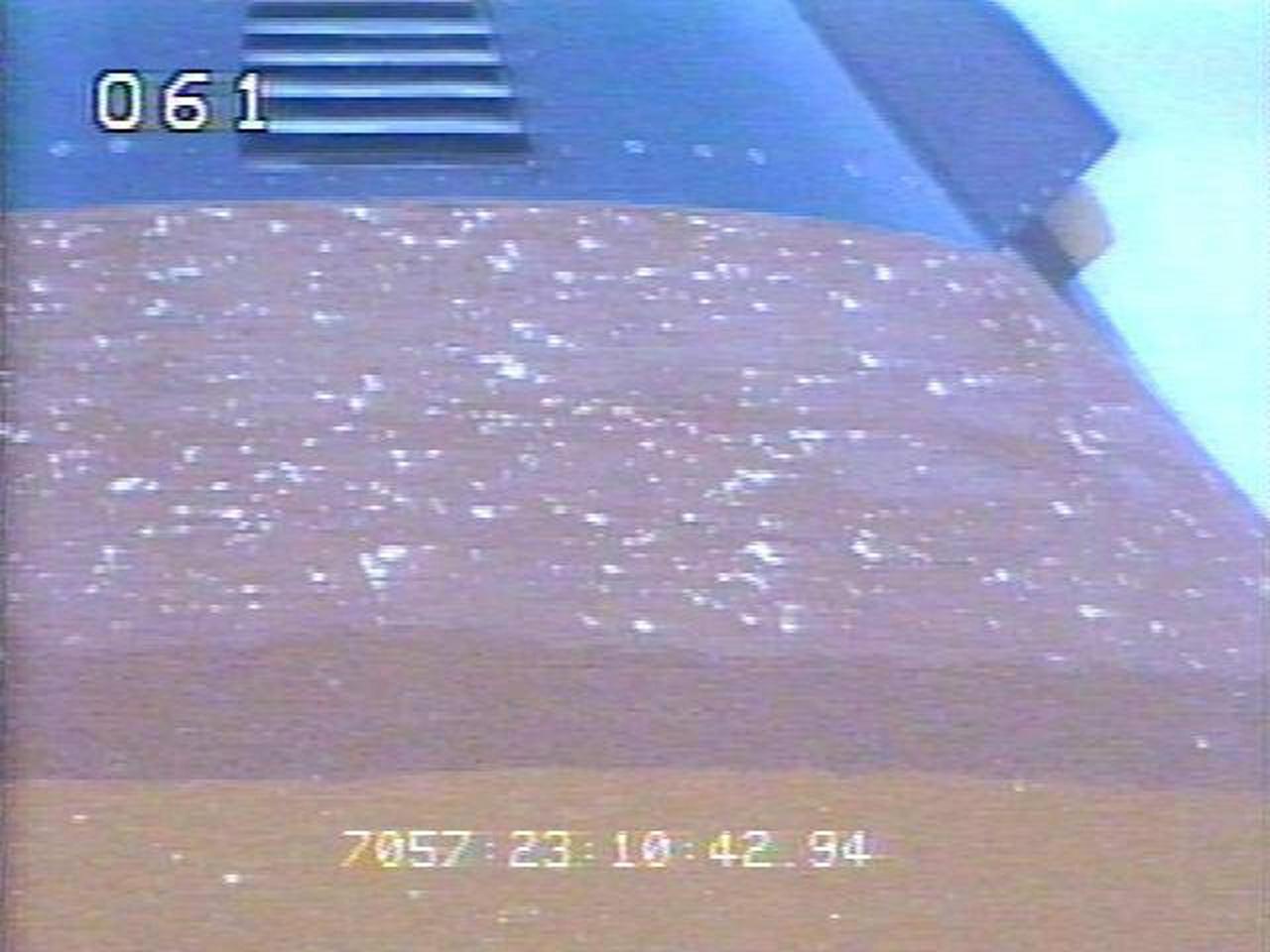
KENNEDY SPACE CENTER, FLA. -- At Launch Pad 39A, the external tank attached to Space Shuttle Atlantis shows damage from hail bombardment during a strong thunderstorm that passed through Kennedy Space Center about 5 p.m. EST on Feb. 26. A full assessment of the storm's impact is under way. The two-day STS-117 Flight Readiness Review is being held concurrently with the assessment. Hail also impacted Space Shuttle Columbia before the launch of STS-4 in 1982; Atlantis, being readied for STS-38 in 1990; and Discovery, before the launch of STS-96 in 1999.
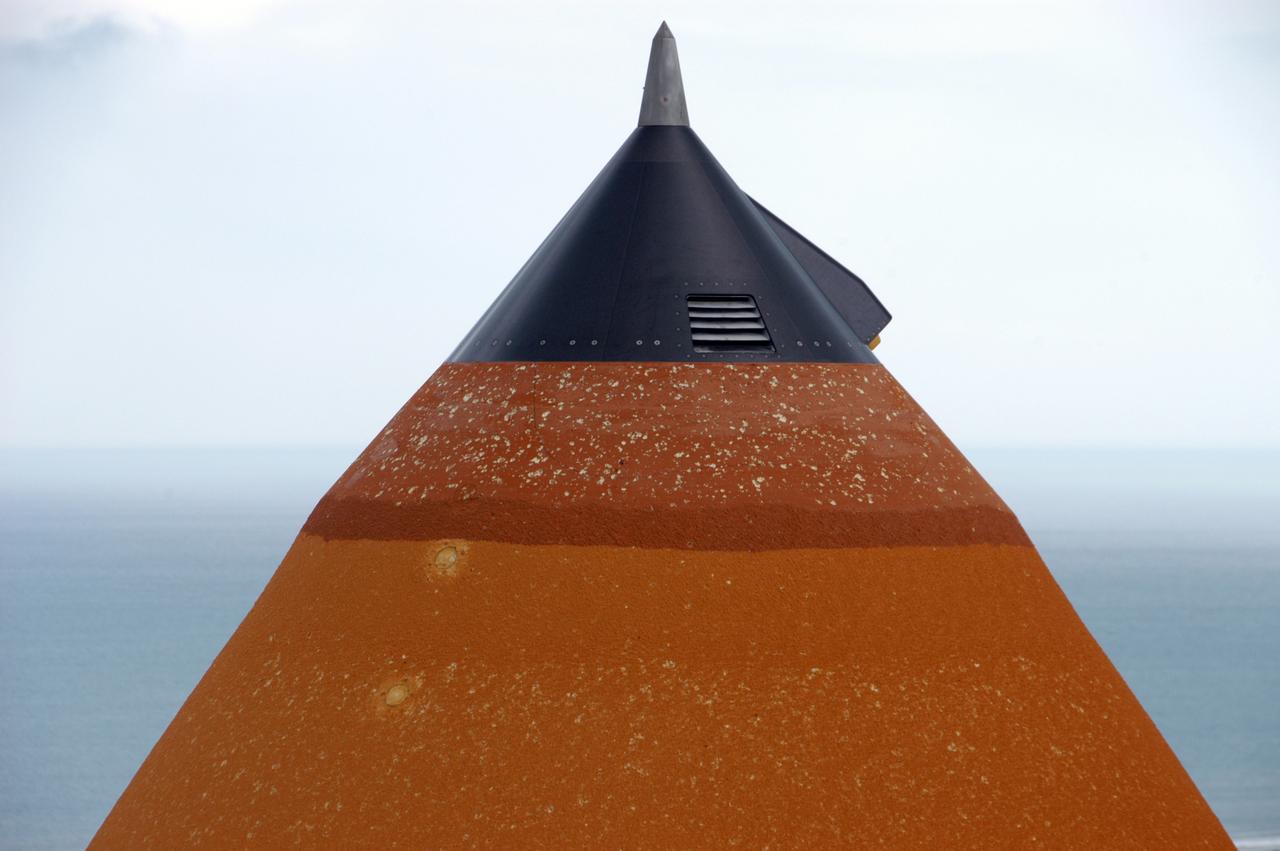
At Launch Pad 39A, the external tank attached to Space Shuttle Atlantis shows damage from hail bombardment during a strong thunderstorm that passed through Kennedy Space Center about 5 p.m. EST on Feb. 26. A full assessment of the storm's impact is under way. The two-day STS-117 Flight Readiness Review is being held concurrently with the assessment. Hail also impacted Space Shuttle Columbia before the launch of STS-4 in 1982; Atlantis, being readied for STS-38 in 1990; and Discovery, before the launch of STS-96 in 1999.
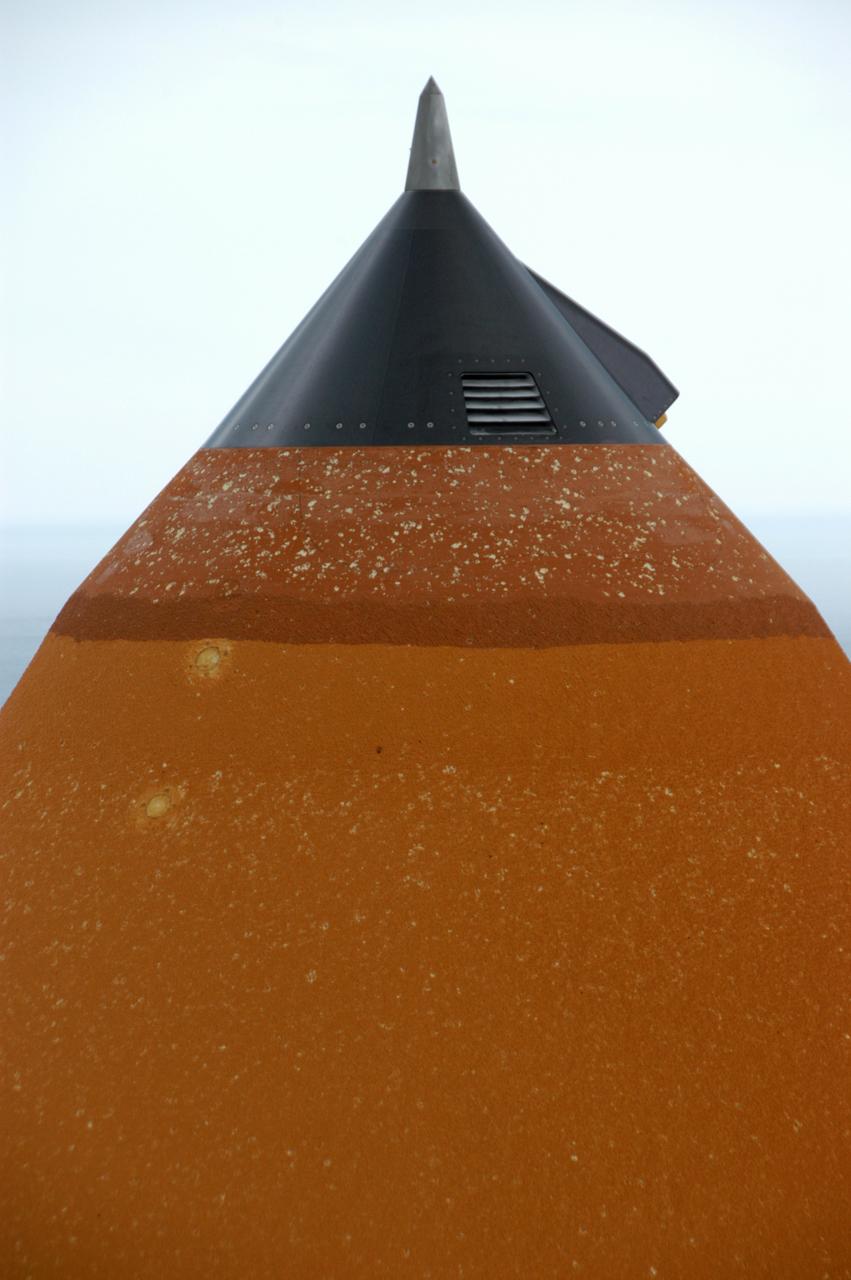
At Launch Pad 39A, the external tank attached to Space Shuttle Atlantis shows damage from hail bombardment during a strong thunderstorm that passed through Kennedy Space Center about 5 p.m. EST on Feb. 26. A full assessment of the storm's impact is under way. The two-day STS-117 Flight Readiness Review is being held concurrently with the assessment. Hail also impacted Space Shuttle Columbia before the launch of STS-4 in 1982; Atlantis, being readied for STS-38 in 1990; and Discovery, before the launch of STS-96 in 1999.
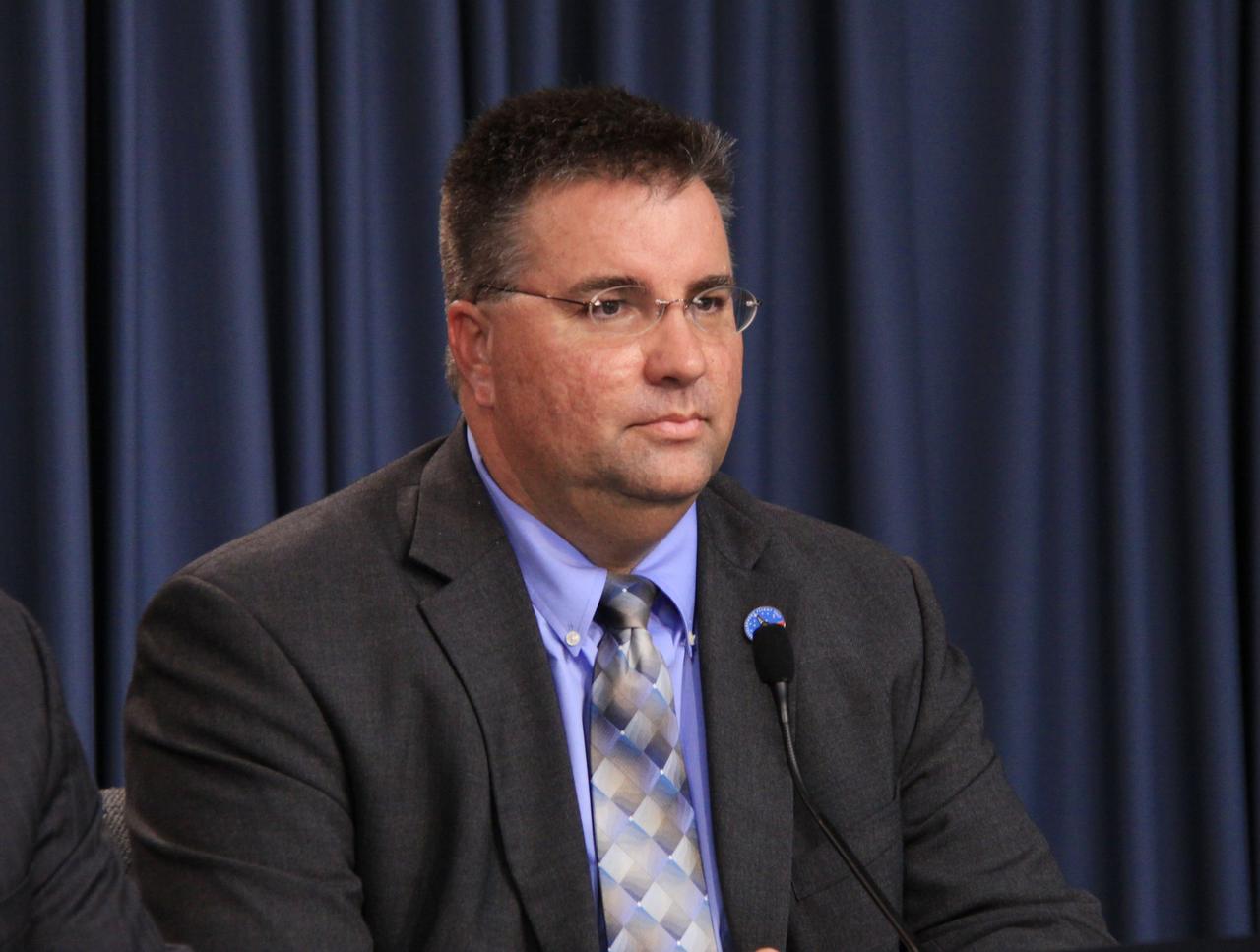
CAPE CANAVERAL, Fla. – In the Press Site auditorium at NASA's Kennedy Space Center in Florida, Edward Mango, launch director for the Ares I-X flight test, participates in a news conference following the conclusion of the flight test readiness review, or FTRR, for the Ares I-X test rocket. During the meeting, senior NASA and contractor managers assessed the risks associated with the test and determined the rocket, support systems and procedures are ready for launch. The Ares I-X launch date was announced after the FTRR and is officially set for Oct. 27. For information on the Ares I-X vehicle and flight test, visit http://www.nasa.gov/aresIX. Photo credit: NASA/Jack Pfaller
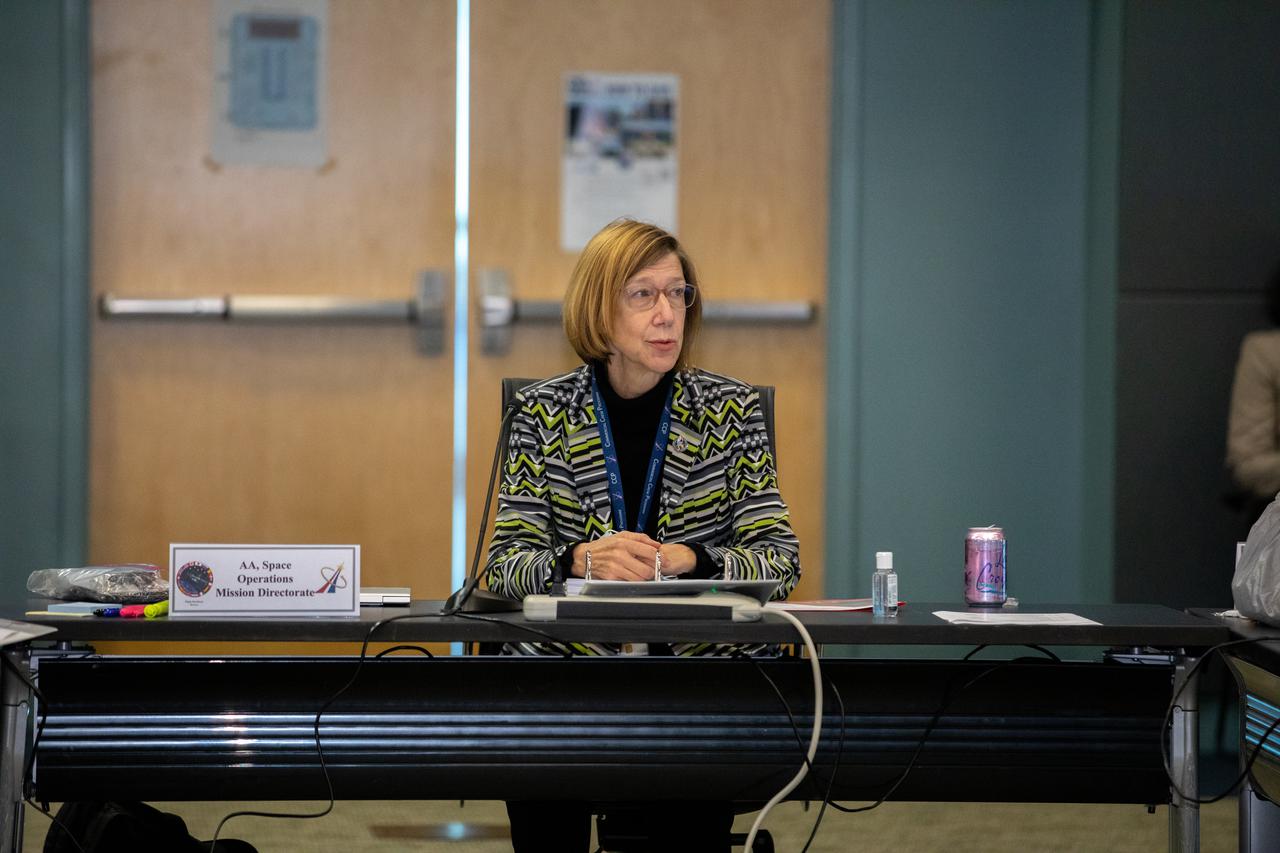
Kathy Lueders, NASA associate administrator, Human Exploration and Operations Mission Directorate, speaks during a Flight Readiness Review (FRR) for the agency’s SpaceX Crew-3 mission at Kennedy Space Center in Florida on Oct. 25, 2021. NASA and SpaceX mission managers held the FRR to confirm the SpaceX Falcon 9 and Crew Dragon spacecraft are ready for launch. International partners also participated. Crew-3 is scheduled to launch to the International Space Station from Kennedy’s Launch Complex 39A on Oct. 31, 2021 as part of NASA’s Commercial Crew Program. Liftoff is targeted for 2:21 a.m. EDT.
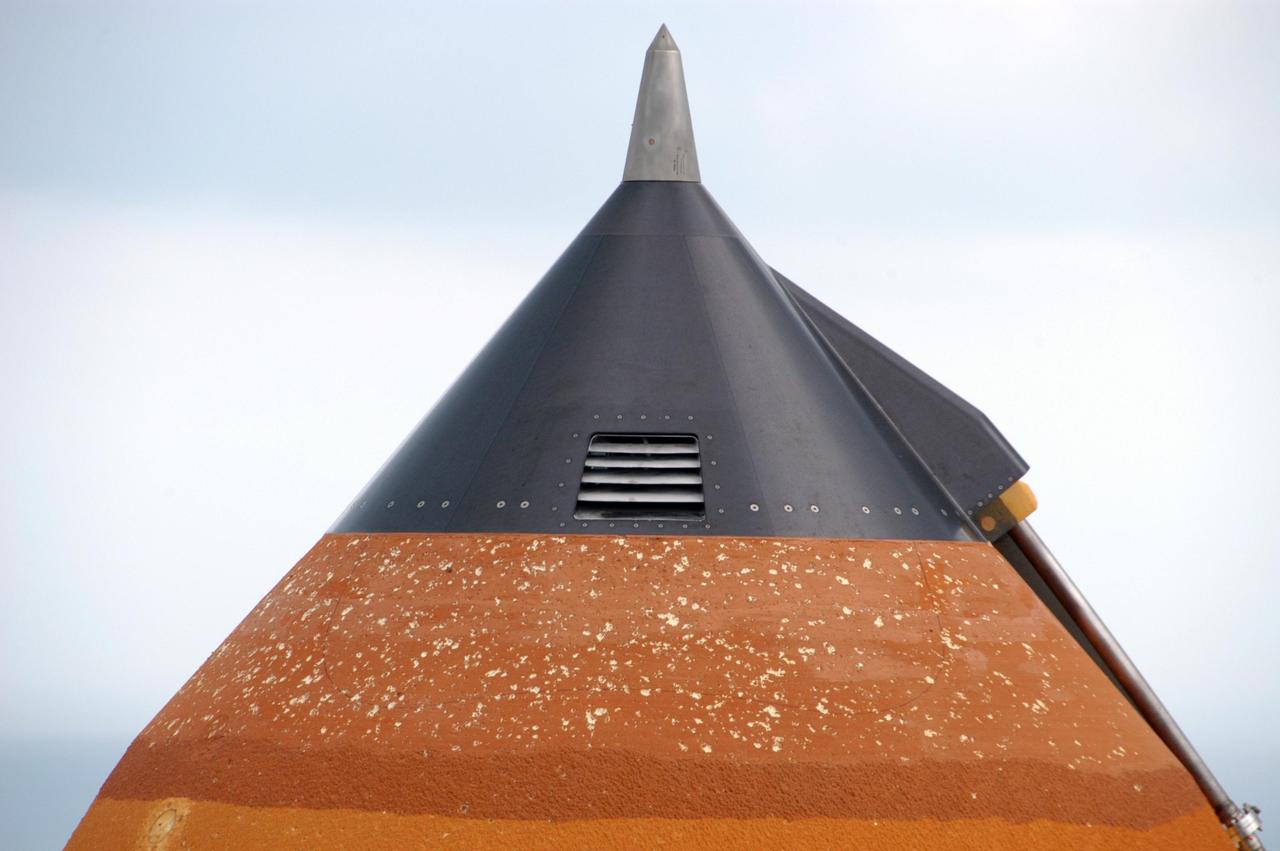
KENNEDY SPACE CENTER, FLA. -- At Launch Pad 39A, the external tank attached to Space Shuttle Atlantis shows damage from hail bombardment during a strong thunderstorm that passed through Kennedy Space Center about 5 p.m. EST on Feb. 26. A full assessment of the storm's impact is under way. The two-day STS-117 Flight Readiness Review is being held concurrently with the assessment. Hail also impacted Space Shuttle Columbia before the launch of STS-4 in 1982; Atlantis, being readied for STS-38 in 1990; and Discovery, before the launch of STS-96 in 1999.
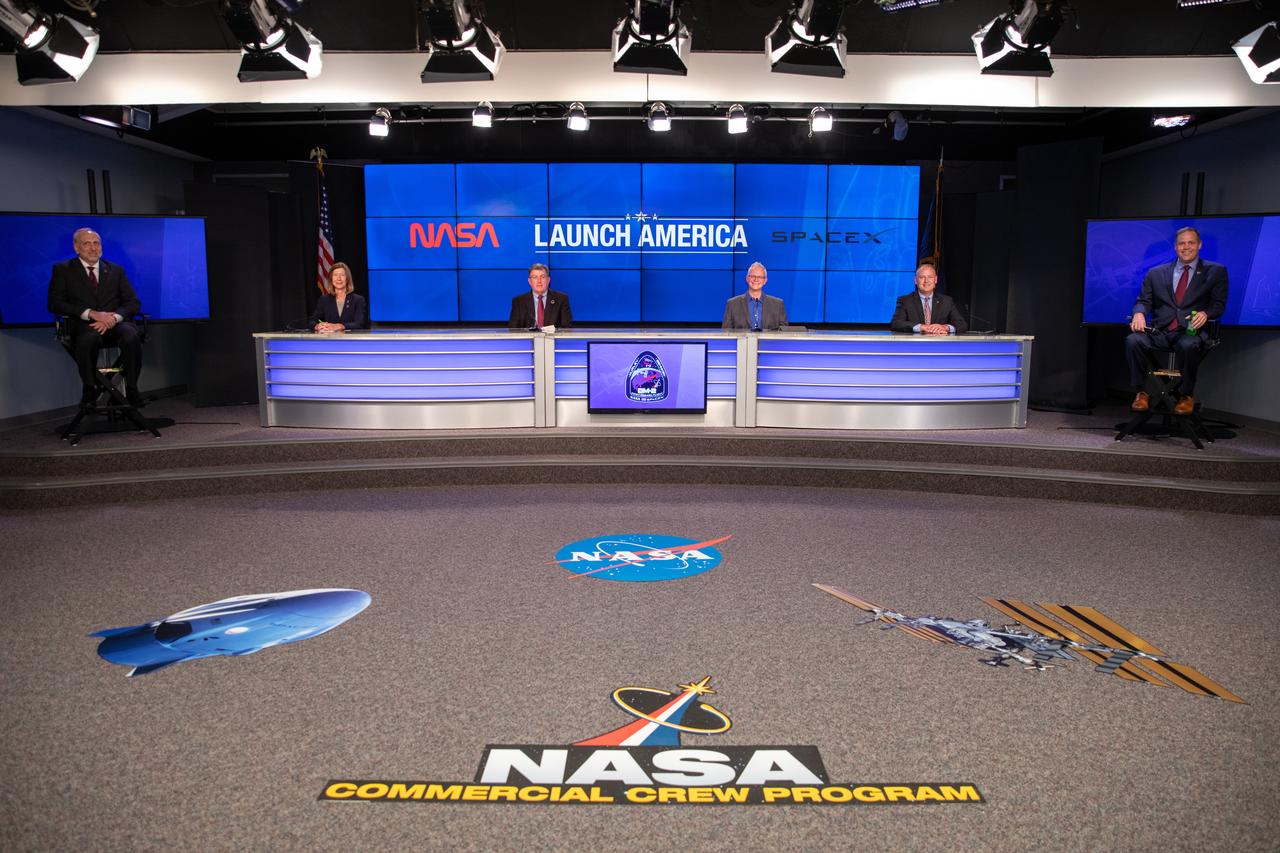
Inside the Press Site auditorium at NASA’s Kennedy Space Center in Florida, agency and industry leaders conduct a virtual news conference with members of the media on May 22, 2020, following the conclusion of the flight readiness review for NASA’s SpaceX Demo-2 mission, with NASA astronauts Robert Behnken and Douglas Hurley, to the International Space Station. From left are Steve Jurczyk, NASA associate administrator; Kathy Lueders, Commercial Crew Program manager; Kirk Shireman, International Space Station Program manager; Benji Reed, director of Crew Mission Management, SpaceX; Norm Knight, deputy director of NASA’s Johnson Space Center’s Flight Operations; and Jim Bridenstine, NASA administrator. This will be SpaceX’s final flight test for NASA’s Commercial Crew Program. Behnken and Hurley will fly to the orbiting laboratory in a SpaceX Crew Dragon spacecraft, launching atop a Falcon 9 rocket from Kennedy’s Launch Complex 39A. Liftoff is scheduled for 4:33 p.m. EDT on Wednesday, May 27.
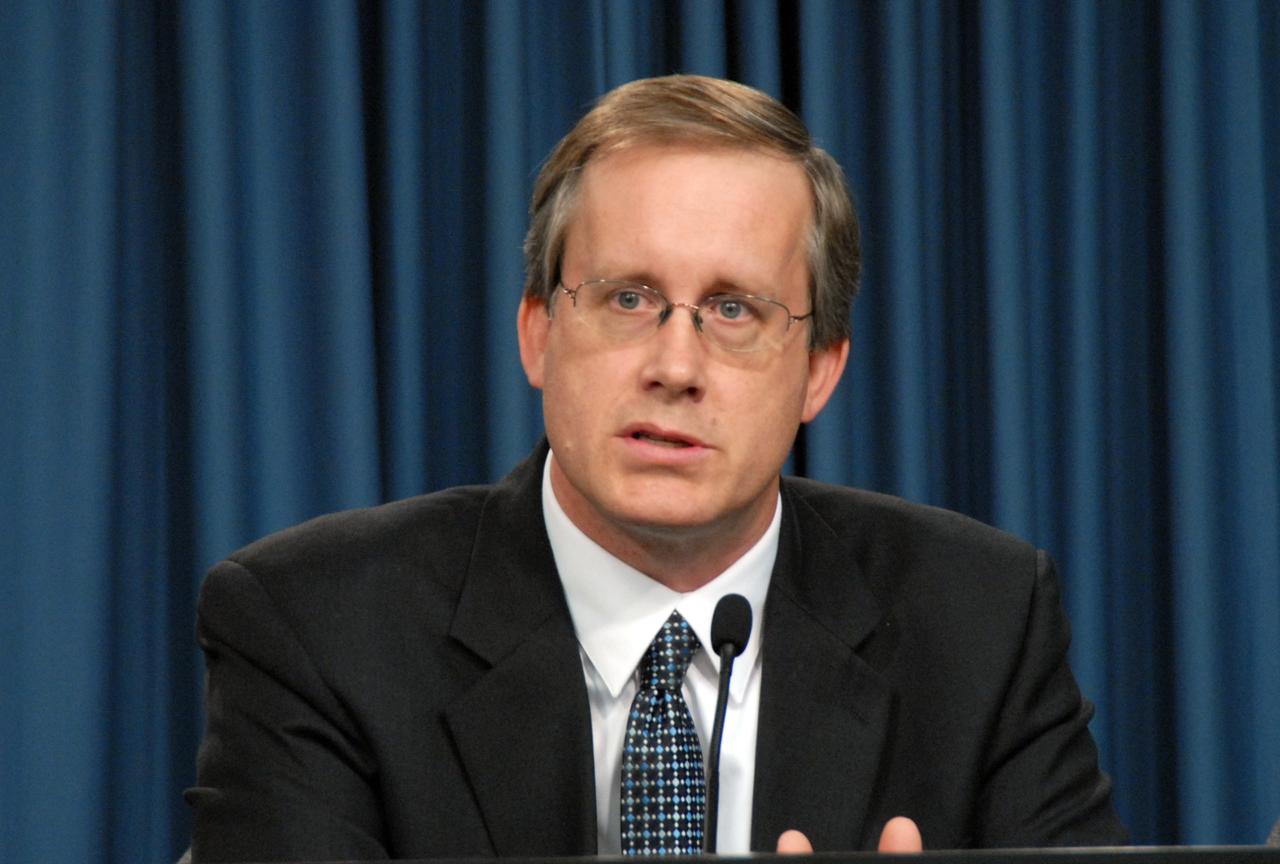
CAPE CANAVERAL, Fla. – At the flight readiness review news conference for space shuttle Discovery's STS-119 mission, Space Shuttle Program Manager John Shannon talks about the discussion surrounding Discovery's readiness for flight. NASA managers decided Feb. 20 more data and possible testing are required before proceeding to launch. Engineering teams have been working to identify what caused damage to a flow control valve on shuttle Endeavour during its November 2008 flight. A new launch date has not been determined. Photo credit: NASA/Glenn Benson
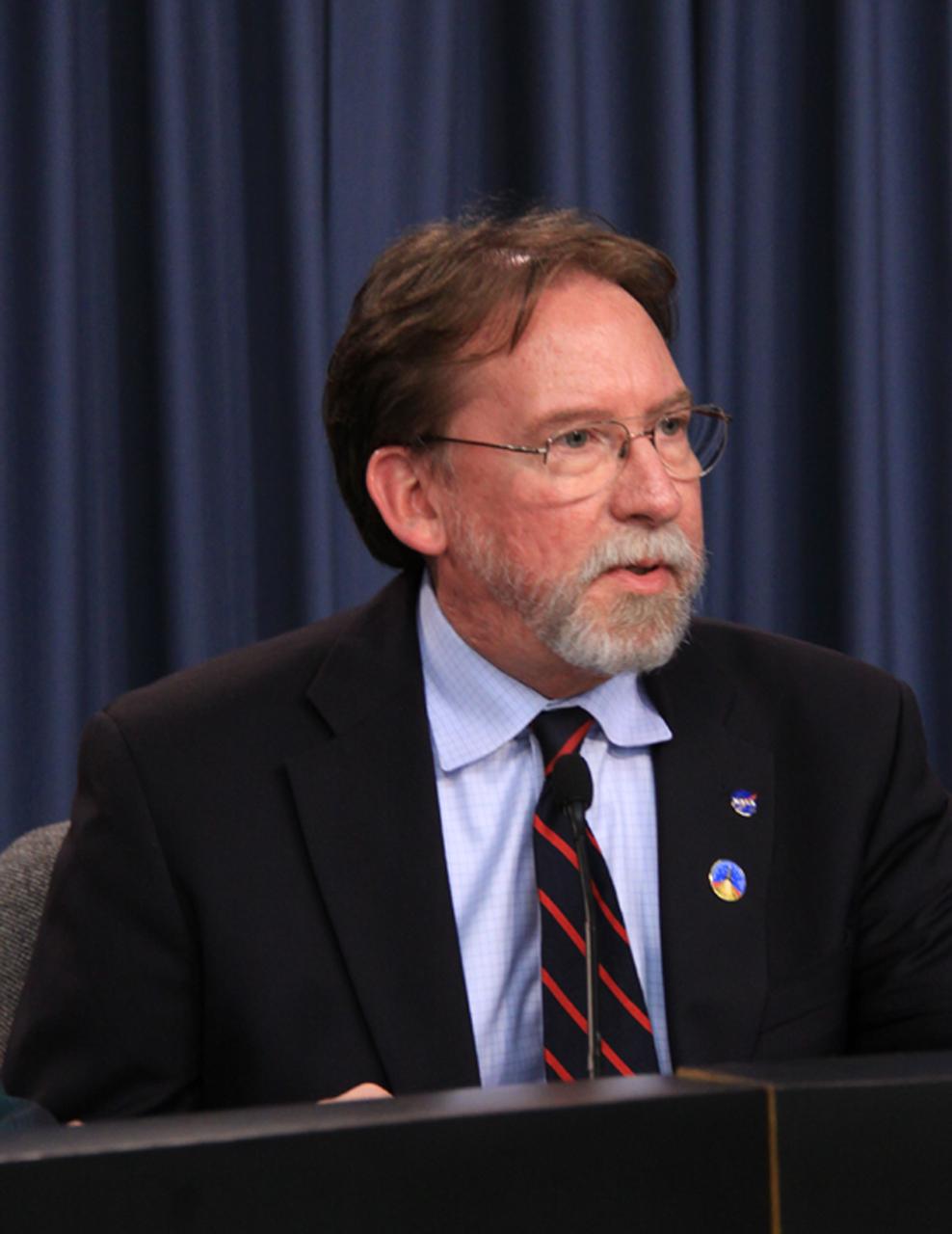
CAPE CANAVERAL, Fla. – In the Press Site auditorium at NASA's Kennedy Space Center in Florida, Doug Cooke, associate administrator for NASA's Exploration Systems Mission Directorate, participates in a news conference following the conclusion of the flight test readiness review, or FTRR, for the Ares I-X test rocket. During the meeting, senior NASA and contractor managers assessed the risks associated with the test and determined the rocket, support systems and procedures are ready for launch. The Ares I-X launch date was announced after the FTRR and is officially set for Oct. 27. For information on the Ares I-X vehicle and flight test, visit http://www.nasa.gov/aresIX. Photo credit: NASA/Jack Pfaller
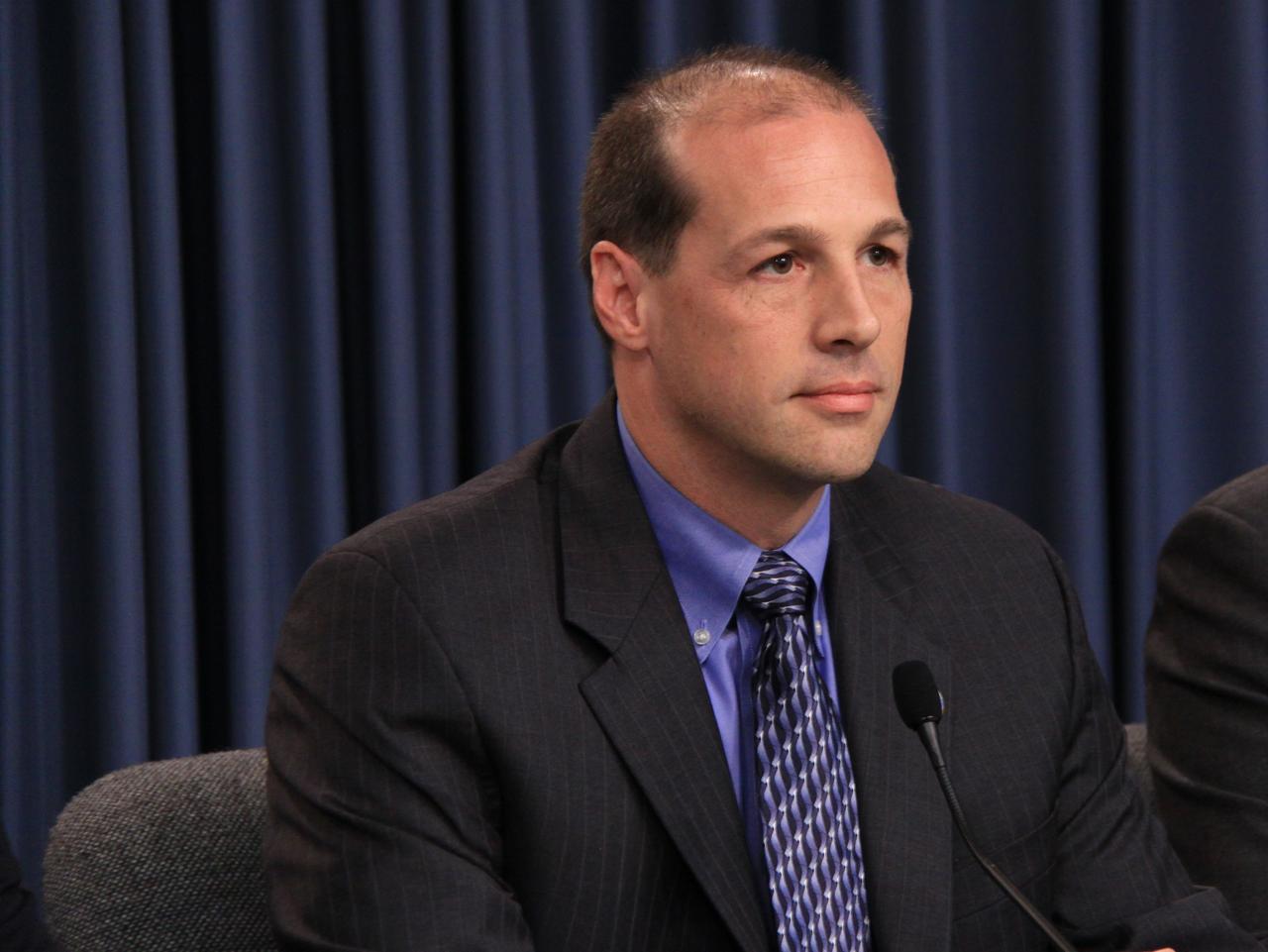
CAPE CANAVERAL, Fla. – In the Press Site auditorium at NASA's Kennedy Space Center in Florida, Bob Ess, NASA's mission manager for the Ares I-X flight test, participates in a news conference following the conclusion of the flight test readiness review, or FTRR, for the Ares I-X test rocket. During the meeting, senior NASA and contractor managers assessed the risks associated with the test and determined the rocket, support systems and procedures are ready for launch. The Ares I-X launch date was announced after the FTRR and is officially set for Oct. 27. For information on the Ares I-X vehicle and flight test, visit http://www.nasa.gov/aresIX. Photo credit: NASA/Jack Pfaller
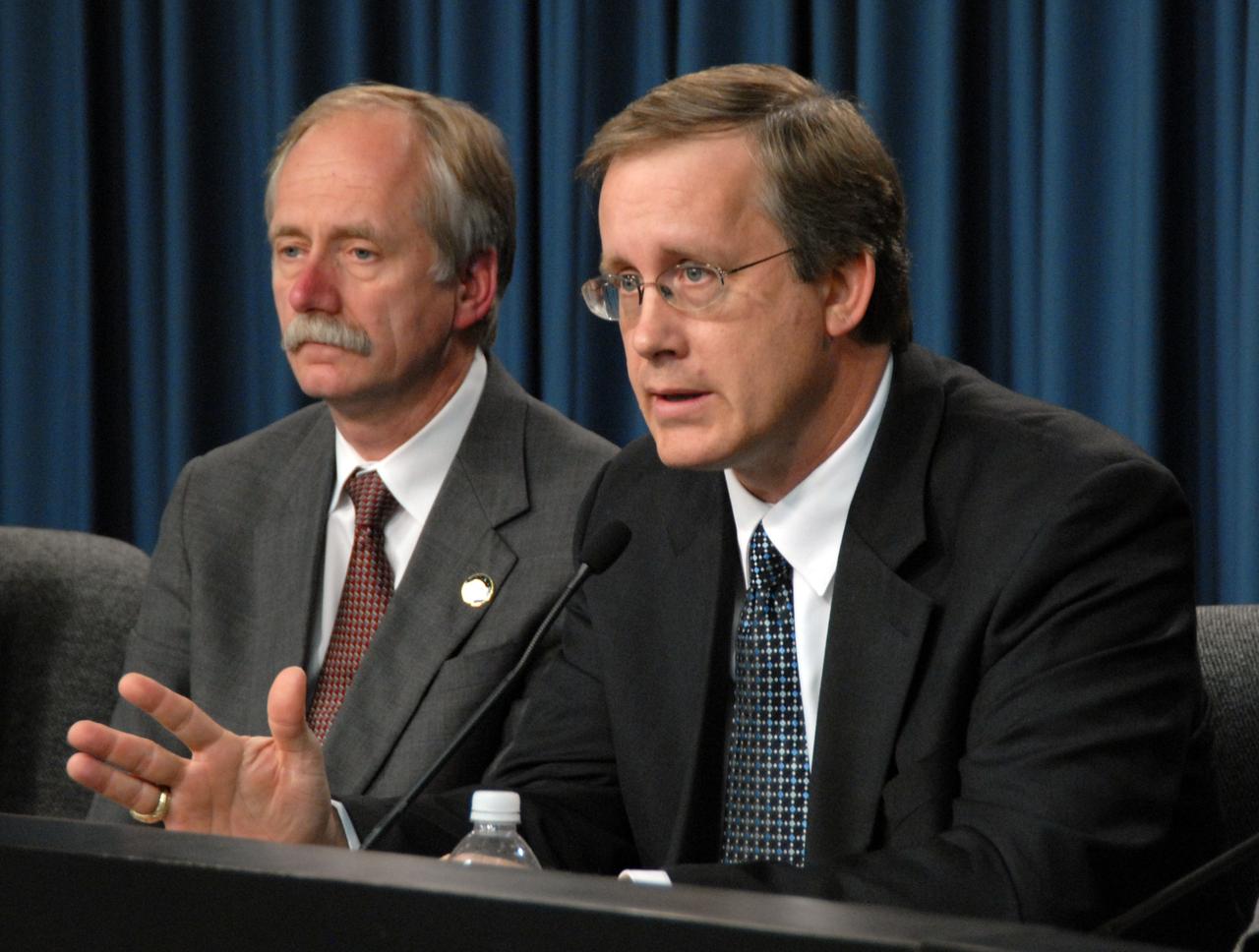
CAPE CANAVERAL, Fla. – At the flight readiness review news conference for space shuttle Discovery's STS-119 mission, Space Shuttle Program Manager John Shannon (right) talks about the discussion surrounding Discovery's readiness for flight. At left is Associate Administrator for Space Operations Bill Gerstenmaier. NASA managers decided Feb. 20 more data and possible testing are required before proceeding to launch. Engineering teams have been working to identify what caused damage to a flow control valve on shuttle Endeavour during its November 2008 flight. A new launch date has not been determined. Photo credit: NASA/Glenn Benson
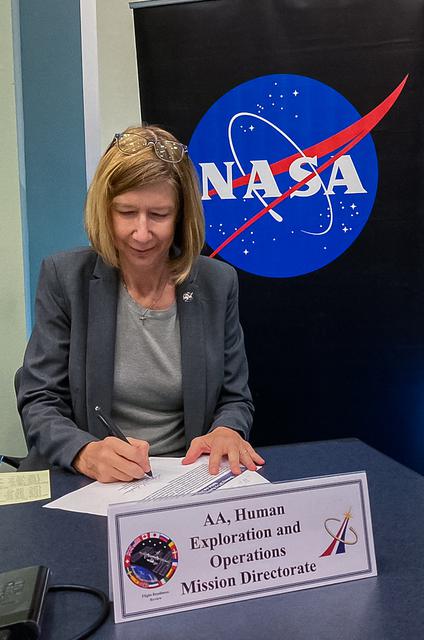
Associate Administrator of the Human Exploration and Operations (HEO) Mission Directorate Kathryn Lueders chaired the Flight Readiness Review for Boeing's upcoming Orbital Flight Test-2 (OFT-2) in Operations Support Building 2 at NASA's Kennedy Space Center in Florida, July 22, 2021. At the conclusion of the meeting, all board members sign the Certificate of Flight Readiness certifying their readiness to proceed to the next milestones and launch of Boeing's CST-100 Starliner atop a United Launch Alliance Atlas V rocket from Space Launch Complex 41 at Cape Canaveral Space Force Station. Launch time remains 2:53 p.m. EDT Friday, July 30 for the uncrewed OFT-2 mission – Starliner's second flight to the International Space Station for NASA's Commercial Crew Program.

NASA and Boeing managers take part in the flight readiness review for Boeing’s upcoming Orbital Flight Test in Operations Support Building 2 at NASA’s Kennedy Space Center in Florida, Dec. 12, 2019. Boeing’s CST-100 Starliner spacecraft will launch atop a United Launch Alliance Atlas V rocket from Space Launch Complex 41 at Cape Canaveral Air Force Station. The uncrewed Orbital Flight Test will be the Starliner’s first flight to the International Space Station for NASA’s Commercial Crew Program.
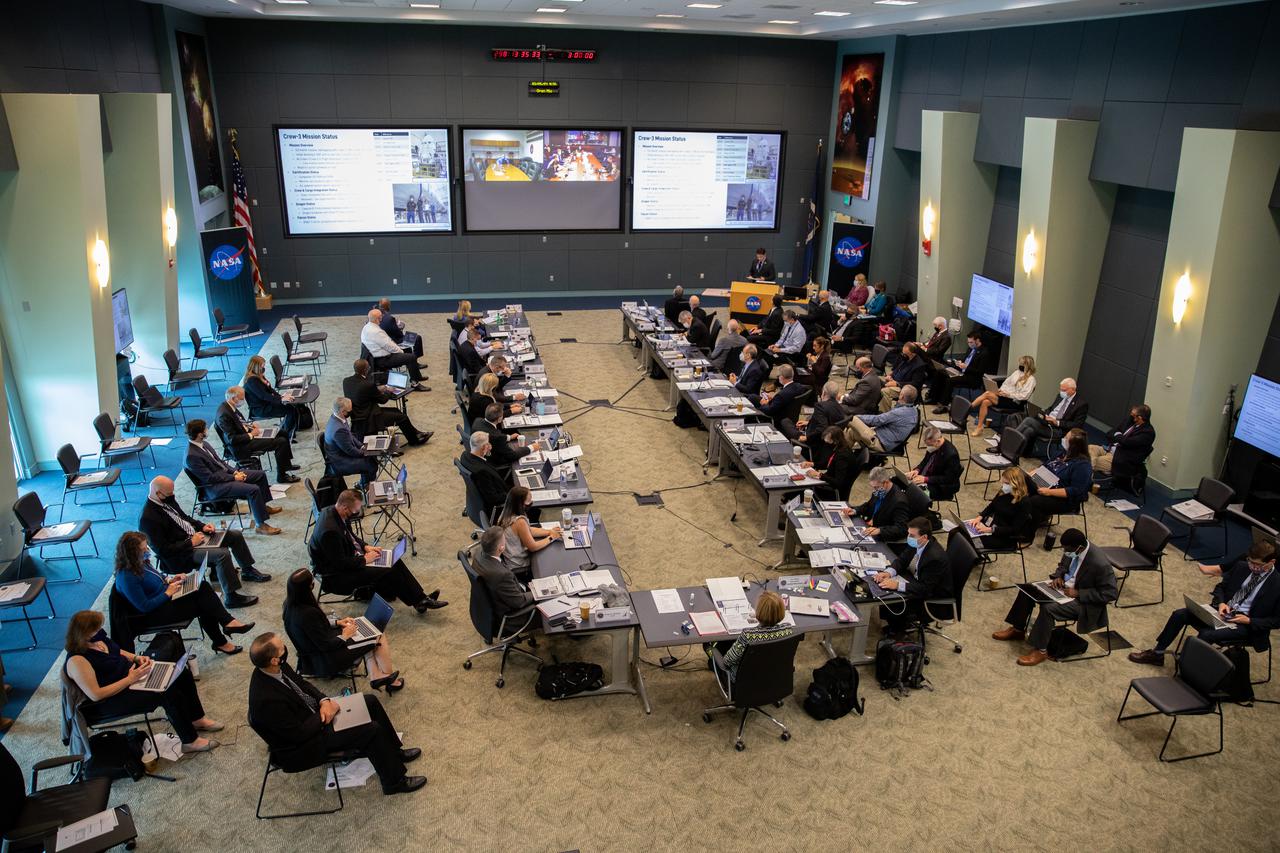
NASA and SpaceX managers participate in a Flight Readiness Review for the agency’s SpaceX Crew-3 mission at Kennedy Space Center in Florida on Oct. 25, 2021. International partners also participated. Crew-3 is scheduled to launch to the International Space Station from Kennedy’s Launch Complex 39A on Oct. 31, 2021 as part of NASA’s Commercial Crew Program. Liftoff of the Falcon 9 rocket and Crew Dragon spacecraft is targeted for 2:21 a.m. EDT.
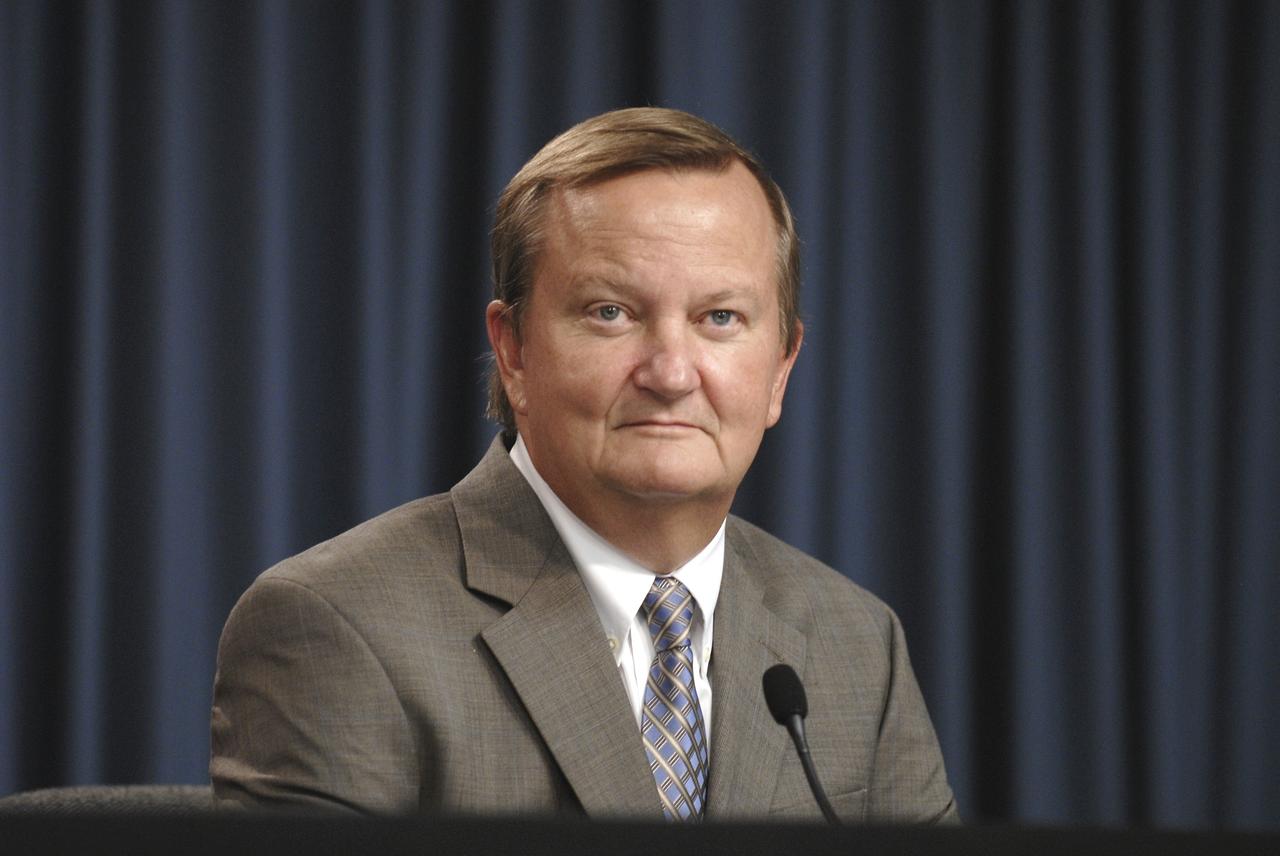
CAPE CANAVERAL, Fla. –Shuttle Launch Director Mike Leinbach talks about the Flight Readiness review for STS-129 during a news conference in the Press Site auditorium at NASA's Kennedy Space Center in Florida. The session confirmed a Nov. 16 launch date for space shuttle Atlantis is to fly the resupply mission to the International Space Station. Photo credit: NASA/Kim Shiflett.
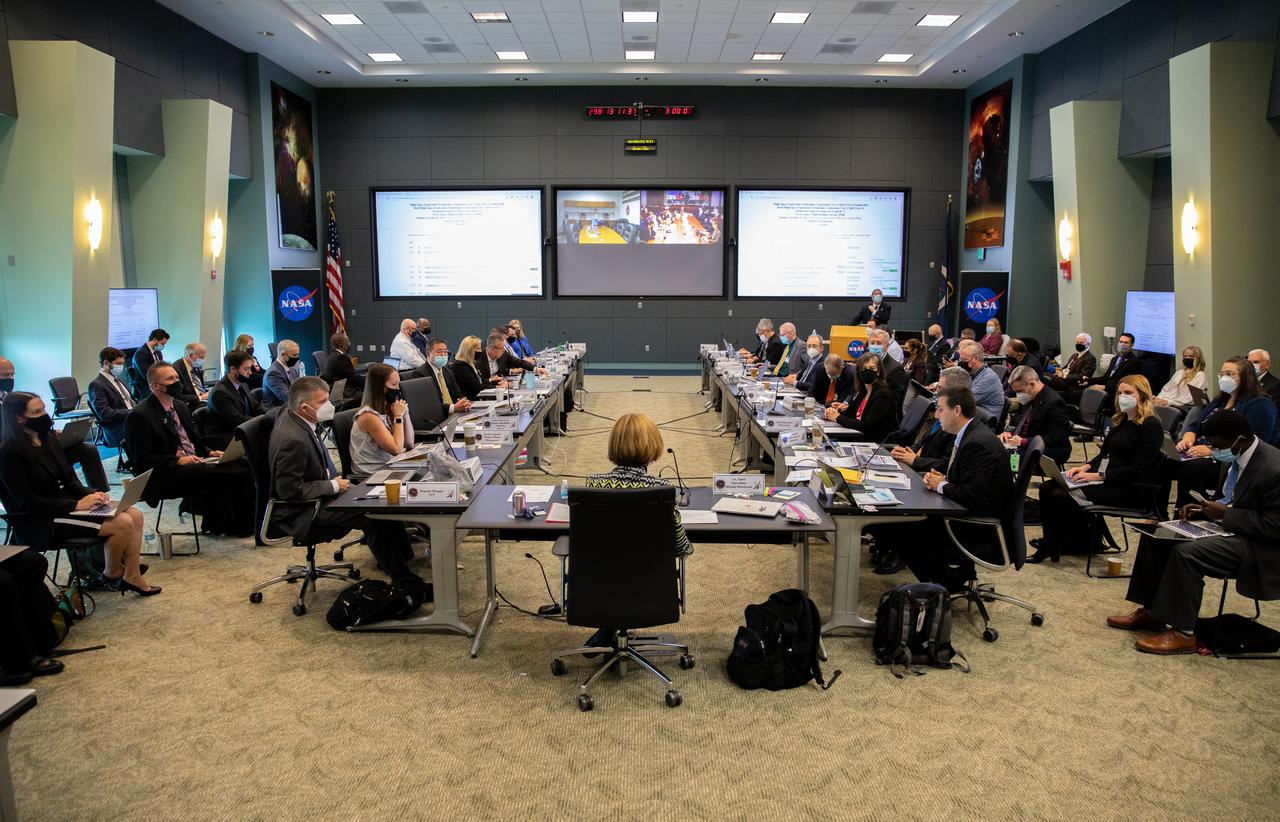
NASA and SpaceX managers participate in a Flight Readiness Review for the agency’s SpaceX Crew-3 mission at Kennedy Space Center in Florida on Oct. 25, 2021. International partners also participated. Crew-3 is scheduled to launch to the International Space Station from Kennedy’s Launch Complex 39A on Oct. 31, 2021 as part of NASA’s Commercial Crew Program. Liftoff of the Falcon 9 rocket and Crew Dragon spacecraft is targeted for 2:21 a.m. EDT.