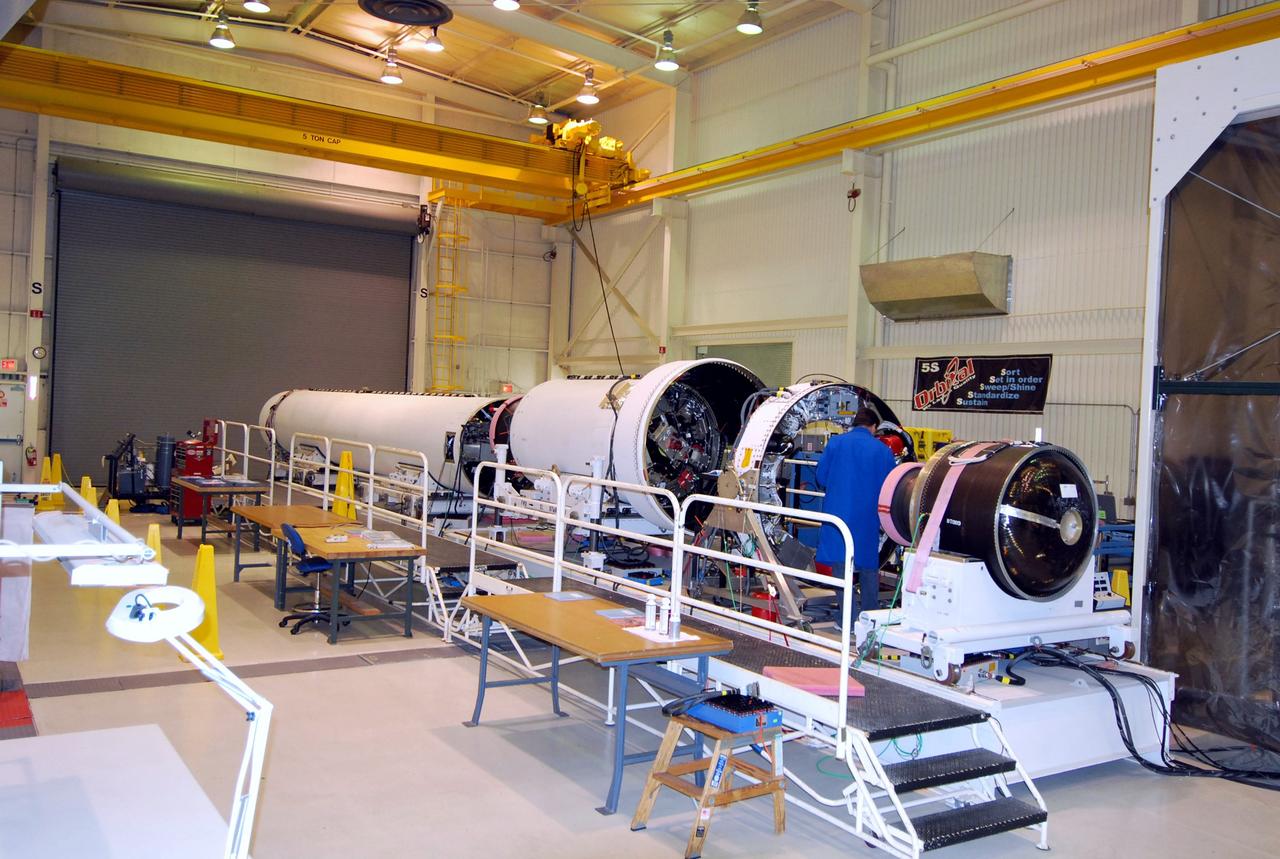
VANDENBERG AIR FORCE BASE, Calif. – At Vandenberg Air Force Base in California, the Taurus XL rocket's 1, 2 and 3 stages are prepared for their first flight simulation, which will include testing voltages, currents, pressures, temperatures and thruster firings. The four-stage rocket is being prepared to carry NASA's Glory satellite into low Earth orbit and will lift off from Vandenberg's Launch Pad SLC 576-E. Once Glory reaches orbit, it will collect data on the properties of aerosols and black carbon. It also will help scientists understand how the sun's irradiance affects Earth's climate. Photo credit: NASA/Randy Beaudoin, VAFB
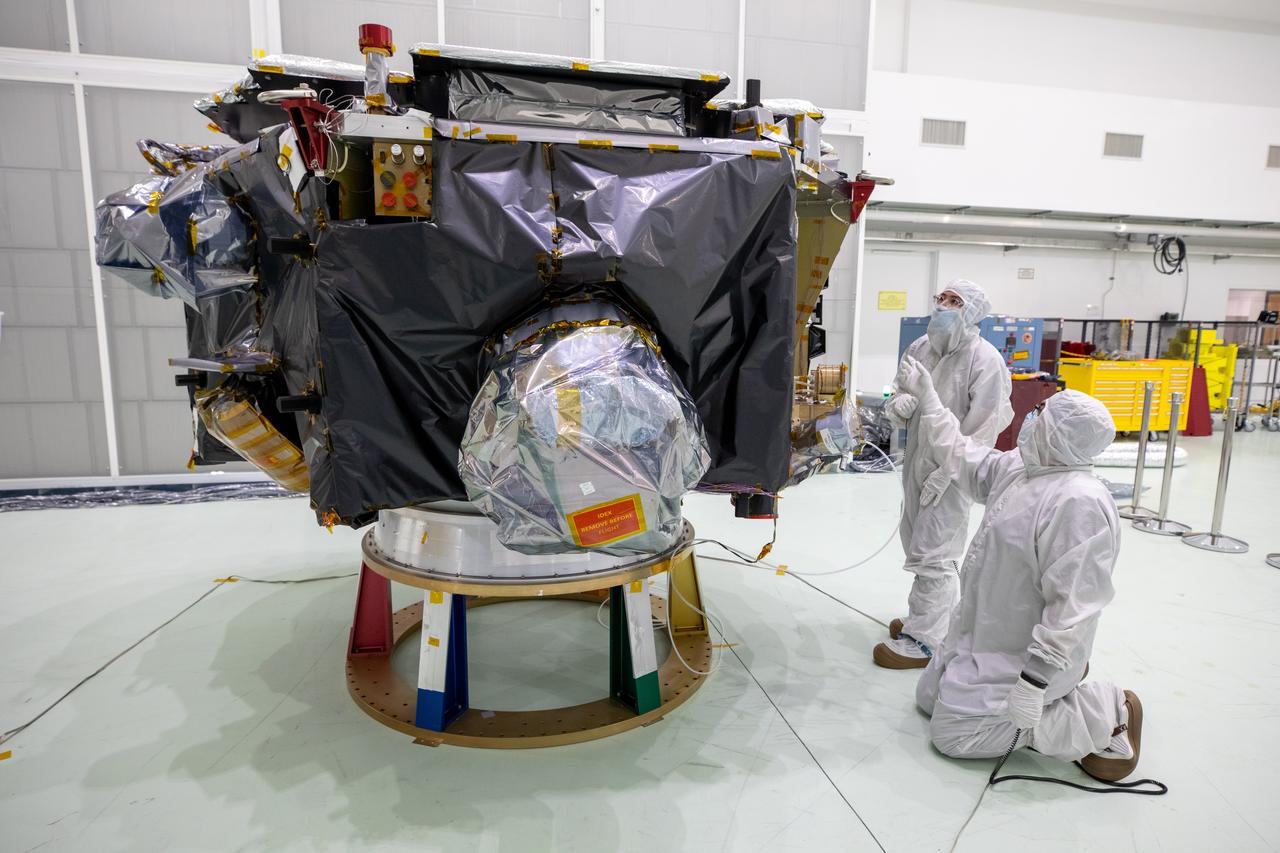
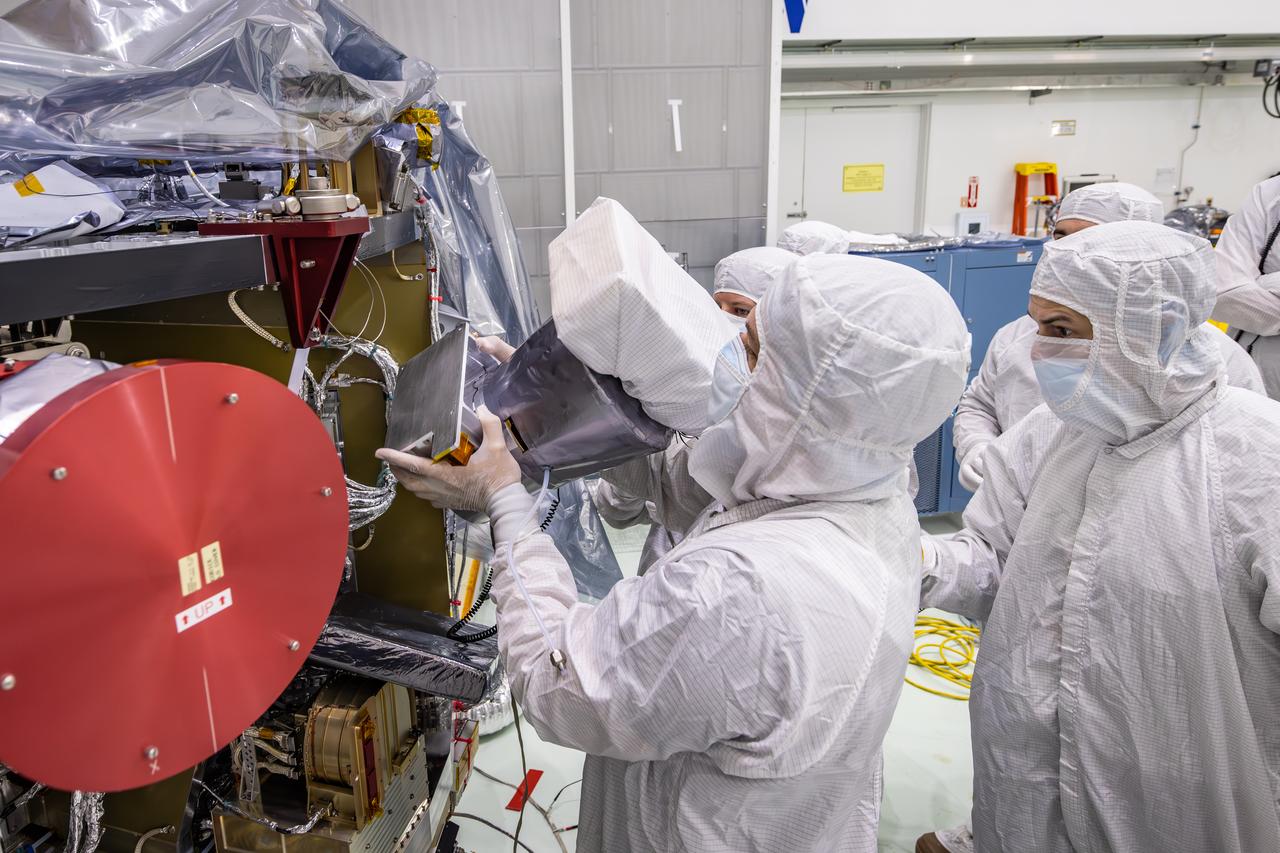
Technicians remove protective coverings form NASA’s IMAP (Interstellar Mapping and Acceleration Probe) inside the high bay at the Astrotech Space Operations Facility near the agency’s Kennedy Space Center in Florida on Thursday, May 29,2025. The observatory will study how the Sun shapes the boundaries of the heliosphere, the bubble protecting around our solar system, and is targeted for launch this fall aboard a SpaceX Falcon 9 rocket from Launch Complex 39A at NASA Kennedy.
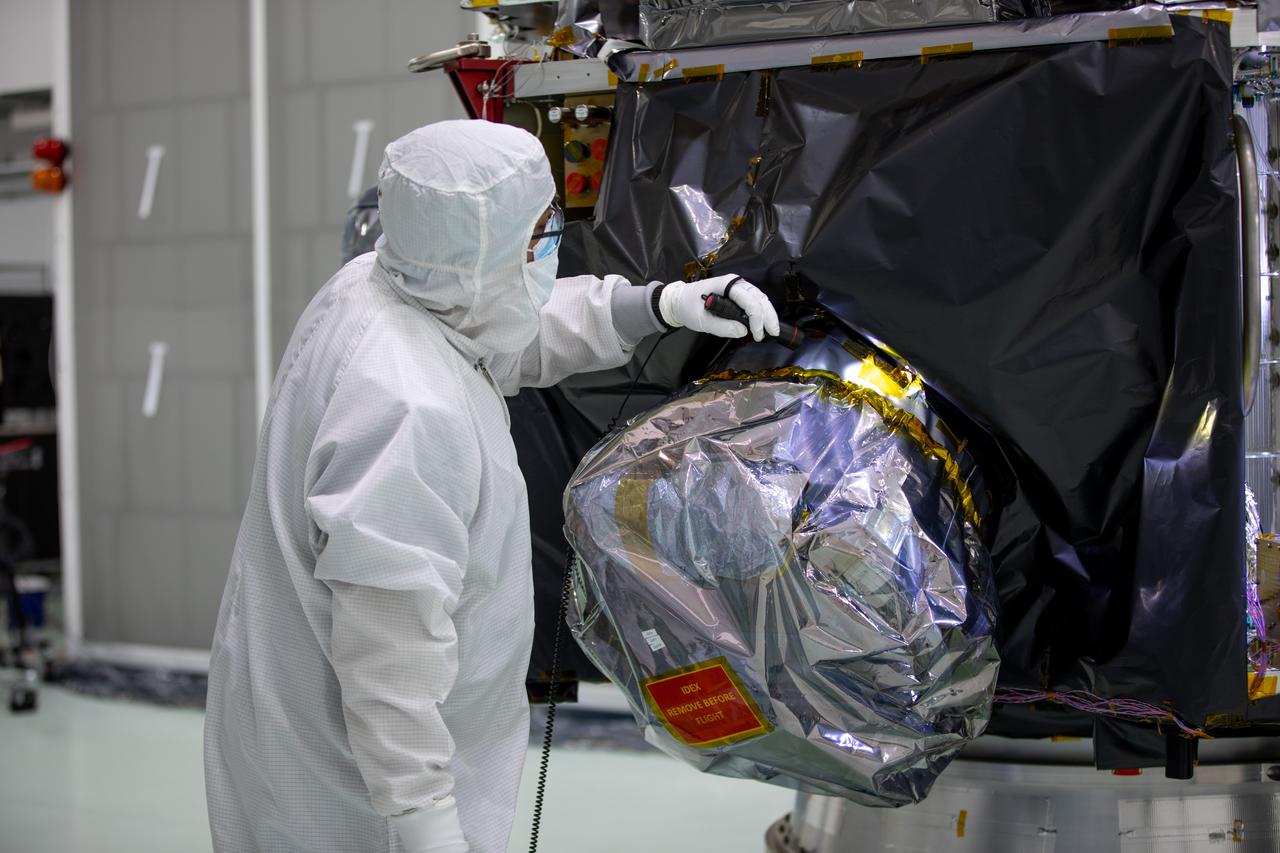
Technicians remove protective coverings form NASA’s IMAP (Interstellar Mapping and Acceleration Probe) inside the high bay at the Astrotech Space Operations Facility near the agency’s Kennedy Space Center in Florida on Thursday, May 29,2025. The observatory will study how the Sun shapes the boundaries of the heliosphere, the bubble protecting around our solar system, and is targeted for launch this fall aboard a SpaceX Falcon 9 rocket from Launch Complex 39A at NASA Kennedy.
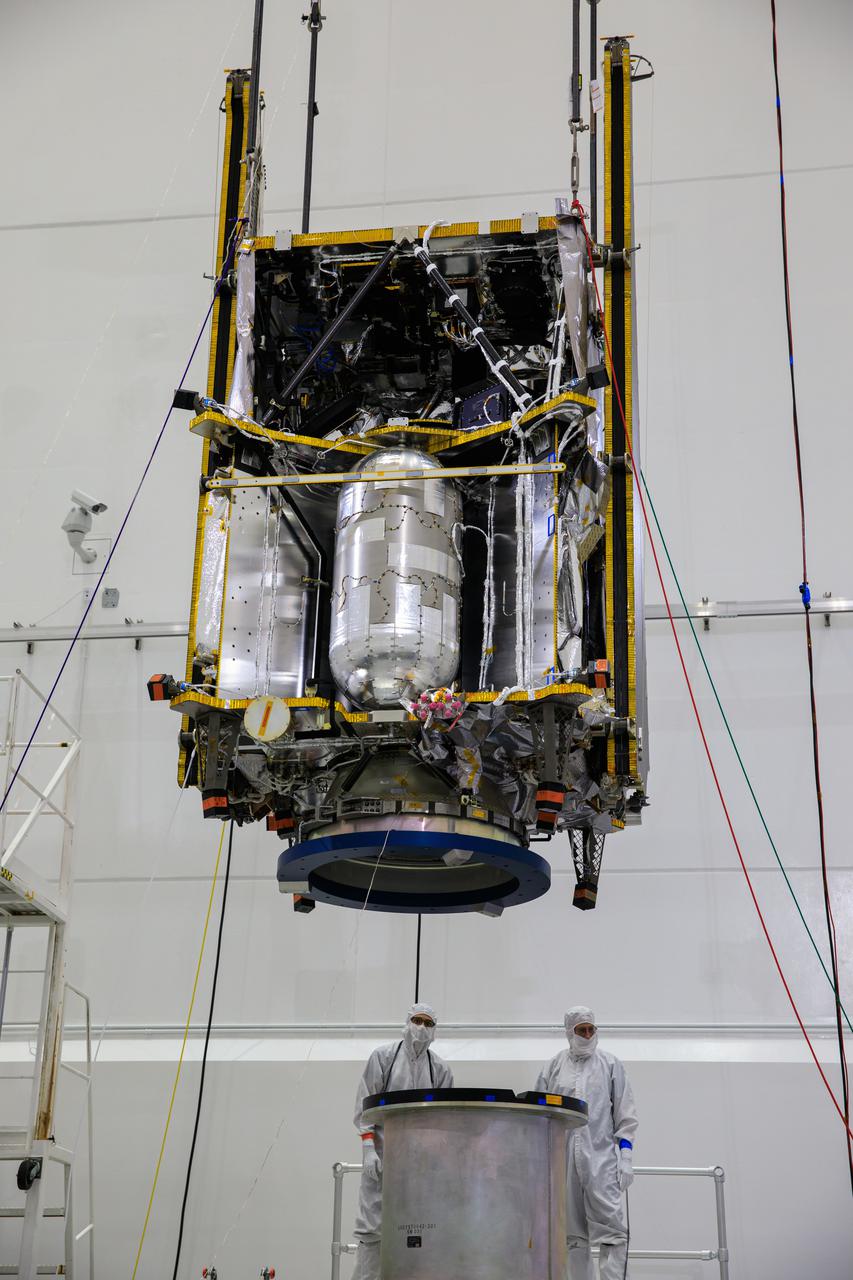
Workers inside the Astrotech Space Operations Facility in Titusville, Florida, monitor the progress as NASA’s Lucy spacecraft is lifted by crane for its transfer to a rotation stand on Aug. 4, 2021. Lucy is scheduled to launch no earlier than Saturday, Oct. 16, on a United Launch Alliance Atlas V 401 rocket from Launch Pad 41 at Cape Canaveral Space Force Station. NASA’s Launch Services Program based at Kennedy Space Center is managing the launch. Over its 12-year primary mission, Lucy will explore a record-breaking number of asteroids, flying by one asteroid in the solar system’s main belt and seven Trojan asteroids. Additionally, Lucy’s path will circle back to Earth three times for gravity assists, making it the first spacecraft ever to return to the vicinity of Earth from the outer solar system.
Technicians lift NASA’s IMAP (Interstellar Mapping and Acceleration Probe) spacecraft onto a work stand inside the high bay at the Astrotech Space Operations Facility near the agency’s Kennedy Space Center in Florida on Thursday, May 29, 2025. The observatory will study how the Sun shapes the boundaries of the heliosphere, the bubble protecting around our solar system, and is targeted for launch this fall aboard a SpaceX Falcon 9 rocket from Launch Complex 39A at NASA Kennedy.

Workers inside the Astrotech Space Operations Facility in Titusville, Florida, prepare NASA’s Lucy spacecraft for its lift by crane and transfer to a rotation stand on Aug. 4, 2021. Lucy is scheduled to launch no earlier than Saturday, Oct. 16, on a United Launch Alliance Atlas V 401 rocket from Launch Pad 41 at Cape Canaveral Space Force Station. NASA’s Launch Services Program based at Kennedy Space Center is managing the launch. Over its 12-year primary mission, Lucy will explore a record-breaking number of asteroids, flying by one asteroid in the solar system’s main belt and seven Trojan asteroids. Additionally, Lucy’s path will circle back to Earth three times for gravity assists, making it the first spacecraft ever to return to the vicinity of Earth from the outer solar system.
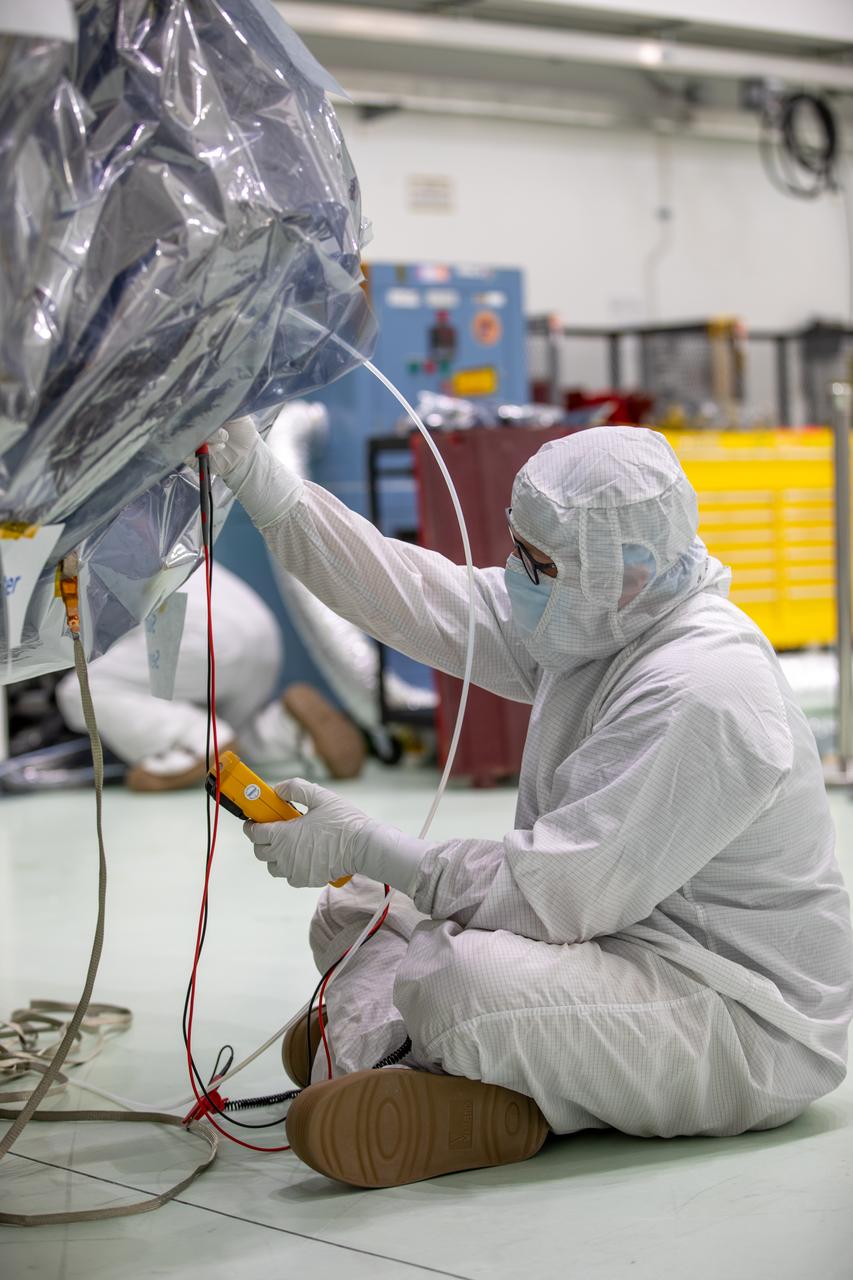
Technicians perform status checks on NASA’s IMAP (Interstellar Mapping and Acceleration Probe) spacecraft after removal from its shipping container inside the high bay at the Astrotech Space Operations Facility near the agency’s Kennedy Space Center in Florida on Thursday, May 29, 2025. The observatory will study how the Sun shapes the boundaries of the heliosphere, the bubble protecting around our solar system, and is targeted for launch this fall aboard a SpaceX Falcon 9 rocket from Launch Complex 39A at NASA Kennedy.
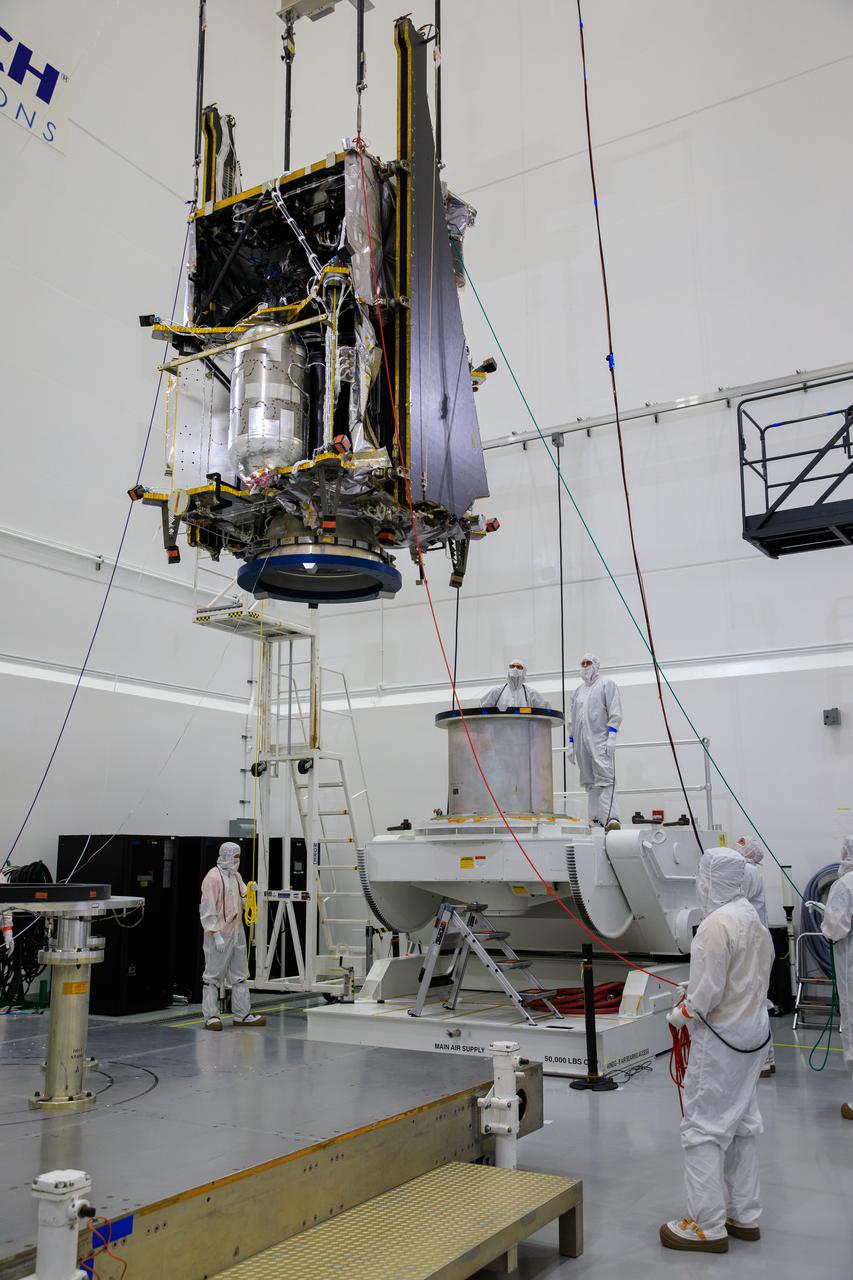
Workers inside the Astrotech Space Operations Facility in Titusville, Florida, monitor the progress as NASA’s Lucy spacecraft is lifted by crane for its transfer to a rotation stand on Aug. 4, 2021. Lucy is scheduled to launch no earlier than Saturday, Oct. 16, on a United Launch Alliance Atlas V 401 rocket from Launch Pad 41 at Cape Canaveral Space Force Station. NASA’s Launch Services Program based at Kennedy Space Center is managing the launch. Over its 12-year primary mission, Lucy will explore a record-breaking number of asteroids, flying by one asteroid in the solar system’s main belt and seven Trojan asteroids. Additionally, Lucy’s path will circle back to Earth three times for gravity assists, making it the first spacecraft ever to return to the vicinity of Earth from the outer solar system.
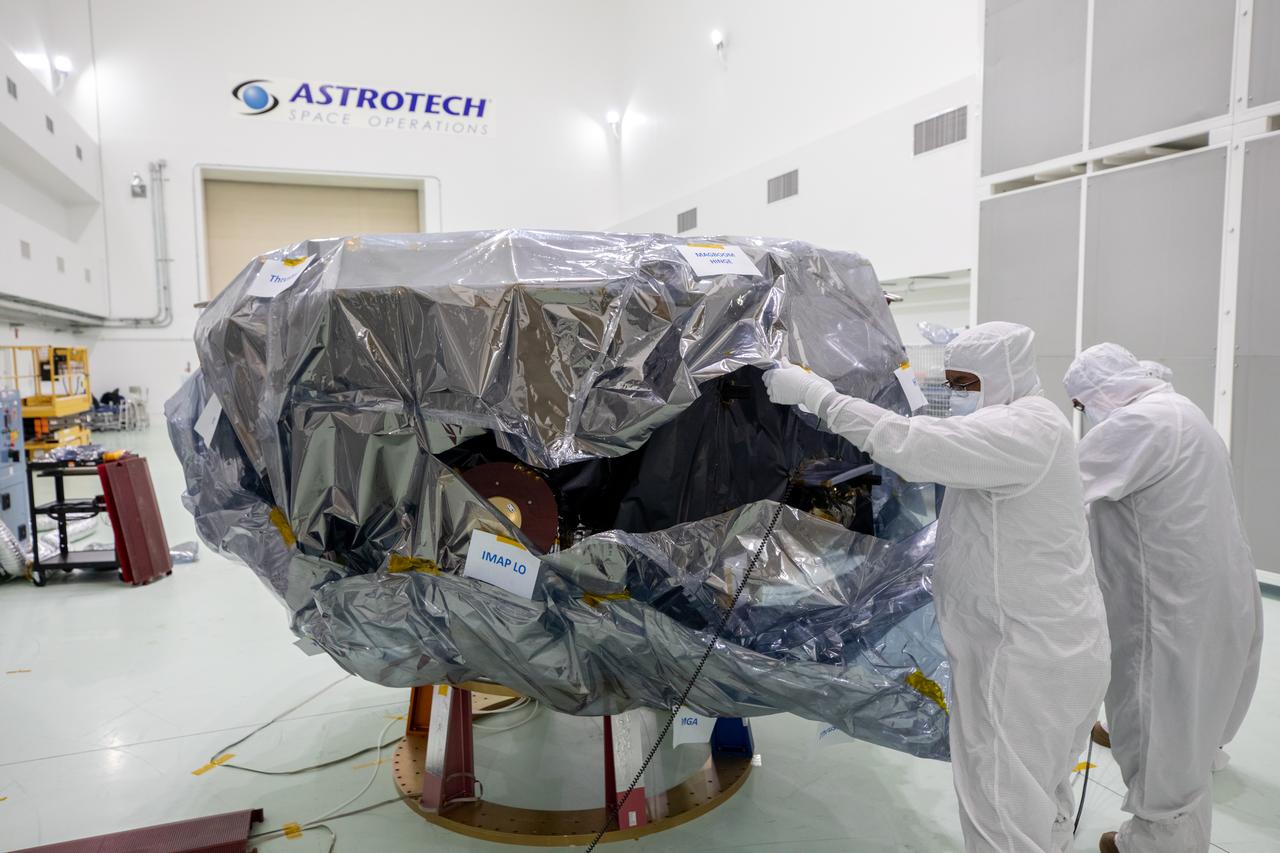
Technicians remove protective coverings form NASA’s IMAP (Interstellar Mapping and Acceleration Probe) inside the high bay at the Astrotech Space Operations Facility near the agency’s Kennedy Space Center in Florida on Thursday, May 29,2025. The observatory will study how the Sun shapes the boundaries of the heliosphere, the bubble protecting around our solar system, and is targeted for launch this fall aboard a SpaceX Falcon 9 rocket from Launch Complex 39A at NASA Kennedy.
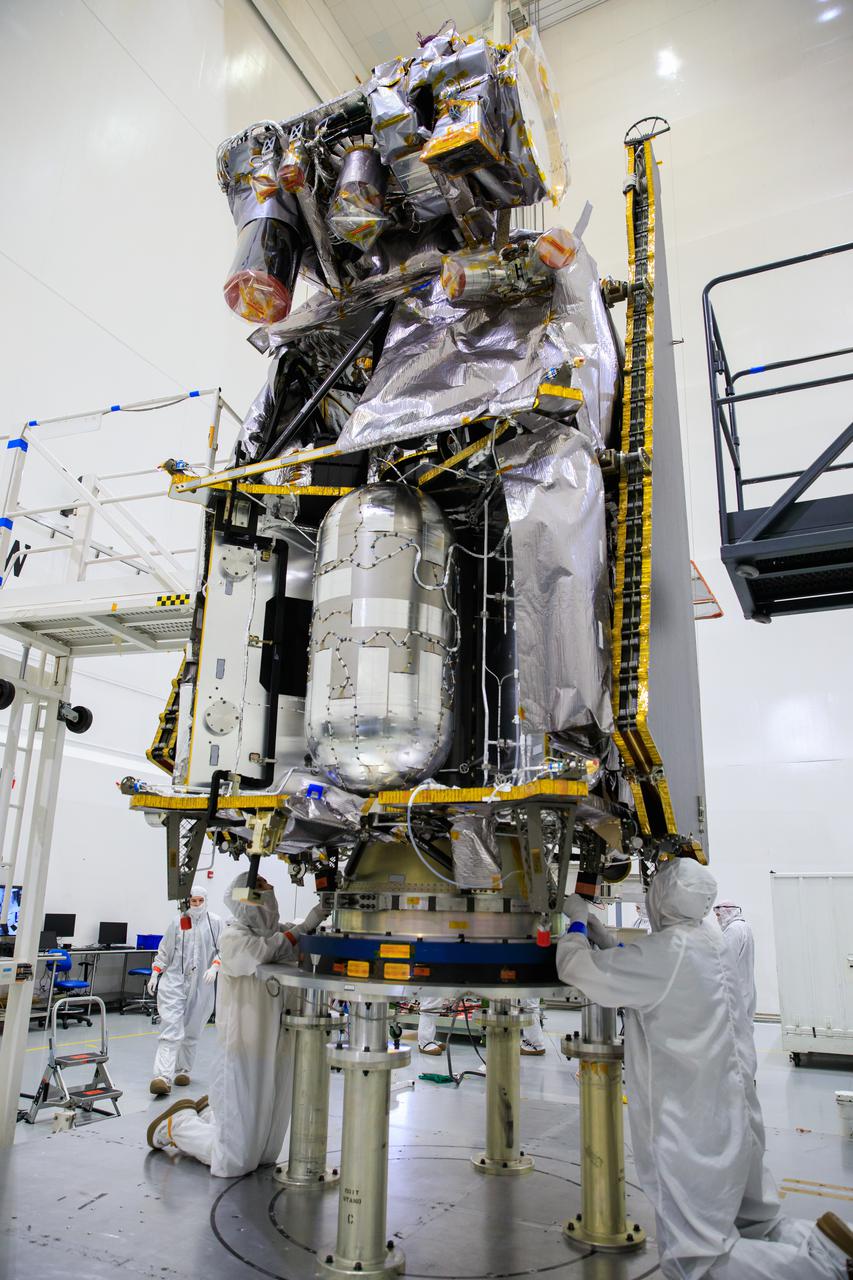
Workers inside the Astrotech Space Operations Facility in Titusville, Florida, prepare NASA’s Lucy spacecraft for its lift by crane and transfer to a rotation stand on Aug. 4, 2021. Lucy is scheduled to launch no earlier than Saturday, Oct. 16, on a United Launch Alliance Atlas V 401 rocket from Launch Pad 41 at Cape Canaveral Space Force Station. NASA’s Launch Services Program based at Kennedy Space Center is managing the launch. Over its 12-year primary mission, Lucy will explore a record-breaking number of asteroids, flying by one asteroid in the solar system’s main belt and seven Trojan asteroids. Additionally, Lucy’s path will circle back to Earth three times for gravity assists, making it the first spacecraft ever to return to the vicinity of Earth from the outer solar system.
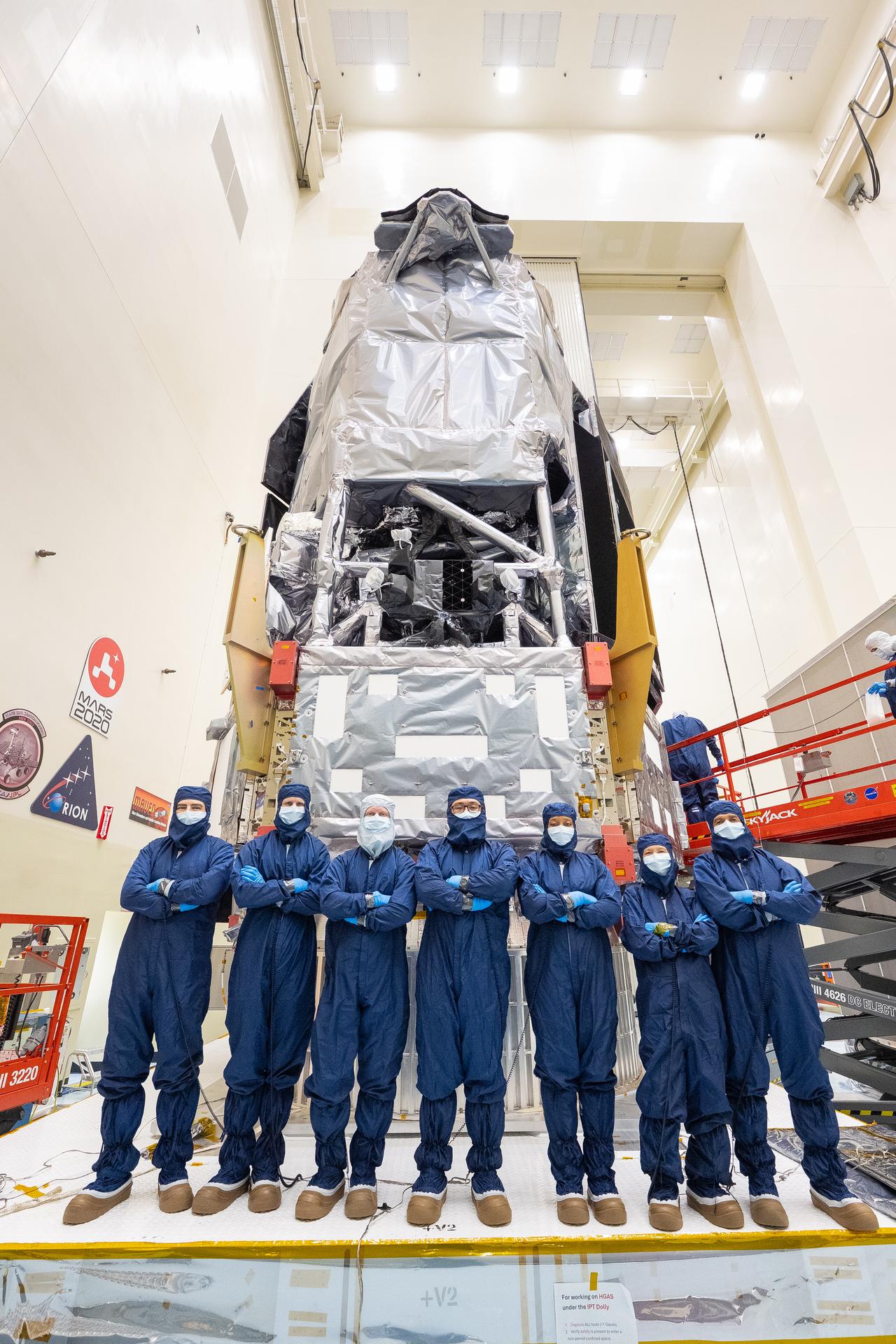
During a key integration milestone for NASA’s Nancy Grace Roman Space Telescope, technicians and engineers from the agency's Jet Propulsion Lab in Southern California gather inside the Payload Hazardous Servicing Facility at NASA’s Kennedy Space Center in Florida on Wednesday, July 8, 2026, following the closeout of the observatory’s Coronagraph Instrument test connector panel. Roman carries one science instrument called the Wide Field Instrument, and one technology demonstration called the Roman Coronagraph Instrument. The coronagraph is a system of masks, prisms, detectors, and even self-flexing mirrors built to block out the glare from distant stars and directly image the planets in orbit around them. The Roman Coronagraph will be the first active coronagraph to fly in space, meaning it contains components that actively respond to variables that would usually cause starlight to scatter, making it harder to see nearby planets.
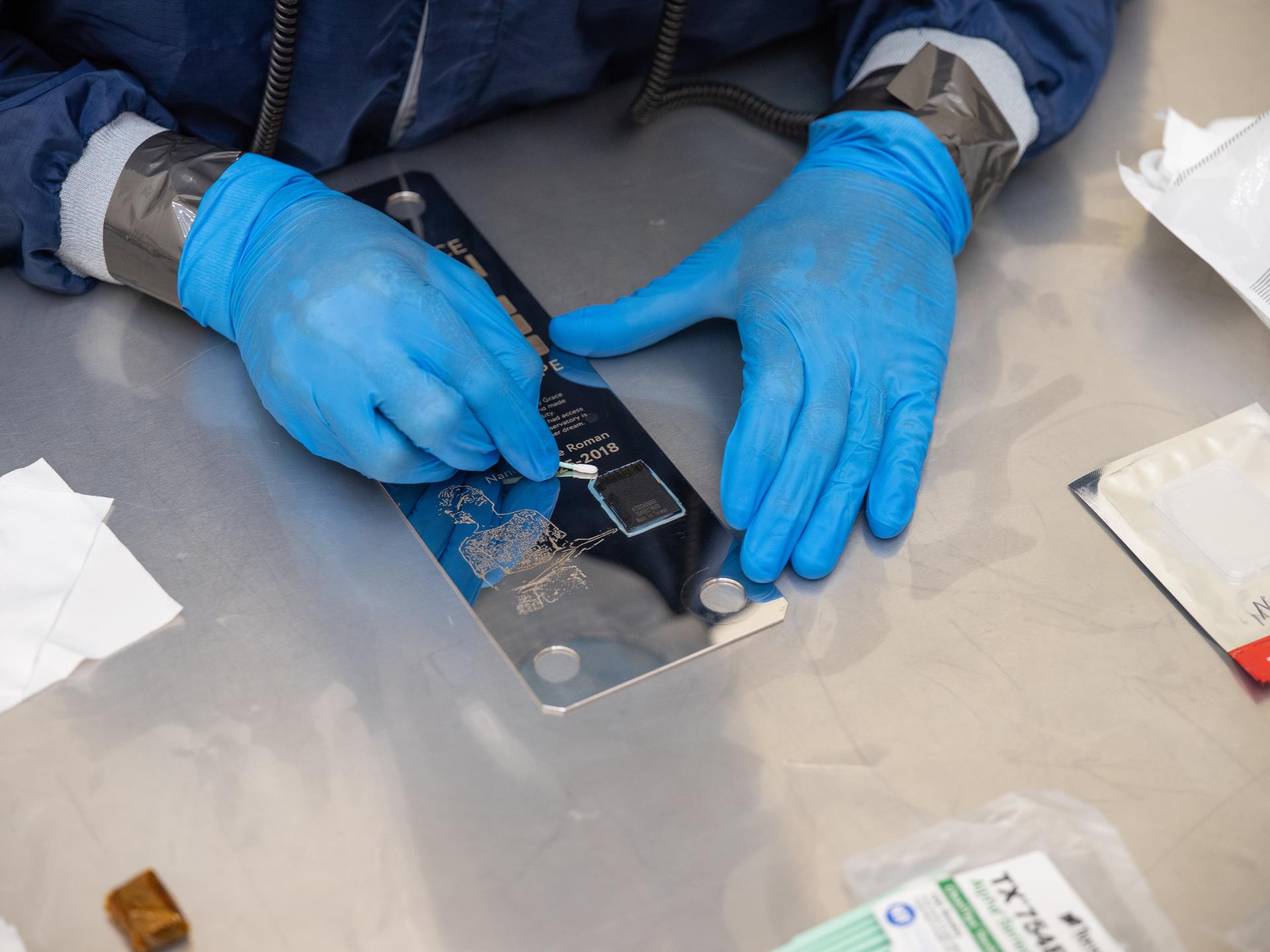
A technician inside the Payload Hazardous Servicing Facility at NASA’s Kennedy Space Center in Florida installs a memory card containing a total of 1,350,144 names as part of a commemorative plaque on the Nancy Grace Roman Space Telescope on Friday, July 17, 2026. The names, submitted by people from across the globe, including astronauts from NASA’s Artemis II and Artemis III missions, will travel with the Roman observatory to the Sun-Earth Lagrange point 2, or L2, about one million miles from Earth, where the Sun’s and Earth’s gravity balance out. Roman is named after Dr. Nancy Grace Roman, NASA’s first chief astronomer and one of the architects of the agency’s modern science program.
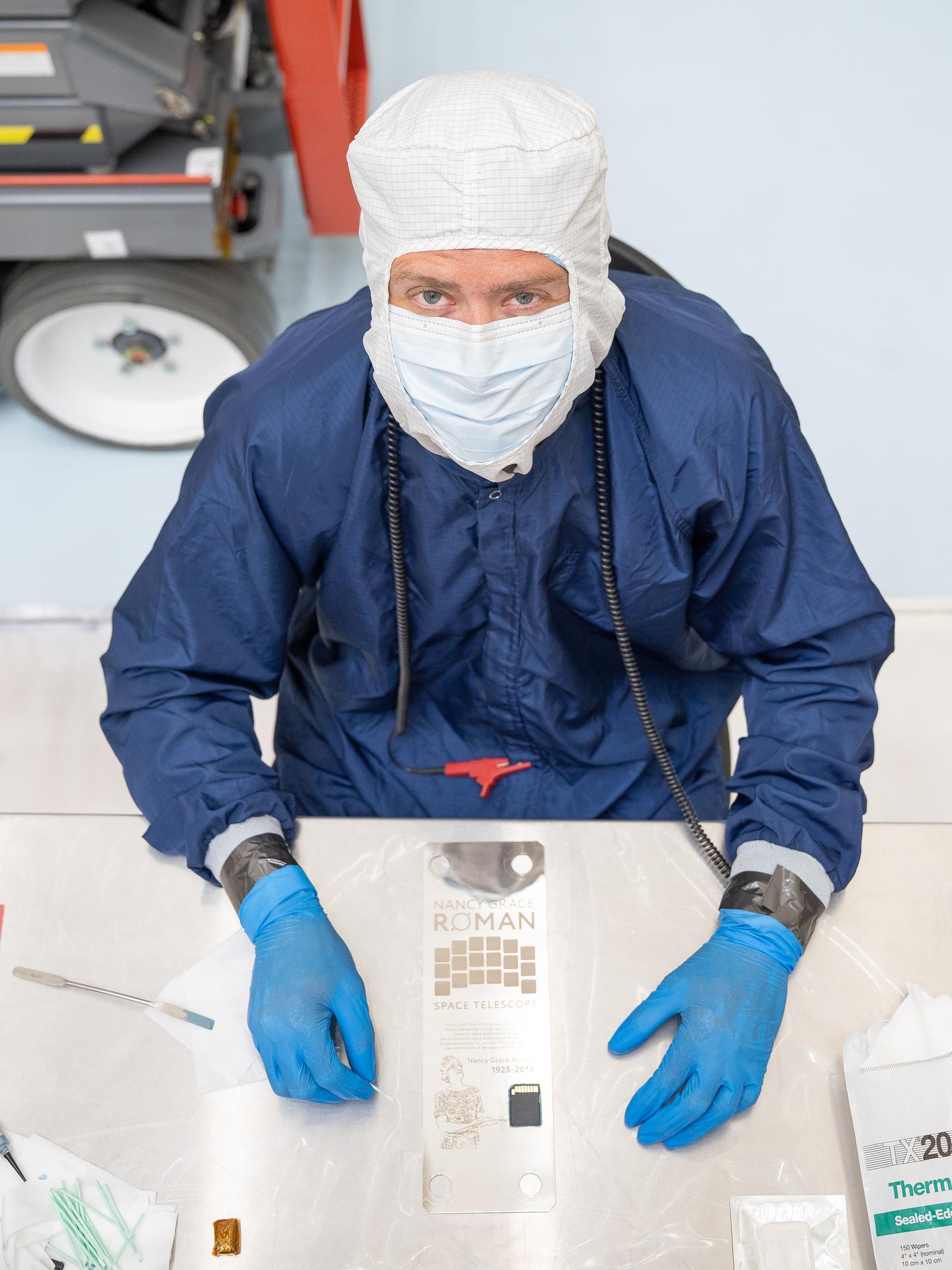
Inside the Payload Hazardous Servicing Facility at NASA’s Kennedy Space Center in Florida, Harry Willems, a mechanical technician from the agency’s Goddard Space Flight Center in Greenbelt, Maryland, installs a memory card containing a total of 1,350,144 names as part of a commemorative plaque on the Nancy Grace Roman Space Telescope on Friday, July 17, 2026. The names, submitted by people from across the globe, including astronauts from NASA’s Artemis II and Artemis III missions, will travel with the Roman observatory to the Sun-Earth Lagrange point 2, or L2, about one million miles from Earth, where the Sun’s and Earth’s gravity balance out. Roman is named after Dr. Nancy Grace Roman, NASA’s first chief astronomer and one of the architects of the agency’s modern science program.
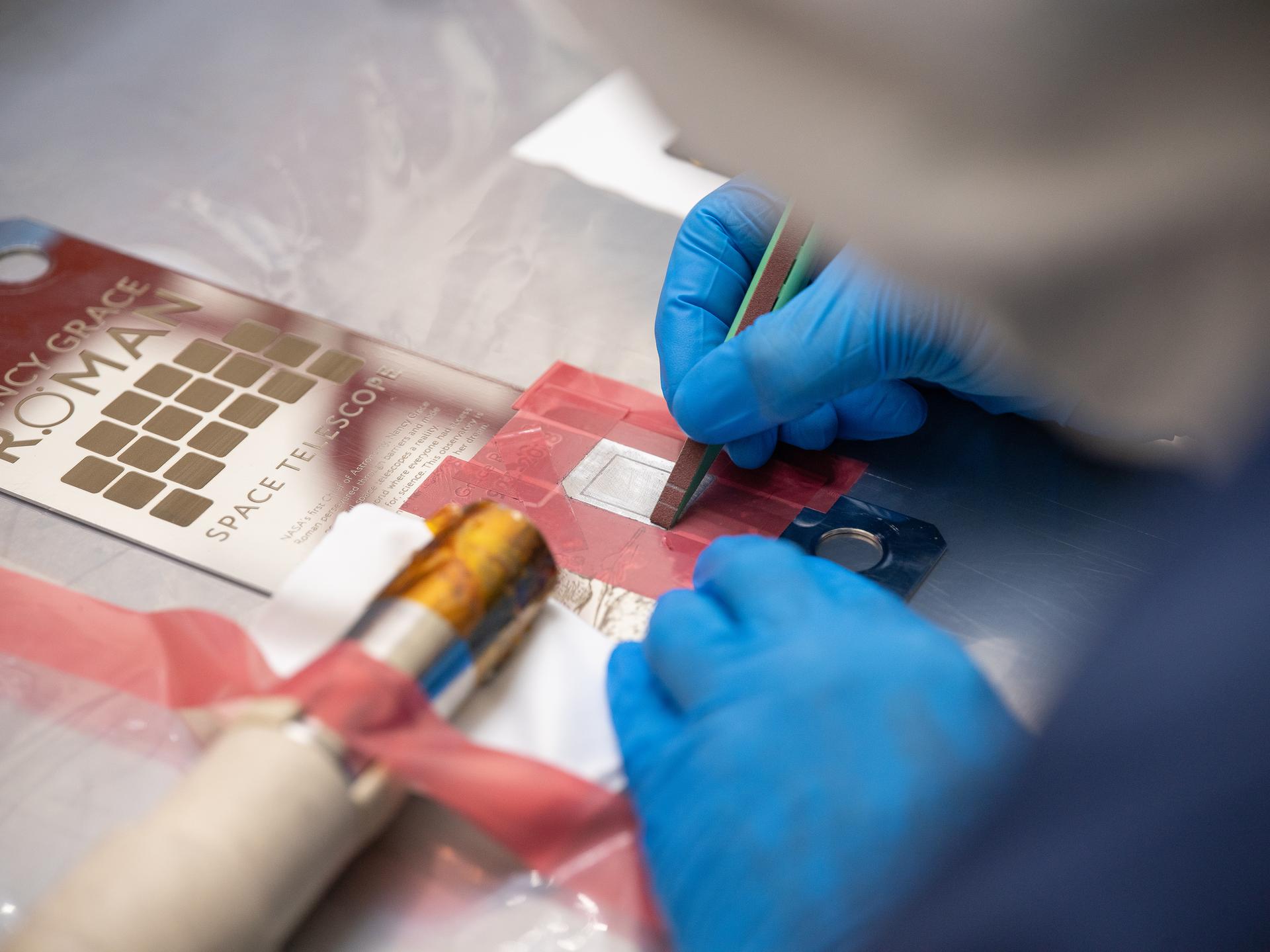
A technician inside the Payload Hazardous Servicing Facility at NASA’s Kennedy Space Center in Florida installs a memory card containing a total of 1,350,144 names as part of a commemorative plaque on the Nancy Grace Roman Space Telescope on Friday, July 17, 2026. The names, submitted by people from across the globe, including astronauts from NASA’s Artemis II and Artemis III missions, will travel with the Roman observatory to the Sun-Earth Lagrange point 2, or L2, about one million miles from Earth, where the Sun’s and Earth’s gravity balance out. Roman is named after Dr. Nancy Grace Roman, NASA’s first chief astronomer and one of the architects of the agency’s modern science program.
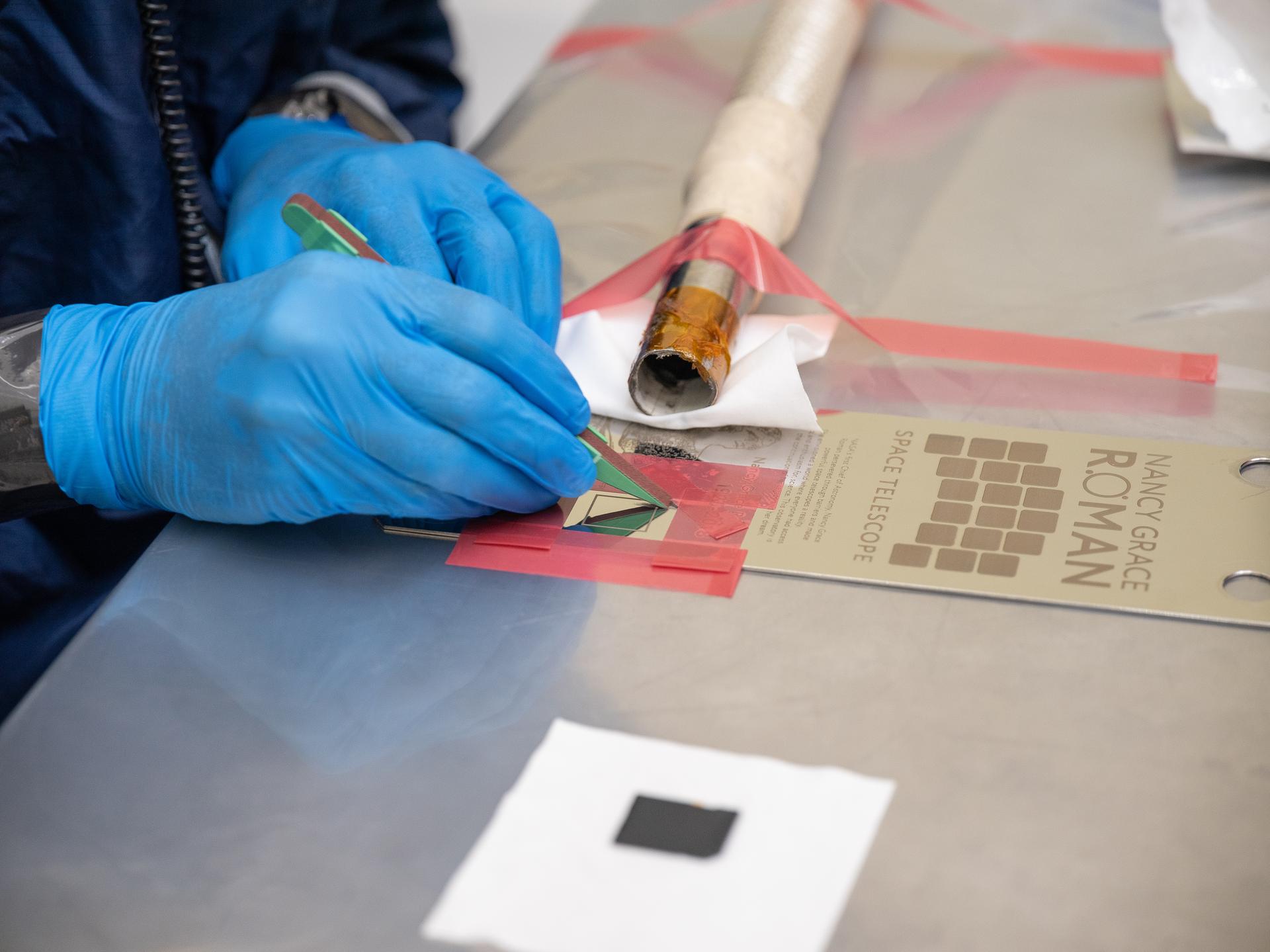
A technician inside the Payload Hazardous Servicing Facility at NASA’s Kennedy Space Center in Florida installs a memory card containing a total of 1,350,144 names as part of a commemorative plaque on the Nancy Grace Roman Space Telescope on Friday, July 17, 2026. The names, submitted by people from across the globe, including astronauts from NASA’s Artemis II and Artemis III missions, will travel with the Roman observatory to the Sun-Earth Lagrange point 2, or L2, about one million miles from Earth, where the Sun’s and Earth’s gravity balance out. Roman is named after Dr. Nancy Grace Roman, NASA’s first chief astronomer and one of the architects of the agency’s modern science program.
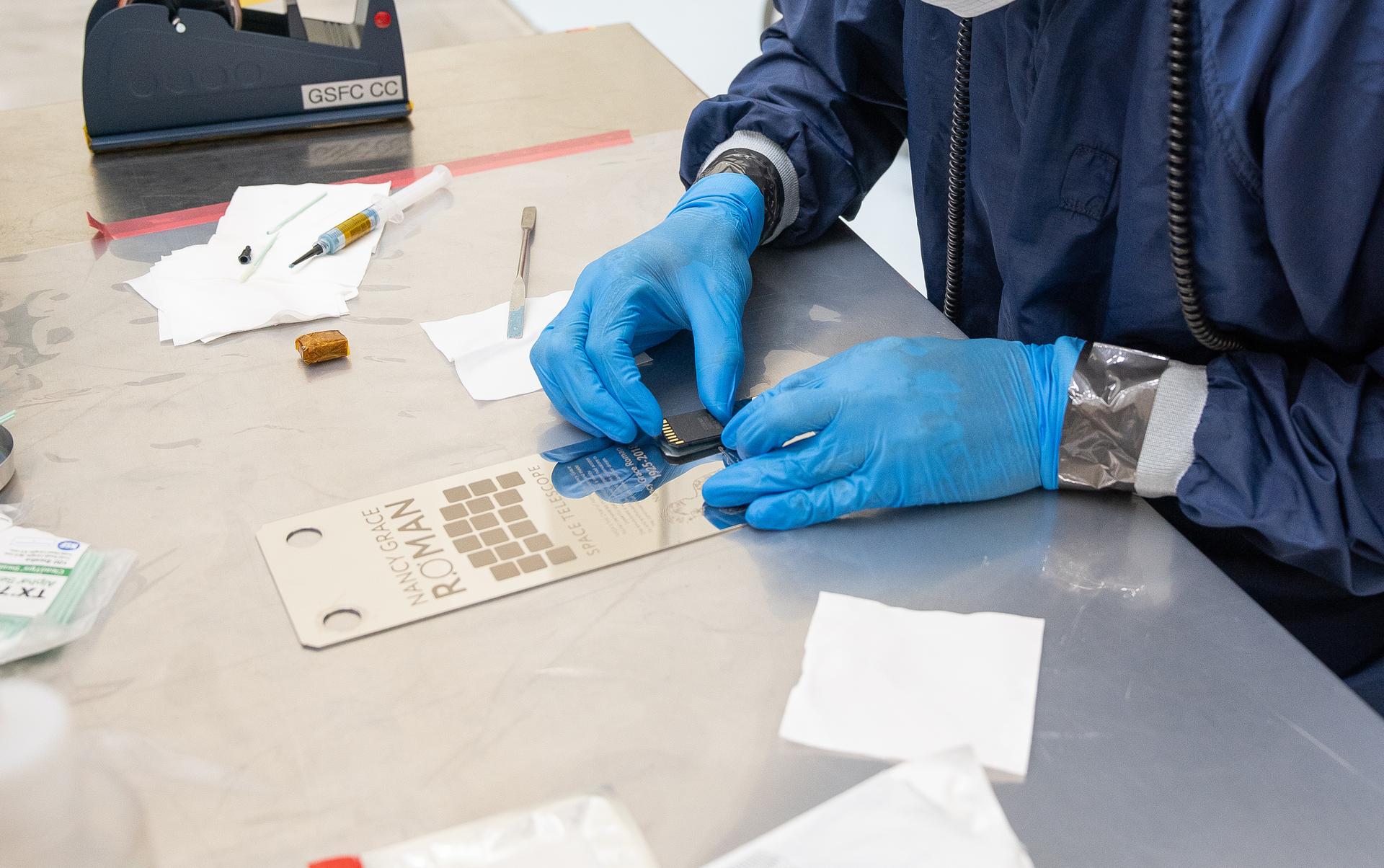
A technician inside the Payload Hazardous Servicing Facility at NASA’s Kennedy Space Center in Florida installs a memory card containing a total of 1,350,144 names as part of a commemorative plaque on the Nancy Grace Roman Space Telescope on Friday, July 17, 2026. The names, submitted by people from across the globe, including astronauts from NASA’s Artemis II and Artemis III missions, will travel with the Roman observatory to the Sun-Earth Lagrange point 2, or L2, about one million miles from Earth, where the Sun’s and Earth’s gravity balance out. Roman is named after Dr. Nancy Grace Roman, NASA’s first chief astronomer and one of the architects of the agency’s modern science program.
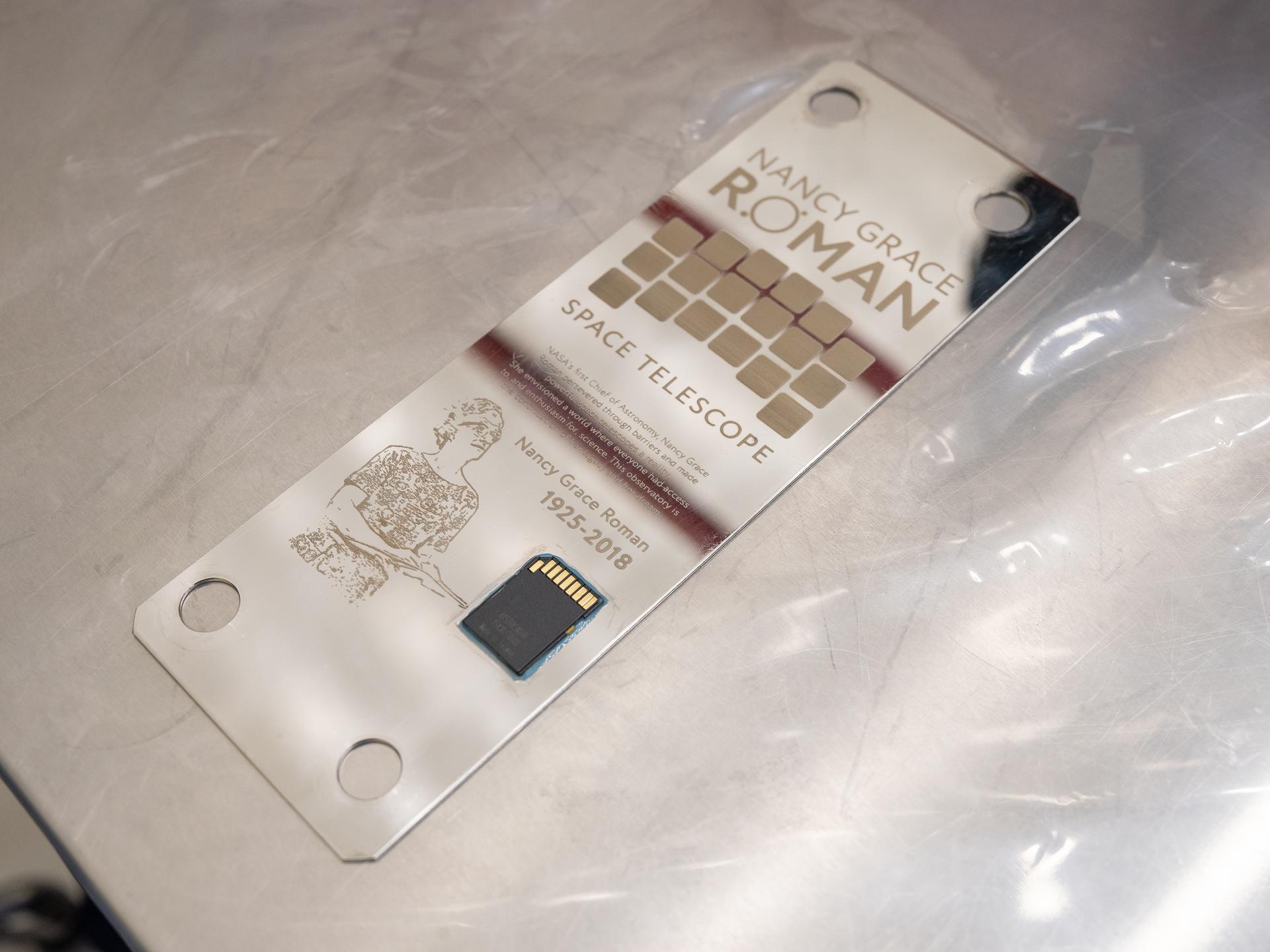
A technician inside the Payload Hazardous Servicing Facility at NASA’s Kennedy Space Center in Florida installs a memory card containing a total of 1,350,144 names as part of a commemorative plaque on the Nancy Grace Roman Space Telescope on Friday, July 17, 2026. The names, submitted by people from across the globe, including astronauts from NASA’s Artemis II and Artemis III missions, will travel with the Roman observatory to the Sun-Earth Lagrange point 2, or L2, about one million miles from Earth, where the Sun’s and Earth’s gravity balance out. Roman is named after Dr. Nancy Grace Roman, NASA’s first chief astronomer and one of the architects of the agency’s modern science program.
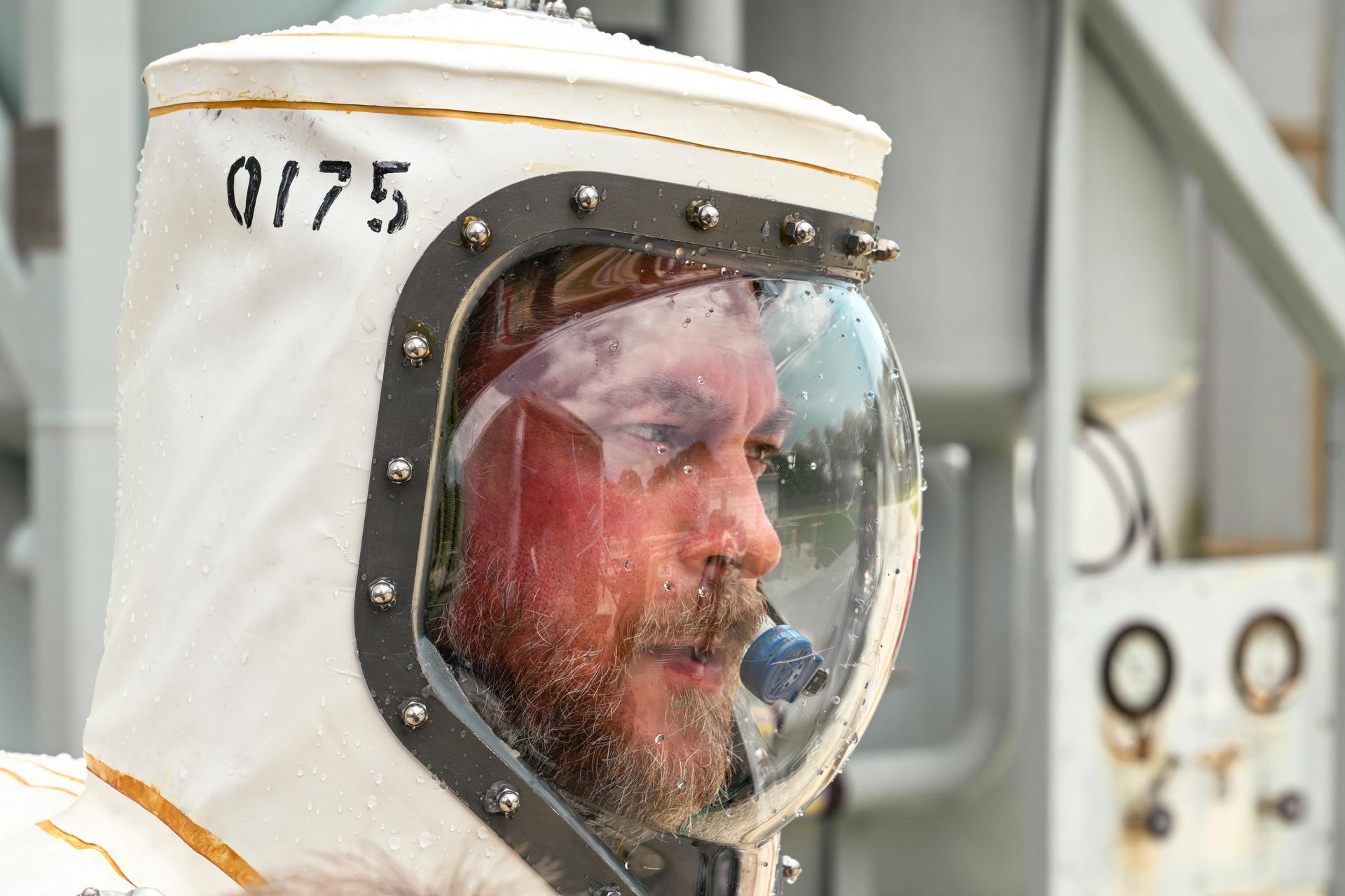
Billy Keim, a senior integration technician for NASA's Nancy Grace Roman Space Telescope wears a Self-Contained Atmospheric Protective Ensemble (SCAPE) suit as he prepares to perform propellant loading operations inside the Payload Hazardous Servicing Facility at NASA’s Kennedy Space Center in Florida Friday, July 24, 2026. With fuel tanks capable of carrying about 290 gallons (roughly 1,100 liters) of hydrazine – a monopropellant not requiring a second chemical to combust – Roman’s primary mission is to settle essential questions about dark energy, exoplanets, and infrared astrophysics by conducting wide-field surveys that explore the universe’s structure, evolution, and composition. Liftoff atop a SpaceX Falcon Heavy rocket from NASA Kennedy’s Launch Complex 39A is targeted no earlier than Sunday, Aug. 30, 2026.
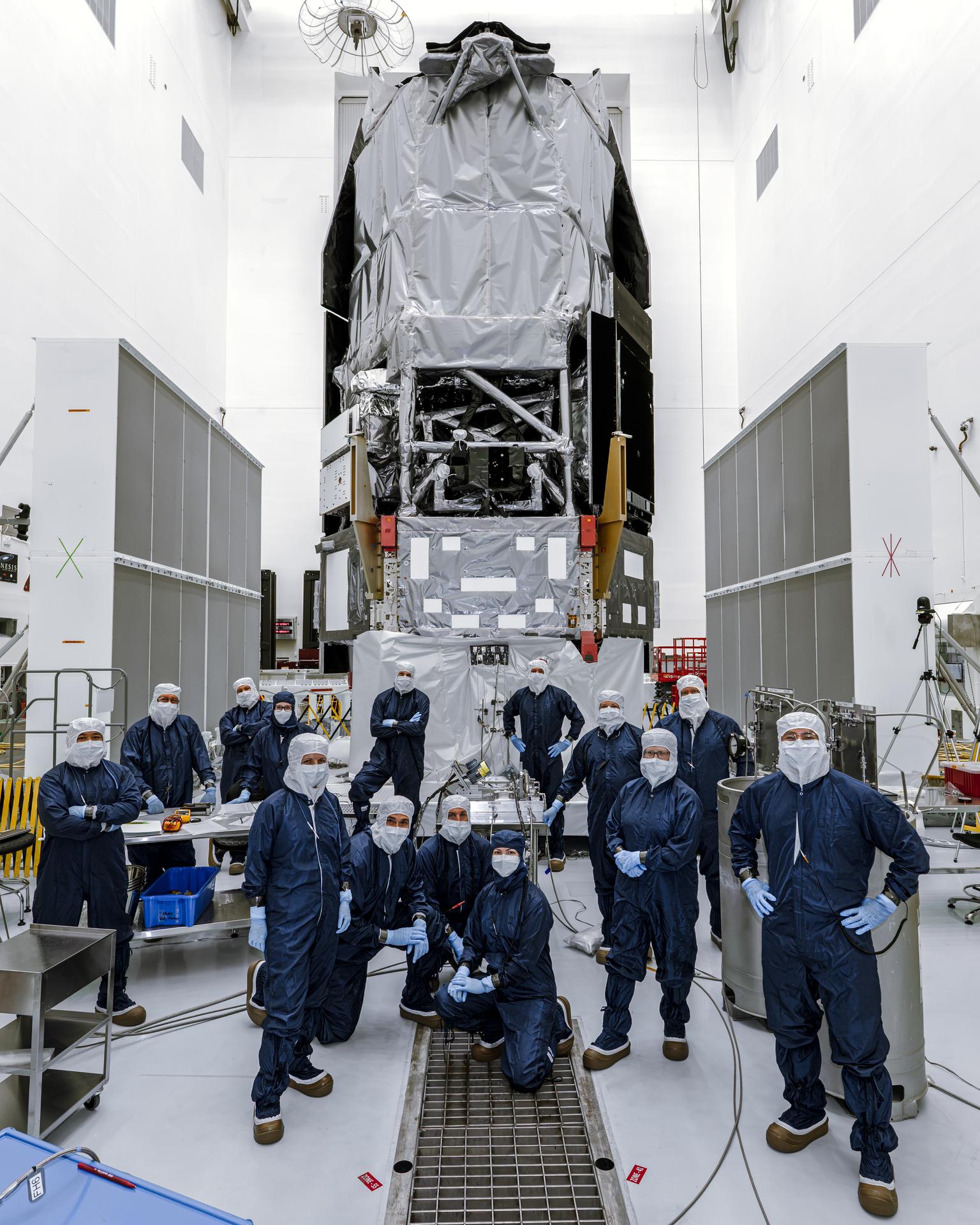
Members of NASA's Nancy Grace Roman Space Telescope propellant, safety, and quality assurance team pose for a photo on Monday July 20, 2026, inside the Payload Hazardous Servicing Facility at NASA’s Kennedy Space Center in Florida, prior to technicians loading propellant into the observatory. With fuel tanks capable of carrying about 290 gallons (roughly 1,100 liters) of hydrazine – a monopropellant not requiring a second chemical to combust – Roman’s primary mission is to settle essential questions about dark energy, exoplanets, and infrared astrophysics by conducting wide-field surveys that explore the universe’s structure, evolution, and composition. Liftoff atop a SpaceX Falcon Heavy rocket from NASA Kennedy’s Launch Complex 39A is targeted no earlier than Sunday, Aug. 30, 2026.
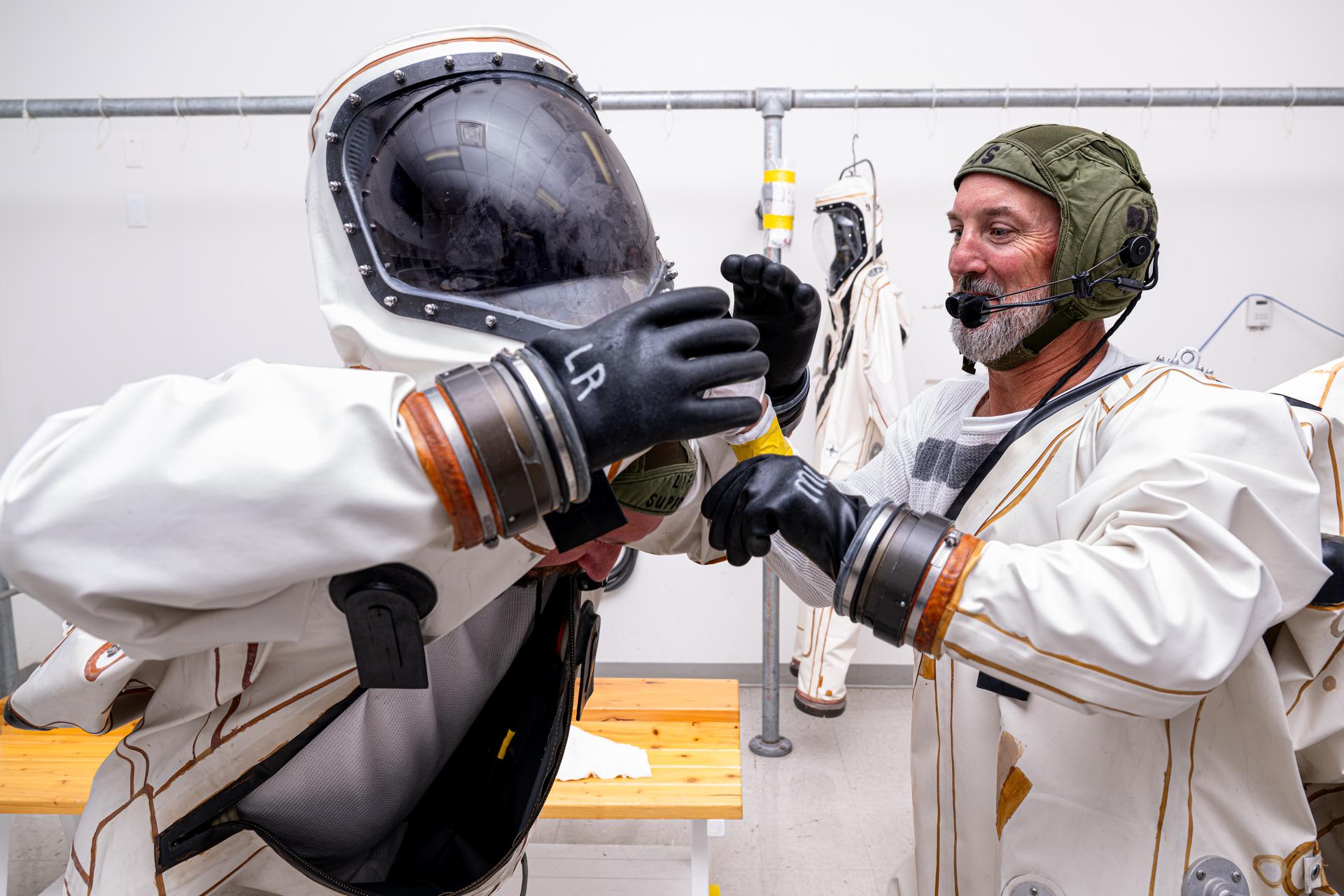
From left, technicians Jacob Stahl and Ryan Renehan don Self-Contained Atmospheric Protective Ensemble (SCAPE) suits as they prepare to perform propellant loading operations inside the Payload Hazardous Servicing Facility at NASA’s Kennedy Space Center in Florida for the agency’s Nancy Grace Roman Space Telescope on Thursday, July 23, 2026. With fuel tanks capable of carrying about 290 gallons (roughly 1,100 liters) of hydrazine – Roman’s primary mission is to settle essential questions about dark energy, exoplanets, and infrared astrophysics by conducting wide-field surveys that explore the universe’s structure, evolution, and composition. Liftoff atop a SpaceX Falcon Heavy rocket from NASA Kennedy’s Launch Complex 39A is targeted no earlier than Sunday, Aug. 30, 2026.
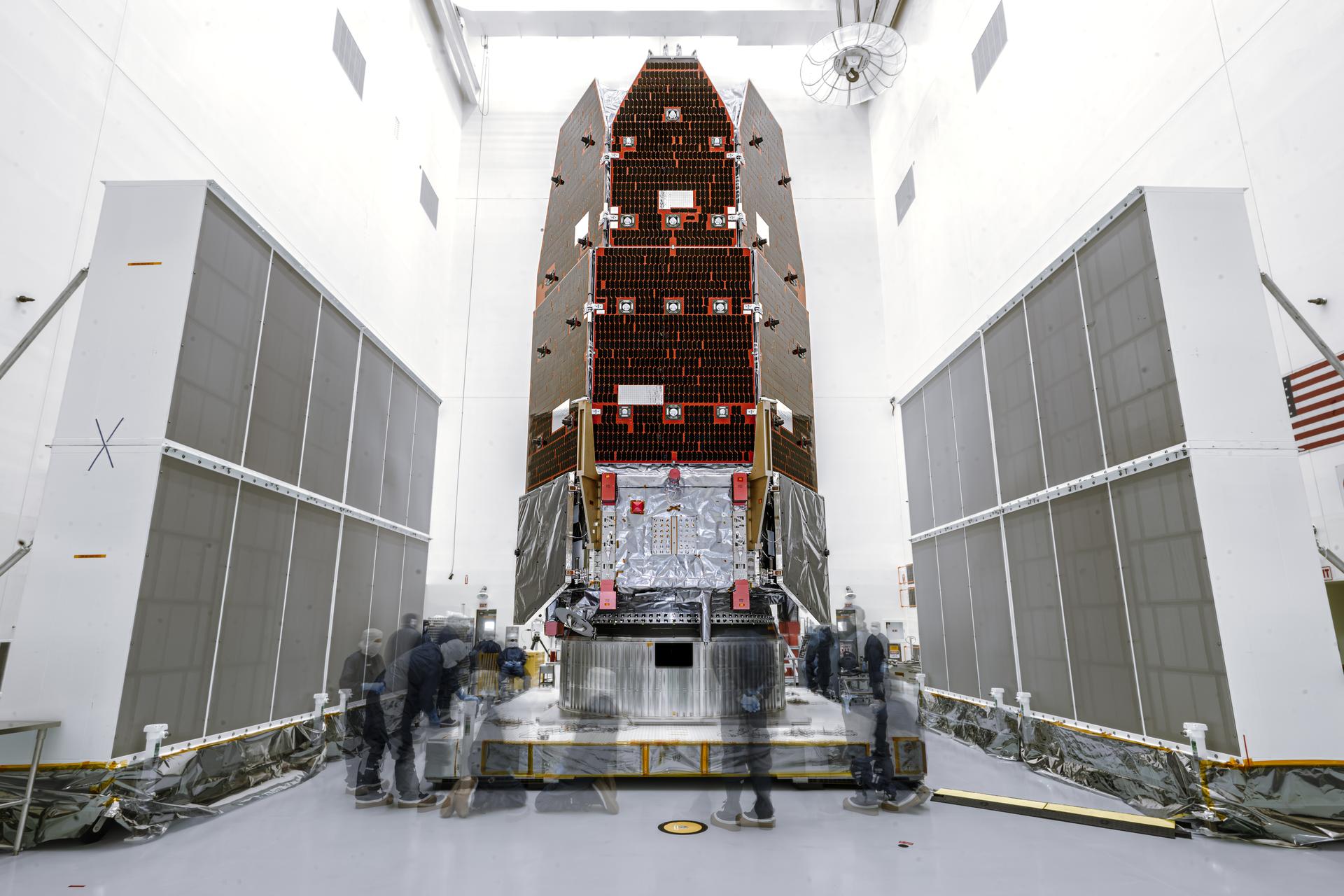
In this long exposure image, members of NASA's Nancy Grace Roman Space Telescope process the observatory on Thursday, July 16, 2026, inside the Payload Hazardous Servicing Facility at NASA’s Kennedy Space Center in Florida. Roman’s primary mission is to settle essential questions about dark energy, exoplanets, and infrared astrophysics by conducting wide-field surveys that explore the universe’s structure, evolution, and composition. Liftoff atop a SpaceX Falcon Heavy rocket from NASA Kennedy’s Launch Complex 39A is targeted no earlier than Sunday, Aug. 30, 2026.
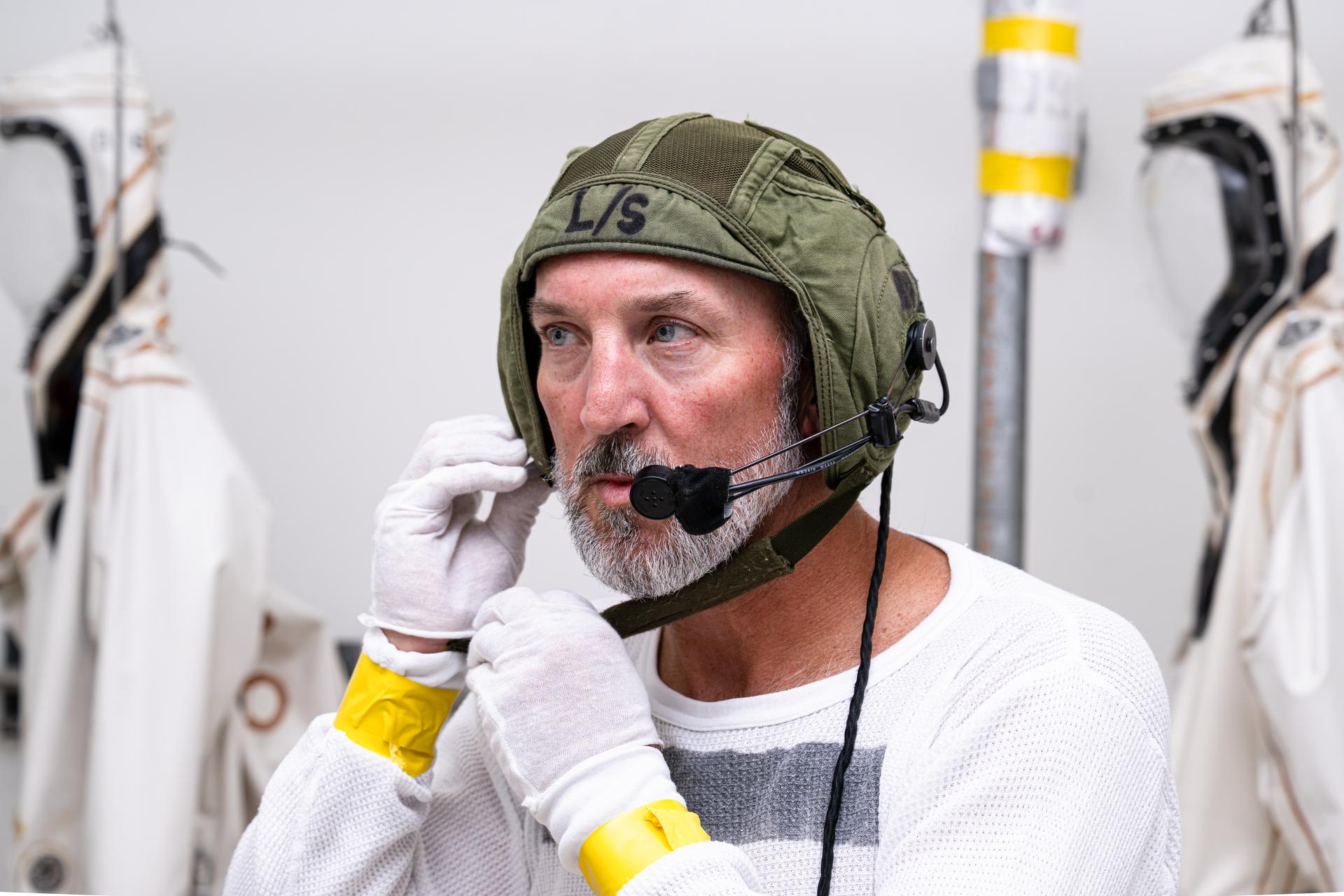
Ryan Renehan, technician, wears a Self-Contained Atmospheric Protective Ensemble (SCAPE) suit as he prepares to perform propellant loading operations inside the Payload Hazardous Servicing Facility at NASA’s Kennedy Space Center in Florida Thursday, July 23, 2026. With fuel tanks capable of carrying about 290 gallons (roughly 1,100 liters) of hydrazine – a monopropellant not requiring a second chemical to combust – Roman’s primary mission is to settle essential questions about dark energy, exoplanets, and infrared astrophysics by conducting wide-field surveys that explore the universe’s structure, evolution, and composition. Liftoff atop a SpaceX Falcon Heavy rocket from NASA Kennedy’s Launch Complex 39A is targeted no earlier than Sunday, Aug. 30, 2026.
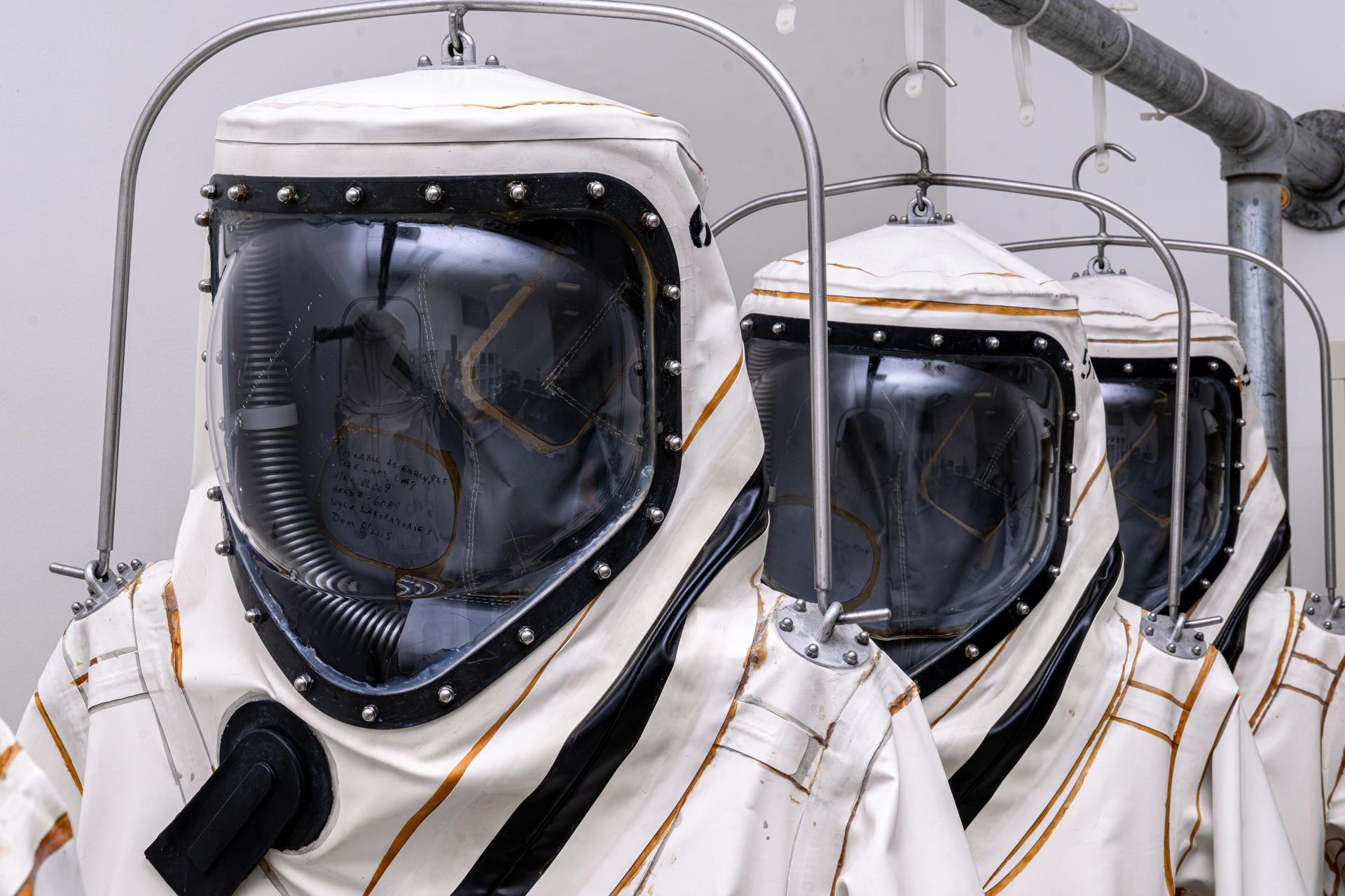
Self-Contained Atmospheric Protective Ensemble (SCAPE) suits hang on a rack the Multi Operations Support Building on Thursday, July 23, 2026, before technicians began operations to load propellant into NASA's Nancy Grace Roman Space Telescope. Once suited up technicians fueled Roman inside the Payload Hazardous Servicing Facility at NASA’s Kennedy Space Center in Florida with about 290 gallons (roughly 1,100 liters) of hydrazine. Roman’s primary mission is to settle essential questions about dark energy, exoplanets, and infrared astrophysics by conducting wide-field surveys that explore the universe’s structure, evolution, and composition. Liftoff atop a SpaceX Falcon Heavy rocket from NASA Kennedy’s Launch Complex 39A is targeted no earlier than Sunday, Aug. 30, 2026.
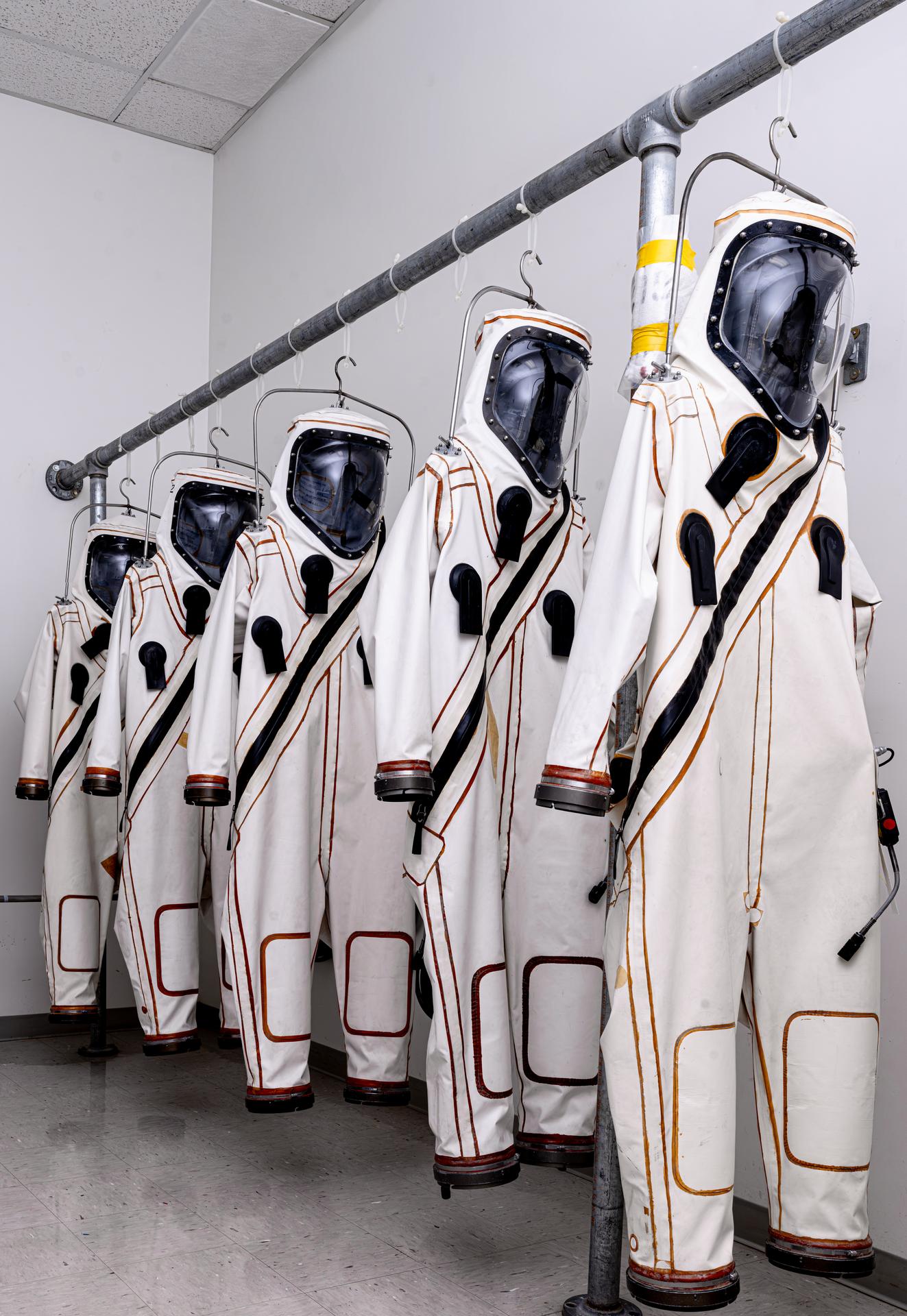
Self-Contained Atmospheric Protective Ensemble (SCAPE) suits hang on a rack the Multi Operations Support Building on Thursday, July 23, 2026, before technicians began operations to load propellant into NASA's Nancy Grace Roman Space Telescope. Once suited up technicians fueled Roman inside the Payload Hazardous Servicing Facility at NASA’s Kennedy Space Center in Florida with about 290 gallons (roughly 1,100 liters) of hydrazine. Roman’s primary mission is to settle essential questions about dark energy, exoplanets, and infrared astrophysics by conducting wide-field surveys that explore the universe’s structure, evolution, and composition. Liftoff atop a SpaceX Falcon Heavy rocket from NASA Kennedy’s Launch Complex 39A is targeted no earlier than Sunday, Aug. 30, 2026.
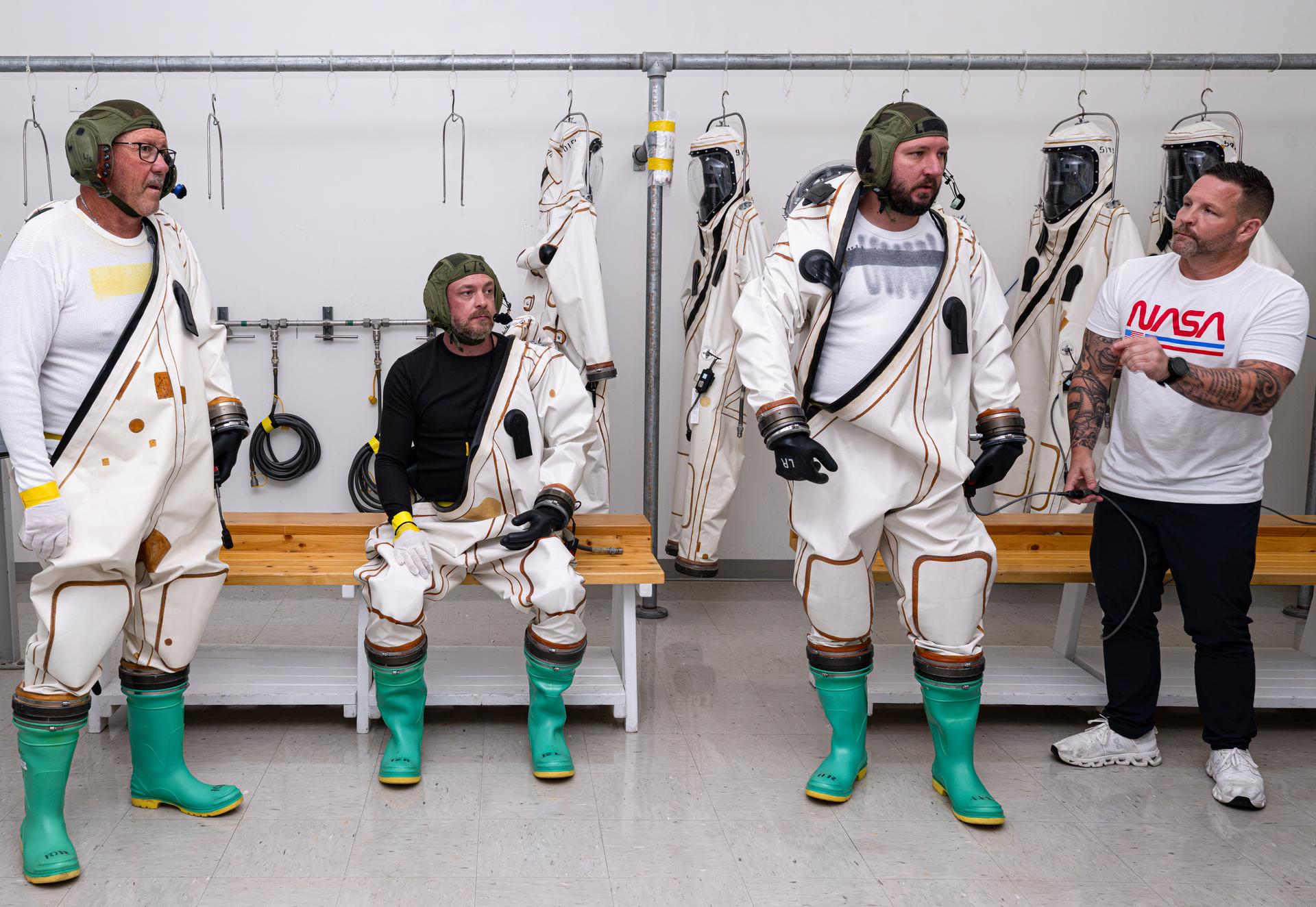
Technicians don Self-Contained Atmospheric Protective Ensemble (SCAPE) suits as they prepare to perform propellant loading operations inside the Payload Hazardous Servicing Facility at NASA’s Kennedy Space Center in Florida for the agency’s Nancy Grace Roman Space Telescope on Thursday, July 23, 2026. With fuel tanks capable of carrying about 290 gallons (roughly 1,100 liters) of hydrazine, Roman’s primary mission is to settle essential questions about dark energy, exoplanets, and infrared astrophysics by conducting wide-field surveys that explore the universe’s structure, evolution, and composition. Liftoff atop a SpaceX Falcon Heavy rocket from NASA Kennedy’s Launch Complex 39A is targeted no earlier than Sunday, Aug. 30, 2026.
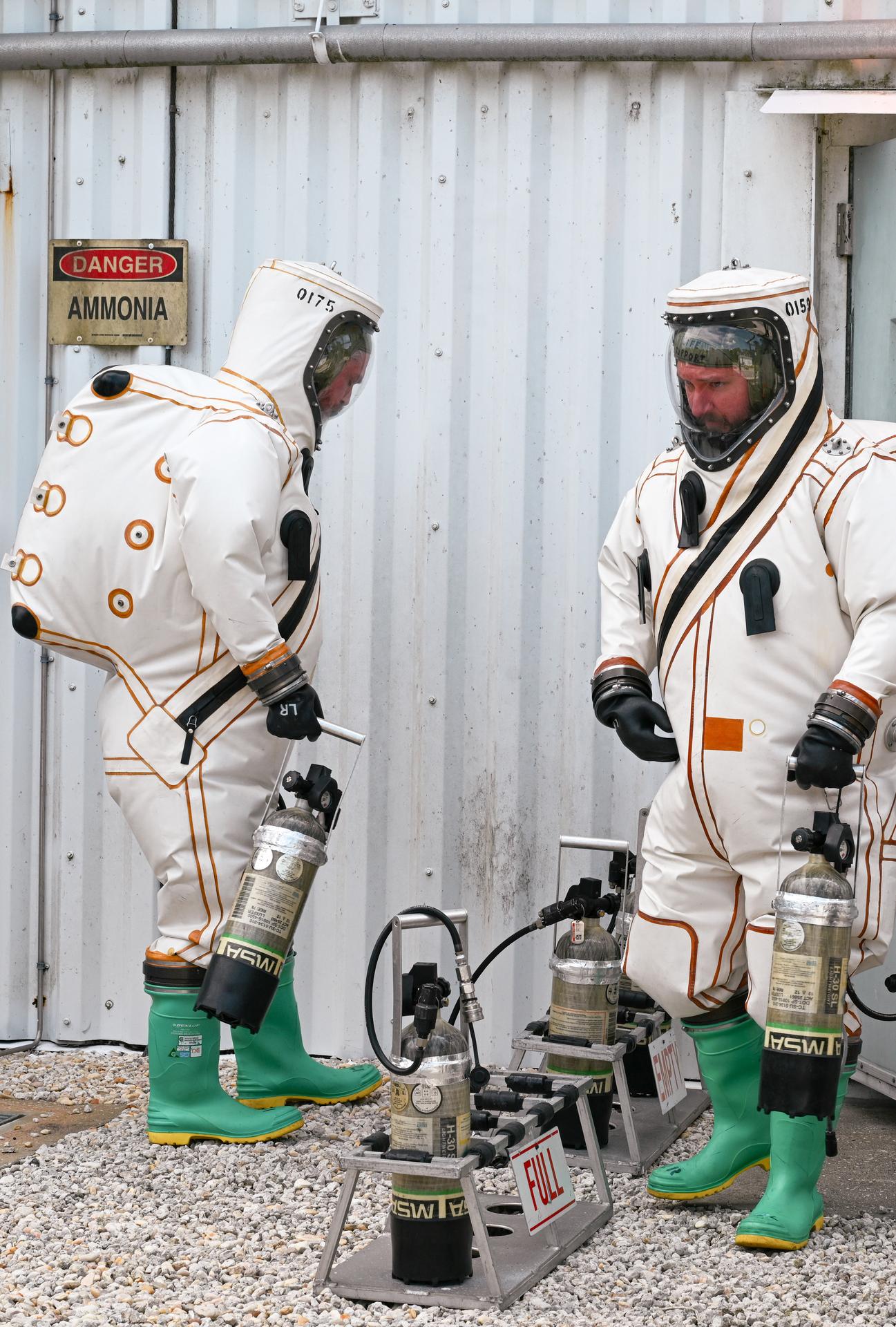
Technicians wear Self-Contained Atmospheric Protective Ensemble (SCAPE) suits as they prepare to perform propellant loading operations inside the Payload Hazardous Servicing Facility at NASA’s Kennedy Space Center in Florida Friday, July 24, 2026. With fuel tanks capable of carrying about 290 gallons (roughly 1,100 liters) of hydrazine – a monopropellant not requiring a second chemical to combust – Roman’s primary mission is to settle essential questions about dark energy, exoplanets, and infrared astrophysics by conducting wide-field surveys that explore the universe’s structure, evolution, and composition. Liftoff atop a SpaceX Falcon Heavy rocket from NASA Kennedy’s Launch Complex 39A is targeted no earlier than Sunday, Aug. 30, 2026.
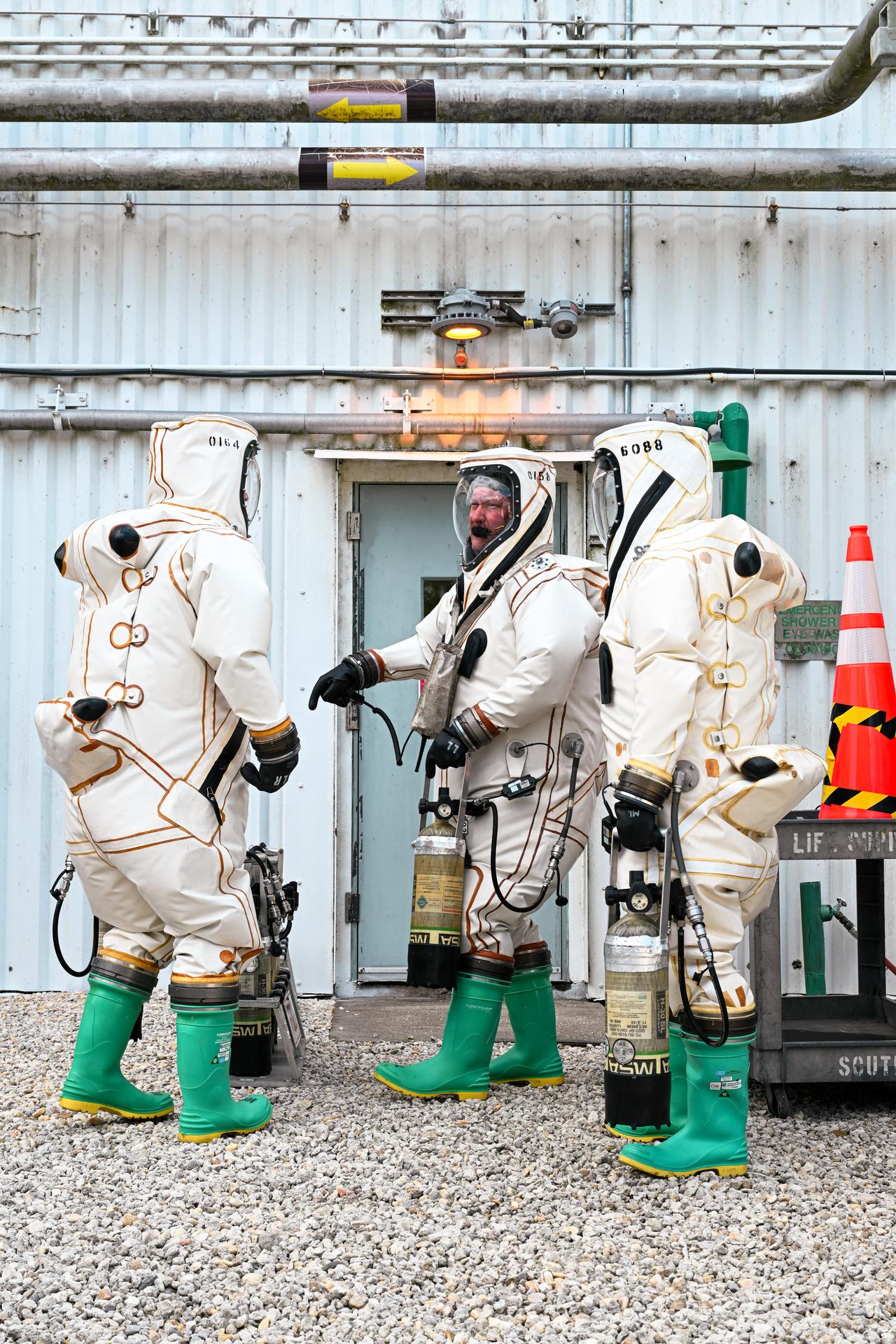
Technicians wear Self-Contained Atmospheric Protective Ensemble (SCAPE) suits as they prepare to perform propellant loading operations inside the Payload Hazardous Servicing Facility at NASA’s Kennedy Space Center in Florida Friday, July 24, 2026. With fuel tanks capable of carrying about 290 gallons (roughly 1,100 liters) of hydrazine – a monopropellant not requiring a second chemical to combust – Roman’s primary mission is to settle essential questions about dark energy, exoplanets, and infrared astrophysics by conducting wide-field surveys that explore the universe’s structure, evolution, and composition. Liftoff atop a SpaceX Falcon Heavy rocket from NASA Kennedy’s Launch Complex 39A is targeted no earlier than Sunday, Aug. 30, 2026.
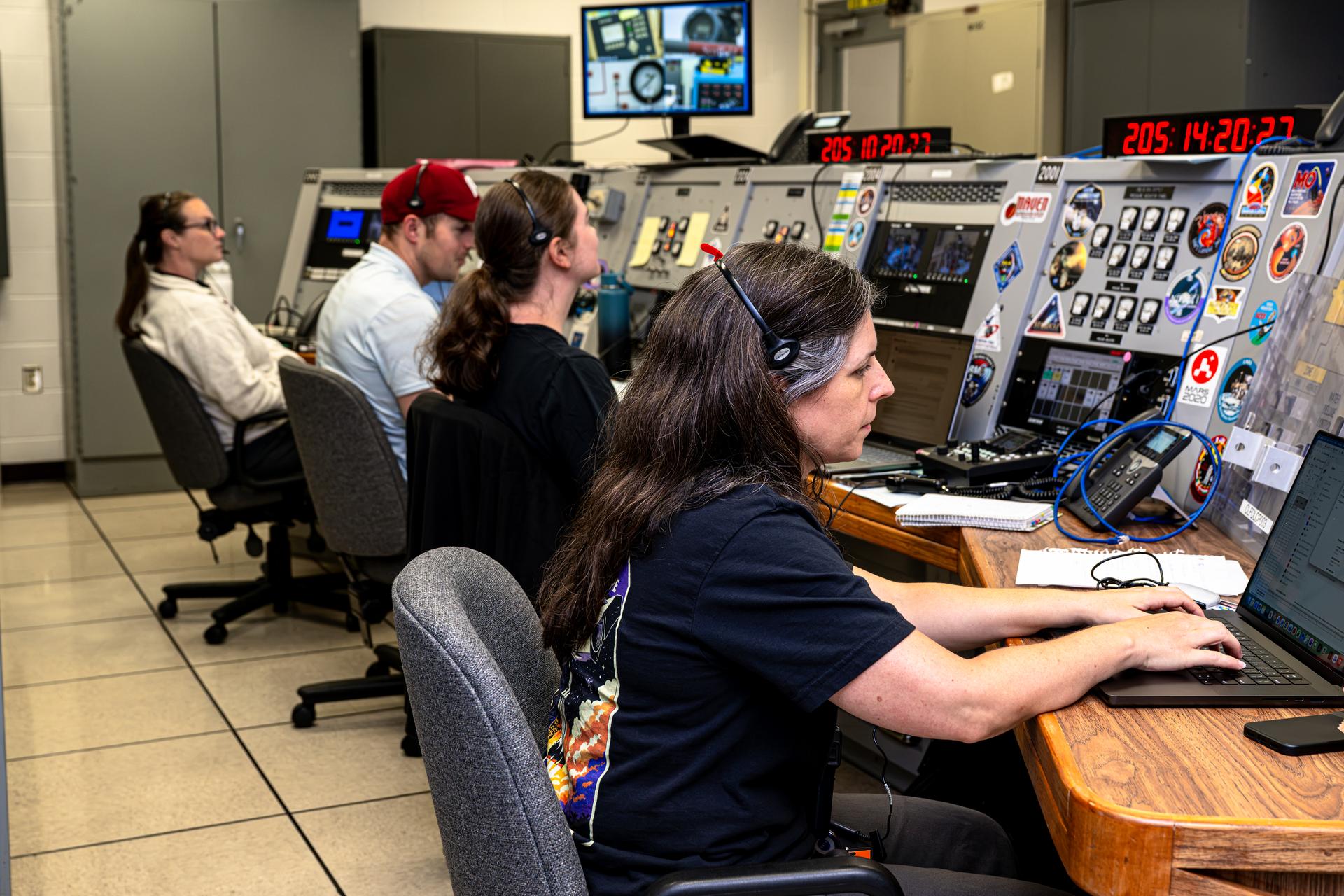
Technicians monitor propellant loading from a control room in the Multi Operations Support Building at NASA’s Kennedy Space Center in Florida Friday, July 24, 2026. With fuel tanks capable of carrying about 290 gallons (roughly 1,100 liters) of hydrazine – a monopropellant not requiring a second chemical to combust – Roman’s primary mission is to settle essential questions about dark energy, exoplanets, and infrared astrophysics by conducting wide-field surveys that explore the universe’s structure, evolution, and composition. Liftoff atop a SpaceX Falcon Heavy rocket from NASA Kennedy’s Launch Complex 39A is targeted no earlier than Sunday, Aug. 30, 2026.
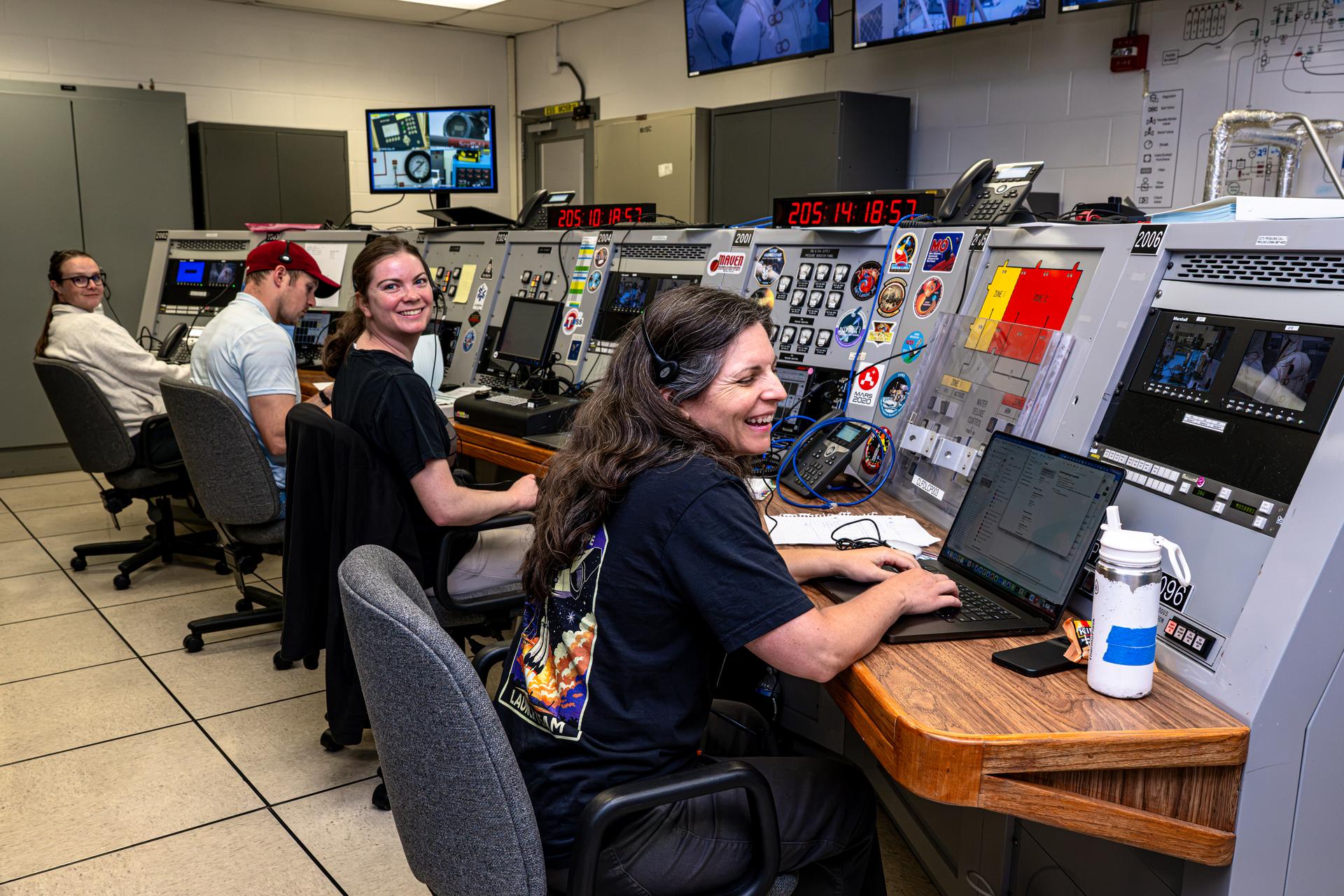
Technicians monitor propellant loading from a control room in the Multi Operations Support Building at NASA’s Kennedy Space Center in Florida Friday, July 24, 2026. With fuel tanks capable of carrying about 290 gallons (roughly 1,100 liters) of hydrazine – a monopropellant not requiring a second chemical to combust – Roman’s primary mission is to settle essential questions about dark energy, exoplanets, and infrared astrophysics by conducting wide-field surveys that explore the universe’s structure, evolution, and composition. Liftoff atop a SpaceX Falcon Heavy rocket from NASA Kennedy’s Launch Complex 39A is targeted no earlier than Sunday, Aug. 30, 2026.
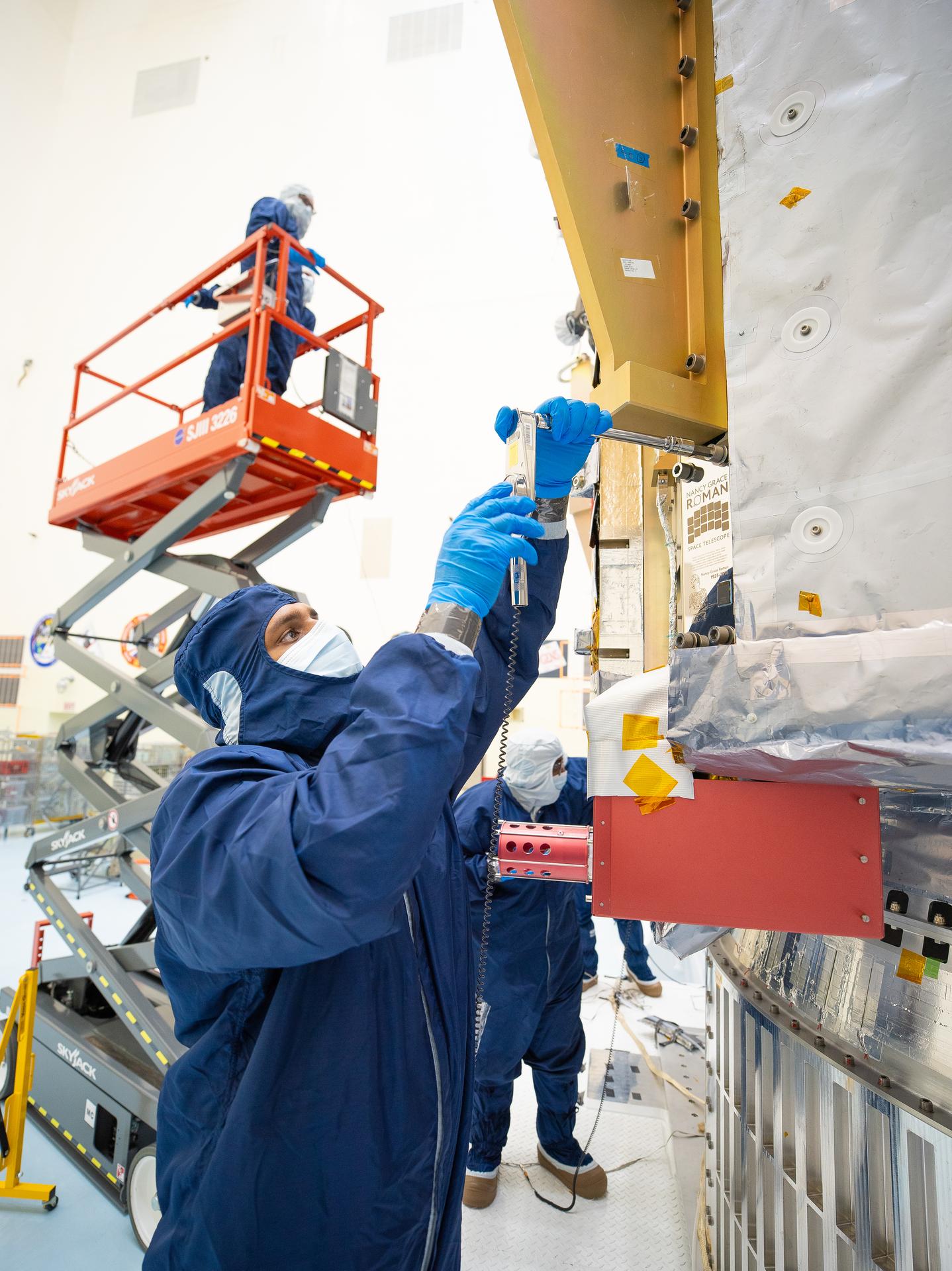
Technicians inside the Payload Hazardous Servicing Facility at NASA’s Kennedy Space Center in Florida install a commemorative plaque on the Nancy Grace Roman Space Telescope on Monday, July 27, 2026. In addition to honoring the legacy of Dr. Nancy Grace Roman, NASA’s first chief astronomer and one of the architects of the agency’s modern science program, the plaque features a memory card containing a total of 1,350,144 names submitted by people from across the globe, including astronauts from NASA’s Artemis II and Artemis III missions. The Roman observatory will travel to the Sun-Earth Lagrange point 2, or L2, about one million miles from Earth, where the Sun’s and Earth’s gravity balance out, to complete a statistical census of planetary systems in our galaxy and settle essential questions in the areas of dark energy, exoplanets, and infrared astrophysics.
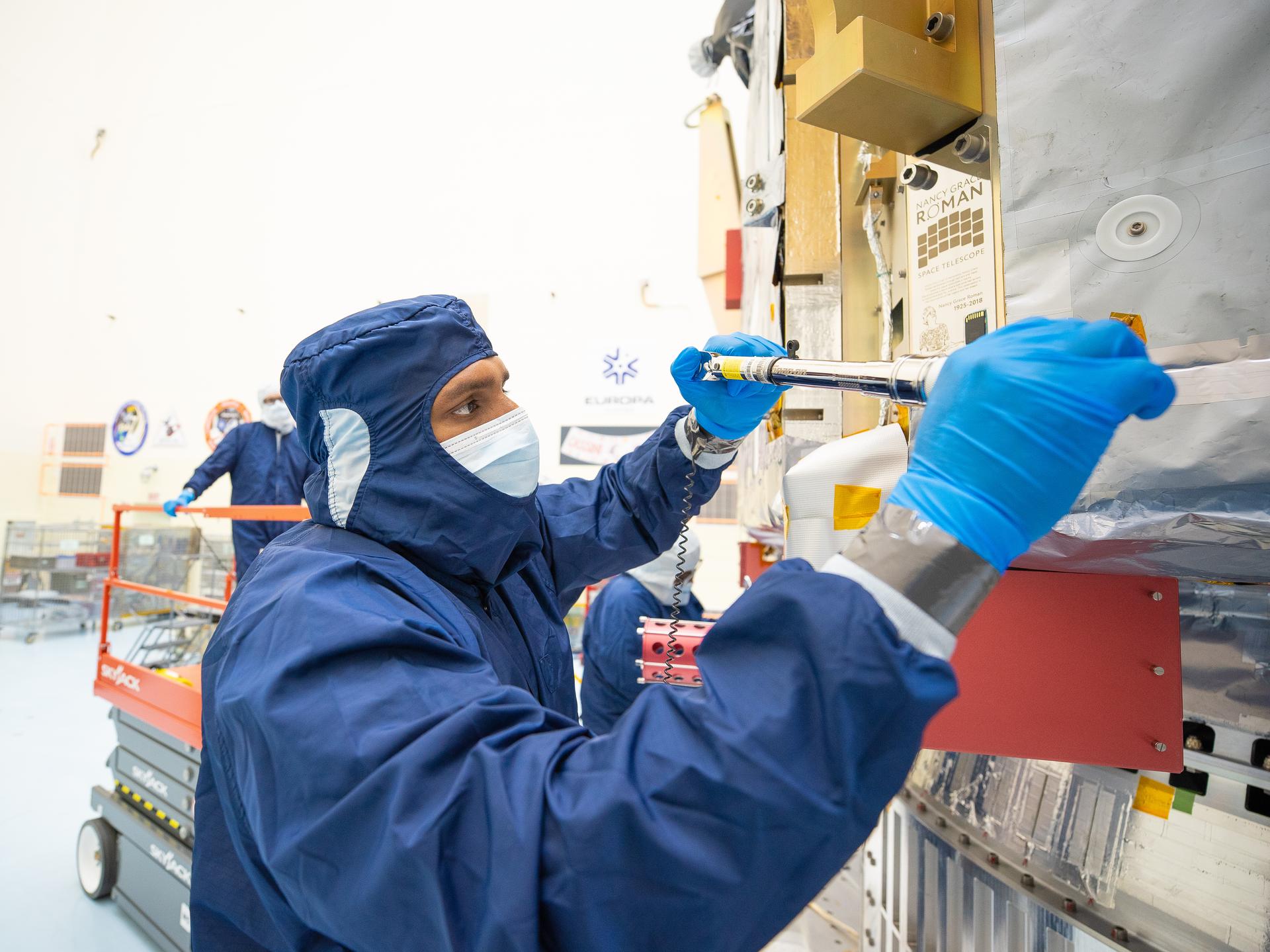
Technicians inside the Payload Hazardous Servicing Facility at NASA’s Kennedy Space Center in Florida install a commemorative plaque on the Nancy Grace Roman Space Telescope on Monday, July 27, 2026. In addition to honoring the legacy of Dr. Nancy Grace Roman, NASA’s first chief astronomer and one of the architects of the agency’s modern science program, the plaque features a memory card containing a total of 1,350,144 names submitted by people from across the globe, including astronauts from NASA’s Artemis II and Artemis III missions. The Roman observatory will travel to the Sun-Earth Lagrange point 2, or L2, about one million miles from Earth, where the Sun’s and Earth’s gravity balance out, to complete a statistical census of planetary systems in our galaxy and settle essential questions in the areas of dark energy, exoplanets, and infrared astrophysics.
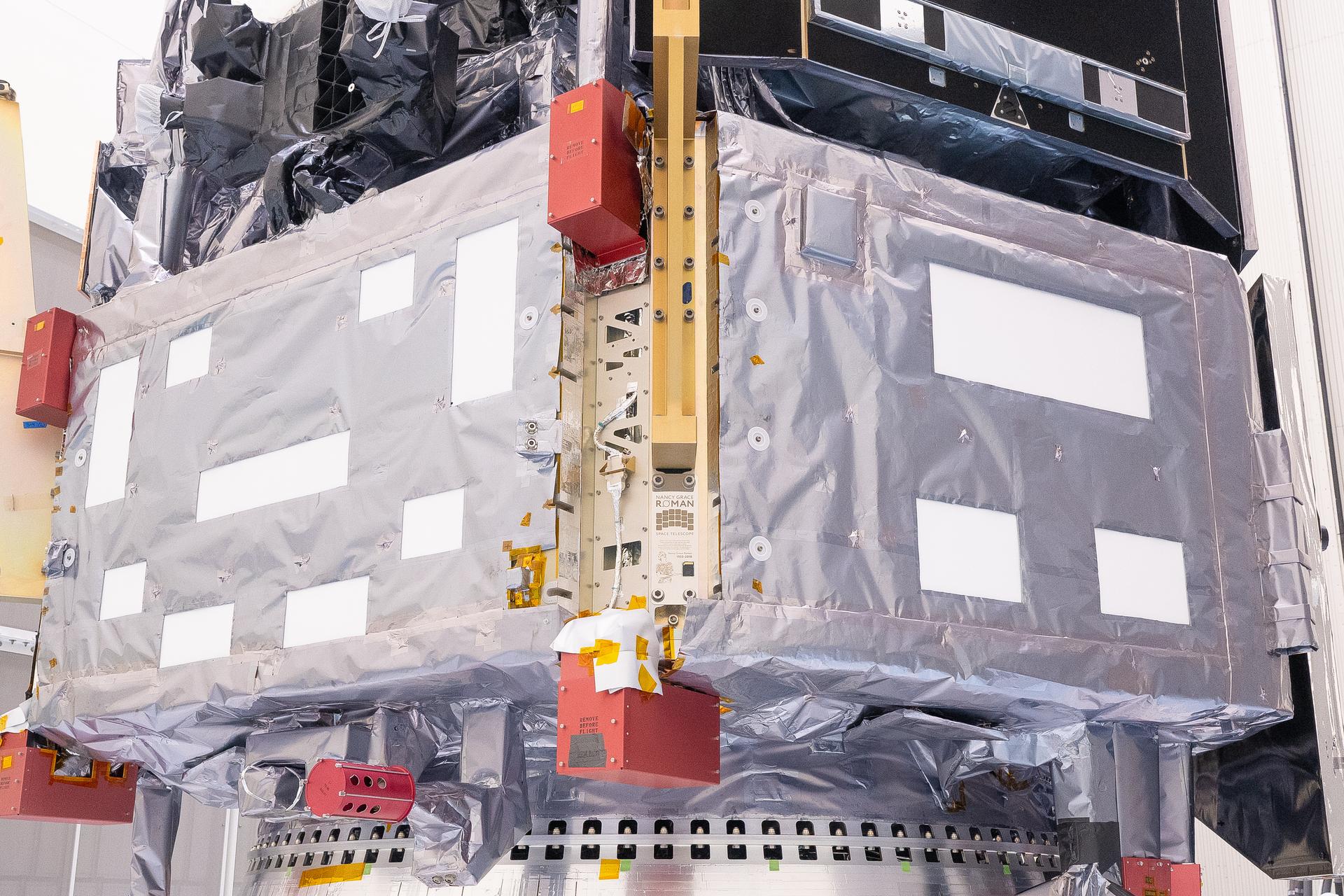
Technicians inside the Payload Hazardous Servicing Facility at NASA’s Kennedy Space Center complete installation of a commemorative plaque on the agency’s Nancy Grace Roman Space Telescope, as photographed on Tuesday, July 28, 2026. In addition to honoring the legacy of Dr. Nancy Grace Roman, NASA’s first chief astronomer and one of the architects of the agency’s modern science program, the plaque features a memory card containing a total of 1,350,144 names submitted by people from across the globe, including astronauts from NASA’s Artemis II and Artemis III missions. The Roman observatory will travel to the Sun-Earth Lagrange point 2, or L2, about one million miles from Earth, where the Sun’s and Earth’s gravity balance out, to complete a statistical census of planetary systems in our galaxy and settle essential questions in the areas of dark energy, exoplanets, and infrared astrophysics.
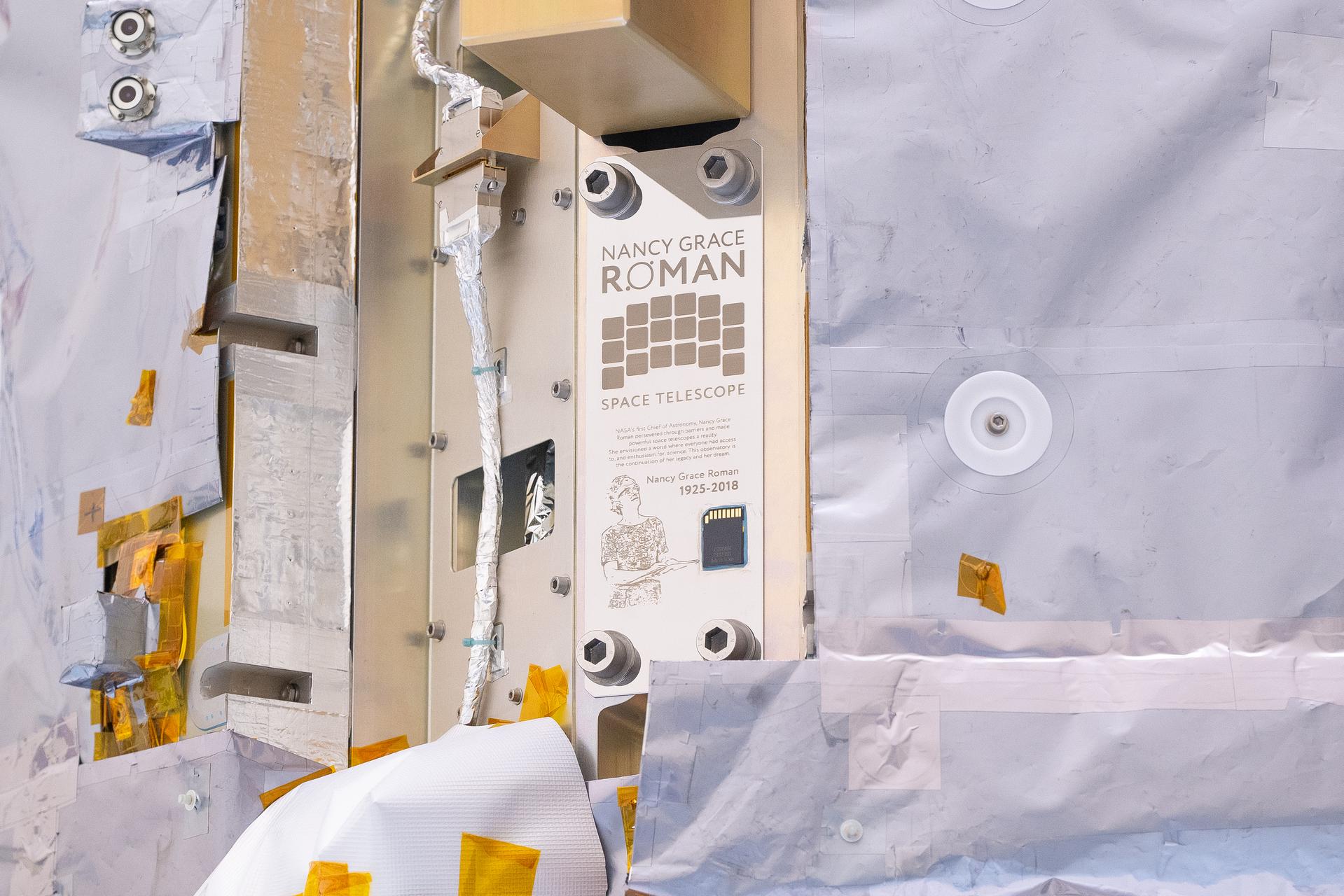
Technicians inside the Payload Hazardous Servicing Facility at NASA’s Kennedy Space Center complete installation of a commemorative plaque on the agency’s Nancy Grace Roman Space Telescope, as photographed on Tuesday, July 28, 2026. In addition to honoring the legacy of Dr. Nancy Grace Roman, NASA’s first chief astronomer and one of the architects of the agency’s modern science program, the plaque features a memory card containing a total of 1,350,144 names submitted by people from across the globe, including astronauts from NASA’s Artemis II and Artemis III missions. The Roman observatory will travel to the Sun-Earth Lagrange point 2, or L2, about one million miles from Earth, where the Sun’s and Earth’s gravity balance out, to complete a statistical census of planetary systems in our galaxy and settle essential questions in the areas of dark energy, exoplanets, and infrared astrophysics.
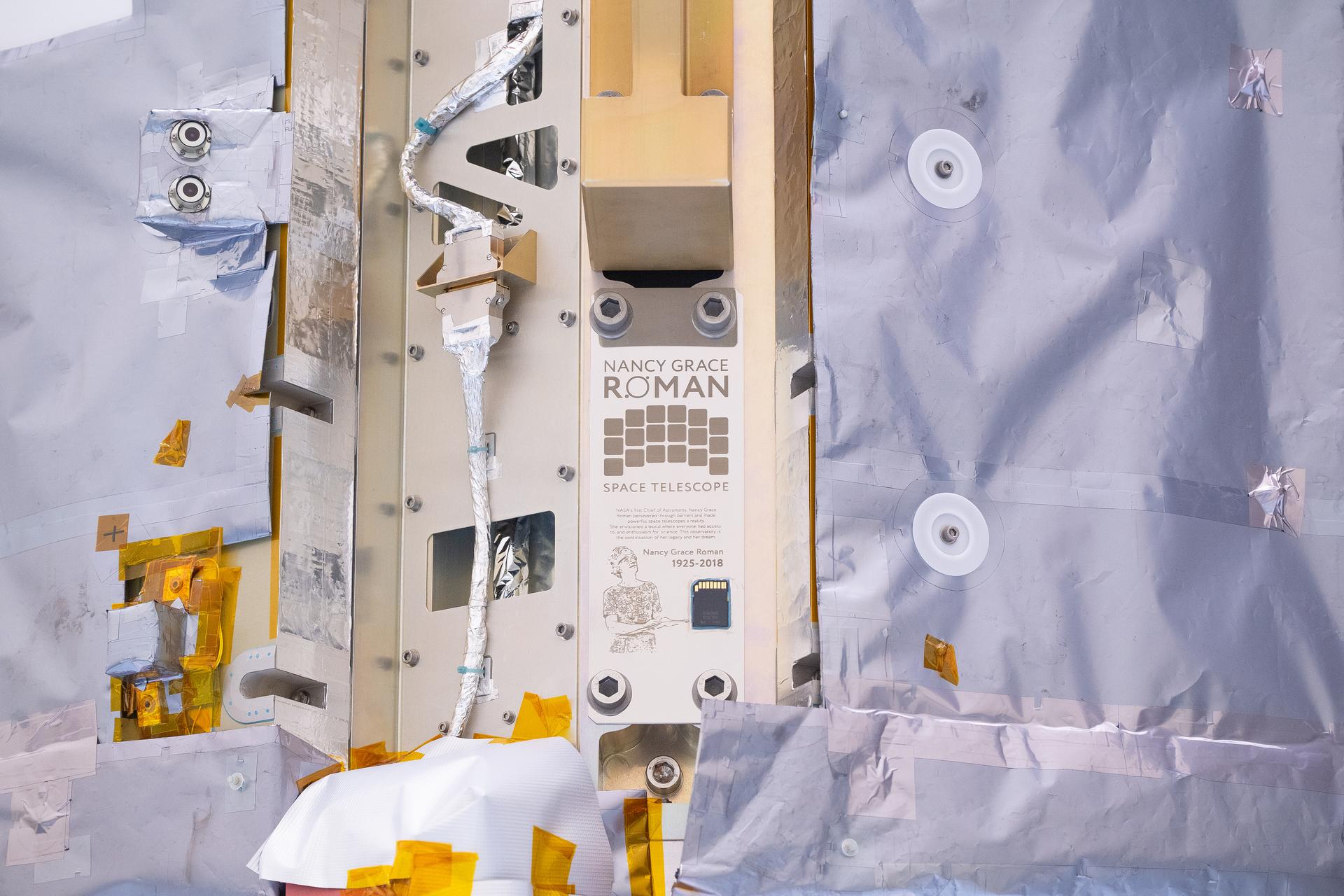
Technicians inside the Payload Hazardous Servicing Facility at NASA’s Kennedy Space Center complete installation of a commemorative plaque on the agency’s Nancy Grace Roman Space Telescope, as photographed on Tuesday, July 28, 2026. In addition to honoring the legacy of Dr. Nancy Grace Roman, NASA’s first chief astronomer and one of the architects of the agency’s modern science program, the plaque features a memory card containing a total of 1,350,144 names submitted by people from across the globe, including astronauts from NASA’s Artemis II and Artemis III missions. The Roman observatory will travel to the Sun-Earth Lagrange point 2, or L2, about one million miles from Earth, where the Sun’s and Earth’s gravity balance out, to complete a statistical census of planetary systems in our galaxy and settle essential questions in the areas of dark energy, exoplanets, and infrared astrophysics.
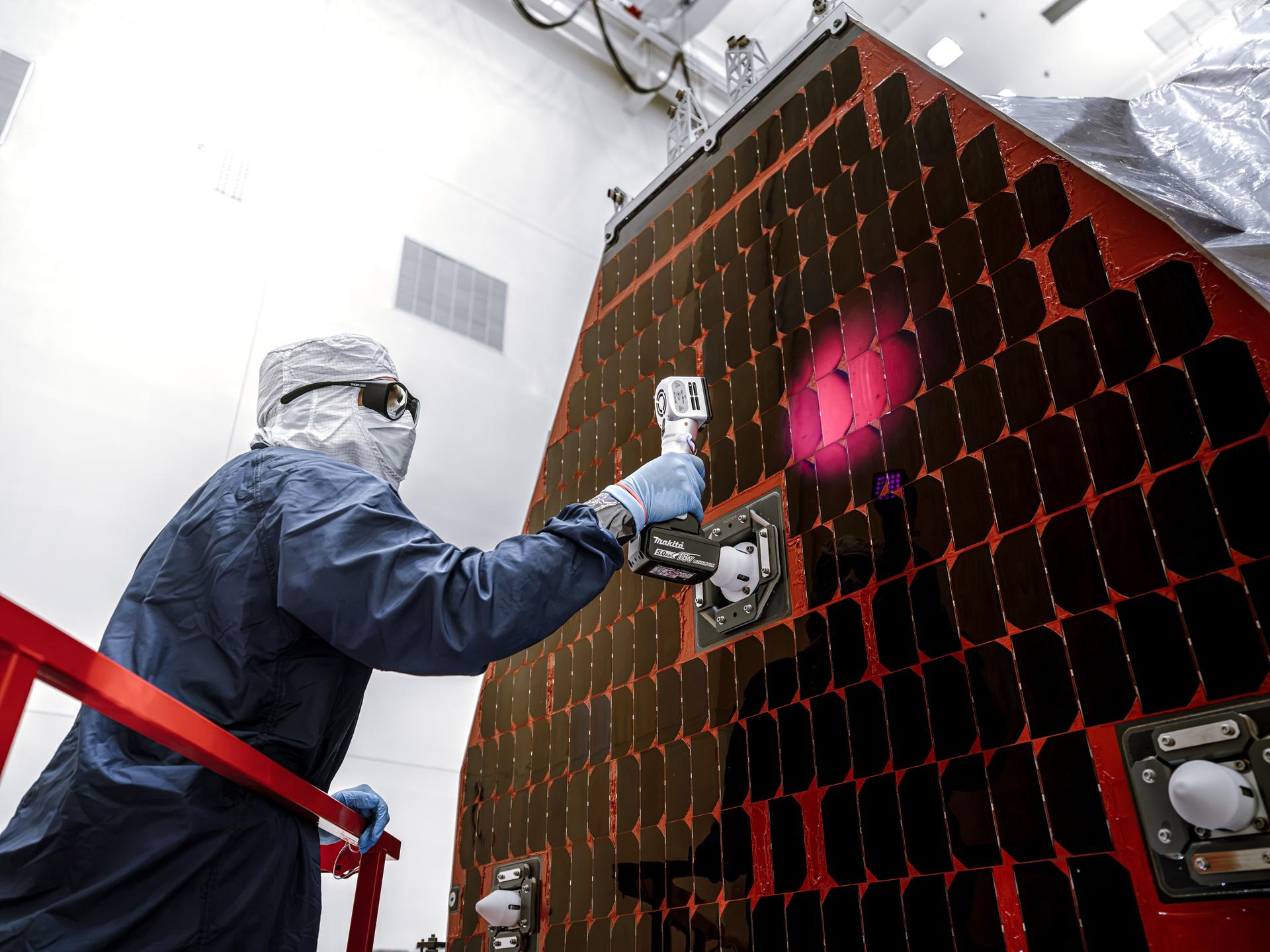
Technicians and engineers inside the Payload Hazardous Servicing Facility at NASA’s Kennedy Space Center in Florida clean and inspect the Solar Array Sun Shield (SASS) on the agency’s Nancy Grace Roman Space Telescope on Tuesday, July 14, 2026. The SASS is made up of six solar array panels, with the two center panels fixed while the four outer ones are deployed once in orbit. The Roman team will orient the SASS toward the Sun to provide power to the entire observatory and shade the telescope and instruments beneath. NASA designed this flagship mission to help astronomers explore dark matter, dark energy, and exoplanets.
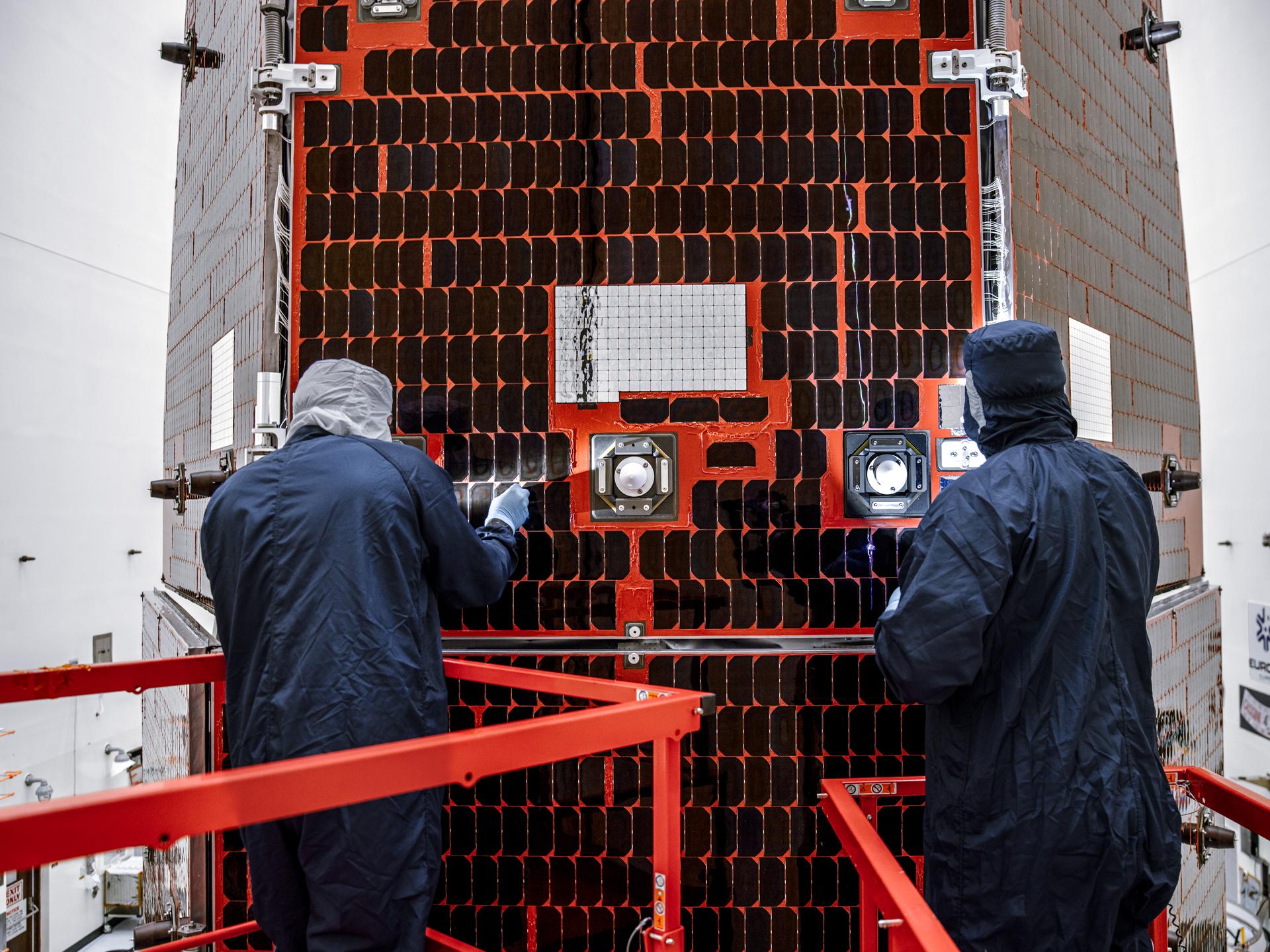
Technicians and engineers inside the Payload Hazardous Servicing Facility at NASA’s Kennedy Space Center in Florida clean and inspect the Solar Array Sun Shield (SASS) on the agency’s Nancy Grace Roman Space Telescope on Tuesday, July 14, 2026. The SASS is made up of six solar array panels, with the two center panels fixed while the four outer ones are deployed once in orbit. The Roman team will orient the SASS toward the Sun to provide power to the entire observatory and shade the telescope and instruments beneath. NASA designed this flagship mission to help astronomers explore dark matter, dark energy, and exoplanets.
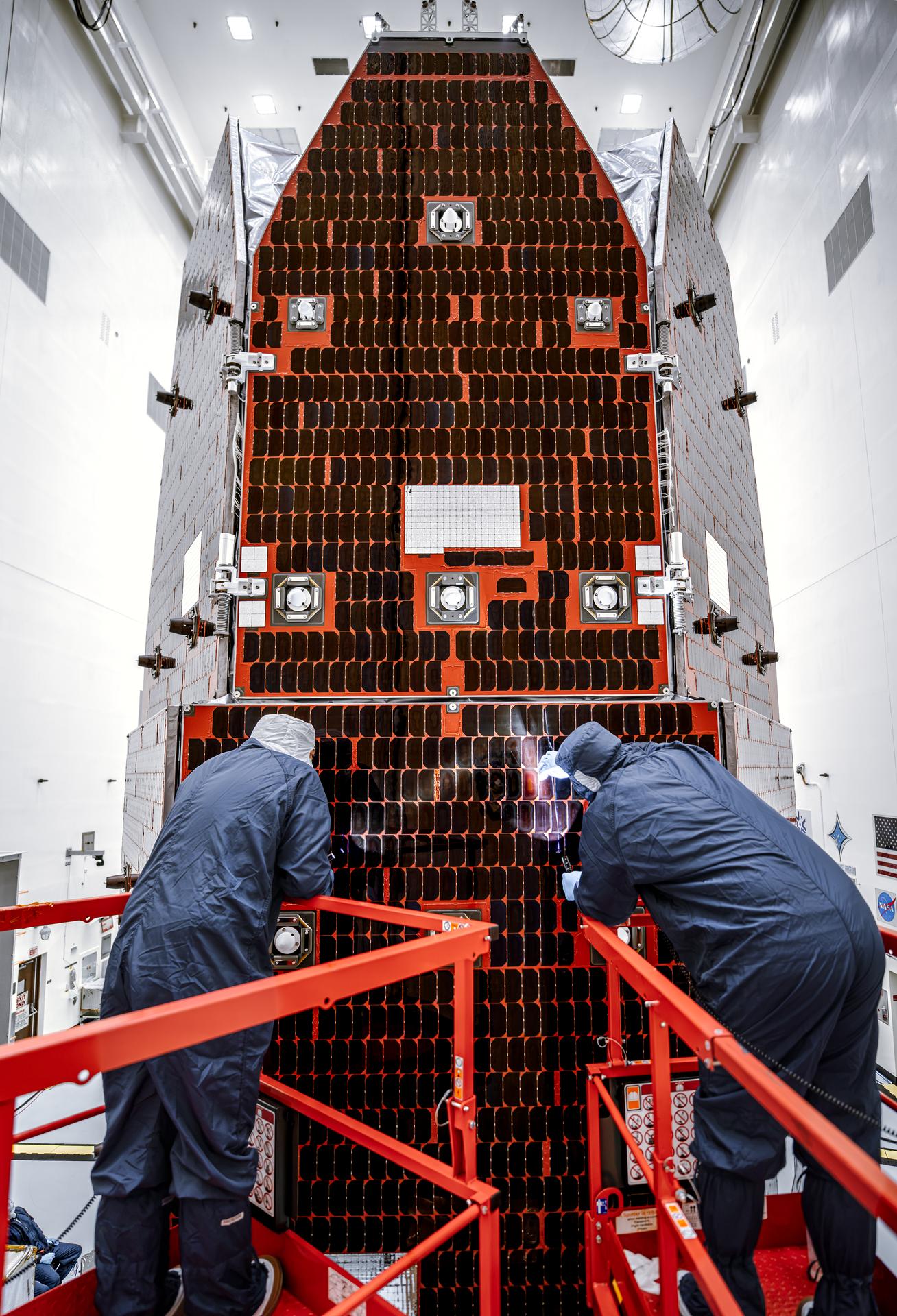
Technicians and engineers inside the Payload Hazardous Servicing Facility at NASA’s Kennedy Space Center in Florida clean and inspect the Solar Array Sun Shield (SASS) on the agency’s Nancy Grace Roman Space Telescope on Tuesday, July 14, 2026. The SASS is made up of six solar array panels, with the two center panels fixed while the four outer ones are deployed once in orbit. The Roman team will orient the SASS toward the Sun to provide power to the entire observatory and shade the telescope and instruments beneath. NASA designed this flagship mission to help astronomers explore dark matter, dark energy, and exoplanets.
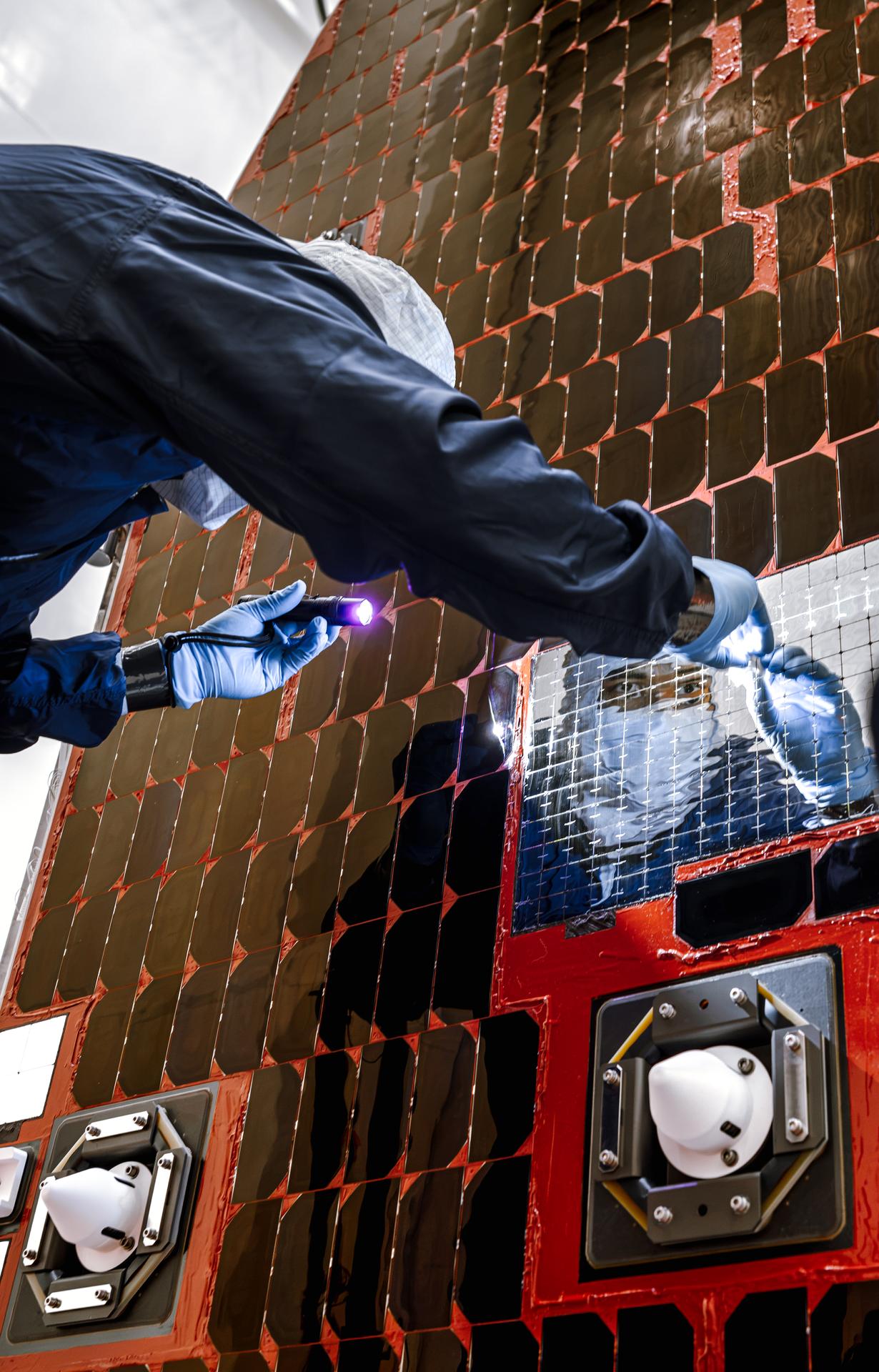
Technicians and engineers inside the Payload Hazardous Servicing Facility at NASA’s Kennedy Space Center in Florida clean and inspect the Solar Array Sun Shield (SASS) on the agency’s Nancy Grace Roman Space Telescope on Tuesday, July 14, 2026. The SASS is made up of six solar array panels, with the two center panels fixed while the four outer ones are deployed once in orbit. The Roman team will orient the SASS toward the Sun to provide power to the entire observatory and shade the telescope and instruments beneath. NASA designed this flagship mission to help astronomers explore dark matter, dark energy, and exoplanets.
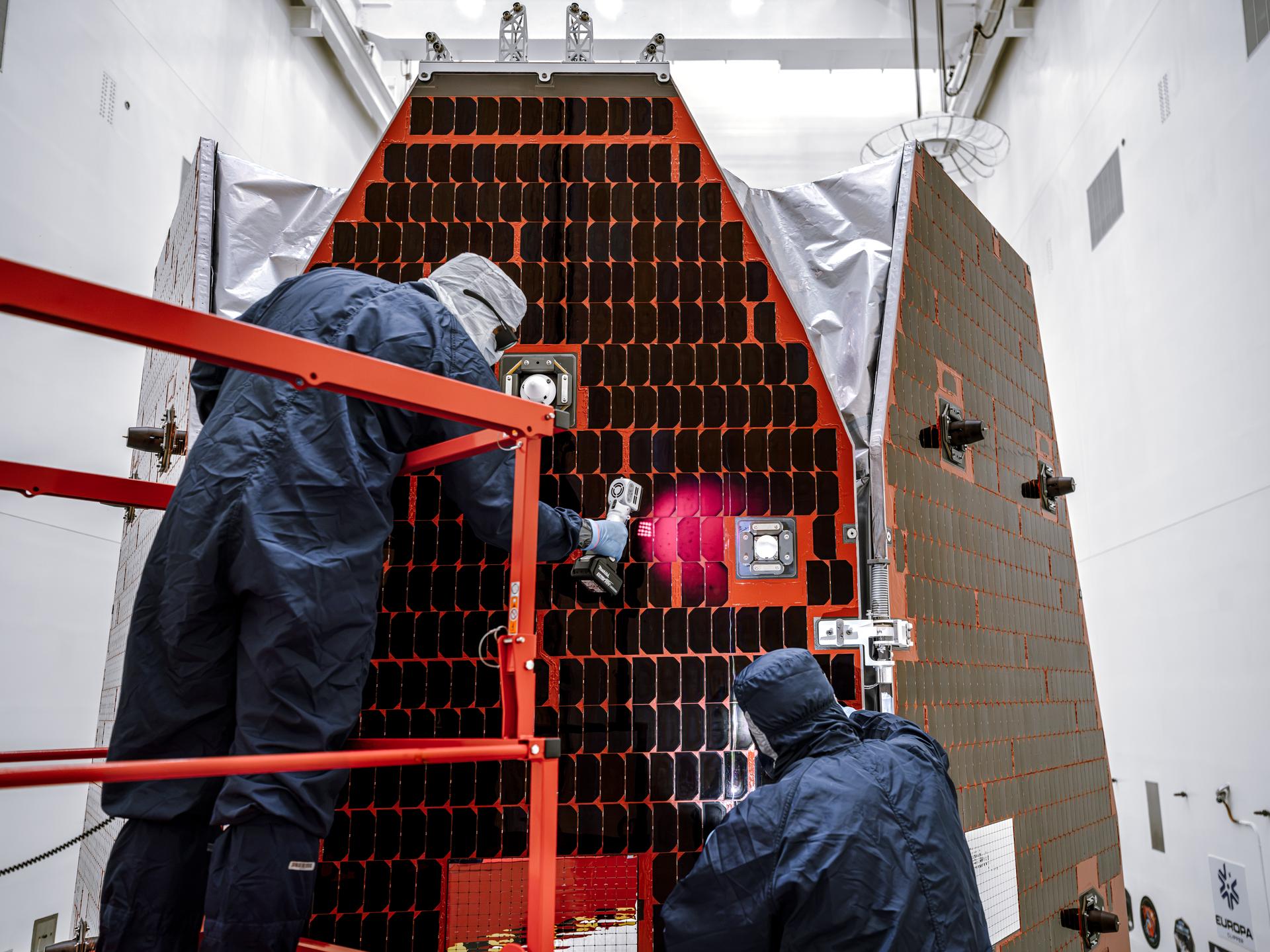
Technicians and engineers inside the Payload Hazardous Servicing Facility at NASA’s Kennedy Space Center in Florida clean and inspect the Solar Array Sun Shield (SASS) on the agency’s Nancy Grace Roman Space Telescope on Tuesday, July 14, 2026. The SASS is made up of six solar array panels, with the two center panels fixed while the four outer ones are deployed once in orbit. The Roman team will orient the SASS toward the Sun to provide power to the entire observatory and shade the telescope and instruments beneath. NASA designed this flagship mission to help astronomers explore dark matter, dark energy, and exoplanets.
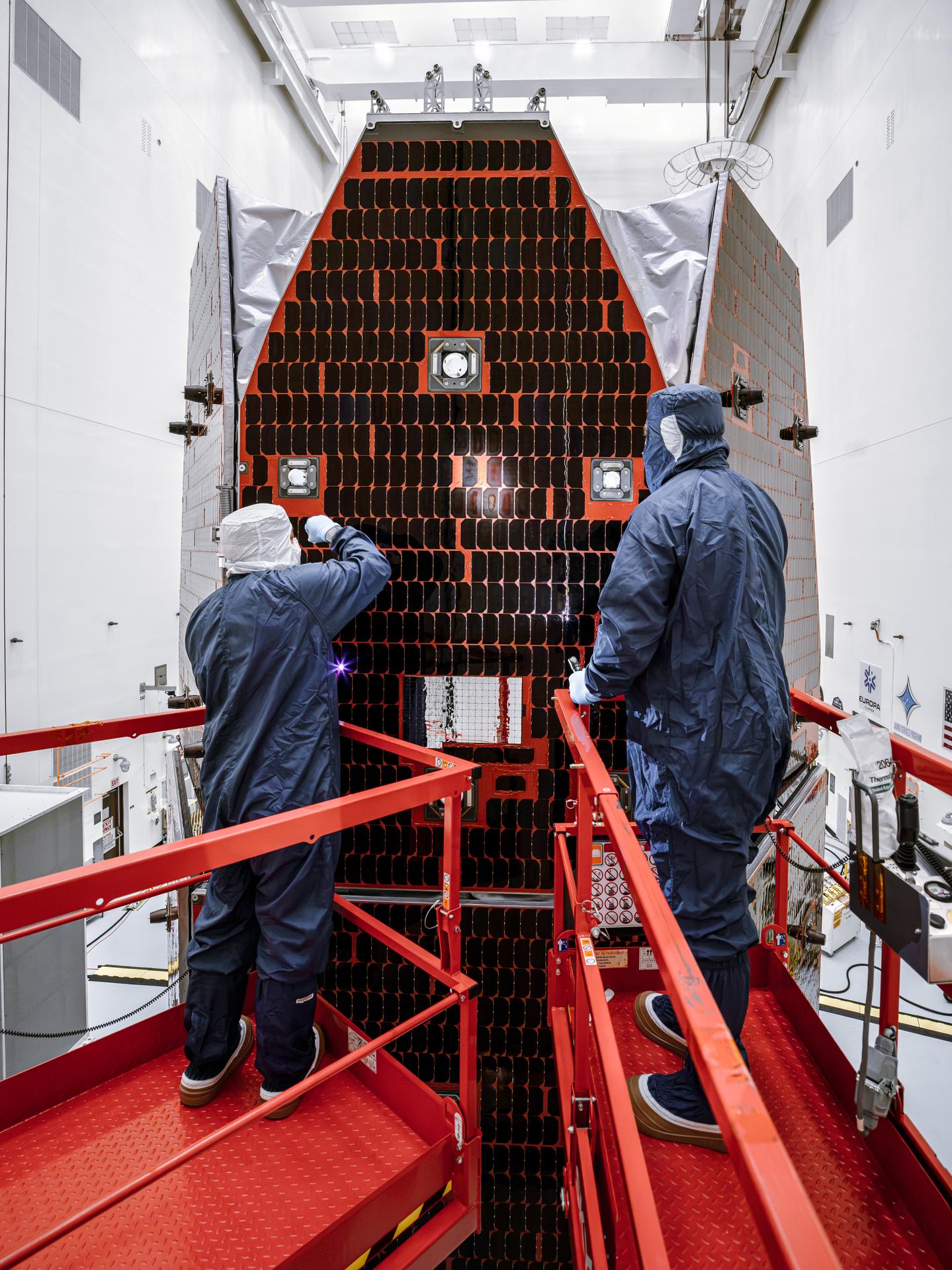
Technicians and engineers inside the Payload Hazardous Servicing Facility at NASA’s Kennedy Space Center in Florida clean and inspect the Solar Array Sun Shield (SASS) on the agency’s Nancy Grace Roman Space Telescope on Tuesday, July 14, 2026. The SASS is made up of six solar array panels, with the two center panels fixed while the four outer ones are deployed once in orbit. The Roman team will orient the SASS toward the Sun to provide power to the entire observatory and shade the telescope and instruments beneath. NASA designed this flagship mission to help astronomers explore dark matter, dark energy, and exoplanets.
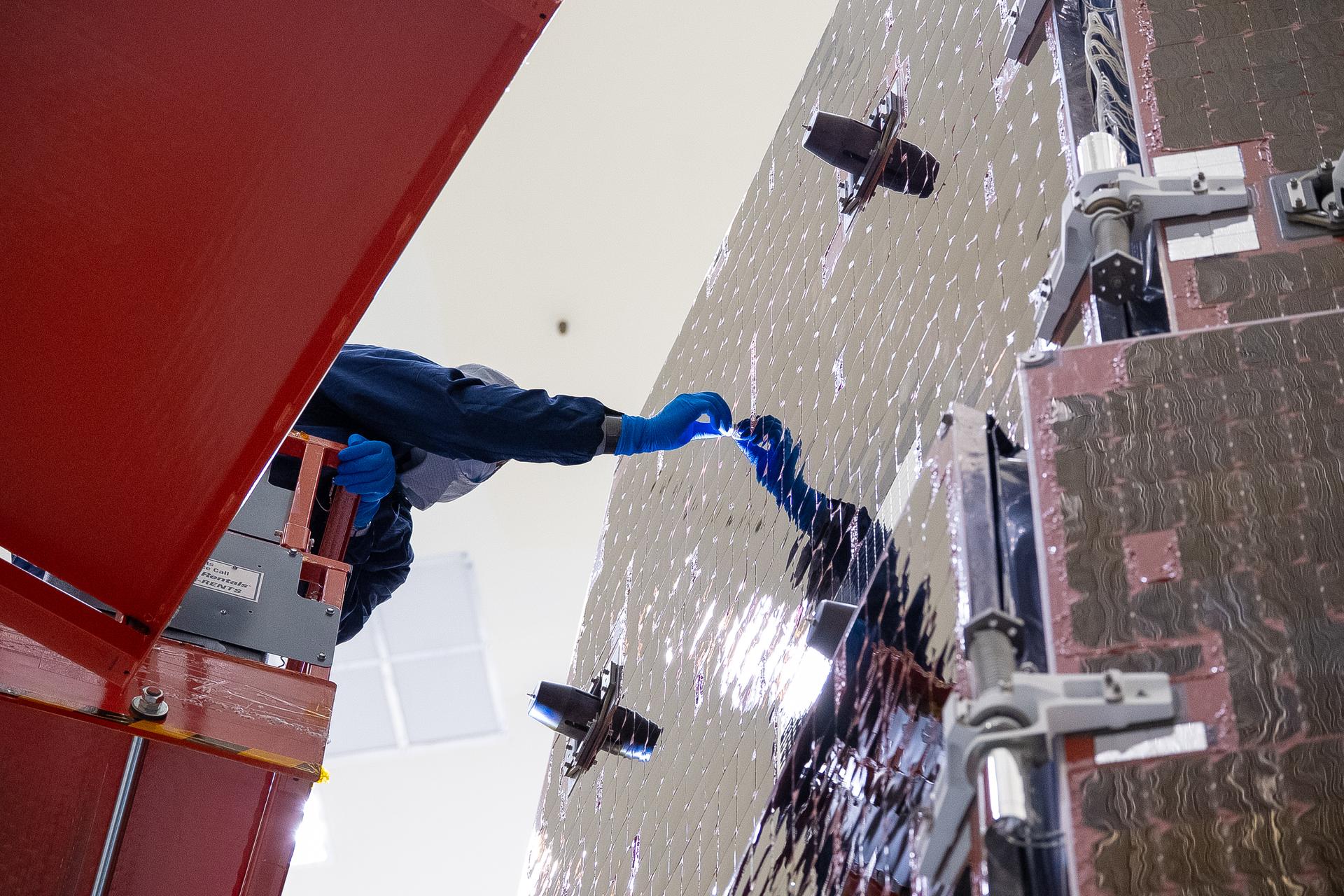
Technicians and engineers inside the Payload Hazardous Servicing Facility at NASA’s Kennedy Space Center in Florida clean and inspect the Solar Array Sun Shield (SASS) on the agency’s Nancy Grace Roman Space Telescope on Wednesday, July 8, 2026. The SASS is made up of six solar array panels, with the two center panels fixed while the four outer ones are deployed once in orbit. The Roman team will orient the SASS toward the Sun to provide power to the entire observatory and shade the telescope and instruments beneath. NASA designed this flagship mission to help astronomers explore dark matter, dark energy, and exoplanets.
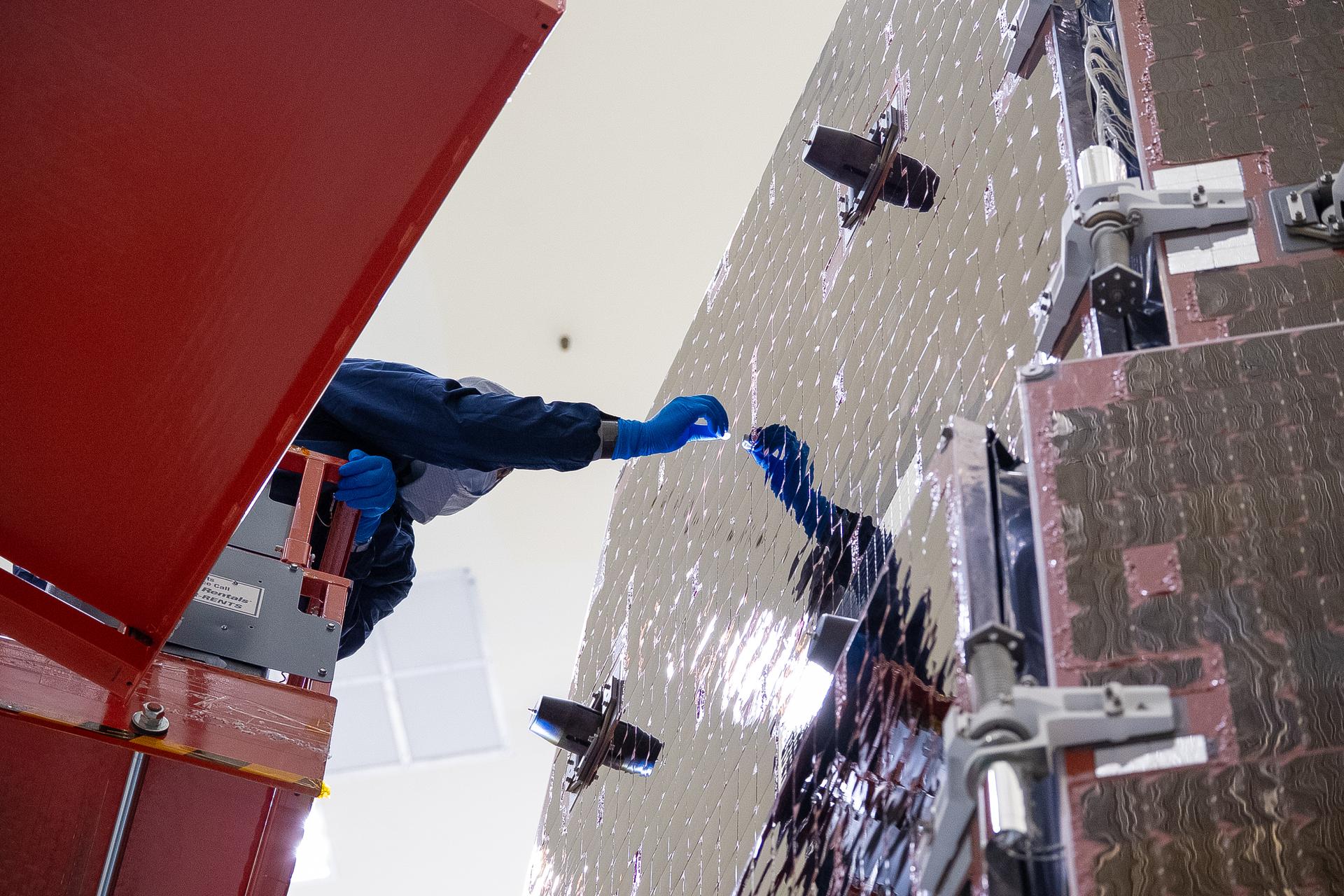
Technicians and engineers inside the Payload Hazardous Servicing Facility at NASA’s Kennedy Space Center in Florida clean and inspect the Solar Array Sun Shield (SASS) on the agency’s Nancy Grace Roman Space Telescope on Wednesday, July 8, 2026. The SASS is made up of six solar array panels, with the two center panels fixed while the four outer ones are deployed once in orbit. The Roman team will orient the SASS toward the Sun to provide power to the entire observatory and shade the telescope and instruments beneath. NASA designed this flagship mission to help astronomers explore dark matter, dark energy, and exoplanets.
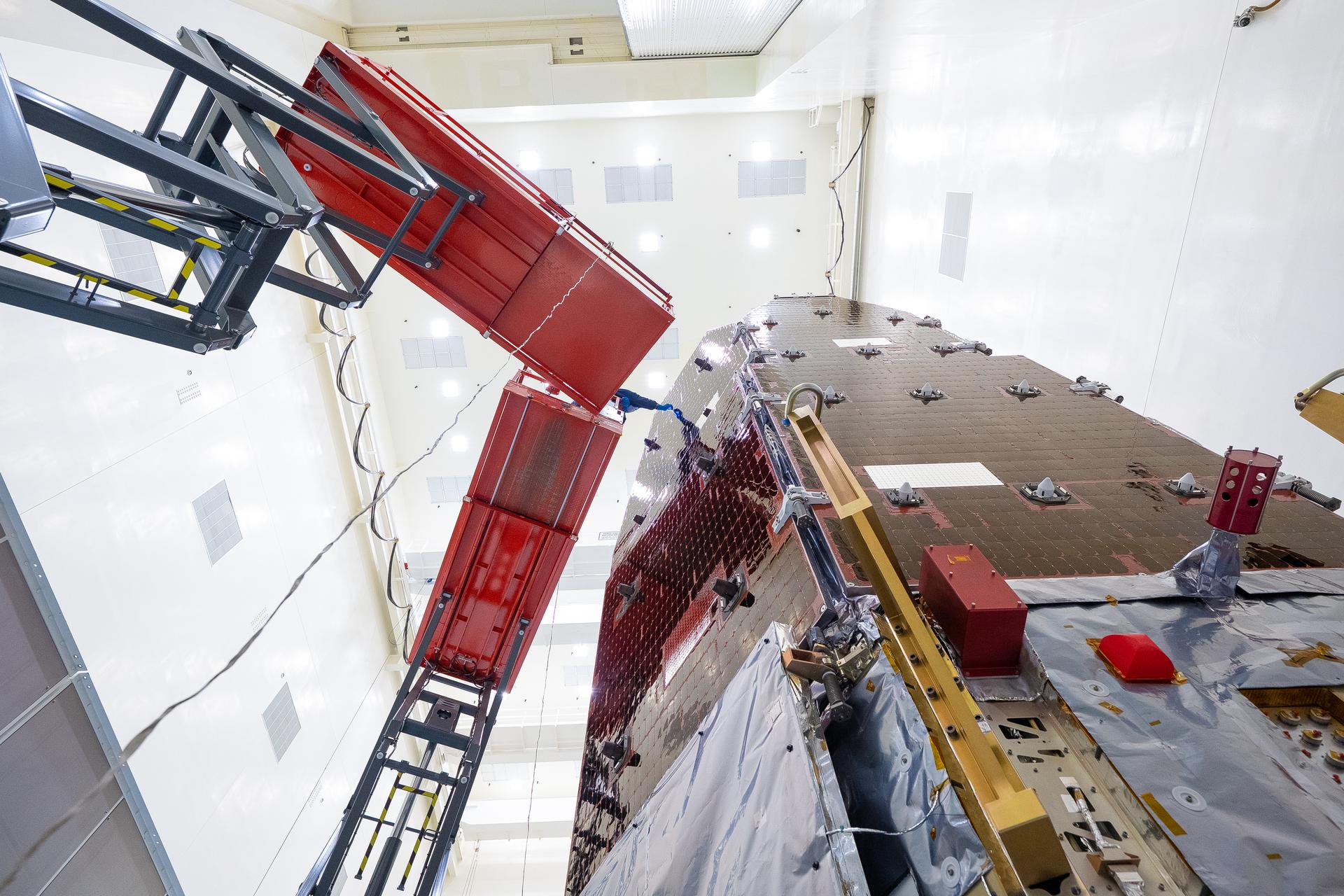
Technicians and engineers inside the Payload Hazardous Servicing Facility at NASA’s Kennedy Space Center in Florida clean and inspect the Solar Array Sun Shield (SASS) on the agency’s Nancy Grace Roman Space Telescope on Wednesday, July 8, 2026. The SASS is made up of six solar array panels, with the two center panels fixed while the four outer ones are deployed once in orbit. The Roman team will orient the SASS toward the Sun to provide power to the entire observatory and shade the telescope and instruments beneath. NASA designed this flagship mission to help astronomers explore dark matter, dark energy, and exoplanets.
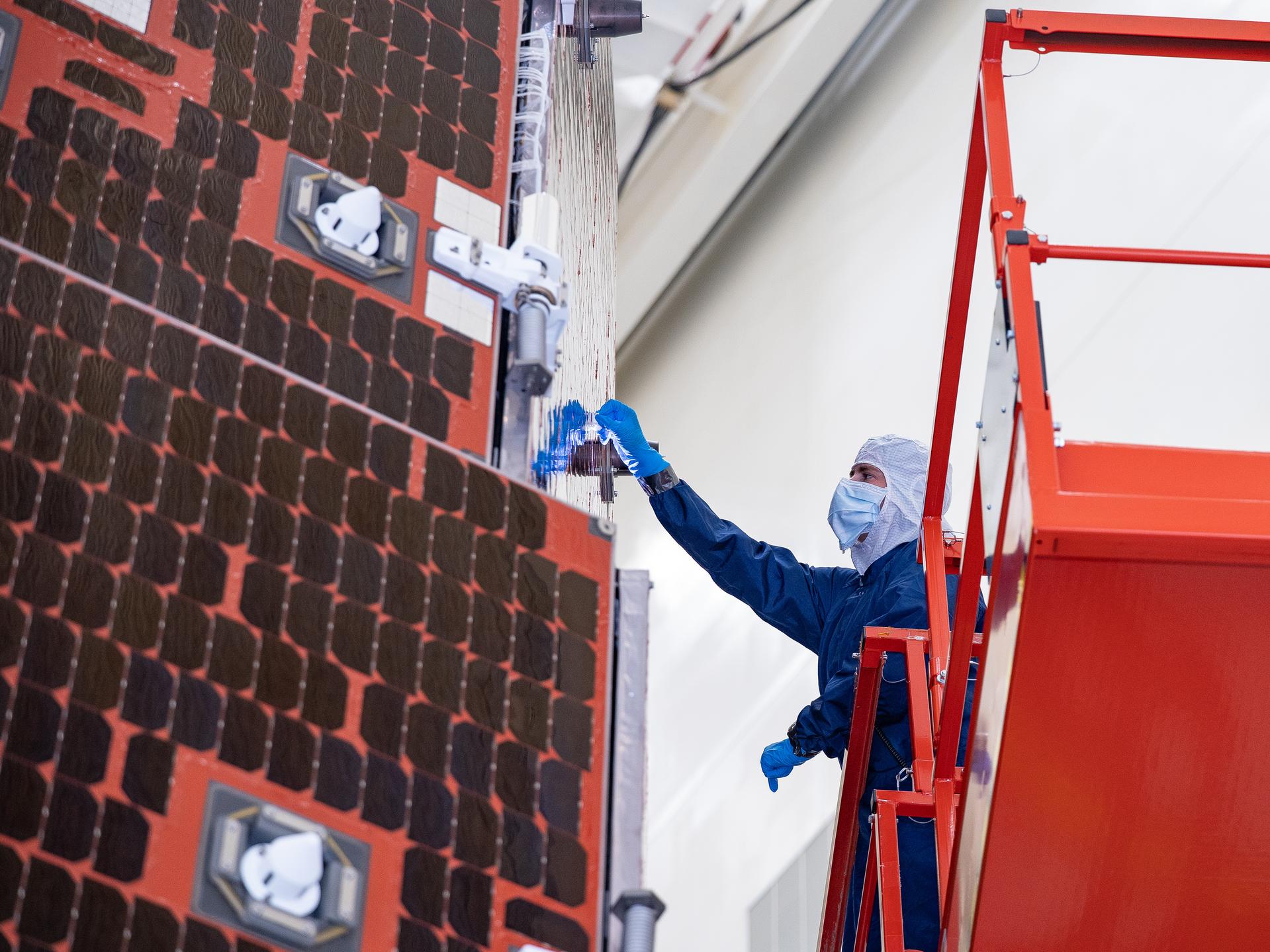
Technicians and engineers inside the Payload Hazardous Servicing Facility at NASA’s Kennedy Space Center in Florida clean and inspect the Solar Array Sun Shield (SASS) on the agency’s Nancy Grace Roman Space Telescope on Thursday, July 9, 2026. The SASS is made up of six solar array panels, with the two center panels fixed while the four outer ones are deployed once in orbit. The Roman team will orient the SASS toward the Sun to provide power to the entire observatory and shade the telescope and instruments beneath. NASA designed this flagship mission to help astronomers explore dark matter, dark energy, and exoplanets.
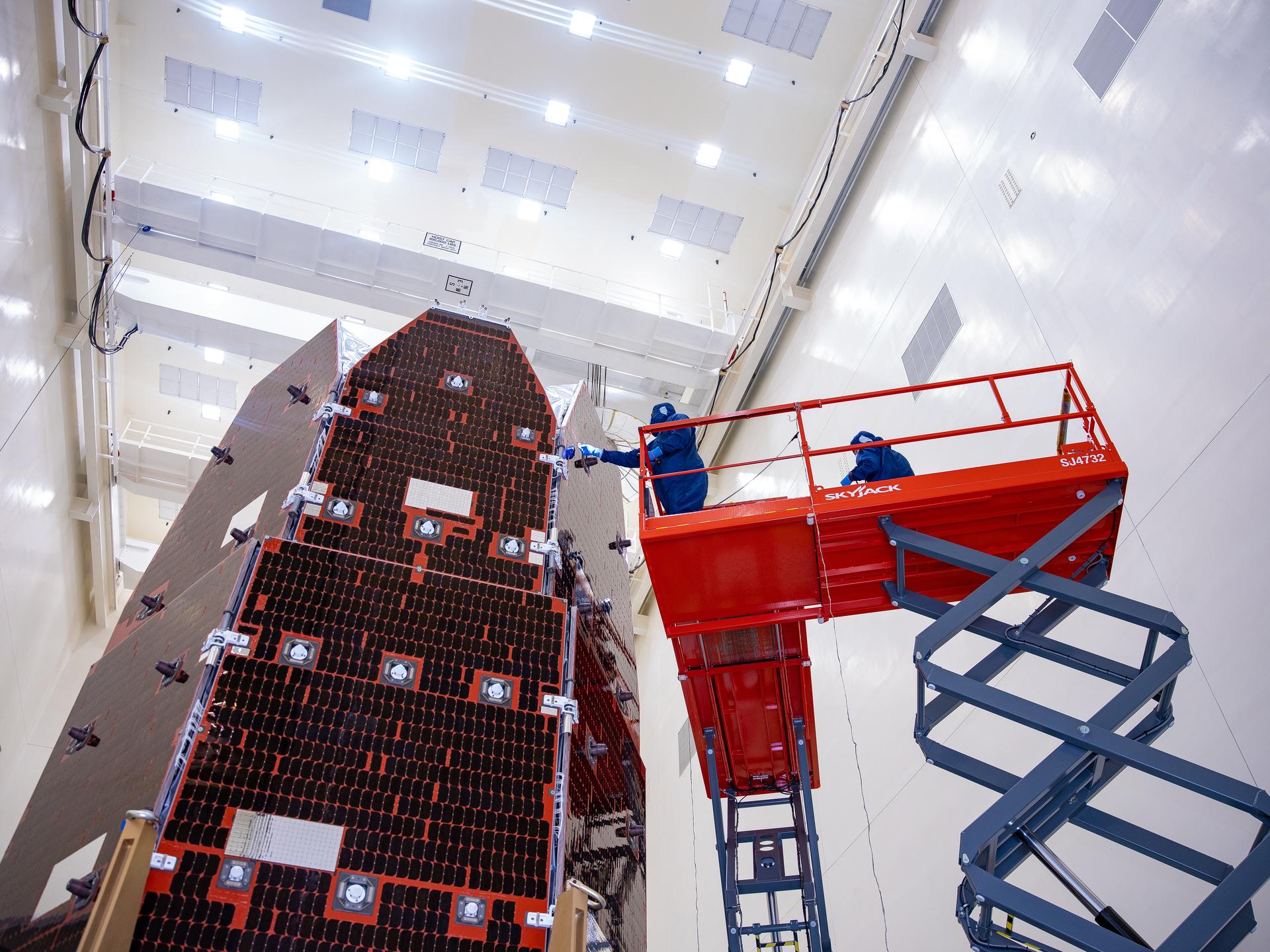
Technicians and engineers inside the Payload Hazardous Servicing Facility at NASA’s Kennedy Space Center in Florida clean and inspect the Solar Array Sun Shield (SASS) on the agency’s Nancy Grace Roman Space Telescope on Thursday, July 9, 2026. The SASS is made up of six solar array panels, with the two center panels fixed while the four outer ones are deployed once in orbit. The Roman team will orient the SASS toward the Sun to provide power to the entire observatory and shade the telescope and instruments beneath. NASA designed this flagship mission to help astronomers explore dark matter, dark energy, and exoplanets.
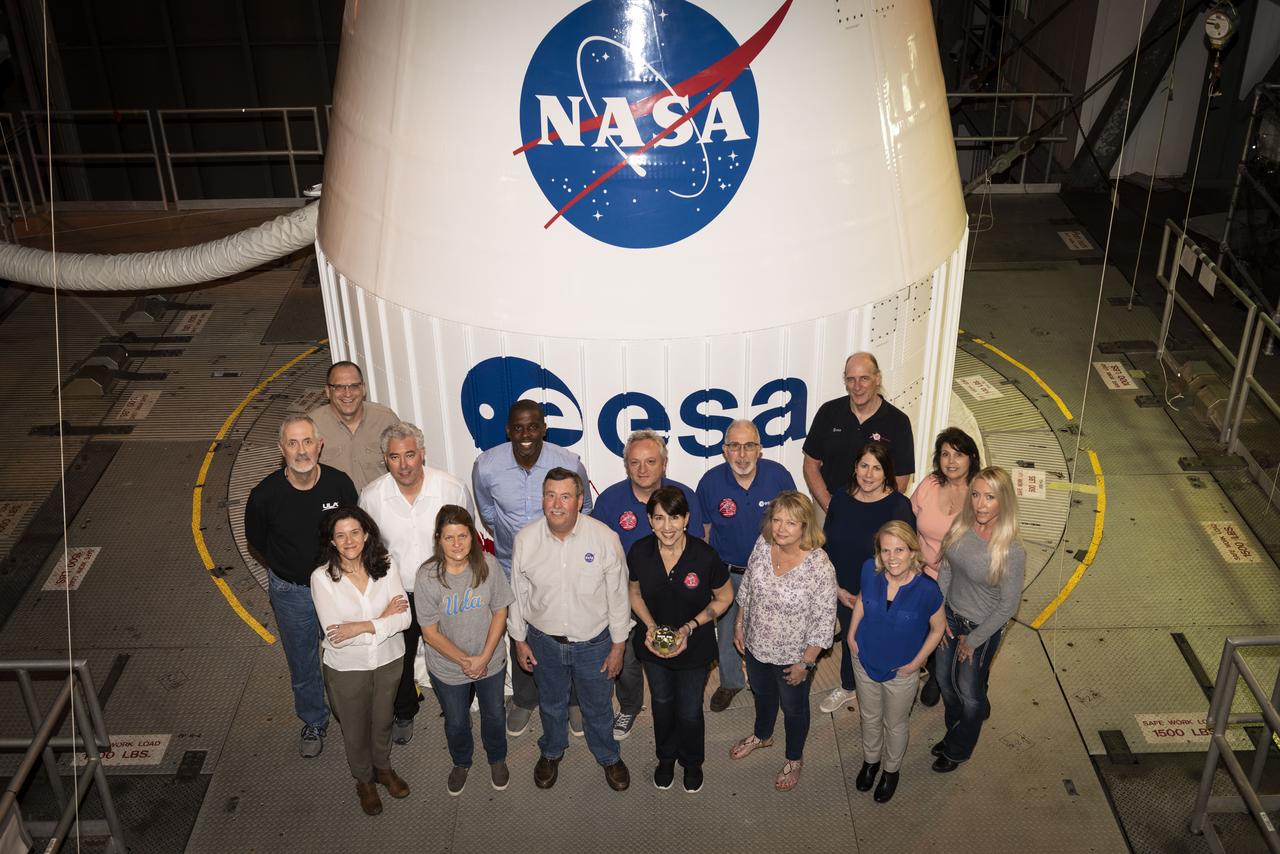
Members of the Goddard Space Flight Center Solar Orbiter Collaboration Project Office, along with Launch Services Program’s (LSP) Jim Behling (back left), launch site integration manager, pose in front of the Solar Orbiter spacecraft inside the Vertical Integration Facility at Cape Canaveral Air Force Station’s Space Launch Complex 41 in Florida. Solar Orbiter is an international cooperative mission between ESA (European Space Agency) and NASA. The spacecraft will provide the first images of the Sun’s poles. NASA’s LSP, based at Kennedy Space Center, is managing the launch.
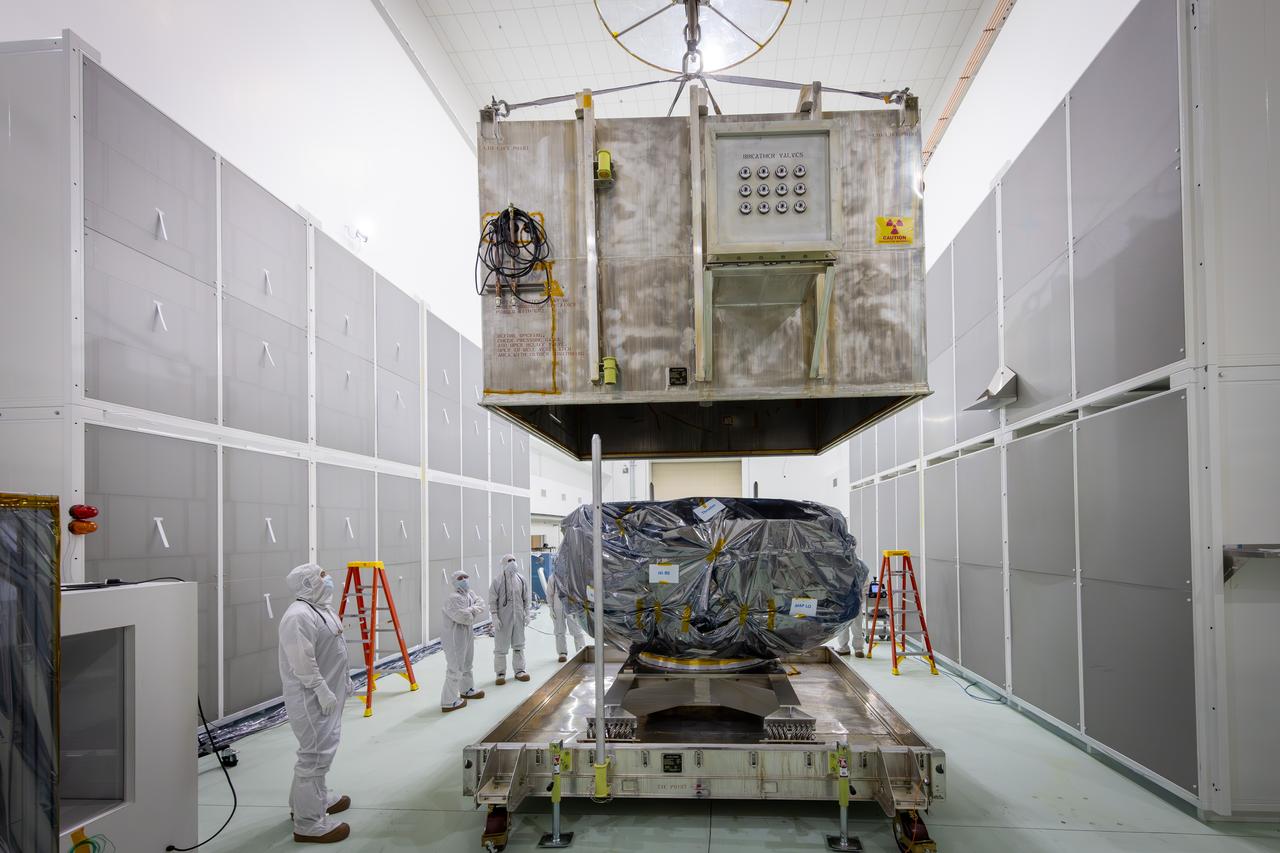
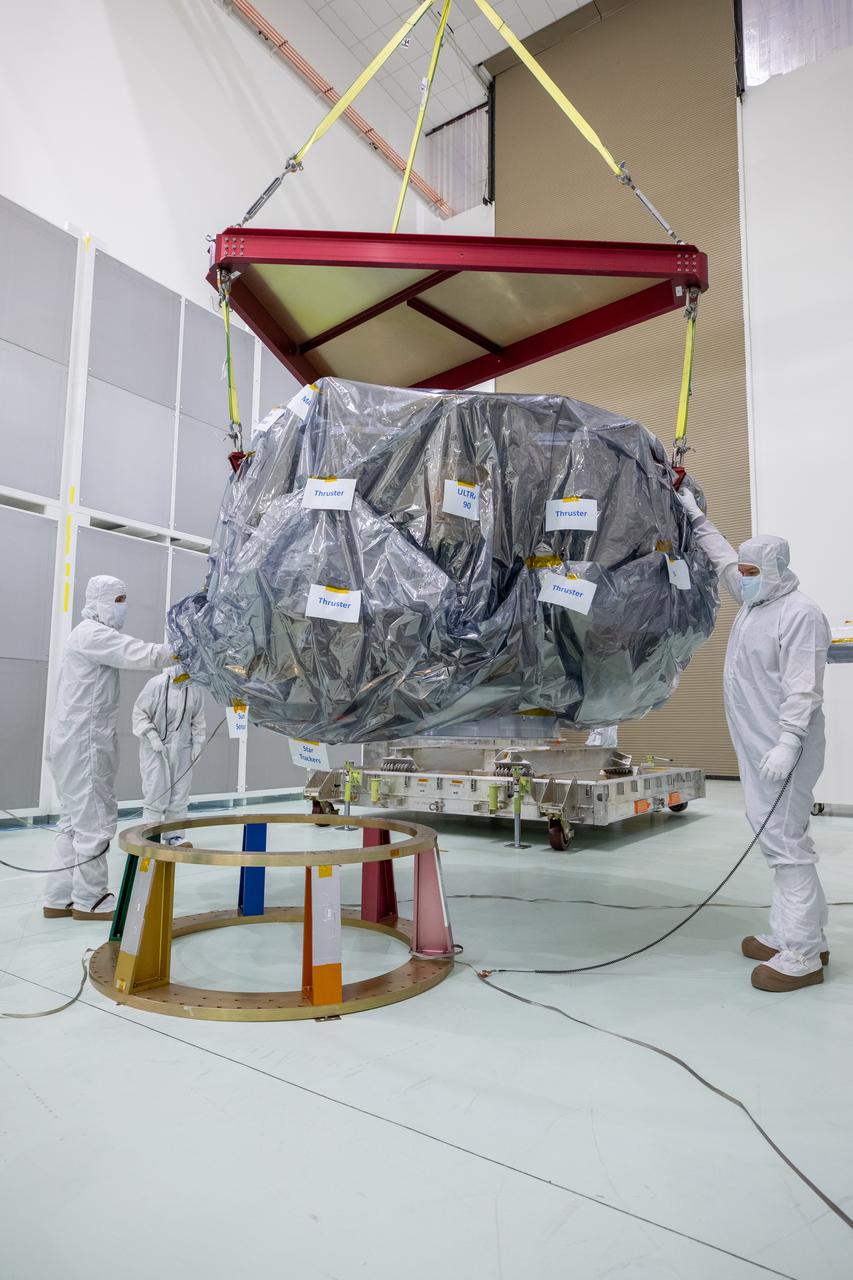
Technicians remove NASA’s IMAP (Interstellar Mapping and Acceleration Probe) spacecraft from its shipping container inside the high bay at the Astrotech Space Operations Facility near the agency’s Kennedy Space Center in Florida on Thursday, May 29, 2025. The observatory will study how the Sun shapes the boundaries of the heliosphere, the bubble protecting around our solar system, and is targeted for launch this fall aboard a SpaceX Falcon 9 rocket from Launch Complex 39A at NASA Kennedy.
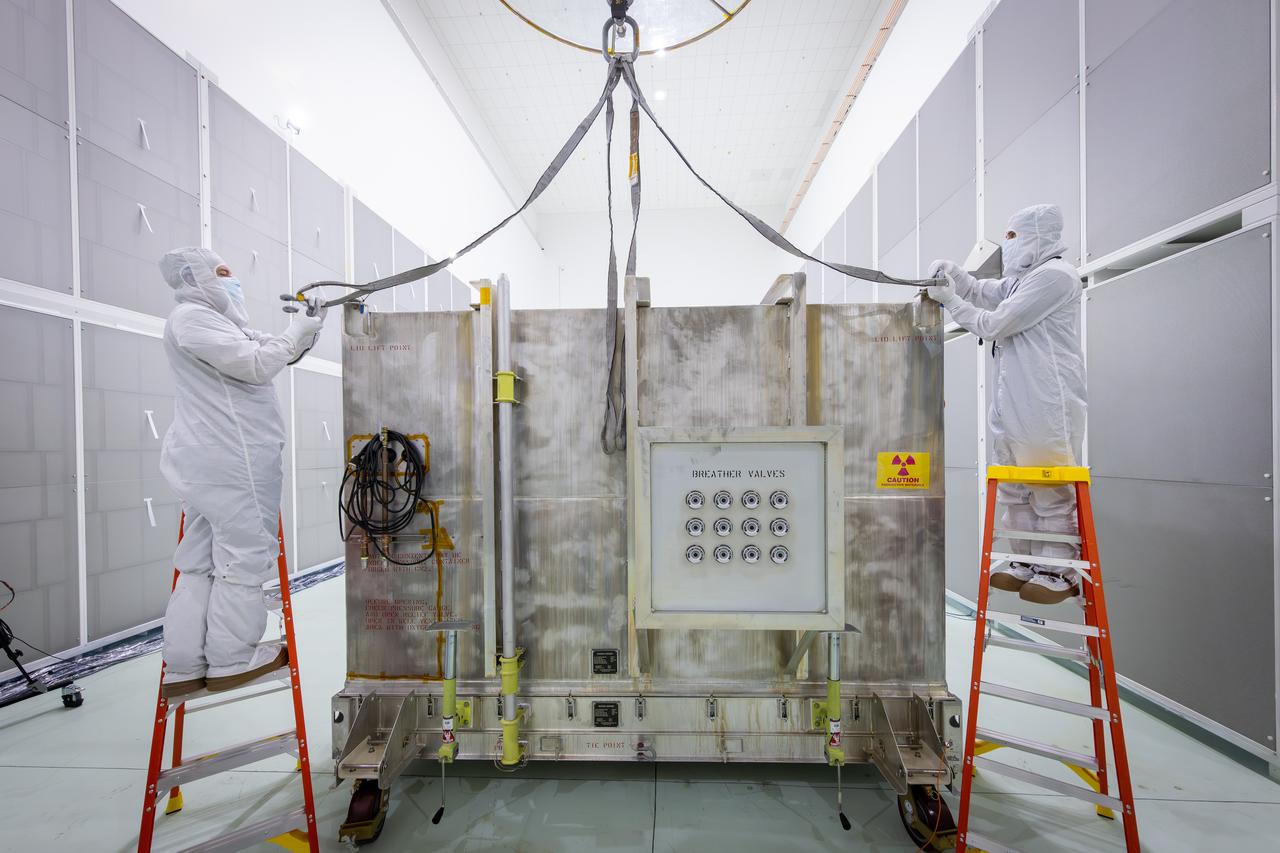
Technicians remove NASA’s IMAP (Interstellar Mapping and Acceleration Probe) spacecraft from its shipping container inside the high bay at the Astrotech Space Operations Facility near the agency’s Kennedy Space Center in Florida on Thursday, May 29, 2025. The observatory will study how the Sun shapes the boundaries of the heliosphere, the bubble protecting around our solar system, and is targeted for launch this fall aboard a SpaceX Falcon 9 rocket from Launch Complex 39A at NASA Kennedy.
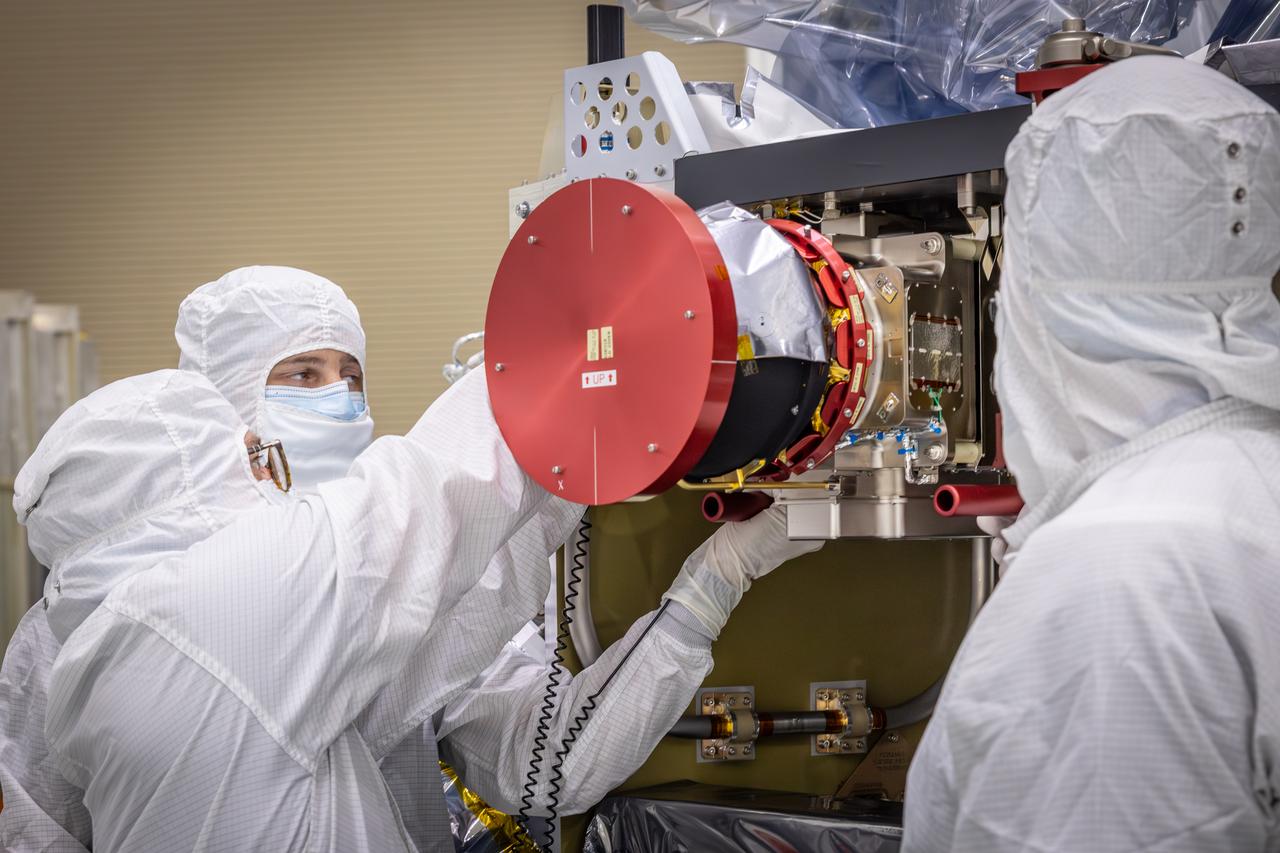
Technicians reintegrate the Compact Dual Ion Composition Experiment (CoDICE) instrument of NASA’s IMAP (Interstellar Mapping and Acceleration Probe) observatory inside the high bay at the Astrotech Space Operations Facility near the agency’s Kennedy Space Center in Florida on Friday, June 20, 2025. CoDICE will measure solar wind particles flowing from the Sun and pickup ions that entered the heliosphere from outside the solar system, as well as the direction of travel, and types of specific species of pickup ions. Launch of the IMAP mission is targeted for no earlier than September 2025 aboard a SpaceX Falcon 9 rocket from Launch Complex 39A at NASA Kennedy.
Technicians reintegrate the Solar Wind and Pickup Ions (SWAPI) instrument of NASA’s IMAP (Interstellar Mapping and Acceleration Probe) observatory inside the high bay at the Astrotech Space Operations Facility near the agency’s Kennedy Space Center in Florida on Monday, June 23, 2025. As IMAP spins in space, solar wind particles are swept into SWAPI through a special opening called “sunglasses,” an opening covered by a screen with very tiny precise holes that cut down the brightness of the very intense solar wind. SWAPI collects and counts particles from the solar wind flowing from the Sun and particles called pick-up ions that have entered the heliosphere from outside the solar system and traveled inwards where IMAP orbits near Earth. Launch of the IMAP mission is targeted for no earlier than September 2025 aboard a SpaceX Falcon 9 rocket from Launch Complex 39A at NASA Kennedy.
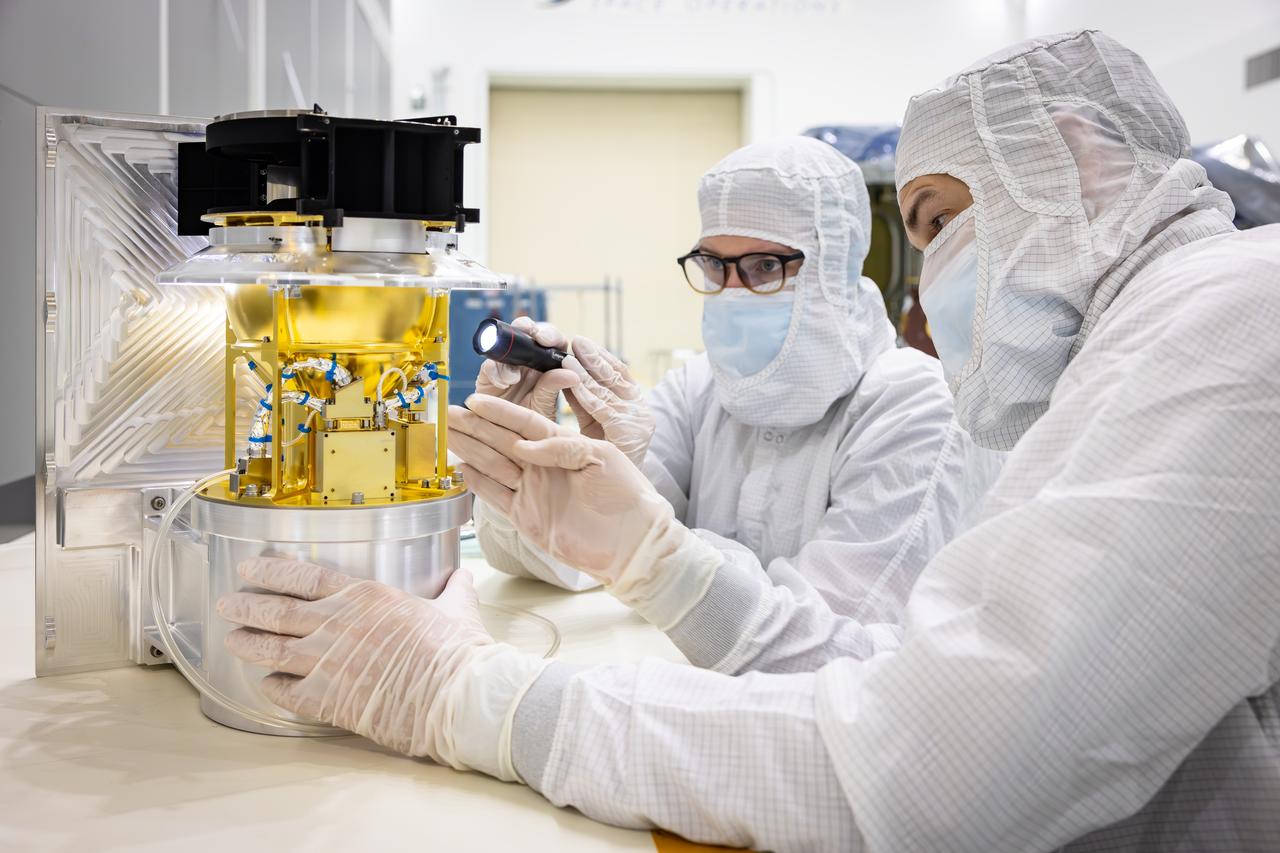
Technicians perform tests the Solar Wind and Pickup Ions (SWAPI) instrument of NASA’s IMAP (Interstellar Mapping and Acceleration Probe) observatory inside the high bay at the Astrotech Space Operations Facility near the agency’s Kennedy Space Center in Florida on Tuesday, June 17, 2025. As IMAP spins in space, solar wind particles are swept into SWAPI through a special opening called “sunglasses,” an opening covered by a screen with very tiny precise holes that cut down the brightness of the very intense solar wind. SWAPI collects and counts particles from the solar wind flowing from the Sun and particles called pick-up ions that have entered the heliosphere from outside the solar system and traveled inwards where IMAP orbits near Earth. Launch of the IMAP mission is targeted for no earlier than September 2025 aboard a SpaceX Falcon 9 rocket from Launch Complex 39A at NASA Kennedy.
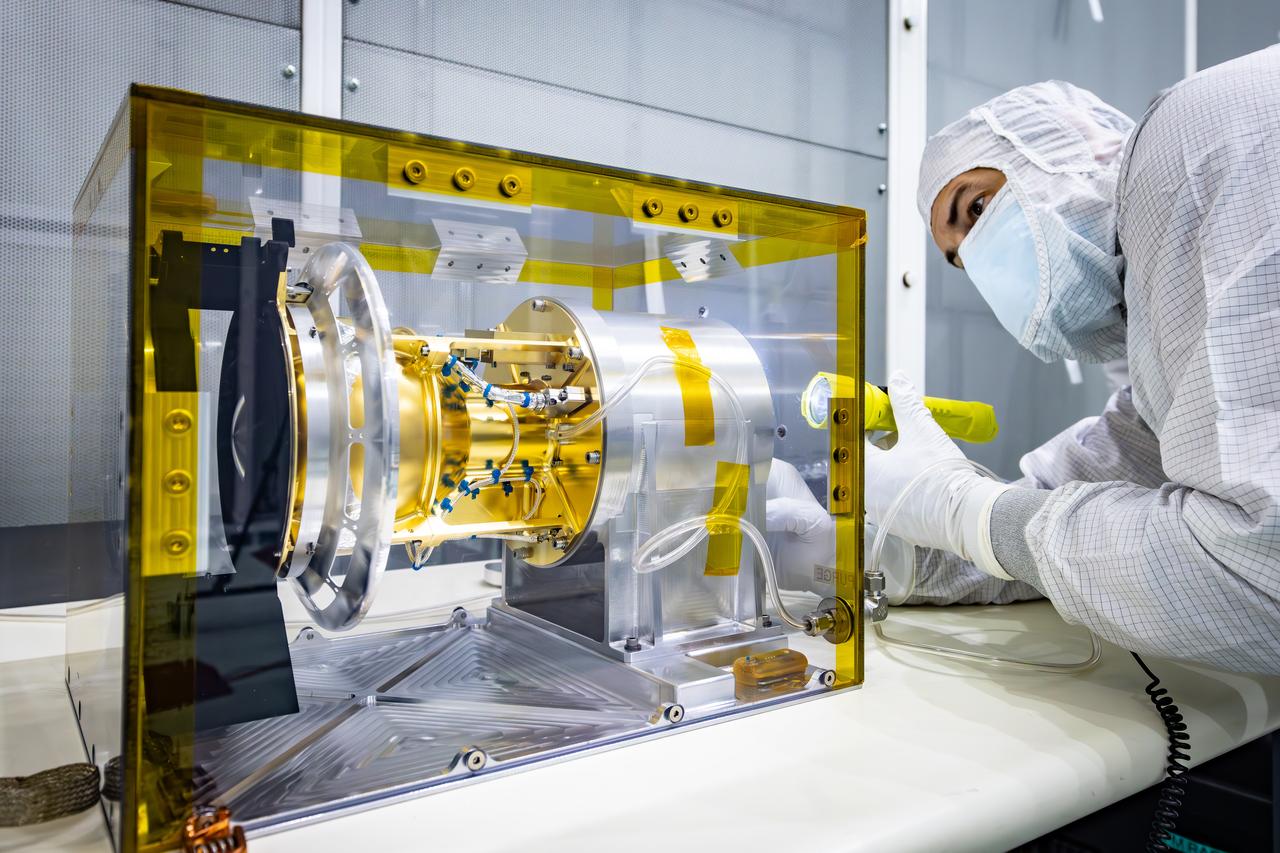
Technicians perform tests the Solar Wind and Pickup Ions (SWAPI) instrument of NASA’s IMAP (Interstellar Mapping and Acceleration Probe) observatory inside the high bay at the Astrotech Space Operations Facility near the agency’s Kennedy Space Center in Florida on Tuesday, June 17, 2025. As IMAP spins in space, solar wind particles are swept into SWAPI through a special opening called “sunglasses,” an opening covered by a screen with very tiny precise holes that cut down the brightness of the very intense solar wind. SWAPI collects and counts particles from the solar wind flowing from the Sun and particles called pick-up ions that have entered the heliosphere from outside the solar system and traveled inwards where IMAP orbits near Earth. Launch of the IMAP mission is targeted for no earlier than September 2025 aboard a SpaceX Falcon 9 rocket from Launch Complex 39A at NASA Kennedy.
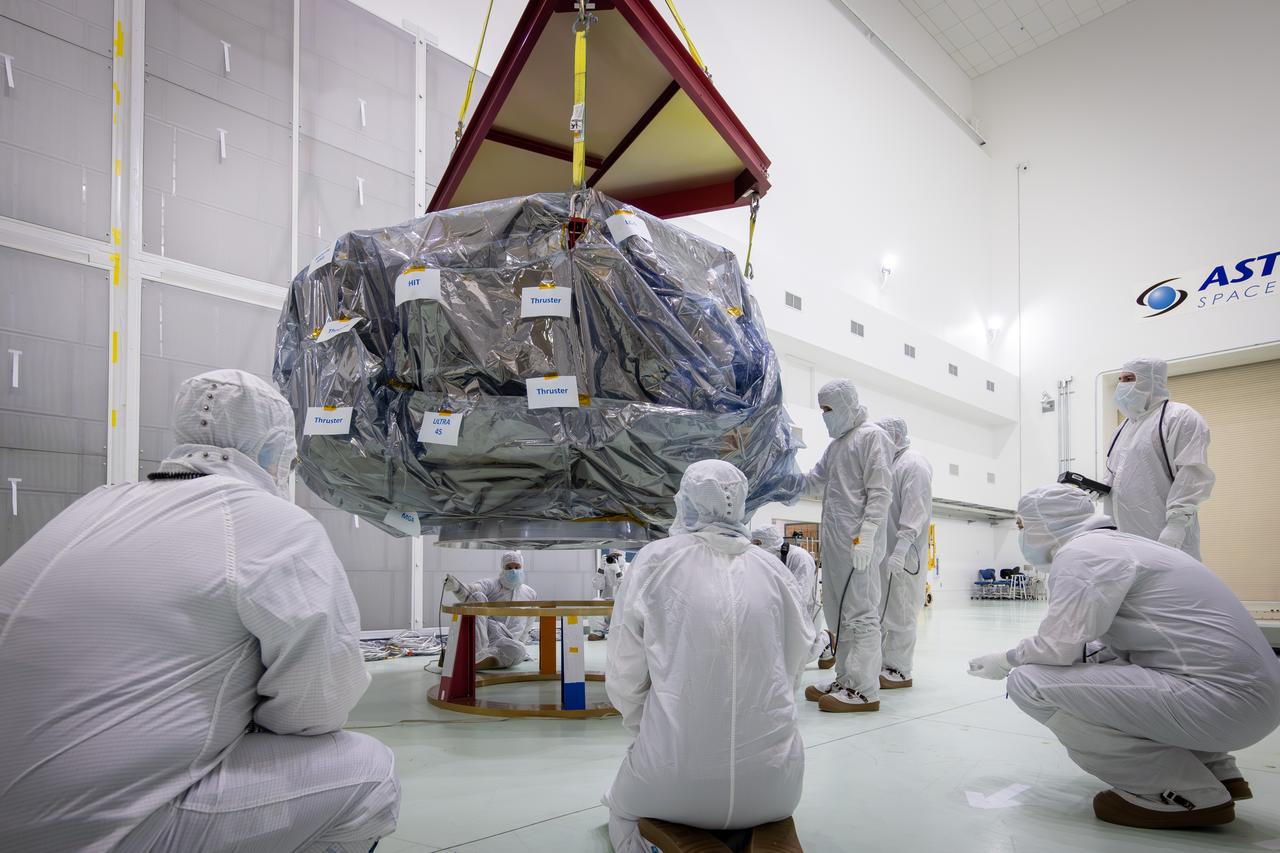
Technicians lift NASA’s IMAP (Interstellar Mapping and Acceleration Probe) spacecraft onto a work stand inside the high bay at the Astrotech Space Operations Facility near the agency’s Kennedy Space Center in Florida on Thursday, May 29, 2025. The observatory will study how the Sun shapes the boundaries of the heliosphere, the bubble protecting around our solar system, and is targeted for launch this fall aboard a SpaceX Falcon 9 rocket from Launch Complex 39A at NASA Kennedy.
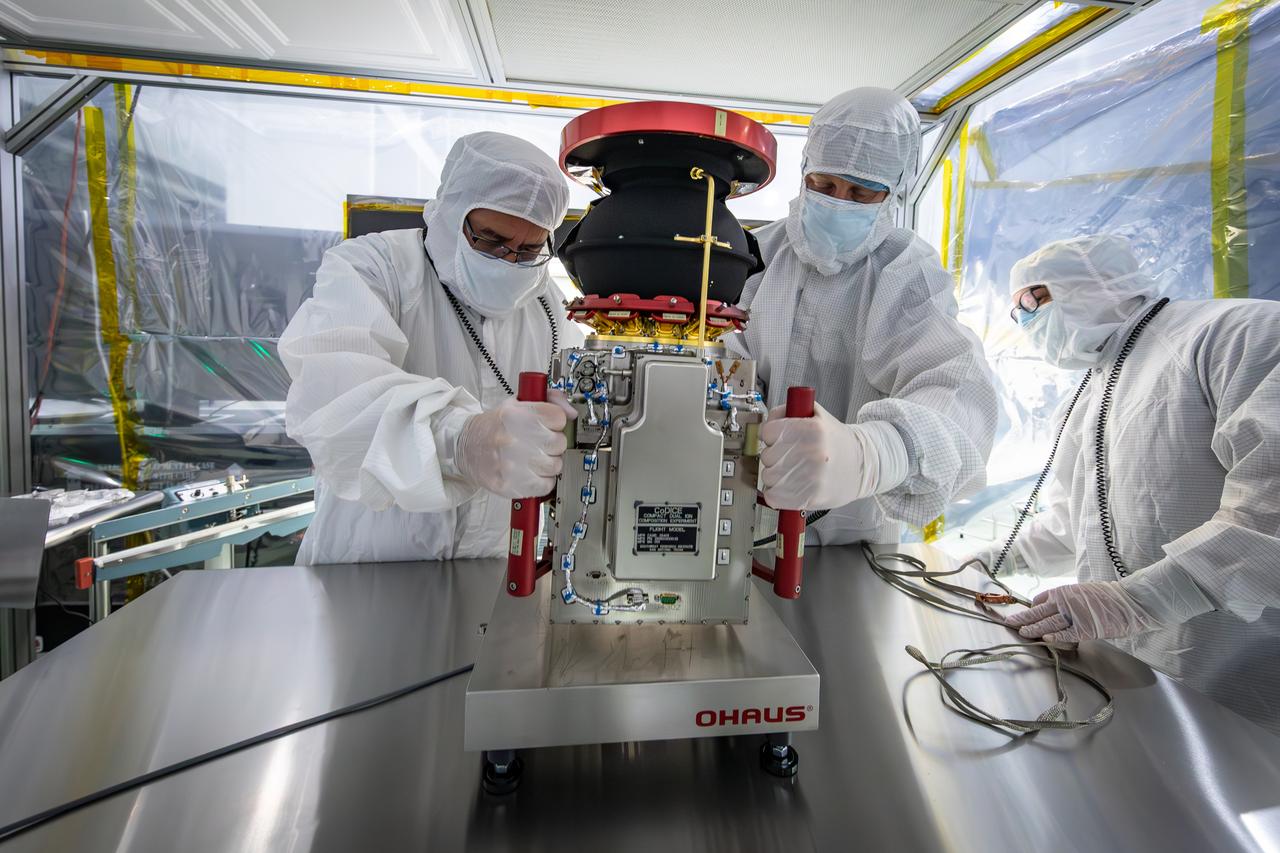
Technicians reintegrate the Compact Dual Ion Composition Experiment (CoDICE) instrument of NASA’s IMAP (Interstellar Mapping and Acceleration Probe) observatory inside the high bay at the Astrotech Space Operations Facility near the agency’s Kennedy Space Center in Florida on Friday, June 20, 2025. CoDICE will measure solar wind particles flowing from the Sun and pickup ions that entered the heliosphere from outside the solar system, as well as the direction of travel, and types of specific species of pickup ions. Launch of the IMAP mission is targeted for no earlier than September 2025 aboard a SpaceX Falcon 9 rocket from Launch Complex 39A at NASA Kennedy.
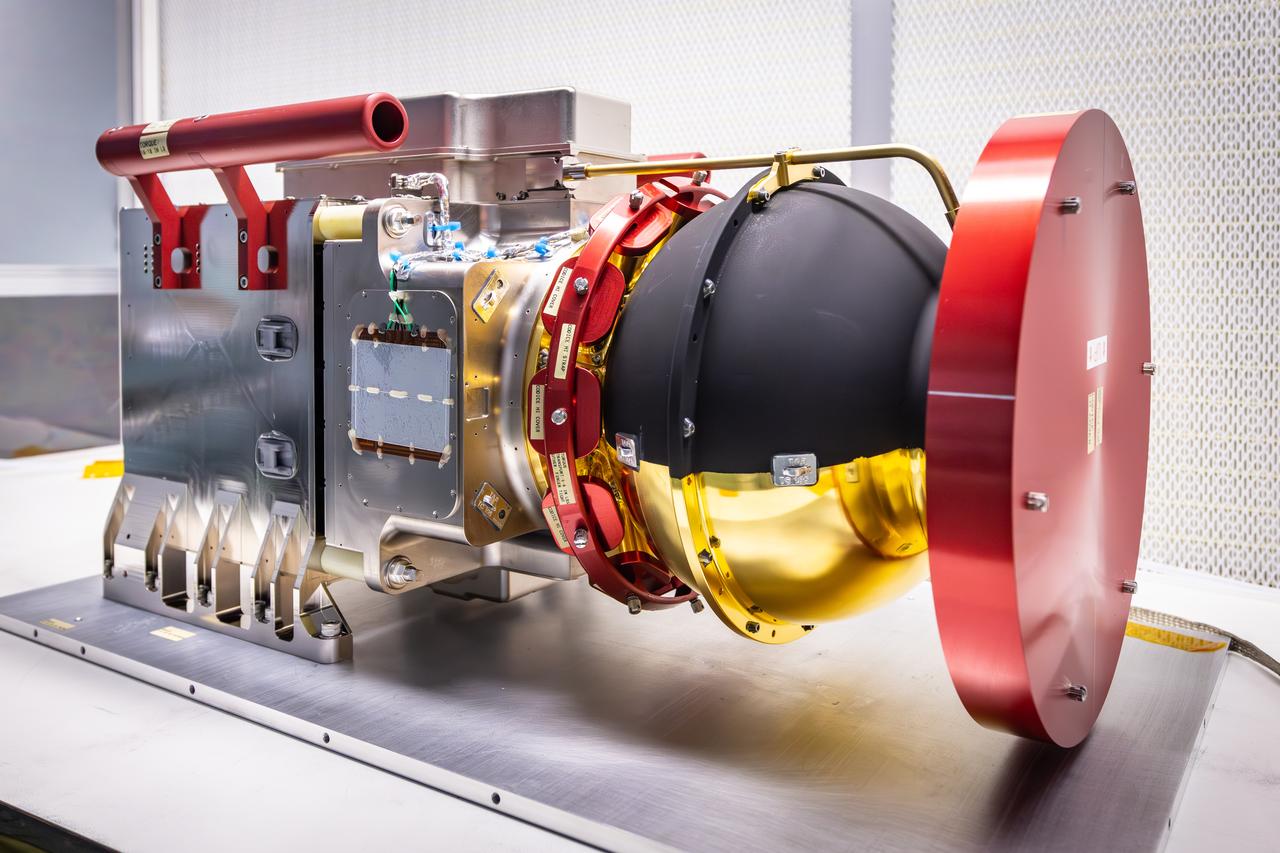
Technicians perform tests on the Compact Dual Ion Composition Experiment (CoDICE) instrument of NASA’s IMAP (Interstellar Mapping and Acceleration Probe) observatory inside the high bay at the Astrotech Space Operations Facility near the agency’s Kennedy Space Center in Florida on Tuesday, June 17, 2025. CoDICE will measure solar wind particles flowing from the Sun and pickup ions that entered the heliosphere from outside the solar system, as well as the direction of travel, and types of specific species of pickup ions. Launch of the IMAP mission is targeted for no earlier than September 2025 aboard a SpaceX Falcon 9 rocket from Launch Complex 39A at NASA Kennedy.
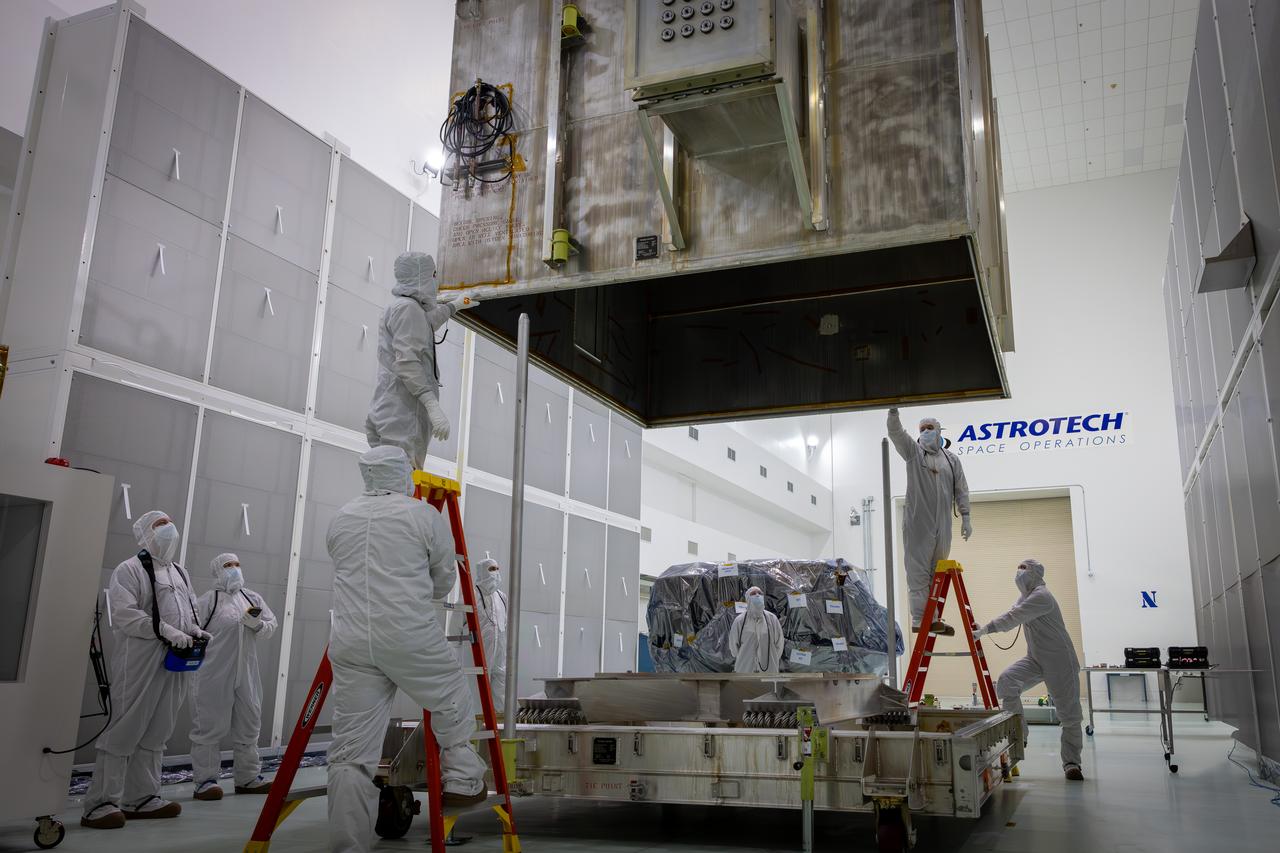
Technicians remove NASA’s IMAP (Interstellar Mapping and Acceleration Probe) spacecraft from its shipping container inside the high bay at the Astrotech Space Operations Facility near the agency’s Kennedy Space Center in Florida on Thursday, May 29, 2025. The observatory will study how the Sun shapes the boundaries of the heliosphere, the bubble protecting around our solar system, and is targeted for launch this fall aboard a SpaceX Falcon 9 rocket from Launch Complex 39A at NASA Kennedy.
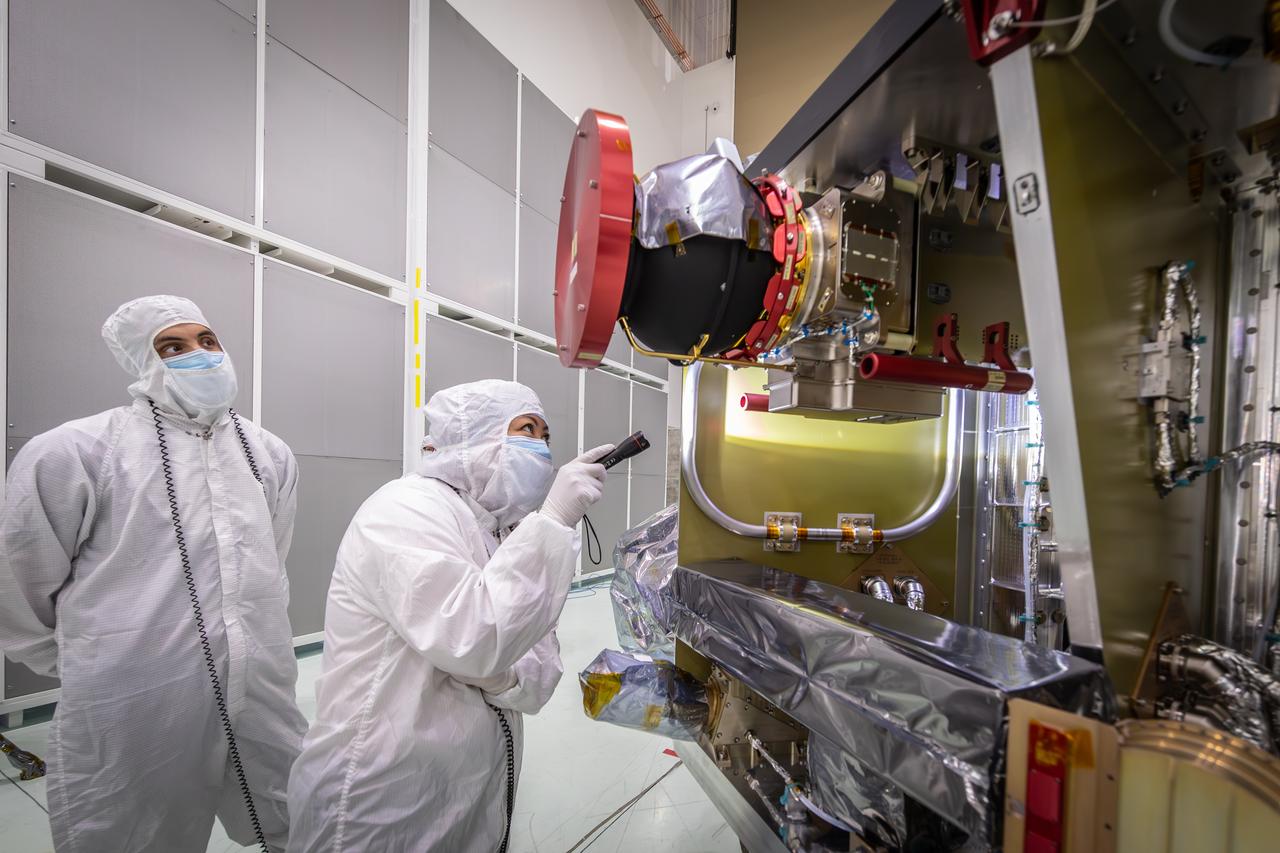
Technicians reintegrate the Compact Dual Ion Composition Experiment (CoDICE) instrument of NASA’s IMAP (Interstellar Mapping and Acceleration Probe) observatory inside the high bay at the Astrotech Space Operations Facility near the agency’s Kennedy Space Center in Florida on Friday, June 20, 2025. CoDICE will measure solar wind particles flowing from the Sun and pickup ions that entered the heliosphere from outside the solar system, as well as the direction of travel, and types of specific species of pickup ions. Launch of the IMAP mission is targeted for no earlier than September 2025 aboard a SpaceX Falcon 9 rocket from Launch Complex 39A at NASA Kennedy.
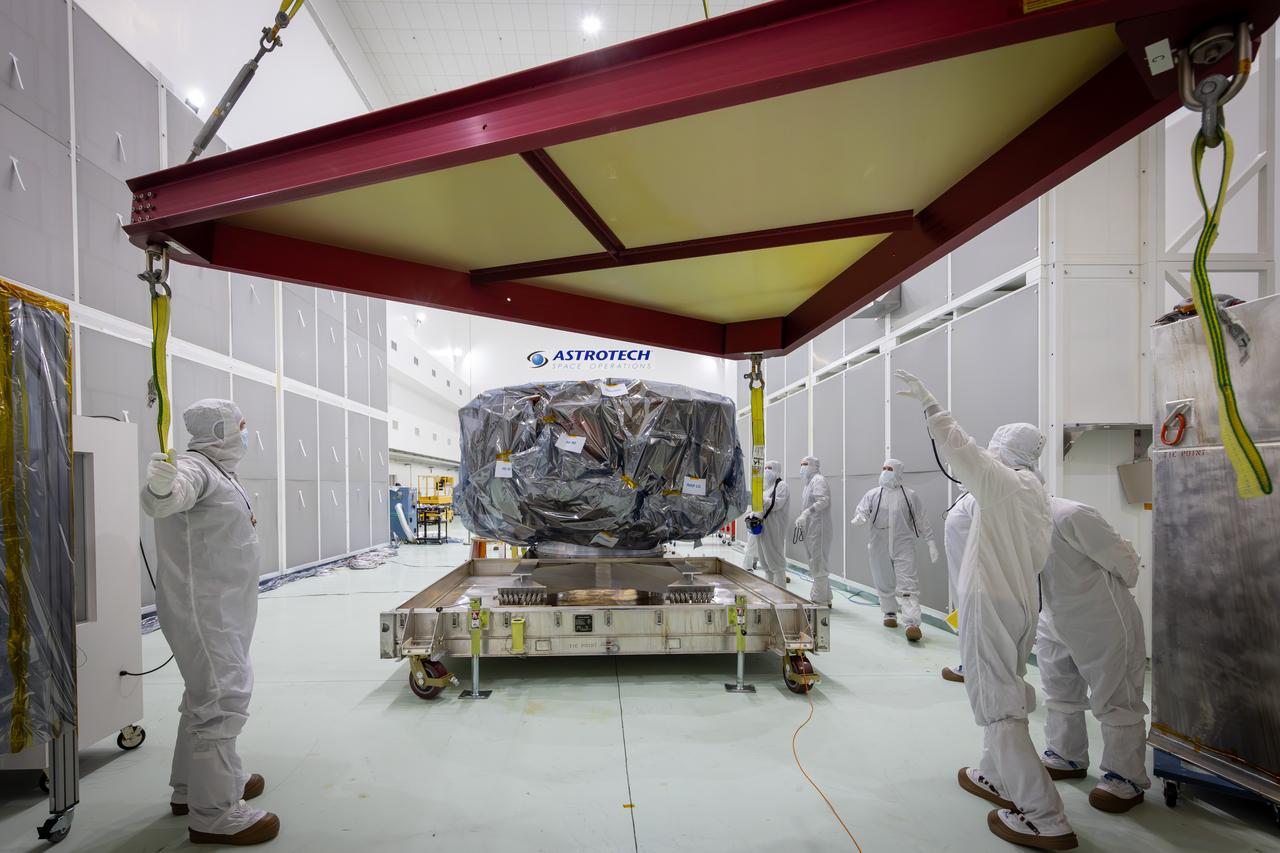
Technicians lift NASA’s IMAP (Interstellar Mapping and Acceleration Probe) spacecraft onto a work stand inside the high bay at the Astrotech Space Operations Facility near the agency’s Kennedy Space Center in Florida on Thursday, May 29, 2025. The observatory will study how the Sun shapes the boundaries of the heliosphere, the bubble protecting around our solar system, and is targeted for launch this fall aboard a SpaceX Falcon 9 rocket from Launch Complex 39A at NASA Kennedy.
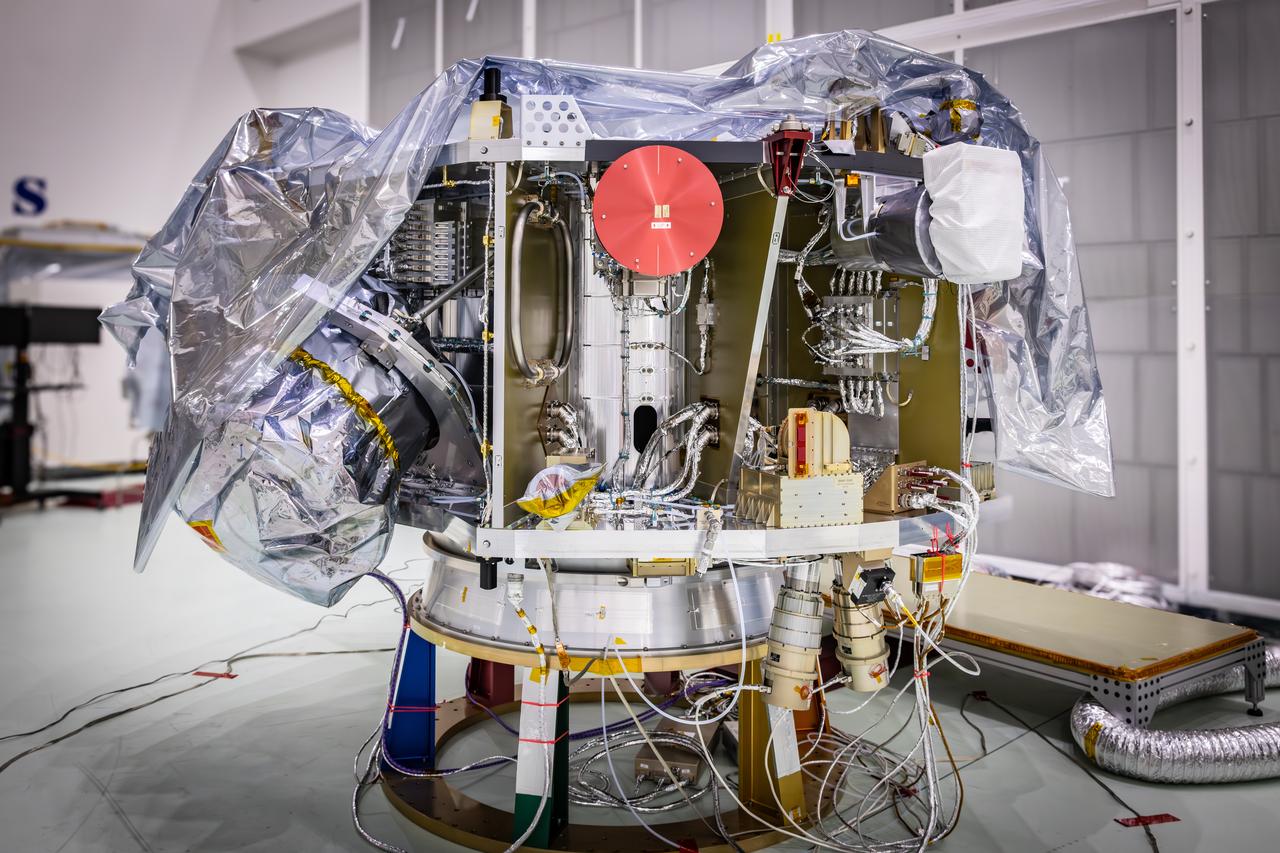
Technicians reintegrate the Solar Wind and Pickup Ions (SWAPI) instrument of NASA’s IMAP (Interstellar Mapping and Acceleration Probe) observatory inside the high bay at the Astrotech Space Operations Facility near the agency’s Kennedy Space Center in Florida on Monday, June 23, 2025. As IMAP spins in space, solar wind particles are swept into SWAPI through a special opening called “sunglasses,” an opening covered by a screen with very tiny precise holes that cut down the brightness of the very intense solar wind. SWAPI collects and counts particles from the solar wind flowing from the Sun and particles called pick-up ions that have entered the heliosphere from outside the solar system and traveled inwards where IMAP orbits near Earth. Launch of the IMAP mission is targeted for no earlier than September 2025 aboard a SpaceX Falcon 9 rocket from Launch Complex 39A at NASA Kennedy.
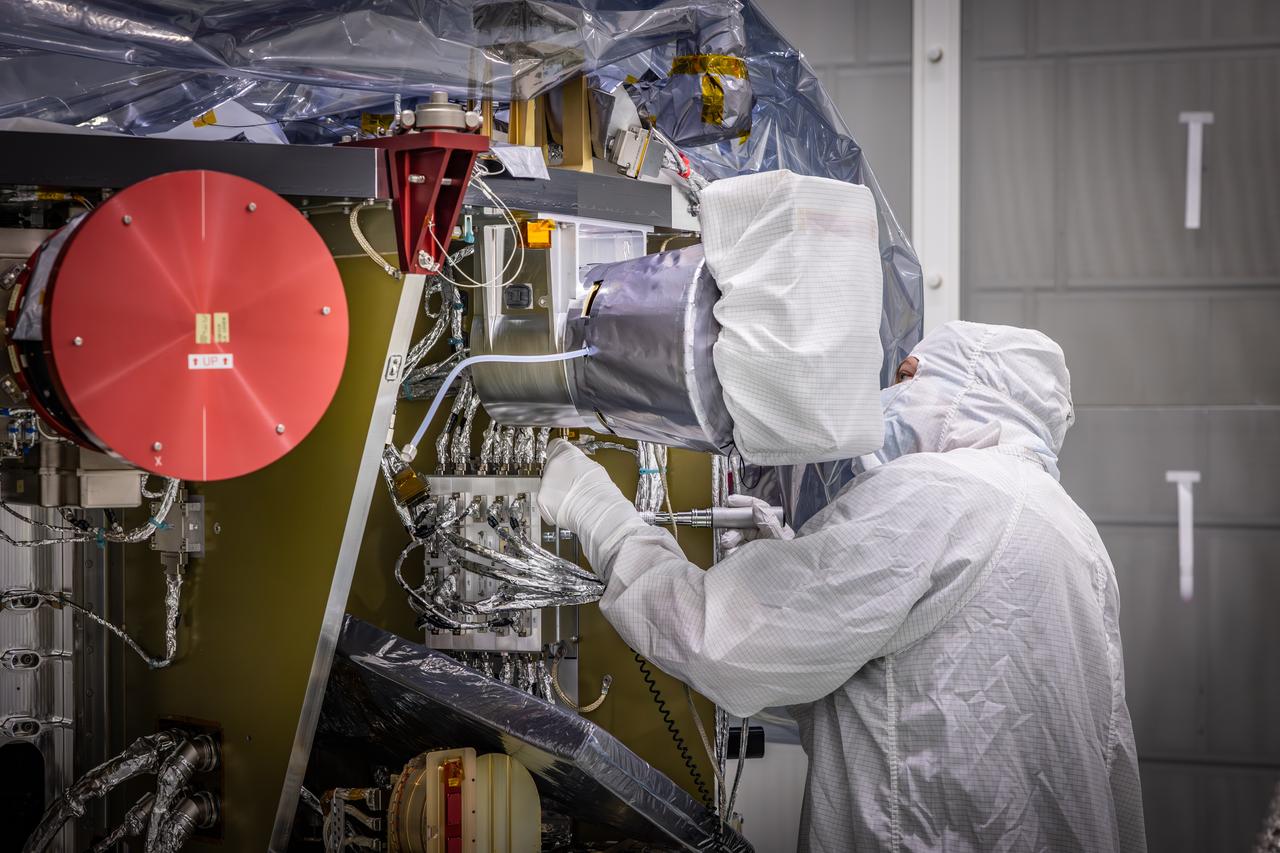
Technicians reintegrate the Solar Wind and Pickup Ions (SWAPI) instrument of NASA’s IMAP (Interstellar Mapping and Acceleration Probe) observatory inside the high bay at the Astrotech Space Operations Facility near the agency’s Kennedy Space Center in Florida on Monday, June 23, 2025. As IMAP spins in space, solar wind particles are swept into SWAPI through a special opening called “sunglasses,” an opening covered by a screen with very tiny precise holes that cut down the brightness of the very intense solar wind. SWAPI collects and counts particles from the solar wind flowing from the Sun and particles called pick-up ions that have entered the heliosphere from outside the solar system and traveled inwards where IMAP orbits near Earth. Launch of the IMAP mission is targeted for no earlier than September 2025 aboard a SpaceX Falcon 9 rocket from Launch Complex 39A at NASA Kennedy.
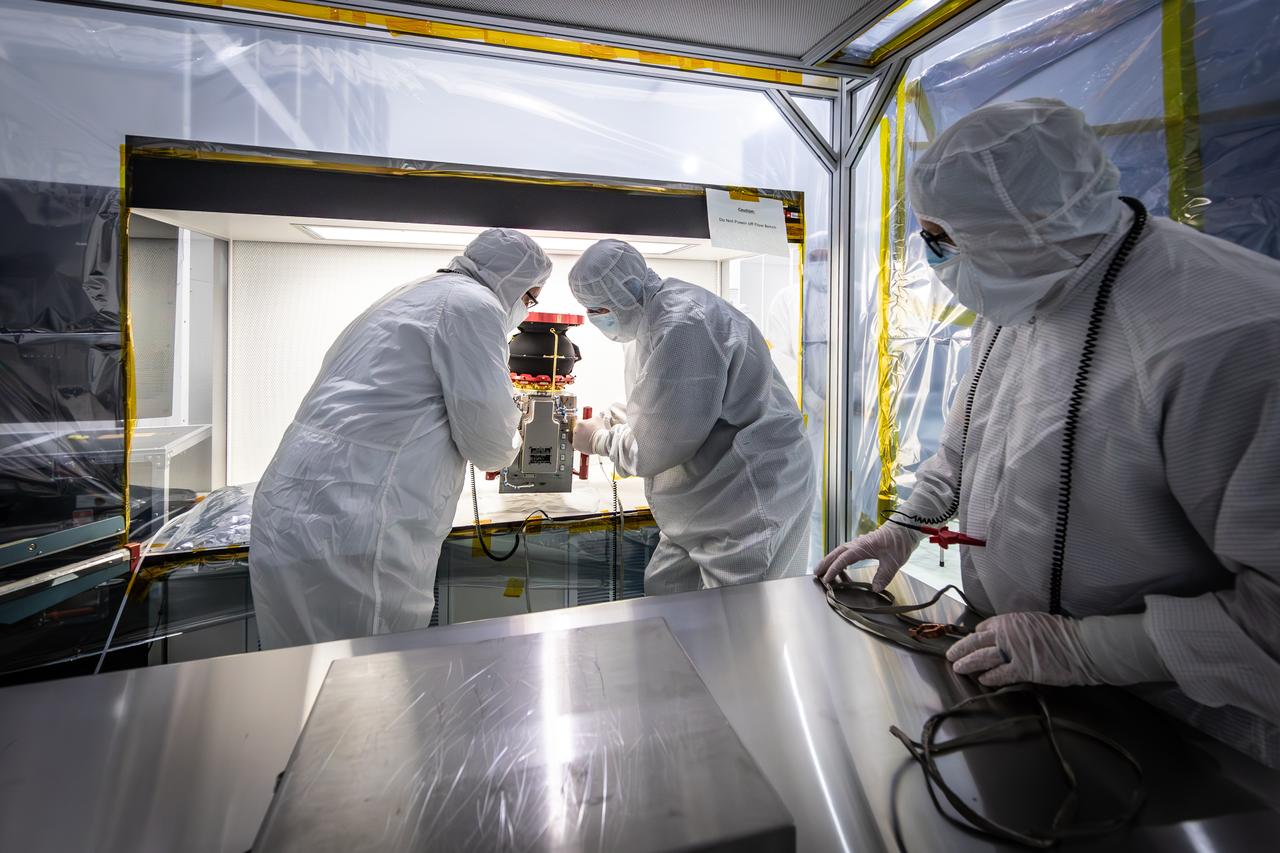
Technicians reintegrate the Compact Dual Ion Composition Experiment (CoDICE) instrument of NASA’s IMAP (Interstellar Mapping and Acceleration Probe) observatory inside the high bay at the Astrotech Space Operations Facility near the agency’s Kennedy Space Center in Florida on Friday, June 20, 2025. CoDICE will measure solar wind particles flowing from the Sun and pickup ions that entered the heliosphere from outside the solar system, as well as the direction of travel, and types of specific species of pickup ions. Launch of the IMAP mission is targeted for no earlier than September 2025 aboard a SpaceX Falcon 9 rocket from Launch Complex 39A at NASA Kennedy.
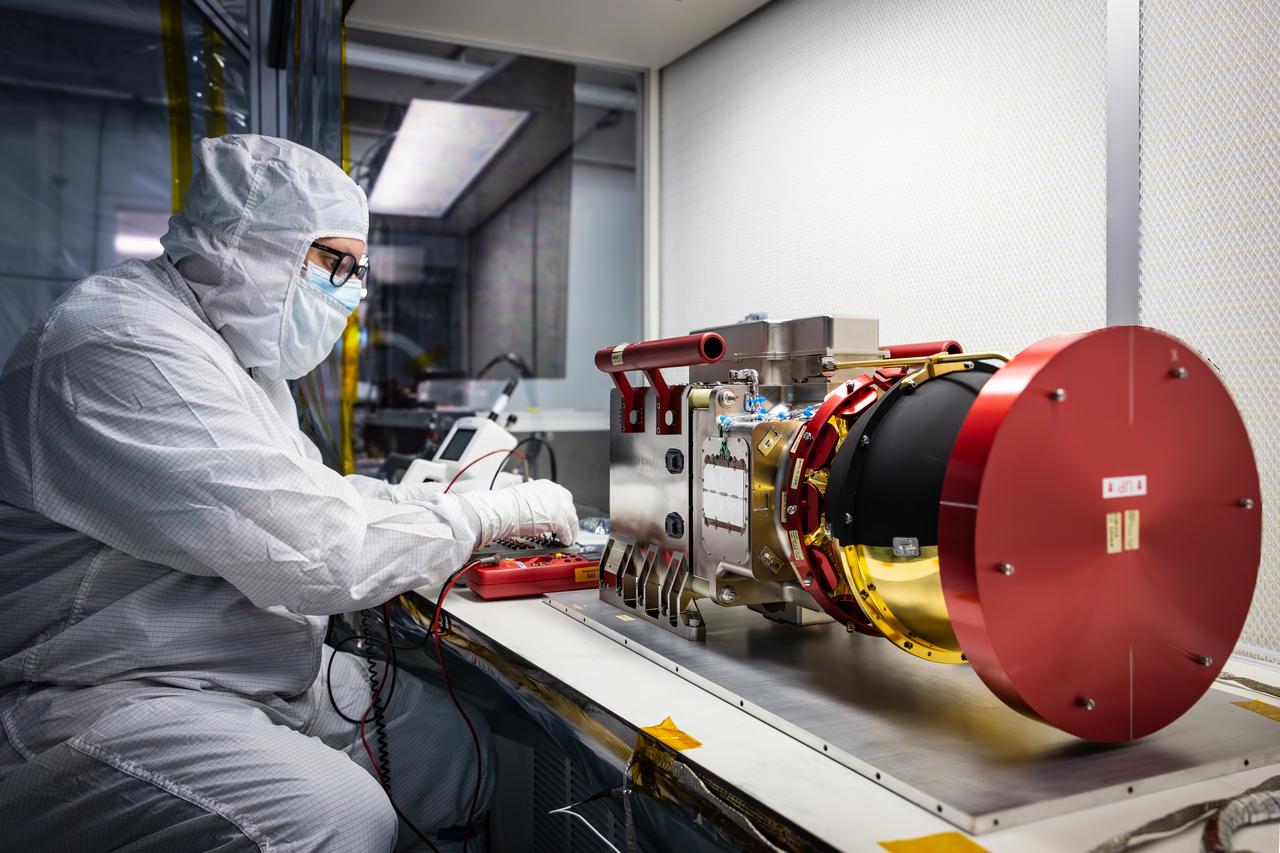
A technician performs tests on the Compact Dual Ion Composition Experiment (CoDICE) instrument of NASA’s IMAP (Interstellar Mapping and Acceleration Probe) observatory inside the high bay at the Astrotech Space Operations Facility near the agency’s Kennedy Space Center in Florida on Tuesday, June 17, 2025. CoDICE will measure solar wind particles flowing from the Sun and pickup ions that entered the heliosphere from outside the solar system, as well as the direction of travel, and types of specific species of pickup ions. Launch of the IMAP mission is targeted for no earlier than September 2025 aboard a SpaceX Falcon 9 rocket from Launch Complex 39A at NASA Kennedy.
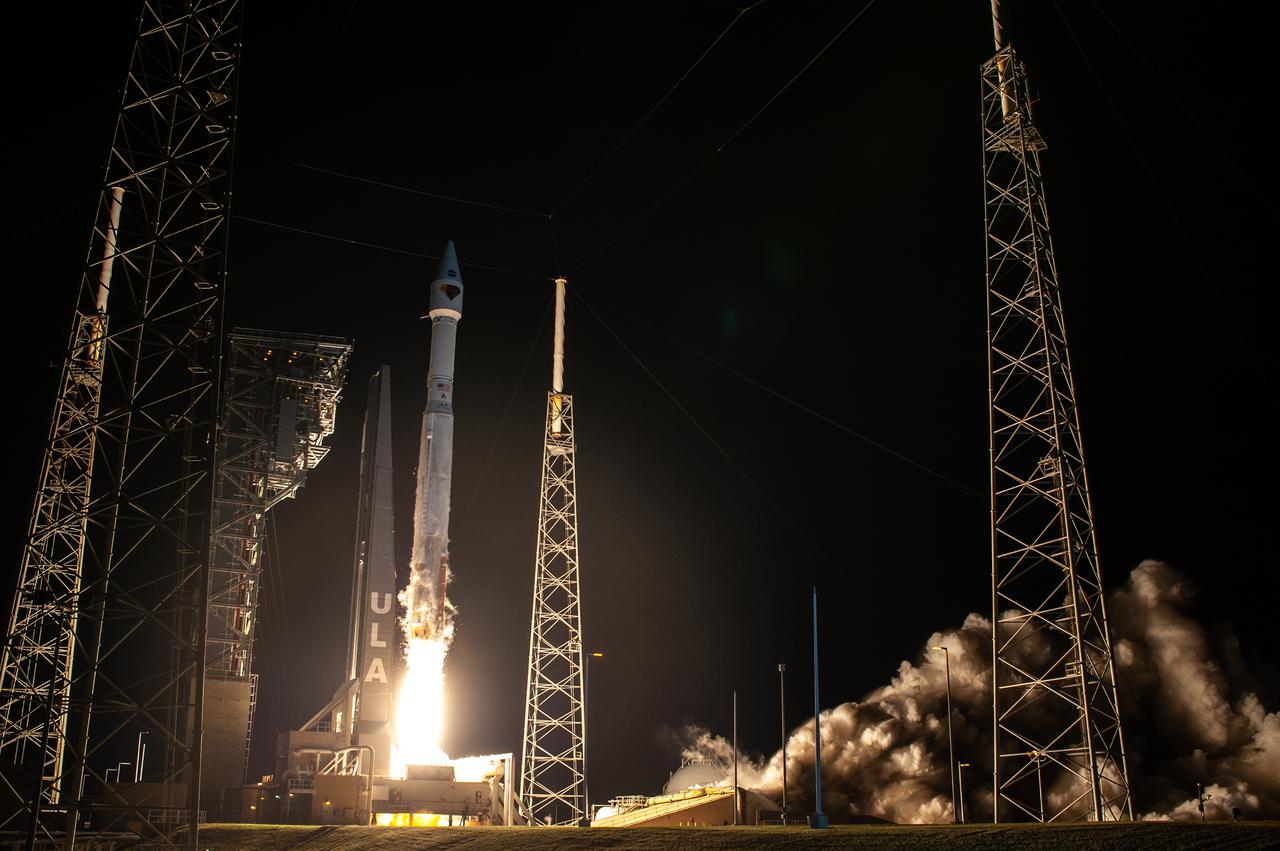
A United Launch Alliance V 401 rocket, with NASA’s Lucy spacecraft atop, powers off the pad at Cape Canaveral Space Force Station’s Space Launch Complex 41 in Florida at 5:34 a.m. EDT on Saturday, Oct. 16, 2021. The launch was managed by NASA’s Launch Services Program, based at Kennedy Space Center. Lucy will embark on a 12-year primary mission to explore a record-breaking number of asteroids, including the Jupiter Trojan asteroids. Named after a fossilized human ancestor whose skeleton provided discoverers insight into humanity’s evolution, the Lucy mission will do much of the same, providing scientists and researchers a look into the origins of our solar system.
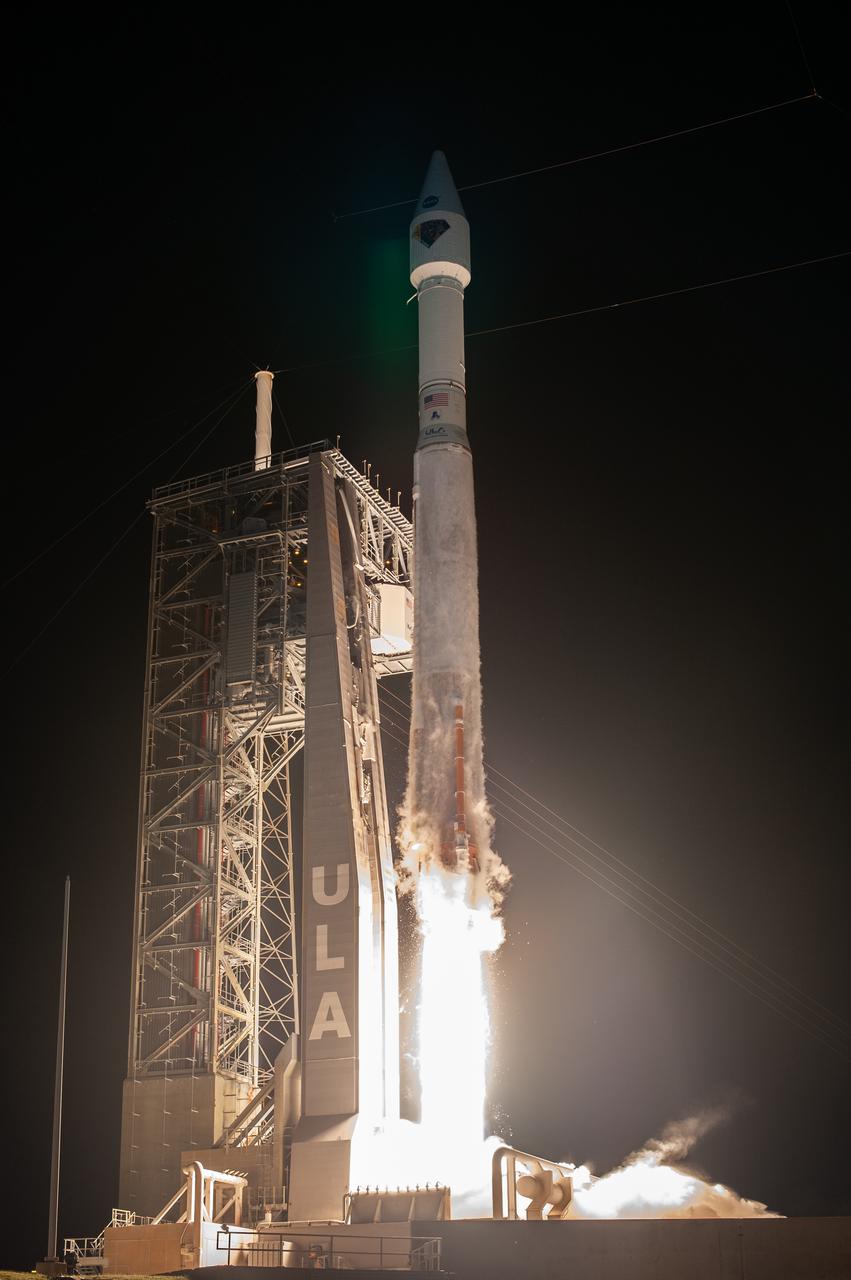
A United Launch Alliance V 401 rocket, with NASA’s Lucy spacecraft atop, powers off the pad at Cape Canaveral Space Force Station’s Space Launch Complex 41 in Florida at 5:34 a.m. EDT on Saturday, Oct. 16, 2021. The launch was managed by NASA’s Launch Services Program, based at Kennedy Space Center. Lucy will embark on a 12-year primary mission to explore a record-breaking number of asteroids, including the Jupiter Trojan asteroids. Named after a fossilized human ancestor whose skeleton provided discoverers insight into humanity’s evolution, the Lucy mission will do much of the same, providing scientists and researchers a look into the origins of our solar system.
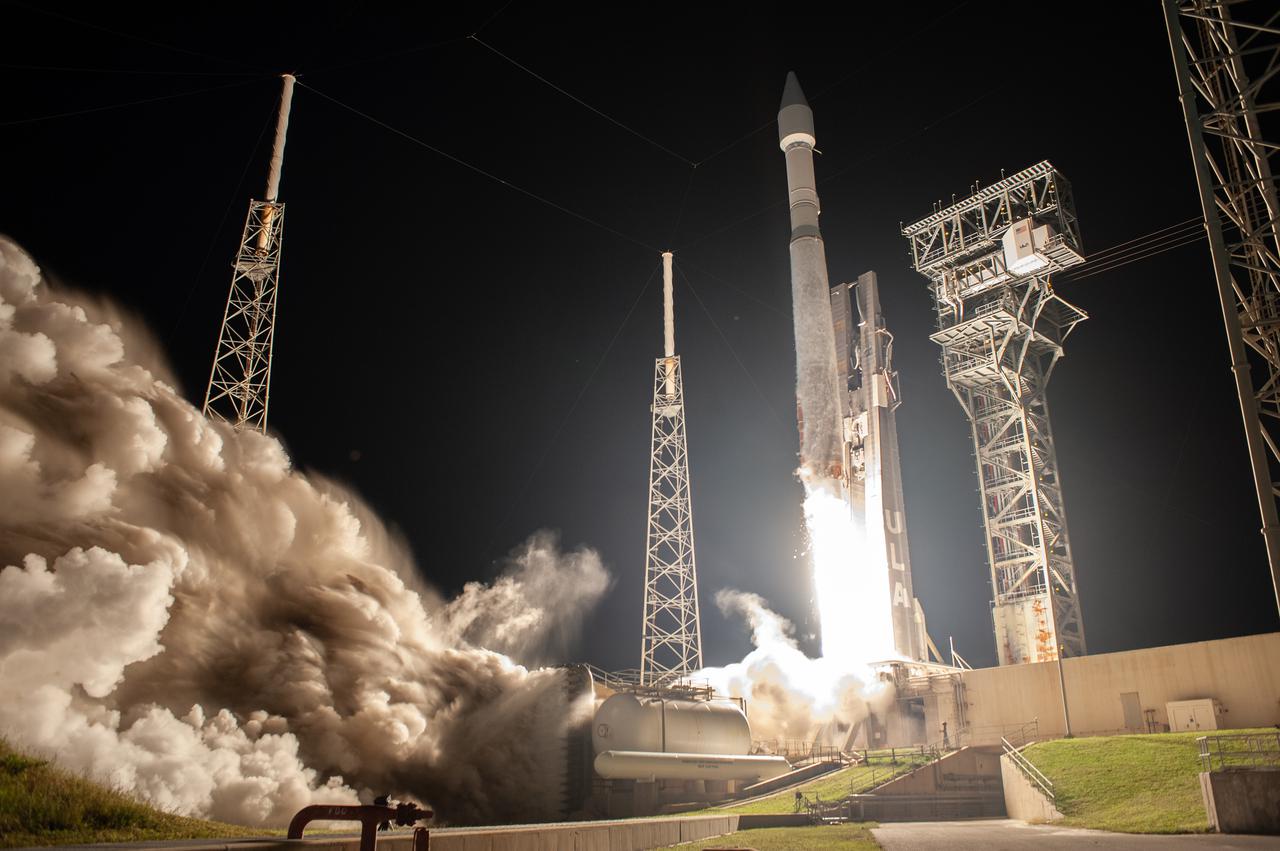
A United Launch Alliance V 401 rocket, with NASA’s Lucy spacecraft atop, powers off the pad at Cape Canaveral Space Force Station’s Space Launch Complex 41 in Florida at 5:34 a.m. EDT on Saturday, Oct. 16, 2021. The launch was managed by NASA’s Launch Services Program, based at Kennedy Space Center. Lucy will embark on a 12-year primary mission to explore a record-breaking number of asteroids, including the Jupiter Trojan asteroids. Named after a fossilized human ancestor whose skeleton provided discoverers insight into humanity’s evolution, the Lucy mission will do much of the same, providing scientists and researchers a look into the origins of our solar system.

A United Launch Alliance V 401 rocket, with NASA’s Lucy spacecraft atop, powers off the pad at Cape Canaveral Space Force Station’s Space Launch Complex 41 in Florida at 5:34 a.m. EDT on Saturday, Oct. 16, 2021. The launch was managed by NASA’s Launch Services Program, based at Kennedy Space Center. Lucy will embark on a 12-year primary mission to explore a record-breaking number of asteroids, including the Jupiter Trojan asteroids. Named after a fossilized human ancestor whose skeleton provided discoverers insight into humanity’s evolution, the Lucy mission will do much of the same, providing scientists and researchers a look into the origins of our solar system.
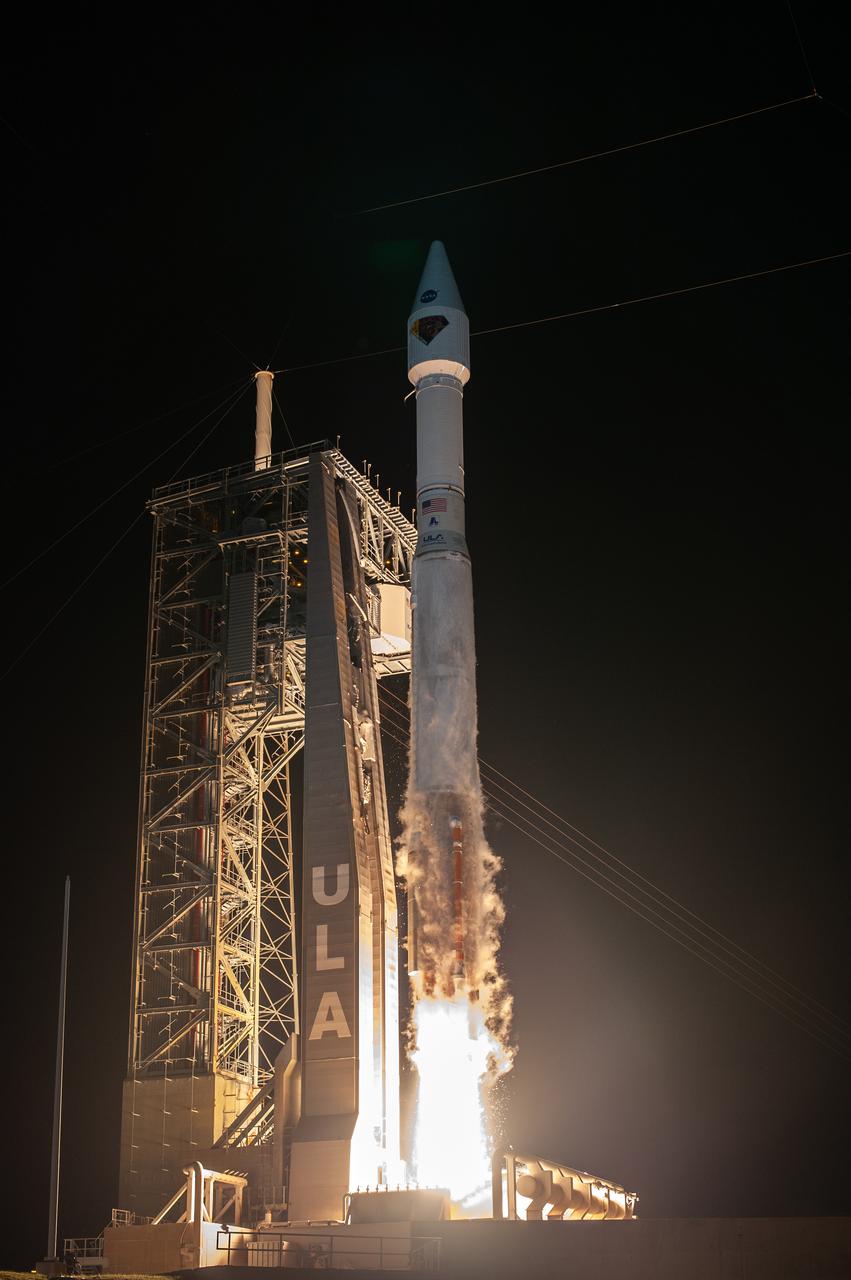
A United Launch Alliance V 401 rocket, with NASA’s Lucy spacecraft atop, powers off the pad at Cape Canaveral Space Force Station’s Space Launch Complex 41 in Florida at 5:34 a.m. EDT on Saturday, Oct. 16, 2021. The launch was managed by NASA’s Launch Services Program, based at Kennedy Space Center. Lucy will embark on a 12-year primary mission to explore a record-breaking number of asteroids, including the Jupiter Trojan asteroids. Named after a fossilized human ancestor whose skeleton provided discoverers insight into humanity’s evolution, the Lucy mission will do much of the same, providing scientists and researchers a look into the origins of our solar system.
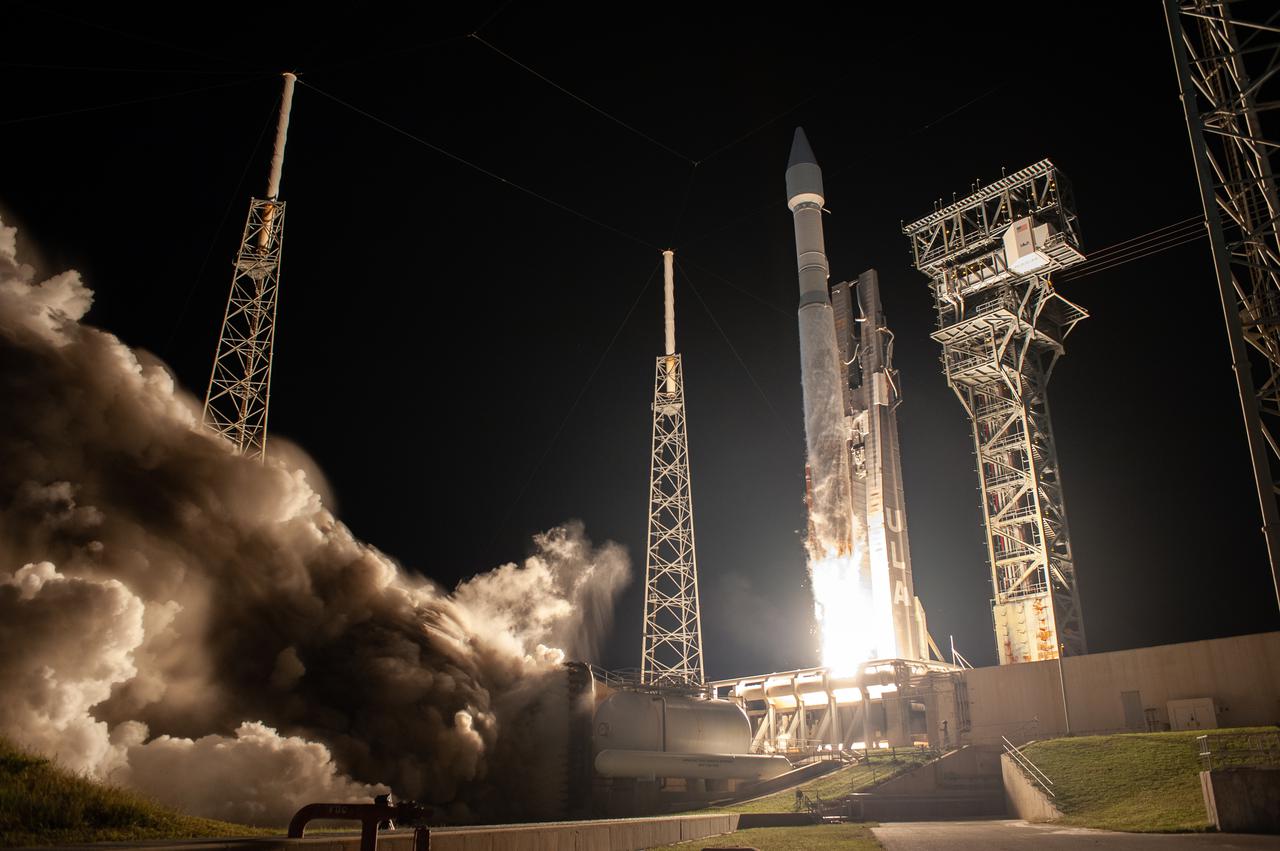
A United Launch Alliance V 401 rocket, with NASA’s Lucy spacecraft atop, powers off the pad at Cape Canaveral Space Force Station’s Space Launch Complex 41 in Florida at 5:34 a.m. EDT on Saturday, Oct. 16, 2021. The launch was managed by NASA’s Launch Services Program, based at Kennedy Space Center. Lucy will embark on a 12-year primary mission to explore a record-breaking number of asteroids, including the Jupiter Trojan asteroids. Named after a fossilized human ancestor whose skeleton provided discoverers insight into humanity’s evolution, the Lucy mission will do much of the same, providing scientists and researchers a look into the origins of our solar system.
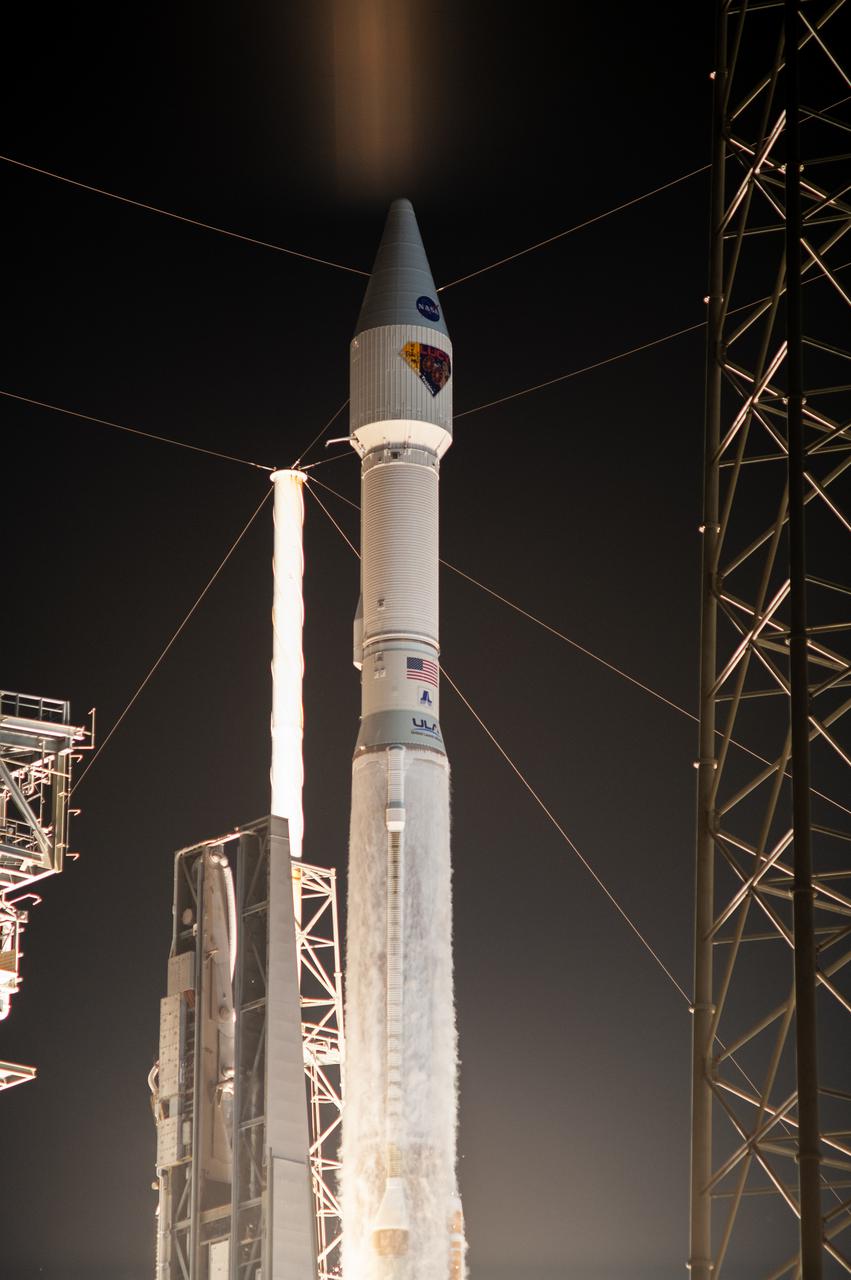
A United Launch Alliance V 401 rocket, with NASA’s Lucy spacecraft atop, powers off the pad at Cape Canaveral Space Force Station’s Space Launch Complex 41 in Florida at 5:34 a.m. EDT on Saturday, Oct. 16, 2021. The launch was managed by NASA’s Launch Services Program, based at Kennedy Space Center. Lucy will embark on a 12-year primary mission to explore a record-breaking number of asteroids, including the Jupiter Trojan asteroids. Named after a fossilized human ancestor whose skeleton provided discoverers insight into humanity’s evolution, the Lucy mission will do much of the same, providing scientists and researchers a look into the origins of our solar system.
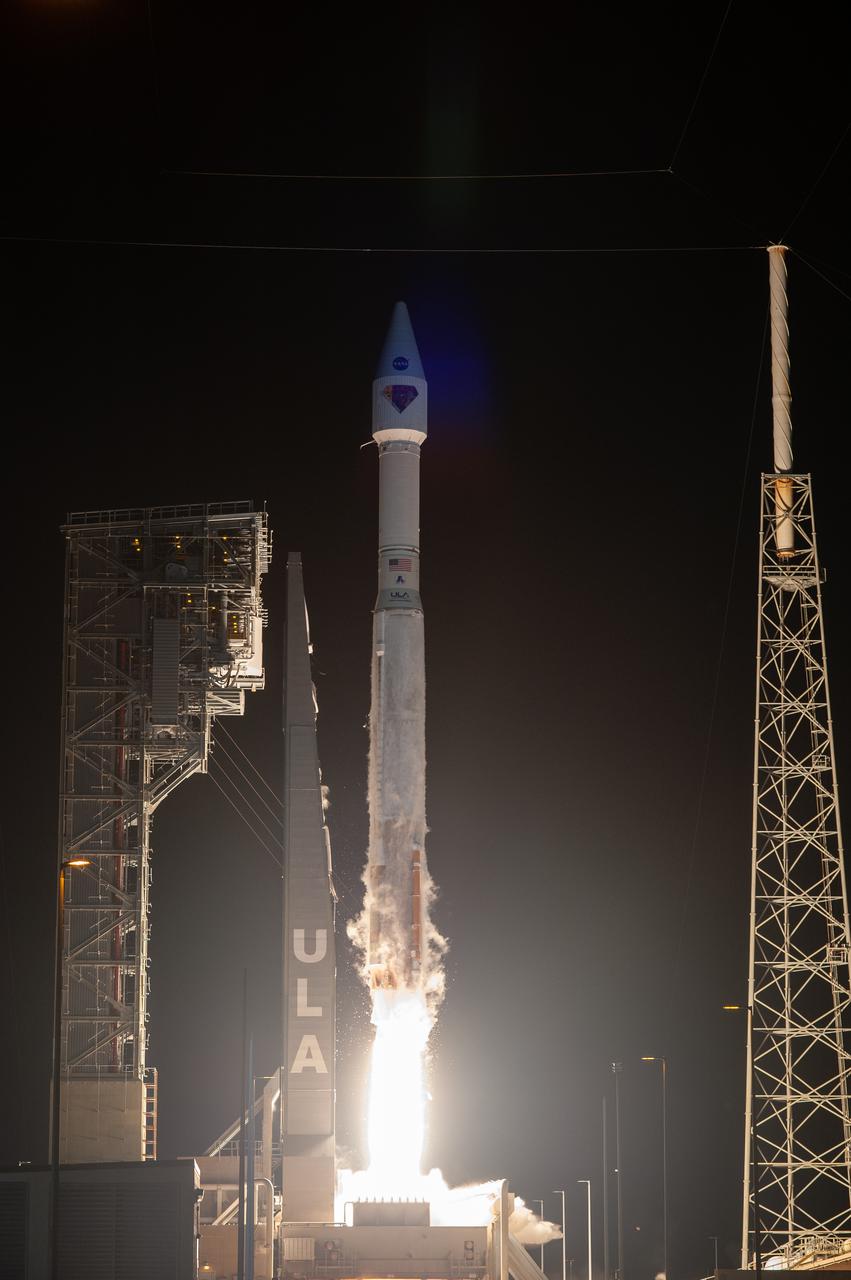
A United Launch Alliance V 401 rocket, with NASA’s Lucy spacecraft atop, powers off the pad at Cape Canaveral Space Force Station’s Space Launch Complex 41 in Florida at 5:34 a.m. EDT on Saturday, Oct. 16, 2021. The launch was managed by NASA’s Launch Services Program, based at Kennedy Space Center. Lucy will embark on a 12-year primary mission to explore a record-breaking number of asteroids, including the Jupiter Trojan asteroids. Named after a fossilized human ancestor whose skeleton provided discoverers insight into humanity’s evolution, the Lucy mission will do much of the same, providing scientists and researchers a look into the origins of our solar system.
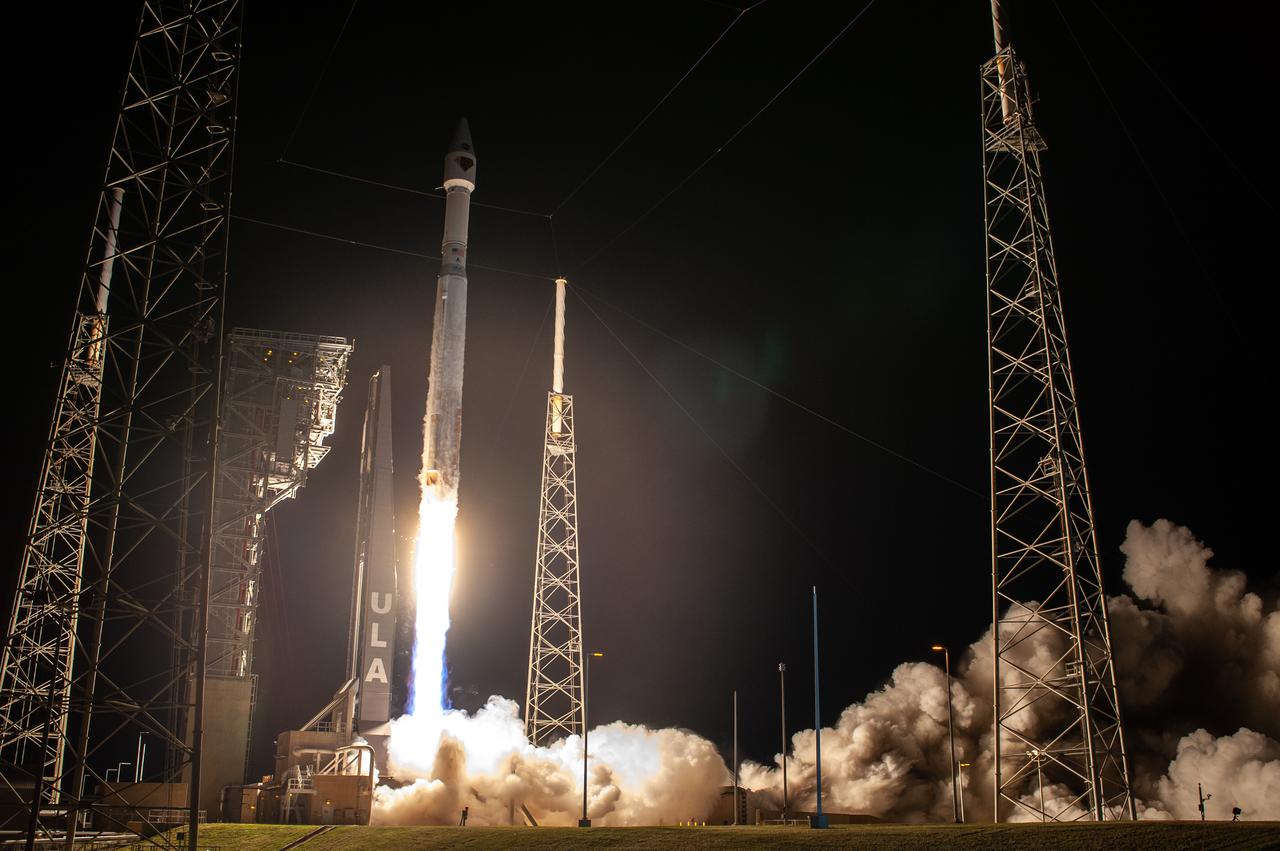
A United Launch Alliance V 401 rocket, with NASA’s Lucy spacecraft atop, powers off the pad at Cape Canaveral Space Force Station’s Space Launch Complex 41 in Florida at 5:34 a.m. EDT on Saturday, Oct. 16, 2021. The launch was managed by NASA’s Launch Services Program, based at Kennedy Space Center. Lucy will embark on a 12-year primary mission to explore a record-breaking number of asteroids, including the Jupiter Trojan asteroids. Named after a fossilized human ancestor whose skeleton provided discoverers insight into humanity’s evolution, the Lucy mission will do much of the same, providing scientists and researchers a look into the origins of our solar system.
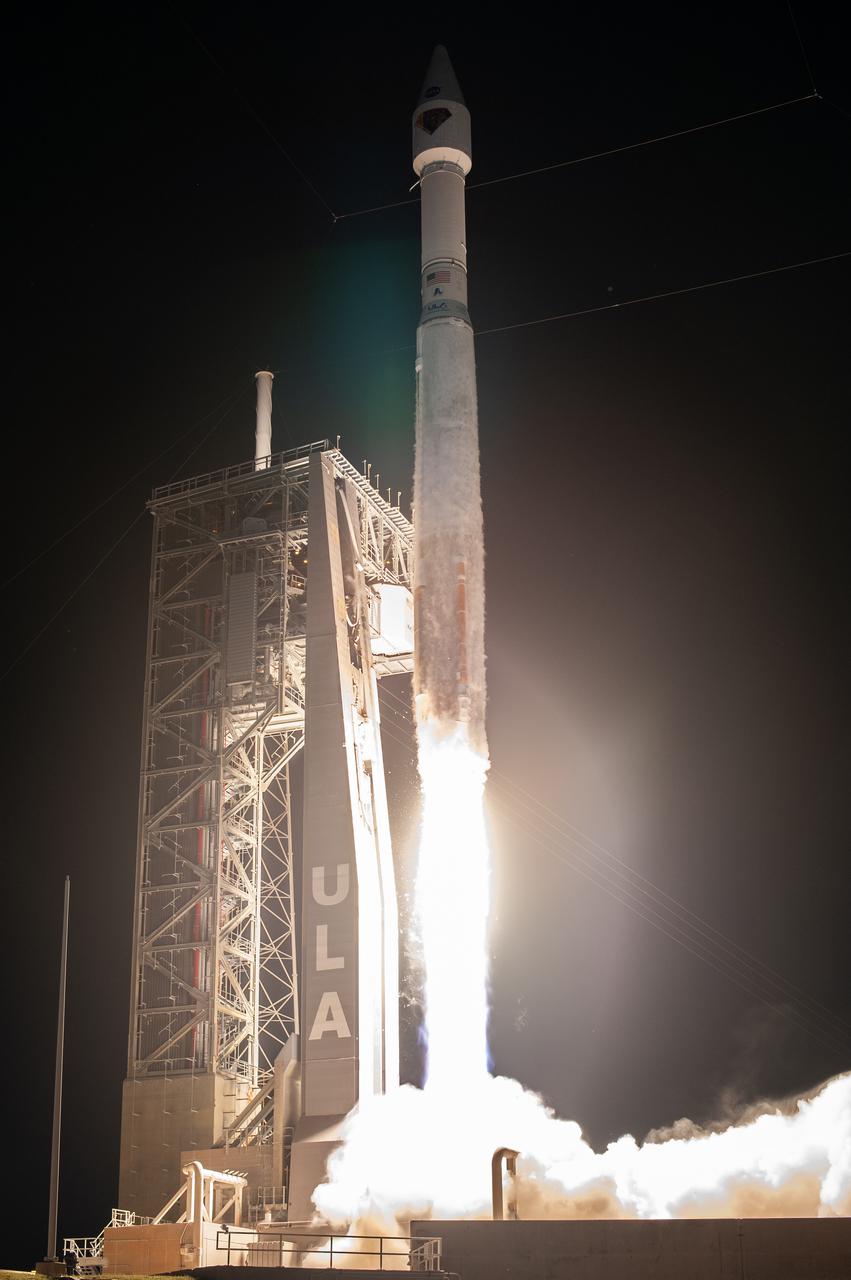
A United Launch Alliance V 401 rocket, with NASA’s Lucy spacecraft atop, powers off the pad at Cape Canaveral Space Force Station’s Space Launch Complex 41 in Florida at 5:34 a.m. EDT on Saturday, Oct. 16, 2021. The launch was managed by NASA’s Launch Services Program, based at Kennedy Space Center. Lucy will embark on a 12-year primary mission to explore a record-breaking number of asteroids, including the Jupiter Trojan asteroids. Named after a fossilized human ancestor whose skeleton provided discoverers insight into humanity’s evolution, the Lucy mission will do much of the same, providing scientists and researchers a look into the origins of our solar system.
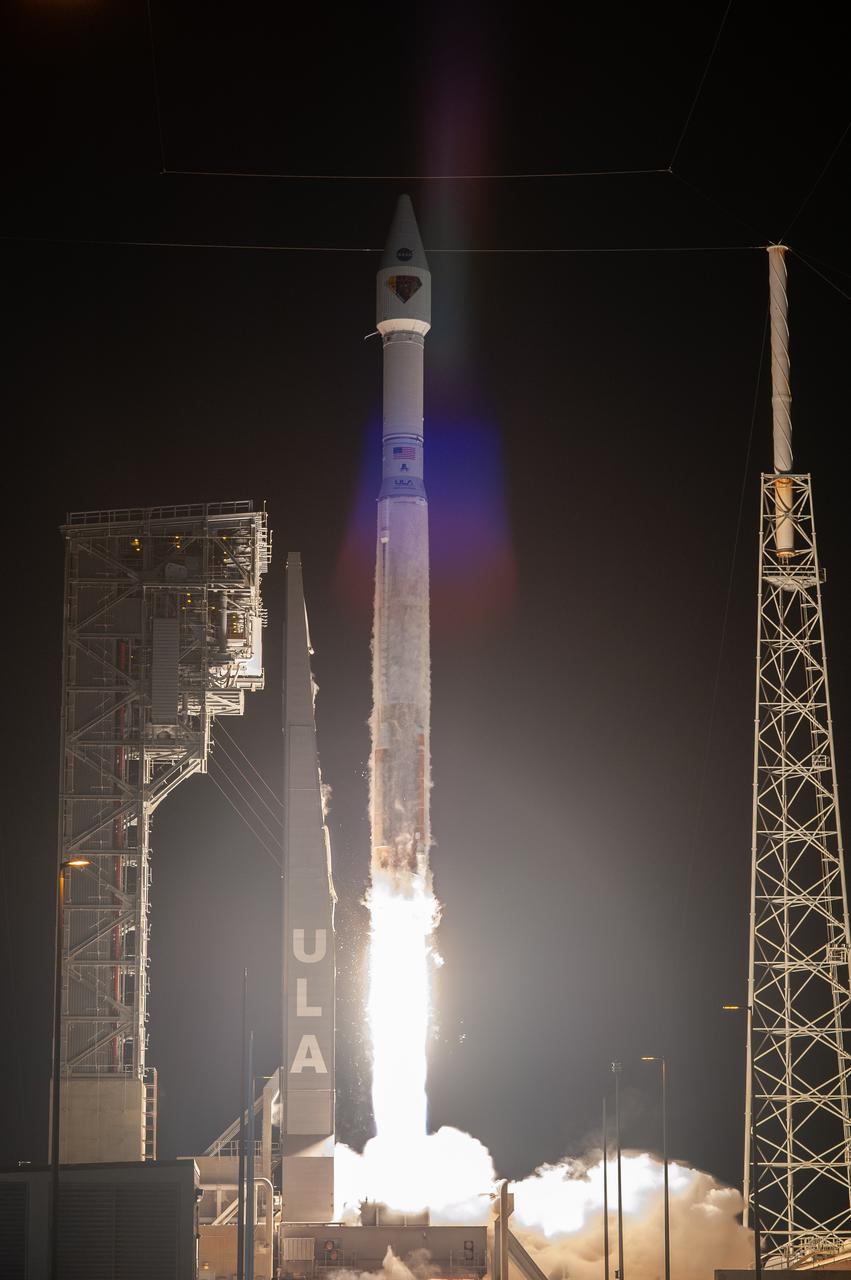
A United Launch Alliance V 401 rocket, with NASA’s Lucy spacecraft atop, powers off the pad at Cape Canaveral Space Force Station’s Space Launch Complex 41 in Florida at 5:34 a.m. EDT on Saturday, Oct. 16, 2021. The launch was managed by NASA’s Launch Services Program, based at Kennedy Space Center. Lucy will embark on a 12-year primary mission to explore a record-breaking number of asteroids, including the Jupiter Trojan asteroids. Named after a fossilized human ancestor whose skeleton provided discoverers insight into humanity’s evolution, the Lucy mission will do much of the same, providing scientists and researchers a look into the origins of our solar system.
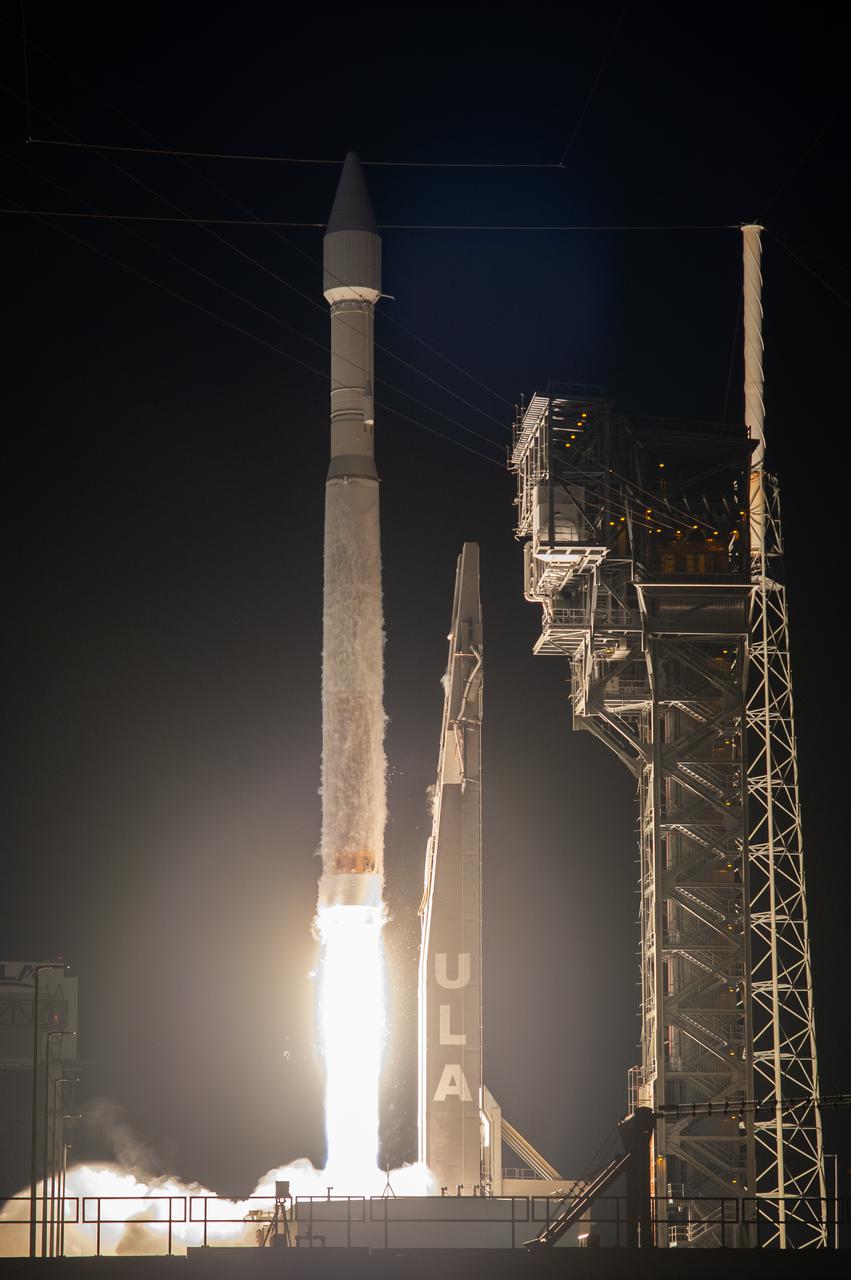
A United Launch Alliance V 401 rocket, with NASA’s Lucy spacecraft atop, powers off the pad at Cape Canaveral Space Force Station’s Space Launch Complex 41 in Florida at 5:34 a.m. EDT on Saturday, Oct. 16, 2021. The launch was managed by NASA’s Launch Services Program, based at Kennedy Space Center. Lucy will embark on a 12-year primary mission to explore a record-breaking number of asteroids, including the Jupiter Trojan asteroids. Named after a fossilized human ancestor whose skeleton provided discoverers insight into humanity’s evolution, the Lucy mission will do much of the same, providing scientists and researchers a look into the origins of our solar system.
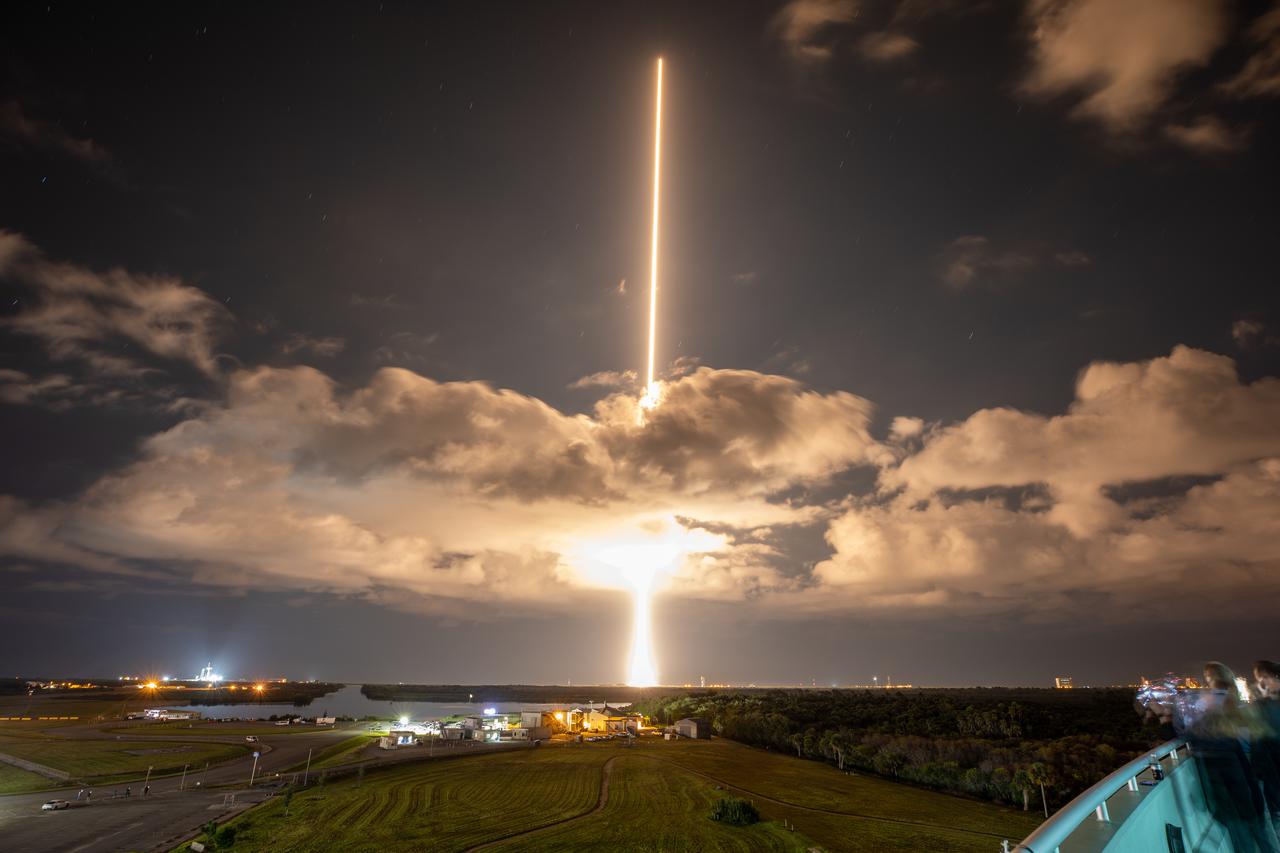
A United Launch Alliance V 401 rocket, with NASA’s Lucy spacecraft atop, soars into the sky after lifting off the pad at Cape Canaveral Space Force Station’s Space Launch Complex 41 in Florida at 5:34 a.m. EDT on Saturday, Oct. 16, 2021. The launch was managed by NASA’s Launch Services Program, based at Kennedy Space Center. Lucy will embark on a 12-year primary mission to explore a record-breaking number of asteroids, including the Jupiter Trojan asteroids. Named after a fossilized human ancestor whose skeleton provided discoverers insight into humanity’s evolution, the Lucy mission will do much of the same, providing scientists and researchers a look into the origins of our solar system.
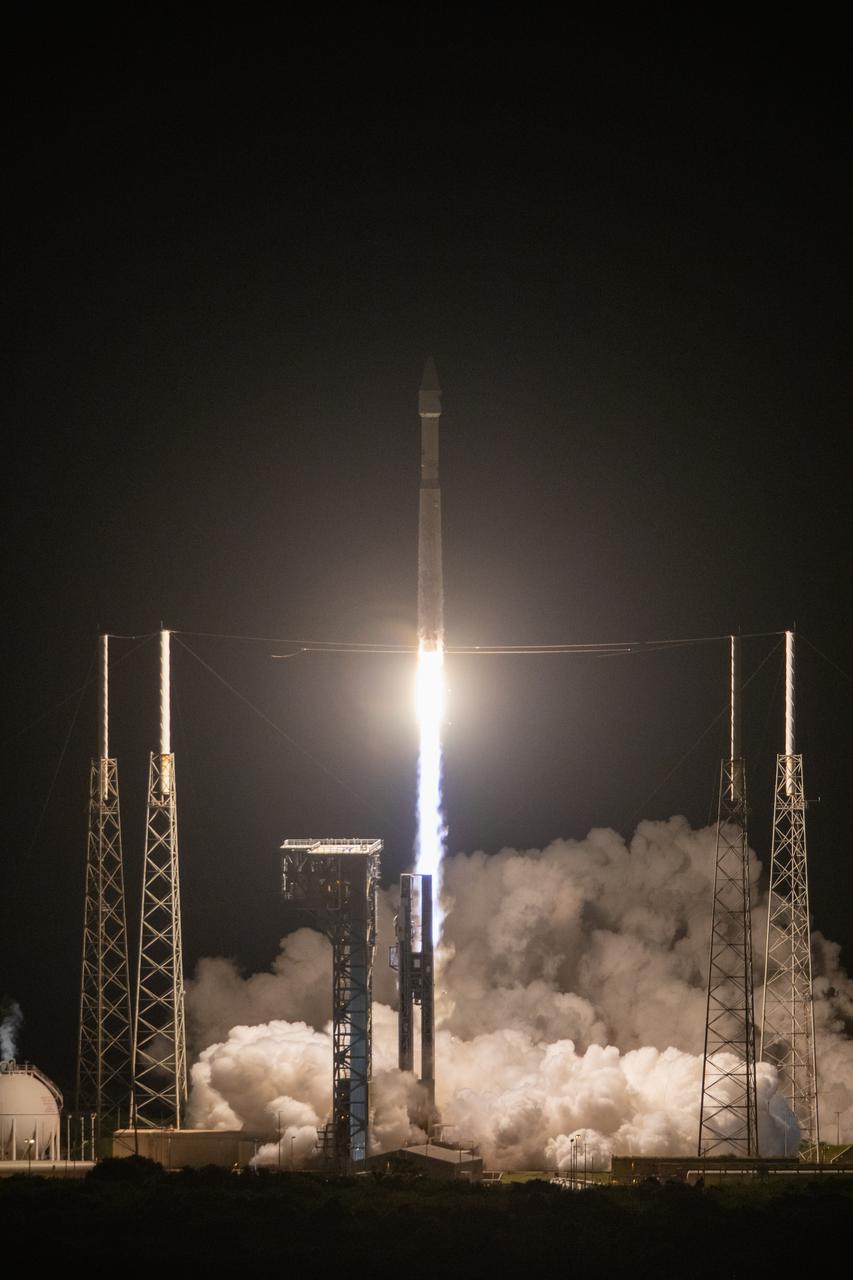
A United Launch Alliance V 401 rocket, with NASA’s Lucy spacecraft atop, powers off the pad at Cape Canaveral Space Force Station’s Space Launch Complex 41 in Florida at 5:34 a.m. EDT on Saturday, Oct. 16, 2021. The launch was managed by NASA’s Launch Services Program, based at Kennedy Space Center. Lucy will embark on a 12-year primary mission to explore a record-breaking number of asteroids, including the Jupiter Trojan asteroids. Named after a fossilized human ancestor whose skeleton provided discoverers insight into humanity’s evolution, the Lucy mission will do much of the same, providing scientists and researchers a look into the origins of our solar system.
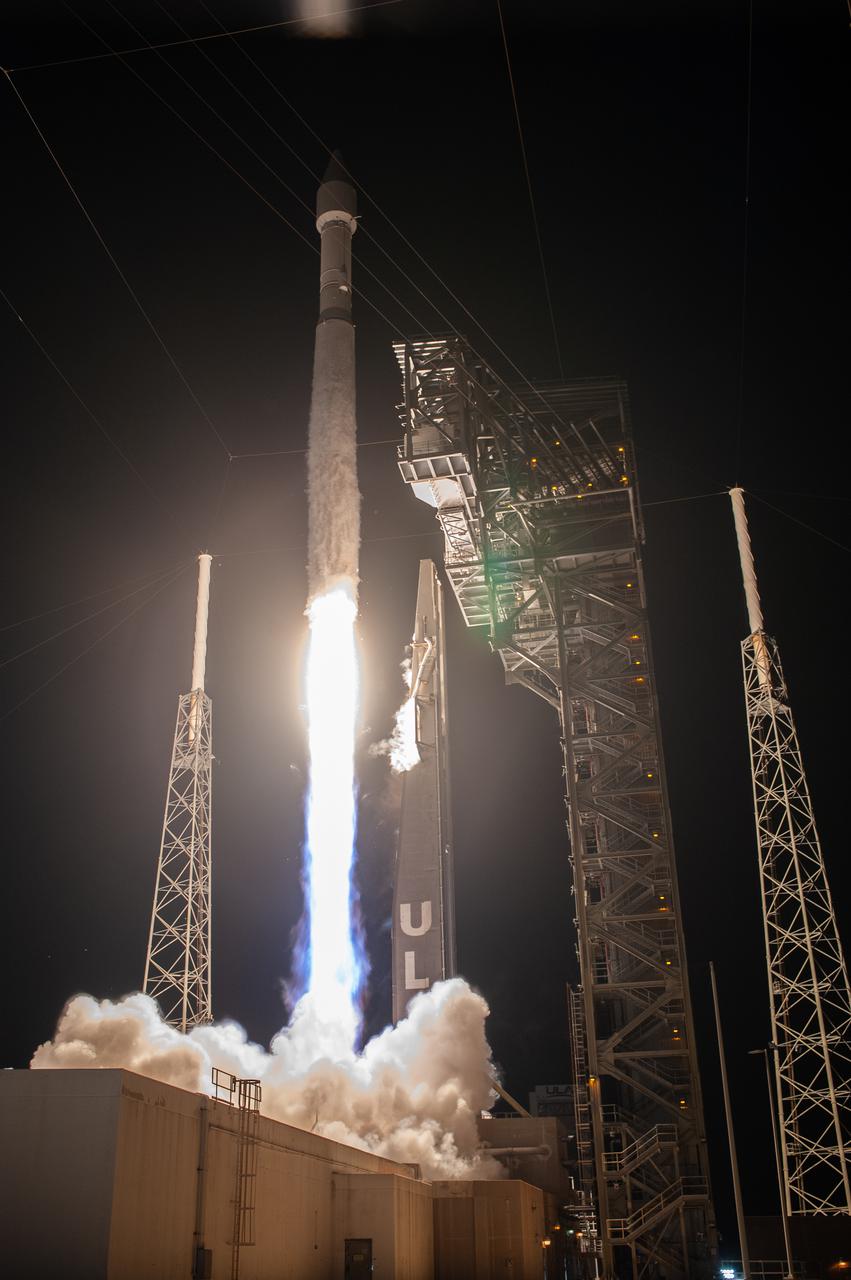
A United Launch Alliance V 401 rocket, with NASA’s Lucy spacecraft atop, powers off the pad at Cape Canaveral Space Force Station’s Space Launch Complex 41 in Florida at 5:34 a.m. EDT on Saturday, Oct. 16, 2021. The launch was managed by NASA’s Launch Services Program, based at Kennedy Space Center. Lucy will embark on a 12-year primary mission to explore a record-breaking number of asteroids, including the Jupiter Trojan asteroids. Named after a fossilized human ancestor whose skeleton provided discoverers insight into humanity’s evolution, the Lucy mission will do much of the same, providing scientists and researchers a look into the origins of our solar system.
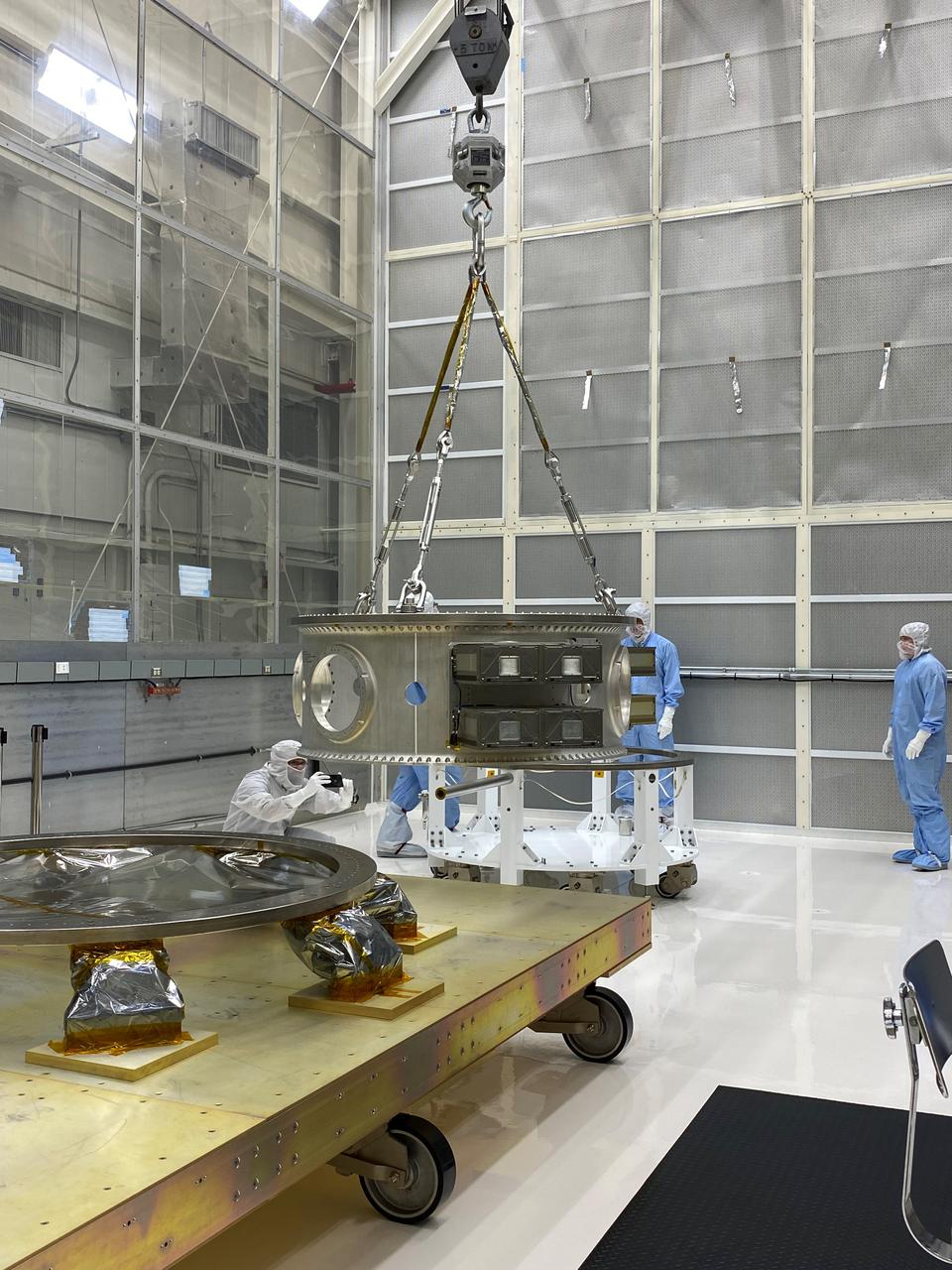
Technicians process mechanical and electrical support equipment for NASA’s Landsat 9 observatory inside the Integrated Processing Facility at Vandenberg Space Force Base in California, on June 16, 2021. The equipment includes a secondary payload adapter and flight system for a group of microsat payloads, called CubeSats, that will launch with Landsat 9 as secondary payloads. Landsat 9 will launch on a United Launch Alliance Atlas V rocket from Space Launch Complex 3 at Vandenberg in September 2021. The launch is being managed by NASA’s Launch Services Program based at Kennedy Space Center, America’s multiuser spaceport. The Landsat 9 satellite will continue the nearly 50-year legacy of previous Landsat missions. It will monitor key natural and economic resources from orbit. Landsat 9 is managed by the agency’s Goddard Space Flight Center in Greenbelt, Maryland. The satellite will carry two instruments: the Operational Land Imager 2, which collects images of Earth’s landscapes in visible, near infrared and shortwave infrared light, and the Thermal Infrared Sensor 2, which measures the temperature of land surfaces. Like its predecessors, Landsat 9 is a joint mission between NASA and the U.S. Geological Survey.
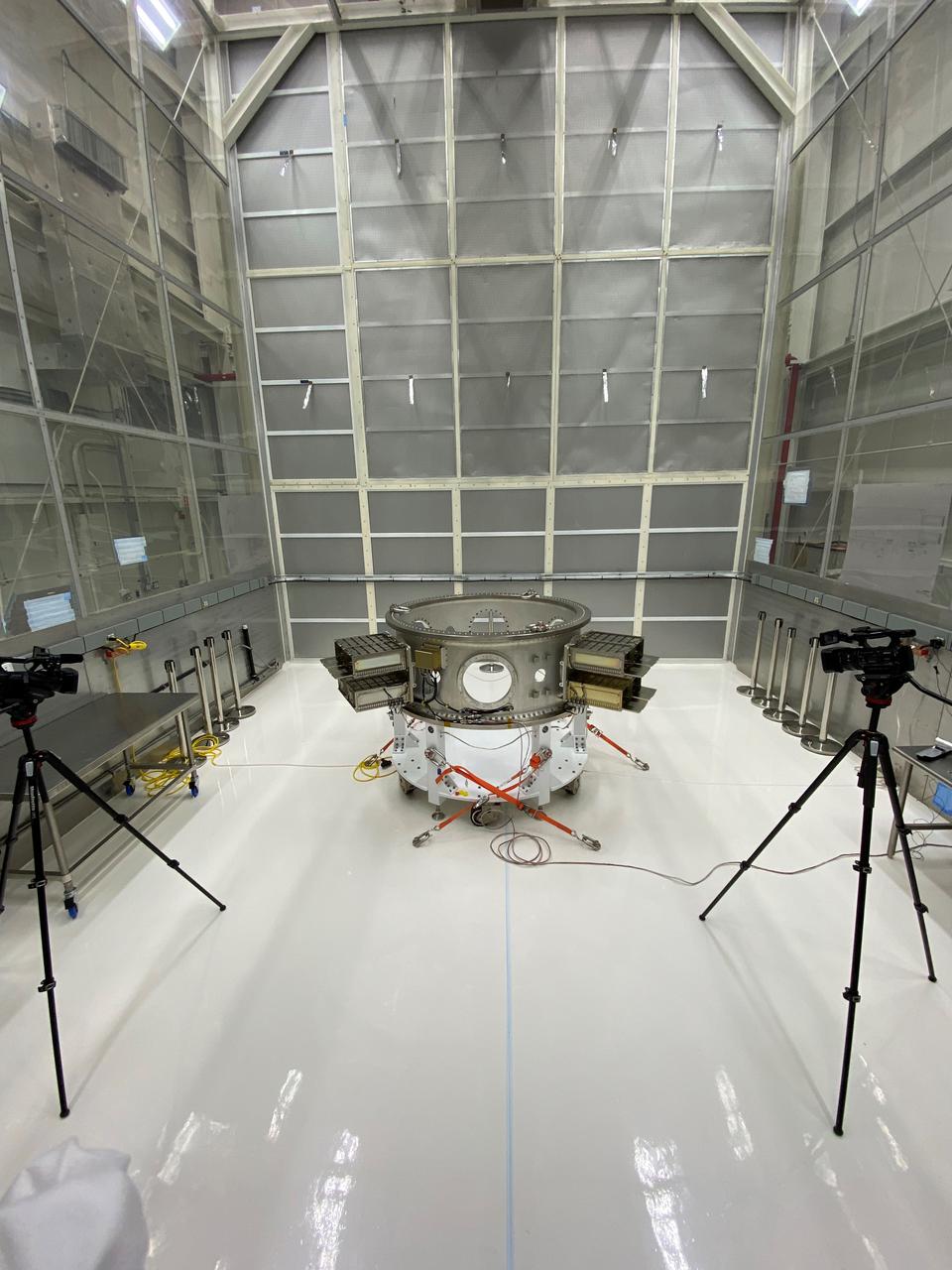
Mechanical and electrical support equipment for NASA’s Landsat 9 observatory are being processed inside the Integrated Processing Facility at Vandenberg Space Force Base in California, on June 24, 2021. The equipment includes a secondary payload adapter and flight system for a group of microsat payloads, called CubeSats, that will launch with Landsat 9 as secondary payloads. Landsat 9 will launch on a United Launch Alliance Atlas V rocket from Space Launch Complex 3 at Vandenberg in September 2021. The launch is being managed by NASA’s Launch Services Program based at Kennedy Space Center, America’s multiuser spaceport. The Landsat 9 satellite will continue the nearly 50-year legacy of previous Landsat missions. It will monitor key natural and economic resources from orbit. Landsat 9 is managed by the agency’s Goddard Space Flight Center in Greenbelt, Maryland. The satellite will carry two instruments: the Operational Land Imager 2, which collects images of Earth’s landscapes in visible, near infrared and shortwave infrared light, and the Thermal Infrared Sensor 2, which measures the temperature of land surfaces. Like its predecessors, Landsat 9 is a joint mission between NASA and the U.S. Geological Survey.
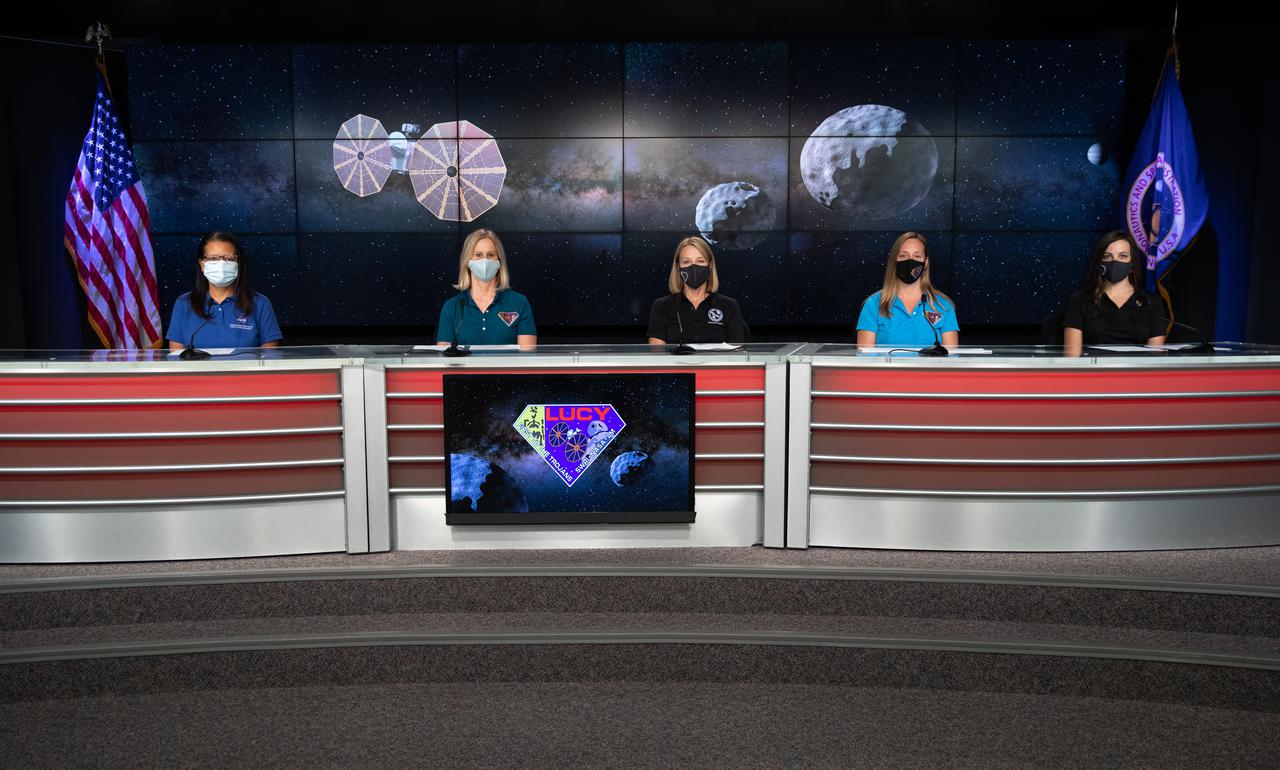
An engineering briefing for the Lucy mission is held inside the TV Auditorium at NASA’s Kennedy Space Center in Florida on Oct. 14, 2021. Participants included, from left to right, Nancy Jones, NASA Communications; Joan Salute, Planetary Science Division Associate Director, Flight Programs, NASA HQ; Katie Oakman, Lucy Structures and Mechanisms Lead, Lockheed Martin Space; Jessica Lounsbury, Lucy Project Systems Engineer at NASA’s Goddard Space Flight Center; and Coralie Adam, Deputy Navigation Team Chief, KinetX Aerospace. Lucy is scheduled to launch at 5:34 a.m. EDT Saturday, Oct. 16, on a United Launch Alliance Atlas V 401 rocket from Space Launch Complex 41 at Cape Canaveral Space Force Station. NASA’s Launch Services Program, based at Kennedy, is managing the launch. Lucy is the first space mission to study the Trojan asteroids, which hold vital clues to the formation of our solar system.
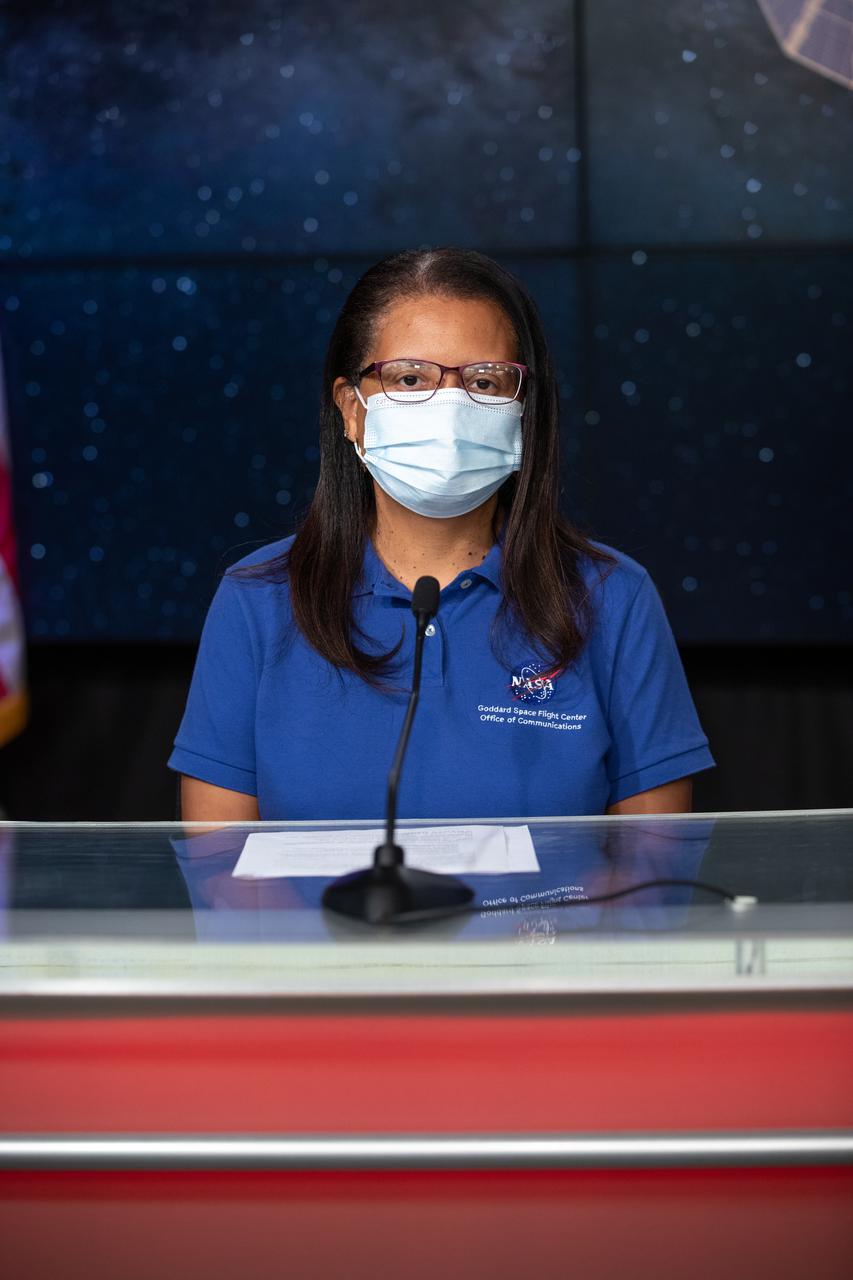
NASA Communications’ Nancy Jones moderates an engineering briefing for the Lucy mission held inside the TV Auditorium at NASA’s Kennedy Space Center in Florida on Oct. 14, 2021. The mission is scheduled to launch at 5:34 a.m. EDT Saturday, Oct. 16, on a United Launch Alliance Atlas V 401 rocket from Space Launch Complex 41 at Cape Canaveral Space Force Station. NASA’s Launch Services Program, based at Kennedy, is managing the launch. During its 12-year primary mission, Lucy will explore a record-breaking number of asteroids, flying by one asteroid in the solar system’s main belt and seven Trojan asteroids. Additionally, Lucy’s path will circle back to Earth three times for gravity assists, making it the first spacecraft to return to the vicinity of Earth from the outer solar system.
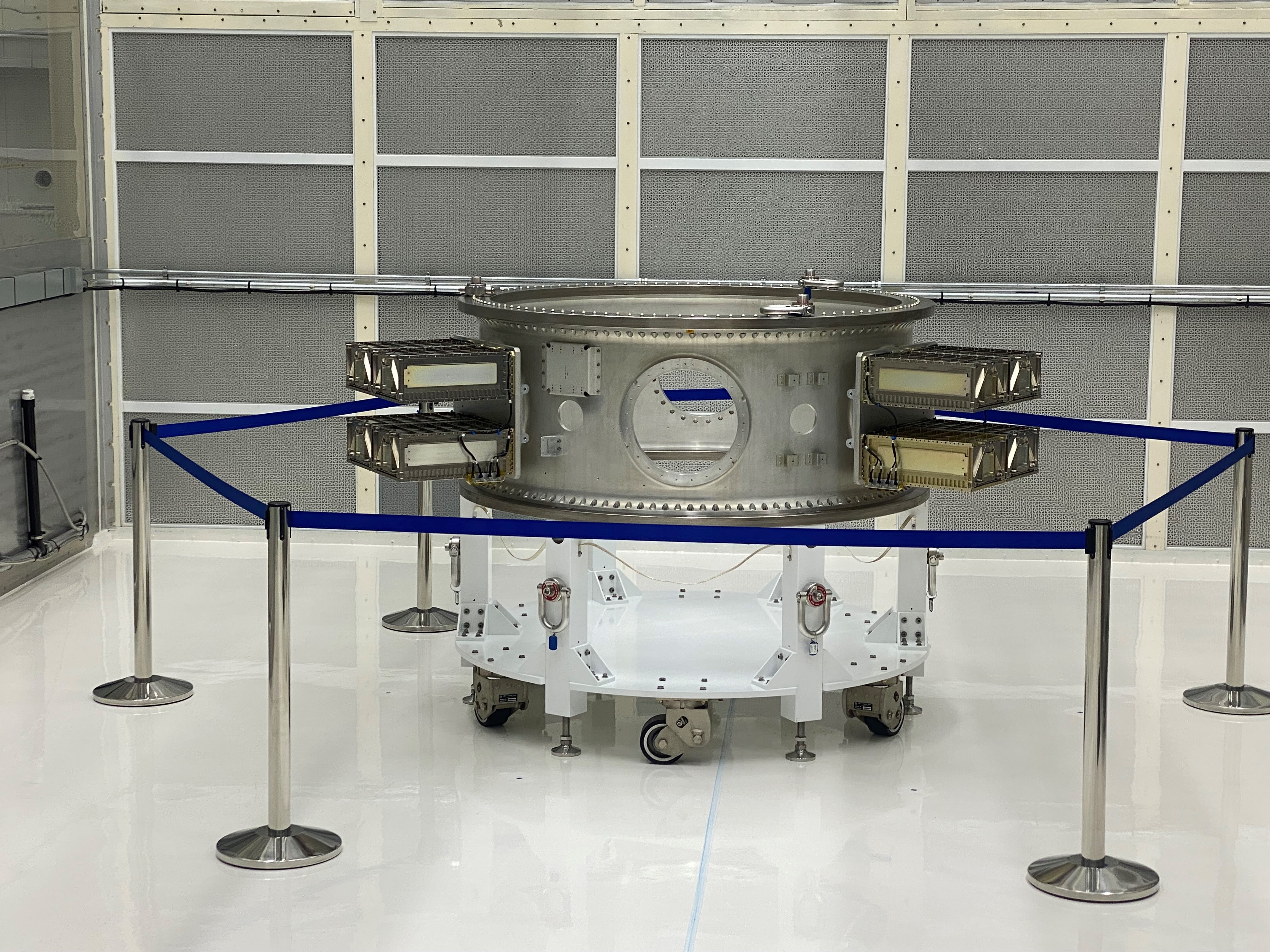
Mechanical and electrical support equipment for NASA’s Landsat 9 observatory are inside the Integrated Processing Facility at Vandenberg Space Force Base in California, on June 16, 2021. The equipment includes a secondary payload adapter and flight system for a group of microsat payloads, called CubeSats, that will launch with Landsat 9 as secondary payloads. Landsat 9 will launch on a United Launch Alliance Atlas V rocket from Space Launch Complex 3 at Vandenberg in September 2021. The launch is being managed by NASA’s Launch Services Program based at Kennedy Space Center, America’s multiuser spaceport. The Landsat 9 satellite will continue the nearly 50-year legacy of previous Landsat missions. It will monitor key natural and economic resources from orbit. Landsat 9 is managed by the agency’s Goddard Space Flight Center in Greenbelt, Maryland. The satellite will carry two instruments: the Operational Land Imager 2, which collects images of Earth’s landscapes in visible, near infrared and shortwave infrared light, and the Thermal Infrared Sensor 2, which measures the temperature of land surfaces. Like its predecessors, Landsat 9 is a joint mission between NASA and the U.S. Geological Survey.
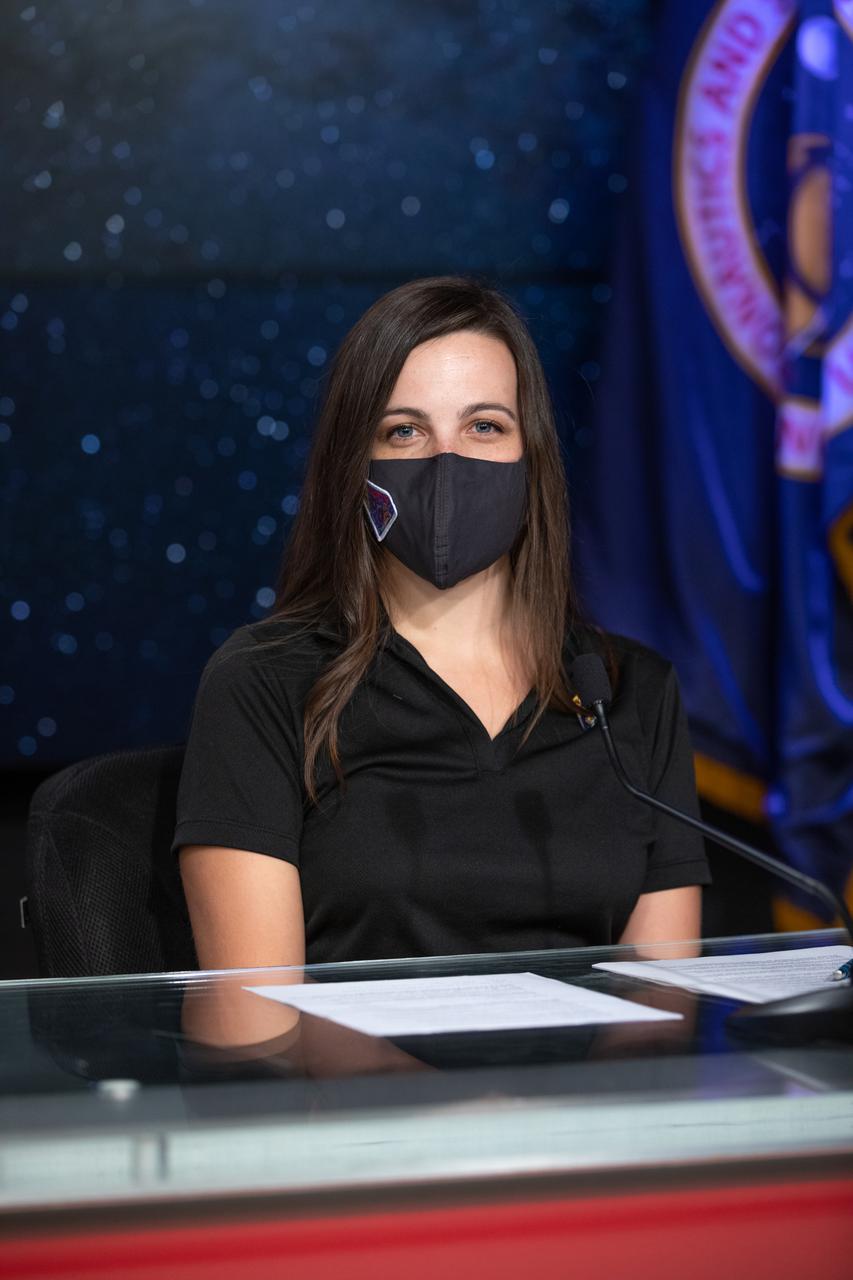
Deputy Navigation Team Chief Coralie Adam at KinetX Aerospace is introduced during an engineering briefing for the Lucy mission held inside the TV Auditorium at NASA’s Kennedy Space Center in Florida on Oct. 14, 2021. The mission is scheduled to launch at 5:34 a.m. EDT Saturday, Oct. 16, on a United Launch Alliance Atlas V 401 rocket from Space Launch Complex 41 at Cape Canaveral Space Force Station. NASA’s Launch Services Program, based at Kennedy, is managing the launch. During its 12-year primary mission, Lucy will explore a record-breaking number of asteroids, flying by one asteroid in the solar system’s main belt and seven Trojan asteroids. Additionally, Lucy’s path will circle back to Earth three times for gravity assists, making it the first spacecraft to return to the vicinity of Earth from the outer solar system.
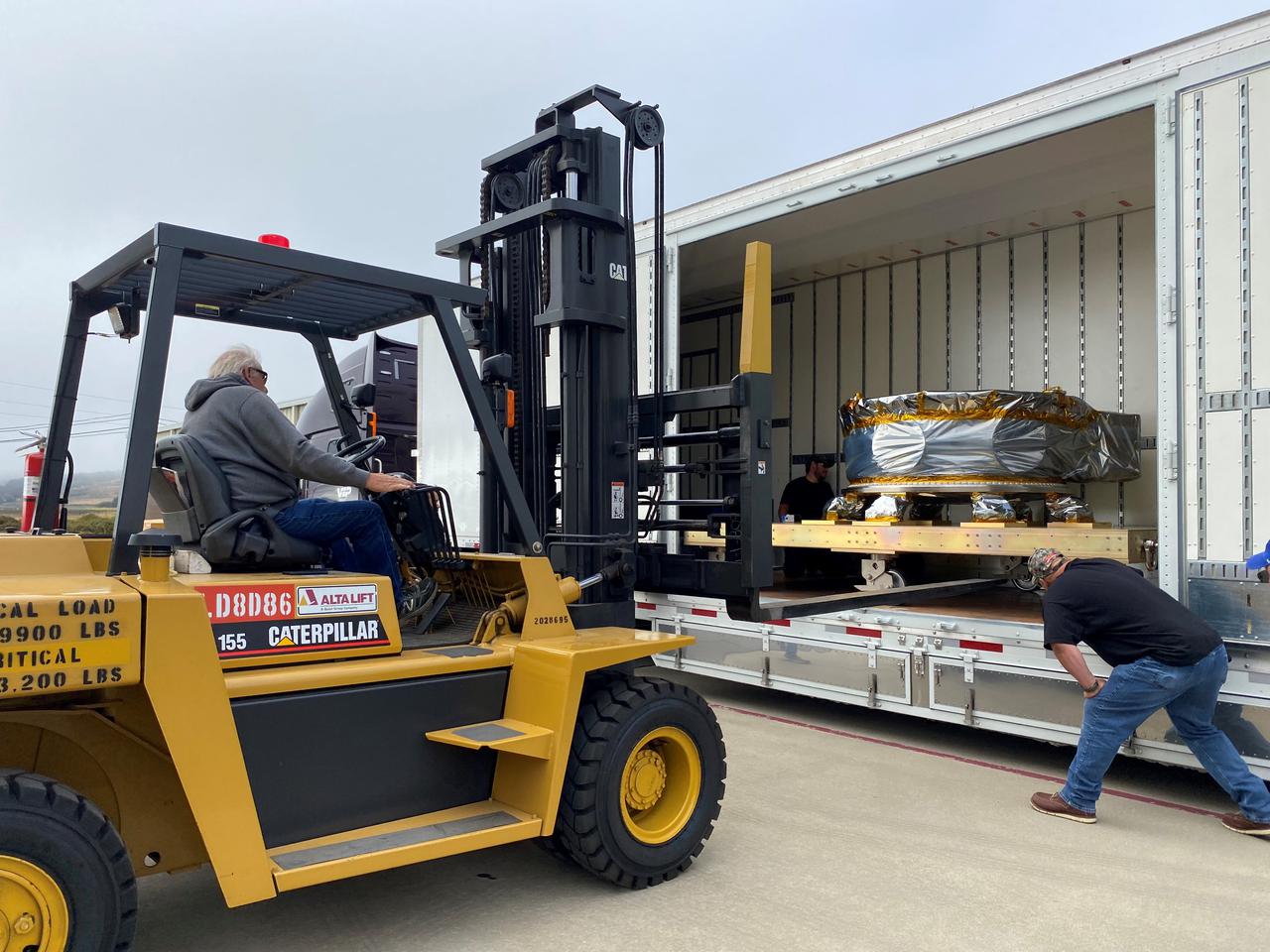
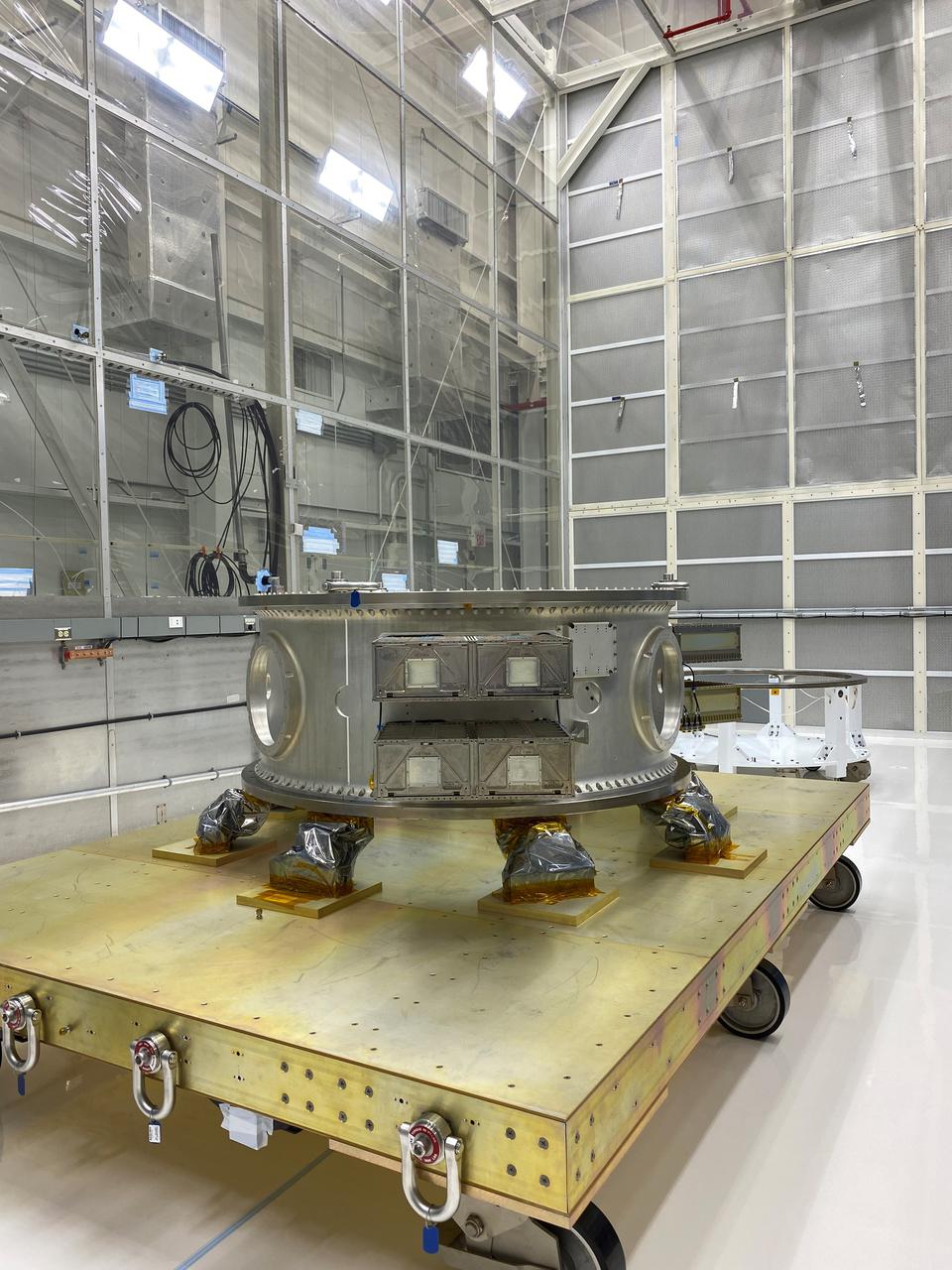
Mechanical and electrical support equipment for NASA’s Landsat 9 observatory arrive at the Integrated Processing Facility at Vandenberg Space Force Base in California, on June 14, 2021. The equipment includes a secondary payload adapter and flight system for a group of microsat payloads, called CubeSats, that will launch with Landsat 9 as secondary payloads. Landsat 9 will launch on a United Launch Alliance Atlas V rocket from Space Launch Complex 3 at Vandenberg in September 2021. The launch is being managed by NASA’s Launch Services Program based at Kennedy Space Center, America’s multiuser spaceport. The Landsat 9 satellite will continue the nearly 50-year legacy of previous Landsat missions. It will monitor key natural and economic resources from orbit. Landsat 9 is managed by the agency’s Goddard Space Flight Center in Greenbelt, Maryland. The satellite will carry two instruments: the Operational Land Imager 2, which collects images of Earth’s landscapes in visible, near infrared and shortwave infrared light, and the Thermal Infrared Sensor 2, which measures the temperature of land surfaces. Like its predecessors, Landsat 9 is a joint mission between NASA and the U.S. Geological Survey.
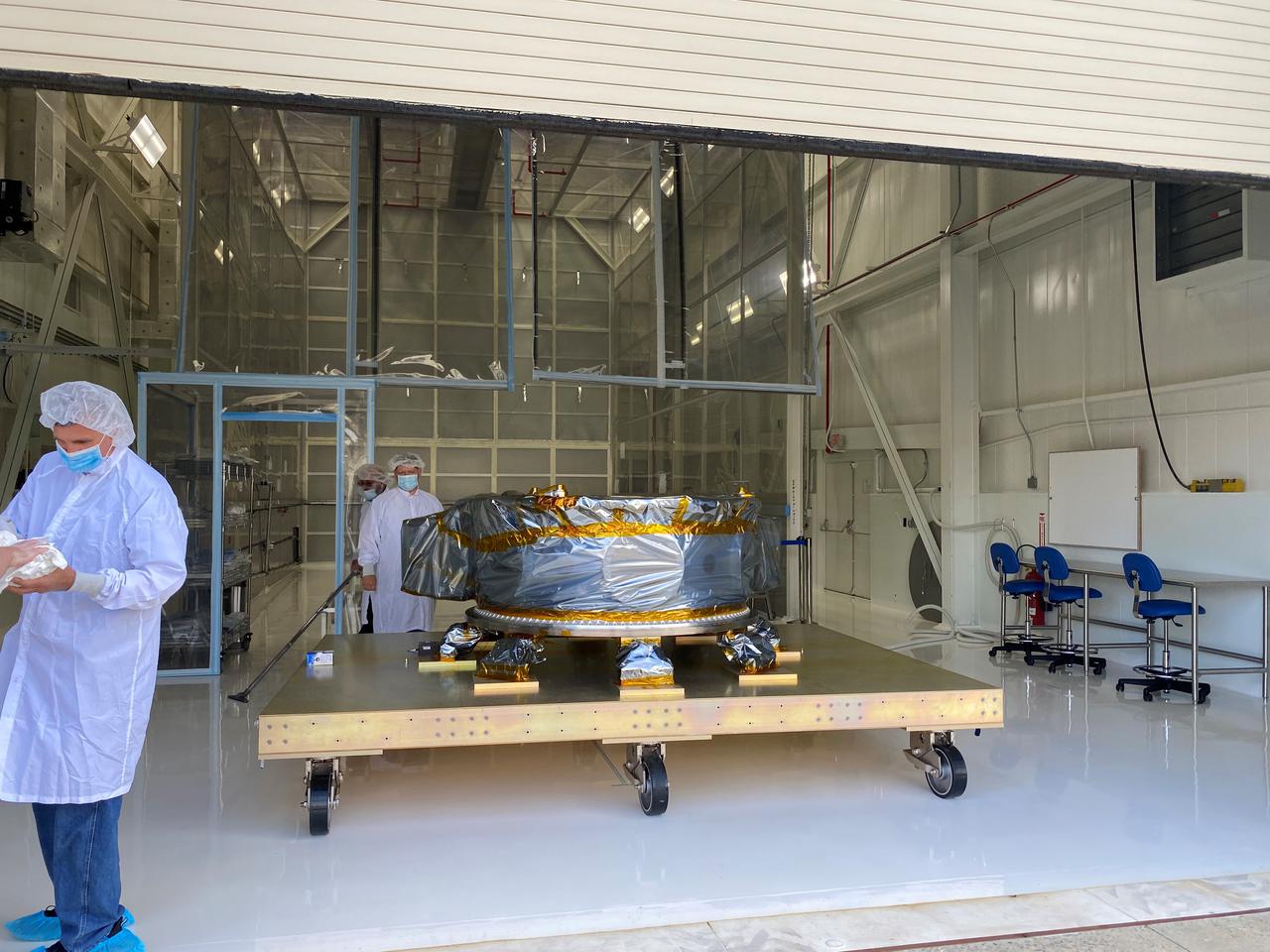
Mechanical and electrical support equipment for NASA’s Landsat 9 observatory arrive inside the Integrated Processing Facility at Vandenberg Space Force Base in California, on June 14, 2021. The equipment includes a secondary payload adapter and flight system for a group of microsat payloads, called CubeSats, that will launch with Landsat 9 as secondary payloads. Landsat 9 will launch on a United Launch Alliance Atlas V rocket from Space Launch Complex 3 at Vandenberg in September 2021. The launch is being managed by NASA’s Launch Services Program based at Kennedy Space Center, America’s multiuser spaceport. The Landsat 9 satellite will continue the nearly 50-year legacy of previous Landsat missions. It will monitor key natural and economic resources from orbit. Landsat 9 is managed by the agency’s Goddard Space Flight Center in Greenbelt, Maryland. The satellite will carry two instruments: the Operational Land Imager 2, which collects images of Earth’s landscapes in visible, near infrared and shortwave infrared light, and the Thermal Infrared Sensor 2, which measures the temperature of land surfaces. Like its predecessors, Landsat 9 is a joint mission between NASA and the U.S. Geological Survey.
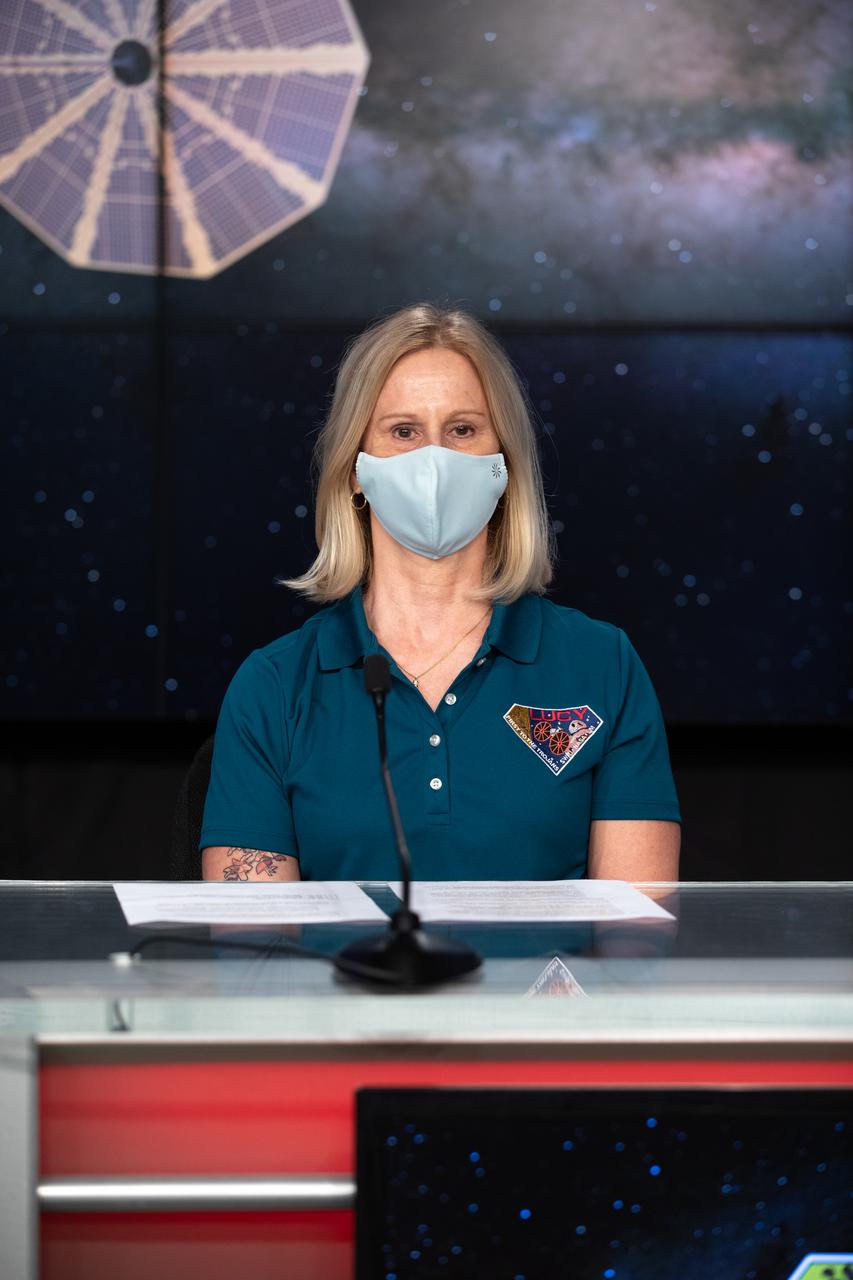
Joan Salute, Planetary Science Division associate director, Flight Programs, NASA HQ, is introduced during an engineering briefing for the Lucy mission held inside the TV Auditorium at NASA’s Kennedy Space Center in Florida on Oct. 14, 2021. The mission is scheduled to launch at 5:34 a.m. EDT Saturday, Oct. 16, on a United Launch Alliance Atlas V 401 rocket from Space Launch Complex 41 at Cape Canaveral Space Force Station. NASA’s Launch Services Program, based at Kennedy, is managing the launch. During its 12-year primary mission, Lucy will explore a record-breaking number of asteroids, flying by one asteroid in the solar system’s main belt and seven Trojan asteroids. Additionally, Lucy’s path will circle back to Earth three times for gravity assists, making it the first spacecraft to return to the vicinity of Earth from the outer solar system.
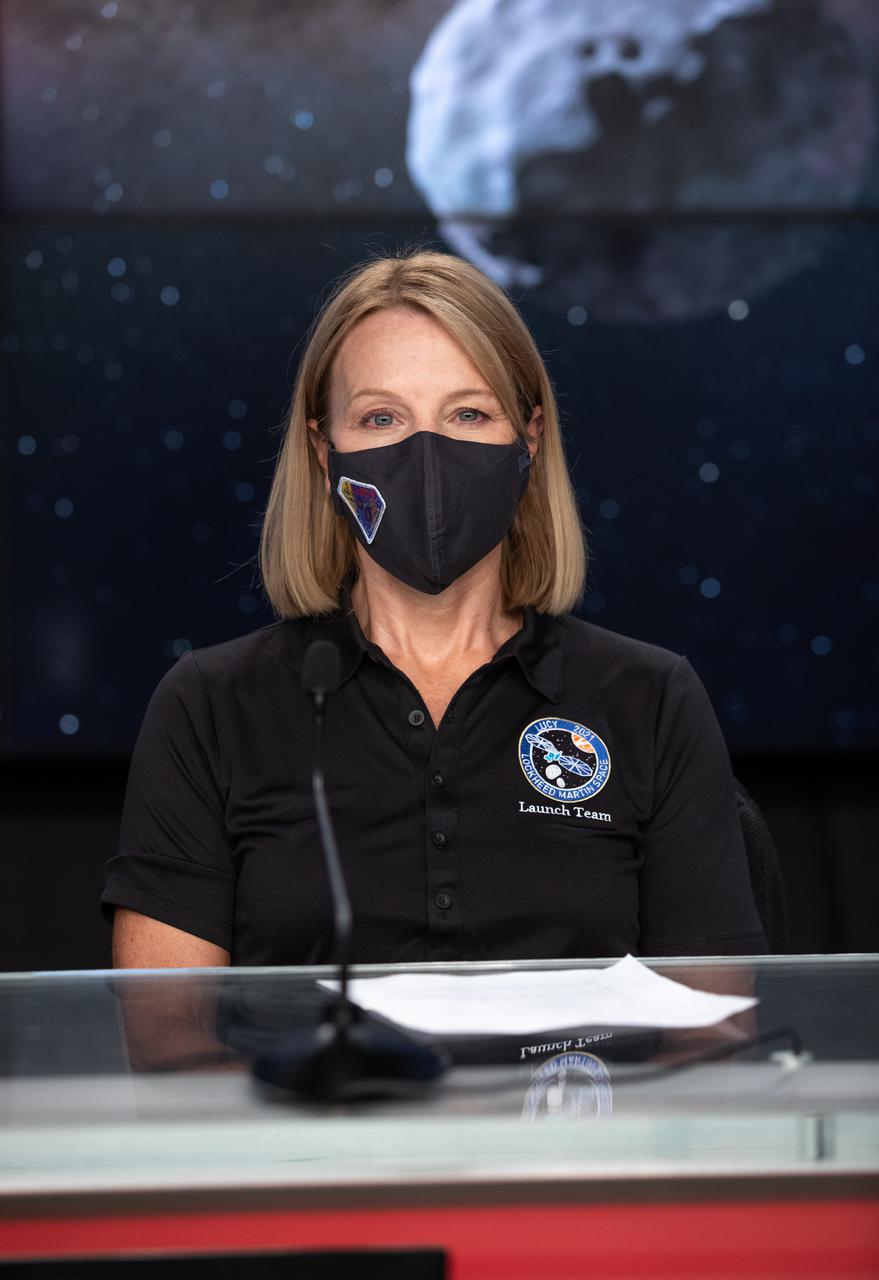
Katie Oakman, lead for Lucy structures and mechanisms with Lockheed Martin Space, is introduced during an engineering briefing for the Lucy mission held inside the TV Auditorium at NASA’s Kennedy Space Center in Florida on Oct. 14, 2021. The mission is scheduled to launch at 5:34 a.m. EDT Saturday, Oct. 16, on a United Launch Alliance Atlas V 401 rocket from Space Launch Complex 41 at Cape Canaveral Space Force Station. NASA’s Launch Services Program, based at Kennedy, is managing the launch. During its 12-year primary mission, Lucy will explore a record-breaking number of asteroids, flying by one asteroid in the solar system’s main belt and seven Trojan asteroids. Additionally, Lucy’s path will circle back to Earth three times for gravity assists, making it the first spacecraft to return to the vicinity of Earth from the outer solar system.
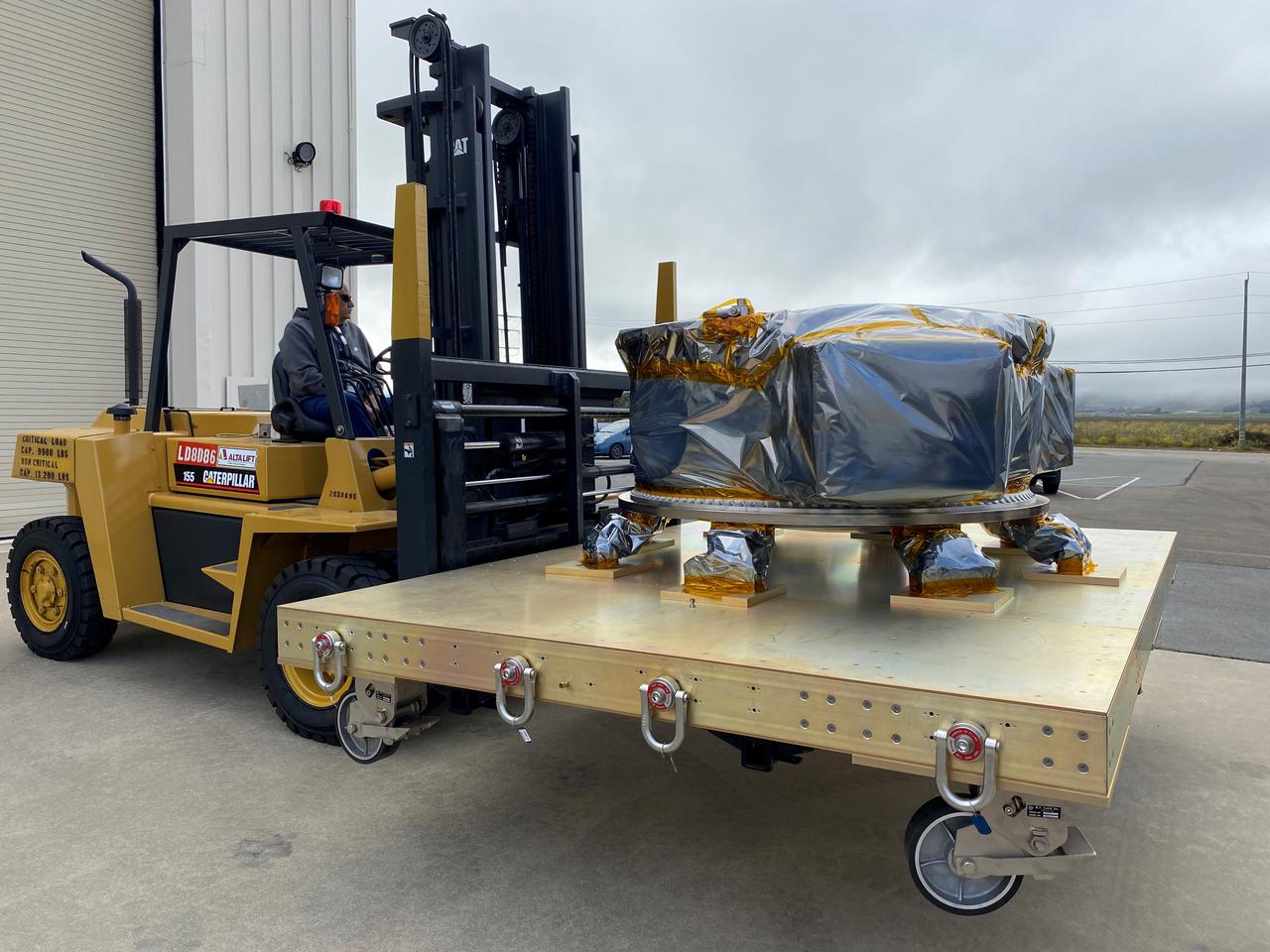
Mechanical and electrical support equipment for NASA’s Landsat 9 observatory arrive at the Integrated Processing Facility at Vandenberg Space Force Base in California, on June 14, 2021. The equipment includes a secondary payload adapter and flight system for a group of microsat payloads, called CubeSats, that will launch with Landsat 9 as secondary payloads. Landsat 9 will launch on a United Launch Alliance Atlas V rocket from Space Launch Complex 3 at Vandenberg in September 2021. The launch is being managed by NASA’s Launch Services Program based at Kennedy Space Center, America’s multiuser spaceport. The Landsat 9 satellite will continue the nearly 50-year legacy of previous Landsat missions. It will monitor key natural and economic resources from orbit. Landsat 9 is managed by the agency’s Goddard Space Flight Center in Greenbelt, Maryland. The satellite will carry two instruments: the Operational Land Imager 2, which collects images of Earth’s landscapes in visible, near infrared and shortwave infrared light, and the Thermal Infrared Sensor 2, which measures the temperature of land surfaces. Like its predecessors, Landsat 9 is a joint mission between NASA and the U.S. Geological Survey.
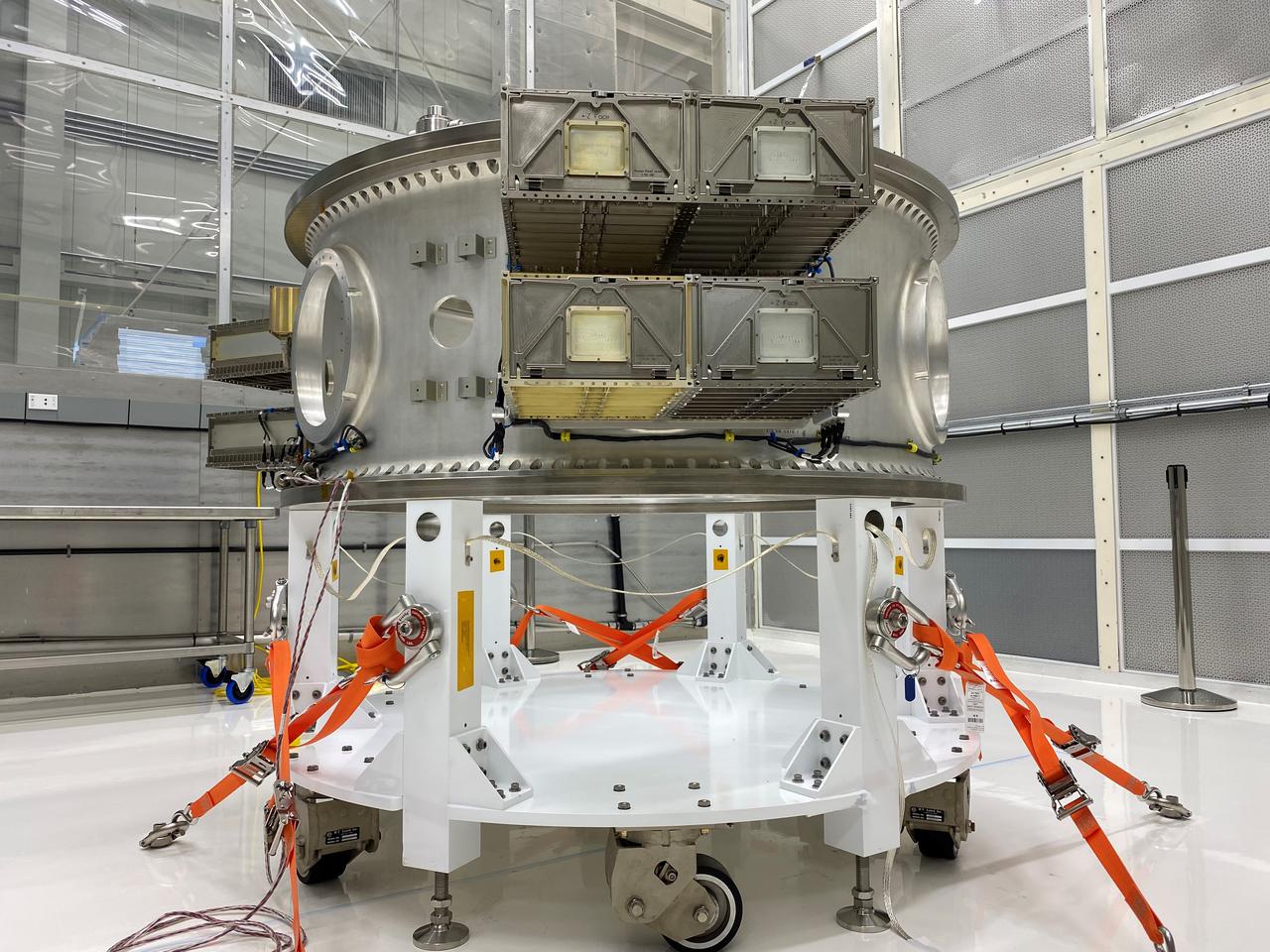
Mechanical and electrical support equipment for NASA’s Landsat 9 observatory are being processed inside the Integrated Processing Facility at Vandenberg Space Force Base in California, on June 24, 2021. The equipment includes a secondary payload adapter and flight system for a group of microsat payloads, called CubeSats, that will launch with Landsat 9 as secondary payloads. Landsat 9 will launch on a United Launch Alliance Atlas V rocket from Space Launch Complex 3 at Vandenberg in September 2021. The launch is being managed by NASA’s Launch Services Program based at Kennedy Space Center, America’s multiuser spaceport. The Landsat 9 satellite will continue the nearly 50-year legacy of previous Landsat missions. It will monitor key natural and economic resources from orbit. Landsat 9 is managed by the agency’s Goddard Space Flight Center in Greenbelt, Maryland. The satellite will carry two instruments: the Operational Land Imager 2, which collects images of Earth’s landscapes in visible, near infrared and shortwave infrared light, and the Thermal Infrared Sensor 2, which measures the temperature of land surfaces. Like its predecessors, Landsat 9 is a joint mission between NASA and the U.S. Geological Survey.
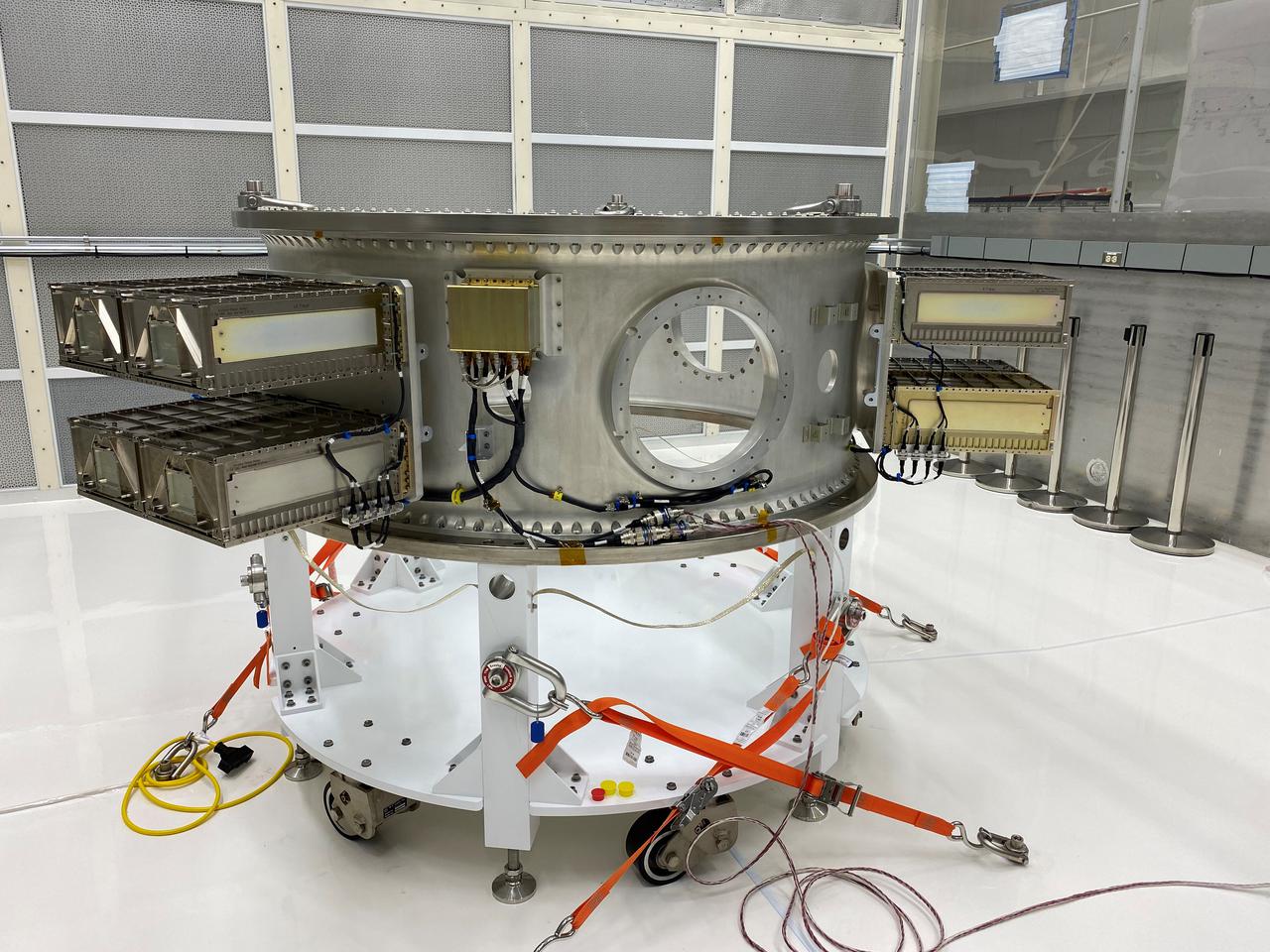
Mechanical and electrical support equipment for NASA’s Landsat 9 observatory are being processed inside the Integrated Processing Facility at Vandenberg Space Force Base in California, on June 24, 2021. The equipment includes a secondary payload adapter and flight system for a group of microsat payloads, called CubeSats, that will launch with Landsat 9 as secondary payloads. Landsat 9 will launch on a United Launch Alliance Atlas V rocket from Space Launch Complex 3 at Vandenberg in September 2021. The launch is being managed by NASA’s Launch Services Program based at Kennedy Space Center, America’s multiuser spaceport. The Landsat 9 satellite will continue the nearly 50-year legacy of previous Landsat missions. It will monitor key natural and economic resources from orbit. Landsat 9 is managed by the agency’s Goddard Space Flight Center in Greenbelt, Maryland. The satellite will carry two instruments: the Operational Land Imager 2, which collects images of Earth’s landscapes in visible, near infrared and shortwave infrared light, and the Thermal Infrared Sensor 2, which measures the temperature of land surfaces. Like its predecessors, Landsat 9 is a joint mission between NASA and the U.S. Geological Survey.
Mechanical and electrical support equipment for NASA’s Landsat 9 observatory arrive inside the Integrated Processing Facility at Vandenberg Space Force Base in California, on June 16, 2021. The equipment includes a secondary payload adapter and flight system for a group of microsat payloads, called CubeSats, that will launch with Landsat 9 as secondary payloads. Landsat 9 will launch on a United Launch Alliance Atlas V rocket from Space Launch Complex 3 at Vandenberg in September 2021. The launch is being managed by NASA’s Launch Services Program based at Kennedy Space Center, America’s multiuser spaceport. The Landsat 9 satellite will continue the nearly 50-year legacy of previous Landsat missions. It will monitor key natural and economic resources from orbit. Landsat 9 is managed by the agency’s Goddard Space Flight Center in Greenbelt, Maryland. The satellite will carry two instruments: the Operational Land Imager 2, which collects images of Earth’s landscapes in visible, near infrared and shortwave infrared light, and the Thermal Infrared Sensor 2, which measures the temperature of land surfaces. Like its predecessors, Landsat 9 is a joint mission between NASA and the U.S. Geological Survey.
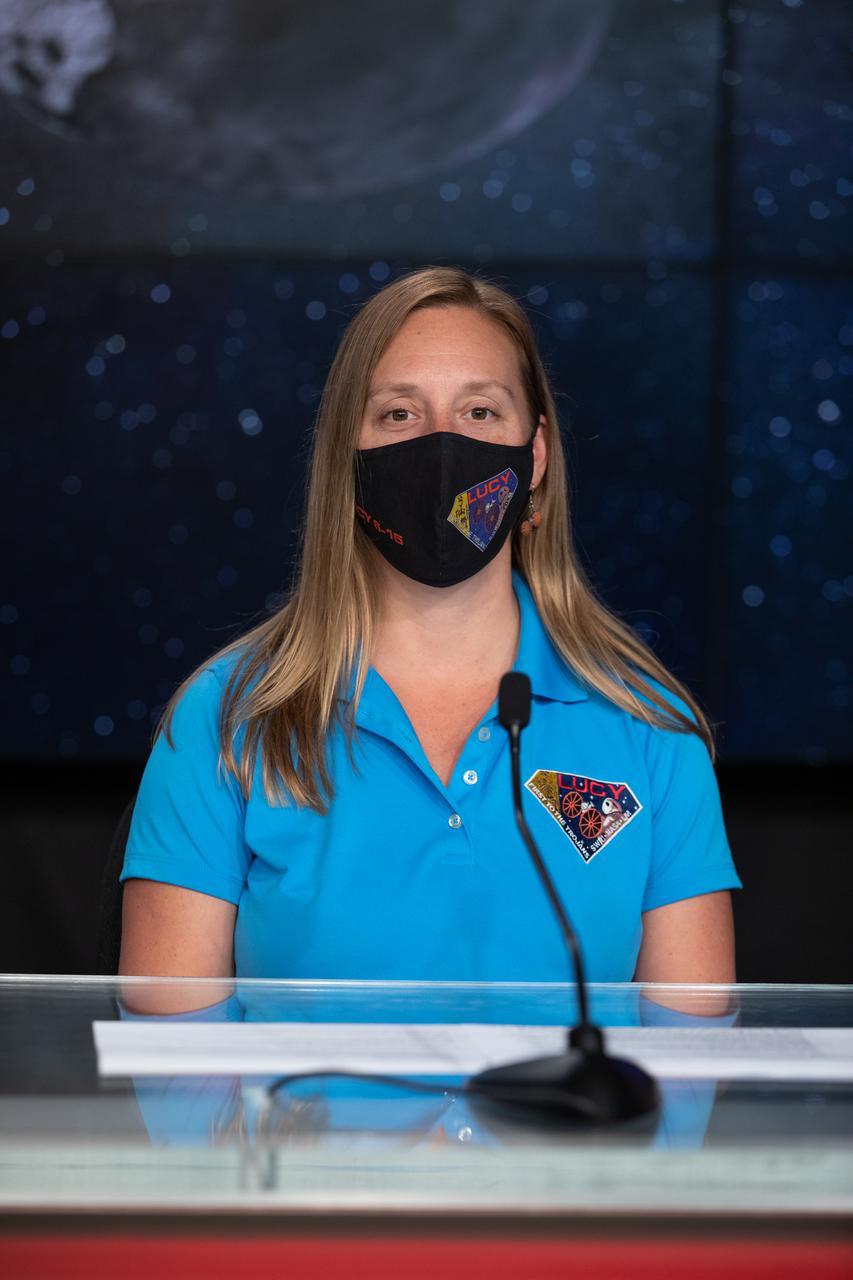
Jessica Lounsbury, Lucy Project Systems engineer at NASA’s Goddard Space Flight Center, is introduced during an engineering briefing for the Lucy mission held inside the TV Auditorium at NASA’s Kennedy Space Center in Florida on Oct. 14, 2021. The mission is scheduled to launch at 5:34 a.m. EDT Saturday, Oct. 16, on a United Launch Alliance Atlas V 401 rocket from Space Launch Complex 41 at Cape Canaveral Space Force Station. NASA’s Launch Services Program, based at Kennedy, is managing the launch. During its 12-year primary mission, Lucy will explore a record-breaking number of asteroids, flying by one asteroid in the solar system’s main belt and seven Trojan asteroids. Additionally, Lucy’s path will circle back to Earth three times for gravity assists, making it the first spacecraft to return to the vicinity of Earth from the outer solar system.
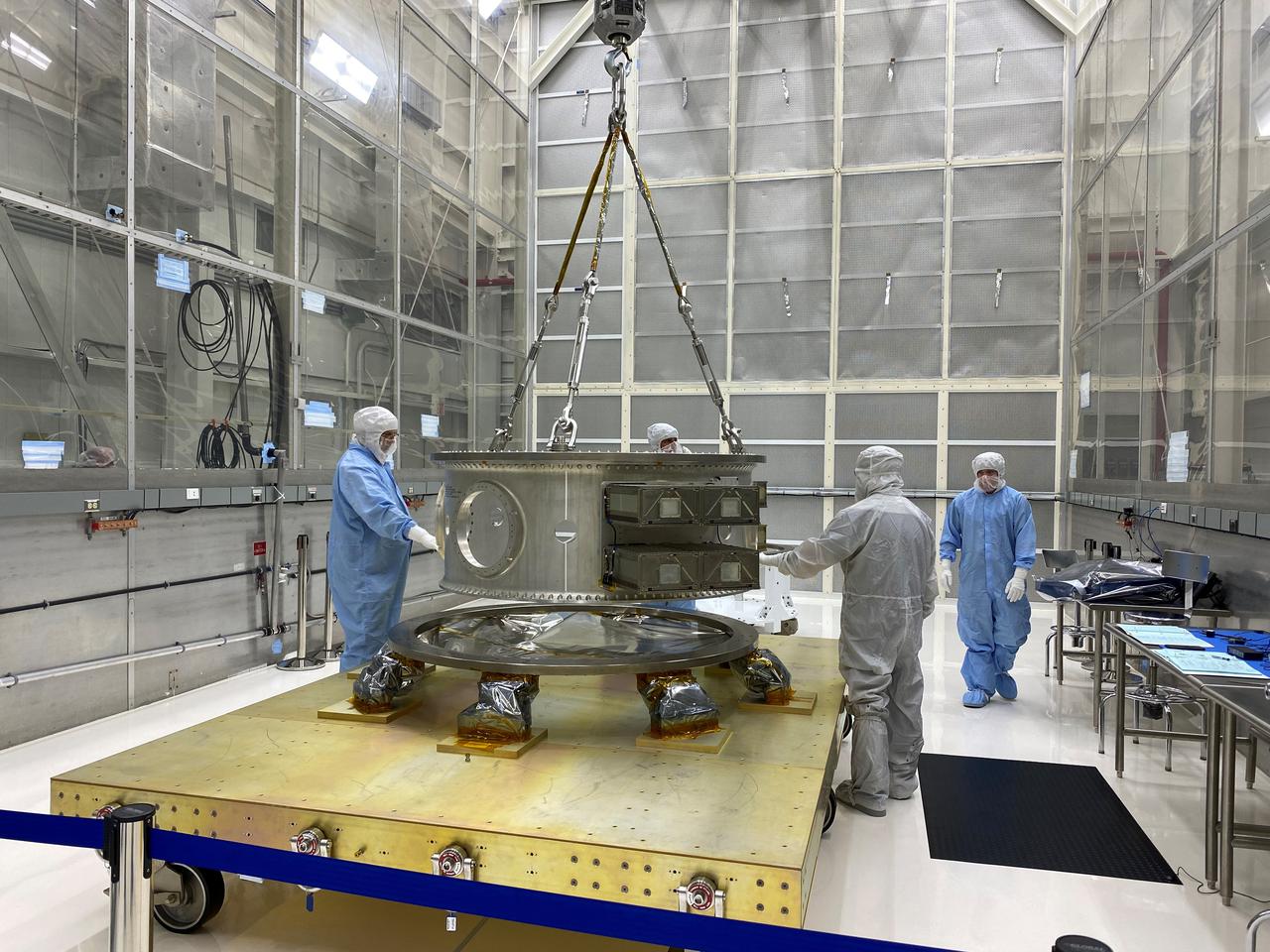
Technicians process mechanical and electrical support equipment for NASA’s Landsat 9 observatory inside the Integrated Processing Facility at Vandenberg Space Force Base in California, on June 16, 2021. The equipment includes a secondary payload adapter and flight system for a group of microsat payloads, called CubeSats, that will launch with Landsat 9 as secondary payloads. Landsat 9 will launch on a United Launch Alliance Atlas V rocket from Space Launch Complex 3 at Vandenberg in September 2021. The launch is being managed by NASA’s Launch Services Program based at Kennedy Space Center, America’s multiuser spaceport. The Landsat 9 satellite will continue the nearly 50-year legacy of previous Landsat missions. It will monitor key natural and economic resources from orbit. Landsat 9 is managed by the agency’s Goddard Space Flight Center in Greenbelt, Maryland. The satellite will carry two instruments: the Operational Land Imager 2, which collects images of Earth’s landscapes in visible, near infrared and shortwave infrared light, and the Thermal Infrared Sensor 2, which measures the temperature of land surfaces. Like its predecessors, Landsat 9 is a joint mission between NASA and the U.S. Geological Survey.
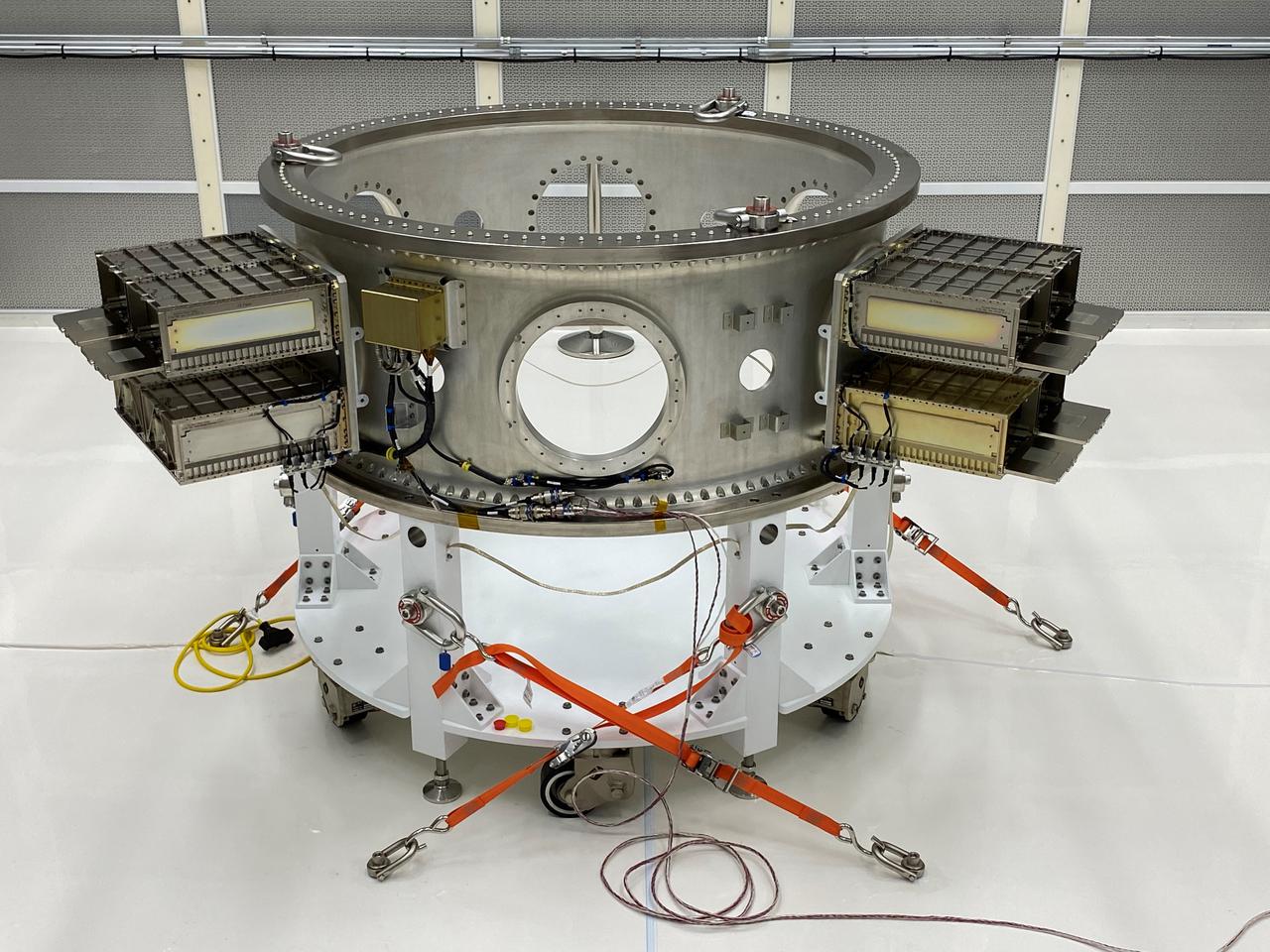
Mechanical and electrical support equipment for NASA’s Landsat 9 observatory are being processed inside the Integrated Processing Facility at Vandenberg Space Force Base in California, on June 24, 2021. The equipment includes a secondary payload adapter and flight system for a group of microsat payloads, called CubeSats, that will launch with Landsat 9 as secondary payloads. Landsat 9 will launch on a United Launch Alliance Atlas V rocket from Space Launch Complex 3 at Vandenberg in September 2021. The launch is being managed by NASA’s Launch Services Program based at Kennedy Space Center, America’s multiuser spaceport. The Landsat 9 satellite will continue the nearly 50-year legacy of previous Landsat missions. It will monitor key natural and economic resources from orbit. Landsat 9 is managed by the agency’s Goddard Space Flight Center in Greenbelt, Maryland. The satellite will carry two instruments: the Operational Land Imager 2, which collects images of Earth’s landscapes in visible, near infrared and shortwave infrared light, and the Thermal Infrared Sensor 2, which measures the temperature of land surfaces. Like its predecessors, Landsat 9 is a joint mission between NASA and the U.S. Geological Survey.
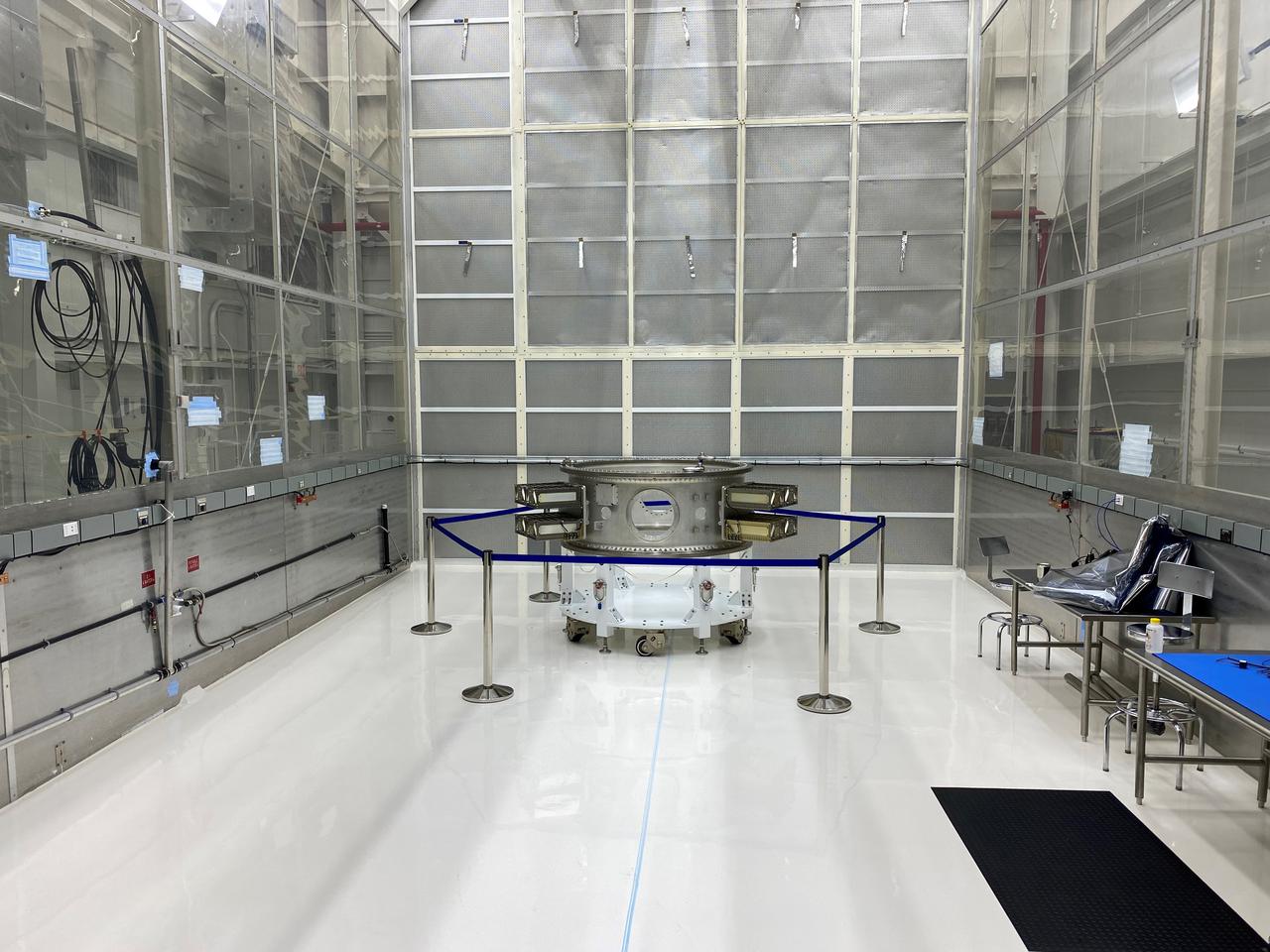
Mechanical and electrical support equipment for NASA’s Landsat 9 observatory are inside the Integrated Processing Facility at Vandenberg Space Force Base in California, on June 16, 2021. The equipment includes a secondary payload adapter and flight system for a group of microsat payloads, called CubeSats, that will launch with Landsat 9 as secondary payloads. Landsat 9 will launch on a United Launch Alliance Atlas V rocket from Space Launch Complex 3 at Vandenberg in September 2021. The launch is being managed by NASA’s Launch Services Program based at Kennedy Space Center, America’s multiuser spaceport. The Landsat 9 satellite will continue the nearly 50-year legacy of previous Landsat missions. It will monitor key natural and economic resources from orbit. Landsat 9 is managed by the agency’s Goddard Space Flight Center in Greenbelt, Maryland. The satellite will carry two instruments: the Operational Land Imager 2, which collects images of Earth’s landscapes in visible, near infrared and shortwave infrared light, and the Thermal Infrared Sensor 2, which measures the temperature of land surfaces. Like its predecessors, Landsat 9 is a joint mission between NASA and the U.S. Geological Survey.
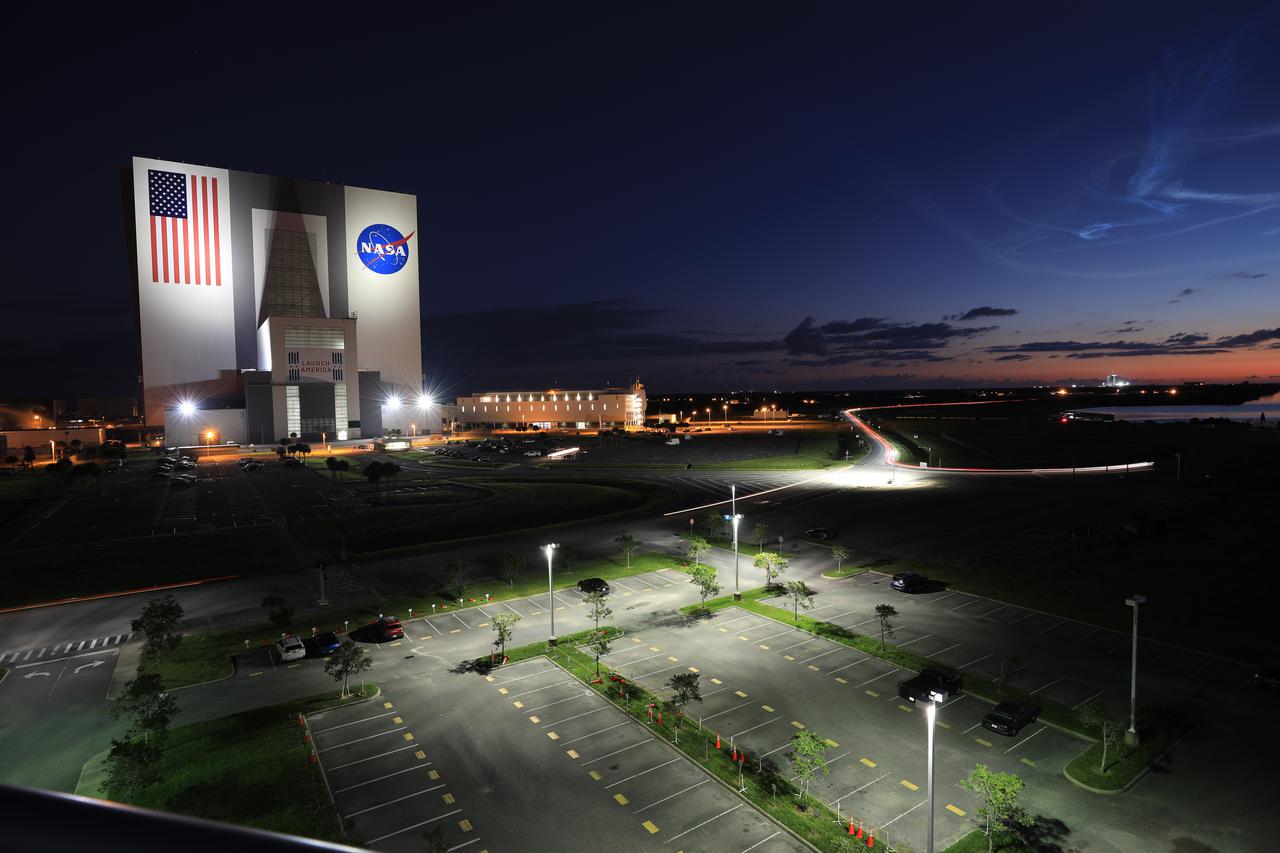
Shown is a view of the Vehicle Assembly at NASA’s Kennedy Space Center in Florida, on Oct. 16, 2021 – in the early-morning hours on the day of the Lucy mission. A United Launch Alliance V 401 rocket roared off the pad at Cape Canaveral Space Force Station’s Space Launch Complex 41 on at 5:34 a.m. EDT, carrying NASA’s Lucy spacecraft into space. During its 12-year primary mission, Lucy will explore a record-breaking number of asteroids, flying by one asteroid in the solar system’s main belt and seven Trojan asteroids. Lucy is the first space mission to study the Trojan asteroids, which hold vital clues to the formation of our solar system.
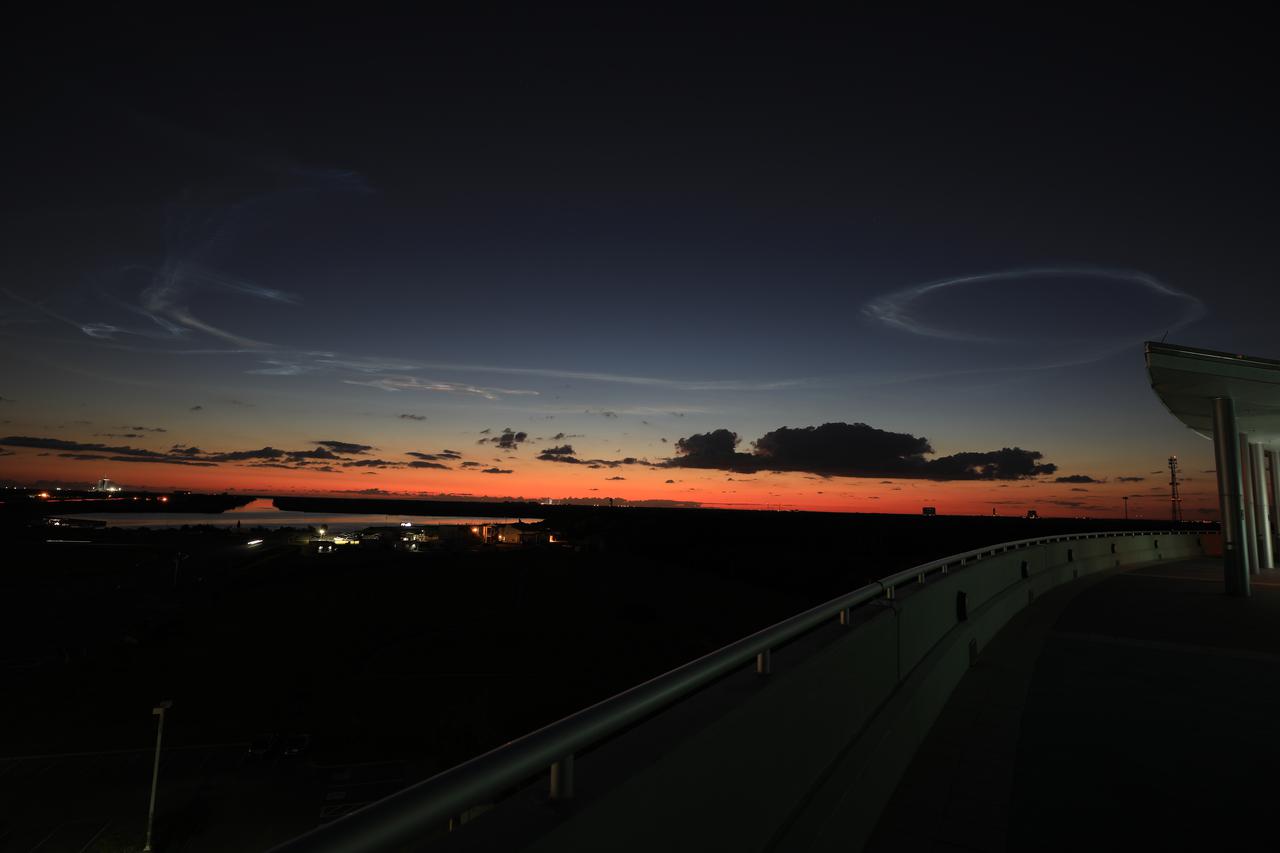
Shown is a view from the Operations Support Building II at NASA’s Kennedy Space Center in Florida, on Oct. 16, 2021 – in the early-morning hours on the day of the Lucy mission. A United Launch Alliance V 401 rocket roared off the pad at Cape Canaveral Space Force Station’s Space Launch Complex 41 on at 5:34 a.m. EDT, carrying NASA’s Lucy spacecraft into space. During its 12-year primary mission, Lucy will explore a record-breaking number of asteroids, flying by one asteroid in the solar system’s main belt and seven Trojan asteroids. Lucy is the first space mission to study the Trojan asteroids, which hold vital clues to the formation of our solar system.
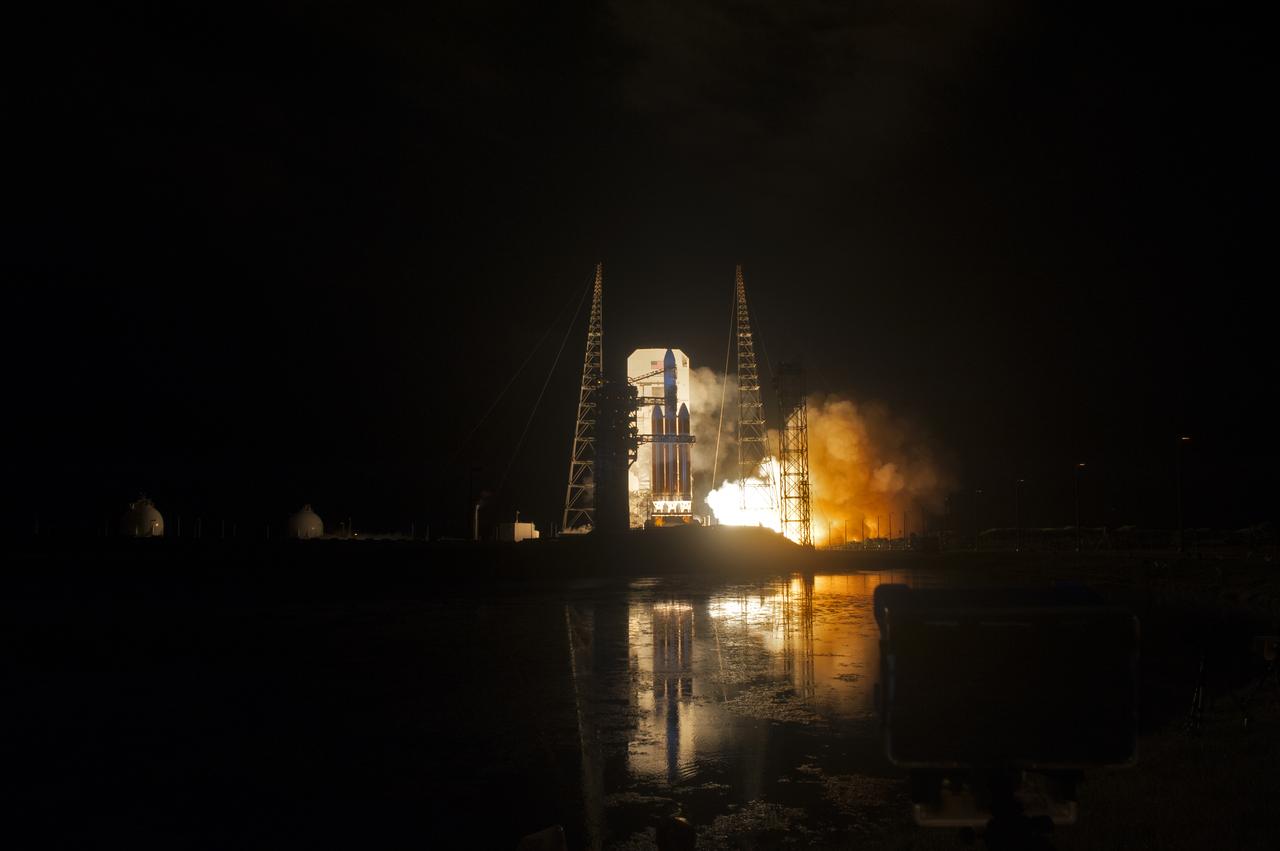
At Cape Canaveral Air Force Station's Space Launch Complex 37, the United Launch Alliance Delta IV Heavy rocket with NASA's Parker Solar Probe, lifts off at 3:31 a.m. EDT on Sunday, Aug. 12, 2018. The spacecraft was built by Applied Physics Laboratory of Johns Hopkins University in Laurel, Maryland. The mission will perform the closest-ever observations of a star when it travels through the Sun's atmosphere, called the corona. The probe will rely on measurements and imaging to revolutionize our understanding of the corona and the Sun-Earth connection.
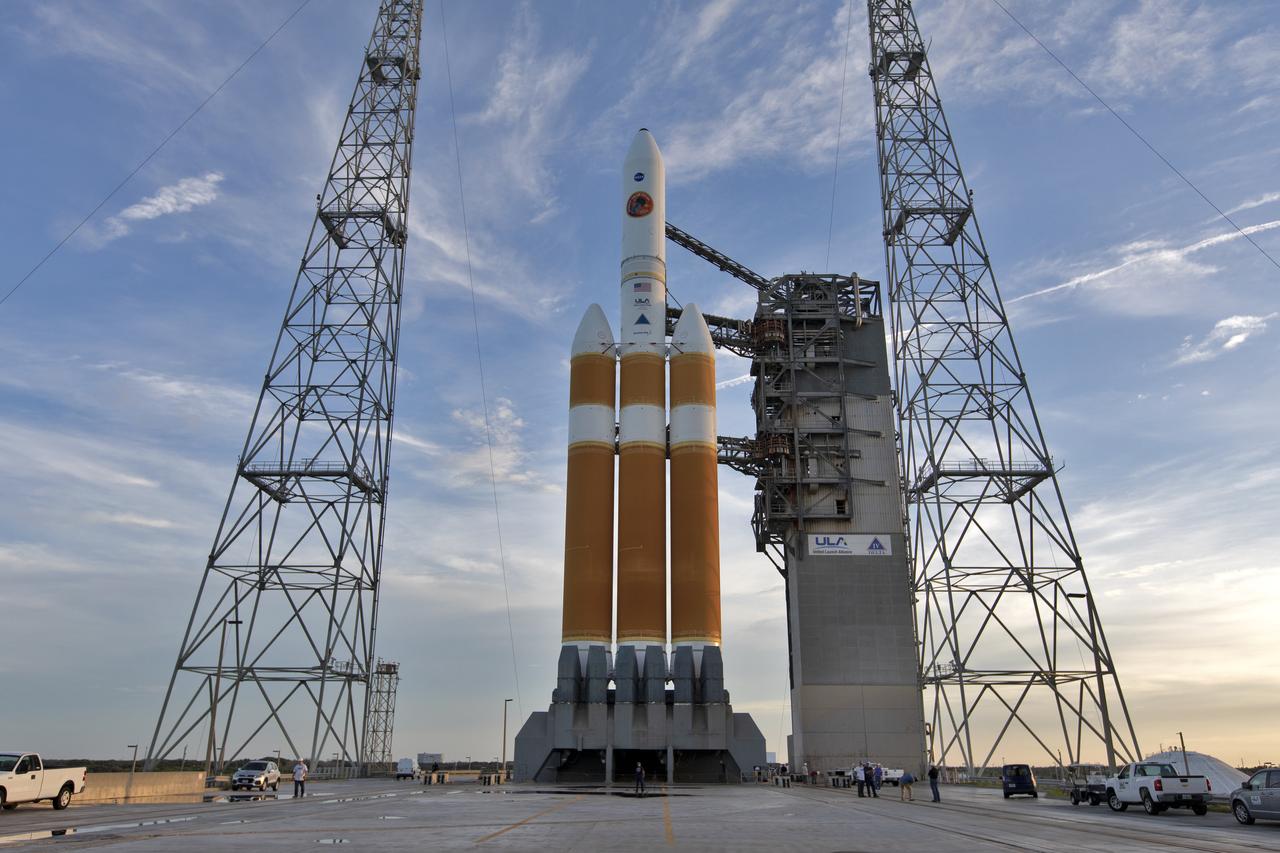
On Friday, Aug. 10, 2018, at Cape Canaveral Air Force Station in Florida, the United Launch Alliance Delta IV Heavy rocket stands ready to boost NASA's Parker Solar Probe on a mission to study the Sun following rollback of the Mobile Service Tower gantry at Space Launch Complex 37. Parker Solar Probe will perform the closest-ever observations of a star when it travels through the Sun's atmosphere, called the corona. The probe will rely on measurements and imaging to revolutionize our understanding of the corona and the Sun-Earth connection.
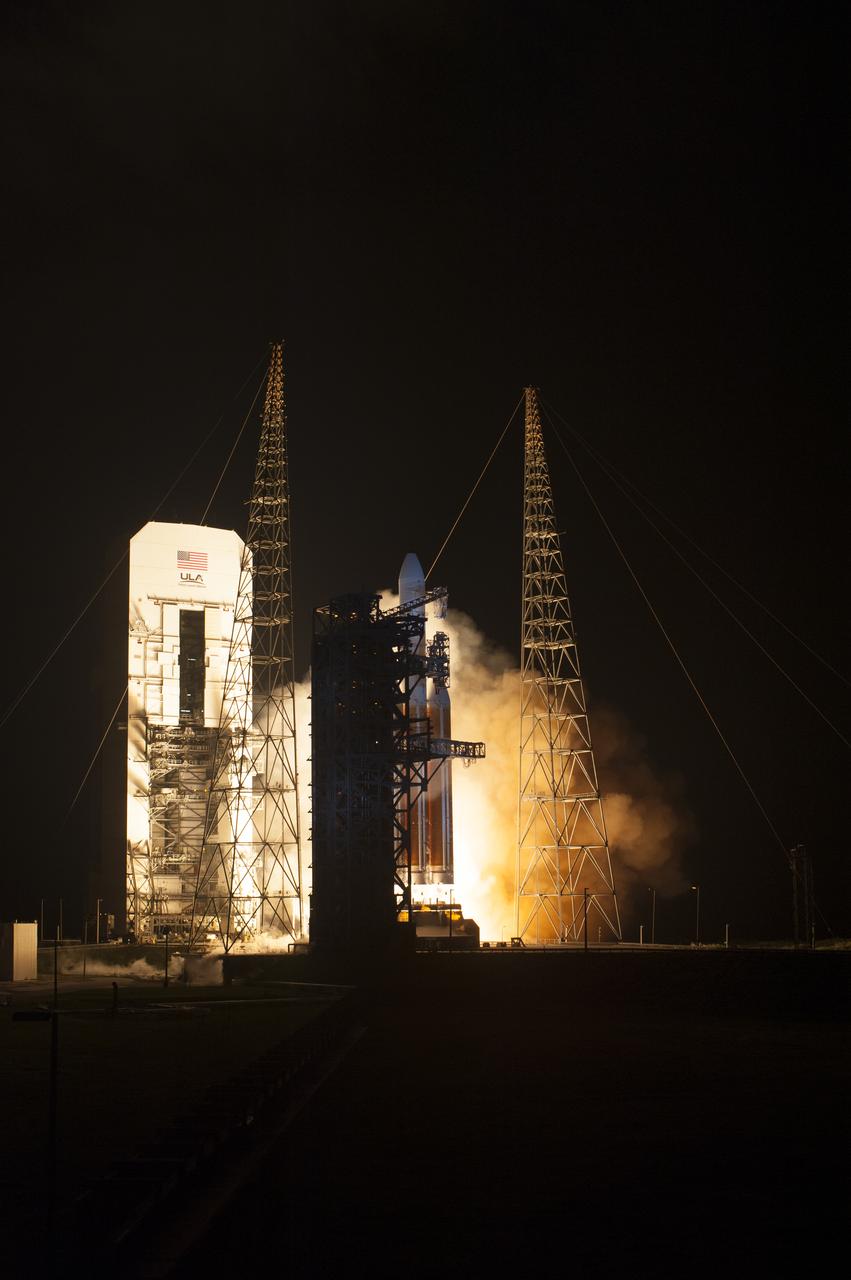
At Cape Canaveral Air Force Station's Space Launch Complex 37, the United Launch Alliance Delta IV Heavy rocket with NASA's Parker Solar Probe, lifts off at 3:31 a.m. EDT on Sunday, Aug. 12, 2018. The spacecraft was built by Applied Physics Laboratory of Johns Hopkins University in Laurel, Maryland. The mission will perform the closest-ever observations of a star when it travels through the Sun's atmosphere, called the corona. The probe will rely on measurements and imaging to revolutionize our understanding of the corona and the Sun-Earth connection.