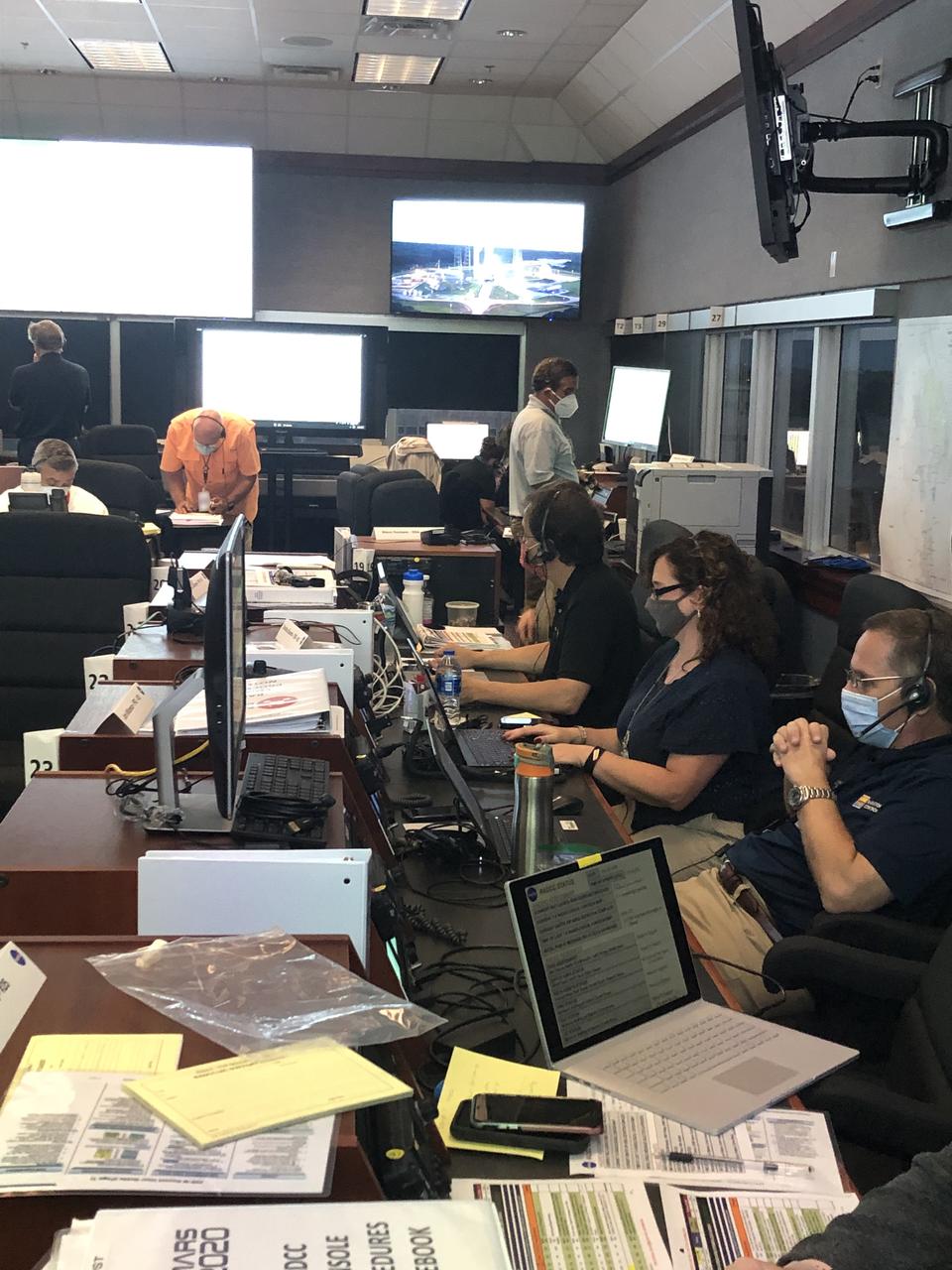
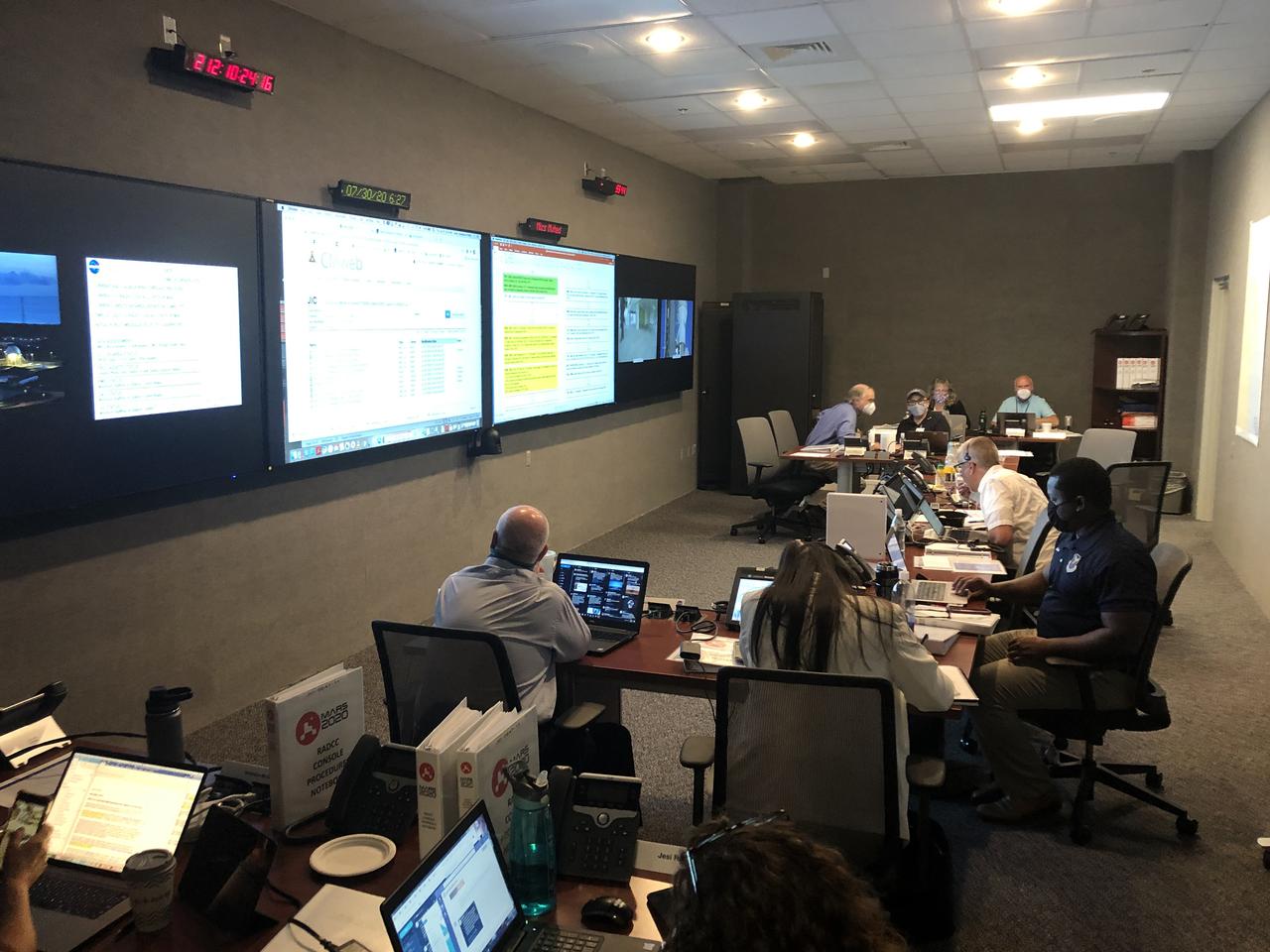
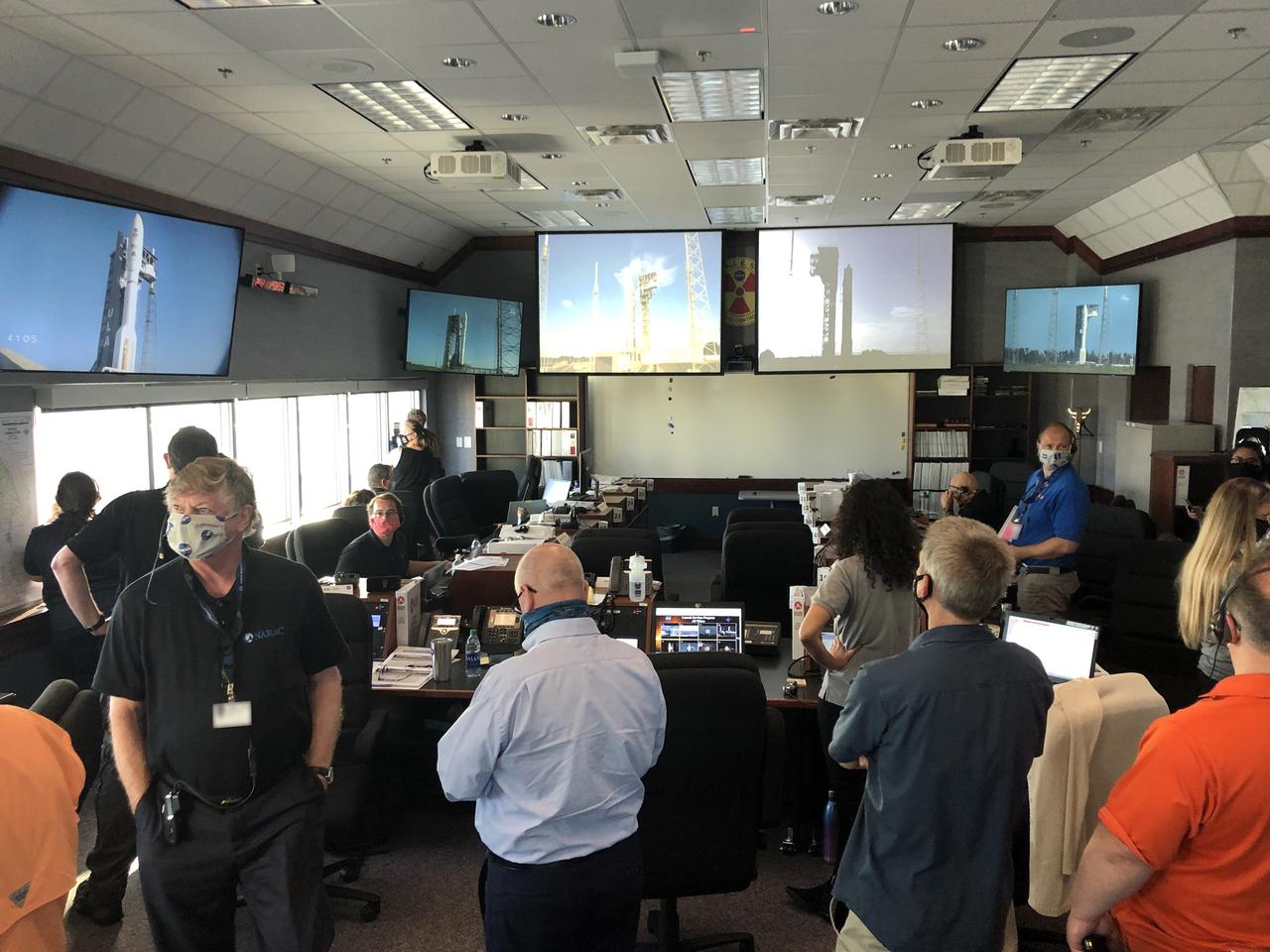
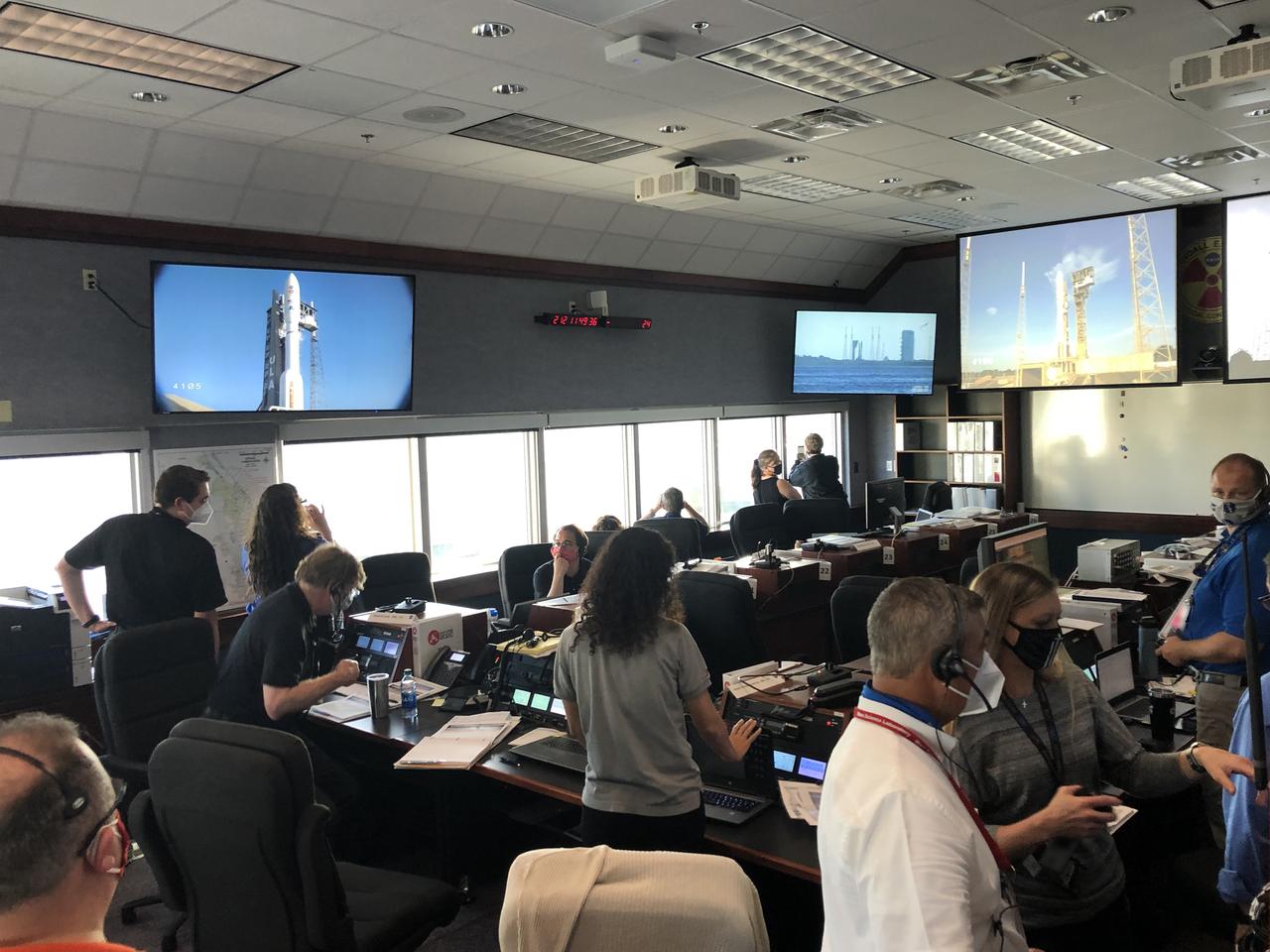
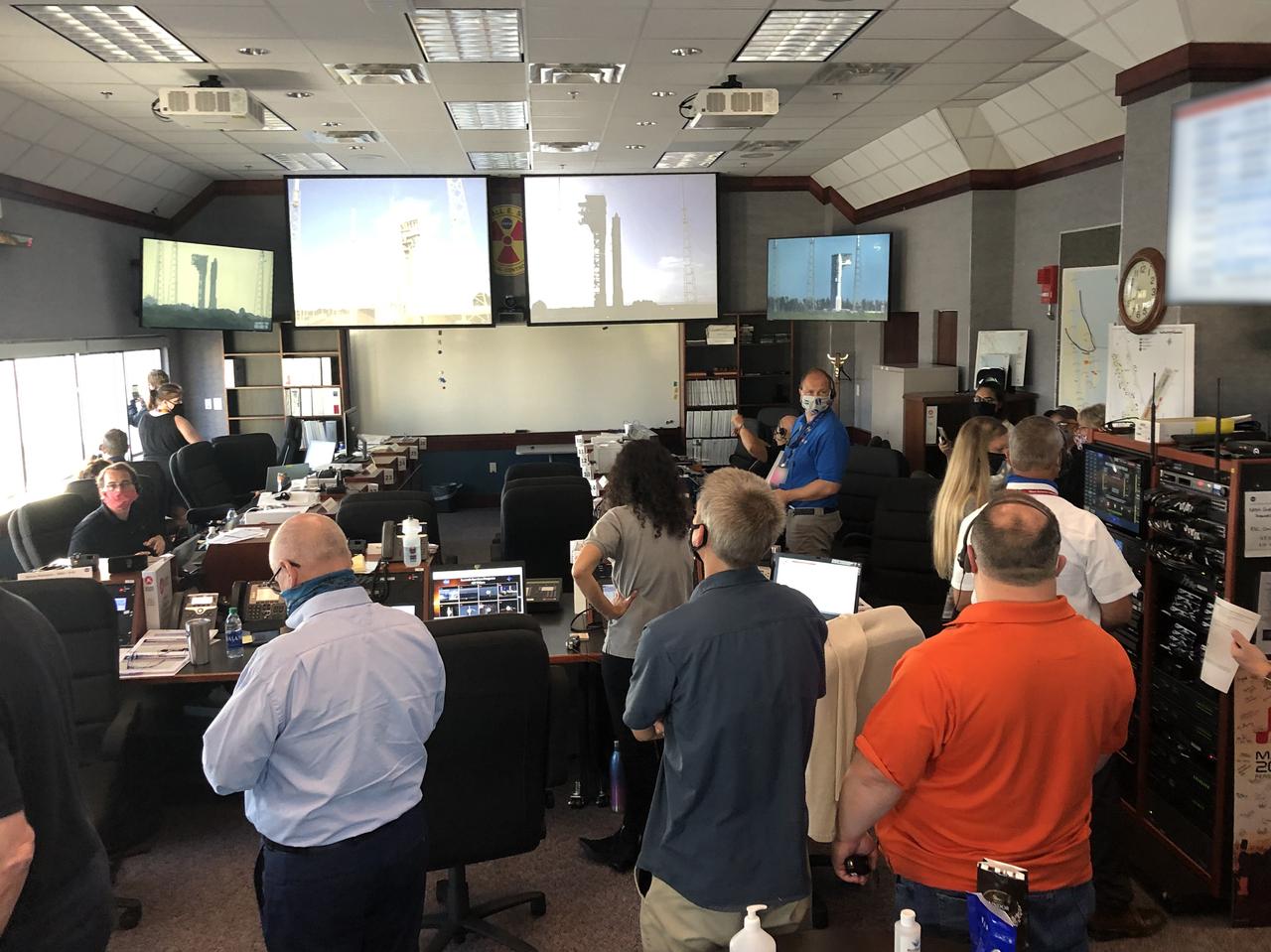
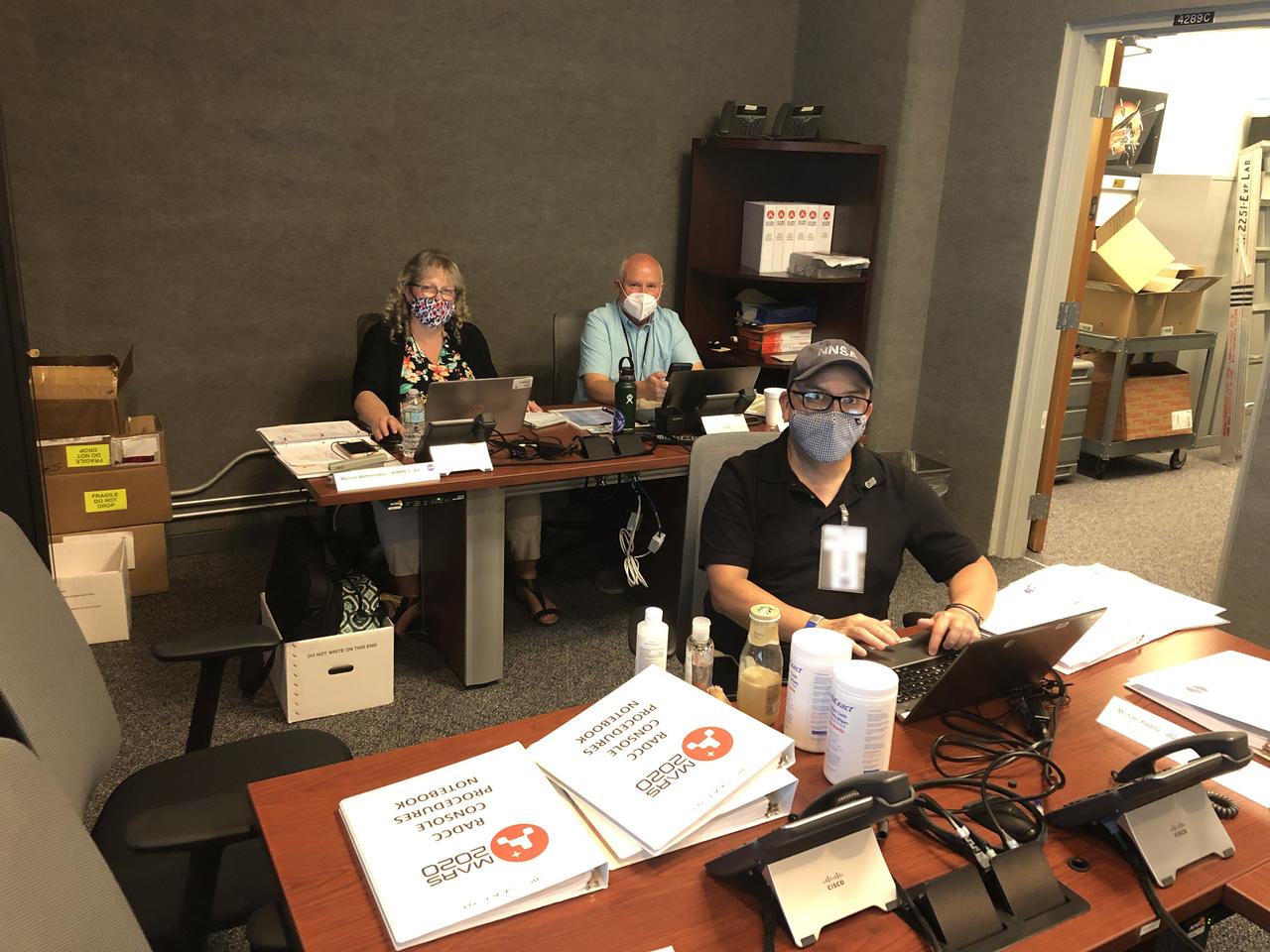
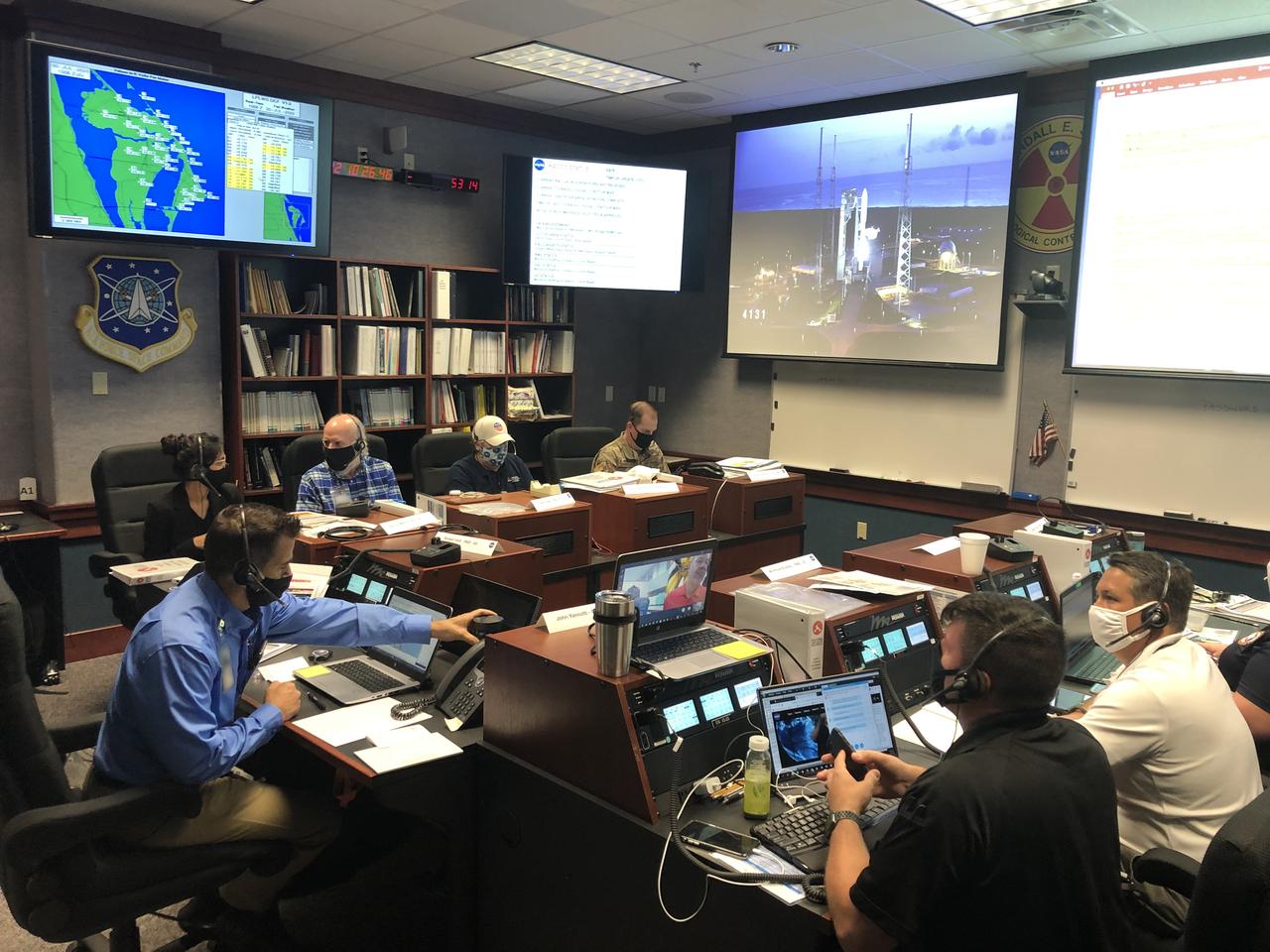
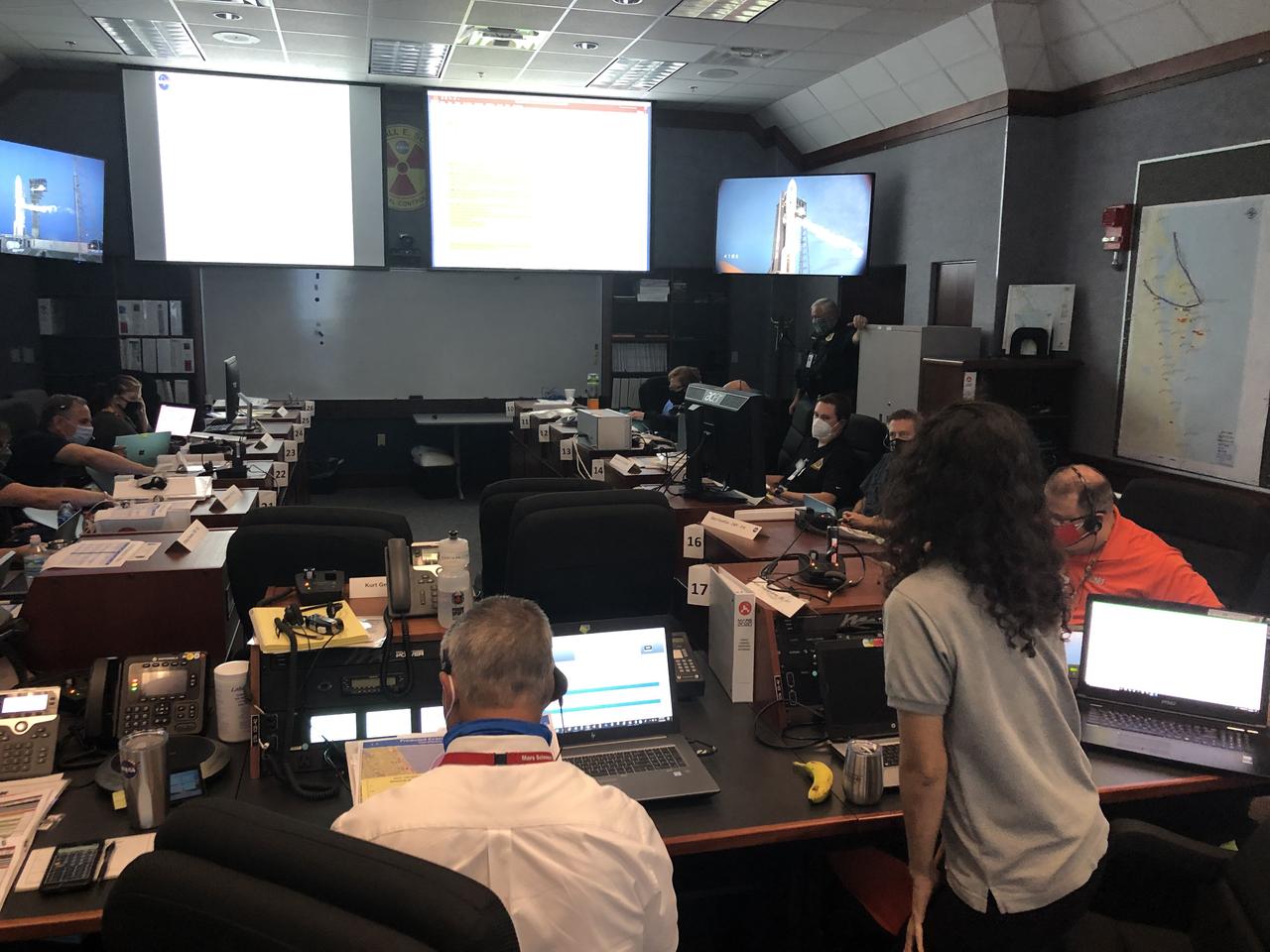
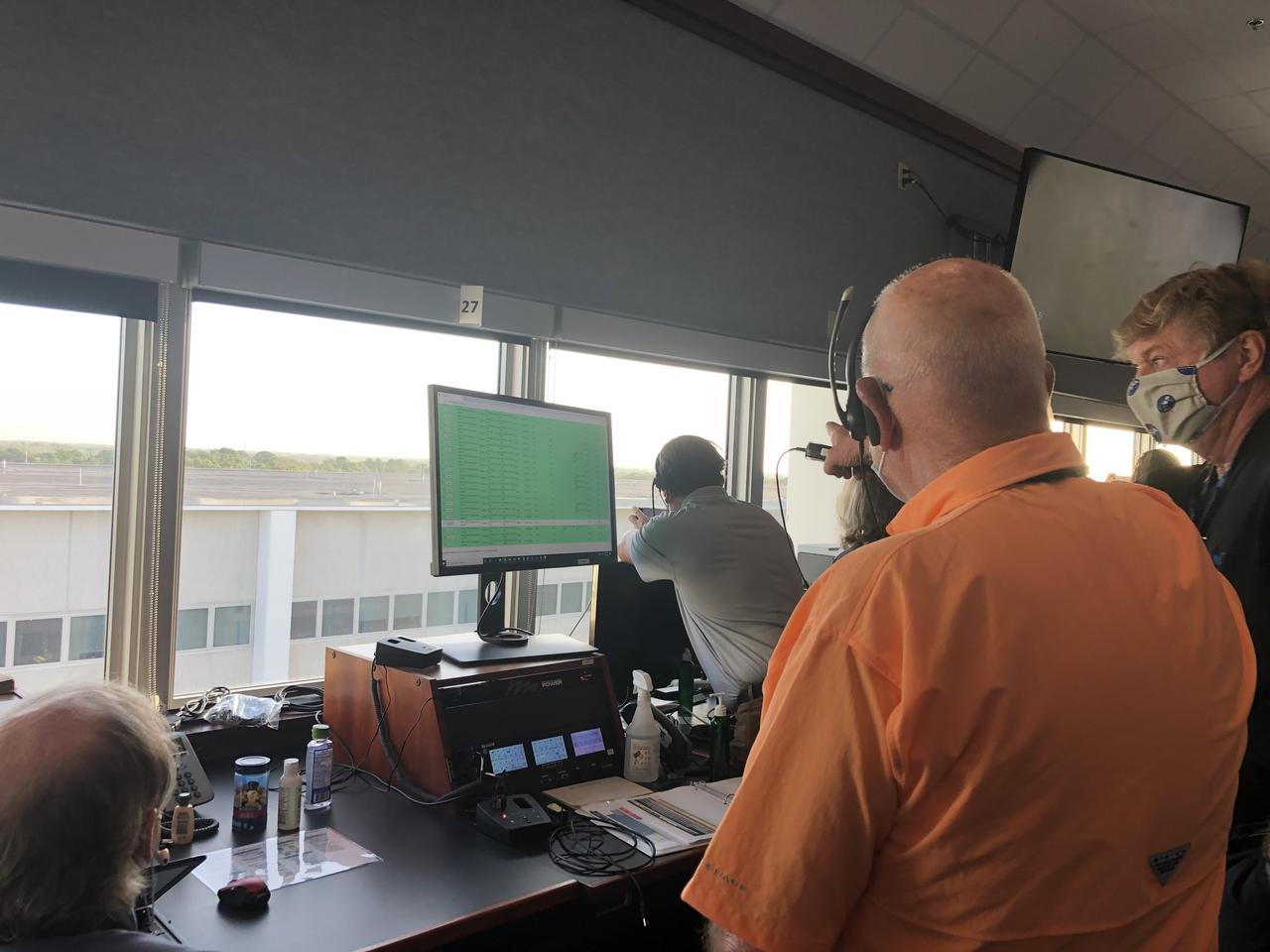
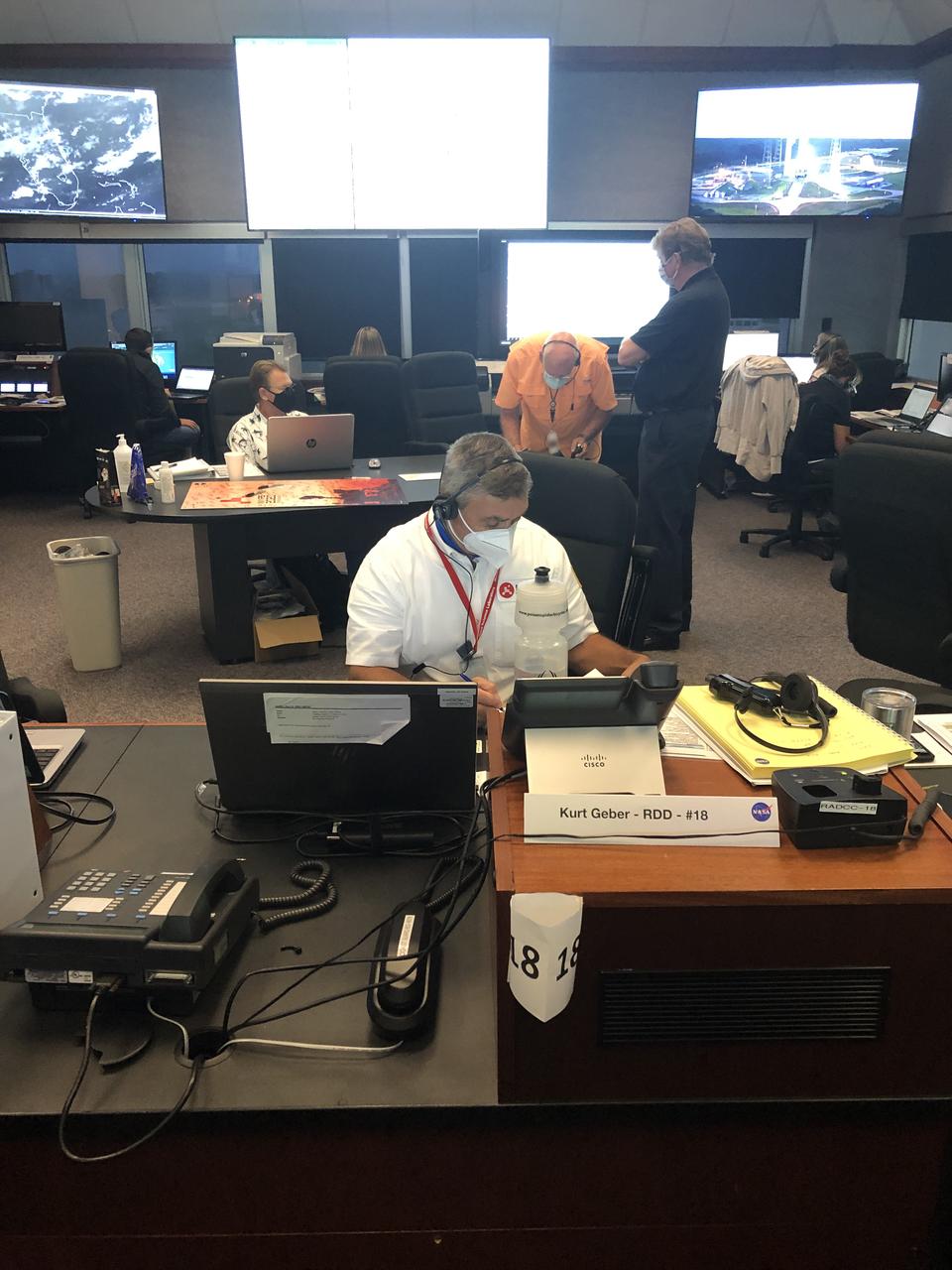
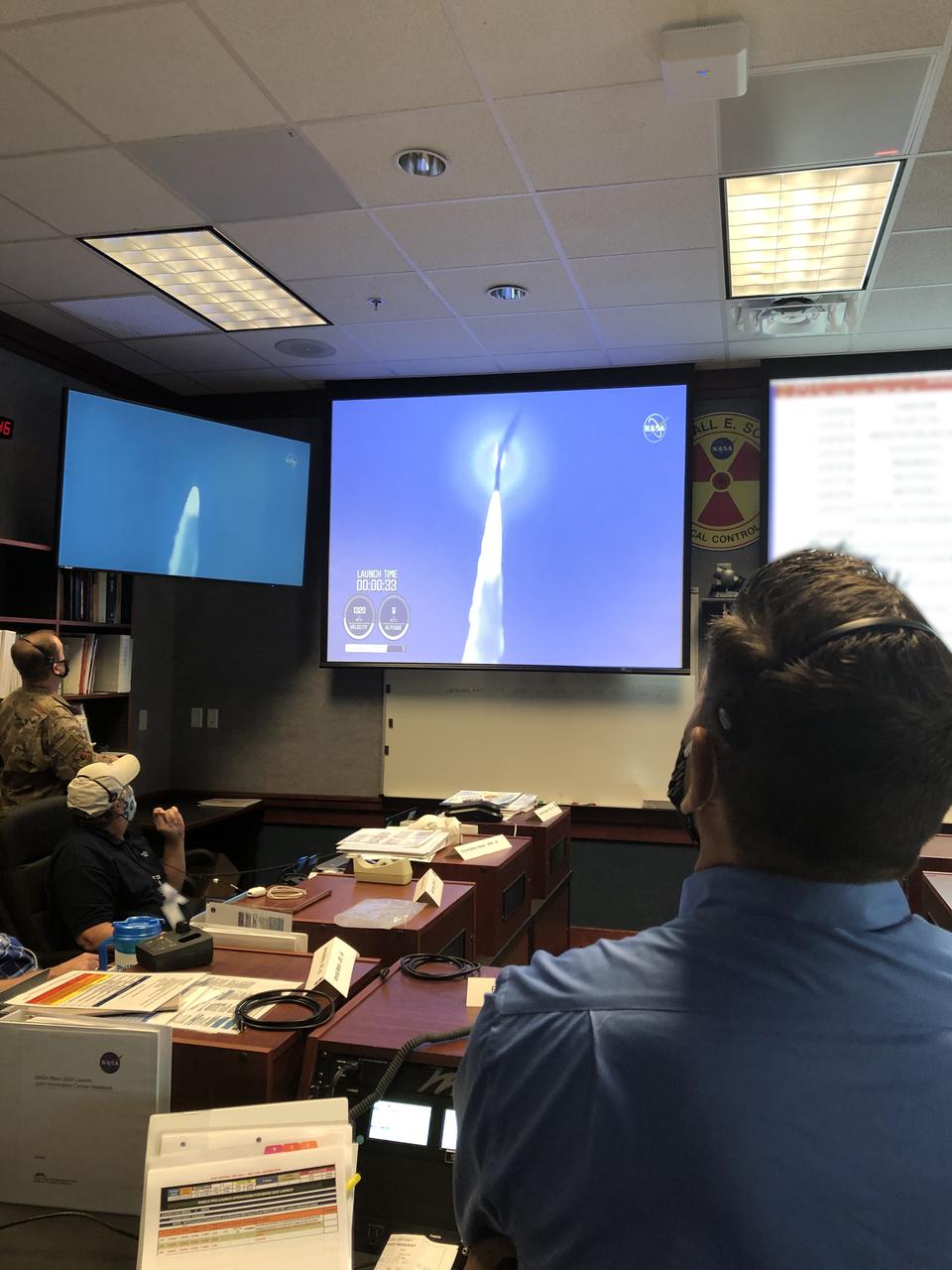
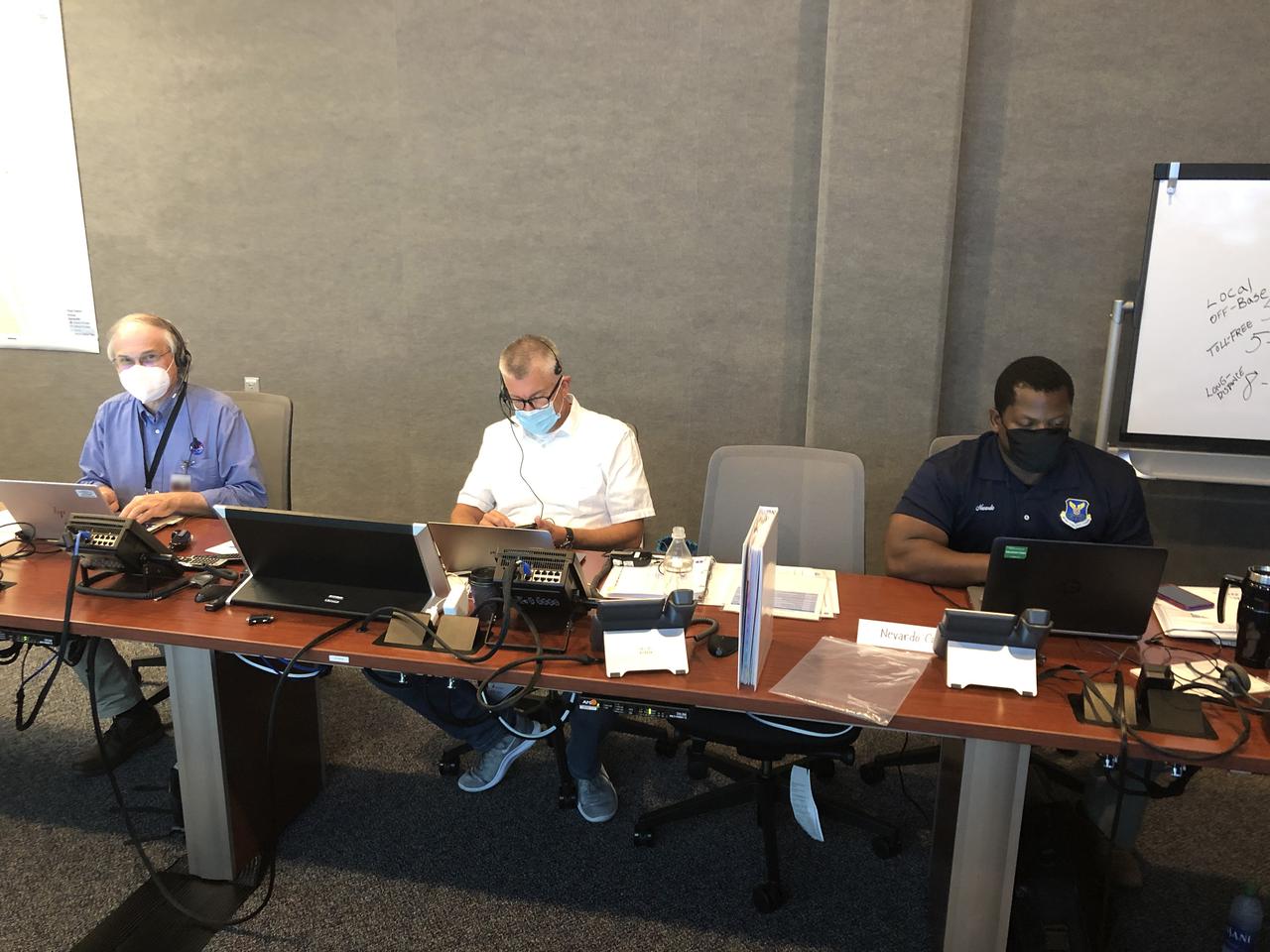
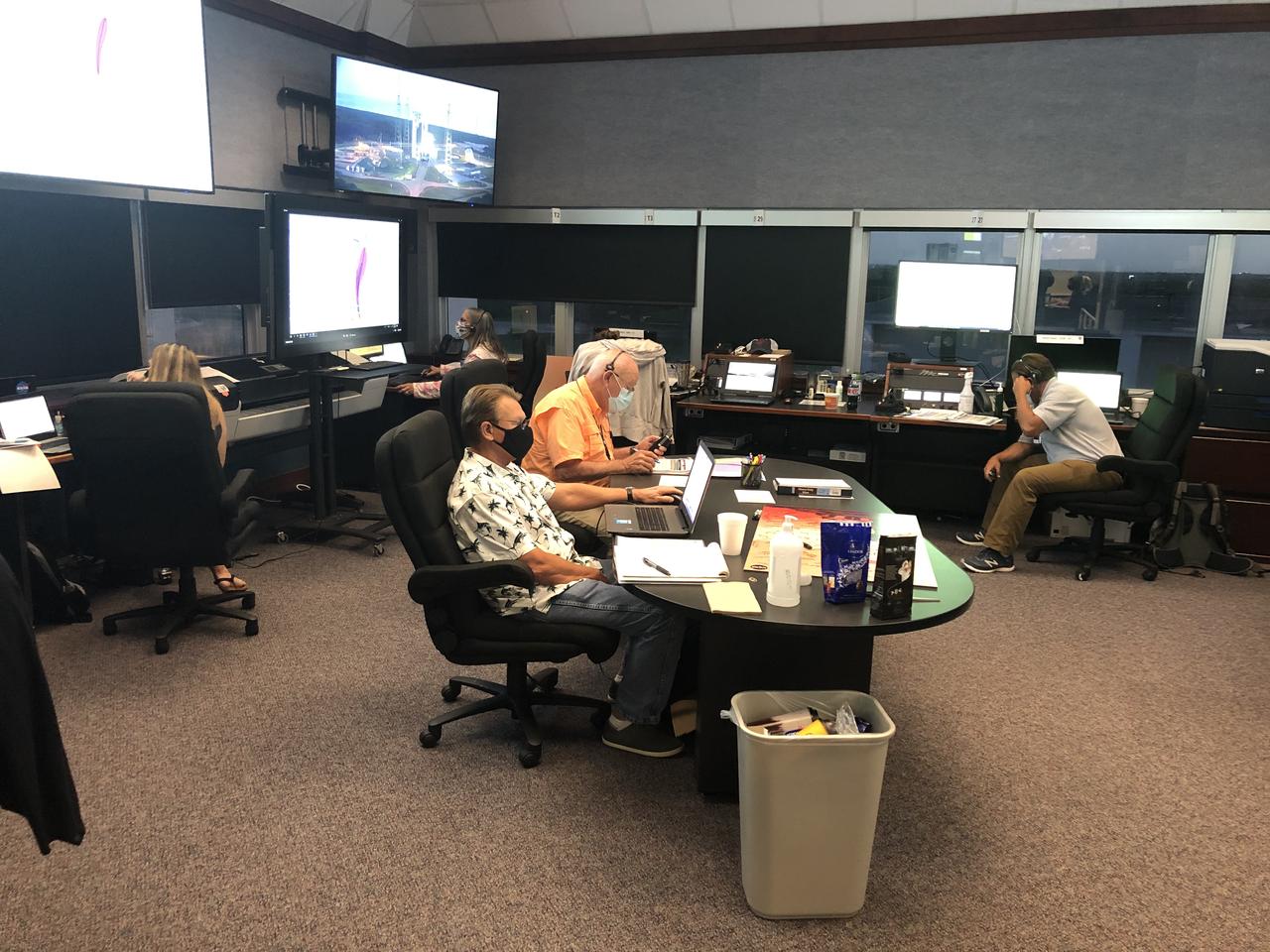
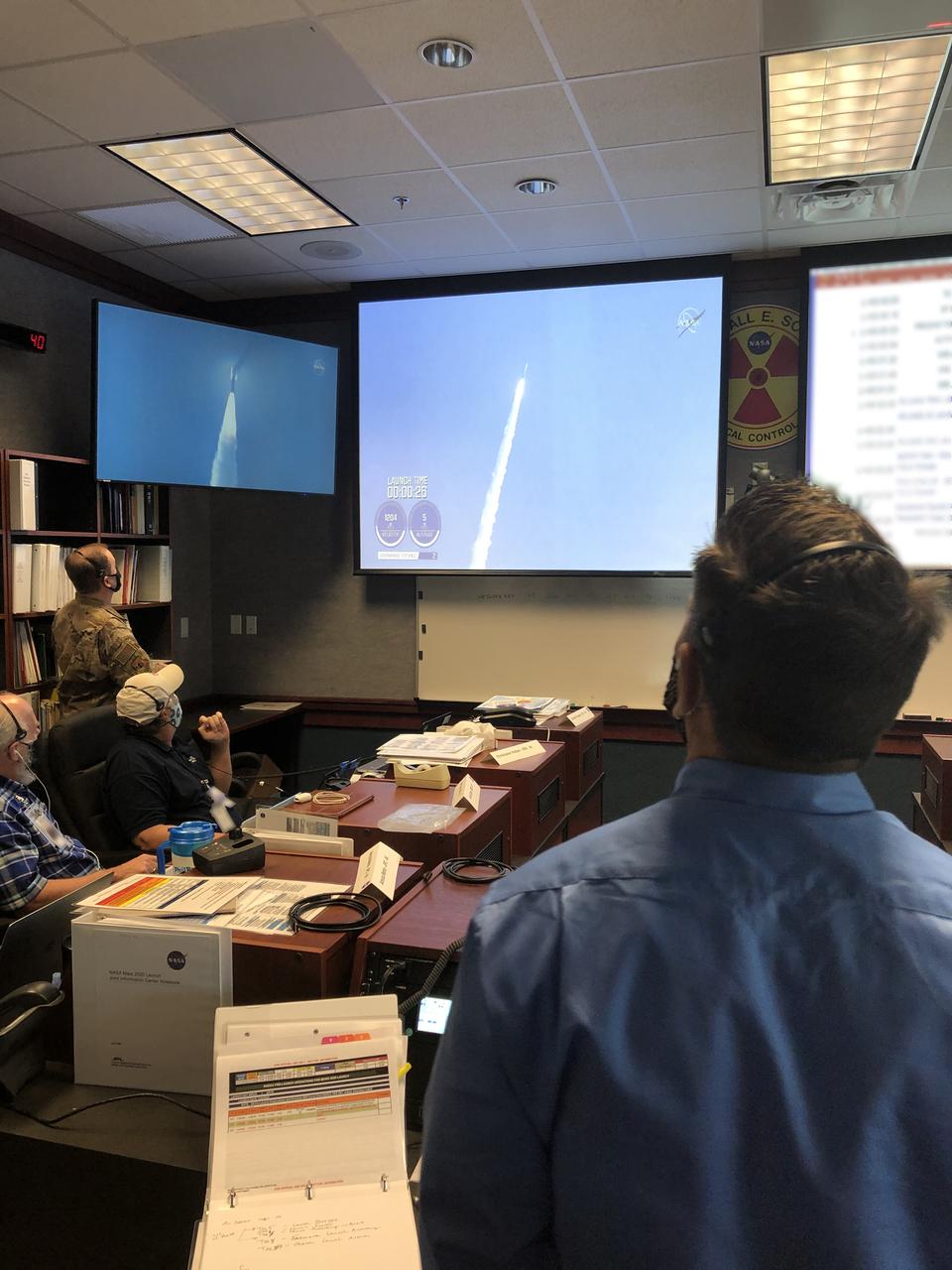
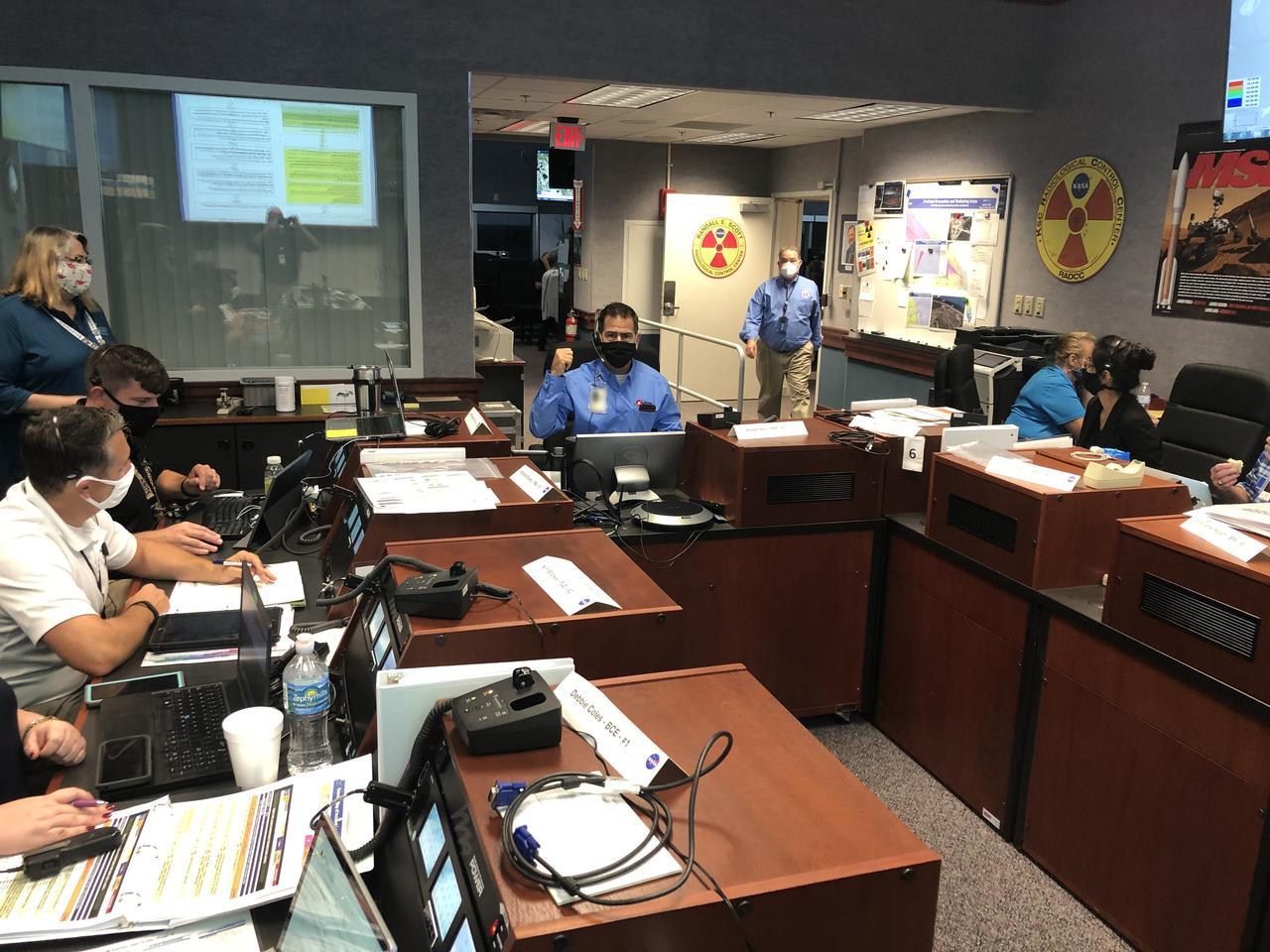
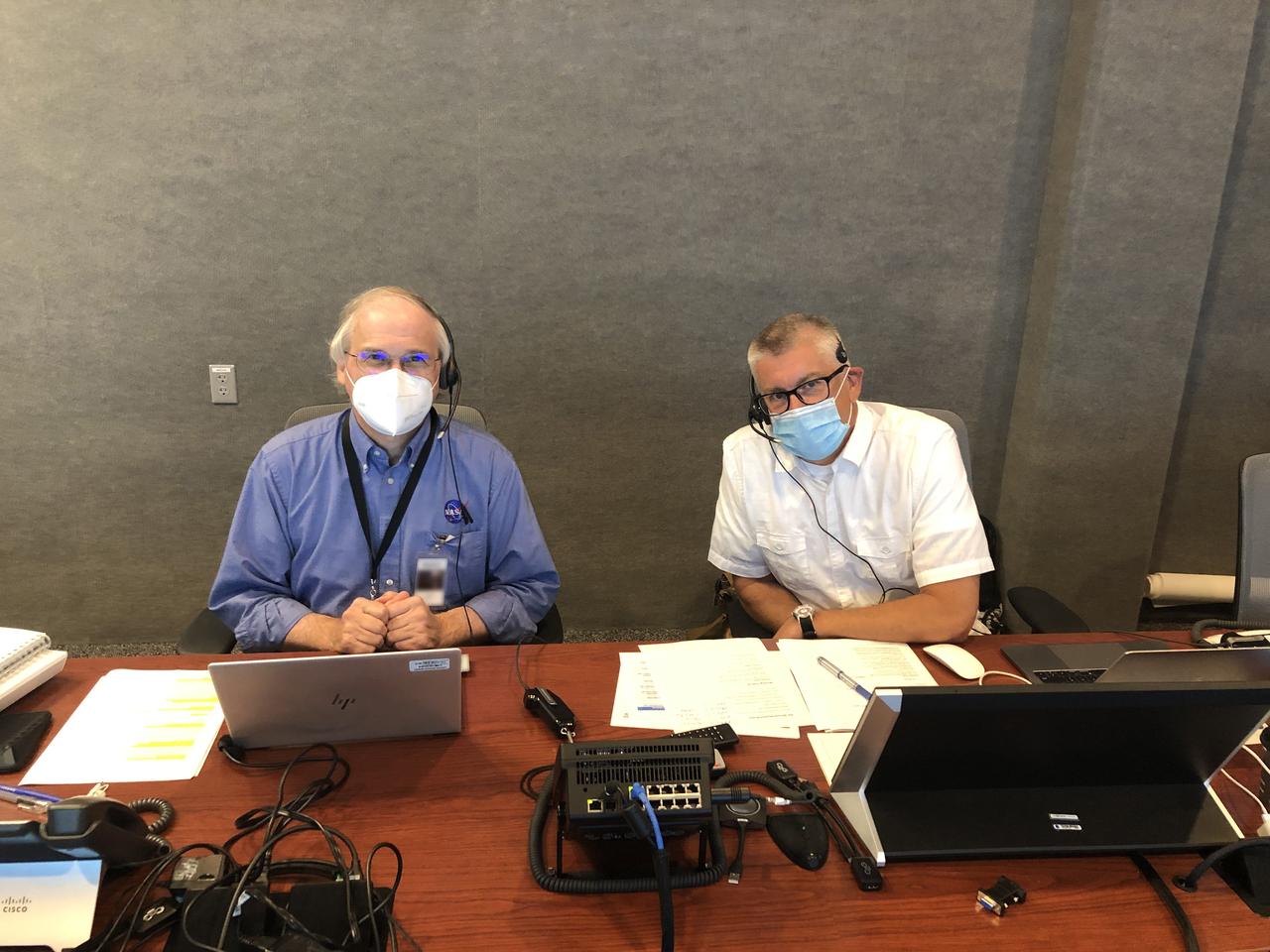
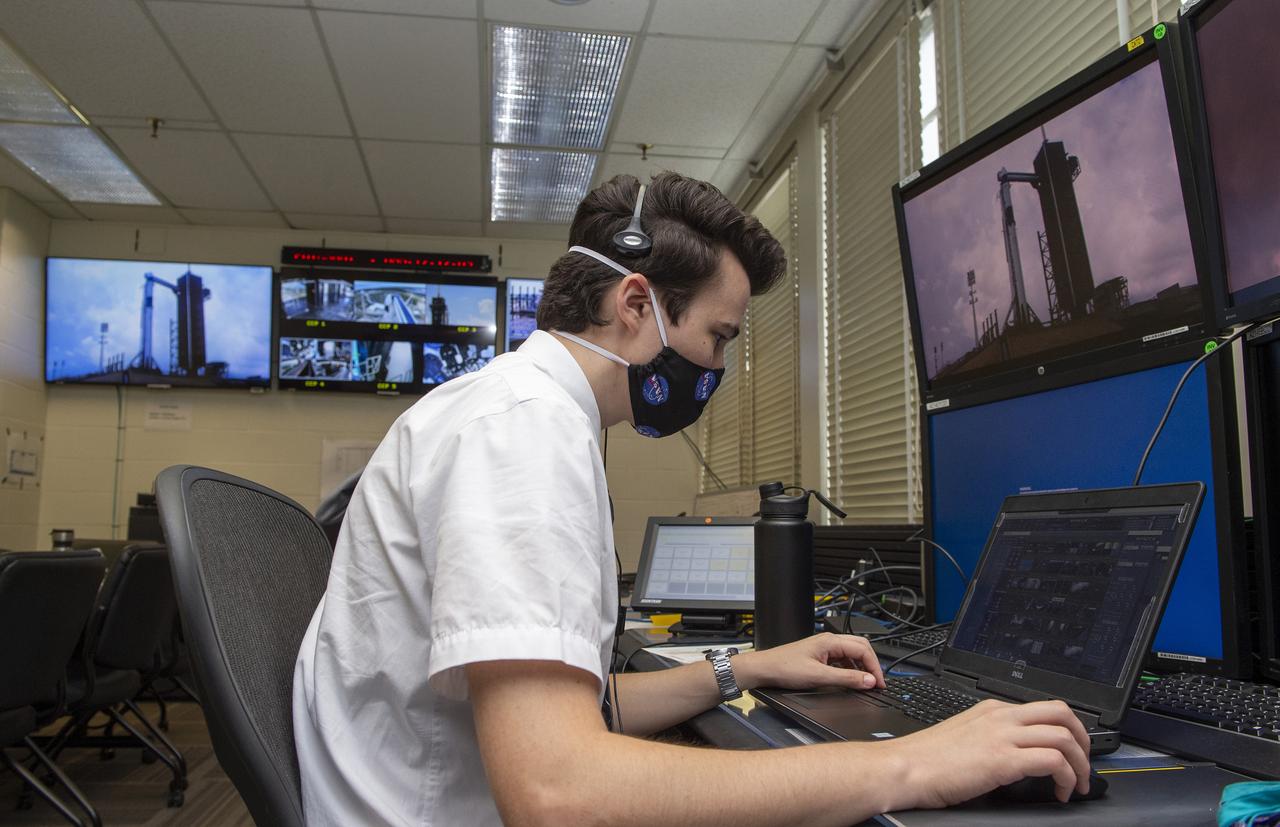
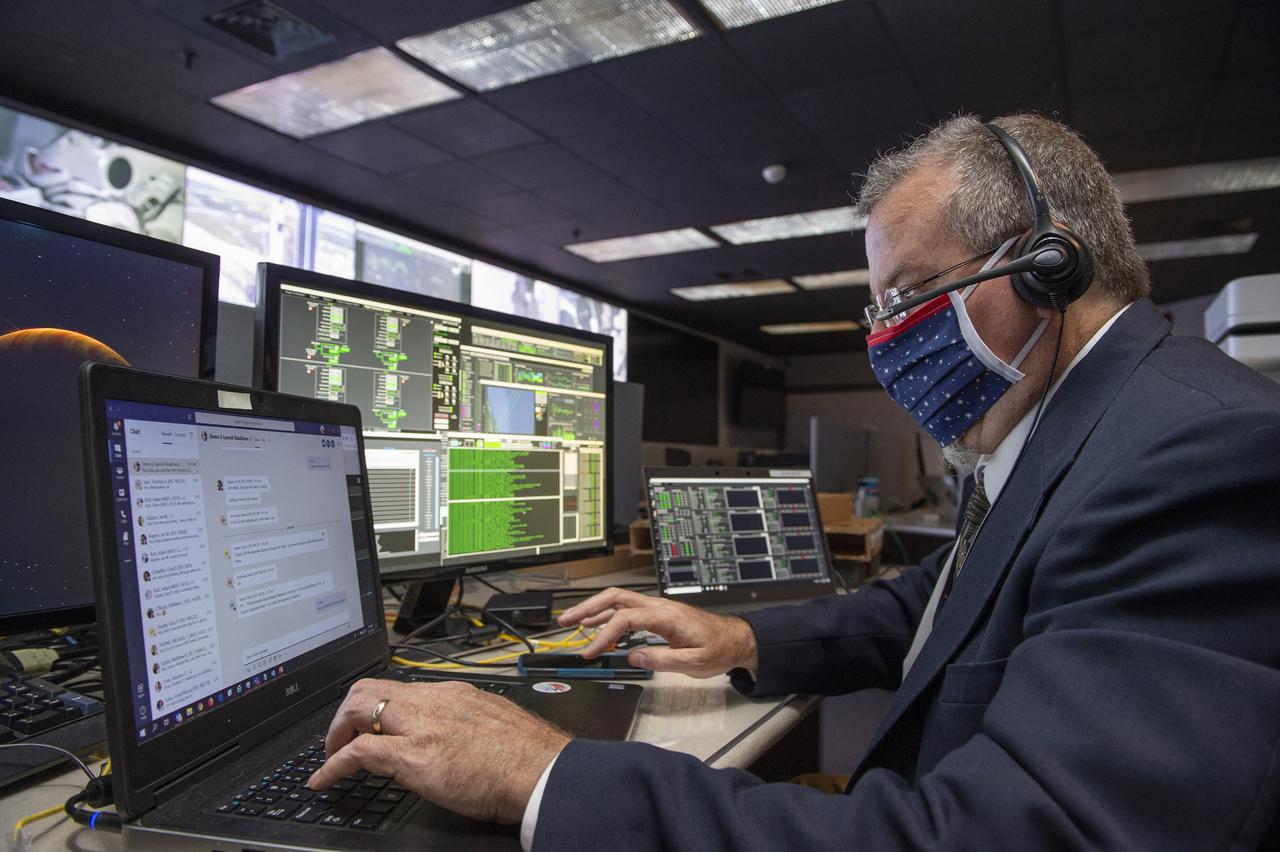
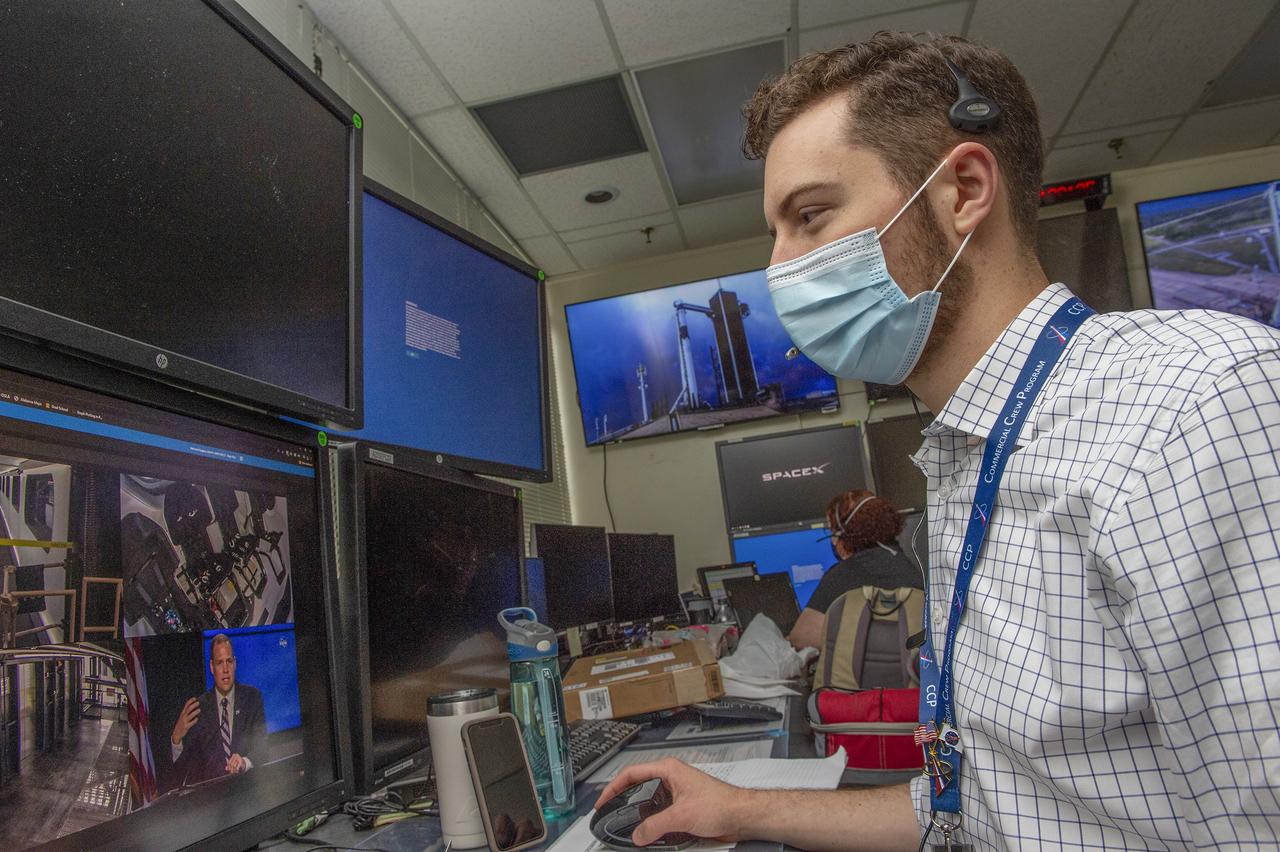
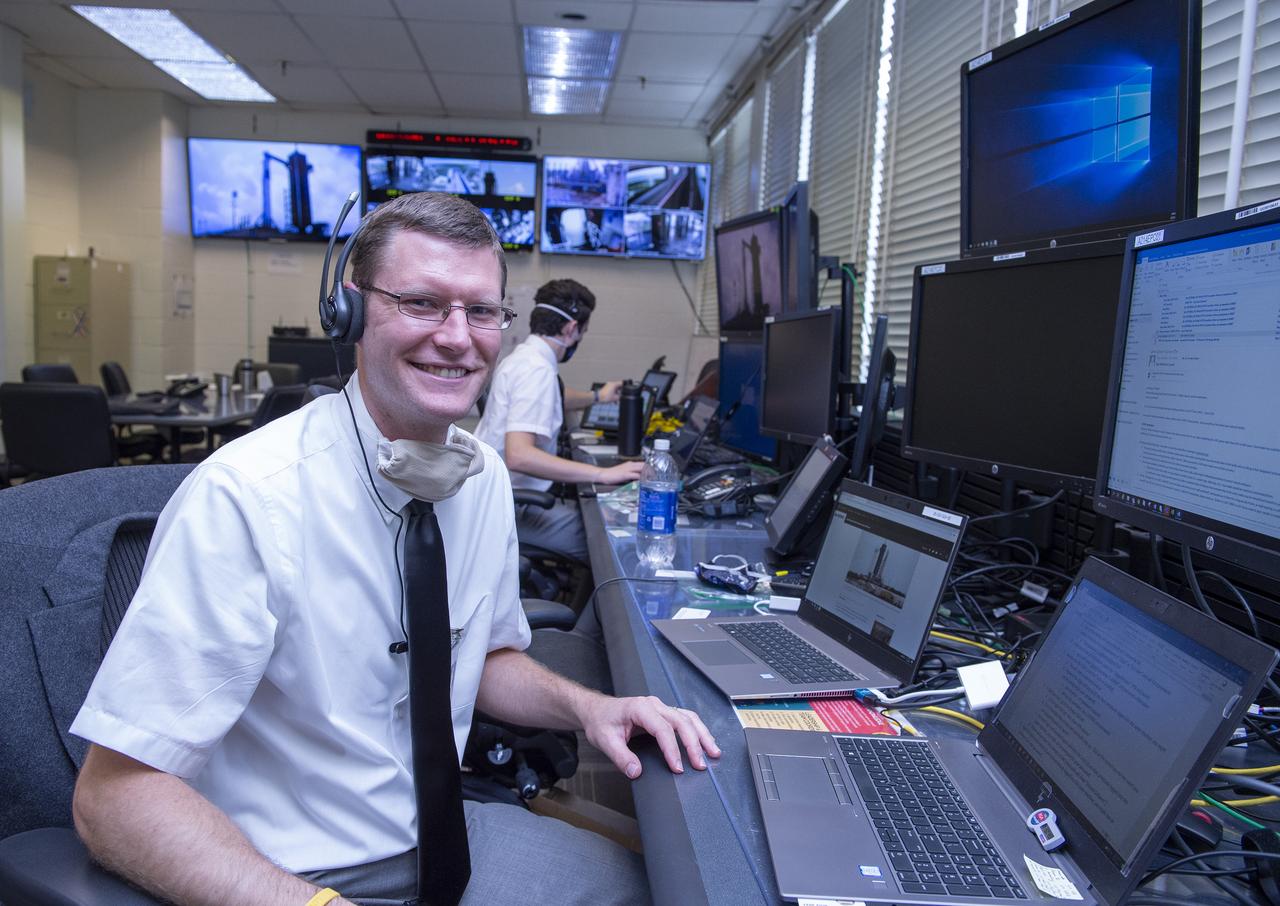
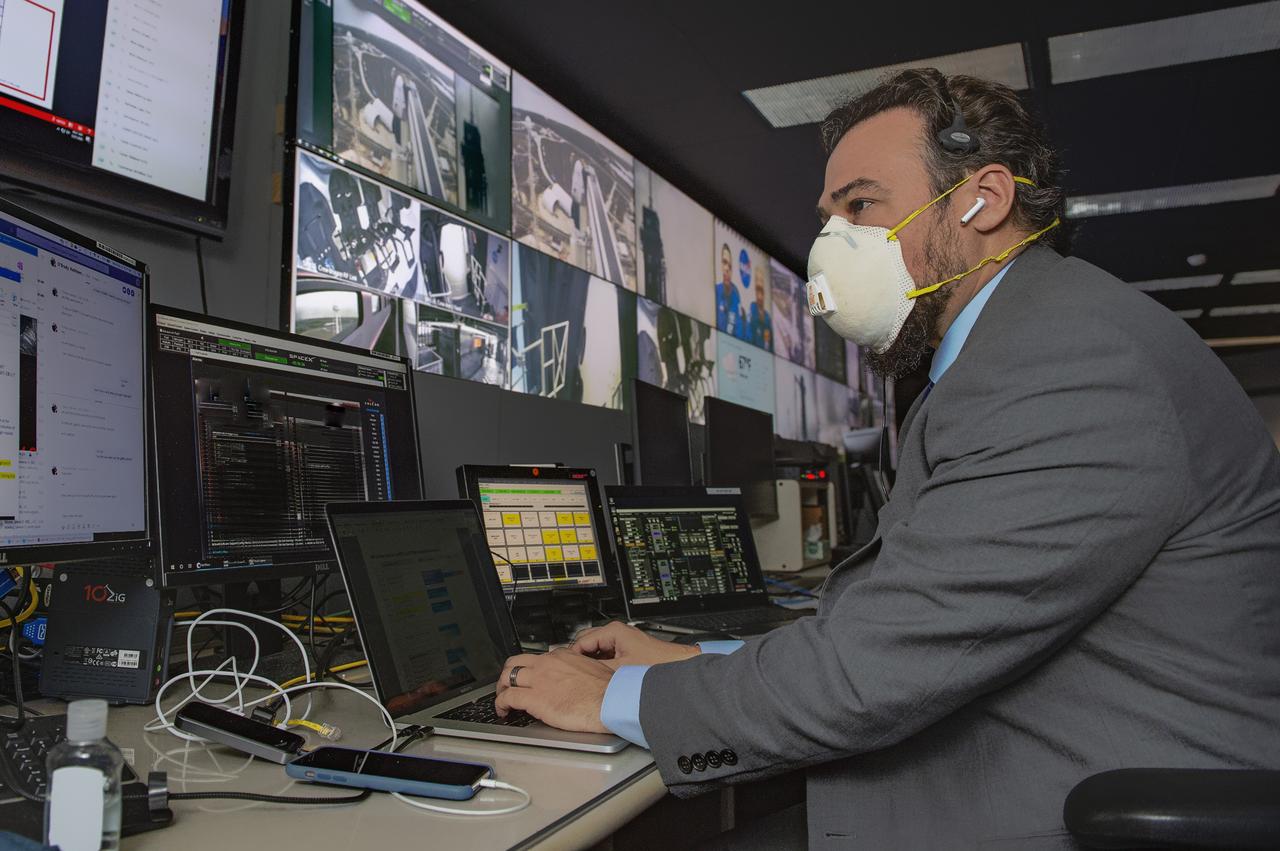
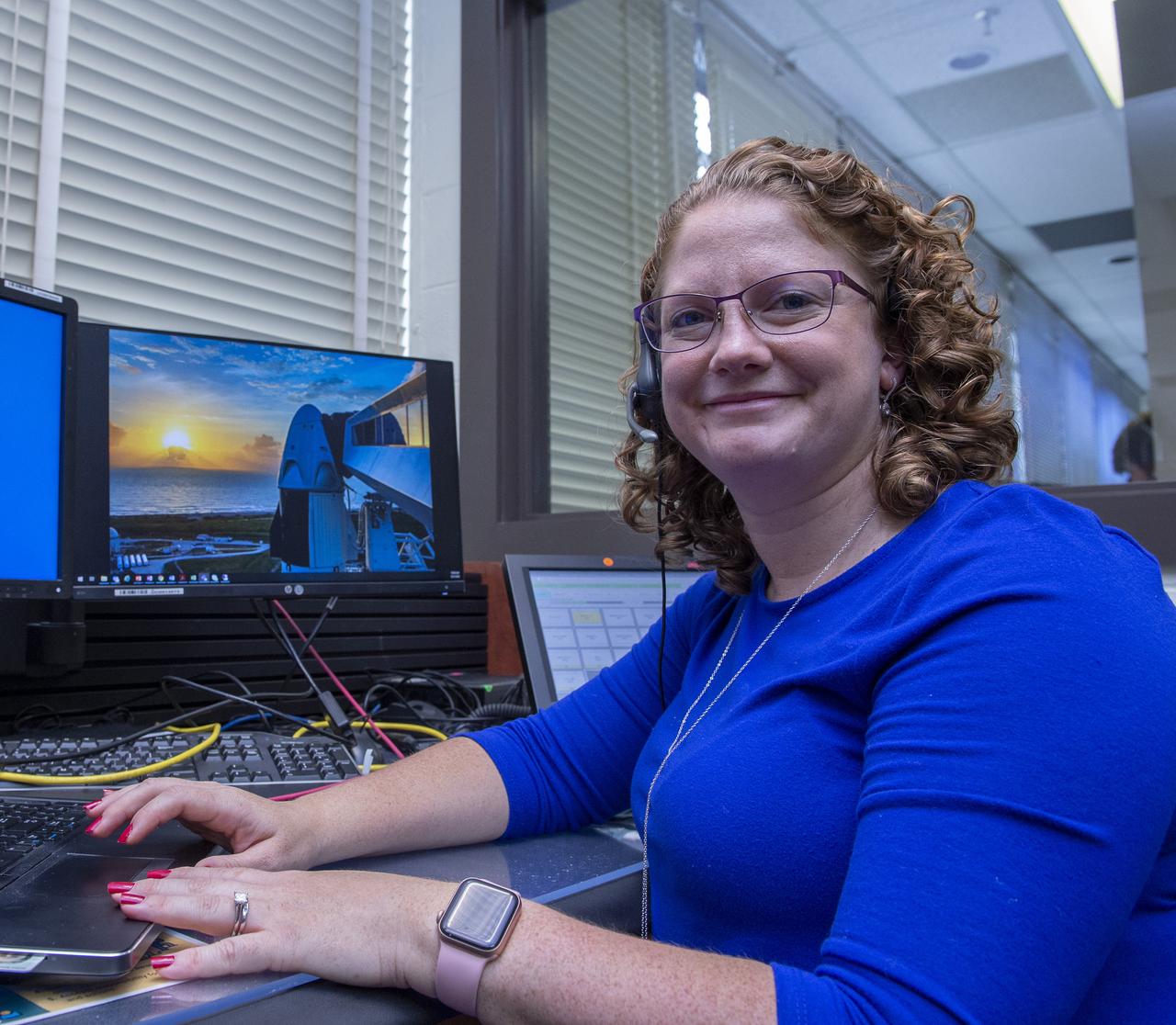
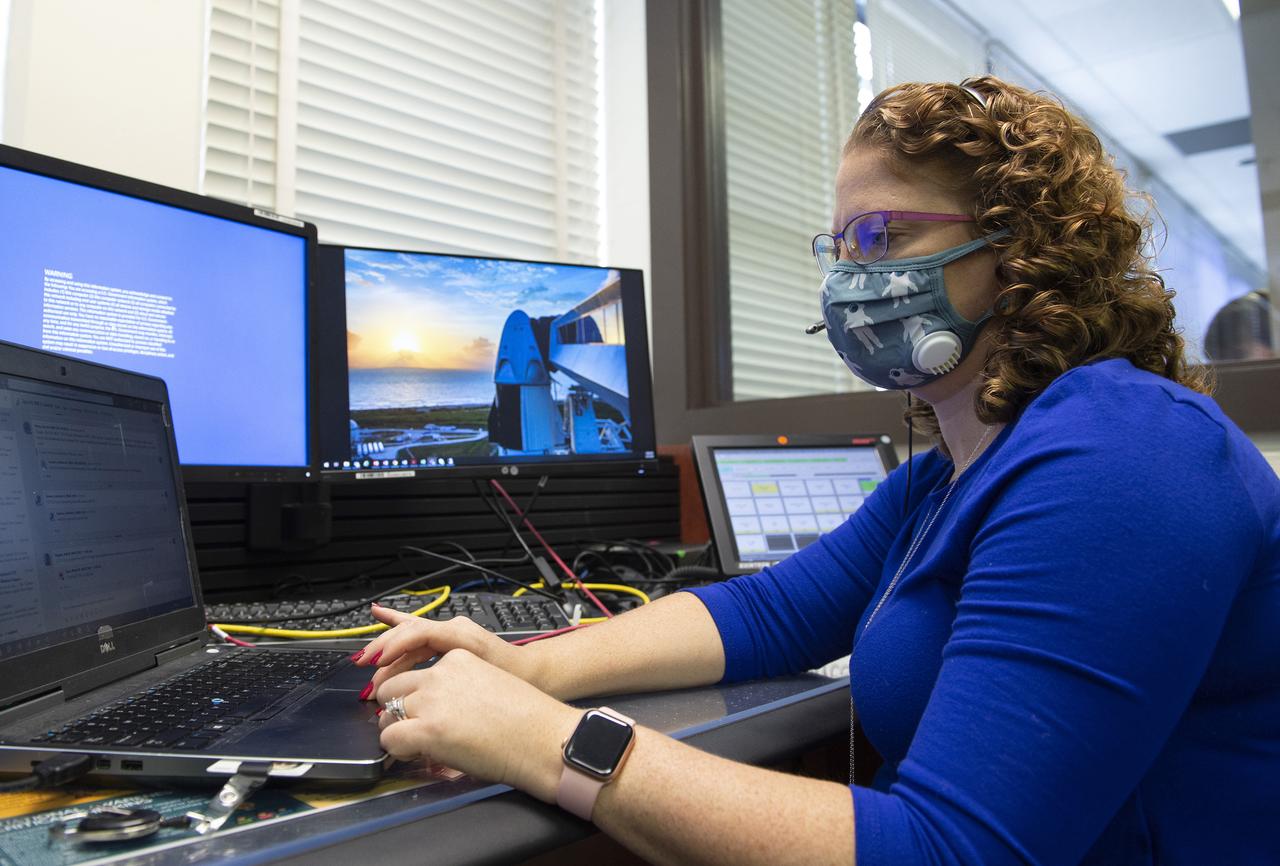
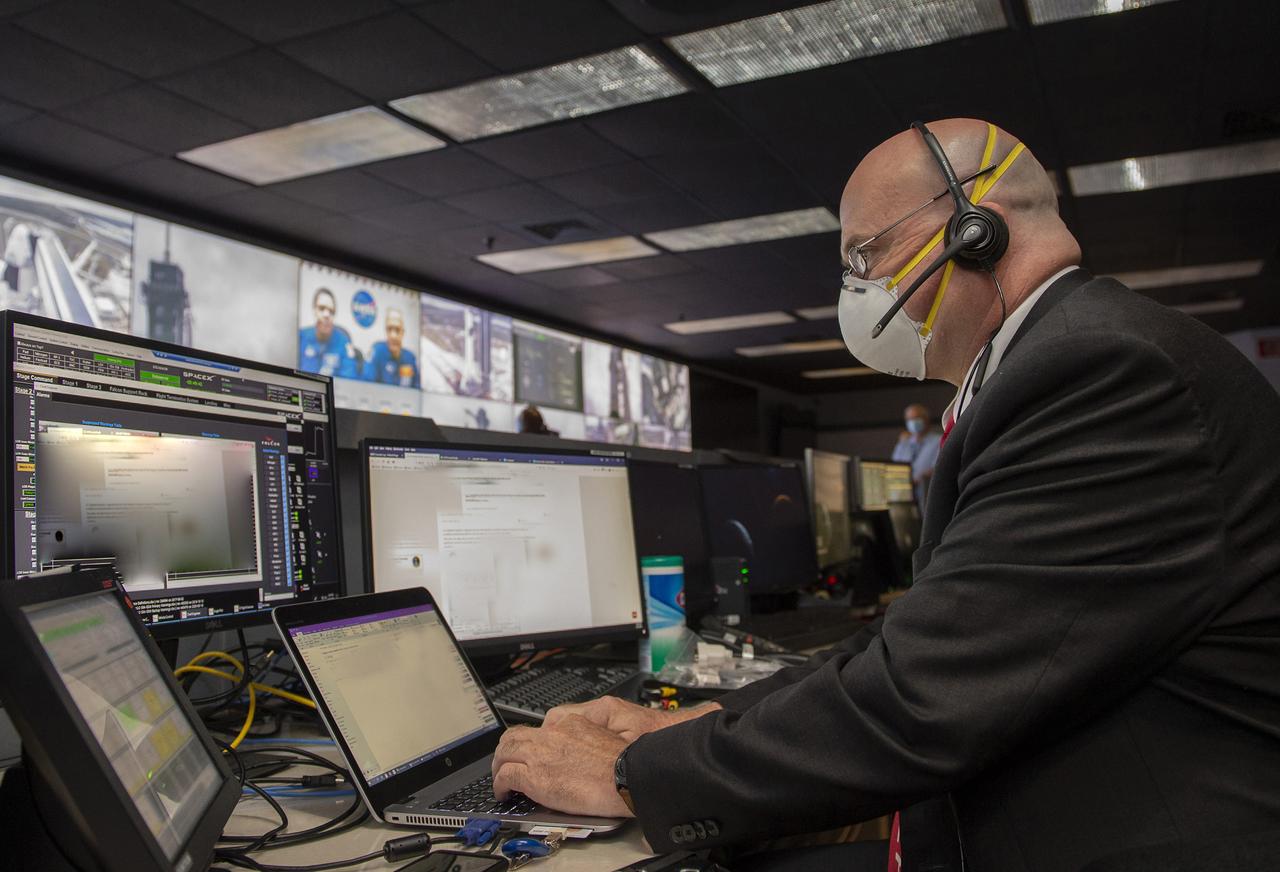
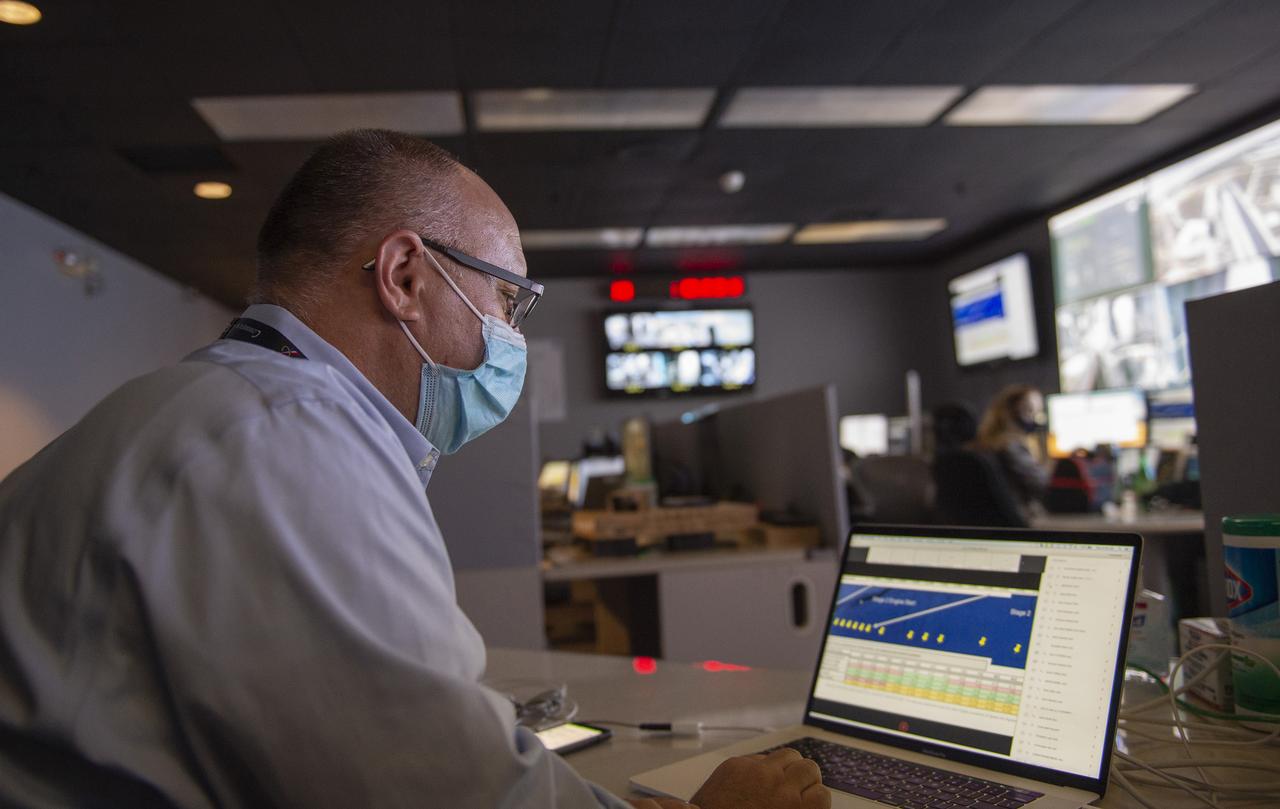
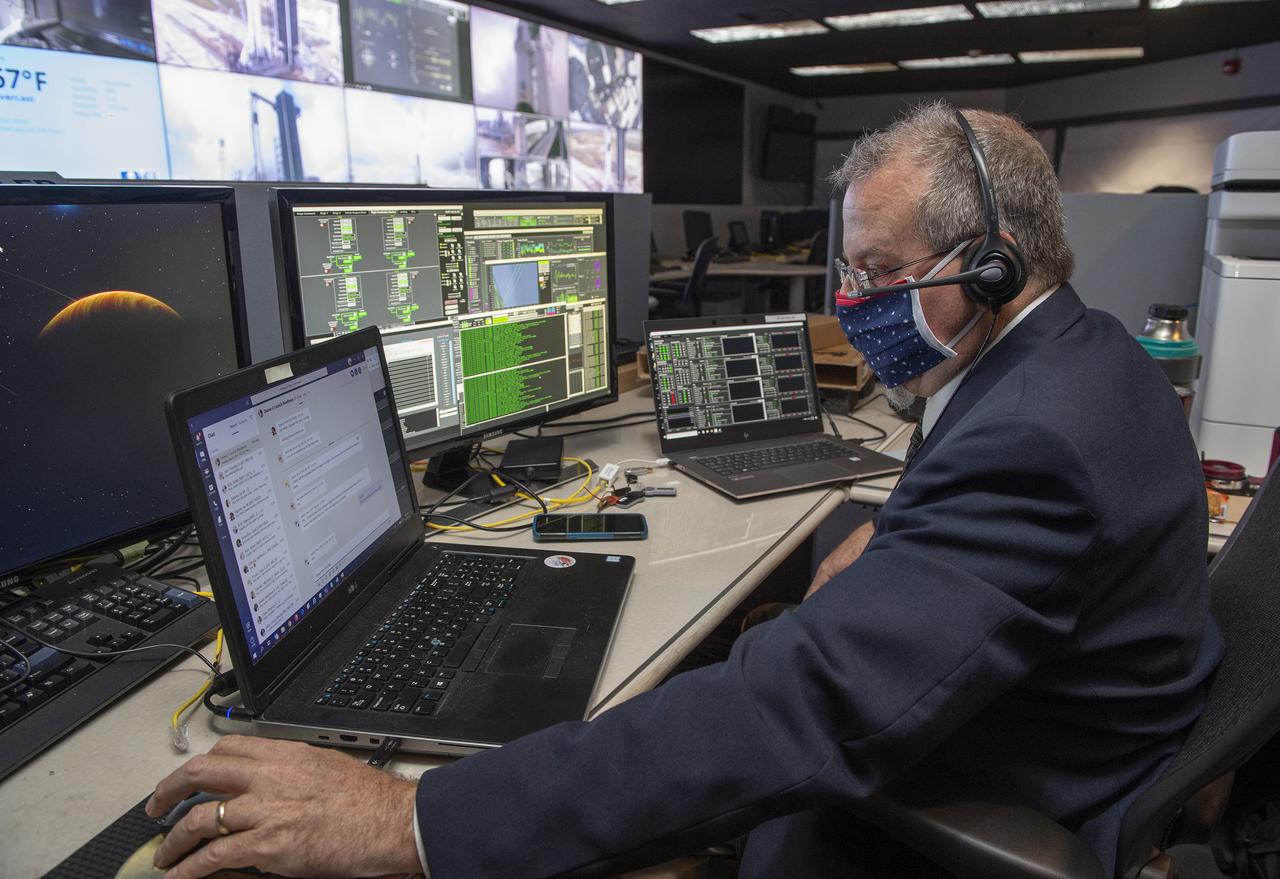
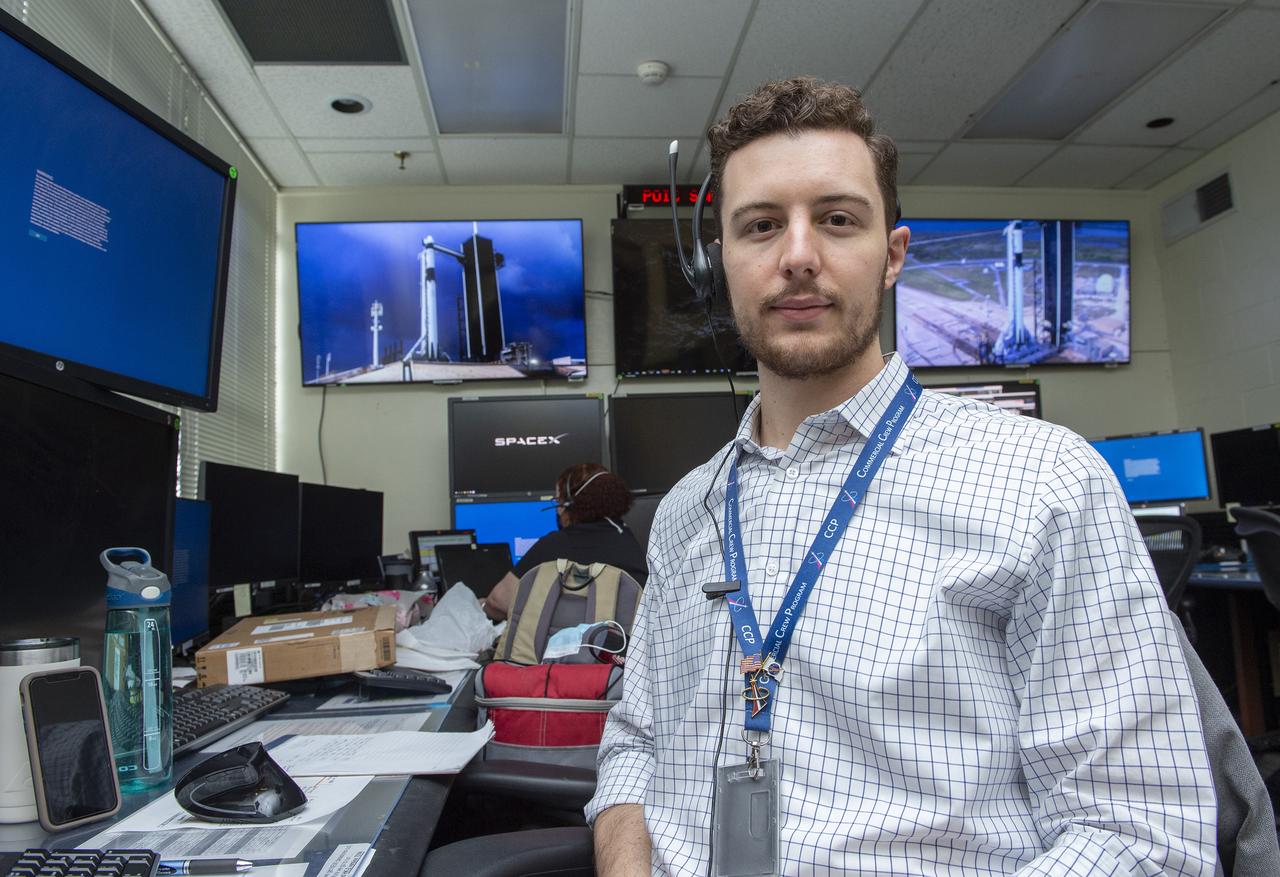
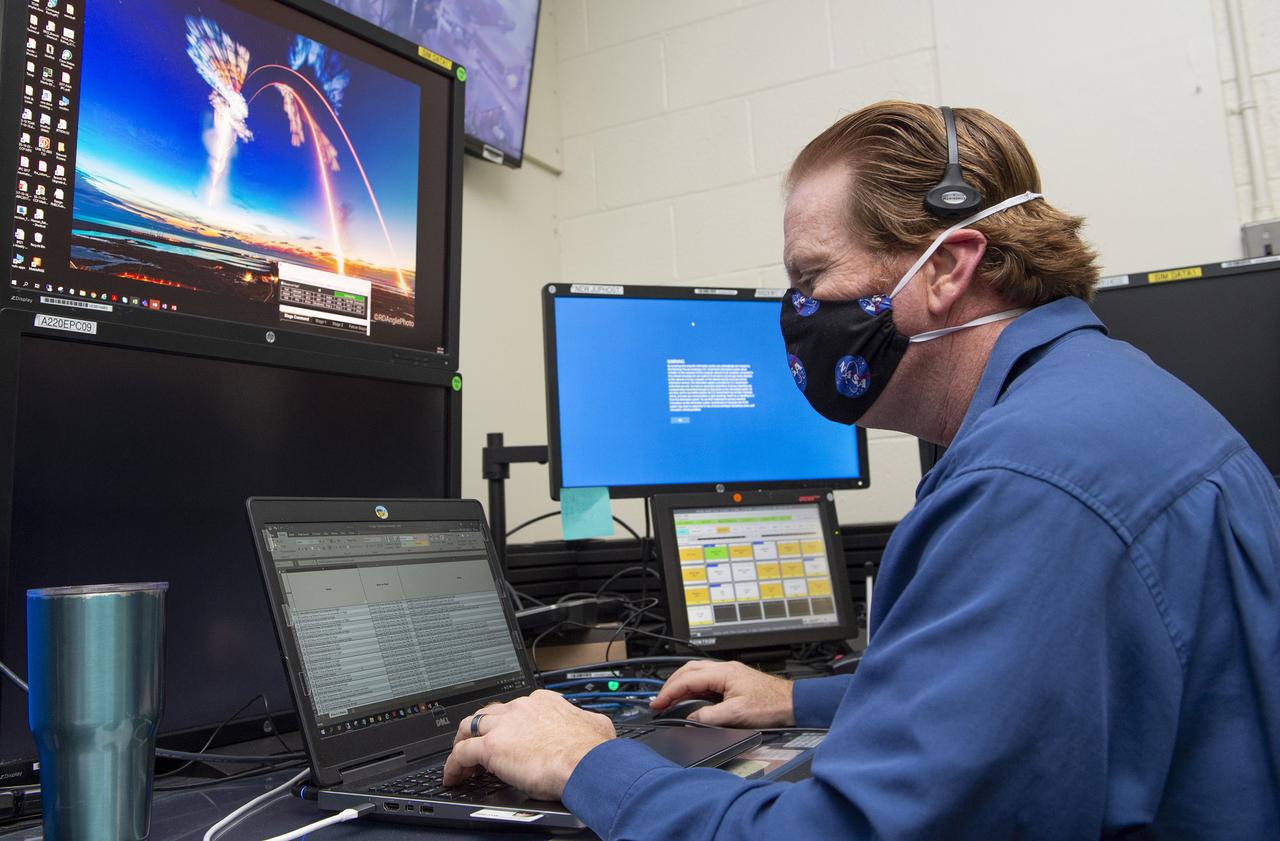
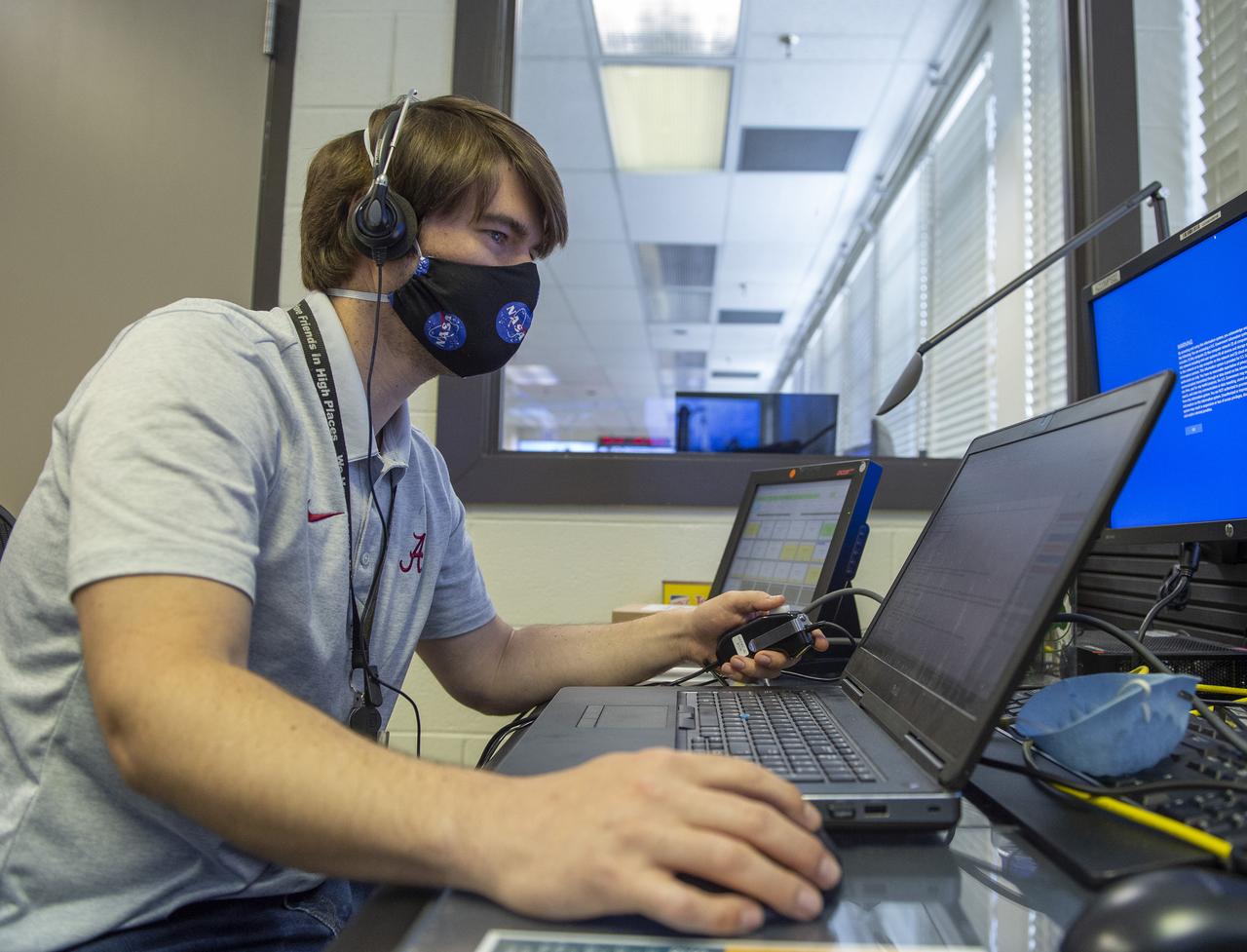
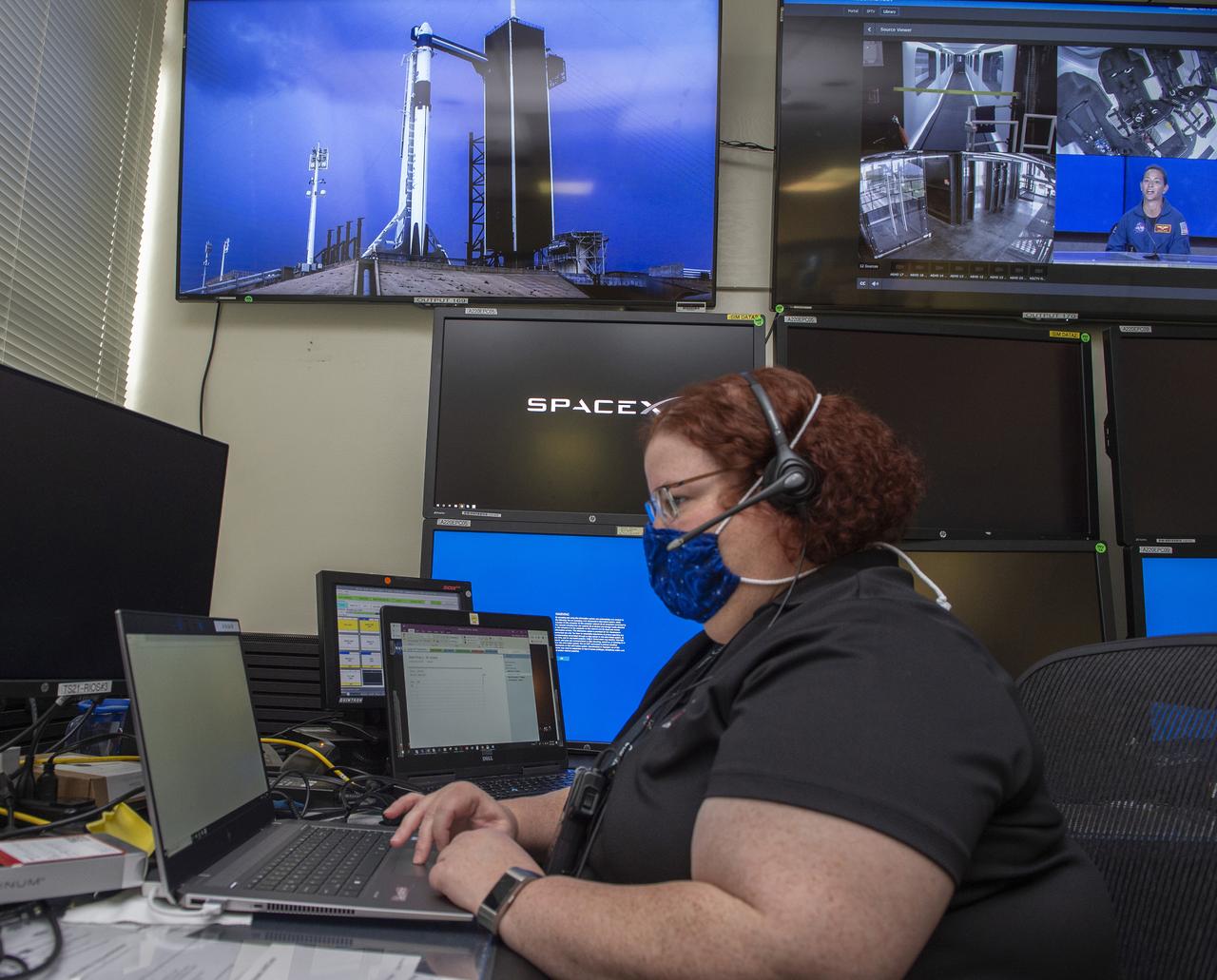
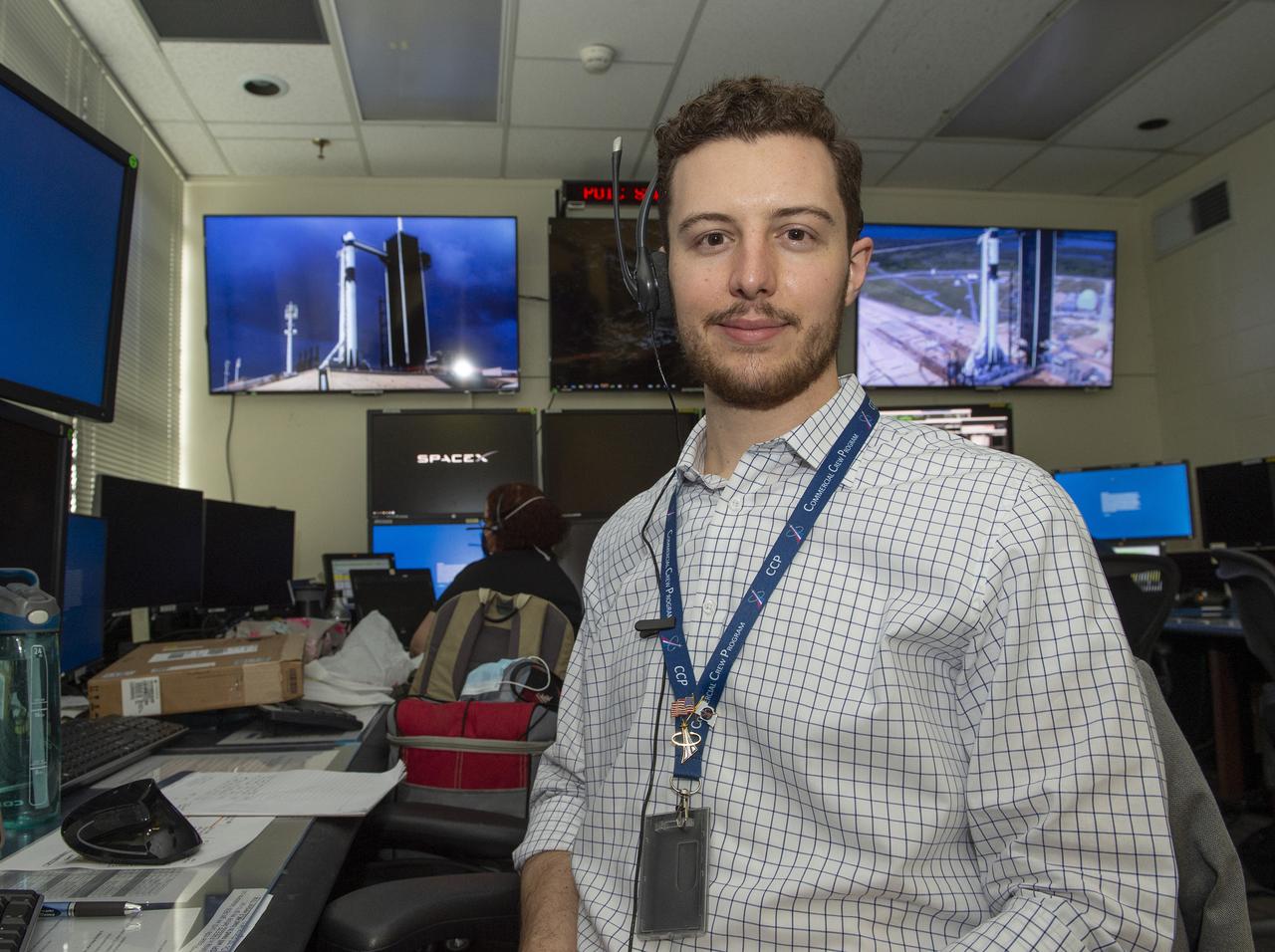
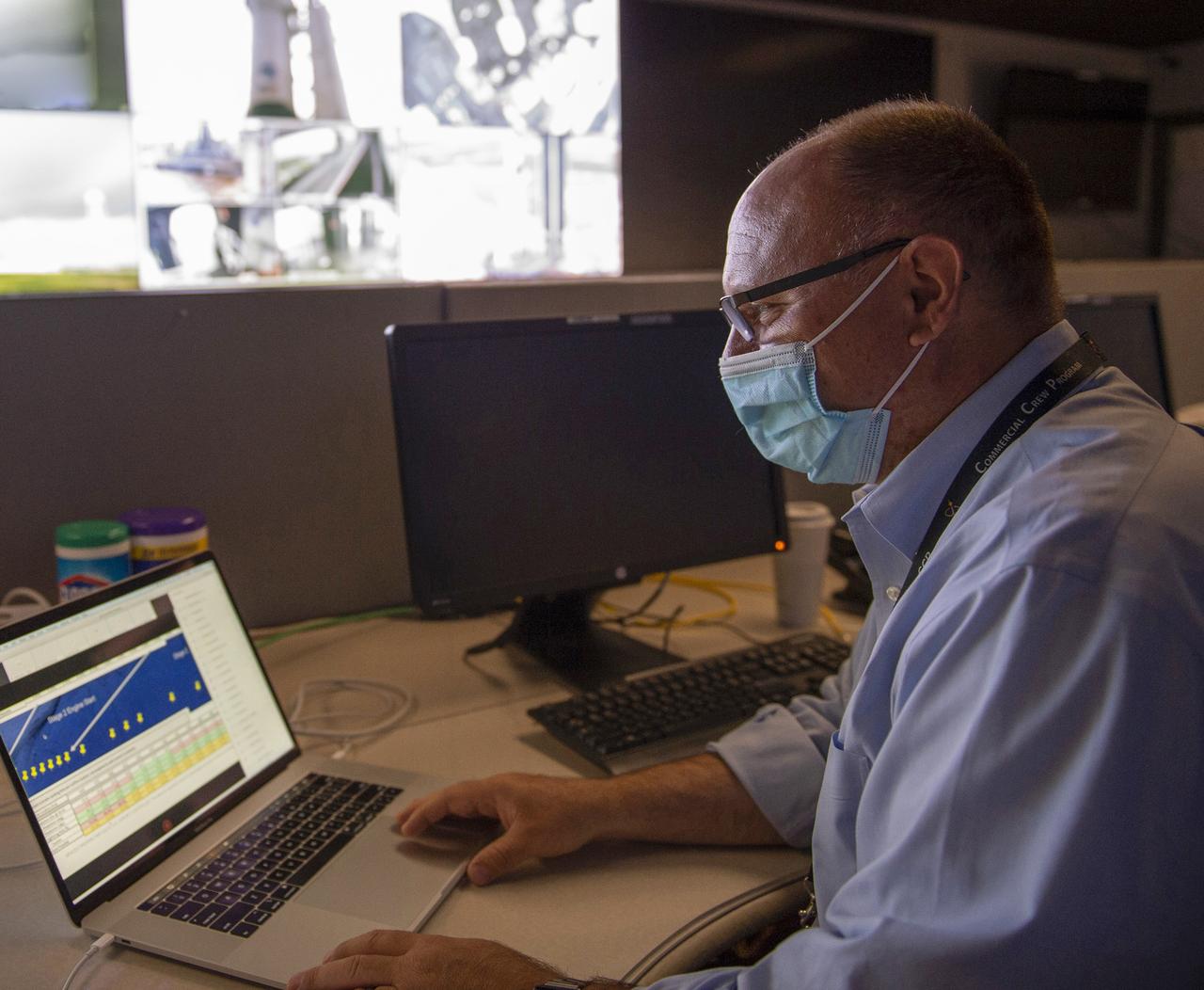
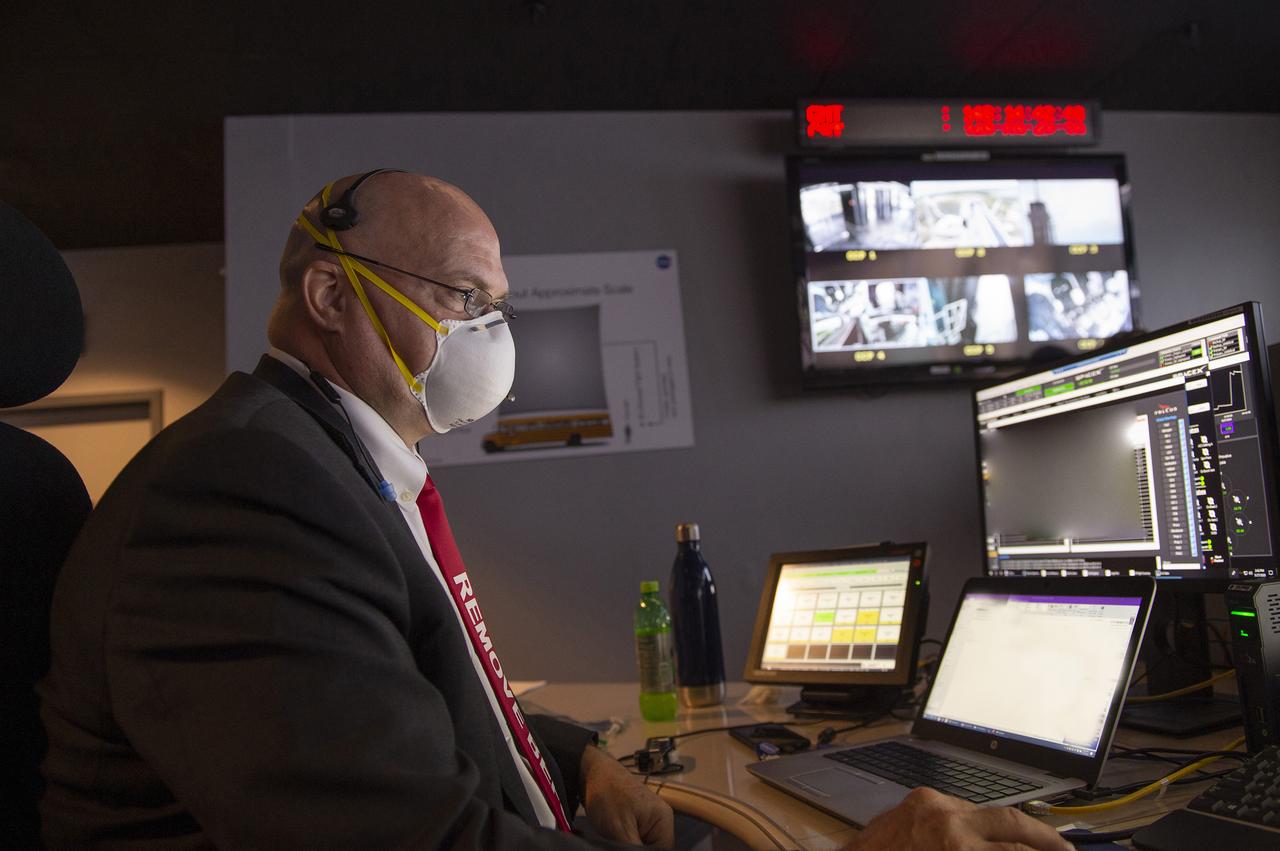
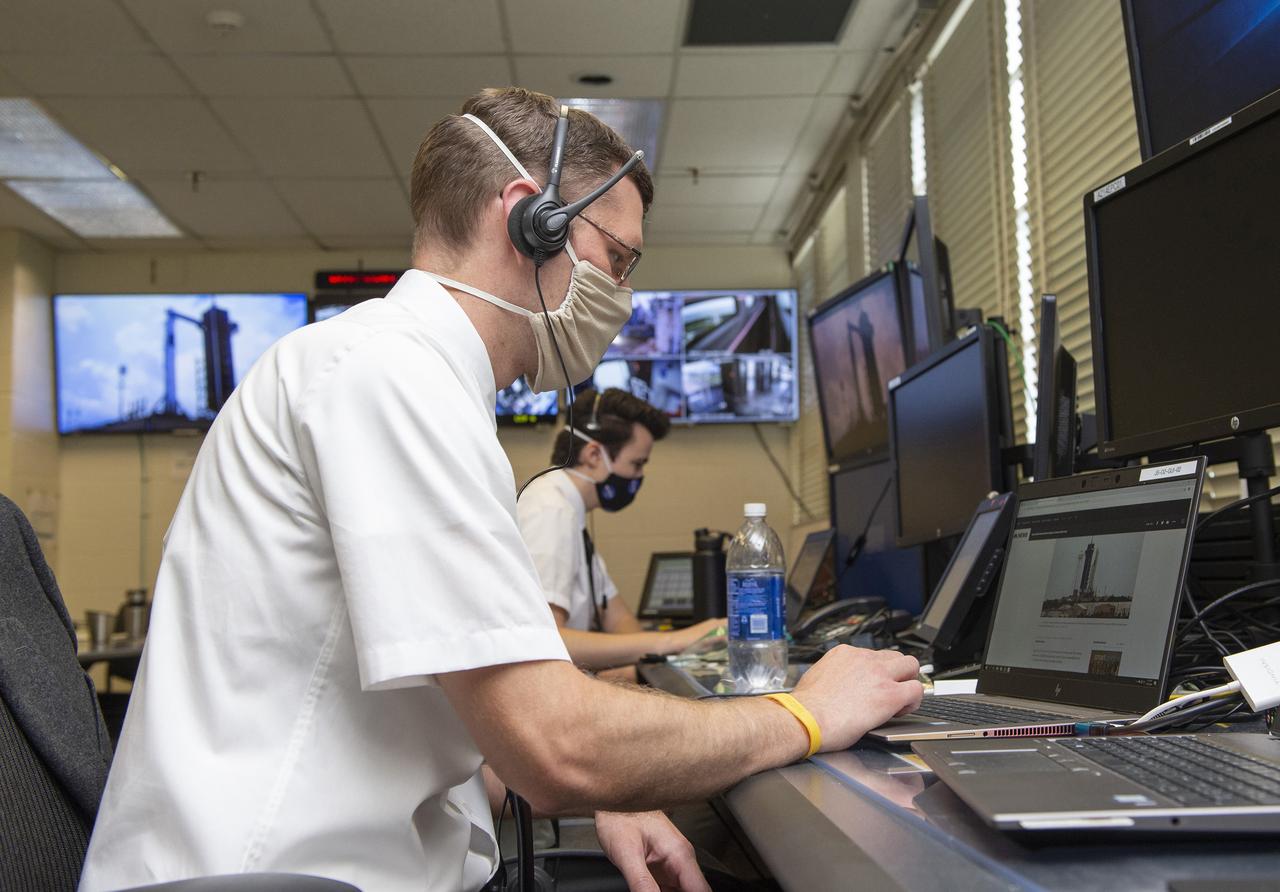
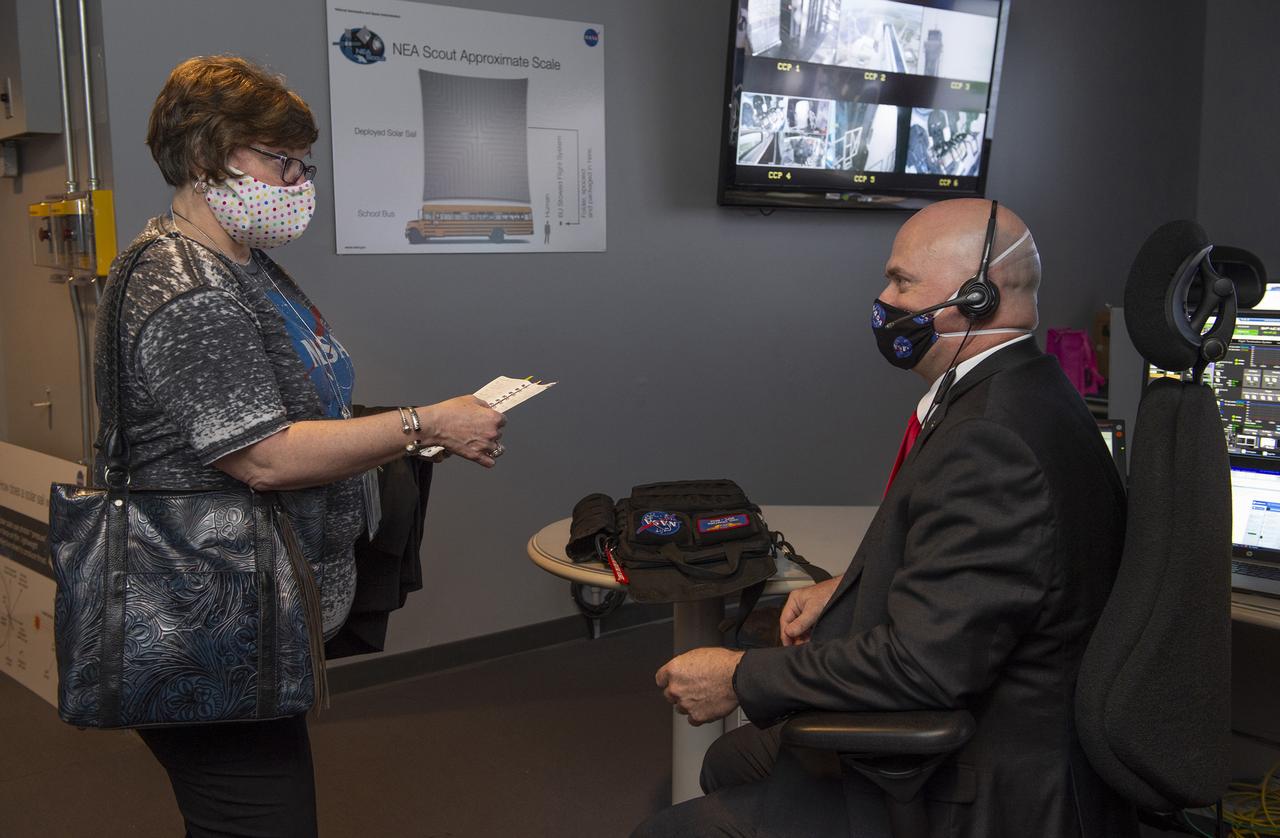
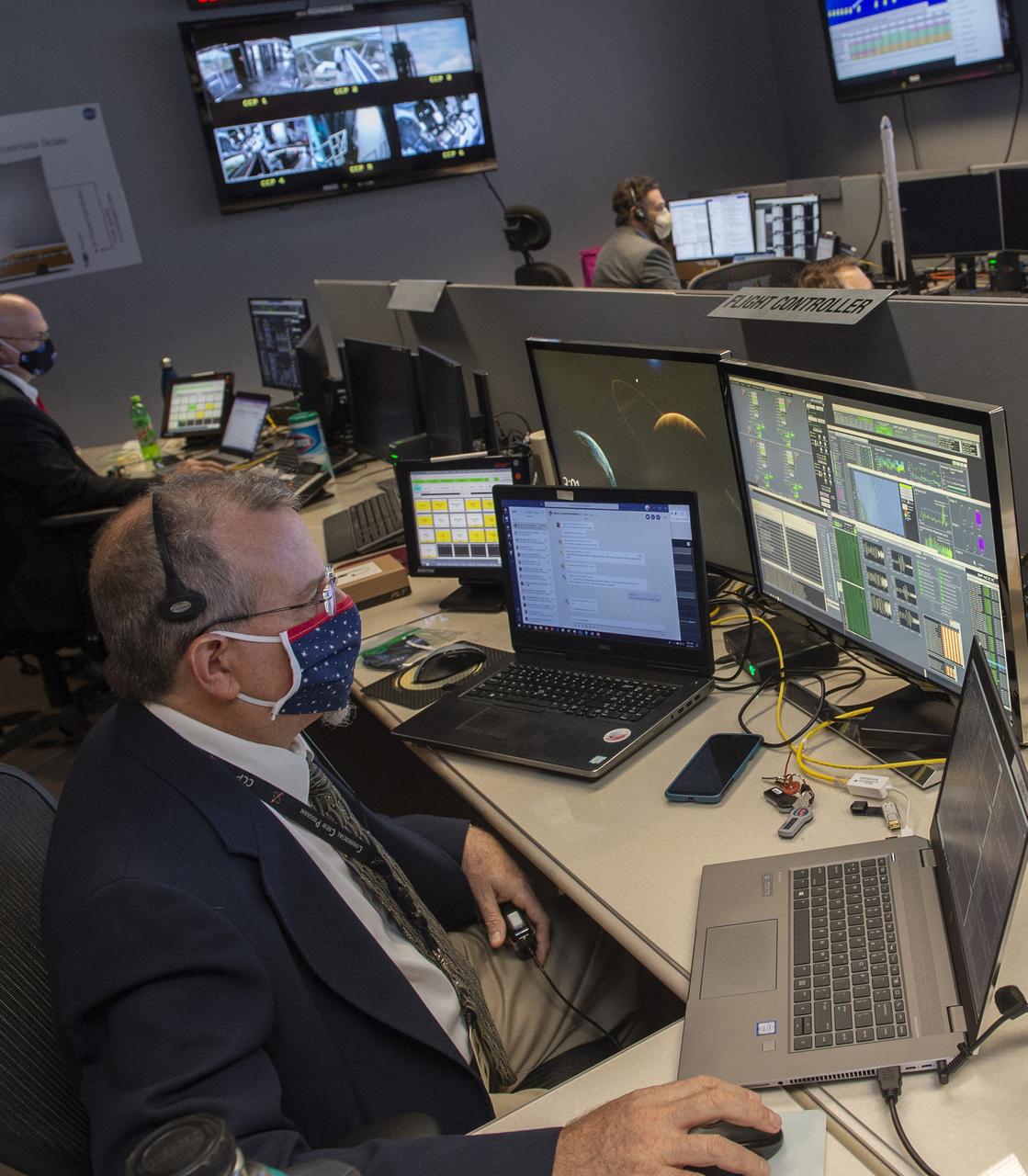
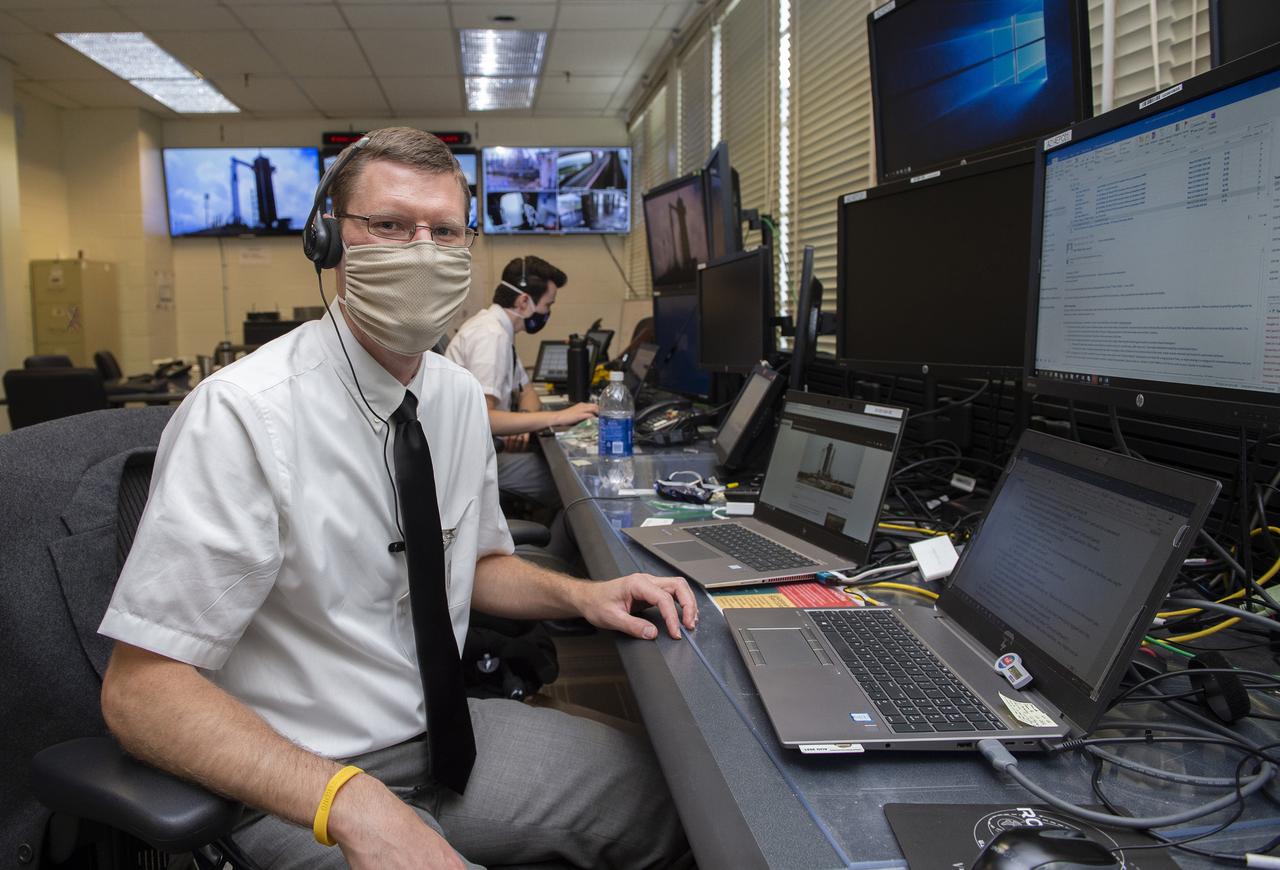
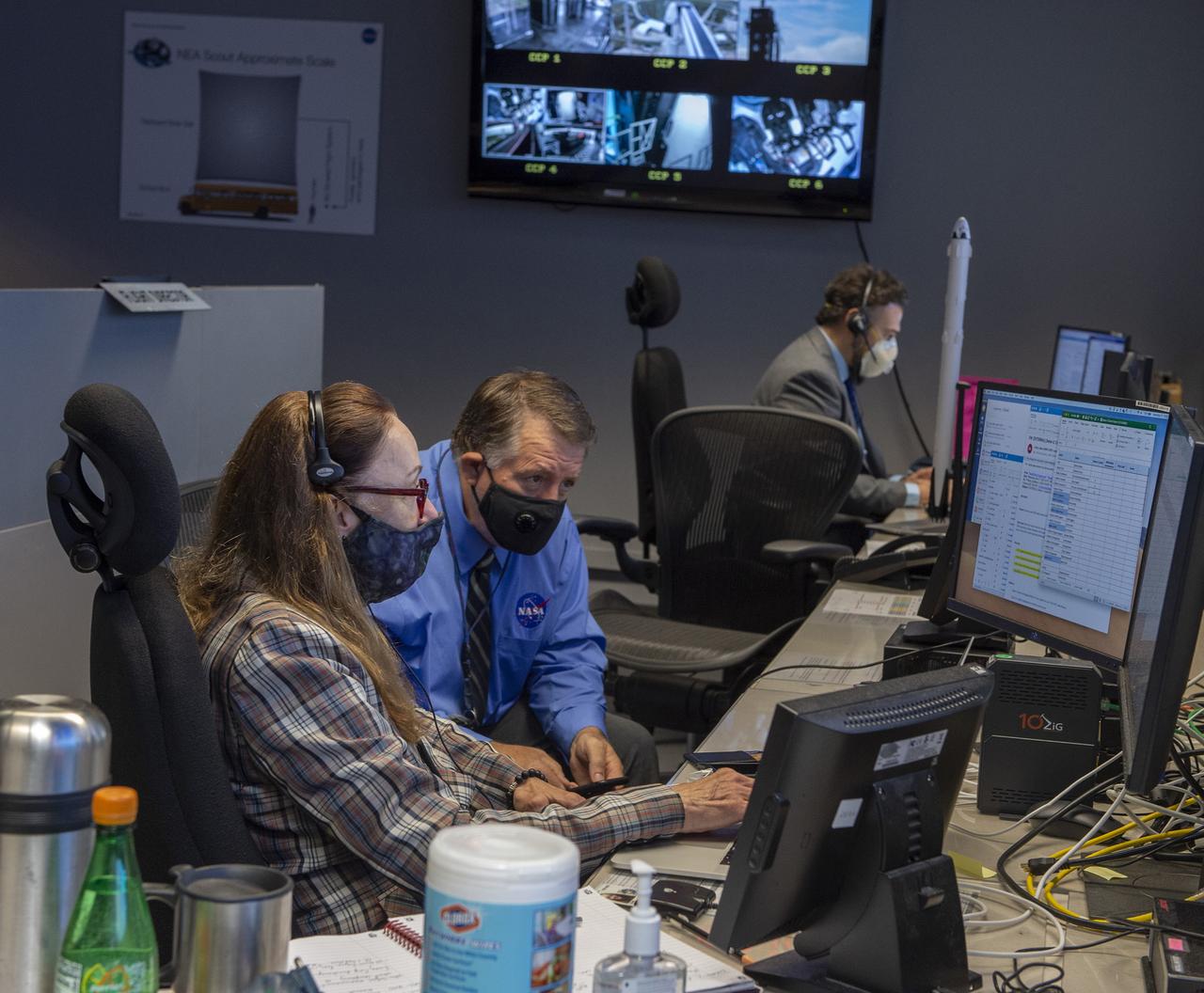
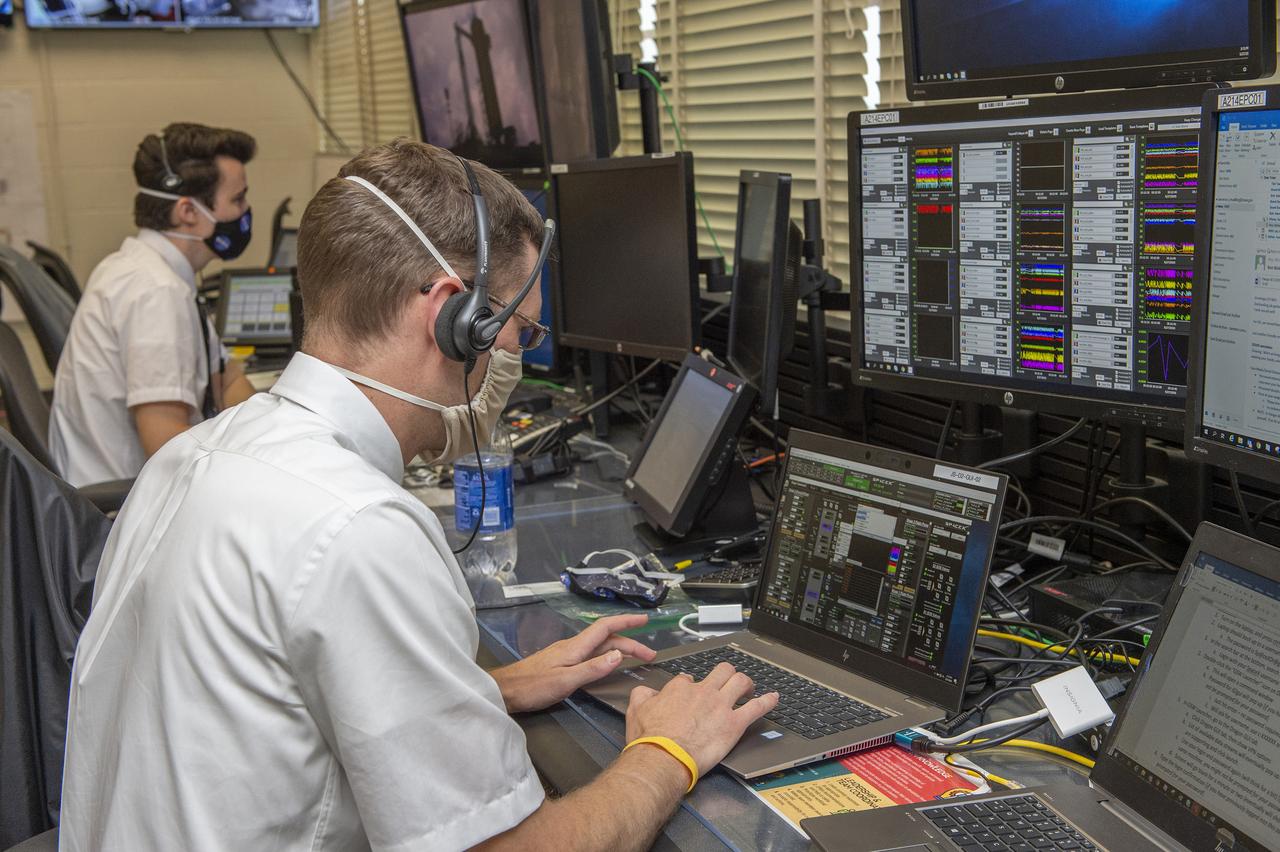
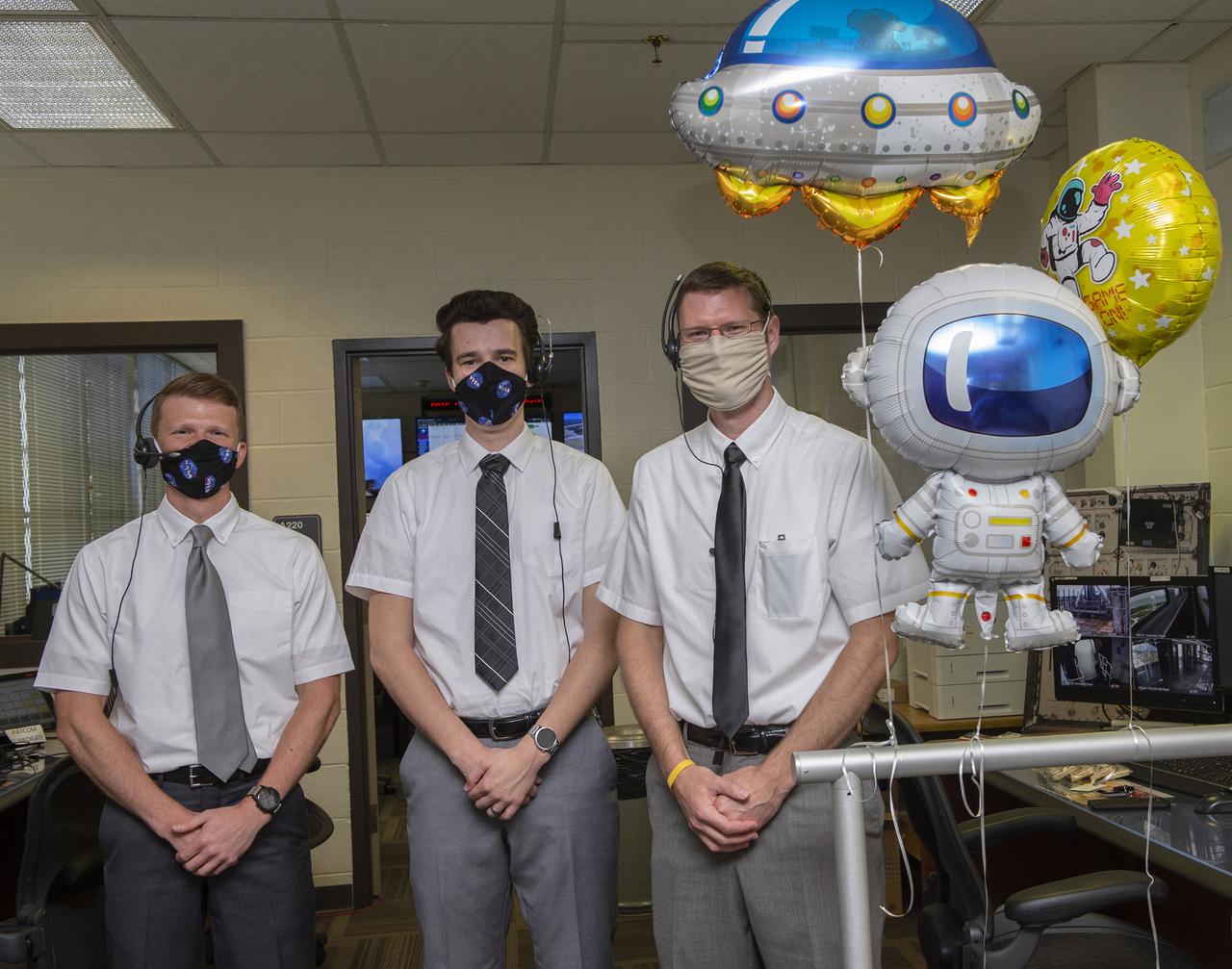
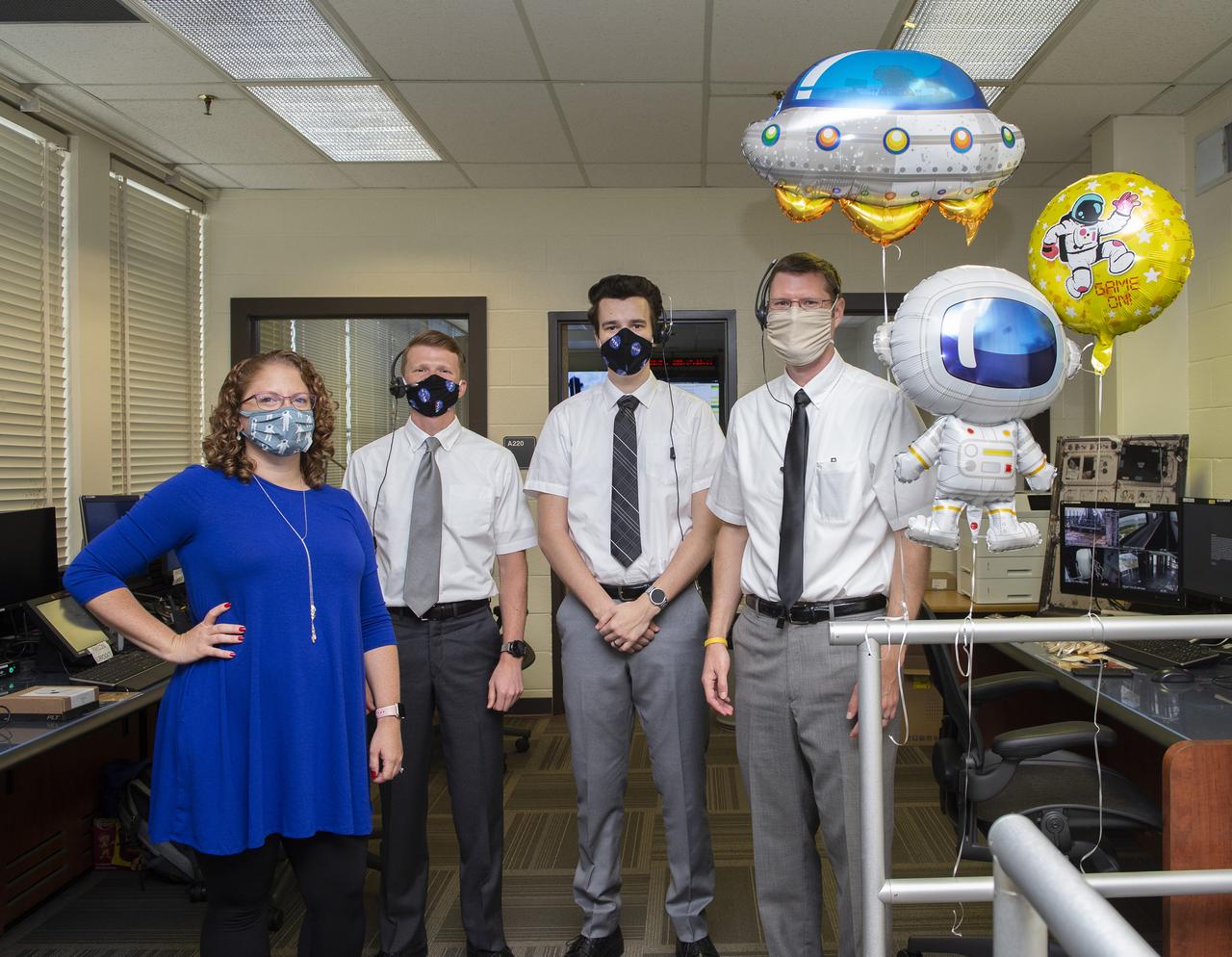
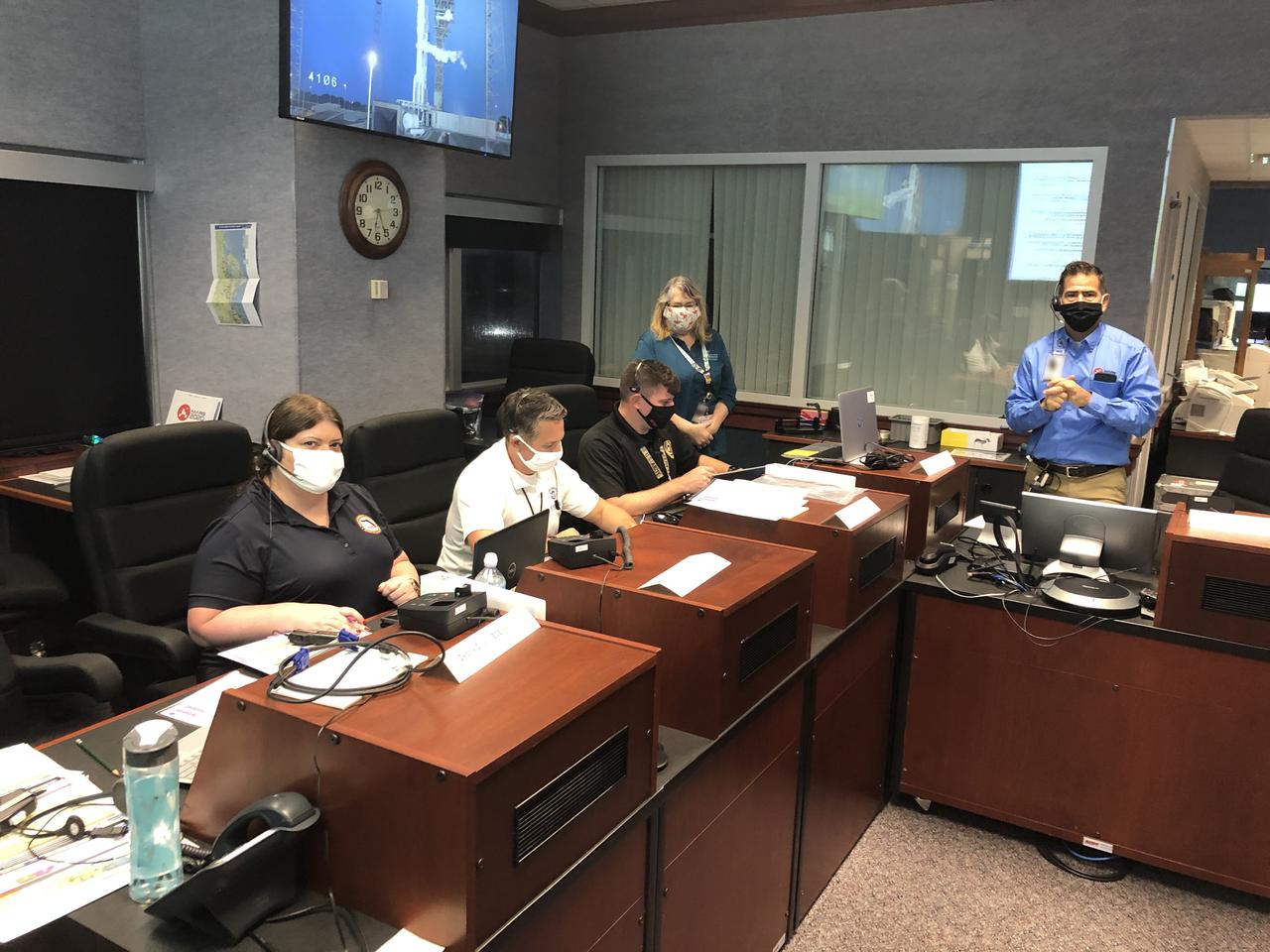
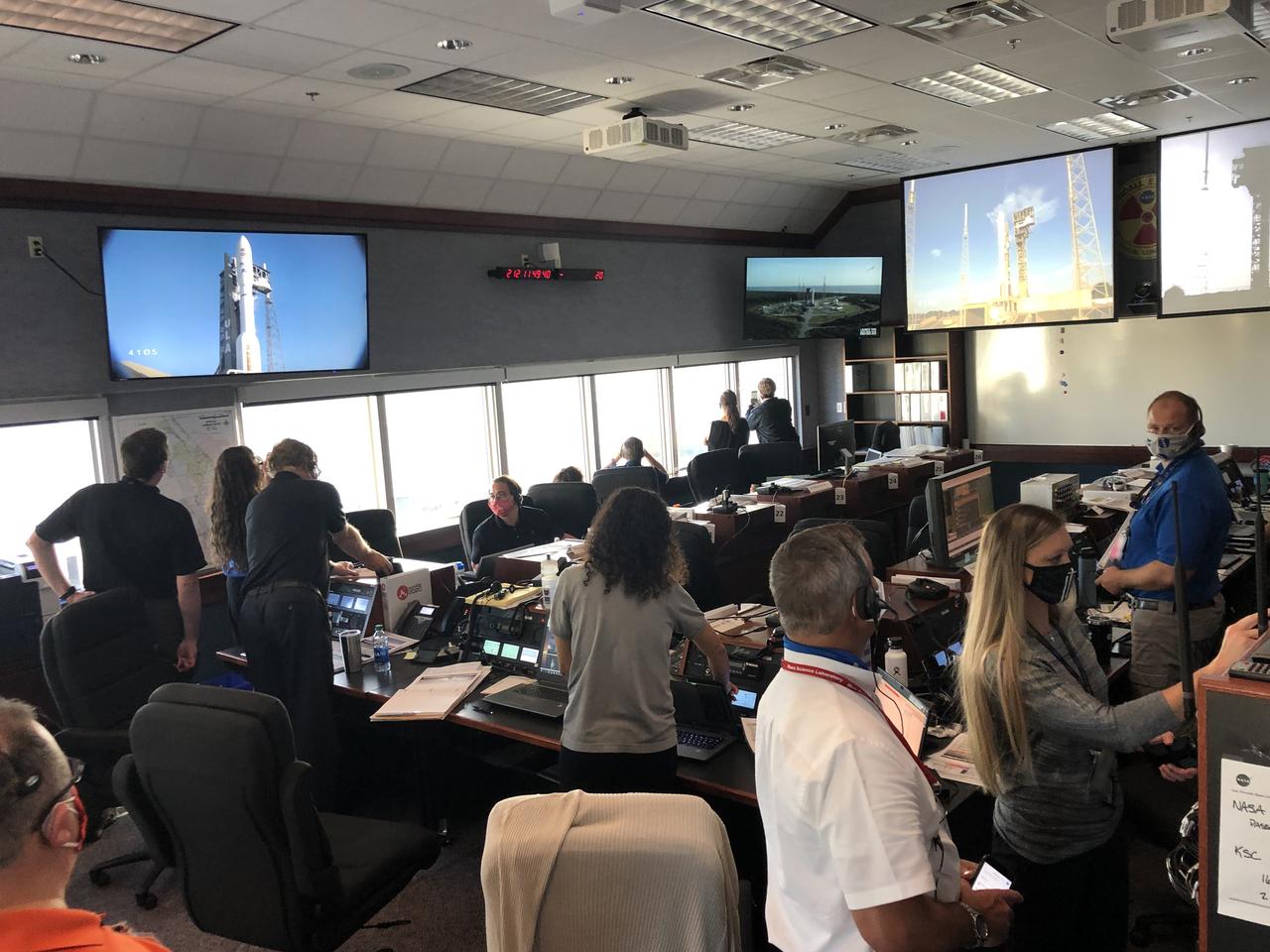
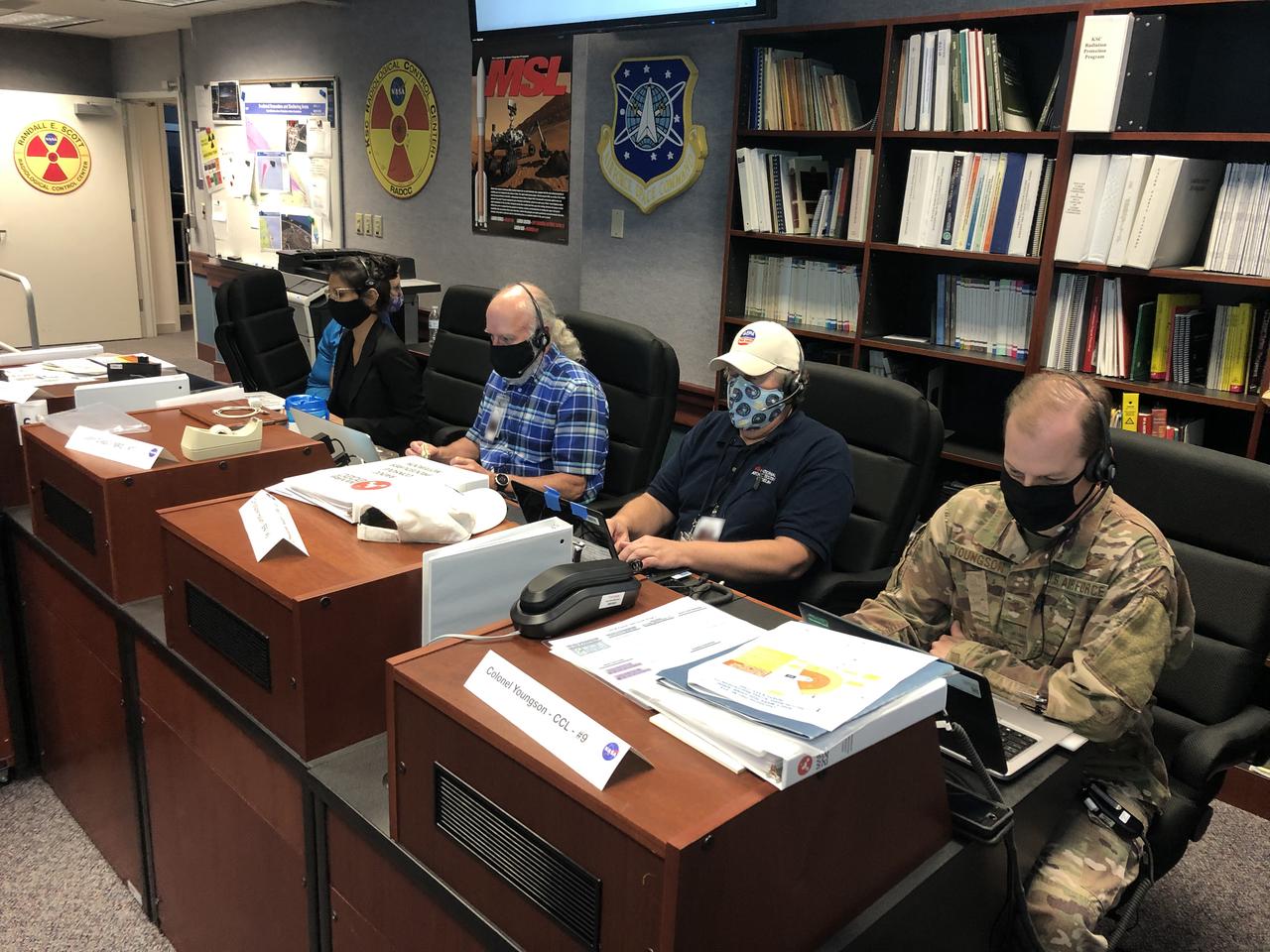
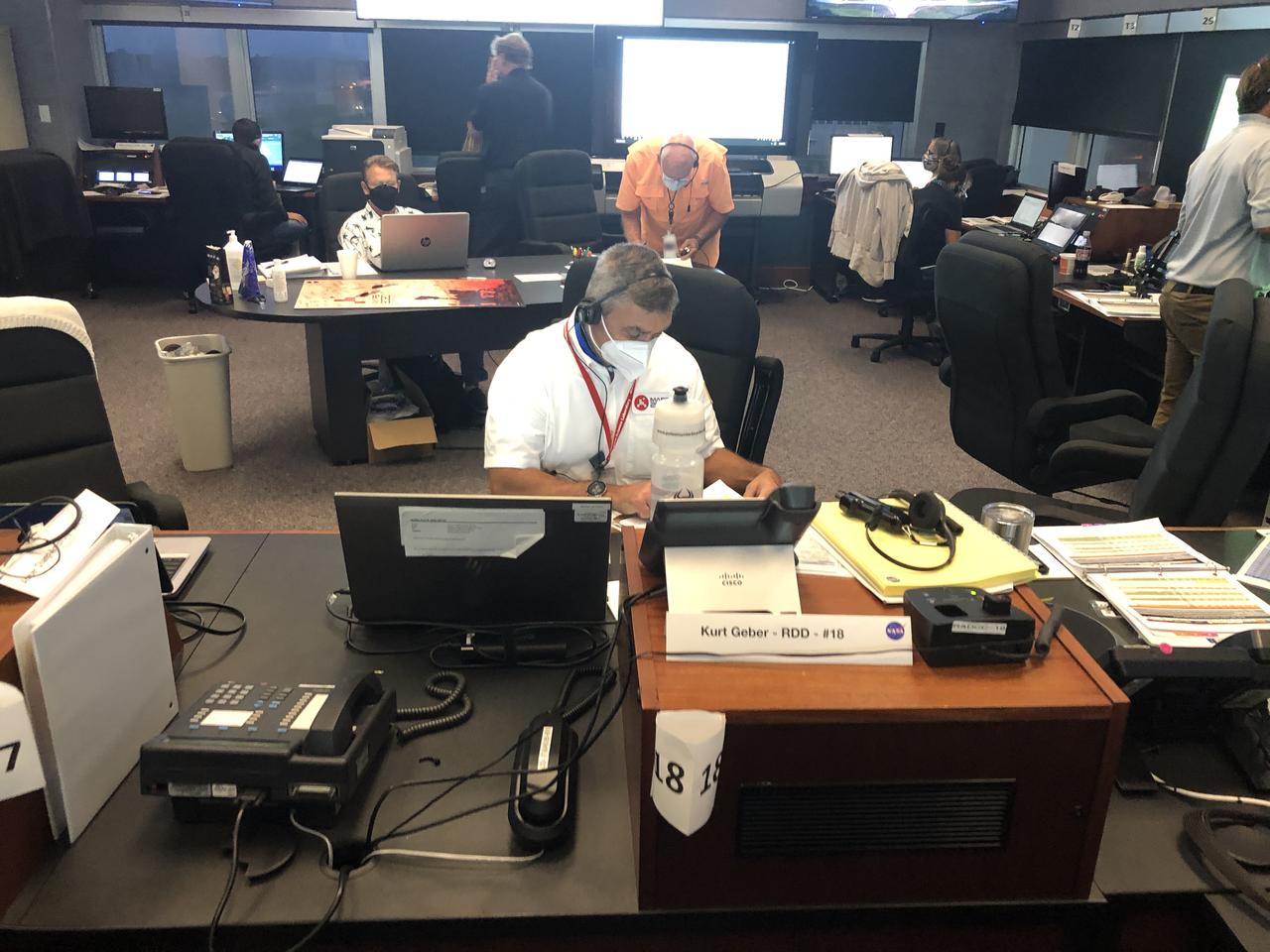
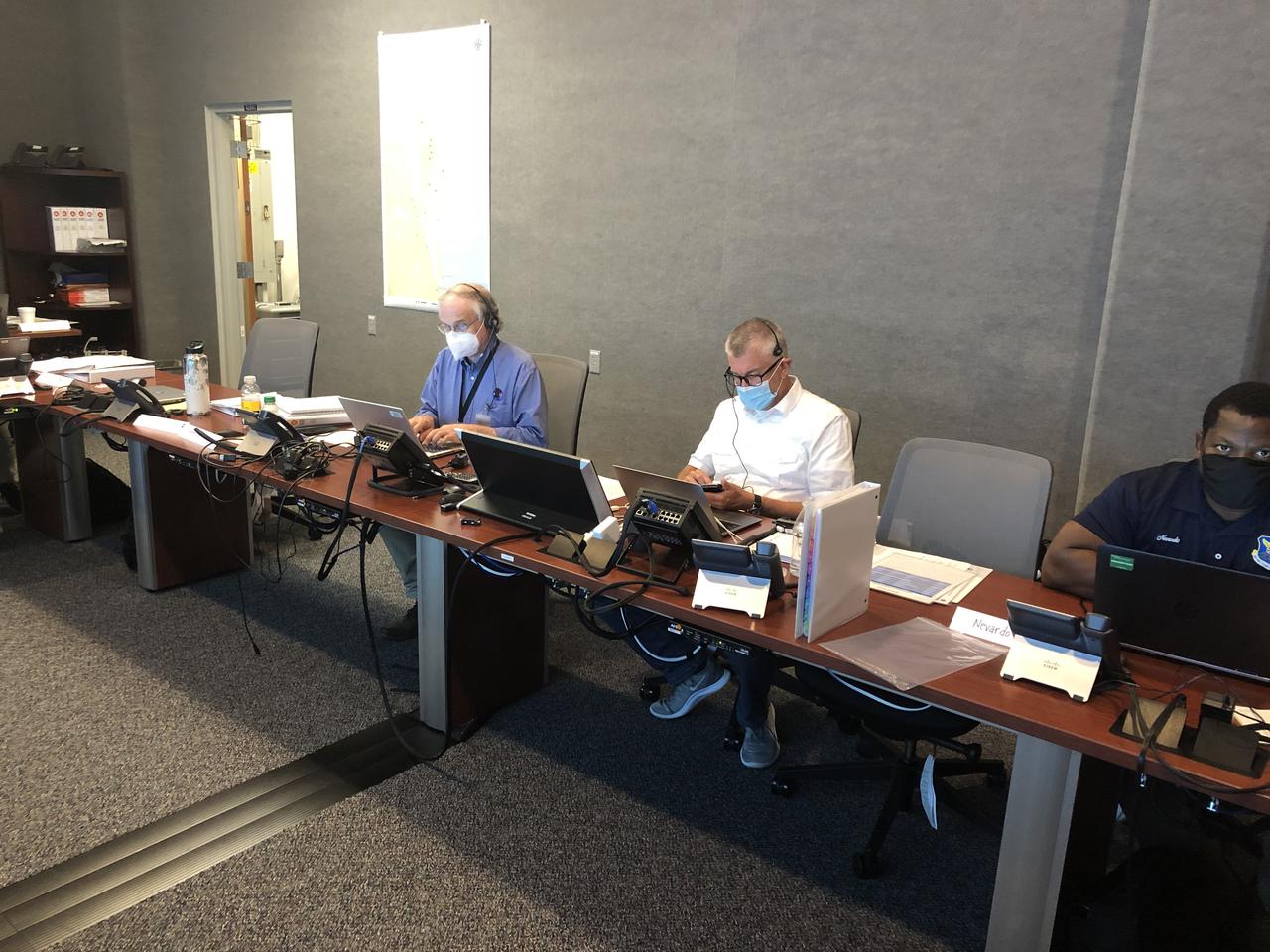
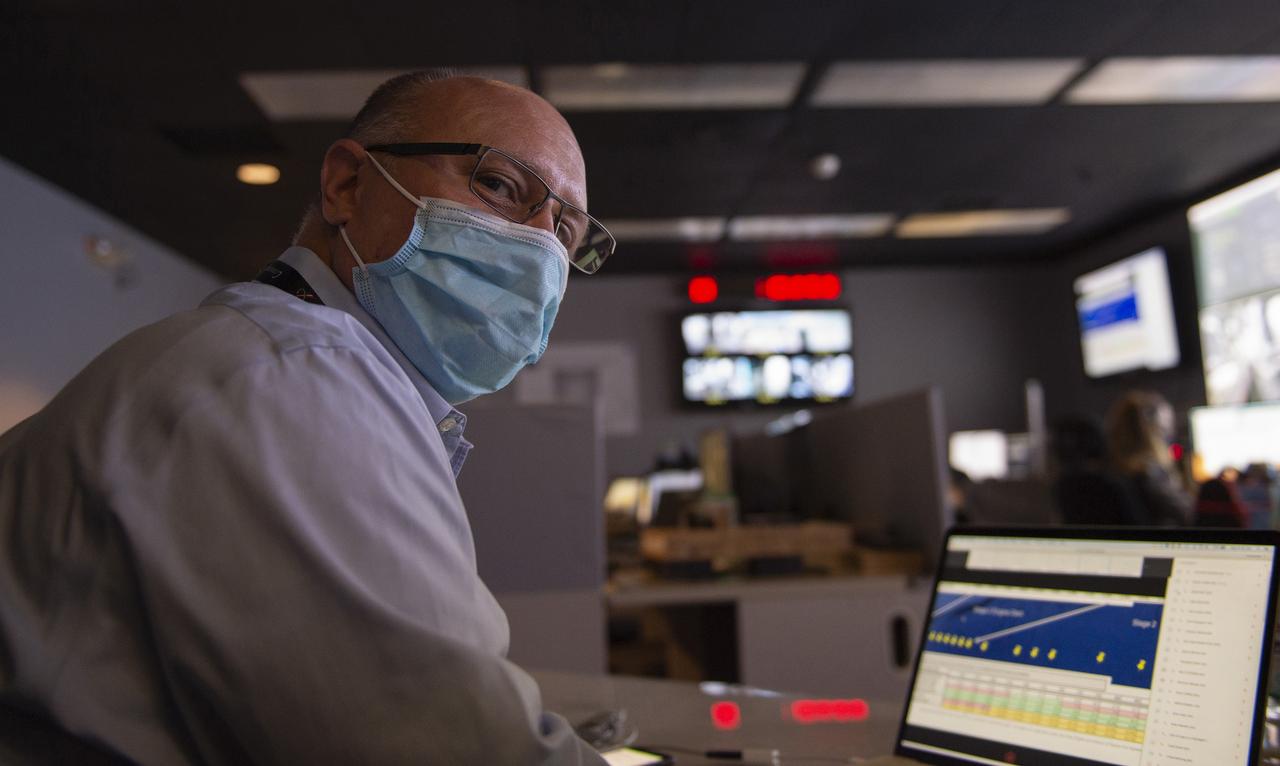
Joint Information Center (JIC), Emergency Operations Center (EOC) and Radiation Control Center (RADCC) members prepare for the launch of NASA’s Mars 2020 Perseverance rover and Ingenuity helicopter on July 30, 2020, at the agency’s Kennedy Space Center in Florida. JIC members include representatives on the local, regional and national level. Mars 2020 launched on a United Launch Alliance Atlas V 541 rocket from Space Launch Complex 41 at nearby Cape Canaveral Air Force Station. Liftoff was at 7:50 a.m. EDT. The rover is part of NASA’s Mars Exploration Program, a long-term effort of robotic exploration of the Red Planet. The rover will search for habitable conditions in the ancient past and signs of past microbial life on Mars. The Launch Services Program at Kennedy is responsible for launch management.
Mars 2020 Launch Support at the Joint Information Center
Joint Information Center (JIC), Emergency Operations Center (EOC) and Radiation Control Center (RADCC) members prepare for the launch of NASA’s Mars 2020 Perseverance rover and Ingenuity helicopter on July 30, 2020, at the agency’s Kennedy Space Center in Florida. JIC members include representatives on the local, regional and national level. Mars 2020 launched on a United Launch Alliance Atlas V 541 rocket from Space Launch Complex 41 at nearby Cape Canaveral Air Force Station. Liftoff was at 7:50 a.m. EDT. The rover is part of NASA’s Mars Exploration Program, a long-term effort of robotic exploration of the Red Planet. The rover will search for habitable conditions in the ancient past and signs of past microbial life on Mars. The Launch Services Program at Kennedy is responsible for launch management.
Mars 2020 Launch Support at the Joint Information Center
Joint Information Center (JIC), Emergency Operations Center (EOC) and Radiation Control Center (RADCC) members prepare for the launch of NASA’s Mars 2020 Perseverance rover and Ingenuity helicopter on July 30, 2020, at the agency’s Kennedy Space Center in Florida. JIC members include representatives on the local, regional and national level. Mars 2020 launched on a United Launch Alliance Atlas V 541 rocket from Space Launch Complex 41 at nearby Cape Canaveral Air Force Station. Liftoff was at 7:50 a.m. EDT. The rover is part of NASA’s Mars Exploration Program, a long-term effort of robotic exploration of the Red Planet. The rover will search for habitable conditions in the ancient past and signs of past microbial life on Mars. The Launch Services Program at Kennedy is responsible for launch management.
Mars 2020 Launch Support at the Joint Information Center
Joint Information Center (JIC), Emergency Operations Center (EOC) and Radiation Control Center (RADCC) members prepare for the launch of NASA’s Mars 2020 Perseverance rover and Ingenuity helicopter on July 30, 2020, at the agency’s Kennedy Space Center in Florida. JIC members include representatives on the local, regional and national level. Mars 2020 launched on a United Launch Alliance Atlas V 541 rocket from Space Launch Complex 41 at nearby Cape Canaveral Air Force Station. Liftoff was at 7:50 a.m. EDT. The rover is part of NASA’s Mars Exploration Program, a long-term effort of robotic exploration of the Red Planet. The rover will search for habitable conditions in the ancient past and signs of past microbial life on Mars. The Launch Services Program at Kennedy is responsible for launch management.
Mars 2020 Launch Support at the Joint Information Center
Joint Information Center (JIC), Emergency Operations Center (EOC) and Radiation Control Center (RADCC) members prepare for the launch of NASA’s Mars 2020 Perseverance rover and Ingenuity helicopter on July 30, 2020, at the agency’s Kennedy Space Center in Florida. JIC members include representatives on the local, regional and national level. Mars 2020 launched on a United Launch Alliance Atlas V 541 rocket from Space Launch Complex 41 at nearby Cape Canaveral Air Force Station. Liftoff was at 7:50 a.m. EDT. The rover is part of NASA’s Mars Exploration Program, a long-term effort of robotic exploration of the Red Planet. The rover will search for habitable conditions in the ancient past and signs of past microbial life on Mars. The Launch Services Program at Kennedy is responsible for launch management.
Mars 2020 Launch Support at the Joint Information Center
Joint Information Center (JIC), Emergency Operations Center (EOC) and Radiation Control Center (RADCC) members prepare for the launch of NASA’s Mars 2020 Perseverance rover and Ingenuity helicopter on July 30, 2020, at the agency’s Kennedy Space Center in Florida. JIC members include representatives on the local, regional and national level. Mars 2020 launched on a United Launch Alliance Atlas V 541 rocket from Space Launch Complex 41 at nearby Cape Canaveral Air Force Station. Liftoff was at 7:50 a.m. EDT. The rover is part of NASA’s Mars Exploration Program, a long-term effort of robotic exploration of the Red Planet. The rover will search for habitable conditions in the ancient past and signs of past microbial life on Mars. The Launch Services Program at Kennedy is responsible for launch management.
Mars 2020 Launch Support at the Joint Information Center
Joint Information Center (JIC), Emergency Operations Center (EOC) and Radiation Control Center (RADCC) members prepare for the launch of NASA’s Mars 2020 Perseverance rover and Ingenuity helicopter on July 30, 2020, at the agency’s Kennedy Space Center in Florida. JIC members include representatives on the local, regional and national level. Mars 2020 launched on a United Launch Alliance Atlas V 541 rocket from Space Launch Complex 41 at nearby Cape Canaveral Air Force Station. Liftoff was at 7:50 a.m. EDT. The rover is part of NASA’s Mars Exploration Program, a long-term effort of robotic exploration of the Red Planet. The rover will search for habitable conditions in the ancient past and signs of past microbial life on Mars. The Launch Services Program at Kennedy is responsible for launch management.
Mars 2020 Launch Support at the Joint Information Center
Joint Information Center (JIC), Emergency Operations Center (EOC) and Radiation Control Center (RADCC) members prepare for the launch of NASA’s Mars 2020 Perseverance rover and Ingenuity helicopter on July 30, 2020, at the agency’s Kennedy Space Center in Florida. JIC members include representatives on the local, regional and national level. Mars 2020 launched on a United Launch Alliance Atlas V 541 rocket from Space Launch Complex 41 at nearby Cape Canaveral Air Force Station. Liftoff was at 7:50 a.m. EDT. The rover is part of NASA’s Mars Exploration Program, a long-term effort of robotic exploration of the Red Planet. The rover will search for habitable conditions in the ancient past and signs of past microbial life on Mars. The Launch Services Program at Kennedy is responsible for launch management.
Mars 2020 Launch Support at the Joint Information Center
Joint Information Center (JIC), Emergency Operations Center (EOC) and Radiation Control Center (RADCC) members prepare for the launch of NASA’s Mars 2020 Perseverance rover and Ingenuity helicopter on July 30, 2020, at the agency’s Kennedy Space Center in Florida. JIC members include representatives on the local, regional and national level. Mars 2020 launched on a United Launch Alliance Atlas V 541 rocket from Space Launch Complex 41 at nearby Cape Canaveral Air Force Station. Liftoff was at 7:50 a.m. EDT. The rover is part of NASA’s Mars Exploration Program, a long-term effort of robotic exploration of the Red Planet. The rover will search for habitable conditions in the ancient past and signs of past microbial life on Mars. The Launch Services Program at Kennedy is responsible for launch management.
Mars 2020 Launch Support at the Joint Information Center
Joint Information Center (JIC), Emergency Operations Center (EOC) and Radiation Control Center (RADCC) members prepare for the launch of NASA’s Mars 2020 Perseverance rover and Ingenuity helicopter on July 30, 2020, at the agency’s Kennedy Space Center in Florida. JIC members include representatives on the local, regional and national level. Mars 2020 launched on a United Launch Alliance Atlas V 541 rocket from Space Launch Complex 41 at nearby Cape Canaveral Air Force Station. Liftoff was at 7:50 a.m. EDT. The rover is part of NASA’s Mars Exploration Program, a long-term effort of robotic exploration of the Red Planet. The rover will search for habitable conditions in the ancient past and signs of past microbial life on Mars. The Launch Services Program at Kennedy is responsible for launch management.
Mars 2020 Launch Support at the Joint Information Center
Joint Information Center (JIC), Emergency Operations Center (EOC) and Radiation Control Center (RADCC) members prepare for the launch of NASA’s Mars 2020 Perseverance rover and Ingenuity helicopter on July 30, 2020, at the agency’s Kennedy Space Center in Florida. JIC members include representatives on the local, regional and national level. Mars 2020 launched on a United Launch Alliance Atlas V 541 rocket from Space Launch Complex 41 at nearby Cape Canaveral Air Force Station. Liftoff was at 7:50 a.m. EDT. The rover is part of NASA’s Mars Exploration Program, a long-term effort of robotic exploration of the Red Planet. The rover will search for habitable conditions in the ancient past and signs of past microbial life on Mars. The Launch Services Program at Kennedy is responsible for launch management.
Mars 2020 Launch Support at the Joint Information Center
Joint Information Center (JIC), Emergency Operations Center (EOC) and Radiation Control Center (RADCC) members prepare for the launch of NASA’s Mars 2020 Perseverance rover and Ingenuity helicopter on July 30, 2020, at the agency’s Kennedy Space Center in Florida. JIC members include representatives on the local, regional and national level. Mars 2020 launched on a United Launch Alliance Atlas V 541 rocket from Space Launch Complex 41 at nearby Cape Canaveral Air Force Station. Liftoff was at 7:50 a.m. EDT. The rover is part of NASA’s Mars Exploration Program, a long-term effort of robotic exploration of the Red Planet. The rover will search for habitable conditions in the ancient past and signs of past microbial life on Mars. The Launch Services Program at Kennedy is responsible for launch management.
Mars 2020 Launch Support at the Joint Information Center
Joint Information Center (JIC), Emergency Operations Center (EOC) and Radiation Control Center (RADCC) members prepare for the launch of NASA’s Mars 2020 Perseverance rover and Ingenuity helicopter on July 30, 2020, at the agency’s Kennedy Space Center in Florida. JIC members include representatives on the local, regional and national level. Mars 2020 launched on a United Launch Alliance Atlas V 541 rocket from Space Launch Complex 41 at nearby Cape Canaveral Air Force Station. Liftoff was at 7:50 a.m. EDT. The rover is part of NASA’s Mars Exploration Program, a long-term effort of robotic exploration of the Red Planet. The rover will search for habitable conditions in the ancient past and signs of past microbial life on Mars. The Launch Services Program at Kennedy is responsible for launch management.
Mars 2020 Launch Support at the Joint Information Center
Joint Information Center (JIC), Emergency Operations Center (EOC) and Radiation Control Center (RADCC) members prepare for the launch of NASA’s Mars 2020 Perseverance rover and Ingenuity helicopter on July 30, 2020, at the agency’s Kennedy Space Center in Florida. JIC members include representatives on the local, regional and national level. Mars 2020 launched on a United Launch Alliance Atlas V 541 rocket from Space Launch Complex 41 at nearby Cape Canaveral Air Force Station. Liftoff was at 7:50 a.m. EDT. The rover is part of NASA’s Mars Exploration Program, a long-term effort of robotic exploration of the Red Planet. The rover will search for habitable conditions in the ancient past and signs of past microbial life on Mars. The Launch Services Program at Kennedy is responsible for launch management.
Mars 2020 Launch Support at the Joint Information Center
Joint Information Center (JIC), Emergency Operations Center (EOC) and Radiation Control Center (RADCC) members prepare for the launch of NASA’s Mars 2020 Perseverance rover and Ingenuity helicopter on July 30, 2020, at the agency’s Kennedy Space Center in Florida. JIC members include representatives on the local, regional and national level. Mars 2020 launched on a United Launch Alliance Atlas V 541 rocket from Space Launch Complex 41 at nearby Cape Canaveral Air Force Station. Liftoff was at 7:50 a.m. EDT. The rover is part of NASA’s Mars Exploration Program, a long-term effort of robotic exploration of the Red Planet. The rover will search for habitable conditions in the ancient past and signs of past microbial life on Mars. The Launch Services Program at Kennedy is responsible for launch management.
Mars 2020 Launch Support at the Joint Information Center
Joint Information Center (JIC), Emergency Operations Center (EOC) and Radiation Control Center (RADCC) members prepare for the launch of NASA’s Mars 2020 Perseverance rover and Ingenuity helicopter on July 30, 2020, at the agency’s Kennedy Space Center in Florida. JIC members include representatives on the local, regional and national level. Mars 2020 launched on a United Launch Alliance Atlas V 541 rocket from Space Launch Complex 41 at nearby Cape Canaveral Air Force Station. Liftoff was at 7:50 a.m. EDT. The rover is part of NASA’s Mars Exploration Program, a long-term effort of robotic exploration of the Red Planet. The rover will search for habitable conditions in the ancient past and signs of past microbial life on Mars. The Launch Services Program at Kennedy is responsible for launch management.
Mars 2020 Launch Support at the Joint Information Center
Joint Information Center (JIC), Emergency Operations Center (EOC) and Radiation Control Center (RADCC) members prepare for the launch of NASA’s Mars 2020 Perseverance rover and Ingenuity helicopter on July 30, 2020, at the agency’s Kennedy Space Center in Florida. JIC members include representatives on the local, regional and national level. Mars 2020 launched on a United Launch Alliance Atlas V 541 rocket from Space Launch Complex 41 at nearby Cape Canaveral Air Force Station. Liftoff was at 7:50 a.m. EDT. The rover is part of NASA’s Mars Exploration Program, a long-term effort of robotic exploration of the Red Planet. The rover will search for habitable conditions in the ancient past and signs of past microbial life on Mars. The Launch Services Program at Kennedy is responsible for launch management.
Mars 2020 Launch Support at the Joint Information Center
Joint Information Center (JIC), Emergency Operations Center (EOC) and Radiation Control Center (RADCC) members prepare for the launch of NASA’s Mars 2020 Perseverance rover and Ingenuity helicopter on July 30, 2020, at the agency’s Kennedy Space Center in Florida. JIC members include representatives on the local, regional and national level. Mars 2020 launched on a United Launch Alliance Atlas V 541 rocket from Space Launch Complex 41 at nearby Cape Canaveral Air Force Station. Liftoff was at 7:50 a.m. EDT. The rover is part of NASA’s Mars Exploration Program, a long-term effort of robotic exploration of the Red Planet. The rover will search for habitable conditions in the ancient past and signs of past microbial life on Mars. The Launch Services Program at Kennedy is responsible for launch management.
Mars 2020 Launch Support at the Joint Information Center
Joint Information Center (JIC), Emergency Operations Center (EOC) and Radiation Control Center (RADCC) members prepare for the launch of NASA’s Mars 2020 Perseverance rover and Ingenuity helicopter on July 30, 2020, at the agency’s Kennedy Space Center in Florida. JIC members include representatives on the local, regional and national level. Mars 2020 launched on a United Launch Alliance Atlas V 541 rocket from Space Launch Complex 41 at nearby Cape Canaveral Air Force Station. Liftoff was at 7:50 a.m. EDT. The rover is part of NASA’s Mars Exploration Program, a long-term effort of robotic exploration of the Red Planet. The rover will search for habitable conditions in the ancient past and signs of past microbial life on Mars. The Launch Services Program at Kennedy is responsible for launch management.
Mars 2020 Launch Support at the Joint Information Center
Joint Information Center (JIC), Emergency Operations Center (EOC) and Radiation Control Center (RADCC) members prepare for the launch of NASA’s Mars 2020 Perseverance rover and Ingenuity helicopter on July 30, 2020, at the agency’s Kennedy Space Center in Florida. JIC members include representatives on the local, regional and national level. Mars 2020 launched on a United Launch Alliance Atlas V 541 rocket from Space Launch Complex 41 at nearby Cape Canaveral Air Force Station. Liftoff was at 7:50 a.m. EDT. The rover is part of NASA’s Mars Exploration Program, a long-term effort of robotic exploration of the Red Planet. The rover will search for habitable conditions in the ancient past and signs of past microbial life on Mars. The Launch Services Program at Kennedy is responsible for launch management.
Mars 2020 Launch Support at the Joint Information Center
Joint Information Center (JIC), Emergency Operations Center (EOC) and Radiation Control Center (RADCC) members prepare for the launch of NASA’s Mars 2020 Perseverance rover and Ingenuity helicopter on July 30, 2020, at the agency’s Kennedy Space Center in Florida. JIC members include representatives on the local, regional and national level. Mars 2020 launched on a United Launch Alliance Atlas V 541 rocket from Space Launch Complex 41 at nearby Cape Canaveral Air Force Station. Liftoff was at 7:50 a.m. EDT. The rover is part of NASA’s Mars Exploration Program, a long-term effort of robotic exploration of the Red Planet. The rover will search for habitable conditions in the ancient past and signs of past microbial life on Mars. The Launch Services Program at Kennedy is responsible for launch management.
Mars 2020 Launch Support at the Joint Information Center
Joint Information Center (JIC), Emergency Operations Center (EOC) and Radiation Control Center (RADCC) members prepare for the launch of NASA’s Mars 2020 Perseverance rover and Ingenuity helicopter on July 30, 2020, at the agency’s Kennedy Space Center in Florida. JIC members include representatives on the local, regional and national level. Mars 2020 launched on a United Launch Alliance Atlas V 541 rocket from Space Launch Complex 41 at nearby Cape Canaveral Air Force Station. Liftoff was at 7:50 a.m. EDT. The rover is part of NASA’s Mars Exploration Program, a long-term effort of robotic exploration of the Red Planet. The rover will search for habitable conditions in the ancient past and signs of past microbial life on Mars. The Launch Services Program at Kennedy is responsible for launch management.
Mars 2020 Launch Support at the Joint Information Center
Joint Information Center (JIC), Emergency Operations Center (EOC) and Radiation Control Center (RADCC) members prepare for the launch of NASA’s Mars 2020 Perseverance rover and Ingenuity helicopter on July 30, 2020, at the agency’s Kennedy Space Center in Florida. JIC members include representatives on the local, regional and national level. Mars 2020 launched on a United Launch Alliance Atlas V 541 rocket from Space Launch Complex 41 at nearby Cape Canaveral Air Force Station. Liftoff was at 7:50 a.m. EDT. The rover is part of NASA’s Mars Exploration Program, a long-term effort of robotic exploration of the Red Planet. The rover will search for habitable conditions in the ancient past and signs of past microbial life on Mars. The Launch Services Program at Kennedy is responsible for launch management.
Mars 2020 Launch Support at the Joint Information Center
Joint Information Center (JIC), Emergency Operations Center (EOC) and Radiation Control Center (RADCC) members prepare for the launch of NASA’s Mars 2020 Perseverance rover and Ingenuity helicopter on July 30, 2020, at the agency’s Kennedy Space Center in Florida. JIC members include representatives on the local, regional and national level. Mars 2020 launched on a United Launch Alliance Atlas V 541 rocket from Space Launch Complex 41 at nearby Cape Canaveral Air Force Station. Liftoff was at 7:50 a.m. EDT. The rover is part of NASA’s Mars Exploration Program, a long-term effort of robotic exploration of the Red Planet. The rover will search for habitable conditions in the ancient past and signs of past microbial life on Mars. The Launch Services Program at Kennedy is responsible for launch management.
Mars 2020 Launch Support at the Joint Information Center
Joint Information Center (JIC), Emergency Operations Center (EOC) and Radiation Control Center (RADCC) members prepare for the launch of NASA’s Mars 2020 Perseverance rover and Ingenuity helicopter on July 30, 2020, at the agency’s Kennedy Space Center in Florida. JIC members include representatives on the local, regional and national level. Mars 2020 launched on a United Launch Alliance Atlas V 541 rocket from Space Launch Complex 41 at nearby Cape Canaveral Air Force Station. Liftoff was at 7:50 a.m. EDT. The rover is part of NASA’s Mars Exploration Program, a long-term effort of robotic exploration of the Red Planet. The rover will search for habitable conditions in the ancient past and signs of past microbial life on Mars. The Launch Services Program at Kennedy is responsible for launch management.
Mars 2020 Launch Support at the Joint Information Center
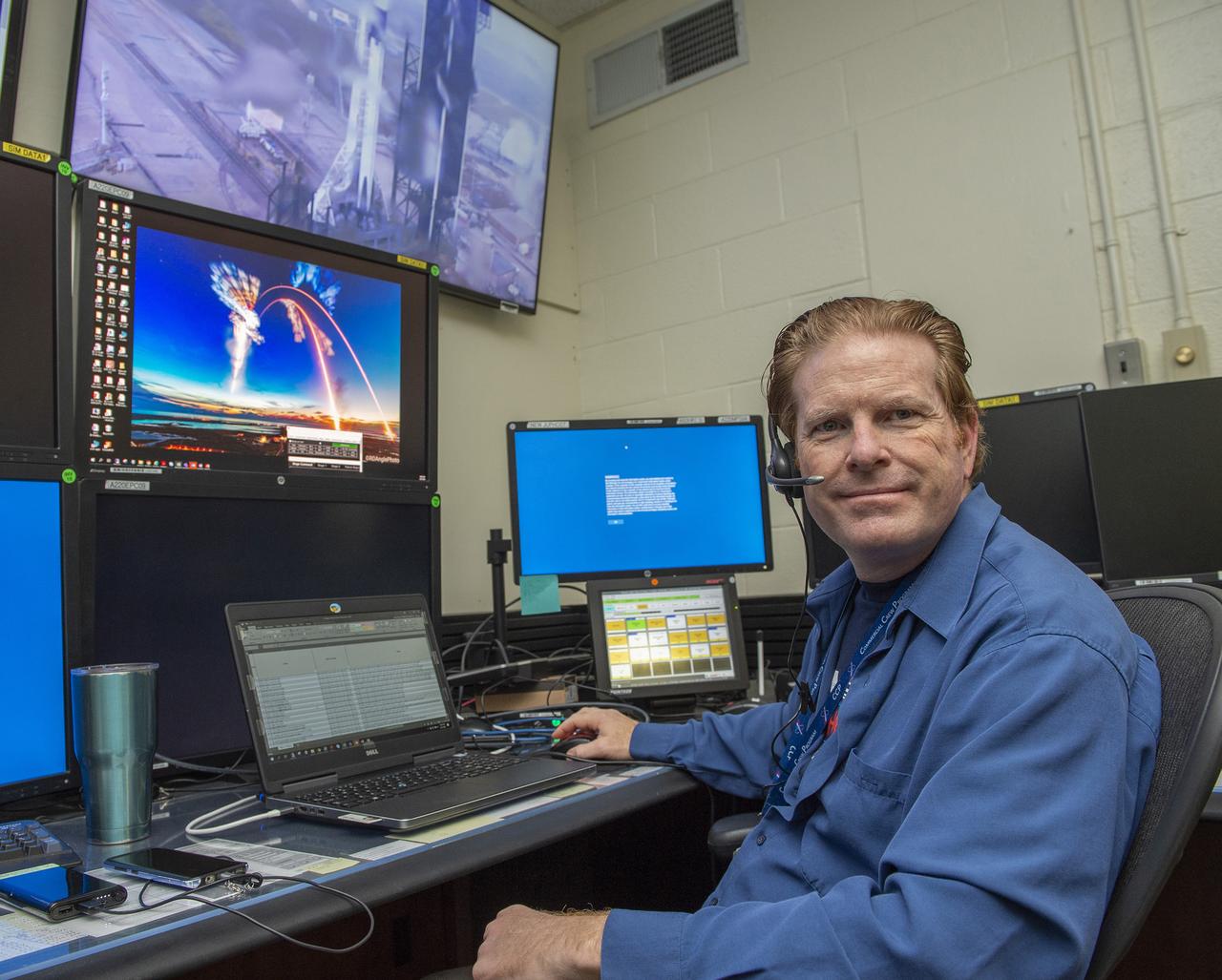
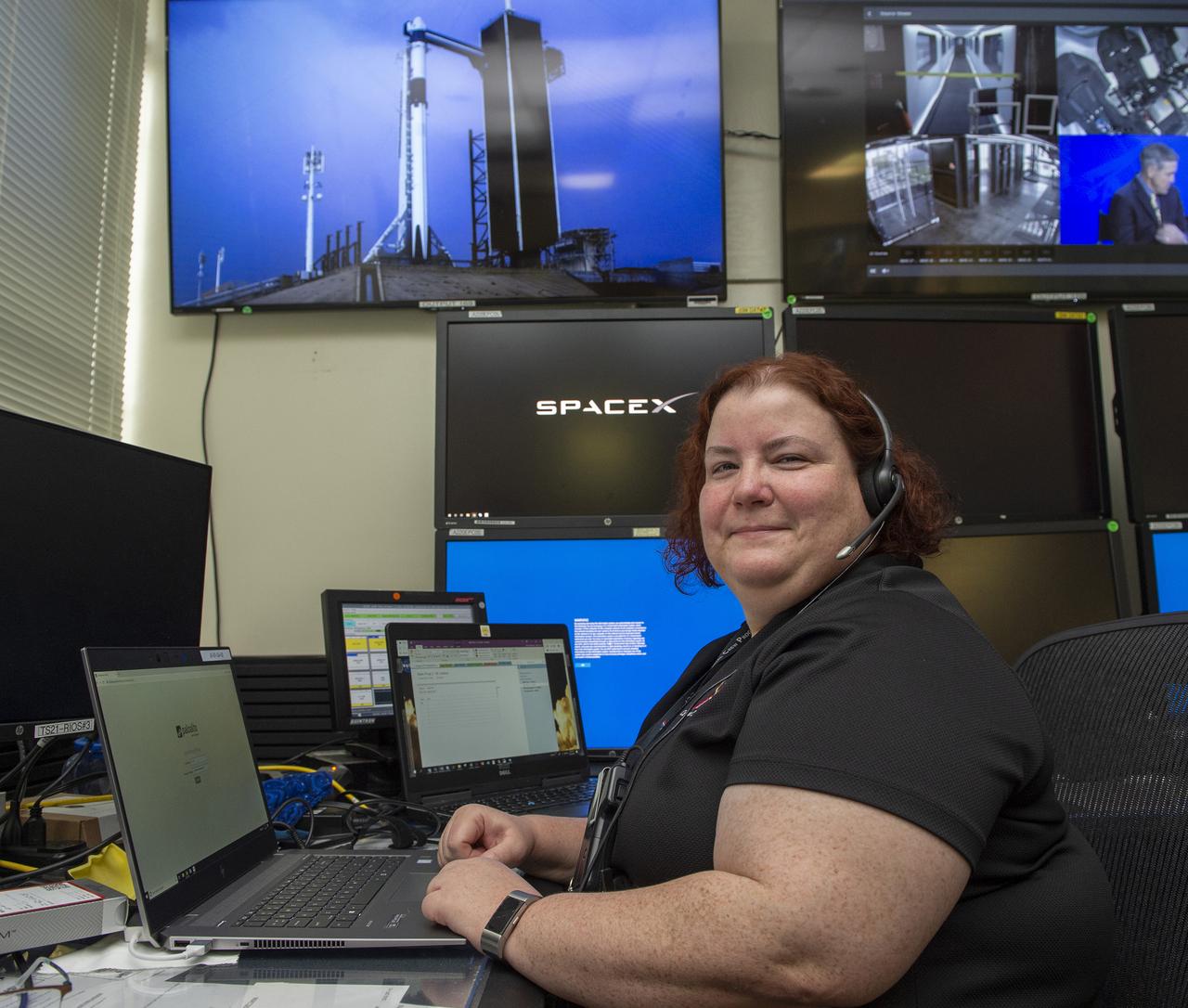
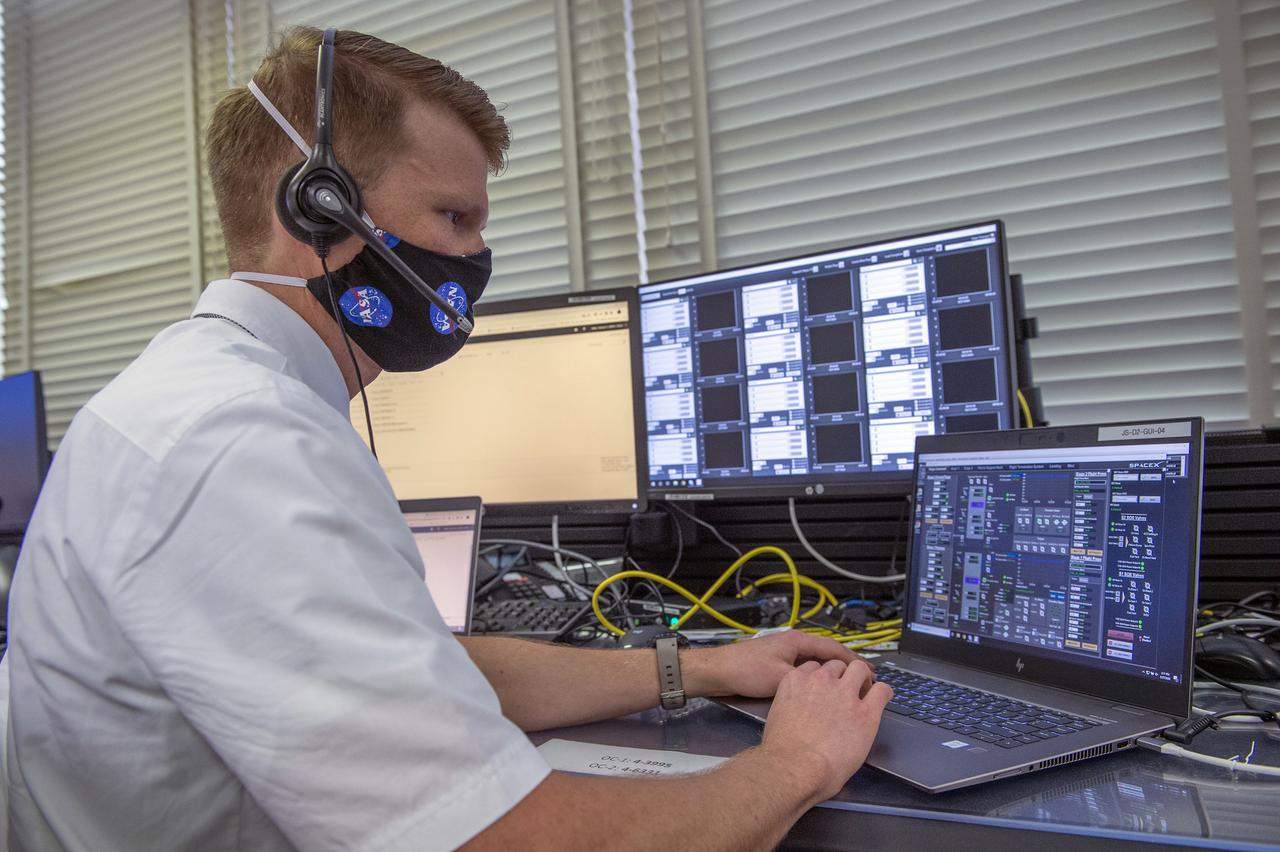
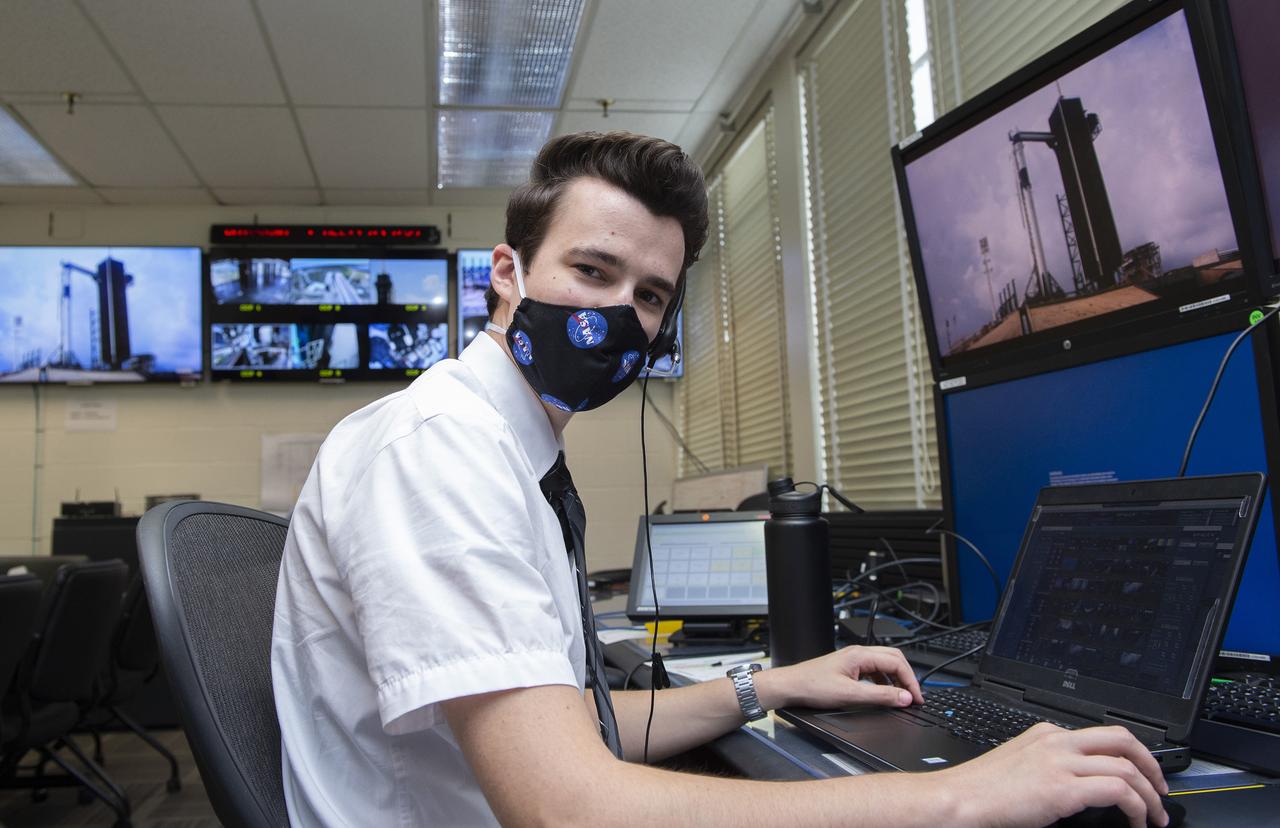
Stewart Whaley and teams at NASA’s Marshall Space Flight Center help monitor launch conditions for the Demo-2 mission from the Huntsville Operations Support Center, HOSC.
Reid Ruggles and teams at NASA’s Marshall Space Flight Center help monitor launch conditions for the Demo-2 mission from the Huntsville Operations Support Center, HOSC.
Sean Kenny and teams at NASA’s Marshall Space Flight Center help monitor launch conditions for the Demo-2 mission from the Huntsville Operations Support Center, HOSC.
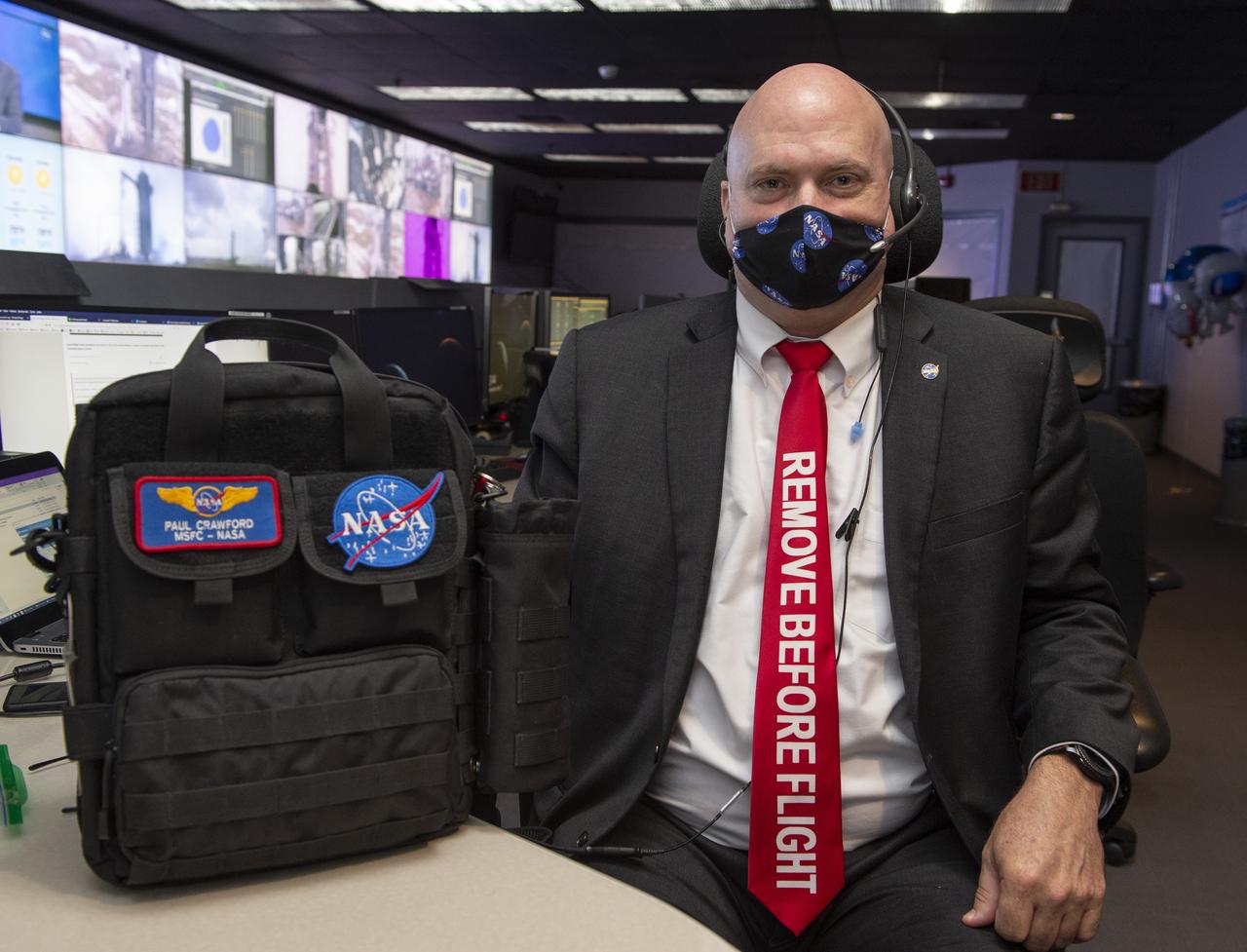
Paul Crawford and Teams at NASA’s Marshall Space Flight Center help monitor launch conditions for the Demo-2 mission from the Huntsville Operations Support Center, HOSC.
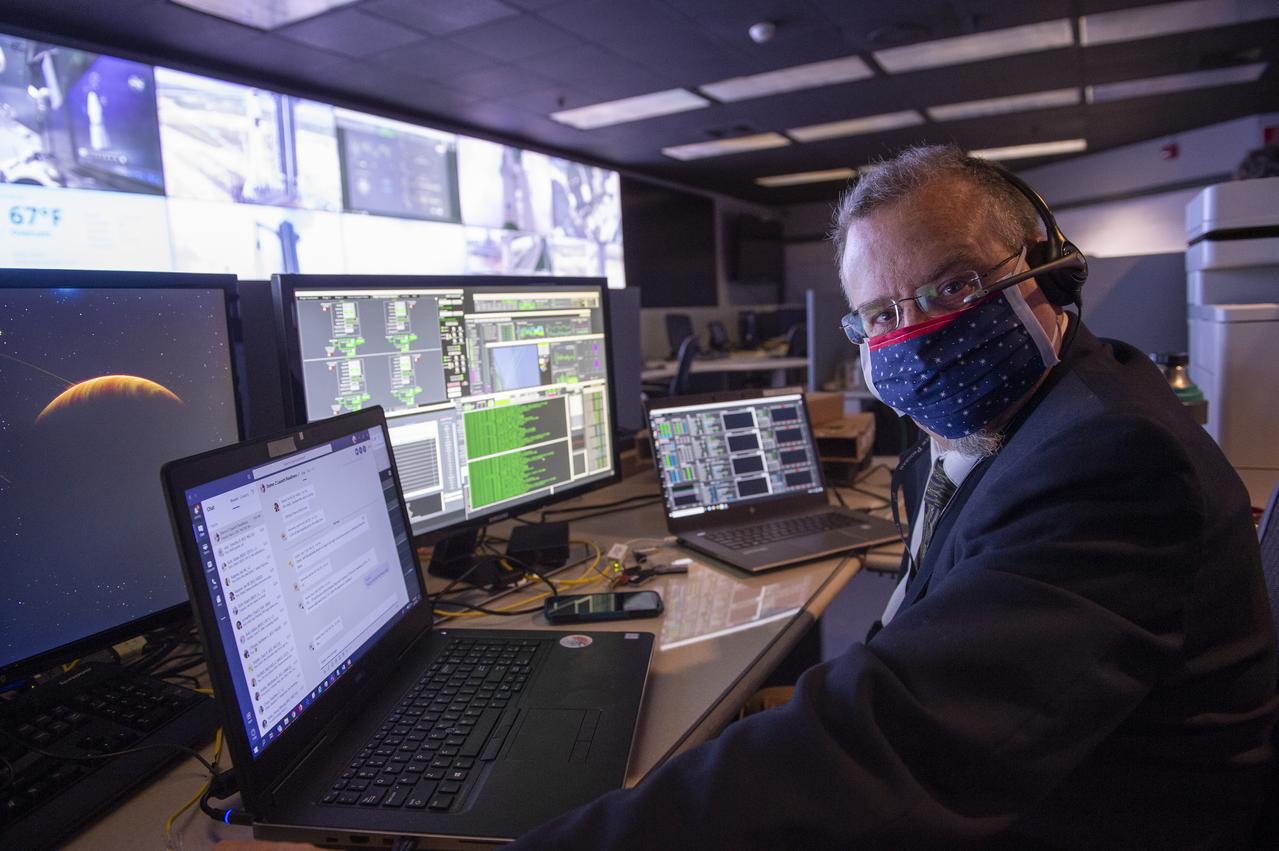
Steve Gaddis and teams at NASA’s Marshall Space Flight Center help monitor launch conditions for the Demo-2 mission from the Huntsville Operations Support Center, HOSC.
Steve Gaddis and Teams at NASA’s Marshall Space Flight Center help monitor launch conditions for the Demo-2 mission from the Huntsville Operations Support Center, HOSC.
Adam Butt andTeams at NASA’s Marshall Space Flight Center help monitor launch conditions for the Demo-2 mission from the Huntsville Operations Support Center, HOSC.
Adam Butt and Teams at NASA’s Marshall Space Flight Center help monitor launch conditions for the Demo-2 mission from the Huntsville Operations Support Center, HOSC.
Steve Gaddis and teams  at NASA’s Marshall Space Flight Center help monitor launch conditions for the Demo-2 mission from the Huntsville Operations Support Center, HOSC.
Steve Gaddis and teams at NASA’s Marshall Space Flight Center help monitor launch conditions for the Demo-2 mission from the Huntsville Operations Support Center, HOSC.
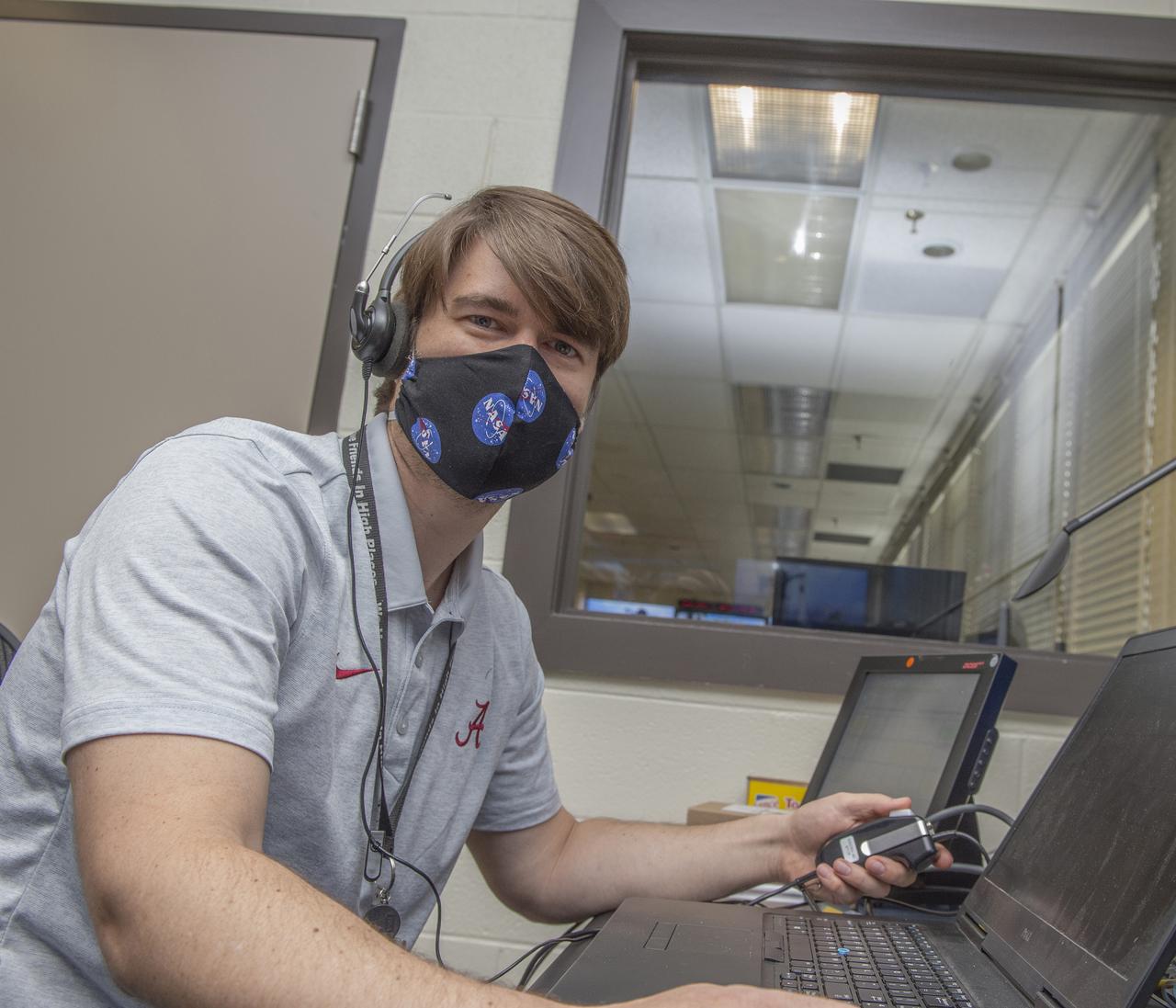
Miranda Holton and teams at NASA’s Marshall Space Flight Center help monitor launch conditions for the Demo-2 mission from the Huntsville Operations Support Center, HOSC.
Reid Ruggles and teams at NASA’s Marshall Space Flight Center help monitor launch conditions for the Demo-2 mission from the Huntsville Operations Support Center, HOSC.
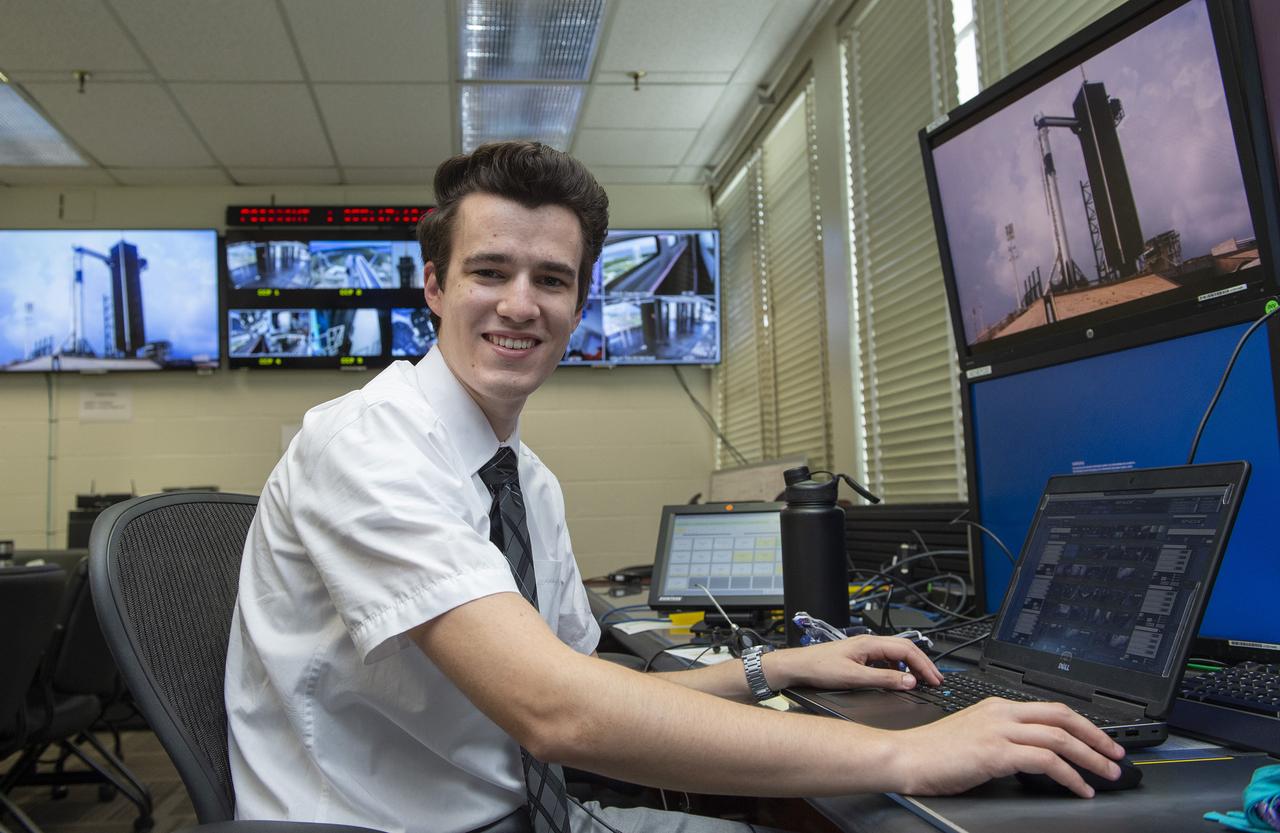
Amanda Stein and teams at NASA’s Marshall Space Flight Center help monitor launch conditions for the Demo-2 mission from the Huntsville Operations Support Center, HOSC.
Jimmy Moore and teams at NASA’s Marshall Space Flight Center help monitor launch conditions for the Demo-2 mission from the Huntsville Operations Support Center, HOSC.
Paul Crawford andTeams at NASA’s Marshall Space Flight Center help monitor launch conditions for the Demo-2 mission from the Huntsville Operations Support Center, HOSC.
Paul Crawford and Teams at NASA’s Marshall Space Flight Center help monitor launch conditions for the Demo-2 mission from the Huntsville Operations Support Center, HOSC.
Paul Crawford and  teams at NASA’s Marshall Space Flight Center help monitor launch conditions for the Demo-2 mission from the Huntsville Operations Support Center, HOSC.
Paul Crawford and teams at NASA’s Marshall Space Flight Center help monitor launch conditions for the Demo-2 mission from the Huntsville Operations Support Center, HOSC.
Amanda Stein and teams at NASA’s Marshall Space Flight Center help monitor launch conditions for the Demo-2 mission from the Huntsville Operations Support Center, HOSC.
Amanda Stein and eams at NASA’s Marshall Space Flight Center help monitor launch conditions for the Demo-2 mission from the Huntsville Operations Support Center, HOSC.
Patrick Mills and teams at NASA’s Marshall Space Flight Center help monitor launch conditions for the Demo-2 mission from the Huntsville Operations Support Center, HOSC.
Reid Ruggles and teams at NASA’s Marshall Space Flight Center help monitor launch conditions for the Demo-2 mission from the Huntsville Operations Support Center, HOSC.
Steve Gaddis and teams at NASA’s Marshall Space Flight Center help monitor launch conditions for the Demo-2 mission from the Huntsville Operations Support Center, HOSC.
Ken Schrock and teams at NASA’s Marshall Space Flight Center help monitor launch conditions for the Demo-2 mission from the Huntsville Operations Support Center, HOSC.
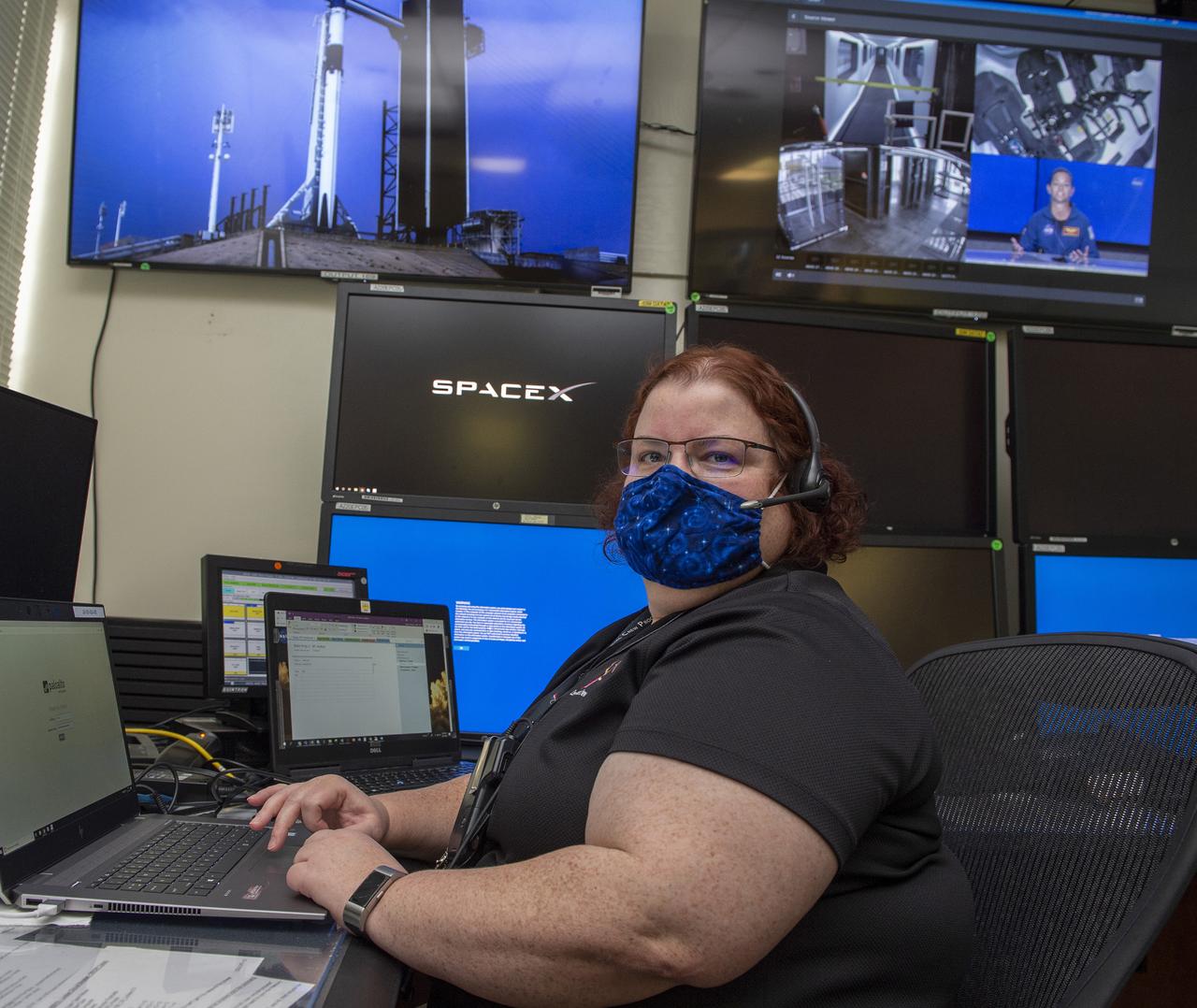
Miranda Holton and teams at NASA’s Marshall Space Flight Center help monitor launch conditions for the Demo-2 mission from the Huntsville Operations Support Center, HOSC.
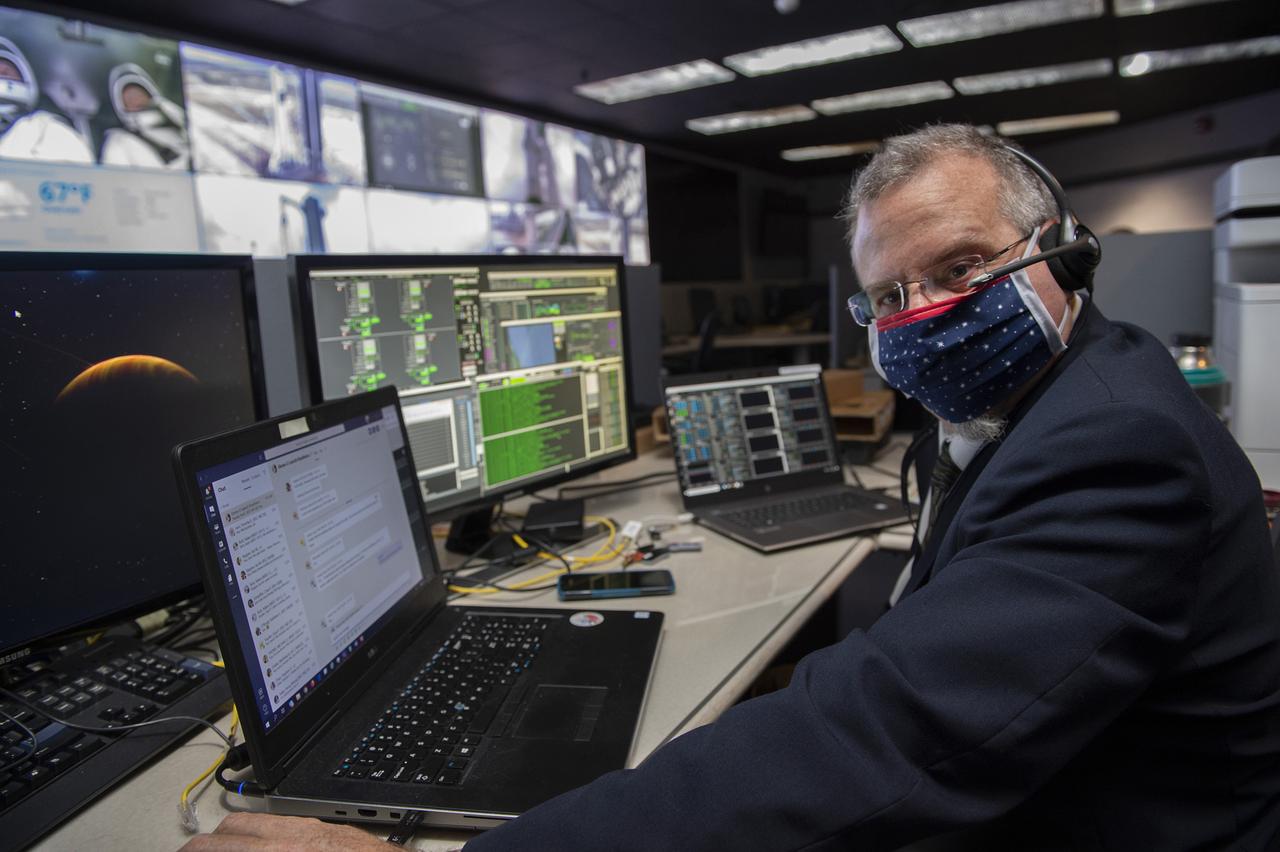
Deborah Crane andTeams at NASA’s Marshall Space Flight Center help monitor launch conditions for the Demo-2 mission from the Huntsville Operations Support Center, HOSC.
Deborah Crane and Teams at NASA’s Marshall Space Flight Center help monitor launch conditions for the Demo-2 mission from the Huntsville Operations Support Center, HOSC.
Steve Gaddis and teams at NASA’s Marshall Space Flight Center help monitor launch conditions for the Demo-2 mission from the Huntsville Operations Support Center, HOSC.
Steve Gaddis and teamsat NASA’s Marshall Space Flight Center help monitor launch conditions for the Demo-2 mission from the Huntsville Operations Support Center, HOSC.
Deborah Crane and Teams at NASA’s Marshall Space Flight Center help monitor launch conditions for the Demo-2 mission from the Huntsville Operations Support Center, HOSC.
Ken Schrock and teams at NASA’s Marshall Space Flight Center help monitor launch conditions for the Demo-2 mission from the Huntsville Operations Support Center, HOSC.
Jimmy Moore and teams at NASA’s Marshall Space Flight Center help monitor launch conditions for the Demo-2 mission from the Huntsville Operations Support Center, HOSC.
Adam Butt andTeams at NASA’s Marshall Space Flight Center help monitor launch conditions for the Demo-2 mission from the Huntsville Operations Support Center, HOSC.
Adam Butt and Teams at NASA’s Marshall Space Flight Center help monitor launch conditions for the Demo-2 mission from the Huntsville Operations Support Center, HOSC.
Ken Schrock and teams at NASA’s Marshall Space Flight Center help monitor launch conditions for the Demo-2 mission from the Huntsville Operations Support Center, HOSC.
Patrick Mills and teams at NASA’s Marshall Space Flight Center help monitor launch conditions for the Demo-2 mission from the Huntsville Operations Support Center, HOSC.
Stewart Whaley and teams  at NASA’s Marshall Space Flight Center help monitor launch conditions for the Demo-2 mission from the Huntsville Operations Support Center, HOSC.
Stewart Whaley and teams at NASA’s Marshall Space Flight Center help monitor launch conditions for the Demo-2 mission from the Huntsville Operations Support Center, HOSC.
 Steve Gaddis and teams at NASA’s Marshall Space Flight Center help monitor launch conditions for the Demo-2 mission from the Huntsville Operations Support Center, HOSC.
Steve Gaddis and teams at NASA’s Marshall Space Flight Center help monitor launch conditions for the Demo-2 mission from the Huntsville Operations Support Center, HOSC.
Stewart Whaley and teams at NASA’s Marshall Space Flight Center help monitor launch conditions for the Demo-2 mission from the Huntsville Operations Support Center, HOSC.
Sean Kenny and teams at NASA’s Marshall Space Flight Center help monitor launch conditions for the Demo-2 mission from the Huntsville Operations Support Center, HOSC.
Steve Gaddis and Teams at NASA’s Marshall Space Flight Center help monitor launch conditions for the Demo-2 mission from the Huntsville Operations Support Center, HOSC.
Sean Kenny and teams at NASA’s Marshall Space Flight Center help monitor launch conditions for the Demo-2 mission from the Huntsville Operations Support Center, HOSC.
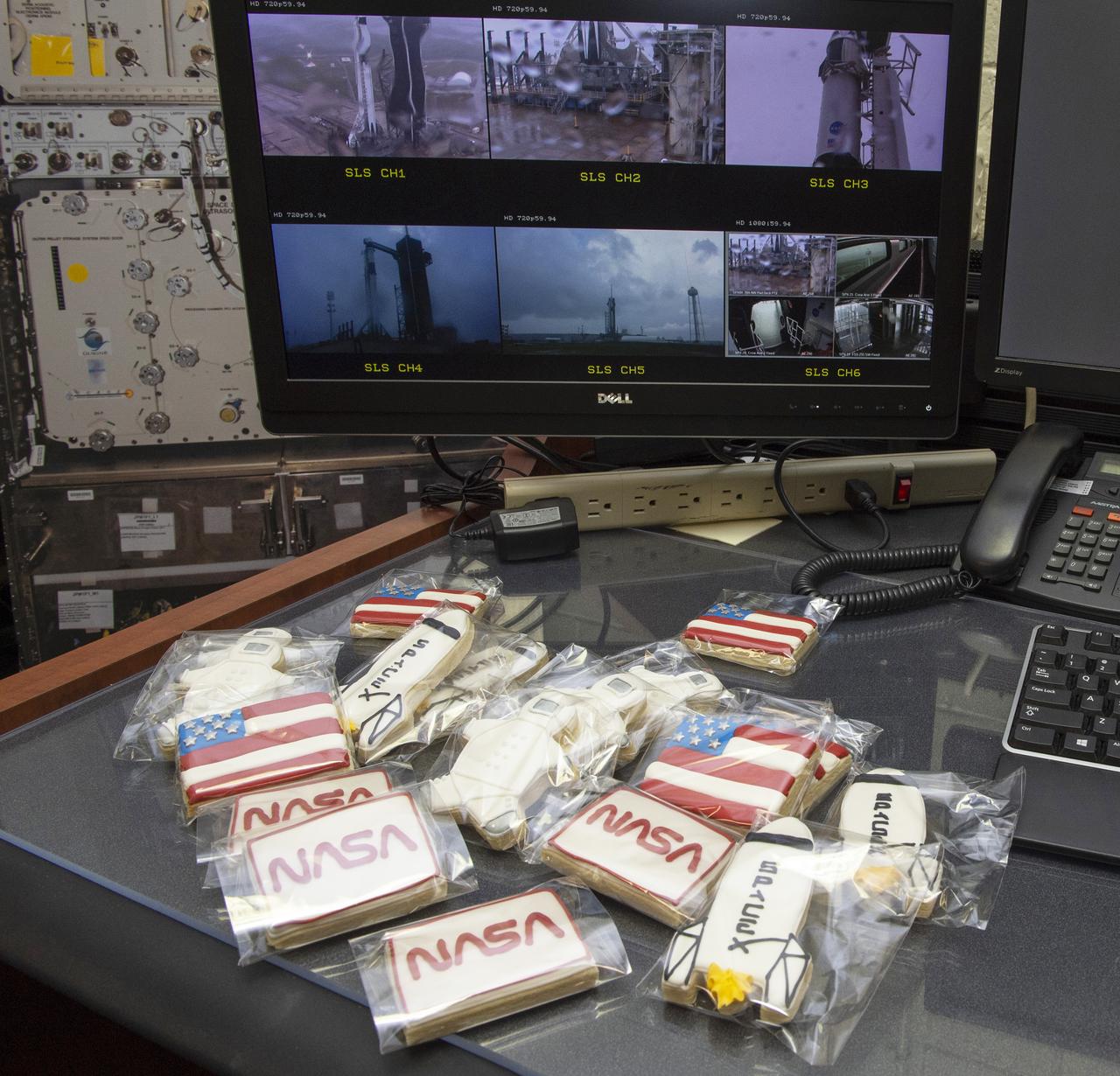
NASA themed cookies for teams at NASA’s Marshall Space Flight Center help monitor launch conditions for the Demo-2 mission from the Huntsville Operations Support Center, HOSC.
 Reid Ruggles and teams at NASA’s Marshall Space Flight Center help monitor launch conditions for the Demo-2 mission from the Huntsville Operations Support Center, HOSC.
Reid Ruggles and teams at NASA’s Marshall Space Flight Center help monitor launch conditions for the Demo-2 mission from the Huntsville Operations Support Center, HOSC.
Adam Butt andTeams at NASA’s Marshall Space Flight Center help monitor launch conditions for the Demo-2 mission from the Huntsville Operations Support Center, HOSC.
Adam Butt and Teams at NASA’s Marshall Space Flight Center help monitor launch conditions for the Demo-2 mission from the Huntsville Operations Support Center, HOSC.
Ken Schrock, Paul Crawford, Adam Butt, and teams at NASA’s Marshall Space Flight Center help monitor launch conditions for the Demo-2 mission from the Huntsville Operations Support Center, HOSC.
Stewart Whaley, Cameron Muelling, foreground, and teams  at NASA’s Marshall Space Flight Center help monitor launch conditions for the Demo-2 mission from the Huntsville Operations Support Center, HOSC.
Stewart Whaley, Cameron Muelling, foreground, and teams at NASA’s Marshall Space Flight Center help monitor launch conditions for the Demo-2 mission from the Huntsville Operations Support Center, HOSC.
Preston Jones, Deborah Crane, and teams at NASA’s Marshall Space Flight Center help monitor launch conditions for the Demo-2 mission from the Huntsville Operations Support Center, HOSC.
Patrick Mills, Stewart Whaley, Cameron Muelling and teams at NASA’s Marshall Space Flight Center help monitor launch conditions for the Demo-2 mission from the Huntsville Operations Support Center, HOSC.
Stewart Whaley, Cameron Muelling, foreground, and teams at NASA’s Marshall Space Flight Center help monitor launch conditions for the Demo-2 mission from the Huntsville Operations Support Center, HOSC.
Preston Jones, Deborah Crane, Adam Butt, and teams at NASA’s Marshall Space Flight Center help monitor launch conditions for the Demo-2 mission from the Huntsville Operations Support Center, HOSC.
 Stewart Whaley, Cameron Muelling, foreground, and teamsat NASA’s Marshall Space Flight Center help monitor launch conditions for the Demo-2 mission from the Huntsville Operations Support Center, HOSC.
Stewart Whaley, Cameron Muelling, foreground, and teams at NASA’s Marshall Space Flight Center help monitor launch conditions for the Demo-2 mission from the Huntsville Operations Support Center, HOSC.
Janet Anderson, Paul Crawford, and teams at NASA’s Marshall Space Flight Center help monitor launch conditions for the Demo-2 mission from the Huntsville Operations Support Center, HOSC.
Amanda Stein, Patrick Mills, Stewart Whaley, Cameron Muelling and teams at NASA’s Marshall Space Flight Center help monitor launch conditions for the Demo-2 mission from the Huntsville Operations Support Center, HOSC.
Amanda Stein, Patrick Mills, Stewart Whaley, Cameron Muelling and Teams at NASA’s Marshall Space Flight Center help monitor launch conditions for the Demo-2 mission from the Huntsville Operations Support Center, HOSC.
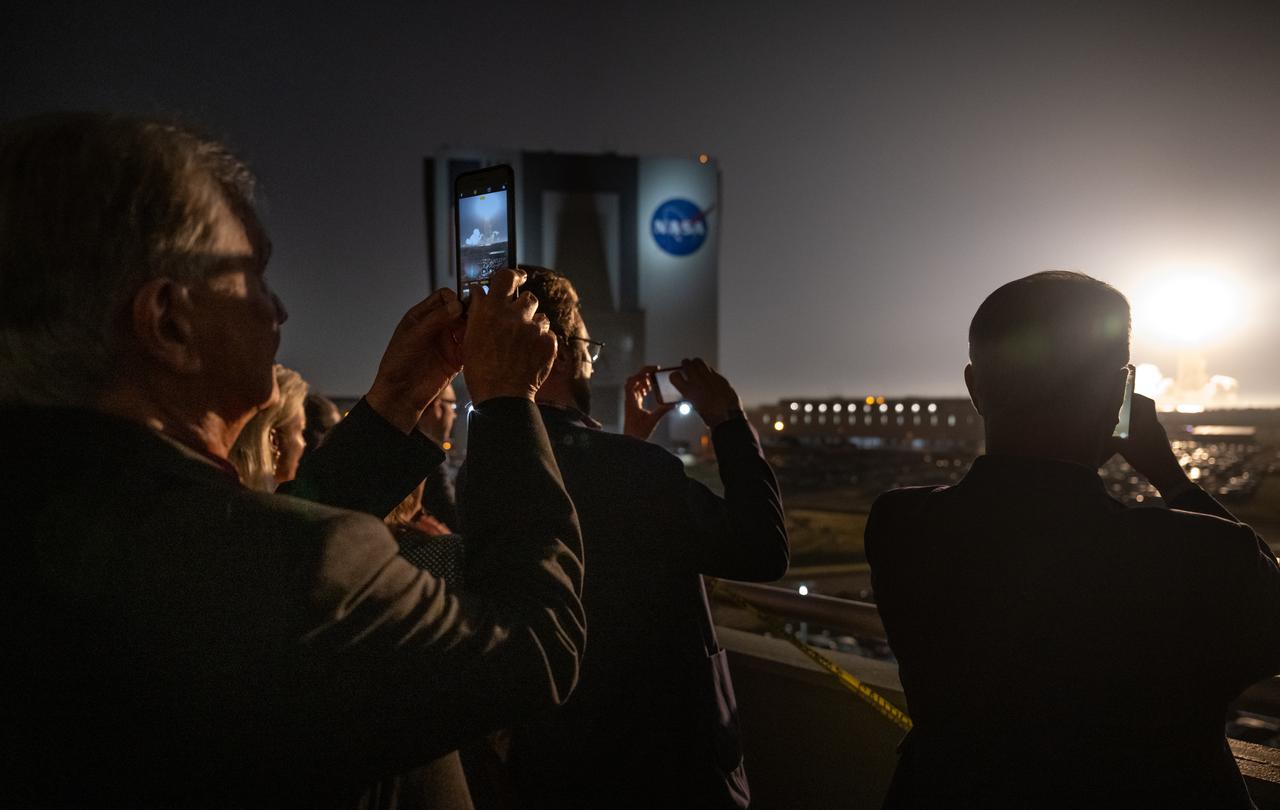
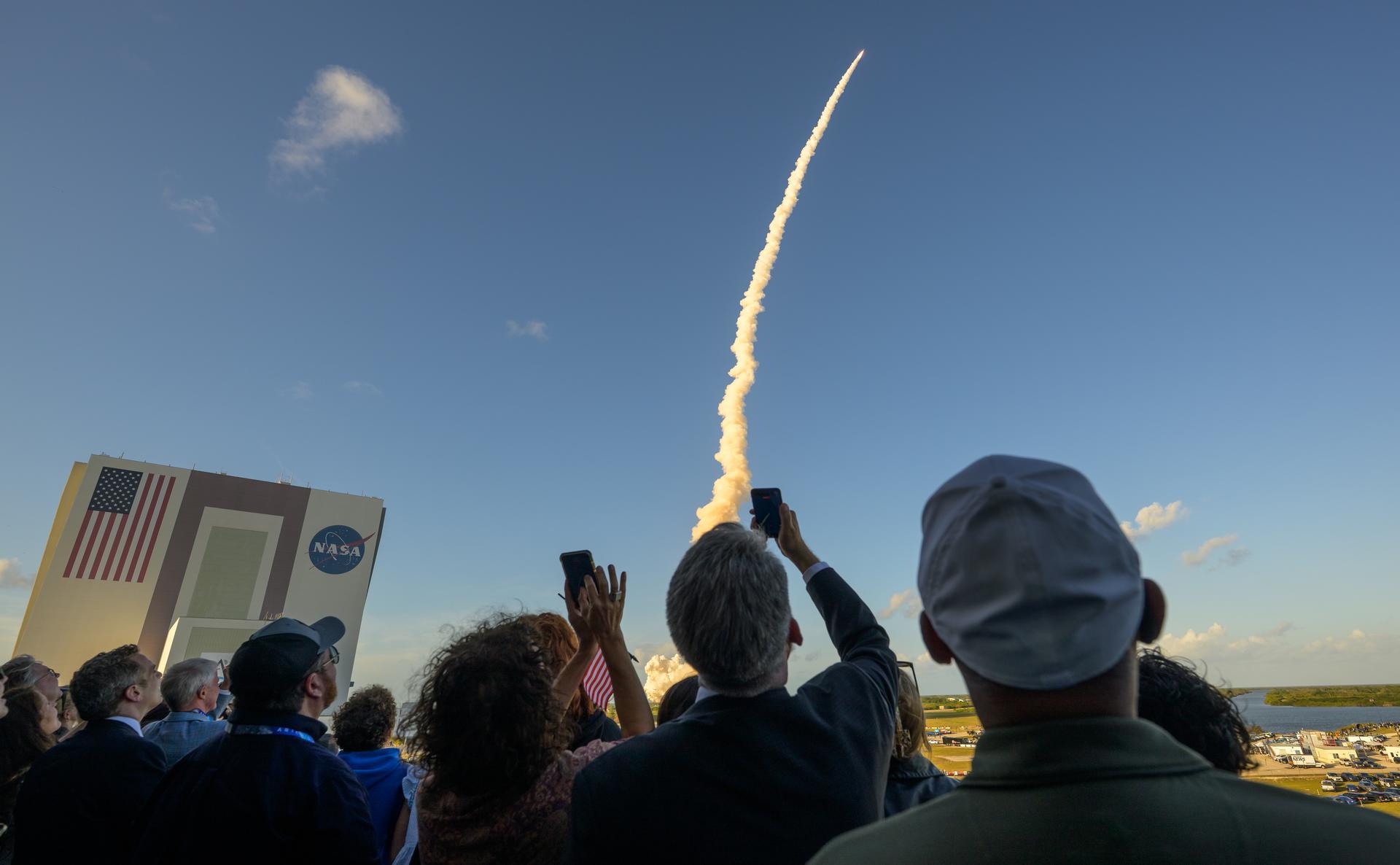
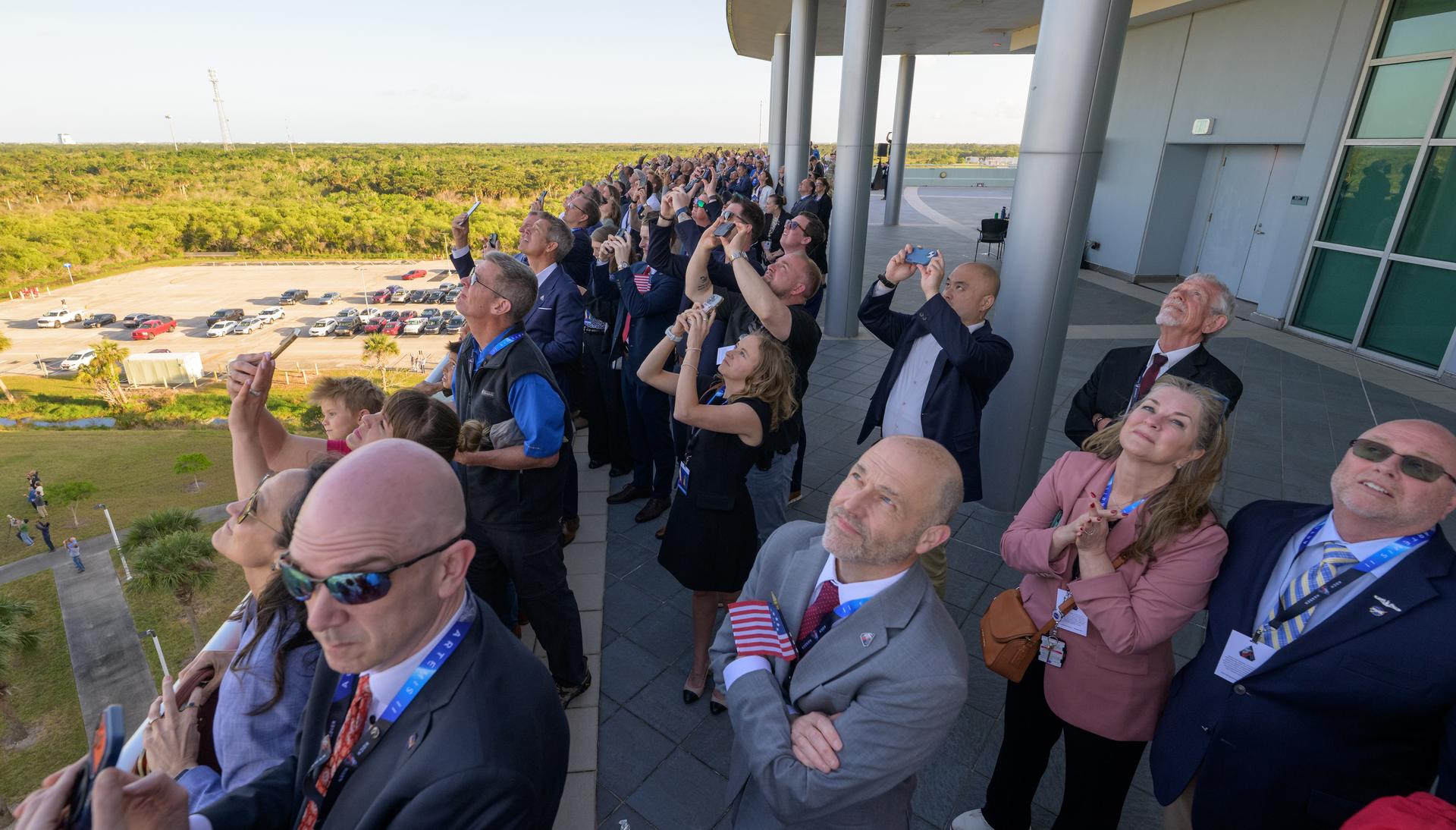
Guests watch the launch of NASA’s Space Launch System rocket carrying the Orion spacecraft on the Artemis I flight test, Wednesday, Nov. 16, 2022, from Operations and Support Building II at NASA’s Kennedy Space Center in Florida. NASA’s Artemis I flight test is the first integrated flight test of the agency’s deep space exploration systems: the Orion spacecraft, Space Launch System (SLS) rocket, and ground systems. SLS and Orion launched at 1:47 a.m. EST, from Launch Pad 39B at the Kennedy Space Center. Photo Credit: (NASA/Bill Ingalls)
Artemis I Launch
Guests watch the launch of NASA’s Space Launch System rocket carrying the Orion spacecraft on the Artemis I flight test, Wednesday, Nov. 16, 2022, from Operations and Support Building II at NASA’s Kennedy Space Center in Florida. NASA’s Artemis I flight test is the first integrated flight test of the agency’s deep space exploration systems: the Orion spacecraft, Space Launch System (SLS) rocket, and ground systems. SLS and Orion launched at 1:47 a.m. EST, from Launch Pad 39B at the Kennedy Space Center. Photo Credit: (NASA/Bill Ingalls)
Artemis I Launch
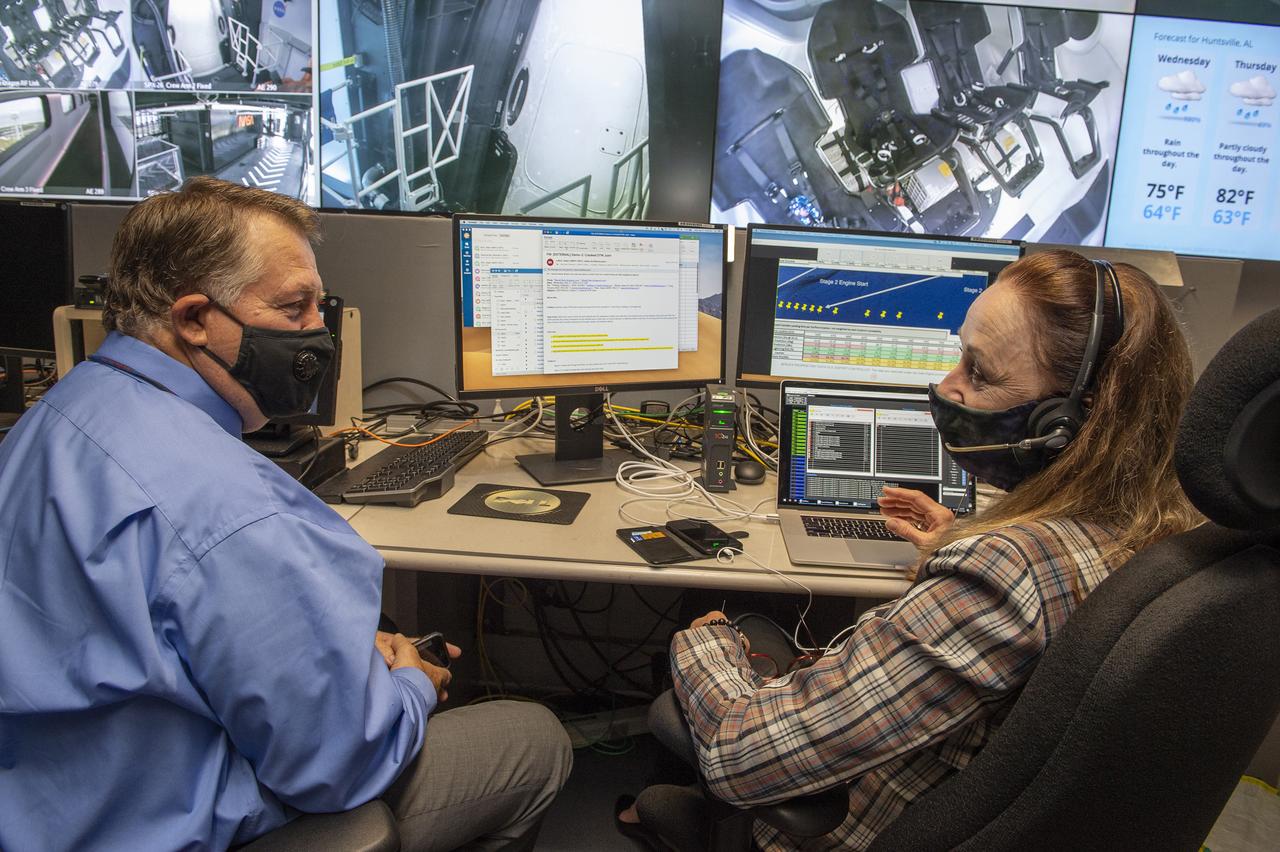
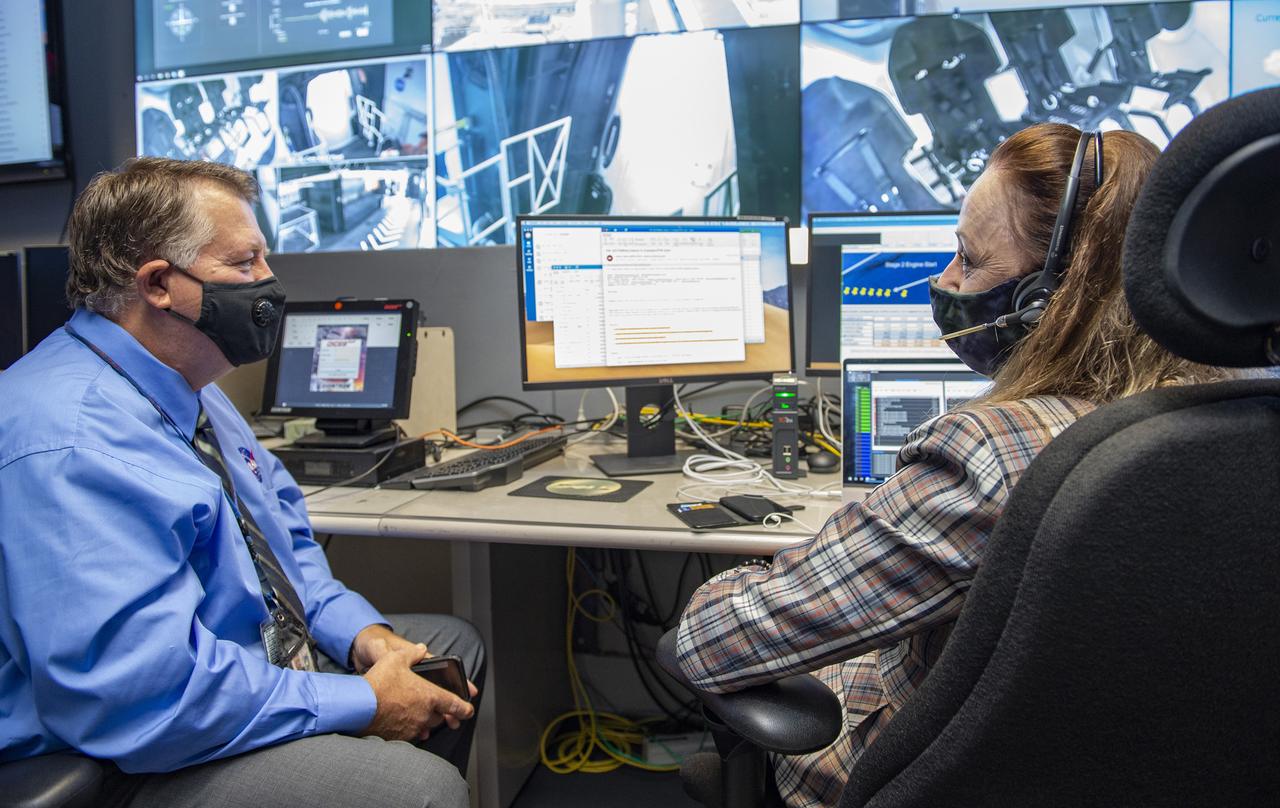
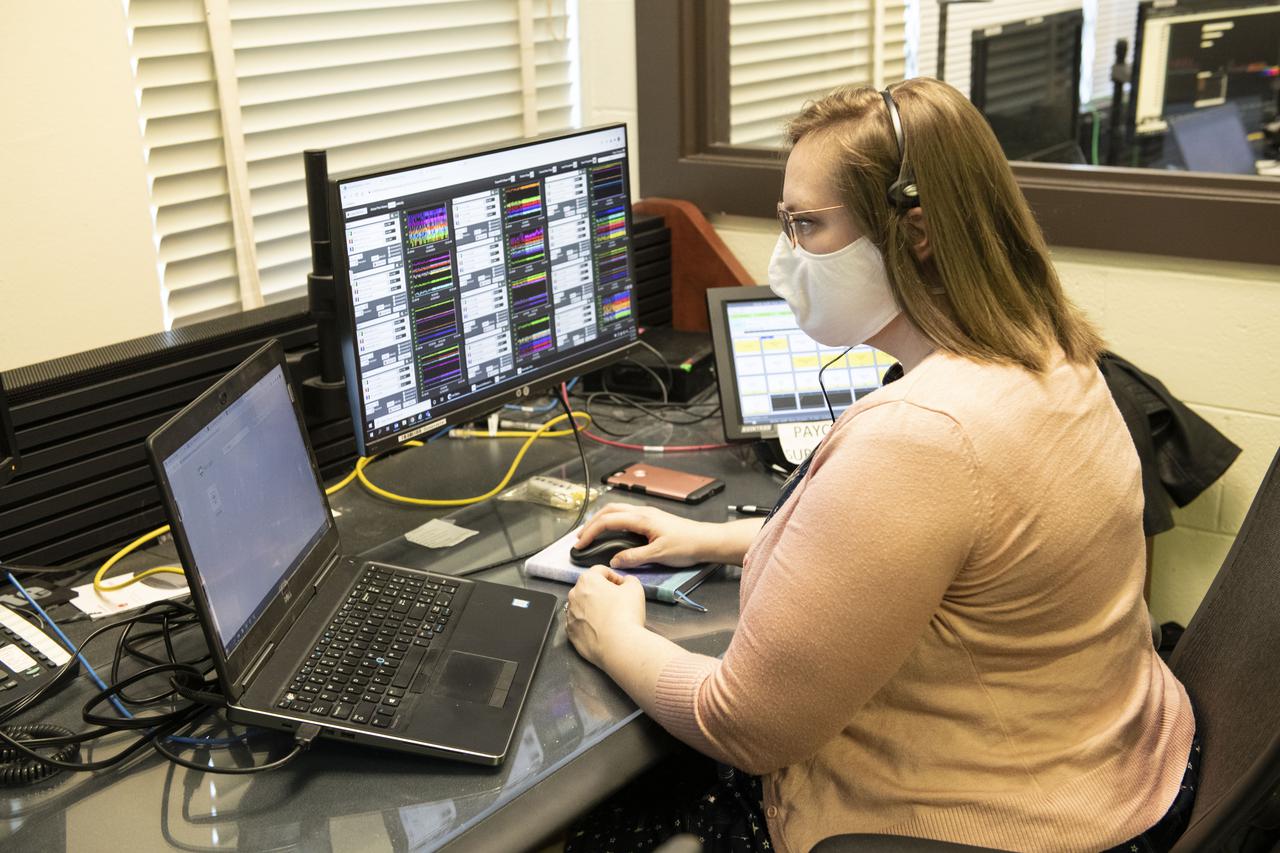
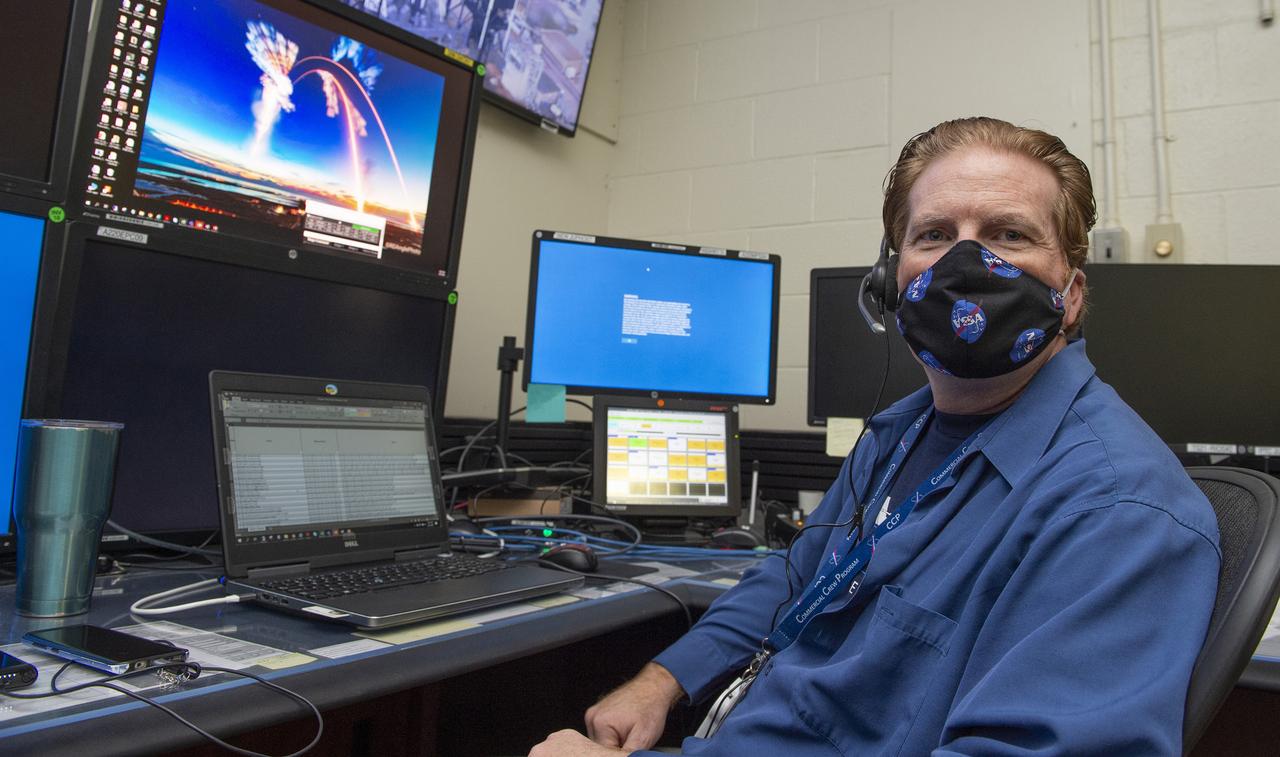
Teams at NASA’s Marshall Space Flight Center help monitor launch conditions for the Crew 1 mission from the Huntsville Operations Support Center in Huntsville, Alabama. SpaceX will launch a Falcon 9 rocket carrying NASA astronauts aboard the company’s Crew Dragon spacecraft to the International Space Station on Nov. 15, 2020.    The Marshall team is supporting flight control teams working with NASA’s Johnson Space Center in Houston, Texas, NASA’s Kennedy Space Center in Cape Canaveral, Florida, and SpaceX headquarters in Hawthorne, California, as they monitor the different phases of the upcoming mission. Engineers and technicians at Marshall will use headsets and loops to communicate with the multiple locations on console for the launch.
Crystal Klemmer, an Aerodyne Industries engineer at Marshall, monitors the Crew-1 launch from the mission control room in Marshall’s Huntsville Operations Support Center.
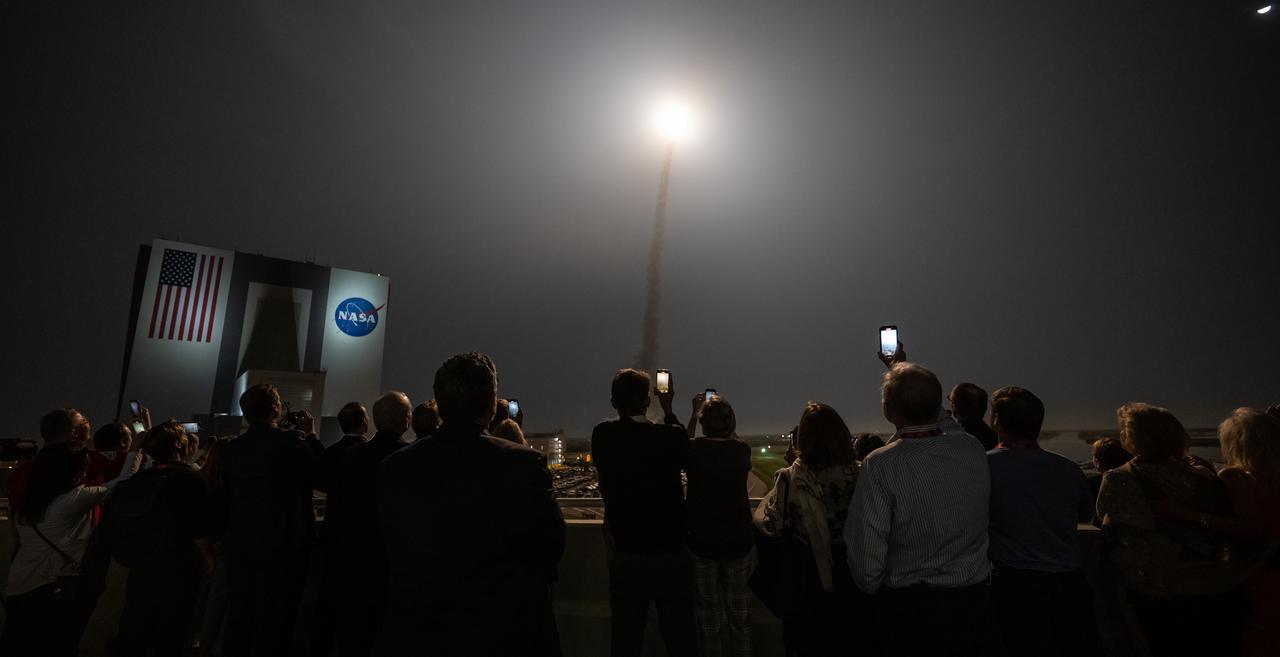
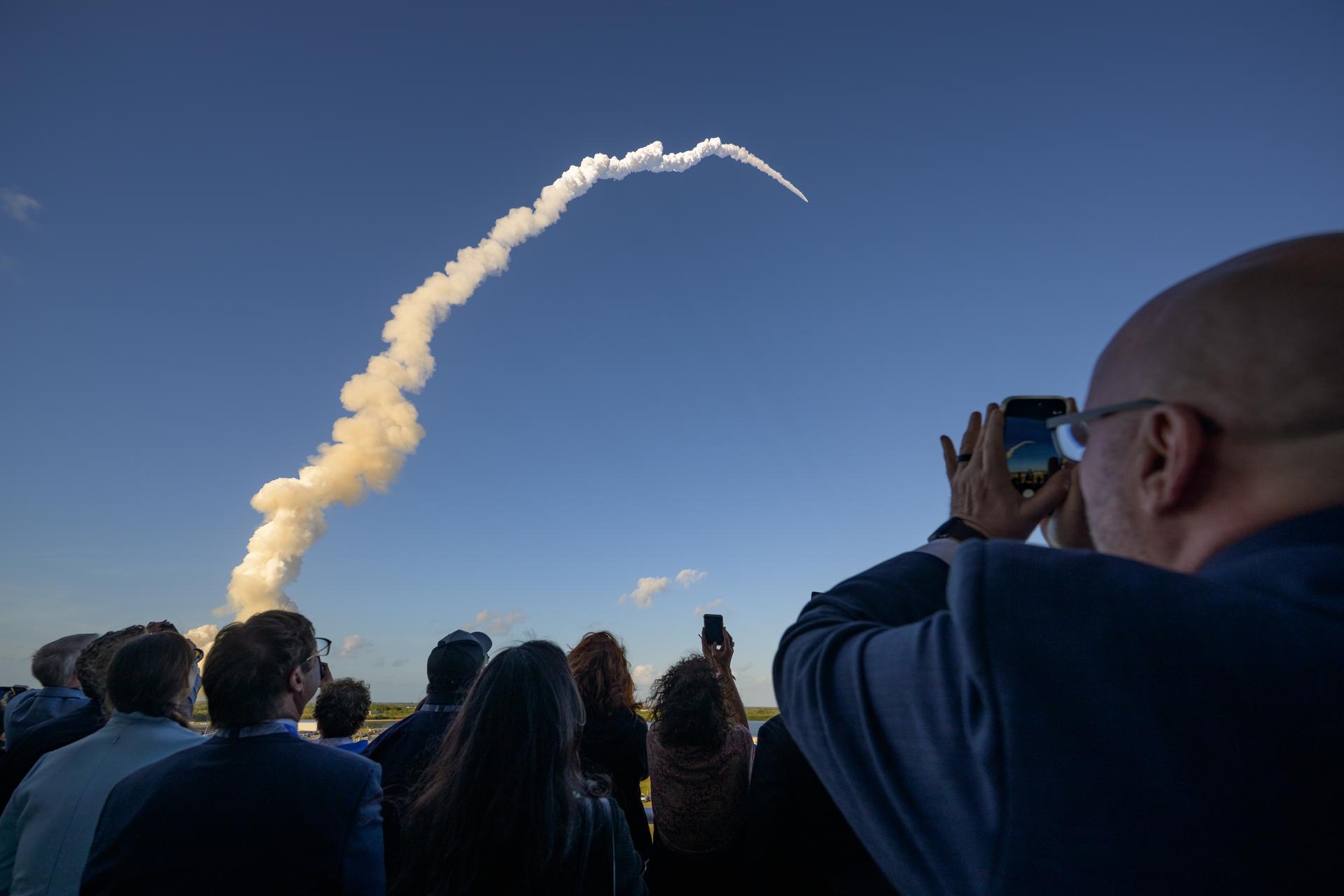
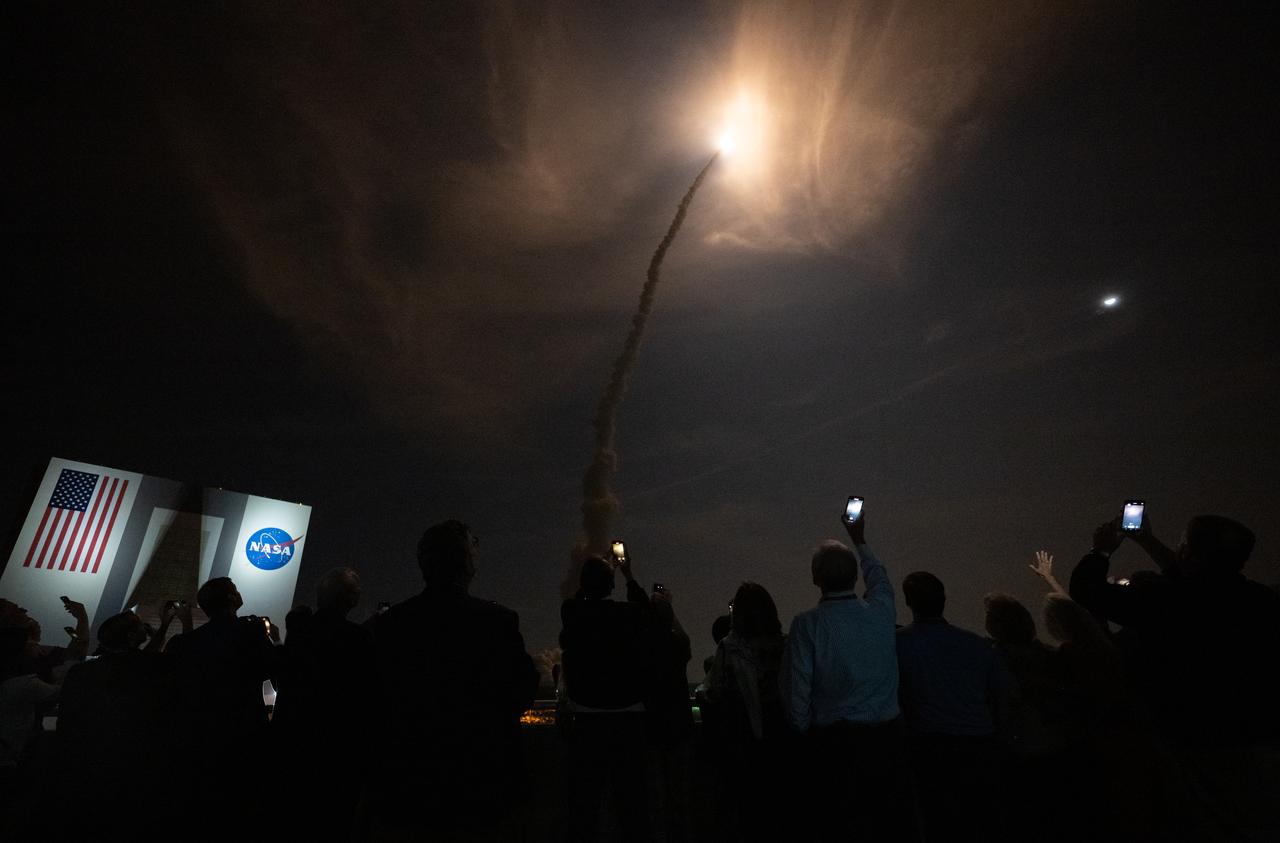
Guests watch the launch of NASA’s Space Launch System rocket carrying the Orion spacecraft on the Artemis I flight test, Wednesday, Nov. 16, 2022, from Operations and Support Building II at NASA’s Kennedy Space Center in Florida. NASA’s Artemis I flight test is the first integrated flight test of the agency’s deep space exploration systems: the Orion spacecraft, Space Launch System (SLS) rocket, and ground systems. SLS and Orion launched at 1:47 a.m. EST, from Launch Pad 39B at the Kennedy Space Center. The Moon is in the upper right. Photo Credit: (NASA/Bill Ingalls)
Artemis I Launch
Guests watch the launch of NASA’s Space Launch System rocket carrying the Orion spacecraft on the Artemis I flight test, Wednesday, Nov. 16, 2022, from Operations and Support Building II at NASA’s Kennedy Space Center in Florida. NASA’s Artemis I flight test is the first integrated flight test of the agency’s deep space exploration systems: the Orion spacecraft, Space Launch System (SLS) rocket, and ground systems. SLS and Orion launched at 1:47 a.m. EST, from Launch Pad 39B at the Kennedy Space Center. The Moon is in the upper right. Photo Credit: (NASA/Bill Ingalls)
Artemis I Launch
Vice President Kamala Harris answers questions from the media, Monday, Aug. 29, 2022, at the Operations and Support Building II at NASA’s Kennedy Space Center in Florida. The Vice President was to watch the launch of NASA’s Space Launch System rocket carrying the Orion spacecraft on the Artemis I flight test, however the launch attempt was halted at approximately 8:30 a.m. ET. Photo Credit: (NASA/Bill Ingalls)
Artemis I Preflight
Guests view space shuttle Endeavour (STS-134) as it launches skyward from the balcony of the Operations Support Building II (OSB-II), Monday, May 16, 2011, at Kennedy Space Center in Cape Canaveral, Fla. During the 16-day mission, Endeavour, with Commander Mark Kelly, Pilot Gregory H. Johnson, Mission Specialists Michael Fincke, Greg Chamitoff, Andrew Feustel and European Space Agency astronaut Robert Vittori will deliver the Alpha Magnetic Spectrometer (AMS) and spare parts including two S-band communications antennas, a high-pressure gas tank and additional spare parts for Dextre. Photo Credit: (NASA/Paul E. Alers)
STS-134 Liftoff
KENNEDY SPACE CENTER, FLA. -   Workers calibrate a tracking telescope, part of the Distant Object Attitude Measurement System (DOAMS),  located in Cocoa Beach, Fla.  The telescope provides optical support for launches from KSC and Cape Canaveral.
KENNEDY SPACE CENTER, FLA. - Workers calibrate a tracking telescope, part of the Distant Object Attitude Measurement System (DOAMS), located in Cocoa Beach, Fla. The telescope provides optical support for launches from KSC and Cape Canaveral.
KENNEDY SPACE CENTER, FLA. -  Workers calibrate a tracking telescope, part of the Distant Object Attitude Measurement System (DOAMS),  located in Cocoa Beach, Fla.  The telescope provides optical support for launches from KSC and Cape Canaveral.
KENNEDY SPACE CENTER, FLA. - Workers calibrate a tracking telescope, part of the Distant Object Attitude Measurement System (DOAMS), located in Cocoa Beach, Fla. The telescope provides optical support for launches from KSC and Cape Canaveral.
KENNEDY SPACE CENTER, FLA. - A worker calibrates a tracking telescope, part of the Distant Object Attitude Measurement System (DOAMS),  located in Cocoa Beach, Fla.  The telescope provides optical support for launches from KSC and Cape Canaveral.
KENNEDY SPACE CENTER, FLA. - A worker calibrates a tracking telescope, part of the Distant Object Attitude Measurement System (DOAMS), located in Cocoa Beach, Fla. The telescope provides optical support for launches from KSC and Cape Canaveral.
KENNEDY SPACE CENTER, FLA. - A worker calibrates a tracking telescope, part of the Distant Object Attitude Measurement System (DOAMS),  located in Cocoa Beach, Fla.  The telescope provides optical support for launches from KSC and Cape Canaveral.
KENNEDY SPACE CENTER, FLA. - A worker calibrates a tracking telescope, part of the Distant Object Attitude Measurement System (DOAMS), located in Cocoa Beach, Fla. The telescope provides optical support for launches from KSC and Cape Canaveral.
KENNEDY SPACE CENTER, FLA. -   Workers calibrate a tracking telescope, part of the Distant Object Attitude Measurement System (DOAMS),  located in Cocoa Beach, Fla.  The telescope provides optical support for launches from KSC and Cape Canaveral.
KENNEDY SPACE CENTER, FLA. - Workers calibrate a tracking telescope, part of the Distant Object Attitude Measurement System (DOAMS), located in Cocoa Beach, Fla. The telescope provides optical support for launches from KSC and Cape Canaveral.
JSC2007-E-41603 (8 August 2007) --- William Gerstenmaier (foreground),  NASA Associate Administrator for Space Operations, watches the launch of the Space Shuttle Endeavour, to get STS-118 underway,  from the Launch Control Center  August 8, 2007 at the Kennedy Space Center in Cape Canaveral, Fla. The shuttle lifted off from launch pad 39A at 6:36 p.m. (EDT). Photo Credit: NASA/Bill Ingalls
HSF Support - STS-118 Launch and Landing
Guests look on from the terrace of Operations Support Building II as space shuttle Endeavour launches from pad 39A on the STS-130 mission early Monday, Feb. 8, 2010, at Kennedy Space Center in Cape Canaveral, Fla. Endeavour and its crew will deliver to the International Space Station a third connecting module, the Italian-built Tranquility node and the seven-windowed cupola, which will be used as a control room for robotics. The mission will feature three spacewalks. Photo Credit: (NASA/Paul E. Alers)
STS-130 Endeavour Launch
IM-1, the first NASA Commercial Launch Program Services launch for Intuitive Machines’ Nova-C lunar lander, will carry multiple payloads to the Moon, including Lunar Node-1, demonstrating autonomous navigation via radio beacon to support precise geolocation and navigation among lunar orbiters, landers, and surface personnel. NASA’s CLPS initiative oversees industry development of small robotic landers and rovers to support NASA’s Artemis campaign.
Intuitive Machines’ Nova-C lunar lander
The engine vertical installer for NASA’s Space Launch System (SLS) arrives inside the Vehicle Assembly at NASA’s Kennedy Space Center in Florida on April 25, 2019. The engine installer arrived from the manufacturer, Precision Fabrication and Cleaning in Canaveral Groves, Florida. The new ground support equipment will be ready for preflight processing in the event one of the four RS-25 engines on the core stage of the SLS rocket needs to be replaced. During launch of the SLS and Orion spacecraft, the four core stage engines will provide the thrust needed to lift the rocket and Orion spacecraft off Launch Pad 39B at Kennedy for Exploration Mission-1. The uncrewed Orion will travel on a three-week test mission thousands of miles beyond the Moon and back to Earth for a splashdown in the Pacific Ocean.

Engine Vertical Installer Arrival
The engine vertical installer for NASA’s Space Launch System (SLS) arrives inside the Vehicle Assembly at NASA’s Kennedy Space Center in Florida on April 25, 2019. The engine installer arrived from the manufacturer, Precision Fabrication and Cleaning in Canaveral Groves, Florida. The new ground support equipment will be ready for preflight processing in the event one of the four RS-25 engines on the core stage of the SLS rocket needs to be replaced. During launch of the SLS and Orion spacecraft, the four core stage engines will provide the thrust needed to lift the rocket and Orion spacecraft off Launch Pad 39B at Kennedy for Exploration Mission-1. The uncrewed Orion will travel on a three-week test mission thousands of miles beyond the Moon and back to Earth for a splashdown in the Pacific Ocean.
Engine Vertical Installer Arrival
The engine vertical installer for NASA’s Space Launch System (SLS) is inside the Vehicle Assembly at NASA’s Kennedy Space Center in Florida on April 25, 2019. The engine installer is being lifted up by crane for transfer to High Bay 3. The engine installer arrived from the manufacturer, Precision Fabrication and Cleaning in Canaveral Groves, Florida. The new ground support equipment will be ready for preflight processing in the event one of the four RS-25 engines on the core stage of the SLS rocket needs to be replaced. During launch of the SLS and Orion spacecraft, the four core stage engines will provide the thrust needed to lift the rocket and Orion spacecraft off Launch Pad 39B at Kennedy for Exploration Mission-1. The uncrewed Orion will travel on a three-week test mission thousands of miles beyond the Moon and back to Earth for a splashdown in the Pacific Ocean.
Engine Vertical Installer Arrival
The engine vertical installer for NASA’s Space Launch System (SLS) is being lifted by crane in the Vehicle Assembly Building at NASA’s Kennedy Space Center in Florida on April 25, 2019. The engine installer arrived from the manufacturer, Precision Fabrication and Cleaning in Canaveral Groves, Florida. The new ground support equipment will be transferred into High Bay 3 where it will be ready for preflight processing in the event one of the four RS-25 engines on the core stage of the SLS rocket needs to be replaced. During launch of the SLS and Orion spacecraft, the four core stage engines will provide the thrust needed to lift the rocket and Orion spacecraft off Launch Pad 39B at Kennedy for Exploration Mission-1. The uncrewed Orion will travel on a three-week test mission thousands of miles beyond the Moon and back to Earth for a splashdown in the Pacific Ocean.
Engine Vertical Installer Arrival
The engine vertical installer for NASA’s Space Launch System (SLS) is inside the Vehicle Assembly at NASA’s Kennedy Space Center in Florida on April 25, 2019. The engine installer is being lifted up by crane for transfer to High Bay 3. The engine installer arrived from the manufacturer, Precision Fabrication and Cleaning in Canaveral Groves, Florida. The new ground support equipment will be ready for preflight processing in the event one of the four RS-25 engines on the core stage of the SLS rocket needs to be replaced. During launch of the SLS and Orion spacecraft, the four core stage engines will provide the thrust needed to lift the rocket and Orion spacecraft off Launch Pad 39B at Kennedy for Exploration Mission-1. The uncrewed Orion will travel on a three-week test mission thousands of miles beyond the Moon and back to Earth for a splashdown in the Pacific Ocean.
Engine Vertical Installer Arrival
The engine vertical installer for NASA’s Space Launch System (SLS) arrives at the Vehicle Assembly at NASA’s Kennedy Space Center in Florida on April 25, 2019. The engine installer arrived from the manufacturer, Precision Fabrication and Cleaning in Canaveral Groves, Florida. The new ground support equipment will be ready for preflight processing in the event one of the four RS-25 engines on the core stage of the SLS rocket needs to be replaced. During launch of the SLS and Orion spacecraft, the four core stage engines will provide the thrust needed to lift the rocket and Orion spacecraft off Launch Pad 39B at Kennedy for Exploration Mission-1. The uncrewed Orion will travel on a three-week test mission thousands of miles beyond the Moon and back to Earth for a splashdown in the Pacific Ocean.
Engine Vertical Installer Arrival
The engine vertical installer for NASA’s Space Launch System (SLS) arrives inside the Vehicle Assembly at NASA’s Kennedy Space Center in Florida on April 25, 2019. The engine installer arrived from the manufacturer, Precision Fabrication and Cleaning in Canaveral Groves, Florida. The new ground support equipment will be ready for preflight processing in the event one of the four RS-25 engines on the core stage of the SLS rocket needs to be replaced. During launch of the SLS and Orion spacecraft, the four core stage engines will provide the thrust needed to lift the rocket and Orion spacecraft off Launch Pad 39B at Kennedy for Exploration Mission-1. The uncrewed Orion will travel on a three-week test mission thousands of miles beyond the Moon and back to Earth for a splashdown in the Pacific Ocean.
Engine Vertical Installer Arrival
The engine vertical installer for NASA’s Space Launch System (SLS) arrives by large transport truck at the Vehicle Assembly Building at NASA’s Kennedy Space Center in Florida on April 25, 2019. The engine installer arrived from the manufacturer, Precision Fabrication and Cleaning in Canaveral Groves, Florida. The new ground support equipment will be ready for preflight assembly in the event one of the four RS-25 engines on the core stage of the SLS rocket needs to be replaced. During launch of the SLS and Orion spacecraft, the four core stage engines will provide the thrust needed to lift the rocket and Orion spacecraft off Launch Pad 39B at Kennedy for Exploration Mission-1. The uncrewed Orion will travel on a three-week test mission thousands of miles beyond the Moon and back to Earth for a splashdown in the Pacific Ocean.
Engine Vertical Installer Arrival
The engine vertical installer for NASA’s Space Launch System (SLS) is inside the Vehicle Assembly at NASA’s Kennedy Space Center in Florida on April 25, 2019. The engine installer will be lifted up by crane for transfer to High Bay 3. The engine installer arrived from the manufacturer, Precision Fabrication and Cleaning in Canaveral Groves, Florida. The new ground support equipment will be ready for preflight processing in the event one of the four RS-25 engines on the core stage of the SLS rocket needs to be replaced. During launch of the SLS and Orion spacecraft, the four core stage engines will provide the thrust needed to lift the rocket and Orion spacecraft off Launch Pad 39B at Kennedy for Exploration Mission-1. The uncrewed Orion will travel on a three-week test mission thousands of miles beyond the Moon and back to Earth for a splashdown in the Pacific Ocean.
Engine Vertical Installer Arrival
The engine vertical installer for NASA’s Space Launch System (SLS) is inside the Vehicle Assembly at NASA’s Kennedy Space Center in Florida on April 25, 2019. Preparations are underway to lift the engine installer up and into High Bay 3. The engine installer arrived from the manufacturer, Precision Fabrication and Cleaning in Canaveral Groves, Florida. The new ground support equipment will be ready for preflight processing in the event one of the four RS-25 engines on the core stage of the SLS rocket needs to be replaced. During launch of the SLS and Orion spacecraft, the four core stage engines will provide the thrust needed to lift the rocket and Orion spacecraft off Launch Pad 39B at Kennedy for Exploration Mission-1. The uncrewed Orion will travel on a three-week test mission thousands of miles beyond the Moon and back to Earth for a splashdown in the Pacific Ocean.
Engine Vertical Installer Arrival
The engine vertical installer for NASA’s Space Launch System (SLS) arrives by large transport truck at NASA’s Kennedy Space Center in Florida on April 25, 2019, from the manufacturer, Precision Fabrication and Cleaning in Canaveral Groves, Florida. The new ground support equipment will be delivered to the Vehicle Assembly Building where it will be ready for preflight assembly in the event one of the four RS-25 engines on the core stage of the SLS rocket needs to be replaced. During launch of the SLS and Orion spacecraft, the four core stage engines will provide the thrust needed to lift the rocket and Orion spacecraft off Launch Pad 39B at Kennedy for Exploration Mission-1. The uncrewed Orion will travel on a three-week test mission thousands of miles beyond the Moon and back to Earth for a splashdown in the Pacific Ocean.
Engine Vertical Installer Arrival
The engine vertical installer for NASA’s Space Launch System (SLS) arrives by large transport truck at NASA’s Kennedy Space Center in Florida on April 25, 2019. The engine installer arrived from the manufacturer, Precision Fabrication and Cleaning in Canaveral Groves, Florida. The new ground support equipment will be delivered to the Vehicle Assembly where it will be ready for preflight processing in the event one of the four RS-25 engines on the core stage of the SLS rocket needs to be replaced. During launch of the SLS and Orion spacecraft, the four core stage engines will provide the thrust needed to lift the rocket and Orion spacecraft off Launch Pad 39B at Kennedy for Exploration Mission-1. The uncrewed Orion will travel on a three-week test mission thousands of miles beyond the Moon and back to Earth for a splashdown in the Pacific Ocean.
Engine Vertical Installer Arrival