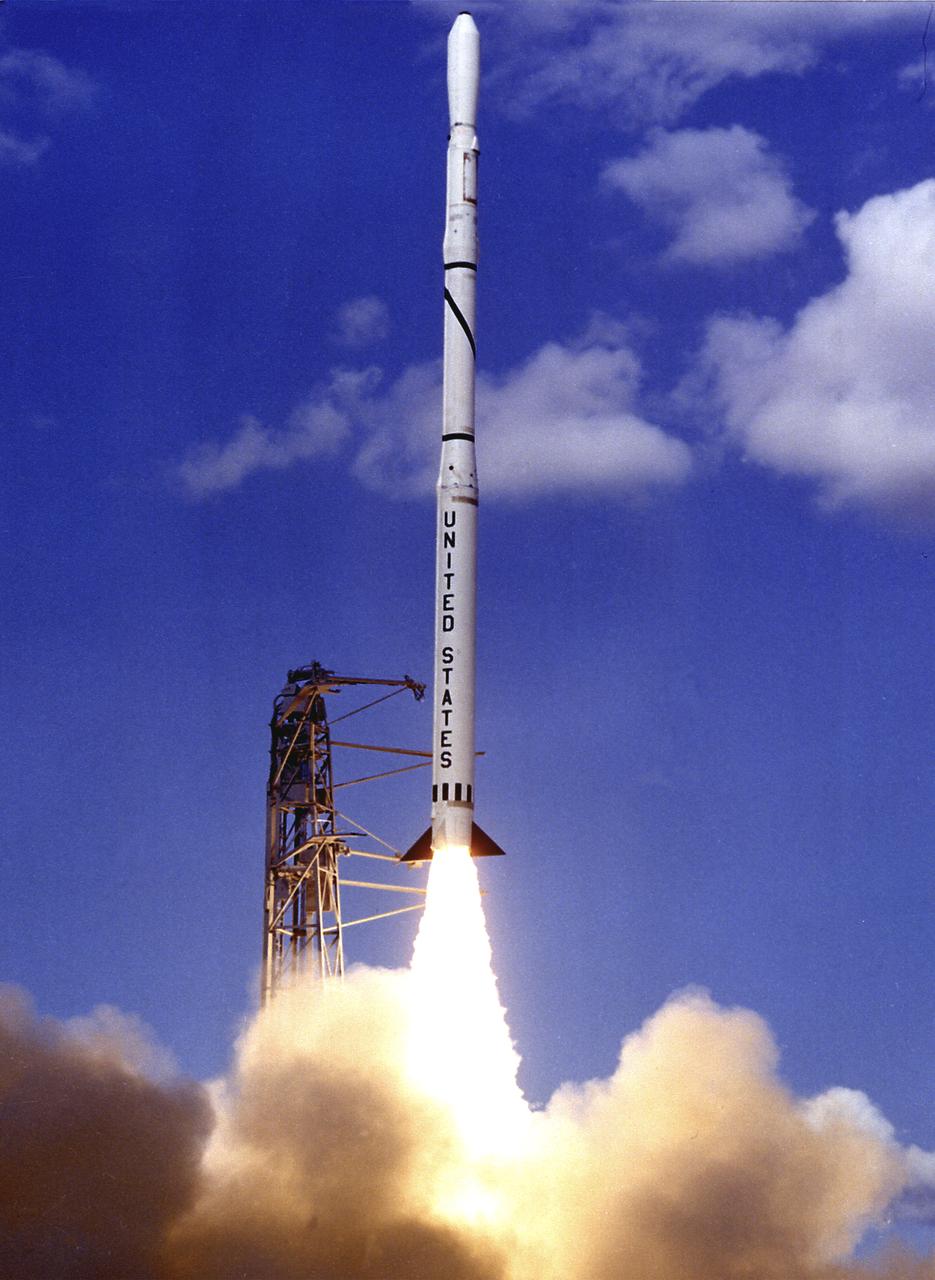
The launch of the Scout launch vehicle at the Wallops Flight Facility, VA
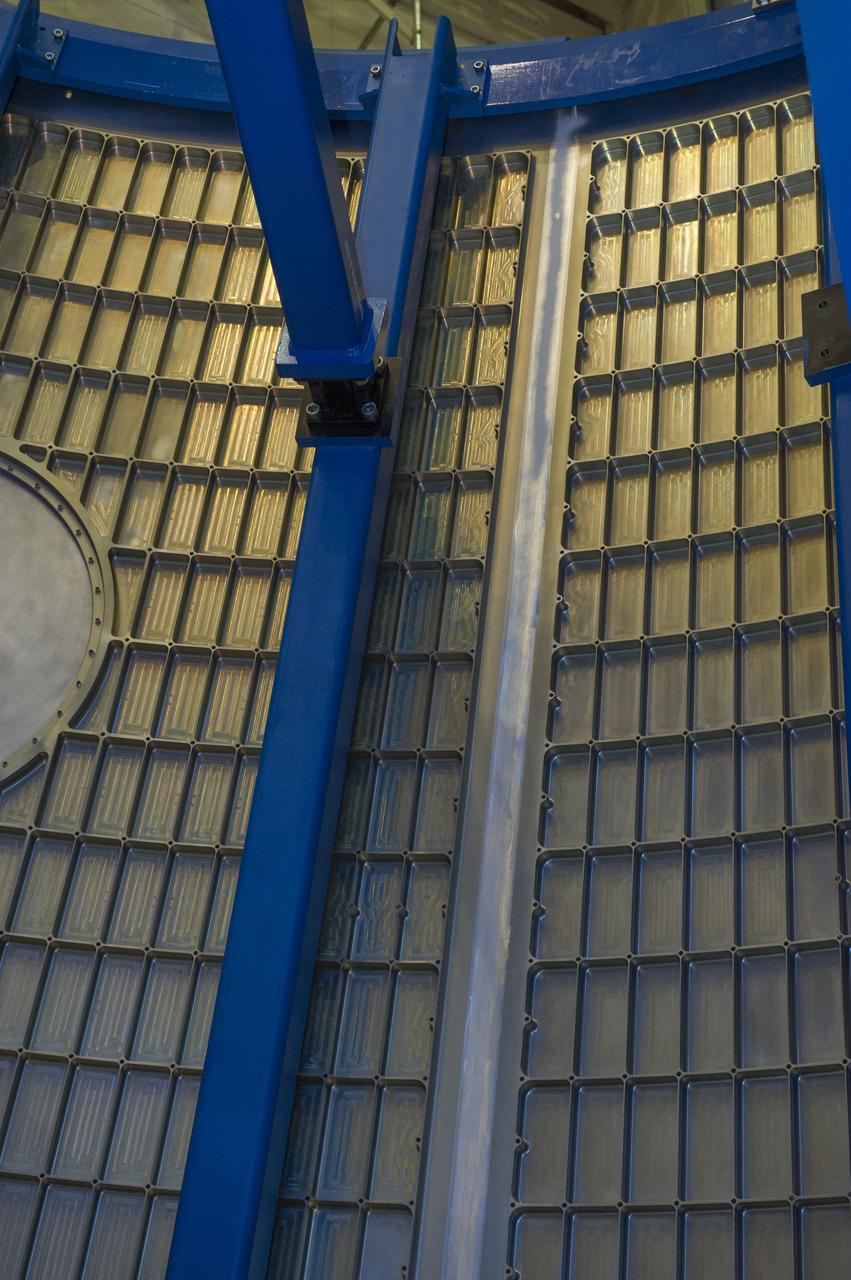
Launch Vehicle Stage Adapter Aft Cone Weld #1
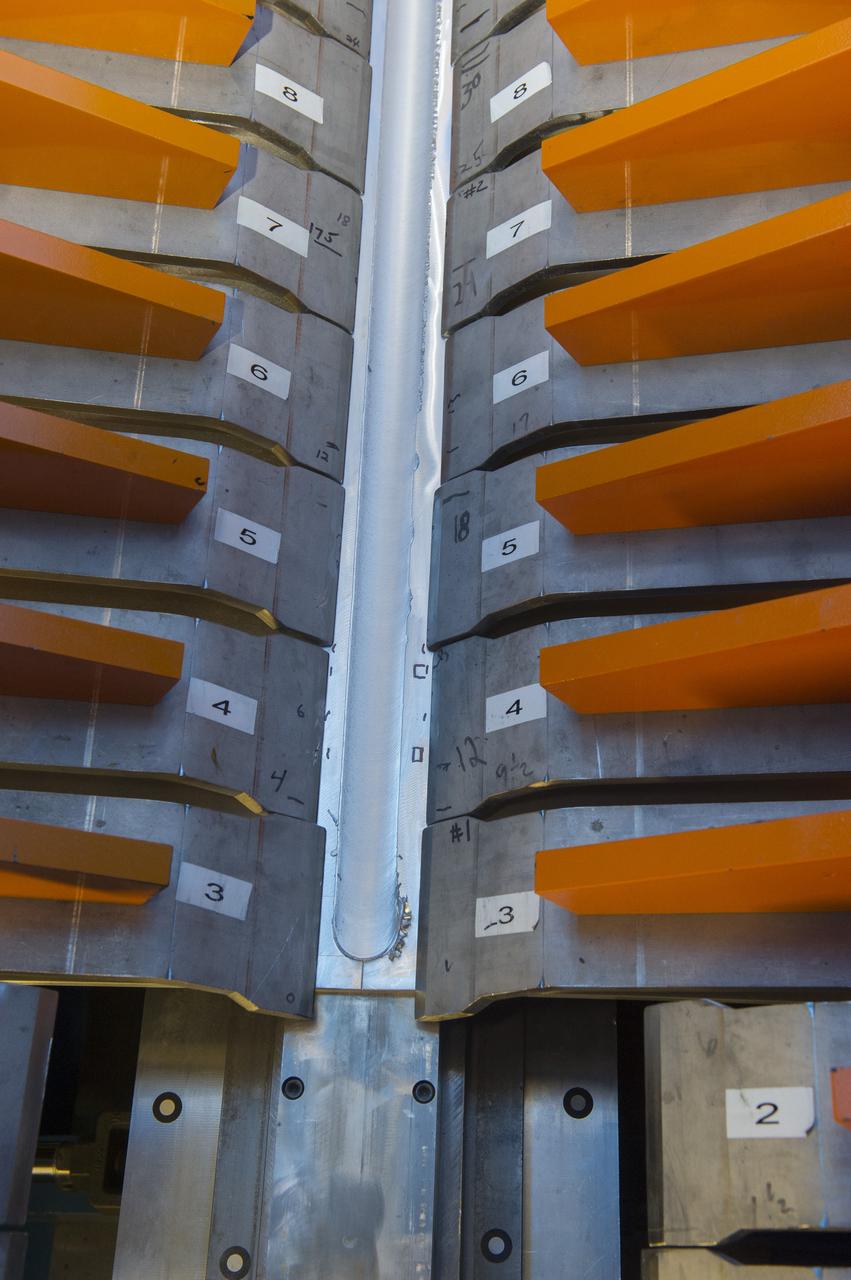
Launch Vehicle Stage Adapter Aft Cone Weld #1
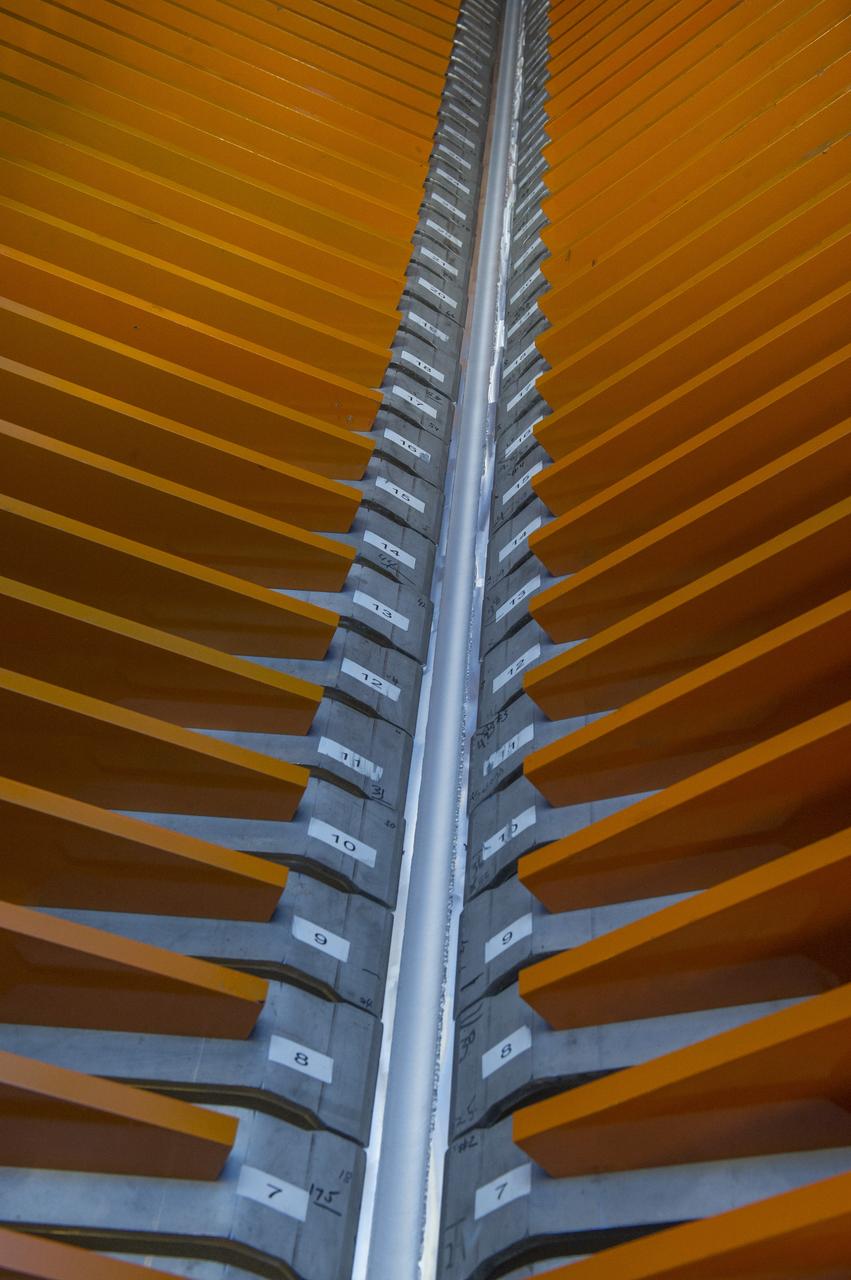
Launch Vehicle Stage Adapter Aft Cone Weld #1
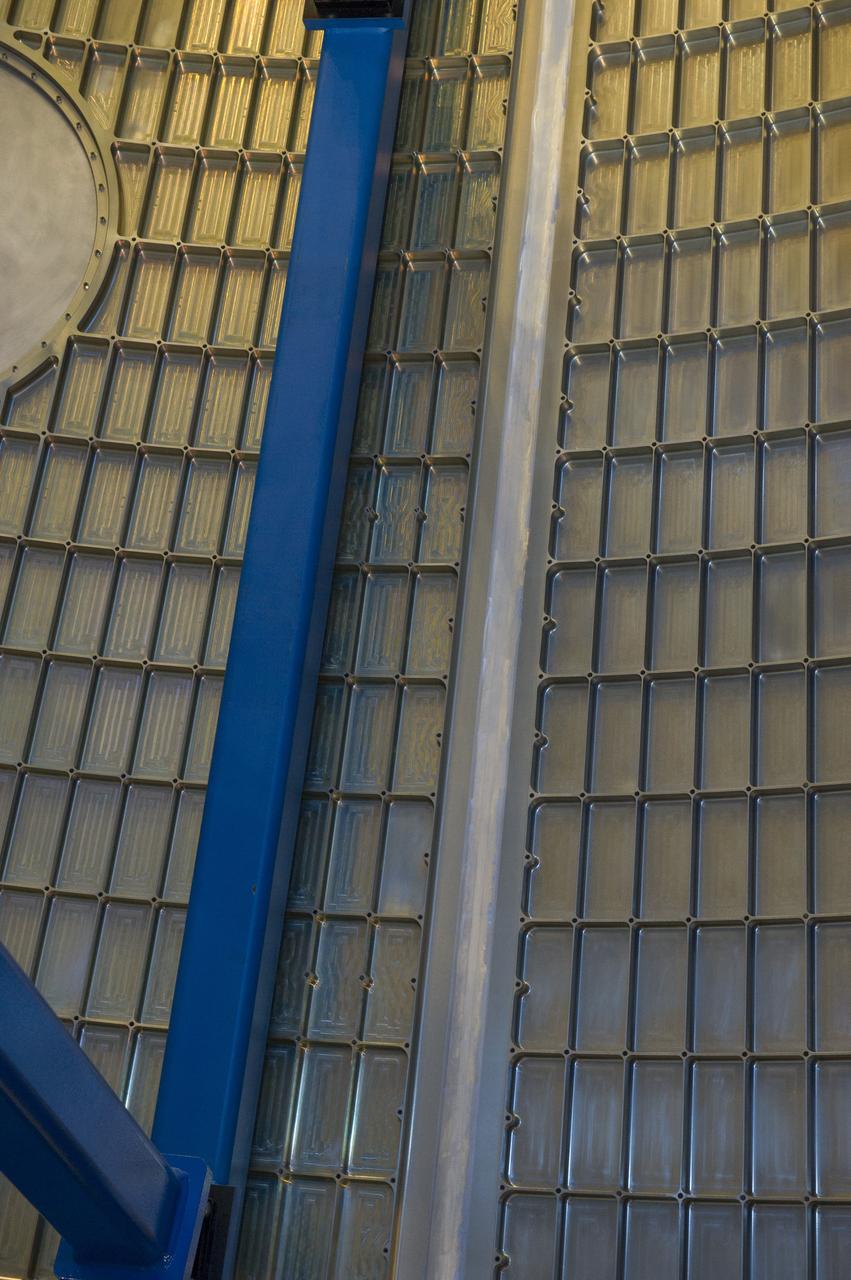
Launch Vehicle Stage Adapter Aft Cone Weld #1
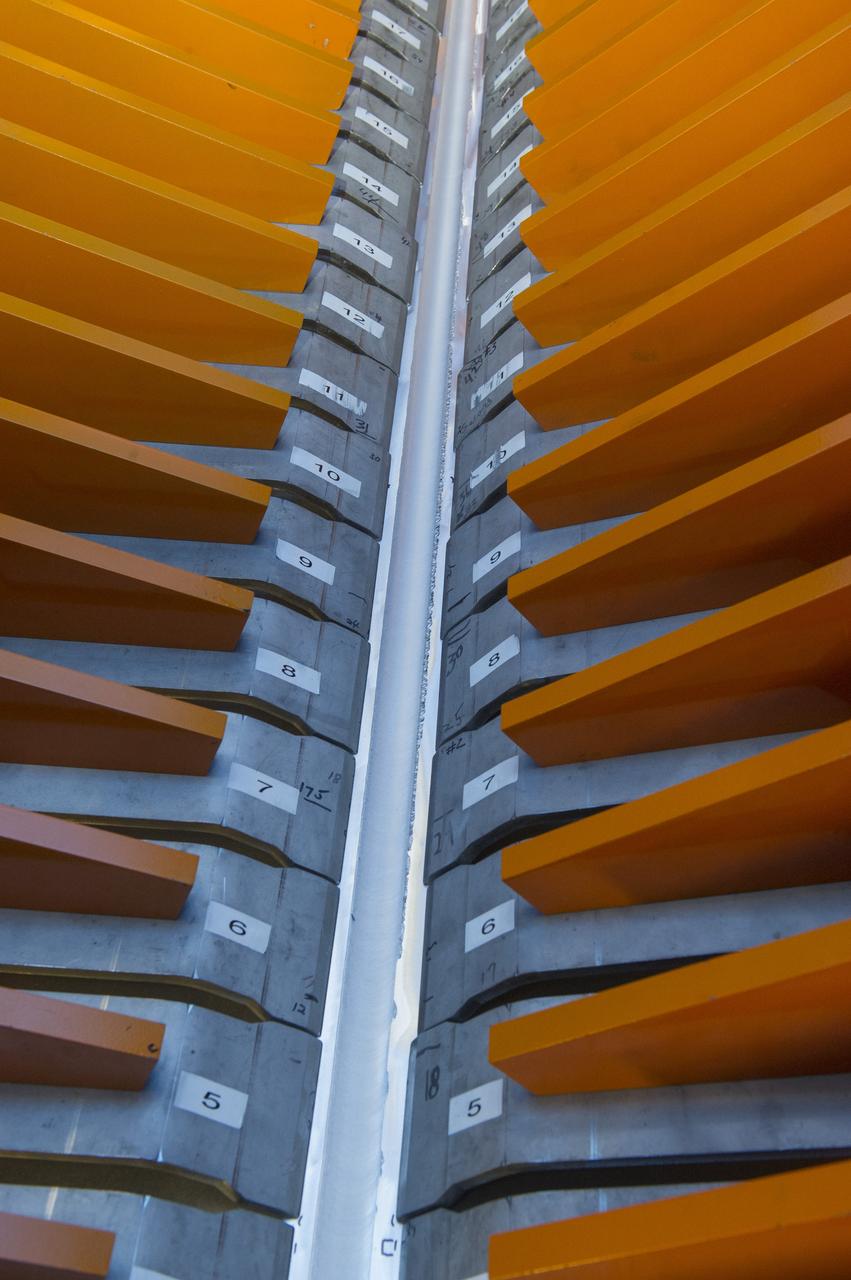
Launch Vehicle Stage Adapter Aft Cone Weld #1
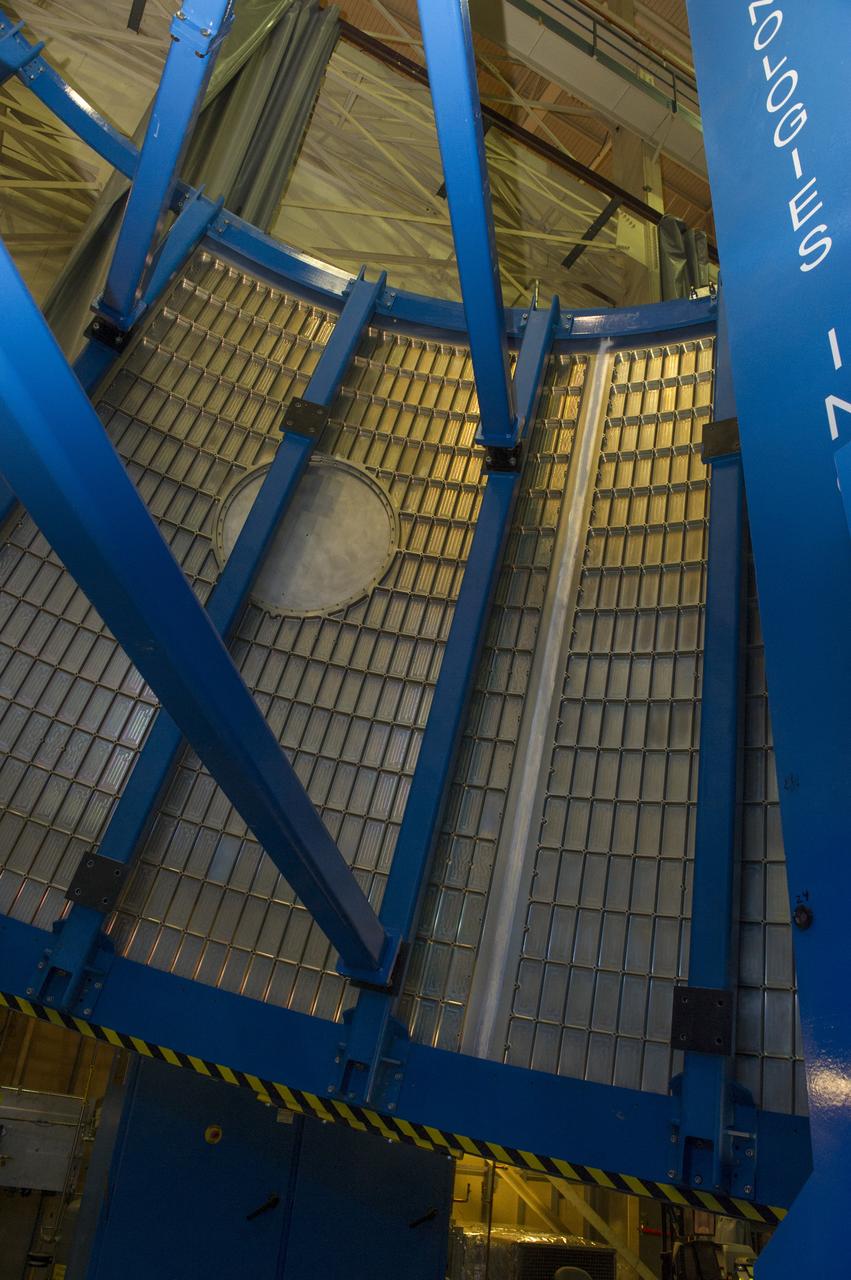
Launch Vehicle Stage Adapter Aft Cone Weld #1
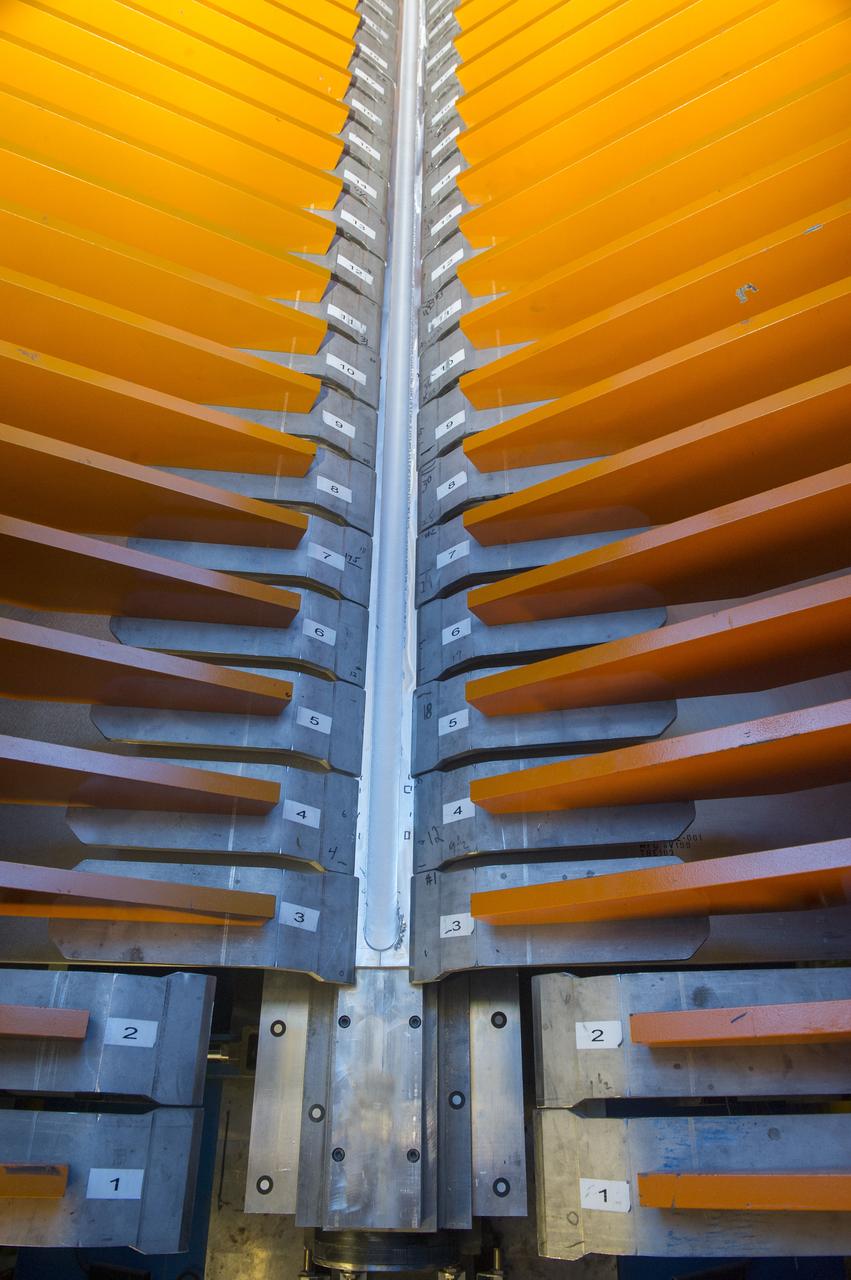
Launch Vehicle Stage Adapter Aft Cone Weld #1
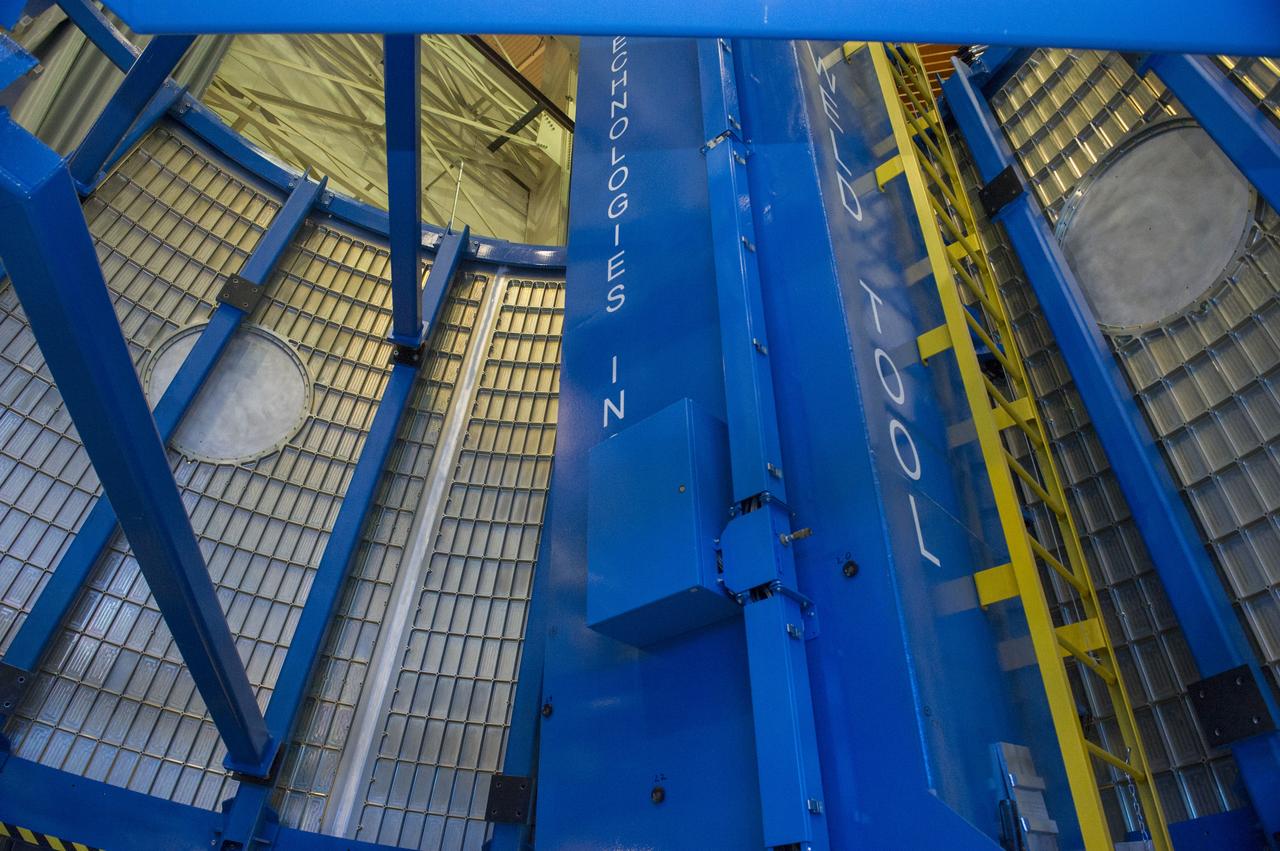
Launch Vehicle Stage Adapter Aft Cone Weld #1
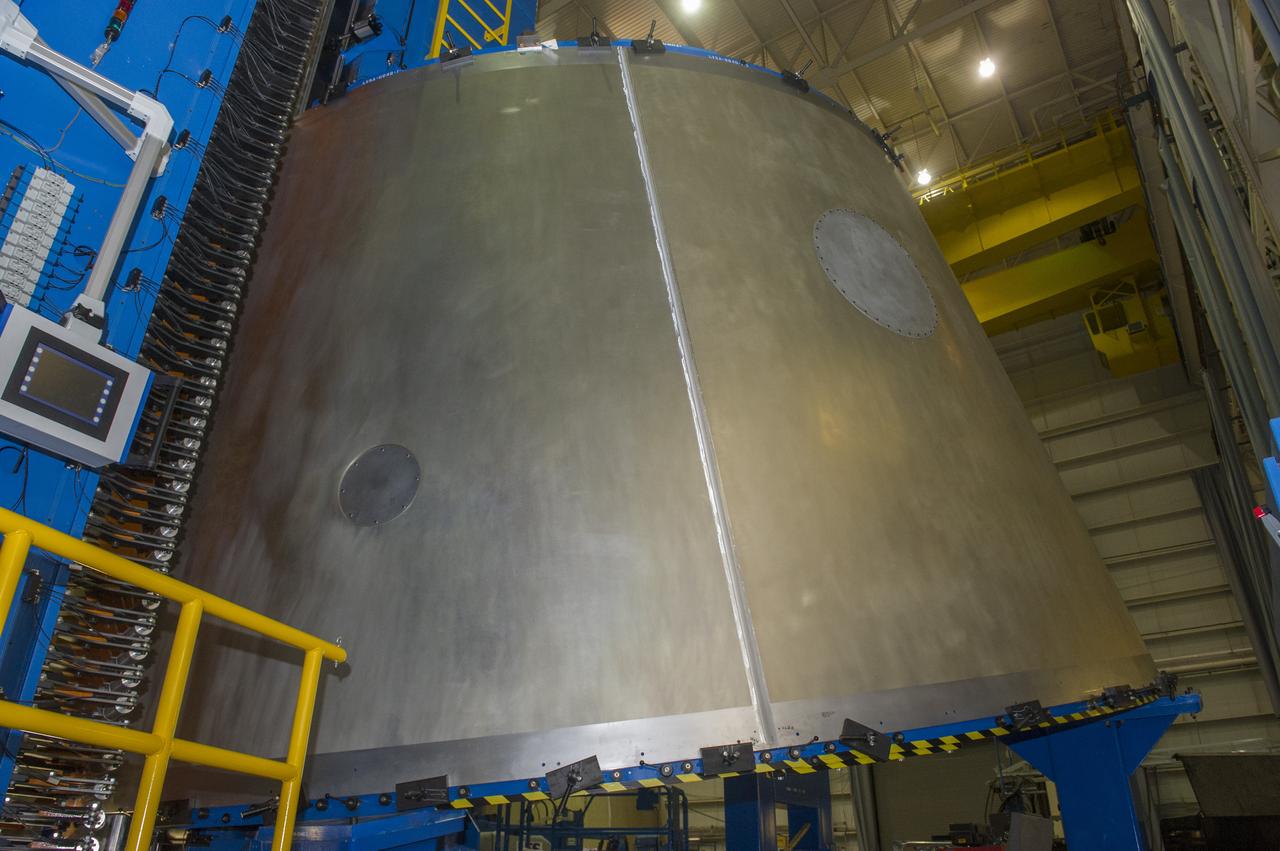
Launch Vehicle Stage Adapter Aft Cone Weld #1
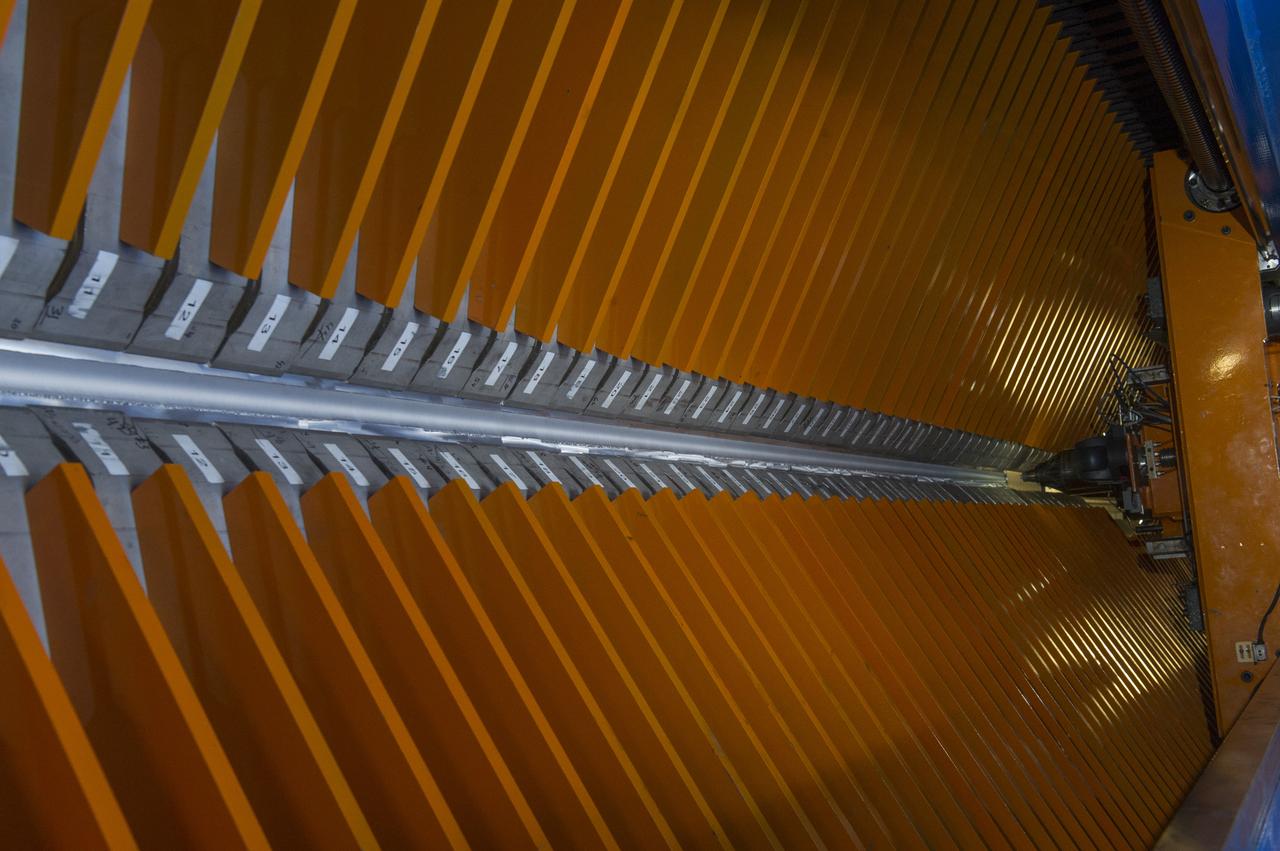
Launch Vehicle Stage Adapter Aft Cone Weld #1
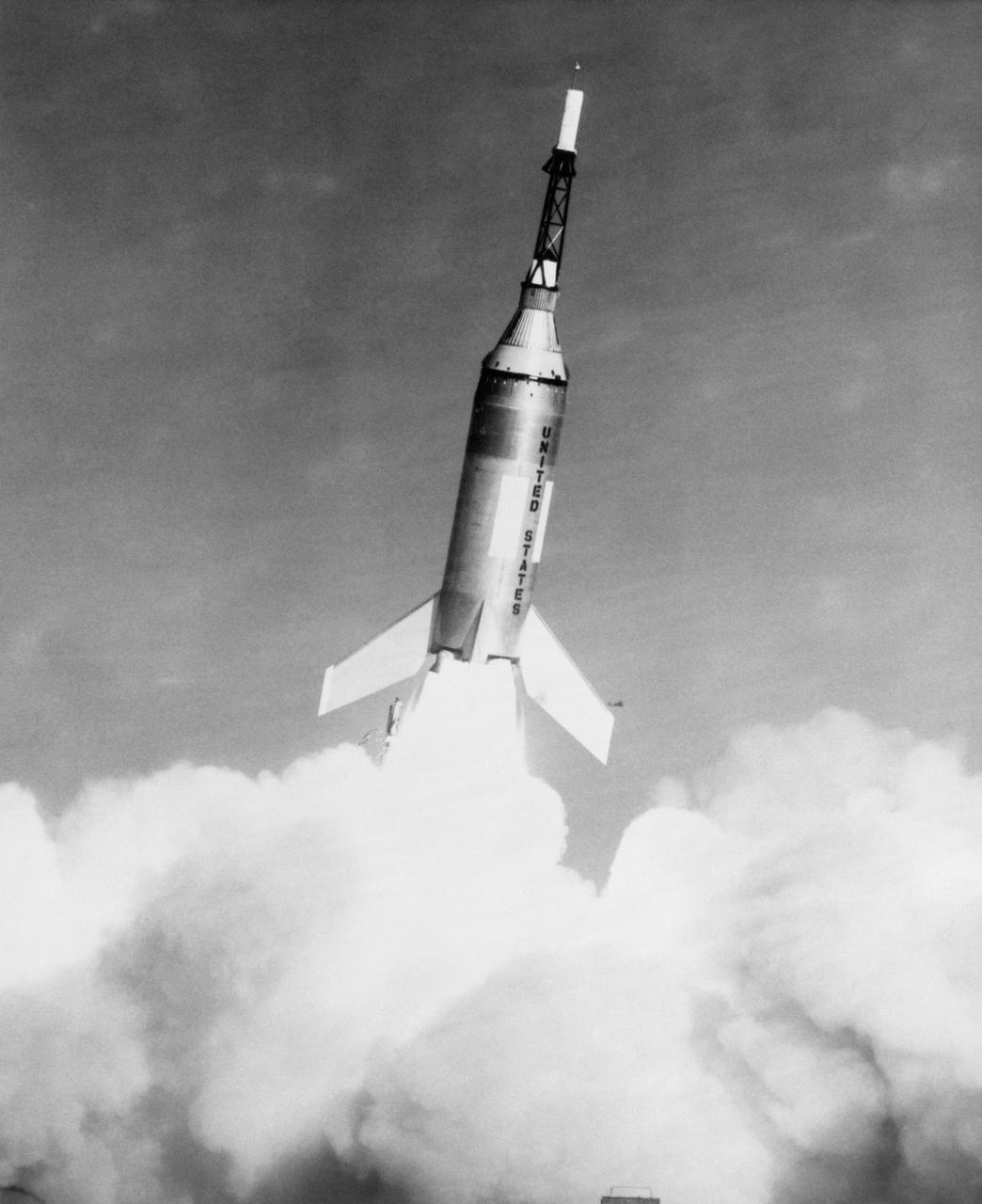
G61-00030 (4 Nov. 1959) --- Launch of Little Joe-2 from Wallops Island carrying Mercury spacecraft test article. The suborbital test flight of the Mercury capsule was to test the escape system. Vehicle functioned perfectly, but escape rocket ignited several seconds too late. Photo credit: NASA
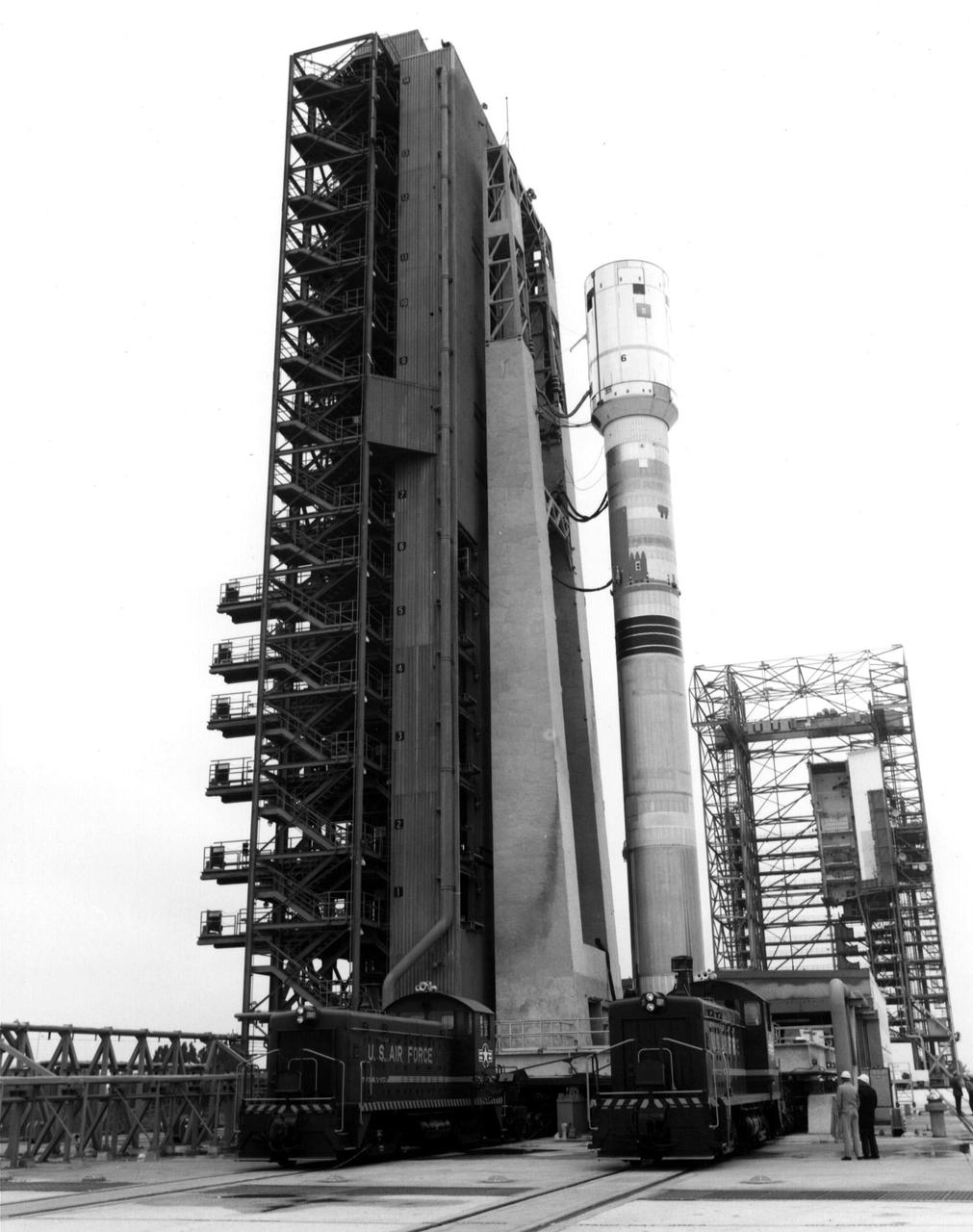
The Titan/Centaur-6 launch vehicle was moved to Launch Complex 41 at Kennedy Space Center in Florida to complete checkout procedures in preparation for launch. The photo is dated January 1977. This launch vehicle carried Voyager 1 into space on September 5, 1977. https://photojournal.jpl.nasa.gov/catalog/PIA21739
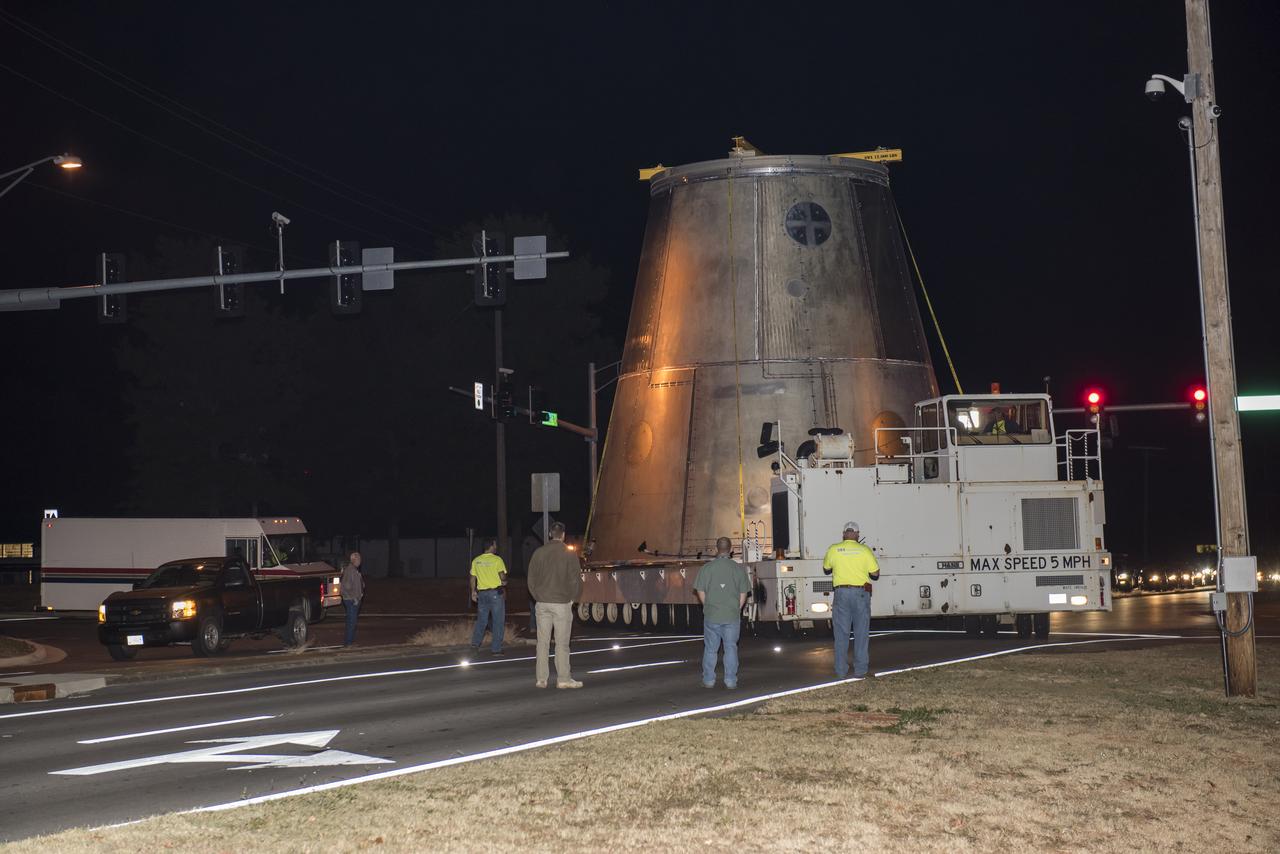
A SLS LAUNCH VEHICLE STAGE ADAPTER IS MOVED FROM THE VERTICAL WELD TOOL STATION IN MSFC’S BUILDING 4755 TO THE WEST TEST AREA’S TEST STAND 4699 WHERE IT WILL UNDERGO FURTHER TESTING OF ITS ABILITY TO WITHSTAND THE STRESSES RELATED TO LAUNCH AND SPACE TRAVEL.
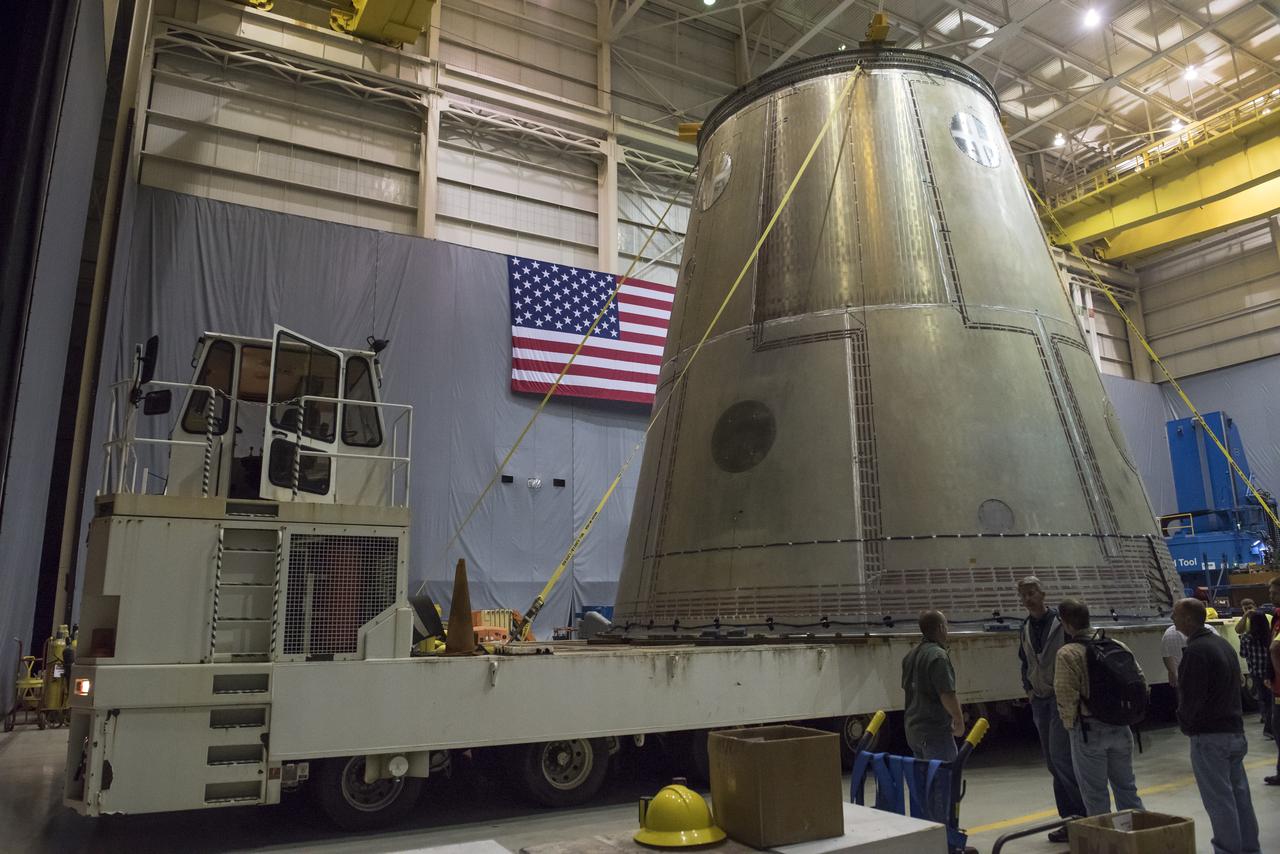
A SLS LAUNCH VEHICLE STAGE ADAPTER IS MOVED FROM THE VERTICAL WELD TOOL STATION IN MSFC’S BUILDING 4755 TO THE WEST TEST AREA’S TEST STAND 4699 WHERE IT WILL UNDERGO FURTHER TESTING OF ITS ABILITY TO WITHSTAND THE STRESSES RELATED TO LAUNCH AND SPACE TRAVEL.
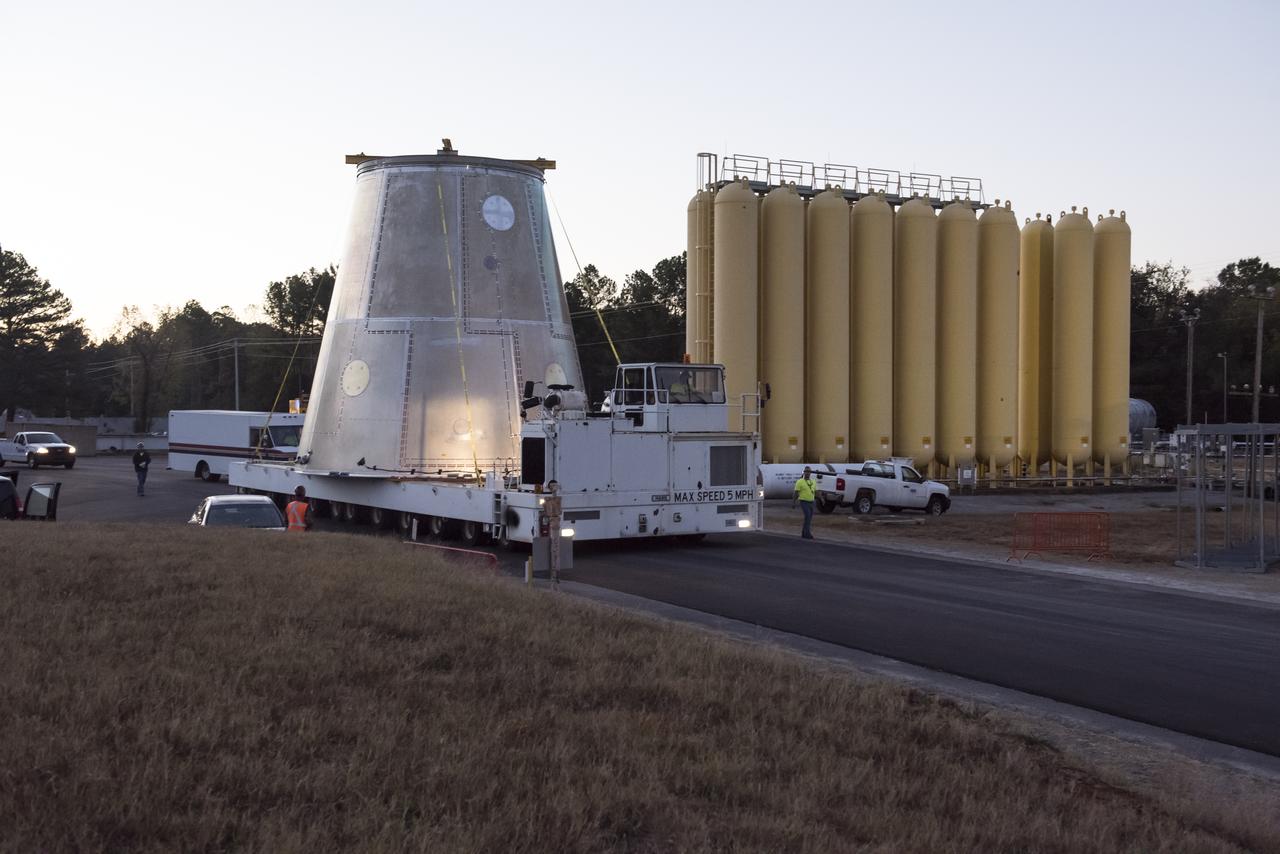
A SLS LAUNCH VEHICLE STAGE ADAPTER IS MOVED FROM THE VERTICAL WELD TOOL STATION IN MSFC’S BUILDING 4755 TO THE WEST TEST AREA’S TEST STAND 4699 WHERE IT WILL UNDERGO FURTHER TESTING OF ITS ABILITY TO WITHSTAND THE STRESSES RELATED TO LAUNCH AND SPACE TRAVEL.
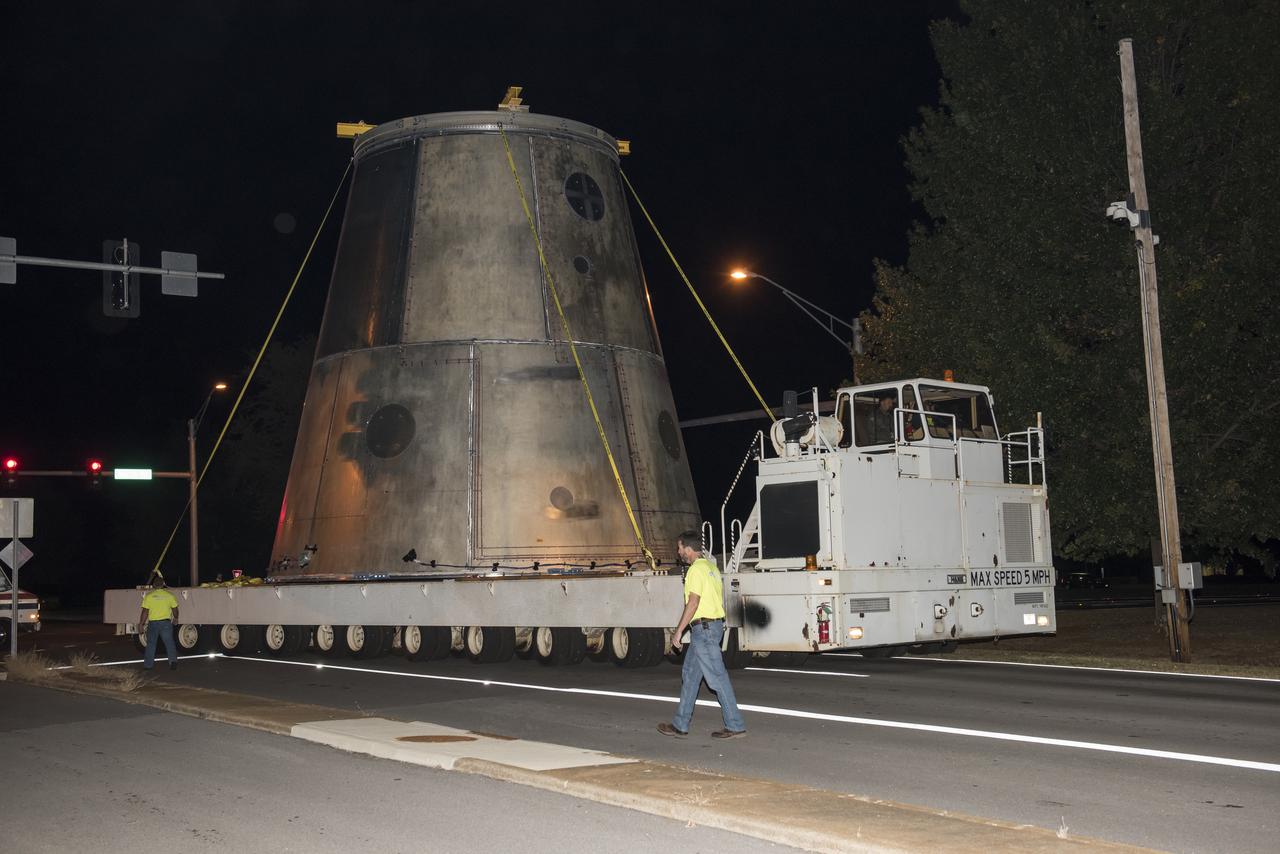
A SLS LAUNCH VEHICLE STAGE ADAPTER IS MOVED FROM THE VERTICAL WELD TOOL STATION IN MSFC’S BUILDING 4755 TO THE WEST TEST AREA’S TEST STAND 4699 WHERE IT WILL UNDERGO FURTHER TESTING OF ITS ABILITY TO WITHSTAND THE STRESSES RELATED TO LAUNCH AND SPACE TRAVEL.
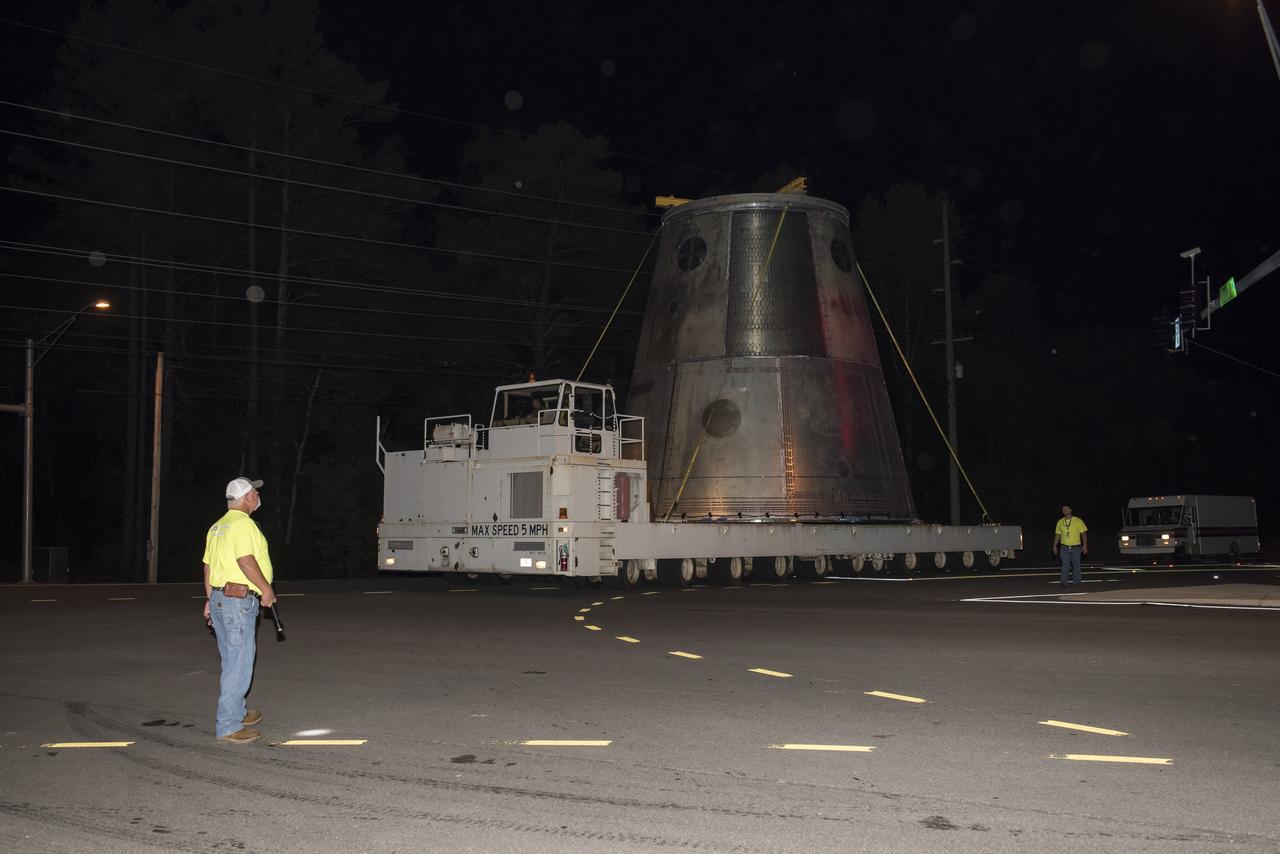
A SLS LAUNCH VEHICLE STAGE ADAPTER IS MOVED FROM THE VERTICAL WELD TOOL STATION IN MSFC’S BUILDING 4755 TO THE WEST TEST AREA’S TEST STAND 4699 WHERE IT WILL UNDERGO FURTHER TESTING OF ITS ABILITY TO WITHSTAND THE STRESSES RELATED TO LAUNCH AND SPACE TRAVEL.
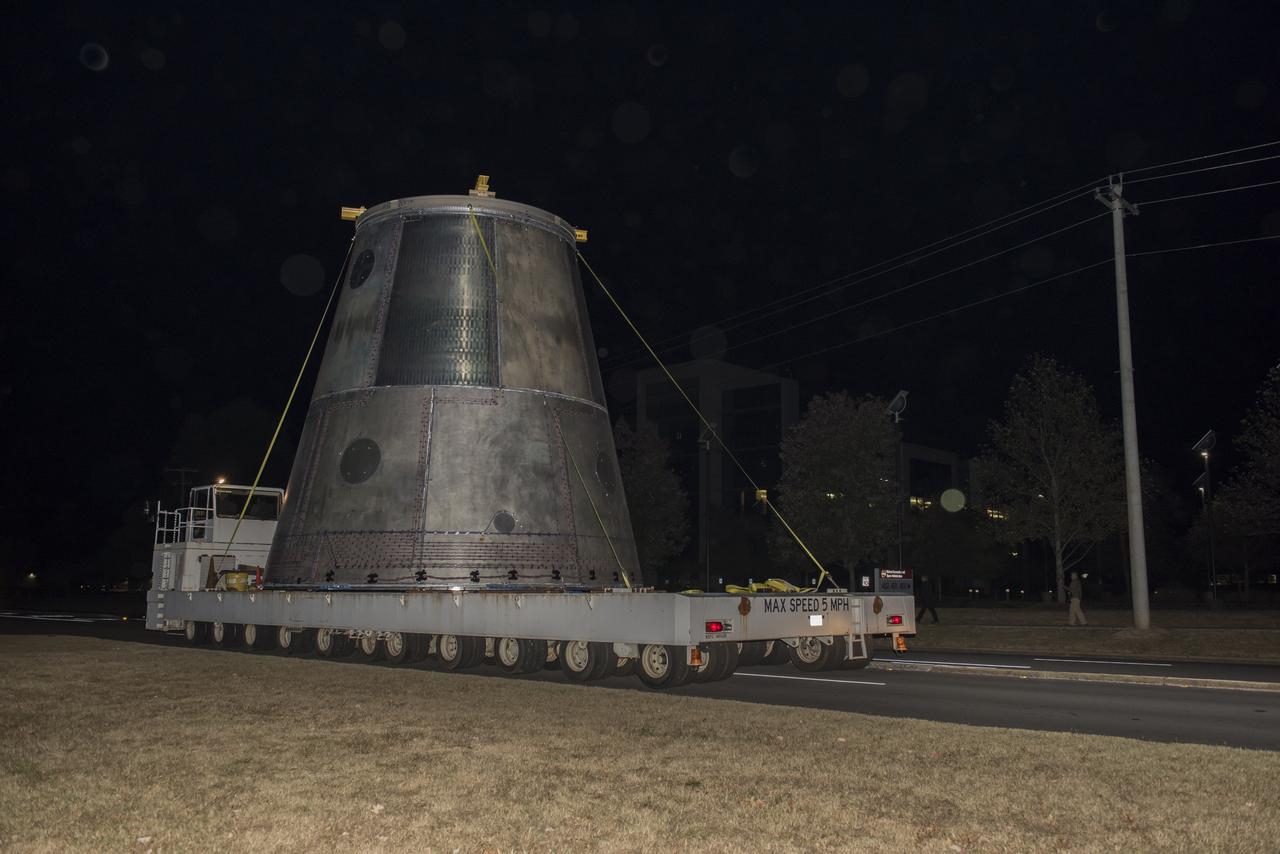
A SLS LAUNCH VEHICLE STAGE ADAPTER IS MOVED FROM THE VERTICAL WELD TOOL STATION IN MSFC’S BUILDING 4755 TO THE WEST TEST AREA’S TEST STAND 4699 WHERE IT WILL UNDERGO FURTHER TESTING OF ITS ABILITY TO WITHSTAND THE STRESSES RELATED TO LAUNCH AND SPACE TRAVEL.
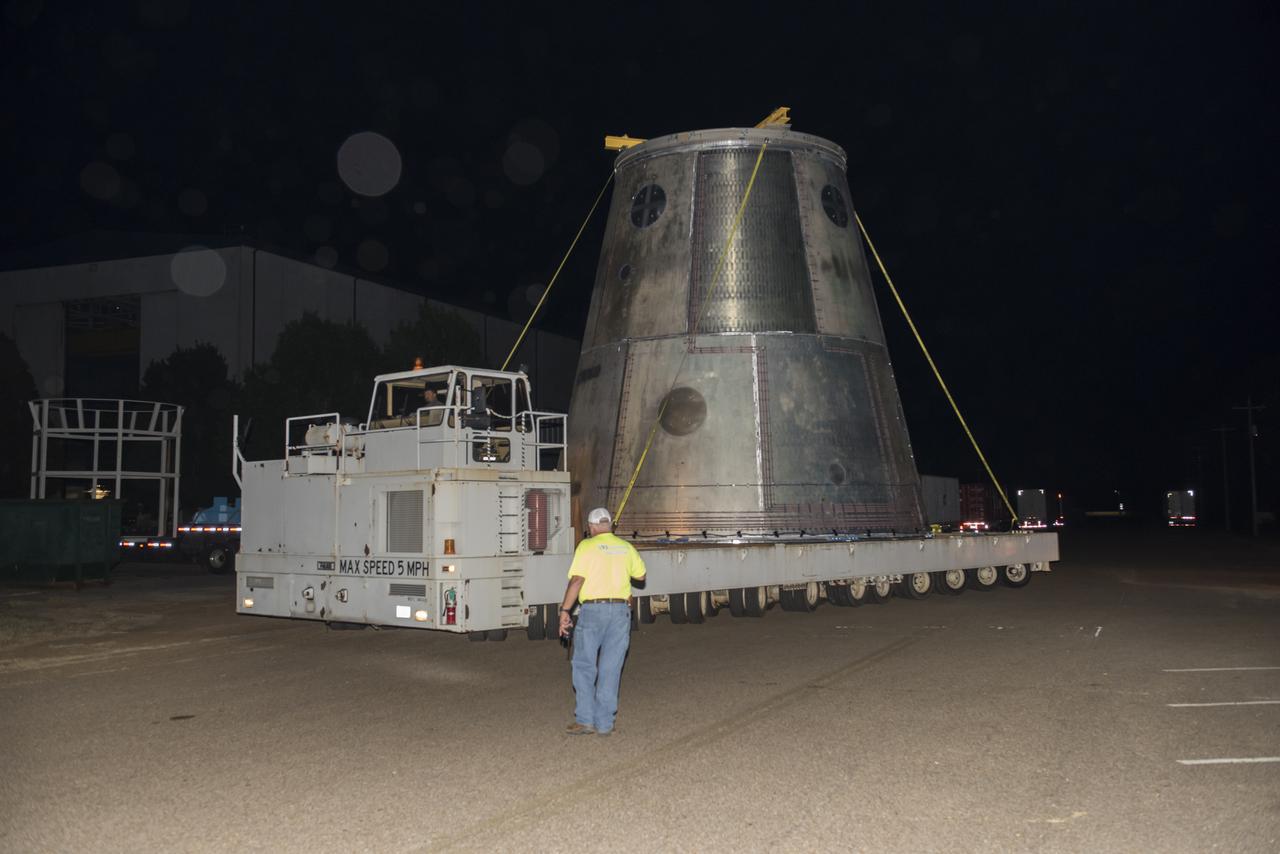
A SLS LAUNCH VEHICLE STAGE ADAPTER IS MOVED FROM THE VERTICAL WELD TOOL STATION IN MSFC’S BUILDING 4755 TO THE WEST TEST AREA’S TEST STAND 4699 WHERE IT WILL UNDERGO FURTHER TESTING OF ITS ABILITY TO WITHSTAND THE STRESSES RELATED TO LAUNCH AND SPACE TRAVEL.
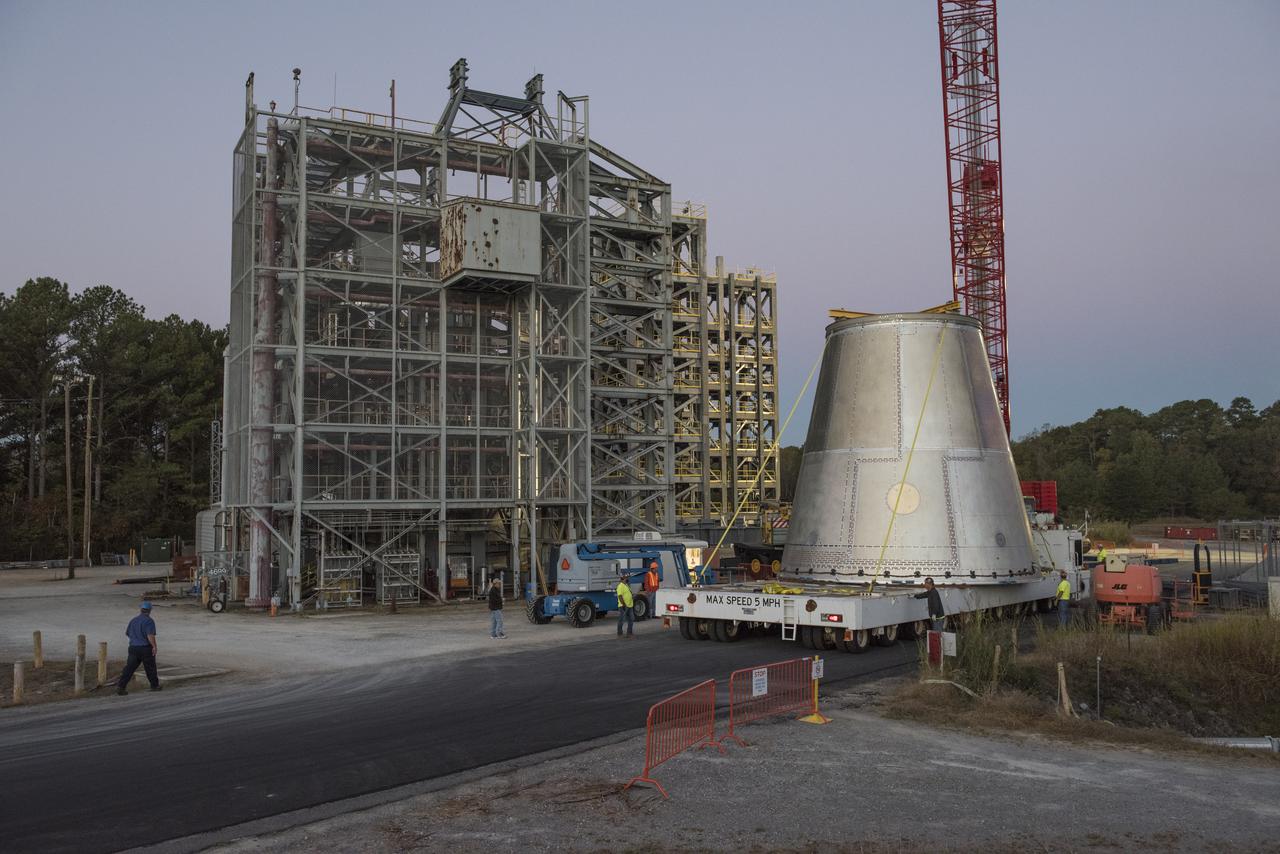
A SLS LAUNCH VEHICLE STAGE ADAPTER IS MOVED FROM THE VERTICAL WELD TOOL STATION IN MSFC’S BUILDING 4755 TO THE WEST TEST AREA’S TEST STAND 4699 WHERE IT WILL UNDERGO FURTHER TESTING OF ITS ABILITY TO WITHSTAND THE STRESSES RELATED TO LAUNCH AND SPACE TRAVEL.
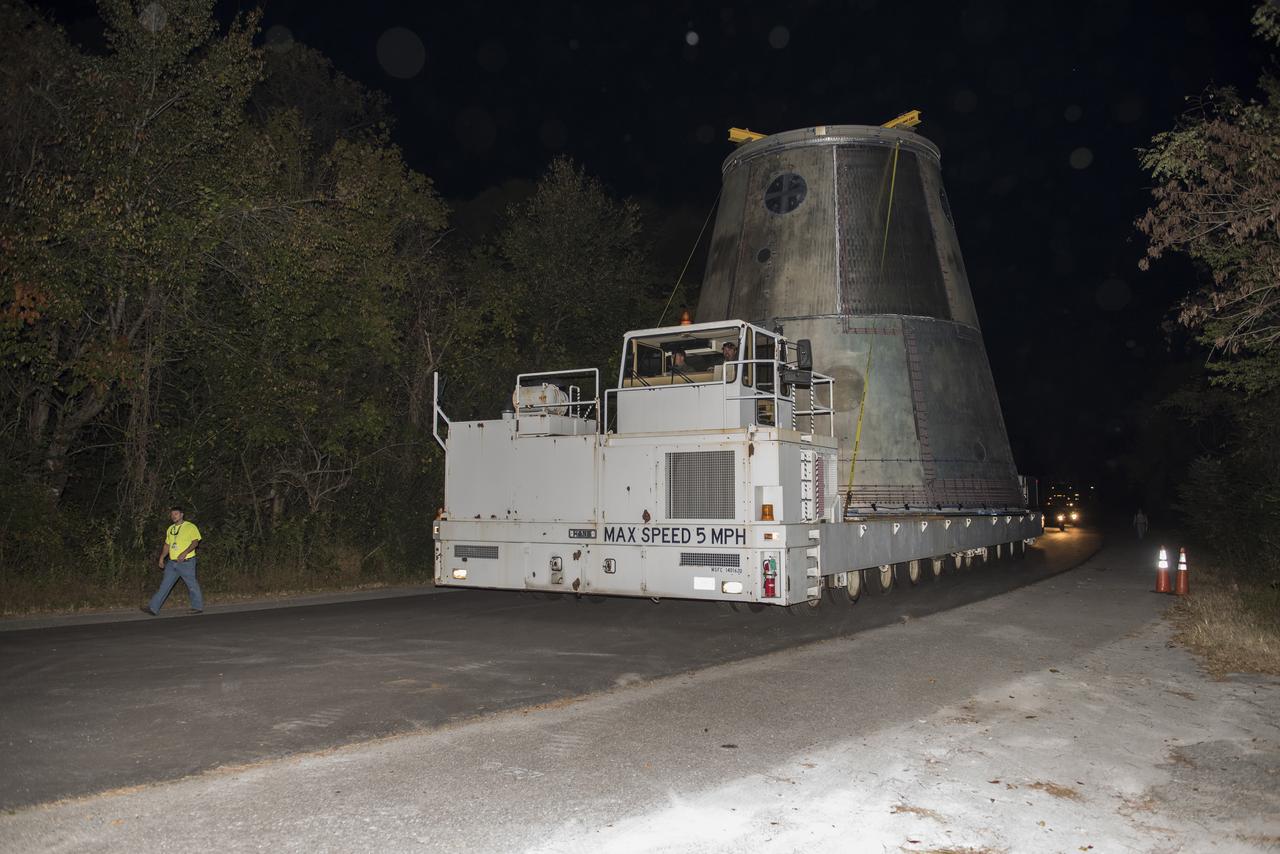
A SLS LAUNCH VEHICLE STAGE ADAPTER IS MOVED FROM THE VERTICAL WELD TOOL STATION IN MSFC’S BUILDING 4755 TO THE WEST TEST AREA’S TEST STAND 4699 WHERE IT WILL UNDERGO FURTHER TESTING OF ITS ABILITY TO WITHSTAND THE STRESSES RELATED TO LAUNCH AND SPACE TRAVEL.
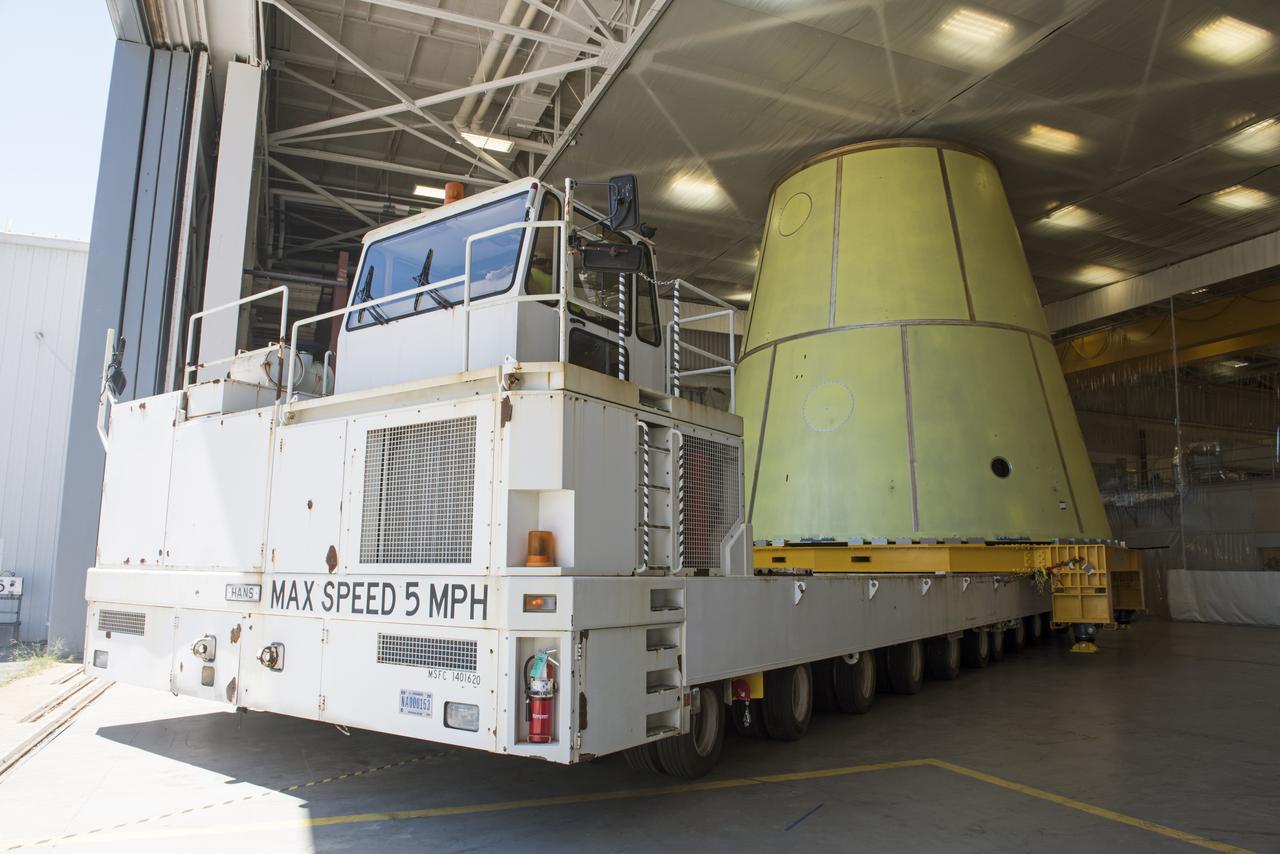
A NASA KAMAG transporter moves the Space Launch System’s launch vehicle stage adapter (LVSA) to an area where spray-on foam insulation will be applied. The LVSA recently completed manufacturing on a 30 foot welding tool at NASA’s Marshall Space Flight Center in Huntsville, Al. The LVSA will be coated with insulation that will protect it during it’s trip to space. The LVSA provides structural support and connects the core stage and the interim cryogenic propulsion stage during the first integrated flight of SLS and Orion.
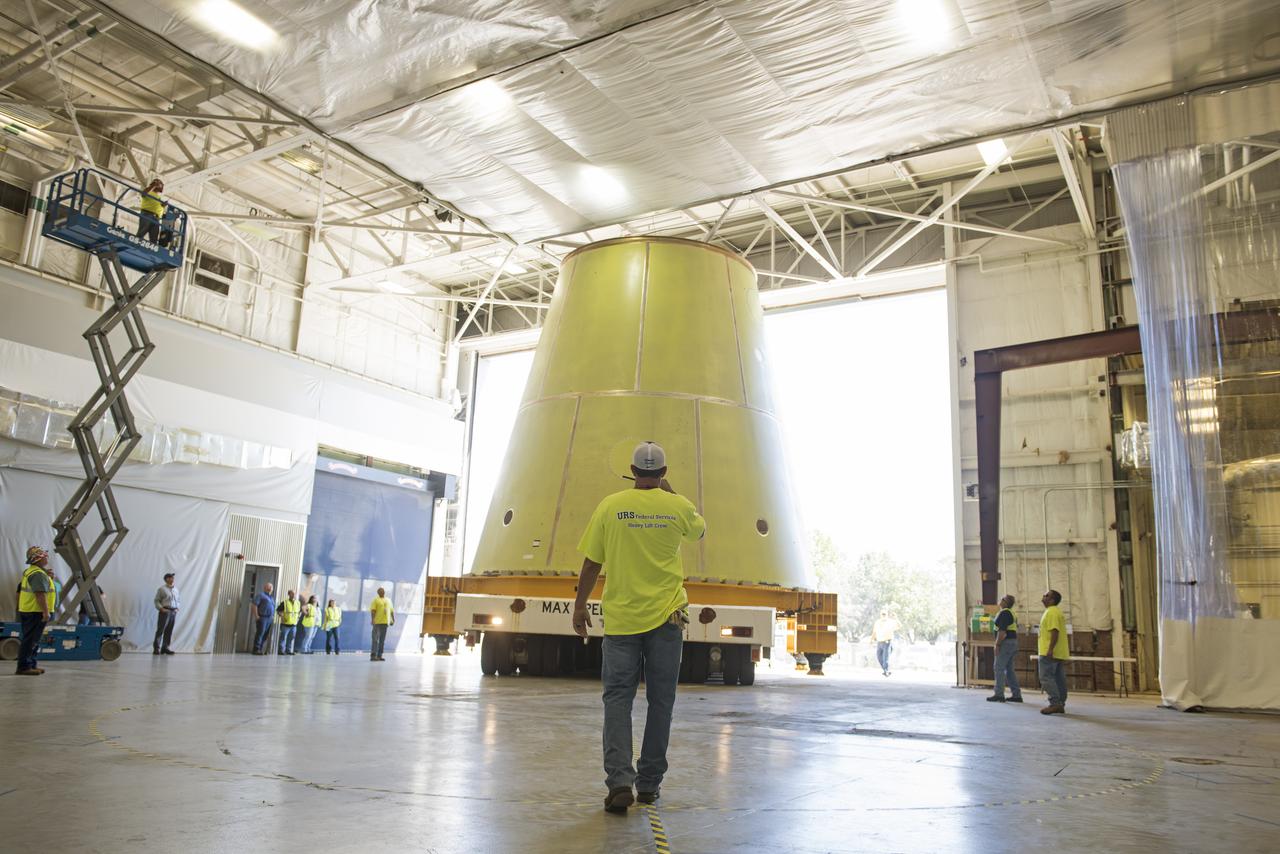
A NASA KAMAG transporter moves the Space Launch System’s launch vehicle stage adapter (LVSA) to an area where spray-on foam insulation will be applied. The LVSA recently completed manufacturing on a 30 foot welding tool at NASA’s Marshall Space Flight Center in Huntsville, Al. The LVSA will be coated with insulation that will protect it during it’s trip to space. The LVSA provides structural support and connects the core stage and the interim cryogenic propulsion stage during the first integrated flight of SLS and Orion.
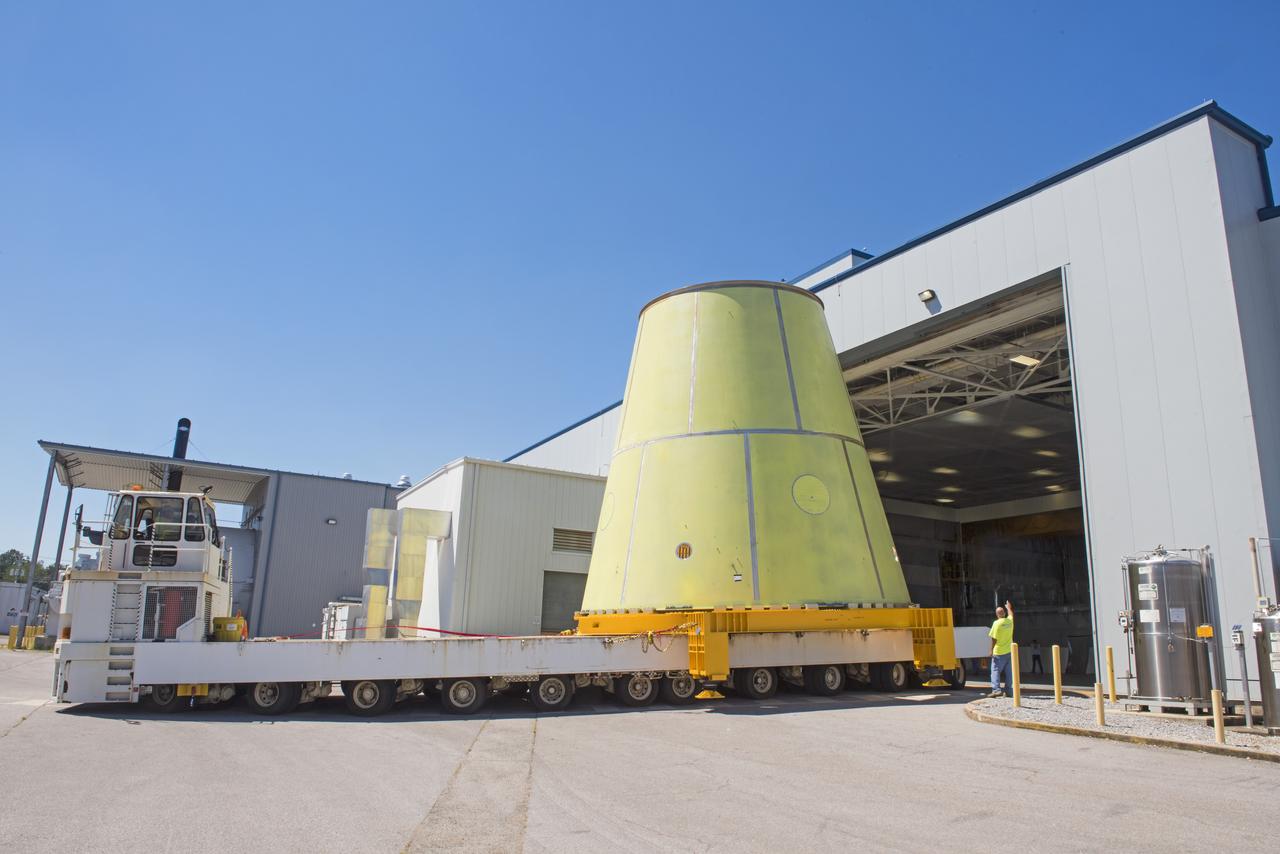
A NASA KAMAG transporter moves the Space Launch System’s launch vehicle stage adapter (LVSA) to an area where spray-on foam insulation will be applied. The LVSA recently completed manufacturing on a 30 foot welding tool at NASA’s Marshall Space Flight Center in Huntsville, Al. The LVSA will be coated with insulation that will protect it during it’s trip to space. The LVSA provides structural support and connects the core stage and the interim cryogenic propulsion stage during the first integrated flight of SLS and Orion.
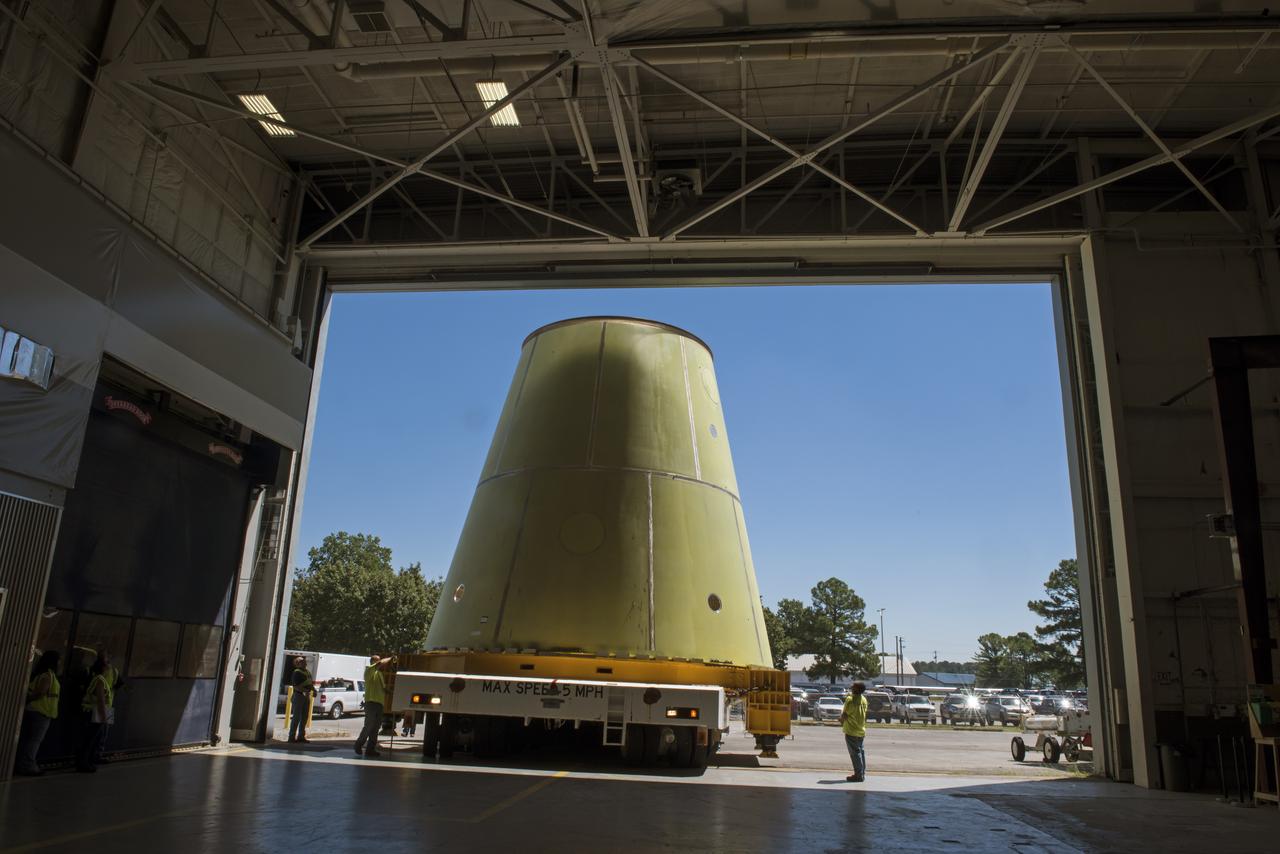
A NASA KAMAG transporter moves the Space Launch System’s launch vehicle stage adapter (LVSA) to an area where spray-on foam insulation will be applied. The LVSA recently completed manufacturing on a 30 foot welding tool at NASA’s Marshall Space Flight Center in Huntsville, Al. The LVSA will be coated with insulation that will protect it during it’s trip to space. The LVSA provides structural support and connects the core stage and the interim cryogenic propulsion stage during the first integrated flight of SLS and Orion.
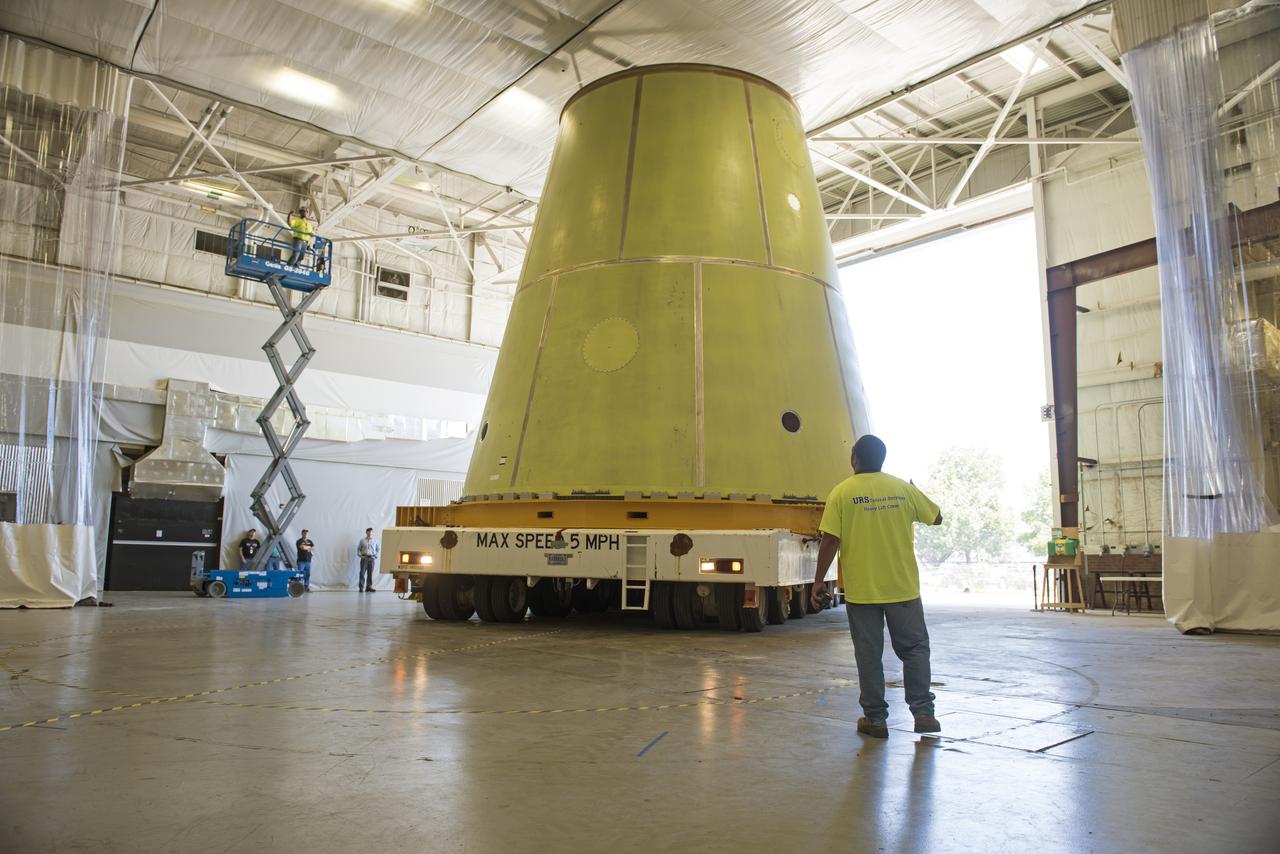
A NASA KAMAG transporter moves the Space Launch System’s launch vehicle stage adapter (LVSA) to an area where spray-on foam insulation will be applied. The LVSA recently completed manufacturing on a 30 foot welding tool at NASA’s Marshall Space Flight Center in Huntsville, Al. The LVSA will be coated with insulation that will protect it during it’s trip to space. The LVSA provides structural support and connects the core stage and the interim cryogenic propulsion stage during the first integrated flight of SLS and Orion.
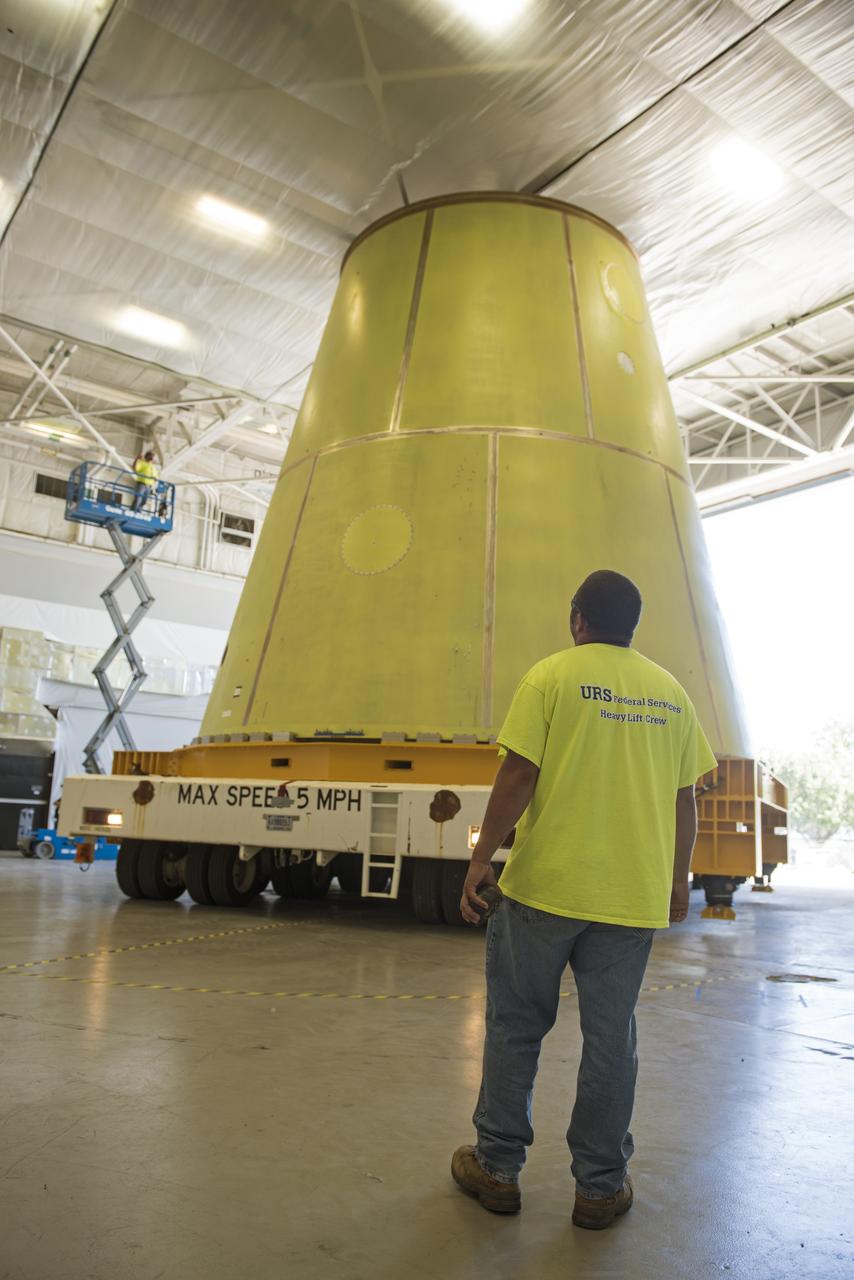
A NASA KAMAG transporter moves the Space Launch System’s launch vehicle stage adapter (LVSA) to an area where spray-on foam insulation will be applied. The LVSA recently completed manufacturing on a 30 foot welding tool at NASA’s Marshall Space Flight Center in Huntsville, Al. The LVSA will be coated with insulation that will protect it during it’s trip to space. The LVSA provides structural support and connects the core stage and the interim cryogenic propulsion stage during the first integrated flight of SLS and Orion.
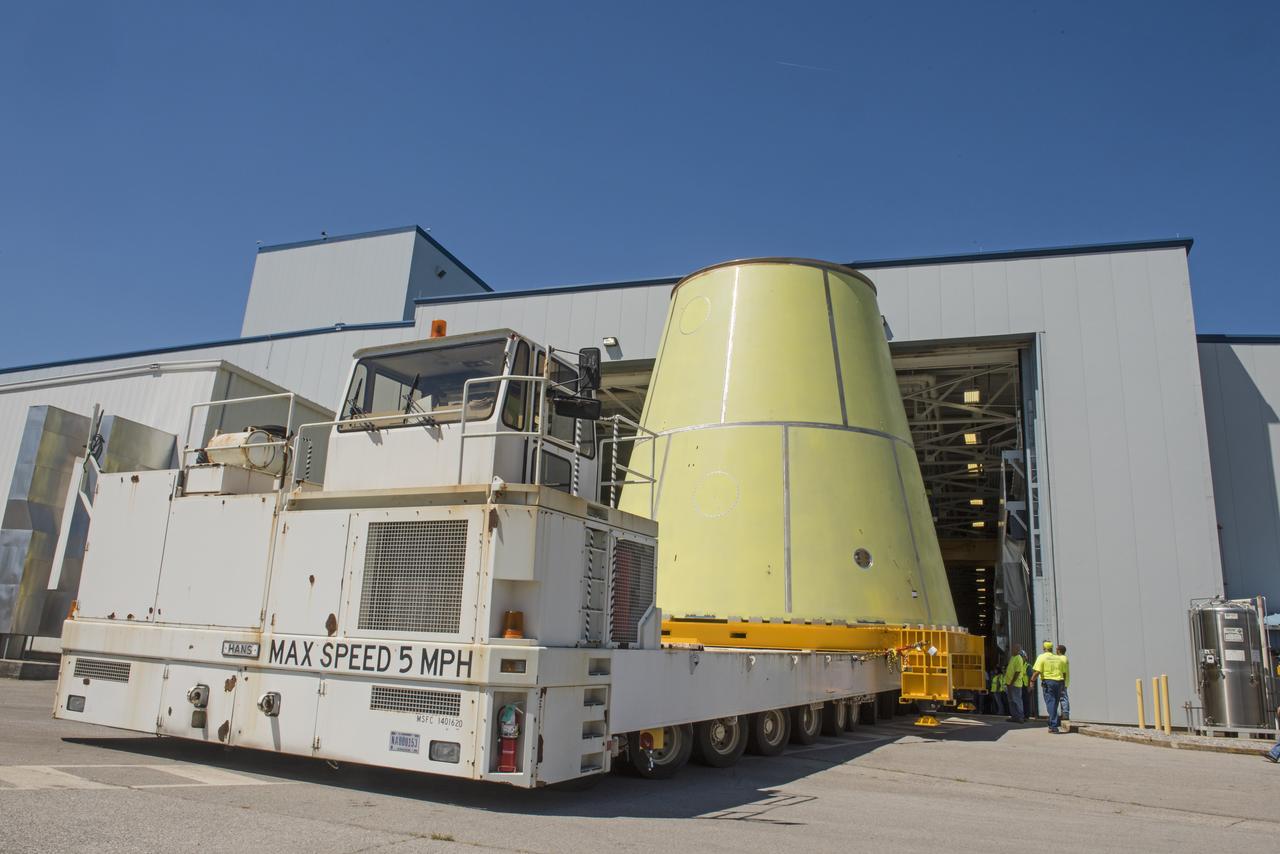
A NASA KAMAG transporter moves the Space Launch System’s launch vehicle stage adapter (LVSA) to an area where spray-on foam insulation will be applied. The LVSA recently completed manufacturing on a 30 foot welding tool at NASA’s Marshall Space Flight Center in Huntsville, Al. The LVSA will be coated with insulation that will protect it during it’s trip to space. The LVSA provides structural support and connects the core stage and the interim cryogenic propulsion stage during the first integrated flight of SLS and Orion.
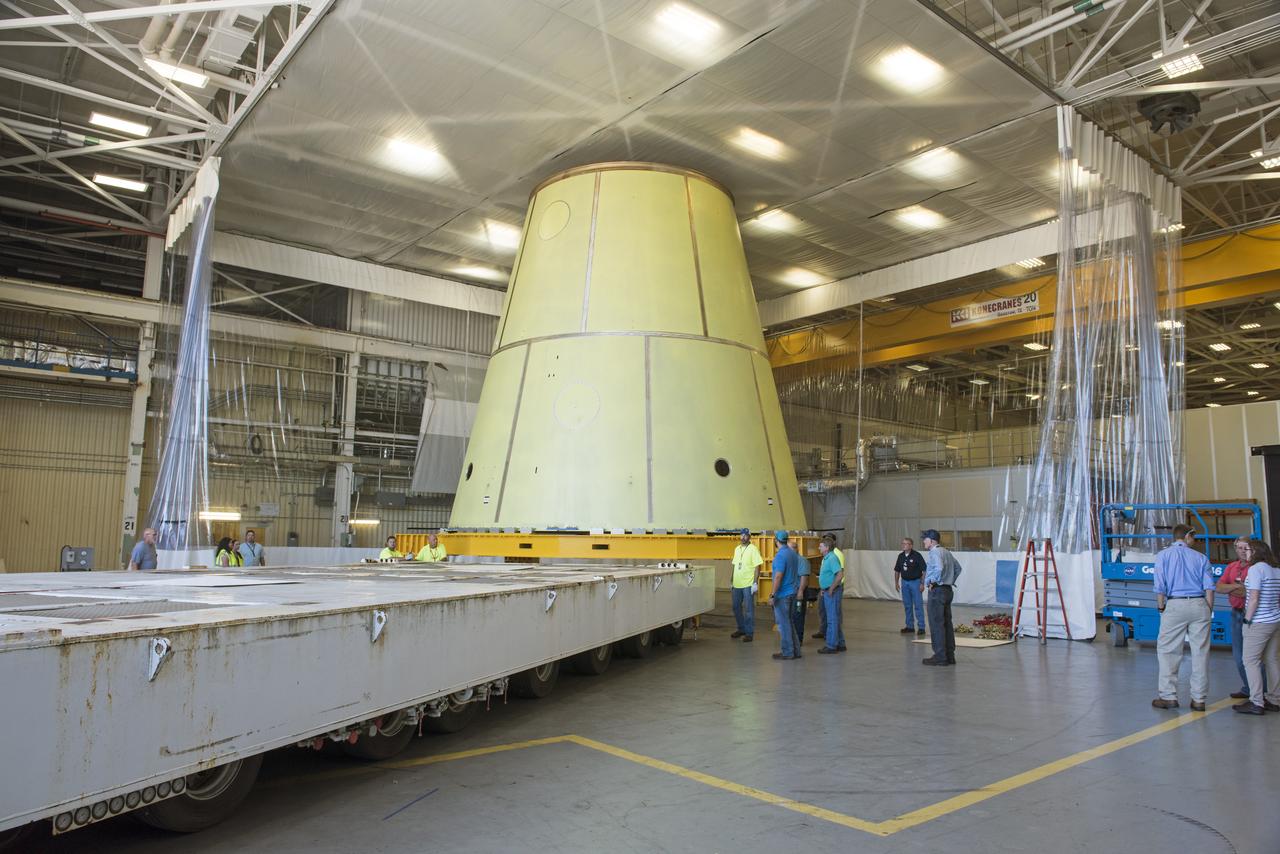
A NASA KAMAG transporter moves the Space Launch System’s launch vehicle stage adapter (LVSA) to an area where spray-on foam insulation will be applied. The LVSA recently completed manufacturing on a 30 foot welding tool at NASA’s Marshall Space Flight Center in Huntsville, Al. The LVSA will be coated with insulation that will protect it during it’s trip to space. The LVSA provides structural support and connects the core stage and the interim cryogenic propulsion stage during the first integrated flight of SLS and Orion.
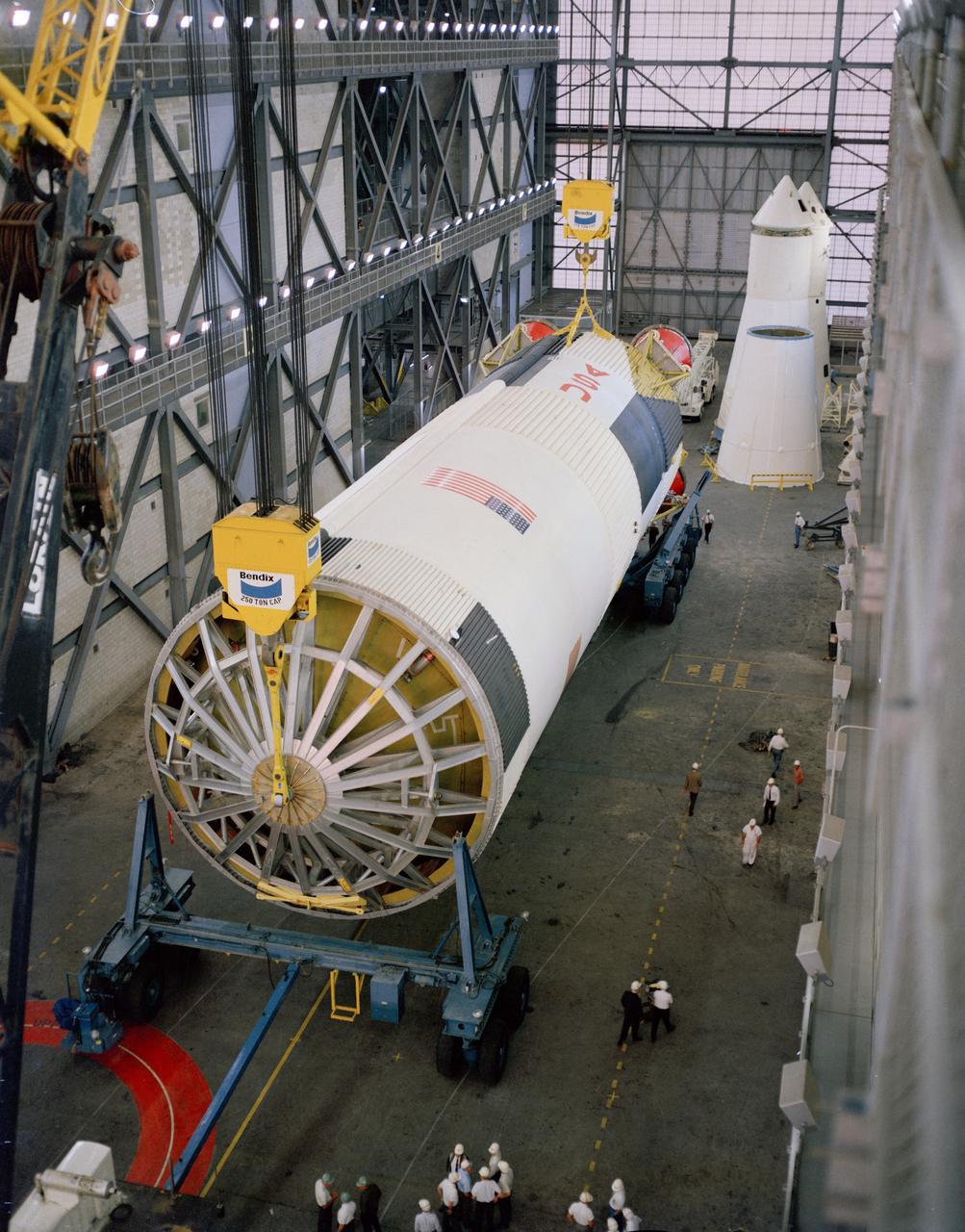
S68-55034 (3 Dec. 1968) --- The first (S-1C) stage of the Saturn 505 launch vehicle being prepared for erection in the high bay area of the Kennedy Space Center's (KSC) Vehicle Assembly Building (VAB). Saturn 505 is the launch vehicle for the Apollo 10 mission.
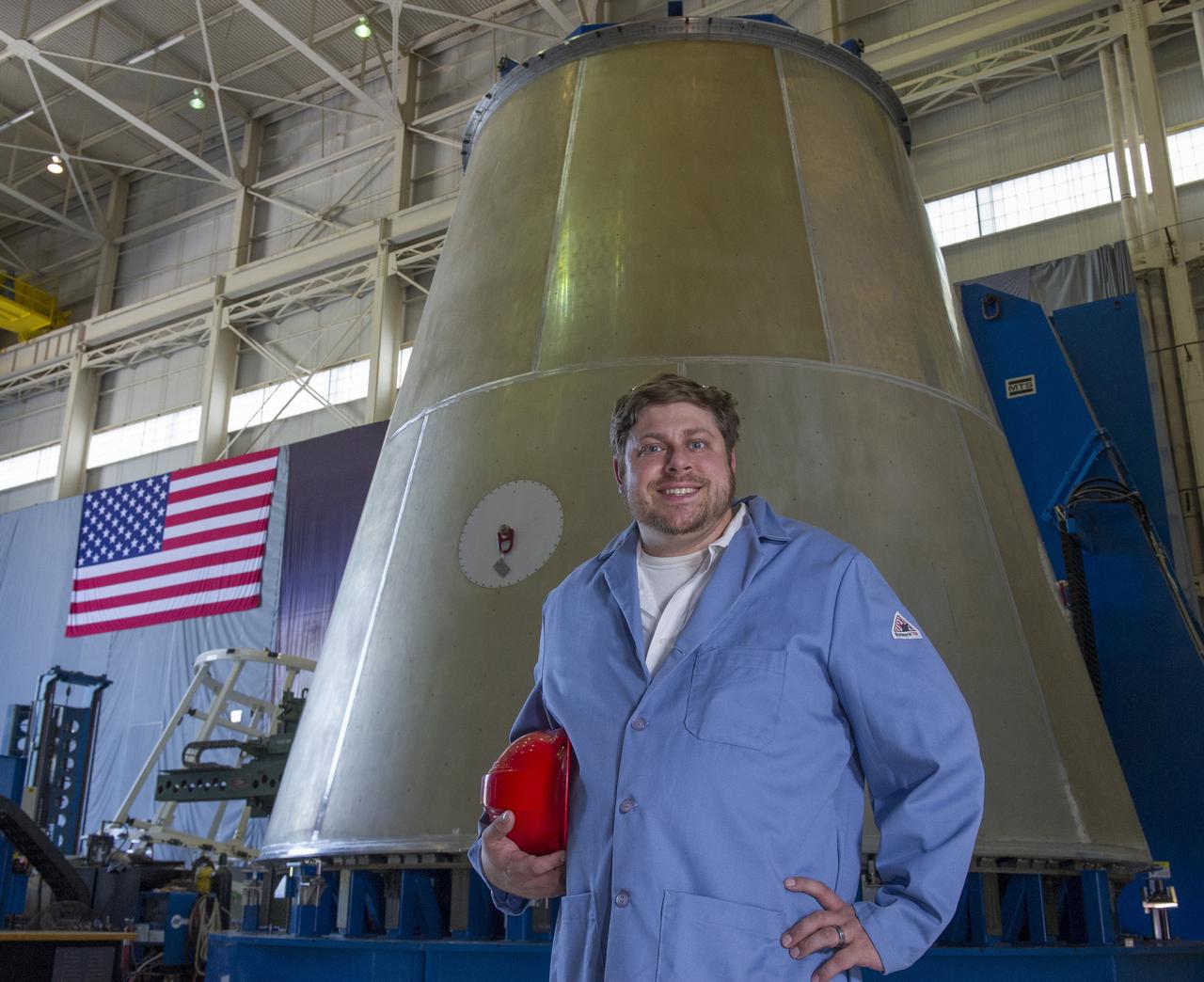
MARSHALL WELD ENGINEER JUSTIN LITTELL POSES WITH LAUNCH VEHICLE STAGE ADAPTER
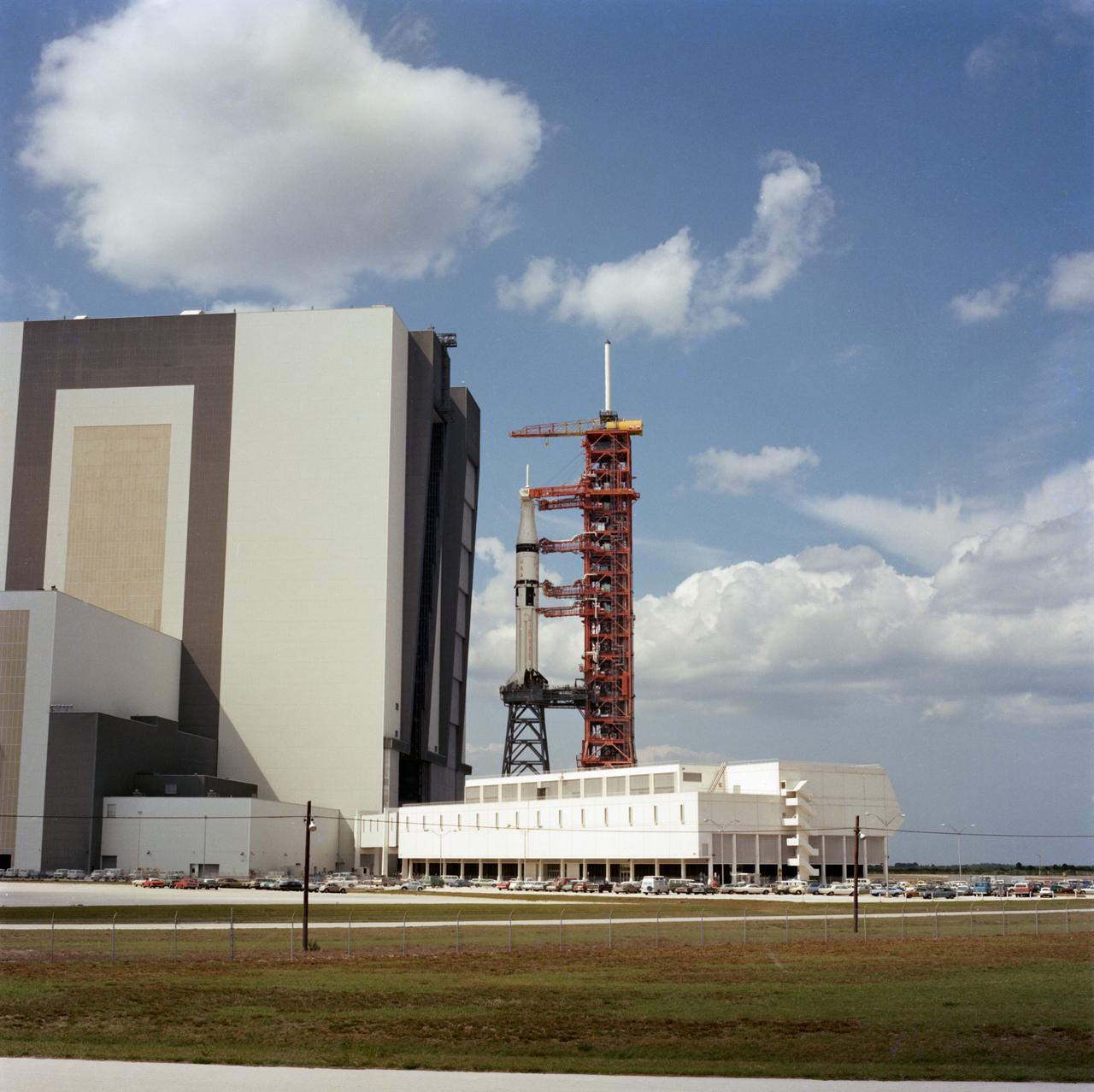
S75-24007 (24 March 1975) --- The Saturn 1B space vehicle for the Apollo-Soyuz Test Project mission, with its launch umbilical tower, rides atop a huge crawler-transporter as it moves slowly away from the Vehicle Assembly Building on its 4.24-mile journey to Pad B, Launch Complex 39, at NASA's Kennedy Space Center. The ASTP vehicle is composed of a Saturn 1B (first) stage, a Saturn IVB (second) stage, and a payload consisting of a Command/Service Module and a Docking Module. The joint U.S.-USSR ASTP docking mission in Earth orbit is scheduled for July 1975.
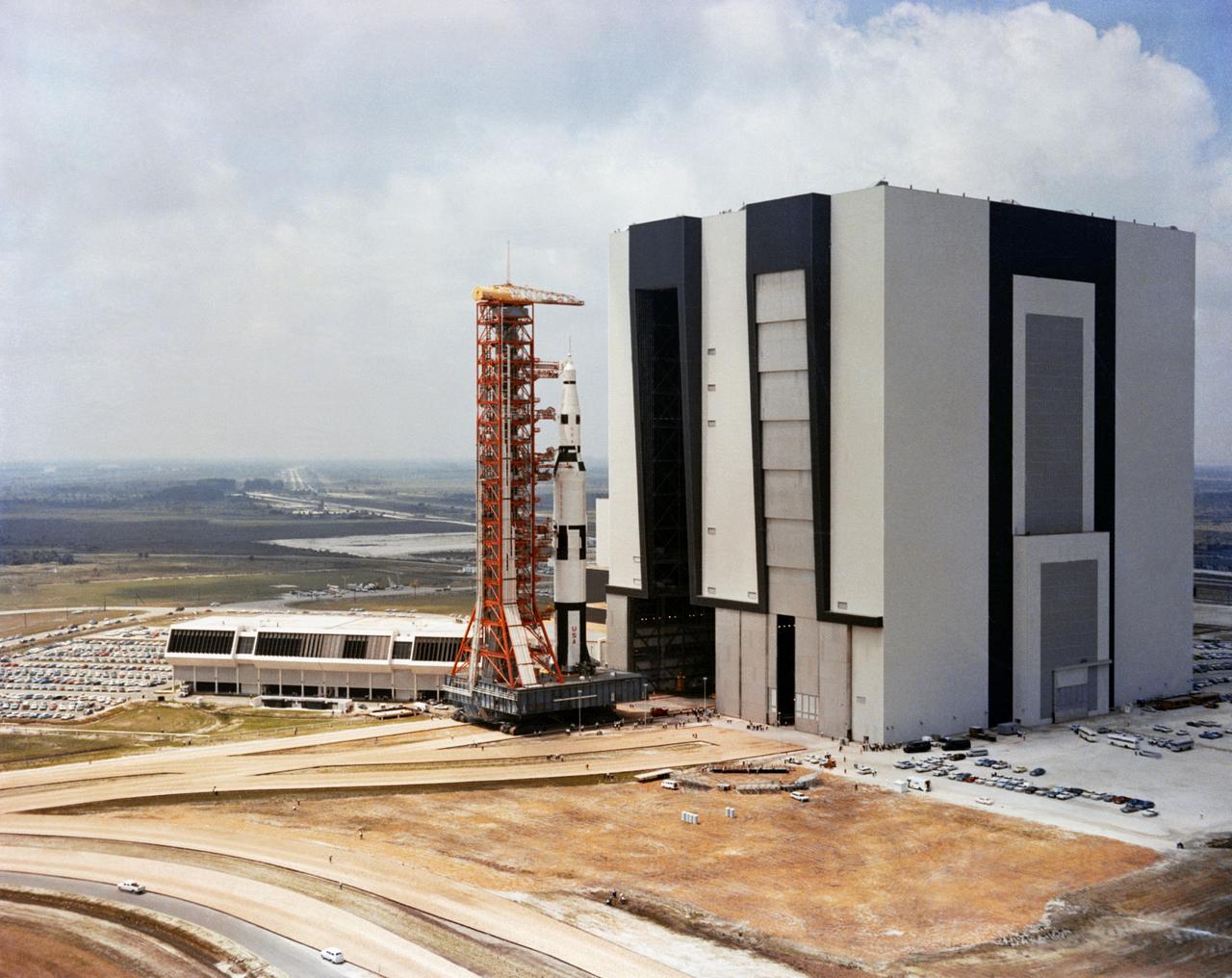
An Apollo/Saturn V facilities Test Vehicle and Launch Umbilical Tower (LUT) atop a crawler-transporter move from the Vehicle Assembly Building (VAB) on the way to Pad A. This test vehicle, designated the Apollo/Saturn 500-F, is being used to verify launch facilities, train launch crews, and develop test and checkout procedures.
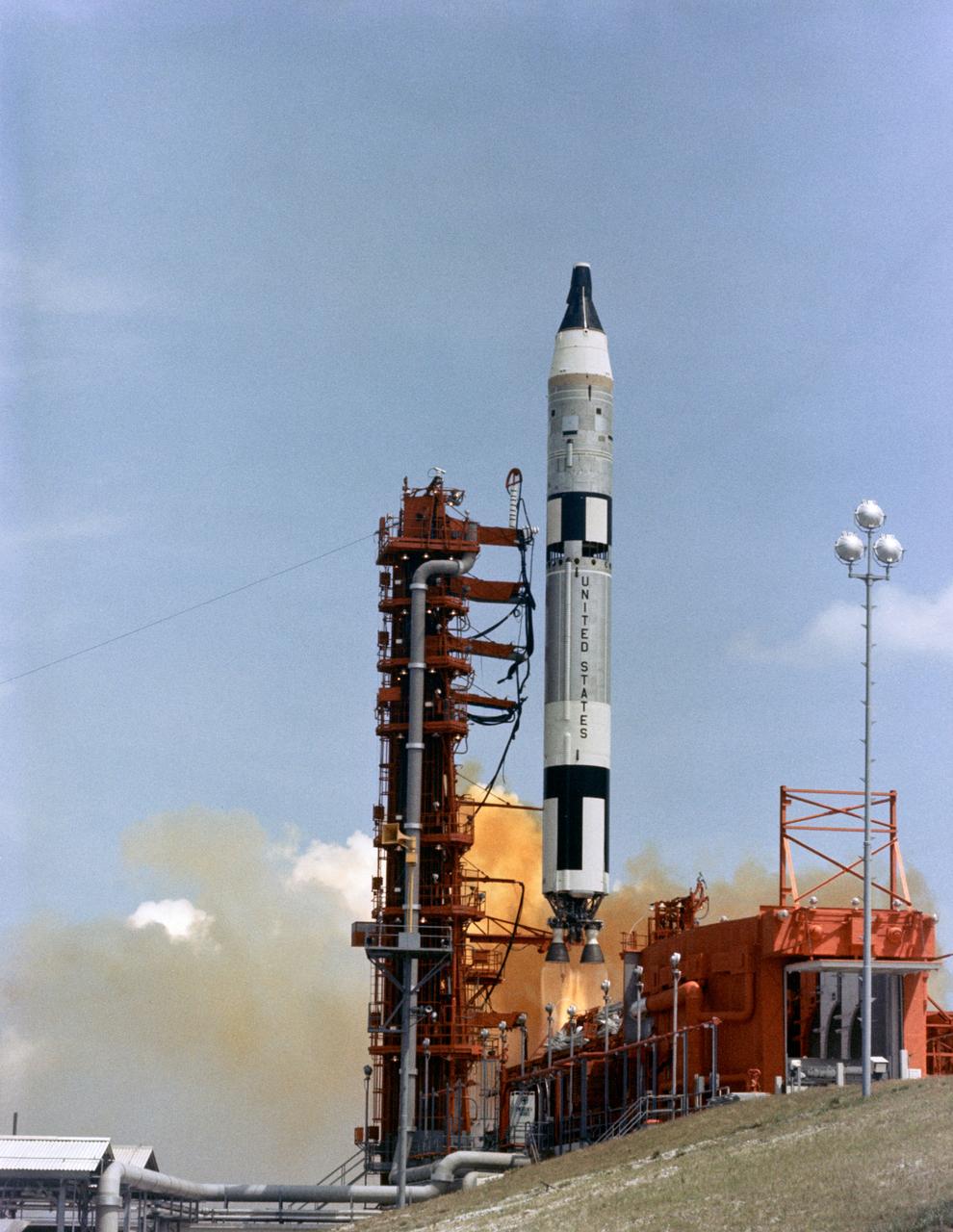
S64-21560 (8 April 1964) --- Gemini/Titan-II launch vehicle #1 liftoff at Cape Kennedy, Florida.
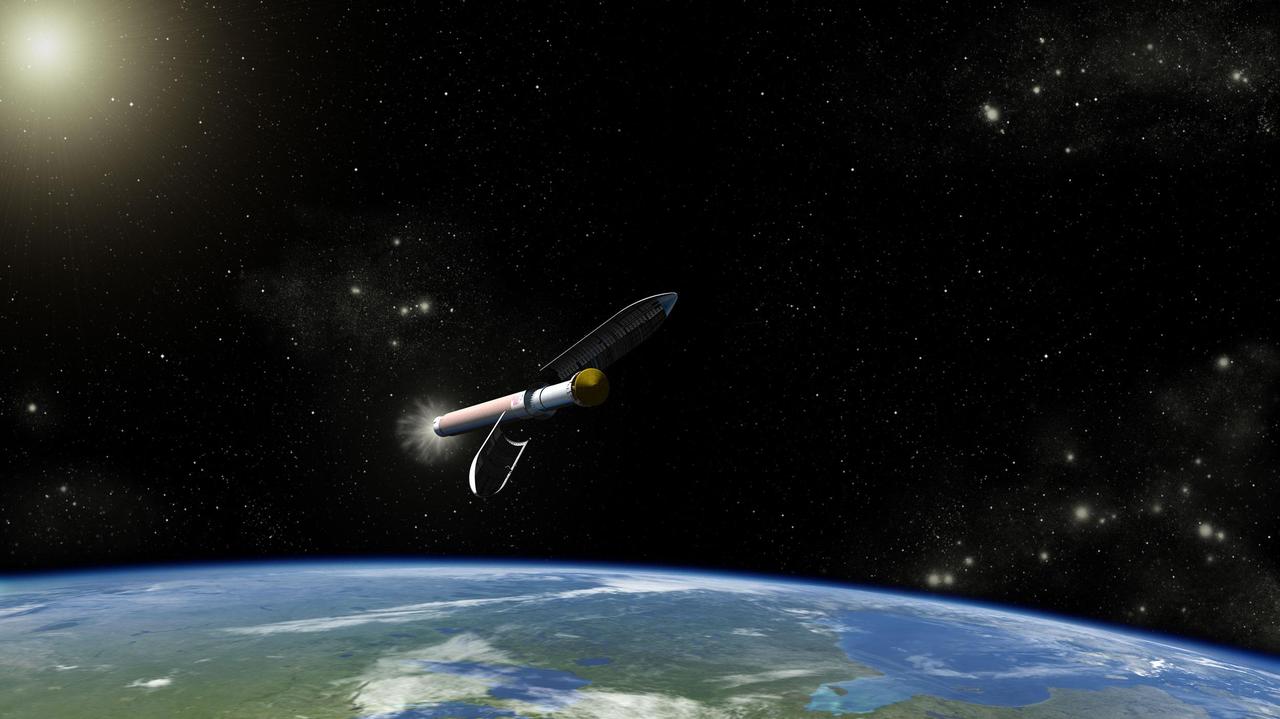
This artist concept is of the Atlas V541 launch vehicle that will carry NASA Curiosity rover on its way to Mars. The Atlas V 541 vehicle was selected as it has the right liftoff capability for heavy weight requirements of the rover and its spacecraft.
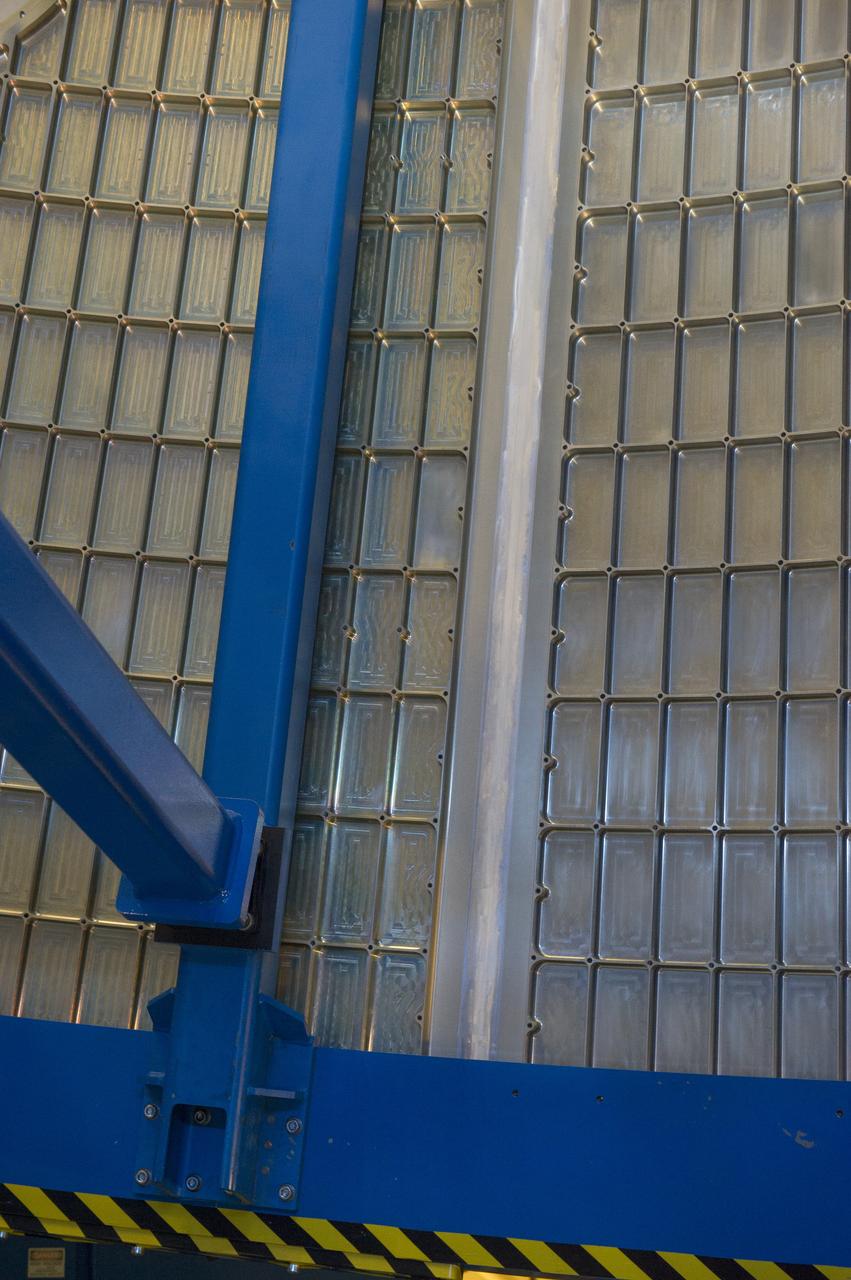
4619/160Launch Vehicle Stage Adapter Aft Cone Weld #1
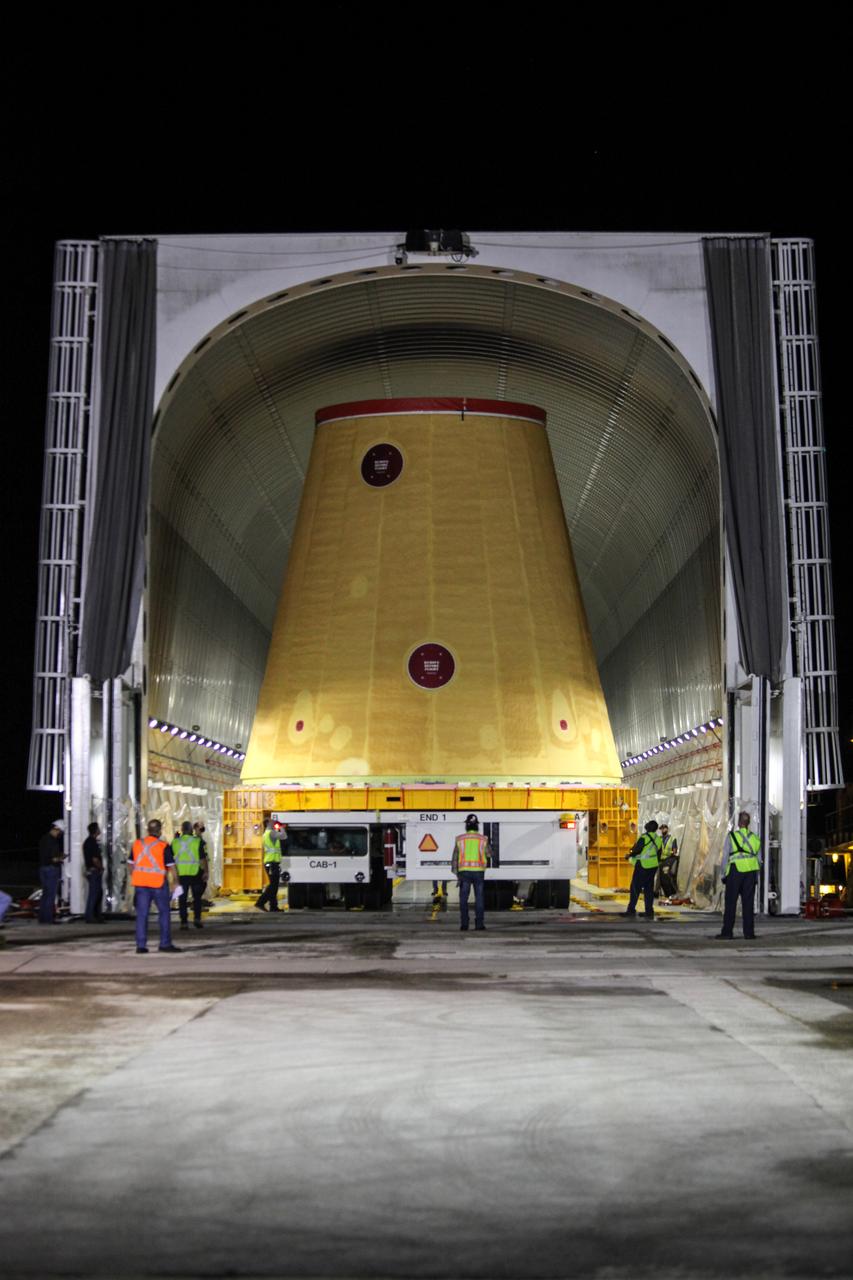
Technicians with NASA’s Exploration Ground Systems prepare to offload the launch vehicle stage adapter (LVSA) for the agency’s Space Launch System (SLS) rocket and move it to the Vehicle Assembly Building (VAB) at NASA’s Kennedy Space Center in Florida on July 30, 2020, for processing. Carried by NASA’s Pegasus barge, the LVSA arrived at Kennedy’s Launch Complex 39 turn basin wharf after departing from the agency’s Marshall Space Flight Center in Huntsville, Alabama. The LVSA will connect the SLS core stage to the rocket’s upper stage and will remain in the VAB until it’s time for stacking on the mobile launcher ahead of the Artemis I launch. The first in a series of increasingly complex missions, Artemis I will test SLS and the Orion spacecraft as an integrated system prior to crewed flights to the Moon.
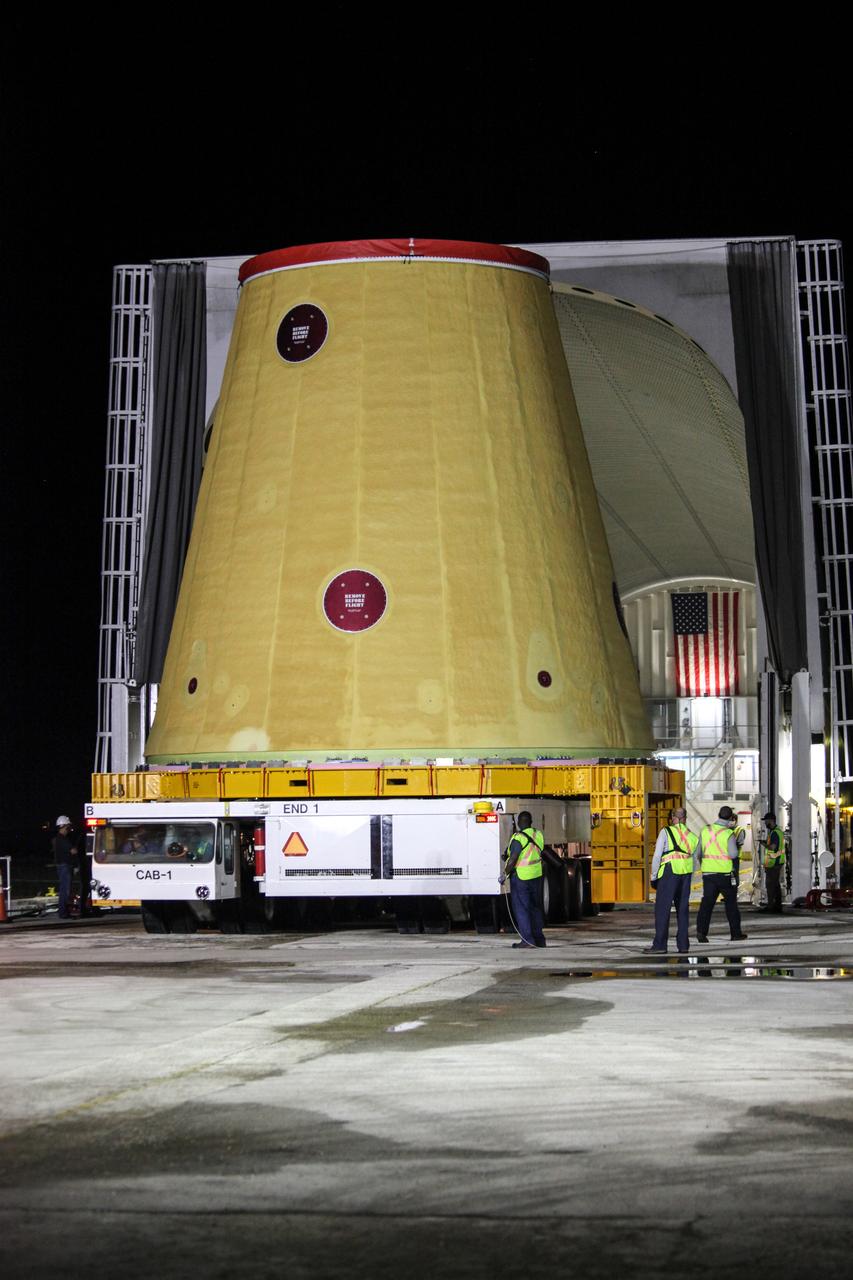
Technicians with NASA’s Exploration Ground Systems move the launch vehicle stage adapter (LVSA) for the agency’s Space Launch System (SLS) rocket off of the Pegasus barge for transportation to the Vehicle Assembly Building (VAB) at NASA’s Kennedy Space Center in Florida on July 30, 2020, for processing. The LVSA arrived at Kennedy’s Launch Complex 39 turn basin wharf after departing from the agency’s Marshall Space Flight Center in Huntsville, Alabama. The LVSA will connect the SLS core stage to the rocket’s upper stage and will remain in the VAB until it’s time for stacking on the mobile launcher ahead of the Artemis I launch. The first in a series of increasingly complex missions, Artemis I will test SLS and the Orion spacecraft as an integrated system prior to crewed flights to the Moon.
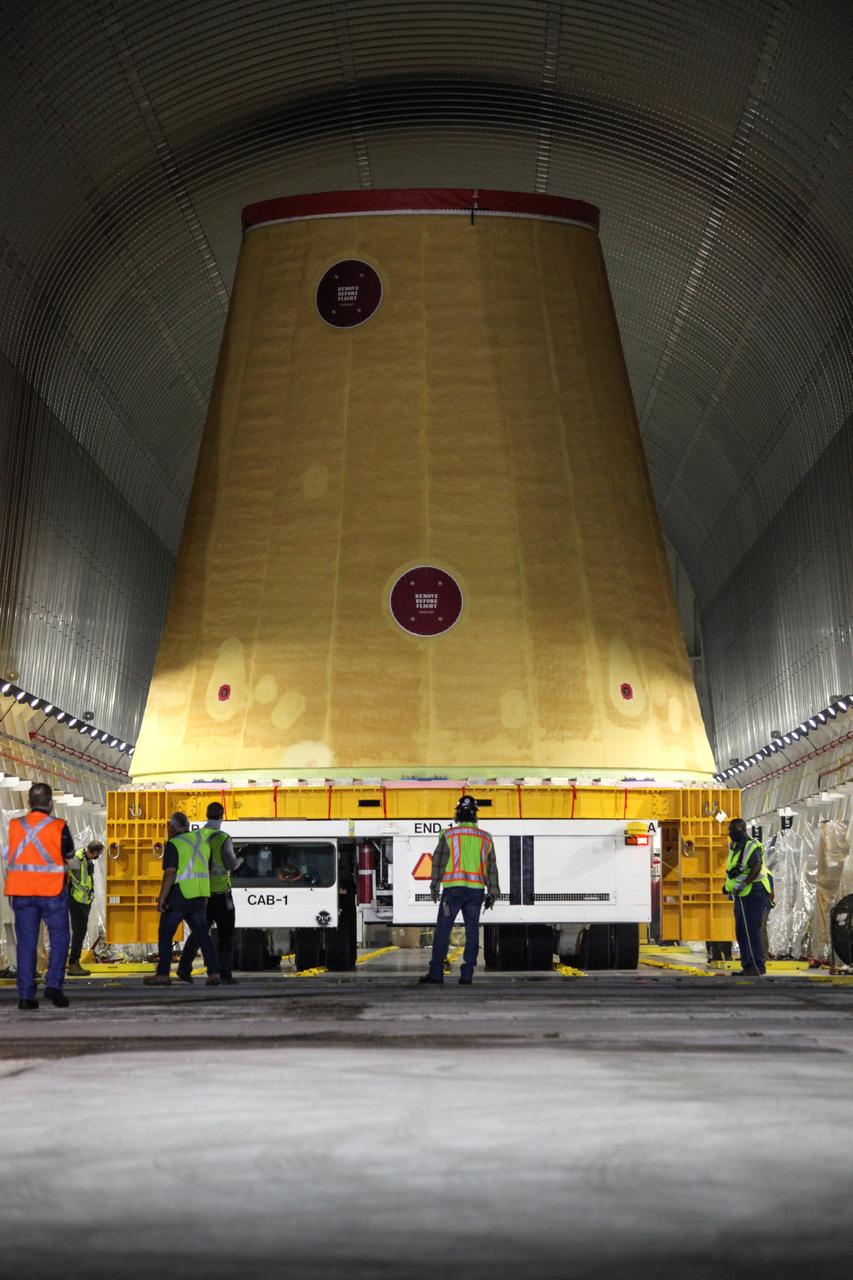
Technicians with NASA’s Exploration Ground Systems prepare to offload the launch vehicle stage adapter (LVSA) for the agency’s Space Launch System (SLS) rocket and move it to the Vehicle Assembly Building (VAB) at NASA’s Kennedy Space Center in Florida on July 30, 2020, for processing. Carried by NASA’s Pegasus barge, the LVSA arrived at Kennedy’s Launch Complex 39 turn basin wharf after departing from the agency’s Marshall Space Flight Center in Huntsville, Alabama. The LVSA will connect the SLS core stage to the rocket’s upper stage and will remain in the VAB until it’s time for stacking on the mobile launcher ahead of the Artemis I launch. The first in a series of increasingly complex missions, Artemis I will test SLS and the Orion spacecraft as an integrated system prior to crewed flights to the Moon.
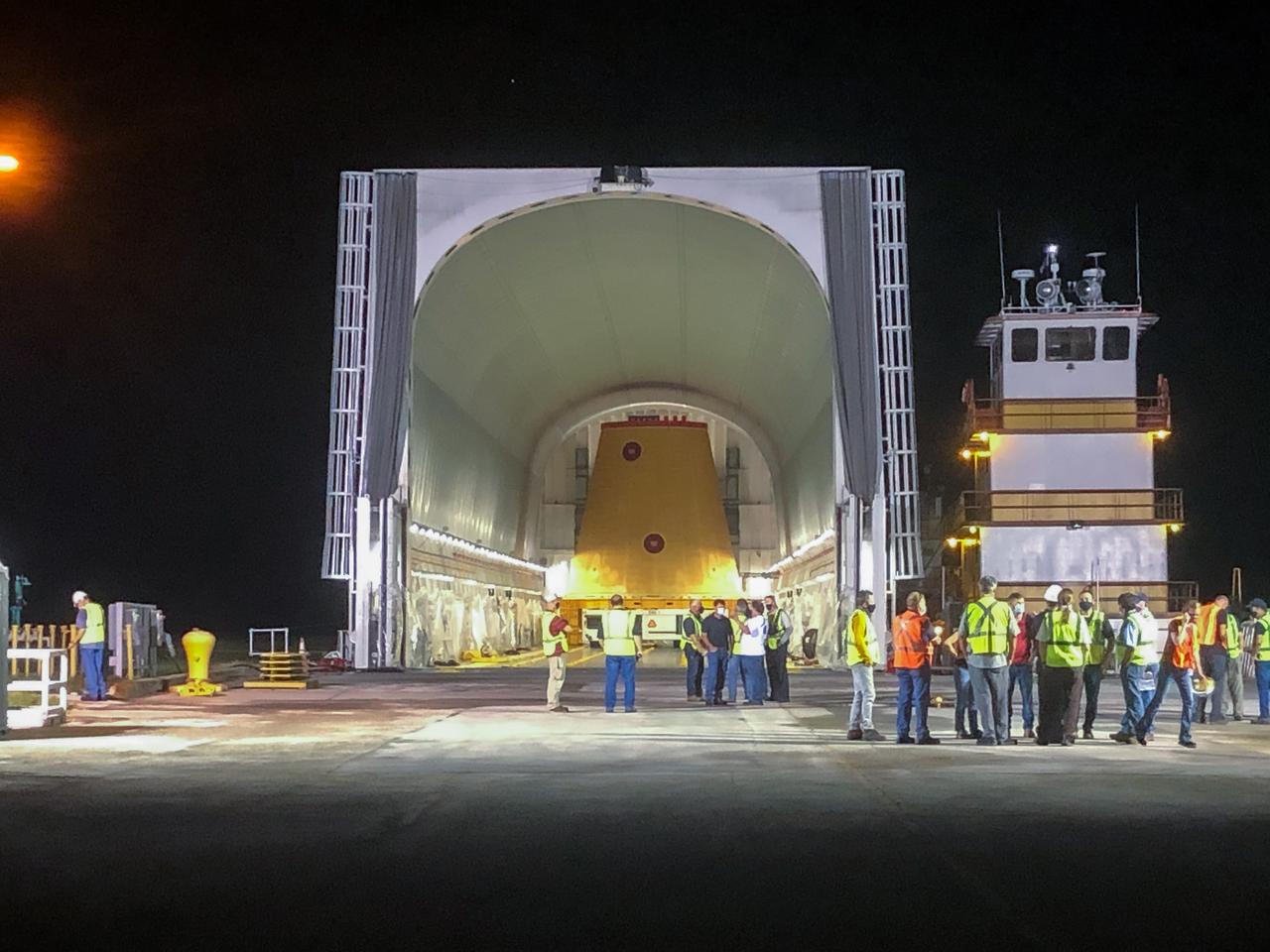
Technicians with NASA’s Exploration Ground Systems prepare to offload the launch vehicle stage adapter (LVSA) for the agency’s Space Launch System (SLS) rocket and move it to the Vehicle Assembly Building (VAB) at NASA’s Kennedy Space Center in Florida on July 30, 2020, for processing. Carried by NASA’s Pegasus barge, the LVSA arrived at Kennedy’s Launch Complex 39 turn basin wharf after departing from the agency’s Marshall Space Flight Center in Huntsville, Alabama. The LVSA will connect the SLS core stage to the rocket’s upper stage and will remain in the VAB until it’s time for stacking on the mobile launcher ahead of the Artemis I launch. The first in a series of increasingly complex missions, Artemis I will test SLS and the Orion spacecraft as an integrated system prior to crewed flights to the Moon.
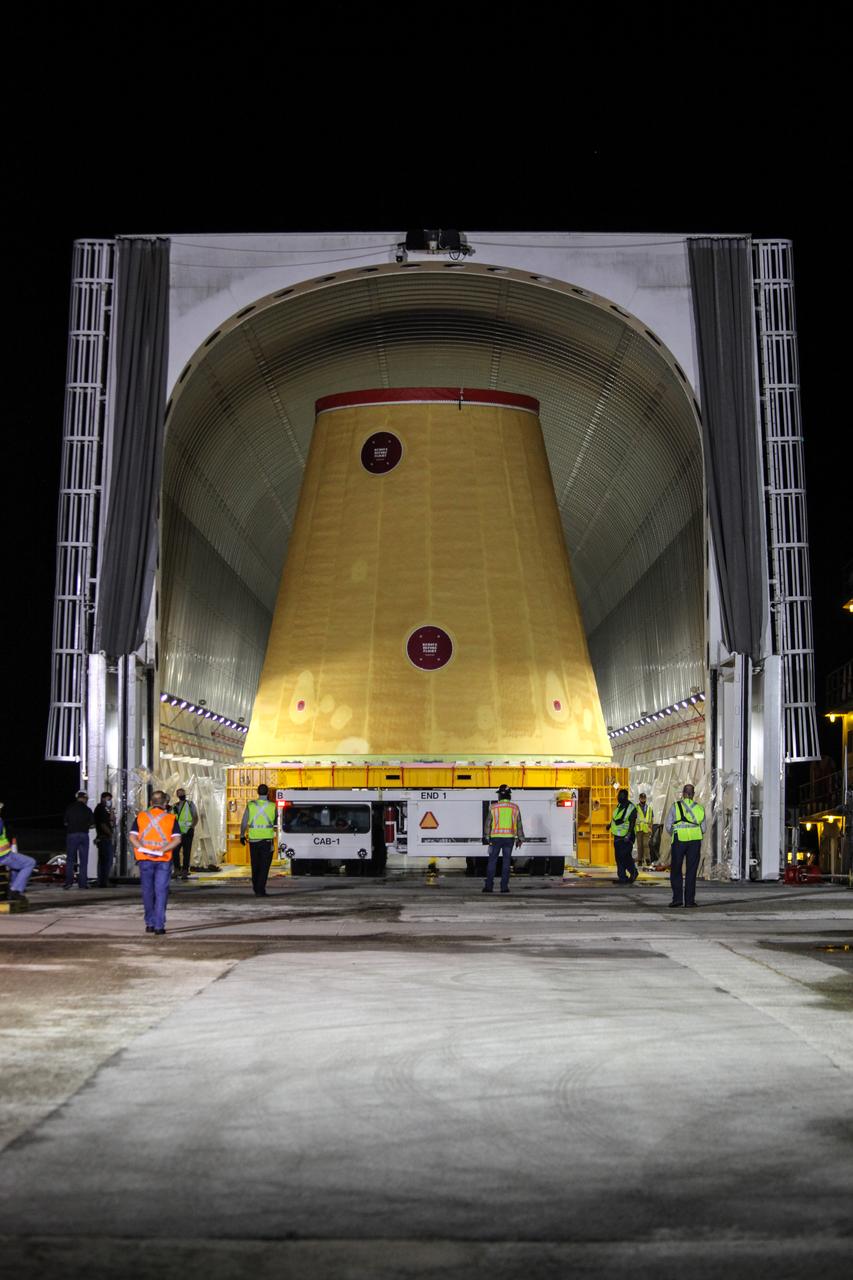
Technicians with NASA’s Exploration Ground Systems begin to offload the launch vehicle stage adapter (LVSA) for the agency’s Space Launch System (SLS) rocket and move it to the Vehicle Assembly Building (VAB) at NASA’s Kennedy Space Center in Florida on July 30, 2020, for processing. Carried by NASA’s Pegasus barge, the LVSA arrived at Kennedy’s Launch Complex 39 turn basin wharf after departing from the agency’s Marshall Space Flight Center in Huntsville, Alabama. The LVSA will connect the SLS core stage to the rocket’s upper stage and will remain in the VAB until it’s time for stacking on the mobile launcher ahead of the Artemis I launch. The first in a series of increasingly complex missions, Artemis I will test SLS and the Orion spacecraft as an integrated system prior to crewed flights to the Moon.
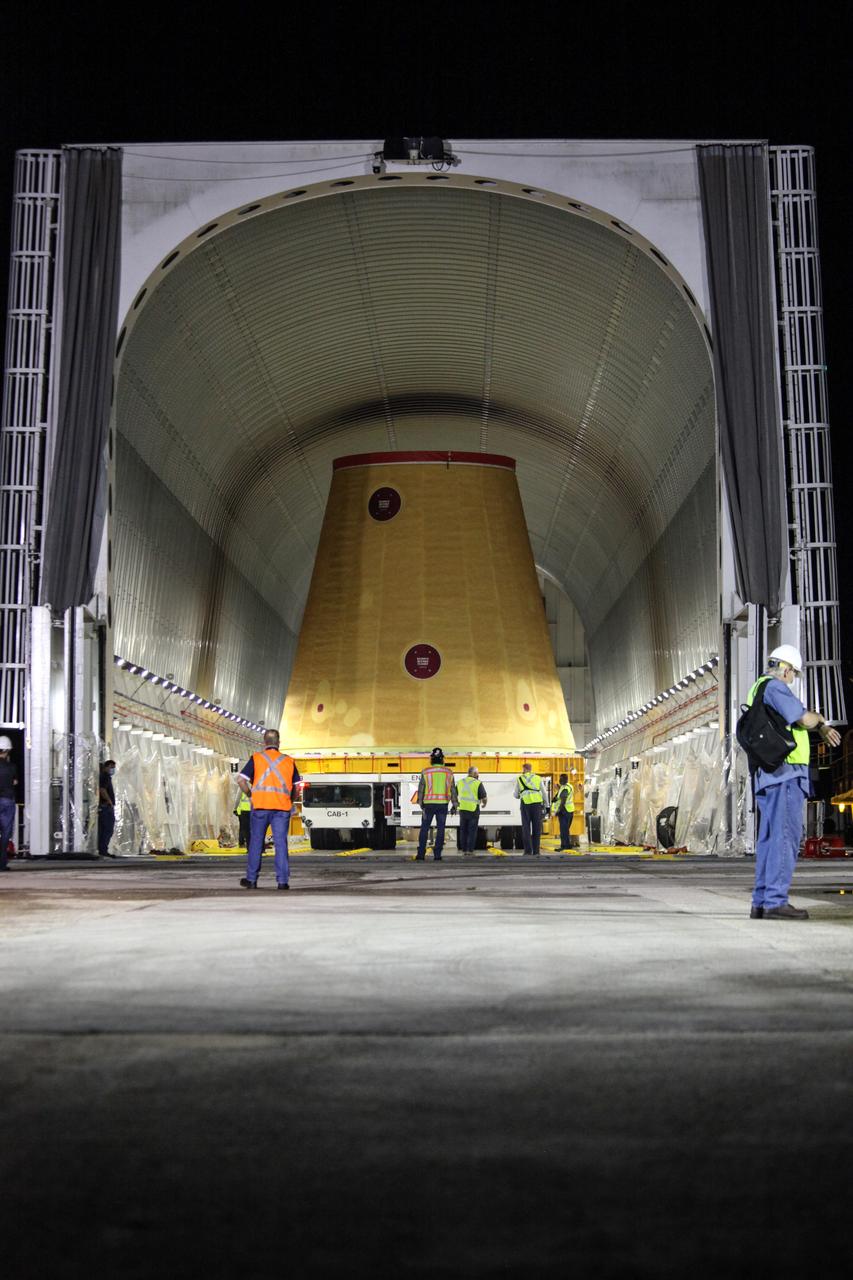
Technicians with NASA’s Exploration Ground Systems prepare to offload the launch vehicle stage adapter (LVSA) for the agency’s Space Launch System (SLS) rocket and move it to the Vehicle Assembly Building (VAB) at NASA’s Kennedy Space Center in Florida on July 30, 2020, for processing. Carried by NASA’s Pegasus barge, the LVSA arrived at Kennedy’s Launch Complex 39 turn basin wharf after departing from the agency’s Marshall Space Flight Center in Huntsville, Alabama. The LVSA will connect the SLS core stage to the rocket’s upper stage and will remain in the VAB until it’s time for stacking on the mobile launcher ahead of the Artemis I launch. The first in a series of increasingly complex missions, Artemis I will test SLS and the Orion spacecraft as an integrated system prior to crewed flights to the Moon.
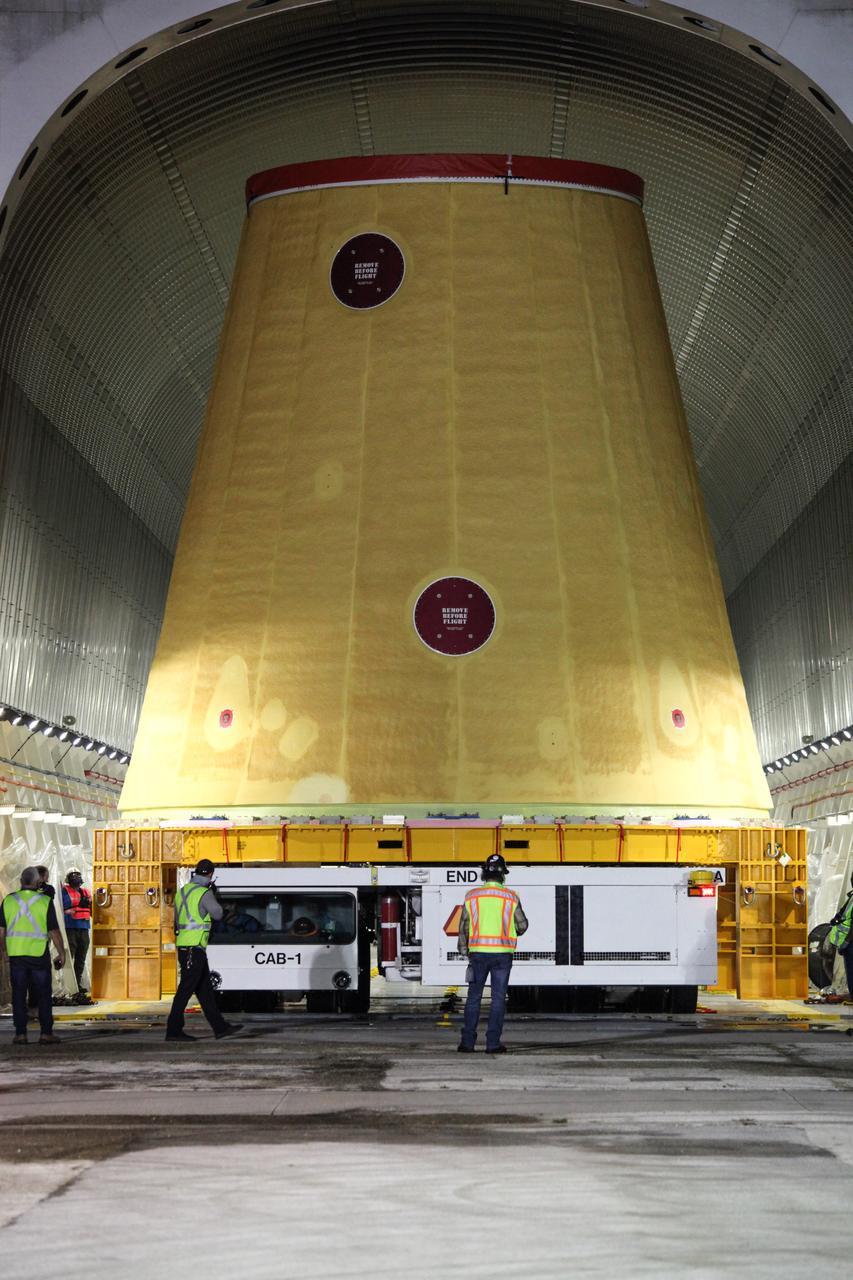
Technicians with NASA’s Exploration Ground Systems begin to offload the launch vehicle stage adapter (LVSA) for the agency’s Space Launch System (SLS) rocket and move it to the Vehicle Assembly Building (VAB) at NASA’s Kennedy Space Center in Florida on July 30, 2020, for processing. Carried by NASA’s Pegasus barge, the LVSA arrived at Kennedy’s Launch Complex 39 turn basin wharf after departing from the agency’s Marshall Space Flight Center in Huntsville, Alabama. The LVSA will connect the SLS core stage to the rocket’s upper stage and will remain in the VAB until it’s time for stacking on the mobile launcher ahead of the Artemis I launch. The first in a series of increasingly complex missions, Artemis I will test SLS and the Orion spacecraft as an integrated system prior to crewed flights to the Moon.
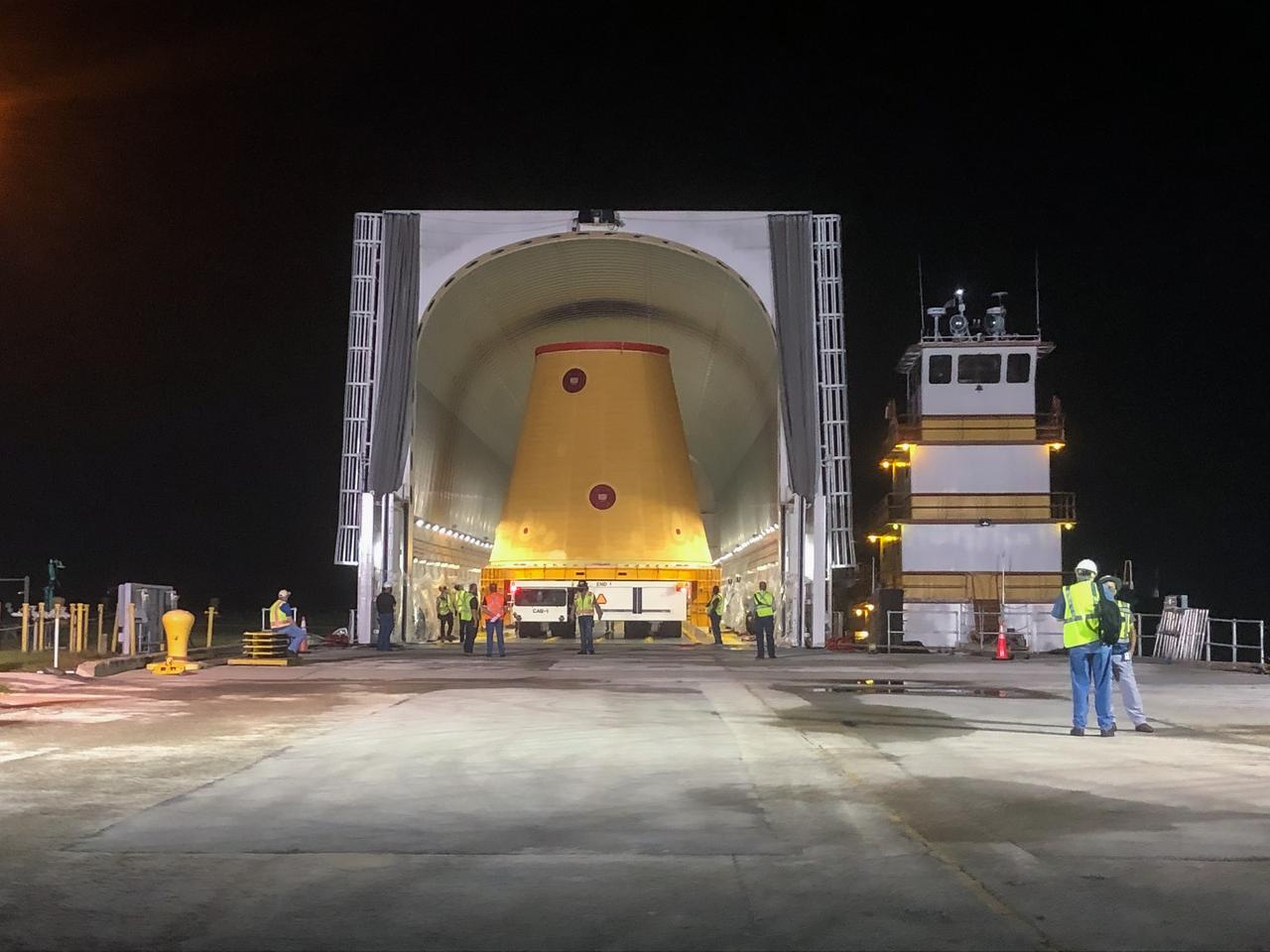
Technicians with NASA’s Exploration Ground Systems prepare to offload the launch vehicle stage adapter (LVSA) for the agency’s Space Launch System (SLS) rocket and move it to the Vehicle Assembly Building (VAB) at NASA’s Kennedy Space Center in Florida on July 30, 2020, for processing. Carried by NASA’s Pegasus barge, the LVSA arrived at Kennedy’s Launch Complex 39 turn basin wharf after departing from the agency’s Marshall Space Flight Center in Huntsville, Alabama. The LVSA will connect the SLS core stage to the rocket’s upper stage and will remain in the VAB until it’s time for stacking on the mobile launcher ahead of the Artemis I launch. The first in a series of increasingly complex missions, Artemis I will test SLS and the Orion spacecraft as an integrated system prior to crewed flights to the Moon.
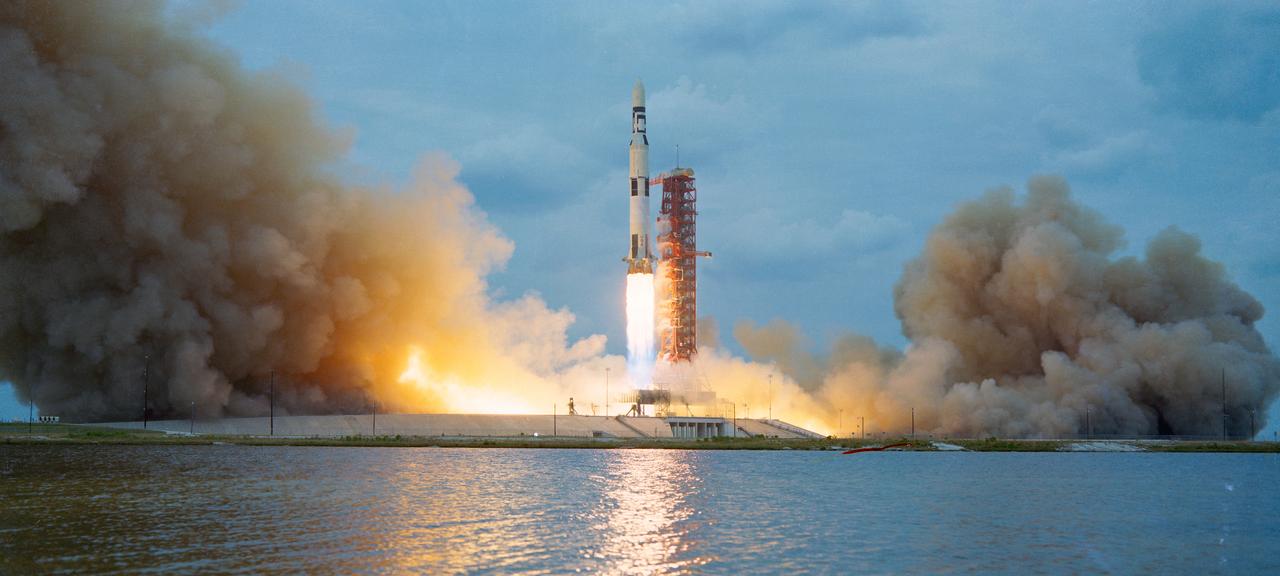
S73-26912 (14 May 1973) --- The unmanned Skylab 1/Saturn V space vehicle is launched from Pad A, Launch Complex 39, Kennedy Space Center, Florida, at 12:00 noon (EDT), May 14, 1973, to place the Skylab space station cluster in Earth orbit. The Skylab 1 payload included four of the five major components of the space station Orbital Workshop, Apollo Telescope Mount, Multiple Docking Adapter, and Airlock Module. In addition to the payload, the Skylab 1/Saturn V second (S-11) stage. The fifth major component of the space station, the Command Service Module with the Skylab 2 crew aboard, was launched at a later date by a Saturn 1B from Pad B. Photo credit: NASA

RICK BURT, RIGHT, DIRECTOR OF SAFETY AND MISSION ASSURANCE TALKS WITH ANDY SCHORR, ASSISTANT MANAGER OF THE SPACE LAUNCH SYSTEM'S SPACECRAFT PAYLOAD INTEGRATION AND EVOLUTION OFFICE. BEHIND THEM IS THE LAUNCH VEHICLE STAGE ADAPTOR, WHICH WAS DESIGNED AND MANUFACTURED AT MARSHALL AND WILL CONNECT TWO MAJOR SLS UPPER SECTIONS

The Voyager 2 spacecraft, encapsulated within its payload fairing, is seen in August 1977, as it was being hoisted upward for attachment to its launch vehicle at NASA's Kennedy Space Center in Cape Canaveral, Florida. https://photojournal.jpl.nasa.gov/catalog/PIA21727
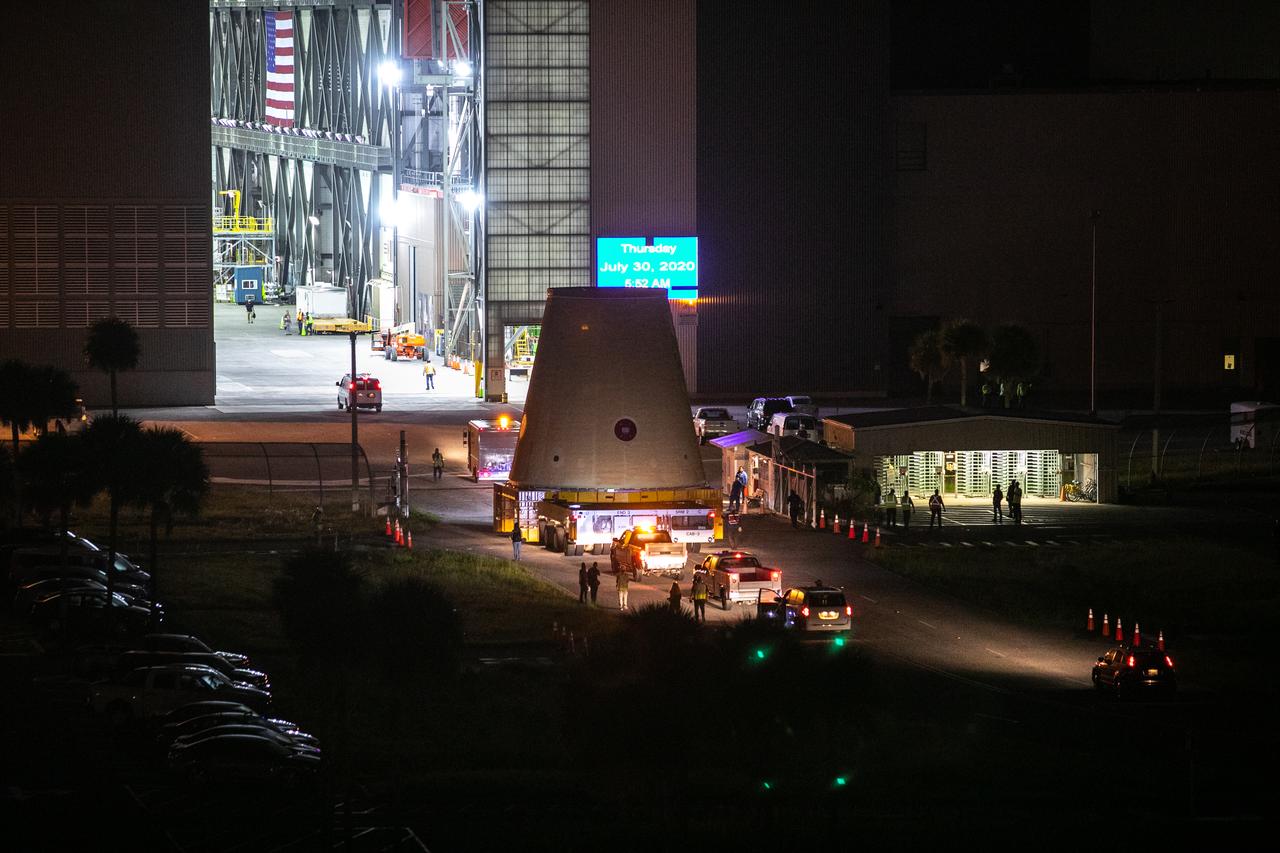
The Launch Vehicle Stage Adapter for the Space Launch System rocket arrived at the barge at Kennedy Space Center for ground processing and integration for the launch of Artemis I.
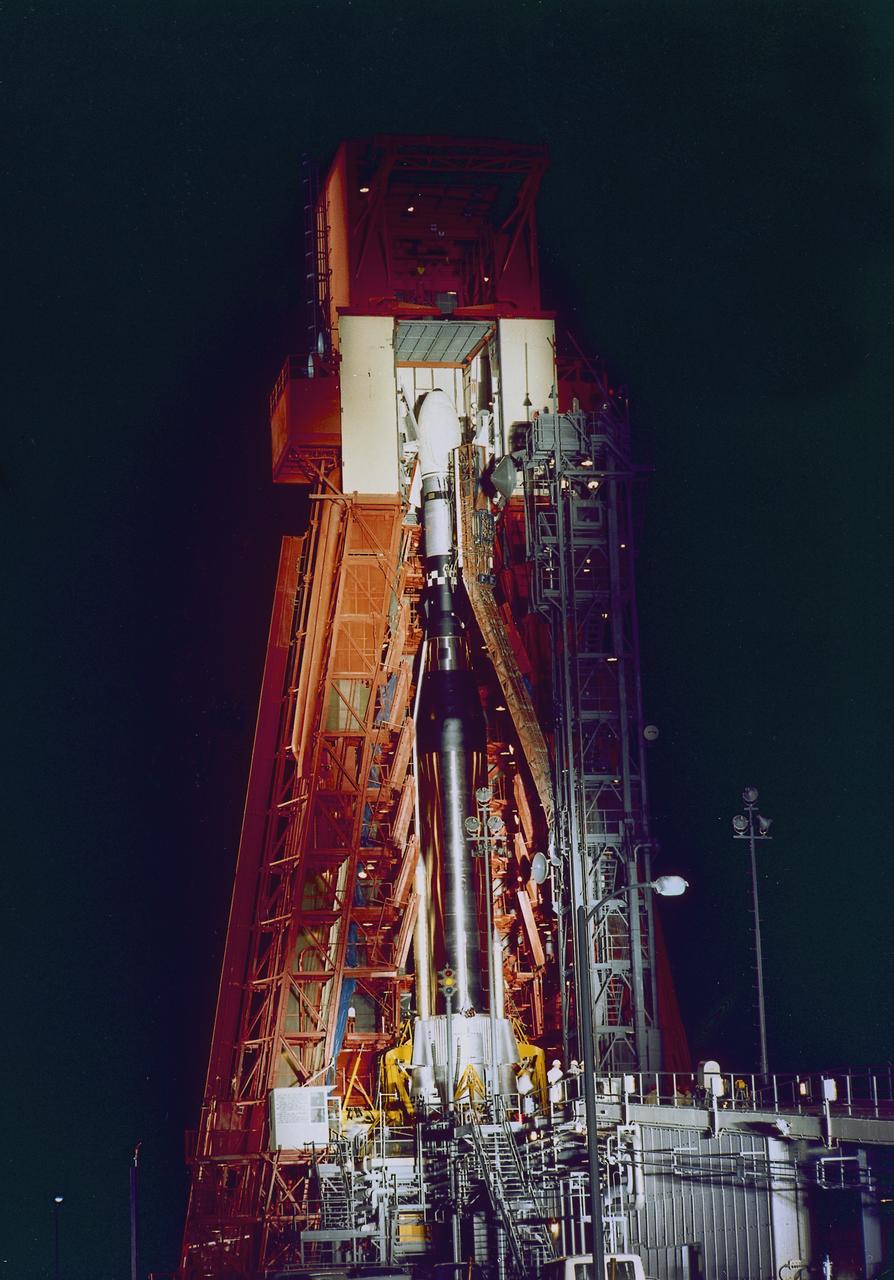
The Atlas/Agena launch vehicle carrying The Mariner-V spacecraft on launch pad on June 14, 1967. The Marina V mission was to explore the planet Venus.
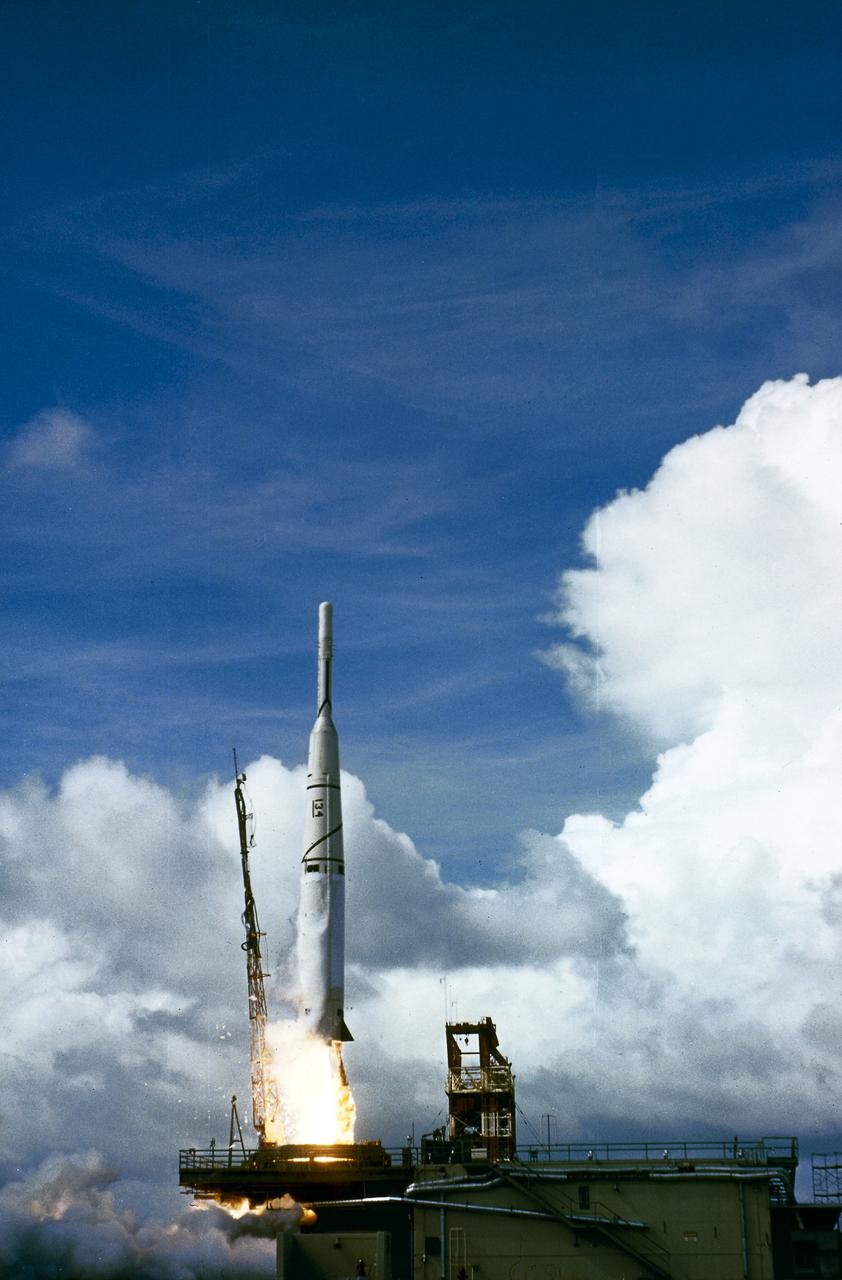
The launch of Thor/Able 3 launch vehicle on August 6, 1959, from the Atlantic Missile Range. The payload was Explorer VI for meteorology study.
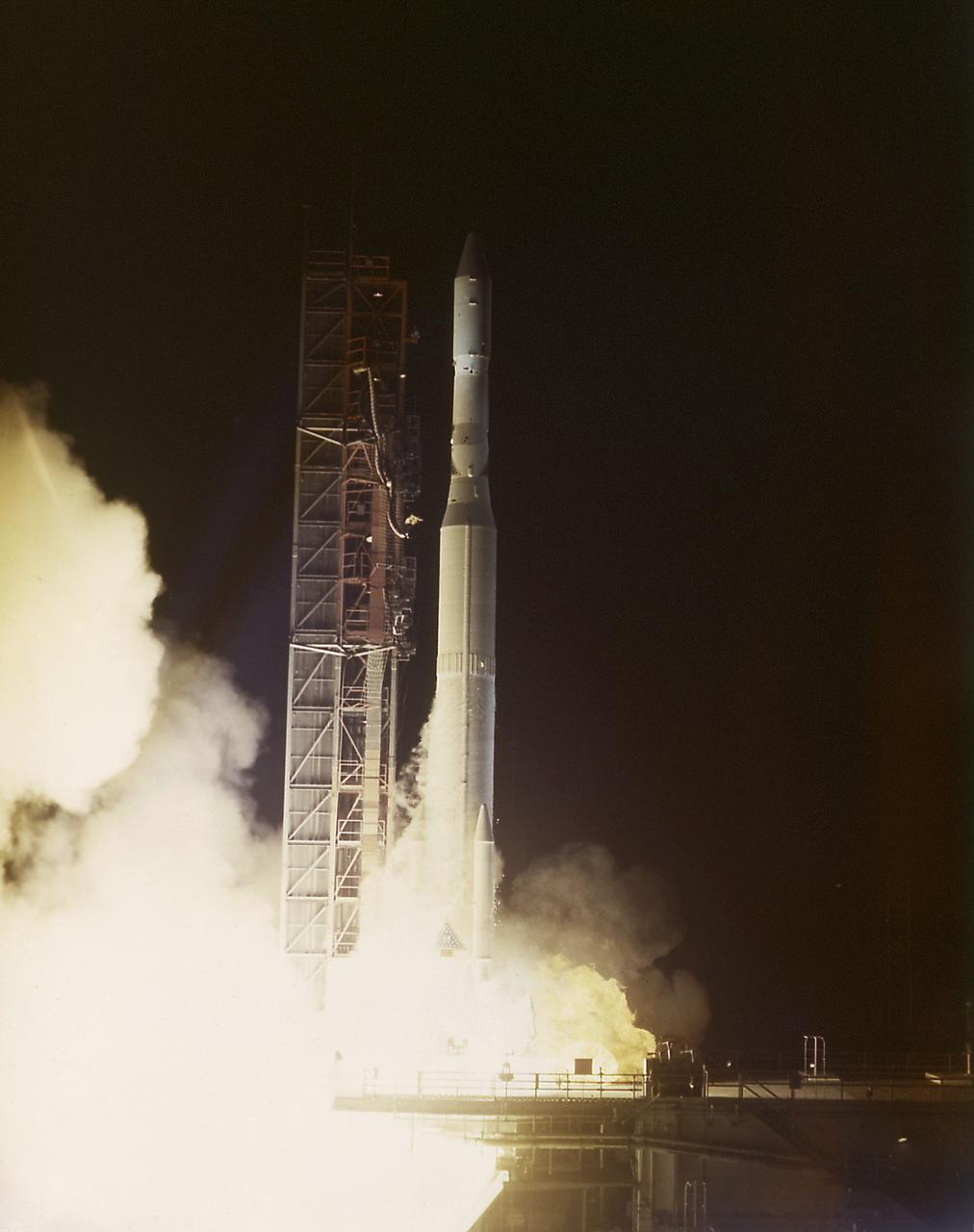
The Thor-Delta-68 vehicle launched the INTELSAT III (International Telecommunication Satellite) on May 21, 1969.
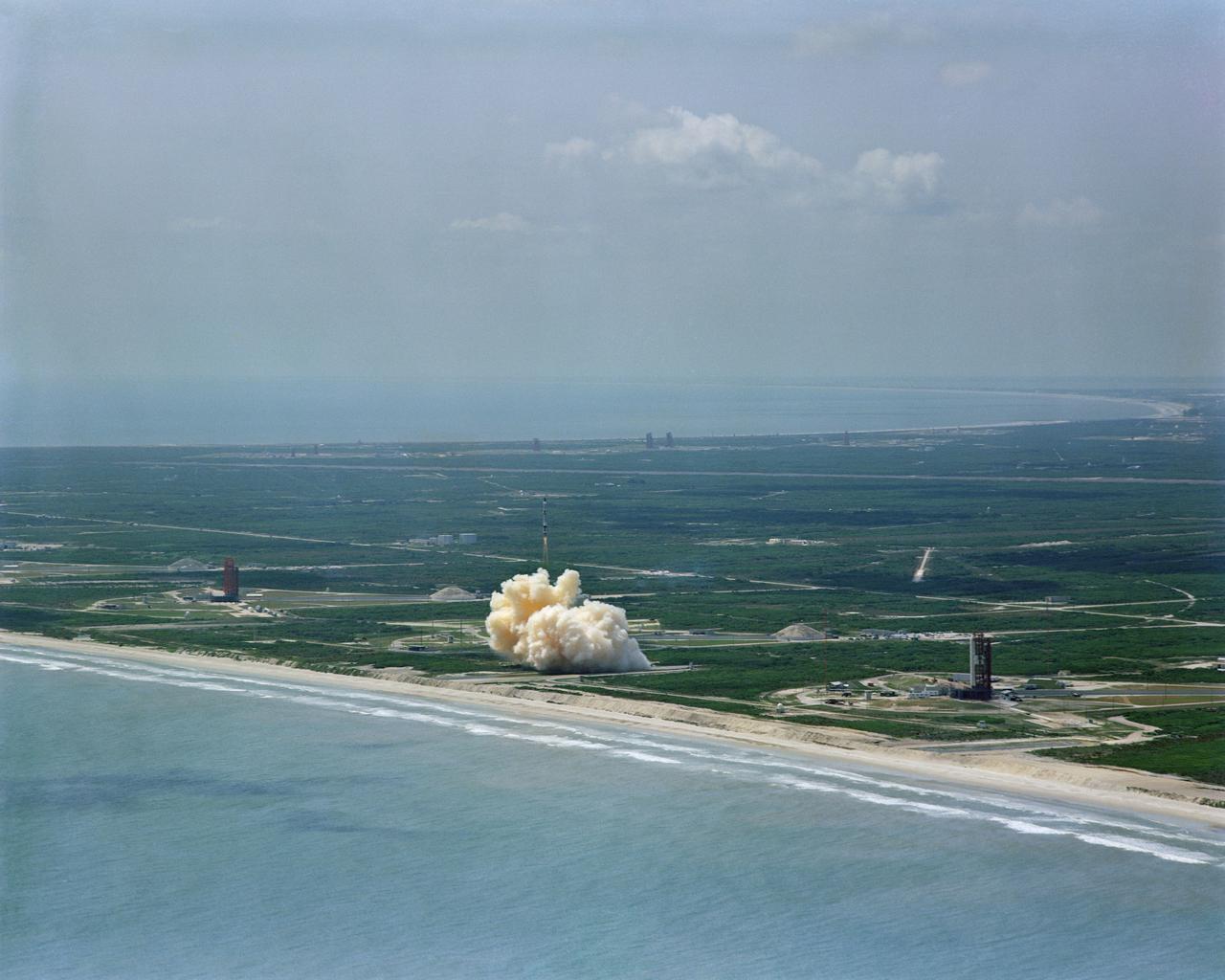
S64-22412 (8 April 1964) --- Aerial view of the Gemini/Titan-II launch vehicle #1 liftoff at Cape Kennedy, Florida.
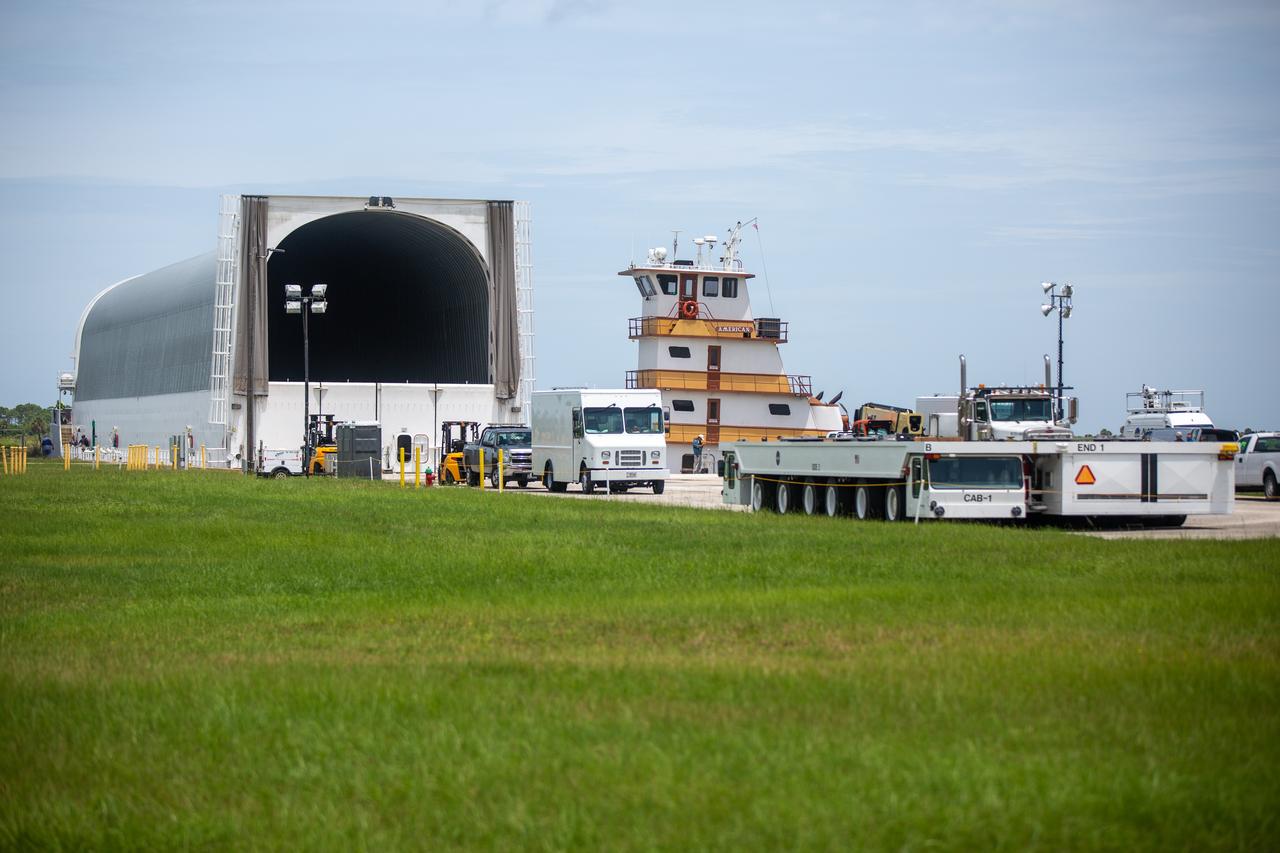
NASA’s Pegasus barge, carrying the launch vehicle stage adapter (LVSA) for the agency’s Space Launch System (SLS) rocket, arrives at the Kennedy Space Center Launch Complex 39 turn basin wharf on July 29, 2020. Traveling to Florida from NASA’s Marshall Space Flight Center in Huntsville, Alabama, the LVSA will connect the SLS core stage to the rocket’s upper stage for the Artemis I launch. Once the LVSA is offloaded, it will be moved to High Bay 4 in the Vehicle Assembly Building for processing ahead of launch. The first launch under the agency’s Artemis program, Artemis I will test SLS and the Orion spacecraft as an integrated system prior to crewed flights to the Moon.
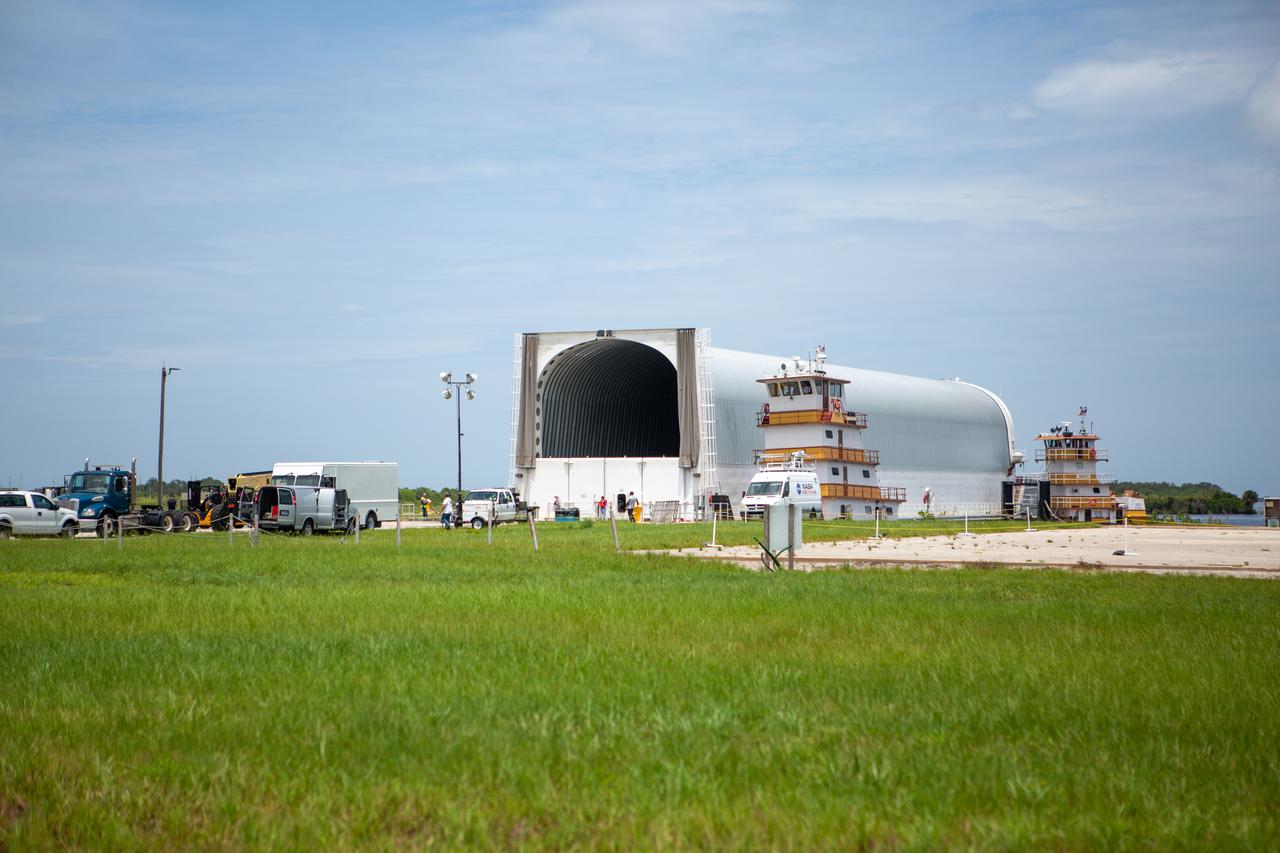
NASA’s Pegasus barge, carrying the launch vehicle stage adapter (LVSA) for the agency’s Space Launch System (SLS) rocket, arrives at the Kennedy Space Center Launch Complex 39 turn basin wharf on July 29, 2020. Traveling to Florida from NASA’s Marshall Space Flight Center in Huntsville, Alabama, the LVSA will connect the SLS core stage to the rocket’s upper stage for the Artemis I launch. Once the LVSA is offloaded, it will be moved to High Bay 4 in the Vehicle Assembly Building for processing ahead of launch. The first launch under the agency’s Artemis program, Artemis I will test SLS and the Orion spacecraft as an integrated system prior to crewed flights to the Moon.
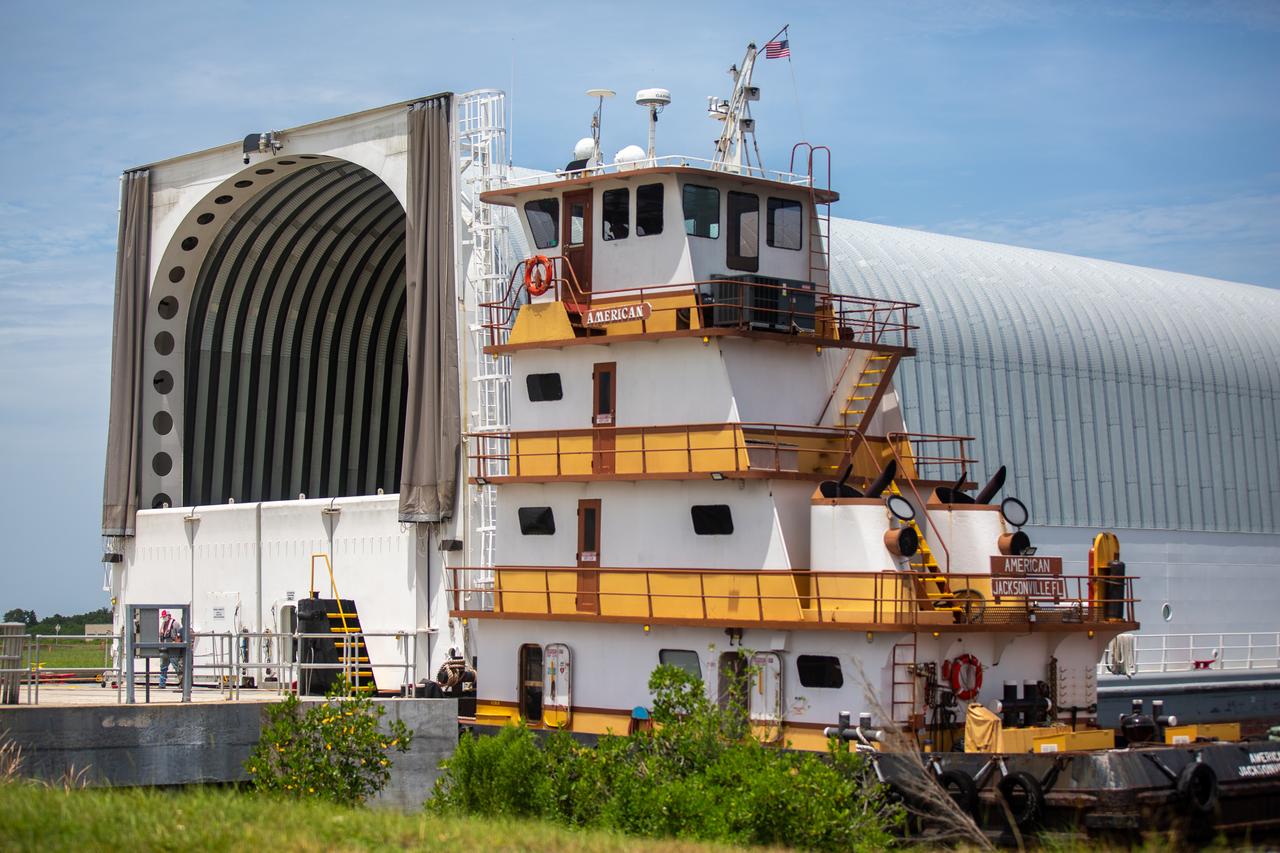
NASA’s Pegasus barge, carrying the launch vehicle stage adapter (LVSA) for the agency’s Space Launch System (SLS) rocket, arrives at the Kennedy Space Center Launch Complex 39 turn basin wharf on July 29, 2020. Traveling to Florida from NASA’s Marshall Space Flight Center in Huntsville, Alabama, the LVSA will connect the SLS core stage to the rocket’s upper stage for the Artemis I launch. Once the LVSA is offloaded, it will be moved to High Bay 4 in the Vehicle Assembly Building for processing ahead of launch. The first launch under the agency’s Artemis program, Artemis I will test SLS and the Orion spacecraft as an integrated system prior to crewed flights to the Moon.
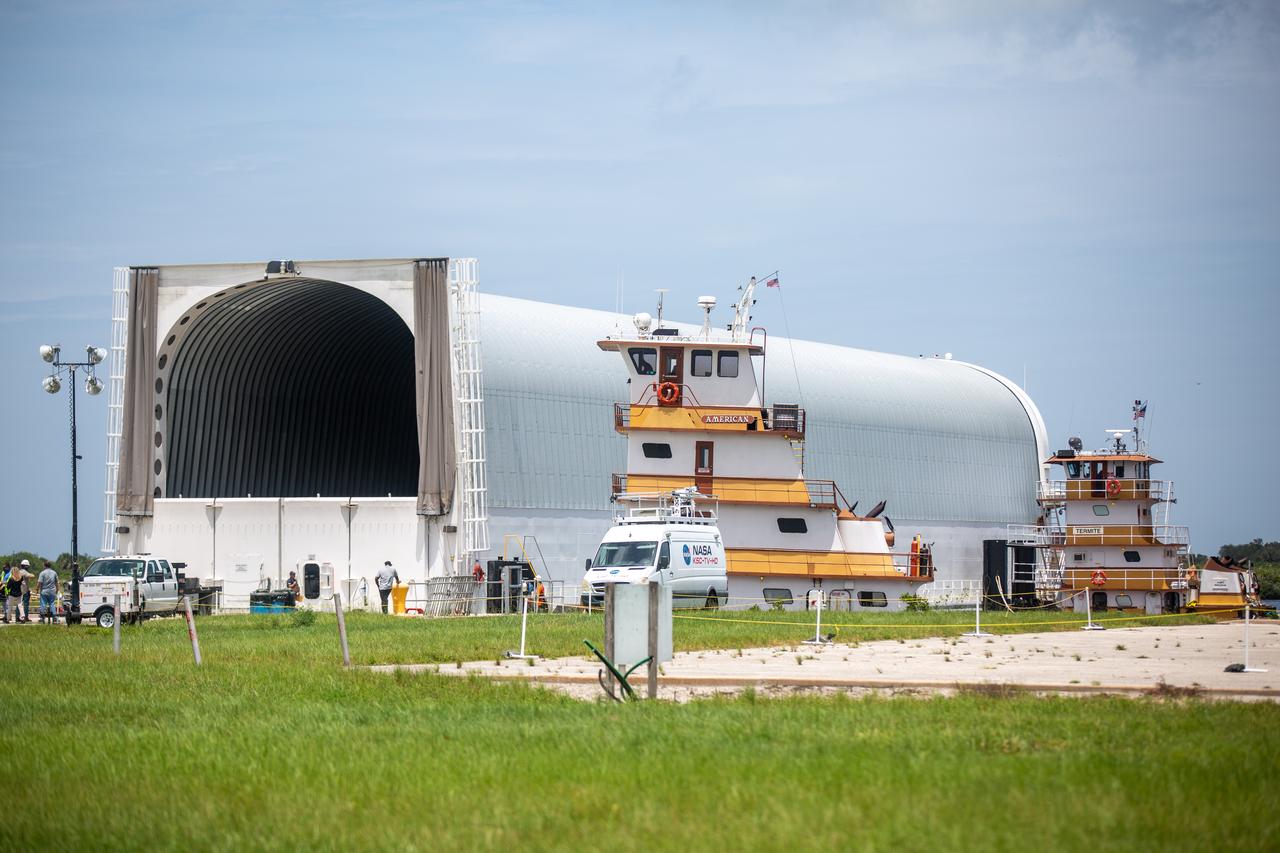
NASA’s Pegasus barge, carrying the launch vehicle stage adapter (LVSA) for the agency’s Space Launch System (SLS) rocket, arrives at the Kennedy Space Center Launch Complex 39 turn basin wharf on July 29, 2020. Traveling to Florida from NASA’s Marshall Space Flight Center in Huntsville, Alabama, the LVSA will connect the SLS core stage to the rocket’s upper stage for the Artemis I launch. Once the LVSA is offloaded, it will be moved to High Bay 4 in the Vehicle Assembly Building for processing ahead of launch. The first launch under the agency’s Artemis program, Artemis I will test SLS and the Orion spacecraft as an integrated system prior to crewed flights to the Moon.
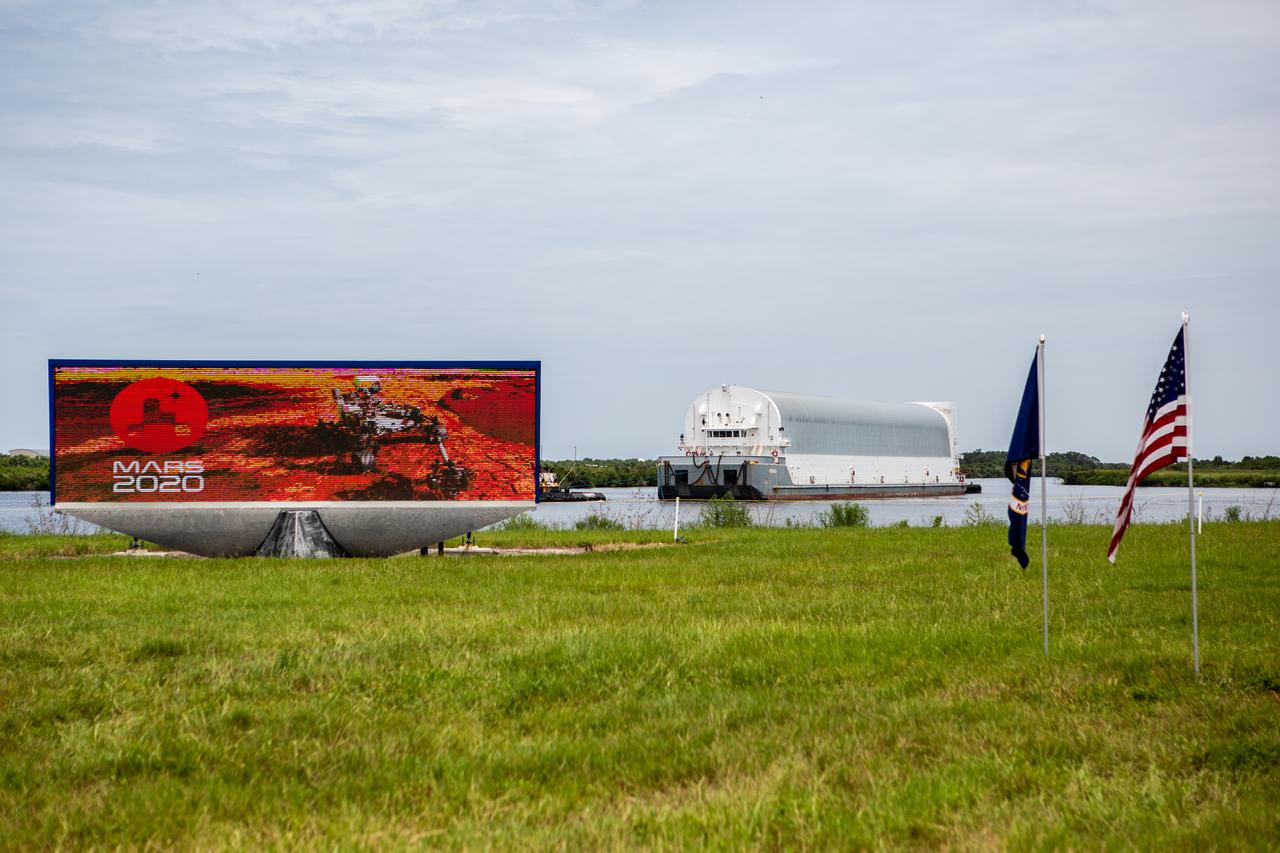
NASA’s Pegasus barge, carrying the launch vehicle stage adapter (LVSA) for the agency’s Space Launch System (SLS) rocket, approaches the Kennedy Space Center Launch Complex 39 turn basin wharf on July 29, 2020. Traveling to Florida from NASA’s Marshall Space Flight Center in Huntsville, Alabama, the LVSA will connect the SLS core stage to the rocket’s upper stage for the Artemis I launch. Once the LVSA is offloaded, it will be moved to High Bay 4 in the Vehicle Assembly Building for processing ahead of launch. The first launch under the agency’s Artemis program, Artemis I will test SLS and the Orion spacecraft as an integrated system prior to crewed flights to the Moon.
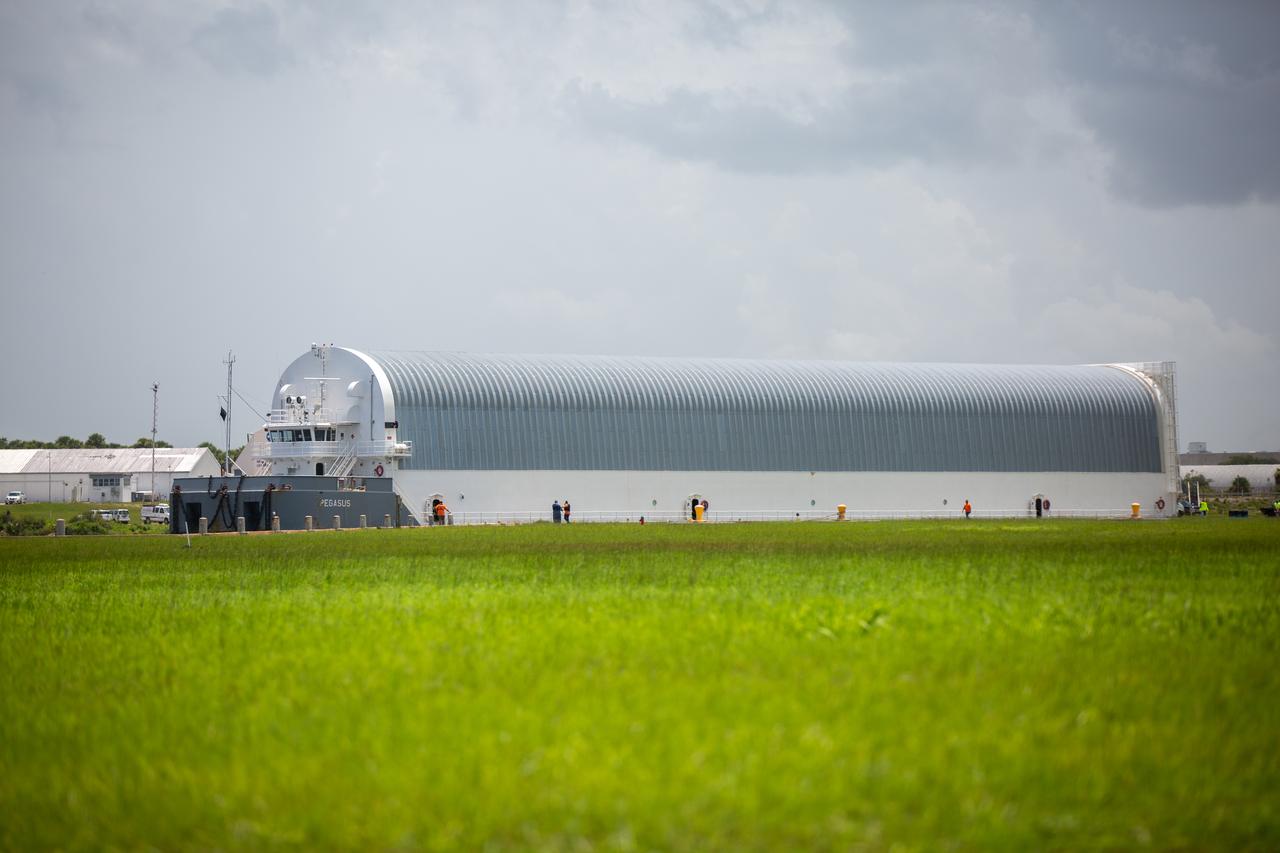
NASA’s Pegasus barge, carrying the launch vehicle stage adapter (LVSA) for the agency’s Space Launch System (SLS) rocket, arrives at the Kennedy Space Center Launch Complex 39 turn basin wharf on July 29, 2020. Traveling to Florida from NASA’s Marshall Space Flight Center in Huntsville, Alabama, the LVSA will connect the SLS core stage to the rocket’s upper stage for the Artemis I launch. Once the LVSA is offloaded, it will be moved to High Bay 4 in the Vehicle Assembly Building for processing ahead of launch. The first launch under the agency’s Artemis program, Artemis I will test SLS and the Orion spacecraft as an integrated system prior to crewed flights to the Moon.

NASA’s Pegasus barge, carrying the launch vehicle stage adapter (LVSA) for the agency’s Space Launch System (SLS) rocket, arrives at the Kennedy Space Center Launch Complex 39 turn basin wharf on July 29, 2020. Traveling to Florida from NASA’s Marshall Space Flight Center in Huntsville, Alabama, the LVSA will connect the SLS core stage to the rocket’s upper stage for the Artemis I launch. Once the LVSA is offloaded, it will be moved to High Bay 4 in the Vehicle Assembly Building for processing ahead of launch. The first launch under the agency’s Artemis program, Artemis I will test SLS and the Orion spacecraft as an integrated system prior to crewed flights to the Moon.
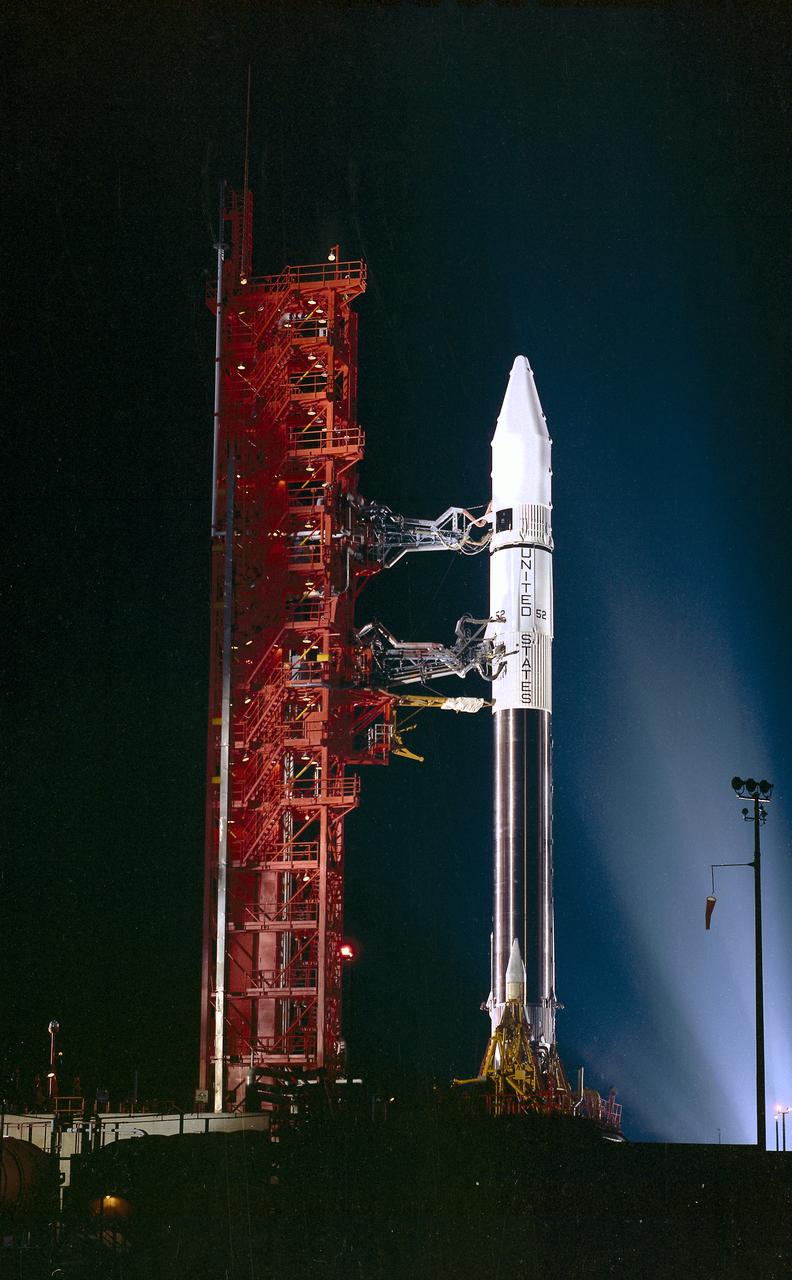
The Atlas-Centaur-52 launch vehicle on the launch pad. The Atlas-Centaur-52 placed the High Energy Astronomy Observatory-2 (HEAO-2) in orbit on November 13, 1978.

S73-25140 (16 April 1973) --- A ground-level view of Pad A, Launch Complex 39, Kennedy Space Center, Florida, showing the 341-feet tall Skylab 1/Saturn V space vehicle on the pad soon after being rolled out from the Vehicle Assembly Building (VAB). The vehicle is composed of the Saturn V first (S-1C) stage, the Apollo Telescope Mount (ATM), the Multiple Docking Adapter (MDA), the Airlock Module (AM), and the Orbital Workshop (OWS). Photo credit: NASA
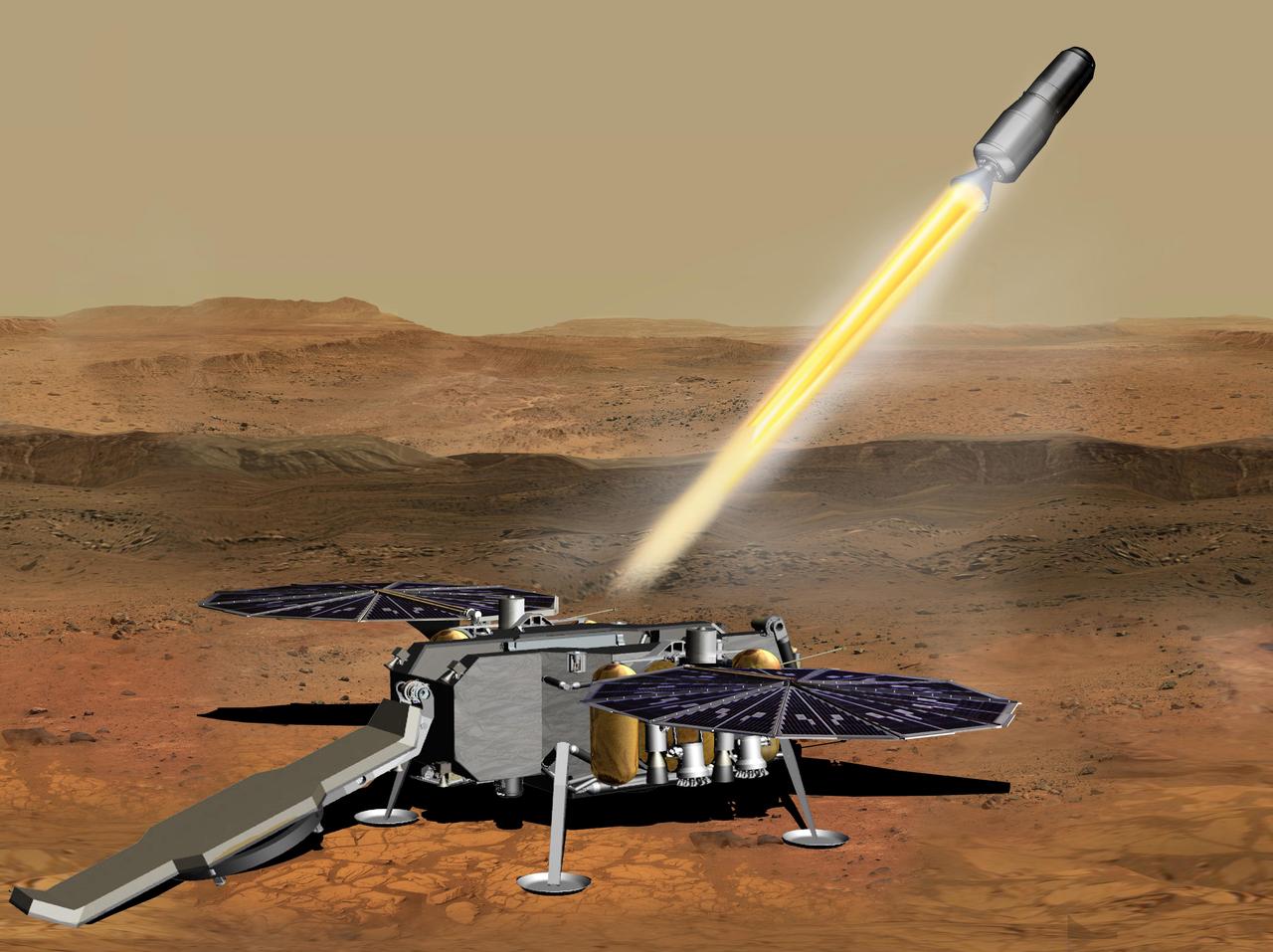
This illustration shows a concept of how the NASA Mars Ascent Vehicle, carrying tubes containing rock and soil samples, could be launched from the surface of Mars in one step of the Mars sample return mission. NASA and the European Space Agency are solidifying concepts for a Mars sample return mission after NASA's Mars 2020 rover collects rock and soil samples and stores them in sealed tubes on the planet's surface for potential future return to Earth. NASA will deliver a Mars lander in the vicinity of Jezero Crater, where Mars 2020 will have collected and cached samples. The lander will carry the ascent vehicle along with an ESA Sample Fetch Rover that is roughly the size of NASA's Opportunity Mars rover. The fetch rover will gather the cached samples and carry them back to the lander for transfer to the ascent vehicle; additional samples could be delivered directly by Mars 2020. The ascent vehicle will then launch from the surface and deploy a special container holding the samples into Mars orbit. ESA will put a spacecraft in orbit around Mars before the ascent vehicle launches. This spacecraft will rendezvous with and capture the orbiting samples before returning them to Earth. NASA will provide the payload module for the orbiter. https://photojournal.jpl.nasa.gov/catalog/PIA23496
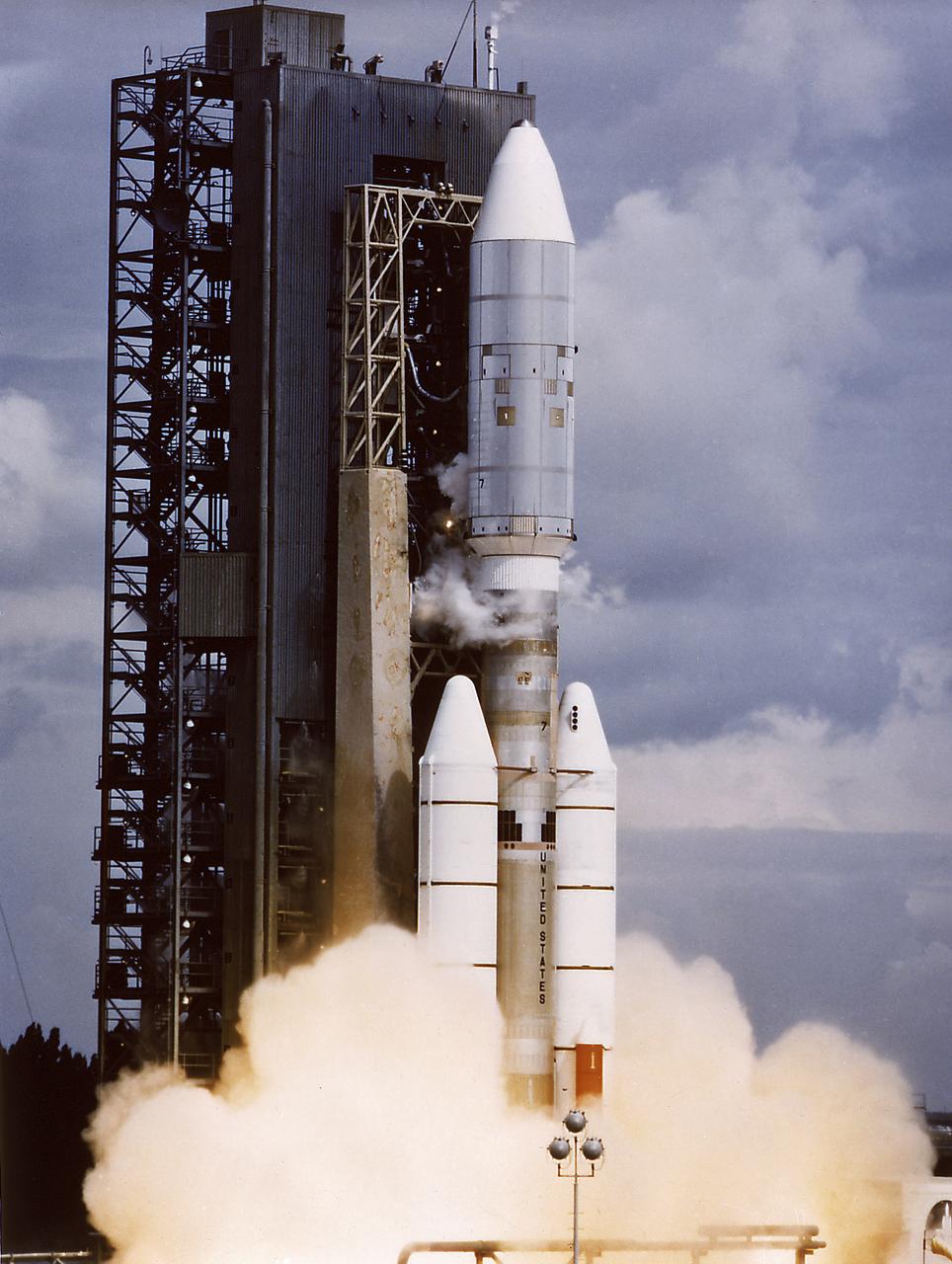
The Voyager 2 aboard Titan III-Centaur launch vehicle lifted off on August 20, 1977. The Voyager 2 was a scientific satellite to study the Jupiter and the Saturn planetary systems including their satellites and Saturn's rings.
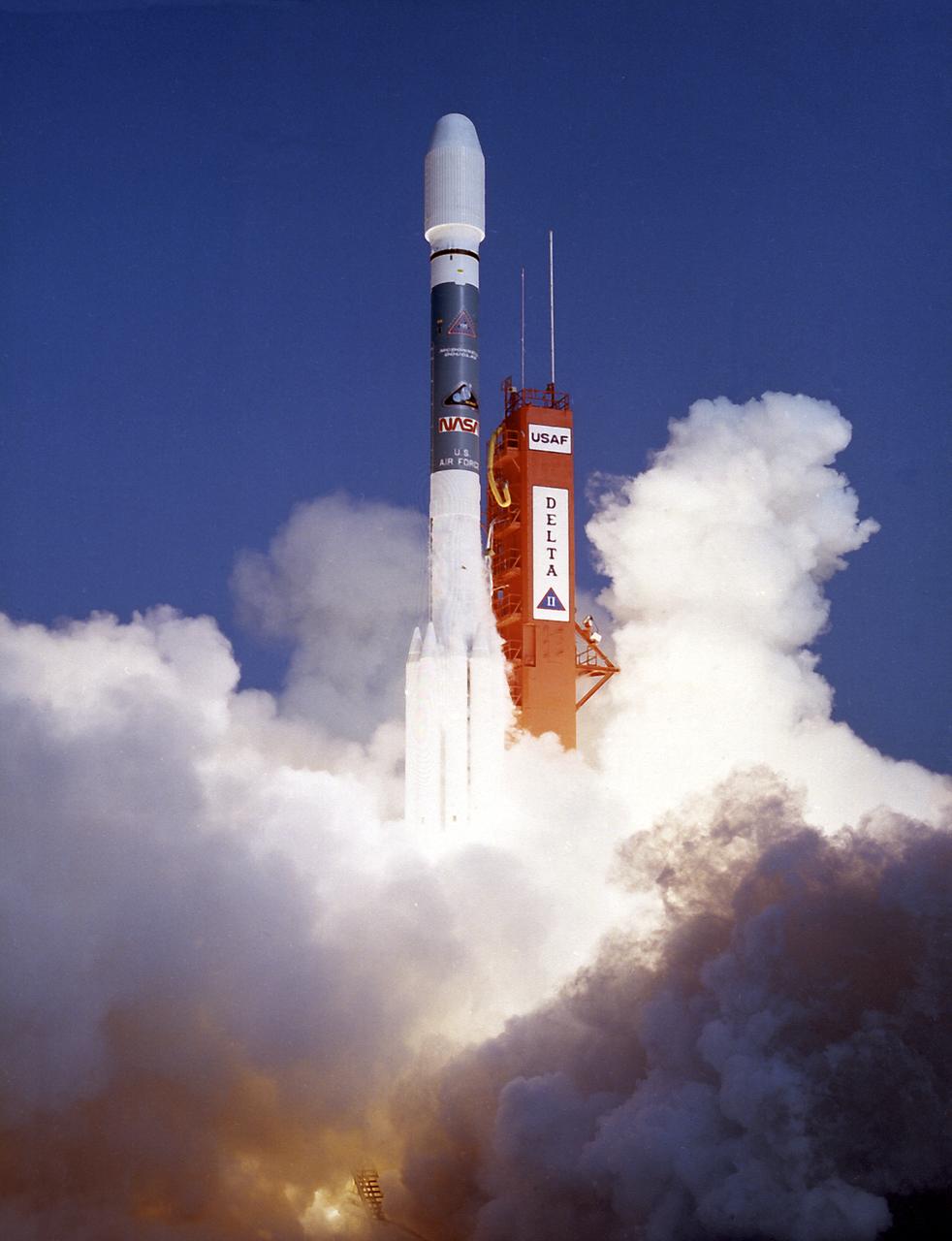
The Delta II expendable launch vehicle with the ROSAT (Roentgen Satellite), cooperative space X-ray astronomy mission between NASA, Germany and United Kingdom, was launched from the Cape Canaveral Air Force Station on June 1, 1990.
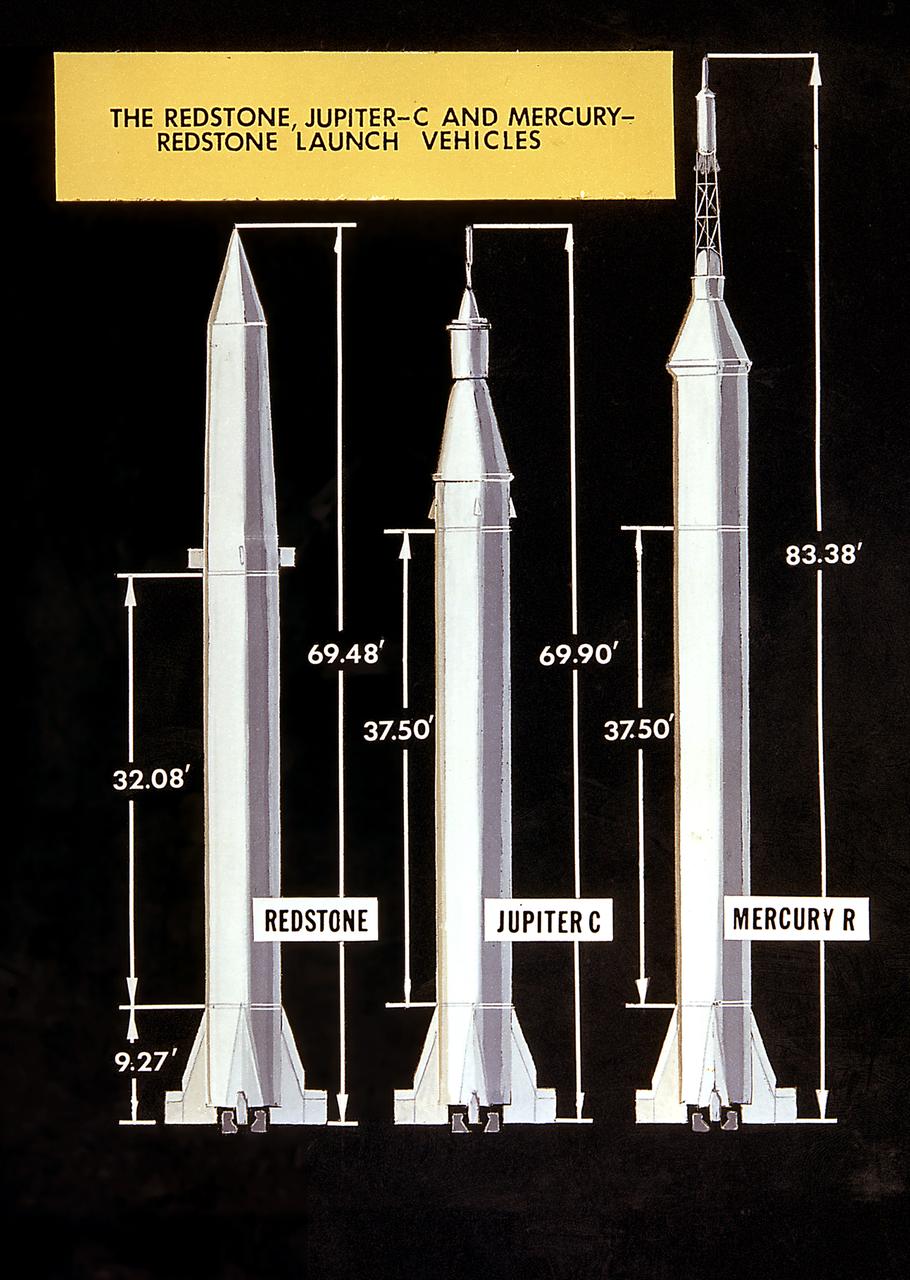
This is a comparison illustration of the Redstone, Jupiter-C, and Mercury Redstone launch vehicles. The Redstone ballistic missile was a high-accuracy, liquid-propelled, surface-to-surface missile. Originally developed as a nose cone re-entry test vehicle for the Jupiter intermediate range ballistic missile, the Jupiter-C was a modification of the Redstone missile and successfully launched the first American Satellite, Explorer-1, in orbit on January 31, 1958. The Mercury Redstone lifted off carrying the first American, astronaut Alan Shepard, in his Mercury spacecraft Freedom 7, on May 5, 1961.
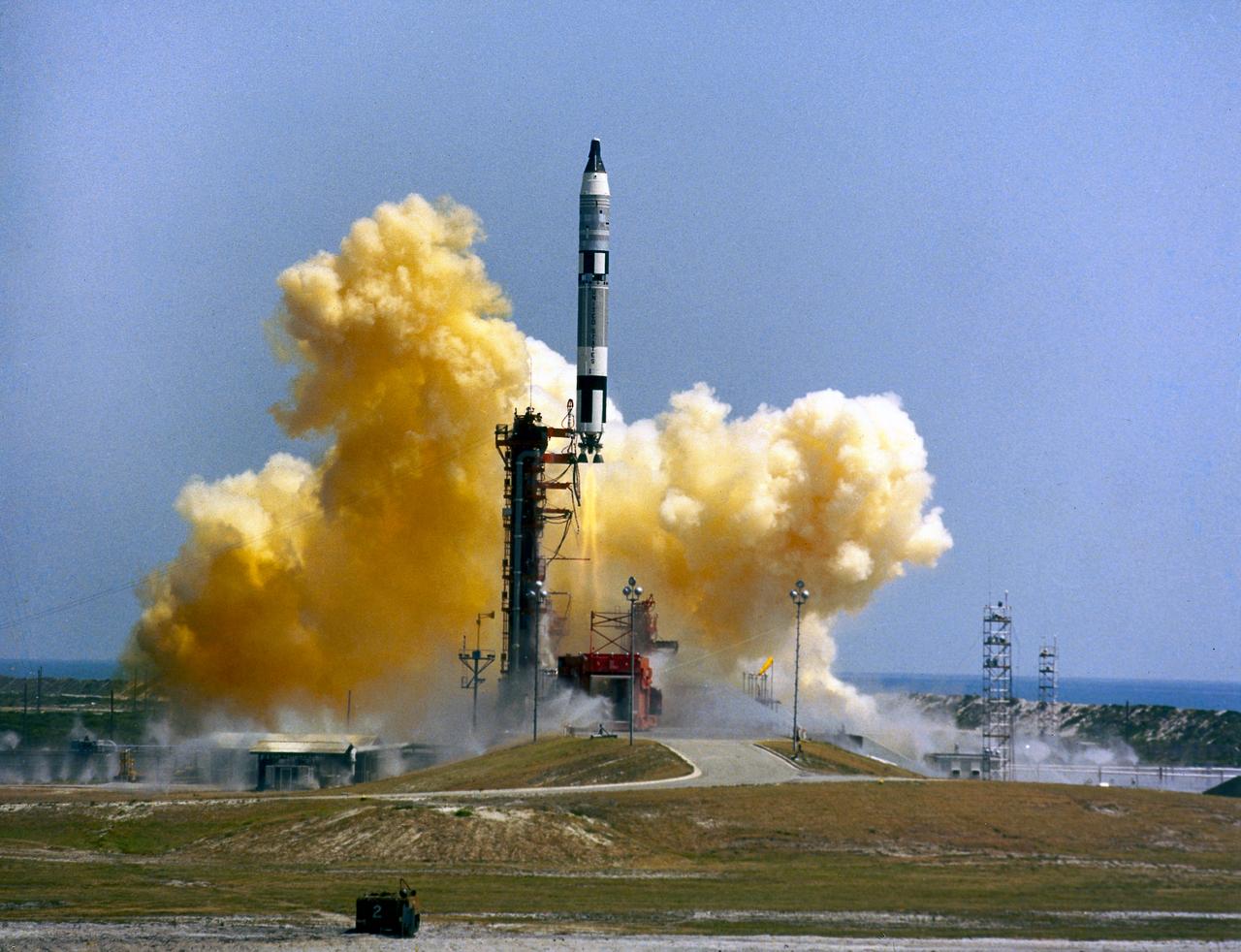
The Titan II liftoff. The Titan II launch vehicle was used for carrying astronauts on the Gemini mission. The Gemini Program was an intermediate step between the Project Mercury and the Apollo Program. The major objectives were to subject are two men and supporting equipment to long duration flights, to effect rendezvous and docking with other orbiting vehicle, and to perfect methods of reentry, and landing the spacecraft.
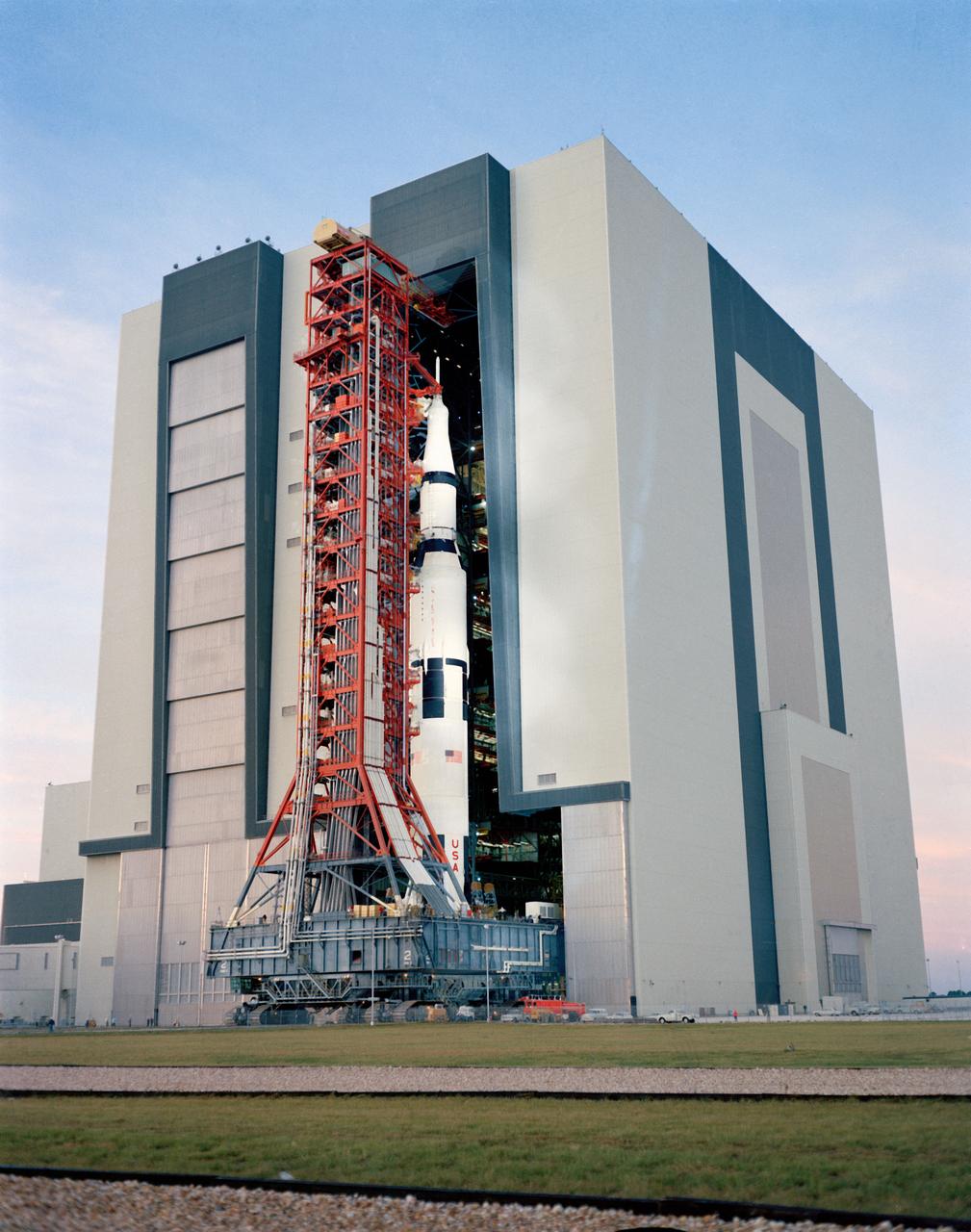
S70-54121 (9 Nov. 1970) --- A ground level view at Launch Complex 39, Kennedy Space Center (KSC), showing the Apollo 14 (Spacecraft 110/Lunar Module 8/Saturn 509) space vehicle leaving the Vehicle Assembly Building (VAB). The Saturn V stack and its mobile launch tower, atop a huge crawler-transporter, were rolled out to Pad A. The Apollo 14 crewmen will be astronauts Alan B. Shepard Jr., commander; Stuart A. Roosa, command module pilot; and Edgar D. Mitchell, lunar module pilot.
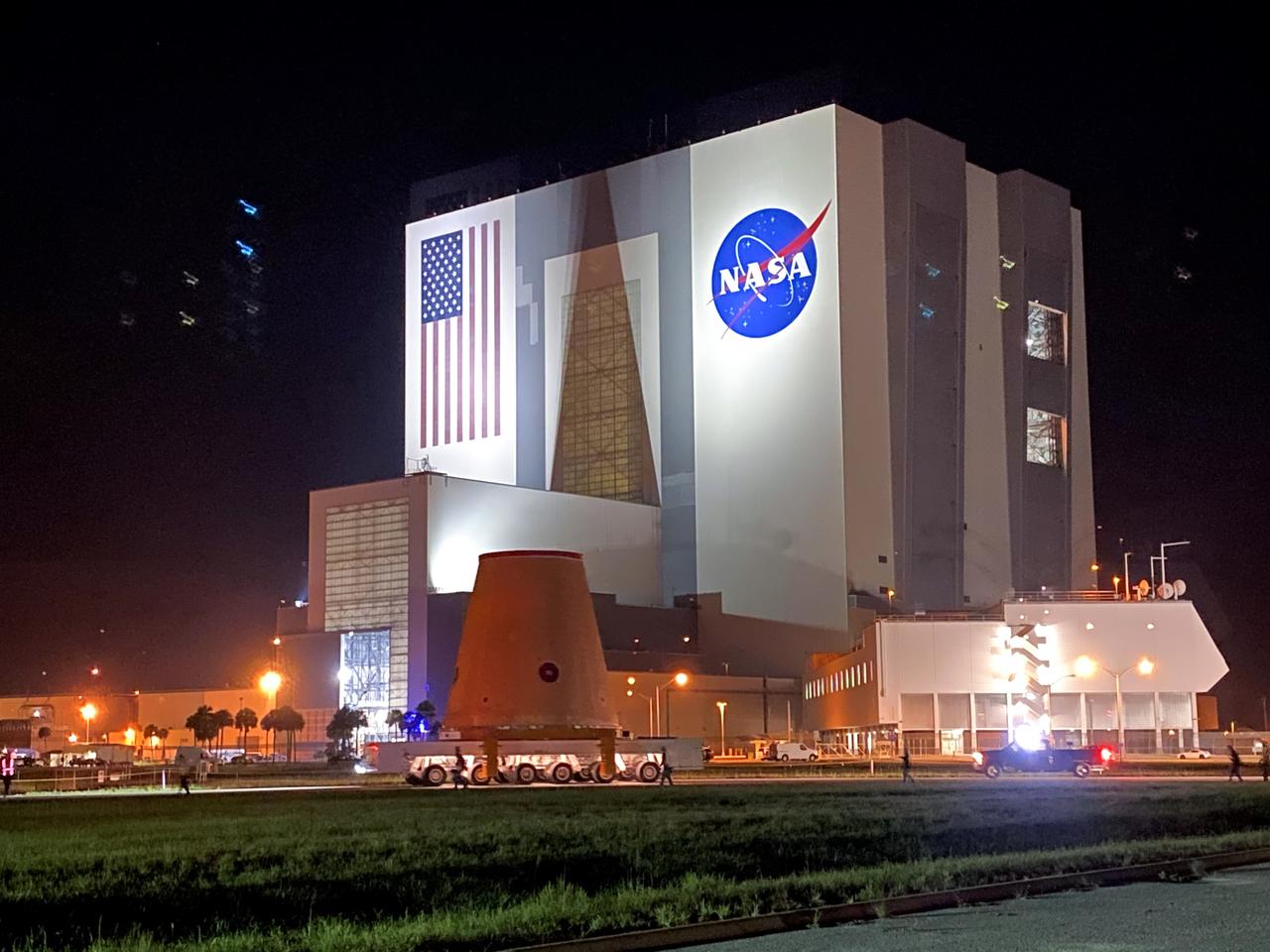
Technicians with NASA’s Exploration Ground Systems move the launch vehicle stage adapter (LVSA) for the agency’s Space Launch System (SLS) rocket to the Vehicle Assembly Building (VAB) on July 30, 2020, for processing. Carried by NASA’s Pegasus barge, the LVSA arrived at Kennedy Space Center’s Launch Complex 39 turn basin wharf after departing from the agency’s Marshall Space Flight Center in Huntsville, Alabama. The LVSA will connect the SLS core stage to the rocket’s upper stage and will remain in the VAB until it’s time for stacking on the mobile launcher ahead of the Artemis I launch. The first in a series of increasingly complex missions, Artemis I will test SLS and the Orion spacecraft as an integrated system prior to crewed flights to the Moon.
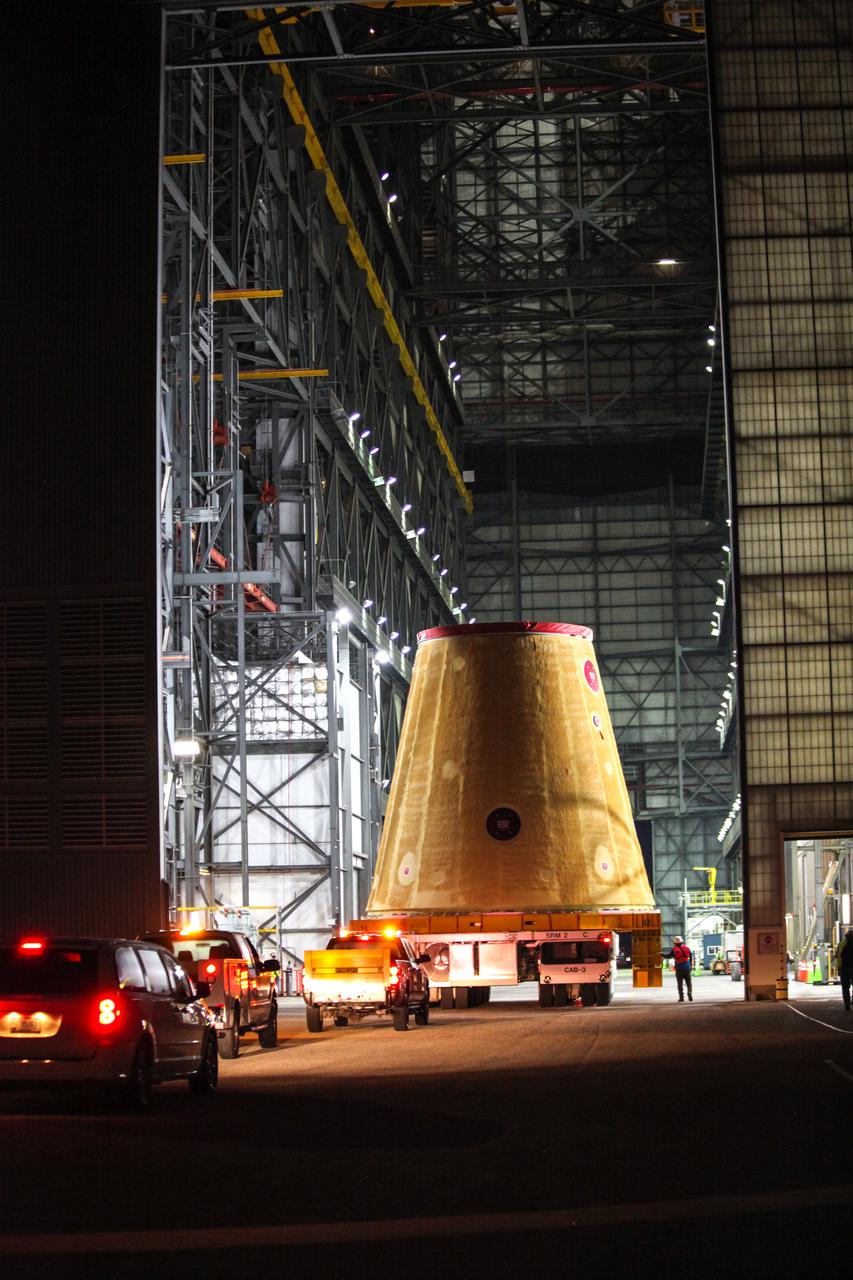
Technicians with NASA’s Exploration Ground Systems move the launch vehicle stage adapter (LVSA) for the agency’s Space Launch System (SLS) rocket into the Vehicle Assembly Building (VAB) at NASA’s Kennedy Space Center in Florida on July 30, 2020, for processing. Carried by NASA’s Pegasus barge, the LVSA arrived at Kennedy’s Launch Complex 39 turn basin wharf after departing from the agency’s Marshall Space Flight Center in Huntsville, Alabama. The LVSA will connect the SLS core stage to the rocket’s upper stage and will remain in the VAB until it’s time for stacking on the mobile launcher ahead of the Artemis I launch. The first in a series of increasingly complex missions, Artemis I will test SLS and the Orion spacecraft as an integrated system prior to crewed flights to the Moon.
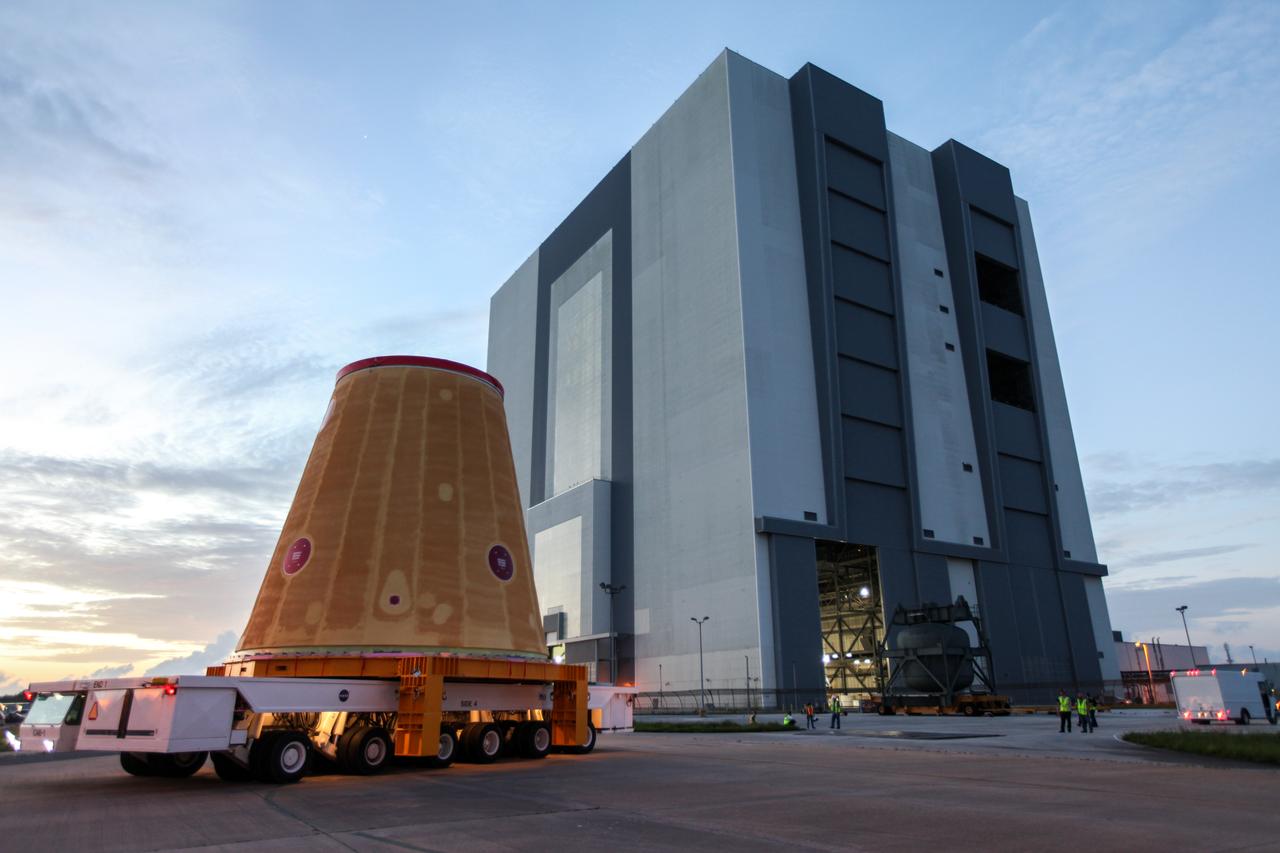
Technicians with NASA’s Exploration Ground Systems move the launch vehicle stage adapter (LVSA) for the agency’s Space Launch System (SLS) rocket to the Vehicle Assembly Building (VAB) at NASA’s Kennedy Space Center in Florida on July 30, 2020, for processing. Carried by NASA’s Pegasus barge, the LVSA arrived at Kennedy’s Launch Complex 39 turn basin wharf after departing from the agency’s Marshall Space Flight Center in Huntsville, Alabama. The LVSA will connect the SLS core stage to the rocket’s upper stage and will remain in the VAB until it’s time for stacking on the mobile launcher ahead of the Artemis I launch. The first in a series of increasingly complex missions, Artemis I will test SLS and the Orion spacecraft as an integrated system prior to crewed flights to the Moon.
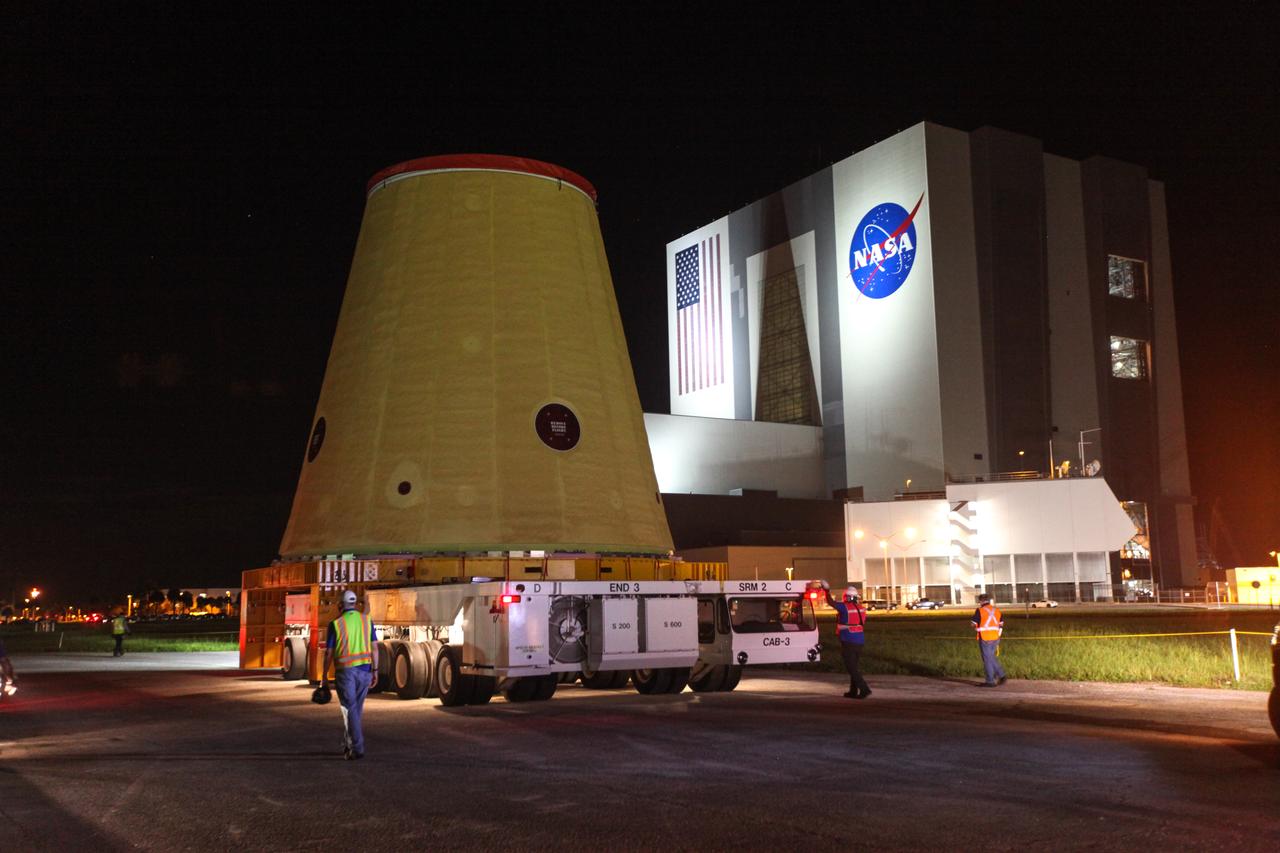
Technicians with NASA’s Exploration Ground Systems move the launch vehicle stage adapter (LVSA) for the agency’s Space Launch System (SLS) rocket to the Vehicle Assembly Building (VAB) at NASA’s Kennedy Space Center in Florida on July 30, 2020, for processing. Carried by NASA’s Pegasus barge, the LVSA arrived at Kennedy’s Launch Complex 39 turn basin wharf after departing from the agency’s Marshall Space Flight Center in Huntsville, Alabama. The LVSA will connect the SLS core stage to the rocket’s upper stage and will remain in the VAB until it’s time for stacking on the mobile launcher ahead of the Artemis I launch. The first in a series of increasingly complex missions, Artemis I will test SLS and the Orion spacecraft as an integrated system prior to crewed flights to the Moon.
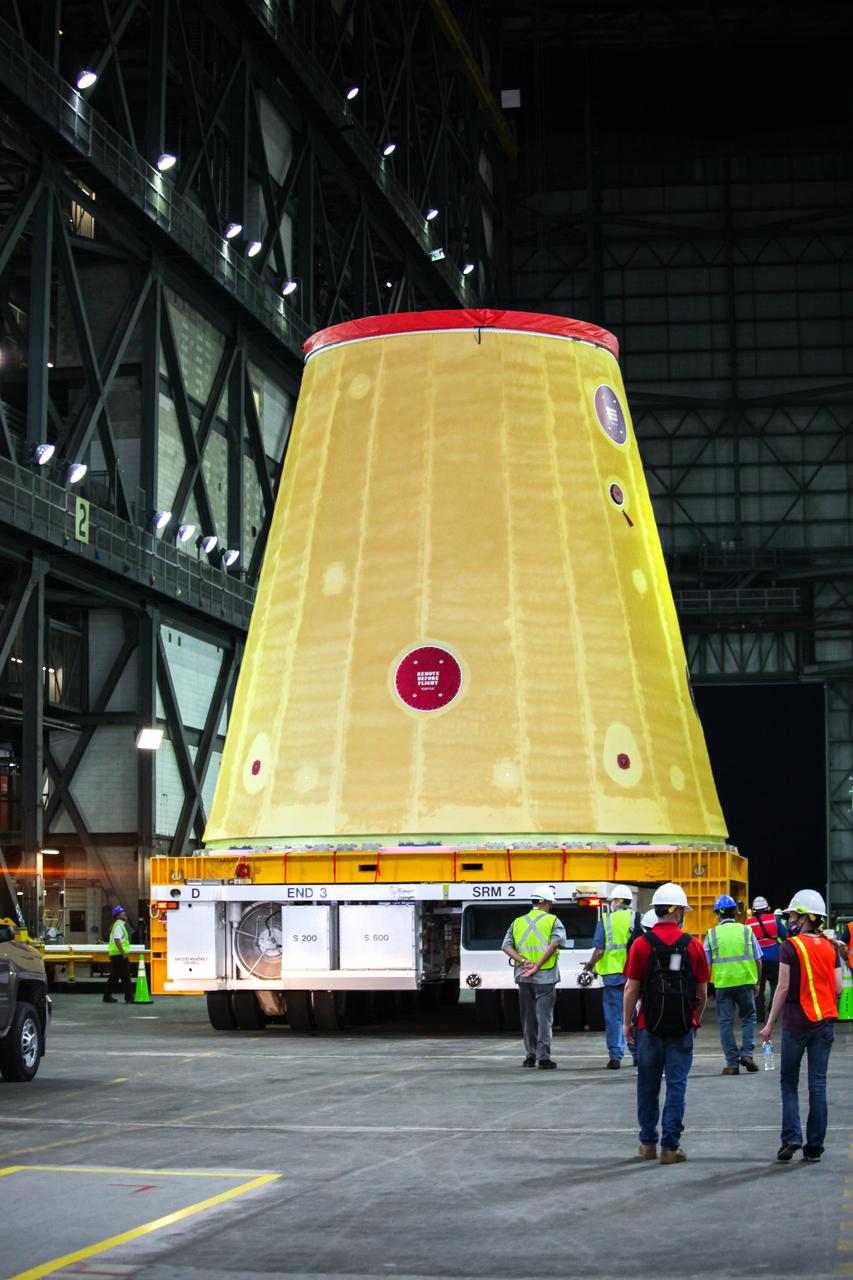
Technicians with NASA’s Exploration Ground Systems move the launch vehicle stage adapter (LVSA) for the agency’s Space Launch System (SLS) rocket into the Vehicle Assembly Building (VAB) at NASA’s Kennedy Space Center in Florida on July 30, 2020, for processing. Carried by NASA’s Pegasus barge, the LVSA arrived at Kennedy’s Launch Complex 39 turn basin wharf after departing from the agency’s Marshall Space Flight Center in Huntsville, Alabama. The LVSA will connect the SLS core stage to the rocket’s upper stage and will remain in the VAB until it’s time for stacking on the mobile launcher ahead of the Artemis I launch. The first in a series of increasingly complex missions, Artemis I will test SLS and the Orion spacecraft as an integrated system prior to crewed flights to the Moon.
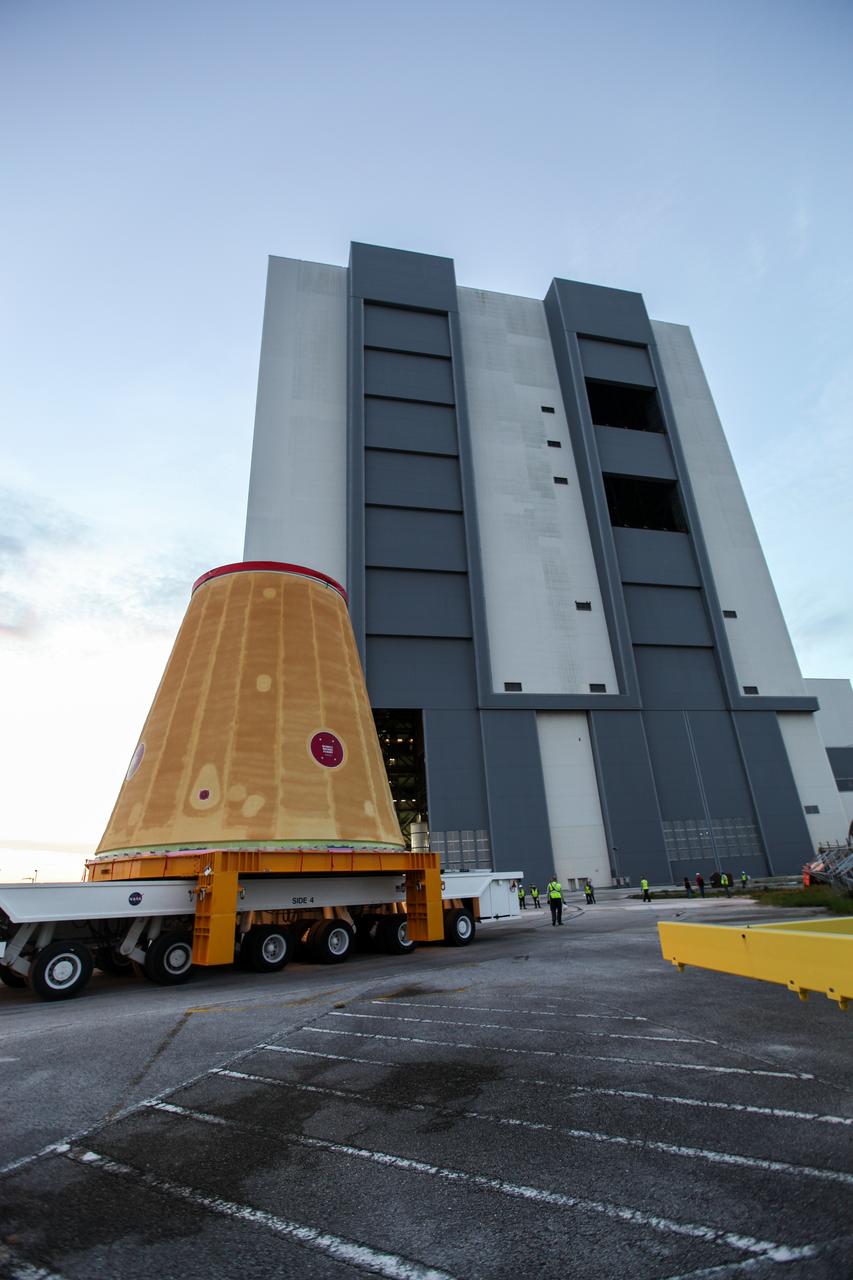
Technicians with NASA’s Exploration Ground Systems move the launch vehicle stage adapter (LVSA) for the agency’s Space Launch System (SLS) rocket to the Vehicle Assembly Building (VAB) at NASA’s Kennedy Space Center in Florida on July 30, 2020, for processing. Carried by NASA’s Pegasus barge, the LVSA arrived at Kennedy’s Launch Complex 39 turn basin wharf after departing from the agency’s Marshall Space Flight Center in Huntsville, Alabama. The LVSA will connect the SLS core stage to the rocket’s upper stage and will remain in the VAB until it’s time for stacking on the mobile launcher ahead of the Artemis I launch. The first in a series of increasingly complex missions, Artemis I will test SLS and the Orion spacecraft as an integrated system prior to crewed flights to the Moon.
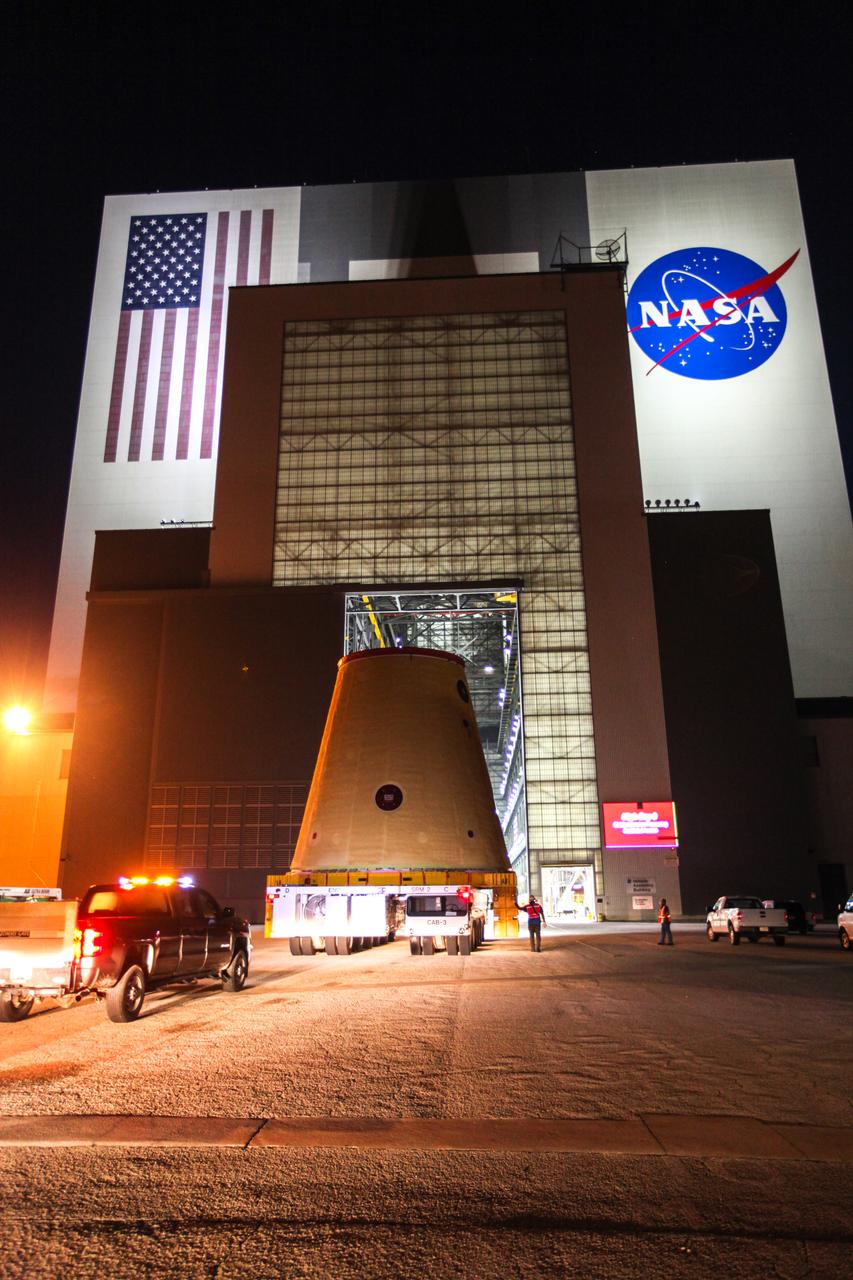
Technicians with NASA’s Exploration Ground Systems move the launch vehicle stage adapter (LVSA) for the agency’s Space Launch System (SLS) rocket into the Vehicle Assembly Building (VAB) at NASA’s Kennedy Space Center in Florida on July 30, 2020, for processing. Carried by NASA’s Pegasus barge, the LVSA arrived at Kennedy’s Launch Complex 39 turn basin wharf after departing from the agency’s Marshall Space Flight Center in Huntsville, Alabama. The LVSA will connect the SLS core stage to the rocket’s upper stage and will remain in the VAB until it’s time for stacking on the mobile launcher ahead of the Artemis I launch. The first in a series of increasingly complex missions, Artemis I will test SLS and the Orion spacecraft as an integrated system prior to crewed flights to the Moon.
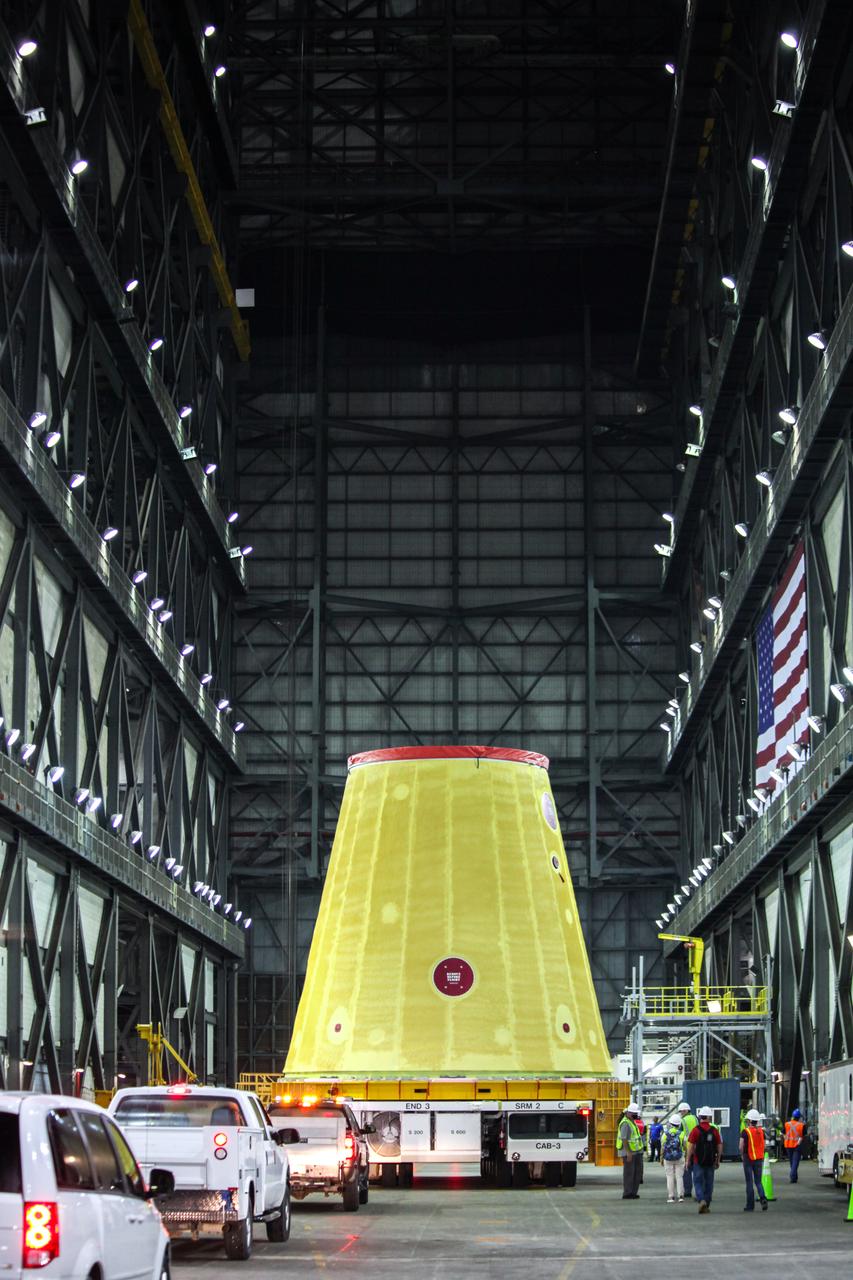
The launch vehicle stage adapter (LVSA) for NASA’s Space Launch System (SLS) rocket is moved into the Vehicle Assembly Building (VAB) at the agency’s Kennedy Space Center in Florida on July 30, 2020, for processing. Carried by NASA’s Pegasus barge, the LVSA arrived at Kennedy’s Launch Complex 39 turn basin wharf after departing from the agency’s Marshall Space Flight Center in Huntsville, Alabama. The LVSA will connect the SLS core stage to the rocket’s upper stage and will remain in the VAB until it’s time for stacking on the mobile launcher ahead of the Artemis I launch. The first in a series of increasingly complex missions, Artemis I will test SLS and the Orion spacecraft as an integrated system prior to crewed flights to the Moon.
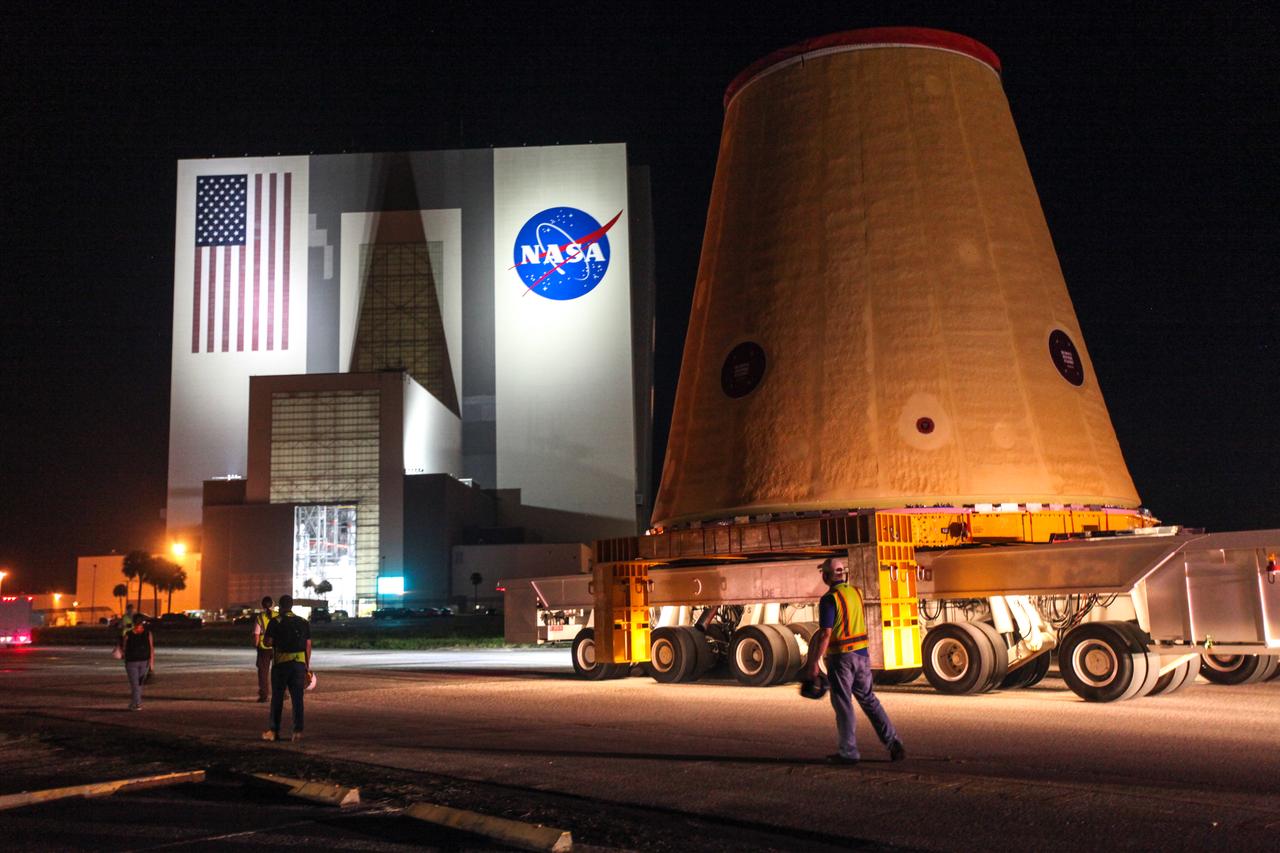
Technicians with NASA’s Exploration Ground Systems move the launch vehicle stage adapter (LVSA) for the agency’s Space Launch System (SLS) rocket to the Vehicle Assembly Building (VAB) on July 30, 2020, for processing. Carried by NASA’s Pegasus barge, the LVSA arrived at Kennedy Space Center’s Launch Complex 39 turn basin wharf after departing from the agency’s Marshall Space Flight Center in Huntsville, Alabama. The LVSA will connect the SLS core stage to the rocket’s upper stage and will remain in the VAB until it’s time for stacking on the mobile launcher ahead of the Artemis I launch. The first in a series of increasingly complex missions, Artemis I will test SLS and the Orion spacecraft as an integrated system prior to crewed flights to the Moon.
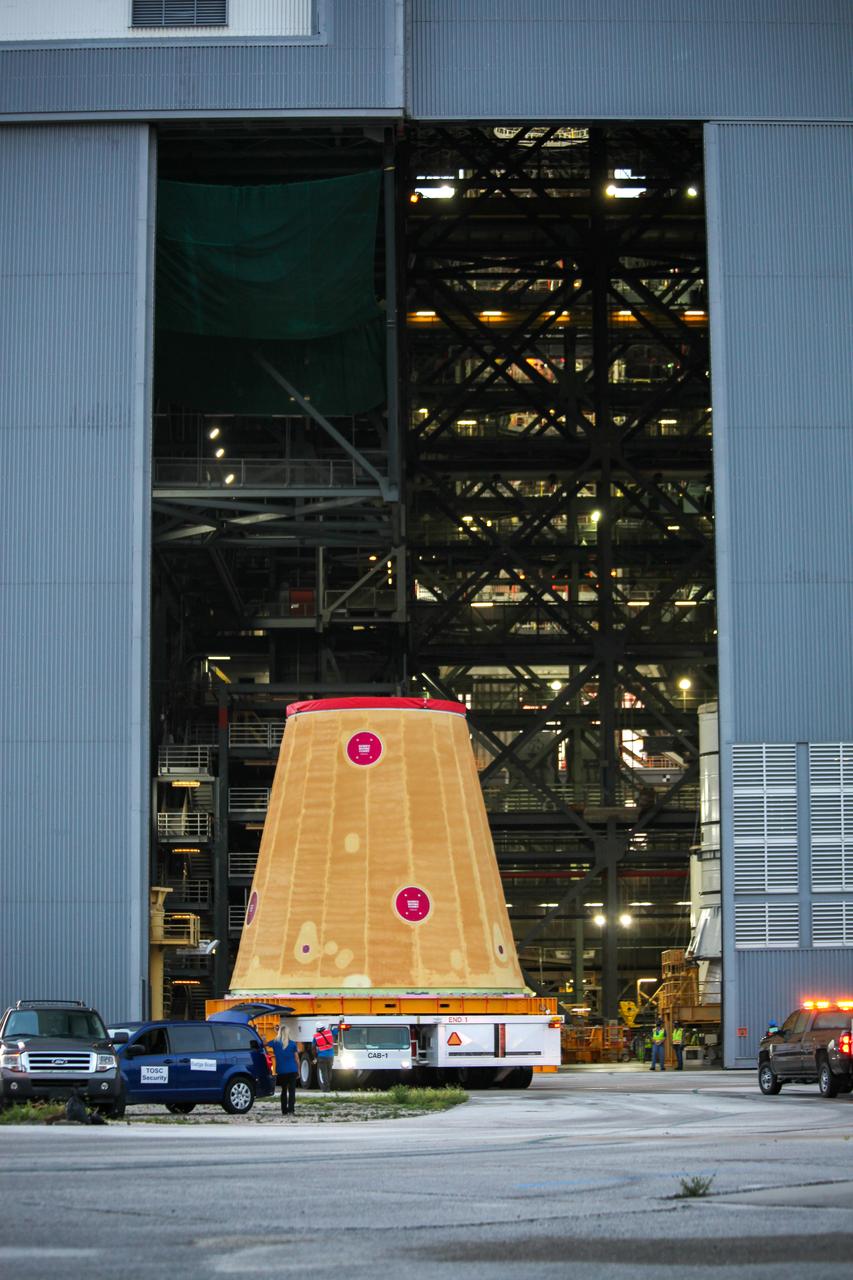
Technicians with NASA’s Exploration Ground Systems move the launch vehicle stage adapter (LVSA) for the agency’s Space Launch System (SLS) rocket into the Vehicle Assembly Building (VAB) at NASA’s Kennedy Space Center in Florida on July 30, 2020, for processing. Carried by NASA’s Pegasus barge, the LVSA arrived at Kennedy’s Launch Complex 39 turn basin wharf after departing from the agency’s Marshall Space Flight Center in Huntsville, Alabama. The LVSA will connect the SLS core stage to the rocket’s upper stage and will remain in the VAB until it’s time for stacking on the mobile launcher ahead of the Artemis I launch. The first in a series of increasingly complex missions, Artemis I will test SLS and the Orion spacecraft as an integrated system prior to crewed flights to the Moon.
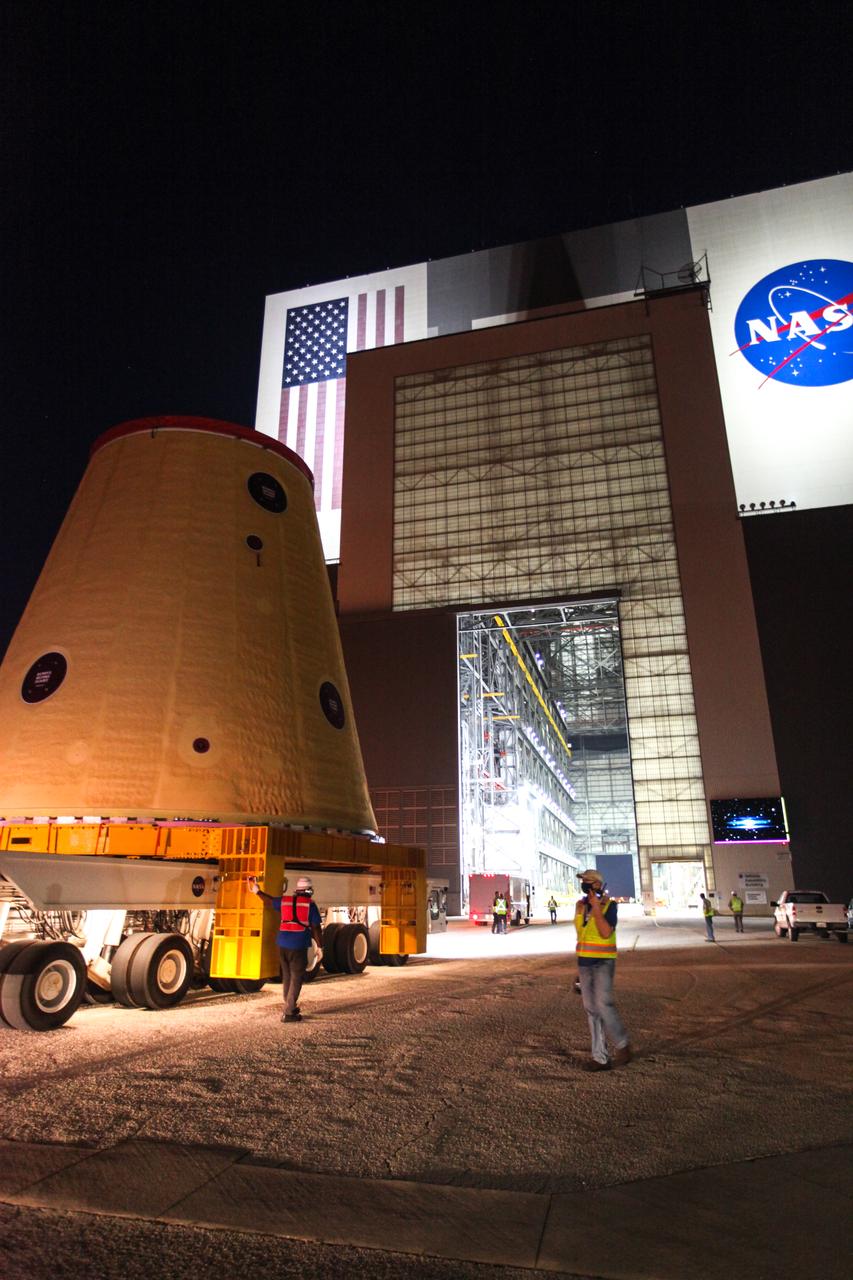
Technicians with NASA’s Exploration Ground Systems move the launch vehicle stage adapter (LVSA) for the agency’s Space Launch System (SLS) rocket into the Vehicle Assembly Building (VAB) at NASA’s Kennedy Space Center in Florida on July 30, 2020, for processing. Carried by NASA’s Pegasus barge, the LVSA arrived at Kennedy’s Launch Complex 39 turn basin wharf after departing from the agency’s Marshall Space Flight Center in Huntsville, Alabama. The LVSA will connect the SLS core stage to the rocket’s upper stage and will remain in the VAB until it’s time for stacking on the mobile launcher ahead of the Artemis I launch. The first in a series of increasingly complex missions, Artemis I will test SLS and the Orion spacecraft as an integrated system prior to crewed flights to the Moon.
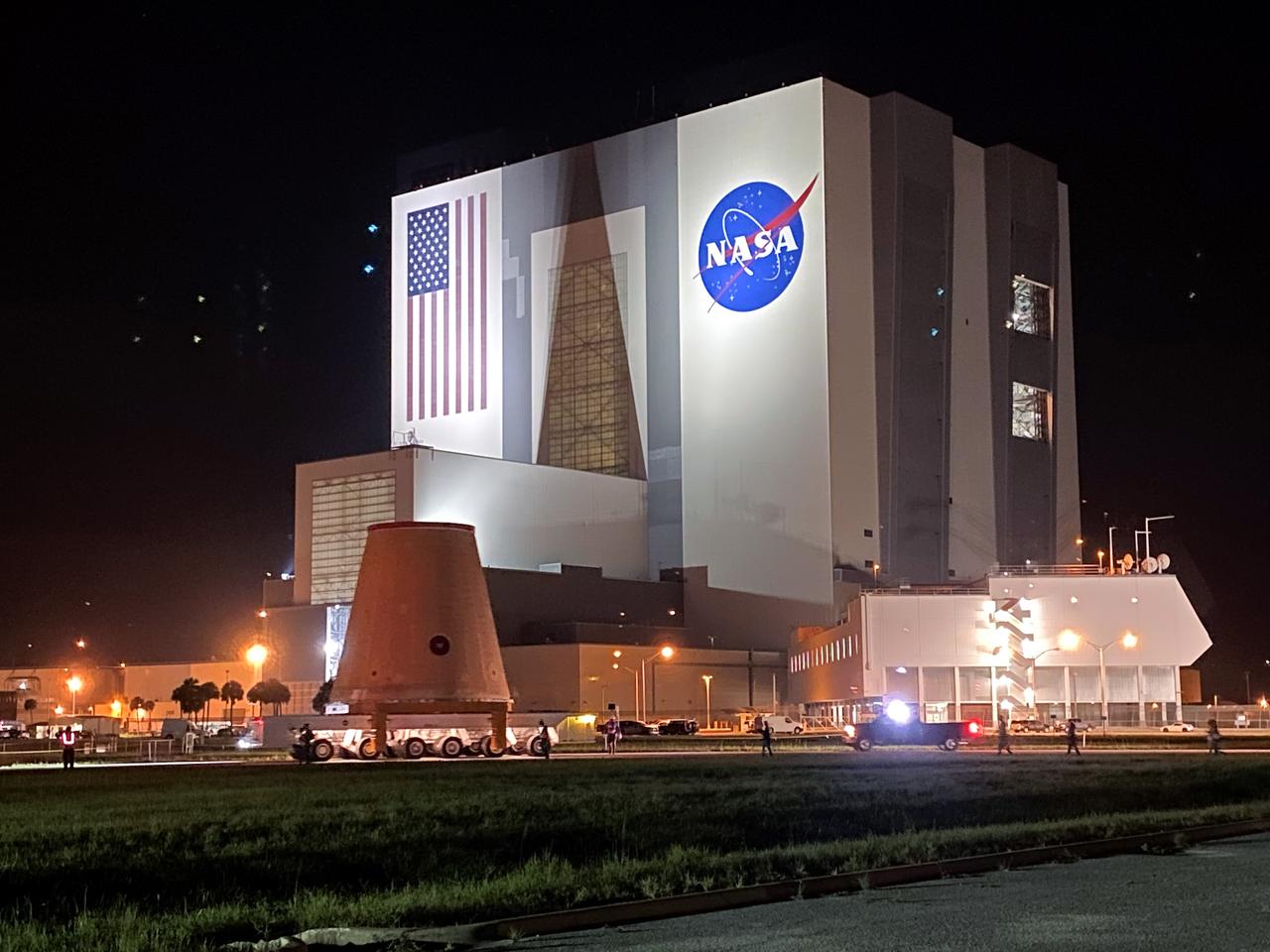
Technicians with NASA’s Exploration Ground Systems move the launch vehicle stage adapter (LVSA) for the agency’s Space Launch System (SLS) rocket to the Vehicle Assembly Building (VAB) on July 30, 2020, for processing. Carried by NASA’s Pegasus barge, the LVSA arrived at Kennedy Space Center’s Launch Complex 39 turn basin wharf after departing from the agency’s Marshall Space Flight Center in Huntsville, Alabama. The LVSA will connect the SLS core stage to the rocket’s upper stage and will remain in the VAB until it’s time for stacking on the mobile launcher ahead of the Artemis I launch. The first in a series of increasingly complex missions, Artemis I will test SLS and the Orion spacecraft as an integrated system prior to crewed flights to the Moon.
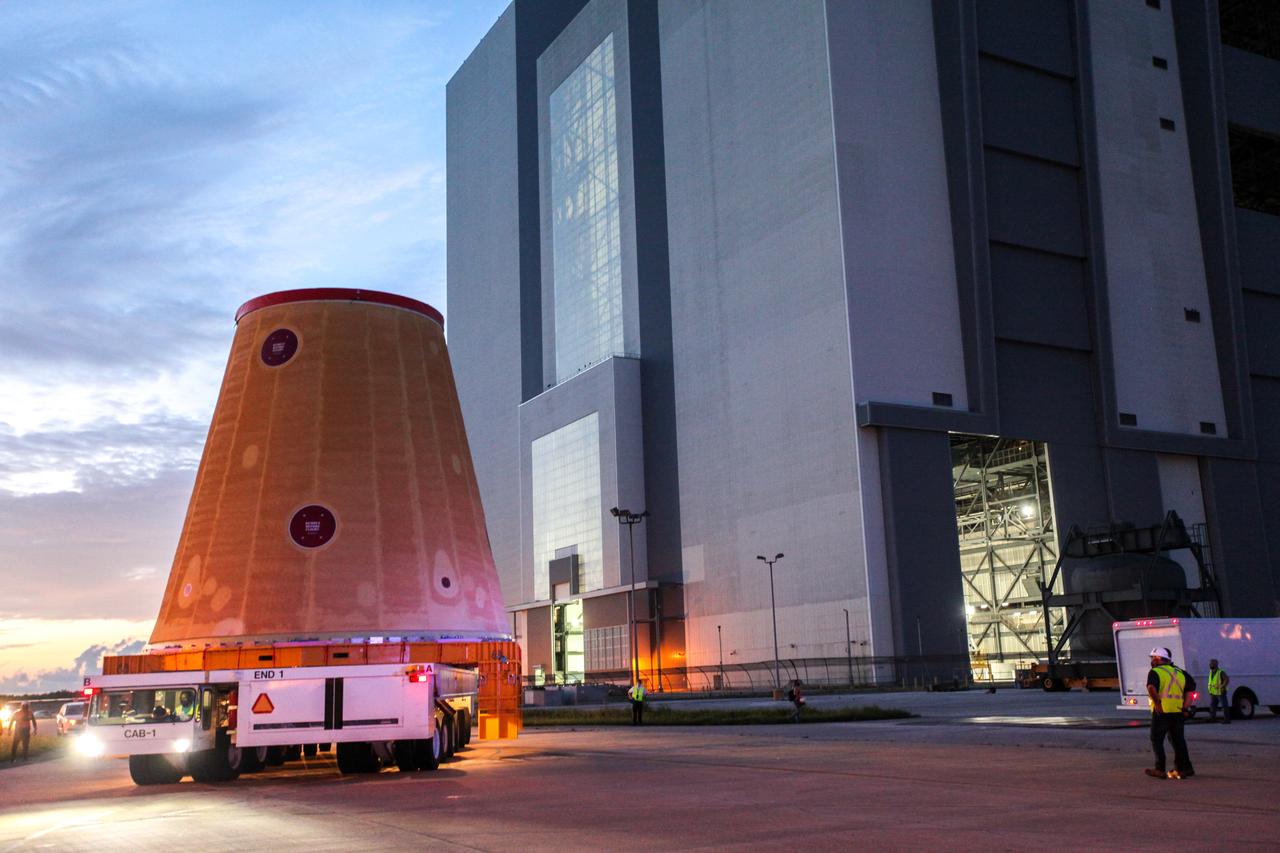
Technicians with NASA’s Exploration Ground Systems move the launch vehicle stage adapter (LVSA) for the agency’s Space Launch System (SLS) rocket to the Vehicle Assembly Building (VAB) at NASA’s Kennedy Space Center in Florida on July 30, 2020, for processing. Carried by NASA’s Pegasus barge, the LVSA arrived at Kennedy’s Launch Complex 39 turn basin wharf after departing from the agency’s Marshall Space Flight Center in Huntsville, Alabama. The LVSA will connect the SLS core stage to the rocket’s upper stage and will remain in the VAB until it’s time for stacking on the mobile launcher ahead of the Artemis I launch. The first in a series of increasingly complex missions, Artemis I will test SLS and the Orion spacecraft as an integrated system prior to crewed flights to the Moon.
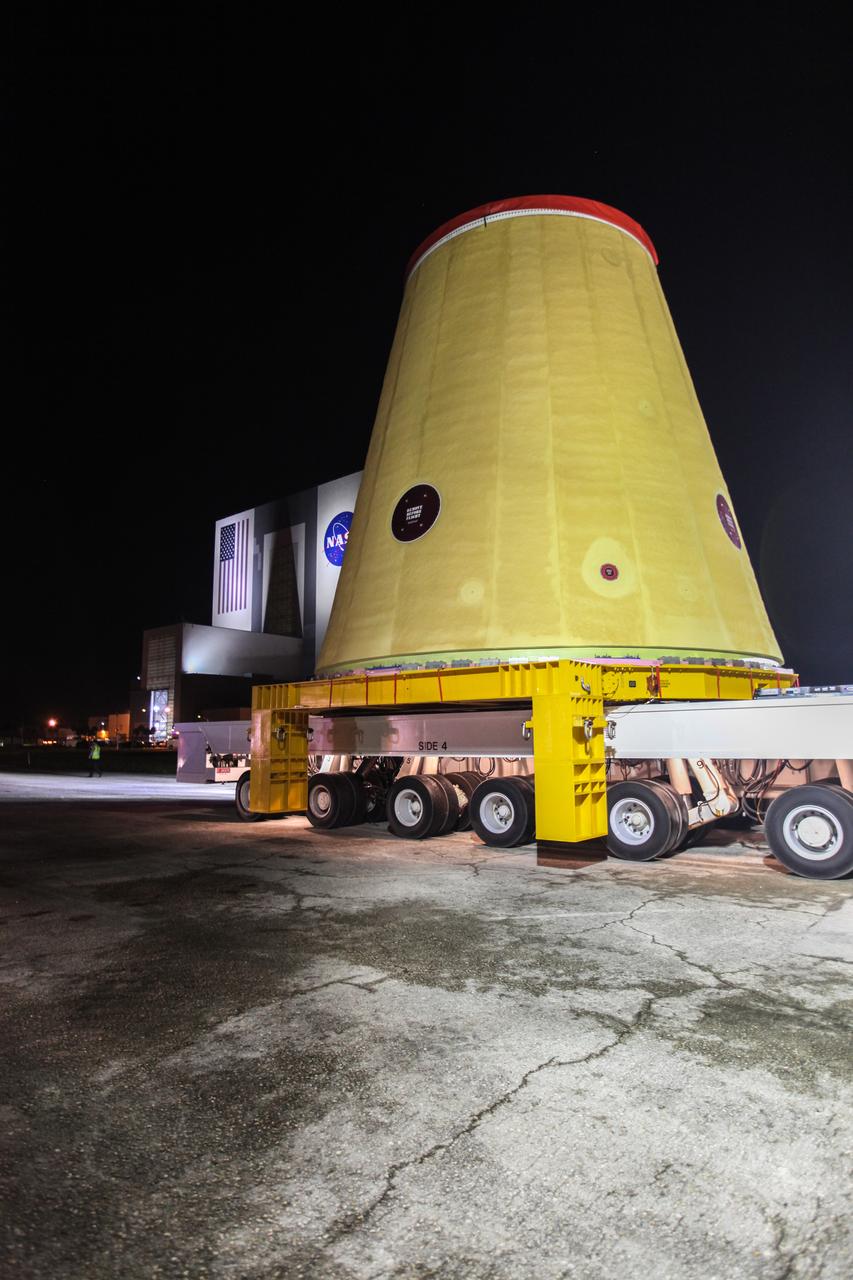
The launch vehicle stage adapter (LVSA) for NASA’s Space Launch System (SLS) rocket is transported to the Vehicle Assembly Building (VAB) for processing at NASA’s Kennedy Space Center in Florida on July 30, 2020. Carried by NASA’s Pegasus barge, the LVSA arrived at Kennedy’s Launch Complex 39 turn basin wharf after departing from the agency’s Marshall Space Flight Center in Huntsville, Alabama. The LVSA will connect the SLS core stage to the rocket’s upper stage and will remain in the VAB until it’s time for stacking on the mobile launcher ahead of the Artemis I launch. The first in a series of increasingly complex missions, Artemis I will test SLS and the Orion spacecraft as an integrated system prior to crewed flights to the Moon.
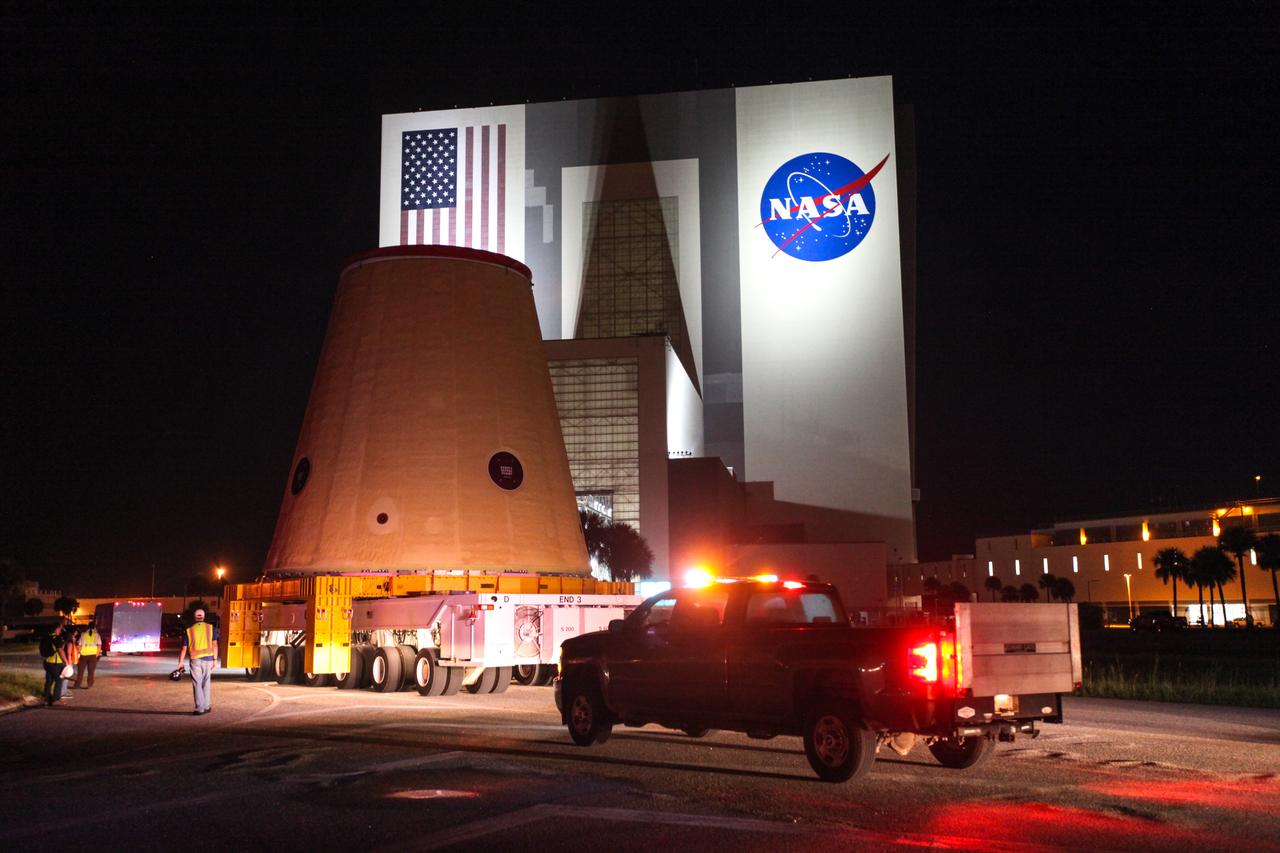
Technicians with NASA’s Exploration Ground Systems move the launch vehicle stage adapter (LVSA) for the agency’s Space Launch System (SLS) rocket to the Vehicle Assembly Building (VAB) on July 30, 2020, for processing. Carried by NASA’s Pegasus barge, the LVSA arrived at Kennedy Space Center’s Launch Complex 39 turn basin wharf after departing from the agency’s Marshall Space Flight Center in Huntsville, Alabama. The LVSA will connect the SLS core stage to the rocket’s upper stage and will remain in the VAB until it’s time for stacking on the mobile launcher ahead of the Artemis I launch. The first in a series of increasingly complex missions, Artemis I will test SLS and the Orion spacecraft as an integrated system prior to crewed flights to the Moon.
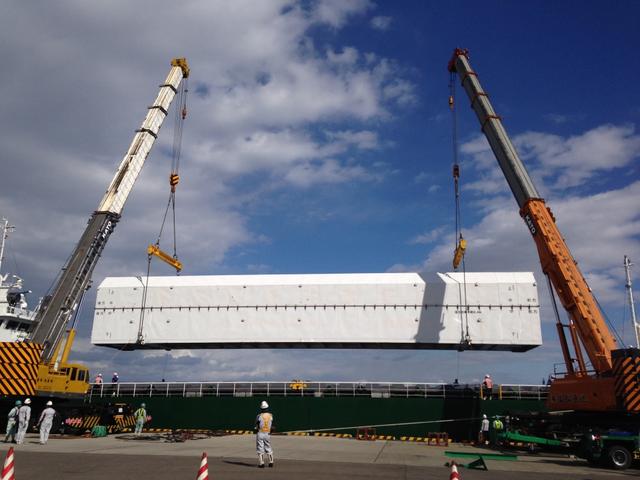
The launch vehicle for the Global Precipitation Measurement, or GPM, mission's Core Observatory arrived at Tanegashima Space Center, Japan, in the pre-dawn hours of Tuesday, Jan. 21, local time. Credits: NASA/Goddard/Warren Schultzaburger GPM is a joint mission between NASA and the Japan Aerospace Exploration Agency (JAXA). The Core Observatory will link data from a constellation of current and planned satellites to produce next-generation global measurements of rainfall and snowfall from space. The GPM mission is the first coordinated international satellite network to provide near real-time observations of rain and snow every three hours anywhere on the globe. The GPM Core Observatory anchors this network by providing observations on all types of precipitation. The observatory's data acts as the measuring stick by which partner observations can be combined into a unified data set. The data will be used by scientists to study climate change, freshwater resources, floods and droughts, and hurricane formation and tracking. Credit: Mitsubishi Heavy Industries <b><a href="http://www.nasa.gov/audience/formedia/features/MP_Photo_Guidelines.html" rel="nofollow">NASA image use policy.</a></b> <b><a href="http://www.nasa.gov/centers/goddard/home/index.html" rel="nofollow">NASA Goddard Space Flight Center</a></b> enables NASA’s mission through four scientific endeavors: Earth Science, Heliophysics, Solar System Exploration, and Astrophysics. Goddard plays a leading role in NASA’s accomplishments by contributing compelling scientific knowledge to advance the Agency’s mission. <b>Follow us on <a href="http://twitter.com/NASAGoddardPix" rel="nofollow">Twitter</a></b> <b>Like us on <a href="http://www.facebook.com/pages/Greenbelt-MD/NASA-Goddard/395013845897?ref=tsd" rel="nofollow">Facebook</a></b> <b>Find us on <a href="http://instagram.com/nasagoddard?vm=grid" rel="nofollow">Instagram</a></b>
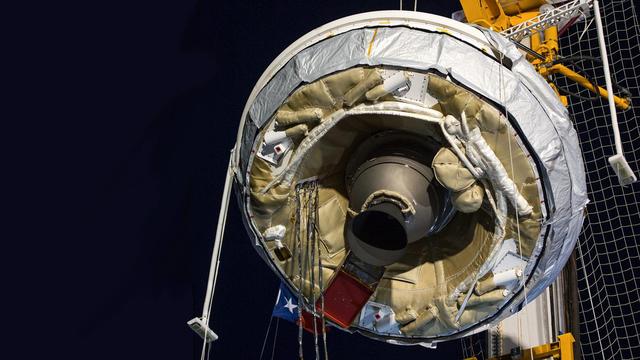
NASA's Low-Density Supersonic Decelerator test vehicle attached to launch tower just prior to take off. LDSD completed its second flight test when the saucer-shaped craft splashed down safely Monday, June 8, 2015, in the Pacific Ocean off the coast of the Hawaiian island of Kauai. http://photojournal.jpl.nasa.gov/catalog/PIA19683
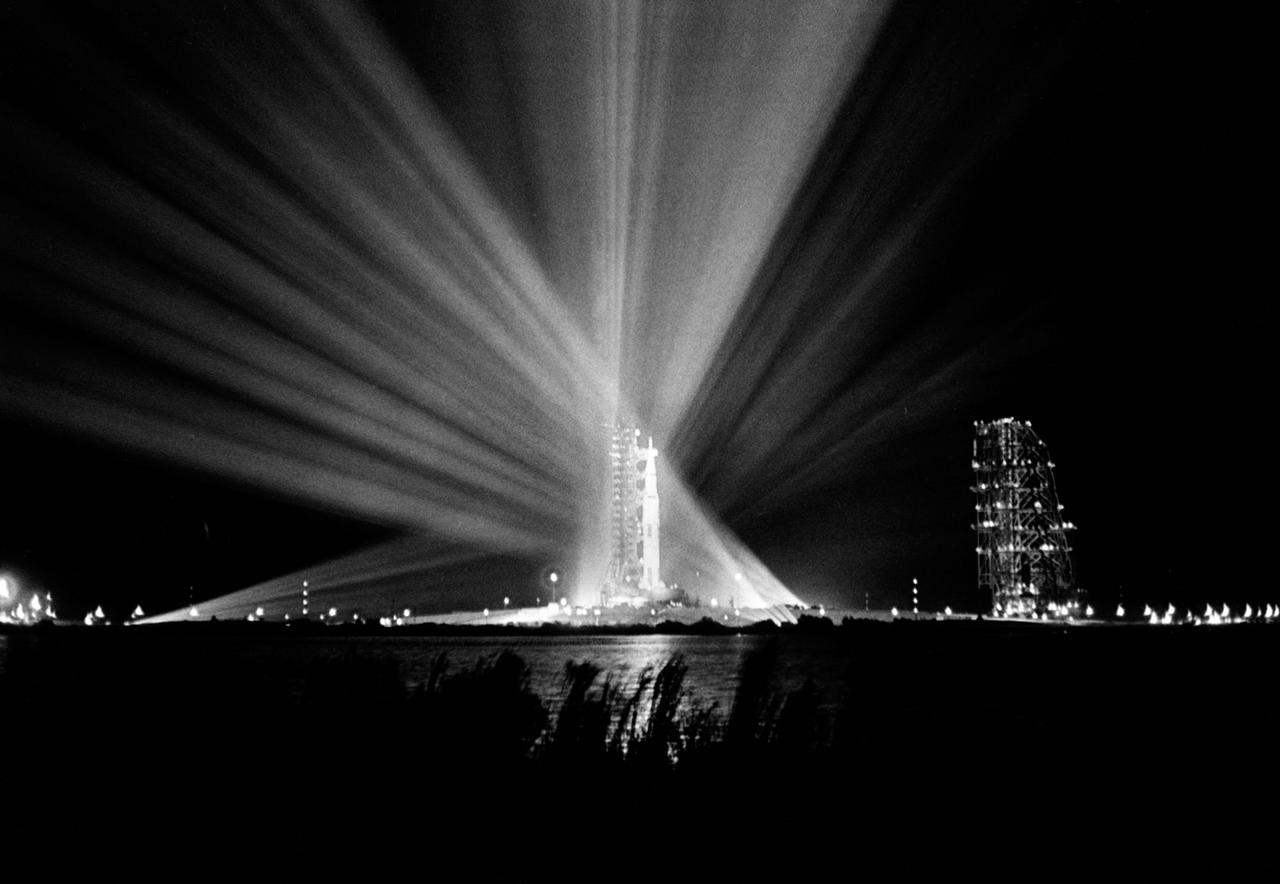
S69-25879 (23 Feb. 1969) --- Nighttime view of the 363-feet-high Apollo 9 space vehicle at Pad A, Launch Complex 39, Kennedy Space Center, during preparations for the scheduled 10-day Earth-orbital space mission. The crew of the Apollo 9 (Spacecraft 104/Lunar Module 3/Saturn 504) space flight will be astronauts James A. McDivitt, David R. Scott, and Russell L. Schweickart.
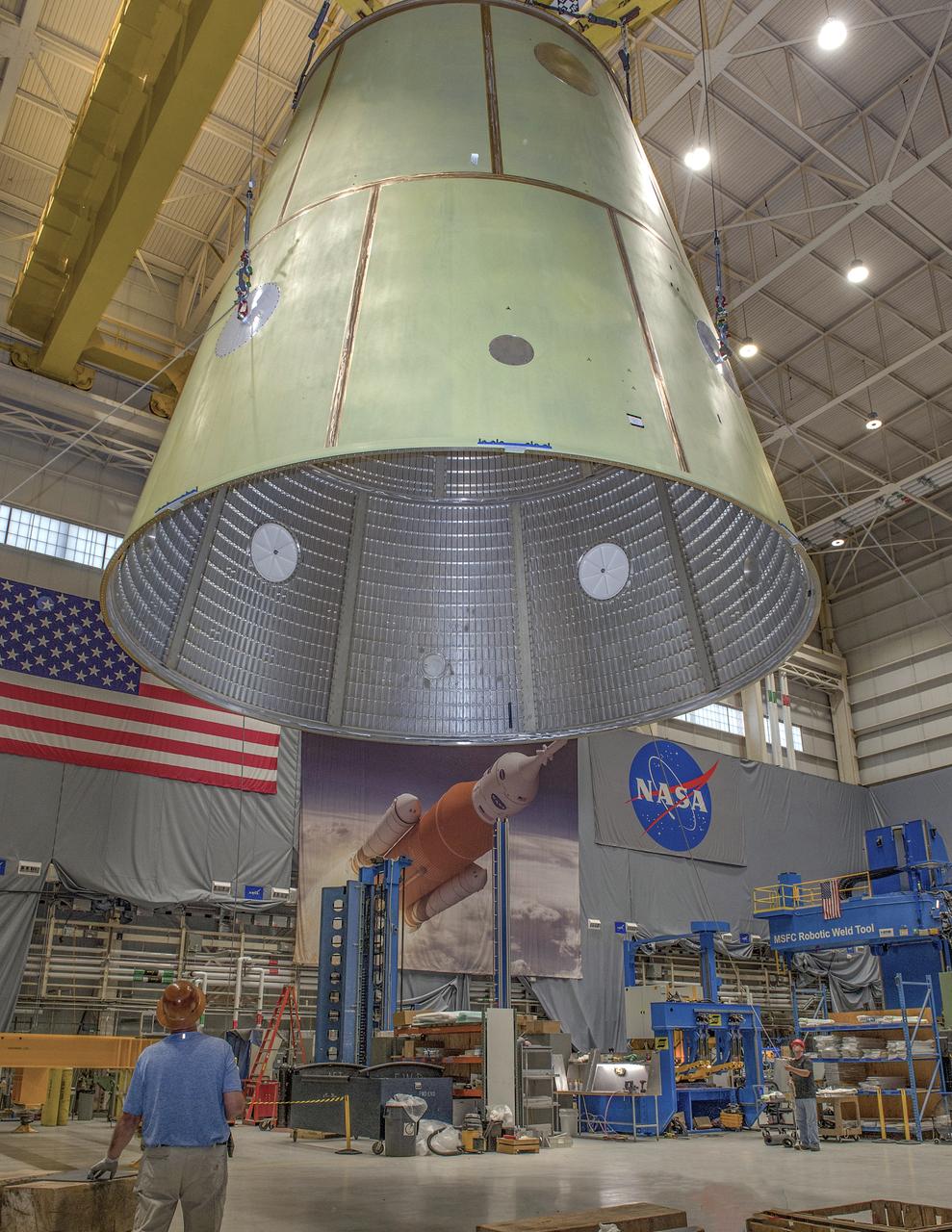
Lifting of the Launch Vehicle Stage Adapter (LVSA) in preparation for transport. The LVSA was fabricated in the EM32 Advanced Welding Development Facility at the NASA George C. Marshall Space Flight Center. The LVSA was welded using the conventional and self-reacting friction stir process and has approximately 375 feet of weld.
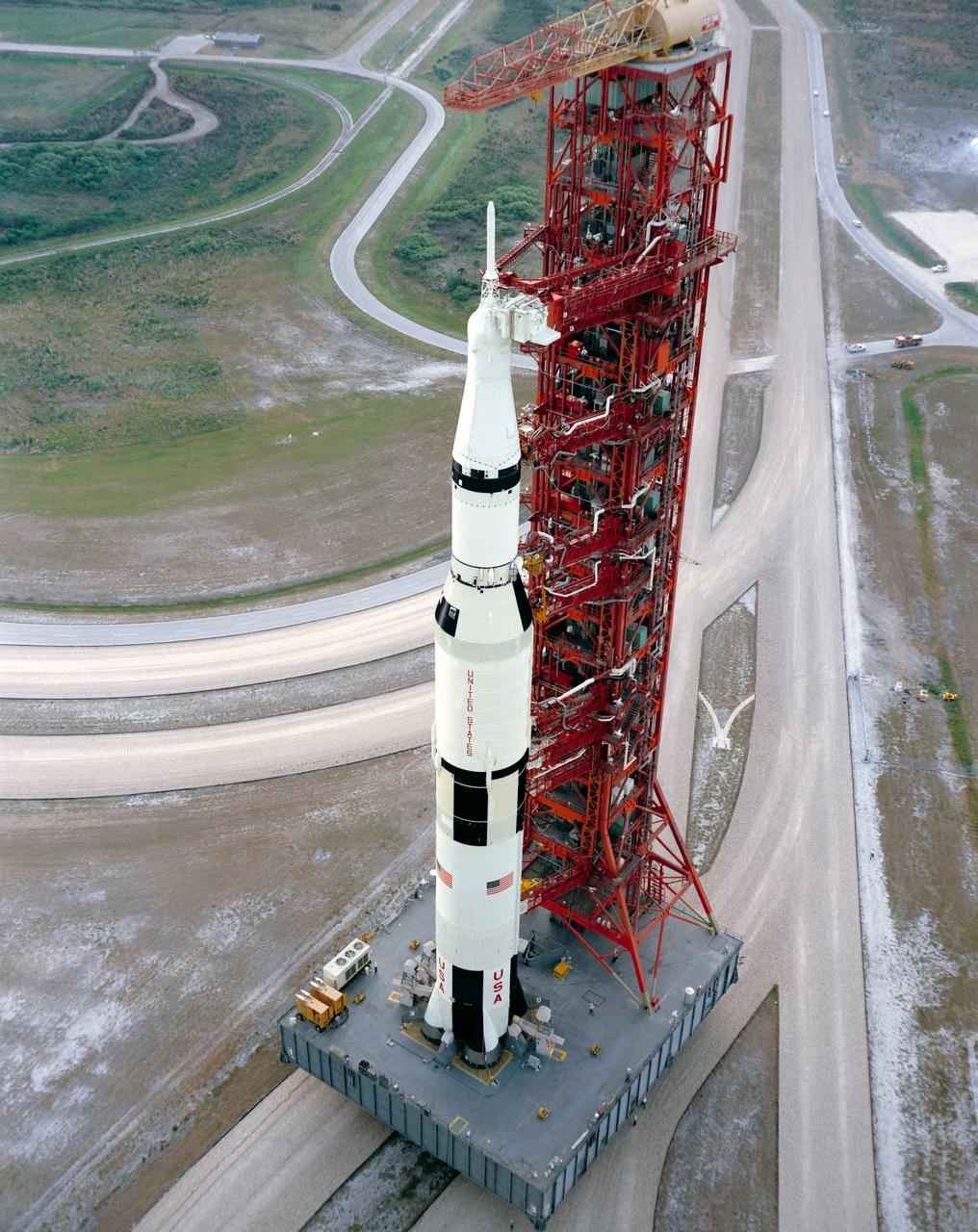
S71-33781 (11 May 1971) --- High angle view showing the Apollo 15 (Spacecraft 112/Lunar Module 10/Saturn 510) space vehicle on the way from the Vehicle Assembly Building (VAB) to Pad A, Launch Complex 39, Kennedy Space Center (KSC). The Saturn V stack and its mobile launch tower are atop a huge crawler-transporter. Apollo 15 is scheduled as the fourth manned lunar landing mission by the National Aeronautics and Space Administration (NASA). The crew men will be astronauts David R. Scott, commander; Alfred M. Worden, command module pilot; and James B. Irwin, lunar module pilot. While astronauts Scott and Irwin descend in the Lunar Module (LM) to explore the moon, astronaut Worden will remain with the Command and Service Modules (CSM) in lunar orbit.
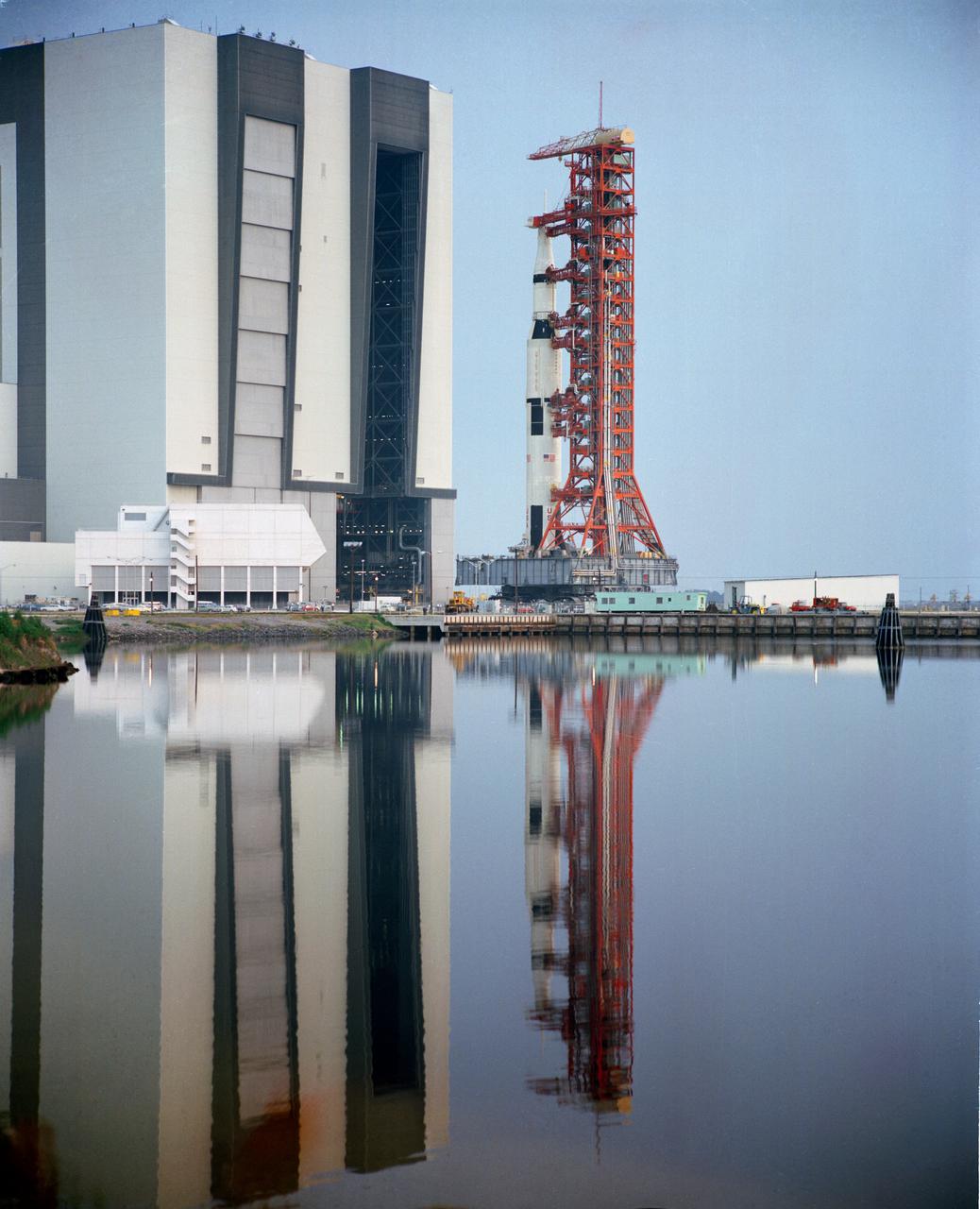
S71-33786 (11 May 1971) --- The 363-feet tall Apollo (Spacecraft 112/Lunar Module 10/Saturn 510) space vehicle which leaves the Vehicle Assembly Building (VAB) to Pad A, Launch Complex 39, Kennedy Space Center (KSC). The Saturn V stack and its mobile launch tower are atop a huge crawler-transporter. Apollo 15 is scheduled as the fourth manned lunar landing mission by the National Aeronautics and Space Administration (NASA) and is scheduled to lift off on July 26, 1971. The crew men will be astronauts David R. Scott, commander; Alfred M. Worden, command module pilot; and James B. Irwin, lunar module pilot. While astronaut Scott and Irwin will descend in the Lunar Module (LM) to explore the moon, astronaut Worden will remain with the Command and Service Modules (CSM) in lunar orbit.
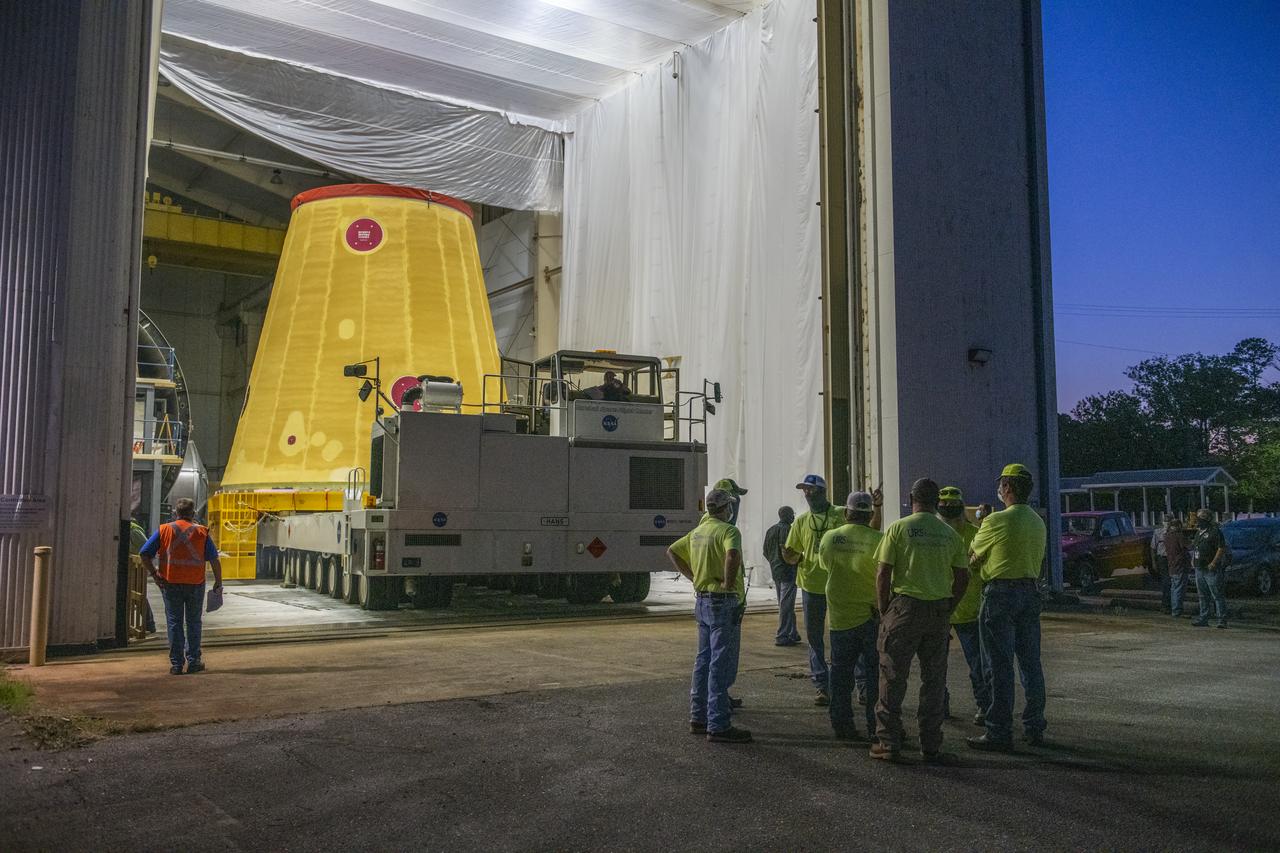
The move team loads the launch vehicle stage adapter, part of the agency’s new Space Launch System (SLS) rocket, on NASA’s Pegasus barge at NASA’s Marshall Space Flight Center in Huntsville, Alabama, July 17. The launch vehicle stage adapter, which connects the rocket’s 212-foot-tall core stage to the rocket’s upper stage, is being shipped to NASA’s Kennedy Space Center in Florida for Artemis I launch preparations. This is the final piece of Artemis I SLS rocket hardware built at Marshall to be delivered to Kennedy. Only the SLS core stage, currently in final testing at Stennis Space Center near Bay St. Louis, Mississippi, remains to be shipped to Kennedy on Pegasus. NASA is working to land the first woman and the next man on the Moon by 2024. SLS, along with Orion, the human landing system, and the Gateway in orbit around the Moon are NASA’s backbone for a new generation of deep space exploration.
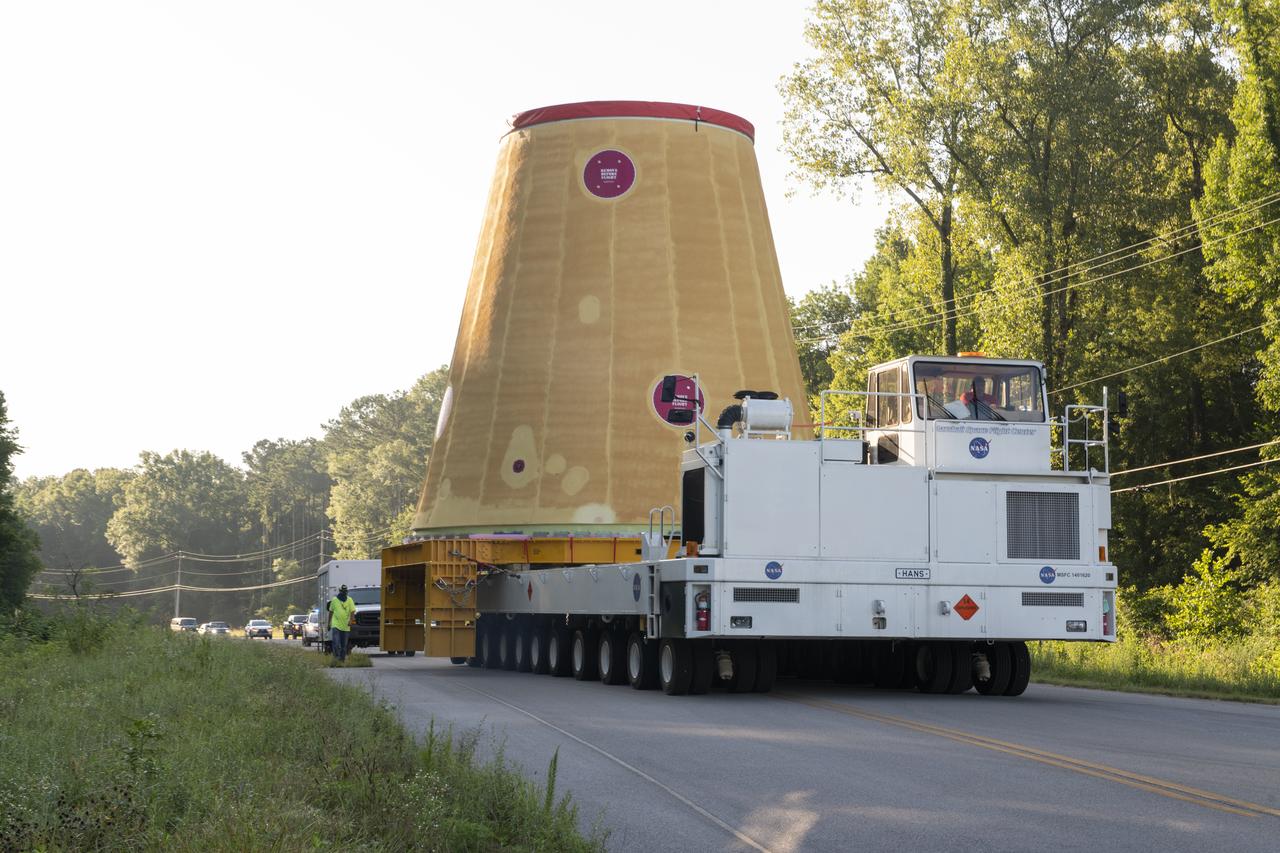
The move team loads the launch vehicle stage adapter, part of the agency’s new Space Launch System (SLS) rocket, on NASA’s Pegasus barge at NASA’s Marshall Space Flight Center in Huntsville, Alabama, July 17. The launch vehicle stage adapter, which connects the rocket’s 212-foot-tall core stage to the rocket’s upper stage, is being shipped to NASA’s Kennedy Space Center in Florida for Artemis I launch preparations. This is the final piece of Artemis I SLS rocket hardware built at Marshall to be delivered to Kennedy. Only the SLS core stage, currently in final testing at Stennis Space Center near Bay St. Louis, Mississippi, remains to be shipped to Kennedy on Pegasus. NASA is working to land the first woman and the next man on the Moon by 2024. SLS, along with Orion, the human landing system, and the Gateway in orbit around the Moon are NASA’s backbone for a new generation of deep space exploration.
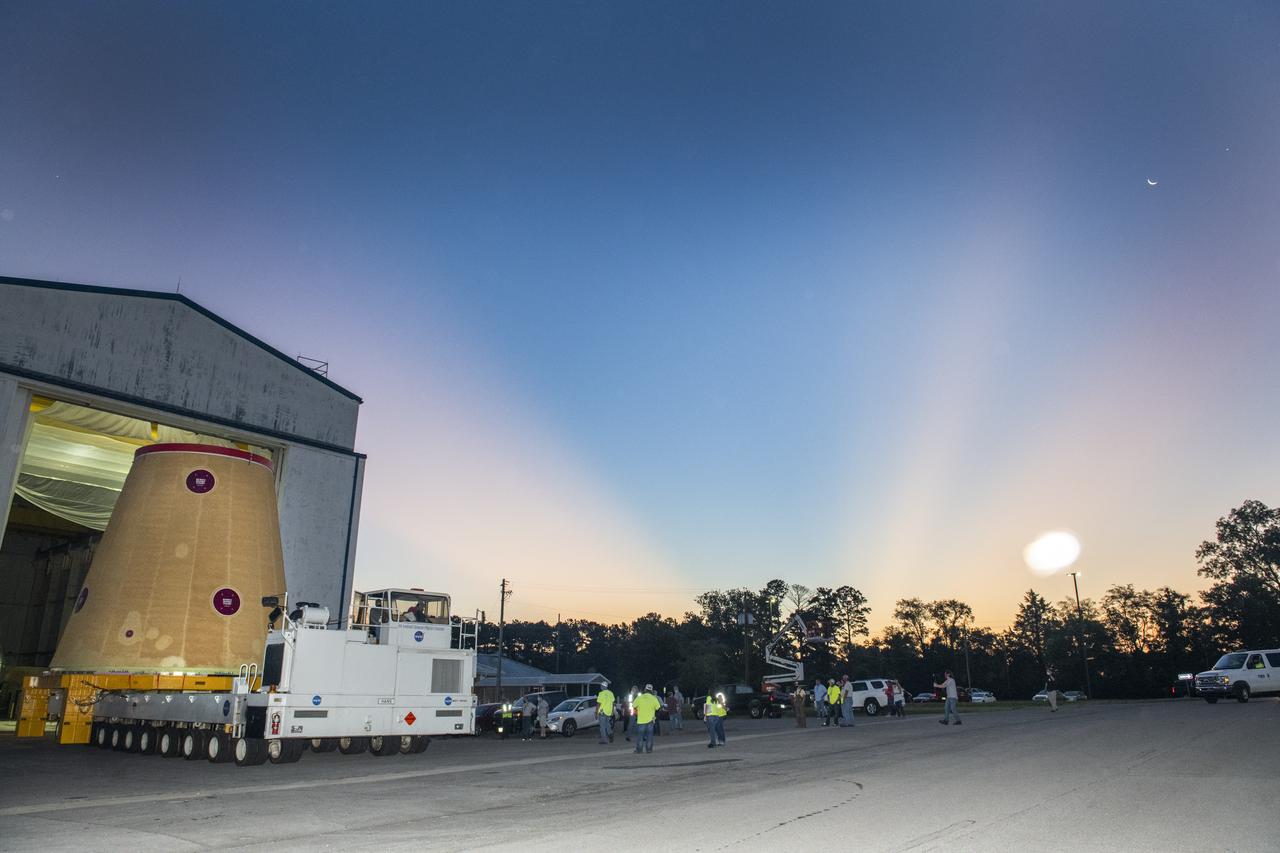
The move team loads the launch vehicle stage adapter, part of the agency’s new Space Launch System (SLS) rocket, on NASA’s Pegasus barge at NASA’s Marshall Space Flight Center in Huntsville, Alabama, July 17. The launch vehicle stage adapter, which connects the rocket’s 212-foot-tall core stage to the rocket’s upper stage, is being shipped to NASA’s Kennedy Space Center in Florida for Artemis I launch preparations. This is the final piece of Artemis I SLS rocket hardware built at Marshall to be delivered to Kennedy. Only the SLS core stage, currently in final testing at Stennis Space Center near Bay St. Louis, Mississippi, remains to be shipped to Kennedy on Pegasus. NASA is working to land the first woman and the next man on the Moon by 2024. SLS, along with Orion, the human landing system, and the Gateway in orbit around the Moon are NASA’s backbone for a new generation of deep space exploration.
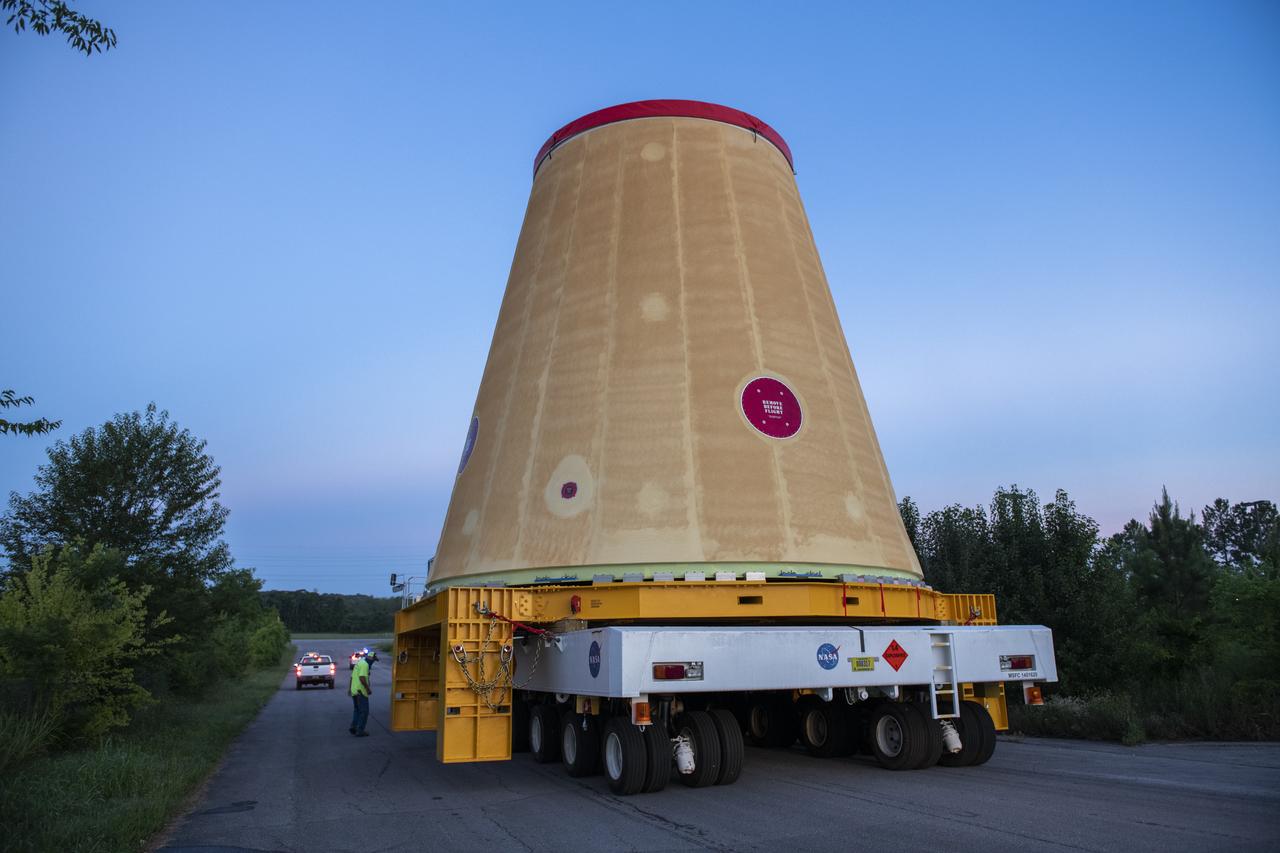
The move team loads the launch vehicle stage adapter, part of the agency’s new Space Launch System (SLS) rocket, on NASA’s Pegasus barge at NASA’s Marshall Space Flight Center in Huntsville, Alabama, July 17. The launch vehicle stage adapter, which connects the rocket’s 212-foot-tall core stage to the rocket’s upper stage, is being shipped to NASA’s Kennedy Space Center in Florida for Artemis I launch preparations. This is the final piece of Artemis I SLS rocket hardware built at Marshall to be delivered to Kennedy. Only the SLS core stage, currently in final testing at Stennis Space Center near Bay St. Louis, Mississippi, remains to be shipped to Kennedy on Pegasus. NASA is working to land the first woman and the next man on the Moon by 2024. SLS, along with Orion, the human landing system, and the Gateway in orbit around the Moon are NASA’s backbone for a new generation of deep space exploration.
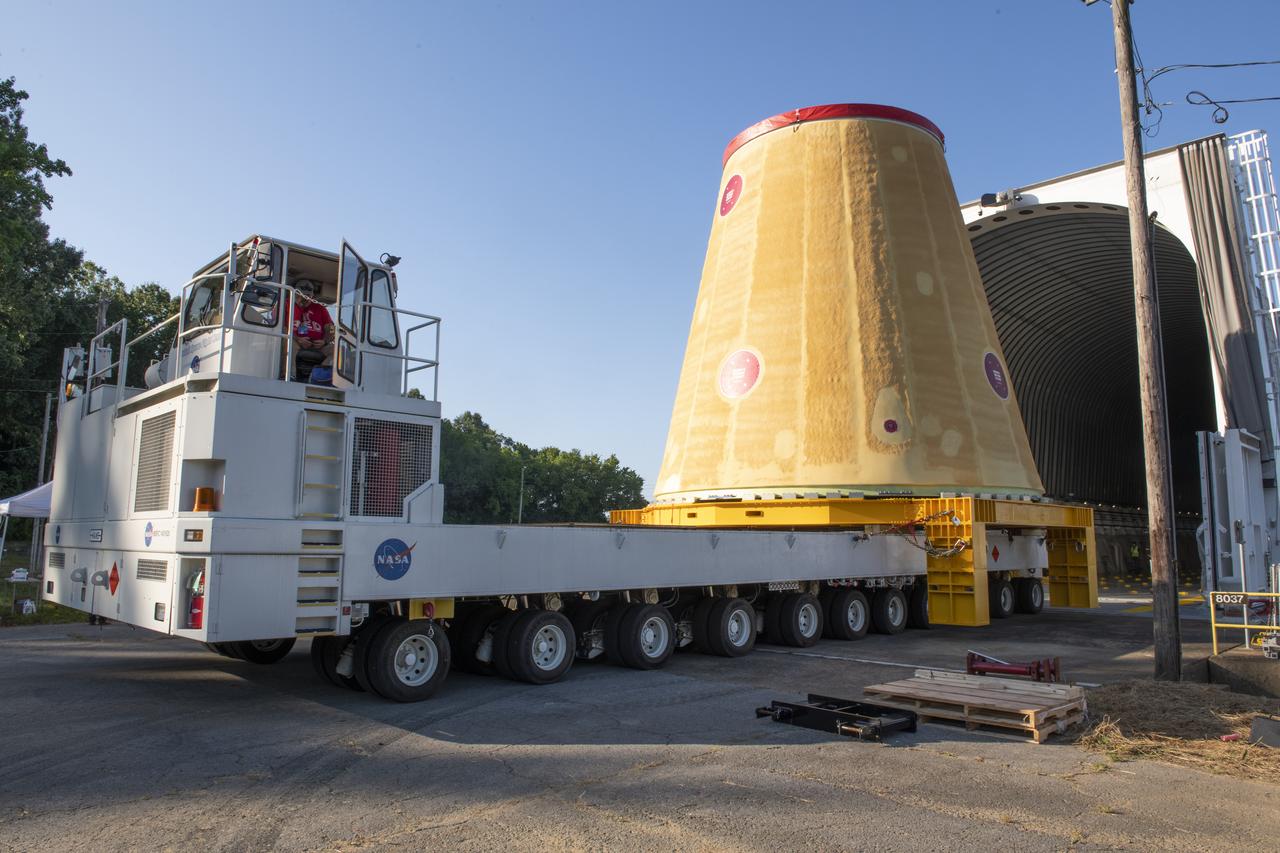
The move team loads the launch vehicle stage adapter, part of the agency’s new Space Launch System (SLS) rocket, on NASA’s Pegasus barge at NASA’s Marshall Space Flight Center in Huntsville, Alabama, July 17. The launch vehicle stage adapter, which connects the rocket’s 212-foot-tall core stage to the rocket’s upper stage, is being shipped to NASA’s Kennedy Space Center in Florida for Artemis I launch preparations. This is the final piece of Artemis I SLS rocket hardware built at Marshall to be delivered to Kennedy. Only the SLS core stage, currently in final testing at Stennis Space Center near Bay St. Louis, Mississippi, remains to be shipped to Kennedy on Pegasus. NASA is working to land the first woman and the next man on the Moon by 2024. SLS, along with Orion, the human landing system, and the Gateway in orbit around the Moon are NASA’s backbone for a new generation of deep space exploration.
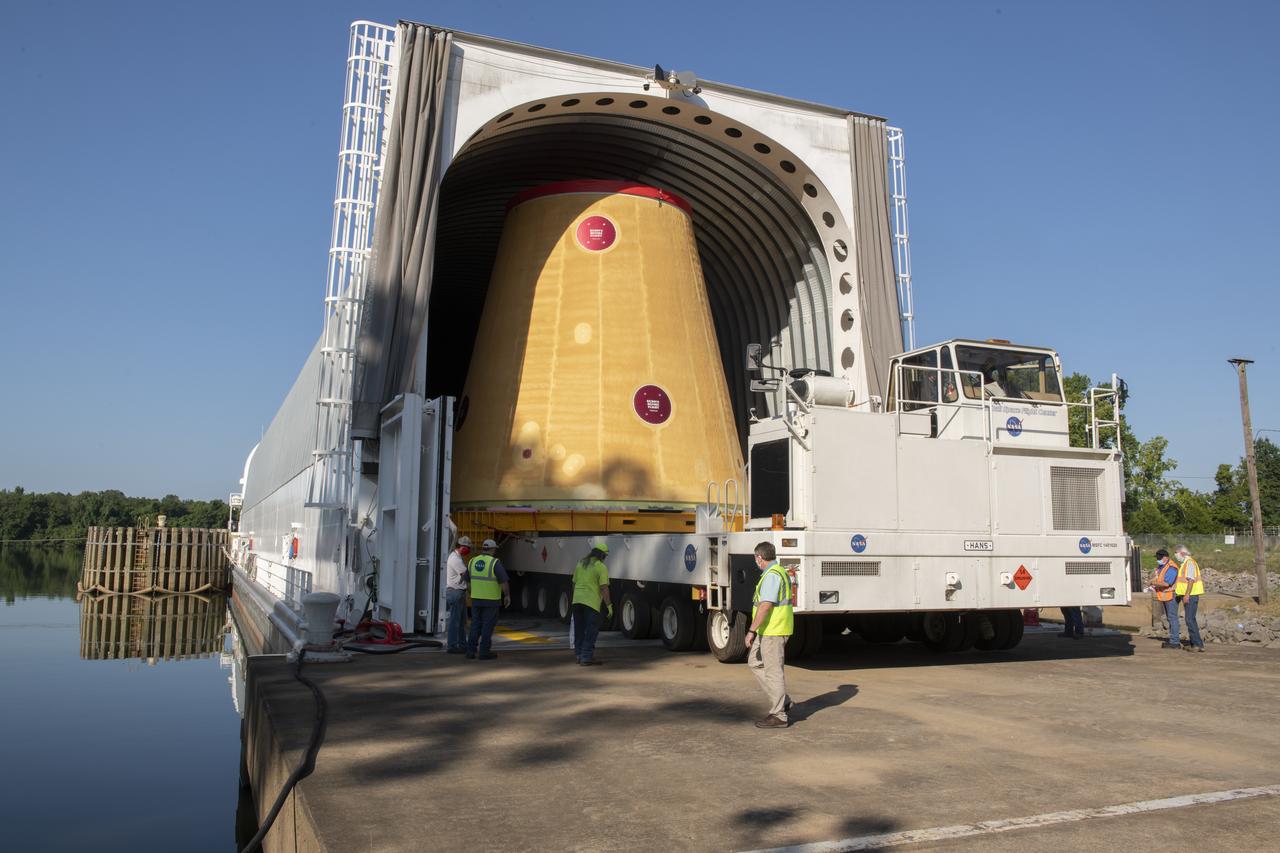
The move team loads the launch vehicle stage adapter, part of the agency’s new Space Launch System (SLS) rocket, on NASA’s Pegasus barge at NASA’s Marshall Space Flight Center in Huntsville, Alabama, July 17. The launch vehicle stage adapter, which connects the rocket’s 212-foot-tall core stage to the rocket’s upper stage, is being shipped to NASA’s Kennedy Space Center in Florida for Artemis I launch preparations. This is the final piece of Artemis I SLS rocket hardware built at Marshall to be delivered to Kennedy. Only the SLS core stage, currently in final testing at Stennis Space Center near Bay St. Louis, Mississippi, remains to be shipped to Kennedy on Pegasus. NASA is working to land the first woman and the next man on the Moon by 2024. SLS, along with Orion, the human landing system, and the Gateway in orbit around the Moon are NASA’s backbone for a new generation of deep space exploration.
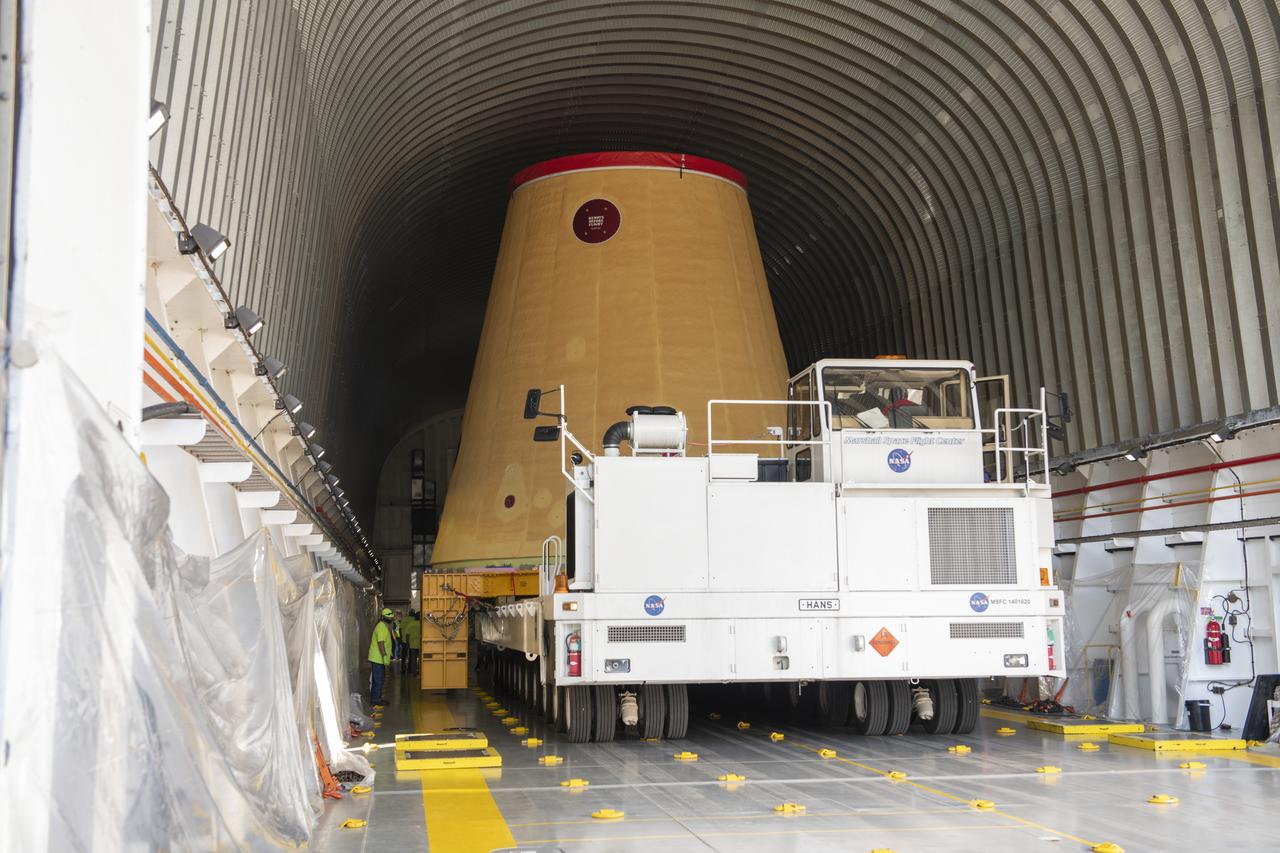
The move team loads the launch vehicle stage adapter, part of the agency’s new Space Launch System (SLS) rocket, on NASA’s Pegasus barge at NASA’s Marshall Space Flight Center in Huntsville, Alabama, July 17. The launch vehicle stage adapter, which connects the rocket’s 212-foot-tall core stage to the rocket’s upper stage, is being shipped to NASA’s Kennedy Space Center in Florida for Artemis I launch preparations. This is the final piece of Artemis I SLS rocket hardware built at Marshall to be delivered to Kennedy. Only the SLS core stage, currently in final testing at Stennis Space Center near Bay St. Louis, Mississippi, remains to be shipped to Kennedy on Pegasus. NASA is working to land the first woman and the next man on the Moon by 2024. SLS, along with Orion, the human landing system, and the Gateway in orbit around the Moon are NASA’s backbone for a new generation of deep space exploration.
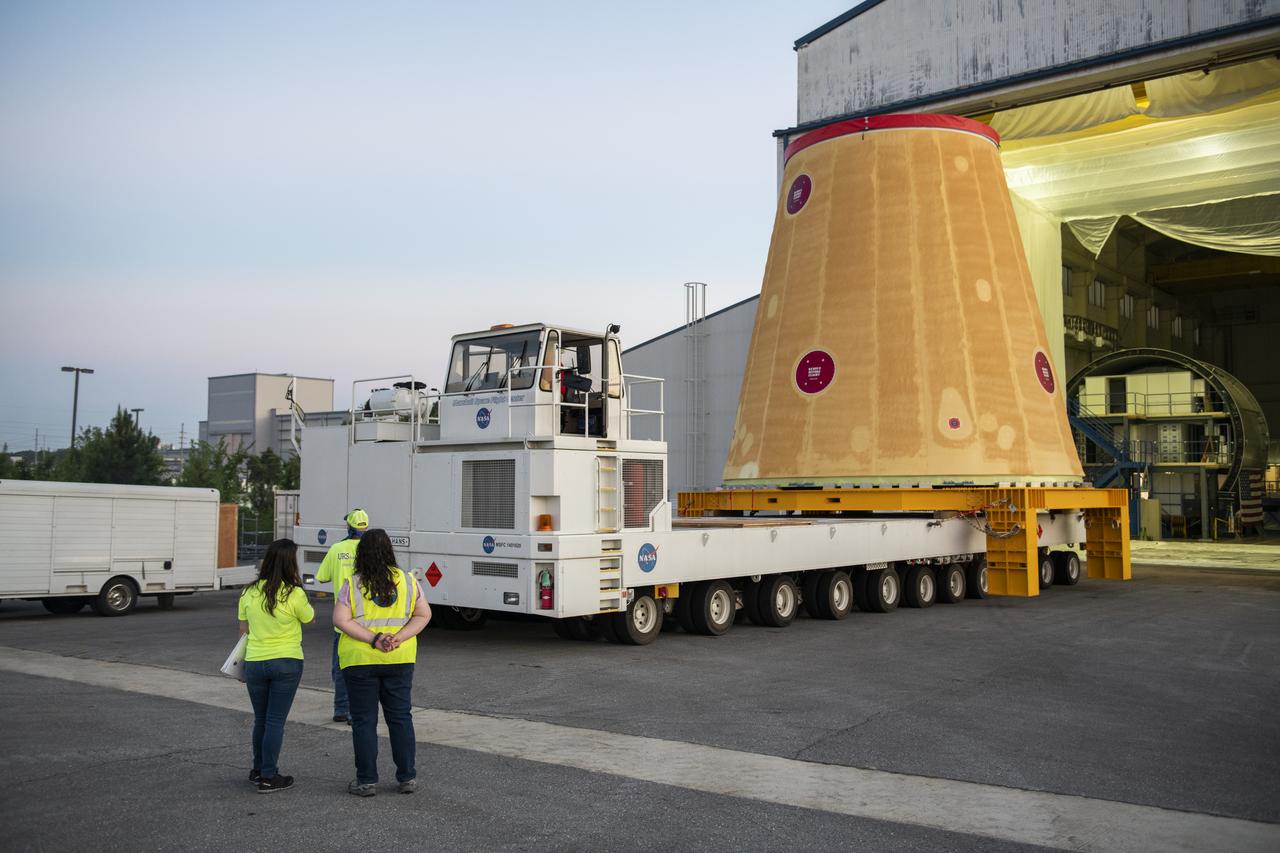
The move team loads the launch vehicle stage adapter, part of the agency’s new Space Launch System (SLS) rocket, on NASA’s Pegasus barge at NASA’s Marshall Space Flight Center in Huntsville, Alabama, July 17. The launch vehicle stage adapter, which connects the rocket’s 212-foot-tall core stage to the rocket’s upper stage, is being shipped to NASA’s Kennedy Space Center in Florida for Artemis I launch preparations. This is the final piece of Artemis I SLS rocket hardware built at Marshall to be delivered to Kennedy. Only the SLS core stage, currently in final testing at Stennis Space Center near Bay St. Louis, Mississippi, remains to be shipped to Kennedy on Pegasus. NASA is working to land the first woman and the next man on the Moon by 2024. SLS, along with Orion, the human landing system, and the Gateway in orbit around the Moon are NASA’s backbone for a new generation of deep space exploration.
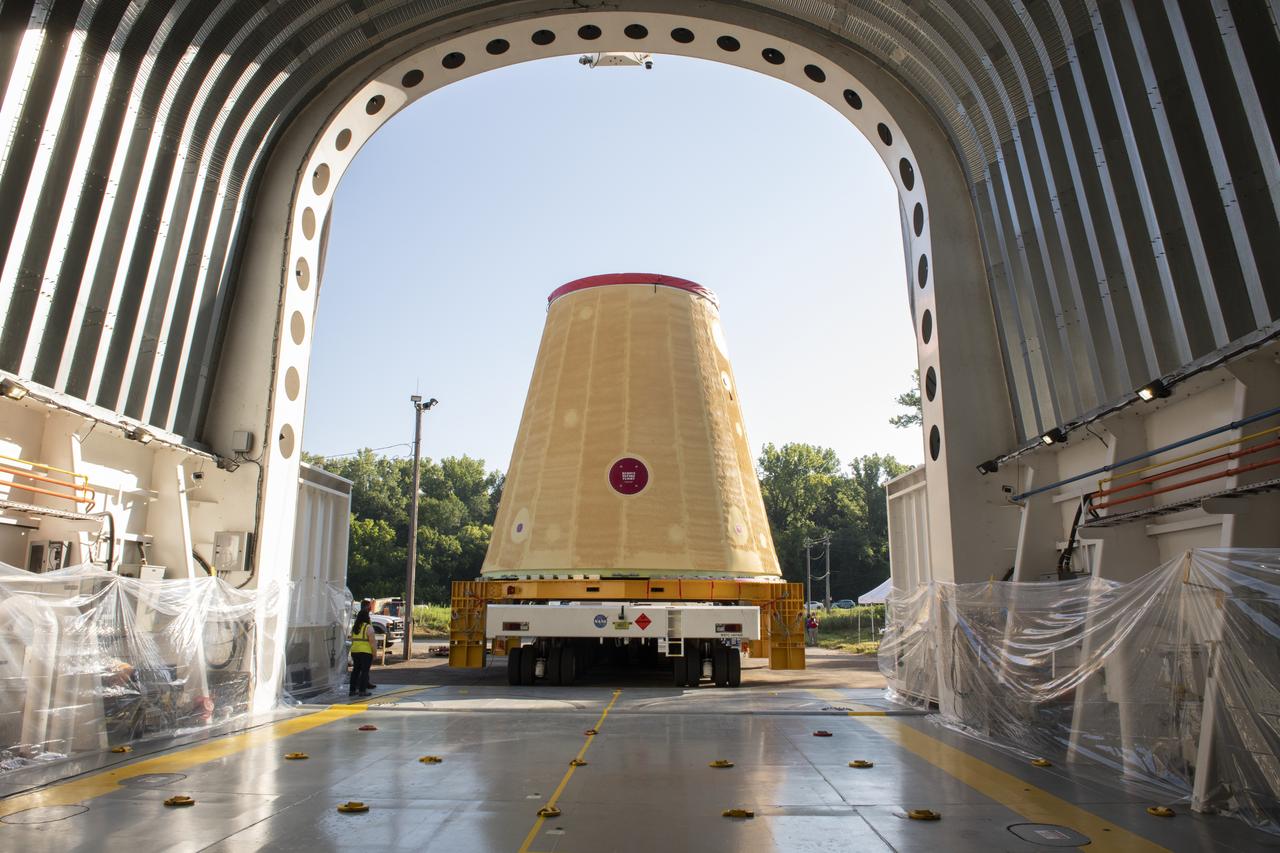
The move team loads the launch vehicle stage adapter, part of the agency’s new Space Launch System (SLS) rocket, on NASA’s Pegasus barge at NASA’s Marshall Space Flight Center in Huntsville, Alabama, July 17. The launch vehicle stage adapter, which connects the rocket’s 212-foot-tall core stage to the rocket’s upper stage, is being shipped to NASA’s Kennedy Space Center in Florida for Artemis I launch preparations. This is the final piece of Artemis I SLS rocket hardware built at Marshall to be delivered to Kennedy. Only the SLS core stage, currently in final testing at Stennis Space Center near Bay St. Louis, Mississippi, remains to be shipped to Kennedy on Pegasus. NASA is working to land the first woman and the next man on the Moon by 2024. SLS, along with Orion, the human landing system, and the Gateway in orbit around the Moon are NASA’s backbone for a new generation of deep space exploration.
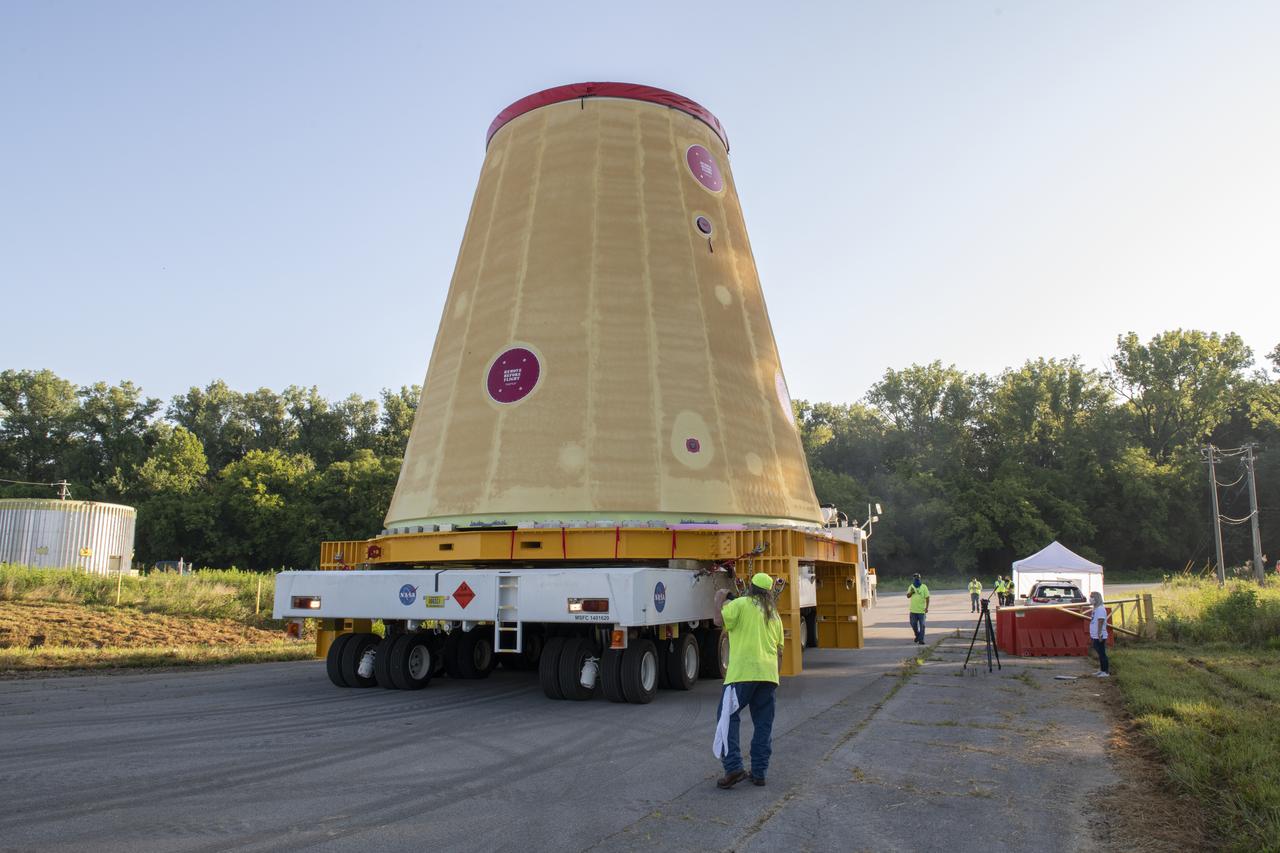
The move team loads the launch vehicle stage adapter, part of the agency’s new Space Launch System (SLS) rocket, on NASA’s Pegasus barge at NASA’s Marshall Space Flight Center in Huntsville, Alabama, July 17. The launch vehicle stage adapter, which connects the rocket’s 212-foot-tall core stage to the rocket’s upper stage, is being shipped to NASA’s Kennedy Space Center in Florida for Artemis I launch preparations. This is the final piece of Artemis I SLS rocket hardware built at Marshall to be delivered to Kennedy. Only the SLS core stage, currently in final testing at Stennis Space Center near Bay St. Louis, Mississippi, remains to be shipped to Kennedy on Pegasus. NASA is working to land the first woman and the next man on the Moon by 2024. SLS, along with Orion, the human landing system, and the Gateway in orbit around the Moon are NASA’s backbone for a new generation of deep space exploration.
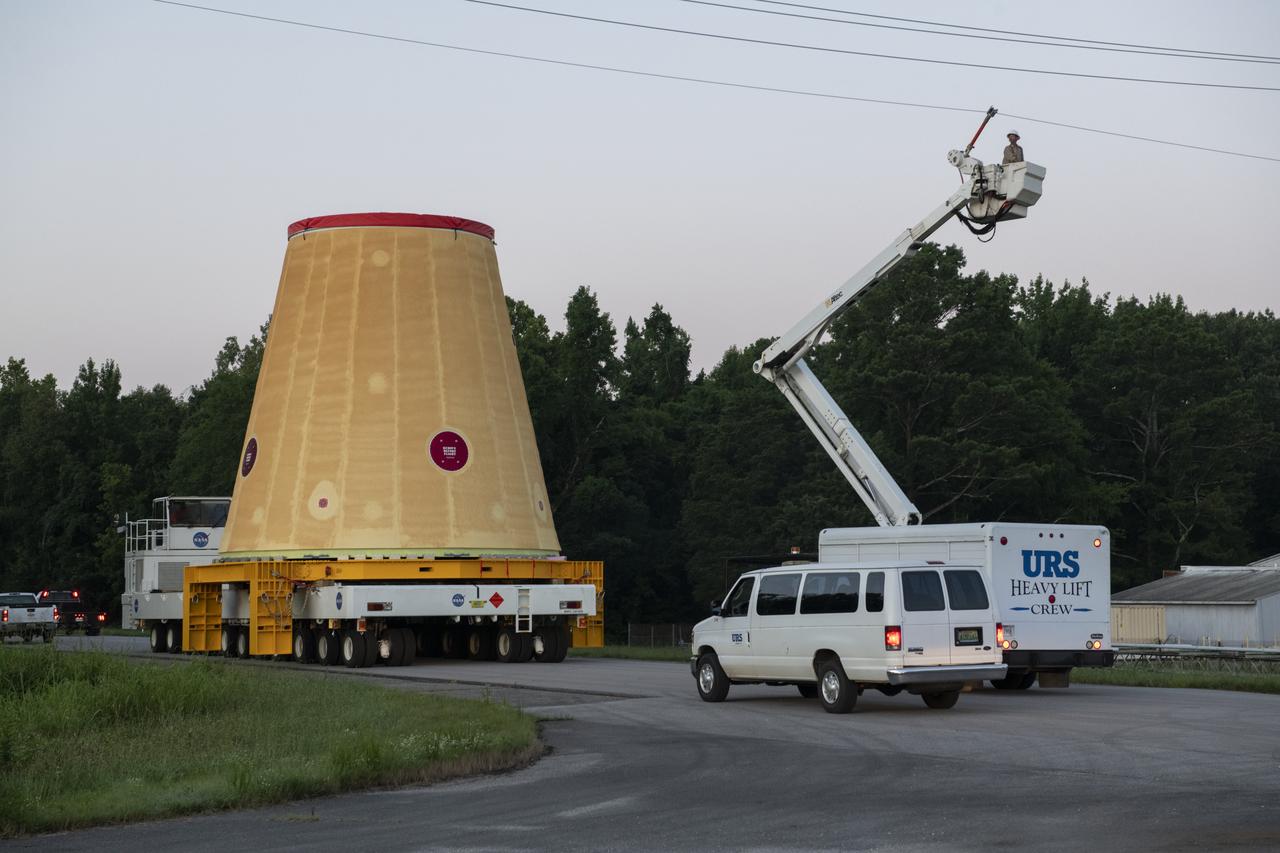
The move team loads the launch vehicle stage adapter, part of the agency’s new Space Launch System (SLS) rocket, on NASA’s Pegasus barge at NASA’s Marshall Space Flight Center in Huntsville, Alabama, July 17. The launch vehicle stage adapter, which connects the rocket’s 212-foot-tall core stage to the rocket’s upper stage, is being shipped to NASA’s Kennedy Space Center in Florida for Artemis I launch preparations. This is the final piece of Artemis I SLS rocket hardware built at Marshall to be delivered to Kennedy. Only the SLS core stage, currently in final testing at Stennis Space Center near Bay St. Louis, Mississippi, remains to be shipped to Kennedy on Pegasus. NASA is working to land the first woman and the next man on the Moon by 2024. SLS, along with Orion, the human landing system, and the Gateway in orbit around the Moon are NASA’s backbone for a new generation of deep space exploration.