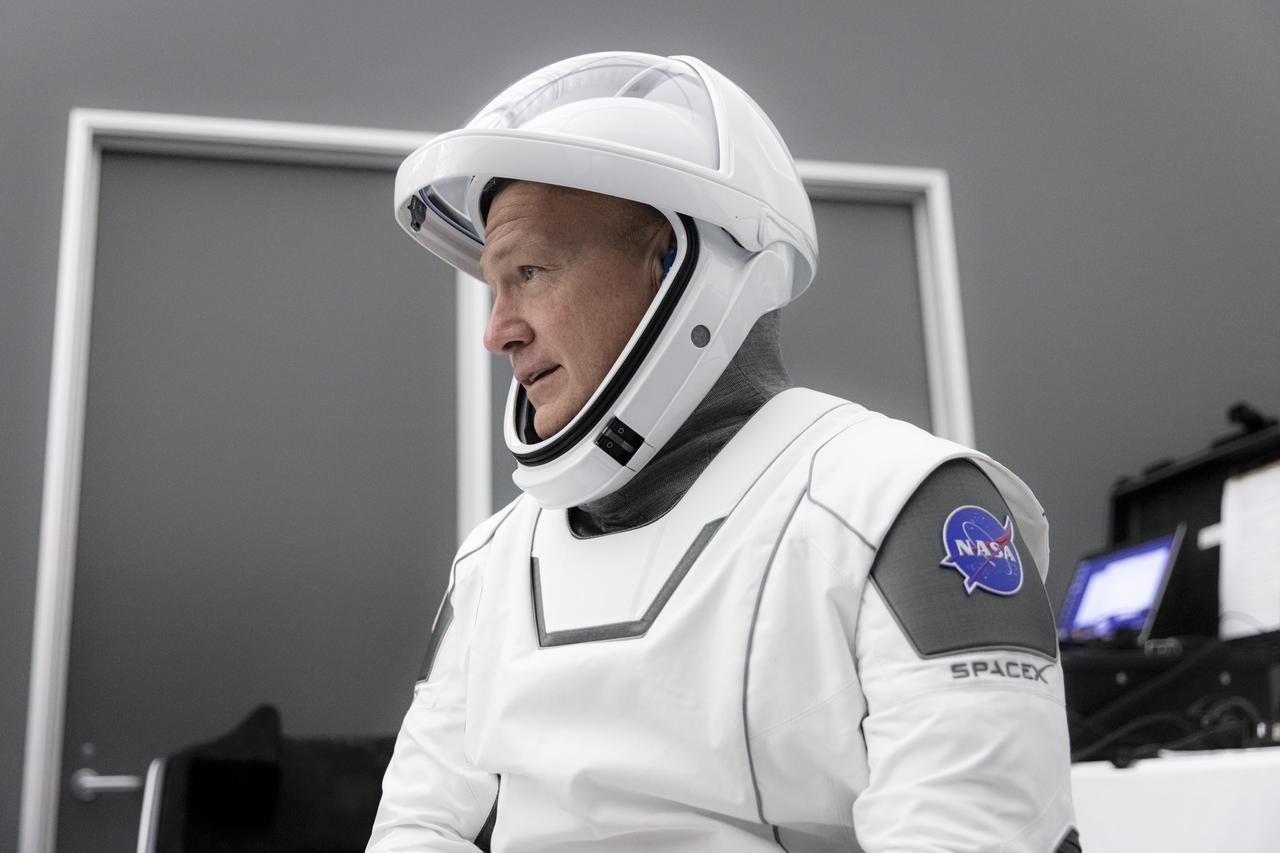
On Thursday, March 19 and Friday, March 20, SpaceX teams in Firing Room 4 at NASA's Kennedy Space Center in Florida and the company's Mission Control in Hawthorne, California, along with NASA flight controllers in Mission Control Houston, executed a full simulation of launch and docking of the Crew Dragon spacecraft, with NASA astronauts Bob Behnken and Doug Hurley participating in SpaceX's flight simulator.
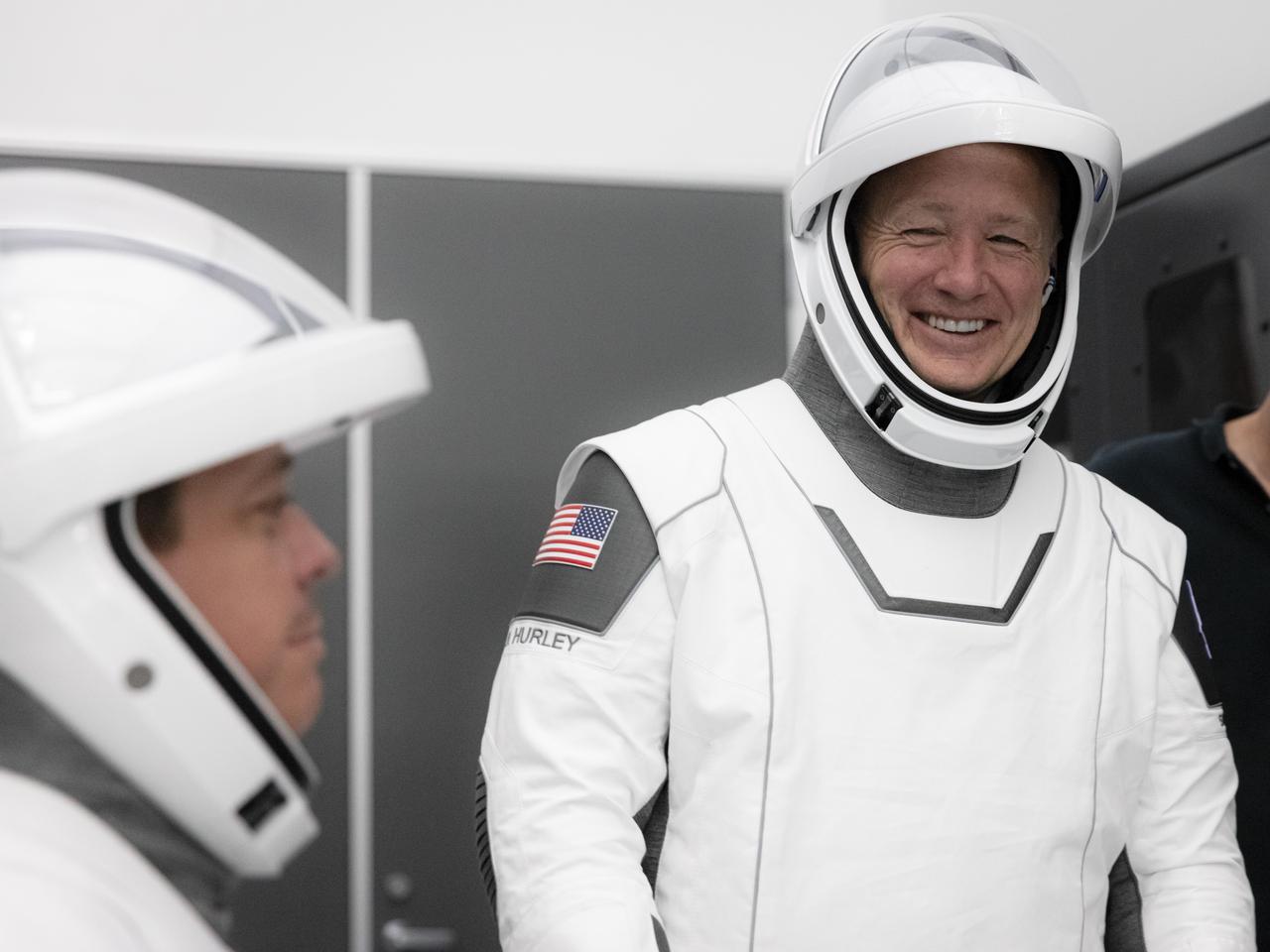
On Thursday, March 19 and Friday, March 20, SpaceX teams in Firing Room 4 at NASA's Kennedy Space Center in Florida and the company's Mission Control in Hawthorne, California, along with NASA flight controllers in Mission Control Houston, executed a full simulation of launch and docking of the Crew Dragon spacecraft, with NASA astronauts Bob Behnken and Doug Hurley participating in SpaceX's flight simulator.
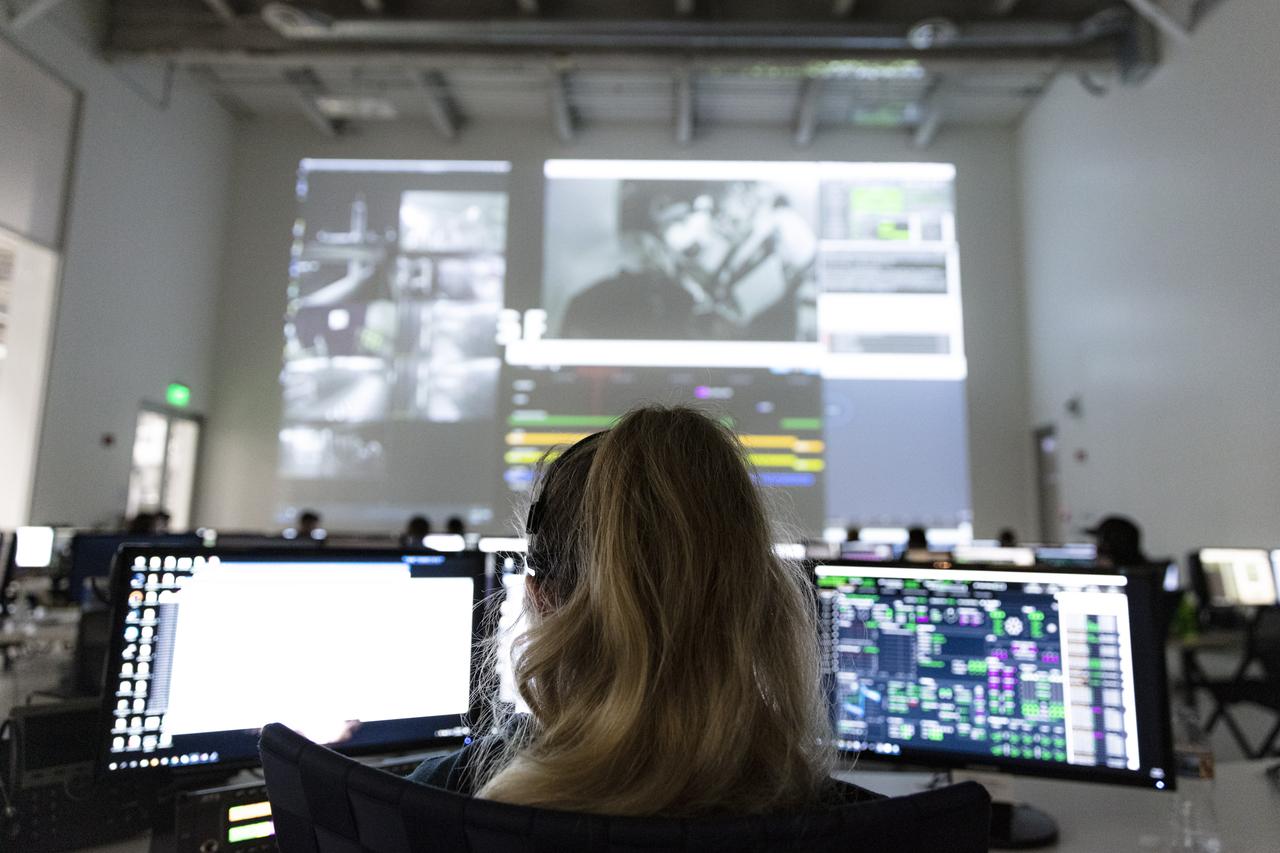
On Thursday, March 19 and Friday, March 20, SpaceX teams in Firing Room 4 at NASA's Kennedy Space Center in Florida and the company's Mission Control in Hawthorne, California, along with NASA flight controllers in Mission Control Houston, executed a full simulation of launch and docking of the Crew Dragon spacecraft, with NASA astronauts Bob Behnken and Doug Hurley participating in SpaceX's flight simulator.
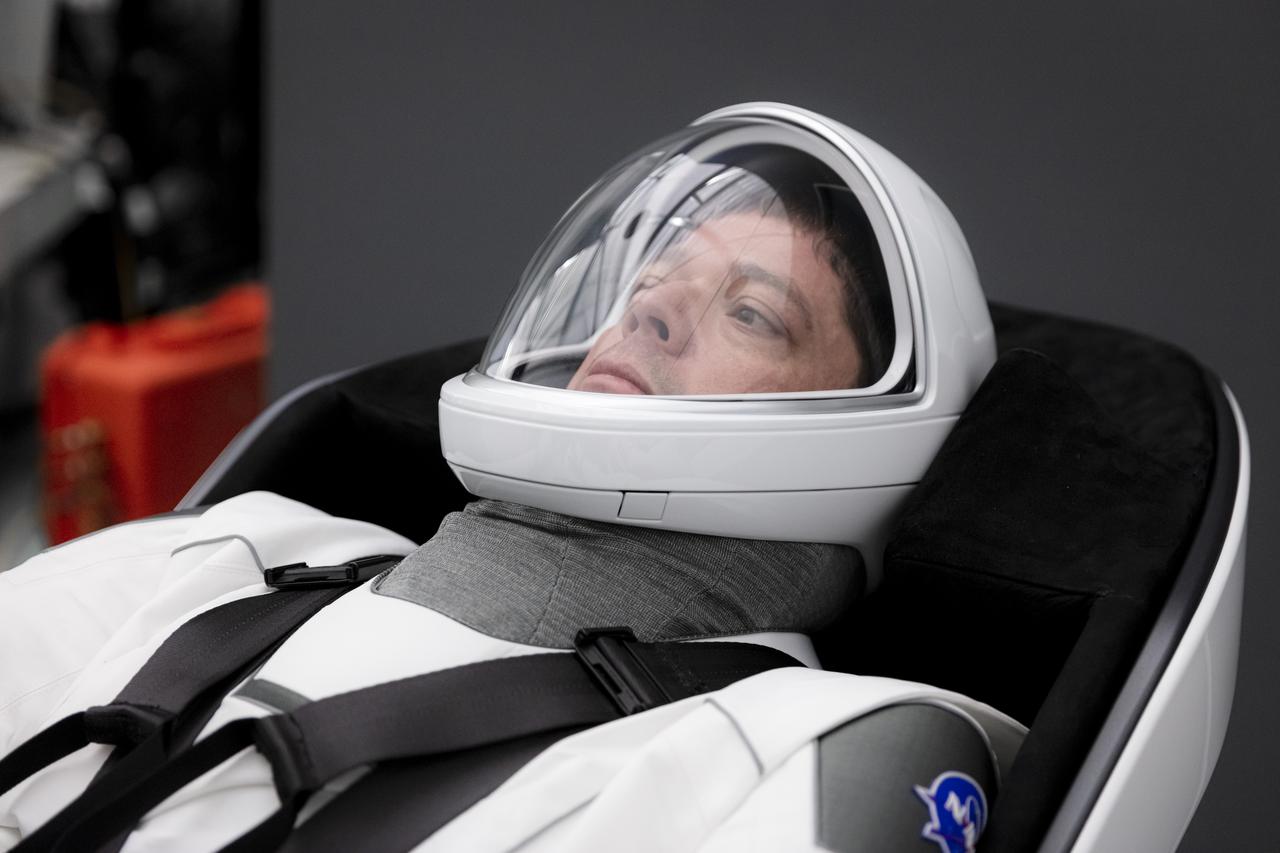
On Thursday, March 19 and Friday, March 20, SpaceX teams in Firing Room 4 at NASA's Kennedy Space Center in Florida and the company's Mission Control in Hawthorne, California, along with NASA flight controllers in Mission Control Houston, executed a full simulation of launch and docking of the Crew Dragon spacecraft, with NASA astronauts Bob Behnken and Doug Hurley participating in SpaceX's flight simulator.
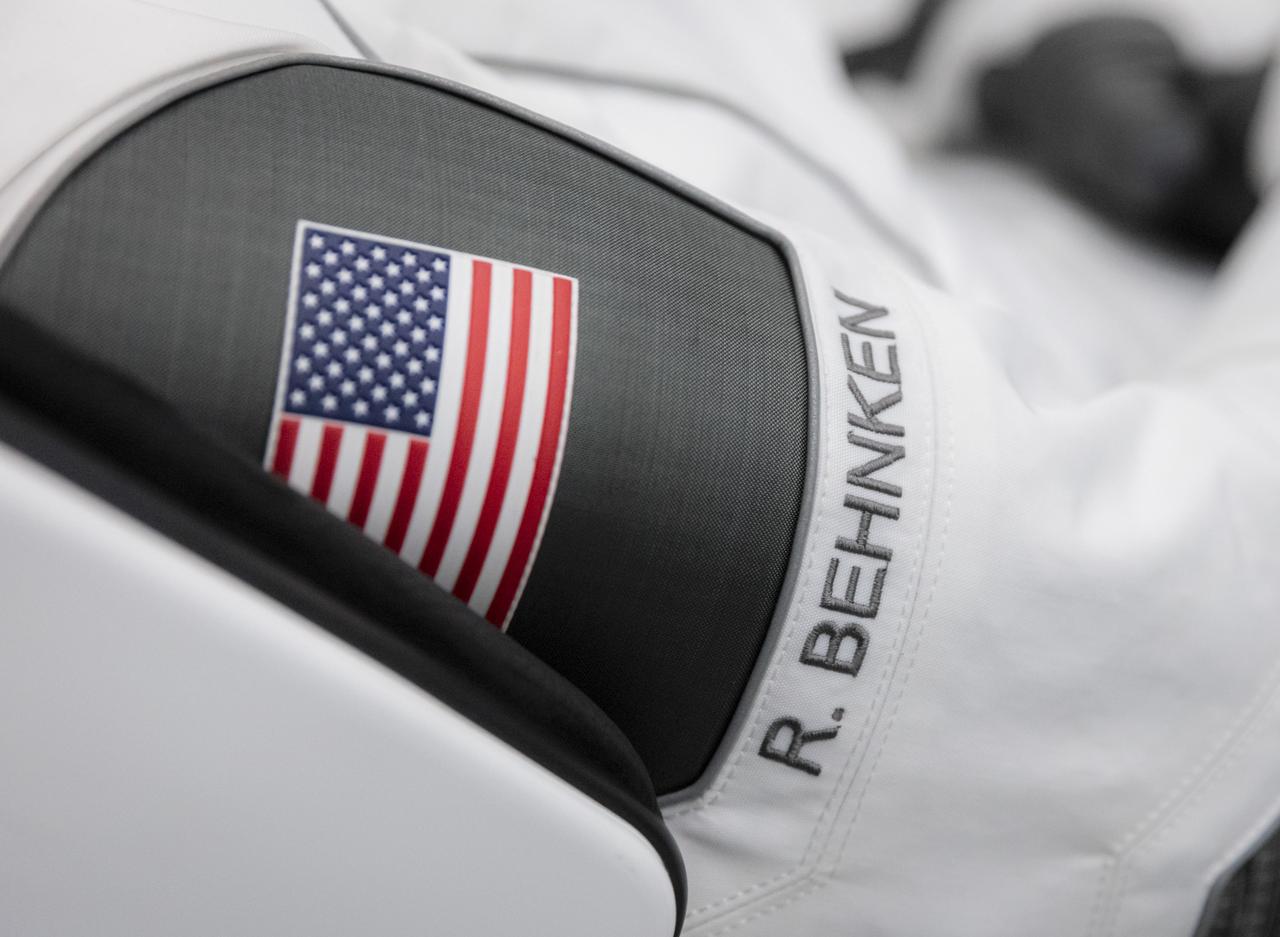
On Thursday, March 19 and Friday, March 20, SpaceX teams in Firing Room 4 at NASA's Kennedy Space Center in Florida and the company's Mission Control in Hawthorne, California, along with NASA flight controllers in Mission Control Houston, executed a full simulation of launch and docking of the Crew Dragon spacecraft, with NASA astronauts Bob Behnken and Doug Hurley participating in SpaceX's flight simulator.
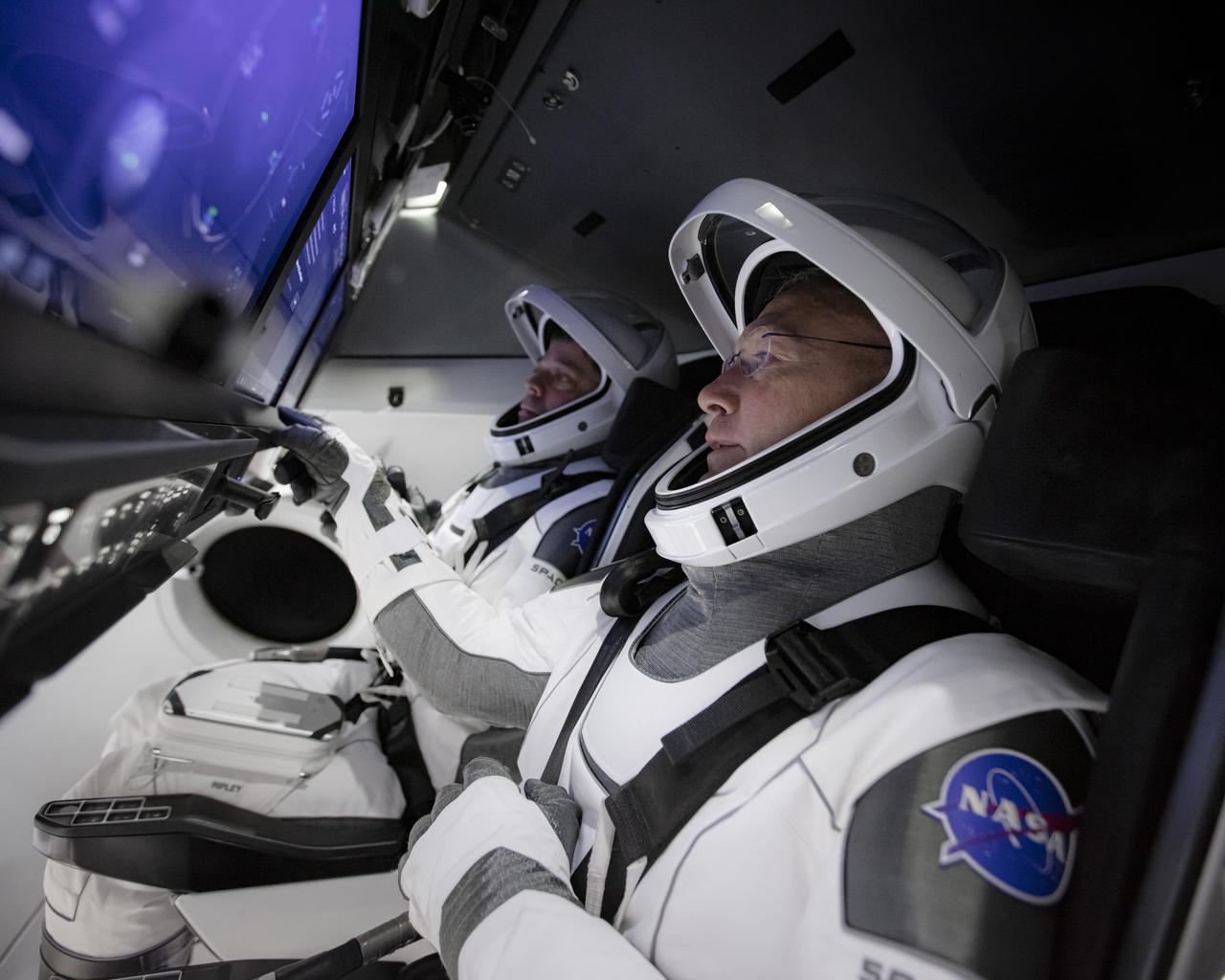
On Thursday, March 19 and Friday, March 20, SpaceX teams in Firing Room 4 at NASA's Kennedy Space Center in Florida and the company's Mission Control in Hawthorne, California, along with NASA flight controllers in Mission Control Houston, executed a full simulation of launch and docking of the Crew Dragon spacecraft, with NASA astronauts Bob Behnken and Doug Hurley participating in SpaceX's flight simulator.
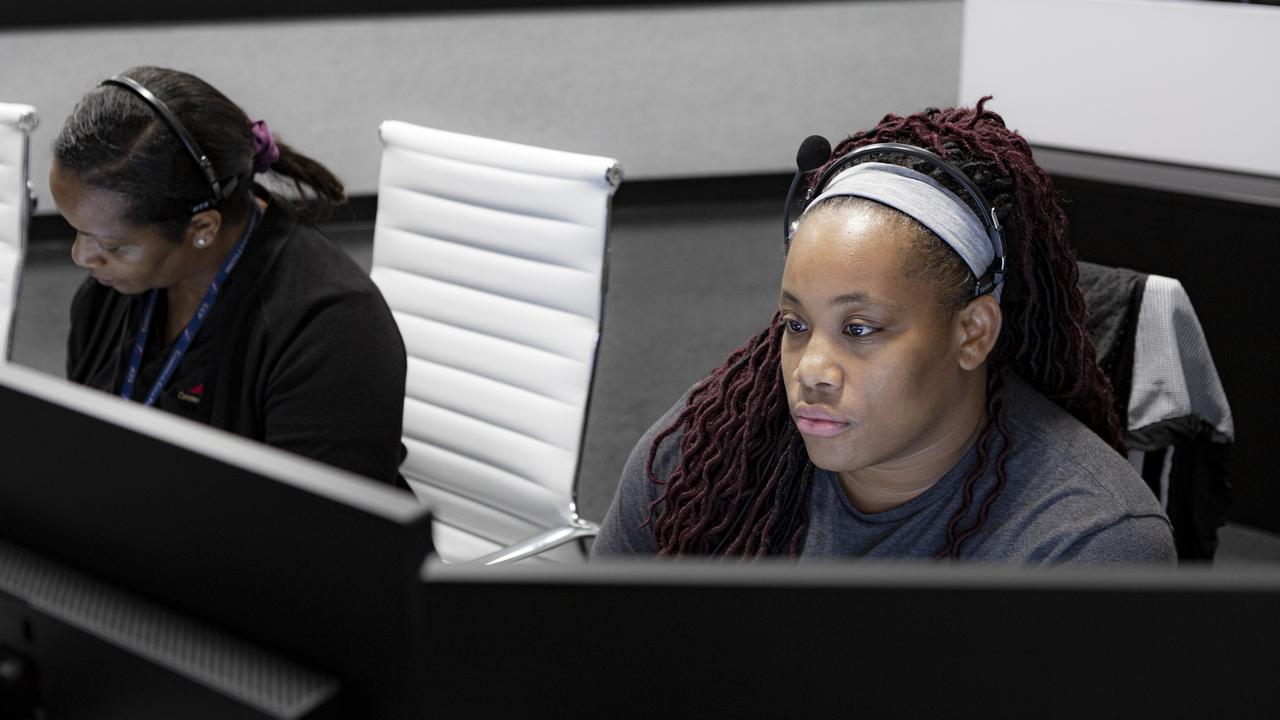
On Thursday, March 19 and Friday, March 20, SpaceX teams in Firing Room 4 at NASA's Kennedy Space Center in Florida and the company's Mission Control in Hawthorne, California, along with NASA flight controllers in Mission Control Houston, executed a full simulation of launch and docking of the Crew Dragon spacecraft, with NASA astronauts Bob Behnken and Doug Hurley participating in SpaceX's flight simulator.
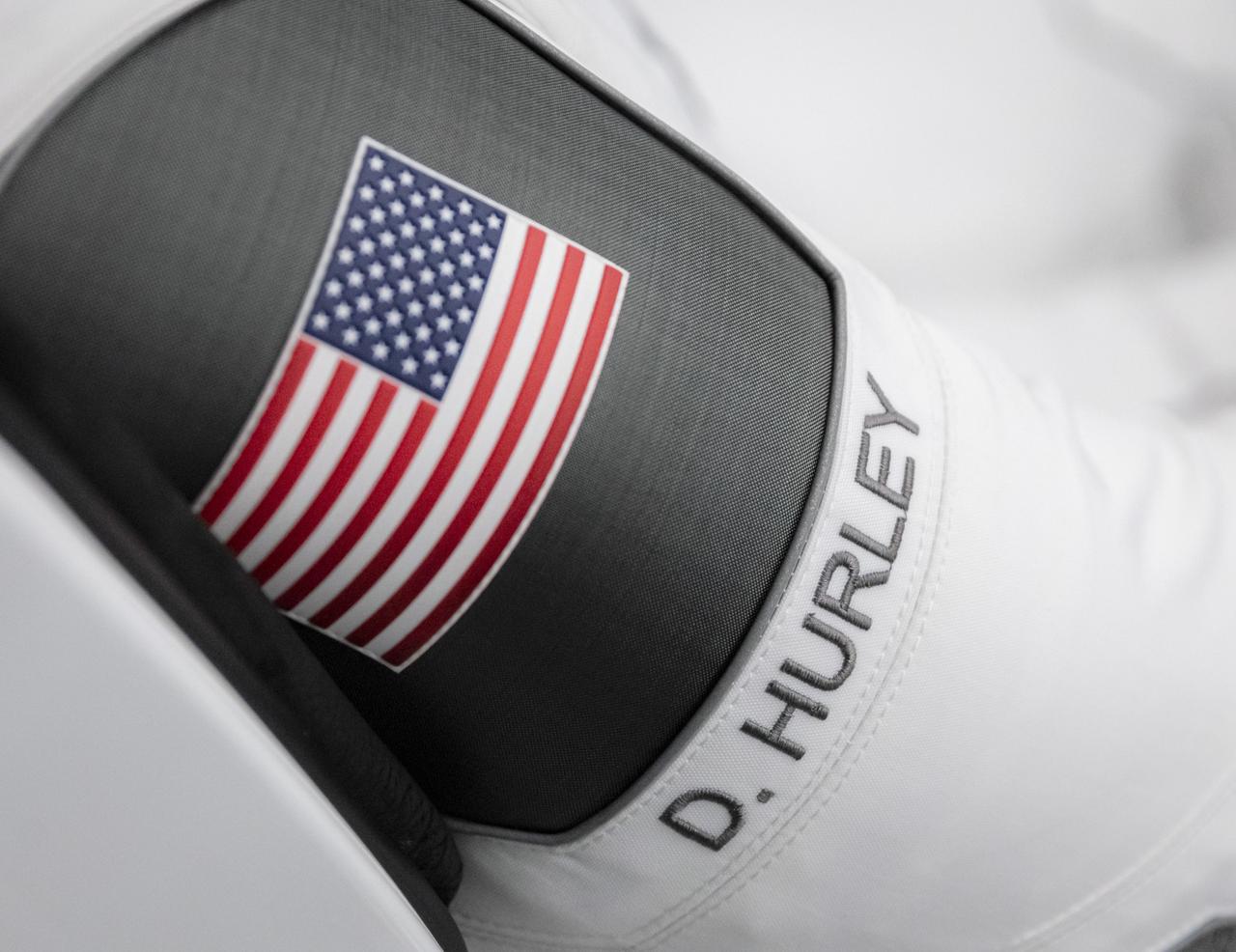
On Thursday, March 19 and Friday, March 20, SpaceX teams in Firing Room 4 at NASA's Kennedy Space Center in Florida and the company's Mission Control in Hawthorne, California, along with NASA flight controllers in Mission Control Houston, executed a full simulation of launch and docking of the Crew Dragon spacecraft, with NASA astronauts Bob Behnken and Doug Hurley participating in SpaceX's flight simulator.
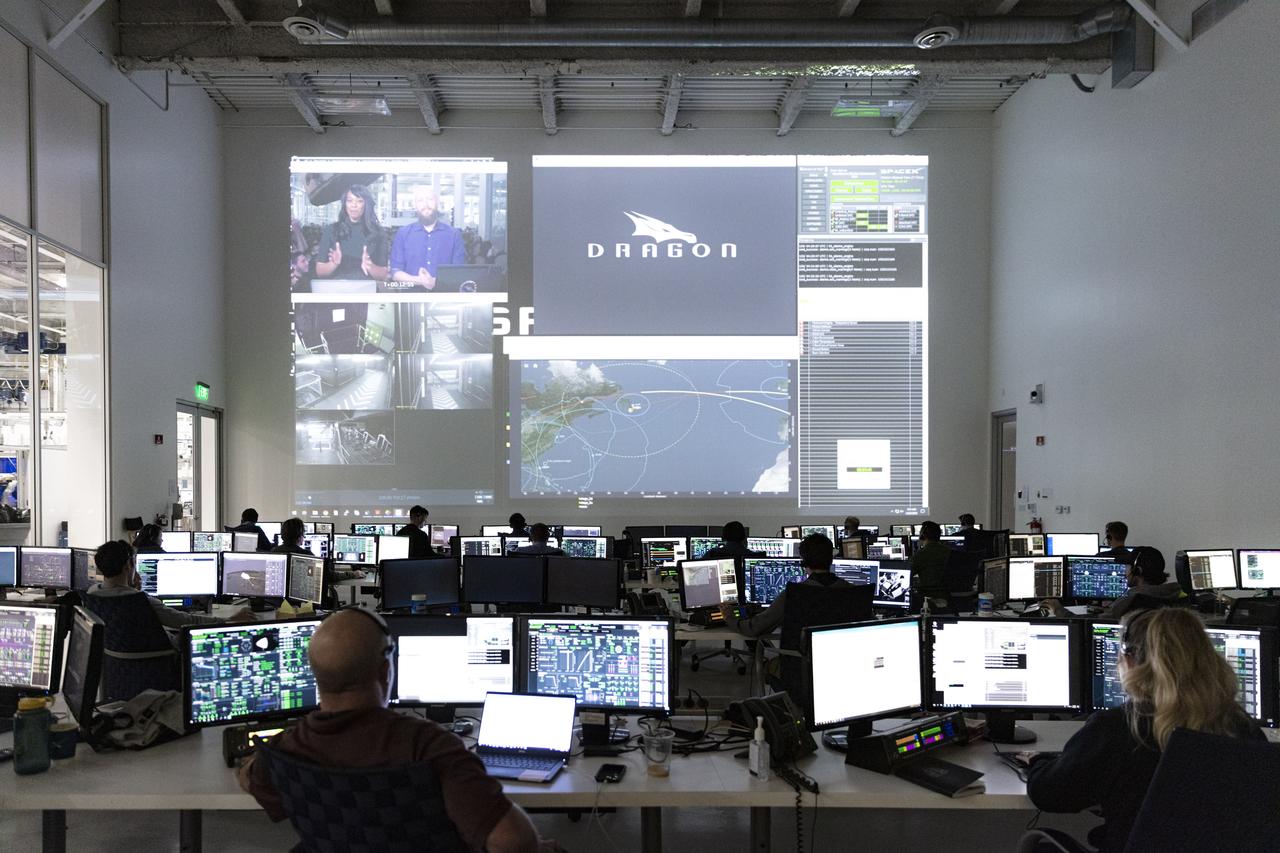
On Thursday, March 19 and Friday, March 20, SpaceX teams in Firing Room 4 at NASA's Kennedy Space Center in Florida and the company's Mission Control in Hawthorne, California, along with NASA flight controllers in Mission Control Houston, executed a full simulation of launch and docking of the Crew Dragon spacecraft, with NASA astronauts Bob Behnken and Doug Hurley participating in SpaceX's flight simulator.
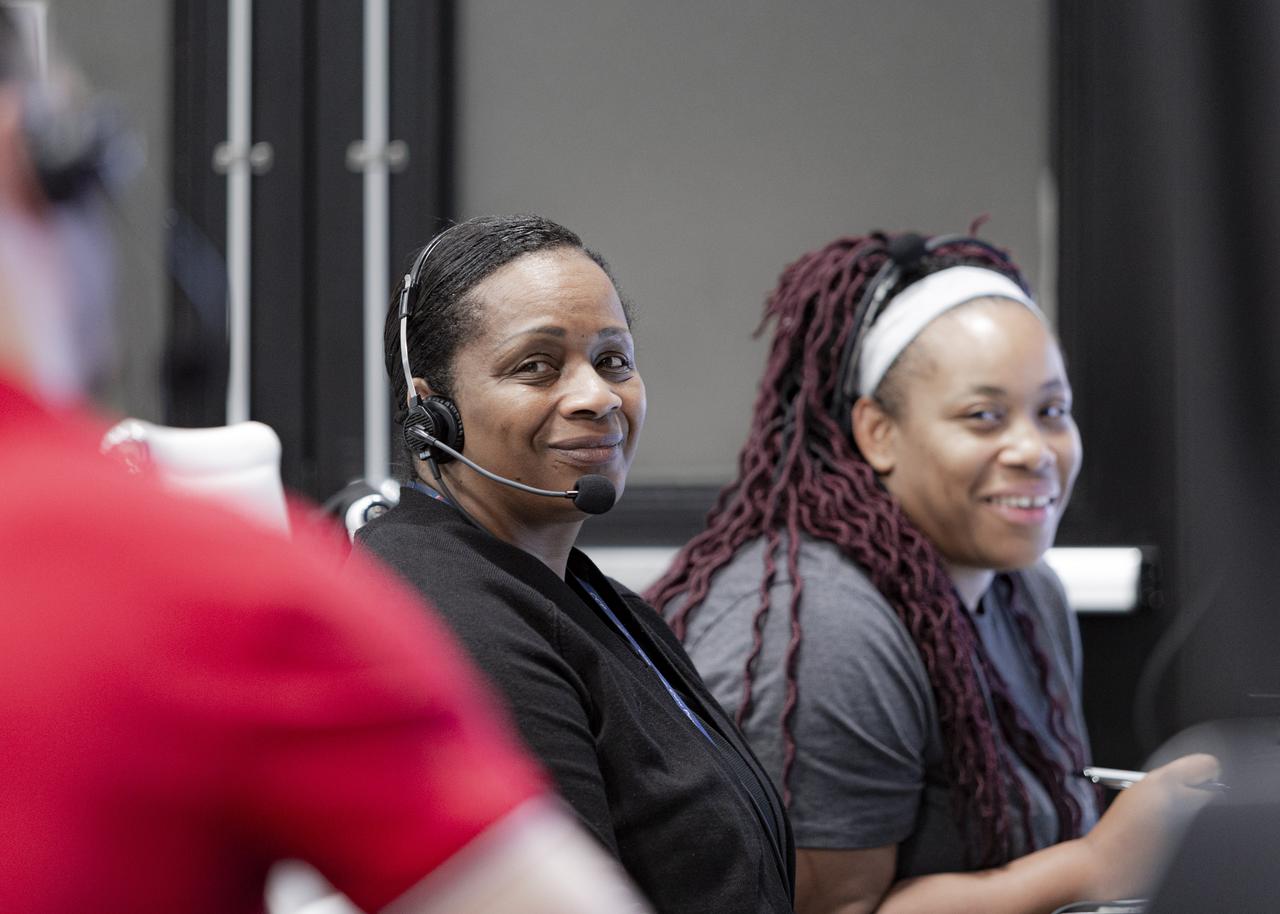
On Thursday, March 19 and Friday, March 20, SpaceX teams in Firing Room 4 at NASA's Kennedy Space Center in Florida and the company's Mission Control in Hawthorne, California, along with NASA flight controllers in Mission Control Houston, executed a full simulation of launch and docking of the Crew Dragon spacecraft, with NASA astronauts Bob Behnken and Doug Hurley participating in SpaceX's flight simulator.
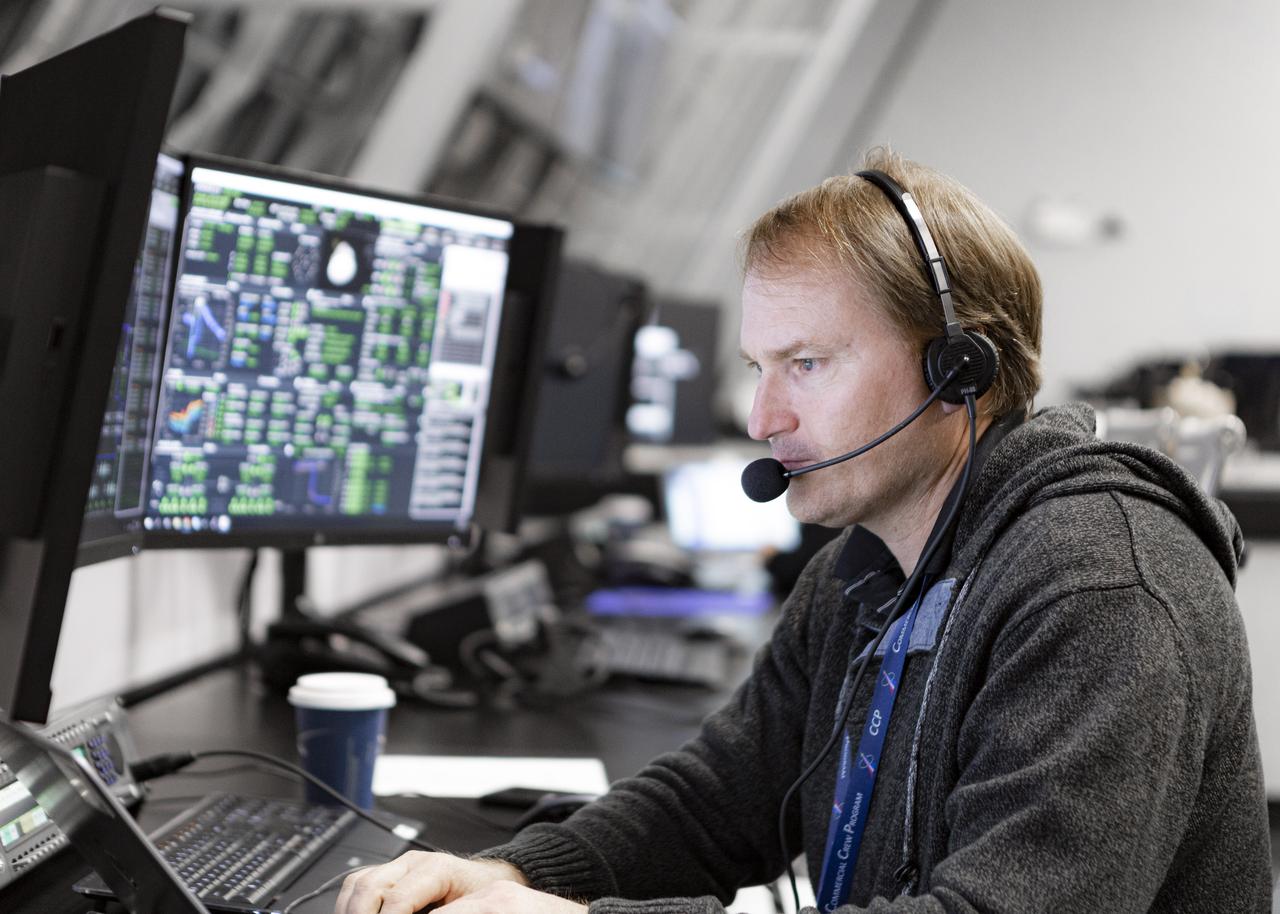
On Thursday, March 19 and Friday, March 20, SpaceX teams in Firing Room 4 at NASA's Kennedy Space Center in Florida and the company's Mission Control in Hawthorne, California, along with NASA flight controllers in Mission Control Houston, executed a full simulation of launch and docking of the Crew Dragon spacecraft, with NASA astronauts Bob Behnken and Doug Hurley participating in SpaceX's flight simulator.
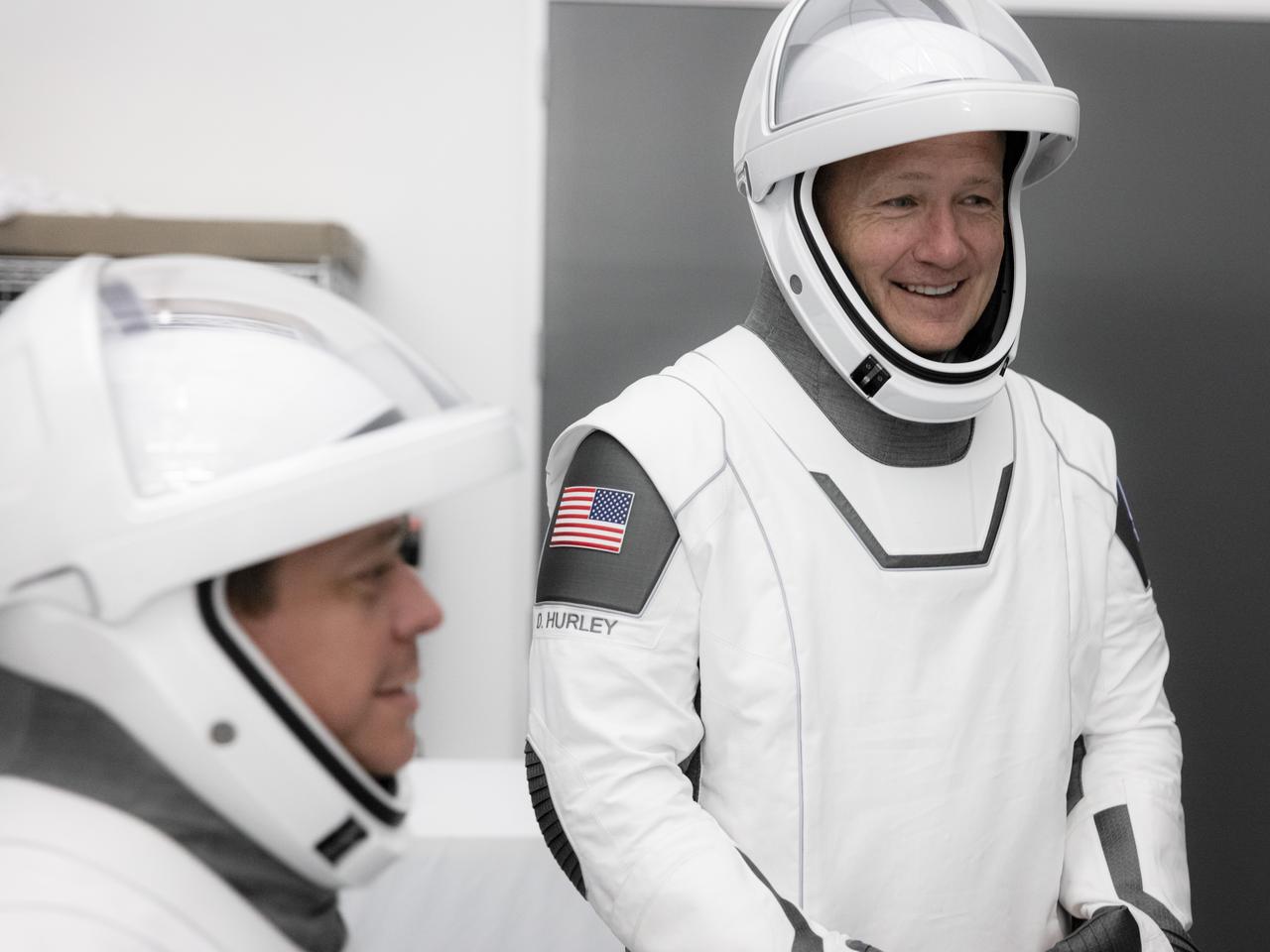
On Thursday, March 19 and Friday, March 20, SpaceX teams in Firing Room 4 at NASA's Kennedy Space Center in Florida and the company's Mission Control in Hawthorne, California, along with NASA flight controllers in Mission Control Houston, executed a full simulation of launch and docking of the Crew Dragon spacecraft, with NASA astronauts Bob Behnken and Doug Hurley participating in SpaceX's flight simulator.
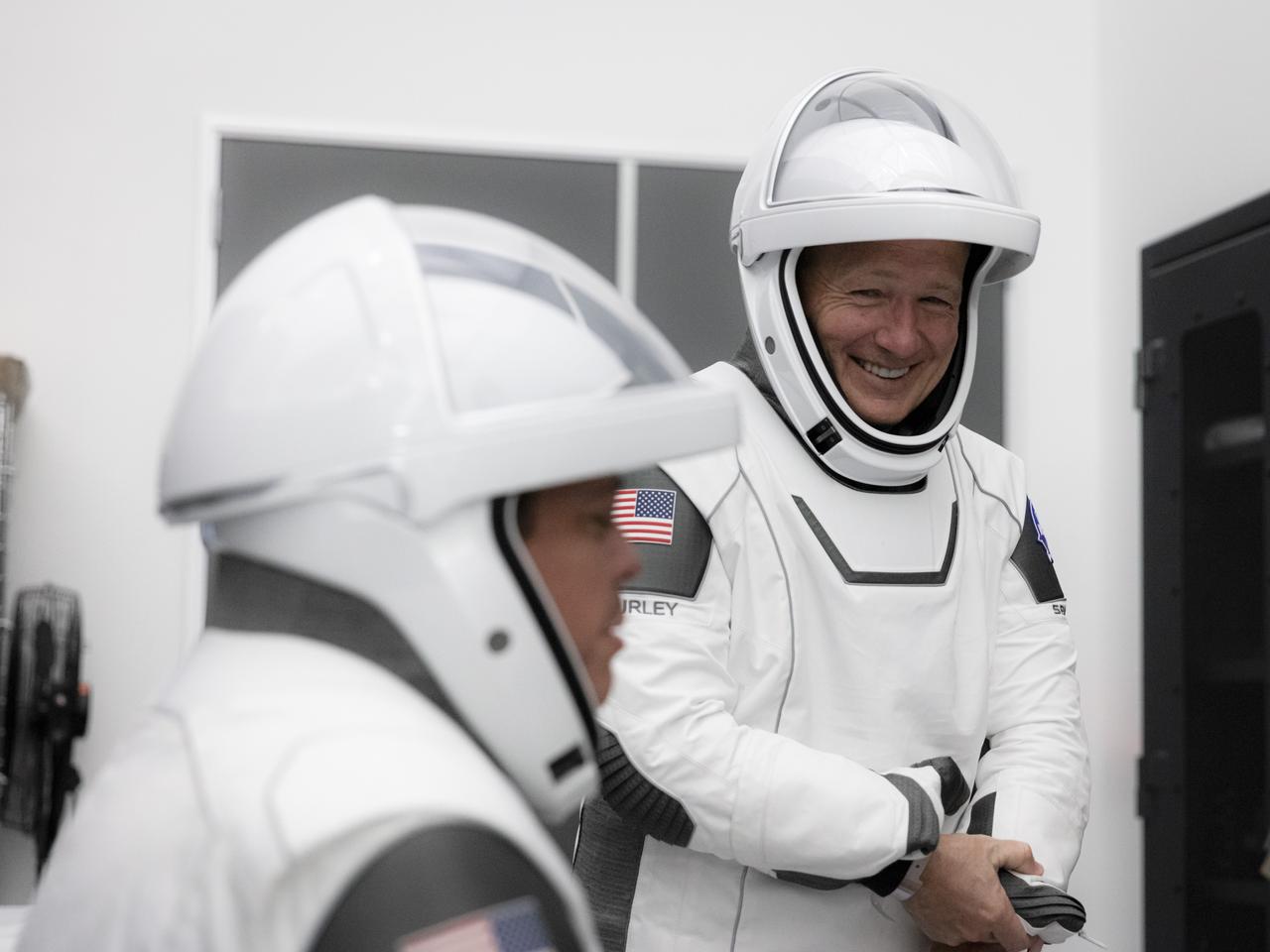
On Thursday, March 19 and Friday, March 20, SpaceX teams in Firing Room 4 at NASA's Kennedy Space Center in Florida and the company's Mission Control in Hawthorne, California, along with NASA flight controllers in Mission Control Houston, executed a full simulation of launch and docking of the Crew Dragon spacecraft, with NASA astronauts Bob Behnken and Doug Hurley participating in SpaceX's flight simulator.
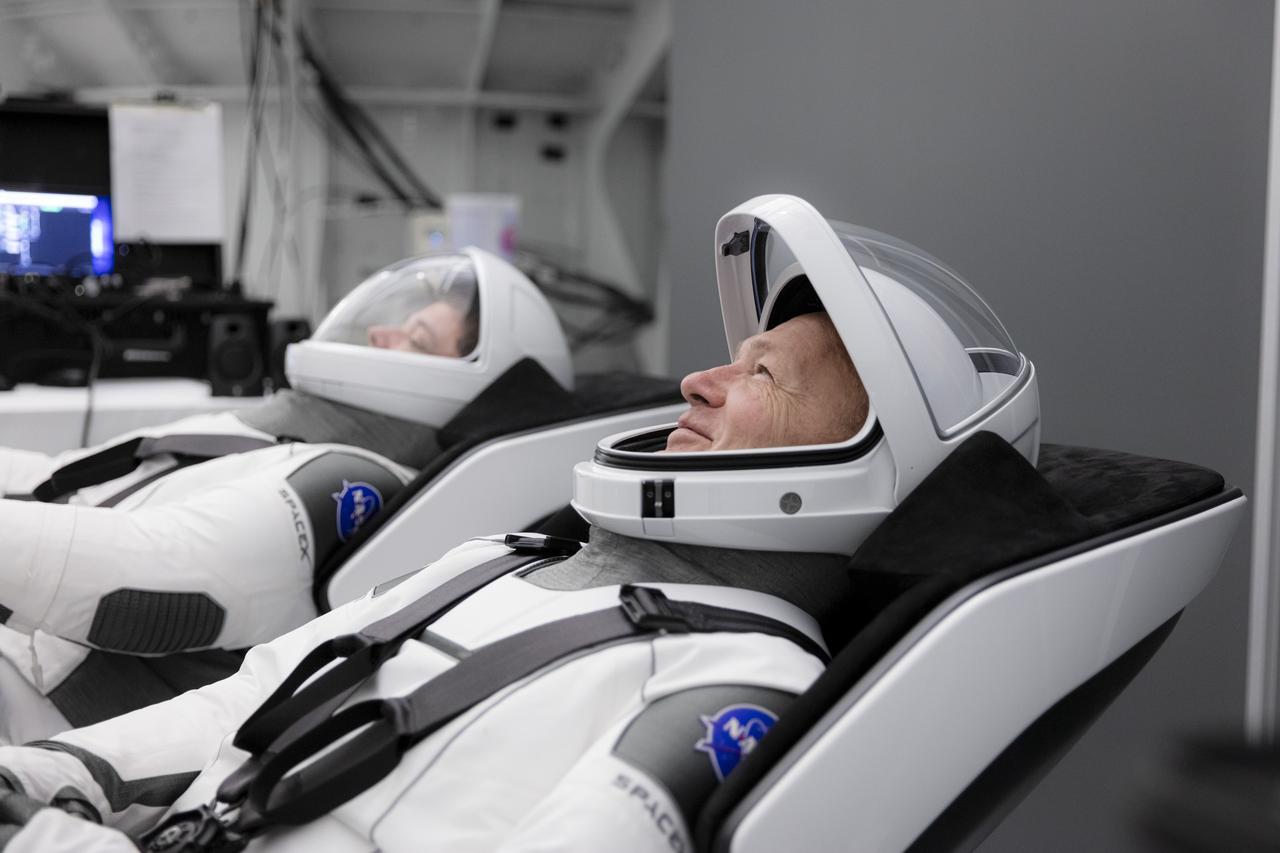
On Thursday, March 19 and Friday, March 20, SpaceX teams in Firing Room 4 at NASA's Kennedy Space Center in Florida and the company's Mission Control in Hawthorne, California, along with NASA flight controllers in Mission Control Houston, executed a full simulation of launch and docking of the Crew Dragon spacecraft, with NASA astronauts Bob Behnken and Doug Hurley participating in SpaceX's flight simulator.
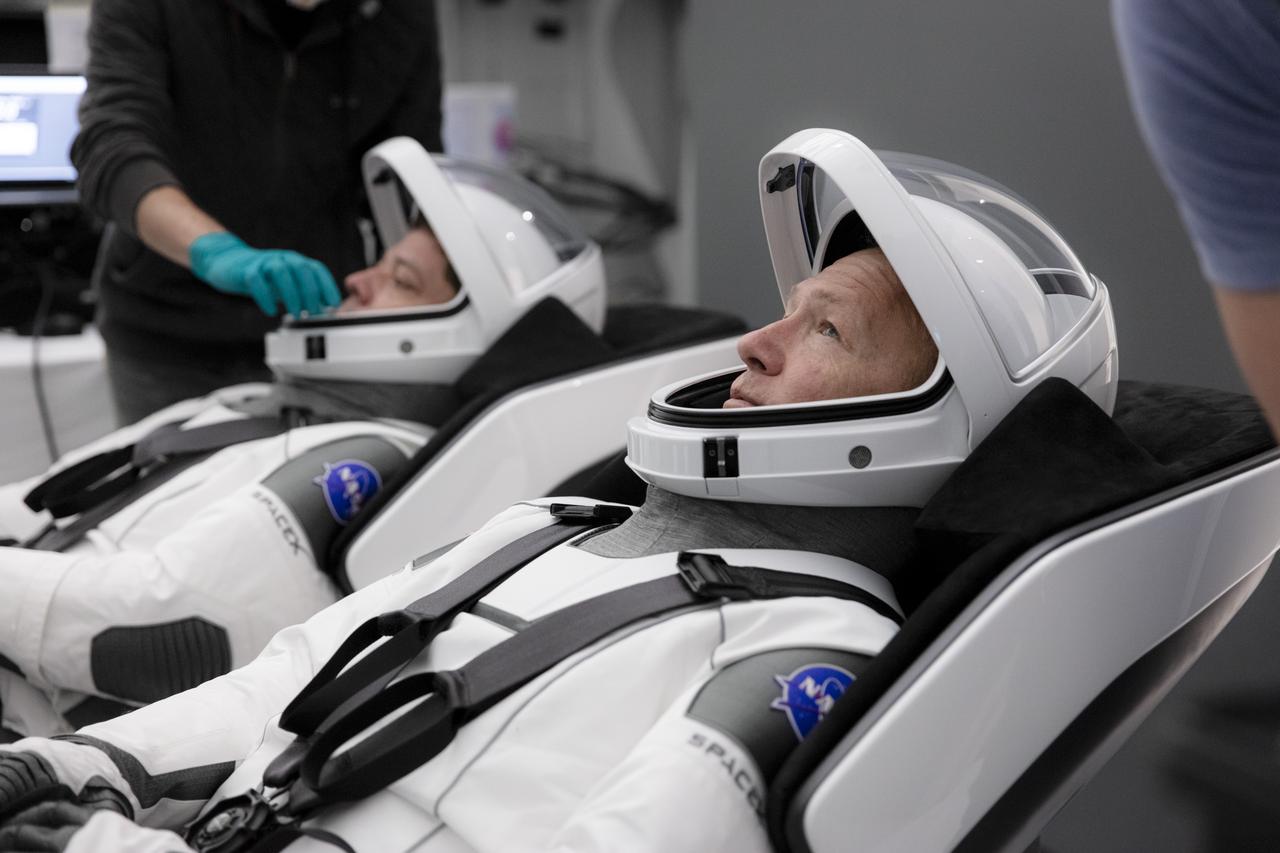
On Thursday, March 19 and Friday, March 20, SpaceX teams in Firing Room 4 at NASA's Kennedy Space Center in Florida and the company's Mission Control in Hawthorne, California, along with NASA flight controllers in Mission Control Houston, executed a full simulation of launch and docking of the Crew Dragon spacecraft, with NASA astronauts Bob Behnken and Doug Hurley participating in SpaceX's flight simulator.
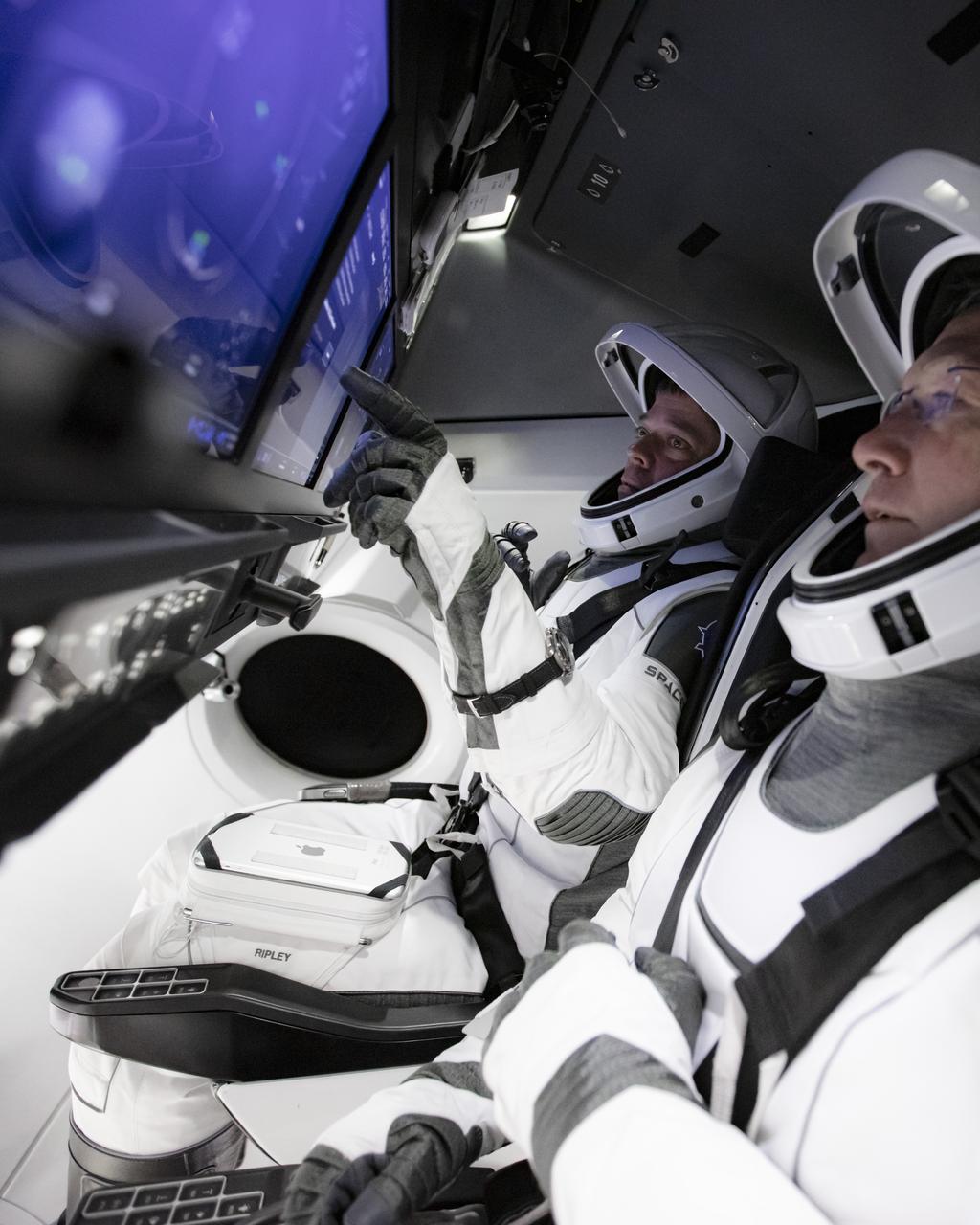
On Thursday, March 19 and Friday, March 20, SpaceX teams in Firing Room 4 at NASA's Kennedy Space Center in Florida and the company's Mission Control in Hawthorne, California, along with NASA flight controllers in Mission Control Houston, executed a full simulation of launch and docking of the Crew Dragon spacecraft, with NASA astronauts Bob Behnken and Doug Hurley participating in SpaceX's flight simulator.
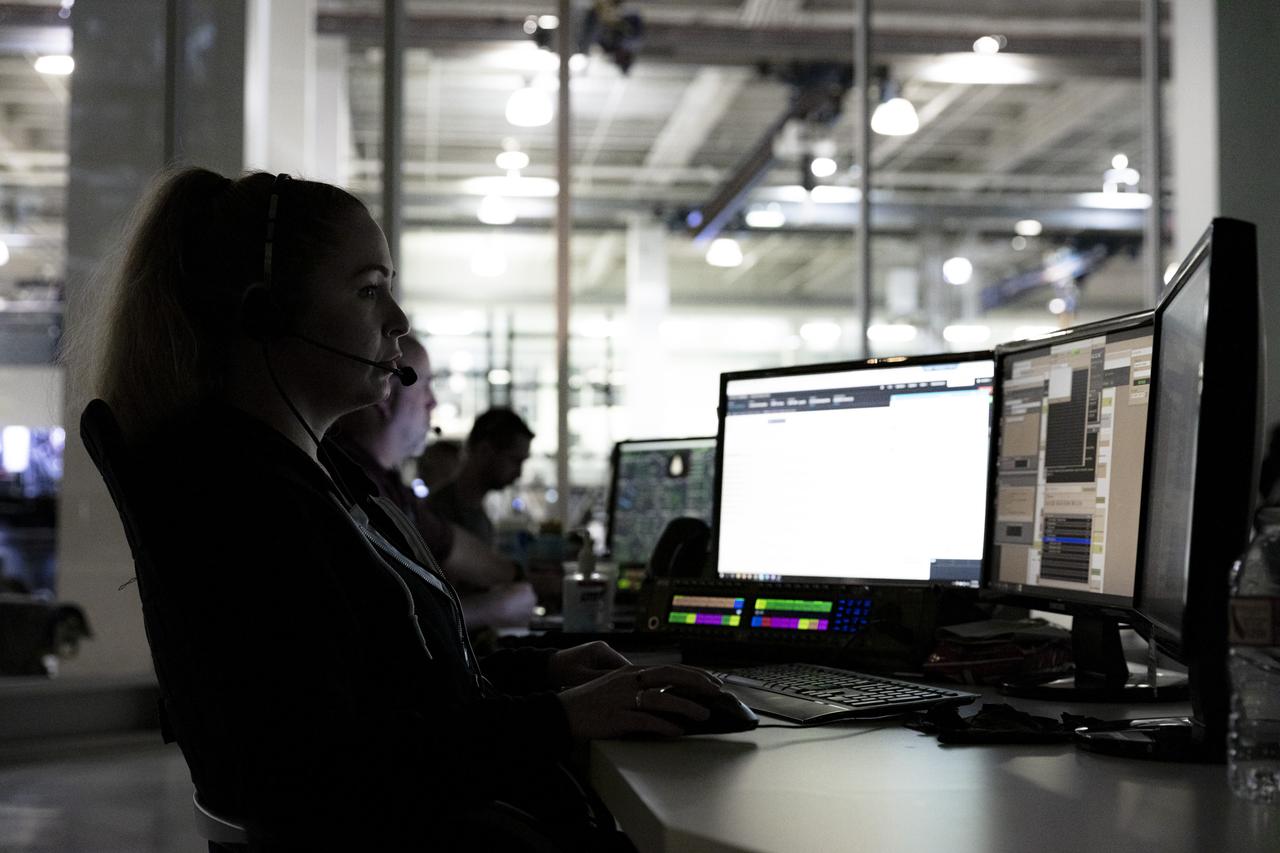
On Thursday, March 19 and Friday, March 20, SpaceX teams in Firing Room 4 at NASA's Kennedy Space Center in Florida and the company's Mission Control in Hawthorne, California, along with NASA flight controllers in Mission Control Houston, executed a full simulation of launch and docking of the Crew Dragon spacecraft, with NASA astronauts Bob Behnken and Doug Hurley participating in SpaceX's flight simulator.
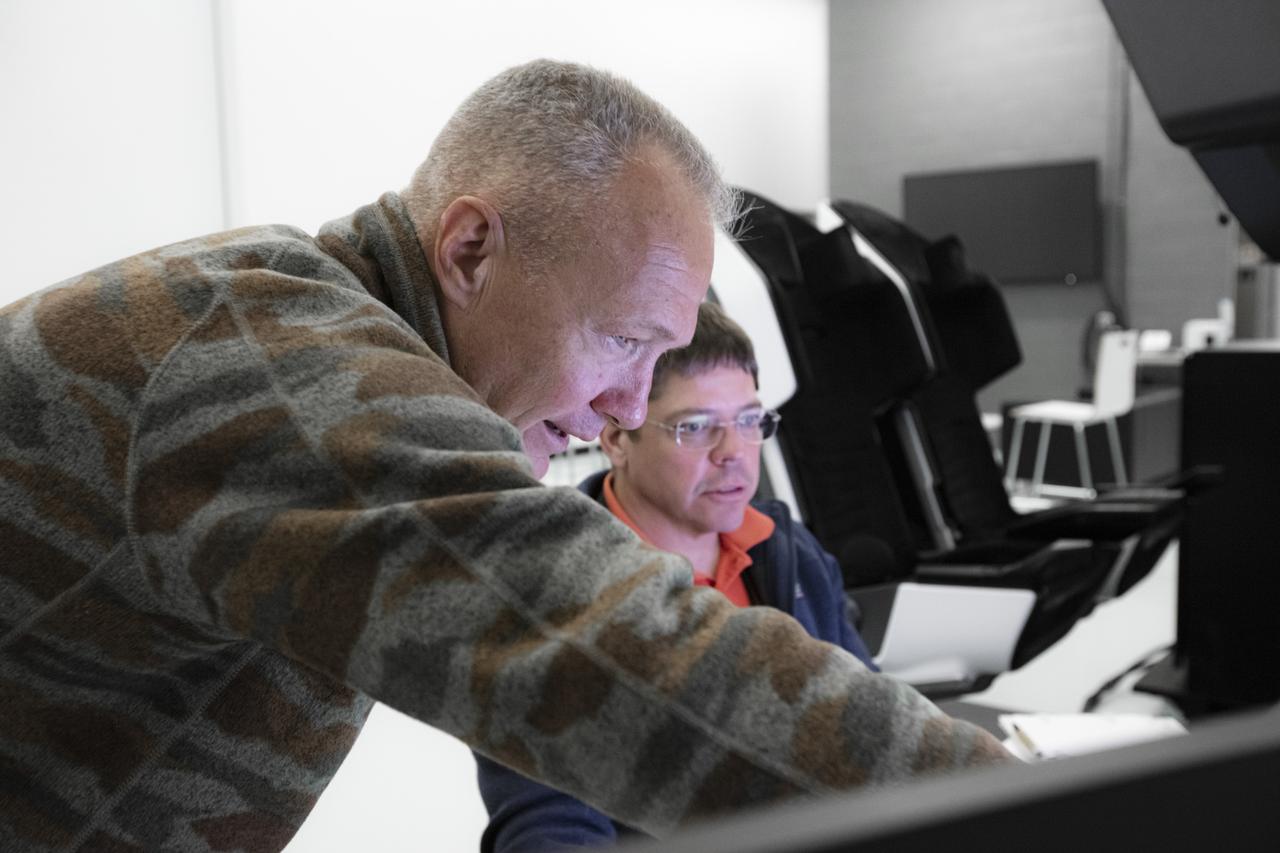
On Thursday, March 19 and Friday, March 20, SpaceX teams in Firing Room 4 at NASA's Kennedy Space Center in Florida and the company's Mission Control in Hawthorne, California, along with NASA flight controllers in Mission Control Houston, executed a full simulation of launch and docking of the Crew Dragon spacecraft, with NASA astronauts Bob Behnken and Doug Hurley participating in SpaceX's flight simulator.
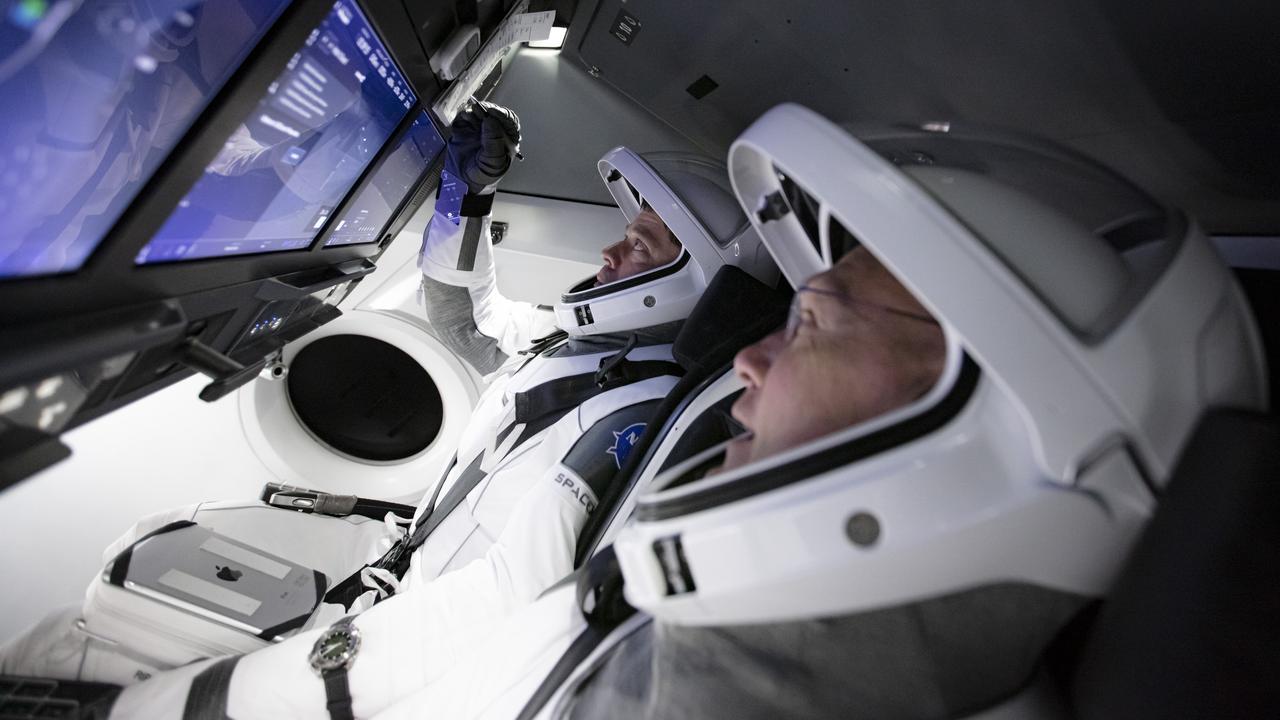
On Thursday, March 19 and Friday, March 20, SpaceX teams in Firing Room 4 at NASA's Kennedy Space Center in Florida and the company's Mission Control in Hawthorne, California, along with NASA flight controllers in Mission Control Houston, executed a full simulation of launch and docking of the Crew Dragon spacecraft, with NASA astronauts Bob Behnken and Doug Hurley participating in SpaceX's flight simulator.
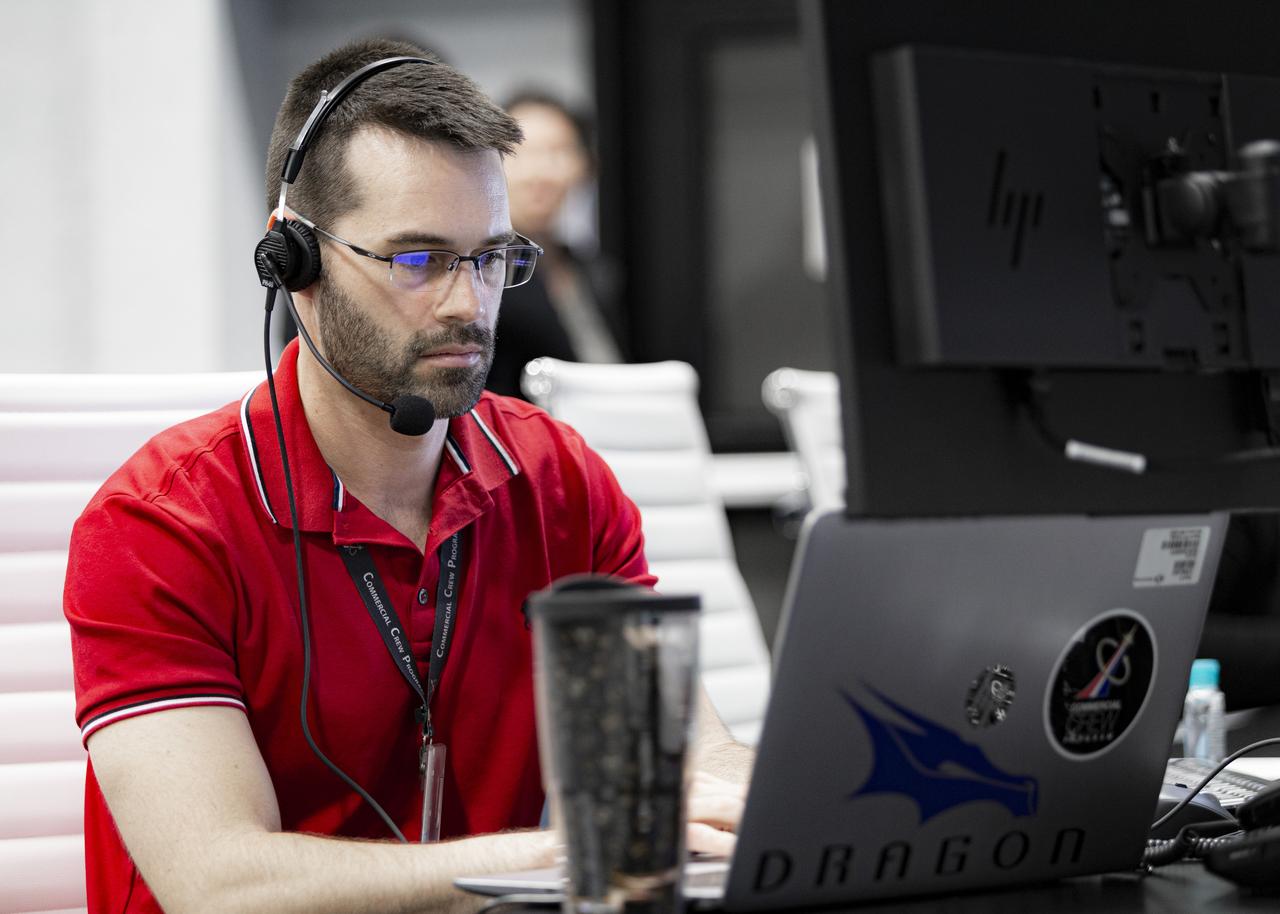
On Thursday, March 19 and Friday, March 20, SpaceX teams in Firing Room 4 at NASA's Kennedy Space Center in Florida and the company's Mission Control in Hawthorne, California, along with NASA flight controllers in Mission Control Houston, executed a full simulation of launch and docking of the Crew Dragon spacecraft, with NASA astronauts Bob Behnken and Doug Hurley participating in SpaceX's flight simulator.
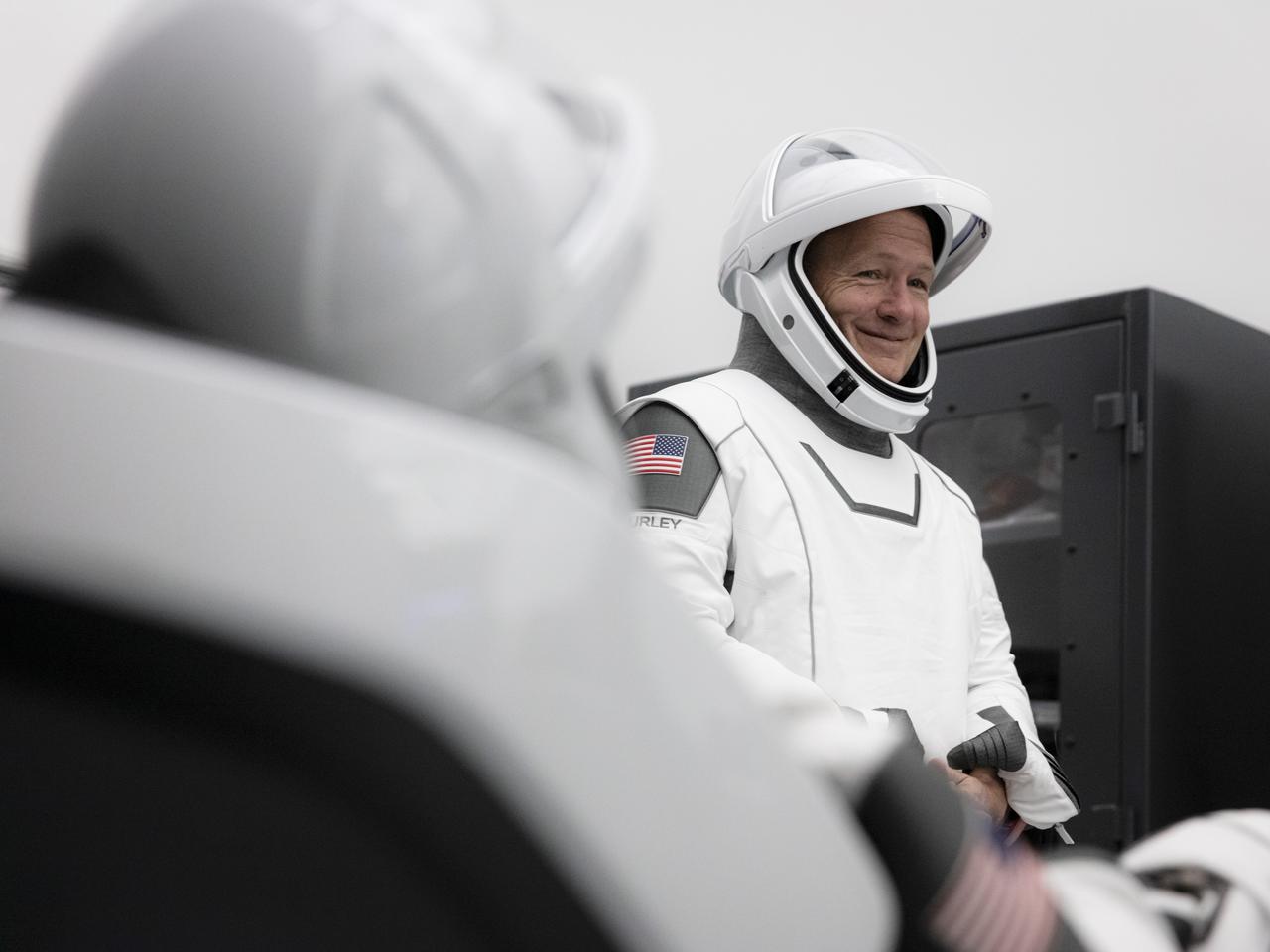
On Thursday, March 19 and Friday, March 20, SpaceX teams in Firing Room 4 at NASA's Kennedy Space Center in Florida and the company's Mission Control in Hawthorne, California, along with NASA flight controllers in Mission Control Houston, executed a full simulation of launch and docking of the Crew Dragon spacecraft, with NASA astronauts Bob Behnken and Doug Hurley participating in SpaceX's flight simulator.
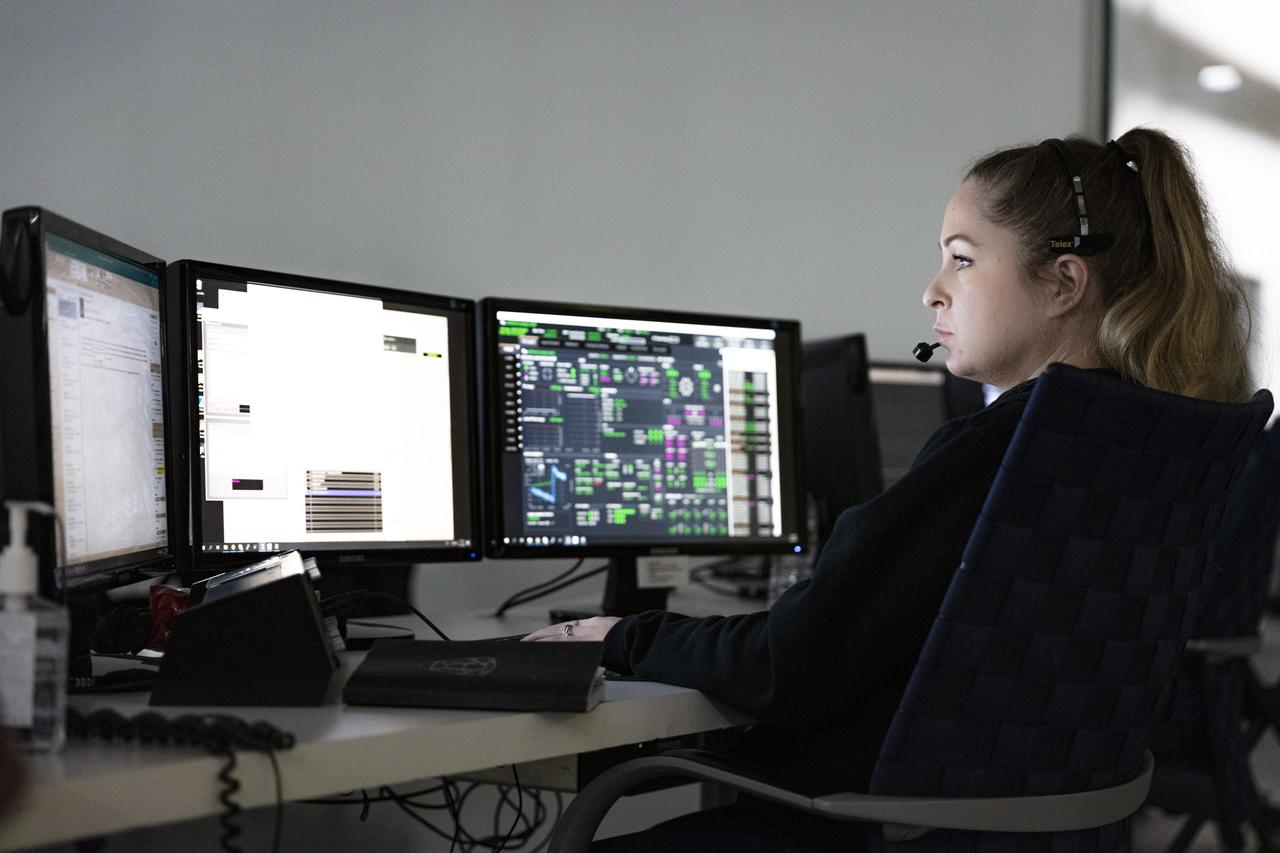
On Thursday, March 19 and Friday, March 20, SpaceX teams in Firing Room 4 at NASA's Kennedy Space Center in Florida and the company's Mission Control in Hawthorne, California, along with NASA flight controllers in Mission Control Houston, executed a full simulation of launch and docking of the Crew Dragon spacecraft, with NASA astronauts Bob Behnken and Doug Hurley participating in SpaceX's flight simulator.
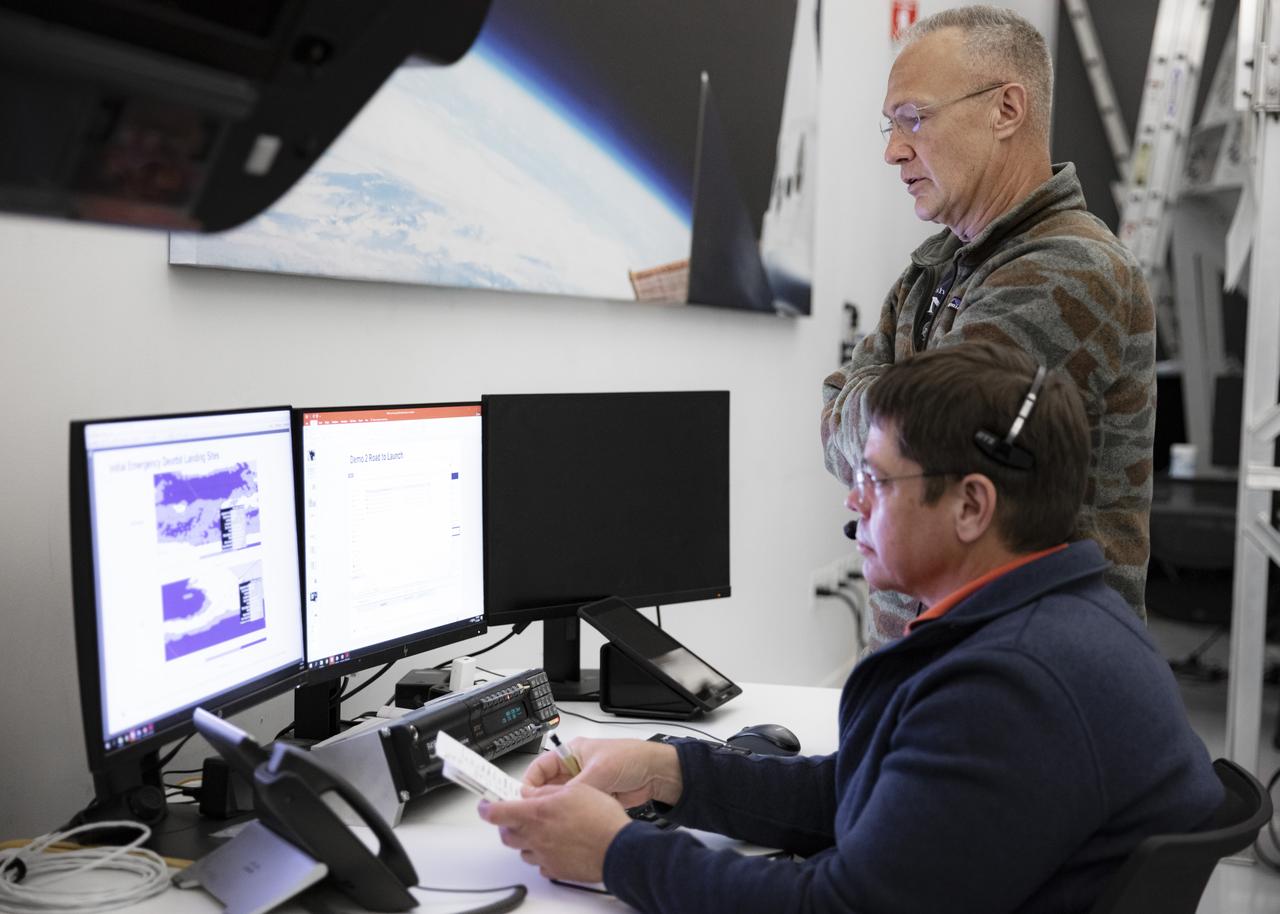
On Thursday, March 19 and Friday, March 20, SpaceX teams in Firing Room 4 at NASA's Kennedy Space Center in Florida and the company's Mission Control in Hawthorne, California, along with NASA flight controllers in Mission Control Houston, executed a full simulation of launch and docking of the Crew Dragon spacecraft, with NASA astronauts Bob Behnken and Doug Hurley participating in SpaceX's flight simulator.
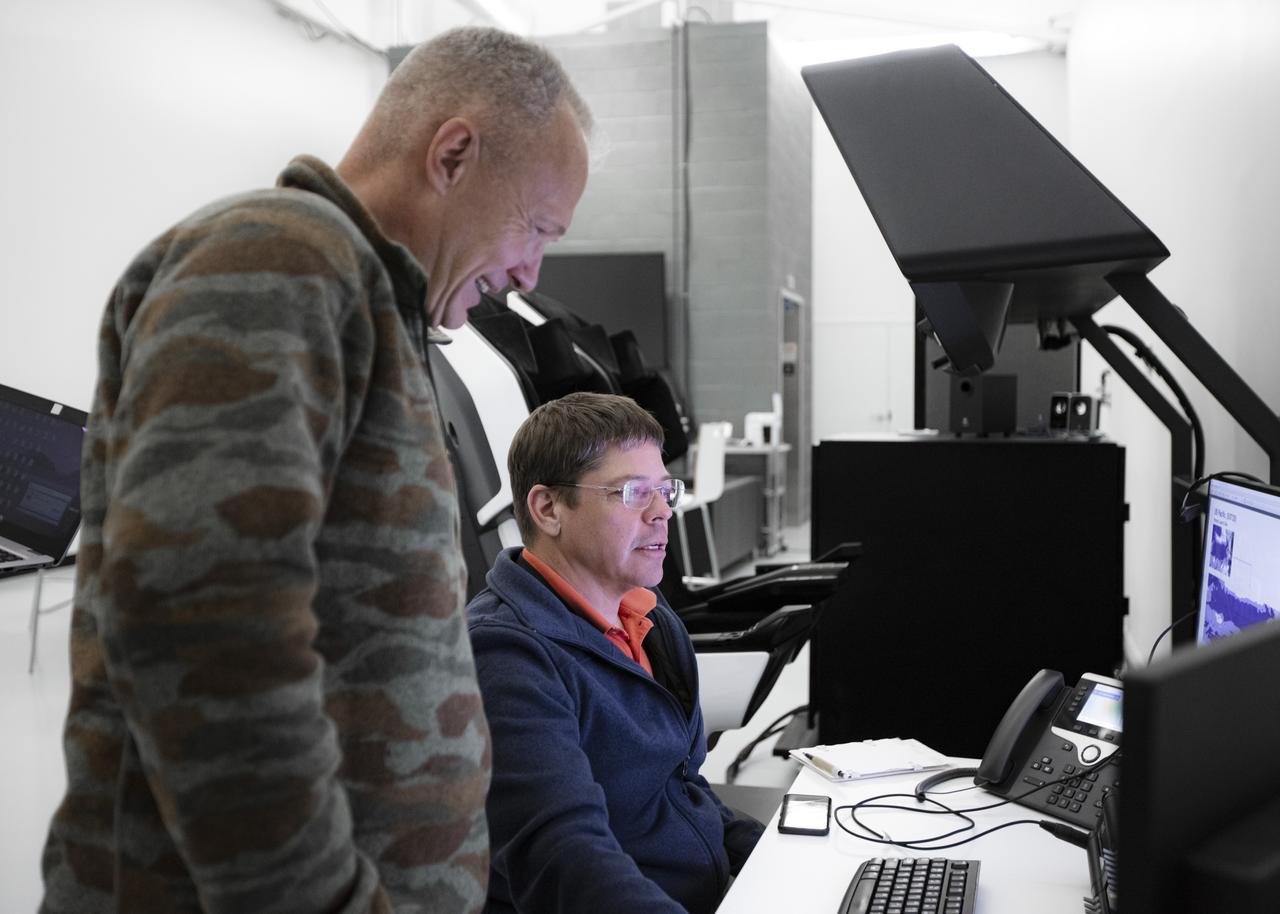
On Thursday, March 19 and Friday, March 20, SpaceX teams in Firing Room 4 at NASA's Kennedy Space Center in Florida and the company's Mission Control in Hawthorne, California, along with NASA flight controllers in Mission Control Houston, executed a full simulation of launch and docking of the Crew Dragon spacecraft, with NASA astronauts Bob Behnken and Doug Hurley participating in SpaceX's flight simulator.
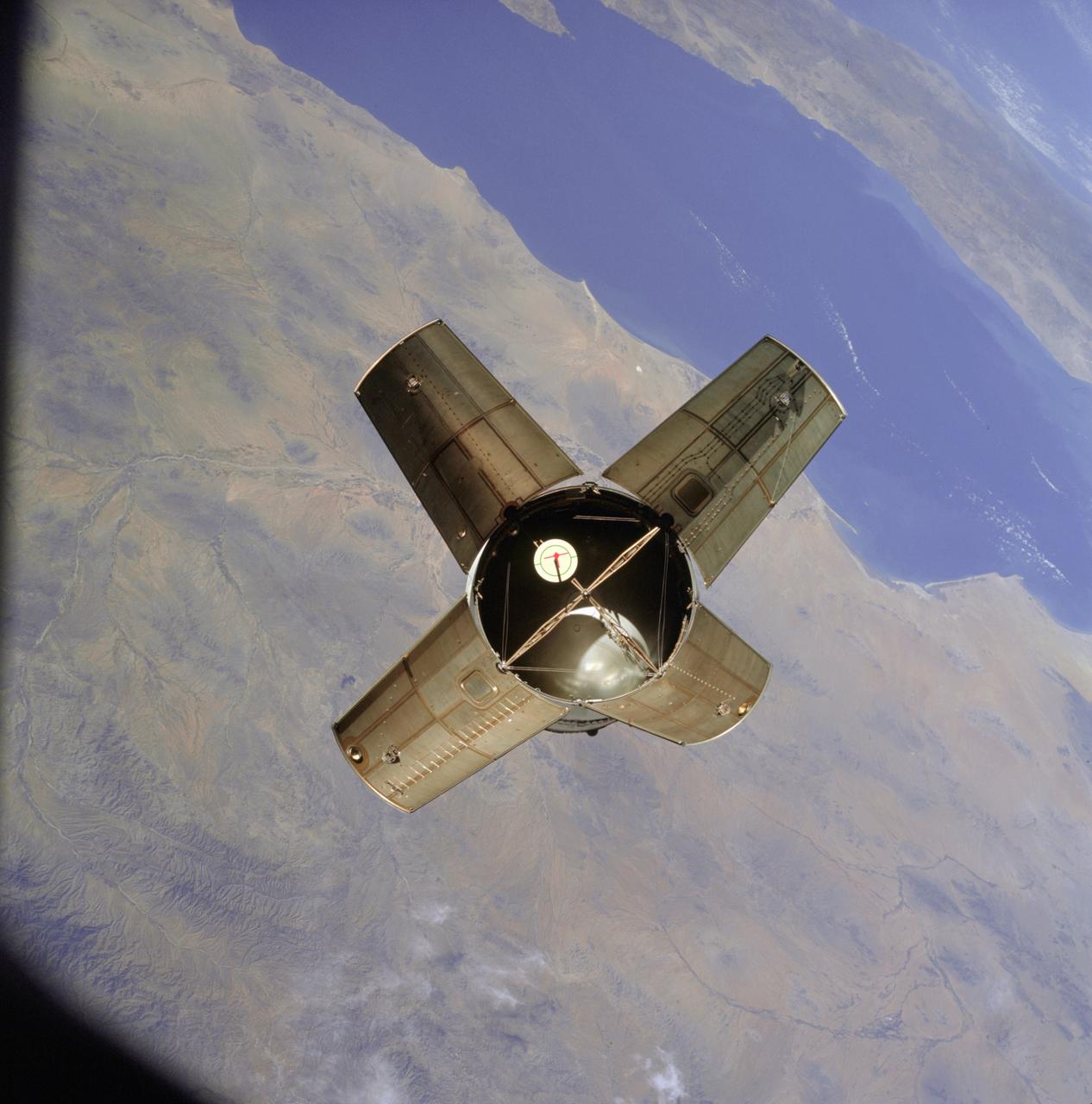
AS07-03-1531 (11 Oct. 1968) --- The expended Saturn IVB stage as photographed from the Apollo 7 spacecraft during transposition and docking maneuvers. This photograph was taken over Sonora, Mexico, during Apollo 7's second revolution of Earth. The round, white disc inside the open panels of the Saturn IVB is a simulated docking target similar to that used on the lunar module for docking during lunar missions.

AS07-03-1538 (11 Oct. 1968) --- The expended Saturn IVB stage as photographed from the Apollo 7 spacecraft during transposition and docking maneuvers. This photograph was taken during Apollo 7's second revolution of Earth. Earth below has heavy cloud cover. The round, white disc inside the open panels of the Saturn IVB is a simulated docking target similar to that used on the lunar module for docking during lunar missions.
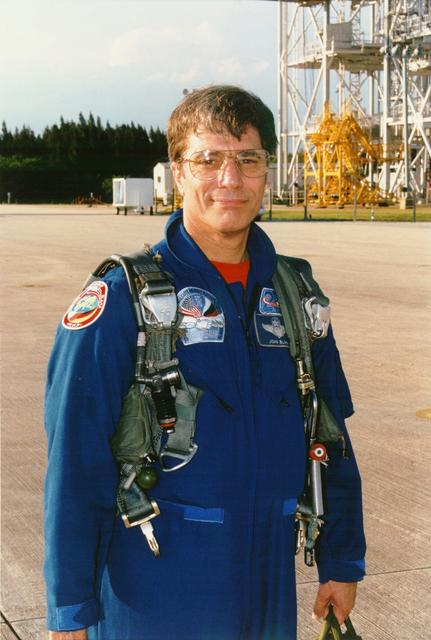
KENNEDY SPACE CENTER, FLA. - STS-79 Mission Specialist John E. Blaha arrives at KSC's Shuttle Landing Facility with five fellow astronauts, ready to participate in the Terminal Countdown Demonstration Test (TCDT). The TCDT is a dress rehearsal for launch for the flight crew and launch team. Over the next several days, the astronauts will take part in training exercises at the launch pad that will culminate in a simulated launch countdown. The Space Shuttle Atlantis is being prepared for liftoff around Sept. 12 on STS-79, the fourth docking between the U.S. Shuttle and Russian Space Station Mir. During the approximately nine-day flight, Blaha will change places with fellow spaceflight veteran Shannon Lucid, who is wrapping up a record-setting stay on Mir. Blaha will remain aboard the Station for about four months, returning to Earth in January 1997 withthe crew of Shuttle Mission STS-81.
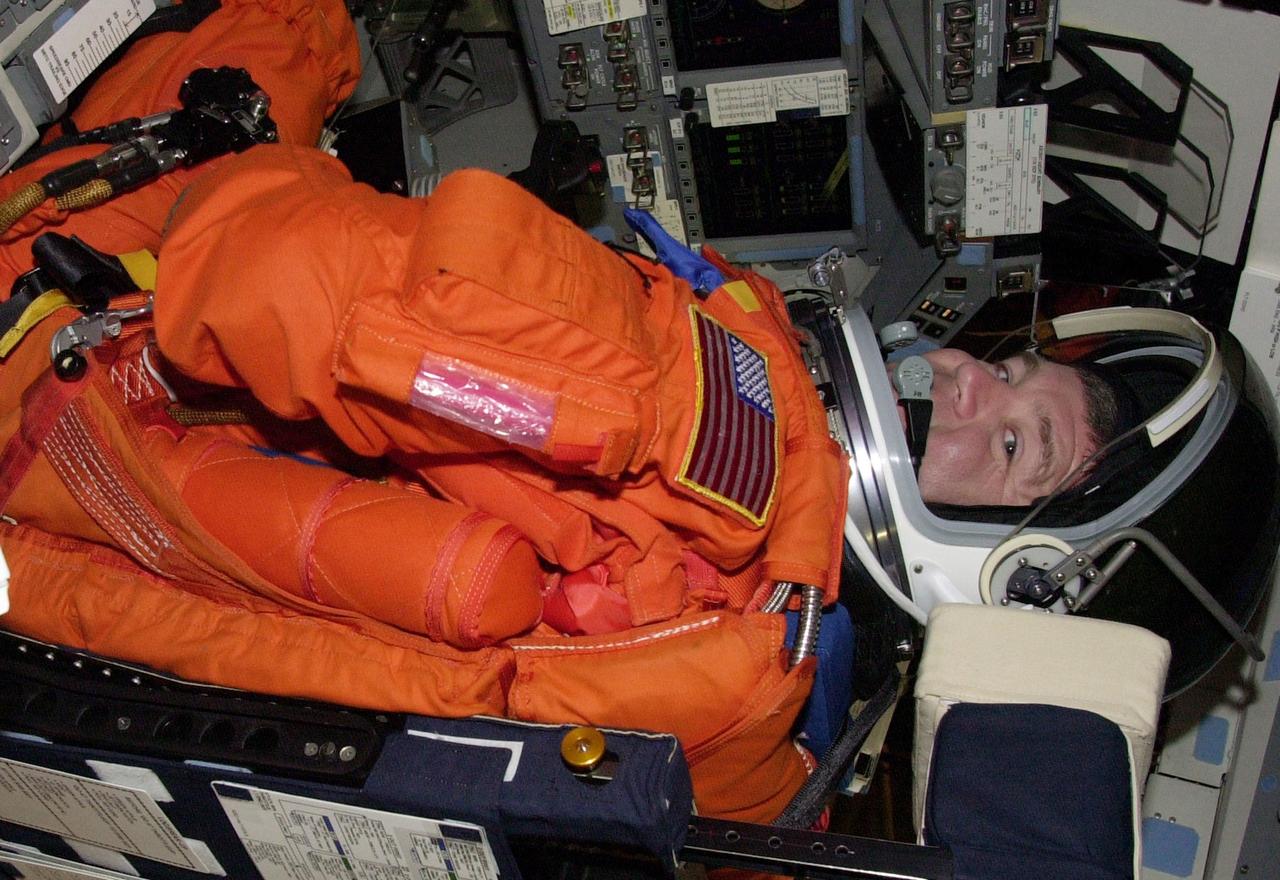
KENNEDY SPACE CENTER, FLA. -- STS-110 Pilot Stephen Frick is seated in Space Shuttle Atlantis in order to take part in a simulated launch countdown. The simulation is part of Terminal Countdown Demonstration Test activities. TCDT also includes emergency egress training and is held at KSC prior to each Space Shuttle flight. Scheduled for launch April 4, the 11-day mission will feature Shuttle Atlantis docking with the International Space Station (ISS) and delivering the S0 truss, the centerpiece-segment of the primary truss structure that will eventually extend over 300 feet
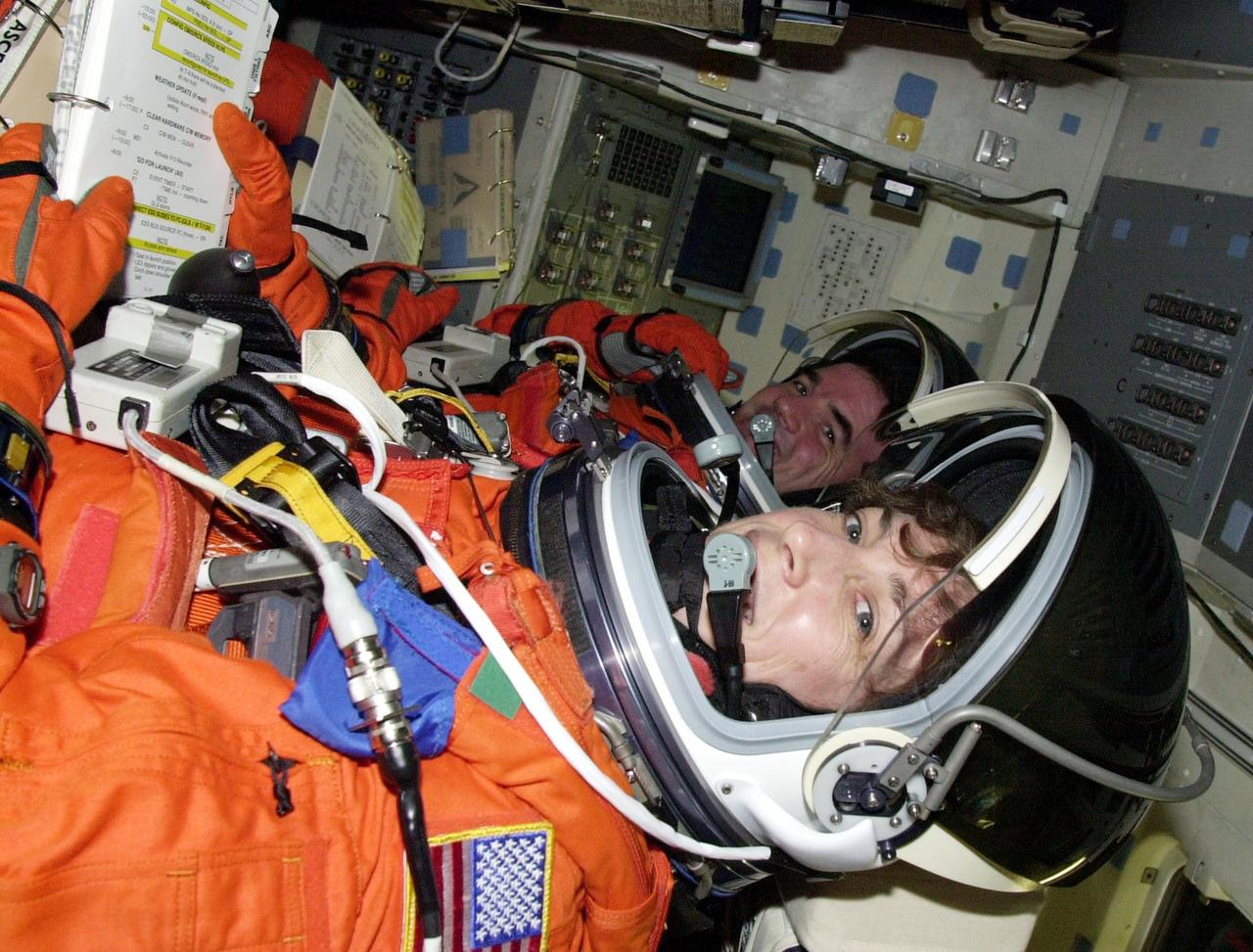
KENNEDY SPACE CENTER, FLA. -- Settling into their seats in Space Shuttle Atlantis are STS-110 Mission Specialists Rex Walheim and Ellen Ochoa as they prepare for a simulated launch countdown. The simulation is part of Terminal Countdown Demonstration Test activities. TCDT also includes emergency egress training and is held at KSC prior to each Space Shuttle flight. Scheduled for launch April 4, the 11-day mission will feature Shuttle Atlantis docking with the International Space Station (ISS) and delivering the S0 truss, the centerpiece-segment of the primary truss structure that will eventually extend over 300 feet

KENNEDY SPACE CENTER, FLA. -- STS-110 Commander Michael Bloomfield settles into his seat in Space Shuttle Atlantis as he prepares for a simulated launch countdown. The simulation is part of Terminal Countdown Demonstration Test activities. TCDT also includes emergency egress training and is held at KSC prior to each Space Shuttle flight. Scheduled for launch April 4, the 11-day mission will feature Shuttle Atlantis docking with the International Space Station (ISS) and delivering the S0 truss, the centerpiece-segment of the primary truss structure that will eventually extend over 300 feet
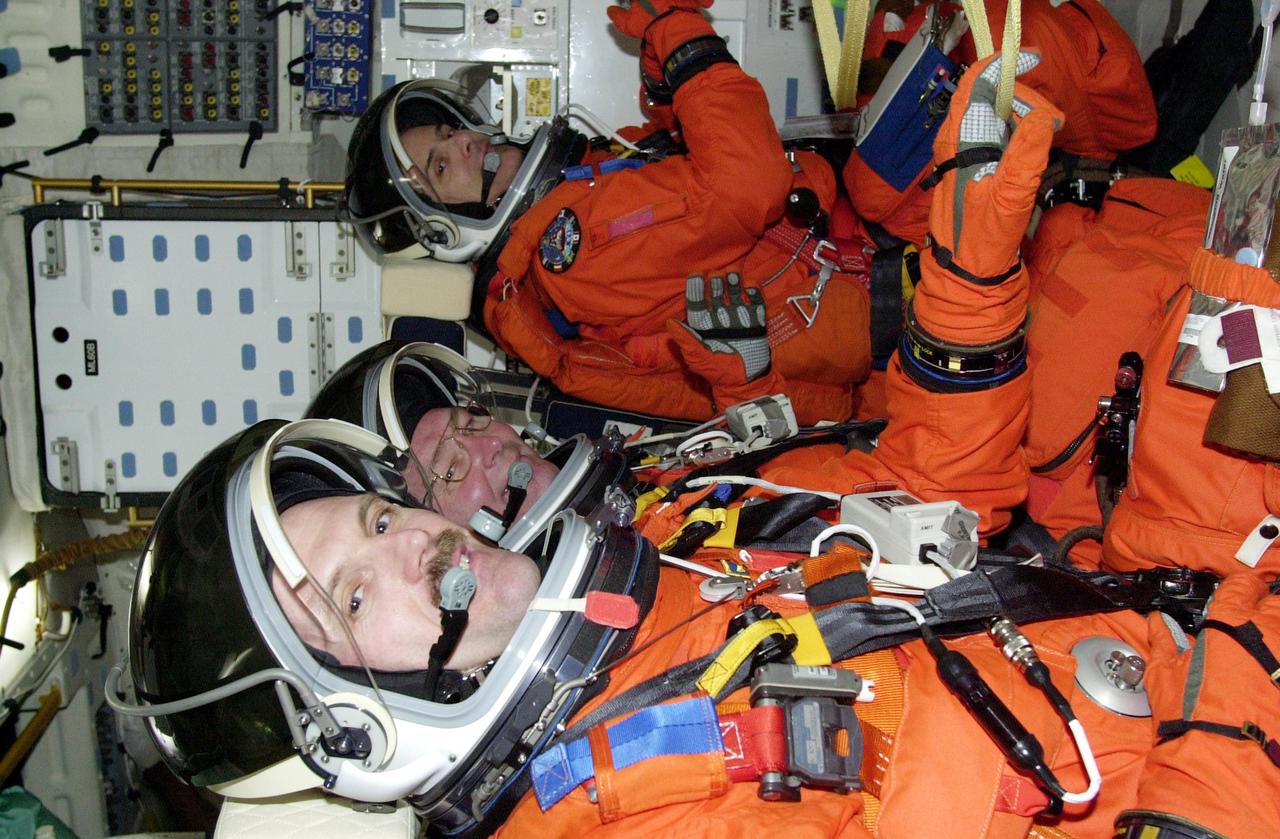
KENNEDY SPACE CENTER, FLA. -- (Left to right) STS-110 Mission Specialists Steven Smith, Jerry Ross and Rex Walheim settle into their seats aboard Space Shuttle Atlantis prior to a simulated launch countdown. The simulation is part of Terminal Countdown Demonstration Test activities. TCDT also includes emergency egress training and is held at KSC prior to each Space Shuttle flight. Scheduled for launch April 4, the 11-day mission will feature Shuttle Atlantis docking with the International Space Station (ISS) and delivering the S0 truss, the centerpiece-segment of the primary truss structure that will eventually extend over 300 feet
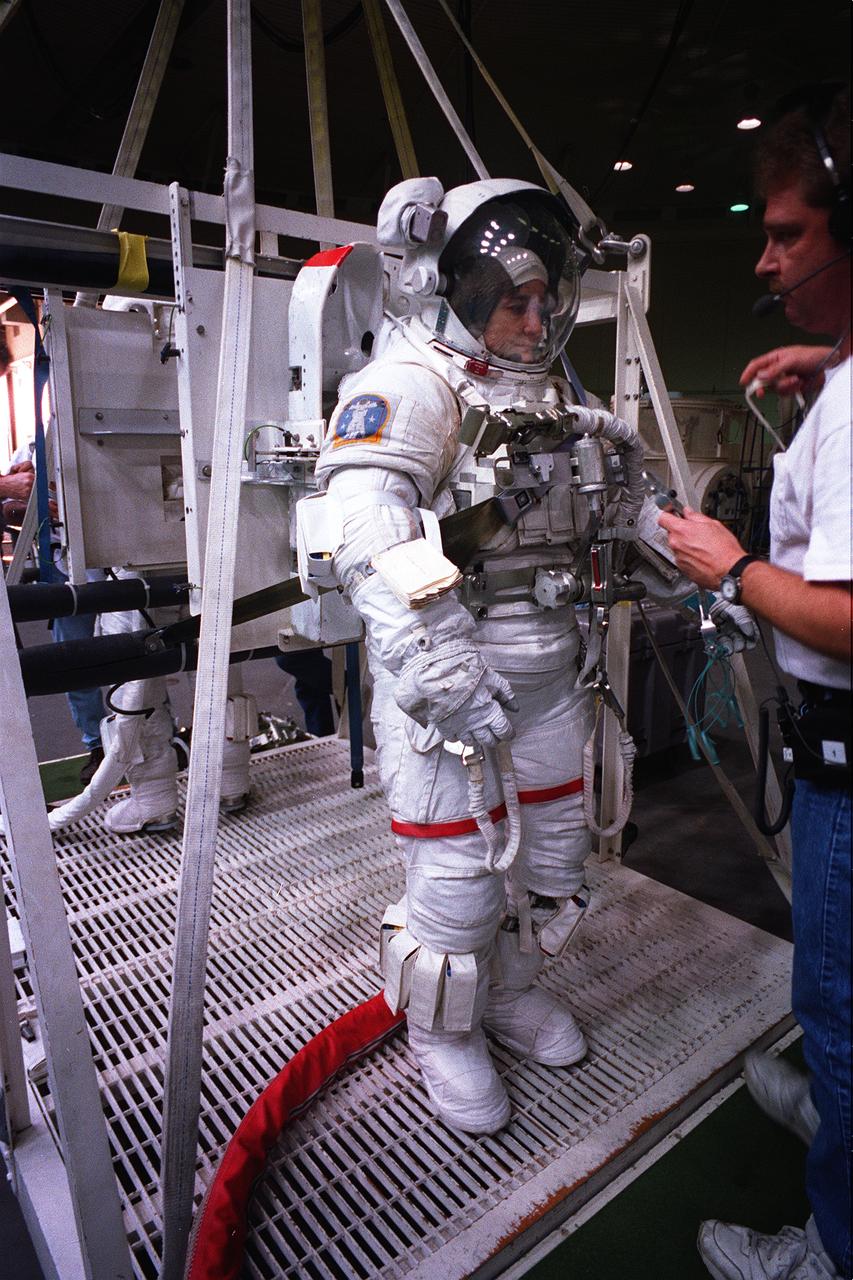
Astronaut and mission specialist, Linda Godwin, makes a final check of her respiration system before submersion into a 25 ft deep pool at the Johnson Space Center’s (JSC) Weightless Environment Training Facility (WET-F). Wearing a high fidelity training version of the Extravehicular Mobility Unit (EMU) space suit, Godwin simulated STS-76 Extravehicular Activity (EVA) chores in the pool. Launched aboard the Space Shuttle Atlantis in March of 1996, STS-76 marked the third U.S. Shuttle-Mir docking during which Godwin, along with astronaut and mission specialist Michael R. (Rich) Clifford, performed the first Extravehicular Activity (EVA) during Mir-Shuttle docked operations.
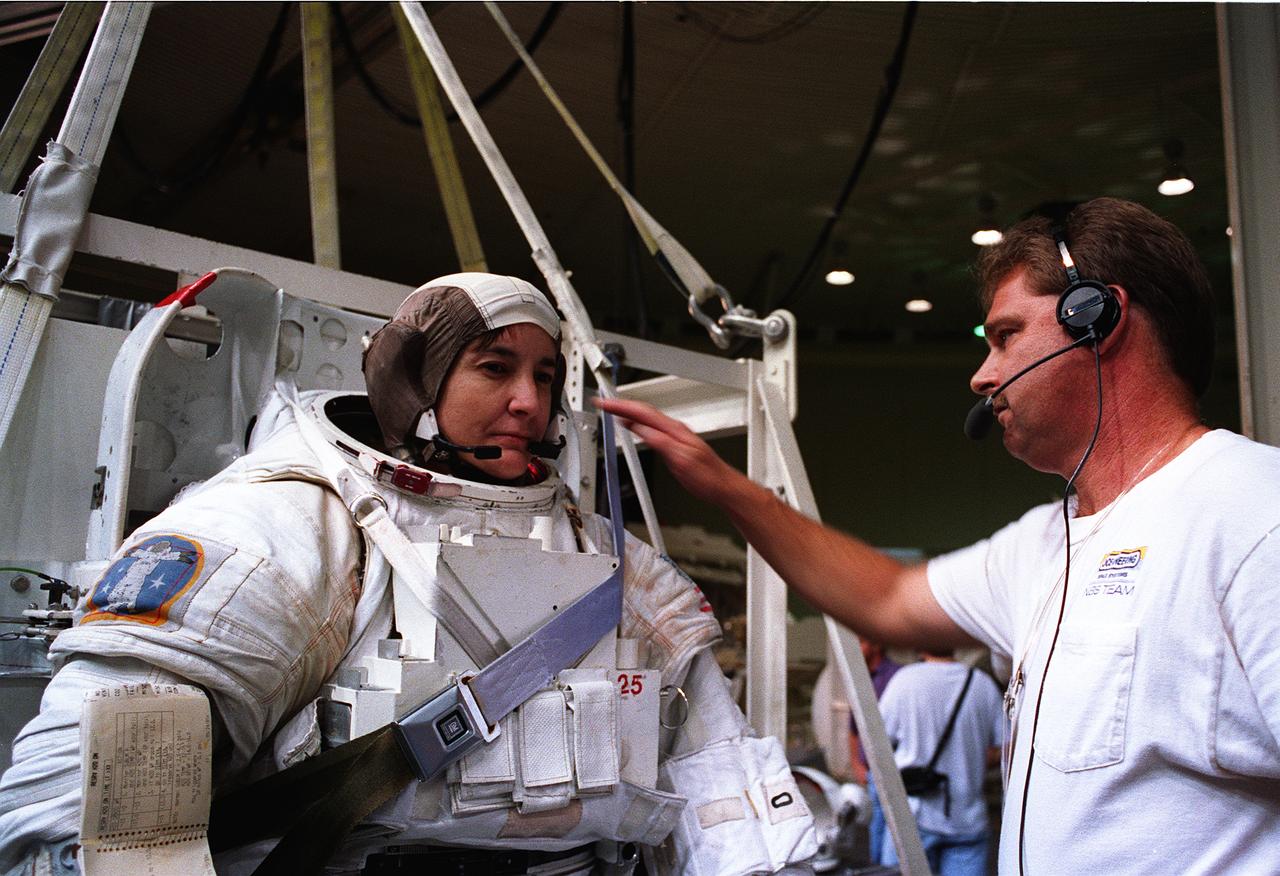
Astronaut and mission specialist, Linda Godwin, checks communications systems before submersion into a 25 ft deep pool at the Johnson Space Center’s (JSC) Weightless Environment Training Facility (WET-F). Wearing a high fidelity training version of the Extravehicular Mobility Unit (EMU) space suit, Godwin simulated STS-76 Extravehicular Activity (EVA) chores in the pool. Launched aboard the Space Shuttle Atlantis in March of 1996, STS-76 marked the third U.S. Shuttle-Mir docking during which Godwin, along with astronaut and mission specialist Michael R. ( Rich) Clifford, performed the first Extravehicular Activity (EVA) during Mir-Shuttle docked operations.
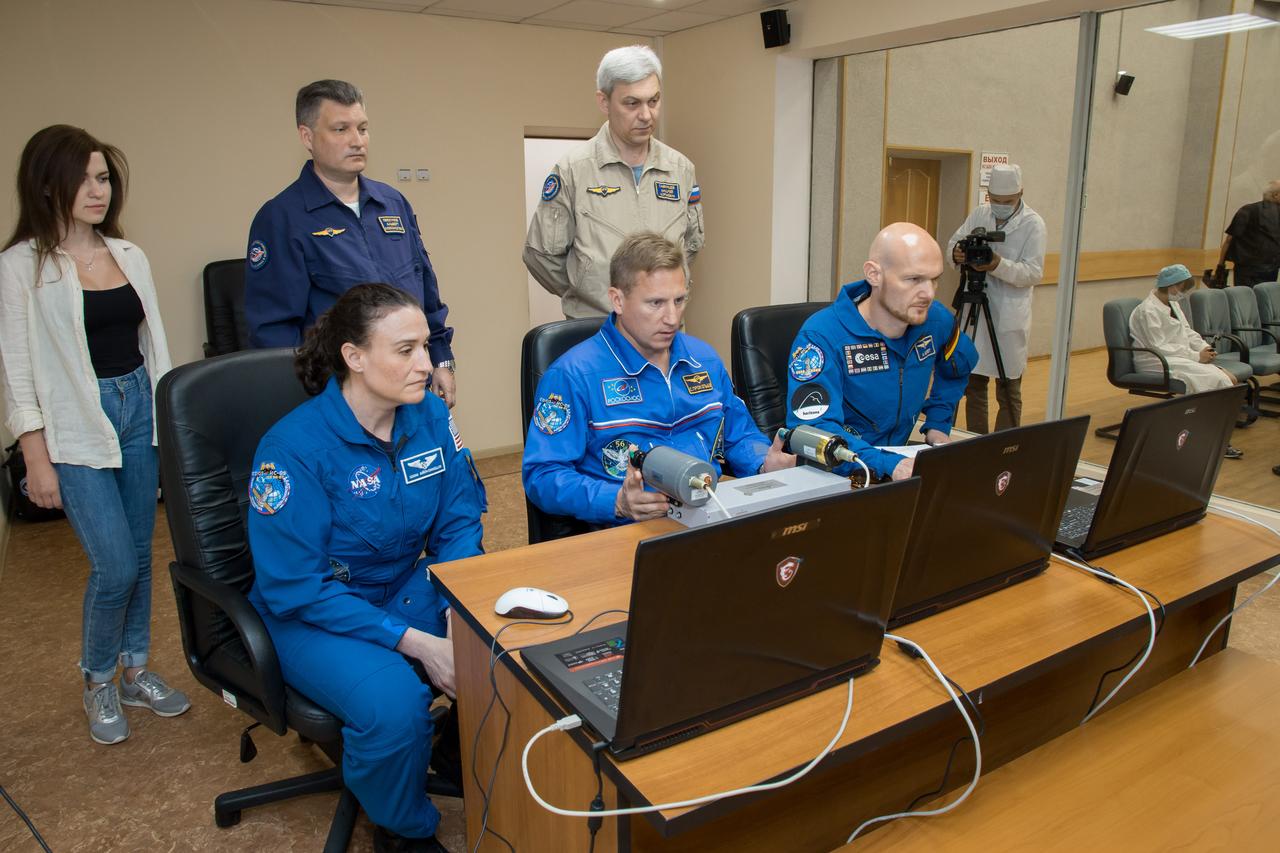
jsc2018e050820 - At the Cosmonaut Hotel crew quarters in Baikonur, Kazakhstan, Expedition 56 crewmembers Serena Aunon-Chancellor of NASA (left), Sergey Prokopyev of Roscosmos (center) and Alexander Gerst of the European Space Agency (right) conduct rendezvous and docking procedures on a laptop training simulator May 29 as part of their pre-launch preparations. Aunon-Chancellor, Prokopyev and Gerst will launch June 6 from the Baikonur Cosmodrome in Kazakhstan on the Soyuz MS-09 spacecraft for a six-month mission on the International Space Station...NASA/Victor Zelentsov.
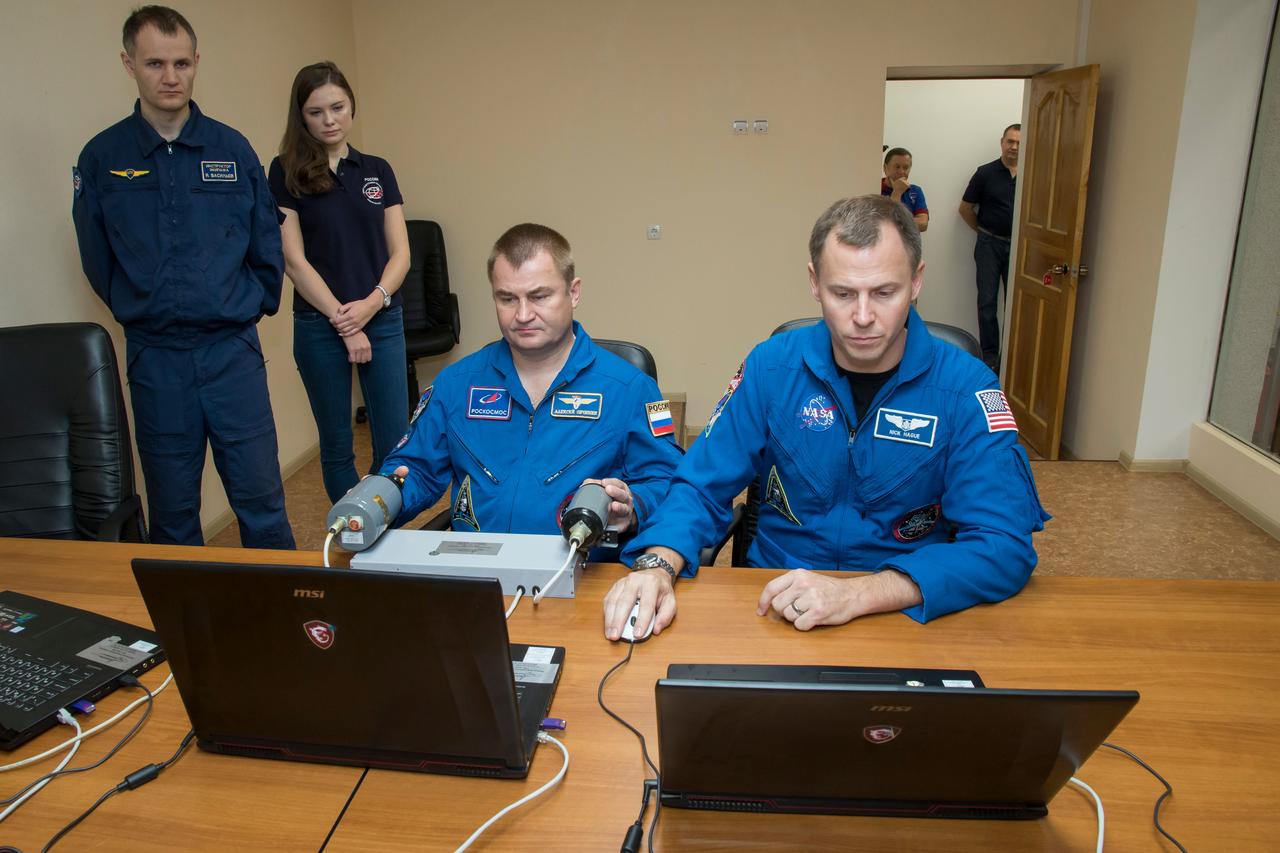
jsc2018e085891 (Oct. 3, 2018) --- Expedition 57 crew members Alexey Ovchinin of Roscosmos, left, and Nick Hague of NASA, right, conduct rendezvous and docking procedures on a laptop training simulator as part of their pre-launch preparations, Wednesday, Oct. 3, 2018 at the Cosmonaut Hotel in Baikonur, Kazakhstan. Ovchinin and Hague are scheduled to launch on Oct. 11 onboard the Soyuz MS-10 spacecraft from the Baikonur Cosmodrome in Kazakhstan for a six-month mission on the International Space Station. Photo Credit: (NASA/Victor Zelentsov)
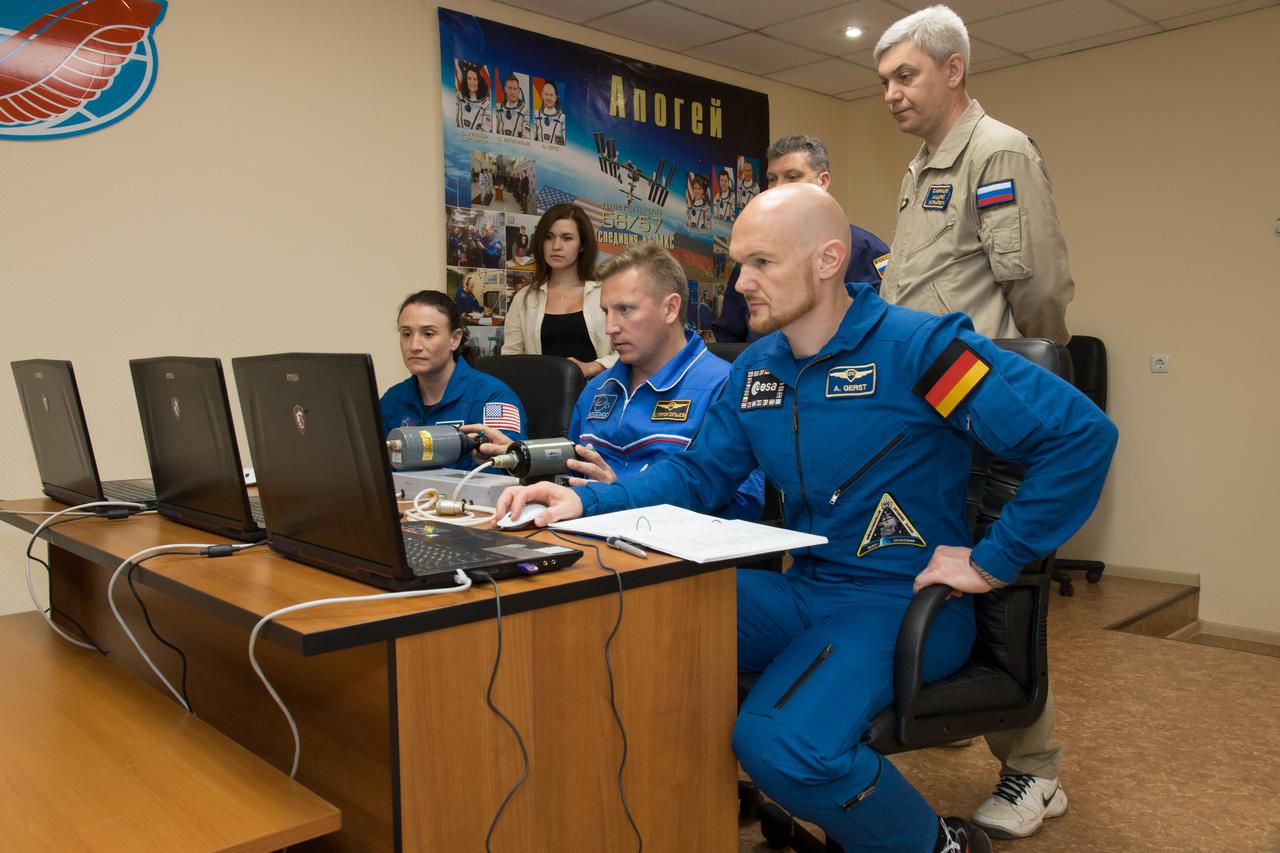
jsc2018e050821 - At the Cosmonaut Hotel crew quarters in Baikonur, Kazakhstan, Expedition 56 crewmembers Serena Aunon-Chancellor of NASA (left), Sergey Prokopyev of Roscosmos (center) and Alexander Gerst of the European Space Agency (right) conduct rendezvous and docking procedures on a laptop training simulator May 29 as part of their pre-launch preparations. Aunon-Chancellor, Prokopyev and Gerst will launch June 6 from the Baikonur Cosmodrome in Kazakhstan on the Soyuz MS-09 spacecraft for a six-month mission on the International Space Station...NASA/Victor Zelentsov.
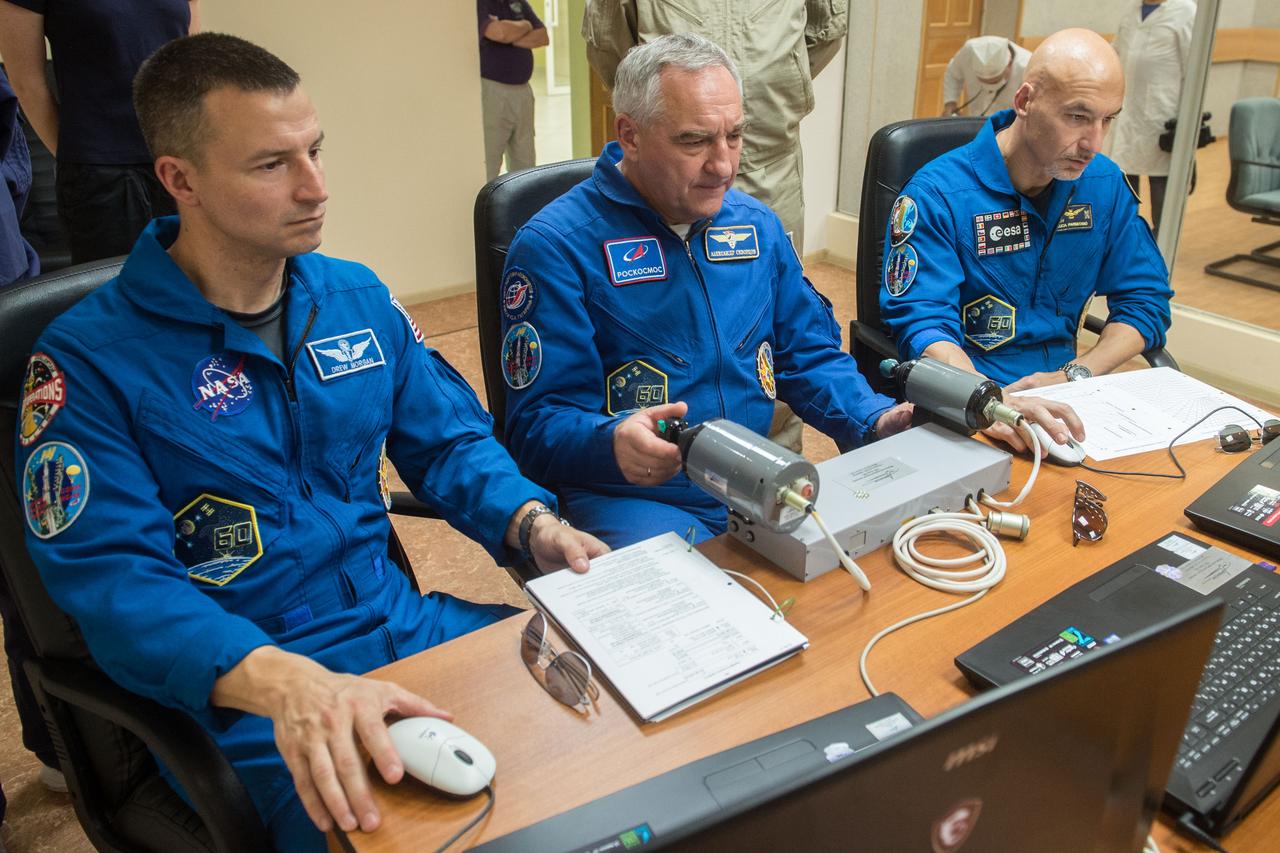
jsc2019e039265 - At the Cosmonaut Hotel crew quarters in Baikonur, Kazakhstan, Expedition 60 crewmembers Drew Morgan of NASA (left), Alexander Skvortsov of Roscosmos (center) and Luca Parmitano of the European Space Agency (right) practice rendezvous and docking techniques on a laptop computer simulator July 12 as part of pre-launch activities. They will launch July 20 on the Soyuz MS-13 spacecraft from the Baikonur Cosmodrome in Kazakhstan on a mission to the International Space Station...Andrey Shelepin/GCTC.
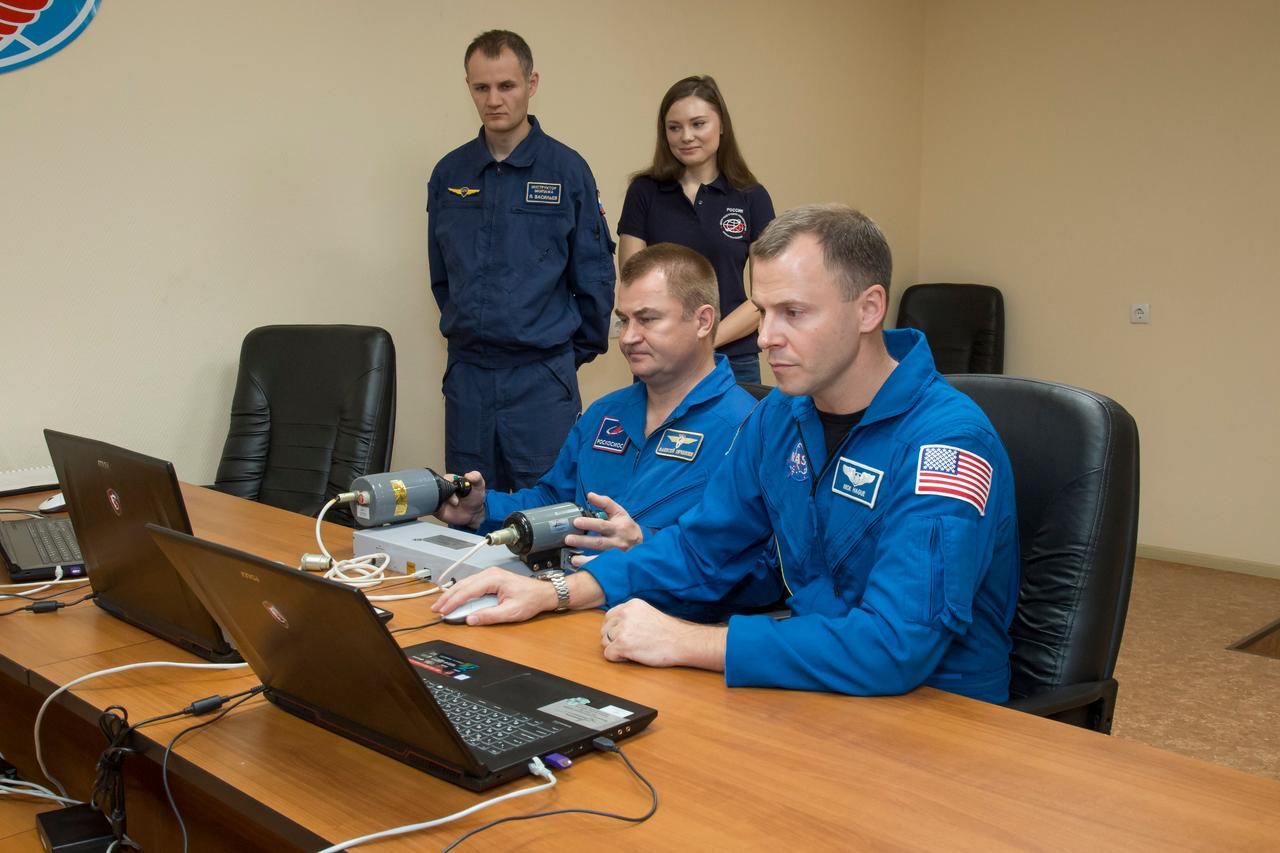
jsc2018e085890 (Oct. 3, 2018) --- Expedition 57 crew members Alexey Ovchinin of Roscosmos, left, and Nick Hague of NASA, right, conduct rendezvous and docking procedures on a laptop training simulator as part of their pre-launch preparations, Wednesday, Oct. 3, 2018 at the Cosmonaut Hotel in Baikonur, Kazakhstan. Ovchinin and Hague are scheduled to launch on Oct. 11 onboard the Soyuz MS-10 spacecraft from the Baikonur Cosmodrome in Kazakhstan for a six-month mission on the International Space Station. Photo Credit: (NASA/Victor Zelentsov)

At their Cosmonaut Hotel crew quarters in Baikonur, Kazakhstan, the Expedition 34/35 crew practices docking simulations on a laptop computer Dec. 13, 2012 as they prepare for launch Dec. 19. NASA Flight Engineer Tom Marshburn (left), Soyuz Commander Roman Romanenko (center) and Flight Engineer Chris Hadfield of the Canadian Space Agency (right) are preparing for launch Dec. 19 from the Baikonur Cosmodrome on the Soyuz TMA-07M spacecraft for a five-month mission on the International Space Station. NASA/Victor Zelentsov
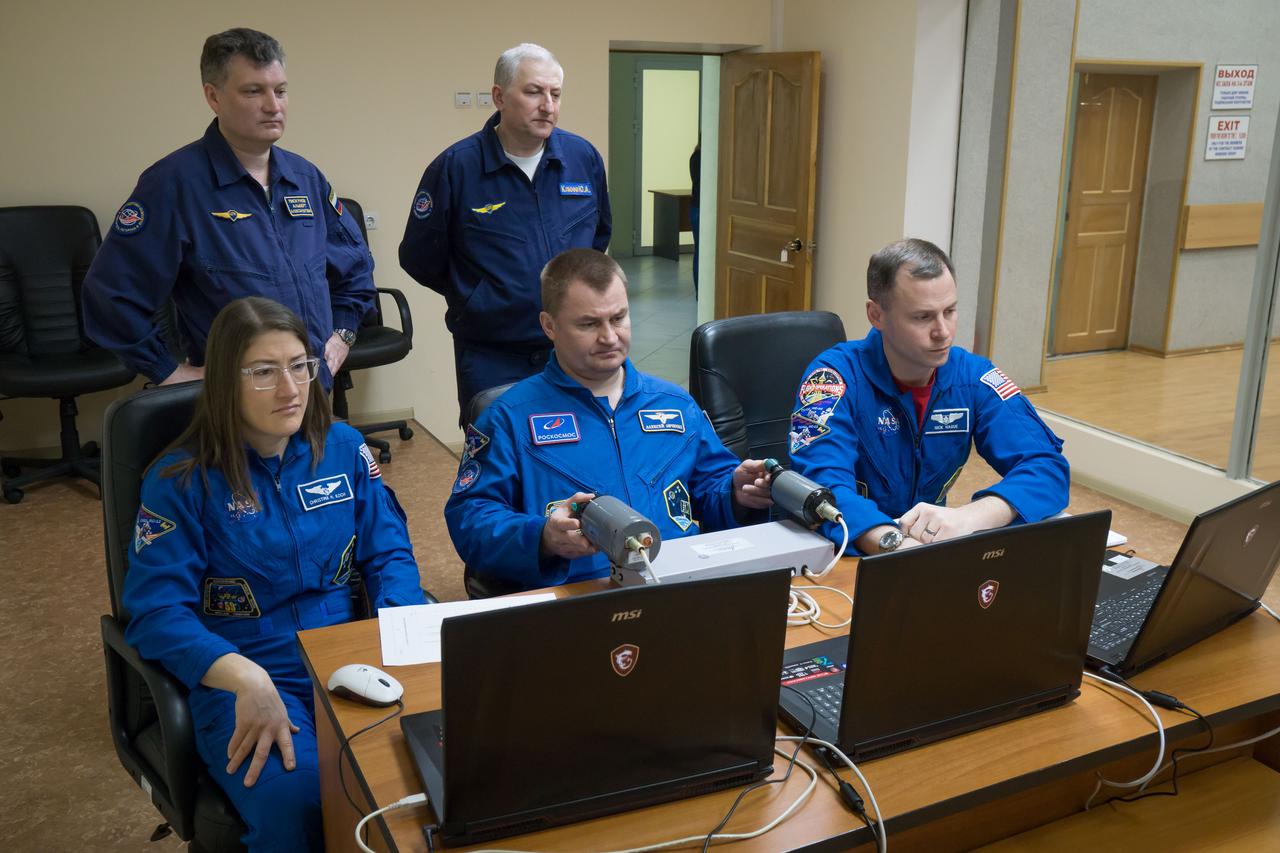
At their Cosmonaut Hotel crew quarters in Baikonur, Kazakhstan, Expedition 59 crewmembers Christina Koch of NASA (left), Alexey Ovchinin of Roscosmos (center) and Nick Hague of NASA (right) rehearse rendezvous and docking techniques on a laptop computer simulator March 7 as they prepare for launch. They will launch March 14, U.S. time, on the Soyuz MS-12 spacecraft from the Baikonur Cosmodrome for a six-and-a-half month mission on the International Space Station...NASA/Victor Zelentsov.
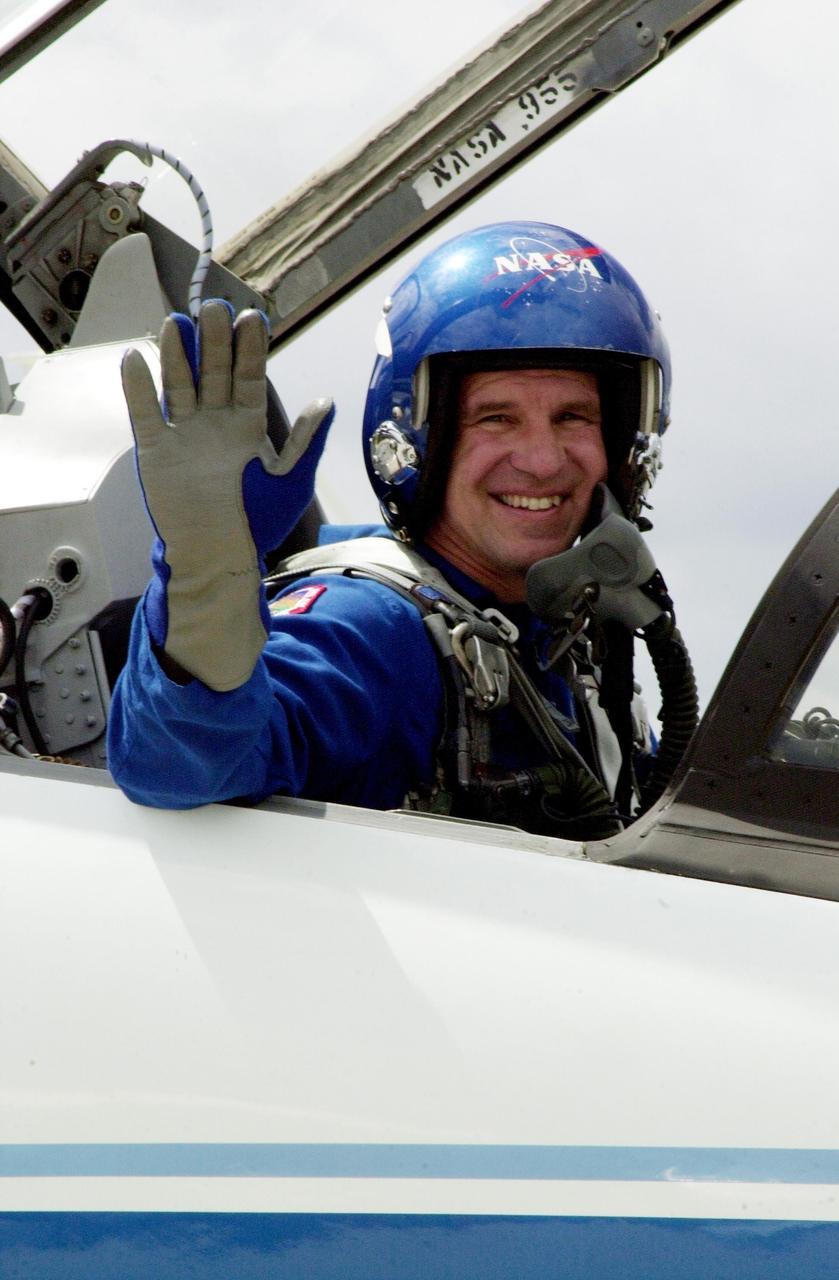
KENNEDY SPACE CENTER, FLA. -- STS-110 Commander Michael Bloomfield waves as he gets ready to depart KSC for Houston. He and the rest of the crew were at KSC for Terminal Countdown Demonstration Test activities that included payload familiarization and a simulated launch countdown. Scheduled for launch April 4, the 11-day STS-110 mission will feature Space Shuttle Atlantis docking with the International Space Station (ISS) and delivering the S0 truss, the centerpiece-segment of the primary truss structure that will eventually extend over 300 feet
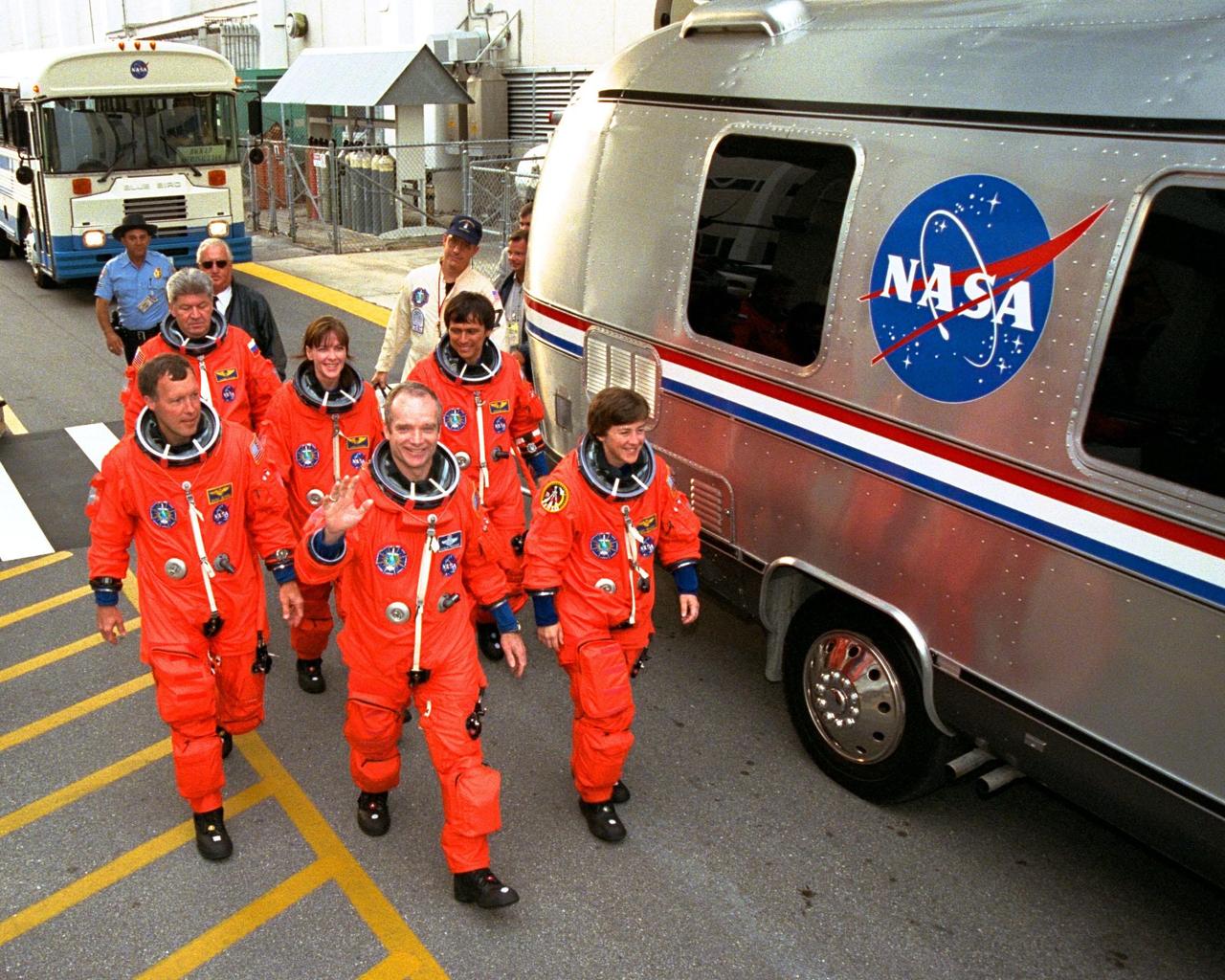
The STS-91 crew participates in a simulated walk-out from the Operations and Checkout Building to board a van which will take them to Launch Complex 39A during Terminal Countdown Demonstration Test (TCDT) activities. The TCDT is a dress rehearsal for launch and ends with a mock launch countdown culminating in a simulated main engine cut-off. From left to right, the crew members are (front row) Pilot Dominic Gorie; Mission Commander Charles Precourt (waving); and Mission Specialist Wendy B. Lawrence; and (back row) Mission Specialists Valery Ryumin, with the Russian Space Agency; Janet Kavandi, Ph.D.; and Franklin Chang-Diaz, Ph.D. STS-91 is scheduled to be launched on June 2 with a launch window opening around 6:10 p.m. EDT. The mission will feature the ninth Shuttle docking with the Russian Space Station Mir, the first Mir docking for Discovery, the conclusion of Phase I of the joint U.S.-Russian International Space Station Program, and the first flight of the new Space Shuttle super lightweight external tank. Andrew Thomas, Ph.D., will be returning to Earth with the crew after living more than four months aboard Mir

The STS-91 crew participates in a simulated walk-out from the Operations and Checkout Building to board a van which will take them to Launch Complex 39A during Terminal Countdown Demonstration Test (TCDT) activities. The TCDT is a dress rehearsal for launch and ends with a mock launch countdown culminating in a simulated main engine cut-off. From left to right, the crew members are (front row) Pilot Dominic Gorie; Mission Commander Charles Precourt; and Mission Specialist Wendy B. Lawrence; and (back row) Mission Specialists Valery Ryumin, with the Russian Space Agency (waving); Janet Kavandi, Ph.D.; and Franklin Chang-Diaz, Ph.D. STS-91 is scheduled to be launched on June 2 with a launch window opening around 6:10 p.m. EDT. The mission will feature the ninth Shuttle docking with the Russian Space Station Mir, the first Mir docking for Discovery, the conclusion of Phase I of the joint U.S.-Russian International Space Station Program, and the first flight of the new Space Shuttle super lightweight external tank. Andrew Thomas, Ph.D., will be returning to Earth with the crew after living more than four months aboard Mir
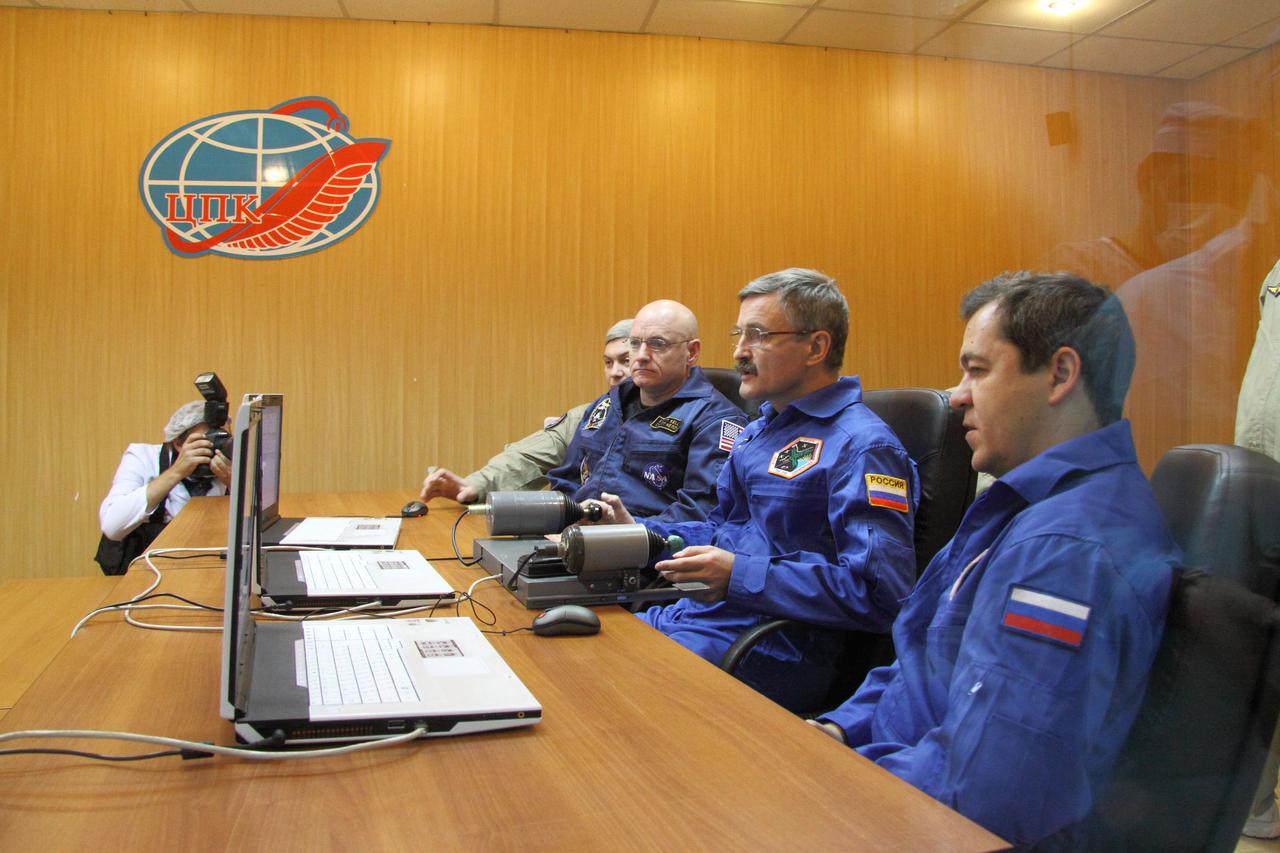
At their crew quarters in Baikonur, Kazakhstan, Expedition 25 Flight Engineers Scott Kelly of NASA (left), Alexander Kaleri (center) and Oleg Skripochka review rendezvous and docking programs on a laptop simulator October 2, 2010 as they prepare for their launch October 8 in the Soyuz TMA-01M spacecraft to the International Space Station. Credit: NASA/Victor Zelentsov
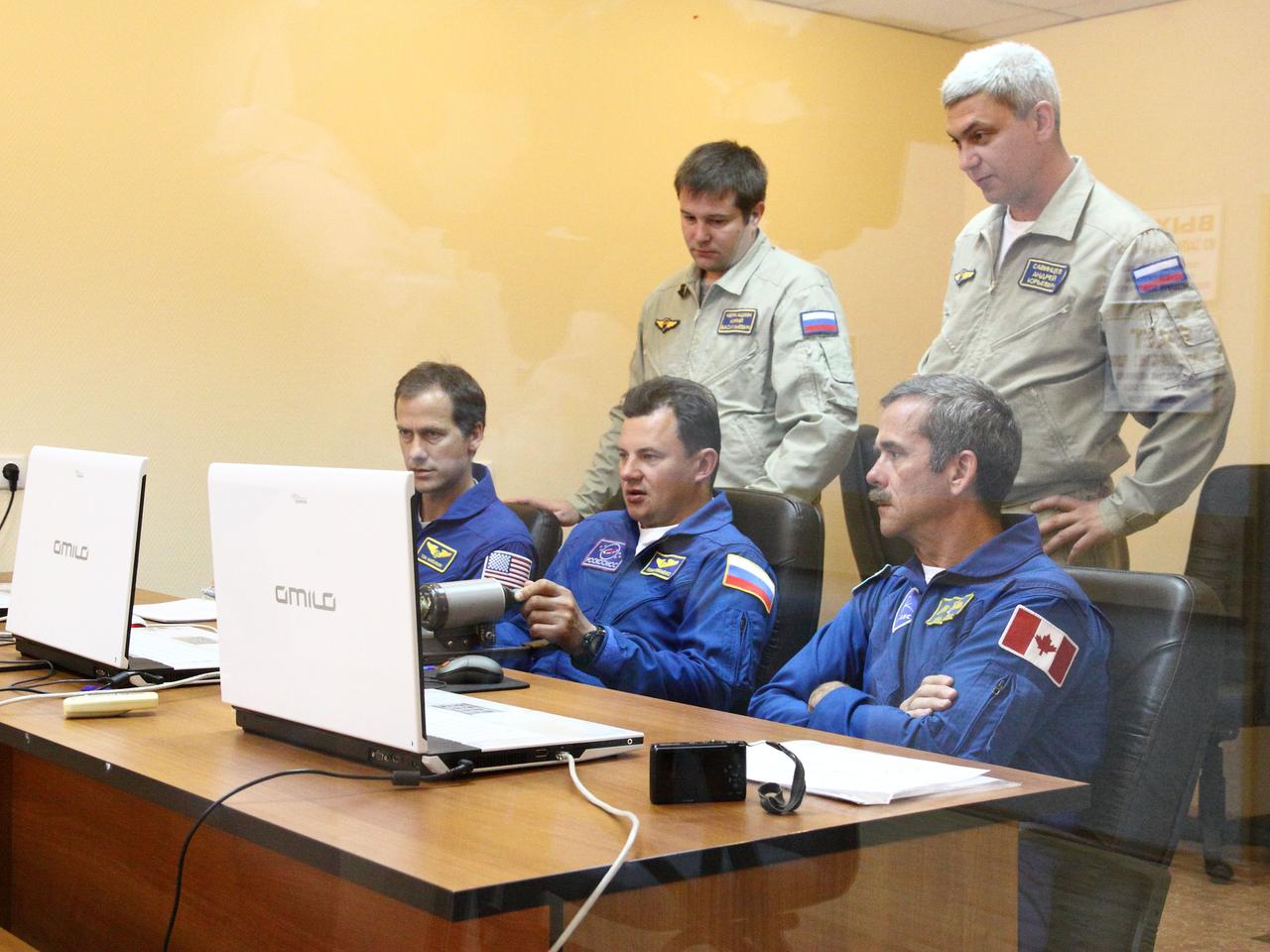
At their Cosmonaut Hotel crew quarters in Baikonur, Kazakhstan, the Expedition 32/33 backup crew members participate in a rendezvous and docking practice session using laptop computer simulators July 9, 2012 as they train for support of the prime crew’s launch July 15 to the International Space Station in the Soyuz TMA-05M spacecraft. From left to right with their instructors are backup Flight Engineer Tom Marshburn of NASA, backup Soyuz Commander Roman Romanenko and backup Flight Engineer Chris Hadfield of the Canadian Space Agency. NASA/Victor Zelentsov
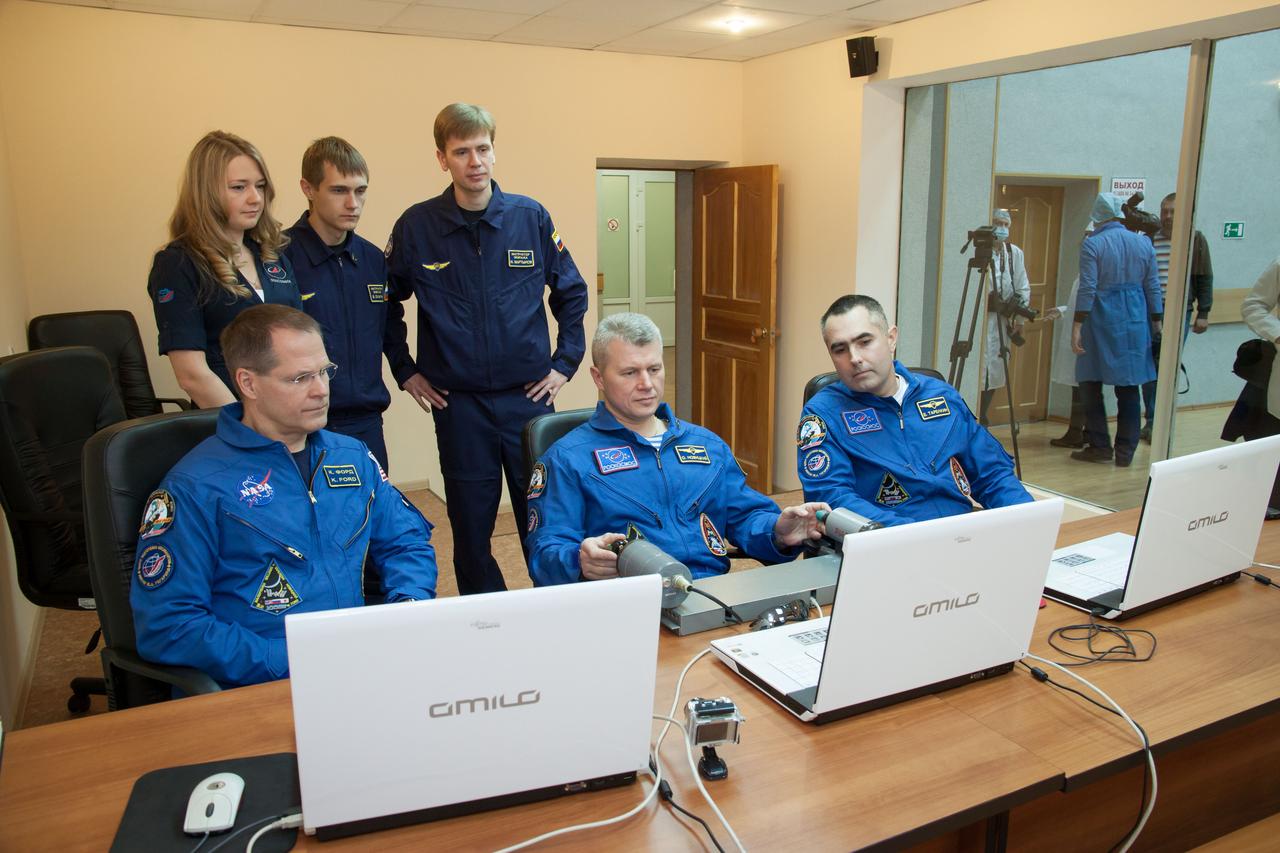
At the Cosmonaut Hotel crew quarters in Baikonur, Kazakhstan, Expedition 33/34 Soyuz Commander Oleg Novitskiy (center) practices docking techniques on a laptop computer simulator as Gagarin Cosmonaut Training Center instructors look on October 17, 2012. Joining Novitskiy are Flight Engineer Kevin Ford of NASA (left) and Flight Engineer Evgeny Tarelkin (right) as they prepare for launch October 23 to the International Space Station in their Soyuz TMA-06M spacecraft. The trio will spend five months on the orbital laboratory. NASA/Victor Zelentsov

At their Cosmonaut Hotel crew quarters in Baikonur, Kazakhstan, Expedition 50-51 crewmembers Peggy Whitson of NASA (left), Oleg Novitskiy of the Russian Federal Space Agency (Roscosmos, center) and Thomas Pesquet of the European Space Agency (right) practice rendezvous and docking procedures on a laptop simulator computer Nov. 10 as part of their preflight training. They will launch Nov. 18, Baikonur time, on the Soyuz MS-03 spacecraft for a six-month mission on the International Space Station. NASA/Alexander Vysotsky
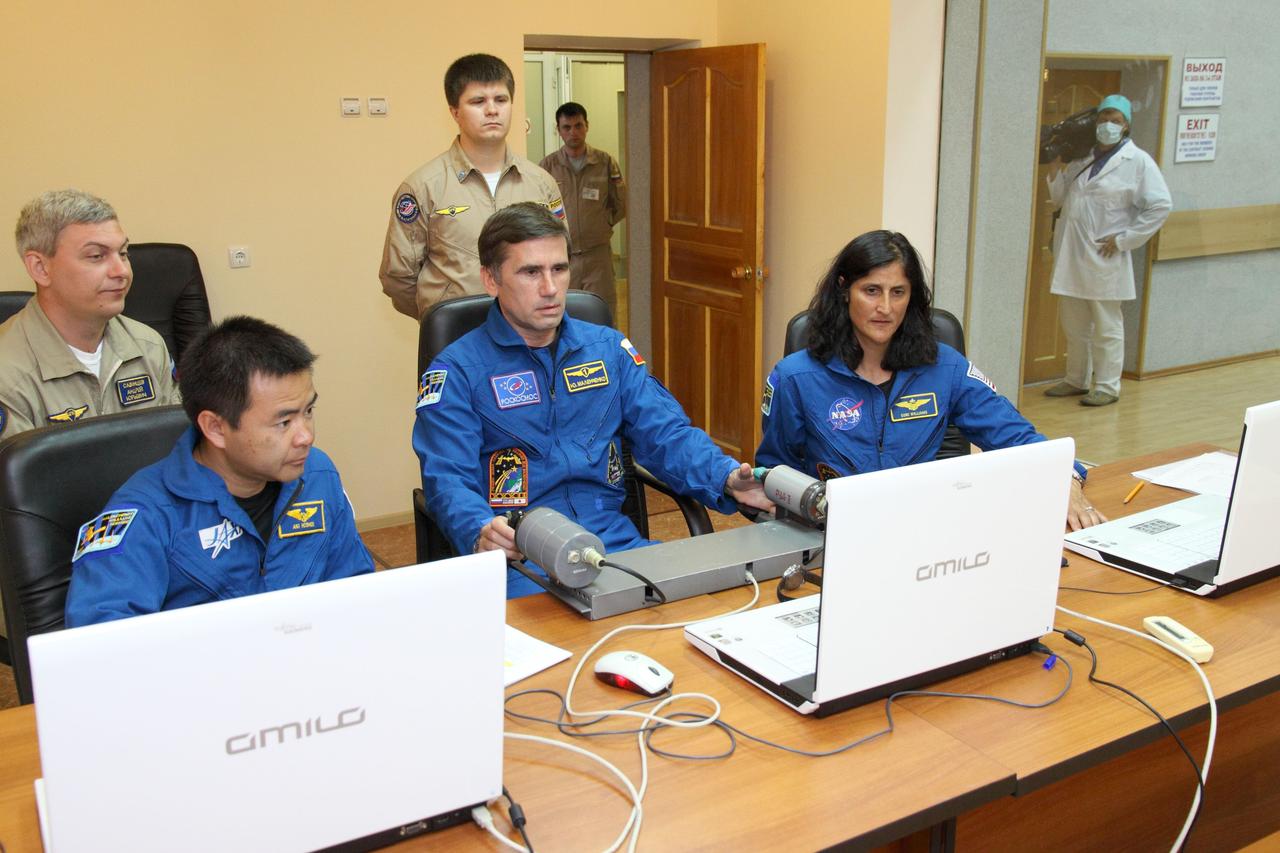
At their Cosmonaut Hotel crew quarters in Baikonur, Kazakhstan, the Expedition 32/33 prime crew members participate in a rendezvous and docking practice session using laptop computer simulators July 9, 2012 as they prepare for their launch July 15 to the International Space Station in their Soyuz TMA-05M spacecraft. From left to right with their instructors are Flight Engineer Aki Hoshide of the Japan Aerospace Exploration Agency, Soyuz Commander Yuri Malenchenko and NASA Flight Engineer Sunita Williams. NASA/Victor Zelentsov
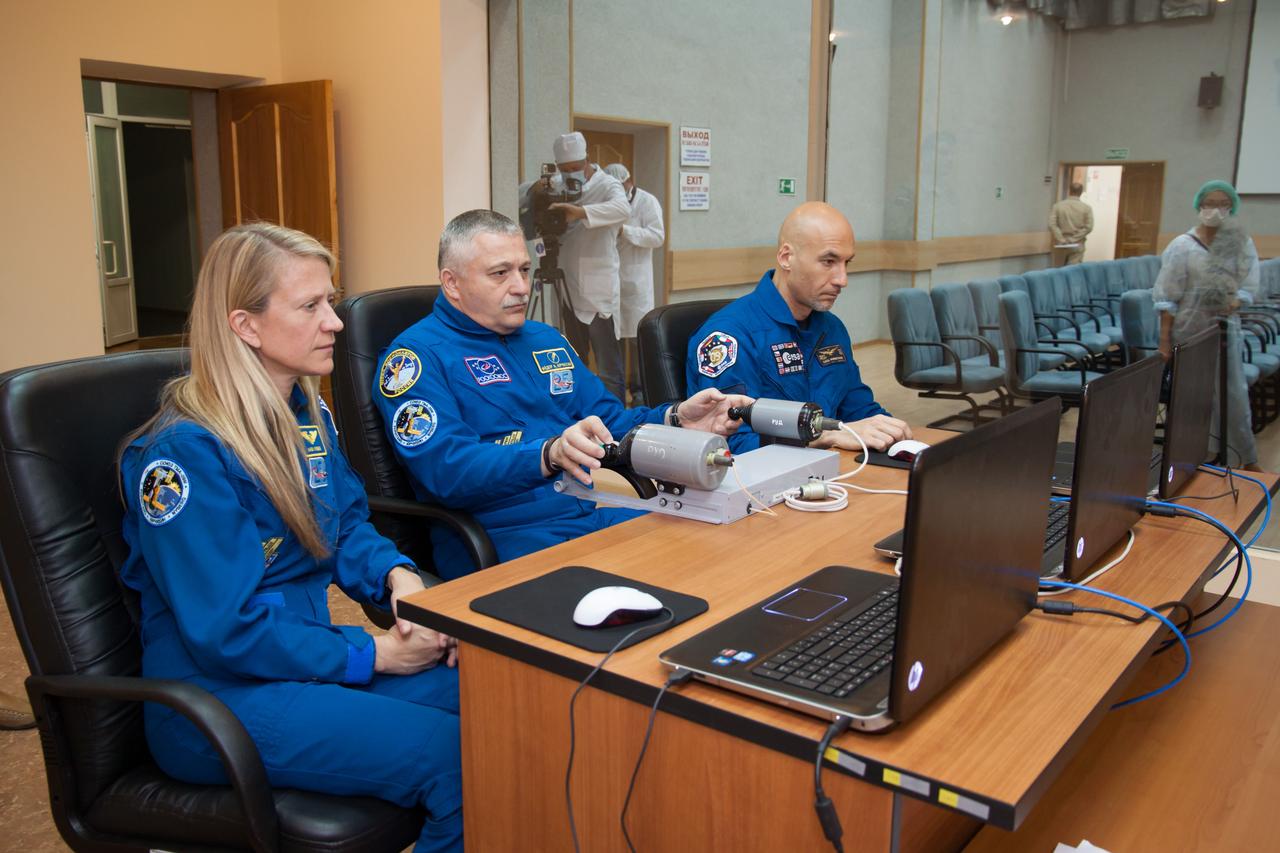
In the Cosmonaut Hotel crew quarters in Baikonur, Kazakhstan, Expedition 36/37 Soyuz Commander Fyodor Yurchikhin (center) practices a Soyuz docking on a laptop simulator May 22 as he, NASA Flight Engineer Karen Nyberg (left) and Flight Engineer Luca Parmitano of the European Space Agency (right) prepare for their launch May 29, Kazakh time, in the Soyuz TMA-09M spacecraft to begin a 5 ½ month mission on the International Space Station. NASA/Victor Zelentsov
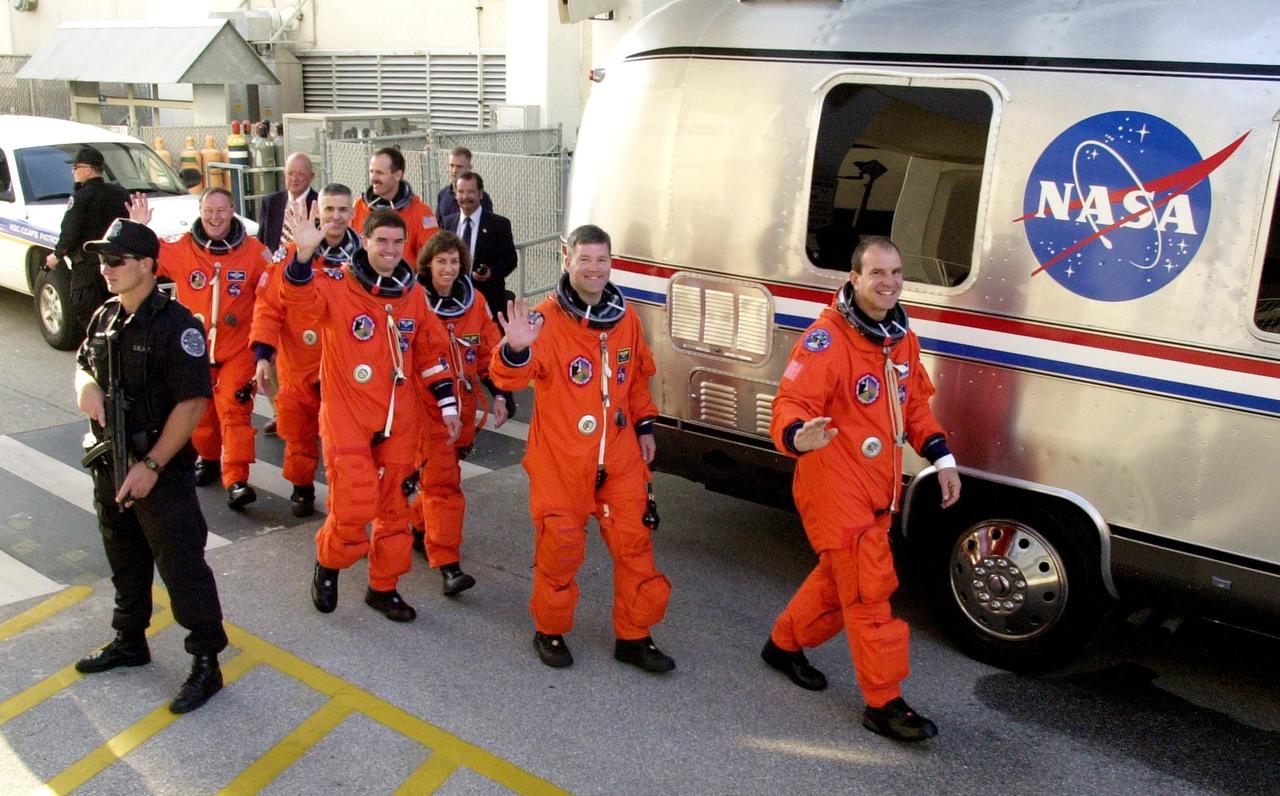
KENNEDY SPACE CENTER, FLA. -- The STS-110 crew heads for the Astrovan to take them to the launch pad and a simulated launch countdown. From left are Mission Specialists Jerry Ross, Lee Morin, Steven Smith (rear), Rex Walheim and Ellen Ochoa; Pilot Stephen Frick and Commander Michael Bloomfield. The simulation is part of Terminal Countdown Demonstration Test activities. TCDT also includes emergency egress training and is held at KSC prior to each Space Shuttle flight. Scheduled for launch April 4, the 11-day mission will feature Shuttle Atlantis docking with the International Space Station (ISS) and delivering the S0 truss, the centerpiece-segment of the primary truss structure that will eventually extend over 300 feet
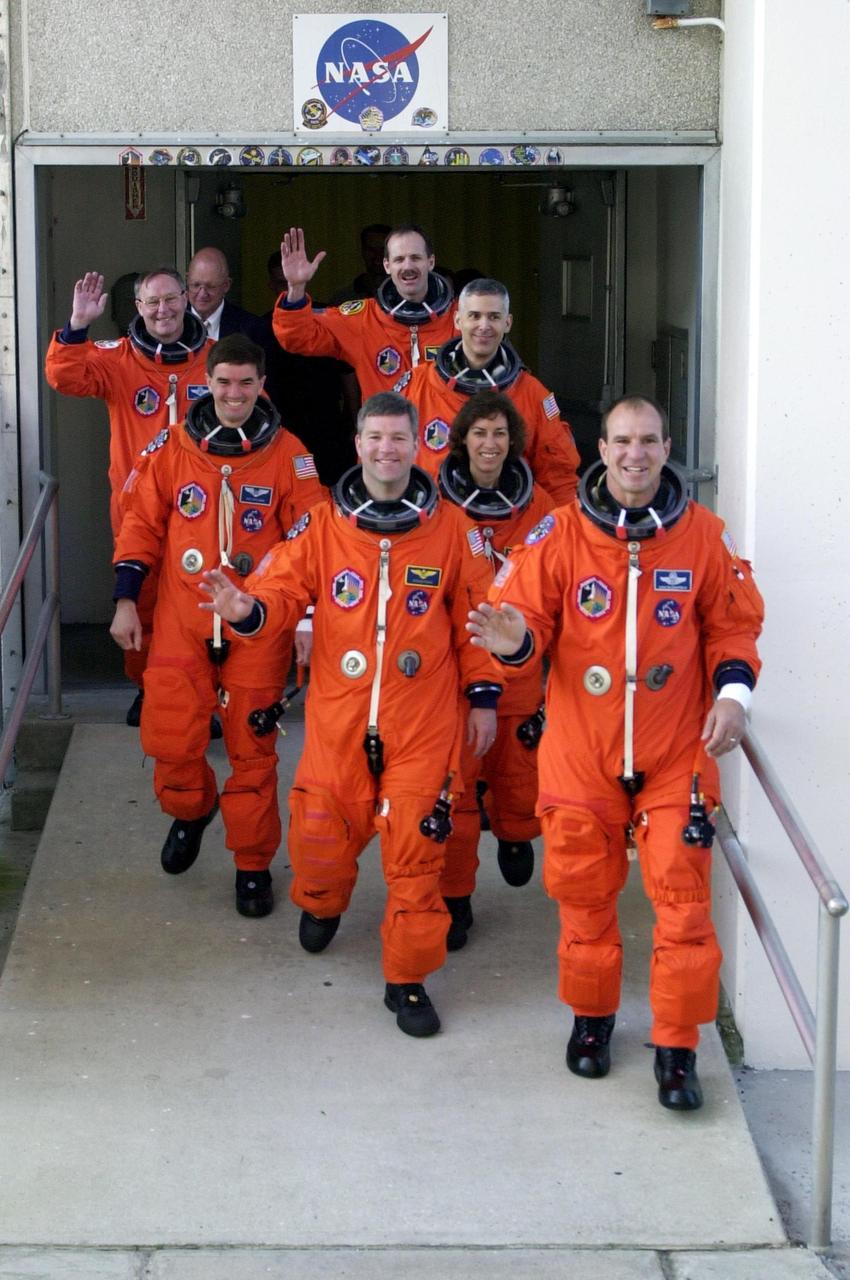
KENNEDY SPACE CENTER, FLA. -- The STS-110 crew walks out of the Operations and Checkout Building on their way to the launch pad for a simulated launch countdown. From the rear, left row, are Mission Specialists Jerry Ross and Rex Walheim, Pilot Stephen Frick; right row, Mission Specialists Steven Smith, Lee Morin and Ellen Ocho, and Commander Michael Bloomfield. The simulation is part of Terminal Countdown Demonstration Test activities. TCDT also includes emergency egress training and is held at KSC prior to each Space Shuttle flight. Scheduled for launch April 4, the 11-day mission will feature Shuttle Atlantis docking with the International Space Station (ISS) and delivering the S0 truss, the centerpiece-segment of the primary truss structure that will eventually extend over 300 feet
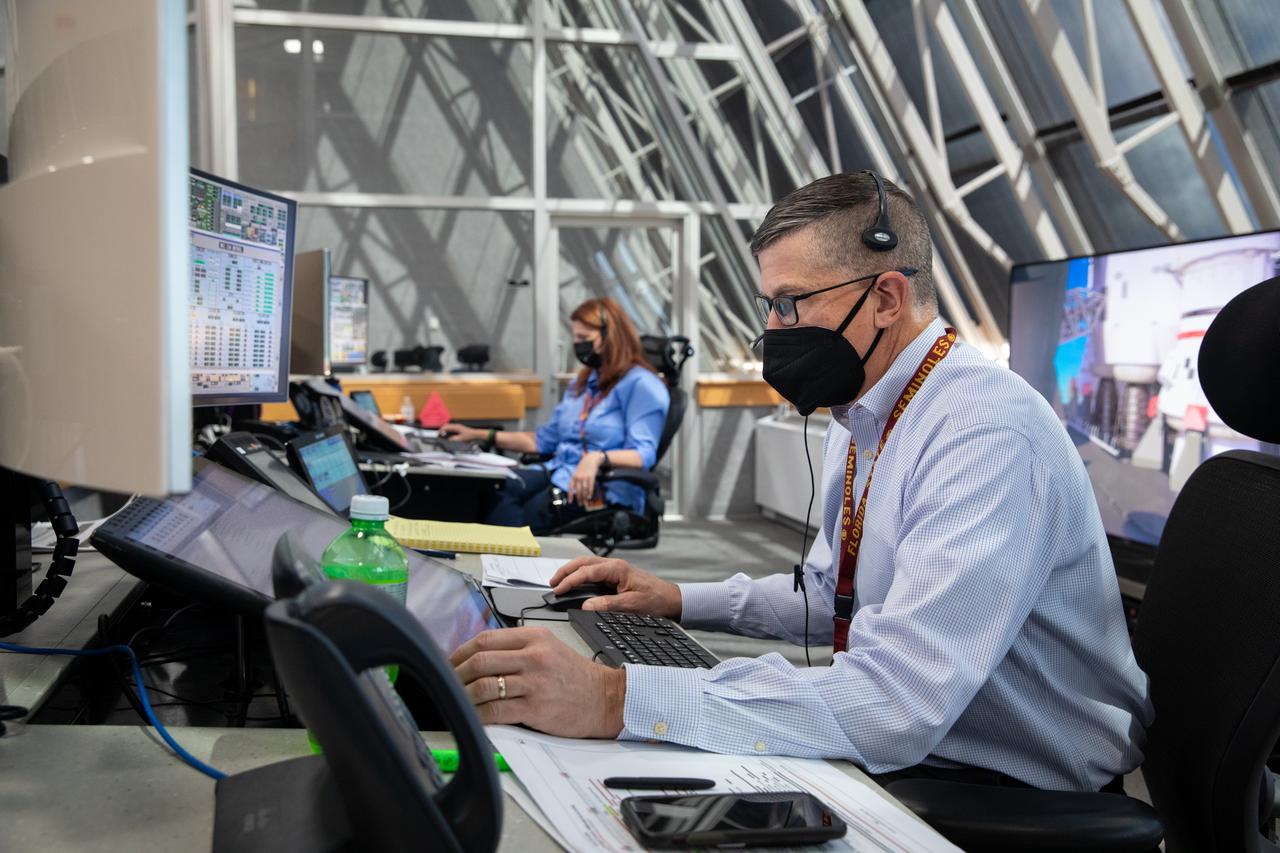
Artemis teams conduct the final simulation for the Artemis I mission inside the Launch Control Center at NASA’s Kennedy Space Center in Florida on Aug. 4, 2022. Artemis I will be the first integrated test of NASA’s Space Launch System (SLS) rocket and Orion spacecraft. During the flight, Orion will launch atop the most powerful rocket in the world and fly farther than any spacecraft for humans has ever flown. The spacecraft will stay in space longer than any human spacecraft has without docking to the International Space Station and return home faster than ever before. Shown here is Assistant Launch Director Jeremy Graeber and Launch Director Charlie Blackwell-Thompson.
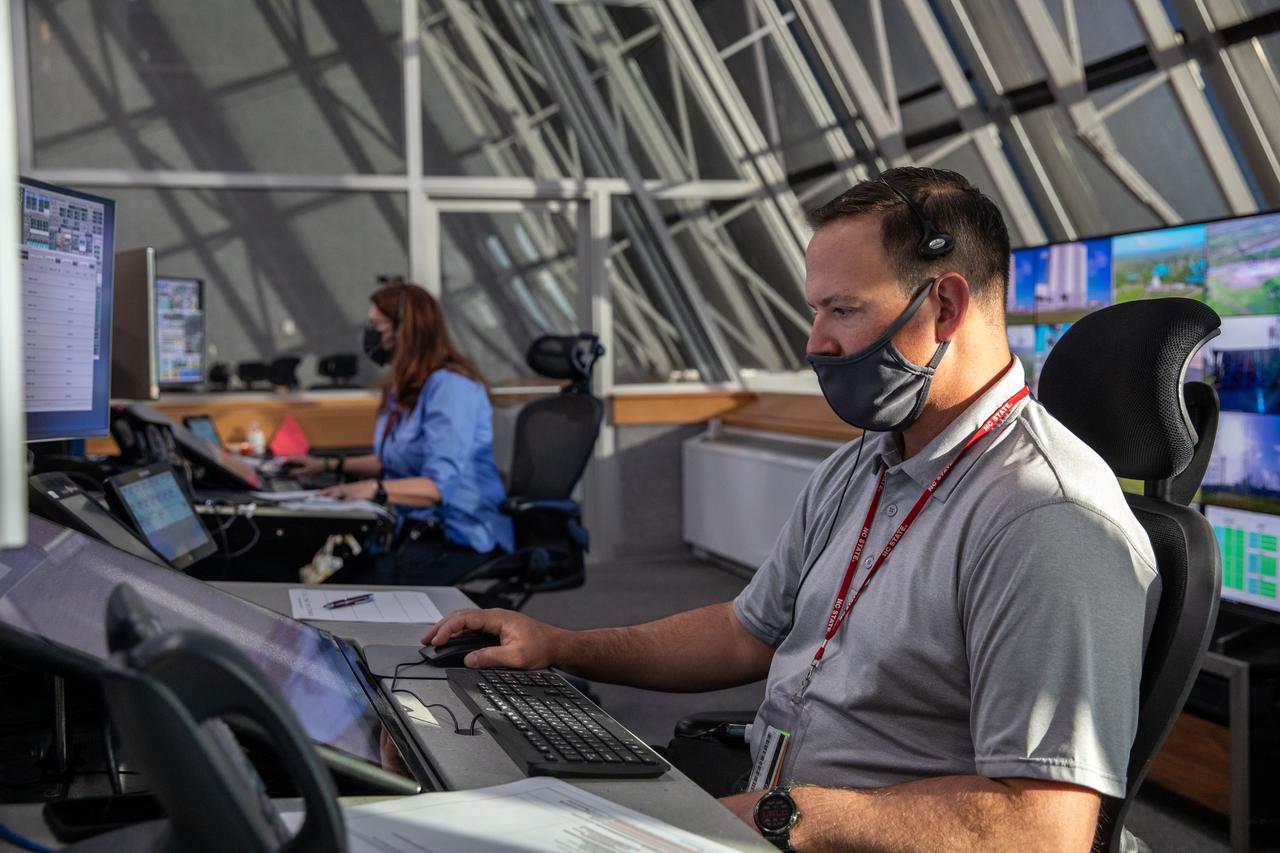
Artemis teams conduct the final simulation for the Artemis I mission inside the Launch Control Center at NASA’s Kennedy Space Center in Florida on Aug. 4, 2022. Artemis I will be the first integrated test of NASA’s Space Launch System (SLS) rocket and Orion spacecraft. During the flight, Orion will launch atop the most powerful rocket in the world and fly farther than any spacecraft for humans has ever flown. The spacecraft will stay in space longer than any human spacecraft has without docking to the International Space Station and return home faster than ever before. Shown here is Wes Mosedale, the technical assistant to Artemis Launch Director Charlie Blackwell-Thompson.
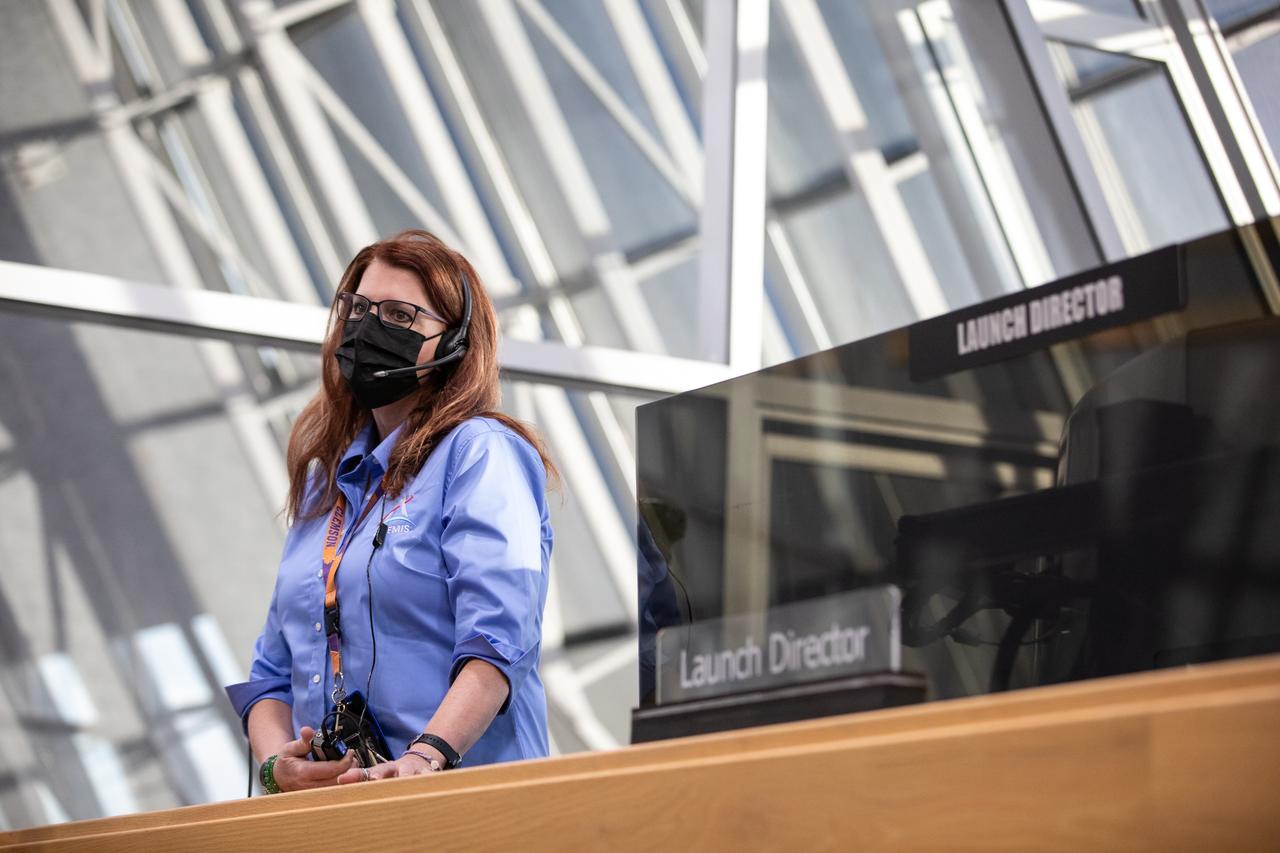
Artemis teams conduct the final simulation for the Artemis I mission inside the Launch Control Center at NASA’s Kennedy Space Center in Florida on Aug. 4, 2022. Artemis I will be the first integrated test of NASA’s Space Launch System (SLS) rocket and Orion spacecraft. During the flight, Orion will launch atop the most powerful rocket in the world and fly farther than any spacecraft for humans has ever flown. The spacecraft will stay in space longer than any human spacecraft has without docking to the International Space Station and return home faster than ever before. Shown here is Launch Director Charlie Blackwell-Thompson.
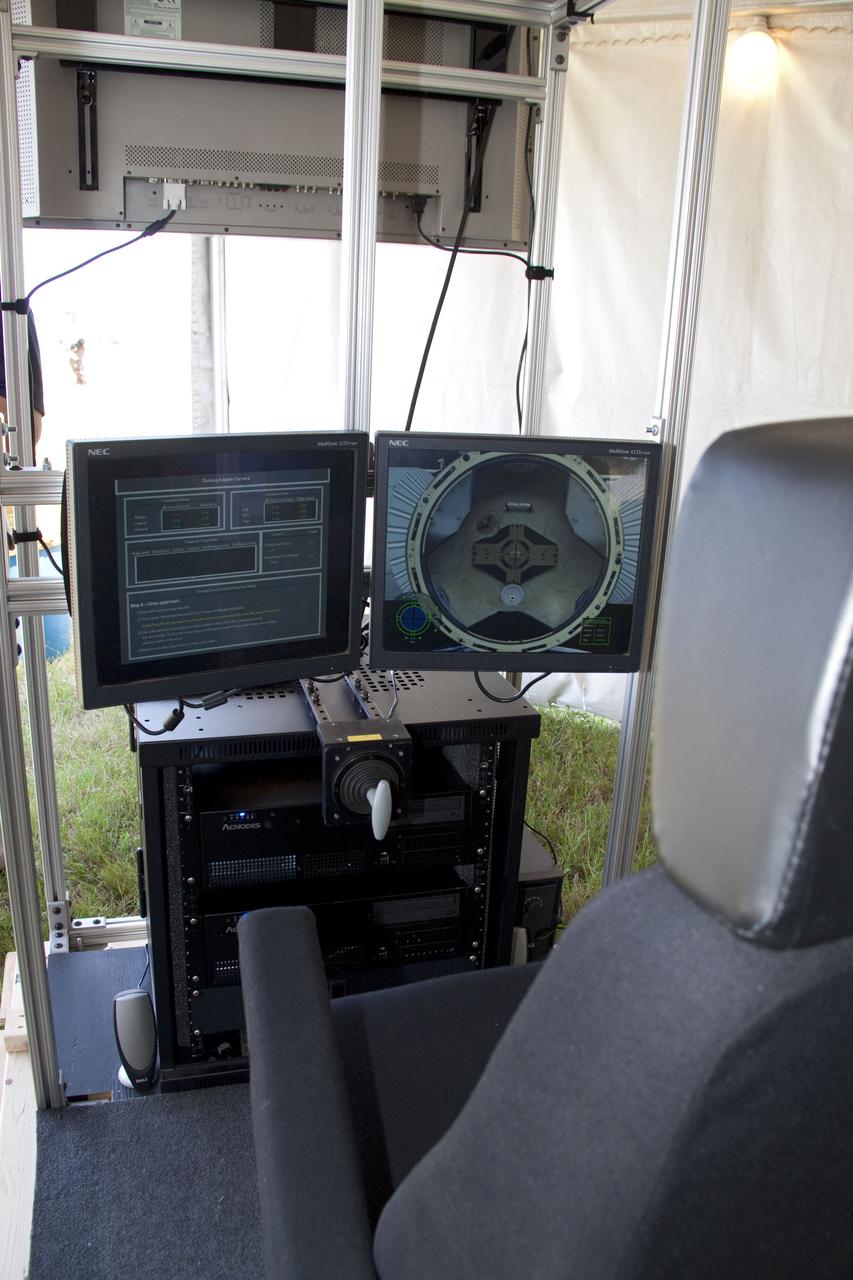
CAPE CANAVERAL, Fla. -- An interactive docking simulator developed by Lockheed Martin gave STS-134 launch guests at NASA's Kennedy Space Center in Florida the opportunity to fly a realistic docking maneuver with the International Space Station. The center screen provides the forward view to the docking target while the white T-shaped handle is used for translation corrections during the maneuver. The Sensor Test for Orion Relnav Risk Mitigation, or STORRM, flight test planned for space shuttle Endeavour's STS-134 mission will mature the sensor technologies to make these docking operations easier and safer for America's next-generation exploration spacecraft. STS-134 also will deliver the Express Logistics Carrier-3, Alpha Magnetic Spectrometer-2 (AMS), a high-pressure gas tank and additional spare parts for the Dextre robotic helper to the space station. Endeavour was scheduled to launch at 3:47 p.m. on April 29, but that attempt was scrubbed for at least 72 hours while engineers assess an issue associated with the shuttle's Auxiliary Power Unit 1. STS-134 will be the final spaceflight for Endeavour. For more information visit, www.nasa.gov_mission_pages_shuttle_shuttlemissions_sts134_index.html. Photo credit: NASA_Jack Pfaller
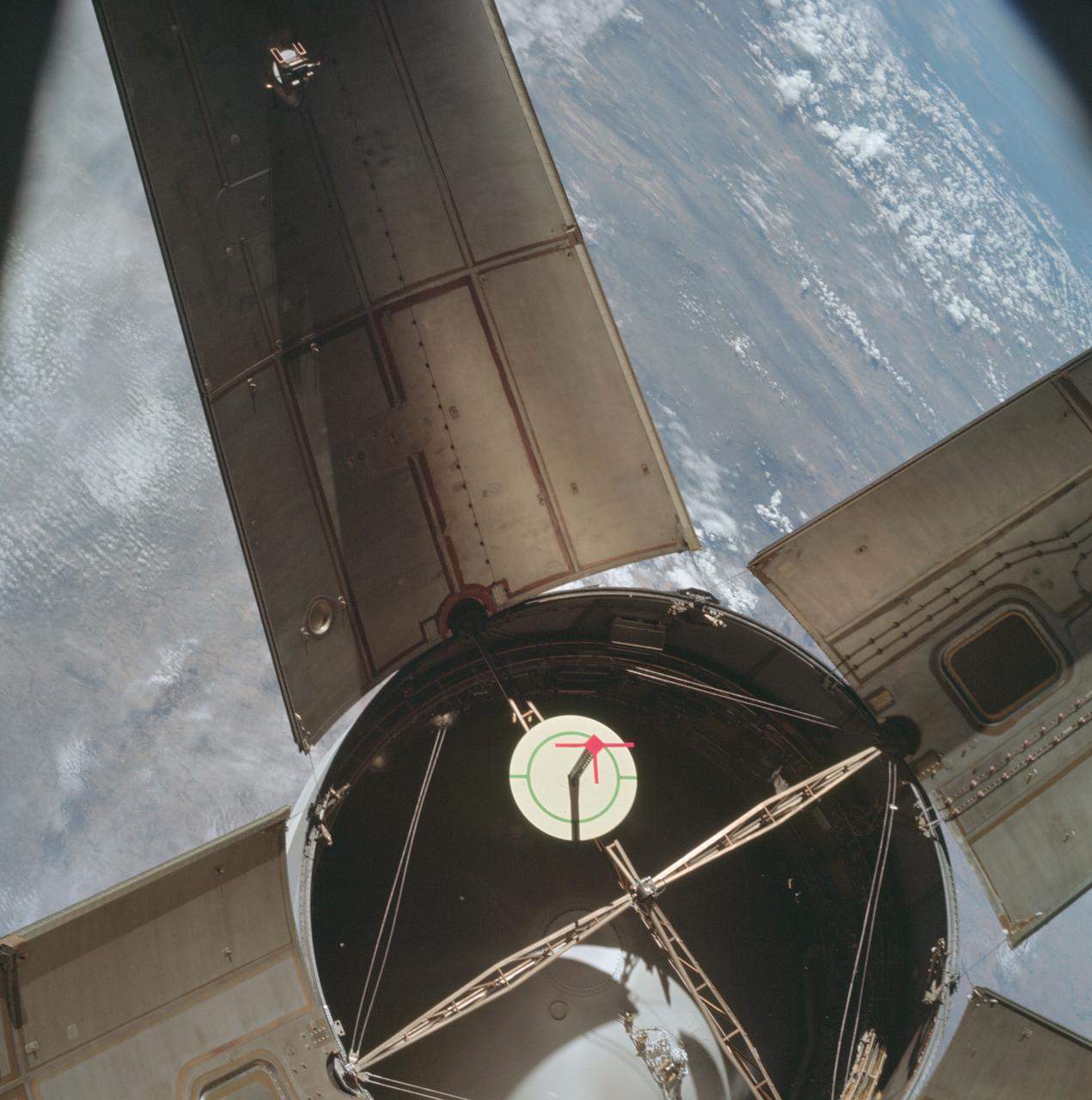
AS07-03-1535 (11 Oct. 1968) --- The expended Saturn IVB stage as photographed from the Apollo 7 spacecraft during transposition and docking maneuvers at an altitude of 126 nautical miles, at ground elapsed time of three hours, 11 minutes. The round, white disc inside the open panels of the Saturn IVB is a simulated docking target similar to that used on the lunar module for docking during lunar missions. The spacecraft is directly over Odessa-Midland, Texas. The view between the two panels (area of large puffy clouds) extends southwest across Texas into the Mexican State of Chihuahua. The distance between the Apollo 7 spacecraft and the S-IVB is approximately 50 feet.
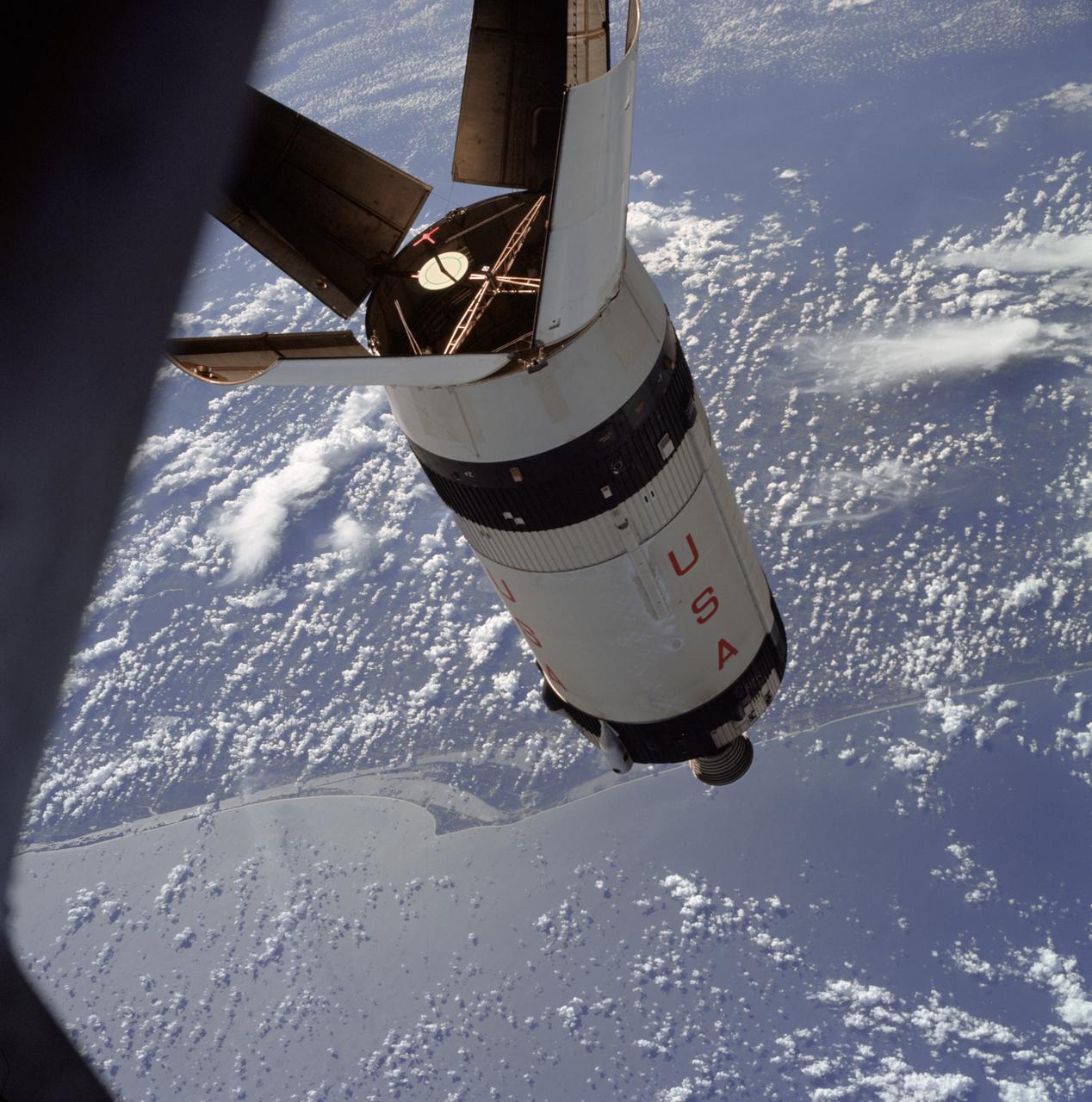
AS07-03-1545 (11 Oct. 1968) --- The expended Saturn S-IVB stage as photographed from the Apollo 7 spacecraft during transposition and docking maneuvers at an approximate altitude of 125 nautical miles, at ground elapsed time of three hours and 16 minutes (beginning of third revolution). This view is over the Atlantic Ocean off the coast of Cape Kennedy, Florida. The Florida coastline from Flagler Beach southward to Vero Beach is clearly visible in picture. Much of the Florida peninsula can be seen. Behind the open panels is the Gulf of Mexico. Distance between the Apollo 7 spacecraft and the S-IVB is approximately 100 feet. The round, white disc inside the open panels of the S-IVB is a simulated docking target similar to that used on the Lunar Module (LM) for docking during lunar missions.
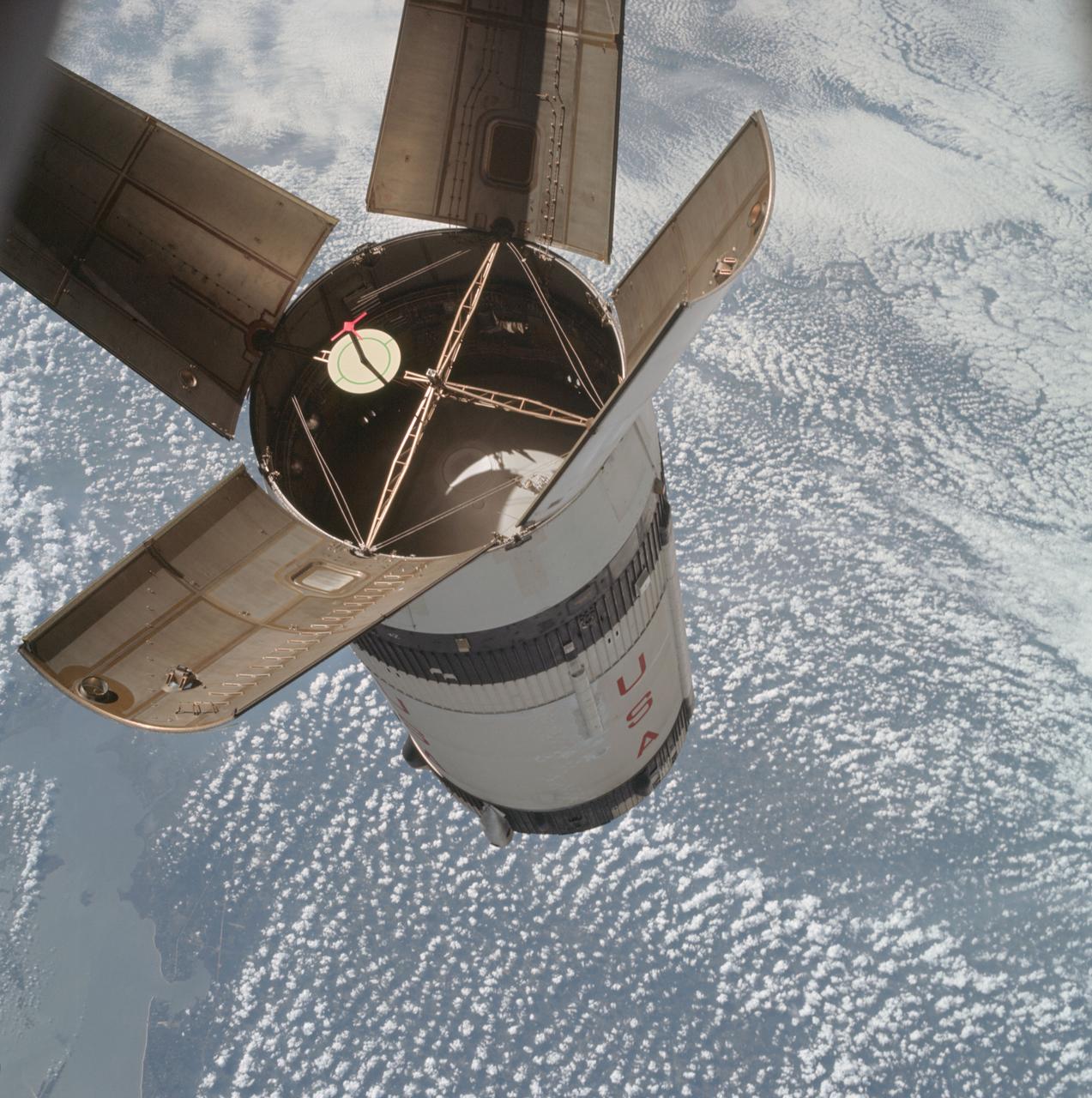
AS07-03-1541 (11 Oct. 1968) --- The expended Saturn IVB stage as photographed from the Apollo 7 spacecraft during transposition and docking maneuvers. St. Louis Bay and Lake Borgne area just east of New Orleans is seen below. The round, white disc inside the open panels of the Saturn IVB is a simulated docking target similar to that used on the lunar module for docking during lunar missions.
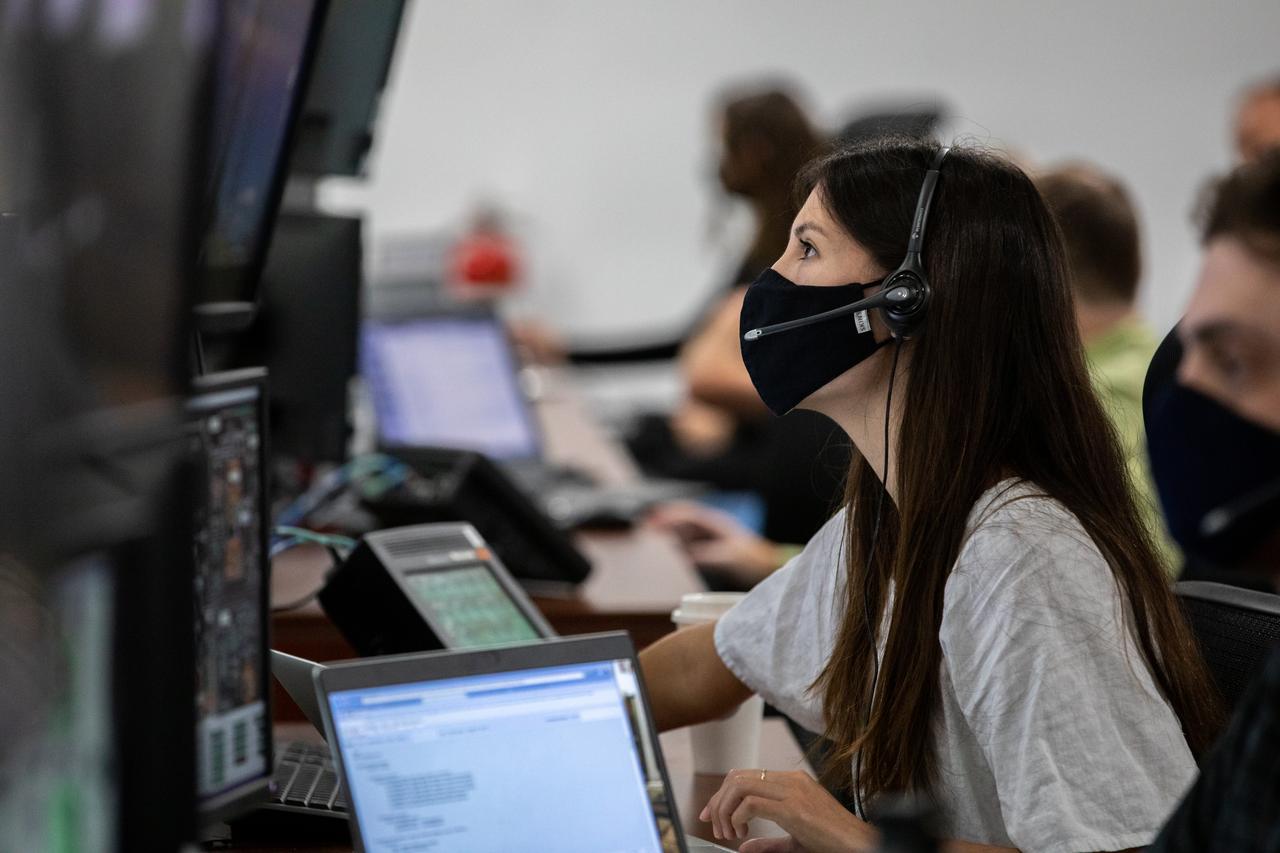
Artemis teams conduct the final simulation for the Artemis I mission inside the Launch Control Center at NASA’s Kennedy Space Center in Florida on Aug. 4, 2022. Artemis I will be the first integrated test of NASA’s Space Launch System (SLS) rocket and Orion spacecraft. During the flight, Orion will launch atop the most powerful rocket in the world and fly farther than any spacecraft for humans has ever flown. The spacecraft will stay in space longer than any human spacecraft has without docking to the International Space Station and return home faster than ever before.
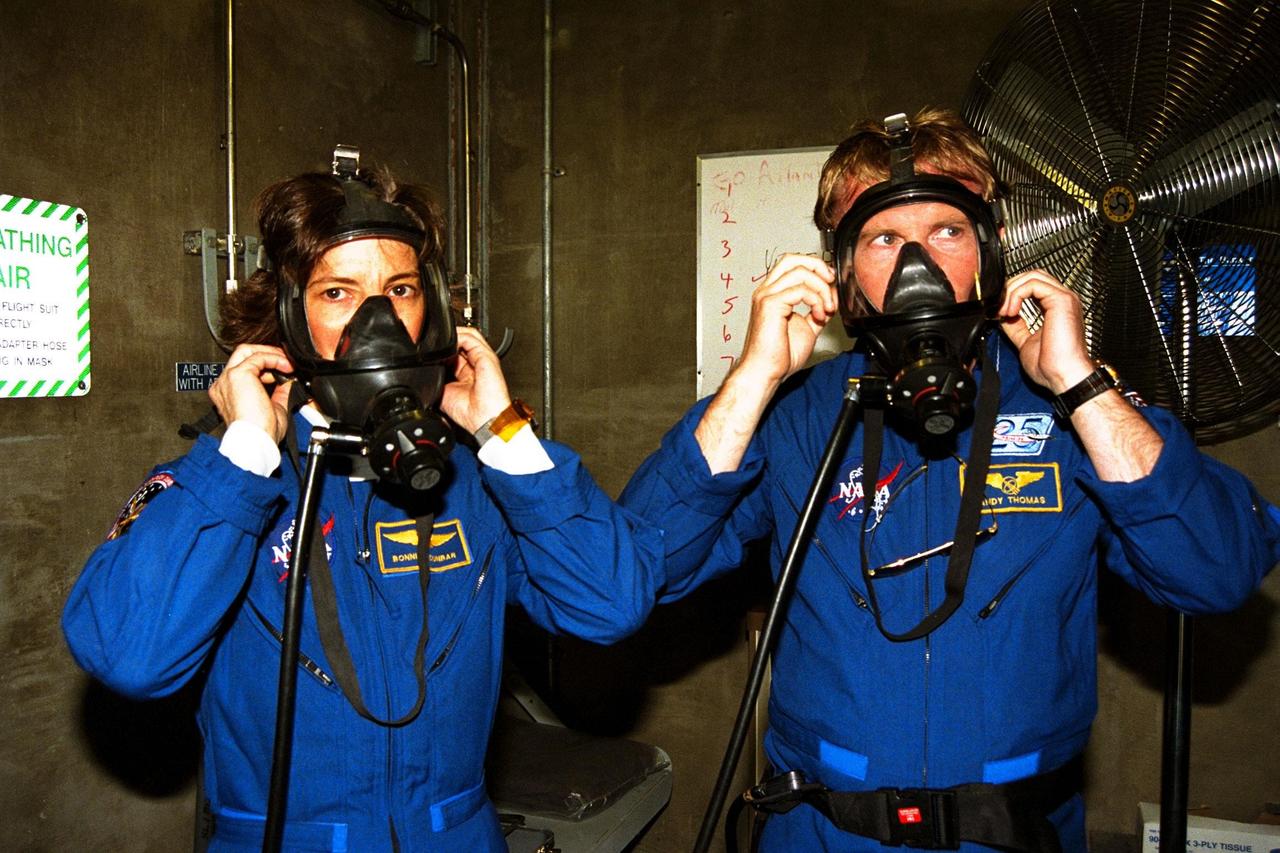
KENNEDY SPACE CENTER, Fla. -- STS-89 Mission Specialists Bonnie Dunbar, Ph.D., and Andrew Thomas, Ph.D., check out oxygen masks in the bunker at KSC’s Launch Pad 39A. The seven astronauts assigned to the eighth Shuttle-Mir docking flight are completing Terminal Countdown Demonstration Test (TCDT) activities. A dress rehearsal for launch, the TCDT includes emergency egress training at the launch pad and culminates with a simulated countdown. Dr. Thomas will transfer to the Russian Space Station Mir and succeed David Wolf, M.D., who will return to Earth aboard Endeavour. The Space Shuttle Endeavour is undergoing preparations for liftoff, scheduled for Jan. 22. Dr. Thomas will live and work on Mir until June
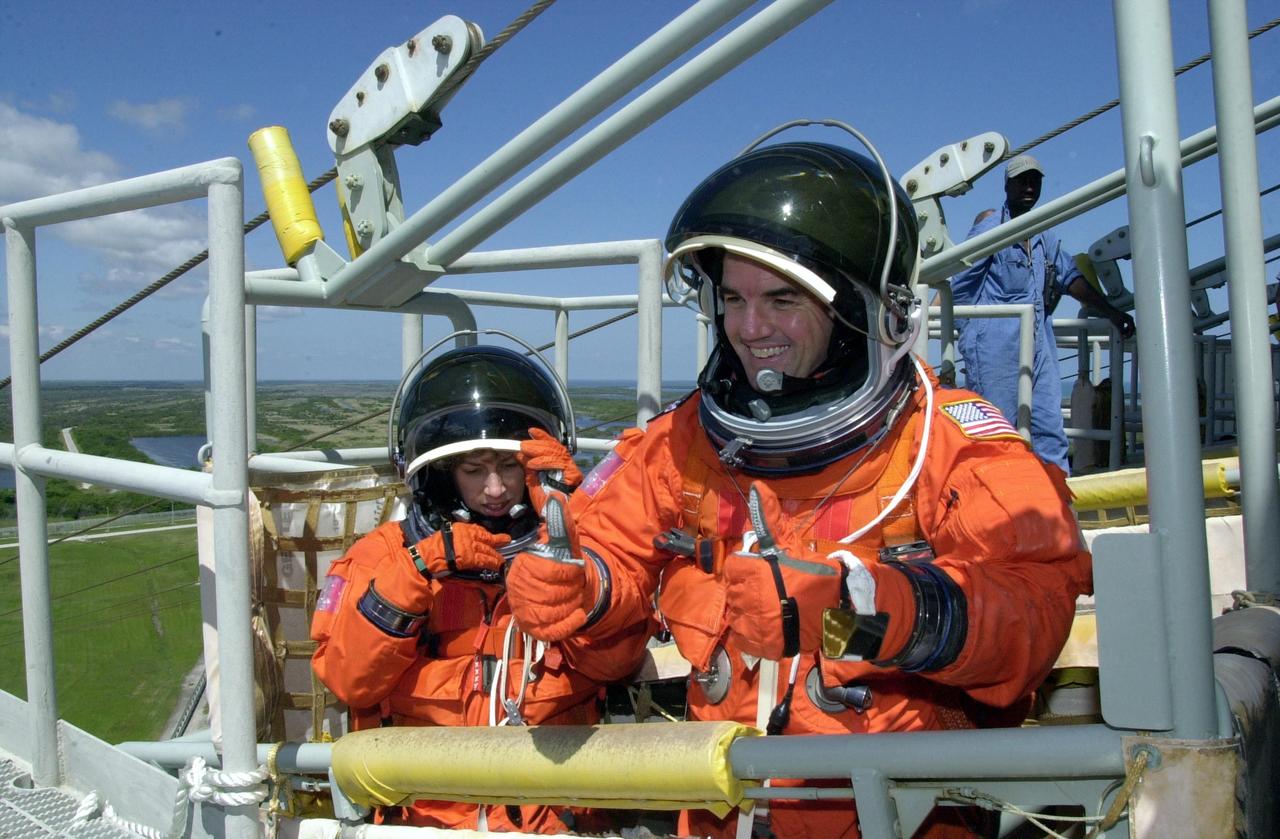
KENNEDY SPACE CENTER, FLA. -- STS-110 Mission Specialists Ellen Ochoa and Rex J. Walheim are in the slidewire basket, part of emergency egress equipment on the launch pad. The crew is taking part in Terminal Countdown Demonstration Test activities, which also include a simulated launch countdown, held at KSC prior to each Space Shuttle flight. Scheduled for launch April 4, the 11-day mission will feature Shuttle Atlantis docking with the International Space Station (ISS) and delivering the S0 truss, the centerpiece-segment of the primary truss structure that will eventually extend over 300 feet.
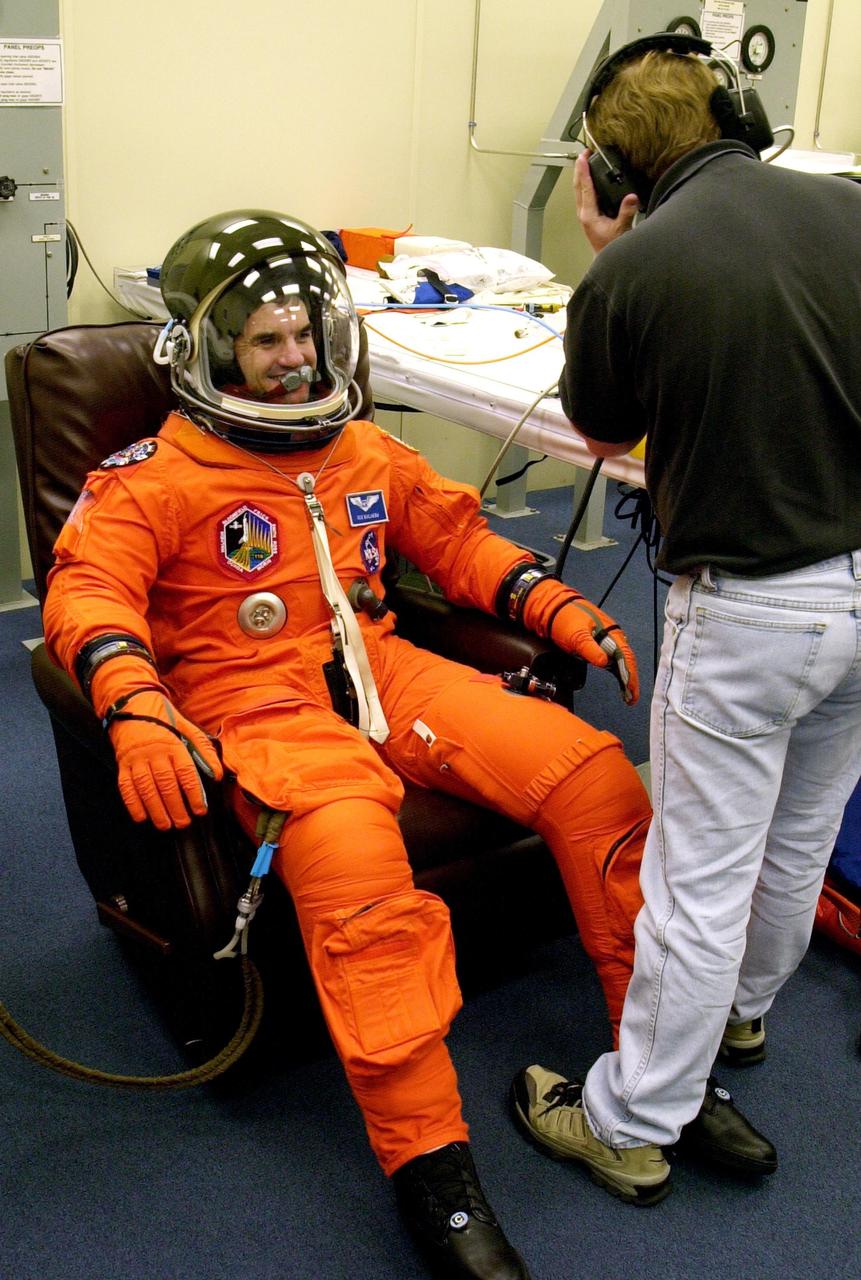
KENNEDY SPACE CENTER, FLA. -- During Terminal Countdown Demonstration Test activities, STS-110 Mission Specialist Rex Walheim has his launch and entry suit checked for fit. The TCDT is held at KSC prior to each Space Shuttle flight to provide flight crews an opportunity to participate in simulated launch countdown activities. Scheduled for launch April 4, the 11-day mission will feature Shuttle Atlantis docking with the International Space Station (ISS) and delivering the S0 truss, the centerpiece-segment of the primary truss structure that will eventually extend over 300 feet.
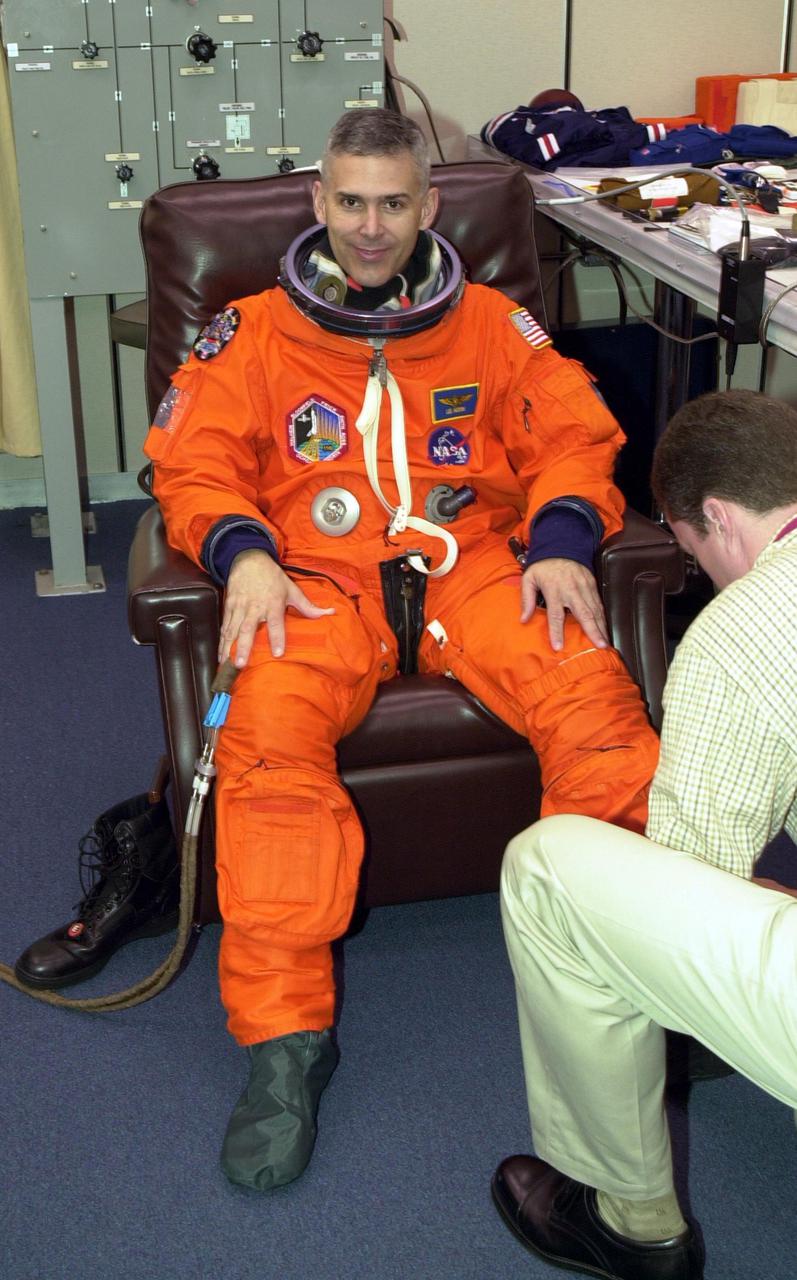
KENNEDY SPACE CENTER, FLA. -- During Terminal Countdown Demonstration Test activities, STS-110 Mission Specialist Lee Morin has his launch and entry suit checked for fit. The TCDT is held at KSC prior to each Space Shuttle flight to provide flight crews an opportunity to participate in simulated launch countdown activities. Scheduled for launch April 4, the 11-day mission will feature Shuttle Atlantis docking with the International Space Station (ISS) and delivering the S0 truss, the centerpiece-segment of the primary truss structure that will eventually extend over 300 feet.
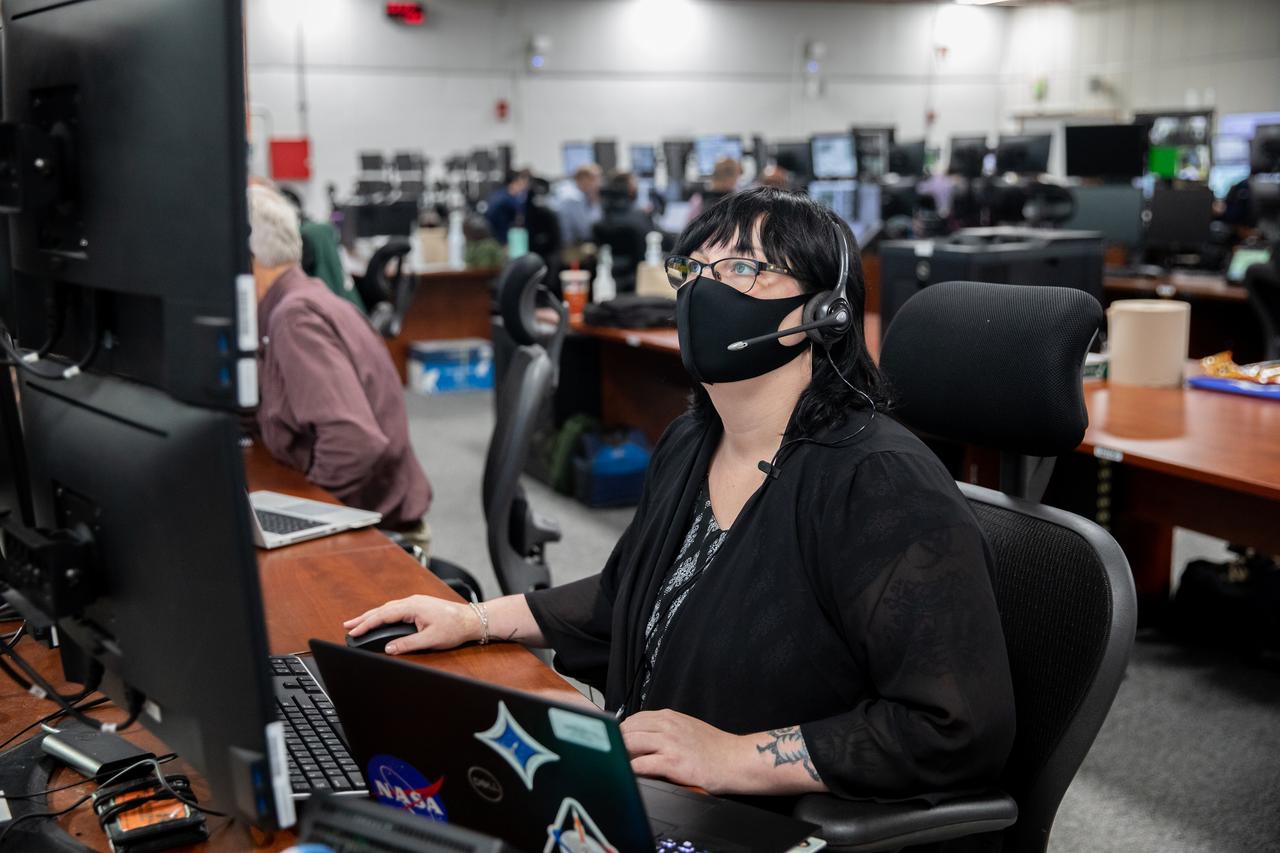
Artemis teams conduct the final simulation for the Artemis I mission inside the Launch Control Center at NASA’s Kennedy Space Center in Florida on Aug. 4, 2022. Artemis I will be the first integrated test of NASA’s Space Launch System (SLS) rocket and Orion spacecraft. During the flight, Orion will launch atop the most powerful rocket in the world and fly farther than any spacecraft for humans has ever flown. The spacecraft will stay in space longer than any human spacecraft has without docking to the International Space Station and return home faster than ever before.
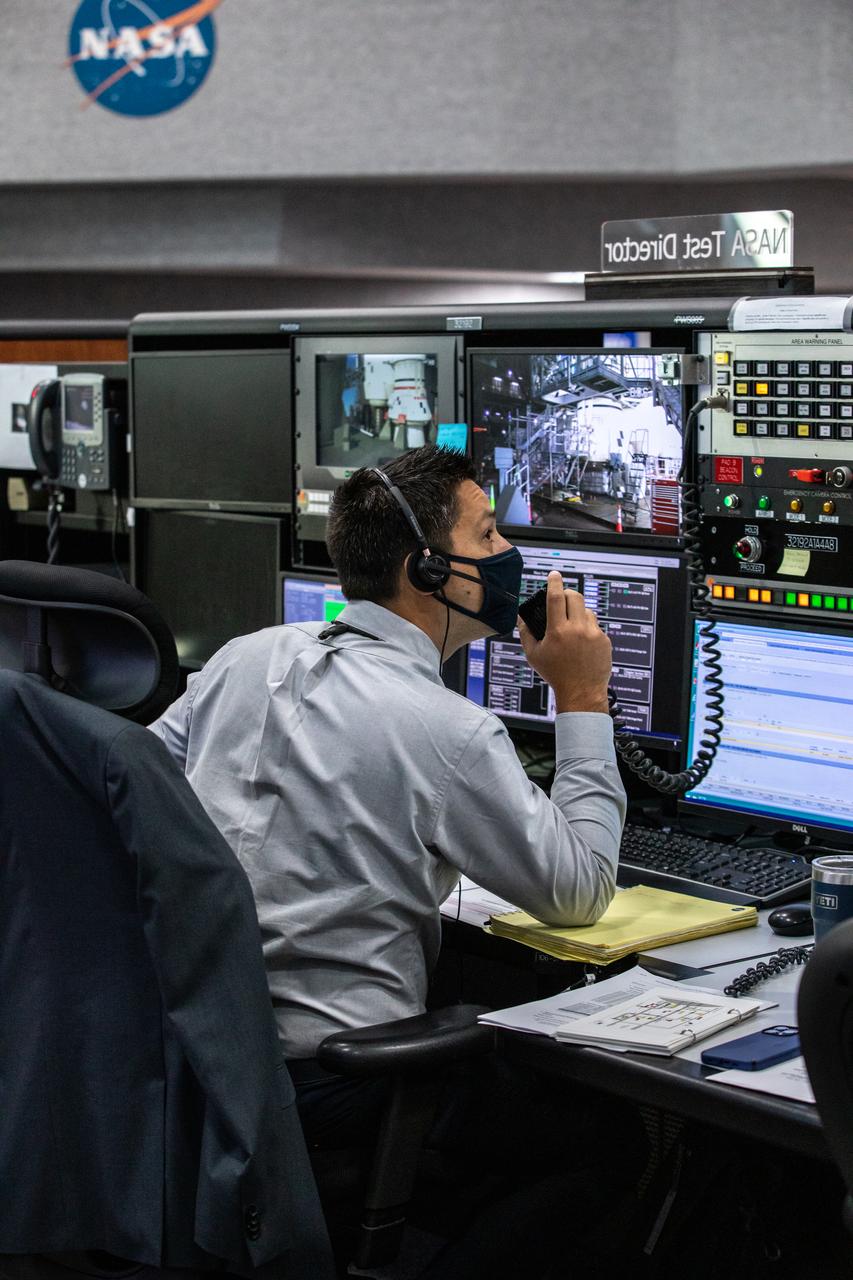
Artemis teams conduct the final simulation for the Artemis I mission inside the Launch Control Center at NASA’s Kennedy Space Center in Florida on Aug. 4, 2022. Artemis I will be the first integrated test of NASA’s Space Launch System (SLS) rocket and Orion spacecraft. During the flight, Orion will launch atop the most powerful rocket in the world and fly farther than any spacecraft for humans has ever flown. The spacecraft will stay in space longer than any human spacecraft has without docking to the International Space Station and return home faster than ever before. Shown here is Daniel Florez, NASA test director.
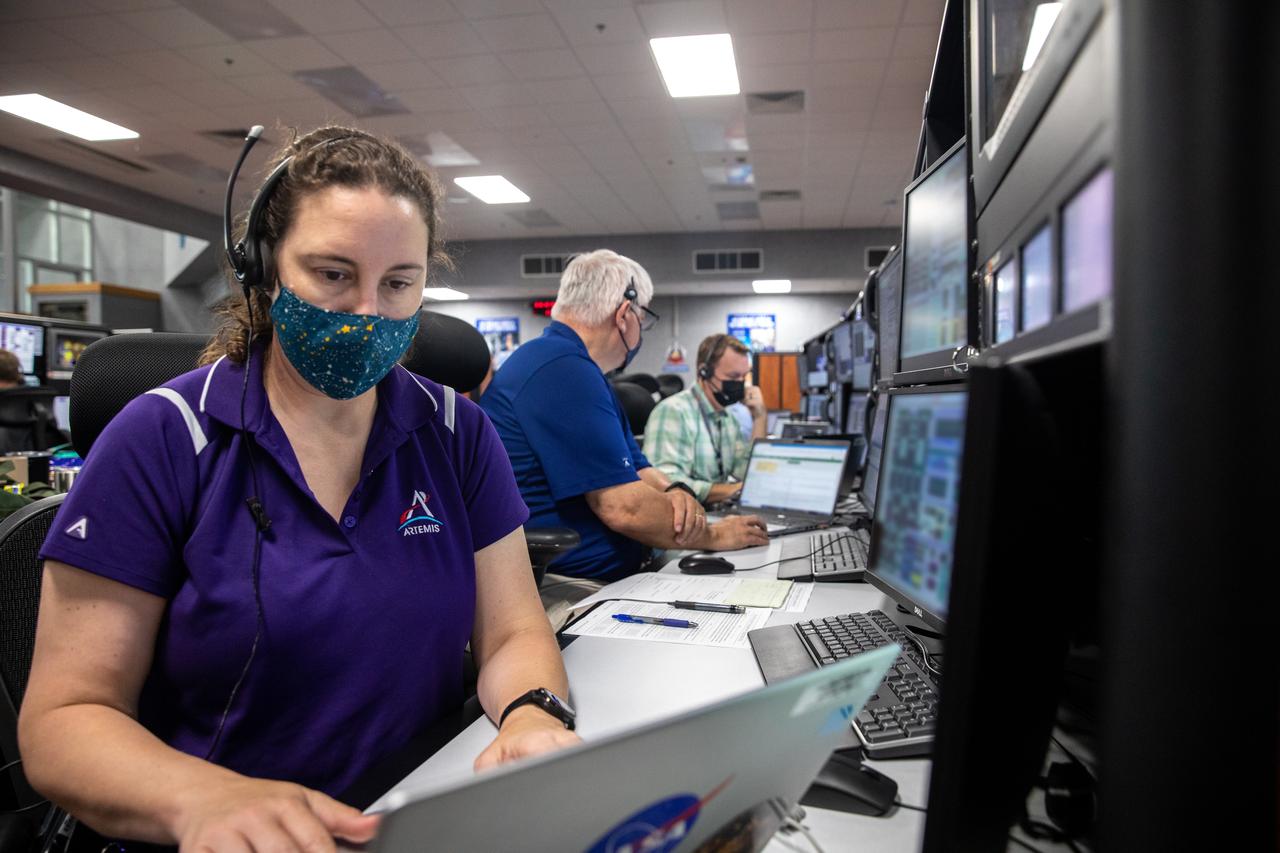
Artemis teams conduct the final simulation for the Artemis I mission inside the Launch Control Center at NASA’s Kennedy Space Center in Florida on Aug. 4, 2022. Artemis I will be the first integrated test of NASA’s Space Launch System (SLS) rocket and Orion spacecraft. During the flight, Orion will launch atop the most powerful rocket in the world and fly farther than any spacecraft for humans has ever flown. The spacecraft will stay in space longer than any human spacecraft has without docking to the International Space Station and return home faster than ever before.
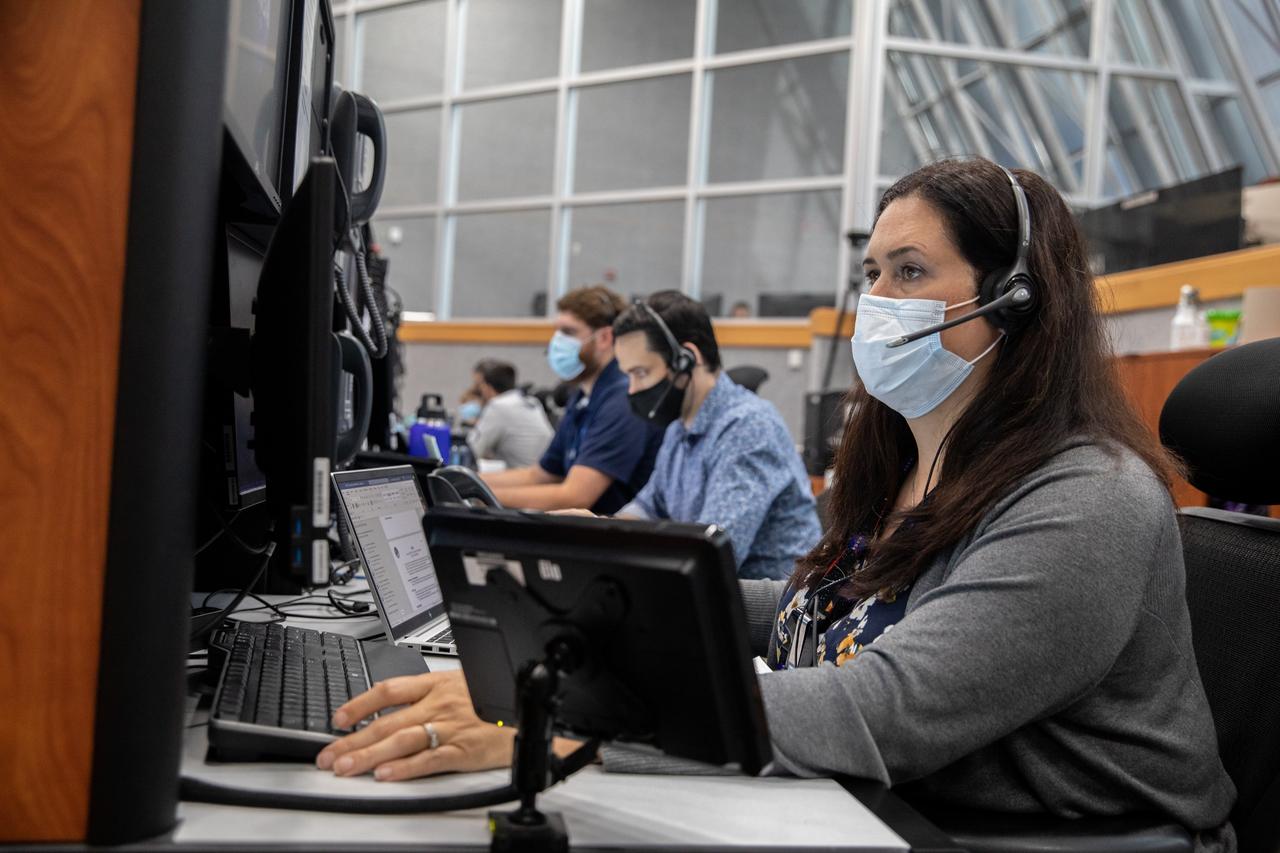
Artemis teams conduct the final simulation for the Artemis I mission inside the Launch Control Center at NASA’s Kennedy Space Center in Florida on Aug. 4, 2022. Artemis I will be the first integrated test of NASA’s Space Launch System (SLS) rocket and Orion spacecraft. During the flight, Orion will launch atop the most powerful rocket in the world and fly farther than any spacecraft for humans has ever flown. The spacecraft will stay in space longer than any human spacecraft has without docking to the International Space Station and return home faster than ever before. Shown here is Melissa Jones, Artemis I landing and recovery director.
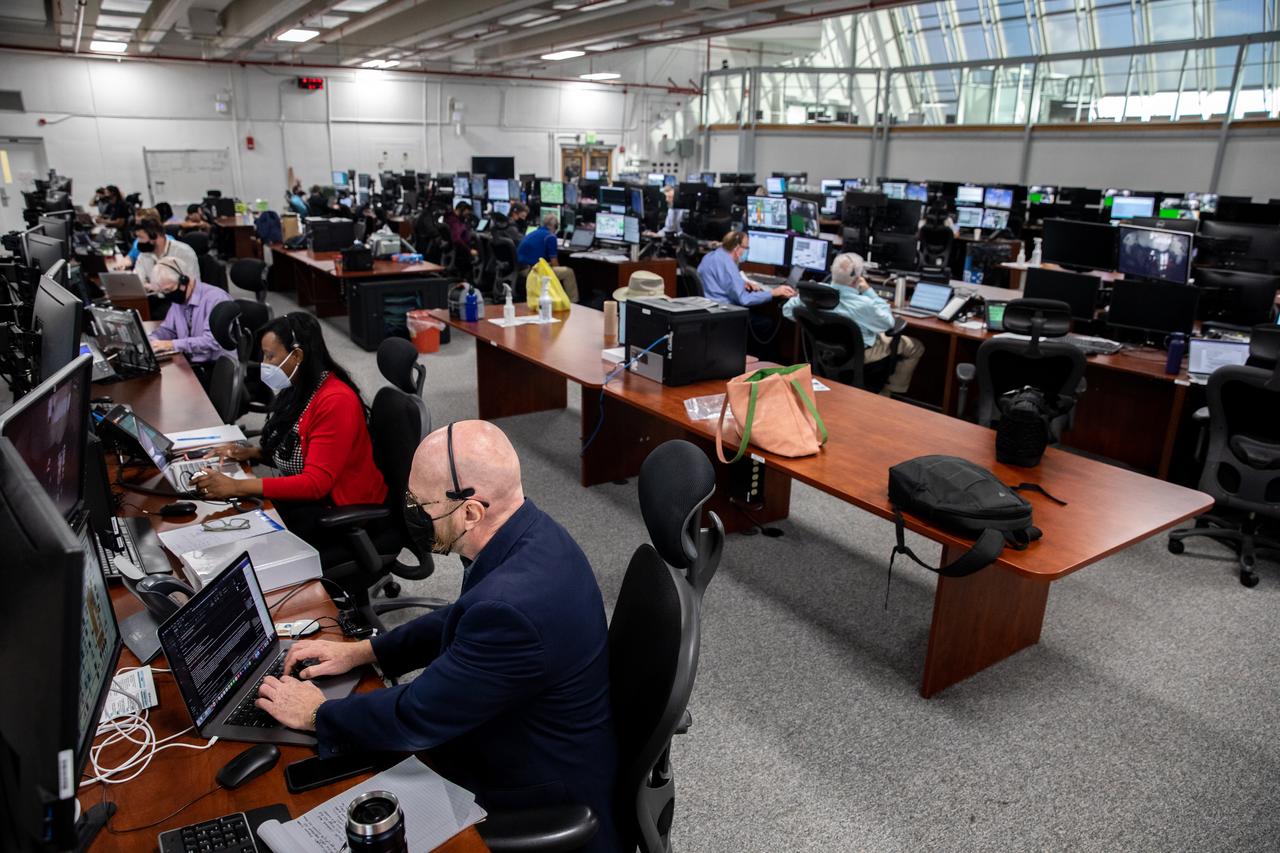
Artemis teams conduct the final simulation for the Artemis I mission inside the Launch Control Center at NASA’s Kennedy Space Center in Florida on Aug. 4, 2022. Artemis I will be the first integrated test of NASA’s Space Launch System (SLS) rocket and Orion spacecraft. During the flight, Orion will launch atop the most powerful rocket in the world and fly farther than any spacecraft for humans has ever flown. The spacecraft will stay in space longer than any human spacecraft has without docking to the International Space Station and return home faster than ever before.
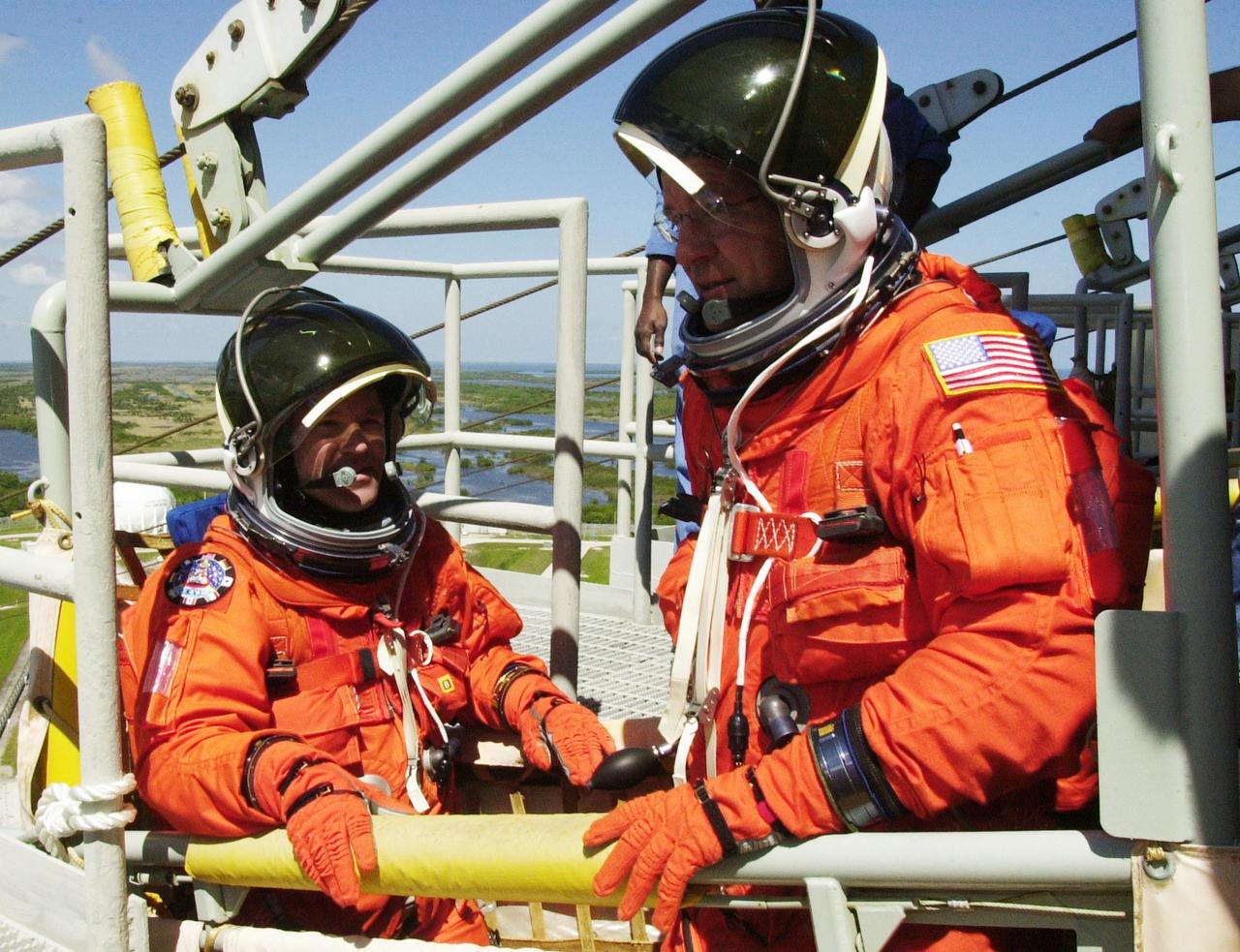
KENNEDY SPACE CENTER, FLA. -- STS-110 Mission Specialists Steven L. Smith (left) and Jerry L. Ross (right) get ready to climb out of the slidewire basket, part of emergency egress equipment on the launch pad.. The crew is taking part in Terminal Countdown Demonstration Test activities, which also include a simulated launch countdown, held at KSC prior to each Space Shuttle flight. Scheduled for launch April 4, the 11-day mission will feature Shuttle Atlantis docking with the International Space Station (ISS) and delivering the S0 truss, the centerpiece-segment of the primary truss structure that will eventually extend over 300 feet.
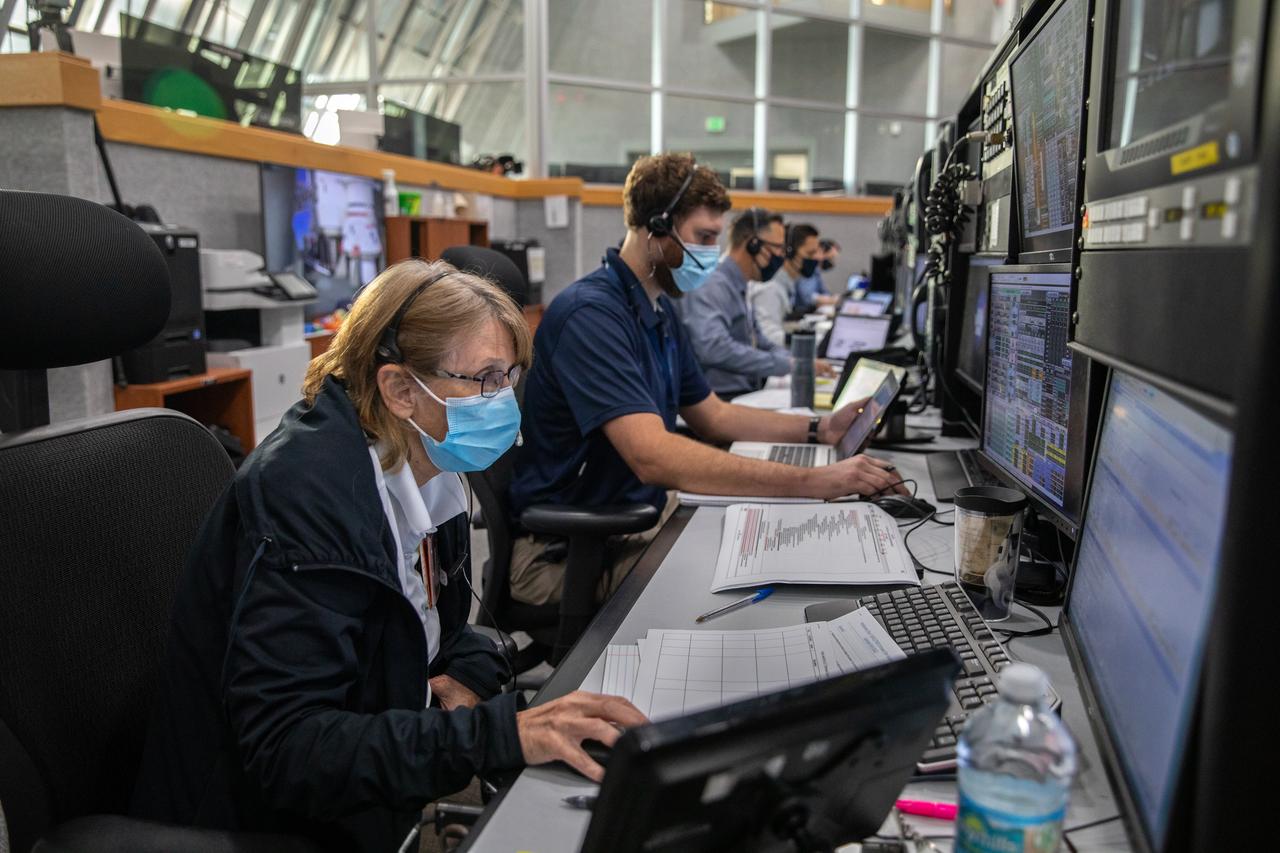
Artemis teams conduct the final simulation for the Artemis I mission inside the Launch Control Center at NASA’s Kennedy Space Center in Florida on Aug. 4, 2022. Artemis I will be the first integrated test of NASA’s Space Launch System (SLS) rocket and Orion spacecraft. During the flight, Orion will launch atop the most powerful rocket in the world and fly farther than any spacecraft for humans has ever flown. The spacecraft will stay in space longer than any human spacecraft has without docking to the International Space Station and return home faster than ever before. Shown here is Teresa Annulis, assistant SLS test conductor.
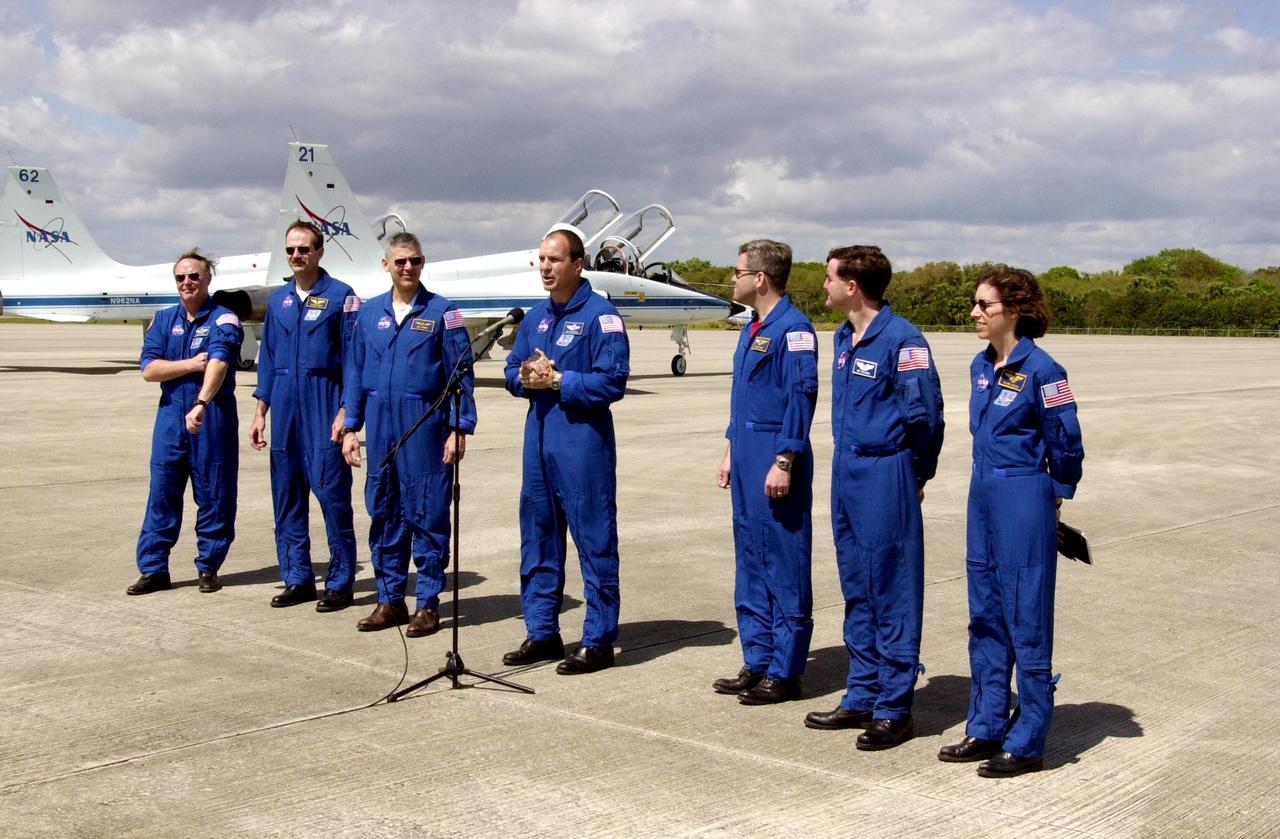
KENNEDY SPACE CENTER, FLA. -- Prior to their departure, the STS-110 crew pauses for the media at the Shuttle Landing Facility. Standing left to right are Mission Specialists Jerry Ross, Steven Smith and Lee Morin; Commander Michael Bloomfield; Pilot Stephen Frick; and Mission Specialists Rex Walheim and Ellen Ochoa. The crew was at KSC for Terminal Countdown Demonstration Test activities that included the payload familiarization and a simulated launch countdown. Scheduled for launch April 4, the 11-day STS-110 mission will feature Space Shuttle Atlantis docking with the International Space Station (ISS) and delivering the S0 truss, the centerpiece-segment of the primary truss structure that will eventually extend over 300 feet
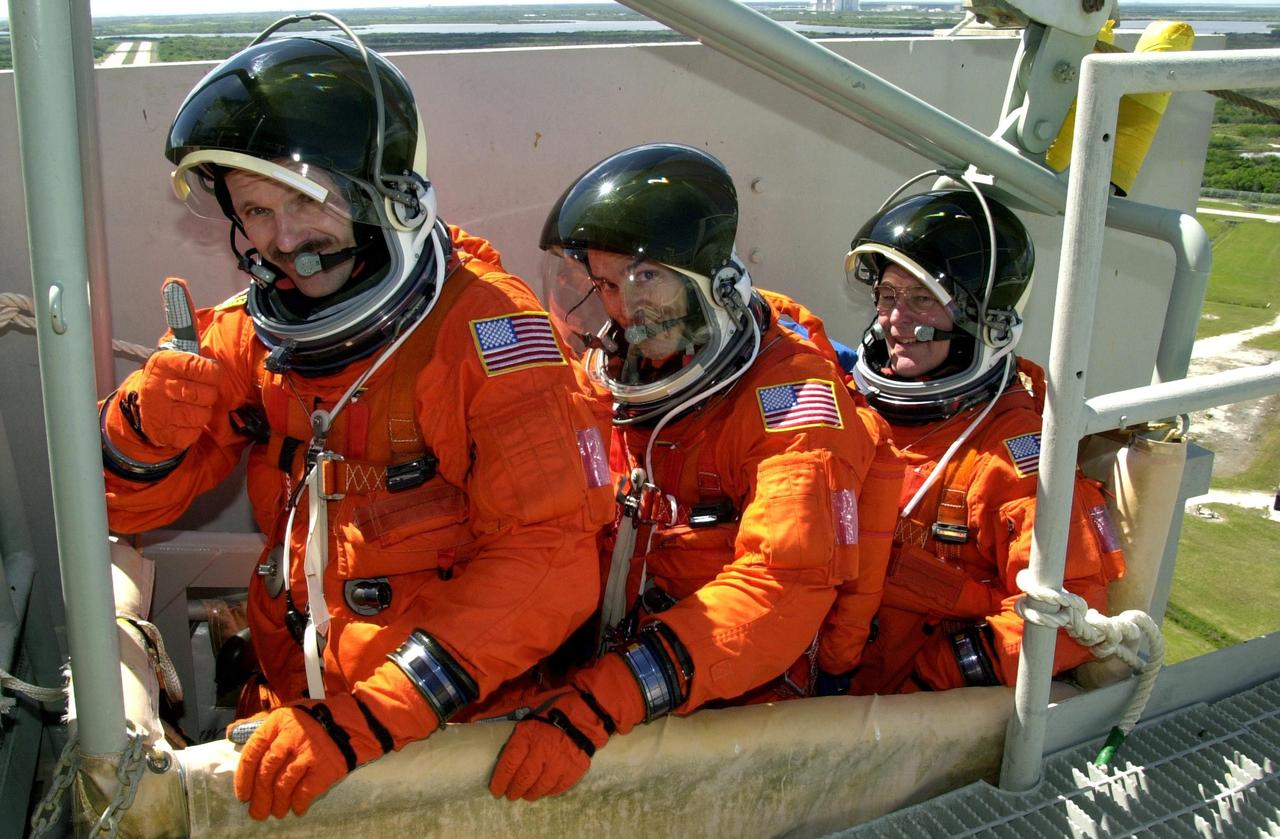
KENNEDY SPACE CENTER, FLA. -- -- STS-110 crew members sit in the slidewire basket, part of emergency egress equipment on the pad. From left are Mission Specialists Steven L. Smith, Lee M.E. Morin and Jerry L. Ross. The crew is taking part in Terminal Countdown Demonstration Test activities, which also include a simulated launch countdown, held at KSC prior to each Space Shuttle flight. Scheduled for launch April 4, the 11-day mission will feature Shuttle Atlantis docking with the International Space Station (ISS) and delivering the S0 truss, the centerpiece-segment of the primary truss structure that will eventually extend over 300 feet.
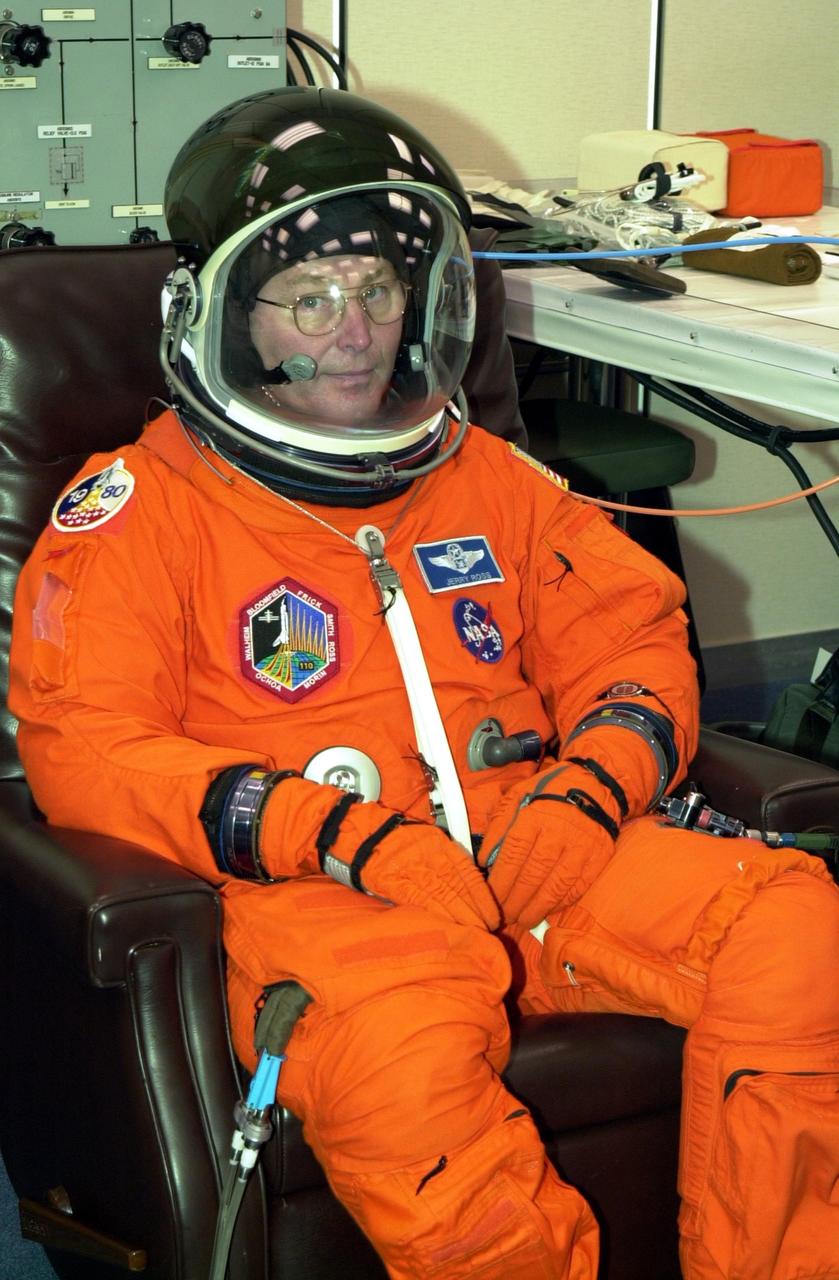
KENNEDY SPACE CENTER, FLA. -- STS-110 Mission Specialist Jerry Ross relaxes during suit fit, which is part of Terminal Countdown Demonstration Test activities. The TCDT is held at KSC prior to each Space Shuttle flight to provide flight crews an opportunity to participate in simulated launch countdown activities. Scheduled for launch April 4, the 11-day mission will feature Shuttle Atlantis docking with the International Space Station (ISS) and delivering the S0 truss, the centerpiece-segment of the primary truss structure that will eventually extend over 300 feet
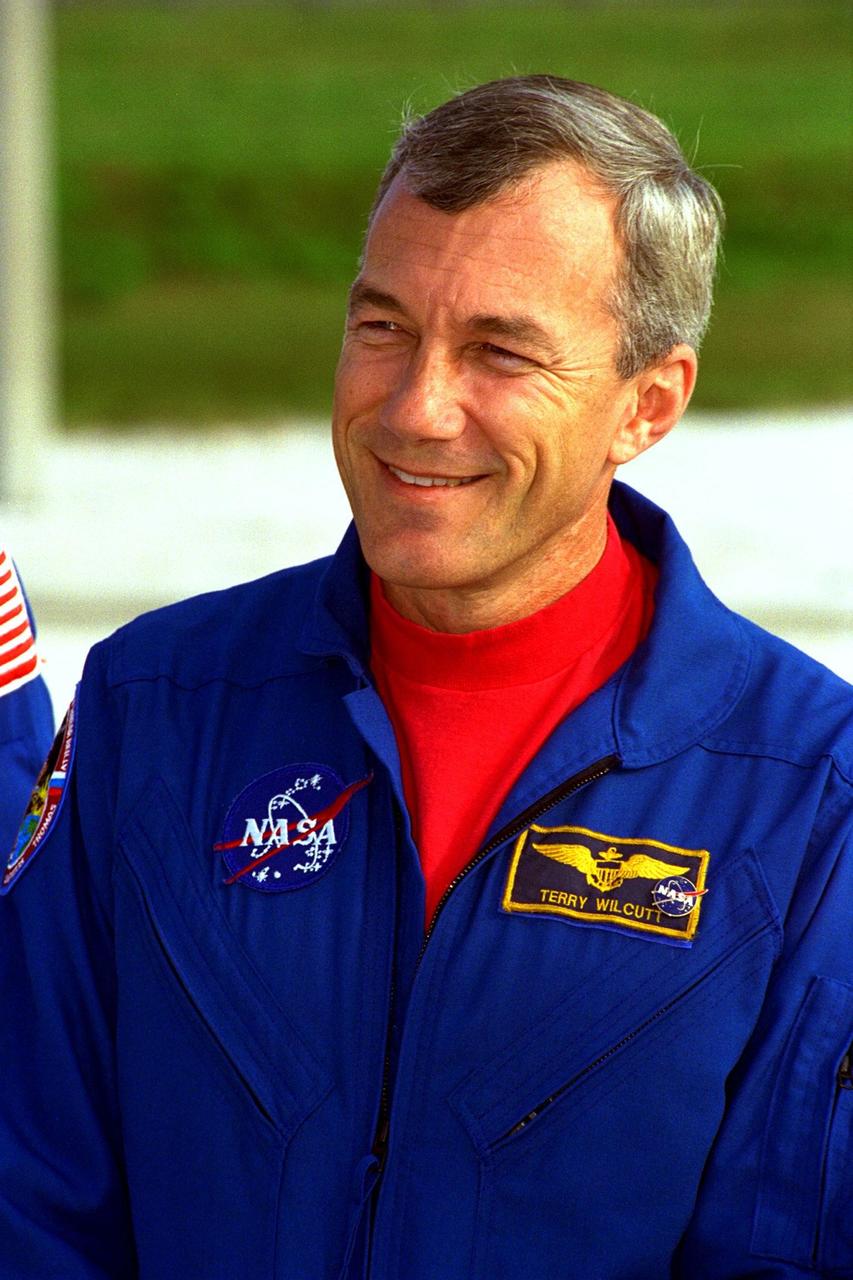
KENNEDY SPACE CENTER, Fla. -- STS-89 Commander Terrence Wilcutt participates in a question and answer session for the media during Terminal Countdown Demonstration Test (TCDT) activities at KSC. The seven astronauts assigned to the eighth Shuttle-Mir docking flight are at KSC for this dress rehearsal for launch, which includes emergency egress training at the launch pad and culminates with a simulated countdown. The Space Shuttle Endeavour is undergoing preparations for liftoff, scheduled for Jan. 22. STS-89 Mission Specialist Andrew Thomas, Ph.D, will transfer to the Russian Space Station Mir, and succeed David Wolf, M.D., who will return to Earth aboard Endeavour. Dr. Thomas will live and work on Mir until June
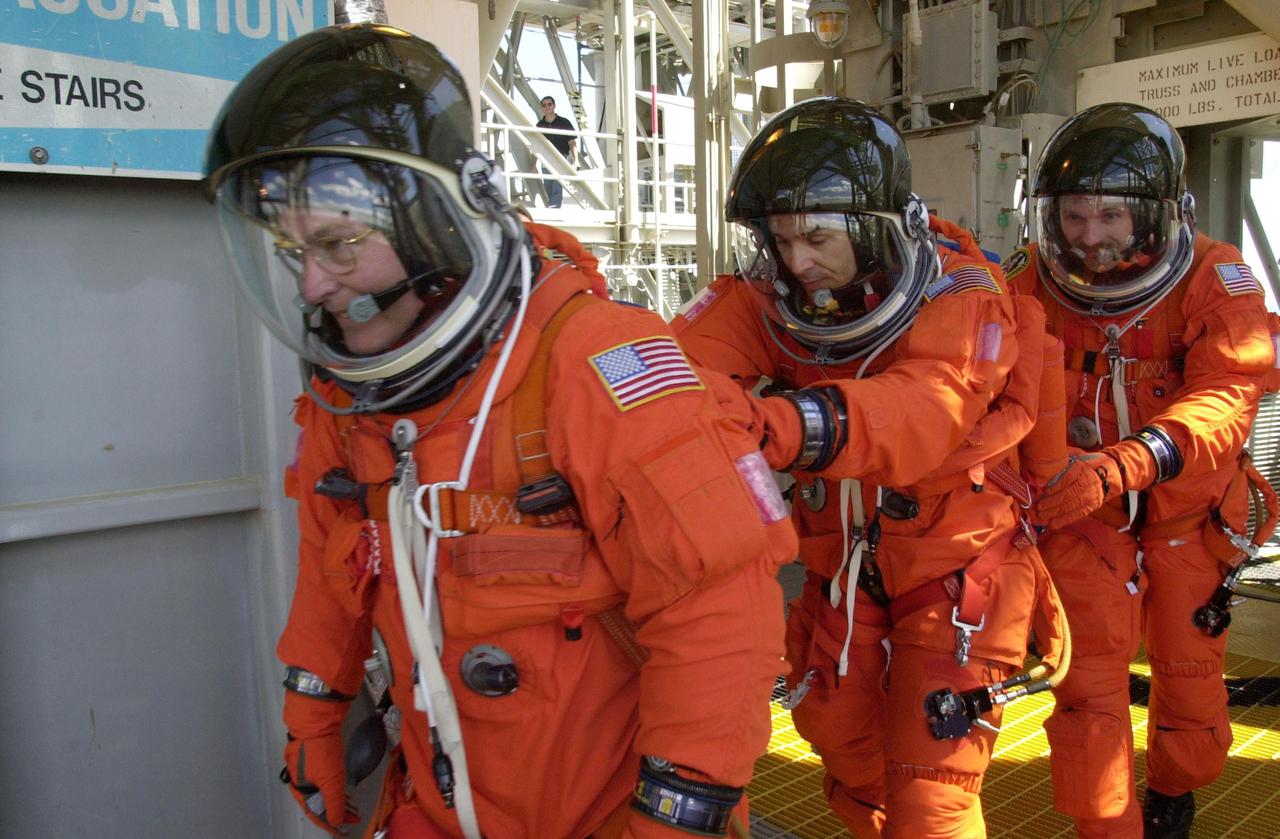
KENNEDY SPACE CENTER, FLA. -- STS-110 crew members practice emergency exit from the Fixed Service Structure during Terminal Countdown Demonstration Test. From left are Mission Specialists Jerry L. Ross, Lee M.E. Morin and Steven L. Smith. TCDT also includes a simulated launch countdown and is held at KSC prior to each Space Shuttle flight. Scheduled for launch April 4, the 11-day mission will feature Shuttle Atlantis docking with the International Space Station (ISS) and delivering the S0 truss, the centerpiece-segment of the primary truss structure that will eventually extend over 300 feet
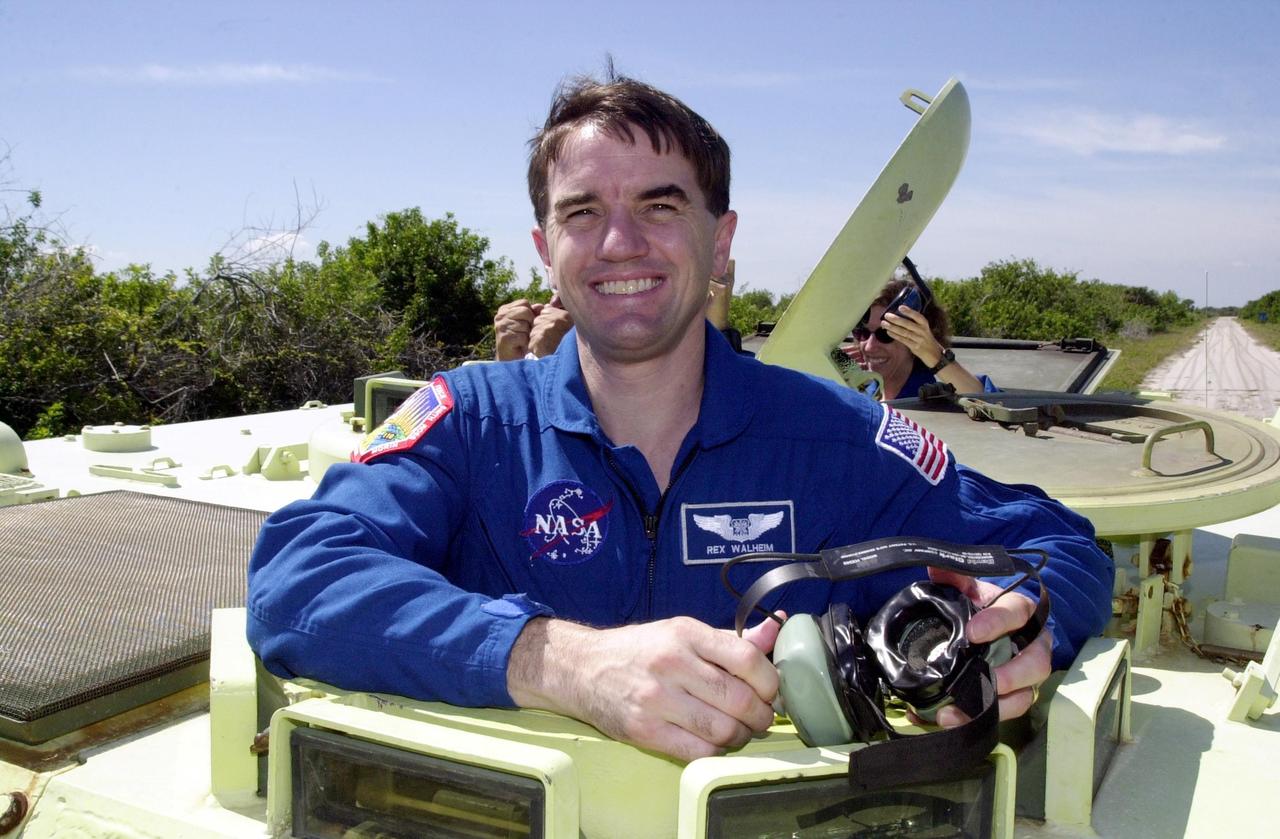
KENNEDY SPACE CENTER, FLA. -- Waiting his turn at driving the M-113 armored personnel carrier is STS-110 Mission Specialist Rex Walheim. In the background, right, is Mission Specialist Ellen Ochoa. The driving is part of Terminal Countdown Demonstration Test activities, which include emergency egress training and a simulated launch countdown. The TCDT is held at KSC prior to each Space Shuttle flight. Scheduled for launch April 4, the 11-day mission will feature Shuttle Atlantis docking with the International Space Station (ISS) and delivering the S0 truss, the centerpiece-segment of the primary truss structure that will eventually extend over 300 feet
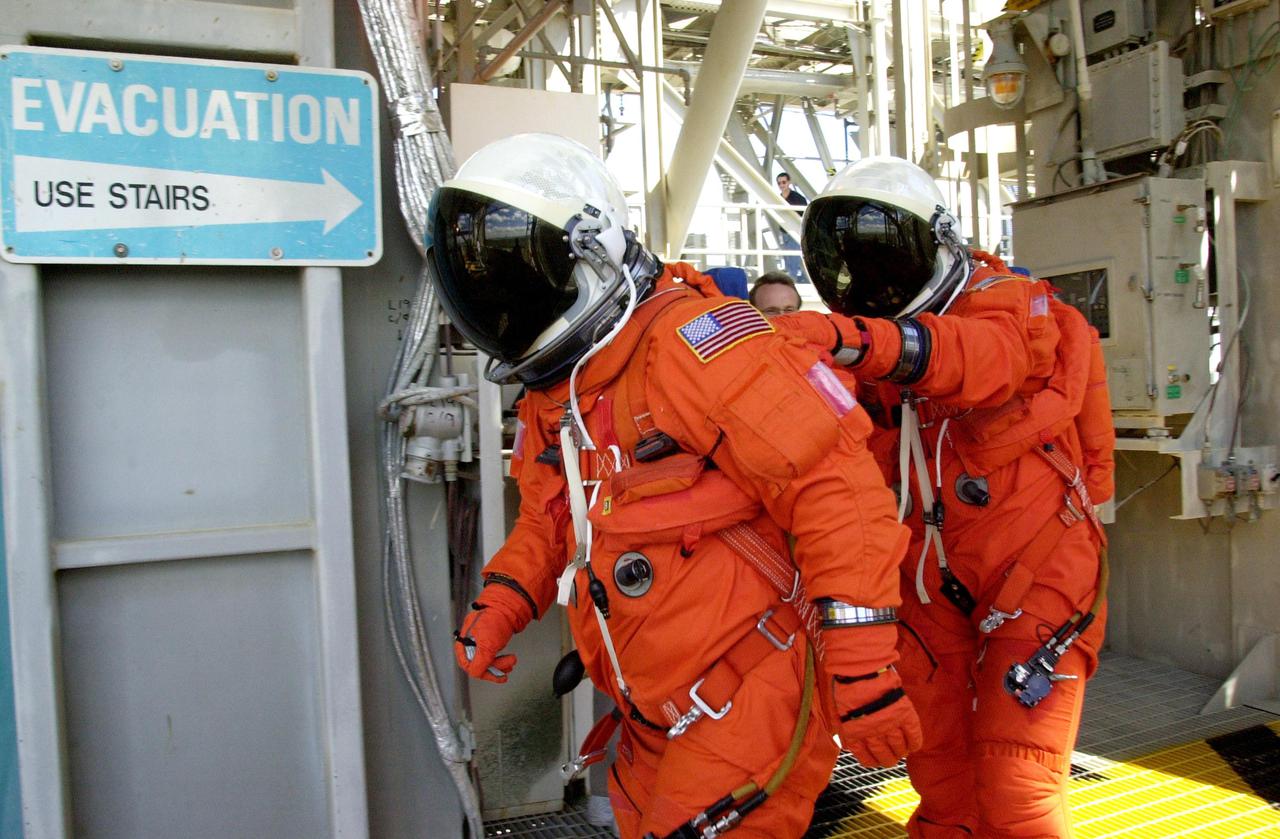
KENNEDY SPACE CENTER, FLA. -- As part of emergency egress training, STS-110 Pilot Stephen N. Frick and Commander Michael J. Bloomfield head for the slidewire basket on the Fixed Service Structure. The crew is taking part in Terminal Countdown Demonstration Test activities, which also include a simulated launch countdown, held at KSC prior to each Space Shuttle flight. Scheduled for launch April 4, the 11-day mission will feature Shuttle Atlantis docking with the International Space Station (ISS) and delivering the S0 truss, the centerpiece-segment of the primary truss structure that will eventually extend over 300 feet.
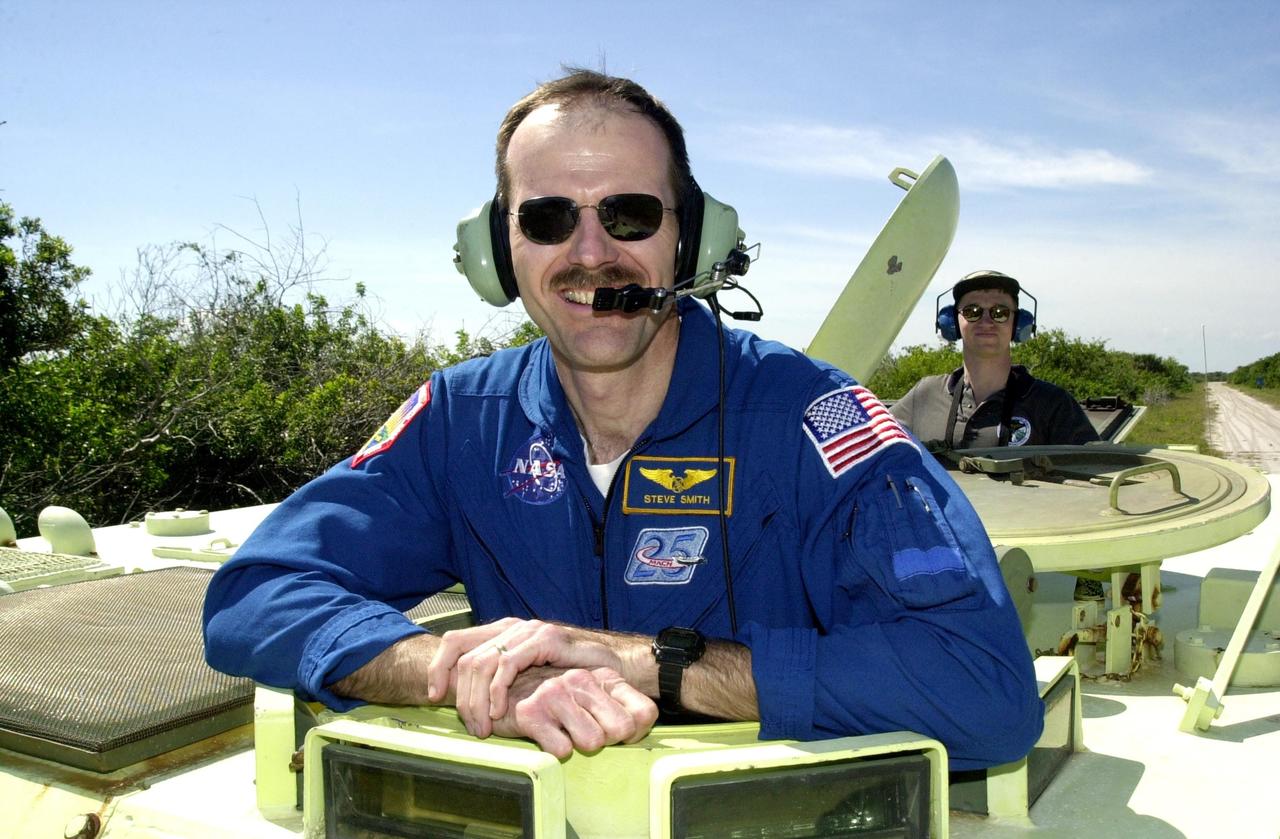
KENNEDY SPACE CENTER, FLA. -- STS-110 Mission Specialist Steven Smith waits his turn at driving the M-113 armored personnel carrier, part of Terminal Countdown Demonstration Test activities. TCDT includes emergency egress training and a simulated launch countdown, and is held at KSC prior to each Space Shuttle flight. Scheduled for launch April 4, the 11-day mission will feature Shuttle Atlantis docking with the International Space Station (ISS) and delivering the S0 truss, the centerpiece-segment of the primary truss structure that will eventually extend over 300 feet
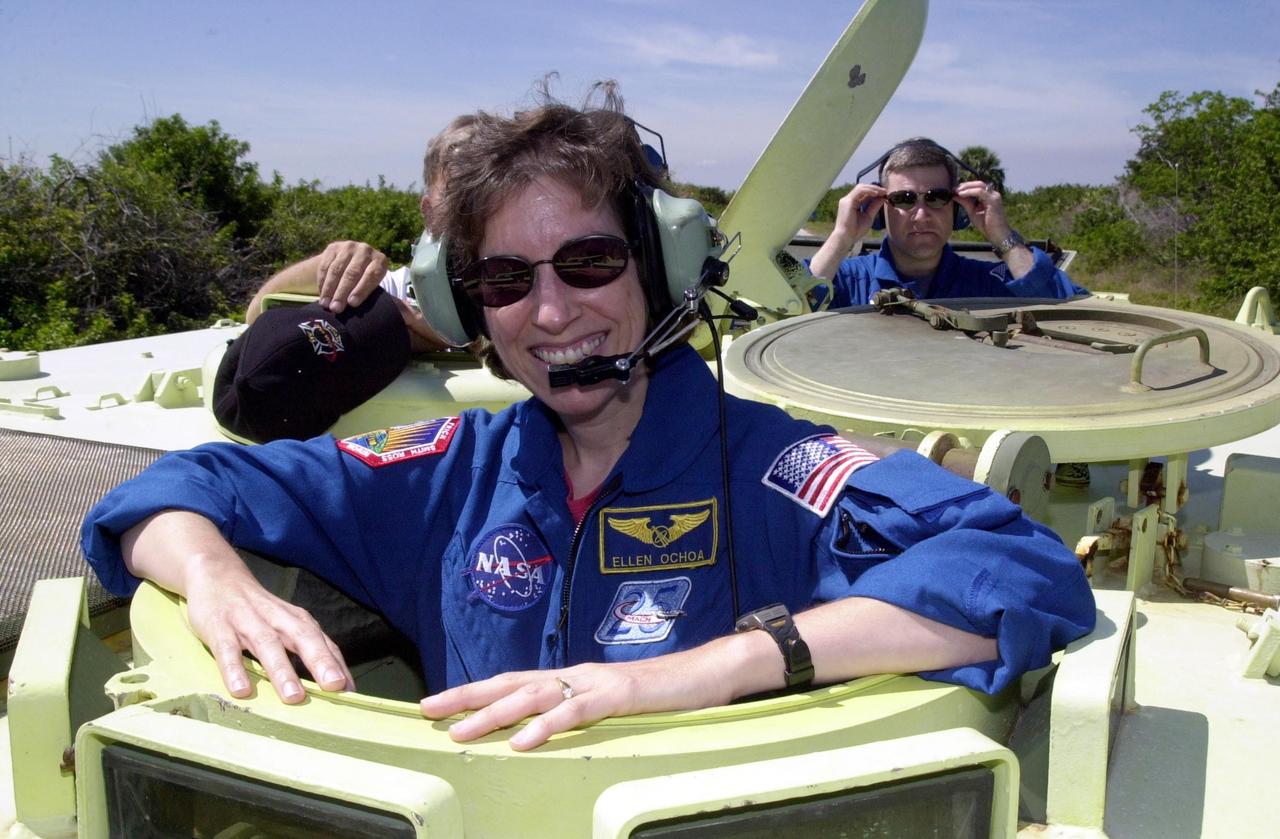
KENNEDY SPACE CENTER, FLA. -- STS-110 Mission Specialist Ellen Ochoa waits her turn at driving the M-113 armored personnel carrier, part of Terminal Countdown Demonstration Test activities. In the background, right, is Pilot Stephen Frick. TCDT includes emergency egress training and a simulated launch countdown. The TCDT is held at KSC prior to each Space Shuttle flight. Scheduled for launch April 4, the 11-day mission will feature Shuttle Atlantis docking with the International Space Station (ISS) and delivering the S0 truss, the centerpiece-segment of the primary truss structure that will eventually extend over 300 feet
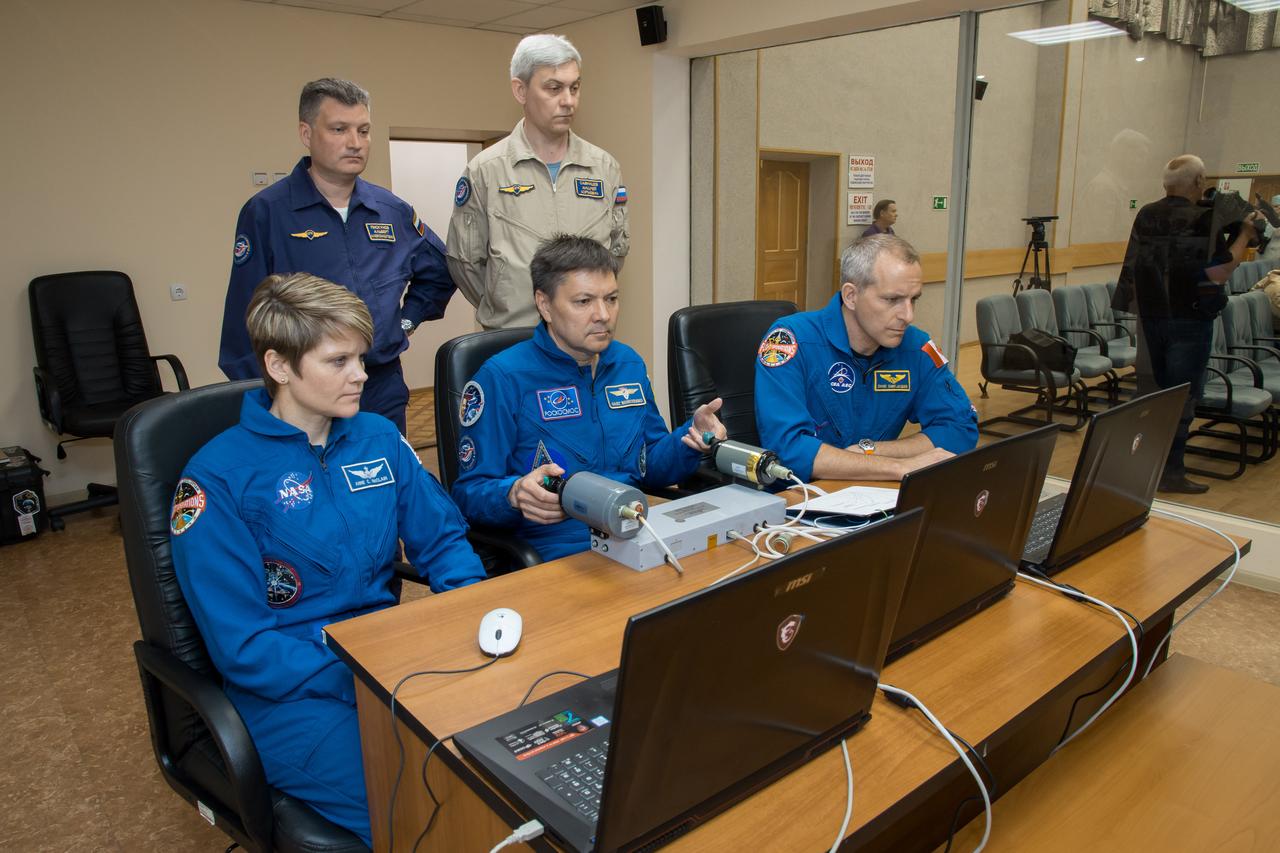
jsc2018e050822 - At the Cosmonaut Hotel crew quarters in Baikonur, Kazakhstan, Expedition 56 backup crewmembers Anne McClain of NASA (left), Oleg Kononenko of Roscosmos (center) and David Saint-Jacques of the Canadian Space Agency (right) conduct rendezvous and docking procedures on a laptop training simulator May 29 as part of their pre-launch preparations. They are serving as backups to the prime crew, Serena Aunon-Chancellor of NASA, Sergey Prokopyev of Roscosmos and Alexander Gerst of the European Space Agency, who will launch June 6 from the Baikonur Cosmodrome in Kazakhstan on the Soyuz MS-09 spacecraft for a six-month mission on the International Space Station..NASA/Victor Zelentsov
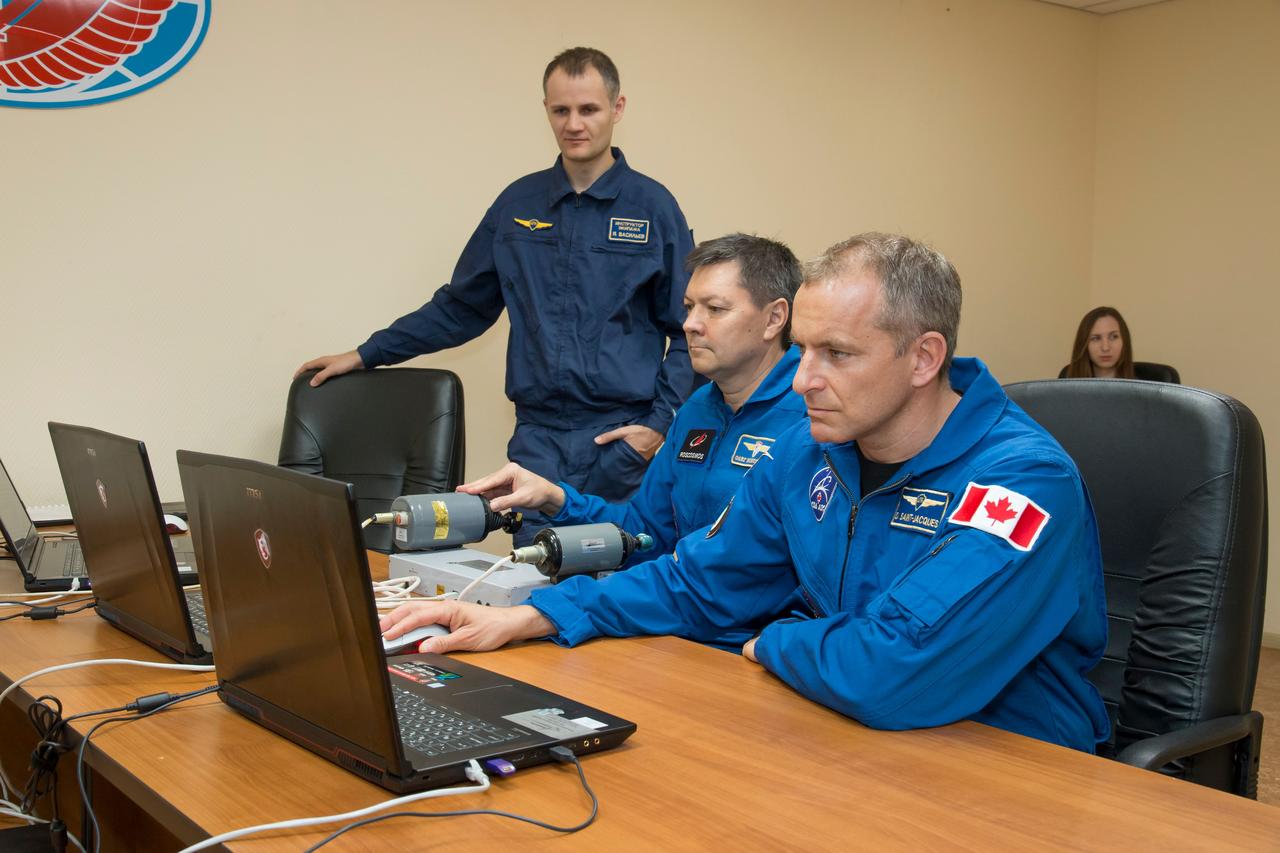
jsc2018e085894 (Oct. 3, 2018) --- Expedition 57 backup crew members Oleg Kononenko of Roscosmos, left, and David Saint-Jacques of the Canadian Space Agency, right, practice rendezvous and docking procedures on a laptop training simulator as part of their pre-launch preparations, Wednesday, Oct. 3, 2018 at the Cosmonaut Hotel in Baikonur, Kazakhstan. Alexey Ovchinin of Roscosmos and Nick Hague of NASA are scheduled to launch on Oct. 11 onboard the Soyuz MS-10 spacecraft from the Baikonur Cosmodrome in Kazakhstan for a six-month mission on the International Space Station. Photo Credit: (NASA/Victor Zelentsov)
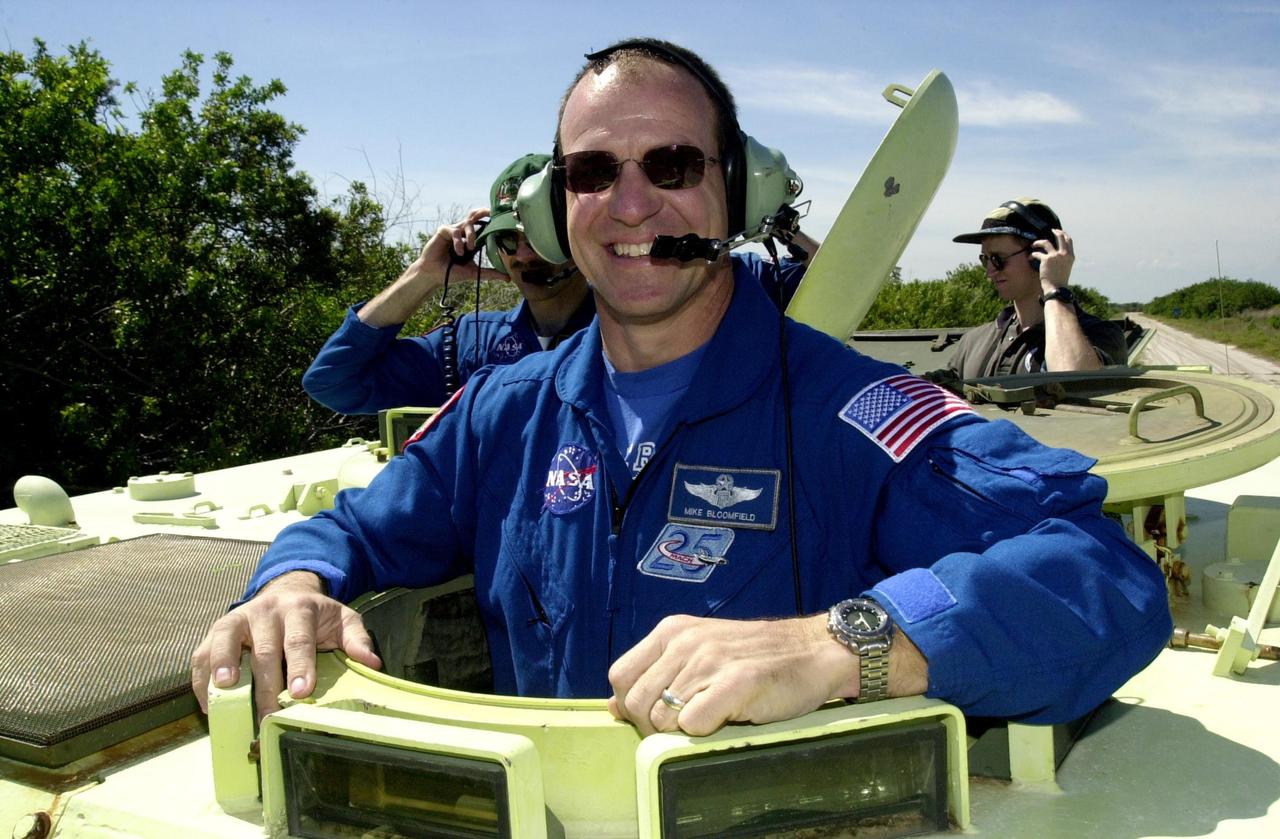
KENNEDY SPACE CENTER, FLA. -- STS-110 Commander Michael Bloomfield is eager to take his turn turn at driving the M-113 armored personnel carrier, part of Terminal Countdown Demonstration Test activities. To his left is Mission Specialist Steven Smith. TCDT includes emergency egress training and a simulated launch countdown, and is held at KSC prior to each Space Shuttle flight. Scheduled for launch April 4, the 11-day mission will feature Shuttle Atlantis docking with the International Space Station (ISS) and delivering the S0 truss, the centerpiece-segment of the primary truss structure that will eventually extend over 300 feet
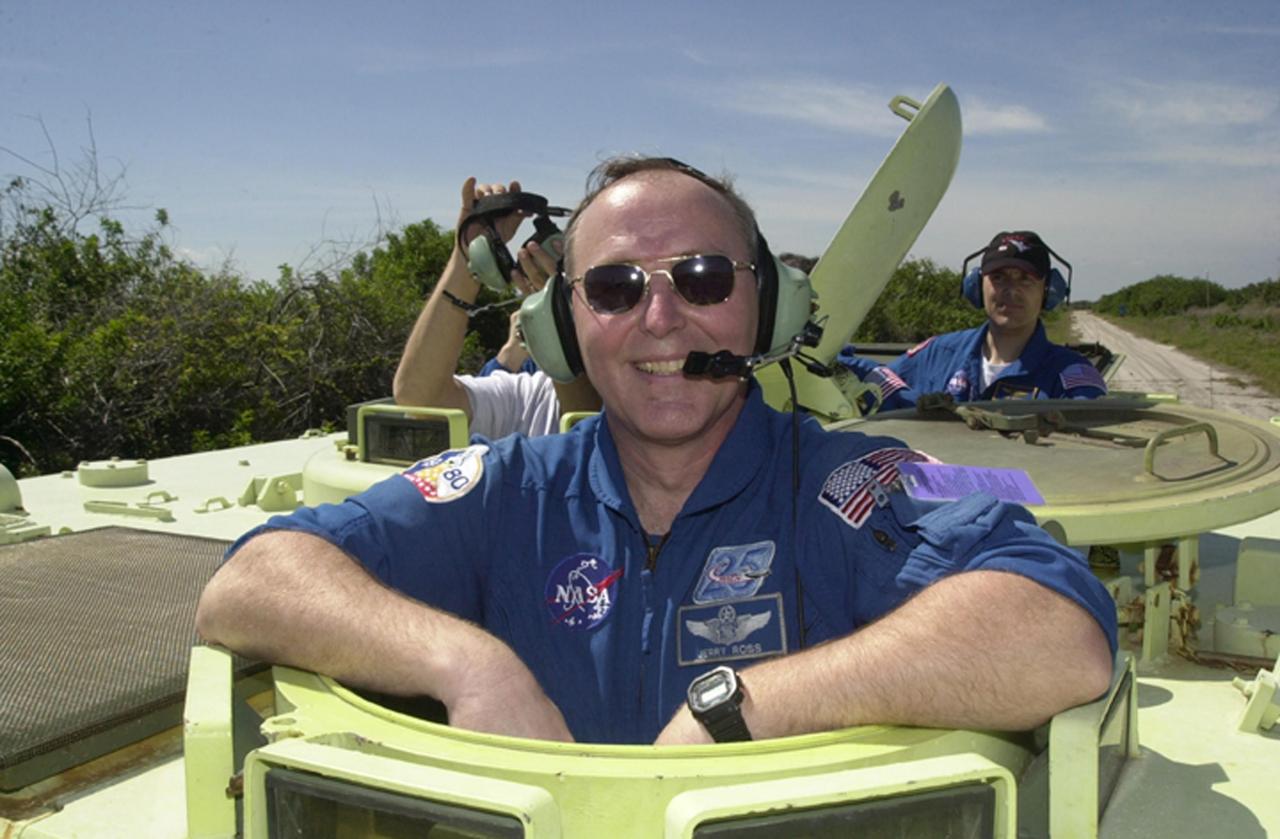
KENNEDY SPACE CENTER, FLA. -- STS-110 Mission Specialist Jerry Ross waits his turn at driving the M-113 armored personnel carrier, part of Terminal Countdown Demonstration Test activities. In the background, right, is Mission Specialist Lee Morin. TCDT includes emergency egress training and a simulated launch countdown, and is held at KSC prior to each Space Shuttle flight. Scheduled for launch April 4, the 11-day mission will feature Shuttle Atlantis docking with the International Space Station (ISS) and delivering the S0 truss, the centerpiece-segment of the primary truss structure that will eventually extend over 300 feet
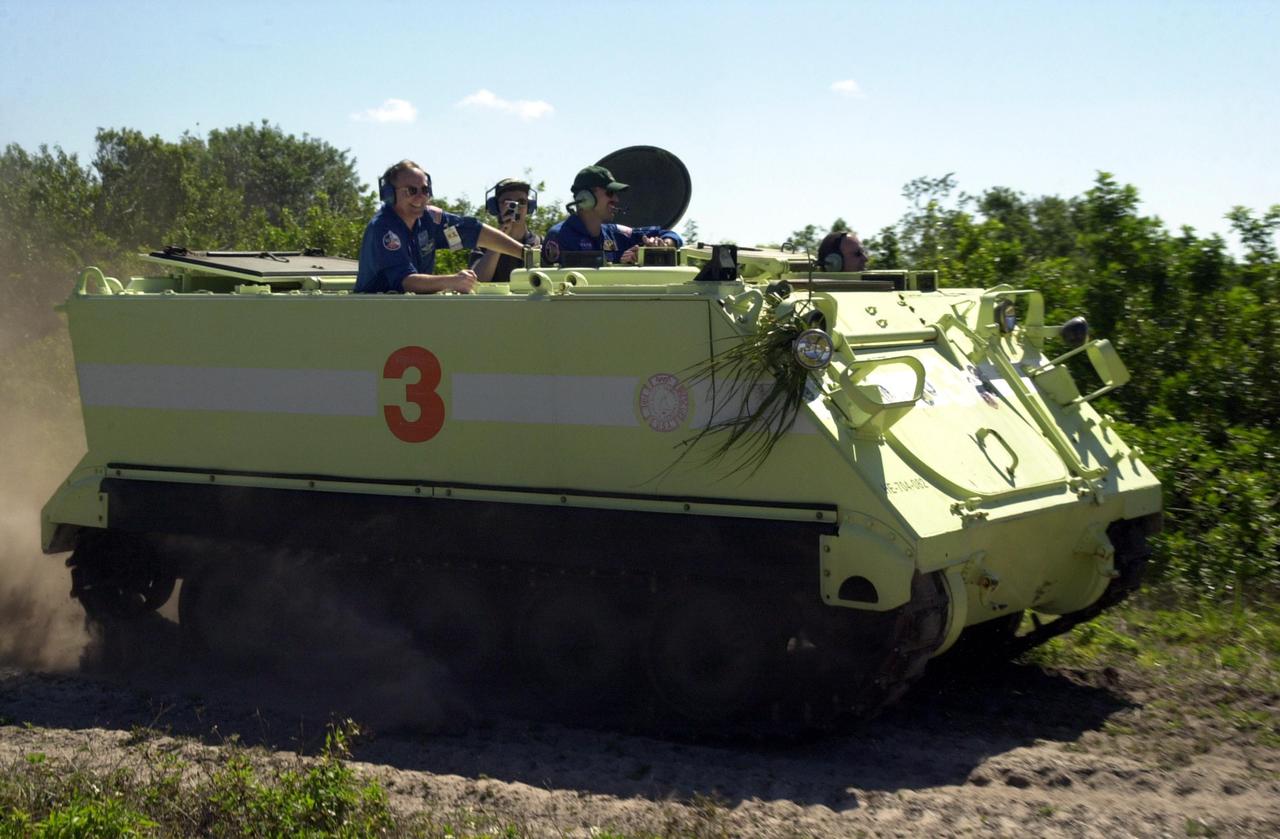
KENNEDY SPACE CENTER, FLA. -- With STS-110 Mission Specialists Jerry Ross (far left) and Steven Smith (third from left) on board, Commander Michael Bloomfield scatters dust as he practices driving the M-113 armored personnel carrier. The driving is part of Terminal Countdown Demonstration Test activities, which include emergency egress training and a simulated launch countdown. The TCDT is held at KSC prior to each Space Shuttle flight. Scheduled for launch April 4, the 11-day mission will feature Shuttle Atlantis docking with the International Space Station (ISS) and delivering the S0 truss, the centerpiece-segment of the primary truss structure that will eventually extend over 300 feet
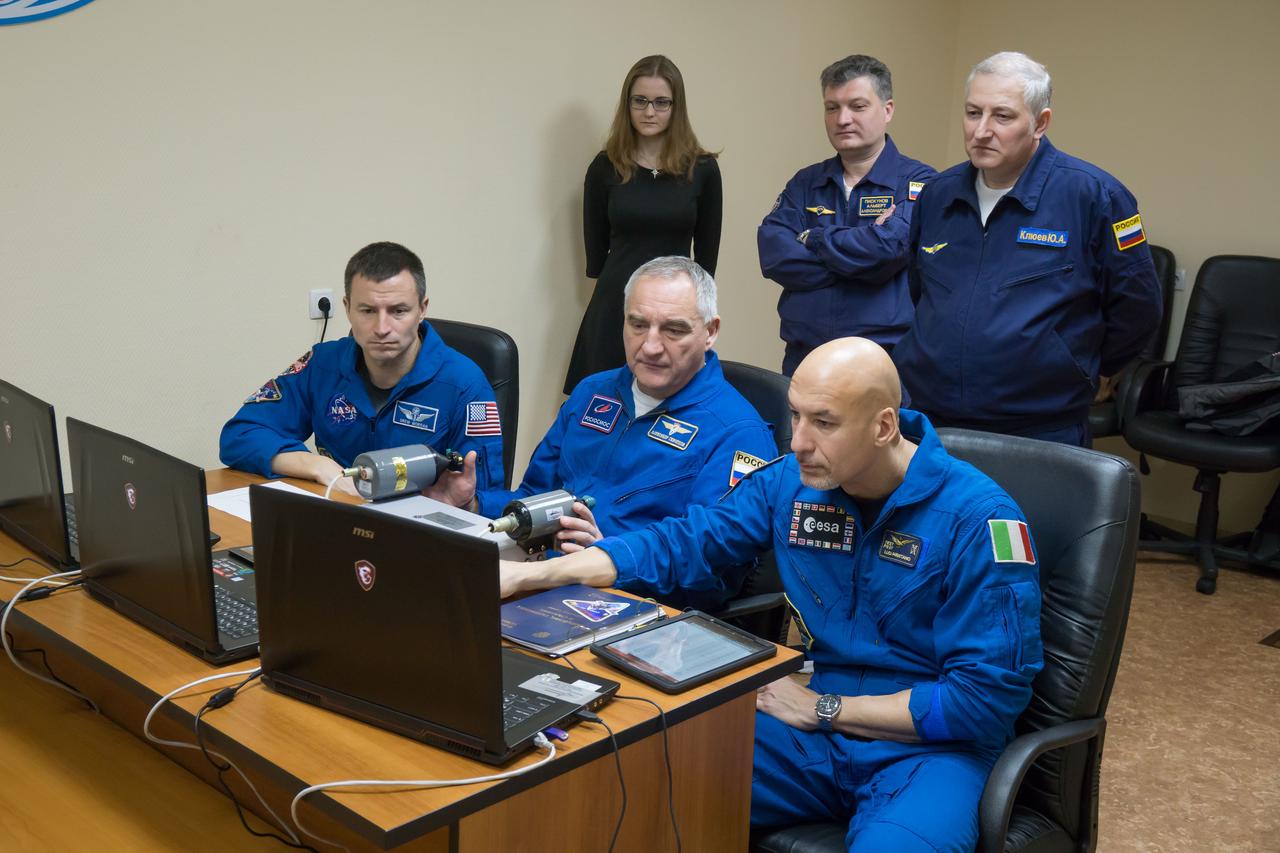
At their Cosmonaut Hotel crew quarters in Baikonur, Kazakhstan, Expedition 59 backup crewmembers Drew Morgan of NASA (left), Alexander Skvortsov of Roscosmos (center) and Luca Parmitano of the European Space Agency (right) rehearse rendezvous and docking techniques on a laptop computer simulator March 7 as they conduct pre-launch preparations. They are the backups to the prime crewmembers, Christina Koch of NASA, Alexey Ovchinin of Roscosmos and Nick Hague of NASA, who will launch March 14, U.S. time, on the Soyuz MS-12 spacecraft from the Baikonur Cosmodrome for a six-and-a-half month mission on the International Space Station...NASA/Victor Zelentsov.
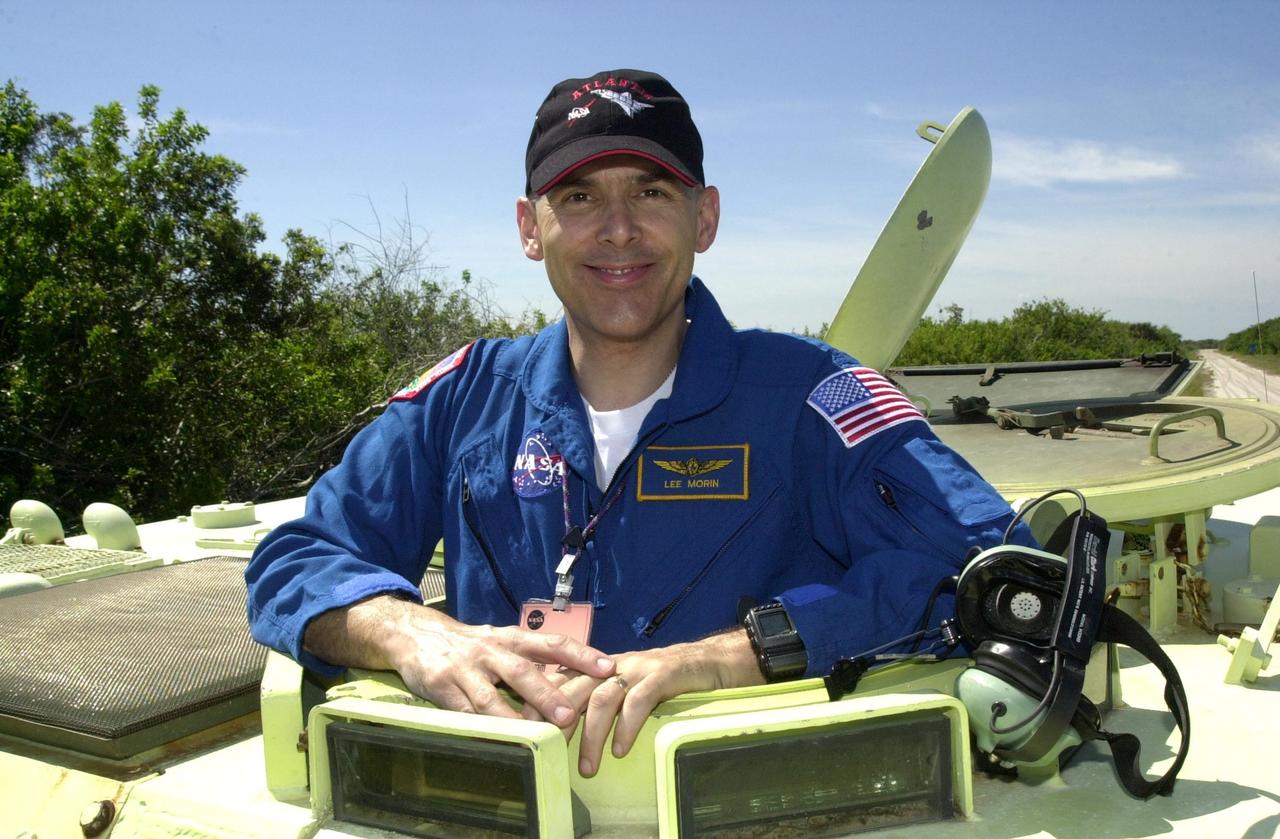
KENNEDY SPACE CENTER, FLA. -- Waiting his turn at driving the M-113 armored personnel carrier is STS-110 Mission Specialist Lee Morin. The driving is part of Terminal Countdown Demonstration Test activities, which include emergency egress training and a simulated launch countdown. The TCDT is held at KSC prior to each Space Shuttle flight. Scheduled for launch April 4, the 11-day mission will feature Shuttle Atlantis docking with the International Space Station (ISS) and delivering the S0 truss, the centerpiece-segment of the primary truss structure that will eventually extend over 300 feet
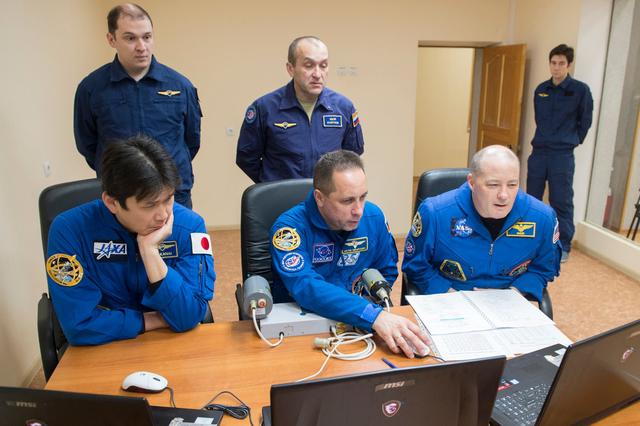
jsc2017e137334 - At their Cosmonaut Hotel crew quarters in Baikonur, Kazakhstan, Expedition 54-55 prime crewmembers Norishige Kanai of the Japan Aerospace Exploration Agency (JAXA, left), Anton Shkaplerov of the Russian Federal Space Agency (Roscosmos, center) and Scott Tingle of NASA (right) practice rendezvous and docking techniques on a laptop computer simulator Dec. 11 as part of their pre-launch training. They will launch Dec. 17 on the Soyuz MS-07 spacecraft from the Baikonur Cosmodrome for a five month mission on the International Space Station...Andrey Shelepin / Gagarin Cosmonaut Training Center.
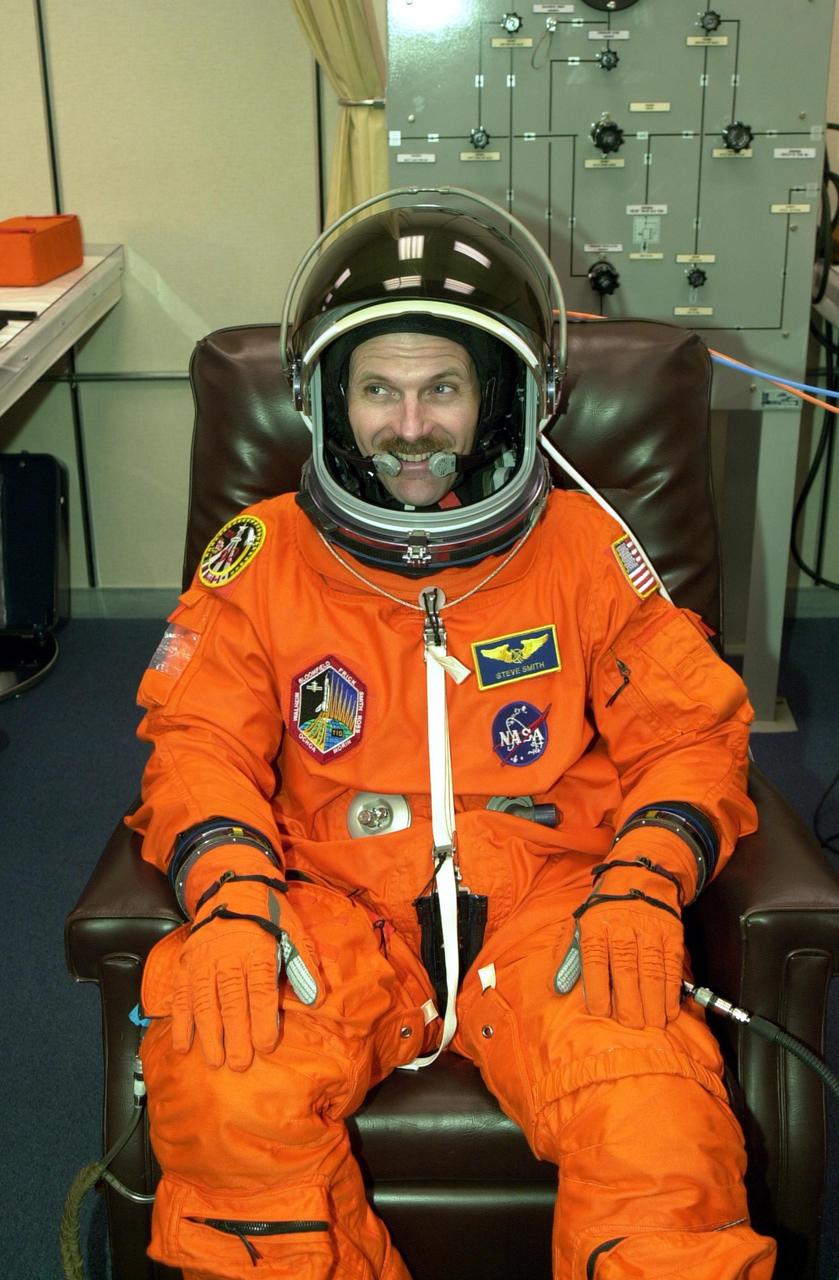
KENNEDY SPACE CENTER, FLA. -- STS-110 Mission Specialist Steven Smith relaxes during suit fit, which is part of Terminal Countdown Demonstration Test activities. The TCDT is held at KSC prior to each Space Shuttle flight to provide flight crews an opportunity to participate in simulated launch countdown activities. Scheduled for launch April 4, the 11-day mission will feature Shuttle Atlantis docking with the International Space Station (ISS) and delivering the S0 truss, the centerpiece-segment of the primary truss structure that will eventually extend over 300 feet
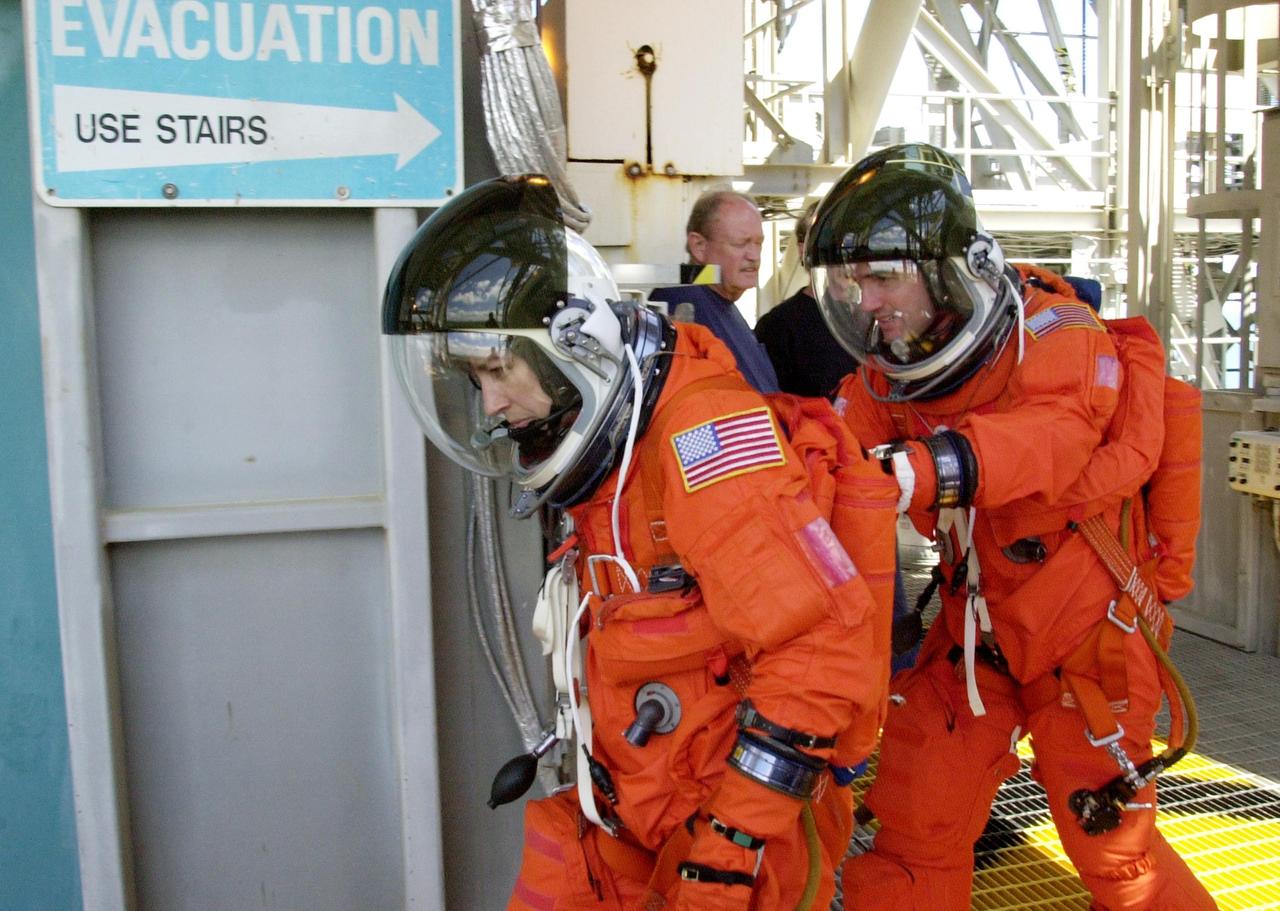
KENNEDY SPACE CENTER, FLA. - As part of emergency egress training, STS-110 Mission Specialists Ellen Ochoa and Rex J. Walheim make their way to the slidewire basket on the Fixed Service Structure. The crew is taking part in Terminal Countdown Demonstration Test activities, which also include a simulated launch countdown, held at KSC prior to each Space Shuttle flight. Scheduled for launch April 4, the 11-day mission will feature Shuttle Atlantis docking with the International Space Station (ISS) and delivering the S0 truss, the centerpiece-segment of the primary truss structure that will eventually extend over 300 feet.
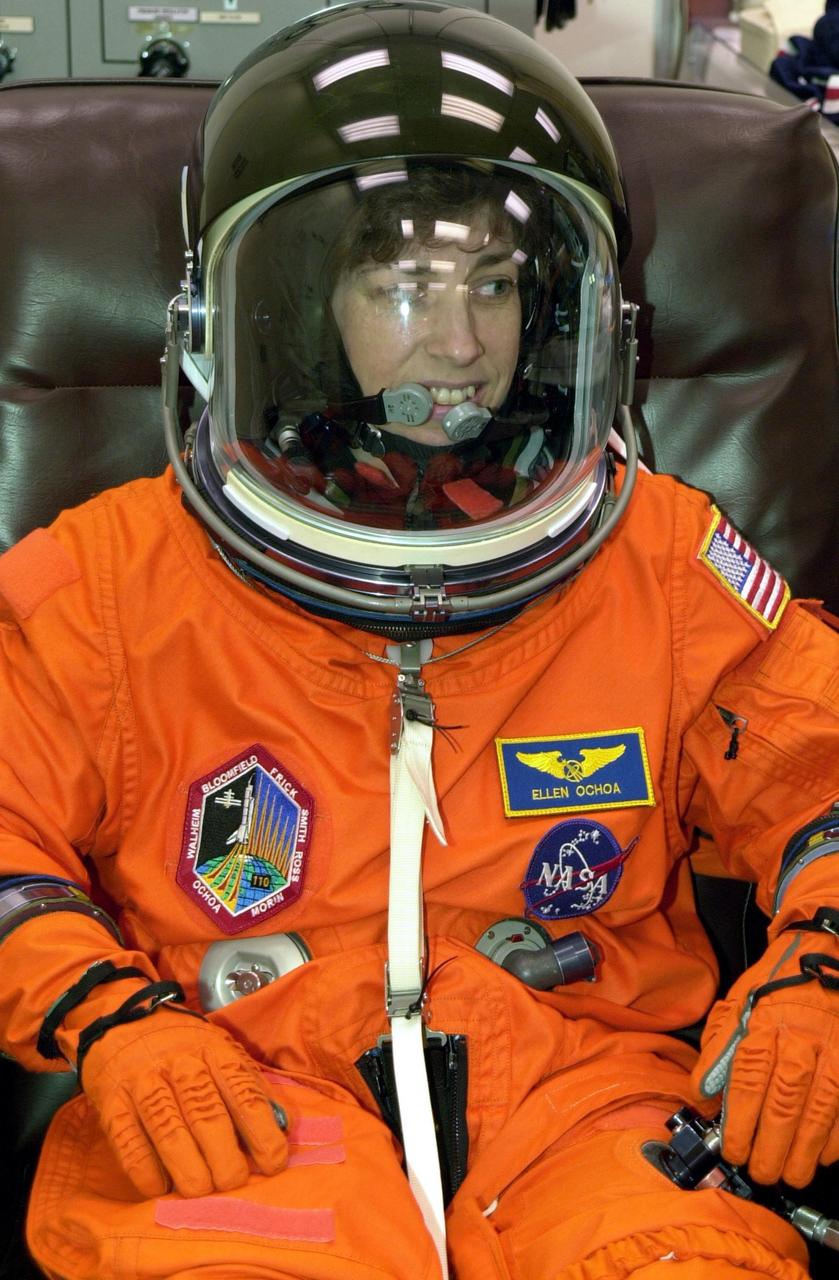
KENNEDY SPACE CENTER, FLA. - STS-110 Mission Specialist Ellen Ochoa relaxes during suit fit, part of Terminal Countdown Demonstration Test activities. The TCDT is held at KSC prior to each Space Shuttle flight to provide flight crews an opportunity to participate in simulated launch countdown activities. Scheduled for launch April 4, the 11-day mission will feature Shuttle Atlantis docking with the International Space Station (ISS) and delivering the S0 truss, the centerpiece-segment of the primary truss structure that will eventually extend over 300 feet.
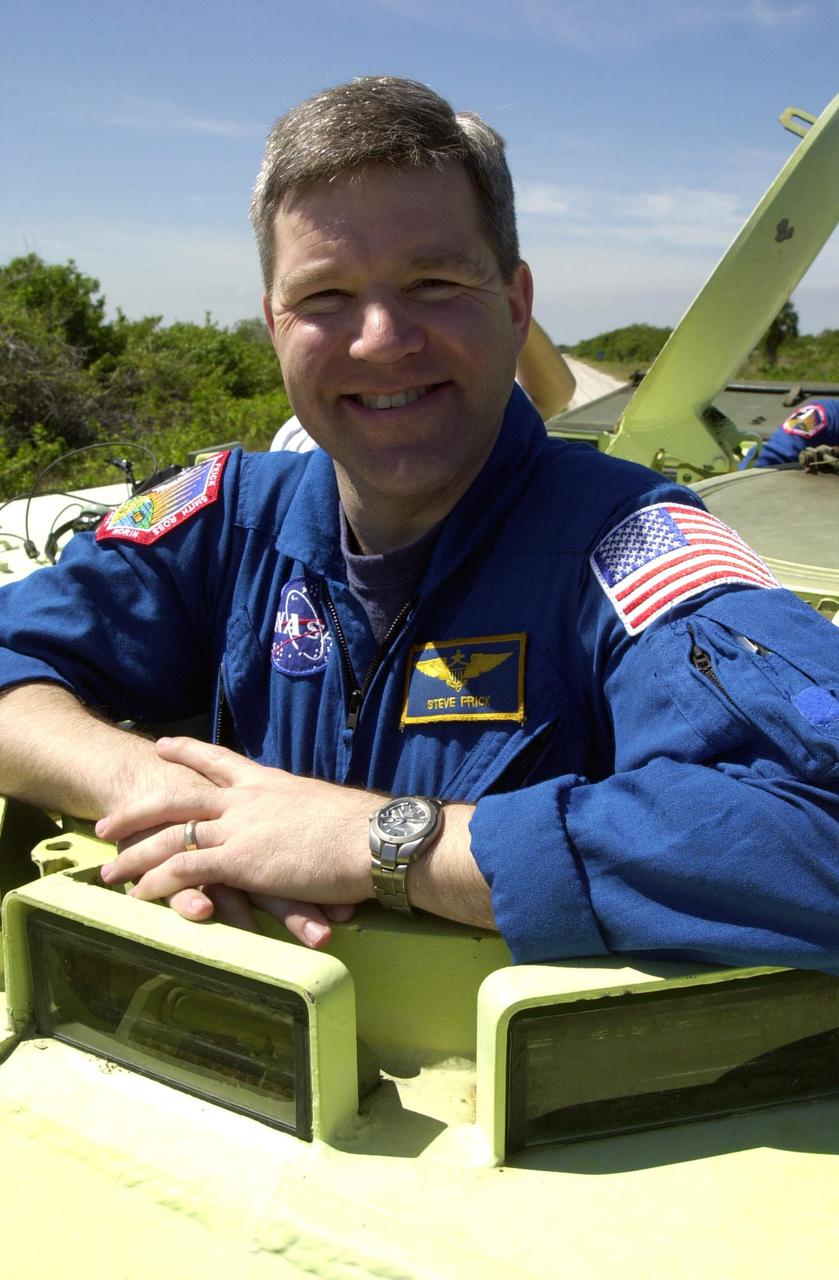
KENNEDY SPACE CENTER, FLA. -- STS-110 Pilot Stephen Frick waits inside the M-113 armored personnel carrier to begin training on driving the vehicle, which is part of Terminal Countdown Demonstration Test activities. TCDT includes emergency egress training and a simulated launch countdown. The TCDT is held at KSC prior to each Space Shuttle flight. Scheduled for launch April 4, the 11-day mission will feature Shuttle Atlantis docking with the International Space Station (ISS) and delivering the S0 truss, the centerpiece-segment of the primary truss structure that will eventually extend over 300 feet
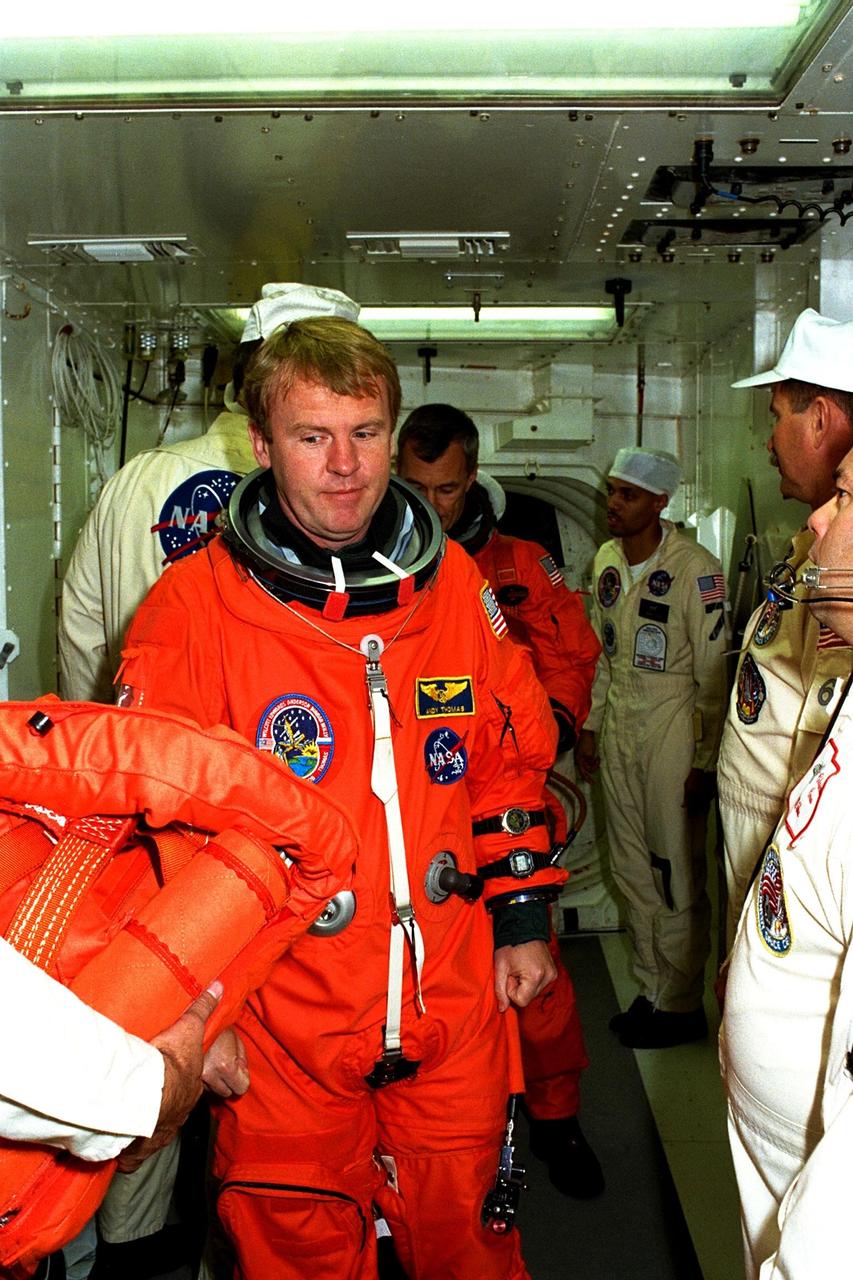
STS-89 Mission Specialist Andrew Thomas, Ph.D., prepares to enter the Space Shuttle Endeavour at Launch Pad 39A with help from white room closeout crew members as part of Terminal Countdown Demonstration Test (TCDT) activities. The TCDT is held at KSC prior to each Space Shuttle flight to provide crews with an opportunity to participate in simulated countdown activities. The STS-89 mission will be the eighth docking of the Space Shuttle with the Russian Space Station Mir. After docking, Dr. Thomas will transfer to the space station, succeeding David Wolf, M.D., who will return to Earth aboard Endeavour. Dr. Thomas will live and work on Mir until June. STS-89 is scheduled for a Jan. 22 liftoff at 9:48 p.m

Sitting at the entrance to the orbiter is STS-89 Mission Specialist Bonnie Dunbar, Ph.D., as she prepares to enter the Space Shuttle Endeavour at Launch Pad 39A with help from white room closeout crew members as part of Terminal Countdown Demonstration Test (TCDT) activities. The TCDT is held at KSC prior to each Space Shuttle flight to provide crews with an opportunity to participate in simulated countdown activities. The STS-89 mission will be the eighth docking of the Space Shuttle with the Russian Space Station Mir. After docking, Mission Specialist Andrew Thomas, Ph.D., will transfer to the space station, succeeding David Wolf, M.D., who will return to Earth aboard Endeavour. Dr. Thomas will live and work on Mir until June. STS-89 is scheduled for a Jan. 22 liftoff at 9:48 p.m
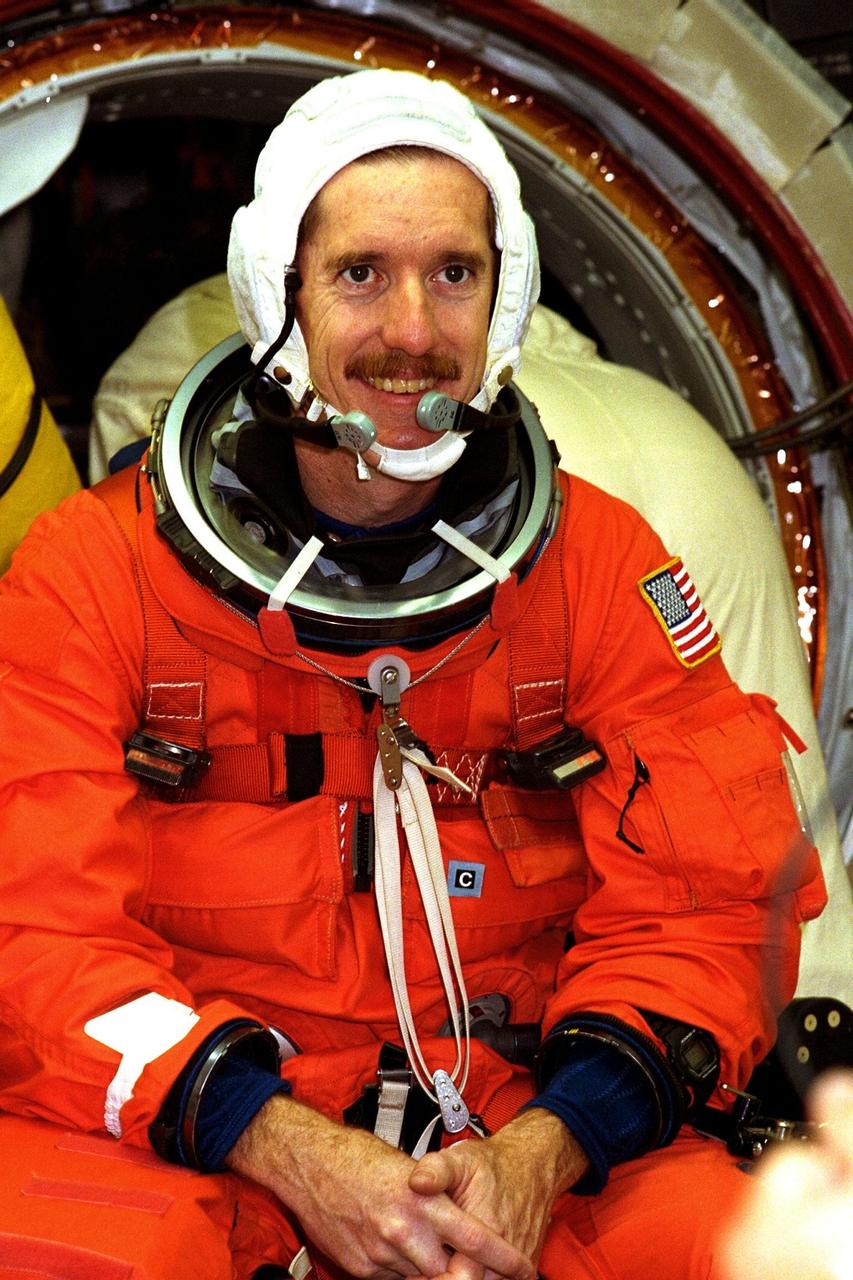
Smiling at the entrance to the orbiter is STS-89 Mission Specialist James Reilly, Ph.D., as he prepares to enter the Space Shuttle Endeavour at Launch Pad 39A with help from white room closeout crew members as part of Terminal Countdown Demonstration Test (TCDT) activities. The TCDT is held at KSC prior to each Space Shuttle flight to provide crews with an opportunity to participate in simulated countdown activities. The STS-89 mission will be the eighth docking of the Space Shuttle with the Russian Space Station Mir. After docking, Mission Specialist Andrew Thomas, Ph.D., will transfer to the space station, succeeding David Wolf, M.D., who will return to Earth aboard Endeavour. Dr. Thomas will live and work on Mir until June. STS-89 is scheduled for a Jan. 22 liftoff at 9:48 p.m
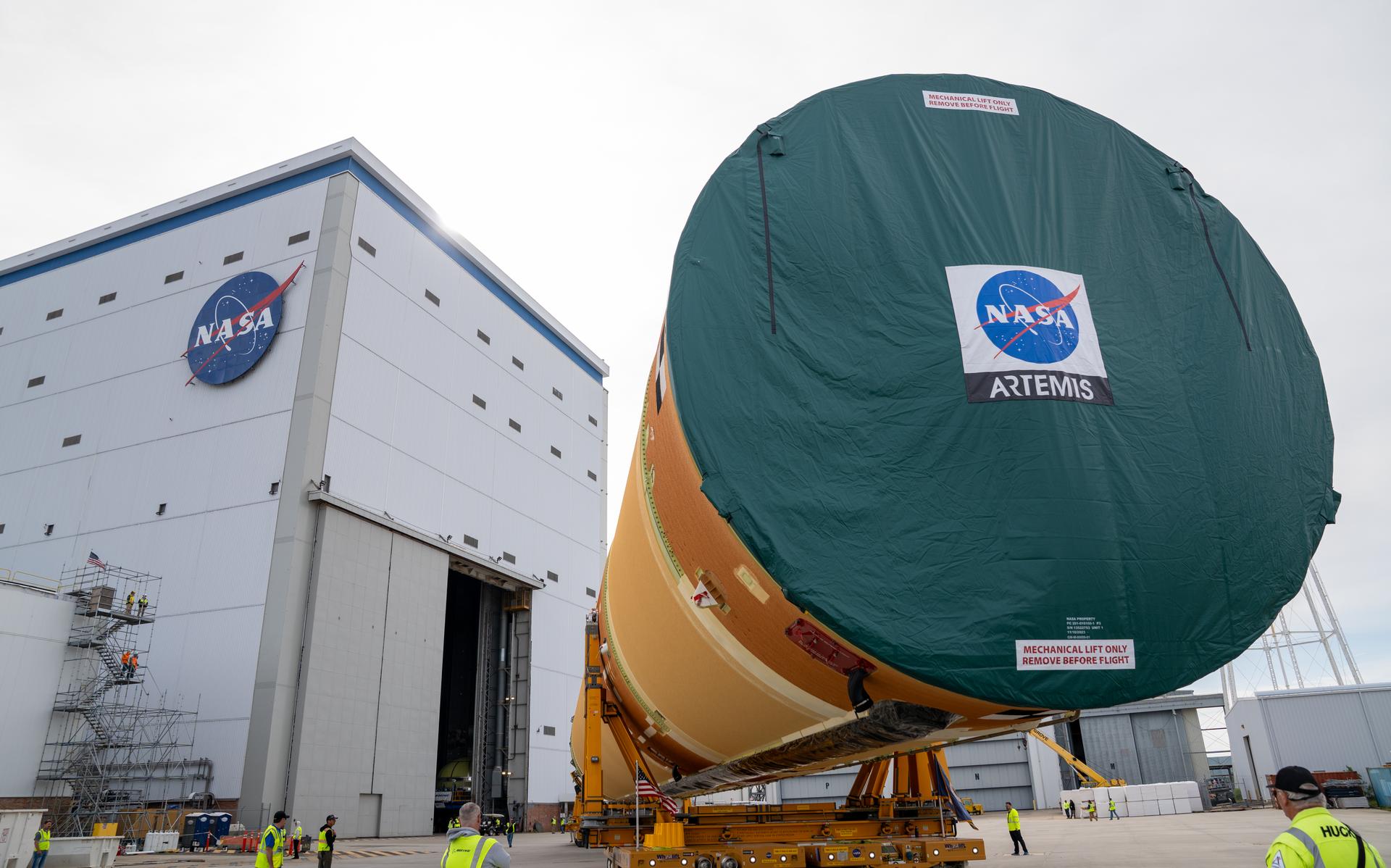
NASA moved the core stage, or the largest section, of the SLS (Space Launch System) rocket that will launch the crewed Artemis III mission in 2027 from the agency’s Michoud Assembly Facility to the agency’s Pegasus barge in New Orleans on April 20. The barge will ferry the top four-fifths – the section containing the liquid hydrogen tank, liquid oxygen tank, intertank, and forward skirt – of the SLS core stage to NASA’s Kennedy Space Center in Florida to complete outfitting and vertical integration. Teams with NASA and Boeing, the SLS core stage lead contractor, used specialized transporters to guide the top four-fifths from the NASA rocket factory to Pegasus. Prior to the move, technicians added an engine section transportation simulator to the rocket stage for shipment to the Space Coast. Next year’s Artemis III mission will launch astronauts to Earth’s orbit aboard the Orion spacecraft on top of SLS to test rendezvous and docking capabilities between Orion and commercial spacecraft needed to land Artemis IV astronauts on the Moon in 2028. NASA’s SLS is the only rocket capable of sending Orion, astronauts, and supplies to the Moon in a single launch. Photo Credit: (NASA/Brandon Hancock)
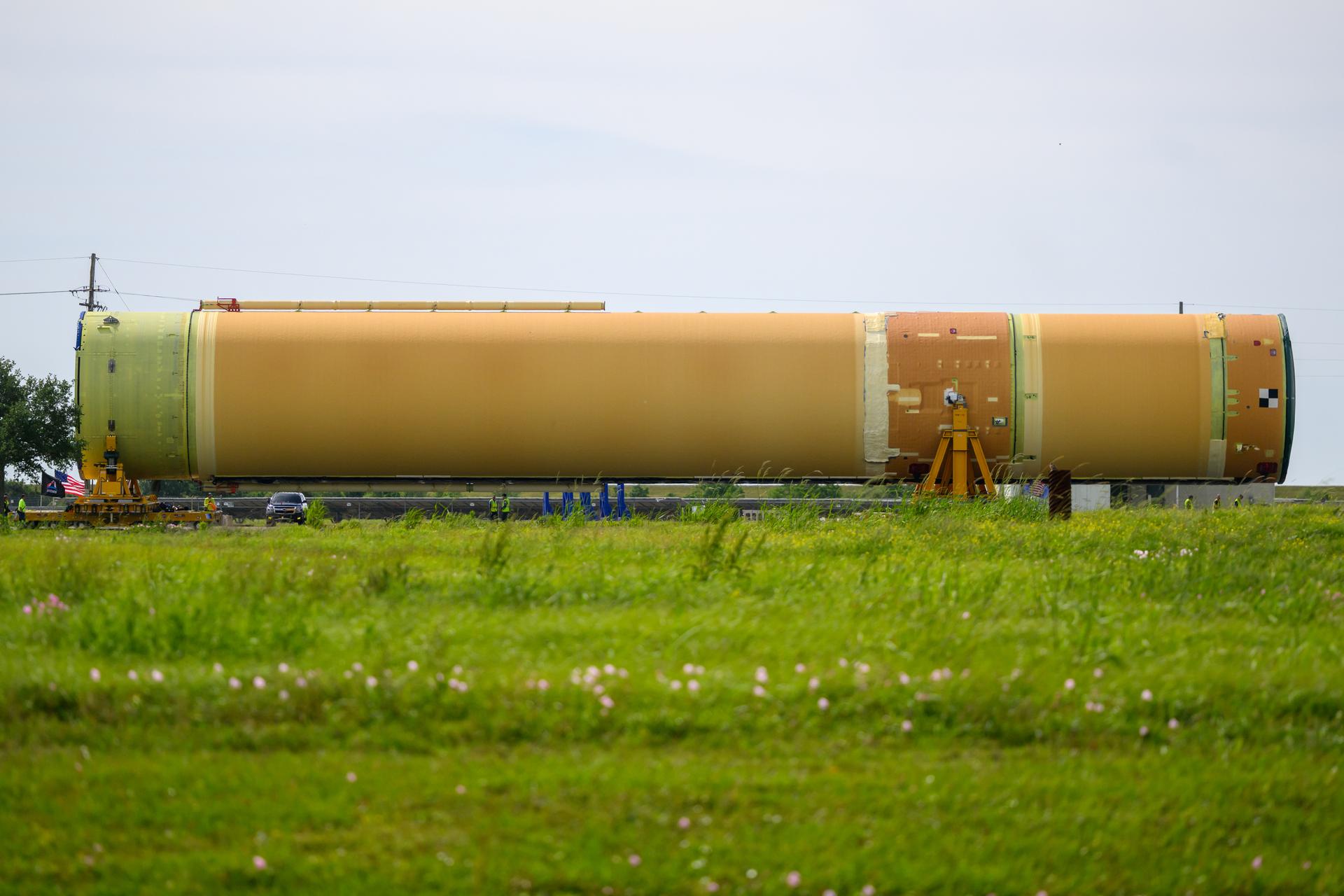
NASA moved the core stage, or the largest section, of the SLS (Space Launch System) rocket that will launch the crewed Artemis III mission in 2027 from the agency’s Michoud Assembly Facility to the agency’s Pegasus barge in New Orleans on April 20. The barge will ferry the top four-fifths – the section containing the liquid hydrogen tank, liquid oxygen tank, intertank, and forward skirt – of the SLS core stage to NASA’s Kennedy Space Center in Florida to complete outfitting and vertical integration. Teams with NASA and Boeing, the SLS core stage lead contractor, used specialized transporters to guide the top four-fifths from the NASA rocket factory to Pegasus. Prior to the move, technicians added an engine section transportation simulator to the rocket stage for shipment to the Space Coast. Next year’s Artemis III mission will launch astronauts to Earth’s orbit aboard the Orion spacecraft on top of SLS to test rendezvous and docking capabilities between Orion and commercial spacecraft needed to land Artemis IV astronauts on the Moon in 2028. NASA’s SLS is the only rocket capable of sending Orion, astronauts, and supplies to the Moon in a single launch.
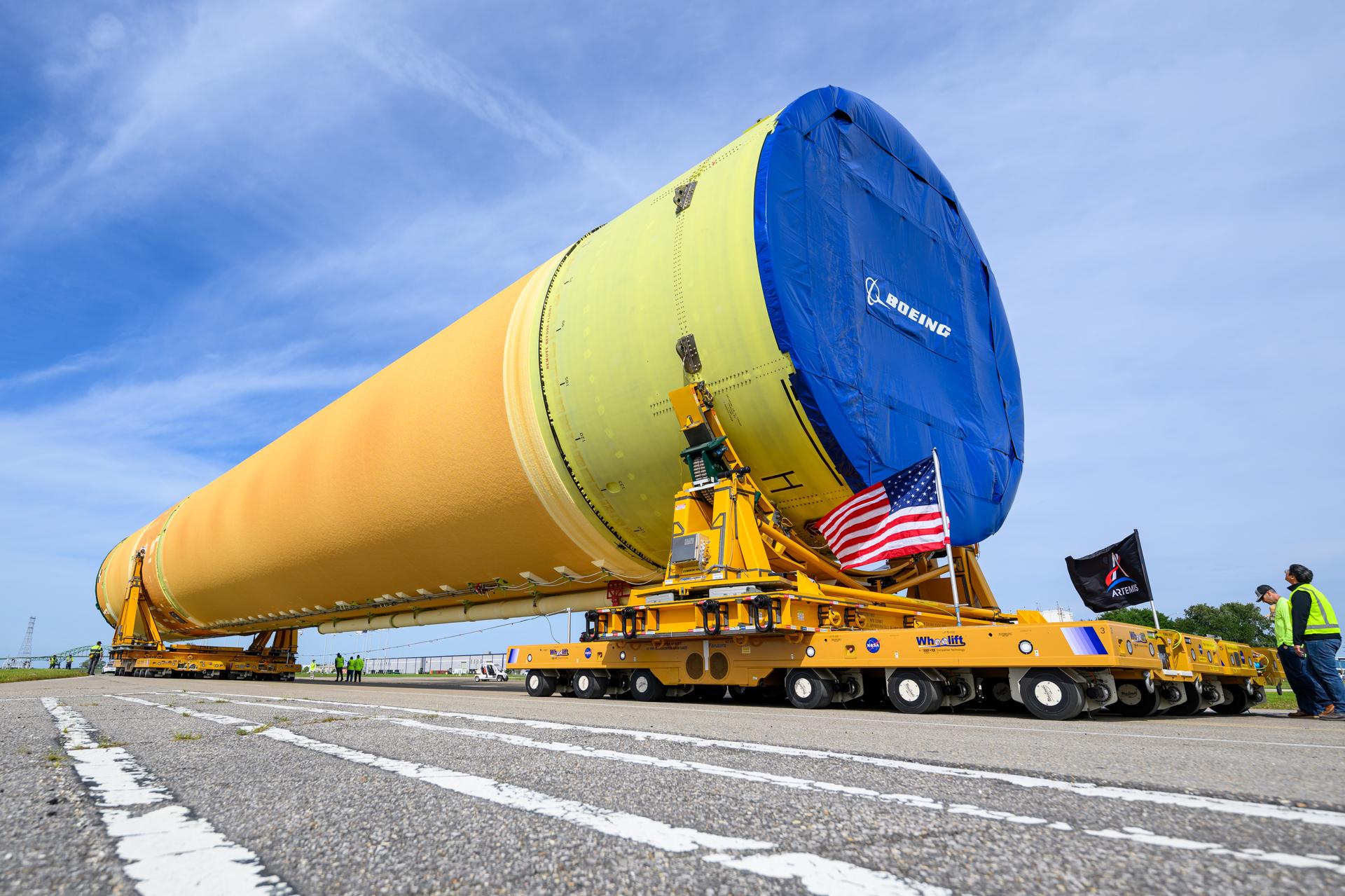
NASA moved the core stage, or the largest section, of the SLS (Space Launch System) rocket that will launch the crewed Artemis III mission in 2027 from the agency’s Michoud Assembly Facility to the agency’s Pegasus barge in New Orleans on April 20. The barge will ferry the top four-fifths – the section containing the liquid hydrogen tank, liquid oxygen tank, intertank, and forward skirt – of the SLS core stage to NASA’s Kennedy Space Center in Florida to complete outfitting and vertical integration. Teams with NASA and Boeing, the SLS core stage lead contractor, used specialized transporters to guide the top four-fifths from the NASA rocket factory to Pegasus. Prior to the move, technicians added an engine section transportation simulator to the rocket stage for shipment to the Space Coast. Next year’s Artemis III mission will launch astronauts to Earth’s orbit aboard the Orion spacecraft on top of SLS to test rendezvous and docking capabilities between Orion and commercial spacecraft needed to land Artemis IV astronauts on the Moon in 2028. NASA’s SLS is the only rocket capable of sending Orion, astronauts, and supplies to the Moon in a single launch. Photo Credit: NASA/Eric Bordelon
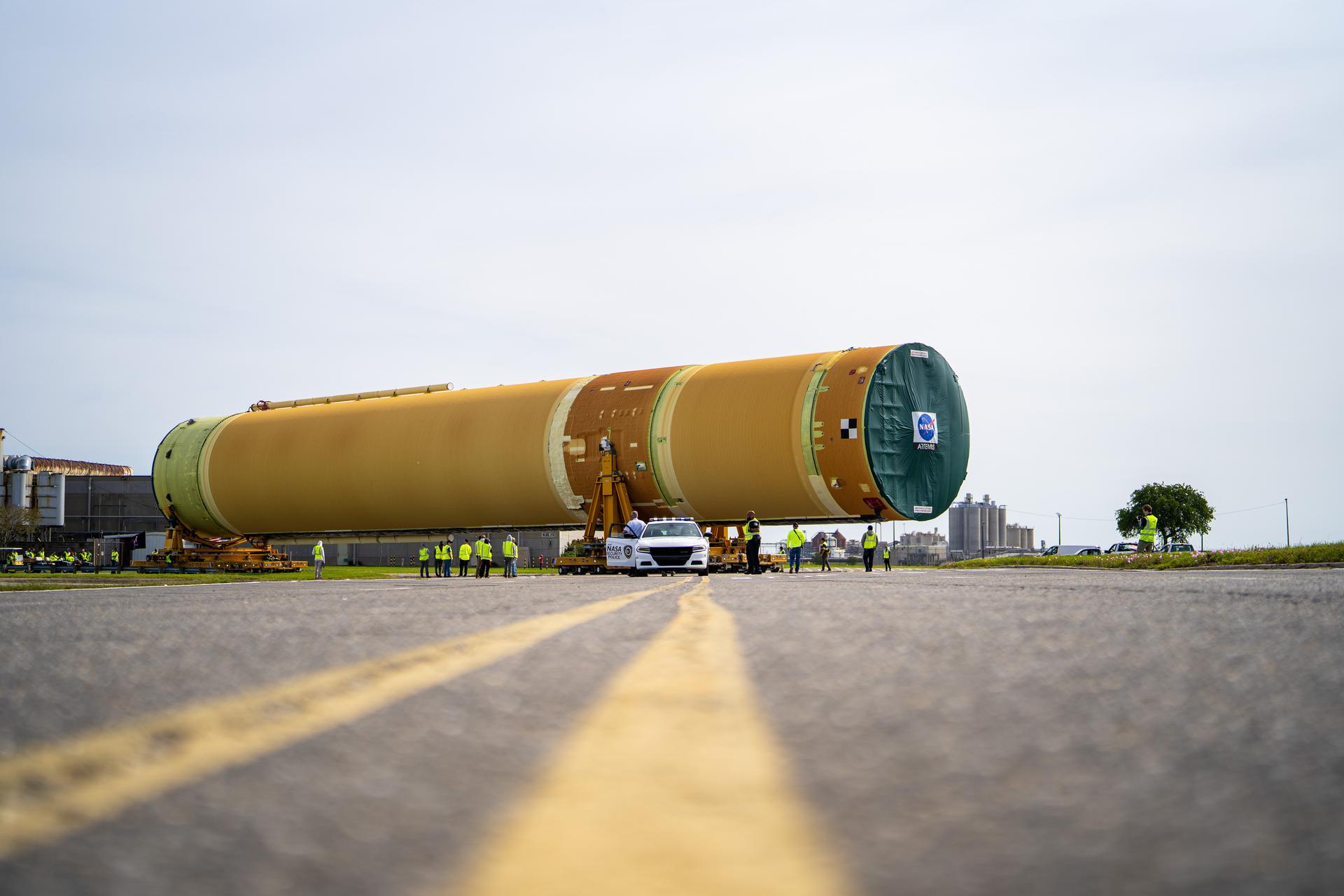
NASA moved the core stage, or the largest section, of the SLS (Space Launch System) rocket that will launch the crewed Artemis III mission in 2027 from the agency’s Michoud Assembly Facility to the agency’s Pegasus barge in New Orleans on April 20. The barge will ferry the top four-fifths – the section containing the liquid hydrogen tank, liquid oxygen tank, intertank, and forward skirt – of the SLS core stage to NASA’s Kennedy Space Center in Florida to complete outfitting and vertical integration. Teams with NASA and Boeing, the SLS core stage lead contractor, used specialized transporters to guide the top four-fifths from the NASA rocket factory to Pegasus. Prior to the move, technicians added an engine section transportation simulator to the rocket stage for shipment to the Space Coast. Next year’s Artemis III mission will launch astronauts to Earth’s orbit aboard the Orion spacecraft on top of SLS to test rendezvous and docking capabilities between Orion and commercial spacecraft needed to land Artemis IV astronauts on the Moon in 2028. NASA’s SLS is the only rocket capable of sending Orion, astronauts, and supplies to the Moon in a single launch.
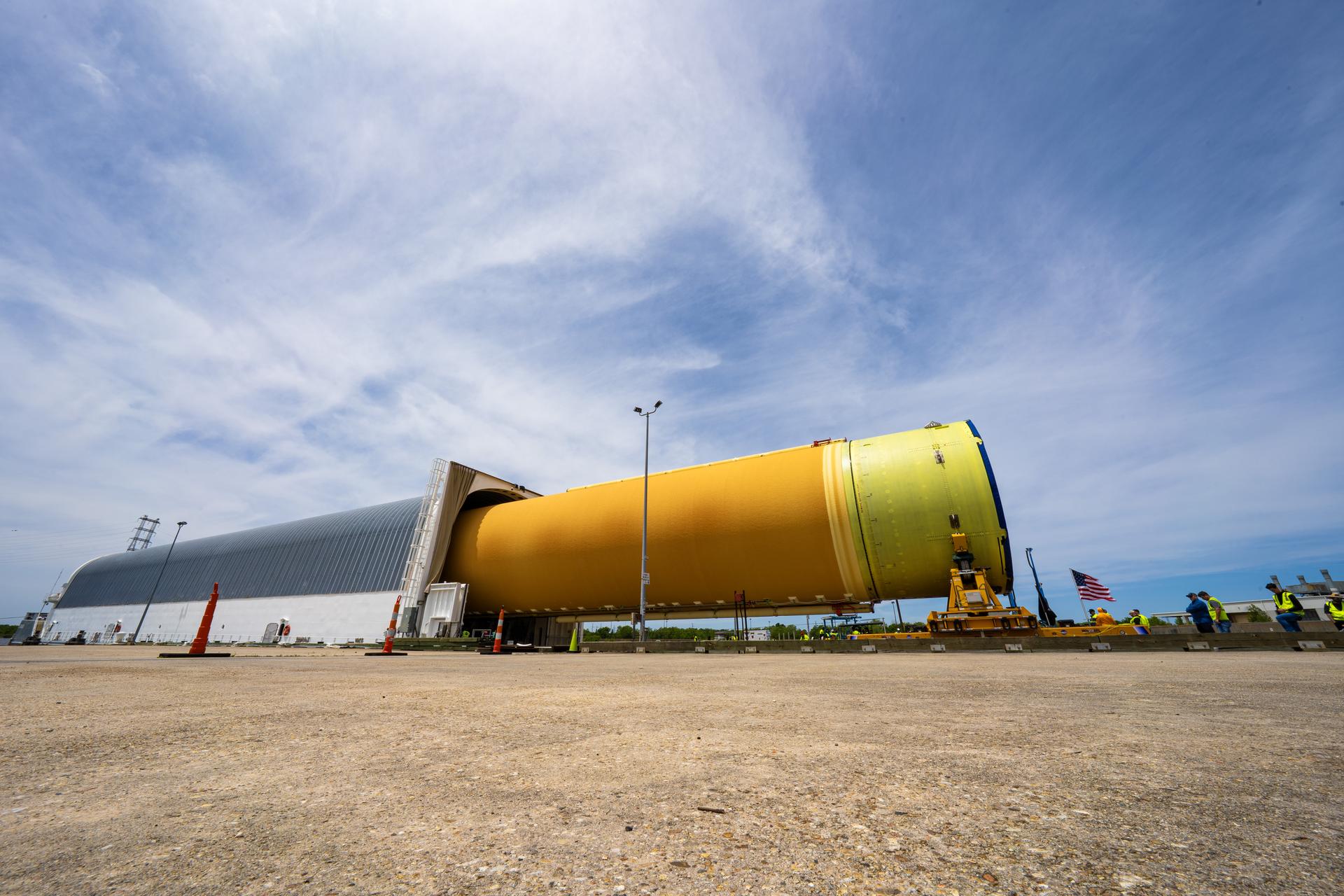
NASA moved the core stage, or the largest section, of the SLS (Space Launch System) rocket that will launch the crewed Artemis III mission in 2027 from the agency’s Michoud Assembly Facility to the agency’s Pegasus barge in New Orleans on April 20. The barge will ferry the top four-fifths – the section containing the liquid hydrogen tank, liquid oxygen tank, intertank, and forward skirt – of the SLS core stage to NASA’s Kennedy Space Center in Florida to complete outfitting and vertical integration. Teams with NASA and Boeing, the SLS core stage lead contractor, used specialized transporters to guide the top four-fifths from the NASA rocket factory to Pegasus. Prior to the move, technicians added an engine section transportation simulator to the rocket stage for shipment to the Space Coast. Next year’s Artemis III mission will launch astronauts to Earth’s orbit aboard the Orion spacecraft on top of SLS to test rendezvous and docking capabilities between Orion and commercial spacecraft needed to land Artemis IV astronauts on the Moon in 2028. NASA’s SLS is the only rocket capable of sending Orion, astronauts, and supplies to the Moon in a single launch.
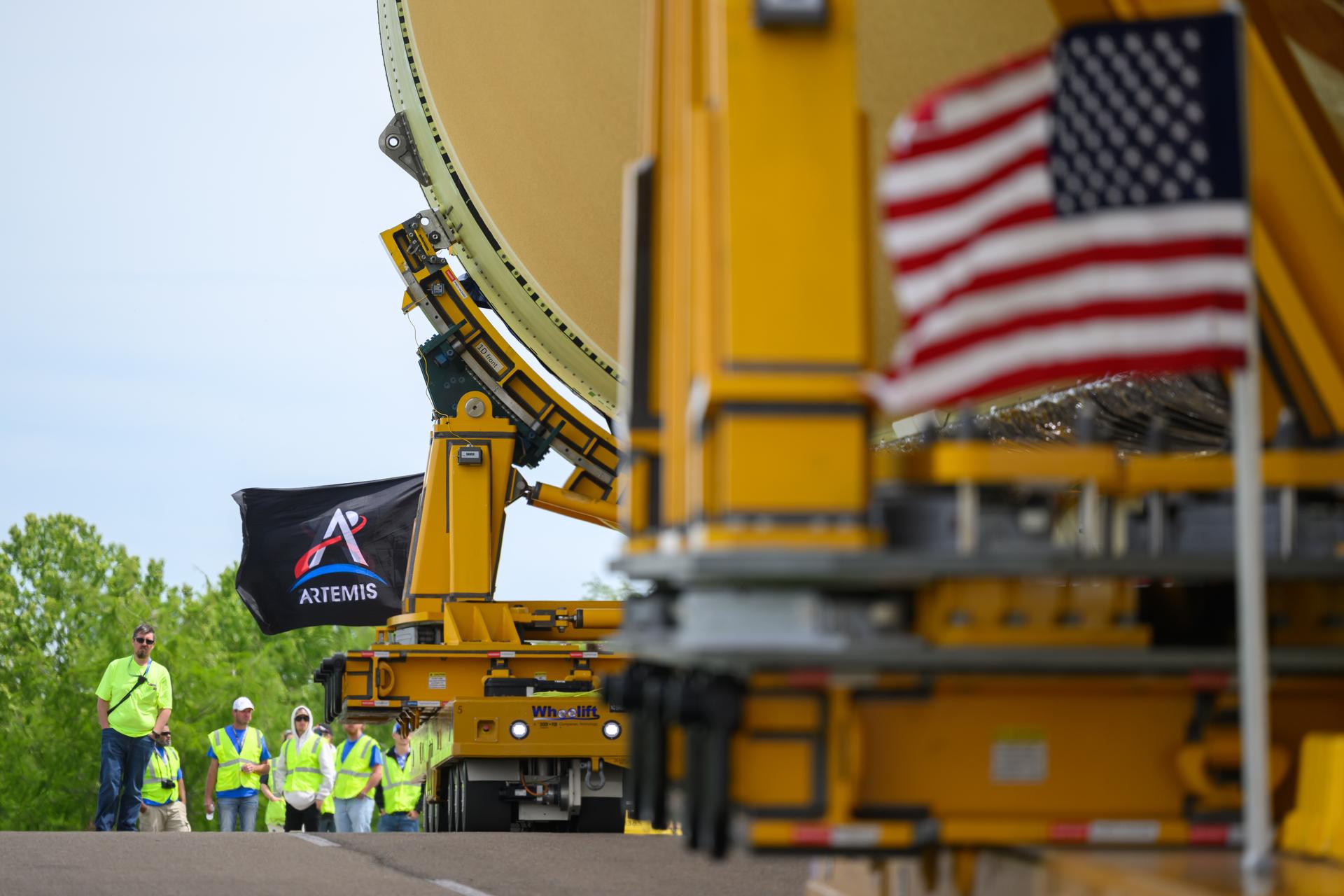
NASA moved the core stage, or the largest section, of the SLS (Space Launch System) rocket that will launch the crewed Artemis III mission in 2027 from the agency’s Michoud Assembly Facility to the agency’s Pegasus barge in New Orleans on April 20. The barge will ferry the top four-fifths – the section containing the liquid hydrogen tank, liquid oxygen tank, intertank, and forward skirt – of the SLS core stage to NASA’s Kennedy Space Center in Florida to complete outfitting and vertical integration. Teams with NASA and Boeing, the SLS core stage lead contractor, used specialized transporters to guide the top four-fifths from the NASA rocket factory to Pegasus. Prior to the move, technicians added an engine section transportation simulator to the rocket stage for shipment to the Space Coast. Next year’s Artemis III mission will launch astronauts to Earth’s orbit aboard the Orion spacecraft on top of SLS to test rendezvous and docking capabilities between Orion and commercial spacecraft needed to land Artemis IV astronauts on the Moon in 2028. NASA’s SLS is the only rocket capable of sending Orion, astronauts, and supplies to the Moon in a single launch. Photo Credit: NASA/Eric Bordelon