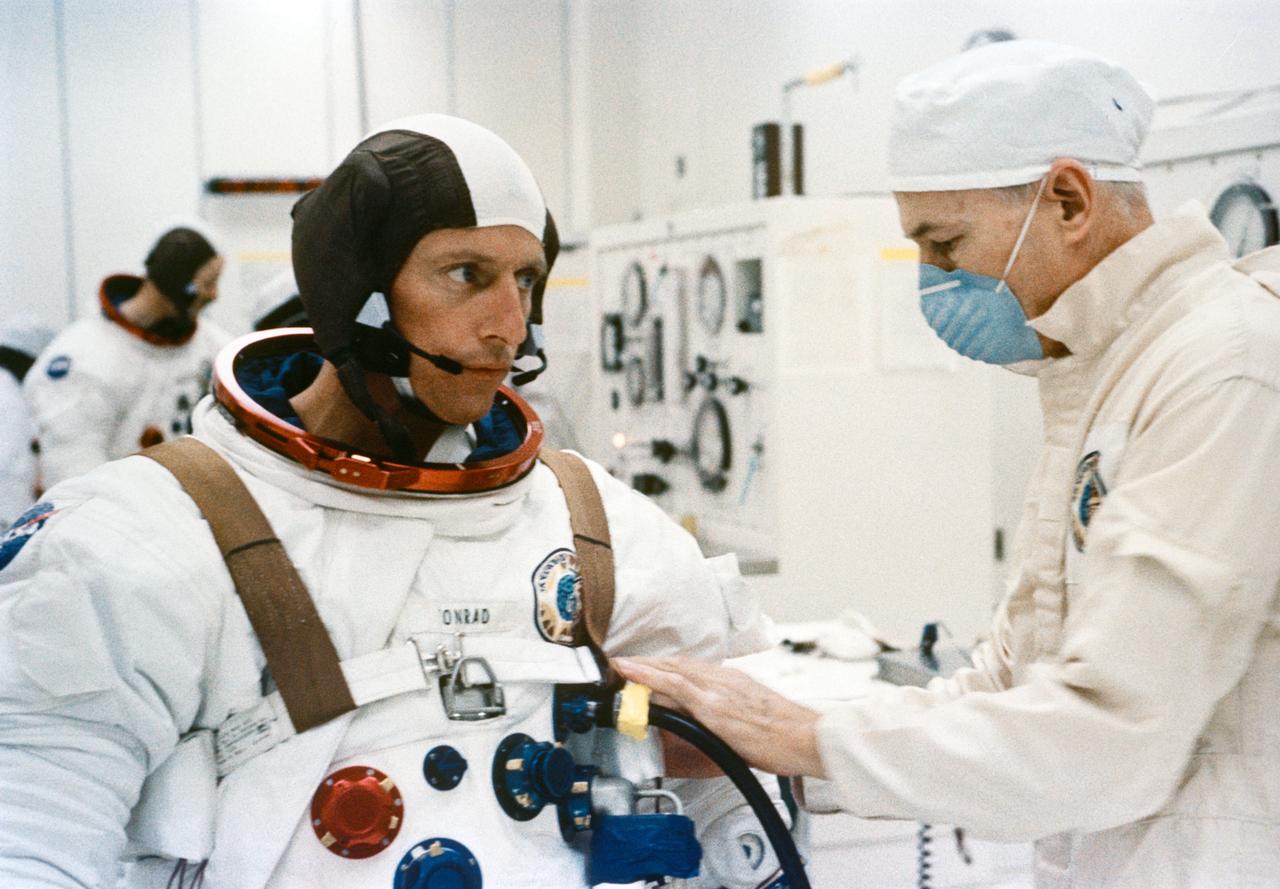
S73-25901 (25 May 1973) --- Astronaut Charles Conrad Jr., commander of the Skylab 2 mission, is suited up in the Manned Spacecraft Operations Building at the Kennedy Space Center during Skylab 2 prelaunch preparations. Skylab 2, with astronauts Conrad, Joseph P. Kerwin and Paul J. Weitz aboard, was launched from KSC's Pad B, Launch Complex 39, at 9:00 a.m. (EDT), May 25, 1973. Photo credit: NASA

S73-34367 (16 Nov. 1973) --- A view at the Kennedy Space Center showing in the near distance the Skylab 4/Saturn 1B space vehicle on Pad B, Launch Complex 39, on the morning of the launch. Photo credit: NASA
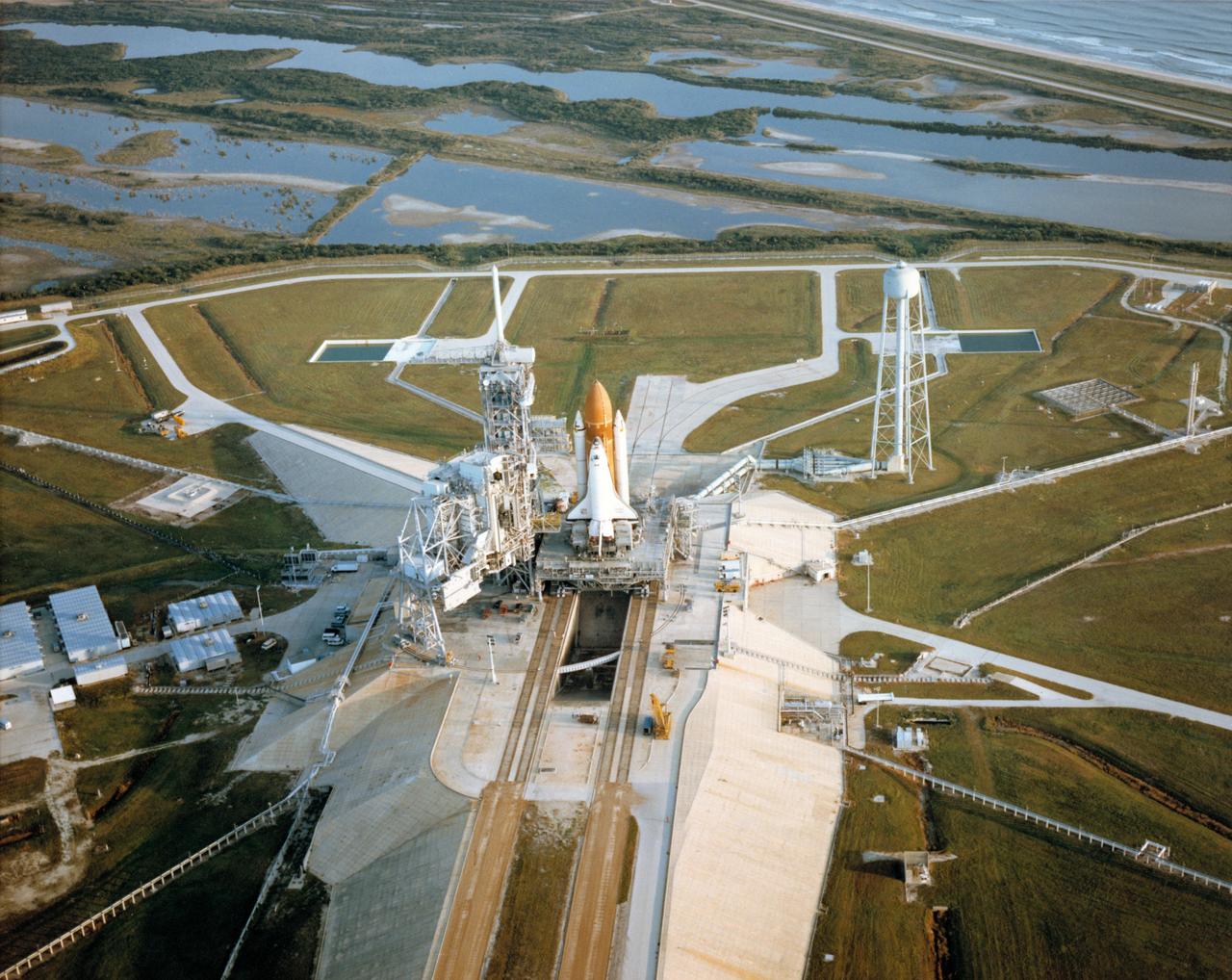
S86-38627 (9 Oct. 1986) --- The space shuttle Atlantis is rolled out to Launch Pad 39-B in the early morning of Oct. 9, 1986. Atlantis is scheduled to remain at Pad B for seven weeks where it will support checkout of new weather protection structures, a variety of special measurements, launch team proficiency exercises and emergency egress simulations. The 4.2 mile journey from the Vehicle Assembly Building to the launch pad is the first for the shuttle fleet since the space shuttle Challenger accident in January of this year. Photo credit: NASA
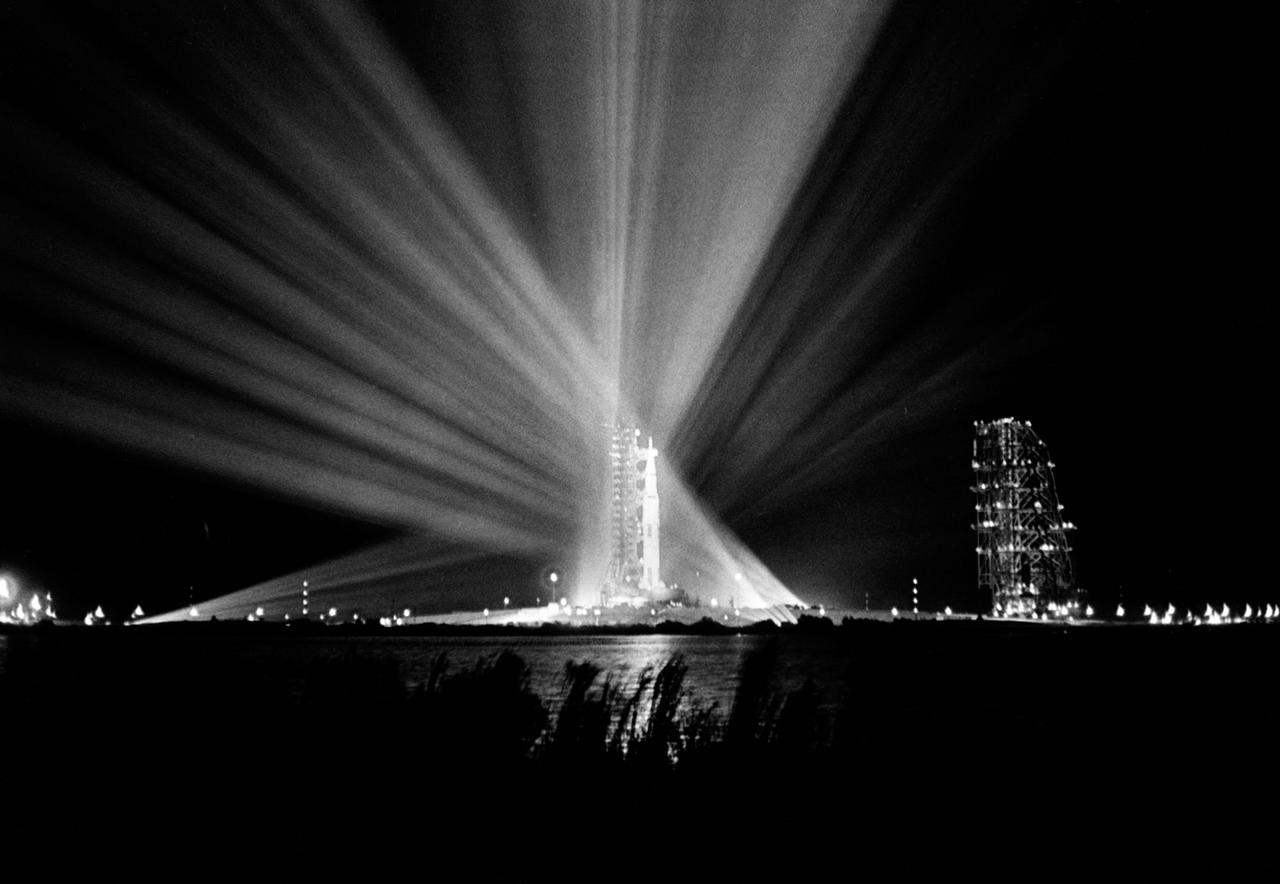
S69-25879 (23 Feb. 1969) --- Nighttime view of the 363-feet-high Apollo 9 space vehicle at Pad A, Launch Complex 39, Kennedy Space Center, during preparations for the scheduled 10-day Earth-orbital space mission. The crew of the Apollo 9 (Spacecraft 104/Lunar Module 3/Saturn 504) space flight will be astronauts James A. McDivitt, David R. Scott, and Russell L. Schweickart.

S73-25140 (16 April 1973) --- A ground-level view of Pad A, Launch Complex 39, Kennedy Space Center, Florida, showing the 341-feet tall Skylab 1/Saturn V space vehicle on the pad soon after being rolled out from the Vehicle Assembly Building (VAB). The vehicle is composed of the Saturn V first (S-1C) stage, the Apollo Telescope Mount (ATM), the Multiple Docking Adapter (MDA), the Airlock Module (AM), and the Orbital Workshop (OWS). Photo credit: NASA
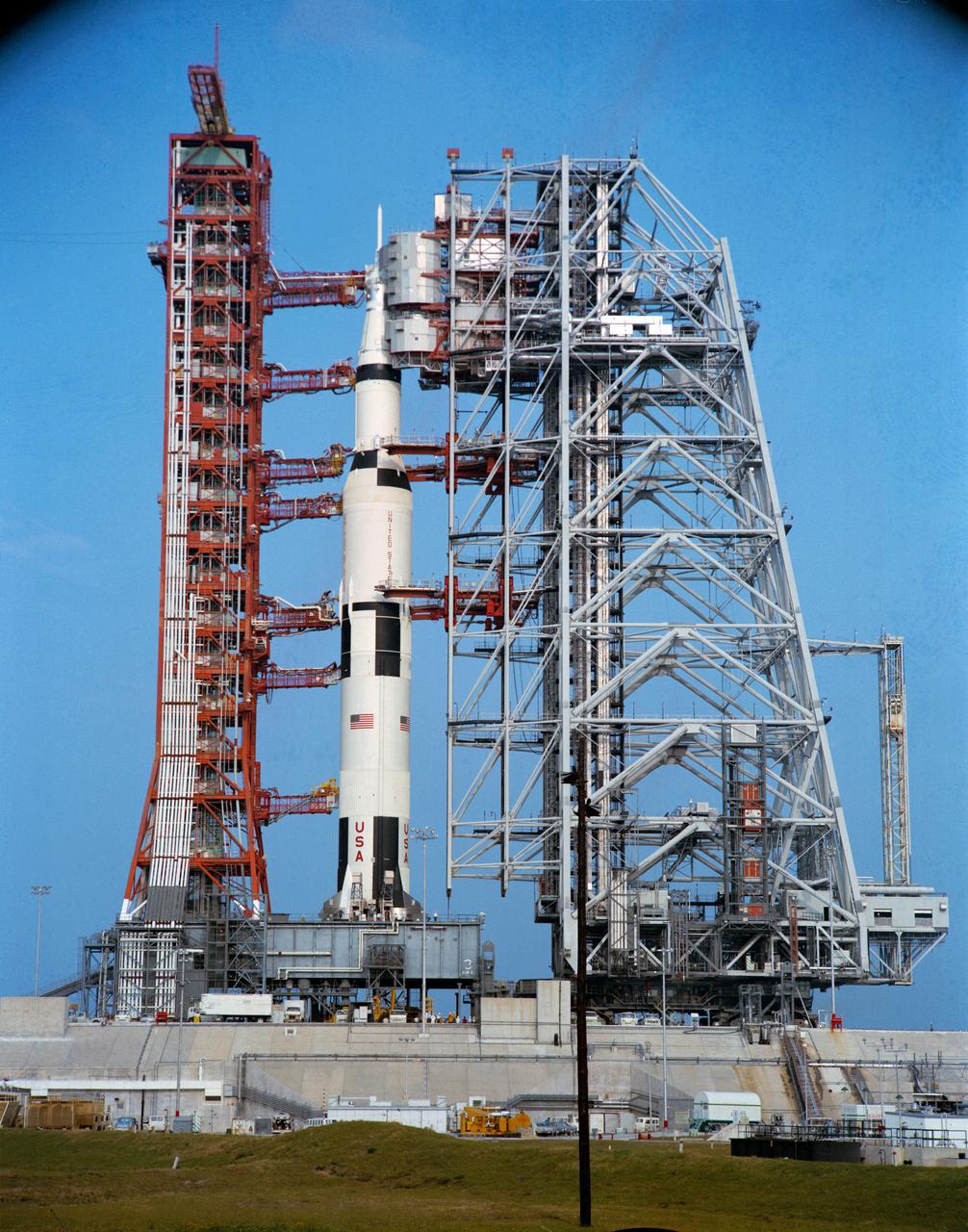
S72-34473 (29 March 1972) --- A ground-level view of Pad A, Launch Complex 39, Kennedy Space Center (KSC), showing the 363-feet tall Apollo 16 (Spacecraft 113/Lunar Module 11/Saturn 511) space vehicle during a Countdown Demonstration Test (CDDT). The CDDT was part of the preflight preparations for the Apollo 16 lunar landing mission. The crew of Apollo 16, scheduled for launch on April 16, 1972, are astronauts John W. Young, commander; Thomas K. (Ken) Mattingly II, command module pilot; and Charles M. Duke Jr., lunar module pilot.
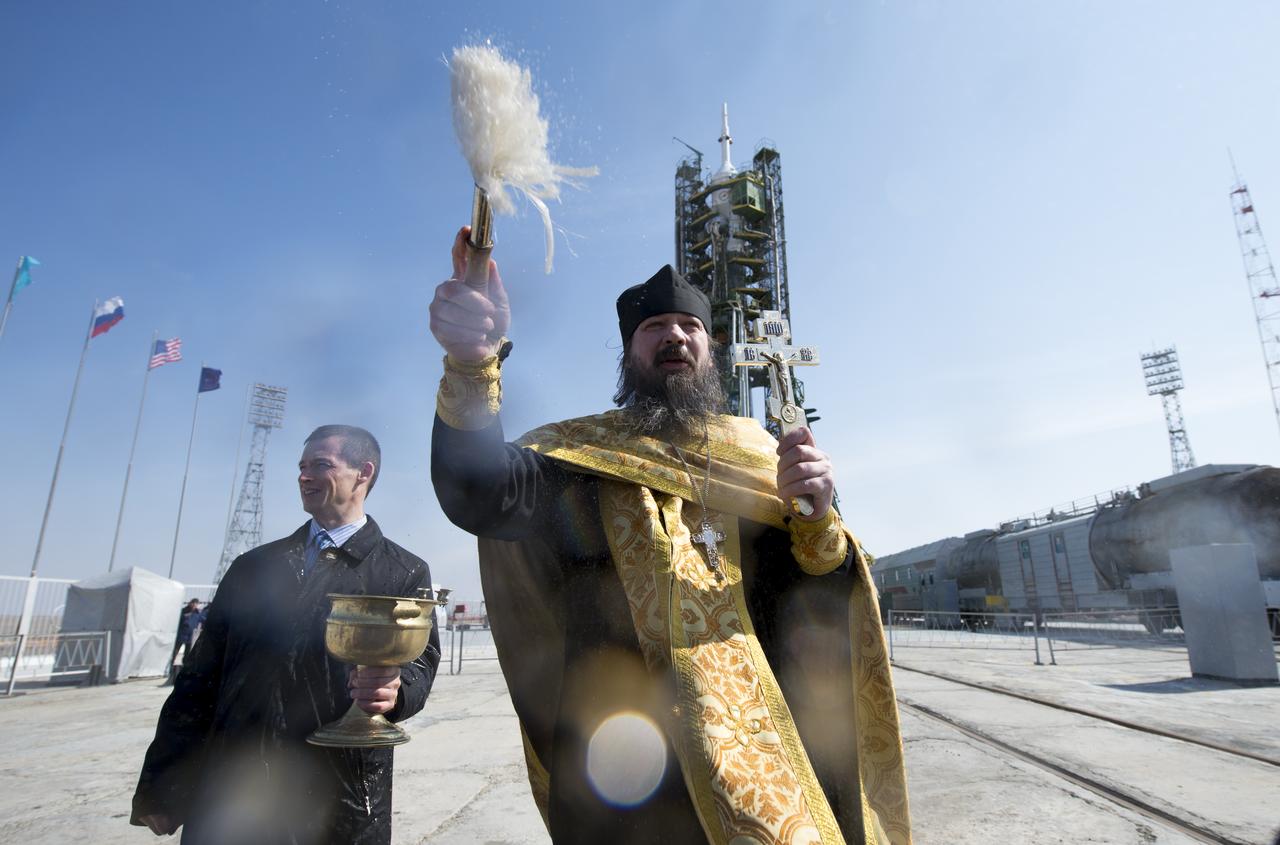
An Orthodox priest blesses members of the media on the Soyouz launch pad at the Baikonur Cosmodrome launch pad on Monday, March 24, 2014 in Kazakhstan. Launch of the Soyuz rocket is scheduled for March 26 and will send Expedition 39 Soyuz Commander Alexander Skvortsov of the Russian Federal Space Agency, Flight Engineer Steve Swanson of NASA, and Flight Engineer Oleg Artemyev of Roscosmos on a six-month mission aboard the International Space Station.Photo Credit: (NASA/Joel Kowsky)
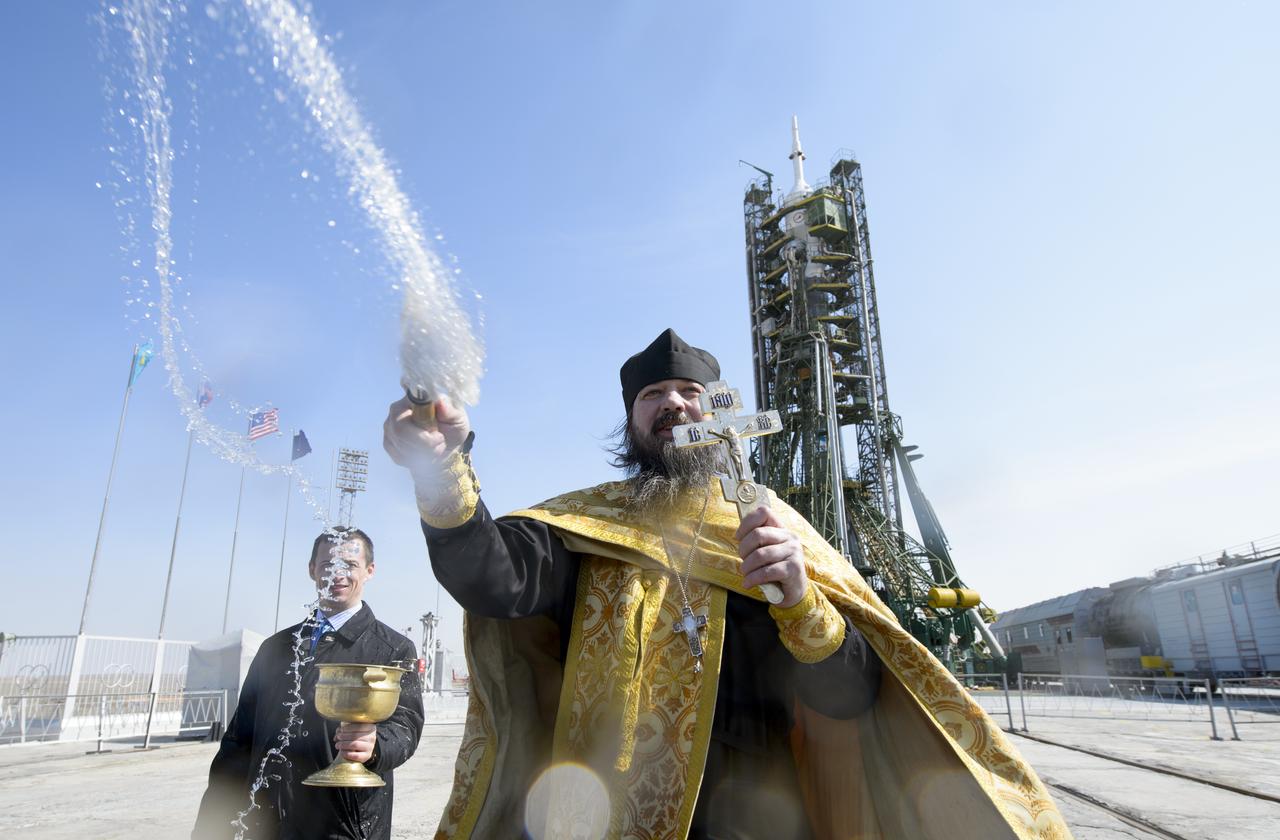
An Orthodox priest blesses members of the media on the Soyouz launch pad at the Baikonur Cosmodrome launch pad on Monday, March 24, 2014 in Kazakhstan. Launch of the Soyuz rocket is scheduled for March 26 and will send Expedition 39 Soyuz Commander Alexander Skvortsov of the Russian Federal Space Agency, Flight Engineer Steve Swanson of NASA, and Flight Engineer Oleg Artemyev of Roscosmos on a six-month mission aboard the International Space Station.Photo Credit: (NASA/Joel Kowsky)
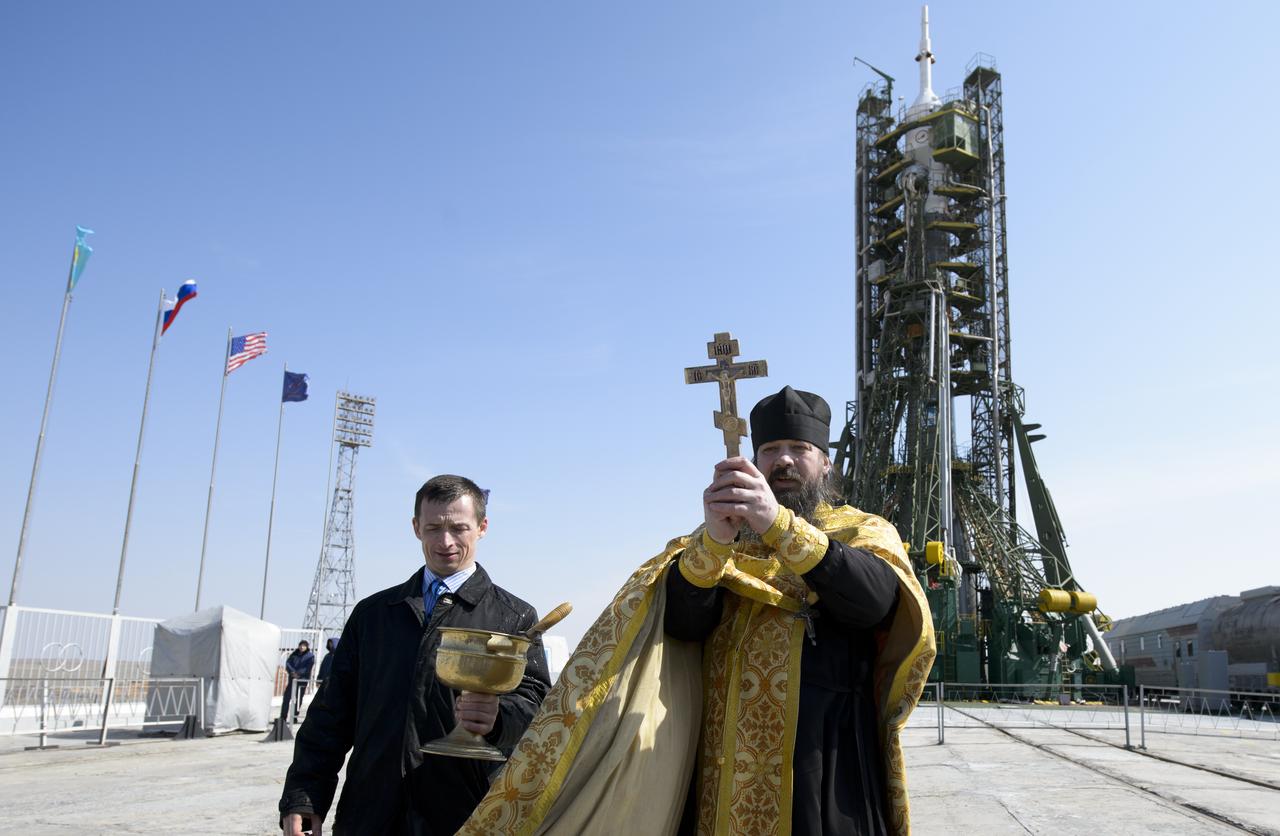
An Orthodox priest blesses members of the media on the Soyouz launch pad at the Baikonur Cosmodrome launch pad on Monday, March 24, 2014 in Kazakhstan. Launch of the Soyuz rocket is scheduled for March 26 and will send Expedition 39 Soyuz Commander Alexander Skvortsov of the Russian Federal Space Agency, Flight Engineer Steve Swanson of NASA, and Flight Engineer Oleg Artemyev of Roscosmos on a six-month mission aboard the International Space Station.Photo Credit: (NASA/Joel Kowsky)
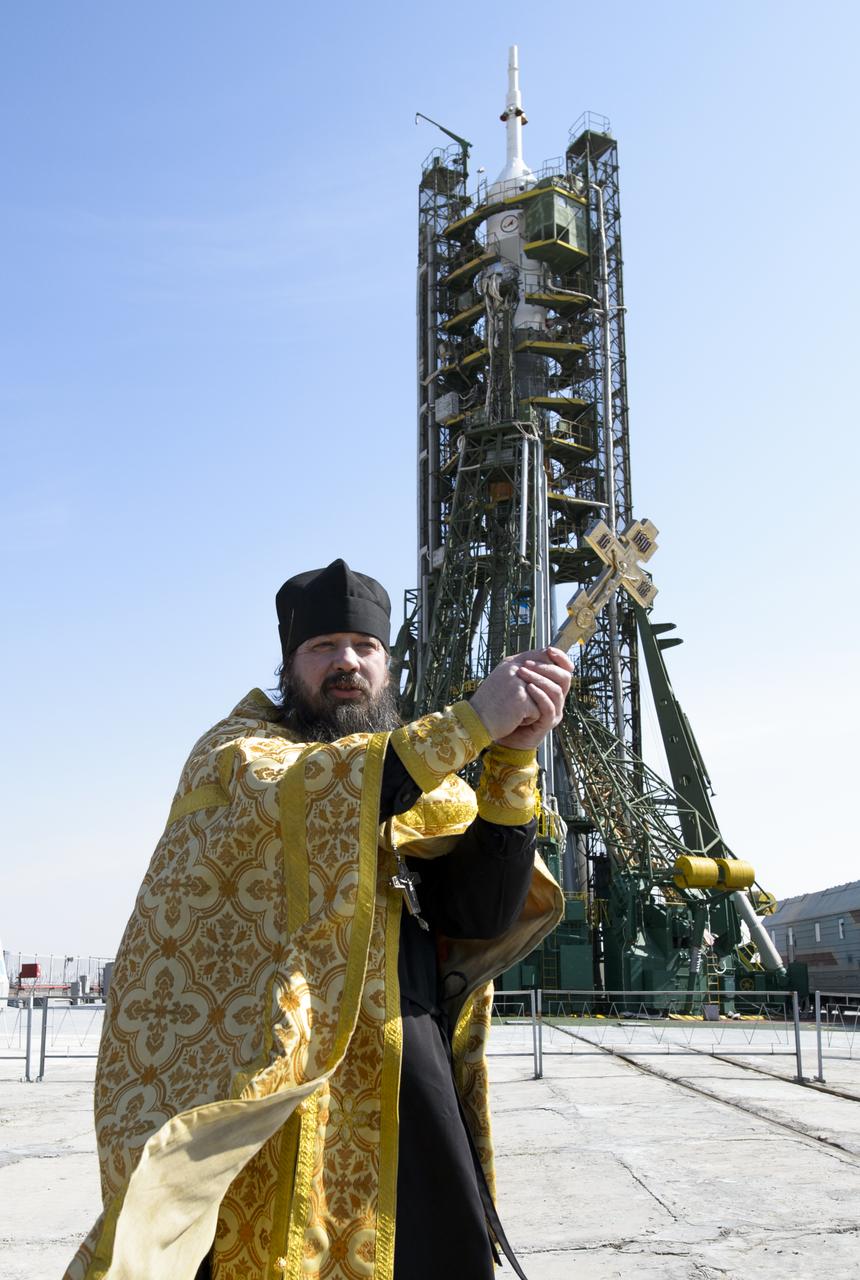
An Orthodox priest blesses members of the media on the Soyouz launch pad at the Baikonur Cosmodrome launch pad on Monday, March 24, 2014 in Kazakhstan. Launch of the Soyuz rocket is scheduled for March 26 and will send Expedition 39 Soyuz Commander Alexander Skvortsov of the Russian Federal Space Agency, Flight Engineer Steve Swanson of NASA, and Flight Engineer Oleg Artemyev of Roscosmos on a six-month mission aboard the International Space Station.Photo Credit: (NASA/Joel Kowsky)
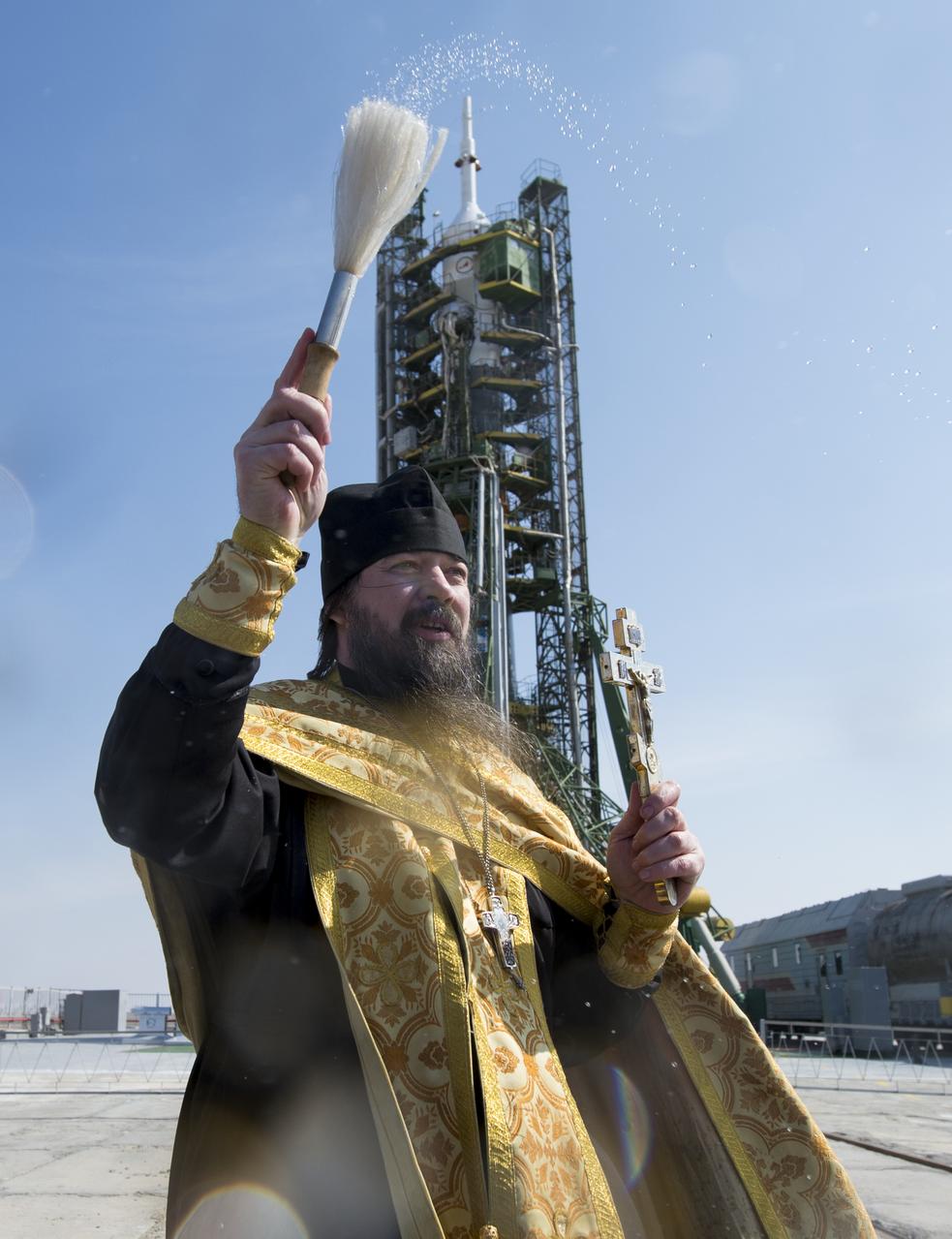
An Orthodox priest blesses members of the media on the Soyouz launch pad at the Baikonur Cosmodrome launch pad on Monday, March 24, 2014 in Kazakhstan. Launch of the Soyuz rocket is scheduled for March 26 and will send Expedition 39 Soyuz Commander Alexander Skvortsov of the Russian Federal Space Agency, Flight Engineer Steve Swanson of NASA, and Flight Engineer Oleg Artemyev of Roscosmos on a six-month mission aboard the International Space Station.Photo Credit: (NASA/Joel Kowsky)
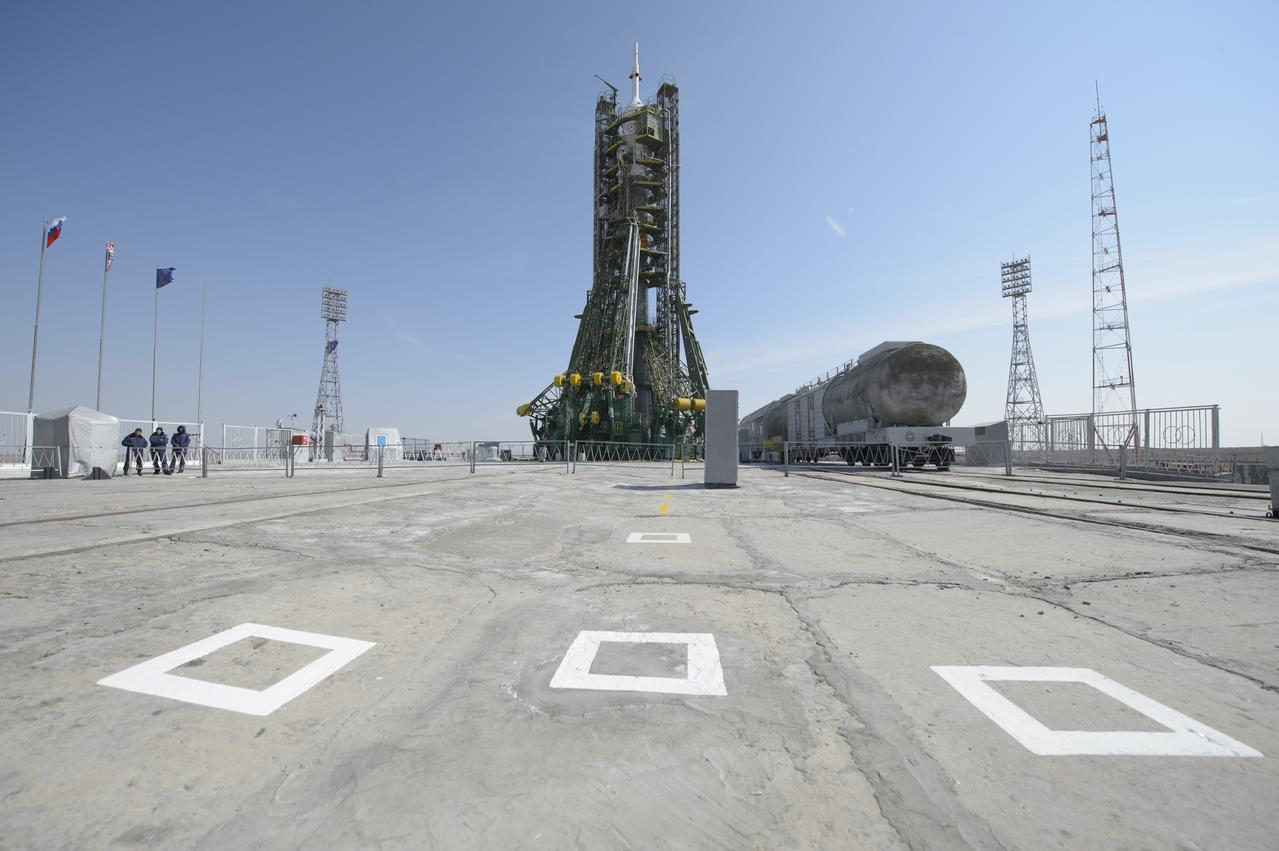
An Orthodox priest blesses the Soyuz rocket at the Baikonur Cosmodrome launch pad on Monday, March 24, 2014 in Kazakhstan. Launch of the Soyuz rocket is scheduled for March 26 and will send Expedition 39 Soyuz Commander Alexander Skvortsov of the Russian Federal Space Agency, Flight Engineer Steve Swanson of NASA, and Flight Engineer Oleg Artemyev of Roscosmos on a six-month mission aboard the International Space Station.Photo Credit: (NASA/Joel Kowsky)
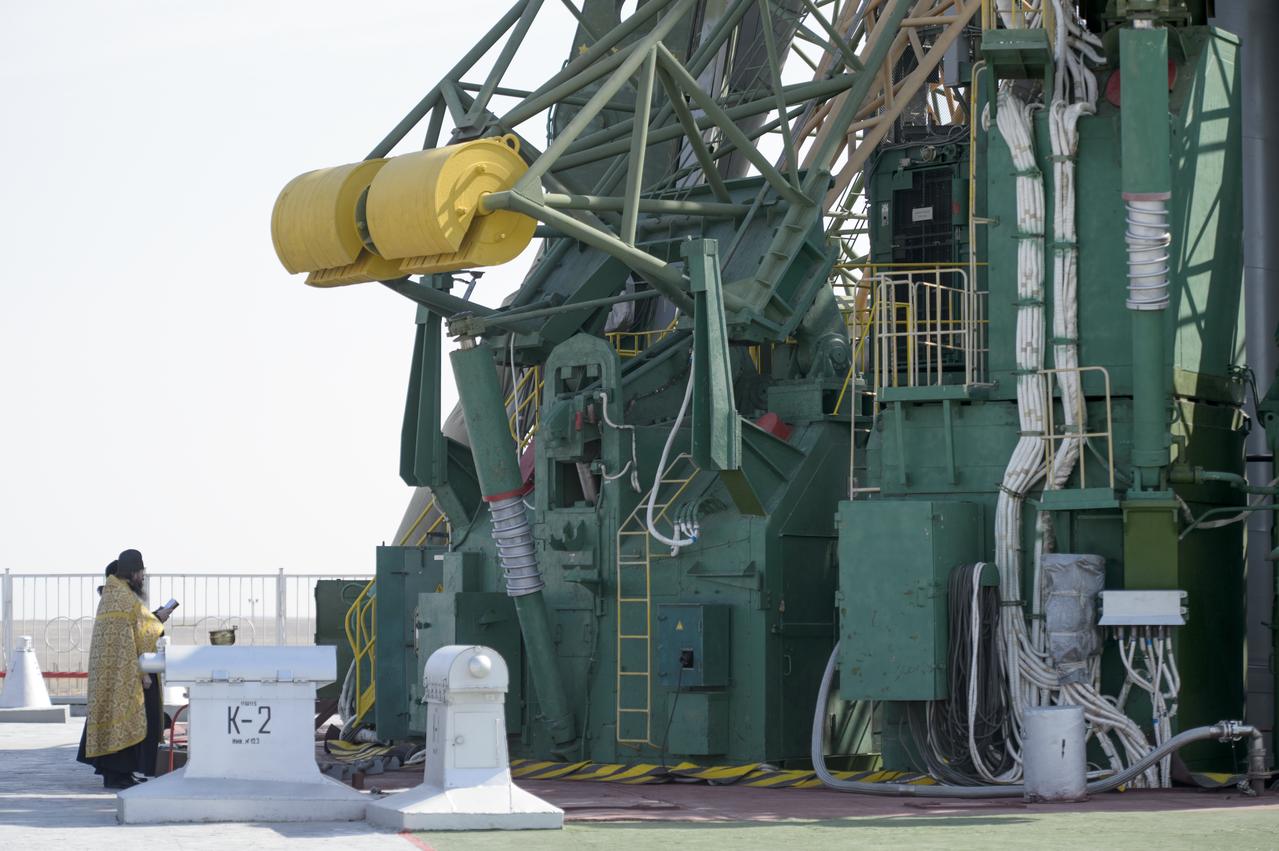
An Orthodox priest blesses the Soyuz rocket at the Baikonur Cosmodrome launch pad on Monday, March 24, 2014 in Kazakhstan. Launch of the Soyuz rocket is scheduled for March 26 and will send Expedition 39 Soyuz Commander Alexander Skvortsov of the Russian Federal Space Agency, Flight Engineer Steve Swanson of NASA, and Flight Engineer Oleg Artemyev of Roscosmos on a six-month mission aboard the International Space Station.Photo Credit: (NASA/Joel Kowsky)
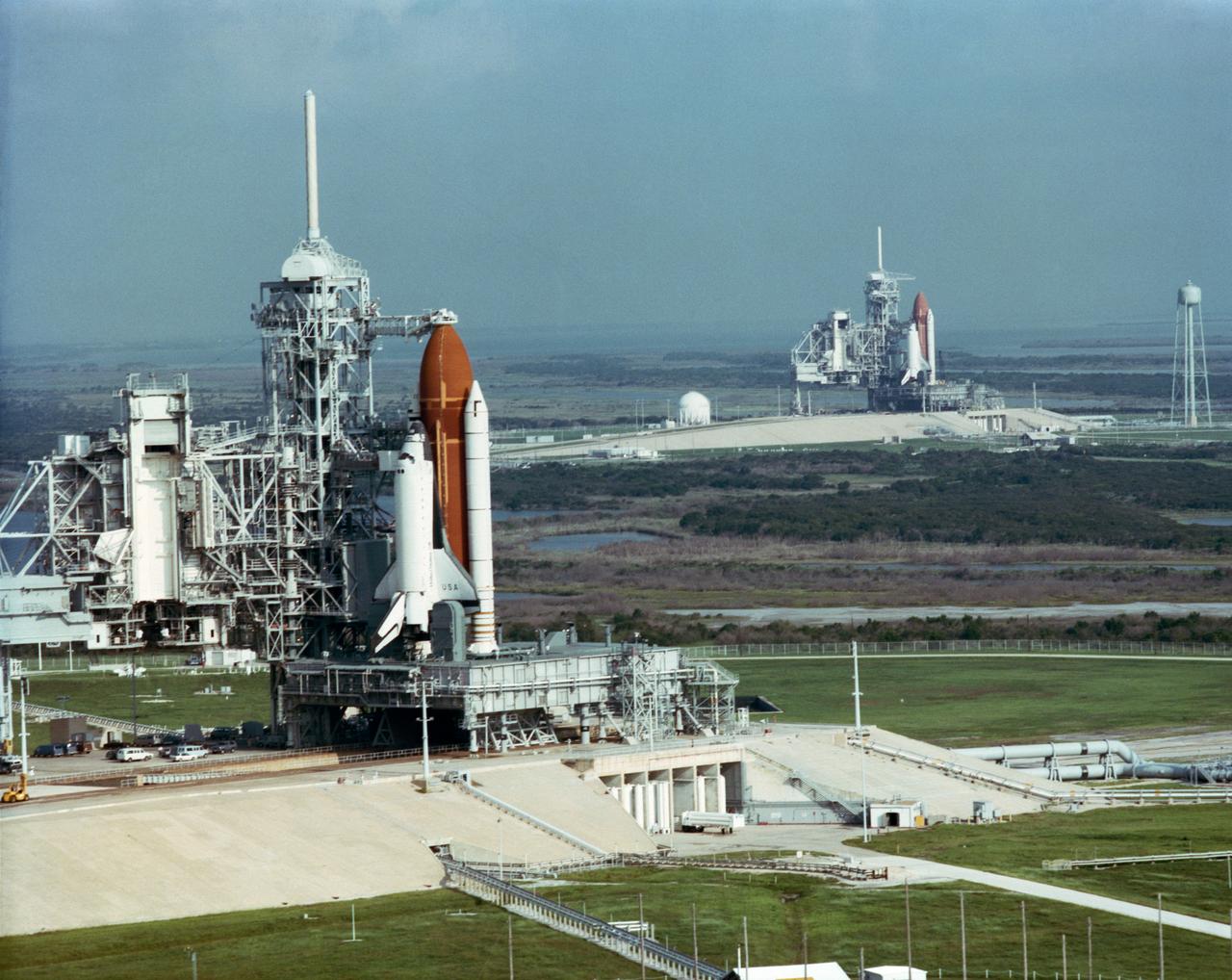
S90-48650 (5 Sept 1990) --- This rare view shows two space shuttles on adjacent pads at Launch Complex 39 with the Rotating Service Structures (RSR) retracted. Space Shuttle Columbia (foreground) is on Pad A where it awaits further processing for a September 6 early morning launch on STS-35. Discovery, its sister spacecraft, is set to begin preparations for an October liftoff on STS-41 when the Ulysses spacecraft is scheudled to be taxied into space. PLEASE NOTE: Following the taking of this photograph, STS-35 was postponed and STS-41's Discovery was successfully launched on Oct. 6.
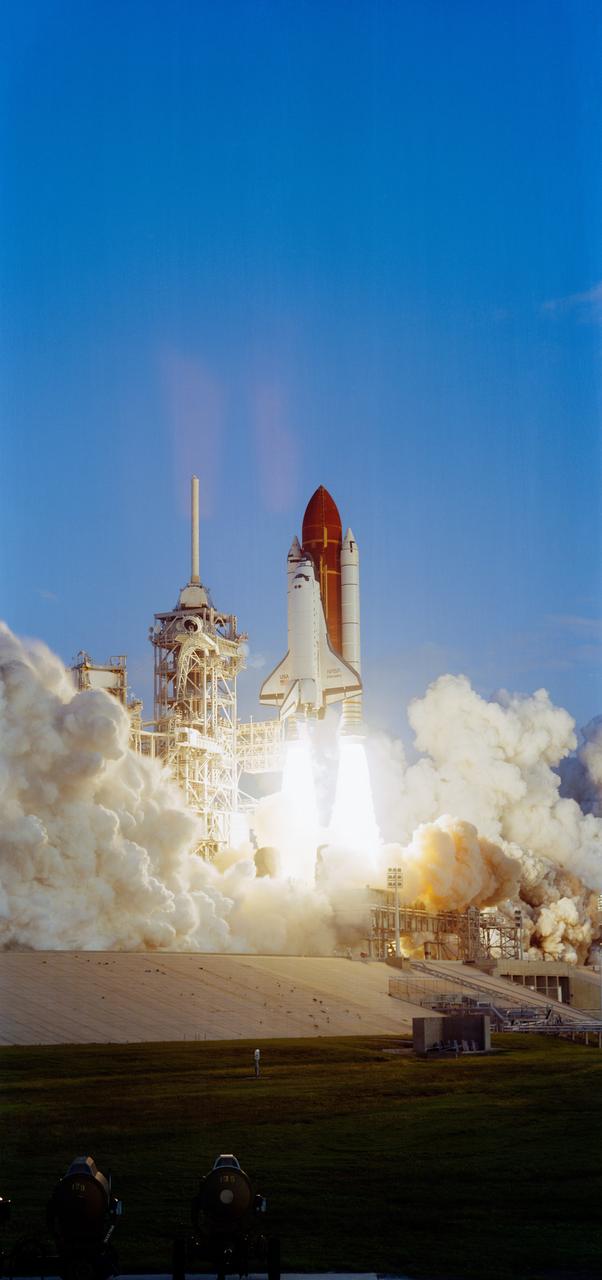
STS-41 Discovery, Orbiter Vehicle (OV) 103, lifts off from the Kennedy Space Center (KSC) Launch Complex (LC) Pad 39 mobile launcher platform at 7:47 am (Eastern Daylight Time (EDT)). OV-103 riding atop the external tank (ET) and flanked by two solid rocket boosters (SRBs), is captured just moments after liftoff. Not yet clear of the fixed service structure (FSS) tower, OV-103 is highlighted against the cloudless morning sky. Exhaust smoke billows from the SRBs and the space shuttle main engines (SSMEs) creating a cloud over the launch pad area.
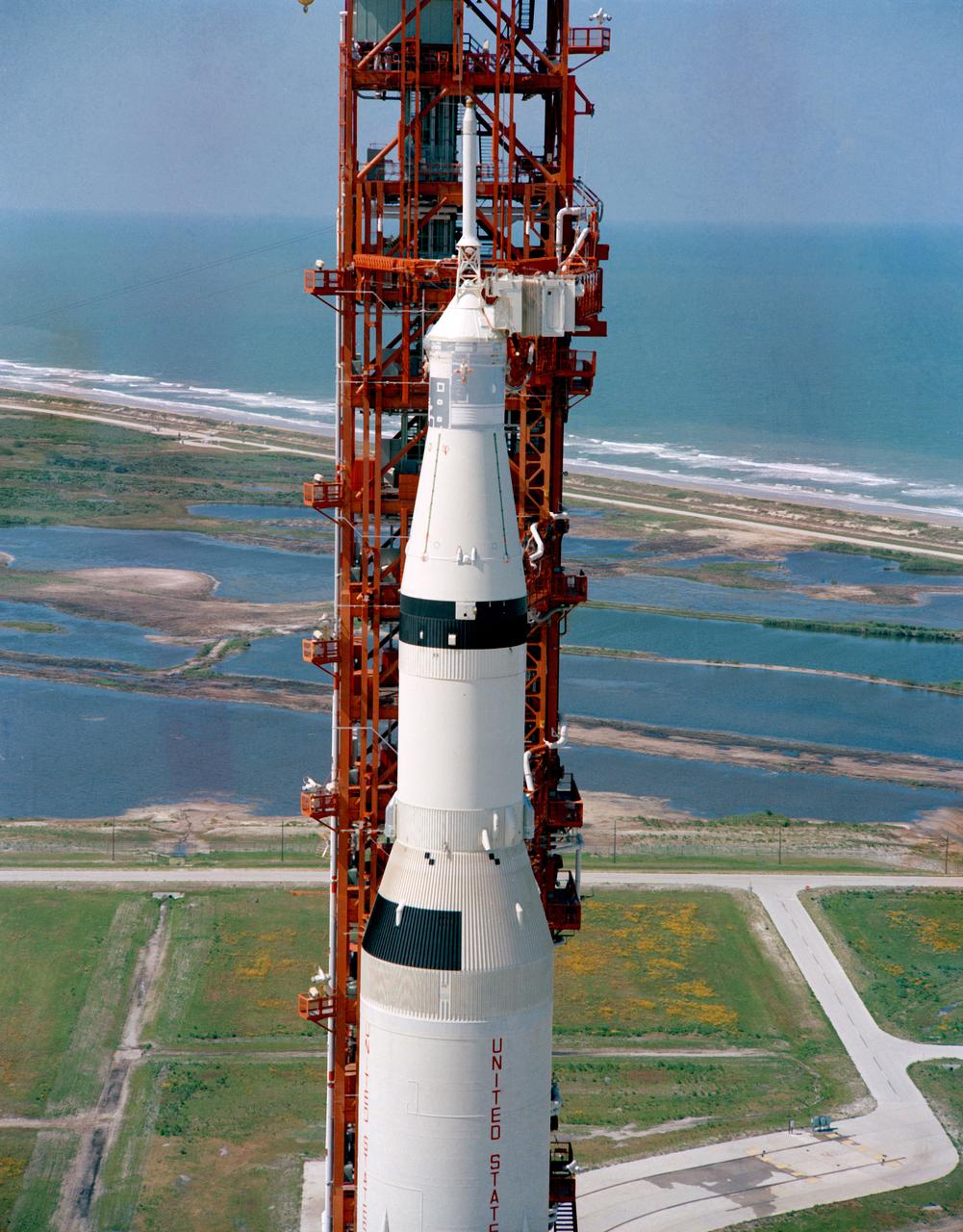
S69-33854 (4 May 1969) --- Aerial (high-angle, clasp) view of the Apollo 10 (Spacecraft 106/Lunar Module 4/Saturn 505) space vehicle on Pad B, Launch Complex 39, Kennedy Space Center. This photograph of the 363-feet tall Apollo/Saturn V stack was taken during pull back of the mobile service structure. The Apollo 10 crew will be astronauts Thomas P. Stafford, John W. Young, and Eugene A. Cernan.
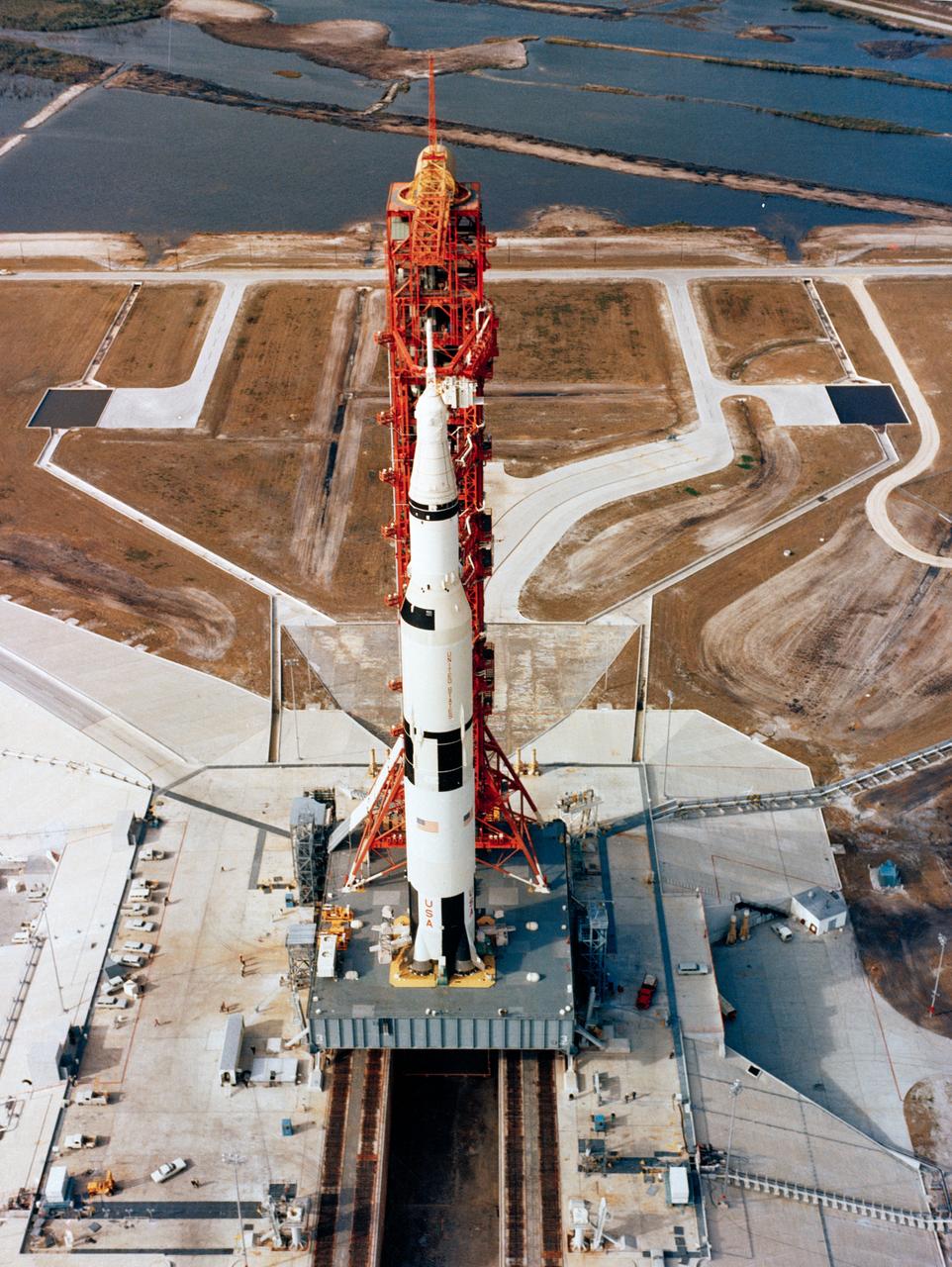
S69-34327 (13 May 1969) --- Aerial, high-angle, view of the Apollo 10 (Spacecraft 106/Lunar Module 4/Saturn 505) space vehicle at Pad B, Launch Complex 39, Kennedy Space Center, Florida. The crew of the Apollo 10 lunar orbit mission will be astronauts Thomas P. Stafford, commander; John W. Young, command module pilot; and Eugene A. Cernan, lunar module pilot.
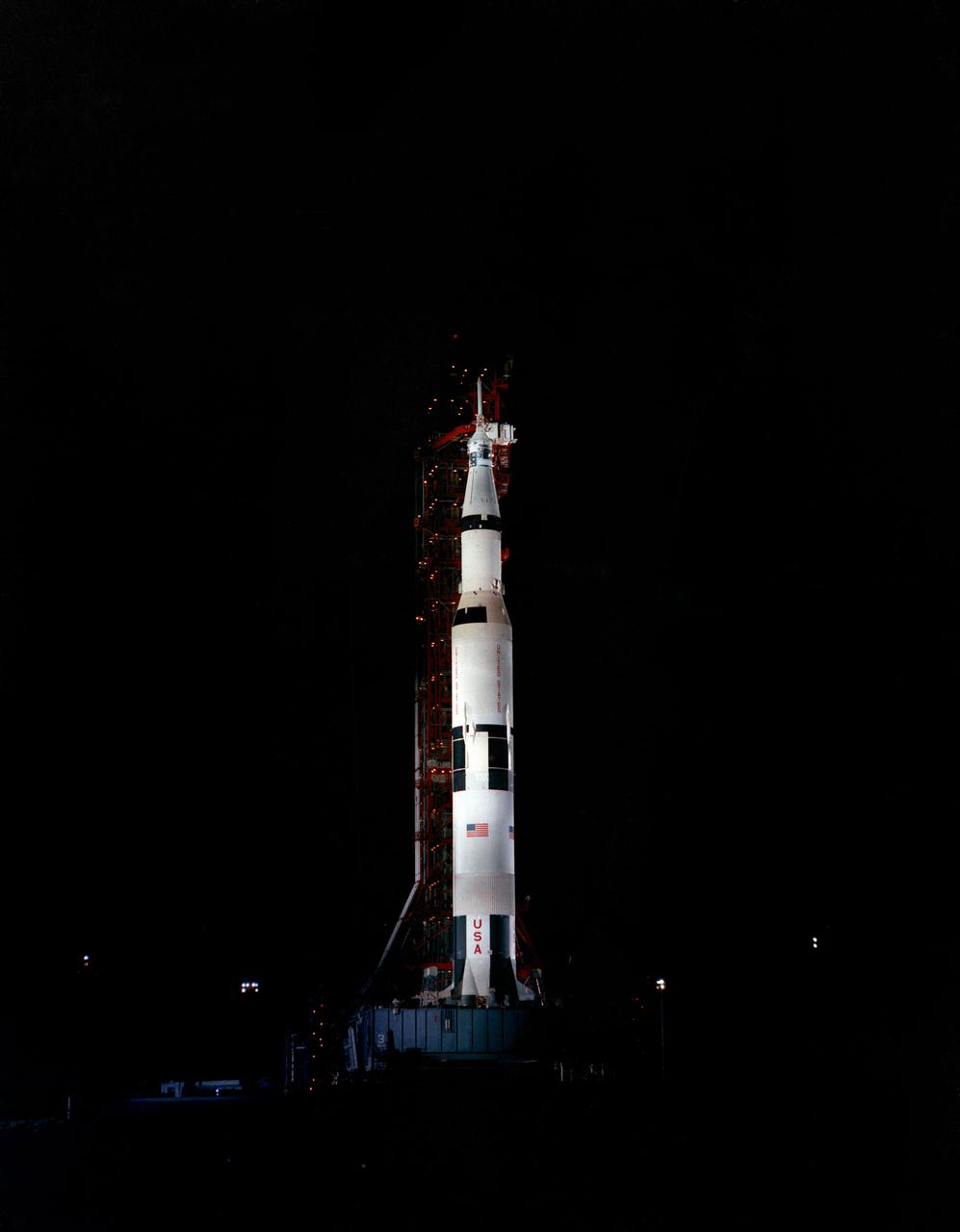
S69-33855 (4 May 1969) --- Nighttime, ground-level view of the Apollo 10 (Spacecraft 106/Lunar Module 4/Saturn 505) space vehicle on Pad B, Launch Complex 39, Kennedy Space Center. This photograph of the 363-feet tall Apollo/Saturn V stack was taken during pull back of the mobile service structure. The Apollo 10 crew will be astronauts Thomas P. Stafford, John W. Young, and Eugene A. Cernan.

S69-34328 (17 May 1969) --- Ground level view of the 363-feet tall Apollo 10 (Spacecraft 106/Lunar Module 4/Saturn 505) space vehicle on Pad B, Launch Complex 39, Kennedy Space Center. The Apollo 10 crew will be astronauts Thomas P. Stafford, commander; John W. Young, command module pilot; and Eugene A. Cernan, lunar module pilot.
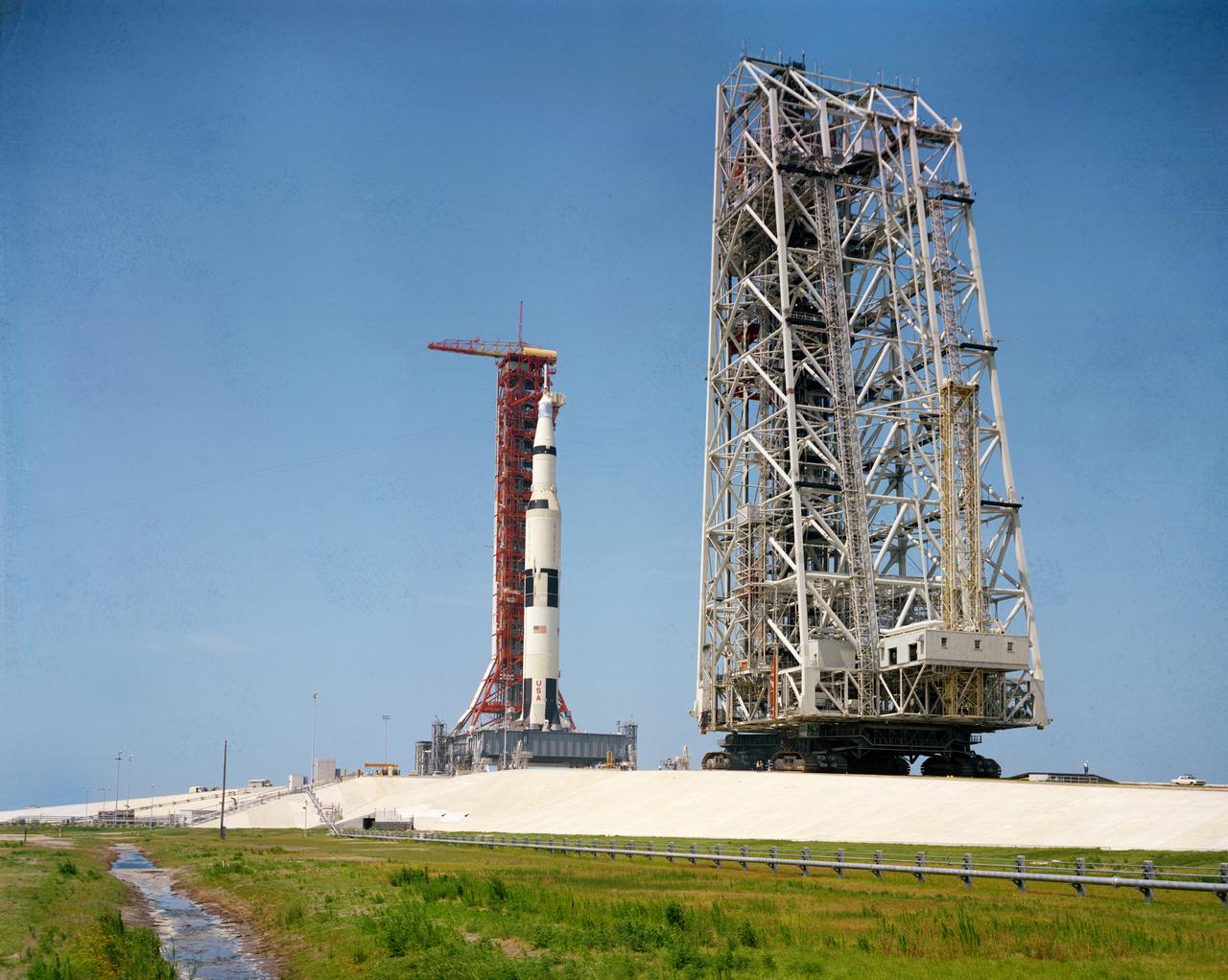
S69-34320 (17 May 1969) --- Ground level view of the 363-feet tall Apollo 10 (Spacecraft 106/Lunar Module 4/Saturn 505) space vehicle on Pad B, Launch Complex 39, Kennedy Space Center. The service structure is in the right foreground. The crew of the Apollo 10 lunar orbit mission will be astronauts Thomas P. Stafford, commander; John W. Young, command module pilot; and Eugene A. Cernan, lunar module pilot.

S69-27916 (11 March 1969) --- Aerial view at Launch Complex 39, Kennedy Space Center, showing the Apollo 10 (Spacecraft 106/Lunar Module-4/Saturn 505) space vehicle on its way to Pad B. The Saturn V stack and its mobile launch tower are atop a huge crawler-transporter. The Apollo 10 flight is scheduled as a lunar orbit mission. The Apollo 10 crew will be astronauts Thomas P. Stafford, commander; John W. Young, command module pilot; and Eugene A. Cernan, lunar module pilot.
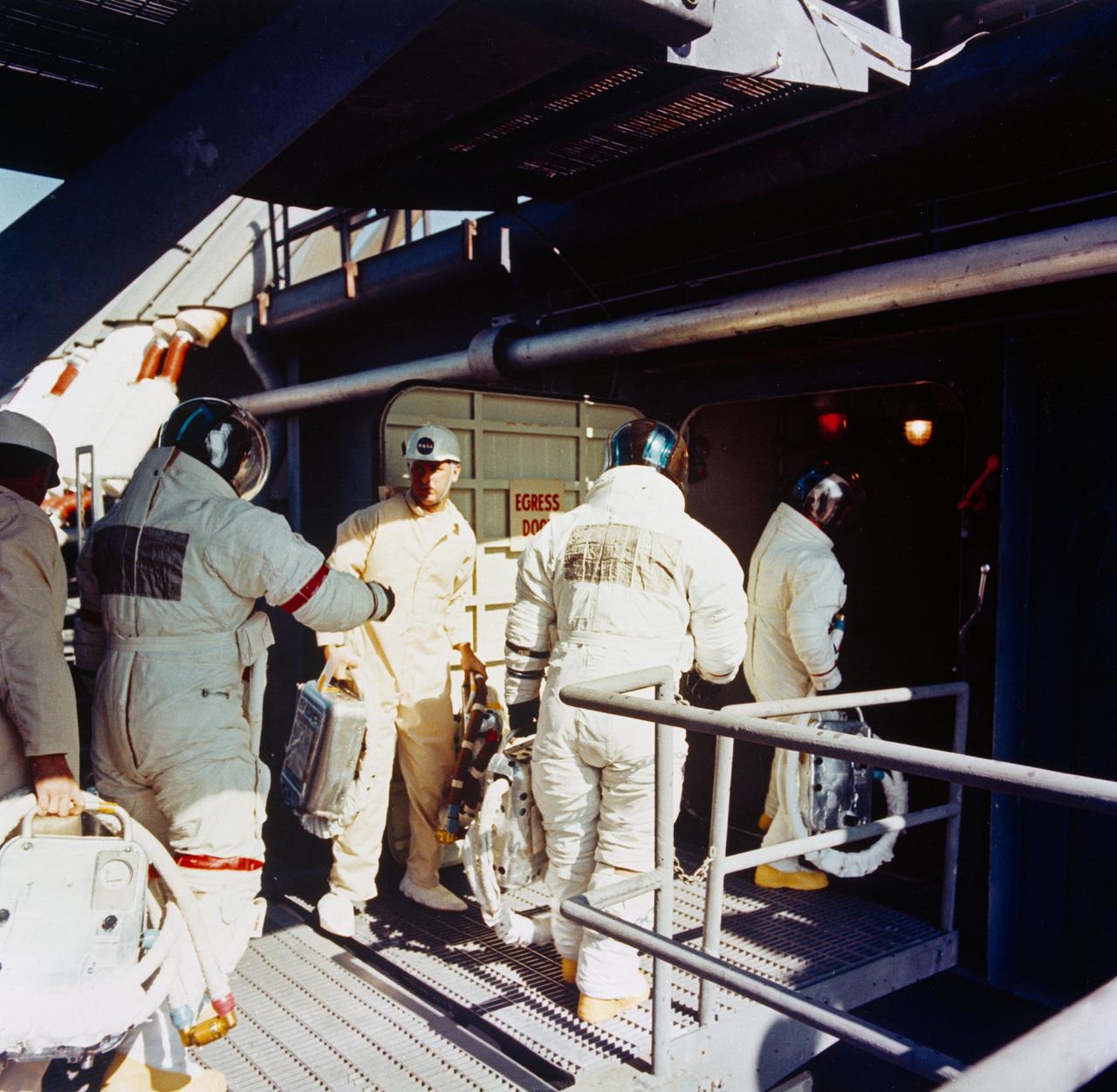
S71-16635 (31 Jan. 1971) --- The three Apollo 14 astronauts arrive at the White Room atop Pad A, Launch Complex 39, during the Apollo 14 prelaunch countdown. Apollo 14, with Alan B. Shepard Jr., commander; Stuart A. Roosa, command module pilot; and Edgar D. Mitchell, lunar module pilot, aboard was launched at 4:03:02 p.m. (EST), Jan. 31, 1971, on a lunar landing mission. Note identifying bands on the sleeve and leg of Shepard. Standing in the center foreground is astronaut Thomas P. Stafford, chief of the MSC Astronaut Office.
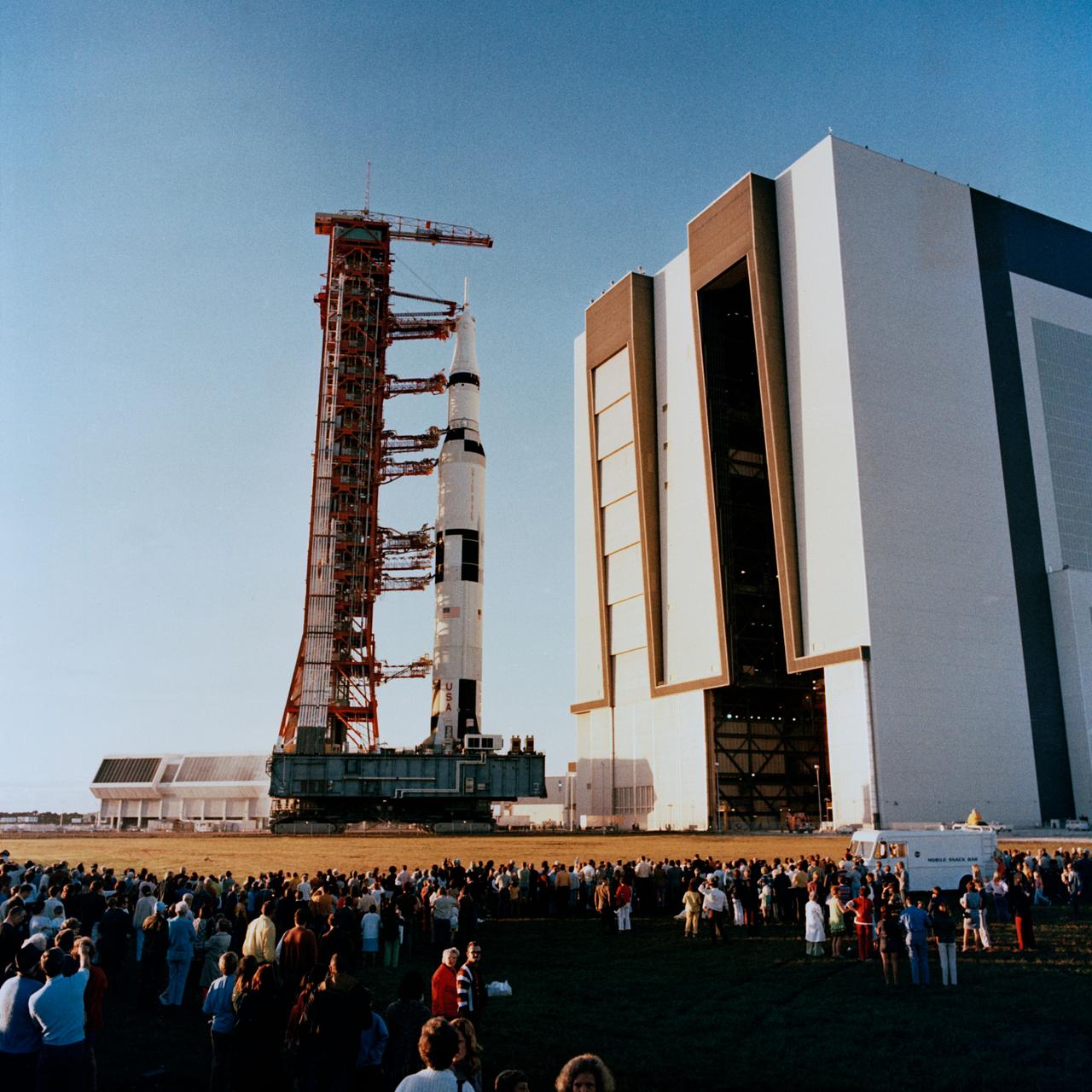
S72-19795 (13 Dec. 1971) --- A large crowd of spectators look on as the 363-feet tall Apollo 16 (Spacecraft 113/Lunar Module 11/Saturn 511) space vehicle moves out of the Vehicle Assembly Building (VAB) at the Kennedy Space Center's (KSC) Launch Complex 39 toward Pad A. The Saturn V stack and its mobile launch tower are atop a huge crawler-transporter. The prime crew men of the scheduled Apollo 16 lunar landing mission are astronauts John W. Young, commander; Thomas K. Mattingly, command module pilot; and Charles M. Duke Jr., lunar module pilot.
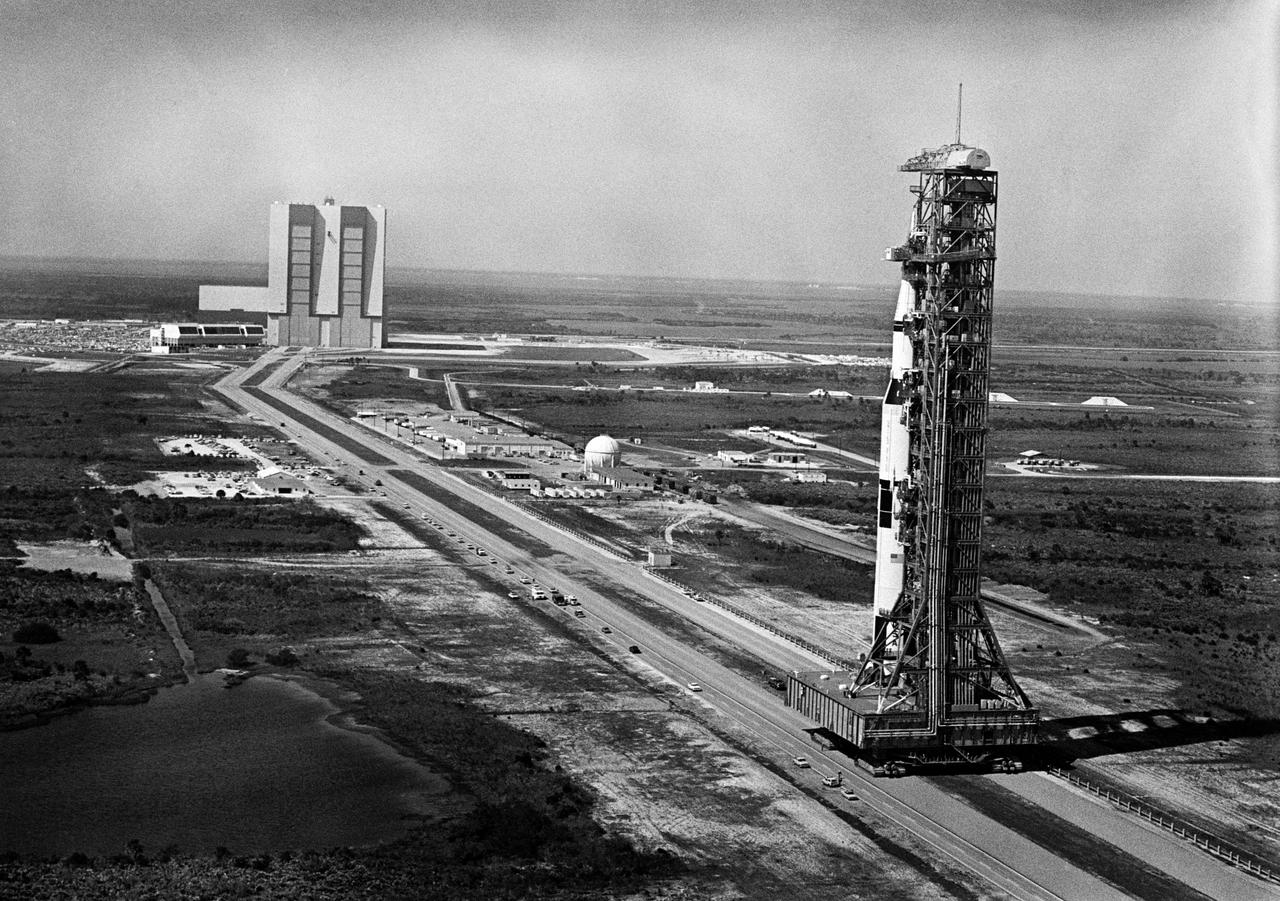
S69-27741 (11 March 1969) --- Aerial view at Launch Complex 39, Kennedy Space Center, showing the 363-feet tall Apollo 10 (Spacecraft 106/Lunar Module-4/Saturn 505) space vehicle on its way to Pad B. The Vehicle Assembly Building is in the background. The Saturn V stack and its mobile launch tower are atop a huge crawler-transporter. The Apollo 10 flight is schedule as a lunar orbit mission. The Apollo 10 crew will be astronauts Thomas P. Stafford, commander; John W. Young, command module pilot; and Eugene A. Cernan, lunar module pilot.
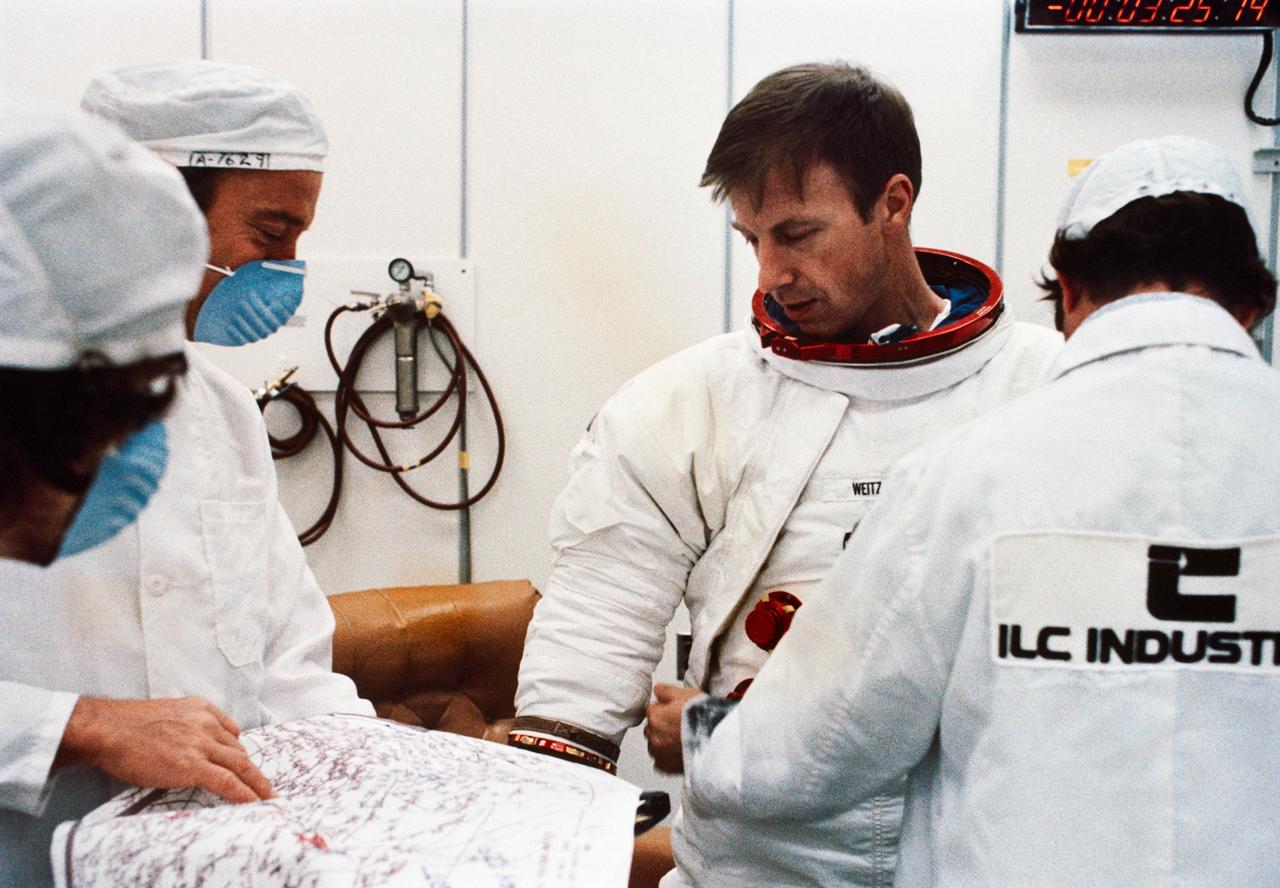
S73-25898 (25 May 1973) --- Astronaut Paul Weitz, pilot of the Skylab 2 mission, is suited up in the Manned Spacecraft Operations Building at the Kennedy Space Center during Skylab 2 prelaunch preparations. Photo credit: NASA

S73-32568 (20 July 1973) --- Floodlights illuminate this nighttime view of the Skylab 3/Saturn 1B space vehicle at Pad B, Launch Complex 39, Kennedy Space Center, Florida, during prelaunch preparations. The reflection is the water adds to the scene. In addition to the Command/Service Module and its launch escapte system, the Skylab 3 space vehicle consists of the Saturn 1B first (S-1B) stage and the Saturn 1B second (S-IVB) stage. The crew for the scheduled 59-day Skylab 3 mission in Earth orbit will be astronauts Alan L. Bean, Owen K. Garriott and Jack R. Lousma. Skylab 3 was launched on July 28, 1973. Photo credit: NASA
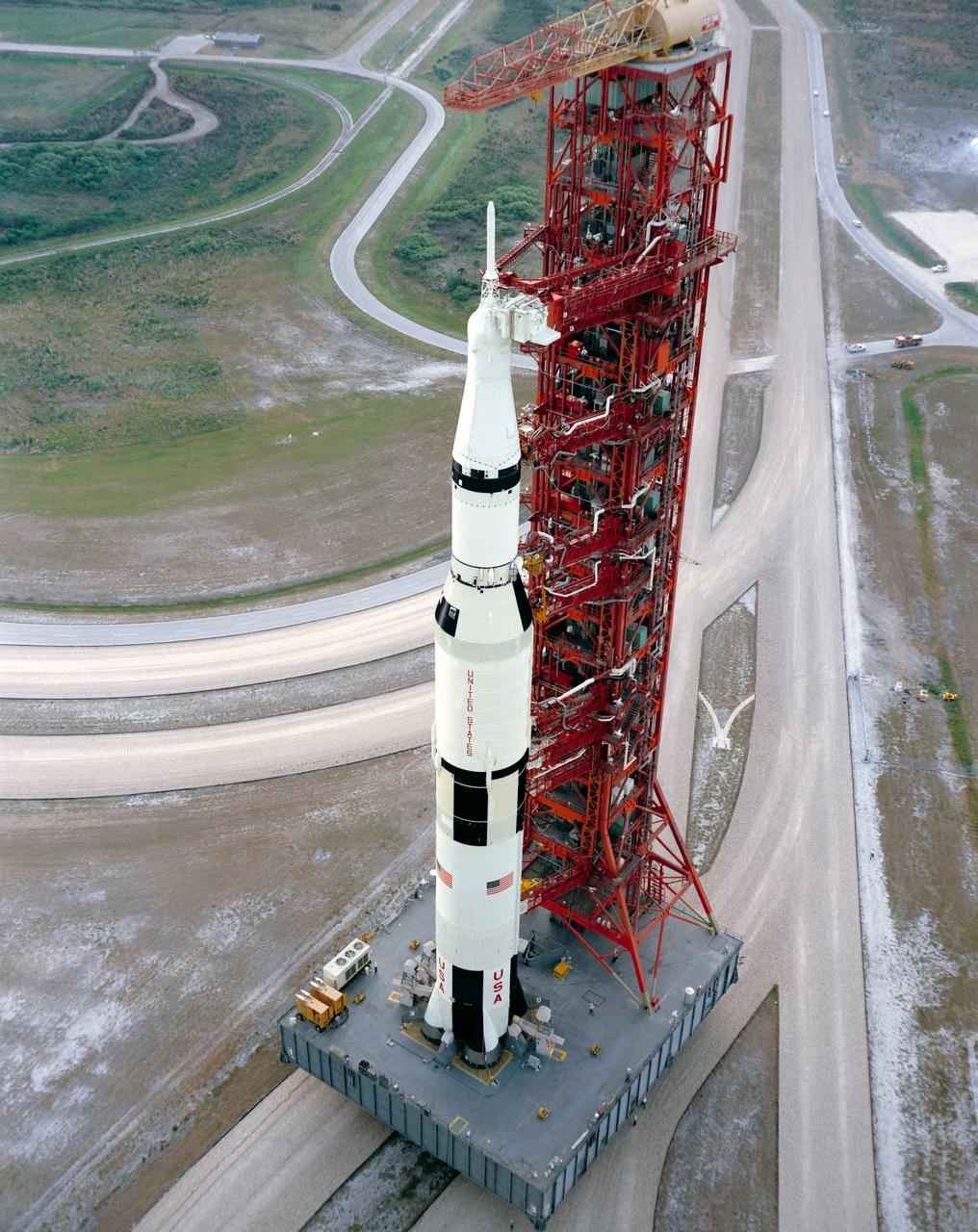
S71-33781 (11 May 1971) --- High angle view showing the Apollo 15 (Spacecraft 112/Lunar Module 10/Saturn 510) space vehicle on the way from the Vehicle Assembly Building (VAB) to Pad A, Launch Complex 39, Kennedy Space Center (KSC). The Saturn V stack and its mobile launch tower are atop a huge crawler-transporter. Apollo 15 is scheduled as the fourth manned lunar landing mission by the National Aeronautics and Space Administration (NASA). The crew men will be astronauts David R. Scott, commander; Alfred M. Worden, command module pilot; and James B. Irwin, lunar module pilot. While astronauts Scott and Irwin descend in the Lunar Module (LM) to explore the moon, astronaut Worden will remain with the Command and Service Modules (CSM) in lunar orbit.
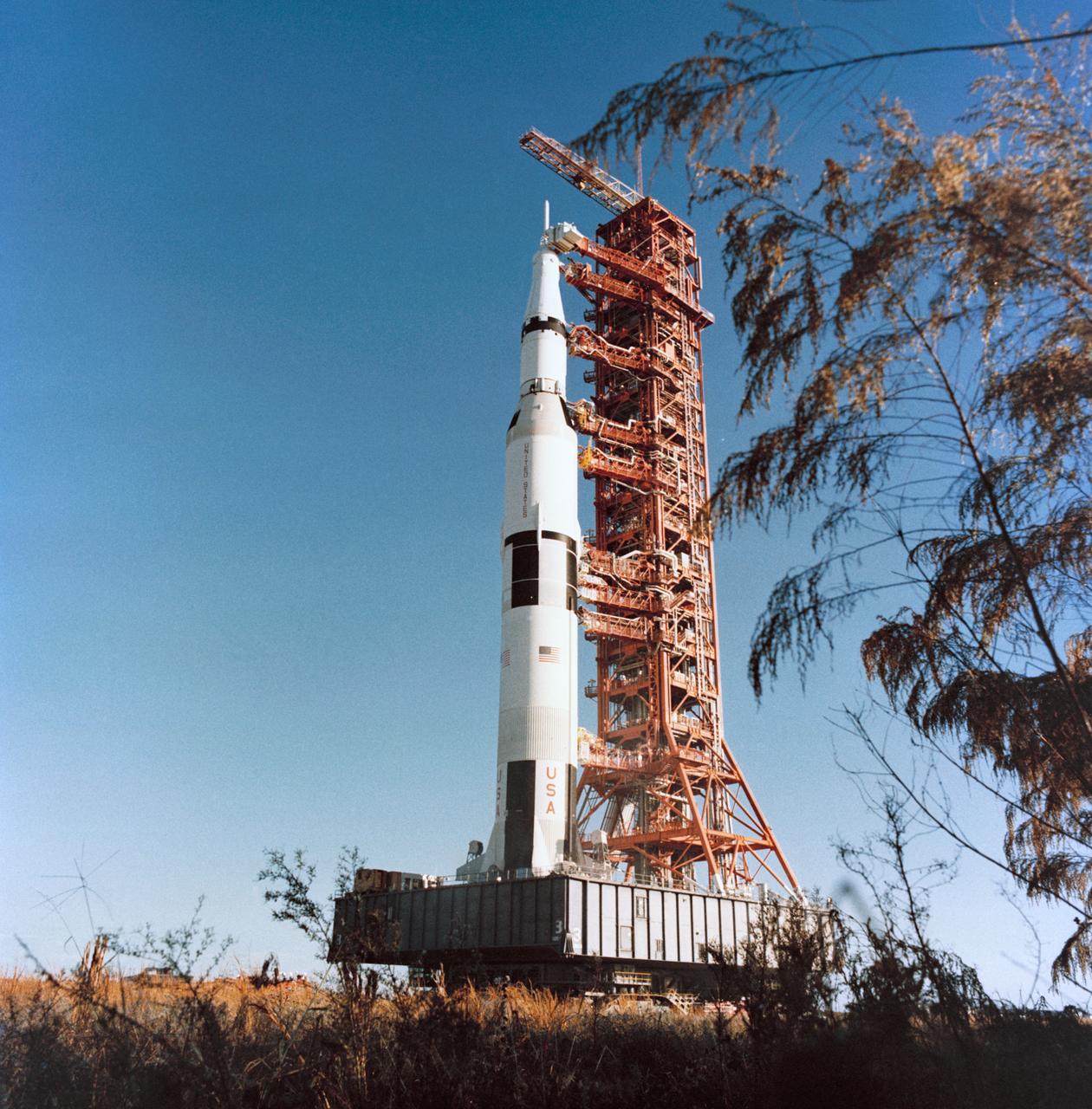
S72-19794 (13 Dec. 1971) --- A ground-level view showing the tall Apollo 16 (Spacecraft 113/Lunar Module 11/Saturn 511) space vehicle at the Kennedy Space Center's (KSC) Launch Complex 39 being moved from the Vehicle Assembly Building (VAB) toward Pad A. The Saturn V stack and its mobile launch tower are atop a huge crawler-transporter. The prime crew men of the scheduled Apollo 16 lunar landing mission are astronauts John W. Young, Apollo 16 lunar landing mission are astronauts John W. Young, commander; Thomas K. Mattingly II, command module pilot; and Charles M. Duke Jr., lunar module pilot.
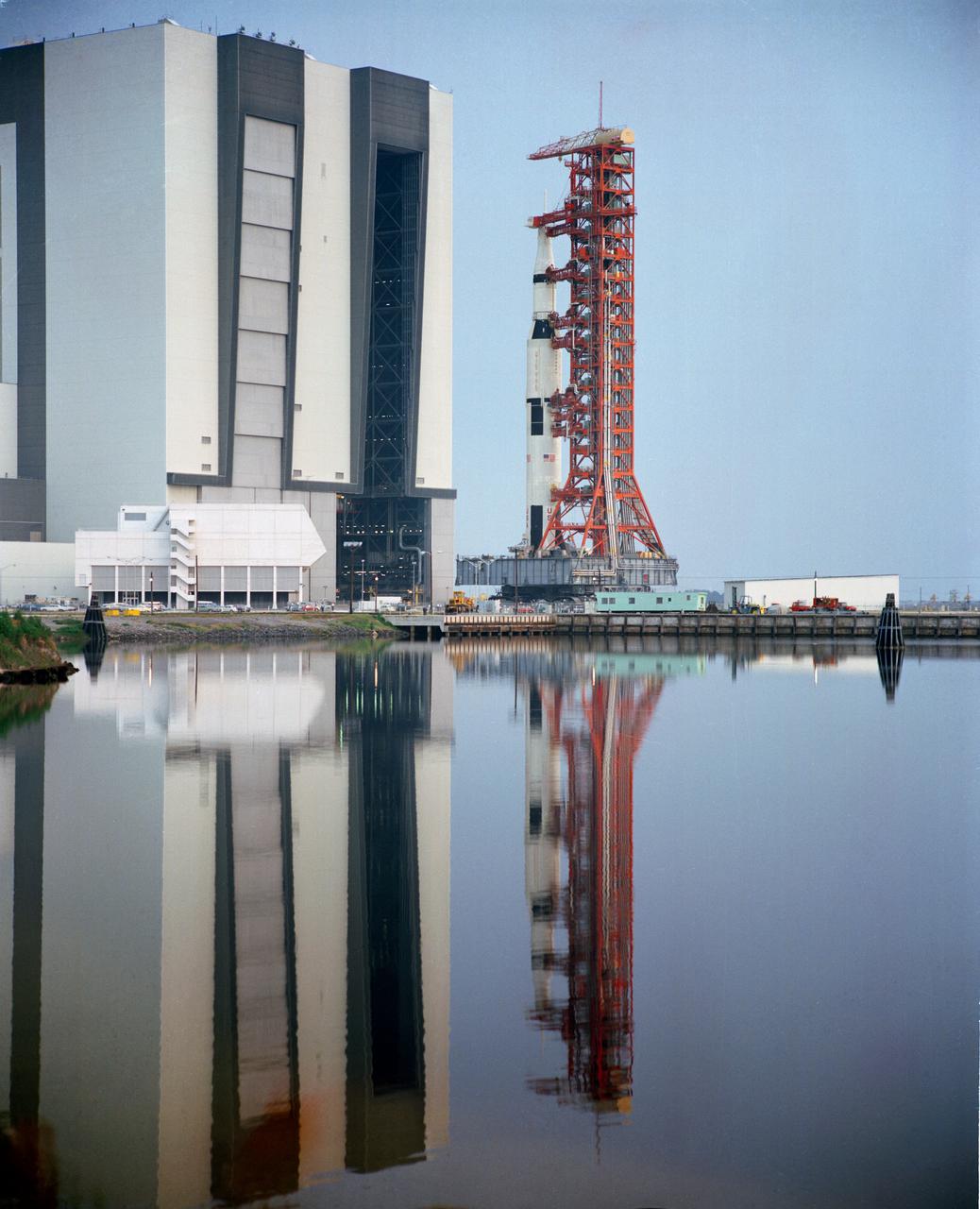
S71-33786 (11 May 1971) --- The 363-feet tall Apollo (Spacecraft 112/Lunar Module 10/Saturn 510) space vehicle which leaves the Vehicle Assembly Building (VAB) to Pad A, Launch Complex 39, Kennedy Space Center (KSC). The Saturn V stack and its mobile launch tower are atop a huge crawler-transporter. Apollo 15 is scheduled as the fourth manned lunar landing mission by the National Aeronautics and Space Administration (NASA) and is scheduled to lift off on July 26, 1971. The crew men will be astronauts David R. Scott, commander; Alfred M. Worden, command module pilot; and James B. Irwin, lunar module pilot. While astronaut Scott and Irwin will descend in the Lunar Module (LM) to explore the moon, astronaut Worden will remain with the Command and Service Modules (CSM) in lunar orbit.
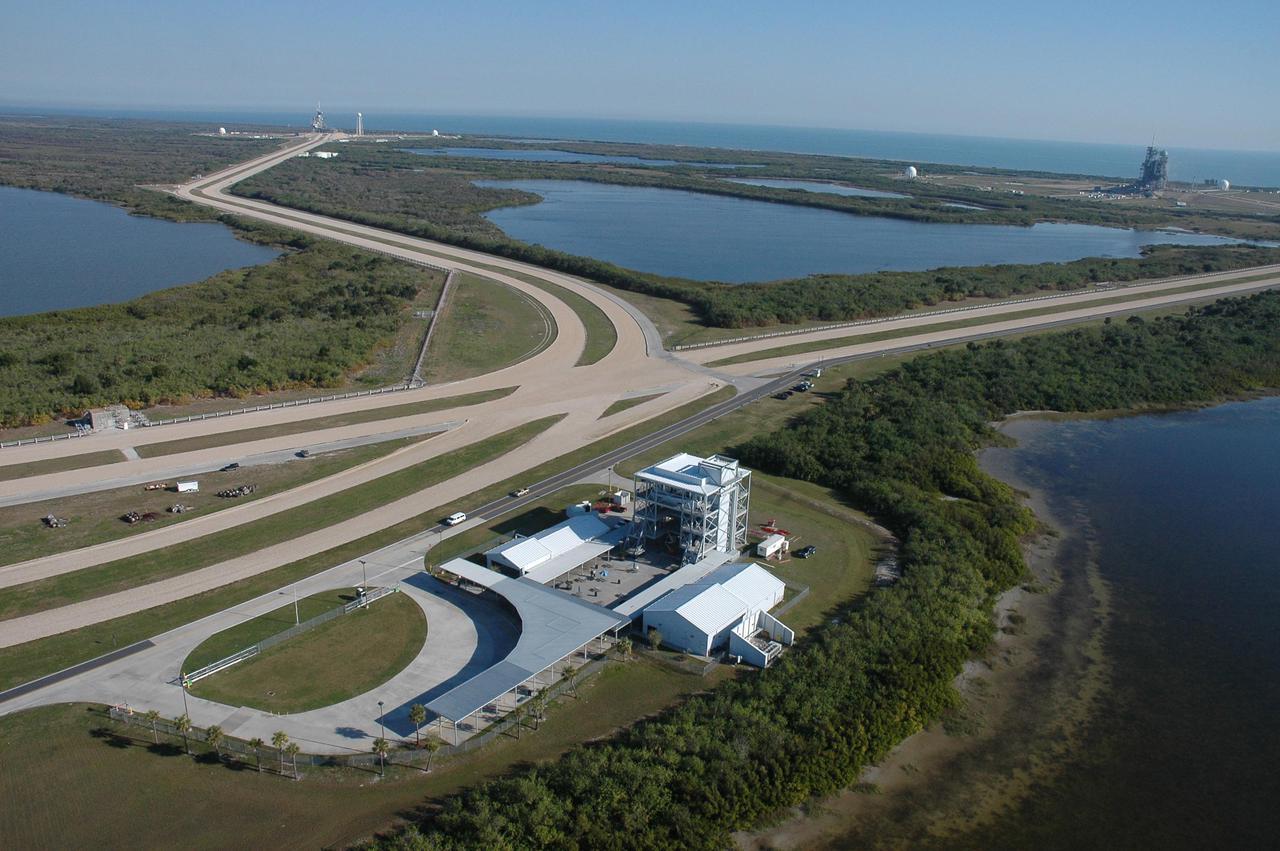
KENNEDY SPACE CENTER, FLA. - This aerial view on NASA's Kennedy Space Center shows the Launch Complex 39 Observation Gantry in the foreground, the crawlerways leading to the launch pads, and space shuttle Launch Complex 39 Pad A (left) and Pad B in the background, silhouetted by the Atlantic Ocean. Photo credit: Cory Huston
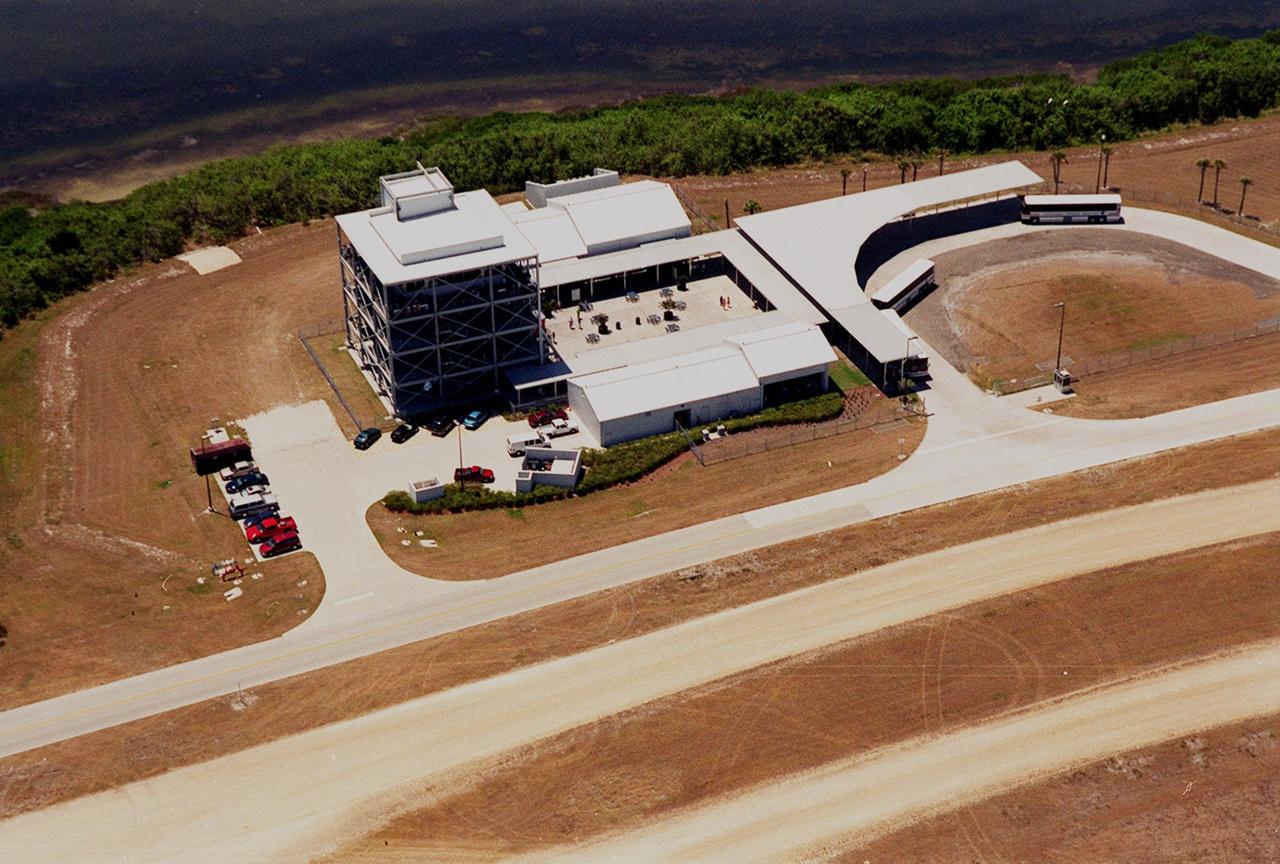
This aerial view is of a tour stop on the KSC bus tour, the Launch Complex 39 Observation Gantry. This stop allows visitors to view and photograph Pads A and B in Launch Complex 39 from an elevated vantage point. The roadway leading to the tour stop runs next to the crawlerway (foreground) which is used to transport Space Shuttles to the pads
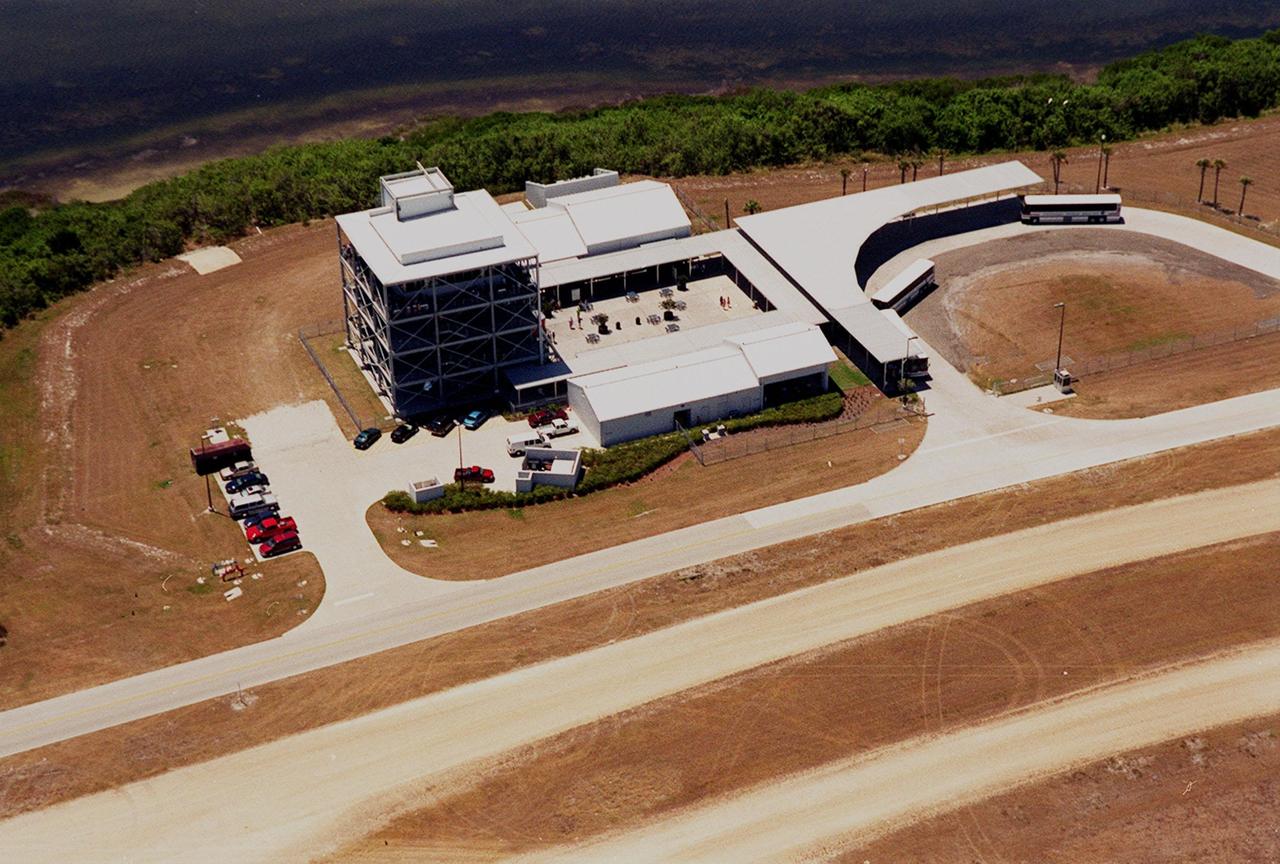
This aerial view is of a tour stop on the KSC bus tour, the Launch Complex 39 Observation Gantry. This stop allows visitors to view and photograph Pads A and B in Launch Complex 39 from an elevated vantage point. The roadway leading to the tour stop runs next to the crawlerway (foreground) which is used to transport Space Shuttles to the pads
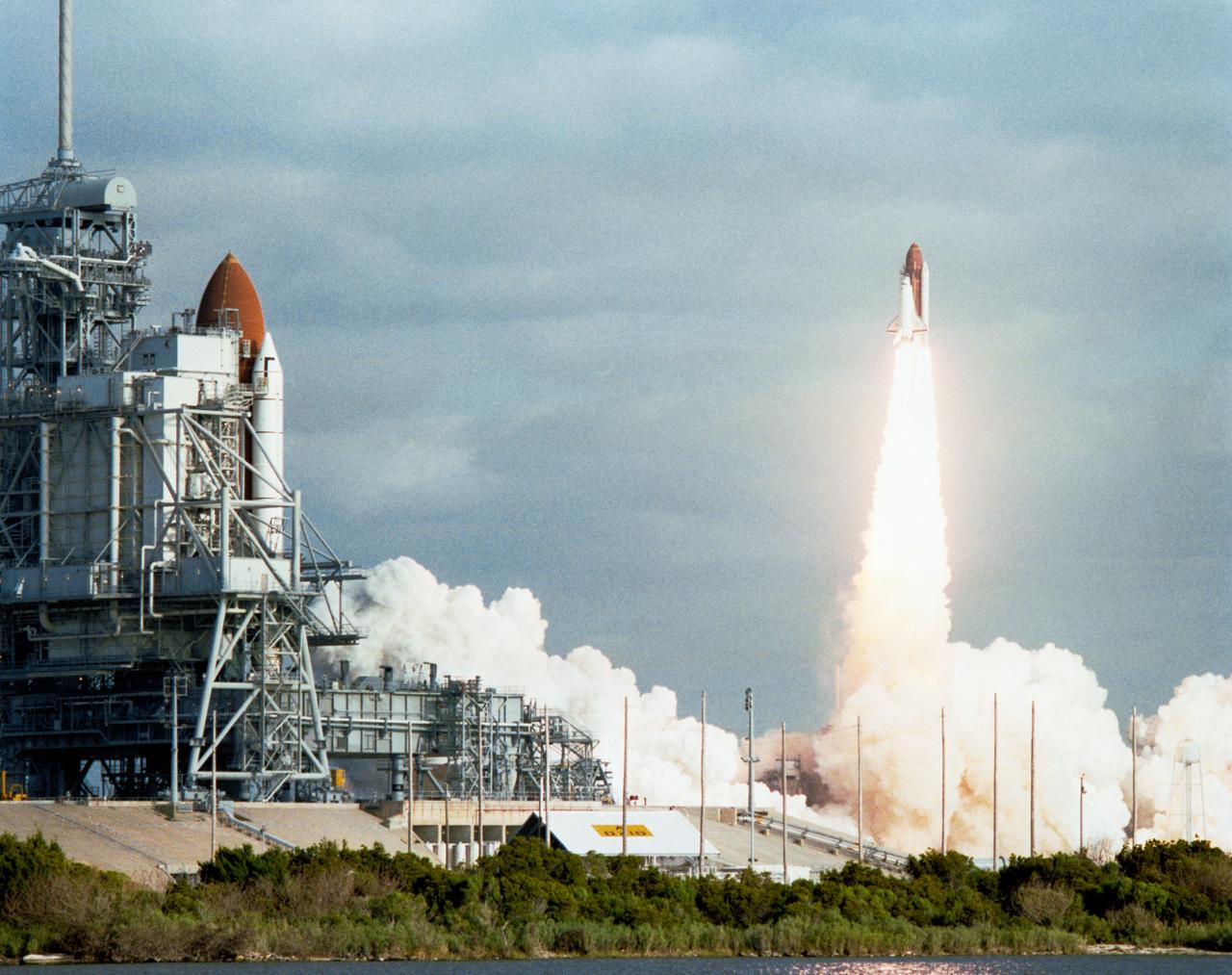
STS-31 Discovery, Orbiter Vehicle (OV) 103, lifts off from Kennedy Space Center (KSC) Launch Complex (LC) 39 Pad B. In the foreground STS-35 Columbia, OV-102, is visible on launch pad 39A. This event marked the first time since January 1986 that there was an orbiter on each pad. LC 39 pads are separated by 1.6 miles. View provided by KSC with alternate number KSC-90PC-610.
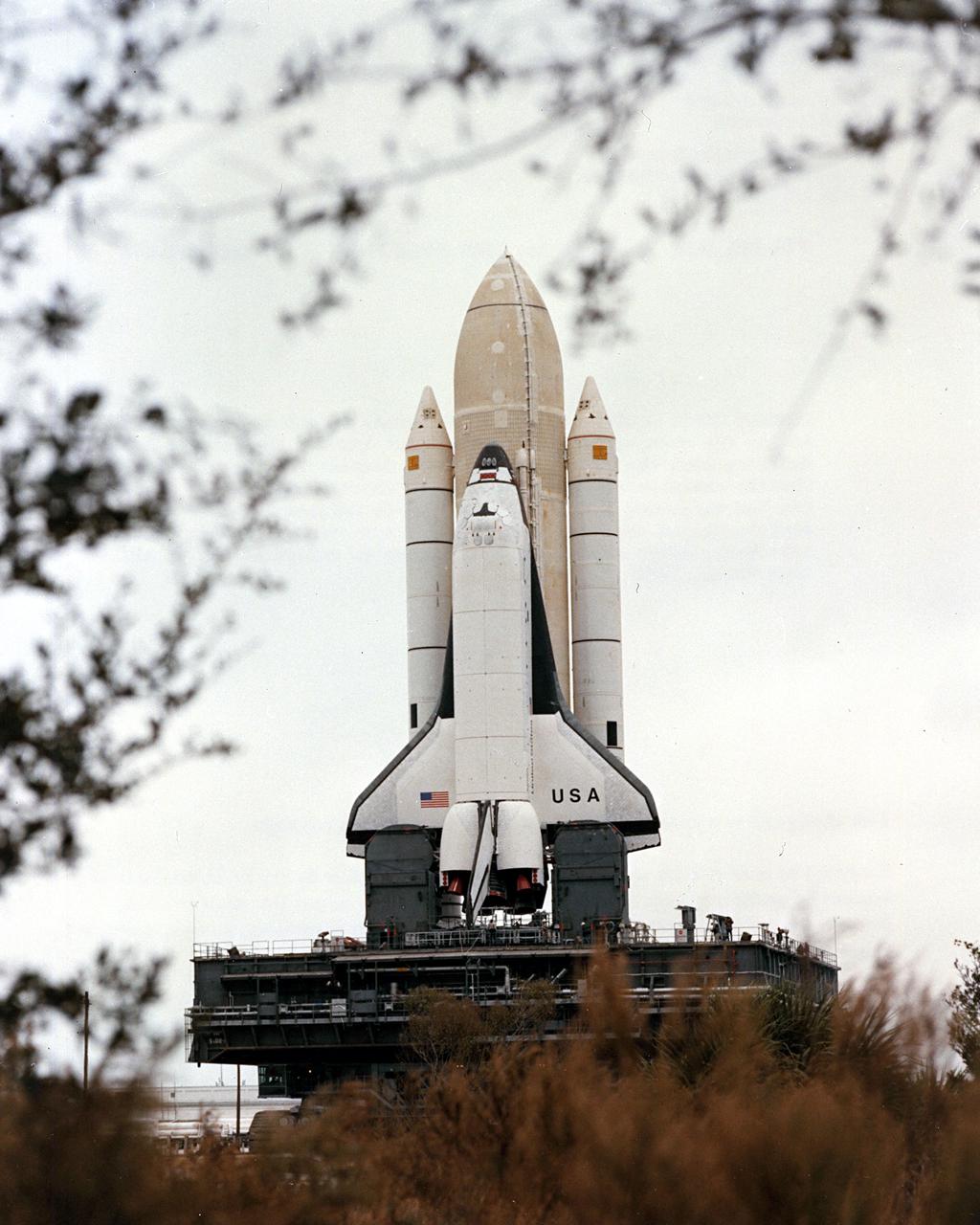
KENNEDY SPACE CENTER, FLA. - STS-1 stands framed in vegetation lining the superhighay-wide crawlerway linking the Vehicle Assembly Building with the twin pads of Launch Complex 39. The first Space Shuttle assembly emerged from the VAB shortly after 8 a.m. today for the 3.5-mile journey to Complex 39's Pad A. The Shuttle was on the hardstand at Pad A approximately seven and a half hours after rollout began. Launch is scheduled for no eariler than March 1981.
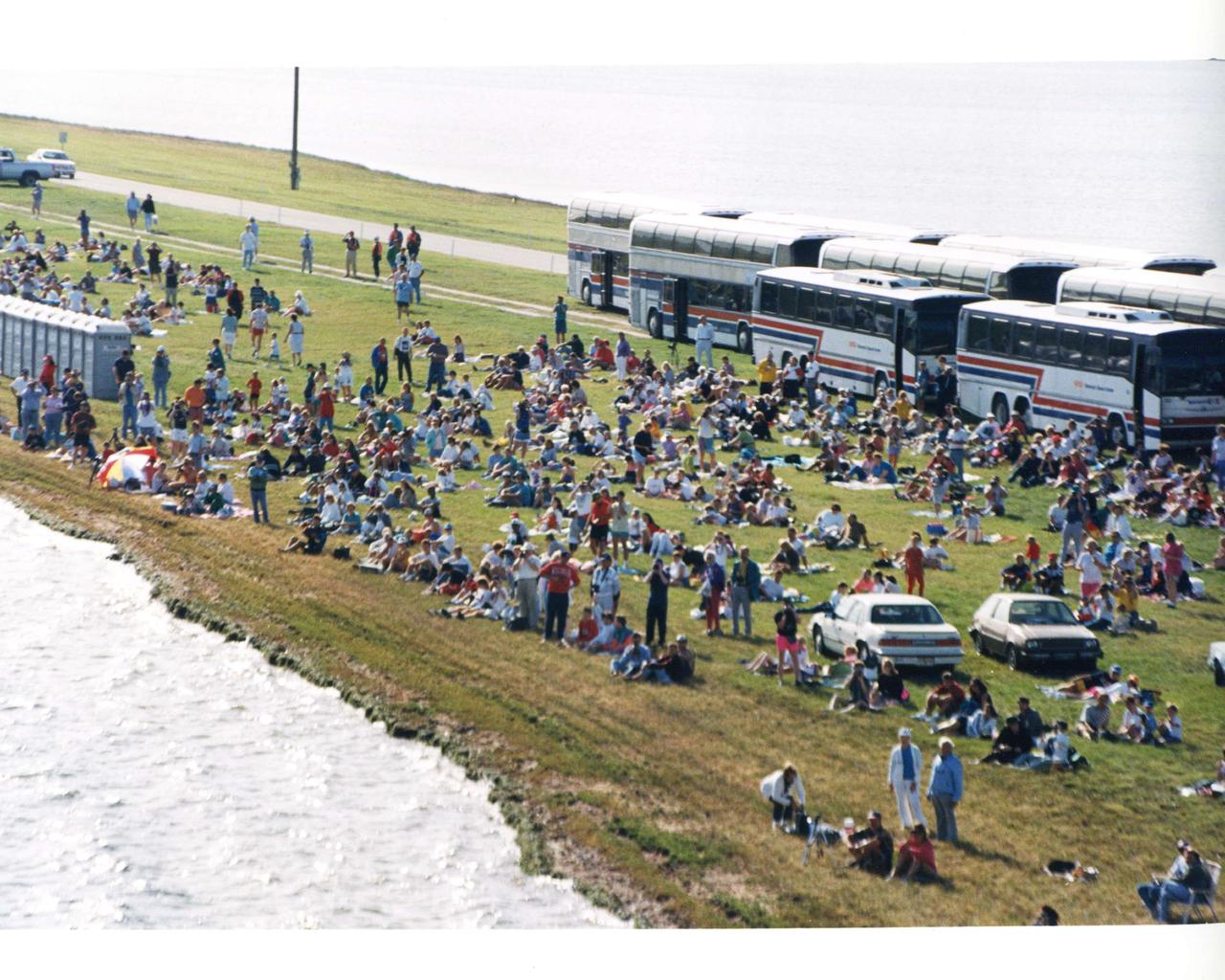
This aerial view is of a tour stop on the KSC bus tour, the Launch Complex 39 Observation Gantry. This stop allows visitors to view and photograph Pads A and B in Launch Complex 39 from an elevated vantage point. The roadway leading to the tour stop runs next to the crawlerway (left) which is used to transport Space Shuttles from the Vehicle Assembly Building to the pads. Pad A can be seen in the background.
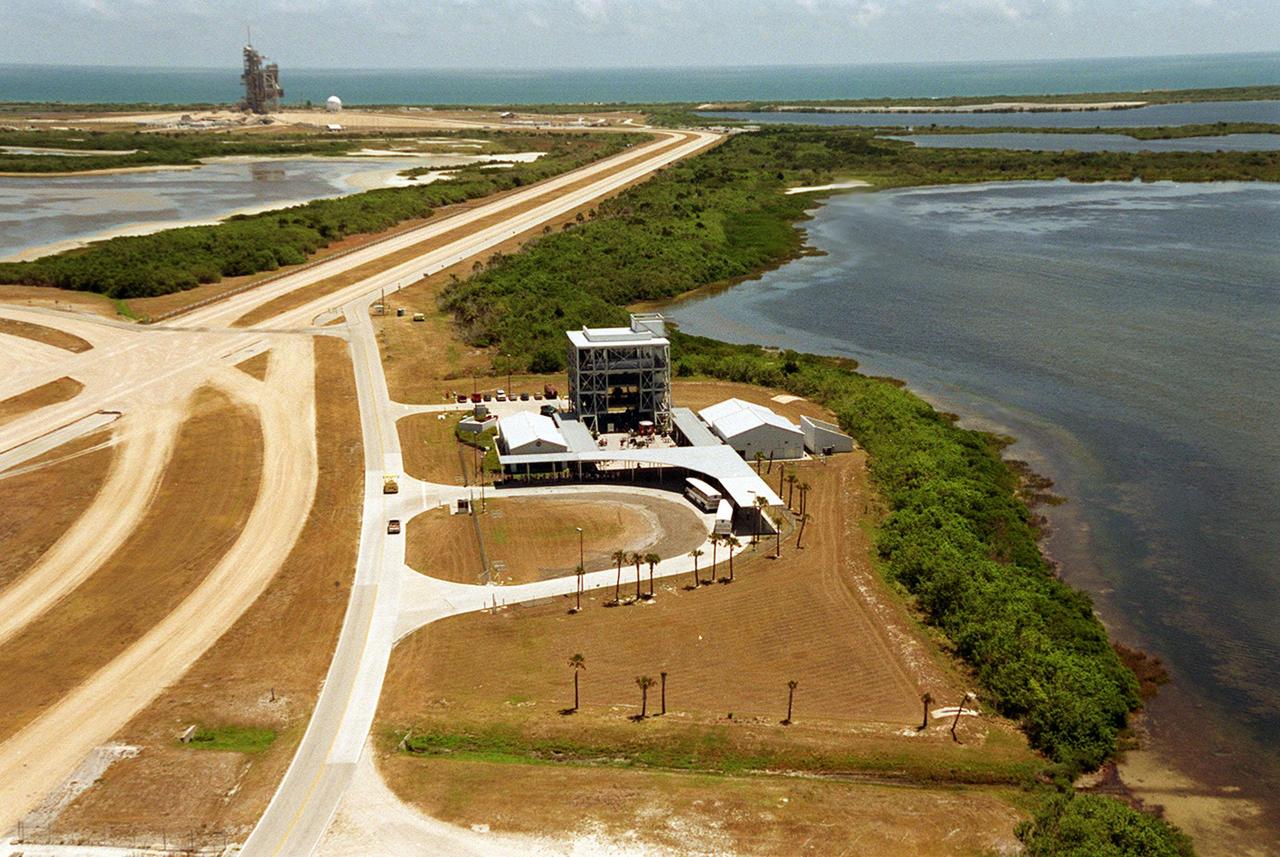
This aerial view is of a tour stop on the KSC bus tour, the Launch Complex 39 Observation Gantry. This stop allows visitors to view and photograph Pads A and B in Launch Complex 39 from an elevated vantage point. The roadway leading to the tour stop runs next to the crawlerway (left) which is used to transport Space Shuttles from the Vehicle Assembly Building to the pads. Pad A can be seen in the background.
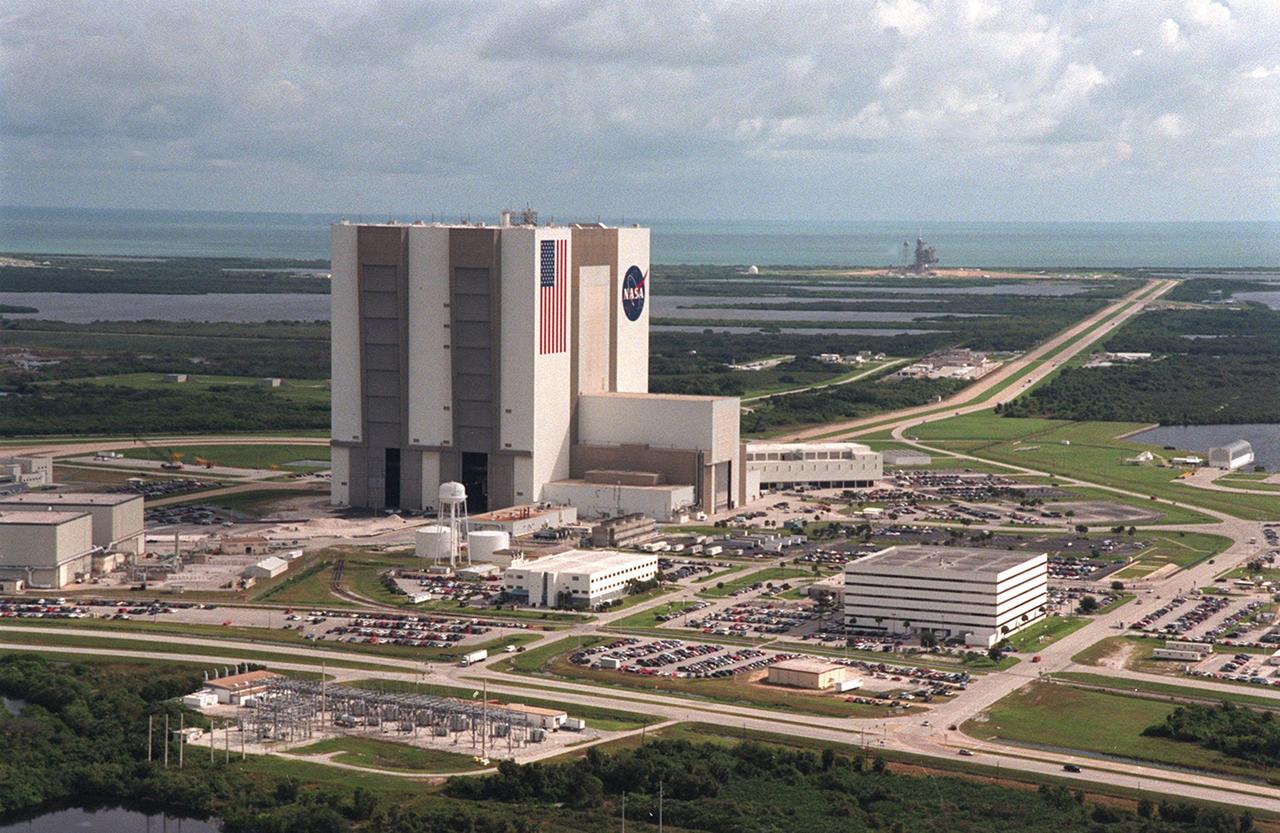
An aerial view of Launch Complex 39 area shows the Vehicle Assembly Building (center), with the Launch Control Center on its right. On the west side (lower end) are (left to right) the Orbiter Processing Facility, Process Control Center and Operations Support Building. Looking east (upper end) are Launch Pads 39-A (right) and 39-B (just above the VAB). The crawlerway stretches between the VAB and the launch pads toward the Atlantic Ocean, seen beyond them. At right is the turn basin where new external tanks are brought via ship, shown at its offloading site.
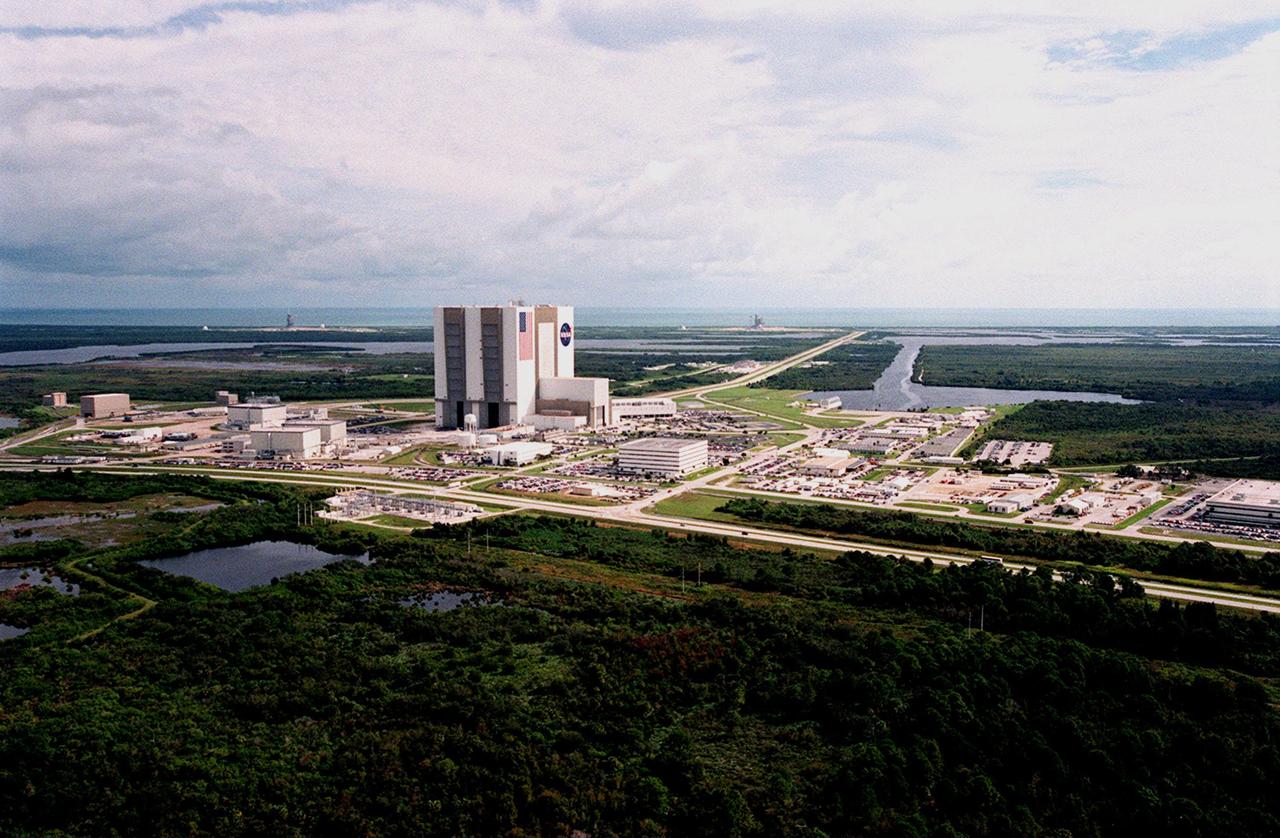
An aerial view of Launch Complex 39 Area shows the Vehicle Assembly Building (center), surrounded by (right) the Launch Control Center, (lower area, left to right) the Orbiter Processing Facility, Process Control Center and Operations Support Building. Looking toward the Atlantic Ocean (top) can be seen Launch Pads 39-A (right) and 39-B. The crawlerway stretches between the VAB and the launch pads. To the right of the crawlerway is the turn basin where new external tanks are brought from Louisiana via ship. The road bordering the buildings is Kennedy Parkway North.
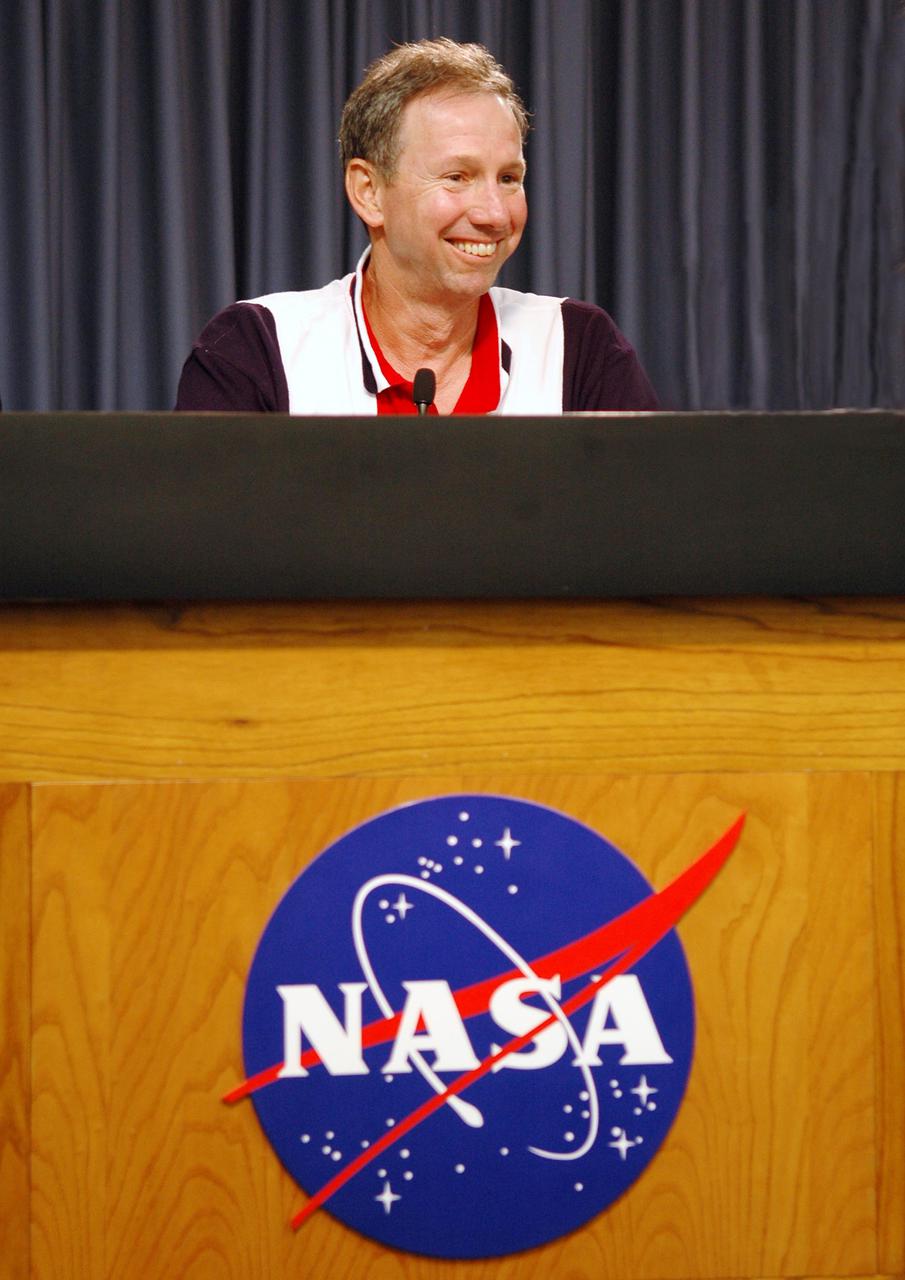
KENNEDY SPACE CENTER, FLA. - At the STS-114 Launch Readiness Press Conference at NASA Kennedy Space Center, NASA Administrator Mike Griffin was pleased to confirm the July 26 launch of Space Shuttle Discovery on the Return to Flight mission STS-114 scheduled for 10:39 a.m. EDT July 26 from Launch Pad 39B. Liftoff of Space Shuttle Discovery on the Return to Flight mission STS-114 is scheduled for 10:39 a.m. EDT July 26 from Launch Pad 39B.
![CAPE CANAVERAL, Fla. - This rare view on September 5 shows on adjacent Launch Complex 39 pads with the Rotating Service Structures retracted. The orbiter Columbia on Pad A [foreground] was being readied for a September 6 early morning launch on Mission STS-39, while it sister spaceship, the orbiter Discovery, was set to begin preparations for an October liftoff on Mission STS- 41.](https://images-assets.nasa.gov/image/90PC-1264/90PC-1264~medium.jpg)
CAPE CANAVERAL, Fla. - This rare view on September 5 shows on adjacent Launch Complex 39 pads with the Rotating Service Structures retracted. The orbiter Columbia on Pad A [foreground] was being readied for a September 6 early morning launch on Mission STS-39, while it sister spaceship, the orbiter Discovery, was set to begin preparations for an October liftoff on Mission STS- 41.
![CAPE CANAVERAL, Fla. - This rare view on September 5 shows on adjacent Launch Complex 39 pads with the Rotating Service Structures retracted. The orbiter Columbia on Pad A [foreground] was being readied for a September 6 early morning launch on Mission STS-39, while it sister spaceship, the orbiter Discovery, was set to begin preparations for an October liftoff on Mission STS- 41.](https://images-assets.nasa.gov/image/90PC-1266/90PC-1266~medium.jpg)
CAPE CANAVERAL, Fla. - This rare view on September 5 shows on adjacent Launch Complex 39 pads with the Rotating Service Structures retracted. The orbiter Columbia on Pad A [foreground] was being readied for a September 6 early morning launch on Mission STS-39, while it sister spaceship, the orbiter Discovery, was set to begin preparations for an October liftoff on Mission STS- 41.
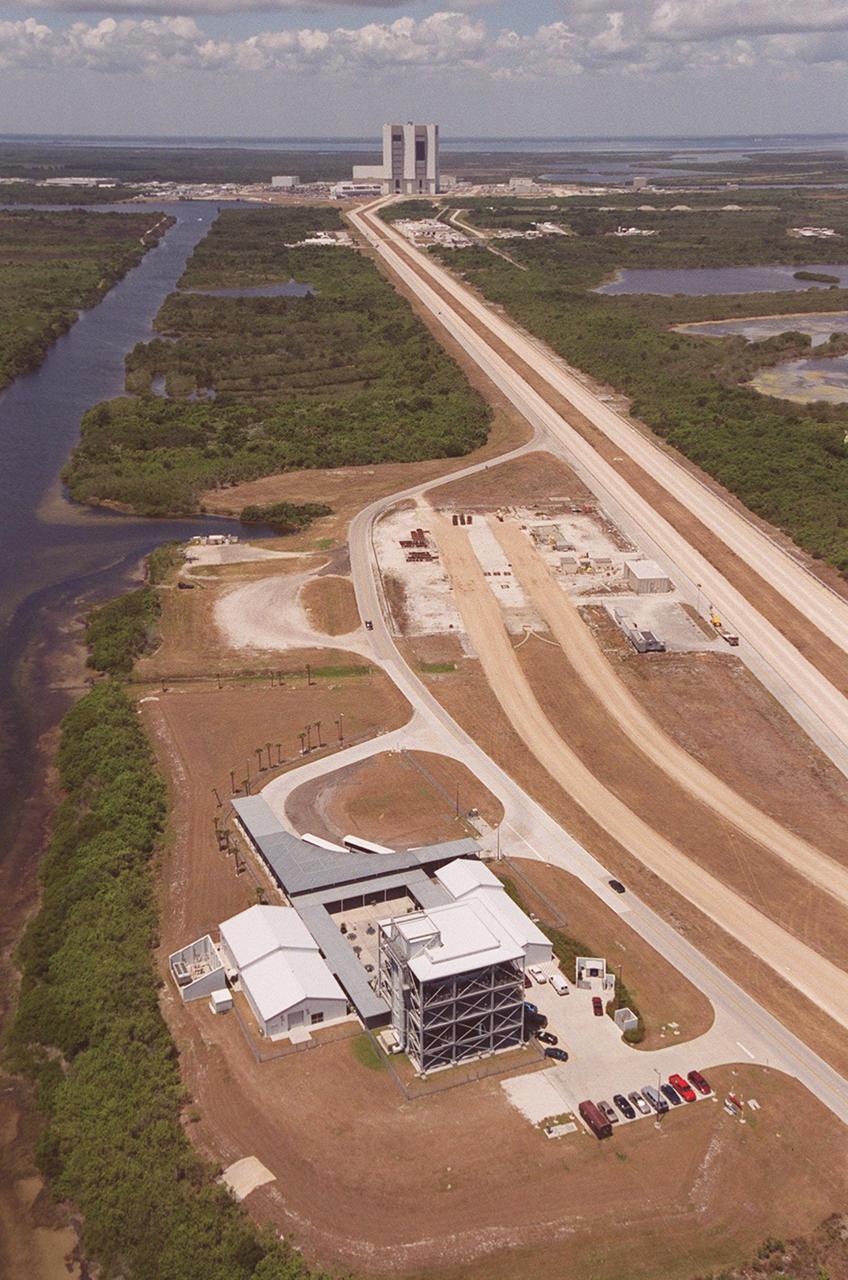
This aerial view is of a tour stop on the KSC bus tour, the Launch Complex 39 Observation Gantry. This stop allows visitors to view and photograph Pads A and B in Launch Complex 39 from an elevated vantage point. The roadway leading to the tour stop runs next to the crawlerway (right) which is used to transport Space Shuttles from the Vehicle Assembly Building (background) to the pads
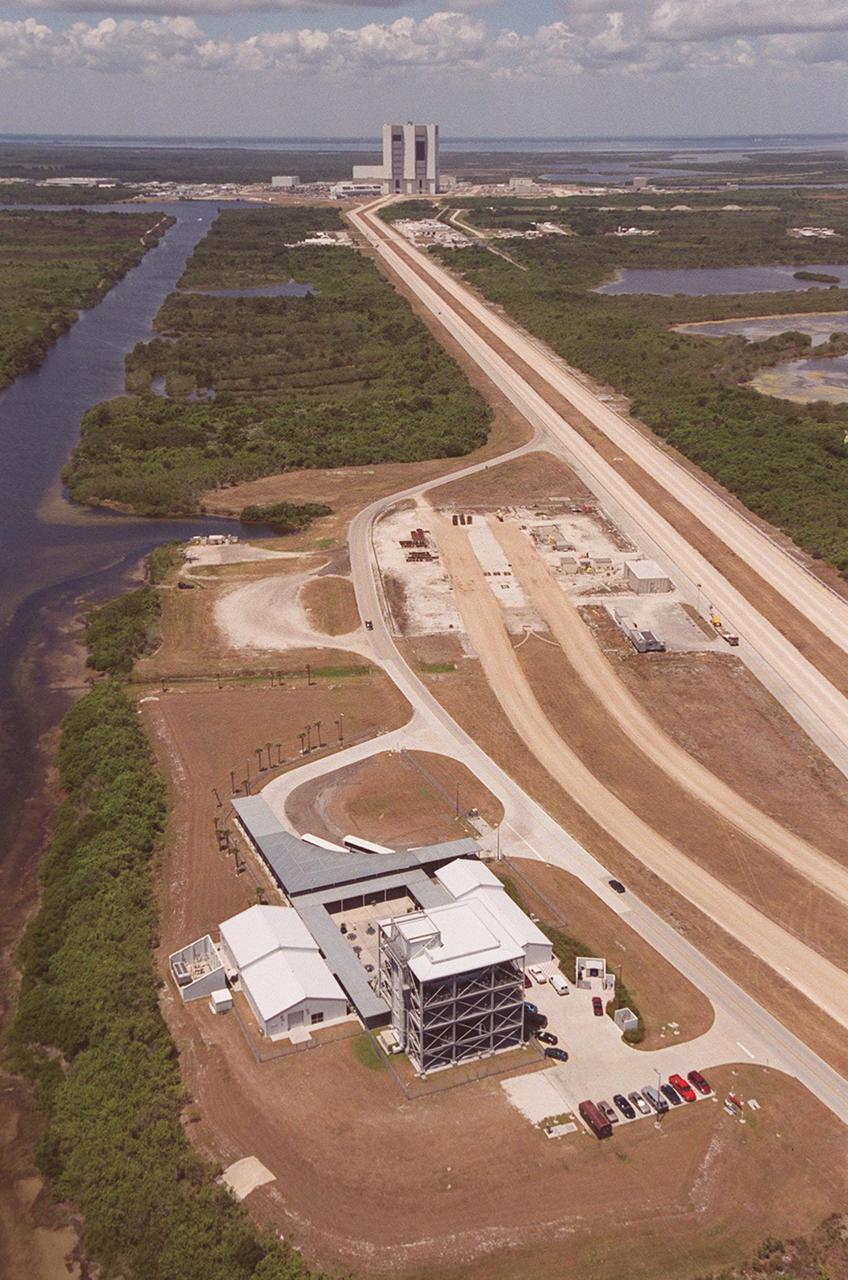
This aerial view is of a tour stop on the KSC bus tour, the Launch Complex 39 Observation Gantry. This stop allows visitors to view and photograph Pads A and B in Launch Complex 39 from an elevated vantage point. The roadway leading to the tour stop runs next to the crawlerway (right) which is used to transport Space Shuttles from the Vehicle Assembly Building (background) to the pads
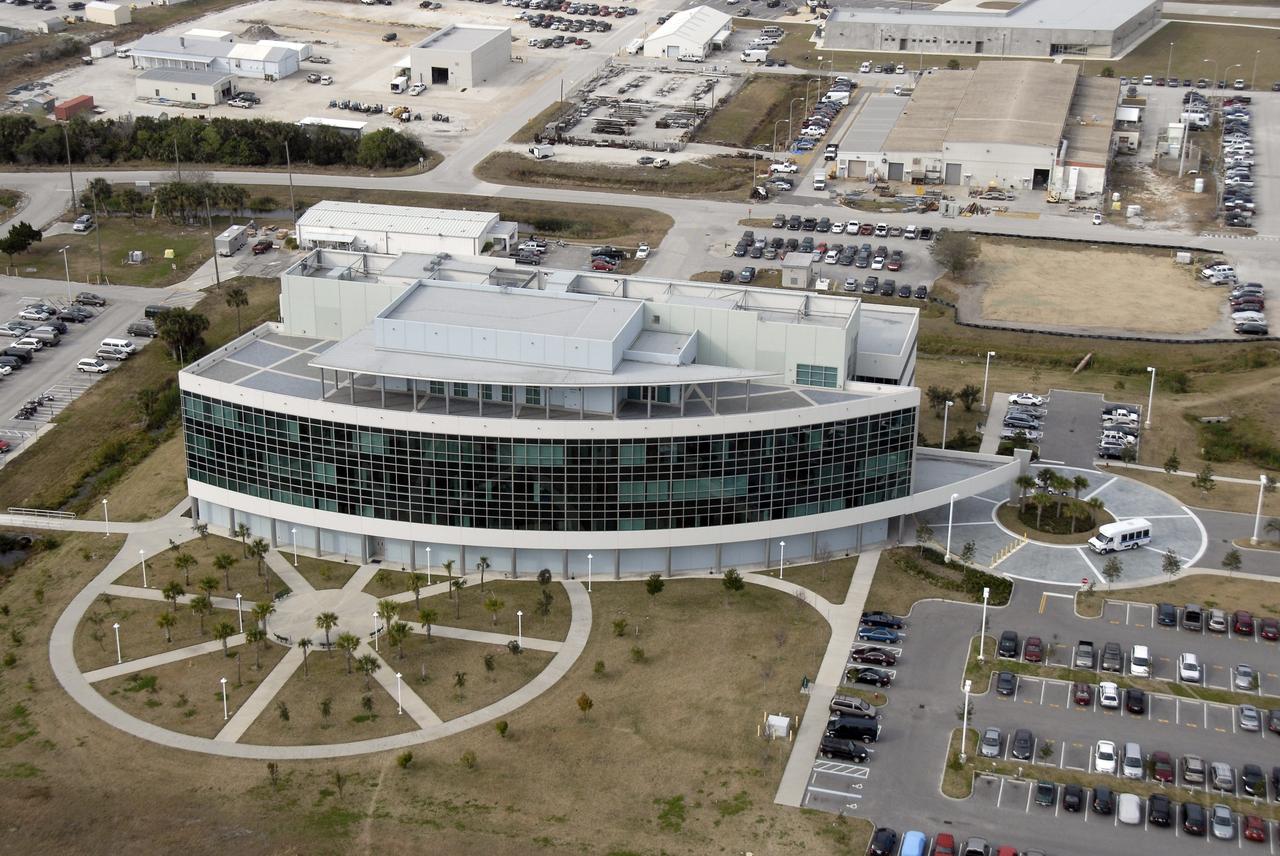
CAPE CANAVERAL, Fla. – An aerial view of the Operations Support Building II in the Launch Complex 39 Area at NASA's Kennedy Space Center in Florida. The panorama of windows faces the launch pads. Photo credit: NASA/Kim Shiflett
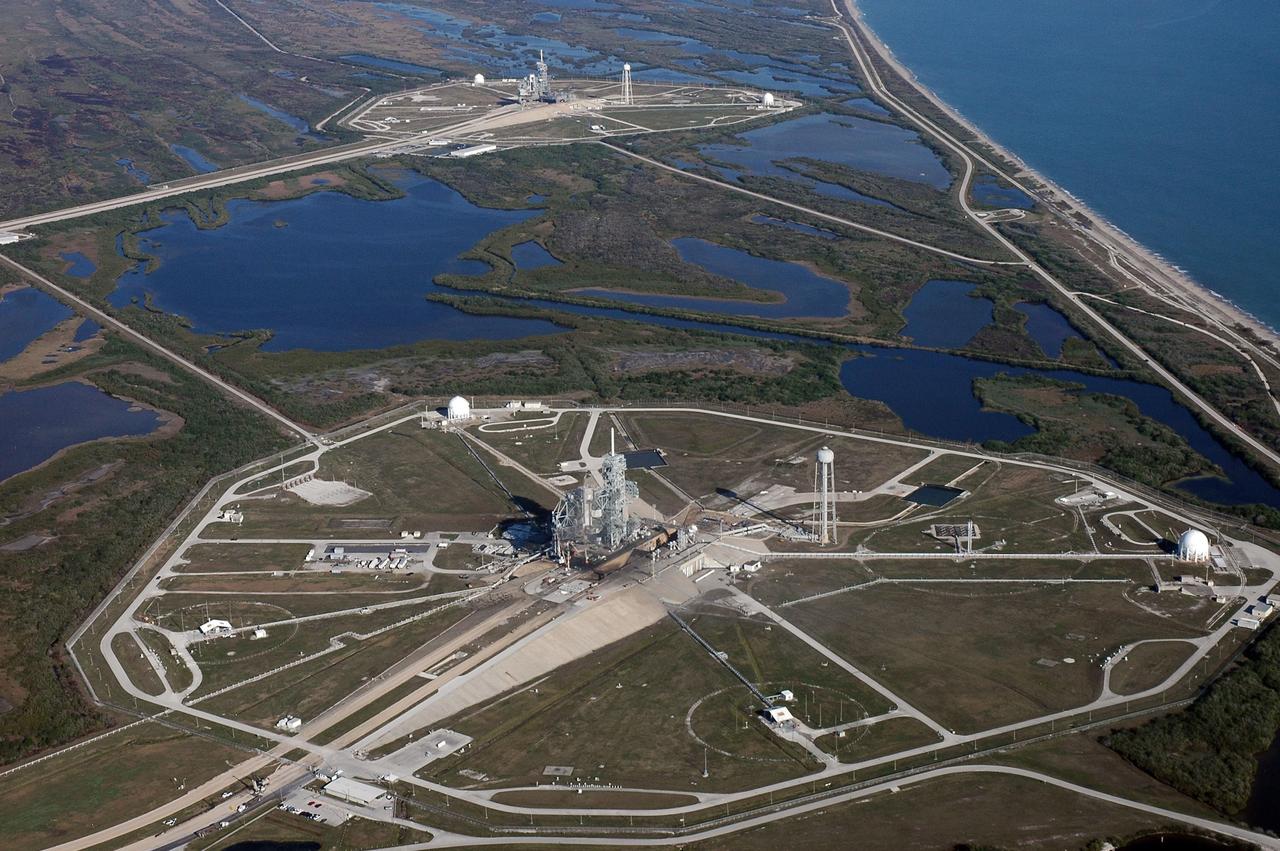
KENNEDY SPACE CENTER, FLA. - This aerial view looking north shows space shuttle Complex 39 Launch Pads A (foreground) and B at NASA's Kennedy Space Center. To the right is the Atlantic Ocean. Photo credit: Cory Huston
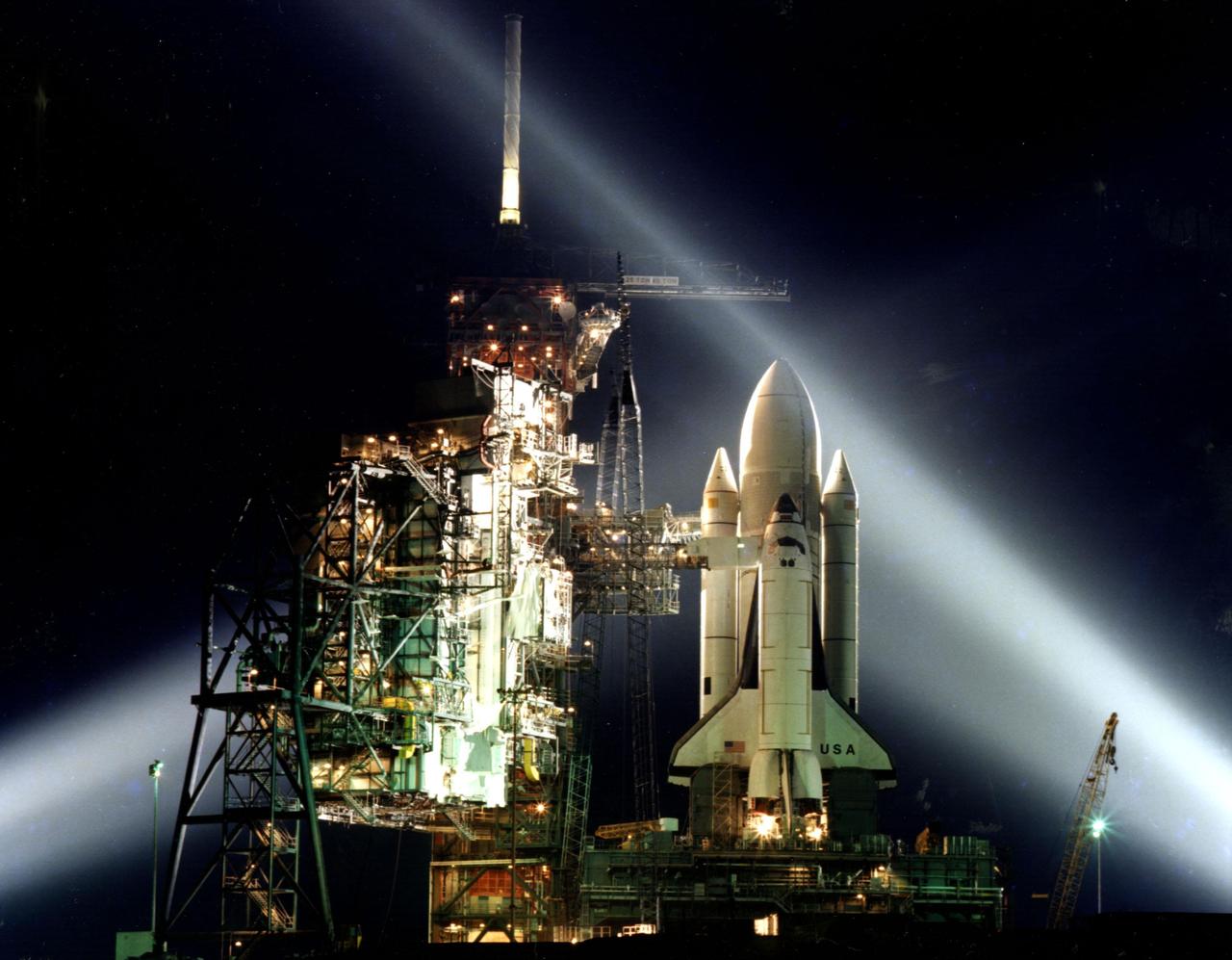
A timed exposure of the first Space Shuttle, STS-1, at Launch Pad A, Complex 39, turns the space vehicle and support facilities into a night-time fantasy of light. To the left of the Shuttle are the fixed and the rotating service structures.
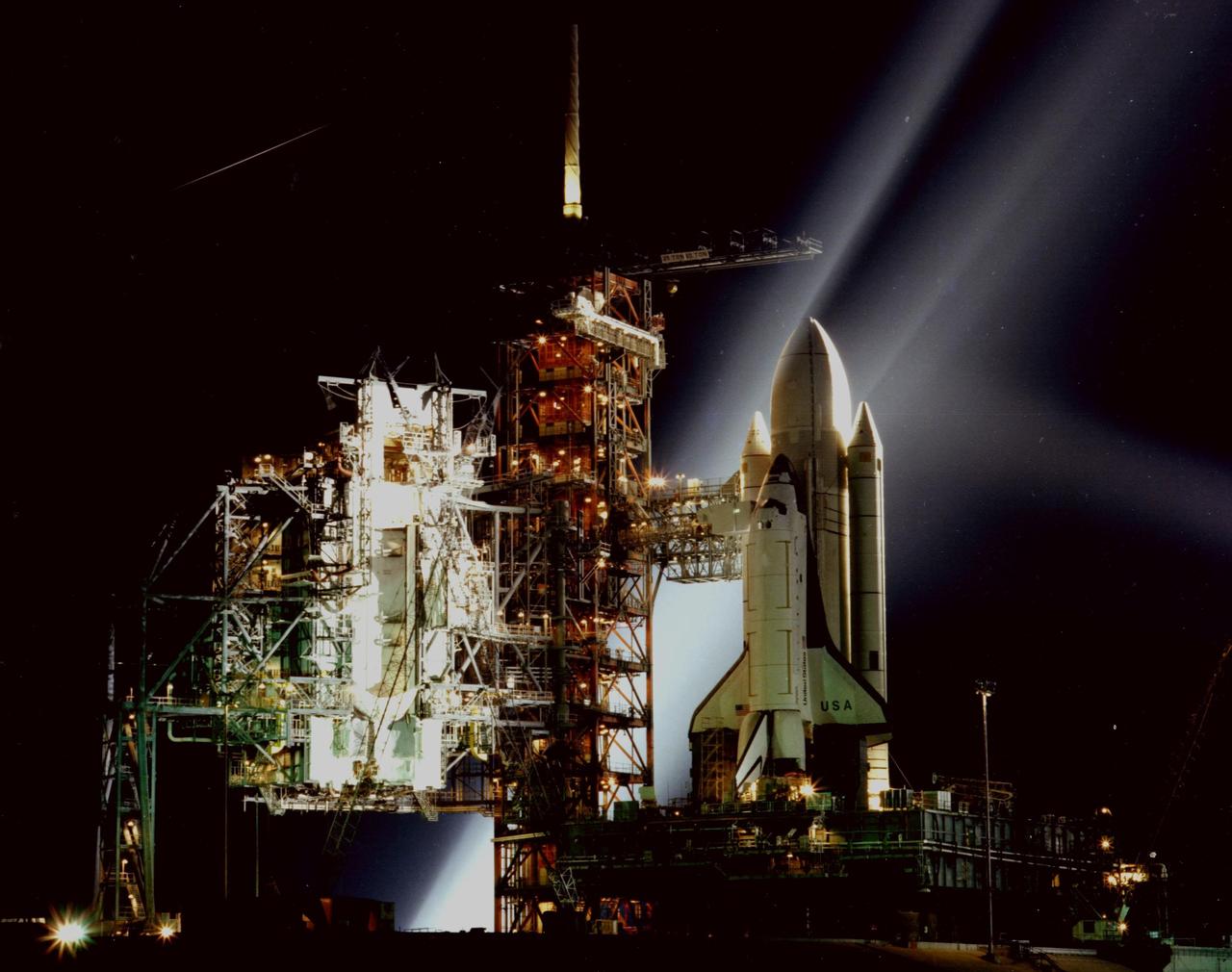
KENNEDY SPACE CENER, FLA. -- A timed exposure of the Space Shuttle at Launch Pad A, Complex 39, turns the space vehicle and support facilities into a night-time fantasy of light. To the left of the Shuttle are the fixed and the rotating service structures
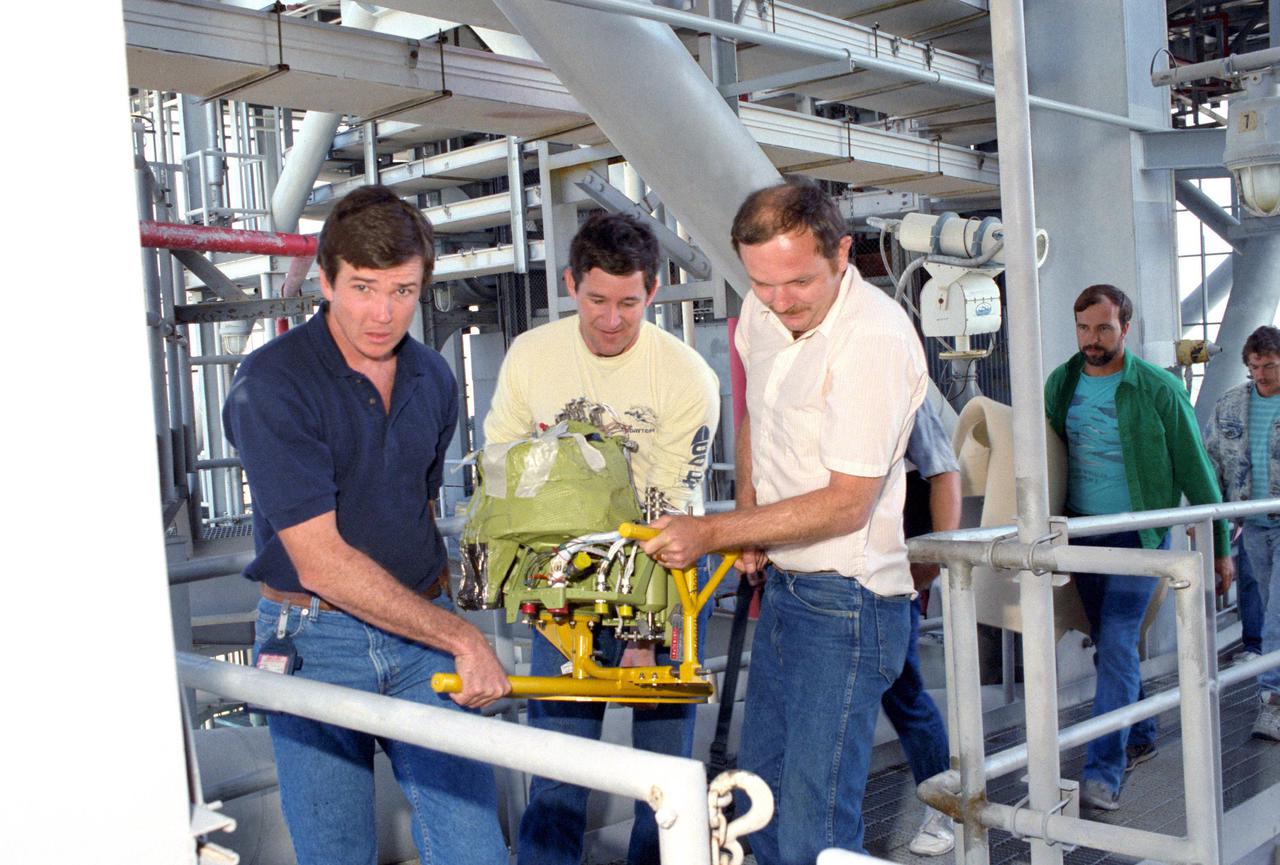
KENNEDY SPACE CENTER, FLA. -- Technicians at Pad 39-B carry a new Auxiliary Power Unit (APU) to be installed in the orbiter Discovery. It will replace APU #1 that failed during the STS-31 launch attempt on April 10.
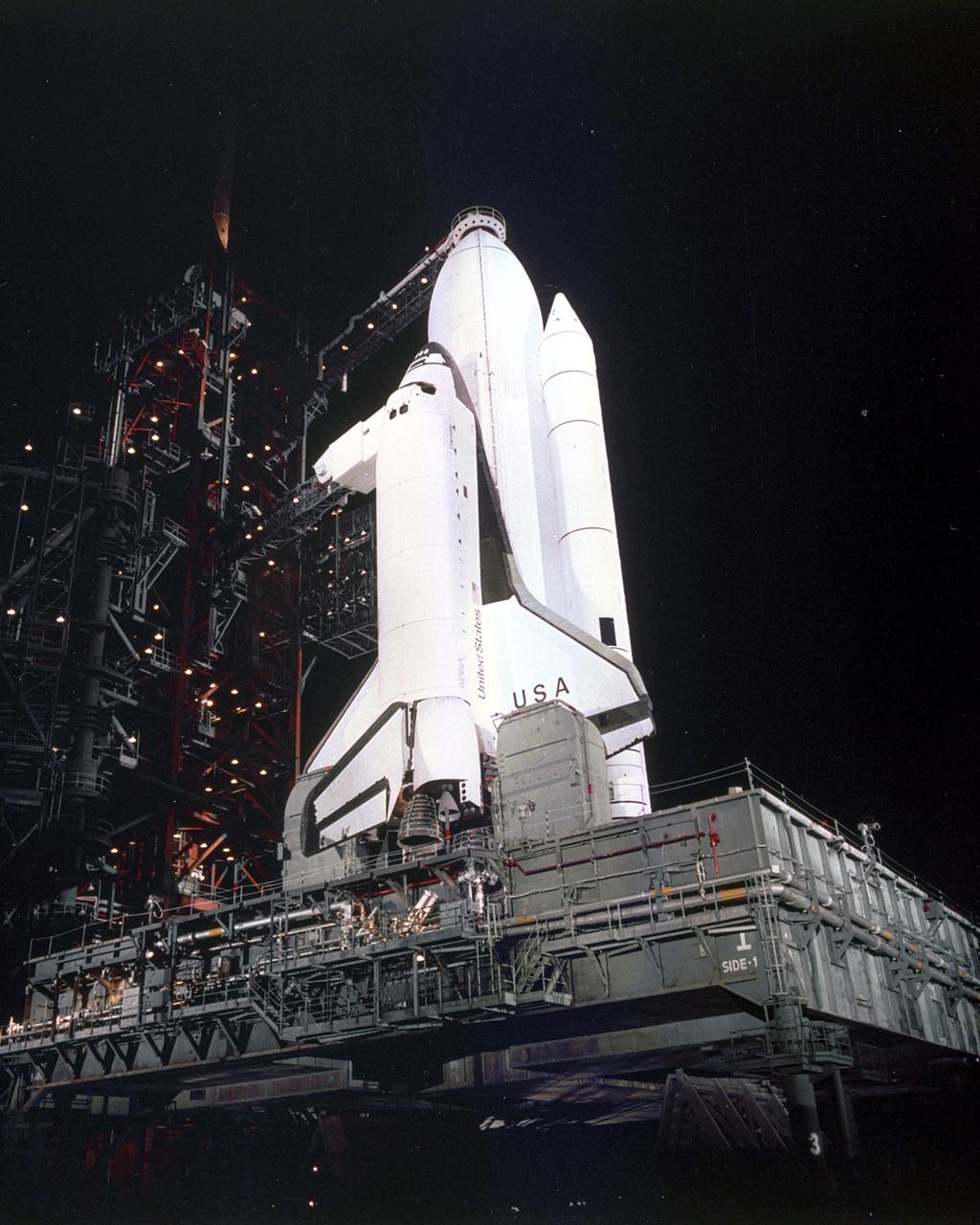
KENNEDY SPACE CENTER, FLA. - The Space Shuttle Columbia, (STS-1) stands poised for its maiden flight into space from Launch Pad A, Complex 39, following retraction of the Rotating Service Structure (RSS).
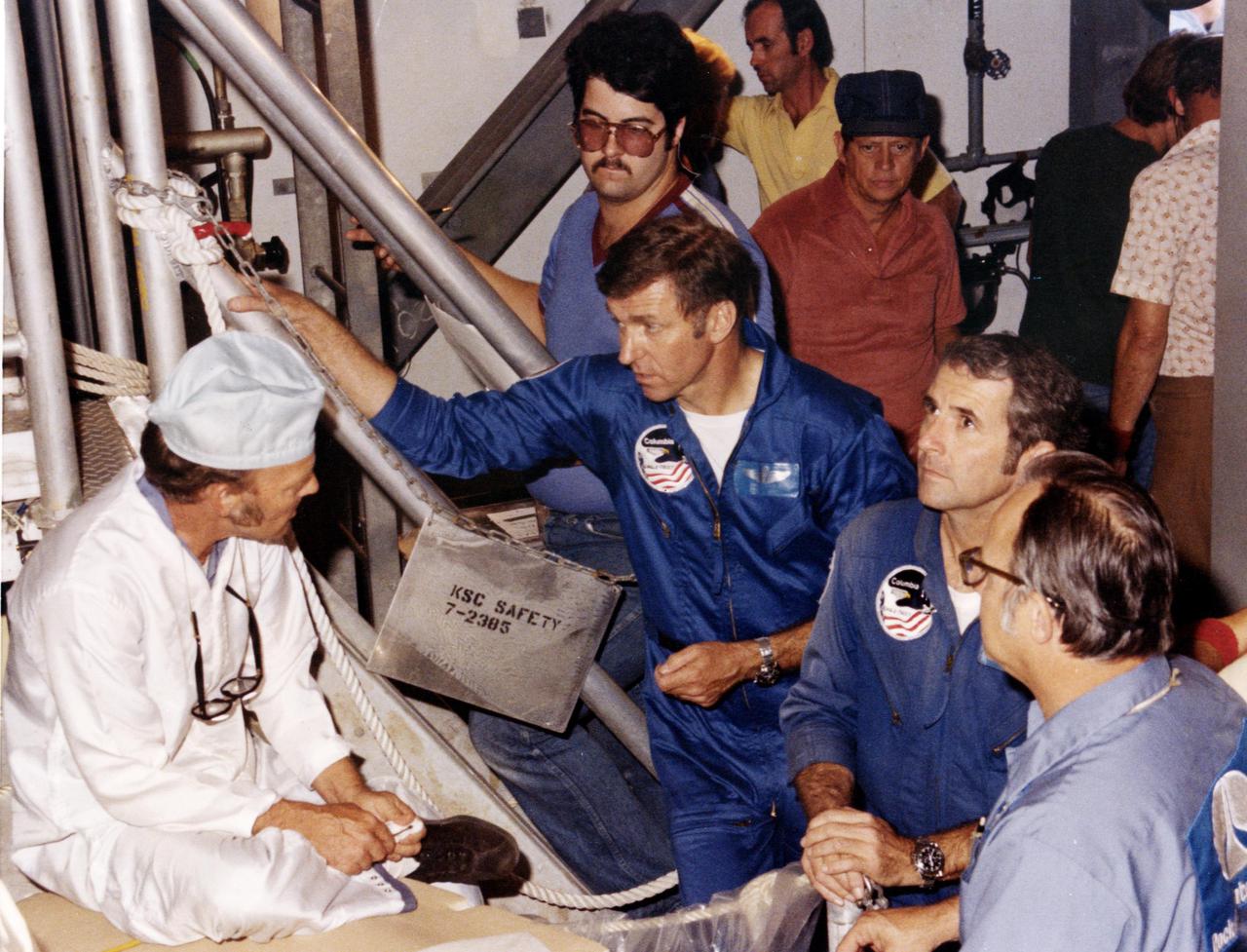
KENNEDY SPACE CENTER, FLA. -- At Pad A, Launch Complex 39, astronauts Joe Engle, left, and Richard Truly talk with technicians and inspect the Space Shuttle vehicle that will propel them into orbit later this fall.
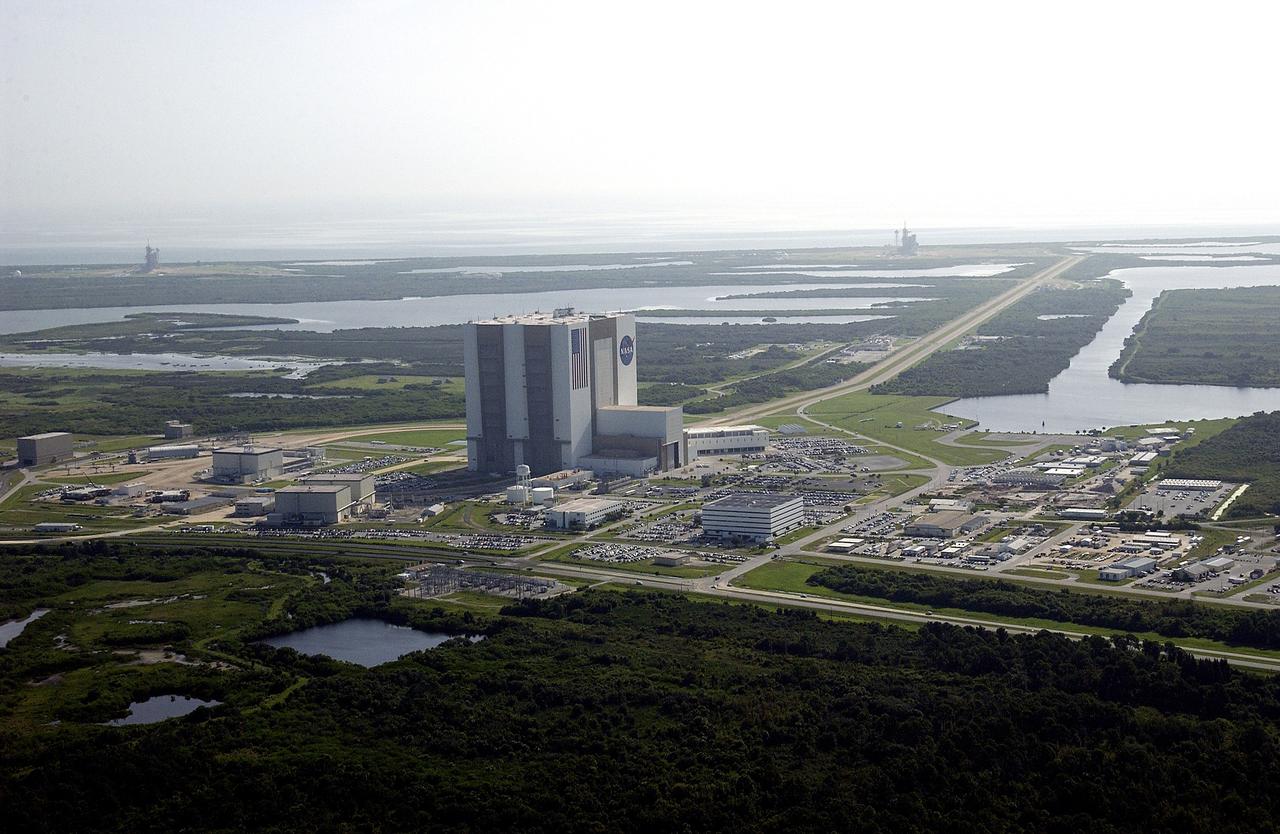
CAPE CANAVERAL, Fla. -- This aerial view shows the Launch Complex 39 Area. At center is the 525-foot-tall Vehicle Assembly Building. On the horizon at the far left is Launch Pad 39B to the right is Launch Pad 39A. The crawlerway can be seen stretching from the VAB toward Pad A. Waters of the Banana Creek and Banana River surround the pads. At center right is the Turn Basin. Photo credit: NASA
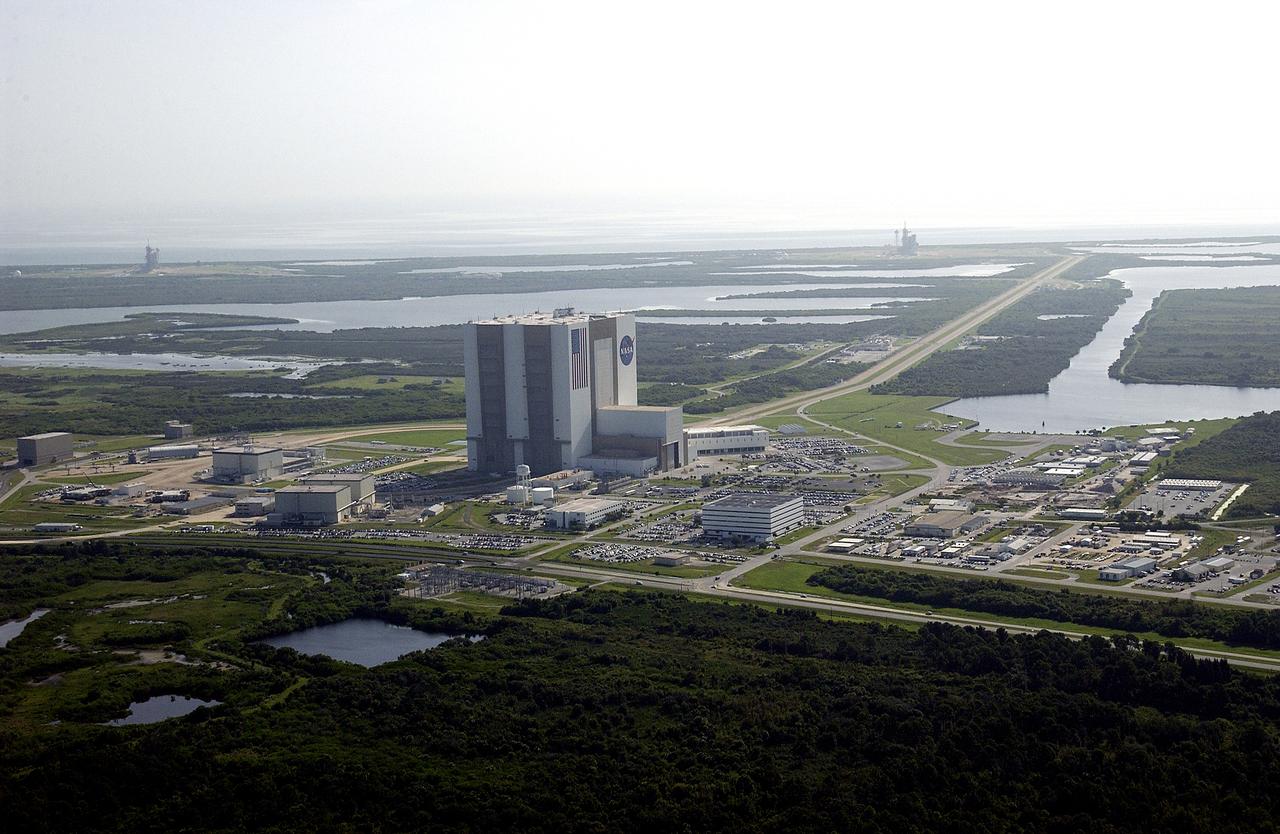
KENNEDY SPACE CENTER, FLA. – This aerial view shows Launch Complex 39 Area. At center is the 525-foot-tall Vehicle Assembly Building. On the horizon at the far left is Launch Pad 39B; to the right is Launch Pad 39A. The crawlerway can be seen stretching from the VAB toward Pad A. Waters of the Banana Creek and Banana River surround the pads. At center right is the Turn Basin.
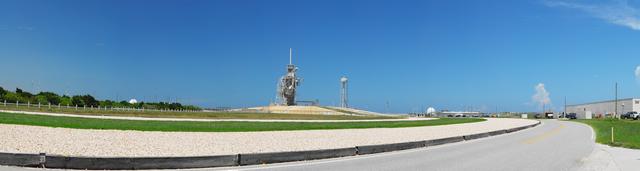
CAPE CANAVERAL, Fla. -- As NASA's Kennedy Space Center in Florida, Launch Pad 39A is seen from the Saturn Causeway. On launch day, space shuttle astronauts ride to their launch pad and spacecraft in NASA's silver Astrovan. Along the way, they pass the Vehicle Assembly Building, Launch Control Center and Press Site. Adjacent to the road is the crawlerway, which is the route shuttles take to Kennedy's Launch Complex 39 launch pads on top of a crawler-transporter. Photo credit: NASA/Frankie Martin
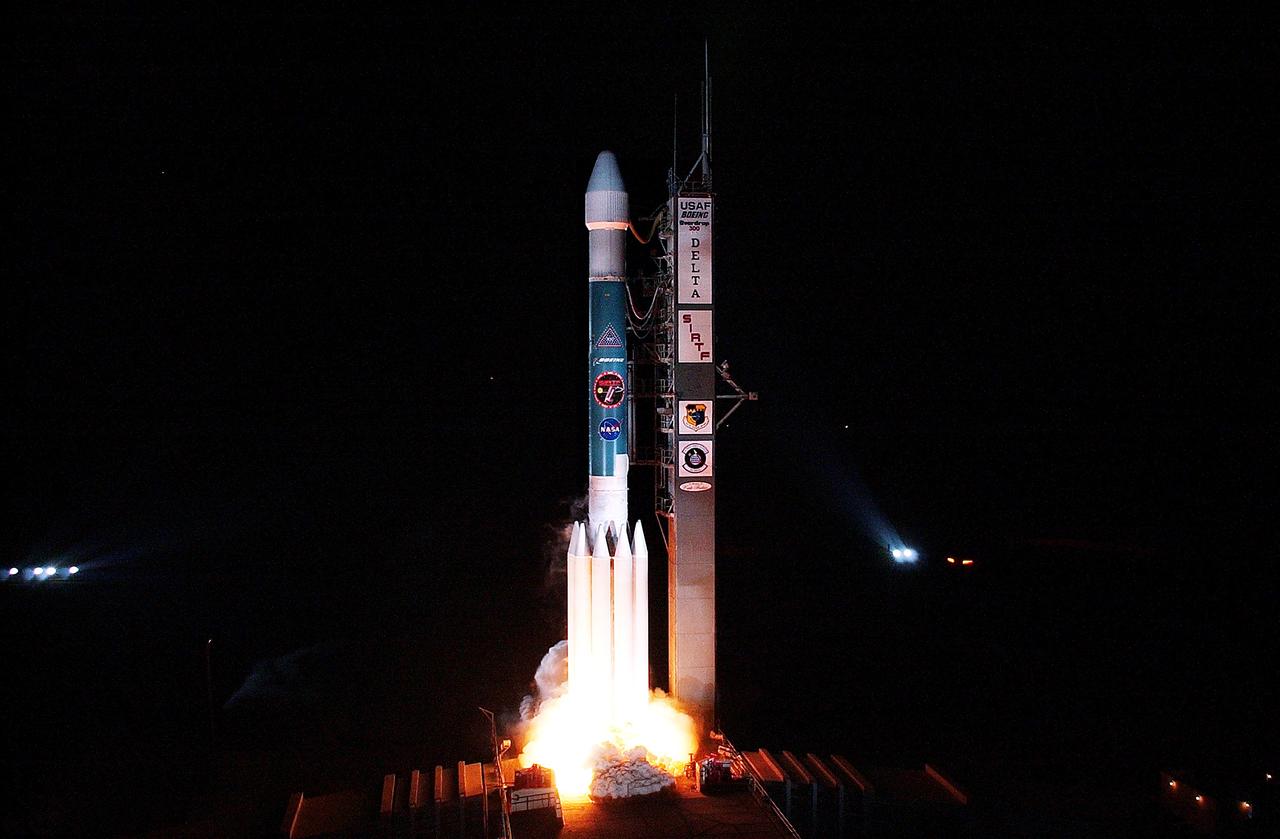
KENNEDY SPACE CENTER, FLA. - NASA's Space Infrared Telescope Facility (SIRTF) lifts off from Launch Pad 17-B, Cape Canaveral Air Force Station, on Aug. 25 at 1:35:39 a.m. EDT. SIRTF will obtain images and spectra by detecting the infrared energy, or heat, radiated by objects in space. Consisting of a 0.85-meter telescope and three cryogenically cooled science instruments, SIRTF will be the largest infrared telescope ever launched into space. It is the fourth and final element in NASA’s family of orbiting “Great Observatories.” Its highly sensitive instruments will give a unique view of the Universe and peer into regions of space that are hidden from optical telescopes.
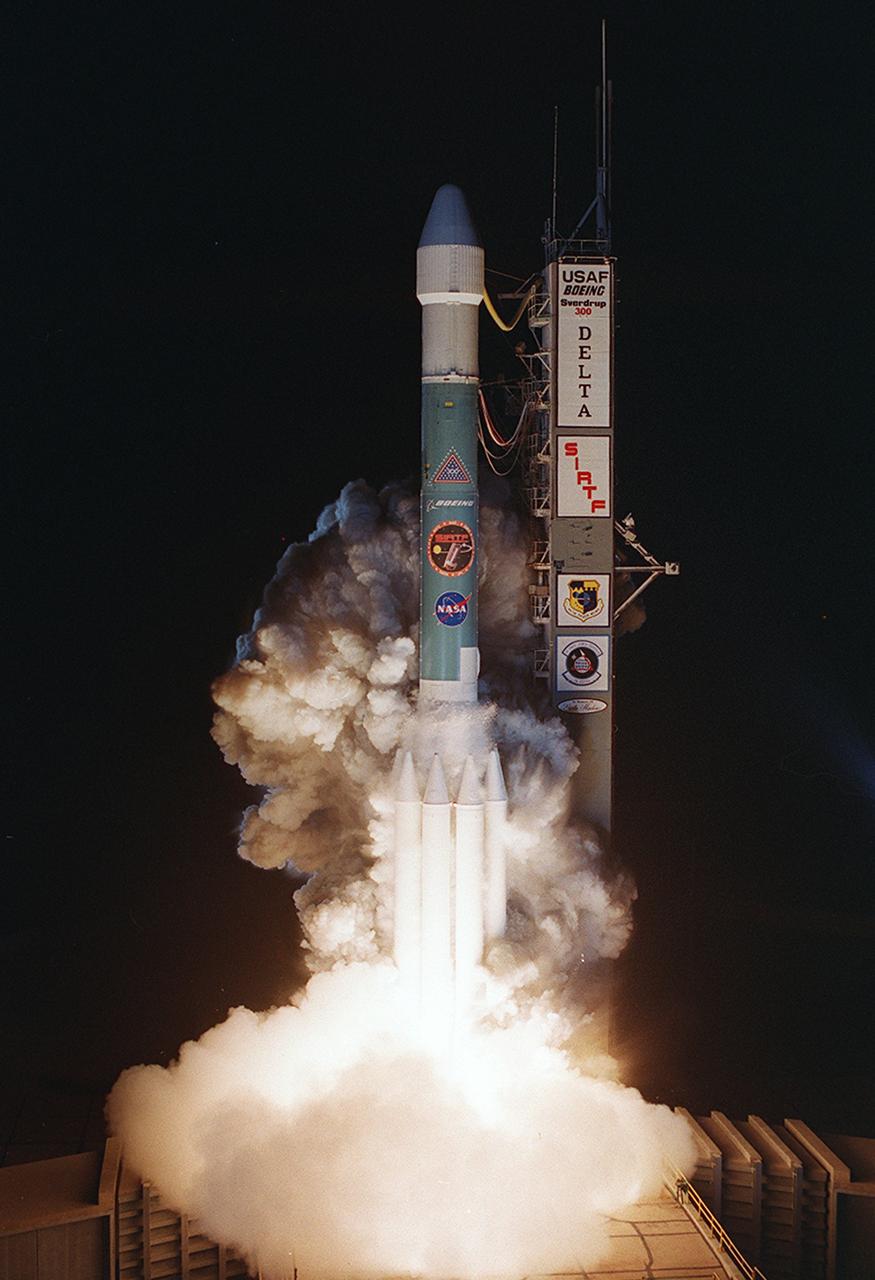
KENNEDY SPACE CENTER, FLA. - NASA's Space Infrared Telescope Facility (SIRTF) lifts off from Launch Pad 17-B, Cape Canaveral Air Force Station, on Aug. 25 at 1:35:39 a.m. EDT. SIRTF will obtain images and spectra by detecting the infrared energy, or heat, radiated by objects in space. Consisting of a 0.85-meter telescope and three cryogenically cooled science instruments, SIRTF will be the largest infrared telescope ever launched into space. It is the fourth and final element in NASA’s family of orbiting “Great Observatories.” Its highly sensitive instruments will give a unique view of the Universe and peer into regions of space that are hidden from optical telescopes.
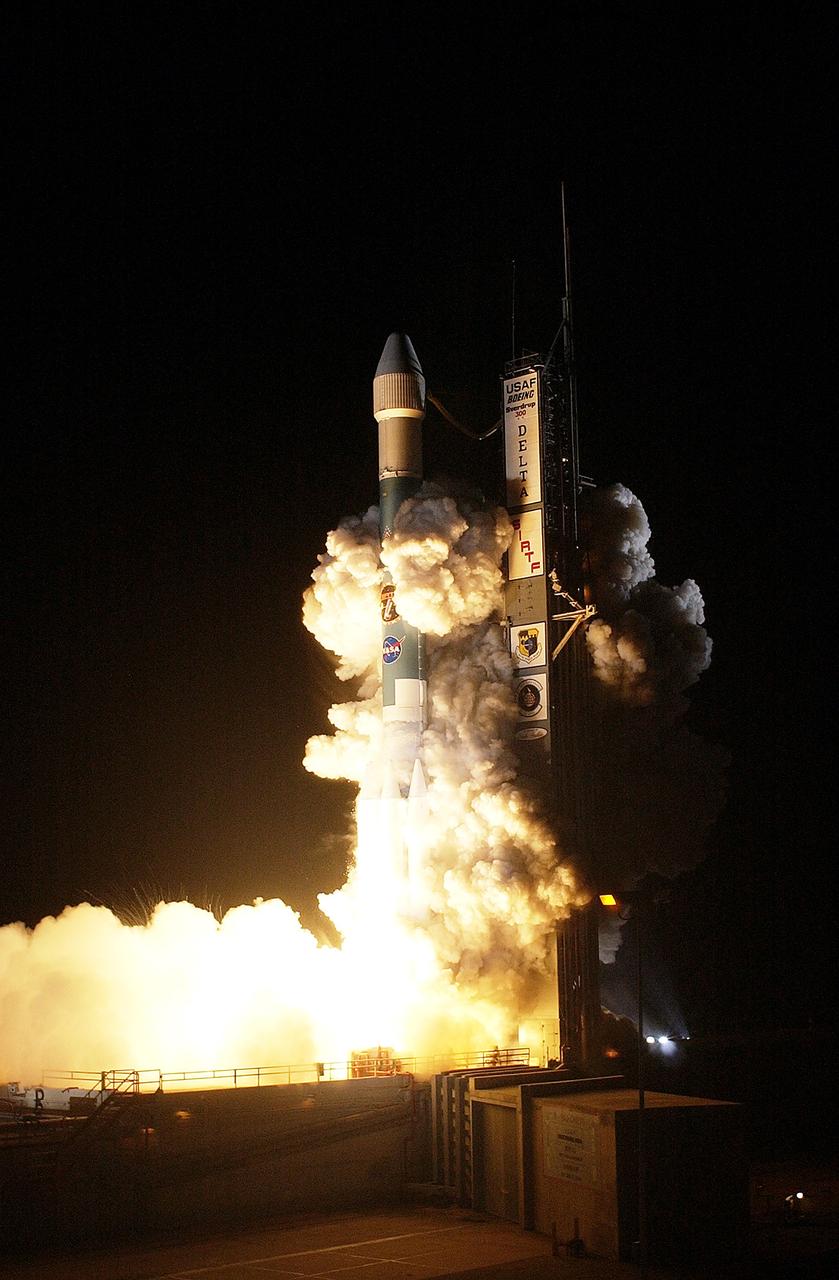
KENNEDY SPACE CENTER, FLA. - NASA's Space Infrared Telescope Facility (SIRTF) lifts off from Launch Pad 17-B, Cape Canaveral Air Force Station, on Aug. 25 at 1:35:39 a.m. EDT. SIRTF will obtain images and spectra by detecting the infrared energy, or heat, radiated by objects in space. Consisting of a 0.85-meter telescope and three cryogenically cooled science instruments, SIRTF will be the largest infrared telescope ever launched into space. It is the fourth and final element in NASA’s family of orbiting “Great Observatories.” Its highly sensitive instruments will give a unique view of the Universe and peer into regions of space that are hidden from optical telescopes.
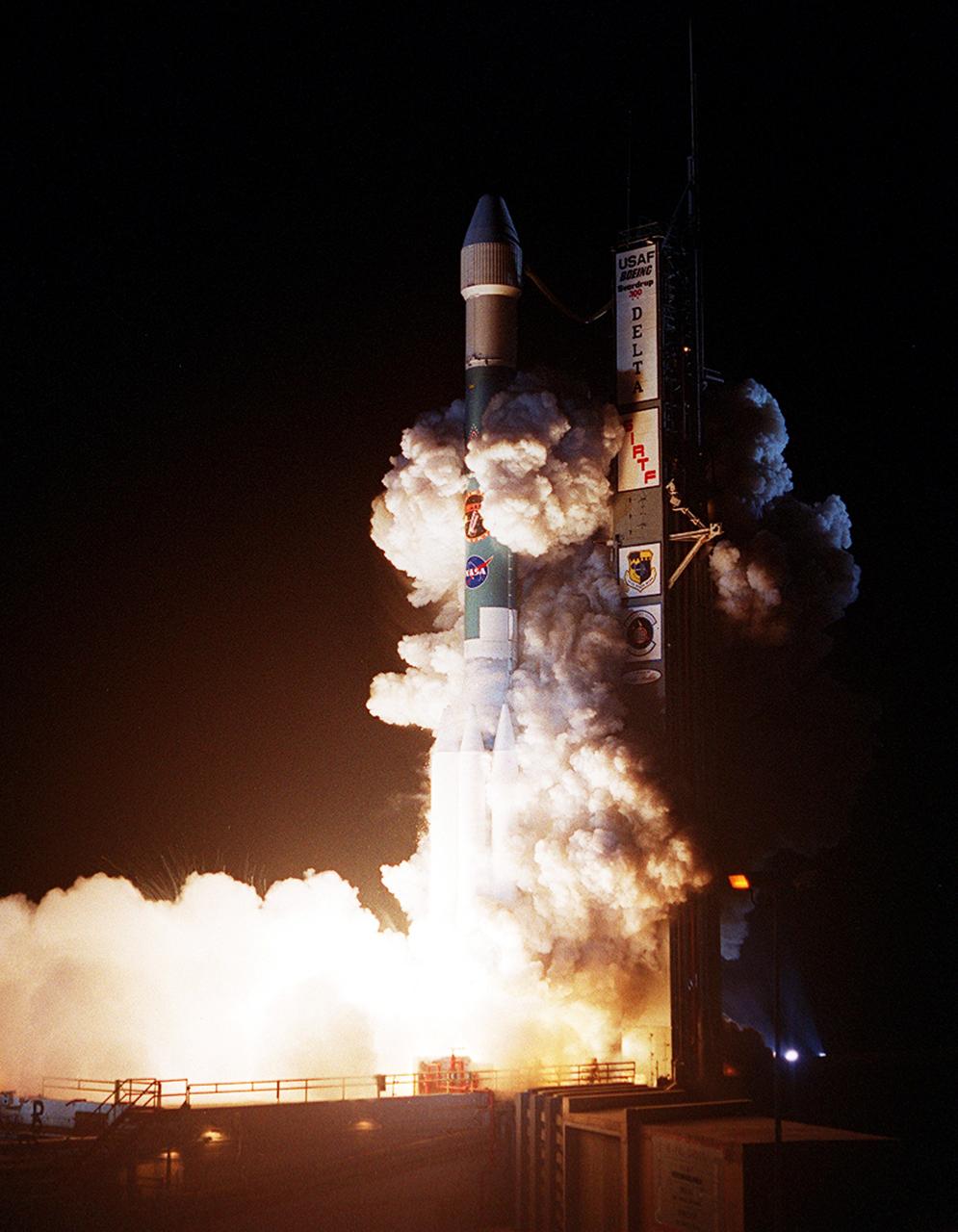
KENNEDY SPACE CENTER, FLA. - NASA's Space Infrared Telescope Facility (SIRTF) lifts off from Launch Pad 17-B, Cape Canaveral Air Force Station, on Aug. 25 at 1:35:39 a.m. EDT. SIRTF will obtain images and spectra by detecting the infrared energy, or heat, radiated by objects in space. Consisting of a 0.85-meter telescope and three cryogenically cooled science instruments, SIRTF will be the largest infrared telescope ever launched into space. It is the fourth and final element in NASA’s family of orbiting “Great Observatories.” Its highly sensitive instruments will give a unique view of the Universe and peer into regions of space that are hidden from optical telescopes.
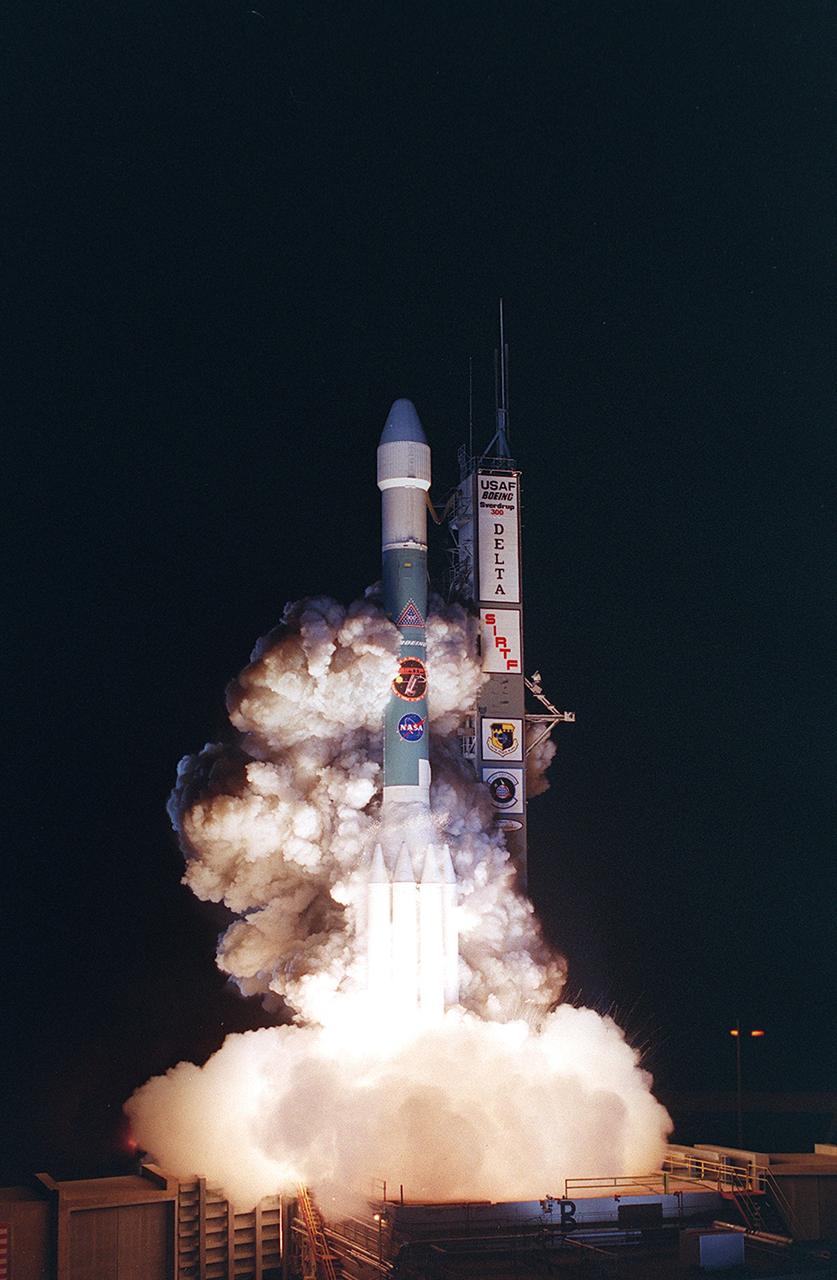
KENNEDY SPACE CENTER, FLA. - NASA's Space Infrared Telescope Facility (SIRTF) lifts off from Launch Pad 17-B, Cape Canaveral Air Force Station, on Aug. 25 at 1:35:39 a.m. EDT. SIRTF will obtain images and spectra by detecting the infrared energy, or heat, radiated by objects in space. Consisting of a 0.85-meter telescope and three cryogenically cooled science instruments, SIRTF will be the largest infrared telescope ever launched into space. It is the fourth and final element in NASA’s family of orbiting “Great Observatories.” Its highly sensitive instruments will give a unique view of the Universe and peer into regions of space that are hidden from optical telescopes.
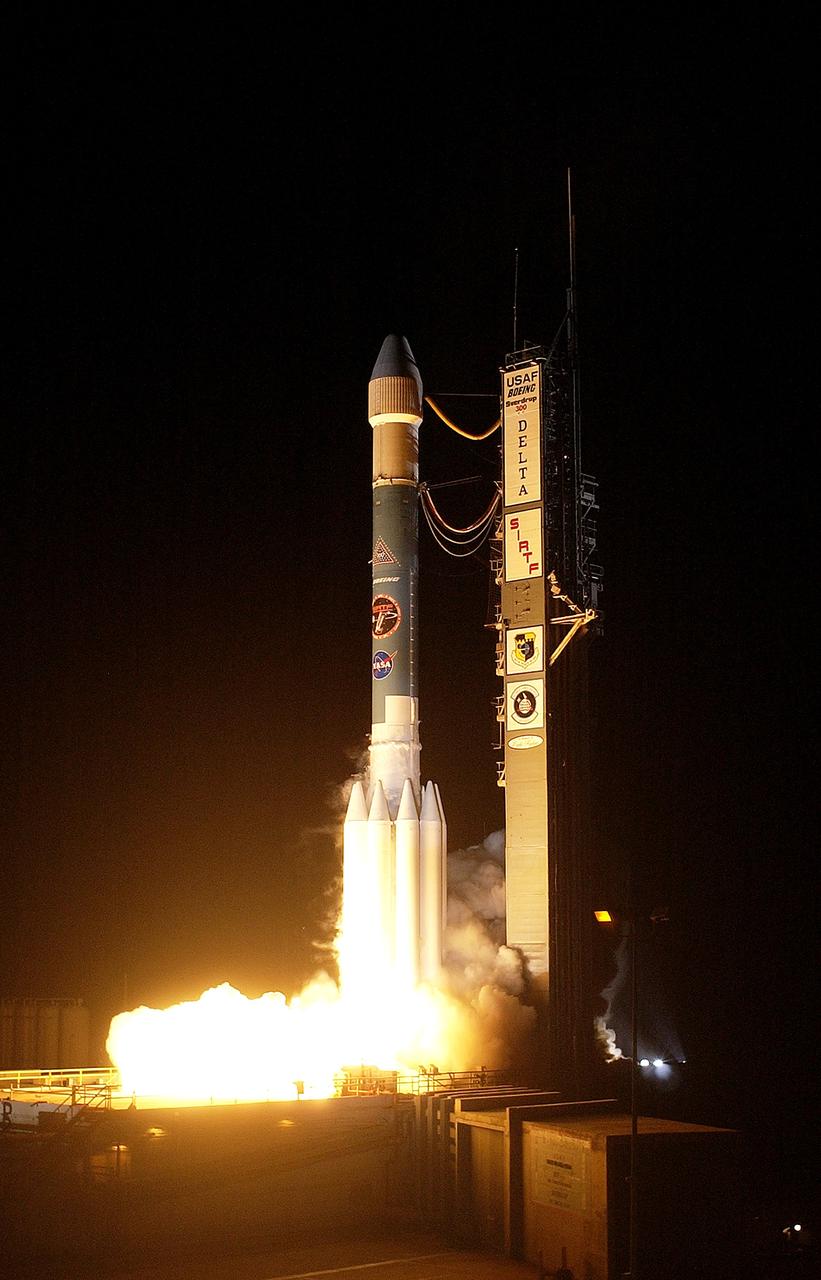
KENNEDY SPACE CENTER, FLA. - NASA's Space Infrared Telescope Facility (SIRTF) lifts off from Launch Pad 17-B, Cape Canaveral Air Force Station, on Aug. 25 at 1:35:39 a.m. EDT. SIRTF will obtain images and spectra by detecting the infrared energy, or heat, radiated by objects in space. Consisting of a 0.85-meter telescope and three cryogenically cooled science instruments, SIRTF will be the largest infrared telescope ever launched into space. It is the fourth and final element in NASA’s family of orbiting “Great Observatories.” Its highly sensitive instruments will give a unique view of the Universe and peer into regions of space that are hidden from optical telescopes.

Discovery was rolled out to Launch Pad 39-B on March 15-16 for final launch preparations for its 10th mission into space. Launch of the Hubble Space Telescope on the five-day STS-31 mission is targeted for April 12. Photo credit: NASA
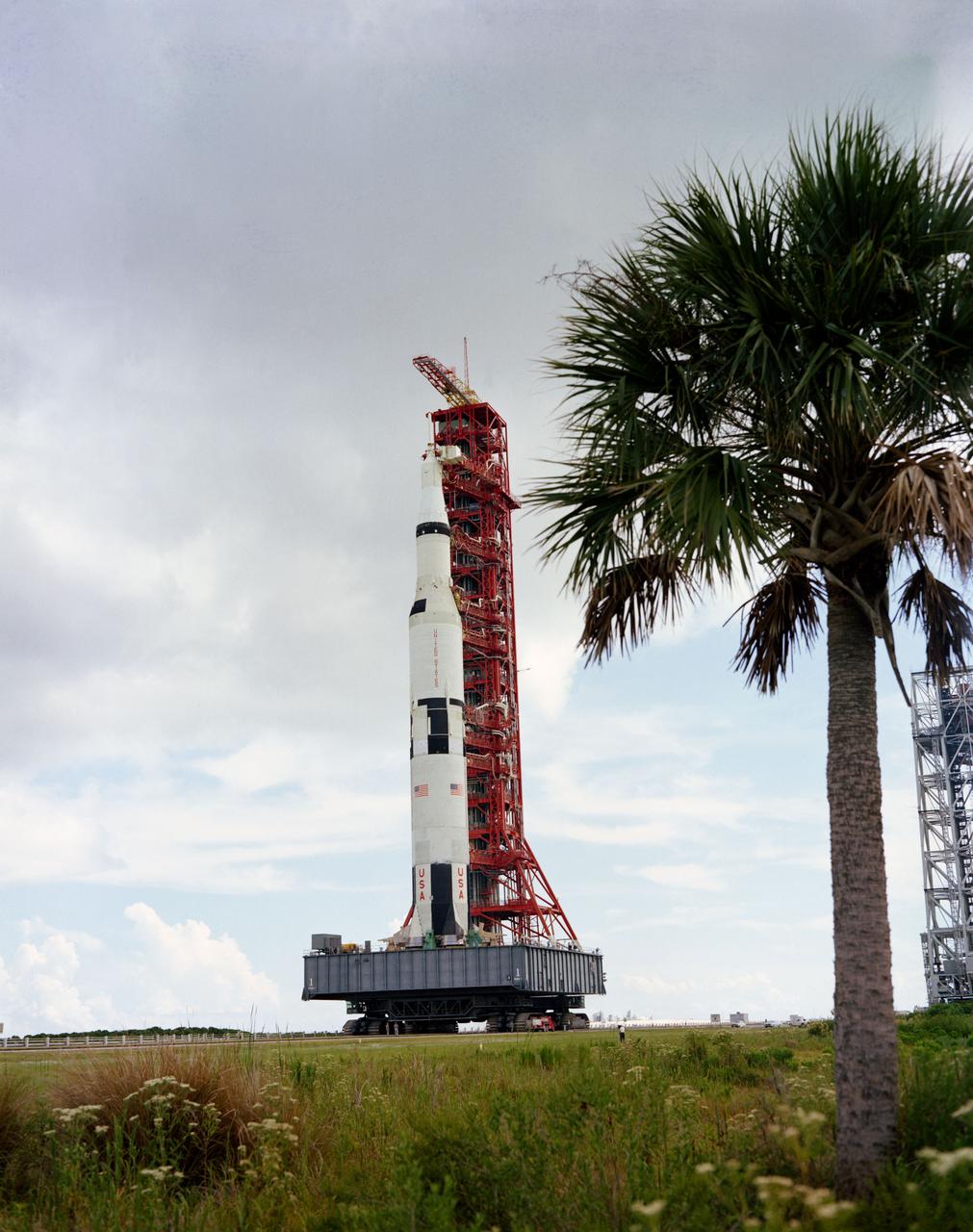
S67-43595 (26 Aug. 1967) --- The Apollo 4 (Spacecraft 017/Saturn 501) stack and its mobile launch tower atop a crawler-transporter moving from the Vehicle Assembly Building toward Pad A, Launch Complex 39.
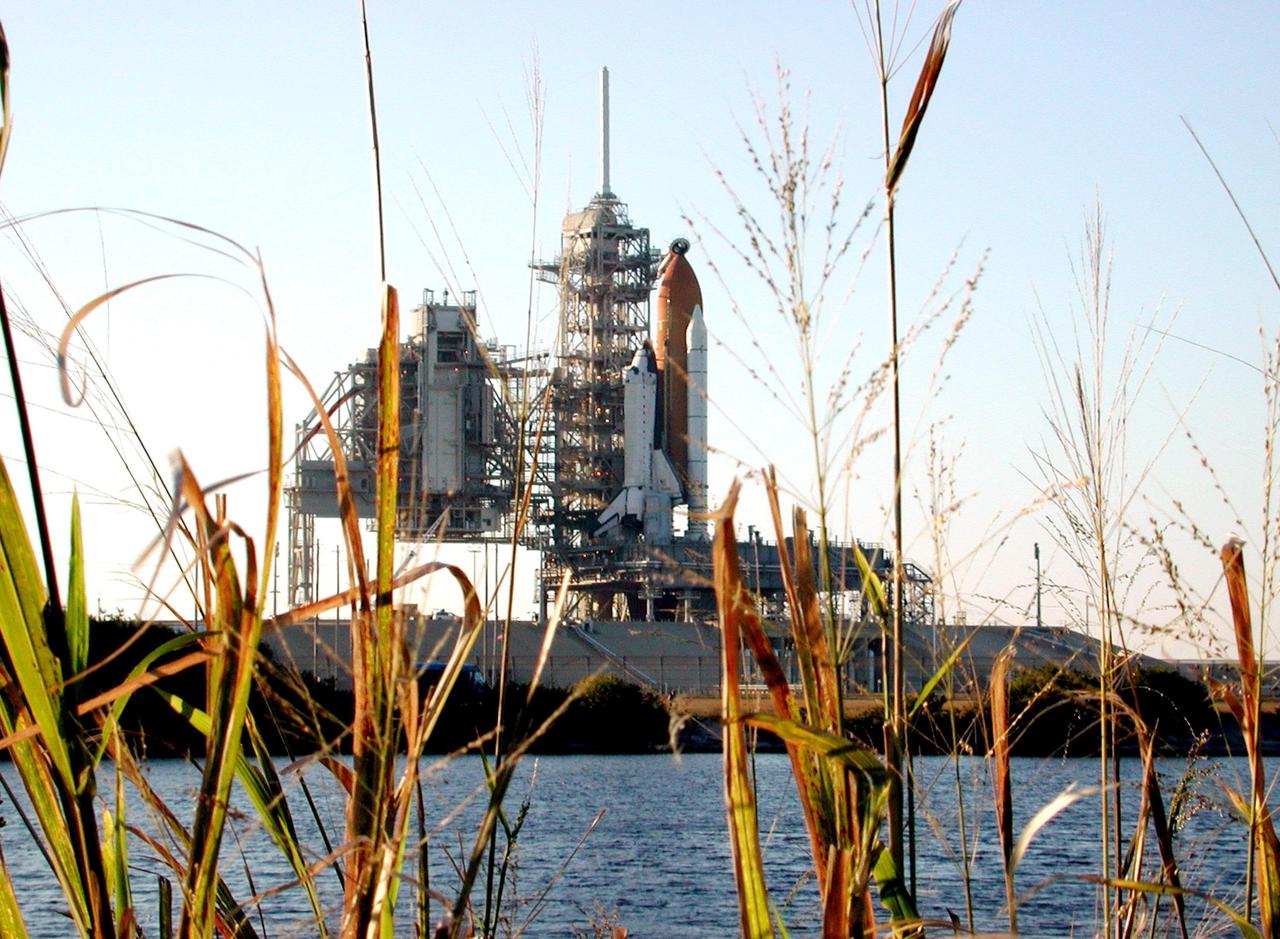
KENNEDY SPACE CENTER, FLA. -- A view of Space Shuttle Columbia through reedy grasses in nearby water. Columbia is revealed after rollback of the Rotating Service Structure on Launch Pad 39A. Columbia is scheduled for launch Jan. 16 at 10:39 a.m. EST on mission STS-107, a research mission.
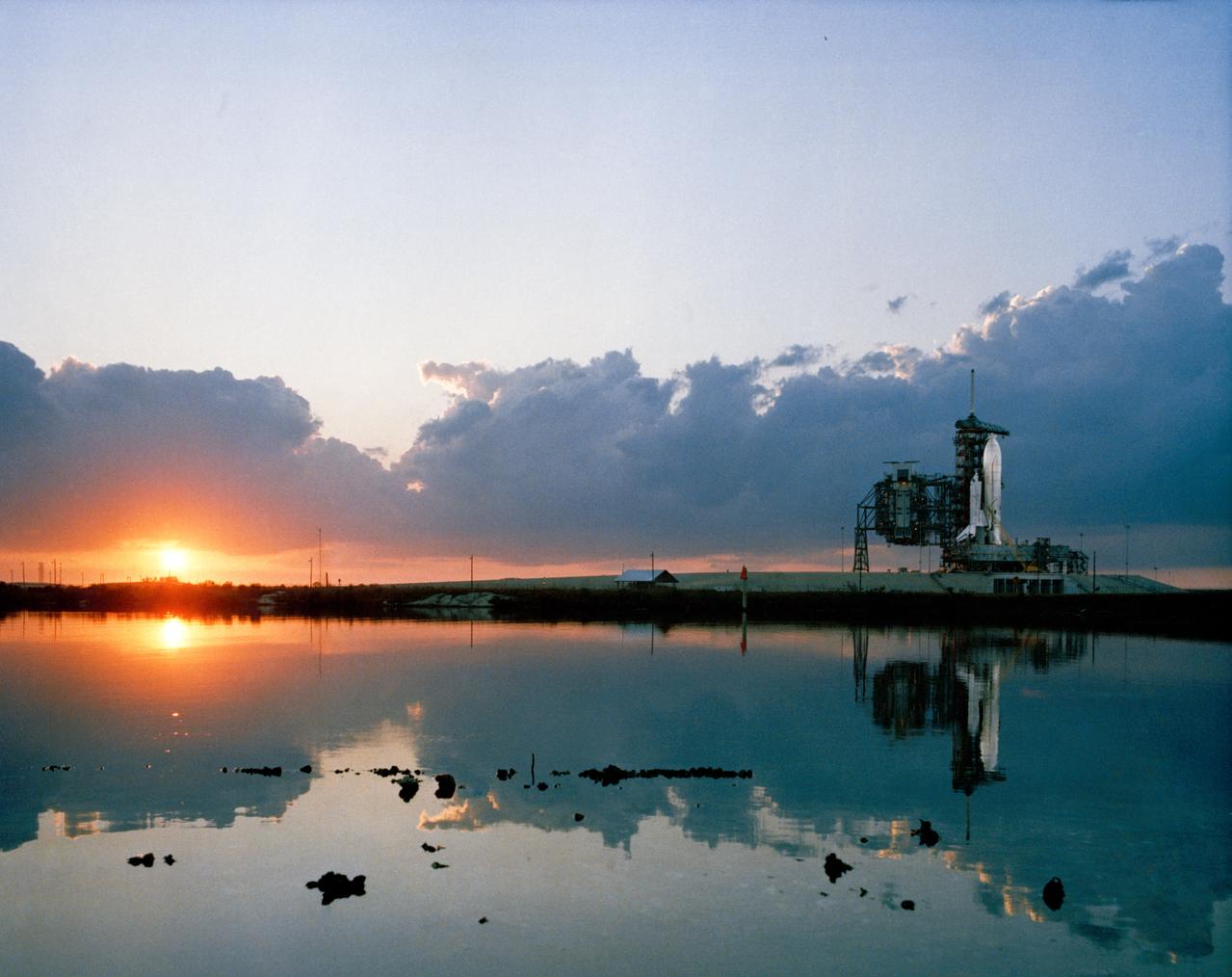
S81-28974 (March 1981) --- An early morning scene at the Kennedy Space Center's Launch Complex 39, with the space shuttle Columbia in position on Pad A at right. Launch for the STS-1 mission is set for April 10th with astronauts John W. Young and Robert L. Crippen aboard. Photo credit: NASA
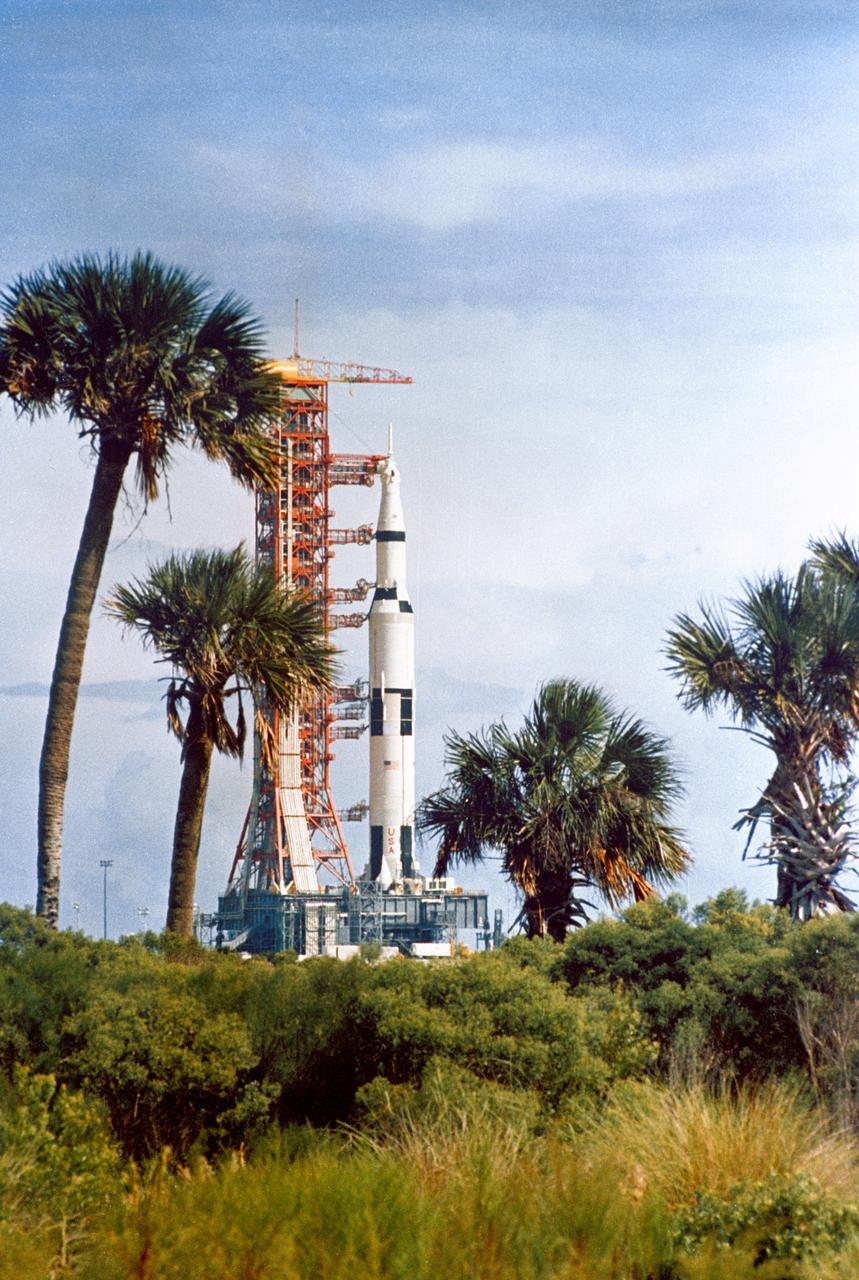
S68-49399 (9 Oct. 1968) --- The Apollo 8 (Spacecraft 103/Saturn 503) space vehicle on the way from the Kennedy Space Center's (KSC) Vehicle Assembly Building (VAB) to Pad A, Launch Complex 39. The Saturn V stack and its mobile launch tower are atop a huge crawler-transporter.
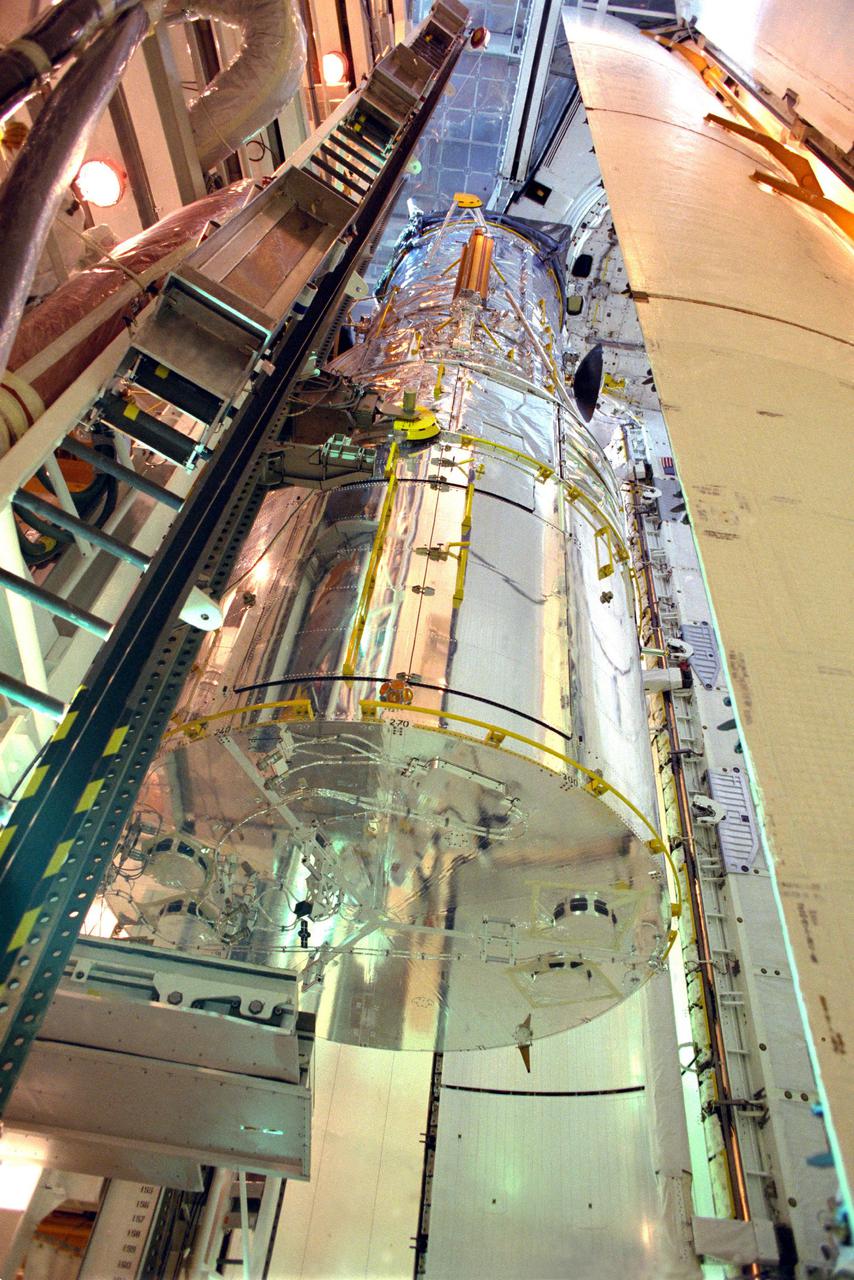
KENNEDY SPACE CENTER, FLA. -- The bus-size Hubble Space Telescope is carefully being transferred from the surgically clean Payload Changeout Room at Launch Pad 39-B into the cargo bay of the orbiter Discovery. The telescope is to be deployed during Space Shuttle Mission STS-31, currently scheduled for launch in April 1990.
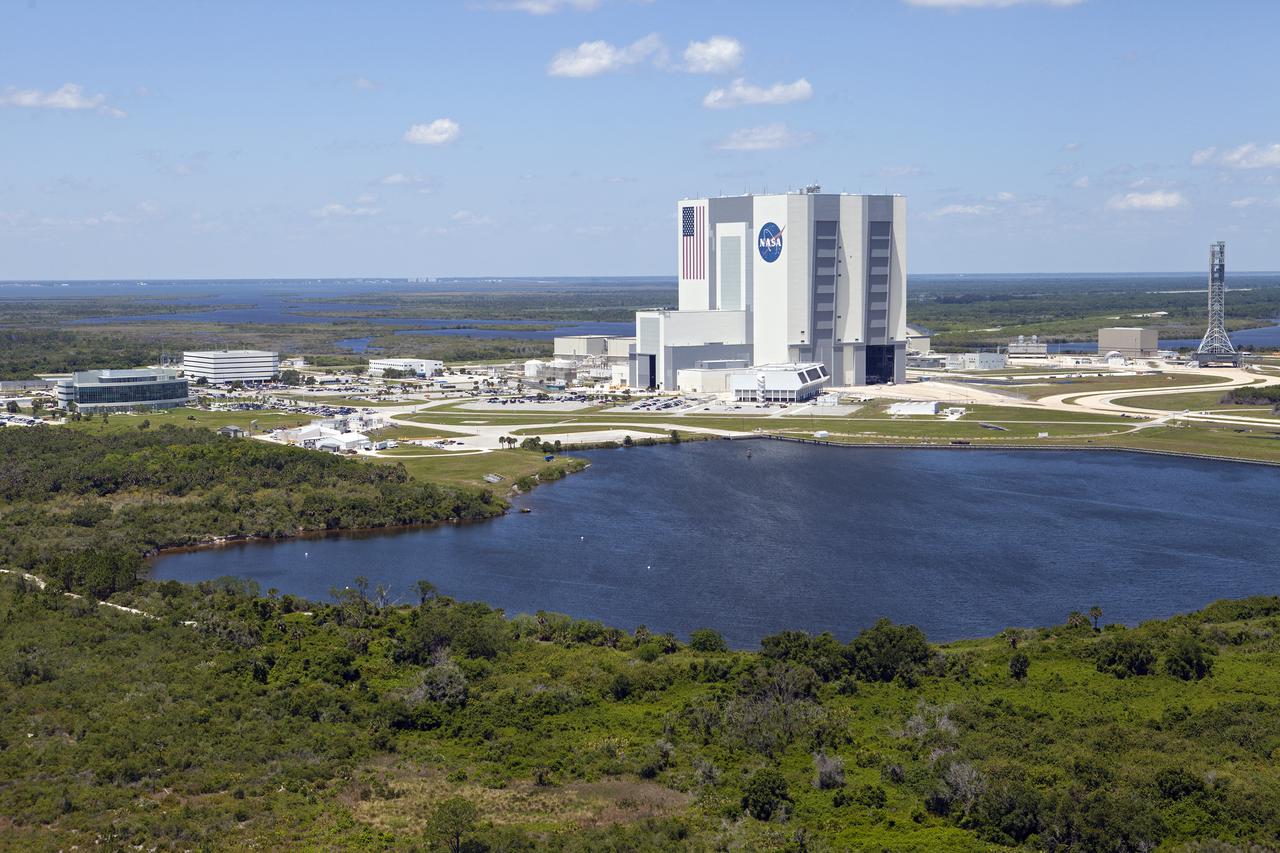
CAPE CANAVERAL, Fla. – An aerial view of the Vehicle Assembly Building, or VAB, and other buildings in the Launch Complex 39 area at NASA’s Kennedy Space Center in Florida. The Launch Control Center is in front of the VAB. To the right is the mobile launcher that will be used to transport NASA’s Space Launch System rocket and the Orion crew capsule to Launch Pad 39B. Upgrades are underway at Pad B and other facilities in the Launch Complex 39 area. The Ground Systems Development and Operations, or GSDO, Program office at Kennedy is leading the center’s transformation from a historically government-only launch complex to a spaceport that can safely handle a variety of rockets and spacecraft, including NASA’s Space Launch System. For more information about GSDO, visit: http:__go.nasa.gov_groundsystems. Photo credit: NASA_Kim Shiflett
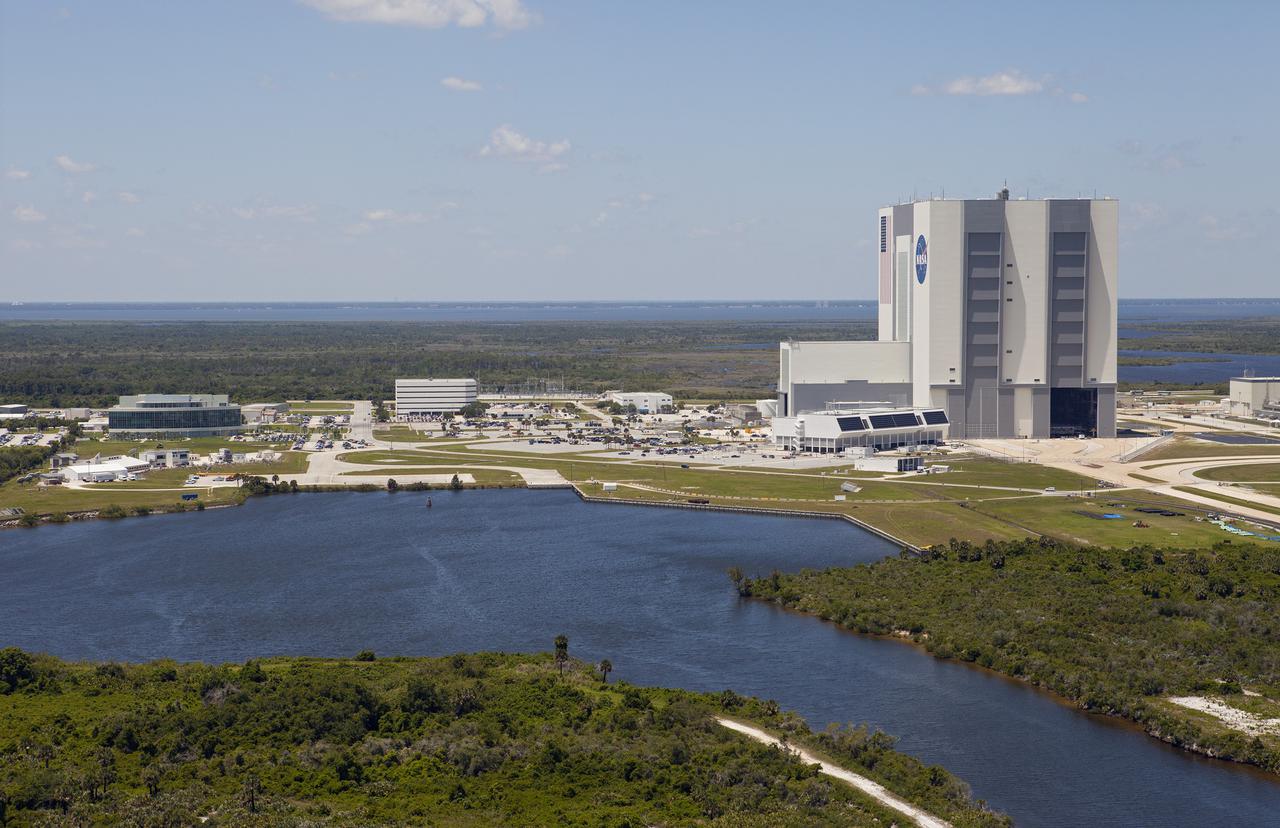
CAPE CANAVERAL, Fla. – An up close aerial view of the Vehicle Assembly Building and other facilities in the Launch Complex 39 area at NASA’s Kennedy Space Center in Florida. In front of the VAB is the Launch Control Center. To the left are the Operations Support Buildings I and II. Upgrades are underway at Pad B and other facilities in the Launch Complex 39 area. The Ground Systems Development and Operations, or GSDO, Program office at Kennedy is leading the center’s transformation from a historically government-only launch complex to a spaceport that can safely handle a variety of rockets and spacecraft, including NASA’s Space Launch System. For more information about GSDO, visit: http:__go.nasa.gov_groundsystems. Photo credit: NASA_Kim Shiflett
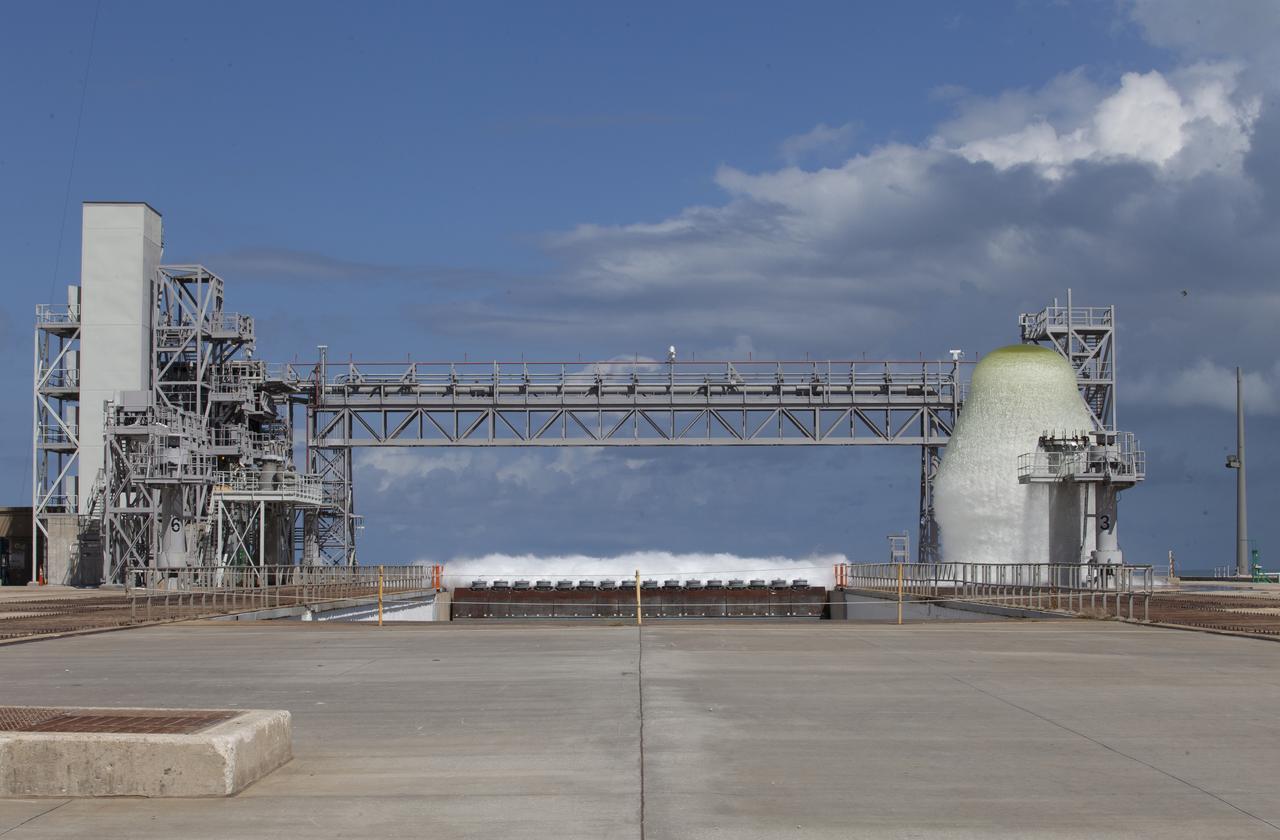
A flow test of the Ignition Overpressure Protection and Sound Suppression water deluge system is in progress at Launch Pad 39B at NASA's Kennedy Space Center in Florida, on Oct. 15, 2018. At peak flow, the water will reach about 100 feet in the air above the pad surface. It will flow at high speed from a holding tank through new and modified piping and valves, the flame trench, flame deflector nozzles and mobile launcher interface risers. The testing is part of Exploration Ground System's preparation for the new Space Launch System rocket. Modifications were made to the pad after a previous wet flow test, increasing the performance of the system. During the launch of Exploration Mission-1 and subsequent missions, this water deluge system will release about 450,000 gallons of water across the mobile launcher and Flame Deflector to reduce the extreme heat and energy generated by the rocket during ignition and liftoff.
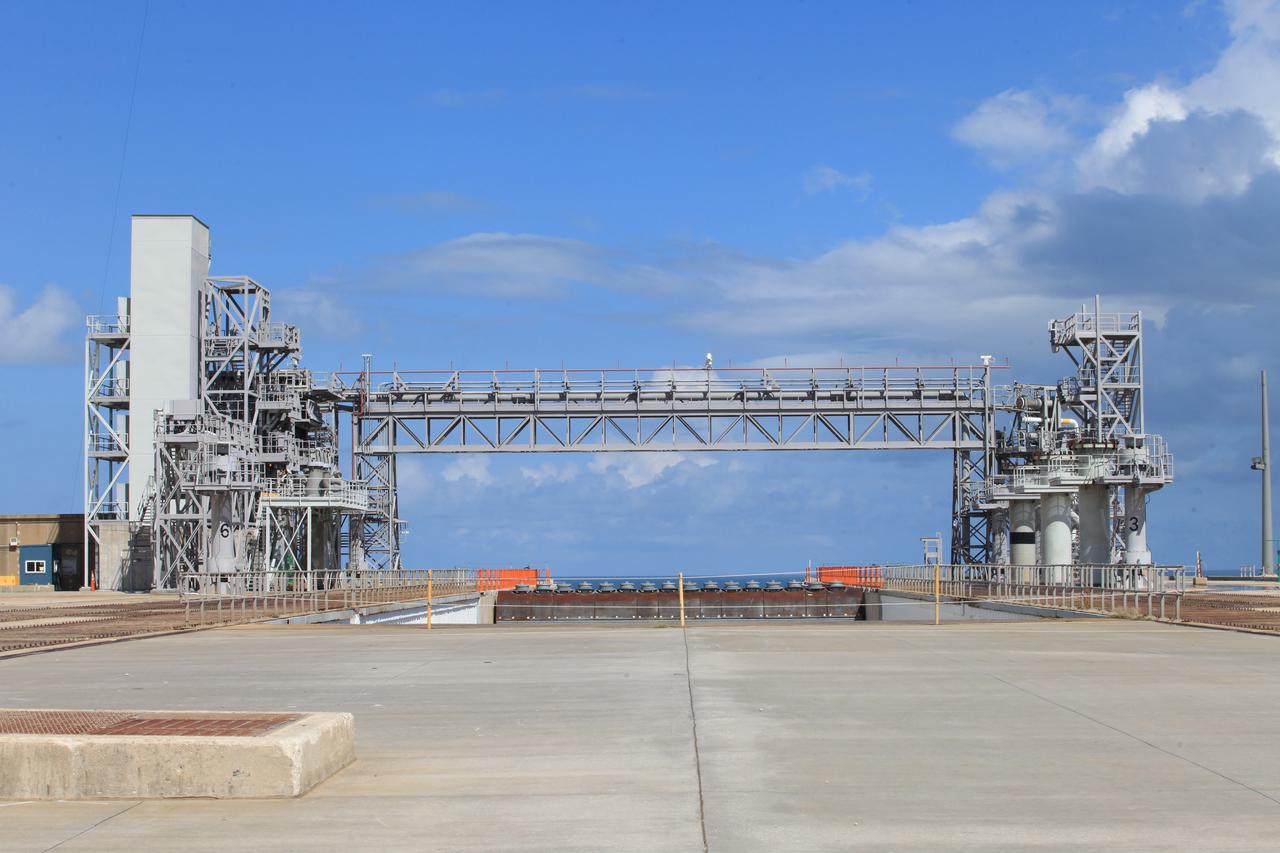
A flow test of the Ignition Overpressure Protection and Sound Suppression water deluge system begins at Launch Pad 39B at NASA's Kennedy Space Center in Florida, on Oct. 15, 2018. At peak flow, the water will reach about 100 feet in the air above the pad surface. The testing is part of Exploration Ground System's preparation for the new Space Launch System rocket. Modifications were made to the pad after a previous wet flow test, increasing the performance of the system. During the launch of Exploration Mission-1 and subsequent missions, this water deluge system will release about 450,000 gallons of water across the mobile launcher and Flame Deflector to reduce the extreme heat and energy generated by the rocket during ignition and liftoff.
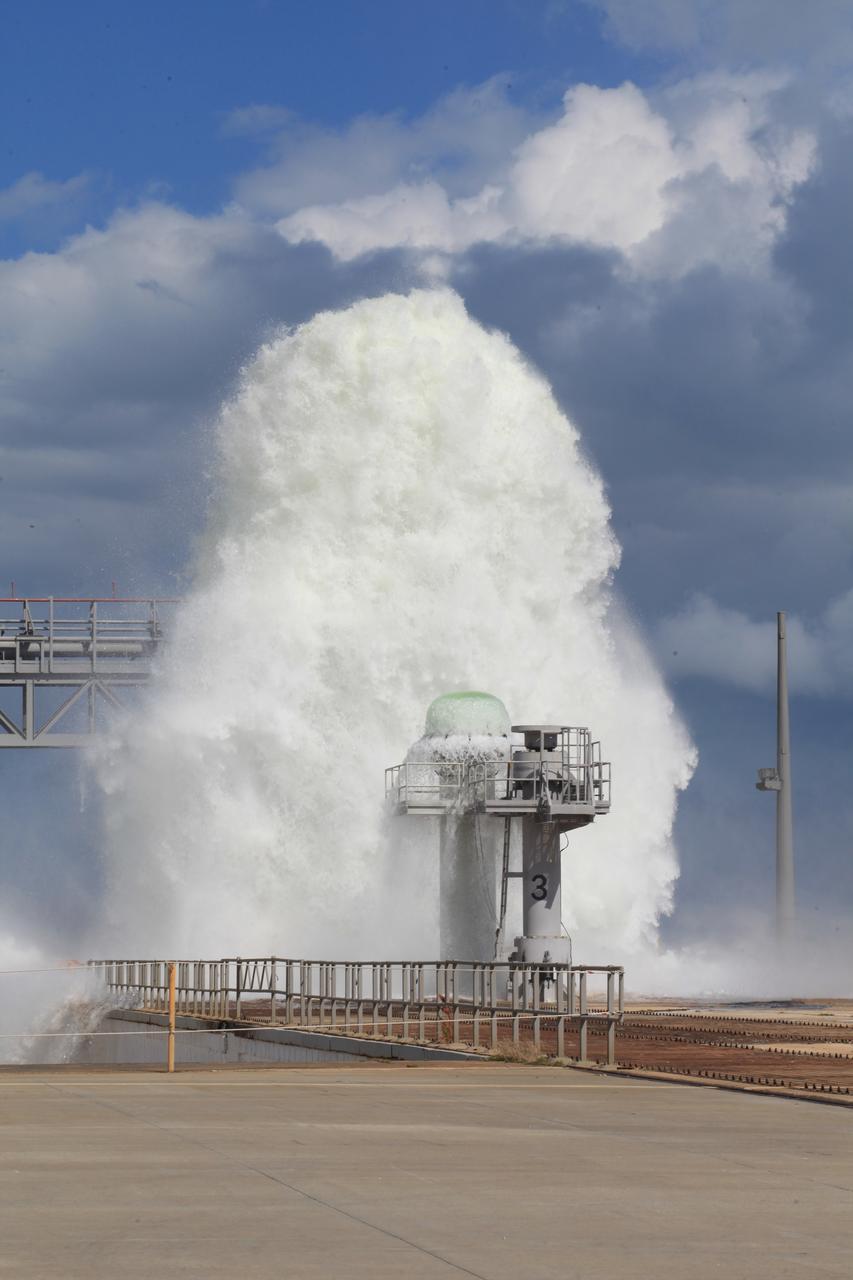
A flow test of the Ignition Overpressure Protection and Sound Suppression water deluge system is in progress at Launch Pad 39B at NASA's Kennedy Space Center in Florida, on Oct. 15, 2018. At peak flow, the water reaches about 100 feet in the air above the pad surface. It flows at high speed from a holding tank through new and modified piping and valves, the flame trench, flame deflector nozzles and mobile launcher interface risers. The testing is part of Exploration Ground System's preparation for the new Space Launch System rocket. Modifications were made to the pad after a previous wet flow test, increasing the performance of the system. During the launch of Exploration Mission-1 and subsequent missions, this water deluge system will release about 450,000 gallons of water across the mobile launcher and Flame Deflector to reduce the extreme heat and energy generated by the rocket during ignition and liftoff.

A flow test of the Ignition Overpressure Protection and Sound Suppression water deluge system is in progress at Launch Pad 39B at NASA's Kennedy Space Center in Florida, on Oct. 15, 2018. At peak flow, the water reaches about 100 feet in the air above the pad surface. It flows at high speed from a holding tank through new and modified piping and valves, the flame trench, flame deflector nozzles and mobile launcher interface risers. The testing is part of Exploration Ground System's preparation for the new Space Launch System rocket. Modifications were made to the pad after a previous wet flow test, increasing the performance of the system. During the launch of Exploration Mission-1 and subsequent missions, this water deluge system will release about 450,000 gallons of water across the mobile launcher and Flame Deflector to reduce the extreme heat and energy generated by the rocket during ignition and liftoff.

A flow test of the Ignition Overpressure Protection and Sound Suppression water deluge system is in progress at Launch Pad 39B at NASA's Kennedy Space Center in Florida, on Oct. 15, 2018. At peak flow, the water reaches about 100 feet in the air above the pad surface. It flows at high speed from a holding tank through new and modified piping and valves, the flame trench, flame deflector nozzles and mobile launcher interface risers. The testing is part of Exploration Ground System's preparation for the new Space Launch System rocket. Modifications were made to the pad after a previous wet flow test, increasing the performance of the system. During the launch of Exploration Mission-1 and subsequent missions, this water deluge system will release about 450,000 gallons of water across the mobile launcher and Flame Deflector to reduce the extreme heat and energy generated by the rocket during ignition and liftoff.
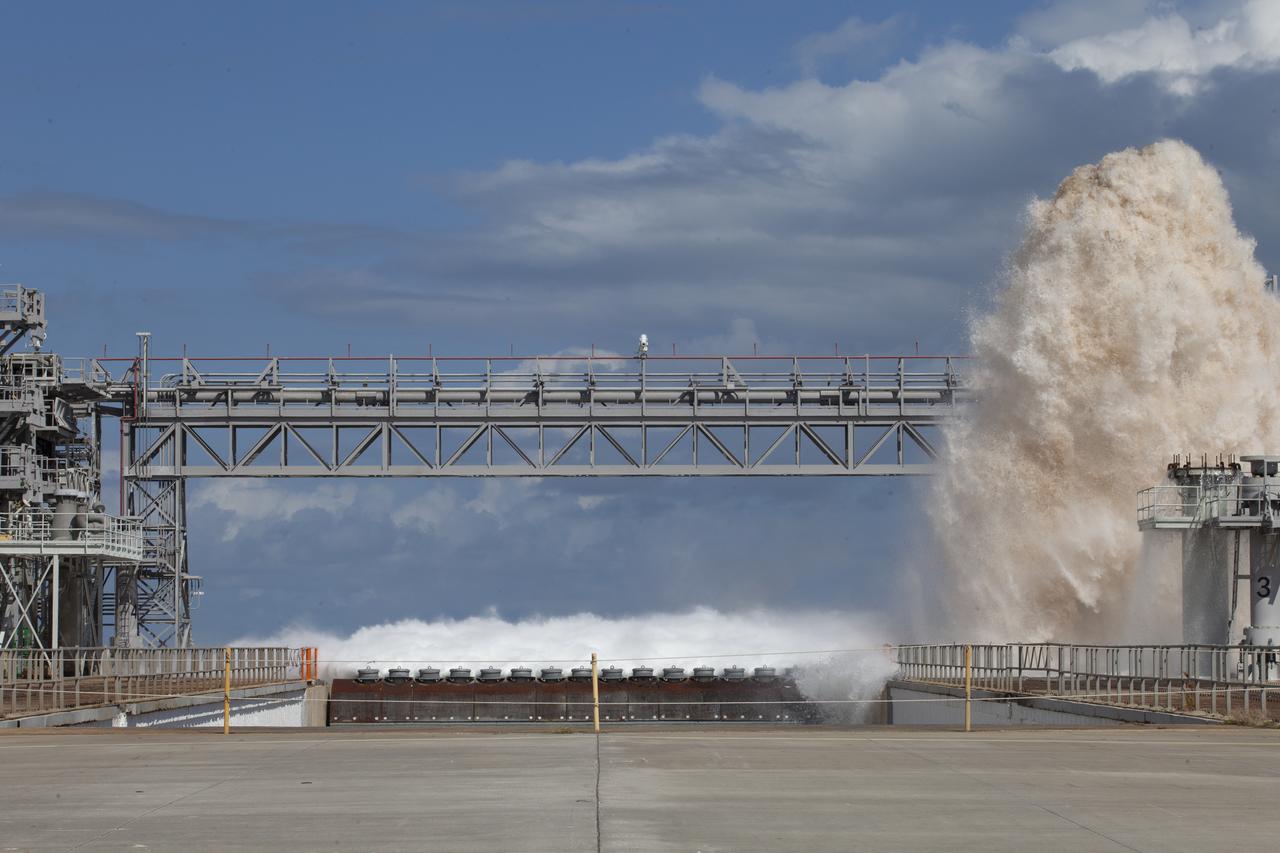
A flow test of the Ignition Overpressure Protection and Sound Suppression water deluge system is in progress at Launch Pad 39B at NASA's Kennedy Space Center in Florida, on Oct. 15, 2018. At peak flow, the water reaches about 100 feet in the air above the pad surface. It flows at high speed from a holding tank through new and modified piping and valves, the flame trench, flame deflector nozzles and mobile launcher interface risers. The testing is part of Exploration Ground System's preparation for the new Space Launch System rocket. Modifications were made to the pad after a previous wet flow test, increasing the performance of the system. During the launch of Exploration Mission-1 and subsequent missions, this water deluge system will release about 450,000 gallons of water across the mobile launcher and Flame Deflector to reduce the extreme heat and energy generated by the rocket during ignition and liftoff.

A flow test of the Ignition Overpressure Protection and Sound Suppression water deluge system is in progress at Launch Pad 39B at NASA's Kennedy Space Center in Florida, on Oct. 15, 2018. At peak flow, the water reaches about 100 feet in the air above the pad surface. It flows at high speed from a holding tank through new and modified piping and valves, the flame trench, flame deflector nozzles and mobile launcher interface risers. The testing is part of Exploration Ground System's preparation for the new Space Launch System rocket. Modifications were made to the pad after a previous wet flow test, increasing the performance of the system. During the launch of Exploration Mission-1 and subsequent missions, this water deluge system will release about 450,000 gallons of water across the mobile launcher and Flame Deflector to reduce the extreme heat and energy generated by the rocket during ignition and liftoff.
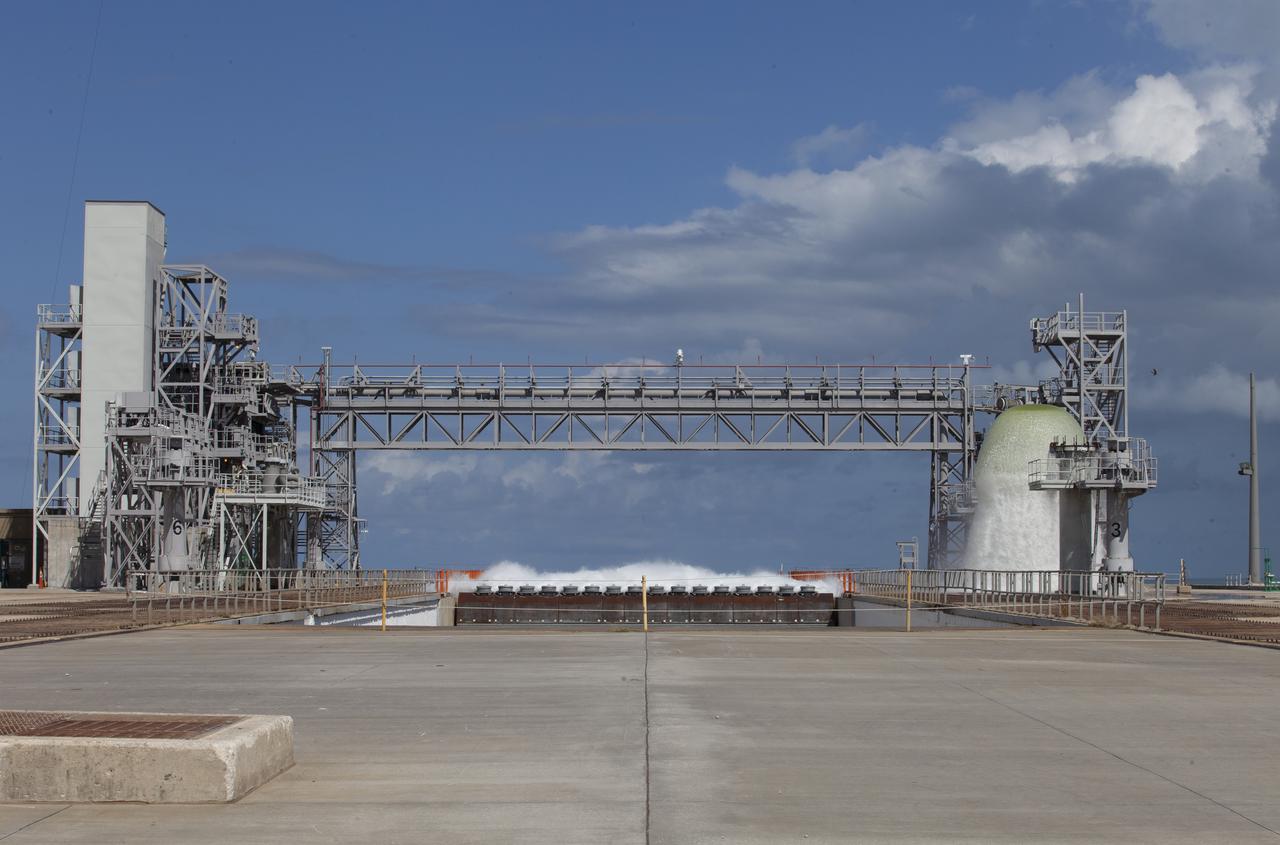
A flow test of the Ignition Overpressure Protection and Sound Suppression water deluge system begins at Launch Pad 39B at NASA's Kennedy Space Center in Florida, on Oct. 15, 2018. At peak flow, the water will reach about 100 feet in the air above the pad surface. It will flow at high speed from a holding tank through new and modified piping and valves, the flame trench, flame deflector nozzles and mobile launcher interface risers. The testing is part of Exploration Ground System's preparation for the new Space Launch System rocket. Modifications were made to the pad after a previous wet flow test, increasing the performance of the system. During the launch of Exploration Mission-1 and subsequent missions, this water deluge system will release about 450,000 gallons of water across the mobile launcher and Flame Deflector to reduce the extreme heat and energy generated by the rocket during ignition and liftoff.

A flow test of the Ignition Overpressure Protection and Sound Suppression water deluge system is in progress at Launch Pad 39B at NASA's Kennedy Space Center in Florida, on Oct. 15, 2018. At peak flow, the water reaches about 100 feet in the air above the pad surface. It flows at high speed from a holding tank through new and modified piping and valves, the flame trench, flame deflector nozzles and mobile launcher interface risers. The testing is part of Exploration Ground System's preparation for the new Space Launch System rocket. Modifications were made to the pad after a previous wet flow test, increasing the performance of the system. During the launch of Exploration Mission-1 and subsequent missions, this water deluge system will release about 450,000 gallons of water across the mobile launcher and Flame Deflector to reduce the extreme heat and energy generated by the rocket during ignition and liftoff.
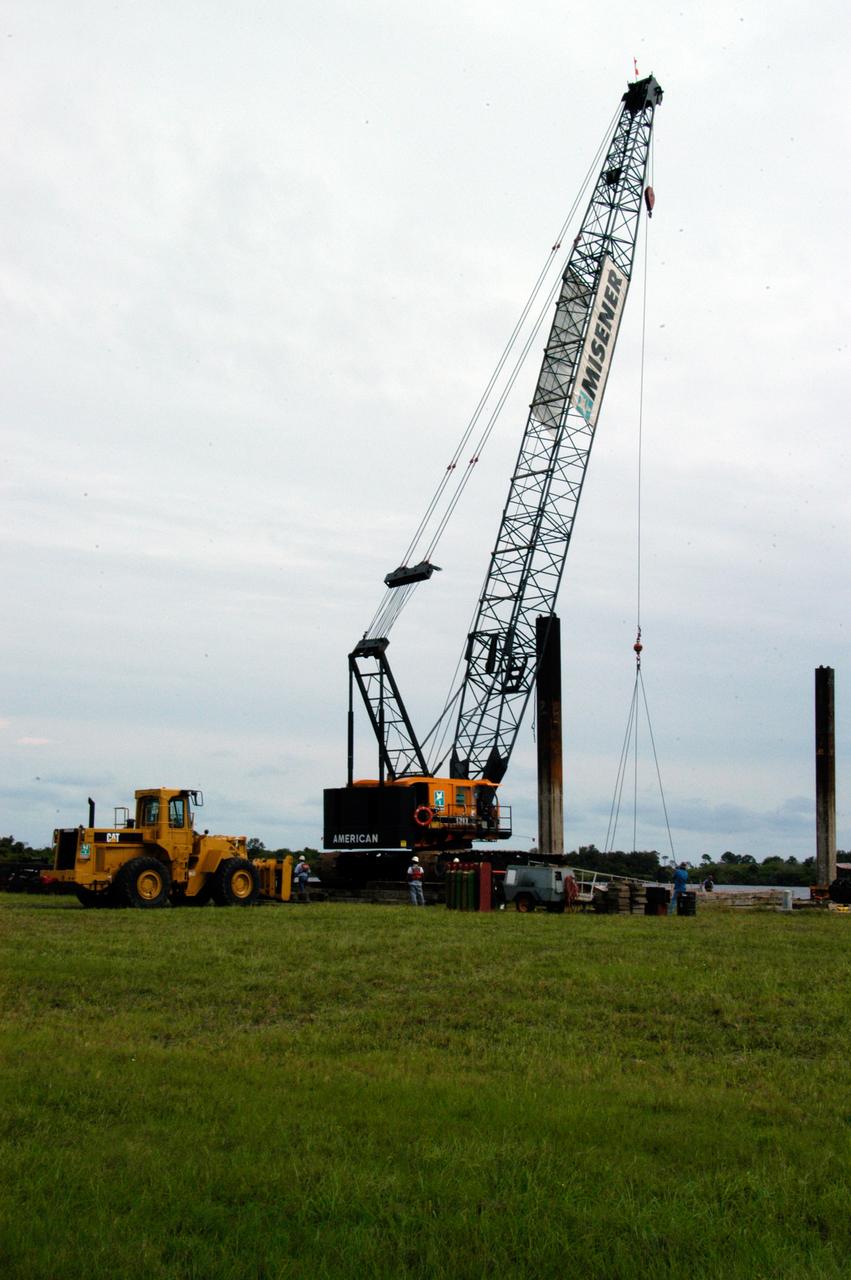
A large crawler crane arrives at the turn basin at the Launch Complex 39 Area on NASA's Kennedy Space Center. The crane with its 70-foot boom will be moved to Launch Pad 39B and used to construct a new lightning protection system for the Constellation Program and Ares/Orion launches. Pad B will be the site of the first Ares vehicle launch, including Ares I-X which is scheduled for April 2009.
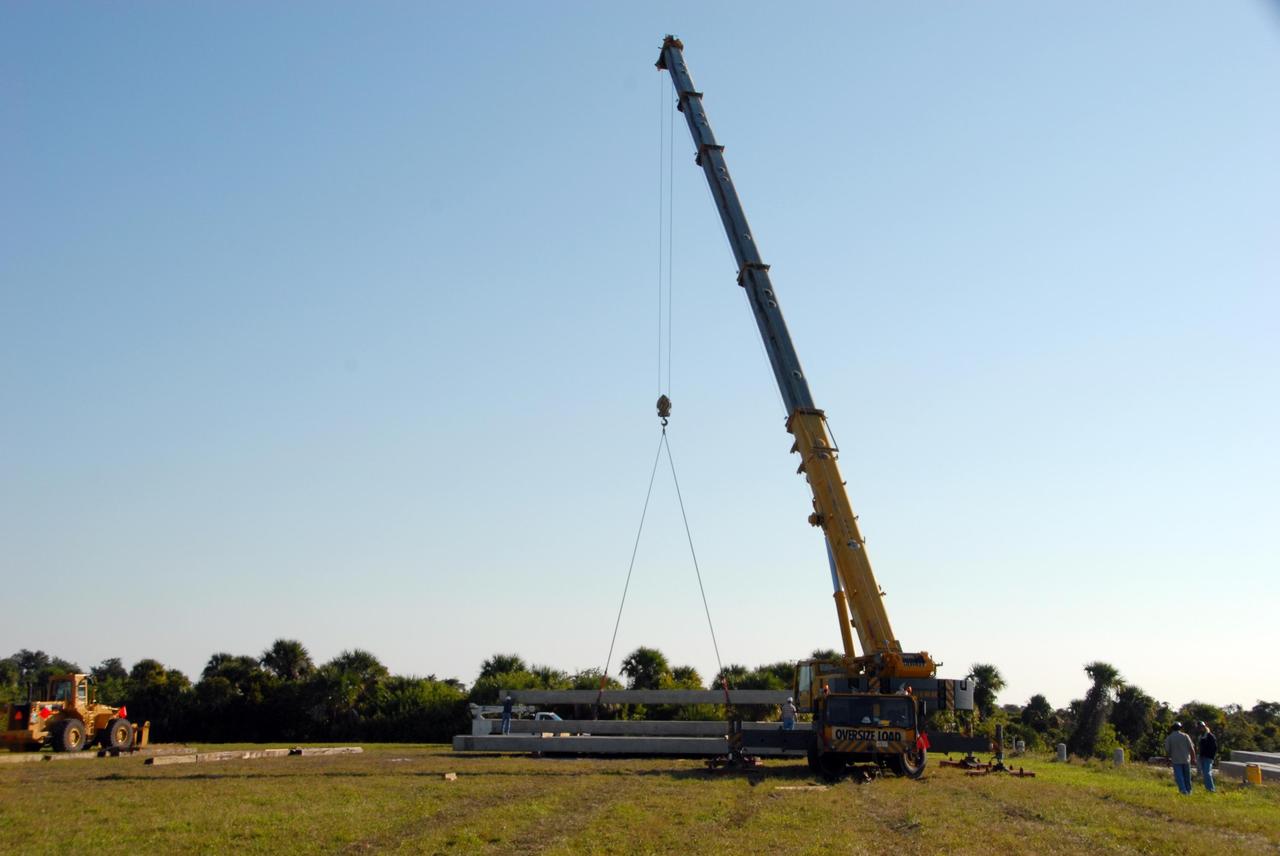
KENNEDY SPACE CENTER, FLA. -- In the Launch Complex 39 Area turn basin at NASA's Kennedy Space Center, the crane crawler moves pilings it lifted from the barge. The pilings will be used to help construct new lightning towers on Launch Pad 39B for the Constellation Program and Ares/Orion launches. Pad B will be the site of the first Ares vehicle launch, including Ares I-X which is scheduled for April 2009. Photo credit: NASA/George Shelton
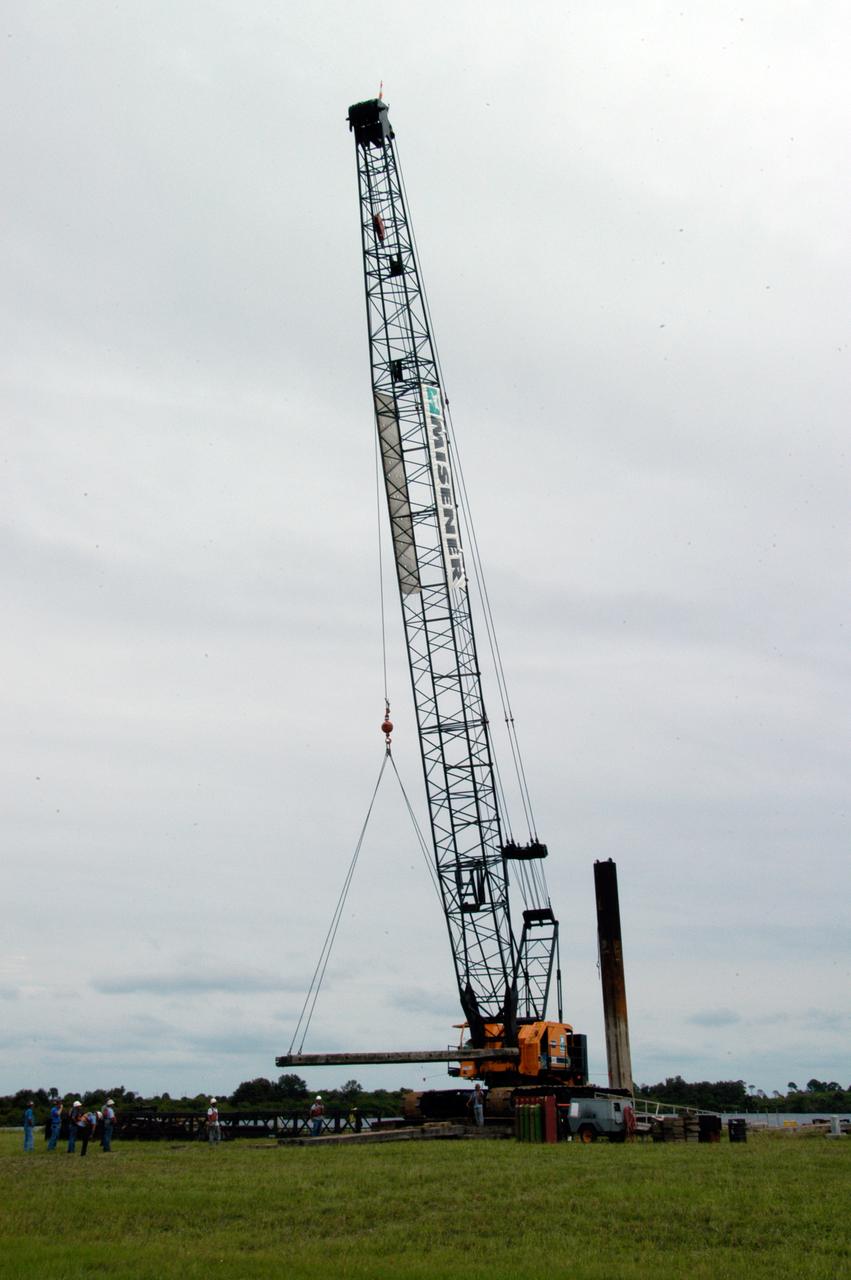
A large crawler crane arrives at the turn basin at the Launch Complex 39 Area on NASA's Kennedy Space Center. The crane with its 70-foot boom will be moved to Launch Pad 39B and used to construct a new lightning protection system for the Constellation Program and Ares/Orion launches. Pad B will be the site of the first Ares vehicle launch, including Ares I-X which is scheduled for April 2009.
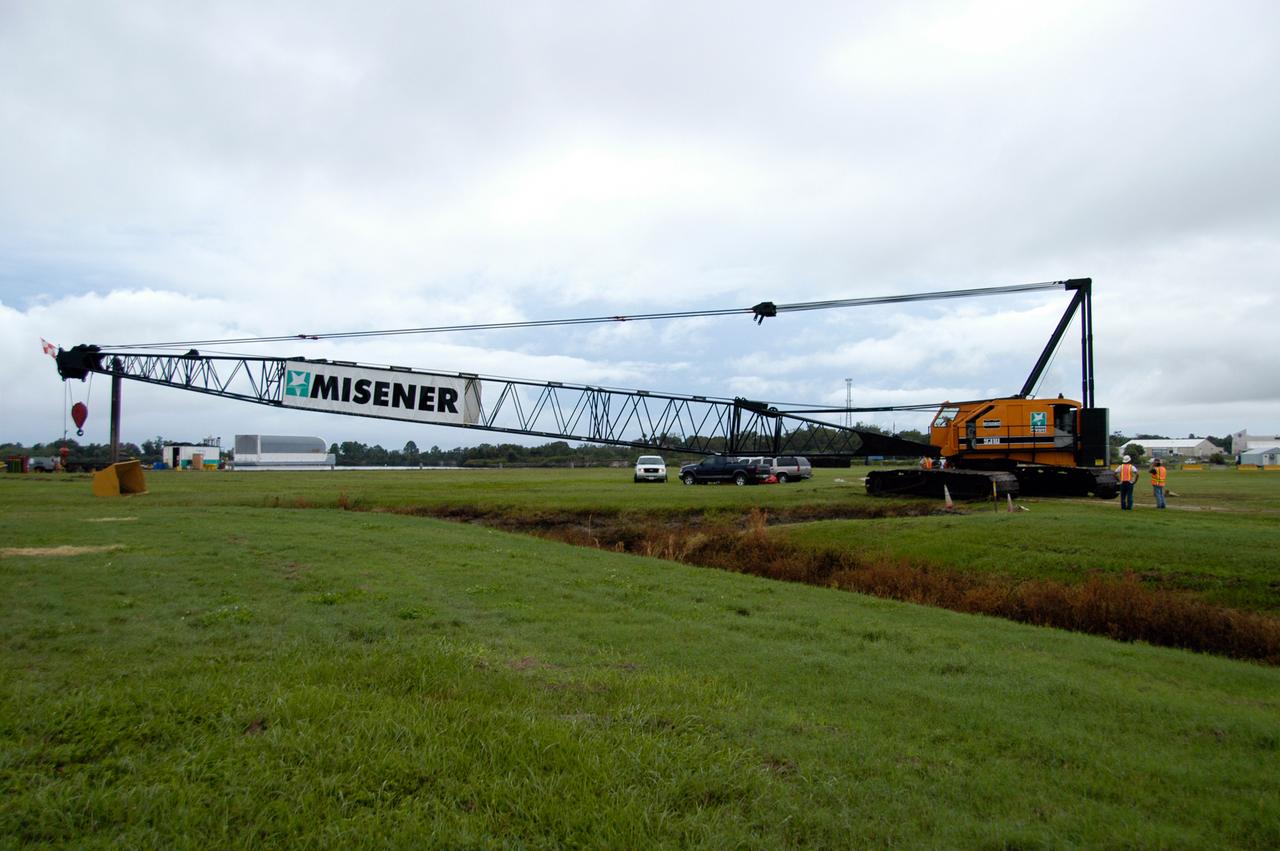
A large crawler crane begins moving away from the turn basin at the Launch Complex 39 Area on NASA's Kennedy Space Center. The crane with its 70-foot boom will be moved to Launch Pad 39B and used to construct a new lightning protection system for the Constellation Program and Ares/Orion launches. Pad B will be the site of the first Ares vehicle launch, including Ares I-X which is scheduled for April 2009.
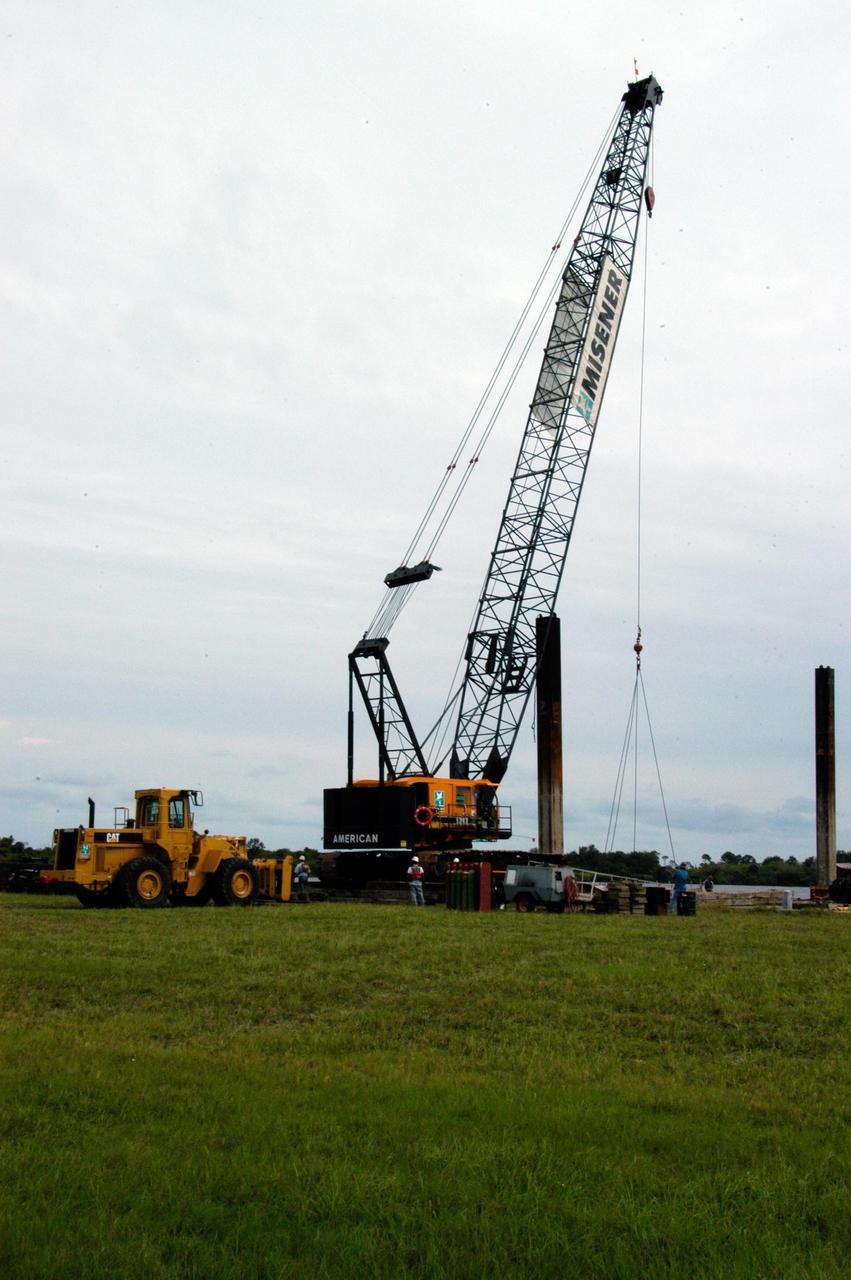
KENNEDY SPACE CENTER, FLA. -- A large crawler crane arrives at the turn basin at the Launch Complex 39 Area on NASA's Kennedy Space Center. The crane with its 70-foot boom will be moved to Launch Pad 39B and used to construct a new lightning protection system for the Constellation Program and Ares/Orion launches. Pad B will be the site of the first Ares vehicle launch, including Ares I-X which is scheduled for April 2009. Photo credit: NASA/George Shelton
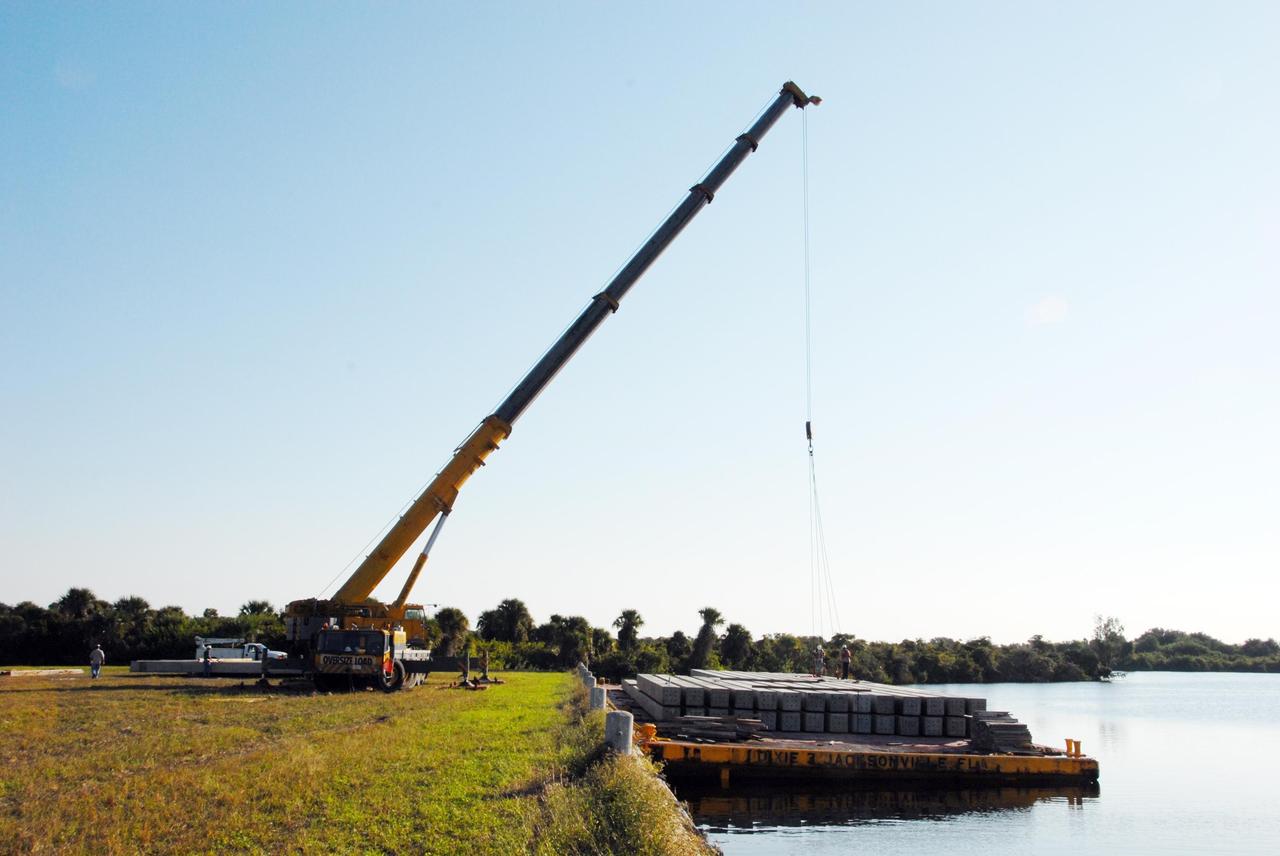
KENNEDY SPACE CENTER, FLA. -- In the Launch Complex 39 Area turn basin at NASA's Kennedy Space Center, the crane crawler is being used to lift pilings from a barge. The pilings will be used to help construct new lightning towers on Launch Pad 39B for the Constellation Program and Ares/Orion launches. Pad B will be the site of the first Ares vehicle launch, including Ares I-X which is scheduled for April 2009. Photo credit: NASA/George Shelton
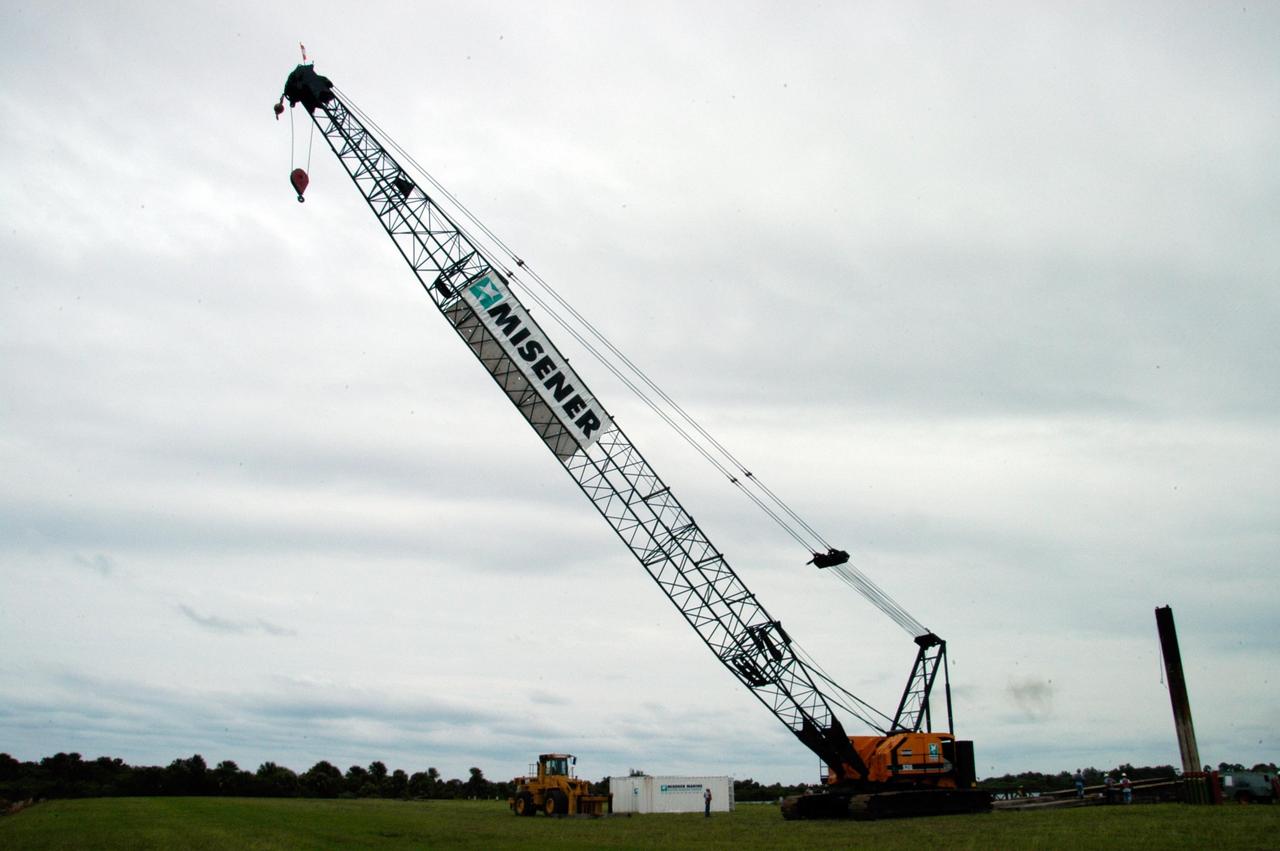
KENNEDY SPACE CENTER, FLA. -- A large crawler crane begins moving away from the turn basin at the Launch Complex 39 Area on NASA's Kennedy Space Center. The crane with its 70-foot boom will be moved to Launch Pad 39B and used to construct a new lightning protection system for the Constellation Program and Ares/Orion launches. Pad B will be the site of the first Ares vehicle launch, including Ares I-X which is scheduled for April 2009. Photo credit: NASA/George Shelton
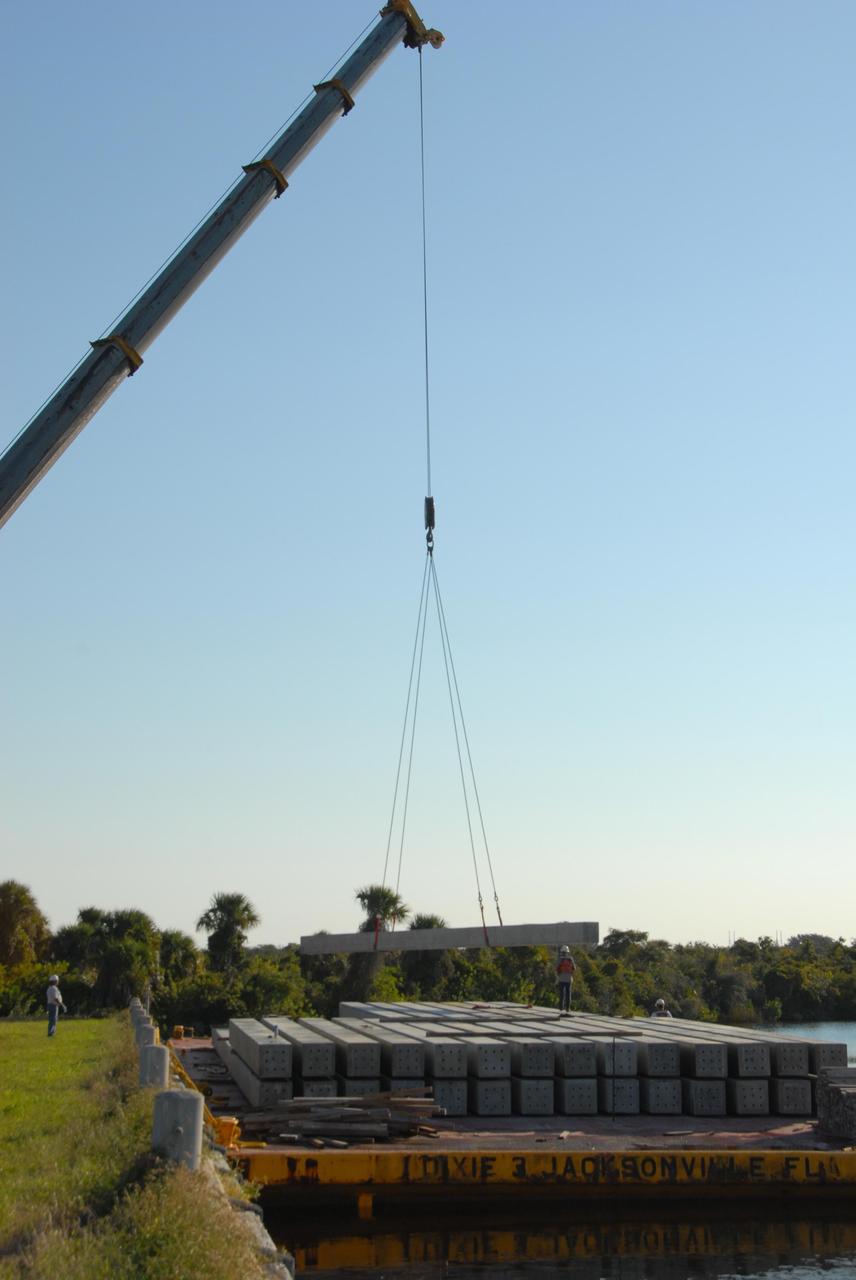
KENNEDY SPACE CENTER, FLA. -- In the Launch Complex 39 Area turn basin at NASA's Kennedy Space Center, the crane crawler begins lifting pilings from the barge. The pilings will be used to help construct new lightning towers on Launch Pad 39B for the Constellation Program and Ares/Orion launches. Pad B will be the site of the first Ares vehicle launch, including Ares I-X which is scheduled for April 2009. Photo credit: NASA/George Shelton
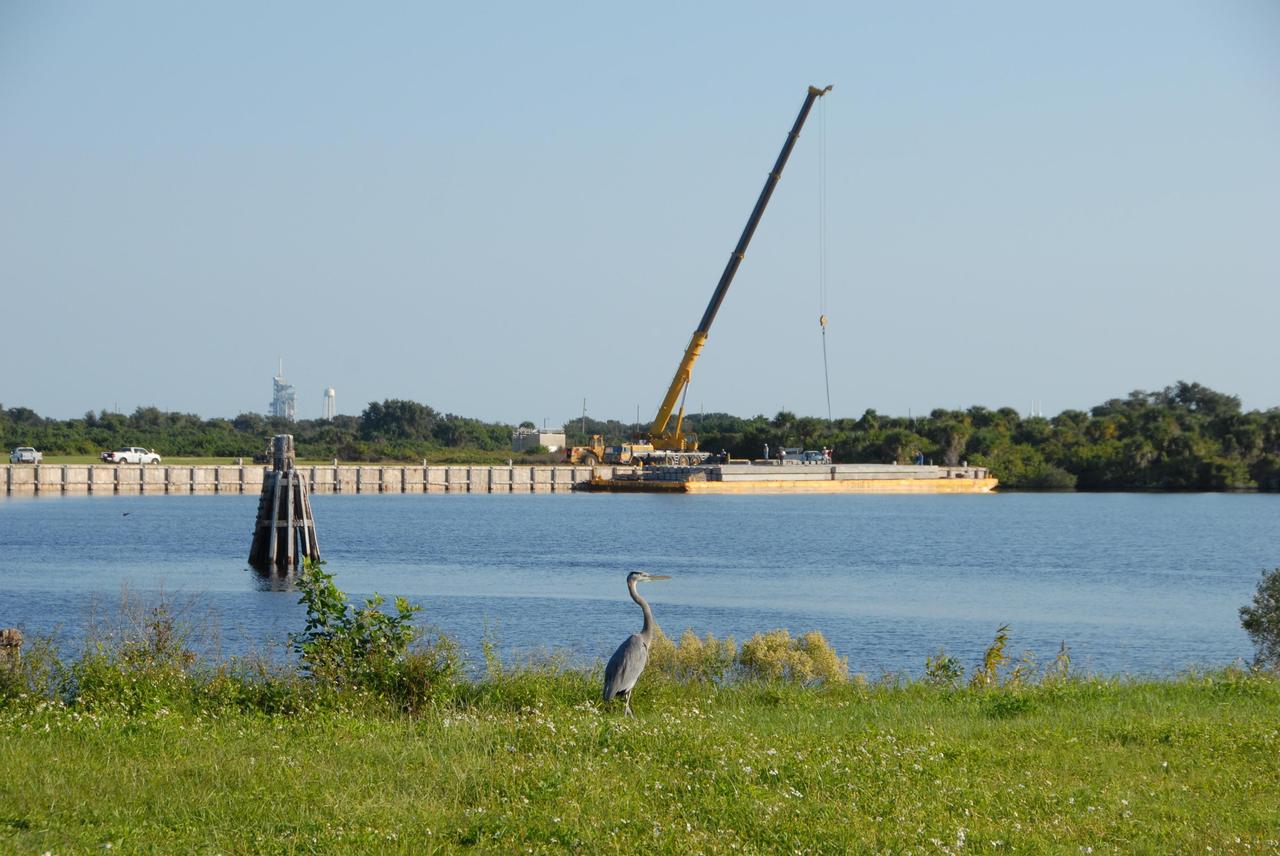
KENNEDY SPACE CENTER, FLA. -- In the Launch Complex 39 Area turn basin at NASA's Kennedy Space Center, the crane crawler is being used to lift pilings from a barge. The pilings will be used to help construct new lightning towers on Launch Pad 39B for the Constellation Program and Ares/Orion launches. Pad B will be the site of the first Ares vehicle launch, including Ares I-X which is scheduled for April 2009. Photo credit: NASA/George Shelton
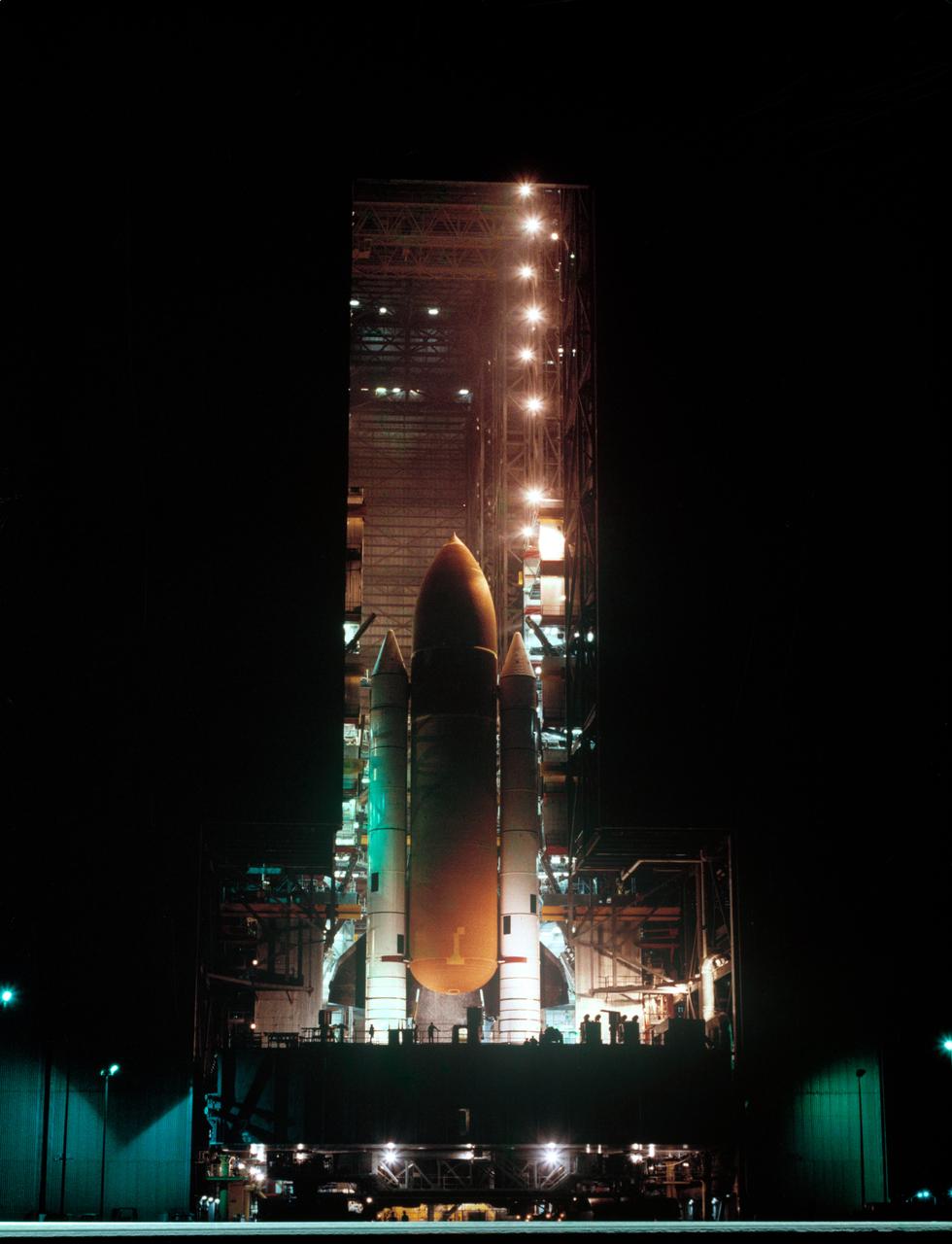
S83-39238 (1 Aug. 1983) --- The giant cluster of spaceflight hardware for NASA's eighth Space Transportation System (STS) mission begins its slow move to the launch pad at launch complex 39 at NASA's Kennedy Space Center (KSC). Following its mating to the two solid rocket boosters (SRB) and the external fuel tank (ET) in the huge vehicle assembly building (VAB), the space shuttle Challenger is slowly moved to the launch pad atop the mobile launch platform. Photo credit: NASA
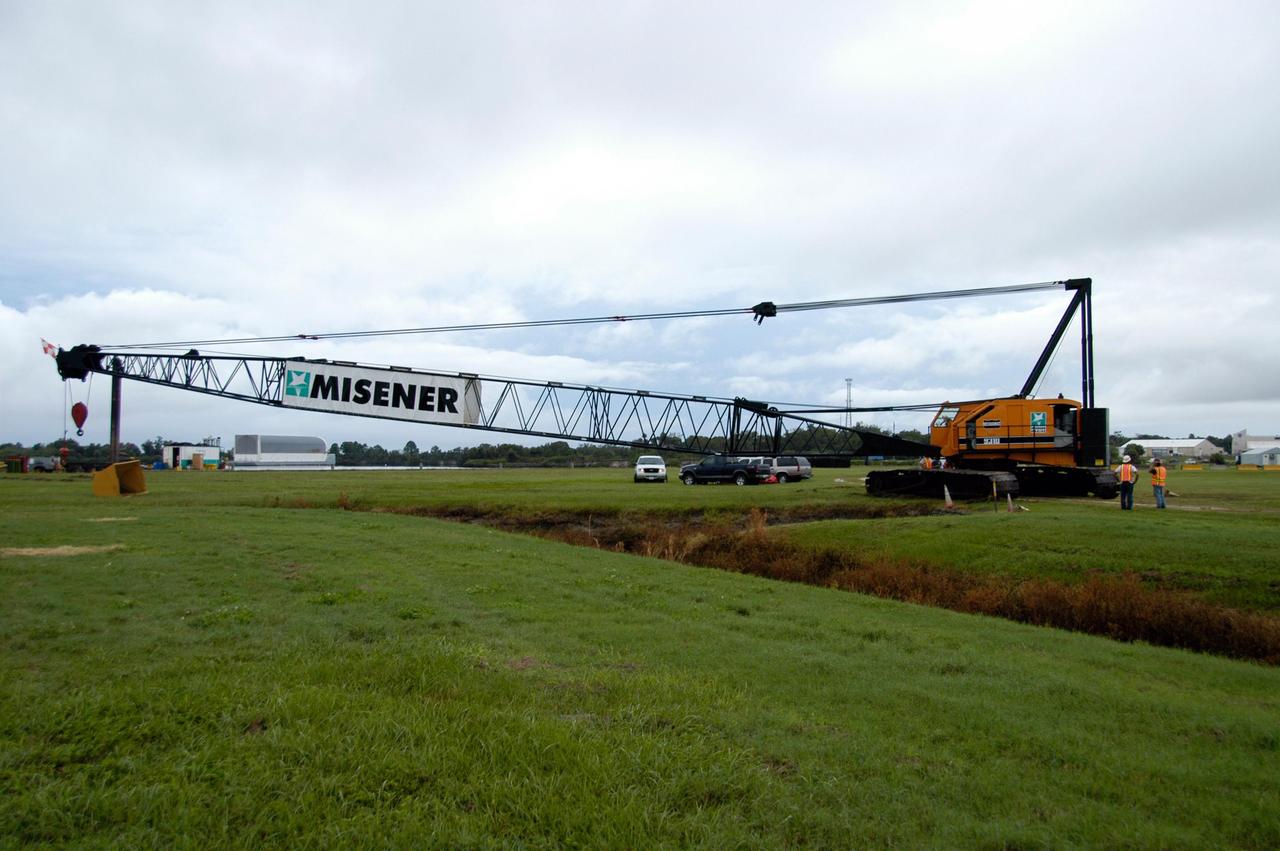
KENNEDY SPACE CENTER, FLA. -- A large crawler crane begins moving away from the turn basin at the Launch Complex 39 Area on NASA's Kennedy Space Center. The crane with its 70-foot boom will be moved to Launch Pad 39B and used to construct a new lightning protection system for the Constellation Program and Ares/Orion launches. Pad B will be the site of the first Ares vehicle launch, including Ares I-X which is scheduled for April 2009. Photo credit: NASA/George Shelton
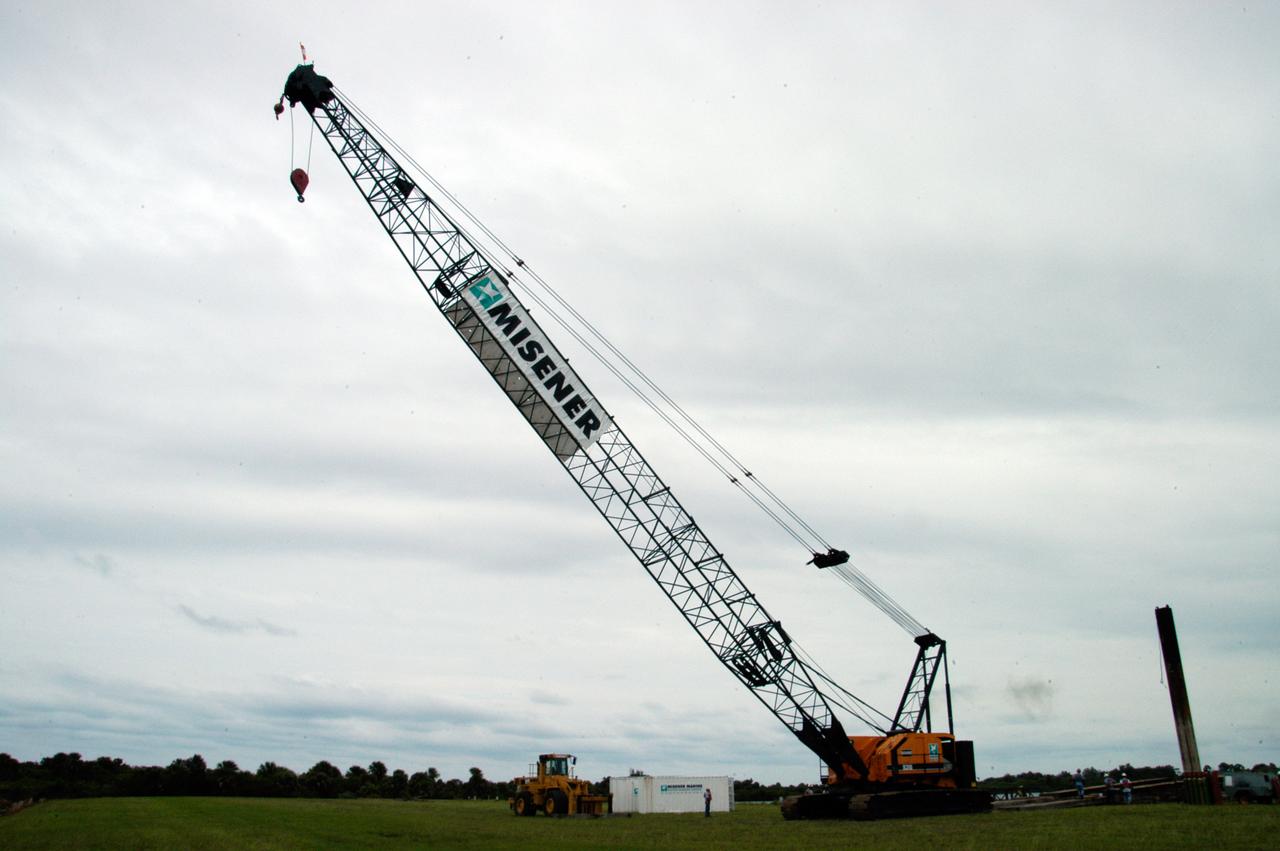
A large crawler crane begins moving away from the turn basin at the Launch Complex 39 Area on NASA's Kennedy Space Center. The crane with its 70-foot boom will be moved to Launch Pad 39B and used to construct a new lightning protection system for the Constellation Program and Ares/Orion launches. Pad B will be the site of the first Ares vehicle launch, including Ares I-X which is scheduled for April 2009.
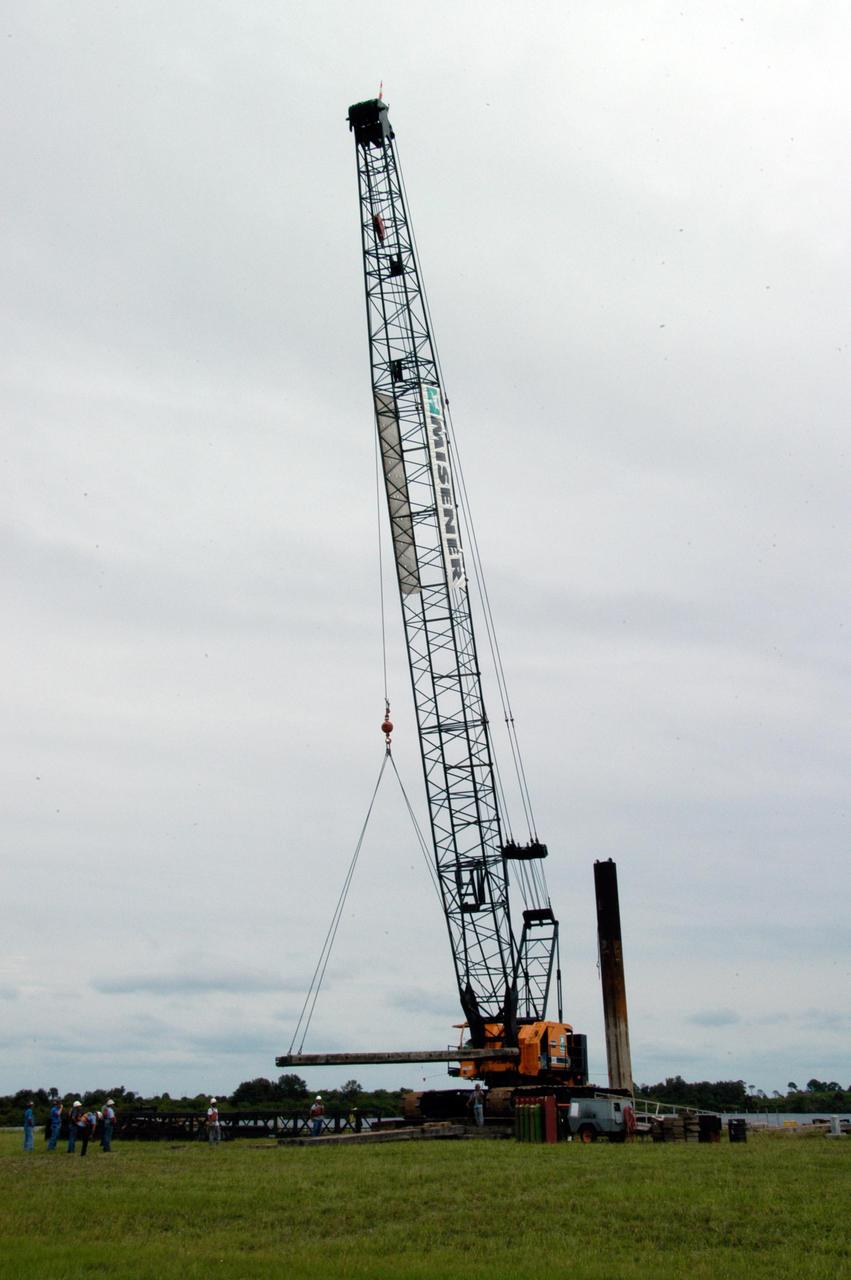
KENNEDY SPACE CENTER, FLA. -- A large crawler crane arrives at the turn basin at the Launch Complex 39 Area on NASA's Kennedy Space Center. The crane with its 70-foot boom will be moved to Launch Pad 39B and used to construct a new lightning protection system for the Constellation Program and Ares/Orion launches. Pad B will be the site of the first Ares vehicle launch, including Ares I-X which is scheduled for April 2009. Photo credit: NASA/George Shelton
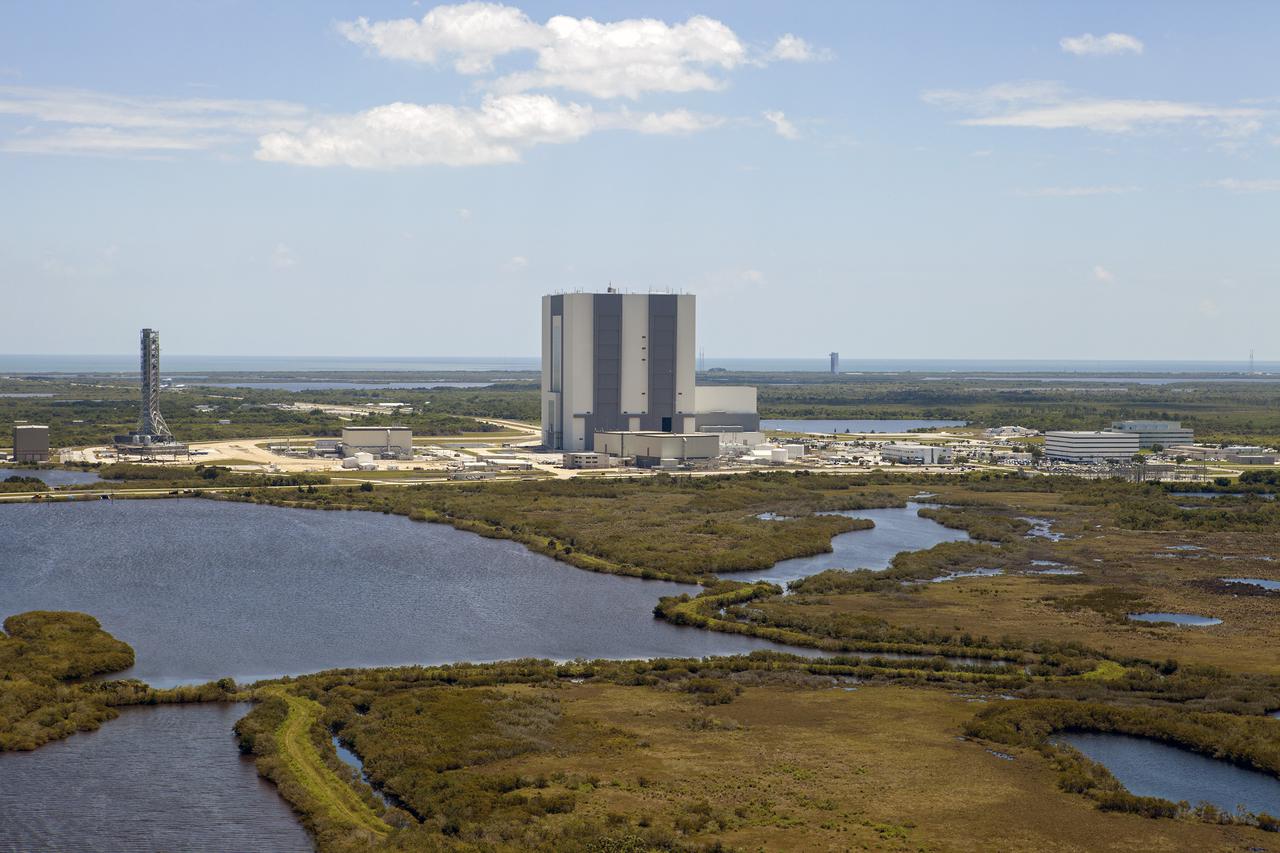
CAPE CANAVERAL, Fla. – An aerial view of the Vehicle Assembly Building and other buildings in the Launch Complex 39 area at NASA’s Kennedy Space Center in Florida. To the left is the mobile launcher that will be used to transport NASA’s Space Launch System rocket and the Orion crew capsule to Launch Pad 39B. Upgrades are underway at Pad B and other facilities in the Launch Complex 39 area. The Ground Systems Development and Operations, or GSDO, Program office at Kennedy is leading the center’s transformation from a historically government-only launch complex to a spaceport that can safely handle a variety of rockets and spacecraft, including NASA’s Space Launch System. For more information about GSDO, visit: http:__go.nasa.gov_groundsystems. Photo credit: NASA_Kim Shiflett
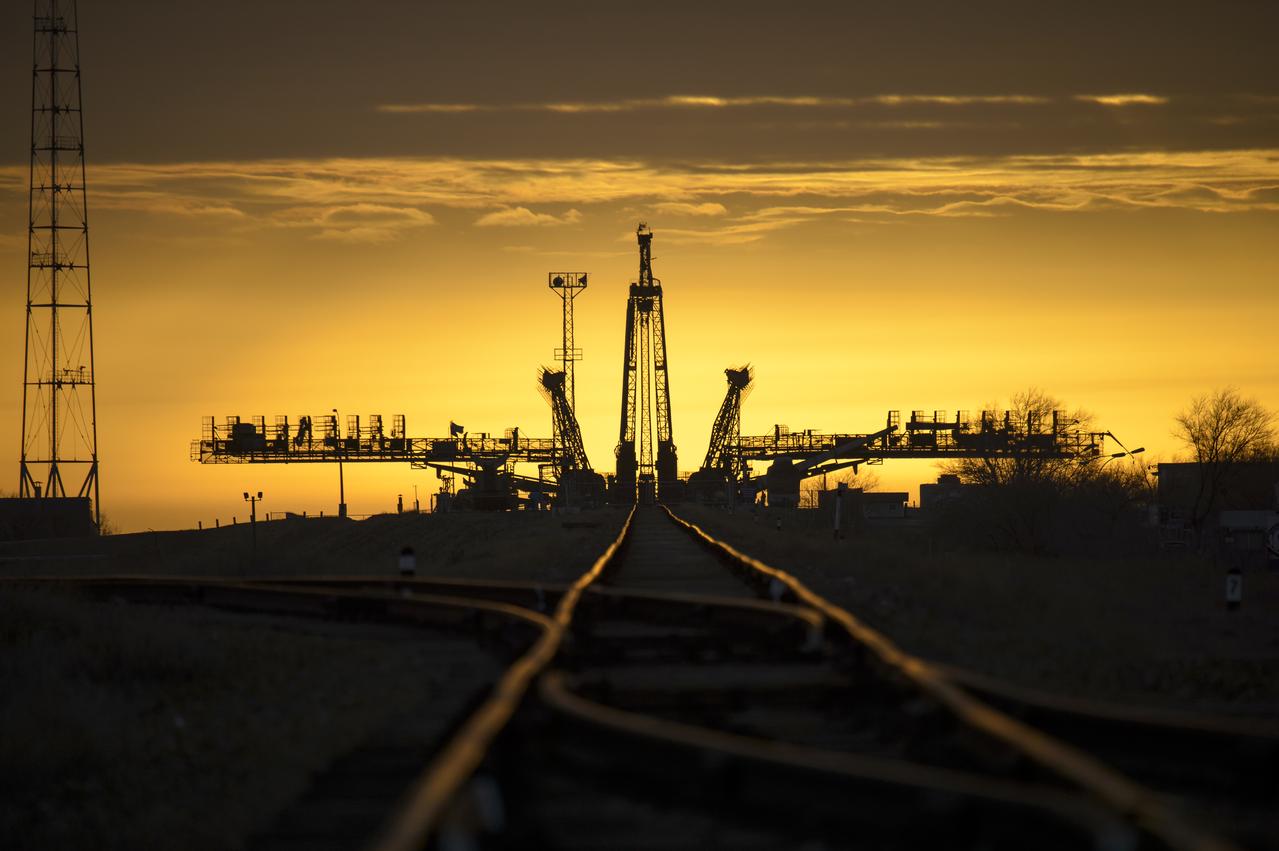
The sun rises behind the Soyuz launch pad shortly before the Soyuz TMA-12M spacecraft is rolled out by train to the launch pad at the Baikonur Cosmodrome, Kazakhstan, Sunday, March, 23, 2014. Launch of the Soyuz rocket is scheduled for March 26 and will send Expedition 39 Soyuz Commander Alexander Skvortsov of the Russian Federal Space Agency, Roscosmos, Flight Engineer Steven Swanson of NASA, and Flight Engineer Oleg Artemyev of Roscosmos on a six-month mission aboard the International Space Station. Photo Credit (NASA/Bill Ingalls)
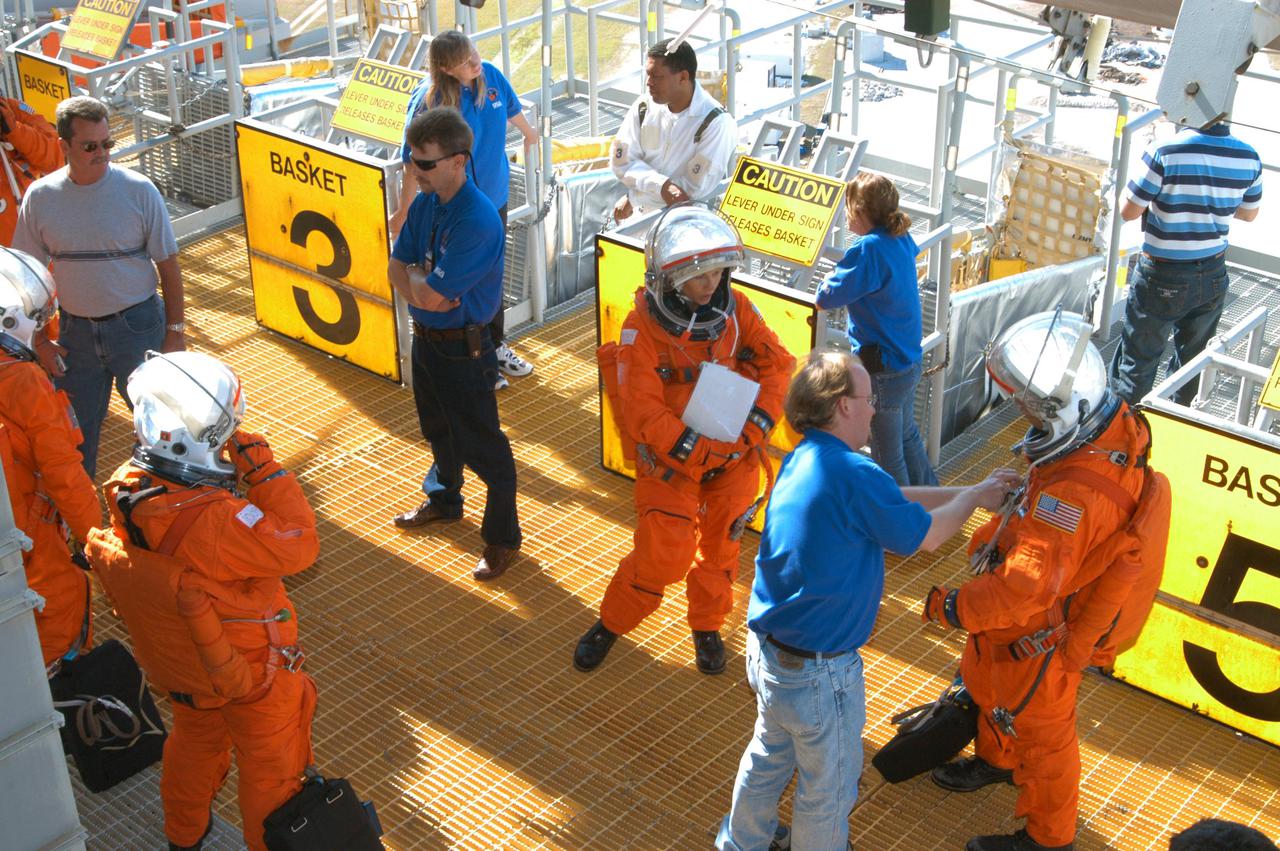
KENNEDY SPACE CENTER, FLA. - On Launch Pad 39-A, team members (in blue) help astronaut-suited co-workers near the slidewire baskets prepare for an emergency egress scenario. The four-hour exercise simulated normal launch countdown operations, with the added challenge of a fictitious event causing an evacuation of the vehicle and launch pad. It tested the team’s rescue approaches on the Fixed Service Structure, slidewire basket evacuation, triage care and transportation of injured personnel to hospitals, as well as communications and coordination.
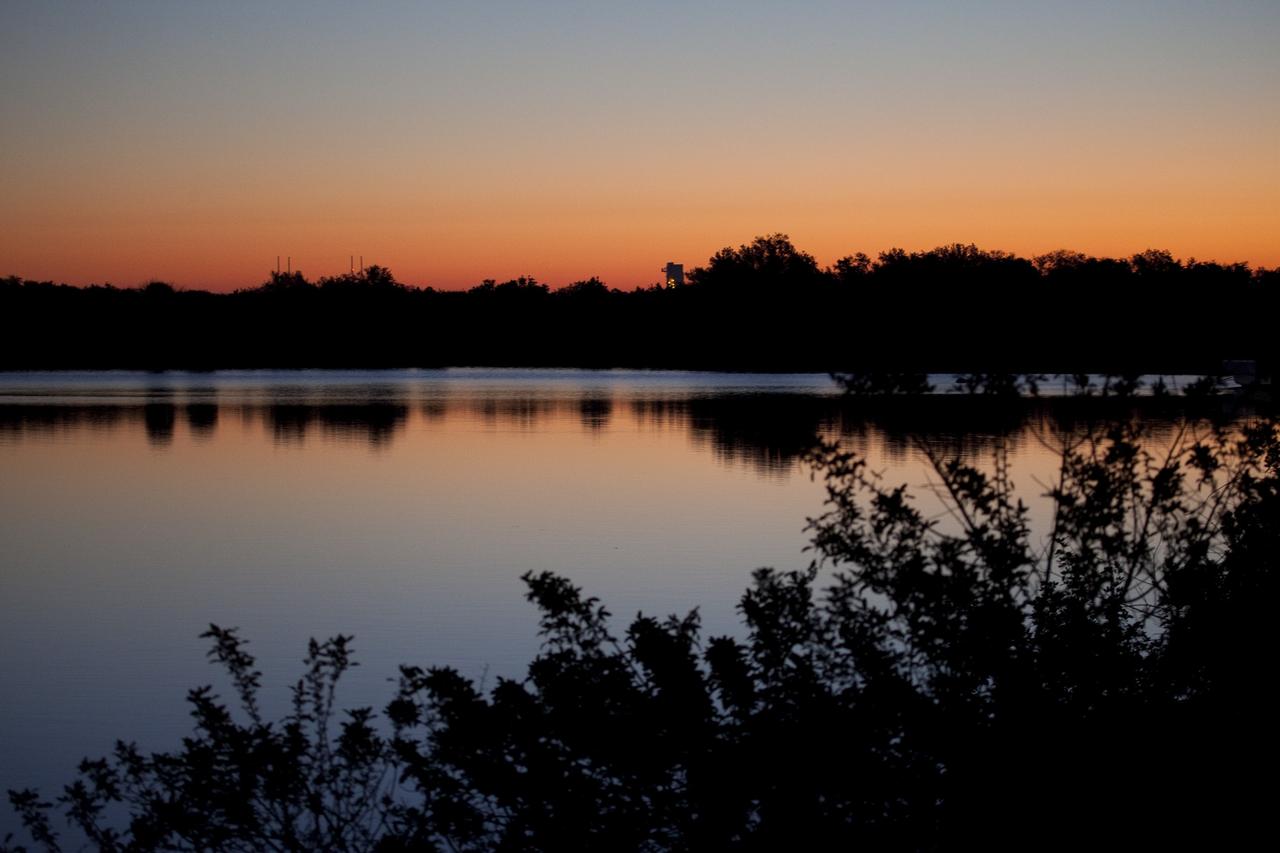
CAPE CANAVERAL, Fla. -- Launch Complex 39 is seen across brackish water as the sun rises at NASA's Kennedy Space Center in Florida. On the left is Launch Pad 39B, which is being restructured for future use. On the right is Launch Pad 39A, where space shuttle Discovery is being prepared for a tanking test. Kennedy coexists with the Merritt Island National Wildlife Refuge, habitat to more than 310 species of birds, 25 mammals, 117 fish and 65 amphibians and reptiles. Photo credit: NASA/Frank Michaux
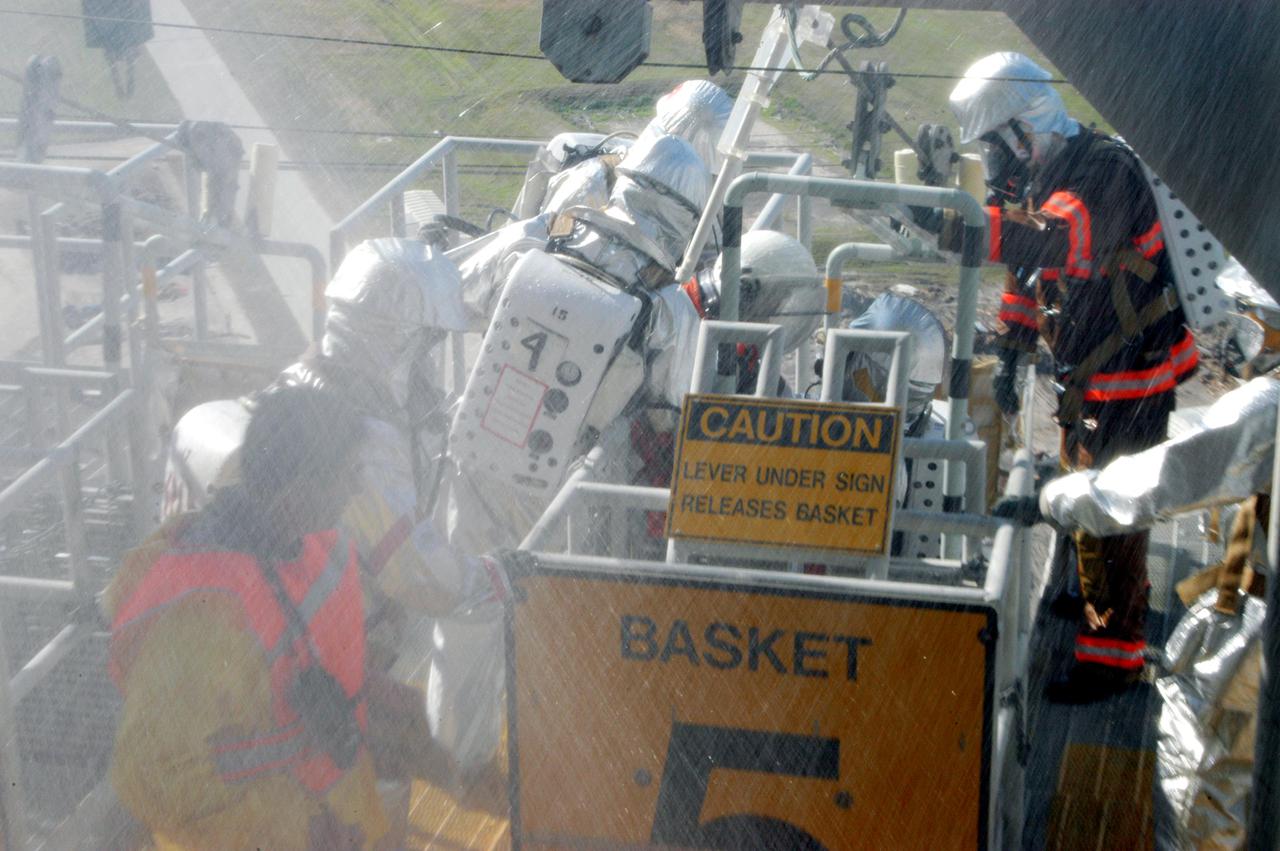
KENNEDY SPACE CENTER, FLA. - On Launch Pad 39-A, a rescue force helps co-workers as part of an emergency egress scenario. The four-hour exercise simulated normal launch countdown operations, with the added challenge of a fictitious event causing an evacuation of the vehicle and launch pad. It tested the team’s rescue approaches on the Fixed Service Structure, slidewire basket evacuation, triage care and transportation of injured personnel to hospitals, as well as communications and coordination.
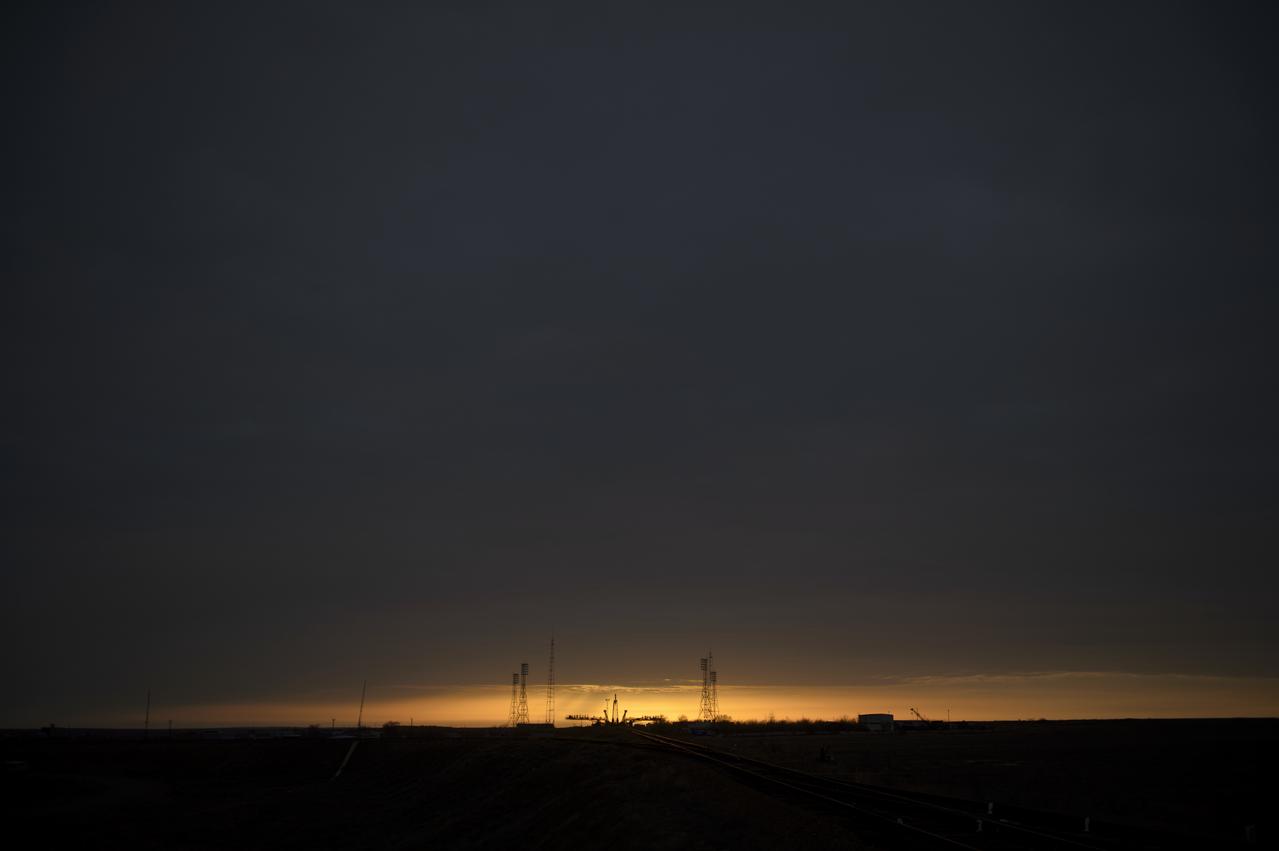
The sun rises behind the Soyuz launch pad shortly before the Soyuz TMA-12M spacecraft is rolled out by train to the launch pad at the Baikonur Cosmodrome, Kazakhstan, Sunday, March, 23, 2014. Launch of the Soyuz rocket is scheduled for March 26 and will send Expedition 39 Soyuz Commander Alexander Skvortsov of the Russian Federal Space Agency, Roscosmos, Flight Engineer Steven Swanson of NASA, and Flight Engineer Oleg Artemyev of Roscosmos on a six-month mission aboard the International Space Station.Photo Credit (NASA/Joel Kowsky)

S69-51299 (8 Sept. 1969) --- Ground-level view at Launch Complex 39, Kennedy Space Center (KSC), showing the Apollo 12 (Spacecraft 108/ Lunar Module 6/ Saturn 507) space vehicle on the way from the Vehicle Assembly Building (VAB) to Pad A. The Saturn V stack and its mobile launch tower are atop a huge crawler-transporter. The Launch Complex 39 service structure is on the right. Apollo 12 is scheduled as the second lunar landing mission. The crew will be astronauts Charles Conrad Jr., commander; Richard F. Gordon Jr., command module pilot; and Alan L. Bean, lunar module pilot.
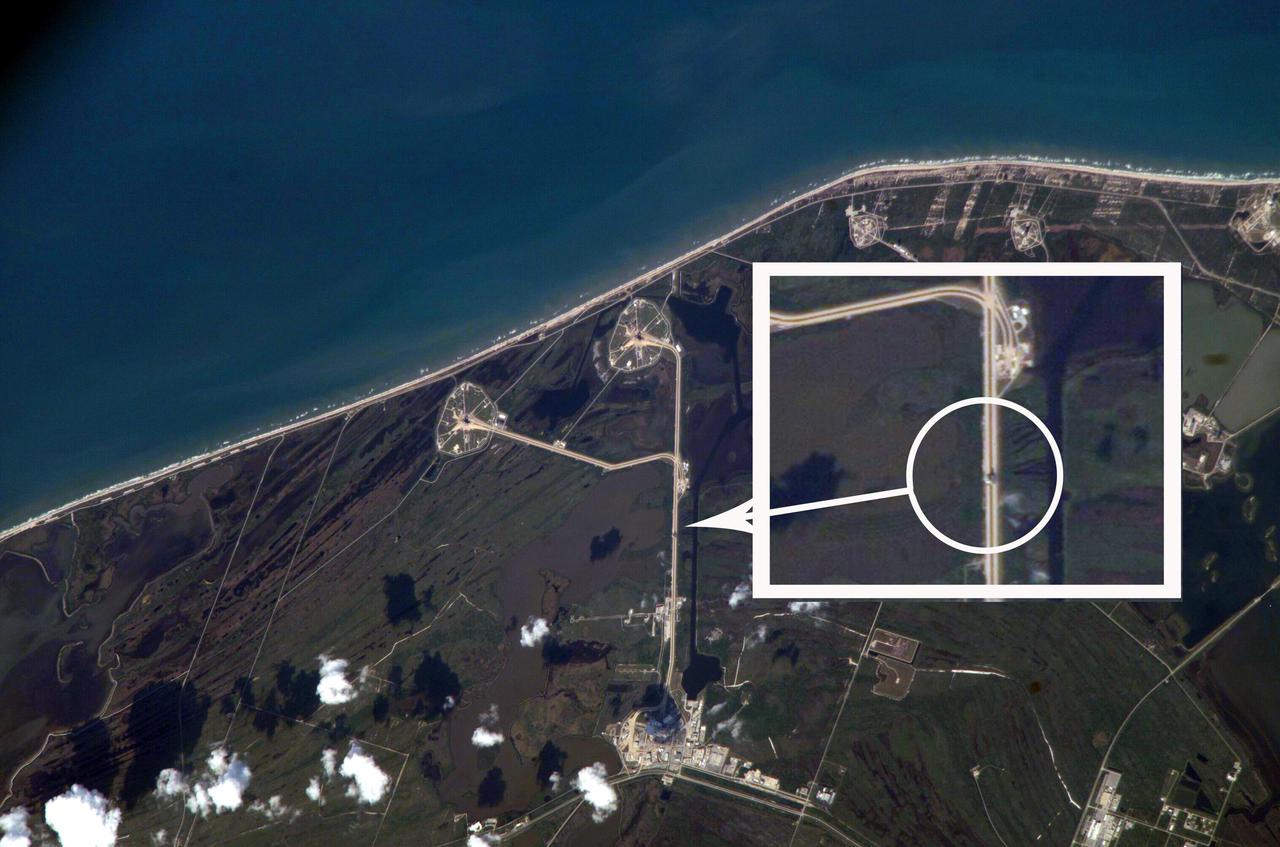
INTERNATIONAL SPACE STATION - Aboard the International Space Station, Expedition 10 Commander Leroy Chiao used a digital camera April 6 to photograph the rollout of the Space Shuttle Discovery at NASA’s Kennedy Space Center from an altitude of 220 statute miles. Chiao captured the rollout at 4:35 p.m. Eastern Daylight Time as the Station flew directly over the launch site. Visible in the image are the Shuttle’s two launch pads at Launch Complex 39. Discovery’s launch pad, 39-B, is on the left. Chiao used the same lens arrangement for the photograph that will be used by the next Station crew to photograph Discovery's heat shield as it approaches the Station on its Return to Flight. The imagery the Station crew will take of Discovery as it approaches is one of several new things that will be done to provide imagery to be used in assessing the health of the Shuttle.
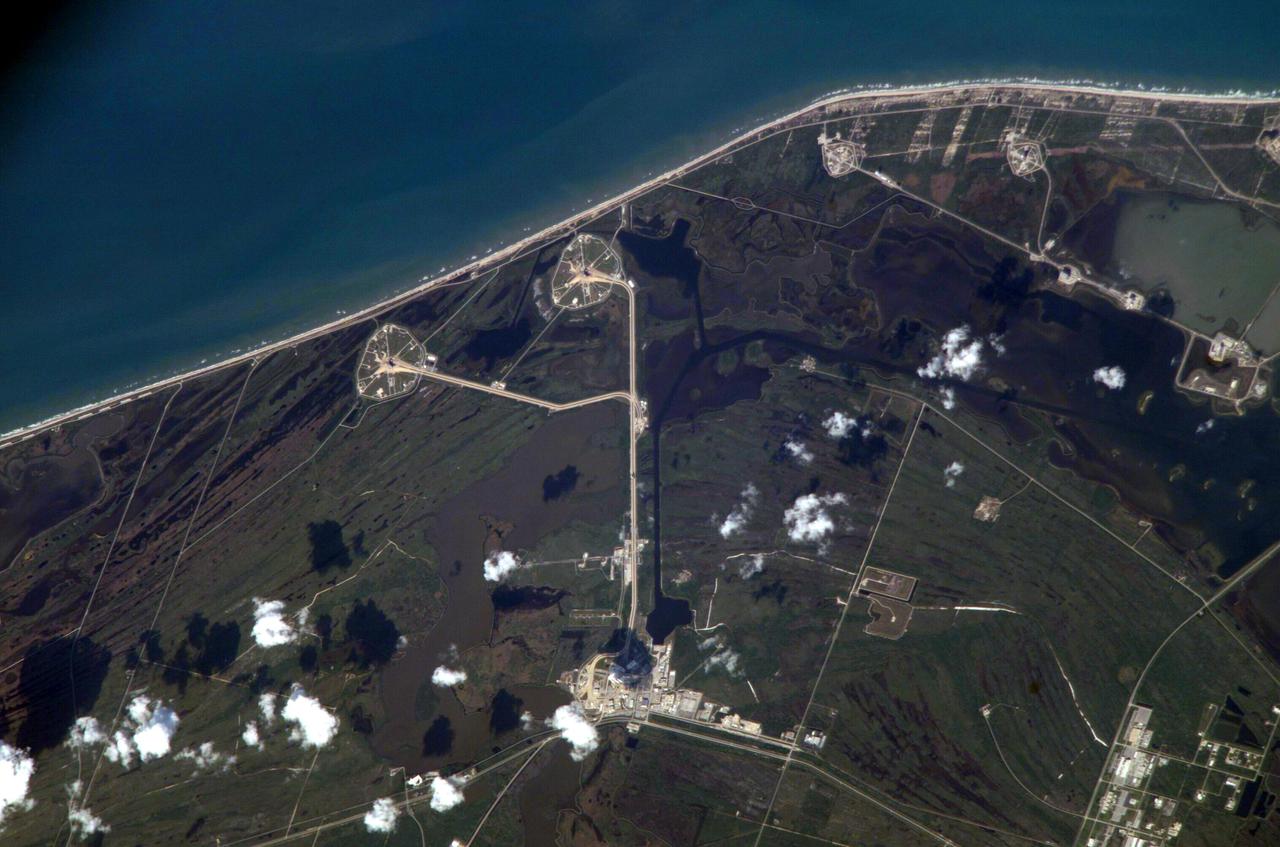
INTERNATIONAL SPACE STATION - Aboard the International Space Station, Expedition 10 Commander Leroy Chiao used a digital camera April 6 to photograph the rollout of the Space Shuttle Discovery at NASA’s Kennedy Space Center from an altitude of 220 statute miles. Chiao captured the rollout at 4:35 p.m. Eastern Daylight Time as the Station flew directly over the launch site. Visible in the image are the Shuttle’s two launch pads at Launch Complex 39. Discovery’s launch pad, 39-B, is on the left. Chiao used the same lens arrangement for the photograph that will be used by the next Station crew to photograph Discovery's heat shield as it approaches the Station on its Return to Flight. The imagery the Station crew will take of Discovery as it approaches is one of several new things that will be done to provide imagery to be used in assessing the health of the Shuttle.
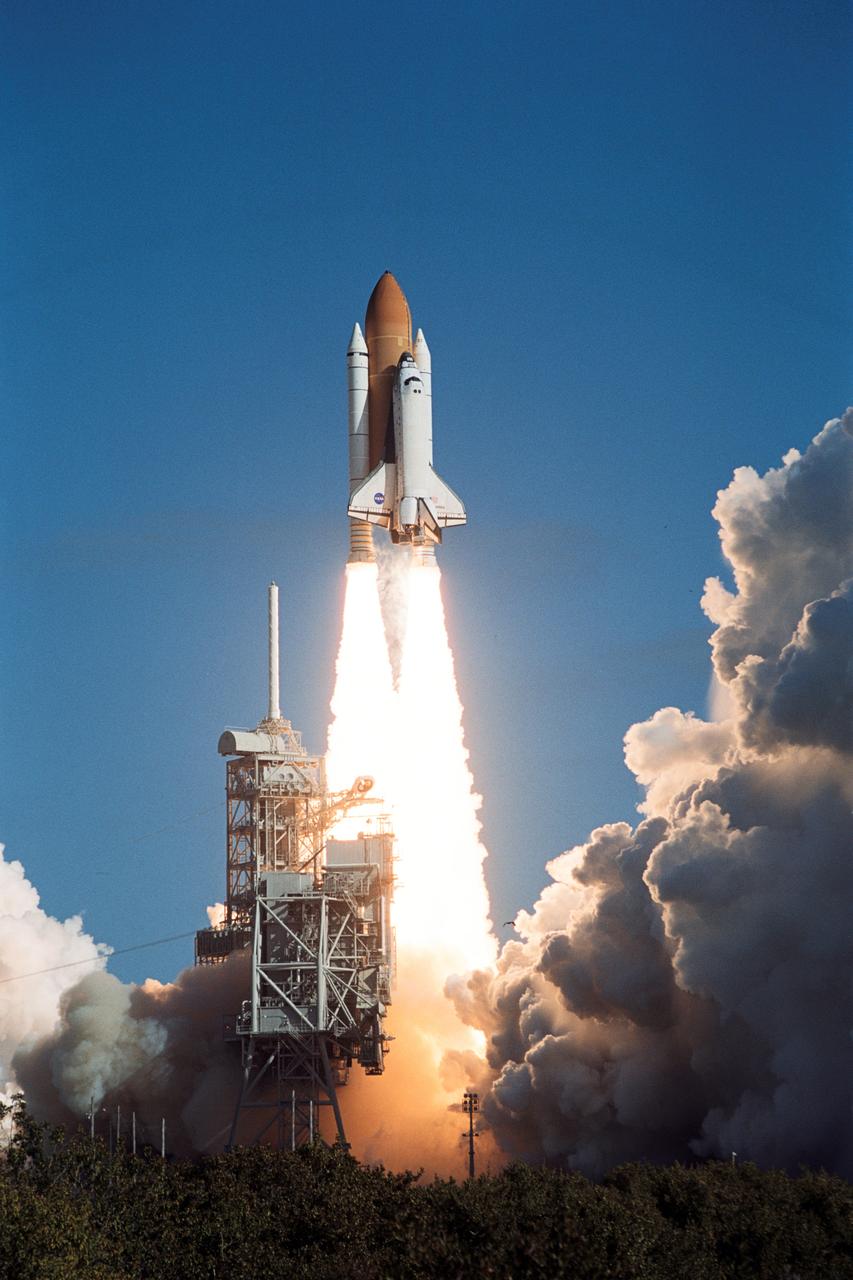
STS107-S-015 (16 Jan. 2003) --- The Space Shuttle Columbia leaves Launch Pad 39A for STS-107. Following a flawless and uneventful countdown, liftoff occurred on-time at 10:39 a.m. (EST). Photo credit: NASA
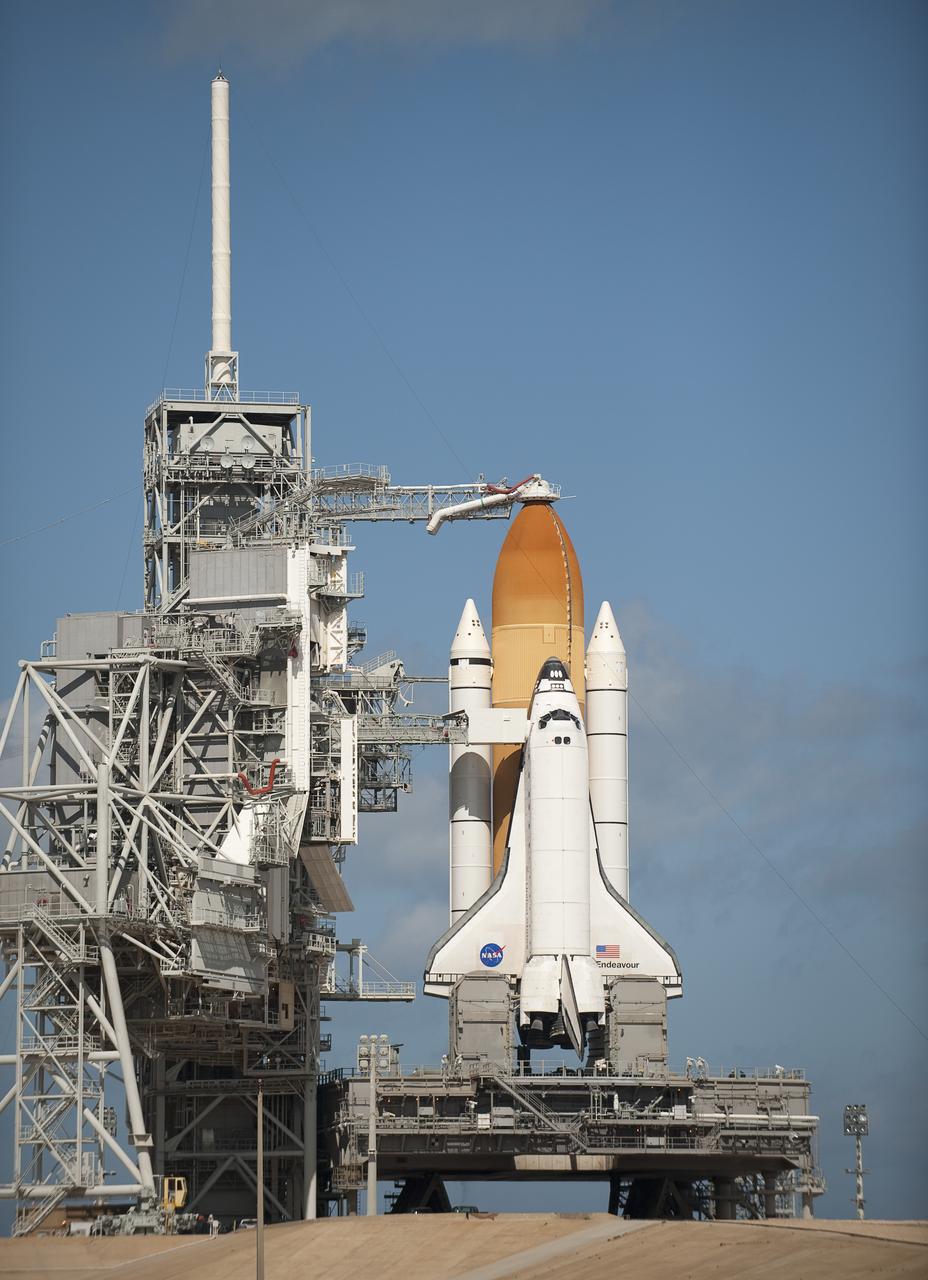
The space shuttle Endeavour is seen as strong winds inflate a windsock, Saturday Feb. 6, 2010 at pad 39a of the NASA Kennedy Space Center in Cape Canaveral, Florida. Endeavour and the crew members of the STS-130 mission are set to launch on Sunday at 4:39 a.m. EST. Photo Credit: (NASA/Bill Ingalls)