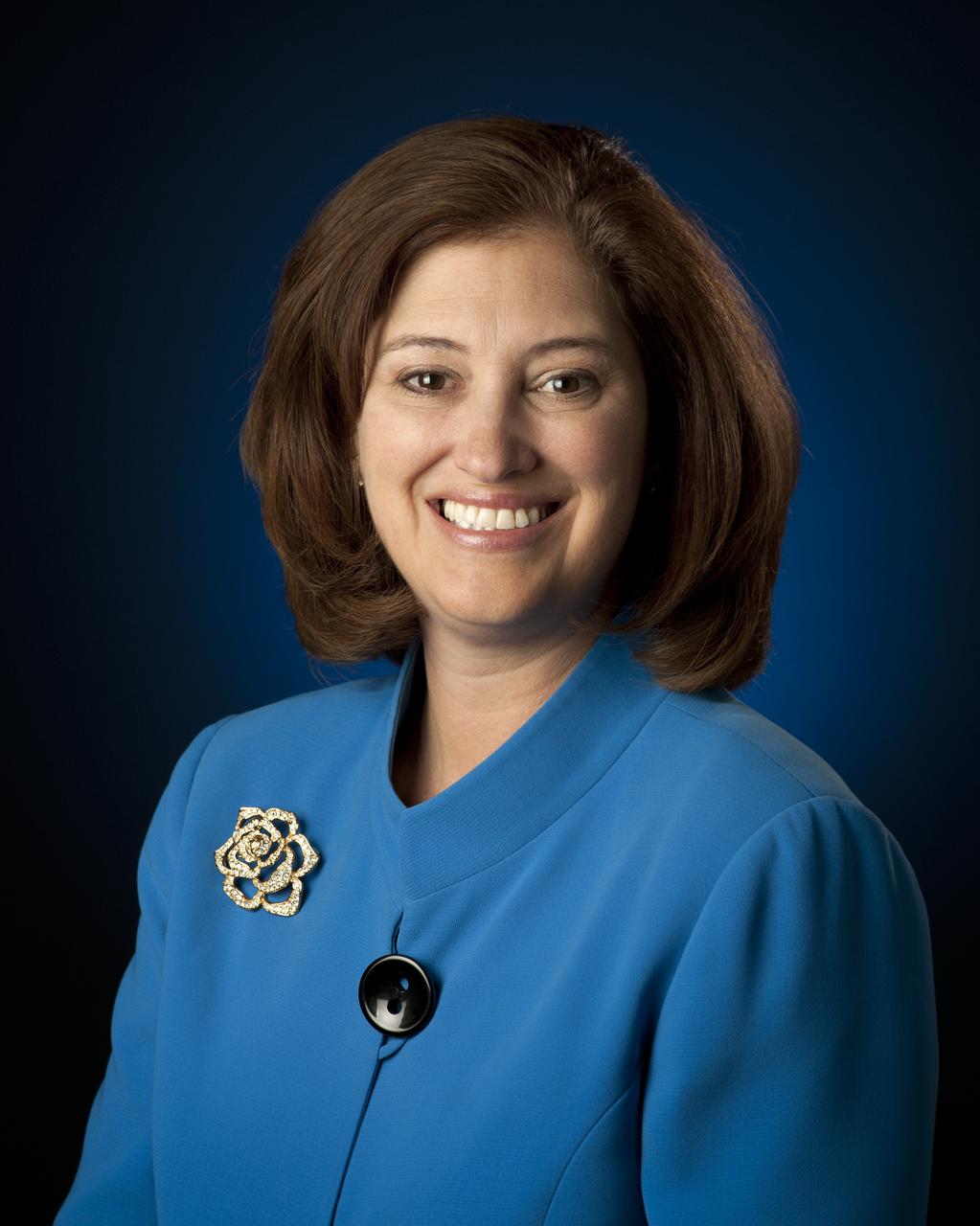
Official portrait, Laurie Leshin, NASA Headquarters, Thursday Jan. 6, 2011 in Washington. Photo Credit: (NASA/Bill Ingalls)

Laurie Leshin, dean of the School of Science, Rensselaer Polytechnic Institute, moderates the NASA Future Forum panel titled "Importance of Technology, Science and Innovation for our Economic Future" at The Ohio State University on Tuesday, Feb. 21, 2012 in Columbus, Ohio. The NASA Future Forum features panel discussions on the importance of education to our nation's future in space, the benefit of commercialized space technology to our economy and lives here on Earth, and the shifting roles for the public, commercial and international communities in space. Photo Credit: (NASA/Bill Ingalls)
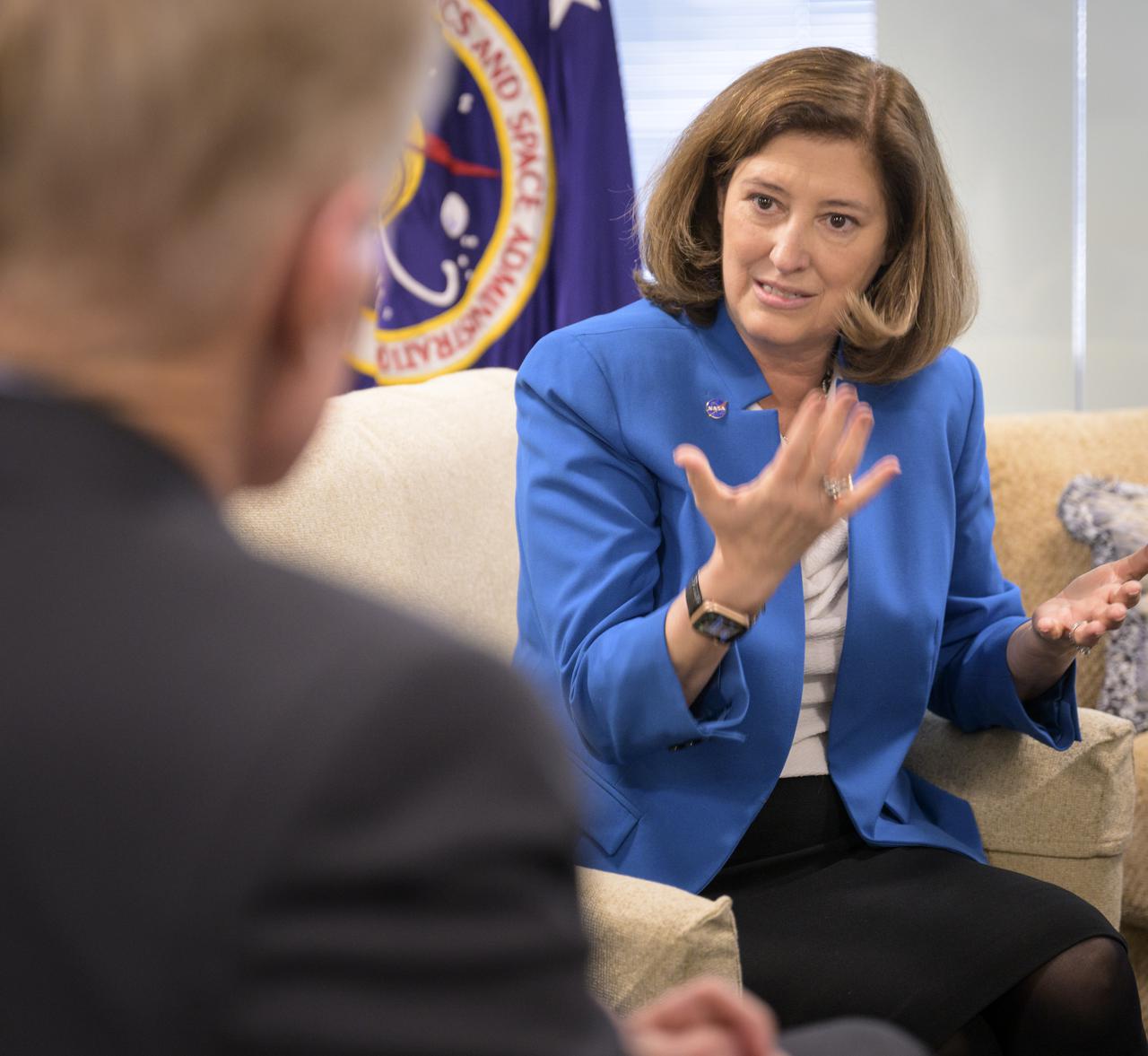
NASA Administrator Bill Nelson, left, meets with incoming JPL Director Dr. Laurie Leshin, Tuesday, Feb., 15, 2022, at the Mary W. Jackson NASA Headquarters building in Washington. Photo Credit: (NASA/Bill Ingalls)
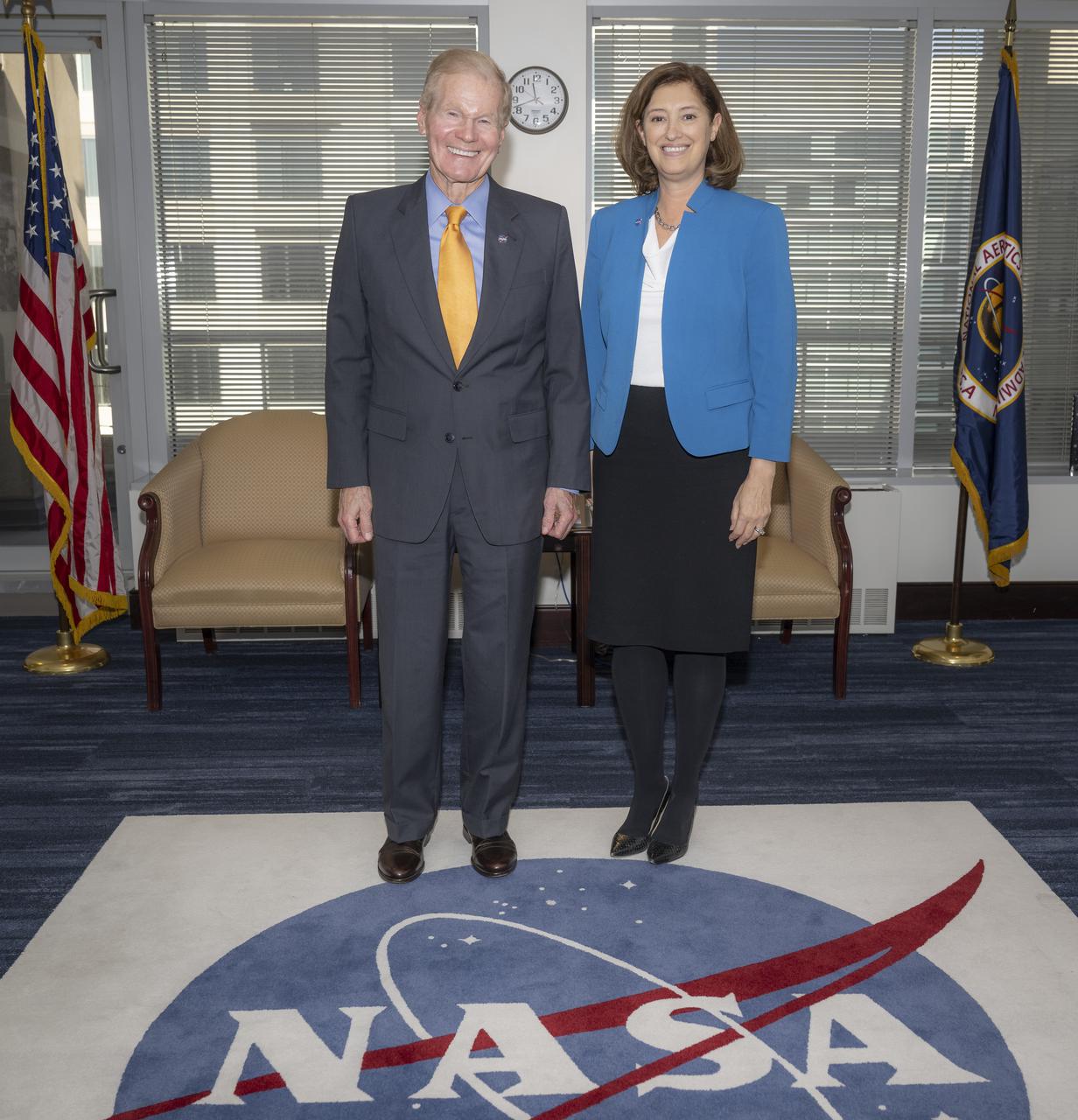
NASA Administrator Bill Nelson, left, and incoming JPL Director Dr. Laurie Leshin, pose for a photograph at the conclusion of their meeting, Tuesday, Feb., 15, 2022, at the Mary W. Jackson NASA Headquarters building in Washington. Photo Credit: (NASA/Bill Ingalls)
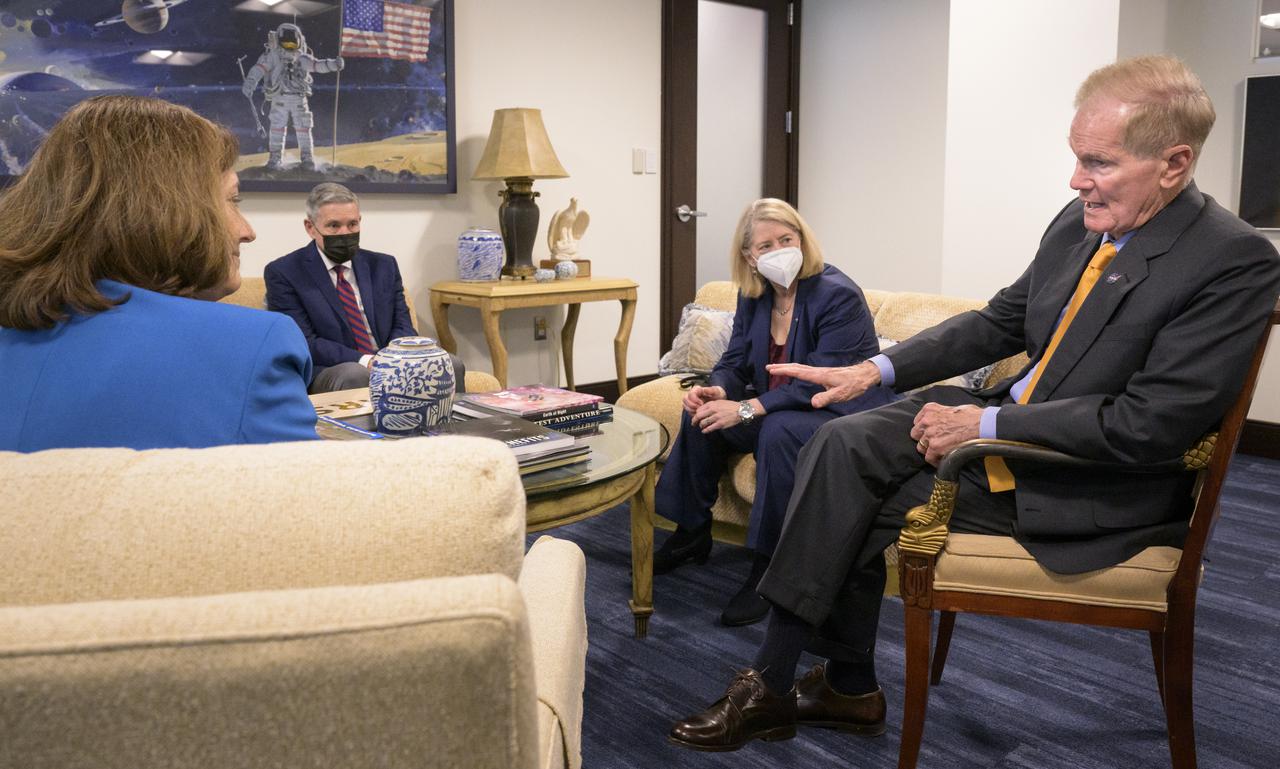
NASA Administrator Bill Nelson, right, meets with incoming JPL Director Dr. Laurie Leshin, left, along with NASA Associate Administrator Bob Cabana, and NASA Deputy Administrator Pam Melroy, Tuesday, Feb., 15, 2022, at the Mary W. Jackson NASA Headquarters building in Washington. Photo Credit: (NASA/Bill Ingalls)
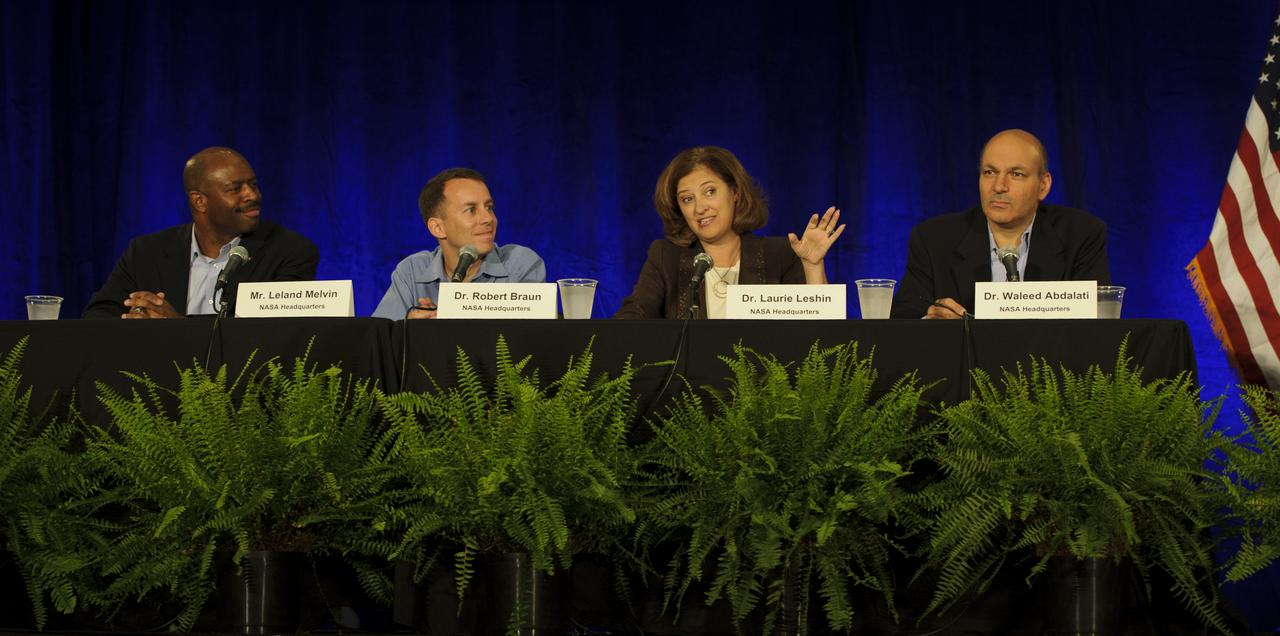
Dr. Laurie Leshin, NASA Deputy Associate Administrator Exploration Systems Mission Directortorate, second from right, speaks as Dr. Waleed Abdalati, NASA Chief Scientist, right, Dr. Robert Braun, NASA Chief Technologist, and Leland Melvin, Assoicate Administrator for NASA Education, far left, at the NASA Future Forum held at the Riggs Alumni Center on the campus of the University of Maryland, Thursday, Aug. 11, 2011 in College Park, Md. Photo Credit: (NASA/Paul E. Alers)
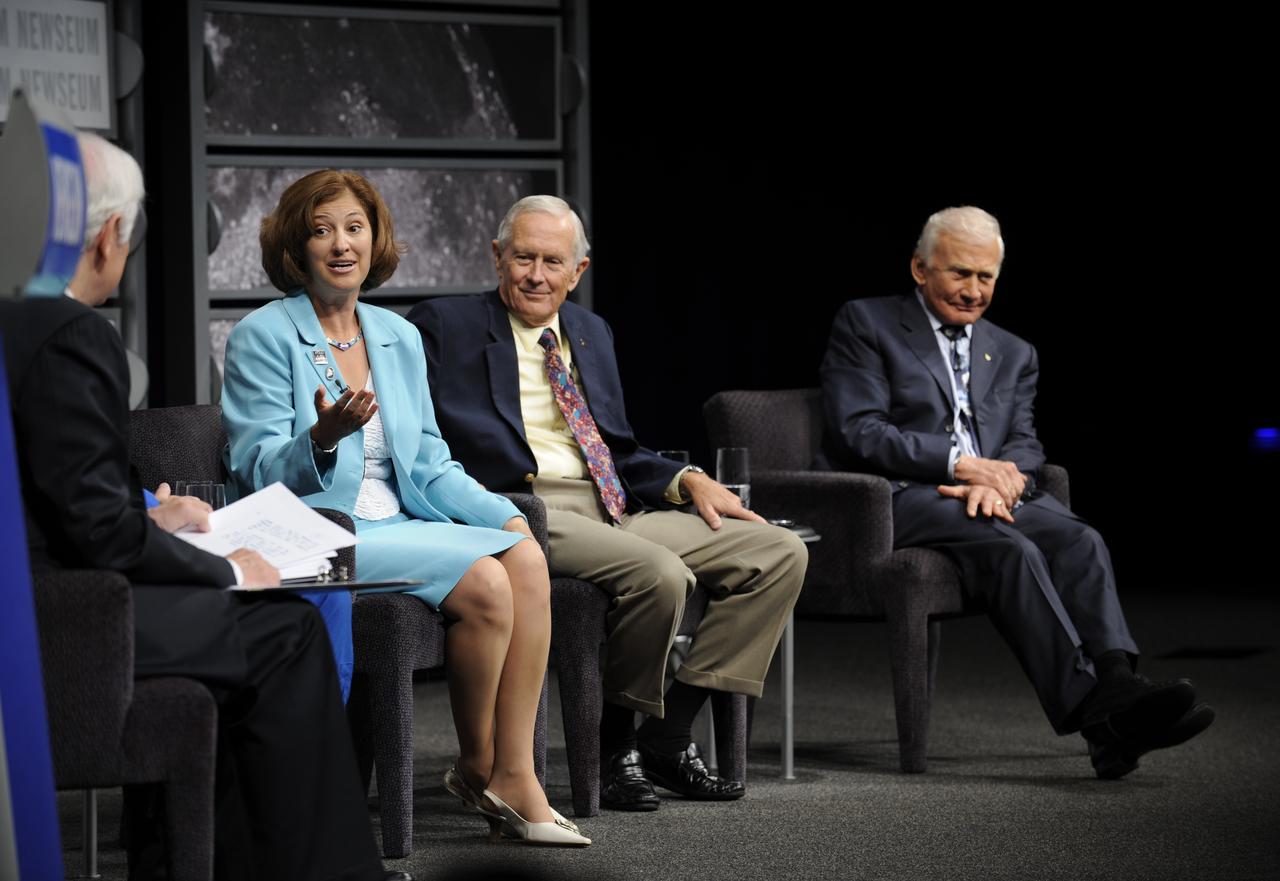
Veteran journalist Nick Clooney, seated left back to camera, moderated a panel discussion with Apollo 11 astronaut Buzz Aldrin, far right, Charlie Duke of Apollo 16, John Grunsfeld, of the recent Hubble mission, not seen and Goddard Space Flight Center deputy director Laurie Leshin, second from left, Monday, July 20, 2009, at the Newseum in Washington as part of the commemoration of the 40th Anniversary of the Apollo 11 moon landing. Photo Credit: (NASA/Bill Ingalls)
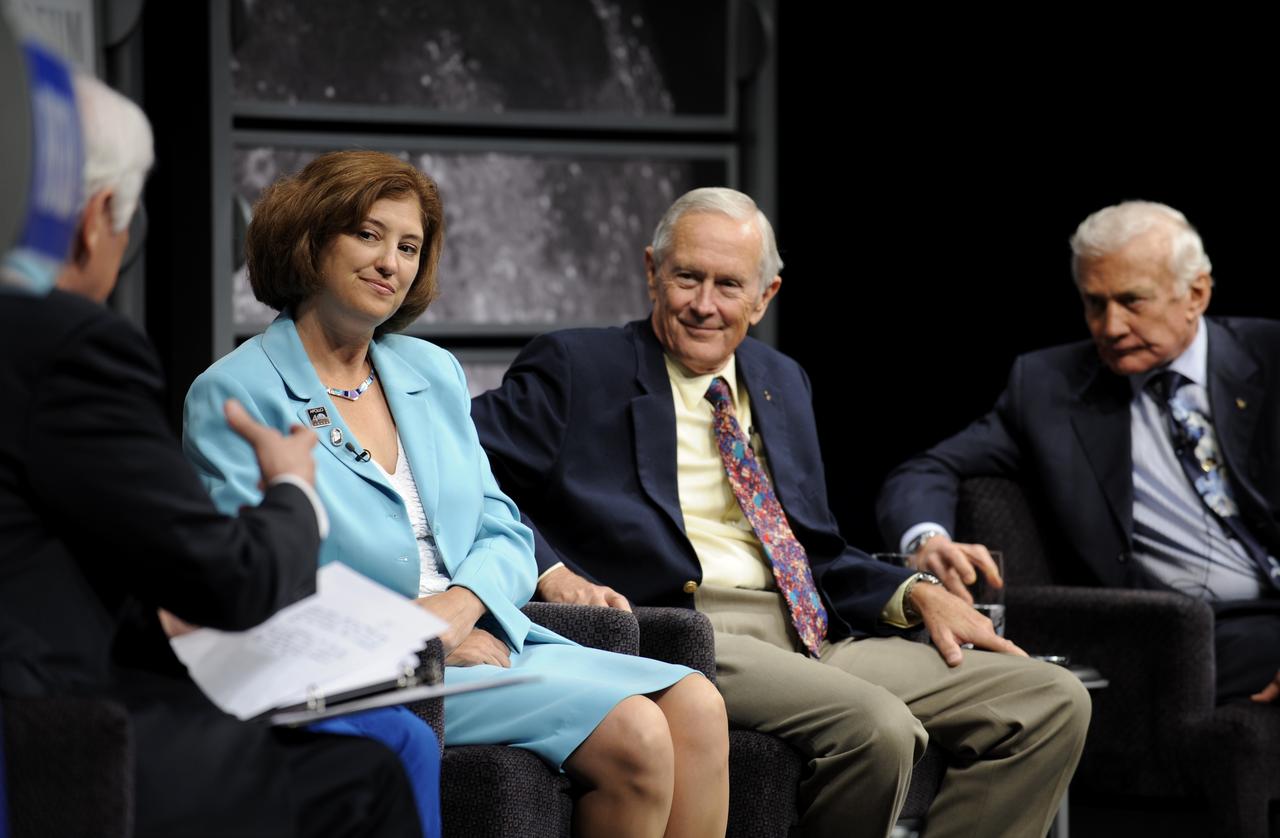
Veteran journalist Nick Clooney, seated left back to camera, moderated a panel discussion with Apollo 11 astronaut Buzz Aldrin, far right, Charlie Duke of Apollo 16, John Grunsfeld, of the recent Hubble mission, not seen, and Goddard Space Flight Center deputy director Laurie Leshin, second from left, Monday, July 20, 2009, at the Newseum in Washington as part of the commemoration of the 40th Anniversary of the Apollo 11 moon landing. Photo Credit: (NASA/Bill Ingalls)
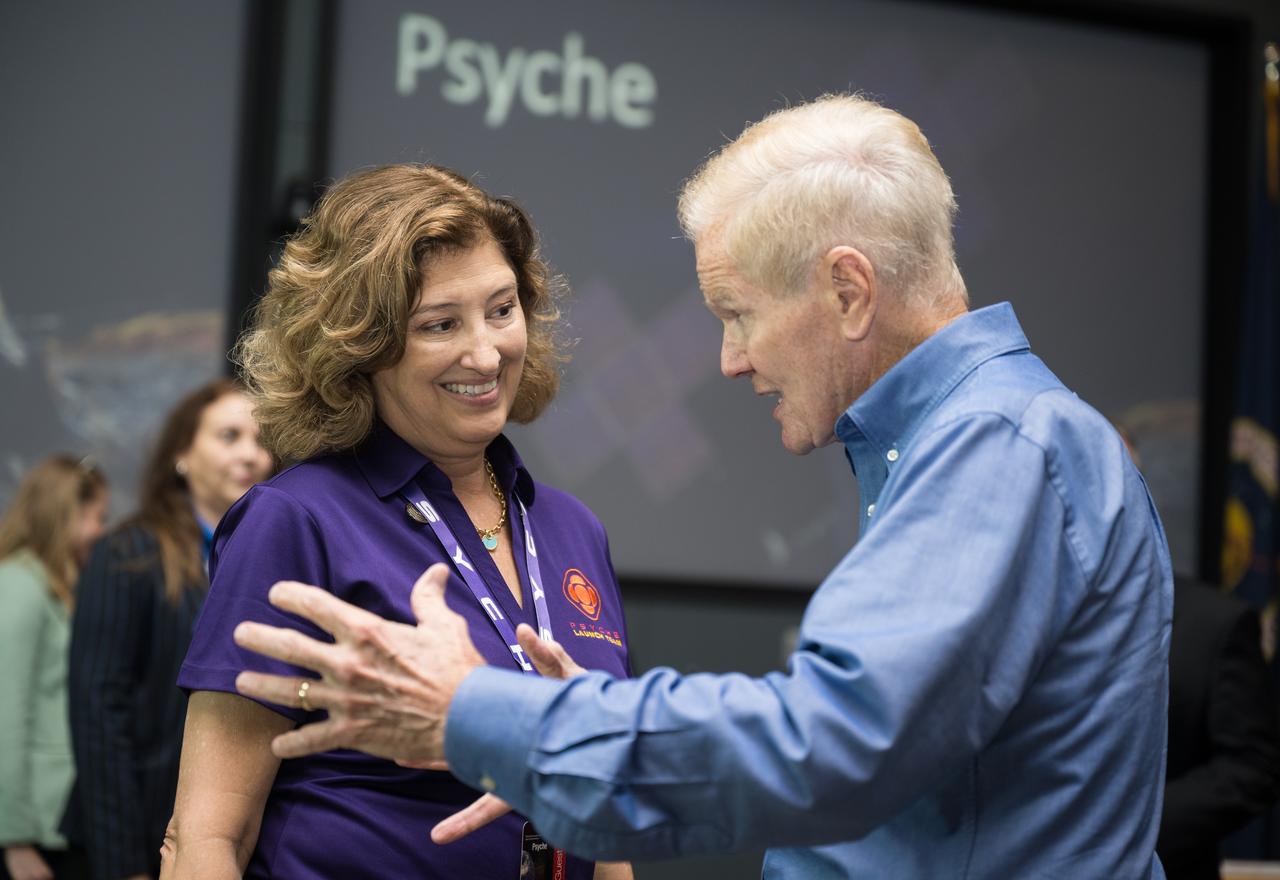
Jet Propulsion Laboratory Director Laurie Leshin, left, speaks with NASA Administrator Bill Nelson prior to the launch of the SpaceX Falcon Heavy rocket with the Psyche spacecraft onboard from Launch Complex 39A, Friday, Oct. 13, 2023, at NASA’s Kennedy Space Center in Florida. NASA’s Psyche spacecraft will travel to a metal-rich asteroid by the same name orbiting the Sun between Mars and Jupiter to study it’s composition. The spacecraft also carries the agency's Deep Space Optical Communications technology demonstration, which will test laser communications beyond the Moon. Photo Credit: (NASA/Aubrey Gemignani)
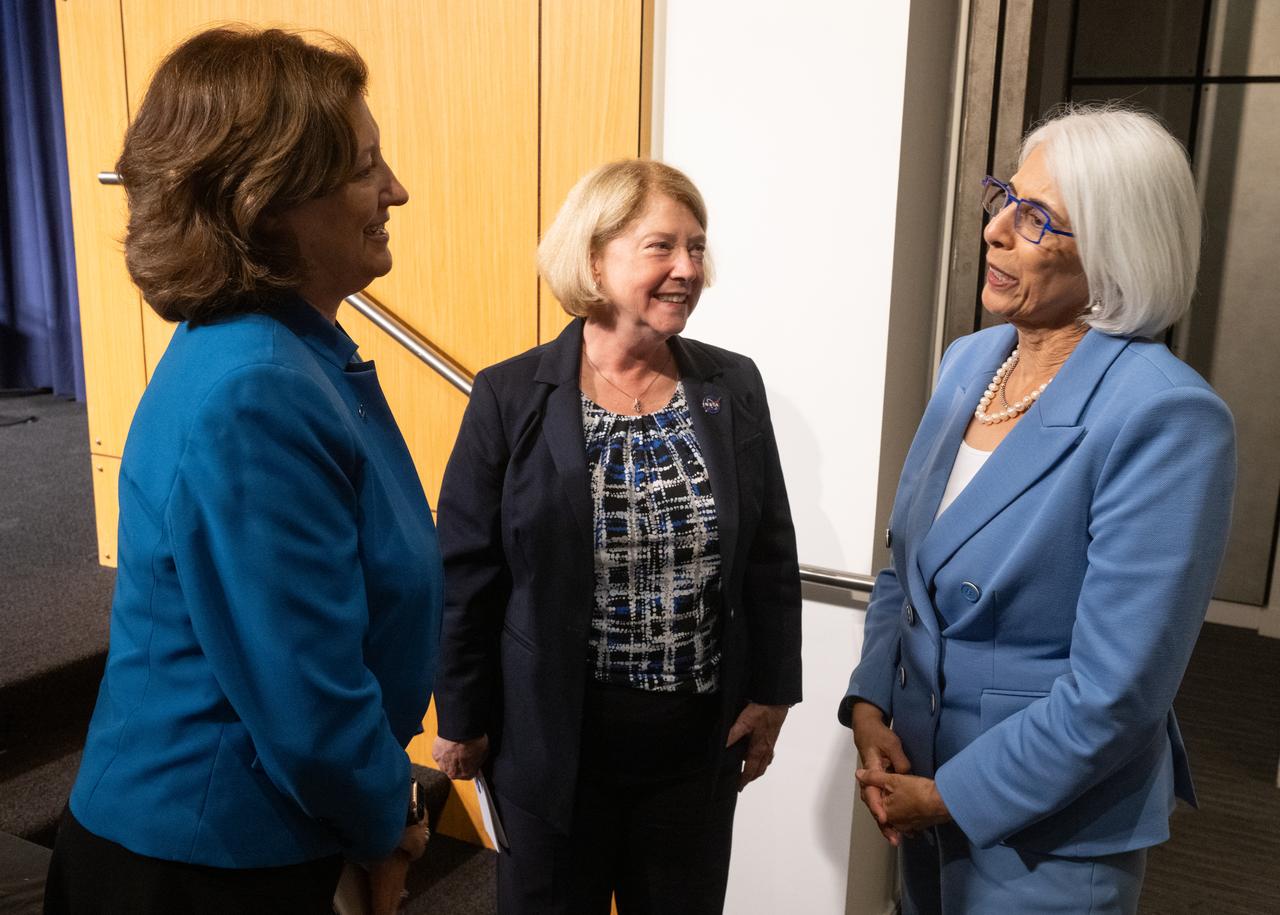
Laurie Leshin, director of NASA’s Jet Propulsion Laboratory, left, Arati Prabhakar, Director of the White House Office of Science and Technology Policy, right, and NASA Deputy administrator Pam Melroy, center, are seen following a NASA employee town hall, Monday, Sept. 9, 2024, at the Mary W. Jackson NASA Headquarters building in Washington. Photo Credit: (NASA/Joel Kowsky)
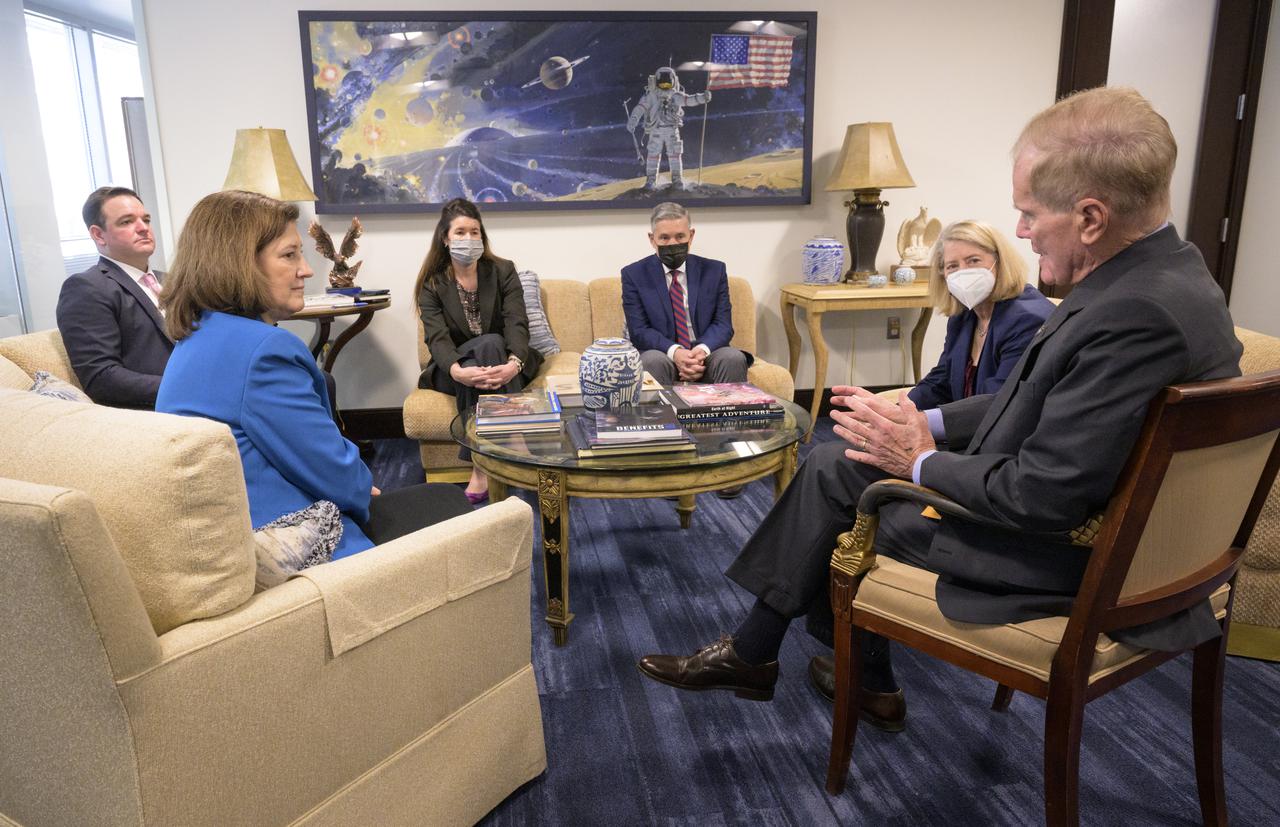
NASA Administrator Bill Nelson, right, meets with incoming JPL Director Dr. Laurie Leshin, left, along with NASA Deputy Chief of Staff Bale Dalton, NASA Deputy Associate Administrator for Business Operations Casey Swails, NASA Associate Administrator Bob Cabana, and NASA Deputy Administrator Pam Melroy, Tuesday, Feb., 15, 2022, at the Mary W. Jackson NASA Headquarters building in Washington. Photo Credit: (NASA/Bill Ingalls)
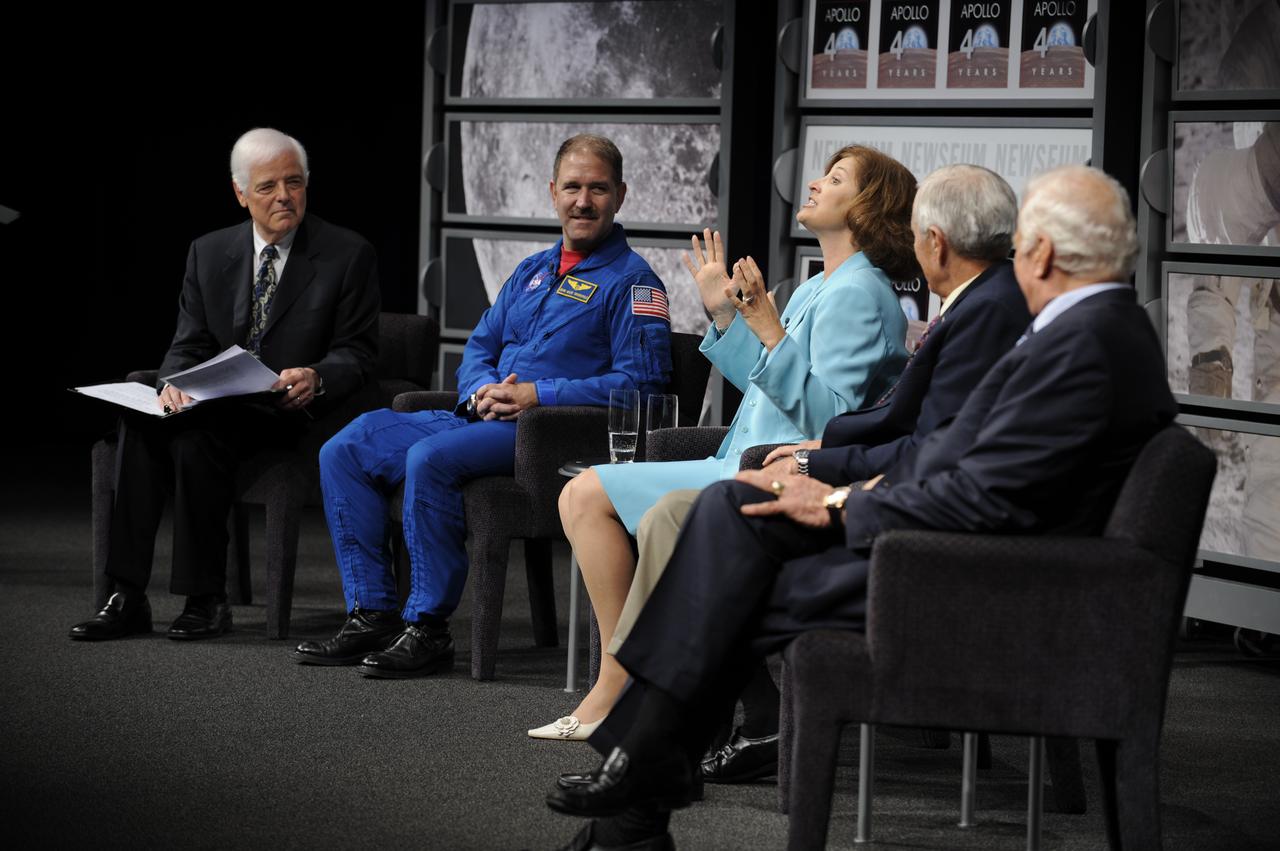
Veteran journalist Nick Clooney, seated left, moderated a panel discussion with Apollo 11 astronaut Buzz Aldrin, far right, Charlie Duke of Apollo 16, John Grunsfeld, of the recent Hubble mission, and Goddard Space Flight Center deputy director Laurie Leshin, Monday, July 20, 2009, at the Newseum in Washington as part of the commemoration of the 40th Anniversary of the Apollo 11 moon landing. Photo Credit: (NASA/Bill Ingalls)
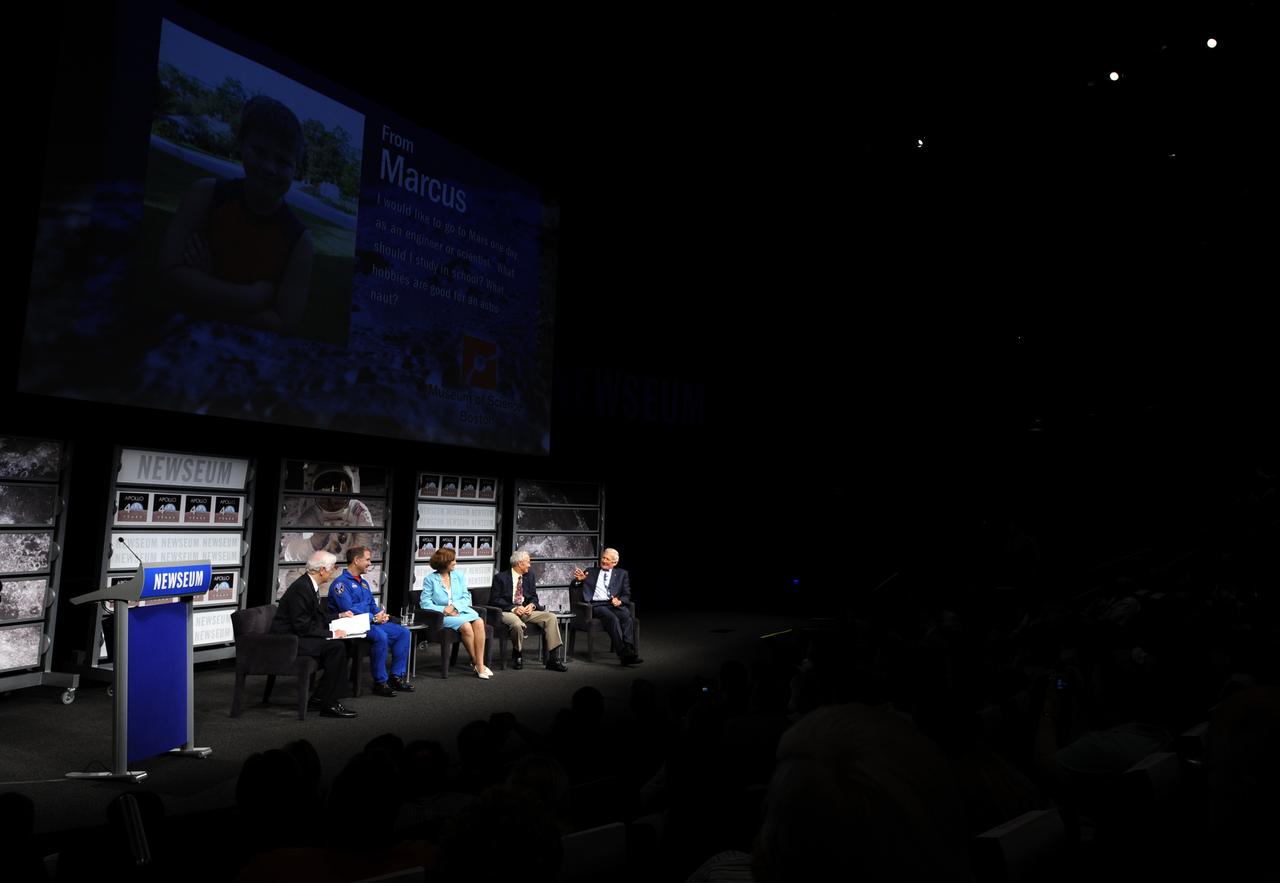
Veteran journalist Nick Clooney, seated left, moderated a panel discussion with Apollo 11 astronaut Buzz Aldrin, far right, Charlie Duke of Apollo 16, John Grunsfeld, of the recent Hubble mission, and Goddard Space Flight Center deputy director Laurie Leshin, Monday, July 20, 2009, at the Newseum in Washington as part of the commemoration of the 40th Anniversary of the Apollo 11 moon landing. Photo Credit: (NASA/Bill Ingalls)
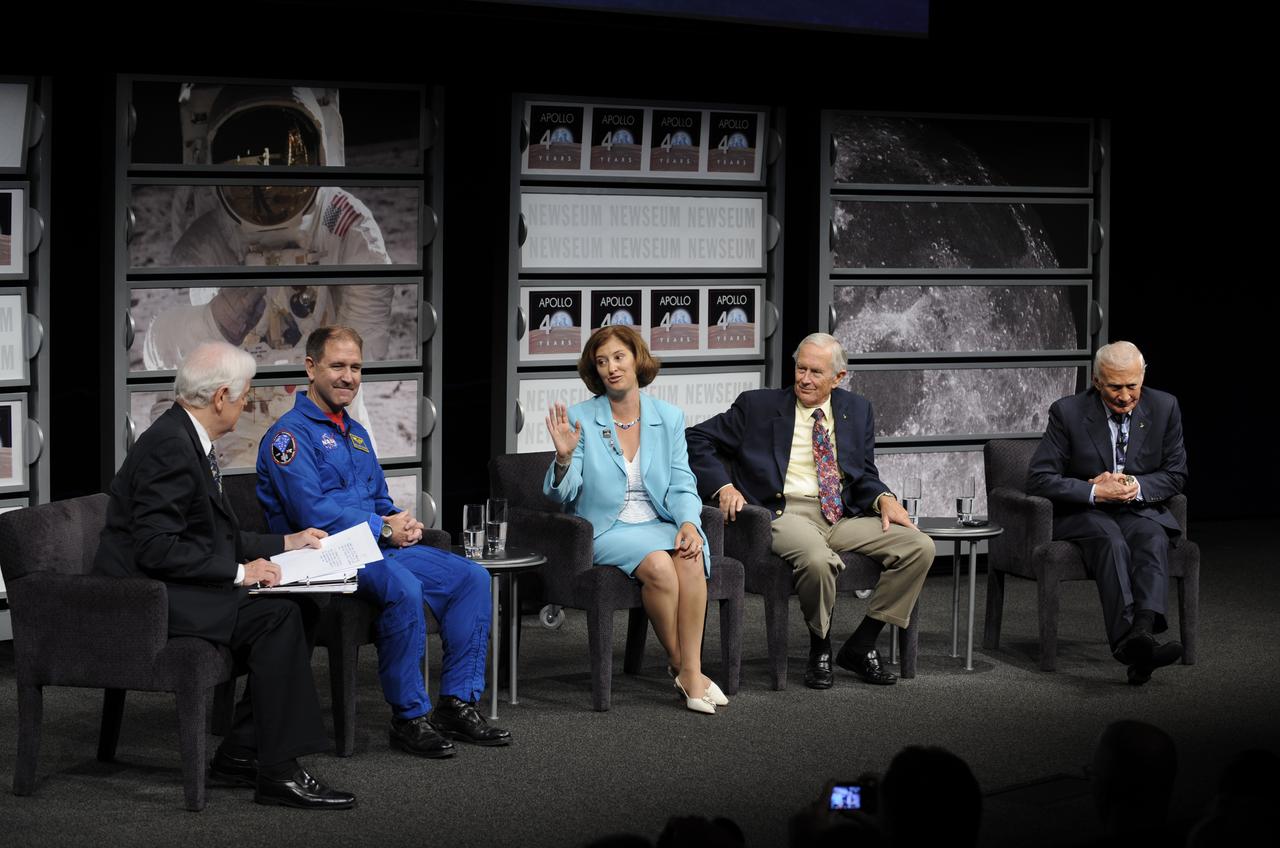
Veteran journalist Nick Clooney, seated left, moderated a panel discussion with Apollo 11 astronaut Buzz Aldrin, far right, Charlie Duke of Apollo 16, John Grunsfeld, of the recent Hubble mission, and Goddard Space Flight Center deputy director Laurie Leshin, Monday, July 20, 2009, at the Newseum in Washington as part of the commemoration of the 40th Anniversary of the Apollo 11 moon landing. Photo Credit: (NASA/Bill Ingalls)
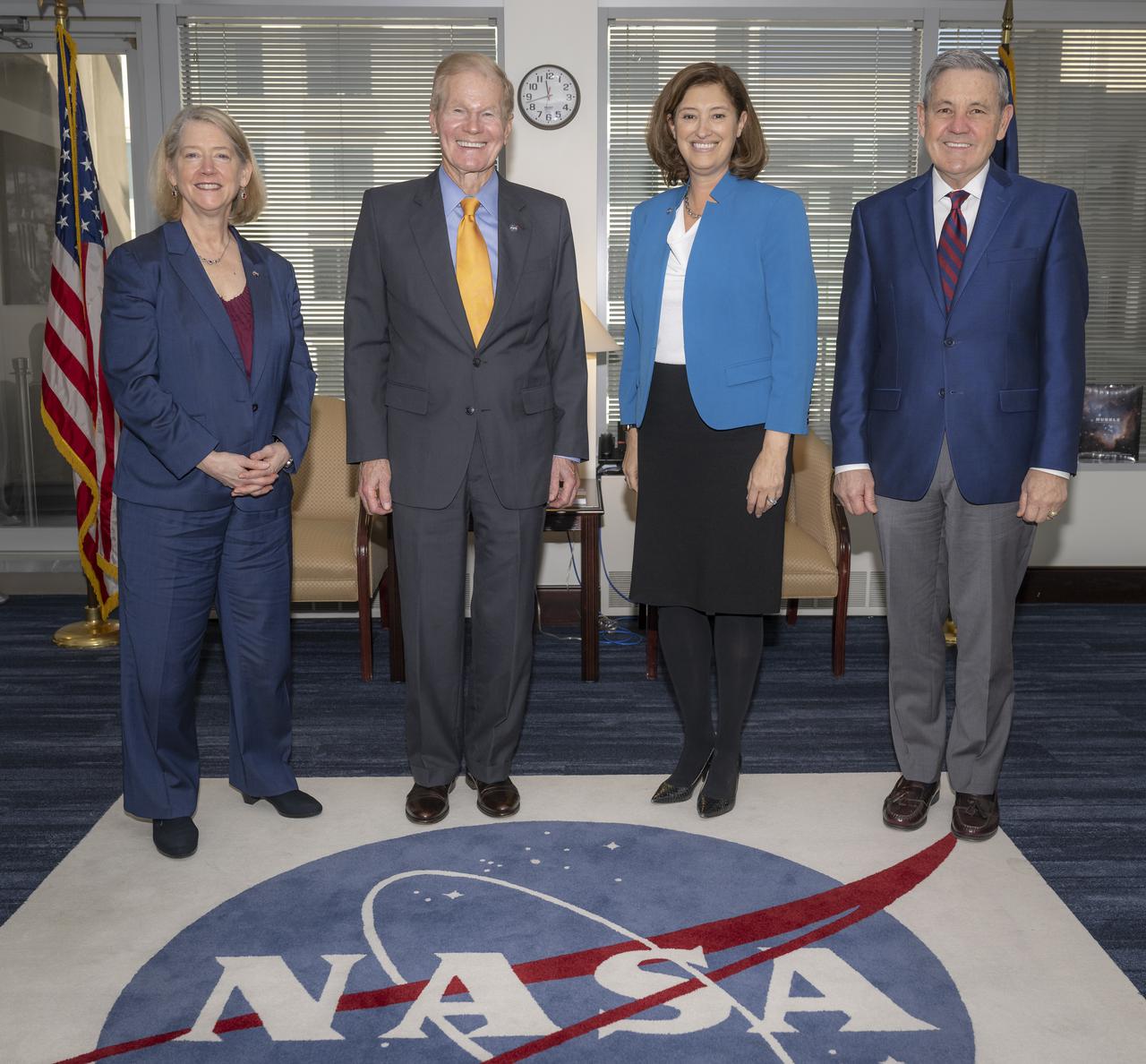
NASA Deputy Administrator Pam Melroy, left, NASA Administrator Bill Nelson, incoming JPL Director Dr. Laurie Leshin, and NASA Associate Administrator Bob Cabana, pose for a photograph at the conclusion of their meeting, Tuesday, Feb., 15, 2022, at the Mary W. Jackson NASA Headquarters building in Washington. Photo Credit: (NASA/Bill Ingalls)
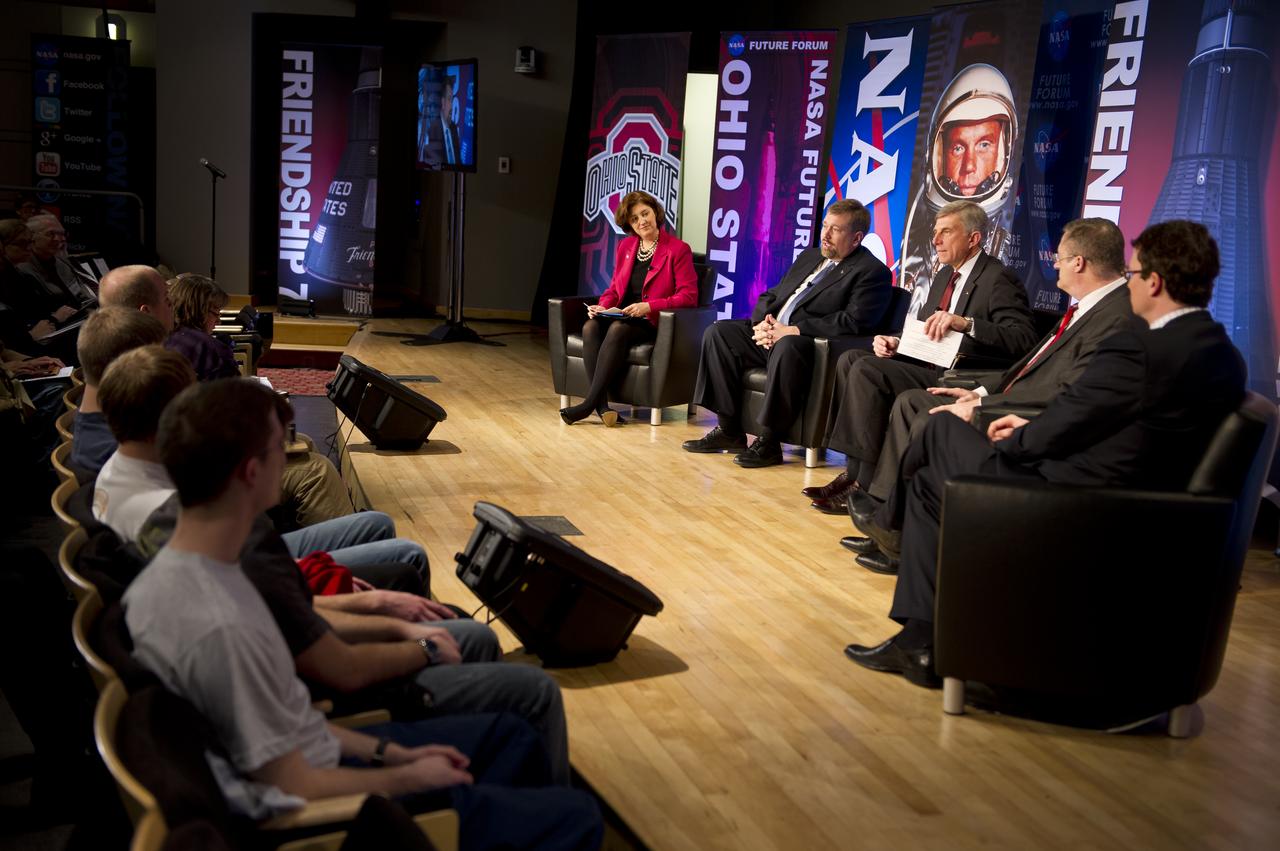
Laurie Leshin, dean of the School of Science, Rensselaer Polytechnic Institute, left, Mason Peck, NASA Chief Technologist, 2nd from left, Ron Sega, Vice president and enterprise executive for Energy and the Environment, The Ohio State University and Colorado State University, Michael Donovan, technology consultant, New Services Development, Hewlett-Packard Company, and, Jordan Hansell, chairman and CEO, NetJets Inc., right, participate in the NASA Future Forum panel titled "Importance of Technology, Science and Innovation for our Economic Future" at The Ohio State University on Tuesday, Feb. 21, 2012 in Columbus, Ohio. The NASA Future Forum features panel discussions on the importance of education to our nation's future in space, the benefit of commercialized space technology to our economy and lives here on Earth, and the shifting roles for the public, commercial and international communities in space. Photo Credit: (NASA/Bill Ingalls)
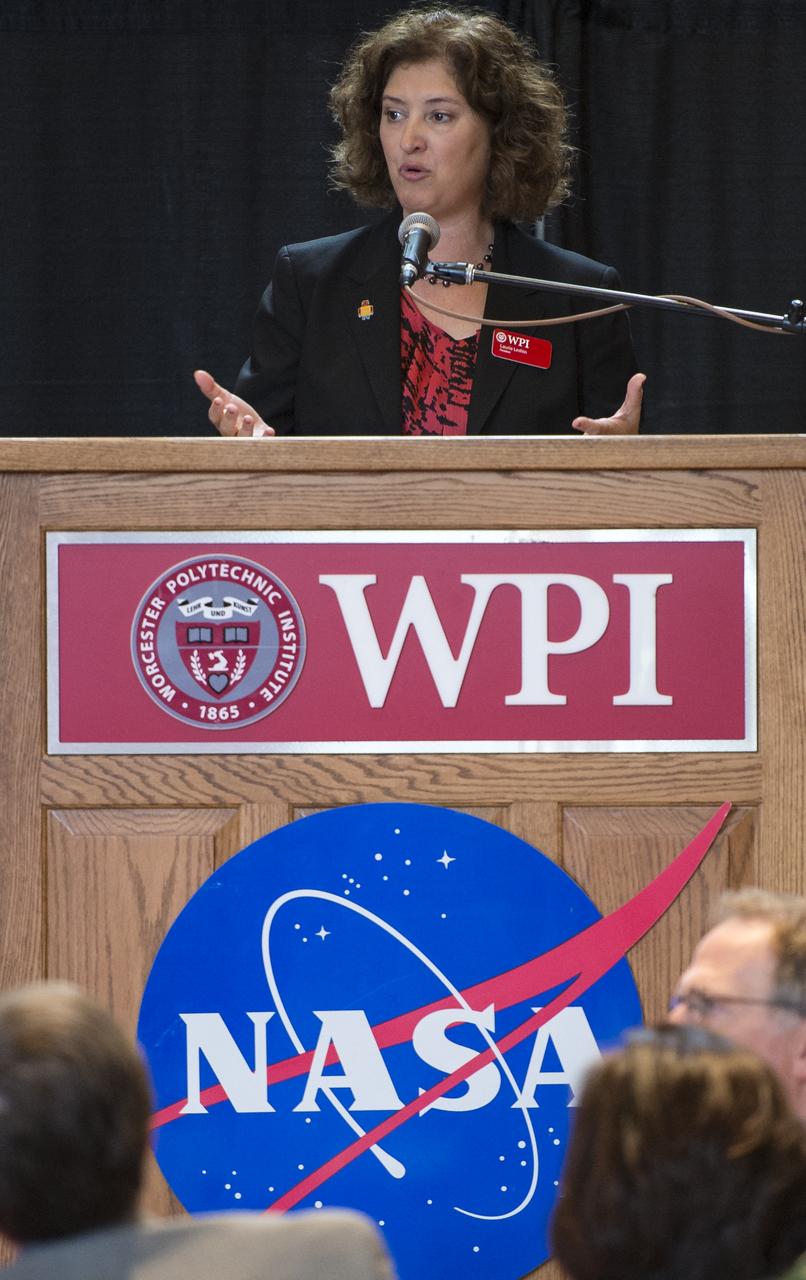
Worcester Polytechnic Institute (WPI) President Laurie Leshin, speaks at a breakfast opening the TouchTomorrow Festival, held in conjunction with the 2014 NASA Centennial Challenges Sample Return Robot Challenge, Saturday, June 14, 2014, at the Worcester Polytechnic Institute (WPI) in Worcester, Mass. Eighteen teams are competing for a $1.5 million NASA prize purse. Teams will be required to demonstrate autonomous robots that can locate and collect samples from a wide and varied terrain, operating without human control. The objective of this NASA-WPI Centennial Challenge is to encourage innovations in autonomous navigation and robotics technologies. Innovations stemming from the challenge may improve NASA's capability to explore a variety of destinations in space, as well as enhance the nation's robotic technology for use in industries and applications on Earth. Photo Credit: (NASA/Joel Kowsky)
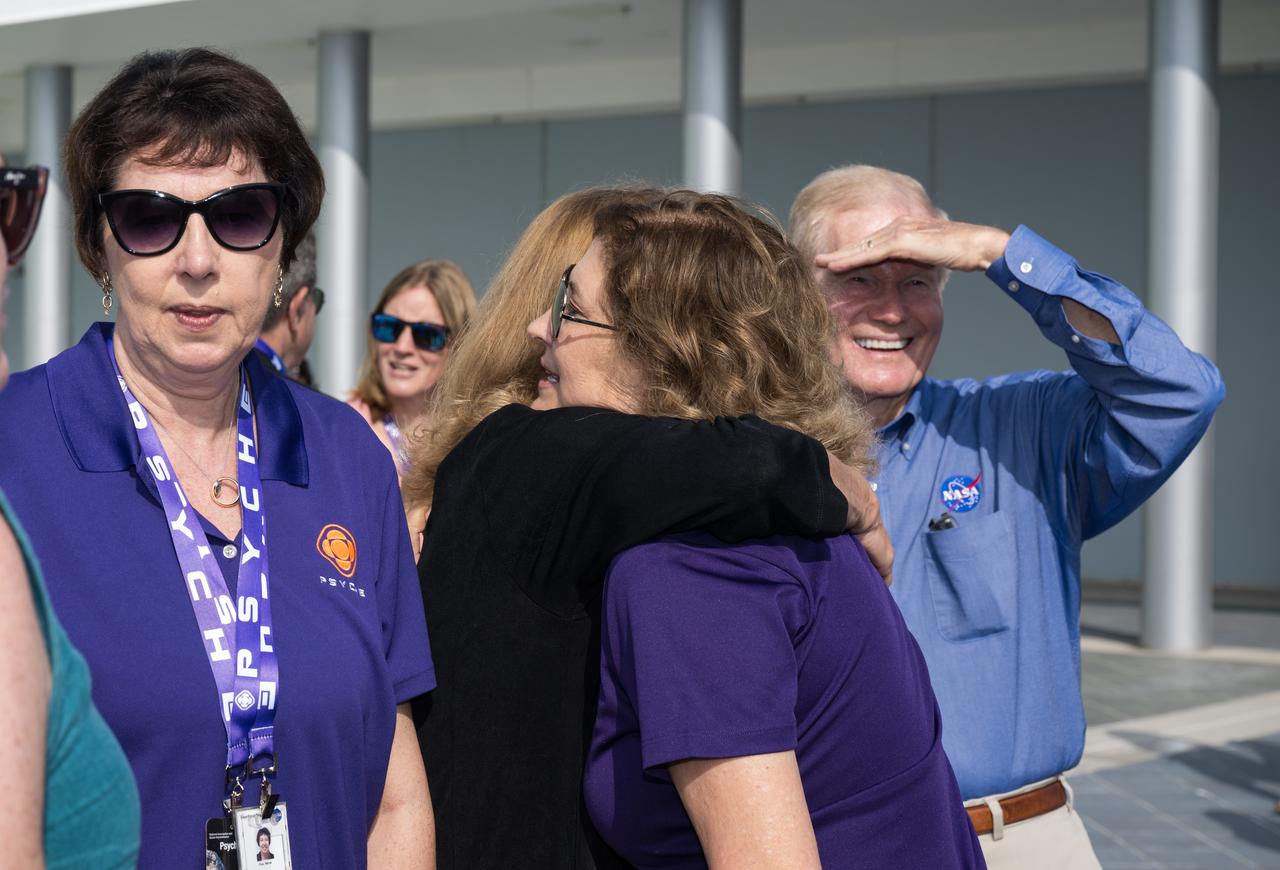
NASA Headquarters Planetary Science Division director Lori Glaze, left, hugs Jet Propulsion Laboratory director Laurie Leshin as NASA Administrator Bill Nelson, right, and Associate Administrator, NASA’s Science Mission Directorate, Nicola Fox watch for the return of the boosters after the launch of a SpaceX Falcon Heavy rocket with the Psyche spacecraft onboard from Launch Complex 39A, Friday, Oct. 13, 2023, at NASA’s Kennedy Space Center in Florida. NASA’s Psyche spacecraft will travel to a metal-rich asteroid by the same name orbiting the Sun between Mars and Jupiter to study it’s composition. The spacecraft also carries the agency's Deep Space Optical Communications technology demonstration, which will test laser communications beyond the Moon. Photo Credit: (NASA/Aubrey Gemignani)
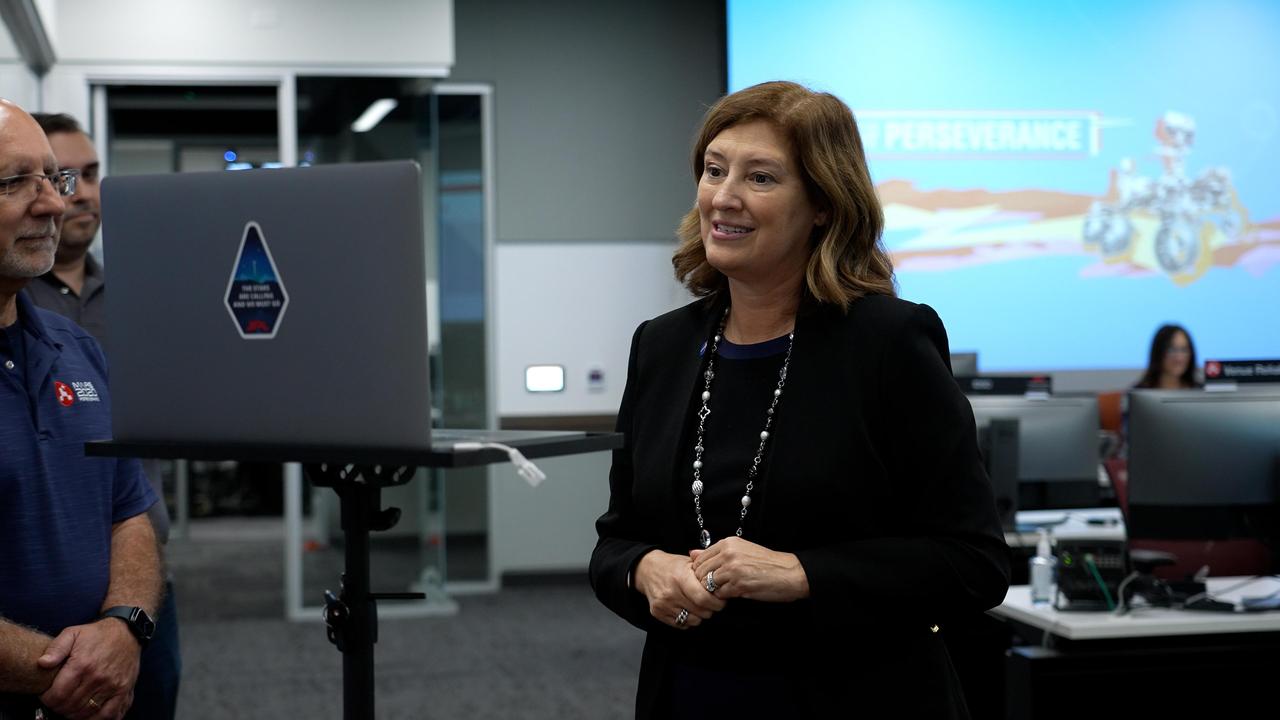
Students who have overcome academic challenges met NASA's Jet Propulsion Laboratory Director Laurie Leshin, Daniel Zayas, Art Thompson, and other Mars team members at a Dec. 6, 2022 virtual "You've Got Perseverance" event. They also received personalized messages from the Perseverance rover. https://photojournal.jpl.nasa.gov/catalog/PIA25638

Dr. Robert Braun, NASA Chief Technologist, second from left, makes a point, as panelists Leland Melvin, Assoicate Administrator for NASA Education, left, Dr. Laurie Leshin, NASA Deputy Associate Administrator Exploration Systems Mission Directortorate, and Dr. Waleed Abdalati, NASA Chief Scientist, right, look on during a panel discussion at the NASA Future Forum held at the Riggs Alumni Center on the campus of the University of Maryland, Thursday, Aug. 11, 2011 in College Park, Md. Photo Credit: (NASA/Paul E. Alers)
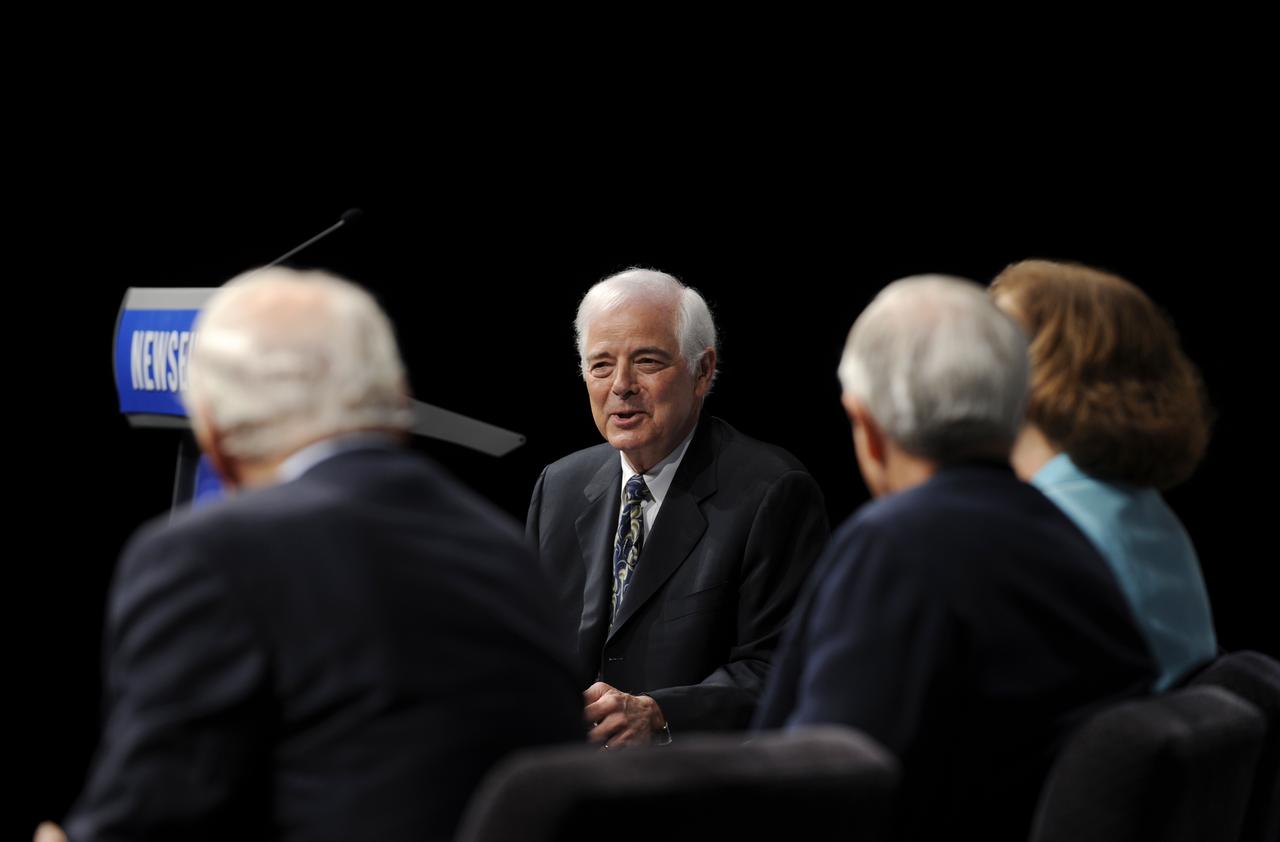
Veteran journalist Nick Clooney, center, moderated a panel discussion with Apollo 11 astronaut Buzz Aldrin, far right, Charlie Duke of Apollo 16, John Grunsfeld, of the recent Hubble mission, not seen, and Goddard Space Flight Center deputy director Laurie Leshin, Monday, July 20, 2009, at the Newseum in Washington as part of the commemoration of the 40th Anniversary of the Apollo 11 moon landing. Photo Credit: (NASA/Bill Ingalls)
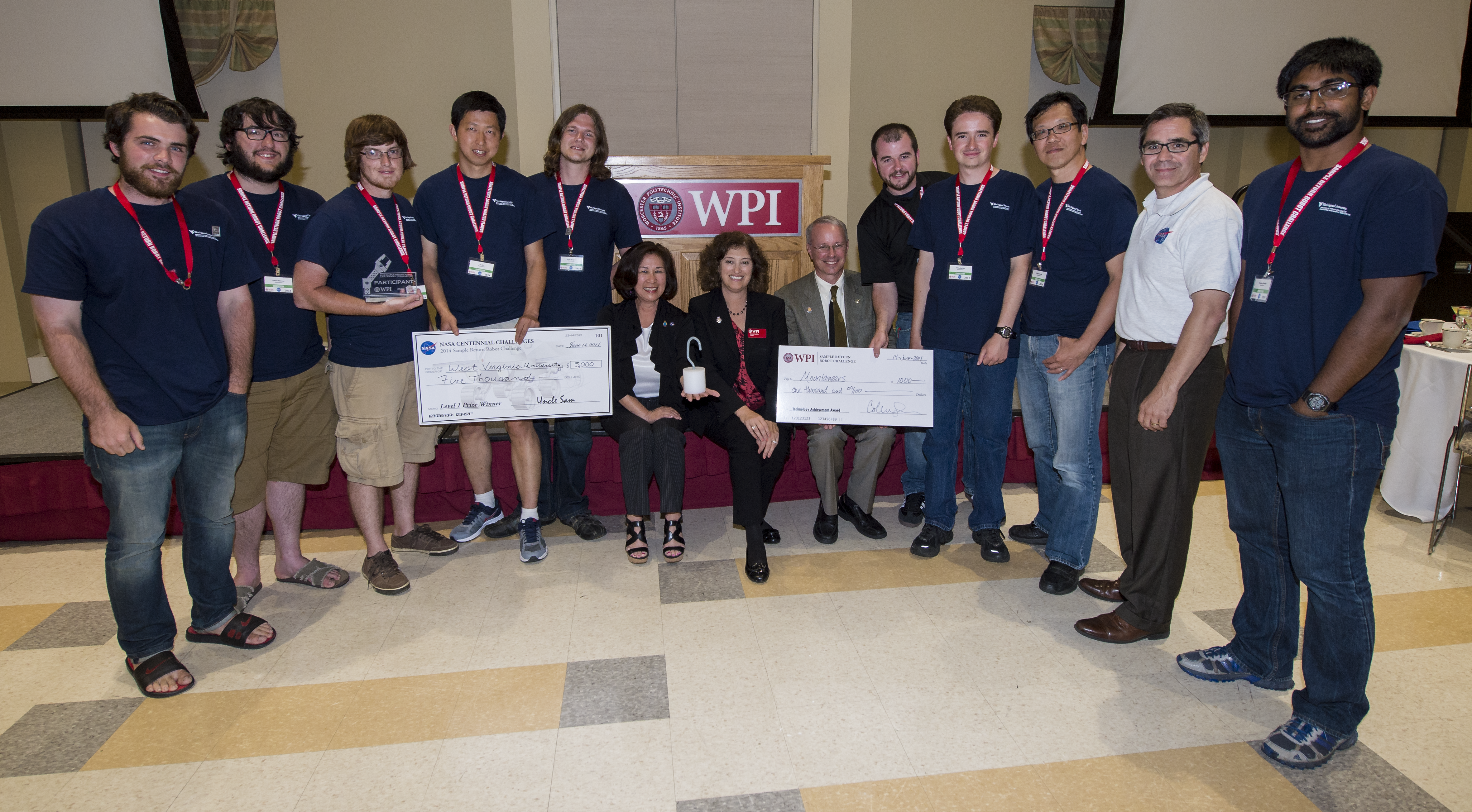
The NASA Centennial Challenges prize, level one, is presented to team Mountaineers for successfully completing level one of the NASA 2014 Sample Return Robot Challenge, from left, Ryan Watson, Team Mountaineers; Lucas Behrens, Team Mountaineers; Jarred Strader, Team Mountaineers; Yu Gu, Team Mountaineers; Scott Harper, Team Mountaineers; Dorothy Rasco, NASA Deputy Associate Administrator for the Space Technology Mission Directorate; Laurie Leshin, Worcester Polytechnic Institute (WPI) President; David Miller, NASA Chief Technologist; Alexander Hypes, Team Mountaineers; Nick Ohi,Team Mountaineers; Marvin Cheng, Team Mountaineers; Sam Ortega, NASA Program Manager for Centennial Challenges; and Tanmay Mandal, Team Mountaineers;, Saturday, June 14, 2014, at Worcester Polytechnic Institute (WPI) in Worcester, Mass. Team Mountaineers was the only team to complete the level one challenge. During the competition, teams were required to demonstrate autonomous robots that can locate and collect samples from a wide and varied terrain, operating without human control. The objective of this NASA-WPI Centennial Challenge was to encourage innovations in autonomous navigation and robotics technologies. Innovations stemming from the challenge may improve NASA's capability to explore a variety of destinations in space, as well as enhance the nation's robotic technology for use in industries and applications on Earth. Photo Credit: (NASA/Joel Kowsky)
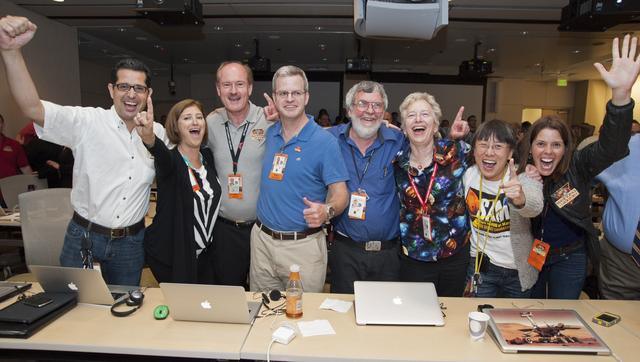
<b>Who Should Be TIME's Person of the Year 2012? - The Mars Rover! VOTE here: <a href="http://ti.me/YxJU1i" rel="nofollow">ti.me/YxJU1i</a></b> Caption - SAM Team celebrates a picture perfect landing! Pictured from left to rights: Mehdi Benna, Laurie Leshin, Chris Webster, Will Brinckerhoff, Paul Mahaffy, Pan Conrad, Florence Tan, and Jen Eigenbrode. Credit: NASA ----- The Curiosity rover bristles with multiple cameras and instruments, including Goddard's Sample Analysis at Mars (SAM) instrument suite. By looking for evidence of water, carbon, and other important building blocks of life in the Martian soil and atmosphere, SAM will help discover whether Mars ever had the potential to support life. Curiosity was delivered to Gale crater, a 96-mile-wide crater that contains a record of environmental changes in its sedimentary rock, in August 2012. Related links: <a href="http://www.nasa.gov/mission_pages/msl/index.html" rel="nofollow">www.nasa.gov/mission_pages/msl/index.html</a> <a href="http://science.gsfc.nasa.gov/699/marsSAM.shtml" rel="nofollow">science.gsfc.nasa.gov/699/marsSAM.shtml</a> <a href="http://mars.jpl.nasa.gov/msl/" rel="nofollow">mars.jpl.nasa.gov/msl/</a> <b><a href="http://www.nasa.gov/audience/formedia/features/MP_Photo_Guidelines.html" rel="nofollow">NASA image use policy.</a></b> <b><a href="http://www.nasa.gov/centers/goddard/home/index.html" rel="nofollow">NASA Goddard Space Flight Center</a></b> enables NASA’s mission through four scientific endeavors: Earth Science, Heliophysics, Solar System Exploration, and Astrophysics. Goddard plays a leading role in NASA’s accomplishments by contributing compelling scientific knowledge to advance the Agency’s mission. <b>Follow us on <a href="http://twitter.com/NASA_GoddardPix" rel="nofollow">Twitter</a></b> <b>Like us on <a href="http://www.facebook.com/pages/Greenbelt-MD/NASA-Goddard/395013845897?ref=tsd" rel="nofollow">Facebook</a></b> <b>Find us on <a href="http://instagram.com/nasagoddard?vm=grid" rel="nofollow">Instagram</a></b>
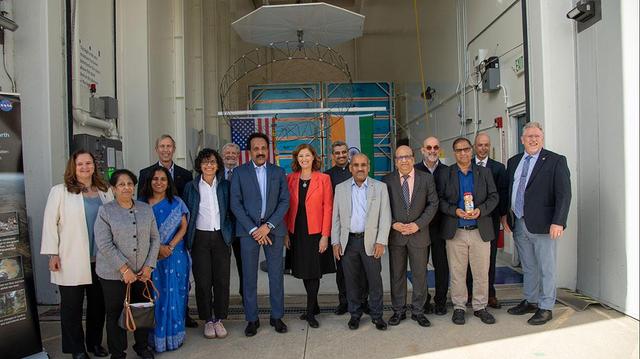
Officials from NASA, the Indian Space Research Organization (ISRO), and the Embassy of India hold a send-off ceremony for the NASA-ISRO Synthetic Aperture Radar (NISAR) science instrument payload on Feb. 3, 2023, outside a clean room at NASA's Jet Propulsion Laboratory in Southern California. The payload is scheduled to be shipped to India in March. Pictured left to right: Karen St. Germain, director, Earth Science Division, NASA; Mitra Dutta, NISAR program executive, NASA; Sripriya Ranganathan, ambassador and deputy chief of mission, Indian Embassy; Larry James, deputy director, JPL; Bhavya Lal, associate administrator for technology, policy, and strategy, NASA; Jim Graf, director, Earth Science and Technology Directorate, JPL; S. Somanath, chairman, ISRO; Laurie Leshin, director, JPL; Krunal Joshi, counselor, space and ISRO technical liaison officer, Indian Embassy; M. Sankaran, director, U R Rao Satellite Centre, ISRO; Shantanu Bhatawdekar, scientific secretary, ISRO; Paul Rosen, NISAR project scientist, JPL; CV Shrikant, NISAR project director, ISRO; Phil Barela, NISAR project manager, JPL; and Gerald Bawden, NISAR program scientist, NASA. NISAR – a joint effort between NASA and ISRO – will measure changes to Earth's land ice surfaces down to fractions of an inch. Data collected by this satellite will help researchers monitor a wide range of changes critical to life on Earth in unprecedented detail. This includes spotting warning signs of imminent volcanic eruptions, helping to monitor groundwater supplies, tracking the melt rate of ice sheets tied to sea level rise, and observing shifts in the distribution of vegetation around the world. The data will inform humanity's responses to urgent challenges posed by natural disasters and climate change, and help communities prepare for and manage hazards. There are two instruments on the satellite that will send and receive radar signals to and from Earth's surface to make the mission's measurements. An L-band synthetic aperture radar (SAR), which uses a signal wavelength of around 9 inches (24 centimeters), and an S-band SAR with a signal wavelength of nearly 5 inches (12 centimeters). Both will bounce their microwave signal off of the planet's surface and record how long it takes the signal to make one roundtrip, as well as the strength of that return signal. This enables the researchers to calculate the distance from the spacecraft to Earth's surface and thereby determine how the land or ice is changing. An antenna reflector nearly 40 feet (12 meters) in diameter, supported by a deployable boom, will focus the microwave signals sent and received by the SARs. JPL, which is managed for NASA by Caltech in Pasadena, leads the U.S. component of NISAR and is providing the mission's L-band SAR instrument. NASA is also providing the radar reflector antenna, the deployable boom, a high-rate communication subsystem for science data, GPS receivers, a solid-state recorder, and payload data subsystem. ISRO is providing the spacecraft bus, the S-band SAR, the launch vehicle, and associated launch services and satellite mission operations. https://photojournal.jpl.nasa.gov/catalog/PIA25600