Leading Hemisphere
Leading Hemisphere
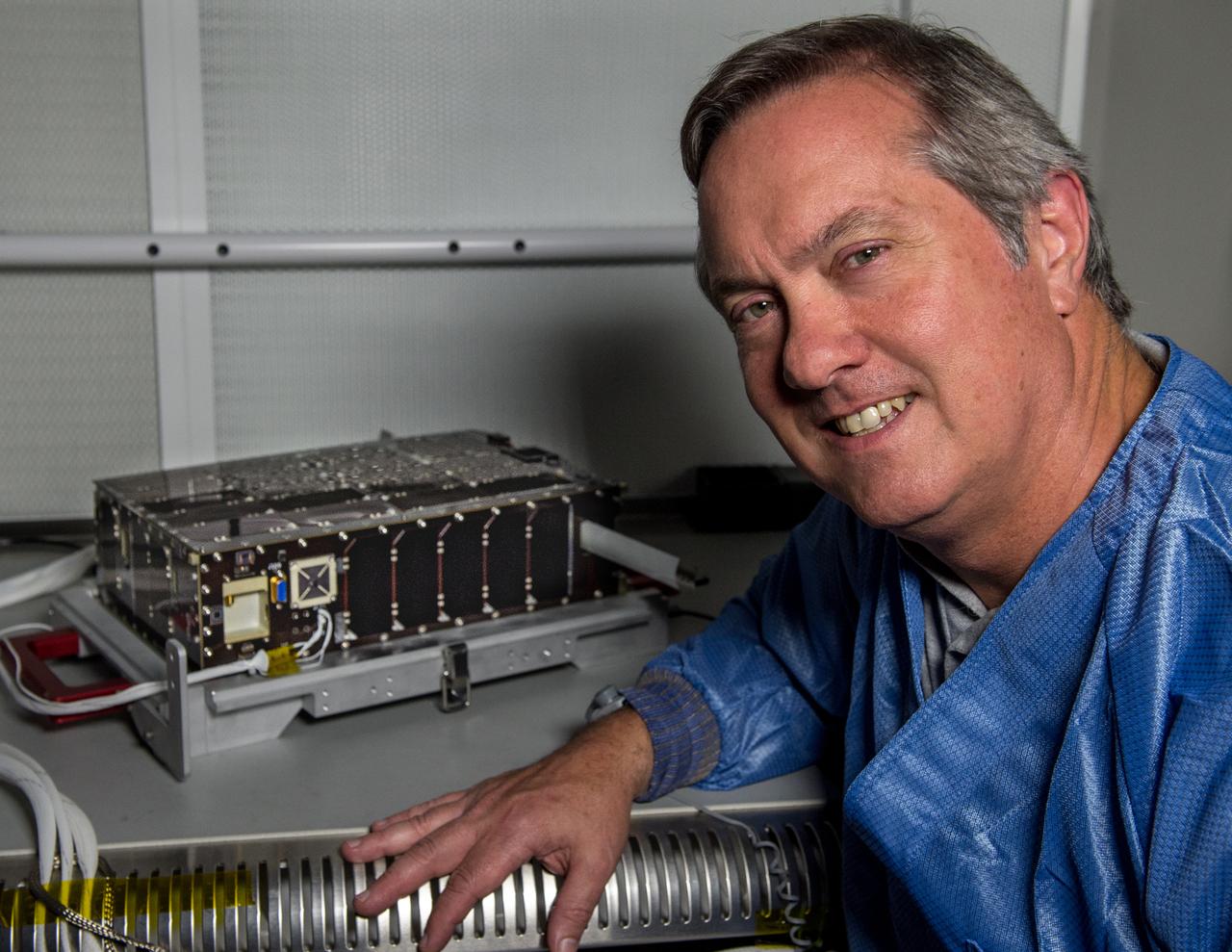
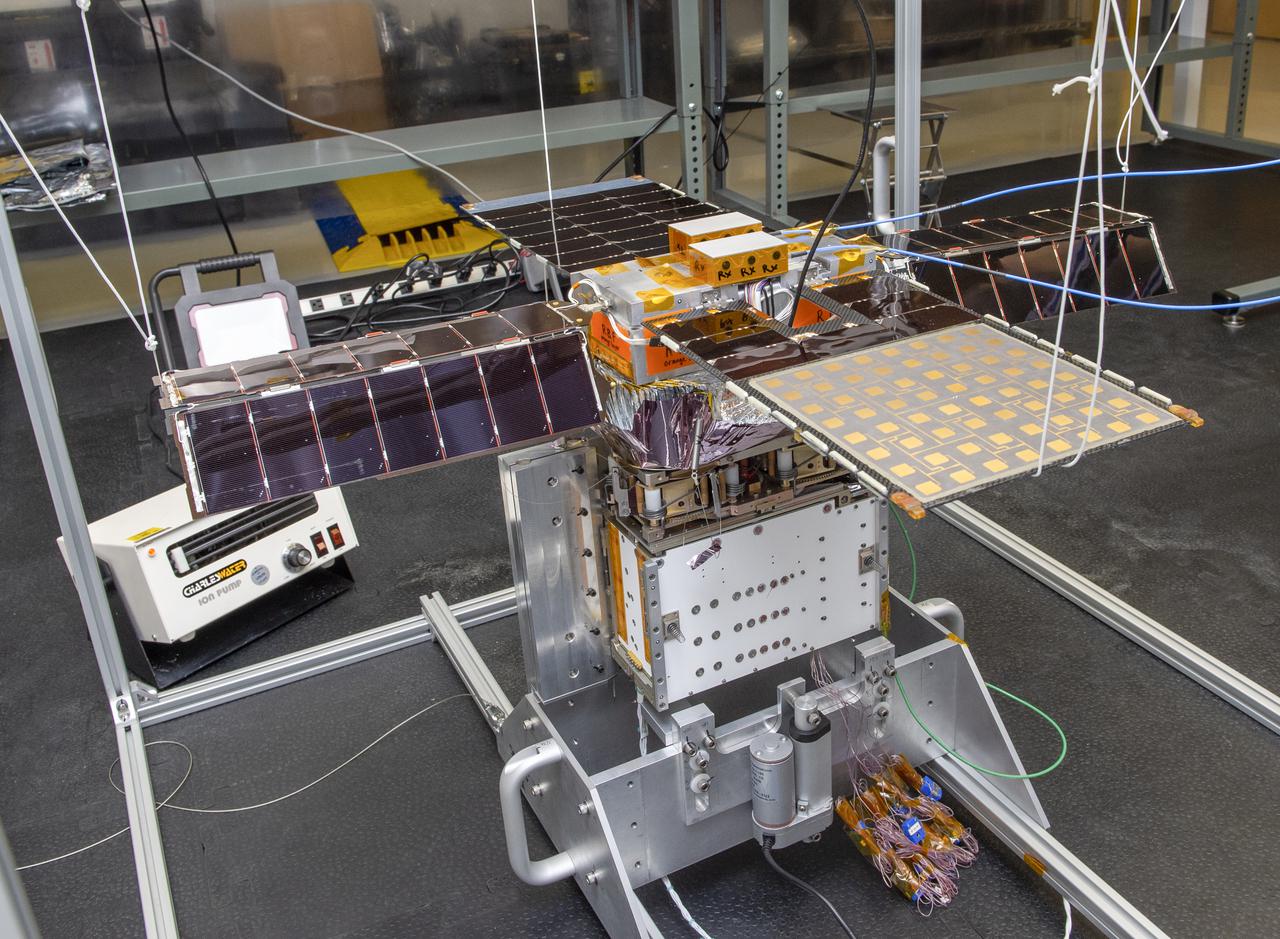
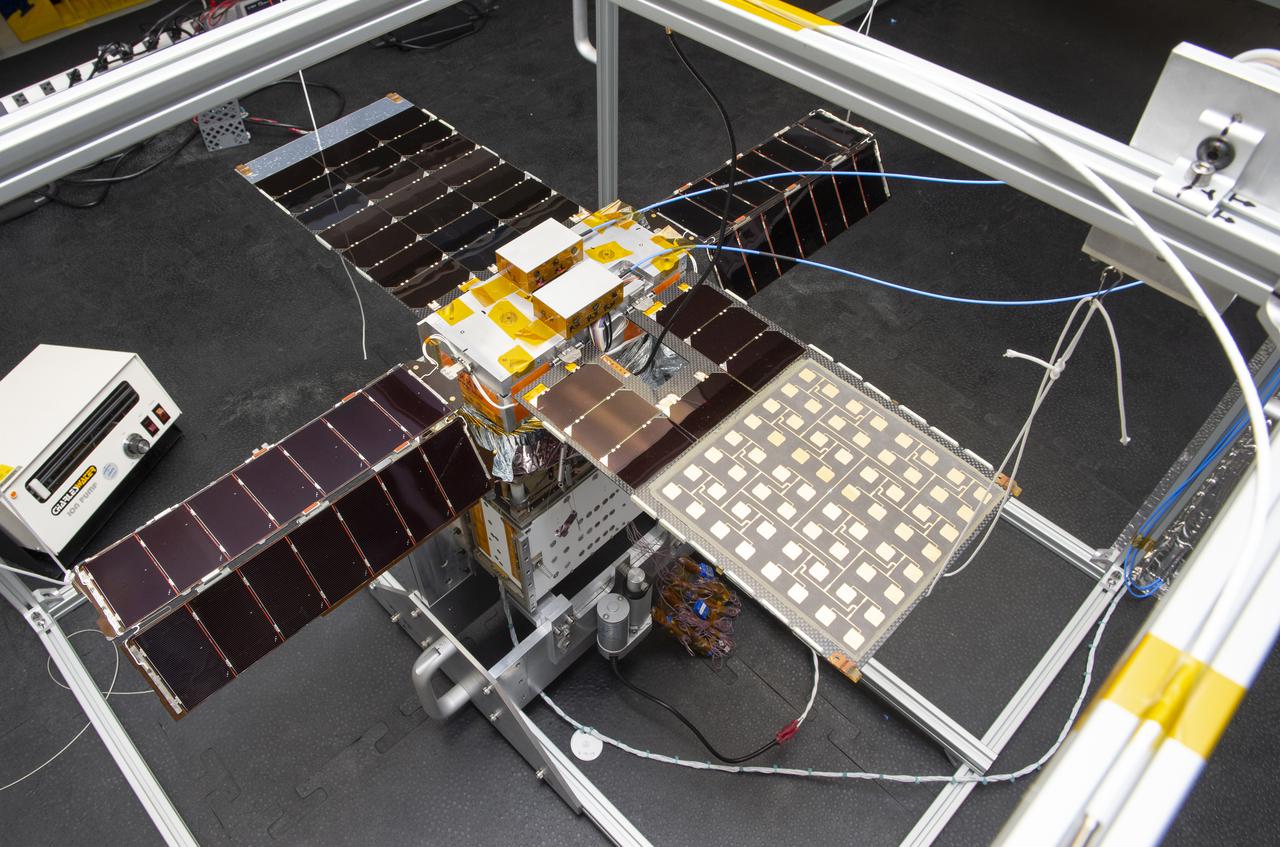
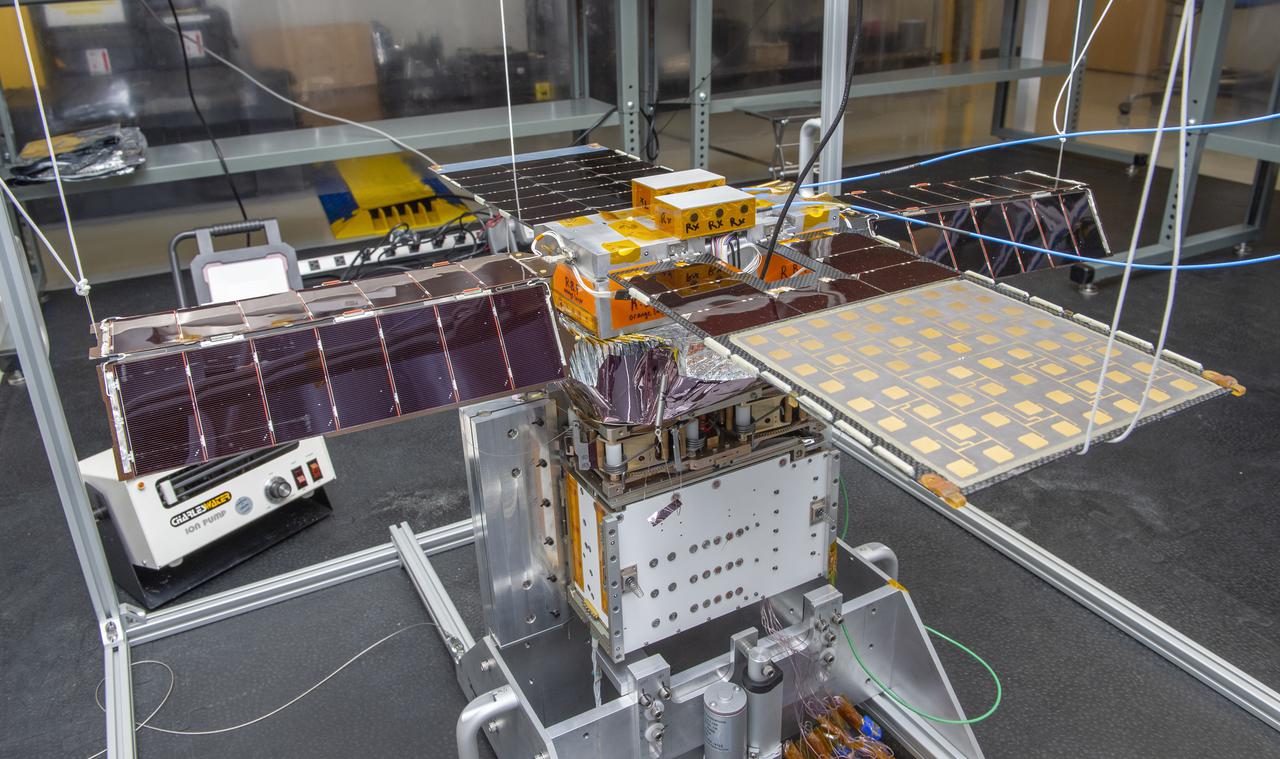
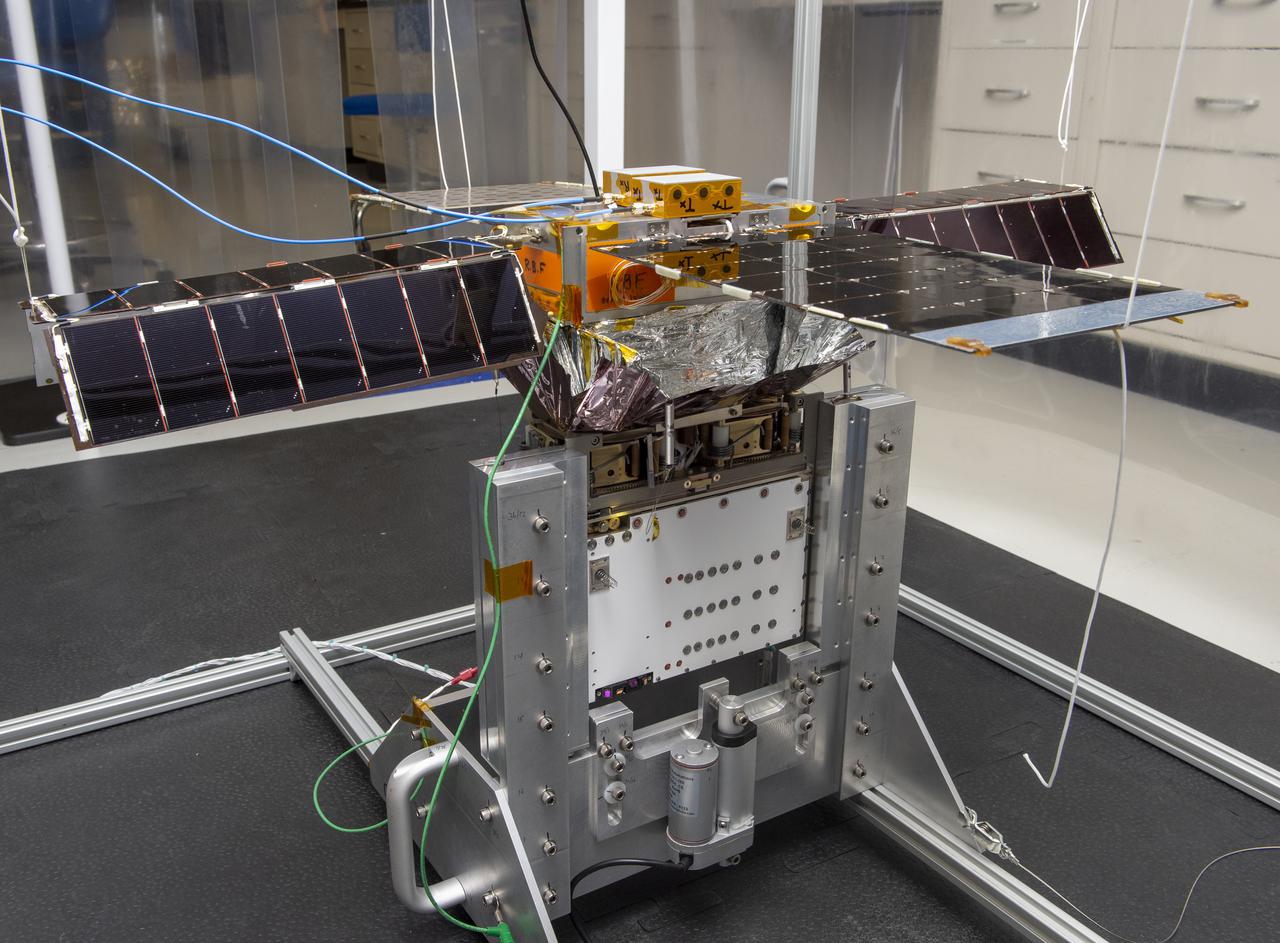
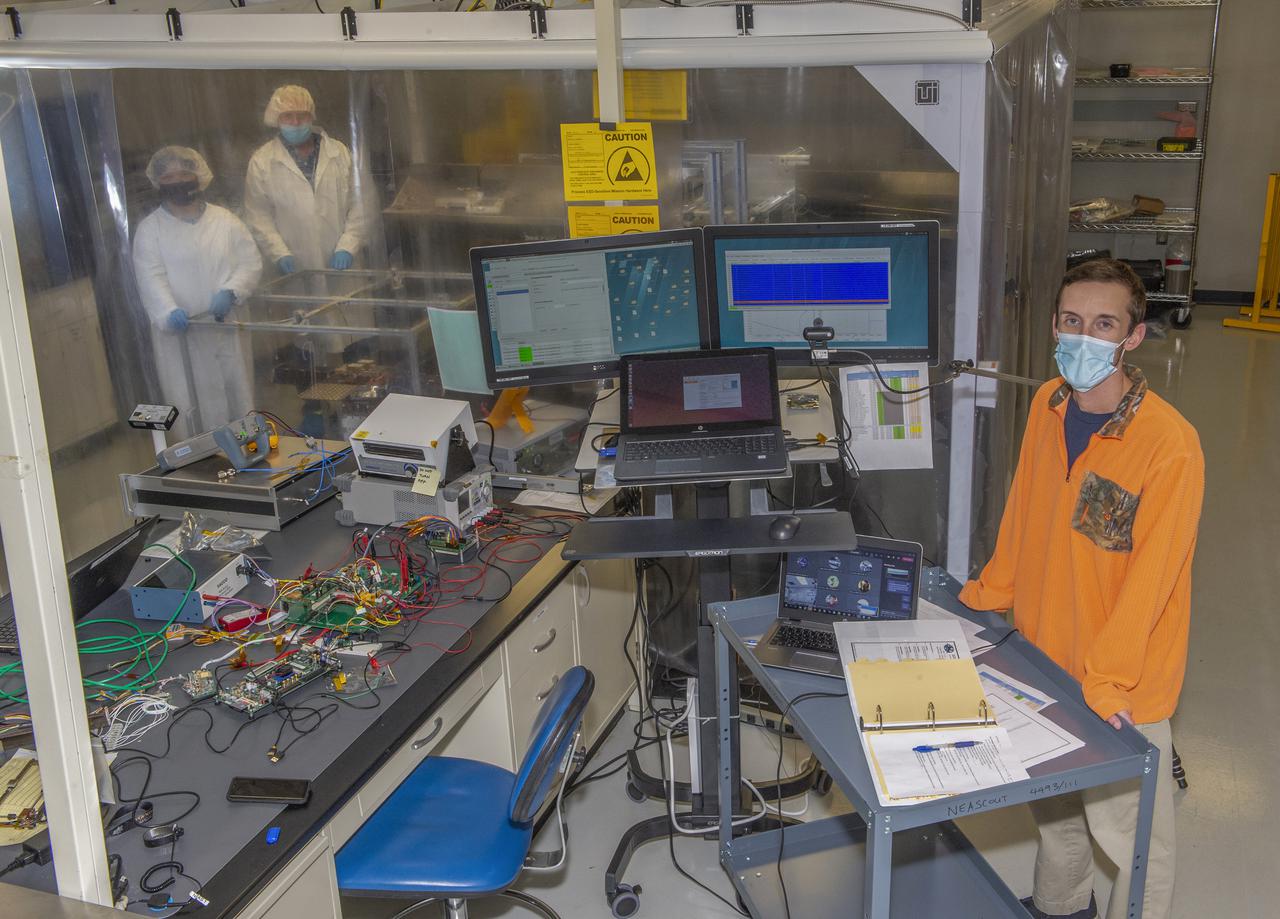
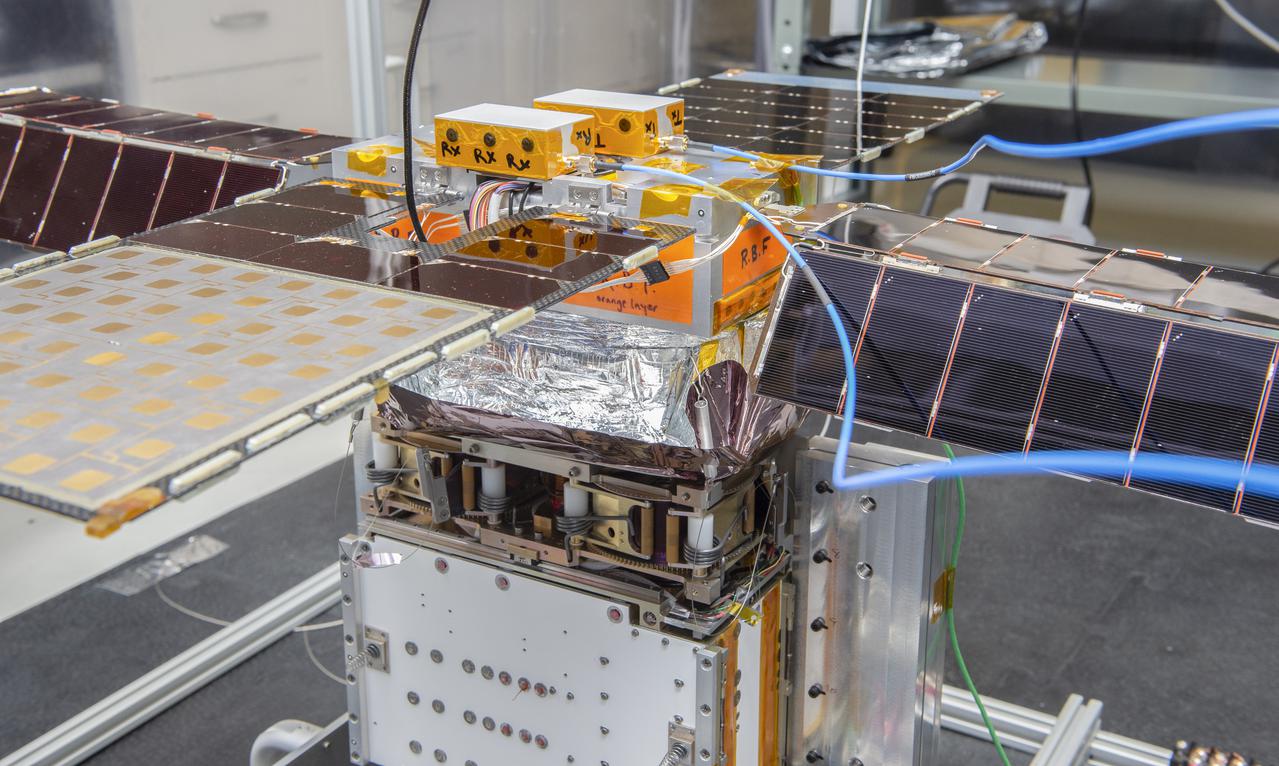
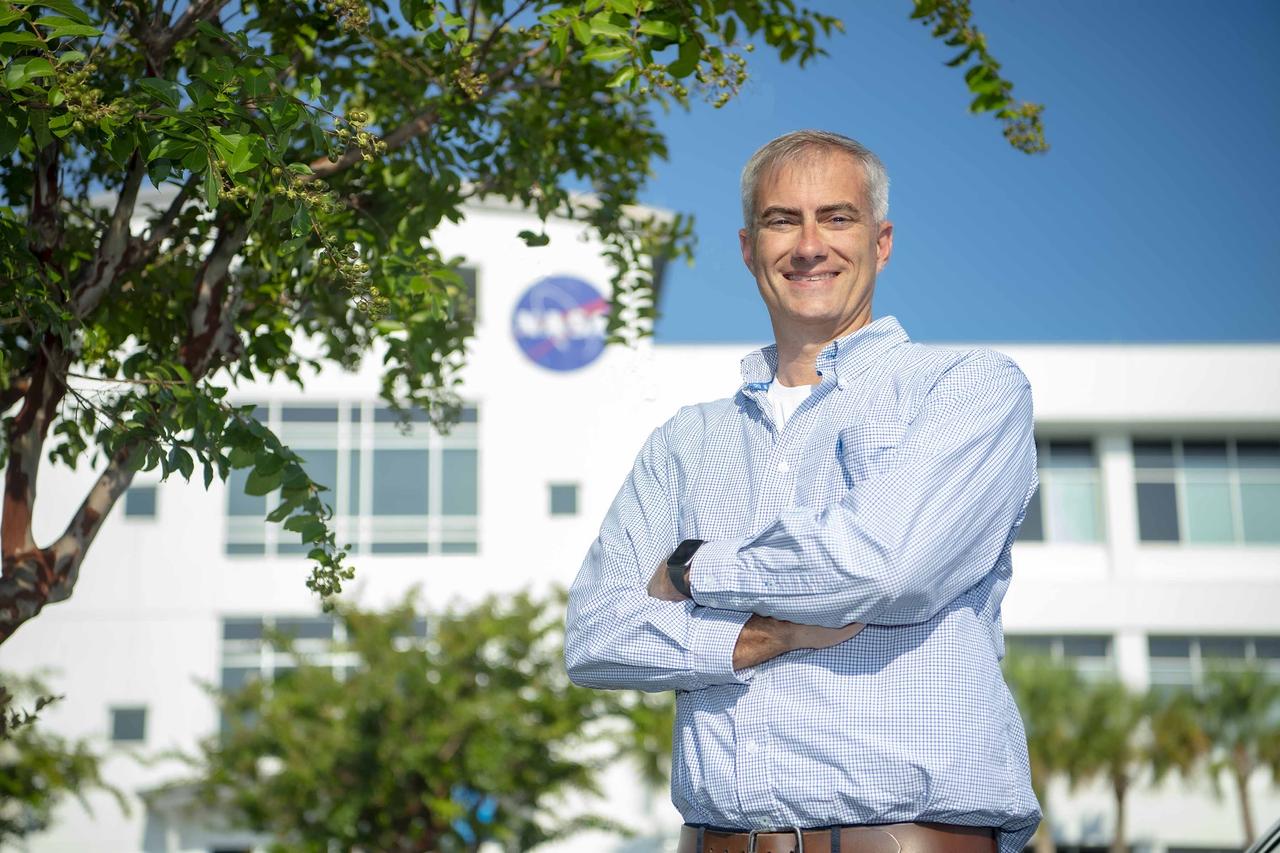
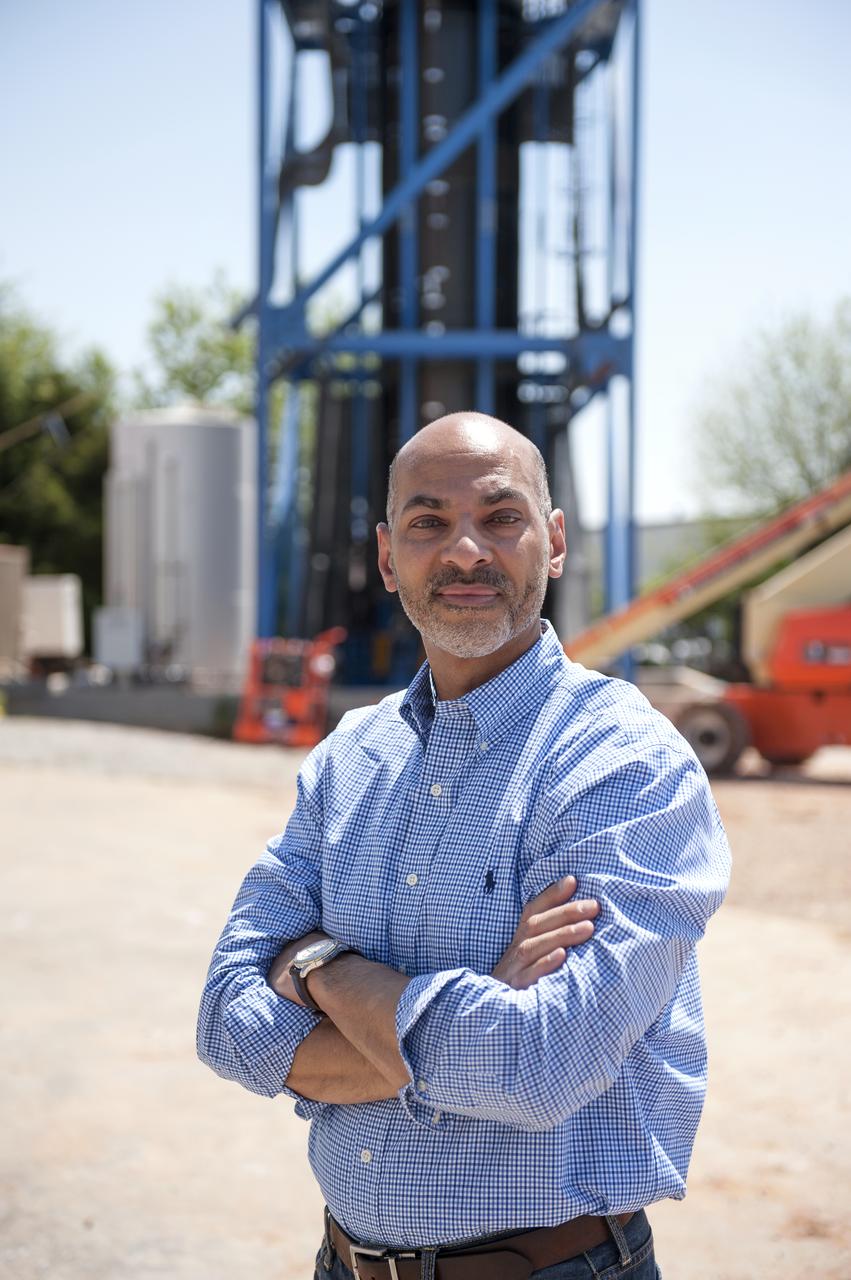
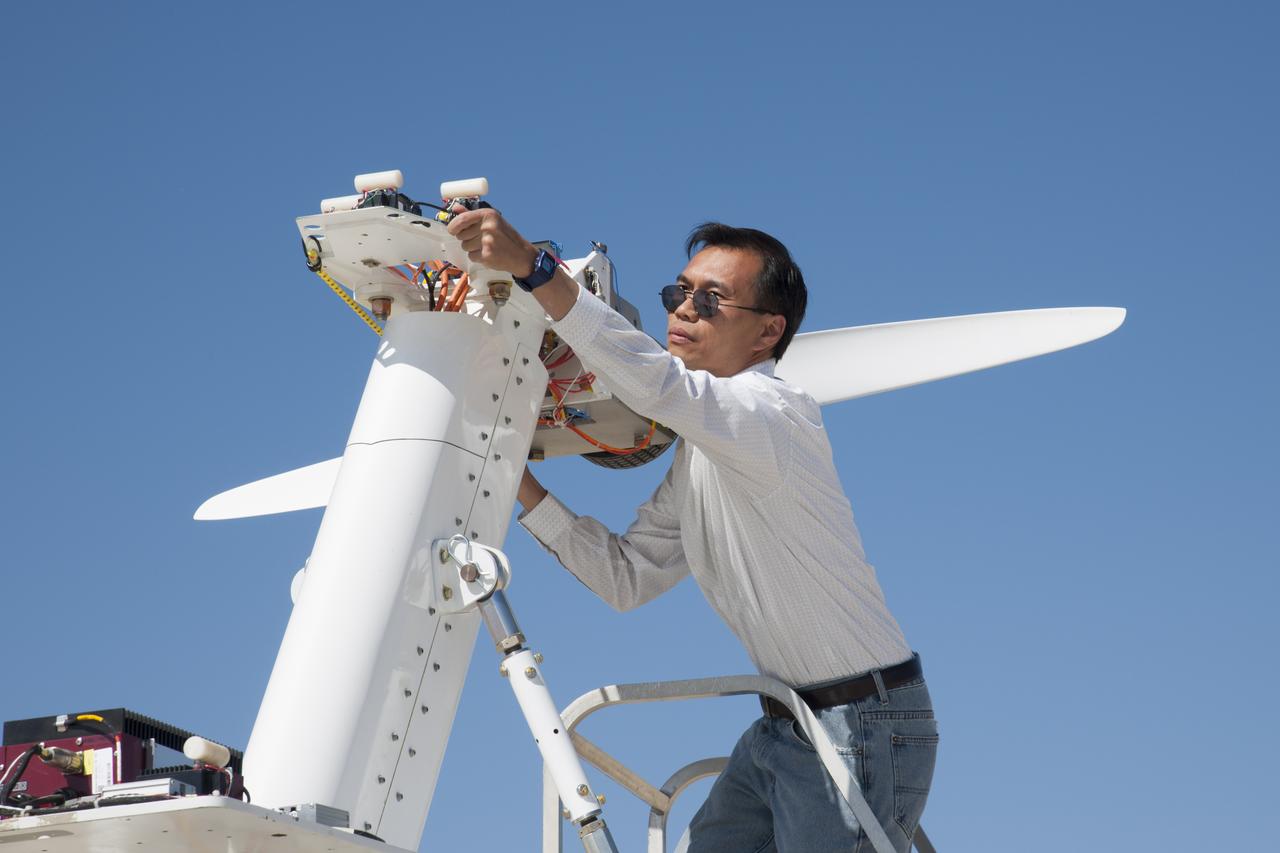
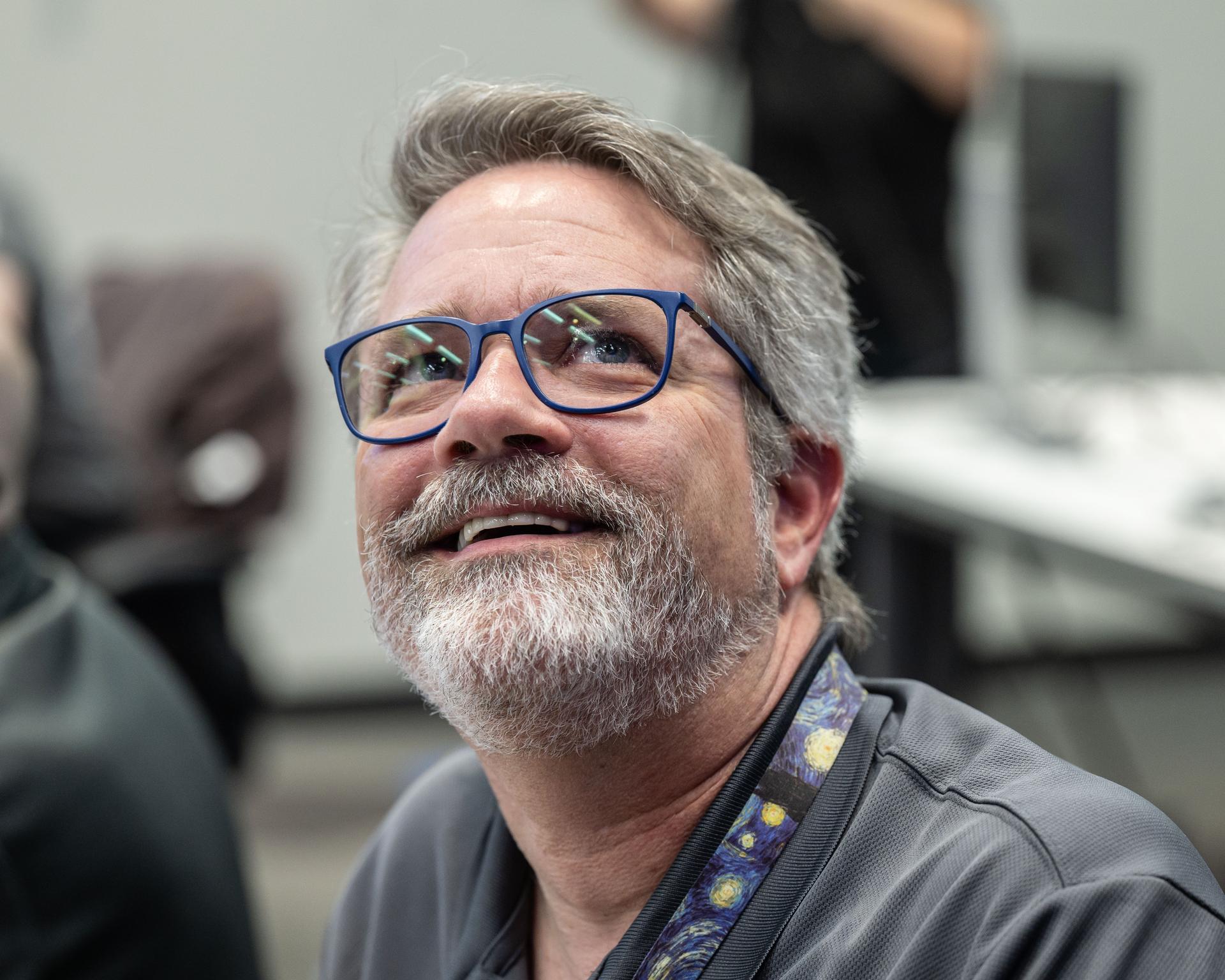
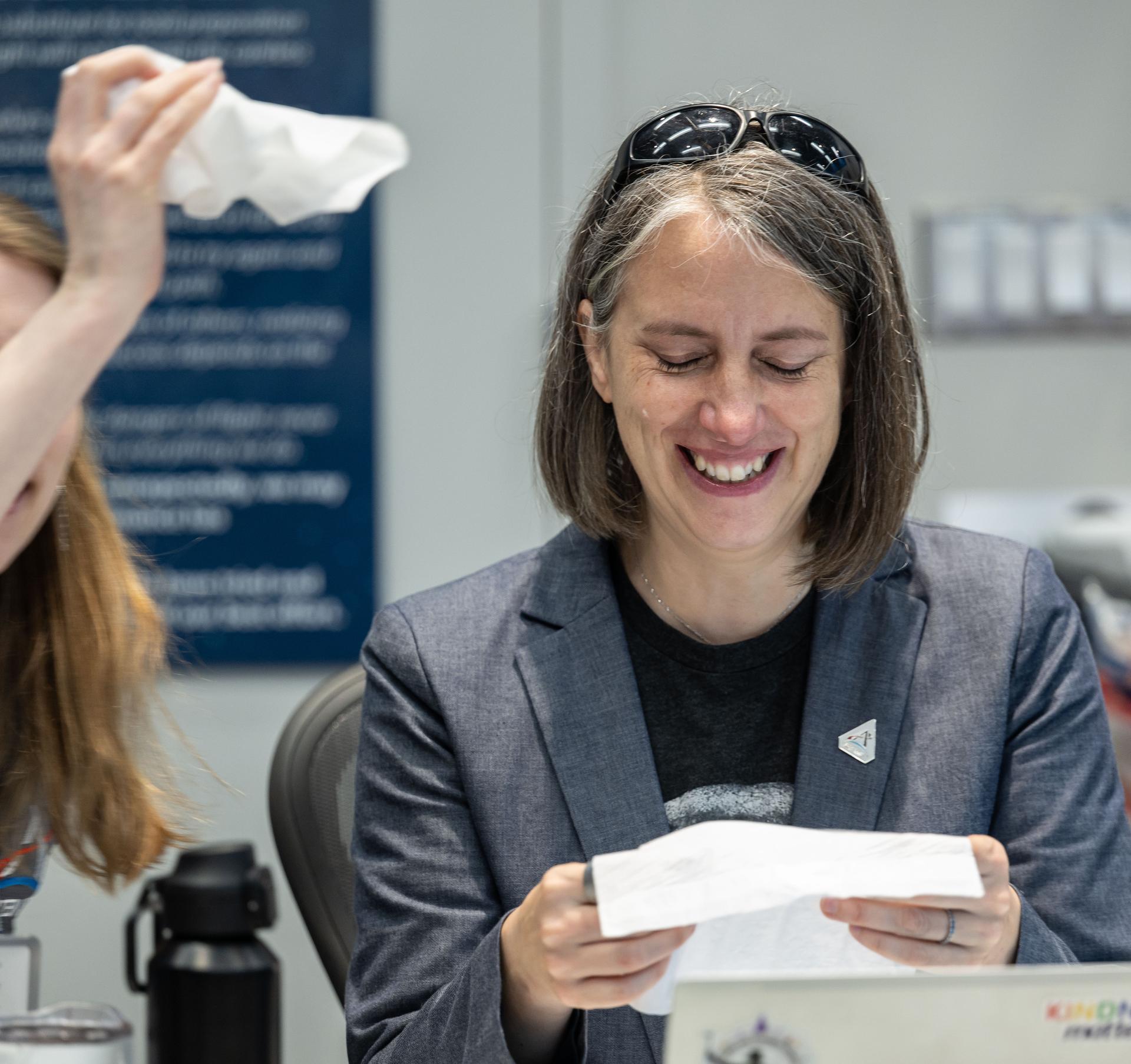
Larry Kepko - Lead scientist for Dellingr CubeSat
Closer look at a re-frozen lead in sea ice in the Bellingshausen Sea, seen from the DC-8 on Oct. 19, 2012.   Credit: NASA / George Hale  NASA's Operation IceBridge is an airborne science mission to study Earth's polar ice. For more information about IceBridge, visit: <a href="http://www.nasa.gov/icebridge" rel="nofollow">www.nasa.gov/icebridge</a>  <b><a href="http://www.nasa.gov/audience/formedia/features/MP_Photo_Guidelines.html" rel="nofollow">NASA image use policy.</a></b>  <b><a href="http://www.nasa.gov/centers/goddard/home/index.html" rel="nofollow">NASA Goddard Space Flight Center</a></b> enables NASA’s mission through four scientific endeavors: Earth Science, Heliophysics, Solar System Exploration, and Astrophysics. Goddard plays a leading role in NASA’s accomplishments by contributing compelling scientific knowledge to advance the Agency’s mission.  <b>Follow us on <a href="http://twitter.com/NASA_GoddardPix" rel="nofollow">Twitter</a></b>  <b>Like us on <a href="http://www.facebook.com/pages/Greenbelt-MD/NASA-Goddard/395013845897?ref=tsd" rel="nofollow">Facebook</a></b>  <b>Find us on <a href="http://instagrid.me/nasagoddard/?vm=grid" rel="nofollow">Instagram</a></b>
Refrozen lead
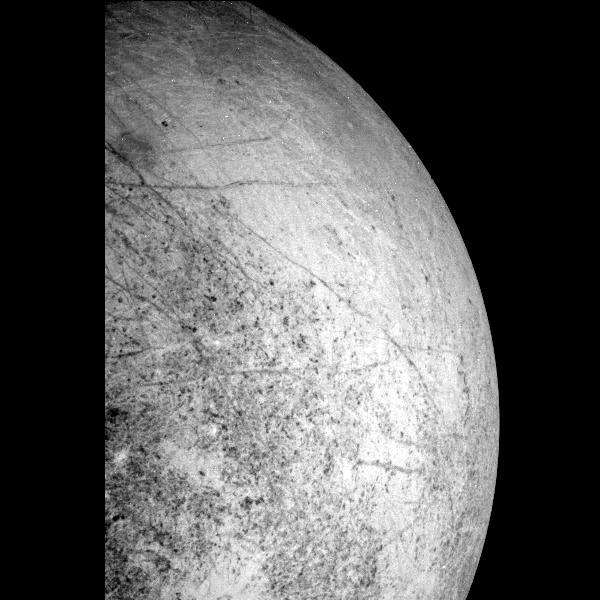
Europa Leading Hemisphere
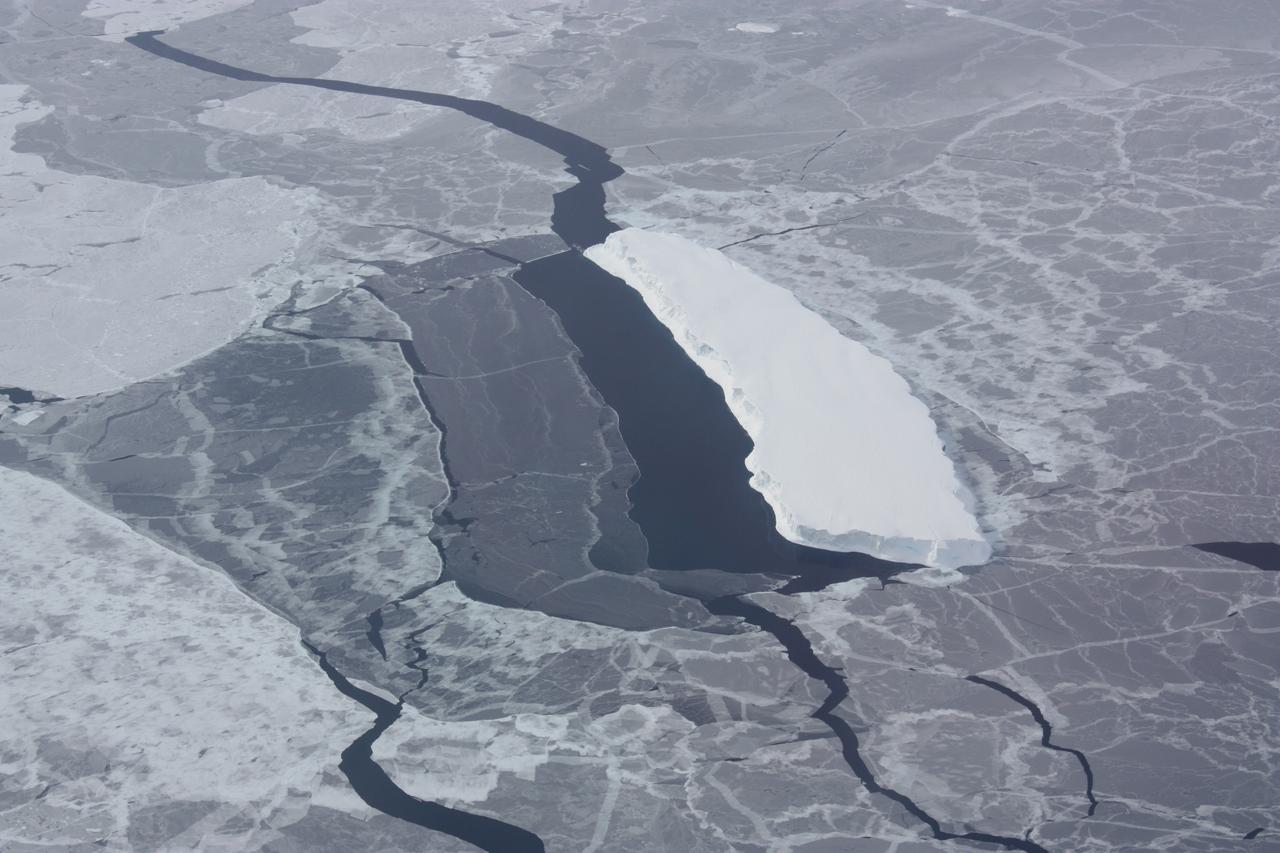
Iceberg embedded in sea ice with a lead on one side. This opening was likely caused by winds blowing against the side of the iceberg.   Credit: NASA / George Hale  NASA's Operation IceBridge is an airborne science mission to study Earth's polar ice. For more information about IceBridge, visit: <a href="http://www.nasa.gov/icebridge" rel="nofollow">www.nasa.gov/icebridge</a>  <b><a href="http://www.nasa.gov/audience/formedia/features/MP_Photo_Guidelines.html" rel="nofollow">NASA image use policy.</a></b>  <b><a href="http://www.nasa.gov/centers/goddard/home/index.html" rel="nofollow">NASA Goddard Space Flight Center</a></b> enables NASA’s mission through four scientific endeavors: Earth Science, Heliophysics, Solar System Exploration, and Astrophysics. Goddard plays a leading role in NASA’s accomplishments by contributing compelling scientific knowledge to advance the Agency’s mission.  <b>Follow us on <a href="http://twitter.com/NASA_GoddardPix" rel="nofollow">Twitter</a></b>  <b>Like us on <a href="http://www.facebook.com/pages/Greenbelt-MD/NASA-Goddard/395013845897?ref=tsd" rel="nofollow">Facebook</a></b>  <b>Find us on <a href="http://instagrid.me/nasagoddard/?vm=grid" rel="nofollow">Instagram</a></b>
Embedded ice with lead
Leading Edge Vortex Suppression Series
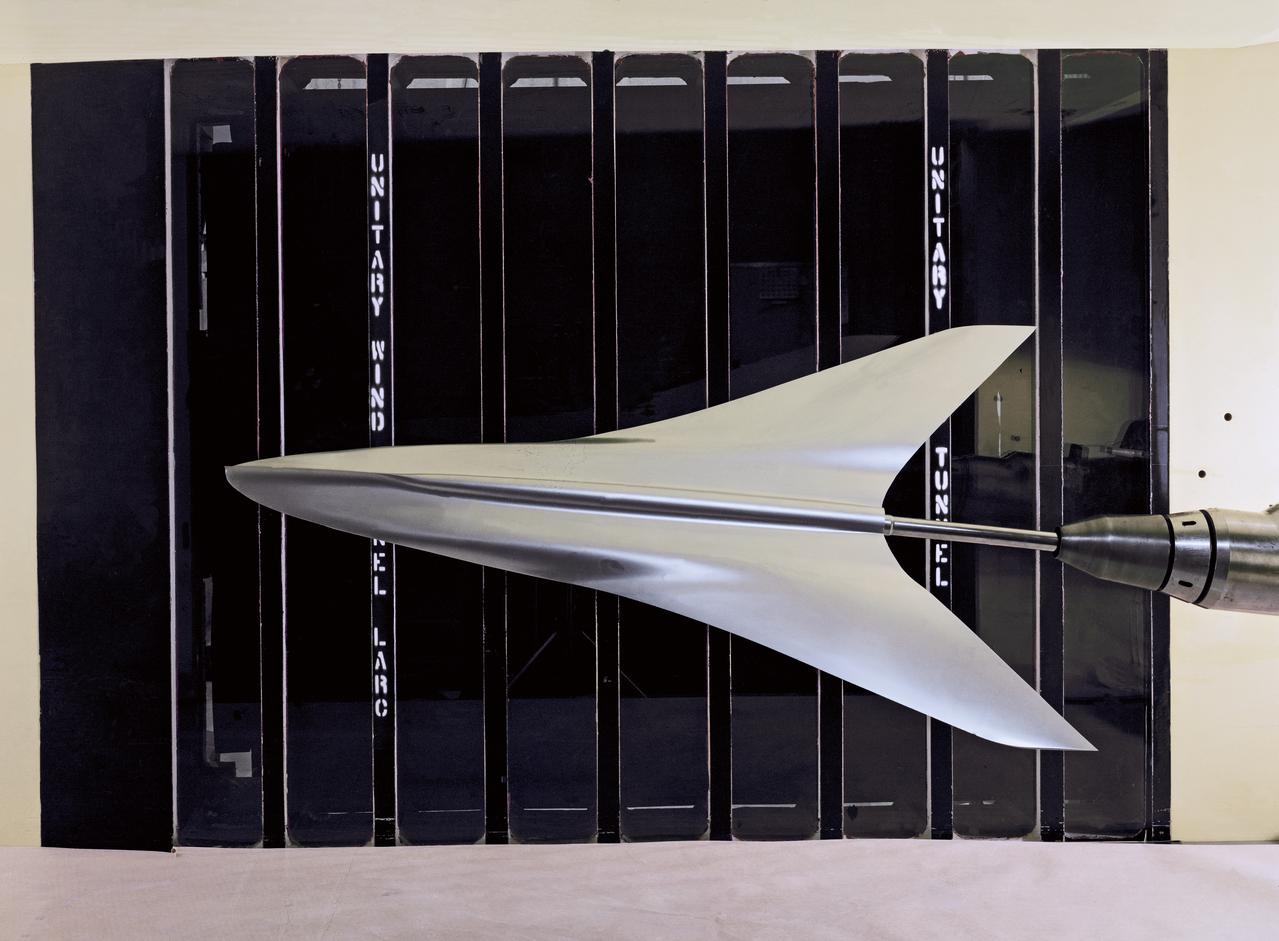
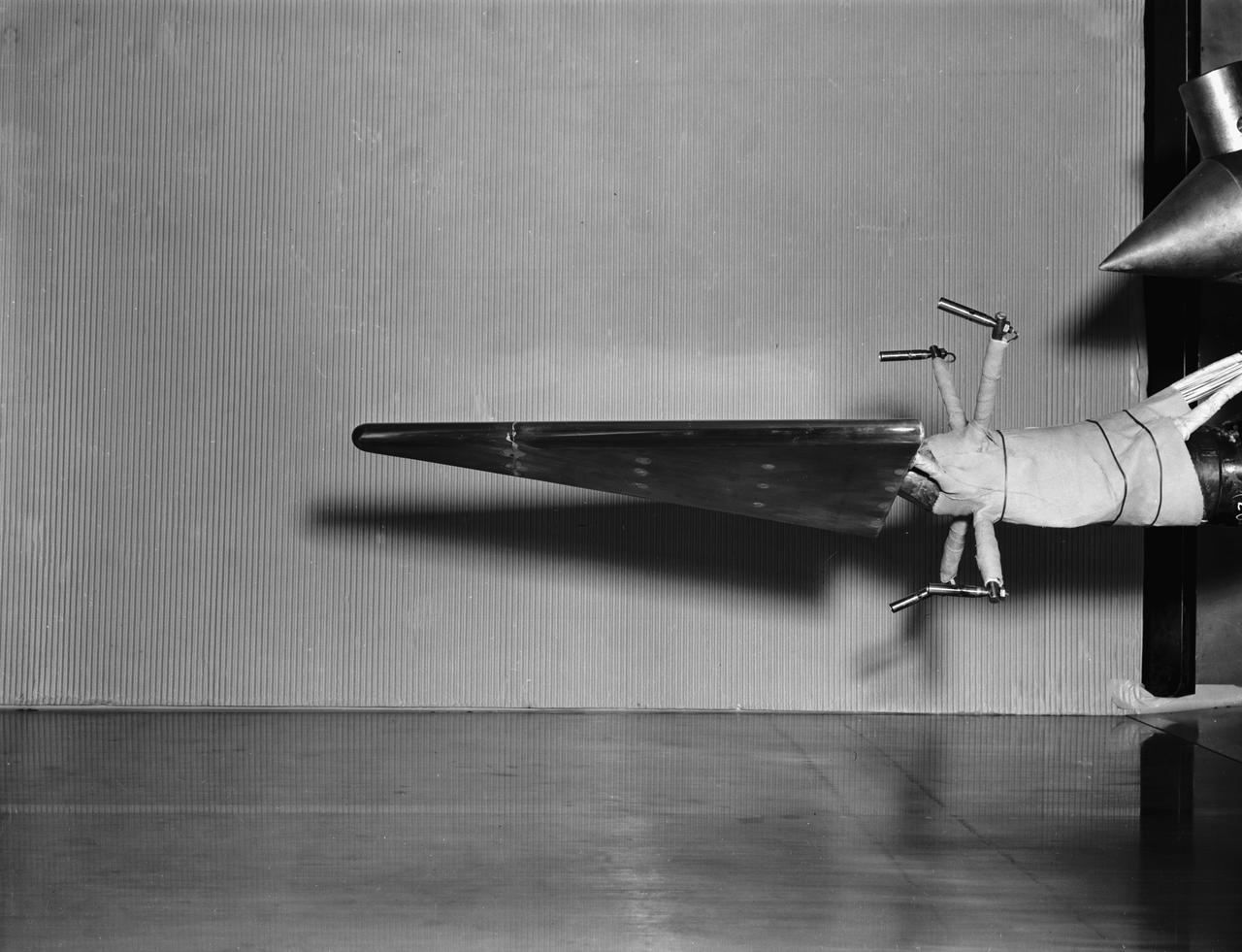
Blunt Leading Edge Model in the Unitary Wind Tunnel high mach number test section.
Blunt Leading Edge Model in the Unitary Wind Tunnel
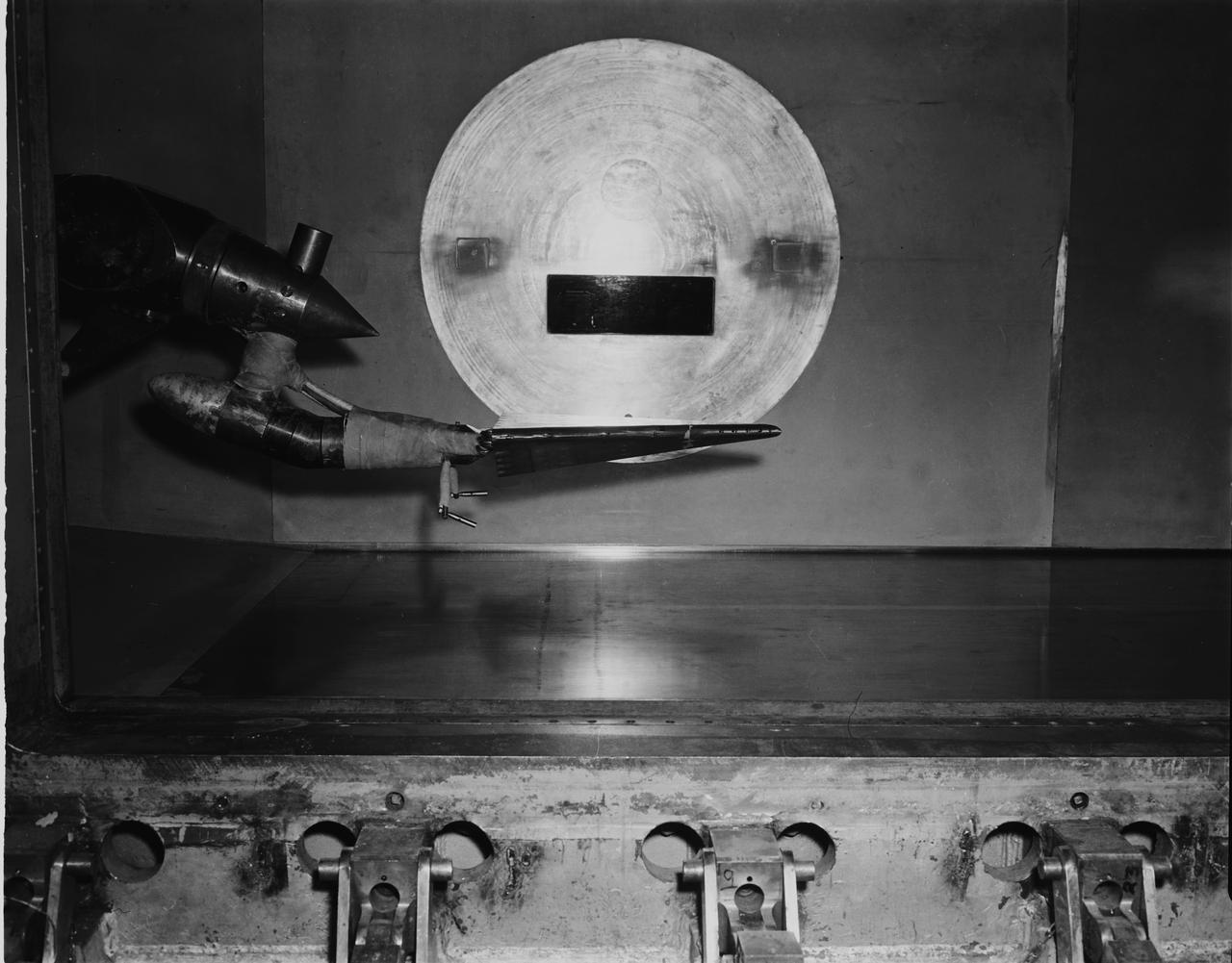
Blunt Leading Edge Model in the Unitary Wind Tunnel high mach number test section.
Blunt Leading Edge Model in the Unitary Wind Tunnel
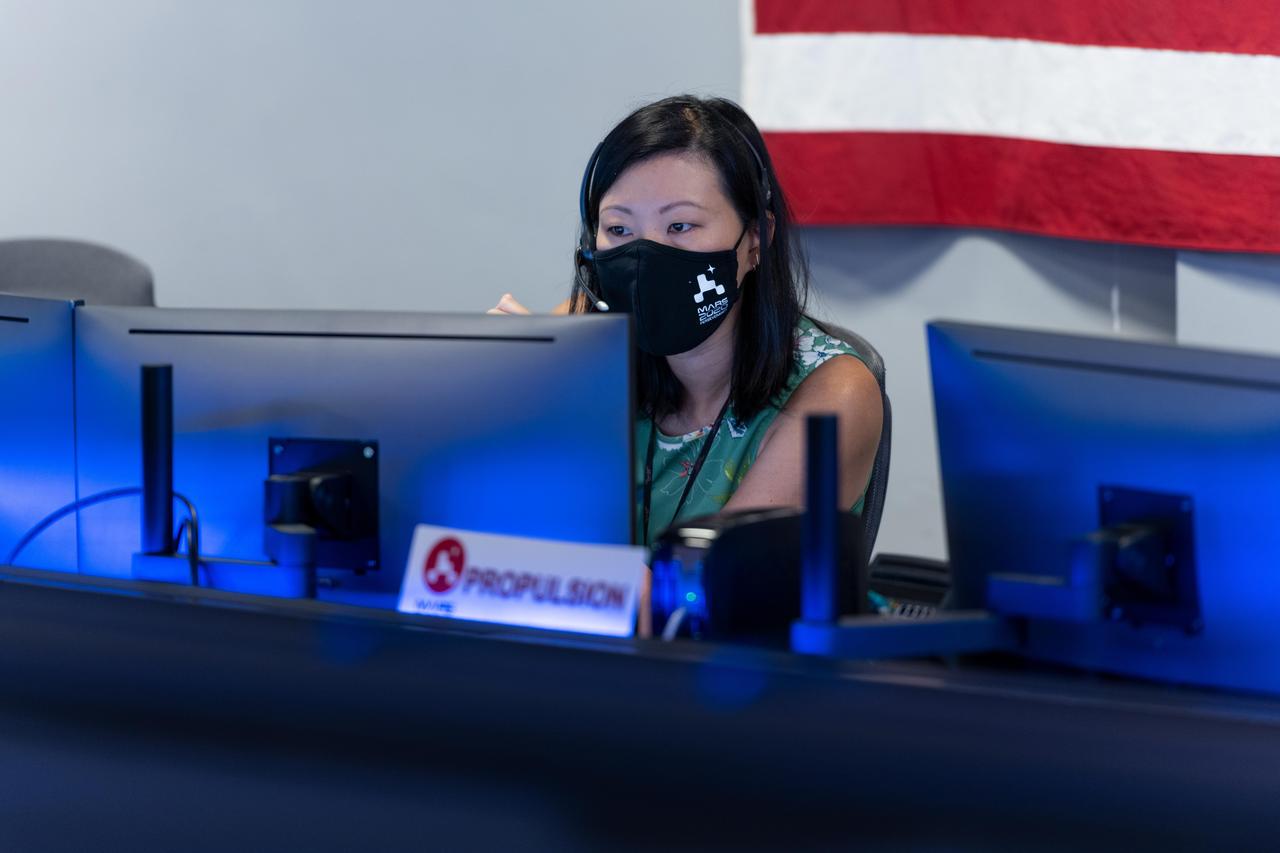
Propulsion Lead Rebekah Lam participates in Perseverance's second trajectory correction maneuver at NASA's Jet Propulsion Laboratory in Southern California.  https://photojournal.jpl.nasa.gov/catalog/PIA24194
Propulsion Lead Checks the Tanks
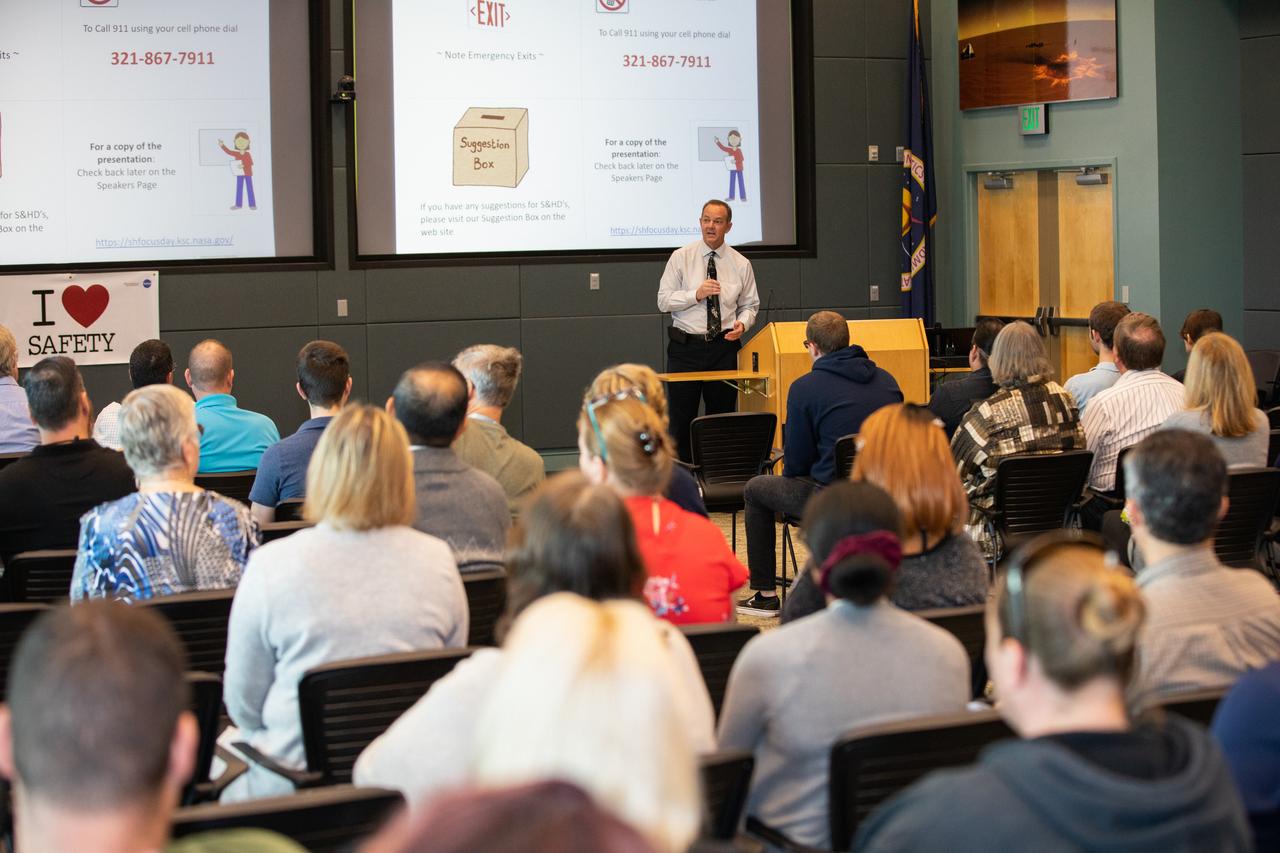
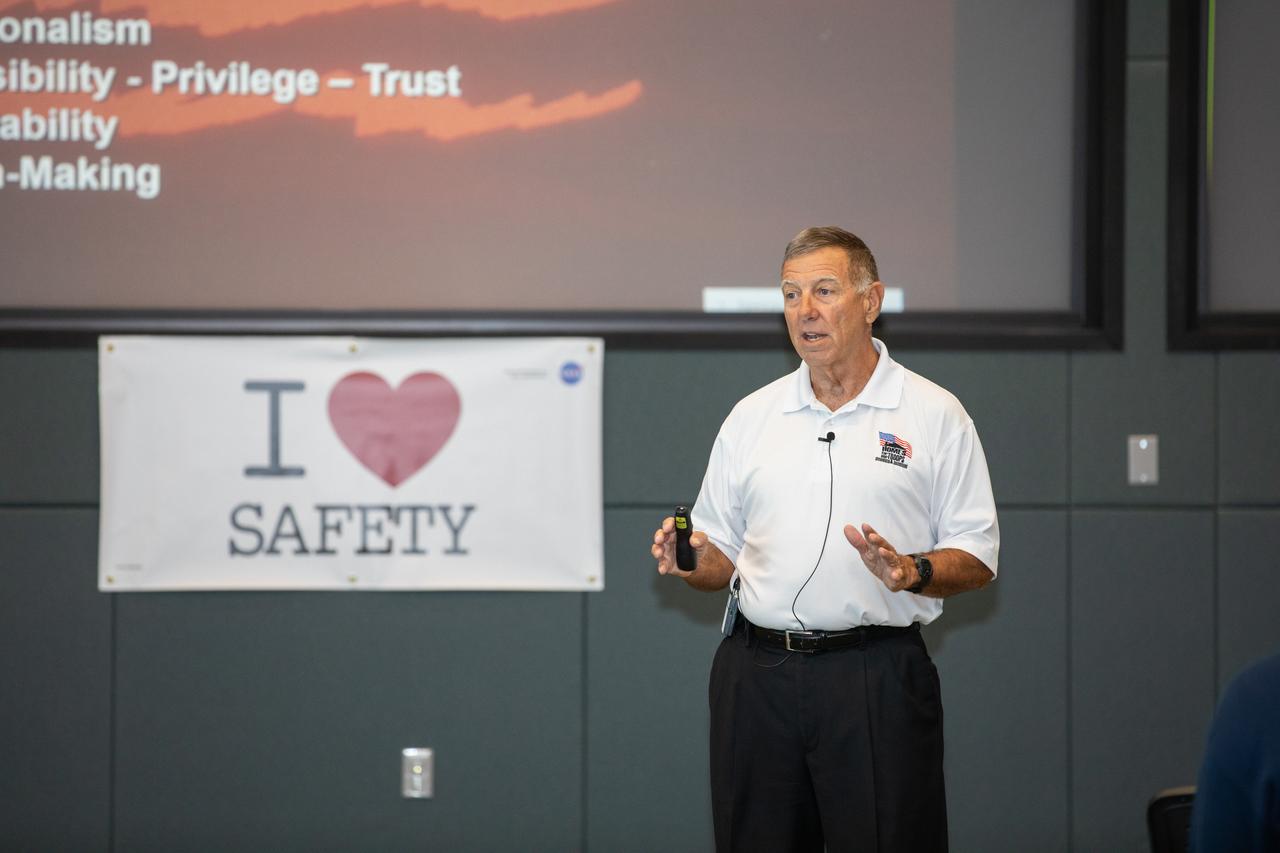
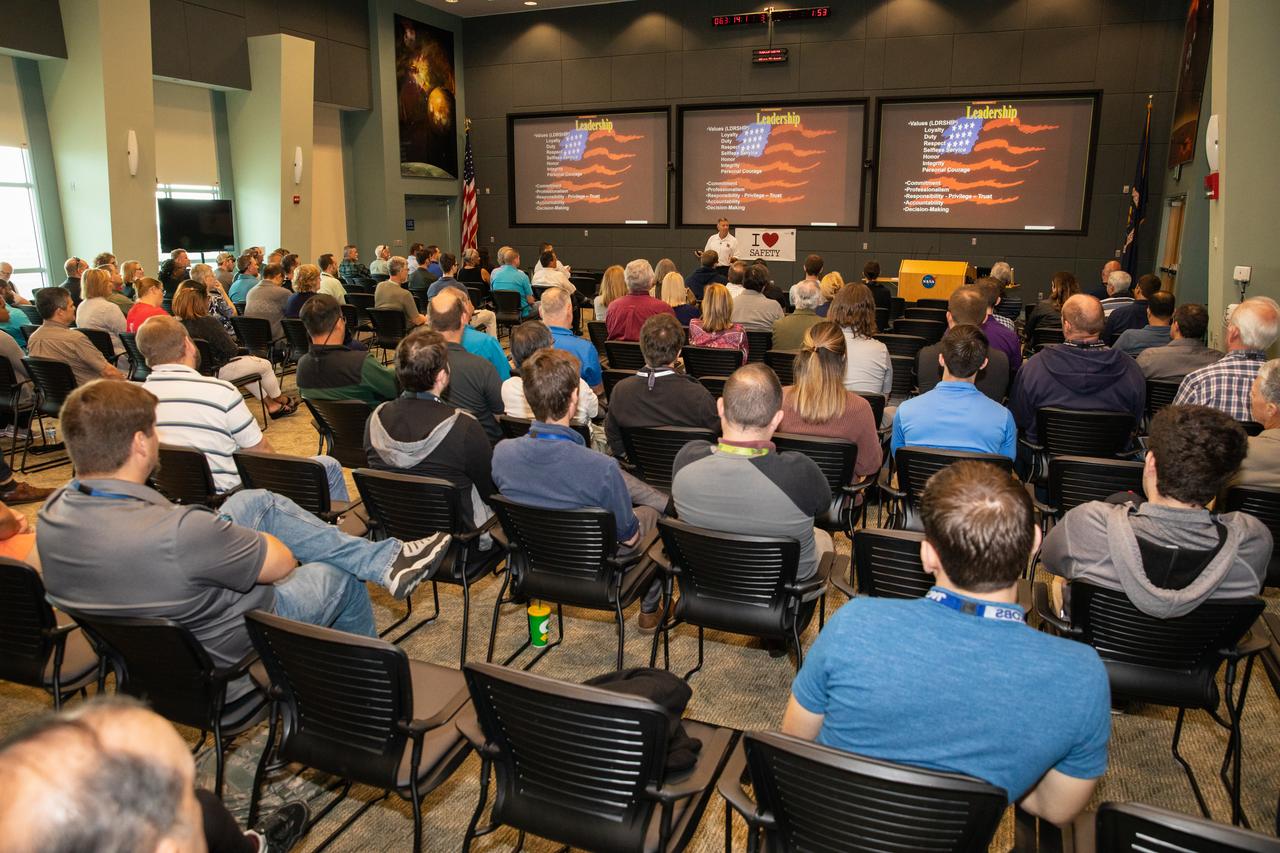
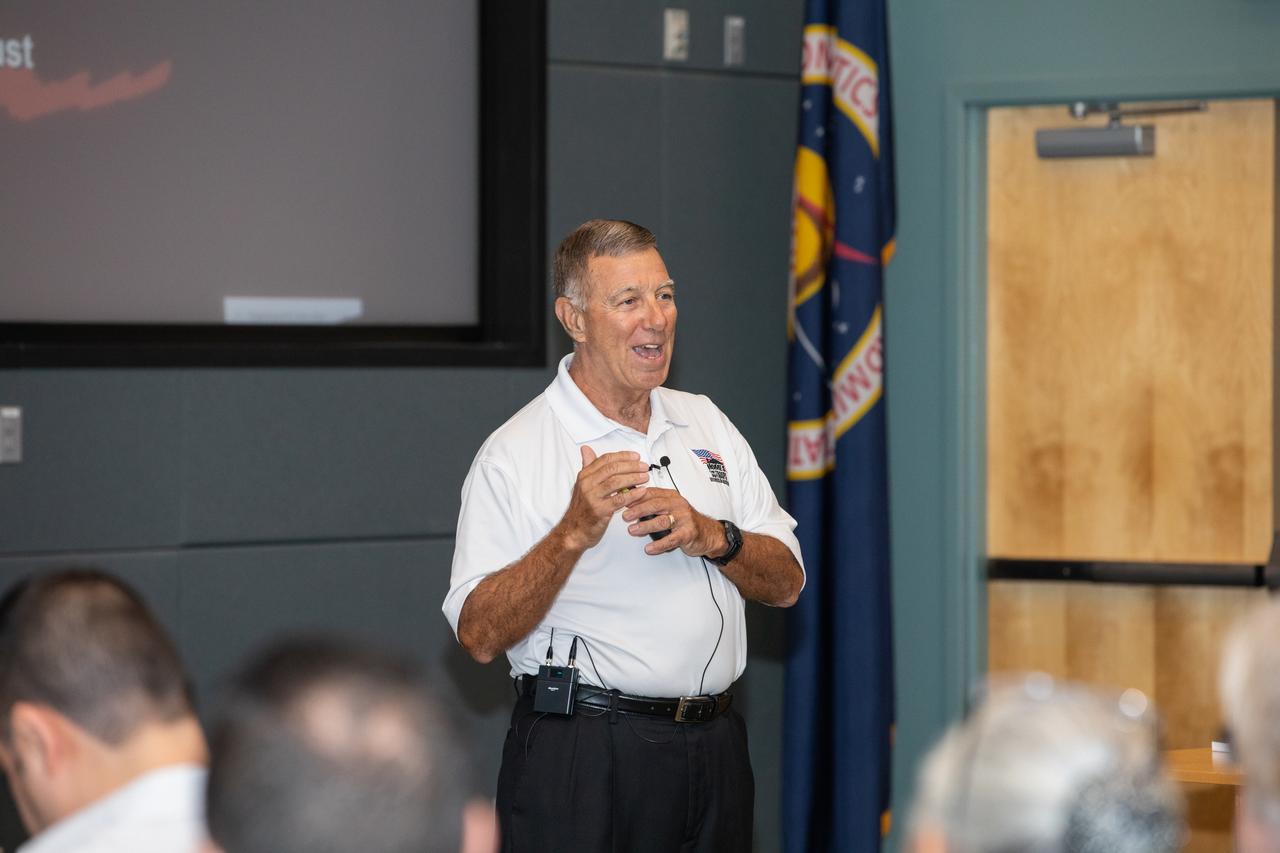
Danny McKnight, a U.S. Army retired colonel, speaks to Kennedy Space Center employees inside the Florida spaceport’s Operations Support Building II on March 3, 2020, during the center’s annual Safety and Health Days. Taking place March 2 through March 6, Safety and Health Days provides Kennedy employees with a variety of presentations to attend – all of which focus on how to maintain a safe and healthy workforce. McKnight’s presentation included information on the commitment and leadership required to be successful when operating in difficult conditions.
Safety and Health Days - Leading (Lt. Col. Danny McKnight)
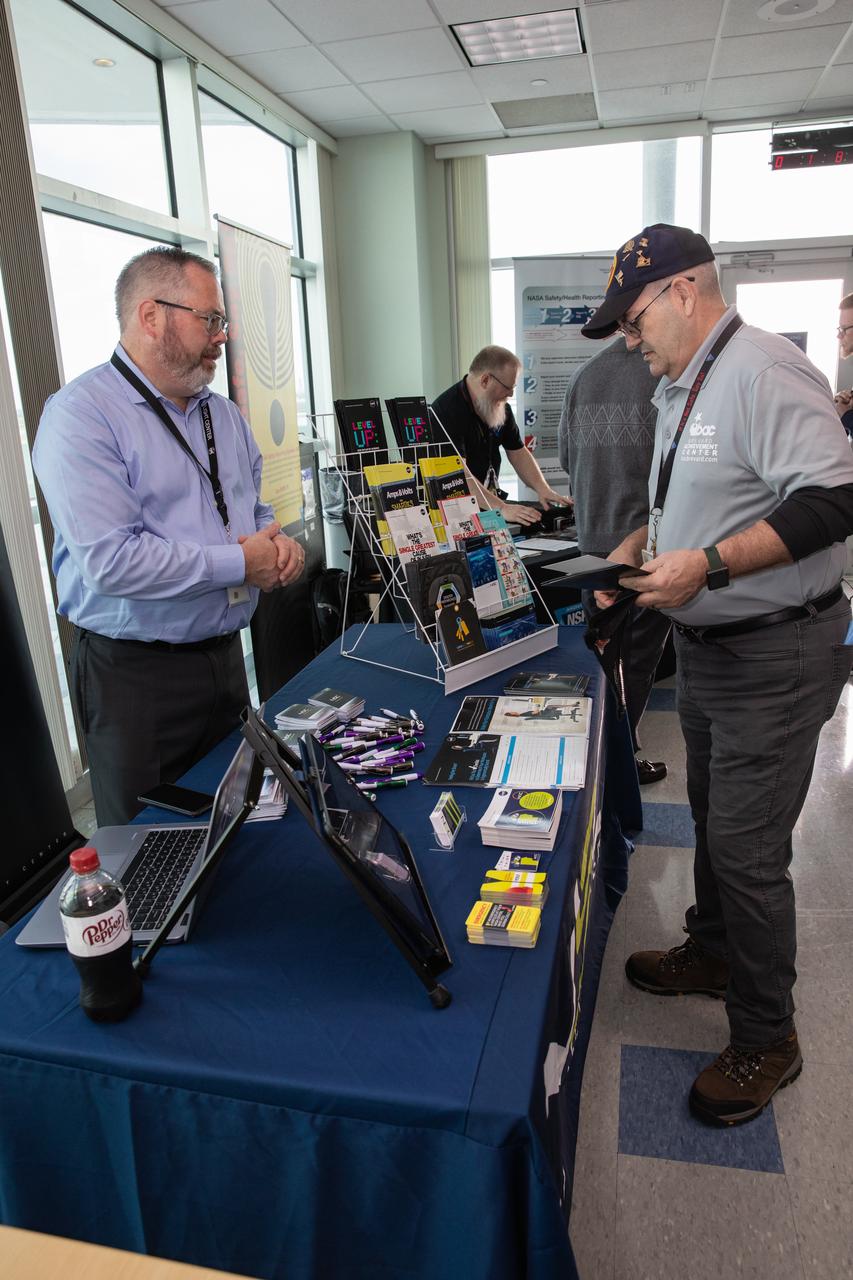
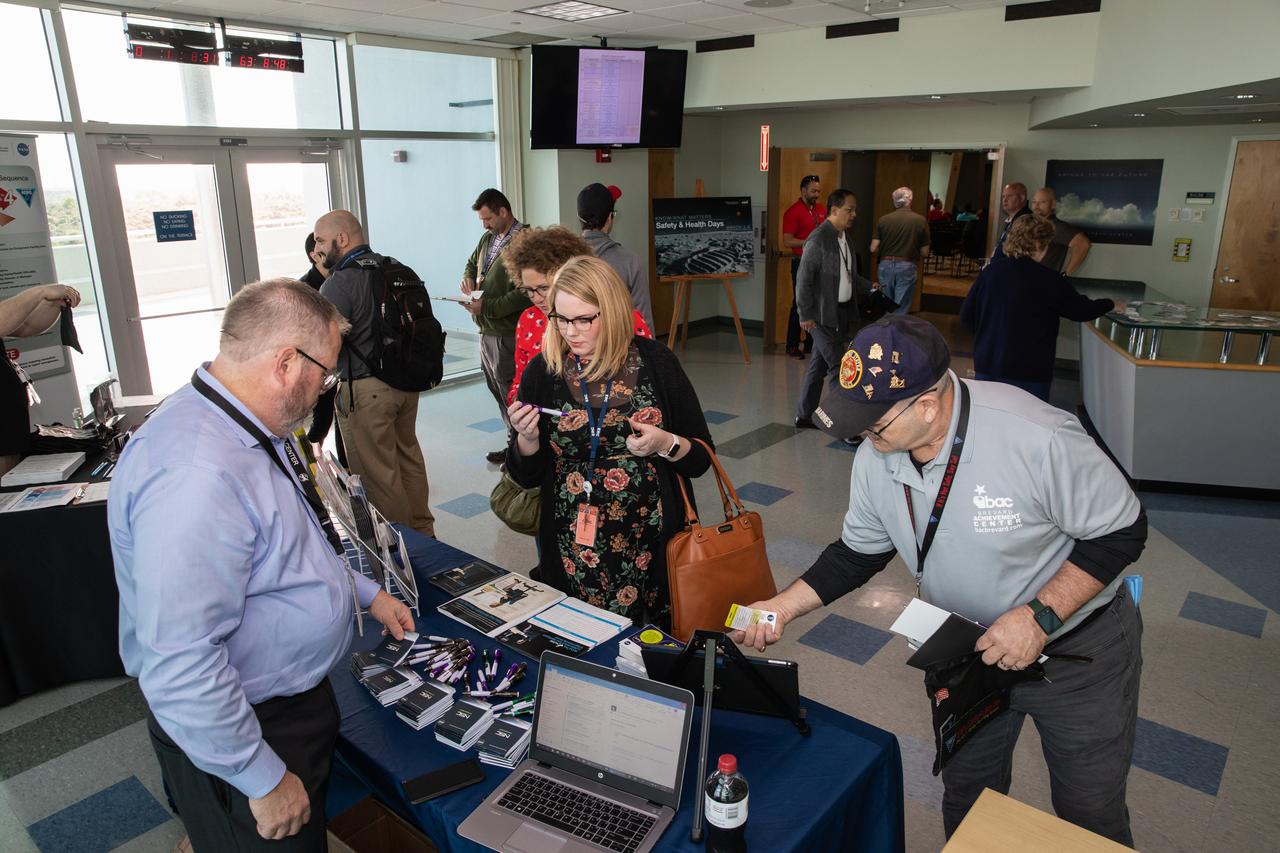
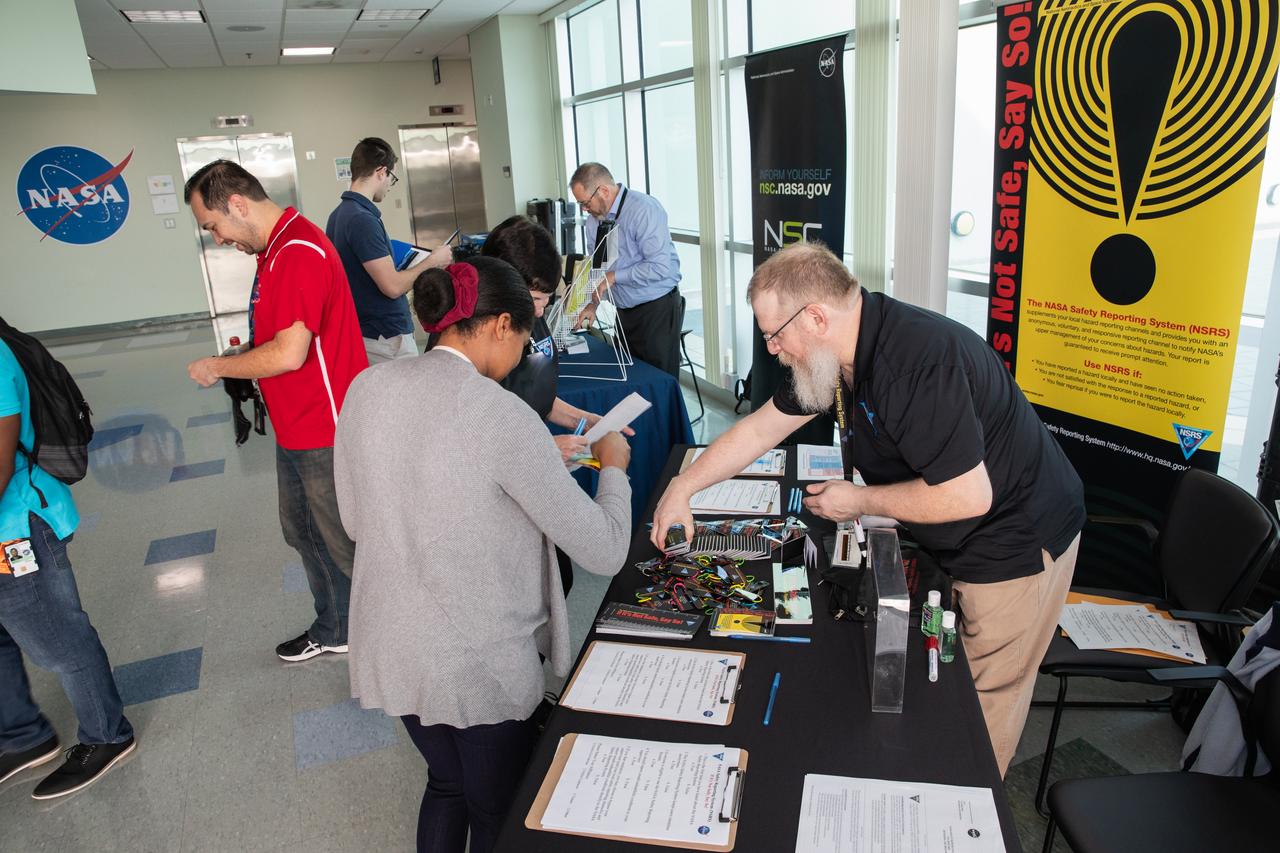
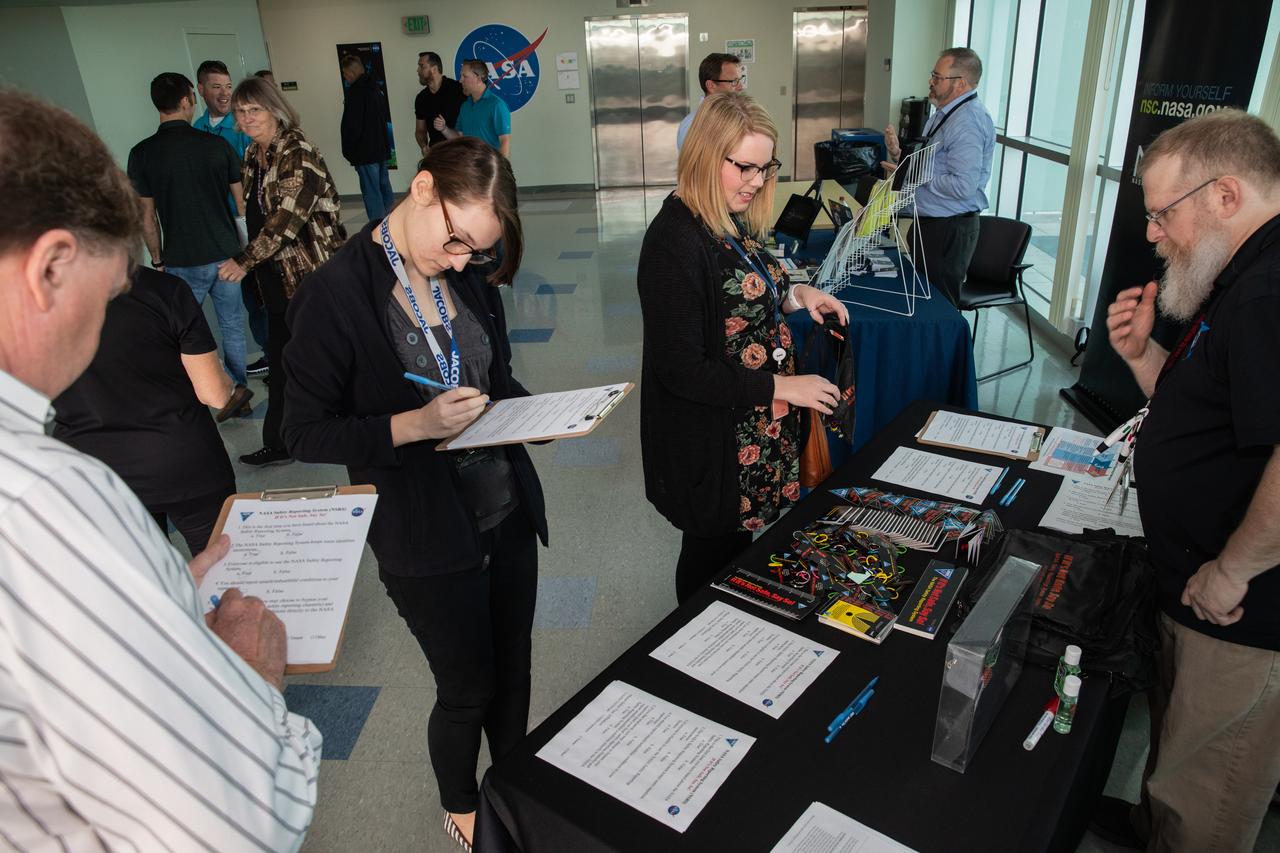
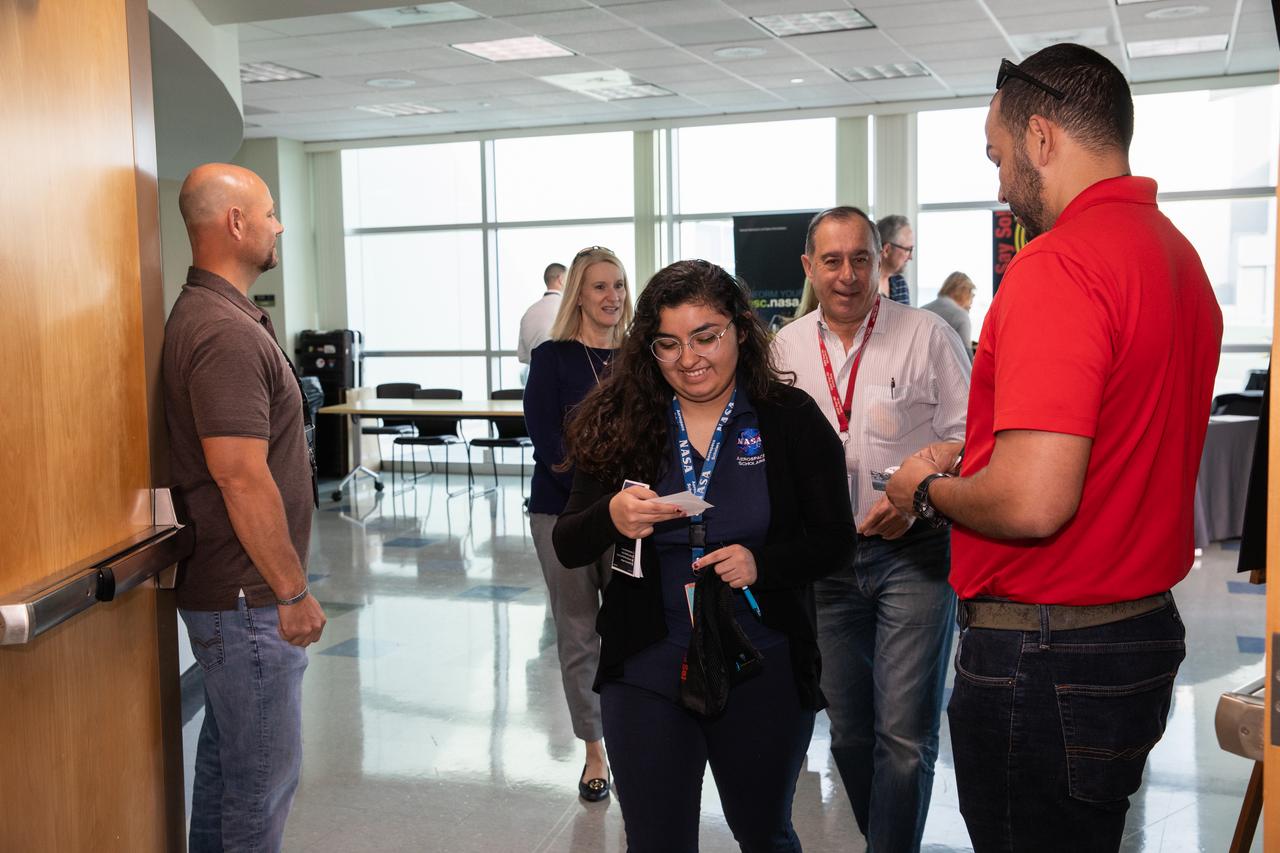
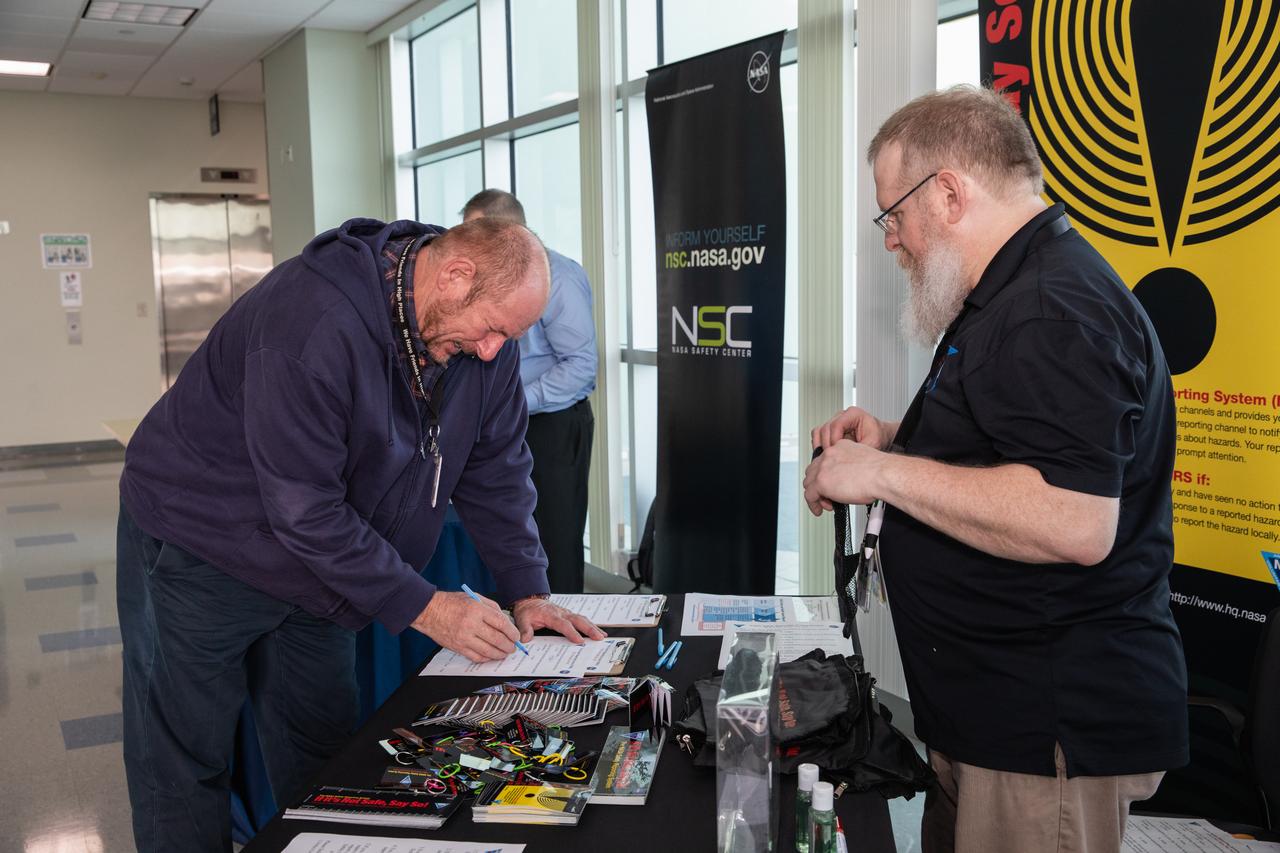
NASA Kennedy Space Center employees learn more about safety from informational tables set up inside the Florida spaceport’s Operations Support Building II on March 3, 2020, during the center’s annual Safety and Health Days. Taking place March 2 through March 6, Safety and Health Days provides Kennedy employees with a variety of presentations to attend – all of which focus on how to maintain a safe and healthy workforce.
Safety and Health Days - Leading (Lt. Col. Danny McKnight)
Tom Engler, director of Center Planning and Development at NASA’s Kennedy Space Center in Florida, addresses Kennedy employees inside the Operations Support Building II on March 3, 2020, during the center’s annual Safety and Health Days. Taking place March 2 through March 6, Safety and Health Days provides Kennedy employees with a variety of presentations to attend – all of which focus on how to maintain a safe and healthy workforce.
Safety and Health Days - Leading (Lt. Col. Danny McKnight)
Tom Engler, director of Center Planning and Development at NASA’s Kennedy Space Center in Florida, addresses Kennedy employees inside the Operations Support Building II on March 3, 2020, during the center’s annual Safety and Health Days. Taking place March 2 through March 6, Safety and Health Days provides Kennedy employees with a variety of presentations to attend – all of which focus on how to maintain a safe and healthy workforce.
Safety and Health Days - Leading (Lt. Col. Danny McKnight)
NASA Kennedy Space Center employees learn more about safety from informational tables set up inside the Florida spaceport’s Operations Support Building II on March 3, 2020, during the center’s annual Safety and Health Days. Taking place March 2 through March 6, Safety and Health Days provides Kennedy employees with a variety of presentations to attend – all of which focus on how to maintain a safe and healthy workforce.
Safety and Health Days - Leading (Lt. Col. Danny McKnight)
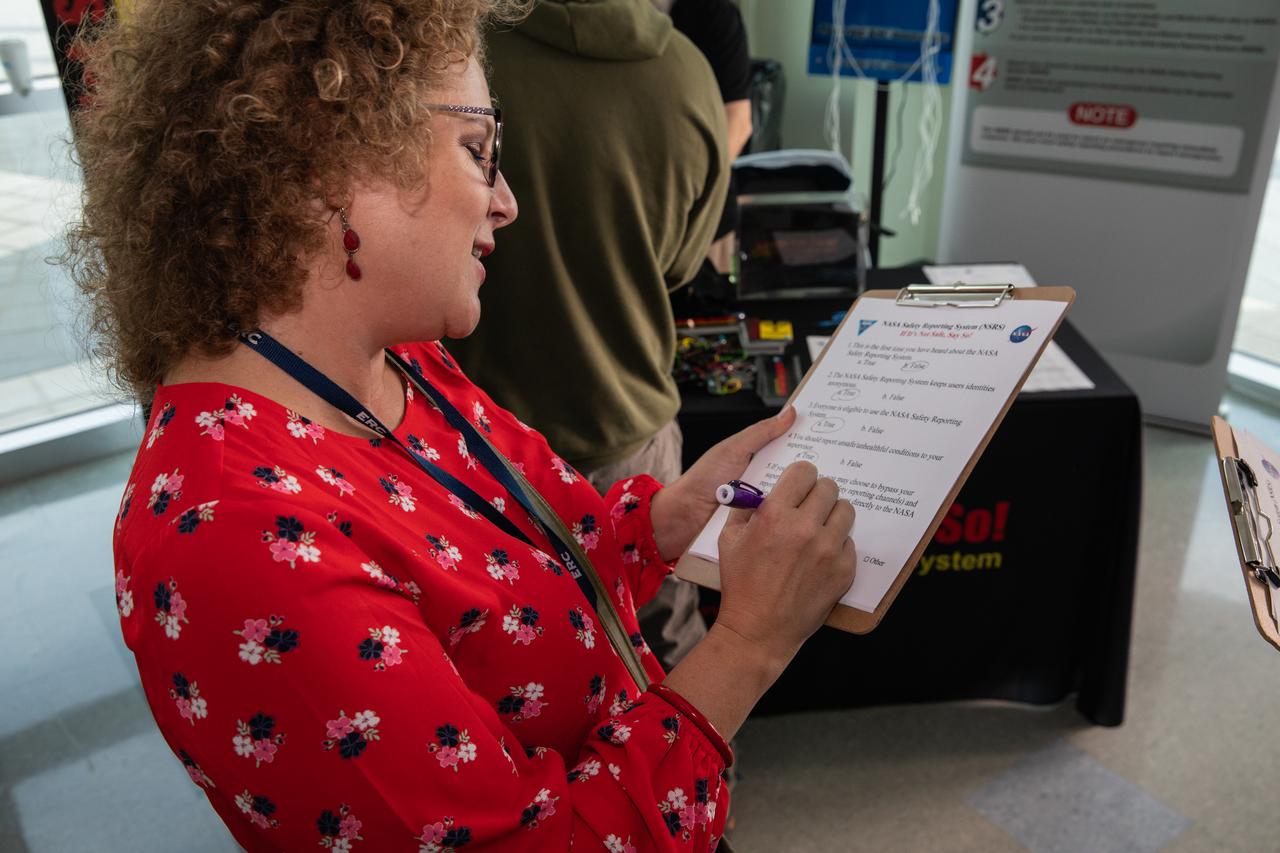
A Kennedy Space Center employee fills out a NASA Safety Reporting System questionnaire inside the Florida spaceport’s Operations Support Building II on March 3, 2020, during the center’s annual Safety and Health Days. Taking place March 2 through March 6, Safety and Health Days provides Kennedy employees with a variety of presentations to attend – all of which focus on how to maintain a safe and healthy workforce.
Safety and Health Days - Leading (Lt. Col. Danny McKnight)
NASA Kennedy Space Center employees learn more about safety from informational tables set up inside the Florida spaceport’s Operations Support Building II on March 3, 2020, during the center’s annual Safety and Health Days. Taking place March 2 through March 6, Safety and Health Days provides Kennedy employees with a variety of presentations to attend – all of which focus on how to maintain a safe and healthy workforce.
Safety and Health Days - Leading (Lt. Col. Danny McKnight)
A NASA Kennedy Space Center employee learns more about safety from informational tables set up inside the Florida spaceport’s Operations Support Building II on March 3, 2020, during the center’s annual Safety and Health Days. Taking place March 2 through March 6, Safety and Health Days provides Kennedy employees with a variety of presentations to attend – all of which focus on how to maintain a safe and healthy workforce.
Safety and Health Days - Leading (Lt. Col. Danny McKnight)
On March 3, 2020, NASA Kennedy Space Center employees attend a presentation in the Florida spaceport’s Operations Support Building II during the center’s annual Safety and Health Days. Taking place March 2 through March 6, Safety and Health Days provides Kennedy employees with a variety of presentations to attend – all of which focus on how to maintain a safe and healthy workforce.
Safety and Health Days - Leading (Lt. Col. Danny McKnight)
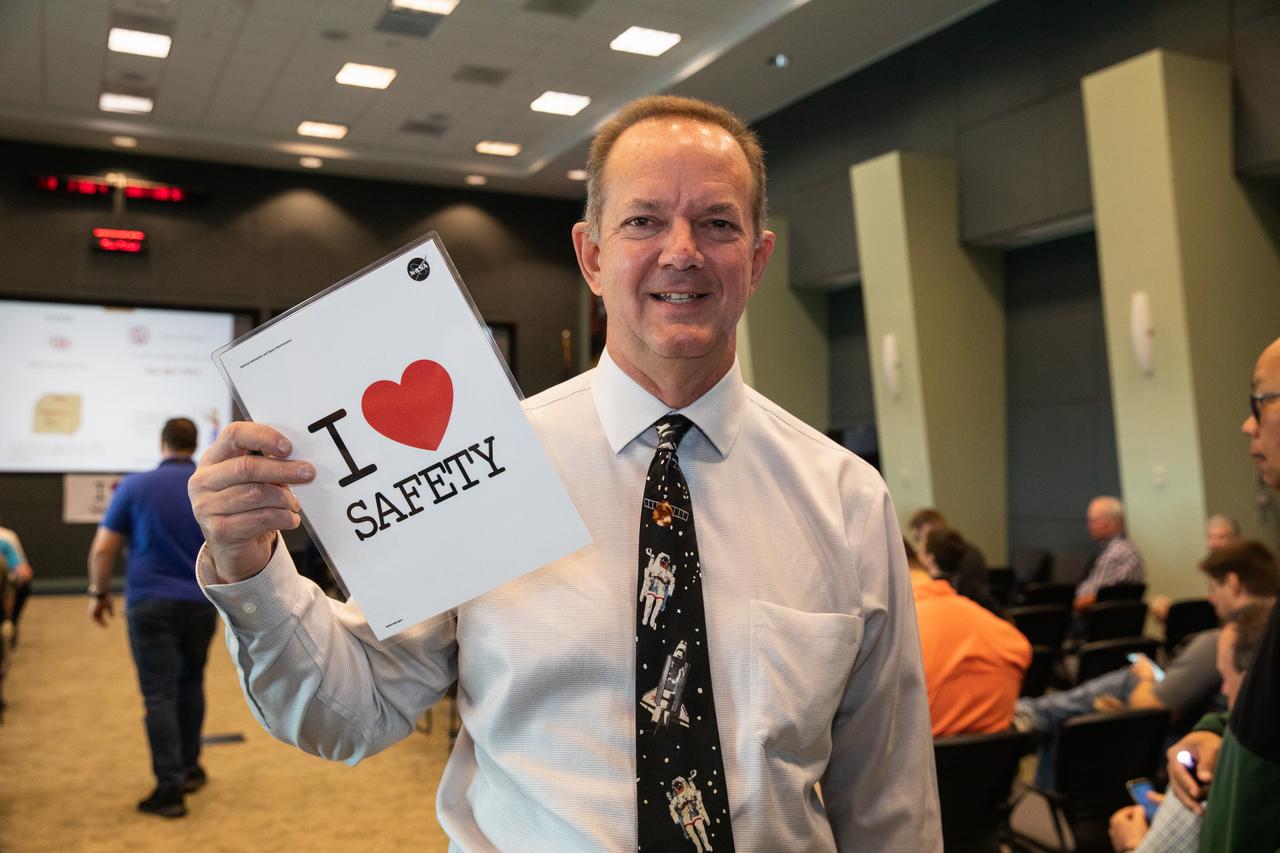
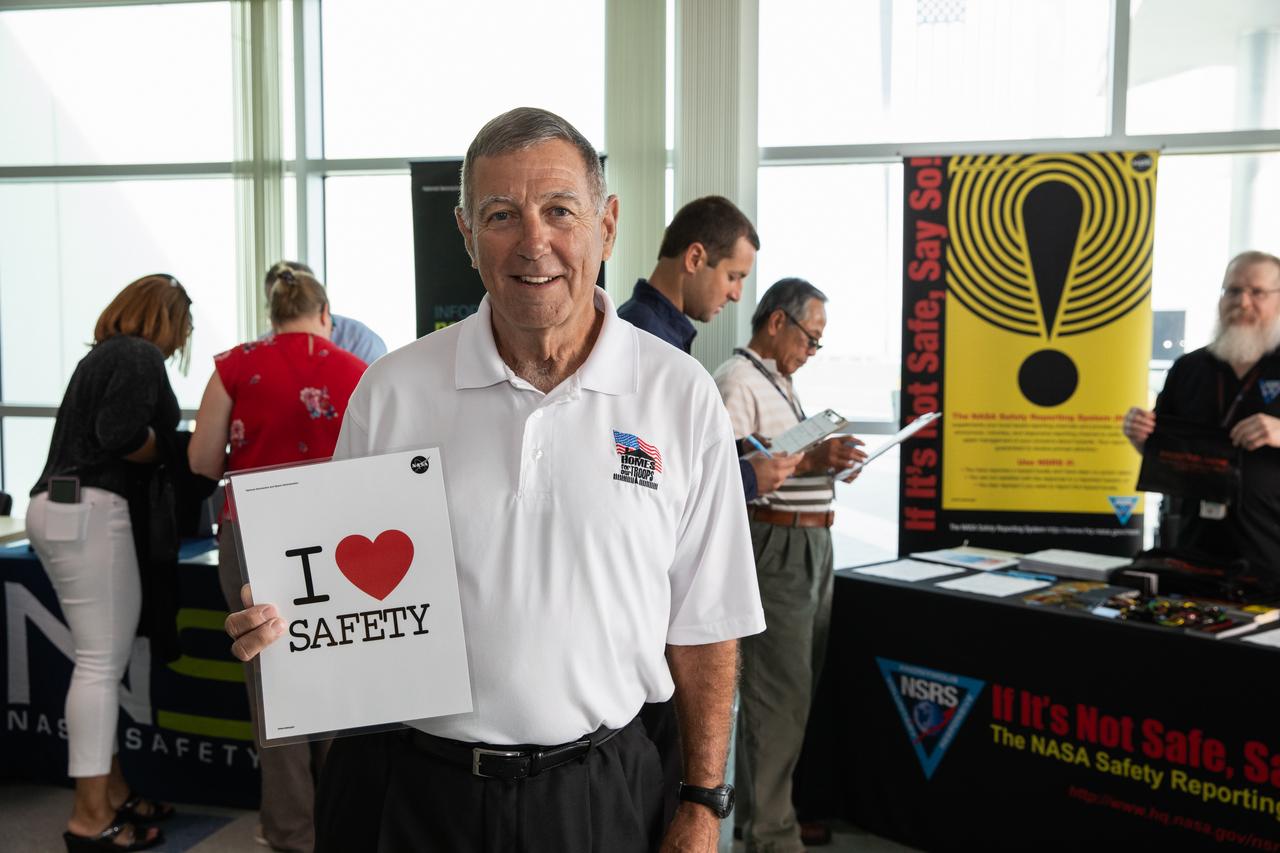
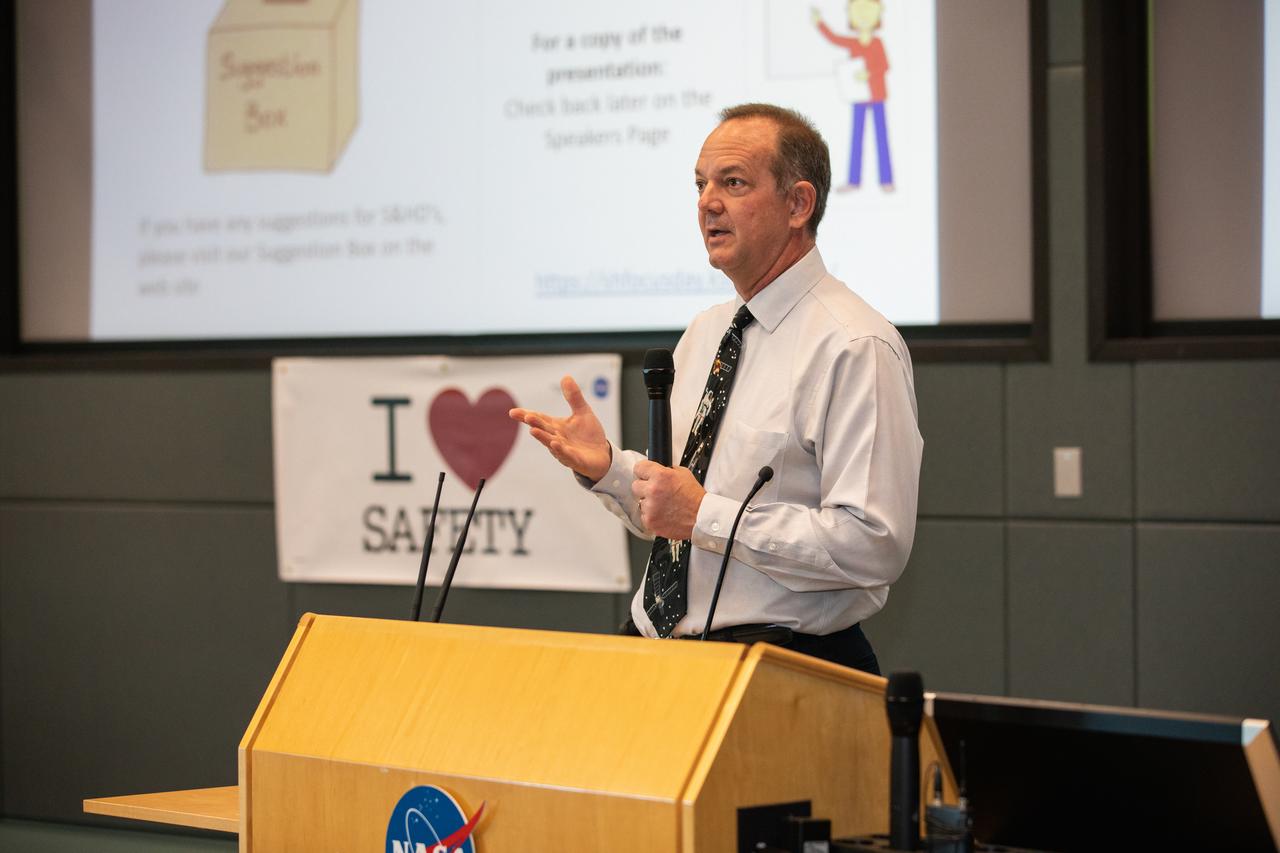
Tom Engler, director of Center Planning and Development at NASA’s Kennedy Space Center in Florida, poses with the Safety and Mission Assurance “I Love Safety” poster during the center’s annual Safety and Health Days on March 3, 2020. Taking place March 2 through March 6, Safety and Health Days provides Kennedy employees with a variety of presentations to attend – all of which focus on how to maintain a safe and healthy workforce.
Safety and Health Days - Leading (Lt. Col. Danny McKnight)
NASA Kennedy Space Center employees learn more about safety from informational tables set up inside the Florida spaceport’s Operations Support Building II on March 3, 2020, during the center’s annual Safety and Health Days. Taking place March 2 through March 6, Safety and Health Days provides Kennedy employees with a variety of presentations to attend – all of which focus on how to maintain a safe and healthy workforce.
Safety and Health Days - Leading (Lt. Col. Danny McKnight)
Danny McKnight, a U.S. Army retired colonel, speaks to Kennedy Space Center employees inside the Florida spaceport’s Operations Support Building II on March 3, 2020, during the center’s annual Safety and Health Days. Taking place March 2 through March 6, Safety and Health Days provides Kennedy employees with a variety of presentations to attend – all of which focus on how to maintain a safe and healthy workforce. McKnight’s presentation included information on the commitment and leadership required to be successful when operating in difficult conditions.
Safety and Health Days - Leading (Lt. Col. Danny McKnight)
Danny McKnight, a U.S. Army retired colonel, presents information on what it takes to be a leader when operating in difficult conditions inside NASA Kennedy Space Center’s Operations Support Building II on March 3, 2020, during the center’s annual Safety and Health Days. Taking place March 2 through March 6, Safety and Health Days provides Kennedy employees with a variety of presentations to attend – all of which focus on how to maintain a safe and healthy workforce.
Safety and Health Days - Leading (Lt. Col. Danny McKnight)
Danny McKnight, a U.S. Army retired colonel one of the guest speakers during NASA Kennedy Space Center’s annual Safety and Health Days, poses with the Safety and Mission Assurance “I Love Safety” poster inside the Operations Support Building II on March 3, 2020, prior to his presentation. Taking place March 2 through March 6, Safety and Health Days provides Kennedy employees with a variety of presentations to attend – all of which focus on how to maintain a safe and healthy workforce. McKnight’s presentation included information on the commitment and leadership required to be successful when operating in difficult conditions.
Safety and Health Days - Leading (Lt. Col. Danny McKnight)
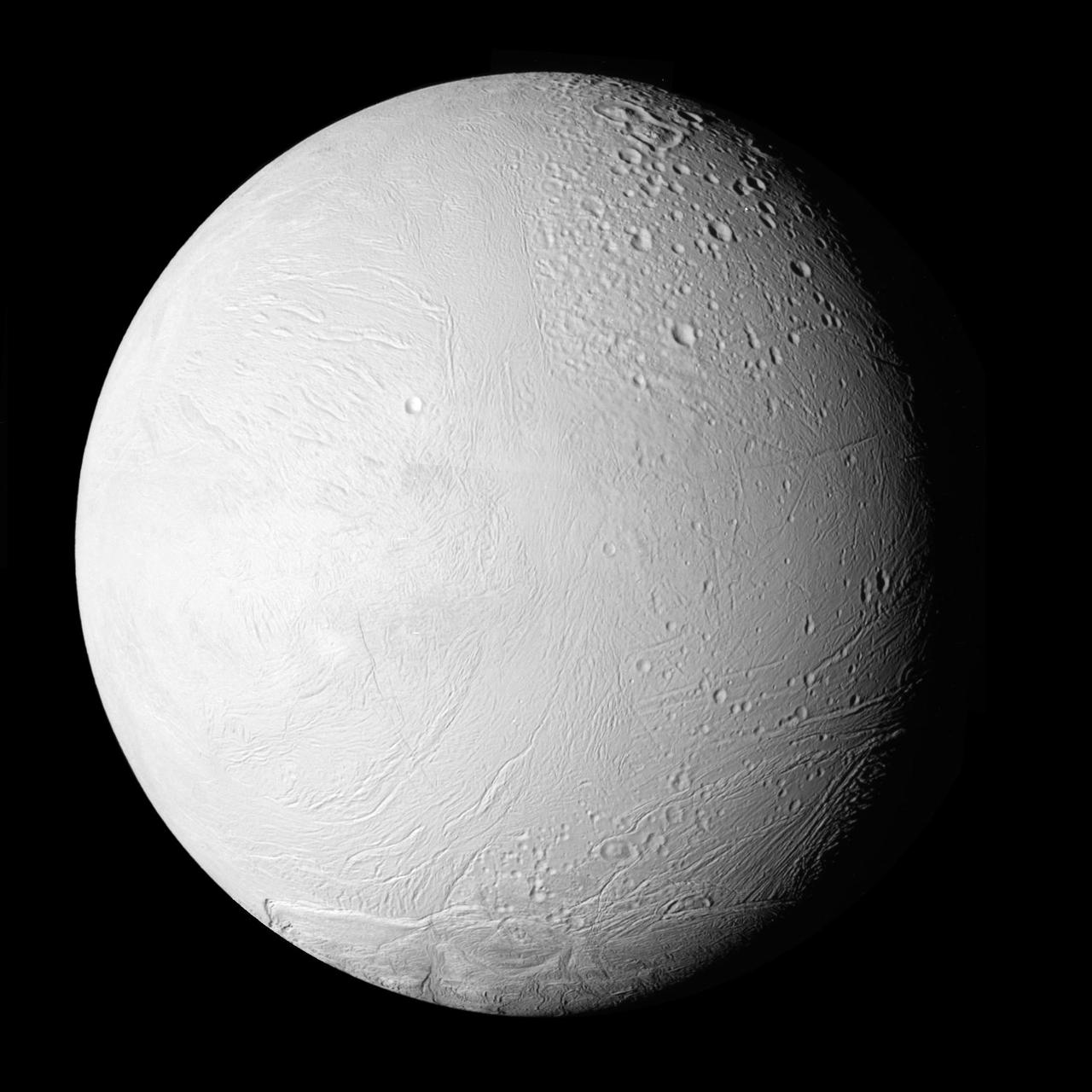
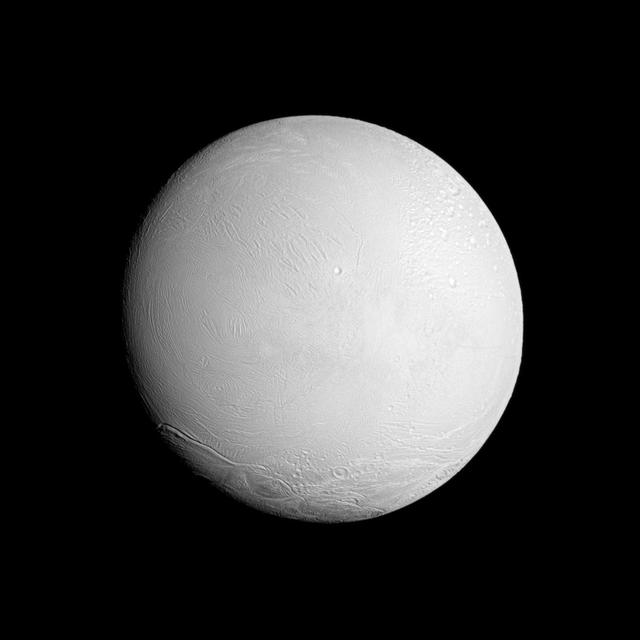
NASA Cassini spacecraft shows a new view of Saturn moon Enceladus in a whole-disk mosaic of the geologically active moon leading, or western, hemisphere.
Enceladus Leading Hemisphere
Kennedy continues to expand use of alternate fuel vehicles on center. As of 2021, 75% of the fleet uses alternative fuels (electricity, E-85, and biodiesel) to power them. There are 20 hybrids (gas/electric) 15 plug in hybrids, and 14 dedicated electric vehicles. Kennedy is working with commercial partner Florida Power and Light to build 56 additional vehicle chargers for government-owned vehicles by the end of 2021.
SI Annual Report Photos - Green Lead Building and Coolant Plant
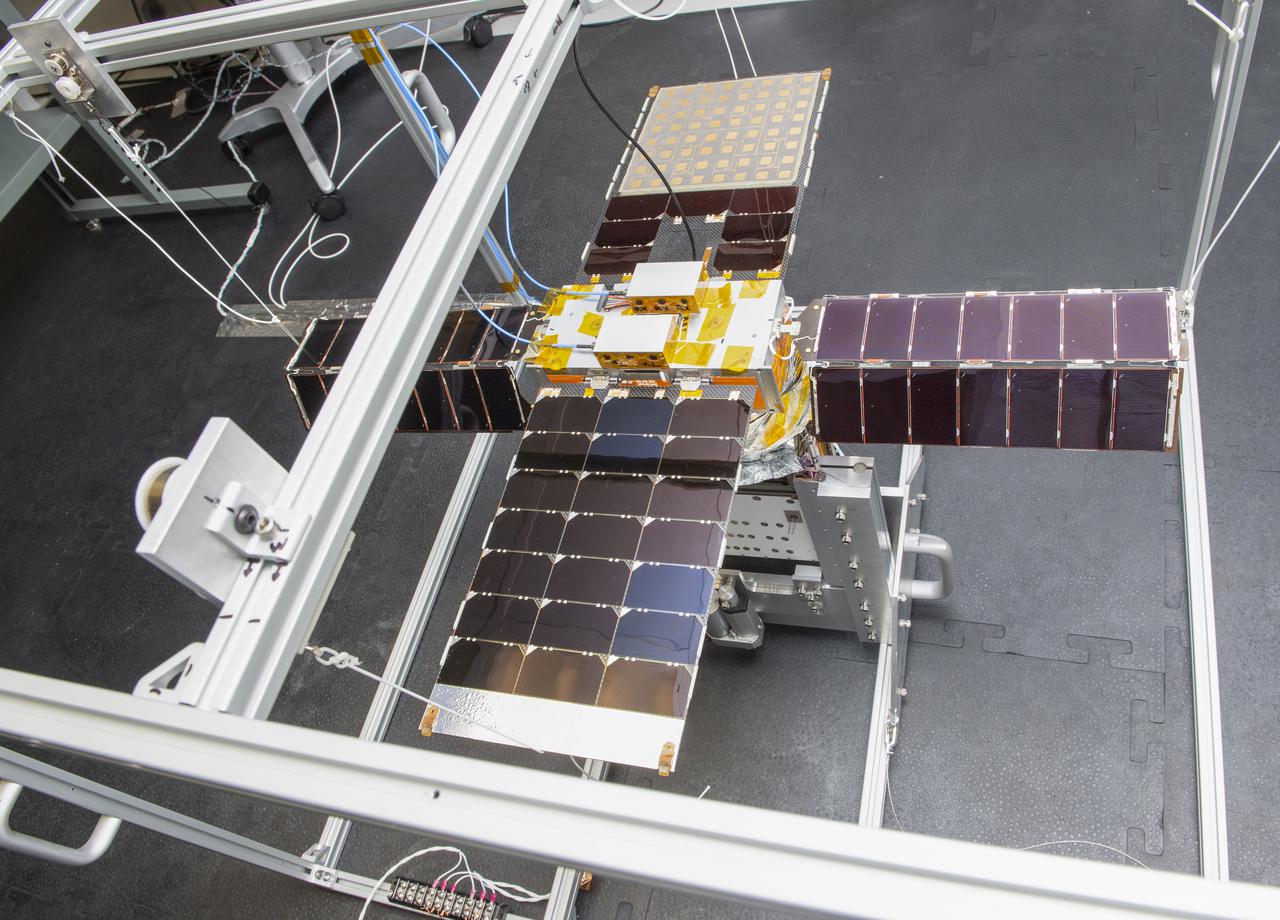
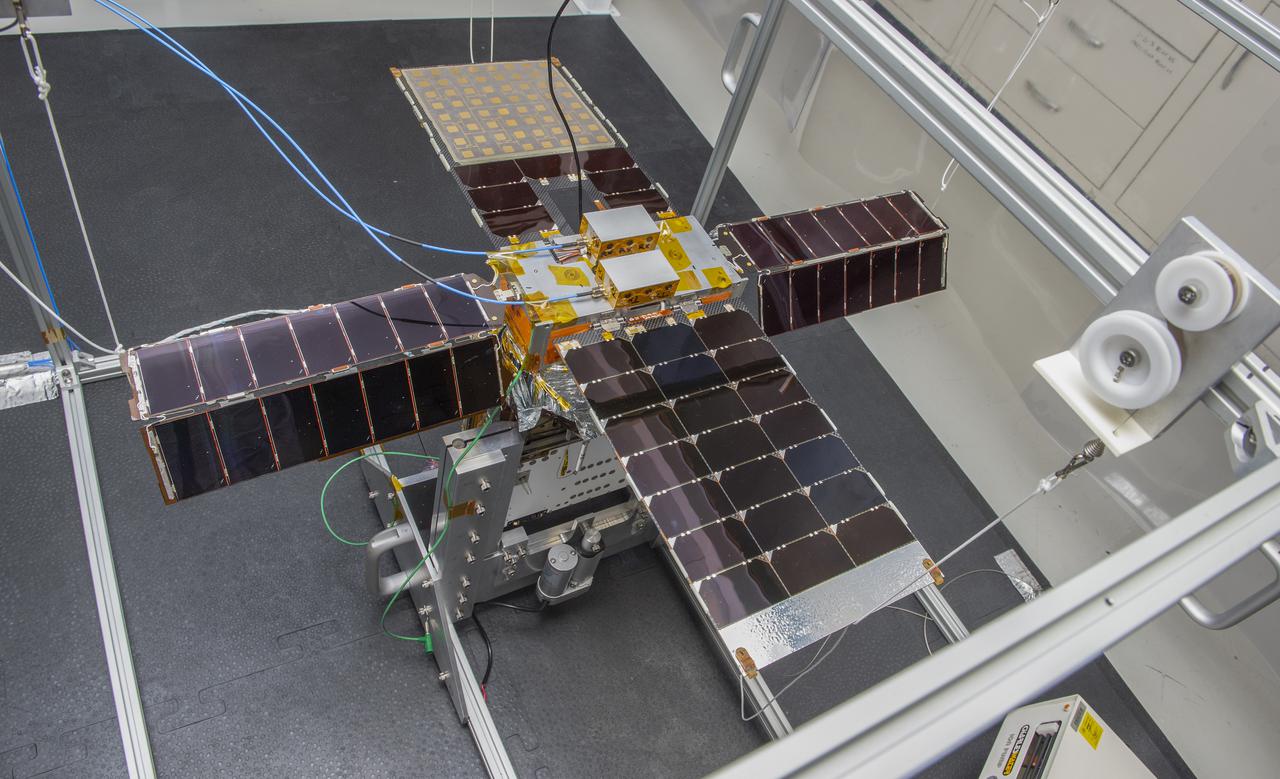
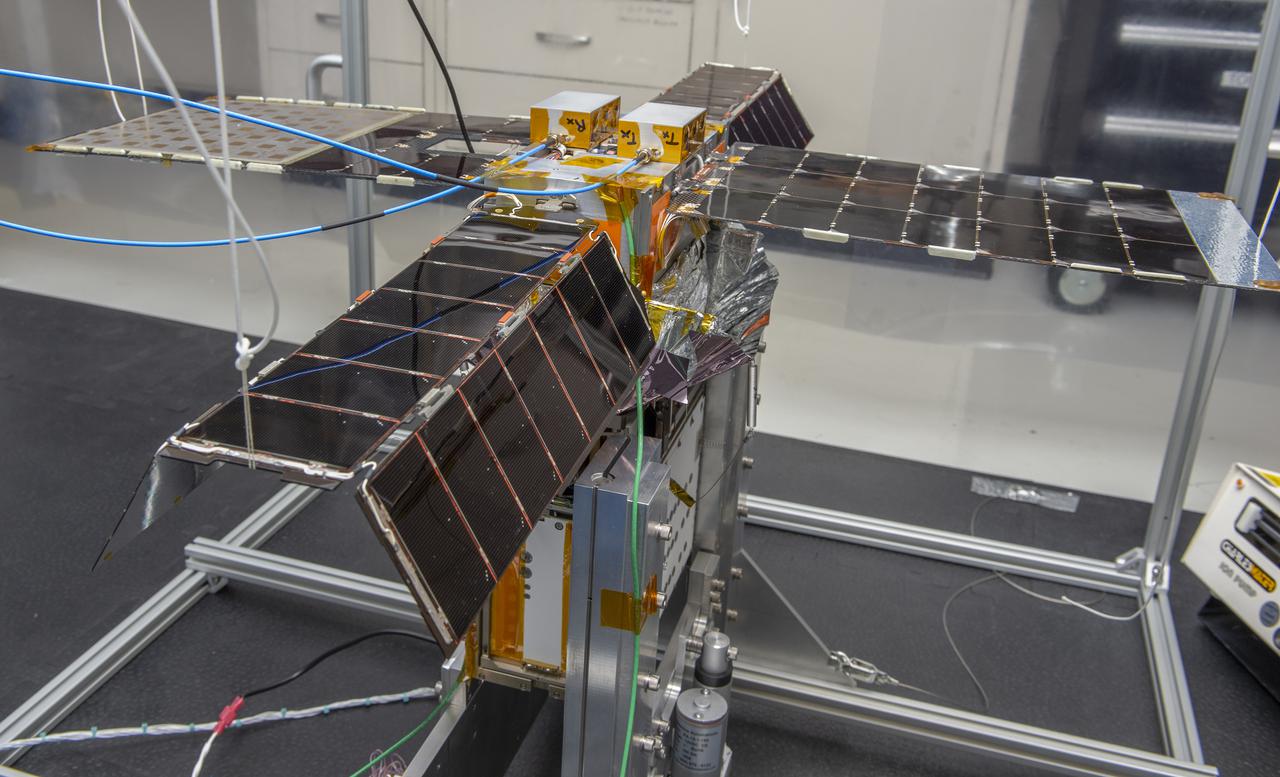
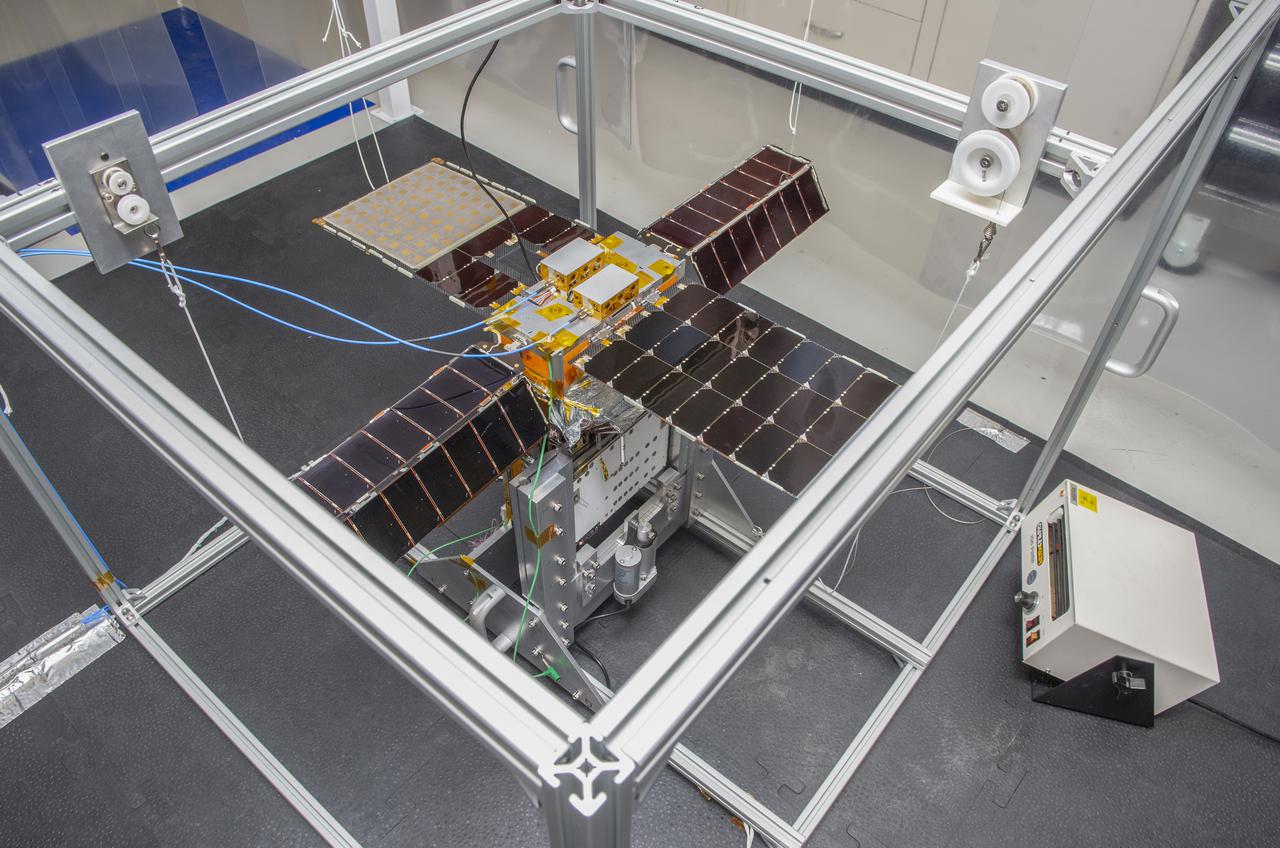
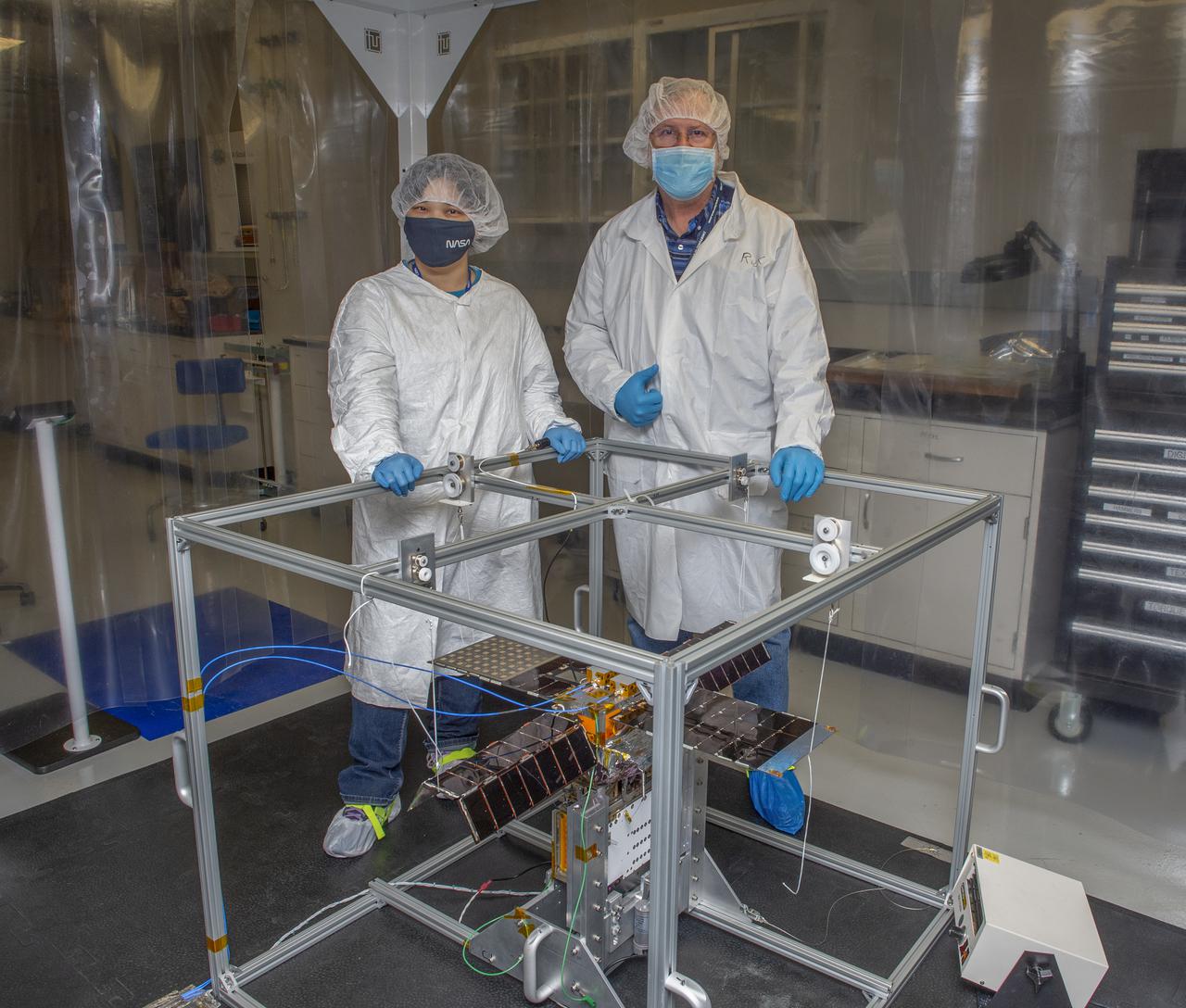
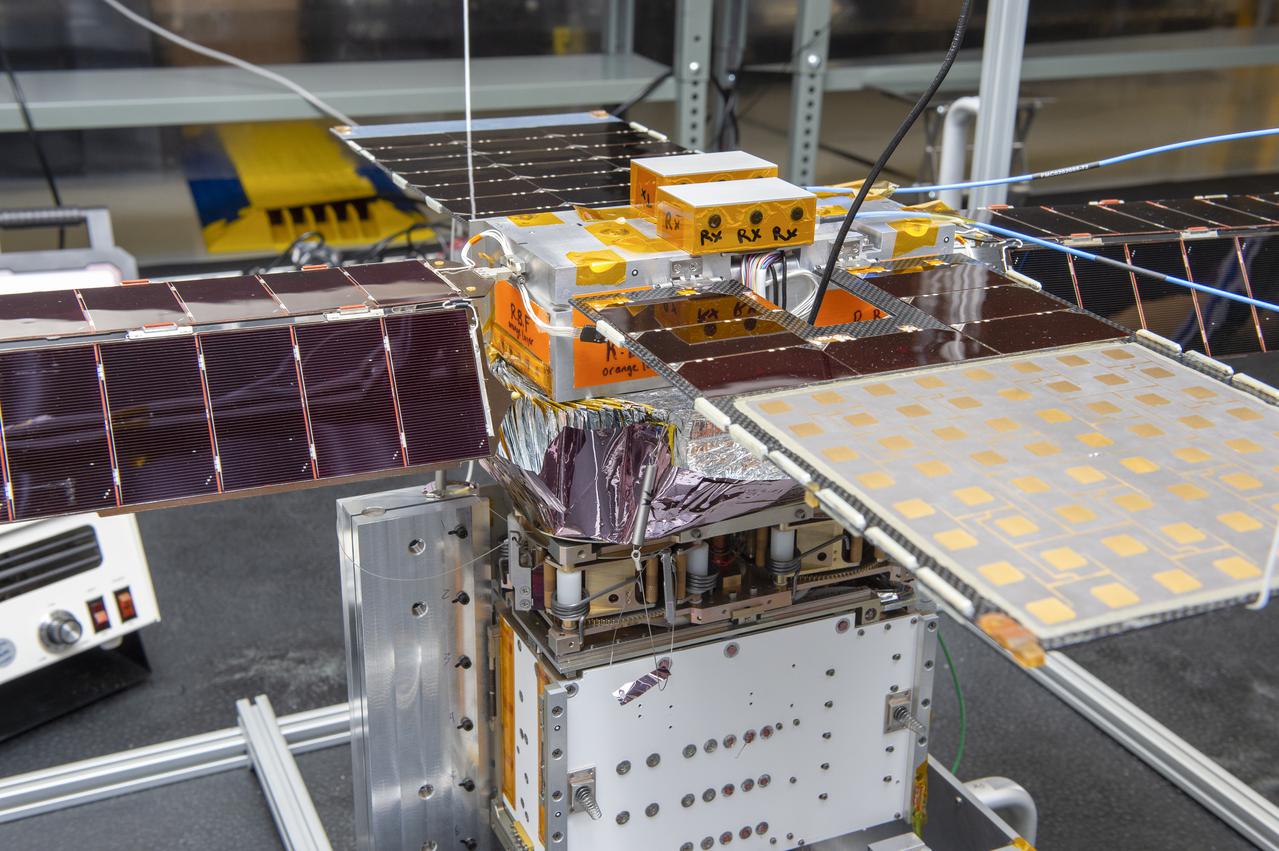
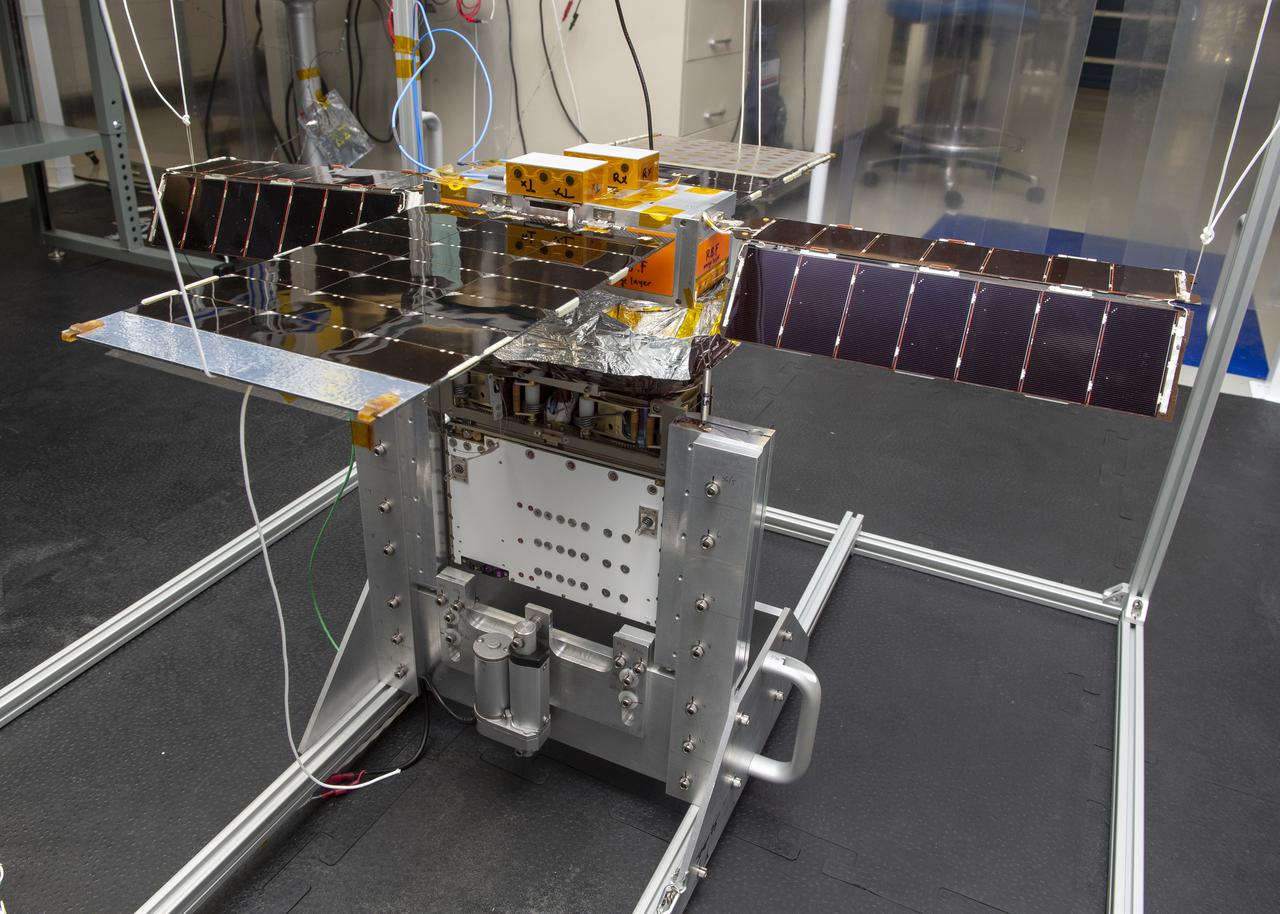
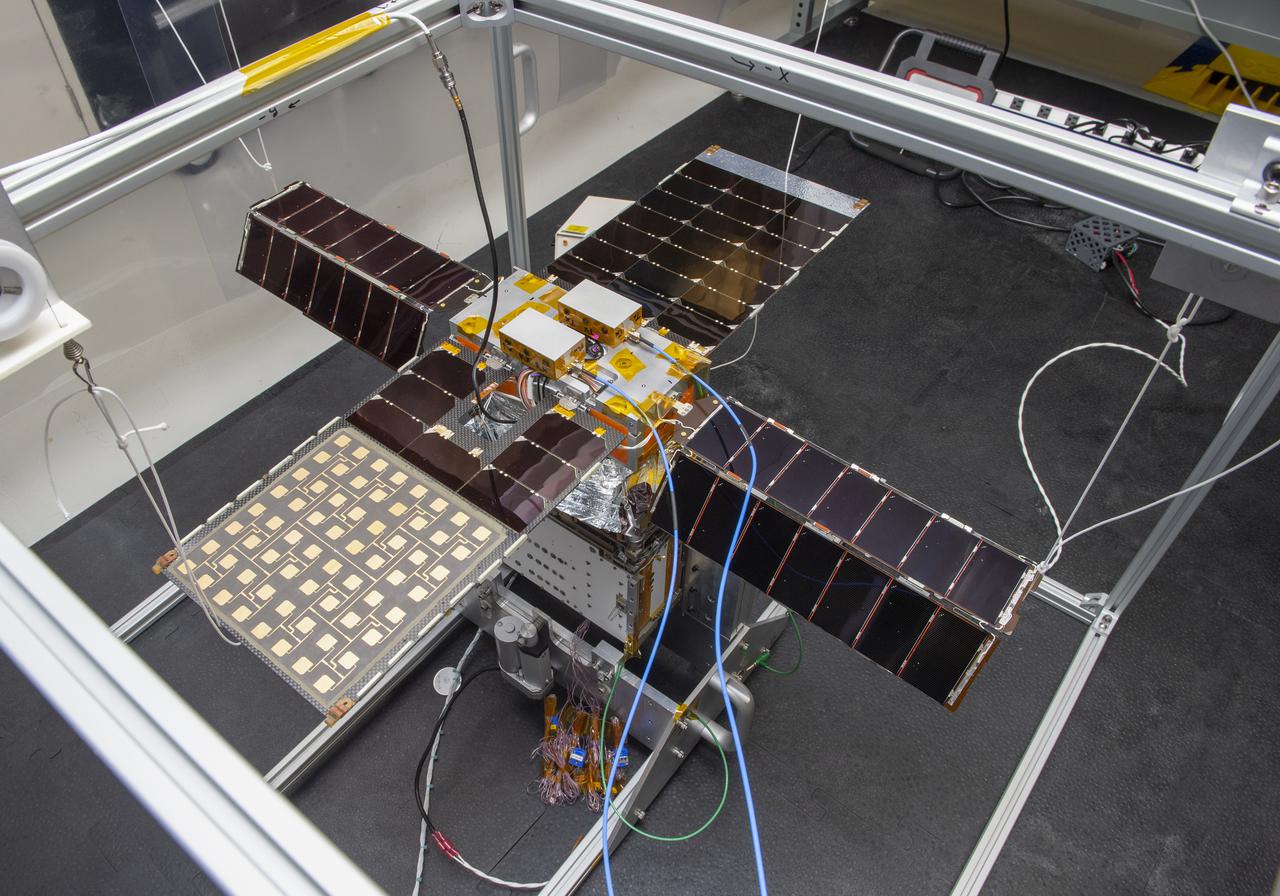
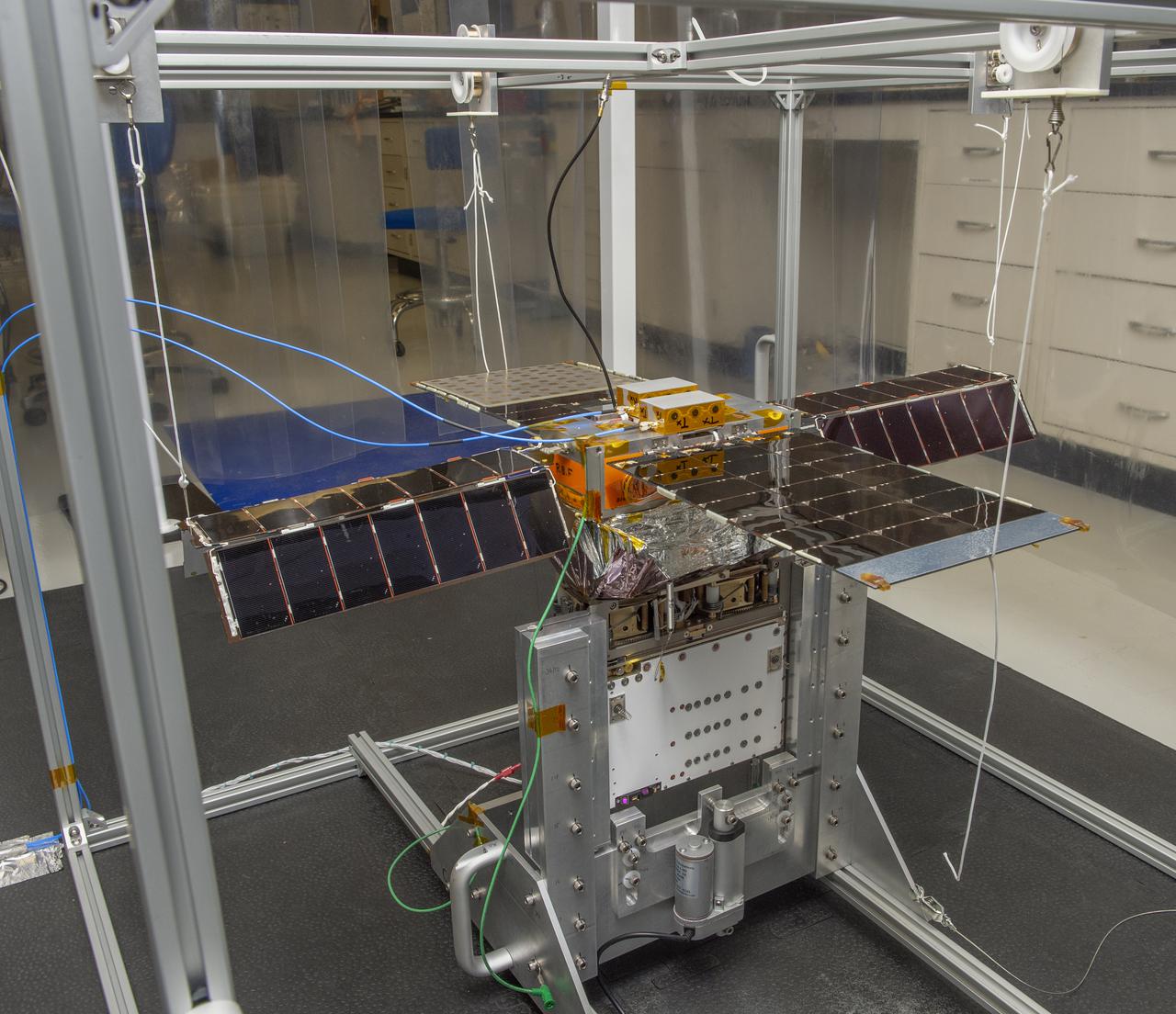
Spacecraft in Gravity Off-load Fixture (GOLF), System Test configuration - Arisa Waddle – Test Engineer,  Rick Wilson – Lead Test Engineer
Spacecraft in Gravity Off-load Fixture (GOLF), System Test configuration - Arisa Waddle – Test Engineer, Rick Wilson – Lead Test Engineer
Spacecraft in Gravity Off-load Fixture (GOLF), System Test configuration - Arisa Waddle – Test Engineer,  Rick Wilson – Lead Test Engineer
Spacecraft in Gravity Off-load Fixture (GOLF), System Test configuration - Arisa Waddle – Test Engineer, Rick Wilson – Lead Test Engineer
Spacecraft in Gravity Off-load Fixture (GOLF), System Test configuration - Arisa Waddle – Test Engineer,  Rick Wilson – Lead Test Engineer
Spacecraft in Gravity Off-load Fixture (GOLF), System Test configuration - Arisa Waddle – Test Engineer, Rick Wilson – Lead Test Engineer
Spacecraft in Gravity Off-load Fixture (GOLF), System Test configuration - Arisa Waddle – Test Engineer,  Rick Wilson – Lead Test Engineer
Spacecraft in Gravity Off-load Fixture (GOLF), System Test configuration - Arisa Waddle – Test Engineer, Rick Wilson – Lead Test Engineer
Spacecraft in Gravity Off-load Fixture (GOLF), System Test configuration - Arisa Waddle – Test Engineer,  Rick Wilson – Lead Test Engineer
Spacecraft in Gravity Off-load Fixture (GOLF), System Test configuration - Arisa Waddle – Test Engineer, Rick Wilson – Lead Test Engineer
Spacecraft in Gravity Off-load Fixture (GOLF), System Test configuration - Arisa Waddle – Test Engineer,  Rick Wilson – Lead Test Engineer
Spacecraft in Gravity Off-load Fixture (GOLF), System Test configuration - Arisa Waddle – Test Engineer, Rick Wilson – Lead Test Engineer
Spacecraft in Gravity Off-load Fixture (GOLF), System Test configuration - Arisa Waddle – Test Engineer,  Rick Wilson – Lead Test Engineer
Spacecraft in Gravity Off-load Fixture (GOLF), System Test configuration - Arisa Waddle – Test Engineer, Rick Wilson – Lead Test Engineer
Spacecraft in Gravity Off-load Fixture (GOLF), System Test configuration - Arisa Waddle – Test Engineer,  Rick Wilson – Lead Test Engineer
Spacecraft in Gravity Off-load Fixture (GOLF), System Test configuration - Arisa Waddle – Test Engineer, Rick Wilson – Lead Test Engineer
Spacecraft in Gravity Off-load Fixture (GOLF), System Test configuration - Arisa Waddle – Test Engineer,  Rick Wilson – Lead Test Engineer
Spacecraft in Gravity Off-load Fixture (GOLF), System Test configuration - Arisa Waddle – Test Engineer, Rick Wilson – Lead Test Engineer
Spacecraft in Gravity Off-load Fixture (GOLF), System Test configuration - Arisa Waddle – Test Engineer,  Rick Wilson – Lead Test Engineer
Spacecraft in Gravity Off-load Fixture (GOLF), System Test configuration - Arisa Waddle – Test Engineer, Rick Wilson – Lead Test Engineer
Spacecraft in Gravity Off-load Fixture (GOLF), System Test configuration - Arisa Waddle – Test Engineer,  Rick Wilson – Lead Test Engineer
Spacecraft in Gravity Off-load Fixture (GOLF), System Test configuration - Arisa Waddle – Test Engineer, Rick Wilson – Lead Test Engineer
Spacecraft in Gravity Off-load Fixture (GOLF), System Test configuration - Arisa Waddle – Test Engineer,  Rick Wilson – Lead Test Engineer
Spacecraft in Gravity Off-load Fixture (GOLF), System Test configuration - Arisa Waddle – Test Engineer, Rick Wilson – Lead Test Engineer
Spacecraft in Gravity Off-load Fixture (GOLF), System Test configuration - Arisa Waddle – Test Engineer,  Rick Wilson – Lead Test Engineer
Spacecraft in Gravity Off-load Fixture (GOLF), System Test configuration - Arisa Waddle – Test Engineer, Rick Wilson – Lead Test Engineer
Spacecraft in Gravity Off-load Fixture (GOLF), System Test configuration - Arisa Waddle – Test Engineer,  Rick Wilson – Lead Test Engineer
Spacecraft in Gravity Off-load Fixture (GOLF), System Test configuration - Arisa Waddle – Test Engineer, Rick Wilson – Lead Test Engineer
Spacecraft in Gravity Off-load Fixture (GOLF), System Test configuration - Arisa Waddle – Test Engineer,  Rick Wilson – Lead Test Engineer
Spacecraft in Gravity Off-load Fixture (GOLF), System Test configuration - Arisa Waddle – Test Engineer, Rick Wilson – Lead Test Engineer
Spacecraft in Gravity Off-load Fixture (GOLF), System Test configuration - Arisa Waddle – Test Engineer,  Rick Wilson – Lead Test Engineer
Spacecraft in Gravity Off-load Fixture (GOLF), System Test configuration - Arisa Waddle – Test Engineer, Rick Wilson – Lead Test Engineer
Spacecraft in Gravity Off-load Fixture (GOLF), System Test configuration - Arisa Waddle – Test Engineer,  Rick Wilson – Lead Test Engineer
Spacecraft in Gravity Off-load Fixture (GOLF), System Test configuration - Arisa Waddle – Test Engineer, Rick Wilson – Lead Test Engineer
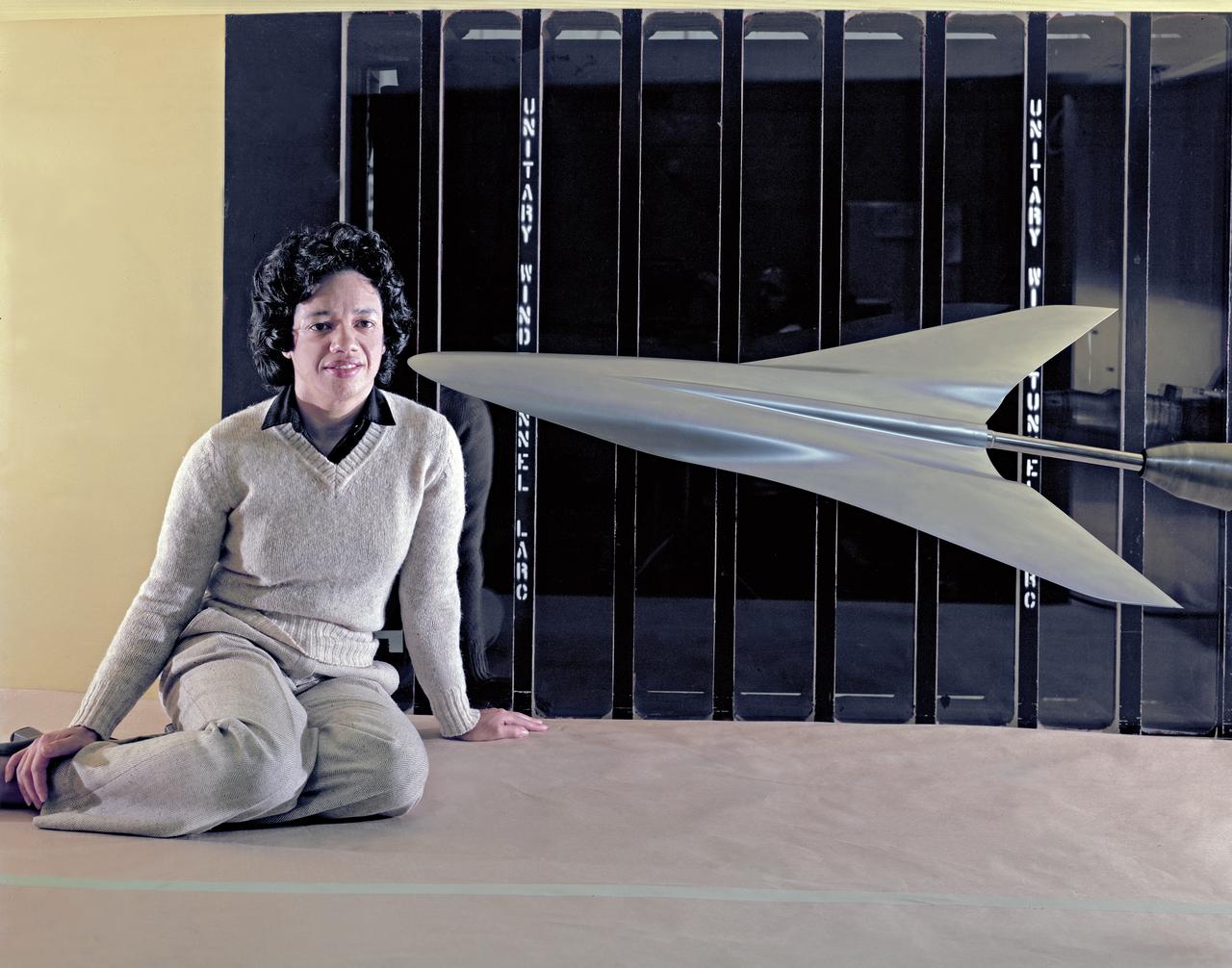
Leading Edge Vortex Suppression Series with Christine Darden in photos
Leading Edge Vortex Suppression Series
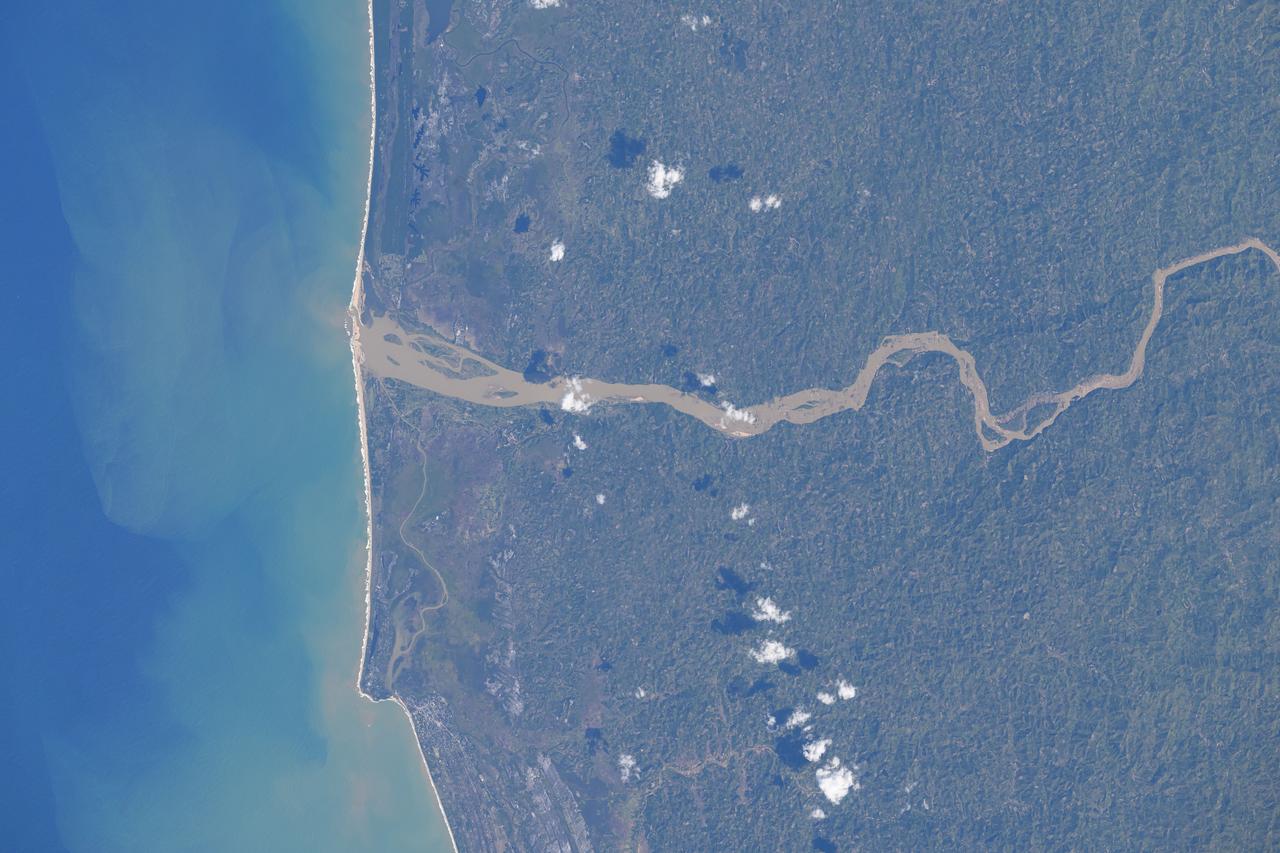
Mangoro River on Madagascar's east coast leads to the Indian Ocean in this photograph from the Indian Ocean as it orbited 263 miles above
Mangoro River on Madagascar's east coast leads to the Indian Ocean
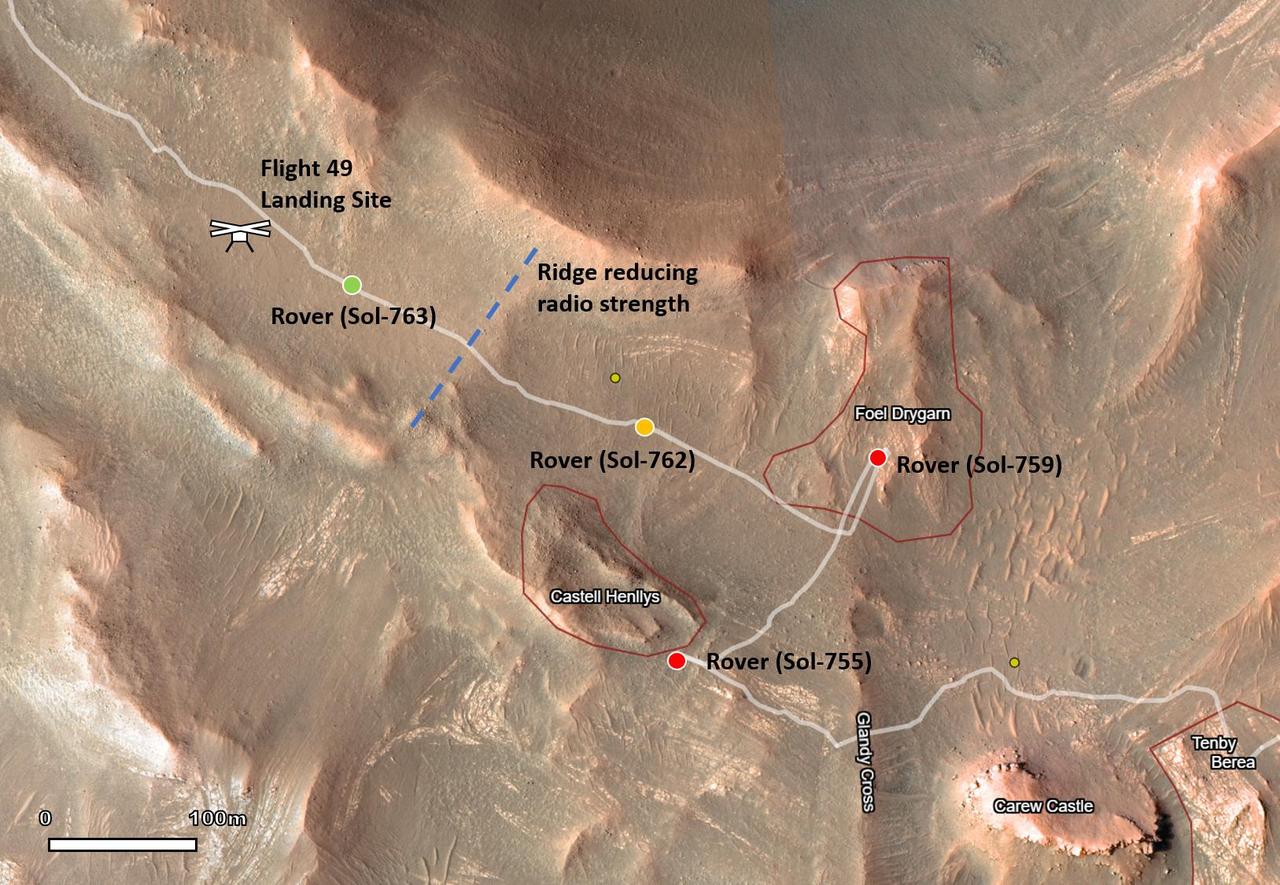
This map shows the locations of NASA's Perseverance Mars rover and its Ingenuity Mars Helicopter in the sols (Martian days) leading up to the helicopter's 50th flight. The helicopter icon can be seen in the upper left. The rover is shown with a red dot in places where communications with the helicopter were impossible. The rover is shown with a yellow dot at its location when the Flight 50 prep sequence was transferred from rover to helicopter. The rover is shown with a green dot at its nearest point to the helicopter before Flight 50 was executed.  Ingenuity's 49th flight occurred on April 2, 2023, the 752nd Martian day, or sol, of the rover's mission. The 50th flight occurred April 13, 2023, the 763rd Martian sol of the mission.  https://photojournal.jpl.nasa.gov/catalog/PIA25961
Leading Up to Flight 50
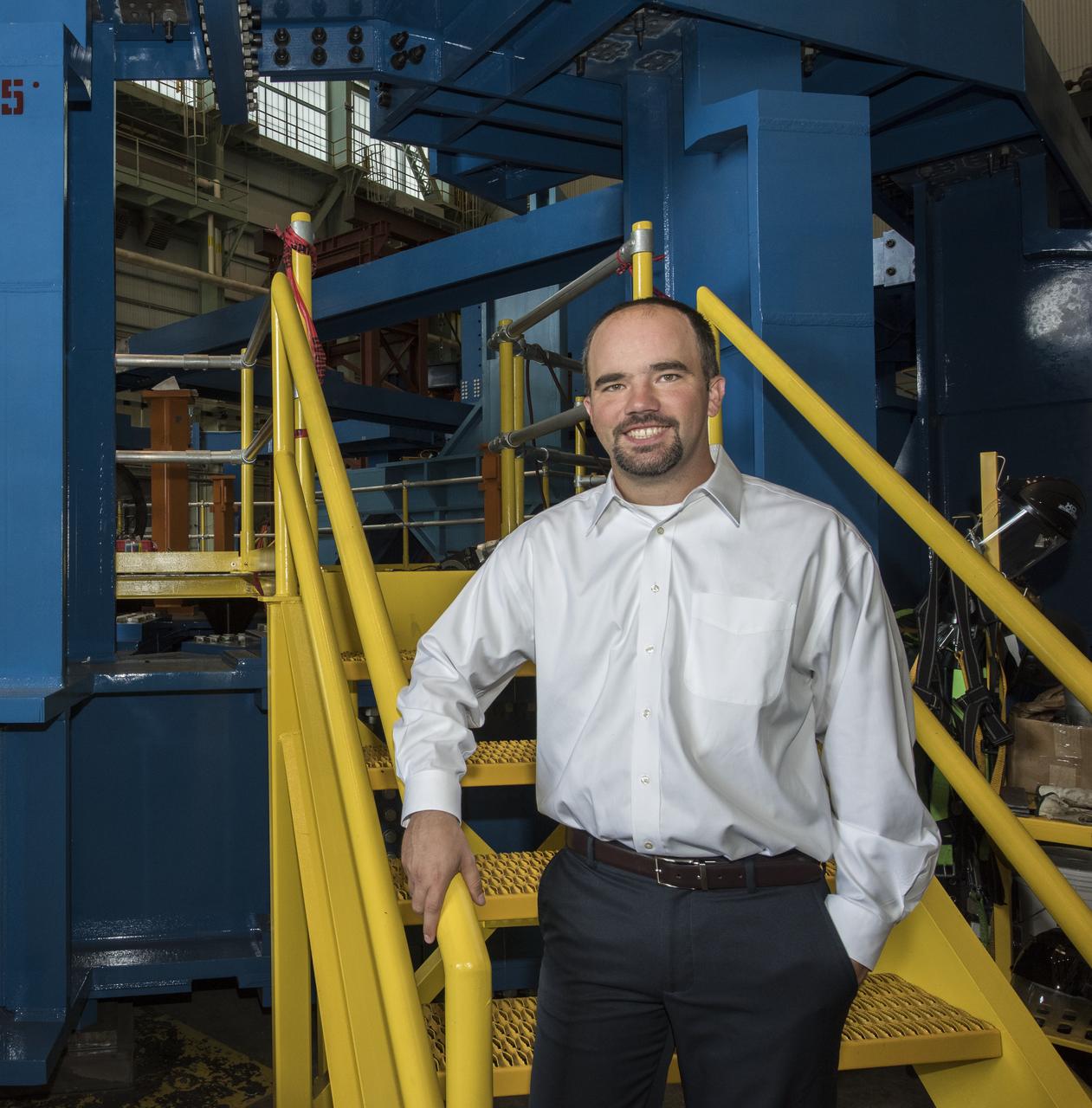
JONATHAN LOOSER, SLS CORE STAGE PROPULSION LEAD AT NASA’S MARSHALL SPACE FLIGHT CENTER IN HUNTSVILLE, ALABAMA
JONATHAN LOOSER, SLS CORE STAGE PROPULSION LEAD
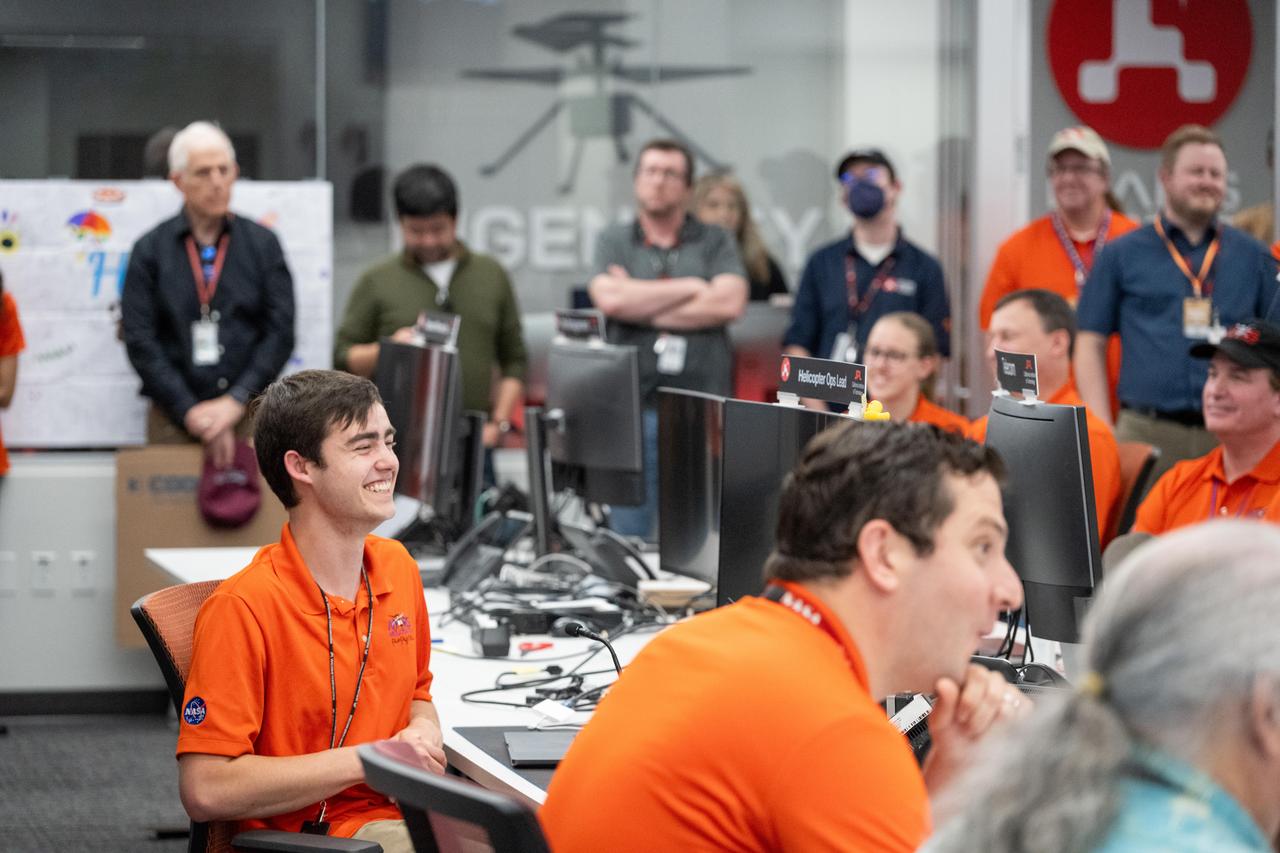
Ingenuity team lead Josh Anderson (seated left) and project manager Teddy Tzanetos (seated center) react during during the final shift for engineers working on NASA's Ingenuity Mars Helicopter at the agency's Jet Propulsion Laboratory on April 16, 2024. The team gathered to review a transmission from the helicopter that confirmed the operation of a software patch allowing Ingenuity to act as a stationary testbed and collect data that could benefit future explorers of the Red Planet.  Originally designed as short-lived technology demonstration mission that would perform up to five experimental test flights over 30 days, the first aircraft on another world operated from the Martian surface for almost three years, flew more than 14 times farther than planned, and logged more than two hours of total flight time. Its 72nd and final flight was Jan. 18, 2024.  https://photojournal.jpl.nasa.gov/catalog/PIA26315
Ingenuity Team Lead All Smiles
Joseph Ladner stands at NASA’s Stennis Space Center near Bay St. Louis, Mississippi, where he leads a team managing the budgets to fund the nation’s premier propulsion test site.
: Key Moments Lead to Fulfilling NASA Stennis Career
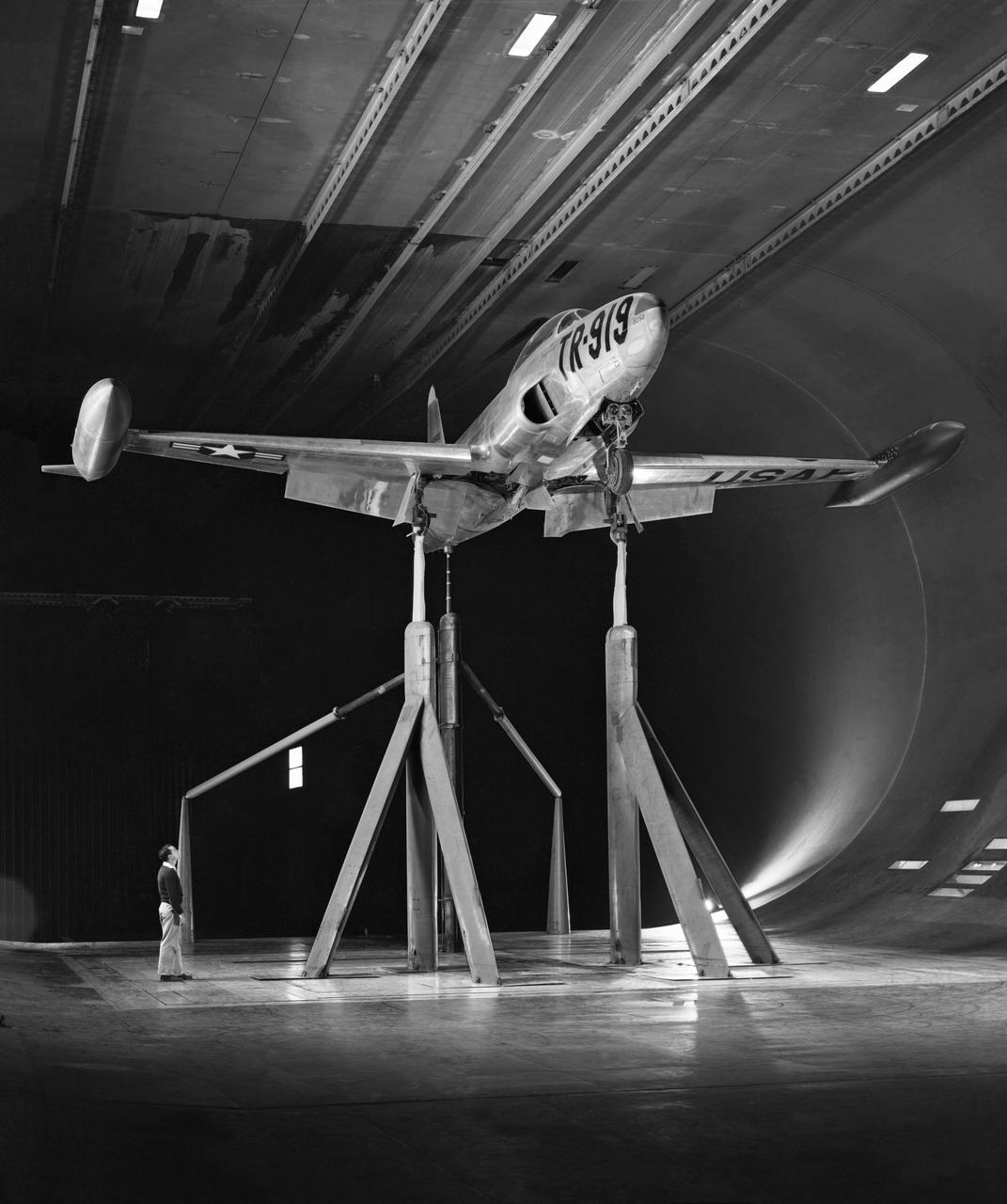
3/4 front view of Wind Tunnel investigation of the Lockheed T-33 modified for area-suction leading-edge and trailing edge flaps in Ames 40x80 foot Wind Tunnel.
The Lockheed T-33 modified for area-suction leading-edge and trailing edge flaps.
NASA ENGINEER BRYAN BARLEY IS LEADING WORK ON AN ADVANCED BOOSTER CONCEPT DESIGN FOR NASA'S SPACE LAUNCH SYSTEM.
Bryan Barley leads work on an advanced booster concept for SLS
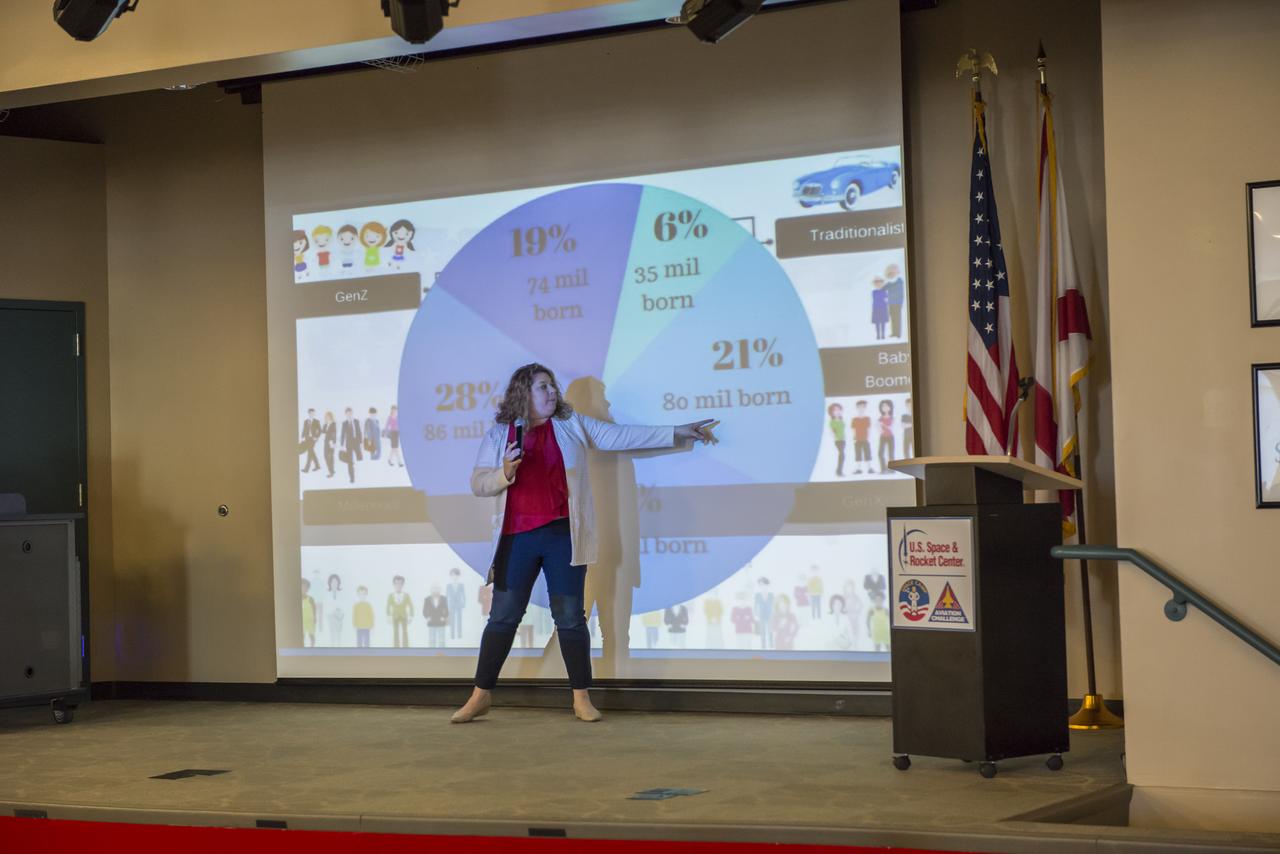
The NASA Educator Resource Center hosted the 2018 "Leading Within a Multigenerational Workforce" mentoring event. Opening remarks were by MSFC Deputy Director, Jody Singer, with a mentoring presentation from Mat Park. The key note presenter was UAH professor Kristin Scroggin.
University of Alabama Huntsville communications professor Kristi
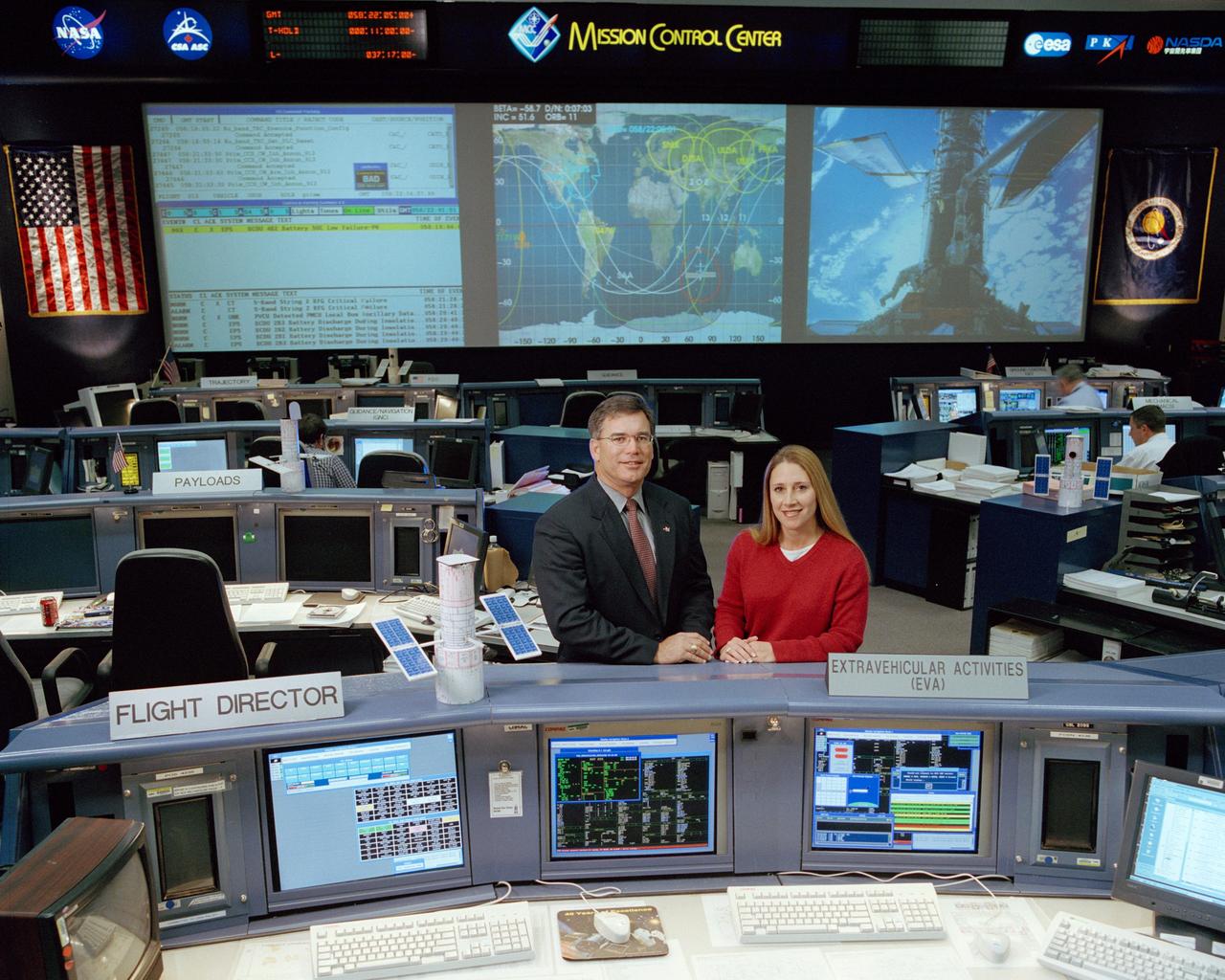
JSC2002-00546 (February 2002) --- Bryan P. Austin, lead flight director for STS-109, and Dana Weigel, lead EVA officer, pose near their respective consoles in the Shuttle Flight Control Room of the Johnson Space Center's Mission Control Center.
Flight Director Portrait - Bryan Austin with Lead EVA Console OPS- for Texas A&M Alumni Magazine
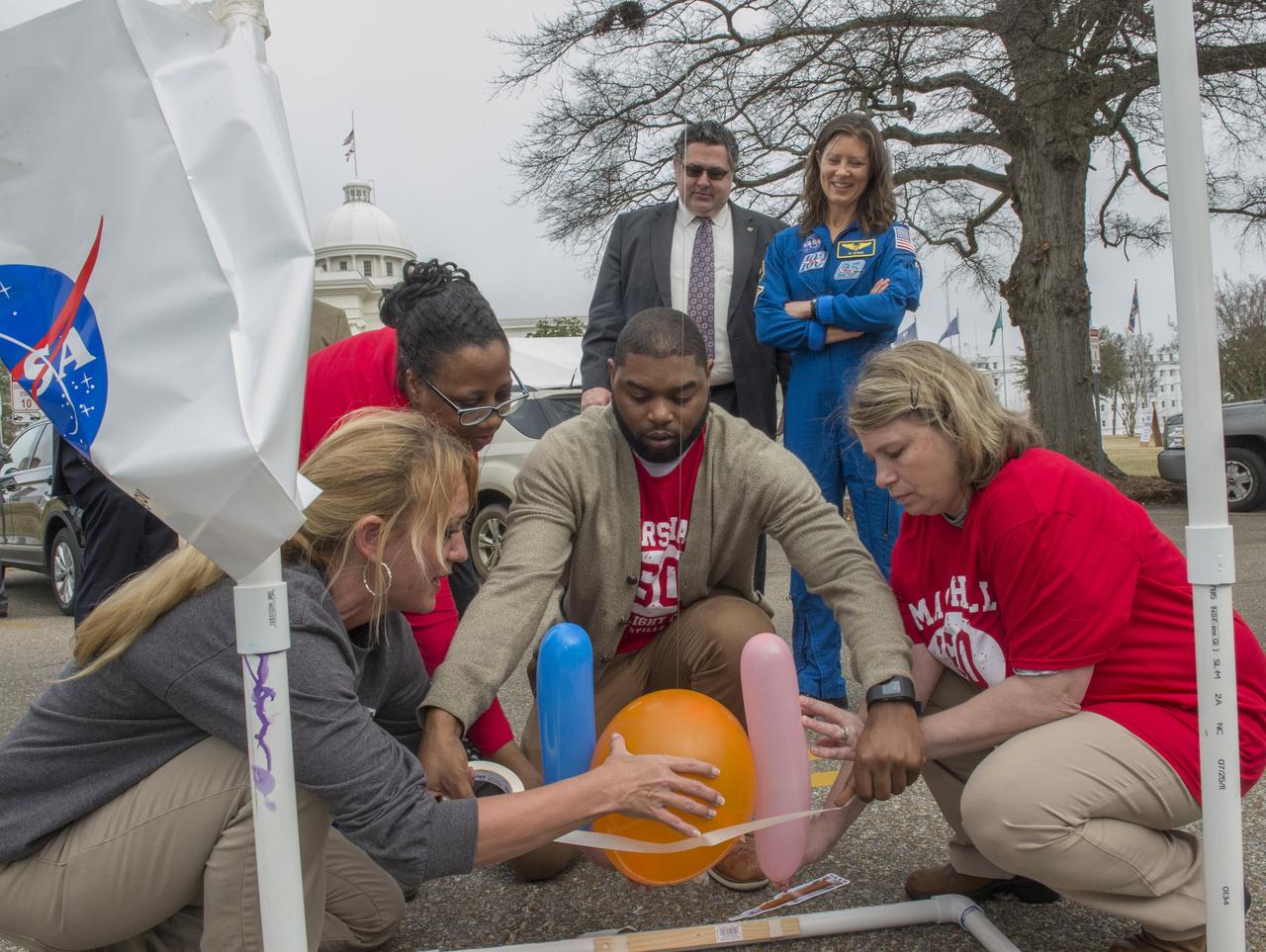
Officials from Marshall Space Flight Center discussed the state's role in leading America back to the Moon and on to Mars with elected officials, industry leaders, students and the public during the Aerospace States Association’s Alabama Aerospace Week in Montgomery, Ala. NASA was honored by the Alabama legislature with a resolution and proclamation from Gov. Kay Ivey recognizing the agency's achievements.  NASA Trained Alabama Lead Teachers, (LtoR) Jacquelyn Adams, Arlinda Davis,Timothy Johnson,Laura Crowe demonstrate how rocket boosters work.
NASA Day in Montgomery, Feb. 22, 2018
Yohan Lin, Airvolt integration lead, prepares the electric propulsion test stand.
Electric Motor Test Stand Will Help With Future X-planes
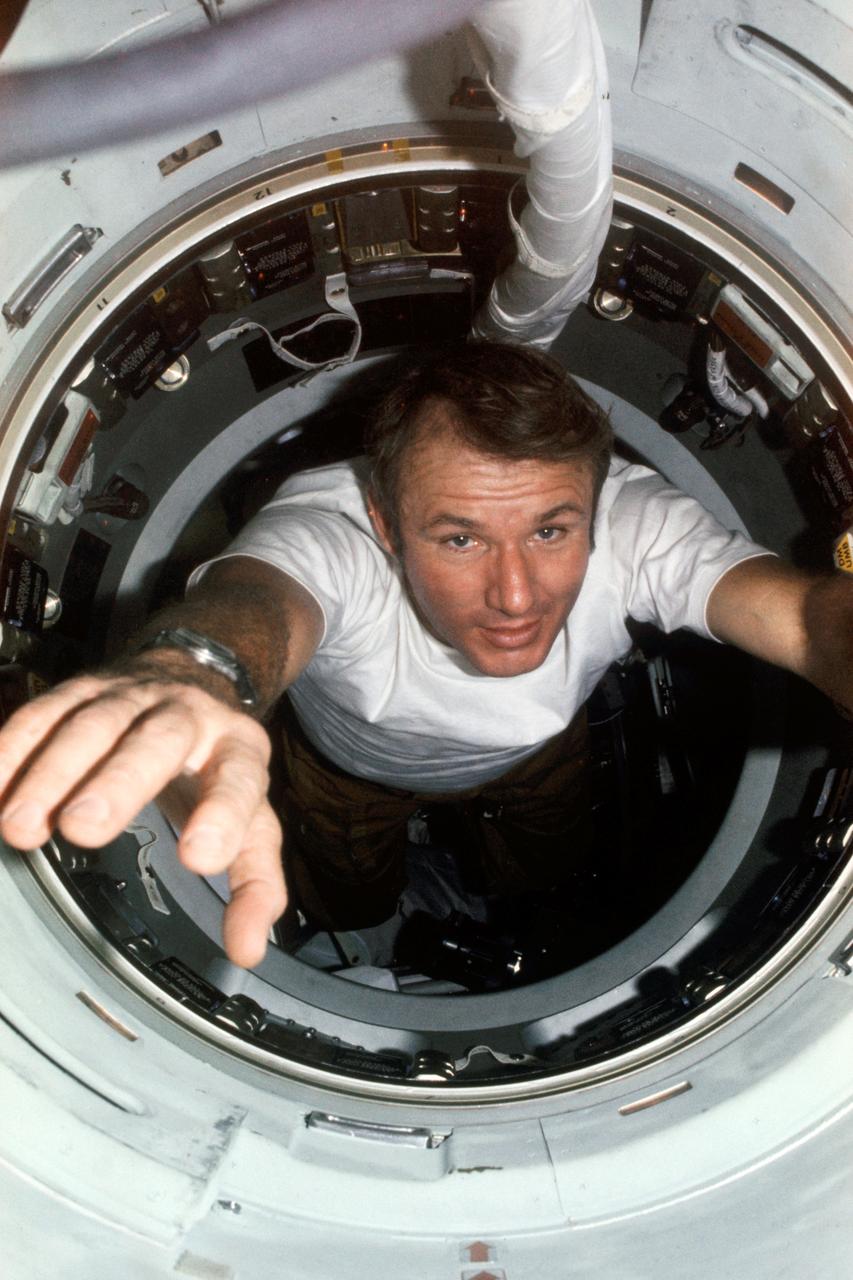
AST-06-318 (15-24 July 1975) --- Astronaut Vance D. Brand, command module pilot of the American ASTP crew, is seen in the hatchway leading from the Apollo Command Module (CM) into the Apollo Docking Module (DM) during the joint U.S.-USSR Apollo-Soyuz Test Project docking mission in Earth orbit. The 35mm camera is looking from the DM into the CM.
Astronaut Vance Brand seen in hatchway leading to Apollo Docking module
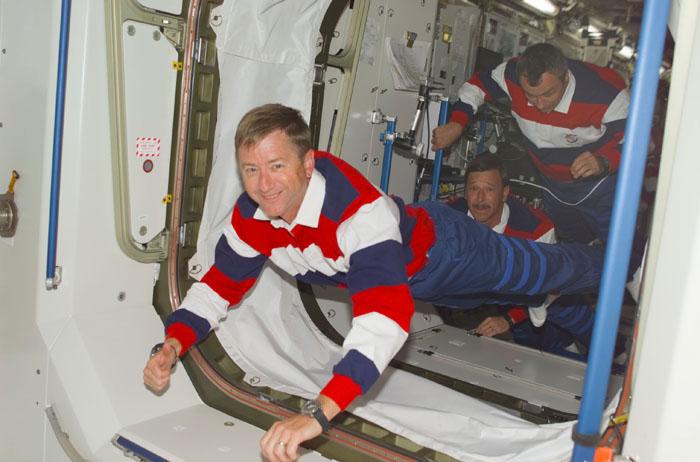
STS105-E-5108 (12 August 2001) --- Frank L. Culbertson, Jr., Expedition Three mission commander, leads cosmonaut Vladimir N. Dezhurov (back top), Expedition Three flight engineer, and Scott J. Horowitz, STS-105 commander, into Unity Node 1 during the initial ingress into the International Space Station (ISS) during the STS-105 mission.  Culbertson and Dezhurov, accompanied by cosmonaut Mikhail Tyurin, will be replacing astronauts Susan J. Helms and James S. Voss and cosmonaut Yury V. Usachev as the temporary residents of the ISS.  This image was taken with a digital still camera.
Culbertson leads the way from the U.S. Laboratory into Node 1
Lead flight director James M. Heflin, Jr answers question at STS-34's thirty days before launch (T-30) press briefing conducted in the JSC Auditorium and Public Affairs Facility Bldg 2 briefing room.
STS-34 MCC lead flight director James M. Heflin, Jr at T-30 press briefing
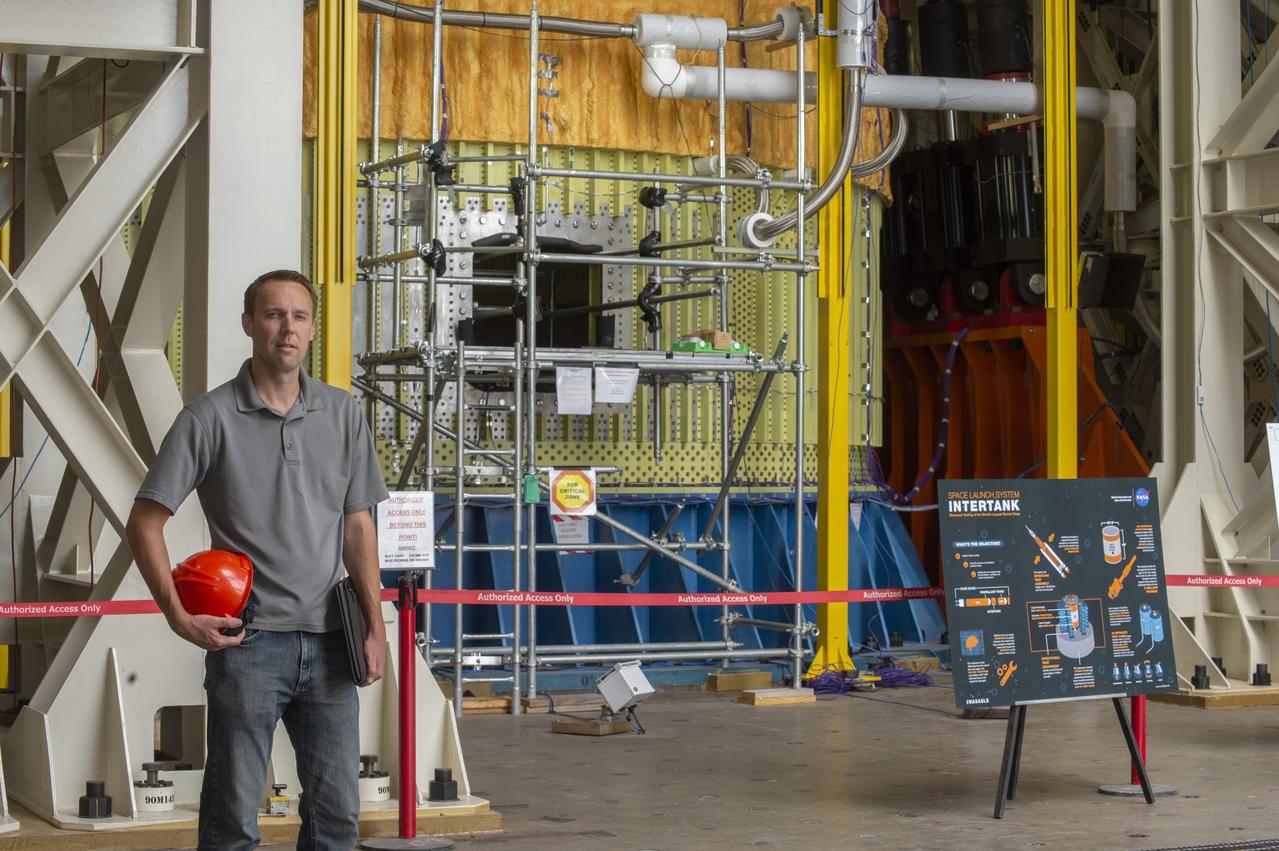
Preston Schmauch, SLS Stages Element Alternate Lead Systems Engineer, oversees testing of the Intertank Structural Test Article (STA), which will push, pull, and bend the STA with millions of pounds of force to prove the SLS Intertank can withstand the immense forces induced by aero, engine, and booster loads during flight.
Preston Schmauch, SLS Stages Element Alternate Lead Systems Engineer, oversees testing of the Intertank Structural Test Article (STA)
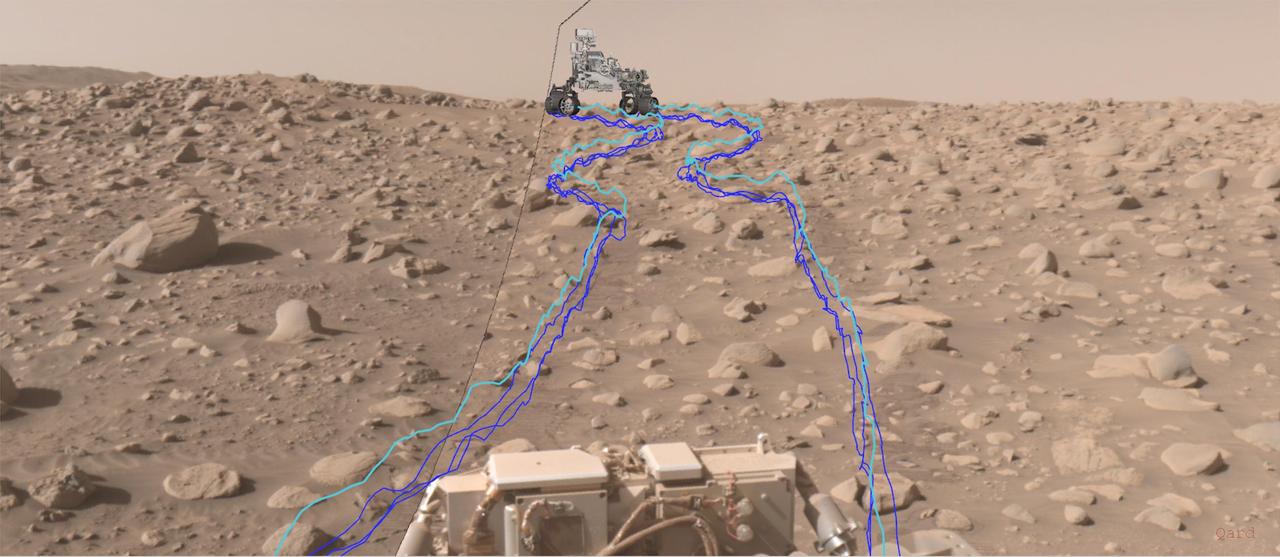
This annotated composite image shows the path NASA's Perseverance Mars rover took through a dense section of boulders. It was acquired on June 29, 2023, the 838th day, or sol, of the mission, by one of the rover's navigation cameras and was annotated using the Robot Sequencing and Visualization Program. The pale blue line indicates the course of the center of the rover's front wheel hubs, while the darker blue lines show the paths taken by the bottom of the rover's six wheels.  With the help of its self-driving autonomous navigation system, AutoNav, Perseverance traversed the boulder field much more quickly than previous rovers could have.  A key objective for Perseverance's mission on Mars is astrobiology, including the search for signs of ancient microbial life. The rover will characterize the planet's geology and past climate, pave the way for human exploration of the Red Planet, and be the first mission to collect and cache Martian rock and regolith (broken rock and dust).  Subsequent NASA missions, in cooperation with ESA (European Space Agency), would send spacecraft to Mars to collect these sealed samples from the surface and return them to Earth for in-depth analysis.  The Mars 2020 Perseverance mission is part of NASA's Moon to Mars exploration approach, which includes Artemis missions to the Moon that will help prepare for human exploration of the Red Planet.  https://photojournal.jpl.nasa.gov/catalog/PIA26071
Perseverance's AutoNav Leads the Way
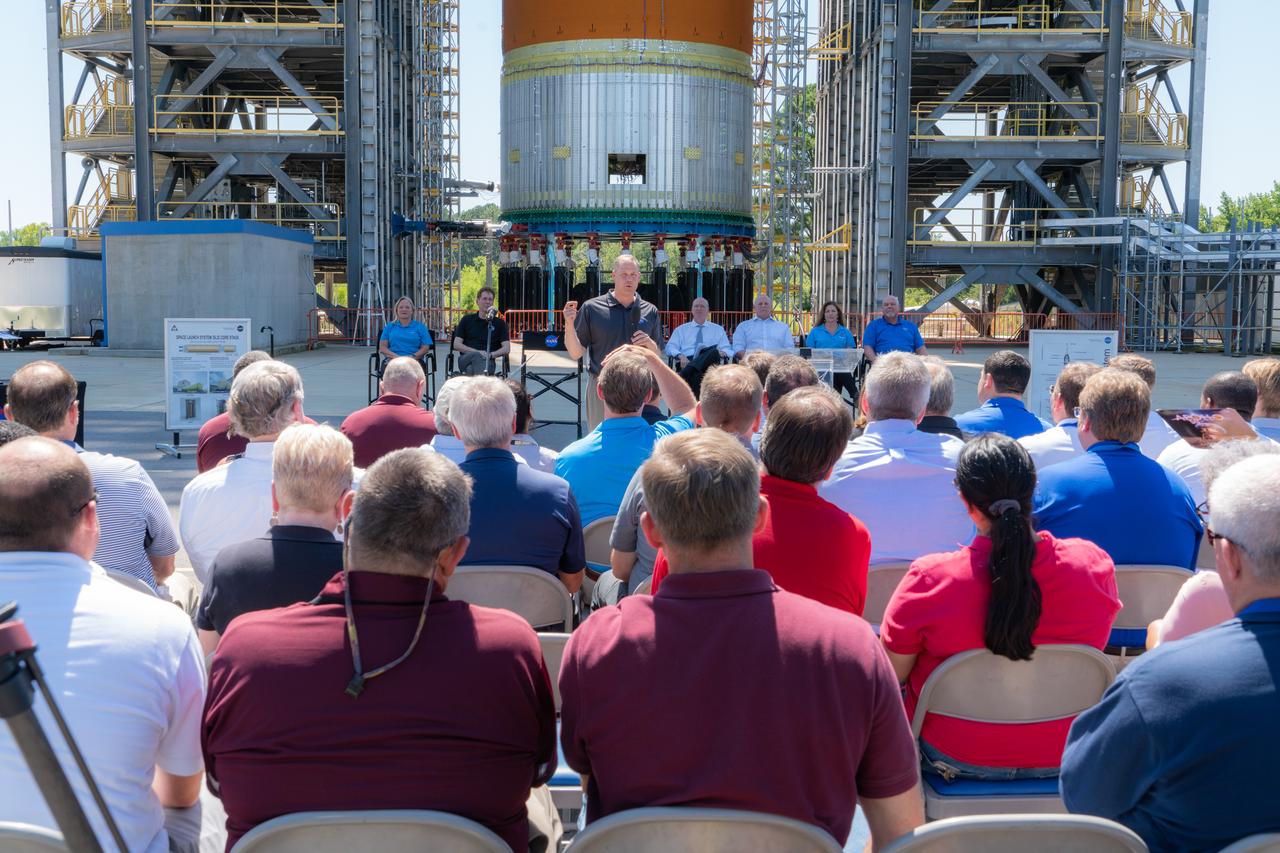
On Aug. 16, 2019, NASA Administrator Jim Bridenstine announced the agency’s Marshall Space Flight Center in Huntsville, Alabama, will lead the Human Landing System Program. Bridenstine was joined by Representatives Mo Brooks and Robert Aderholt of Alabama and Representative Scott DesJarlais of Tennessee. NASA will rapidly develop the lander for safely carrying the first woman and the next man to the Moon’s surface in 2024. The Artemis missions will start with launch by the world’s most powerful rocket, NASA’s Space Launch System, also managed by Marshall. Bridenstine made the announcement in front of the 149-foot-tall SLS liquid hydrogen structural test article, currently being tested to help ensure the structure can safely launch astronauts on the Artemis lunar missions. (NASA/Fred Deaton)  For more information: https://www.nasa.gov/artemis-1
NASA Marshall To Lead Artemis Program’s Human Lunar Lander Development
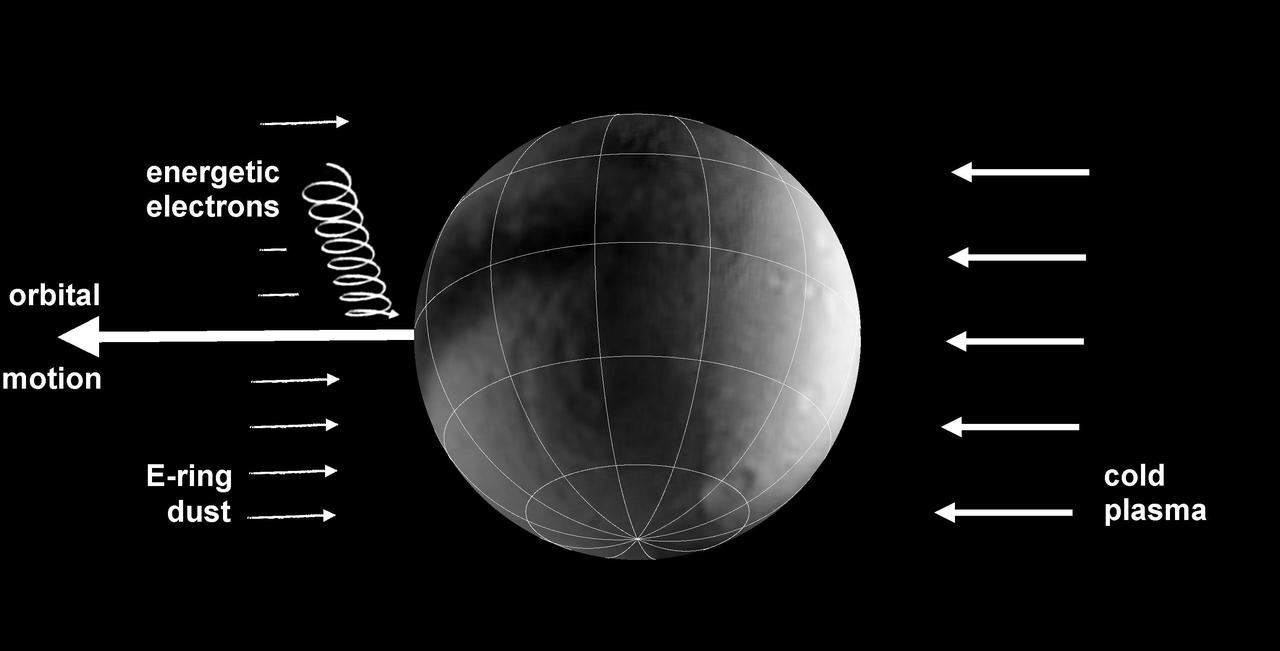
This schematic graphic illustrates the bombardments that lead to colorful splotches and bands on the surfaces of several icy moons of Saturn.
Moons Under Bombardment
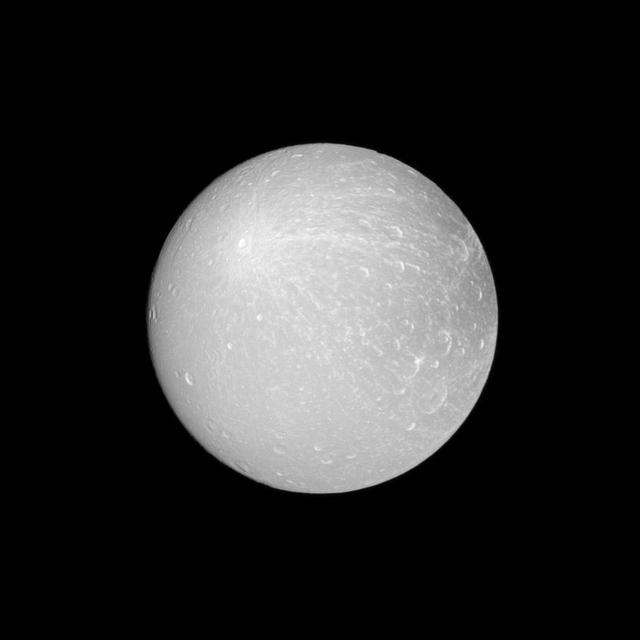
Dione leading hemisphere appears relatively smooth and placid here, compared to the fractured landscape on its trailing hemisphere
The Quiet Side
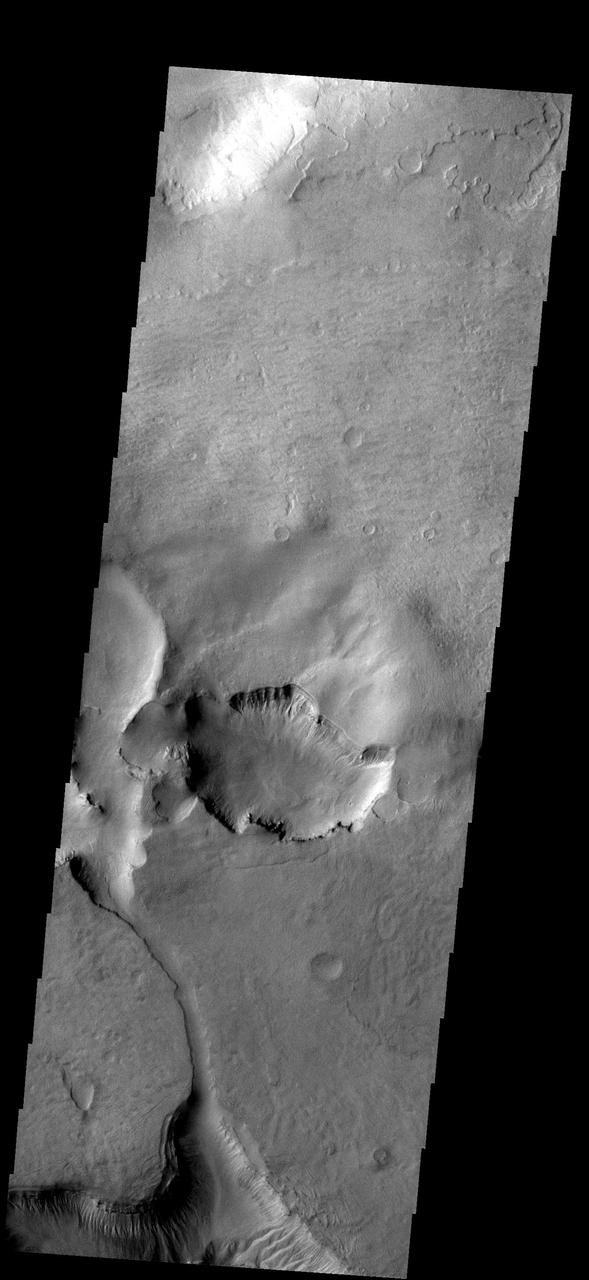
This closed depression is located in Noachis Terra. To the south a channel leads to second region of erosion
Noachis Terra
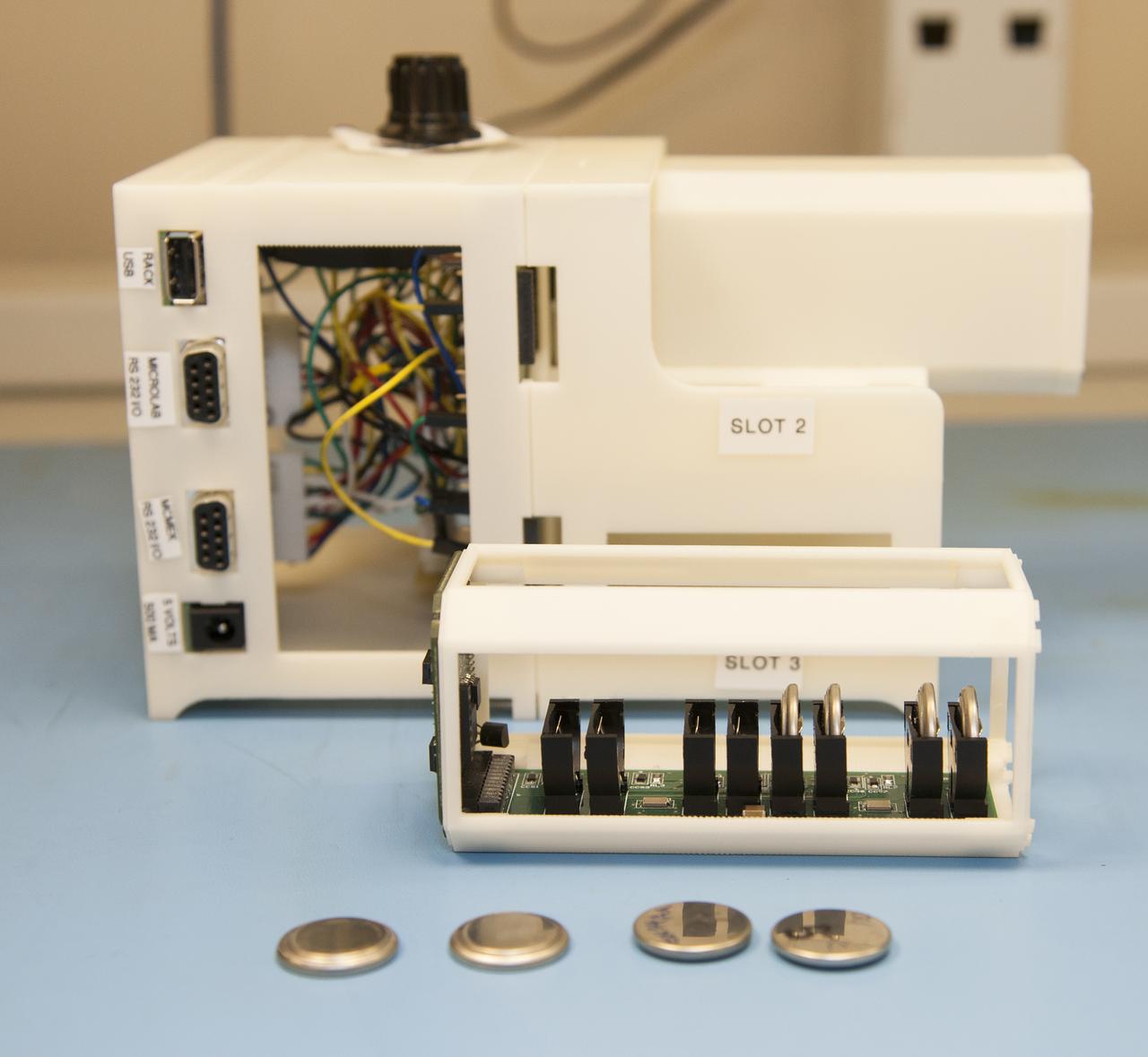
These are the components of the Desert Christian experiment launched to space Dec. 3 that could one day lead to fast-charging batteries.
ED15-0229-02
NASA Cassini spacecraft looks at a brightly illuminated Enceladus and examines the surface of the leading hemisphere of this Saturnian moon.
Brilliant Enceladus
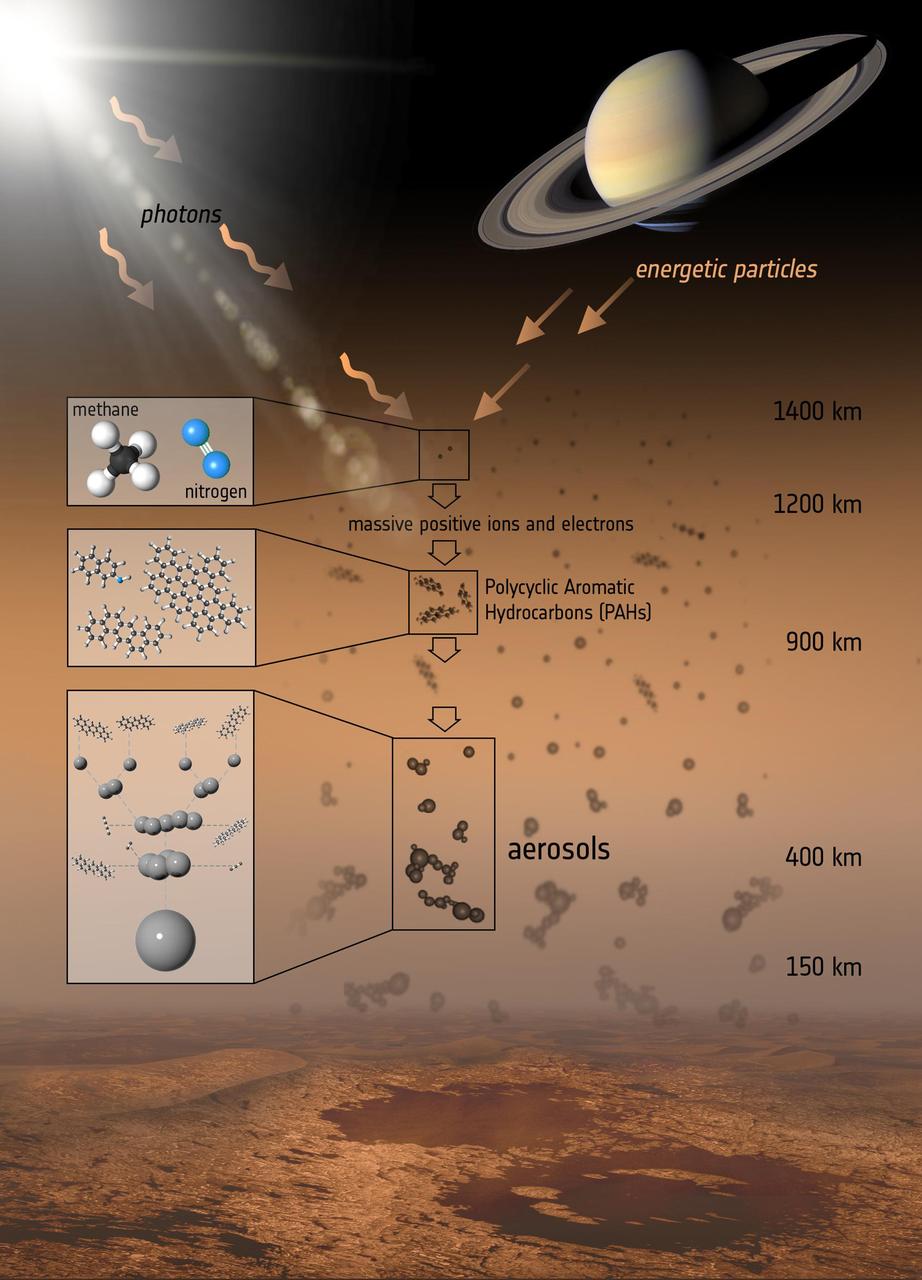
This illustration shows the various steps that lead to the formation of the aerosols that make up the haze on Titan, Saturn largest moon.
The Formation of Titan Haze
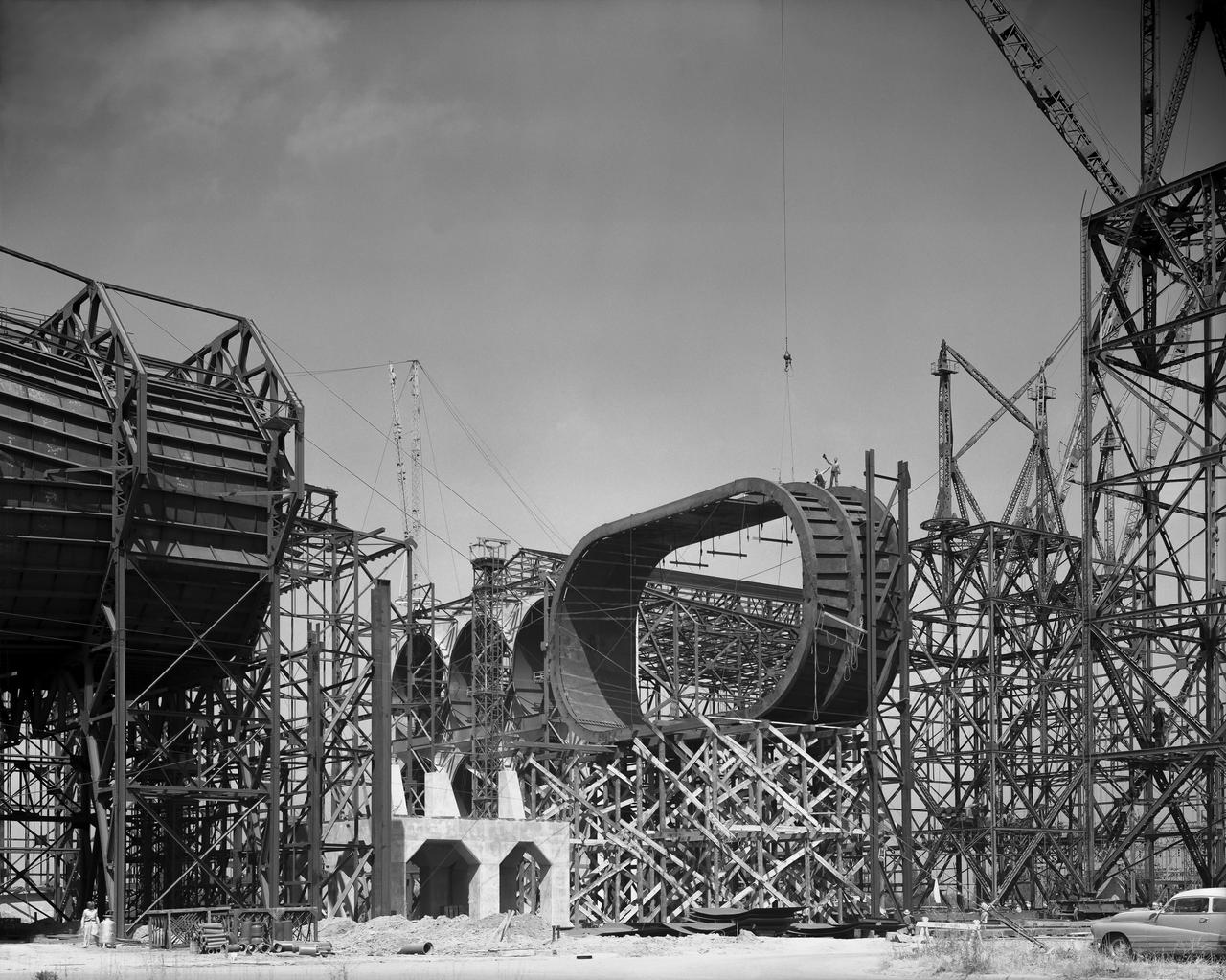
Looking West at three test section bents in place for the Ames 40 x 80 foot wind tunnel.  Concrete model scale support visible in the middle.
Construction of the Ring leading to the Test Section of the Ames 40x80 Foot Wind Tunnel.
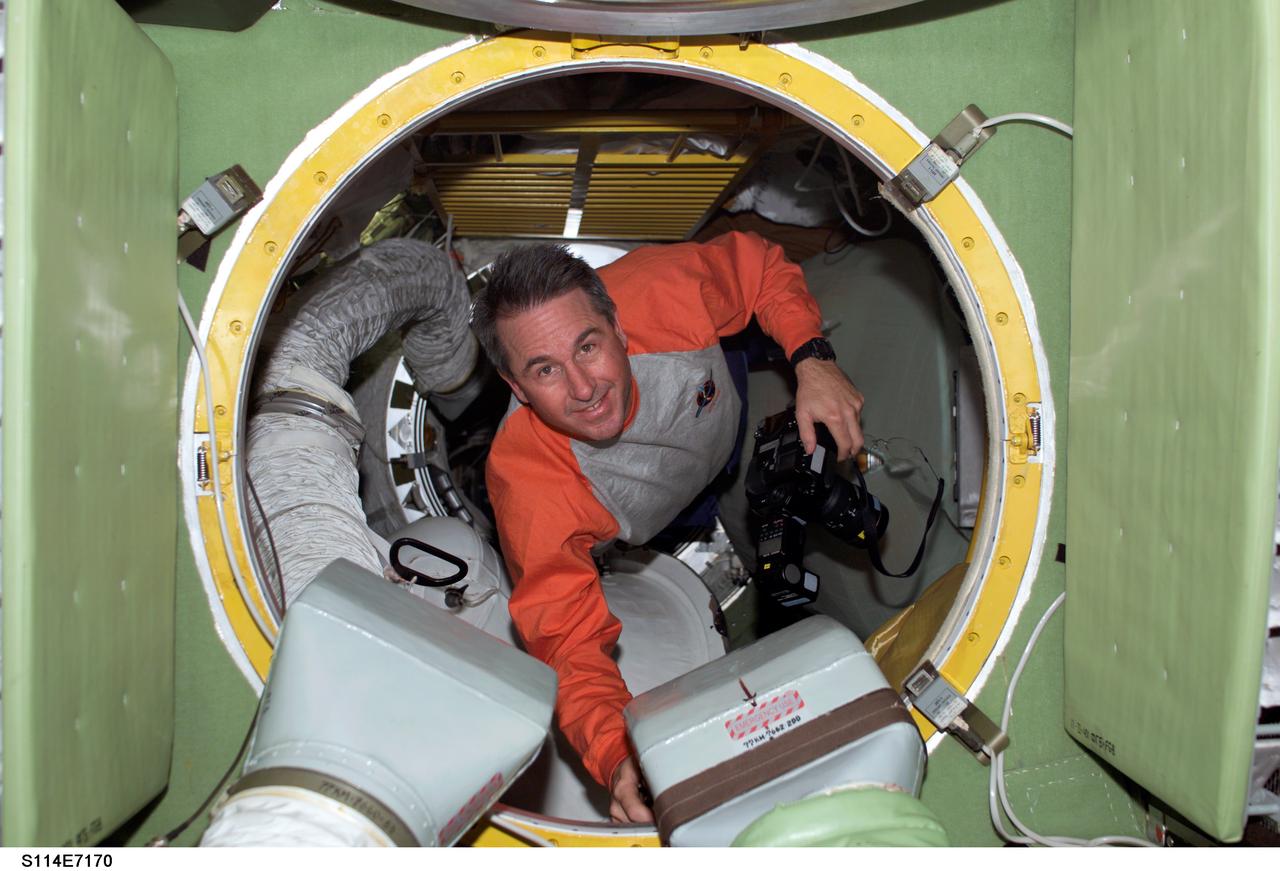
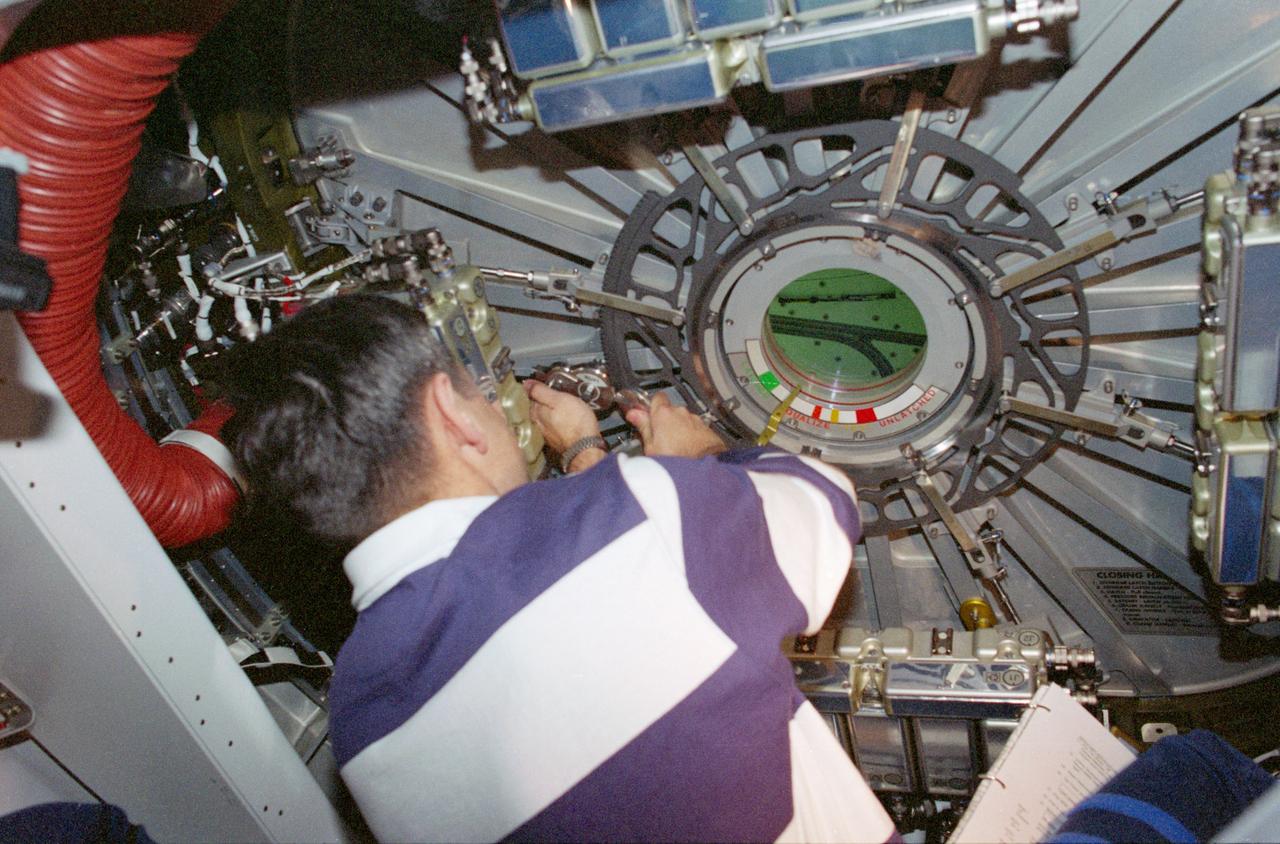
S114-E-7170 (5 August 2005) --- Astronaut Stephen K, Robinson, STS-114 mission specialist, holds a camera while floating through a hatch on the International Space Station. The crewmembers were making final preparations for Space Shuttle Discovery&#0146;s scheduled departure on August 6.
Robinson with camera in hatch leading to FGB
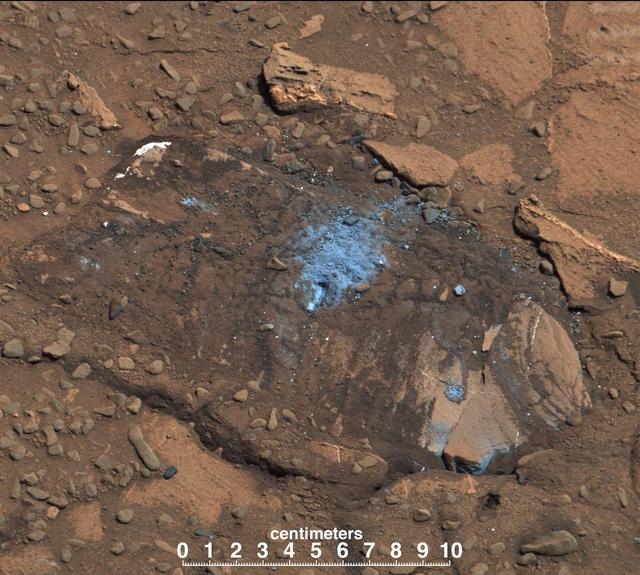
The Bonanza King rock on Mars, pictured here, was tapped by the drill belonging to NASA Mars rover Curiosity. The tapping resulted in sand piling up on the rock after drilling, showing the rock was not firmly in place.
Loose Rock Leads to Incomplete Drilling
This image from NASA Terra satellite shows the Morenci open-pit copper mine in southeast Arizona, North America leading producer of copper.
Morenci Mine, AZ
NASA Wide-field Infrared Survey Explorer, or WISE, helped lead astronomers to what appears to be a new example of a dancing black hole duo.
Two Black Holes on Way to Becoming One Artist Concept
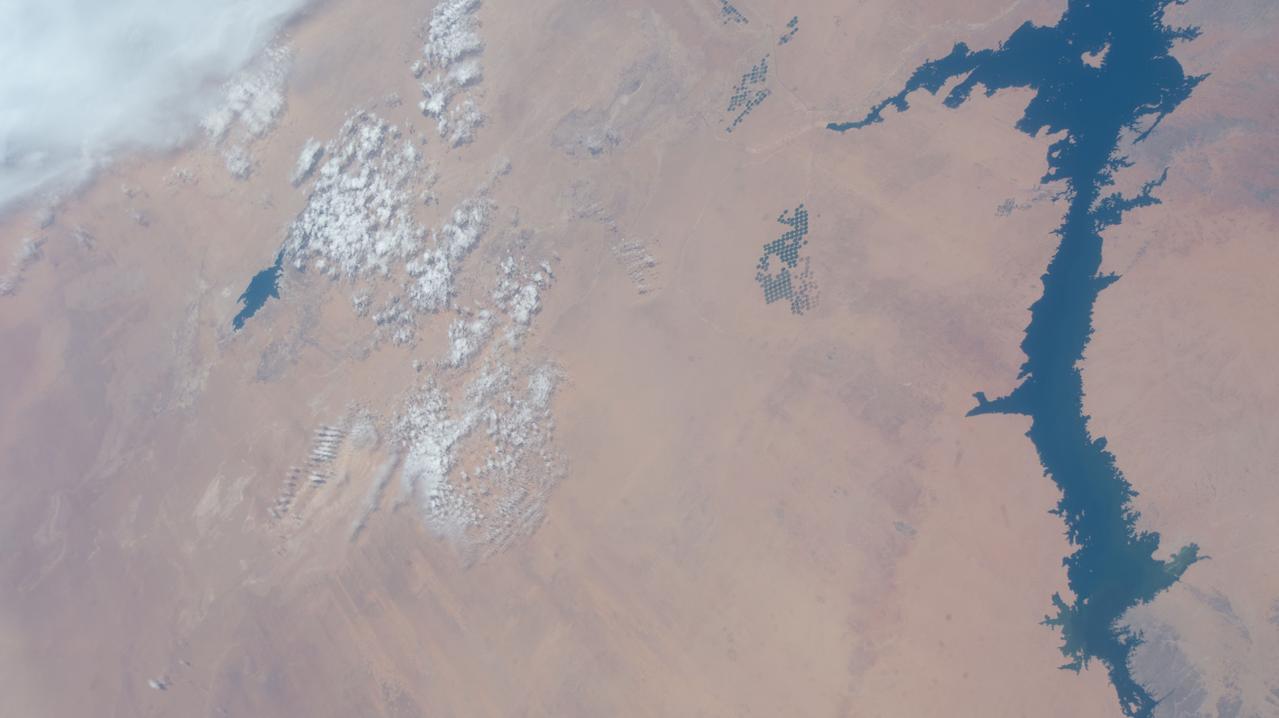
iss058e010623 (Feb. 5, 2019) --- Lake Nasser in Egypt, which leads to the Nile River, is pictured as the International Space Station orbited 251 miles above the Western Desert in the African nation.
Lake Nasser in Egypt
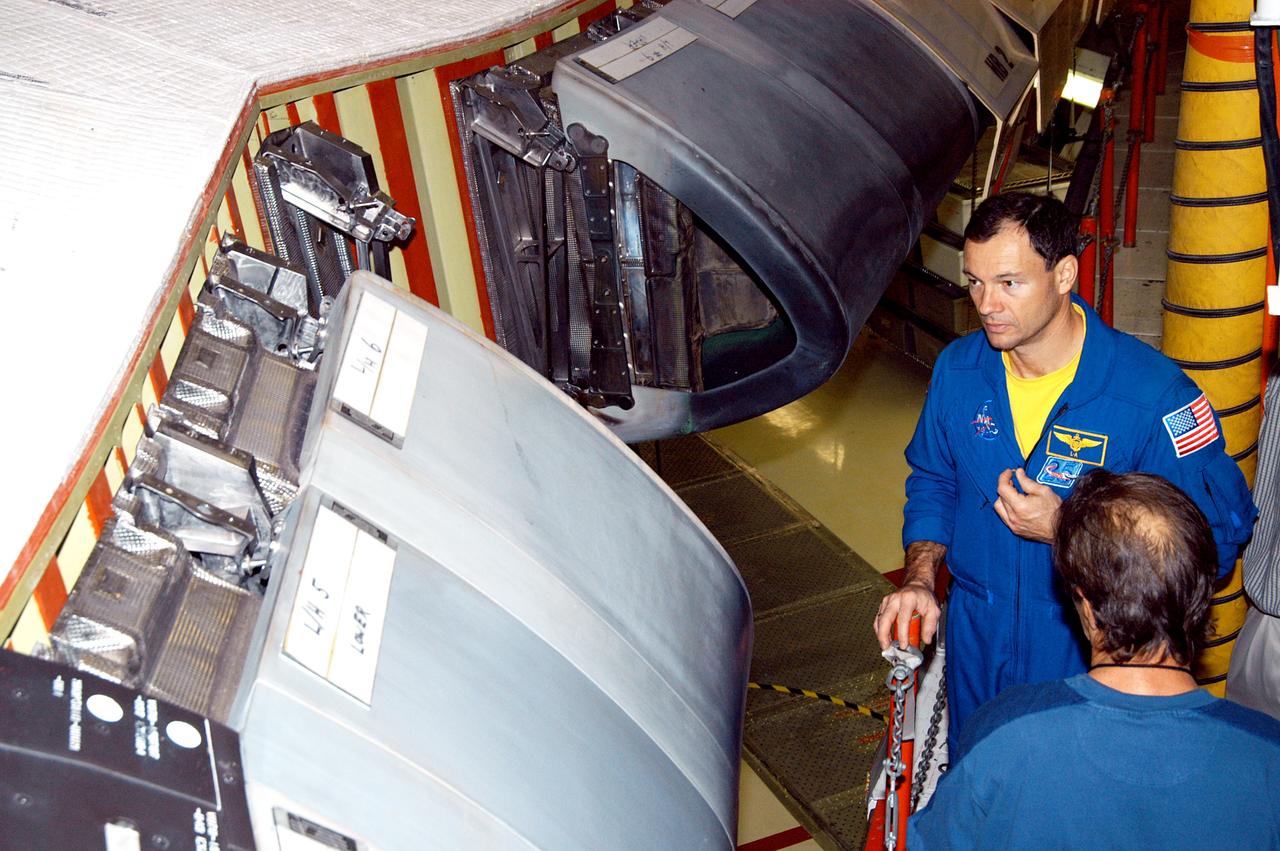
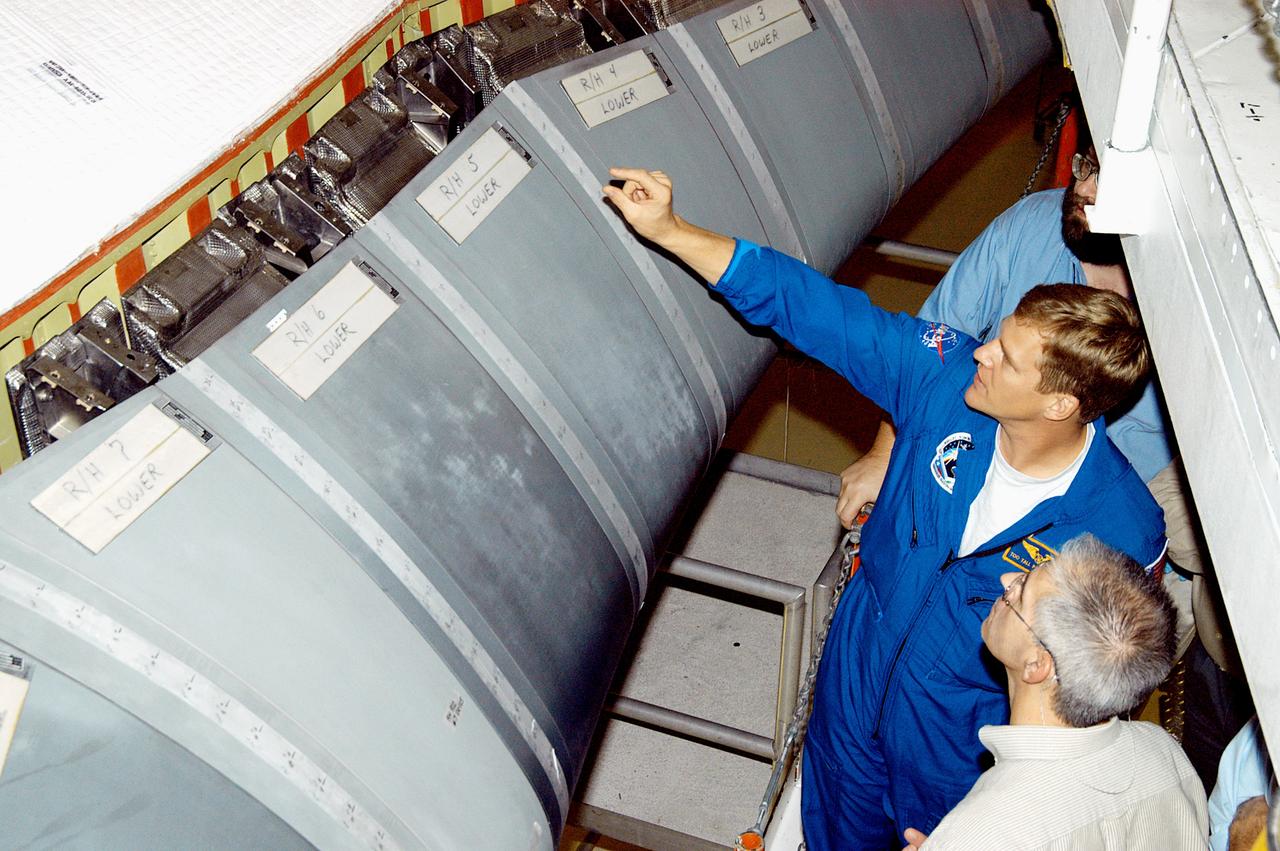
KENNEDY SPACE CENTER, FLA. - In the Orbiter Processing Facility, astronaut Michael E. Lopez-Alegria looks at the Reinforced Carbon Carbon panels used on the leading edge of the wing of the orbiters. He and engineers from around the Agency are on a fact-finding tour for improving the RCC panels used on the wing leading edge.  The gray carbon composite RCC panels have sufficient strength to withstand the aerodynamic forces experienced during launch and reentry, which can reach as high as 800 pounds per square foot.  The operating range of RCC is from minus 250º F to about 3,000º F, the temperature produced by friction with the atmosphere during reentry.
KENNEDY SPACE CENTER, FLA. - In the Orbiter Processing Facility, astronaut Michael E. Lopez-Alegria looks at the Reinforced Carbon Carbon panels used on the leading edge of the wing of the orbiters. He and engineers from around the Agency are on a fact-finding tour for improving the RCC panels used on the wing leading edge. The gray carbon composite RCC panels have sufficient strength to withstand the aerodynamic forces experienced during launch and reentry, which can reach as high as 800 pounds per square foot. The operating range of RCC is from minus 250º F to about 3,000º F, the temperature produced by friction with the atmosphere during reentry.
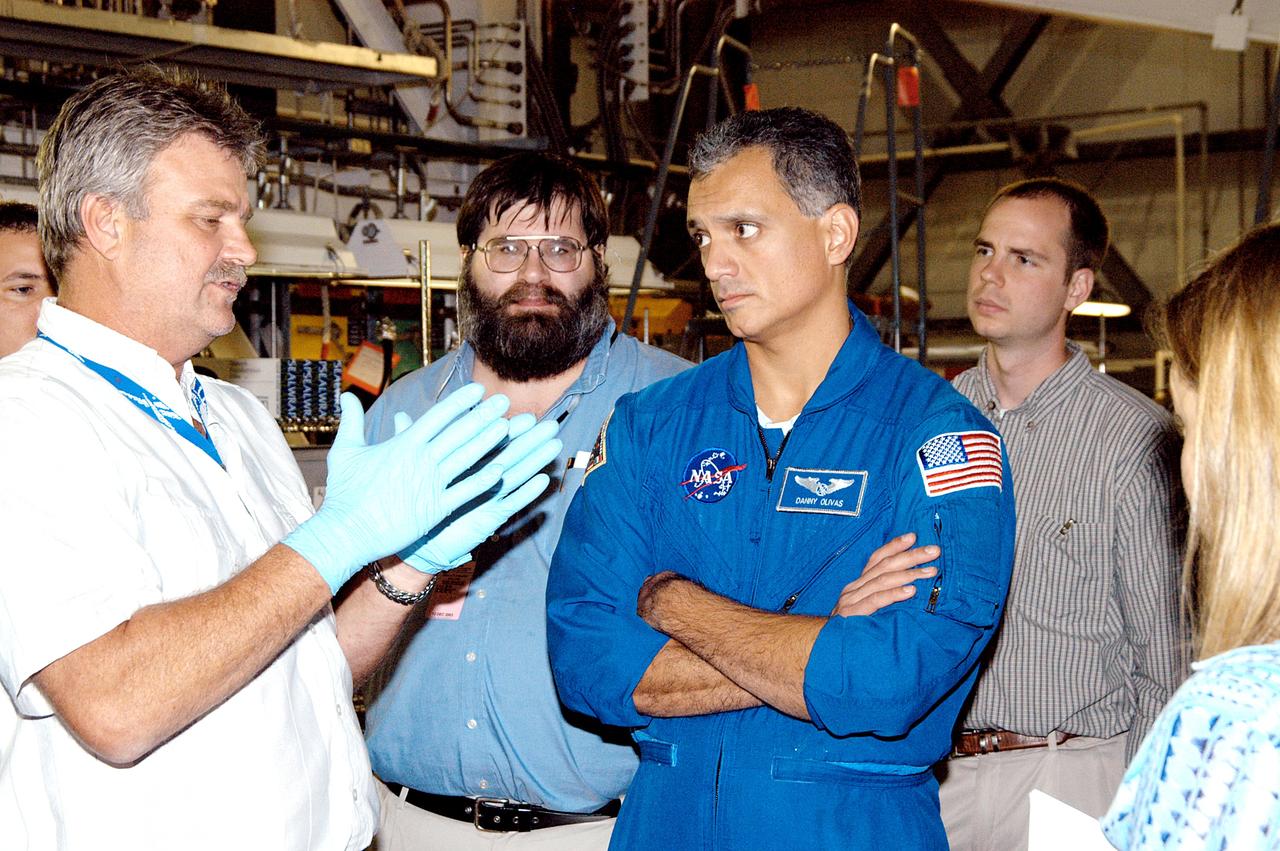
KENNEDY SPACE CENTER, FLA. -  - In the Orbiter Processing Facility astronaut Danny Olivas listens to Greg Grantham (left) talking about the Reinforced Carbon Carbon panels used on the leading edge of the wing of the orbiters.  Behind Olivas are engineers from around the Agency who are working on improving the RCC panels used on the wing leading edge. The gray carbon composite RCC panels have sufficient strength to withstand the aerodynamic forces experienced during launch and reentry, which can reach as high as 800 pounds per square foot.  The operating range of RCC is from minus 250º F to about 3,000º F, the temperature produced by friction with the atmosphere during reentry.
KENNEDY SPACE CENTER, FLA. - - In the Orbiter Processing Facility astronaut Danny Olivas listens to Greg Grantham (left) talking about the Reinforced Carbon Carbon panels used on the leading edge of the wing of the orbiters. Behind Olivas are engineers from around the Agency who are working on improving the RCC panels used on the wing leading edge. The gray carbon composite RCC panels have sufficient strength to withstand the aerodynamic forces experienced during launch and reentry, which can reach as high as 800 pounds per square foot. The operating range of RCC is from minus 250º F to about 3,000º F, the temperature produced by friction with the atmosphere during reentry.
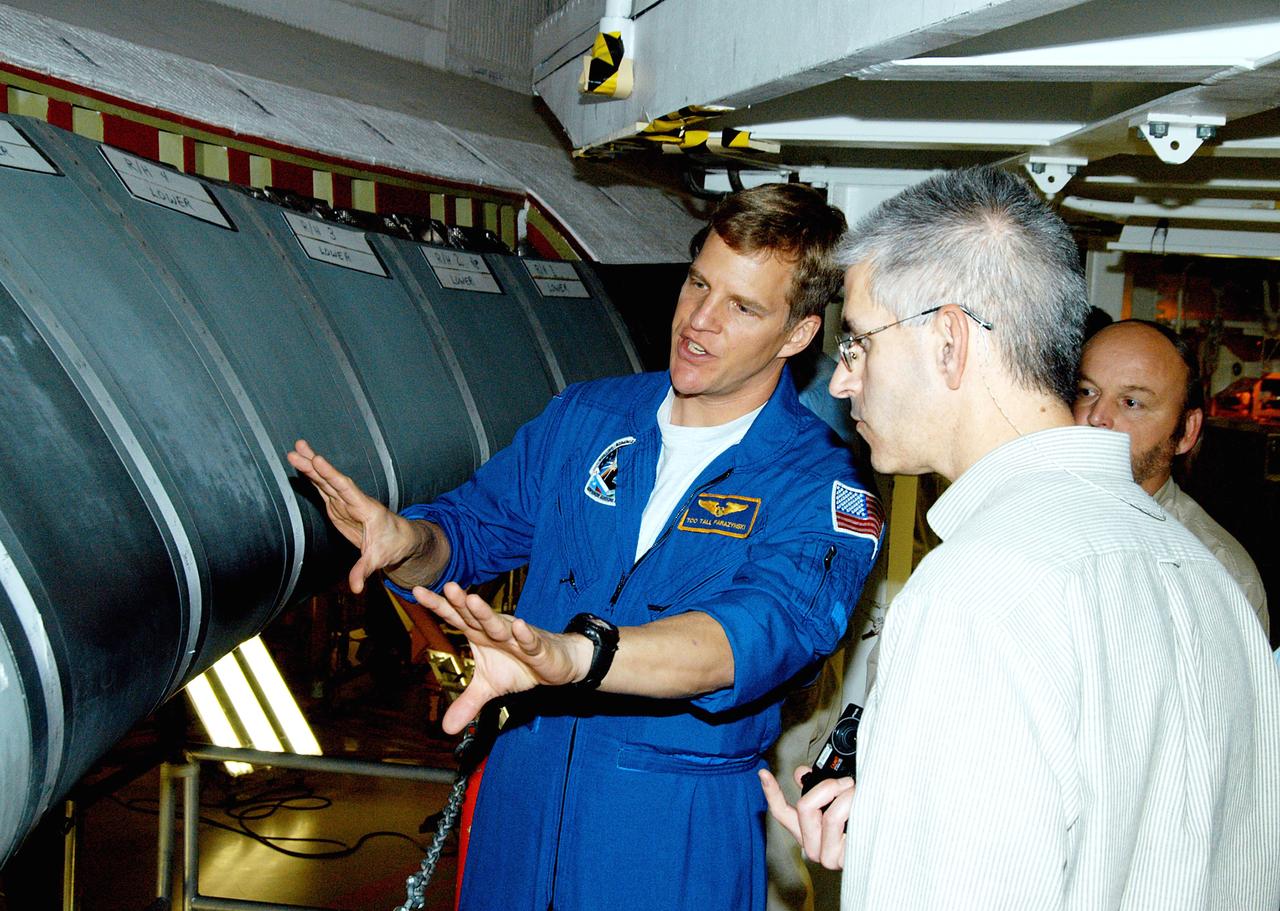
KENNEDY SPACE CENTER, FLA. -  In the Orbiter Processing Facility, astronaut Scott E. Parazynski discusses the Reinforced Carbon Carbon panels used on the leading edge of the wing of the orbiters.  With him are engineers from around the Agency who are working on improving the RCC panels used on the wing leading edge. The gray carbon composite RCC panels have sufficient strength to withstand the aerodynamic forces experienced during launch and reentry, which can reach as high as 800 pounds per square foot.  The operating range of RCC is from minus 250º F to about 3,000º F, the temperature produced by friction with the atmosphere during reentry.
KENNEDY SPACE CENTER, FLA. - In the Orbiter Processing Facility, astronaut Scott E. Parazynski discusses the Reinforced Carbon Carbon panels used on the leading edge of the wing of the orbiters. With him are engineers from around the Agency who are working on improving the RCC panels used on the wing leading edge. The gray carbon composite RCC panels have sufficient strength to withstand the aerodynamic forces experienced during launch and reentry, which can reach as high as 800 pounds per square foot. The operating range of RCC is from minus 250º F to about 3,000º F, the temperature produced by friction with the atmosphere during reentry.
KENNEDY SPACE CENTER, FLA. -  In the Orbiter Processing Facility, astronaut Scott E. Parazynski points to the Reinforced Carbon Carbon panels used on the leading edge of the wing of the orbiters. With Parazynski are engineers from around the Agency who are working on improving the RCC panels used on the wing leading edge.  The gray carbon composite RCC panels have sufficient strength to withstand the aerodynamic forces experienced during launch and reentry, which can reach as high as 800 pounds per square foot.  The operating range of RCC is from minus 250º F to about 3,000º F, the temperature produced by friction with the atmosphere during reentry.
KENNEDY SPACE CENTER, FLA. - In the Orbiter Processing Facility, astronaut Scott E. Parazynski points to the Reinforced Carbon Carbon panels used on the leading edge of the wing of the orbiters. With Parazynski are engineers from around the Agency who are working on improving the RCC panels used on the wing leading edge. The gray carbon composite RCC panels have sufficient strength to withstand the aerodynamic forces experienced during launch and reentry, which can reach as high as 800 pounds per square foot. The operating range of RCC is from minus 250º F to about 3,000º F, the temperature produced by friction with the atmosphere during reentry.
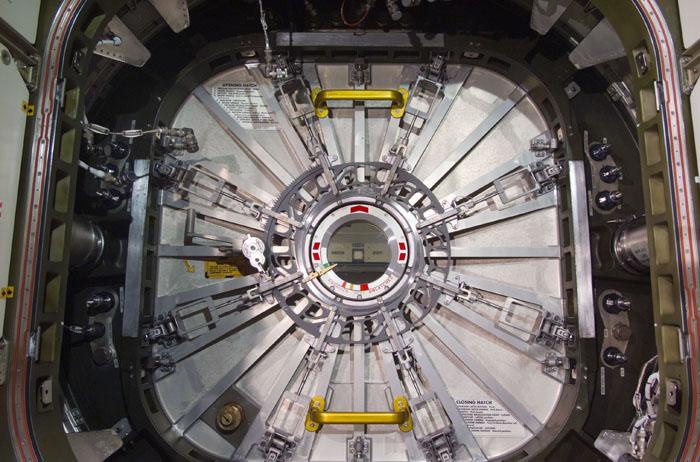
STS98-E-5114 (11 February 2001) --- This medium close-up shot, photographed with a digital still camera, shows Unity's closed hatch to the newly delivered Destiny laboratory.  The crews of Atlantis and the International Space Station opened the laboratory, shortly after this photo was made on Feb. 11, and the astronauts and cosmonauts spent the first full day of what are planned to be years of work ahead inside the orbiting science and command center. Station commander William M. (Bill) Shepherd opened the Destiny hatch, and he and shuttle commander Kenneth D. Cockrell ventured inside at 8:38 a.m. (CST), Feb. 11.  As depicted in subsequent digital images in this series, members of both crews went to work quickly inside the new module, activating air systems, fire extinguishers, alarm systems, computers and internal communications. The crew also continued equipment transfers from the shuttle to the station.
Hatch leading into U.S. Laboratory / Destiny module
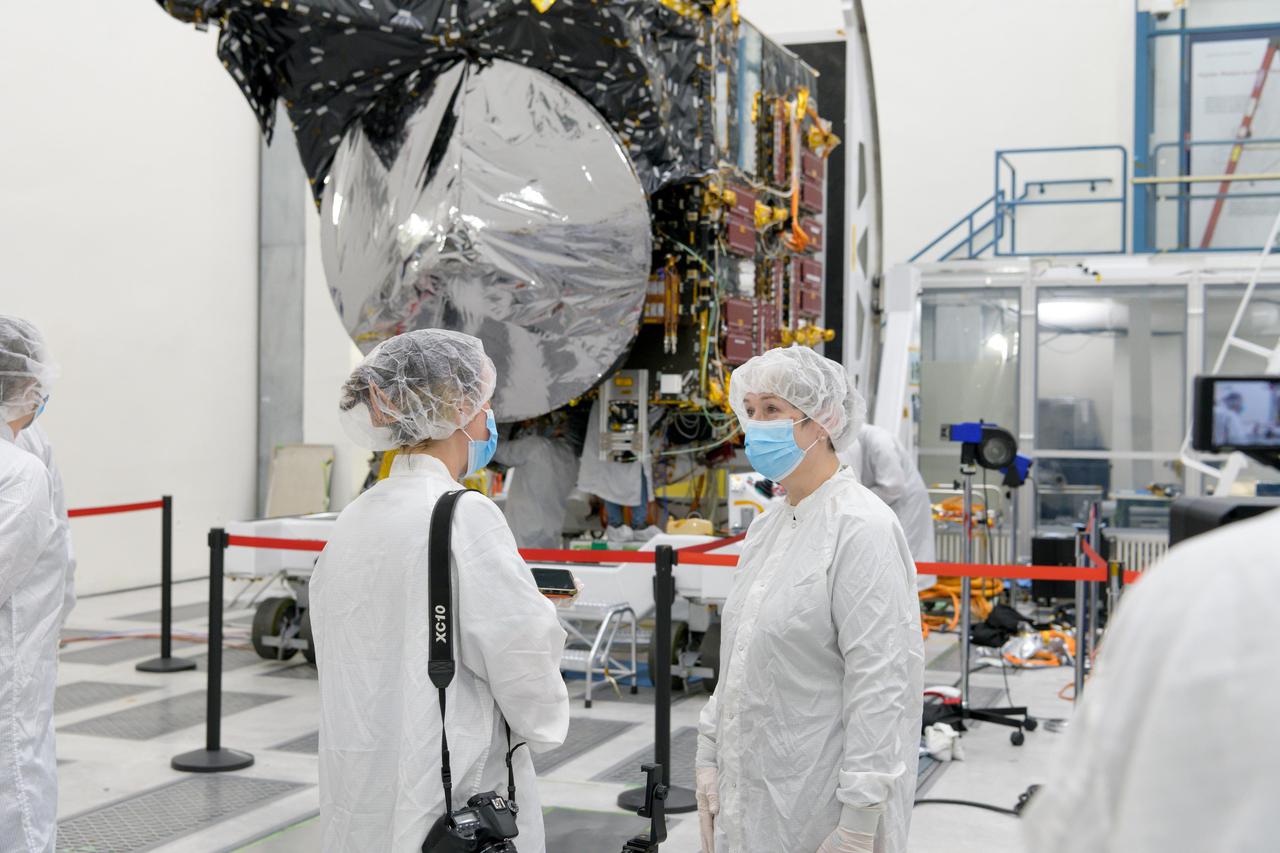
A member of the media interviews the principal investigator of NASA's Psyche mission, Lindy Elkins-Tanton, in front of the spacecraft on April 11, 2022, inside a clean room at NASA's Jet Propulsion Laboratory in Southern California. After engineers at JPL put their final touches on the spacecraft, Psyche will ship to NASA's Kennedy Space Center in Florida, where it is scheduled to launch in August 2022 on a journey to a metal-rich asteroid of the same name.  https://photojournal.jpl.nasa.gov/catalog/PIA25241
Media Meet the Team Leading NASA's Psyche Mission
STS088-370-014 (4-15 Dec. 1998) --- Astronaut Robert D. Cabana, commander, closes the hatch to the International Space Station (ISS) following several days of work by the crew members to ready its first two components (Zarya and Unity Modules).
Cabana closes the hatch leading to the ISS stack
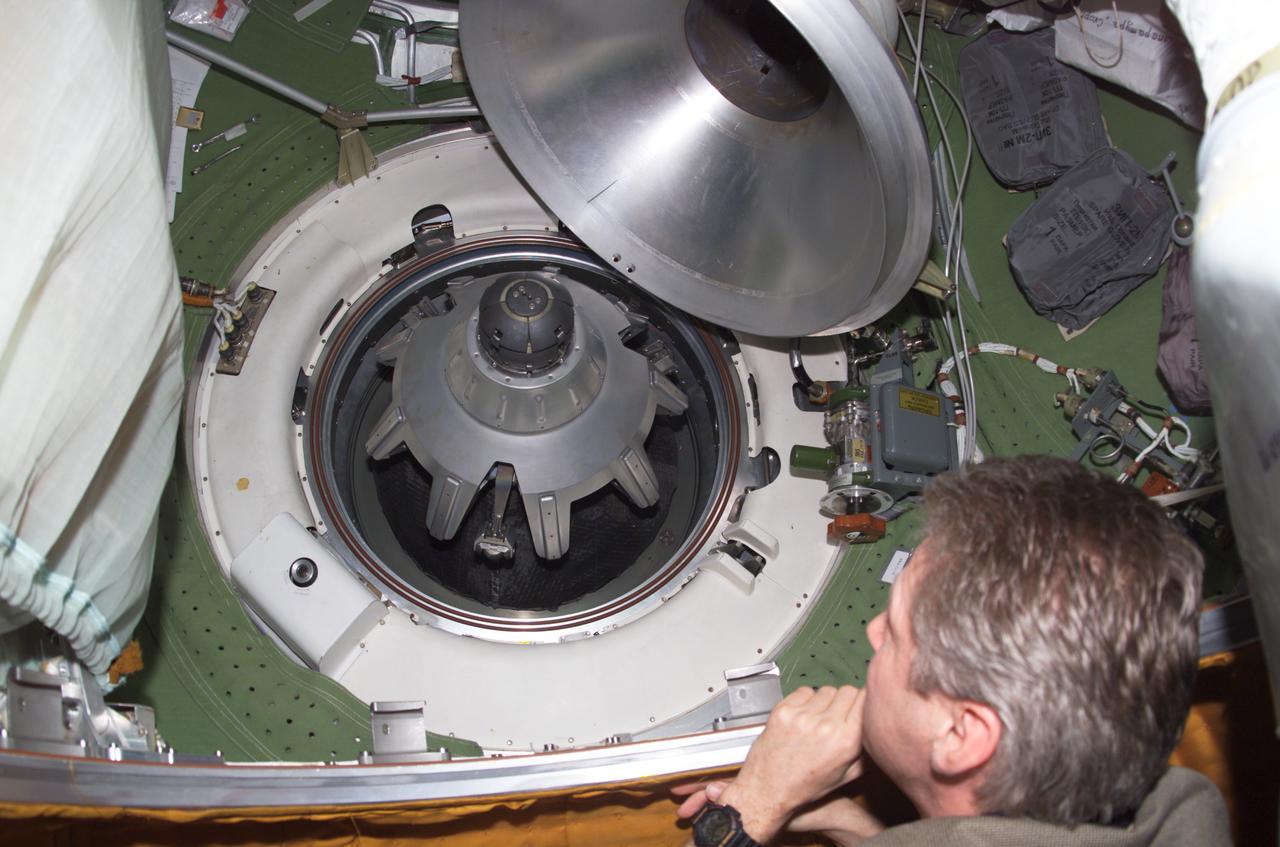
ISS014-E-05015 (28 Sept. 2006) --- European Space Agency (ESA) astronaut Thomas Reiter, Expedition 14 flight engineer, photographed near a docking port in the Pirs Docking Compartment of the International Space Station. A probe-and-cone docking mechanism is visible in the port.
Crew around hatch leading into the Soyuz spacecraft
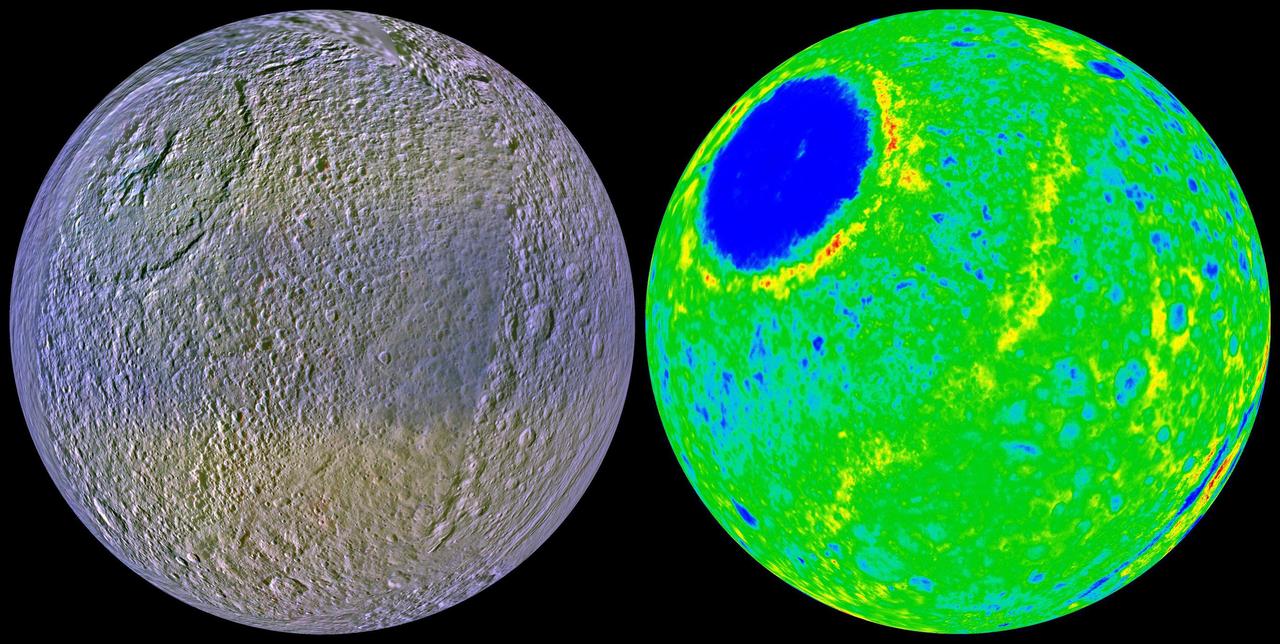
These two views of Tethys show the high-resolution color left and the topography right of the leading, or forward-facing, hemisphere of this ice-rich satellite. Data for these images is from NASA Cassini spacecraft.
A New View of Tethys
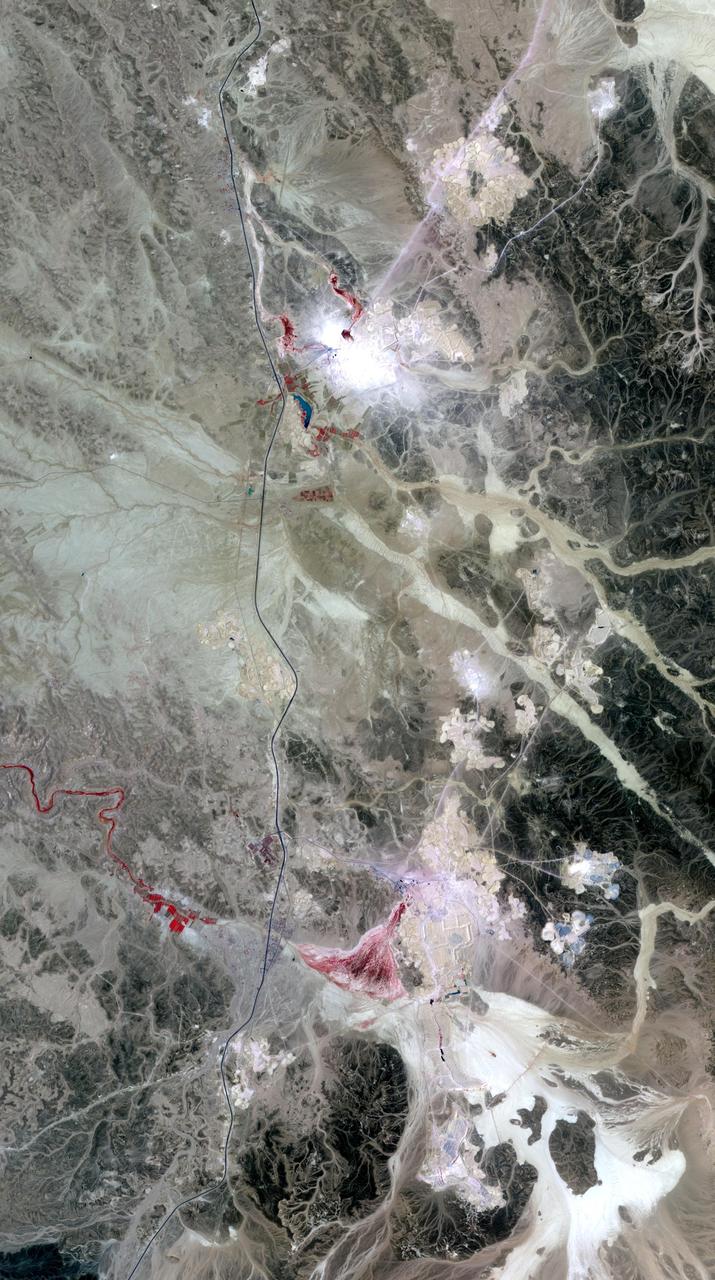
Jordan leading industry and export commodities are phosphate and potash, ranked in the top three in the world. These are used to make fertilizer. This image was acquired by NASA Terra satellite on September 17, 2005.
Phosphate Mines, Jordan
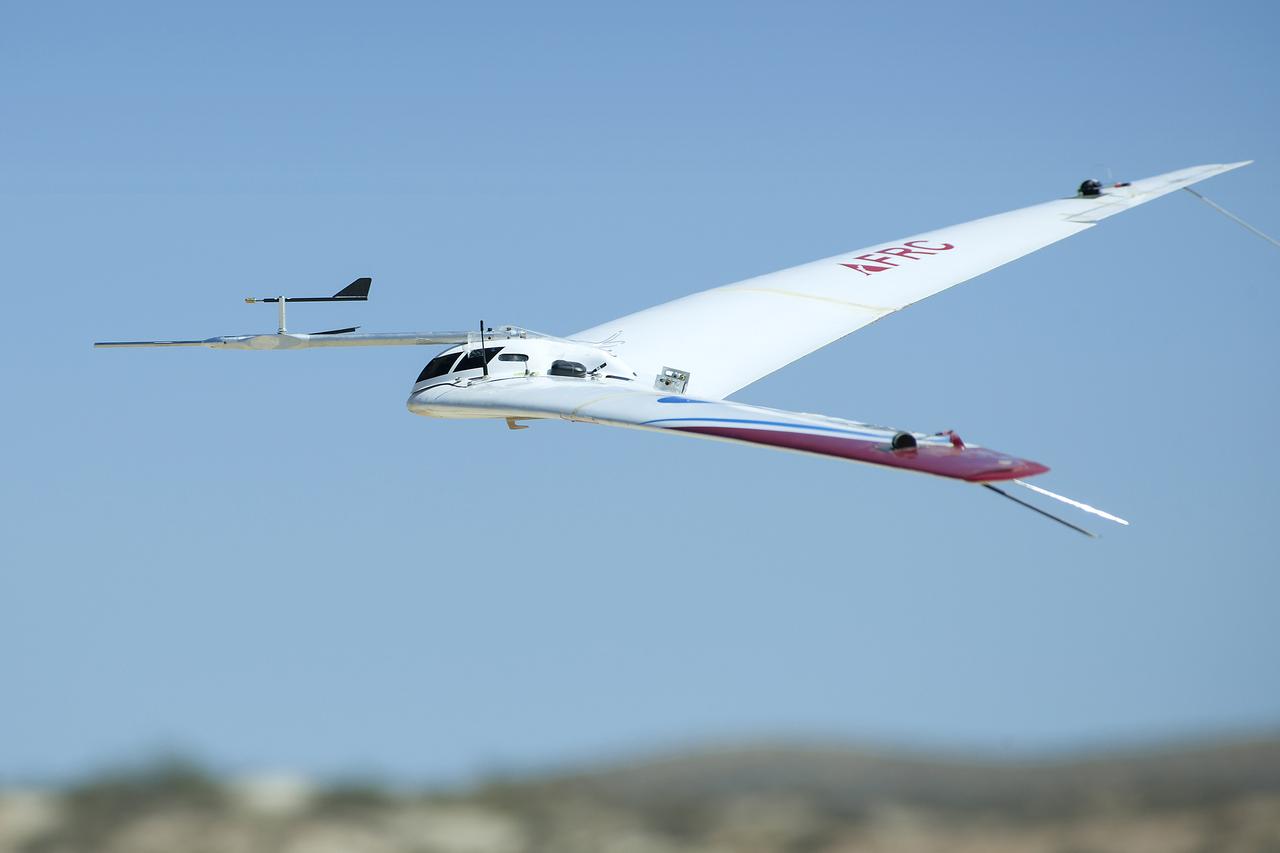
The proposed Prandtl-m is based on the Prandtl-d seen coming in for a landing during a flight test in June. The aerodynamics offer a solution that could lead to the first aircraft on Mars.
Could This Become the First Mars Airplane?
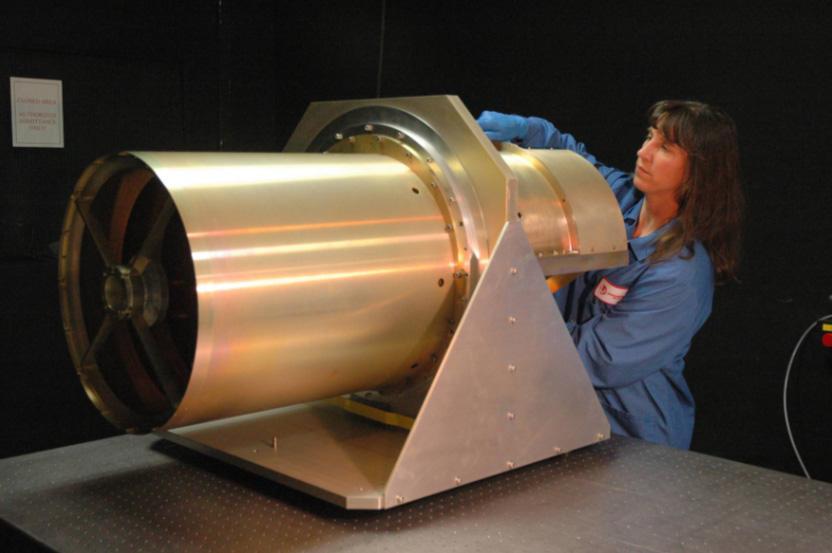
This image shows NASA 40 cm diameter Wide-field Infrared Survey Explorer telescope. Here the lead optical test engineer attaches the back-end imager optics to the afocal.
NASA WISE Telescope
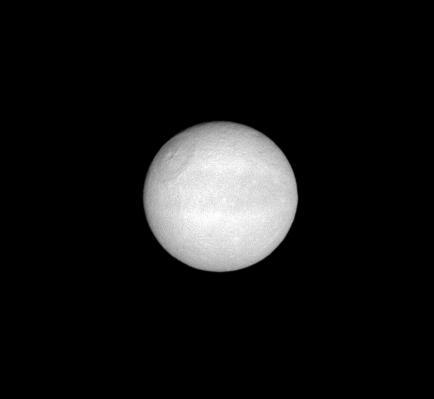
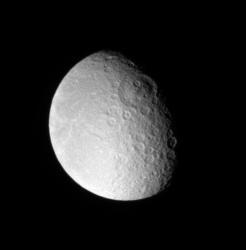
Rhea sports an immense impact scar on its leading hemisphere, like several other major Saturnian moons. The impact basin, seen above center on the day-night dividing line, or terminator, is named Tirawa
Tirawa on the Terminator
Lockheed Martin Space Systems engineer Terry Kampmann left and lead technician Jack Farmerie work on assembly and test of NASA Mars Reconnaissance Orbiter spacecraft bus in a cleanroom at the company Denver facility.
Mars Reconnaissance Orbiter Taking Shape
This Cassini spacecraft view shows how the bright and dark regions on Iapetus fit together like the seams of a baseball. Some of the material that covers the moon dark, leading side spills over into regions on the brighter trailing side
World of Contrast
Although it is no longer uncharted land, the origin of the dark territory  of Cassini Regio on Iapetus remains a mystery. The view looks down onto the northern hemisphere of Iapetus and shows terrain on the moon leading  hemisphere
A Moon with Two Dark Sides
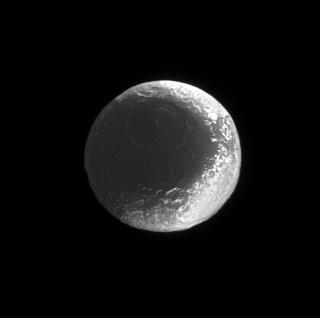
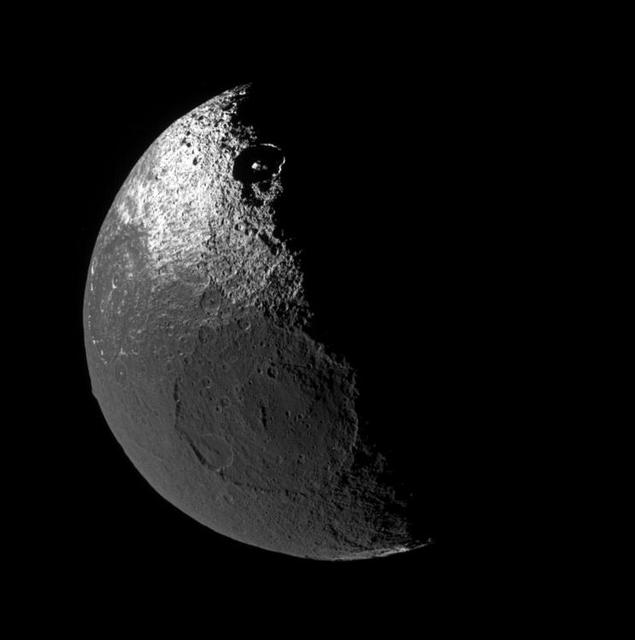
A large crater can be seen in the southern hemisphere of Saturn two-tone moon Iapetus. Lit terrain seen here is on the trailing hemisphere while the leading hemisphere is extremely dark and whose trailing hemisphere is as white as snow.
Big Crater Down South
NASA Cassini spacecraft looks at an example of a ray crater on the leading hemisphere of Saturn moon Dione. The ray crater is in the upper-left of the image and ejecta rays show up as brighter material emanating from the crater.
Dione Ray Crater
This image from NASA Mars Curiosity rover shows the Amargosa Valley, on the slopes leading up to Mount Sharp on Mars. The rover is headed toward the Pahrump Hills outcrop.
Curiosity Marches Onward and Upward
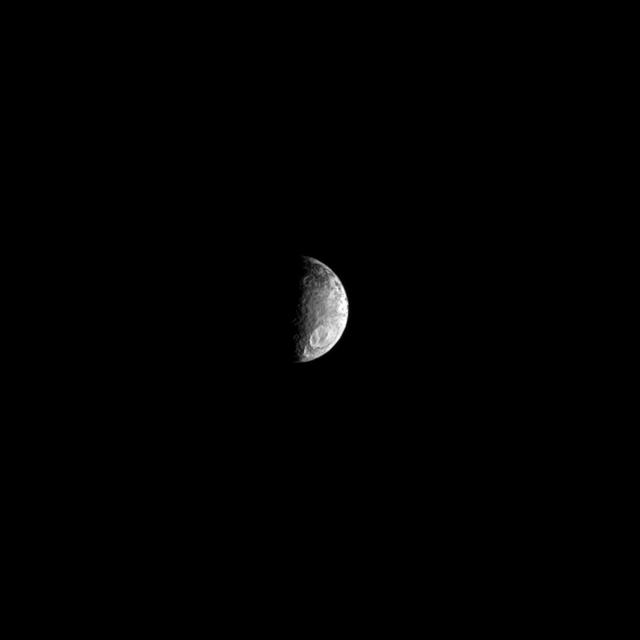
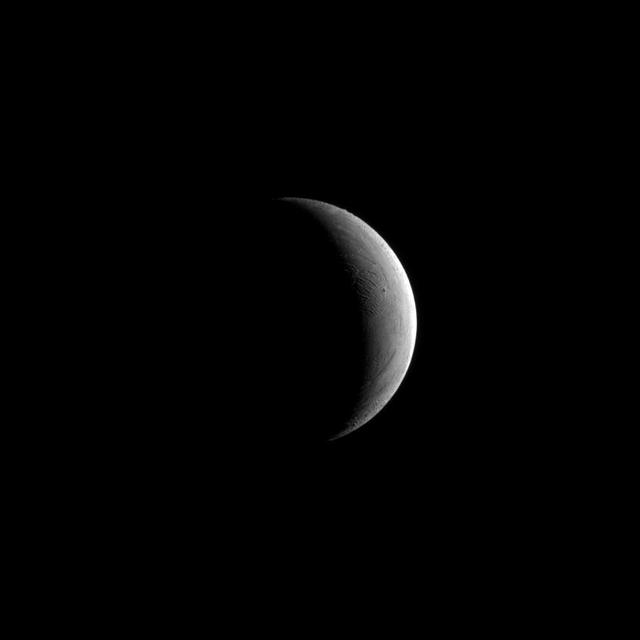
NASA Cassini spacecraft captures a crescent of Saturn moon Enceladus. Lit terrain seen here is in the area between the leading hemisphere and Saturn-facing side of Enceladus 504 kilometers, or 313 miles across. North on Enceladus is up.
Sliver of Enceladus
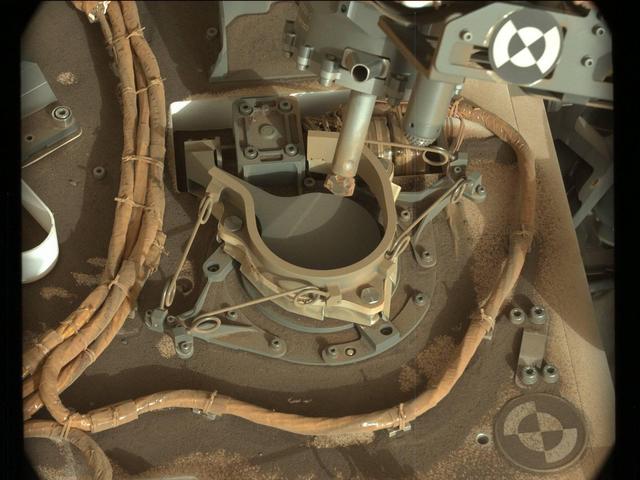
The drill bit of NASA's Curiosity Mars rover over one of the sample inlets on the rover's deck. The inlets lead to Curiosity's onboard laboratories. This image was taken on Sol 2068 by the rover's Mast Camera (Mastcam).  https://photojournal.jpl.nasa.gov/catalog/PIA22327
Inlet Cover On the Curiosity Rover
Left to right: Electrical Test Engineer Esha Murty and Integration and Test Lead Cody Colley prepare the ASTERIA spacecraft for mass-properties measurements in April 2017 prior to spacecraft delivery ahead of launch. ASTERIA was deployed from the International Space Station in November 2017.  https://photojournal.jpl.nasa.gov/catalog/PIA23406
ASTERIA CubeSat Before Launch
Wildfires are a recurring natural hazard faced by Californians. In Santa Barbara County, a wildfire, called the Jesusita fire, ignited on May 5, 2009 in the Cathedral Peak area northwest of Mission Canyon. As of midday May 8, the fire, which was 10-percent contained, had scorched 3,500 acres, damaged or destroyed 75 structures, and had forced the evacuation of tens of thousands of residents.  This image shows soil moisture change in the top soil layer (2-inches deep) on 2 and 3 May 2009, as measured by the NASA QuikSCAT satellite scatterometer (radar). Rainwater increased the amount of moisture in the soil by a moderate 4 percent (represented by the green color) on May 2, which rapidly dried up on the next day (0 percent, as depicted by the grey color on May 3). Son Nghiem of JPL is leading a science team to develop wildfire applications using QuikScat data.  “Information critical to assessing the conditions leading to wildfires can be obtained from NASA’s SeaWinds scatterometer, a stable and accurate radar aboard the QuikScat satellite,” says Dr. Son Nghiem, a JPL scientist in remote sensing. This is accomplished by using QuikScat data to map moisture changes in the topsoil. As such, QuikScat can detect rainwater that actually reaches the land surface and accumulates on it, rather than raindrops in the air. While rain radars may detect a significant rain rate, rainwater may evaporate in part before reaching the surface. For example, in the case of dry thunderstorm (known as virga), raindrops disappear on the way down, leaving the land dry, while the associated lightning ignites fires.  For the case of the current fire in Santa Barbara, QuikScat detected a moderate increase of 4 percent in soil moisture on May 2, while rain radar data seemed to indicate a significant and extensive rain. The next day, QuikScat revealed that whatever rainwater that had accumulated earlier quickly dried up over the whole area. The maximum temperature in Santa Barbara approached 90 degrees Fahrenheit and broke the record set in 1984. An important characteristic of QuikScat measurements is that they represent the average conditions over the whole area, rather than some disparate data collected at a few localized points. The rapid dry-up in Santa Barbara together with high temperatures and high winds led to the devastating Jesusita fire.  http://photojournal.jpl.nasa.gov/catalog/PIA12006
Disaster Management: Rapid Dry-Up of Rainwater on Land Surface Leading to the Santa Barbara Wildfire
Planetary Science Lead, Jim Green being briefed on recent conceptual designs by the Lead of the COMPASS concurrent engineering design team at NASA Glenn Research Center.  COMPASS = COllaborative Modeling for Parametric Assessment of Space Systems
GRC-2010-C-01359
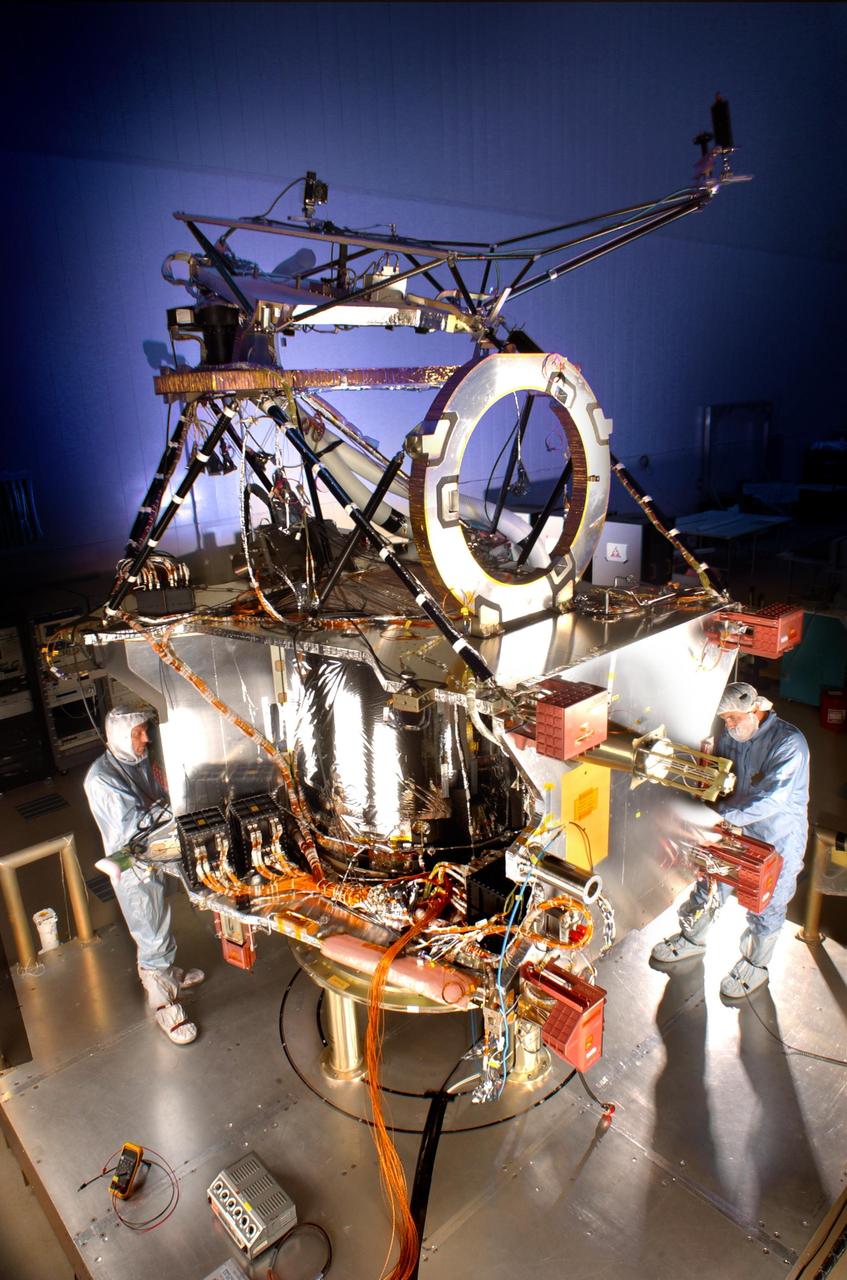
Matt Johnson, CAPSTONE lead systems engineer, left, and Dylan Schmidt, CAPSTONE assembly integration and test lead, right, with the CAPSTONE spacecraft stowed in its dispenser at Tyvak Nano-Satellite Systems, Inc., in Irvine, California.
Cislunar Autonomous Positioning System Technology Operations and
The U.S.-French SWOT (Surface Water and Ocean Topography) satellite captured the leading edge of a tsunami wave that rolled through the Pacific Ocean on July 30, 2025 (11:25 a.m. local time), in the wake of a magnitude 8.8 earthquake that struck Russia's Kamchatka Peninsula. The satellite captured the data about 70 minutes after the earthquake struck.  The SWOT sea level measurements, shown in the highlighted swath from the satellite's ground track, is plotted against a tsunami forecast model from the National Oceanic and Atmospheric Administration (NOAA) Center for Tsunami Research in the background. A red star marks the location of the earthquake.  The measurements show a wave height exceeding 1.5 feet (45 centimeters) as well as a look at the shape and direction of travel of the leading edge of the wave (indicated in red). Researchers noted that while the wave height might seem small, tsunamis extend from the seafloor to the ocean surface. A seemingly small wave in the open ocean can become much larger in shallower coastal waters.  https://photojournal.jpl.nasa.gov/catalog/PIA26652
SWOT Satellite Measures Pacific Tsunami
Jennifer Trosper, Mars Perseverance project manager, leads rover team members at JPL in a round of applause for students who were honored through the "You've Got Perseverance" campaign for overcoming obstacles in pursuit of their educational goals.  https://photojournal.jpl.nasa.gov/catalog/PIA25272
Team Members Honoring Students
Joel Steinkraus, MarCO lead mechanical engineer from JPL, makes an adjustment on the CubeSat prior to integration in a deployment box as seen inside the cleanroom lab at Cal Poly San Luis Obispo on Monday, March 12, 2018.  https://photojournal.jpl.nasa.gov/catalog/PIA22321
Preparing MarCO