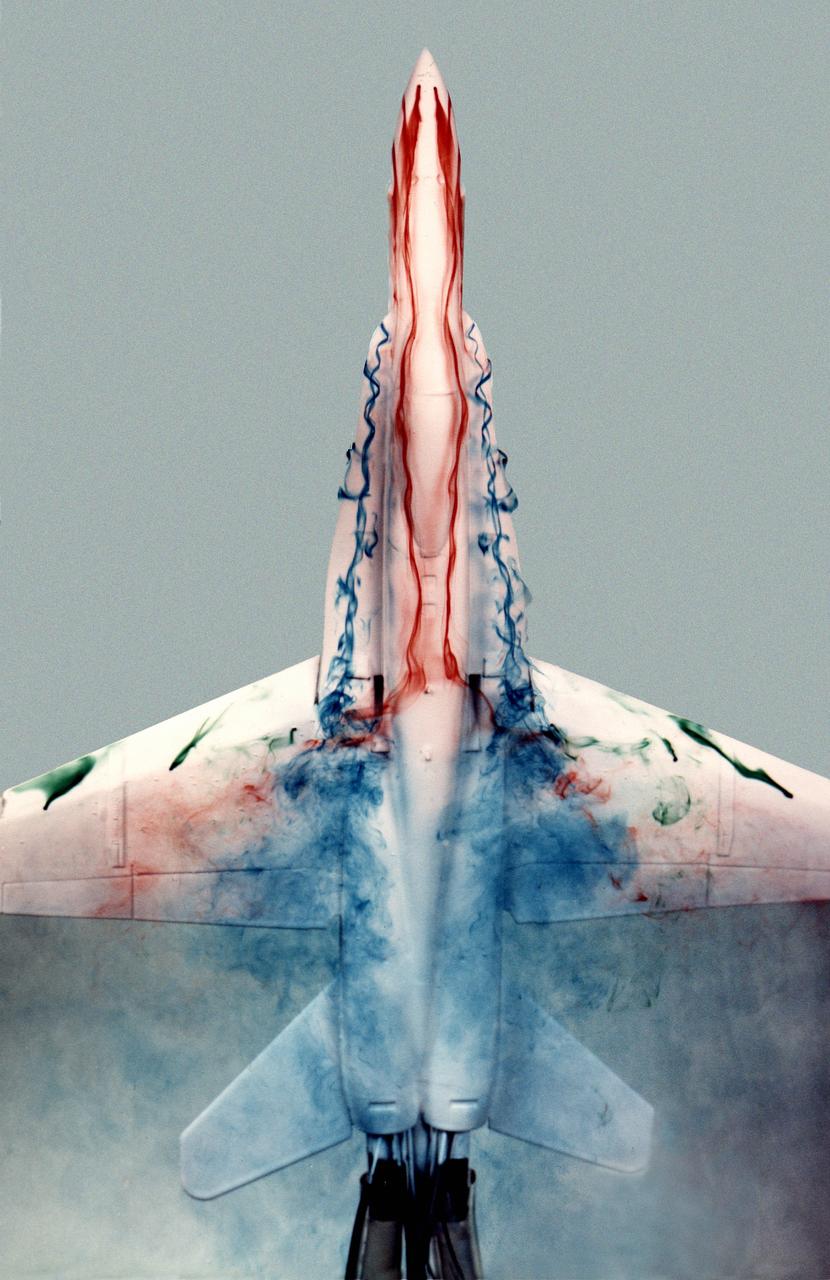
This image shows a plastic 1/48-scale model of an F-18 aircraft inside the "Water Tunnel" more formally known as the NASA Dryden Flow Visualization Facility. Water is pumped through the tunnel in the direction of normal airflow over the aircraft; then, colored dyes are pumped through tubes with needle valves. The dyes flow back along the airframe and over the airfoils highlighting their aerodynamic characteristics. The aircraft can also be moved through its pitch axis to observe airflow disruptions while simulating actual flight at high angles of attack. The Water Tunnel at NASA's Dryden Flight Research Center, Edwards, CA, became operational in 1983 when Dryden was a Flight Research Facility under the management of the Ames Research Center in Mountain View, CA. As a medium for visualizing fluid flow, water has played a significant role. Its use dates back to Leonardo da Vinci (1452-1519), the Renaissance Italian engineer, architect, painter, and sculptor. In more recent times, water tunnels have assisted the study of complex flows and flow-field interactions on aircraft shapes that generate strong vortex flows. Flow visualization in water tunnels assists in determining the strength of vortices, their location, and possible methods of controlling them. The design of the Dryden Water Tunnel imitated that of the Northrop Corporation's tunnel in Hawthorne, CA. Called the Flow Visualization Facility, the Dryden tunnel was built to assist researchers in understanding the aerodynamics of aircraft configured in such a way that they create strong vortex flows, particularly at high angles of attack. The tunnel provides results that compare well with data from aircraft in actual flight in another fluid-air. Other uses of the tunnel have included study of how such flight hardware as antennas, probes, pylons, parachutes, and experimental fixtures affect airflow. The facility has also been helpful in finding the best locations for emitting smoke from flight vehicles for flow vi
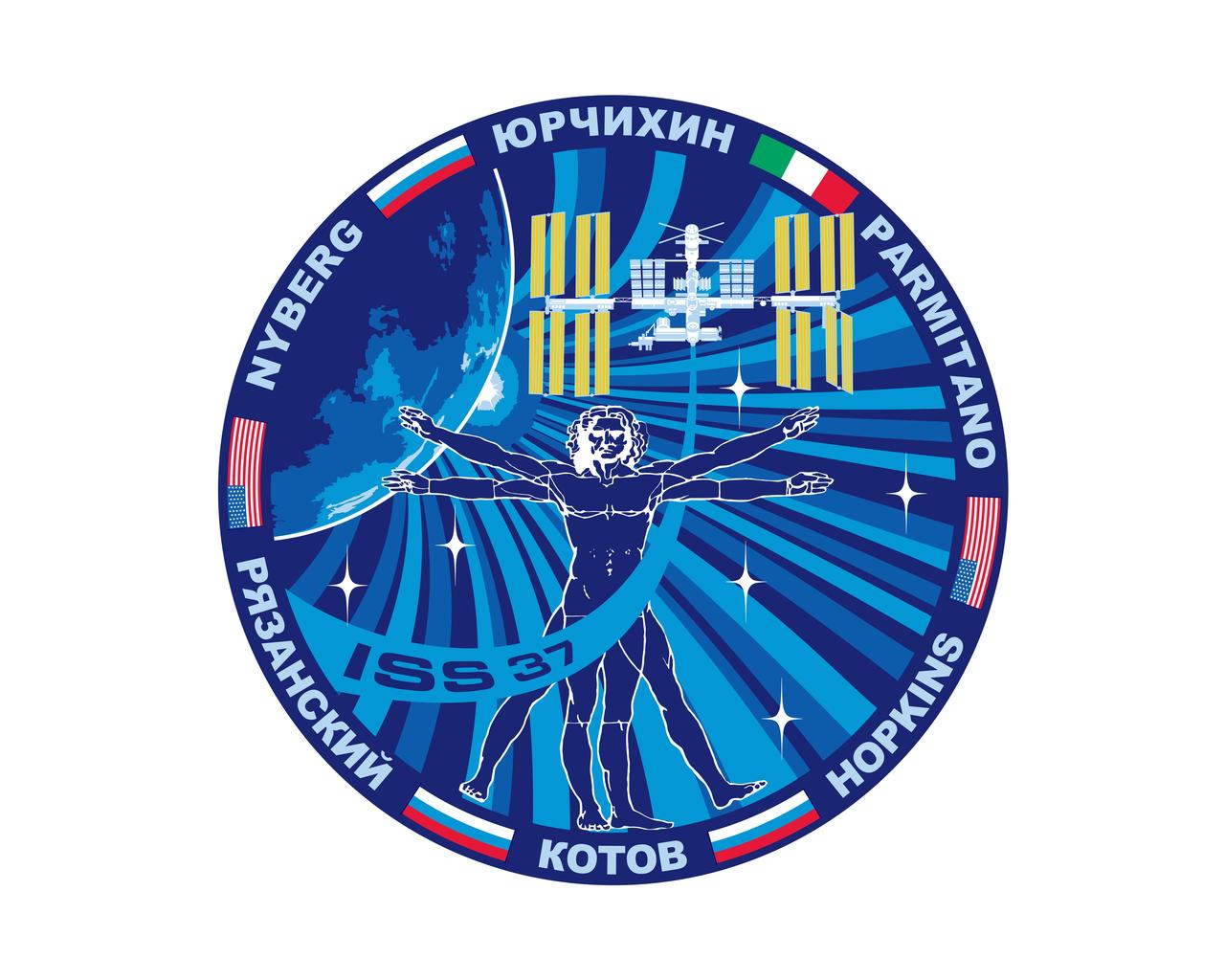
ISS037-S-001 (August 2012) --- Leonardo da Vinci's Vitruvian Man, created some 525 years ago, as a blend of art and science and a symbol of the medical profession, is depicted amongst the orbits of a variety of satellites circling the Earth at great speed. Da Vinci's drawing, based on the proportions of man as described by the Roman architect Vitruvius, is often used as a symbol of symmetry of the human body and the universe as a whole. Almost perfect in symmetry as well, the International Space Station, with its solar wings spread out and illuminated by the first rays of dawn, is pictured as a mighty beacon arcing upwards across our night skies, the ultimate symbol of science and technology of our age. Six stars represent the six members of Expedition 37 crew, which includes two cosmonauts with a medical background, as well as a native of Da Vinci's Italy. The design for insignia for space station flights is reserved for use by the crew members and for other official use as the NASA Administrator may authorize. Public availability has been approved only in the form of illustrations by the various news media. When and if there is any change in this policy, which is not anticipated, it will be publicly announced.
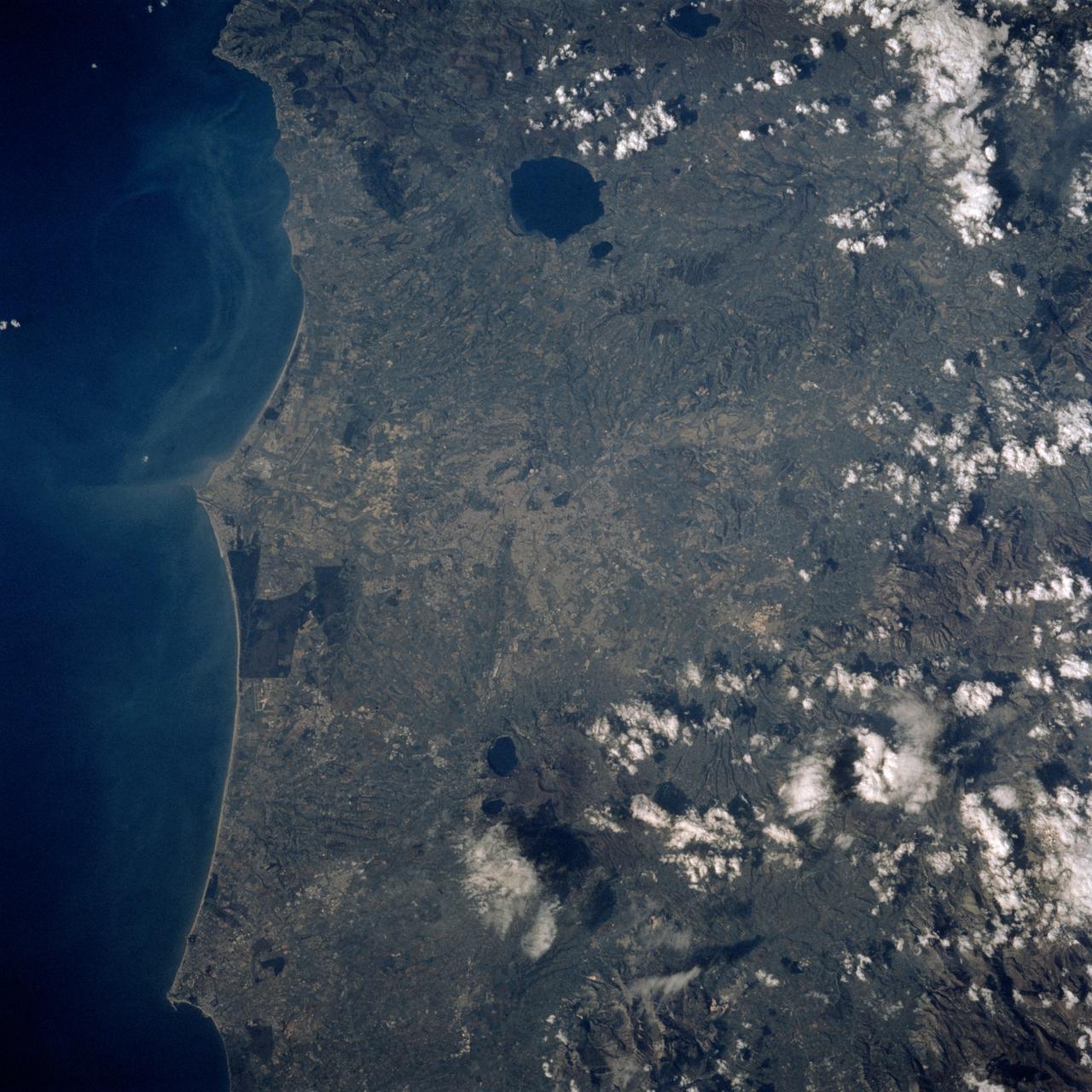
STS060-90-028 (3-11 Feb 1994) --- This view is centered over Rome and covers approximately 3,600 square miles. Anzio, the site of the January 22, 1944, Allied landing in Central Italy, is on the coast at the lower left. The coastal protuberance near the center is Ostia. This Roman Empire port on the Tiber River silted in and was covered over. It is now an archeological site and a tourist attraction. Southeast of the mouth of the Tiber is the Pontine Marsh. These marshlands were drained in the 1930's and have been converted to farmland. Volcanism formed the land in the region. It is evidenced in the circular caldera lakes visible. Castel Gandolfo, part of the Papal State, is on Lake Albano toward the bottom of the frame. Rome was founded during the Bronze Age on a river crossing. The road from the coast along the river was the main route for the early salt trade. The city became the capital of modern Italy in 1861. It has undergone explosive growth since World War II and now has a population of over three million people. Leonardo da Vinci (Fiumicino) Airport, the main international airport, is visible near the coast north of the Tiber River.
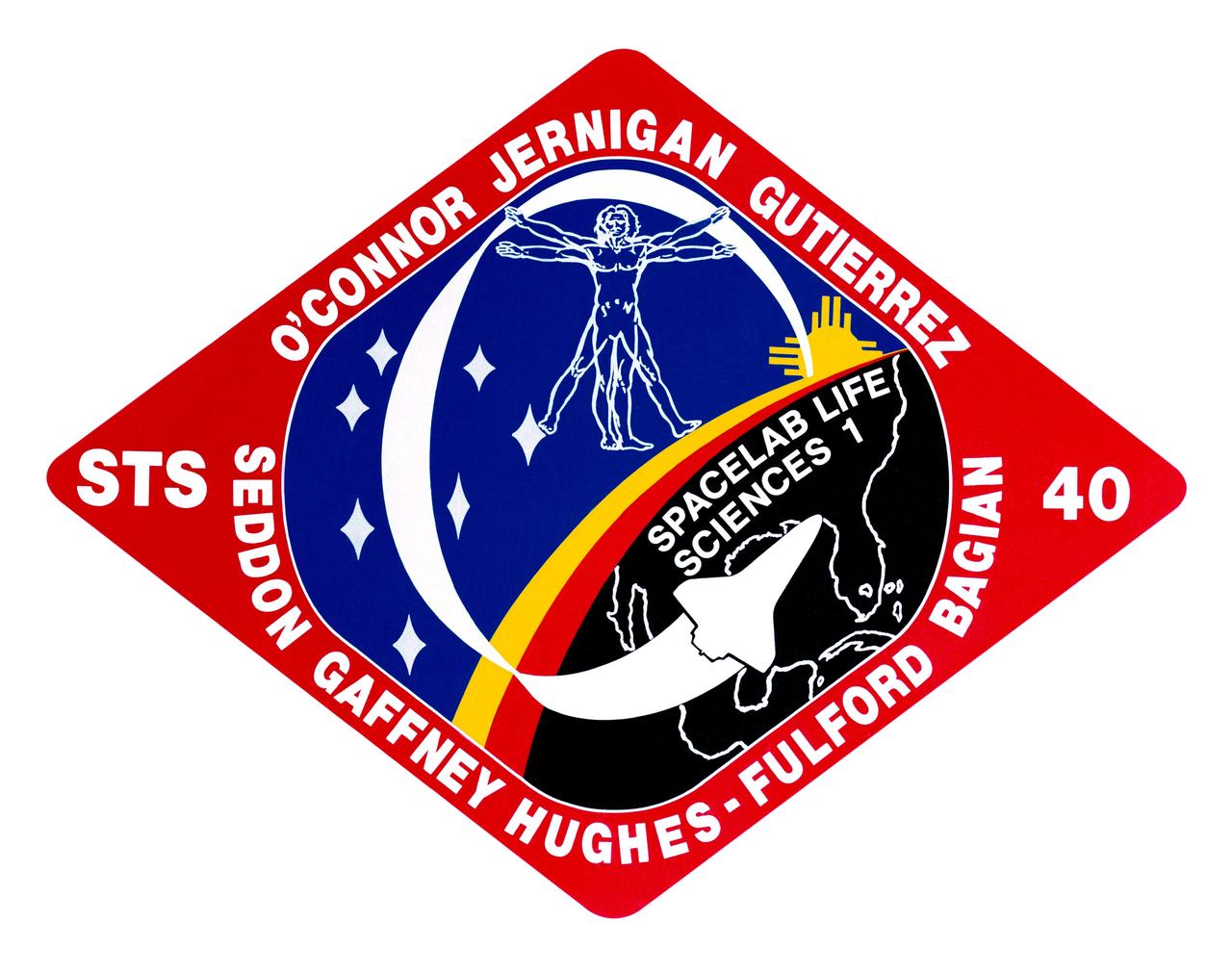
STS40-S-001 (May 1990) --- The STS-40 patch makes a contemporary statement focusing on human beings living and working in space. Against a background of the universe, seven silver stars, interspersed about the Orbital path of the space shuttle Columbia, represent the seven crew members. The orbiter's flight path forms a double-helix, designed to represent the DNA molecule common to all living creatures. In the words of a crew spokesman, "...(the helix) affirms the ceaseless expansion of human life and American involvement in space while simultaneously emphasizing the medical and biological studies to which this flight is dedicated." Above Columbia, the phrase "Spacelab Life Sciences 1" defines both the shuttle mission and its payload. Leonardo Da Vinci's Vitruvian man, silhouetted against the blue darkness of the heavens, is in the upper center portion of the patch. With one foot on Earth and arms extended to touch shuttle's orbit, the crew feels, he serves as a powerful embodiment of the extension of human inquiry from the boundaries of Earth to the limitless laboratory of space. Sturdily poised amid the stars, he serves to link scentists on Earth to the scientists in space asserting the harmony of efforts which produce meaningful scientific spaceflight missions. A brilliant red and yellow Earth limb (center) links Earth to space as it radiates from a native American symbol for the sun. At the frontier of space, the traditional symbol for the sun vividly links America's past to America's future, the crew states. Beneath the orbiting space shuttle, darkness of night rests peacefully over the United States. Drawn by artist Sean Collins, the STS-40 space shuttle patch was designed by the crew members for the flight. The NASA insignia design for space shuttle flights is reserved for use by the astronauts and for other official use as the NASA Administrator may authorize. Public availability has been approved only in the forms of illustrations by the various news media. When and if there is any change in this policy, which is not anticipated, the change will be publicly announced. Photo credit: NASA
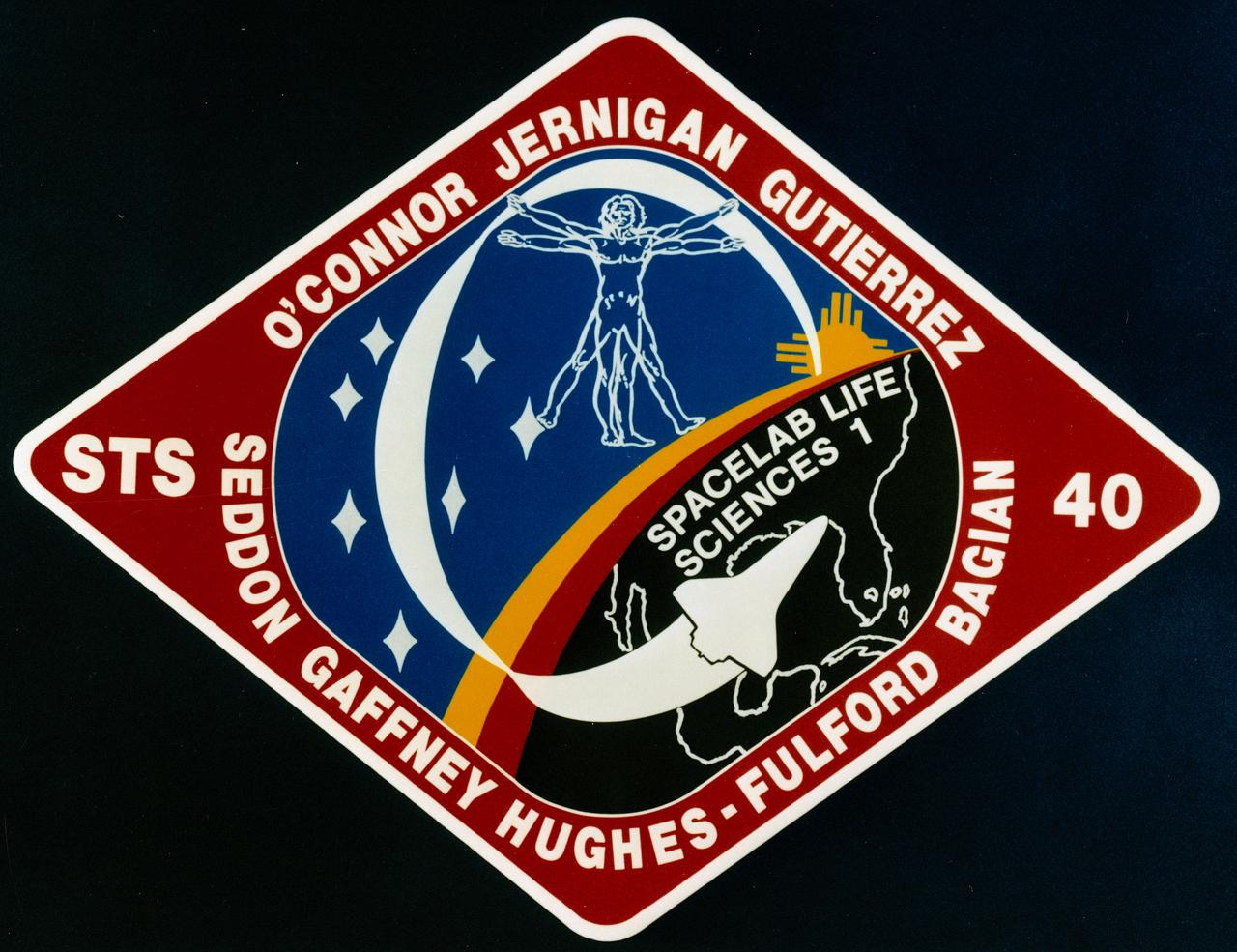
The STS-40 patch makes a contemporary statement focusing on human beings living and working in space. Against a background of the universe, seven silver stars, interspersed about the orbital path of Columbia, represent the seven crew members. The orbiter's flight path forms a double-helix, designed to represent the DNA molecule common to all living creatures. In the words of a crew spokesman, ...(the helix) affirms the ceaseless expansion of human life and American involvement in space while simultaneously emphasizing the medical and biological studies to which this flight is dedicated. Above Columbia, the phrase Spacelab Life Sciences 1 defines both the Shuttle mission and its payload. Leonardo Da Vinci's Vitruvian man, silhouetted against the blue darkness of the heavens, is in the upper center portion of the patch. With one foot on Earth and arms extended to touch Shuttle's orbit, the crew feels, he serves as a powerful embodiment of the extension of human inquiry from the boundaries of Earth to the limitless laboratory of space. Sturdily poised amid the stars, he serves to link scentists on Earth to the scientists in space asserting the harmony of efforts which produce meaningful scientific spaceflight missions. A brilliant red and yellow Earth limb (center) links Earth to space as it radiates from a native American symbol for the sun. At the frontier of space, the traditional symbol for the sun vividly links America's past to America's future, the crew states. Beneath the orbiting Shuttle, darkness of night rests peacefully over the United States. Drawn by artist Sean Collins, the STS 40 Space Shuttle patch was designed by the crewmembers for the flight.