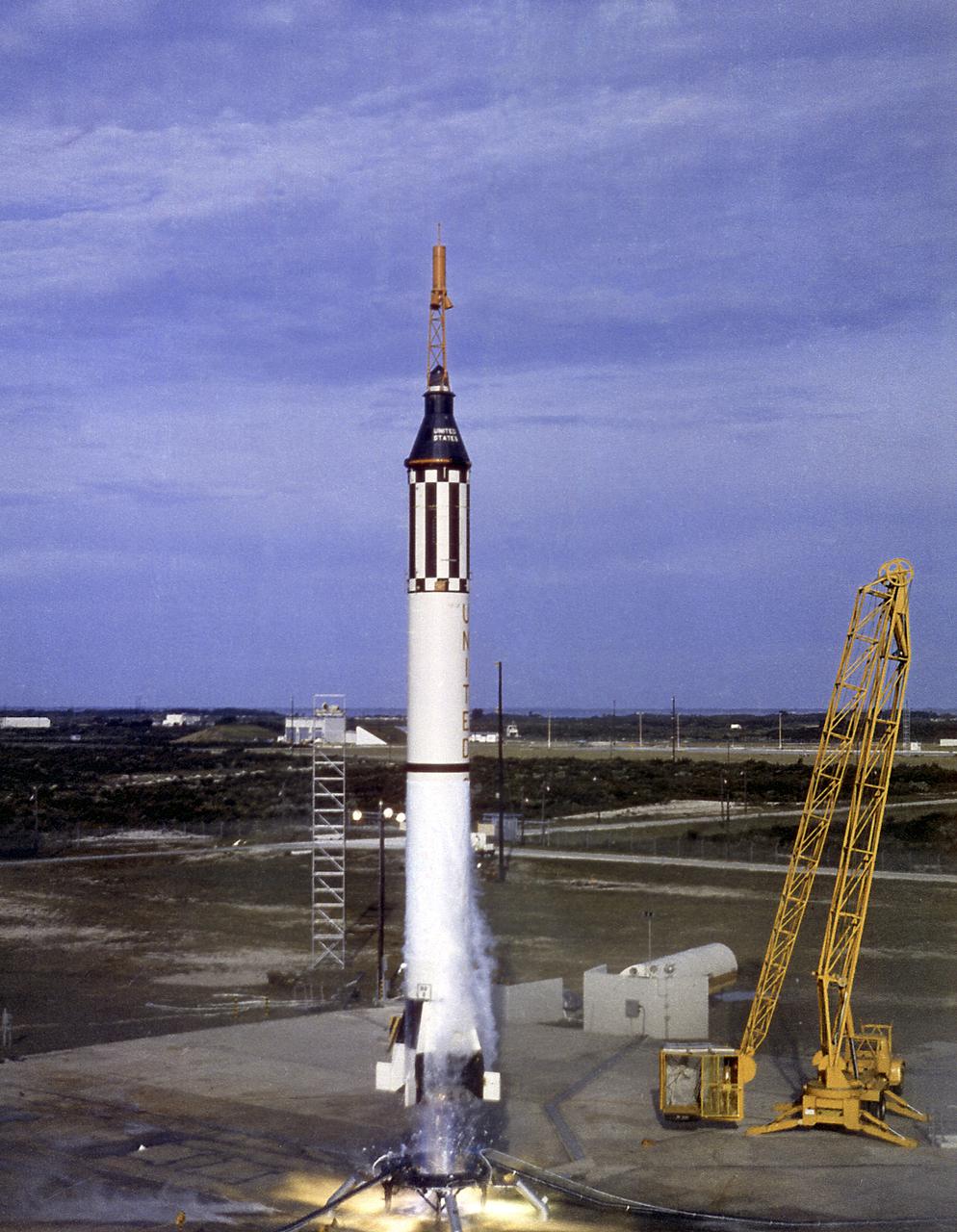
Liftoff of MR-4 (Mercury-Redstone), Liberty Bell 7, on July 21, 1961. MR-4 mission was the second marned suborbital flight and carried Astronaut Virgil Grissom aboard the Liberty Bell 7 spacecraft in space for a duration of 15-1/2 minutes.
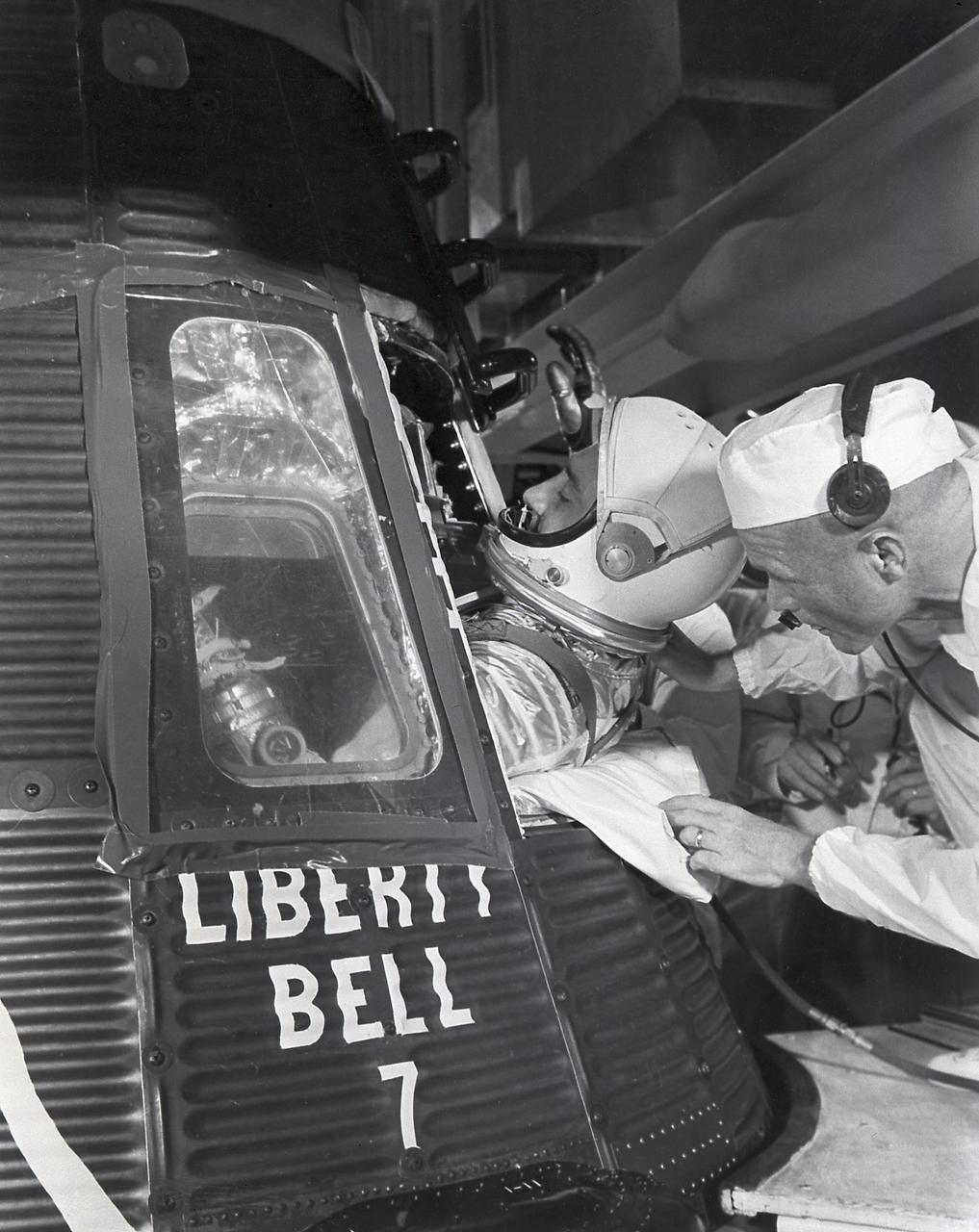
Assisted by Astronaut John Glenn, Astronaut Virgil Grissom enters the Mercury capsule, Liberty Bell 7, for the MR-4 mission on July 21, 1961. Boosted by the Mercury-Redstone vehicle, the MR-4 mission was the second manned suborbital flight.
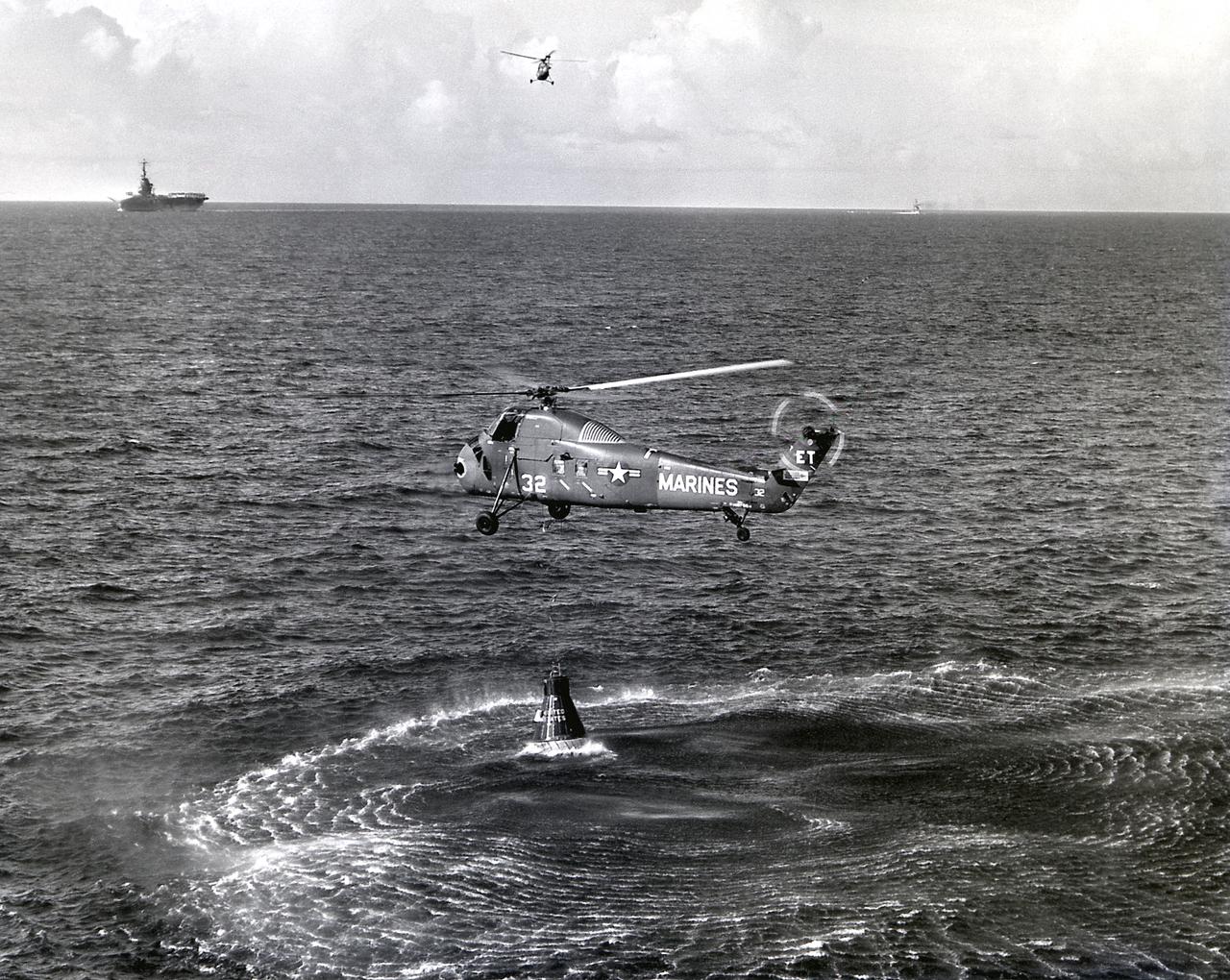
A U.S. Marine helicopter attempts to retrieve the sinking capsule, Liberty Bell 7, of the MR-4 mission. The attempt failed and the capsule sank. The MR-4 mission marned by Astronaut Virgil Grissom was the second manned orbital flight boosted by the Mercury-Redstone vehicle. The Recovery ship is in the background.
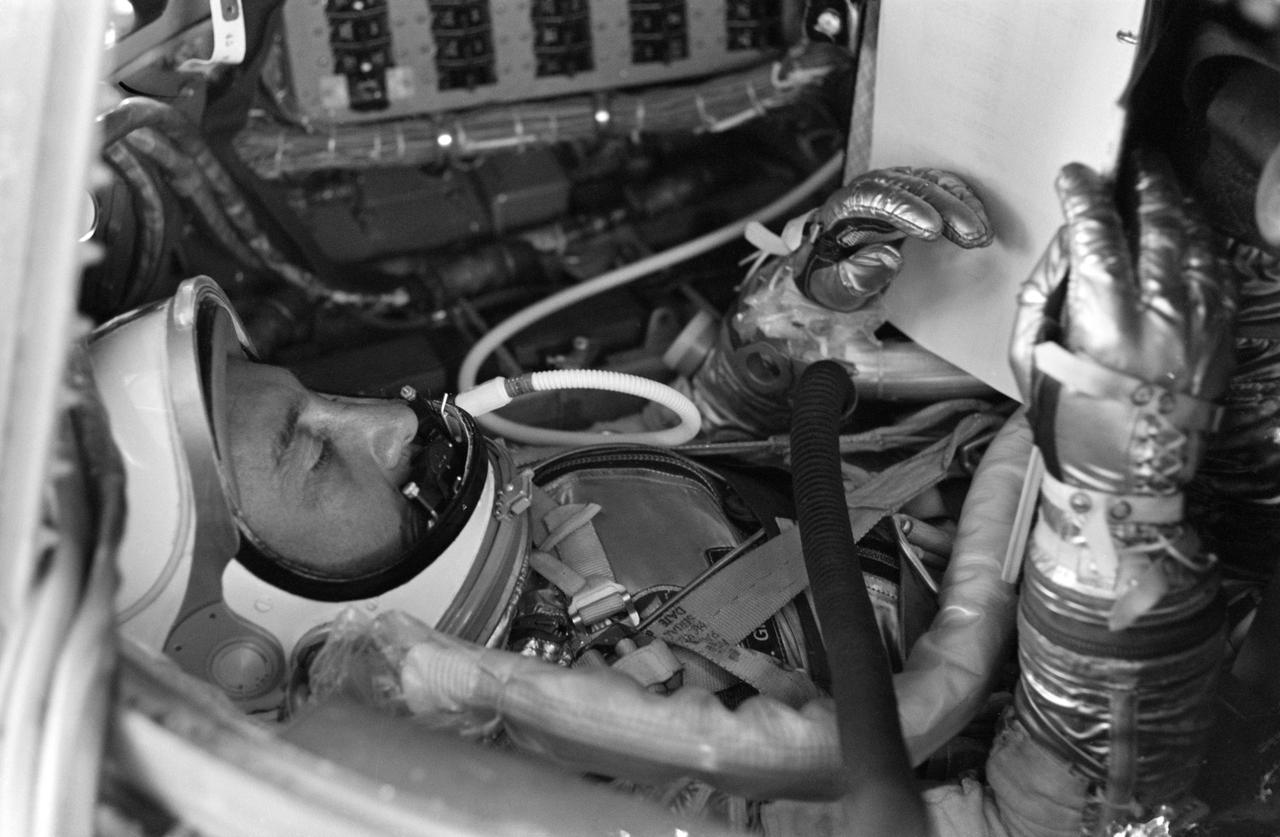
S64-10806 (21 July 1961) --- Astronaut Virgil I. (Gus) Grissom, pilot of the Mercury-Redstone 4 (MR-4) spaceflight, in his Mercury "Liberty Bell 7" spacecraft is checking his flight plan during prelaunch activities. Photo credit: NASA
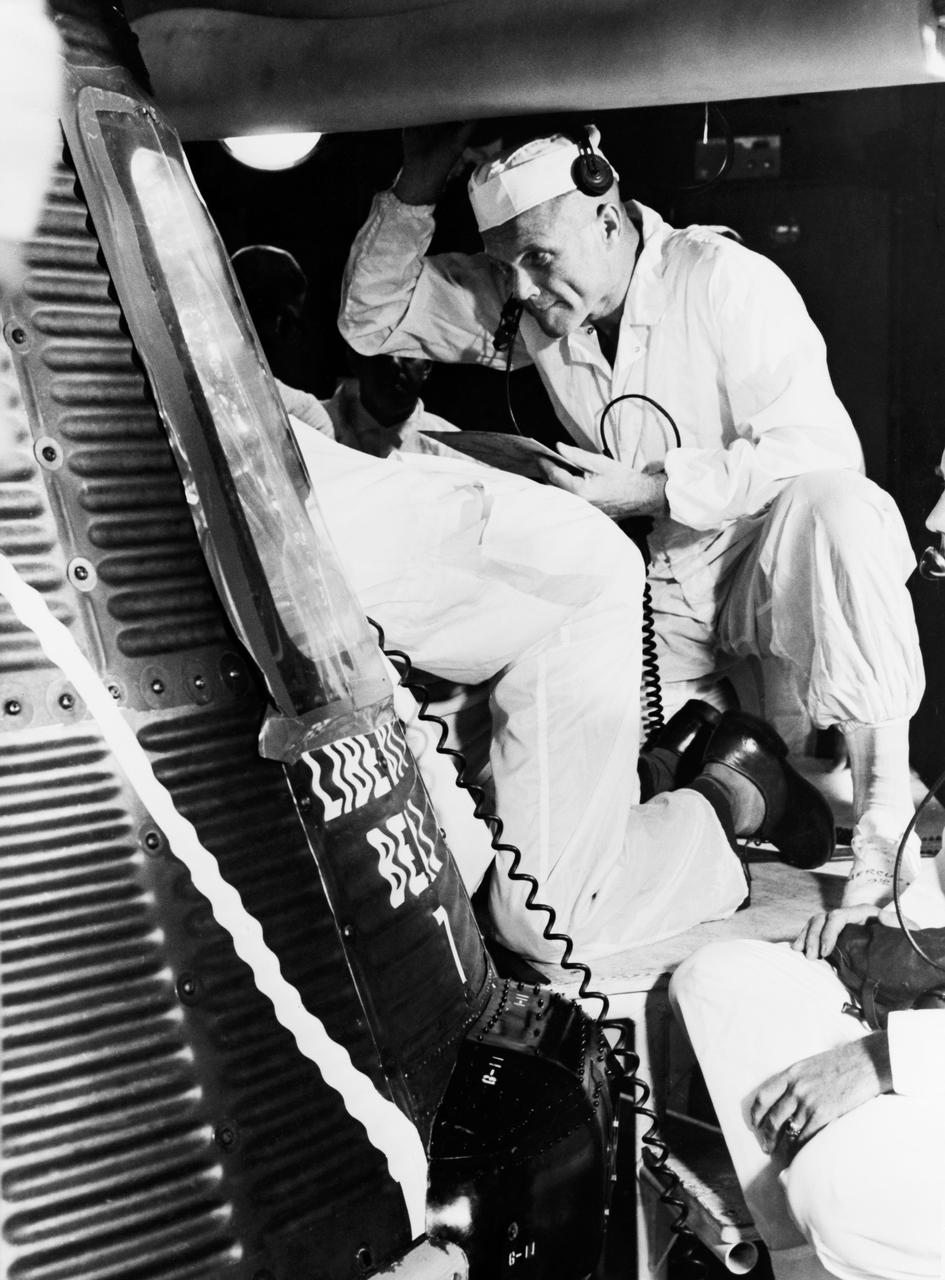
S61-03740 (20 July 1961) --- Astronaut John H. Glenn Jr. and a technician examine the interior of the Liberty Bell 7, the capsule flown a few days later during the Mercury-Redstone 4 mission with astronaut Virgil I. (Gus) Grissom. Photo credit: NASA

Astronaut Virgil I. "Gus" Grissom, one of the original seven astronauts for Mercury Project selected by NASA on April 27, 1959. The MR-4 mission, boosted by the Mercury-Redstone vehicle, made the second marned suborbital flight. The capsule, Liberty Bell 7, sank into the sea after the splashdown.
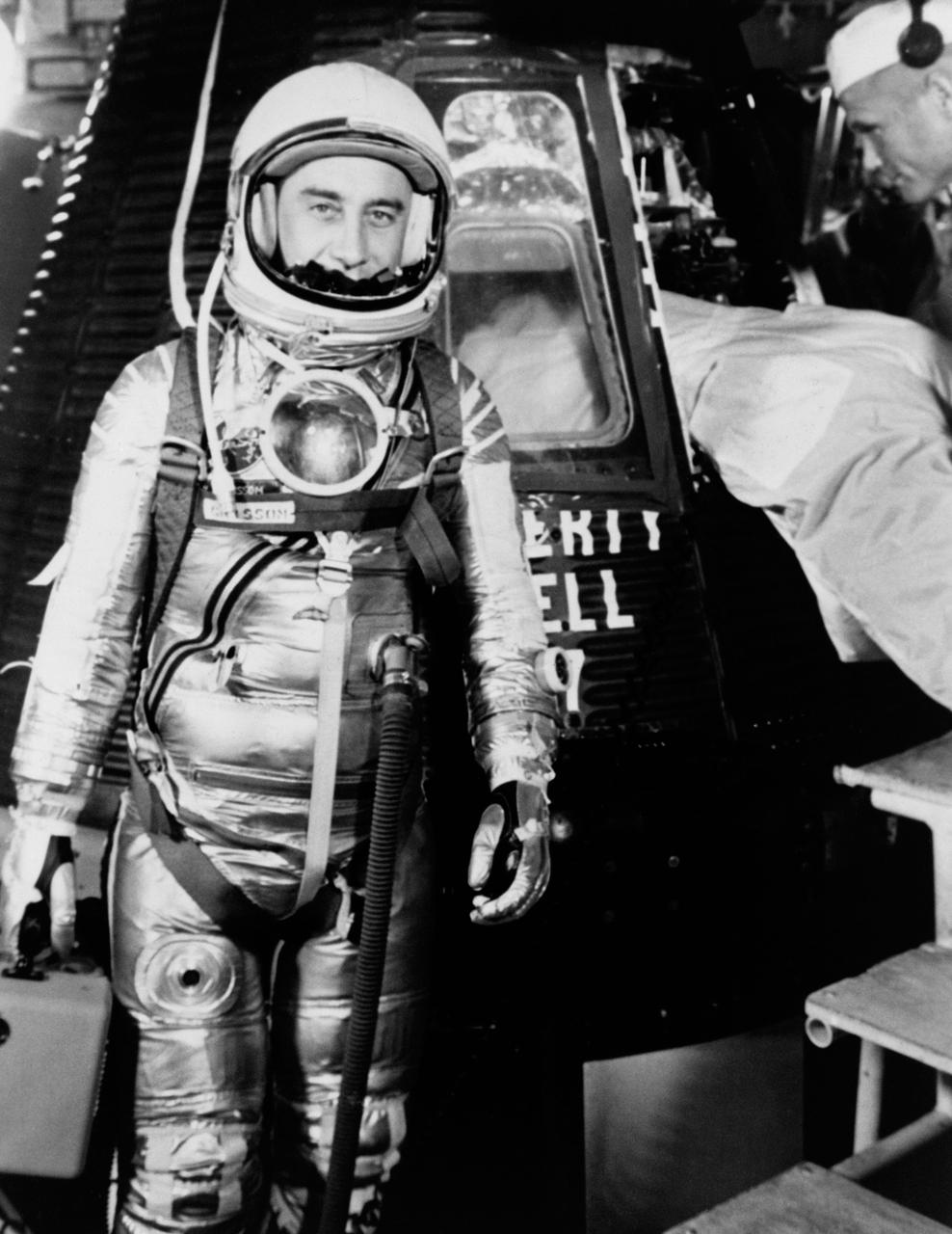
S61-02888 (1961) --- Astronaut Virgil I. (Gus) Grissom, suited up and ready to climb into Liberty Bell 7 spacecraft, stands in front of the capsule for a picture. Backup pilot John Glenn is in the right corner of the view behind Grissom. The Mercury-Redstone 4 (MR-4) mission was scrubbed a few hours later due to unfavorable weather over the launch pad. Photo credit: NASA
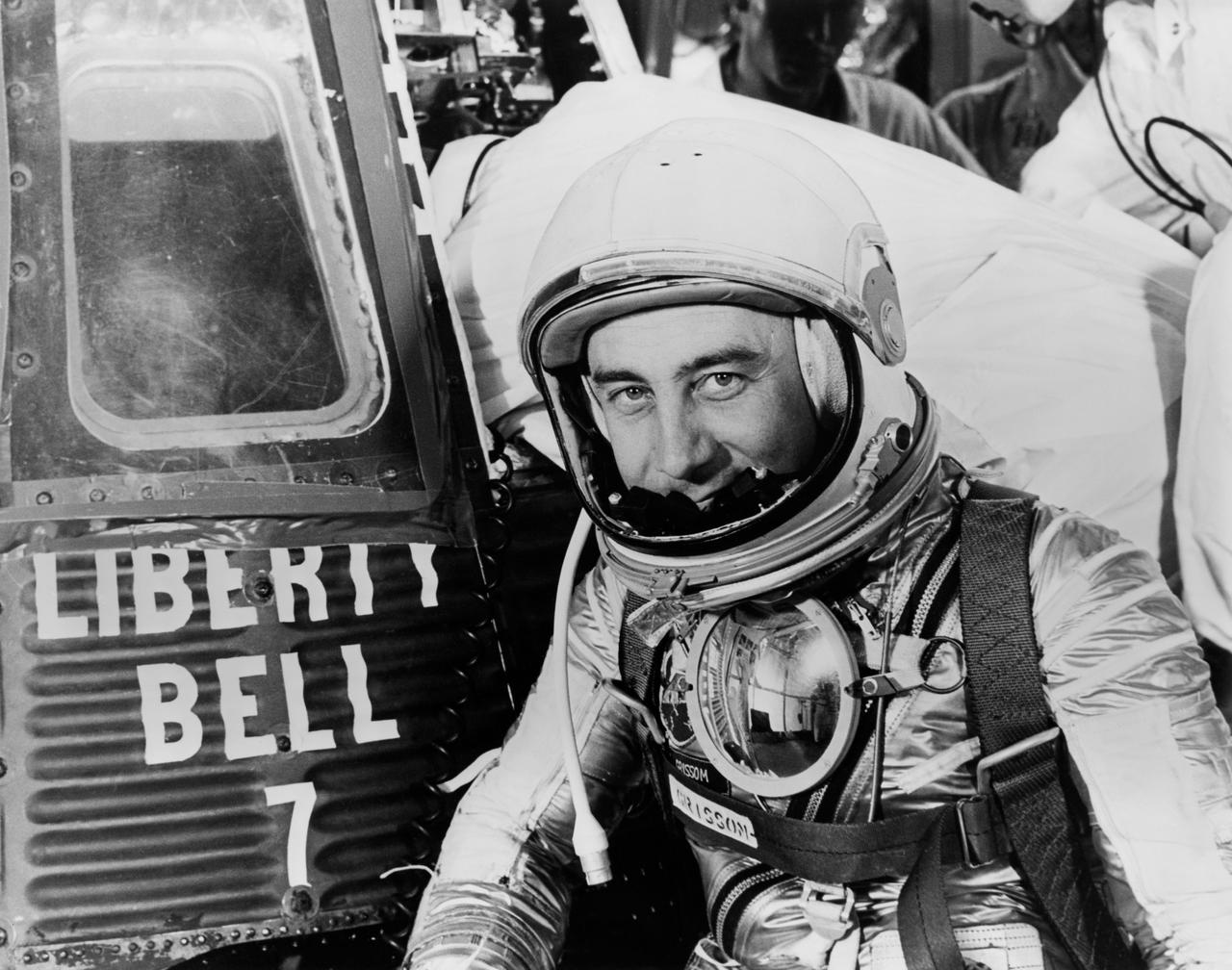
S61-03698 (1961) --- Astronaut Virgil I. (Gus) Grissom, suited up and ready to climb into Liberty Bell 7 spacecraft, sits in front of his capsule for a picture. Behind him technicians work inside the capsule. The Mercury-Redstone 4 (MR-4) mission was scrubbed a few hours later due to unfavorable weather over the launch pad. Photo credit: NASA
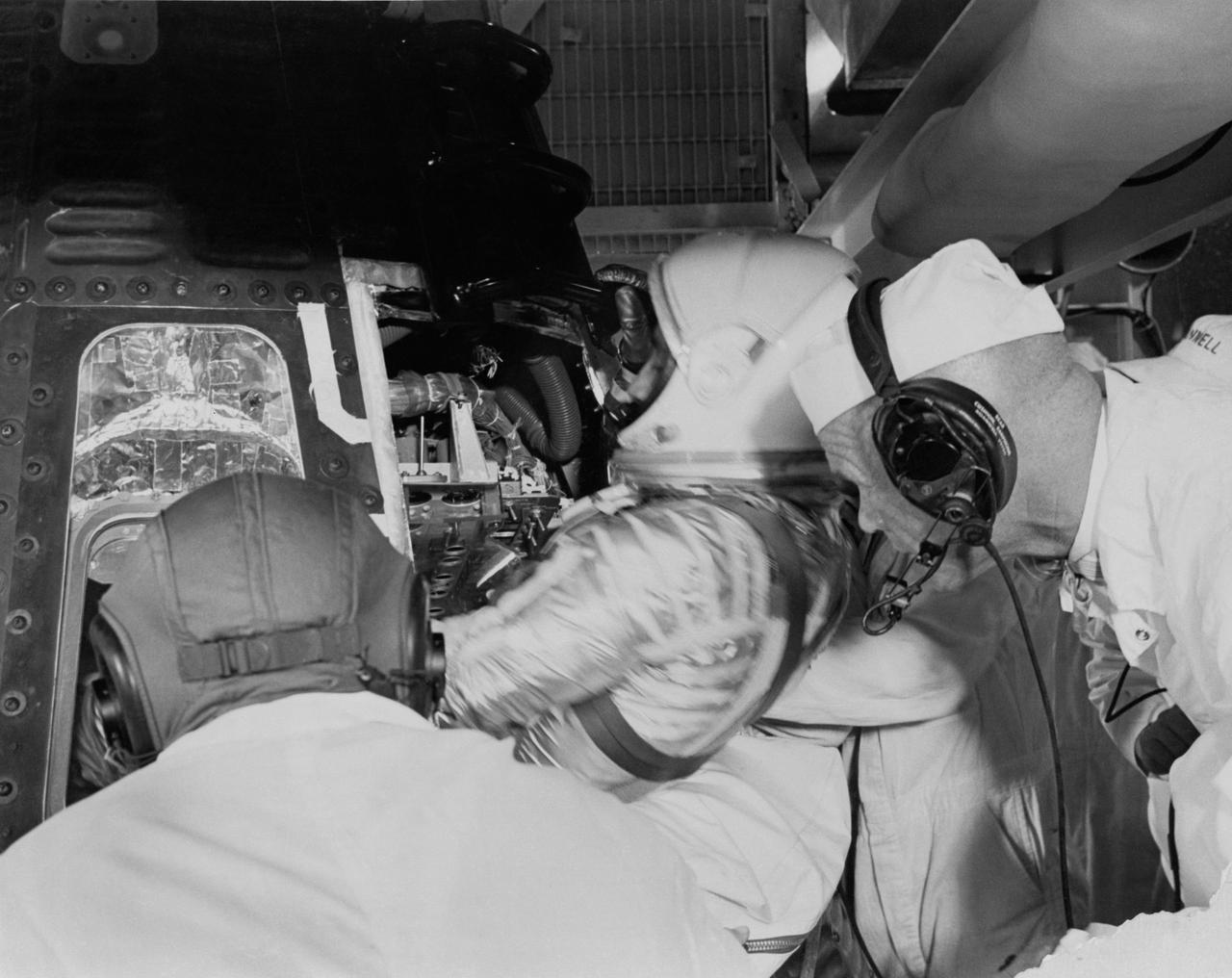
S61-02881 (1961) --- Astronaut Virgil I. (Gus) Grissom, suited up in a newly designed pressure suit, is assisted as he climbs into Liberty Bell 7 spacecraft. Behind him backup pilot John Glenn watches the insertion. The Mercury-Redstone 4 (MR-4) mission was scrubbed a few hours later due to unfavorable weather over the launch pad. Photo credit: NASA
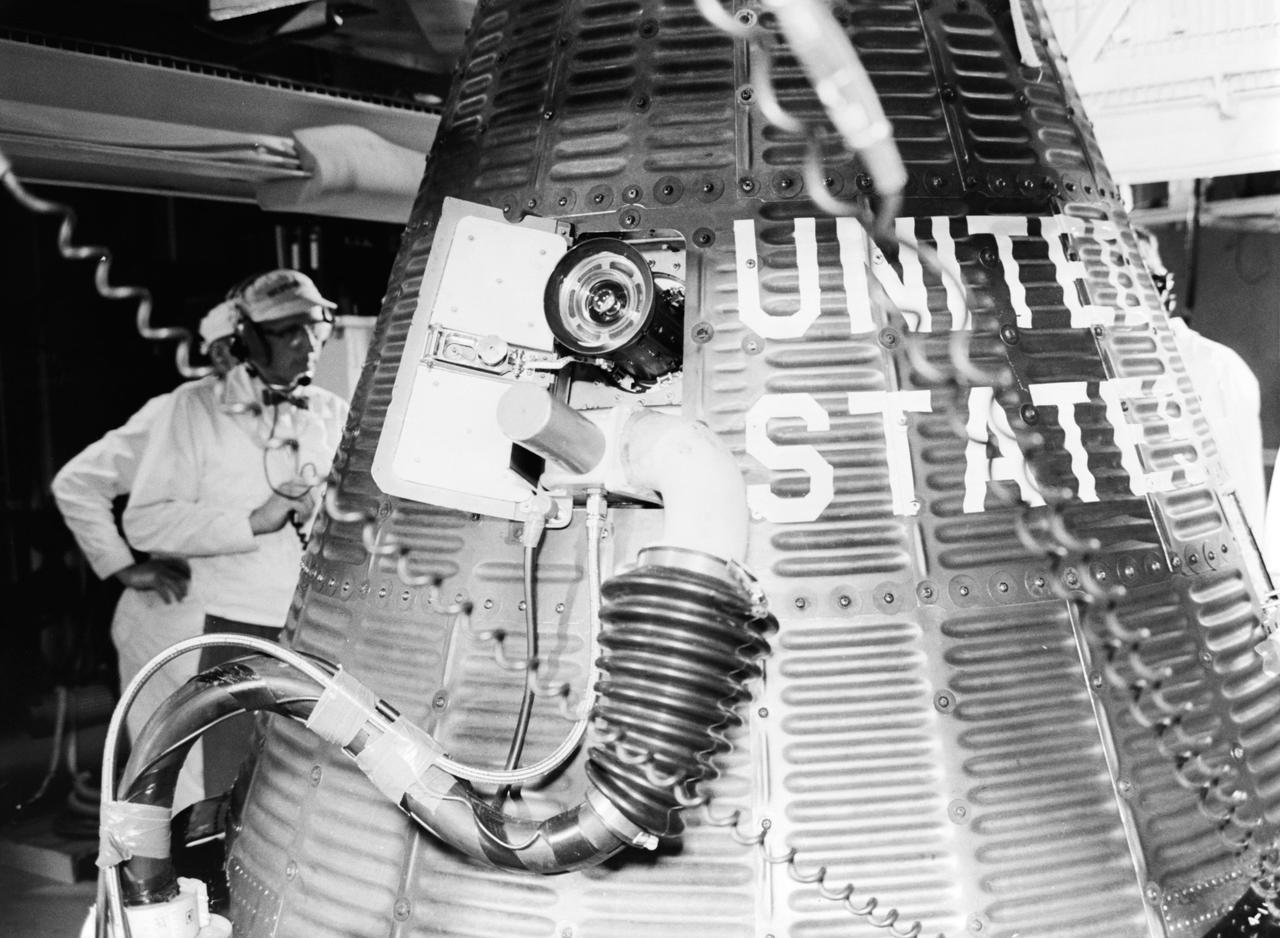
S61-03705 (1961) --- Close-up view of the fueling of the Liberty Bell 7 for the Mercury-Redstone 4 (MR-4) mission. Photo credit: NASA
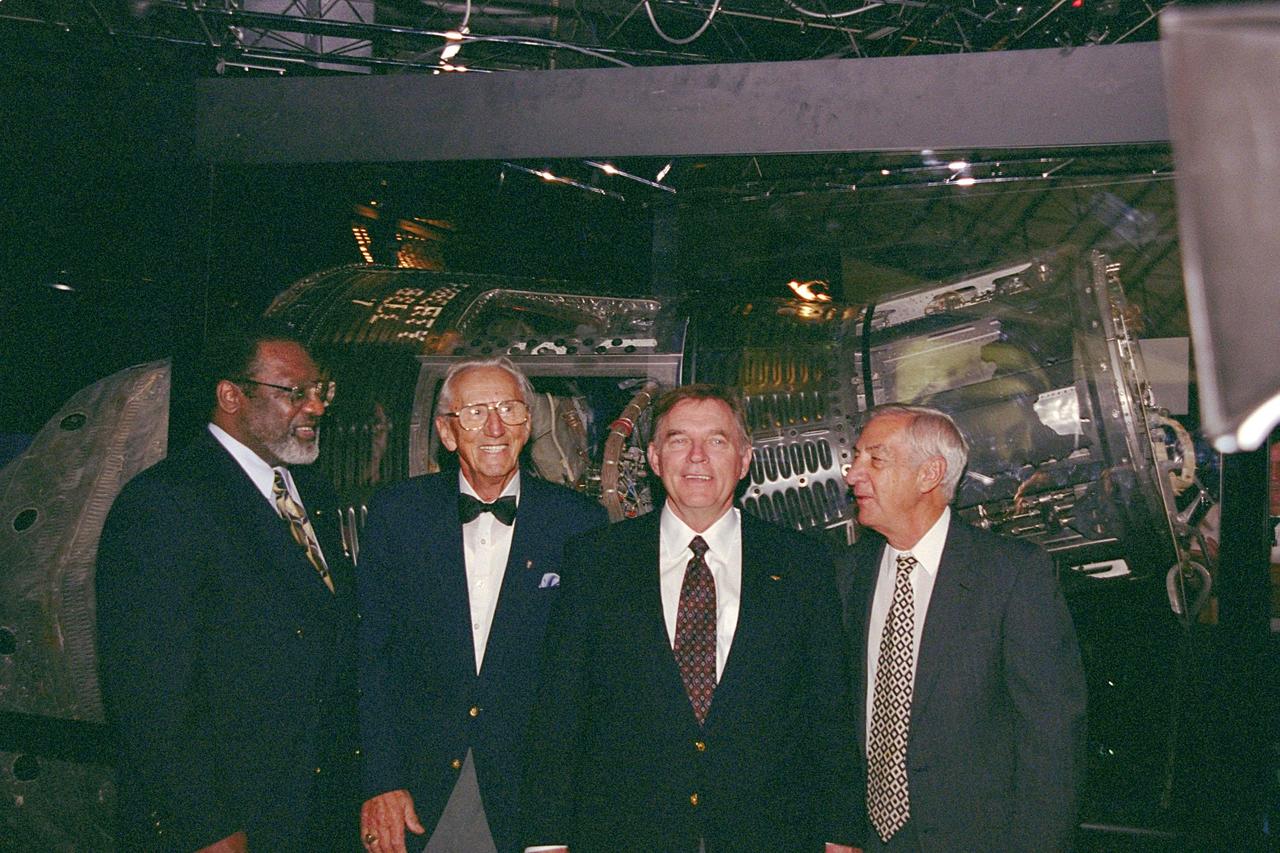
The Discovery Channel’s Liberty Bell 7 Space Capsule Exhibit, which opens to the public at the KSC Visitor Complex on Saturday, June 17, had a preview for the press today. Liberty Bell 7 launched U.S. Air Force Captain Virgil "Gus" Grissom July 21, 1961, on a mission that lasted 15 minutes and 37 seconds before sinking. The capsule lay undetected for nearly four decades before a Discovery Channel expedition located it and recovered it. Standing in front of the restored Liberty Bell 7 capsule are (left to right) KSC’s Deputy Director Jim Jennings; Gunther Wendt, who worked on the Liberty Bell 7 before its launch; Jim Lewis, who piloted the Hunt Club 1 helicopter that rescued Gus Grissom; and Larry Grissom, brother of Gus Grissom. The space capsule, now restored and preserved, is part of an interactive exhibit touring science centers and museums in 12 cities throughout the United States until 2003. The exhibit also includes hands-on elements such as a capsule simulator, a centrifuge, and ROV pilot
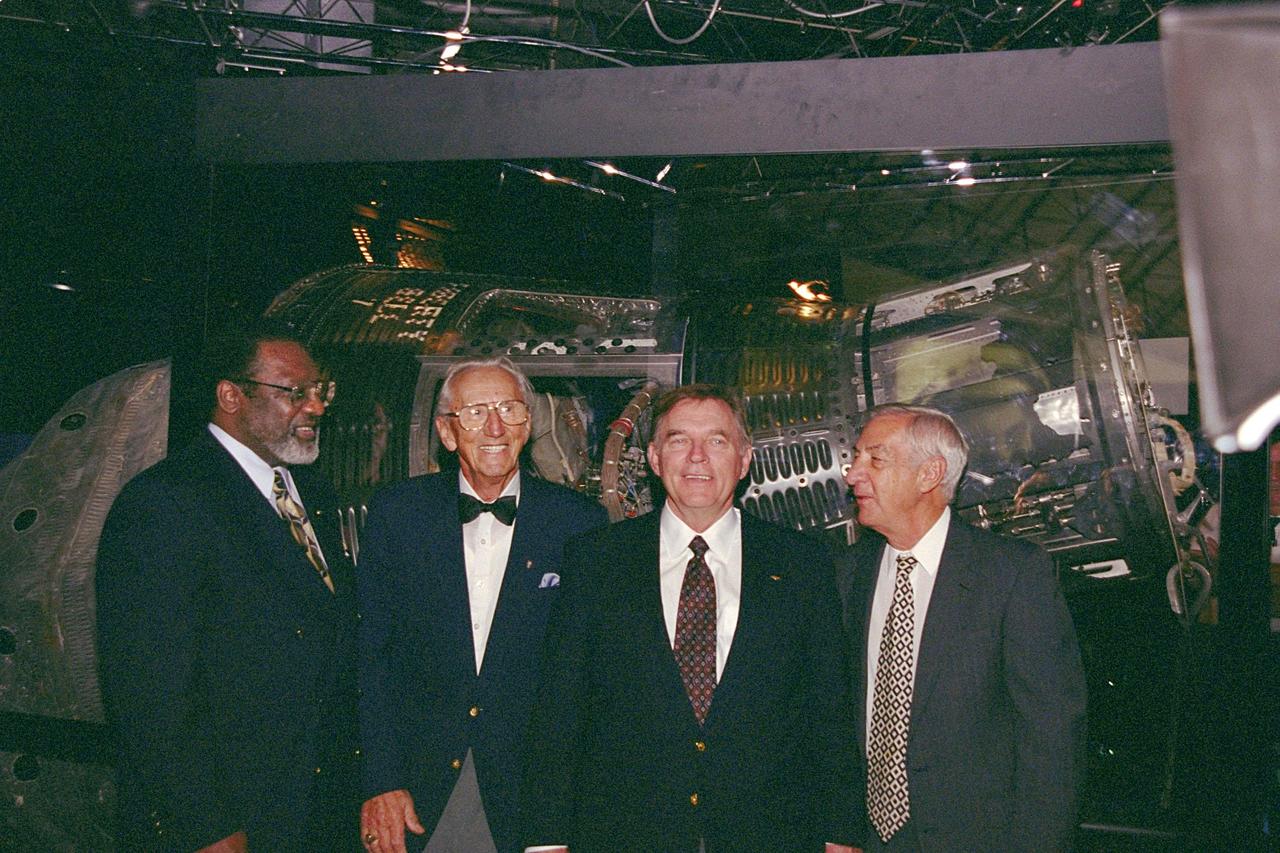
The Discovery Channel’s Liberty Bell 7 Space Capsule Exhibit, which opens to the public at the KSC Visitor Complex on Saturday, June 17, had a preview for the press today. Liberty Bell 7 launched U.S. Air Force Captain Virgil "Gus" Grissom July 21, 1961, on a mission that lasted 15 minutes and 37 seconds before sinking. The capsule lay undetected for nearly four decades before a Discovery Channel expedition located it and recovered it. Standing in front of the restored Liberty Bell 7 capsule are (left to right) KSC’s Deputy Director Jim Jennings; Gunther Wendt, who worked on the Liberty Bell 7 before its launch; Jim Lewis, who piloted the Hunt Club 1 helicopter that rescued Gus Grissom; and Larry Grissom, brother of Gus Grissom. The space capsule, now restored and preserved, is part of an interactive exhibit touring science centers and museums in 12 cities throughout the United States until 2003. The exhibit also includes hands-on elements such as a capsule simulator, a centrifuge, and ROV pilot
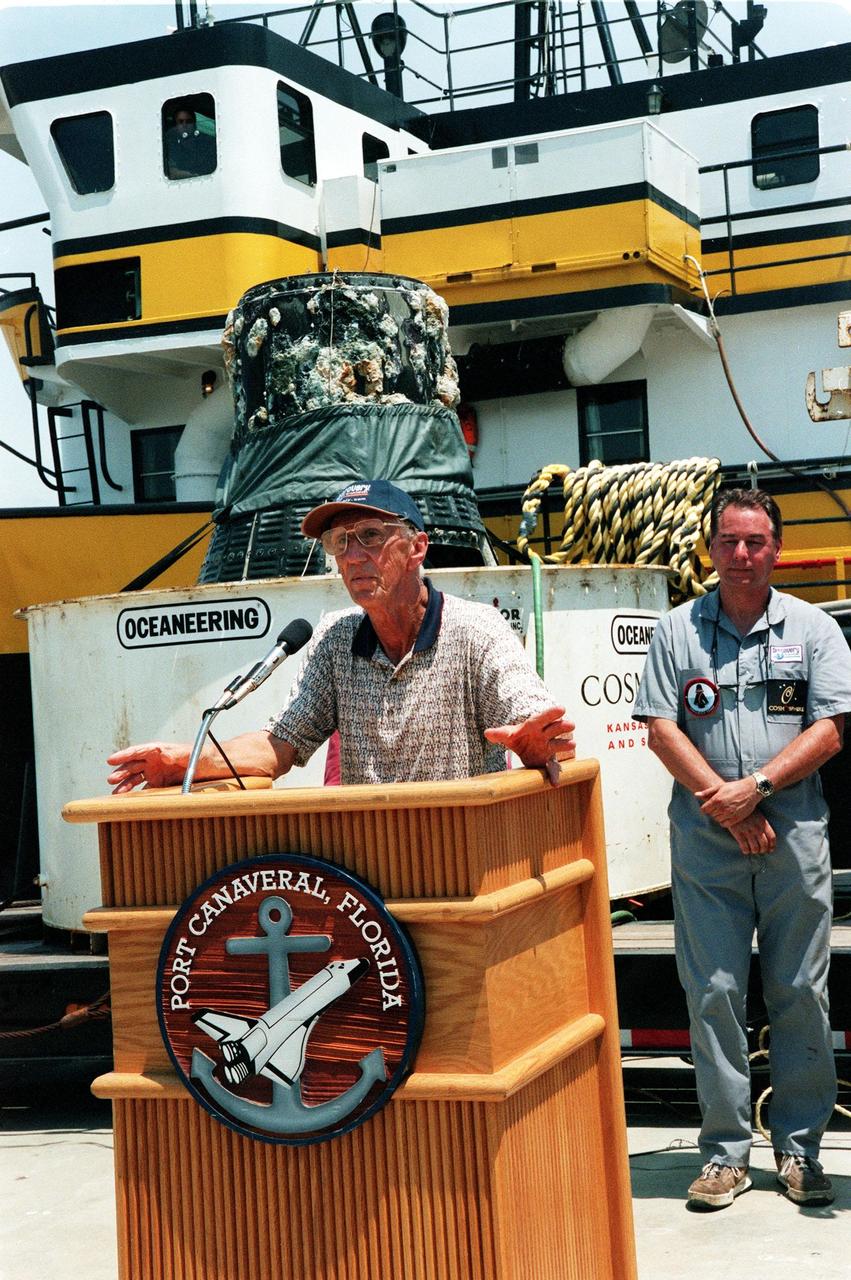
KENNEDY SPACE CENTER, FLA. -- Gunther Wendt takes a turn at the podium after viewing the recovered Liberty Bell 7 Project Mercury capsule, seen in the background. At right is Curt Newport who led the expedition to find and retrieve the capsule. The expedition was sponsored by the Discovery Channel. Wendt worked on the Liberty Bell 7 before its launch July 21, 1961. After its successful 16-minute suborbital flight, the Liberty Bell 7, with astronaut Virgil "Gus" Grissom aboard, splashed down in the Atlantic Ocean. A prematurely jettisoned hatch caused the capsule to flood and a Marine rescue helicopter was unable to lift it. It quickly sank to a three-mile depth. Grissom was rescued but his spacecraft remained lost on the ocean floor, until now. An underwater salvage expert, Newport located the capsule through modern technology, and after one abortive attempt, successfully raised it and brought it to Port Canaveral. The recovery of Liberty Bell 7 fulfilled a 14-year dream for the expedition leader. The capsule is being moved to the Kansas Cosmosphere and Space Center in Hutchinson, Kansas, where it will be restored for eventual public display. Newport has also been involved in salvage operations of the Space Shuttle Challenger and TWA Flight 800 that crashed off the coast of Long Island, N.Y

KENNEDY SPACE CENTER, FLA. -- CHAMBER TEST - Project Mercury astronaut Virgil I. 'Gus' Grissom, assisted by McDonnell technicians, leaves Mercury spacecraft, dubbed Liberty Bell 7, following simulated flight.
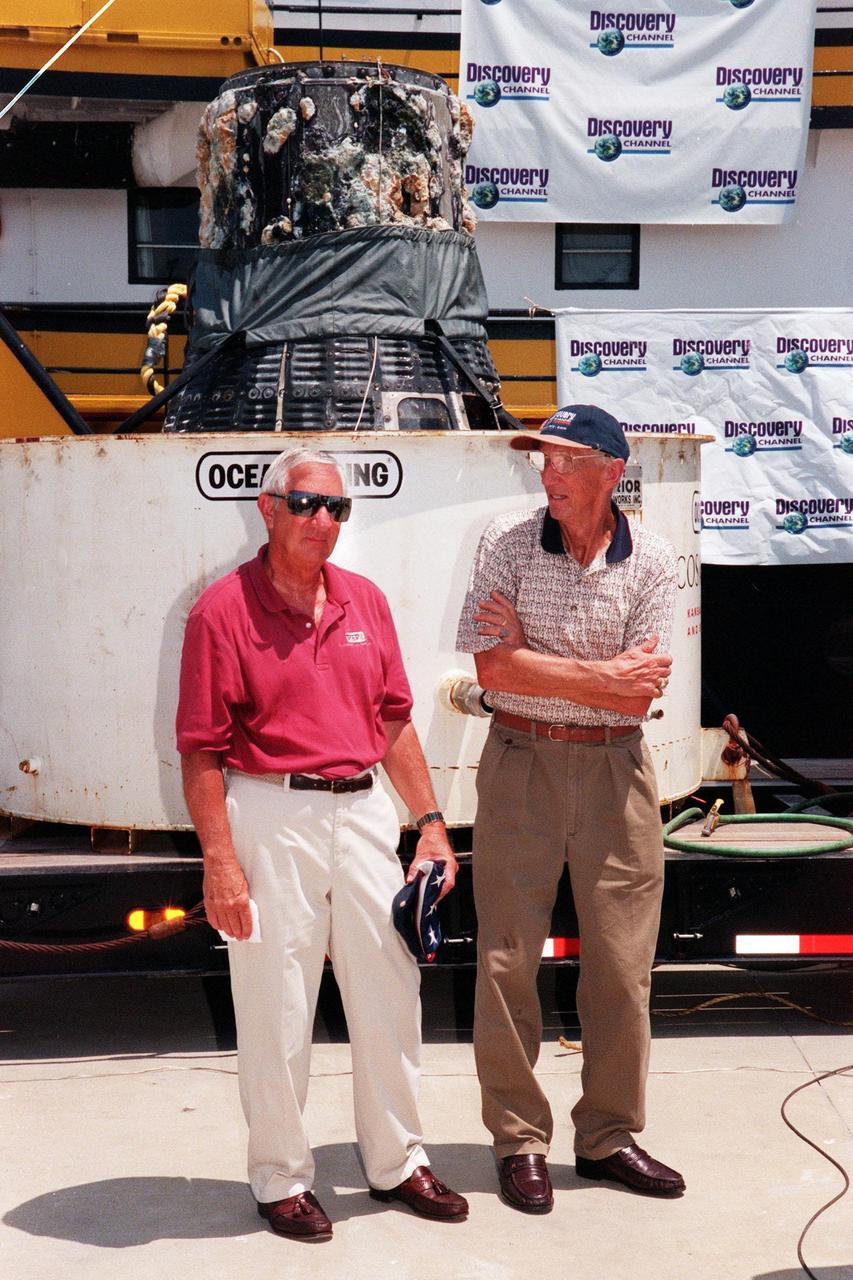
KENNEDY SPACE CENTER, FLA. -- Waiting for the arrival of the Liberty Bell 7 after its raising from the ocean floor. Liberty Bell 7 launched U.S. Air Force Captain Virgil "Gus" Grissom July 21, 1961 on a mission that lasted 15 minutes and 37 seconds before sinking to the floor of the Atlantic Ocean, three miles deep. It lay undetected for nearly four decades before a Discovery Channel expedition located it and recovered it. The space capsule is now restored and preserved, and part of an interactive exhibit touring science centers and museums in 12 cities throughout the United States until 2003. The exhibit includes hands-on elements such as a capsule simulator, a centrifuge, and ROV pilot.
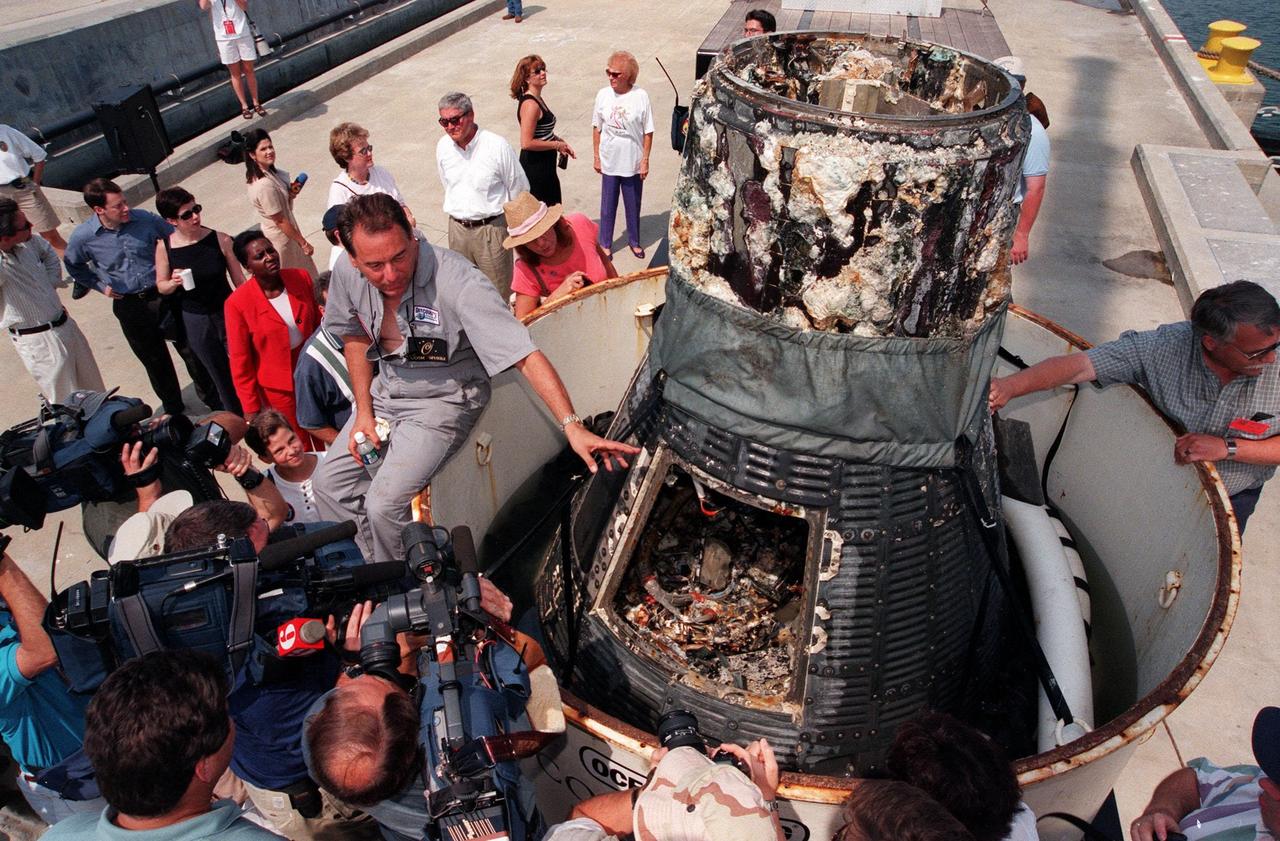
KENNEDY SPACE CENTER, FLA. -- Retrieved from the ocean floor three miles deep, the Liberty Bell 7 Project Mercury capsule is revealed to photographers and the media in Port Canaveral, Fla. The capsule was found and raised by Curt Newport (left), leading an expedition sponsored by the Discovery Channel. After its successful 16-minute suborbital flight on July 21, 1961, the Liberty Bell 7, with astronaut Virgil "Gus" Grissom aboard, splashed down in the Atlantic Ocean. A prematurely jettisoned hatch caused the capsule to flood and a Marine rescue helicopter was unable to lift it. It quickly sank to a three-mile depth. Grissom was rescued but his spacecraft remained lost on the ocean floor, until now. An underwater salvage expert, Newport located the capsule through modern technology, and after one abortive attempt, successfully raised it and brought it to Port Canaveral. The recovery of Liberty Bell 7 fulfilled a 14-year dream for the expedition leader. The capsule is being moved to the Kansas Cosmosphere and Space Center in Hutchinson, Kansas, where it will be restored for eventual public display. Newport has also been involved in salvage operations of the Space Shuttle Challenger and TWA Flight 800 that crashed off the coast of Long Island, N.Y
/61-mr4-72(s)~medium.jpg)
KENNEDY SPACE CENTER, FLA. -- Astronaut Virgil I. Grissom, suited up and ready to climb into Liberty Bell 7 spacecraft, talks with backup astronaut John Glenn prior to insertion. The Mercury-Redstone 4 mission was scrubbed a few hours later due to unfavorable weather over the launch area. (NASA Photo)
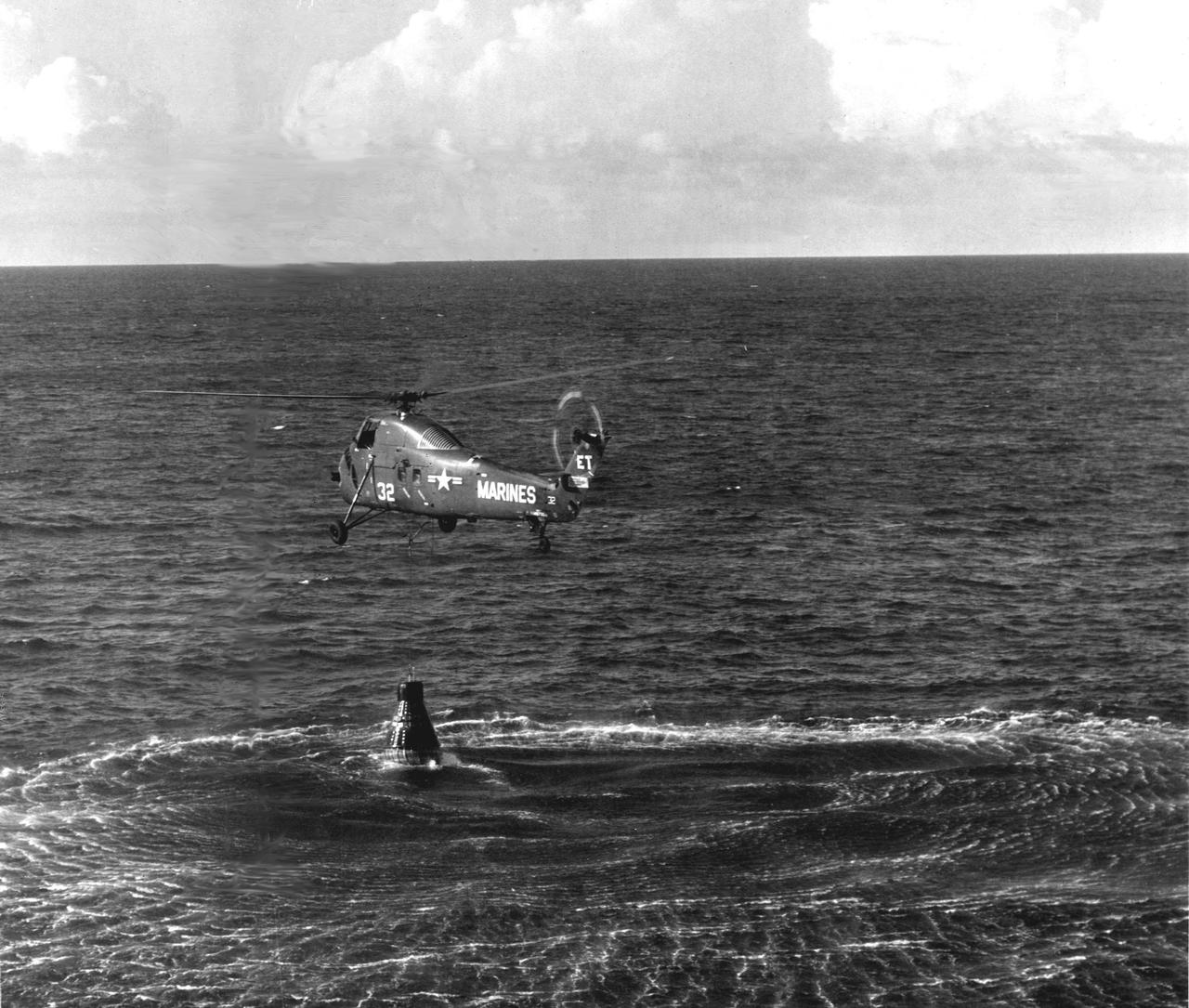
KENNEDY SPACE CENTER, FLA. -- Marine helicopter appears to have Liberty Bell 7 in tow after Virgil I. Grissom's successful flight of 305 miles down the Atlantic Missile Range. Minutes after 'Gus' Grissom got out of the spacecraft, it sank. (NASA Photo
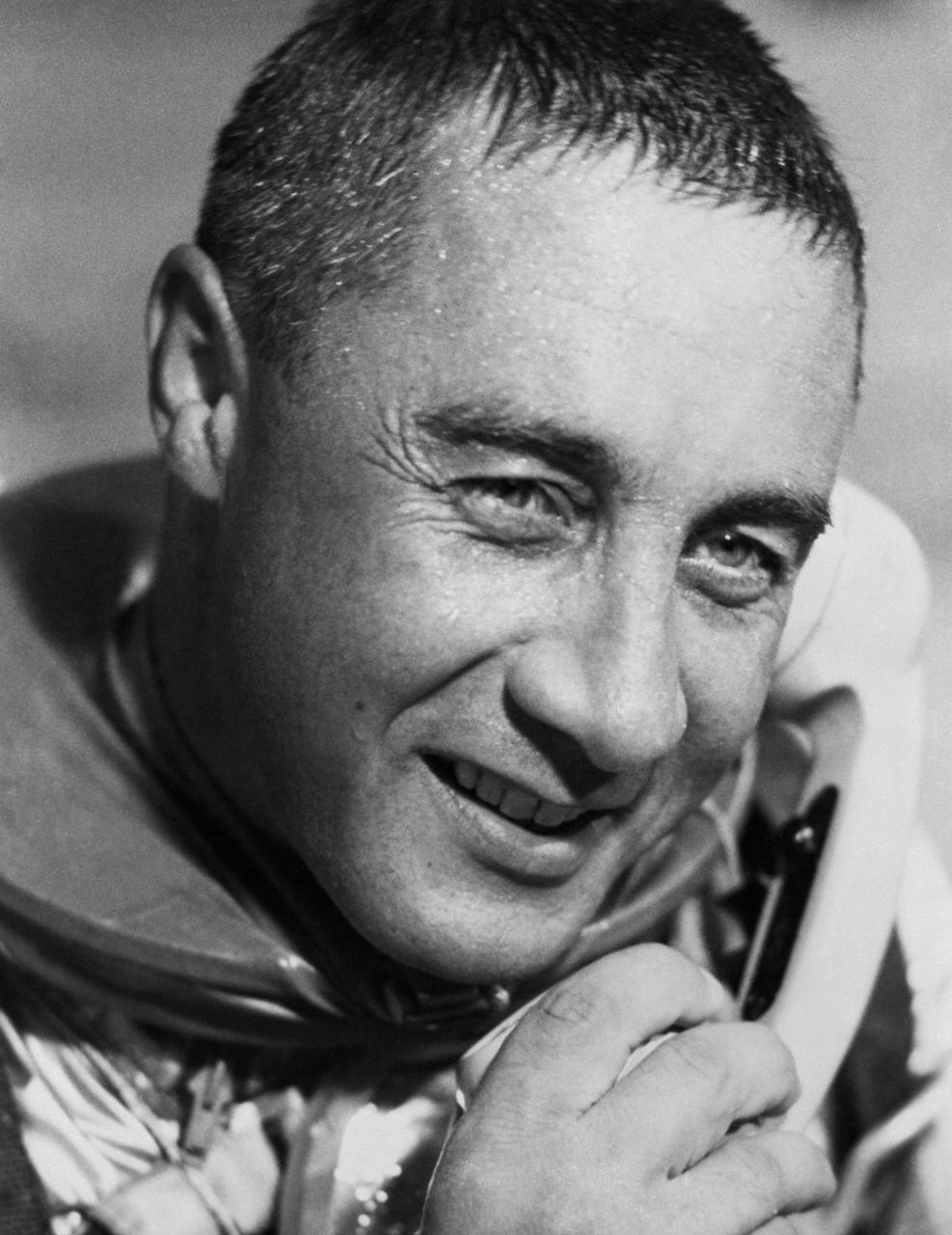
S61-02897 (21 July 1961) --- Virgil I. (Gus) Grissom, pilot of the Mercury-Redstone 4 (MR-4) ?Liberty Bell 7? spaceflight, talking on the phone with President Kennedy. Grissom is still wearing his pressure suit. Photo credit: NASA
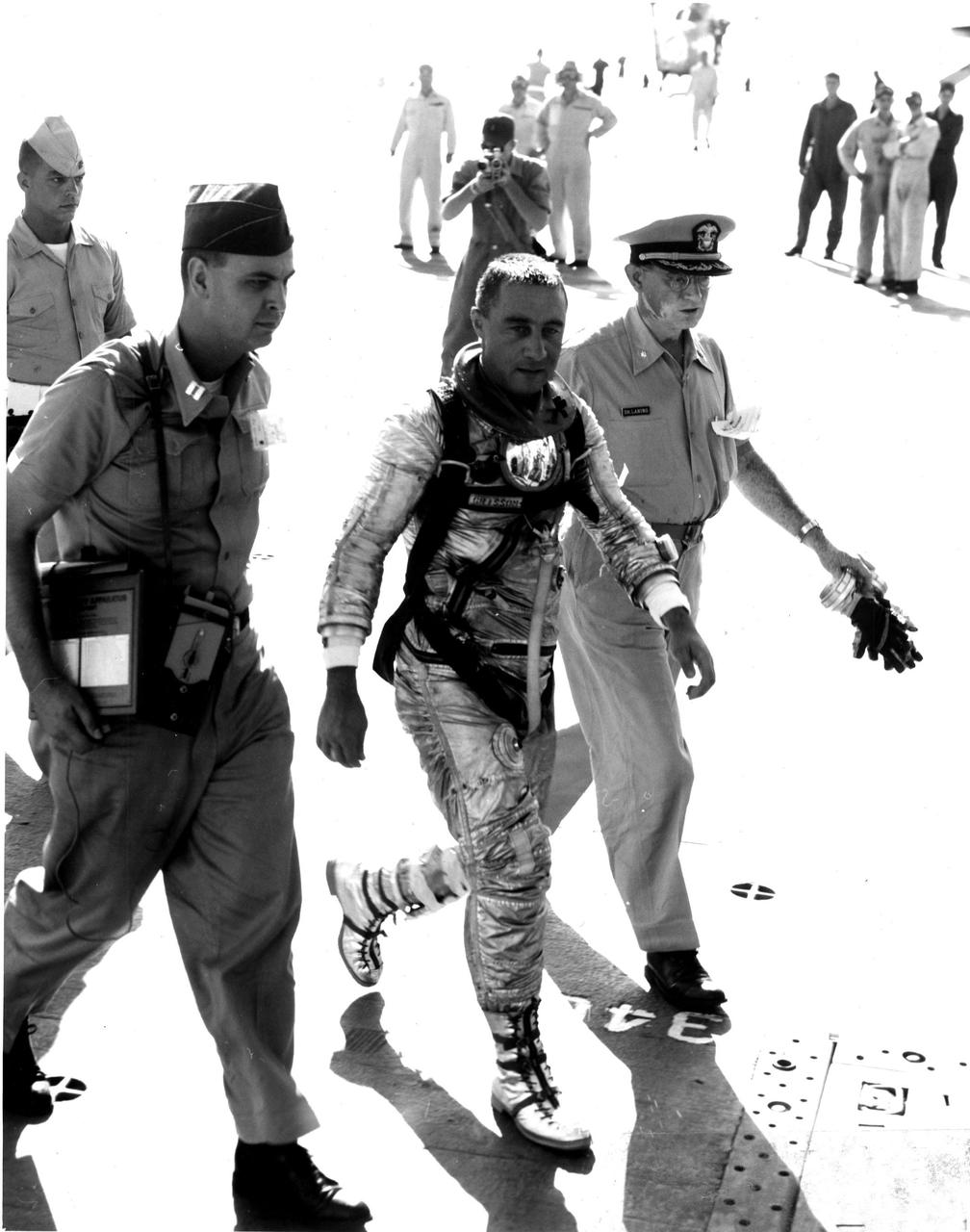
KENNEDY SPACE CENTER, FLA. -- Astronaut Virgil I. Grissom walks across the deck of the U.S.S. Randolph after being airlifted by helicopter from the Liberty Bell 7 impact area. 'Gus' Grissom was the second U.S. man in space. (NASA Photo)
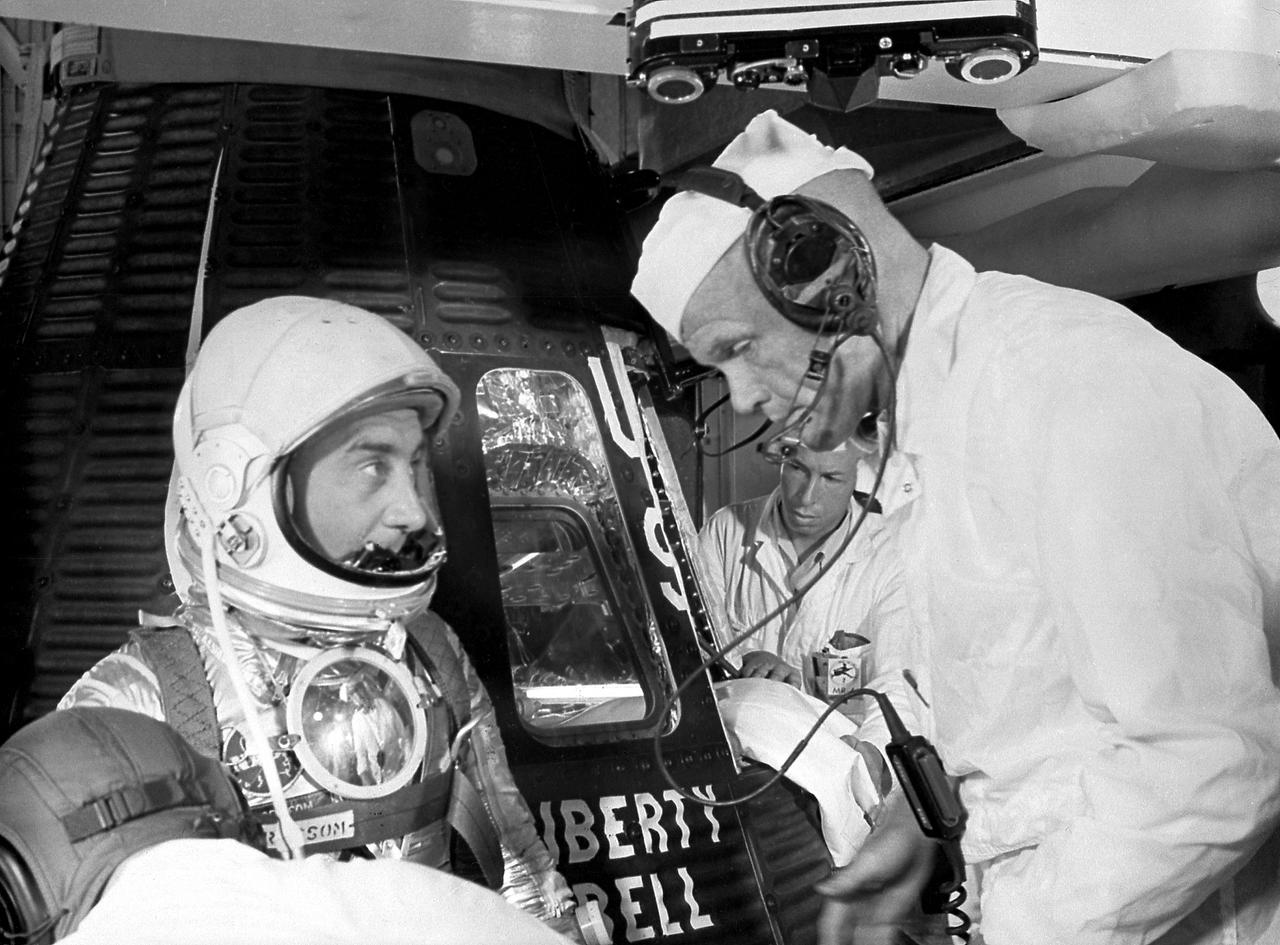
Astronaut Virgil Grissom chats with Astronaut John Glenn prior to entering the Liberty Bell 7 capsule for the MR-4 Mission. The MR-4 mission was the second manned suborbital flight using the Mercury-Redstone booster, which was developed by the Marshall Space Flight Center.
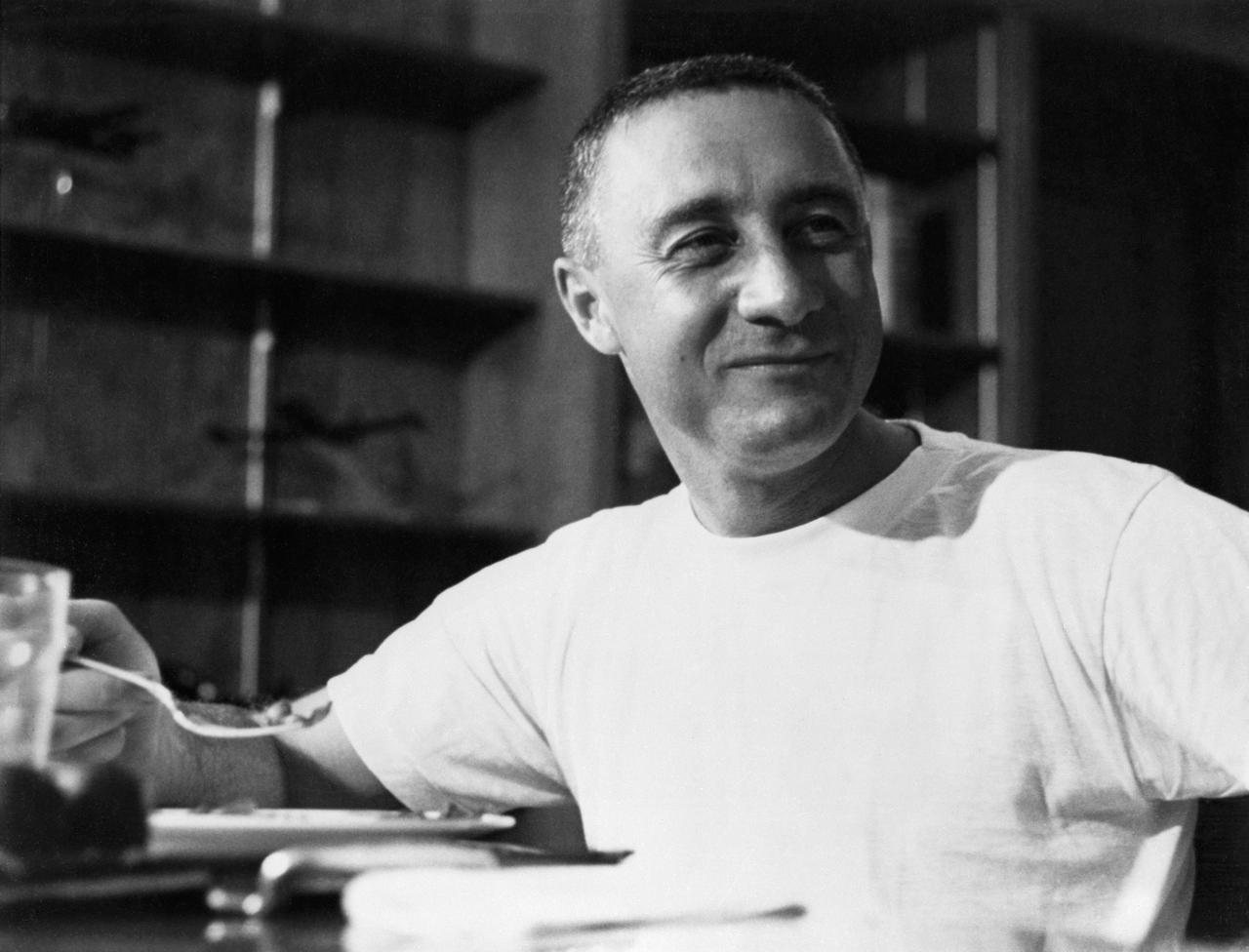
S61-02898 (21 July 1961) --- Virgil I. (Gus) Grissom, pilot of the Mercury-Redstone 4 (MR-4) ?Liberty Bell 7? spaceflight, enjoys a meal aboard the recovery ship, USS Randolph, following his 15-minute, 37-second suborbital space mission. Photo credit: NASA
/61-mr4-65(s)~medium.jpg)
KENNEDY SPACE CENTER, FLA. -- This is MR-4 in the final minutes of the mission countdown on July 19. In the background is the rocket's service structure, which was moved to the edge of the pad at T-60. Shortly thereafter the 'cherry picker' was stationed at the spacecraft's hatch to permit emergency egress of the pilot, if necessary. The spacecraft is known as Liberty Bell 7
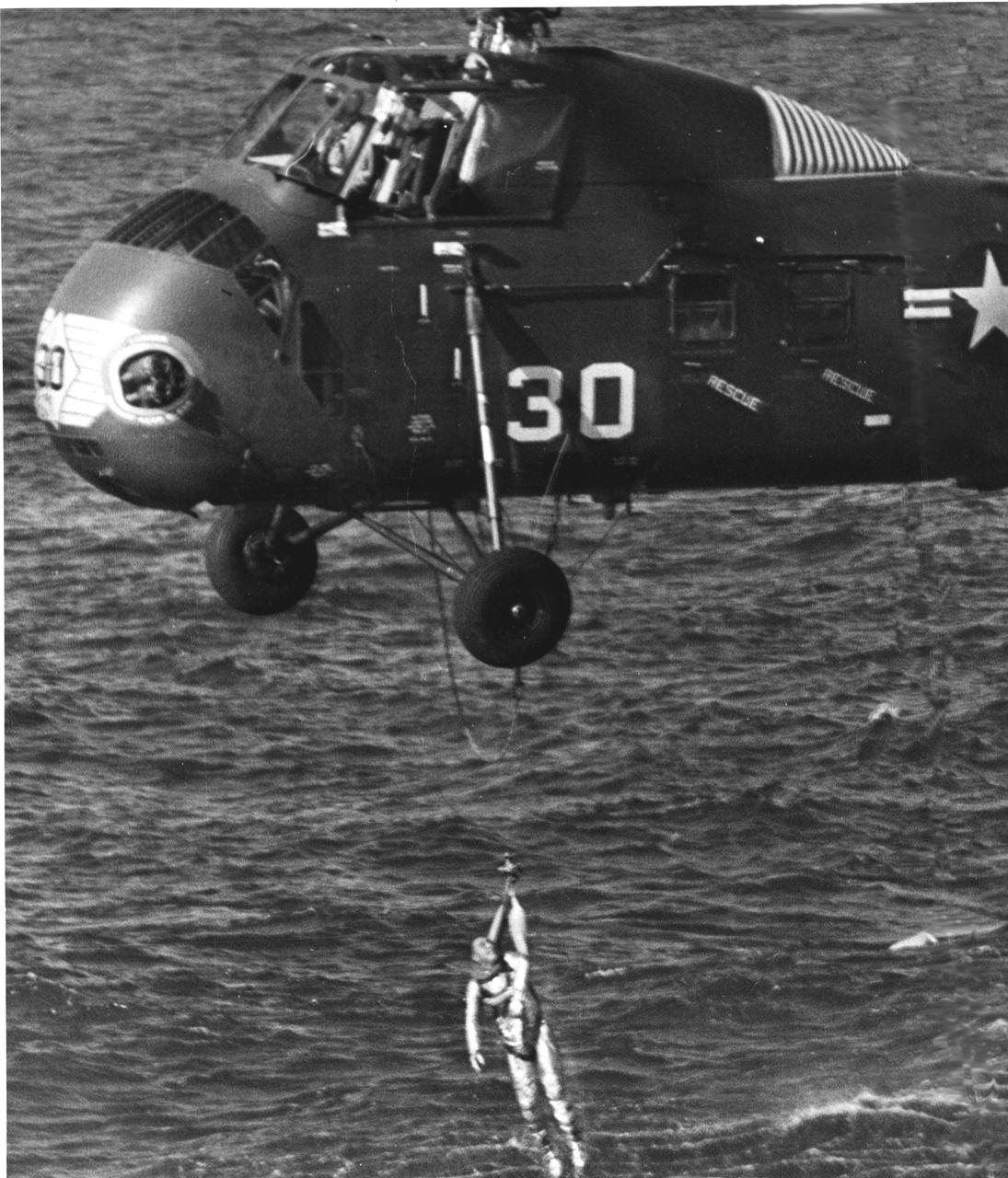
KENNEDY SPACE CENTER, FLA. -- Marine helicopter has astronaut Virgil I. Grissom in harness and is bringing him up out of the water. The Liberty Bell 7 spacecraft has just sunk below the water. His Mercury-Redstone 4 launch was the second in the U.S. manned space effort.
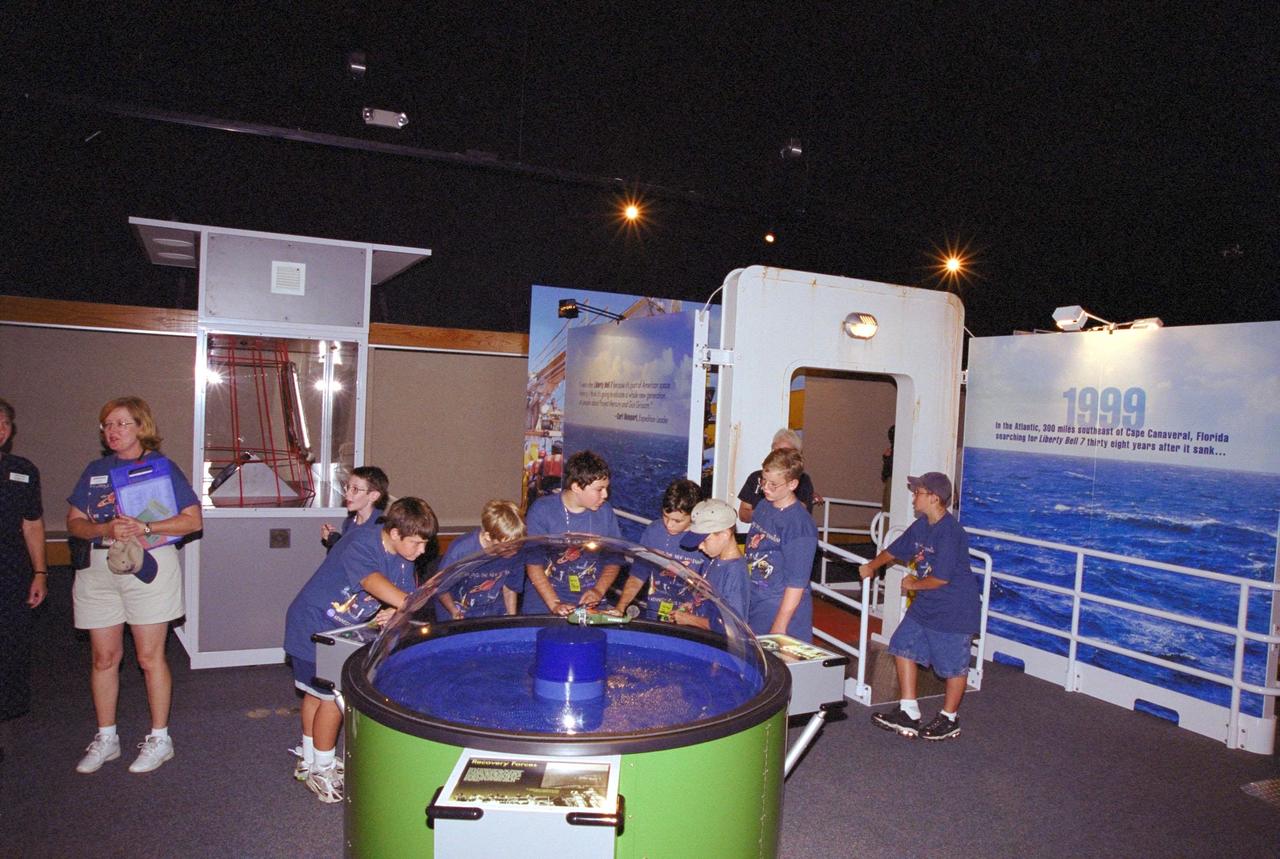
Children on a tour at the KSC Visitor Complex get an early look at the Discovery Channel's Liberty Bell 7 Space Capsule Exhibit, which opens to the public on Saturday, June 17. They are on a re-creation of the deck of Ocean Project, the ship that located and recovered the space capsule from the floor of the Atlantic Ocean. Liberty Bell 7 launched U.S. Air Force Captain Virgil “Gus” Grissom July 21, 1961, on a mission that lasted 15 minutes and 37 seconds before sinking. It lay undetected for nearly four decades before a Discovery Channel expedition located it and recovered it. The space capsule, now restored and preserved, is part of an interactive exhibit touring science centers and museums in 12 cities throughout the United States until 2003. The exhibit also includes hands-on elements such as a capsule simulator, a centrifuge, and ROV pilot
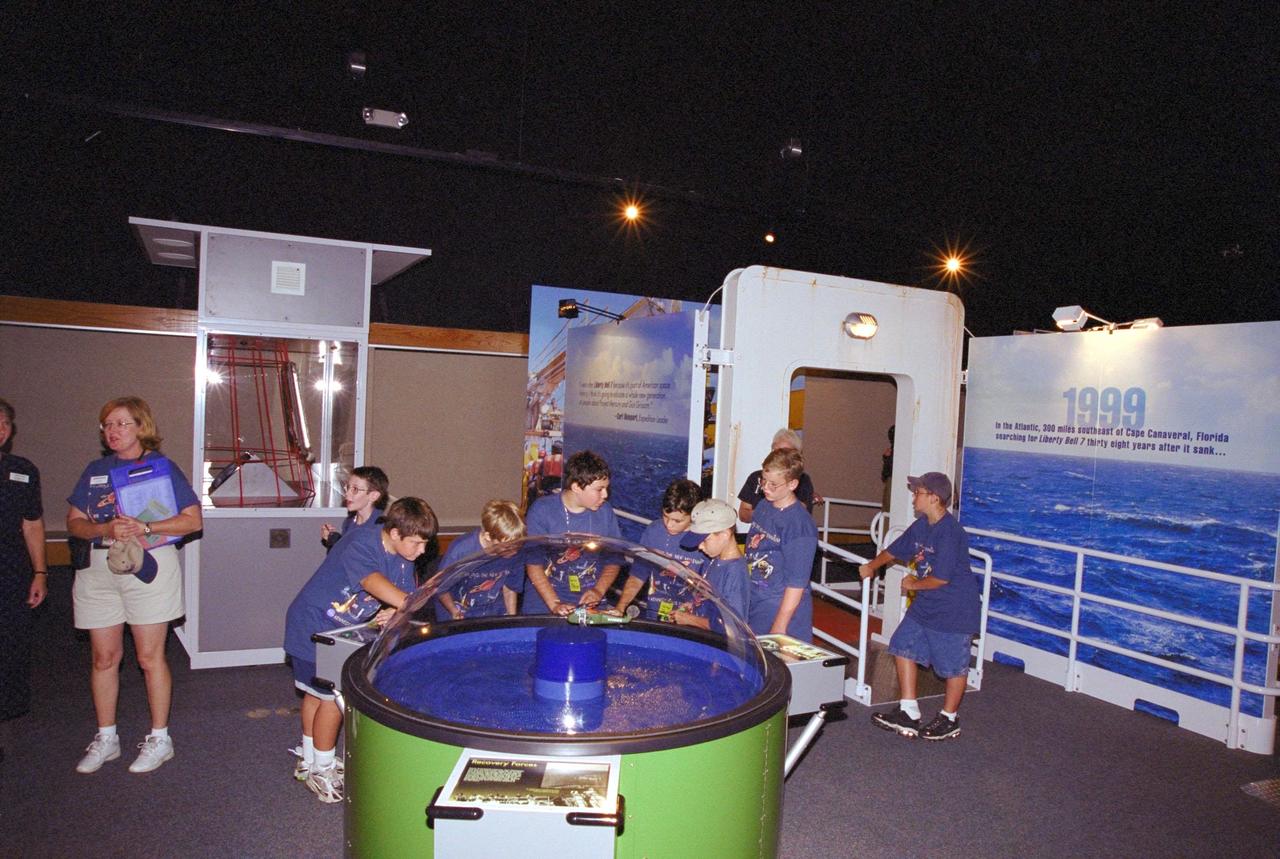
Children on a tour at the KSC Visitor Complex get an early look at the Discovery Channel's Liberty Bell 7 Space Capsule Exhibit, which opens to the public on Saturday, June 17. They are on a re-creation of the deck of Ocean Project, the ship that located and recovered the space capsule from the floor of the Atlantic Ocean. Liberty Bell 7 launched U.S. Air Force Captain Virgil “Gus” Grissom July 21, 1961, on a mission that lasted 15 minutes and 37 seconds before sinking. It lay undetected for nearly four decades before a Discovery Channel expedition located it and recovered it. The space capsule, now restored and preserved, is part of an interactive exhibit touring science centers and museums in 12 cities throughout the United States until 2003. The exhibit also includes hands-on elements such as a capsule simulator, a centrifuge, and ROV pilot
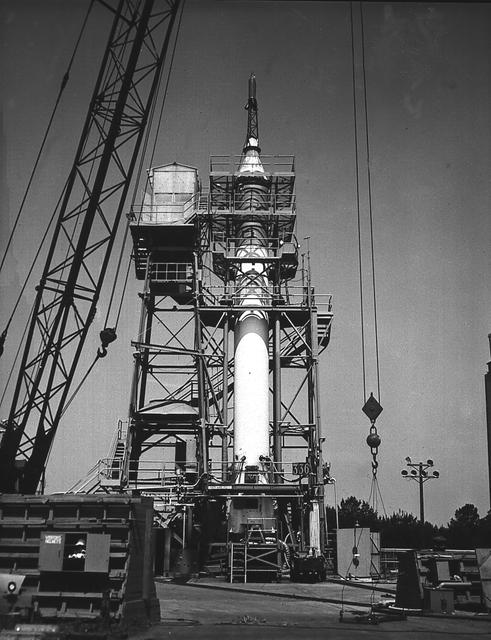
A Mercury-Redstone launch vehicle awaits test-firing in the Redstone Test Stand during the late 1950s. Between 1953 and 1960, the rocket team at Redstone Arsenal in Huntsville, Alabama performed hundreds of test firings on the Redstone rocket, over 200 on the Mercury-Redstone vehicle configuration alone. It was this configuration which launched America's first two marned space missions, Freedom 7 and Liberty Bell 7,in 1961.
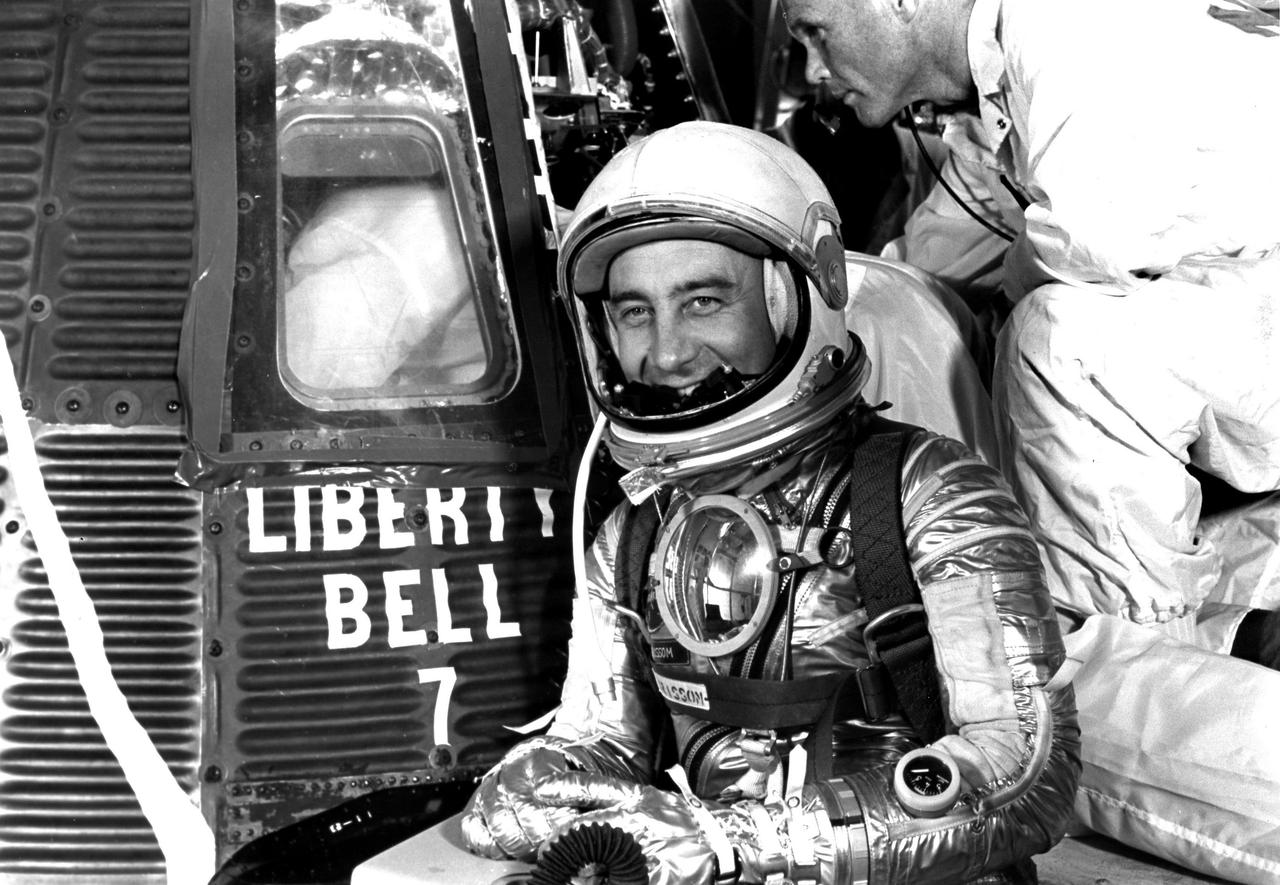
61-MR4-76 (1961) --- Astronaut Virgil I. (Gus) Grissom, suited up and ready to climb into Liberty Bell 7 spacecraft, poses for a picture. Backup pilot John Glenn is in the right corner of the view behind Grissom. The Mercury-Redstone 4 (MR-4) mission was scrubbed a few hours later due to unfavorable weather over the launch pad. Photo credit: NASA
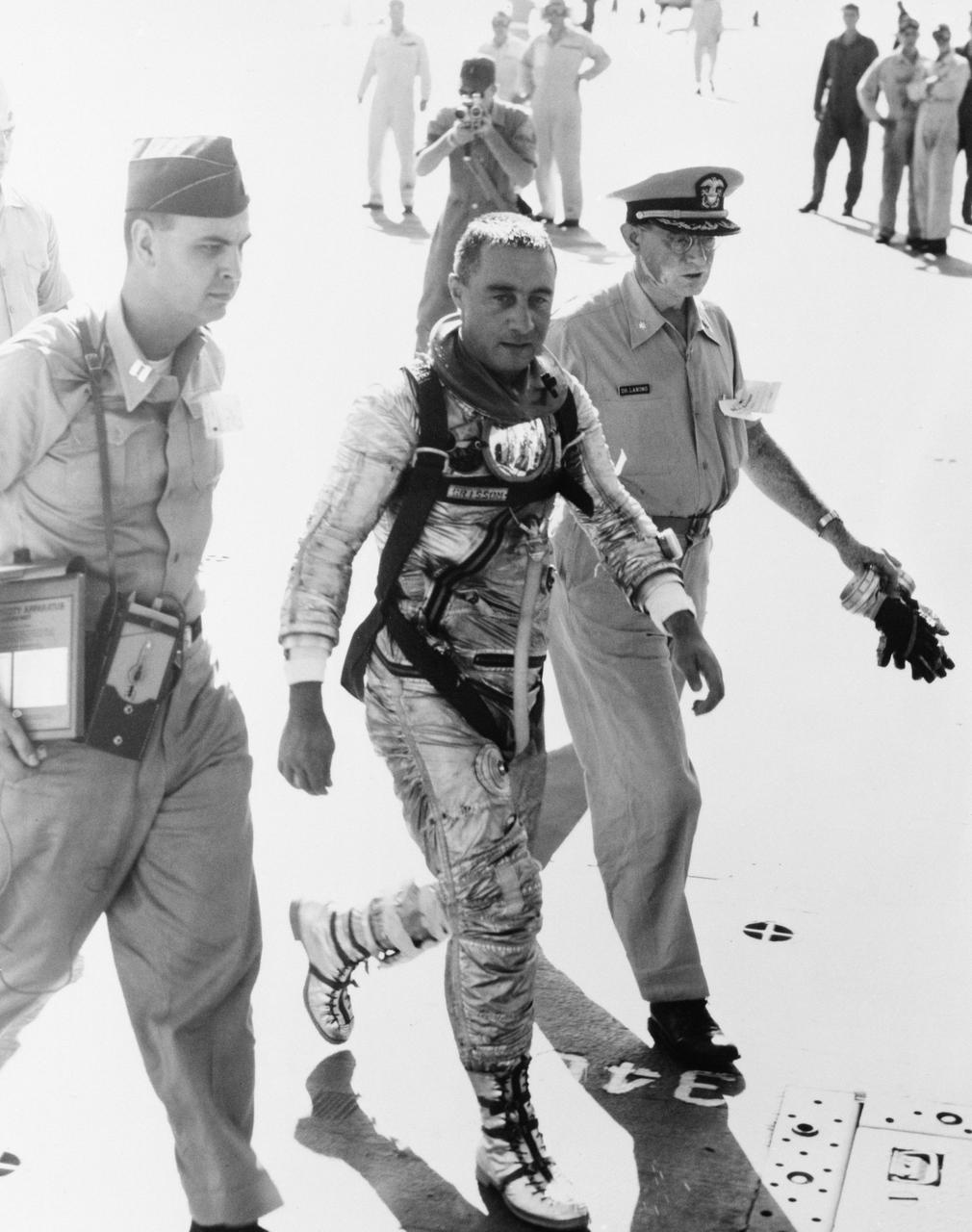
S61-02894 (21 July 1961) --- Astronaut Virgil I. (Gus) Grissom, pilot of the Mercury-Redstone 4 (MR-4) “Liberty Bell 7” spaceflight, arrives aboard the recovery ship, USS Randolph, following his 15-minute, 37-second suborbital space mission. He is flanked by military medical officers. Photo credit: NASA
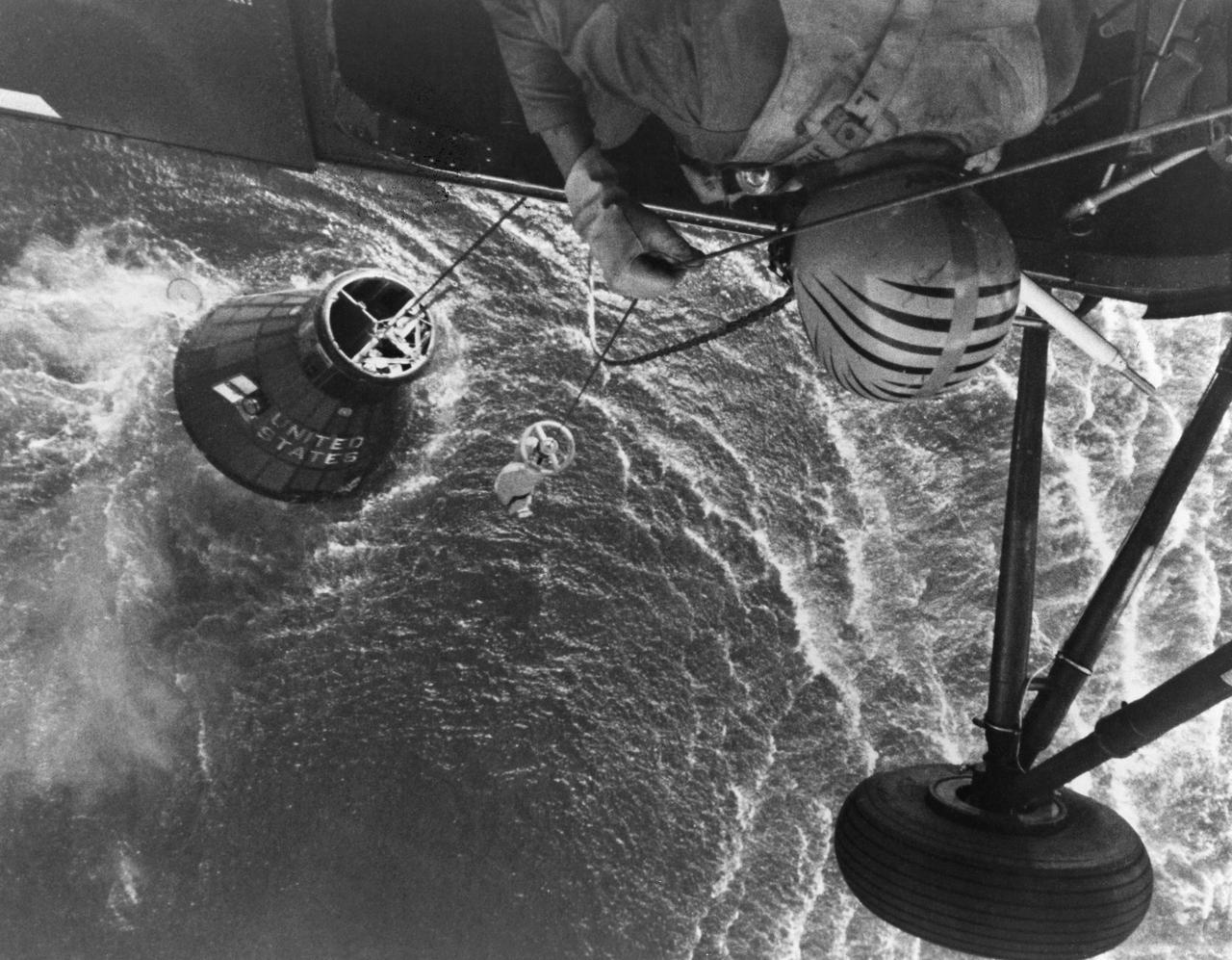
S61-02824 (21 July 1961) --- A U.S. Marine Corps helicopter attempts an unsuccessful recovery of the Mercury-Redstone 4 "Liberty Bell 7" spacecraft. The spacecraft hatch opened prematurely, and astronaut Virgil I. Grissom, pilot, escaped into the water. The helicopter hooked onto the spacecraft but could not retrieve it. Grissom was recovered by another helicopter and flown to the recovery ship, USS Randolph. The Mercury spacecraft sank to the bottom of the ocean. Photo credit: NASA
![KENNEDY SPACE CENTER, FLA. -- Astronaut Virgil I. Grissom prepares to enter the Liberty Bell 7 spacecraft prior to his successful 5,310 mph space ride. He reached an altitude of 118 statute miles. This was the second man-in-space [flight] for the U.S. in its series of suborbital flights by the National Aeronautics and Space Administration. (NASA Photo)](https://images-assets.nasa.gov/image/61-mr4-76/61-mr4-76~medium.jpg)
KENNEDY SPACE CENTER, FLA. -- Astronaut Virgil I. Grissom prepares to enter the Liberty Bell 7 spacecraft prior to his successful 5,310 mph space ride. He reached an altitude of 118 statute miles. This was the second man-in-space [flight] for the U.S. in its series of suborbital flights by the National Aeronautics and Space Administration. (NASA Photo)
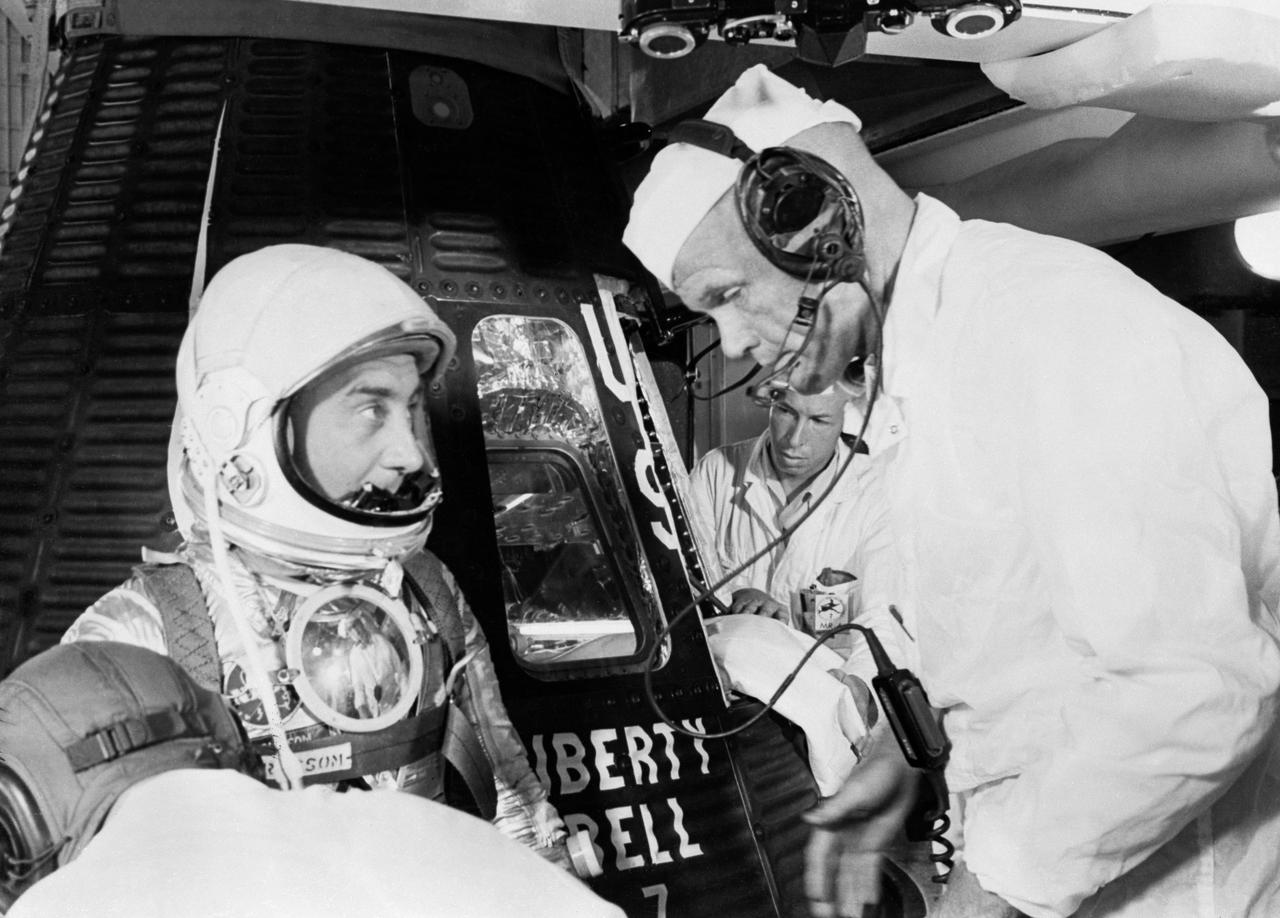
S61-02882 (1961) --- Astronaut Virgil I. (Gus) Grissom, suited up and ready to climb into Liberty Bell 7 spacecraft, talks with backup pilot John H. Glenn prior to insertion. The Mercury-Redstone 4 (MR-4) mission was scrubbed a few hours later due to unfavorable weather over the launch pad. Photo credit: NASA
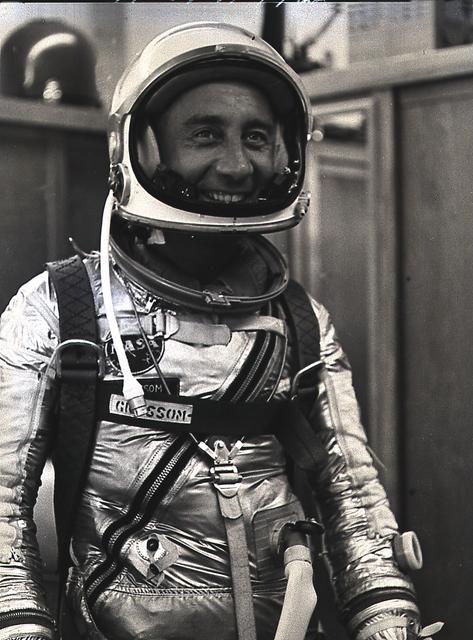
Astronaut Virgil Gus Grissom awaits America's second marned space mission, Mercury-Redstone 4 (MR-4) on July 21, 1961. During the 15-minute suborbital flight, the Liberty Bell 7 Mercury spacecraft reached an altitude of 118 miles and traveled 303 miles downrange. It was the fourth flight of the Mercury-Redstone launch vehicle (MR-4), developed by Dr. Wernher von Braun and the rocket team in Huntsville, Alabama.
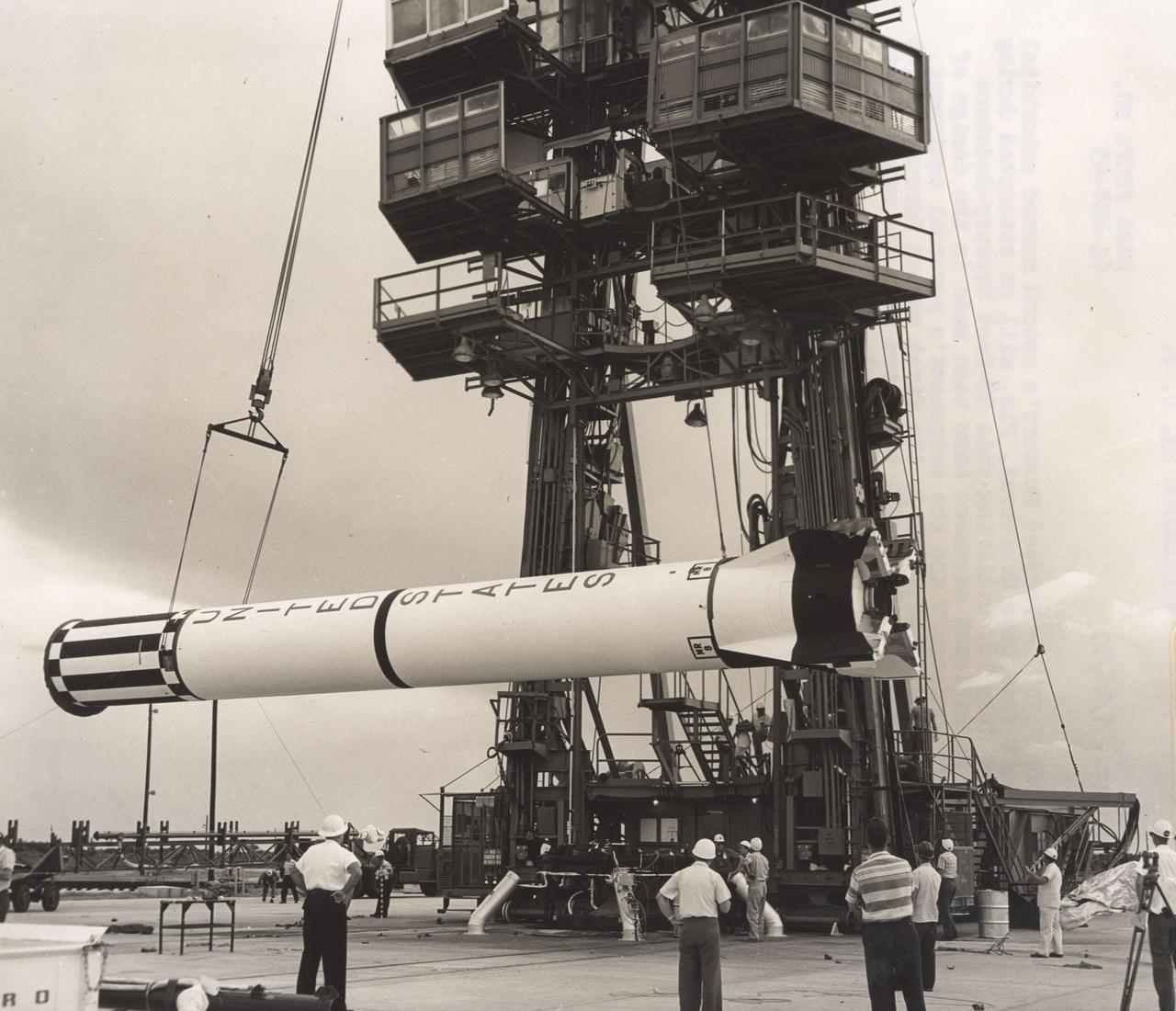
KENNEDY SPACE CENTER, FLA. -- READIED FOR FLIGHT - Project Mercury's second manned suborbital space flight, Liberty Bell 7, from Cape Canaveral, Fla., will be attempted during the week of July 16, utilizing this 58-foot Mercury-Redstone vehicle. Significant advances have been made in the design of the Mercury spacecraft and the astronaut's personal equipment. Flight will be similar to MR-3, the first manned Mercury flight May 5, 1961; however, the pilot will have more time for making Earth and celestial observations. (NASA Photo)
/61-mr4-55(s)~medium.jpg)
KENNEDY SPACE CENTER, FLA. -- Project Mercury Astronaut Virgil I. Grissom, primary pilot for the Mercury-Redstone 4 manned space flight known as Liberty Bell 7, gets an assist from suit specialist Joe W. Schmidt as he prepares for the Mercury-Redstone 4 manned space flight. The flight, the second manned shot in the Mercury program, was postponed because of bad weather in the launch area. (NASA Photo
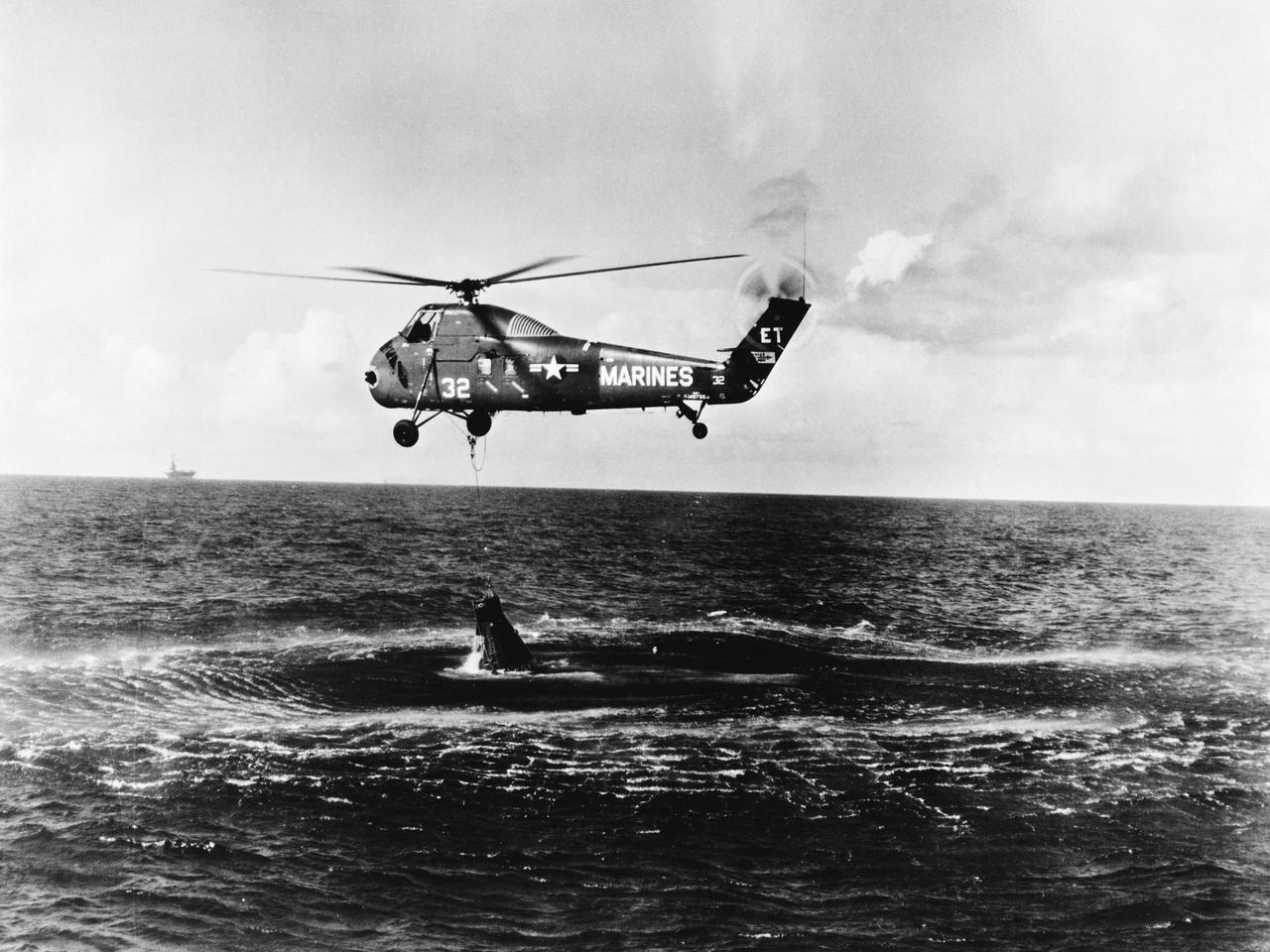
S61-02826 (21 July 1961) --- A U.S. Marine Corps helicopter attempts an unsuccessful recovery of the Mercury-Redstone 4 "Liberty Bell 7" spacecraft. The spacecraft hatch opened prematurely, and astronaut Virgil I. Grissom, pilot, escaped into the water. The helicopter hooked onto the spacecraft but could not retrieve it. Grissom was recovered by another helicopter and flown to the recovery ship, USS Randolph. The Mercury spacecraft sank to the bottom of the ocean. Photo credit: NASA
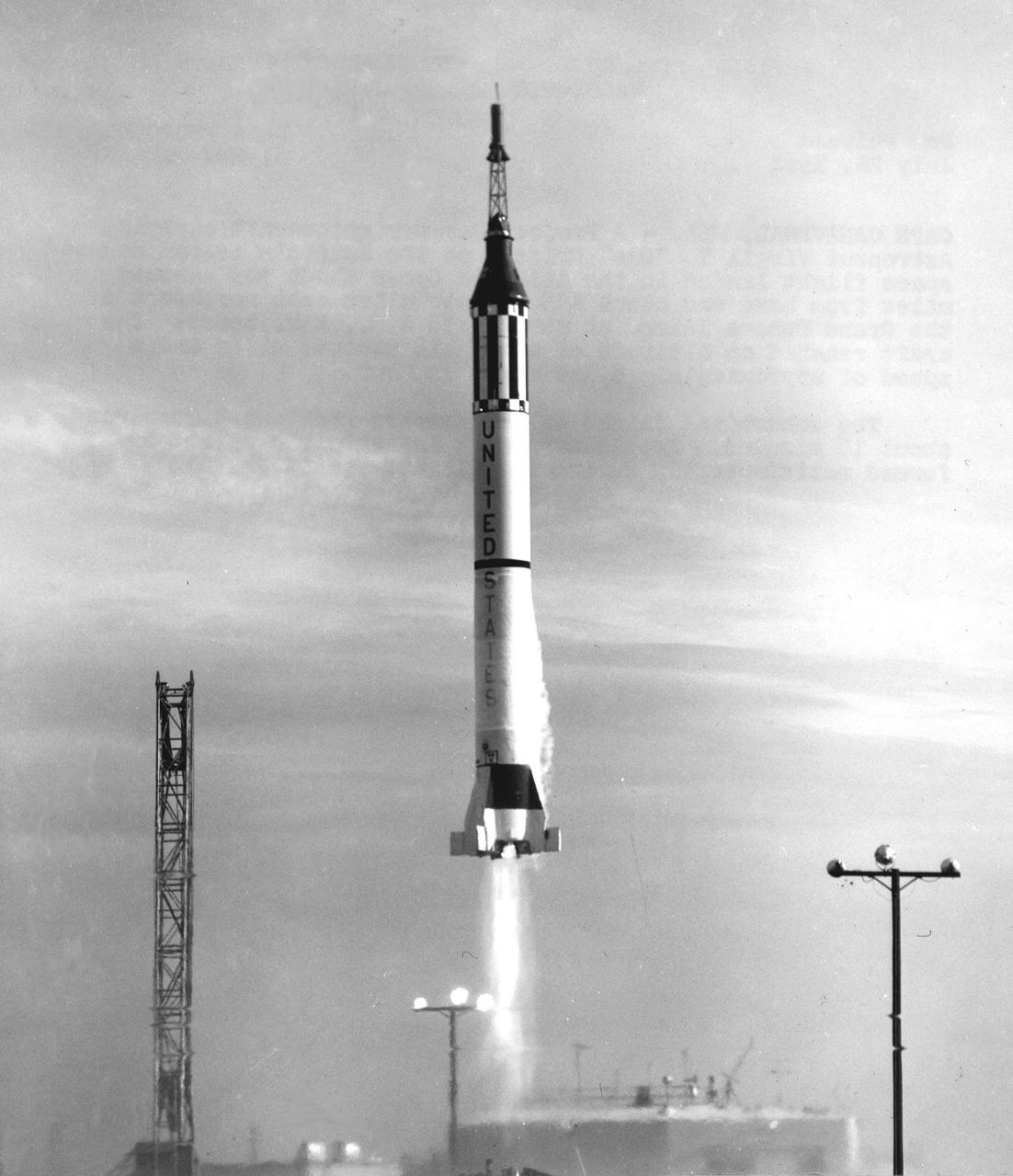
KENNEDY SPACE CENTER, FLA. -- A Project Mercury spacecraft carrying astronaut Virgil I. 'Gus' Grissom on the nation's second manned space flight landed in the Atlantic Ocean about 305 statute miles from here and about 145 statute miles east northeast of the Grand Bahama Island at about 7:36 a.m. EST today. The craft reached an altitude of about 118 statute miles and a speed of approximately 5,310 miles an hour. The suborbital flight of the Mercury-Redstone 4 required about 16 minutes. Preliminary data indicated the pilot performed satisfactorily during the flight. The spacecraft was known as Liberty Bell 7. (NASA Photo)
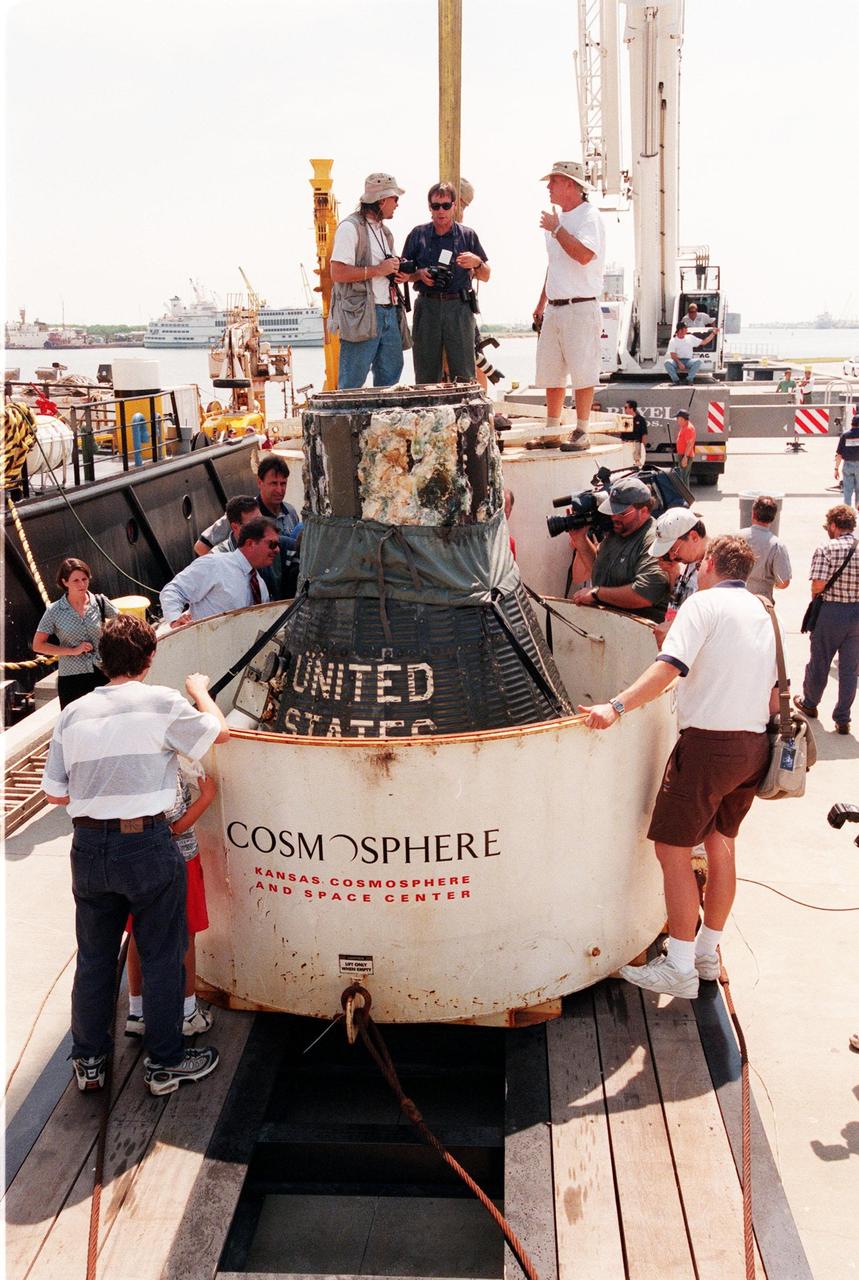
KENNEDY SPACE CENTER, FLA. -- Media and photographers get a close-up view of the Liberty Bell 7 Project Mercury capsule after its recovery from the Atlantic Ocean floor where it lay for 38 years. Launched July 21, 1961, the capsule made a successful 16-minute suborbital flight, with astronaut Virgil "Gus" Grissom aboard, and splashed down in the Atlantic Ocean. A prematurely jettisoned hatch caused the capsule to flood and a Marine rescue helicopter was unable to lift it. It quickly sank to a three-mile depth. Grissom was rescued but his spacecraft remained lost on the ocean floor, until now. Curt Newport, an underwater salvage expert, located the capsule through modern technology, and after one abortive attempt, successfully raised it and brought it to Port Canaveral. The recovery of Liberty Bell 7 fulfilled a 14-year dream for the expedition leader. The expedition was sponsored by the Discovery Channel. The capsule is being moved to the Kansas Cosmosphere and Space Center in Hutchinson, Kansas, where it will be restored for eventual public display. Newport has also been involved in salvage operations of the Space Shuttle Challenger and TWA Flight 800 that crashed off the coast of Long Island, N.Y.
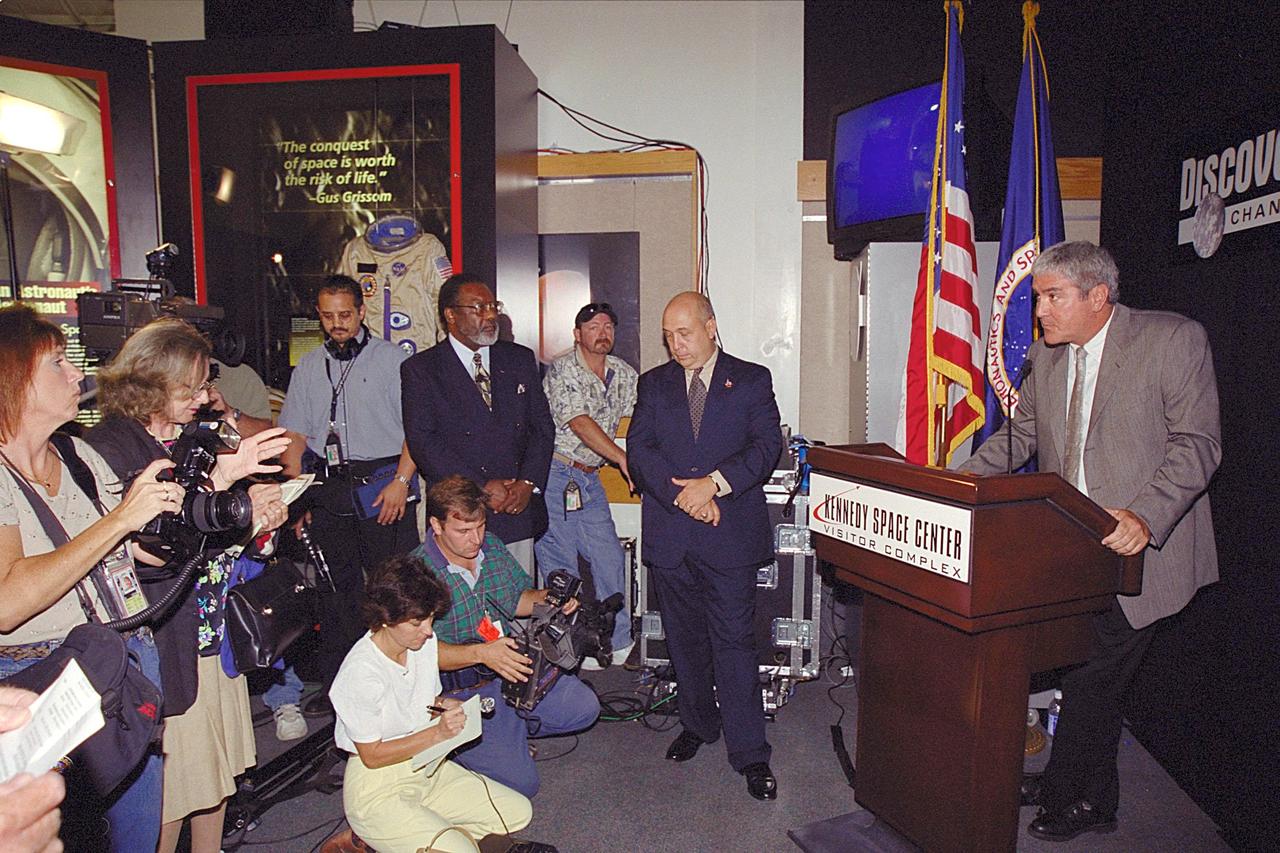
Media gather at the KSC Visitor Complex for the kickoff of the Discovery Channel's Liberty Bell 7 Space Capsule Exhibit, which will open to the public on Saturday, June 17. At the podium is Mike Quattrone, executive vice president and general manager, Discovery Channel.; Standing to the left of the podium is Rick Abramson, president and chief operating officer of Delaware North Parks Services of Spaceport, Inc., and far left, Jim Jennings, deputy director of Kennedy Space Center.; Liberty Bell 7 launched U.S. Air Force Captain Virgil “Gus” Grissom July 21, 1961 on a mission that lasted 15 minutes and 37 seconds before sinking to the floor of the Atlantic Ocean, three miles deep. It lay undetected for nearly four decades before a Discovery Channel expedition located it and recovered it. The space capsule is now restored and preserved, and part of an interactive exhibit touring science centers and museums in 12 cities throughout the United States until 2003. The exhibit includes hands-on elements such as a capsule simulator, a centrifuge, and ROV pilot

KENNEDY SPACE CENTER, FLA. -- Media and spectators get a close-up view of the Liberty Bell 7 Project Mercury capsule after its recovery from the Atlantic Ocean floor where it lay for 38 years. Launched July 21, 1961, the capsule made a successful 16-minute suborbital flight, with astronaut Virgil "Gus" Grissom aboard, and splashed down in the Atlantic Ocean. A prematurely jettisoned hatch caused the capsule to flood and a Marine rescue helicopter was unable to lift it. It quickly sank to a three-mile depth. Grissom was rescued but his spacecraft remained lost on the ocean floor, until now. Curt Newport, an underwater salvage expert, located the capsule through modern technology, and after one abortive attempt, successfully raised it and brought it to Port Canaveral. The recovery of Liberty Bell 7 fulfilled a 14-year dream for the expedition leader. The expedition was sponsored by the Discovery Channel. The capsule is being moved to the Kansas Cosmosphere and Space Center in Hutchinson, Kansas, where it will be restored for eventual public display. Newport has also been involved in salvage operations of the Space Shuttle Challenger and TWA Flight 800 that crashed off the coast of Long Island, N.Y
/61-mr4-60(s)~medium.jpg)
KENNEDY SPACE CENTER, FLA. -- AWAITING ORDERS to proceed to the launching site for Project Mercury's second attempt to launch a man into space, Astronaut Virgil I. 'Gus' Grissom relaxes in a contour chair in the Personal Equipment Room Hangar 'S,' Cape Canaveral, Fla. A parabolic plexiglas mirror on his chest reflects the faces of two fellow Mercury pilots: Walter M. Schirra (left) and M. Scott Carpenter. The mirror, which was not included in the May 5 Shepard flight, will be used to reflect the instrument panel, bringing it into view of the pilot observer camera. MR-4, known as Liberty Bell 7, has been rescheduled for Friday, July 21. (NASA Photo
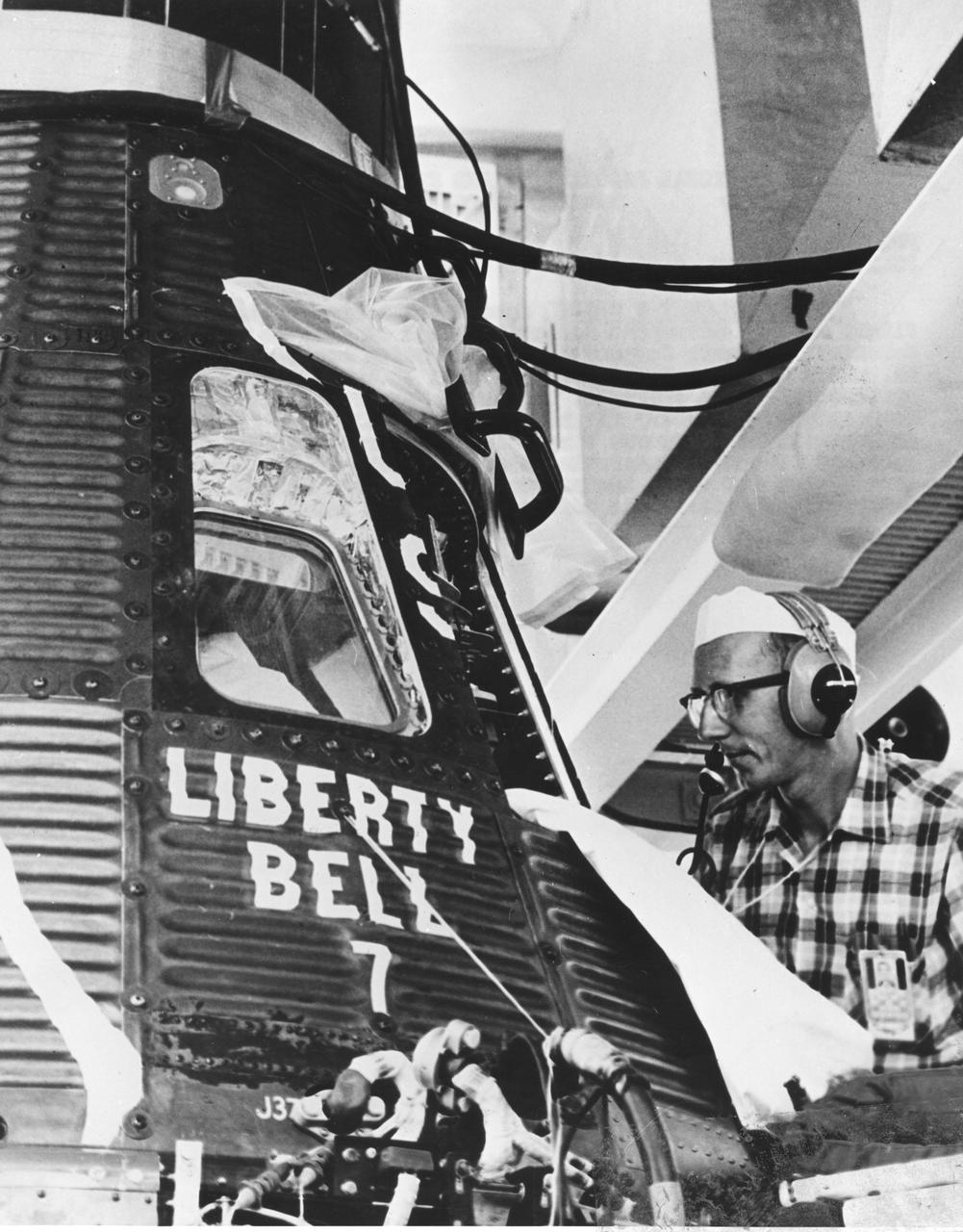
KENNEDY SPACE CENTER, FLA. -- PROJECT MERCURY'S SECOND suborbital astronaut training flight will be attempted during the week of July 16 with McDonnell Aircraft Corporation's production spacecraft number 11, which has been named 'Liberty Bell 7.' The number seven stresses the team effort of the seven Mercury pilots necessary for conducting Mercury flights. Mission pilot for the MR-4 launch will be astronaut Virgil I. 'Gus' Grissom. His spacecraft is seen here undergoing systems checks in the National Aeronautics and Space Administration's Mercury Hangar at Cape Canaveral, Florida, weeks before the planned launch
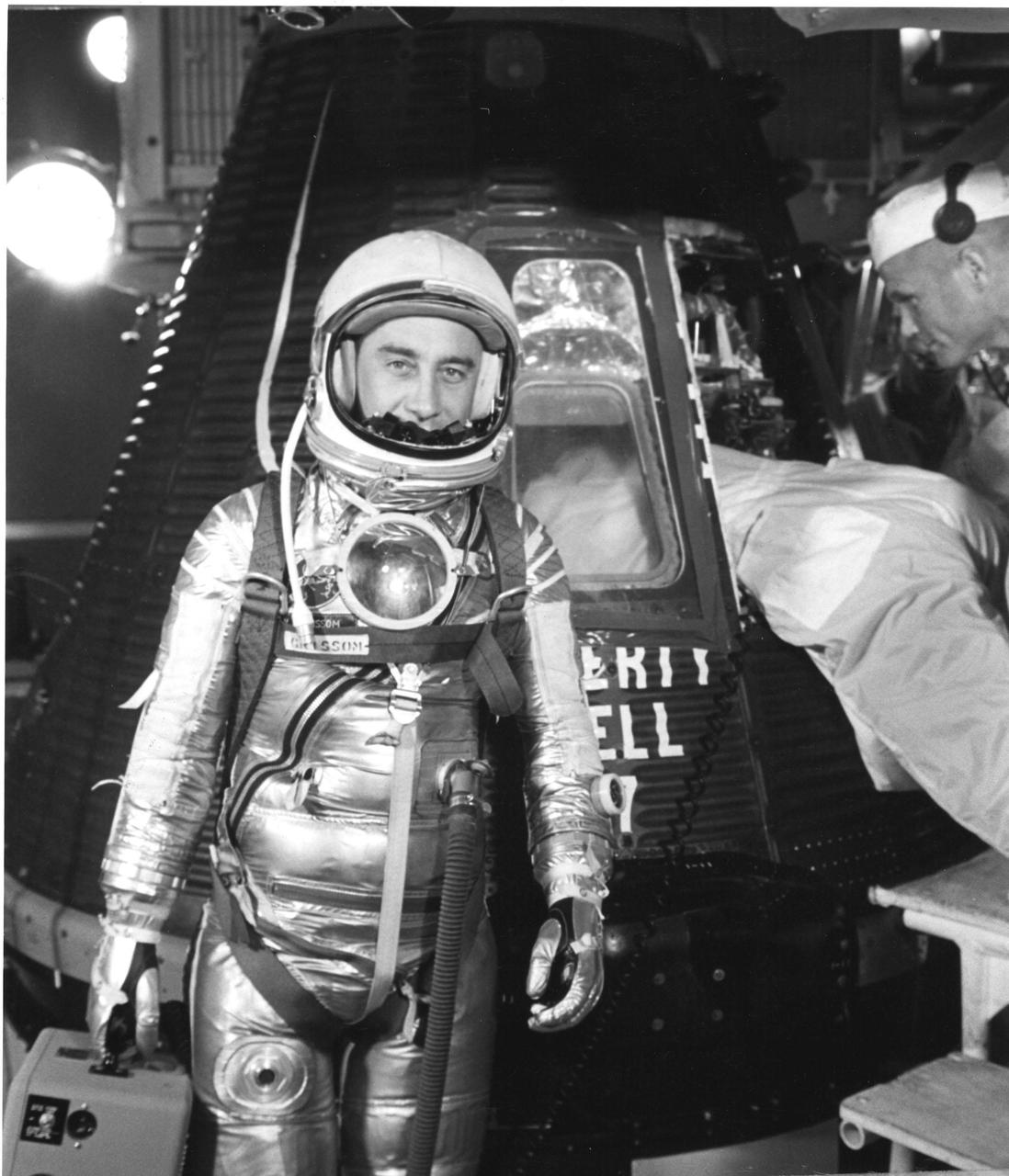
KENNEDY SPACE CENTER, FLA. -- READY FOR FLIGHT - On level three of gantry on pad 5, Project Mercury astronaut Virgil I. 'Gus' Grissom pauses briefly while a technician completes final adjustment in the Liberty Bell 7 spacecraft, which carried Grissom 118 miles into space on Friday, July 21, 1961. The craft's large trapezoidal observation window can be seen behind the pilot. The Pilot Observer Camera, which brought the astronaut's head and shoulders into view, was to reflect the lights on the flight events sequence panel through the 5-inch plexiglas parabolic mirror attached to Grissom's suit, to provide and accurately time record the pilot's voice communications, eye scan pattern and arm motions. The spacecraft sank on landing and has not been recovered. (NASA Photo)
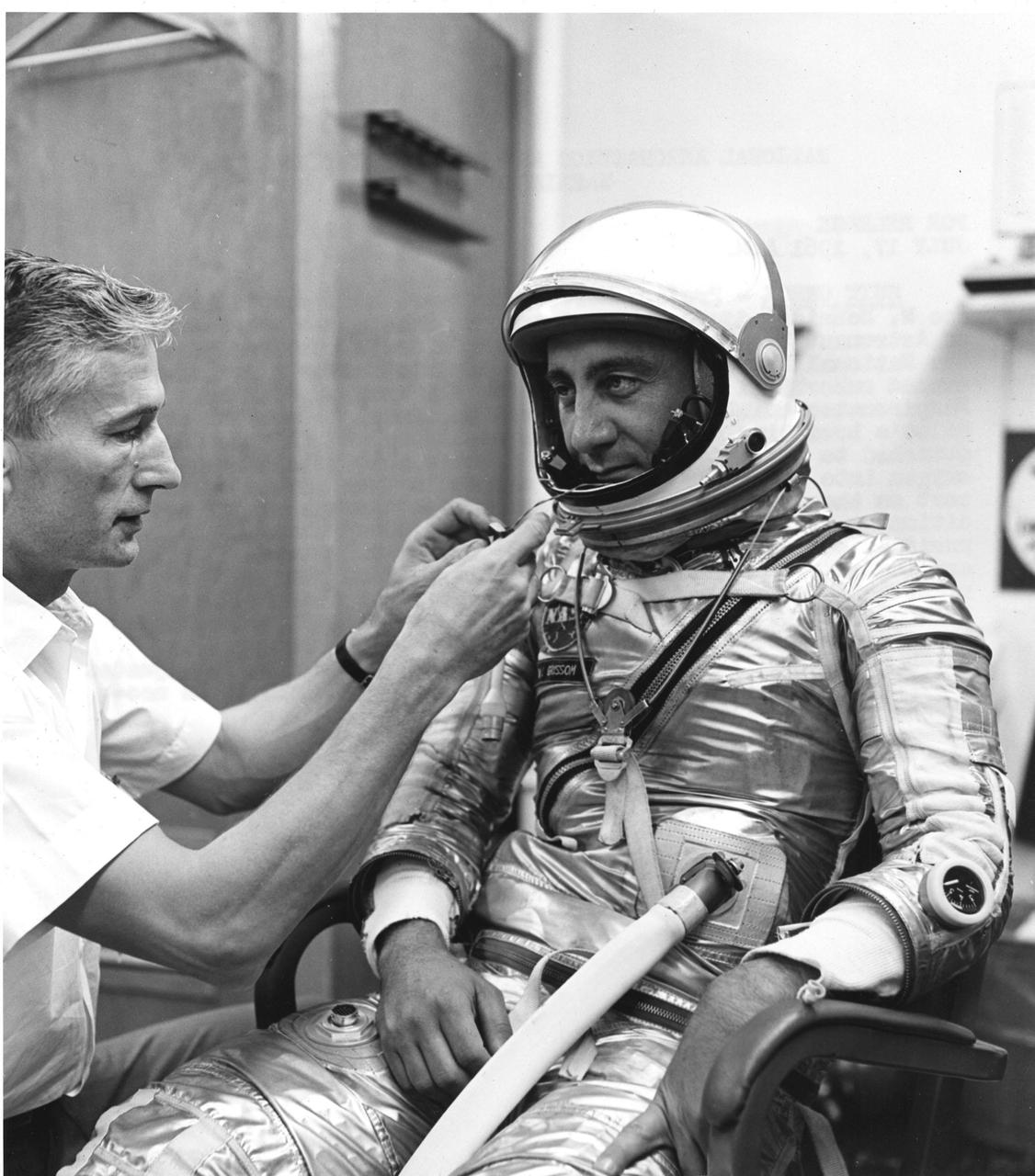
KENNEDY SPACE CENTER, FLA. -- SUIT CHECK - Project Mercury pressure suit specialist Joe. W. Schidt adjusts a respirometer attached to the helmet of astronaut Virgil I. Grissom during a dress rehearsal for the National Aeronautics and Space Administration's second manned suborbital flight, dubbed Liberty Bell 7, planned for the week of July 16. Respirometer enables ground medical personnel to monitor the pilot's breathing rate during the countdown and flight. Hose attached to the left side of the pilot's suit brings breathing oxygen into the suit. Expelled oxygen is then vented out a port on the side of the helmet and passed through an air conditioning system beneath the astronaut's couch where it is purified before being recycled into the suit. Gauge on left arm indicates pressure within the suit. Canon plug on the right thigh brings medical information out of the suit for telemetering to ground stations. Suit is not inflated during the mission unless there is a failure in cabin pressure, in which event the 'V' shaped cable around the neck ring is adjusted prior to flight to prevent helmet from rising should it be necessary to pressurize the suit
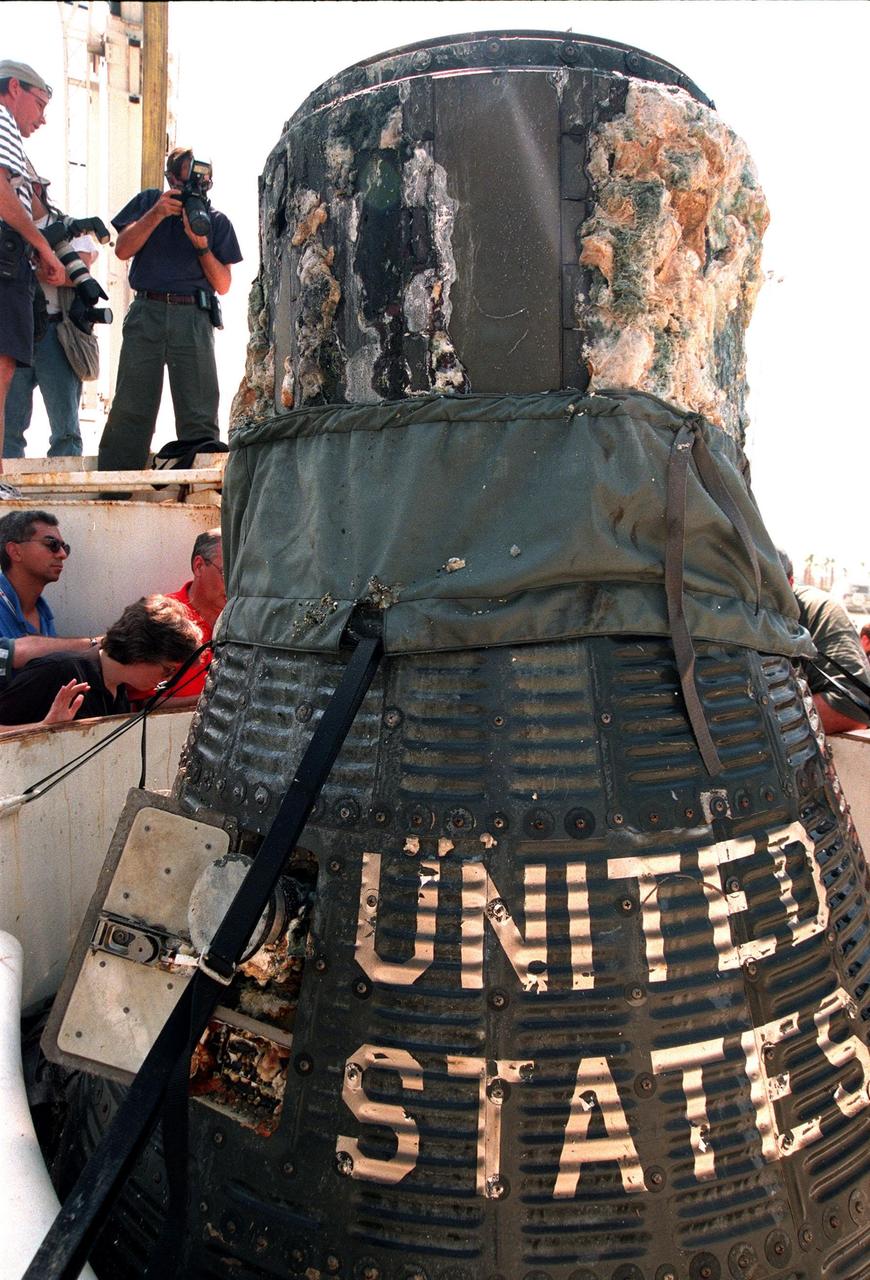
KENNEDY SPACE CENTER, FLA. -- A close-up of the recently recovered Liberty Bell 7 Project Mercury capsule from the ocean floor shows the lettering "United States" still clearly visible on its side. Thirty-eight years ago, the capsule made a successful 16-minute suborbital flight, with astronaut Virgil "Gus" Grissom aboard, and splashed down in the Atlantic Ocean. A prematurely jettisoned hatch caused the capsule to flood and a Marine rescue helicopter was unable to lift it. It quickly sank to a three-mile depth. Grissom was rescued but his spacecraft remained lost on the ocean floor, until now. In an expedition sponsored by the Discovery Channel, underwater salvage expert Curt Newport fulfilled a 14-year dream in finding and, after one abortive attempt, successfully raising the capsule and bringing it to Port Canaveral. The capsule is being moved to the Kansas Cosmosphere and Space Center in Hutchinson, Kansas, where it will be restored for eventual public display. Newport has also been involved in salvage operations of the Space Shuttle Challenger and TWA Flight 800 that crashed off the coast of Long Island, N.Y.
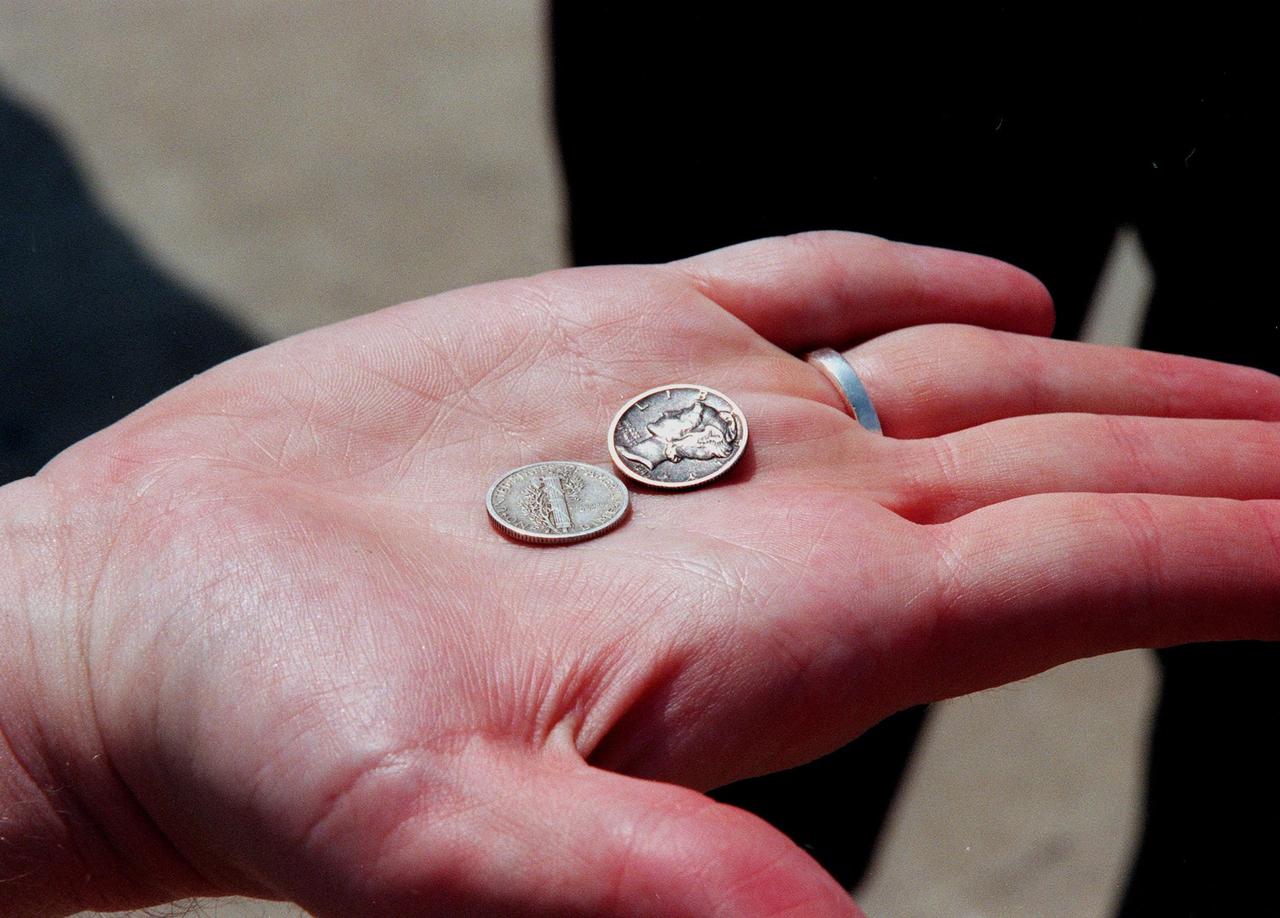
KENNEDY SPACE CENTER, FLA. -- This photograph shows two mercury dimes that were found inside the recently recovered Liberty Bell 7 Project Mercury capsule. Thirty-eight years ago, the capsule made a successful 16-minute suborbital flight, with astronaut Virgil "Gus" Grissom aboard, and splashed down in the Atlantic Ocean. A prematurely jettisoned hatch caused the capsule to flood and a Marine rescue helicopter was unable to lift it. It quickly sank to a three-mile depth. Grissom was rescued but his spacecraft remained lost on the ocean floor, until now. In an expedition sponsored by the Discovery Channel, underwater salvage expert Curt Newport fulfilled a 14-year dream in finding and, after one abortive attempt, successfully raising the capsule and bringing it to Port Canaveral. The dimes had apparently been placed in the capsule before its launch July 21, 1961. The capsule is being moved to the Kansas Cosmosphere and Space Center in Hutchinson, Kansas, where it will be restored for eventual public display. Newport has also been involved in salvage operations of the Space Shuttle Challenger and TWA Flight 800 that crashed off the coast of Long Island, N.Y.