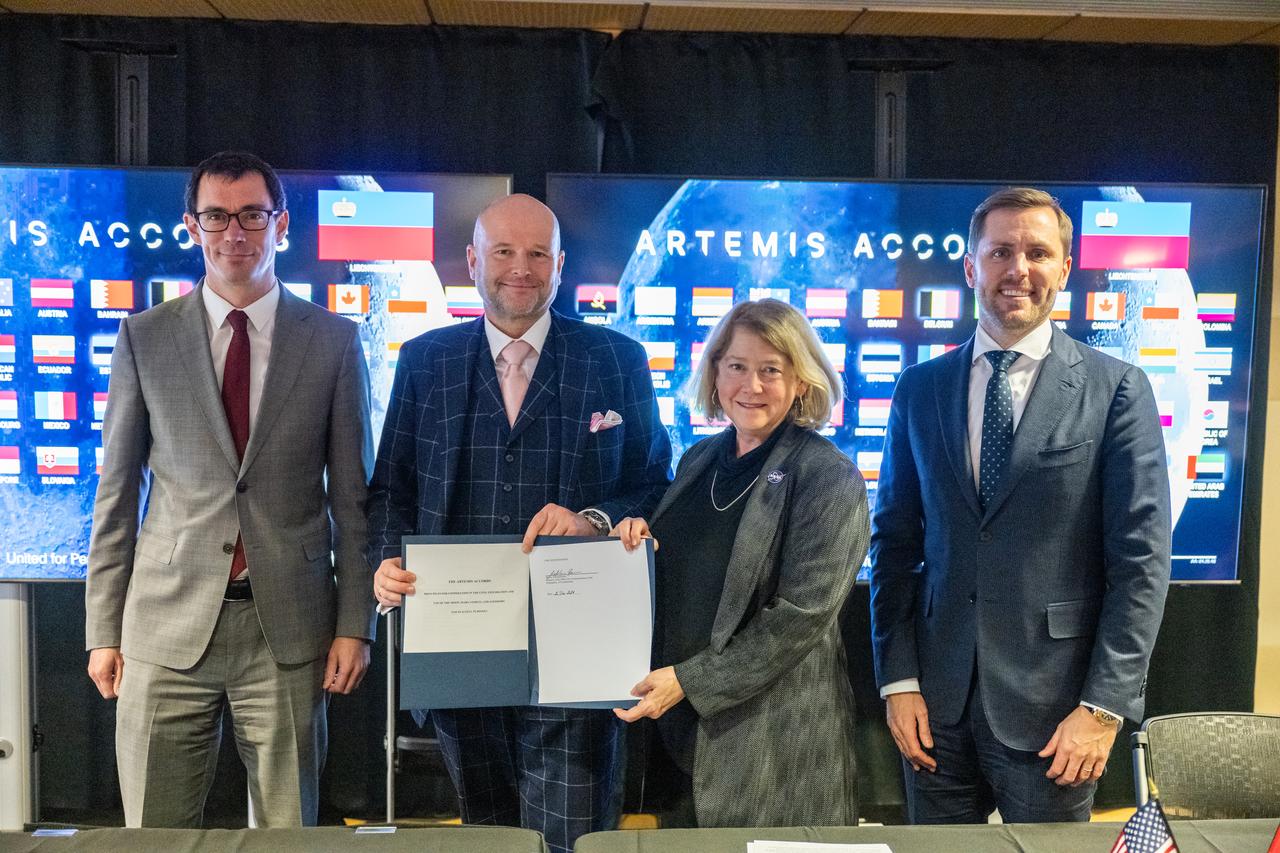
From left to right, Ambassador of the Principality of Liechtenstein to the United States of America Georg Sparber, Director of the Office for Communications of the Principality of Liechtenstein Dr. Rainer Schnepfleitner, NASA Deputy Administrator Pam Melroy, and Ambassador Extraordinary and Plenipotentiary to the Swiss Confederation and to the Principality of Liechtenstein Scott Miller, pose for a group photo during an Artemis Accords signing ceremony, Friday, Dec. 20, 2024, at the Mary W. Jackson NASA Headquarters building in Washington. The Principality of Liechtenstein is the 52nd country to sign the Artemis Accords, which establish a practical set of principles to guide space exploration cooperation among nations participating in NASA’s Artemis program.Photo Credit: (NASA/Keegan Barber)
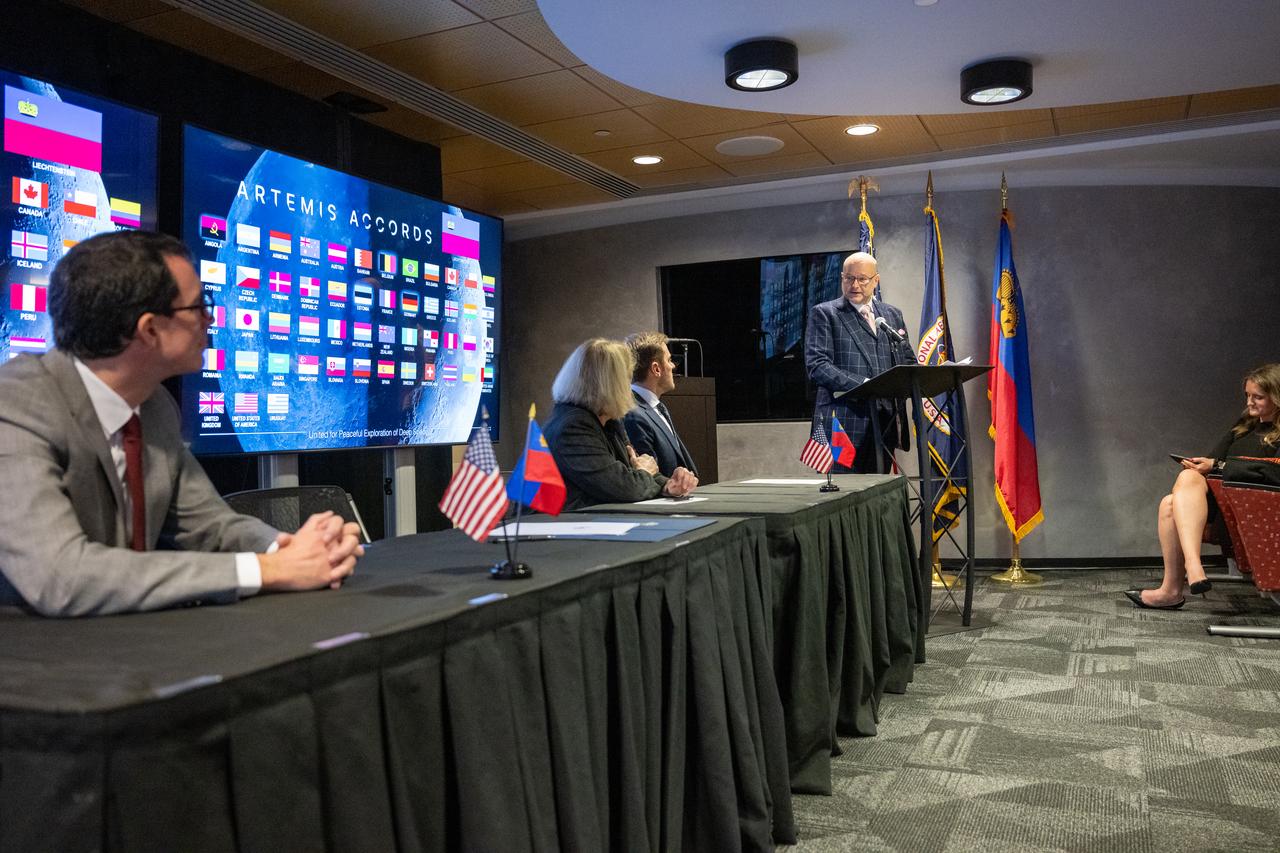
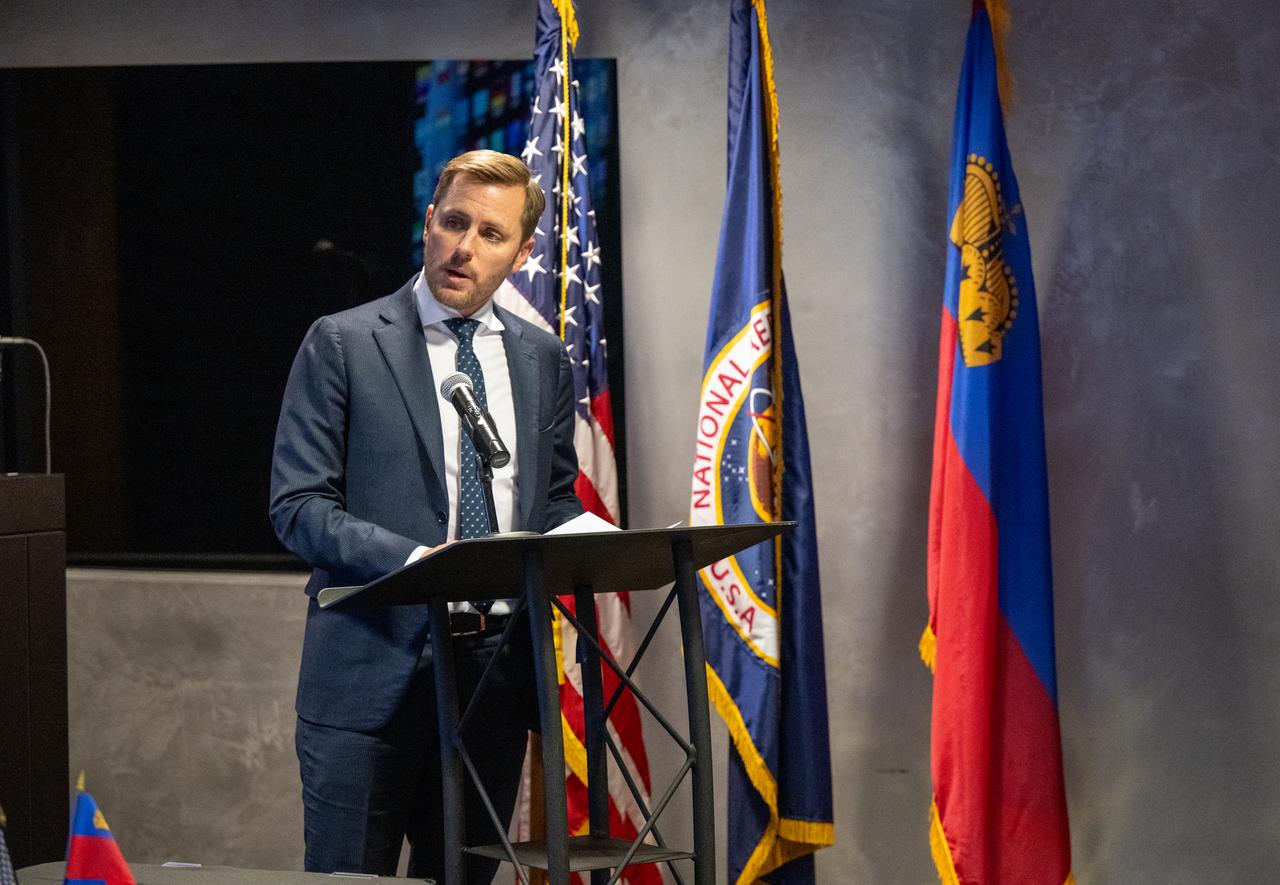
Director of the Office for Communications of the Principality of Liechtenstein Dr. Rainer Schnepfleitner delivers remarks during an Artemis Accords signing ceremony Friday, Dec. 20, 2024, at the Mary W. Jackson NASA Headquarters building in Washington. The Principality of Liechtenstein is the 52nd country to sign the Artemis Accords, which establish a practical set of principles to guide space exploration cooperation among nations participating in NASA’s Artemis program.Photo Credit: (NASA/Keegan Barber)
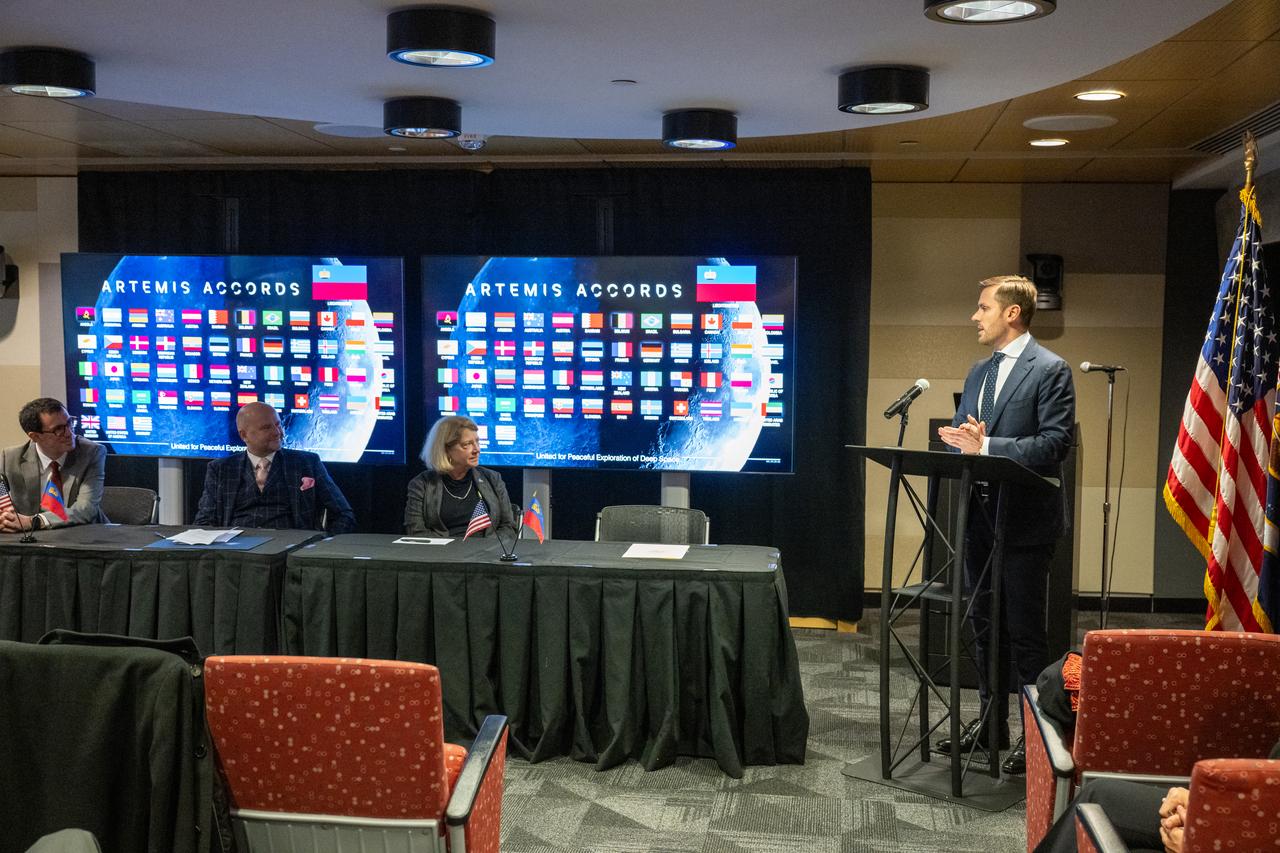
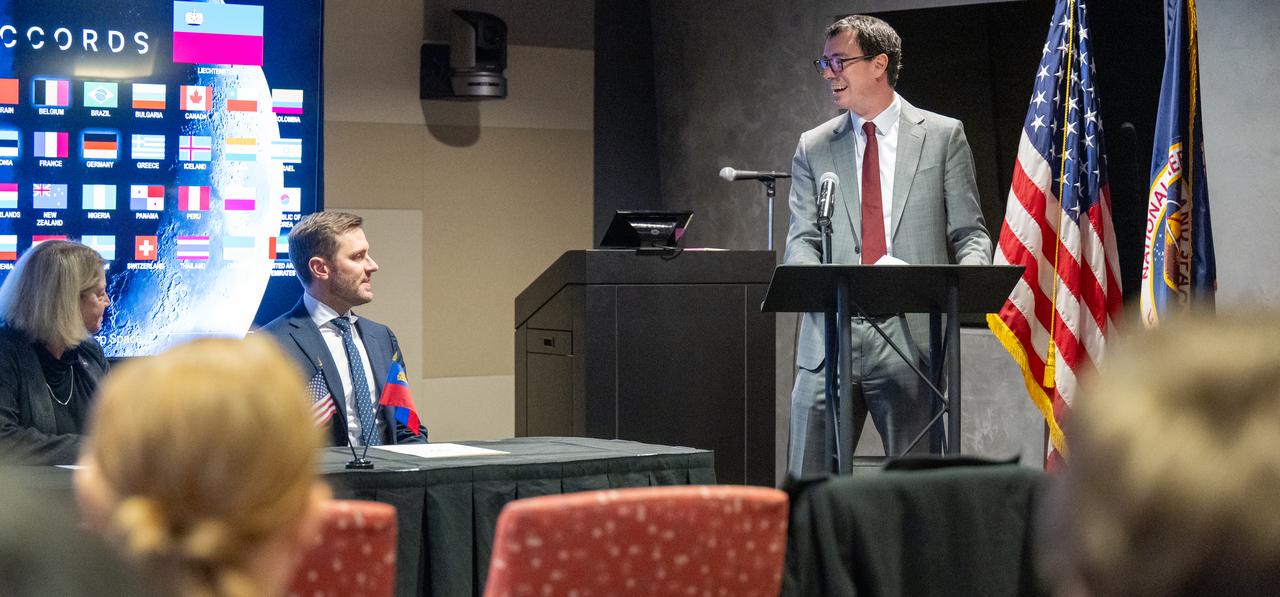
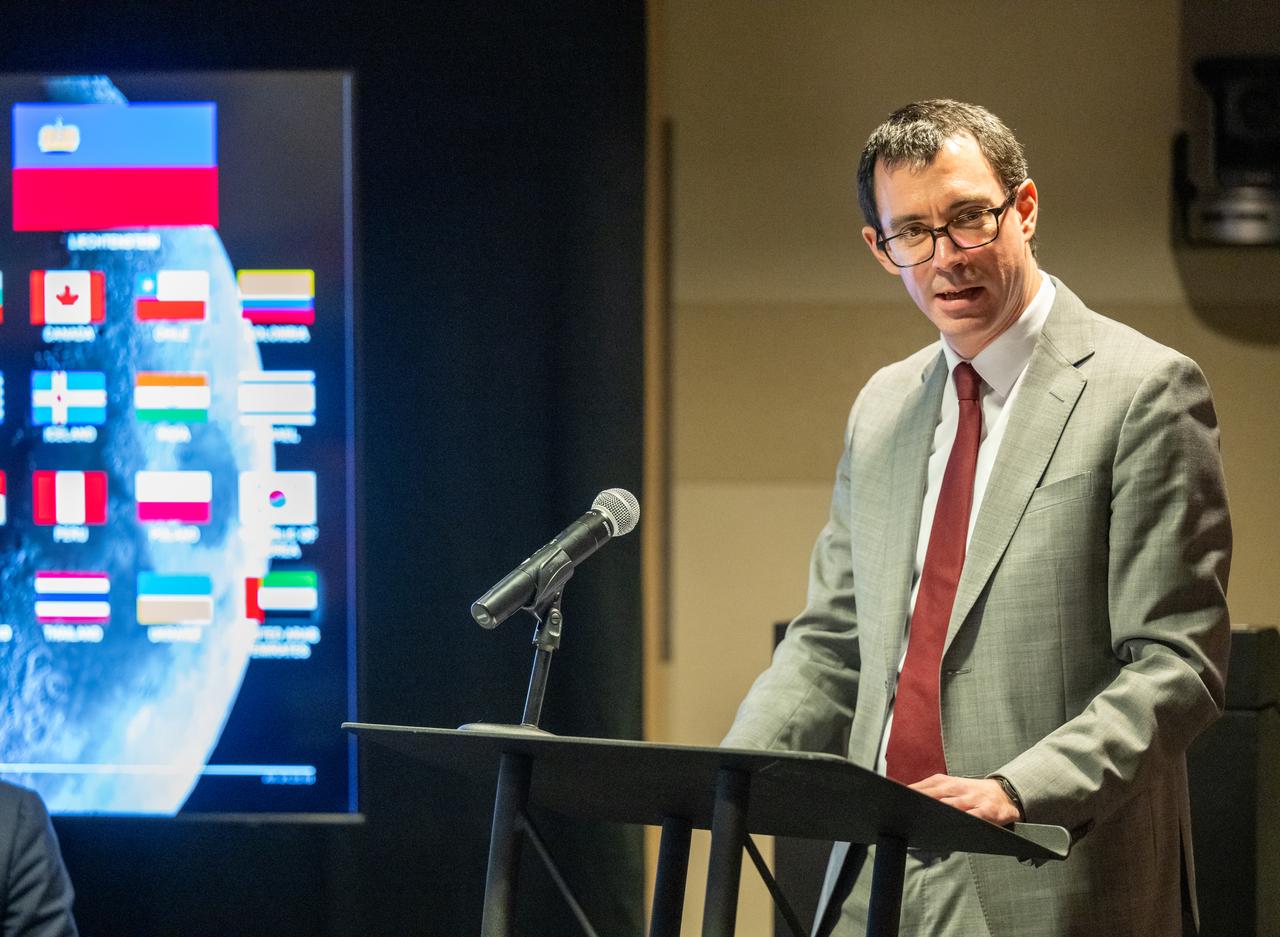
Ambassador Extraordinary and Plenipotentiary to the Swiss Confederation and to the Principality of Liechtenstein Scott Miller delivers remarks during an Artemis Accords signing ceremony Friday, Dec. 20, 2024, at the Mary W. Jackson NASA Headquarters building in Washington. The Principality of Liechtenstein is the 52nd country to sign the Artemis Accords, which establish a practical set of principles to guide space exploration cooperation among nations participating in NASA’s Artemis program.Photo Credit: (NASA/Keegan Barber)
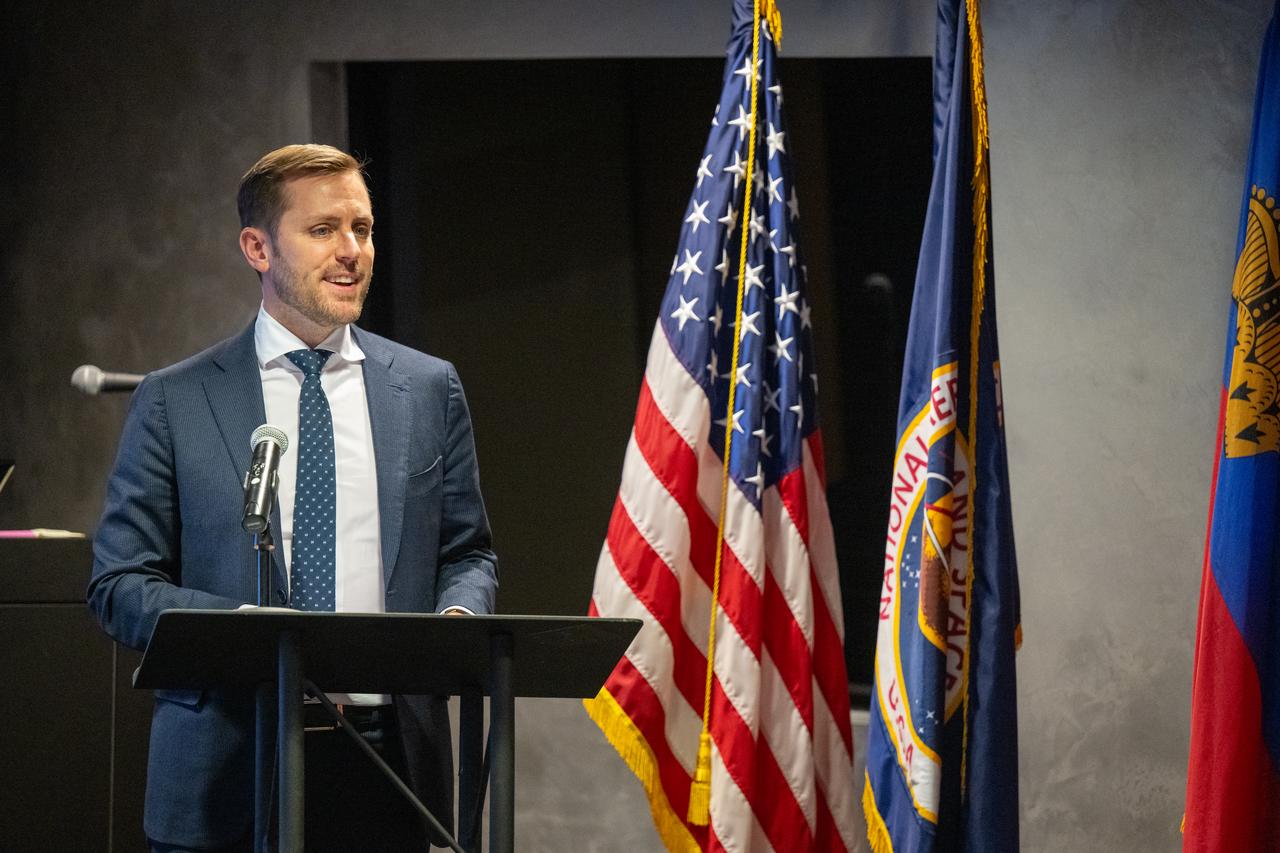
Ambassador Extraordinary and Plenipotentiary to the Swiss Confederation and to the Principality of Liechtenstein Scott Miller delivers remarks during an Artemis Accords signing ceremony Friday, Dec. 20, 2024, at the Mary W. Jackson NASA Headquarters building in Washington. The Principality of Liechtenstein is the 52nd country to sign the Artemis Accords, which establish a practical set of principles to guide space exploration cooperation among nations participating in NASA’s Artemis program.Photo Credit: (NASA/Keegan Barber)
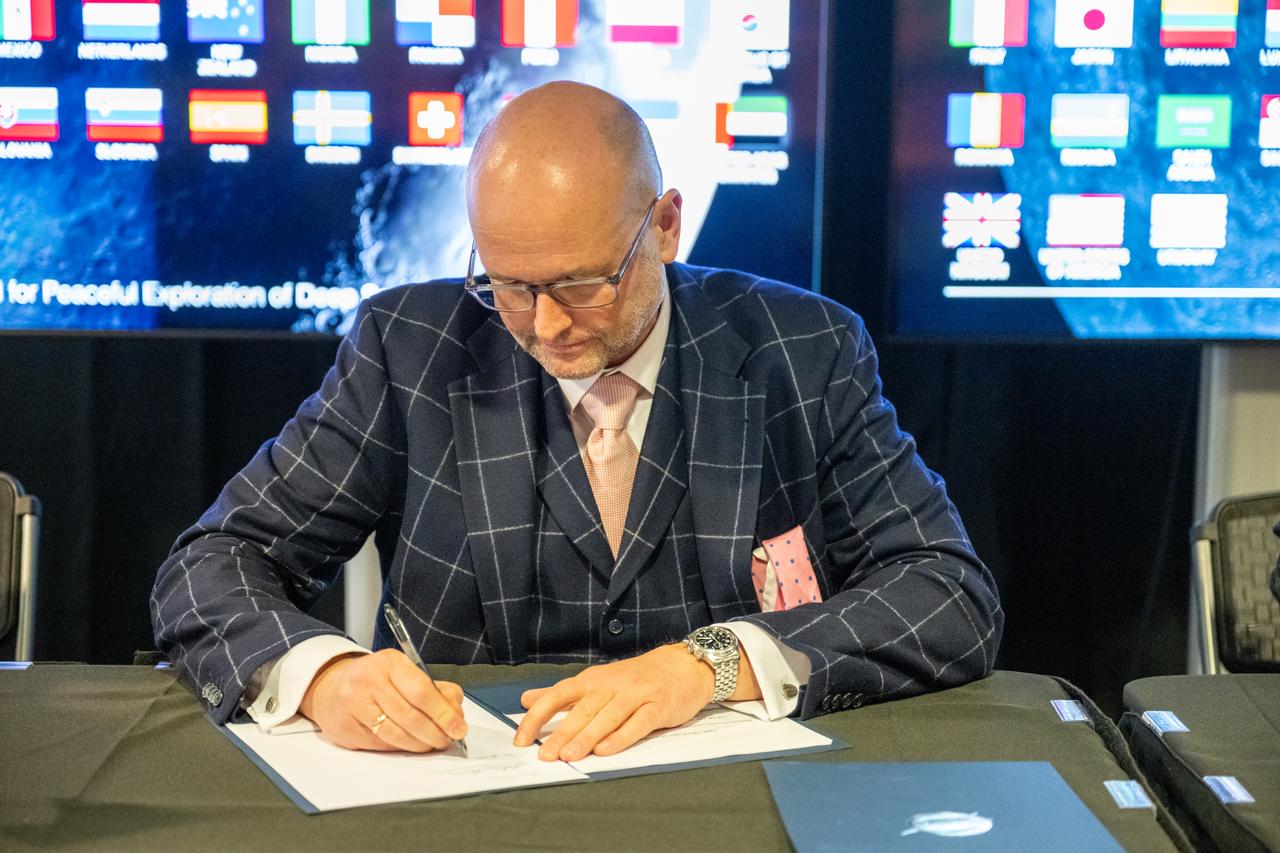
Director of the Office for Communications of the Principality of Liechtenstein Dr. Rainer Schnepfleitner signs the Artemis Accords Friday, Dec. 20, 2024, at the Mary W. Jackson NASA Headquarters building in Washington. The Principality of Liechtenstein is the 52nd country to sign the Artemis Accords, which establish a practical set of principles to guide space exploration cooperation among nations participating in NASA’s Artemis program.Photo Credit: (NASA/Keegan Barber)
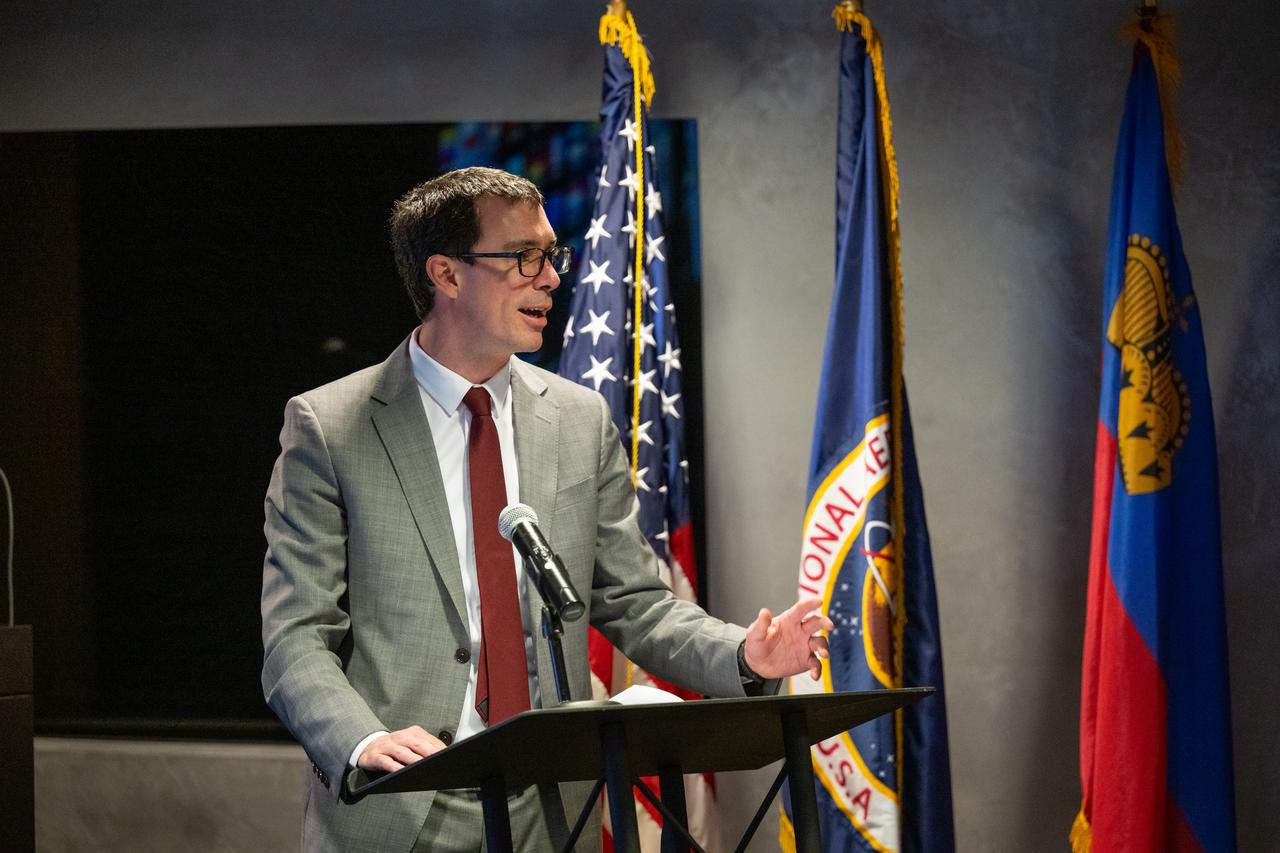
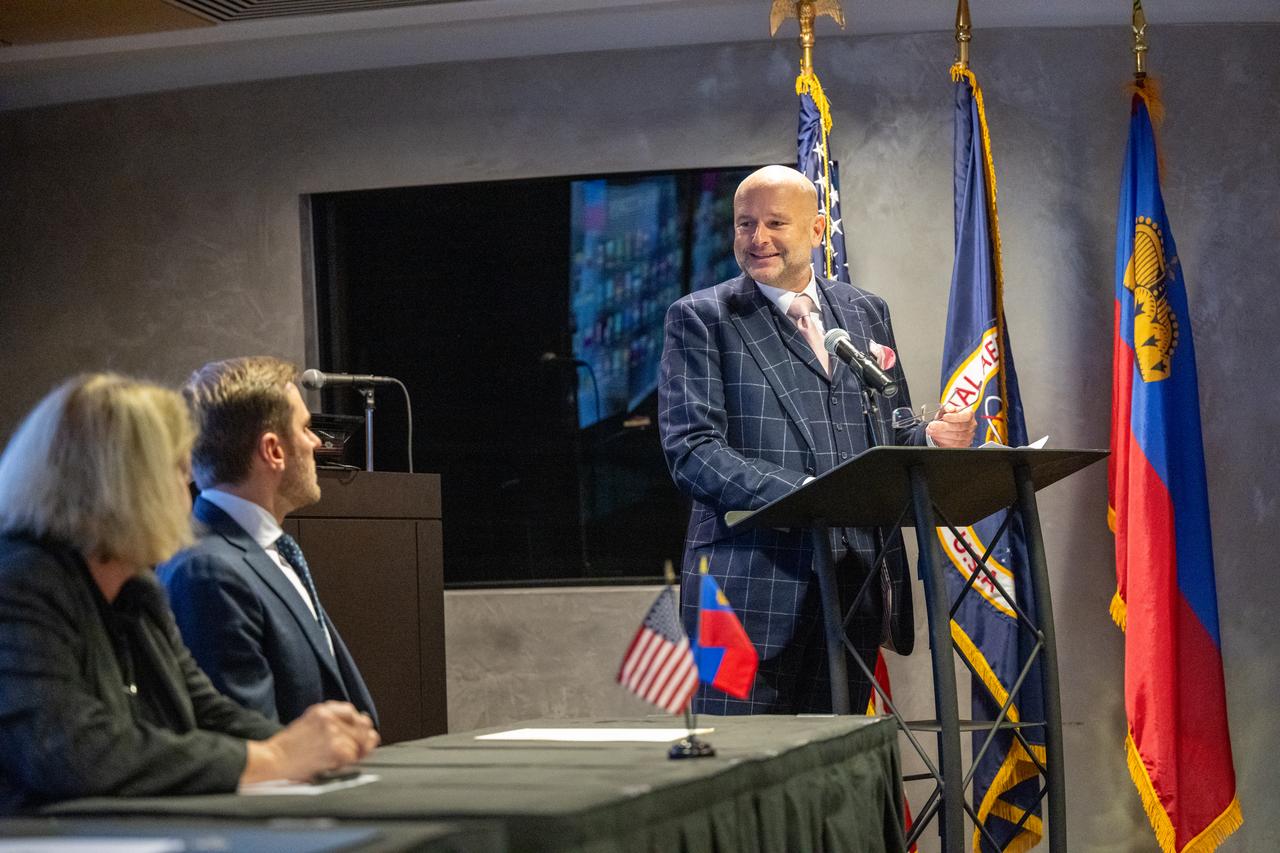
Ambassador of the Principality of Liechtenstein to the United States of America Georg Sparber delivers remarks during an Artemis Accords signing ceremony Friday, Dec. 20, 2024, at the Mary W. Jackson NASA Headquarters building in Washington. The Principality of Liechtenstein is the 52nd country to sign the Artemis Accords, which establish a practical set of principles to guide space exploration cooperation among nations participating in NASA’s Artemis program.Photo Credit: (NASA/Keegan Barber)
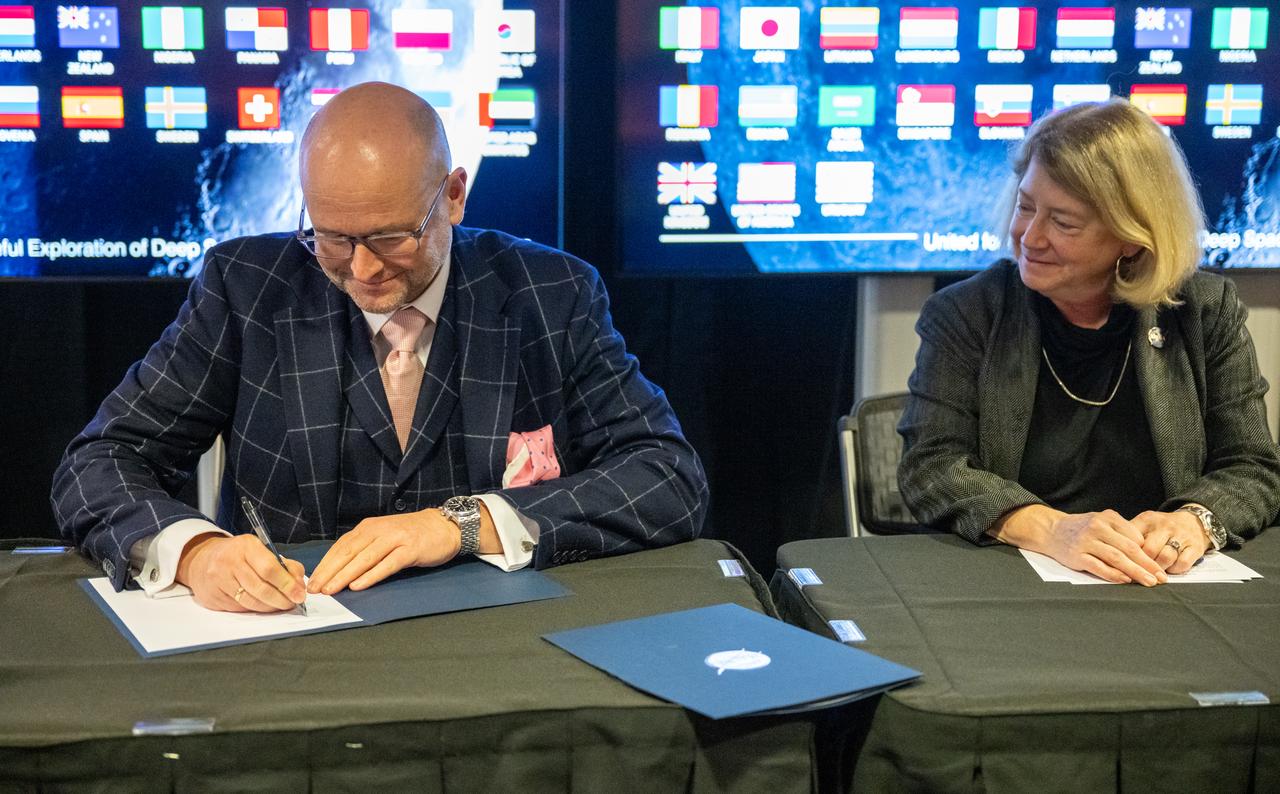
Director of the Office for Communications of the Principality of Liechtenstein Dr. Rainer Schnepfleitner, left, signs the Artemis Accords Friday, Dec. 20, 2024, at the Mary W. Jackson NASA Headquarters building in Washington. The Principality of Liechtenstein is the 52nd country to sign the Artemis Accords, which establish a practical set of principles to guide space exploration cooperation among nations participating in NASA’s Artemis program.Photo Credit: (NASA/Keegan Barber)
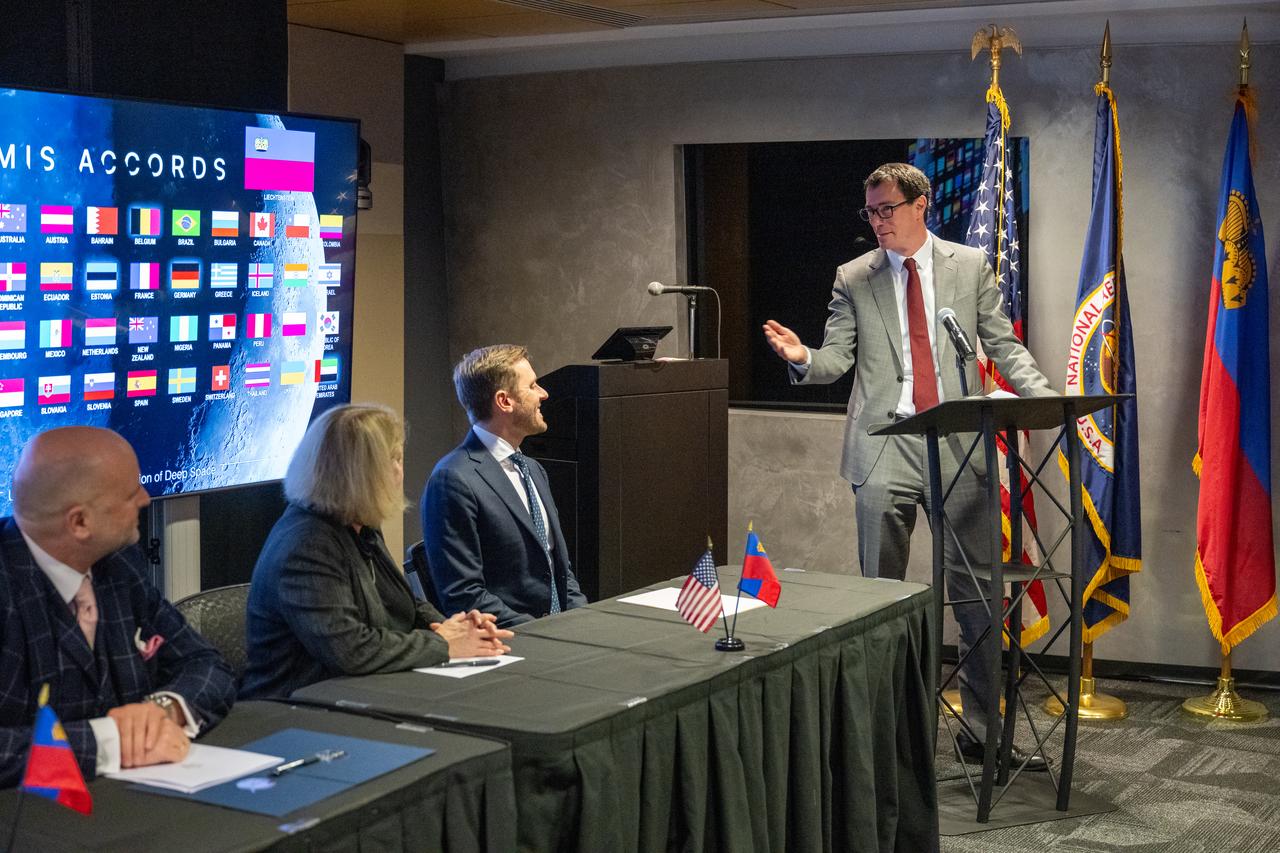
Ambassador of the Principality of Liechtenstein to the United States of America Georg Sparber delivers remarks during an Artemis Accords signing ceremony Friday, Dec. 20, 2024, at the Mary W. Jackson NASA Headquarters building in Washington. The Principality of Liechtenstein is the 52nd country to sign the Artemis Accords, which establish a practical set of principles to guide space exploration cooperation among nations participating in NASA’s Artemis program.Photo Credit: (NASA/Keegan Barber)
Ambassador Extraordinary and Plenipotentiary to the Swiss Confederation and to the Principality of Liechtenstein Scott Miller delivers remarks during an Artemis Accords signing ceremony Friday, Dec. 20, 2024, at the Mary W. Jackson NASA Headquarters building in Washington. The Principality of Liechtenstein is the 52nd country to sign the Artemis Accords, which establish a practical set of principles to guide space exploration cooperation among nations participating in NASA’s Artemis program.Photo Credit: (NASA/Keegan Barber)
Ambassador of the Principality of Liechtenstein to the United States of America Georg Sparber delivers remarks during an Artemis Accords signing ceremony Friday, Dec. 20, 2024, at the Mary W. Jackson NASA Headquarters building in Washington. The Principality of Liechtenstein is the 52nd country to sign the Artemis Accords, which establish a practical set of principles to guide space exploration cooperation among nations participating in NASA’s Artemis program.Photo Credit: (NASA/Keegan Barber)
Director of the Office for Communications of the Principality of Liechtenstein Dr. Rainer Schnepfleitner delivers remarks during an Artemis Accords signing ceremony Friday, Dec. 20, 2024, at the Mary W. Jackson NASA Headquarters building in Washington. The Principality of Liechtenstein is the 52nd country to sign the Artemis Accords, which establish a practical set of principles to guide space exploration cooperation among nations participating in NASA’s Artemis program.Photo Credit: (NASA/Keegan Barber)
Ambassador of the Principality of Liechtenstein to the United States of America Georg Sparber delivers remarks during an Artemis Accords signing ceremony Friday, Dec. 20, 2024, at the Mary W. Jackson NASA Headquarters building in Washington. The Principality of Liechtenstein is the 52nd country to sign the Artemis Accords, which establish a practical set of principles to guide space exploration cooperation among nations participating in NASA’s Artemis program.Photo Credit: (NASA/Keegan Barber)
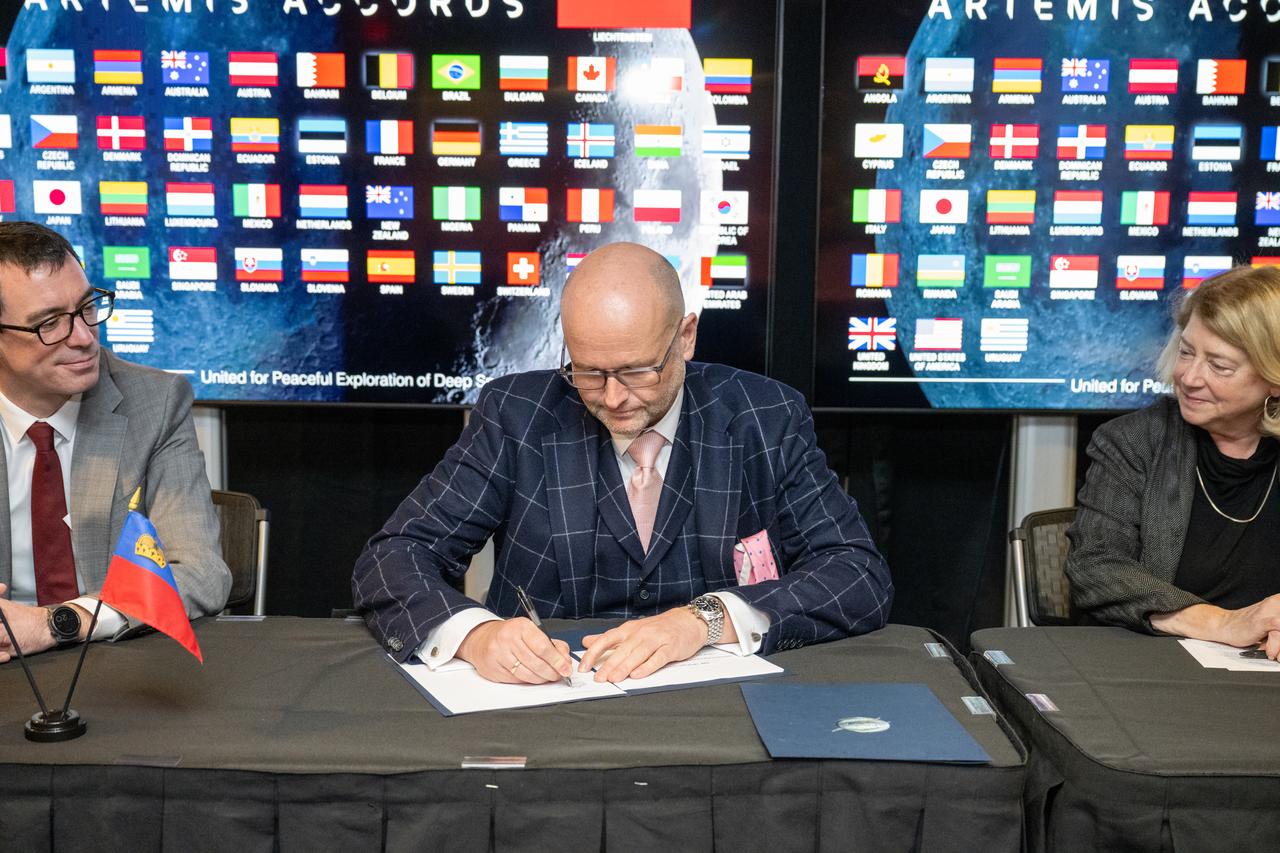
Director of the Office for Communications of the Principality of Liechtenstein Dr. Rainer Schnepfleitner, center, signs the Artemis Accords Friday, Dec. 20, 2024, at the Mary W. Jackson NASA Headquarters building in Washington. The Principality of Liechtenstein is the 52nd country to sign the Artemis Accords, which establish a practical set of principles to guide space exploration cooperation among nations participating in NASA’s Artemis program.Photo Credit: (NASA/Keegan Barber)
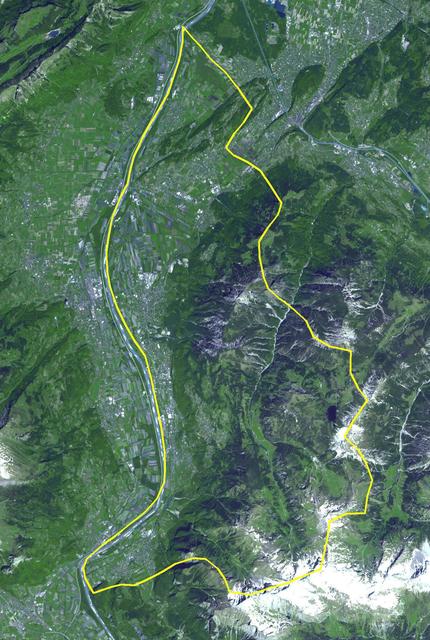
This image acquired by NASA Terra spacecraft is of the Principality of Liechtenstein, a landlocked alpine country between Austria and Switzerland.
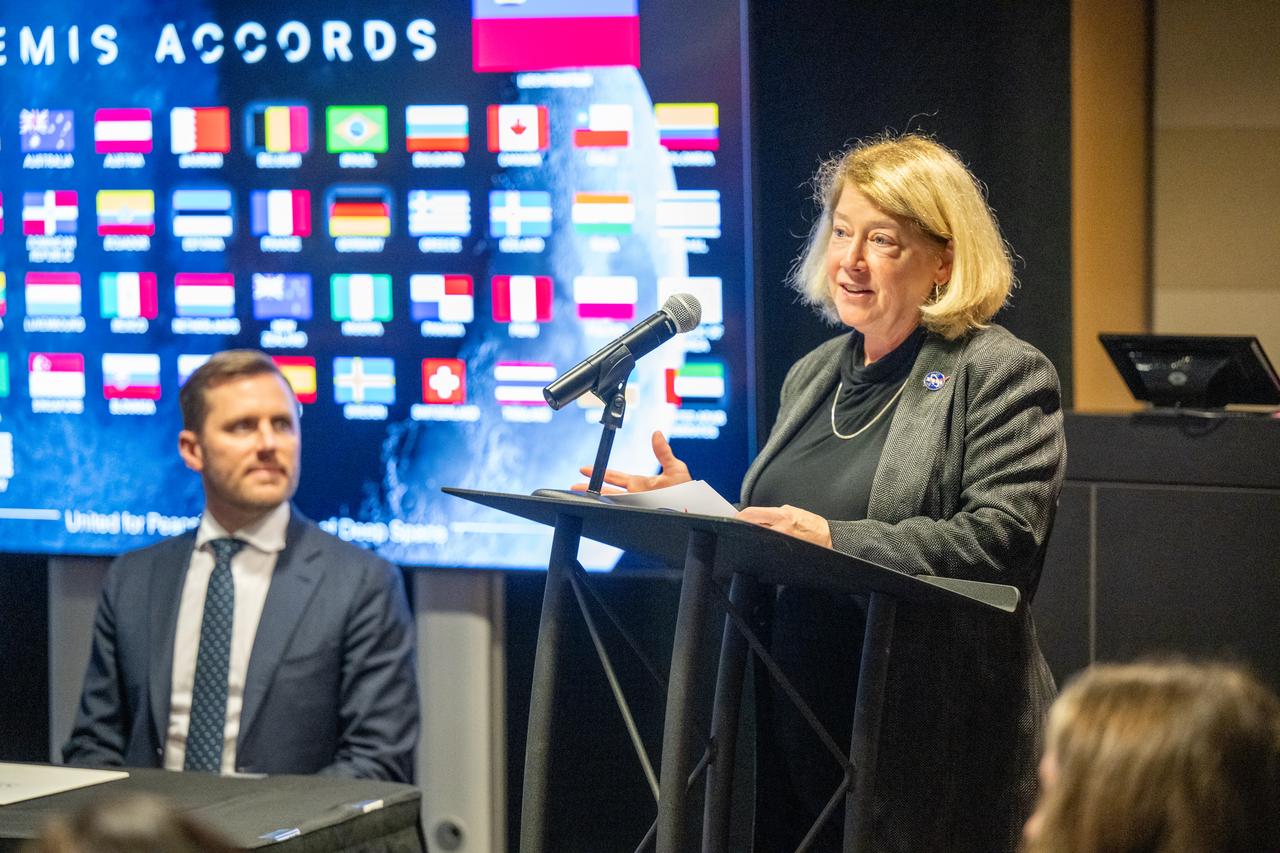
NASA Deputy Administrator Pam Melroy delivers remarks during an Artemis Accords signing ceremony Friday, Dec. 20, 2024, at the Mary W. Jackson NASA Headquarters building in Washington. The Principality of Liechtenstein is the 52nd country to sign the Artemis Accords, which establish a practical set of principles to guide space exploration cooperation among nations participating in NASA’s Artemis program.Photo Credit: (NASA/Keegan Barber)
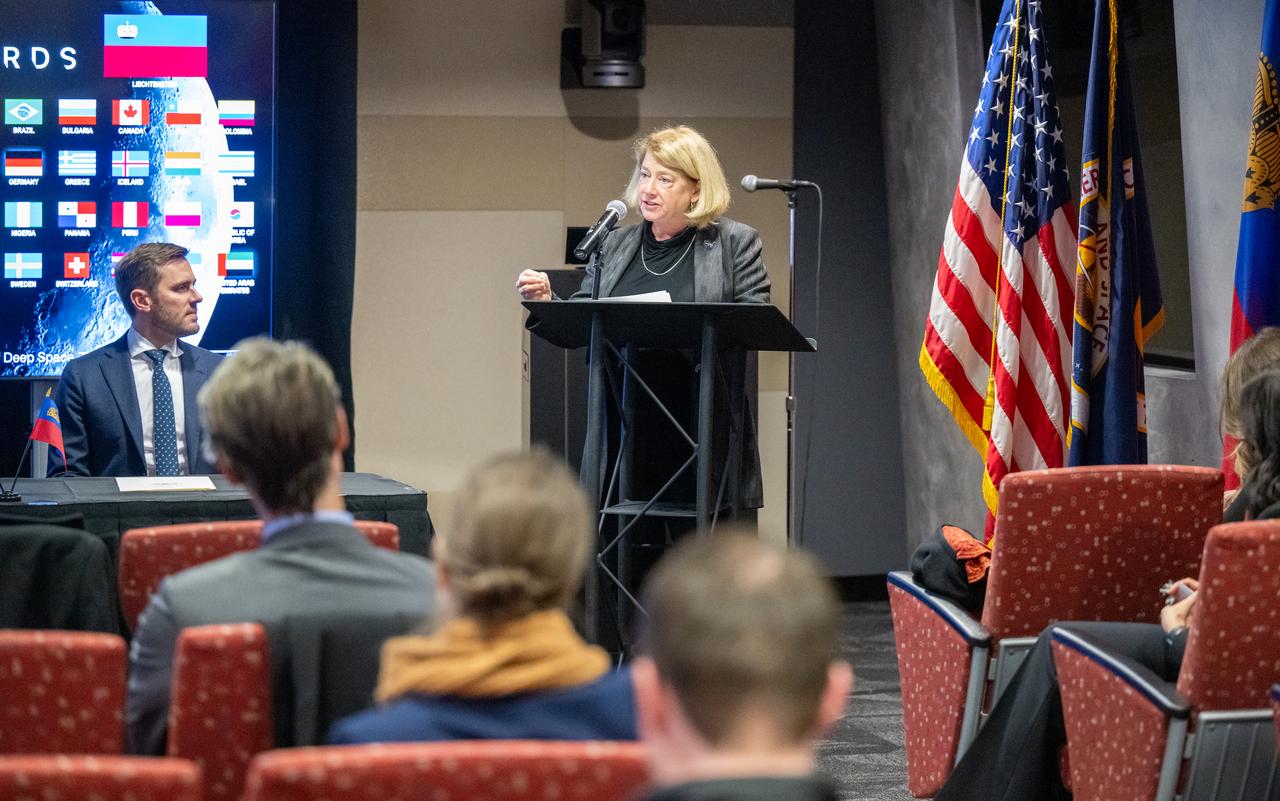
NASA Deputy Administrator Pam Melroy delivers remarks during an Artemis Accords signing ceremony Friday, Dec. 20, 2024, at the Mary W. Jackson NASA Headquarters building in Washington. The Principality of Liechtenstein is the 52nd country to sign the Artemis Accords, which establish a practical set of principles to guide space exploration cooperation among nations participating in NASA’s Artemis program.Photo Credit: (NASA/Keegan Barber)
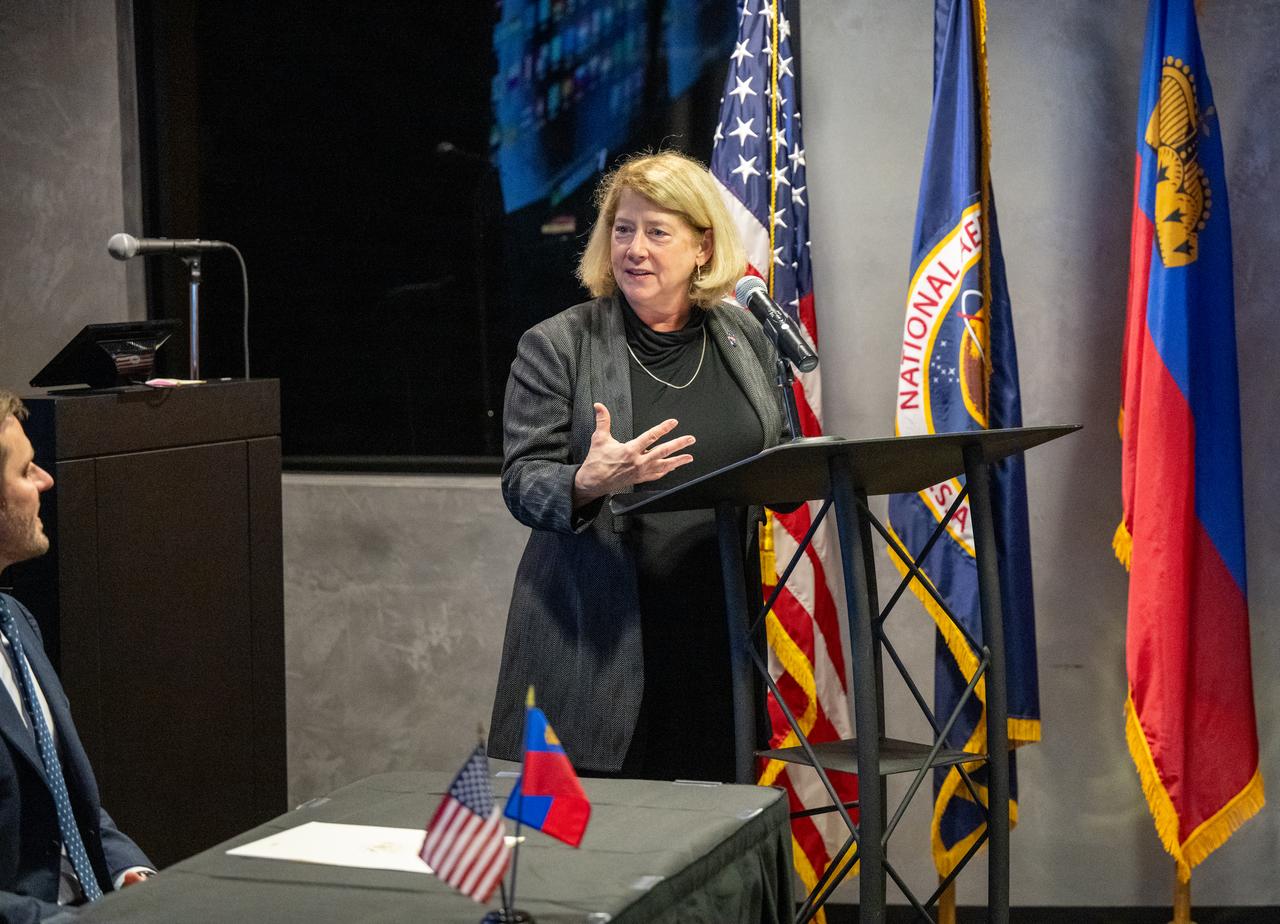
NASA Deputy Administrator Pam Melroy delivers remarks during an Artemis Accords signing ceremony Friday, Dec. 20, 2024, at the Mary W. Jackson NASA Headquarters building in Washington. The Principality of Liechtenstein is the 52nd country to sign the Artemis Accords, which establish a practical set of principles to guide space exploration cooperation among nations participating in NASA’s Artemis program.Photo Credit: (NASA/Keegan Barber)
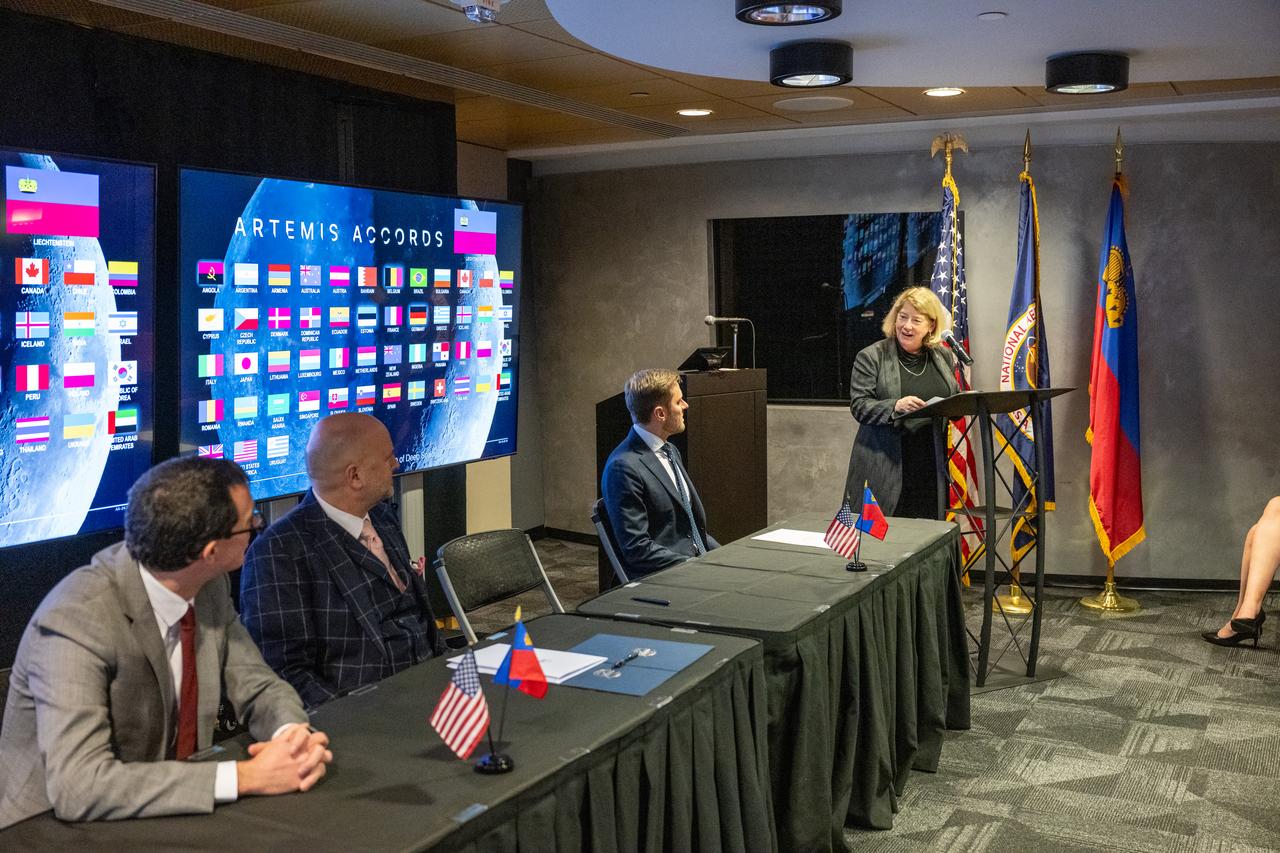
NASA Deputy Administrator Pam Melroy delivers remarks during an Artemis Accords signing ceremony Friday, Dec. 20, 2024, at the Mary W. Jackson NASA Headquarters building in Washington. The Principality of Liechtenstein is the 52nd country to sign the Artemis Accords, which establish a practical set of principles to guide space exploration cooperation among nations participating in NASA’s Artemis program.Photo Credit: (NASA/Keegan Barber)
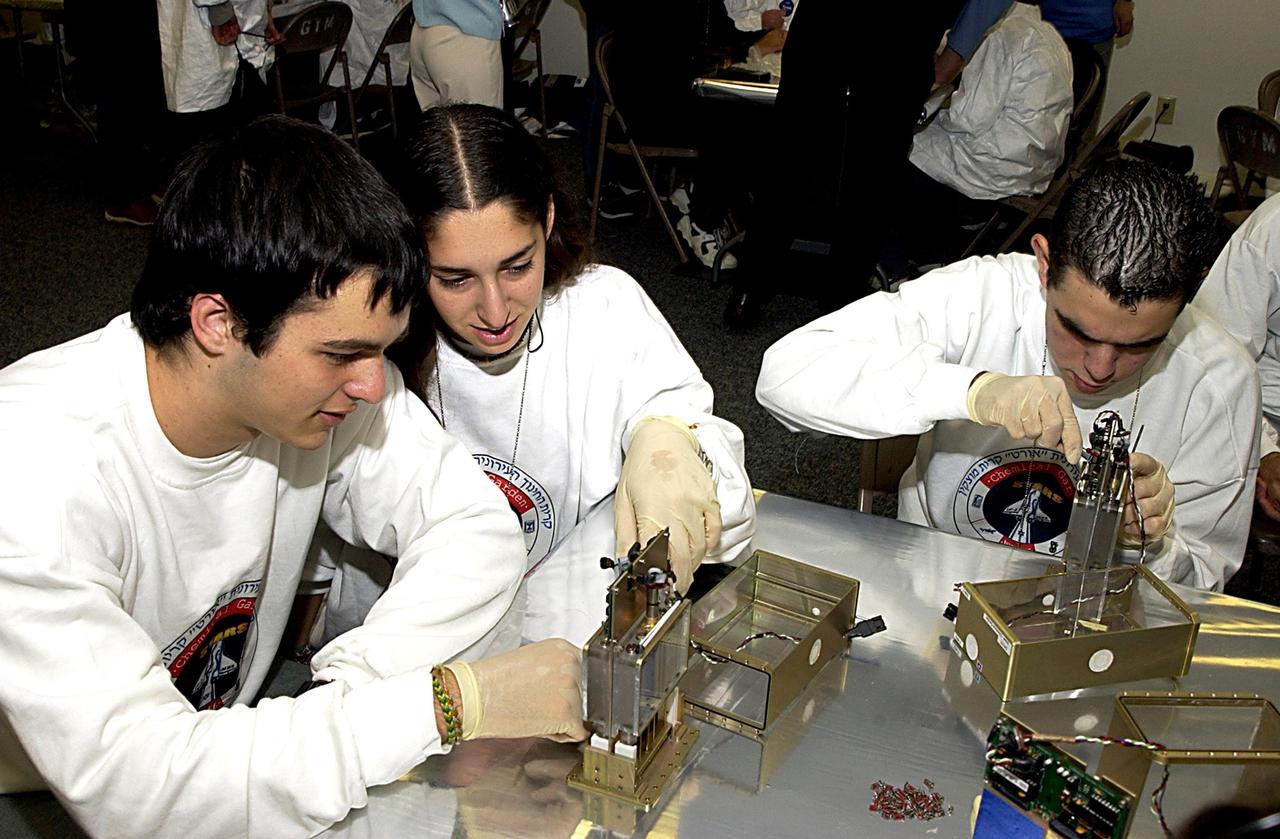
KENNEDY SPACE CENTER, FLA. - Students work on their experiments that will fly in SPACEHAB on Space Shuttle Columbia on mission STS-107. SPACEHAB's complement of commercial experiments includes six educational experiments designed and developed by students in six different countries under the auspices of Space Technology and Research Students (STARS), a global education program managed by SPACEHAB subsidiary Space Media. The countries represented are Australia, China, Israel, Japan, Liechtenstein and the United States. The student investigators who conceived these experiments will monitor their operations in space. The experiments will be housed in BioServe Space Technologies' Isothermal Containment Module (ICM --a small temperature-controlled facility that provides experiment support such as physical containment, lighting, and video imaging) and stowed in a middeck-size locker aboard the SPACEHAB Research Double Module.
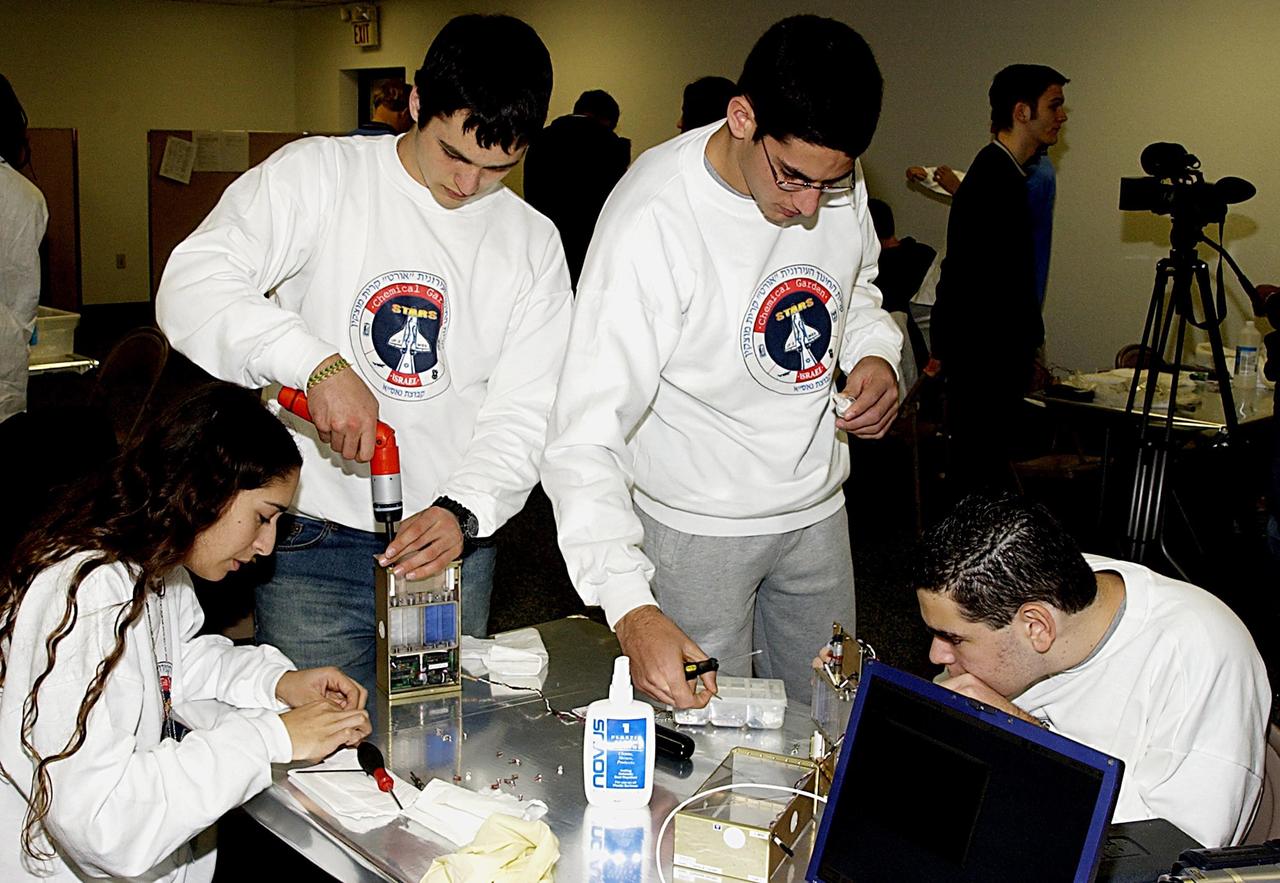
KENNEDY SPACE CENTER, FLA. -- Students work on their experiments that will fly in SPACEHAB on Space Shuttle Columbia on mission STS-107. SPACEHAB's complement of commercial experiments includes six educational experiments designed and developed by students in six different countries under the auspices of Space Technology and Research Students (STARS), a global education program managed by SPACEHAB subsidiary Space Media. The countries represented are Australia, China, Israel, Japan, Liechtenstein and the United States. The student investigators who conceived these experiments will monitor their operations in space. The experiments will be housed in BioServe Space Technologies' Isothermal Containment Module (ICM --a small temperature-controlled facility that provides experiment support such as physical containment, lighting, and video imaging) and stowed in a middeck-size locker aboard the SPACEHAB Research Double Module.
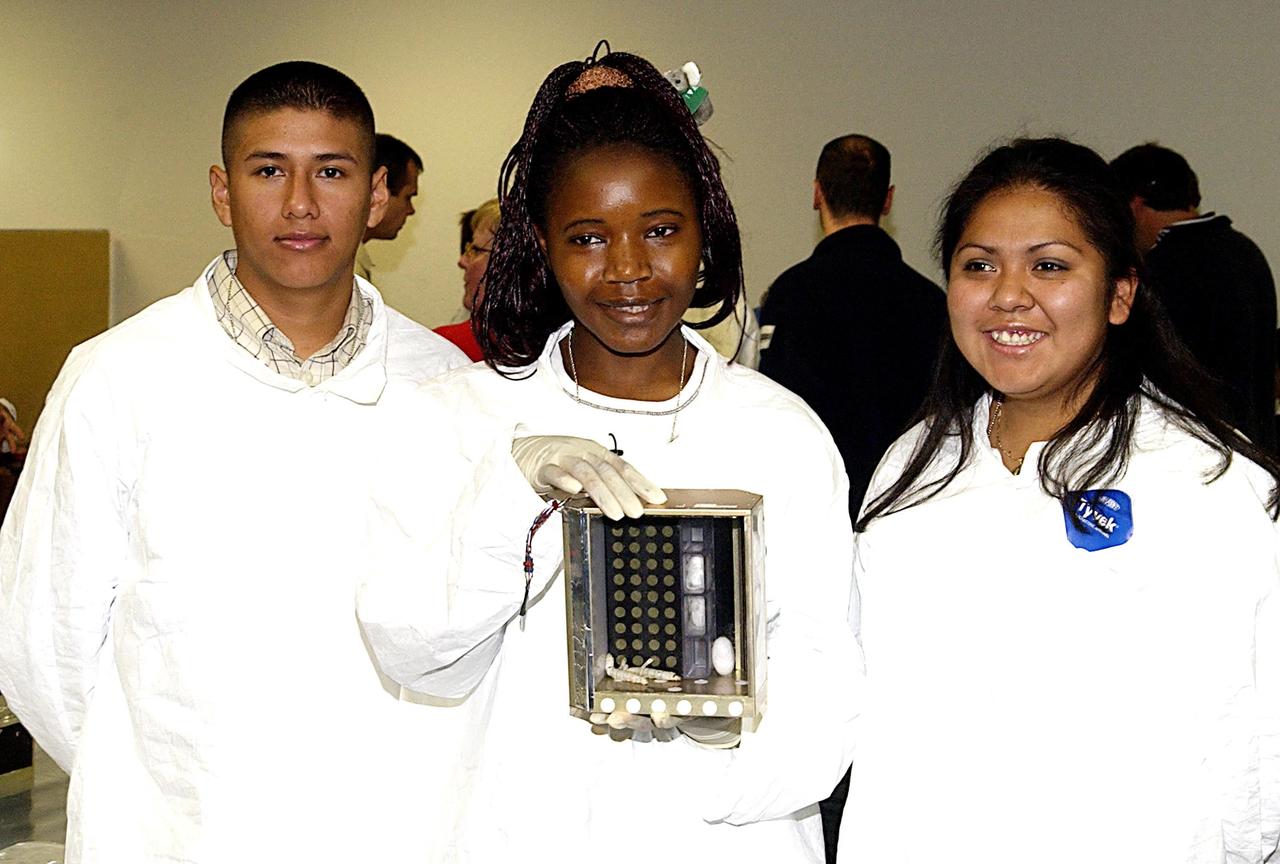
KENNEDY SPACE CENTER, FLA. -- Students show off one of the experiments that will fly in SPACEHAB on Space Shuttle Columbia on mission STS-107. SPACEHAB's complement of commercial experiments includes six educational experiments designed and developed by students in six different countries under the auspices of Space Technology and Research Students (STARS), a global education program managed by SPACEHAB subsidiary Space Media. The countries represented are Australia, China, Israel, Japan, Liechtenstein and the United States. The student investigators who conceived these experiments will monitor their operations in space. The experiments will be housed in BioServe Space Technologies' Isothermal Containment Module (ICM --a small temperature-controlled facility that provides experiment support such as physical containment, lighting, and video imaging) and stowed in a middeck-size locker aboard the SPACEHAB Research Double Module.
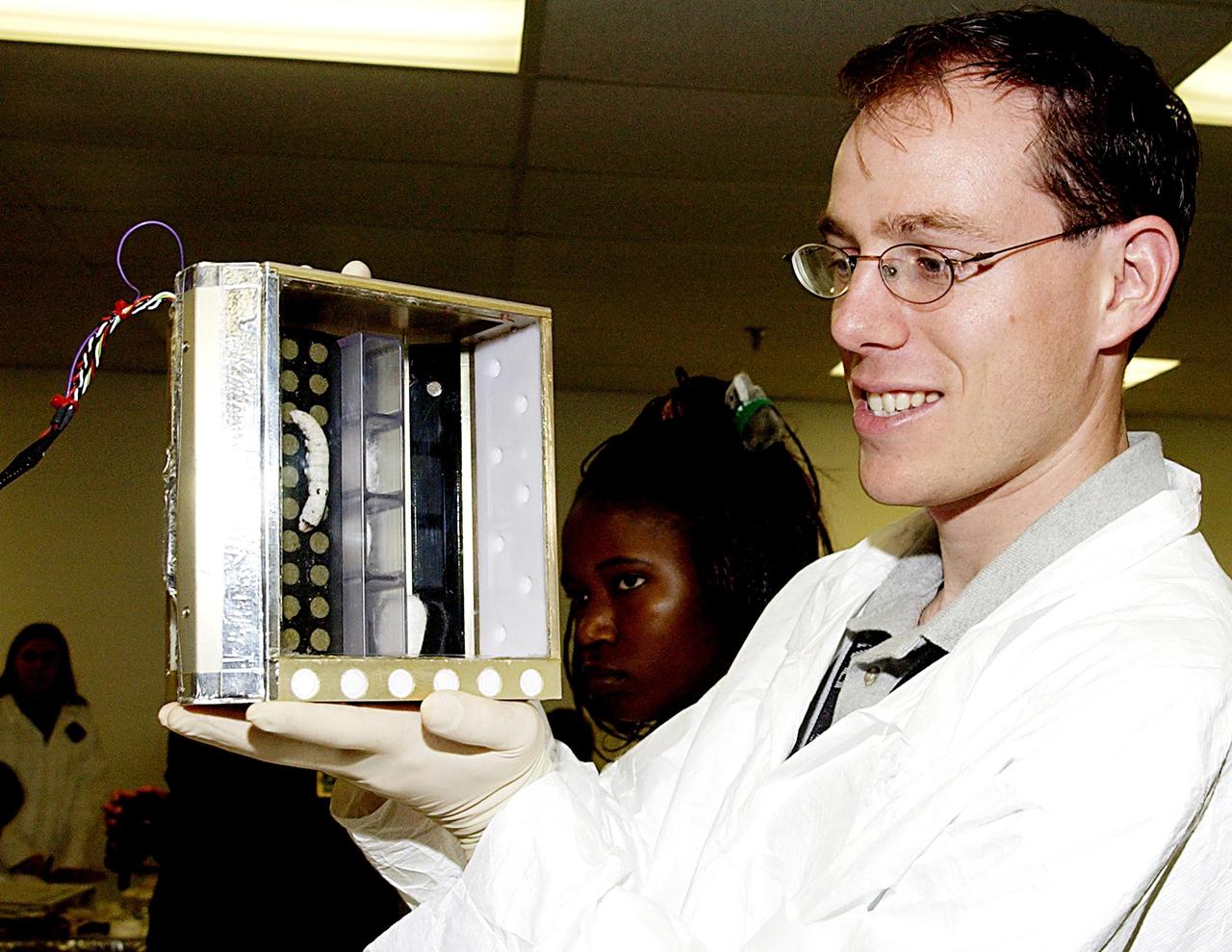
KENNEDY SPACE CENTER, FLA. - A student shows off one of the experiments that will fly in SPACEHAB on Space Shuttle Columbia on mission STS-107. SPACEHAB's complement of commercial experiments includes six educational experiments designed and developed by students in six different countries under the auspices of Space Technology and Research Students (STARS), a global education program managed by SPACEHAB subsidiary Space Media. The countries represented are Australia, China, Israel, Japan, Liechtenstein and the United States. The student investigators who conceived these experiments will monitor their operations in space. The experiments will be housed in BioServe Space Technologies' Isothermal Containment Module (ICM --a small temperature-controlled facility that provides experiment support such as physical containment, lighting, and video imaging) and stowed in a middeck-size locker aboard the SPACEHAB Research Double Module.
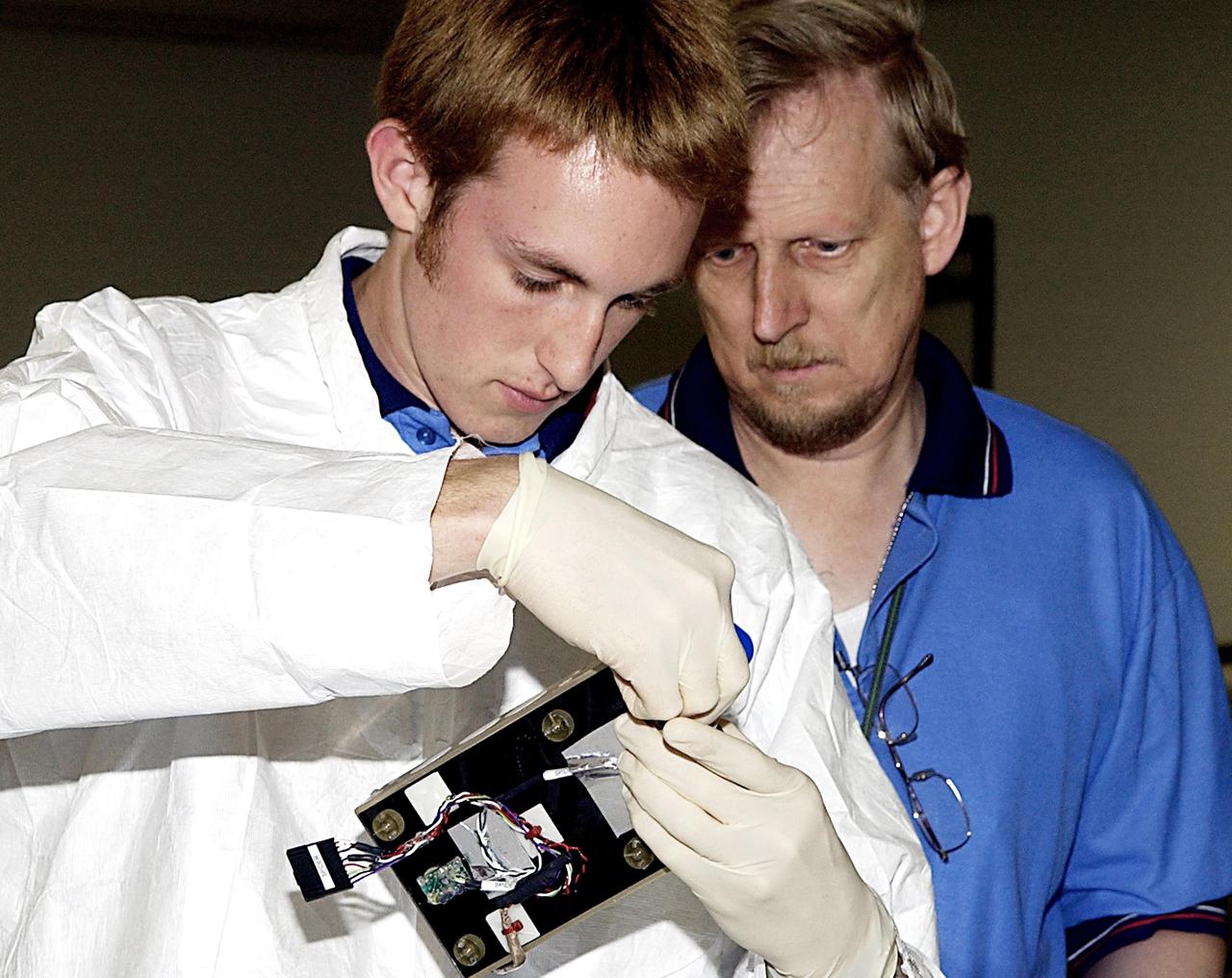
KENNEDY SPACE CENTER, FLA. - A student works on an experiment that will fly in SPACEHAB on Space Shuttle Columbia on mission STS-107. SPACEHAB's complement of commercial experiments includes six educational experiments designed and developed by students in six different countries under the auspices of Space Technology and Research Students (STARS), a global education program managed by SPACEHAB subsidiary Space Media. The countries represented are Australia, China, Israel, Japan, Liechtenstein and the United States. The student investigators who conceived these experiments will monitor their operations in space. The experiments will be housed in BioServe Space Technologies' Isothermal Containment Module (ICM --a small temperature-controlled facility that provides experiment support such as physical containment, lighting, and video imaging) and stowed in a middeck-size locker aboard the SPACEHAB Research Double Module.
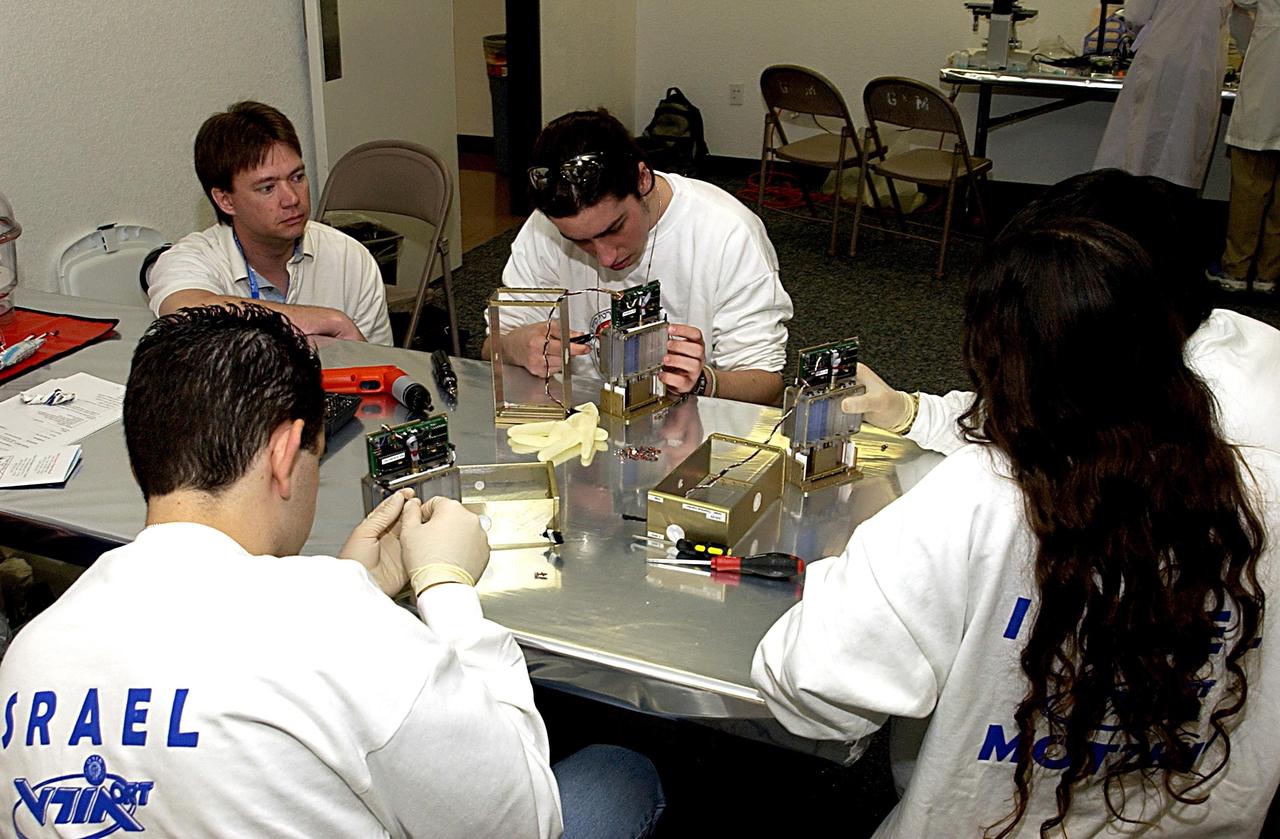
KENNEDY SPACE CENTER, FLA. - Students work on their experiments that will fly in SPACEHAB on Space Shuttle Columbia on mission STS-107. SPACEHAB's complement of commercial experiments includes six educational experiments designed and developed by students in six different countries under the auspices of Space Technology and Research Students (STARS), a global education program managed by SPACEHAB subsidiary Space Media. The countries represented are Australia, China, Israel, Japan, Liechtenstein and the United States. The student investigators who conceived these experiments will monitor their operations in space. The experiments will be housed in BioServe Space Technologies' Isothermal Containment Module (ICM --a small temperature-controlled facility that provides experiment support such as physical containment, lighting, and video imaging) and stowed in a middeck-size locker aboard the SPACEHAB Research Double Module.
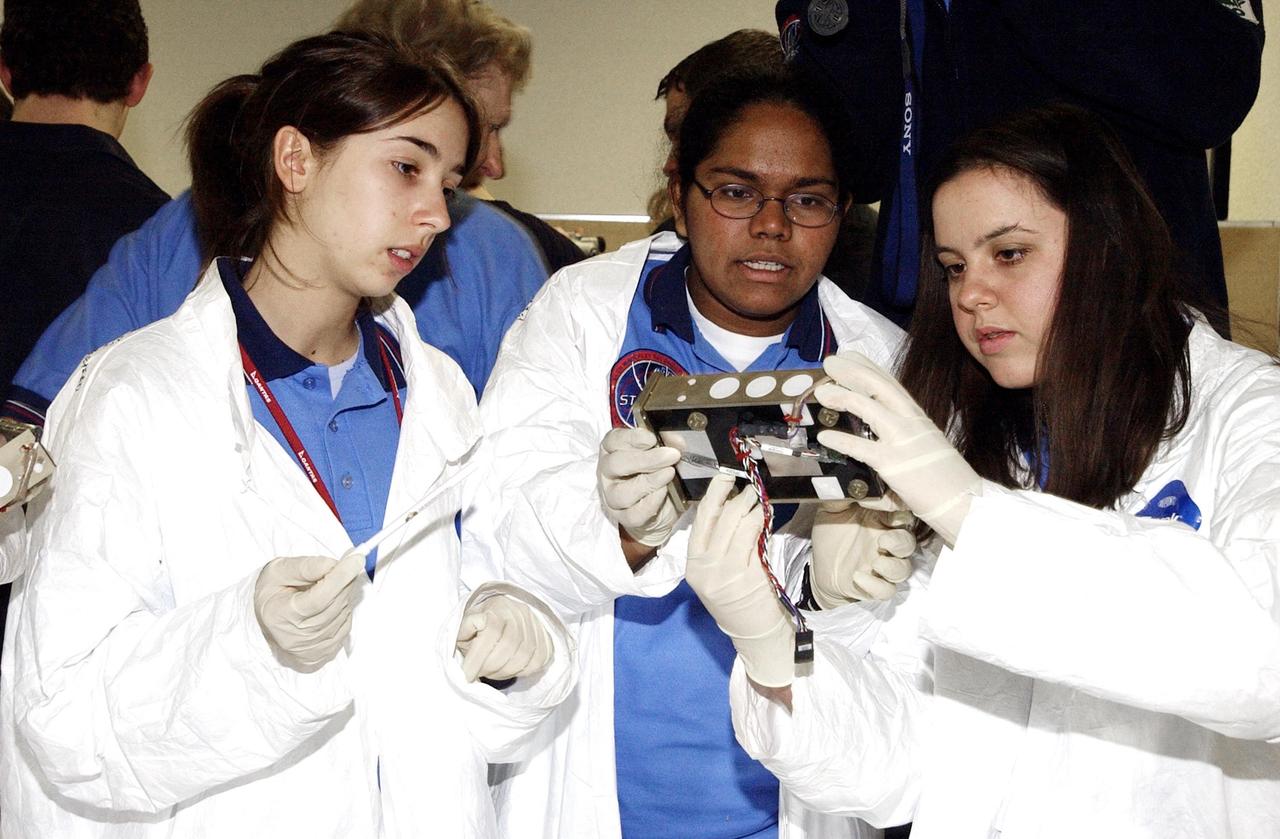
KENNEDY SPACE CENTER, FLA. -- Students work on their experiments that will fly in SPACEHAB on Space Shuttle Columbia on mission STS-107. SPACEHAB's complement of commercial experiments includes six educational experiments designed and developed by students in six different countries under the auspices of Space Technology and Research Students (STARS), a global education program managed by SPACEHAB subsidiary Space Media. The countries represented are Australia, China, Israel, Japan, Liechtenstein and the United States. The student investigators who conceived these experiments will monitor their operations in space. The experiments will be housed in BioServe Space Technologies' Isothermal Containment Module (ICM --a small temperature-controlled facility that provides experiment support such as physical containment, lighting, and video imaging) and stowed in a middeck-size locker aboard the SPACEHAB Research Double Module.
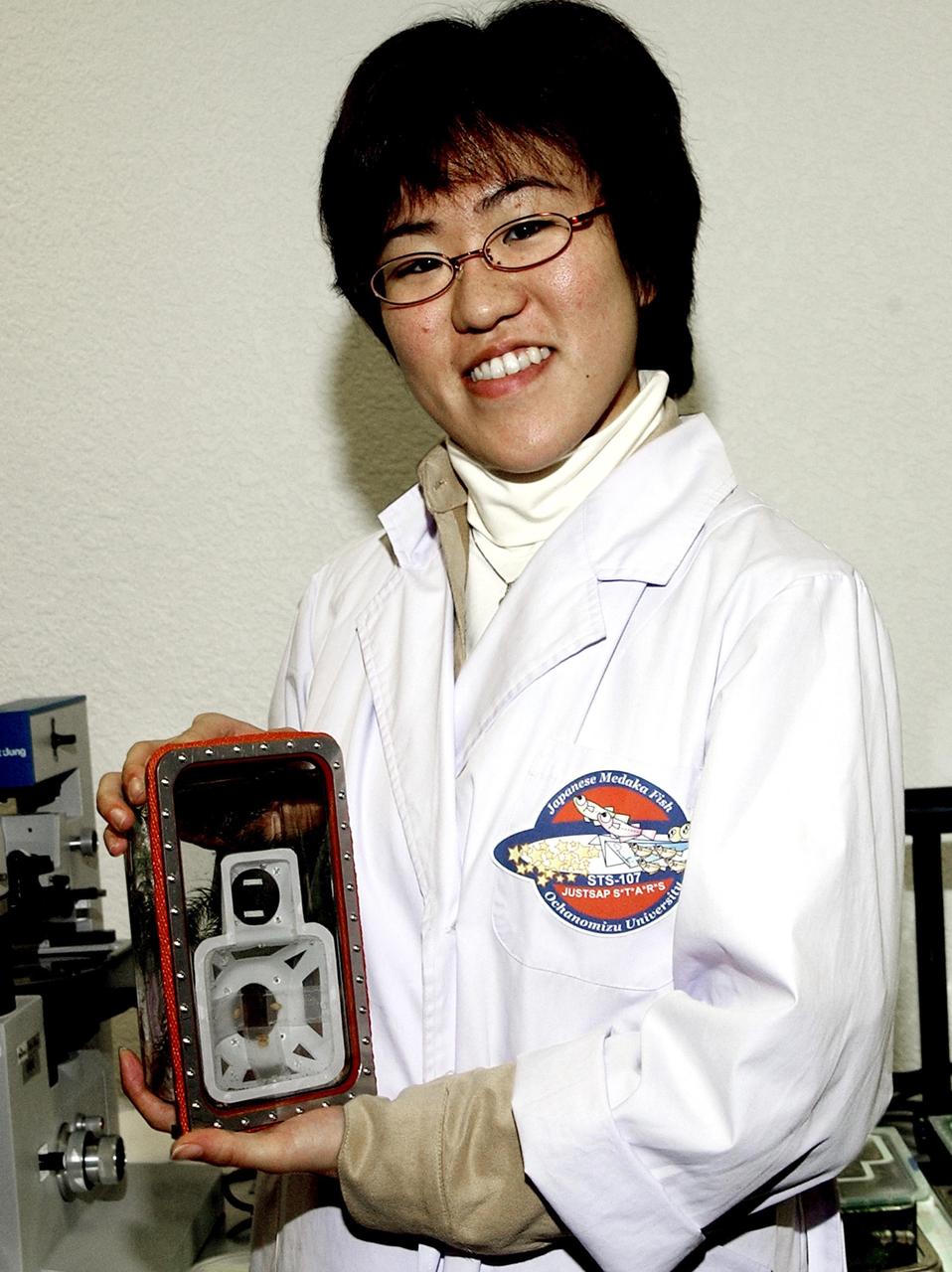
KENNEDY SPACE CENTER, FLA. -- A student displays an experiment that will fly in SPACEHAB on Space Shuttle Columbia on mission STS-107. SPACEHAB's complement of commercial experiments includes six educational experiments designed and developed by students in six different countries under the auspices of Space Technology and Research Students (STARS), a global education program managed by SPACEHAB subsidiary Space Media. The countries represented are Australia, China, Israel, Japan, Liechtenstein and the United States. The student investigators who conceived these experiments will monitor their operations in space. The experiments will be housed in BioServe Space Technologies' Isothermal Containment Module (ICM --a small temperature-controlled facility that provides experiment support such as physical containment, lighting, and video imaging) and stowed in a middeck-size locker aboard the SPACEHAB Research Double Module.
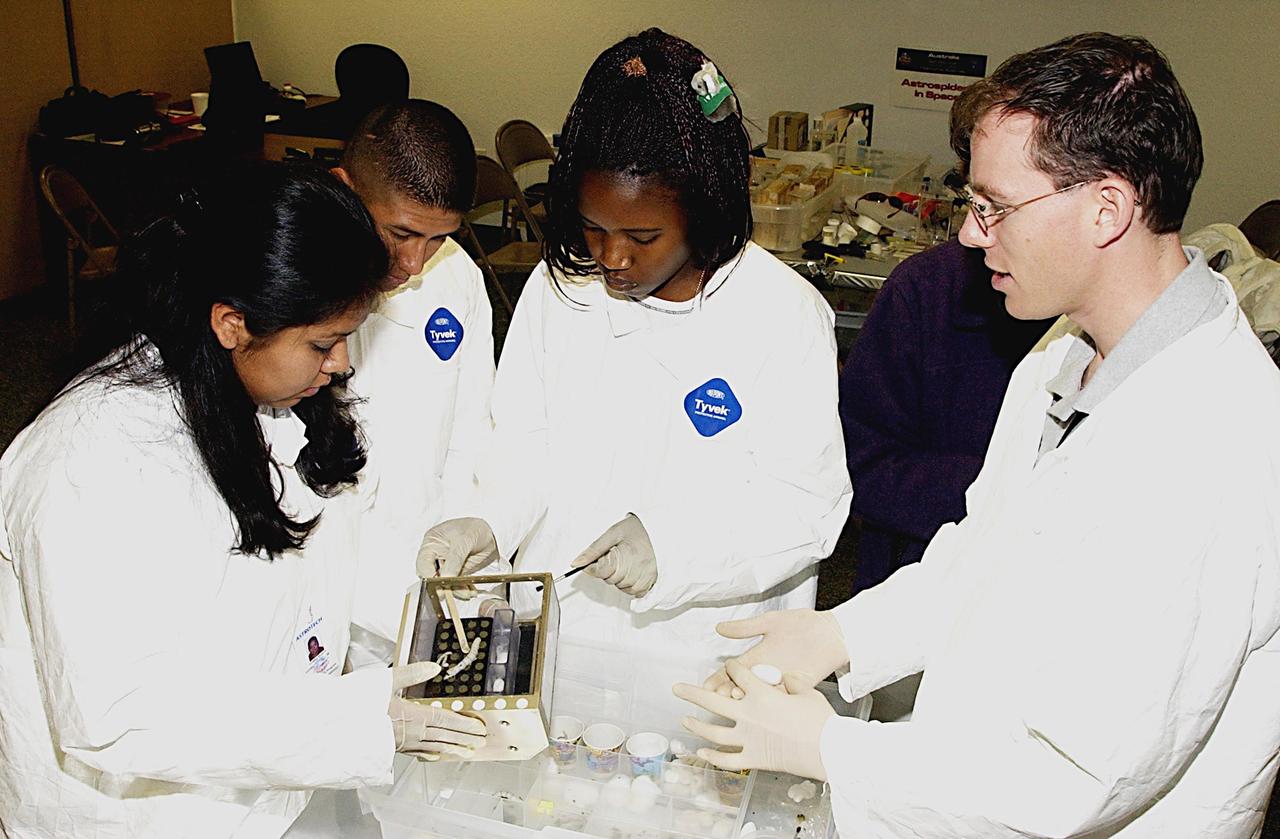
KENNEDY SPACE CENTER, FLA. - Students work on their experiments that will fly in SPACEHAB on Space Shuttle Columbia on mission STS-107. SPACEHAB's complement of commercial experiments includes six educational experiments designed and developed by students in six different countries under the auspices of Space Technology and Research Students (STARS), a global education program managed by SPACEHAB subsidiary Space Media. The countries represented are Australia, China, Israel, Japan, Liechtenstein and the United States. The student investigators who conceived these experiments will monitor their operations in space. The experiments will be housed in BioServe Space Technologies' Isothermal Containment Module (ICM --a small temperature-controlled facility that provides experiment support such as physical containment, lighting, and video imaging) and stowed in a middeck-size locker aboard the SPACEHAB Research Double Module.
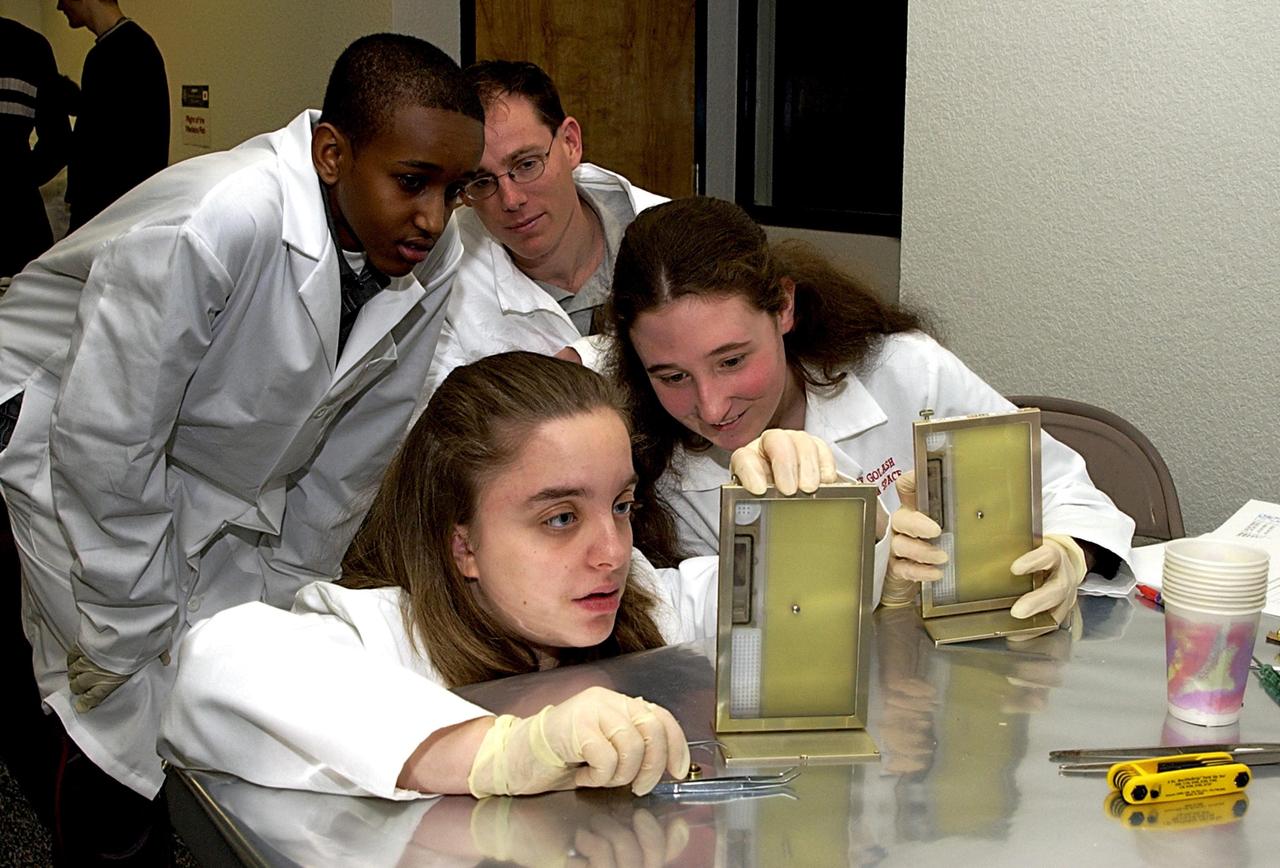
KENNEDY SPACE CENTER, FLA. - Students check on their experiments that will fly in SPACEHAB on Space Shuttle Columbia on mission STS-107. SPACEHAB's complement of commercial experiments includes six educational experiments designed and developed by students in six different countries under the auspices of Space Technology and Research Students (STARS), a global education program managed by SPACEHAB subsidiary Space Media. The countries represented are Australia, China, Israel, Japan, Liechtenstein and the United States. The student investigators who conceived these experiments will monitor their operations in space. The experiments will be housed in BioServe Space Technologies' Isothermal Containment Module (ICM --a small temperature-controlled facility that provides experiment support such as physical containment, lighting, and video imaging) and stowed in a middeck-size locker aboard the SPACEHAB Research Double Module.
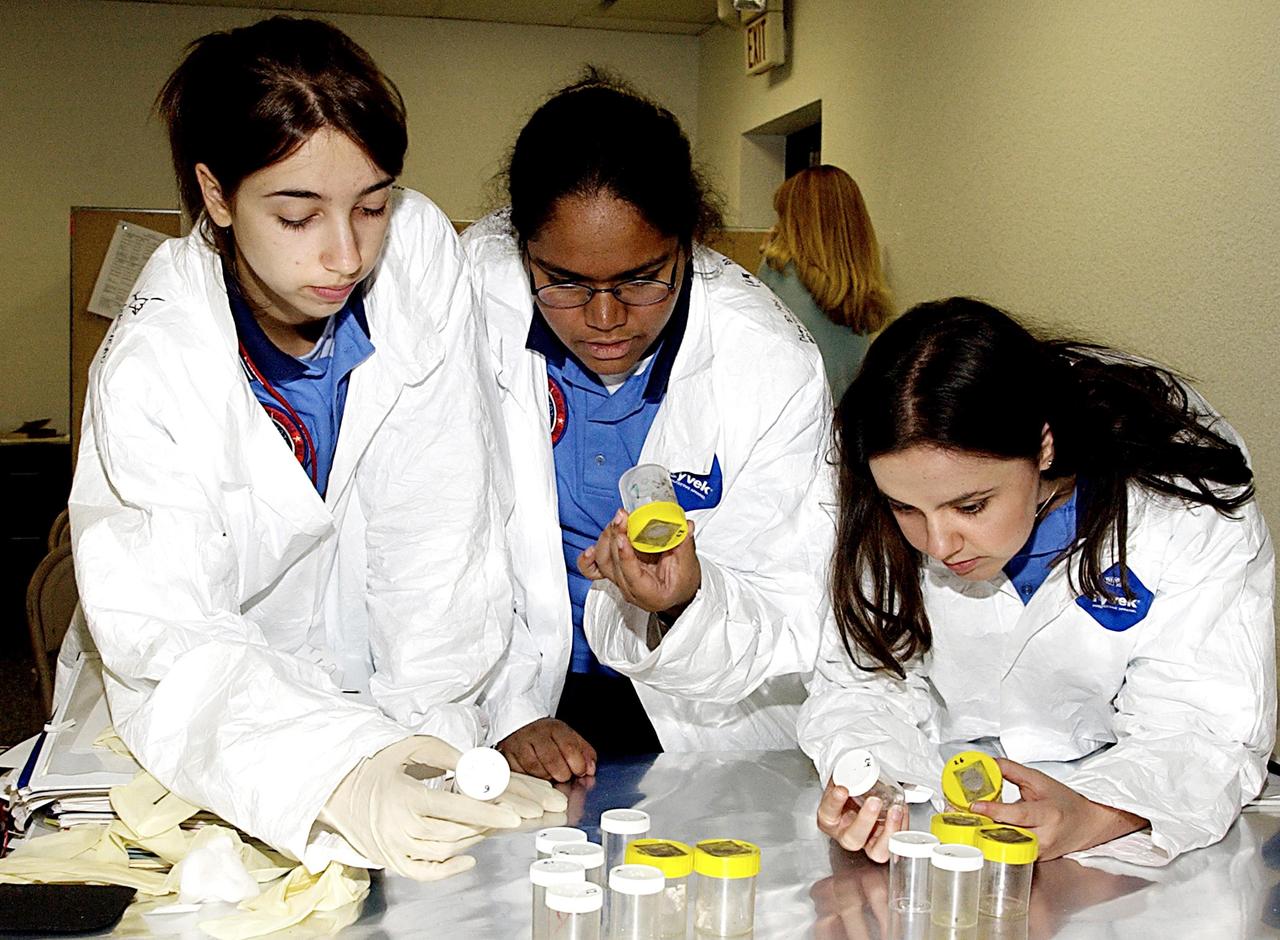
KENNEDY SPACE CENTER, FLA. - Students check out their experiments that will fly in SPACEHAB on Space Shuttle Columbia on mission STS-107. SPACEHAB's complement of commercial experiments includes six educational experiments designed and developed by students in six different countries under the auspices of Space Technology and Research Students (STARS), a global education program managed by SPACEHAB subsidiary Space Media. The countries represented are Australia, China, Israel, Japan, Liechtenstein and the United States. The student investigators who conceived these experiments will monitor their operations in space. The experiments will be housed in BioServe Space Technologies' Isothermal Containment Module (ICM --a small temperature-controlled facility that provides experiment support such as physical containment, lighting, and video imaging) and stowed in a middeck-size locker aboard the SPACEHAB Research Double Module.
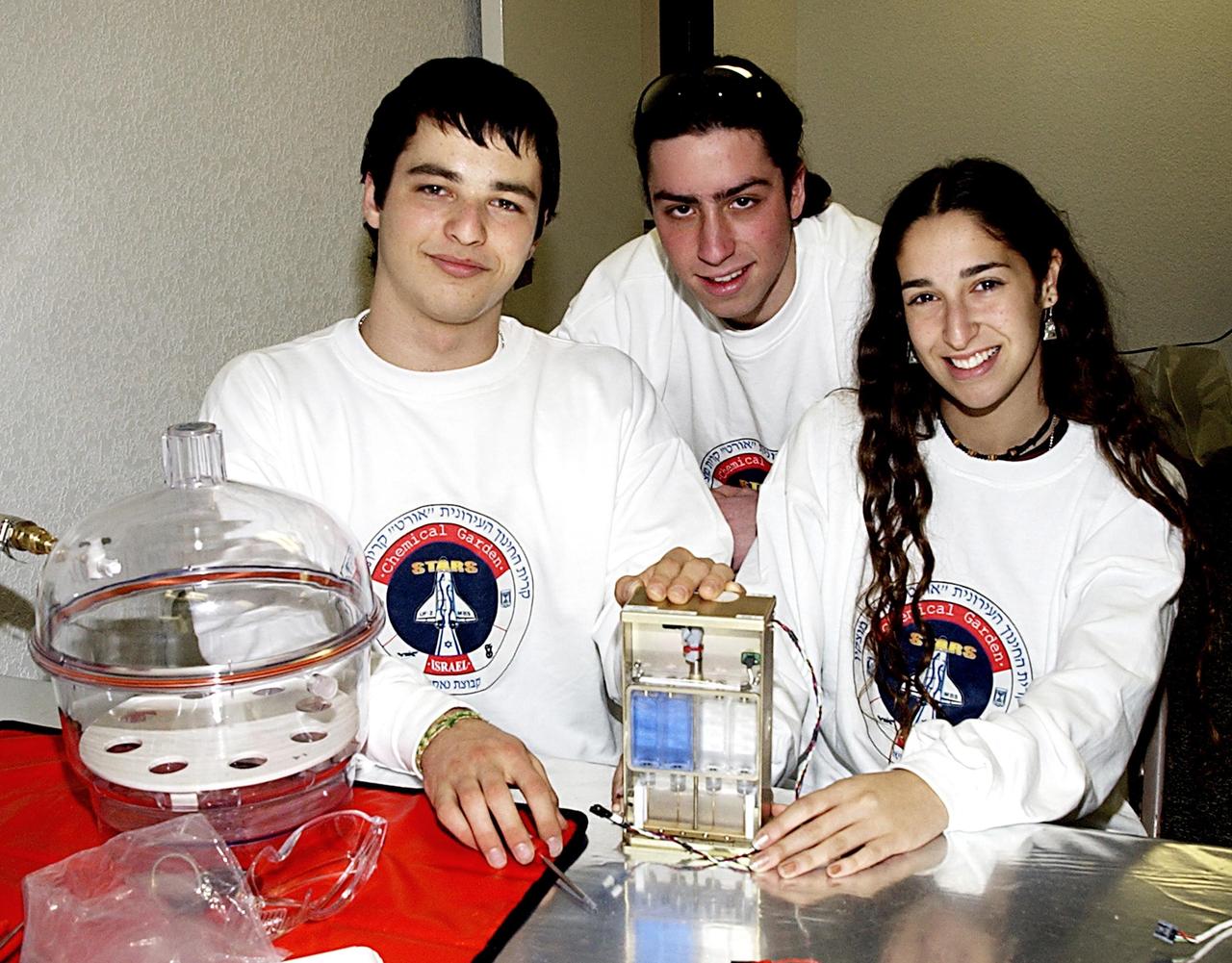
KENNEDY SPACE CENTER, FLA. -- Students display an experiment that will fly in SPACEHAB on Space Shuttle Columbia on mission STS-107. SPACEHAB's complement of commercial experiments includes six educational experiments designed and developed by students in six different countries under the auspices of Space Technology and Research Students (STARS), a global education program managed by SPACEHAB subsidiary Space Media. The countries represented are Australia, China, Israel, Japan, Liechtenstein and the United States. The student investigators who conceived these experiments will monitor their operations in space. The experiments will be housed in BioServe Space Technologies' Isothermal Containment Module (ICM --a small temperature-controlled facility that provides experiment support such as physical containment, lighting, and video imaging) and stowed in a middeck-size locker aboard the SPACEHAB Research Double Module.
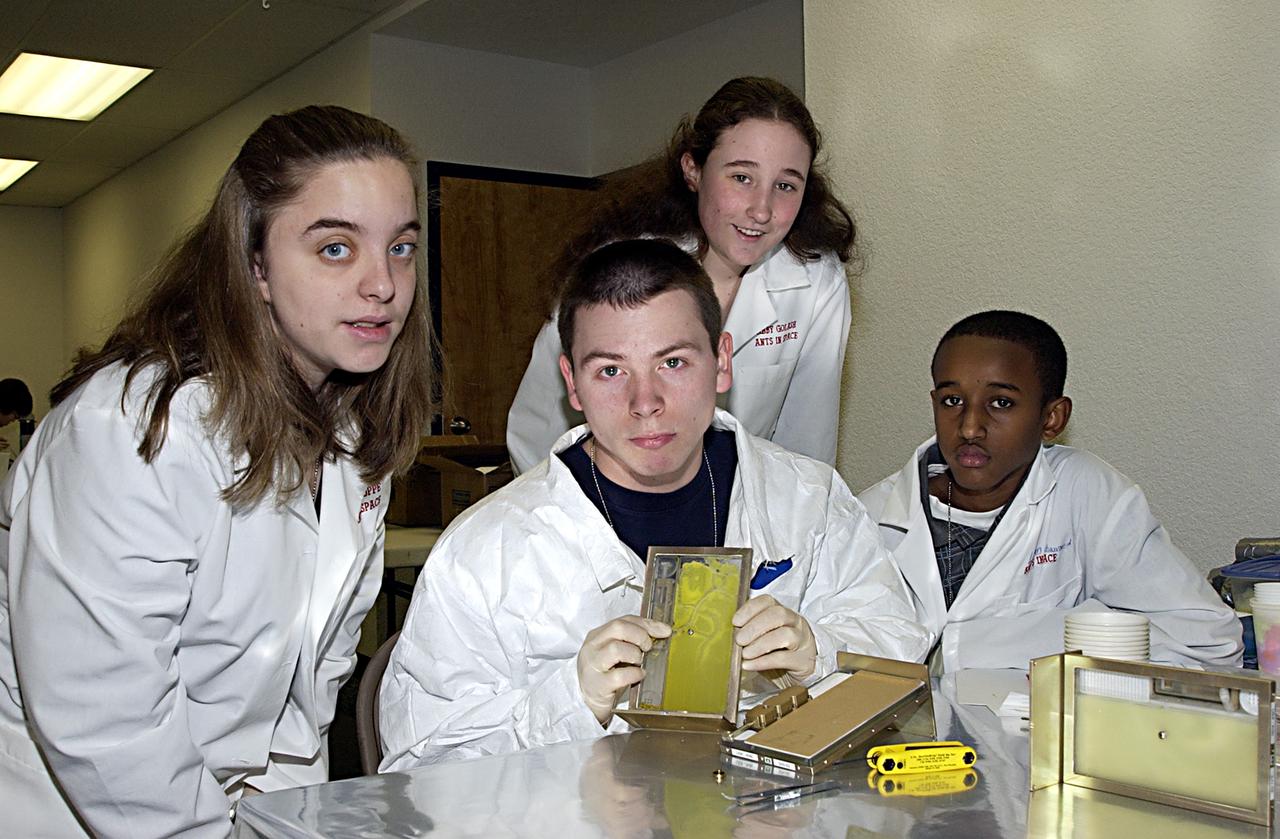
Students display an experiment that will fly in SPACEHAB on Space Shuttle Columbia on mission STS-107. SPACEHAB's complement of commercial experiments includes six educational experiments designed and developed by students in six different countries under the auspices of Space Technology and Research Students (STARS), a global education program managed by SPACEHAB subsidiary Space Media. The countries represented are Australia, China, Israel, Japan, Liechtenstein and the United States. The student investigators who conceived these experiments will monitor their operations in space. The experiments will be housed in BioServe Space Technologies' Isothermal Containment Module (ICM --a small temperature-controlled facility that provides experiment support such as physical containment, lighting, and video imaging) and stowed in a middeck-size locker aboard the SPACEHAB Research Double Module.
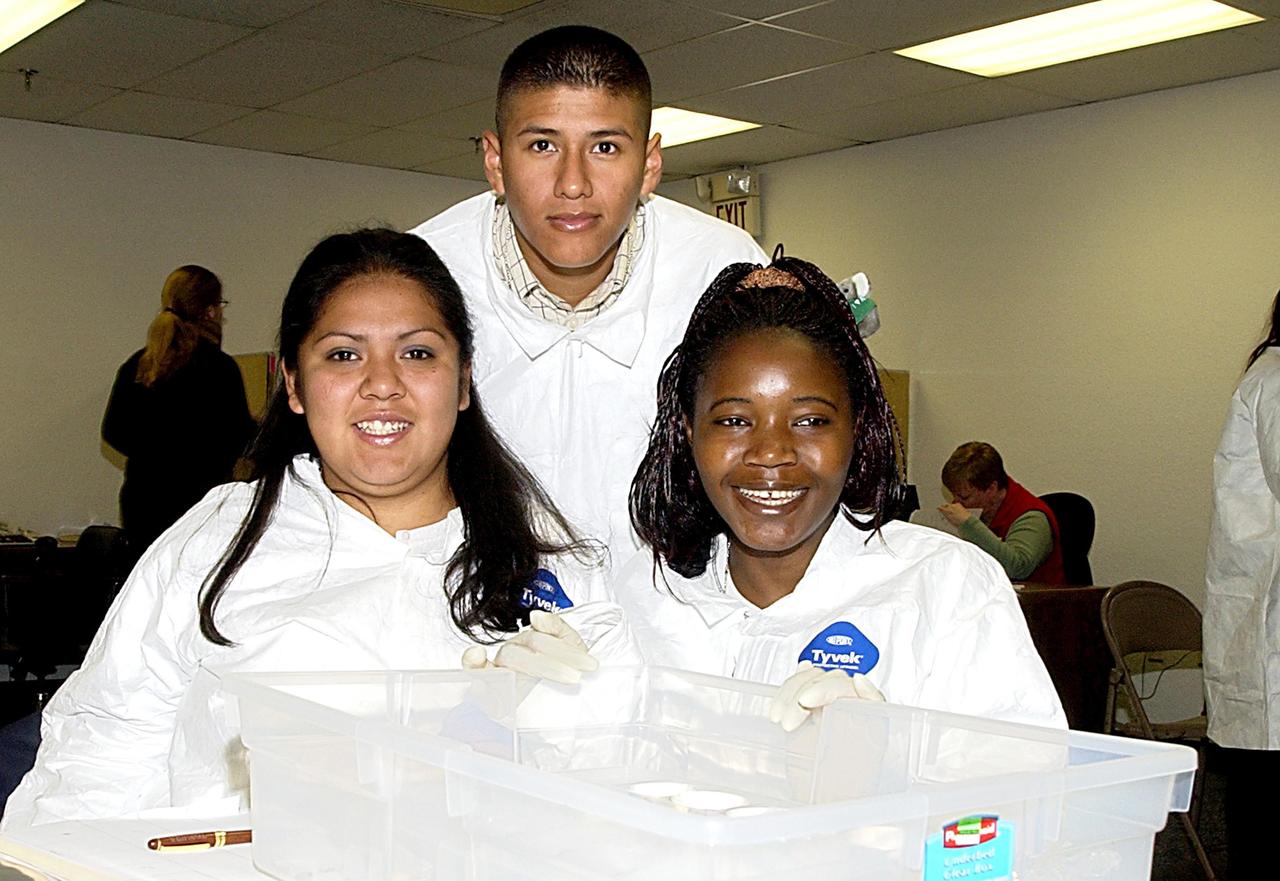
KENNEDY SPACE CENTER, FLA. - Students look over their experiments that will fly in SPACEHAB on Space Shuttle Columbia on mission STS-107. SPACEHAB's complement of commercial experiments includes six educational experiments designed and developed by students in six different countries under the auspices of Space Technology and Research Students (STARS), a global education program managed by SPACEHAB subsidiary Space Media. The countries represented are Australia, China, Israel, Japan, Liechtenstein and the United States. The student investigators who conceived these experiments will monitor their operations in space. The experiments will be housed in BioServe Space Technologies' Isothermal Containment Module (ICM --a small temperature-controlled facility that provides experiment support such as physical containment, lighting, and video imaging) and stowed in a middeck-size locker aboard the SPACEHAB Research Double Module.
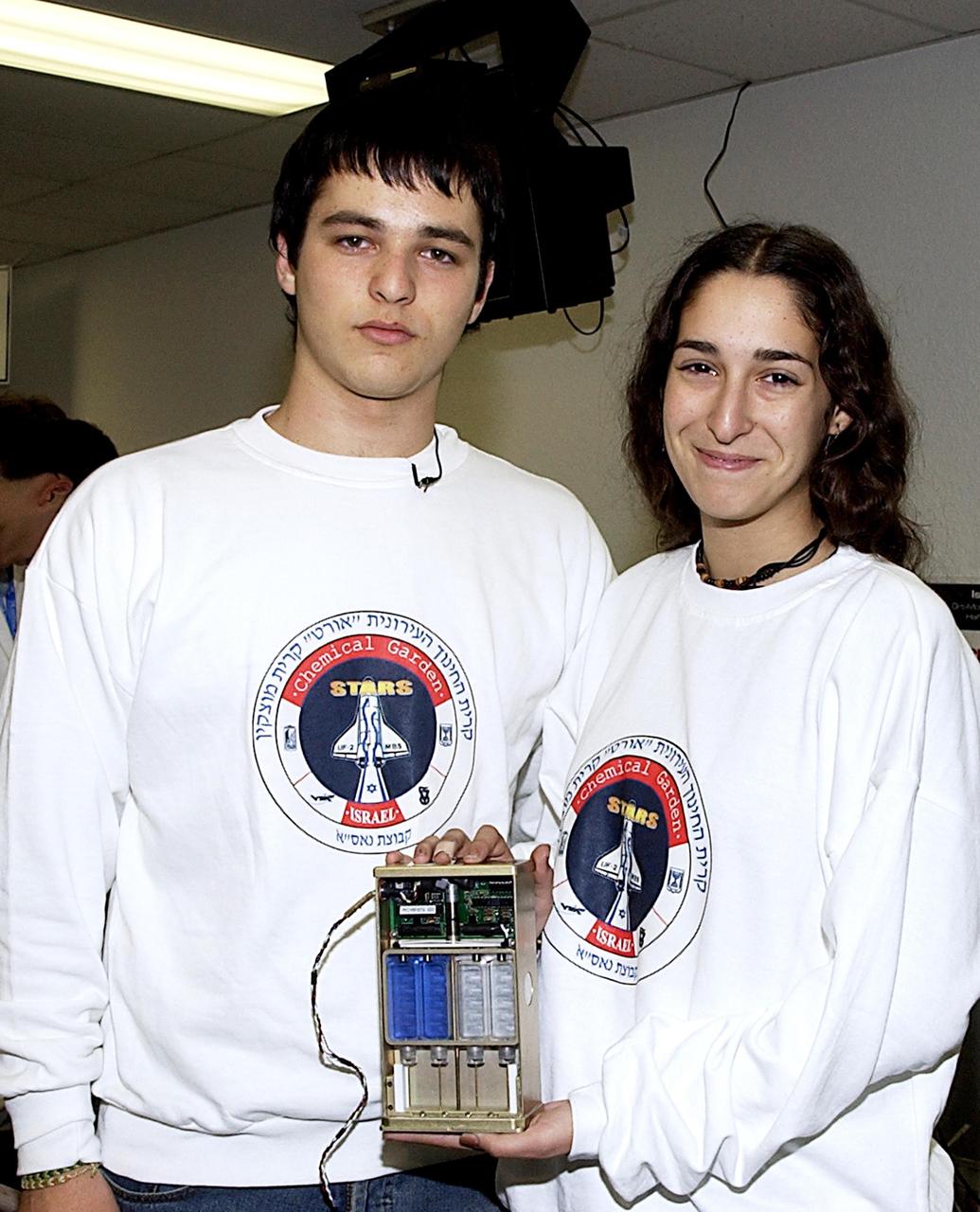
KENNEDY SPACE CENTER, FLA. -- Students show off one of the experiments that will fly in SPACEHAB on Space Shuttle Columbia on mission STS-107. SPACEHAB's complement of commercial experiments includes six educational experiments designed and developed by students in six different countries under the auspices of Space Technology and Research Students (STARS), a global education program managed by SPACEHAB subsidiary Space Media. The countries represented are Australia, China, Israel, Japan, Liechtenstein and the United States. The student investigators who conceived these experiments will monitor their operations in space. The experiments will be housed in BioServe Space Technologies' Isothermal Containment Module (ICM --a small temperature-controlled facility that provides experiment support such as physical containment, lighting, and video imaging) and stowed in a middeck-size locker aboard the SPACEHAB Research Double Module.
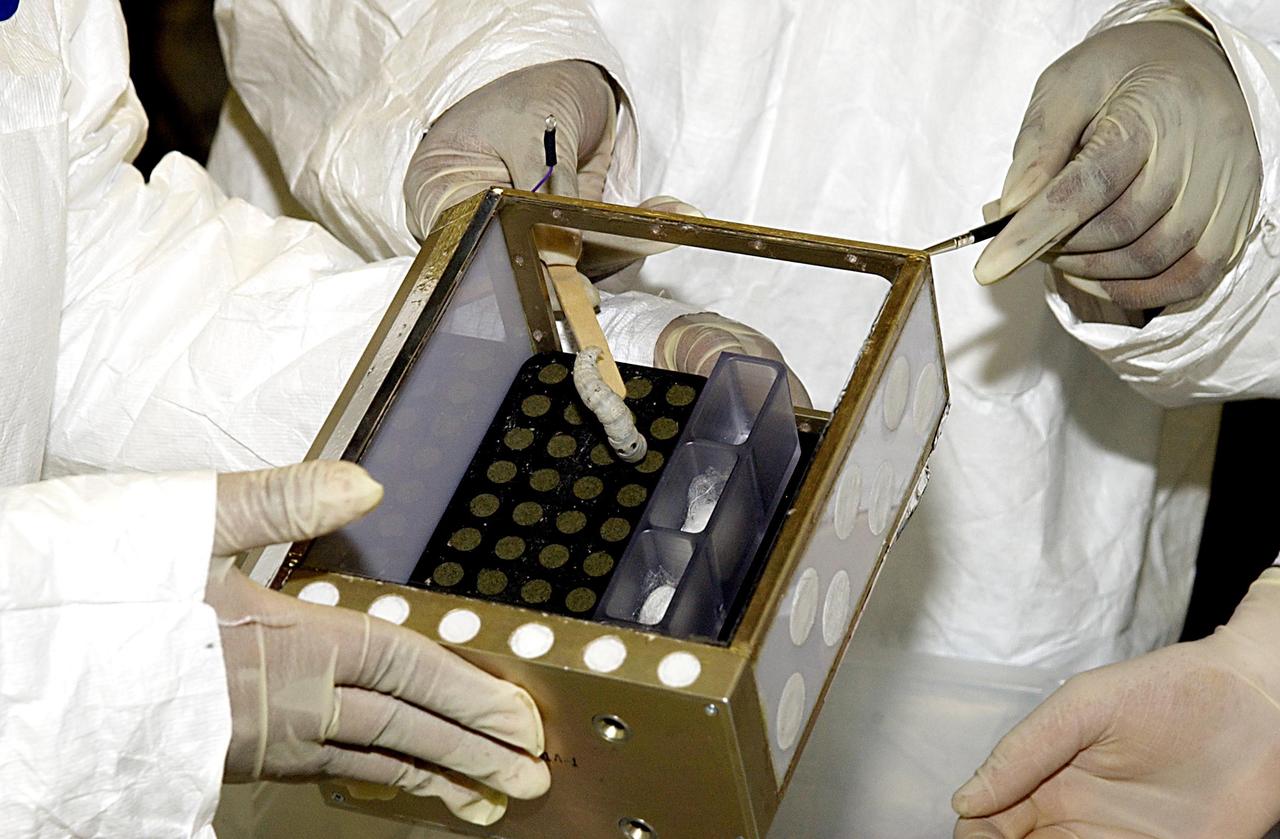
KENNEDY SPACE CENTER, FLA. - Students work on their experiments that will fly in SPACEHAB on Space Shuttle Columbia on mission STS-107. SPACEHAB's complement of commercial experiments includes six educational experiments designed and developed by students in six different countries under the auspices of Space Technology and Research Students (STARS), a global education program managed by SPACEHAB subsidiary Space Media. The countries represented are Australia, China, Israel, Japan, Liechtenstein and the United States. The student investigators who conceived these experiments will monitor their operations in space. The experiments will be housed in BioServe Space Technologies' Isothermal Containment Module (ICM --a small temperature-controlled facility that provides experiment support such as physical containment, lighting, and video imaging) and stowed in a middeck-size locker aboard the SPACEHAB Research Double Module.
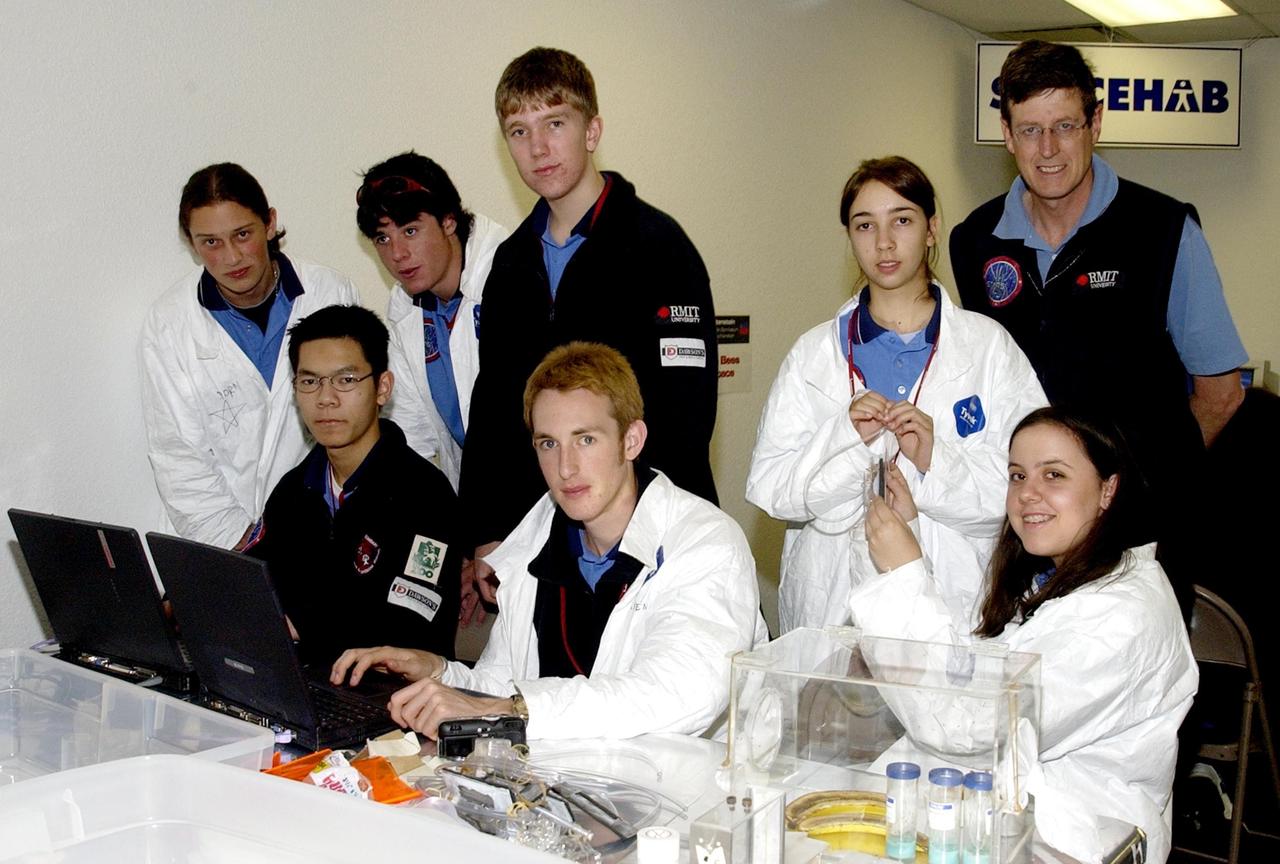
KENNEDY SPACE CENTER, FLA. - Students pause during their work on their experiments that will fly in SPACEHAB on Space Shuttle Columbia on mission STS-107. SPACEHAB's complement of commercial experiments includes six educational experiments designed and developed by students in six different countries under the auspices of Space Technology and Research Students (STARS), a global education program managed by SPACEHAB subsidiary Space Media. The countries represented are Australia, China, Israel, Japan, Liechtenstein and the United States. The student investigators who conceived these experiments will monitor their operations in space. The experiments will be housed in BioServe Space Technologies' Isothermal Containment Module (ICM --a small temperature-controlled facility that provides experiment support such as physical containment, lighting, and video imaging) and stowed in a middeck-size locker aboard the SPACEHAB Research Double Module.
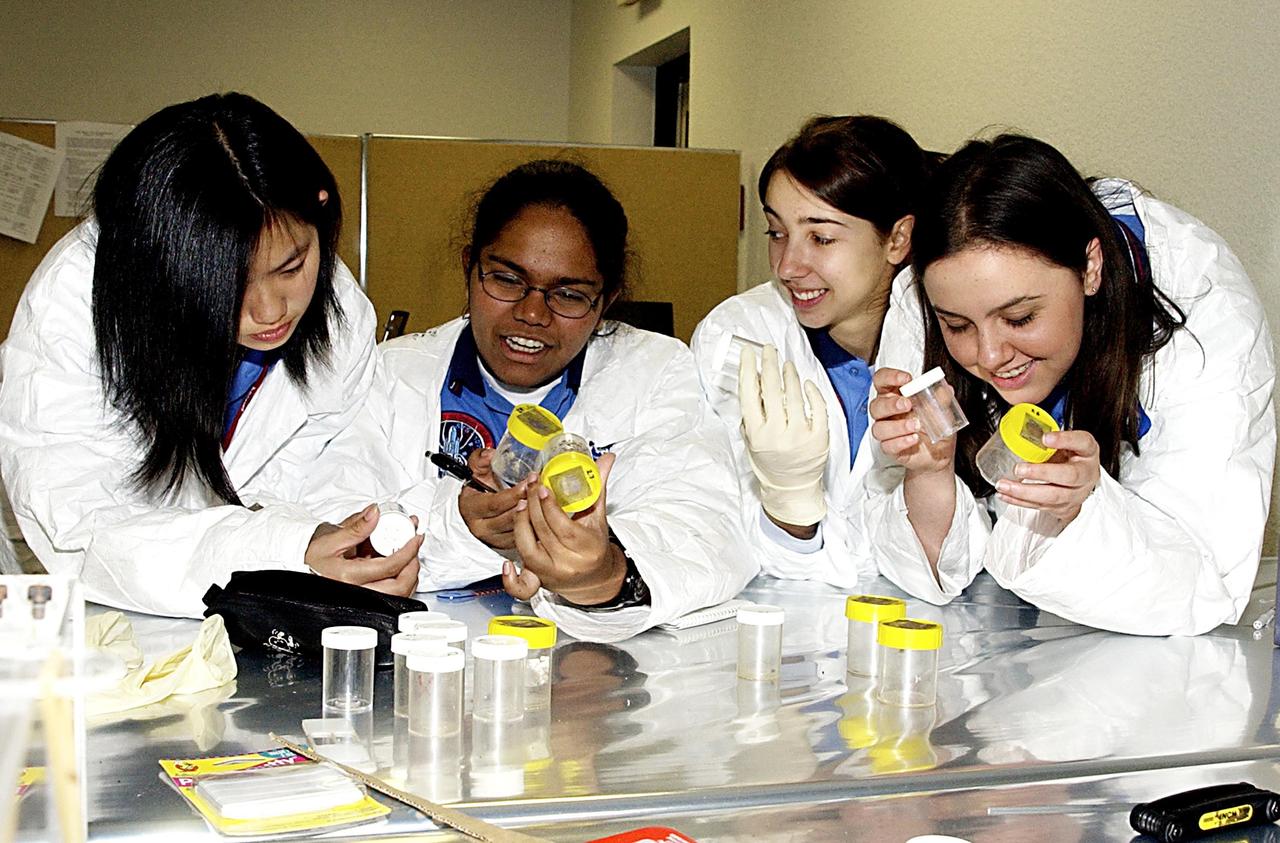
KENNEDY SPACE CENTER, FLA. -- Students check out their experiments that will fly in SPACEHAB on Space Shuttle Columbia on mission STS-107. SPACEHAB's complement of commercial experiments includes six educational experiments designed and developed by students in six different countries under the auspices of Space Technology and Research Students (STARS), a global education program managed by SPACEHAB subsidiary Space Media. The countries represented are Australia, China, Israel, Japan, Liechtenstein and the United States. The student investigators who conceived these experiments will monitor their operations in space. The experiments will be housed in BioServe Space Technologies' Isothermal Containment Module (ICM --a small temperature-controlled facility that provides experiment support such as physical containment, lighting, and video imaging) and stowed in a middeck-size locker aboard the SPACEHAB Research Double Module.
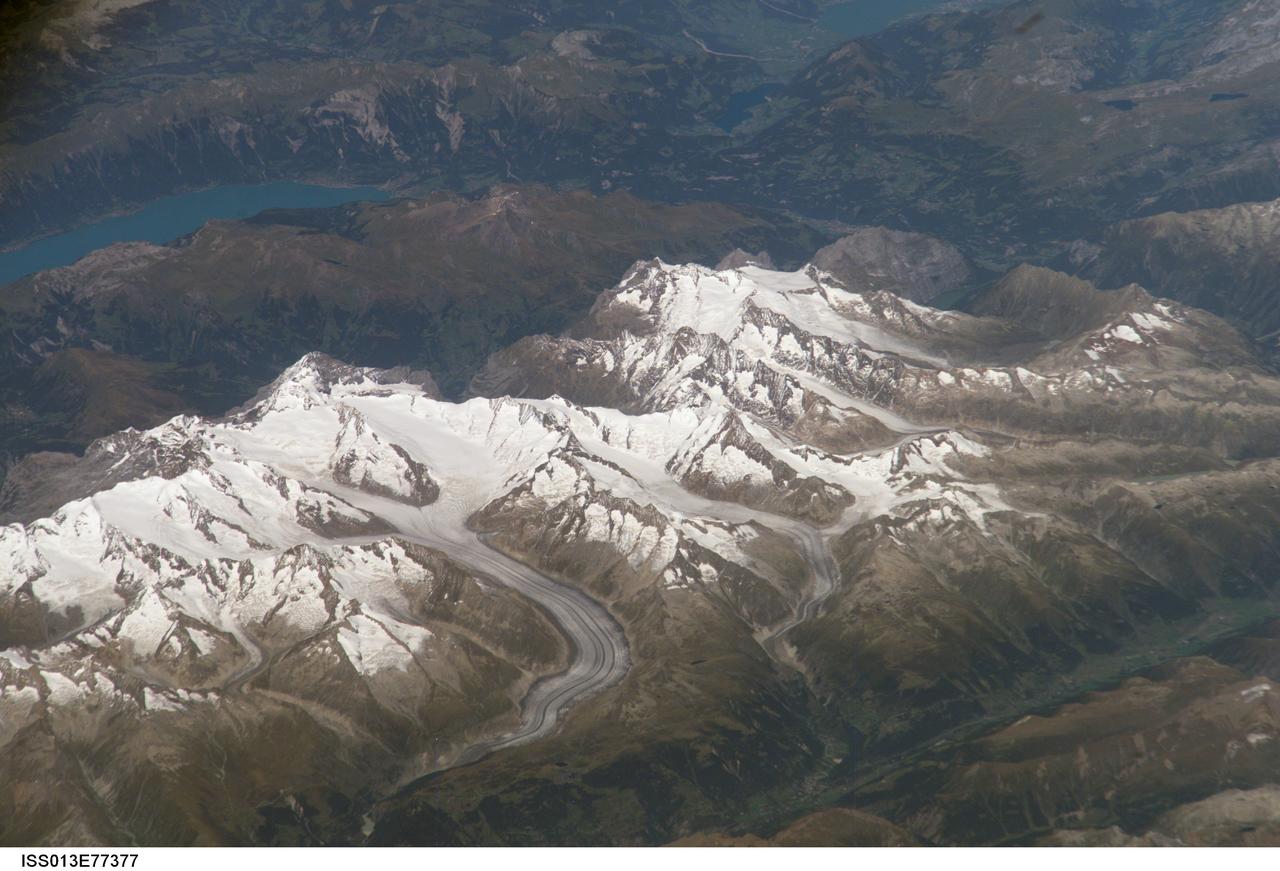
ISS013-E-77377 (5 Sept. 2006) --- Bernese Alps, Switzerland is featured in this image photographed by an Expedition 13 crewmember onboard the International Space Station. The formidable mountain system of the Alps stretches across much of central Europe, with seven countries claiming portions of the mountains within their borders (Germany, France, Switzerland, Italy, Liechtenstein, Austria, and Slovenia). The glacial landscape of the Bernese Alps, located in southwestern Switzerland, is well illustrated by this view. The image was taken by a crewmember looking north-northwest while the station was located over the Mediterranean Sea between Corsica and Italy -- this oblique viewing angle imparts a sense of perspective to the image. This type of viewing angle complements more nadir (downward)--viewing imagery of the region. Three of the higher peaks of the central Alps are visible--Jungfrau (4,158 meters), Moench (4,089 meters), and Eiger (3,970 meters). To the east and south of the Jungfrau is the Aletsch Glacier, clearly marked by dark medial moraines extending along the glacier's length parallel to the valley axis. The moraines are formed from rock and soil debris collected along the sides of three mountain glaciers located near the Jungfrau and Moench peaks -- as these flowing ice masses merge to form the Aletsch Glacier, the debris accumulates in the middle of the glacier and is carried along the flow direction. According to geologists, Lake Brienz to the northwest was formed by the actions of both glacial ice and the flowing waters of the Aare and Lutschine rivers, and has a maximum depth of 261 meters. The lake has a particularly fragile ecosystem, as demonstrated by the almost total collapse of the whitefish population in 1999. Possible causes for the collapse, according to the scientists, include increased water turbidity associated with upstream hydropower plant operations, and reduction of phosphorus (a key nutrient for lake algae, a basic element of the local food web) due to water quality concerns.