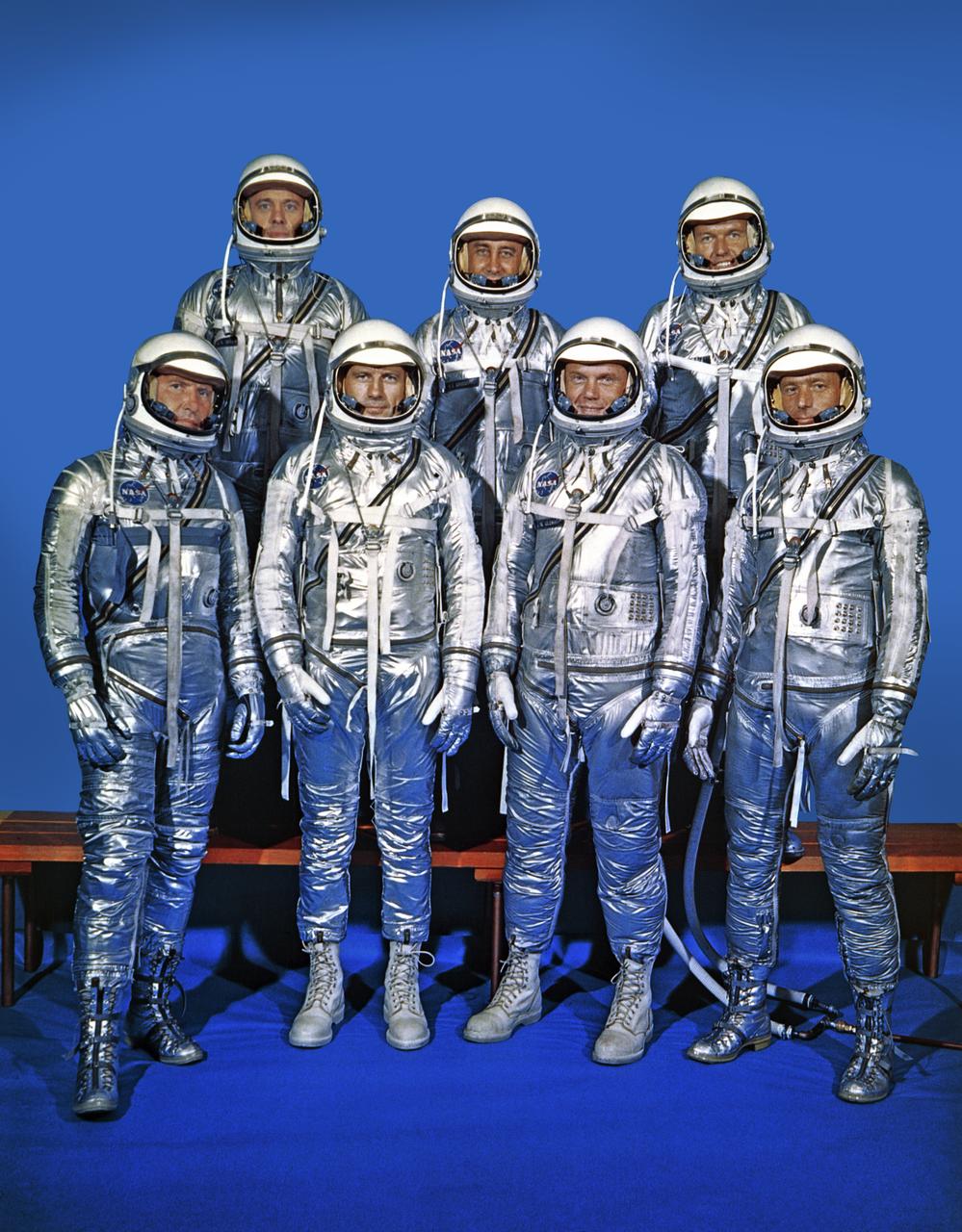
Press release information, September 13, 1968: "FIRST ASTRONAUT TEAM: Project Mercury Astronauts, whose selection was announced on April 9, 1959, only six months after the National Aeronautics and Space Administration was formally established on Oct. 1, 1958, Included: Front row, left to right, Walter M. Schirra, Jr., Donald K. Slayton, John H. Glenn, Jr., and M. Scott Carpenter; back row, Alan B. Shepard, Jr., Virgil I. "Gus" Grissom and L. Gordon Cooper. (1962), *89-361 Also in B&W. This copy of original negative was edited without shadows in the background. Photo taken at NASA Langley Research Center by Life Magazine photographer and negative copied for other centers.
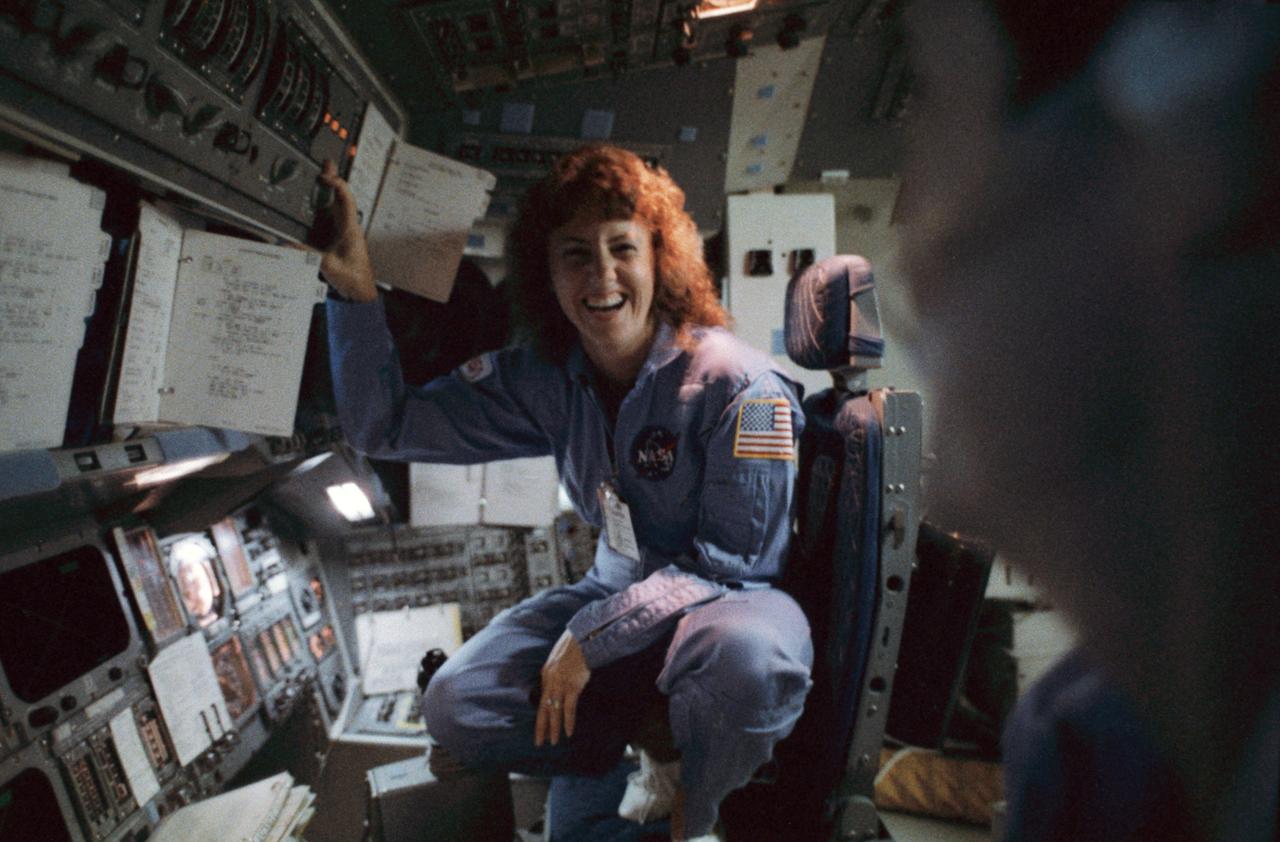
S85-44507 (October 1985) --- Sharon Christa McAuliffe, a teacher from Concord, New Hampshire, trains for the January 1986 mission of the space shuttle Challenger in the Johnson Space Center’s shuttle mission simulator (SMS). Learning about the overall spacecraft systems, McAuliffe is pictured here in the pilot’s station. For actual launch and landing phases, the Teacher-in-Space Project payload specialist would sit on the middeck. The photograph was taken by Michael O’Brien of Life Magazine. Photo credit: NASA
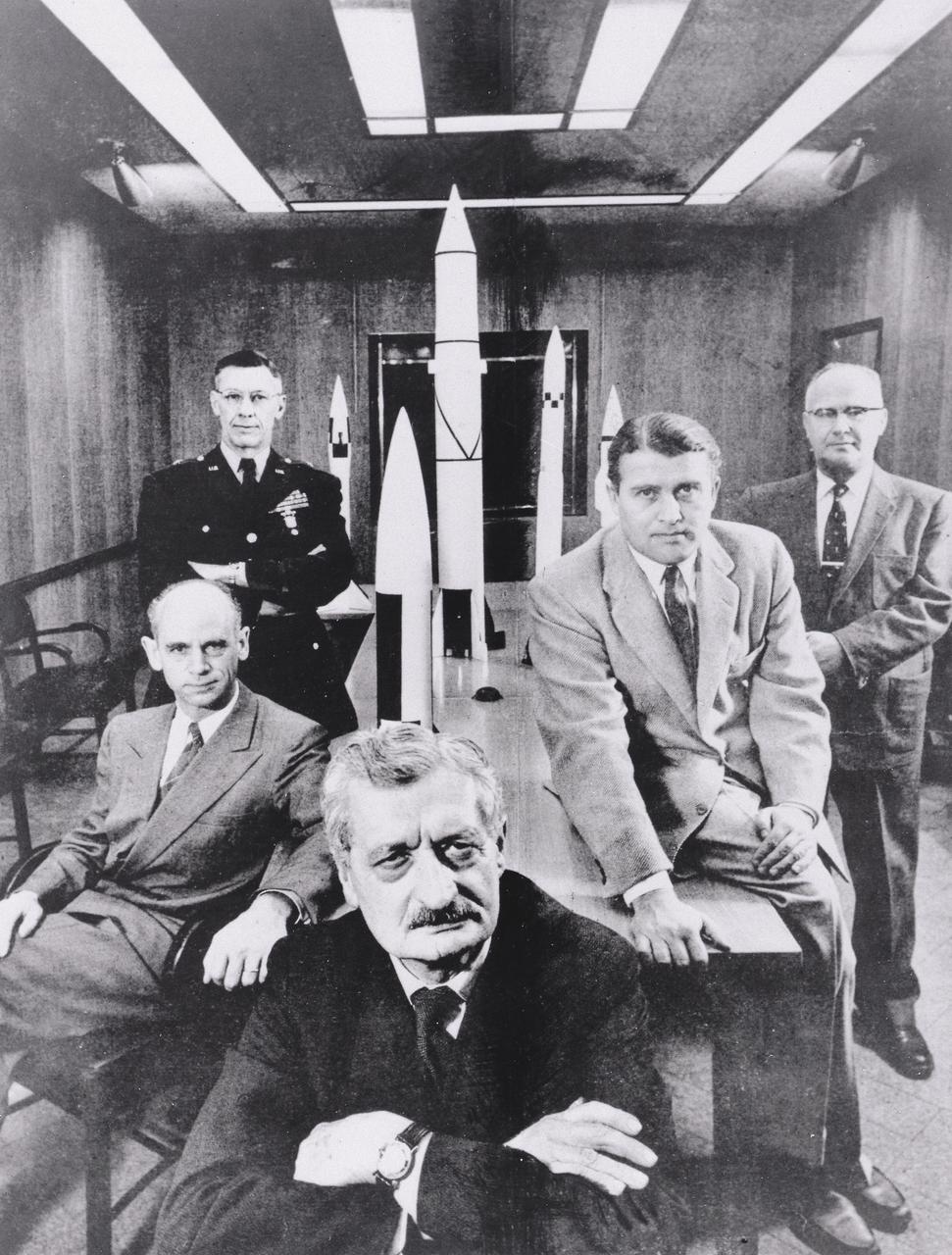
Five pioneers pose with scale models of their missiles they created in the 1950s. From left to right: Dr. Ernst Stuhlinger, a member of the original German rocket team who directed the Research Projects Office, Army Ballistic Missile Agency (ABMA); Major General Holger Toftoy, who consolidated U.S. missile and rocketry development; Professor Herman Oberth, a rocket pioneer and Dr. von Braun's mentor; Dr. Wernher von Braun, Director, Development Operation Division, ABMA; and Dr. Robert Lusser, who served as assistant director for Reliability Engineering for ABMA. This photographis was taken February 1, 1956 by Hank Walker and appeared in February 27, 1956 issue of Life magazine.
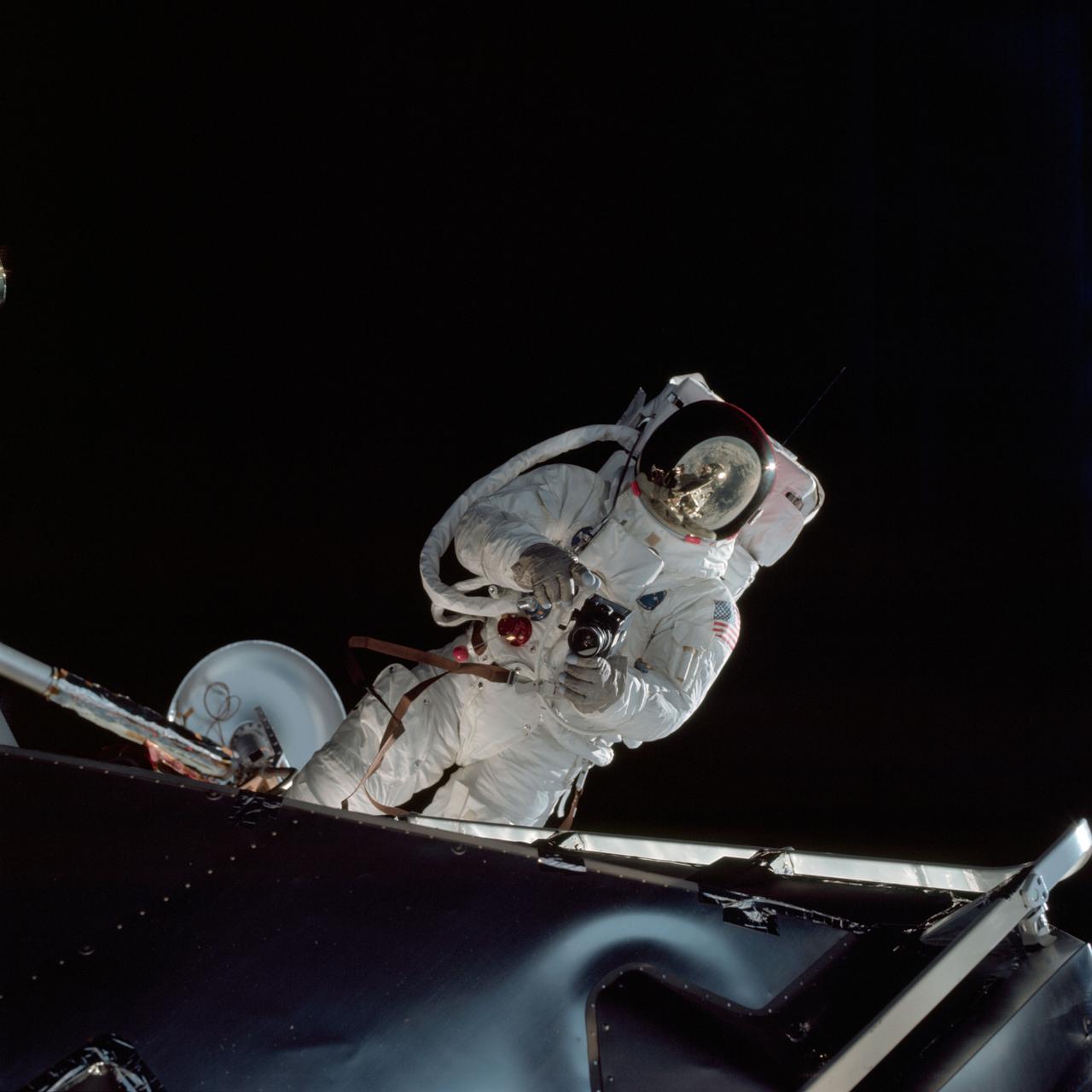
Astronaut Russell L. Schweickart, lunar module pilot, operates a 70mm Hasselblad camera during his extravehicular activity on the fourth day of the Apollo 9 earth-orbital mission. The Command/Service Module and the Lunar Module 3 "Spider" are docked. This view was taken form the Command Module "Gumdrop". Schweickart, wearing an Extravehicular Mobility Unit (EMU), is standing in "golden slippers" on the Lunar Module porch. On his back, partially visible, are a Portable Life Support System (PLSS) and an Oxygen Purge System (OPS). Film magazine was A,film type was SO-368 Ektachrome with 0.460 - 0.710 micrometers film / filter transmittance response and haze filter,80mm lens.
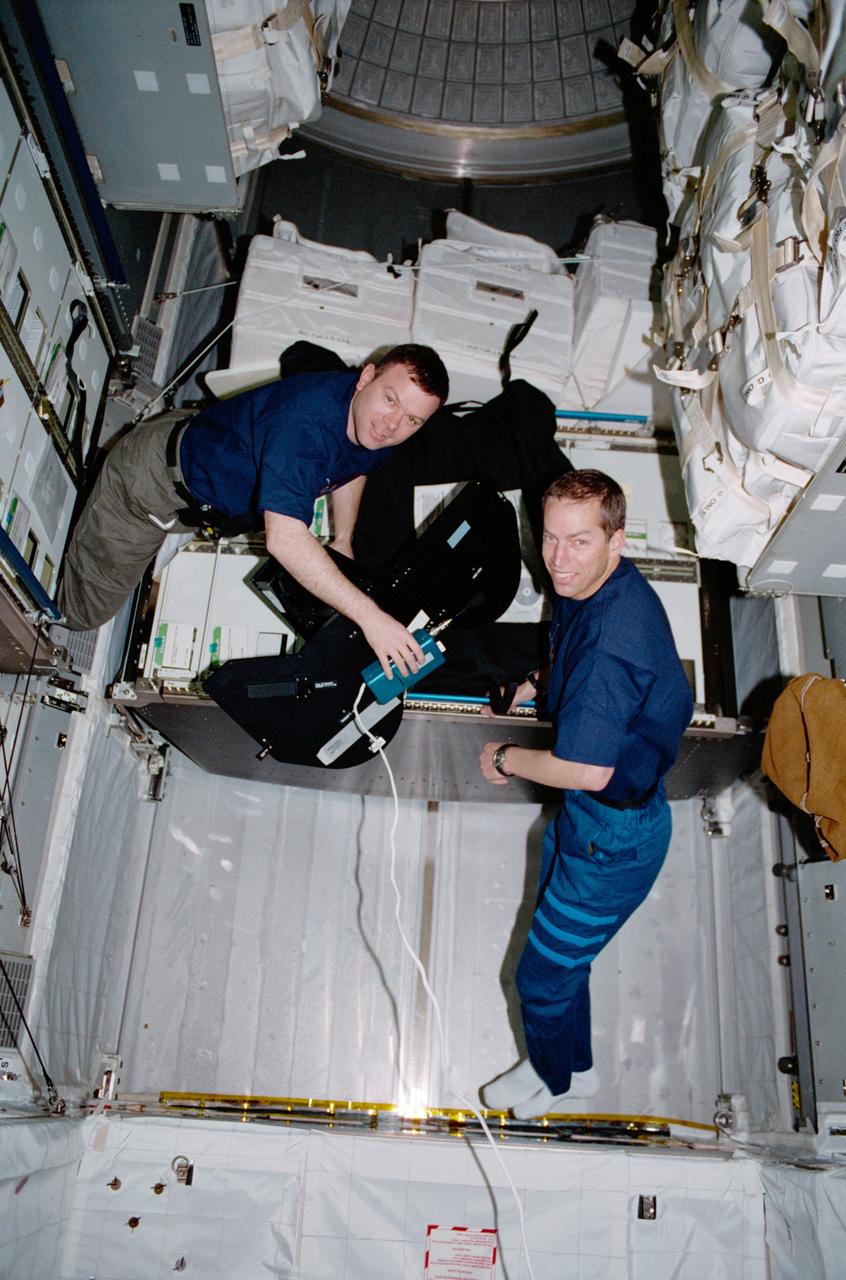
Pilot James M. Kelly (left) and Commander James D. Wetherbee for the STS-102 mission, participate in the movement of supplies inside Leonardo, the Italian Space Agency built Multipurpose Logistics Module (MPLM). In this particular photograph, the two are handling a film magazine for the IMAX cargo bay camera. The primary cargo of the STS-102 mission, the Leonardo MPLM is the first of three such pressurized modules that will serve as the International Space Station's (ISS') moving vans, carrying laboratory racks filled with equipment, experiments, and supplies to and from the Station aboard the Space Shuttle. The cylindrical module is approximately 21-feet long and 15- feet in diameter, weighing almost 4.5 tons. It can carry up to 10 tons of cargo in 16 standard Space Station equipment racks. Of the 16 racks the module can carry, 5 can be furnished with power, data, and fluid to support refrigerators or freezers. In order to function as an attached station module as well as a cargo transport, the logistics module also includes components that provide life support, fire detection and suppression, electrical distribution, and computer functions. The eighth station assembly flight, the STS-102 mission also served as a crew rotation flight. It delivered the Expedition Two crew to the Station and returned the Expedition One crew back to Earth.