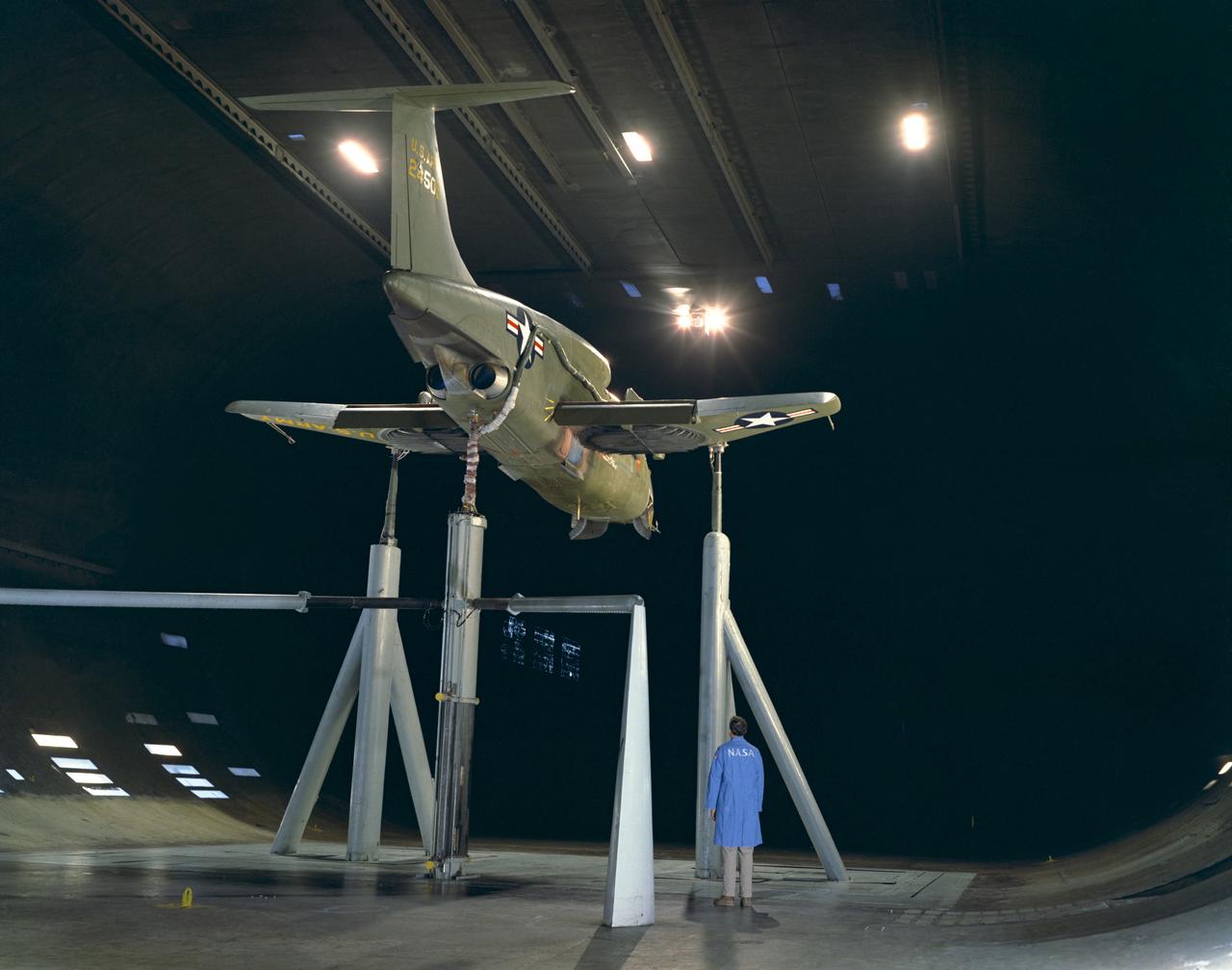
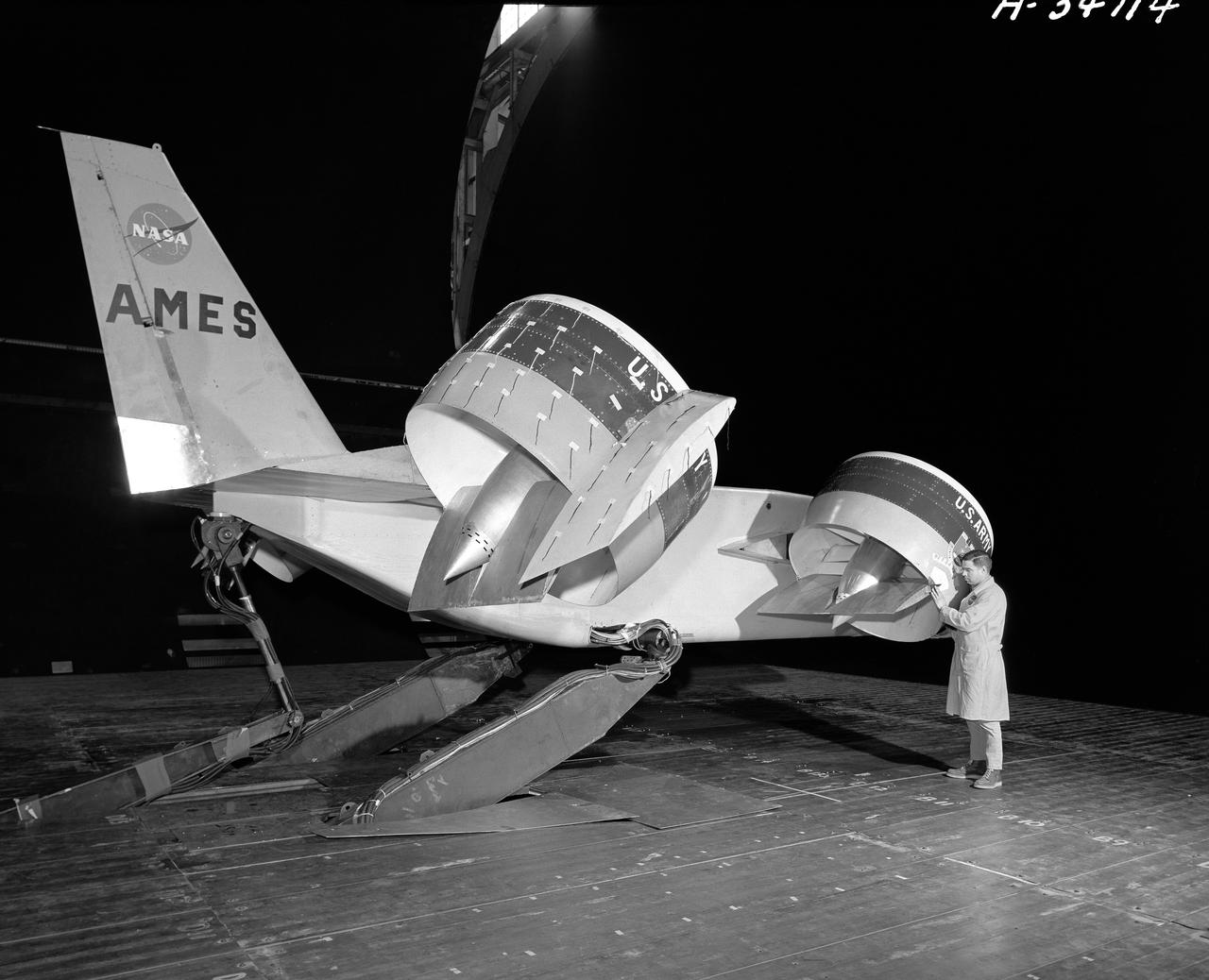
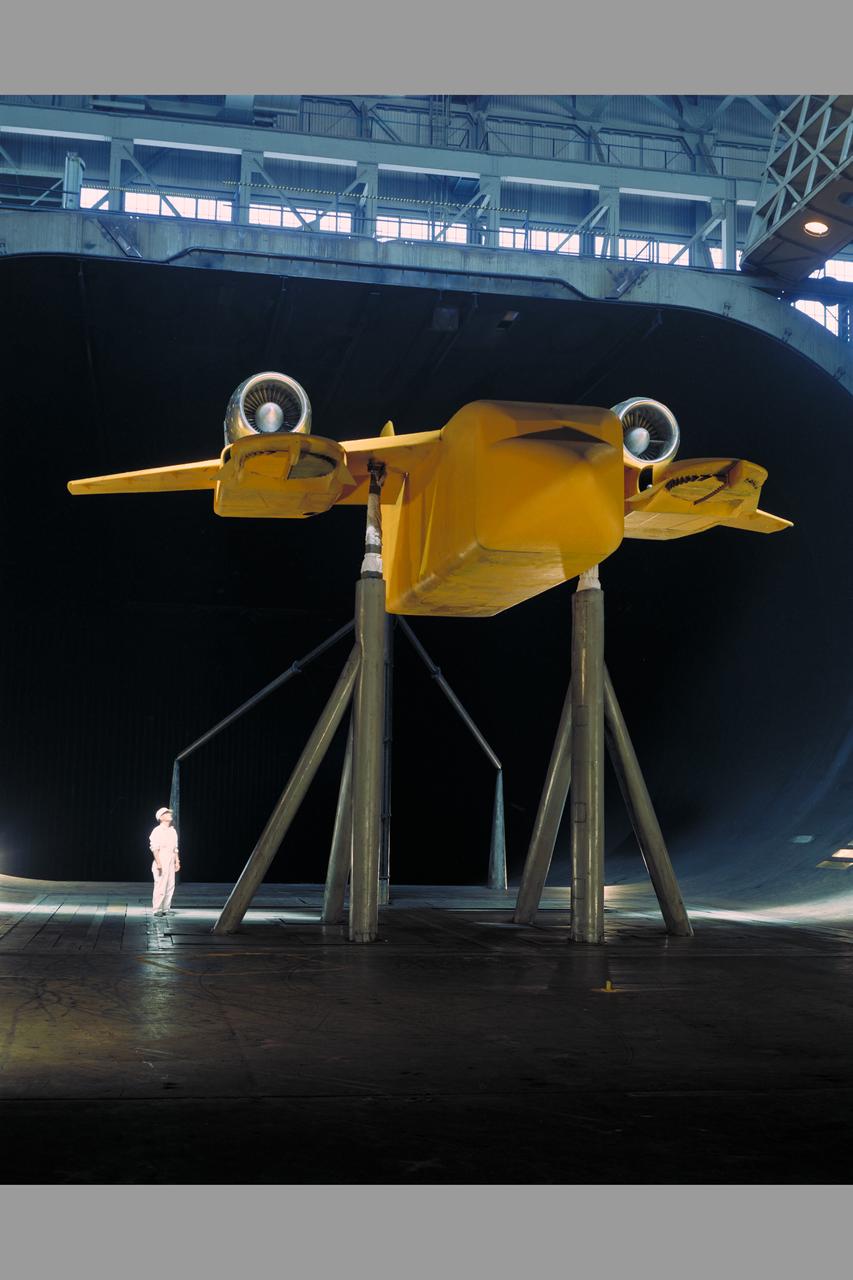
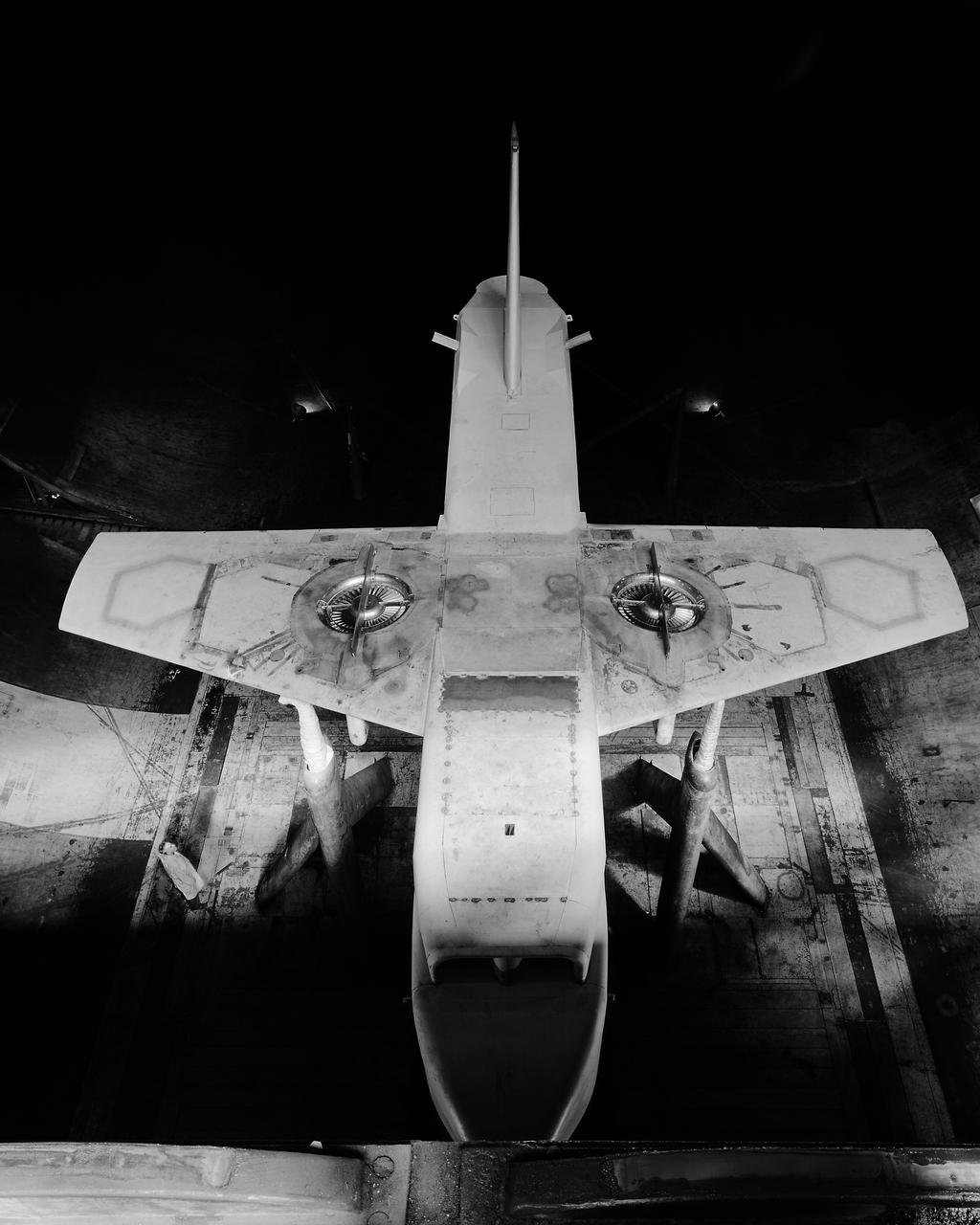
Forward overhead view of lift fan transport model, with two, of a possible six, high pressure ratio wing lift fans. Lift Fan Model In 40 X 80 Wind Tunnel; Test 40-347
Lift Fan Model In Ames 40 X 80 Wind Tunnel.
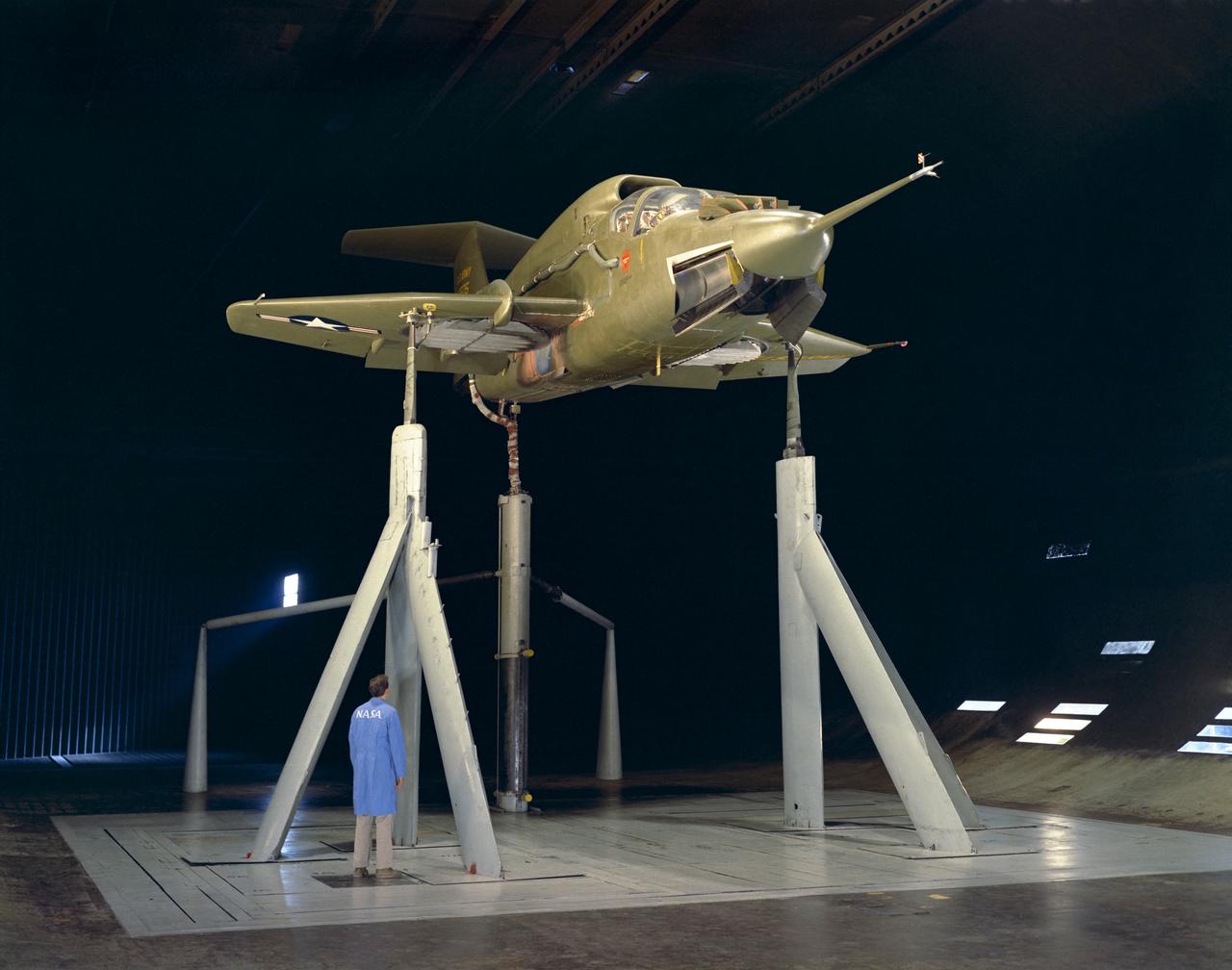
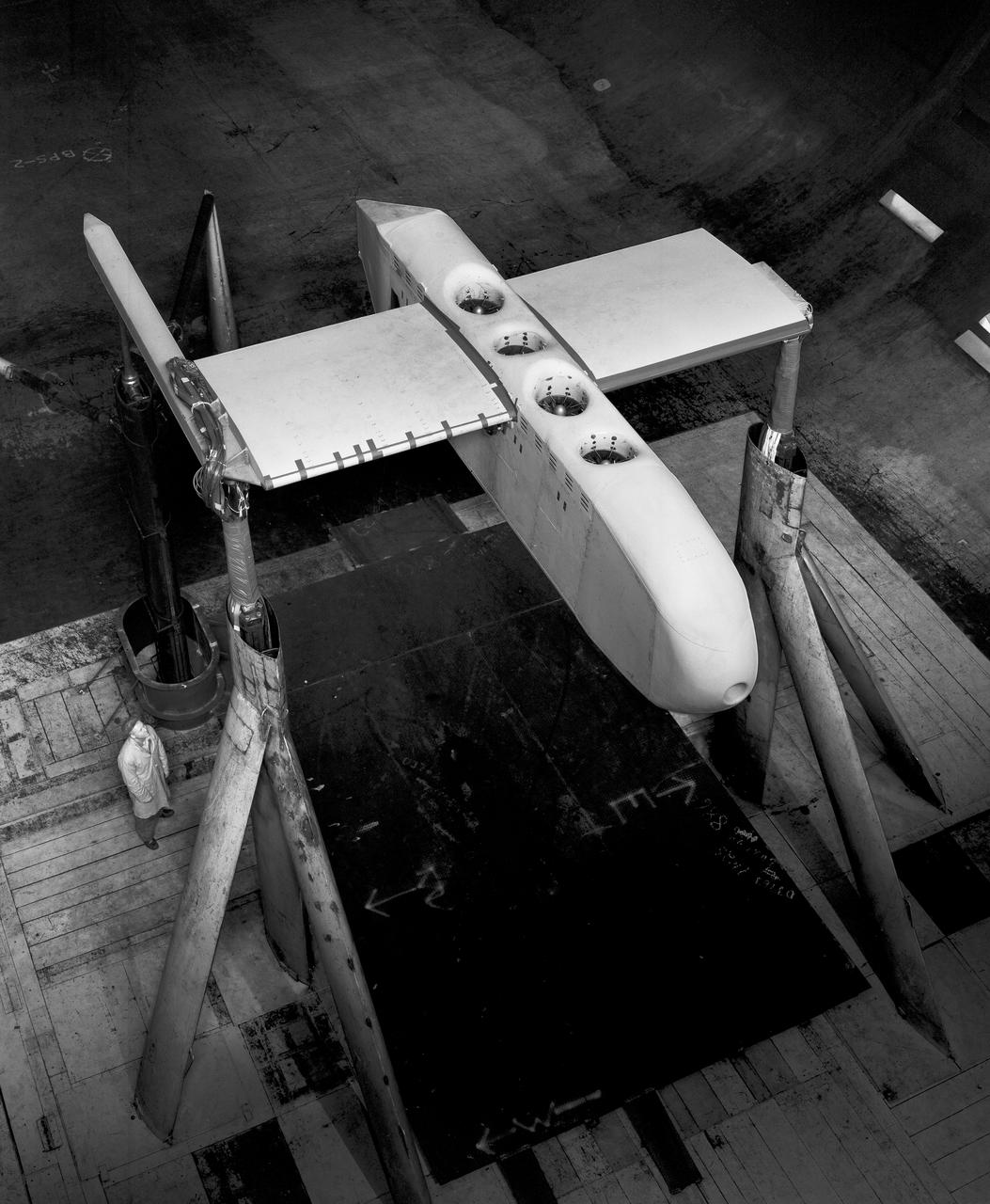
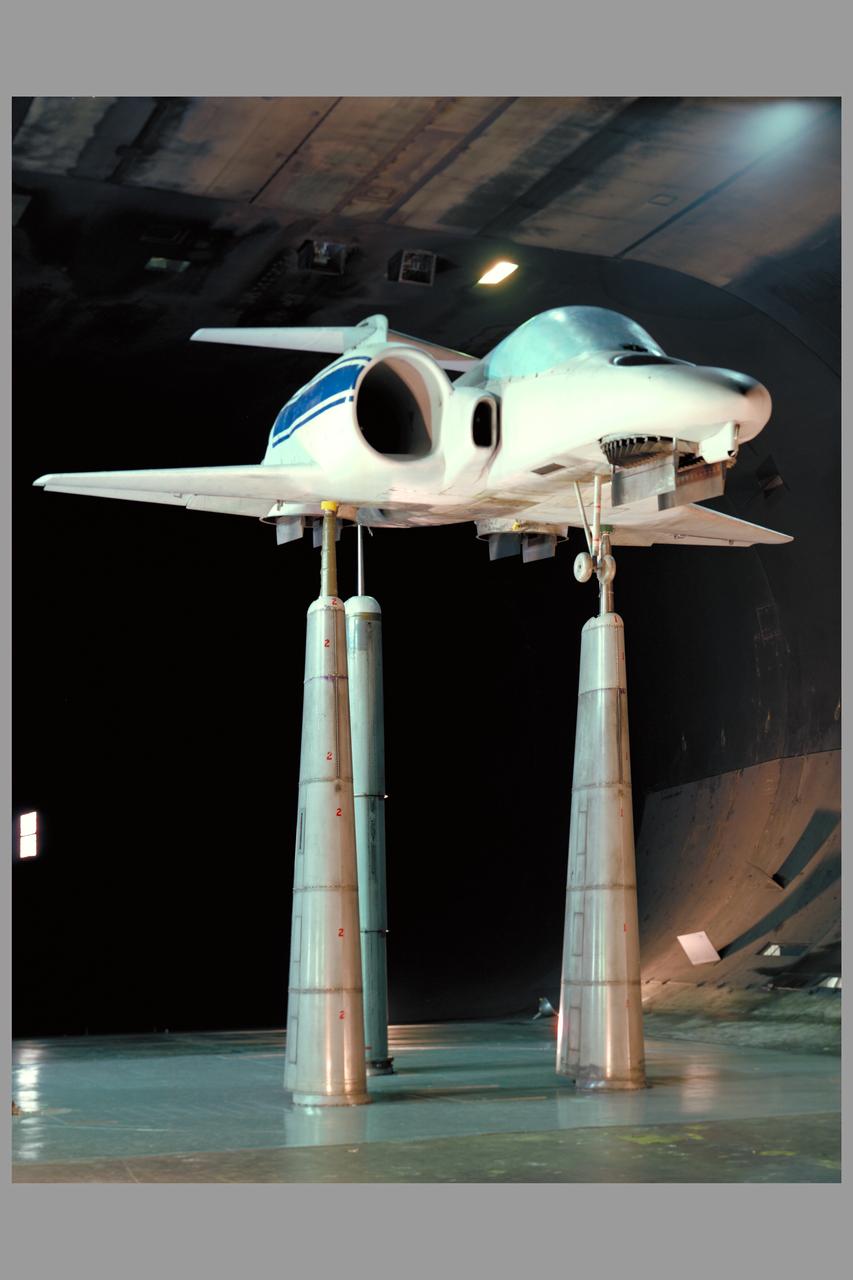
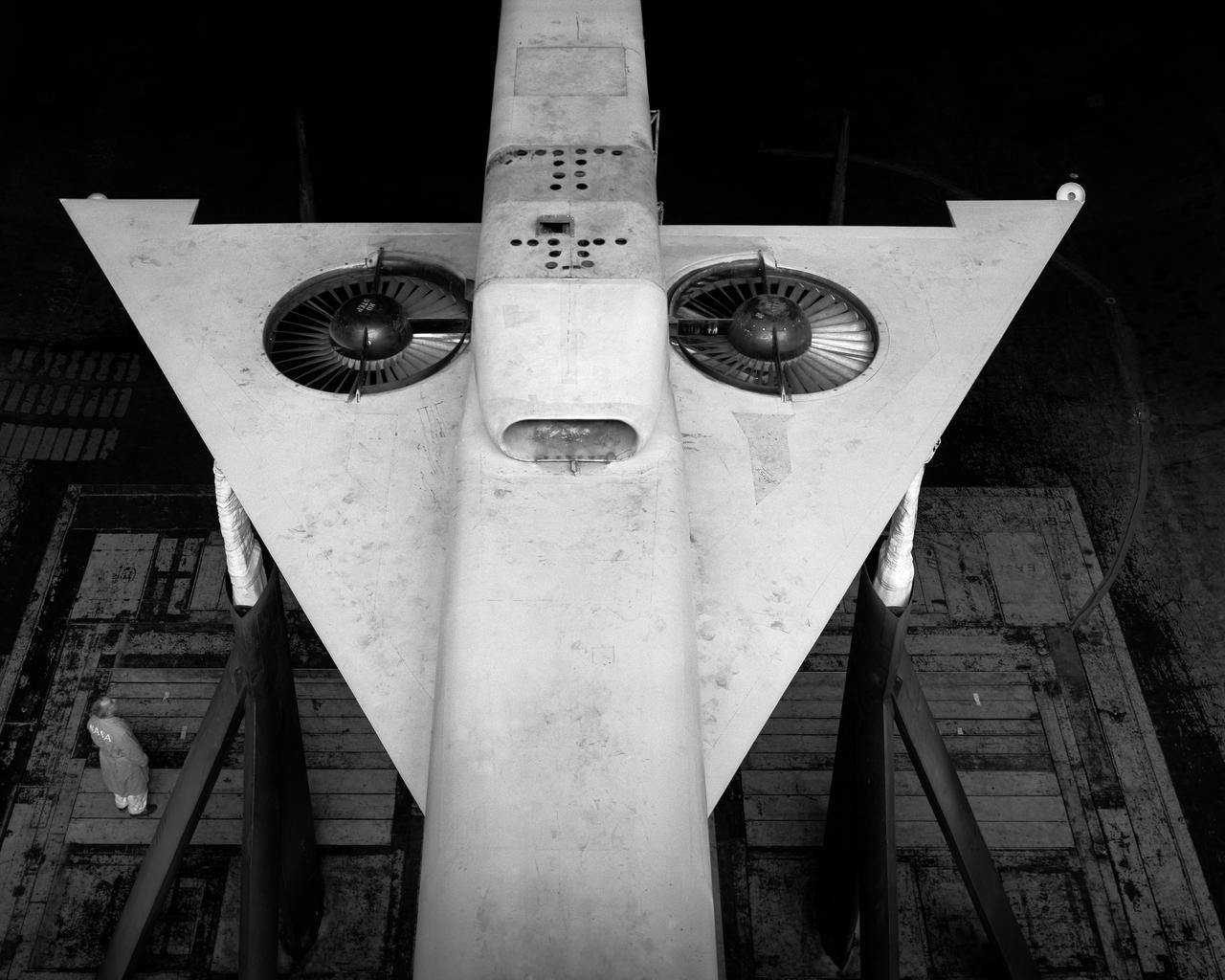
Top front view of Delta wing lift fan fighter model.
Lift-Fan Delta Wing Fighter Model in Ames 40x80 foot Wind Tunnel.
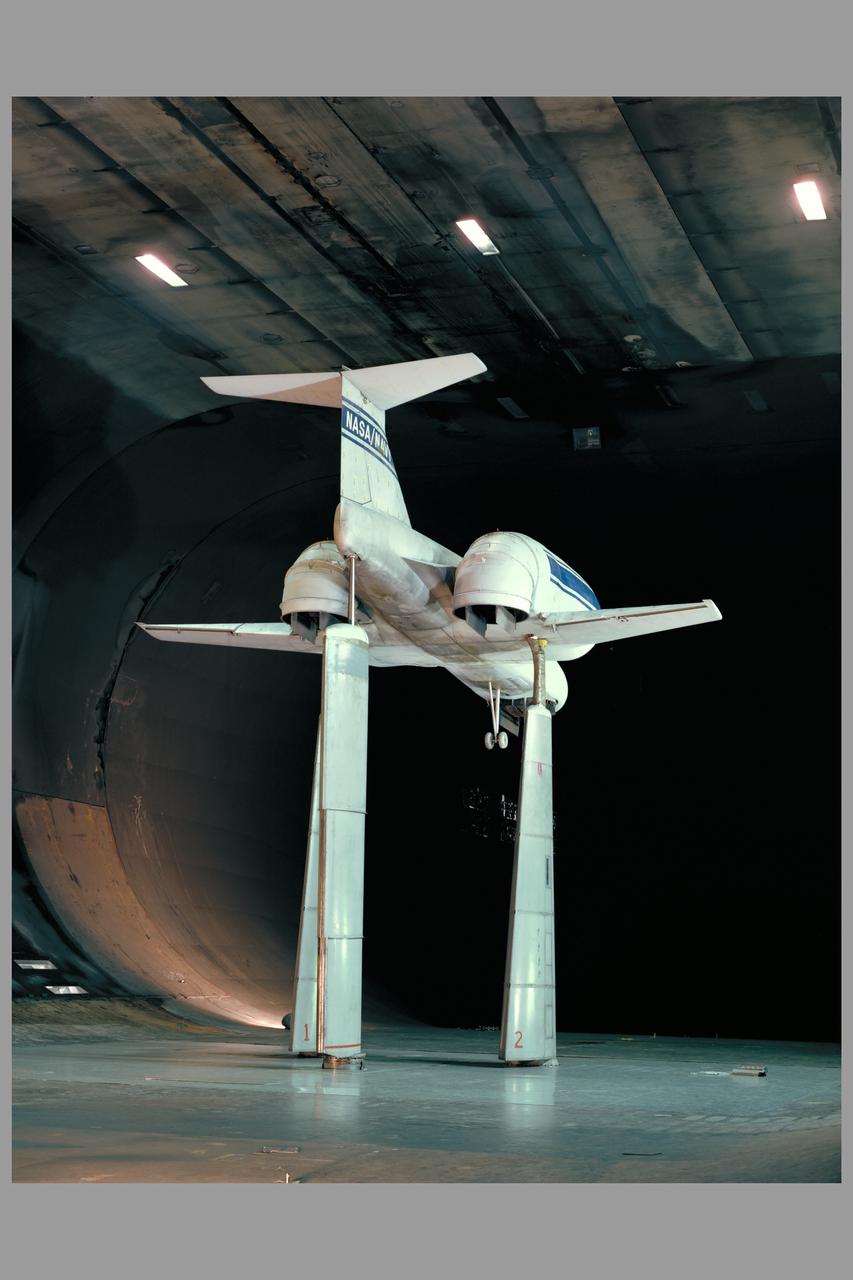
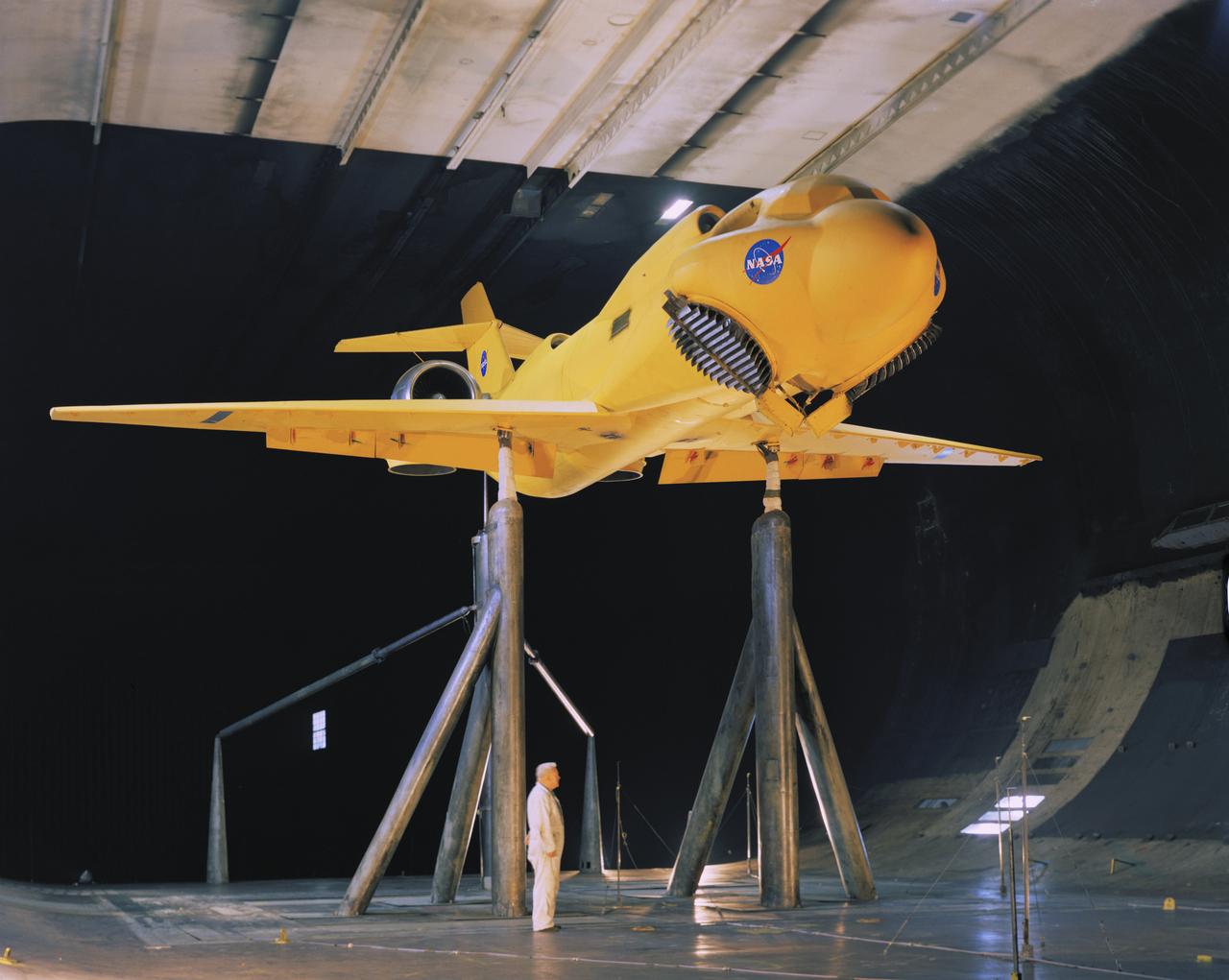
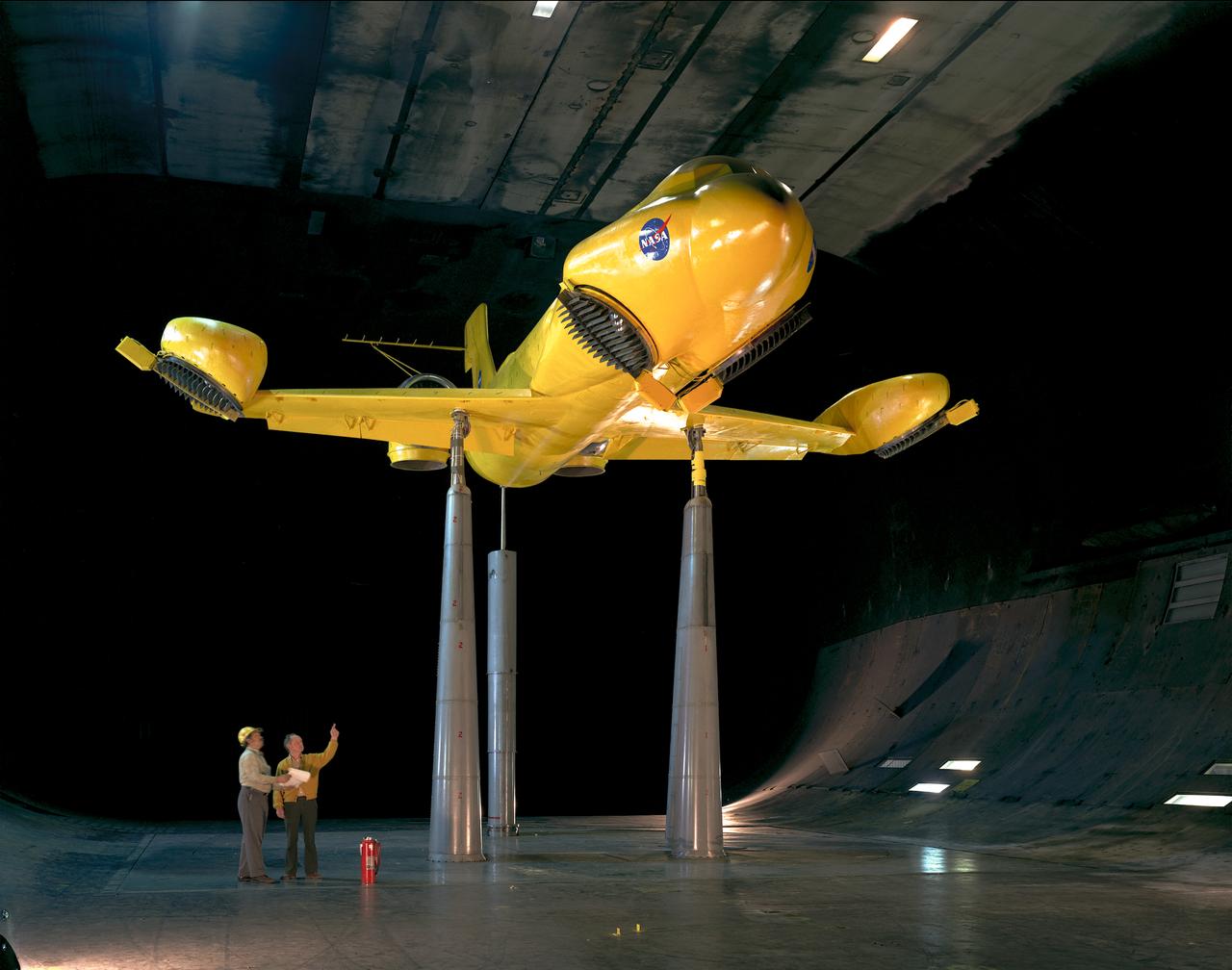
3/4 lower front view of DC-9 lift/cruz fan transport model.  Pictured with Eloy Martinez (left, mechanic) Leo Hall (right, engineer).
AC75-0919. Lift Fan STOL Transport in Ames 40x80 Foot Wind Tunnel.
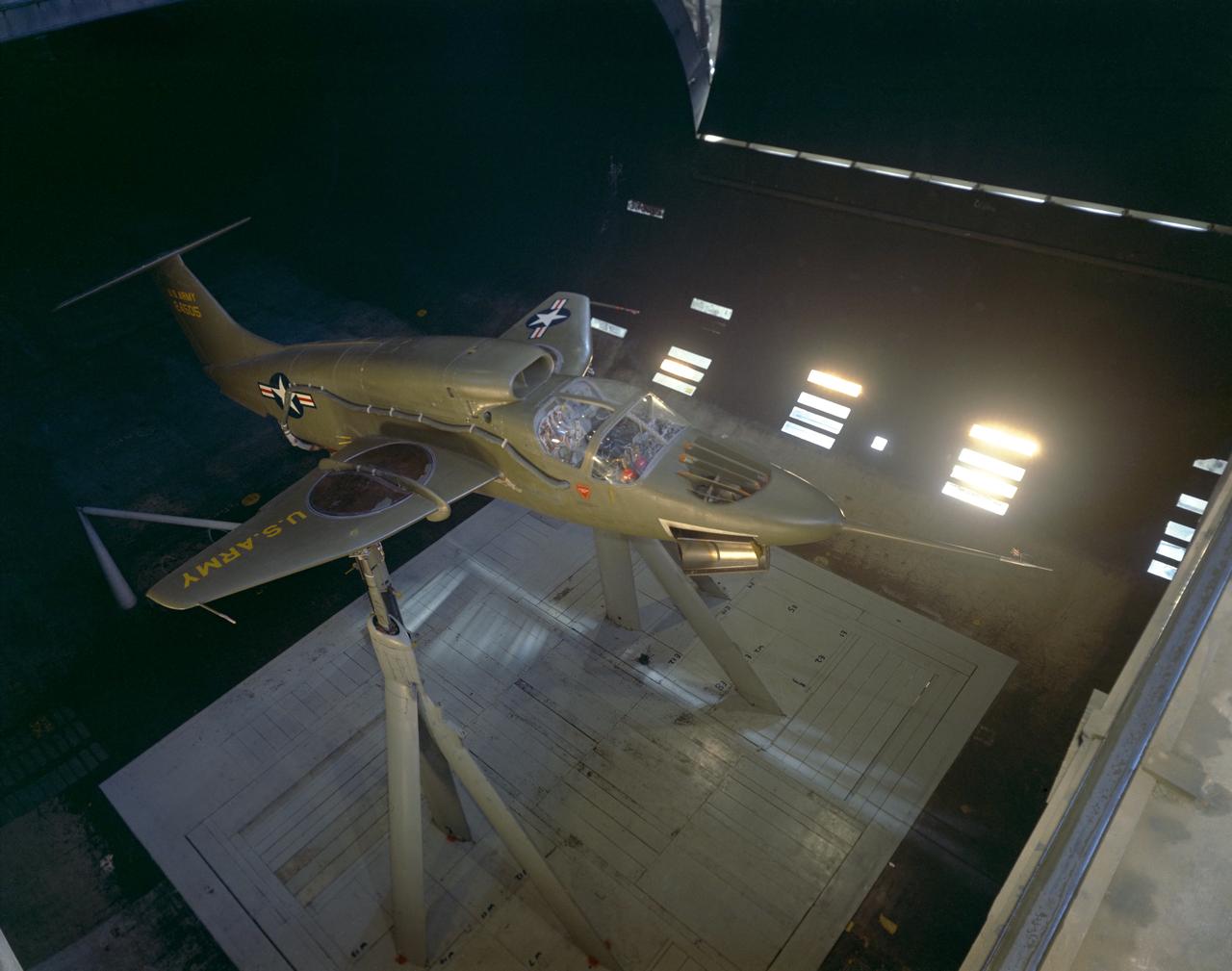
Overhead view of Ryan XV-5A lift-fan VSTOL airplane.
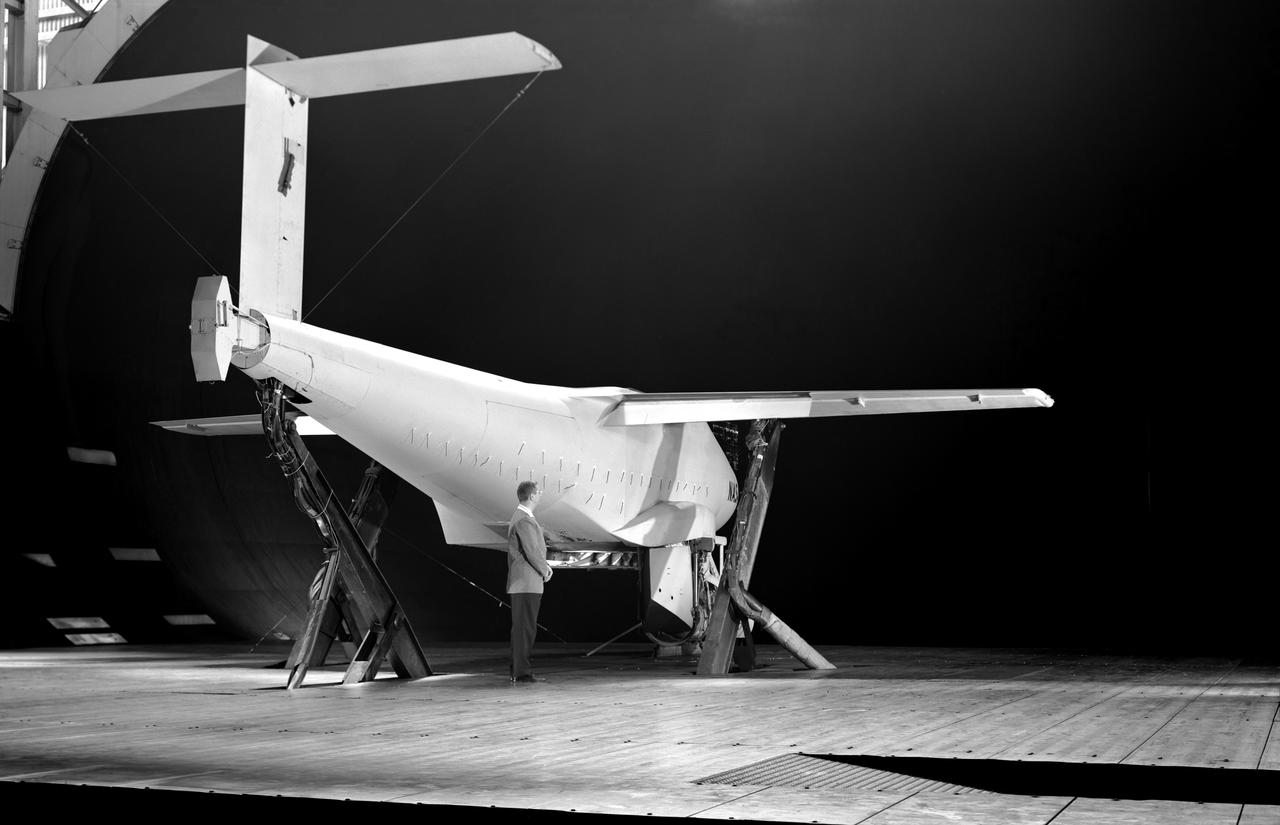
G.E. Fan-in-fuselage model (lifting). 3/4 rear view of fan at low G.P. position.  Lift fan on variable height strut for ground effects studies with reaction control. T-Tail.
General Electric Fan-In-Fuselage Lifting Model in the 40x80 Foot Wind Tunnel at NASA Ames.
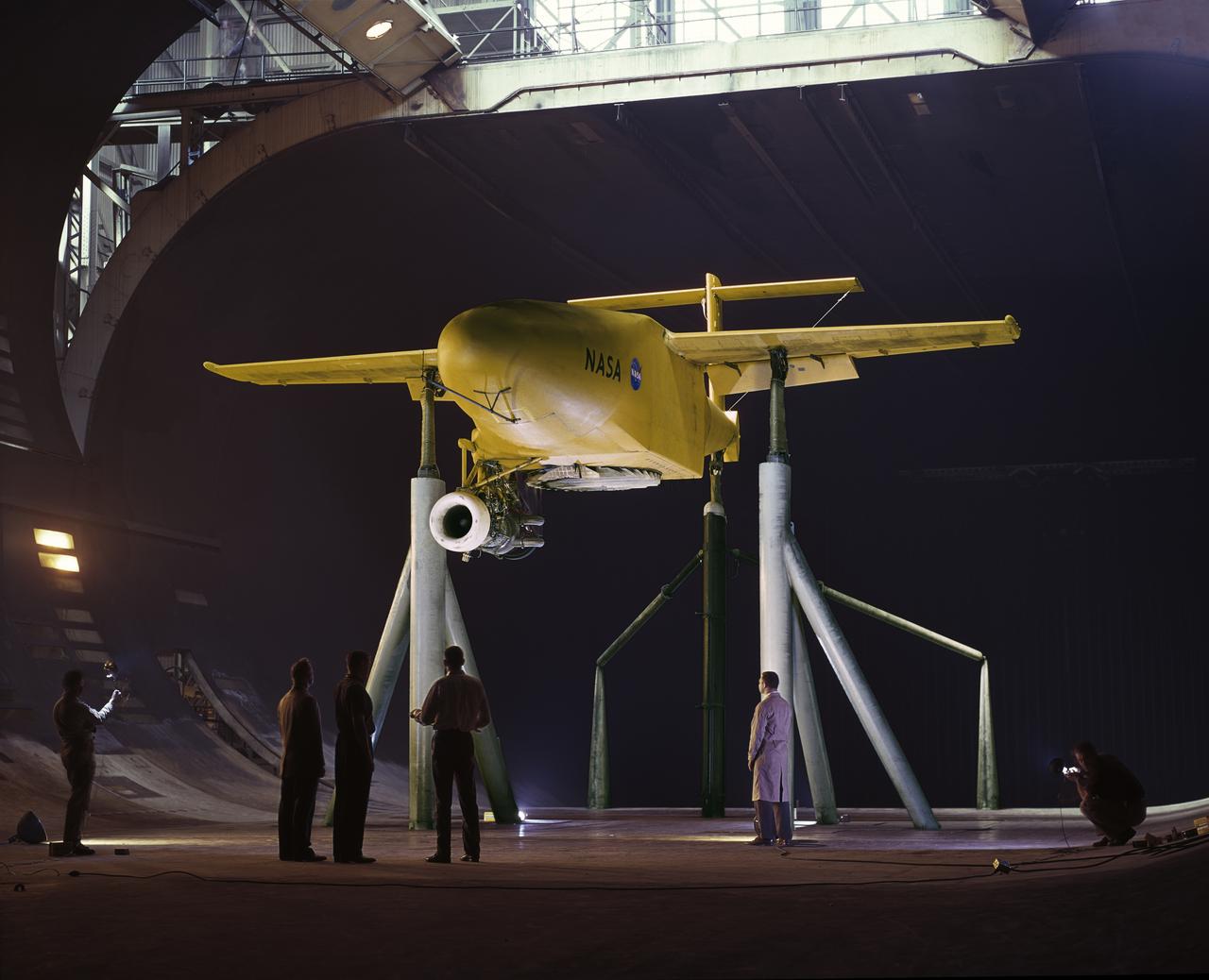
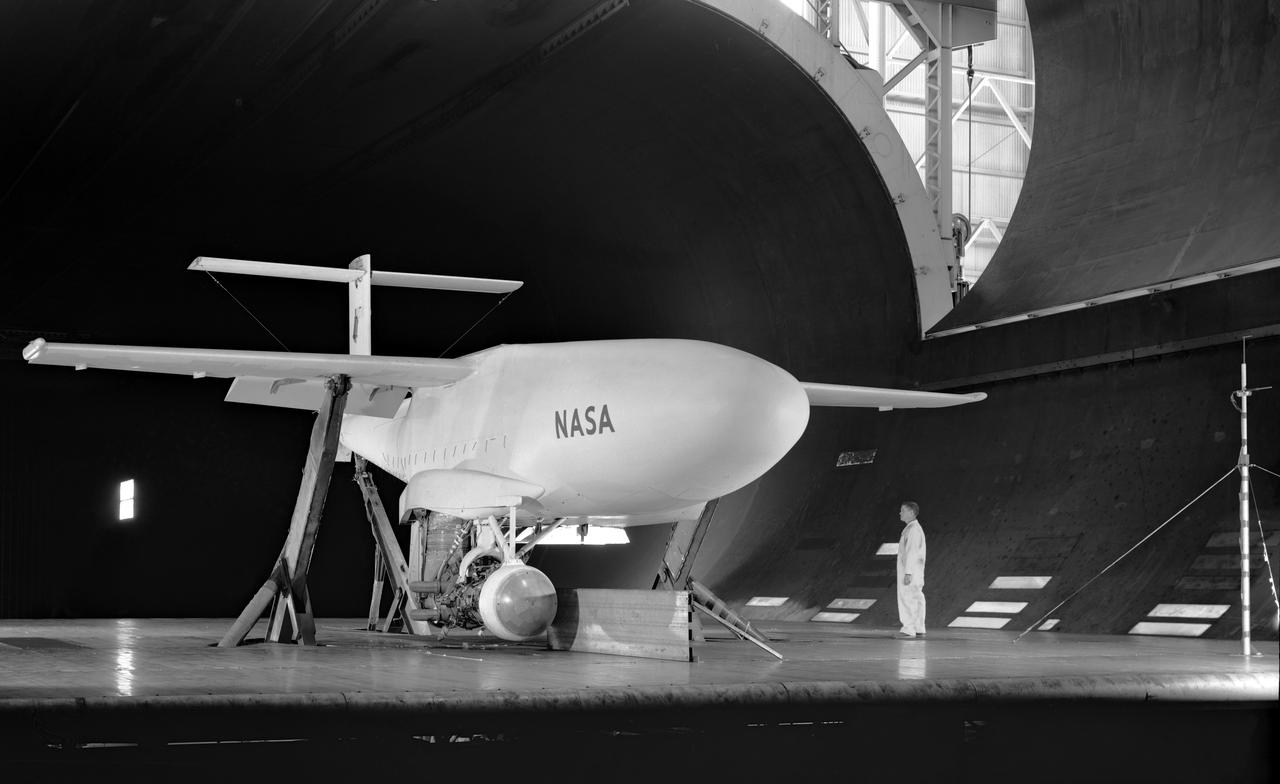
3/4 Low front view of fuselage and fan. Showing jet engine hanging below. Lift fan powered by jet exhaust. General Aerodynamic Characteristics of a Research Model with High Disk Loading Direct Lifting Fan Mounted in Fuselage
General Aerodynamic Characteristics of a Research Model with High Disk Loading Direct Lifting Fan Mounted in Fuselage
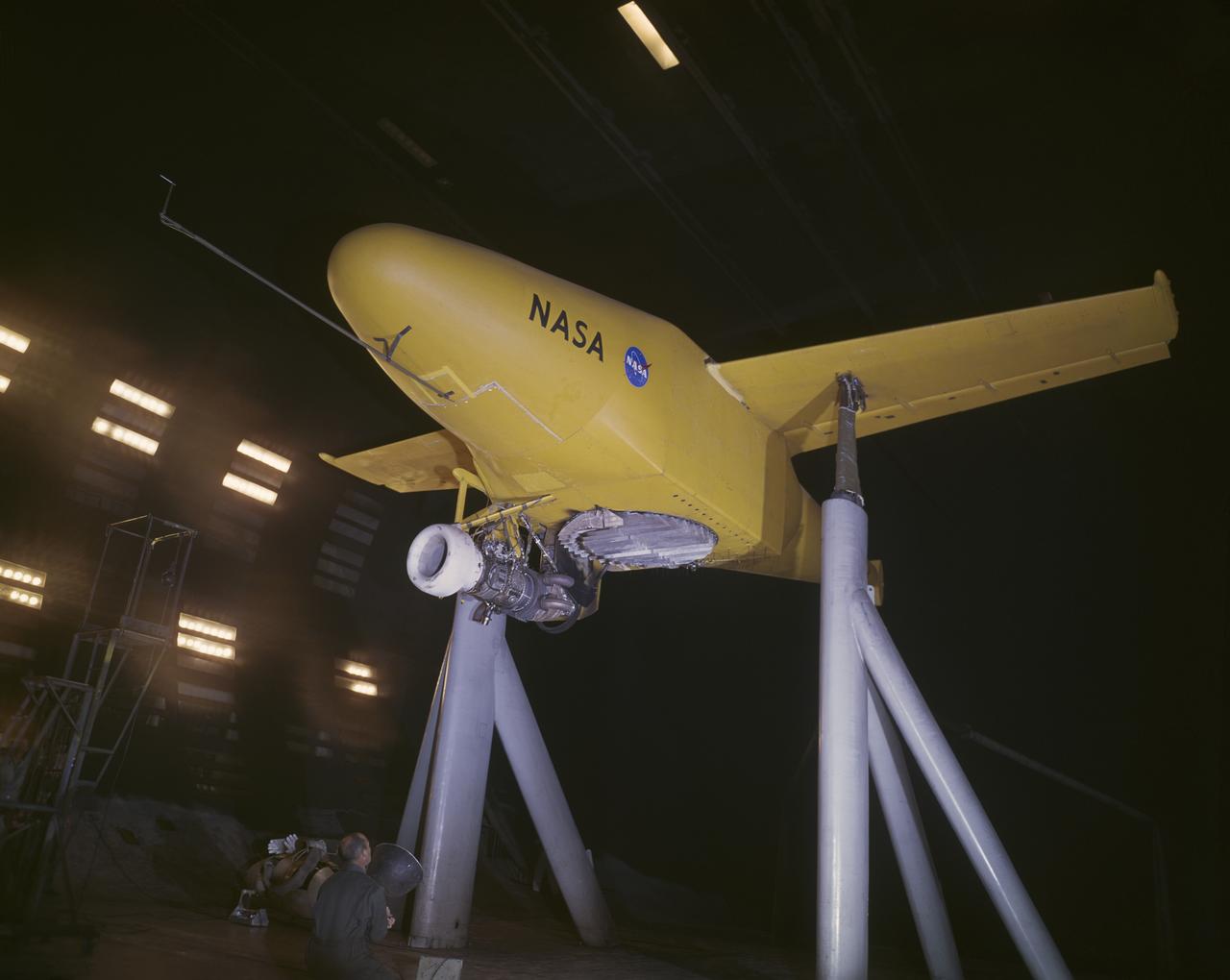
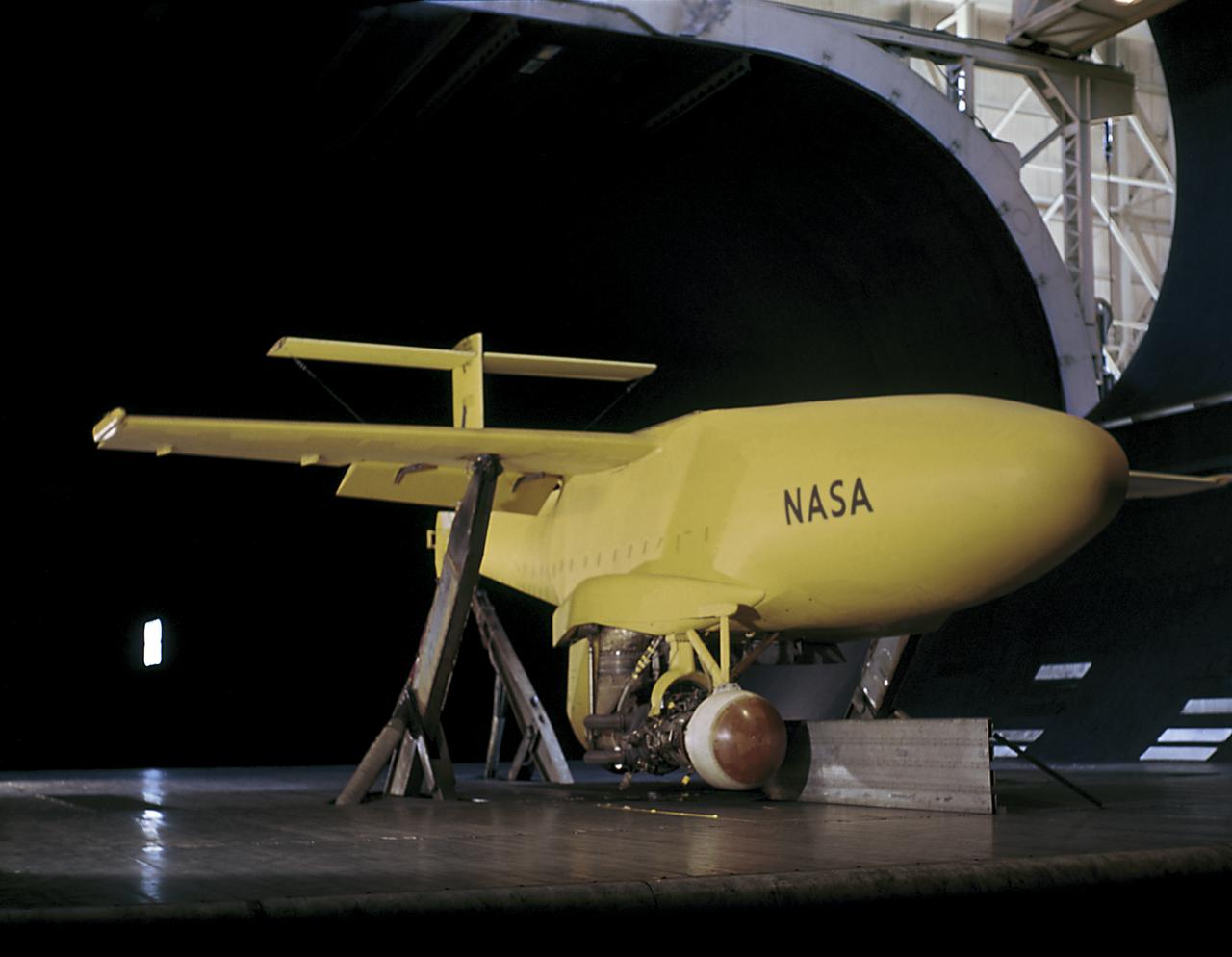
3/4 Low front view of fuselage and fan. Showing jet engine hanging below. Lift fan powered by jet exhaust.
AC-27149-A. General Aerodynamic Characteristics of a Research Model with High Disk Loading Direct Lifting Fan Mounted in Fuselage.
3/4 front view Ryan XV-5A lift-fan VSTOL airplane.  Pictured with Tom Wills.
XV-5A Lift-Fan VSTOL Airplane installed in Ames 40x80 foot Wind Tunnel.
3/4 rear view Ryan XV-5A lift-fan VSTOL airplane.  Pictured with Tom Wills.
Ryan XV-5A Lift-Fan VSTOL Airplane in Ames 40x80 foot Wind Tunnel.
G.E. Fan-in-fuselage model (lifting). 3/4 front view of fan at low G.P. position.  Lift fan on variable height strut for ground effects studies. T-Tail
General Electric Fan-In-Fuselage model in the 40x80 Foot Wind Tunnel at NASA Ames.
G.E fan-in-fuselage model (lifting) 3/4 front view of fan at low G.P. position
General Electric Fan-In-Fuselage Model in the 40x80 Foot Wind Tunnel at NASA Ames.
Tandem dual ducted fan mounted on ground plate. 3/4 rear view.  Testing for recirculation decrease in performance of lift fans varies with ground effect.
Tandem Dual Ducted Fan Mounted on Ground Plate in Ames 40x80 Foot Wind Tunnel.
Large Scale Lift Fan Transport Model test-459 in the 40x80ft w.t.
ARC-1975-AC75-1002
V/STOL Lift -cruise fan transport with Stan Dickenson in 40 x 80 ft. W. T.
ARC-1968-AC-41550
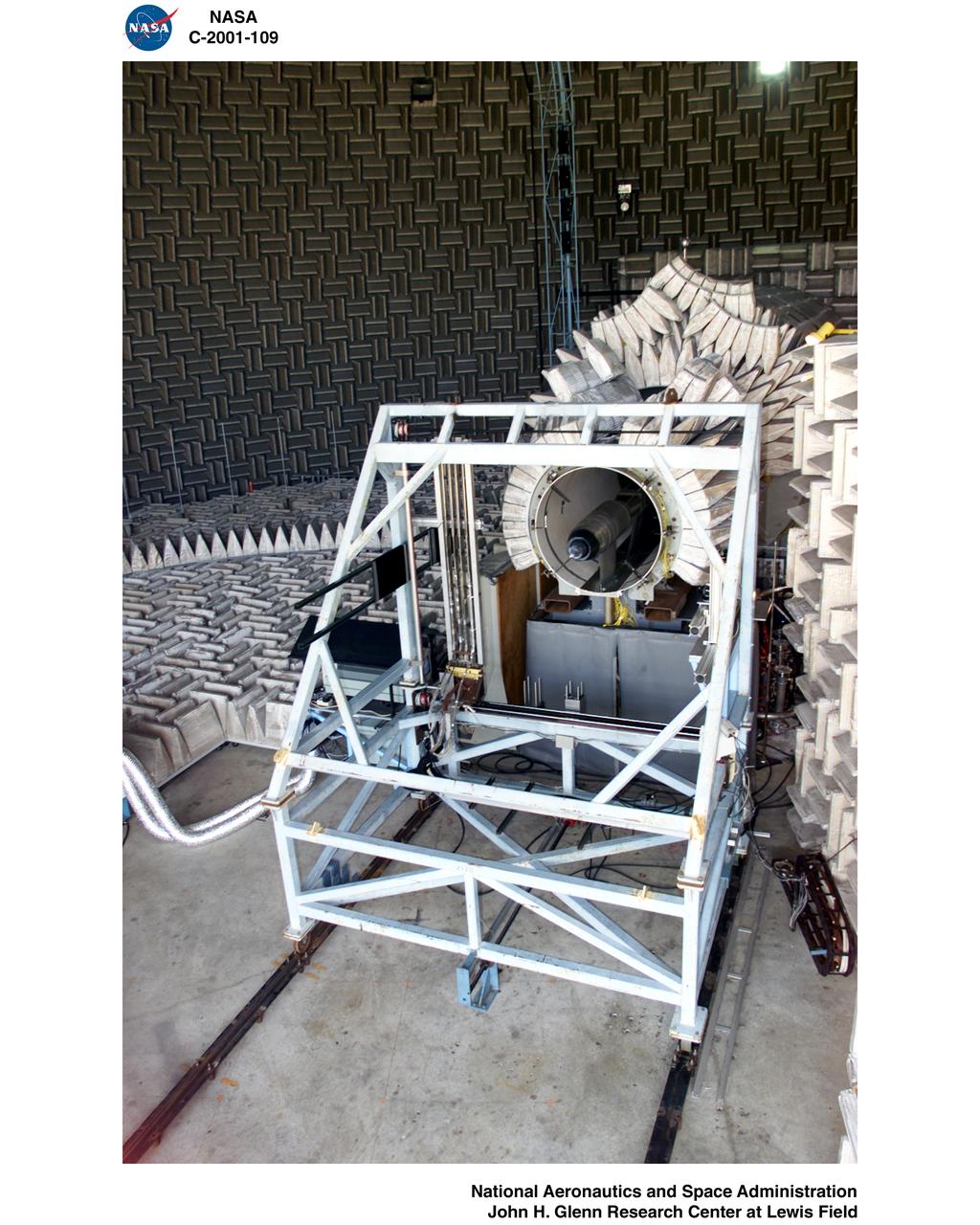
OVERHEAD VIEW OF NOZZLE ACOUSTIC TEST RIG POWERED LIFT RIG AND ACTIVE NOISE CONTROL FAN
GRC-2001-C-00109
Multi Mission Lift Cruise Fan Model in 40x80ft W.T. Test (Test-490)
ARC-1976-AC76-1061
Multi Mission Lift Cruise Fan Model in 40x80ft W.T. Test (Test-490)
ARC-1976-AC76-1060
3/4 front, top view of Noriar Lift Engine Pod installation in Ames 40x80 foot wind tunnel
Lift Engine Pod Model
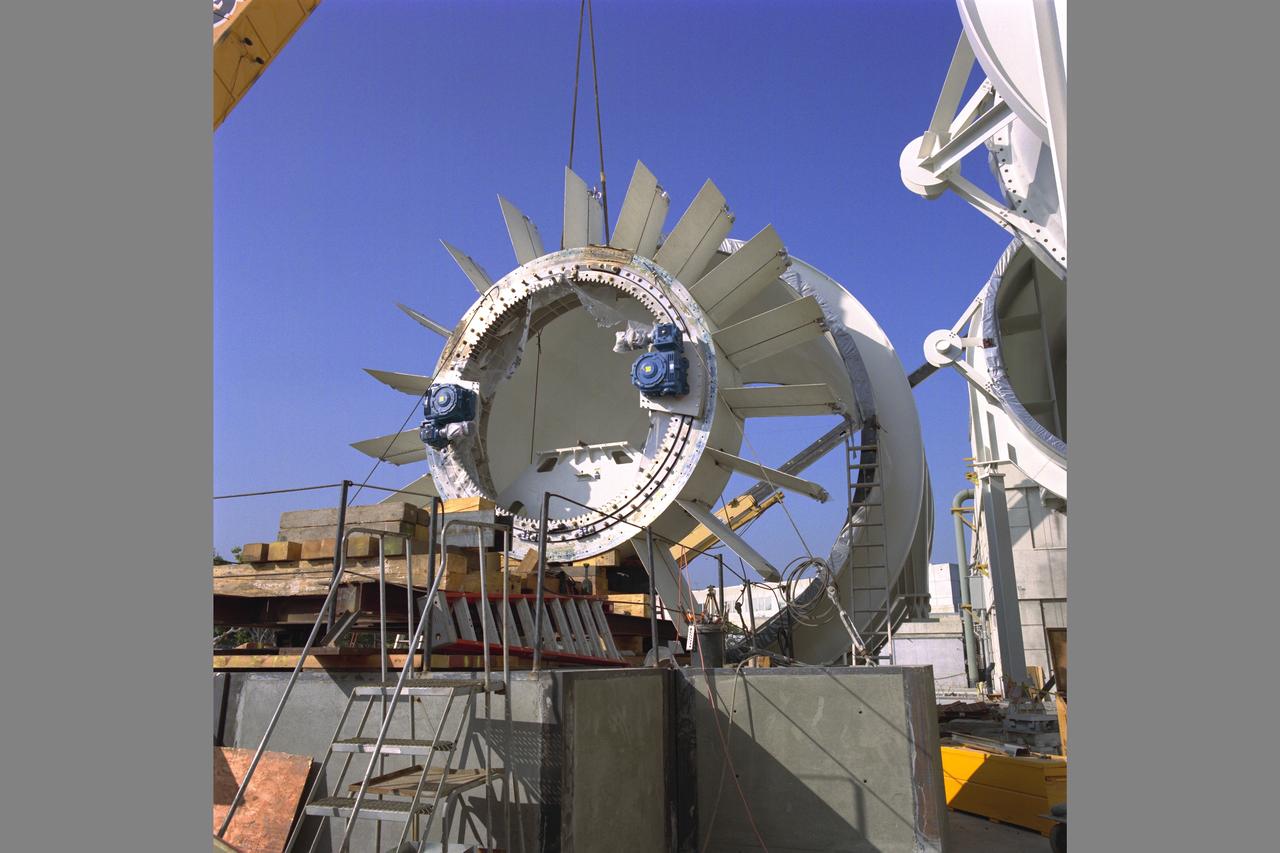
N-206 NASA Ames Research Center 12ft w.t. Pressure Wind Tunnel reconstruction - turning vanes, fan being lifted in
ARC-1993-AC93-4026-11
3/4 front view of McDonnell-Douglas Large-Scale lift fan, vertical and/or short take-off and landing (V/STOL), transport model. Francis Malerick in photograph.  The McDonnell Douglas DC-9 (initially known as the Douglas DC-9) is a twin-engine, single-aisle jet airliner.
DC-9 V/STOL Transport Model in the 40x80 Foot Wind Tunnel.
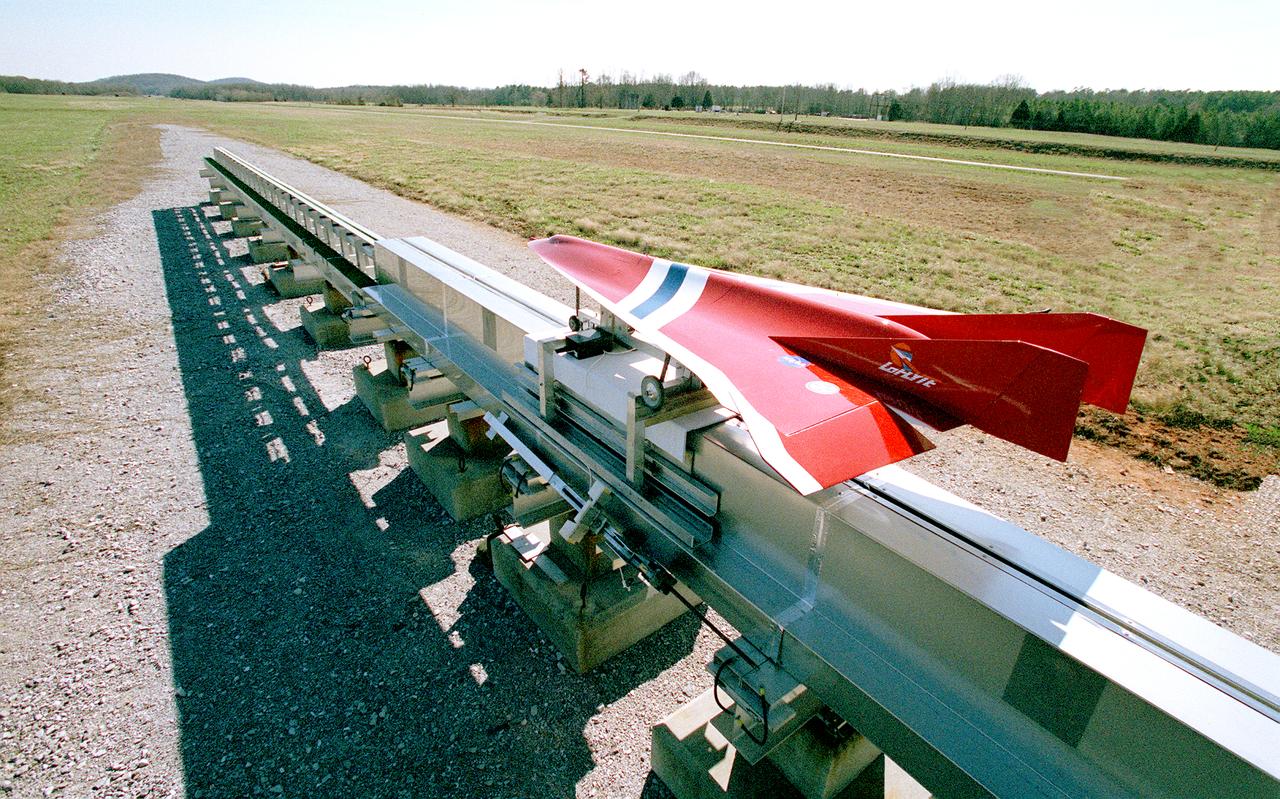
Engineers at the Marshall Space Flight Center (MSFC) have been testing Magnetic Launch Assist Systems, formerly known as Magnetic Levitation (MagLev) technologies. To launch spacecraft into orbit, a Magnetic Launch Assist system would use magnetic fields to levitate and accelerate a vehicle along a track at a very high speed. Similar to high-speed trains and roller coasters that use high-strength magnets to lift and propel a vehicle a couple of inches above a guideway, the  launch-assist system would electromagnetically drive a space vehicle along the track. A full-scale, operational track would be about 1.5-miles long and capable of accelerating a vehicle to 600 mph in 9.5 seconds. This photograph shows a subscale model of an airplane running on the experimental track at MSFC during the demonstration test. This track is an advanced linear induction motor. Induction motors are common in fans, power drills, and sewing machines. Instead of spinning in a circular motion to turn a shaft or gears, a linear induction motor produces thrust in a straight line. Mounted on concrete pedestals, the track is 100-feet long, about 2-feet wide, and about 1.5- feet high. The major advantages of launch assist for NASA launch vehicles is that it reduces the weight of the take-off, the landing gear, the wing size, and less propellant resulting in significant cost savings. The US Navy and the British MOD (Ministry of Defense) are planning to use magnetic launch assist for their next generation aircraft carriers as the aircraft launch system.  The US Army is considering using this technology for launching target drones for anti-aircraft training.
Research Technology
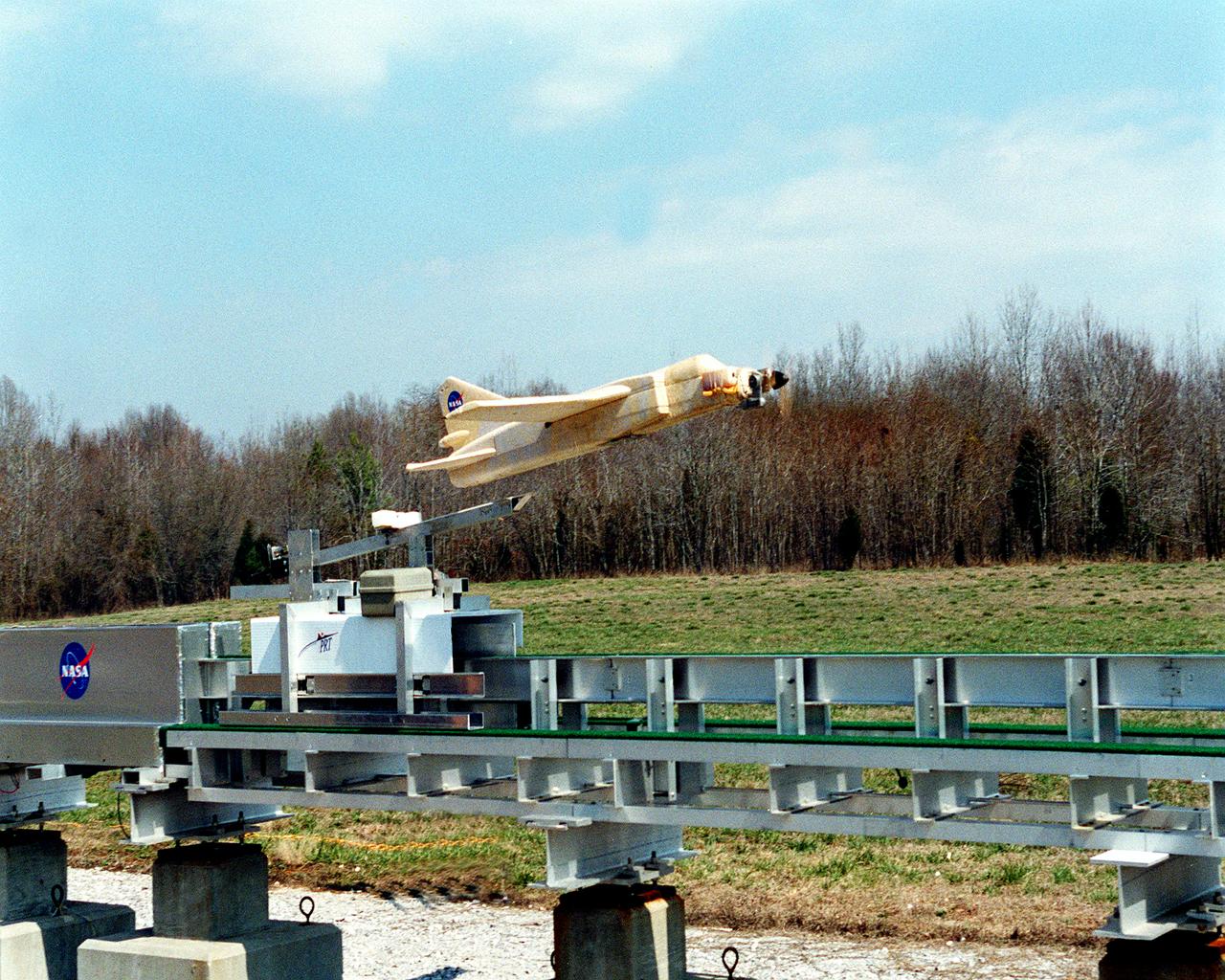
This image shows a 1/9 subscale model vehicle clearing the Magnetic Launch Assist System, formerly referred to as the Magnetic Levitation (MagLev), test track during a demonstration test conducted at the Marshall Space Flight Center (MSFC). Engineers at MSFC have developed and tested Magnetic Launch Assist technologies. To launch spacecraft into orbit, a Magnetic Launch Assist System would use magnetic fields to levitate and accelerate a vehicle along a track at very high speeds. Similar to high-speed trains and roller coasters that use high-strength magnets to lift and propel a vehicle a couple of inches above a guideway, a launch-assist system would electromagnetically drive a space vehicle along the track. A full-scale, operational track would be about 1.5-miles long and capable of accelerating a vehicle to 600 mph in 9.5 seconds.  This track is an advanced linear induction motor. Induction motors are common in fans, power drills, and sewing machines. Instead of spinning in a circular motion to turn a shaft or gears, a linear induction motor produces thrust in a straight line. Mounted on concrete pedestals, the track is 100-feet long, about 2-feet wide and about 1.5-feet high. The major advantages of launch assist for NASA launch vehicles is that it reduces the weight of the take-off, the landing gear, the wing size, and less propellant resulting in significant cost savings. The US Navy and the British MOD (Ministry of Defense) are planning to use magnetic launch assist for their next generation aircraft carriers as the aircraft launch system.  The US Army is considering using this technology for launching target drones for anti-aircraft training.
Research Technology
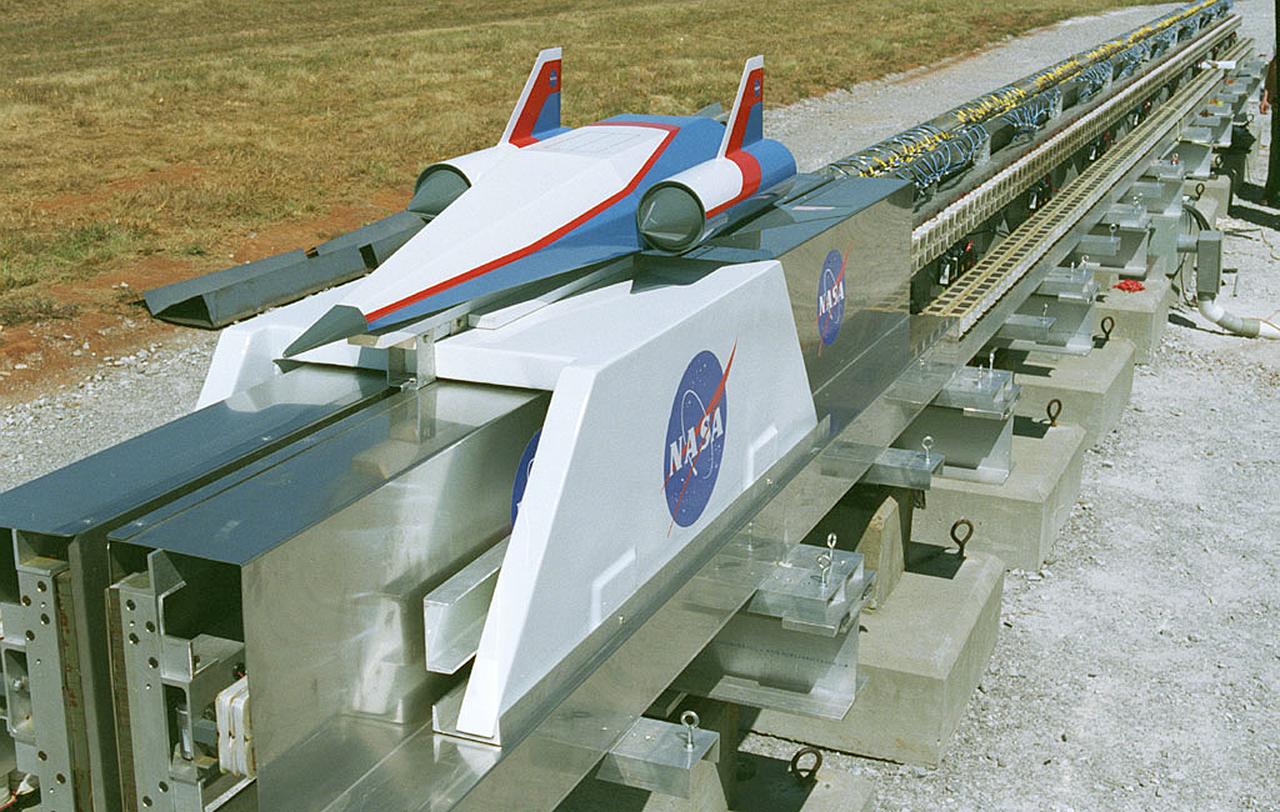
In this photograph, a futuristic spacecraft model sits atop a carrier on the Magnetic Launch Assist System, formerly known as the Magnetic Levitation (MagLev) System, experimental track at the Marshall Space Flight Center (MSFC). Engineers at MSFC have developed and tested Magnetic Launch Assist technologies that would use magnetic fields to levitate and accelerate a vehicle along a track at very high speeds. Similar to high-speed trains and roller coasters that use high-strength magnets to lift and propel a vehicle a couple of inches above a guideway, a Magnetic Launch Assist system would electromagnetically drive a space vehicle along the track. A full-scale, operational track would be about 1.5-miles long and capable of accelerating a vehicle to 600 mph in 9.5 seconds. This track is an advanced linear induction motor. Induction motors are common in fans, power drills, and sewing machines. Instead of spinning in a circular motion to turn a shaft or gears, a linear induction motor produces thrust in a straight line. Mounted on concrete pedestals, the track is 100-feet long, about 2-feet wide, and about 1.5-feet high. The major advantages of launch assist for NASA launch vehicles is that it reduces the weight of the take-off, the landing gear, the wing size, and less propellant resulting in significant cost savings. The US Navy and the British MOD (Ministry of Defense) are planning to use magnetic launch assist for their next generation aircraft carriers as the aircraft launch system.  The US Army is considering using this technology for launching target drones for anti-aircraft training.
Research Technology