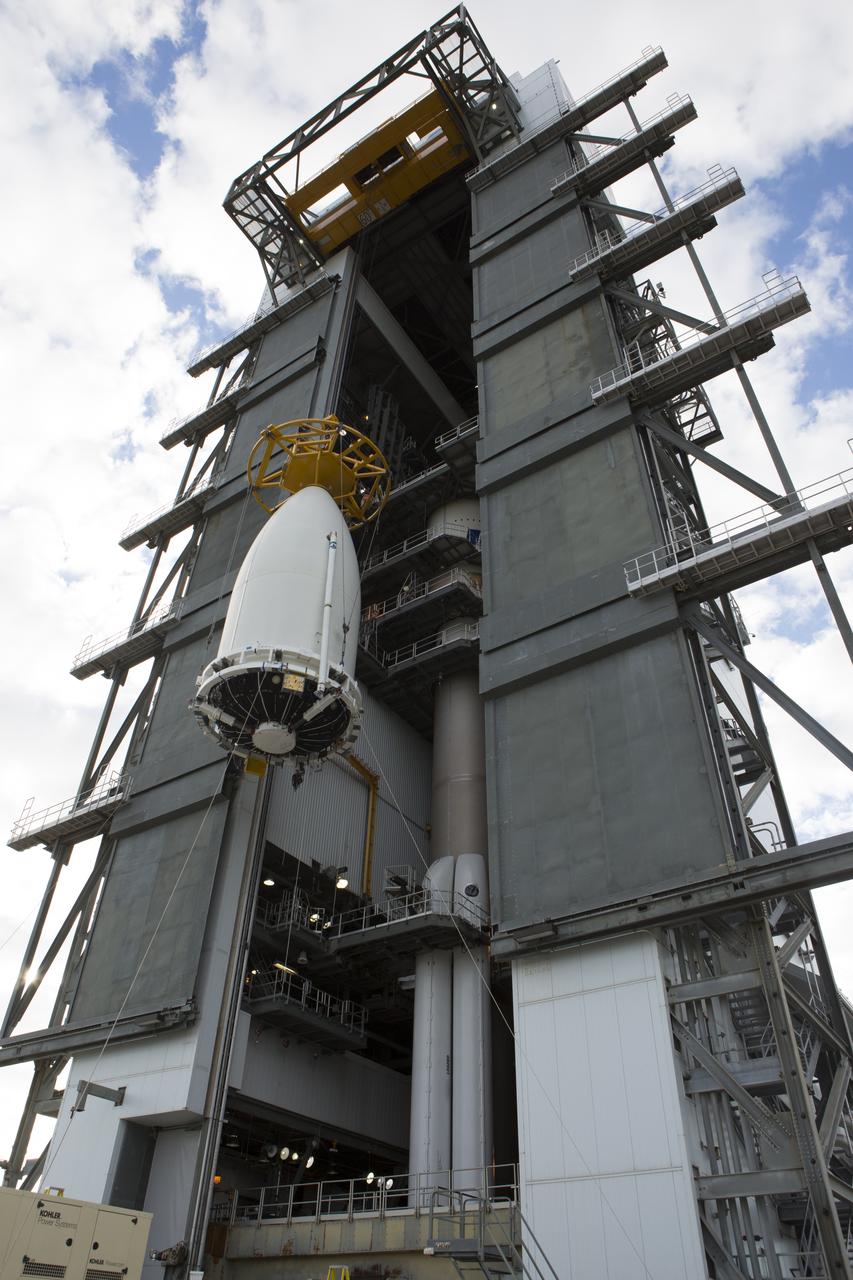
A crane is used to lift the payload fairing containing NOAA's Geostationary Operational Environmental Satellite (GOES-R) at the Vertical Integration Facility at Space Launch Complex 41 at Cape Canaveral Air Force Station in Florida. GOES-R will be mated to the United Launch Alliance Atlas V Centaur upper stage in preparation for launch in November. GOES-R is the first satellite in a series of next-generation NOAA GOES Satellites.
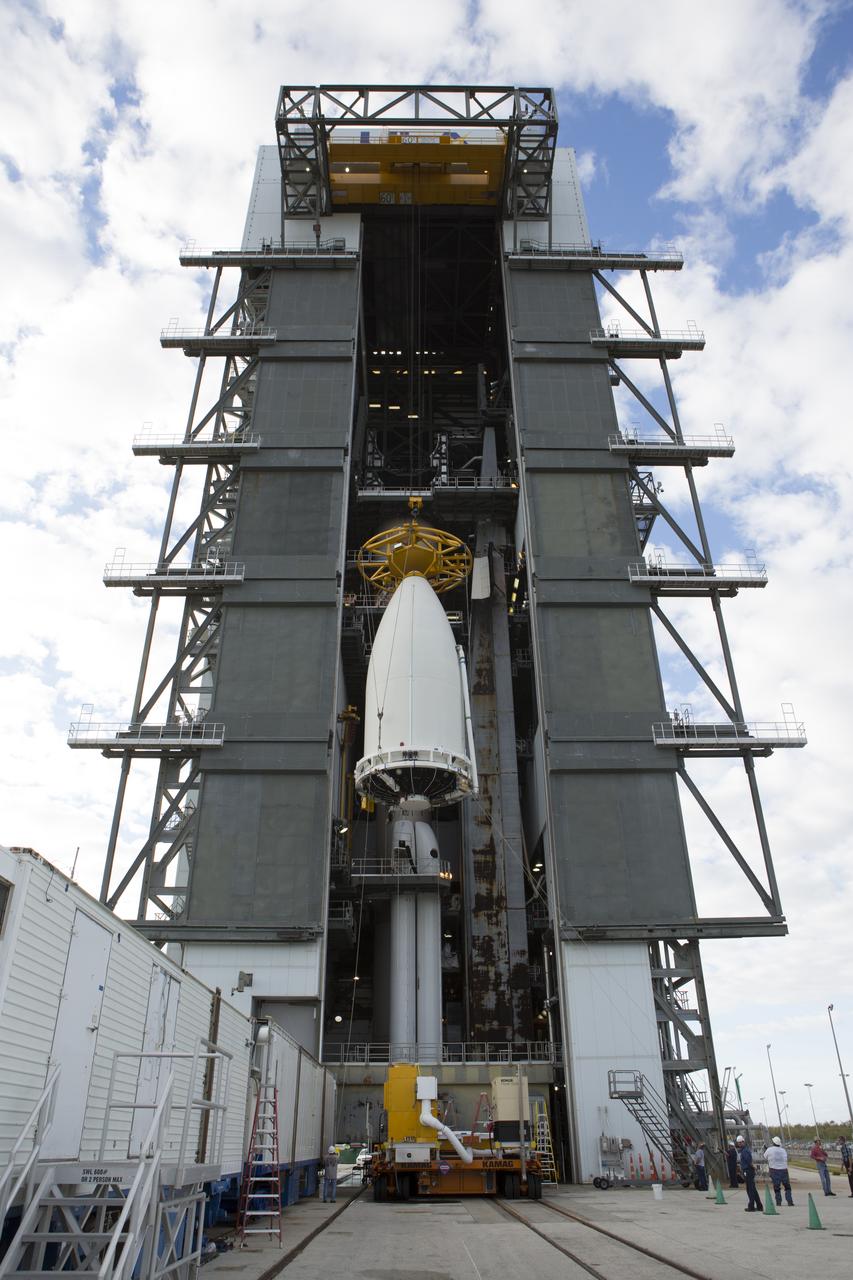
A crane is used to lift the payload fairing containing NOAA's Geostationary Operational Environmental Satellite (GOES-R) at the Vertical Integration Facility at Space Launch Complex 41 at Cape Canaveral Air Force Station in Florida. GOES-R will be mated to the United Launch Alliance Atlas V Centaur upper stage in preparation for launch in November. GOES-R is the first satellite in a series of next-generation NOAA GOES Satellites.
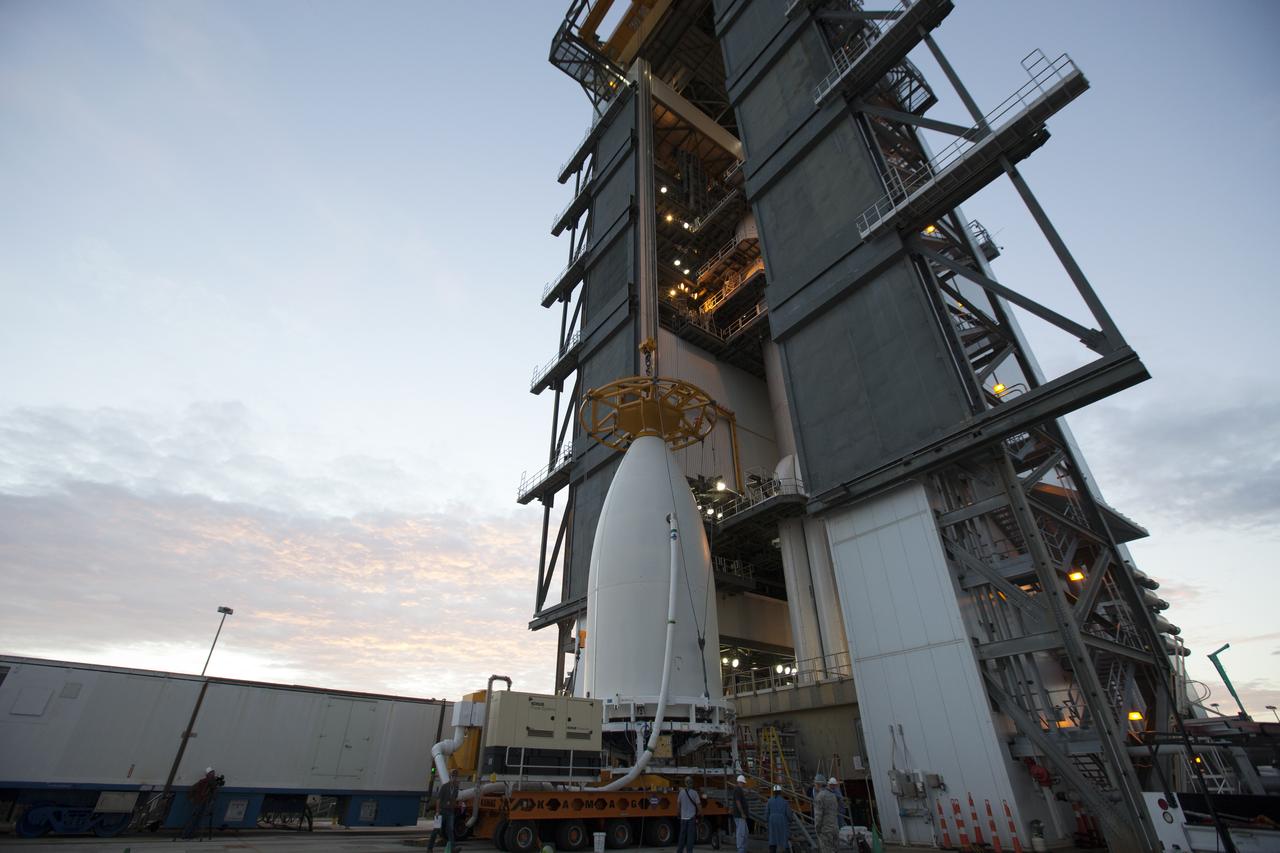
Preparations are underway to lift NOAA's Geostationary Operational Environmental Satellite (GOES-R), enclosed in its payload fairing at the Vertical Integration Facility at Space Launch Complex 41 at Cape Canaveral Air Force Station in Florida. GOES-R will be mated to the United Launch Alliance Atlas V Centaur upper stage in preparation for launch in November. GOES-R is the first satellite in a series of next-generation NOAA GOES Satellites.
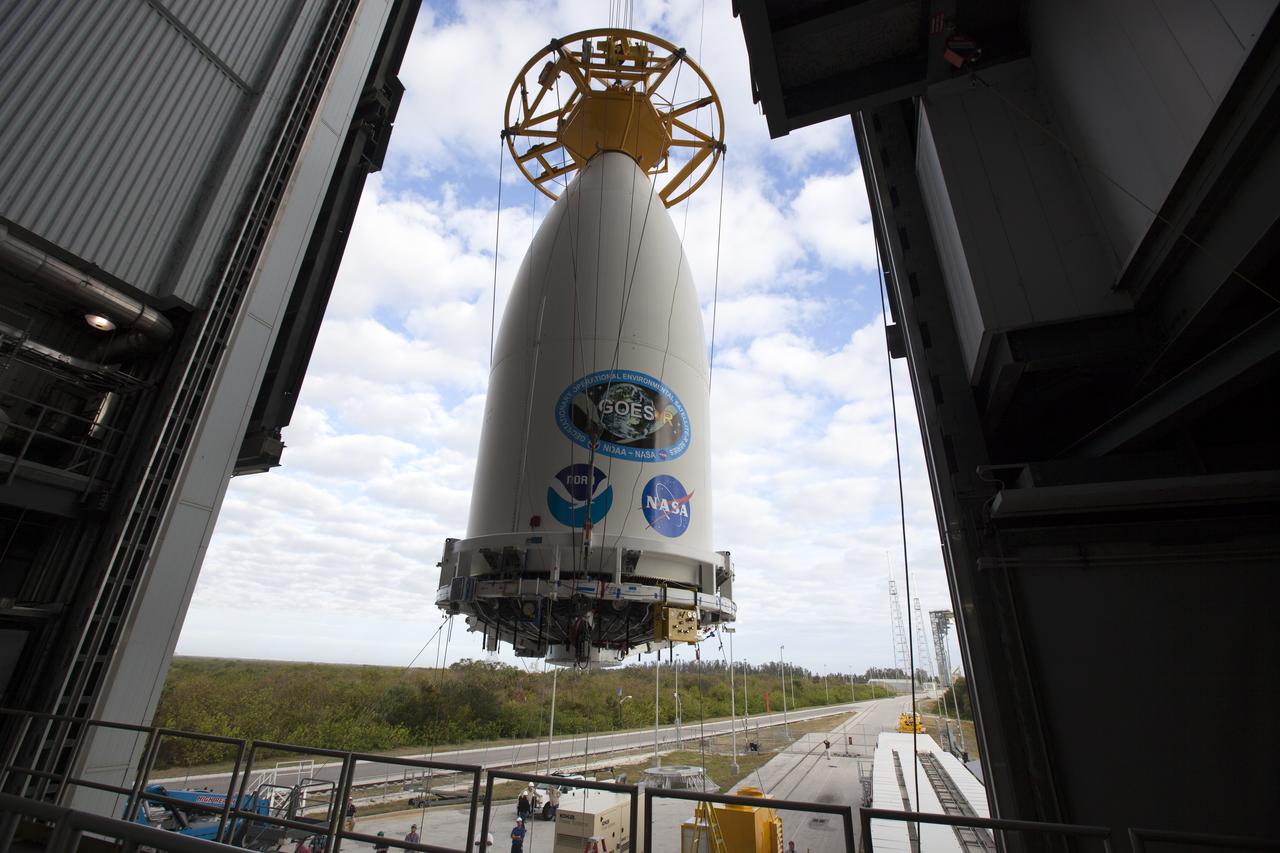
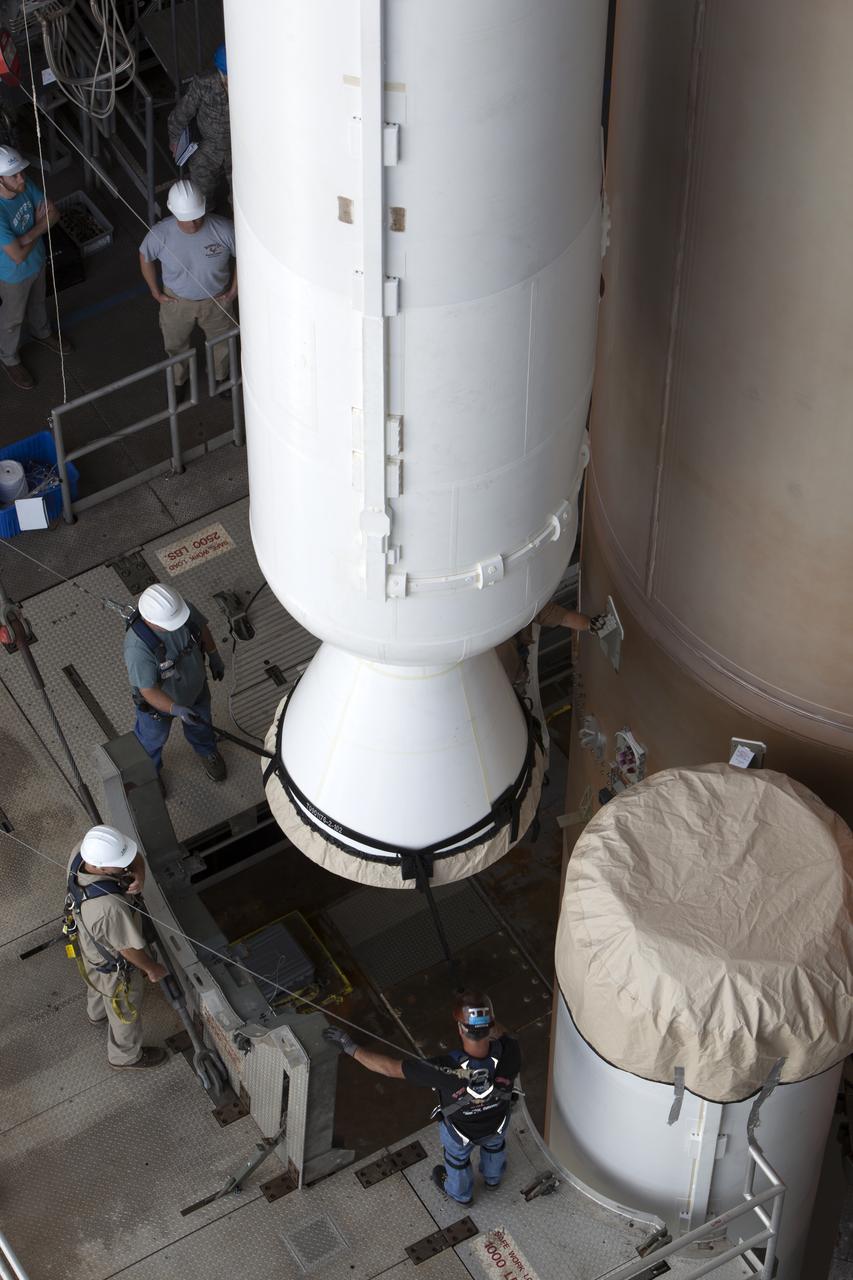
A view from high up inside the Vertical Integration Facility at Space Launch Complex 41 at Cape Canaveral Air Force Station in Florida. A crane lifts the payload fairing containing NOAA's Geostationary Operational Environmental Satellite (GOES-R) for mating to the United Launch Alliance Atlas V Centaur upper stage. The satellite will launch aboard the Atlas V rocket in November. GOES-R is the first satellite in a series of next-generation NOAA GOES Satellites.
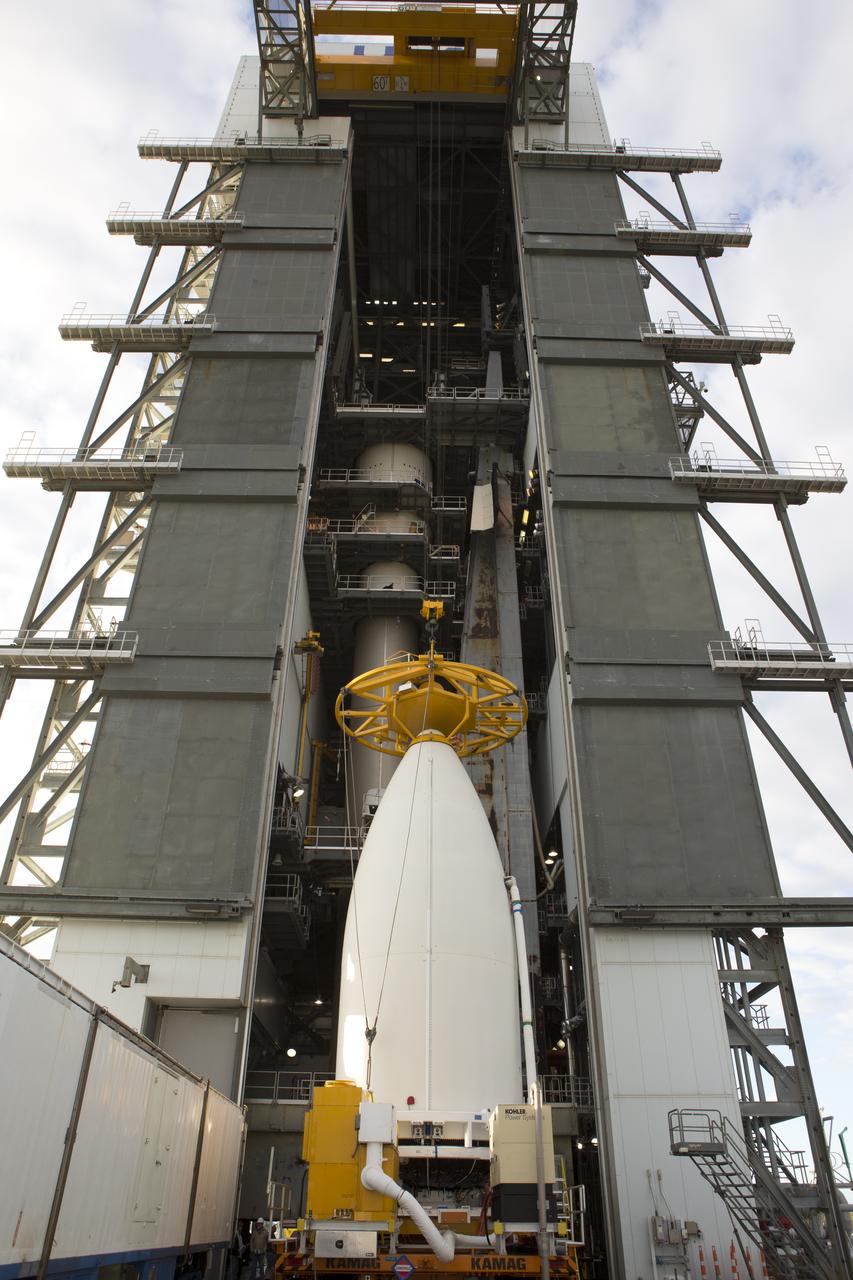
A crane begins to lift the payload fairing containing NOAA's Geostationary Operational Environmental Satellite (GOES-R) at the Vertical Integration Facility at Space Launch Complex 41 at Cape Canaveral Air Force Station in Florida. GOES-R will be mated to the United Launch Alliance Atlas V Centaur upper stage in preparation for launch in November. GOES-R is the first satellite in a series of next-generation NOAA GOES Satellites.
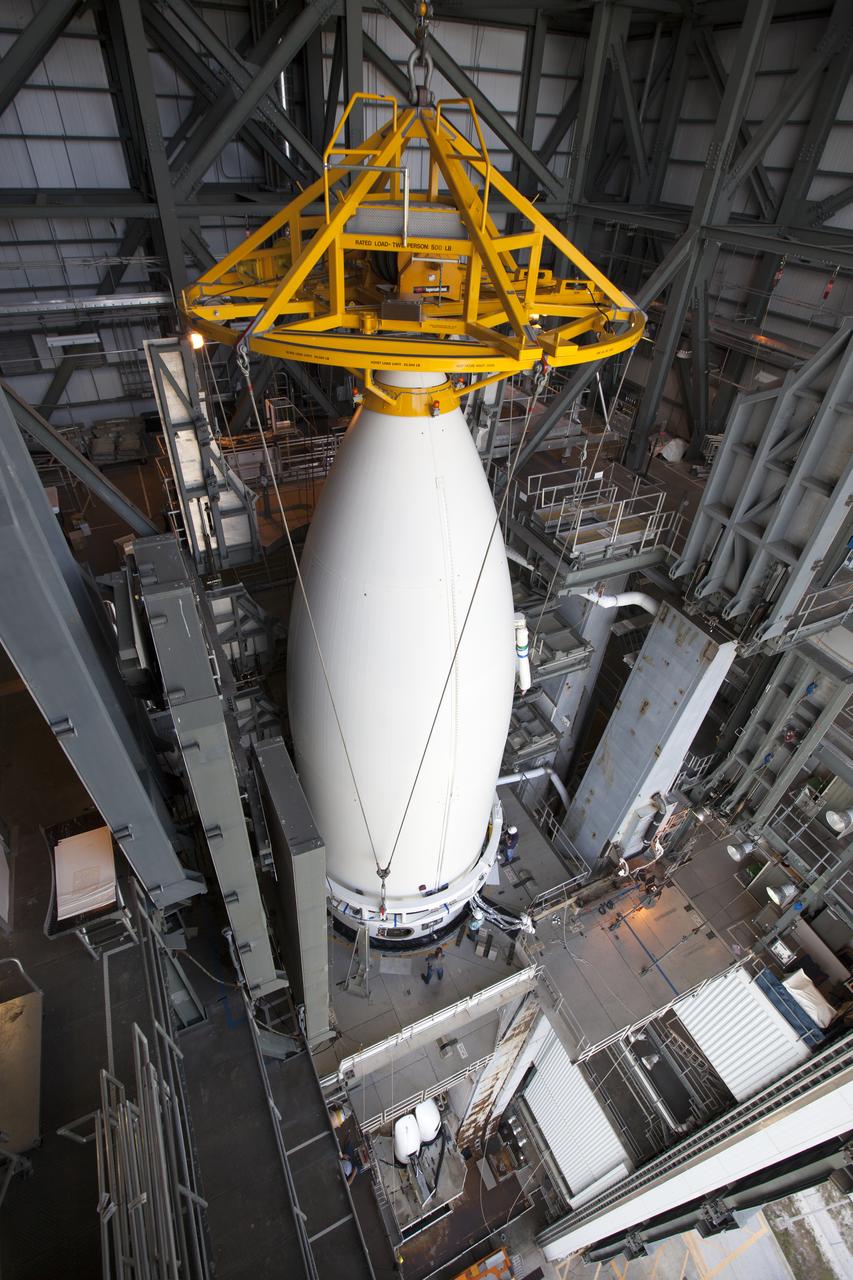
Enclosed in its payload fairing, NOAA's Geostationary Operational Environmental Satellite (GOES-R) is lifted into the Vertical Integration Facility at Space Launch Complex 41 at Cape Canaveral Air Force Station in Florida. GOES-R will be mated to the United Launch Alliance Atlas V Centaur upper stage in preparation for launch aboard the rocket in November. GOES-R is the first satellite in a series of next-generation NOAA GOES Satellites.
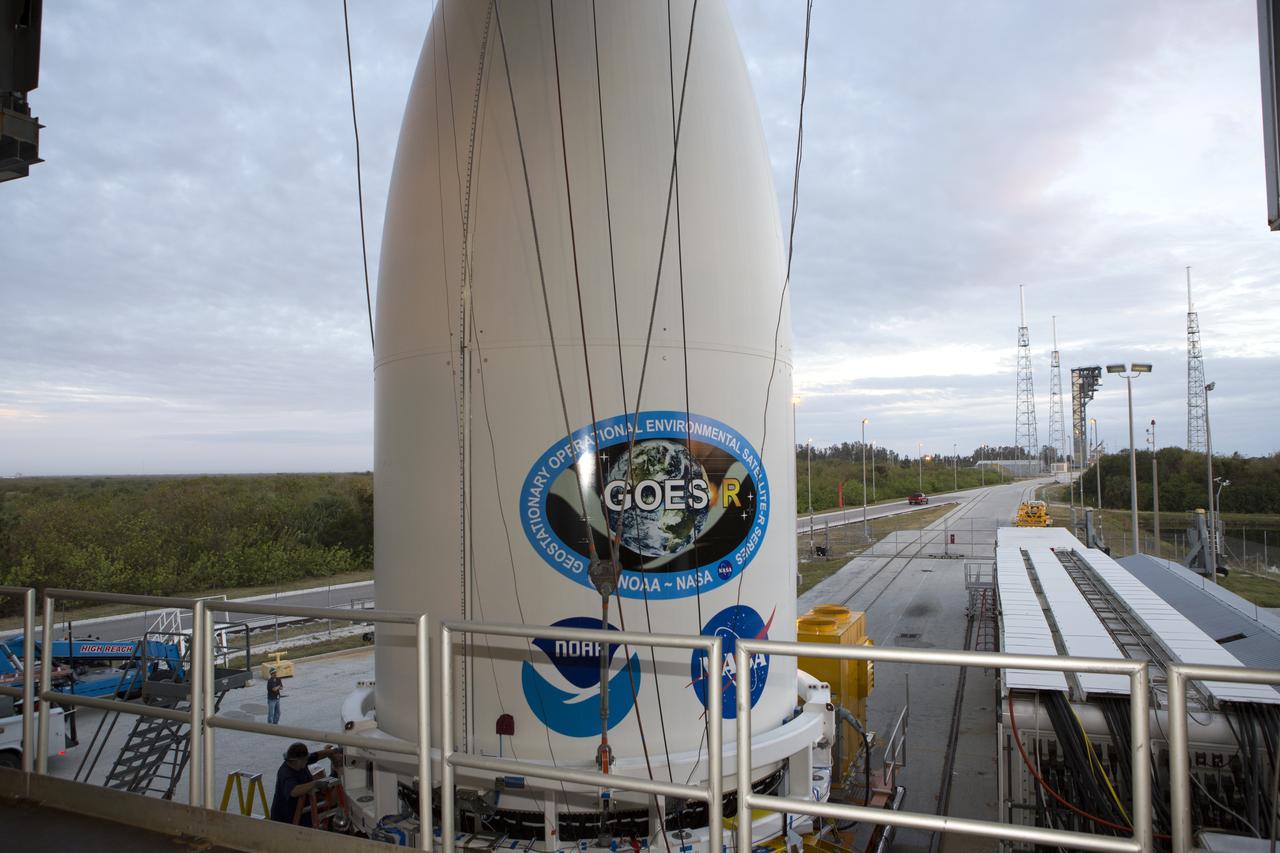
Preparations are underway to lift NOAA's Geostationary Operational Environmental Satellite (GOES-R), enclosed in its payload fairing at the Vertical Integration Facility at Space Launch Complex 41 at Cape Canaveral Air Force Station in Florida. GOES-R will be mated to the United Launch Alliance Atlas V Centaur upper stage in preparation for launch in November. GOES-R is the first satellite in a series of next-generation NOAA GOES Satellites.
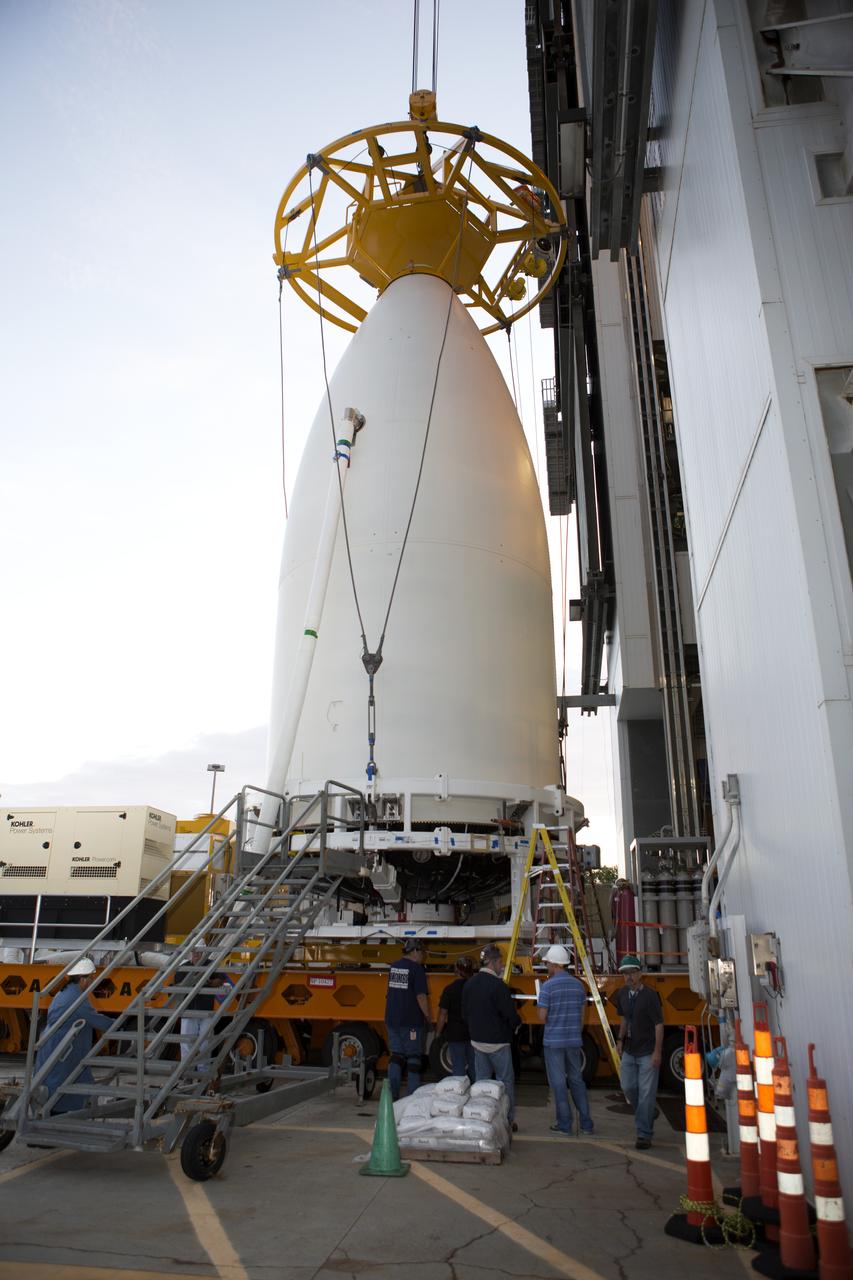
Preparations are underway to lift NOAA's Geostationary Operational Environmental Satellite (GOES-R), enclosed in its payload fairing at the Vertical Integration Facility at Space Launch Complex 41 at Cape Canaveral Air Force Station in Florida. GOES-R will be mated to the United Launch Alliance Atlas V Centaur upper stage in preparation for launch in November. GOES-R is the first satellite in a series of next-generation NOAA GOES Satellites.
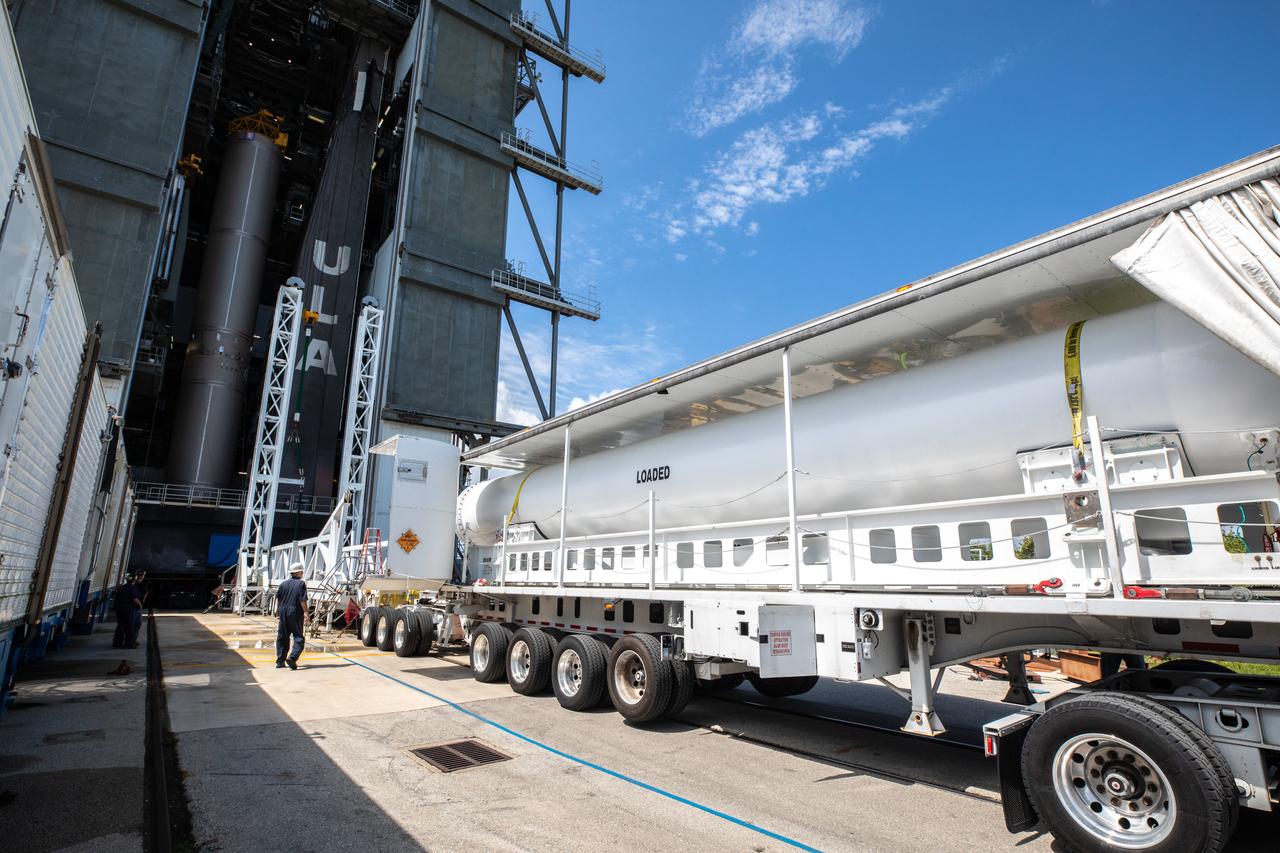
The first solid rocket booster (SRB) for the United Launch Alliance Atlas V 541 rocket for NASA’s Mars 2020 mission with the Perseverance rover arrives at the Vertical Integration Facility (VIF) at Space Launch Complex 41 at Cape Canaveral Air Force Station (CCAFS) in Florida on May 29, 2020. The SRB will be prepared for lift and mating to the Atlas V booster in the VIF. The Mars Perseverance rover is scheduled to launch in mid-July atop the Atlas V rocket from Pad 41. The rover is part of NASA’s Mars Exploration Program, a long-term effort of robotic exploration of the Red Planet. The rover will search for habitable conditions in the ancient past and signs of past microbial life on Mars. The Launch Services Program at Kennedy is responsible for launch management.
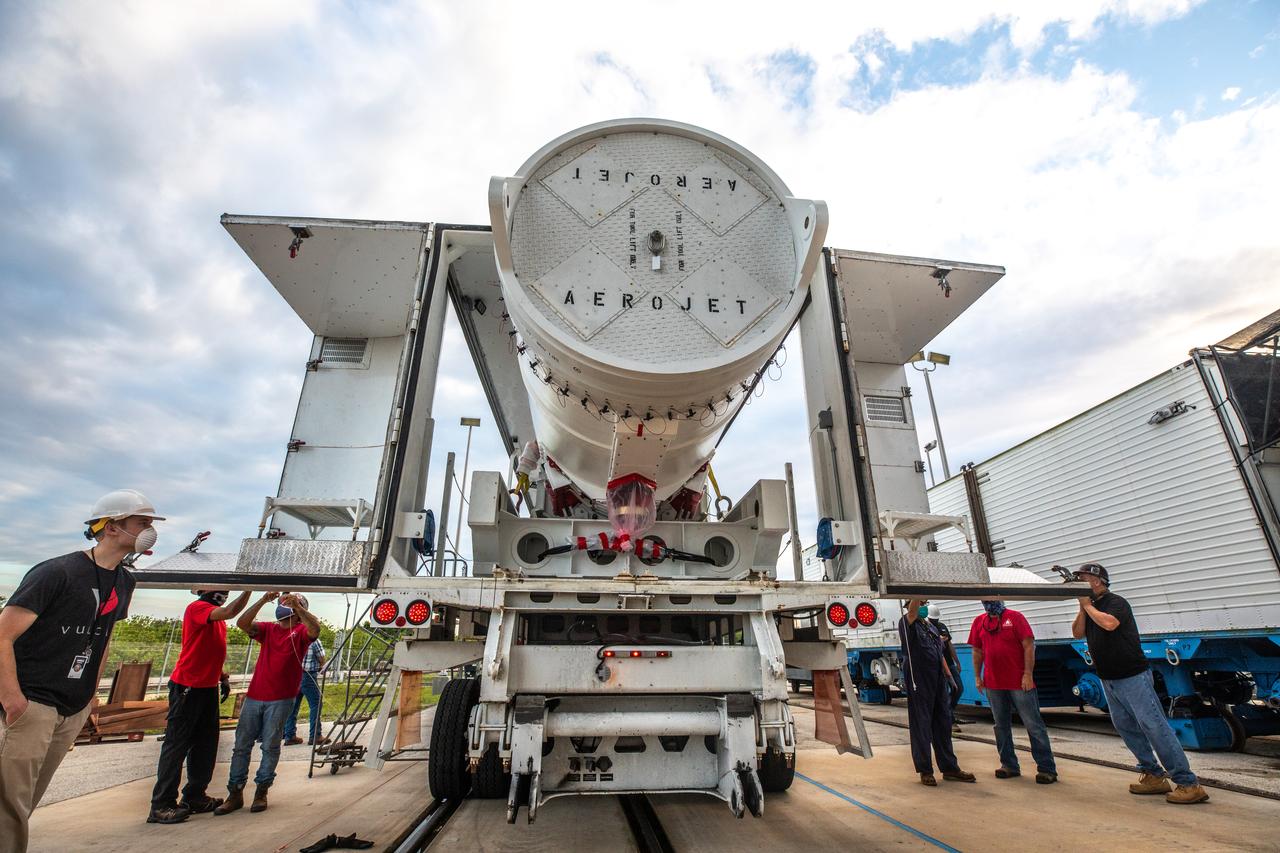
The first solid rocket booster (SRB) for the United Launch Alliance Atlas V 541 rocket for NASA’s Mars 2020 mission with the Perseverance rover arrives near the Vertical Integration Facility (VIF) at Space Launch Complex 41 at Cape Canaveral Air Force Station (CCAFS) in Florida on May 29, 2020. The SRB will be prepared for lift and mating to the Atlas V booster in the VIF. The Mars Perseverance rover is scheduled to launch in mid-July atop the Atlas V rocket from Pad 41. The rover is part of NASA’s Mars Exploration Program, a long-term effort of robotic exploration of the Red Planet. The rover will search for habitable conditions in the ancient past and signs of past microbial life on Mars. The Launch Services Program at Kennedy is responsible for launch management.
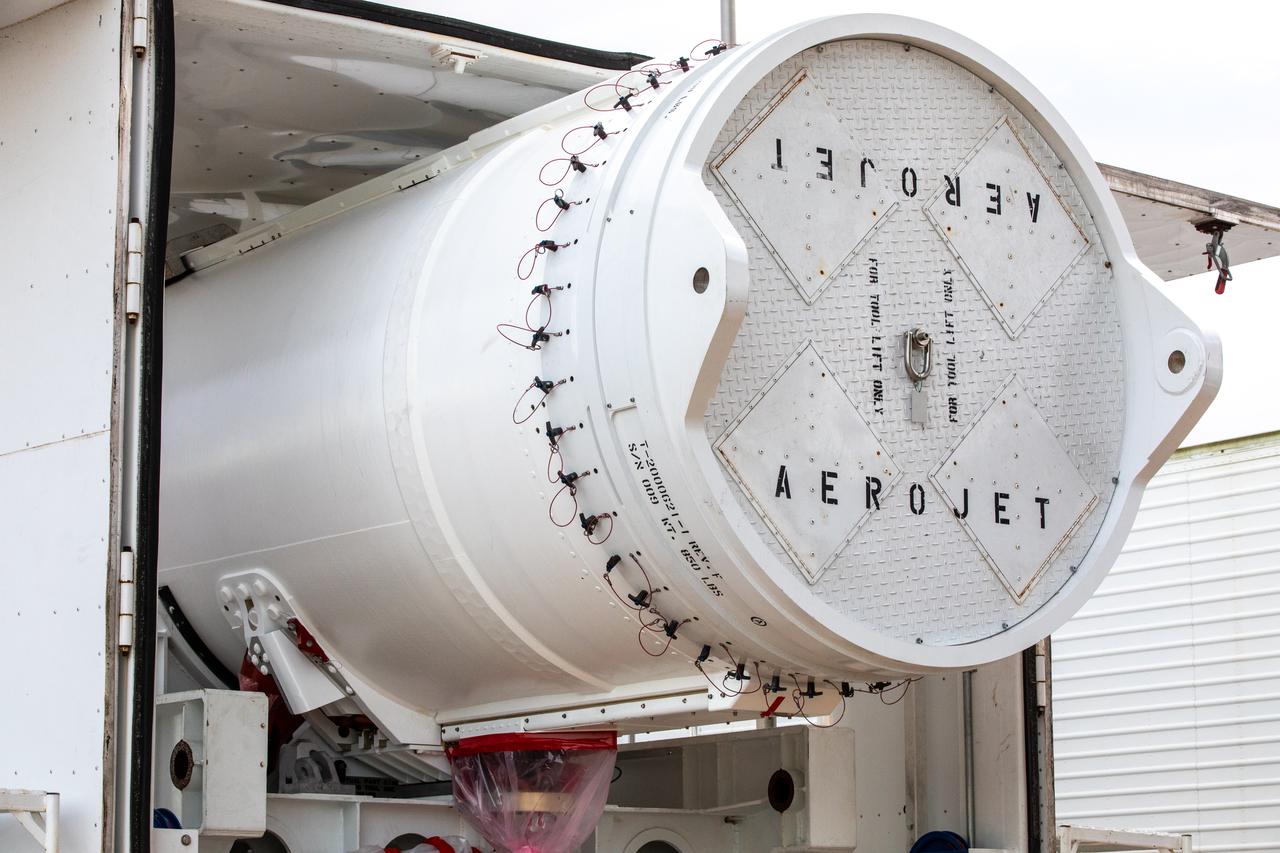
The first solid rocket booster (SRB) for the United Launch Alliance Atlas V 541 rocket for NASA’s Mars 2020 mission with the Perseverance rover departs for the Vertical Integration Facility (VIF) at Space Launch Complex 41 at Cape Canaveral Air Force Station (CCAFS) in Florida on May 29, 2020. The SRB will be prepared for lift and mating to the Atlas V booster in the VIF. The Mars Perseverance rover is scheduled to launch in mid-July atop the Atlas V rocket from Pad 41. The rover is part of NASA’s Mars Exploration Program, a long-term effort of robotic exploration of the Red Planet. The rover will search for habitable conditions in the ancient past and signs of past microbial life on Mars. The Launch Services Program at Kennedy is responsible for launch management.
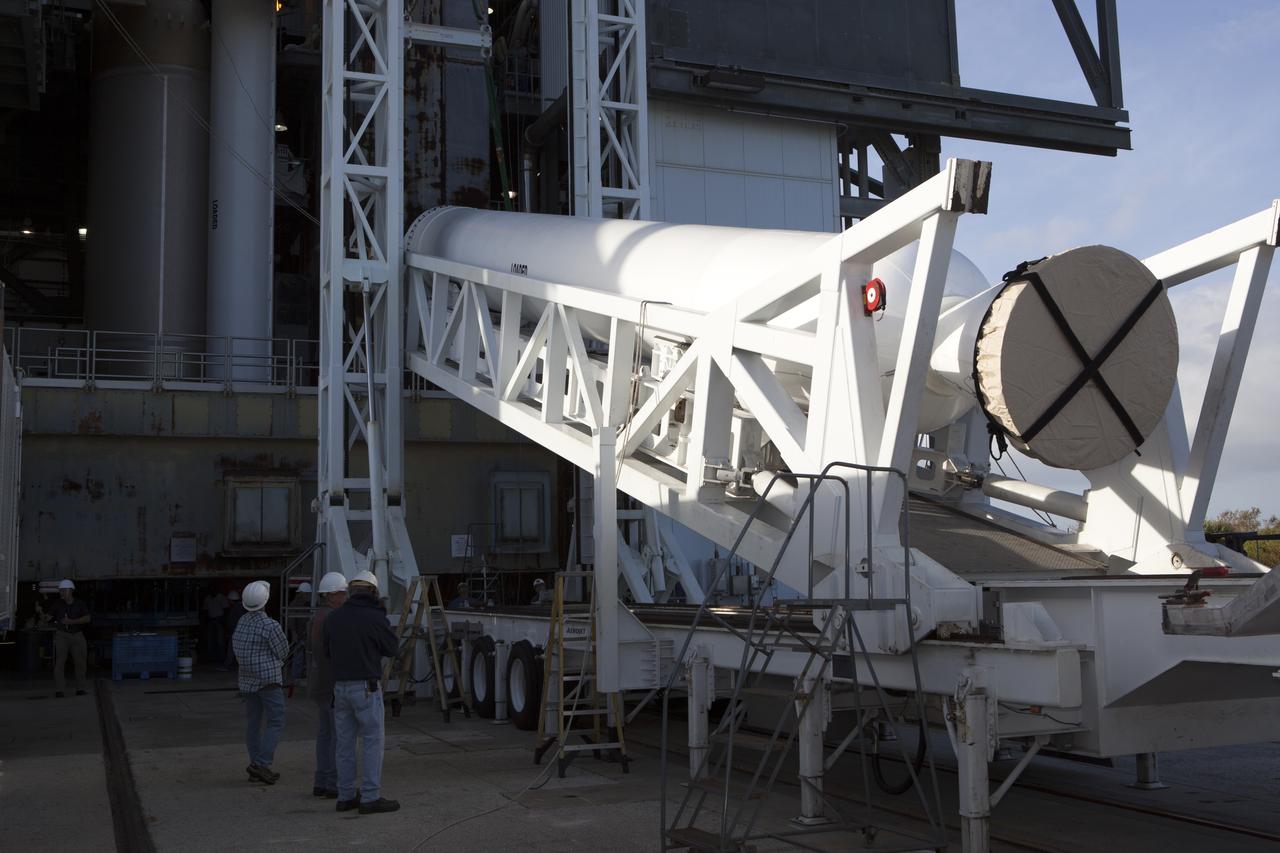
The solid rocket motor is lifted on its transporter for mating to the United Launch Alliance Atlas V rocket in the Vertical Integration Facility at Space Launch Complex 41 at Cape Canaveral Air Force Station in Florida. NOAA's Geostationary Operational Environmental Satellite (GOES-R) will launch aboard the Atlas V rocket this month. GOES-R is the first satellite in a series of next-generation NOAA GOES Satellites.
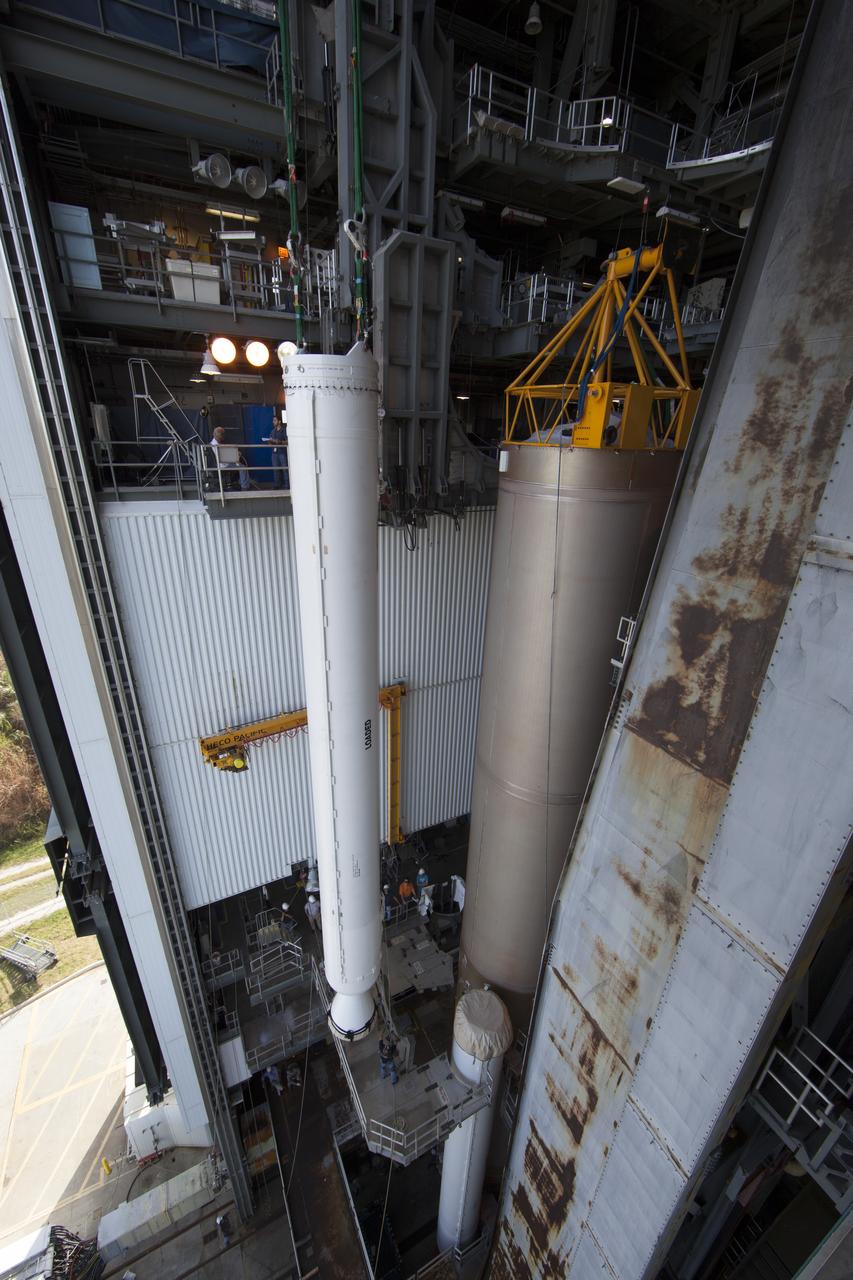
The solid rocket motor has been lifted to the vertical position and moved into the Vertical Integration Facility at Space Launch Complex 41 at Cape Canaveral Air Force Station in Florida for mating to the United Launch Alliance Atlas V rocket. NOAA's Geostationary Operational Environmental Satellite (GOES-R) will launch aboard the Atlas V rocket this month. GOES-R is the first satellite in a series of next-generation NOAA GOES Satellites.
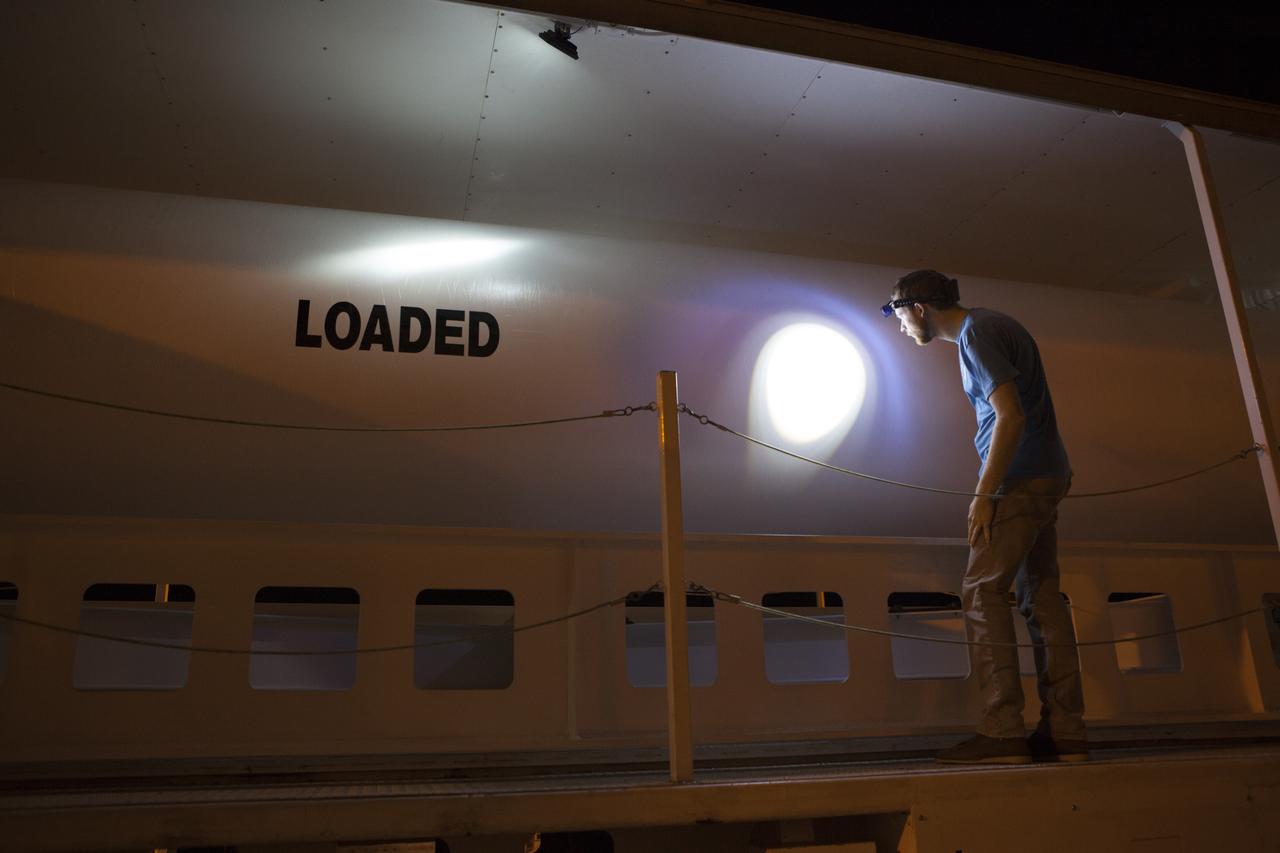
A United Launch Alliance (ULA) technician inspects the solid rocket motor for the ULA Atlas V rocket on its transporter near the Vertical Integration Facility at Space Launch Complex 41 at Cape Canaveral Air Force Station in Florida. The solid rocket motor will be lifted and mated to the rocket in preparation for the launch of NOAA's Geostationary Operational Environmental Satellite (GOES-R) this month. GOES-R is the first satellite in a series of next-generation NOAA GOES Satellites.
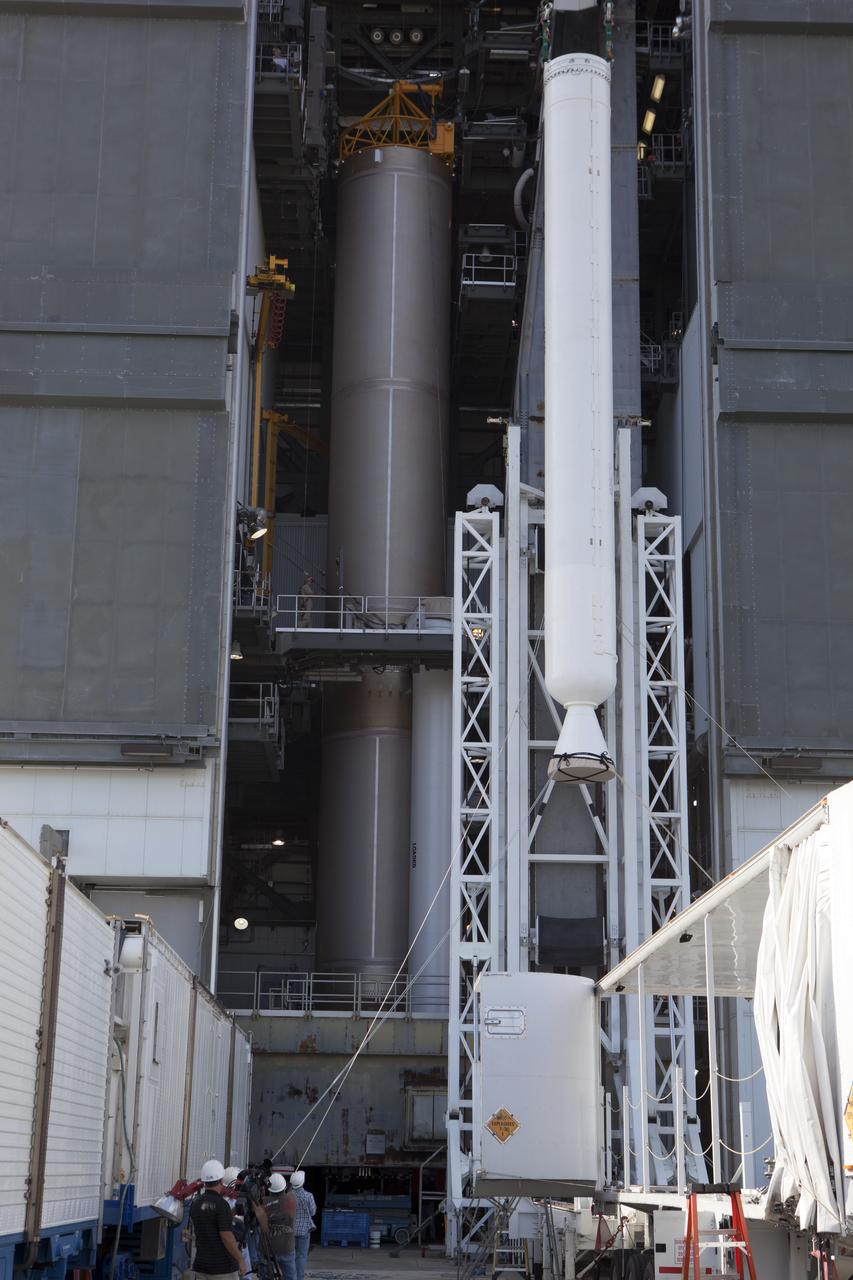
The solid rocket motor has been lifted to the vertical position on its transporter for mating to the United Launch Alliance Atlas V rocket in the Vertical Integration Facility at Space Launch Complex 41 at Cape Canaveral Air Force Station in Florida. NOAA's Geostationary Operational Environmental Satellite (GOES-R) will launch aboard the Atlas V rocket this month. GOES-R is the first satellite in a series of next-generation NOAA GOES Satellites.
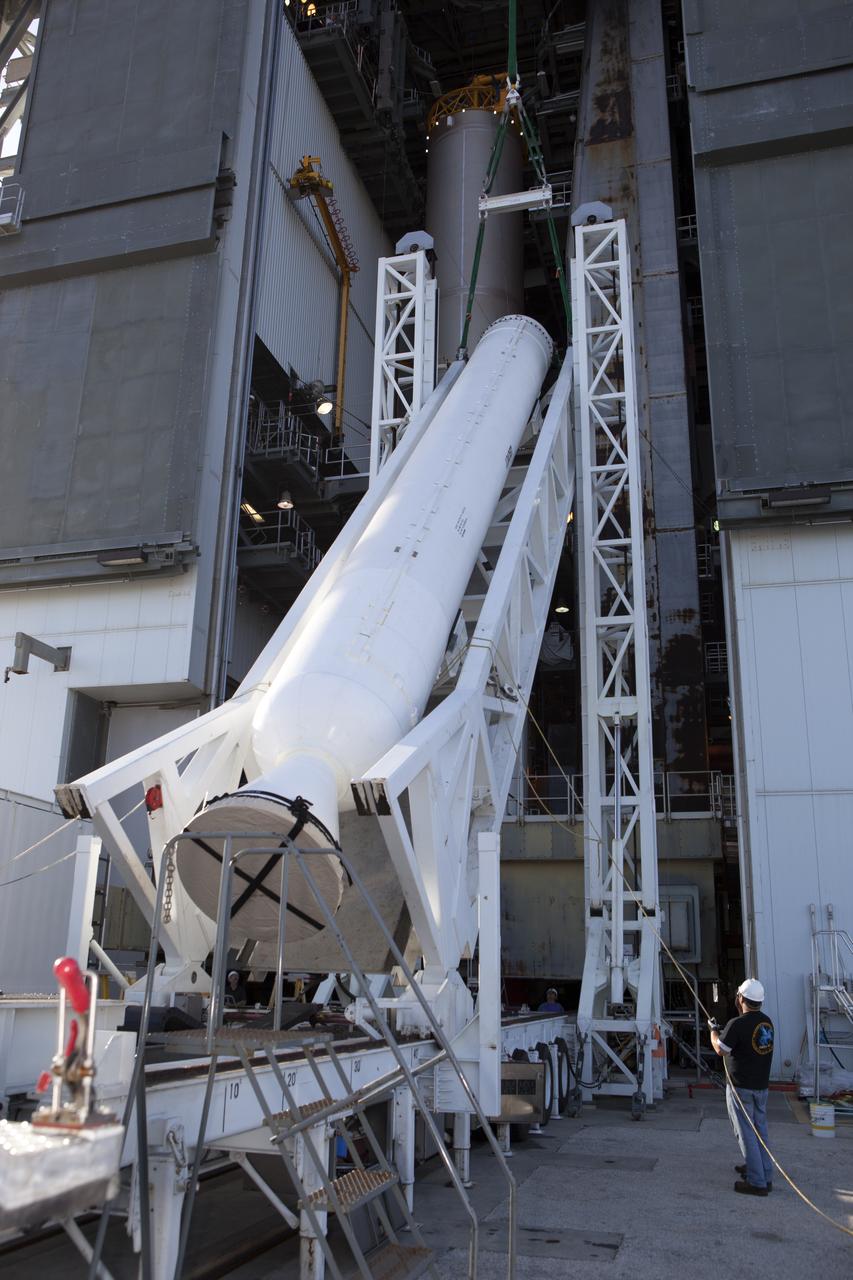
The solid rocket motor is lifted on its transporter for mating to the United Launch Alliance Atlas V rocket in the Vertical Integration Facility at Space Launch Complex 41 at Cape Canaveral Air Force Station in Florida. NOAA's Geostationary Operational Environmental Satellite (GOES-R) will launch aboard the Atlas V rocket this month. GOES-R is the first satellite in a series of next-generation NOAA GOES Satellites.
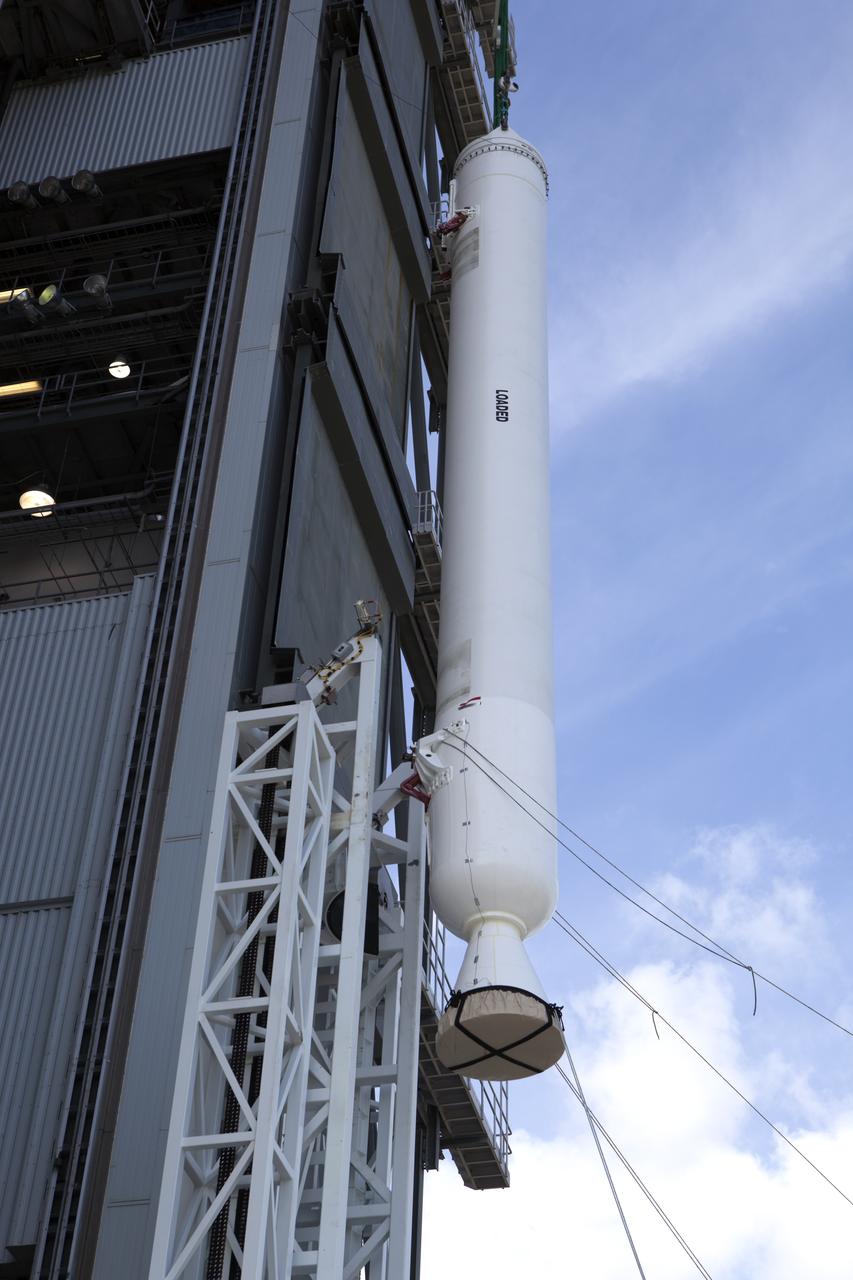
The solid rocket motor has been lifted to the vertical position for mating to the United Launch Alliance Atlas V rocket in the Vertical Integration Facility at Space Launch Complex 41 at Cape Canaveral Air Force Station in Florida. NOAA's Geostationary Operational Environmental Satellite (GOES-R) will launch aboard the Atlas V rocket this month. GOES-R is the first satellite in a series of next-generation NOAA GOES Satellites.
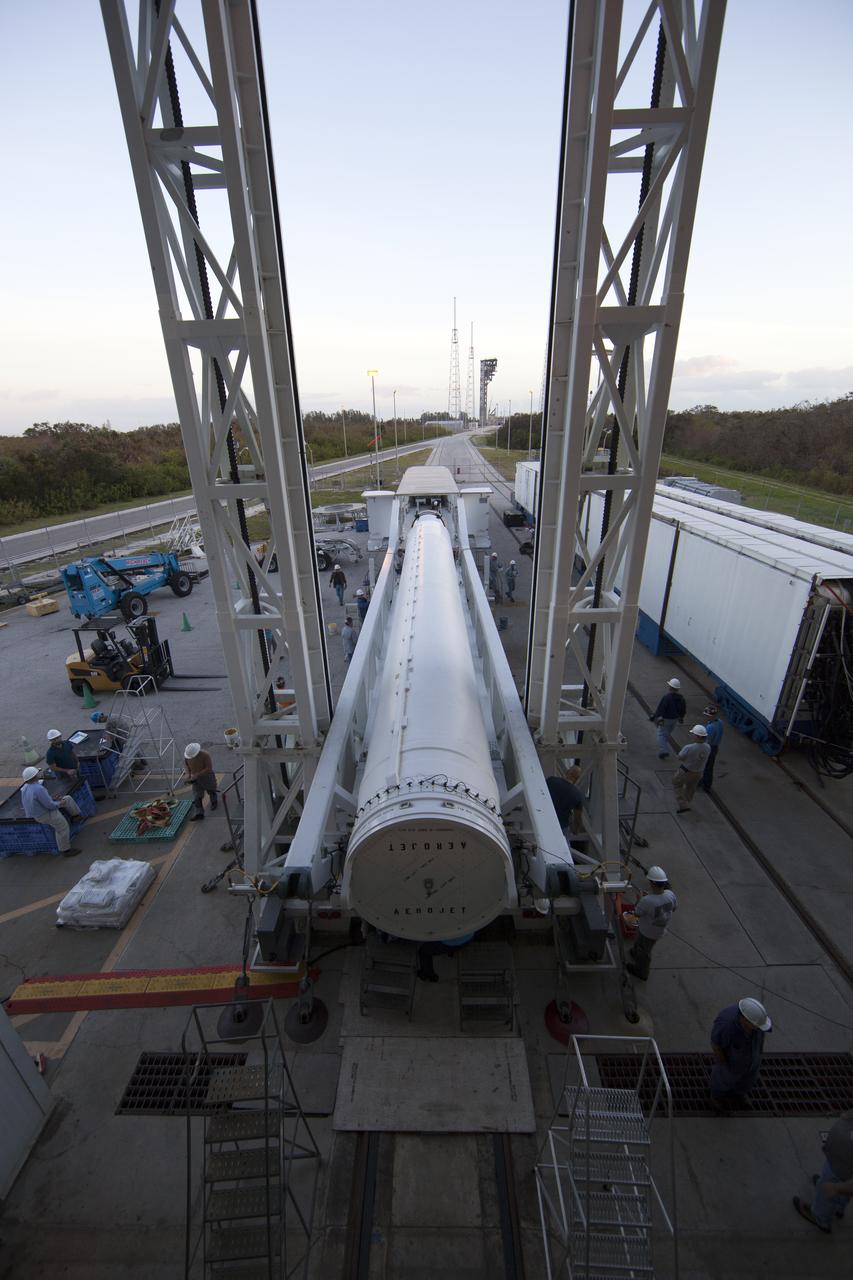
Preparations are underway to lift the solid rocket motor up from its transporter for mating to the United Launch Alliance Atlas V rocket in the Vertical Integration Facility at Space Launch Complex 41 at Cape Canaveral Air Force Station in Florida. NOAA's Geostationary Operational Environmental Satellite (GOES-R) will launch aboard the Atlas V rocket this month. GOES-R is the first satellite in a series of next-generation NOAA GOES Satellites.
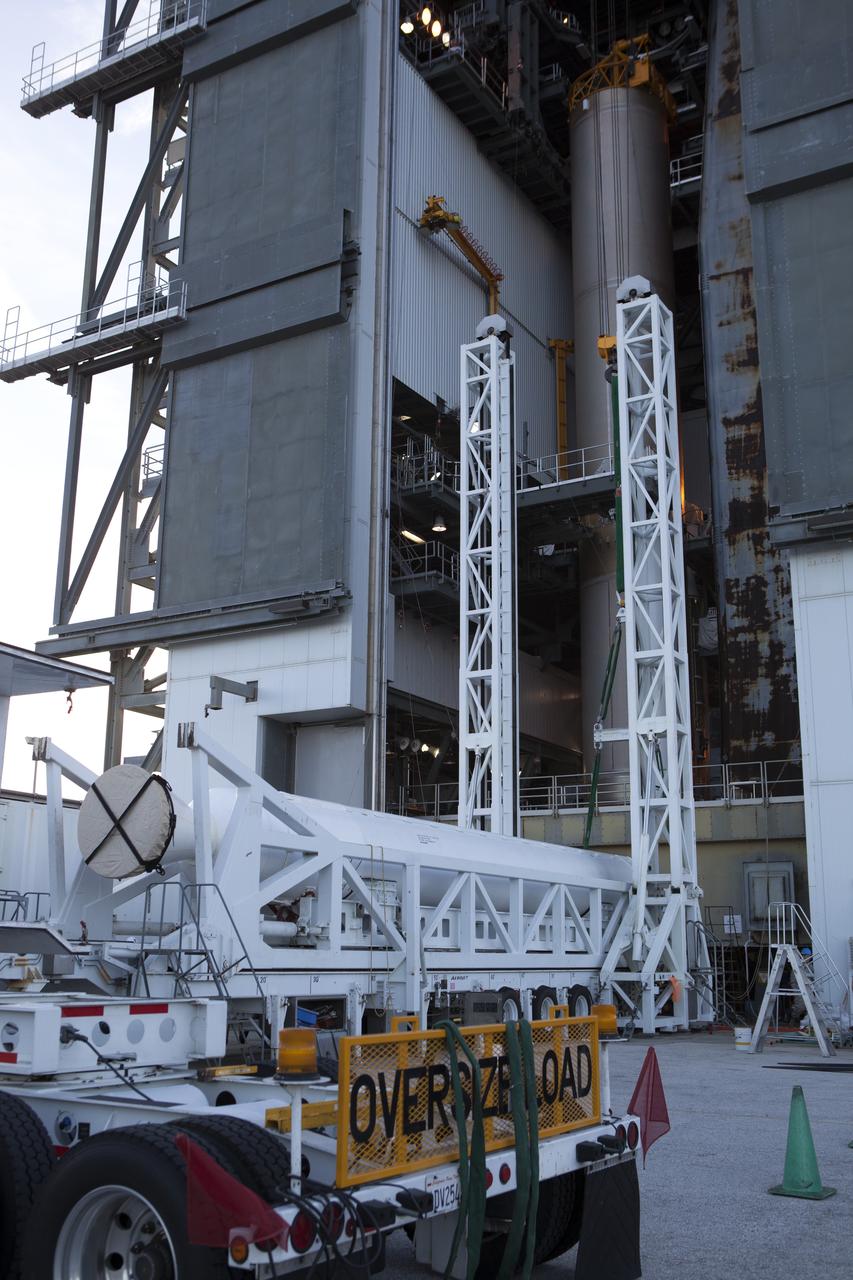
Preparations are underway to lift the solid rocket motor up from its transporter for mating to the United Launch Alliance Atlas V rocket in the Vertical Integration Facility at Space Launch Complex 41 at Cape Canaveral Air Force Station in Florida. NOAA's Geostationary Operational Environmental Satellite (GOES-R) will launch aboard the Atlas V rocket this month. GOES-R is the first satellite in a series of next-generation NOAA GOES Satellites.
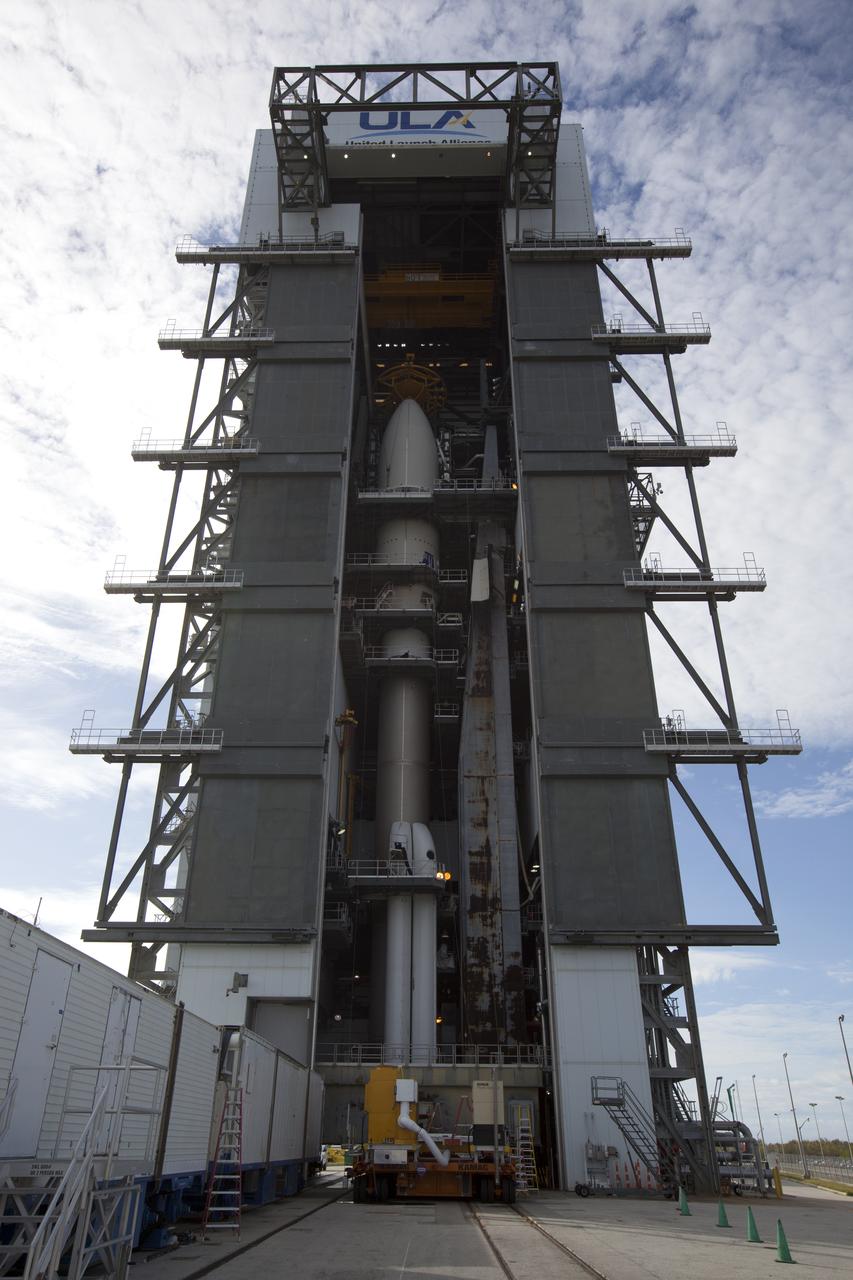
Enclosed in its payload fairing, NOAA's Geostationary Operational Environmental Satellite (GOES-R) is mated to the United Launch Alliance Atlas V Centaur upper stage in the Vertical Integration Facility at Space Launch Complex 41 at Cape Canaveral Air Force Station in Florida. The satellite will launch aboard the Atlas V rocket in November. GOES-R is the first satellite in a series of next-generation NOAA GOES Satellites.
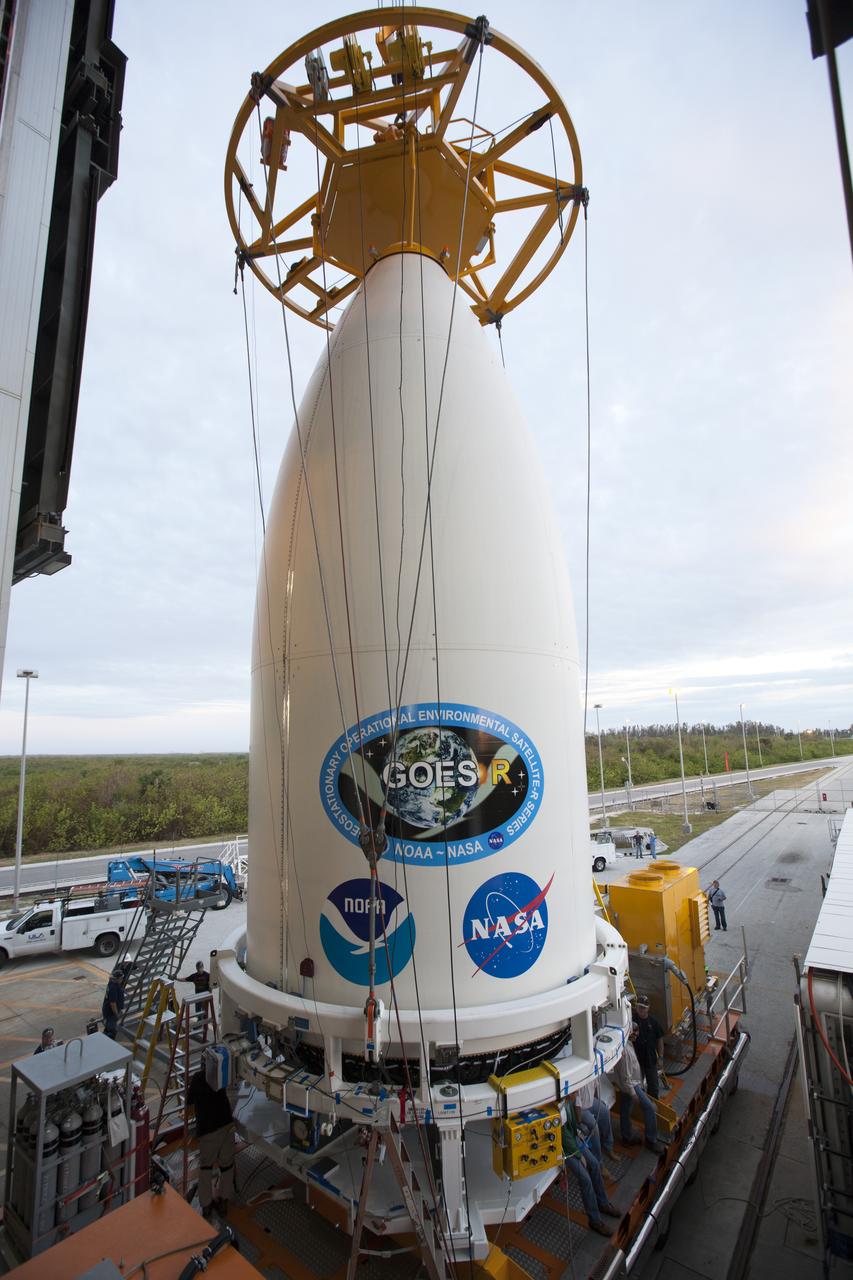
A crane has been attached to the payload fairing containing NOAA's Geostationary Operational Environmental Satellite (GOES-R) at the Vertical Integration Facility at Space Launch Complex 41 at Cape Canaveral Air Force Station in Florida. GOES-R will be mated to the United Launch Alliance Atlas V Centaur upper stage in preparation for launch in November. GOES-R is the first satellite in a series of next-generation NOAA GOES Satellites.
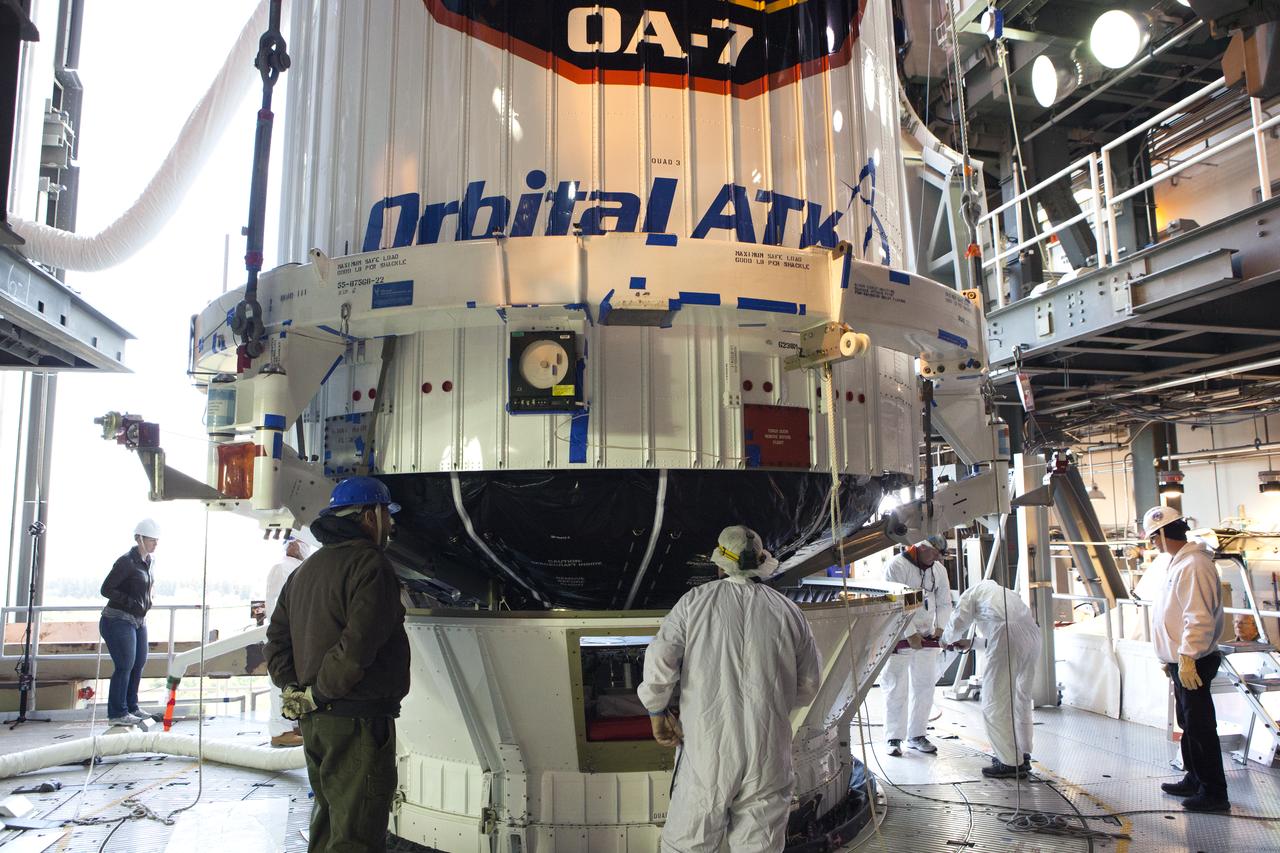
United Launch Alliance (ULA) technicians monitor the progress as the payload fairing containing the Orbital ATK Cygnus pressurized cargo module is lowered onto the Centaur upper stage, or second stage, of the ULA Atlas V rocket in the Vertical Integration Facility at Space Launch Complex 41 at Cape Canaveral Air Force Station in Florida. The Orbital ATK CRS-7 commercial resupply services mission to the International Space Station is scheduled to launch atop the Atlas V from pad 41. Cygnus will deliver 7,600 pounds of supplies, equipment and scientific research materials to the space station.
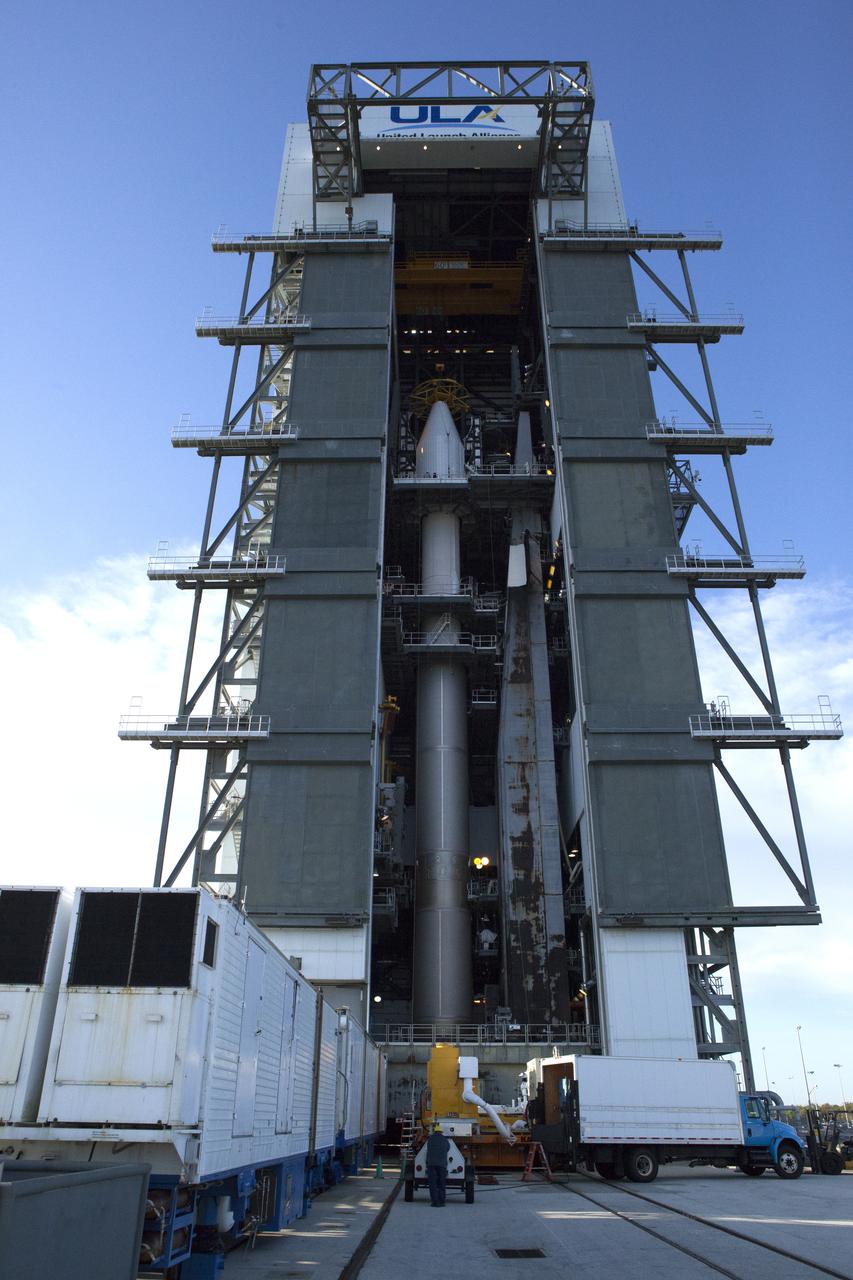
The payload fairing containing the Orbital ATK Cygnus pressurized cargo module is mated to the Centaur upper stage, or second stage, of the United Launch Alliance (ULA) rocket in the Vertical Integration Facility at Space Launch Complex 41 at Cape Canaveral Air Force Station in Florida. The Orbital ATK CRS-7 commercial resupply services mission to the International Space Station is scheduled to launch atop the Atlas V from pad 41. Cygnus will deliver 7,600 pounds of supplies, equipment and scientific research materials to the space station.
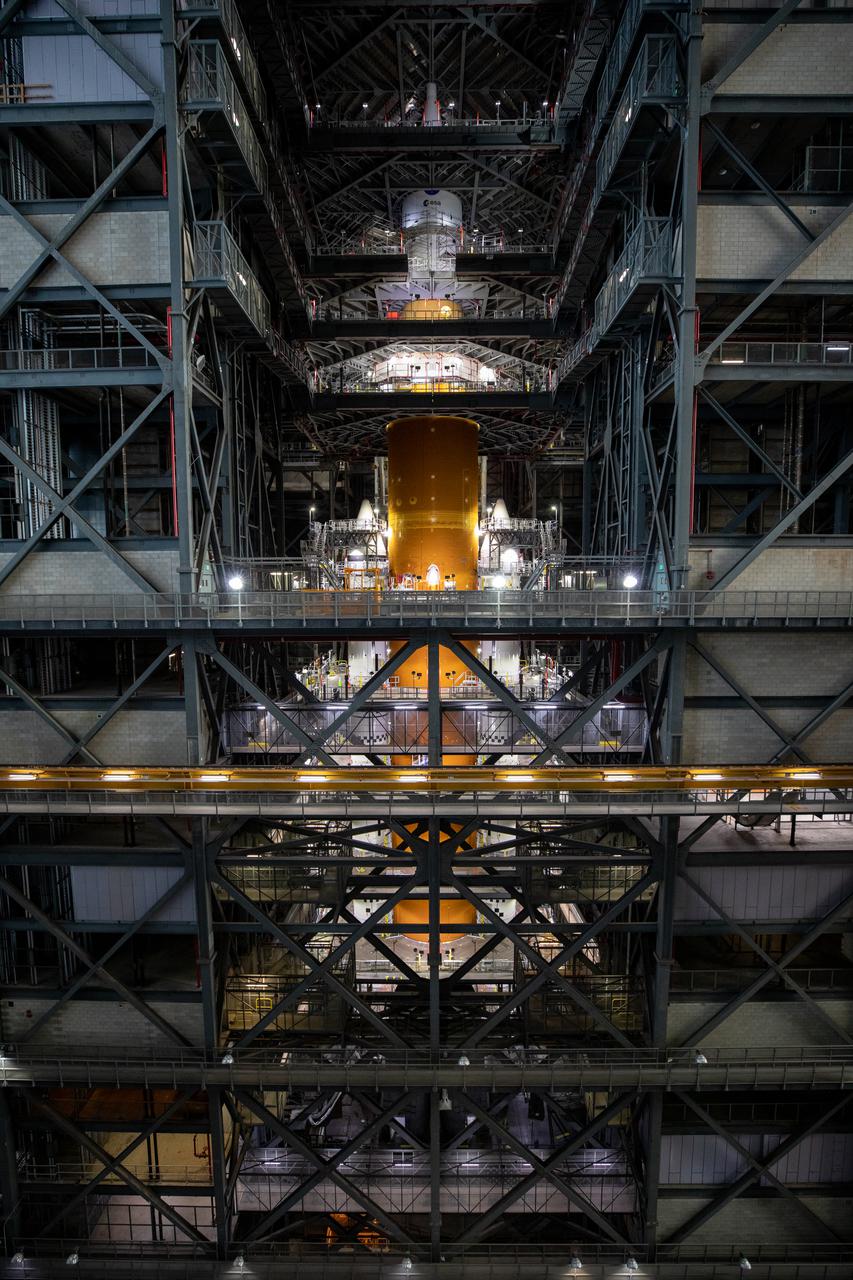
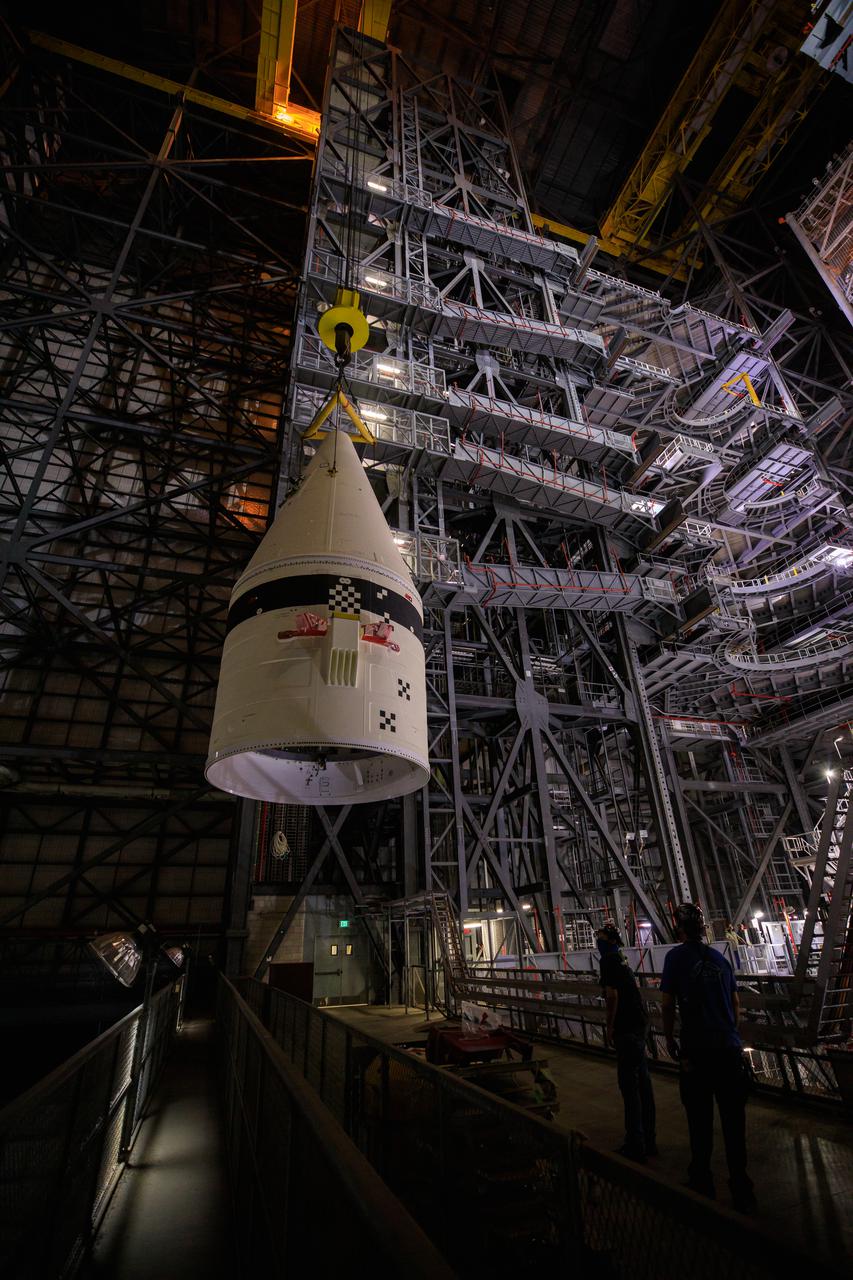
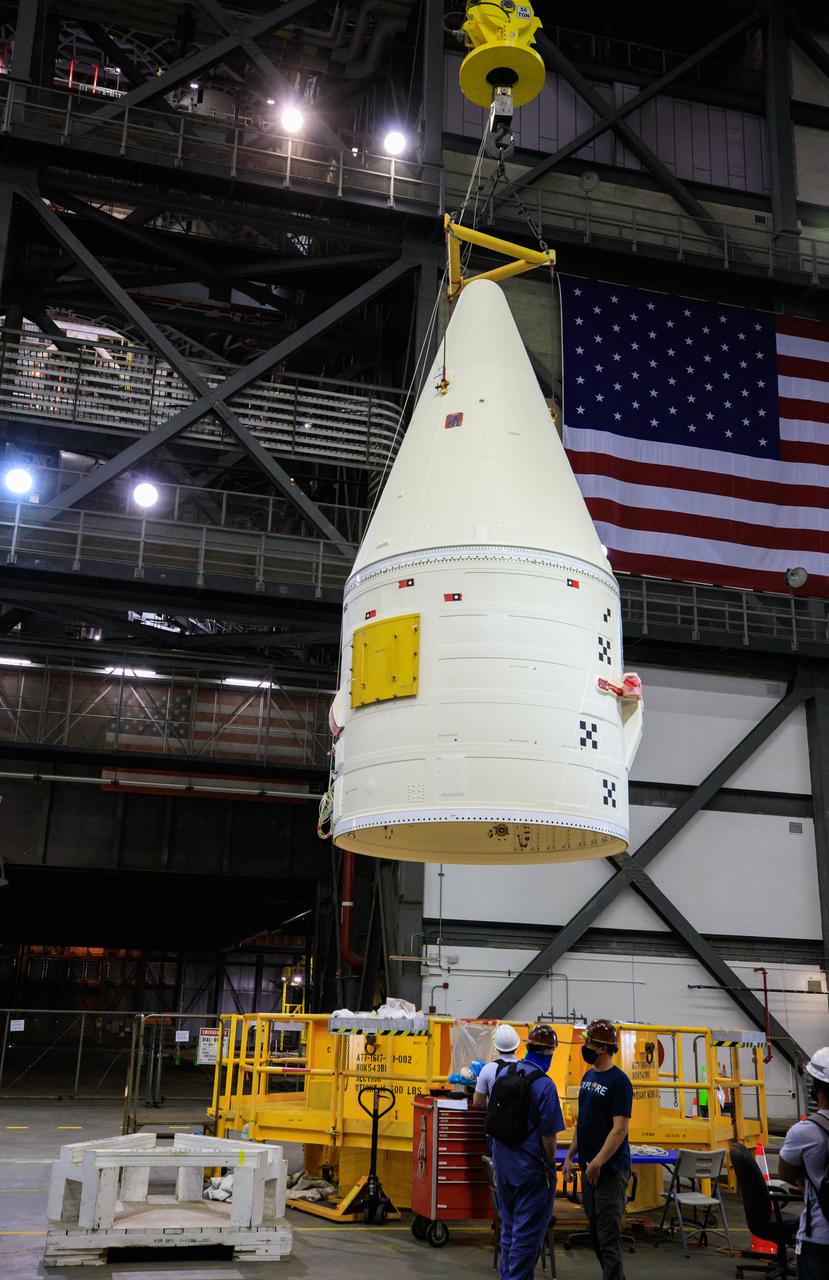
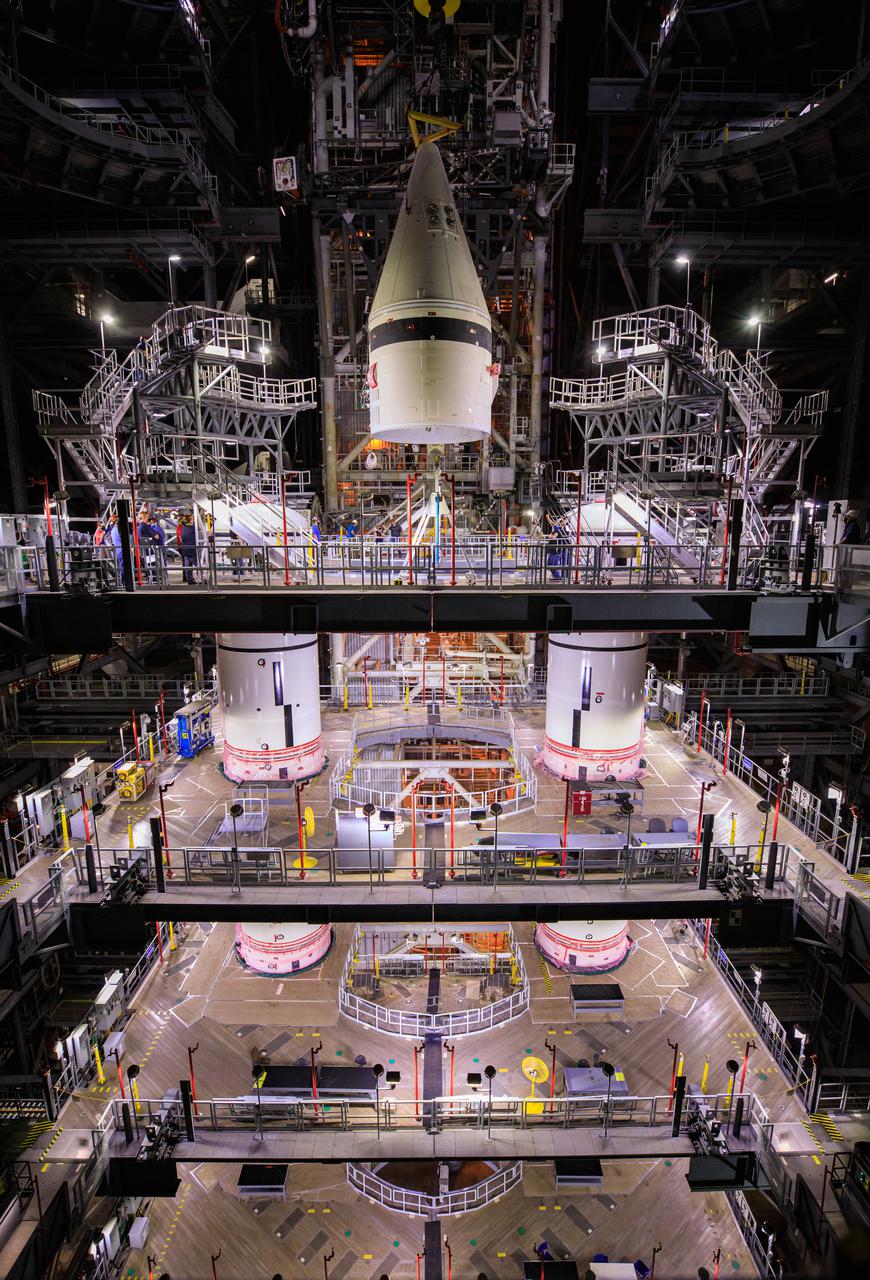
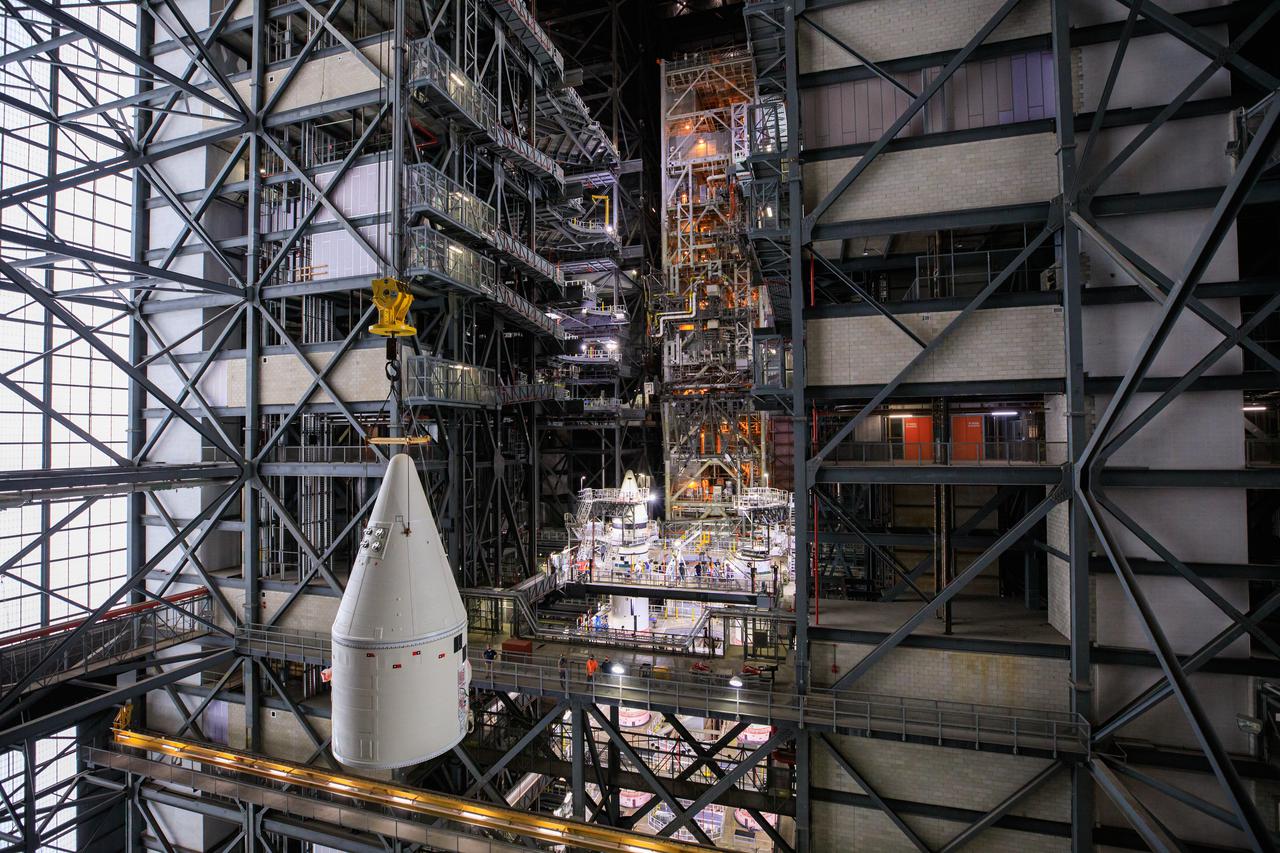
Artemis I Orion Lift and Mate - Fully Stacked
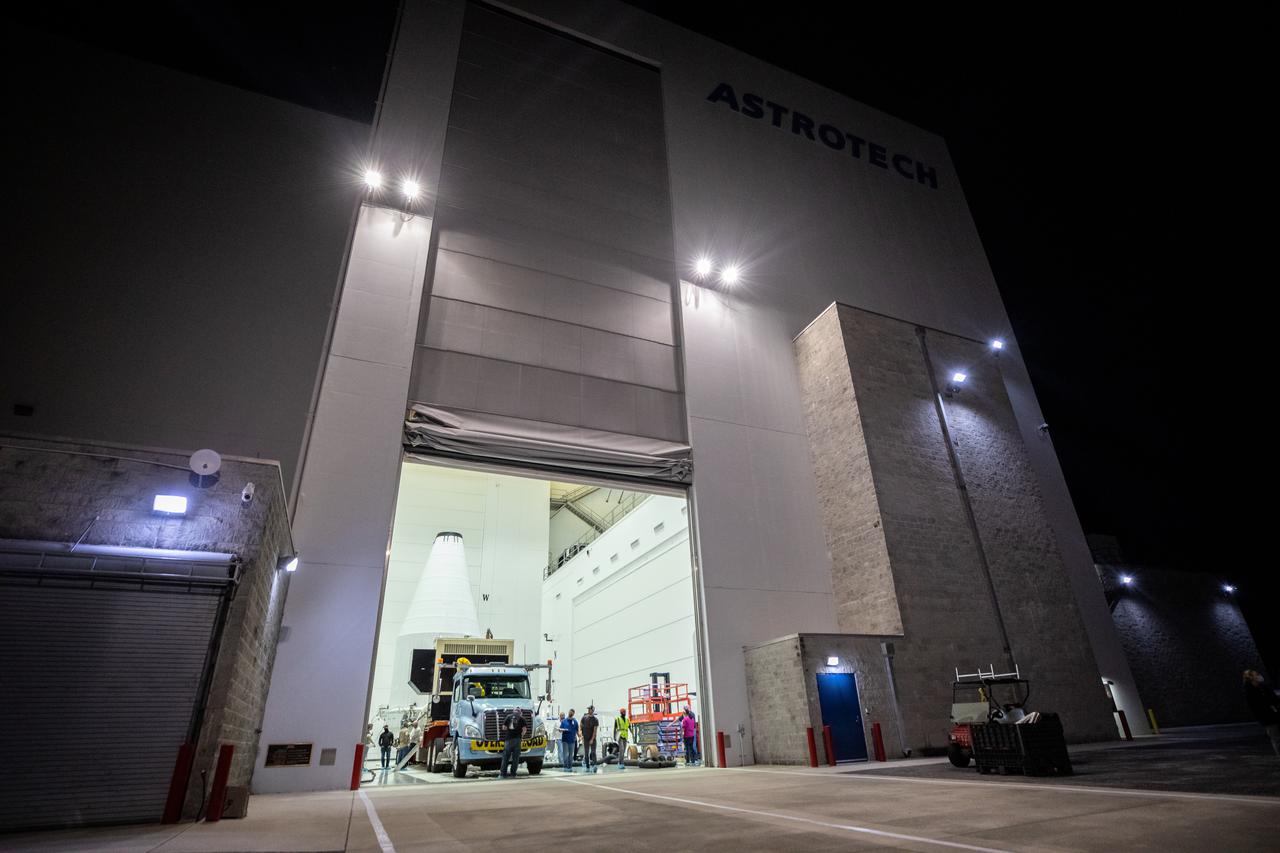
The Lucy spacecraft, encapsulated in its payload fairing, exits the Astrotech Space Operations Facility in Titusville, Florida on Oct. 7, 2021. The spacecraft will be transported to nearby Space Launch Complex 41 at Cape Canaveral Space Force Station. The encapsulated spacecraft will be hoisted up and into the Vertical Integration Facility where it will be lowered down and secured on the United Launch Alliance (ULA) Atlas V Centaur second stage. Lucy is scheduled to launch no earlier than Saturday, Oct. 16, on the ULA Atlas V 401 rocket from Launch Pad 41. NASA’s Launch Services Program, based at Kennedy Space Center, America’s premier multi-user spaceport, is managing the launch. Over its 12-year primary mission, Lucy will explore a record-breaking number of asteroids, flying by one asteroid in the solar system’s main belt and seven Trojan asteroids. Additionally, Lucy’s path will circle back to Earth three times for gravity assists, making it the first spacecraft ever to return to the vicinity of Earth from the outer solar system.
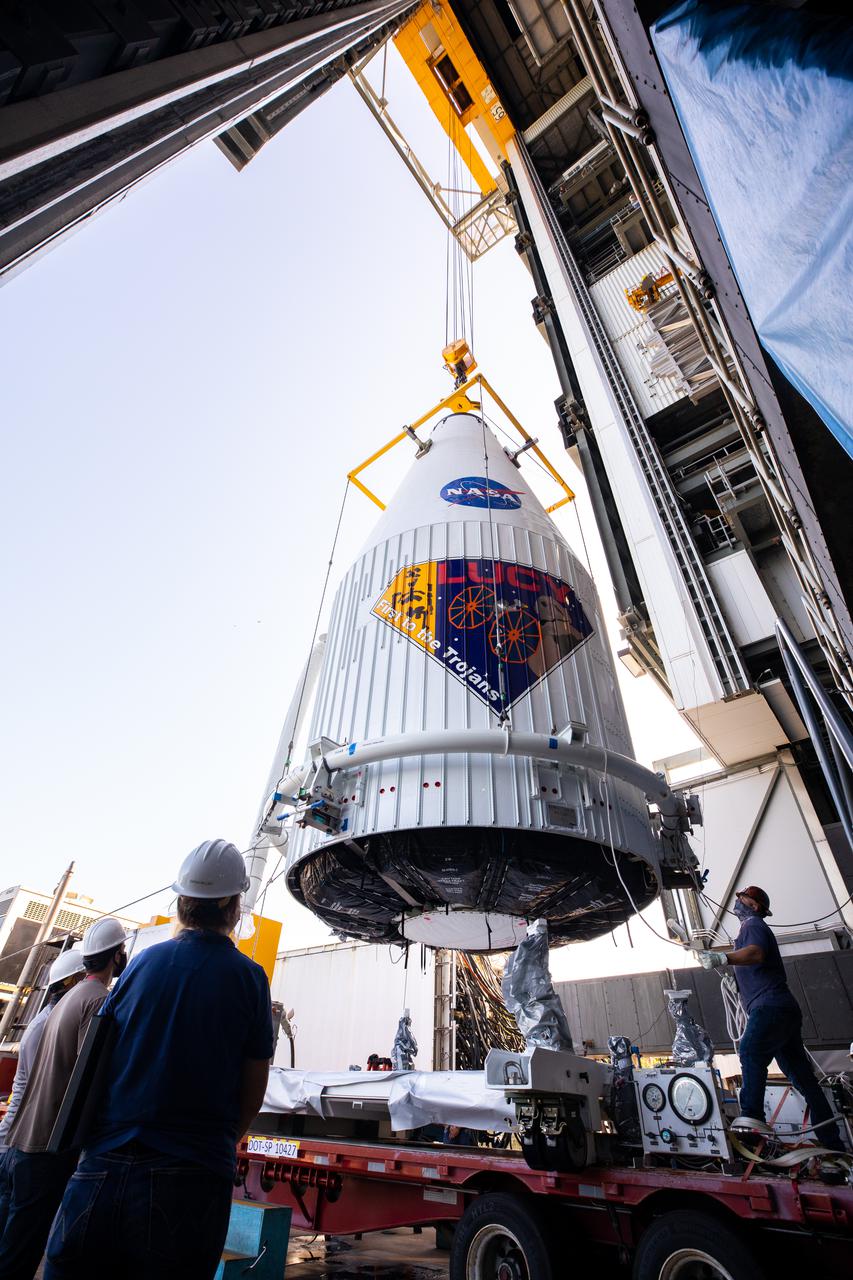
The payload fairing containing NASA’s Lucy spacecraft is hoisted up at the Vertical Integration Facility at Space Launch Complex 41 at Cape Canaveral Space Force Station in Florida on Oct. 7, 2021. It will be lowered onto the United Launch Alliance (ULA) Atlas V Centaur second stage. Lucy is scheduled to launch no earlier than Saturday, Oct. 16, on the ULA Atlas V 401 rocket from Launch Pad 41. NASA’s Launch Services Program, based at Kennedy Space Center, America’s premier multi-user spaceport, is managing the launch. Over its 12-year primary mission, Lucy will explore a record-breaking number of asteroids, flying by one asteroid in the solar system’s main belt and seven Trojan asteroids. Additionally, Lucy’s path will circle back to Earth three times for gravity assists, making it the first spacecraft ever to return to the vicinity of Earth from the outer solar system.
Workers assist as the payload fairing containing NASA’s Lucy spacecraft is lowered onto the United Launch Alliance (ULA) Atlas V Centaur second stage in the Vertical Integration Facility at Space Launch Complex 41 at Cape Canaveral Space Force Base in Florida on Oct. 7, 2021. Lucy is scheduled to launch no earlier than Saturday, Oct. 16, on the ULA Atlas V 401 rocket from Launch Pad 41. NASA’s Launch Services Program, based at Kennedy Space Center, America’s premier multi-user spaceport, is managing the launch. Over its 12-year primary mission, Lucy will explore a record-breaking number of asteroids, flying by one asteroid in the solar system’s main belt and seven Trojan asteroids. Additionally, Lucy’s path will circle back to Earth three times for gravity assists, making it the first spacecraft ever to return to the vicinity of Earth from the outer solar system.
The payload fairing containing NASA’s Lucy spacecraft is hoisted up at the Vertical Integration Facility at Space Launch Complex 41 at Cape Canaveral Space Force Station in Florida on Oct. 7, 2021. It will be lowered onto the United Launch Alliance (ULA) Atlas V Centaur second stage. Lucy is scheduled to launch no earlier than Saturday, Oct. 16, on the ULA Atlas V 401 rocket from Launch Pad 41. NASA’s Launch Services Program, based at Kennedy Space Center, America’s premier multi-user spaceport, is managing the launch. Over its 12-year primary mission, Lucy will explore a record-breaking number of asteroids, flying by one asteroid in the solar system’s main belt and seven Trojan asteroids. Additionally, Lucy’s path will circle back to Earth three times for gravity assists, making it the first spacecraft ever to return to the vicinity of Earth from the outer solar system.
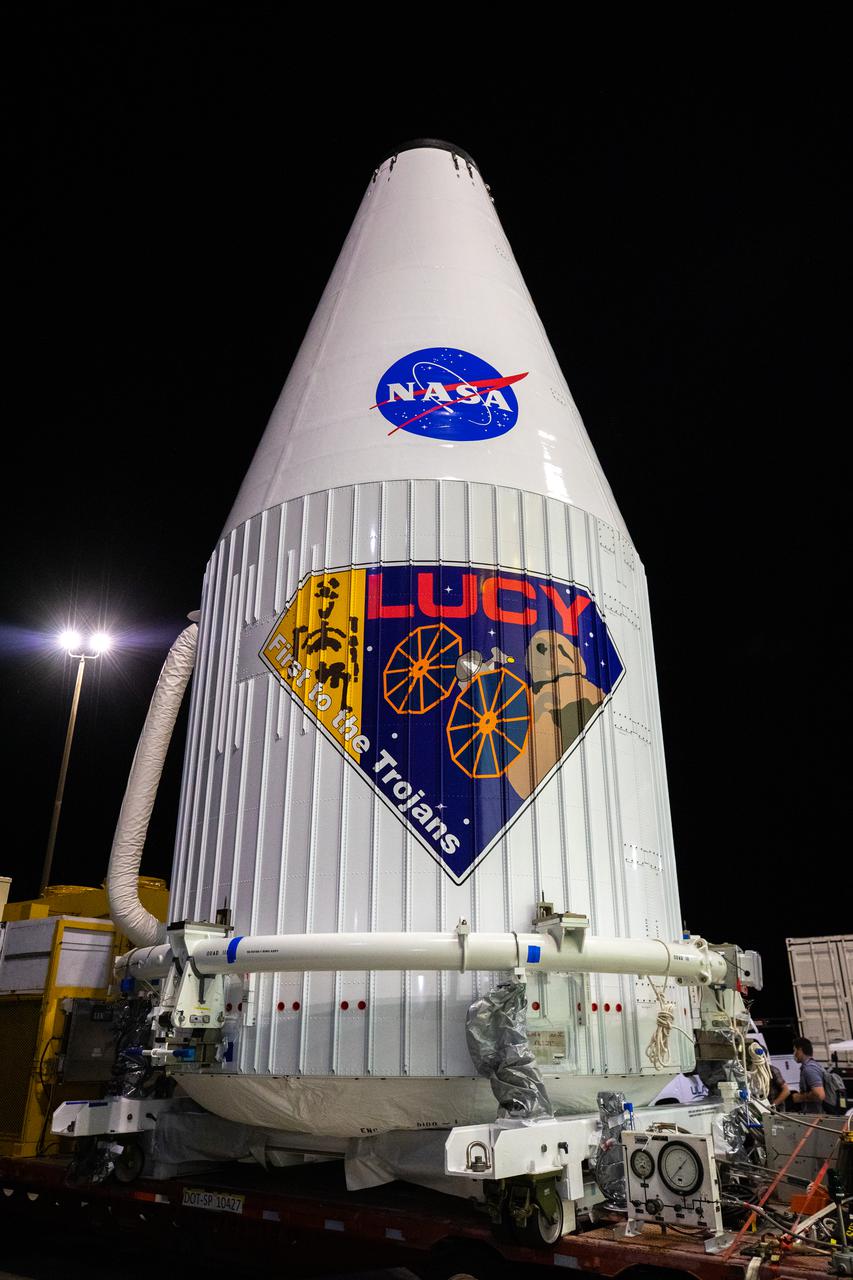
The Lucy spacecraft, encapsulated in its payload fairing, exits the Astrotech Space Operations Facility in Titusville, Florida on Oct. 7, 2021. The spacecraft will be transported to nearby Space Launch Complex 41 at Cape Canaveral Space Force Station. The encapsulated spacecraft will be hoisted up and into the Vertical Integration Facility where it will be lowered down and secured on the United Launch Alliance (ULA) Atlas V Centaur second stage. Lucy is scheduled to launch no earlier than Saturday, Oct. 16, on the ULA Atlas V 401 rocket from Launch Pad 41. NASA’s Launch Services Program, based at Kennedy Space Center, America’s premier multi-user spaceport, is managing the launch. Over its 12-year primary mission, Lucy will explore a record-breaking number of asteroids, flying by one asteroid in the solar system’s main belt and seven Trojan asteroids. Additionally, Lucy’s path will circle back to Earth three times for gravity assists, making it the first spacecraft ever to return to the vicinity of Earth from the outer solar system.
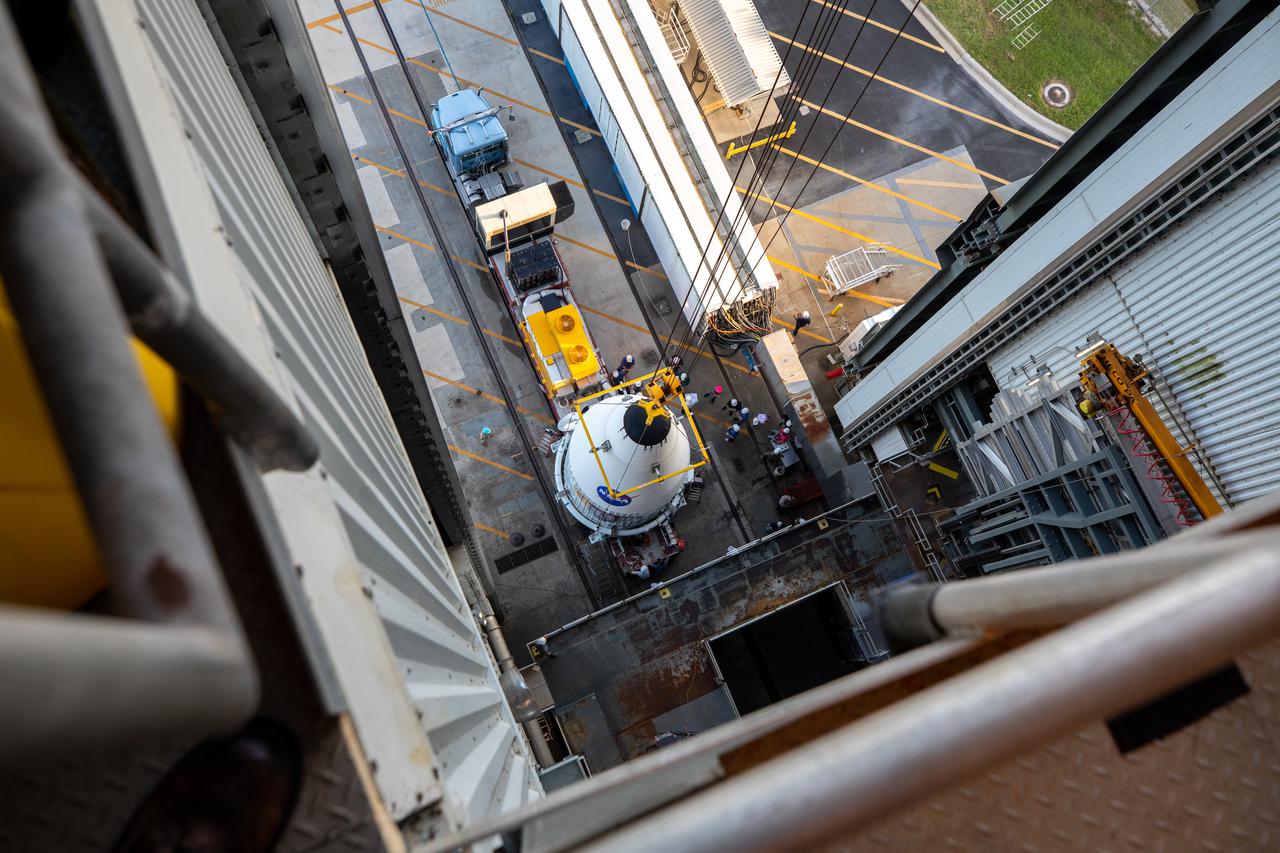
The payload fairing containing NASA’s Lucy spacecraft is hoisted up at the Vertical Integration Facility at Space Launch Complex 41 at Cape Canaveral Space Force Station in Florida on Oct. 7, 2021. It will be lowered onto the United Launch Alliance (ULA) Atlas V Centaur second stage. Lucy is scheduled to launch no earlier than Saturday, Oct. 16, on the ULA Atlas V 401 rocket from Launch Pad 41. NASA’s Launch Services Program, based at Kennedy Space Center, America’s premier multi-user spaceport, is managing the launch. Over its 12-year primary mission, Lucy will explore a record-breaking number of asteroids, flying by one asteroid in the solar system’s main belt and seven Trojan asteroids. Additionally, Lucy’s path will circle back to Earth three times for gravity assists, making it the first spacecraft ever to return to the vicinity of Earth from the outer solar system.
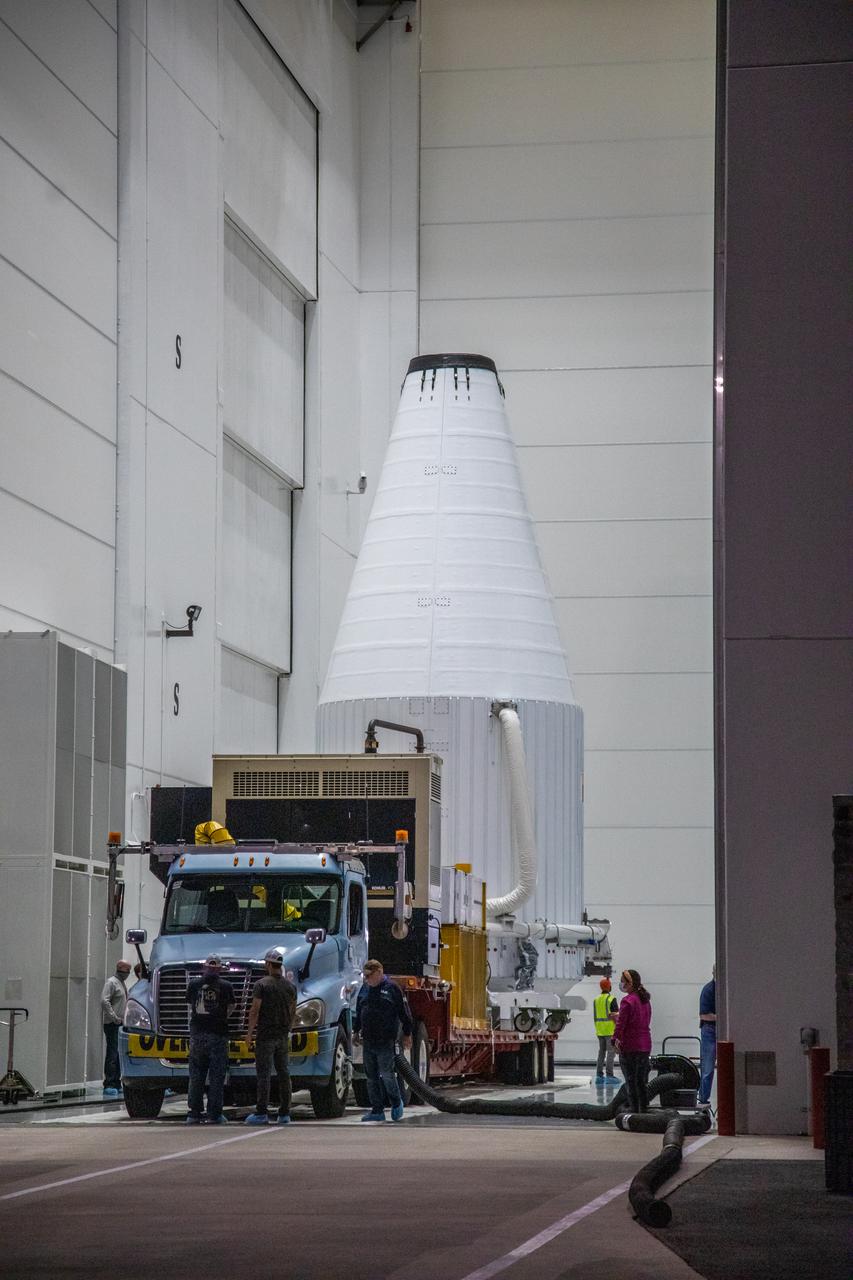
The Lucy spacecraft, encapsulated in its payload fairing, exits the Astrotech Space Operations Facility in Titusville, Florida on Oct. 7, 2021. The spacecraft will be transported to nearby Space Launch Complex 41 at Cape Canaveral Space Force Station. The encapsulated spacecraft will be hoisted up and into the Vertical Integration Facility where it will be lowered down and secured on the United Launch Alliance (ULA) Atlas V Centaur second stage. Lucy is scheduled to launch no earlier than Saturday, Oct. 16, on the ULA Atlas V 401 rocket from Launch Pad 41. NASA’s Launch Services Program, based at Kennedy Space Center, America’s premier multi-user spaceport, is managing the launch. Over its 12-year primary mission, Lucy will explore a record-breaking number of asteroids, flying by one asteroid in the solar system’s main belt and seven Trojan asteroids. Additionally, Lucy’s path will circle back to Earth three times for gravity assists, making it the first spacecraft ever to return to the vicinity of Earth from the outer solar system.
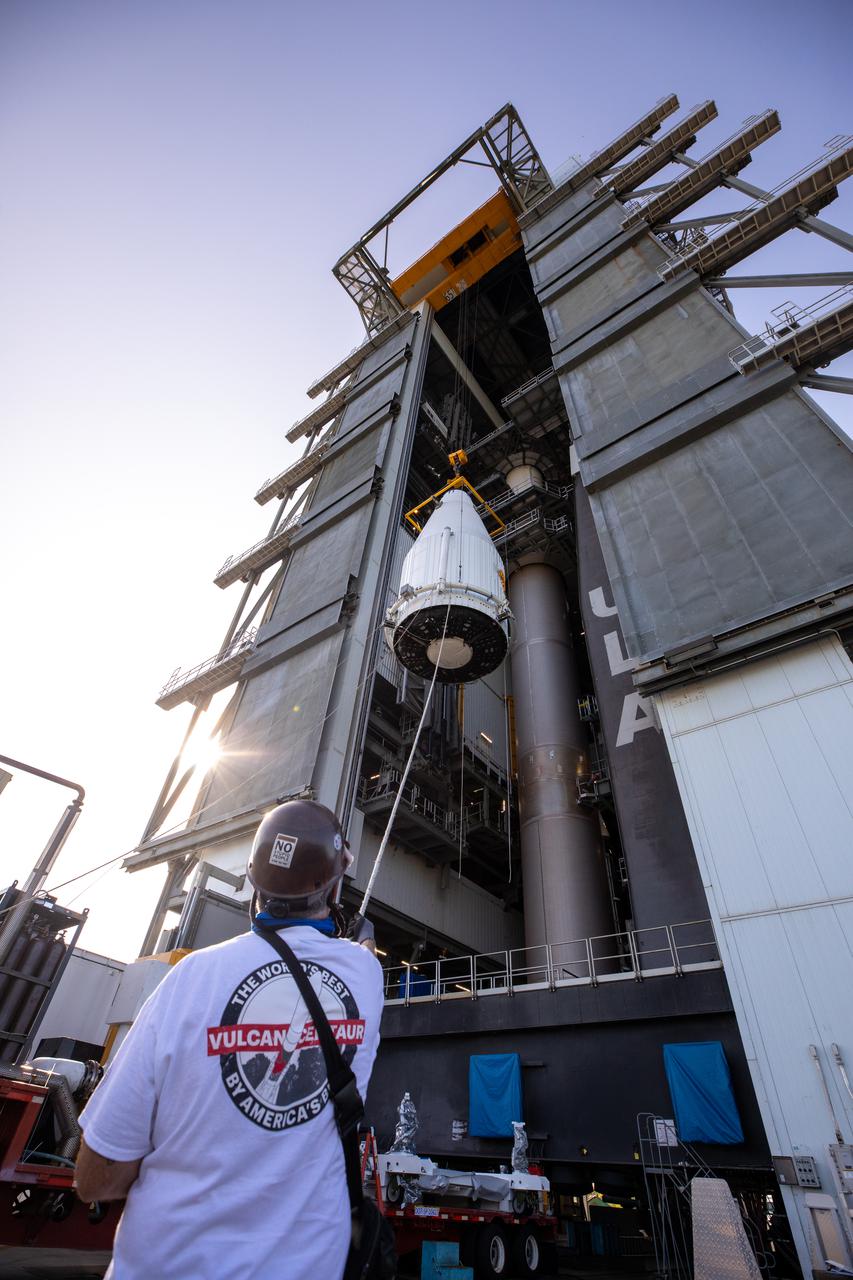
The payload fairing containing NASA’s Lucy spacecraft is hoisted up at the Vertical Integration Facility at Space Launch Complex 41 at Cape Canaveral Space Force Station in Florida on Oct. 7, 2021. It will be lowered onto the United Launch Alliance (ULA) Atlas V Centaur second stage. Lucy is scheduled to launch no earlier than Saturday, Oct. 16, on the ULA Atlas V 401 rocket from Launch Pad 41. NASA’s Launch Services Program, based at Kennedy Space Center, America’s premier multi-user spaceport, is managing the launch. Over its 12-year primary mission, Lucy will explore a record-breaking number of asteroids, flying by one asteroid in the solar system’s main belt and seven Trojan asteroids. Additionally, Lucy’s path will circle back to Earth three times for gravity assists, making it the first spacecraft ever to return to the vicinity of Earth from the outer solar system.
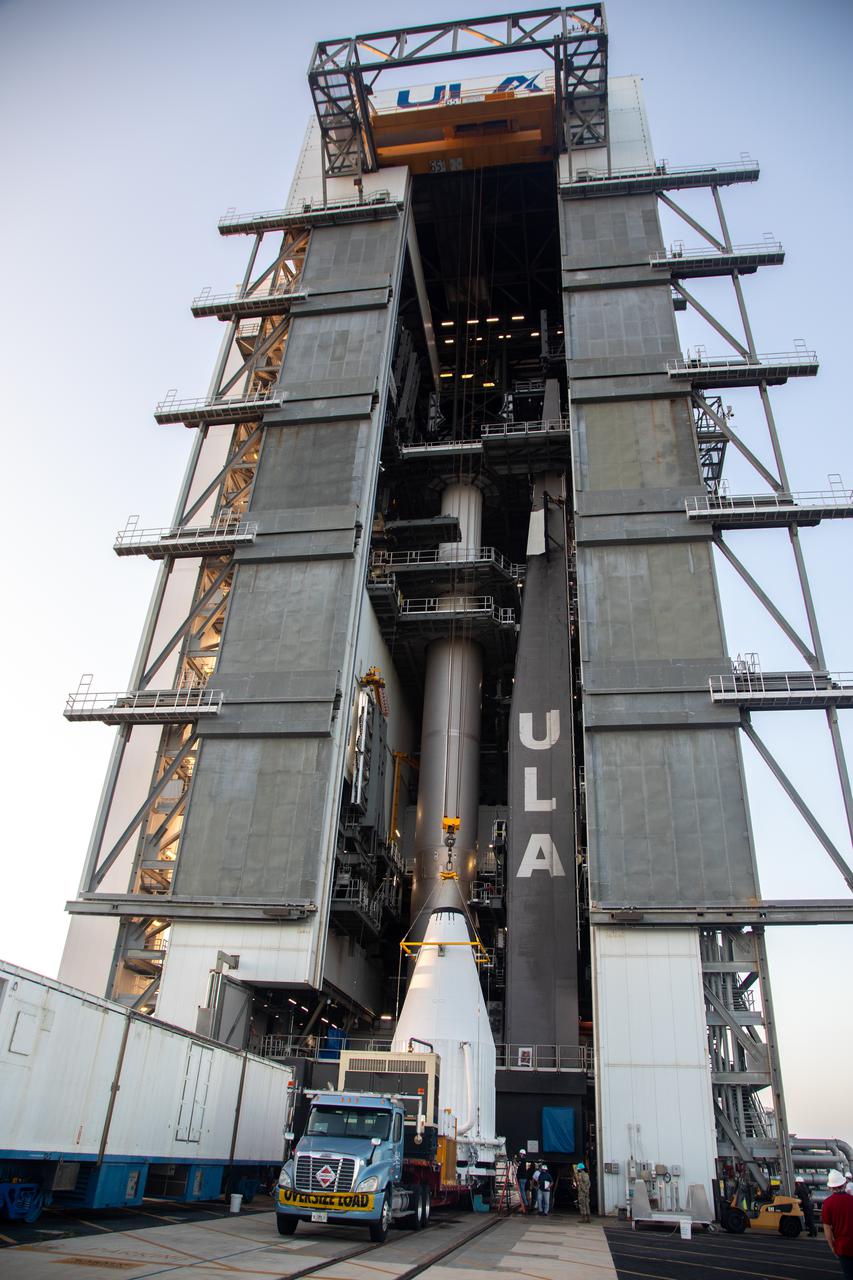
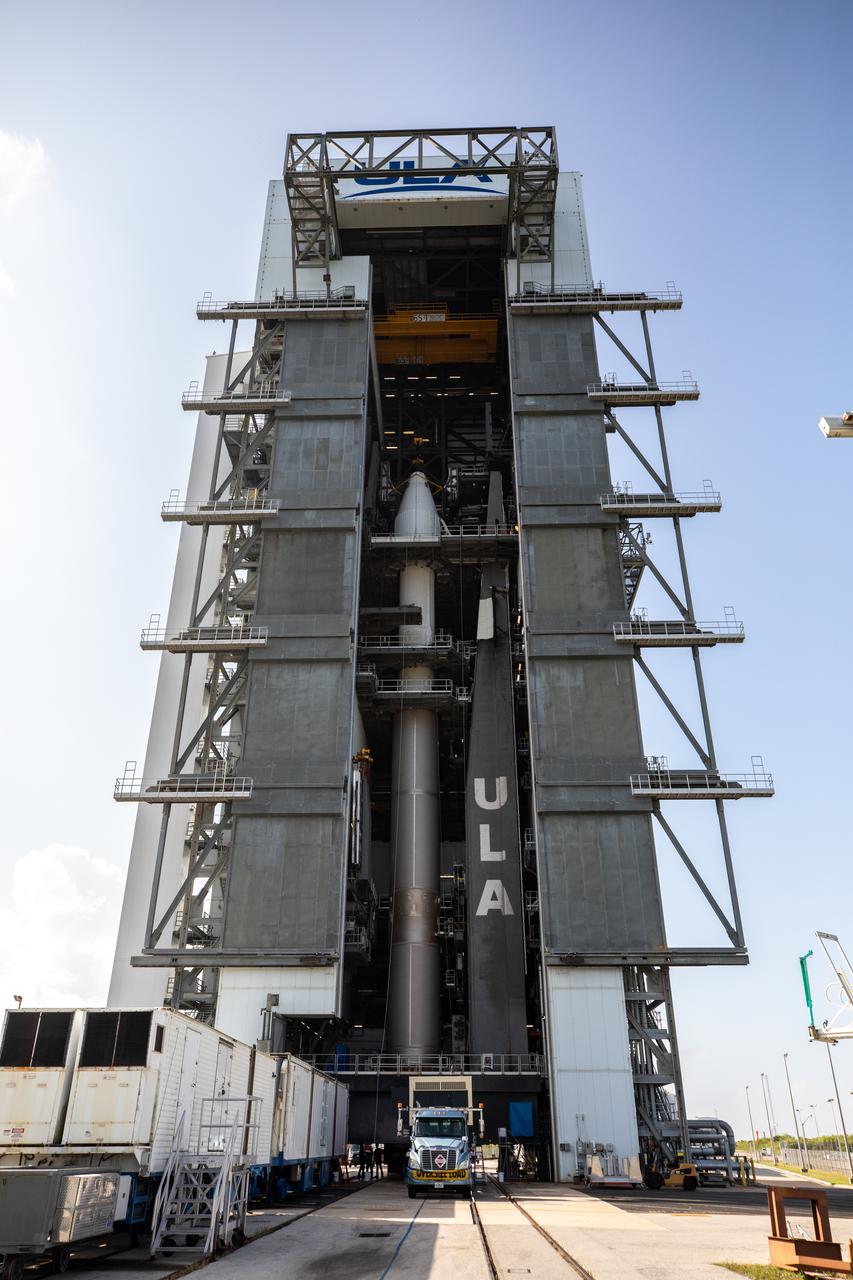
The payload fairing containing NASA’s Lucy spacecraft arrives at the Vertical Integration Facility at Space Launch Complex 41 at Cape Canaveral Space Force Station in Florida on Oct. 7, 2021. It will be hoisted up, and then lowered onto the United Launch Alliance (ULA) Atlas V Centaur second stage. Lucy is scheduled to launch no earlier than Saturday, Oct. 16, on the ULA Atlas V 401 rocket from Launch Pad 41. NASA’s Launch Services Program, based at Kennedy Space Center, America’s premier multi-user spaceport, is managing the launch. Over its 12-year primary mission, Lucy will explore a record-breaking number of asteroids, flying by one asteroid in the solar system’s main belt and seven Trojan asteroids. Additionally, Lucy’s path will circle back to Earth three times for gravity assists, making it the first spacecraft ever to return to the vicinity of Earth from the outer solar system.
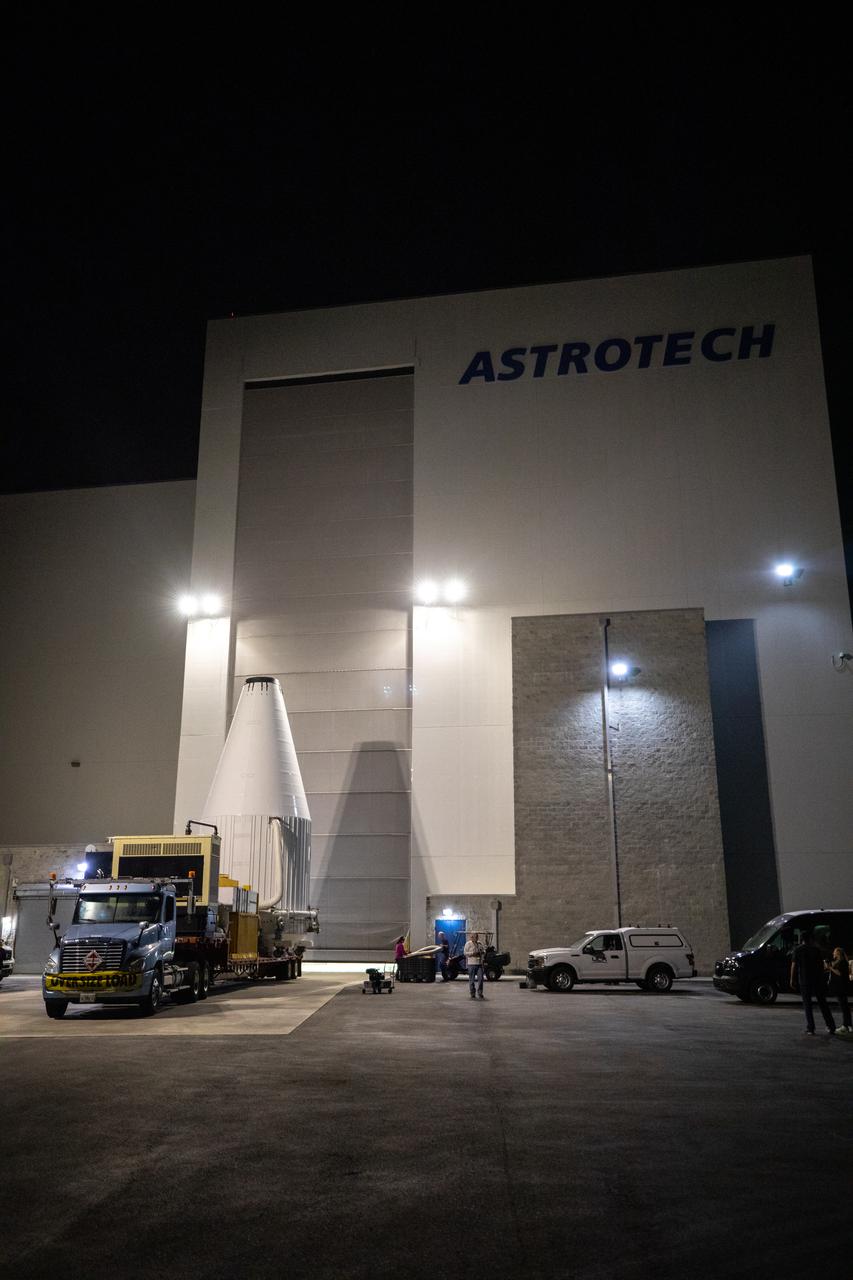
The Lucy spacecraft, encapsulated in its payload fairing, exits the Astrotech Space Operations Facility in Titusville, Florida on Oct. 7, 2021. The spacecraft will be transported to nearby Space Launch Complex 41 at Cape Canaveral Space Force Station. The encapsulated spacecraft will be hoisted up and into the Vertical Integration Facility where it will be lowered down and secured on the United Launch Alliance (ULA) Atlas V Centaur second stage. Lucy is scheduled to launch no earlier than Saturday, Oct. 16, on the ULA Atlas V 401 rocket from Launch Pad 41. NASA’s Launch Services Program, based at Kennedy Space Center, America’s premier multi-user spaceport, is managing the launch. Over its 12-year primary mission, Lucy will explore a record-breaking number of asteroids, flying by one asteroid in the solar system’s main belt and seven Trojan asteroids. Additionally, Lucy’s path will circle back to Earth three times for gravity assists, making it the first spacecraft ever to return to the vicinity of Earth from the outer solar system.
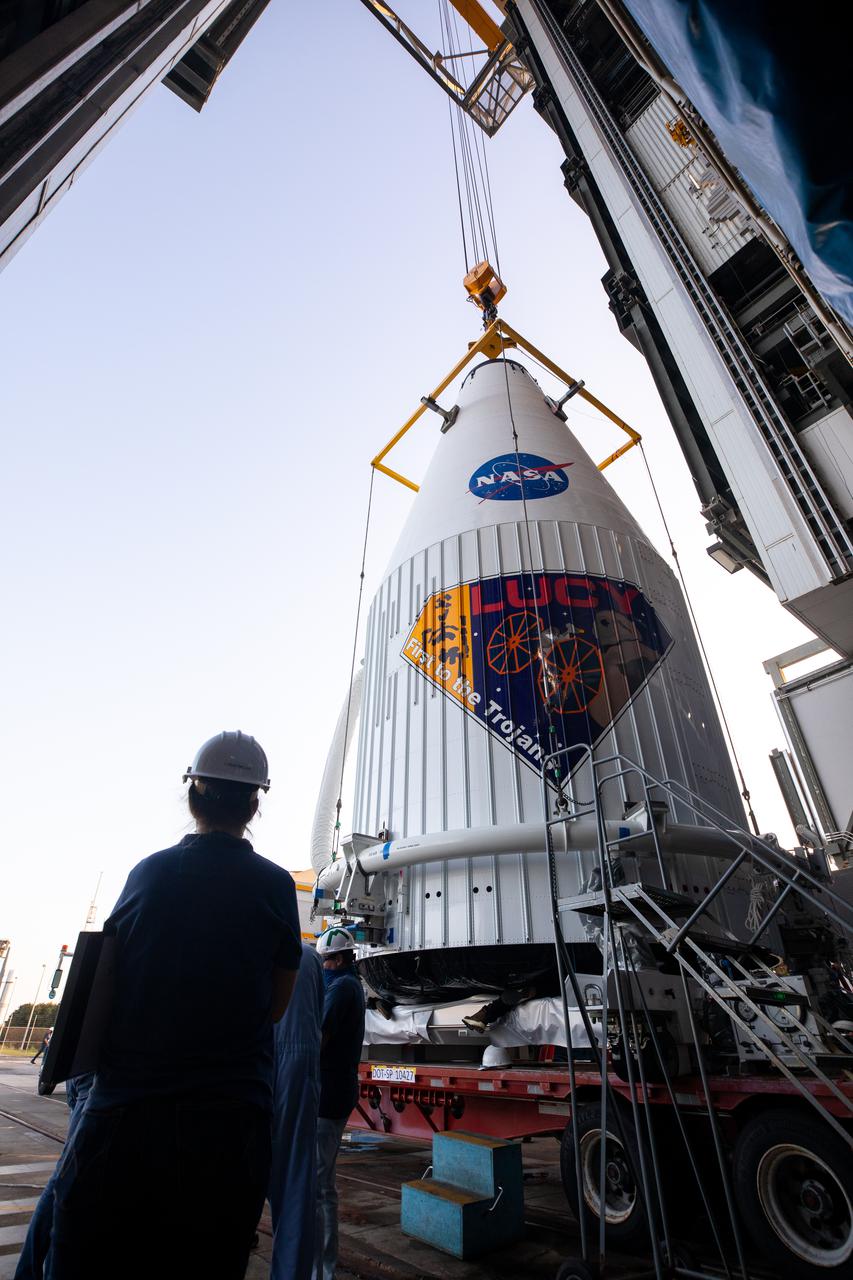
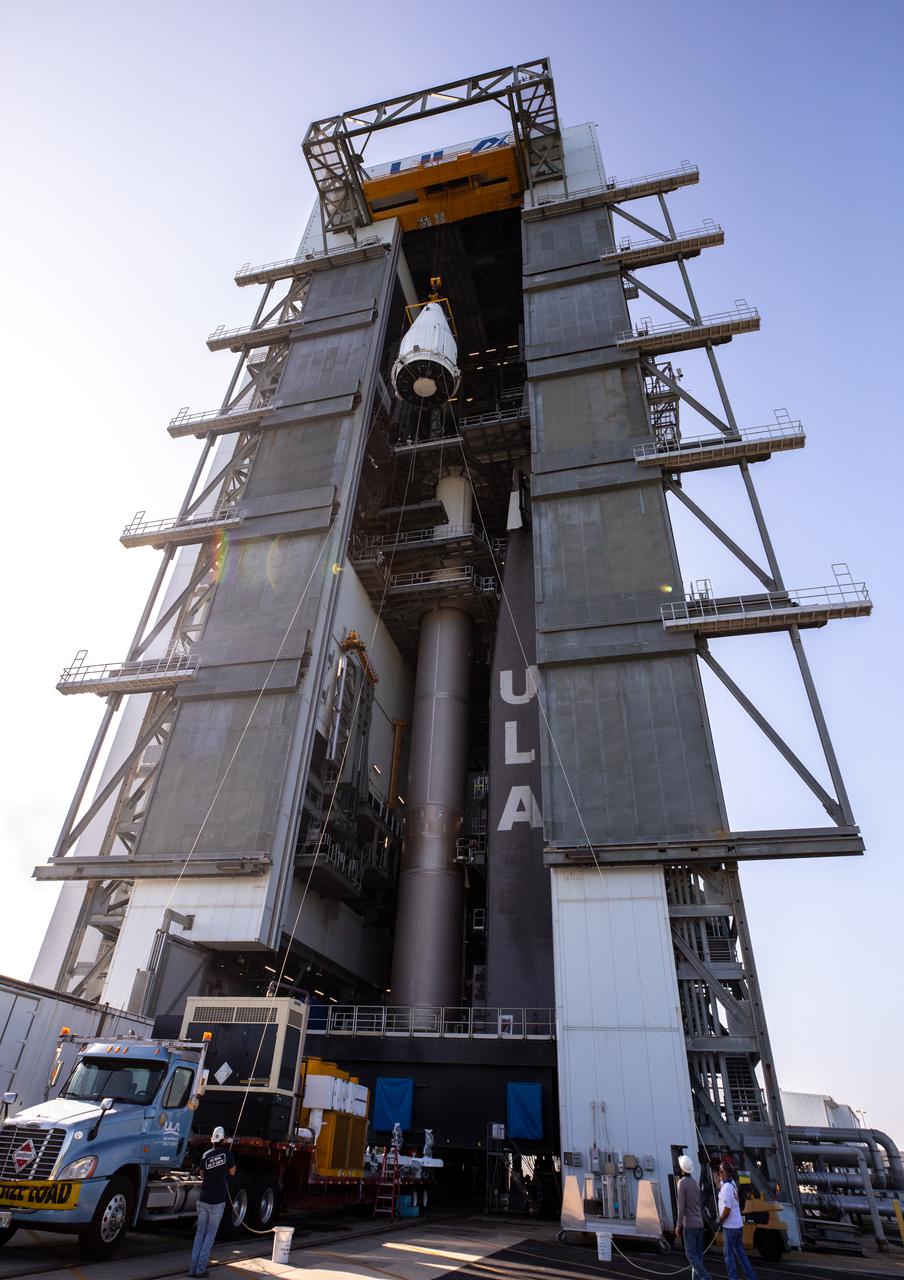
The payload fairing containing NASA’s Lucy spacecraft is hoisted up at the Vertical Integration Facility at Space Launch Complex 41 at Cape Canaveral Space Force Station in Florida on Oct. 7, 2021. It will be lowered onto the United Launch Alliance (ULA) Atlas V Centaur second stage. Lucy is scheduled to launch no earlier than Saturday, Oct. 16, on the ULA Atlas V 401 rocket from Launch Pad 41. NASA’s Launch Services Program, based at Kennedy Space Center, America’s premier multi-user spaceport, is managing the launch. Over its 12-year primary mission, Lucy will explore a record-breaking number of asteroids, flying by one asteroid in the solar system’s main belt and seven Trojan asteroids. Additionally, Lucy’s path will circle back to Earth three times for gravity assists, making it the first spacecraft ever to return to the vicinity of Earth from the outer solar system.
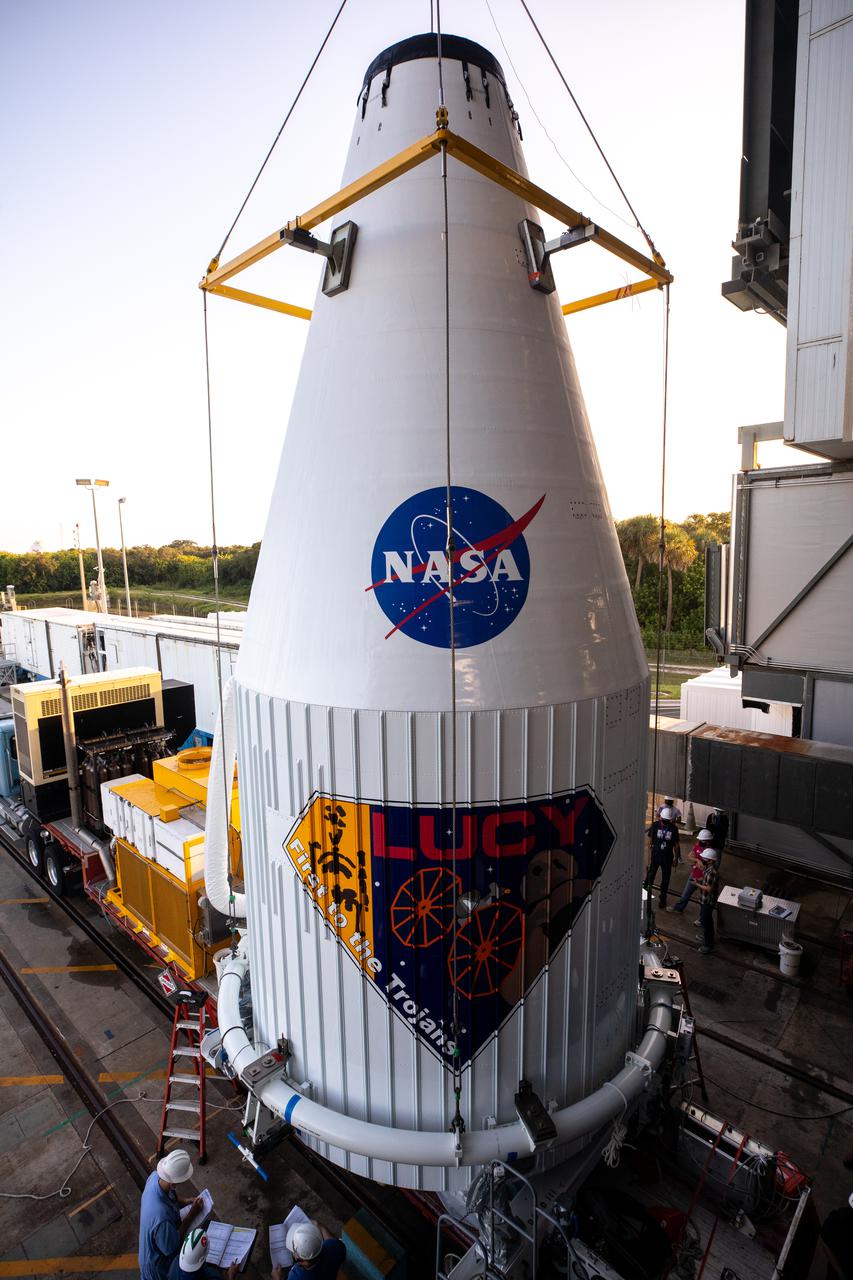
The payload fairing containing NASA’s Lucy spacecraft is hoisted up at the Vertical Integration Facility at Space Launch Complex 41 at Cape Canaveral Space Force Station in Florida on Oct. 7, 2021. It will be lowered onto the United Launch Alliance (ULA) Atlas V Centaur second stage. Lucy is scheduled to launch no earlier than Saturday, Oct. 16, on the ULA Atlas V 401 rocket from Launch Pad 41. NASA’s Launch Services Program, based at Kennedy Space Center, America’s premier multi-user spaceport, is managing the launch. Over its 12-year primary mission, Lucy will explore a record-breaking number of asteroids, flying by one asteroid in the solar system’s main belt and seven Trojan asteroids. Additionally, Lucy’s path will circle back to Earth three times for gravity assists, making it the first spacecraft ever to return to the vicinity of Earth from the outer solar system.
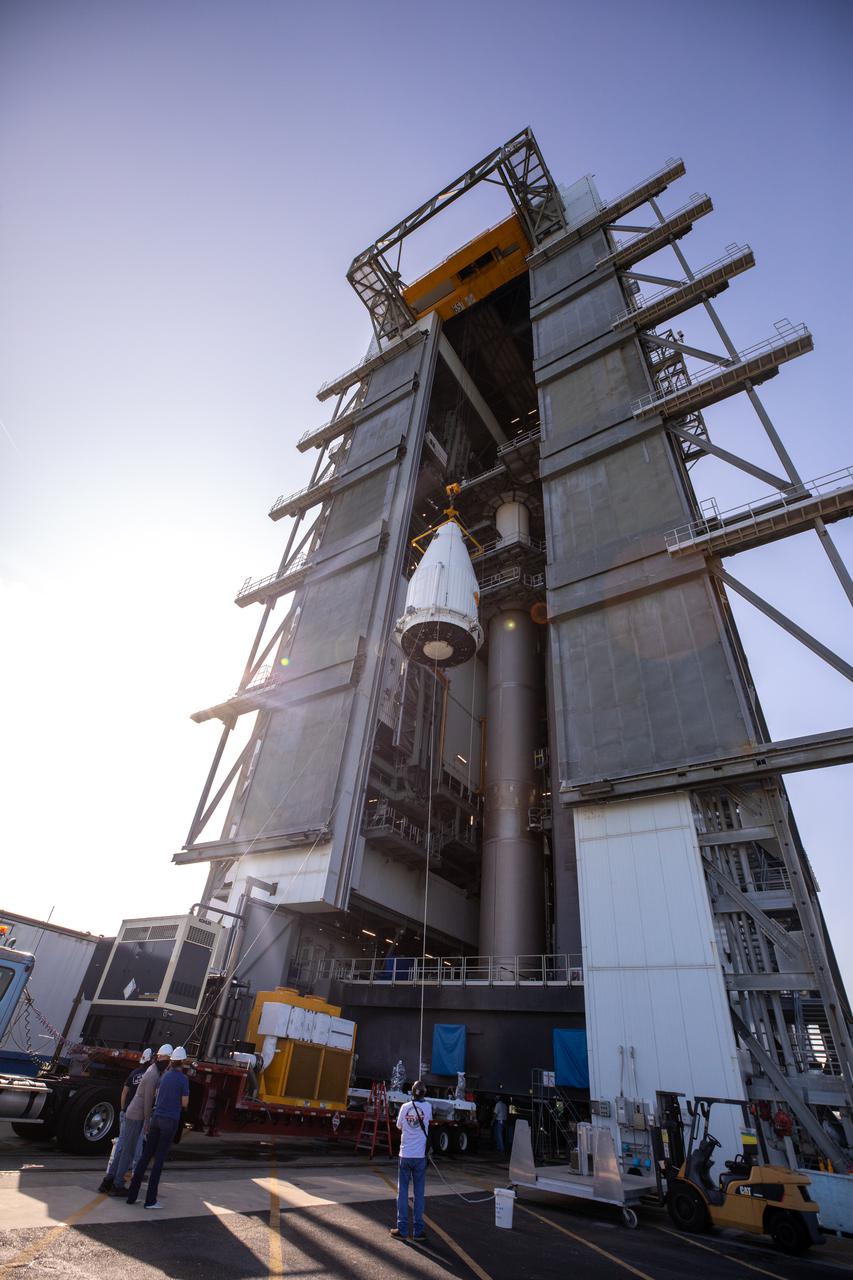
The payload fairing containing NASA’s Lucy spacecraft is hoisted up at the Vertical Integration Facility at Space Launch Complex 41 at Cape Canaveral Space Force Station in Florida on Oct. 7, 2021. It will be lowered onto the United Launch Alliance (ULA) Atlas V Centaur second stage. Lucy is scheduled to launch no earlier than Saturday, Oct. 16, on the ULA Atlas V 401 rocket from Launch Pad 41. NASA’s Launch Services Program, based at Kennedy Space Center, America’s premier multi-user spaceport, is managing the launch. Over its 12-year primary mission, Lucy will explore a record-breaking number of asteroids, flying by one asteroid in the solar system’s main belt and seven Trojan asteroids. Additionally, Lucy’s path will circle back to Earth three times for gravity assists, making it the first spacecraft ever to return to the vicinity of Earth from the outer solar system.
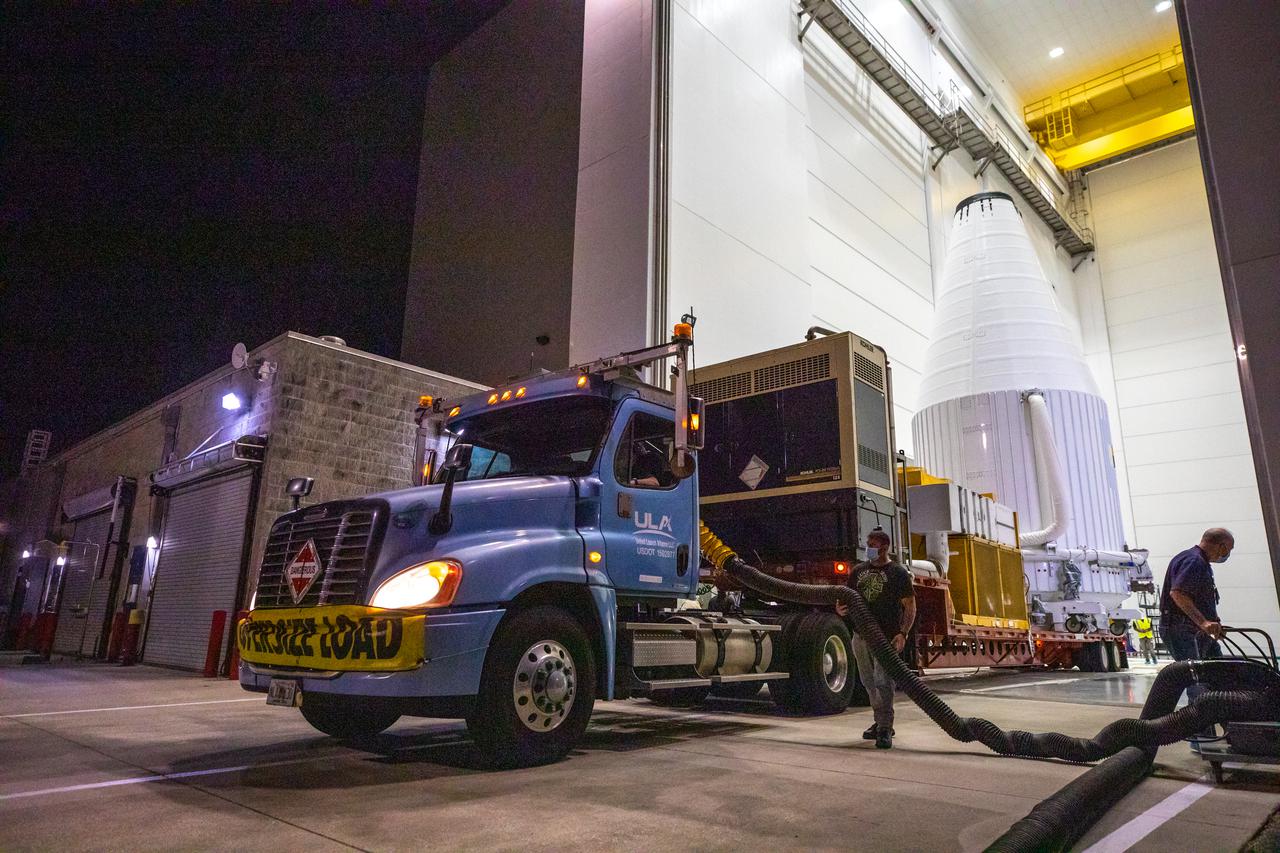
The Lucy spacecraft, encapsulated in its payload fairing, exits the Astrotech Space Operations Facility in Titusville, Florida on Oct. 7, 2021. The spacecraft will be transported to nearby Space Launch Complex 41 at Cape Canaveral Space Force Station. The encapsulated spacecraft will be hoisted up and into the Vertical Integration Facility where it will be lowered down and secured on the United Launch Alliance (ULA) Atlas V Centaur second stage. Lucy is scheduled to launch no earlier than Saturday, Oct. 16, on the ULA Atlas V 401 rocket from Launch Pad 41. NASA’s Launch Services Program, based at Kennedy Space Center, America’s premier multi-user spaceport, is managing the launch. Over its 12-year primary mission, Lucy will explore a record-breaking number of asteroids, flying by one asteroid in the solar system’s main belt and seven Trojan asteroids. Additionally, Lucy’s path will circle back to Earth three times for gravity assists, making it the first spacecraft ever to return to the vicinity of Earth from the outer solar system.
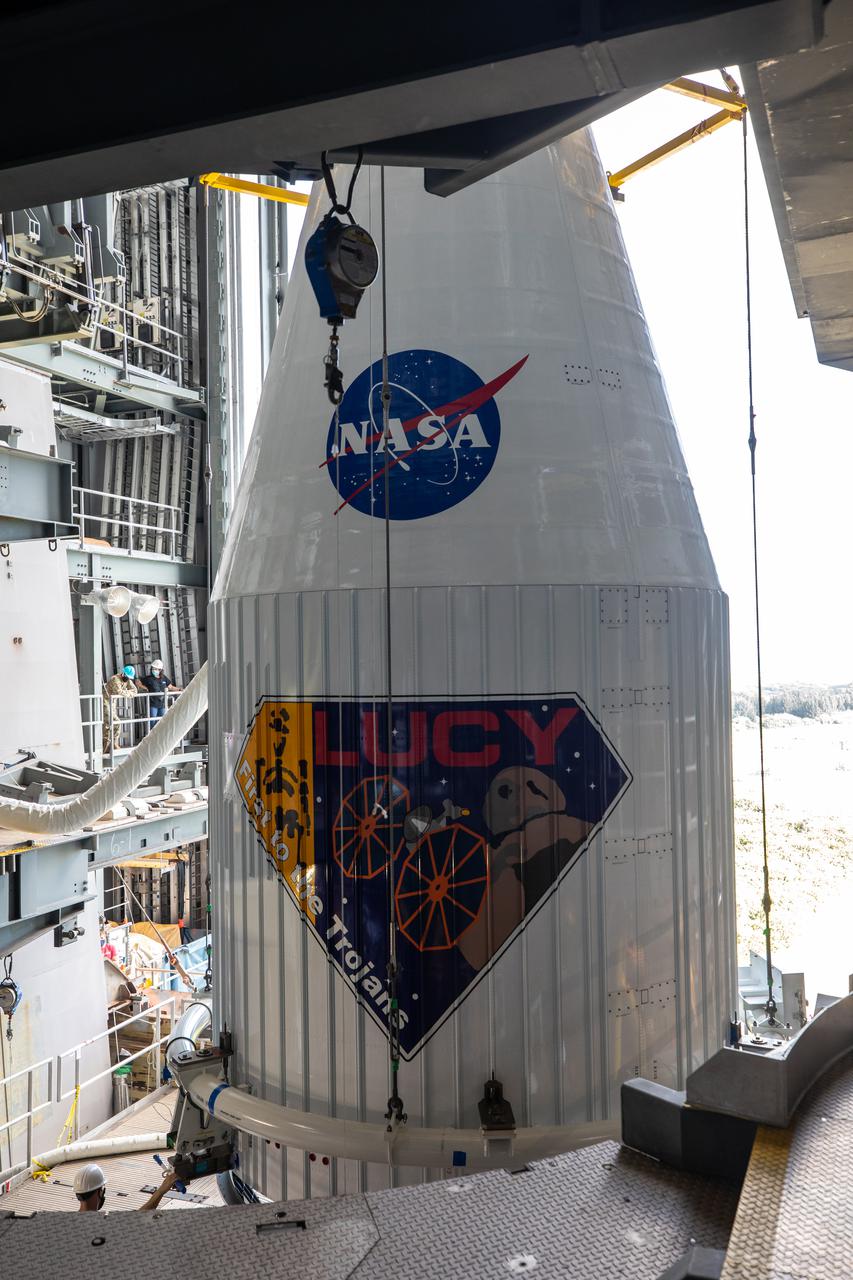
Workers assist as the payload fairing containing NASA’s Lucy spacecraft is lowered onto the United Launch Alliance (ULA) Atlas V Centaur second stage in the Vertical Integration Facility at Space Launch Complex 41 at Cape Canaveral Space Force Base in Florida on Oct. 7, 2021. Lucy is scheduled to launch no earlier than Saturday, Oct. 16, on the ULA Atlas V 401 rocket from Launch Pad 41. NASA’s Launch Services Program, based at Kennedy Space Center, America’s premier multi-user spaceport, is managing the launch. Over its 12-year primary mission, Lucy will explore a record-breaking number of asteroids, flying by one asteroid in the solar system’s main belt and seven Trojan asteroids. Additionally, Lucy’s path will circle back to Earth three times for gravity assists, making it the first spacecraft ever to return to the vicinity of Earth from the outer solar system.
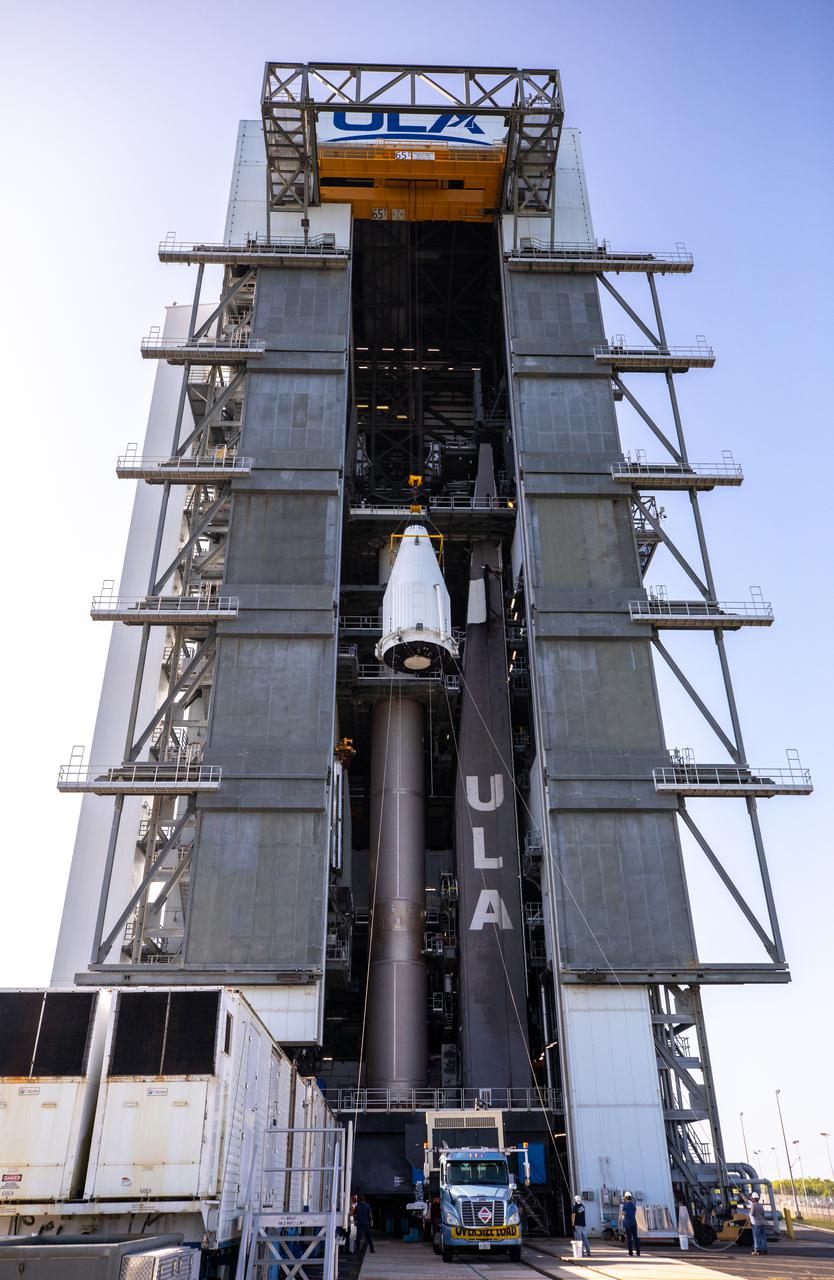
The payload fairing containing NASA’s Lucy spacecraft is hoisted up at the Vertical Integration Facility at Space Launch Complex 41 at Cape Canaveral Space Force Station in Florida on Oct. 7, 2021. It will be lowered onto the United Launch Alliance (ULA) Atlas V Centaur second stage. Lucy is scheduled to launch no earlier than Saturday, Oct. 16, on the ULA Atlas V 401 rocket from Launch Pad 41. NASA’s Launch Services Program, based at Kennedy Space Center, America’s premier multi-user spaceport, is managing the launch. Over its 12-year primary mission, Lucy will explore a record-breaking number of asteroids, flying by one asteroid in the solar system’s main belt and seven Trojan asteroids. Additionally, Lucy’s path will circle back to Earth three times for gravity assists, making it the first spacecraft ever to return to the vicinity of Earth from the outer solar system.
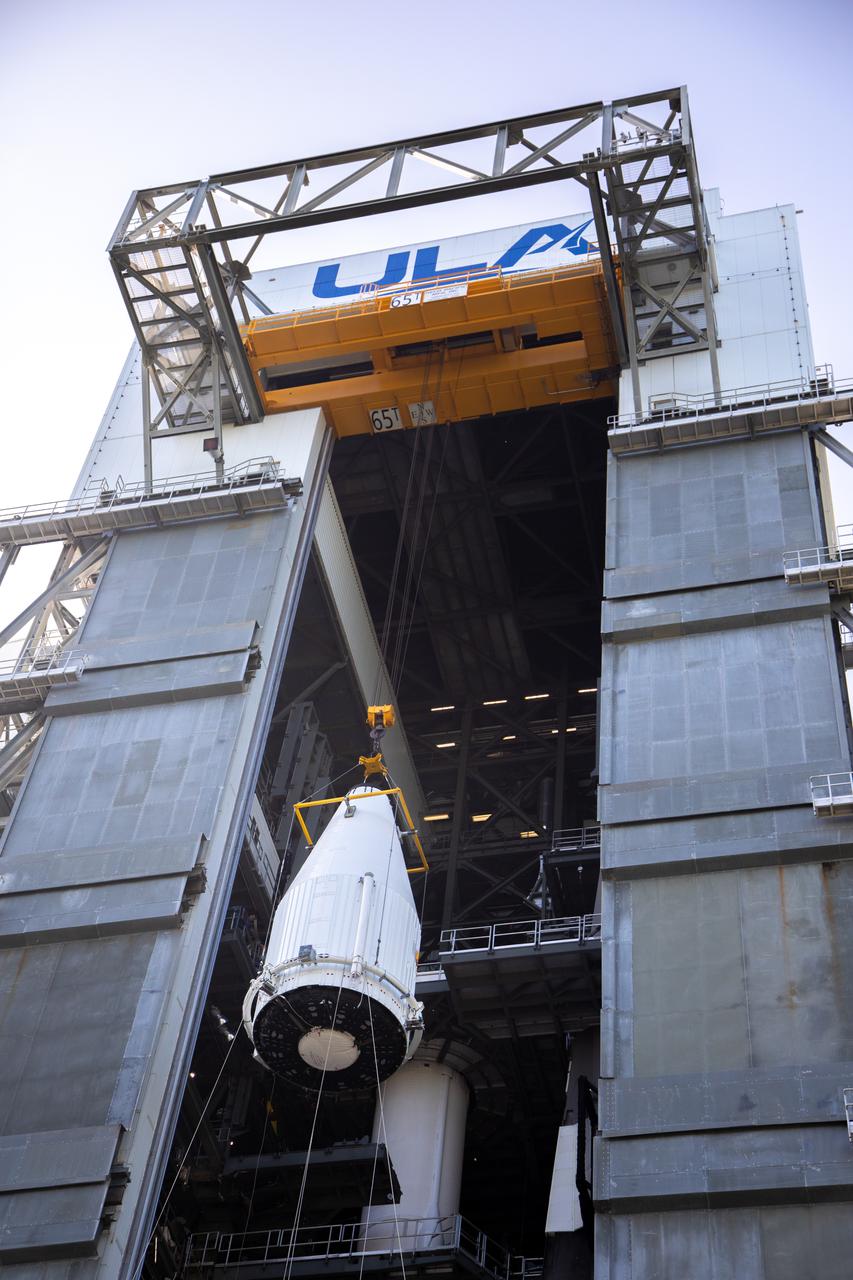
The payload fairing containing NASA’s Lucy spacecraft is hoisted up at the Vertical Integration Facility at Space Launch Complex 41 at Cape Canaveral Space Force Station in Florida on Oct. 7, 2021. It will be lowered onto the United Launch Alliance (ULA) Atlas V Centaur second stage. Lucy is scheduled to launch no earlier than Saturday, Oct. 16, on the ULA Atlas V 401 rocket from Launch Pad 41. NASA’s Launch Services Program, based at Kennedy Space Center, America’s premier multi-user spaceport, is managing the launch. Over its 12-year primary mission, Lucy will explore a record-breaking number of asteroids, flying by one asteroid in the solar system’s main belt and seven Trojan asteroids. Additionally, Lucy’s path will circle back to Earth three times for gravity assists, making it the first spacecraft ever to return to the vicinity of Earth from the outer solar system.
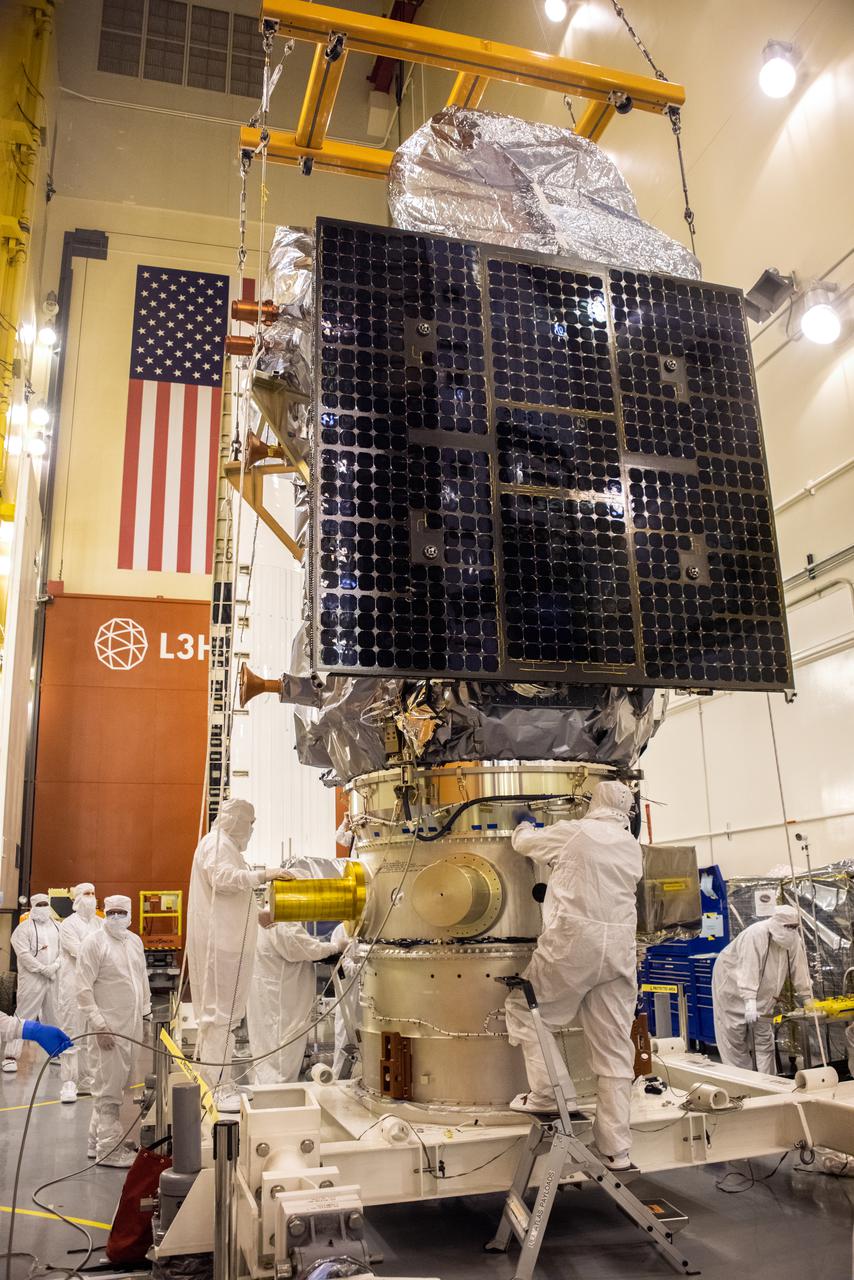
The Landsat 9 PSR to EFS C29 lift and mate inside the Integrated Processing Facility at Vandenberg Space Force Base in California.
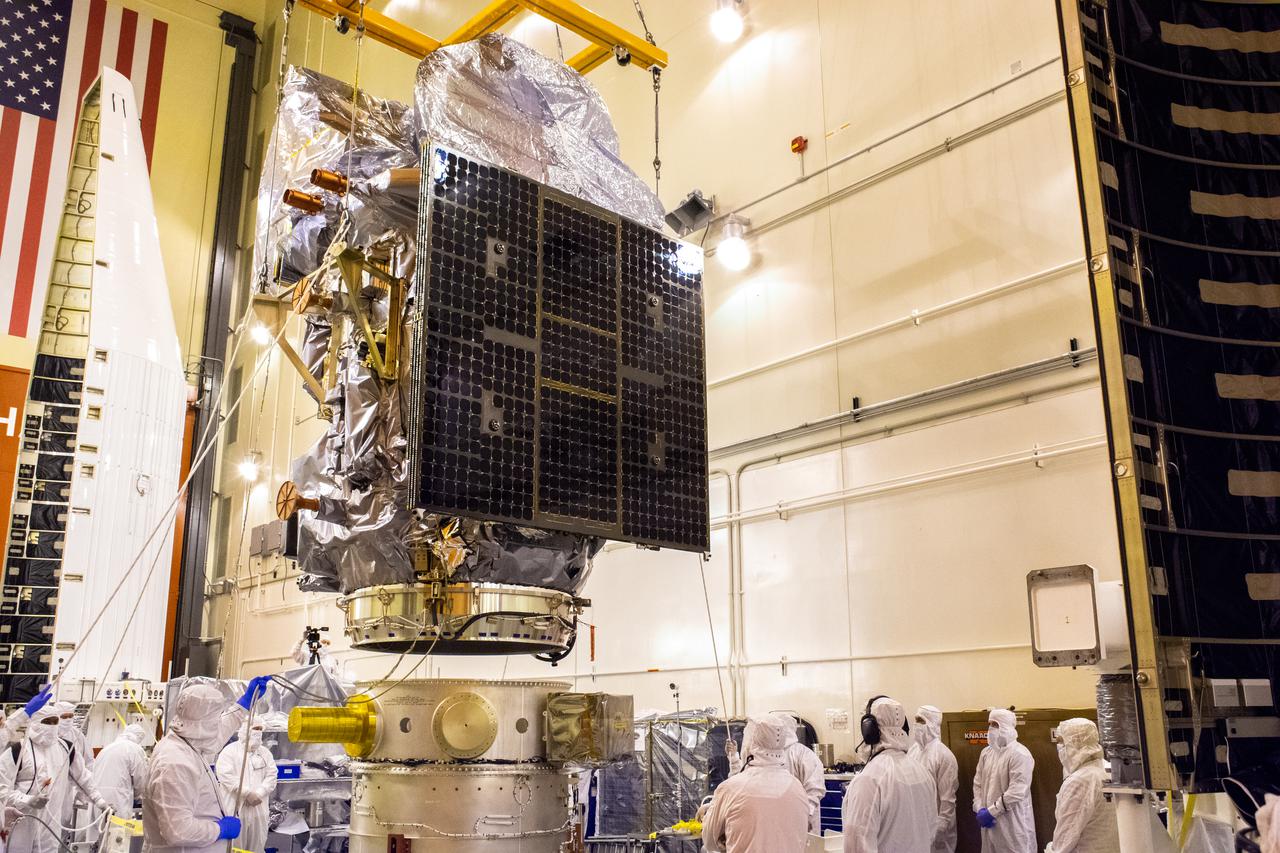
The Landsat 9 PSR to EFS C29 lift and mate inside the Integrated Processing Facility at Vandenberg Space Force Base in California.
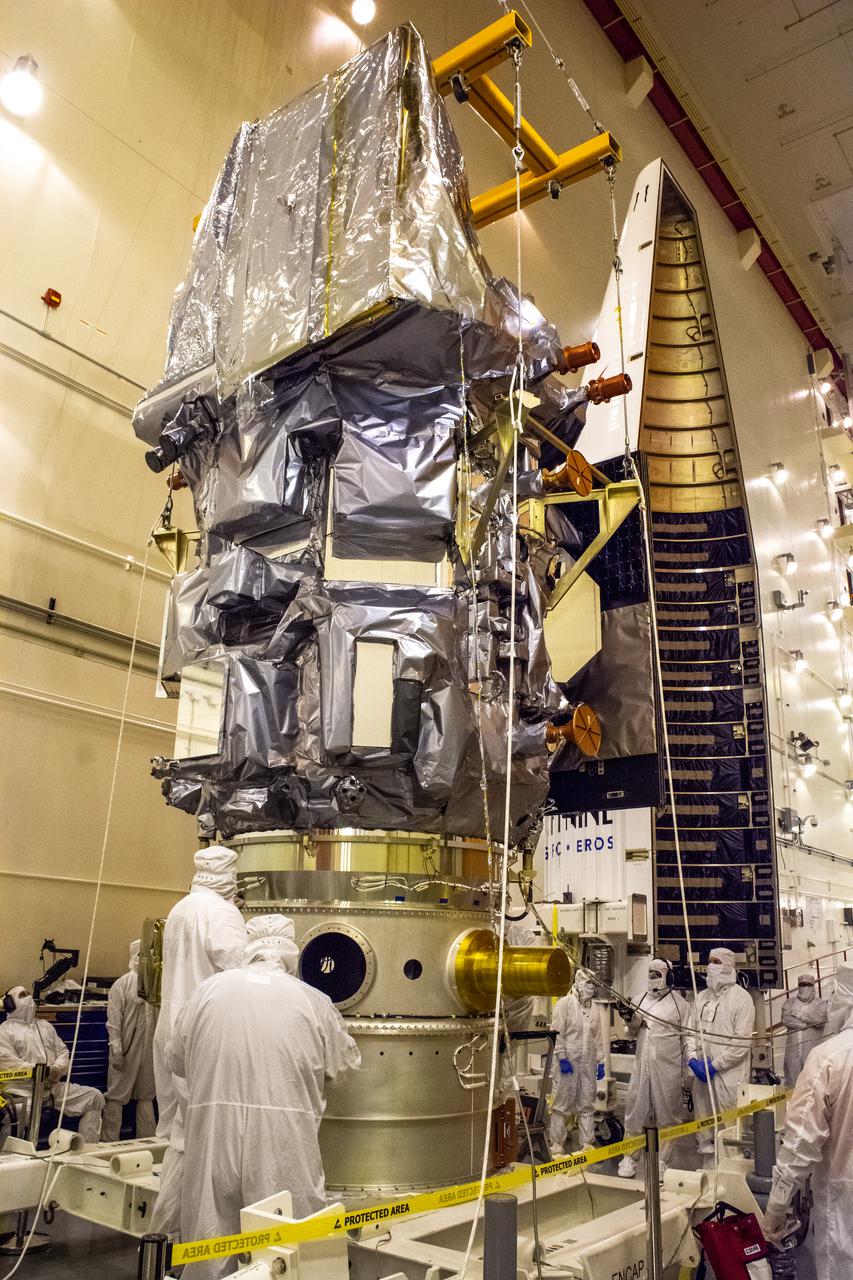
The Landsat 9 PSR to EFS C29 lift and mate inside the Integrated Processing Facility at Vandenberg Space Force Base in California.
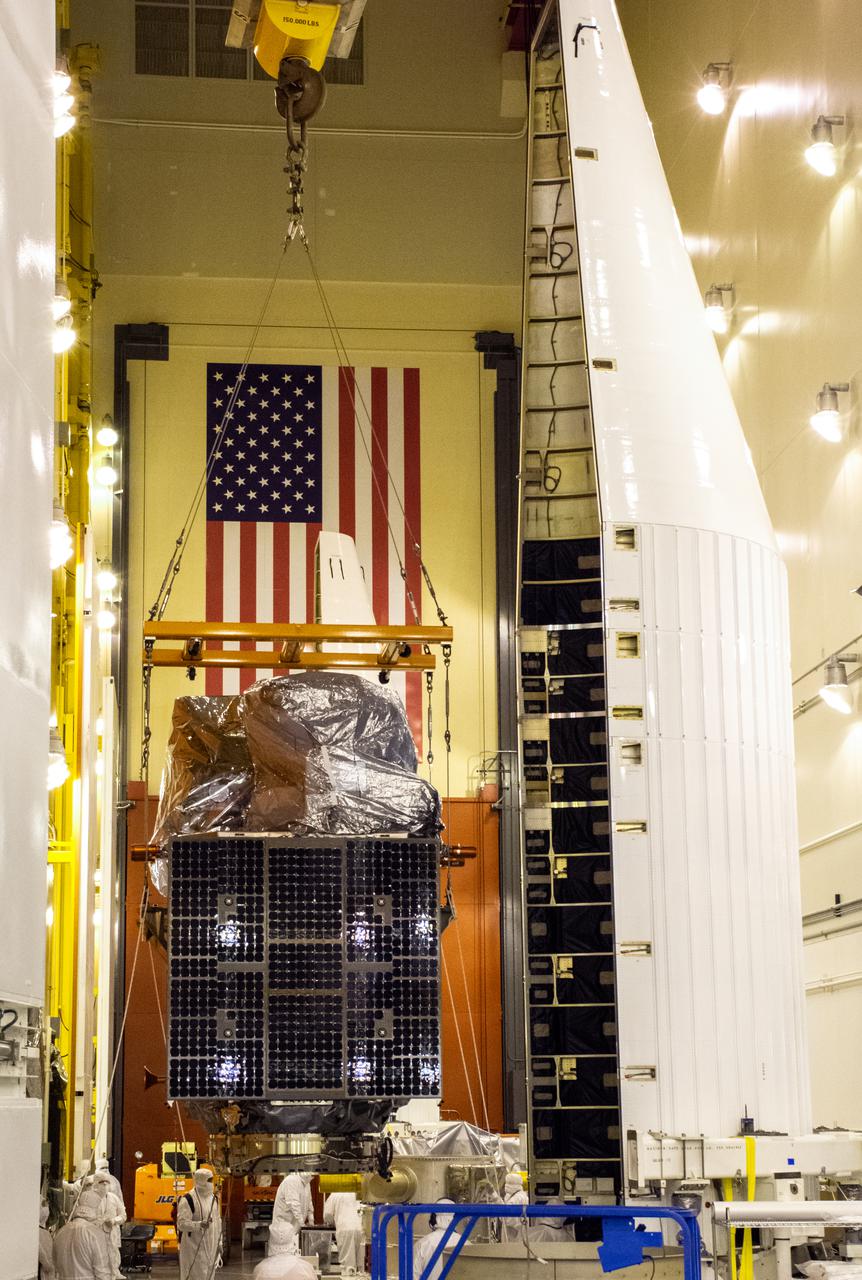
The Landsat 9 PSR to EFS C29 lift and mate inside the Integrated Processing Facility at Vandenberg Space Force Base in California.
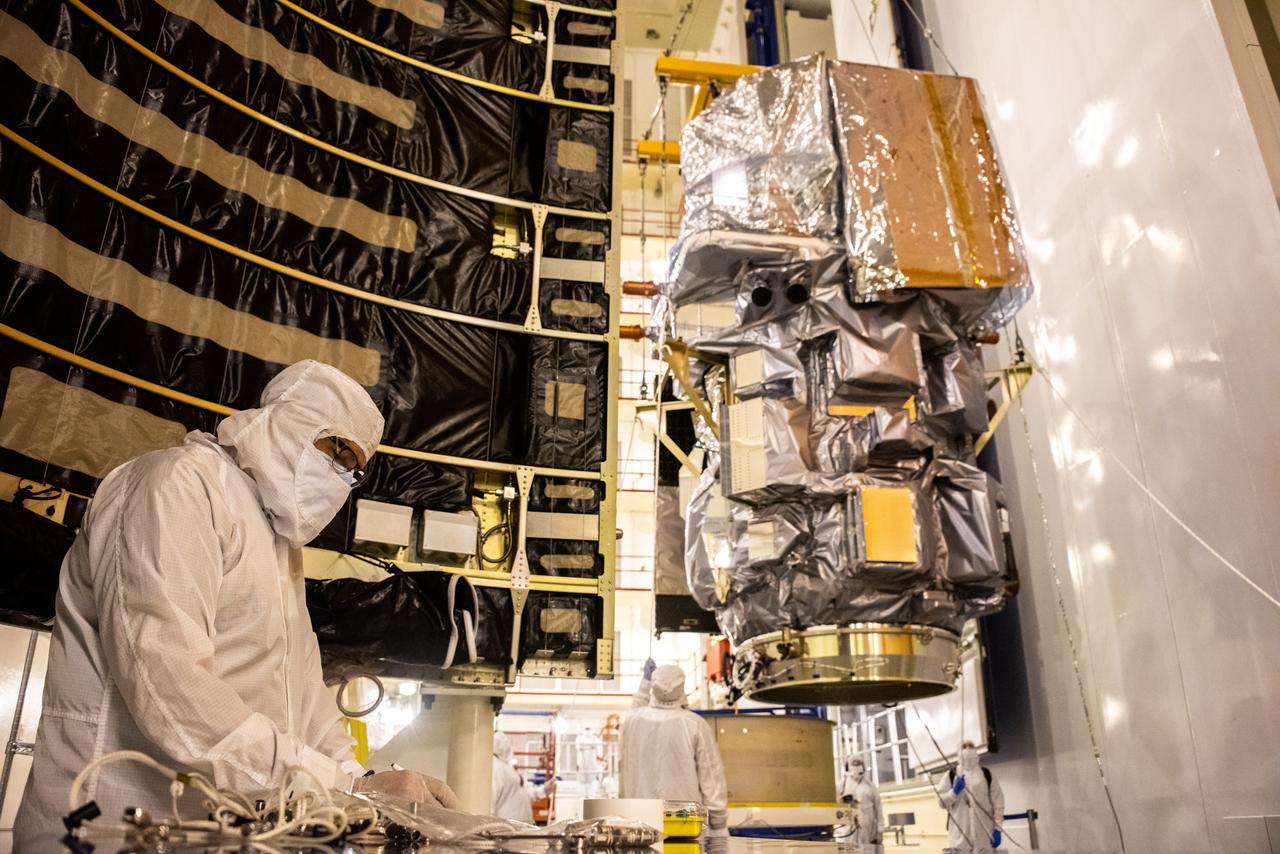
The Landsat 9 PSR to EFS C29 lift and mate inside the Integrated Processing Facility at Vandenberg Space Force Base in California.
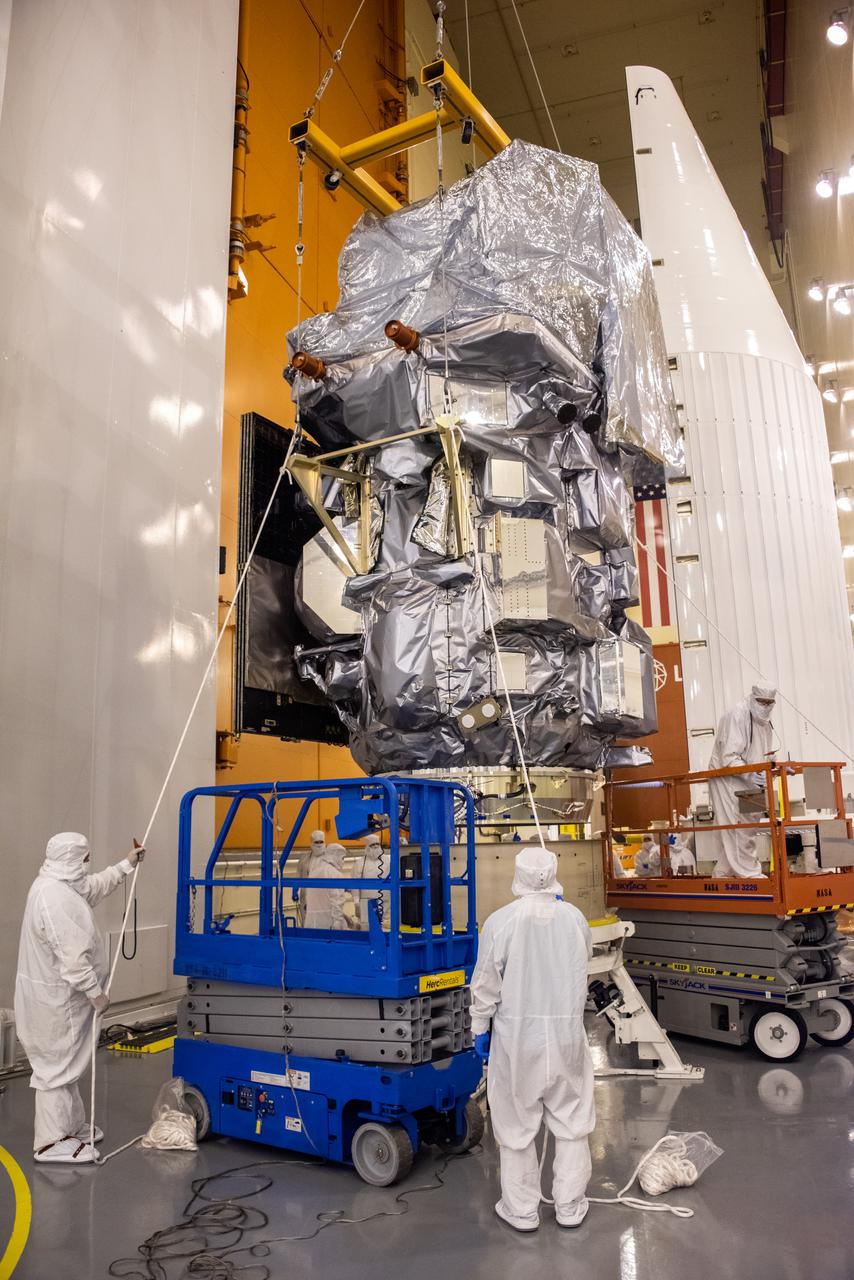
The Landsat 9 PSR to EFS C29 lift and mate inside the Integrated Processing Facility at Vandenberg Space Force Base in California.
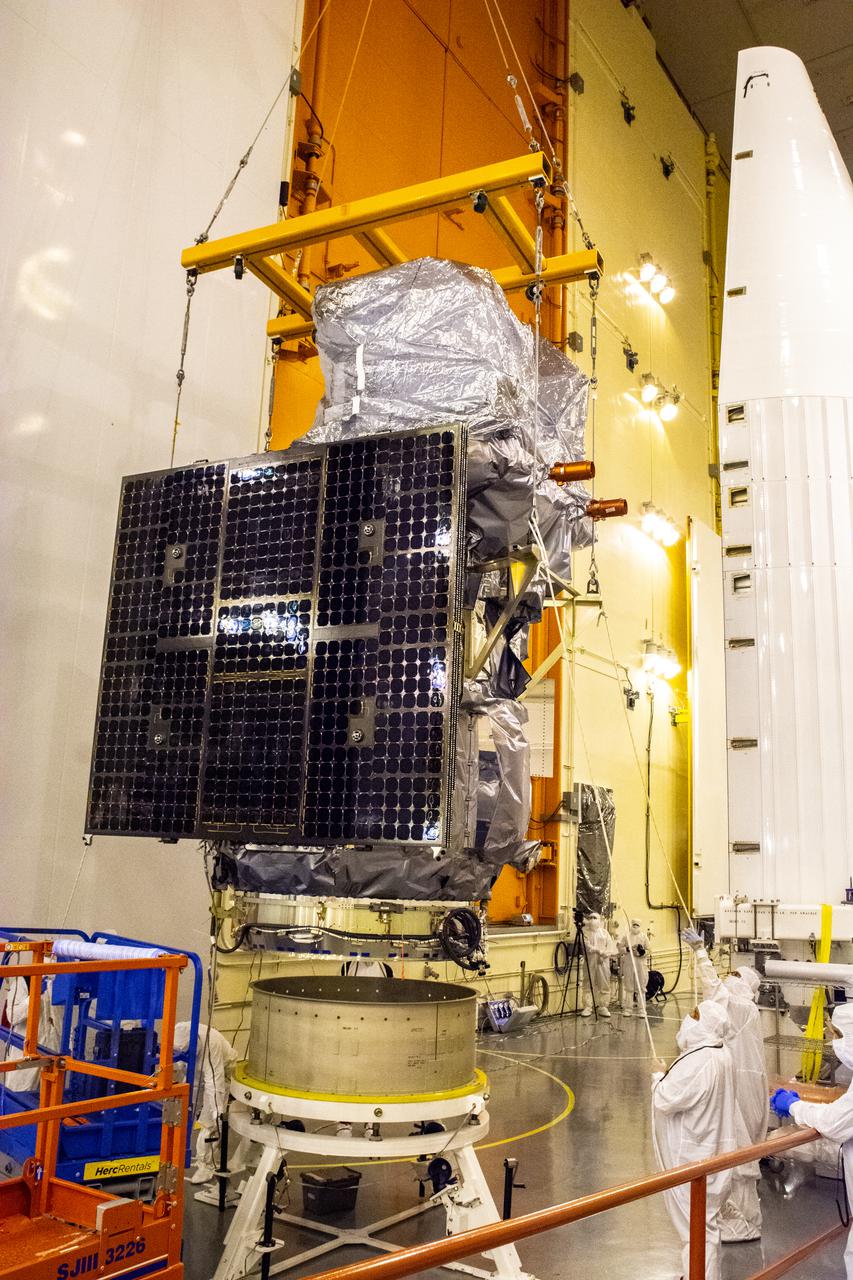
The Landsat 9 PSR to EFS C29 lift and mate inside the Integrated Processing Facility at Vandenberg Space Force Base in California.
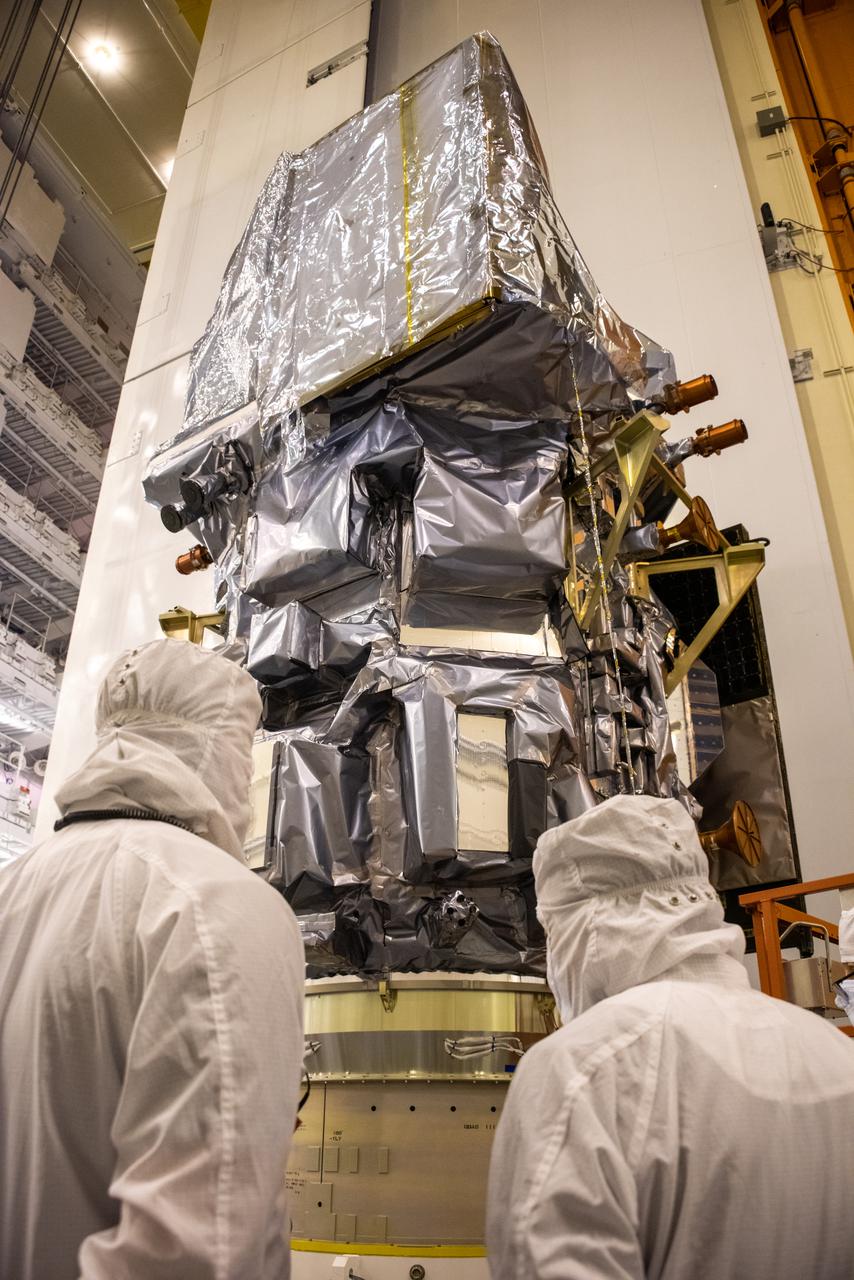
The Landsat 9 PSR to EFS C29 lift and mate inside the Integrated Processing Facility at Vandenberg Space Force Base in California.

The Landsat 9 PSR to EFS C29 lift and mate inside the Integrated Processing Facility at Vandenberg Space Force Base in California.
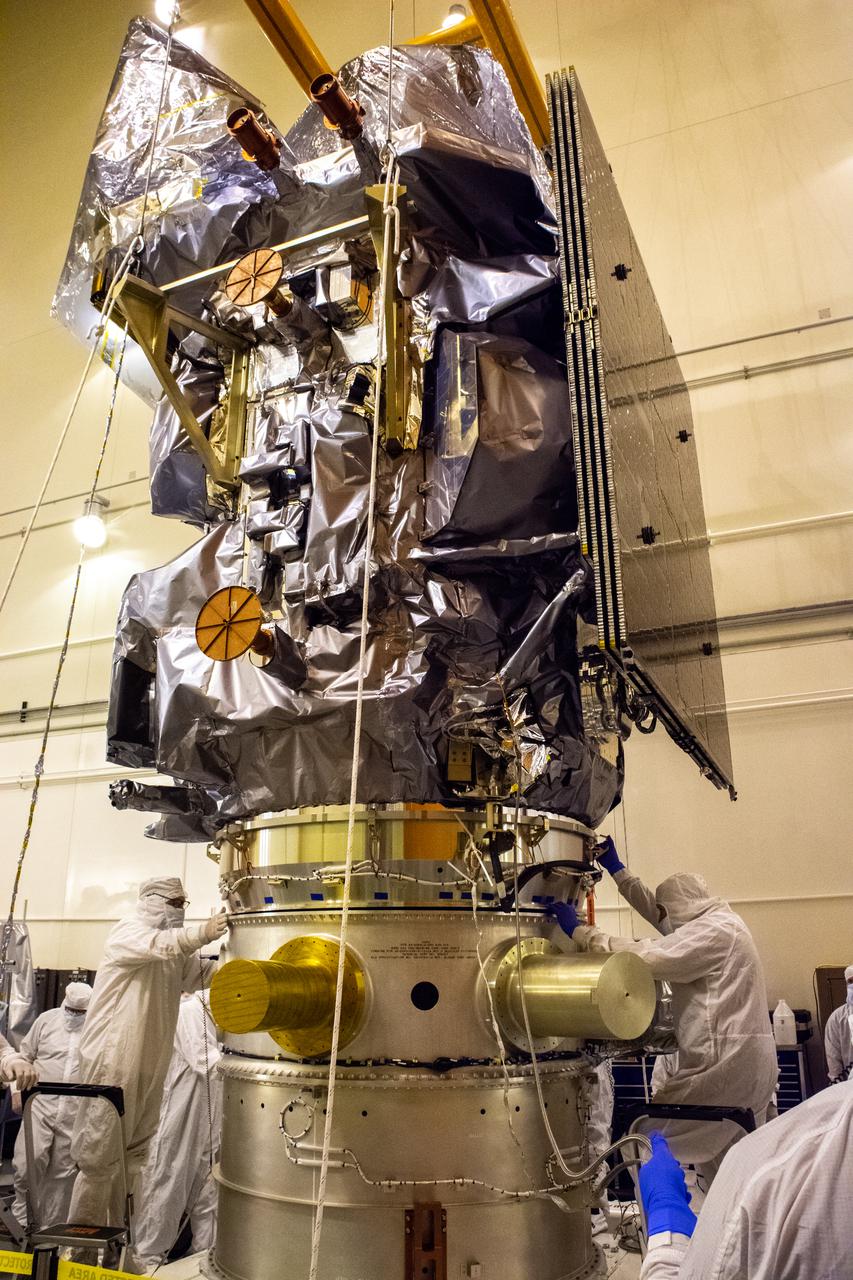
The Landsat 9 PSR to EFS C29 lift and mate inside the Integrated Processing Facility at Vandenberg Space Force Base in California.
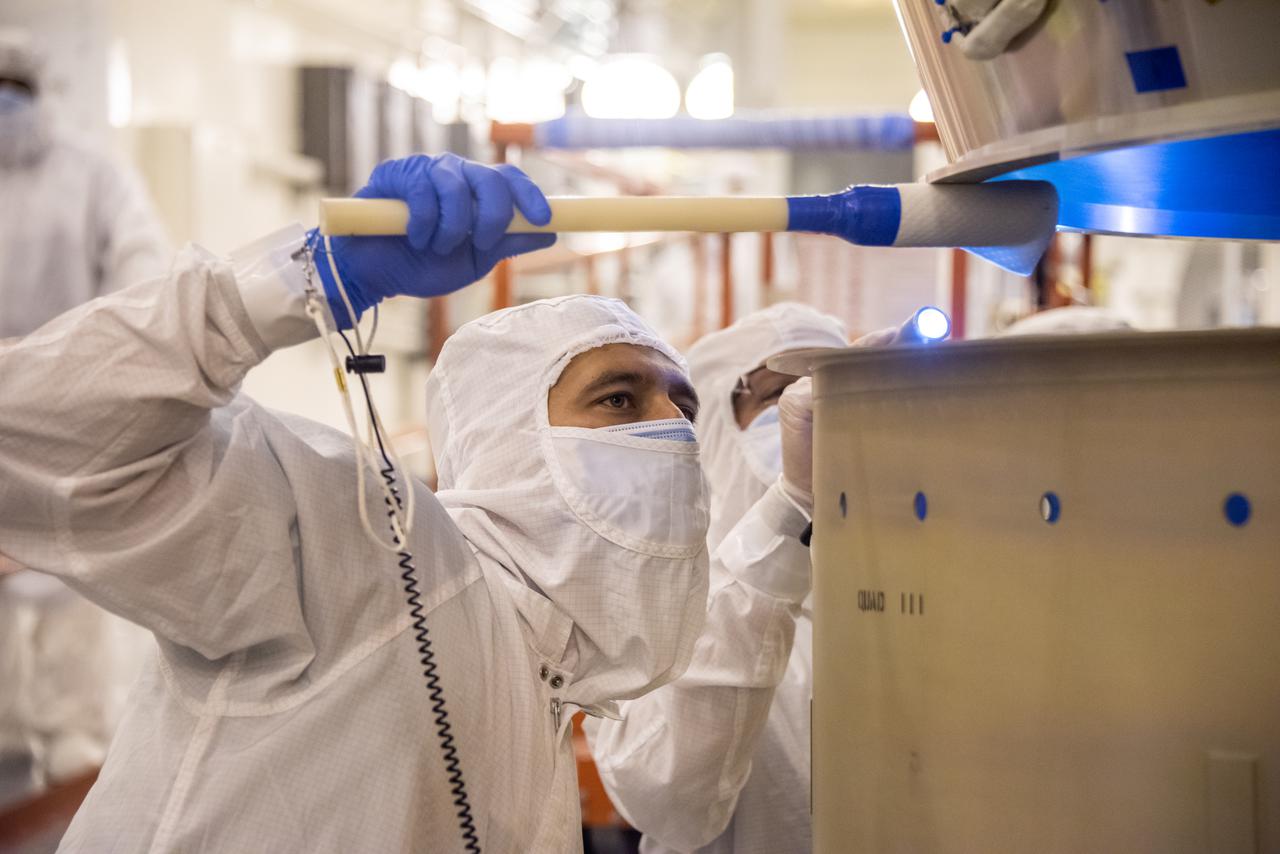
The Landsat 9 PSR to EFS C29 lift and mate inside the Integrated Processing Facility at Vandenberg Space Force Base in California.
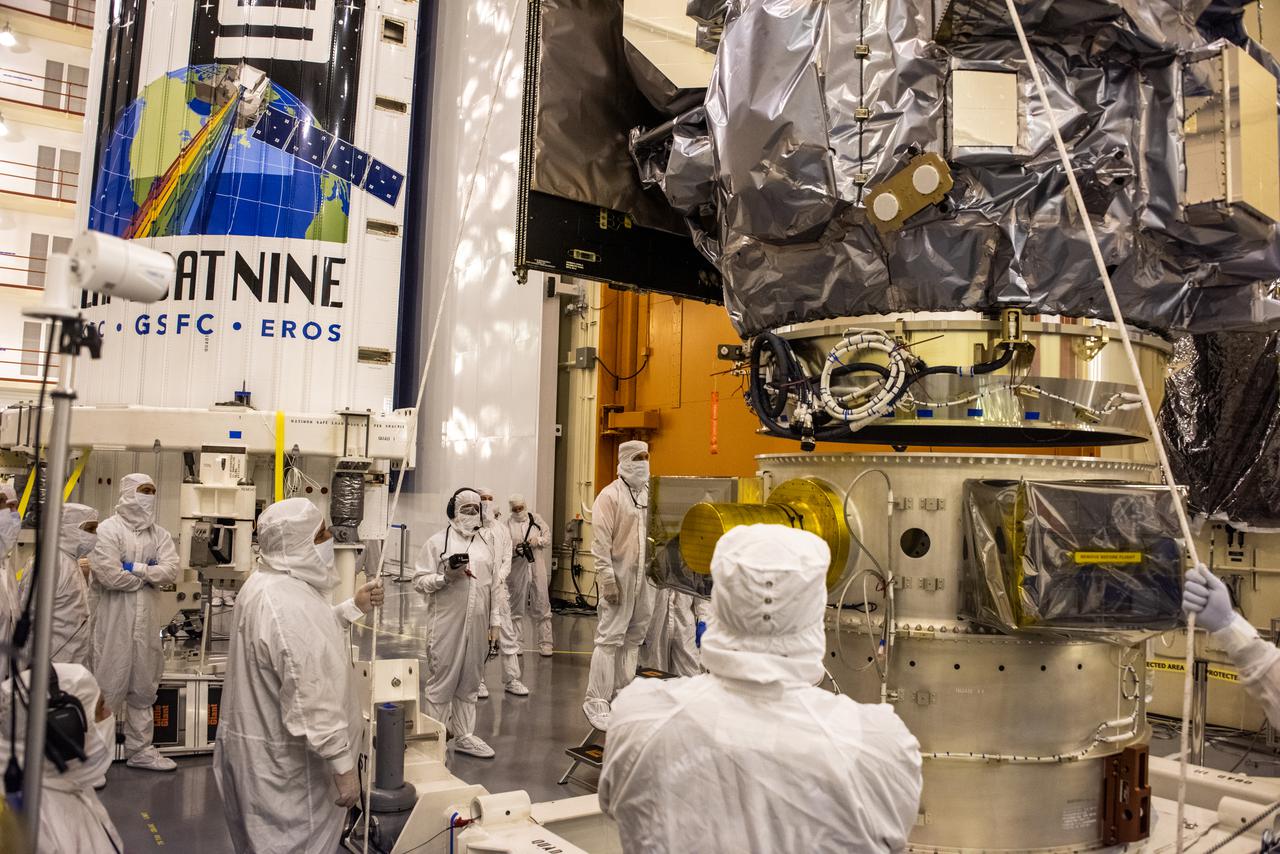
The Landsat 9 PSR to EFS C29 lift and mate inside the Integrated Processing Facility at Vandenberg Space Force Base in California.
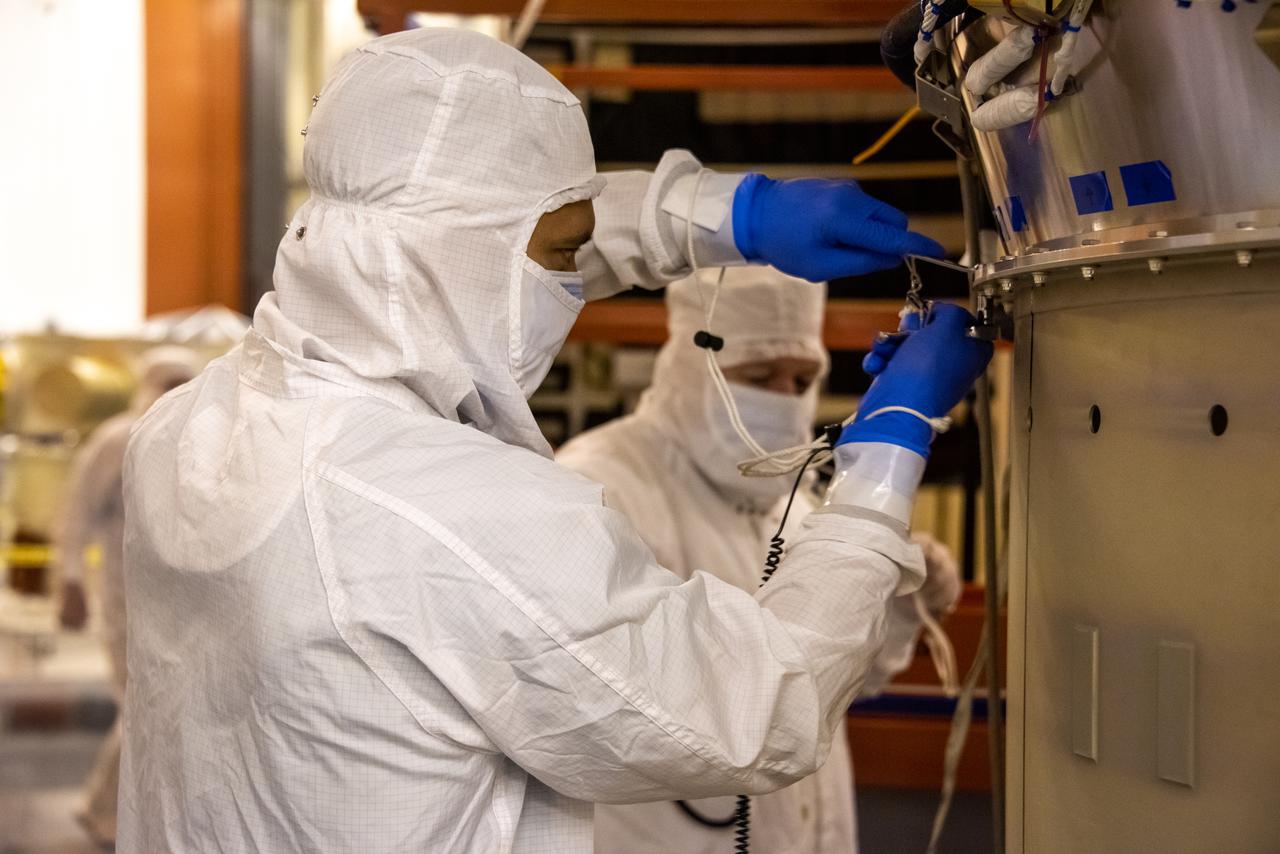
The Landsat 9 PSR to EFS C29 lift and mate inside the Integrated Processing Facility at Vandenberg Space Force Base in California.
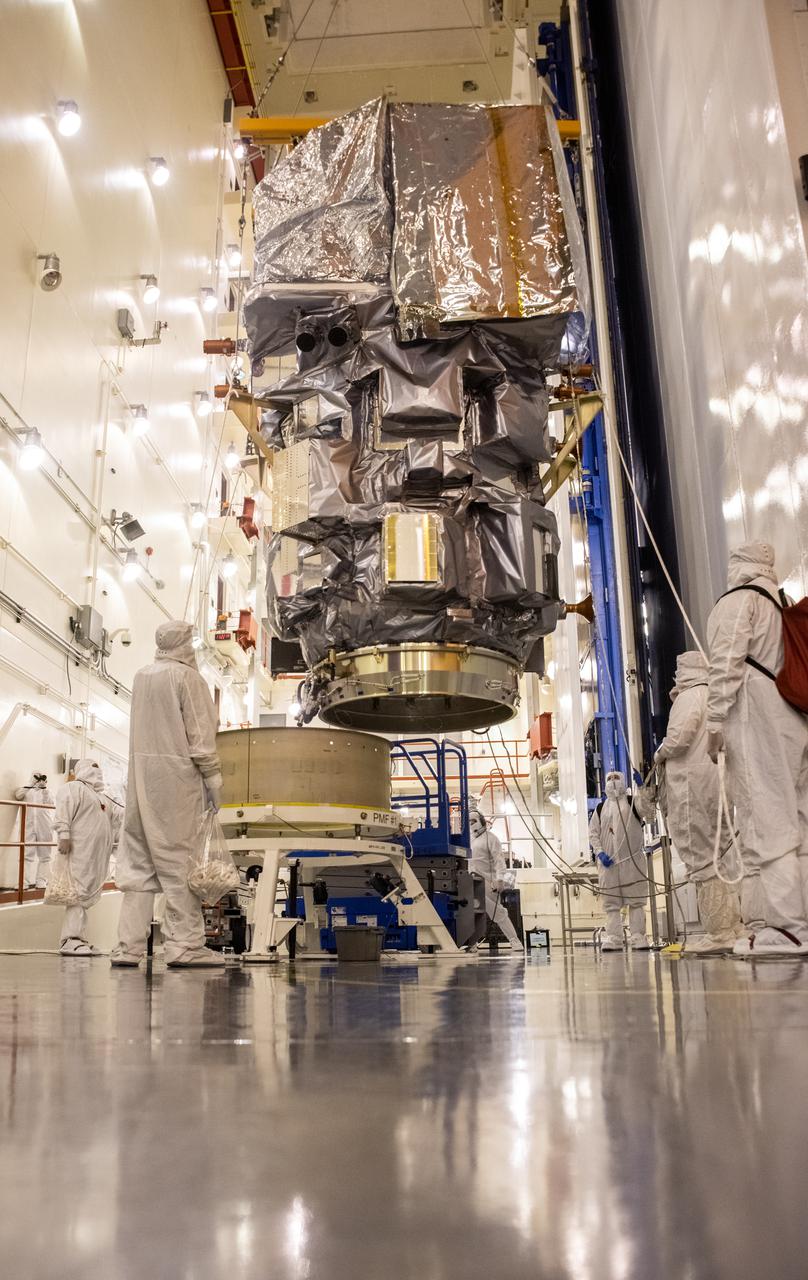
The Landsat 9 PSR to EFS C29 lift and mate inside the Integrated Processing Facility at Vandenberg Space Force Base in California.
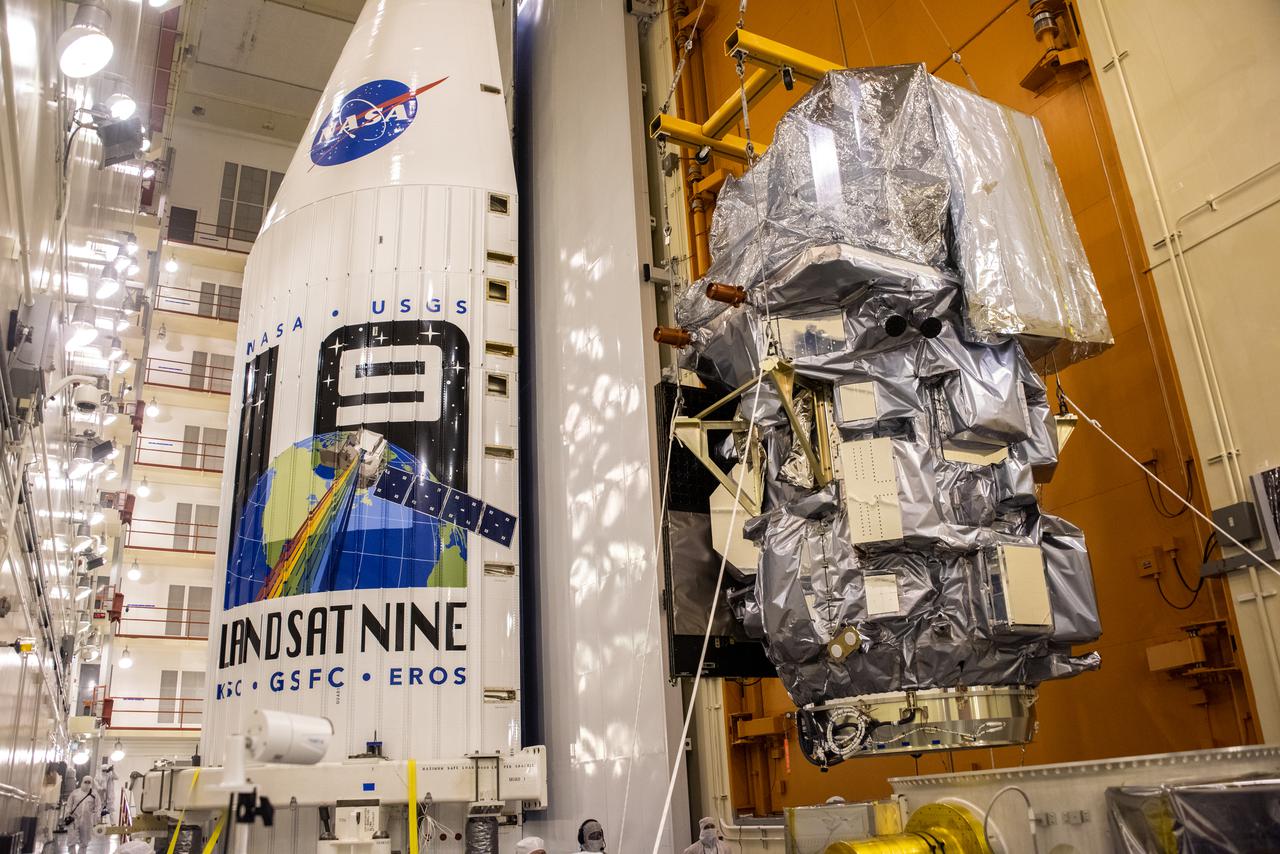
The Landsat 9 PSR to EFS C29 lift and mate inside the Integrated Processing Facility at Vandenberg Space Force Base in California.

The Landsat 9 PSR to EFS C29 lift and mate inside the Integrated Processing Facility at Vandenberg Space Force Base in California.
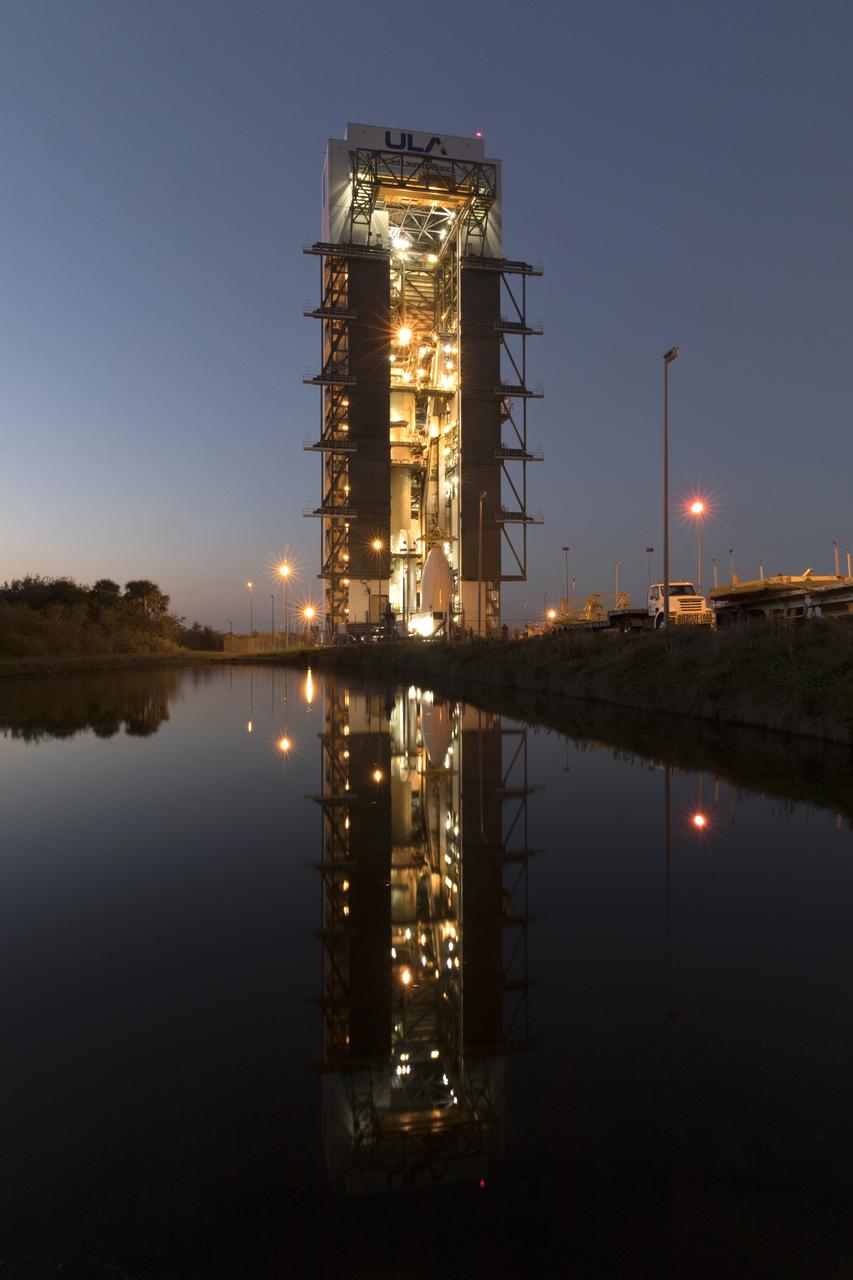
The United Launch Alliance (ULA) Vertical Integration Facility (VIF) is reflected in the water at Space Launch Complex 41 at Cape Canaveral Air Force Station in Florida, as a crane begins to lift the payload fairing containing NOAA's Geostationary Operational Environmental Satellite-S (GOES-S). The fairing will be lifted and mated to the ULA Atlas V rocket. GOES-S is the second in a series of four advanced geostationary weather satellites. The satellite is slated to launch aboard the ULA Atlas V on March 1.
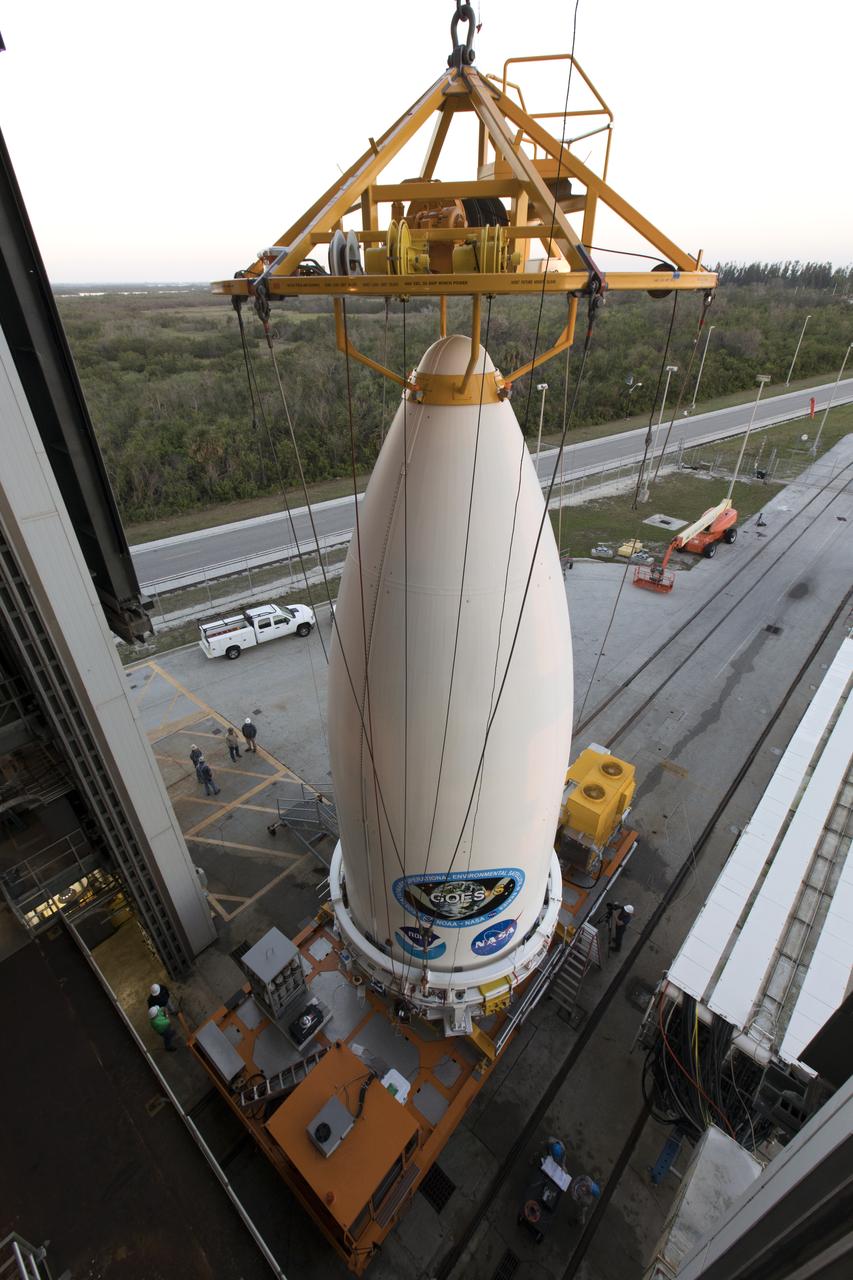
A view from above shows a crane attached to the payload fairing containing NOAA's Geostationary Operational Environmental Satellite-S (GOES-S). The fairing will be lifted and moved into the Vertical Integration Facility at Space Launch Complex 41 at Cape Canaveral Air Force Station in Florida. The fairing will be lifted and mated to the ULA Atlas V rocket. GOES-S is the second in a series of four advanced geostationary weather satellites. The satellite is slated to launch aboard the ULA Atlas V on March 1.
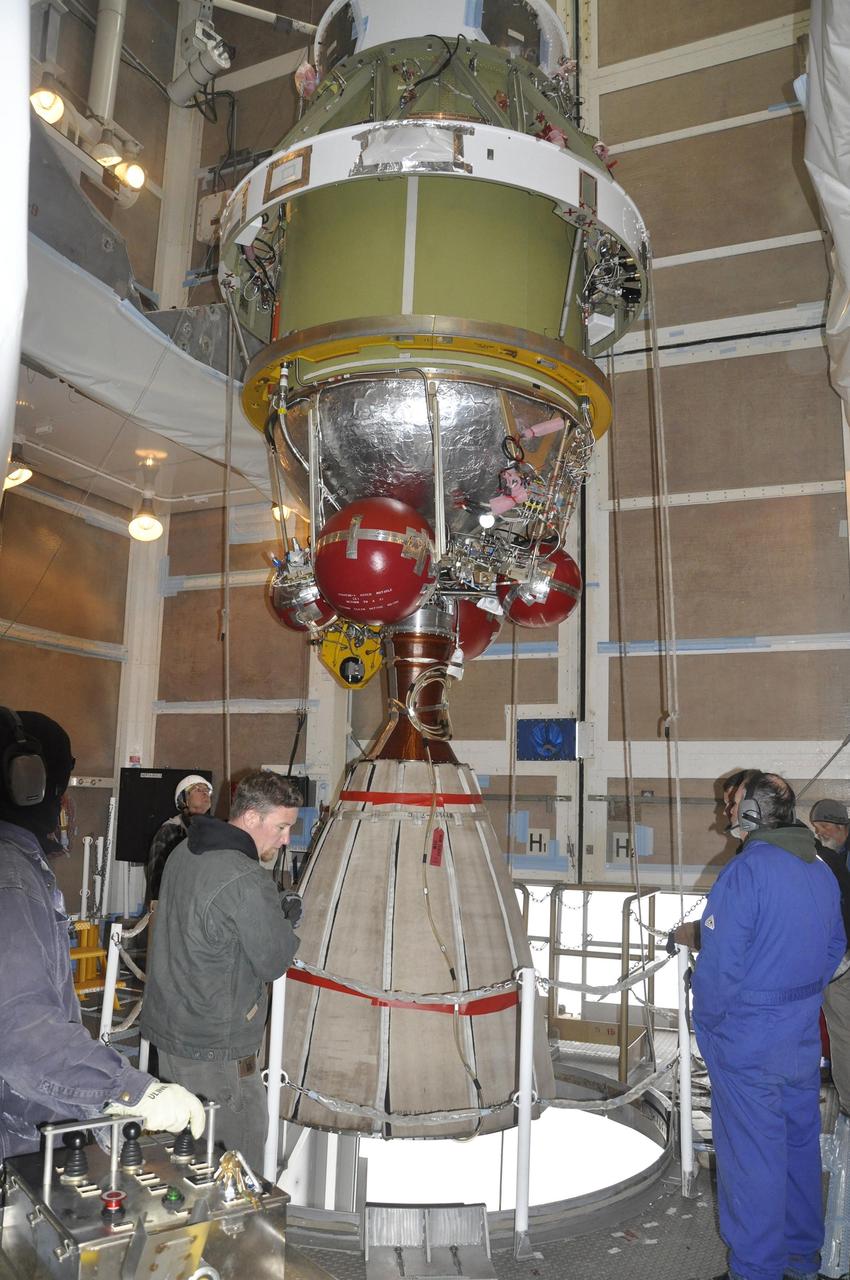
Workers monitor the Delta II second stage for NASA OCO-2, as it is lifted into position for mating with the rocket first stage in the mobile service tower at Space Launch Complex 2 on Vandenberg Air Force Base in California.
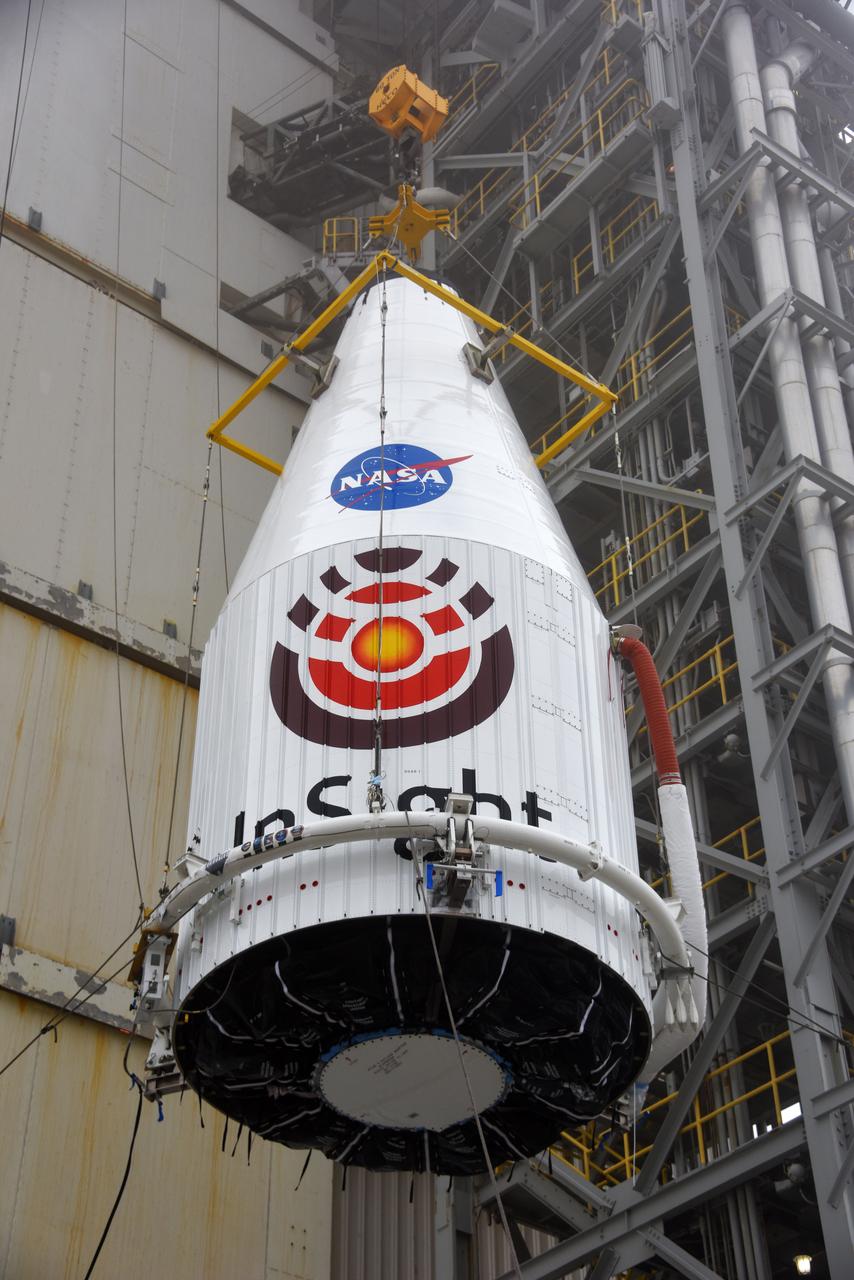
At Space Launch Complex 3 at Vandenberg Air Force Base in California, a crane is used to lift NASA's Interior Exploration using Seismic Investigations, Geodesy and Heat Transport, or InSight, Mars lander for mating atop a United Launch Alliance Atlas V rocket. InSight will be the first mission to look deep beneath the Martian surface. It will study the planet's interior by measuring its heat output and listen for marsquakes. The spacecraft will use the seismic waves generated by marsquakes to develop a map of the planet’s deep interior. The resulting insight into Mars’ formation will provide a better understanding of how other rocky planets, including Earth, were created. InSight is scheduled for liftoff May 5, 2018.
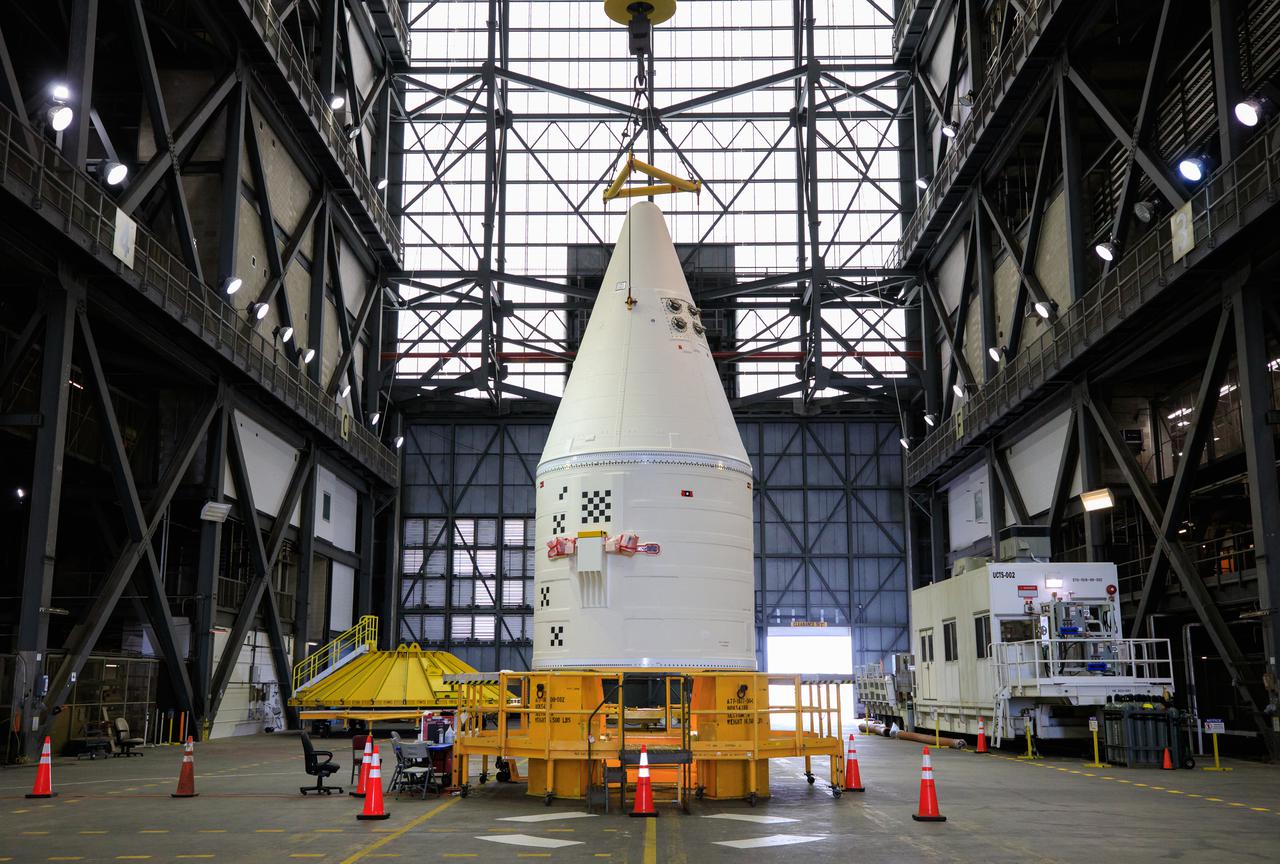
In the transfer aisle of the Vehicle Assembly Building at NASA’s Kennedy Space Center in Florida, workers use a crane to lift the right-hand forward assembly up for transfer into High Bay 3 for the Space Launch System (SLS) on March 2, 2021. The forward assembly will be attached to the center forward segment on the mobile launcher (ML). Workers with Exploration Ground Systems and contractor Jacobs teams are stacking the twin five-segment boosters on the ML over a number of weeks. When the core stage arrives, it will join the boosters on the mobile launcher, followed by the interim cryogenic propulsion stage and Orion spacecraft. Manufactured by Northrop Grumman in Utah, the twin boosters provide more than 75 percent of the total SLS thrust at launch. Marshall Space Flight Center in Huntsville, Alabama, manages the SLS. Under the Artemis program, NASA will land the first woman and the next man on the Moon. The first in a series of increasingly complex missions, Artemis I will test the Orion spacecraft and SLS as an integrated system ahead of crewed flights to the Moon.
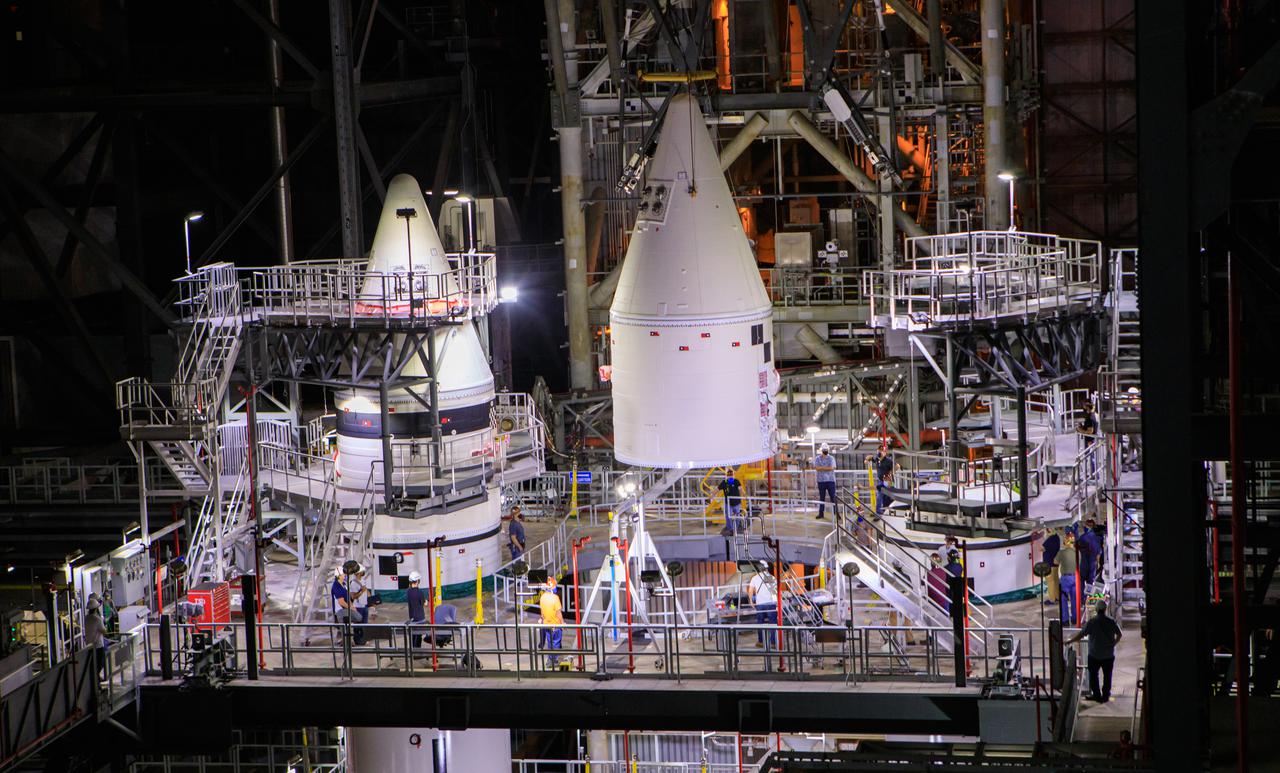
Workers use a crane to lower the right-hand forward assembly for NASA’s Space Launch System onto the right-hand center forward segment on the mobile launcher (ML) in High Bay 3 of the Vehicle Assembly Building at Kennedy Space Center in Florida, on March 2, 2021. Workers with Exploration Ground Systems and contractor Jacobs teams are stacking the twin five-segment boosters on the ML over a number of weeks. When the core stage arrives, it will join the boosters on the mobile launcher, followed by the interim cryogenic propulsion stage and Orion spacecraft. Manufactured by Northrop Grumman in Utah, the twin boosters provide more than 75 percent of the total SLS thrust at launch. Marshall Space Flight Center in Huntsville, Alabama, manages the SLS. Under the Artemis program, NASA will land the first woman and the next man on the Moon. The first in a series of increasingly complex missions, Artemis I will test the Orion spacecraft and SLS as an integrated system ahead of crewed flights to the Moon.
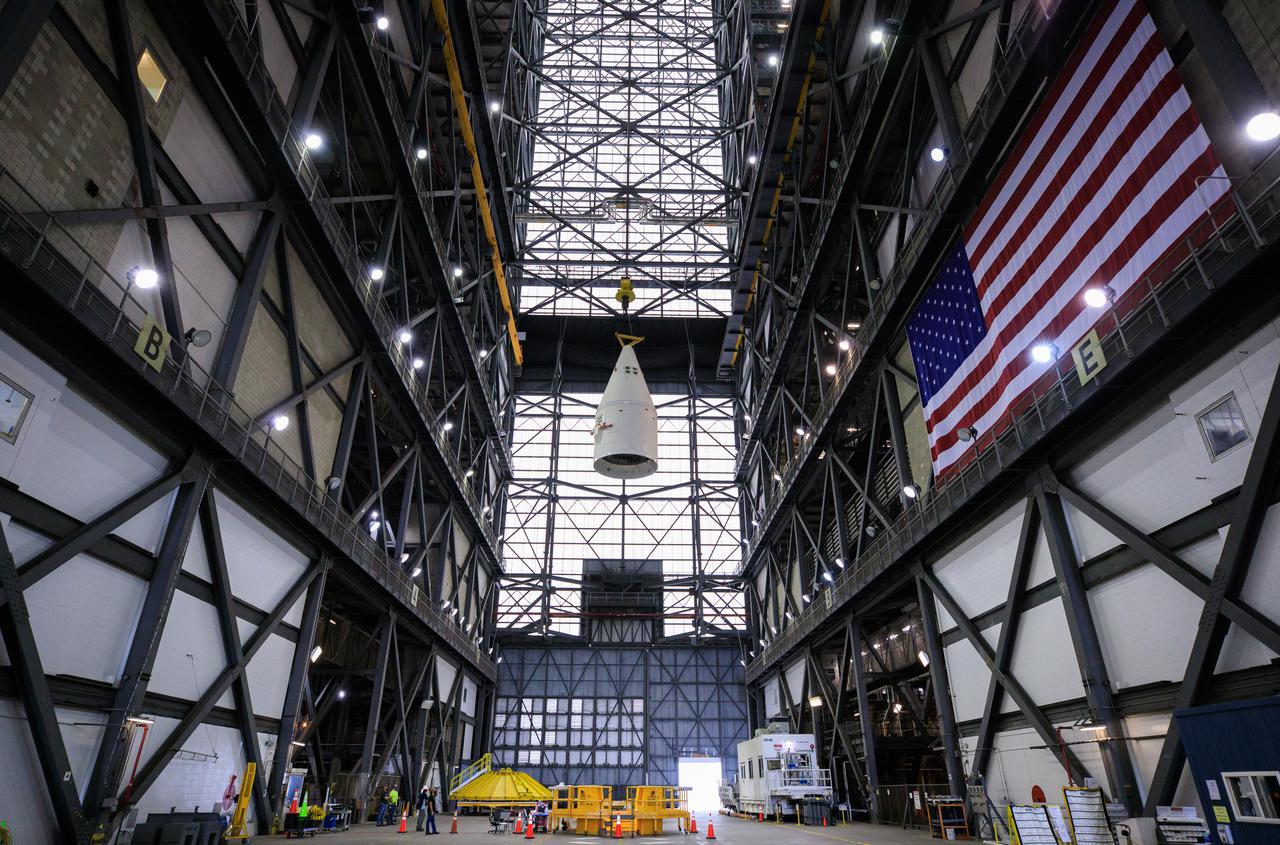
In the transfer aisle of the Vehicle Assembly Building at NASA’s Kennedy Space Center in Florida, workers use a crane to lift the right-hand forward assembly for the Space Launch System (SLS) high up for transfer into High Bay 3 on March 2, 2021. The forward assembly will be attached to the center forward segment on the mobile launcher (ML). Workers with Exploration Ground Systems and contractor Jacobs teams are stacking the twin five-segment boosters on the ML over a number of weeks. When the core stage arrives, it will join the boosters on the mobile launcher, followed by the interim cryogenic propulsion stage and Orion spacecraft. Manufactured by Northrop Grumman in Utah, the twin boosters provide more than 75 percent of the total SLS thrust at launch. Marshall Space Flight Center in Huntsville, Alabama, manages the SLS. Under the Artemis program, NASA will land the first woman and the next man on the Moon. The first in a series of increasingly complex missions, Artemis I will test the Orion spacecraft and SLS as an integrated system ahead of crewed flights to the Moon.
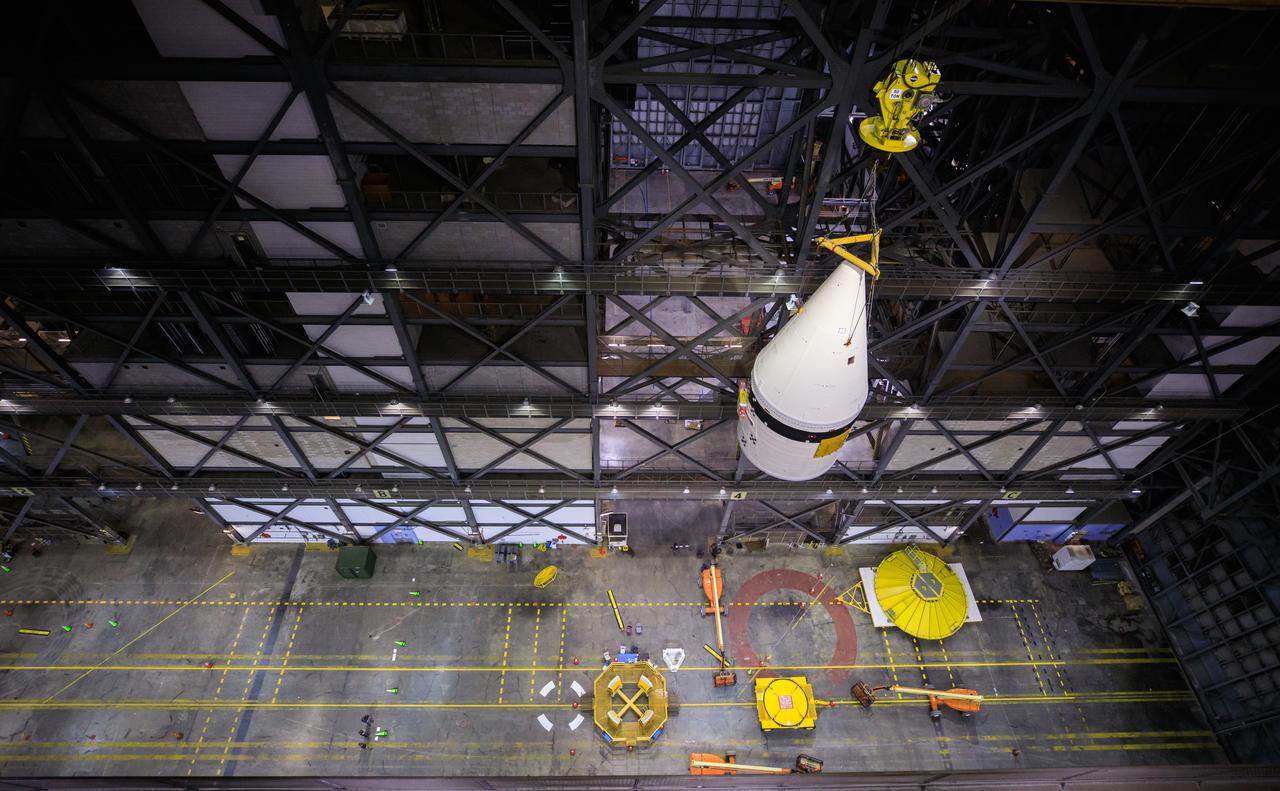
This view from high up in the Vehicle Assembly Building at NASA Kennedy Space Center in Florida, shows a crane lifting the left-hand forward assembly for NASA’s Space Launch System (SLS) in the transfer aisle on March 1, 2021. Workers are lifting the segment up for transfer into High Bay 3, where it will be attached to the center forward segment on the mobile launcher (ML). Exploration Ground Systems and contractor Jacobs teams have been stacking the twin five-segment boosters on the ML over a number of weeks. When the core stage arrives, it will join the boosters on the mobile launcher, followed by the interim cryogenic propulsion stage and Orion spacecraft. Manufactured by Northrop Grumman in Utah, the twin boosters provide more than 75 percent of the total SLS thrust at launch. Marshall Space Flight Center in Huntsville, Alabama, manages the SLS. Under the Artemis program, NASA will land the first woman and the next man on the Moon. The first in a series of increasingly complex missions, Artemis I will test the Orion spacecraft and SLS as an integrated system ahead of crewed flights to the Moon.
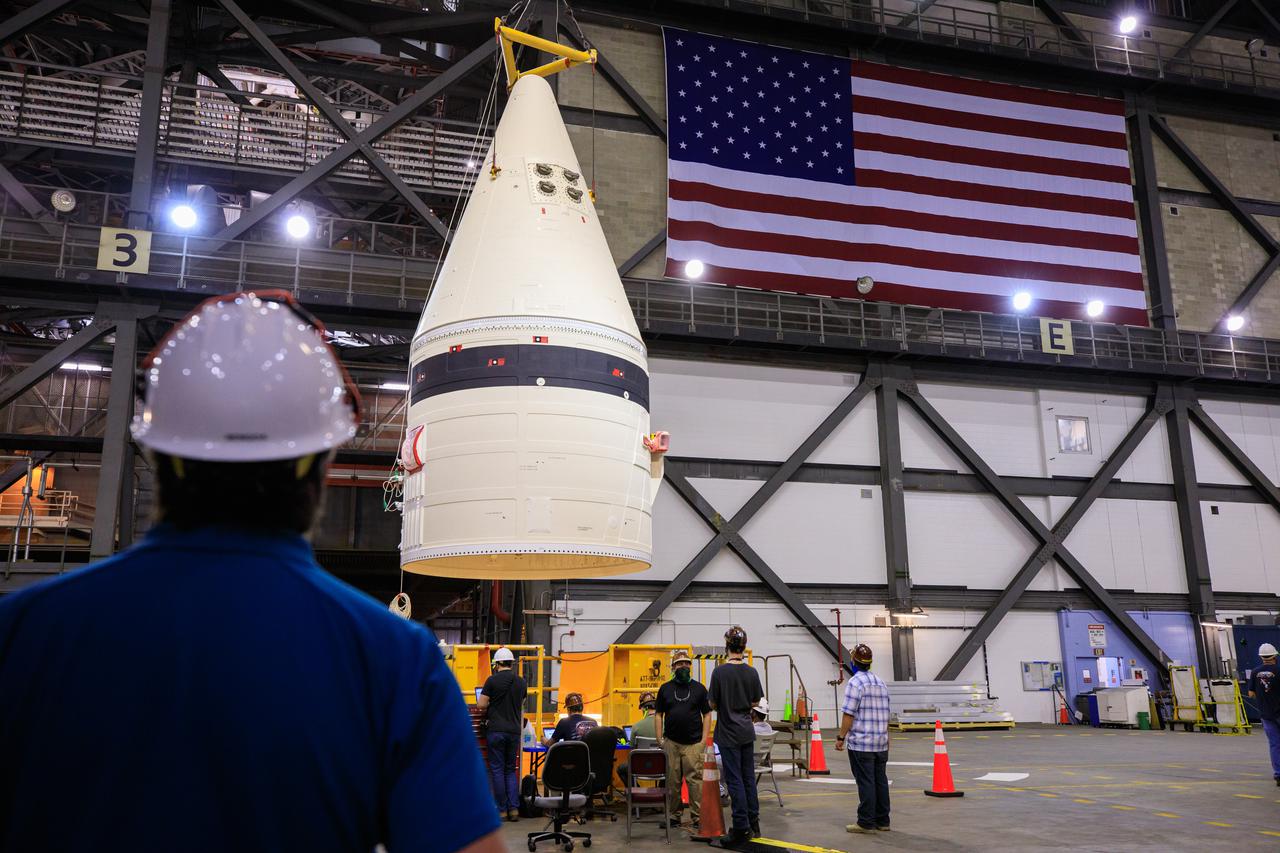
In the transfer aisle of the Vehicle Assembly Building at NASA’s Kennedy Space Center in Florida, workers use a crane to lift up the left-hand booster forward assembly for the agency’s Space Launch System for transfer into High Bay 3 on March 1, 2021. The forward assembly will be attached to the center forward segment on the mobile launcher (ML). Exploration Ground Systems and contractor Jacobs teams have been stacking the twin five-segment boosters on the ML over a number of weeks. When the core stage arrives, it will join the boosters on the mobile launcher, followed by the interim cryogenic propulsion stage and Orion spacecraft. Manufactured by Northrop Grumman in Utah, the twin boosters provide more than 75 percent of the total SLS thrust at launch. Marshall Space Flight Center in Huntsville, Alabama, manages the SLS. Under the Artemis program, NASA will land the first woman and the next man on the Moon. The first in a series of increasingly complex missions, Artemis I will test the Orion spacecraft and SLS as an integrated system ahead of crewed flights to the Moon.
In the transfer aisle of the Vehicle Assembly Building at NASA’s Kennedy Space Center in Florida, workers use a crane to lift up the left-hand booster forward assembly for the agency’s Space Launch System for transfer into High Bay 3 on March 1, 2021. The forward assembly will be attached to the center forward segment on the mobile launcher (ML). Exploration Ground Systems and contractor Jacobs teams have been stacking the twin five-segment boosters on the ML over a number of weeks. When the core stage arrives, it will join the boosters on the mobile launcher, followed by the interim cryogenic propulsion stage and Orion spacecraft. Manufactured by Northrop Grumman in Utah, the twin boosters provide more than 75 percent of the total SLS thrust at launch. Marshall Space Flight Center in Huntsville, Alabama, manages the SLS. Under the Artemis program, NASA will land the first woman and the next man on the Moon. The first in a series of increasingly complex missions, Artemis I will test the Orion spacecraft and SLS as an integrated system ahead of crewed flights to the Moon.
In the transfer aisle of the Vehicle Assembly Building at NASA’s Kennedy Space Center in Florida, workers use a crane to lift the right-hand forward assembly up for transfer into High Bay 3 for the Space Launch System (SLS) on March 2, 2021. The forward assembly will be attached to the center forward segment on the mobile launcher (ML). Workers with Exploration Ground Systems and contractor Jacobs teams are stacking the twin five-segment boosters on the ML over a number of weeks. When the core stage arrives, it will join the boosters on the mobile launcher, followed by the interim cryogenic propulsion stage and Orion spacecraft. Manufactured by Northrop Grumman in Utah, the twin boosters provide more than 75 percent of the total SLS thrust at launch. Marshall Space Flight Center in Huntsville, Alabama, manages the SLS. Under the Artemis program, NASA will land the first woman and the next man on the Moon. The first in a series of increasingly complex missions, Artemis I will test the Orion spacecraft and SLS as an integrated system ahead of crewed flights to the Moon.
The left-hand booster forward assembly for NASA’s Space Launch System is lowered by crane onto the center forward segment on the mobile launcher (ML) in High Bay 3 of the Vehicle Assembly Building at Kennedy Space Center in Florida on March 1, 2021. Exploration Ground Systems and contractor Jacobs teams have been stacking the twin five-segment boosters on the ML over a number of weeks. When the core stage arrives, it will join the boosters on the mobile launcher, followed by the interim cryogenic propulsion stage and Orion spacecraft. Manufactured by Northrop Grumman in Utah, the twin boosters provide more than 75 percent of the total SLS thrust at launch. Marshall Space Flight Center in Huntsville, Alabama, manages the SLS. Under the Artemis program, NASA will land the first woman and the next man on the Moon. The first in a series of increasingly complex missions, Artemis I will test the Orion spacecraft and SLS as an integrated system ahead of crewed flights to the Moon.
In the transfer aisle of the Vehicle Assembly Building at NASA’s Kennedy Space Center in Florida, workers use a crane to lift the right-hand forward assembly for the Space Launch System (SLS) high up for transfer into High Bay 3 on March 2, 2021. The forward assembly will be attached to the center forward segment on the mobile launcher (ML). Workers with Exploration Ground Systems and contractor Jacobs teams are stacking the twin five-segment boosters on the ML over a number of weeks. When the core stage arrives, it will join the boosters on the mobile launcher, followed by the interim cryogenic propulsion stage and Orion spacecraft. Manufactured by Northrop Grumman in Utah, the twin boosters provide more than 75 percent of the total SLS thrust at launch. Marshall Space Flight Center in Huntsville, Alabama, manages the SLS. Under the Artemis program, NASA will land the first woman and the next man on the Moon. The first in a series of increasingly complex missions, Artemis I will test the Orion spacecraft and SLS as an integrated system ahead of crewed flights to the Moon.
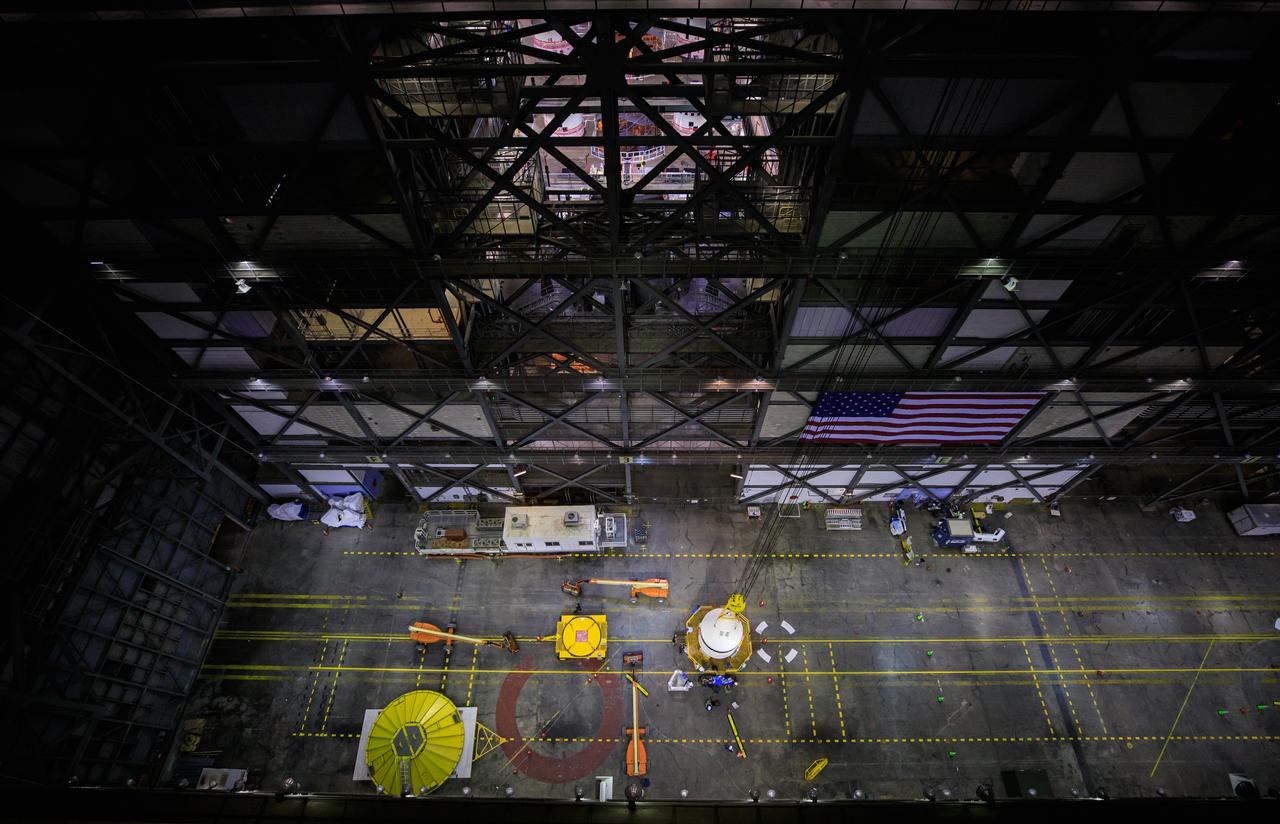
This view from high up in the Vehicle Assembly Building at NASA Kennedy Space Center in Florida, shows a crane lifting the left-hand forward assembly for NASA’s Space Launch System (SLS) in the transfer aisle on March 1, 2021. Workers are lifting the segment up for transfer into High Bay 3, where it will be attached to the center forward segment on the mobile launcher (ML). Exploration Ground Systems and contractor Jacobs teams have been stacking the twin five-segment boosters on the ML over a number of weeks. When the core stage arrives, it will join the boosters on the mobile launcher, followed by the interim cryogenic propulsion stage and Orion spacecraft. Manufactured by Northrop Grumman in Utah, the twin boosters provide more than 75 percent of the total SLS thrust at launch. Marshall Space Flight Center in Huntsville, Alabama, manages the SLS. Under the Artemis program, NASA will land the first woman and the next man on the Moon. The first in a series of increasingly complex missions, Artemis I will test the Orion spacecraft and SLS as an integrated system ahead of crewed flights to the Moon.
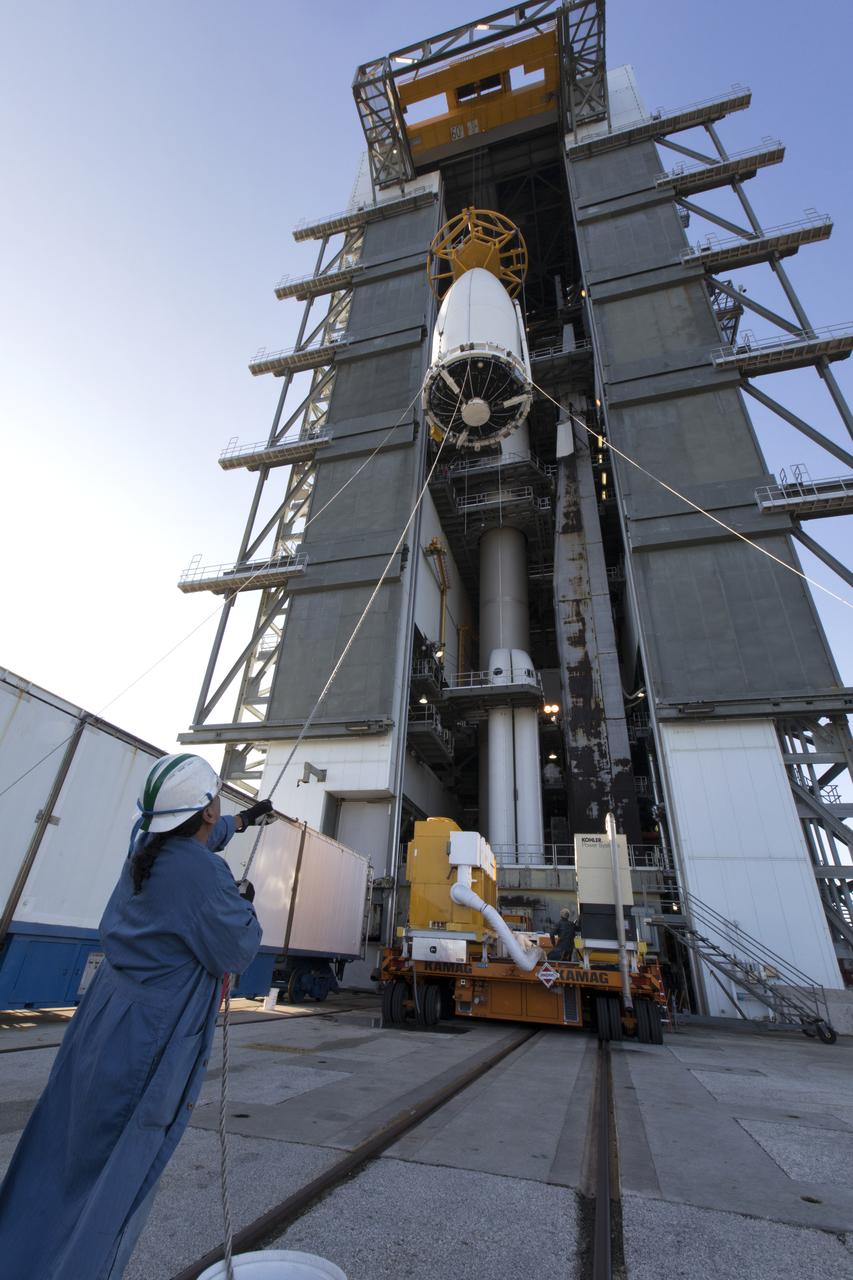
The payload fairing containing NOAA's Geostationary Operational Environmental Satellite-S (GOES-S) is lifted up by crane at the United Launch Alliance (ULA) Vertical Integration Facility at Space Launch Complex 41 at Cape Canaveral Air Force Station in Florida. The fairing will be mated to the ULA Atlas V rocket. GOES-S is the second in a series of four advanced geostationary weather satellites. The satellite is slated to launch aboard the ULA Atlas V on March 1.
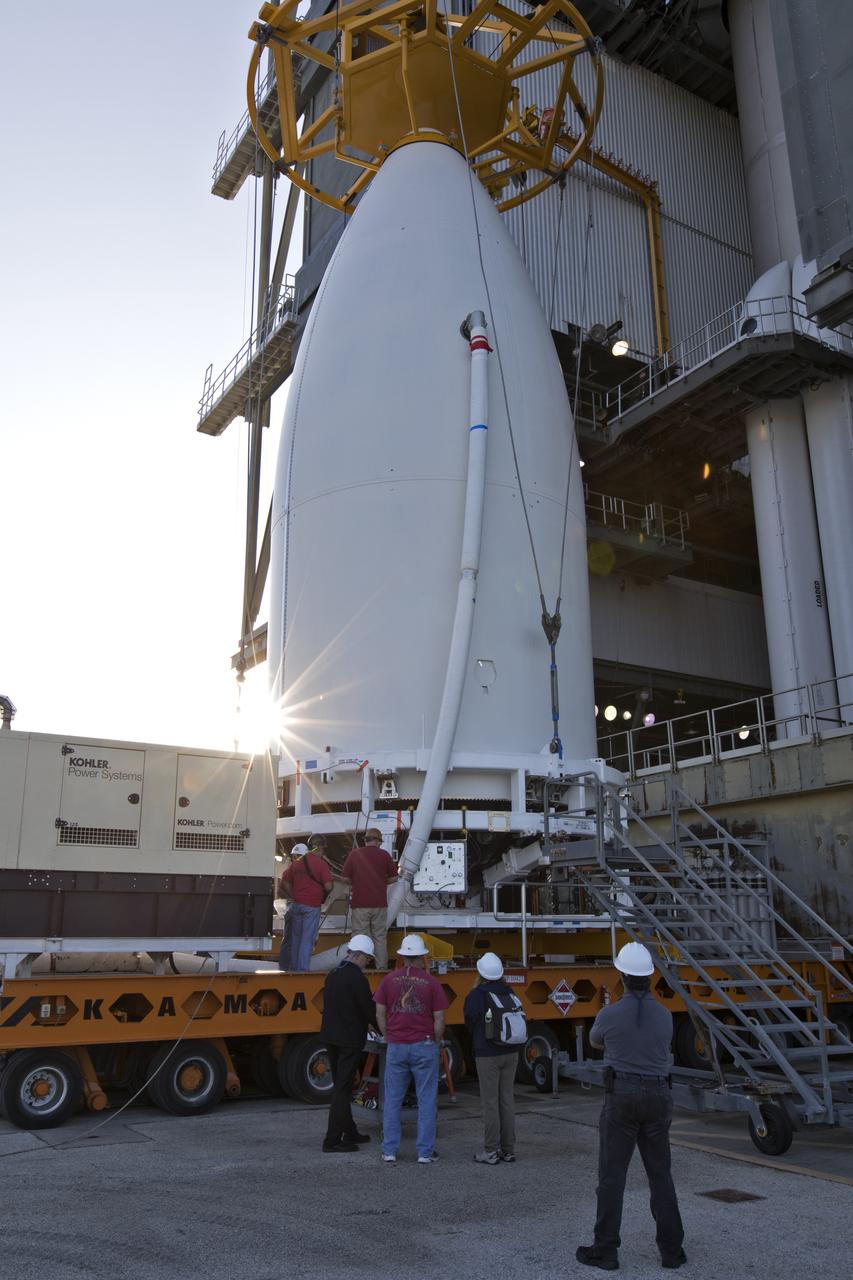
Preparations are underway to lift the payload fairing containing NOAA's Geostationary Operational Environmental Satellite-S (GOES-S) up and into the United Launch Alliance (ULA) Vertical Integration Facility at Space Launch Complex 41 at Cape Canaveral Air Force Station in Florida. The fairing will be mated to the ULA Atlas V rocket. GOES-S is the second in a series of four advanced geostationary weather satellites. The satellite is slated to launch aboard the ULA Atlas V on March 1.
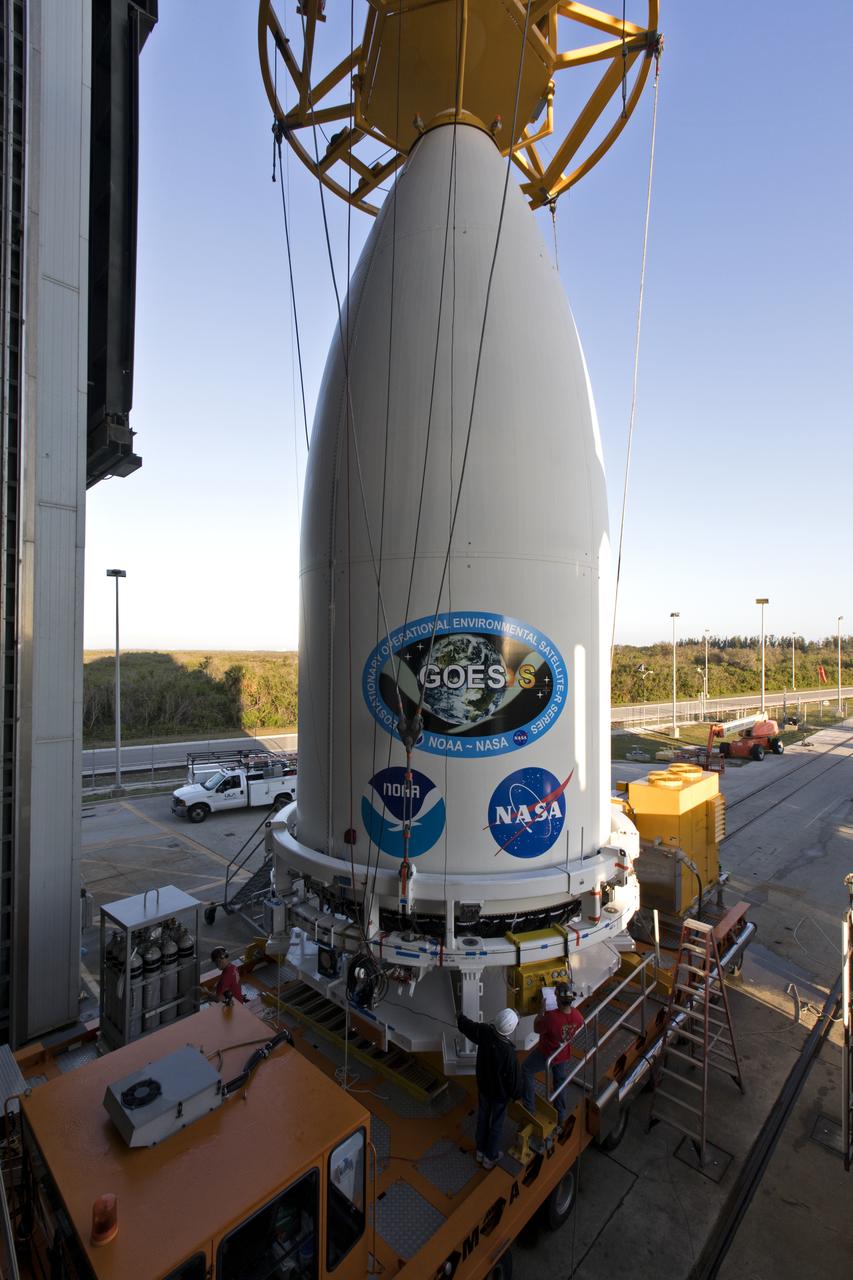
A crane is attached to the payload fairing containing NOAA's Geostationary Operational Environmental Satellite-S (GOES-S) and preparations are underway to lift it up and into the United Launch Alliance (ULA) Horizontal Integration Facility at Space Launch Complex 41 at Cape Canaveral Air Force Station in Florida. The fairing will be mated to the ULA Atlas V rocket. GOES-S is the second in a series of four advanced geostationary weather satellites. The satellite is slated to launch aboard the ULA Atlas V on March 1.
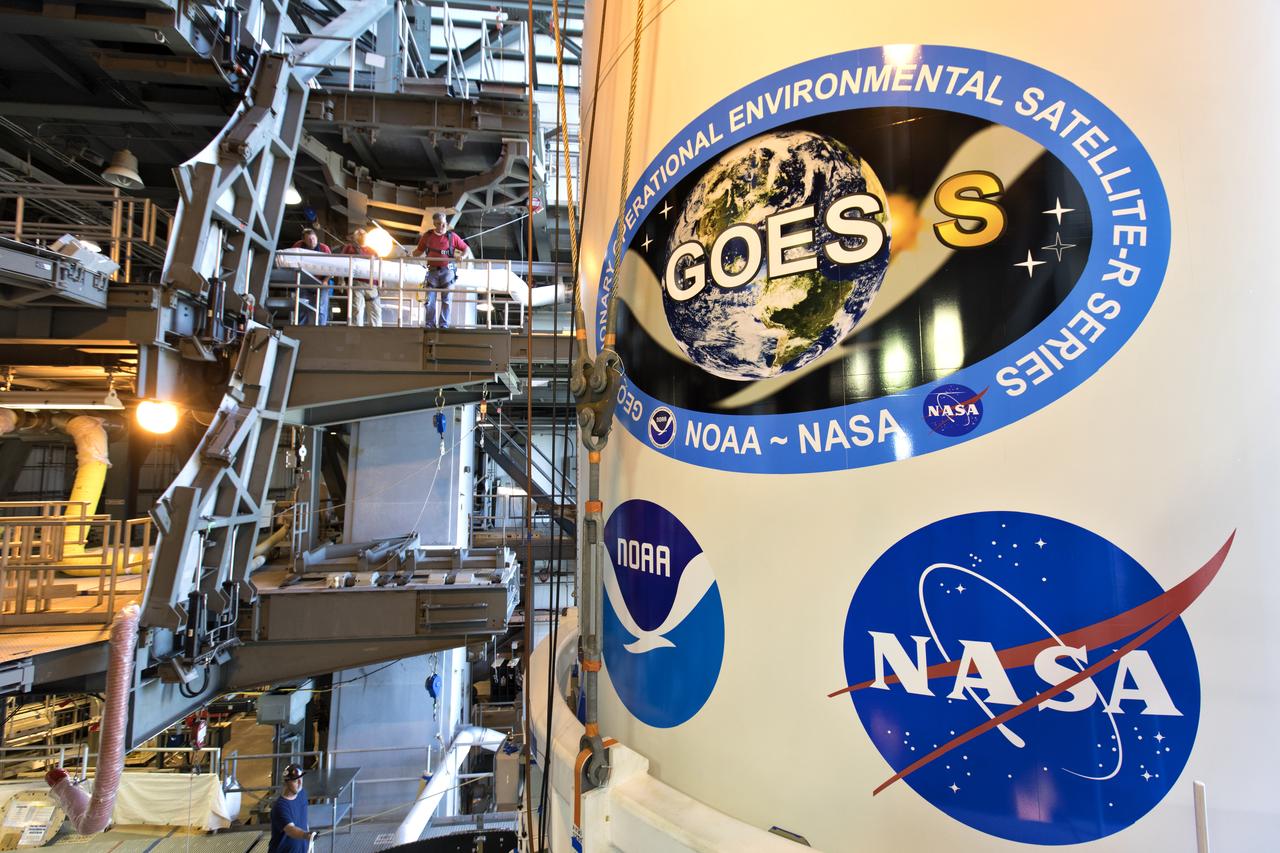
The payload fairing containing NOAA's Geostationary Operational Environmental Satellite-S (GOES-S) was lifted up by crane and moved into the United Launch Alliance (ULA) Vertical Integration Facility at Space Launch Complex 41 at Cape Canaveral Air Force Station in Florida. The fairing will be mated to the ULA Atlas V rocket. GOES-S is the second in a series of four advanced geostationary weather satellites. The satellite is slated to launch aboard the ULA Atlas V on March 1.
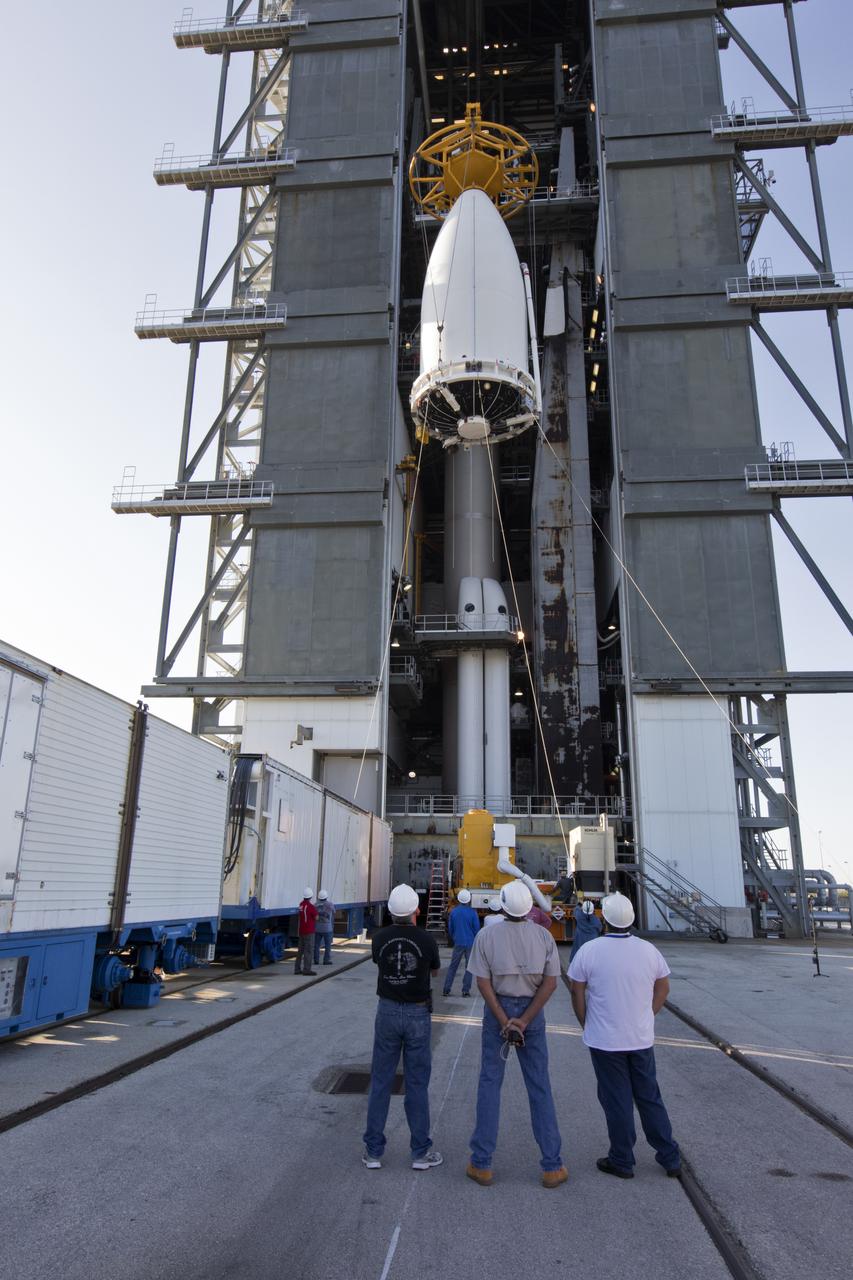
The payload fairing containing NOAA's Geostationary Operational Environmental Satellite-S (GOES-S) is lifted up by crane at the United Launch Alliance (ULA) Vertical Integration Facility at Space Launch Complex 41 at Cape Canaveral Air Force Station in Florida. The fairing will be mated to the ULA Atlas V rocket. GOES-S is the second in a series of four advanced geostationary weather satellites. The satellite is slated to launch aboard the ULA Atlas V on March 1.
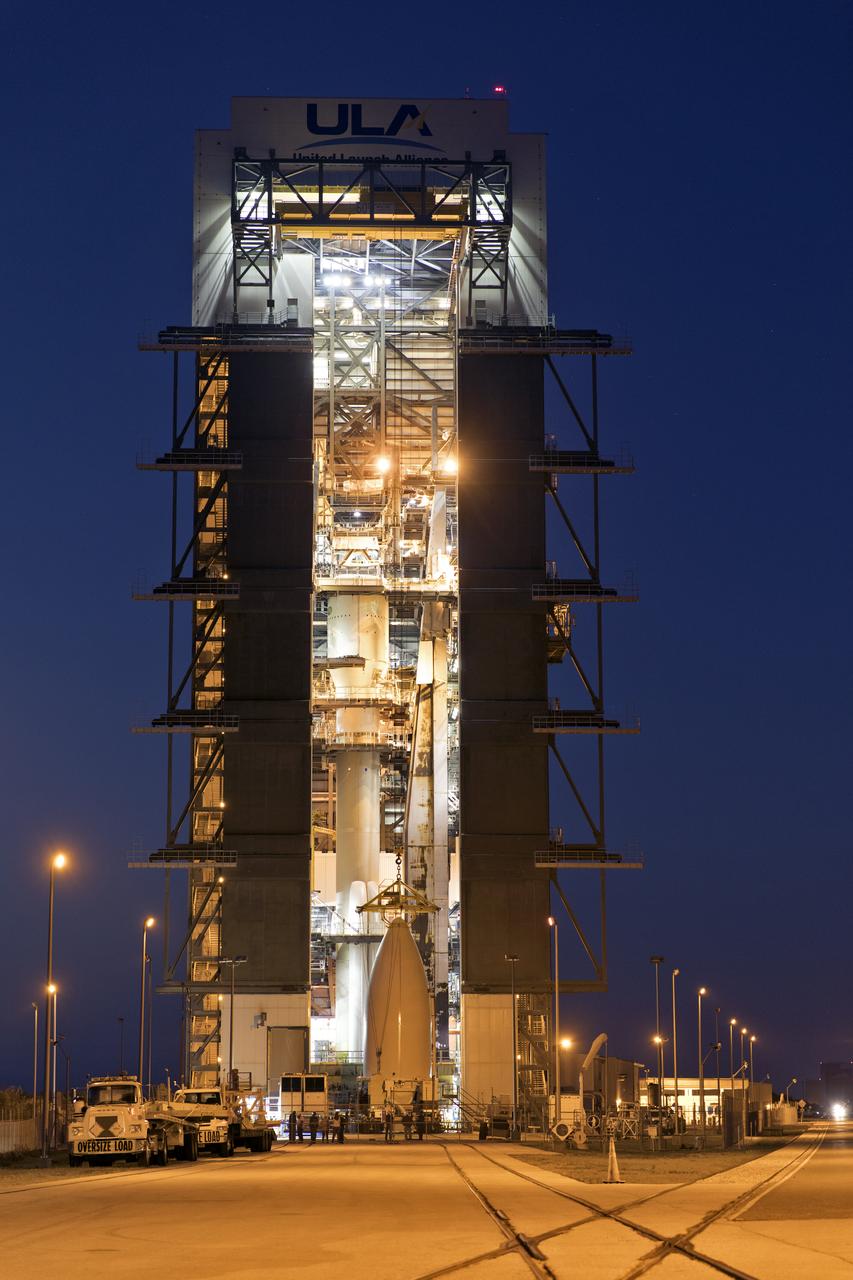
A crane has been attached to the payload fairing containing NOAA's Geostationary Operational Environmental Satellite-S (GOES-S) at the United Launch Alliance (ULA) Vertical Integration Facility at Space Launch Complex 41 at Cape Canaveral Air Force Station in Florida. The fairing will be lifted and mated to the ULA Atlas V rocket. GOES-S is the second in a series of four advanced geostationary weather satellites. The satellite is slated to launch aboard the ULA Atlas V on March 1.
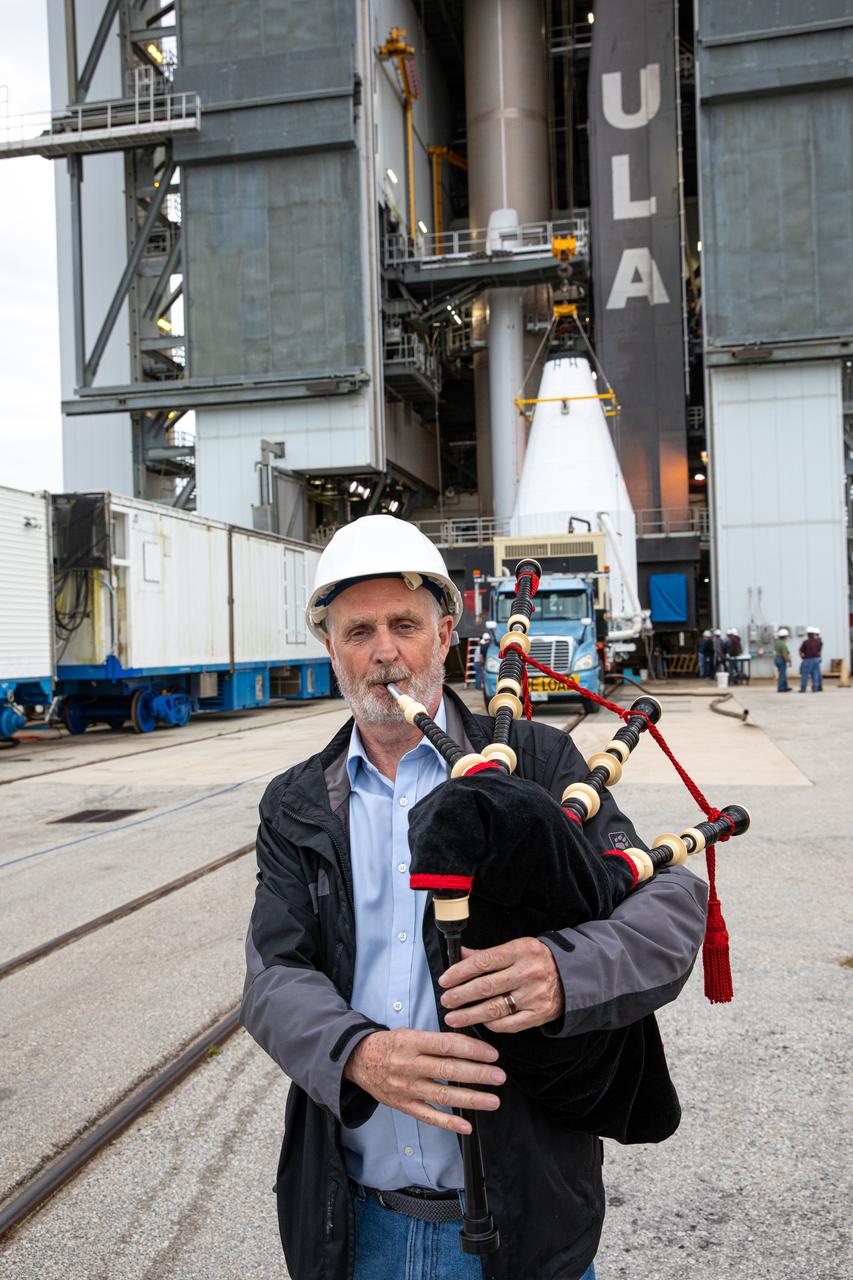
An Airbus Defence and Space worker plays the bagpipes at the Vertical Integration Facility at Space Launch Complex 41 on Cape Canaveral Air Force Station in Florida on Jan. 31, 2020. It is a tradition for the company to play the bagpipes during spacecraft mate to rocket. In the background, a crane lifts the United Launch Alliance payload fairing, containing the Solar Orbiter spacecraft, for mating to the company’s Atlas V rocket. Solar Orbiter is an international cooperative mission between ESA (European Space Agency) and NASA. The mission aims to study the Sun, its outer atmosphere and solar wind. The spacecraft will provide the first images of the Sun’s poles. NASA’s Launch Services Program based at Kennedy is managing the launch. The spacecraft has been developed by Airbus Defence and Space. Solar Orbiter will launch in February 2020 aboard the Atlas V rocket.
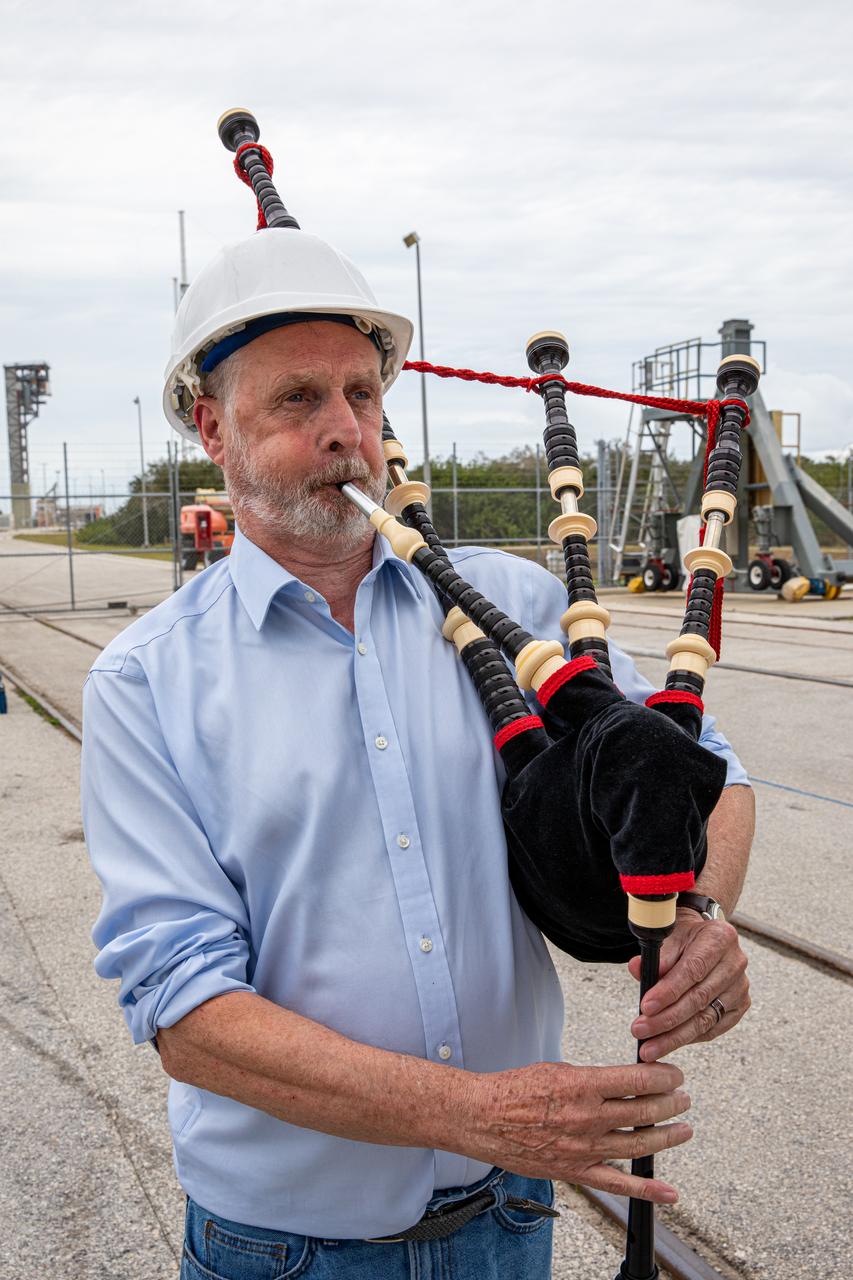
An Airbus Defence and Space worker plays the bagpipes at the Vertical Integration Facility at Space Launch Complex 41 on Cape Canaveral Air Force Station in Florida on Jan. 31, 2020. It is a tradition for the company to play the bagpipes during spacecraft mate to rocket. In the background, a crane lifts the United Launch Alliance payload fairing, containing the Solar Orbiter spacecraft, for mating to the company’s Atlas V rocket. Solar Orbiter is an international cooperative mission between ESA (European Space Agency) and NASA. The mission aims to study the Sun, its outer atmosphere and solar wind. The spacecraft will provide the first images of the Sun’s poles. NASA’s Launch Services Program based at Kennedy is managing the launch. The spacecraft has been developed by Airbus Defence and Space. Solar Orbiter will launch in February 2020 aboard the Atlas V rocket.
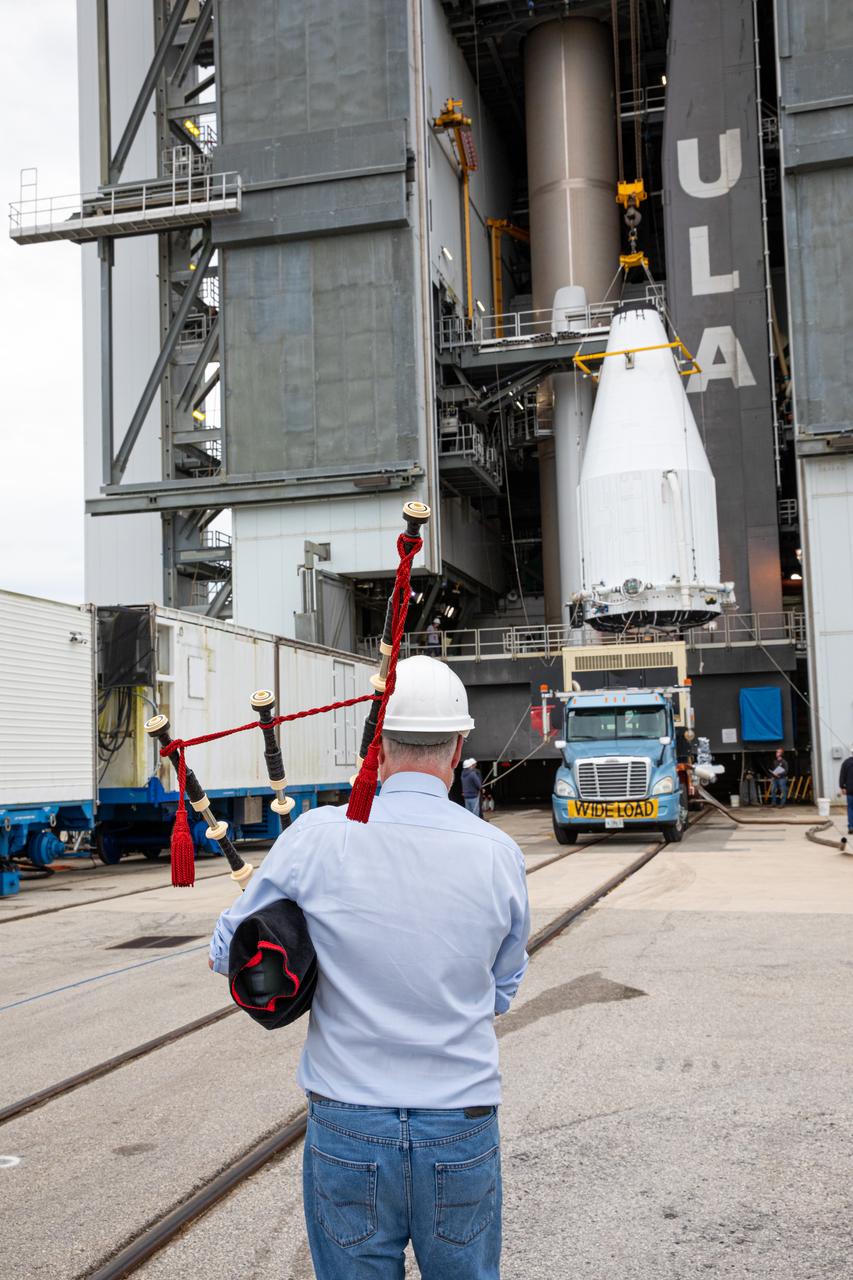
An Airbus Defence and Space worker plays the bagpipes at the Vertical Integration Facility at Space Launch Complex 41 on Cape Canaveral Air Force Station in Florida on Jan. 31, 2020. It is a tradition for the company to play the bagpipes during spacecraft mate to rocket. In the background, a crane lifts the United Launch Alliance payload fairing, containing the Solar Orbiter spacecraft, for mating to the company’s Atlas V rocket. Solar Orbiter is an international cooperative mission between ESA (European Space Agency) and NASA. The mission aims to study the Sun, its outer atmosphere and solar wind. The spacecraft will provide the first images of the Sun’s poles. NASA’s Launch Services Program based at Kennedy is managing the launch. The spacecraft has been developed by Airbus Defence and Space. Solar Orbiter will launch in February 2020 aboard the Atlas V rocket.
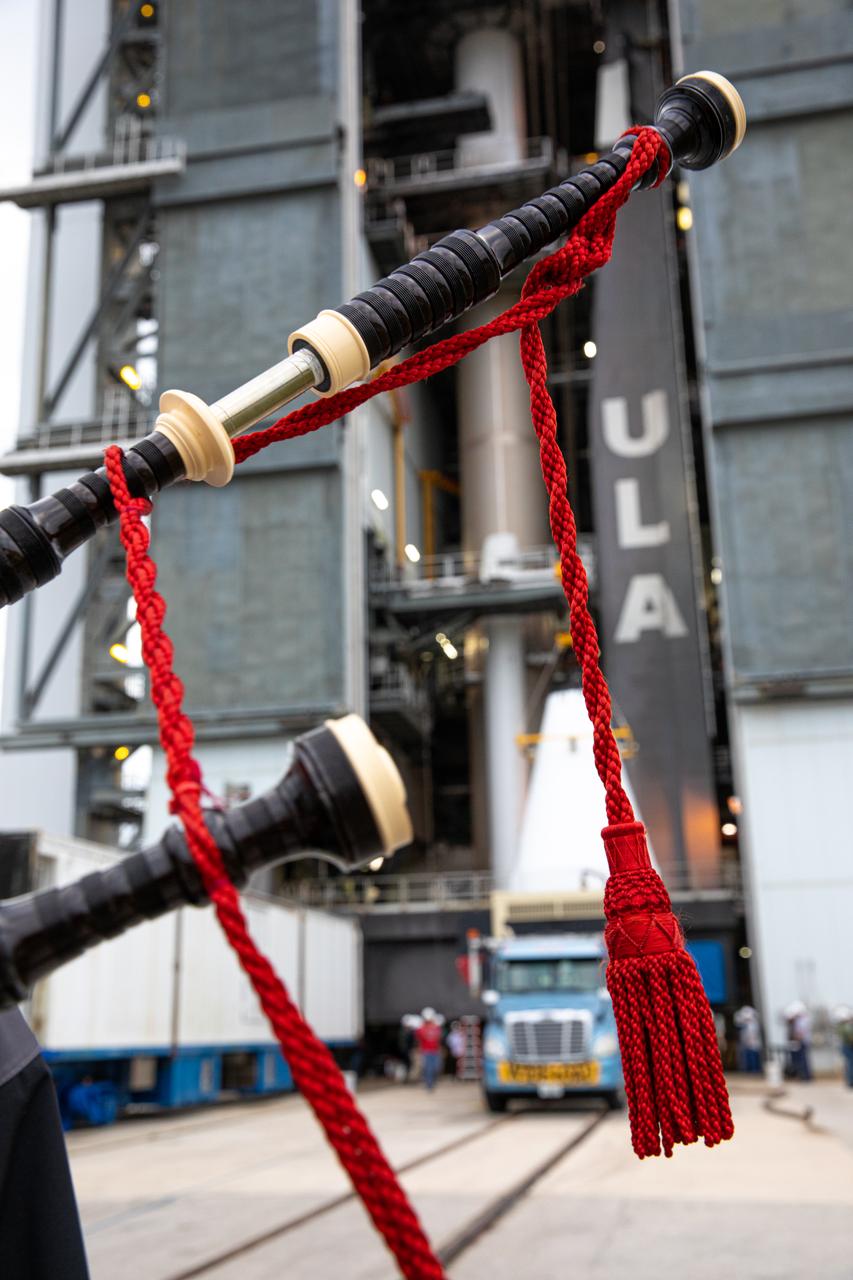
Bagpipes are being played by an Airbus Defence and Space worker at the Vertical Integration Facility at Space Launch Complex 41 on Cape Canaveral Air Force Station in Florida on Jan. 31, 2020. It is a tradition for the company to play the bagpipes during spacecraft mate to rocket. In the background, a crane lifts the United Launch Alliance payload fairing, containing the Solar Orbiter spacecraft, for mating to the company’s Atlas V rocket. Solar Orbiter is an international cooperative mission between ESA (European Space Agency) and NASA. The mission aims to study the Sun, its outer atmosphere and solar wind. The spacecraft will provide the first images of the Sun’s poles. NASA’s Launch Services Program based at Kennedy is managing the launch. The spacecraft has been developed by Airbus Defence and Space. Solar Orbiter will launch in February 2020 aboard the Atlas V rocket.
Technicians with United Launch Alliance (ULA) monitor the progress as the solid rocket motor is mated to the ULA Atlas V rocket in the Vertical Integration Facility at Space Launch Complex 41 at Cape Canaveral Air Force Station in Florida. NOAA's Geostationary Operational Environmental Satellite (GOES-R) will launch aboard the Atlas V rocket this month. GOES-R is the first satellite in a series of next-generation NOAA GOES Satellites.
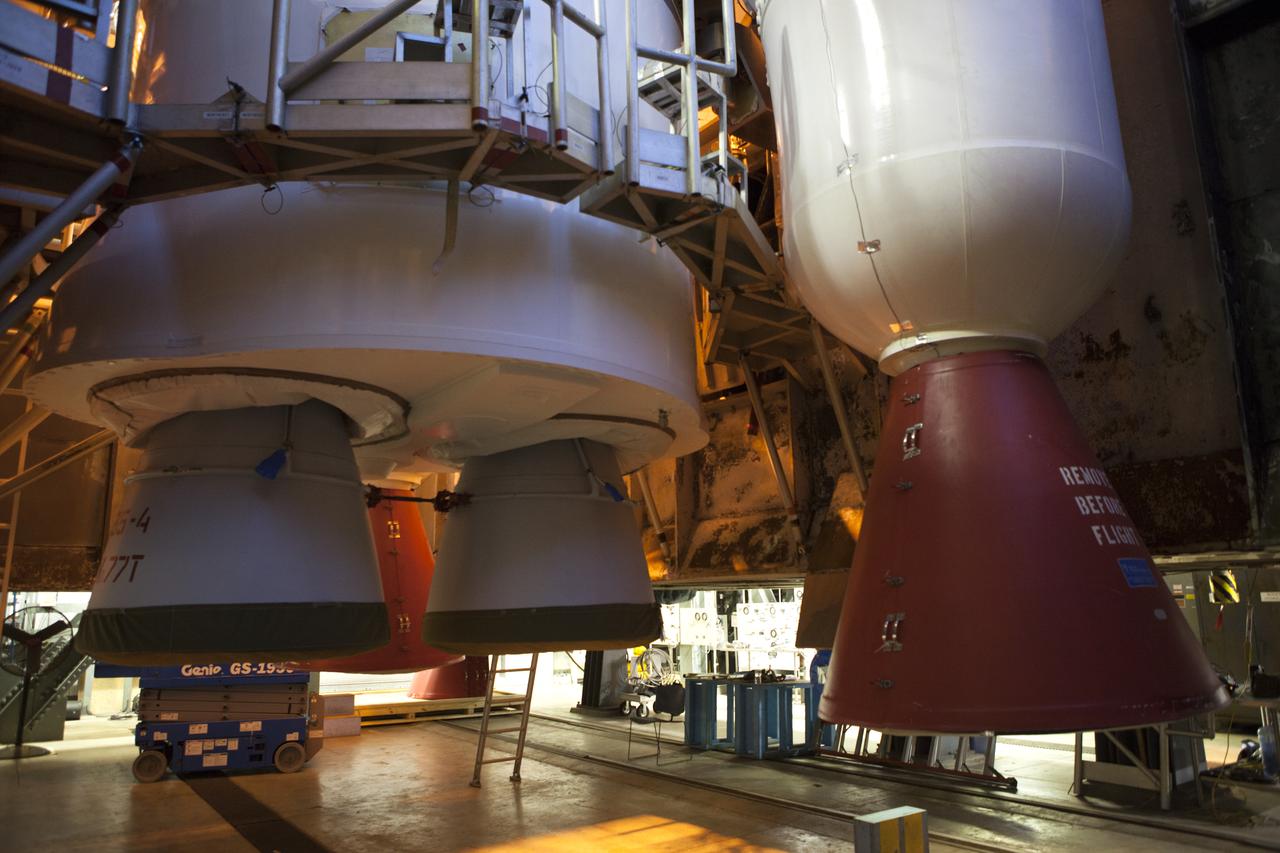
Inside the Vertical Integration Facility at Space Launch Complex 41 at Cape Canaveral Air Force Station in Florida, the solid rocket motor is being mated to the United Launch Alliance Atlas V rocket for its upcoming launch. NOAA's Geostationary Operational Environmental Satellite (GOES-R) will launch aboard the Atlas V rocket this month. GOES-R is the first satellite in a series of next-generation NOAA GOES Satellites.
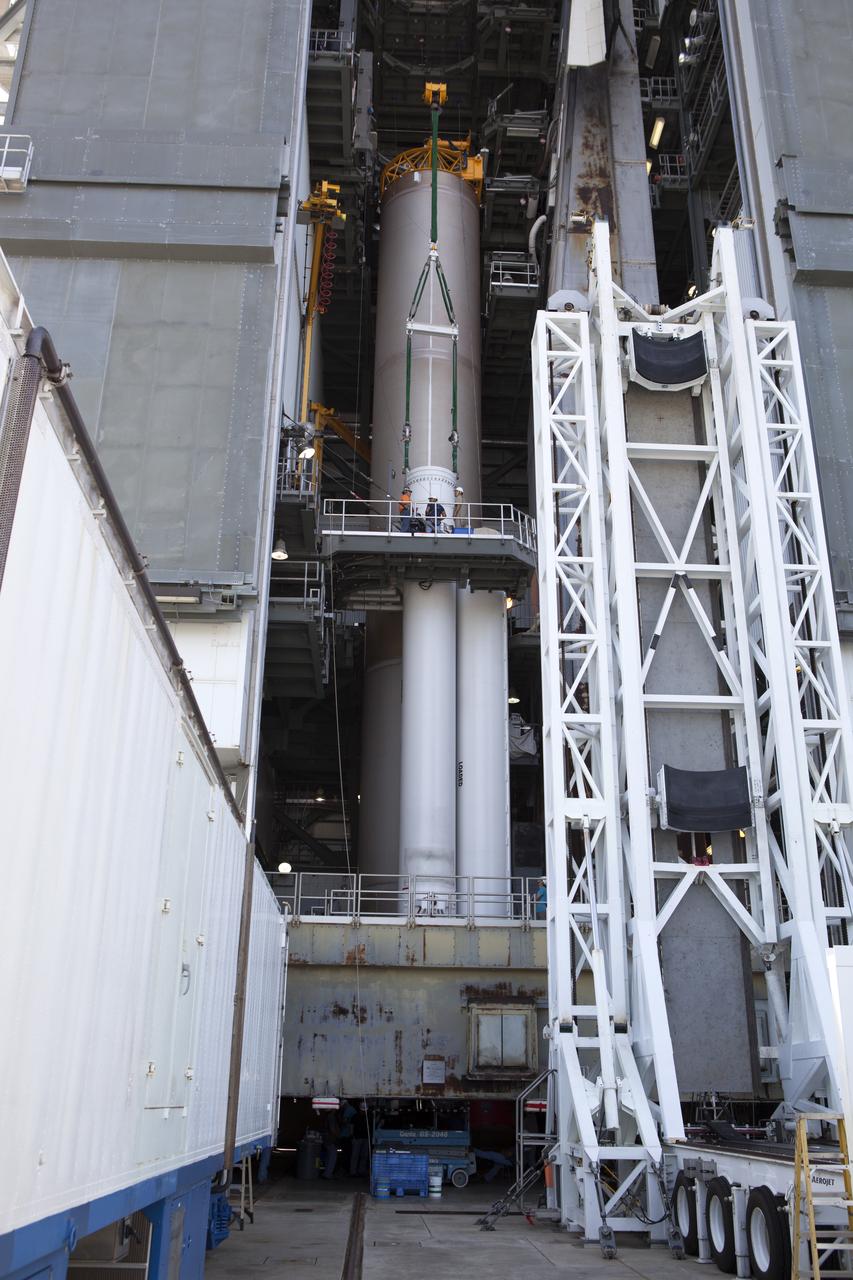
Inside the Vertical Integration Facility at Space Launch Complex 41 at Cape Canaveral Air Force Station in Florida, the solid rocket motor is mated to the United Launch Alliance Atlas V rocket for its upcoming launch. NOAA's Geostationary Operational Environmental Satellite (GOES-R) will launch aboard the Atlas V rocket this month. GOES-R is the first satellite in a series of next-generation NOAA GOES Satellites.
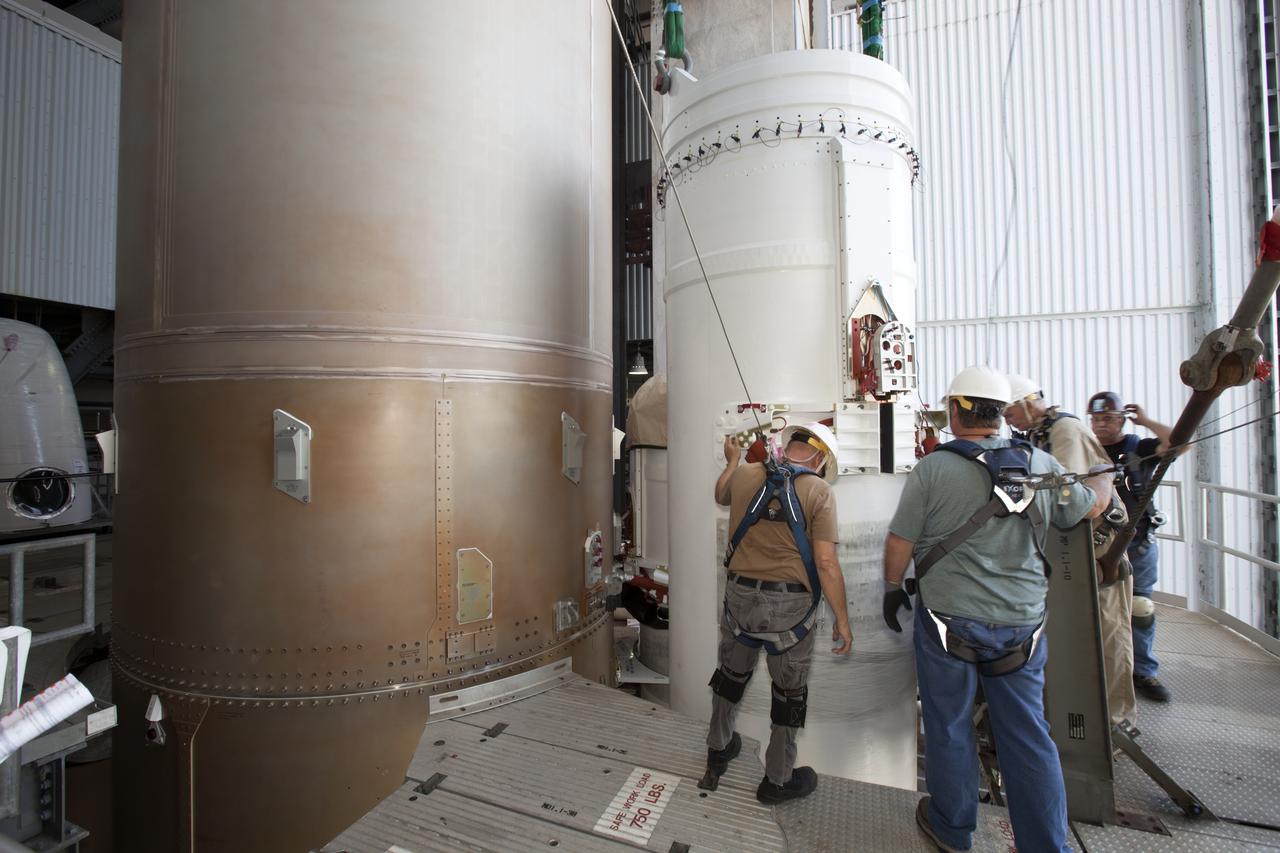
Technicians with United Launch Alliance (ULA) assist as the solid rocket motor is mated to the ULA Atlas V rocket in the Vertical Integration Facility at Space Launch Complex 41 at Cape Canaveral Air Force Station in Florida. NOAA's Geostationary Operational Environmental Satellite (GOES-R) will launch aboard the Atlas V rocket this month. GOES-R is the first satellite in a series of next-generation NOAA GOES Satellites.
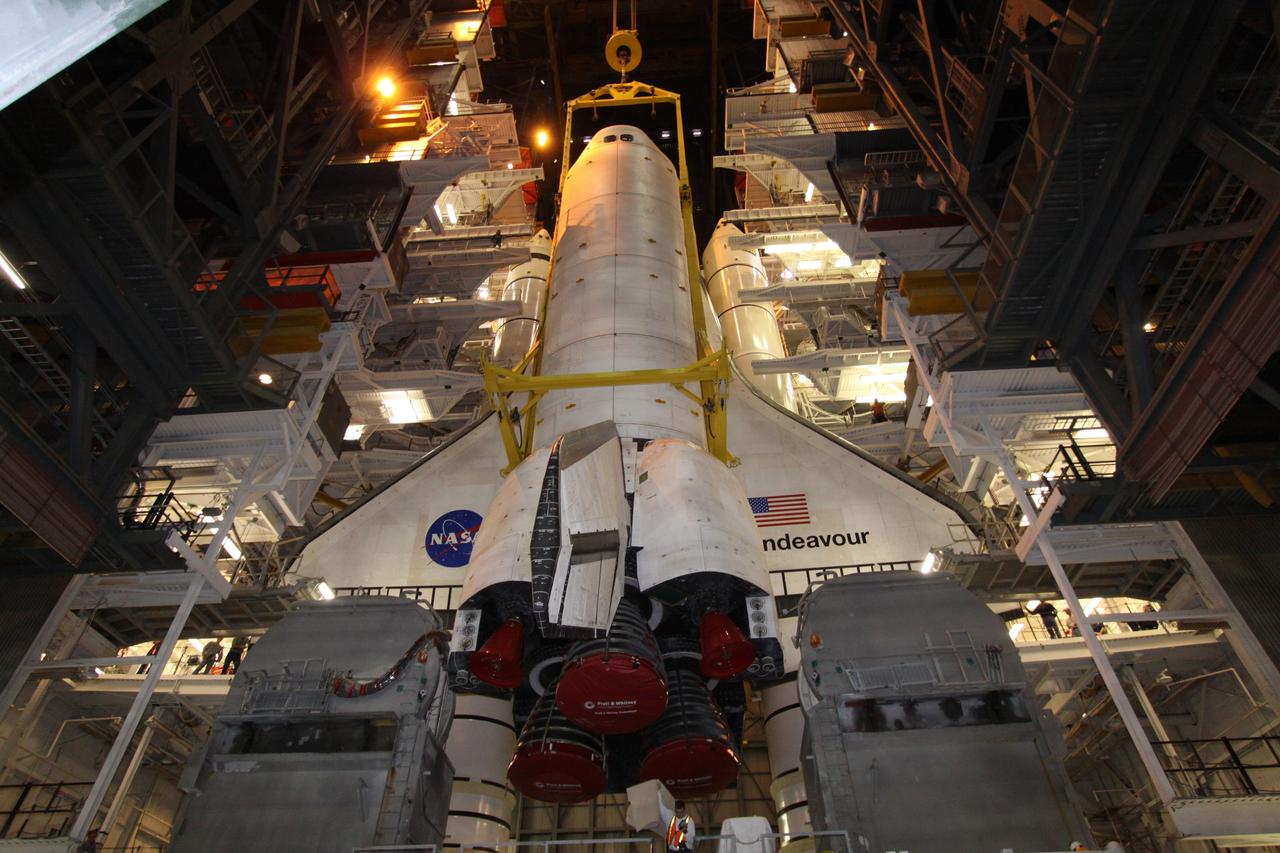
CAPE CANAVERAL, Fla. – In High Bay 1 in the Vehicle Assembly Building at NASA's Kennedy Space Center in Florida, space shuttle Endeavour hovers over the mobile launcher platform to which its external fuel tank and solid rocket boosters are secured. Next, Endeavour will be attached to the tank to complete the shuttle stack. Rollout of the stack to Kennedy’s Launch Pad 39A, a significant milestone in launch processing activities, is planned for early January 2010. The Italian-built Tranquility module, the primary payload for Endeavour's STS-130 mission, will be installed in the payload bay after the shuttle arrives at the pad. Launch is targeted for early February. For information on the STS-130 mission and crew, visit http://www.nasa.gov/mission_pages/shuttle/shuttlemissions/sts130/index.html. Photo credit: NASA/Jack Pfaller
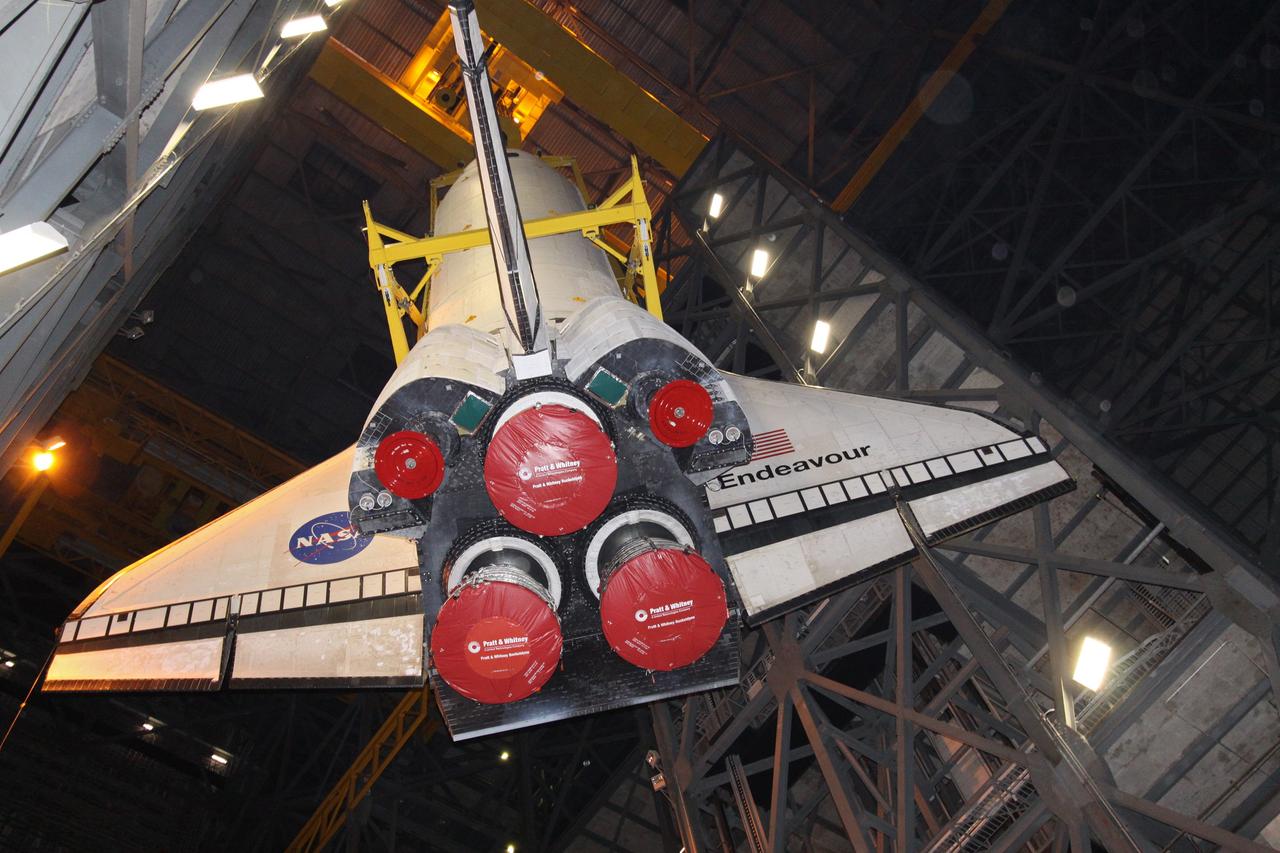
CAPE CANAVERAL, Fla. – In the Vehicle Assembly Building at NASA's Kennedy Space Center in Florida, a crane lifts space shuttle Endeavour over a transom into High Bay 1, where it will be attached to its external fuel tank and solid rocket boosters. Rollout of the shuttle stack to Kennedy’s Launch Pad 39A, a significant milestone in launch processing activities, is planned for early January 2010. The Italian-built Tranquility module, the primary payload for Endeavour's STS-130 mission, will be installed in the payload bay after the shuttle arrives at the pad. Launch is targeted for early February. For information on the STS-130 mission and crew, visit http://www.nasa.gov/mission_pages/shuttle/shuttlemissions/sts130/index.html. Photo credit: NASA/Jack Pfaller
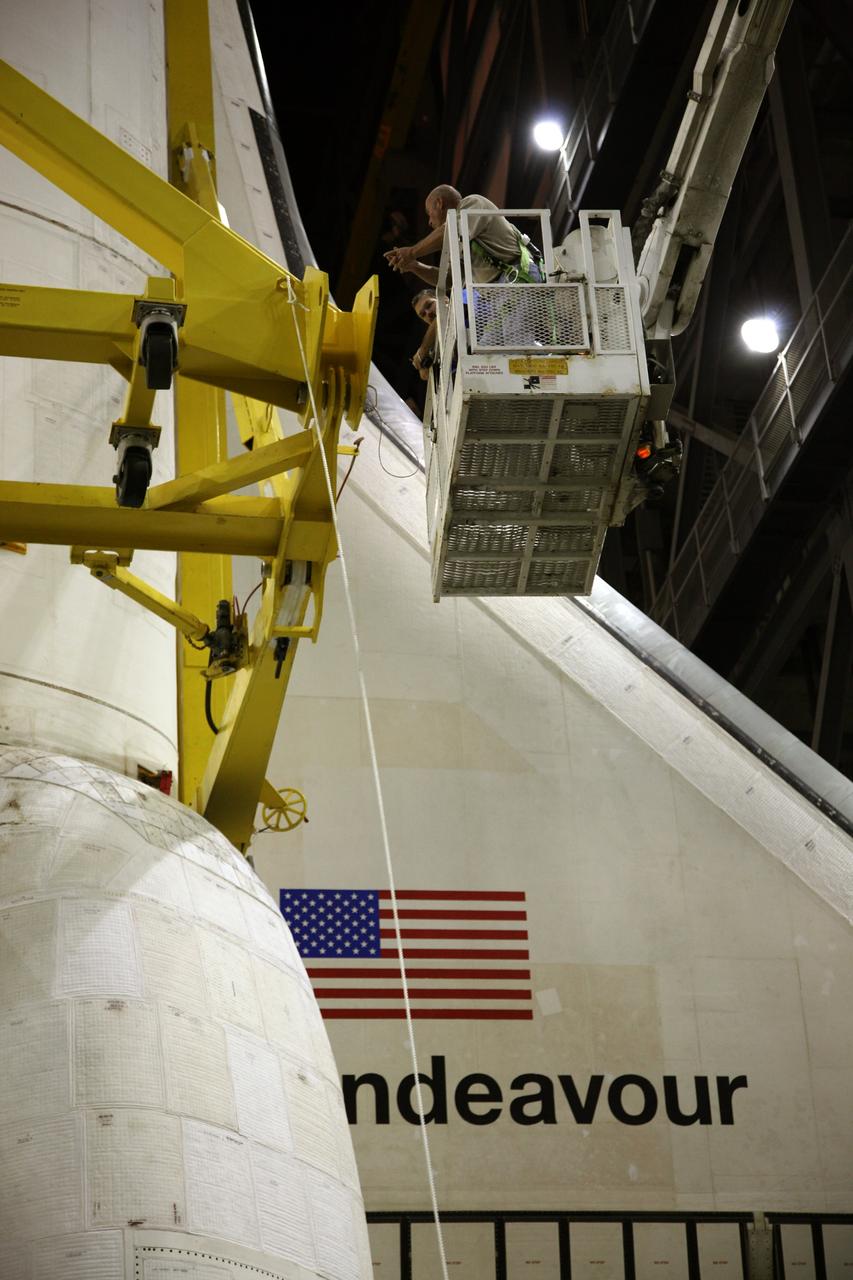
CAPE CANAVERAL, Fla. – In the transfer aisle of the Vehicle Assembly Building at NASA's Kennedy Space Center in Florida, United Space Alliance technicians verify that space shuttle Endeavour is securely attached to the yellow framework of a sling. Next, Endeavour will be hoisted over a transom and lowered into High Bay 1, where it will be attached to its external fuel tank and solid rocket boosters. Rollout of the shuttle stack to Kennedy’s Launch Pad 39A, a significant milestone in launch processing activities, is planned for early January 2010. The Italian-built Tranquility module, the primary payload for Endeavour's STS-130 mission, will be installed in the payload bay after the shuttle arrives at the pad. Launch is targeted for early February. For information on the STS-130 mission and crew, visit http://www.nasa.gov/mission_pages/shuttle/shuttlemissions/sts130/index.html. Photo credit: NASA/Dimitri Gerondidakis
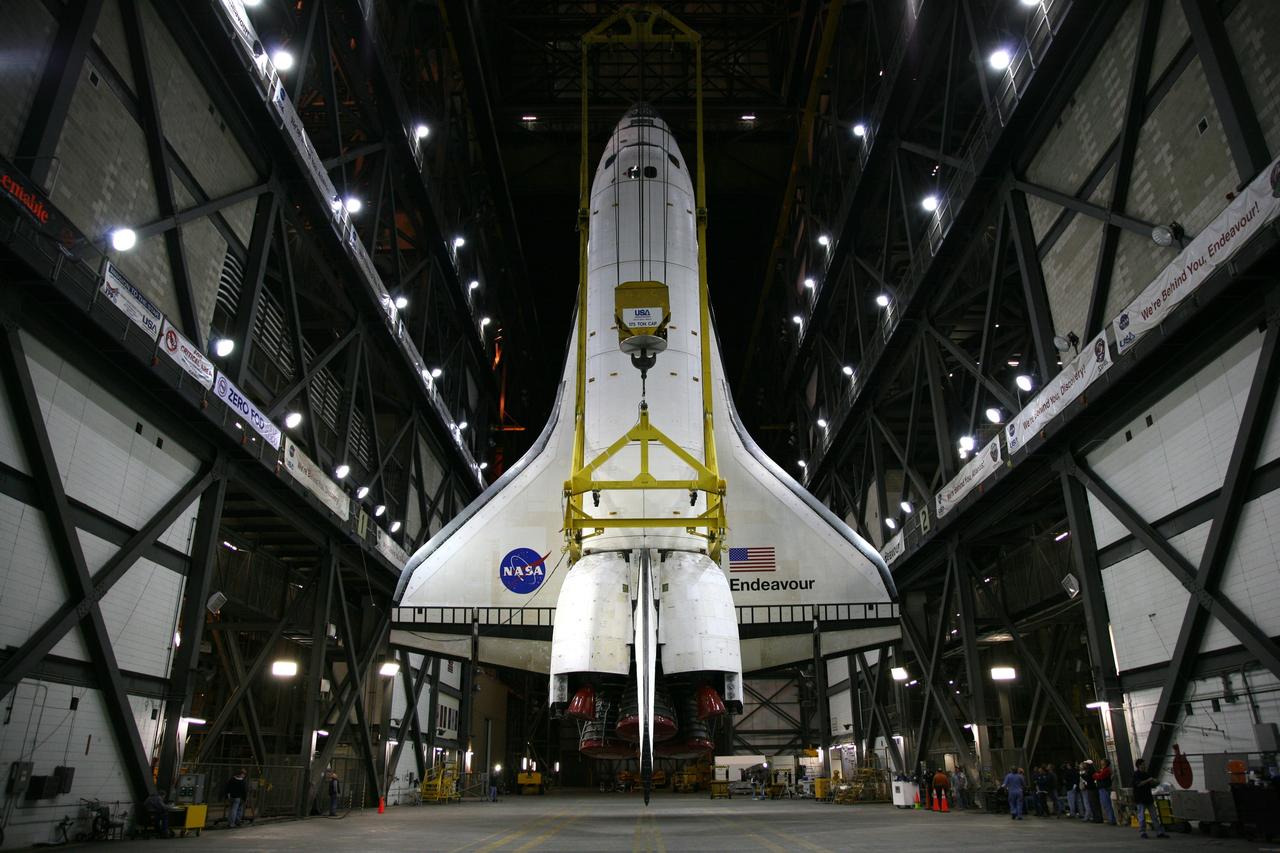
CAPE CANAVERAL, Fla. – In the transfer aisle of the Vehicle Assembly Building at NASA's Kennedy Space Center in Florida, space shuttle Endeavour, attached to the yellow framework of a sling, hovers over the transfer aisle in a vertical position. Next, Endeavour will be hoisted over a transom and lowered into High Bay 1, where it will be attached to its external fuel tank and solid rocket boosters. Rollout of the shuttle stack to Kennedy’s Launch Pad 39A, a significant milestone in launch processing activities, is planned for early January 2010. The Italian-built Tranquility module, the primary payload for Endeavour's STS-130 mission, will be installed in the payload bay after the shuttle arrives at the pad. Launch is targeted for early February. For information on the STS-130 mission and crew, visit http://www.nasa.gov/mission_pages/shuttle/shuttlemissions/sts130/index.html. Photo credit: NASA/Dimitri Gerondidakis
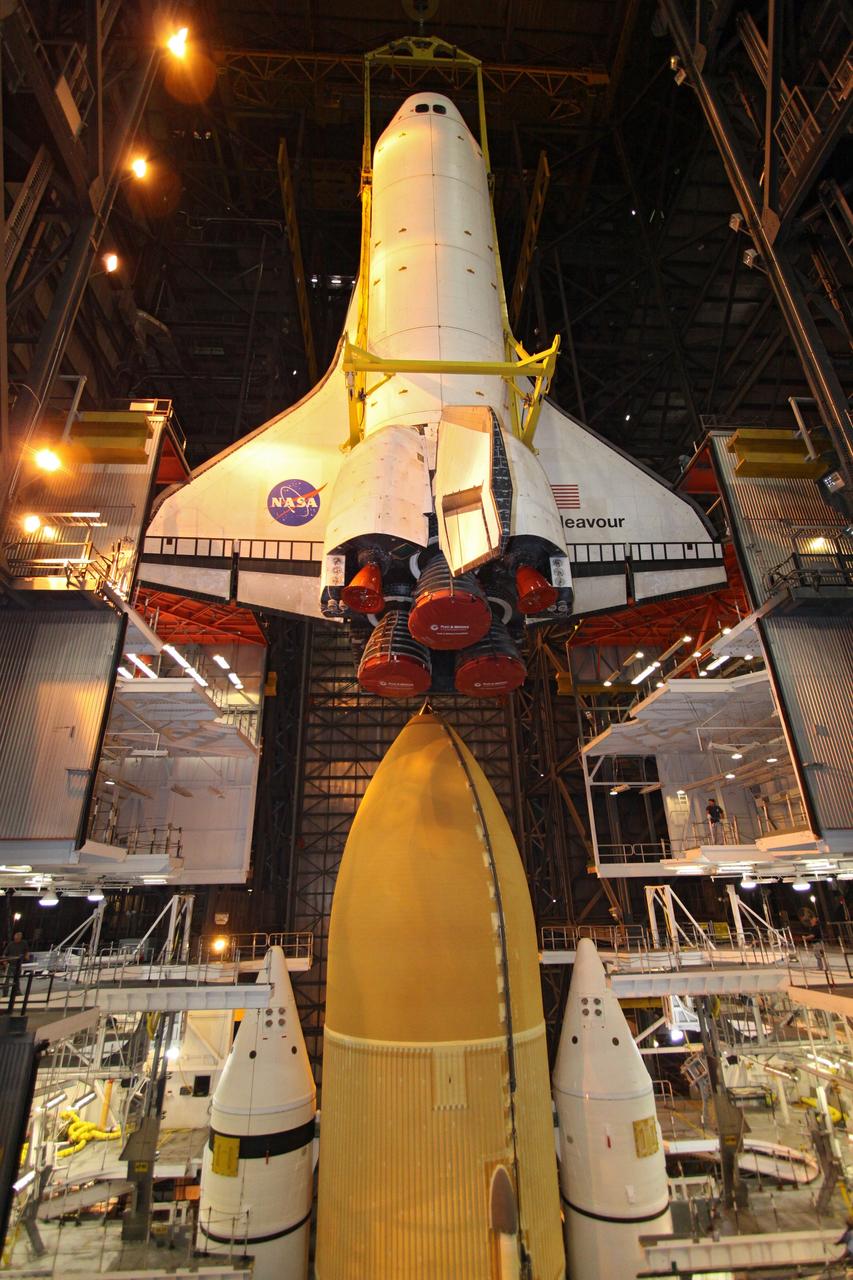
CAPE CANAVERAL, Fla. – In High Bay 1 in the Vehicle Assembly Building at NASA's Kennedy Space Center in Florida, a crane lowers space shuttle Endeavour alongside the external fuel tank and solid rocket boosters to which it will be attached. Rollout of the shuttle stack to Kennedy’s Launch Pad 39A, a significant milestone in launch processing activities, is planned for early January 2010. The Italian-built Tranquility module, the primary payload for Endeavour's STS-130 mission, will be installed in the payload bay after the shuttle arrives at the pad. Launch is targeted for early February. For information on the STS-130 mission and crew, visit http://www.nasa.gov/mission_pages/shuttle/shuttlemissions/sts130/index.html. Photo credit: NASA/Jack Pfaller
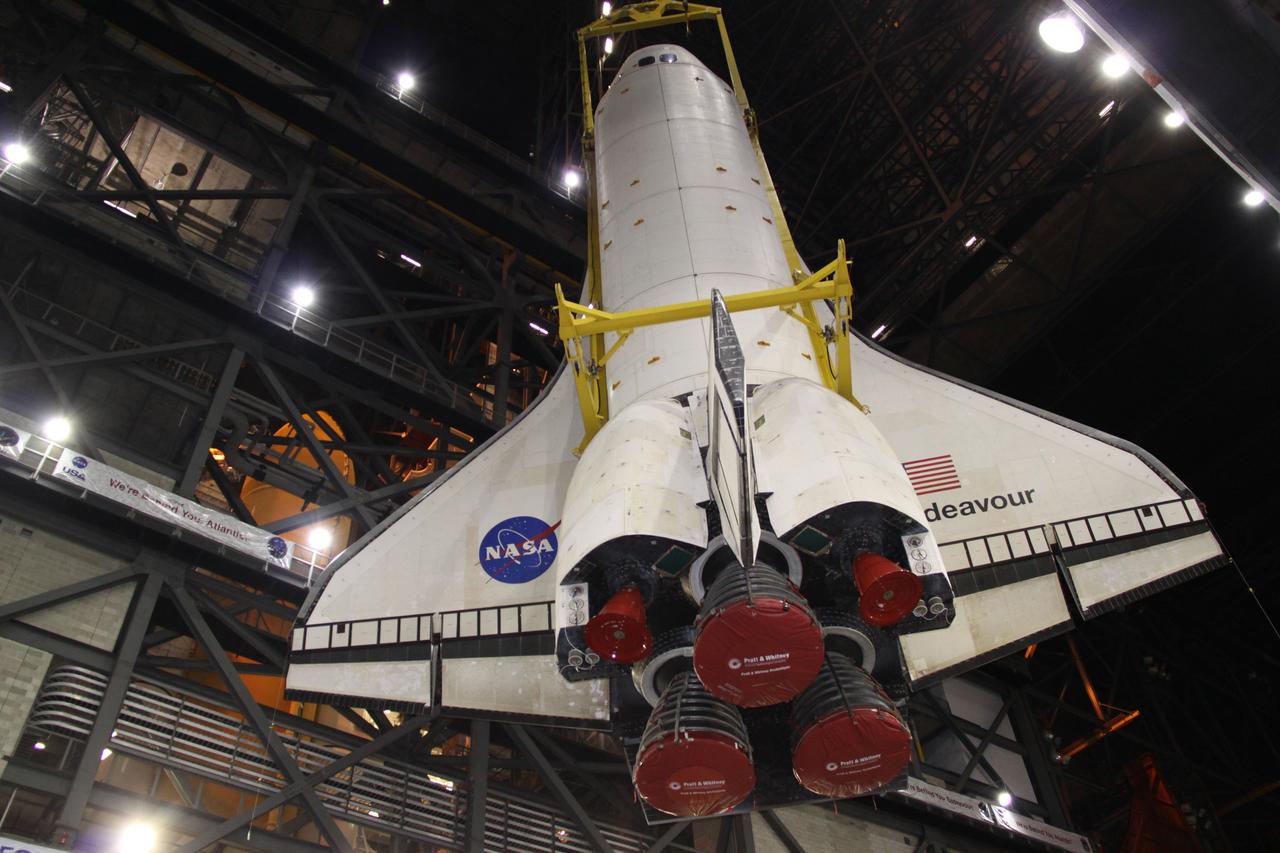
CAPE CANAVERAL, Fla. – In the transfer aisle of the Vehicle Assembly Building at NASA's Kennedy Space Center in Florida, space shuttle Endeavour, rotated into a vertical position with the aid of a sling, is lifted toward the ceiling. Next, Endeavour will be hoisted over a transom and lowered into High Bay 1, where it will be attached to its external fuel tank and solid rocket boosters. Rollout of the shuttle stack to Kennedy’s Launch Pad 39A, a significant milestone in launch processing activities, is planned for early January 2010. The Italian-built Tranquility module, the primary payload for Endeavour's STS-130 mission, will be installed in the payload bay after the shuttle arrives at the pad. Launch is targeted for early February. For information on the STS-130 mission and crew, visit http://www.nasa.gov/mission_pages/shuttle/shuttlemissions/sts130/index.html. Photo credit: NASA/Jack Pfaller
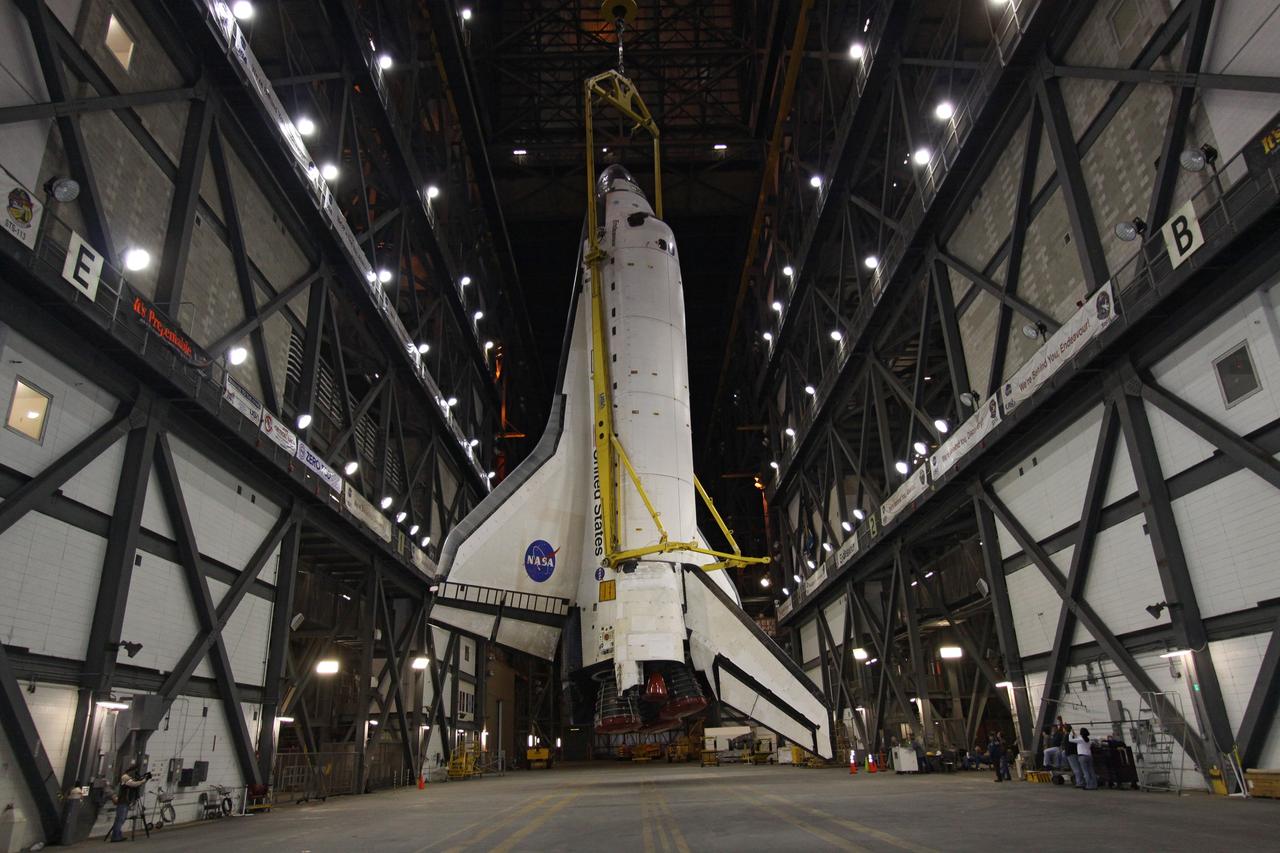
CAPE CANAVERAL, Fla. – In the transfer aisle of the Vehicle Assembly Building at NASA's Kennedy Space Center in Florida, space shuttle Endeavour is rotated into a vertical position with the aid of a lifting sling. Next, Endeavour will be hoisted over a transom and lowered into High Bay 1, where it will be attached to its external fuel tank and solid rocket boosters. Rollout of the shuttle stack to Kennedy’s Launch Pad 39A, a significant milestone in launch processing activities, is planned for early January 2010. The Italian-built Tranquility module, the primary payload for Endeavour's STS-130 mission, will be installed in the payload bay after the shuttle arrives at the pad. Launch is targeted for early February. For information on the STS-130 mission and crew, visit http://www.nasa.gov/mission_pages/shuttle/shuttlemissions/sts130/index.html. Photo credit: NASA/Jack Pfaller
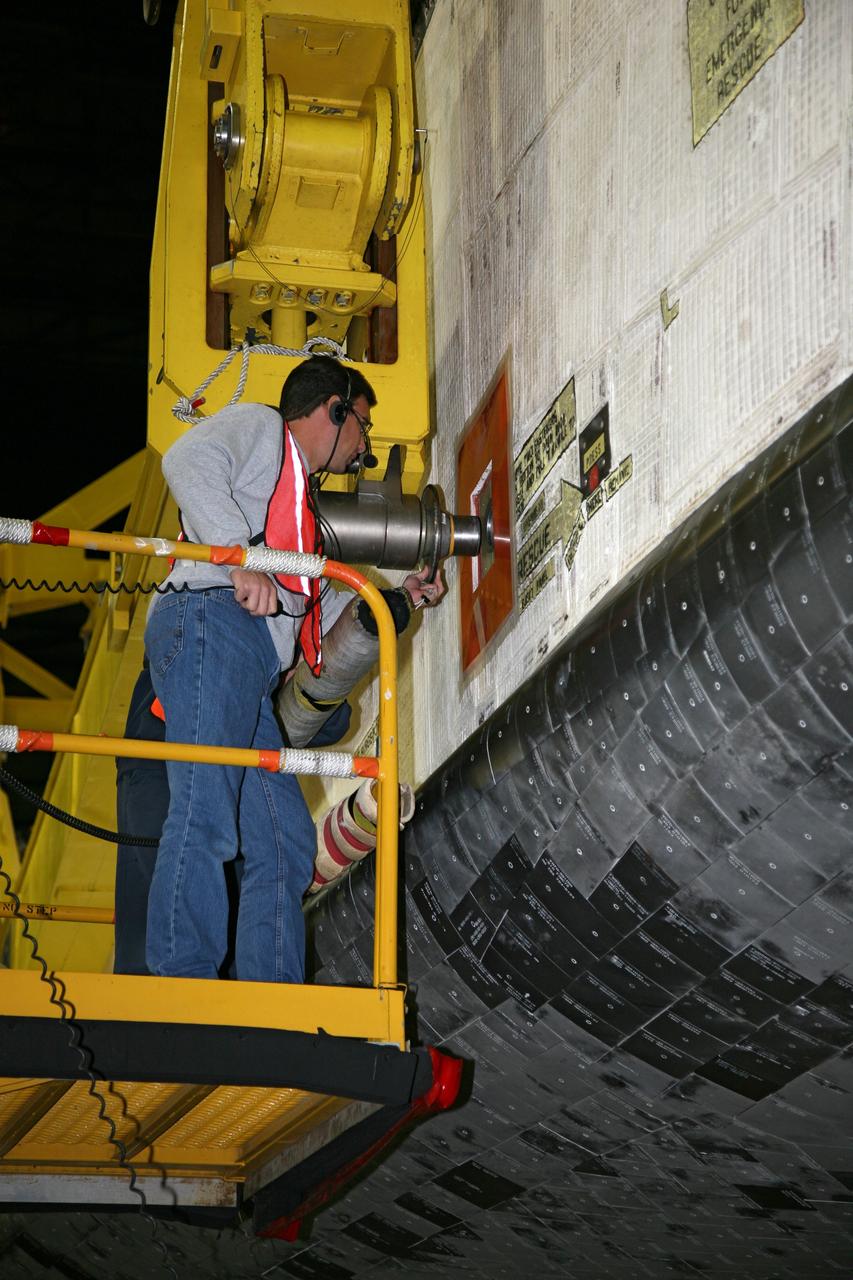
CAPE CANAVERAL, Fla. – In the transfer aisle of the Vehicle Assembly Building at NASA's Kennedy Space Center in Florida, a United Space Alliance technician attaches a lifting sling to space shuttle Endeavour. Next, Endeavour will be hoisted over a transom and lowered into High Bay 1, where it will be attached to its external fuel tank and solid rocket boosters. Rollout of the shuttle stack to Kennedy’s Launch Pad 39A, a significant milestone in launch processing activities, is planned for early January 2010. The Italian-built Tranquility module, the primary payload for Endeavour's STS-130 mission, will be installed in the payload bay after the shuttle arrives at the pad. Launch is targeted for early February. For information on the STS-130 mission and crew, visit http://www.nasa.gov/mission_pages/shuttle/shuttlemissions/sts130/index.html. Photo credit: NASA/Dimitri Gerondidakis
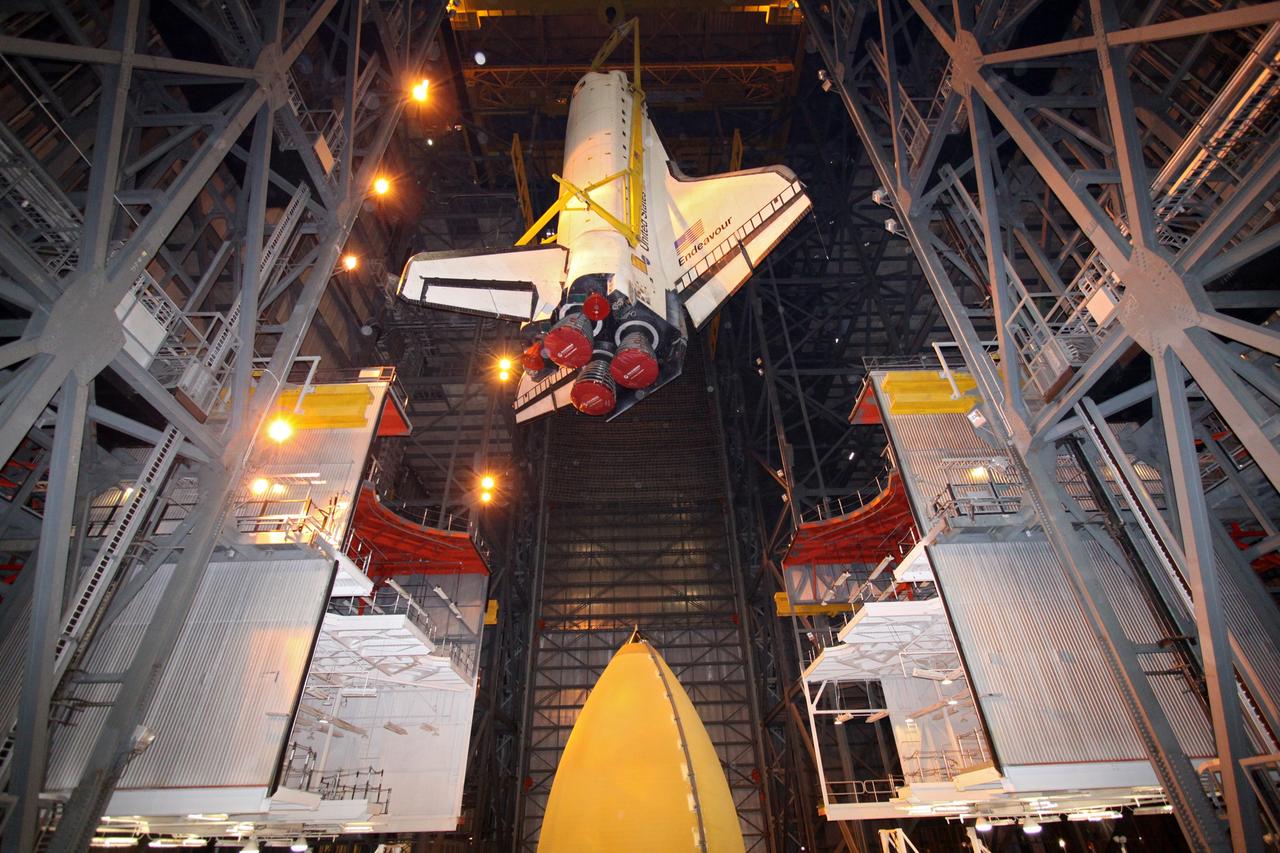
CAPE CANAVERAL, Fla. – In High Bay 1 in the Vehicle Assembly Building at NASA's Kennedy Space Center in Florida, a crane lowers space shuttle Endeavour toward the external fuel tank and solid rocket boosters to which it will be attached. Rollout of the shuttle stack to Kennedy’s Launch Pad 39A, a significant milestone in launch processing activities, is planned for early January 2010. The Italian-built Tranquility module, the primary payload for Endeavour's STS-130 mission, will be installed in the payload bay after the shuttle arrives at the pad. Launch is targeted for early February. For information on the STS-130 mission and crew, visit http://www.nasa.gov/mission_pages/shuttle/shuttlemissions/sts130/index.html. Photo credit: NASA/Jack Pfaller
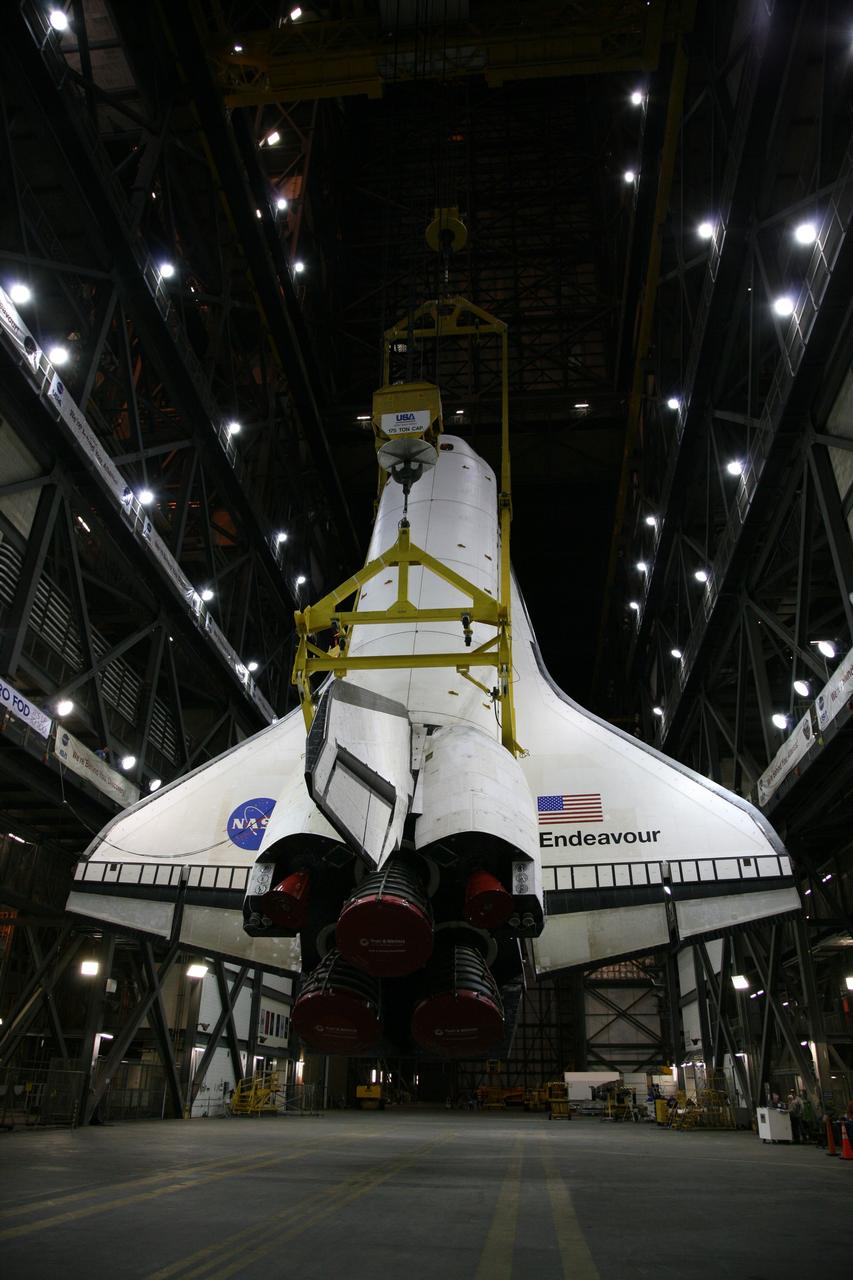
CAPE CANAVERAL, Fla. – In the transfer aisle of the Vehicle Assembly Building at NASA's Kennedy Space Center in Florida, space shuttle Endeavour is rotated into a vertical position with the aid of a lifting sling. Next, Endeavour will be hoisted over a transom and lowered into High Bay 1, where it will be attached to its external fuel tank and solid rocket boosters. Rollout of the shuttle stack to Kennedy’s Launch Pad 39A, a significant milestone in launch processing activities, is planned for early January 2010. The Italian-built Tranquility module, the primary payload for Endeavour's STS-130 mission, will be installed in the payload bay after the shuttle arrives at the pad. Launch is targeted for early February. For information on the STS-130 mission and crew, visit http://www.nasa.gov/mission_pages/shuttle/shuttlemissions/sts130/index.html. Photo credit: NASA/Dimitri Gerondidakis
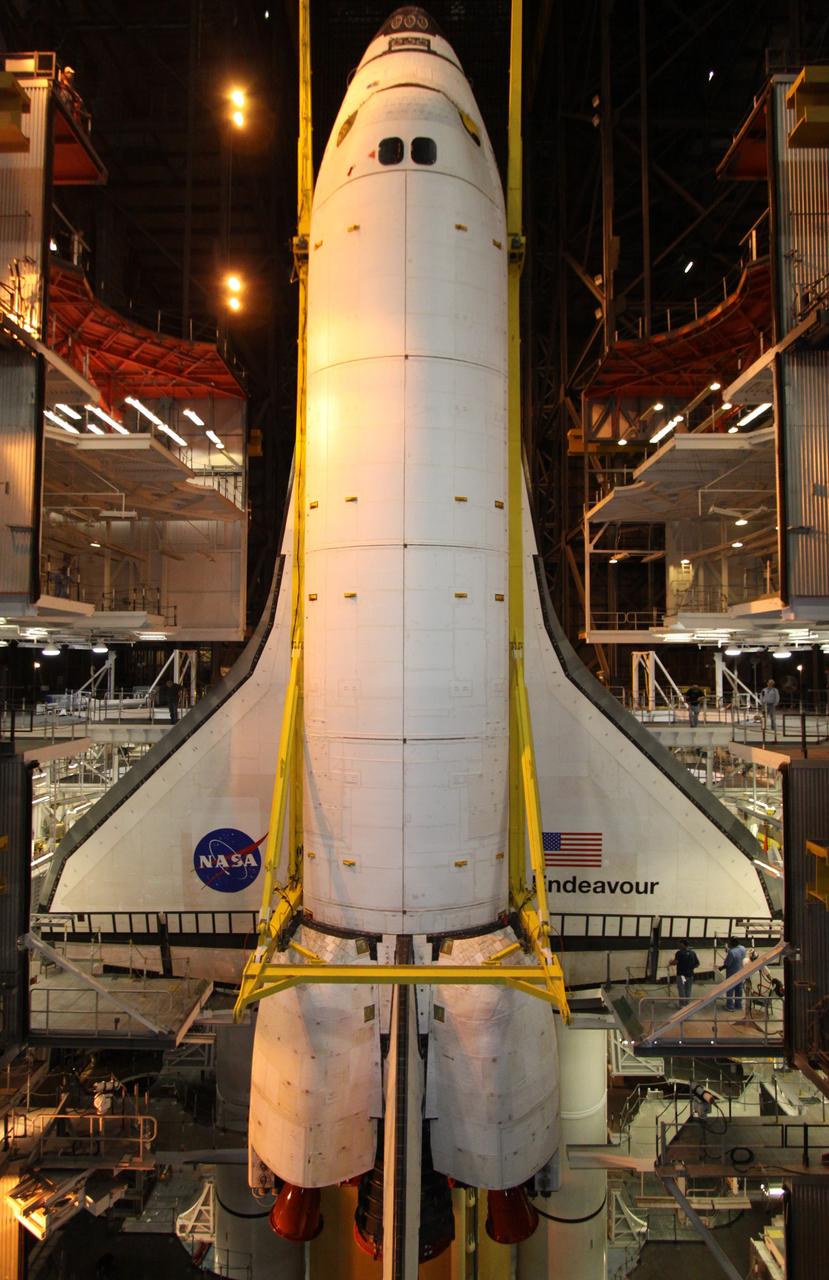
CAPE CANAVERAL, Fla. – In the Vehicle Assembly Building at NASA's Kennedy Space Center in Florida, the work platforms in High Bay 1 frame space shuttle Endeavour as a crane lowers it alongside the external fuel tank and solid rocket boosters to which it will be attached. Rollout of the shuttle stack to Kennedy’s Launch Pad 39A, a significant milestone in launch processing activities, is planned for early January 2010. The Italian-built Tranquility module, the primary payload for Endeavour's STS-130 mission, will be installed in the payload bay after the shuttle arrives at the pad. Launch is targeted for early February. For information on the STS-130 mission and crew, visit http://www.nasa.gov/mission_pages/shuttle/shuttlemissions/sts130/index.html. Photo credit: NASA/Jack Pfaller
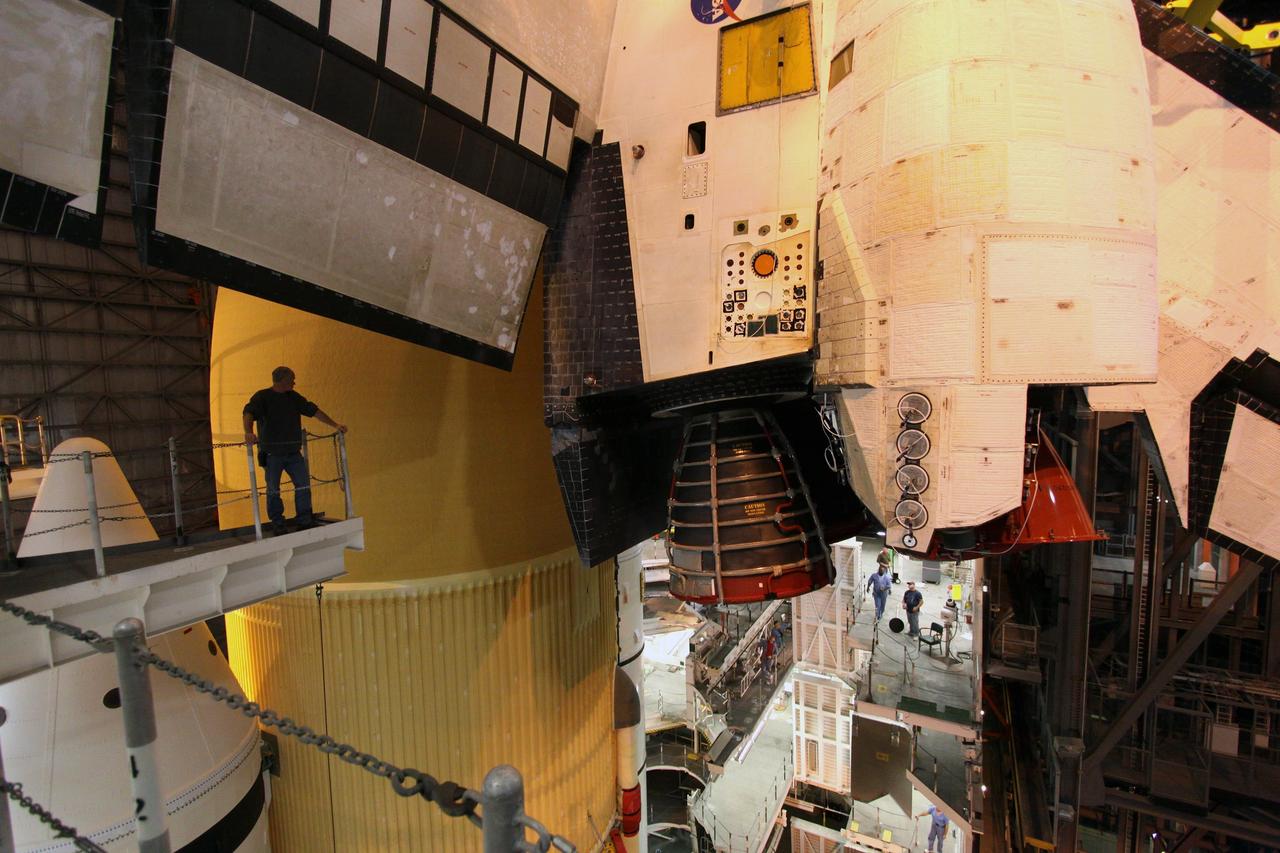
CAPE CANAVERAL, Fla. – In High Bay 1 in the Vehicle Assembly Building at NASA's Kennedy Space Center in Florida, a United Space Alliance technician monitors the progress of space shuttle Endeavour as a crane lowers it alongside the external fuel tank and solid rocket boosters to which it will be attached. Rollout of the shuttle stack to Kennedy’s Launch Pad 39A, a significant milestone in launch processing activities, is planned for early January 2010. The Italian-built Tranquility module, the primary payload for Endeavour's STS-130 mission, will be installed in the payload bay after the shuttle arrives at the pad. Launch is targeted for early February. For information on the STS-130 mission and crew, visit http://www.nasa.gov/mission_pages/shuttle/shuttlemissions/sts130/index.html. Photo credit: NASA/Jack Pfaller
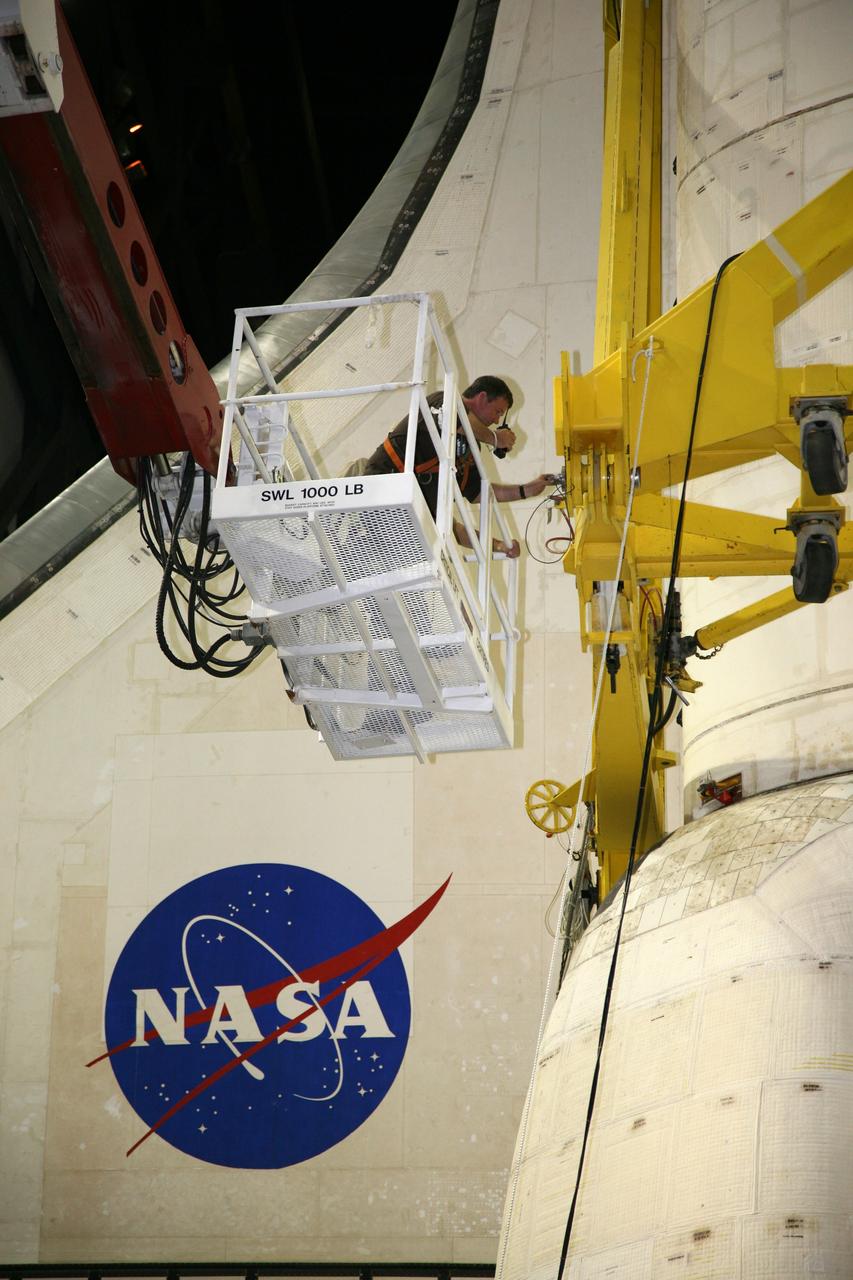
CAPE CANAVERAL, Fla. – In the transfer aisle of the Vehicle Assembly Building at NASA's Kennedy Space Center in Florida, a United Space Alliance technician communicates with his co-workers regarding the readiness of space shuttle Endeavour to be lifted. Next, Endeavour will be hoisted over a transom and lowered into High Bay 1, where it will be attached to its external fuel tank and solid rocket boosters. Rollout of the shuttle stack to Kennedy’s Launch Pad 39A, a significant milestone in launch processing activities, is planned for early January 2010. The Italian-built Tranquility module, the primary payload for Endeavour's STS-130 mission, will be installed in the payload bay after the shuttle arrives at the pad. Launch is targeted for early February. For information on the STS-130 mission and crew, visit http://www.nasa.gov/mission_pages/shuttle/shuttlemissions/sts130/index.html. Photo credit: NASA/Dimitri Gerondidakis
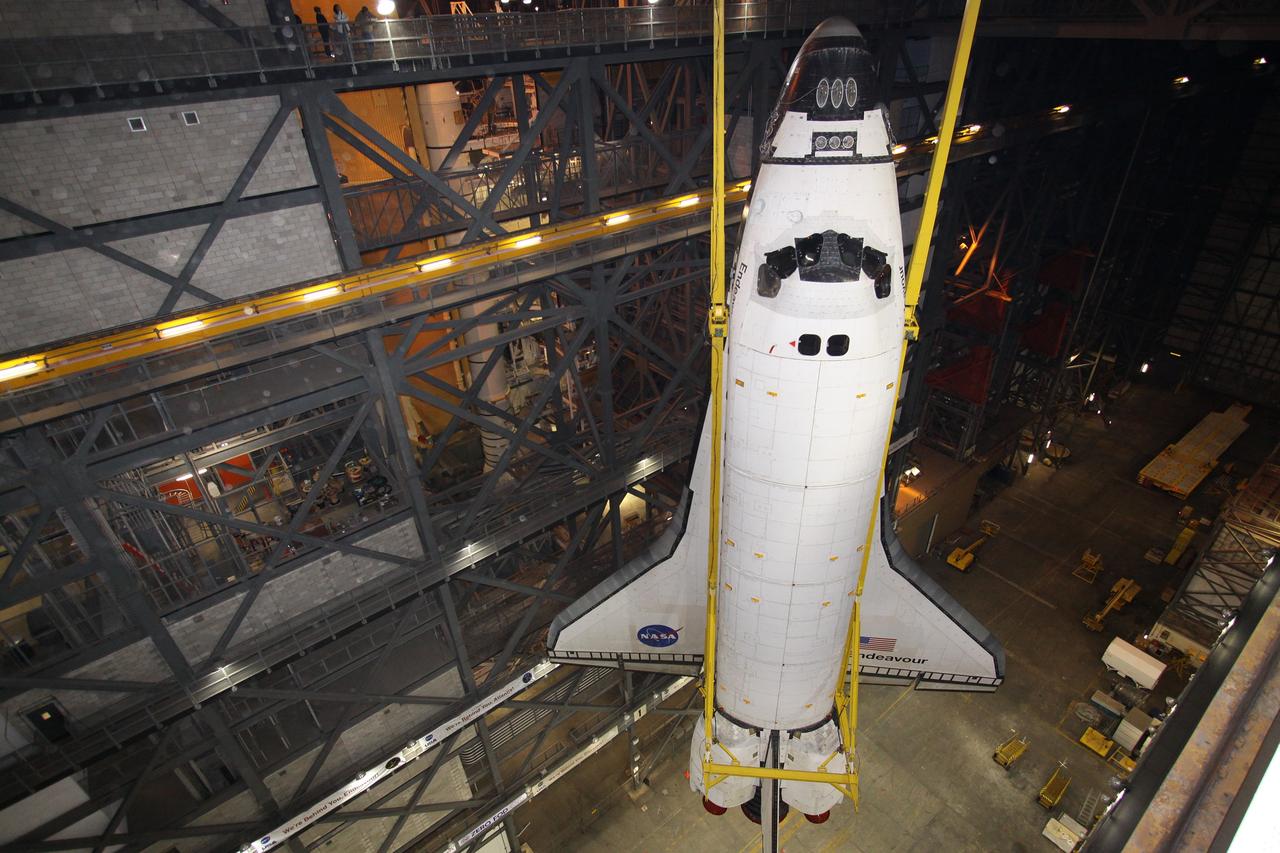
CAPE CANAVERAL, Fla. – In the transfer aisle of the Vehicle Assembly Building at NASA's Kennedy Space Center in Florida, space shuttle Endeavour, rotated into a vertical position with the aid of a sling, is lifted high above the floor. Next, Endeavour will be hoisted over a transom and lowered into High Bay 1, where it will be attached to its external fuel tank and solid rocket boosters. Rollout of the shuttle stack to Kennedy’s Launch Pad 39A, a significant milestone in launch processing activities, is planned for early January 2010. The Italian-built Tranquility module, the primary payload for Endeavour's STS-130 mission, will be installed in the payload bay after the shuttle arrives at the pad. Launch is targeted for early February. For information on the STS-130 mission and crew, visit http://www.nasa.gov/mission_pages/shuttle/shuttlemissions/sts130/index.html. Photo credit: NASA/Jack Pfaller
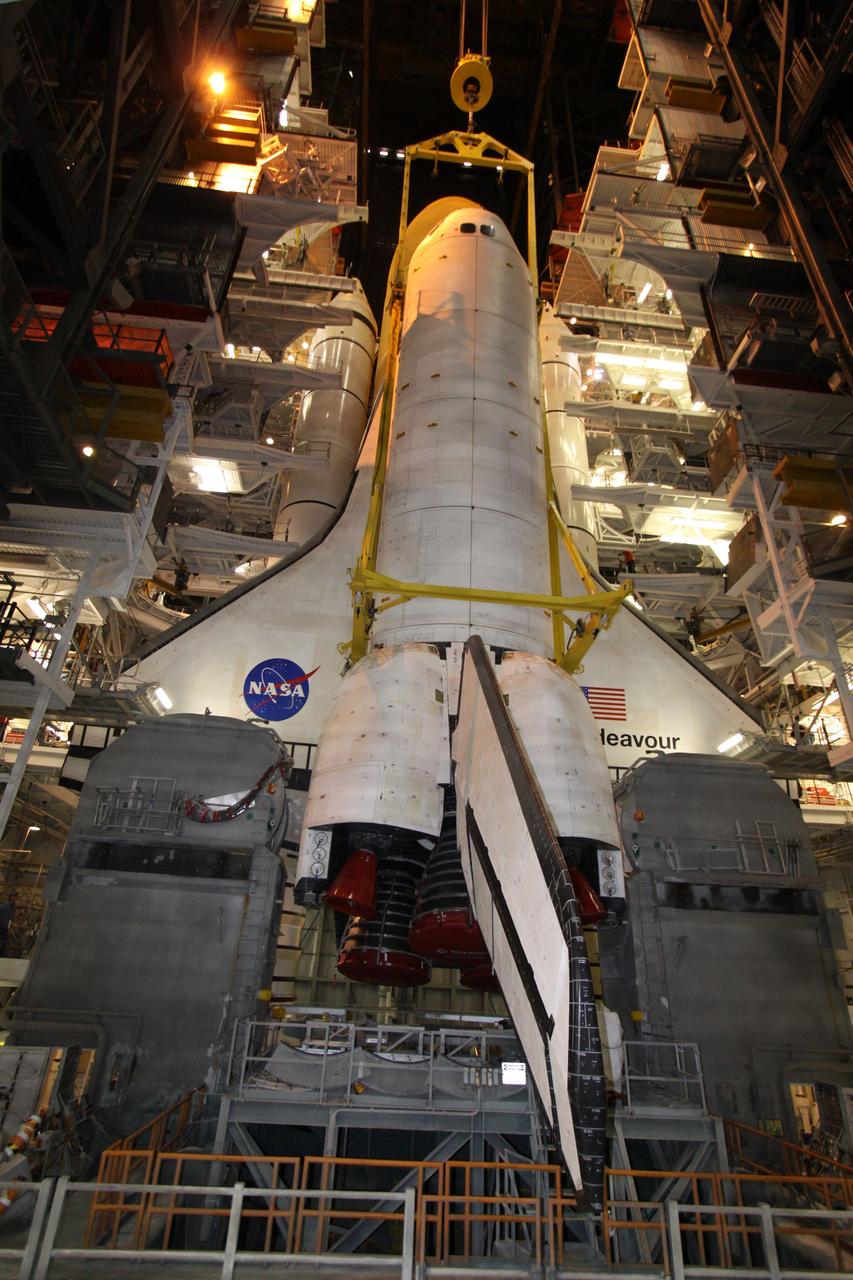
CAPE CANAVERAL, Fla. – In High Bay 1 in the Vehicle Assembly Building at NASA's Kennedy Space Center in Florida, the tail service masts on the mobile launcher platform flank space shuttle Endeavour as preparations are under way to attach it to its external fuel tank and solid rocket boosters. Rollout of the stack to Kennedy’s Launch Pad 39A, a significant milestone in launch processing activities, is planned for early January 2010. The Italian-built Tranquility module, the primary payload for Endeavour's STS-130 mission, will be installed in the payload bay after the shuttle arrives at the pad. Launch is targeted for early February. For information on the STS-130 mission and crew, visit http://www.nasa.gov/mission_pages/shuttle/shuttlemissions/sts130/index.html. Photo credit: NASA/Jack Pfaller