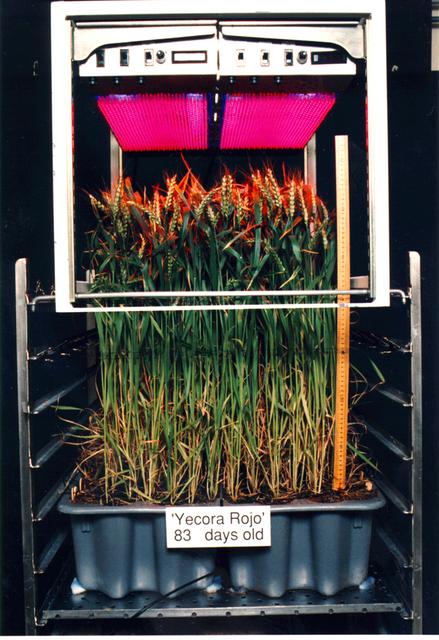
Astroculture is a suite of technologies used to produce and maintain a closed controlled environment for plant growth. The two most recent missions supported growth of potato, dwarf wheat, and mustard plants, and provided scientists with the first opportunity to conduct true plant research in space. Light emitting diodes have particular usefulness for plant growth lighting because they emit a much smaller amount of radiant heat than do conventional lighting sources and because they have potential of directing a higher percentage of the emitted light onto plants surfaces. Furthermore, the high output LED's have emissions in the 600-700 nm waveband, which is of highest efficiency for photosynthesis by plants.
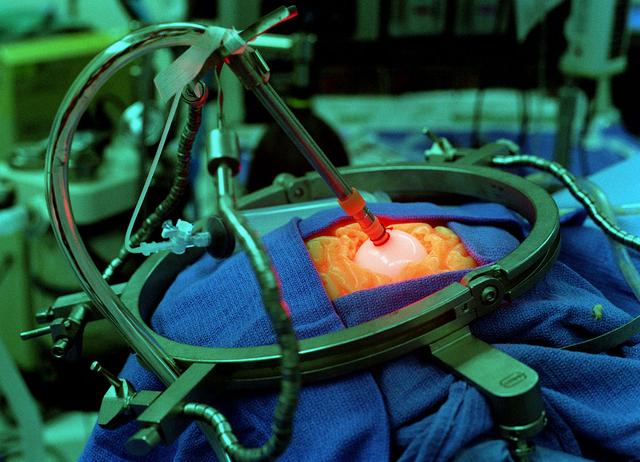
What started out as an attempt to develop a light which would allow for the growth of plants in space led to a remarkable discovery: The Light Emitting Diode (LED). This device through extensive study and experimentation has developed into a tool used by surgeons in the fight against brain cancer in children. Pictured is a mock-up of brain surgery being performed. By encapsulating the end of the LED with a balloon, light is diffused over a larger area of the brain allowing the surgeon a better view. This is one of many programs that begin as research for the space program, and through extensive study end up benefitting all of mankind.
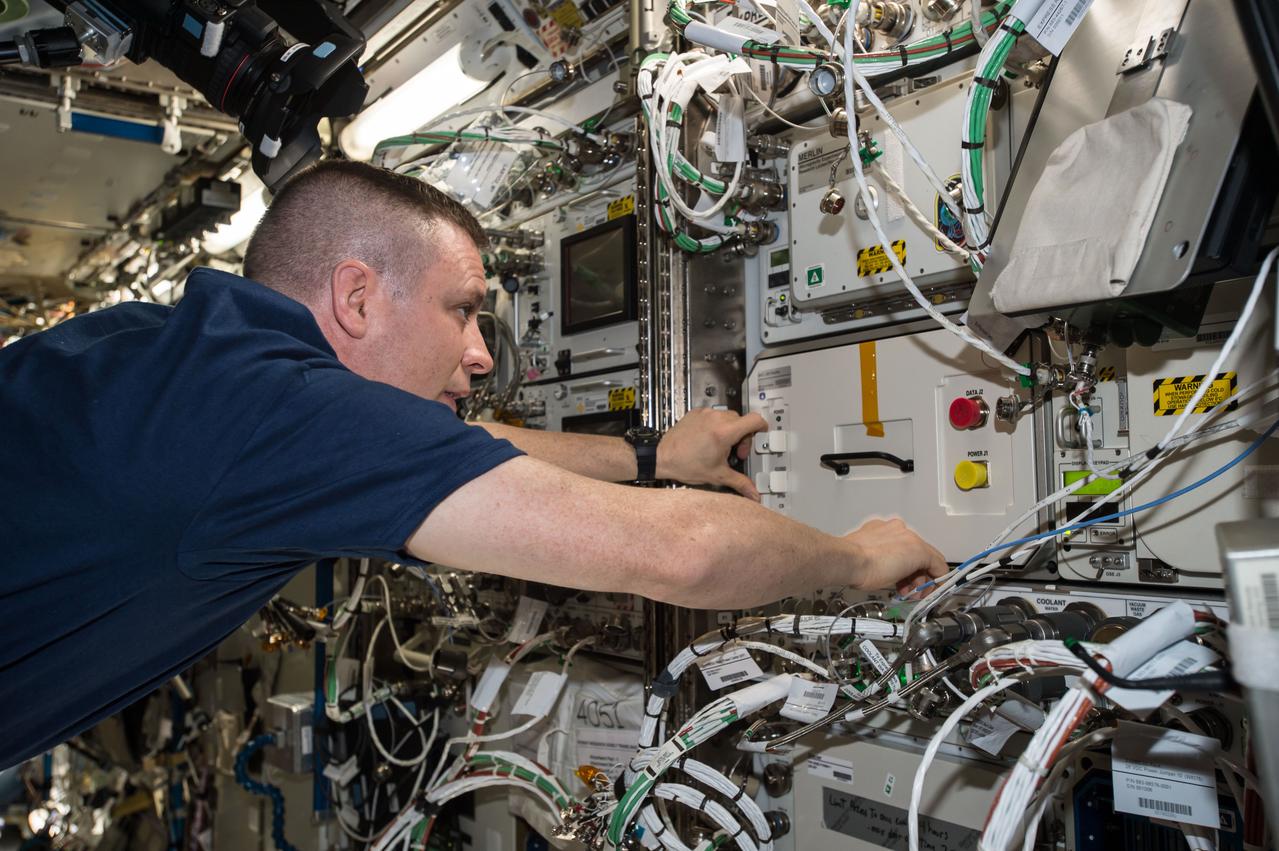
iss052e073850 (Aug. 25, 2017) --- NASA astronaut Jack Fischer installs hardware Biological Research In Canisters - Light Emitting Diode (BRIC-LED) for future experiments investigating seedling, microbial, or fungal growth.
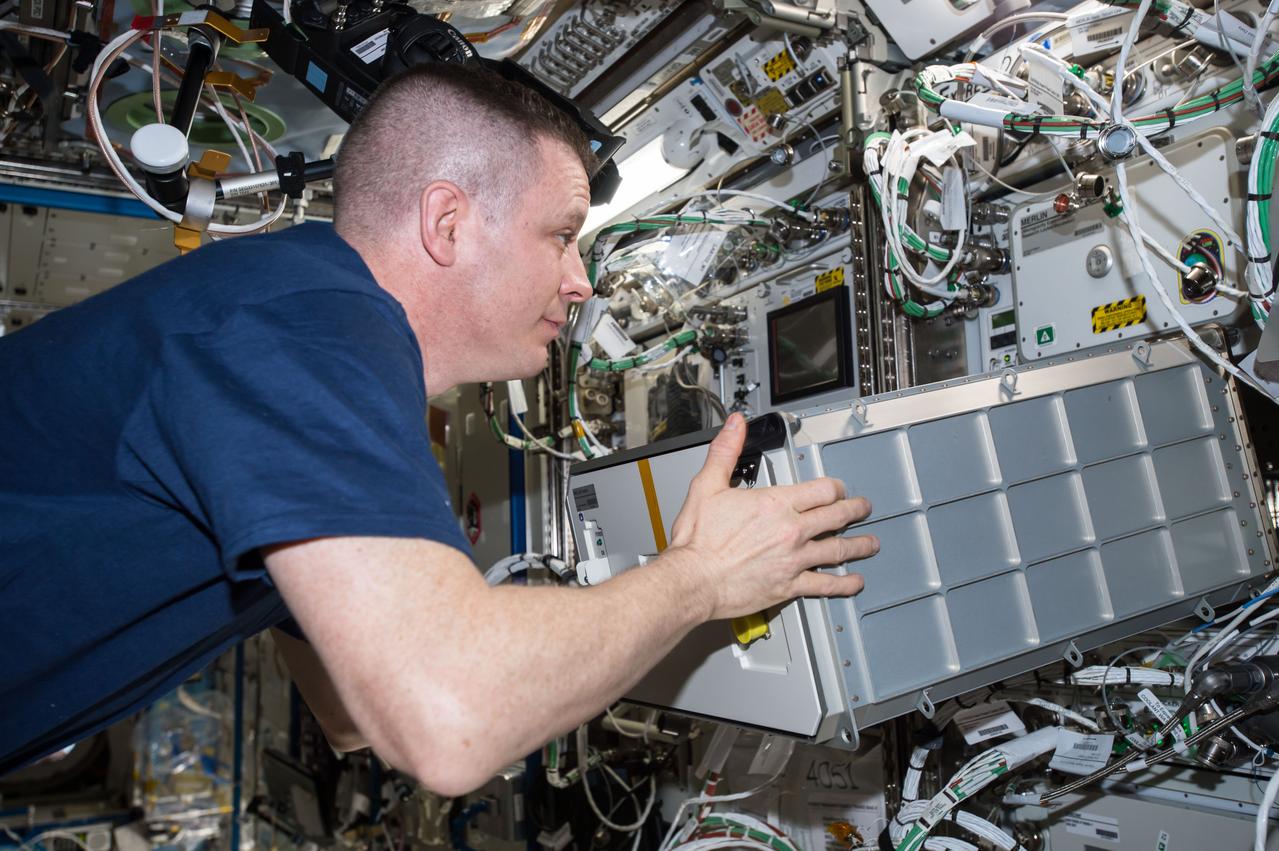
iss052e073846 (Aug. 25, 2017) --- NASA astronaut Jack Fischer installling the Biological Research In Canisters (BRIC) Light Emitting Diode (LED) for future BRIC-LED experiments.
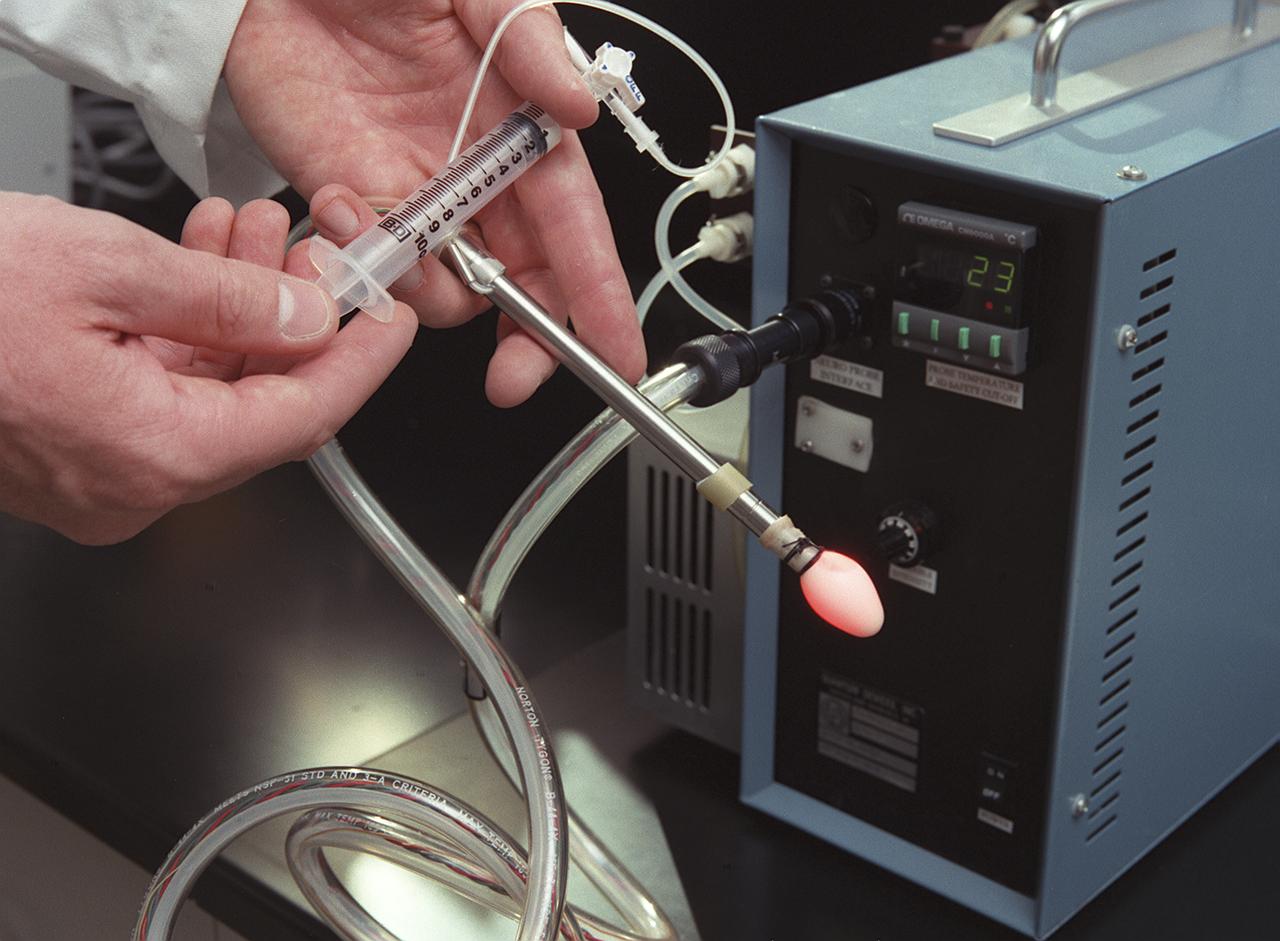
A special lighting technology was developed for space-based commercial plant growth research on NASA's Space Shuttle. Surgeons have used this technology to treat brain cancer on Earth, in two successful operations. The treatment technique called photodynamic therapy, requires the surgeon to use tiny pinhead-size Light Emitting Diodes (LEDs) (a source releasing long wavelengths of light) to activate light-sensitive, tumor-treating drugs. Laser light has been used for this type of surgery in the past, but the LED light illuminates through all nearby tissues, reaching parts of a tumor that shorter wavelengths of laser light carnot. The new probe is safer because the longer wavelengths of light are cooler than the shorter wavelengths of laser light, making the LED less likely to injure normal brain tissue near the tumor. It can also be used for hours at a time while still remaining cool to the touch. The LED probe consists of 144 tiny pinhead-size diodes, is 9-inches long, and about one-half-inch in diameter. The small balloon aids in even distribution of the light source. The LED light source is compact, about the size of a briefcase, and can be purchased for a fraction of the cost of a laser. The probe was developed for photodynamic cancer therapy by the Marshall Space Flight Center under a NASA Small Business Innovative Research program grant.
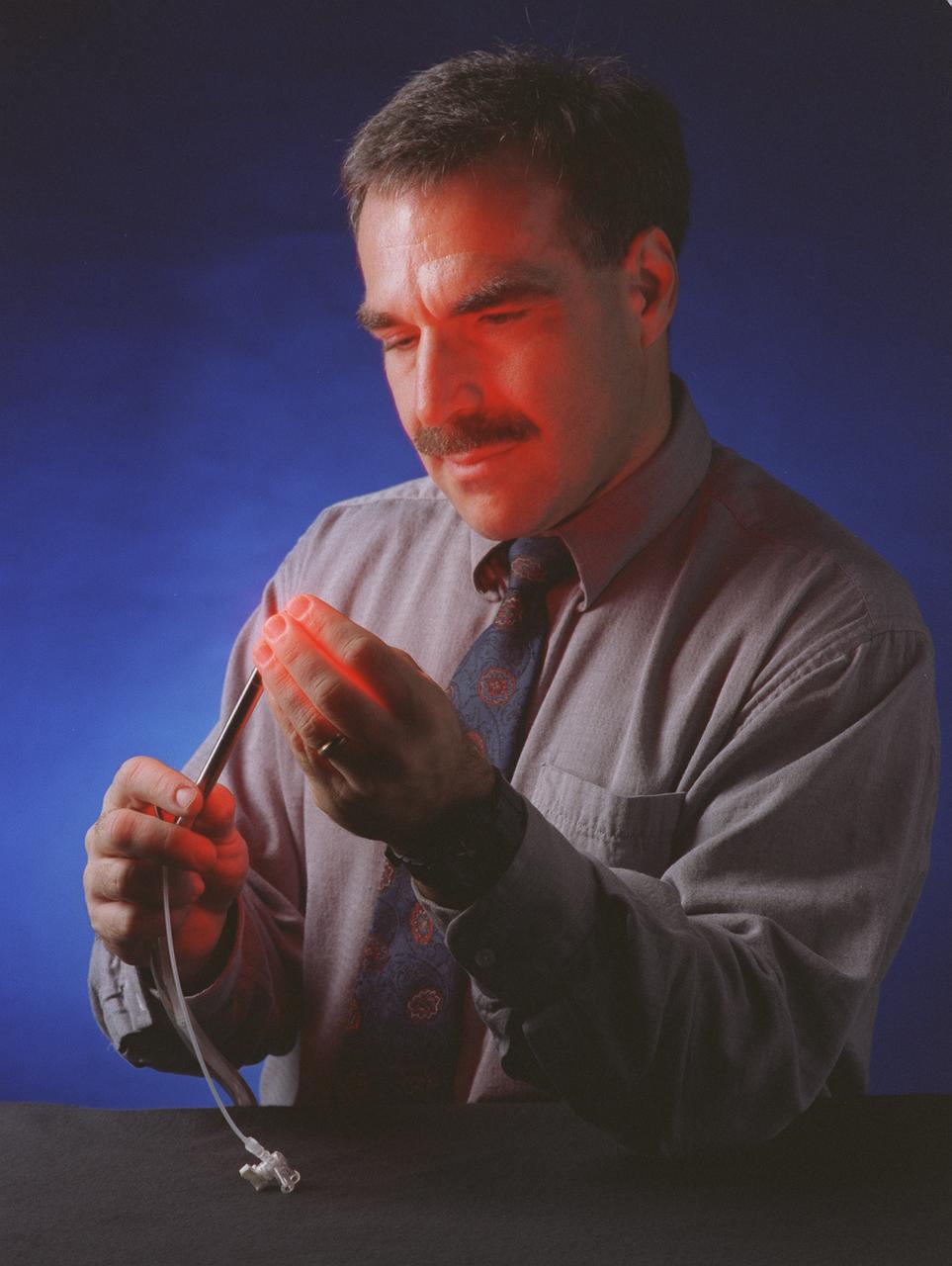
The red light from the Light Emitting Diode (LED) probe shines through the fingers of Dr. Harry Whelan, a pediatric neurologist at the Children's Hospital of Wisconsin in Milwaukee. Dr. Whelan uses the long waves of light from the LED surgical probe to activate special drugs that kill brain tumors. Laser light previously has been used for this type of surgery, but the LED light illuminates through all nearby tissues, reaching parts of tumors that shorter wavelengths of laser light carnot. The new probe is safer because the longer wavelengths of light are cooler than the shorter wavelengths of laser light, making the LED less likely to injure normal brain tissue near the tumor. Also, it can be used for hours at a time while still remaining cool to the touch. The probe was developed for photodynamic cancer therapy under a NASA Small Business Innovative Research Program grant. The program is part of NASA's Technology Transfer Department at the Marshall Space Flight Center.
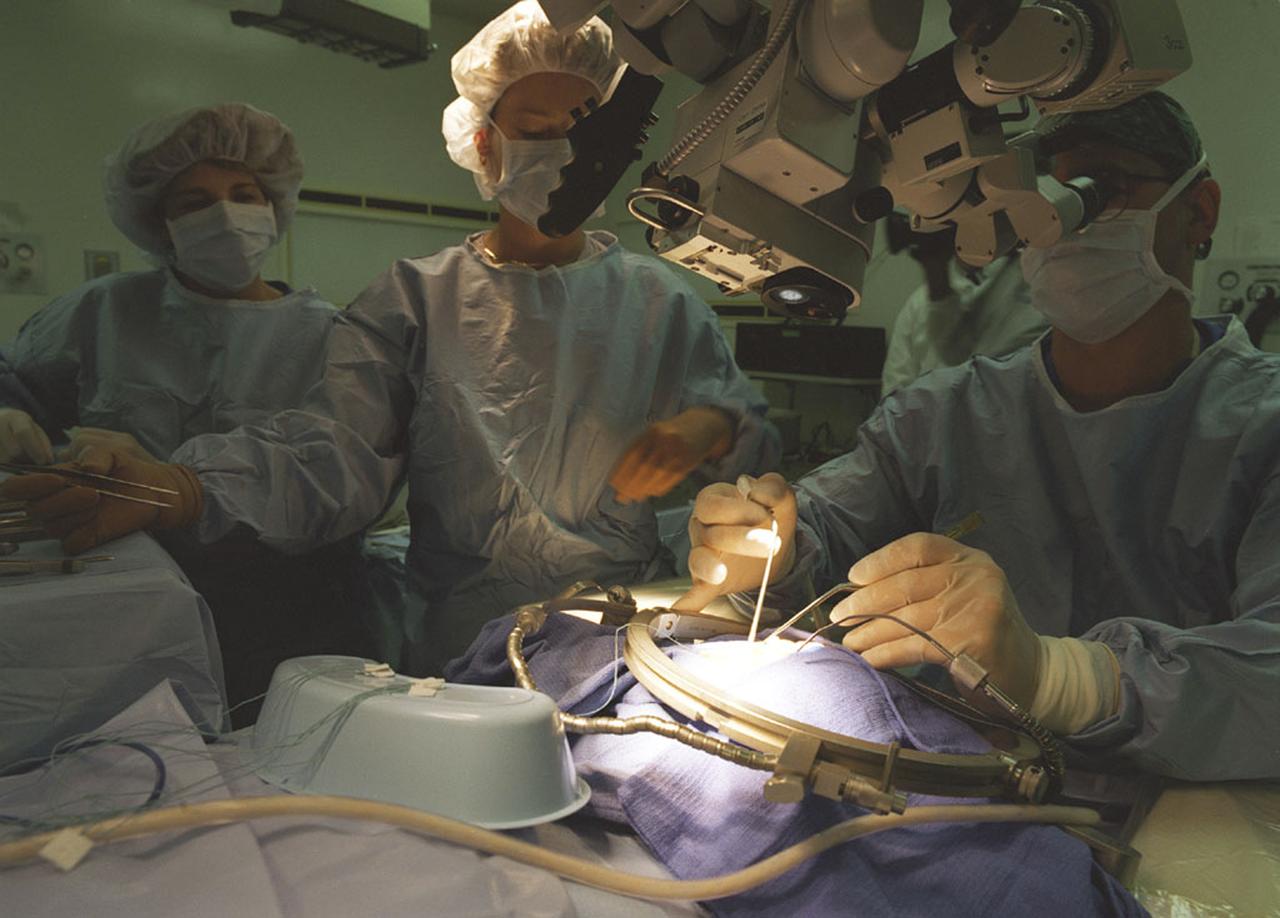
A special lighting technology was developed for space-based commercial plant growth research on NASA's Space Shuttle. Surgeons have used this technology to treat brain cancer on Earth, in two successful operations. The treatment technique, called Photodynamic Therapy, requires the surgeon to use tiny, pinhead-size Light Emitting Diodes (LEDs) (a source that releases long wavelengths of light ) to activate light-sensitive, tumor-treating drugs. "A young woman operated on in May 1999 has fully recovered with no complications and no evidence of the tumor coming back," said Dr. Harry Whelan, a pediatric neurologist at the Medical Hospital of Wisconsin in Milwaukee. Laser light has been used for this type of surgery in the past, but the LED light illuminates through all nearby tissues, reaching parts of a tumor that shorter wavelengths of laser light carnot. The new probe is safer because the longer wavelengths of light are cooler than the shorter wavelengths of laser light, making the LED less likely to injure normal brain tissue near the tumor. It can be used for hours at a time while still remaining cool to the touch. The LED light source is compact, about the size of a briefcase, and can be purchased for a fraction of the cost of a laser. The LEDs, developed and managed by NASA's Marshall Space Flight Center, have been used on seven Space Shuttle flights inside the Microgravity Astroculture Facility. This technology has also been successfully used to further commercial research in crop growth.
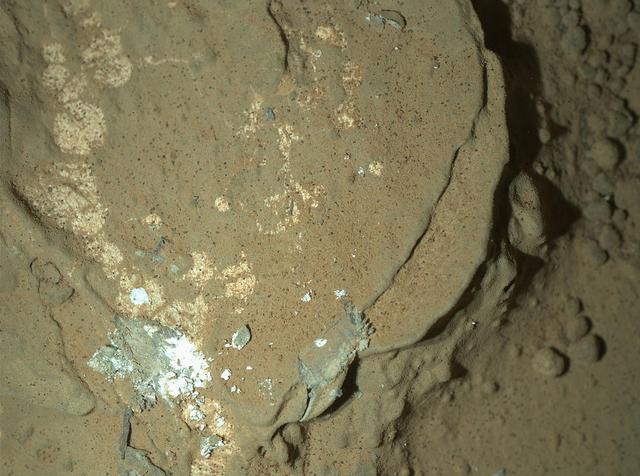
A Martian rock in the Yellowknife Bay area of Mars Gale Crater is illuminated by white-light light emitting diodes is part of the first set of nighttime images taken by the MAHLI camera at the end of the robotic arm of NASA Mars rover Curiosity.

Two Phase Flow Facility, Toffy Modular Light Emitting Diode (LED) Light System Camera file: 45548822 PSD on backup Pictured: Arthur Stackowicz

During pre-flight testing in March 2011, the Mars Hand Lens Imager MAHLI camera on NASA Mars rover Curiosity took this image of the MAHLI calibration target under illumination from MAHLI two ultraviolet LEDs light emitting diodes.
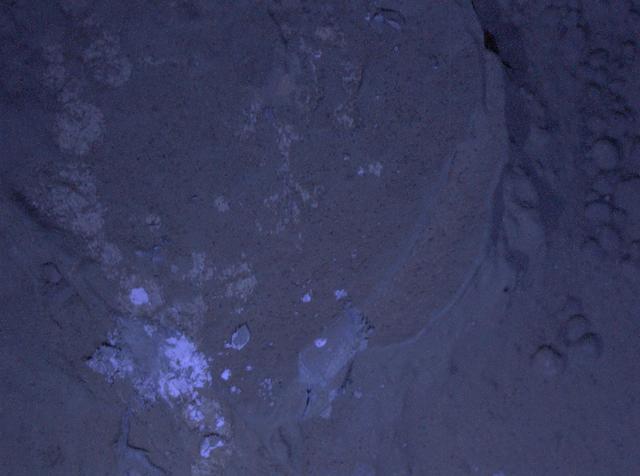
This image of a Martian rock dubbed Sayunei is illuminated by ultraviolet LEDs light emitting diodes is part of the first set of nighttime images taken by the Mars Hand Lens Imagery camera at the end of the robotic arm of NASA Mars rover Curiosity.
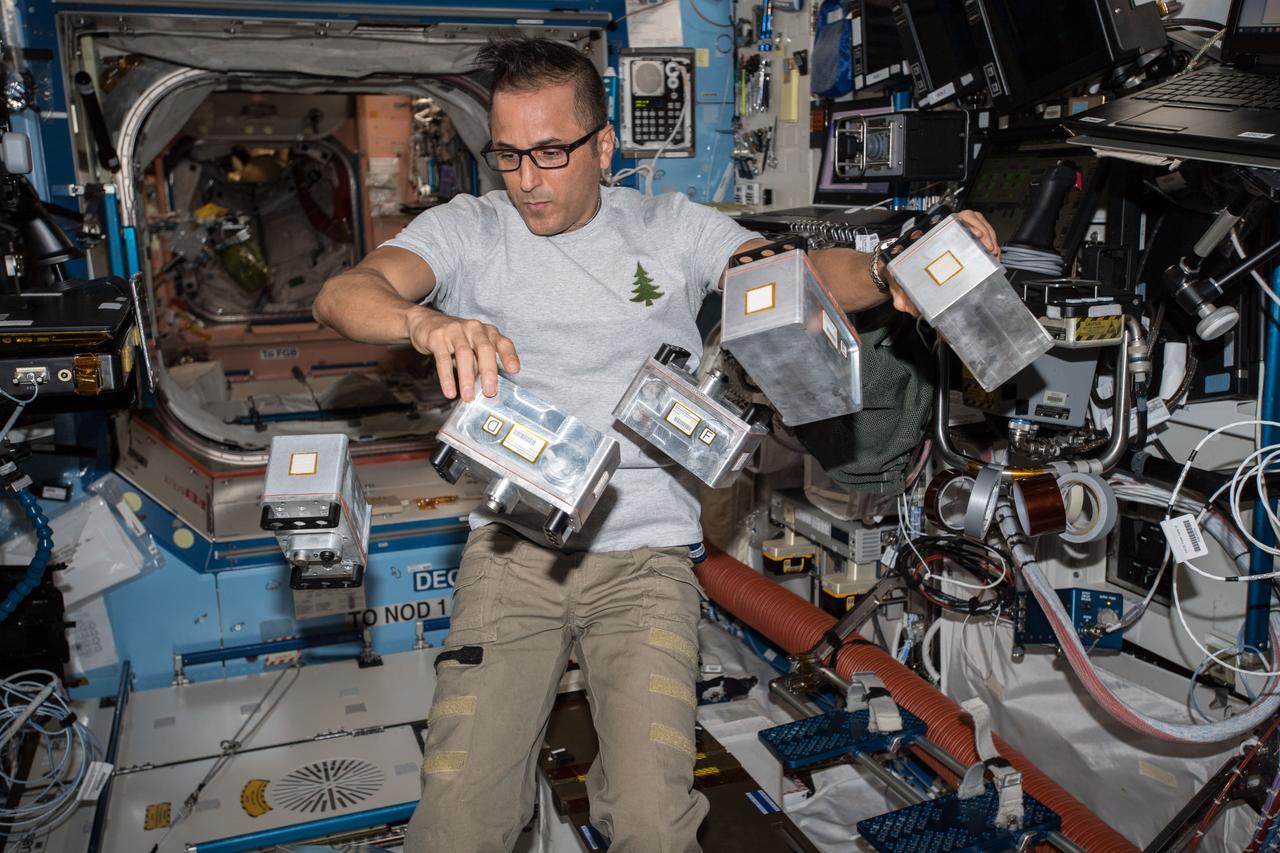
iss054e001485 (Dec. 19, 2017) --- NASA astronaut Joe Acaba with Biological Research in Canisters - Light Emitting Diode (BRIC-LED) canisters prior to installation in the Destiny Laboratory to provide capabilities for seedling, microbial, or fungal growth investigations.
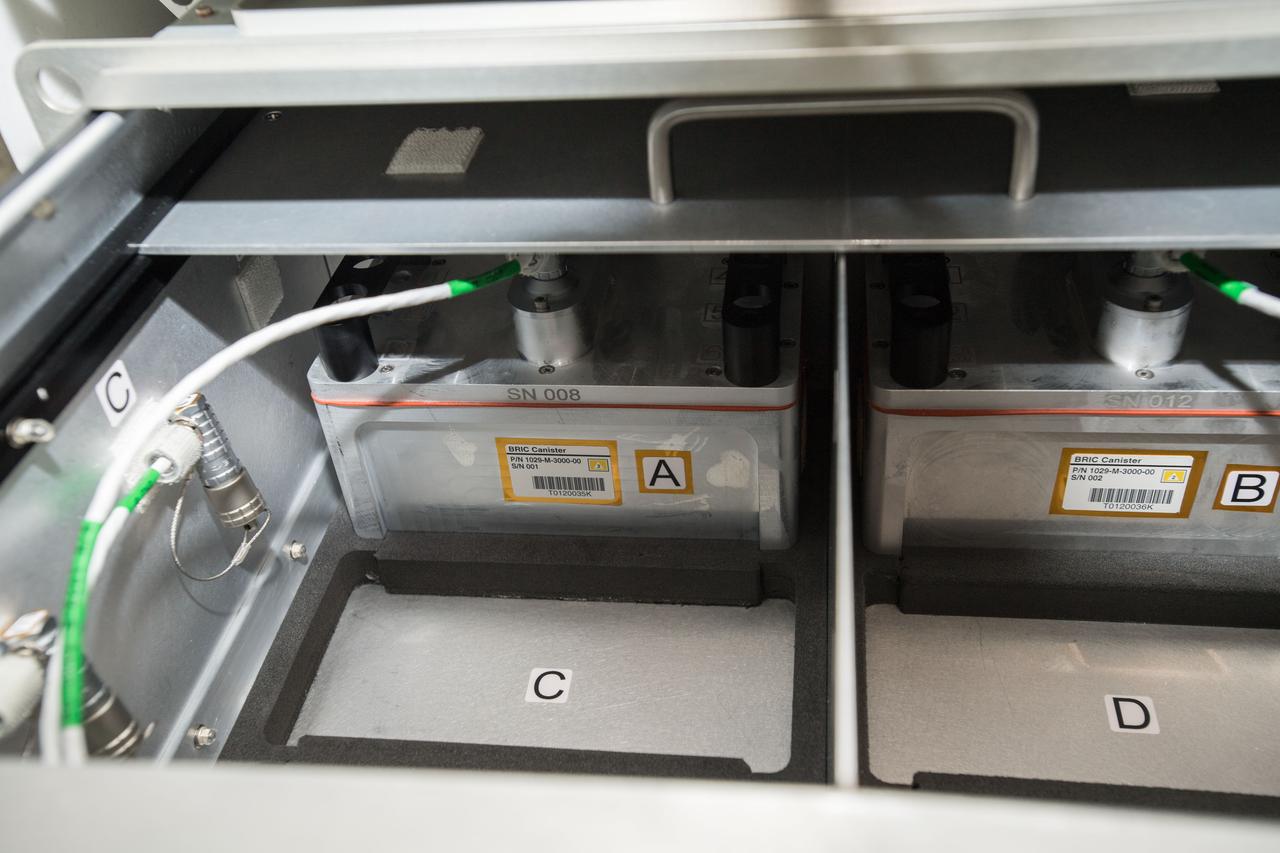
iss054e001490 (Dec. 19, 2017) --- Biological Research in Canisters - Light Emitting Diode (BRIC-LED) locker installed in the Destiny Laboratory to provide capabilities for seedling, microbial, or fungal growth investigations.
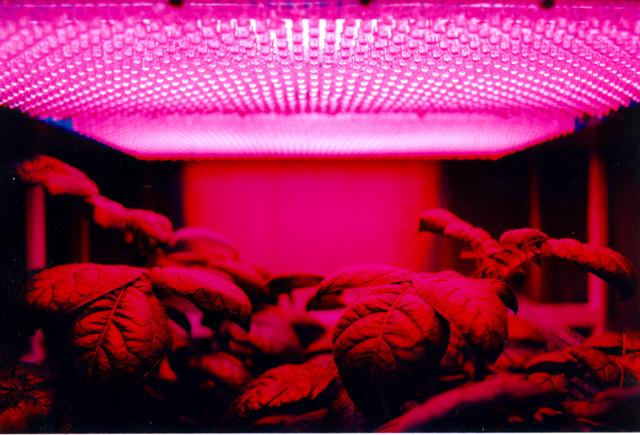
Astroculture is a suite of technologies used to produce and maintain a closed controlled environment for plant growth. The two most recent missions supported growth of potato, dwarf wheat, and mustard plants and provided scientists with the first opportunity to conduct true plant research in space. Light emitting diodes have particular usefulness for plant growth lighting because they emit a much smaller amount of radiant heat than do conventional lighting sources and because they have potential of directing a higher percentage of the emitted light onto plants surfaces. Furthermore, the high output LED's have emissions in the 600-700 nm waveband, which is of highest efficiency for photosynthesis by plants.
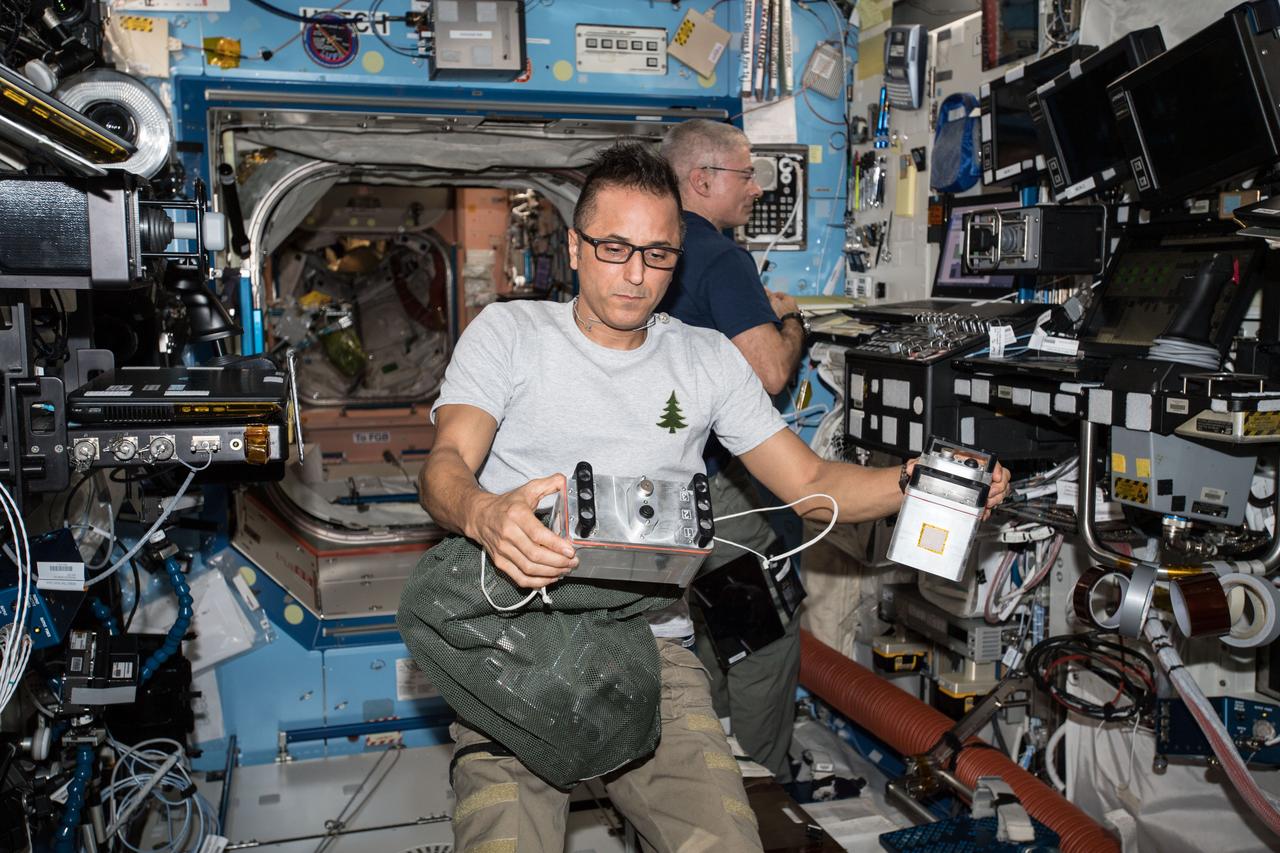
iss054e001472 (Dec. 19, 2017) --- NASA astronaut Joe Acaba with Biological Research in Canisters - Light Emitting Diode (BRIC-LED) canisters in the Destiny Laboratory prior to installation to provide capabilities for seedling, microbial, or fungal growth investigations. NASA astronaut Mark Vande Hei is visible in the background.

KENNEDY SPACE CENTER, FLA. - Hyeon-Hye Kim, a plant physiologist with the National Research Council at the Space Life Sciences Lab, discusses the growing of plants utilizing light-emitting diodes (LEDs) during a tour of the Space Life Sciences Lab for members of the news media. A major challenge to growing plants in space will be controlling and supplying sufficient quantity and quality of light. LEDs represent an innovative artificial lighting source with several features specific for supporting plants, whether on space-based transit vehicles or planetary life support systems.
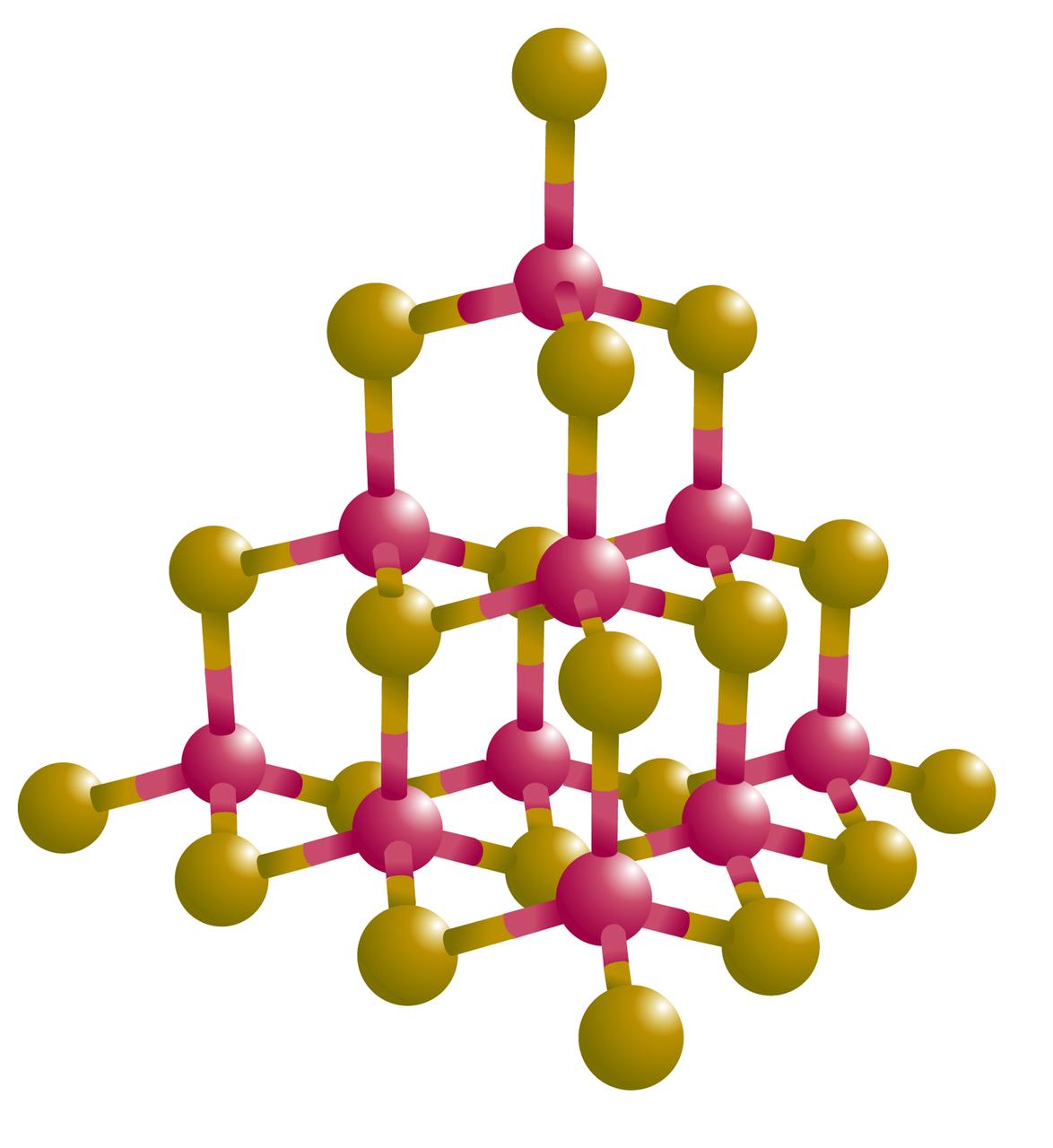
Cadmium sulfide -- a semiconductor material -- can be grown in nanoclusters. Small molecules of cadmium sulfide, shown here, can be prepared by traditional chemical methods. However, if larger, more uniform nanoparticles of cadmium sulfide could be fabricated, they may be used to improve electronic devices such as light emitting diodes and diode lasers. Using a NASA grant, Dr. Jimmy Mays of the University of Alabama at Birmingham is studying whether microgravity will enhance the size and shape of a nanoparticle. This experiment is managed by the Microgravity Research Program Office at NASA's Marshall Spce Flight Center in Huntsville, AL. Photo credit: NASA/Marshall Space Flight Center
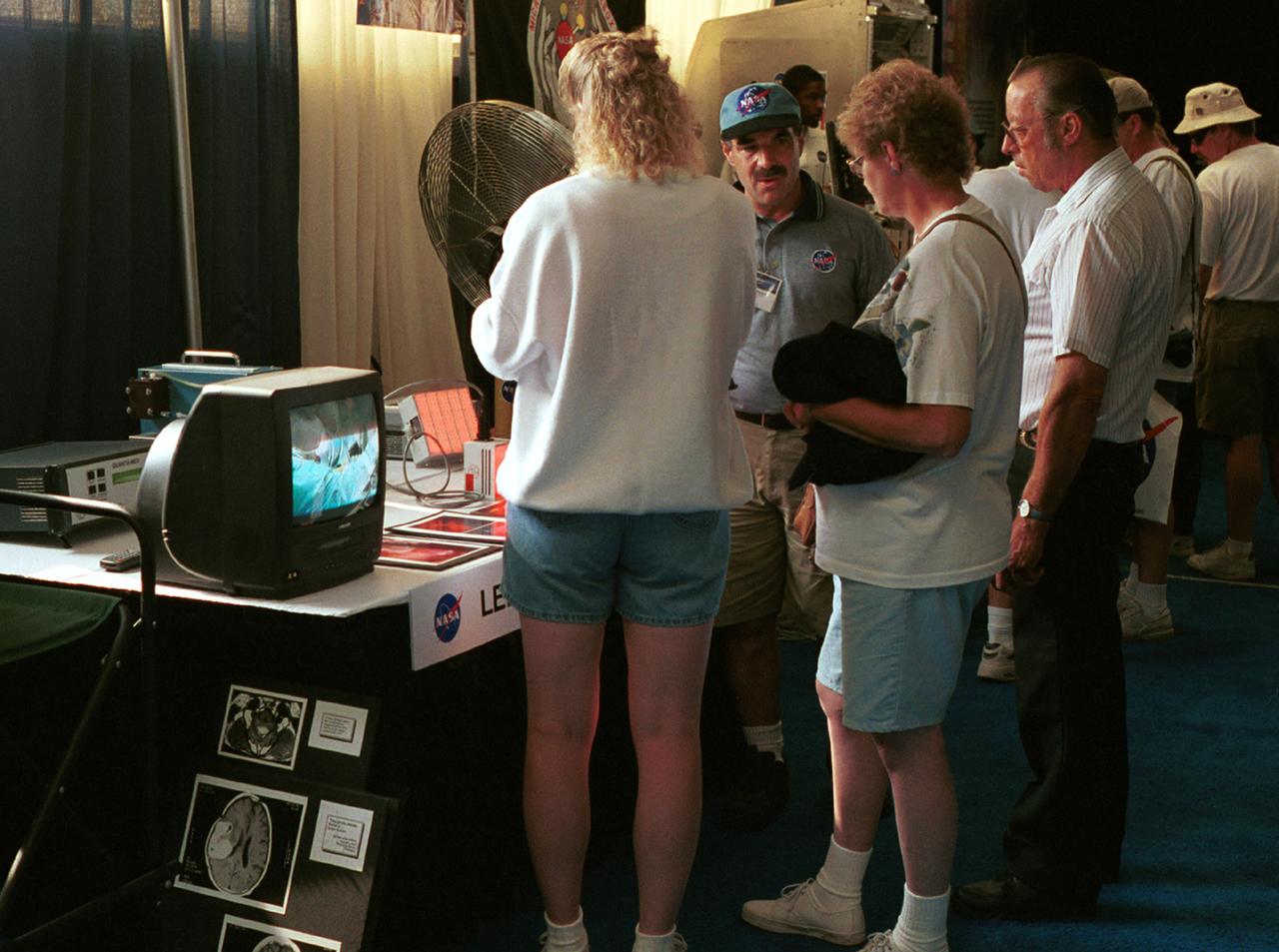
Dr. Harry Whelan, a pediatric Neurologist at the Medical Hospital of Wisconsin in Milwaukee and professor of Neurology at the Medical College of Wisconsin, explains the operation of light-emitting diodes (LEDs) developed for use in space plant growth experiments and now adapted for use in photodynamic therapy, a technique in which light from the LEDs activates light-sensitive, tumor-treating drugs. The technique has been used in at least two surgeries on brain tumors. The LED project was one of several NASA exhibits at AirVenture 2000 sponsored by the Experimental Aircraft Association in Oshkosh, WI.
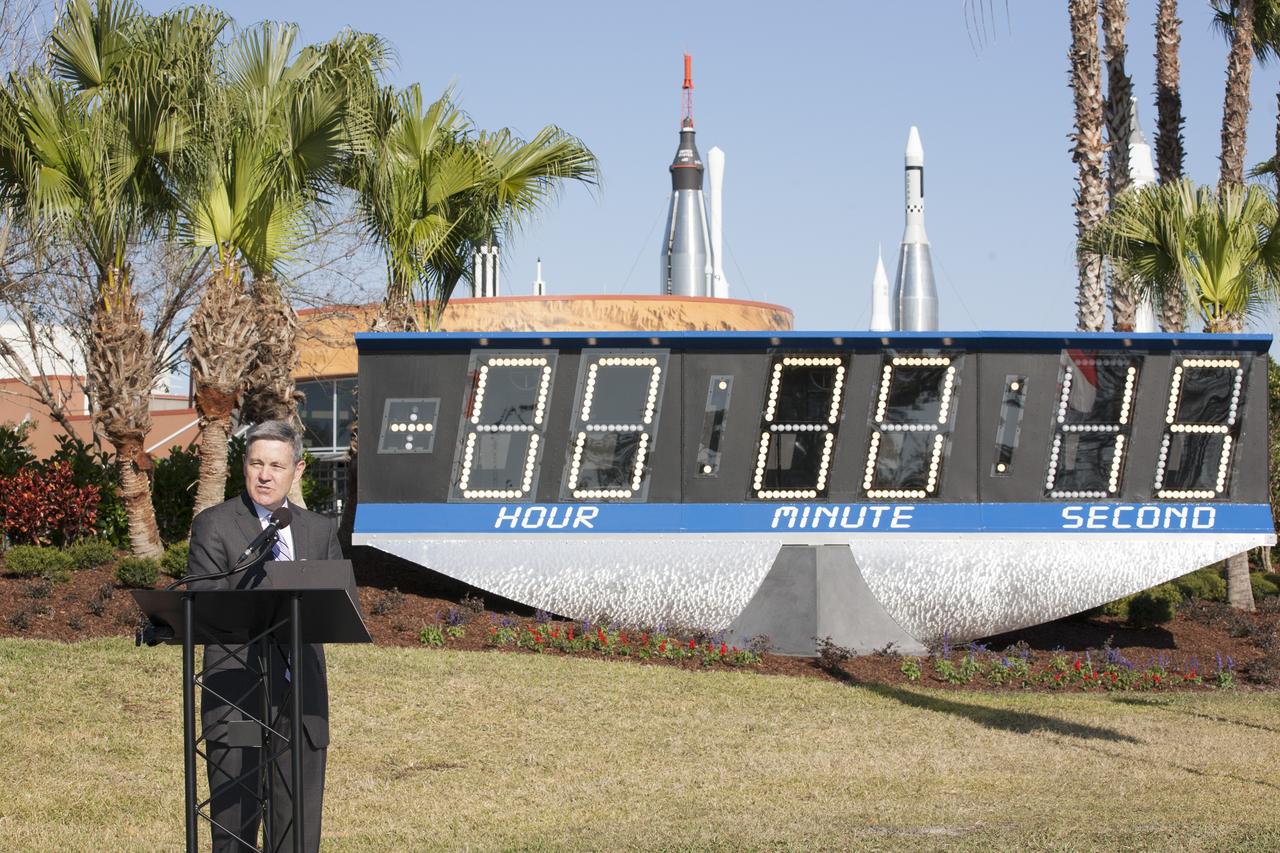
Kennedy Space Center Director Bob Cabana speaks at the dedication of the newest display at the entrance to the center's visitor complex. The historic countdown clock was originally set up at the space center's Press Site and was used from the launch of Apollo 12 on Nov. 14, 1969 to the final space shuttle mission, STS-135, launched on July 8, 2011. The old countdown clock was replaced in 2014 with a modern light emitting diode, or LED, display.
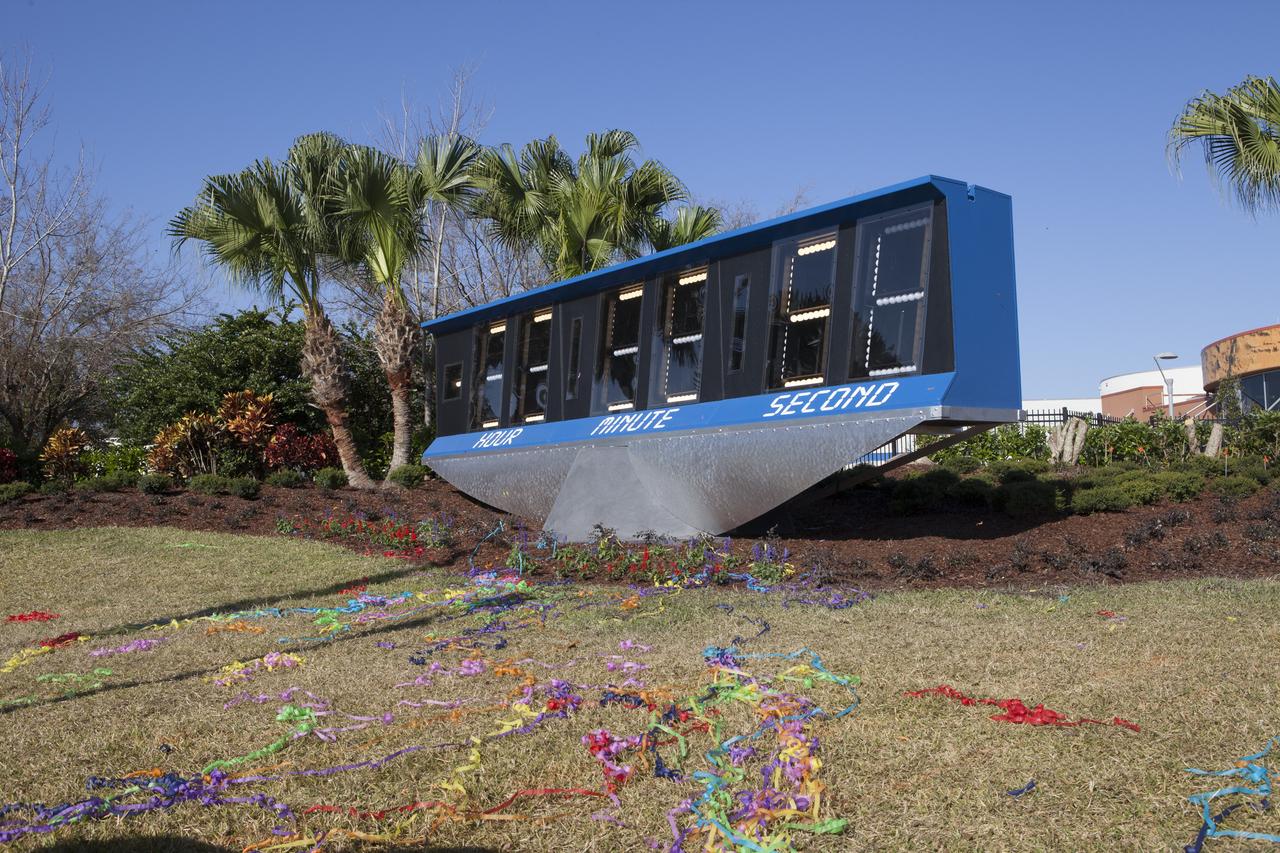
Confetti is launched as the spaceport's historic countdown clock is dedicated as the newest display at the Kennedy Space Center Visitor Complex. Now located at the entrance to the visitor complex, the spaceport's historic countdown clock was used starting with the launch of Apollo 12 on Nov. 14, 1969. Originally set up at the space center's Press Site, the clock operated through the final space shuttle mission, STS-135, launched on July 8, 2011. The old countdown clock was replaced in 2014 with a modern light emitting diode, or LED, display.
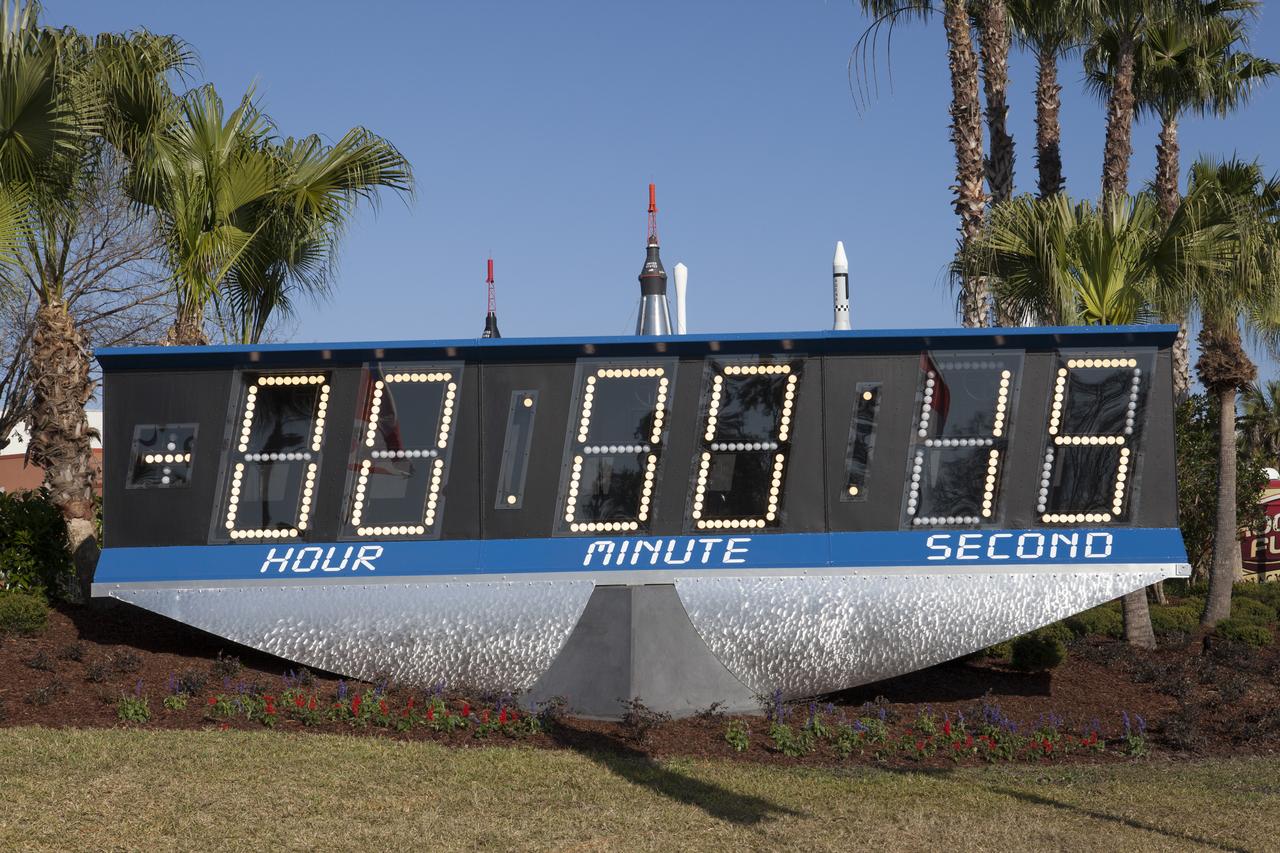
The newest display at the Kennedy Space Center Visitor Complex is the spaceport's historic countdown clock. It is now located at the entrance to the visitor complex. The clock was set up at the space center's Press Site and used from the launch of Apollo 12 on Nov. 14, 1969 to the final space shuttle mission, STS-135, launched on July 8, 2011. The old countdown clock was replaced in 2014 with a modern light emitting diode, or LED, display.
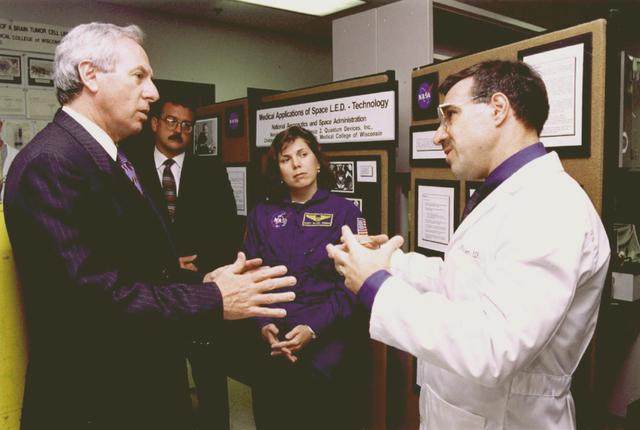
NASA Administrator Dan Goldin (left), during a visit at Children's Hospital of Wisconsin in Milwaukee, Wisconsin, discussed how NASA's special lighting technology may soon treat cancer. Goldin talked with Dr.Harry Whelan (right) and Dr. Kerneth Reichert (center left), both pediatric neurologists with the Hospital and professors at the Medical College of Wisconsin in Milwaukee. Accompanied by Astronaut Mary Ellen Weber, Goldin was shown this innovative treatment, called Photodynamic Therapy, a method used to destroy the tumor without damaging the delicate brain tissue around it. The treatment uses tiny pinhead-size Light Emitting Diodes (LEDs) developed for Space Product Development plant growth experiments.
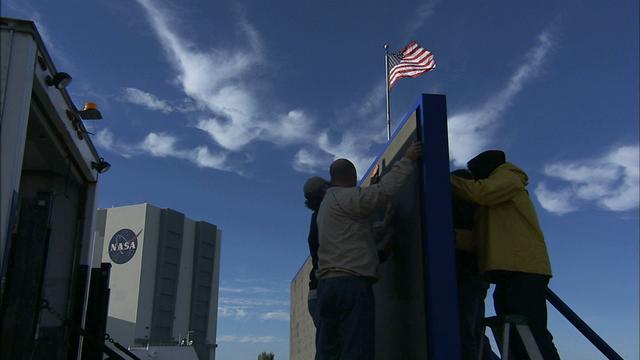
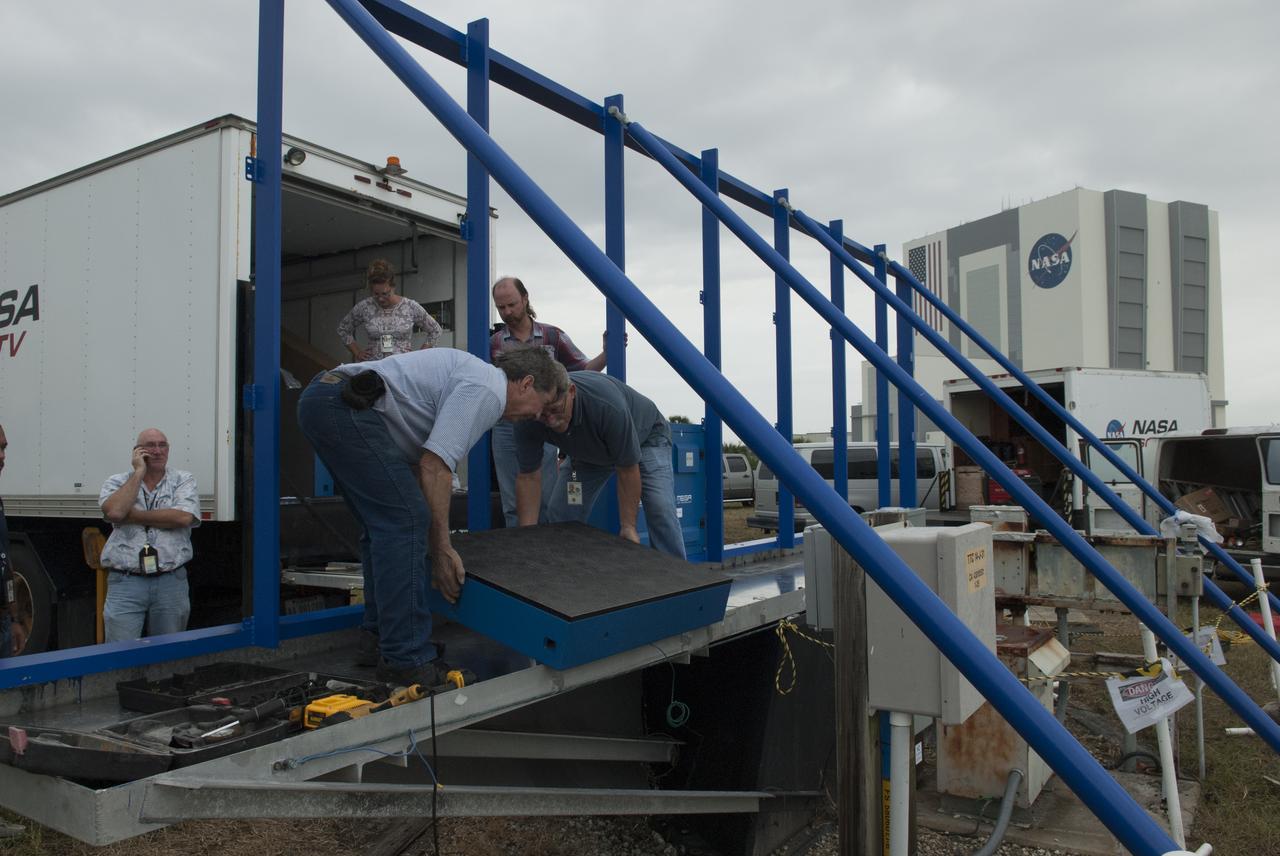
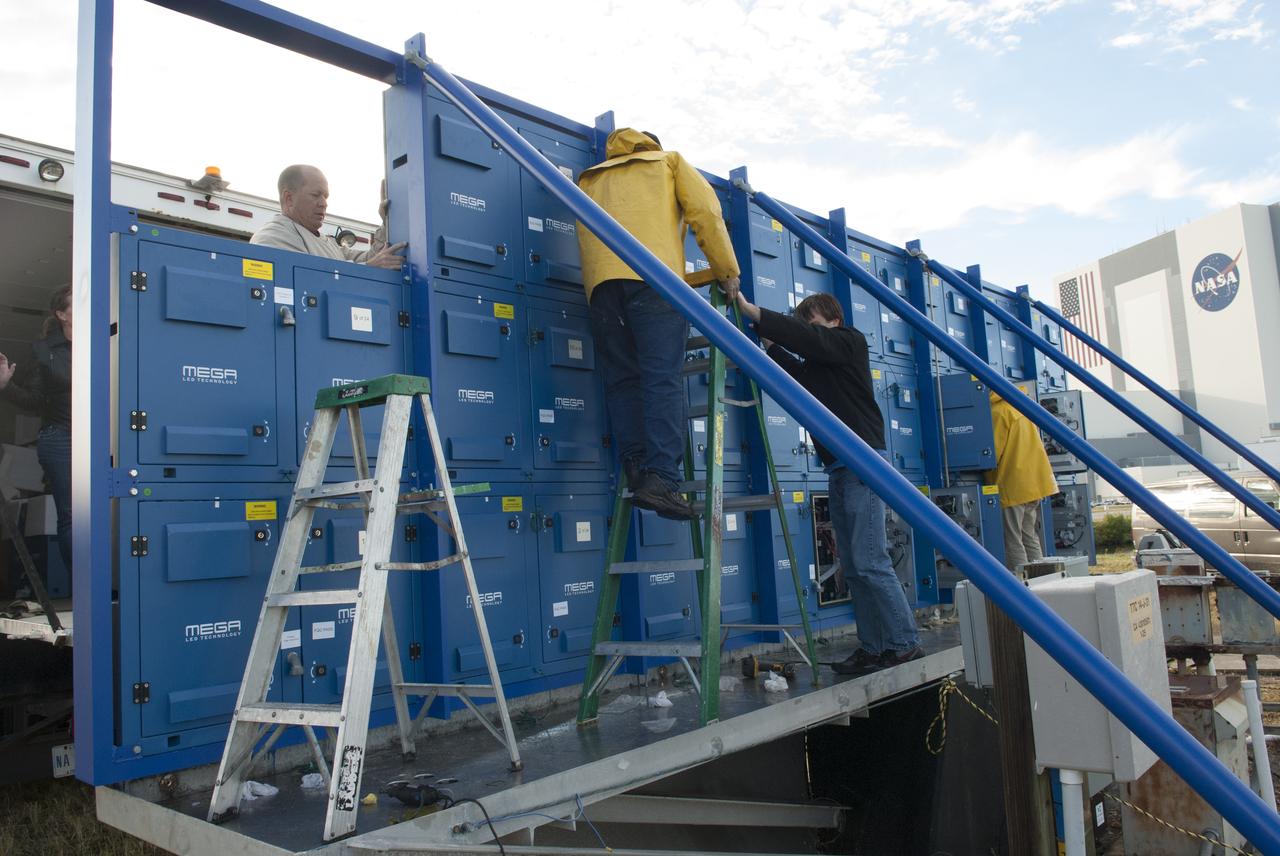
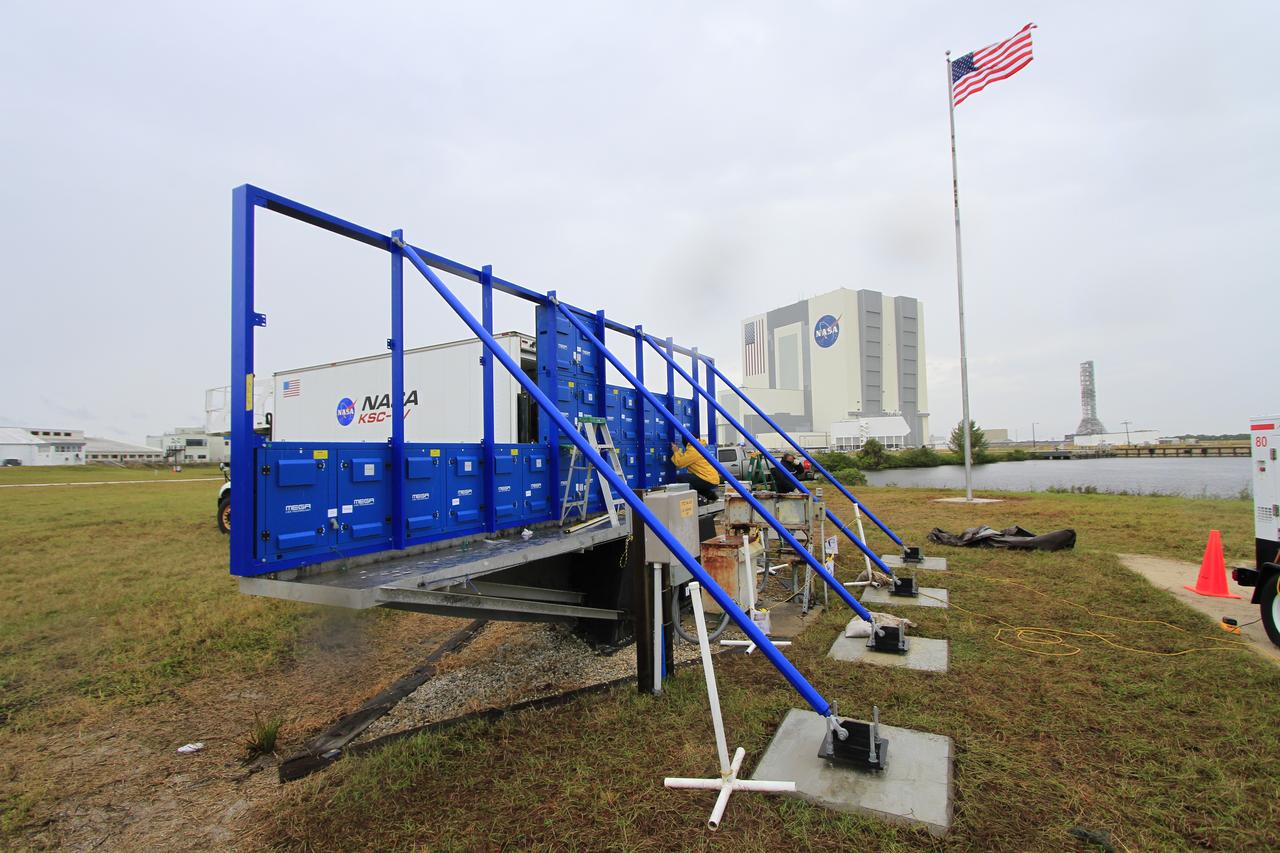
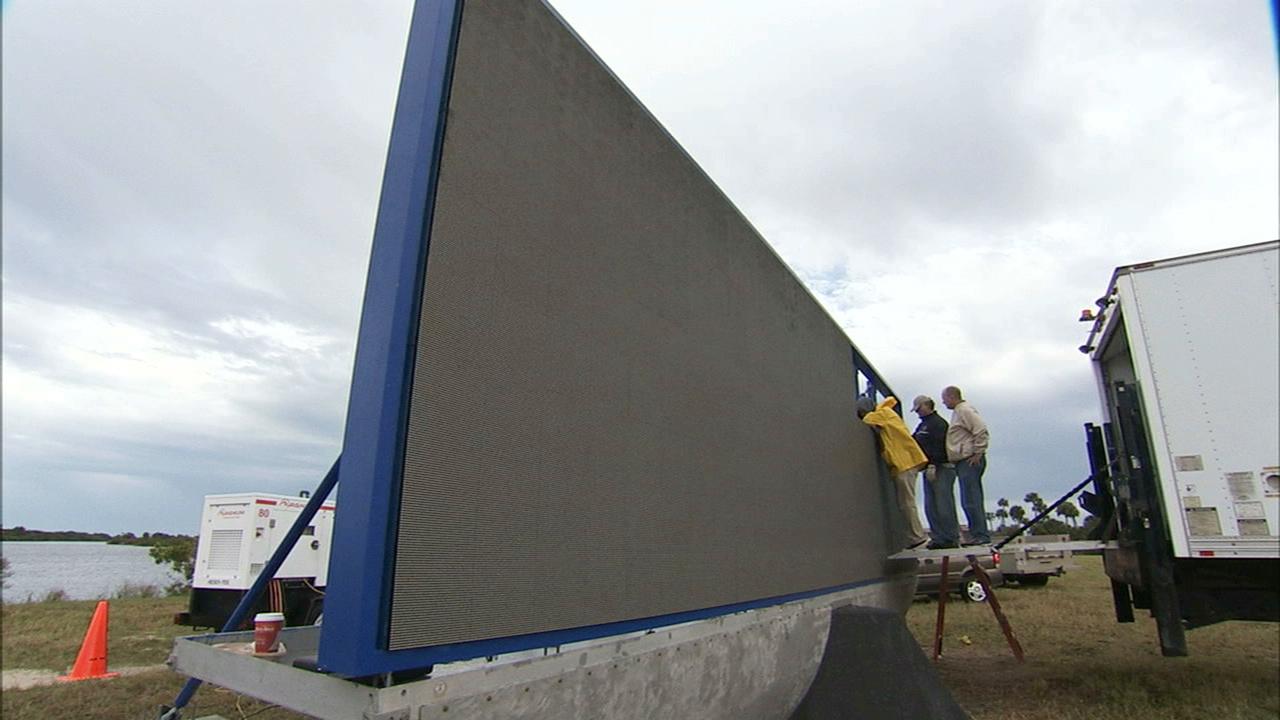
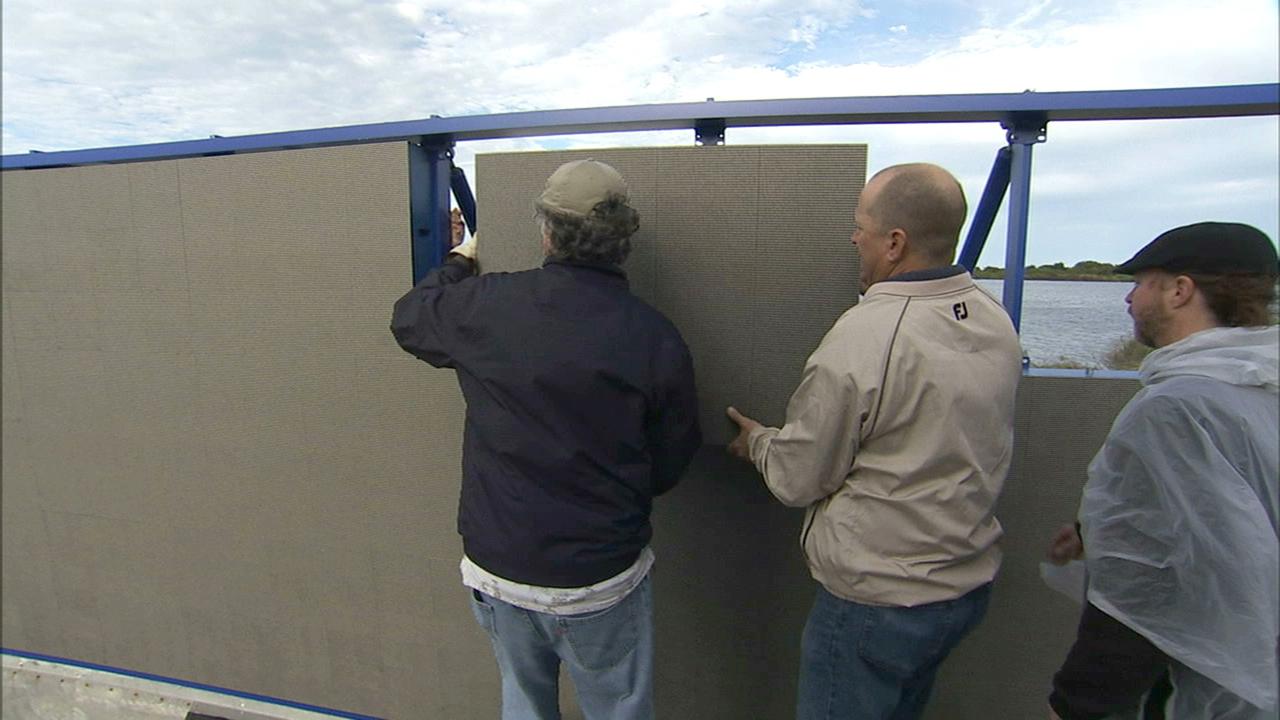
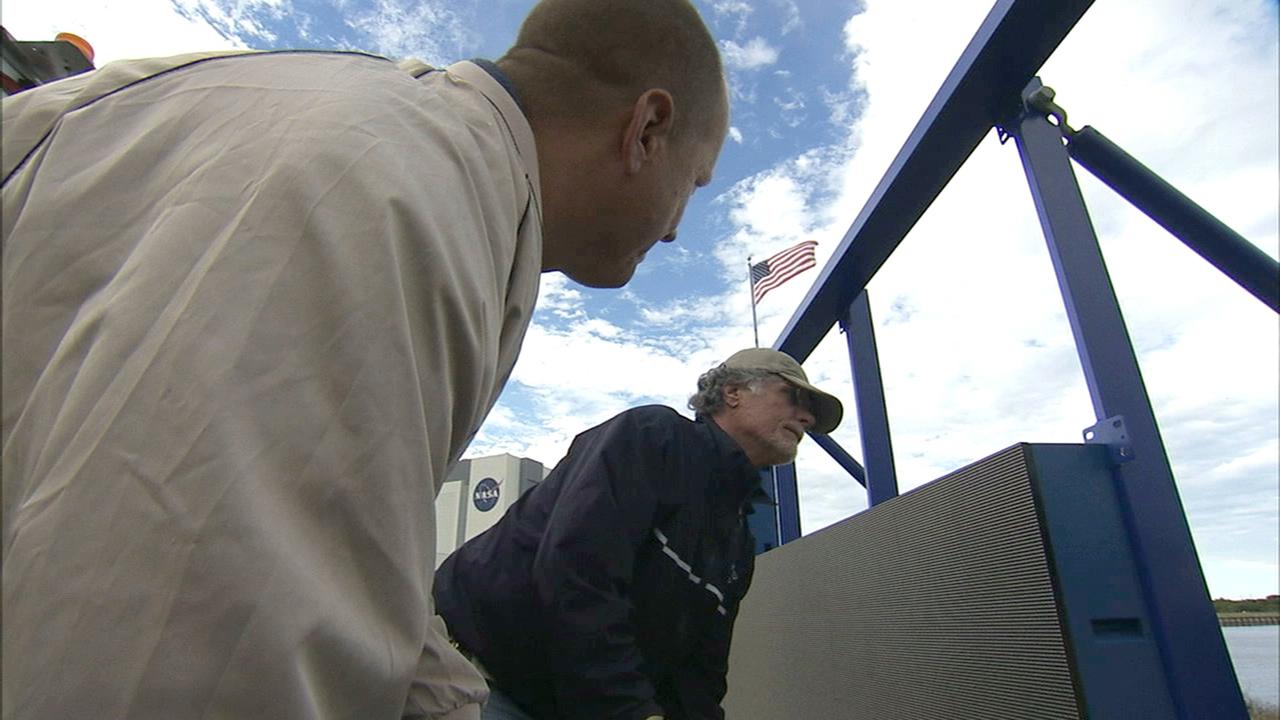
At NASA's Kennedy Space Center in Florida, work continues to install 24 light emitting diode LED panels in the new countdown clock at the spaceport's Press Site. The modern, multimedia display is similar to the screens seen at sporting venues. The new screen will be nearly 26 feet wide by 7 feet high, a foot taller than the original clock. The historic countdown clock was designed by Kennedy engineers and built by space center technicians before Apollo 12 in 1969. NASA has requested to acquire the countdown clock from the agency’s Artifact Working Group at the agency's Headquarters for display at the Kennedy Space Center Visitor Complex.
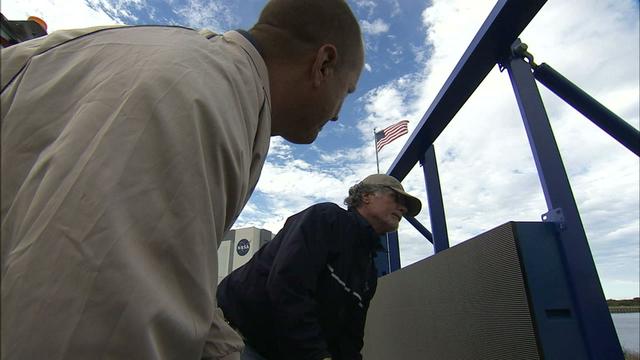
At NASA's Kennedy Space Center in Florida, work continues to install 24 light emitting diode LED panels in the new countdown clock at the spaceport's Press Site. The modern, multimedia display is similar to the screens seen at sporting venues. The new screen will be nearly 26 feet wide by 7 feet high, a foot taller than the original clock. The historic countdown clock was designed by Kennedy engineers and built by space center technicians before Apollo 12 in 1969. NASA has requested to acquire the countdown clock from the agency’s Artifact Working Group at the agency's Headquarters for display at the Kennedy Space Center Visitor Complex.
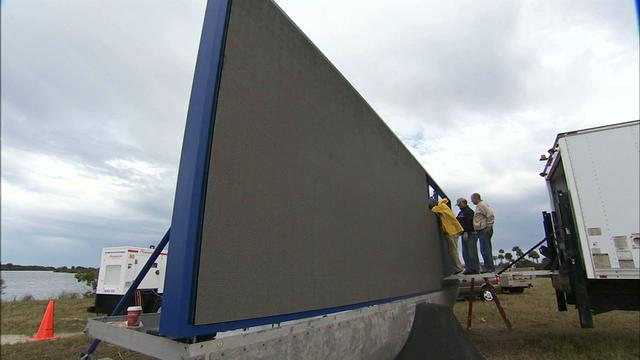
At NASA's Kennedy Space Center in Florida, work continues to install 24 light emitting diode LED panels in the new countdown clock at the spaceport's Press Site. The modern, multimedia display is similar to the screens seen at sporting venues. The new screen will be nearly 26 feet wide by 7 feet high, a foot taller than the original clock. The historic countdown clock was designed by Kennedy engineers and built by space center technicians before Apollo 12 in 1969. NASA has requested to acquire the countdown clock from the agency’s Artifact Working Group at the agency's Headquarters for display at the Kennedy Space Center Visitor Complex.
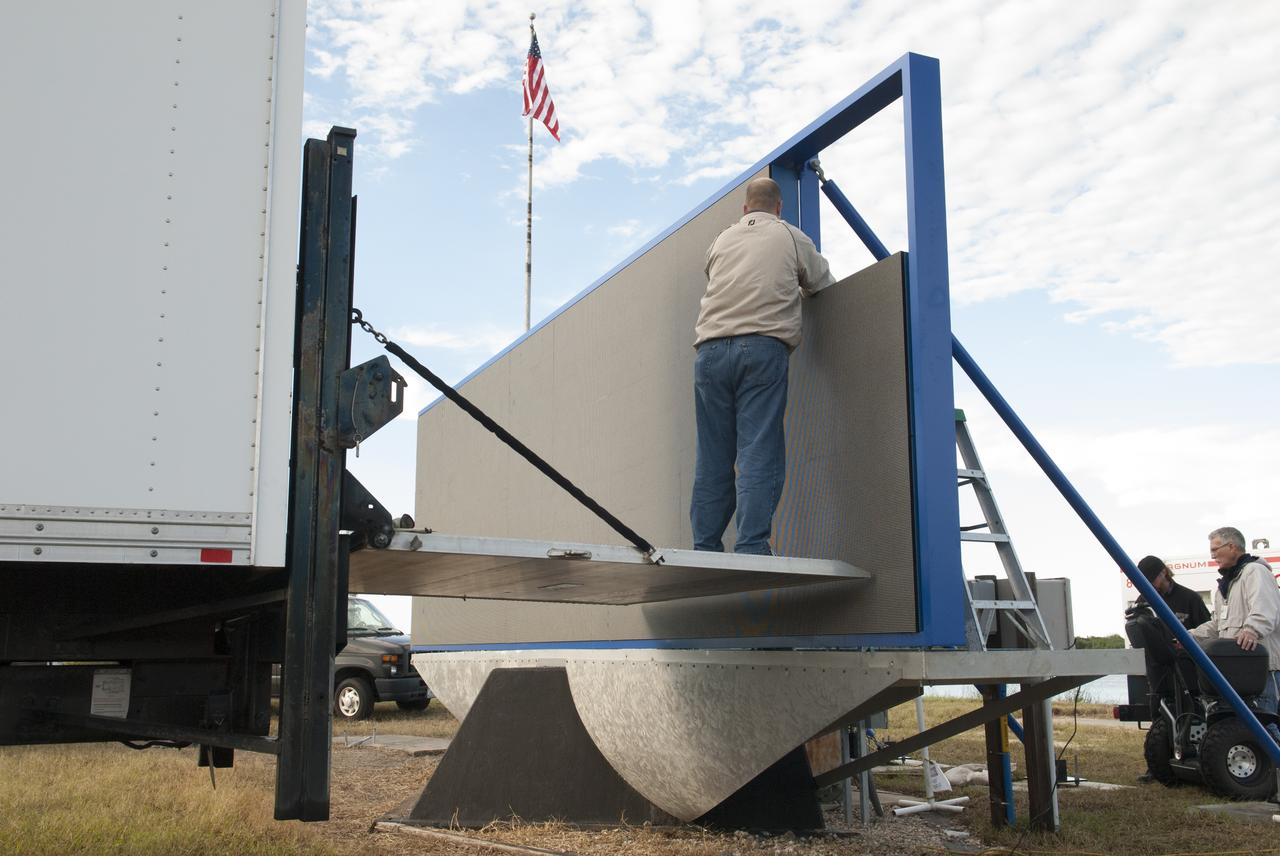
At NASA's Kennedy Space Center in Florida, work continues to install 24 light emitting diode LED panels in the new countdown clock at the spaceport's Press Site. The modern, multimedia display is similar to the screens seen at sporting venues. The new screen will be nearly 26 feet wide by 7 feet high, a foot taller than the original clock. The historic countdown clock was designed by Kennedy engineers and built by space center technicians before Apollo 12 in 1969. NASA has requested to acquire the countdown clock from the agency’s Artifact Working Group at the agency's Headquarters for display at the Kennedy Space Center Visitor Complex.
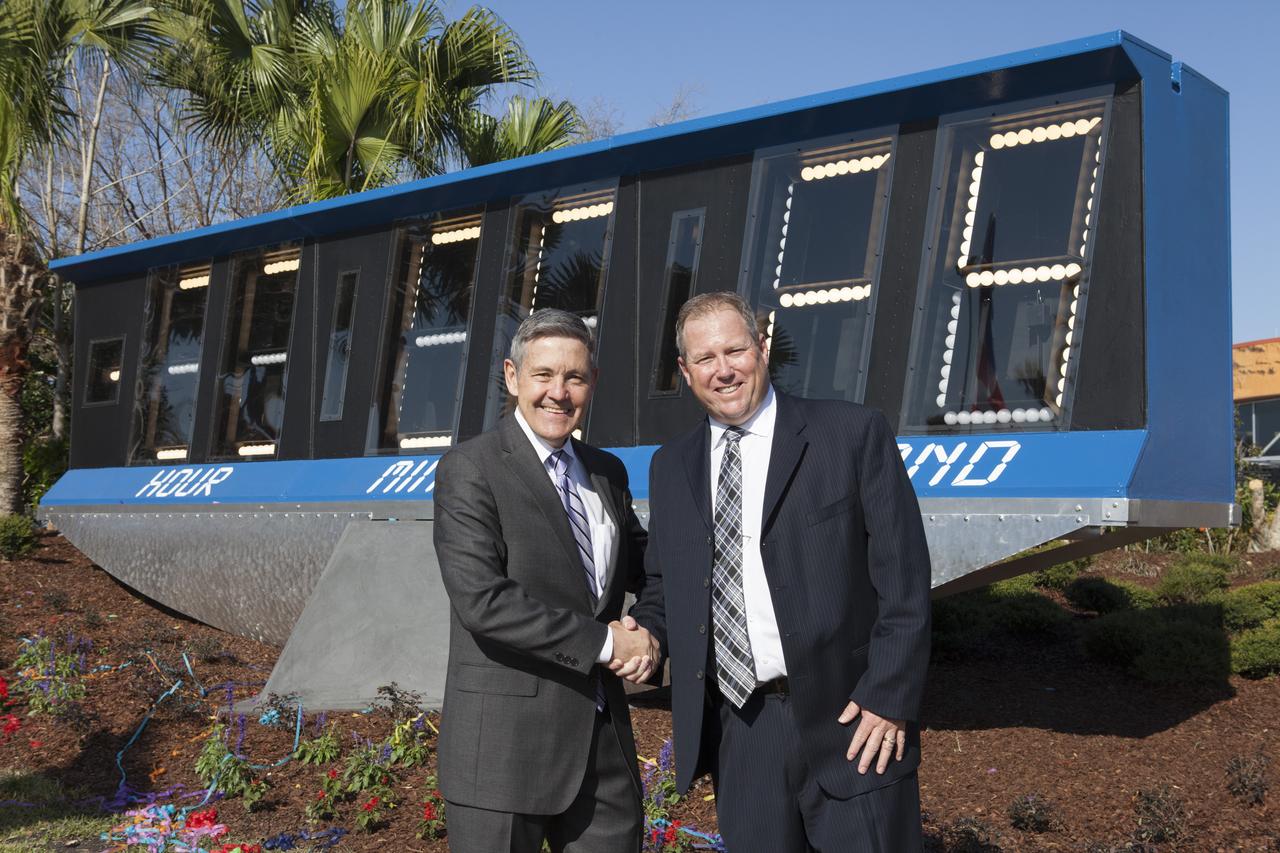
Kennedy Space Center Director Bob Cabana, left, and Therrin Protze, chief operating officer of Kennedy's Visitor Complex, celebrate the dedication of the spaceport's historic countdown clock as the newest display at the center's visitor complex. Now located at the entrance to the visitor complex, the spaceport's historic countdown clock was used starting with the launch of Apollo 12 on Nov. 14, 1969. Originally set up at the space center's Press Site, the clock operated through the final space shuttle mission, STS-135, launched on July 8, 2011. The old countdown clock was replaced in 2014 with a modern light emitting diode, or LED, display.
At NASA's Kennedy Space Center in Florida, assembly has begun on the first of 24 light emitting diode LED panels for installation in the new countdown clock at the spaceport's Press Site. The new modern, multimedia display will be similar to the screens seen at sporting venues. The new screen will be nearly 26 feet wide by 7 feet high, a foot taller than the original clock. The historic countdown clock was designed by Kennedy engineers and built by space center technicians before Apollo 12 in 1969. NASA has requested to acquire the countdown clock from the agency’s Artifact Working Group at the agency's Headquarters for likely display at the Kennedy Space Center Visitor Complex.
At NASA's Kennedy Space Center in Florida, work continues to install 24 light emitting diode LED panels in the new countdown clock at the spaceport's Press Site. The modern, multimedia display is similar to the screens seen at sporting venues. The new screen will be nearly 26 feet wide by 7 feet high, a foot taller than the original clock. The historic countdown clock was designed by Kennedy engineers and built by space center technicians before Apollo 12 in 1969. NASA has requested to acquire the countdown clock from the agency’s Artifact Working Group at the agency's Headquarters for display at the Kennedy Space Center Visitor Complex.
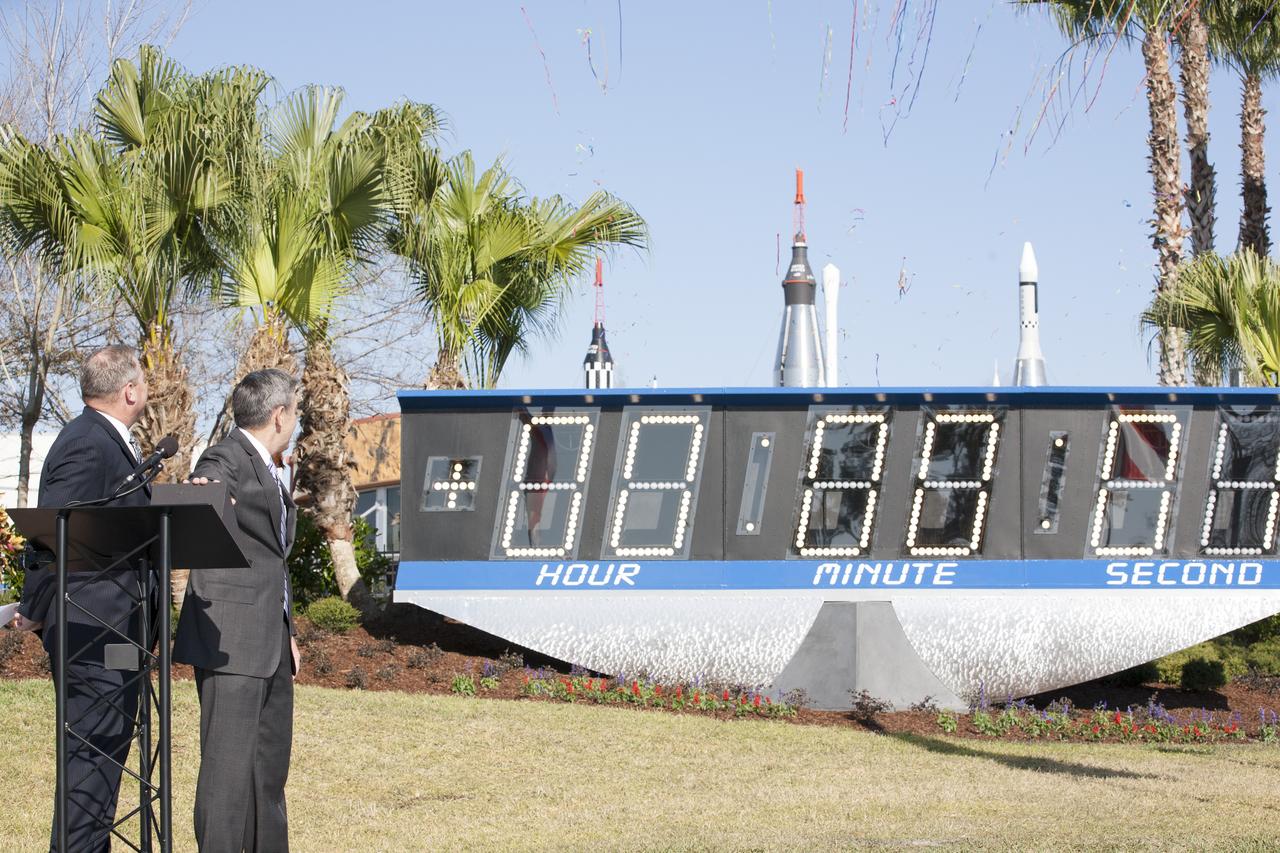
Therrin Protze, chief operating officer of the Kennedy Space Center Visitor Complex, left, and center director Bob Cabana watch as confetti was launched as the spaceport's historic countdown clock is dedicated as the newest display at the entrance to Kennedy's visitor complex. The spaceport's historic countdown clock was used beginning with the launch of Apollo 12 on Nov. 14, 1969. Originally set up at the space center's Press Site, the clock was used through the final space shuttle mission, STS-135, launched on July 8, 2011. The old countdown clock was replaced in 2014 with a modern light emitting diode, or LED, display.
At NASA's Kennedy Space Center in Florida, work continues to install 24 light emitting diode LED panels in the new countdown clock at the spaceport's Press Site. The modern, multimedia display is similar to the screens seen at sporting venues. The new screen will be nearly 26 feet wide by 7 feet high, a foot taller than the original clock. The historic countdown clock was designed by Kennedy engineers and built by space center technicians before Apollo 12 in 1969. NASA has requested to acquire the countdown clock from the agency’s Artifact Working Group at the agency's Headquarters for likely display at the Kennedy Space Center Visitor Complex.
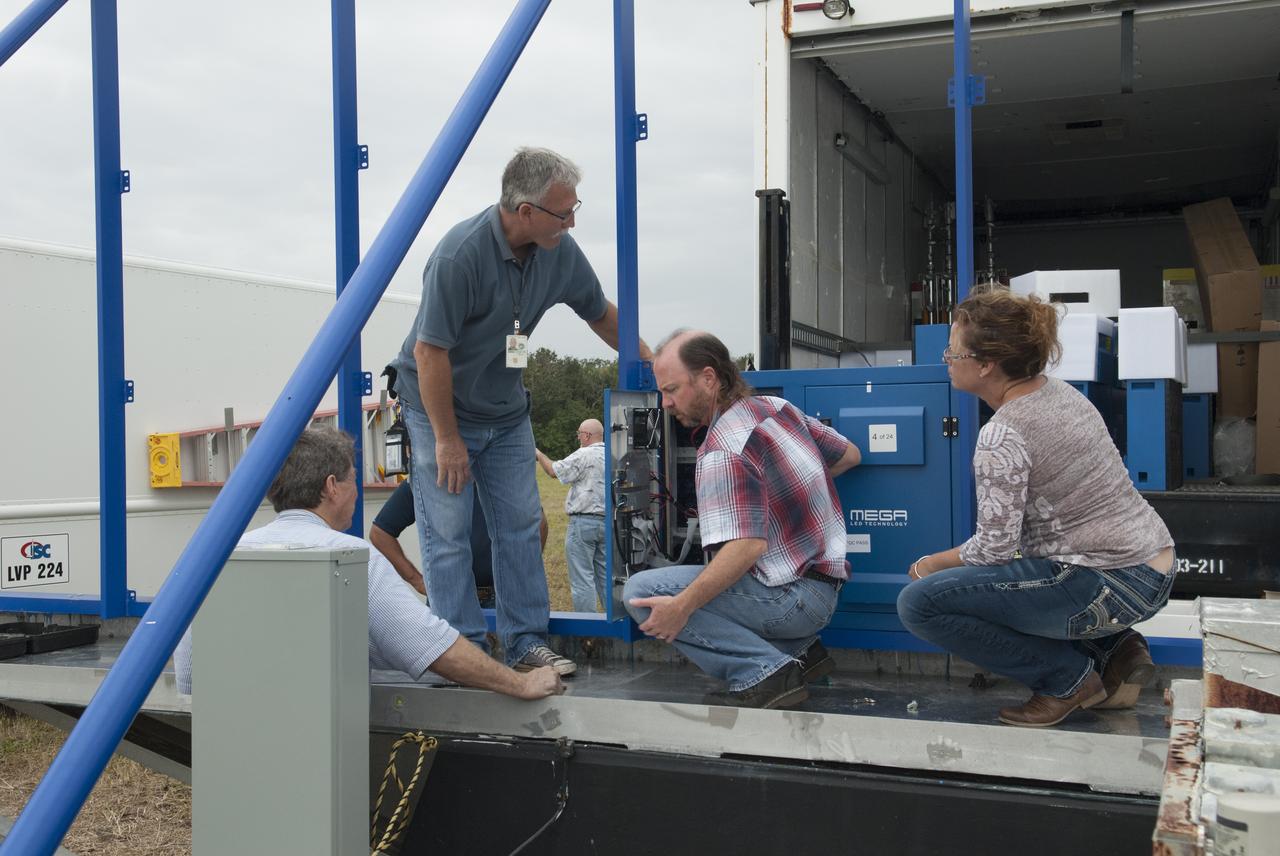
At NASA's Kennedy Space Center in Florida, assembly has begun on the first of 24 light emitting diode LED panels for installation in the new countdown clock at the spaceport's Press Site. The new modern, multimedia display will be similar to the screens seen at sporting venues. The new screen will be nearly 26 feet wide by 7 feet high, a foot taller than the original clock. The historic countdown clock was designed by Kennedy engineers and built by space center technicians before Apollo 12 in 1969. NASA has requested to acquire the countdown clock from the agency’s Artifact Working Group at the agency's Headquarters for likely display at the Kennedy Space Center Visitor Complex.
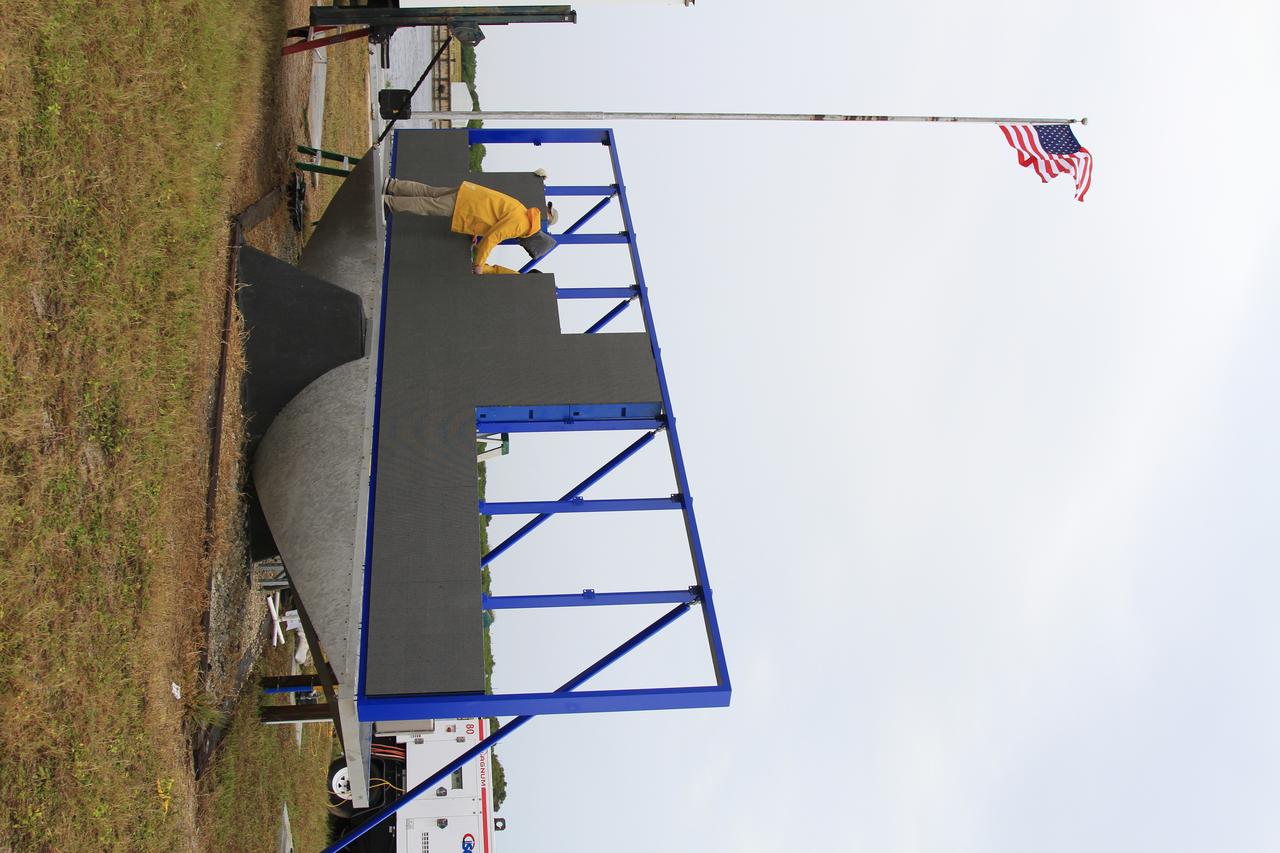
At NASA's Kennedy Space Center in Florida, work continues to install 24 light emitting diode LED panels in the new countdown clock at the spaceport's Press Site. The modern, multimedia display is similar to the screens seen at sporting venues. The new screen will be nearly 26 feet wide by 7 feet high, a foot taller than the original clock. The historic countdown clock was designed by Kennedy engineers and built by space center technicians before Apollo 12 in 1969. NASA has requested to acquire the countdown clock from the agency’s Artifact Working Group at the agency's Headquarters for likely display at the Kennedy Space Center Visitor Complex.
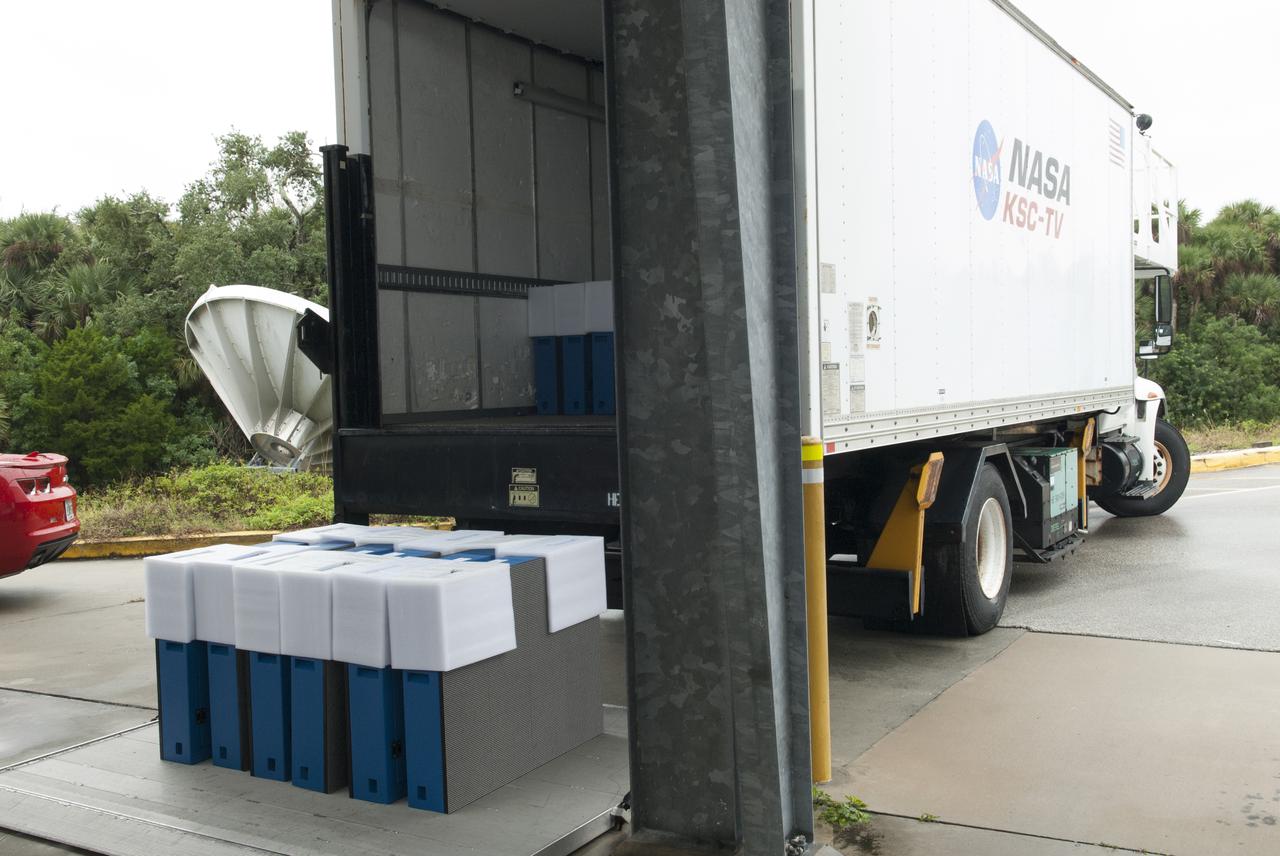
At NASA's Kennedy Space Center in Florida, the first of 24 light emitting diode LED panels have arrived for installation in the new countdown clock at the spaceport's Press Site. A new modern, multimedia display soon will be installed, similar to the screens seen at sporting venues. The new screen will be nearly 26 feet wide by 7 feet high, a foot taller than the original clock. The historic countdown clock was designed by Kennedy engineers and built by space center technicians before Apollo 12 in 1969. NASA has requested to acquire the countdown clock from the agency’s Artifact Working Group at the agency's Headquarters for likely display at the Kennedy Space Center Visitor Complex.
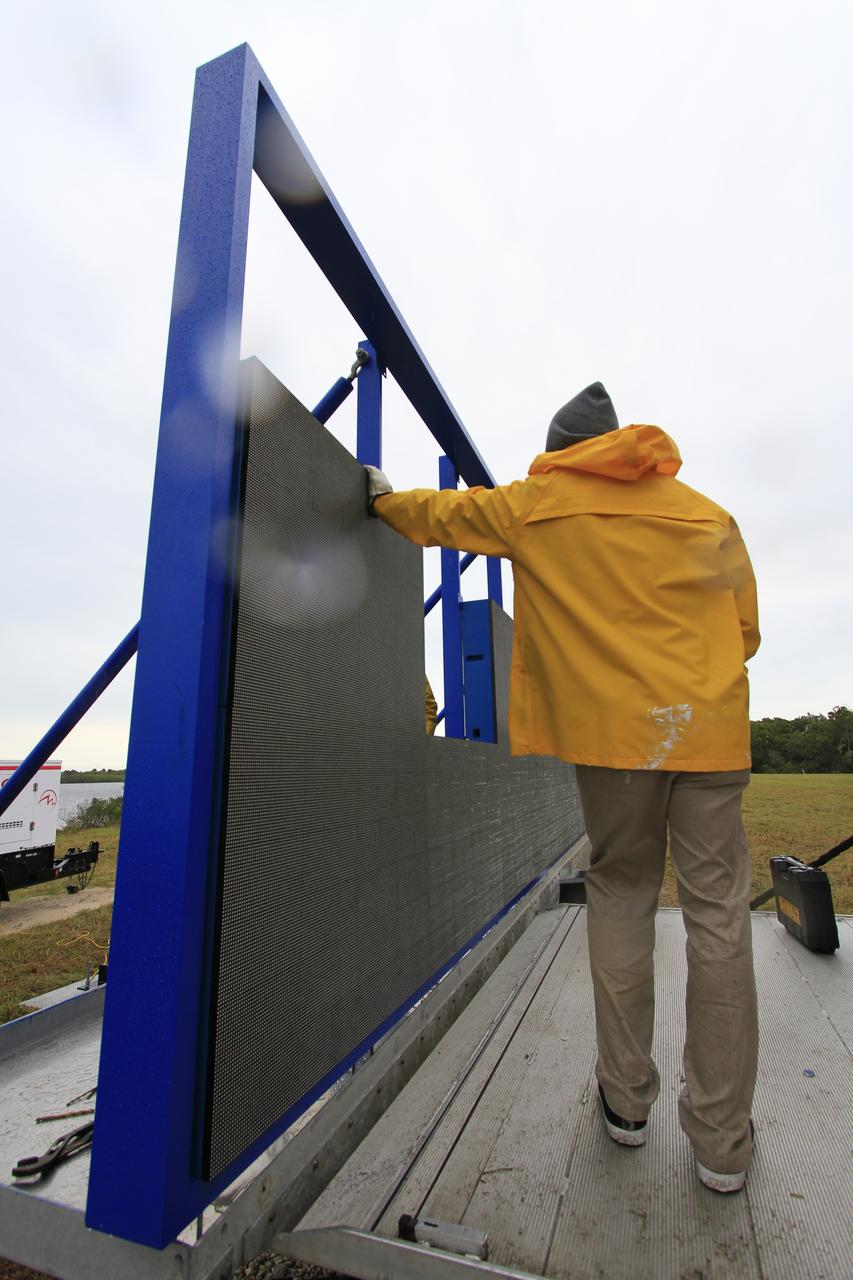
At NASA's Kennedy Space Center in Florida, work continues to install 24 light emitting diode LED panels in the new countdown clock at the spaceport's Press Site. The modern, multimedia display is similar to the screens seen at sporting venues. The new screen will be nearly 26 feet wide by 7 feet high, a foot taller than the original clock. The historic countdown clock was designed by Kennedy engineers and built by space center technicians before Apollo 12 in 1969. NASA has requested to acquire the countdown clock from the agency’s Artifact Working Group at the agency's Headquarters for likely display at the Kennedy Space Center Visitor Complex.
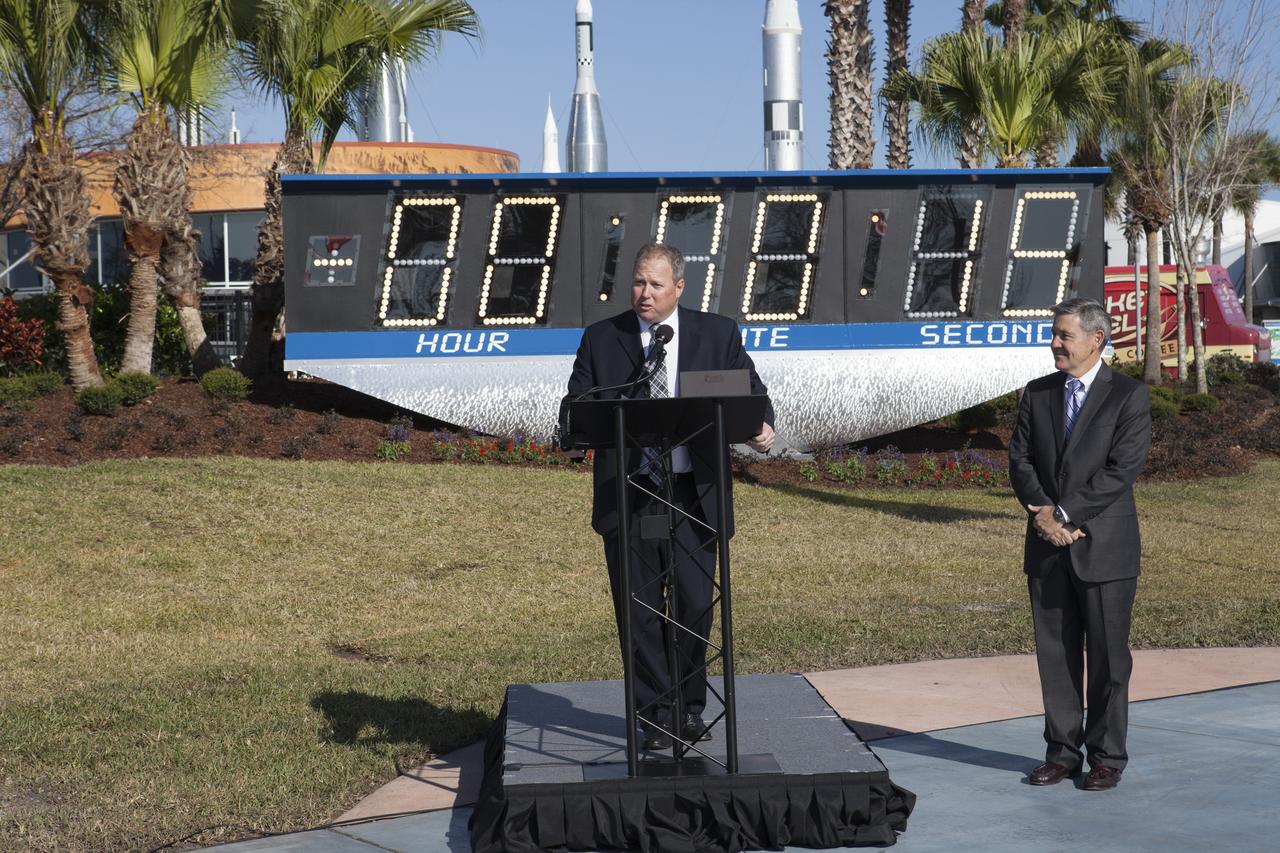
Therrin Protze, chief operating officer of the Kennedy Space Center Visitor Complex, speaks at the dedication of the center's historic countdown clock. To the right is space center director Bob Cabana. Now located at the entrance to the visitor complex, the spaceport's historic countdown clock was used starting with the launch of Apollo 12 on Nov. 14, 1969. Originally set up at the space center's Press Site, the clock was used through the final space shuttle mission, STS-135, launched on July 8, 2011. The old countdown clock was replaced in 2014 with a modern light emitting diode, or LED, display.
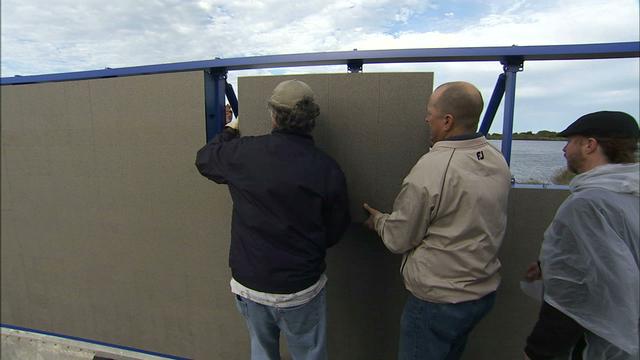
At NASA's Kennedy Space Center in Florida, work continues to install 24 light emitting diode LED panels in the new countdown clock at the spaceport's Press Site. The modern, multimedia display is similar to the screens seen at sporting venues. The new screen will be nearly 26 feet wide by 7 feet high, a foot taller than the original clock. The historic countdown clock was designed by Kennedy engineers and built by space center technicians before Apollo 12 in 1969. NASA has requested to acquire the countdown clock from the agency’s Artifact Working Group at the agency's Headquarters for display at the Kennedy Space Center Visitor Complex.
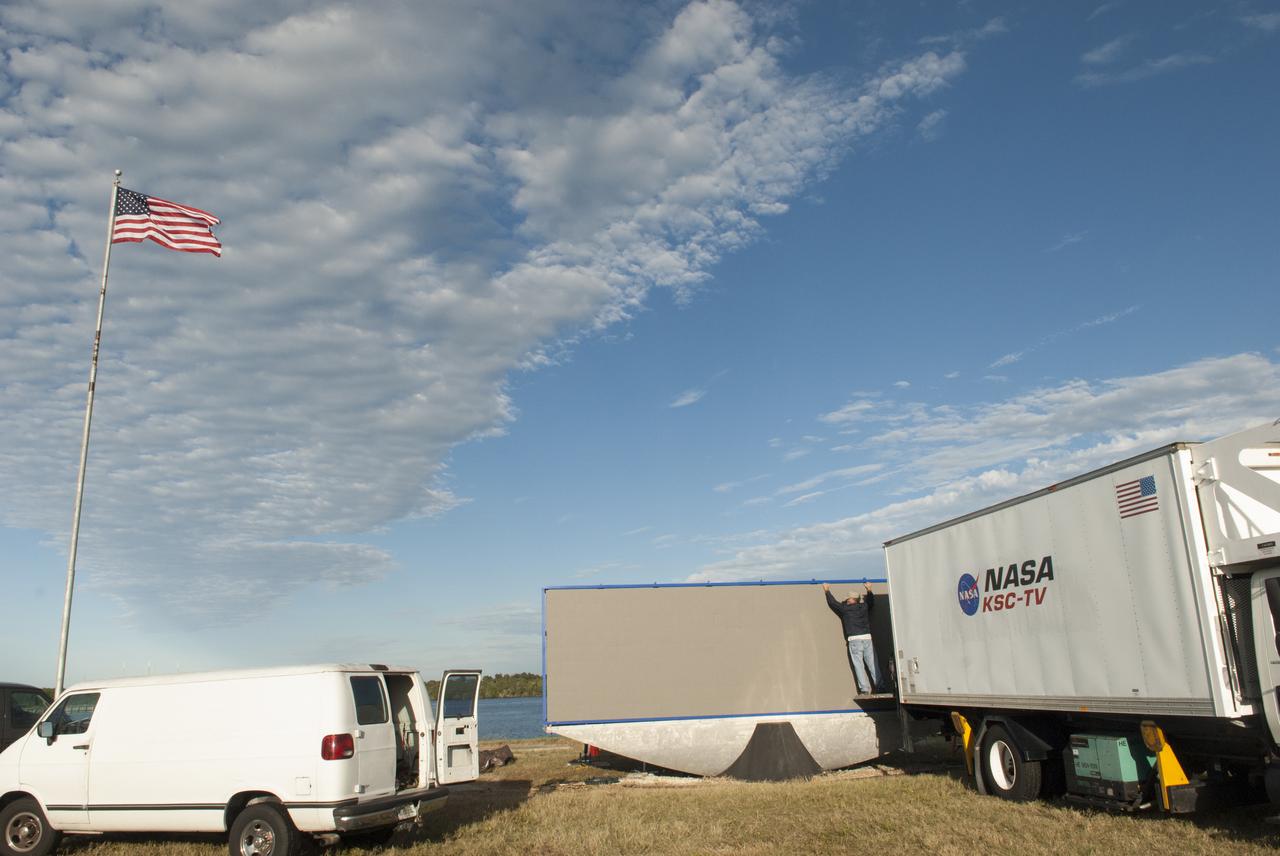
At NASA's Kennedy Space Center in Florida, work continues to install 24 light emitting diode LED panels in the new countdown clock at the spaceport's Press Site. The modern, multimedia display is similar to the screens seen at sporting venues. The new screen will be nearly 26 feet wide by 7 feet high, a foot taller than the original clock. The historic countdown clock was designed by Kennedy engineers and built by space center technicians before Apollo 12 in 1969. NASA has requested to acquire the countdown clock from the agency’s Artifact Working Group at the agency's Headquarters for display at the Kennedy Space Center Visitor Complex.
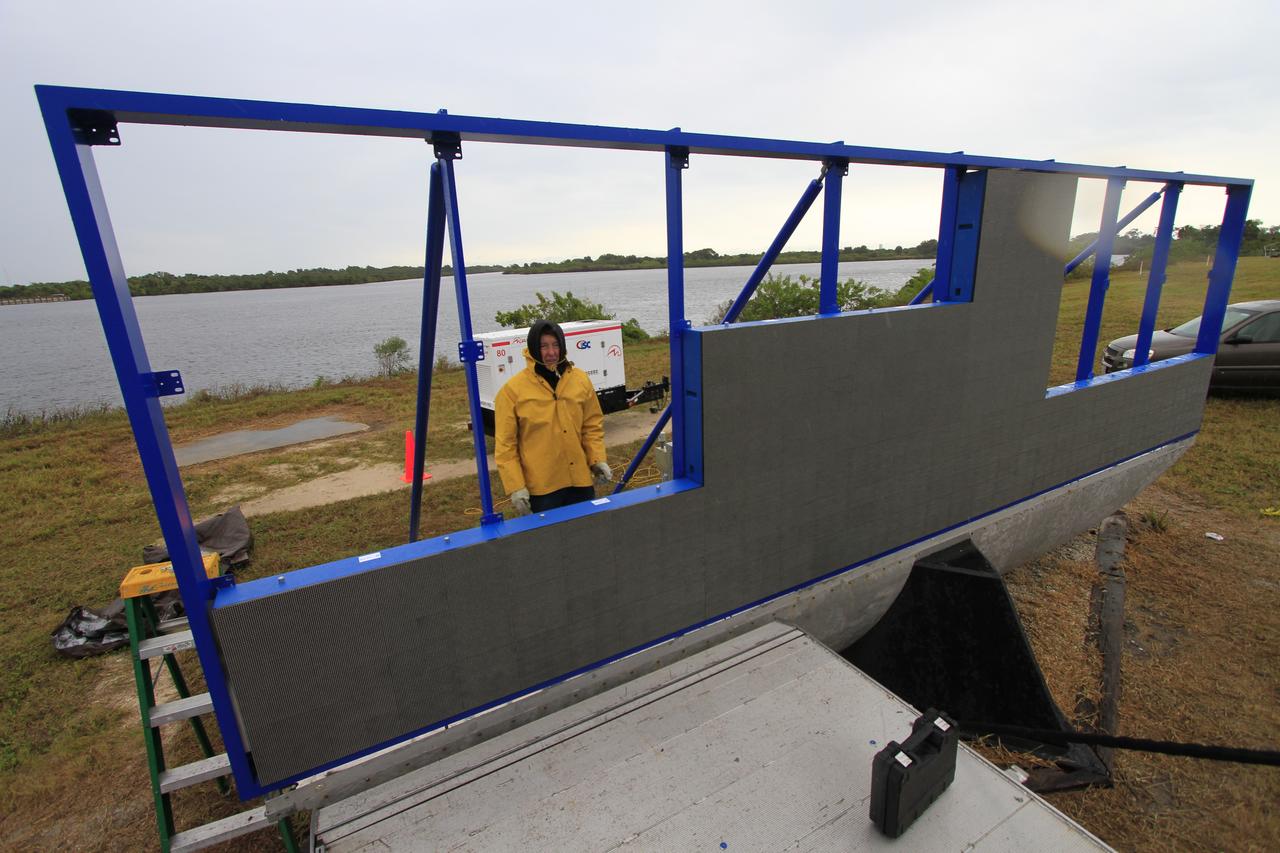
At NASA's Kennedy Space Center in Florida, work continues to install 24 light emitting diode LED panels in the new countdown clock at the spaceport's Press Site. The modern, multimedia display is similar to the screens seen at sporting venues. The new screen will be nearly 26 feet wide by 7 feet high, a foot taller than the original clock. The historic countdown clock was designed by Kennedy engineers and built by space center technicians before Apollo 12 in 1969. NASA has requested to acquire the countdown clock from the agency’s Artifact Working Group at the agency's Headquarters for likely display at the Kennedy Space Center Visitor Complex.
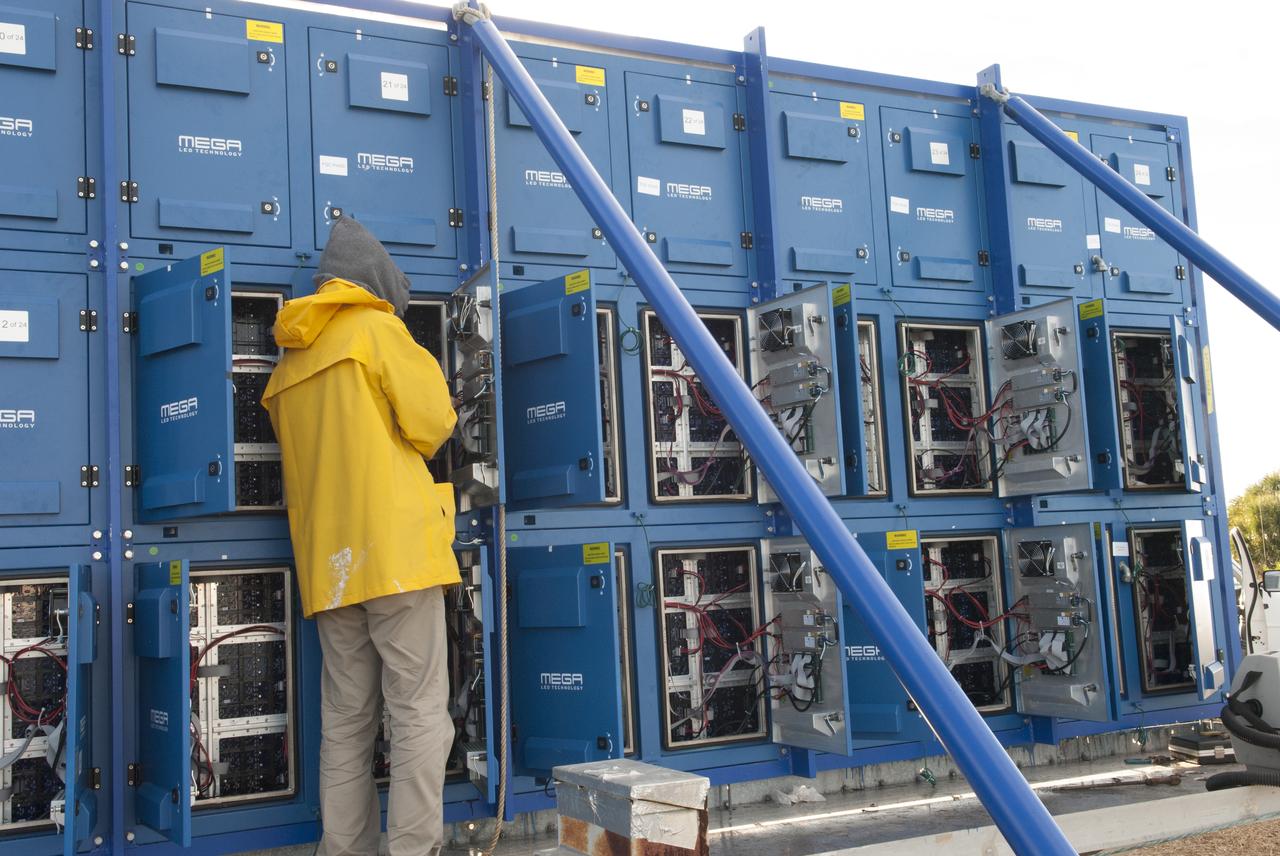
At NASA's Kennedy Space Center in Florida, work continues to install 24 light emitting diode LED panels in the new countdown clock at the spaceport's Press Site. The modern, multimedia display is similar to the screens seen at sporting venues. The new screen will be nearly 26 feet wide by 7 feet high, a foot taller than the original clock. The historic countdown clock was designed by Kennedy engineers and built by space center technicians before Apollo 12 in 1969. NASA has requested to acquire the countdown clock from the agency’s Artifact Working Group at the agency's Headquarters for display at the Kennedy Space Center Visitor Complex.
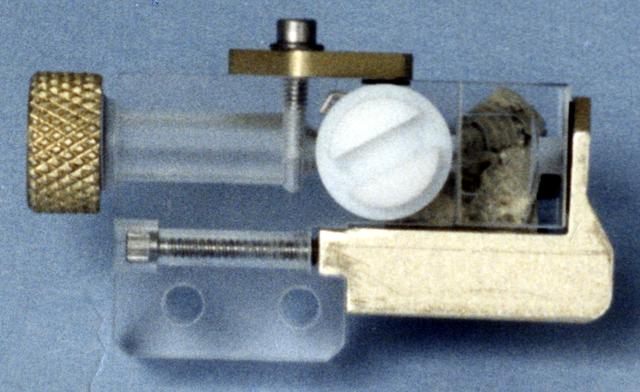
This photo shows an individual cell from the Handheld Diffusion Test Cell (HH-DTC) apparatus flown on the Space Shuttle. Similar cells will be used in the Observable Protein Crystal Growth Apparatus (OPCGA) to be operated aboard the International Space Station (ISS). The principal investigator is Dr. Alex McPherson of the University of California, Irvine. Each individual cell comprises two sample chambers with a rotating center section that isolates the two from each other until the start of the experiment and after it is completed. The cells are made from optical-quality quartz glass to allow photography and interferometric observations. Each cell has a small light-emitting diode and lens to back-light the solution. In protein crystal growth experiments, a precipitating agent such as a salt solution is used to absorb and hold water but repel the protein molecules. This increases the concentration of protein until the molecules nucleate to form crystals. This cell is one of 96 that make up the experiment module portion of the OPCGA.
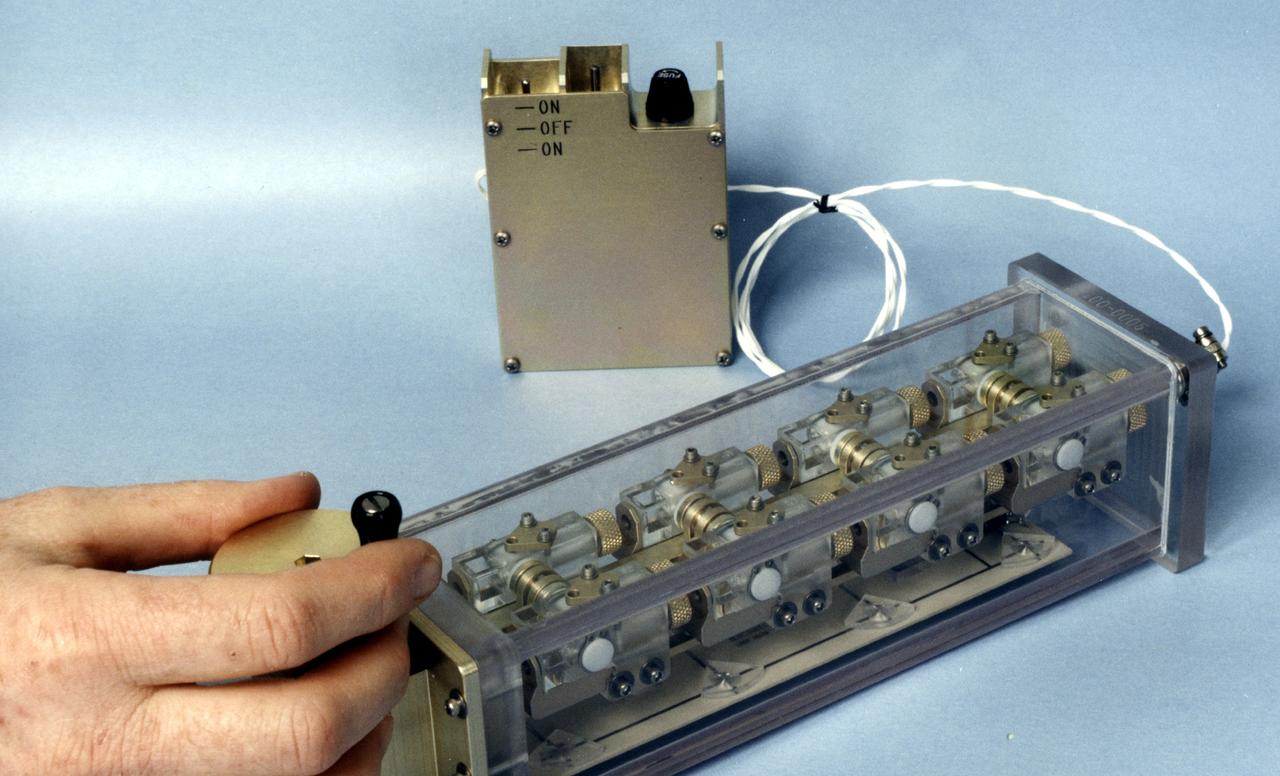
This photo shows the Handheld Diffusion Test Cell (HH-DTC) apparatus flown on the Space Shuttle. Similar cells (inside the plastic box) will be used in the Observable Protein Crystal Growth Apparatus (OPCGA) to be operated aboard the International Space Station (ISS). The principal investigator is Dr. Alex McPherson of the University of California, Irvine. Each individual cell comprises two sample chambers with a rotating center section that isolates the two from each other until the start of the experiment and after it is completed. The cells are made from optical-quality quartz glass to allow photography and interferometric observations. Each cell has a small light-emitting diode and lens to back-light the solution. In protein crystal growth experiments, a precipitating agent such as a salt solution is used to absorb and hold water but repel the protein molecules. This increases the concentration of protein until the molecules nucleate to form crystals. This cell is one of 96 that make up the experiment module portion of the OPCGA.
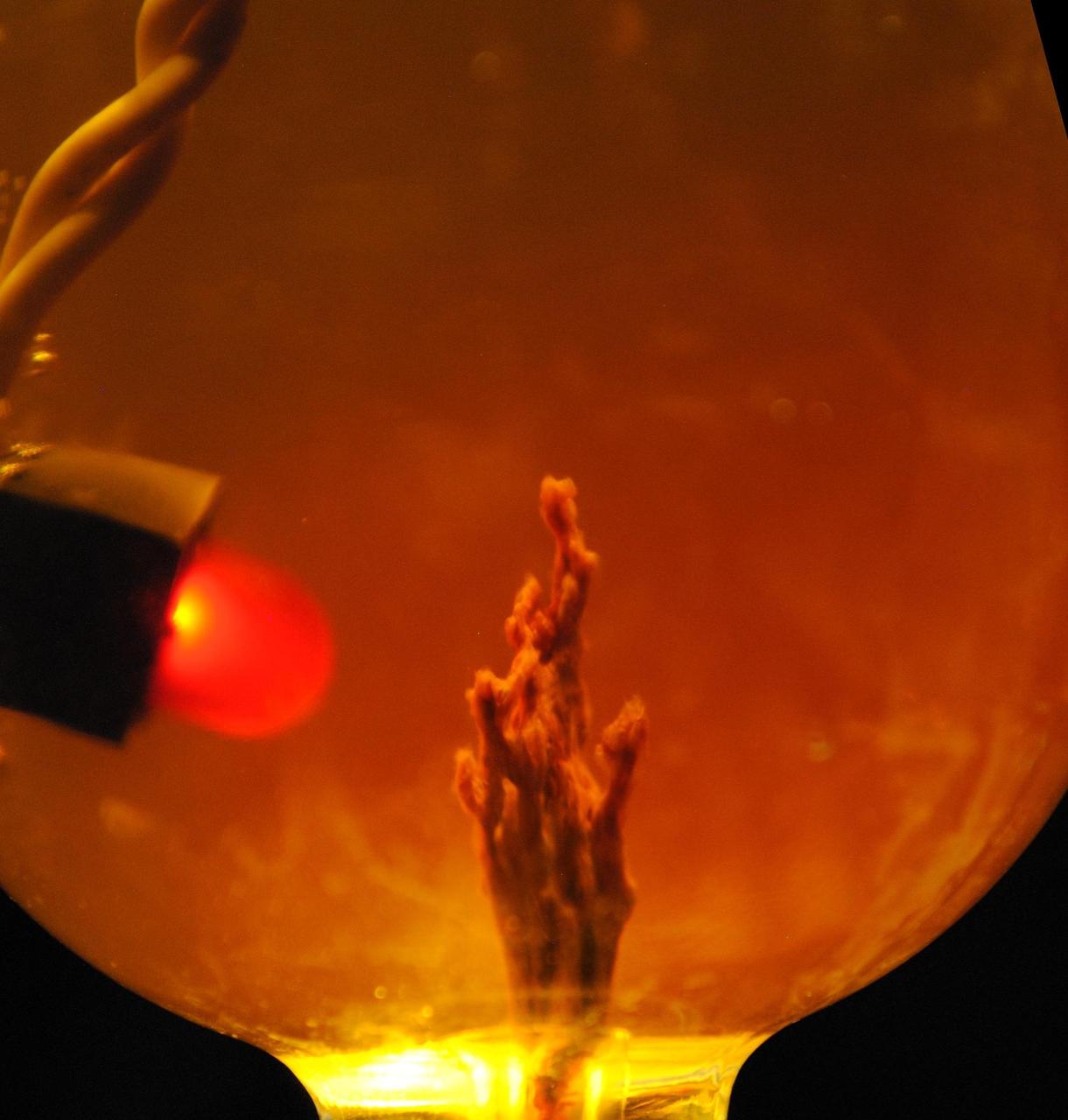
This photo simulation shows a laboratory-created "chemical garden," which is a chimney-like structure found at bubbling vents on the seafloor. Some researchers think life on Earth might have got its start at structures like these billions of years ago, partly due to their ability to transfer electrical currents -- an essential trait of life as we know it. The battery-like property of these chemical gardens was demonstrated by linking several together in series to light an LED (light-emitting diode) bulb. In this photo simulation, the bulb is not really attached to the chimney. The chimney membranes are made of iron sulfides and iron hydroxides, geologic materials that conduct electrons. JPL's research team is part of the Icy Worlds team of the NASA Astrobiology Institute, based at NASA's Ames Research Center in Moffett Field, California. JPL is managed by the California Institute of Technology in Pasadena for NASA. http://photojournal.jpl.nasa.gov/catalog/PIA19834
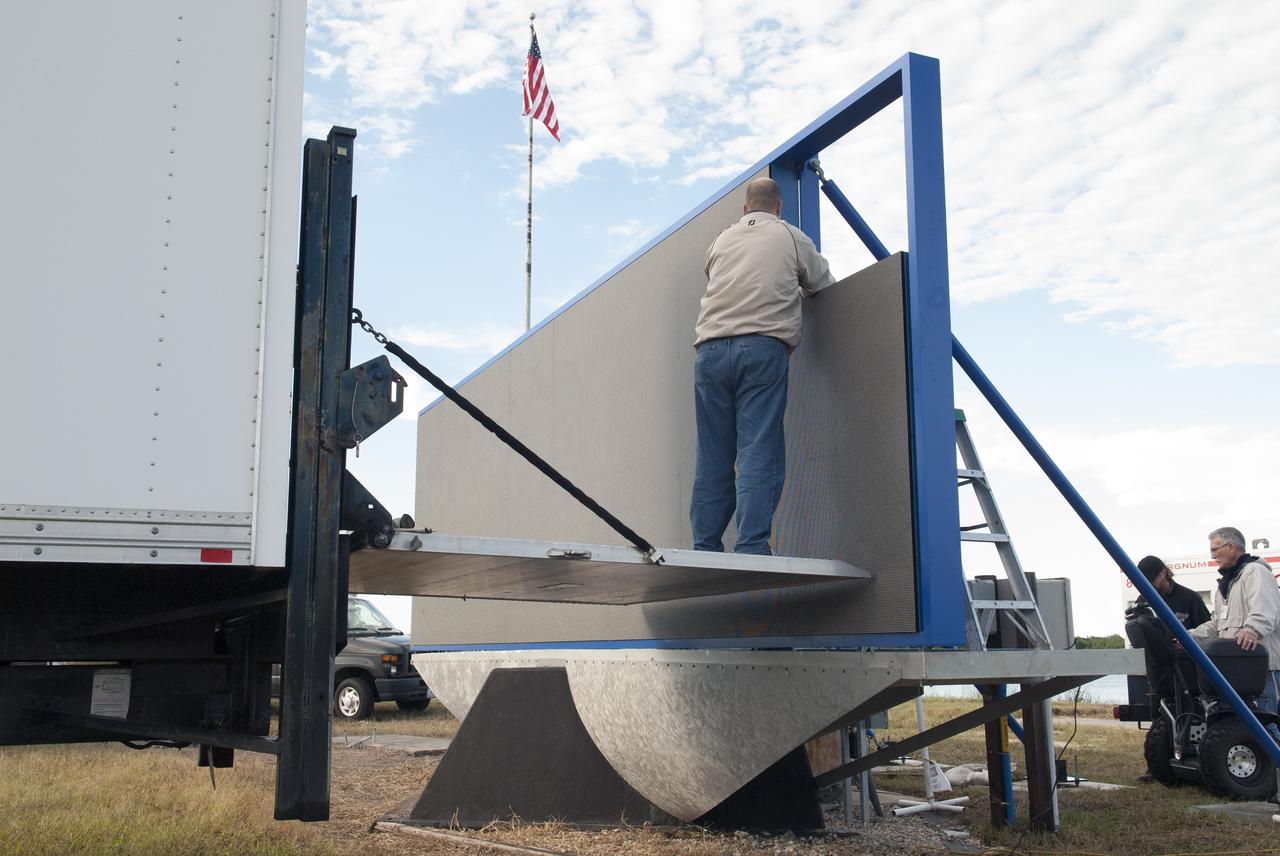
CAPE CANAVERAL, Fla. – At NASA's Kennedy Space Center in Florida, work continues to install 24 light emitting diode LED panels in the new countdown clock at the spaceport's Press Site. The modern, multimedia display is similar to the screens seen at sporting venues. The new screen will be nearly 26 feet wide by 7 feet high, a foot taller than the original clock. The historic countdown clock was designed by Kennedy engineers and built by space center technicians before Apollo 12 in 1969. NASA has requested to acquire the countdown clock from the agency’s Artifact Working Group at the agency's Headquarters for display at the Kennedy Space Center Visitor Complex. For more information on the countdown clock, go to http://go.nasa.gov/10Zku10. Photo credit: NASA/Jim Grossman
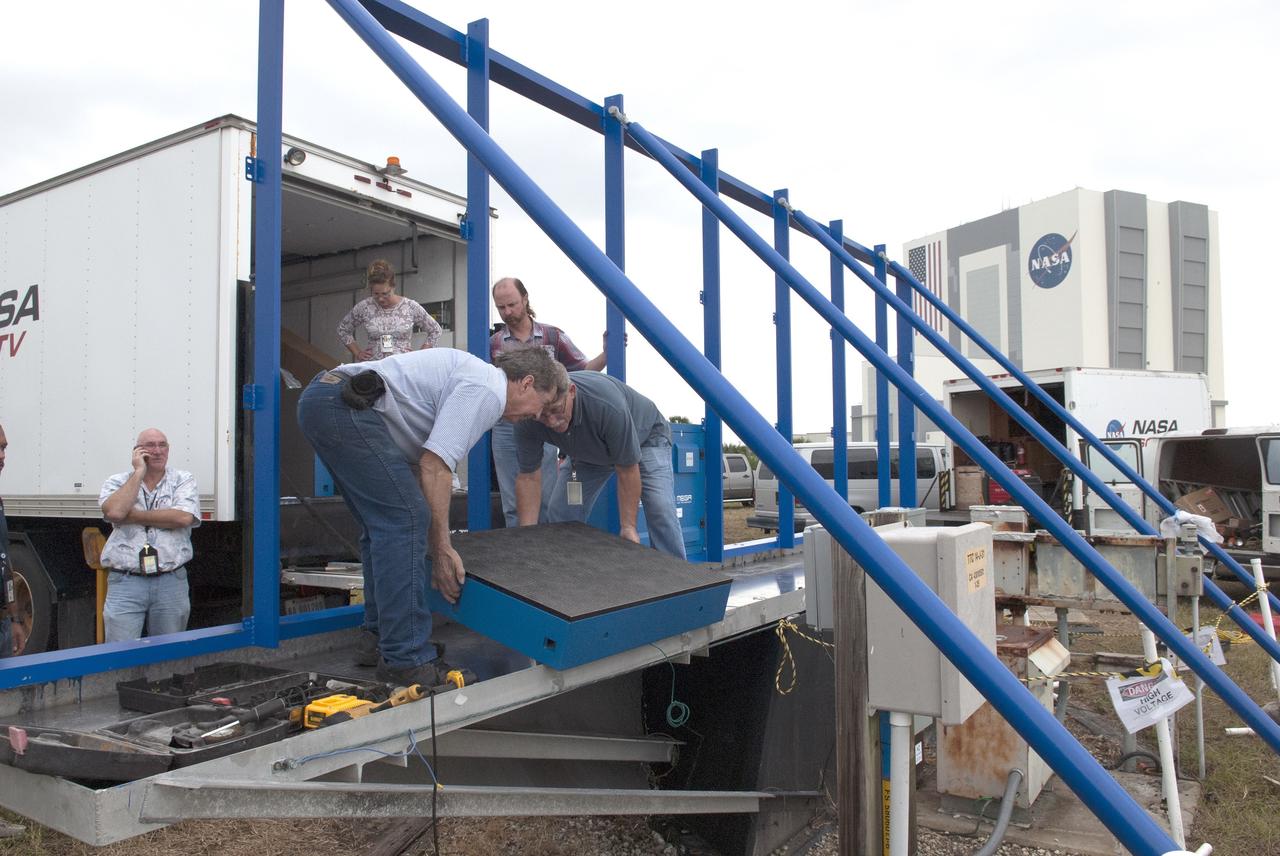
CAPE CANAVERAL, Fla. – At NASA's Kennedy Space Center in Florida, assembly has begun on the first of 24 light emitting diode LED panels for installation in the new countdown clock at the spaceport's Press Site. The new modern, multimedia display will be similar to the screens seen at sporting venues. The new screen will be nearly 26 feet wide by 7 feet high, a foot taller than the original clock. The historic countdown clock was designed by Kennedy engineers and built by space center technicians before Apollo 12 in 1969. NASA has requested to acquire the countdown clock from the agency’s Artifact Working Group at the agency's Headquarters for likely display at the Kennedy Space Center Visitor Complex. For more information on the countdown clock, go to http://go.nasa.gov/10Zku10. Photo credit: NASA/Jim Grossmann
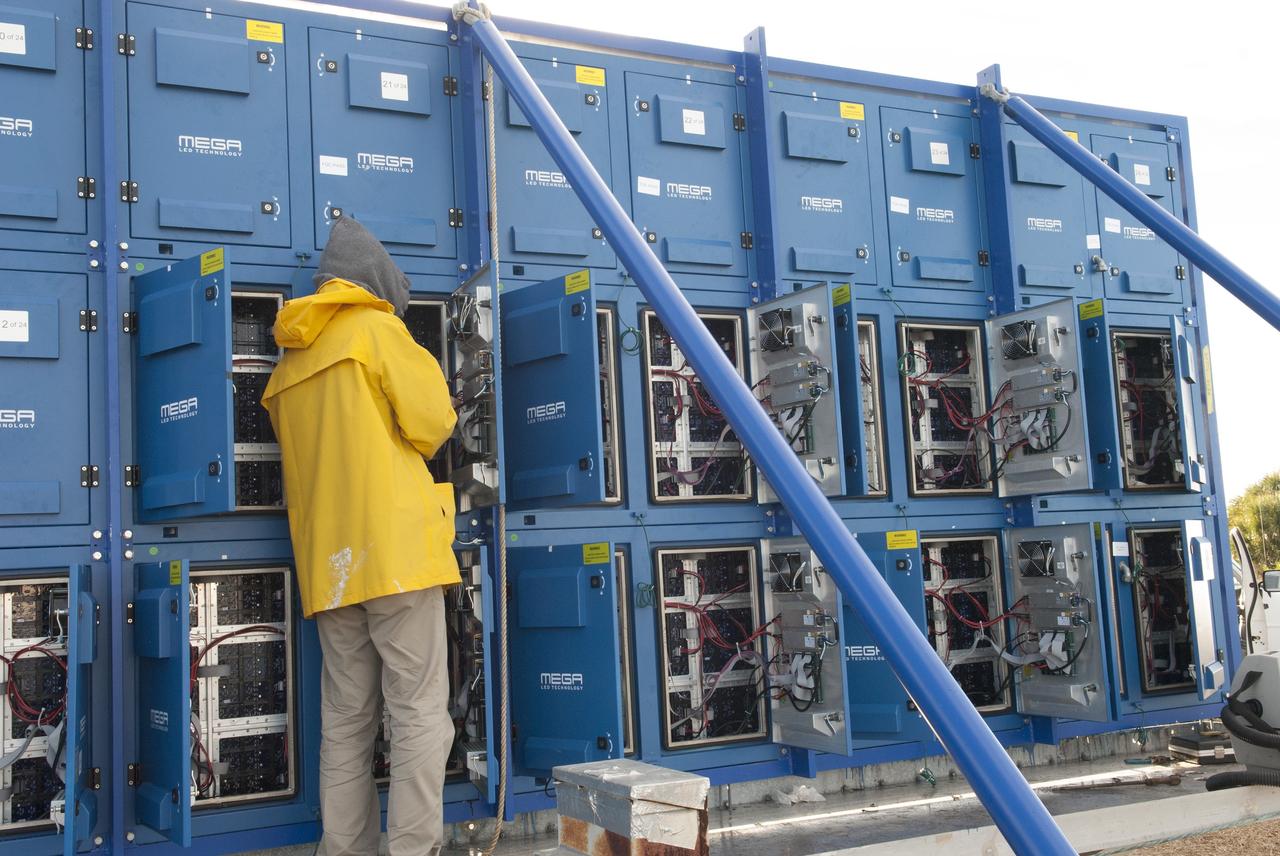
CAPE CANAVERAL, Fla. – At NASA's Kennedy Space Center in Florida, work continues to install 24 light emitting diode LED panels in the new countdown clock at the spaceport's Press Site. The modern, multimedia display is similar to the screens seen at sporting venues. The new screen will be nearly 26 feet wide by 7 feet high, a foot taller than the original clock. The historic countdown clock was designed by Kennedy engineers and built by space center technicians before Apollo 12 in 1969. NASA has requested to acquire the countdown clock from the agency’s Artifact Working Group at the agency's Headquarters for display at the Kennedy Space Center Visitor Complex. For more information on the countdown clock, go to http://go.nasa.gov/10Zku10. Photo credit: NASA/Jim Grossman

As the size of a satellite is scaled down to the form factor of a CubeSat, the hardware must scale down as well. Unfortunately, the software inside does not follow the same trend. Simulation-to-Flight 1 (STF-1) aims to solve this problem by providing a simulation of the CubeSat that can be used for developing and testing the software on any laptop or desktop computer. Additionally, STF-1 hosts payloads that aim to increase the accuracy of navigation for CubeSats, monitor Space Weather over the North and South Poles, and test the durability of new materials used for Light Emitting Diodes (LEDs). The first spacecraft built in the state of West Virginia, STF-1, is a collaborative effort between the NASA Independent Verification and Validation Program, West Virginia University, and West Virginia small businesses.
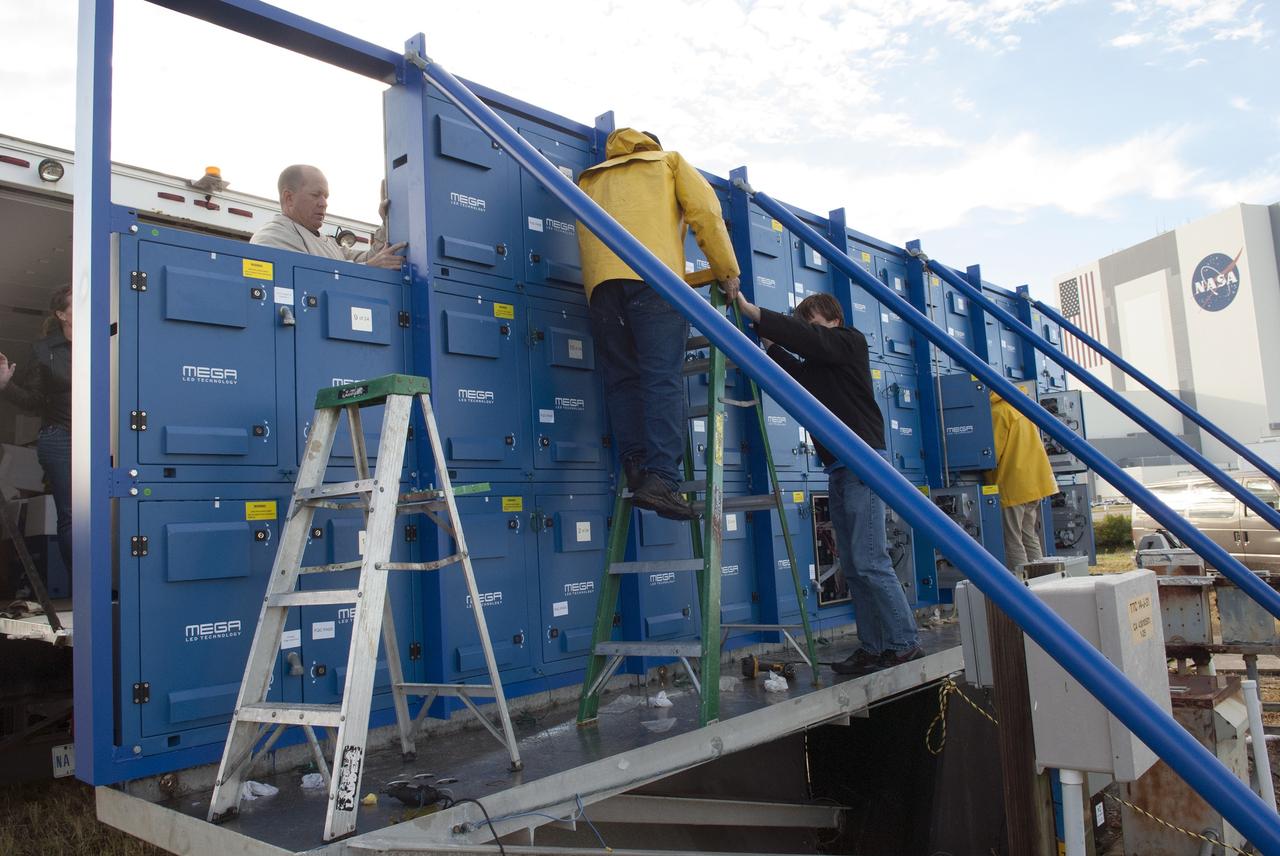
CAPE CANAVERAL, Fla. – At NASA's Kennedy Space Center in Florida, work continues to install 24 light emitting diode LED panels in the new countdown clock at the spaceport's Press Site. The modern, multimedia display is similar to the screens seen at sporting venues. The new screen will be nearly 26 feet wide by 7 feet high, a foot taller than the original clock. The historic countdown clock was designed by Kennedy engineers and built by space center technicians before Apollo 12 in 1969. NASA has requested to acquire the countdown clock from the agency’s Artifact Working Group at the agency's Headquarters for display at the Kennedy Space Center Visitor Complex. For more information on the countdown clock, go to http://go.nasa.gov/10Zku10. Photo credit: NASA/Jim Grossman
CAPE CANAVERAL, Fla. – At NASA's Kennedy Space Center in Florida, work continues to install 24 light emitting diode LED panels in the new countdown clock at the spaceport's Press Site. The modern, multimedia display is similar to the screens seen at sporting venues. The new screen will be nearly 26 feet wide by 7 feet high, a foot taller than the original clock. The historic countdown clock was designed by Kennedy engineers and built by space center technicians before Apollo 12 in 1969. NASA has requested to acquire the countdown clock from the agency’s Artifact Working Group at the agency's Headquarters for display at the Kennedy Space Center Visitor Complex. For more information on the countdown clock, go to http://go.nasa.gov/10Zku10. Photo credit: NASA/Ben Smegelsky
CAPE CANAVERAL, Fla. – At NASA's Kennedy Space Center in Florida, work continues to install 24 light emitting diode LED panels in the new countdown clock at the spaceport's Press Site. The modern, multimedia display is similar to the screens seen at sporting venues. The new screen will be nearly 26 feet wide by 7 feet high, a foot taller than the original clock. The historic countdown clock was designed by Kennedy engineers and built by space center technicians before Apollo 12 in 1969. NASA has requested to acquire the countdown clock from the agency’s Artifact Working Group at the agency's Headquarters for display at the Kennedy Space Center Visitor Complex. For more information on the countdown clock, go to http://go.nasa.gov/10Zku10. Photo credit: NASA/Ben Smegelsky
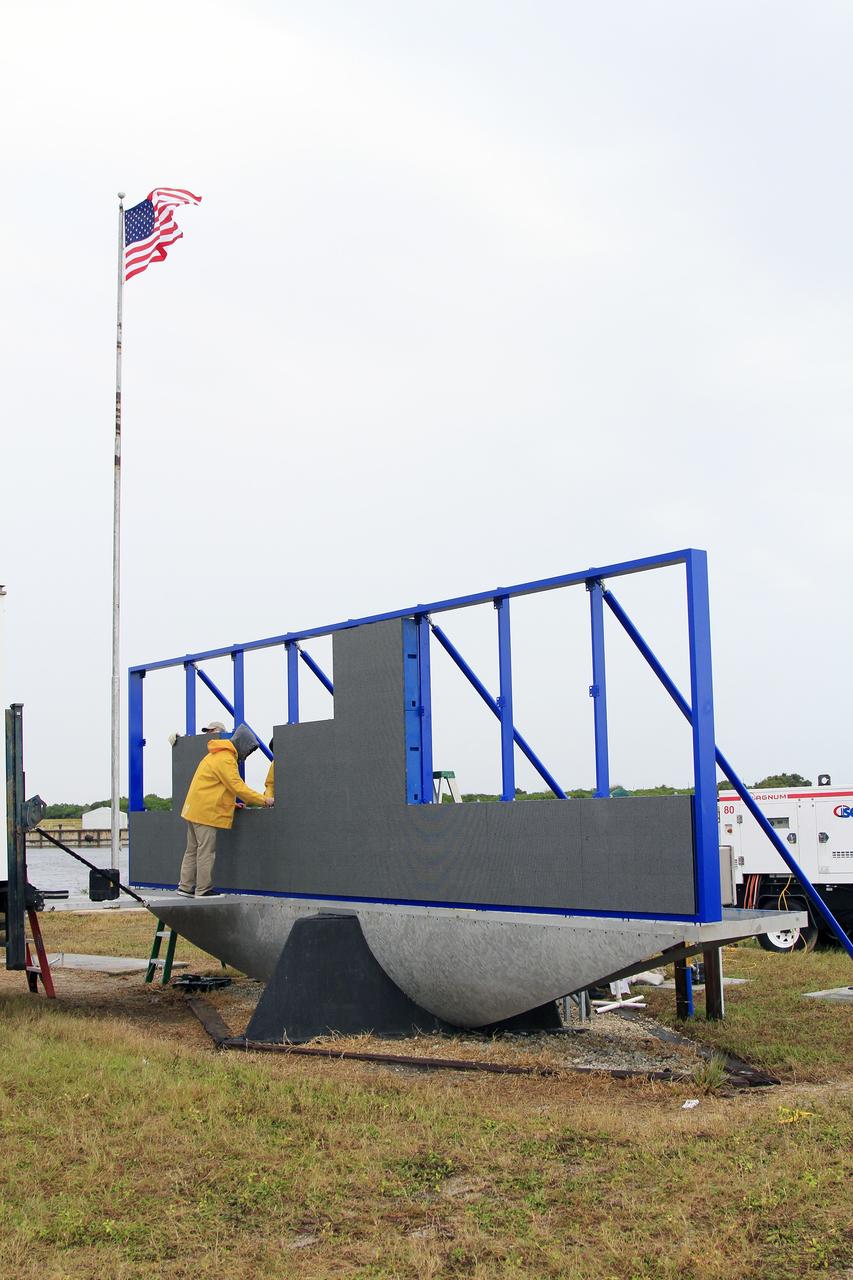
CAPE CANAVERAL, Fla. – At NASA's Kennedy Space Center in Florida, work continues to install 24 light emitting diode LED panels in the new countdown clock at the spaceport's Press Site. The modern, multimedia display is similar to the screens seen at sporting venues. The new screen will be nearly 26 feet wide by 7 feet high, a foot taller than the original clock. The historic countdown clock was designed by Kennedy engineers and built by space center technicians before Apollo 12 in 1969. NASA has requested to acquire the countdown clock from the agency’s Artifact Working Group at the agency's Headquarters for likely display at the Kennedy Space Center Visitor Complex. For more information on the countdown clock, go to http://go.nasa.gov/10Zku10. Photo credit: NASA/Cory Huston
CAPE CANAVERAL, Fla. – At NASA's Kennedy Space Center in Florida, work continues to install 24 light emitting diode LED panels in the new countdown clock at the spaceport's Press Site. The modern, multimedia display is similar to the screens seen at sporting venues. The new screen will be nearly 26 feet wide by 7 feet high, a foot taller than the original clock. The historic countdown clock was designed by Kennedy engineers and built by space center technicians before Apollo 12 in 1969. NASA has requested to acquire the countdown clock from the agency’s Artifact Working Group at the agency's Headquarters for display at the Kennedy Space Center Visitor Complex. For more information on the countdown clock, go to http://go.nasa.gov/10Zku10. Photo credit: NASA/Ben Smegelsky
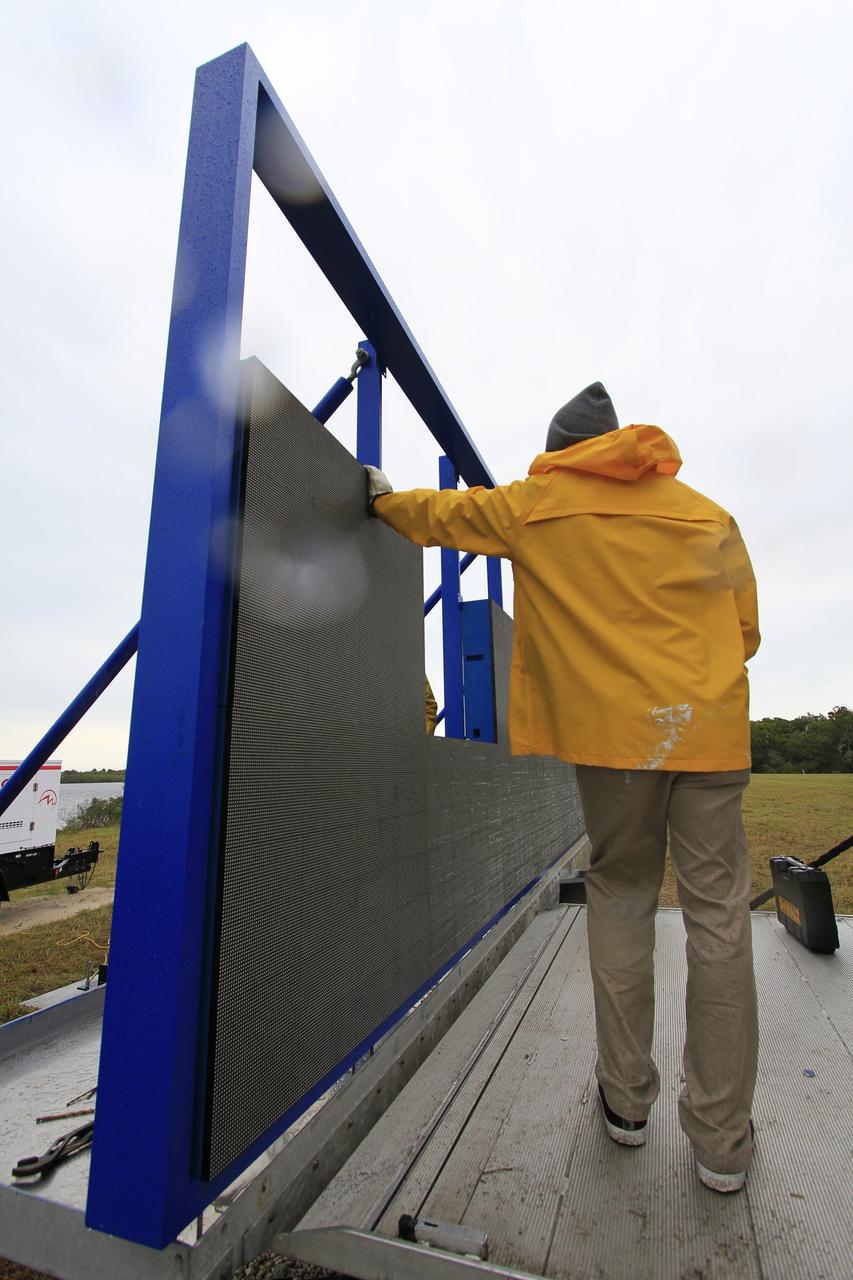
CAPE CANAVERAL, Fla. – At NASA's Kennedy Space Center in Florida, work continues to install 24 light emitting diode LED panels in the new countdown clock at the spaceport's Press Site. The modern, multimedia display is similar to the screens seen at sporting venues. The new screen will be nearly 26 feet wide by 7 feet high, a foot taller than the original clock. The historic countdown clock was designed by Kennedy engineers and built by space center technicians before Apollo 12 in 1969. NASA has requested to acquire the countdown clock from the agency’s Artifact Working Group at the agency's Headquarters for likely display at the Kennedy Space Center Visitor Complex. For more information on the countdown clock, go to http://go.nasa.gov/10Zku10. Photo credit: NASA/Cory Huston

As the size of a satellite is scaled down to the form factor of a CubeSat, the hardware must scale down as well. Unfortunately, the software inside does not follow the same trend. Simulation-to-Flight 1 (STF-1) aims to solve this problem by providing a simulation of the CubeSat that can be used for developing and testing the software on any laptop or desktop computer. Additionally, STF-1 hosts payloads that aim to increase the accuracy of navigation for CubeSats, monitor Space Weather over the North and South Poles, and test the durability of new materials used for Light Emitting Diodes (LEDs). The first spacecraft built in the state of West Virginia, STF-1, is a collaborative effort between the NASA Independent Verification and Validation Program, West Virginia University, and West Virginia small businesses.
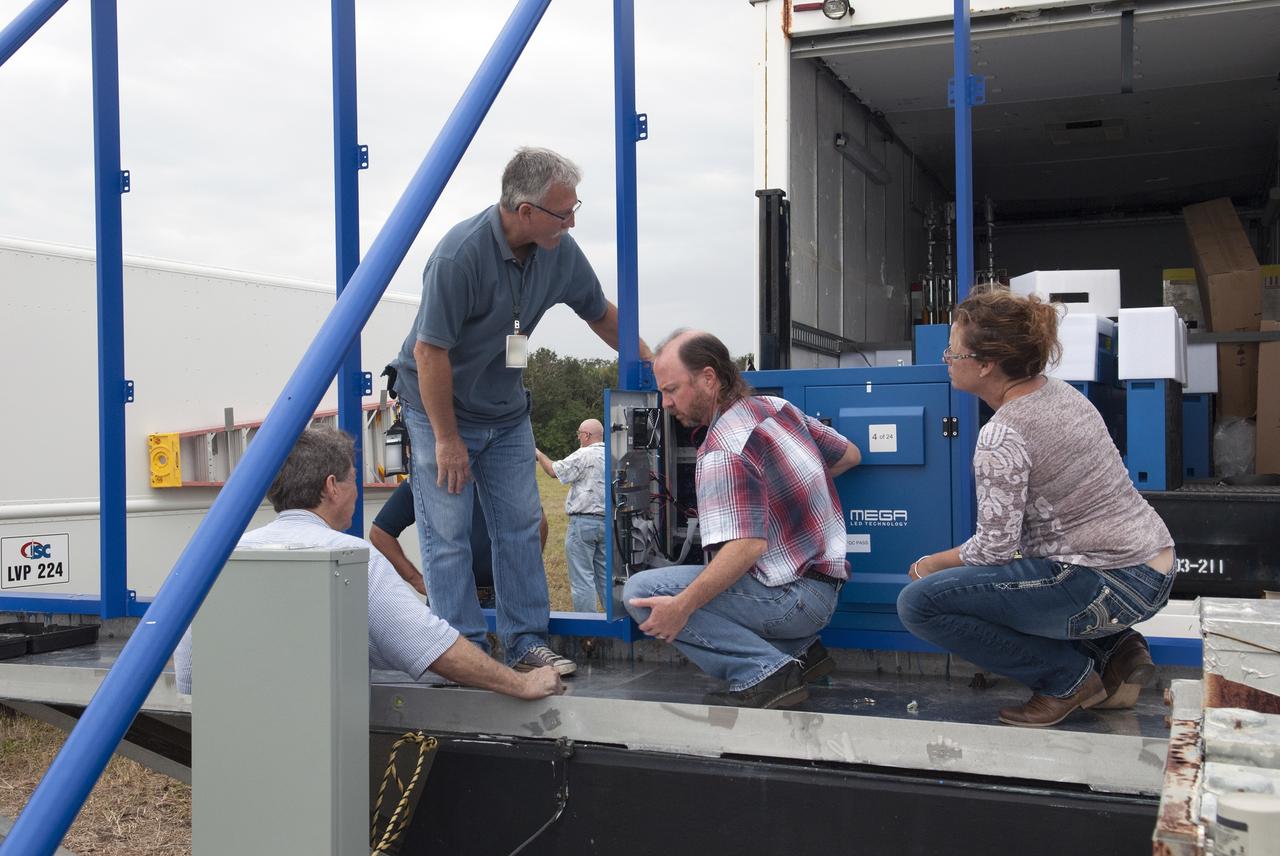
CAPE CANAVERAL, Fla. – At NASA's Kennedy Space Center in Florida, assembly has begun on the first of 24 light emitting diode LED panels for installation in the new countdown clock at the spaceport's Press Site. The new modern, multimedia display will be similar to the screens seen at sporting venues. The new screen will be nearly 26 feet wide by 7 feet high, a foot taller than the original clock. The historic countdown clock was designed by Kennedy engineers and built by space center technicians before Apollo 12 in 1969. NASA has requested to acquire the countdown clock from the agency’s Artifact Working Group at the agency's Headquarters for likely display at the Kennedy Space Center Visitor Complex. For more information on the countdown clock, go to http://go.nasa.gov/10Zku10. Photo credit: NASA/Jim Grossmann

As the size of a satellite is scaled down to the form factor of a CubeSat, the hardware must scale down as well. Unfortunately, the software inside does not follow the same trend. Simulation-to-Flight 1 (STF-1) aims to solve this problem by providing a simulation of the CubeSat that can be used for developing and testing the software on any laptop or desktop computer. Additionally, STF-1 hosts payloads that aim to increase the accuracy of navigation for CubeSats, monitor Space Weather over the North and South Poles, and test the durability of new materials used for Light Emitting Diodes (LEDs). The first spacecraft built in the state of West Virginia, STF-1, is a collaborative effort between the NASA Independent Verification and Validation Program, West Virginia University, and West Virginia small businesses.
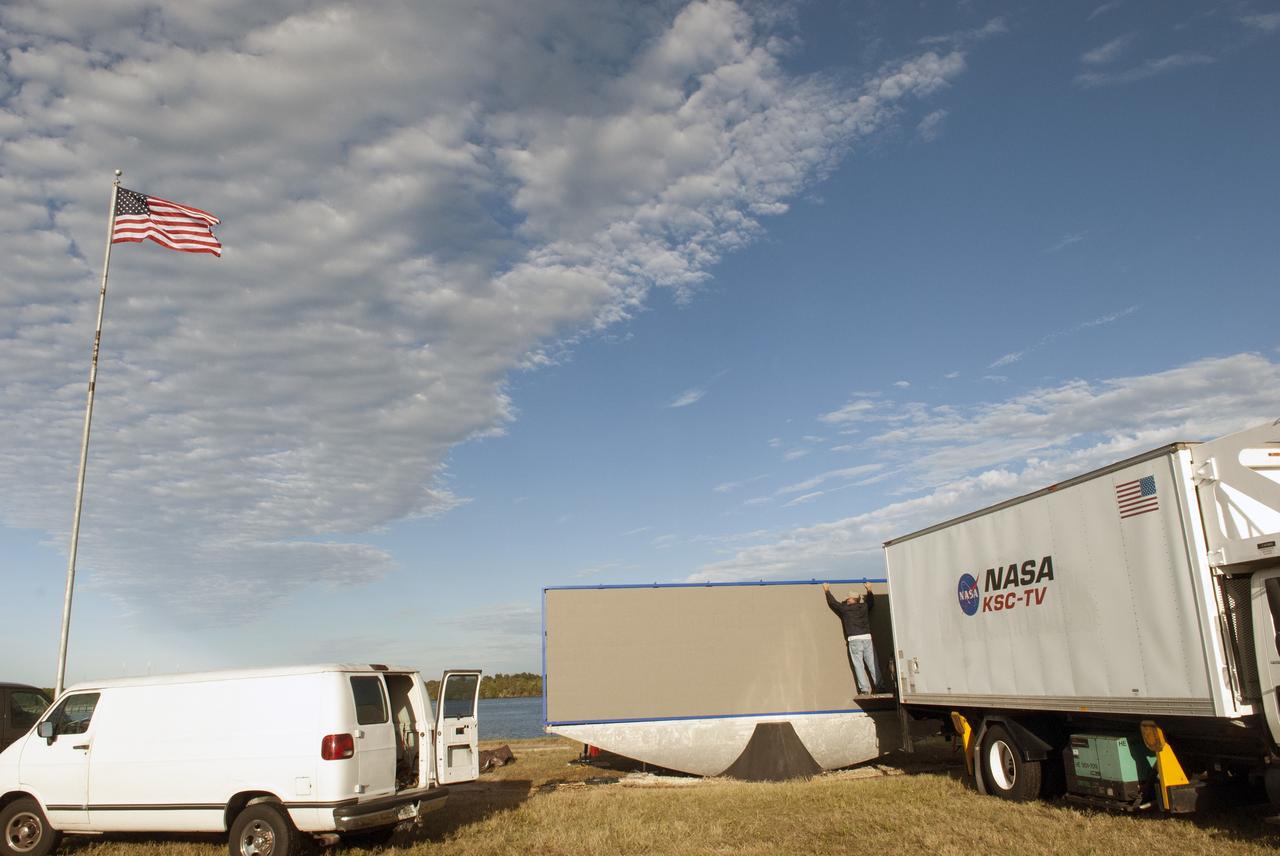
CAPE CANAVERAL, Fla. – At NASA's Kennedy Space Center in Florida, work continues to install 24 light emitting diode LED panels in the new countdown clock at the spaceport's Press Site. The modern, multimedia display is similar to the screens seen at sporting venues. The new screen will be nearly 26 feet wide by 7 feet high, a foot taller than the original clock. The historic countdown clock was designed by Kennedy engineers and built by space center technicians before Apollo 12 in 1969. NASA has requested to acquire the countdown clock from the agency’s Artifact Working Group at the agency's Headquarters for display at the Kennedy Space Center Visitor Complex. For more information on the countdown clock, go to http://go.nasa.gov/10Zku10. Photo credit: NASA/Jim Grossman
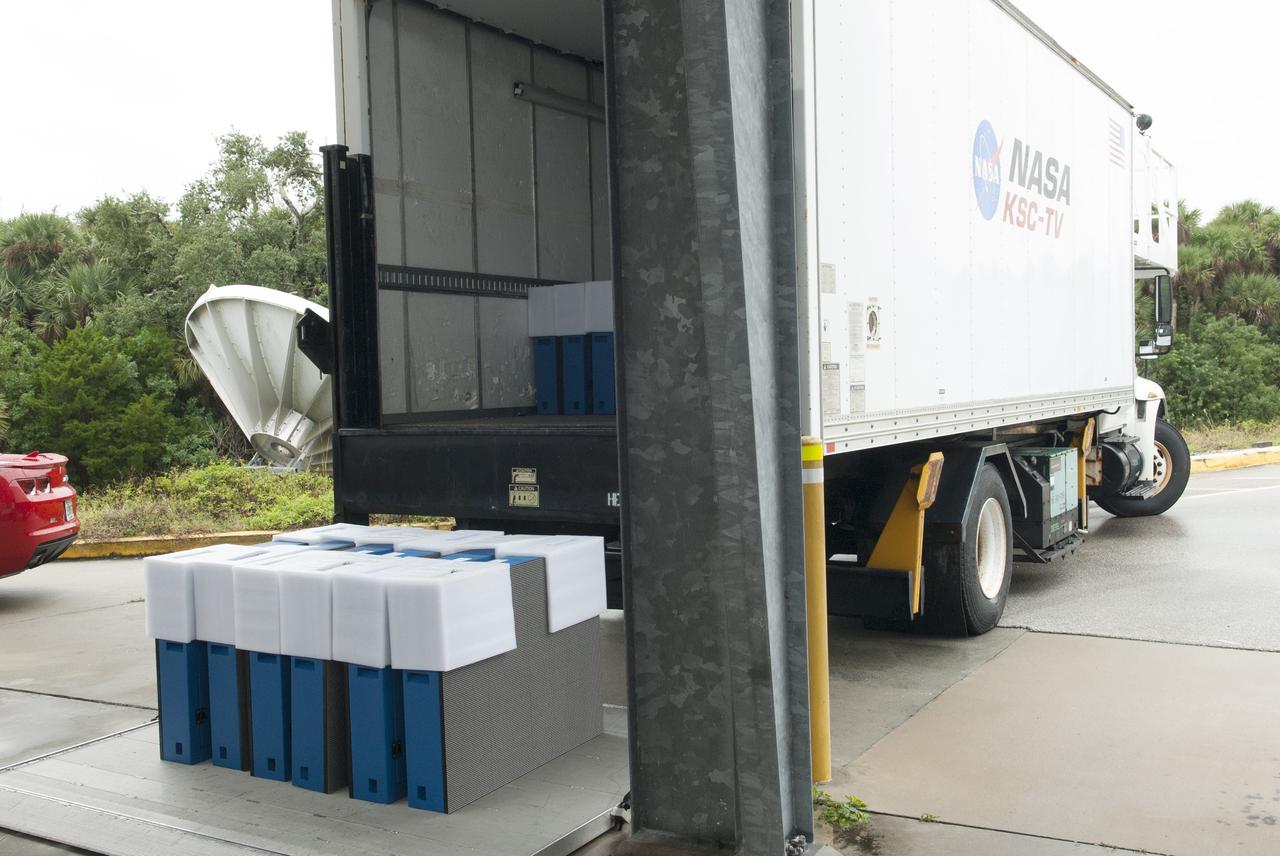
CAPE CANAVERAL, Fla. – At NASA's Kennedy Space Center in Florida, the first of 24 light emitting diode LED panels have arrived for installation in the new countdown clock at the spaceport's Press Site. A new modern, multimedia display soon will be installed, similar to the screens seen at sporting venues. The new screen will be nearly 26 feet wide by 7 feet high, a foot taller than the original clock. The historic countdown clock was designed by Kennedy engineers and built by space center technicians before Apollo 12 in 1969. NASA has requested to acquire the countdown clock from the agency’s Artifact Working Group at the agency's Headquarters for likely display at the Kennedy Space Center Visitor Complex. For more information on the countdown clock, go to http://go.nasa.gov/10Zku10. Photo credit: NASA/Jim Grossmann
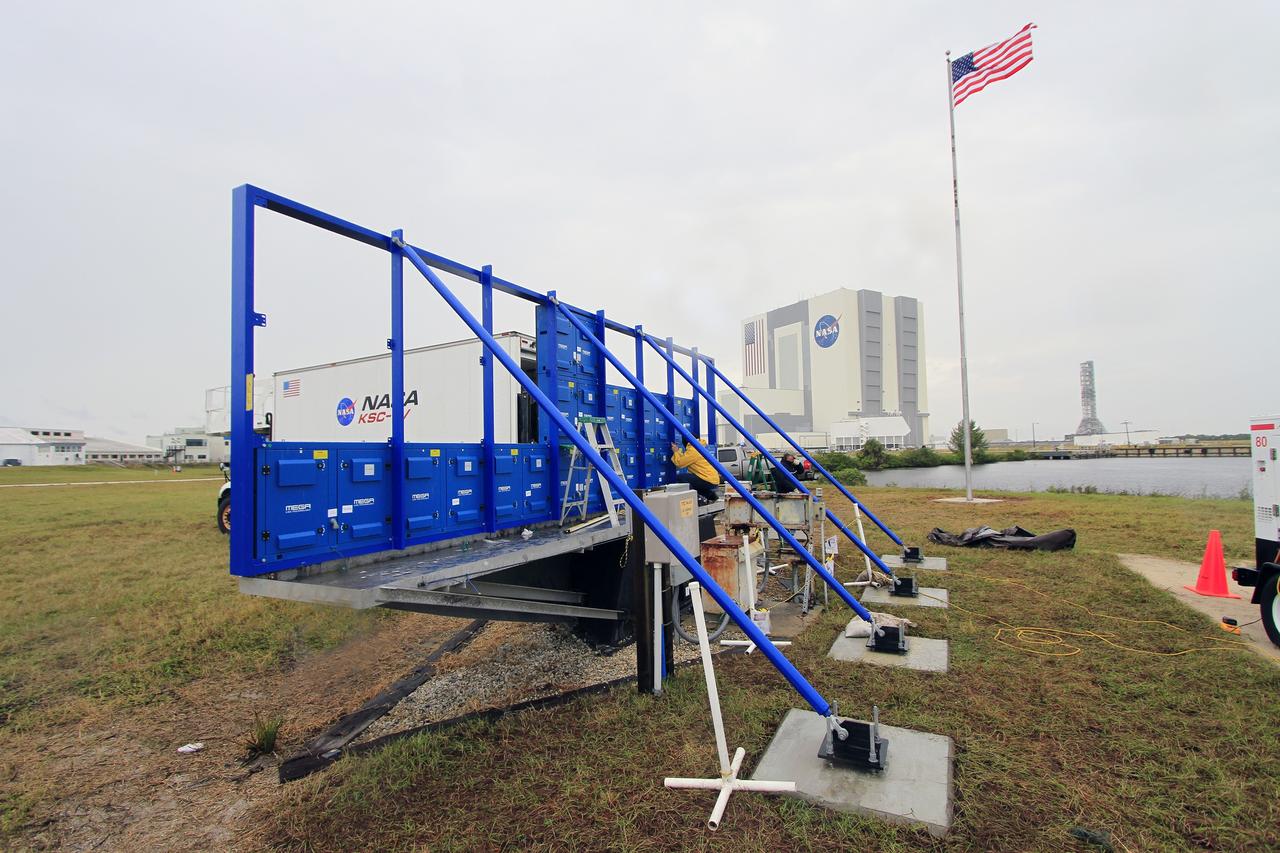
CAPE CANAVERAL, Fla. – At NASA's Kennedy Space Center in Florida, work continues to install 24 light emitting diode LED panels in the new countdown clock at the spaceport's Press Site. The modern, multimedia display is similar to the screens seen at sporting venues. The new screen will be nearly 26 feet wide by 7 feet high, a foot taller than the original clock. The historic countdown clock was designed by Kennedy engineers and built by space center technicians before Apollo 12 in 1969. NASA has requested to acquire the countdown clock from the agency’s Artifact Working Group at the agency's Headquarters for likely display at the Kennedy Space Center Visitor Complex. For more information on the countdown clock, go to http://go.nasa.gov/10Zku10. Photo credit: NASA/Cory Huston
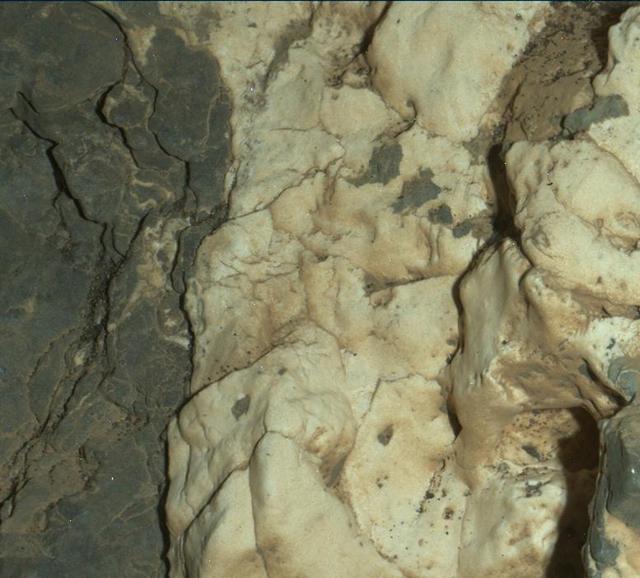
This view from the Mars Hand Lens Imager (MAHLI) on the arm of NASA's Curiosity Mars rover is a close-up of a two-tone mineral vein at a site called "Garden City" on lower Mount Sharp. The area shown is roughly one inch (2.5 centimeters) wide. The image was taken at night, using illumination from MAHLI's light-emitting diodes, during the 935th Martian day, or sol, of Curiosity's work on Mars (March 25, 2015). The vein includes both light-toned and dark-toned materials. The whiter material appears to have ripped up and incorporated portions of both the darker vein material (black arrows in Figure 1) and a third material (white arrow in Figure 1). The Curiosity mission's examination of material in these veins may provide clues about multiple episodes of fluids moving through fractured rock at this site. The fluid movement through fractures occurred later than wet environmental conditions in which the host rock formed, before it hardened and cracked. http://photojournal.jpl.nasa.gov/catalog/PIA19162