Lighthouse Moon

A starry sky serves as the backdrop for a photo of the Cape Canaveral Lighthouse on Aug. 27, 2020. Standing on Florida’s east coast for over 150 years, the lighthouse is owned by the Cape Canaveral Air Force Station and still aids the U.S. Coast Guard to this day.

A starry sky serves as the backdrop for a photo of the Cape Canaveral Lighthouse on Aug. 27, 2020. Standing on Florida’s east coast for over 150 years, the lighthouse is owned by the Cape Canaveral Air Force Station and still aids the U.S. Coast Guard to this day.
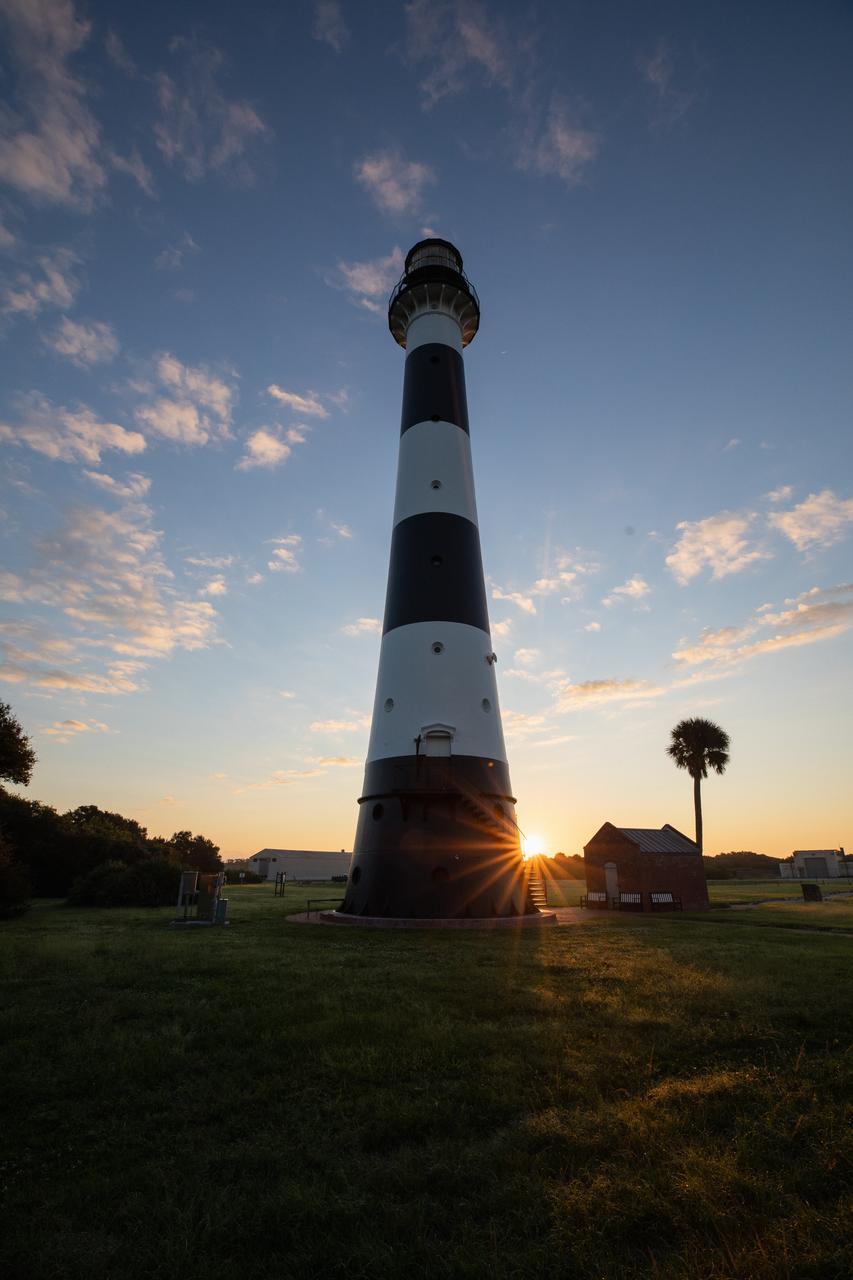
The sun rises behind Cape Canaveral Lighthouse at Cape Canaveral Air Force Station in Florida on Oct. 13, 2020.
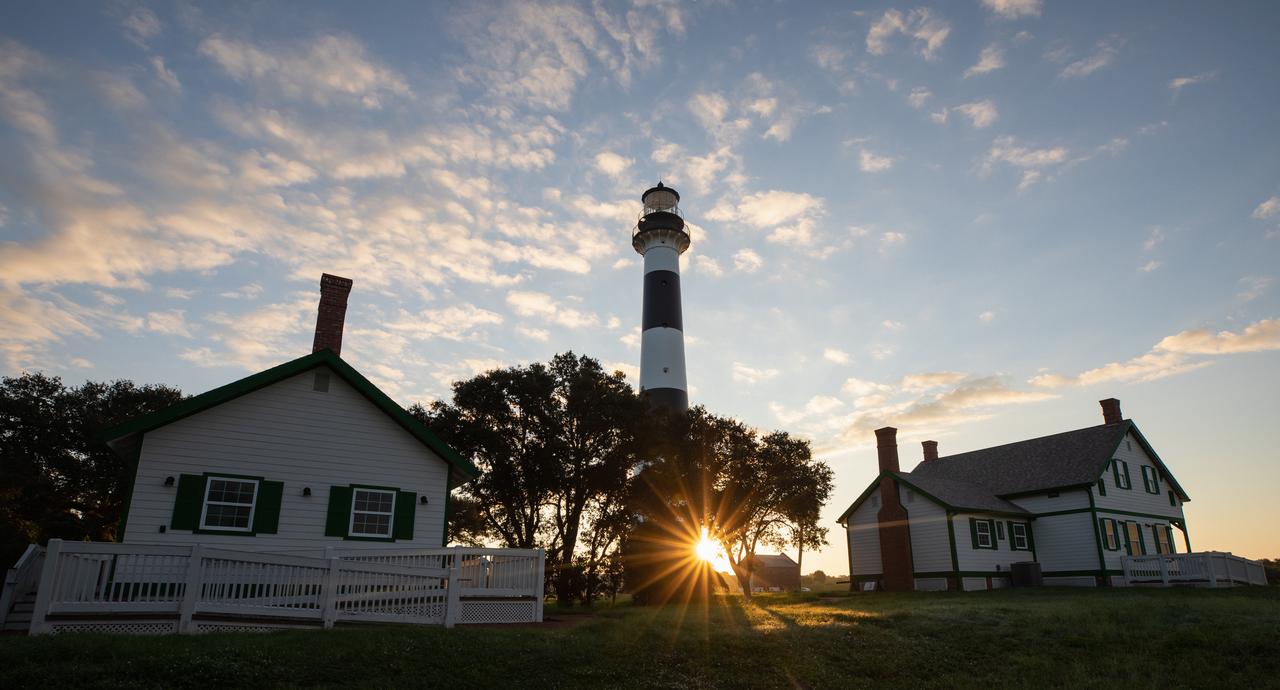
The sun rises behind Cape Canaveral Lighthouse at Cape Canaveral Air Force Station in Florida on Oct. 13, 2020.
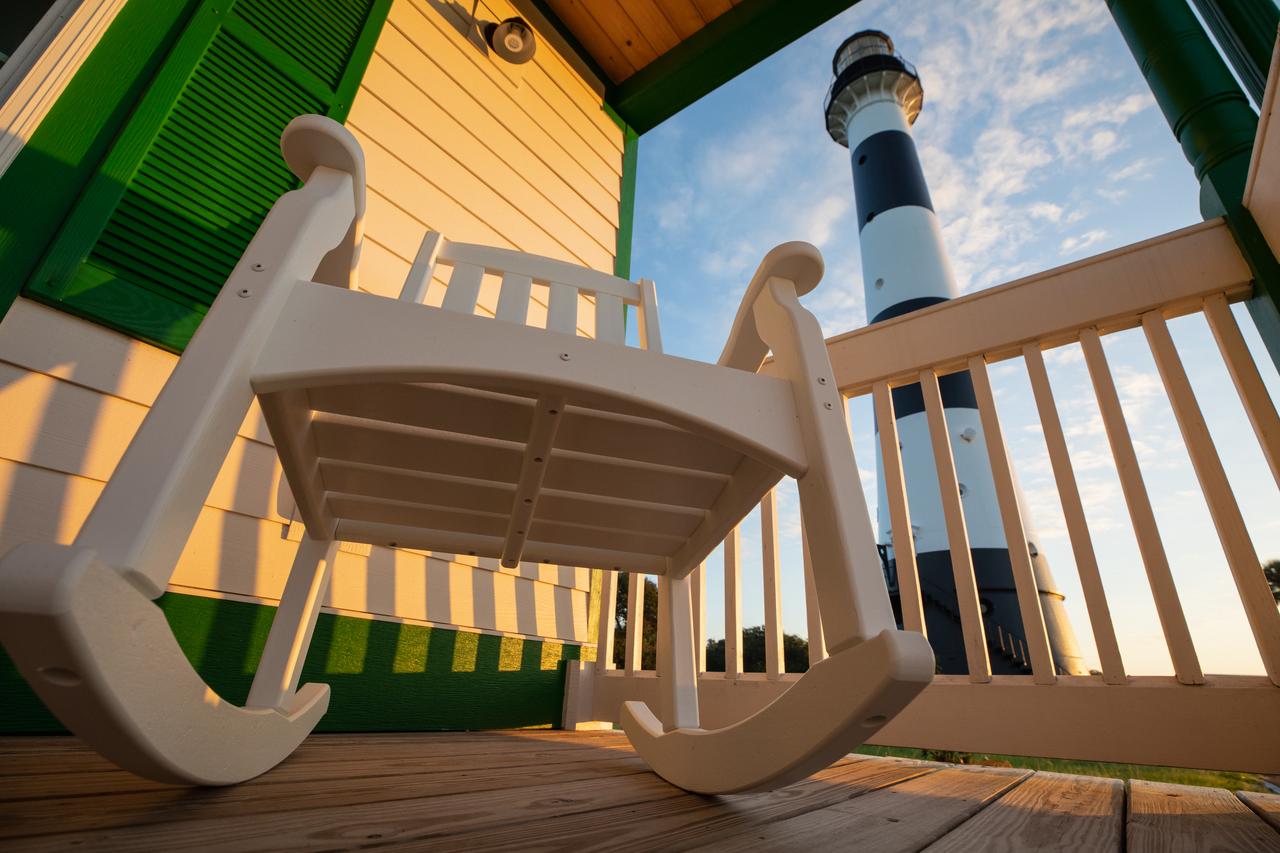
The Cape Canaveral Lighthouse at Cape Canaveral Air Force Station in Florida stands tall during an Oct. 13, 2020, sunrise.
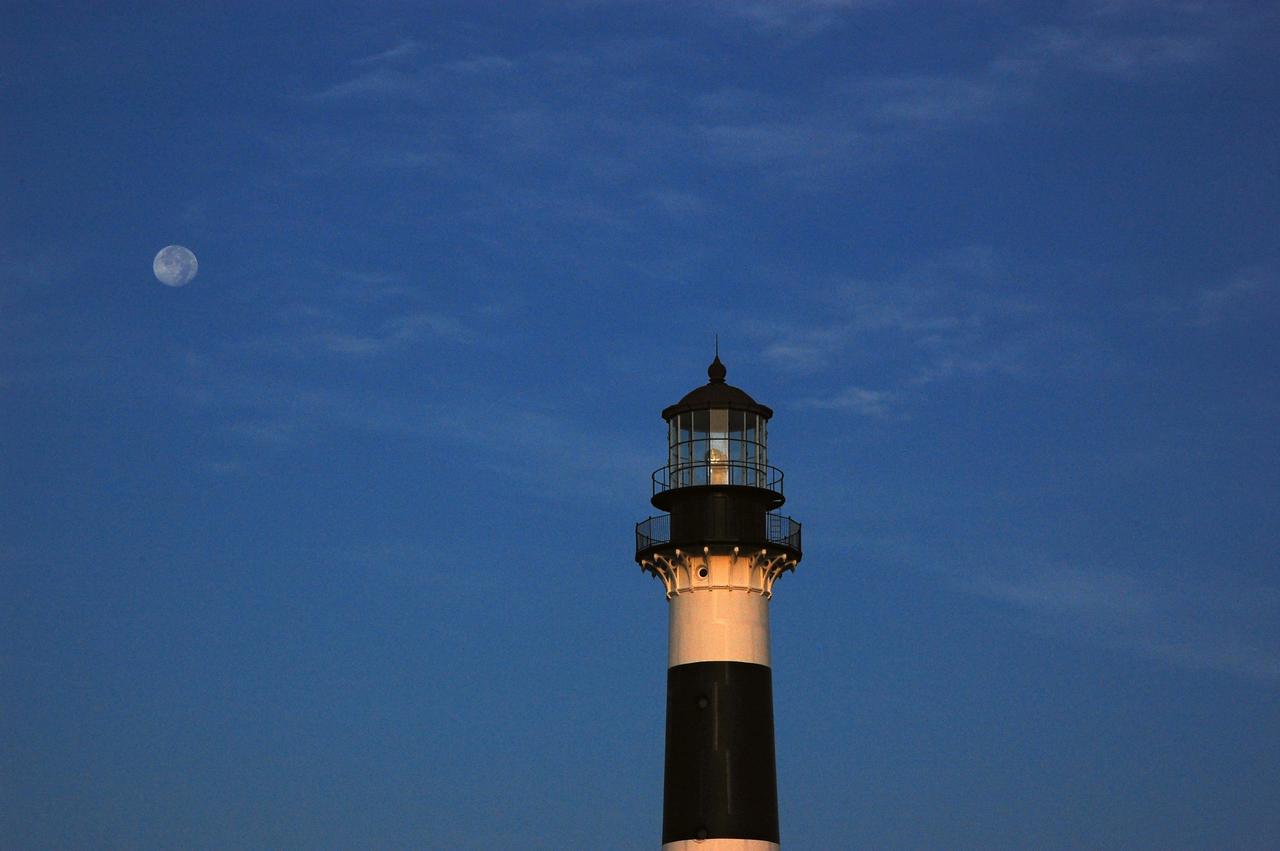
Cape Canaveral Air Force Station, Fla. -- The lantern room of the Cape Canaveral Lighthouse, with its modern first-order optic, takes on a warm glow as dawn breaks and a full moon still shines overhead. The Canaveral light is the only operating lighthouse owned by the U.S. Air Force. In 2000, the Coast Guard transferred ownership of the lighthouse structure and its grounds to the Air Force, which is now responsible for maintaining it. The U.S. Coast Guard continues to operate the beacon as an active navigational aid. The first lighthouse at Cape Canaveral was built near the tip of the Cape in 1848. The structure was only about 60 feet high with a rather dim light powered by whale oil. In 1859, work began nearby on a new, taller iron structure. Construction was halted during the Civil War, and the lighthouse finally was finished in 1868. The structure, with a brick lining inside its iron exterior, was painted with its "daymark" black and white horizontal bands in 1873 to make it easier to identify during the day as a navigation point. Between 1892 and 1894, the lighthouse was dismantled and moved to its new home about a mile from the coast, where it stands today. Photo credit: NASA/Ben Smegelsky
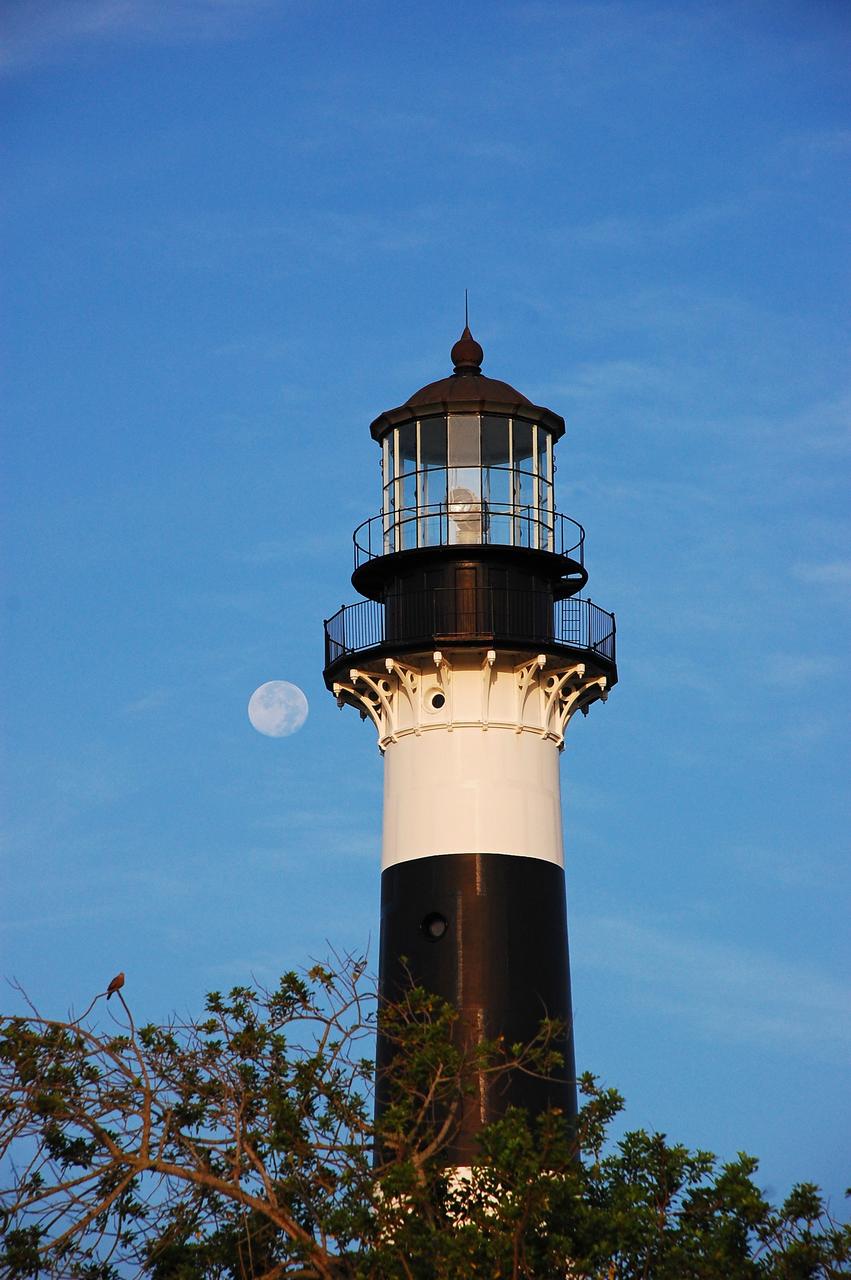
Cape Canaveral Air Force Station, Fla. -- The lantern room of the Cape Canaveral Lighthouse, with its modern first-order optic, takes on a warm glow as dawn breaks and a full moon still shines overhead. The Canaveral light is the only operating lighthouse owned by the U.S. Air Force. In 2000, the Coast Guard transferred ownership of the lighthouse structure and its grounds to the Air Force, which is now responsible for maintaining it. The U.S. Coast Guard continues to operate the beacon as an active navigational aid. The first lighthouse at Cape Canaveral was built near the tip of the Cape in 1848. The structure was only about 60 feet high with a rather dim light powered by whale oil. In 1859, work began nearby on a new, taller iron structure. Construction was halted during the Civil War, and the lighthouse finally was finished in 1868. The structure, with a brick lining inside its iron exterior, was painted with its "daymark" black and white horizontal bands in 1873 to make it easier to identify during the day as a navigation point. Between 1892 and 1894, the lighthouse was dismantled and moved to its new home about a mile from the coast, where it stands today. Photo credit: NASA/Ben Smegelsky
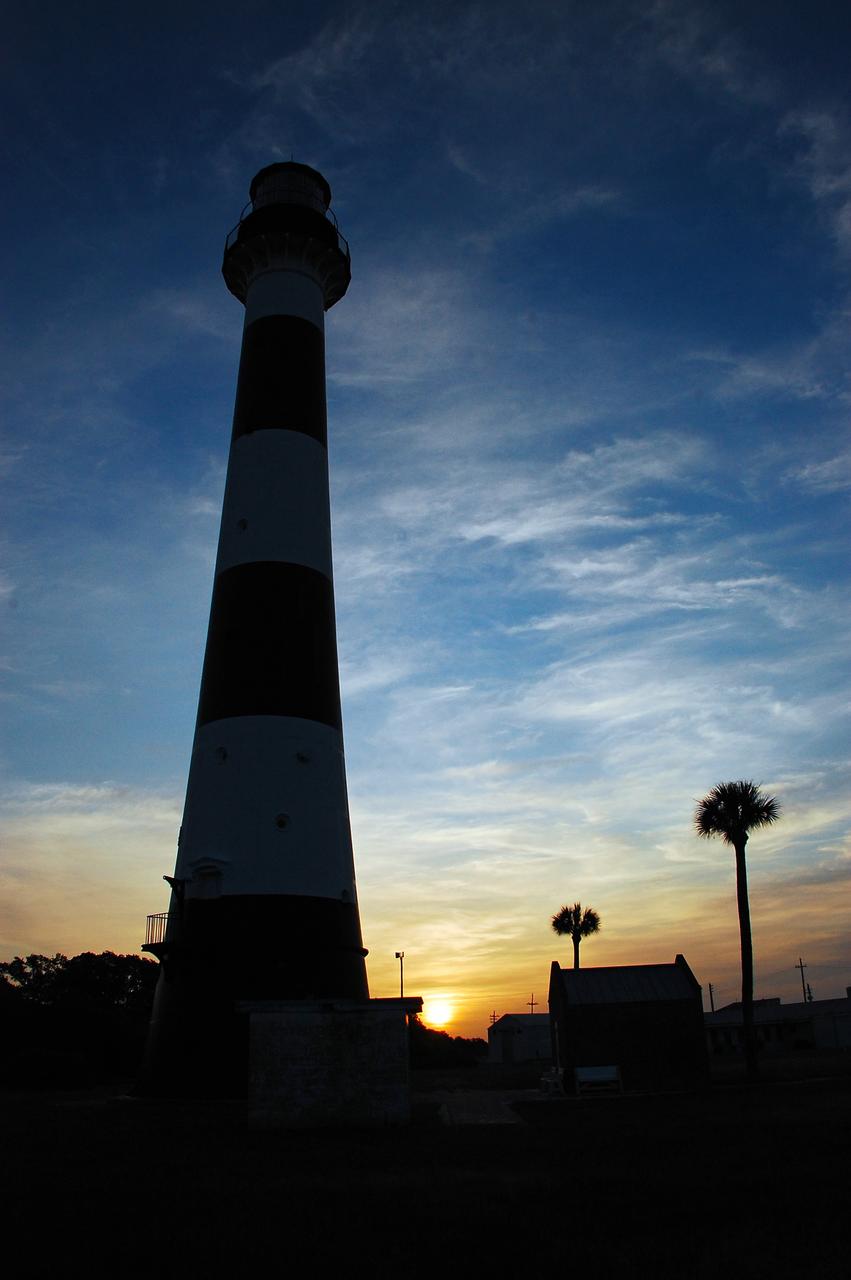
Cape Canaveral Air Force Station, Fla. -- As the sun rises, the Cape Canaveral Lighthouse is silhouetted against the early morning sky. The Canaveral light is the only operating lighthouse owned by the U.S. Air Force. In 2000, the Coast Guard transferred ownership of the lighthouse structure and its grounds to the Air Force, which is now responsible for maintaining it. The U.S. Coast Guard continues to operate the modern first-order beacon as an active navigational aid. The first lighthouse at Cape Canaveral was built near the tip of the Cape in 1848. The structure was only about 60 feet high with a rather dim light powered by whale oil. In 1859, work began nearby on a new, taller iron structure. Construction was halted during the Civil War, and the lighthouse finally was finished in 1868. The structure, with a brick lining inside its iron exterior, was painted with its "daymark" black and white horizontal bands in 1873 to make it easier to identify during the day as a navigation point. Between 1892 and 1894, the lighthouse was dismantled and moved to its new home about a mile from the coast, where it stands today. Photo credit: NASA/Ben Smegelsky
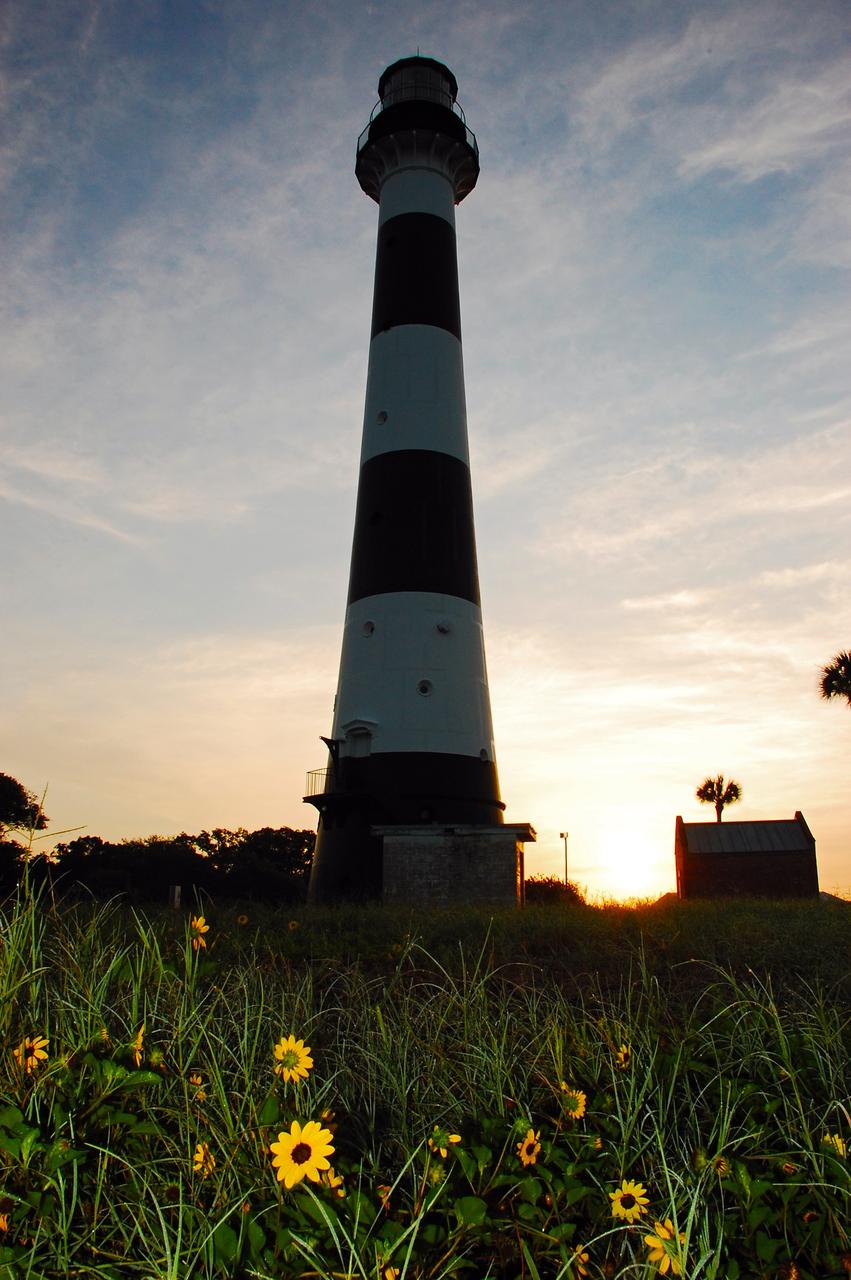
Cape Canaveral Air Force Station, Fla. -- As the sun rises, the Cape Canaveral Lighthouse is silhouetted against the early morning sky. The Canaveral light is the only operating lighthouse owned by the U.S. Air Force. In 2000, the Coast Guard transferred ownership of the lighthouse structure and its grounds to the Air Force, which is now responsible for maintaining it. The U.S. Coast Guard continues to operate the modern first-order beacon as an active navigational aid. The first lighthouse at Cape Canaveral was built near the tip of the Cape in 1848. The structure was only about 60 feet high with a rather dim light powered by whale oil. In 1859, work began nearby on a new, taller iron structure. Construction was halted during the Civil War, and the lighthouse finally was finished in 1868. The structure, with a brick lining inside its iron exterior, was painted with its "daymark" black and white horizontal bands in 1873 to make it easier to identify during the day as a navigation point. Between 1892 and 1894, the lighthouse was dismantled and moved to its new home about a mile from the coast, where it stands today. Photo credit: NASA/Ben Smegelsky
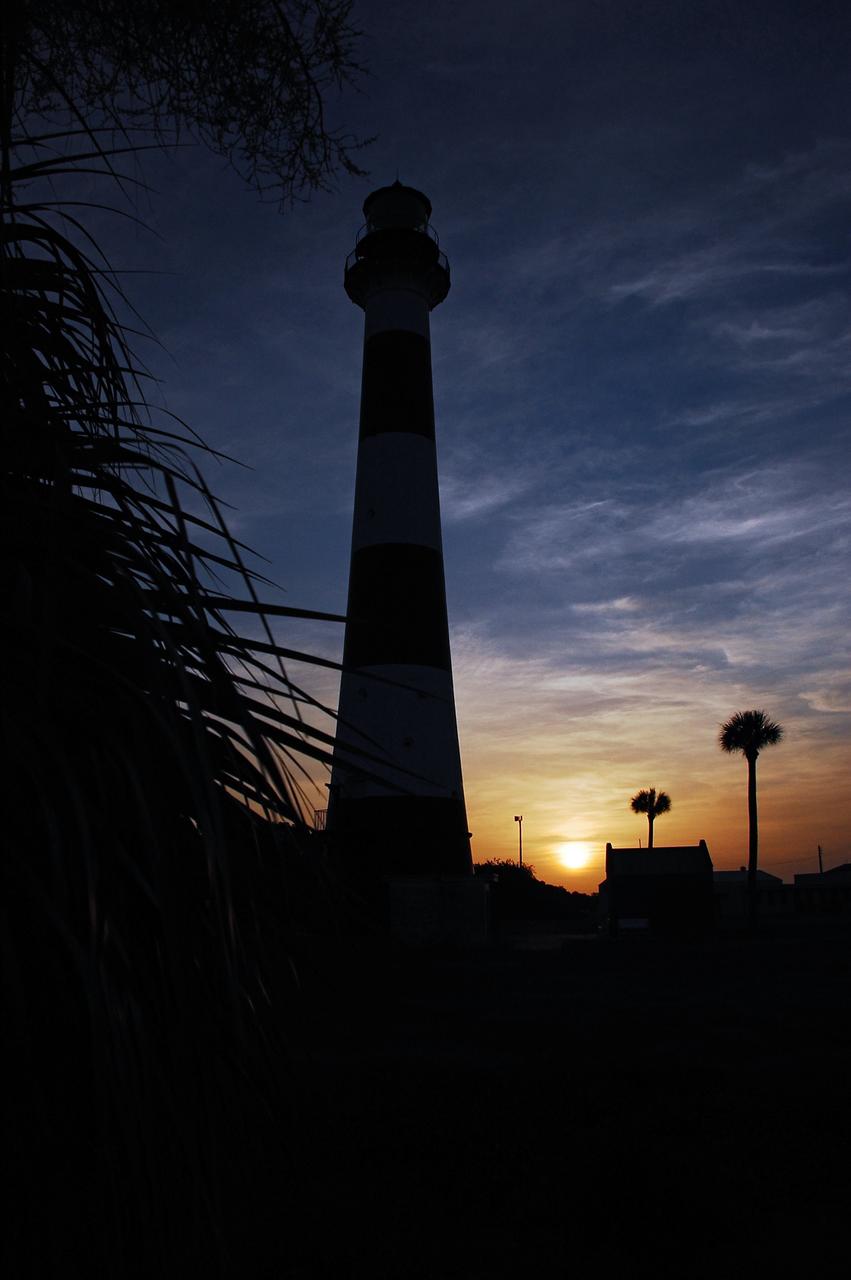
Cape Canaveral Air Force Station, Fla. -- As the sun rises, the Cape Canaveral Lighthouse is silhouetted against the early morning sky. The Canaveral light is the only operating lighthouse owned by the U.S. Air Force. In 2000, the Coast Guard transferred ownership of the lighthouse structure and its grounds to the Air Force, which is now responsible for maintaining it. The U.S. Coast Guard continues to operate the modern first-order beacon as an active navigational aid. The first lighthouse at Cape Canaveral was built near the tip of the Cape in 1848. The structure was only about 60 feet high with a rather dim light powered by whale oil. In 1859, work began nearby on a new, taller iron structure. Construction was halted during the Civil War, and the lighthouse finally was finished in 1868. The structure, with a brick lining inside its iron exterior, was painted with its "daymark" black and white horizontal bands in 1873 to make it easier to identify during the day as a navigation point. Between 1892 and 1894, the lighthouse was dismantled and moved to its new home about a mile from the coast, where it stands today. Photo credit: NASA/Ben Smegelsky
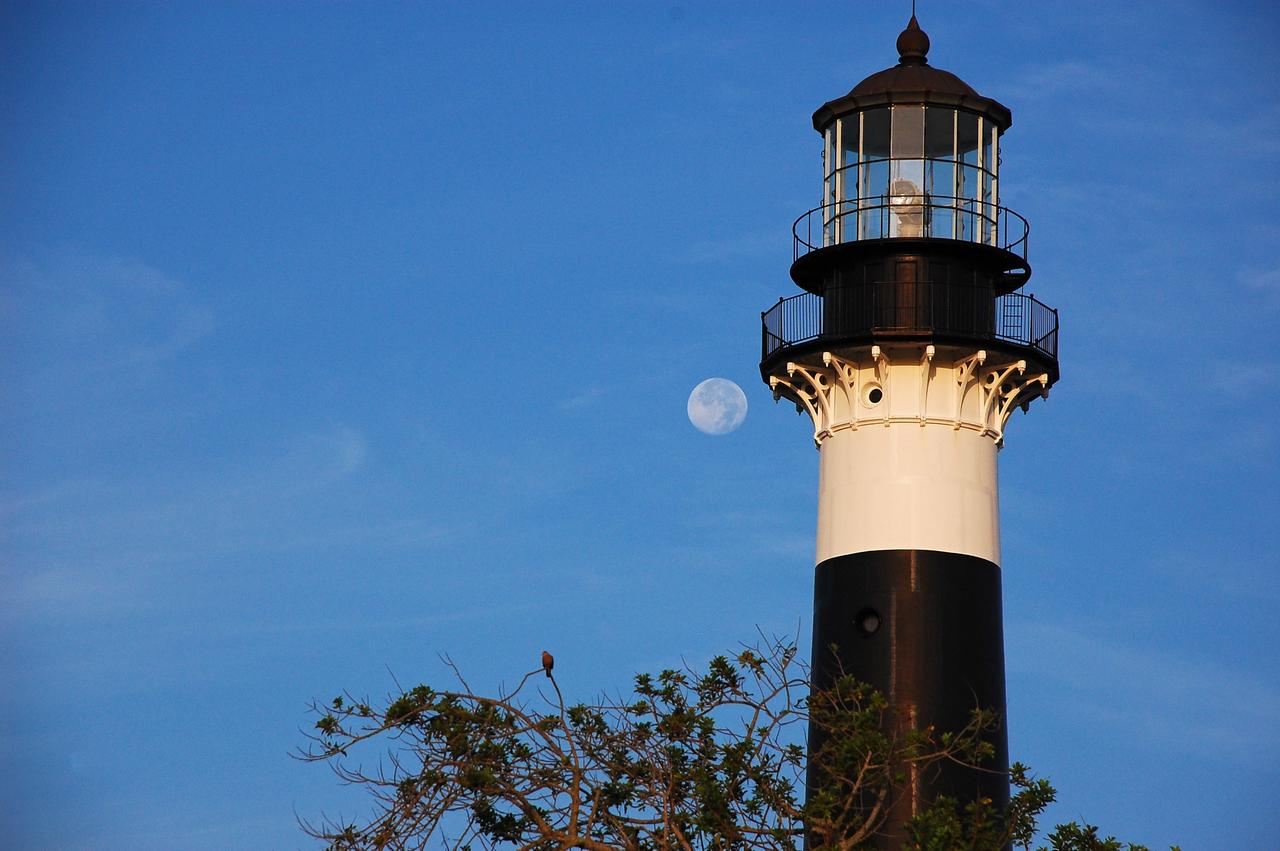
Cape Canaveral Air Force Station, Fla. -- The lantern room of the Cape Canaveral Lighthouse, with its modern first-order optic, takes on a warm glow as dawn breaks and a full moon still shines overhead. The Canaveral light is the only operating lighthouse owned by the U.S. Air Force. In 2000, the Coast Guard transferred ownership of the lighthouse structure and its grounds to the Air Force, which is now responsible for maintaining it. The U.S. Coast Guard continues to operate the beacon as an active navigational aid. The first lighthouse at Cape Canaveral was built near the tip of the Cape in 1848. The structure was only about 60 feet high with a rather dim light powered by whale oil. In 1859, work began nearby on a new, taller iron structure. Construction was halted during the Civil War, and the lighthouse finally was finished in 1868. The structure, with a brick lining inside its iron exterior, was painted with its "daymark" black and white horizontal bands in 1873 to make it easier to identify during the day as a navigation point. Between 1892 and 1894, the lighthouse was dismantled and moved to its new home about a mile from the coast, where it stands today. Photo credit: NASA/Ben Smegelsky
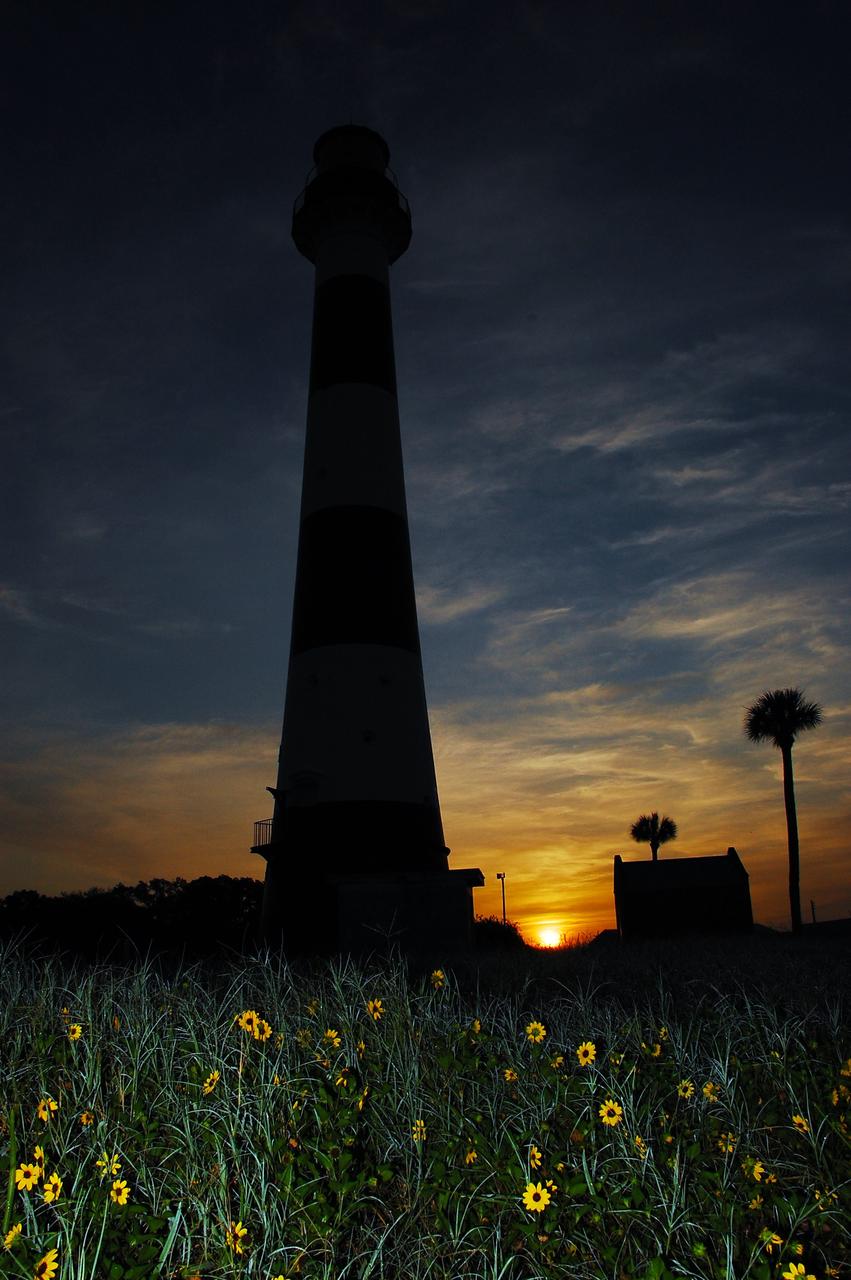
Cape Canaveral Air Force Station, Fla. -- As the sun rises, the Cape Canaveral Lighthouse is silhouetted against the early morning sky. The Canaveral light is the only operating lighthouse owned by the U.S. Air Force. In 2000, the Coast Guard transferred ownership of the lighthouse structure and its grounds to the Air Force, which is now responsible for maintaining it. The U.S. Coast Guard continues to operate the modern first-order beacon as an active navigational aid. The first lighthouse at Cape Canaveral was built near the tip of the Cape in 1848. The structure was only about 60 feet high with a rather dim light powered by whale oil. In 1859, work began nearby on a new, taller iron structure. Construction was halted during the Civil War, and the lighthouse finally was finished in 1868. The structure, with a brick lining inside its iron exterior, was painted with its "daymark" black and white horizontal bands in 1873 to make it easier to identify during the day as a navigation point. Between 1892 and 1894, the lighthouse was dismantled and moved to its new home about a mile from the coast, where it stands today. Photo credit: NASA/Ben Smegelsky
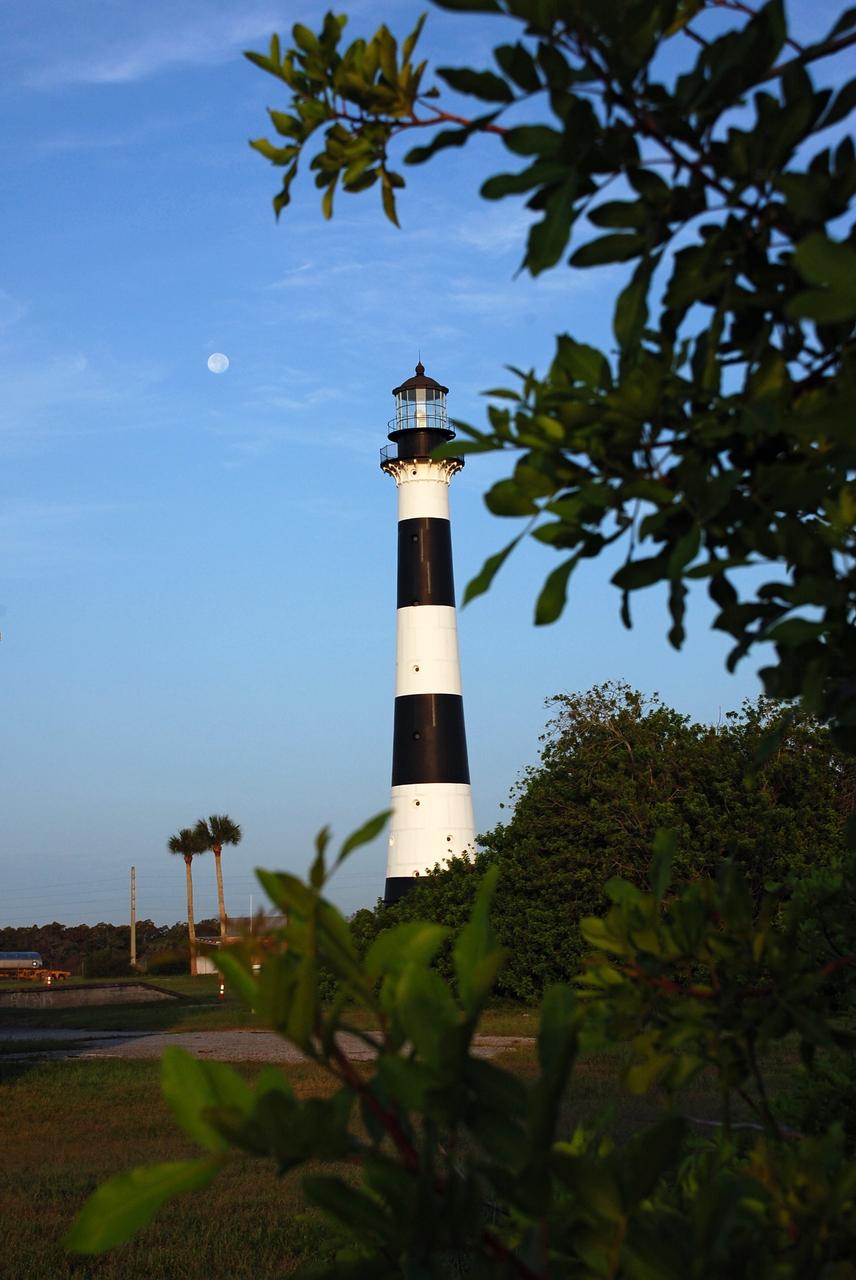
Cape Canaveral Air Force Station, Fla. -- A warm glow envelopes the Cape Canaveral Lighthouse as dawn breaks and a full moon still shines overhead. The Canaveral light is the only operating lighthouse owned by the U.S. Air Force. In 2000, the Coast Guard transferred ownership of the lighthouse structure and its grounds to the Air Force, which is now responsible for maintaining it. The U.S. Coast Guard continues to operate the modern first-order beacon as an active navigational aid. The first lighthouse at Cape Canaveral was built near the tip of the Cape in 1848. The structure was only about 60 feet high with a rather dim light powered by whale oil. In 1859, work began nearby on a new, taller iron structure. Construction was halted during the Civil War, and the lighthouse finally was finished in 1868. The structure, with a brick lining inside its iron exterior, was painted with its "daymark" black and white horizontal bands in 1873 to make it easier to identify during the day as a navigation point. Between 1892 and 1894, the lighthouse was dismantled and moved to its new home about a mile from the coast, where it stands today. Photo credit: NASA/Ben Smegelsky
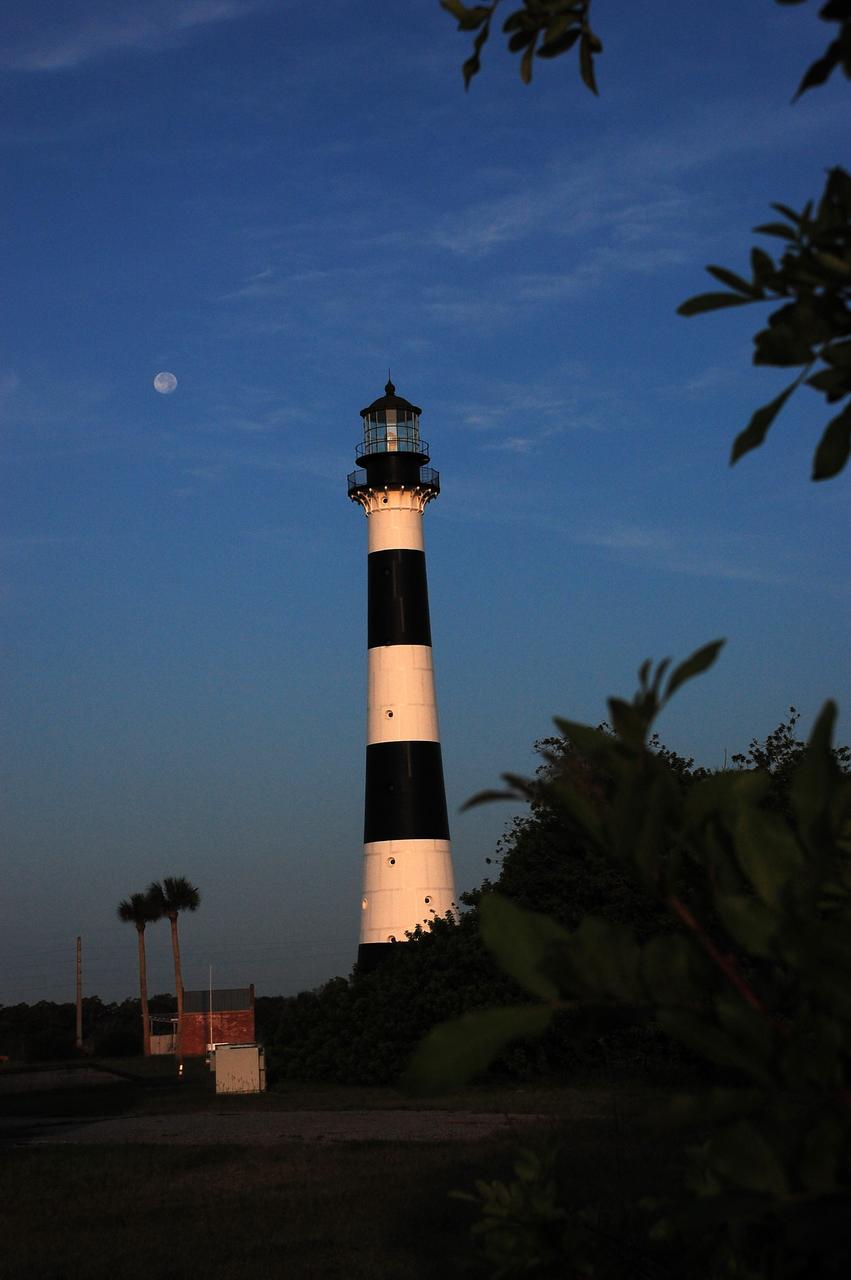
Cape Canaveral Air Force Station, Fla. -- A warm glow envelopes the Cape Canaveral Lighthouse as dawn breaks and a full moon still shines overhead. The Canaveral light is the only operating lighthouse owned by the U.S. Air Force. In 2000, the Coast Guard transferred ownership of the lighthouse structure and its grounds to the Air Force, which is now responsible for maintaining it. The U.S. Coast Guard continues to operate the modern first-order beacon as an active navigational aid. The first lighthouse at Cape Canaveral was built near the tip of the Cape in 1848. The structure was only about 60 feet high with a rather dim light powered by whale oil. In 1859, work began nearby on a new, taller iron structure. Construction was halted during the Civil War, and the lighthouse finally was finished in 1868. The structure, with a brick lining inside its iron exterior, was painted with its "daymark" black and white horizontal bands in 1873 to make it easier to identify during the day as a navigation point. Between 1892 and 1894, the lighthouse was dismantled and moved to its new home about a mile from the coast, where it stands today. Photo credit: NASA/Ben Smegelsky
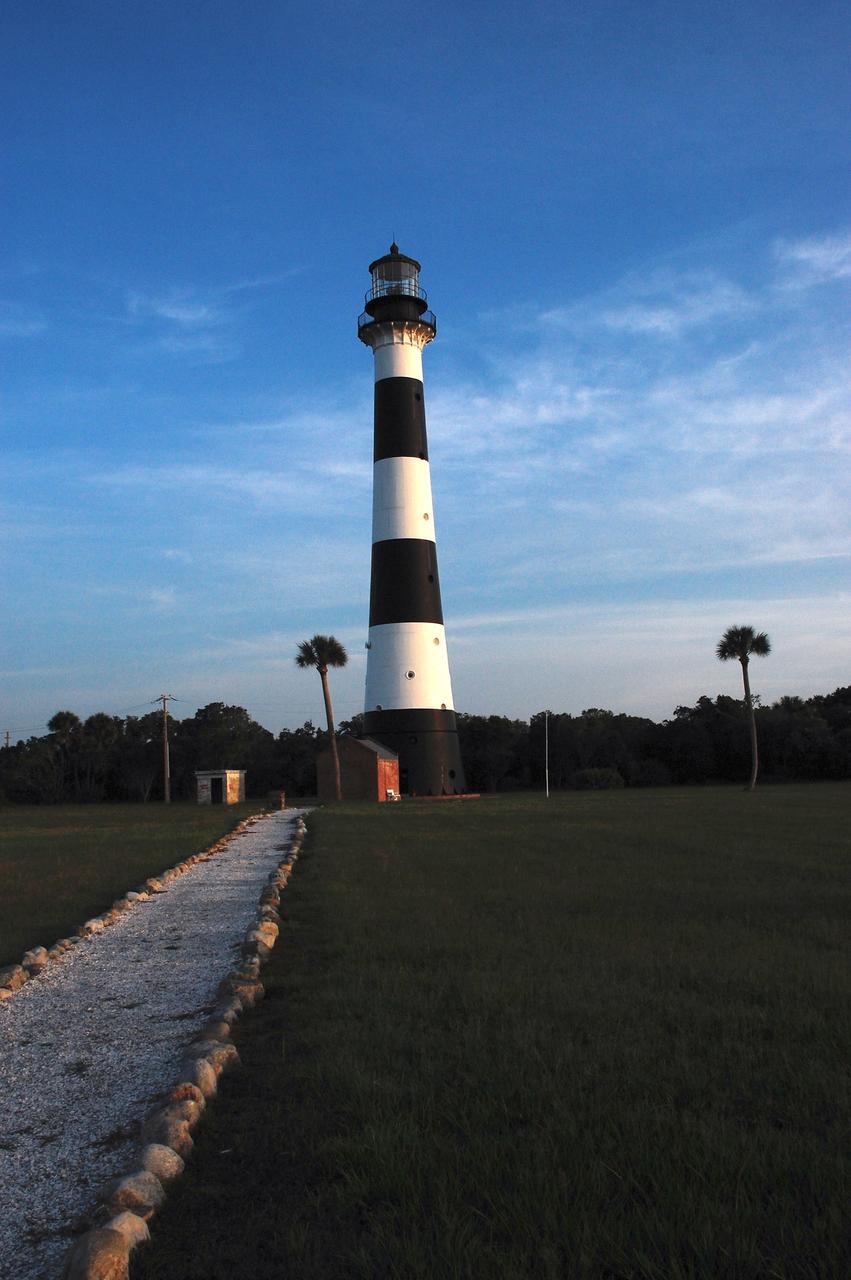
Cape Canaveral Air Force Station, Fla. -- A warm glow envelopes the Cape Canaveral Lighthouse as dawn breaks over the Cape.. The Canaveral light is the only operating lighthouse owned by the U.S. Air Force. In 2000, the Coast Guard transferred ownership of the lighthouse structure and its grounds to the Air Force, which is now responsible for maintaining it. The U.S. Coast Guard continues to operate the modern first-order beacon as an active navigational aid. The first lighthouse at Cape Canaveral was built near the tip of the Cape in 1848. The structure was only about 60 feet high with a rather dim light powered by whale oil. In 1859, work began nearby on a new, taller iron structure. Construction was halted during the Civil War, and the lighthouse finally was finished in 1868. The structure, with a brick lining inside its iron exterior, was painted with its "daymark" black and white horizontal bands in 1873 to make it easier to identify during the day as a navigation point. Between 1892 and 1894, the lighthouse was dismantled and moved to its new home about a mile from the coast, where it stands today. Photo credit: NASA/Ben Smegelsky
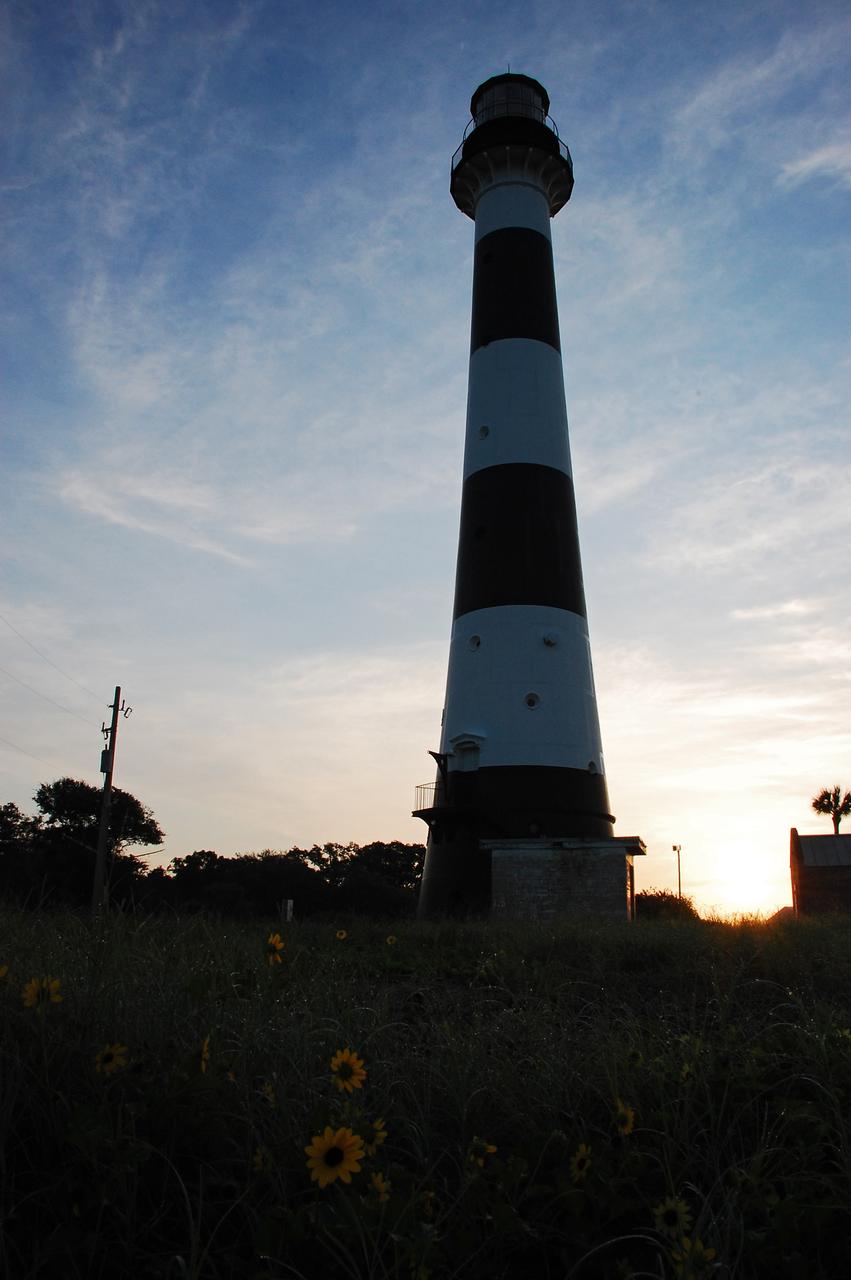
Cape Canaveral Air Force Station, Fla. -- As the sun rises, the Cape Canaveral Lighthouse is silhouetted against the early morning sky. The Canaveral light is the only operating lighthouse owned by the U.S. Air Force. In 2000, the Coast Guard transferred ownership of the lighthouse structure and its grounds to the Air Force, which is now responsible for maintaining it. The U.S. Coast Guard continues to operate the modern first-order beacon as an active navigational aid. The first lighthouse at Cape Canaveral was built near the tip of the Cape in 1848. The structure was only about 60 feet high with a rather dim light powered by whale oil. In 1859, work began nearby on a new, taller iron structure. Construction was halted during the Civil War, and the lighthouse finally was finished in 1868. The structure, with a brick lining inside its iron exterior, was painted with its "daymark" black and white horizontal bands in 1873 to make it easier to identify during the day as a navigation point. Between 1892 and 1894, the lighthouse was dismantled and moved to its new home about a mile from the coast, where it stands today. Photo credit: NASA/Ben Smegelsky
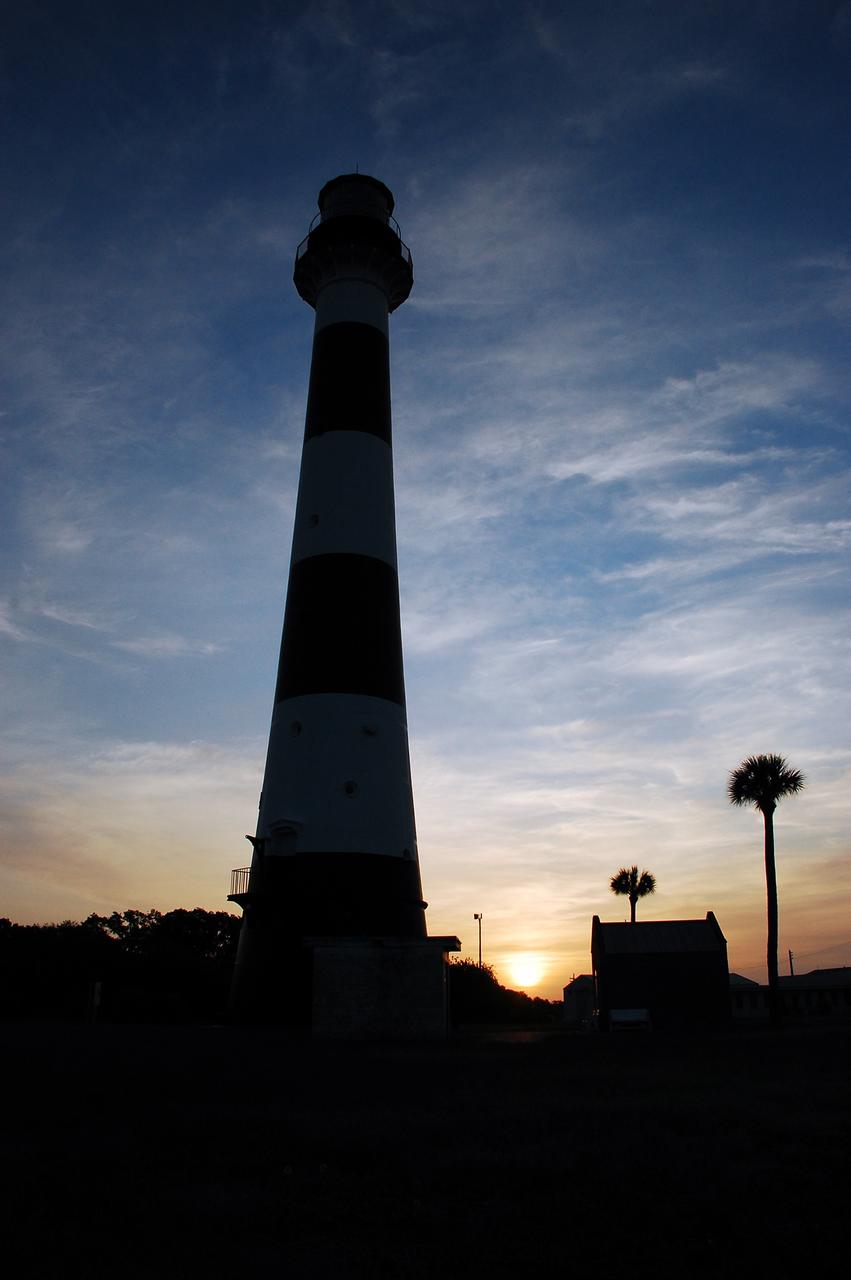
Cape Canaveral Air Force Station, Fla. -- As the sun rises, the Cape Canaveral Lighthouse is silhouetted against the early morning sky. The Canaveral light is the only operating lighthouse owned by the U.S. Air Force. In 2000, the Coast Guard transferred ownership of the lighthouse structure and its grounds to the Air Force, which is now responsible for maintaining it. The U.S. Coast Guard continues to operate the modern first-order beacon as an active navigational aid. The first lighthouse at Cape Canaveral was built near the tip of the Cape in 1848. The structure was only about 60 feet high with a rather dim light powered by whale oil. In 1859, work began nearby on a new, taller iron structure. Construction was halted during the Civil War, and the lighthouse finally was finished in 1868. The structure, with a brick lining inside its iron exterior, was painted with its "daymark" black and white horizontal bands in 1873 to make it easier to identify during the day as a navigation point. Between 1892 and 1894, the lighthouse was dismantled and moved to its new home about a mile from the coast, where it stands today. Photo credit: NASA/Ben Smegelsky
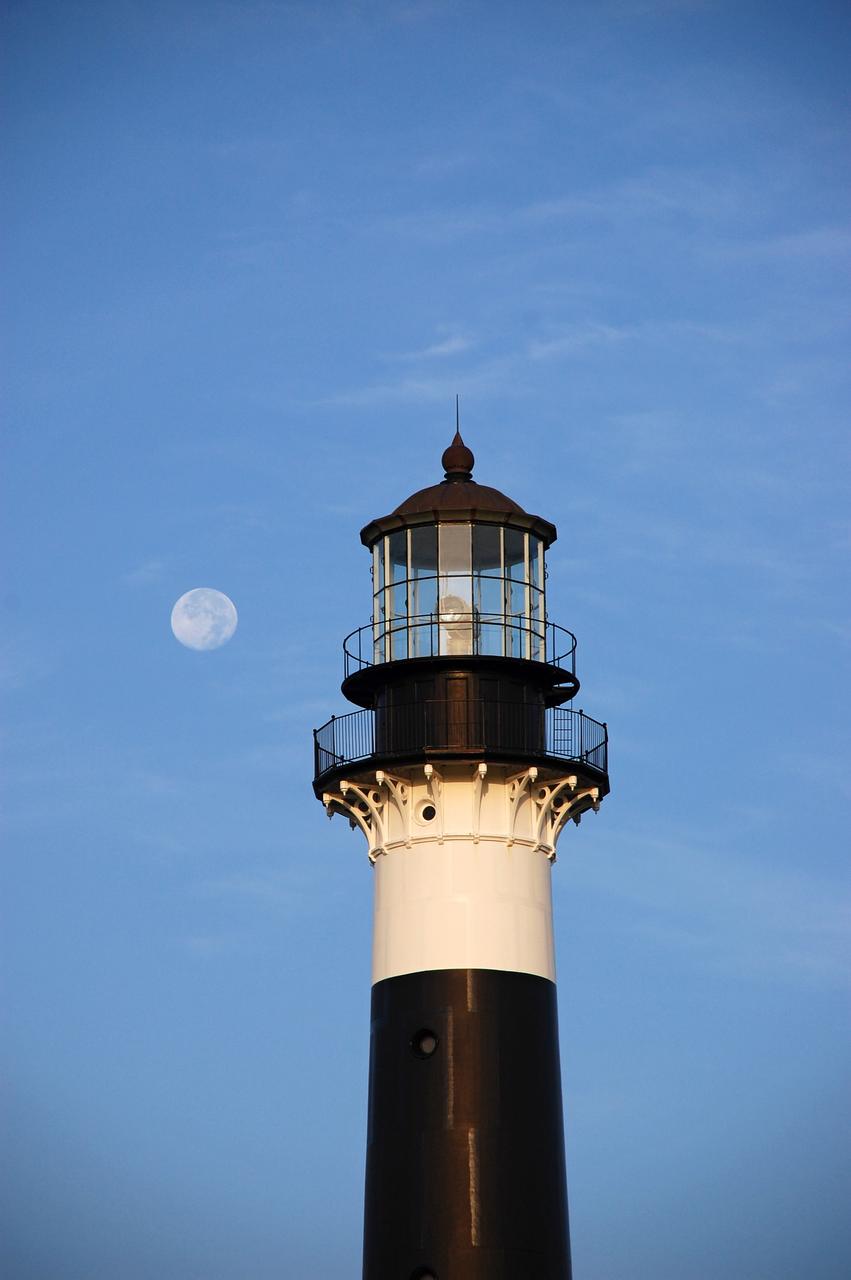
Cape Canaveral Air Force Station, Fla. -- The lantern room of the Cape Canaveral Lighthouse, with its modern first-order optic, takes on a warm glow as dawn breaks and a full moon still shines overhead. The Canaveral light is the only operating lighthouse owned by the U.S. Air Force. In 2000, the Coast Guard transferred ownership of the lighthouse structure and its grounds to the Air Force, which is now responsible for maintaining it. The U.S. Coast Guard continues to operate the beacon as an active navigational aid. The first lighthouse at Cape Canaveral was built near the tip of the Cape in 1848. The structure was only about 60 feet high with a rather dim light powered by whale oil. In 1859, work began nearby on a new, taller iron structure. Construction was halted during the Civil War, and the lighthouse finally was finished in 1868. The structure, with a brick lining inside its iron exterior, was painted with its "daymark" black and white horizontal bands in 1873 to make it easier to identify during the day as a navigation point. Between 1892 and 1894, the lighthouse was dismantled and moved to its new home about a mile from the coast, where it stands today. Photo credit: NASA/Ben Smegelsky
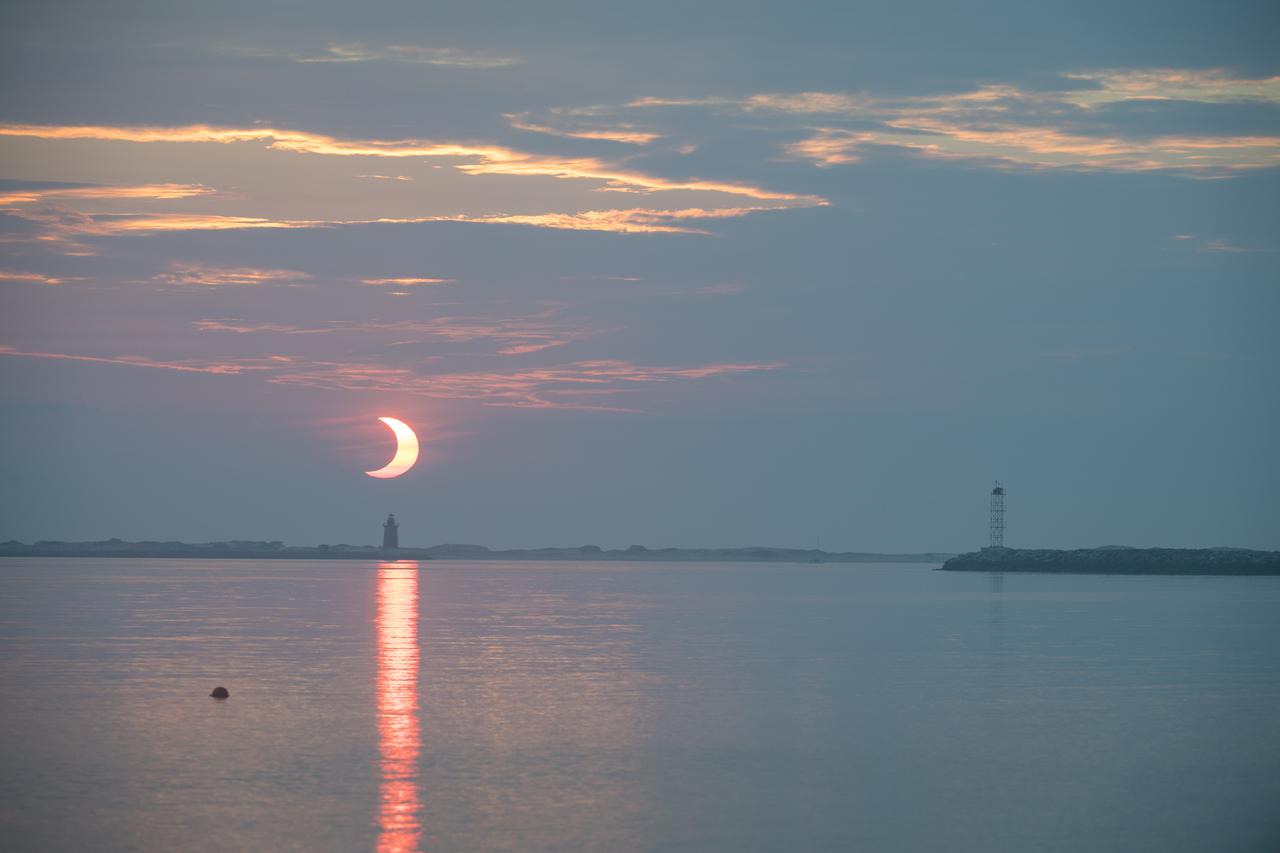
A partial solar eclipse is seen as the sun rises behind the Delaware Breakwater Lighthouse, Thursday, June 10, 2021, at Lewes Beach in Delaware. The annular or “ring of fire” solar eclipse is only visible to some parts of Greenland, Northern Russia, and Canada. Photo Credit: (NASA/Aubrey Gemignani)
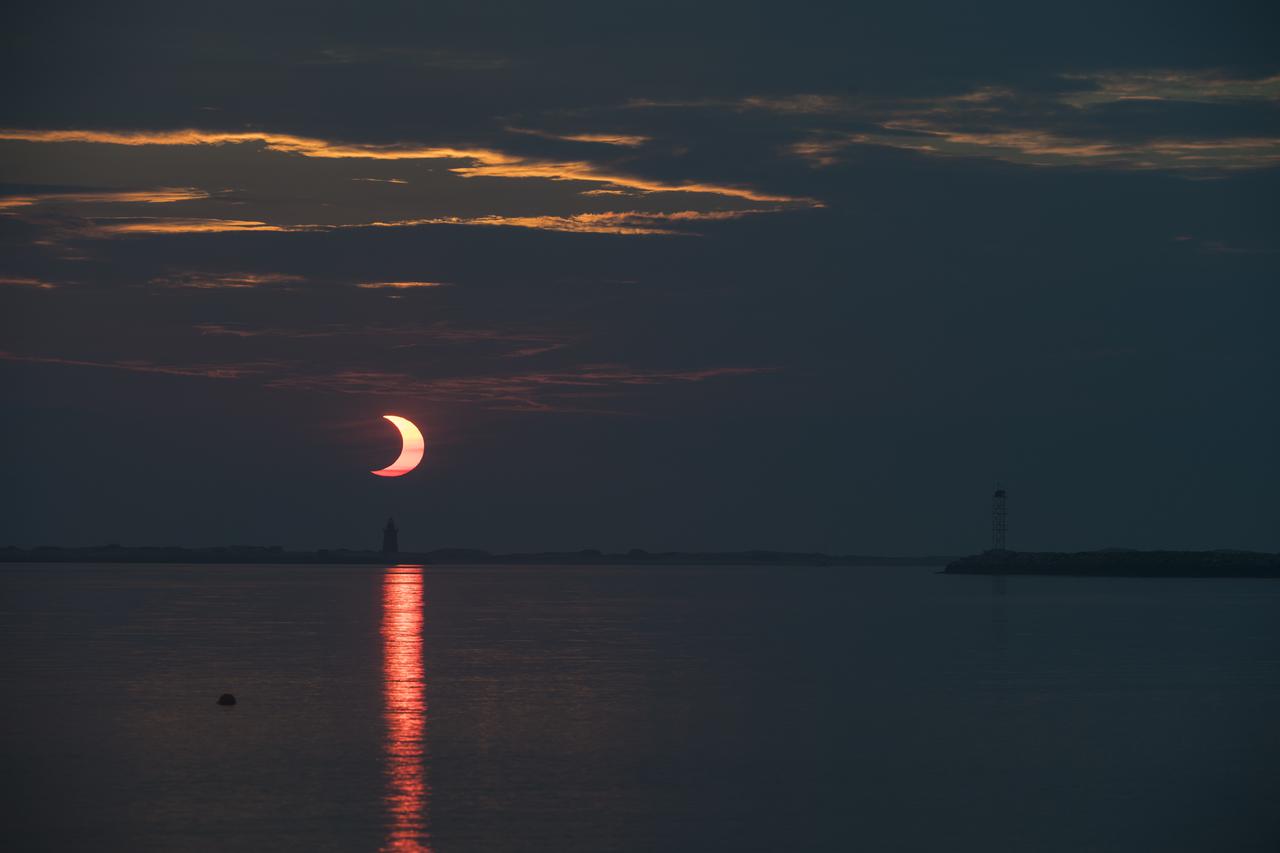
A partial solar eclipse is seen as the sun rises behind the Delaware Breakwater Lighthouse, Thursday, June 10, 2021, at Lewes Beach in Delaware. The annular or “ring of fire” solar eclipse is only visible to some parts of Greenland, Northern Russia, and Canada. Photo Credit: (NASA/Aubrey Gemignani)
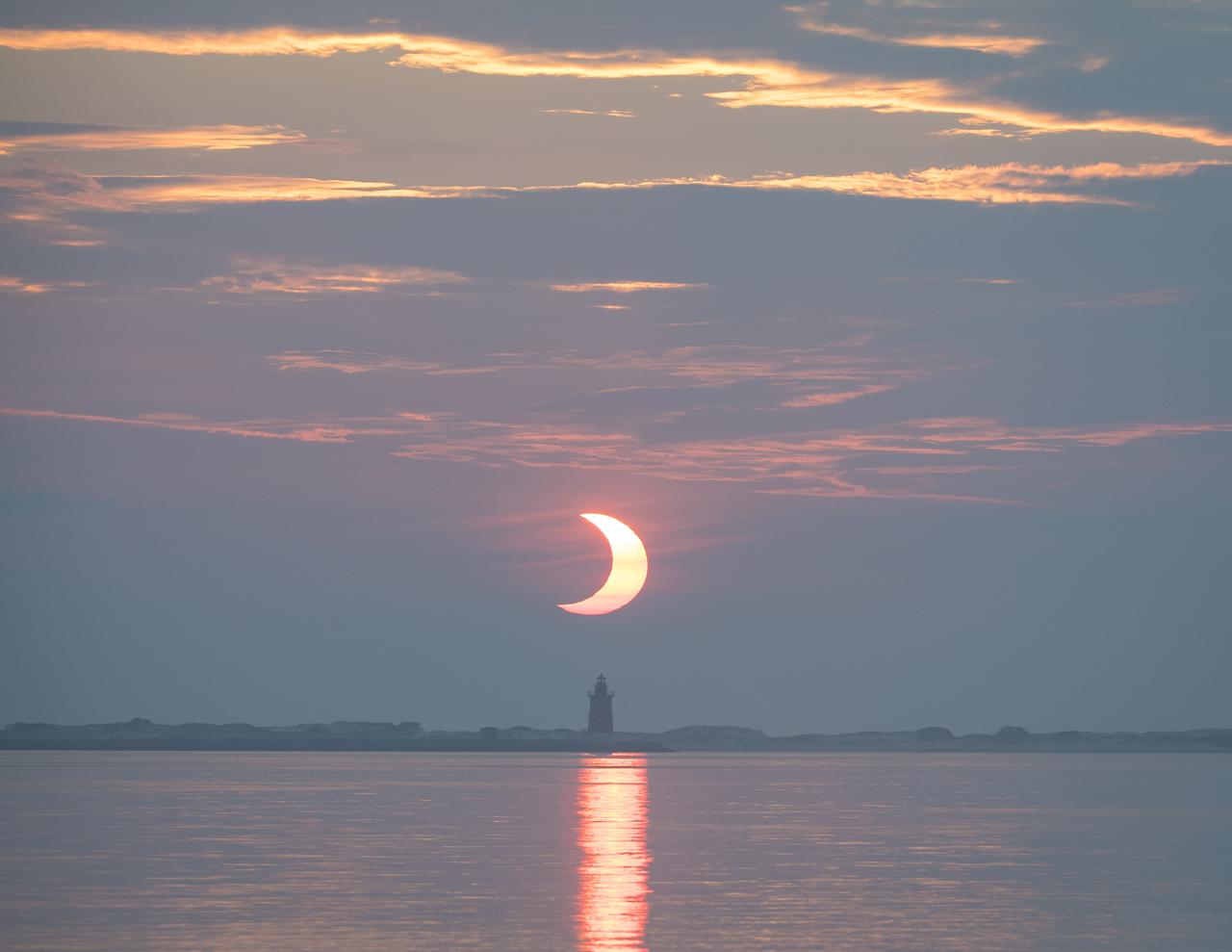
A partial solar eclipse is seen as the sun rises behind the Delaware Breakwater Lighthouse, Thursday, June 10, 2021, at Lewes Beach in Delaware. The annular or “ring of fire” solar eclipse is only visible to some parts of Greenland, Northern Russia, and Canada. Photo Credit: (NASA/Aubrey Gemignani)
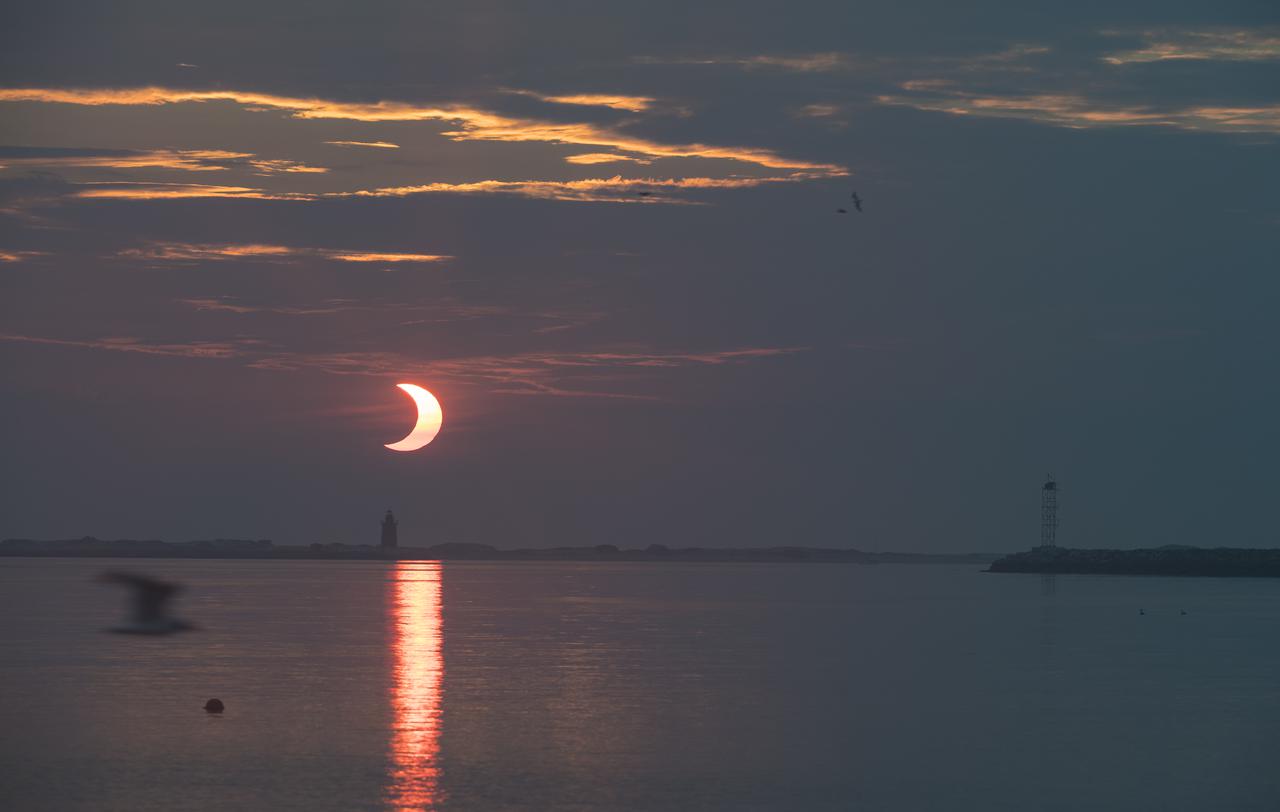
A partial solar eclipse is seen as the sun rises behind the Delaware Breakwater Lighthouse, Thursday, June 10, 2021, at Lewes Beach in Delaware. The annular or “ring of fire” solar eclipse is only visible to some parts of Greenland, Northern Russia, and Canada. Photo Credit: (NASA/Aubrey Gemignani)
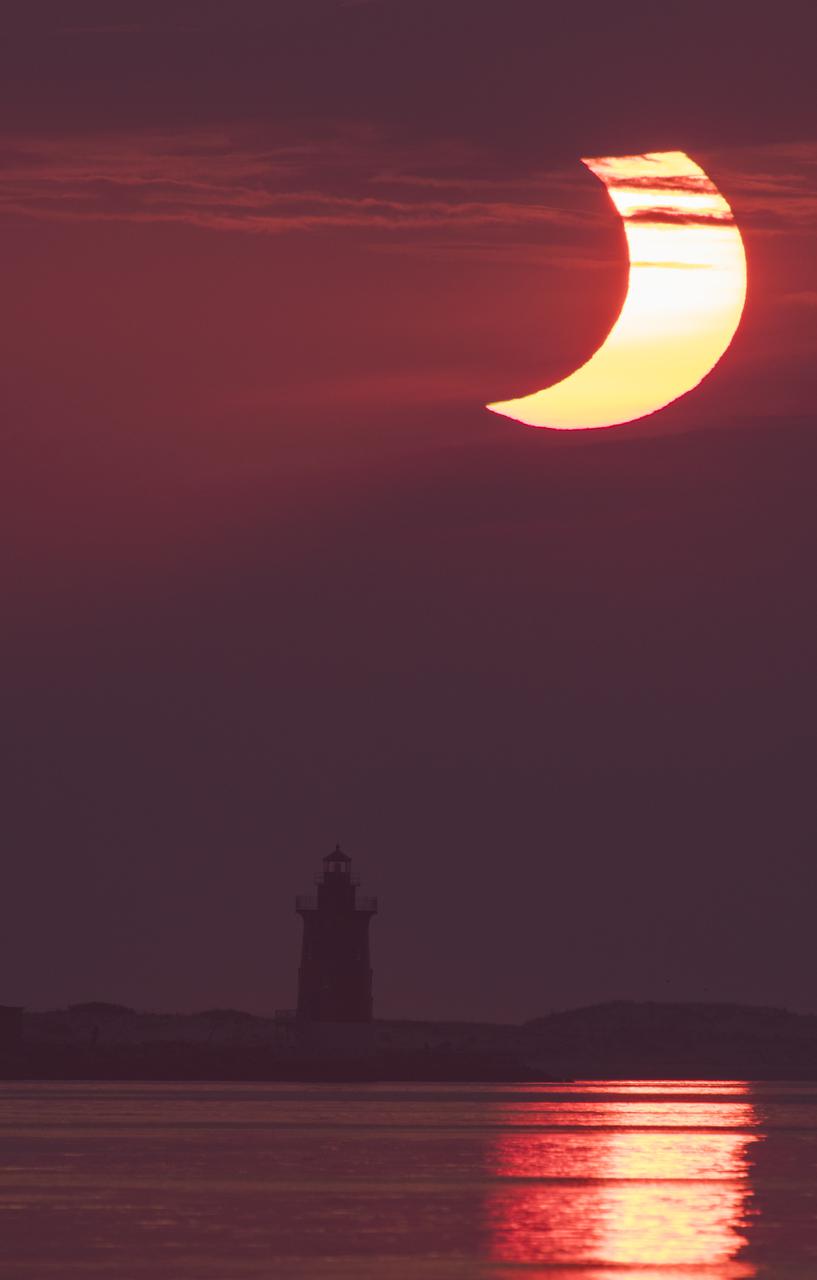
A partial solar eclipse is seen as the sun rises behind the Delaware Breakwater Lighthouse, Thursday, June 10, 2021, at Lewes Beach in Delaware. The annular or “ring of fire” solar eclipse is only visible to some parts of Greenland, Northern Russia, and Canada. Photo Credit: (NASA/Aubrey Gemignani)
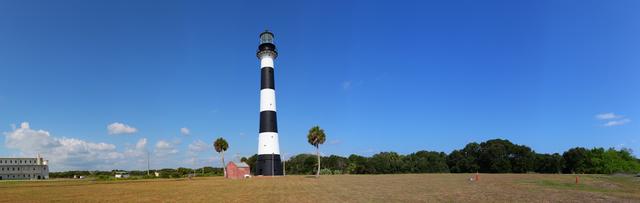
CAPE CANAVERAL, Fla. --The Cape Canaveral Lighthouse stands in the midst of space-age structures, a monolith born in another era of exploration. Located near Launch Complex-36 on Cape Canaveral Air Force Station, the Coast Guard transferred ownership in 2000 of the lighthouse structure and its grounds to the U.S. Air Force. A restoration of the lighthouse was completed by the Air Force in 2007. The Coast Guard continues to maintain the beacon as an active navigational aid. The Cape Canaveral Lighthouse Foundation supports the Air Force with activities associated with the lighthouse. For its history, visit www.nasa.gov/centers/kennedy/about/history/lighthouse.html or canaverallight.org. Photo credit: Frankie Martin
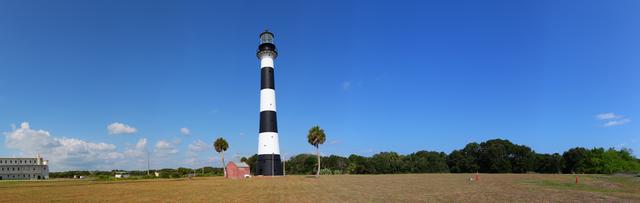
Panoramic View of the Lighthouse
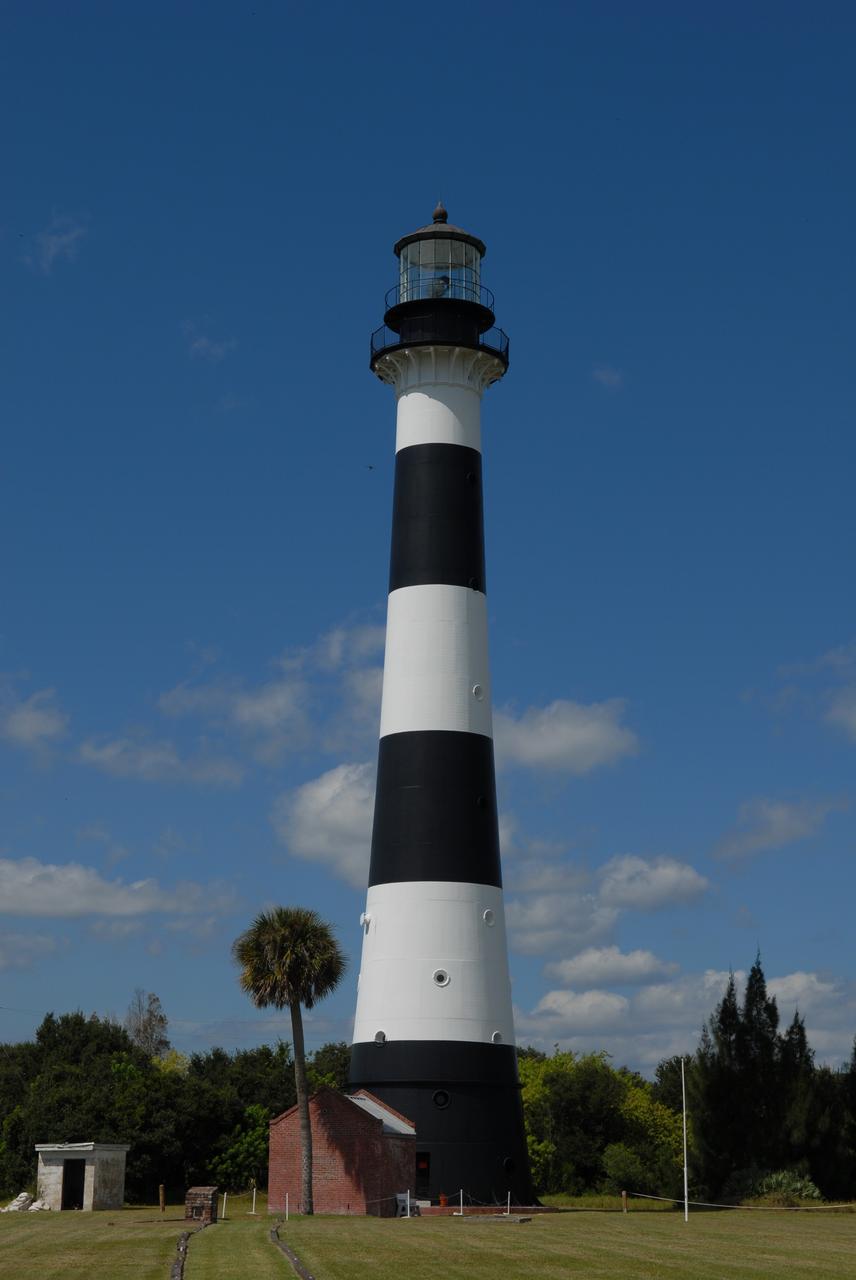
CAPE CANAVERAL, Fla. – The Cape Canaveral Lighthouse stands in the midst of space-age structures, a monolith born in another era of exploration. Located near Launch Complex 36 on Cape Canaveral Air Force Station, the Coast Guard transferred ownership in 2000 of the lighthouse structure and its grounds to the U.S. Air Force, which is now responsible for maintaining it. A restoration of the lighthouse was completed by the Air Force in 2007. The Coast Guard continues to maintain the beacon as an active navigational aid. For the history of the lighthouse, visit http://www.nasa.gov/centers/kennedy/about/history/lighthouse.html. For current information, visit http://www.CanaveralLight.org. Photo credit: NASA/Jim Grossmann
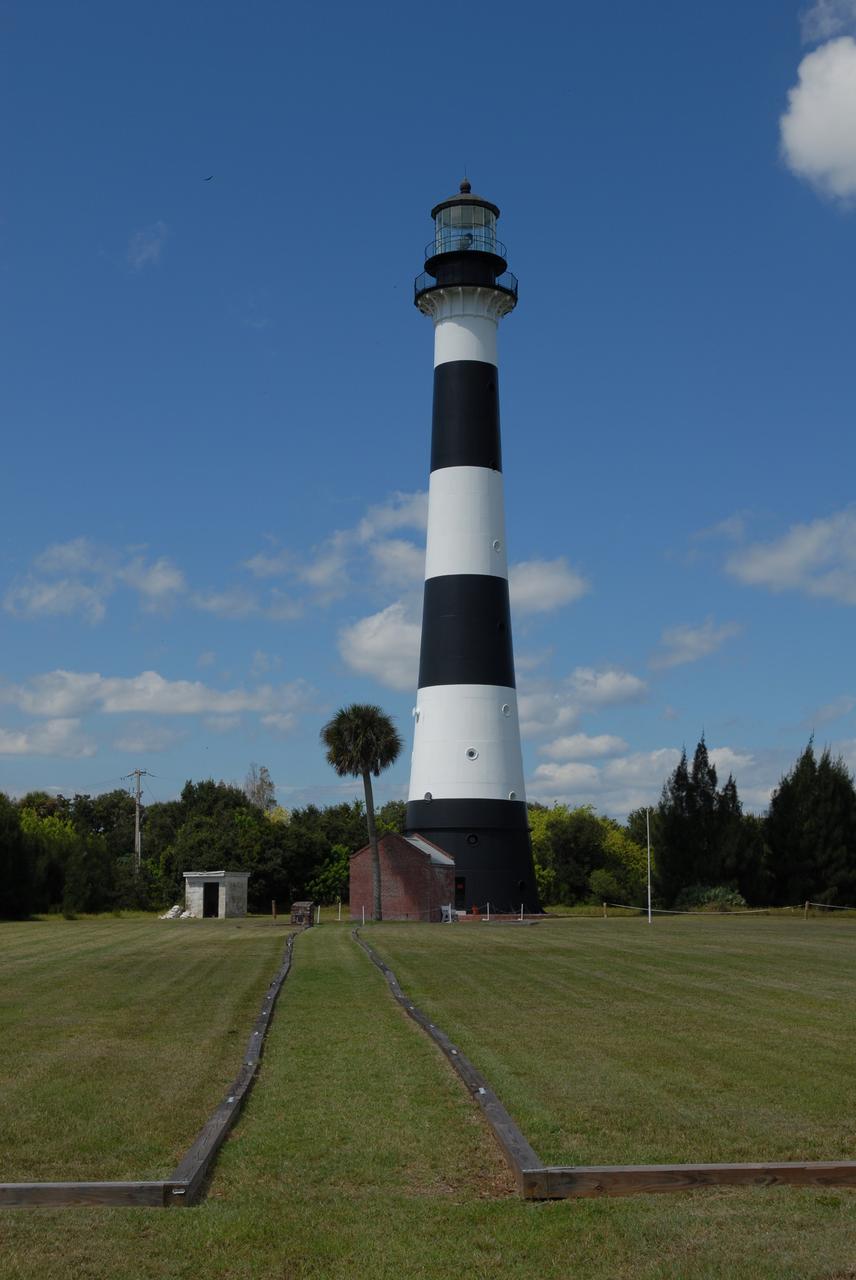
CAPE CANAVERAL, Fla. – The Cape Canaveral Lighthouse stands in the midst of space-age structures, a monolith born in another era of exploration. Located near Launch Complex 36 on Cape Canaveral Air Force Station, the Coast Guard transferred ownership in 2000 of the lighthouse structure and its grounds to the U.S. Air Force, which is now responsible for maintaining it. A restoration of the lighthouse was completed by the Air Force in 2007. The Coast Guard continues to maintain the beacon as an active navigational aid. For the history of the lighthouse, visit http://www.nasa.gov/centers/kennedy/about/history/lighthouse.html. For current information, visit http://www.CanaveralLight.org. Photo credit: NASA/Jim Grossmann
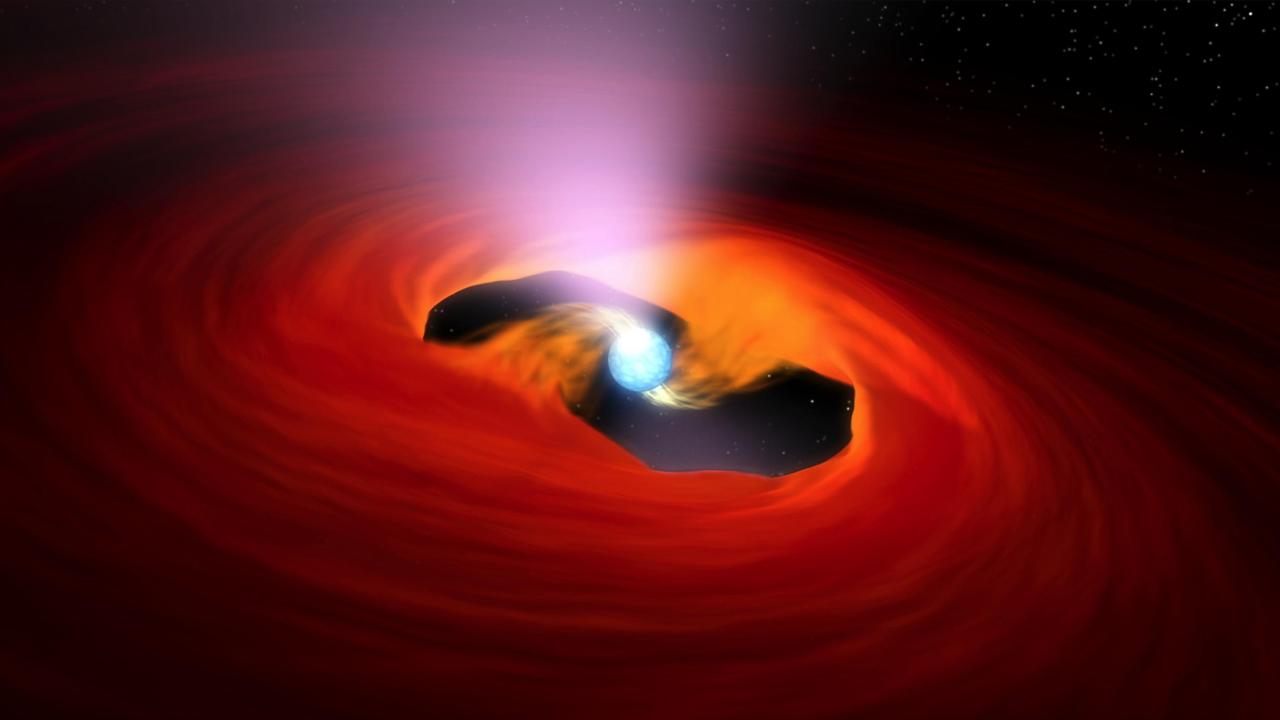
This image shows a neutron star -- the core of a star that exploded in a massive supernova. This particular neutron star is known as a pulsar because it sends out rotating beams of X-rays that sweep past Earth like lighthouse beacons.
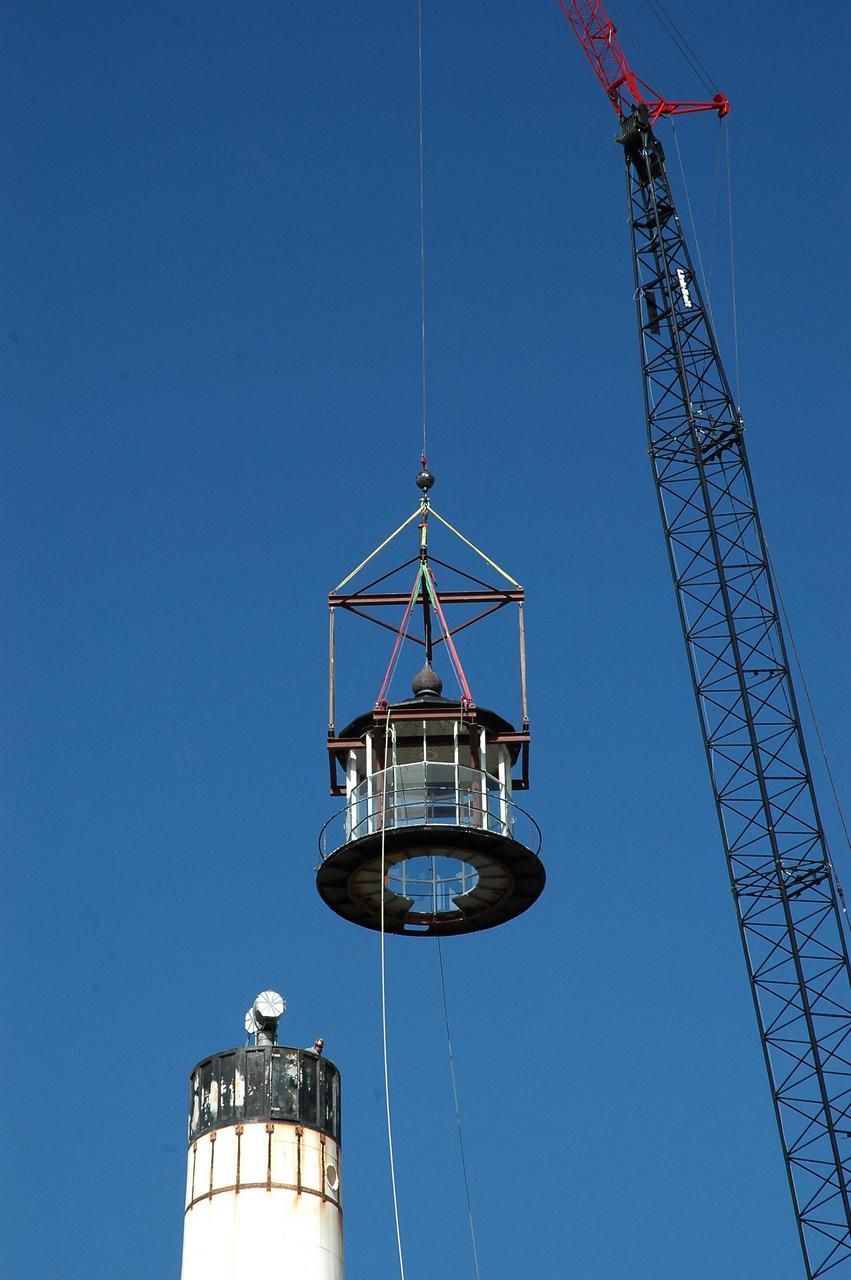
KENNEDY SPACE CENTER, FLA. - At Cape Canaveral Air Force Station, a crane swings the detached lamp room clear of the beacon on the Cape Canaveral Lighthouse. Leaks in the roof allowed moisture to seep in. The lamp room is being removed for repairs and refurbishment. In addition, the original brass roof will be restored and put back in place. The Cape Canaveral Lighthouse is the only operational lighthouse owned by the Air Force. It was first erected in 1868 near the edge of the Atlantic Ocean. Photo credit: NASA/Jack Pfaller
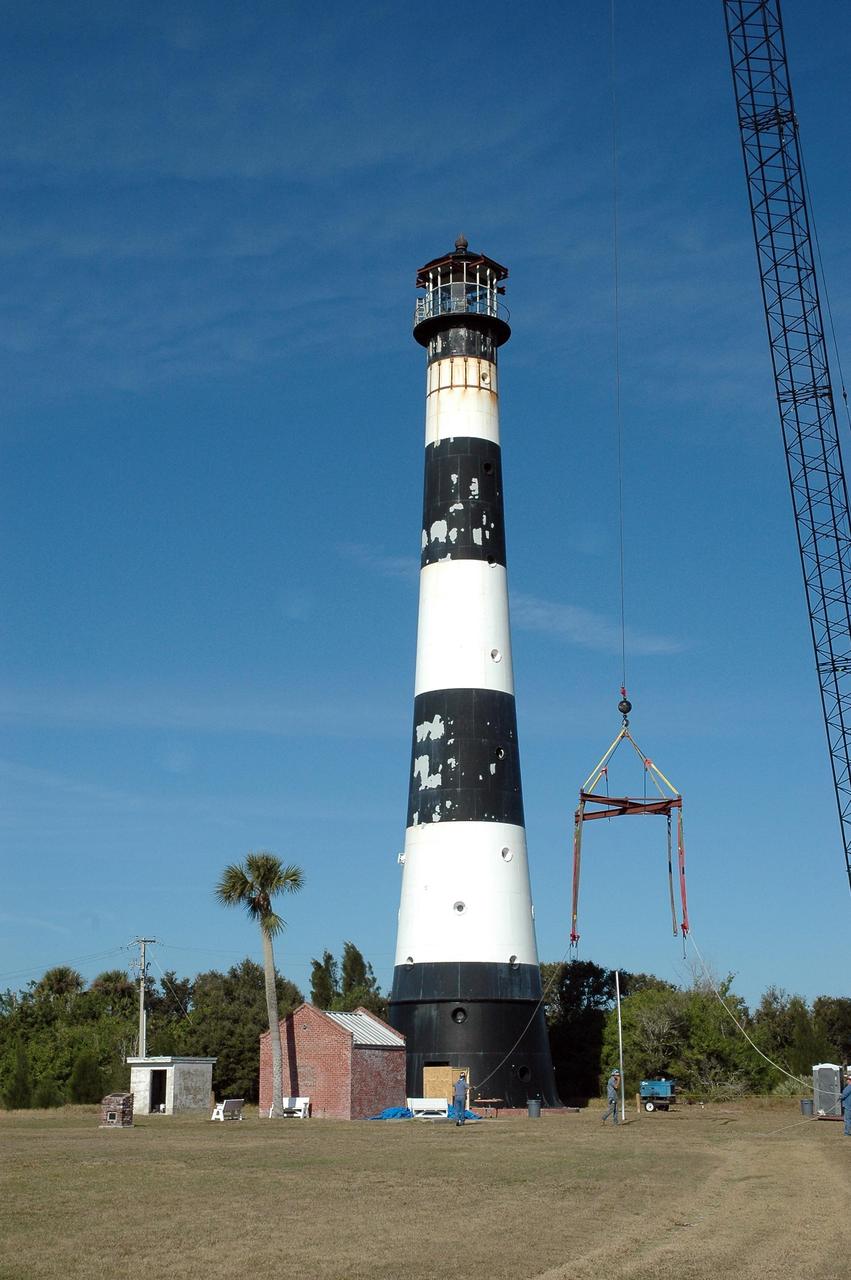
KENNEDY SPACE CENTER, FLA. - At Cape Canaveral Air Force Station, a crane is lifted near the Cape Canaveral Lighthouse for use in removing the lamp room at top. Leaks in the roof allowed moisture to seep in. The lamp room is being removed for repairs and refurbishment. In addition, the original brass roof will be restored and put back in place. The Cape Canaveral Lighthouse is the only operational lighthouse owned by the Air Force. It was first erected in 1868 near the edge of the Atlantic Ocean. Photo credit: NASA/Jack Pfaller
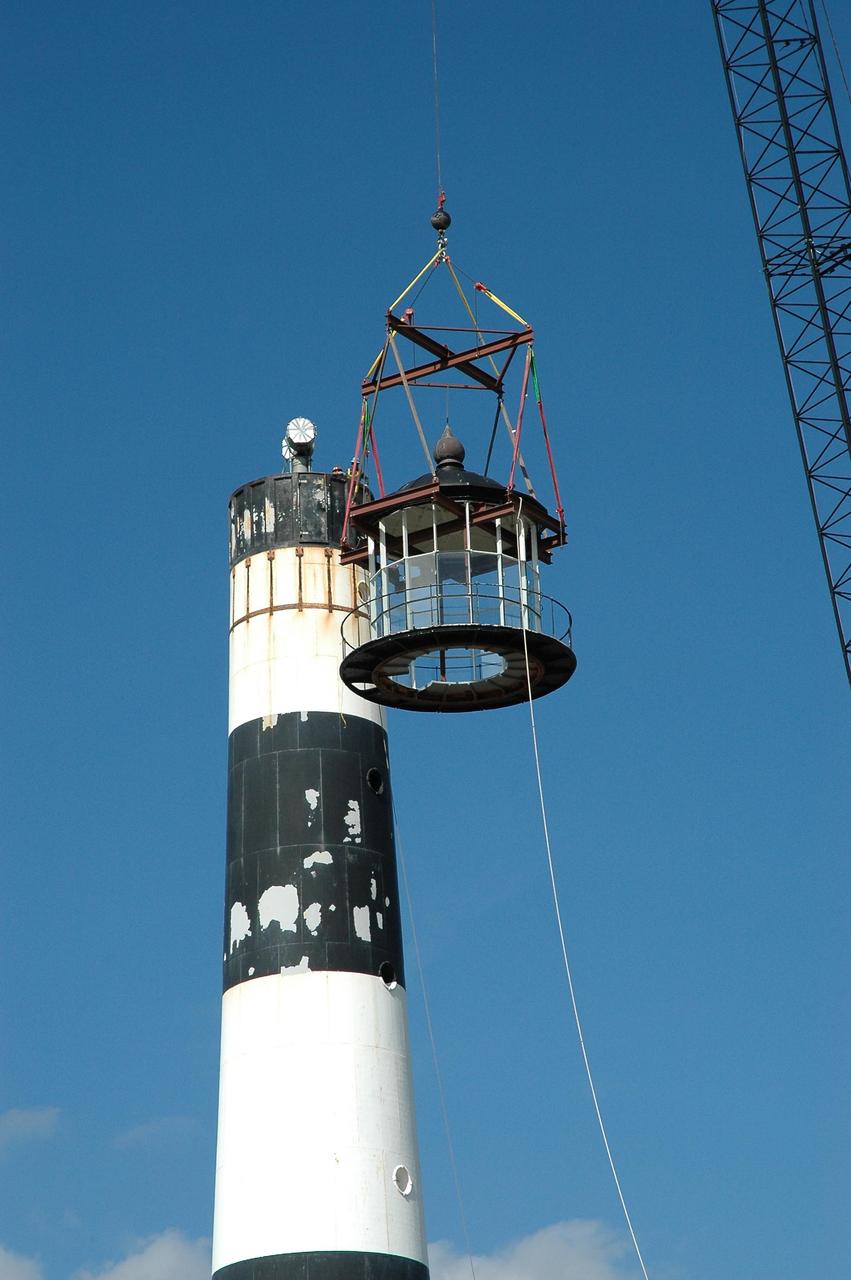
KENNEDY SPACE CENTER, FLA. - At Cape Canaveral Air Force Station, a crane lowers the detached lamp room alongside the Cape Canaveral Lighthouse. Leaks in the roof allowed moisture to seep in. The lamp room is being removed for repairs and refurbishment. In addition, the original brass roof will be restored and put back in place. The Cape Canaveral Lighthouse is the only operational lighthouse owned by the Air Force. It was first erected in 1868 near the edge of the Atlantic Ocean. Photo credit: NASA/Jack Pfaller
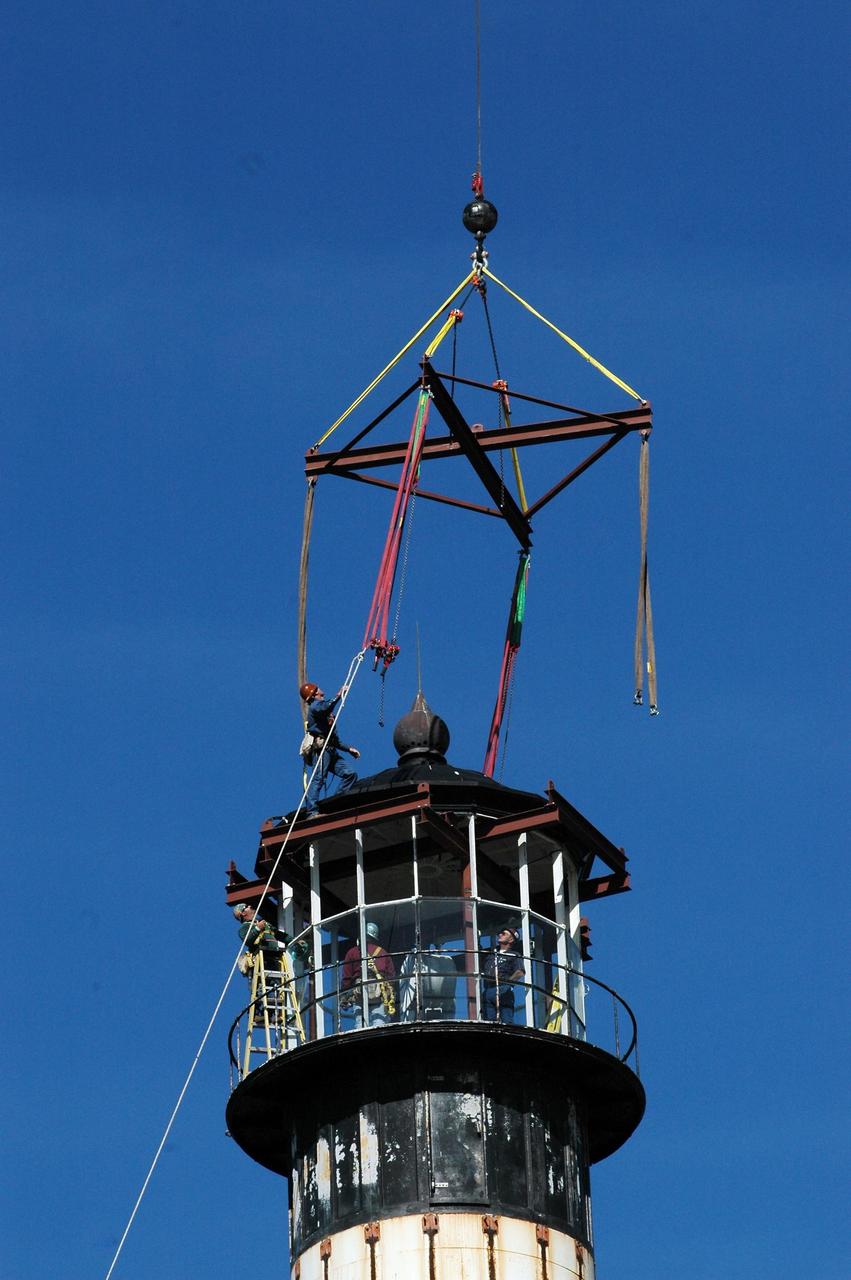
KENNEDY SPACE CENTER, FLA. - At Cape Canaveral Air Force Station, workers get ready to attach a crane to the top of the lamp room on the Cape Canaveral Lighthouse. Leaks in the roof allowed moisture to seep in. The lamp room is being removed for repairs and refurbishment. In addition, the original brass roof will be restored and put back in place. The Cape Canaveral Lighthouse is the only operational lighthouse owned by the Air Force. It was first erected in 1868 near the edge of the Atlantic Ocean. Photo credit: NASA/Jack Pfaller
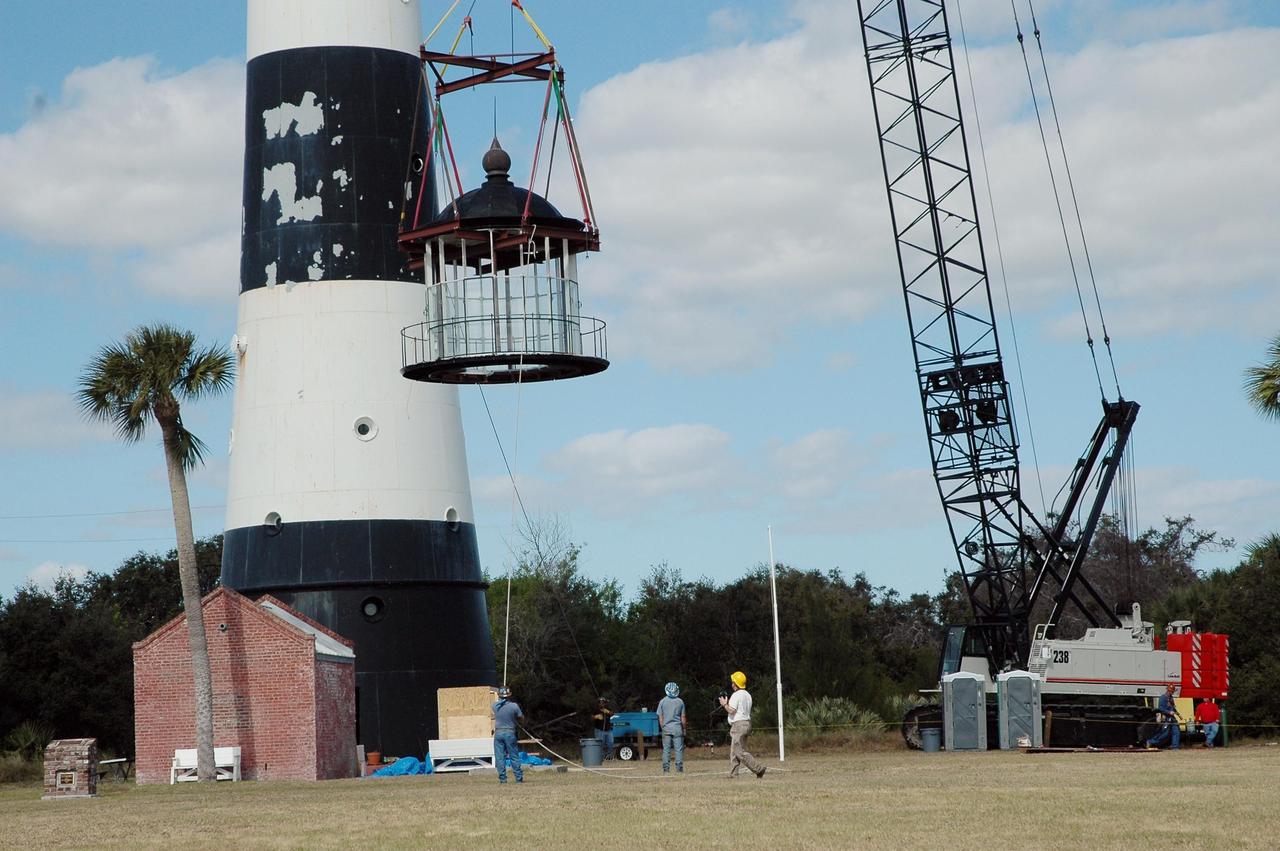
KENNEDY SPACE CENTER, FLA. - At Cape Canaveral Air Force Station, workers below help guide the detached lamp room from the Cape Canaveral Lighthouse onto the ground. Leaks in the roof allowed moisture to seep in. The lamp room is being removed for repairs and refurbishment. In addition, the original brass roof will be restored and put back in place. The Cape Canaveral Lighthouse is the only operational lighthouse owned by the Air Force. It was first erected in 1868 near the edge of the Atlantic Ocean. Photo credit: NASA/Jack Pfaller
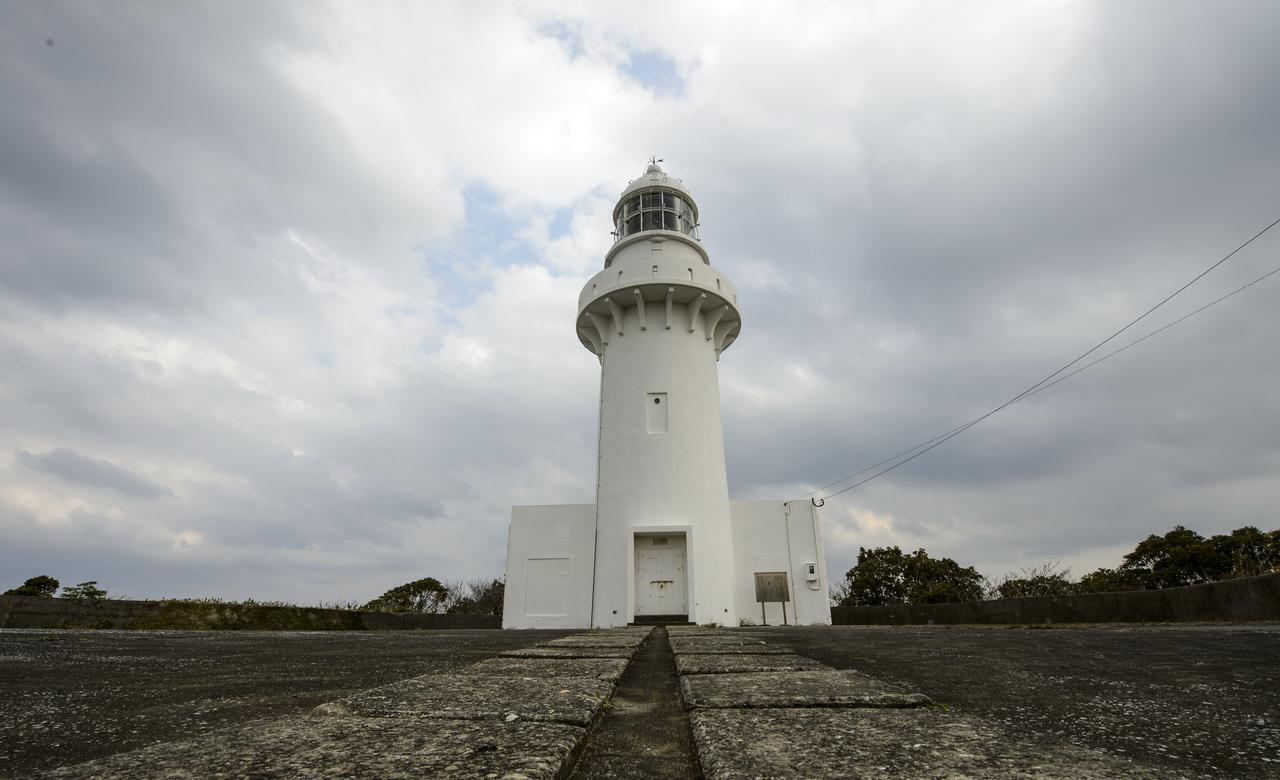
The Tanegashima Space Center (TNSC) lighthouse is seen on Sunday, Feb. 23, 2014, Tanegashima Island, Japan. A Japanese H-IIA rocket carrying the NASA-Japan Aerospace Exploration Agency (JAXA), Global Precipitation Measurement (GPM) Core Observatory is planned for launch from the space center on Feb. 28, 2014. Once launched, the GPM spacecraft will collect information that unifies data from an international network of existing and future satellites to map global rainfall and snowfall every three hours. Photo Credit: (NASA/Bill Ingalls)
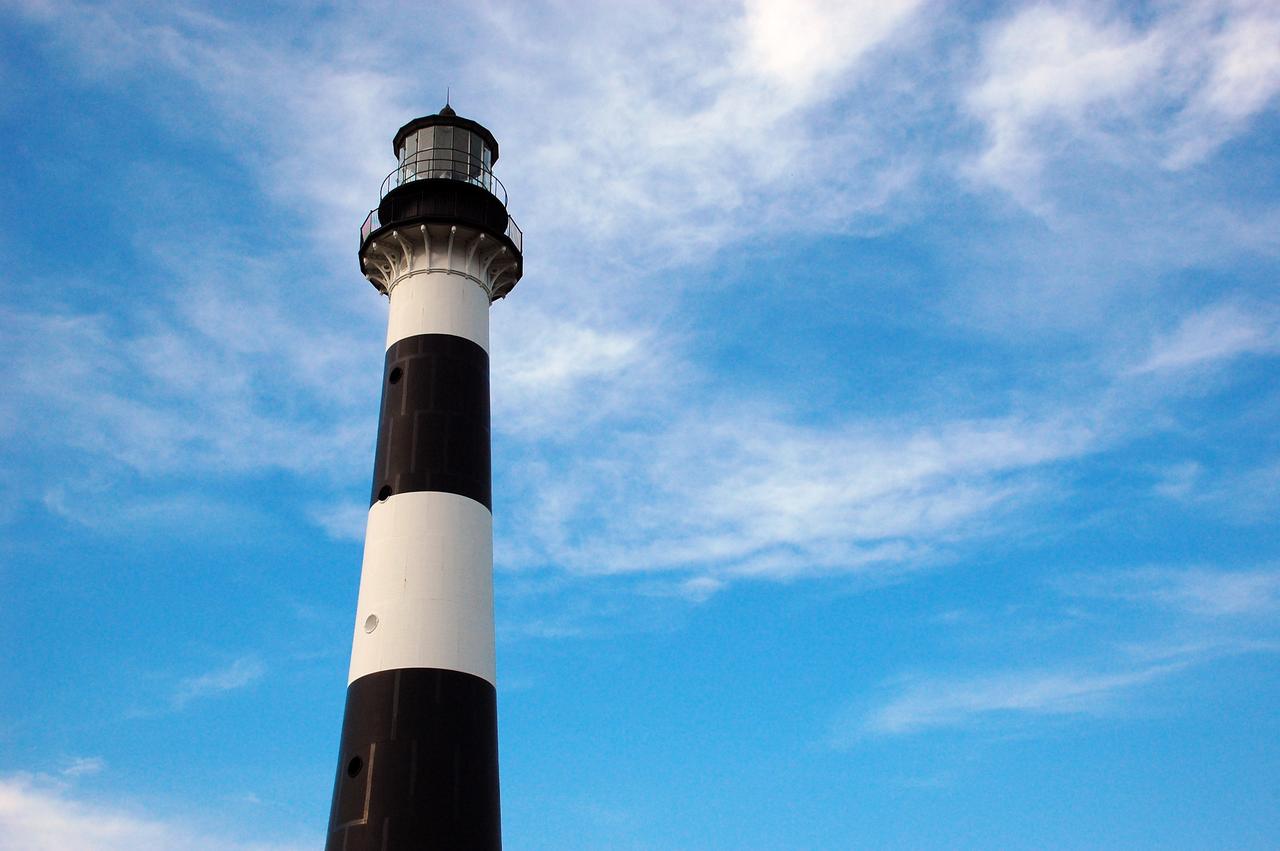
CAPE CANAVERAL, Fla. -- The historic Cape Canaveral Light on Cape Canaveral Air Force Station in Florida serves as a navigational aid for boaters and fishing interests along Florida's Atlantic coast. The U.S. Coast Guard operates the lighthouse's beacon the U.S. Air Force owns the lighthouse. The first lighthouse on Cape Canaveral was built near the tip of the Cape in 1848. The structure was only about 60 feet high with a rather dim light powered by whale oil. In 1859, work began nearby on a new, taller iron structure. Construction was halted during the Civil War, and the lighthouse was not finished until 1868. The structure, with a brick lining inside its iron exterior, was painted with its "daymark" black and white horizontal bands in 1873 to make it easier to identify during the day as a navigation point. Between 1892 and 1894, the lighthouse was dismantled and moved to a new location about a mile from the coast, where it stands today. For more information on the lighthouse, visit http://www.nasa.gov/centers/kennedy/about/history/lighthouse.html. Photo credit: NASA/Ben Smegelsky
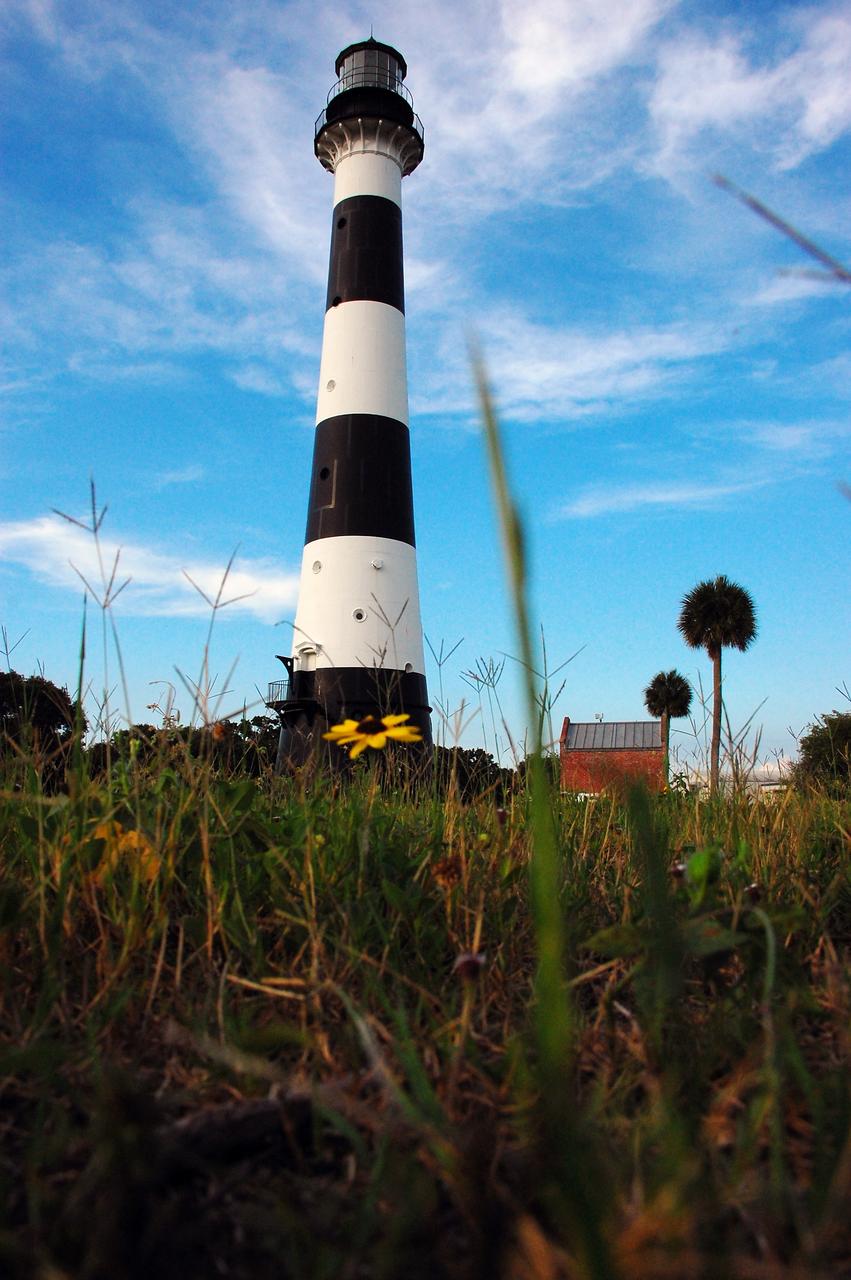
CAPE CANAVERAL, Fla. -- Natural vegetation surrounds the historic Cape Canaveral Light on Cape Canaveral Air Force Station in Florida. The low structure to the right of the lighthouse is the original oil house. The U.S. Air Force now owns the lighthouse. The first lighthouse on Cape Canaveral was built near the tip of the Cape in 1848. The structure was only about 60 feet high with a rather dim light powered by whale oil. In 1859, work began nearby on a new, taller iron structure. Construction was halted during the Civil War, and the lighthouse was not finished until 1868. The structure, with a brick lining inside its iron exterior, was painted with its "daymark" black and white horizontal bands in 1873 to make it easier to identify during the day as a navigation point. Between 1892 and 1894, the lighthouse was dismantled and moved to a new location about a mile from the coast, where it stands today. For more information on the lighthouse, visit http://www.nasa.gov/centers/kennedy/about/history/lighthouse.html. Photo credit: NASA/Ben Smegelsky
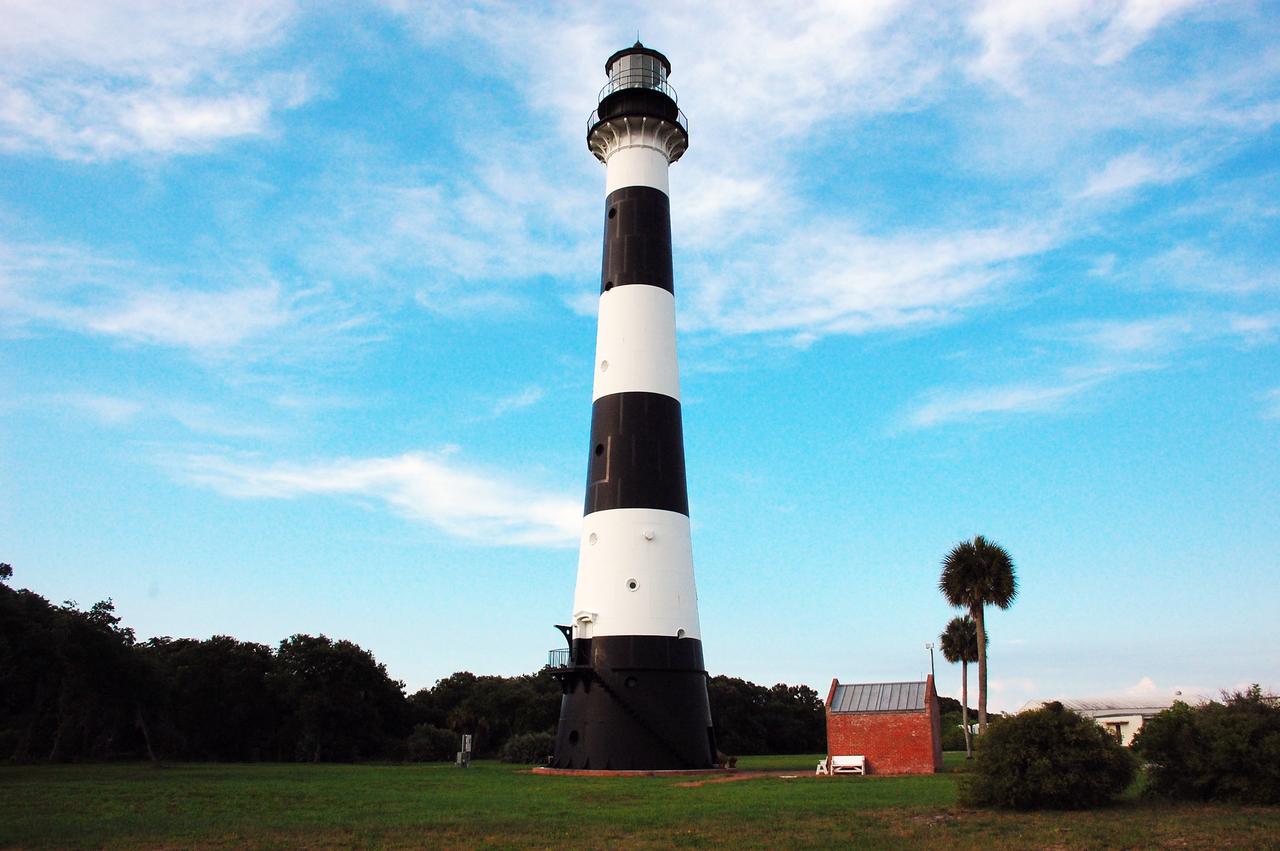
CAPE CANAVERAL, Fla. -- Reconstruction from the original architectural plans of the keeper's house, next to the historic Cape Canaveral Light on Cape Canaveral Air Force Station in Florida, is planned by the Cape Canaveral Lighthouse Foundation. The lighthouse currently is owned by the U.S. Air Force. The first lighthouse on Cape Canaveral was built near the tip of the Cape in 1848. The structure was only about 60 feet high with a rather dim light powered by whale oil. In 1859, work began nearby on a new, taller iron structure. Construction was halted during the Civil War, and the lighthouse was not finished until 1868. The structure, with a brick lining inside its iron exterior, was painted with its "daymark" black and white horizontal bands in 1873 to make it easier to identify during the day as a navigation point. Between 1892 and 1894, the lighthouse was dismantled and moved to a new location about a mile from the coast, where it stands today. For more information on the lighthouse, visit http://www.nasa.gov/centers/kennedy/about/history/lighthouse.html. Photo credit: NASA/Ben Smegelsky
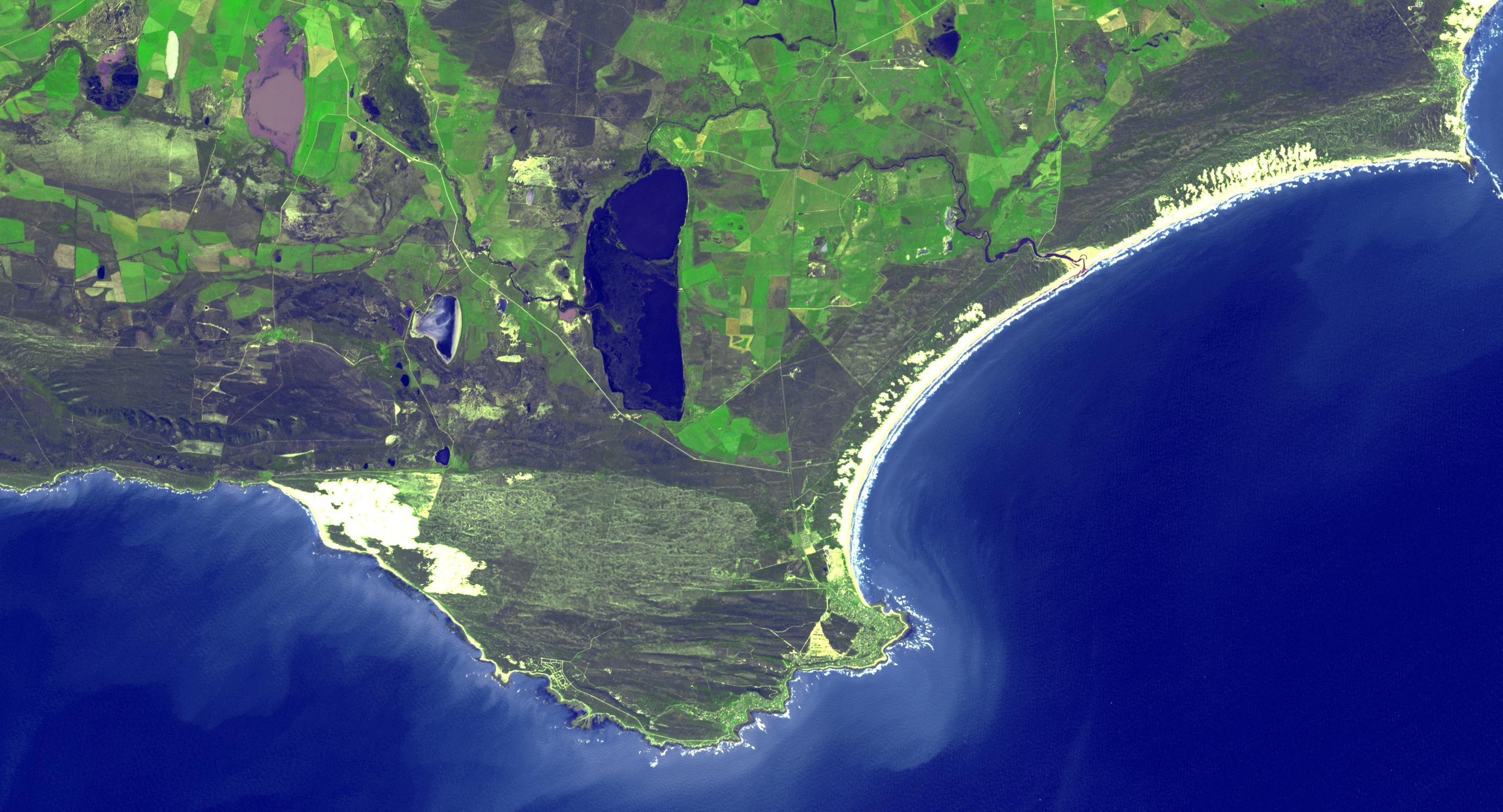
The southernmost tip of Africa is marked by the Cape Agulhas lighthouse. The warm Atlantic Agulhas current meets the cold water Indian Ocean Benguela current, creating treacherous seas that have claimed many ships over the last 450 years. The image covers an area of 22.5 by 41.1 kilometers, was acquired September 27, 2006, and is located at 34.8 degrees south, 20 degrees east. http://photojournal.jpl.nasa.gov/catalog/PIA21014
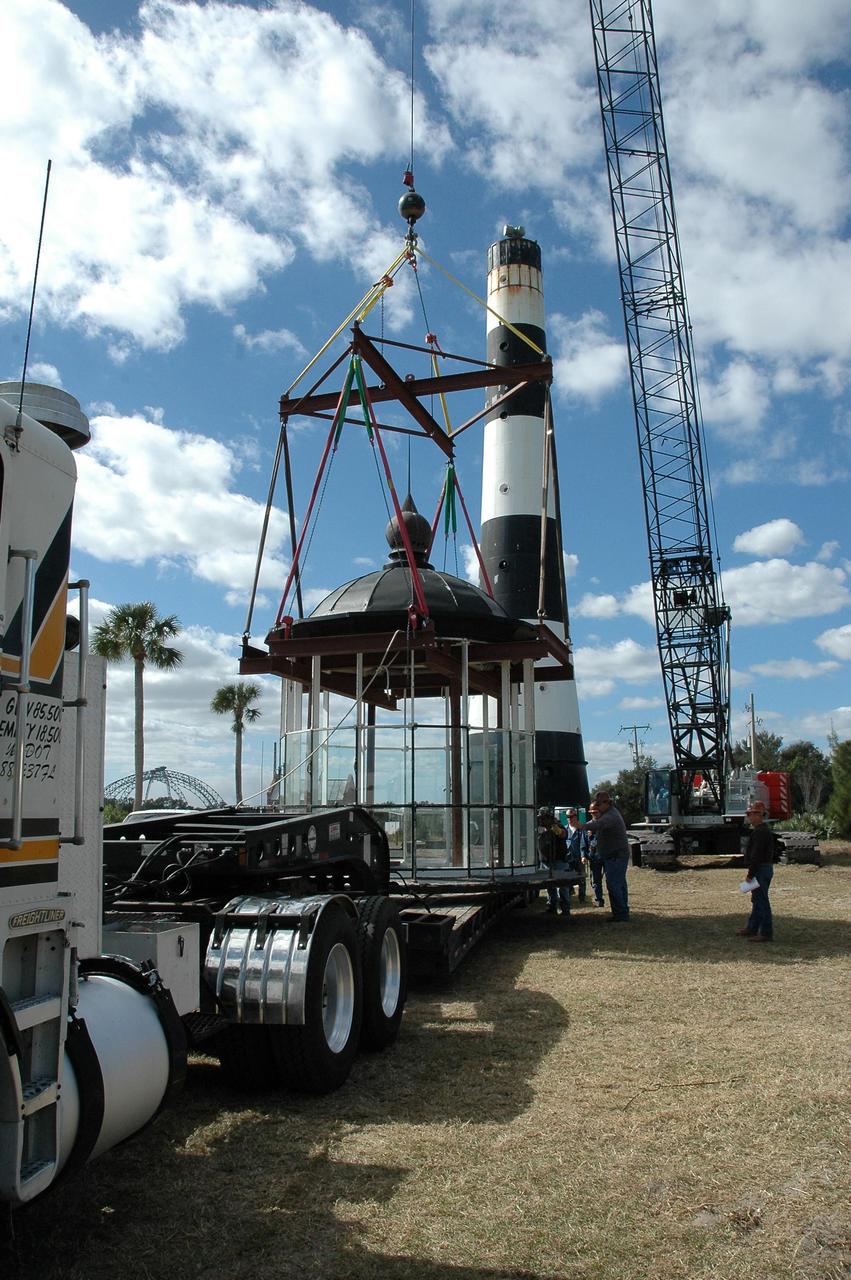
KENNEDY SPACE CENTER, FLA. - At Cape Canaveral Air Force Station, workers secure the lamp room detached from the Cape Canaveral Lighthouse onto a flat bed truck. Leaks in the roof allowed moisture to seep in. The lamp room will be moved to a facility near Cape Canaveral for repairs and renovation. The lamp room is being removed for repairs and refurbishment. In addition, the original brass roof will be restored and put back in place. The Cape Canaveral Lighthouse is the only operational lighthouse owned by the Air Force. It was first erected in 1868 near the edge of the Atlantic Ocean. Photo credit: NASA/Jack Pfaller
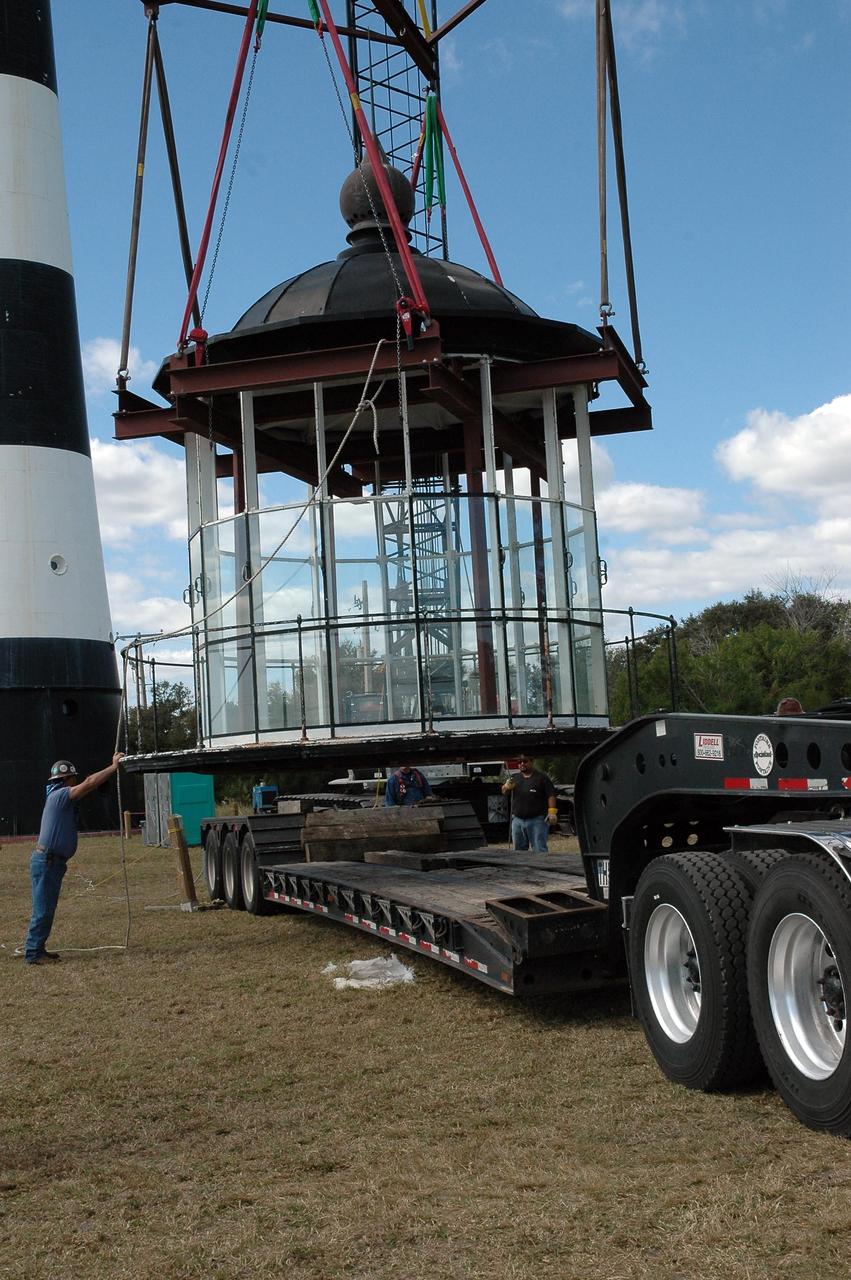
KENNEDY SPACE CENTER, FLA. - At Cape Canaveral Air Force Station, workers help place the lamp room detached from the Cape Canaveral Lighthouse onto a flat bed truck. It will be moved to a facility near Cape Canaveral for repairs and renovation. Leaks in the roof allowed moisture to seep in. The lamp room is being removed for repairs and refurbishment. In addition, the original brass roof will be restored and put back in place. The Cape Canaveral Lighthouse is the only operational lighthouse owned by the Air Force. It was first erected in 1868 near the edge of the Atlantic Ocean. Photo credit: NASA/Jack Pfaller

KENNEDY SPACE CENTER, FLA. -- A crane is ready to lift a refurbished lantern to the top of the Cape Canaveral Lighthouse, capping more than a year's work toward restoration of the 150-year-old beacon. The work included sandblasting the metal shell and filling the corrosion pits with epoxy, refurbishing the balcony and repairing the lantern. To further the restoration, the Cape Canaveral Lighthouse Foundation plans to rebuild the lighthouse keeper's quarters from the original plans, as well as establish space for its archives and develop a meeting place. The only lighthouse in the nation operated by the Air Force, it began guiding mariners in 1868. An encroaching sea caused it to be moved inland and it was re-lighted in 1894 at its present location. The refurbishment was sponsored by the U.S. Air Force 45th Space Wing, whose officials said they wanted to help preserve the area's history. The original brass roof, which had been in storage since its removal years ago, has been restored and once again tops the lighthouse. As it is an active aid to navigation, the U.S. Coast Guard continues to be responsible for the optic, or light, which has a range of up to 22 nautical miles. Photo credit: NASA/Kim Shiflett
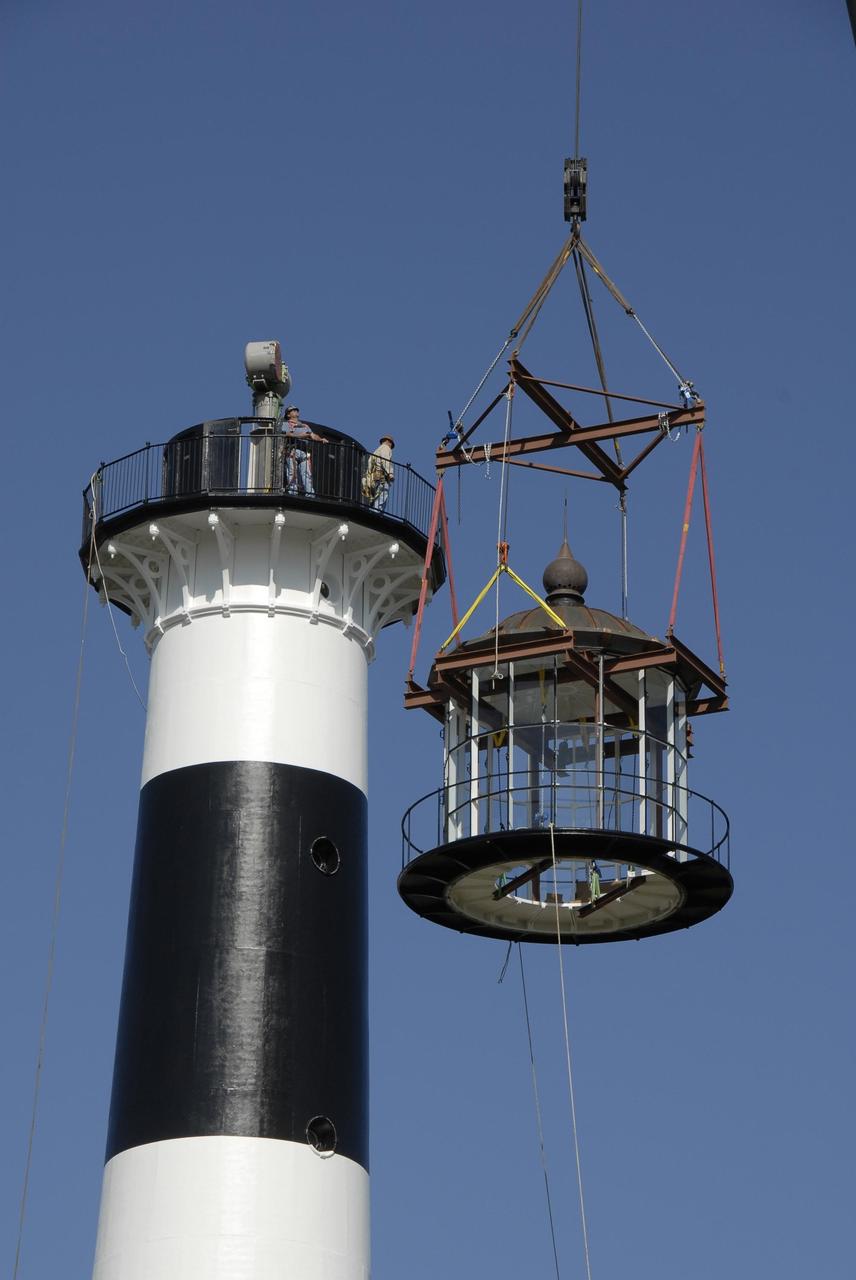
KENNEDY SPACE CENTER, FLA. -- A crane lifts a refurbished lantern to place on top of the Cape Canaveral Lighthouse, capping more than a year's work toward a $1 million restoration of the 150-year-old beacon. The work included sandblasting the metal shell and filling the corrosion pits with epoxy, refurbishing the balcony and repairing the lantern. To further the restoration, the Cape Canaveral Lighthouse Foundation plans to rebuild the lighthouse keeper's quarters from the original plans, as well as establish space for its archives and develop a meeting place. The only lighthouse in the nation operated by the Air Force, it began guiding mariners in 1868. An encroaching sea caused it to be moved inland and it was re-lighted in 1894 at its present location. The refurbishment was sponsored by the U.S. Air Force 45th Space Wing, whose officials said they wanted to help preserve the area's history. The original brass roof, which had been in storage since its removal years ago, has been restored and once again tops the lighthouse. As it is an active aid to navigation, the U.S. Coast Guard continues to be responsible for the optic, or light, which has a range of up to 22 nautical miles. Photo credit: NASA/Kim Shiflett
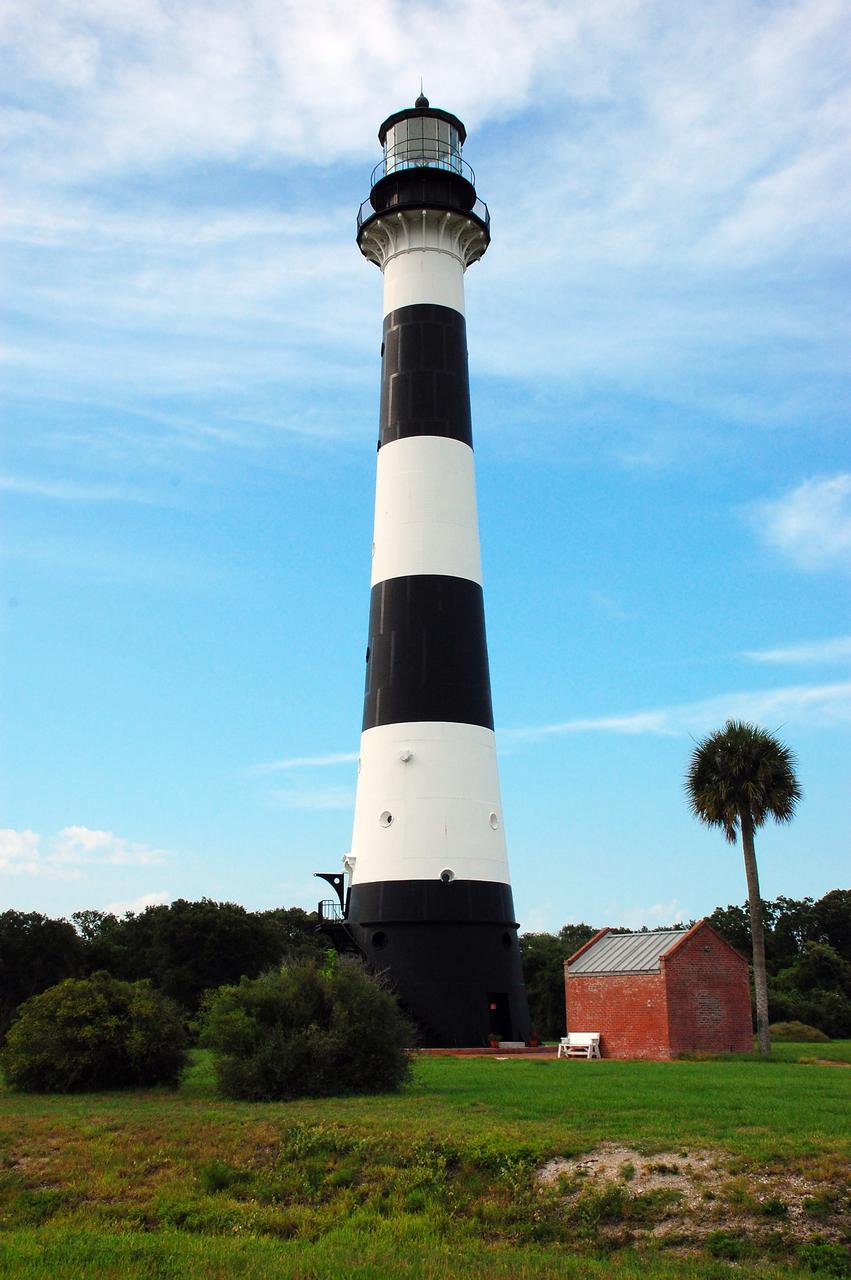
CAPE CANAVERAL, Fla. -- Cape Canaveral Air Force Station in Florida is home to the historic Cape Canaveral Light, a lighthouse built circa 1868 and now owned by the U.S. Air Force. The first lighthouse on Cape Canaveral was built near the tip of the Cape in 1848. The structure was only about 60 feet high with a rather dim light powered by whale oil. In 1859, work began nearby on a new, taller iron structure. Construction was halted during the Civil War, and the lighthouse was not finished until 1868. The structure, with a brick lining inside its iron exterior, was painted with its "daymark" black and white horizontal bands in 1873 to make it easier to identify during the day as a navigation point. Between 1892 and 1894, the lighthouse was dismantled and moved to a new location about a mile from the coast, where it stands today. For more information on the lighthouse, visit http://www.nasa.gov/centers/kennedy/about/history/lighthouse.html. Photo credit: NASA/Ben Smegelsky
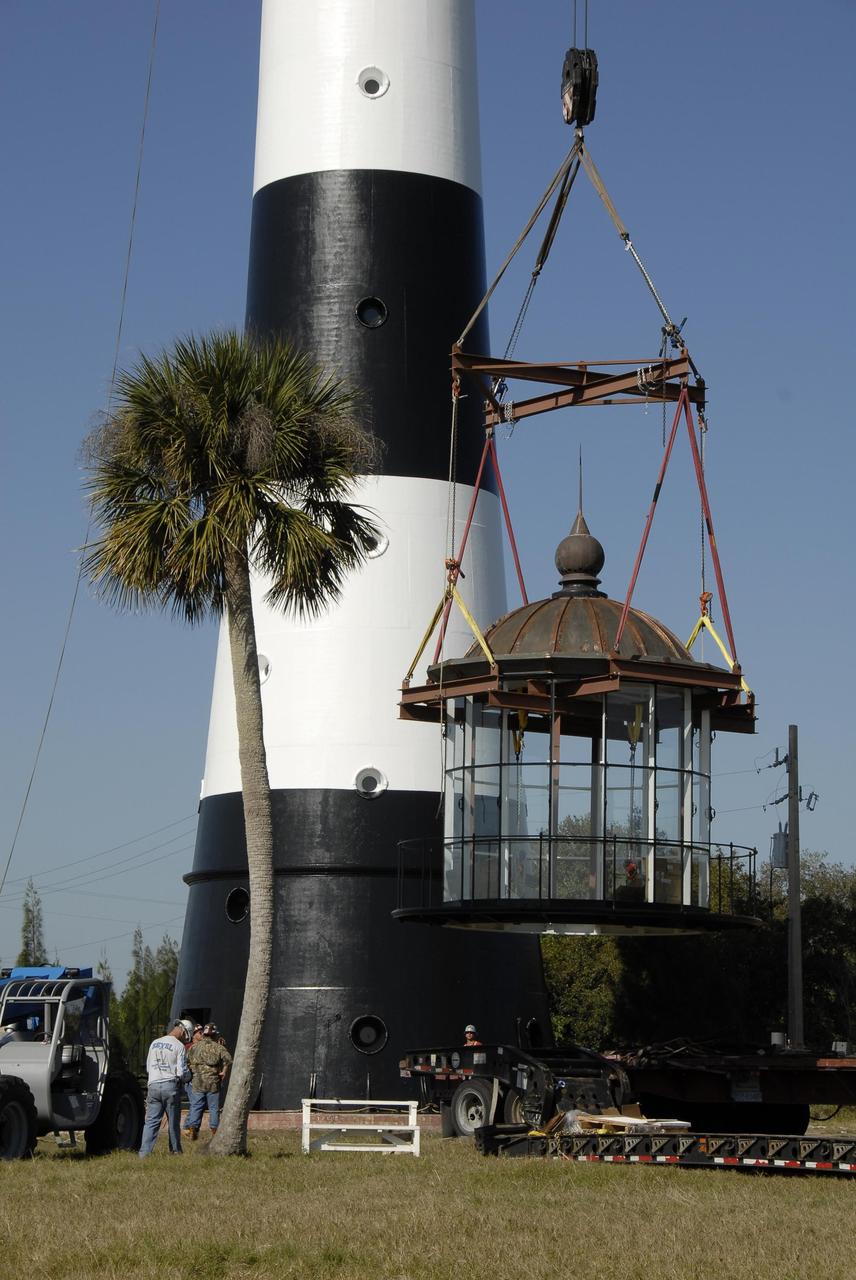
KENNEDY SPACE CENTER, FLA. -- A crane lifts a refurbished lantern to place on top of the Cape Canaveral Lighthouse, capping more than a year's work toward a $1 million restoration of the 150-year-old beacon. The work included sandblasting the metal shell and filling the corrosion pits with epoxy, refurbishing the balcony and repairing the lantern. To further the restoration, the Cape Canaveral Lighthouse Foundation plans to rebuild the lighthouse keeper's quarters from the original plans, as well as establish space for its archives and develop a meeting place. The only lighthouse in the nation operated by the Air Force, it began guiding mariners in 1868. An encroaching sea caused it to be moved inland and it was re-lighted in 1894 at its present location. The refurbishment was sponsored by the U.S. Air Force 45th Space Wing, whose officials said they wanted to help preserve the area's history. The original brass roof, which had been in storage since its removal years ago, has been restored and once again tops the lighthouse. As it is an active aid to navigation, the U.S. Coast Guard continues to be responsible for the optic, or light, which has a range of up to 22 nautical miles. Photo credit: NASA/Kim Shiflett
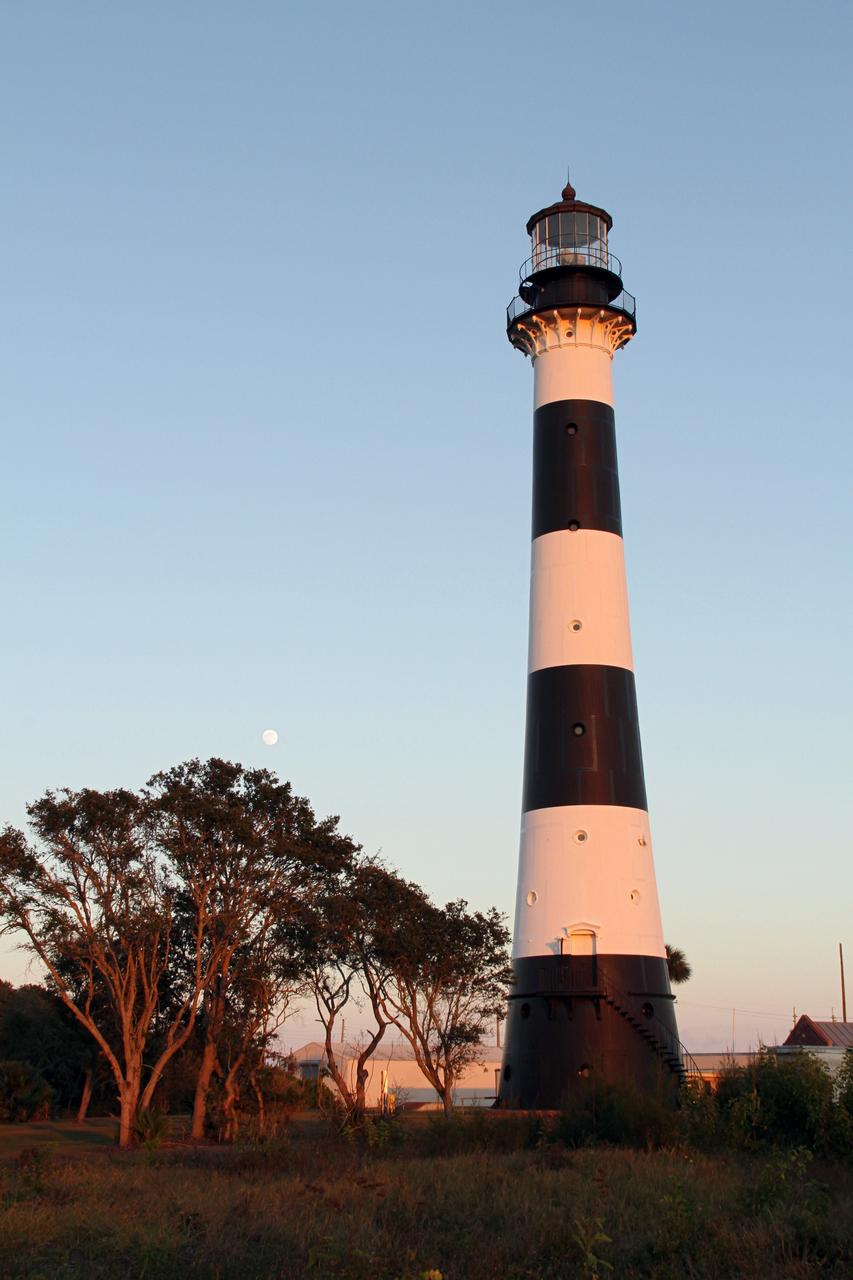
CAPE CANAVERAL AIR FORCE STATION, Fla. – The Cape Canaveral Air Force Station lighthouse takes on a warm glow as dawn breaks and a full moon still shines in the background. The Canaveral light is the only one owned by the U.S. Air Force. In 2000, the Coast Guard transferred ownership of the lighthouse structure and its grounds to the Air Force, which is now responsible for maintaining it. The U.S. Coast Guard continues to operate the beacon as an active navigational aid. The first lighthouse at Cape Canaveral was built near the tip of the Cape in 1848. The structure was only about 60 feet high with a rather dim light powered by whale oil. In 1859, work began nearby on a new, taller iron structure. Construction was halted during the Civil War, and the lighthouse finally was finished in 1868. The structure, with a brick lining inside its iron exterior, was painted with its "daymark" black and white horizontal bands in 1873 to make it easier to identify during the day as a navigation point. Between 1892 and 1894, the lighthouse was dismantled and moved to its new home about a mile from the coast, where it stands today. Photo credit: NASA/Ben Smegelsky
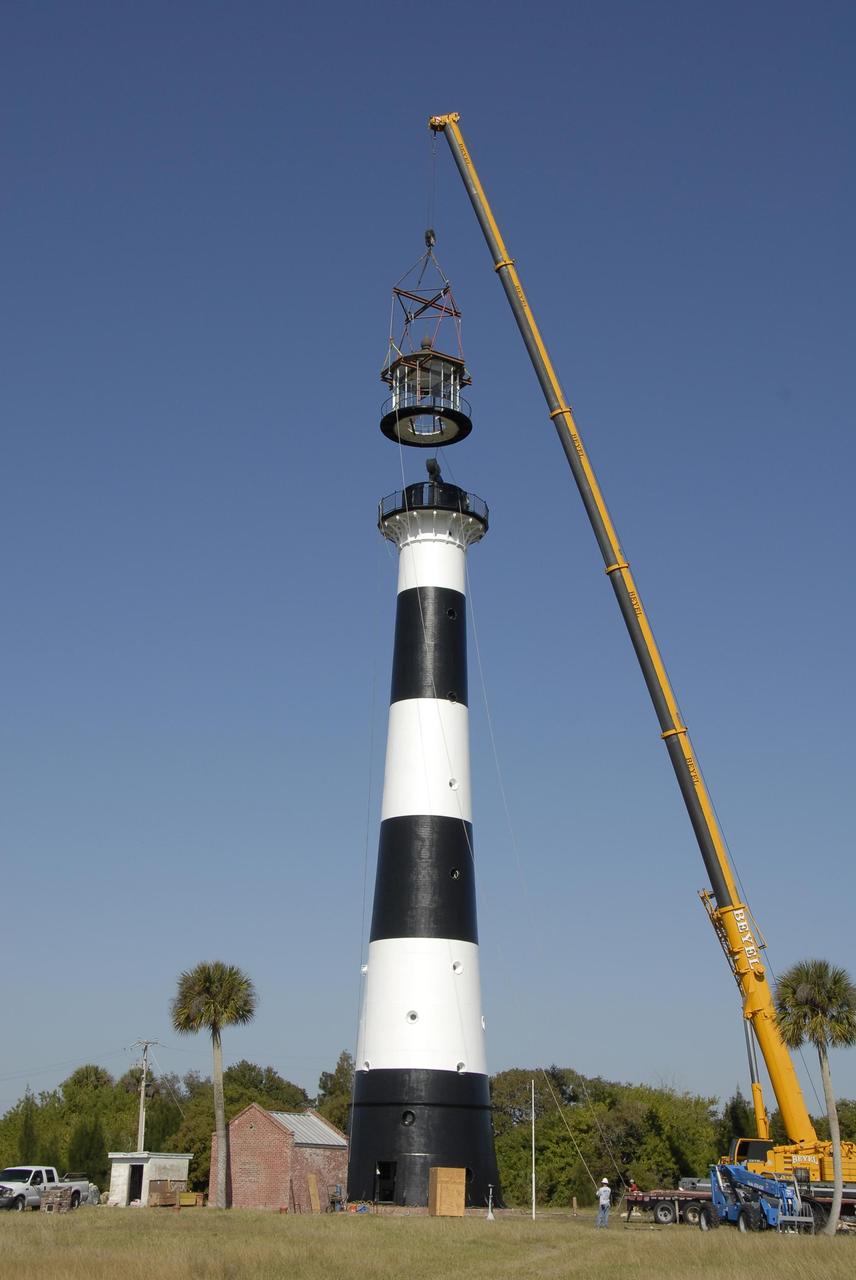
KENNEDY SPACE CENTER, FLA. -- A crane begins lowering a refurbished lantern on top of the Cape Canaveral Lighthouse, capping more than a year's work toward restoration of the 150-year-old beacon. The work included sandblasting the metal shell and filling the corrosion pits with epoxy, refurbishing the balcony and repairing the lantern. To further the restoration, the Cape Canaveral Lighthouse Foundation plans to rebuild the lighthouse keeper's quarters from the original plans, as well as establish space for its archives and develop a meeting place. The only lighthouse in the nation operated by the Air Force, it began guiding mariners in 1868. An encroaching sea caused it to be moved inland and it was re-lighted in 1894 at its present location. The refurbishment was sponsored by the U.S. Air Force 45th Space Wing, whose officials said they wanted to help preserve the area's history. The original brass roof, which had been in storage since its removal years ago, has been restored and once again tops the lighthouse. As it is an active aid to navigation, the U.S. Coast Guard continues to be responsible for the optic, or light, which has a range of up to 22 nautical miles. Photo credit: NASA/Kim Shiflett

CAPE CANAVERAL, Fla. -- A daisy thrives amidst the natural vegetation surrounding the historic Cape Canaveral Light on Cape Canaveral Air Force Station in Florida. The lighthouse currently is owned by the U.S. Air Force. The first lighthouse on Cape Canaveral was built near the tip of the Cape in 1848. The structure was only about 60 feet high with a rather dim light powered by whale oil. In 1859, work began nearby on a new, taller iron structure. Construction was halted during the Civil War, and the lighthouse was not finished until 1868. The structure, with a brick lining inside its iron exterior, was painted with its "daymark" black and white horizontal bands in 1873 to make it easier to identify during the day as a navigation point. Between 1892 and 1894, the lighthouse was dismantled and moved to a new location about a mile from the coast, where it stands today. For more information on the lighthouse, visit http://www.nasa.gov/centers/kennedy/about/history/lighthouse.html. Photo credit: NASA/Ben Smegelsky
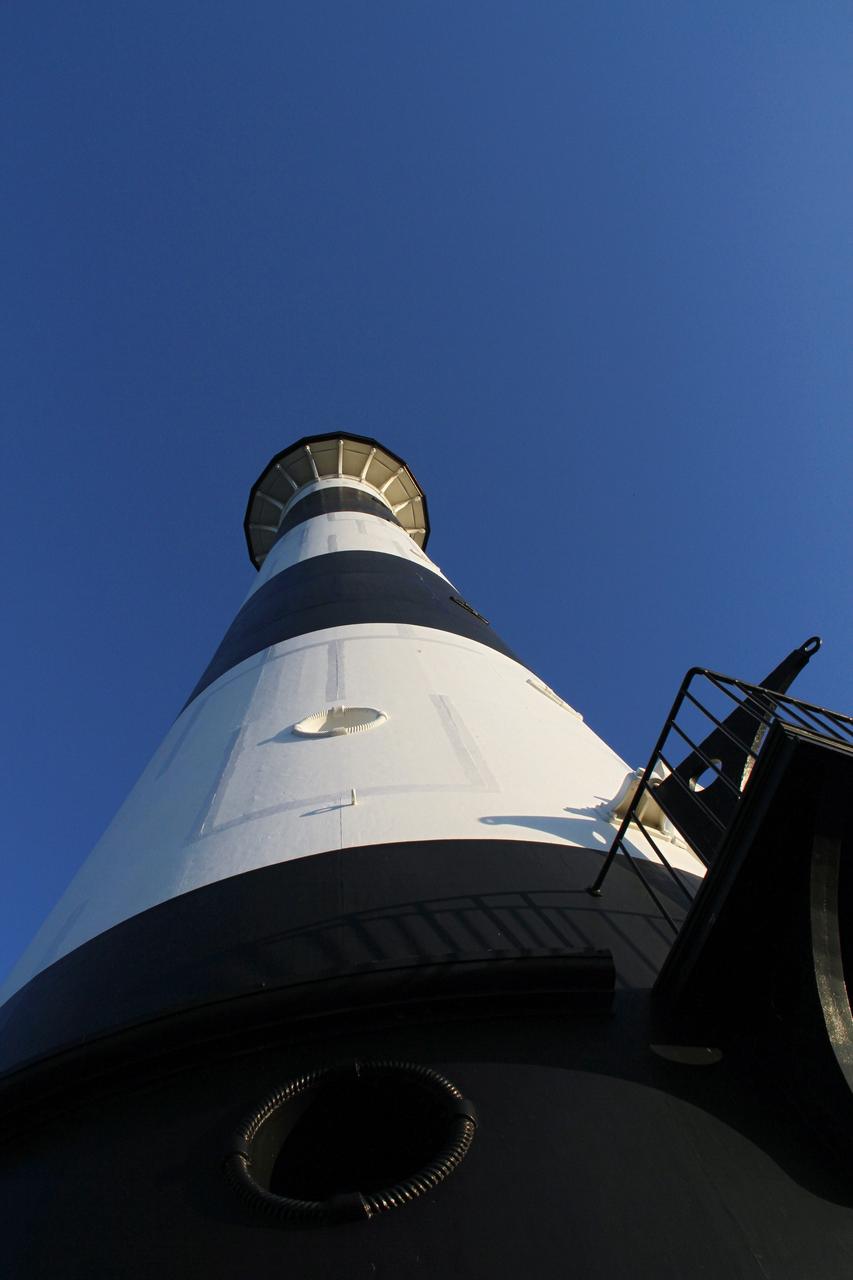
CAPE CANAVERAL AIR FORCE STATION, Fla. – This view looking up contrasts the black and white lighthouse at Cape Canaveral Air Force Station against the Florida sky. The Canaveral light is the only one owned by the U.S. Air Force. In 2000, the Coast Guard transferred ownership of the lighthouse structure and its grounds to the Air Force, which is now responsible for maintaining it. The U.S. Coast Guard continues to operate the beacon as an active navigational aid. The first lighthouse at Cape Canaveral was built near the tip of the Cape in 1848. The structure was only about 60 feet high with a rather dim light powered by whale oil. In 1859, work began nearby on a new, taller iron structure. Construction was halted during the Civil War, and the lighthouse finally was finished in 1868. The structure, with a brick lining inside its iron exterior, was painted with its "daymark" black and white horizontal bands in 1873 to make it easier to identify during the day as a navigation point. Between 1892 and 1894, the lighthouse was dismantled and moved to its new home about a mile from the coast, where it stands today. Photo credit: NASA/Ben Smegelsky
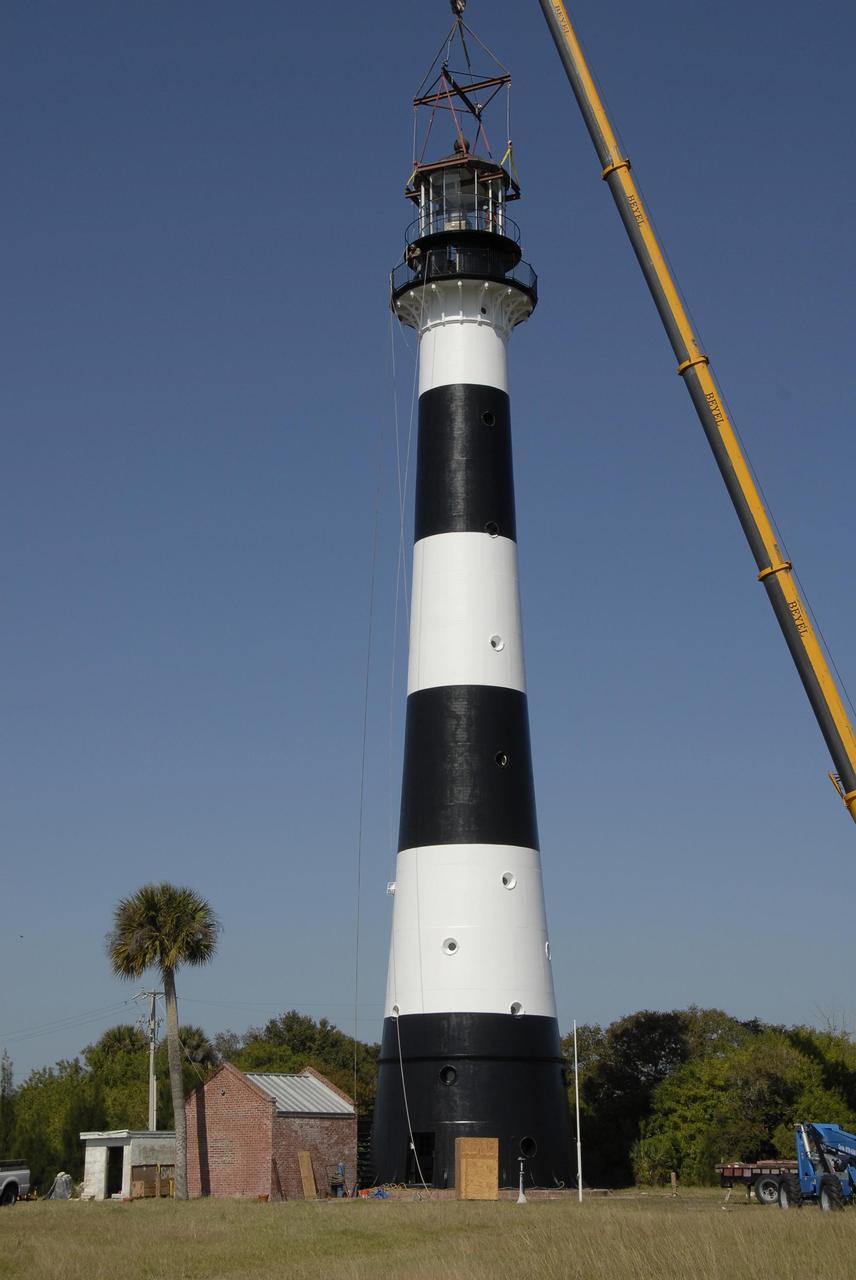
KENNEDY SPACE CENTER, FLA. -- A crane lowers a refurbished lantern on top of the Cape Canaveral Lighthouse, capping more than a year's work toward restoration of the 150-year-old beacon. The work included sandblasting the metal shell and filling the corrosion pits with epoxy, refurbishing the balcony and repairing the lantern. To further the restoration, the Cape Canaveral Lighthouse Foundation plans to rebuild the lighthouse keeper's quarters from the original plans, as well as establish space for its archives and develop a meeting place. The only lighthouse in the nation operated by the Air Force, it began guiding mariners in 1868. An encroaching sea caused it to be moved inland and it was re-lighted in 1894 at its present location. The refurbishment was sponsored by the U.S. Air Force 45th Space Wing, whose officials said they wanted to help preserve the area's history. The original brass roof, which had been in storage since its removal years ago, has been restored and once again tops the lighthouse. As it is an active aid to navigation, the U.S. Coast Guard continues to be responsible for the optic, or light, which has a range of up to 22 nautical miles. Photo credit: NASA/Kim Shiflett
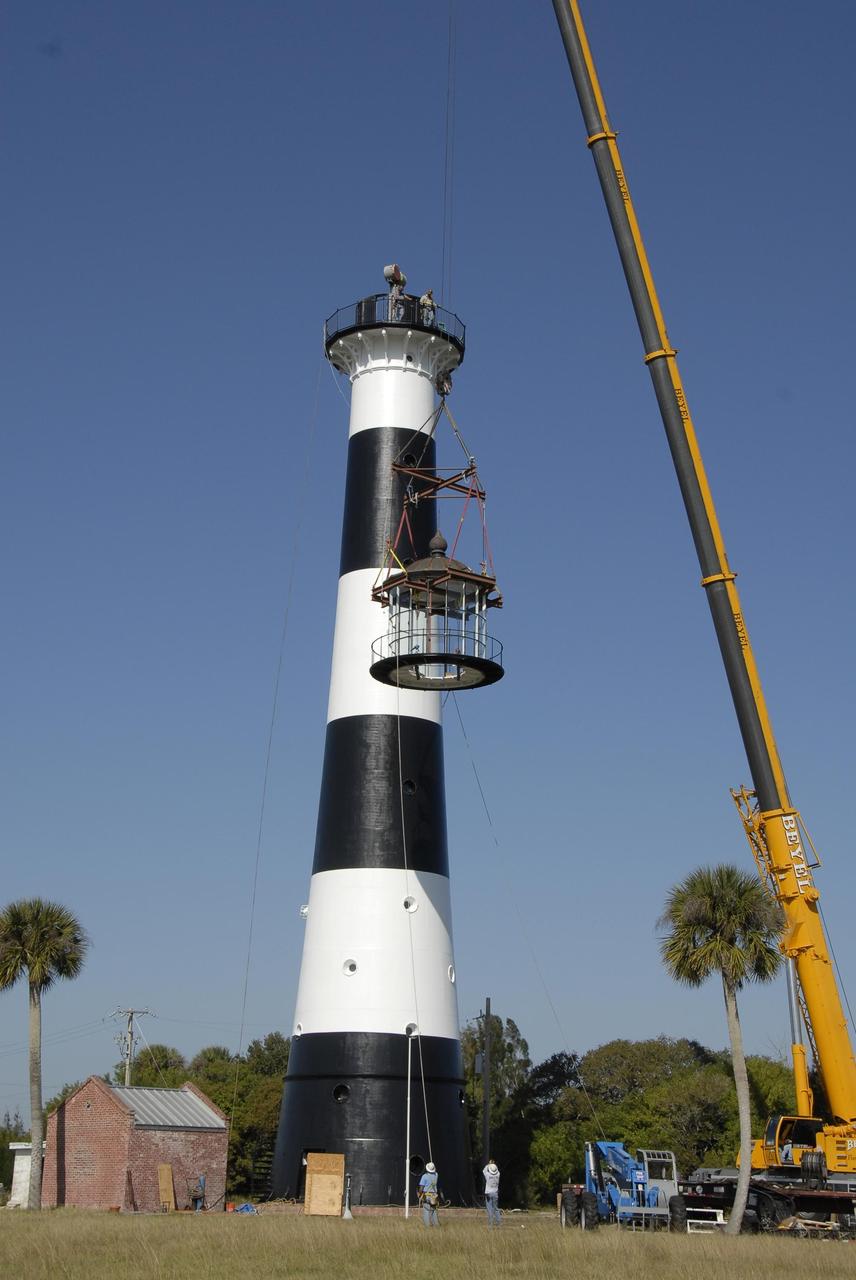
KENNEDY SPACE CENTER, FLA. -- A crane lifts a refurbished lantern to place on top of the Cape Canaveral Lighthouse, capping more than a year's work toward a $1 million restoration of the 150-year-old beacon. The work included sandblasting the metal shell and filling the corrosion pits with epoxy, refurbishing the balcony and repairing the lantern. To further the restoration, the Cape Canaveral Lighthouse Foundation plans to rebuild the lighthouse keeper's quarters from the original plans, as well as establish space for its archives and develop a meeting place. The only lighthouse in the nation operated by the Air Force, it began guiding mariners in 1868. An encroaching sea caused it to be moved inland and it was re-lighted in 1894 at its present location. The refurbishment was sponsored by the U.S. Air Force 45th Space Wing, whose officials said they wanted to help preserve the area's history. The original brass roof, which had been in storage since its removal years ago, has been restored and once again tops the lighthouse. As it is an active aid to navigation, the U.S. Coast Guard continues to be responsible for the optic, or light, which has a range of up to 22 nautical miles. Photo credit: NASA/Kim Shiflett
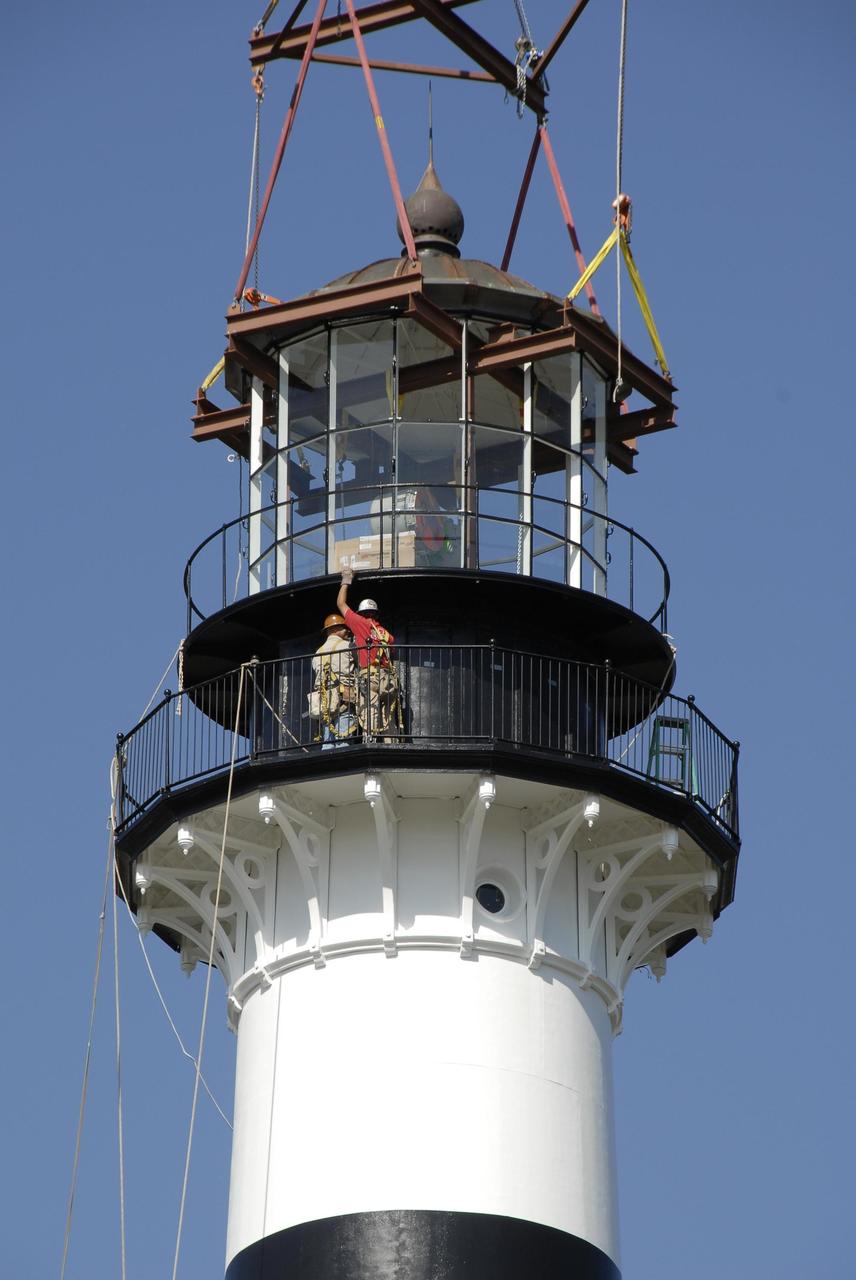
KENNEDY SPACE CENTER, FLA. -- Workers help guide a refurbished lantern on top of the Cape Canaveral Lighthouse, capping more than a year's work toward restoration of the 150-year-old beacon. The work included sandblasting the metal shell and filling the corrosion pits with epoxy, refurbishing the balcony and repairing the lantern. To further the restoration, the Cape Canaveral Lighthouse Foundation plans to rebuild the lighthouse keeper's quarters from the original plans, as well as establish space for its archives and develop a meeting place. The only lighthouse in the nation operated by the Air Force, it began guiding mariners in 1868. An encroaching sea caused it to be moved inland and it was re-lighted in 1894 at its present location. The refurbishment was sponsored by the U.S. Air Force 45th Space Wing, whose officials said they wanted to help preserve the area's history. The original brass roof, which had been in storage since its removal years ago, has been restored and once again tops the lighthouse. As it is an active aid to navigation, the U.S. Coast Guard continues to be responsible for the optic, or light, which has a range of up to 22 nautical miles. Photo credit: NASA/Kim Shiflett
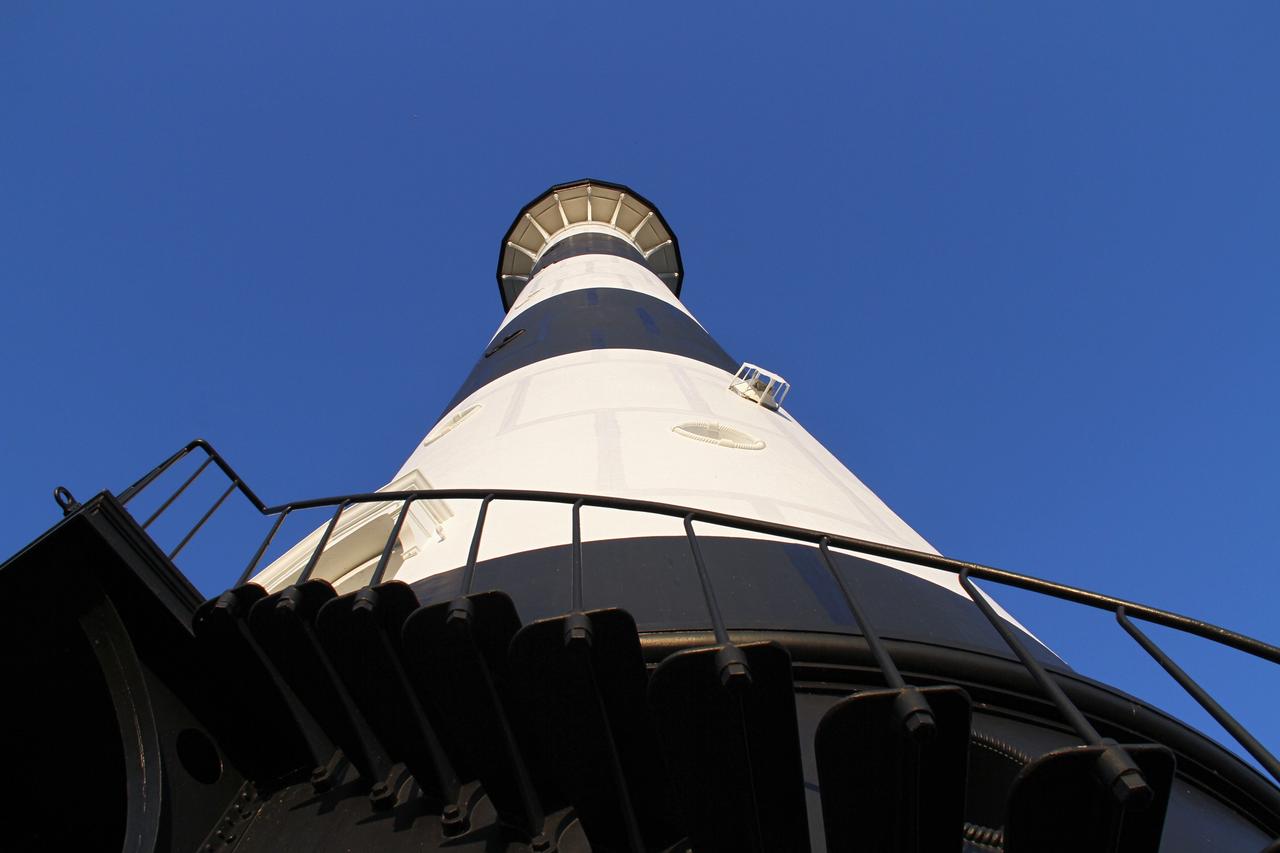
CAPE CANAVERAL AIR FORCE STATION, Fla. – This view looking up contrasts the black and white lighthouse at Cape Canaveral Air Force Station against the Florida sky. The Canaveral light is the only one owned by the U.S. Air Force. In 2000, the Coast Guard transferred ownership of the lighthouse structure and its grounds to the Air Force, which is now responsible for maintaining it. The U.S. Coast Guard continues to operate the beacon as an active navigational aid. The first lighthouse at Cape Canaveral was built near the tip of the Cape in 1848. The structure was only about 60 feet high with a rather dim light powered by whale oil. In 1859, work began nearby on a new, taller iron structure. Construction was halted during the Civil War, and the lighthouse finally was finished in 1868. The structure, with a brick lining inside its iron exterior, was painted with its "daymark" black and white horizontal bands in 1873 to make it easier to identify during the day as a navigation point. Between 1892 and 1894, the lighthouse was dismantled and moved to its new home about a mile from the coast, where it stands today. Photo credit: NASA/Ben Smegelsky
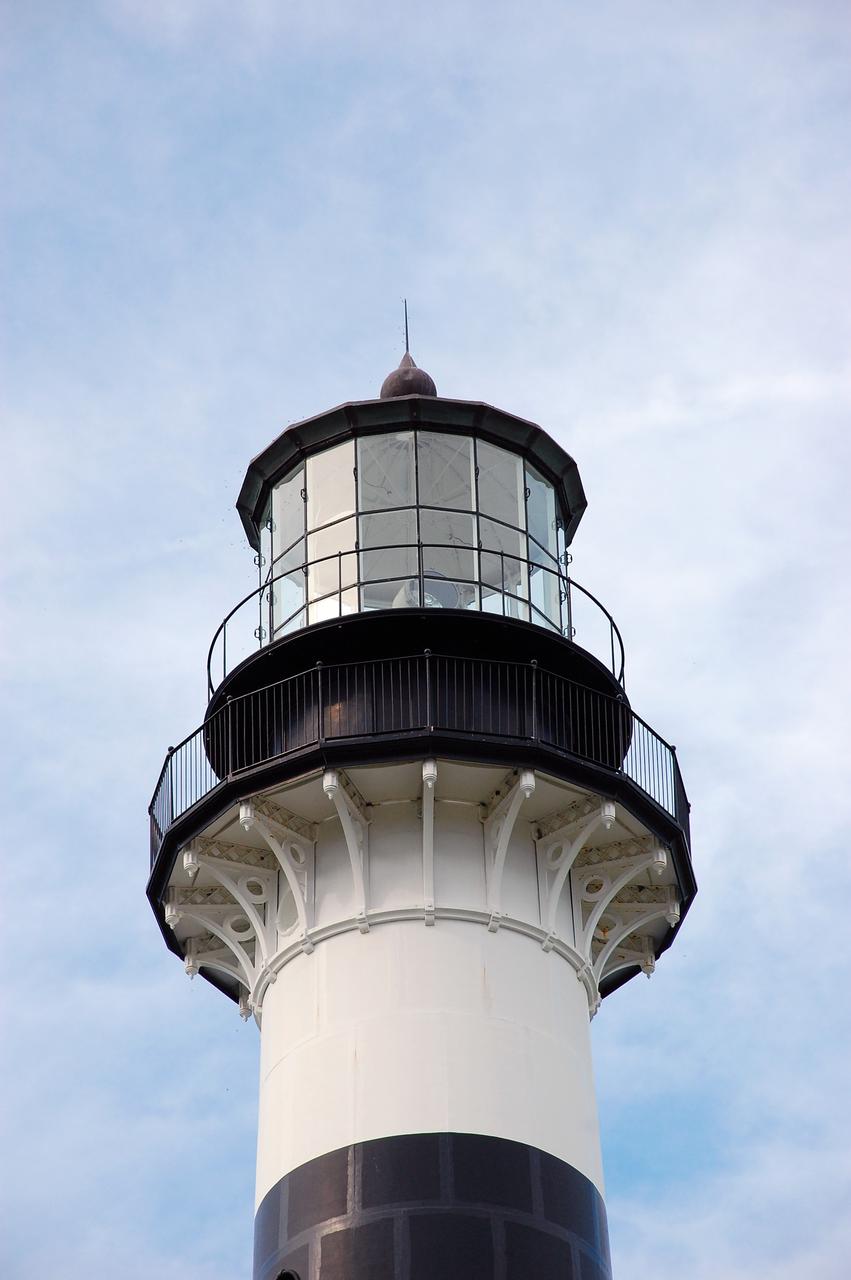
CAPE CANAVERAL, Fla. -- The U.S. Coast Guard operates the beacon of the historic Cape Canaveral Light as an active navigational aid. The lighthouse resides on Cape Canaveral Air Force Station in Florida and is owned by the U.S. Air Force. The first lighthouse on Cape Canaveral was built near the tip of the Cape in 1848. The structure was only about 60 feet high with a rather dim light powered by whale oil. In 1859, work began nearby on a new, taller iron structure. Construction was halted during the Civil War, and the lighthouse was not finished until 1868. The structure, with a brick lining inside its iron exterior, was painted with its "daymark" black and white horizontal bands in 1873 to make it easier to identify during the day as a navigation point. Between 1892 and 1894, the lighthouse was dismantled and moved to a new location about a mile from the coast, where it stands today. For more information on the lighthouse, visit http://www.nasa.gov/centers/kennedy/about/history/lighthouse.html. Photo credit: NASA/Ben Smegelsky
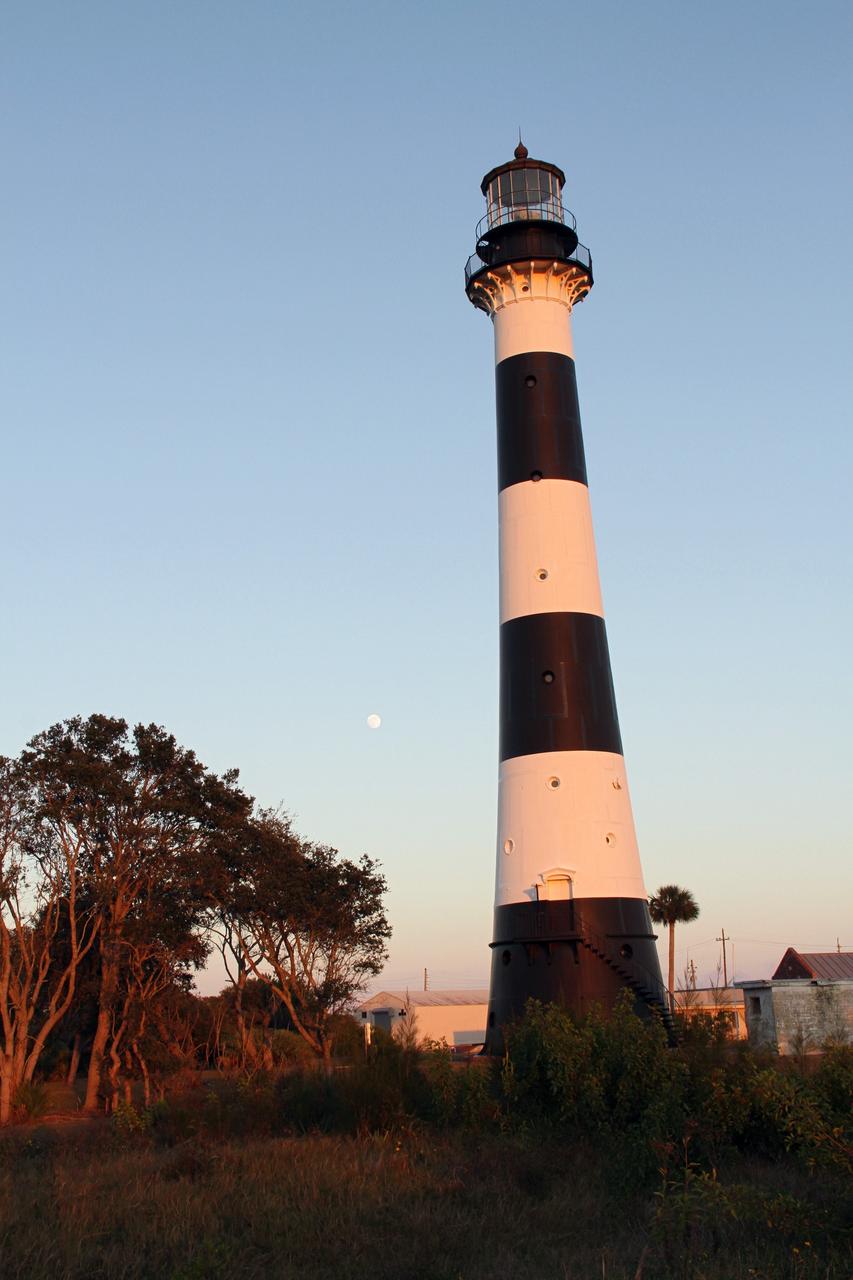
CAPE CANAVERAL AIR FORCE STATION, Fla. – The Cape Canaveral Air Force Station lighthouse takes on a warm glow as dawn breaks and a full moon still shines in the background. The Canaveral light is the only one owned by the U.S. Air Force. In 2000, the Coast Guard transferred ownership of the lighthouse structure and its grounds to the Air Force, which is now responsible for maintaining it. The U.S. Coast Guard continues to operate the beacon as an active navigational aid. The first lighthouse at Cape Canaveral was built near the tip of the Cape in 1848. The structure was only about 60 feet high with a rather dim light powered by whale oil. In 1859, work began nearby on a new, taller iron structure. Construction was halted during the Civil War, and the lighthouse finally was finished in 1868. The structure, with a brick lining inside its iron exterior, was painted with its "daymark" black and white horizontal bands in 1873 to make it easier to identify during the day as a navigation point. Between 1892 and 1894, the lighthouse was dismantled and moved to its new home about a mile from the coast, where it stands today. Photo credit: NASA/Ben Smegelsky
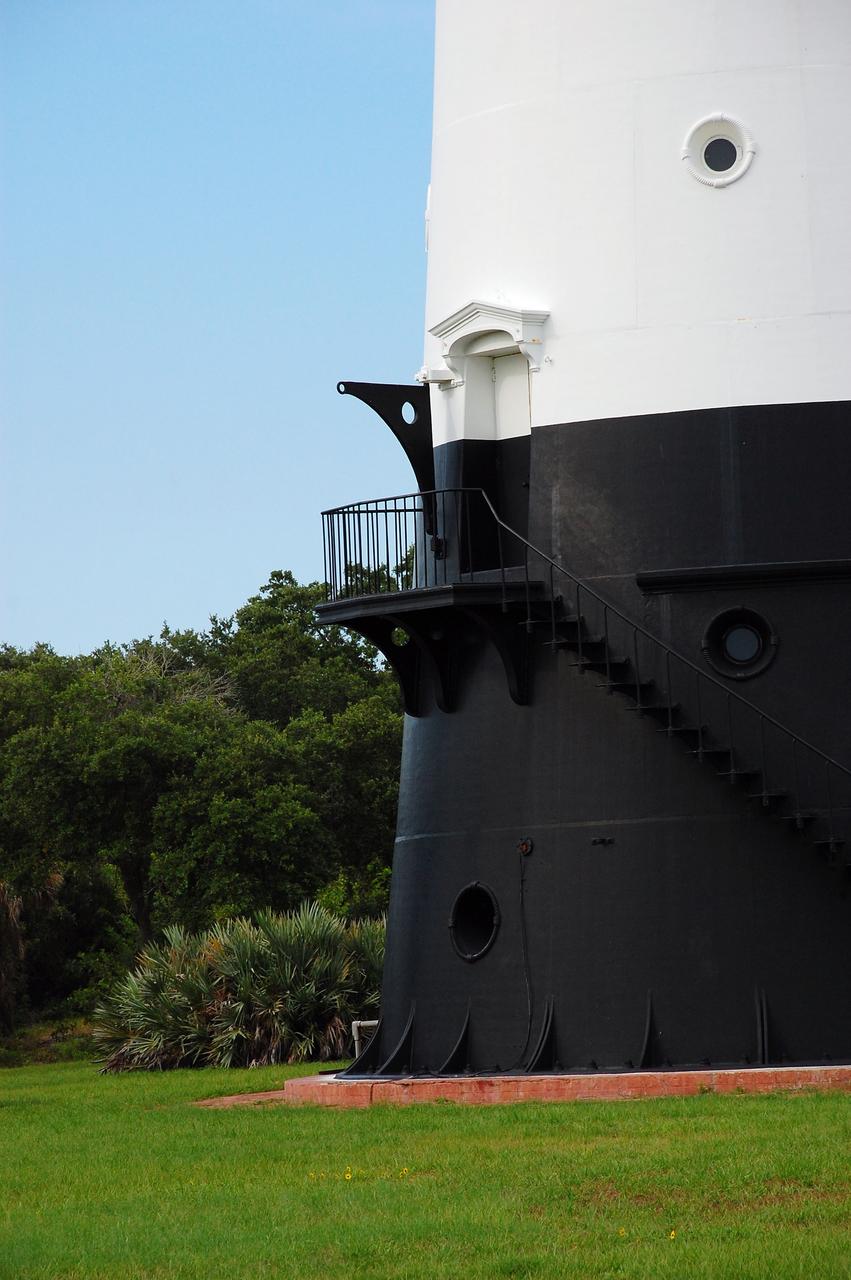
CAPE CANAVERAL, Fla. -- The historic Cape Canaveral Light, now owned by the U.S. Air Force, has resided in its current spot on Cape Canaveral Air Force Station in Florida since 1894. The first lighthouse on Cape Canaveral was built near the tip of the Cape in 1848. The structure was only about 60 feet high with a rather dim light powered by whale oil. In 1859, work began nearby on a new, taller iron structure. Construction was halted during the Civil War, and the lighthouse was not finished until 1868. The structure, with a brick lining inside its iron exterior, was painted with its "daymark" black and white horizontal bands in 1873 to make it easier to identify during the day as a navigation point. Between 1892 and 1894, the lighthouse was dismantled and moved to a new location about a mile from the coast, where it stands today. For more information on the lighthouse, visit http://www.nasa.gov/centers/kennedy/about/history/lighthouse.html. Photo credit: NASA/Ben Smegelsky

This artist's concept shows a pulsar, which is like a lighthouse, as its light appears in regular pulses as it rotates. Pulsars are dense remnants of exploded stars, and are part of a class of objects called neutron stars. Magnetars are different kinds of neutron stars -- they have violent, high-energy outbursts of X-ray and gamma ray light. A mysterious object called PSR J1119-6127 has been seen behaving as both a pulsar and a magnetar, suggesting that it could be a "missing link" between these objects. http://photojournal.jpl.nasa.gov/catalog/PIA21085
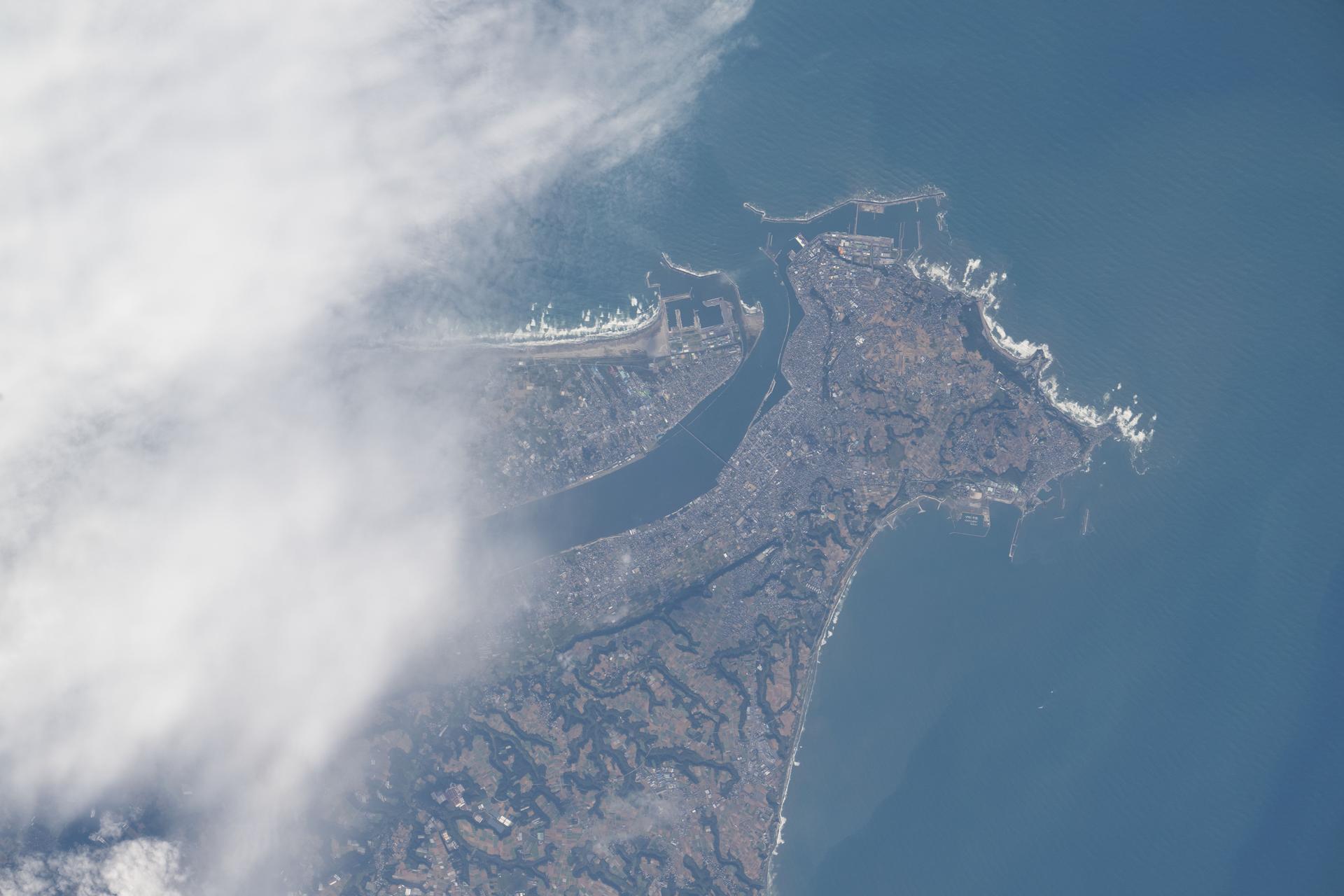
iss073e0958562 (Oct. 10, 2025) --- The Tone River flows through the northern part of Chōshi, Japan, a coastal city on the Pacific Ocean with a population of over 59,000. Chōshi, pictured here from the International Space Station as it orbited 261 miles above the Pacific, is known for the Inubosaki Lighthouse and as one of Japan’s top soy sauce producers
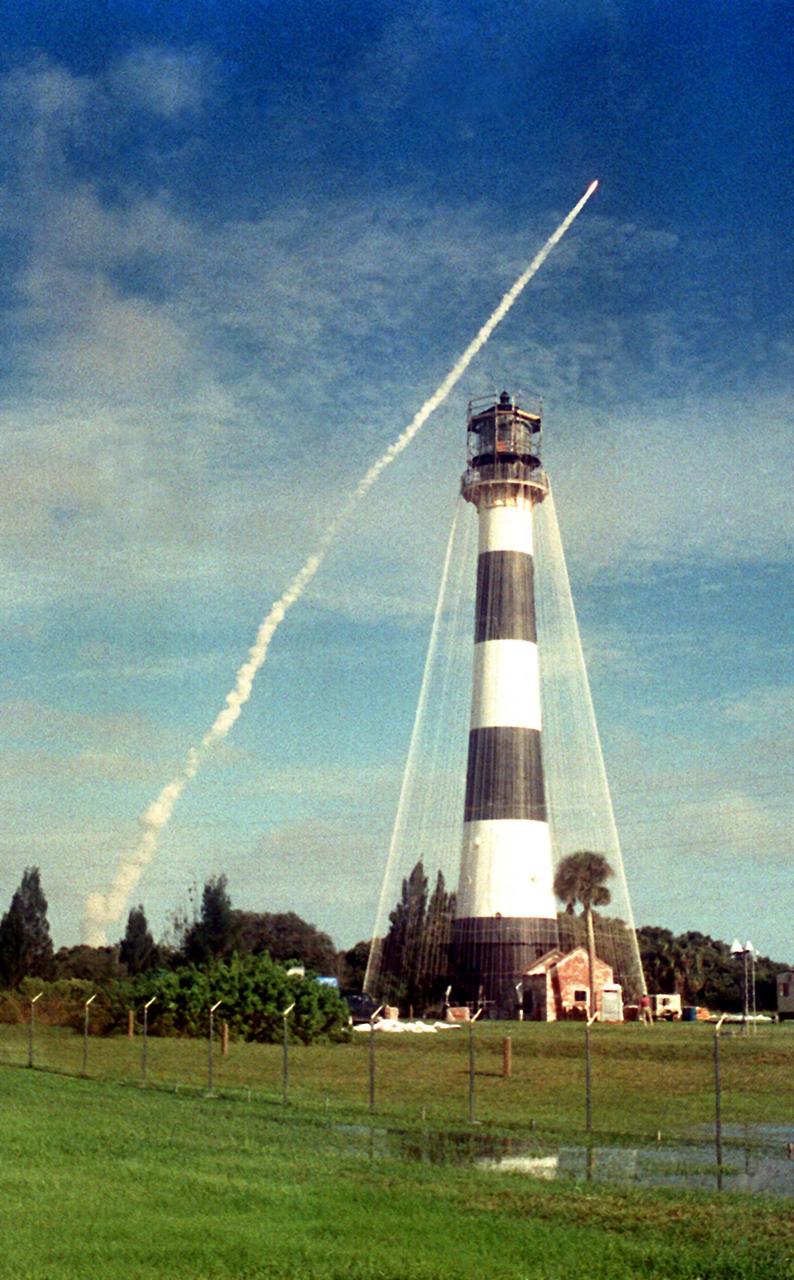
KENNEDY SPACE CENTER, FLA. -- Space Shuttle Columbia soars into the cloud-washed sky above Cape Canaveral Lighthouse. After six scrubs from the original Sept. 25 launch date, liftoff occurred Oct. 20 at 9:53 a.m. EDT. The crew of seven comprises Commander Ken Bowersox, Pilot Kent Rominger, Mission Specialists Kathy Thornton (Payload Commander), Catherine Coleman and Michael Lopez-Alegria, plus Payload Specialists Fred Leslie and Albert Sacco. The 72nd Shuttle mission, STS-73 marks the second flight of the U.S. Microgravity Laboratory. Research is being conducted in five areas: fluid physics, materials science, biotechnology, combustion science, and commercial space processing. The lighthouse, undergoing refurbishment and upgrade, is shown with a network of nylon lines ready for canvas panels to be attached. The canvas shroud will protect the surrounding area during sand-blasting of the lead-based paint.
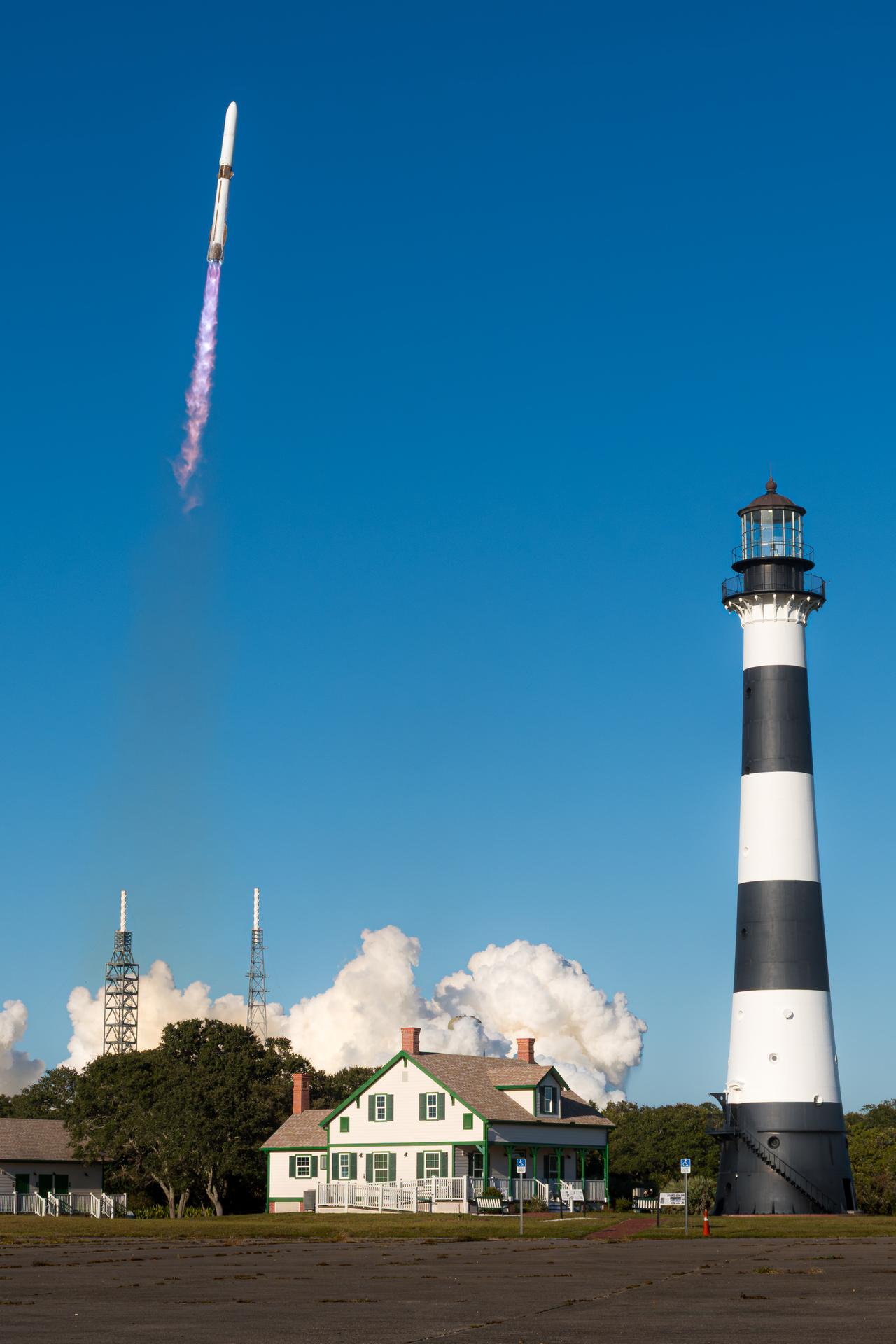
Near Cape Canaveral Lighthouse, Blue Origin’s New Glenn rocket carrying NASA’s twin ESCAPADE (Escape and Plasma Acceleration and Dynamics Explorers) spacecraft launches at 3:55 p.m. EST, Thursday, Nov. 13, 2025, from Launch Complex 36 at Cape Canaveral Space Force Station in Florida. The ESCAPADE mission, built by Rocket Lab, will study how solar wind and plasma interact with Mars’ magnetosphere and how this interaction drives the planet’s atmospheric escape to prepare for future human missions on Mars.
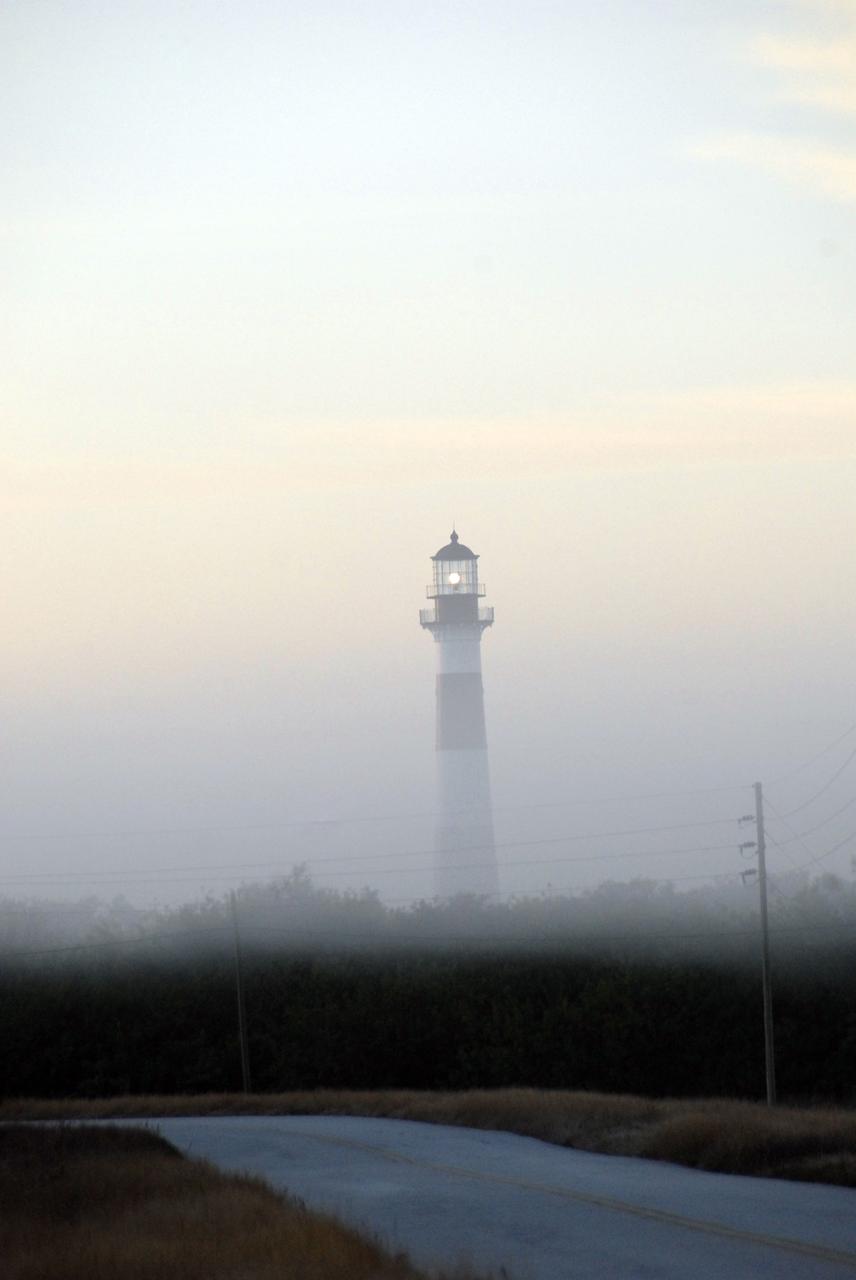
CAPE CANAVERAL, Fla. – Fog envelops the Cape Canaveral Lighthouse that has graced Cape Canaveral's shore for more than 100 years under the stewardship of the U.S. Air Force. The center shares a boundary with the refuge that includes salt-water estuaries, brackish marshes, hardwood hammocks and pine flatwoods. The diverse landscape provides habitat for more than 310 species of birds, 25 mammals, 117 fishes and 65 amphibians and reptiles. Photo credit: NASA/Jack Pfaller
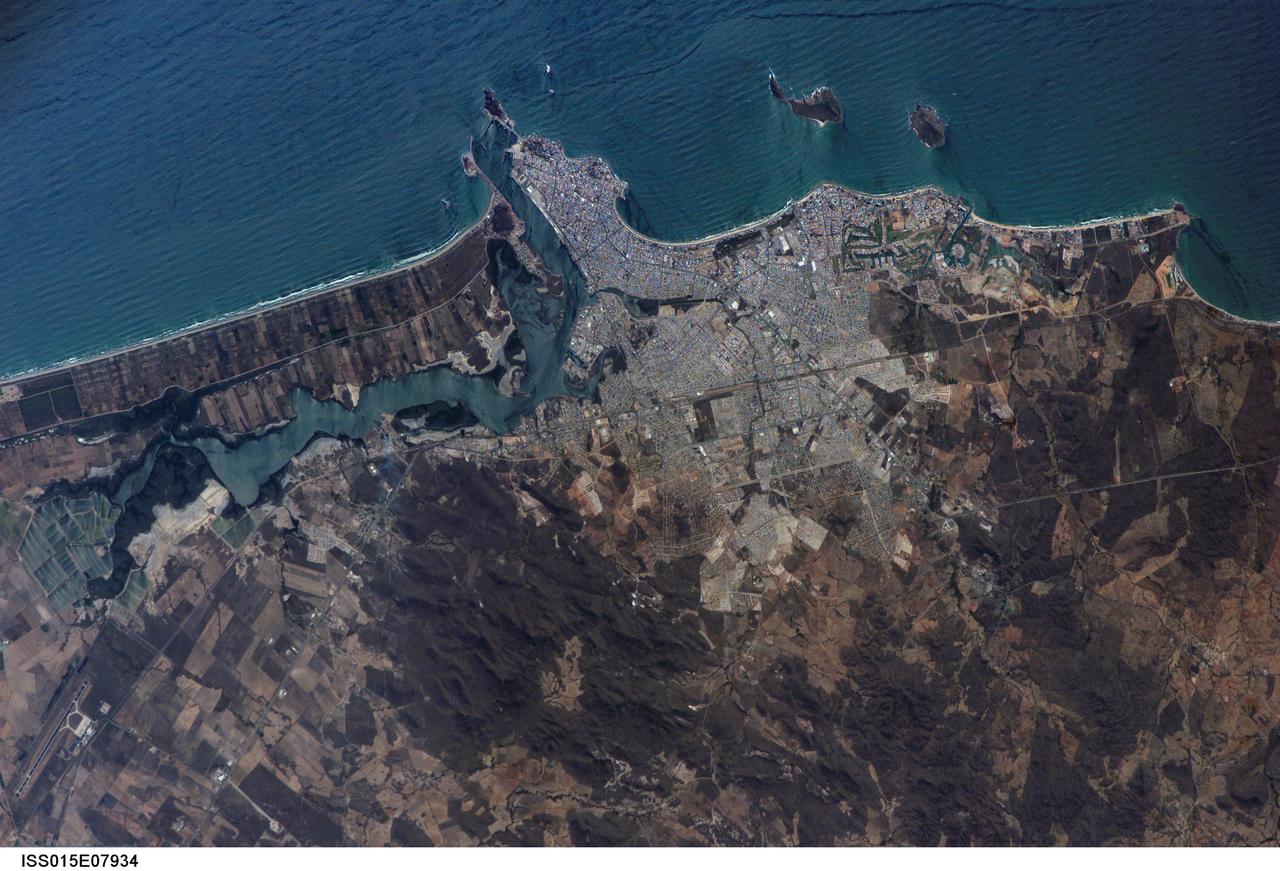
ISS015-E-07934 (13 May 2007) --- Mazatlan, Mexico is featured in this image photographed by an Expedition 15 crewmember on the International Space Station. Mazatlan is Mexico's largest port, situated on one of the best estuaries on Mexico's Pacific coast, illustrated well in this image. Docks and naval yards line the north side of the estuary. The city itself appears as a series of light-toned city blocks covering the center of the image. Mazatlan (population of 352,000 in 2005) is growing northward from the downtown peninsula, with tourist beaches backed by hotels, and a marina and golf courses just beyond. No city growth yet appears on the south side the estuary where farm lands can be seen. The famous Faro Lighthouse occupies the top of a steep island--now connected by a bridge to the mainland--at the mouth of the estuary (top center). The Faro Lighthouse is the second tallest in the world behind Gibraltar's. The wide, straight, almost vertical line of the railroad appears to bisect the picture. This image shows sea features well, primarily ocean swells coming in from the southwest, which appear as a series of parallel lines covering the entire sea surface in this view. An oil slick offshore of the tourist beaches appears as a dark line along the left side of the image.
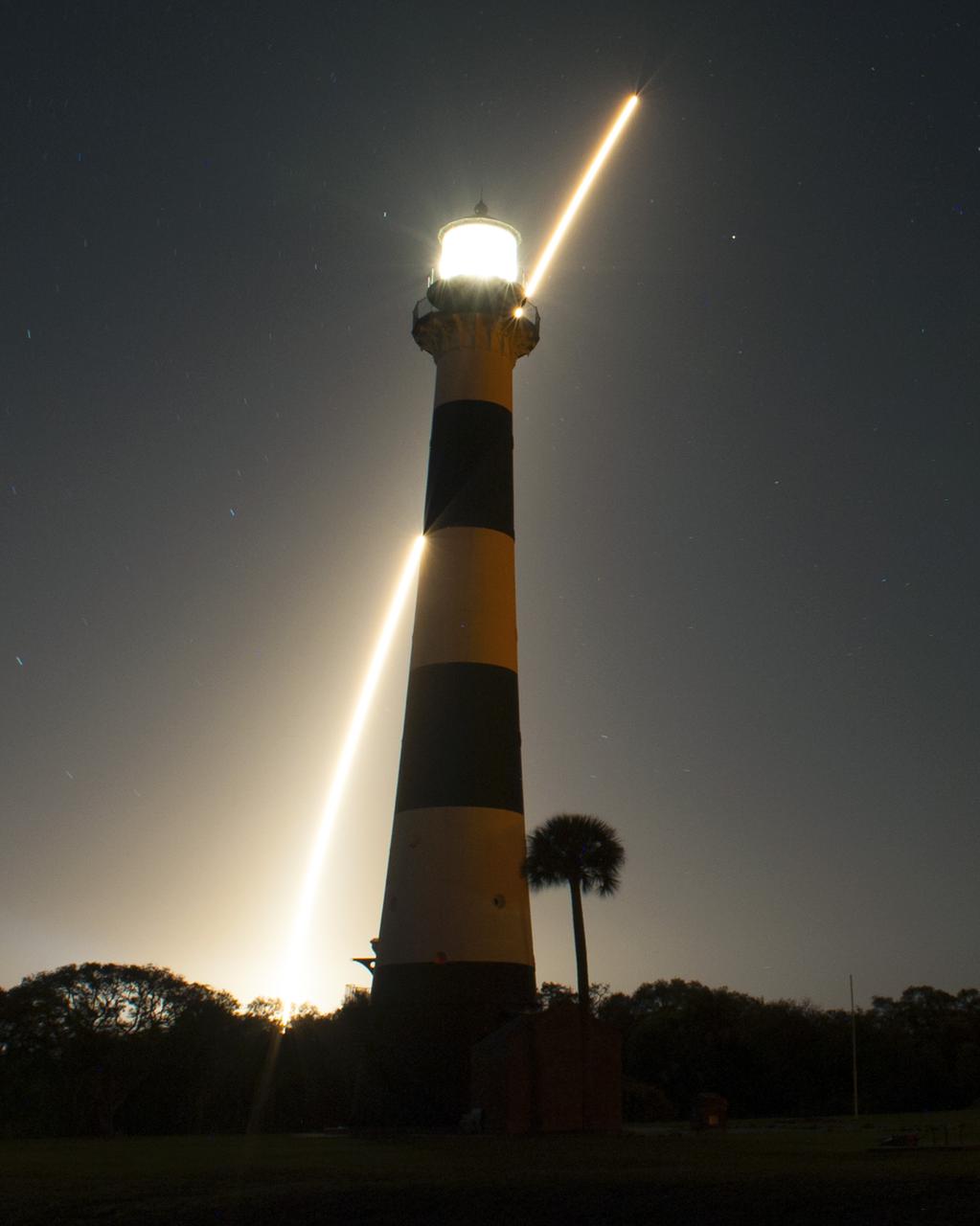
CAPE CANAVERAL, Fla. -- The United Launch Alliance Atlas V 401 rocket carrying NASA's Tracking and Data Relay Satellite-K, TDRS-K, streaks past the lighthouse on Cape Canaveral Air Force Station in Florida after launching from Space Launch Complex 41 at 8:48 p.m. EST. The TDRS-K spacecraft is part of the next-generation series in the Tracking and Data Relay Satellite System, a constellation of space-based communication satellites providing tracking, telemetry, command and high-bandwidth data return services. For more information, visit http:__www.nasa.gov_mission_pages_tdrs_index.html. Photo credit: NASA_Rick Wetherington

Like a lighthouse in the fog the luminous core of NGC 2768 slowly fades outwards to a dull white haze in this image taken by the NASA/ESA Hubble Space Telescope. NGC 2768 is an elliptical galaxy in the constellation of Ursa Major (The Great Bear). It is a huge bundle of stars, dominated by a bright central region, where a supermassive black hole feasts on a constant stream of gas and dust being fed to it by its galactic host. The galaxy is also marked by a prominent plume of dust reaching out from the centre and lying perpendicular to the galaxy’s plane. This dust conceals a symmetrical, s-shaped pair of jets that are being produced by the supermassive black hole as it feeds.
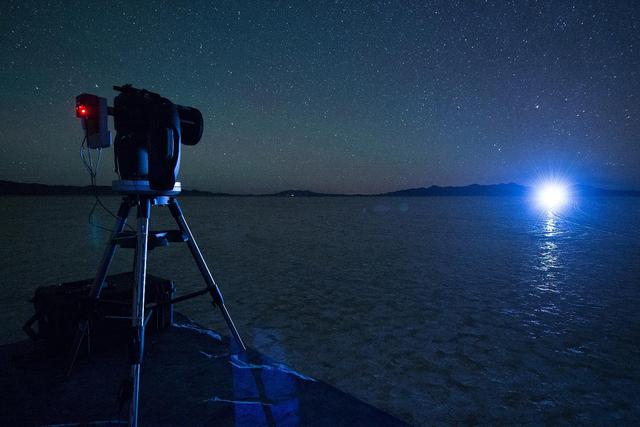
A night test of a small-scale starshade model, in a dry lake bed in central Nevada's Smith Creek by Northrup Grumman, took place in May to June 2014. A telescope points toward a bright light, which in the darkness of the desert mimics the conditions of starlight in space. Other lights, which are up to 10 million times fainter than the light source standing in for the star, represent the reflected light of planets. Telescopes searching for the relatively dim light of an exoplanet next to its much brighter star are faced with a challenge as difficult as searching from Los Angeles for a firefly in New York -- if the firefly is next to the brightness of a lighthouse. The tests by Northrup Grumman determined that a starshade, or external occulter, is capable of blocking starlight to a degree that can indeed reveal the light of a planet. http://photojournal.jpl.nasa.gov/catalog/PIA20901
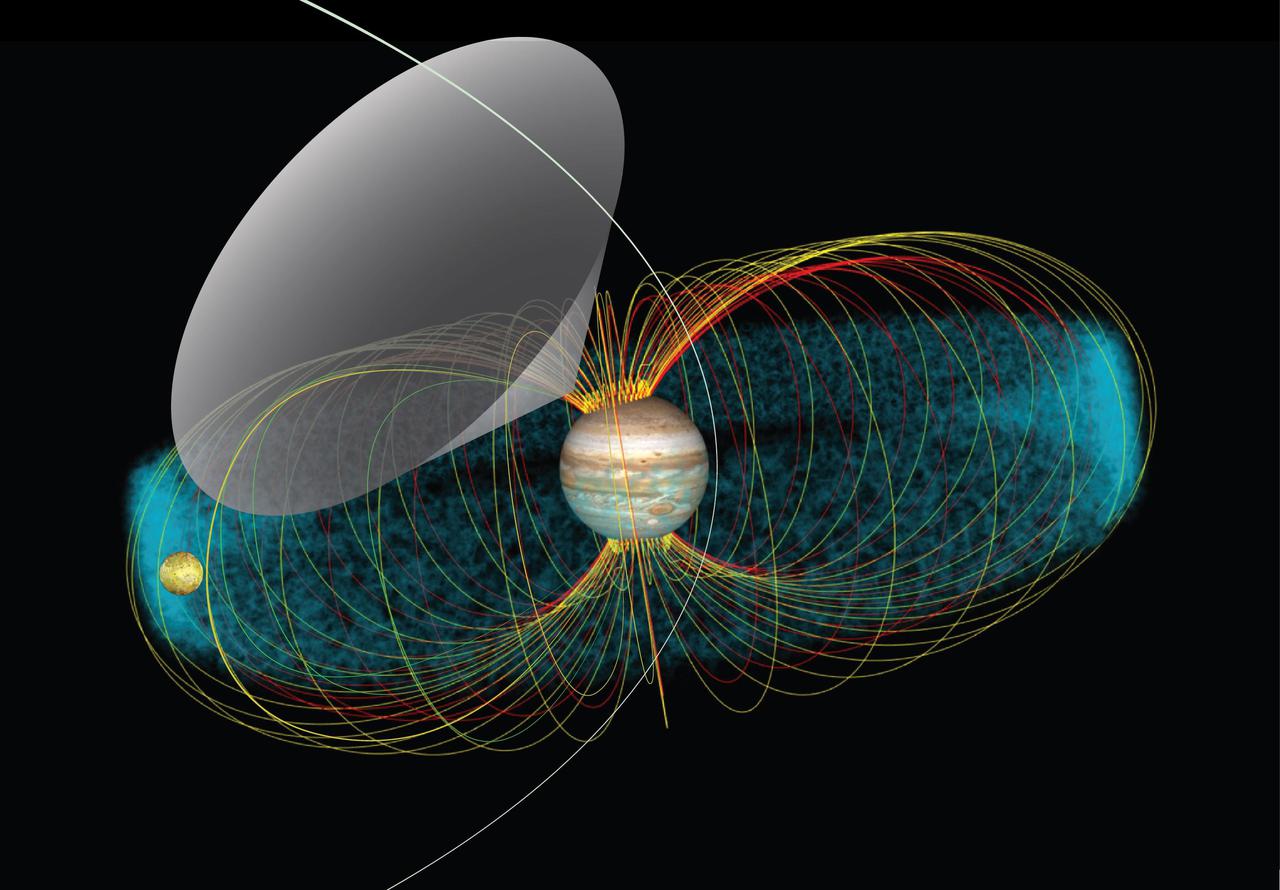
This is a representation of the Jupiter-Io system and interaction. The blue cloud is the Io plasma torus, which is a region of higher concentration of ions and electrons located at Io's orbit. This conceptual image shows the radio emission pattern from Jupiter. The multicolored lines represent the magnetic field lines that link Io's orbit with Jupiter's atmosphere. The radio waves emerge from the source, located at the line of force in the magnetic field, and propagate along the walls of a hollow cone (gray area). Juno receives the signal only when Jupiter's rotation sweeps that cone over the spacecraft, in the same way a lighthouse beacon shines briefly upon a ship at sea. Juno's orbit is represented by the white line crossing the cone. https://photojournal.jpl.nasa.gov/catalog/PIA24524
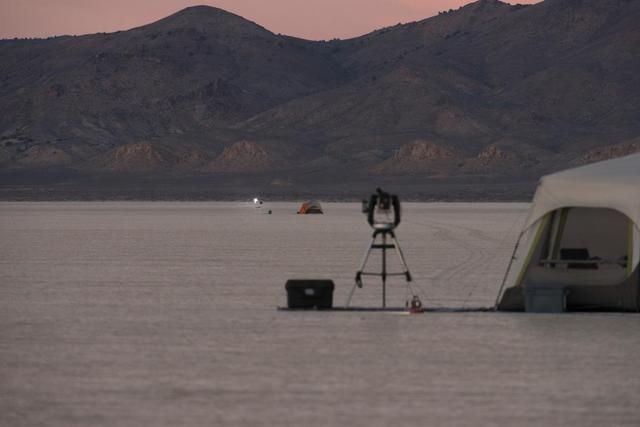
A test of a small-scale starshade model in a dry lake bed in central Nevada's Smith Creek by Northrup Grumman in May-June 2014. A telescope points toward a bright light, which mimics the conditions of starlight in space. Other lights, which are up to 10 million times fainter than the light source standing in for the star, represent the reflected light of planets. Telescopes searching for the relatively dim light of an exoplanet next to its much bright star are faced with a challenge as difficult as searching from Los Angeles for a firefly in New York– if the firefly is also beside a lighthouse. These tests determined that a starshade, or external occulter, is indeed capable of blocking starlight to a degree that reveals the light of a planet. http://photojournal.jpl.nasa.gov/catalog/PIA20908
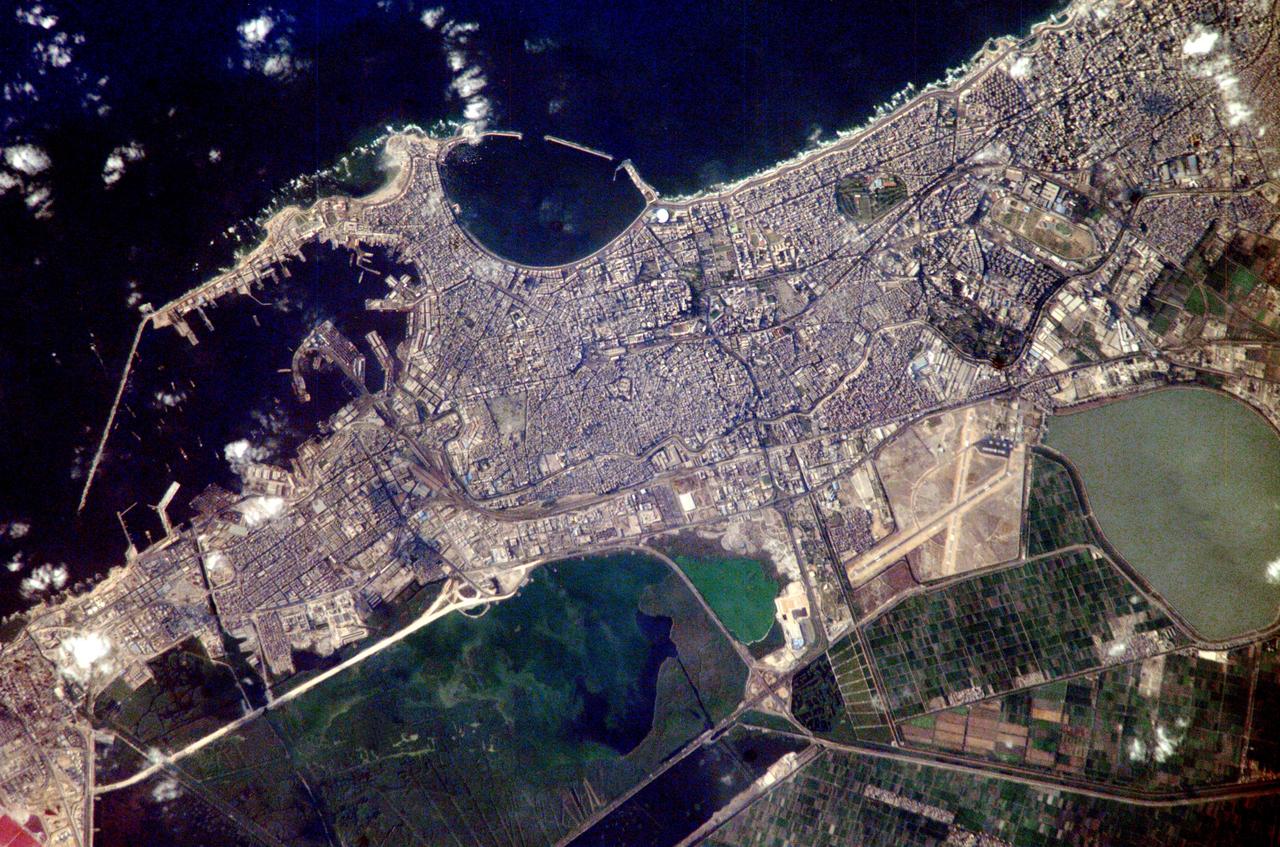
ISS007-E-10960 (27 July 2003) --- Alexandria, Egypt, is featured in this image photographed by an Expedition 7 crewmember on the International Space Station (ISS). Founded by Alexander the Great in 331 BC on the Mediterranean coast of Egypt, Alexandria became a center of trade and learning in the ancient world. Alexander built the causeway between the Eastern and Western Harbors, joining Pharos Island to the mainland. Alexandria’s cultural status was symbolized by the lighthouse on Pharos, one of the “Seven Wonders of the World.” The causeway is still known as the old part of the modern city. Since the year 2000, underwater archeologists have located the sunken palace, ceremonial buildings and port facilities of ancient Alexandria, located along most of the curved southern shoreline of the Eastern Harbor. This detailed image provides a view of the modern port facilities in the Western Harbor, where wharves and many moored ships can be detected.
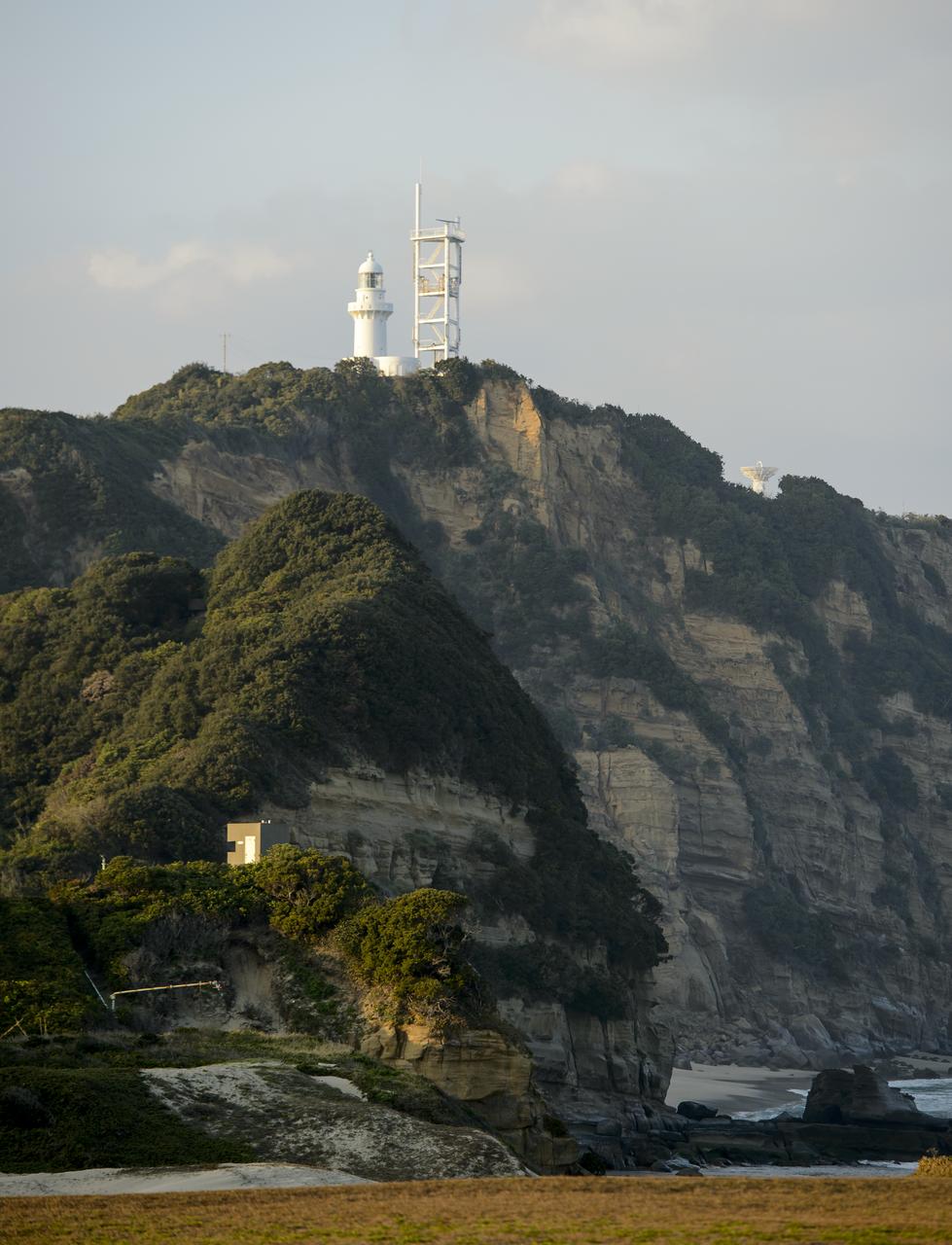
A light house and weather station is seen at the Japan Aerospace Exploration Agency’s (JAXA) Tanegashima Space Center (TNSC) a week ahead of the planned launch of an H-IIA rocket carrying the Global Precipitation Measurement (GPM) Core Observatory, Friday, Feb. 21, 2014, Tanegashima Island, Japan. The NASA-JAXA GPM spacecraft will collect information that unifies data from an international network of existing and future satellites to map global rainfall and snowfall every three hours. Photo Credit: (NASA/Bill Ingalls)

Like a lighthouse in the fog, the luminous core of NGC 2768 slowly fades outwards to a dull white haze in this image taken by the NASA/ESA Hubble Space Telescope. NGC 2768 is an elliptical galaxy in the constellation of Ursa Major (The Great Bear). It is a huge bundle of stars, dominated by a bright central region, where a supermassive black hole feasts on a constant stream of gas and dust being fed to it by its galactic host. The galaxy is also marked by a prominent plume of dust reaching out from the center and lying perpendicular to the galaxy’s plane. This dust conceals a symmetrical, S-shaped pair of jets that are being produced by the supermassive black hole as it feeds. Credit: ESA/Hubble, NASA and S. Smartt (Queen's University Belfast) <b><a href="http://www.nasa.gov/audience/formedia/features/MP_Photo_Guidelines.html" rel="nofollow">NASA image use policy.</a></b> <b><a href="http://www.nasa.gov/centers/goddard/home/index.html" rel="nofollow">NASA Goddard Space Flight Center</a></b> enables NASA’s mission through four scientific endeavors: Earth Science, Heliophysics, Solar System Exploration, and Astrophysics. Goddard plays a leading role in NASA’s accomplishments by contributing compelling scientific knowledge to advance the Agency’s mission. <b>Follow us on <a href="http://twitter.com/NASAGoddardPix" rel="nofollow">Twitter</a></b> <b>Like us on <a href="http://www.facebook.com/pages/Greenbelt-MD/NASA-Goddard/395013845897?ref=tsd" rel="nofollow">Facebook</a></b> <b>Find us on <a href="http://instagrid.me/nasagoddard/?vm=grid" rel="nofollow">Instagram</a></b>

Peering deep into the core of the Crab Nebula, this close-up image reveals the beating heart of one of the most historic and intensively studied remnants of a supernova, an exploding star. The inner region sends out clock-like pulses of radiation and tsunamis of charged particles embedded in magnetic fields. The neutron star at the very center of the Crab Nebula has about the same mass as the sun but compressed into an incredibly dense sphere that is only a few miles across. Spinning 30 times a second, the neutron star shoots out detectable beams of energy that make it look like it's pulsating. The NASA Hubble Space Telescope snapshot is centered on the region around the neutron star (the rightmost of the two bright stars near the center of this image) and the expanding, tattered, filamentary debris surrounding it. Hubble's sharp view captures the intricate details of glowing gas, shown in red, that forms a swirling medley of cavities and filaments. Inside this shell is a ghostly blue glow that is radiation given off by electrons spiraling at nearly the speed of light in the powerful magnetic field around the crushed stellar core. The neutron star is a showcase for extreme physical processes and unimaginable cosmic violence. Bright wisps are moving outward from the neutron star at half the speed of light to form an expanding ring. It is thought that these wisps originate from a shock wave that turns the high-speed wind from the neutron star into extremely energetic particles. When this "heartbeat" radiation signature was first discovered in 1968, astronomers realized they had discovered a new type of astronomical object. Now astronomers know it's the archetype of a class of supernova remnants called pulsars - or rapidly spinning neutron stars. These interstellar "lighthouse beacons" are invaluable for doing observational experiments on a variety of astronomical phenomena, including measuring gravity waves. Observations of the Crab supernova were recorded by Chinese astronomers in 1054 A.D. The nebula, bright enough to be visible in amateur telescopes, is located 6,500 light-years away in the constellation Taurus. Credits: NASA and ESA, Acknowledgment: J. Hester (ASU) and M. Weisskopf (NASA/MSFC) <b><a href="http://www.nasa.gov/audience/formedia/features/MP_Photo_Guidelines.html" rel="nofollow">NASA image use policy.</a></b> <b><a href="http://www.nasa.gov/centers/goddard/home/index.html" rel="nofollow">NASA Goddard Space Flight Center</a></b> enables NASA’s mission through four scientific endeavors: Earth Science, Heliophysics, Solar System Exploration, and Astrophysics. Goddard plays a leading role in NASA’s accomplishments by contributing compelling scientific knowledge to advance the Agency’s mission. <b>Follow us on <a href="http://twitter.com/NASAGoddardPix" rel="nofollow">Twitter</a></b> <b>Like us on <a href="http://www.facebook.com/pages/Greenbelt-MD/NASA-Goddard/395013845897?ref=tsd" rel="nofollow">Facebook</a></b> <b>Find us on <a href="http://instagrid.me/nasagoddard/?vm=grid" rel="nofollow">Instagram</a></b>