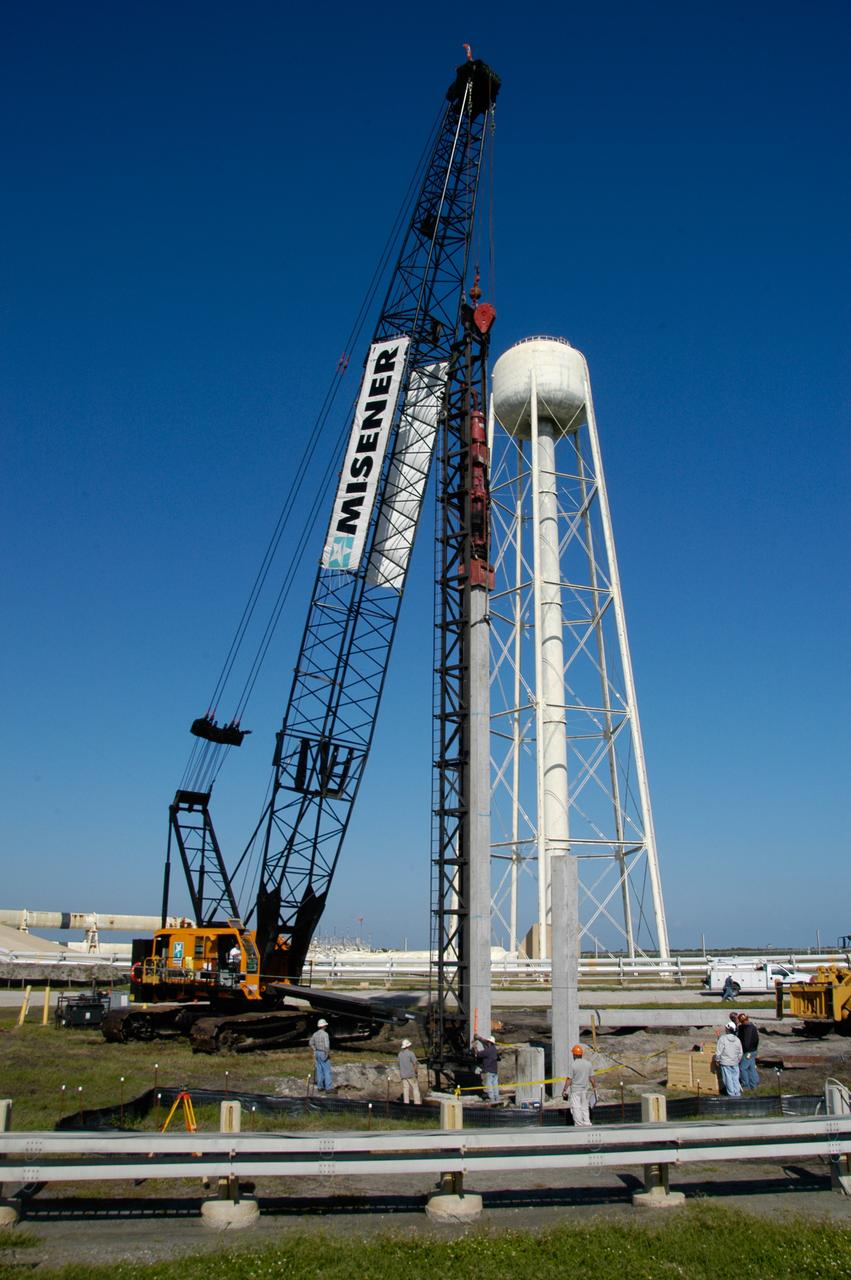
On Launch Pad 39B at NASA's Kennedy Space Center, the crane crawler puts a piling into place to be pounded into the ground to help construct lightning towers for the Constellation Program and Ares/Orion launches. Pad B will be the site of the first Ares vehicle launch, including Ares I-X which is scheduled for April 2009.

On Launch Pad 39B at NASA's Kennedy Space Center, the crane crawler lifts a piling off a truck. The piling will be pounded into the ground to help construct lightning towers for the Constellation Program and Ares/Orion launches. Pad B will be the site of the first Ares vehicle launch, including Ares I-X which is scheduled for April 2009.
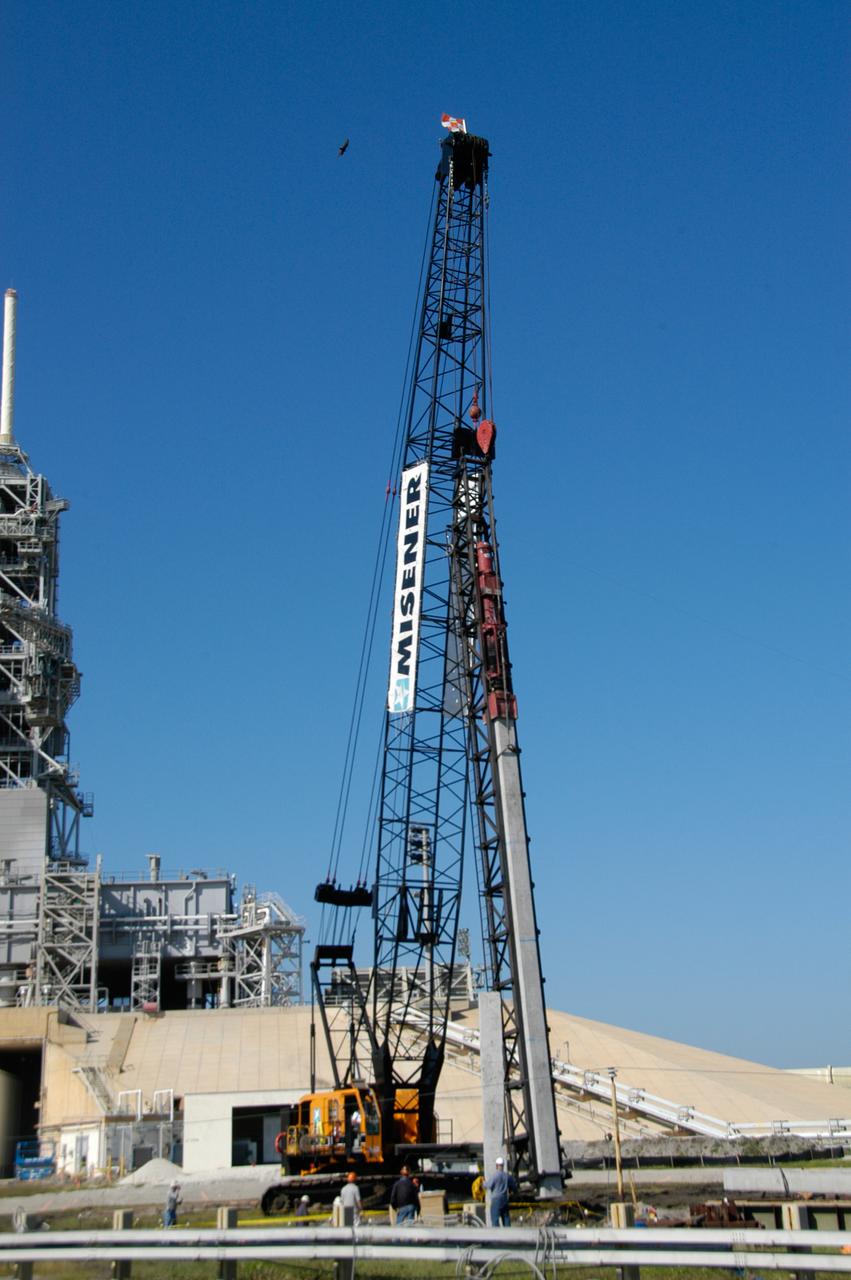
On Launch Pad 39B at NASA's Kennedy Space Center, the crane crawler lifts a piling into place to be pounded into the ground to help construct lightning towers for the Constellation Program and Ares/Orion launches. Pad B will be the site of the first Ares vehicle launch, including Ares I-X which is scheduled for April 2009.
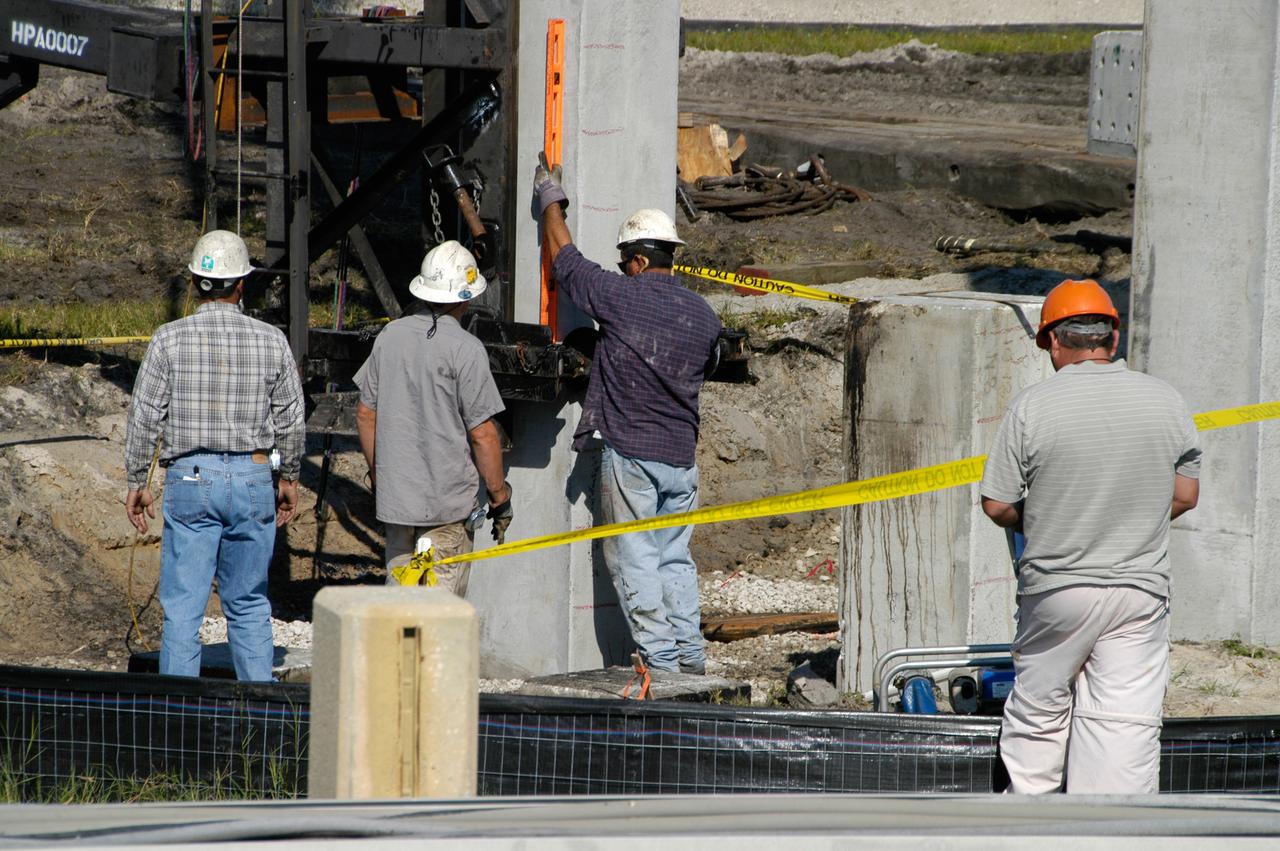
On Launch Pad 39B at NASA's Kennedy Space Center, workers measure the piling being pounded into the ground to help construct lightning towers for the Constellation Program and Ares/Orion launches. Pad B will be the site of the first Ares vehicle launch, including Ares I-X which is scheduled for April 2009.
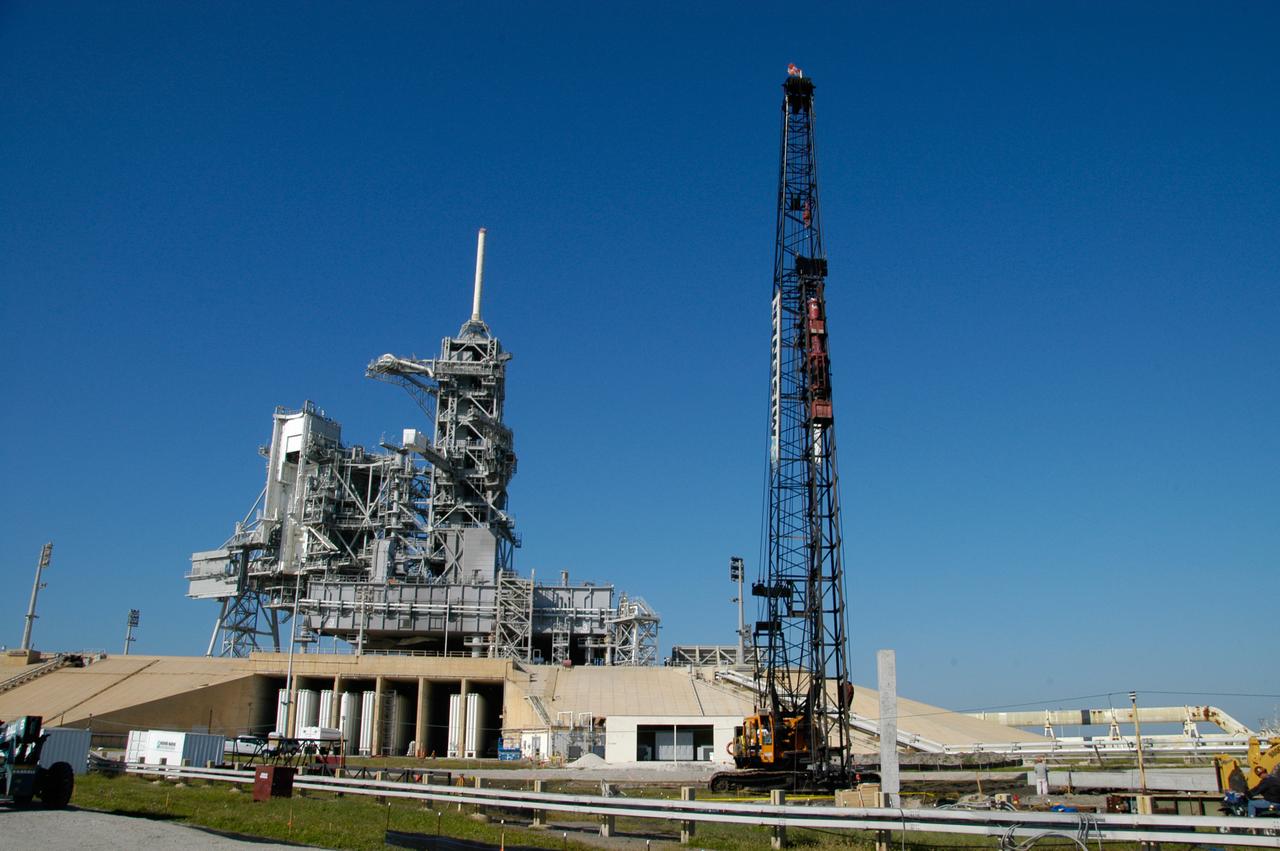
On Launch Pad 39B at NASA's Kennedy Space Center, pilings are being pounded into the ground to help construct lightning towers for the Constellation Program and Ares/Orion launches. Pad B will be the site of the first Ares vehicle launch, including Ares I-X which is scheduled for April 2009.
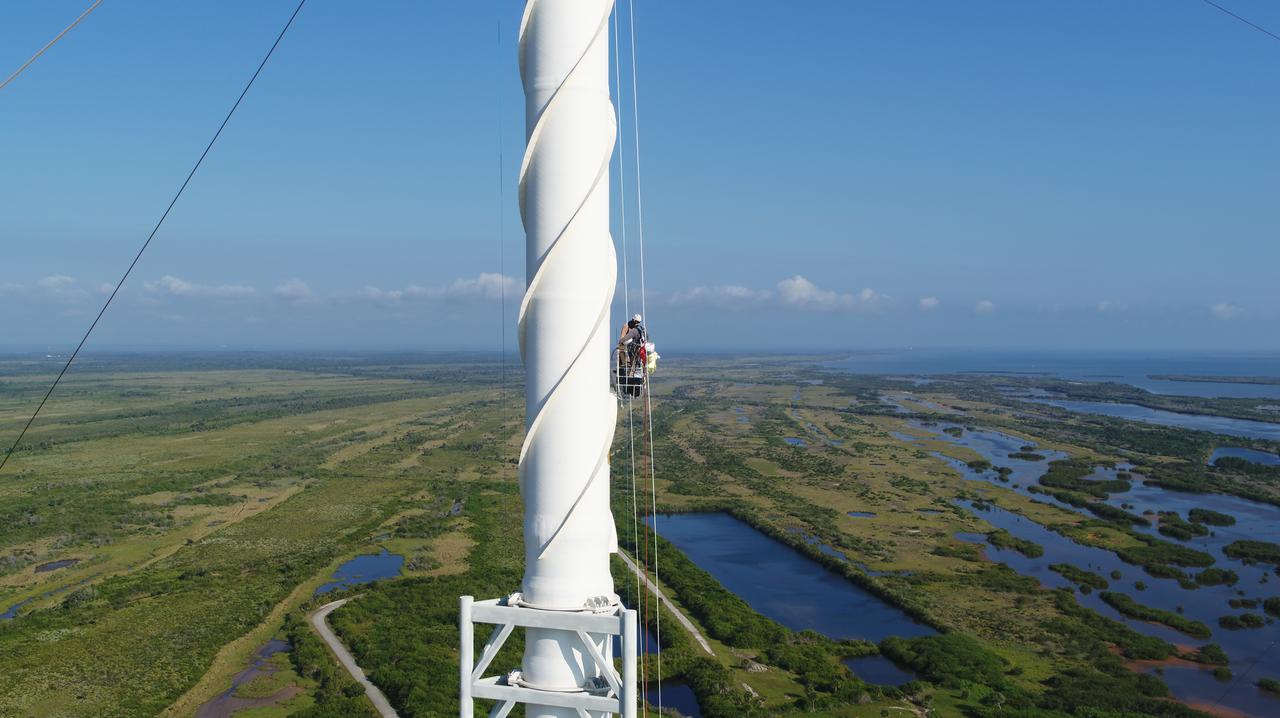
Workers prepare the surface of one of the three lightning protection system towers for painting at Exploration Ground Systems’ Launch Complex 39B at NASA’s Kennedy Space Center in Florida on May 30, 2019. The old paint was removed by the most recent hurricane. Pad 39B is the site of future launches of the agency’s Space Launch System rocket with the Orion spacecraft on Artemis missions. The 600-foot-tall lightning towers will help prevent lightning strikes at the pad during prelaunch and launch activities.
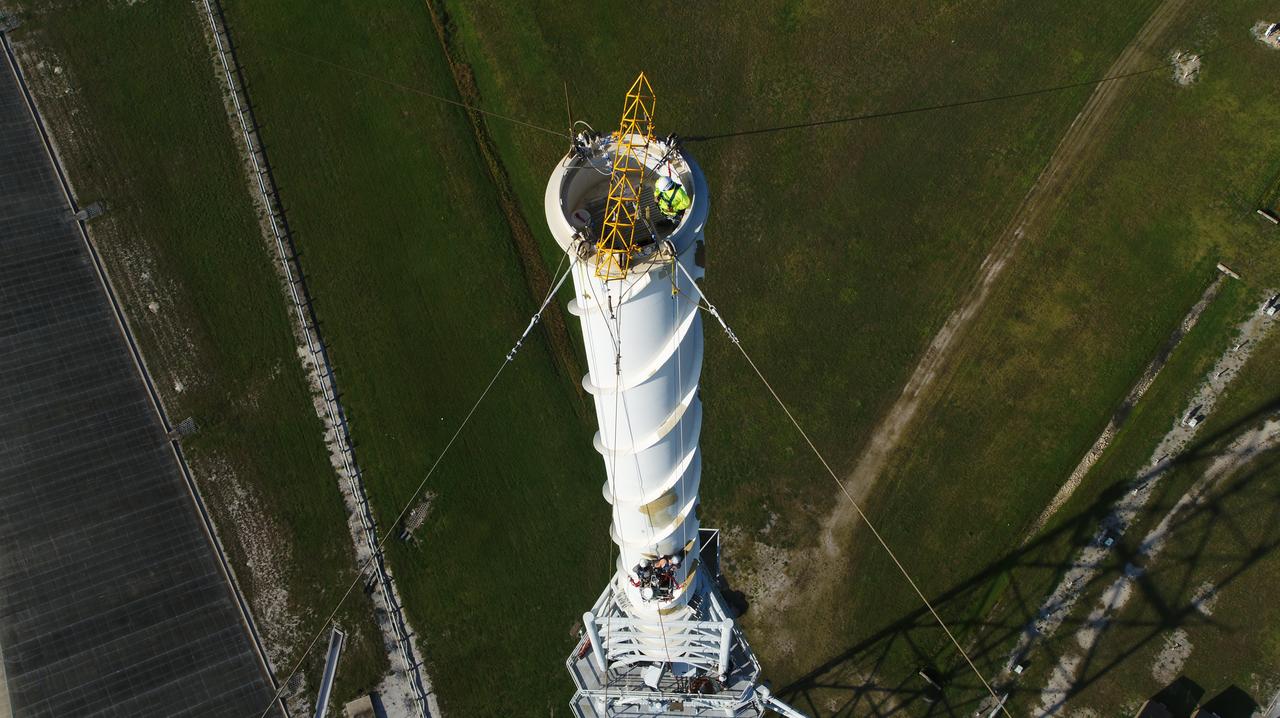
An aerial view shows workers preparing the surface of one of the three lightning protection system towers for painting at Exploration Ground Systems’ Launch Complex 39B at NASA’s Kennedy Space Center in Florida on May 30, 2019. The old paint was removed by the most recent hurricane. Pad 39B is the site of future launches of the agency’s Space Launch System rocket with the Orion spacecraft on Artemis missions. The 600-foot-tall lightning towers will help prevent lightning strikes at the pad during prelaunch and launch activities.
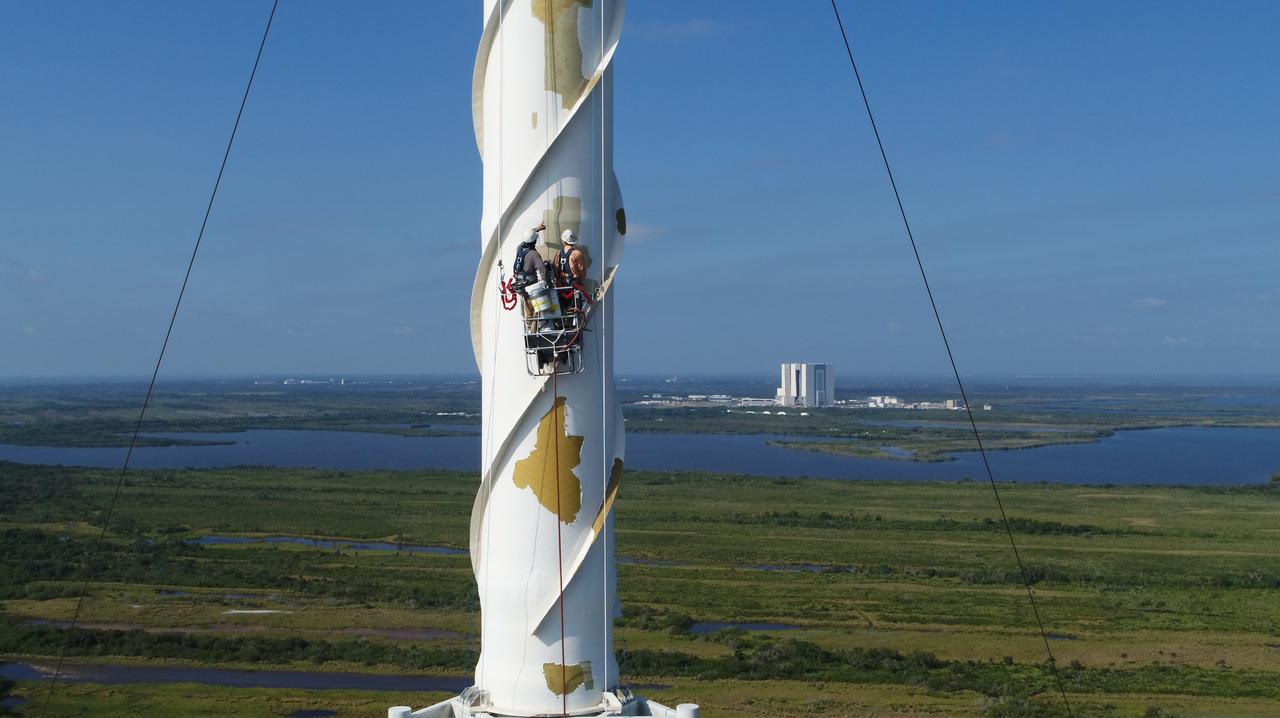
An aerial view shows workers preparing the surface of one of the three lightning protection system towers for painting at Exploration Ground Systems’ Launch Complex 39B at NASA’s Kennedy Space Center in Florida on May 30, 2019. The old paint was removed by the most recent hurricane. Pad 39B is the site of future launches of the agency’s Space Launch System rocket with the Orion spacecraft on Artemis missions. The 600-foot-tall lightning towers will help prevent lightning strikes at the pad during prelaunch and launch activities.
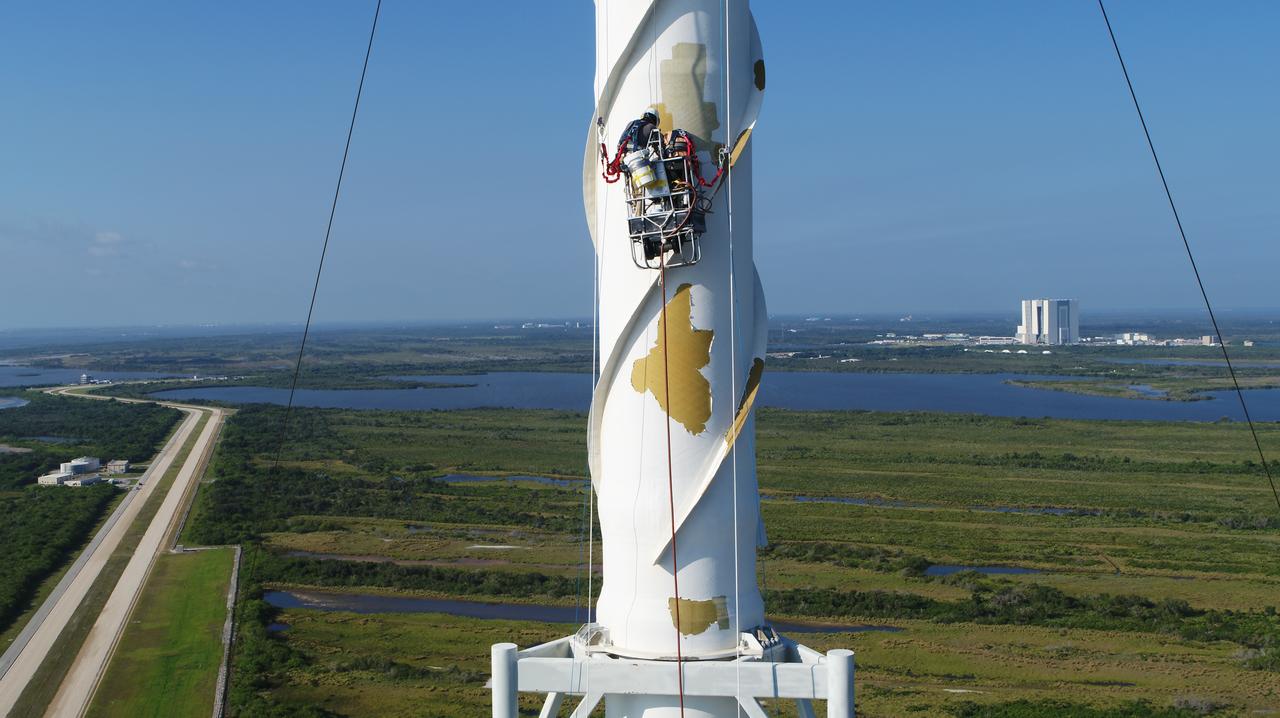
Workers prepare the surface of one of the three lightning protection system towers for painting at Exploration Ground Systems’ Launch Complex 39B at NASA’s Kennedy Space Center in Florida on May 30, 2019. The old paint was removed by the most recent hurricane. Pad 39B is the site of future launches of the agency’s Space Launch System rocket with the Orion spacecraft on Artemis missions. The 600-foot-tall lightning towers will help prevent lightning strikes at the pad during prelaunch and launch activities.
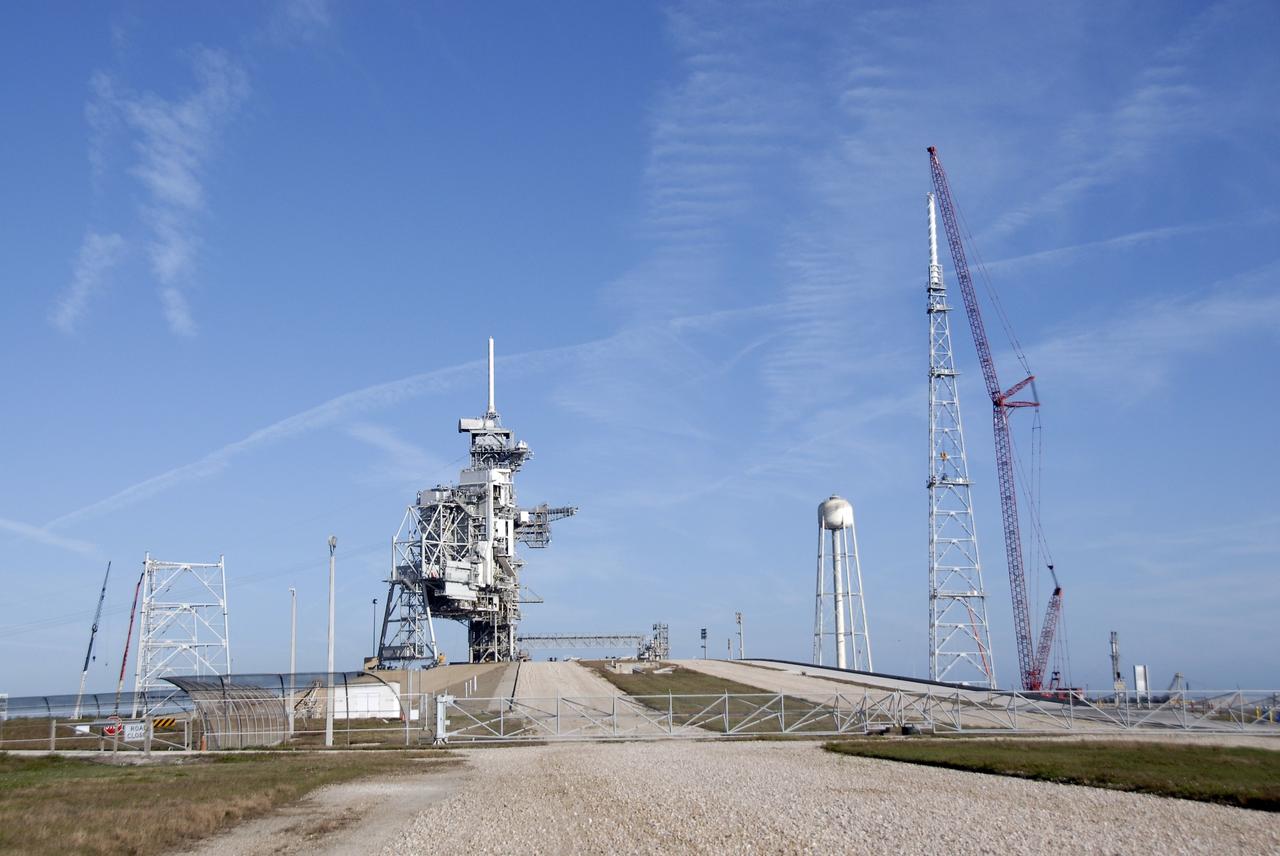
CAPE CANAVERAL, Fla. – On Launch Pad 39B at NASA's Kennedy Space Center in Florida, a crane places the 100-foot fiberglass mast atop the new lightning tower constructed on the pad. The towers are part of the new lightning protection system for the Constellation Program and Ares/Orion launches. At left of the service structures is another tower under construction. Each of the three new lightning towers will be 500 feet tall with the additional 100-foot fiberglass mast atop supporting a wire catenary system. This improved lightning protection system allows for the taller height of the Ares I rocket compared to the space shuttle. Pad 39B will be the site of the first Ares vehicle launch, including the Ares I-X test flight that is targeted for July 2009. Photo credit: NASA/Kim Shiflett
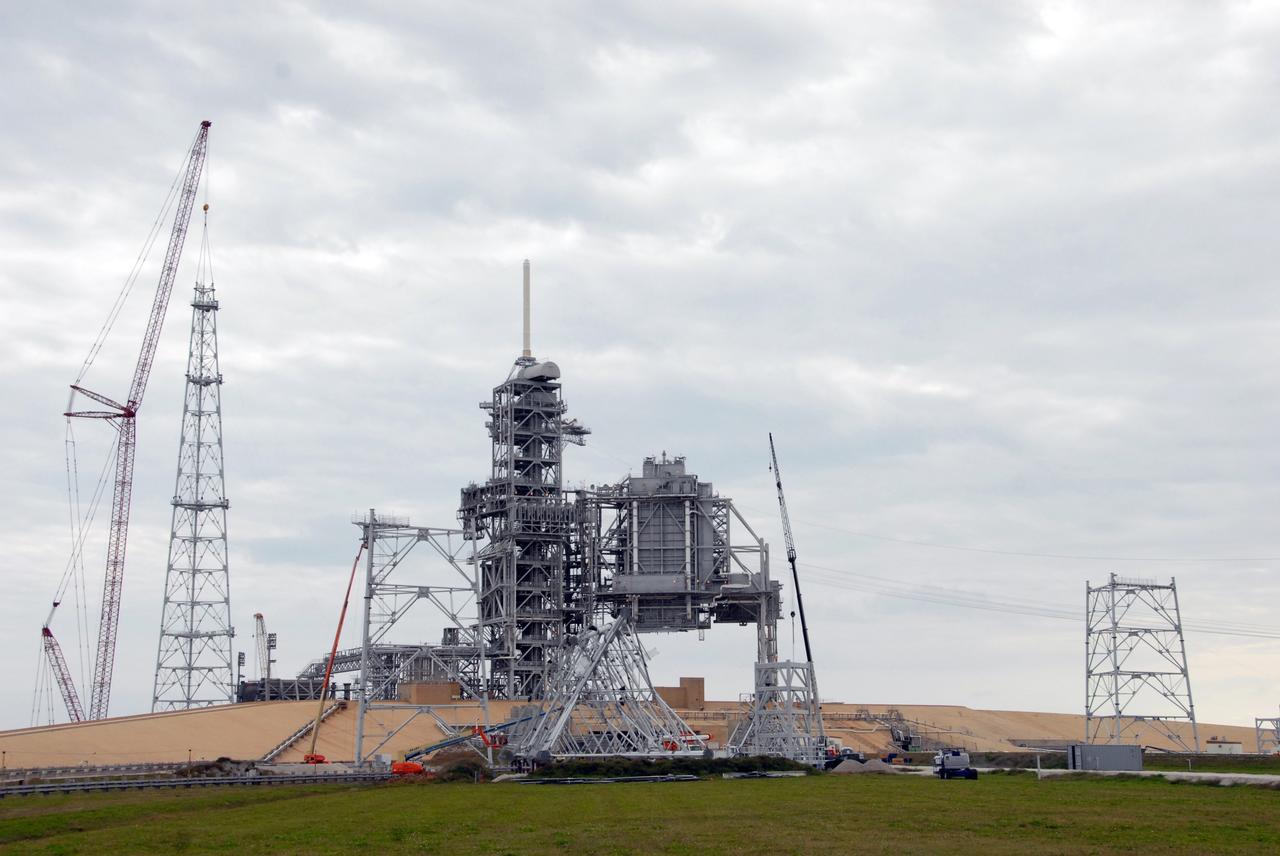
CAPE CANAVERAL, Fla. – On Launch Pad 39B at NASA's Kennedy Space Center in Florida, a crane (at left) completes construction of one of the towers in the new lightning protection system for the Constellation Program and Ares/Orion launches. At right, another tower is being constructed. Each of the three new lightning towers will be 500 feet tall with an additional 100-foot fiberglass mast atop supporting a wire catenary system. This improved lightning protection system allows for the taller height of the Ares I rocket compared to the space shuttle. Pad 39B will be the site of the first Ares vehicle launch, including the Ares I-X test flight that is targeted for July 2009. Photo credit: NASA/Troy Cryder
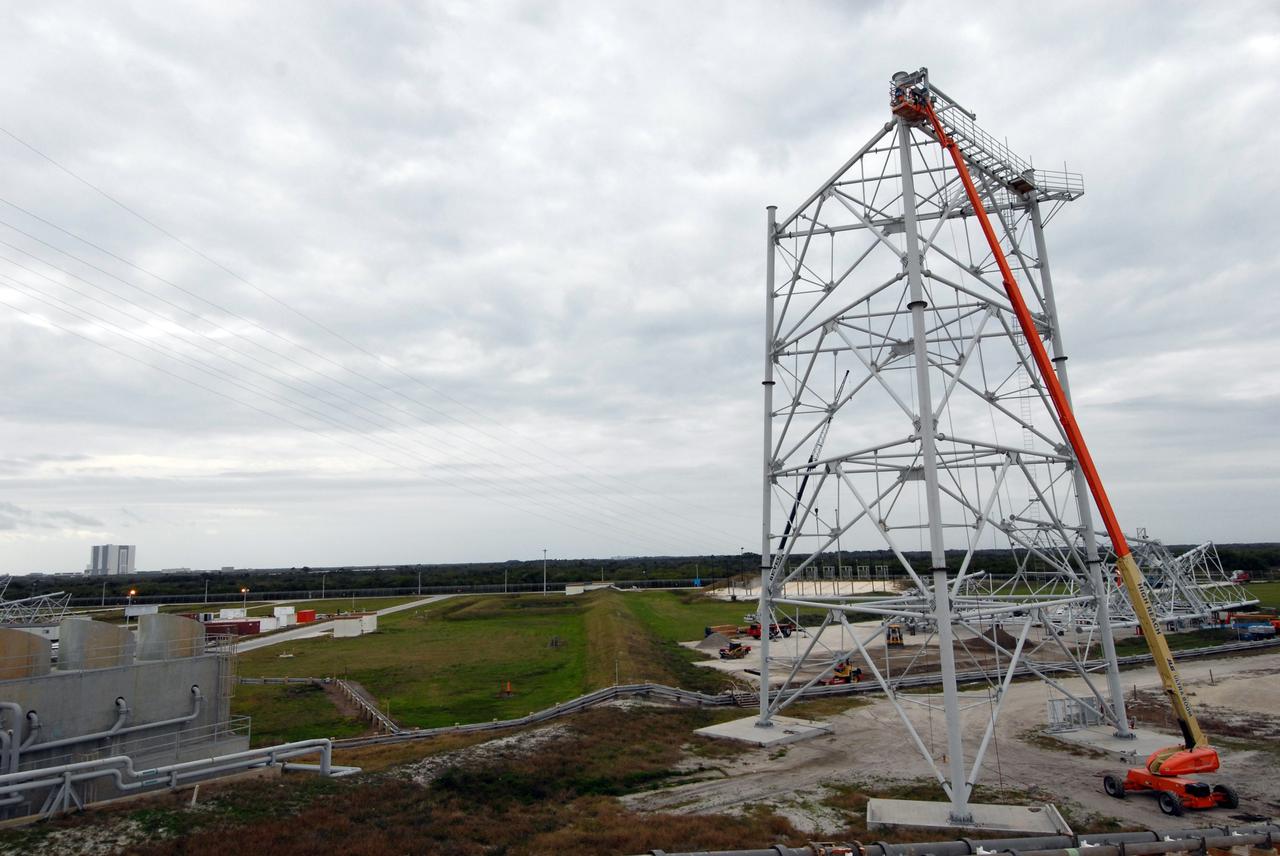
CAPE CANAVERAL, Fla. – CAPE CANAVERAL, Fla. -- On Launch Pad 39B at NASA's Kennedy Space Center in Florida, another lightning tower is being constructed as part of the new lightning protection system for the Constellation Program and Ares/Orion launches. Each of the three new lightning towers will be 500 feet tall with an additional 100-foot fiberglass mast atop supporting a wire catenary system. This improved lightning protection system allows for the taller height of the Ares I rocket compared to the space shuttle. Pad 39B will be the site of the first Ares vehicle launch, including the Ares I-X test flight that is targeted for July 2009. Photo credit: NASA/Troy Cryder
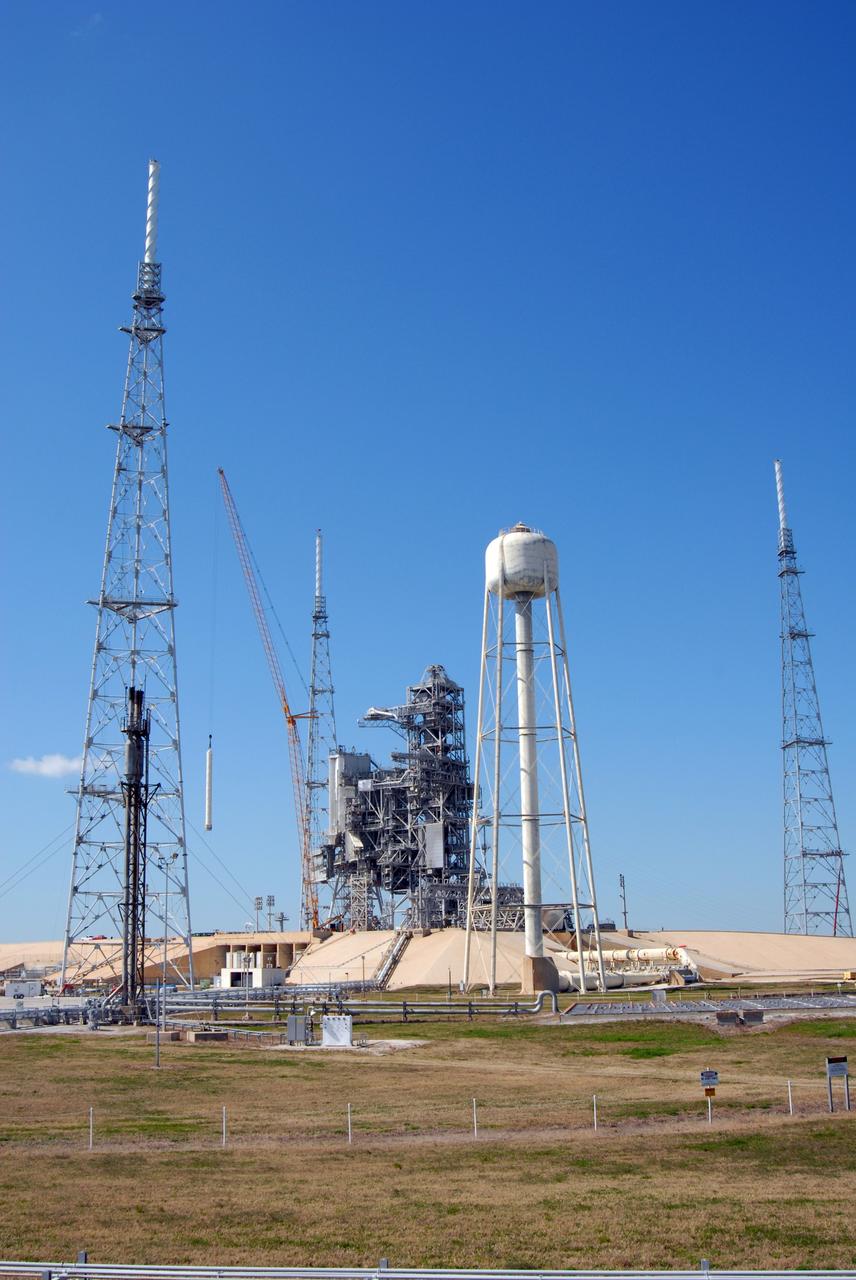
CAPE CANAVERAL, Fla. – On Launch Pad 39B at NASA's Kennedy Space Center in Florida, a crane has removed the 80-foot lightning mast from the top of the fixed service structure. The mast is no longer needed with the erection of the three lightning towers around the pad. Pad 39B will be the site of the first Ares vehicle launch, including the Ares I-X test flight that is targeted for July 2009. The three new lightning towers are 500 feet tall with an additional 100-foot fiberglass mast atop supporting a wire catenary system. This improved lightning protection system allows for the taller height of the Ares I rocket compared to the space shuttle. Photo credit: NASA/Amanda Diller
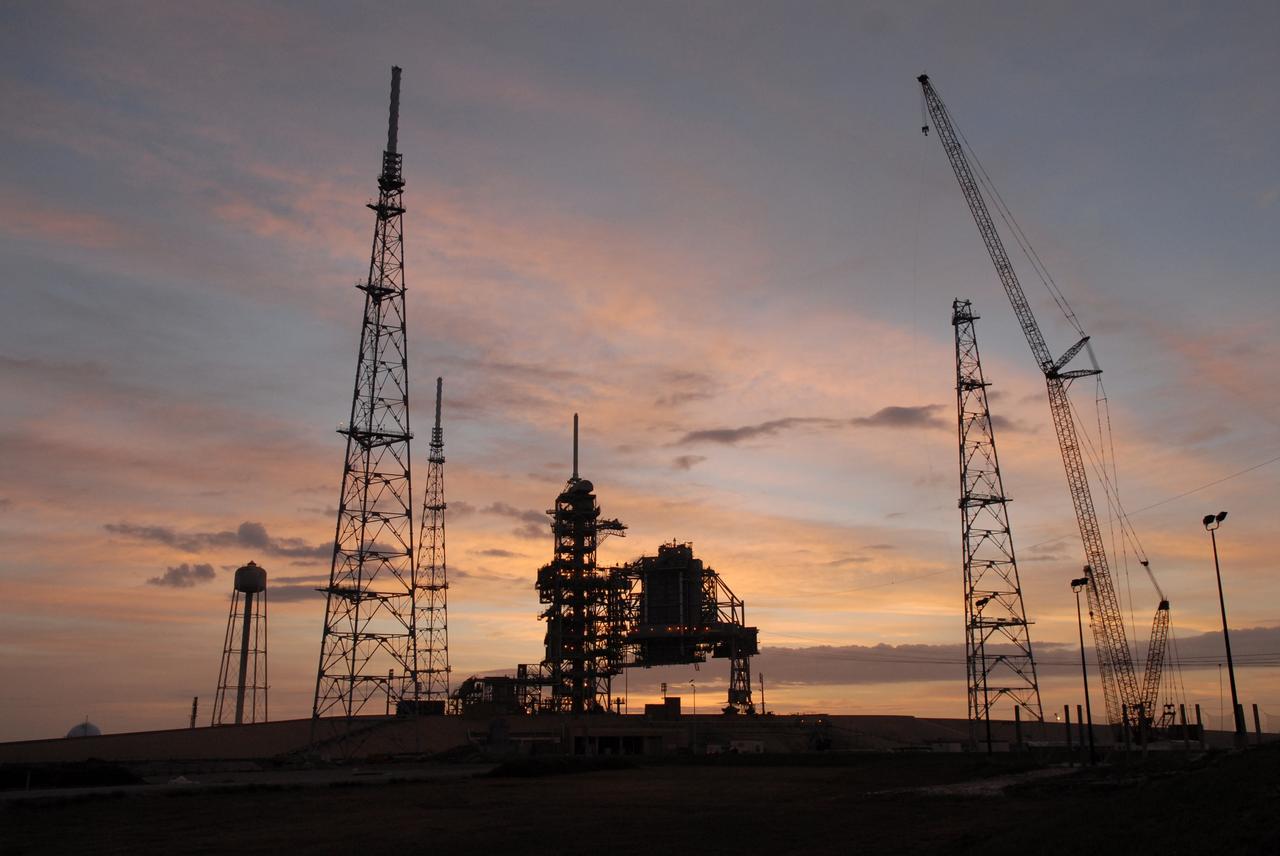
CAPE CANAVERAL, Fla. – The faint sunrise sky over NASA's Kennedy Space Center casts the newly erected lightning towers on Launch Pad 39B in silhouette. The two towers at left contain the lightning mast on top; the one at right does not. At center are the fixed and rotating service structures that have served the Space Shuttle Program. The new lightning protection system is being built for the Constellation Program and Ares/Orion launches. Each of the towers is 500 feet tall with an additional 100-foot fiberglass mast atop supporting a wire catenary system. This improved lightning protection system allows for the taller height of the Ares I rocket compared to the space shuttle. Pad 39B will be the site of the first Ares vehicle launch, including the Ares I-X test flight that is targeted for July 2009. Photo credit: NASA/Jack Pfaller
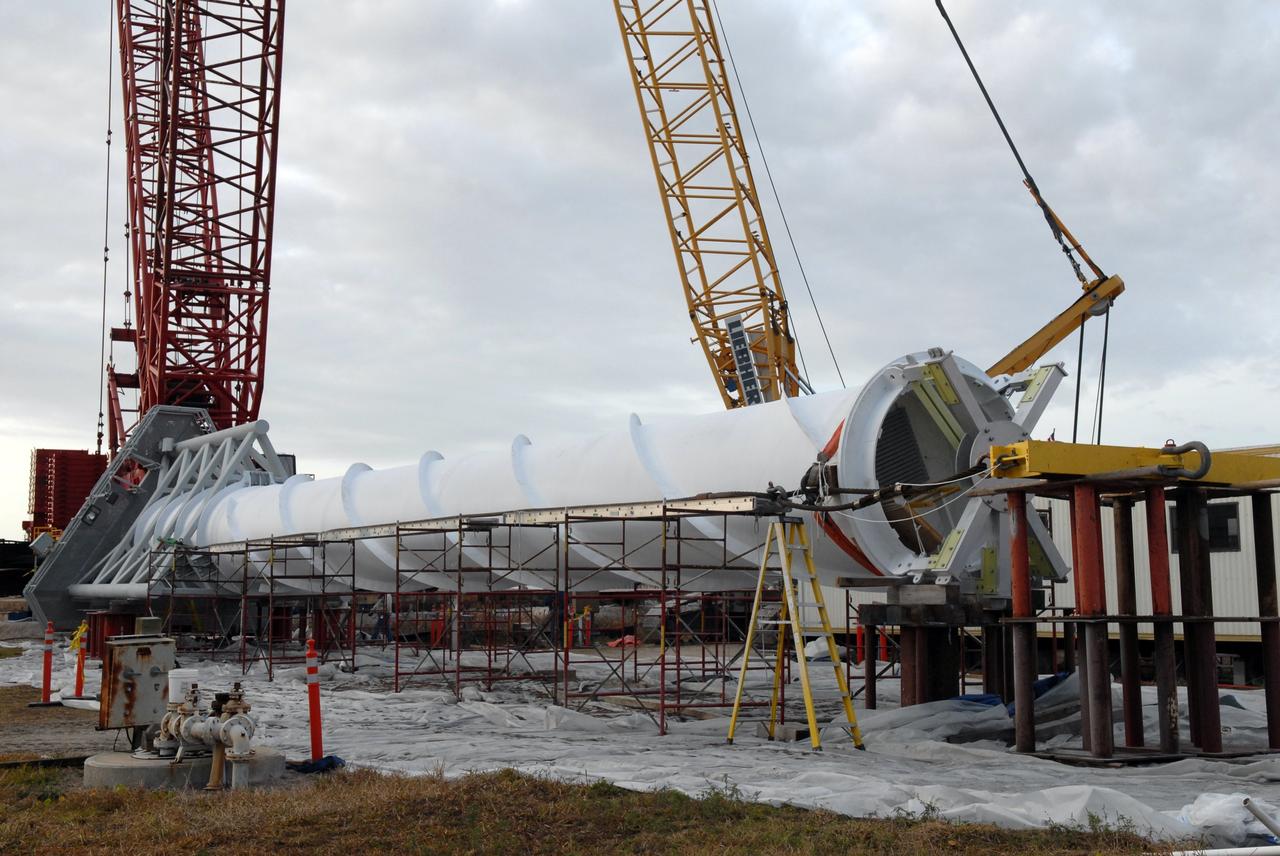
CAPE CANAVERAL, Fla. – A lightning mast remains to be lifted atop the third and final lightning tower erected on Launch Pad 39B at NASA's Kennedy Space Center. Three towers surround the pad. The new lightning protection system is being built for the Constellation Program and Ares/Orion launches. Each of the towers is 500 feet tall with an additional 100-foot fiberglass mast atop supporting a wire catenary system. This improved lightning protection system allows for the taller height of the Ares I rocket compared to the space shuttle. Pad 39B will be the site of the first Ares vehicle launch, including the Ares I-X test flight that is targeted for July 2009. Photo credit: NASA/Jack Pfaller
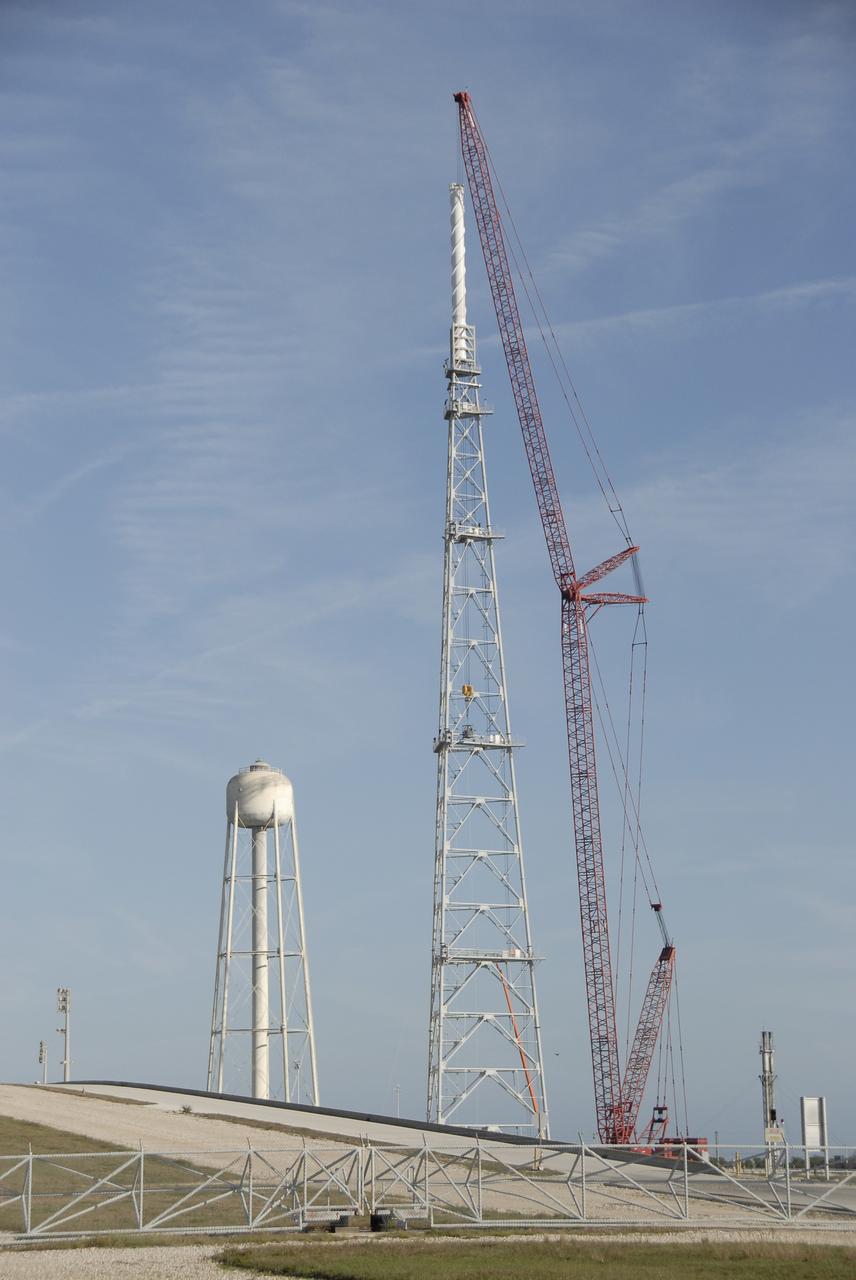
CAPE CANAVERAL, Fla. – On Launch Pad 39B at NASA's Kennedy Space Center in Florida, a crane places the 100-foot fiberglass mast atop the new lightning tower constructed on the pad. The towers are part of the new lightning protection system for the Constellation Program and Ares/Orion launches. Each of the three new lightning towers will be 500 feet tall with the additional 100-foot fiberglass mast atop supporting a wire catenary system. This improved lightning protection system allows for the taller height of the Ares I rocket compared to the space shuttle. Pad 39B will be the site of the first Ares vehicle launch, including the Ares I-X test flight that is targeted for July 2009. Photo credit: NASA/Kim Shiflett

CAPE CANAVERAL, Fla. – On Launch Pad 39B at NASA's Kennedy Space Center in Florida, a crane places the 100-foot fiberglass mast atop the new lightning tower constructed on the pad. The towers are part of the new lightning protection system for the Constellation Program and Ares/Orion launches. Each of the three new lightning towers will be 500 feet tall with the additional 100-foot fiberglass mast atop supporting a wire catenary system. This improved lightning protection system allows for the taller height of the Ares I rocket compared to the space shuttle. Pad 39B will be the site of the first Ares vehicle launch, including the Ares I-X test flight that is targeted for July 2009. Photo credit: NASA/Kim Shiflett
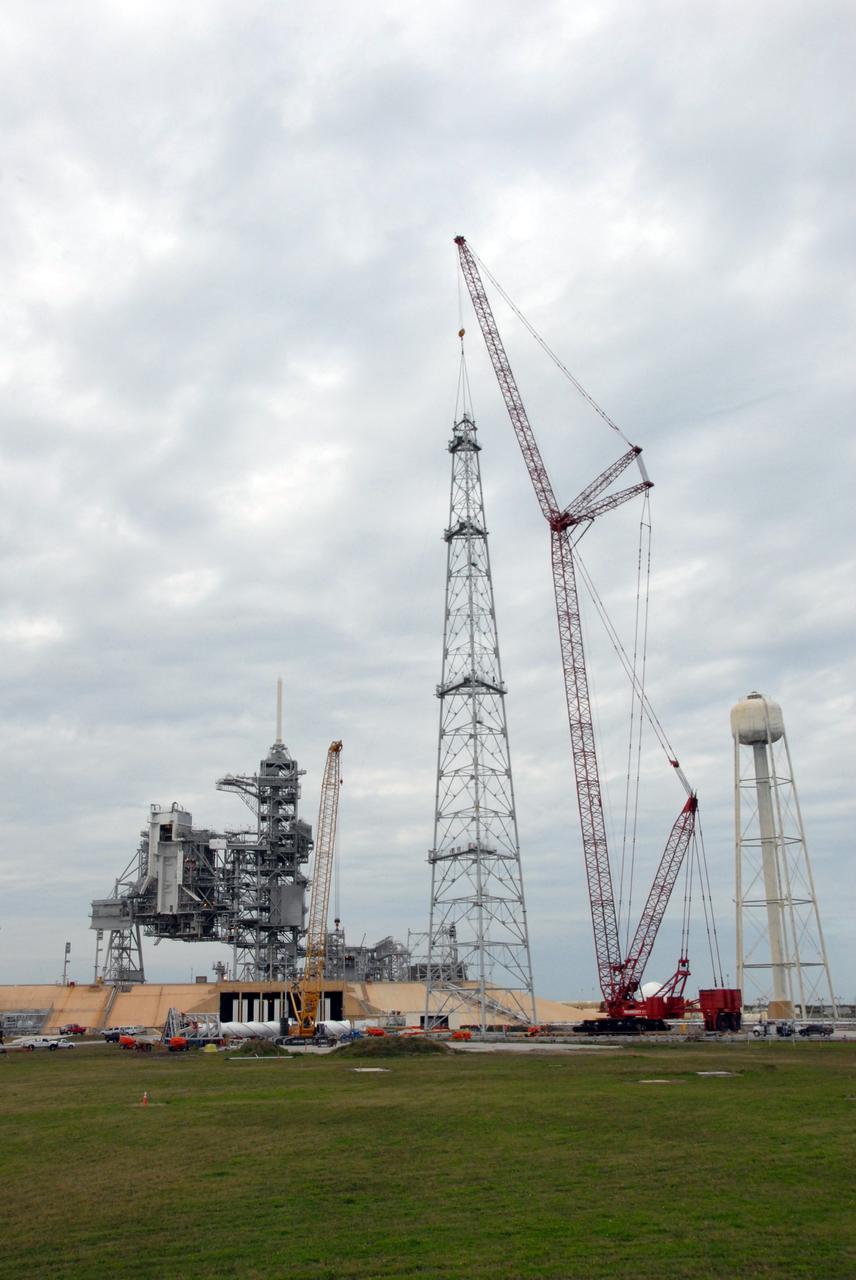
CAPE CANAVERAL, Fla. – On Launch Pad 39B at NASA's Kennedy Space Center in Florida, a crane completes construction of one of the towers in the new lightning protection system for the Constellation Program and Ares/Orion launches. Each of the three new lightning towers will be 500 feet tall with an additional 100-foot fiberglass mast atop supporting a wire catenary system. This improved lightning protection system allows for the taller height of the Ares I rocket compared to the space shuttle. Pad 39B will be the site of the first Ares vehicle launch, including the Ares I-X test flight that is targeted for July 2009. Photo credit: NASA/Troy Cryder
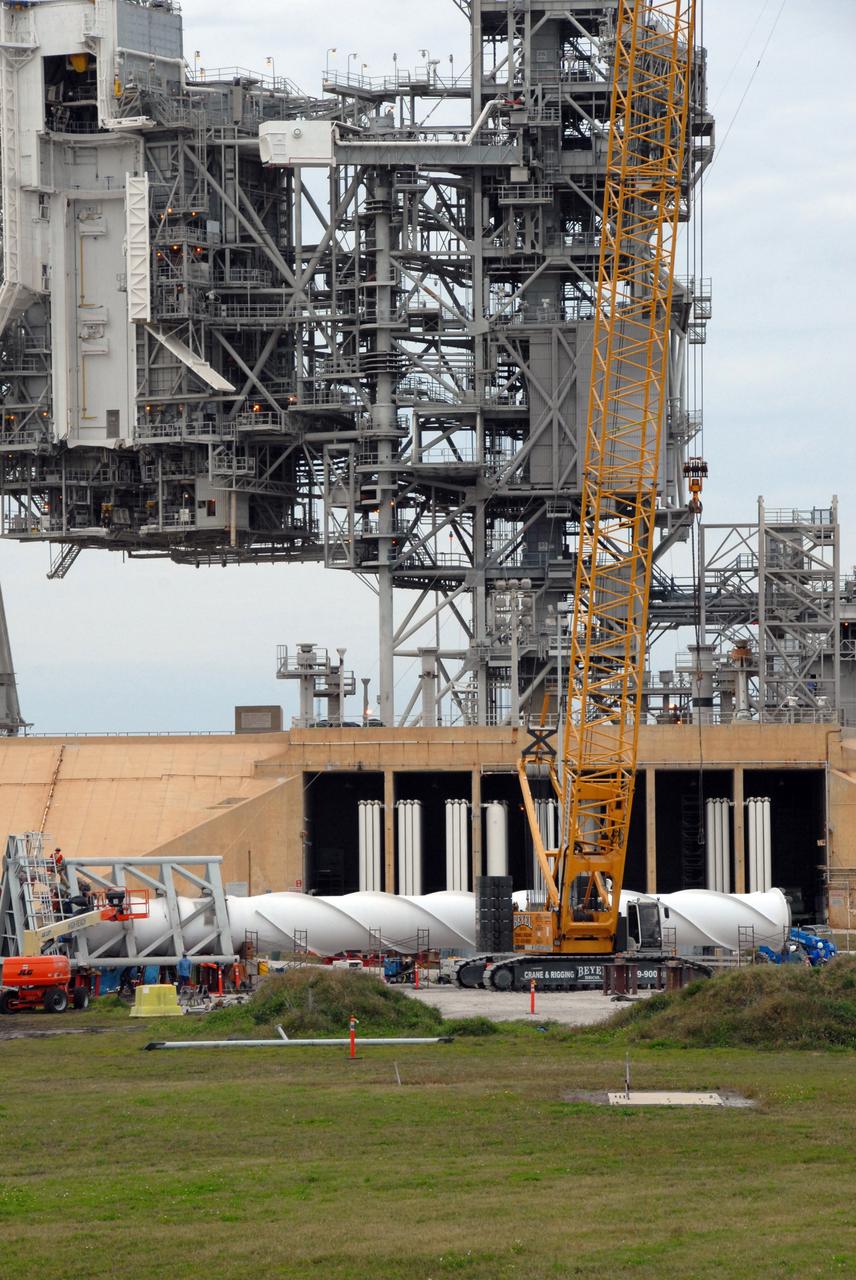
CAPE CANAVERAL, Fla. – On Launch Pad 39B at NASA's Kennedy Space Center in Florida, equipment surrounds the service structures for the construction of towers in the new lightning protection system for the Constellation Program and Ares/Orion launches. In the foreground is part of the giant crane used to place segments on the towers. Each of the three new lightning towers will be 500 feet tall with an additional 100-foot fiberglass mast (seen on the ground) atop supporting a wire catenary system. This improved lightning protection system allows for the taller height of the Ares I rocket compared to the space shuttle. Pad 39B will be the site of the first Ares vehicle launch, including the Ares I-X test flight that is targeted for July 2009. Photo credit: NASA/Troy Cryder
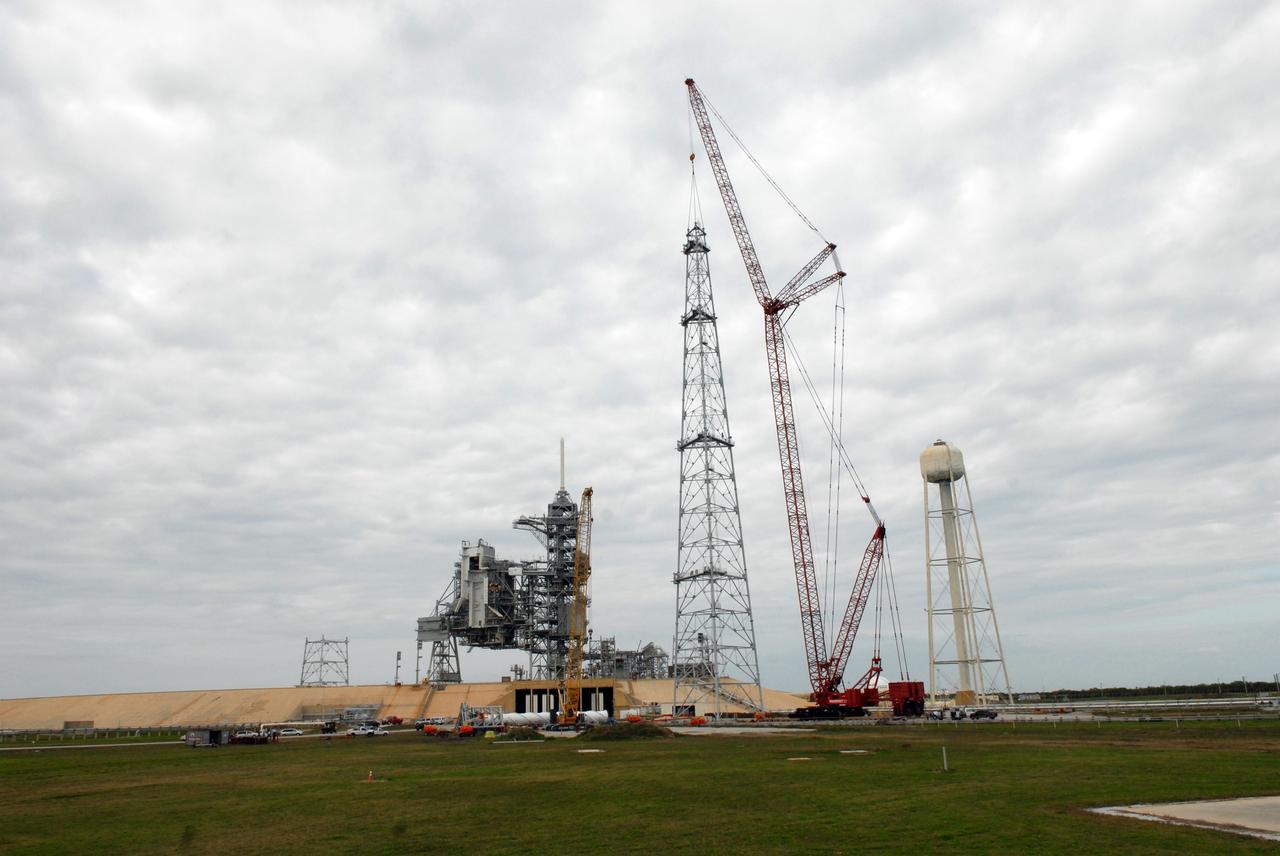
CAPE CANAVERAL, Fla. – On Launch Pad 39B at NASA's Kennedy Space Center in Florida, a crane completes construction of one of the towers in the new lightning protection system for the Constellation Program and Ares/Orion launches. Other towers are being constructed at left and behind the service structures on the pad. Each of the three new lightning towers will be 500 feet tall with an additional 100-foot fiberglass mast atop supporting a wire catenary system. This improved lightning protection system allows for the taller height of the Ares I rocket compared to the space shuttle. Pad 39B will be the site of the first Ares vehicle launch, including the Ares I-X test flight that is targeted for July 2009. Photo credit: NASA/Troy Cryder
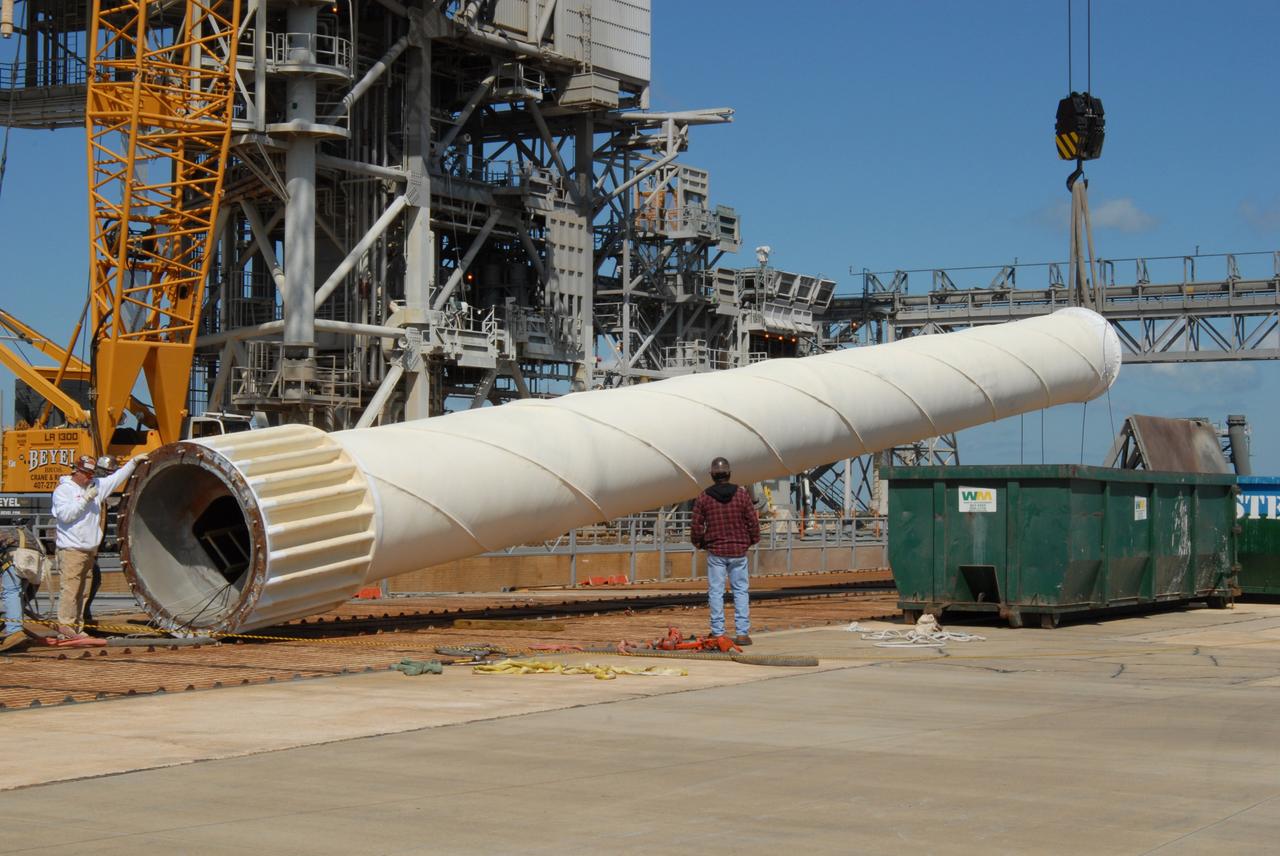
CAPE CANAVERAL, Fla. – On Launch Pad 39B at NASA's Kennedy Space Center in Florida, the 80-foot lightning mast removed from the top of the fixed service structure (behind it) is lowered onto the pad surface. The mast is no longer needed with the erection of the three lightning towers around the pad. Pad 39B will be the site of the first Ares vehicle launch, including the Ares I-X test flight that is targeted for July 2009. The three new lightning towers are 500 feet tall with an additional 100-foot fiberglass mast atop supporting a wire catenary system. This improved lightning protection system allows for the taller height of the Ares I rocket compared to the space shuttle. Photo credit: NASA/Amanda Diller
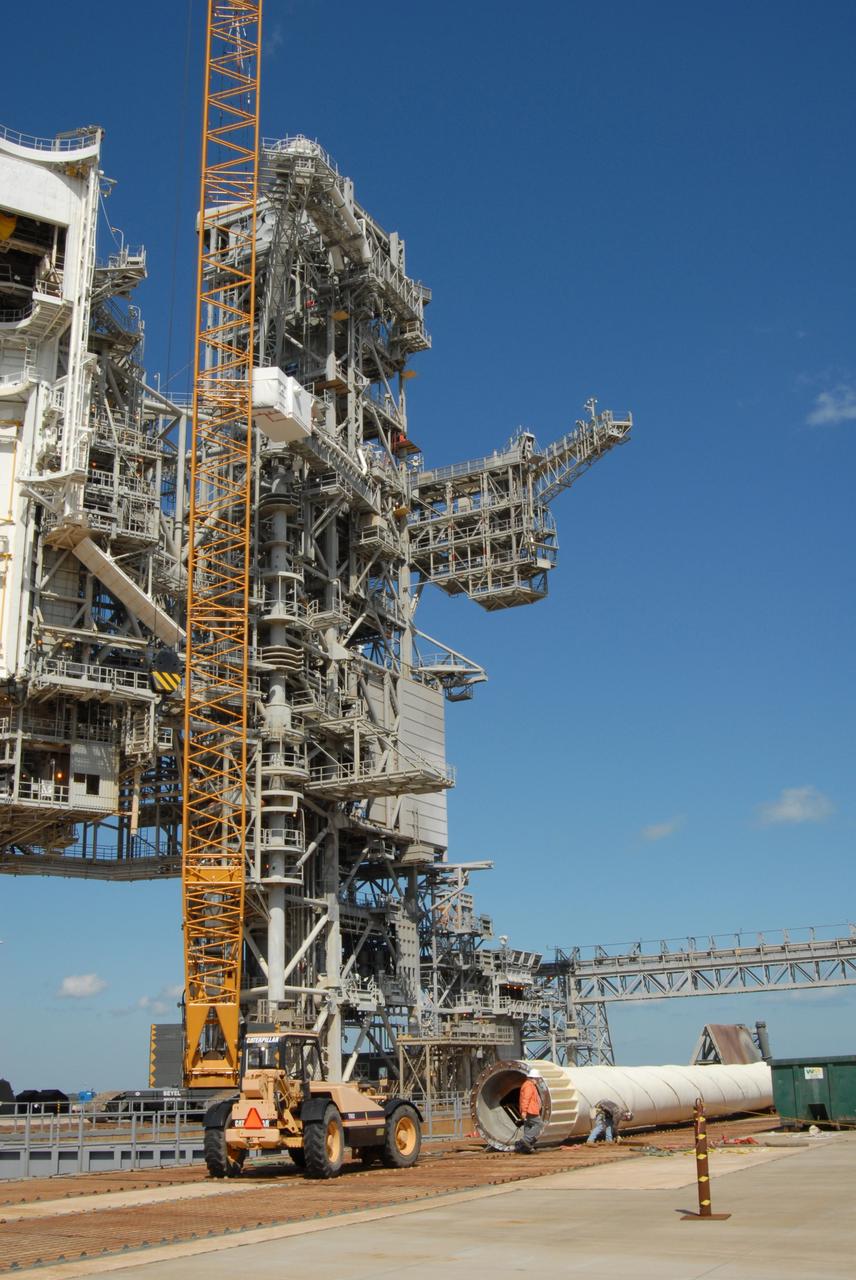
CAPE CANAVERAL, Fla. – On Launch Pad 39B at NASA's Kennedy Space Center in Florida, the 80-foot lightning mast removed from the top of the fixed service structure (center) rests on the pad surface. The mast is no longer needed with the erection of the three lightning towers around the pad. Pad 39B will be the site of the first Ares vehicle launch, including the Ares I-X test flight that is targeted for July 2009. The three new lightning towers are 500 feet tall with an additional 100-foot fiberglass mast atop supporting a wire catenary system. This improved lightning protection system allows for the taller height of the Ares I rocket compared to the space shuttle. Photo credit: NASA/Amanda Diller
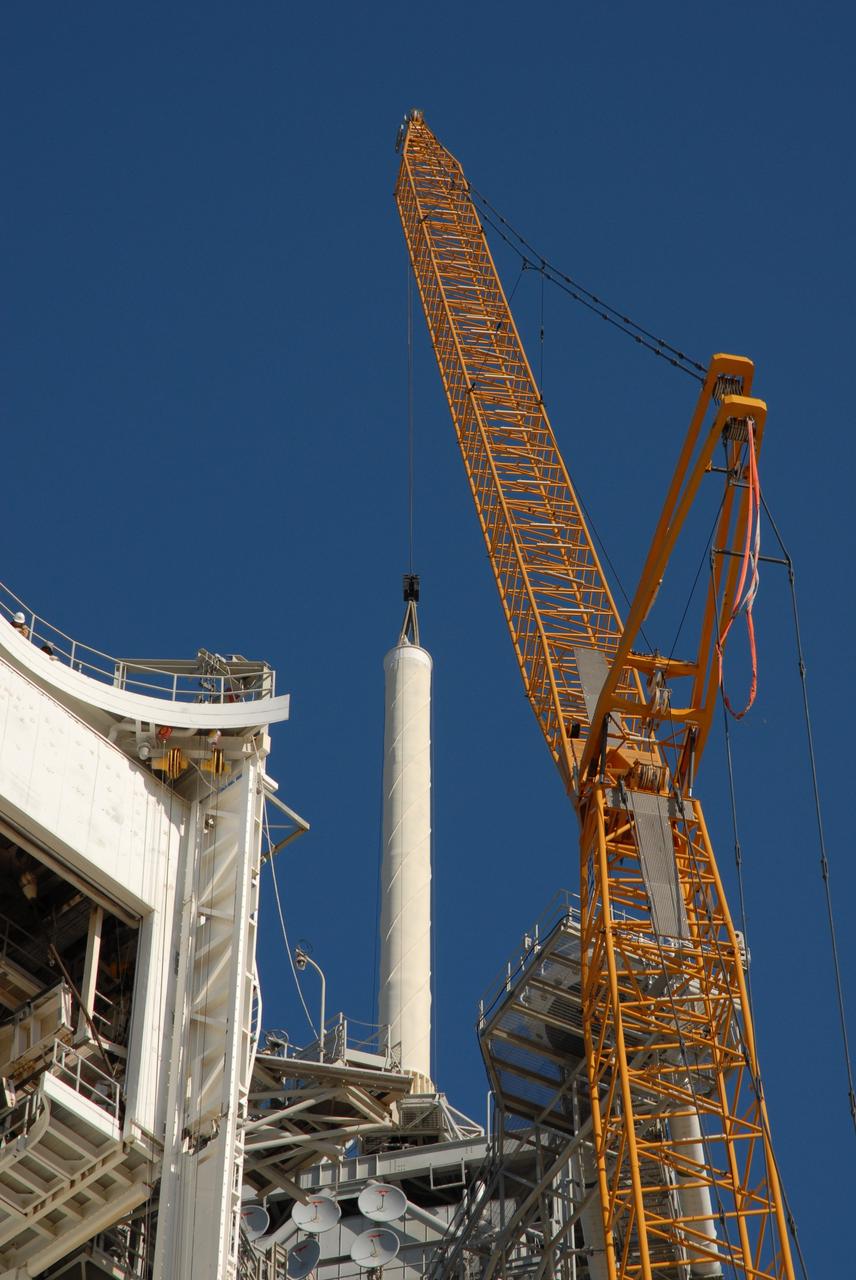
CAPE CANAVERAL, Fla. – On Launch Pad 39B at NASA's Kennedy Space Center in Florida, a crane is being used to remove the 80-foot lightning mast from the top of the fixed service structure. The mast is no longer needed with the erection of the three lightning towers around the pad. Pad 39B will be the site of the first Ares vehicle launch, including the Ares I-X test flight that is targeted for July 2009. The three new lightning towers are 500 feet tall with an additional 100-foot fiberglass mast atop supporting a wire catenary system. This improved lightning protection system allows for the taller height of the Ares I rocket compared to the space shuttle. Photo credit: NASA/Amanda Diller
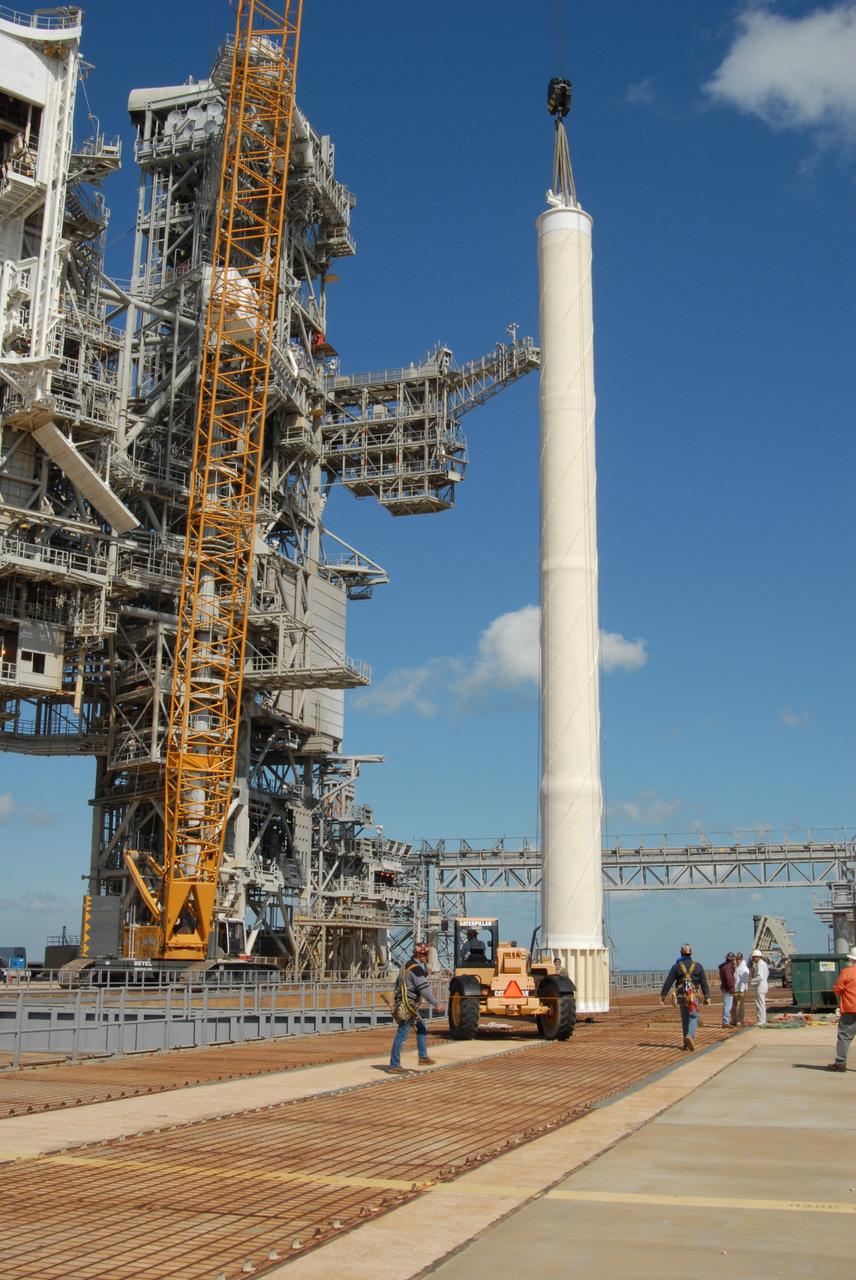
CAPE CANAVERAL, Fla. – On Launch Pad 39B at NASA's Kennedy Space Center in Florida, a crane lowers the 80-foot lightning mast removed from the top of the fixed service structure (left) onto the pad surface. The mast is no longer needed with the erection of the three lightning towers around the pad. Pad 39B will be the site of the first Ares vehicle launch, including the Ares I-X test flight that is targeted for July 2009. The three new lightning towers are 500 feet tall with an additional 100-foot fiberglass mast atop supporting a wire catenary system. This improved lightning protection system allows for the taller height of the Ares I rocket compared to the space shuttle. Photo credit: NASA/Amanda Diller
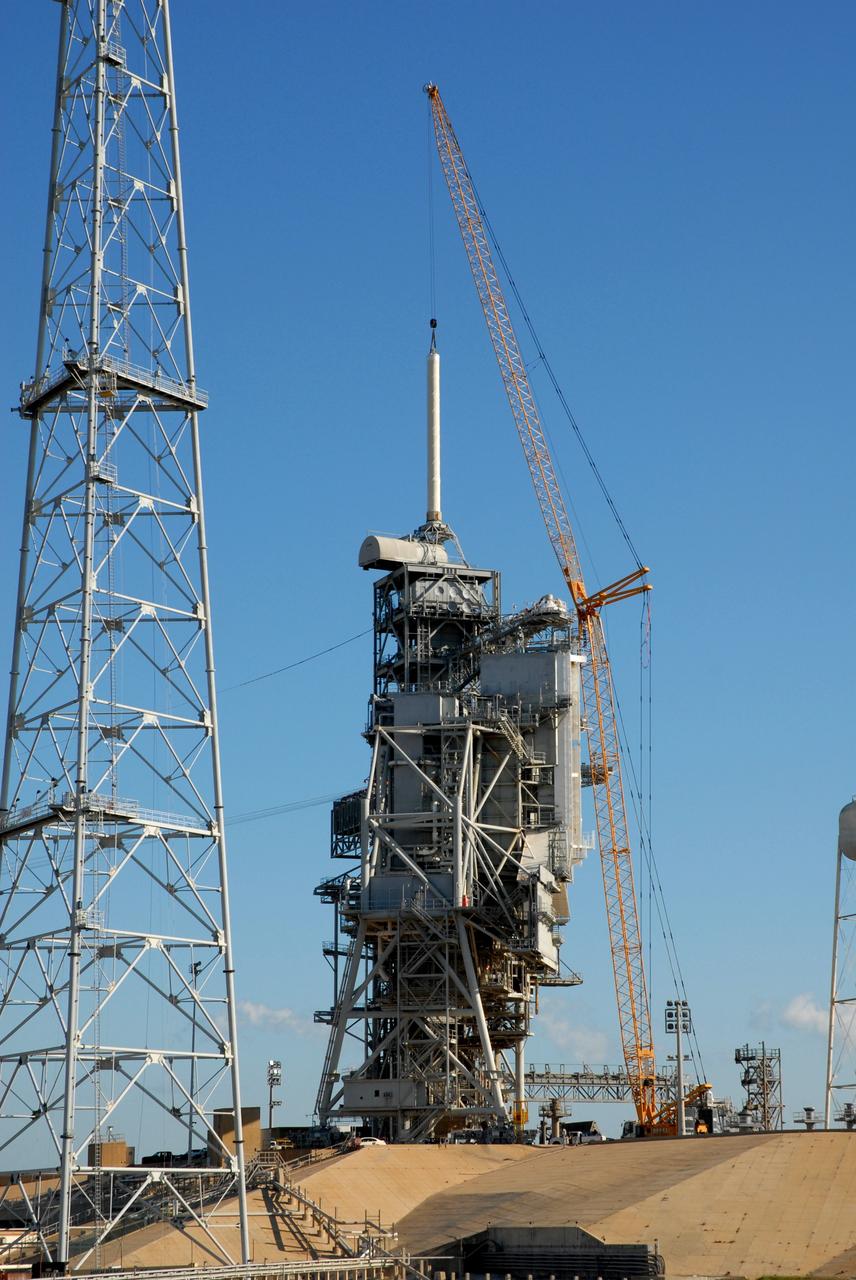
CAPE CANAVERAL, Fla. – On Launch Pad 39B at NASA's Kennedy Space Center in Florida, a crane is being used to remove the 80-foot lightning mast from the top of the fixed service structure. The mast is no longer needed with the erection of the three lightning towers around the pad. Pad 39B will be the site of the first Ares vehicle launch, including the Ares I-X test flight that is targeted for July 2009. The three new lightning towers are 500 feet tall with an additional 100-foot fiberglass mast atop supporting a wire catenary system. This improved lightning protection system allows for the taller height of the Ares I rocket compared to the space shuttle. Photo credit: NASA/Amanda Diller
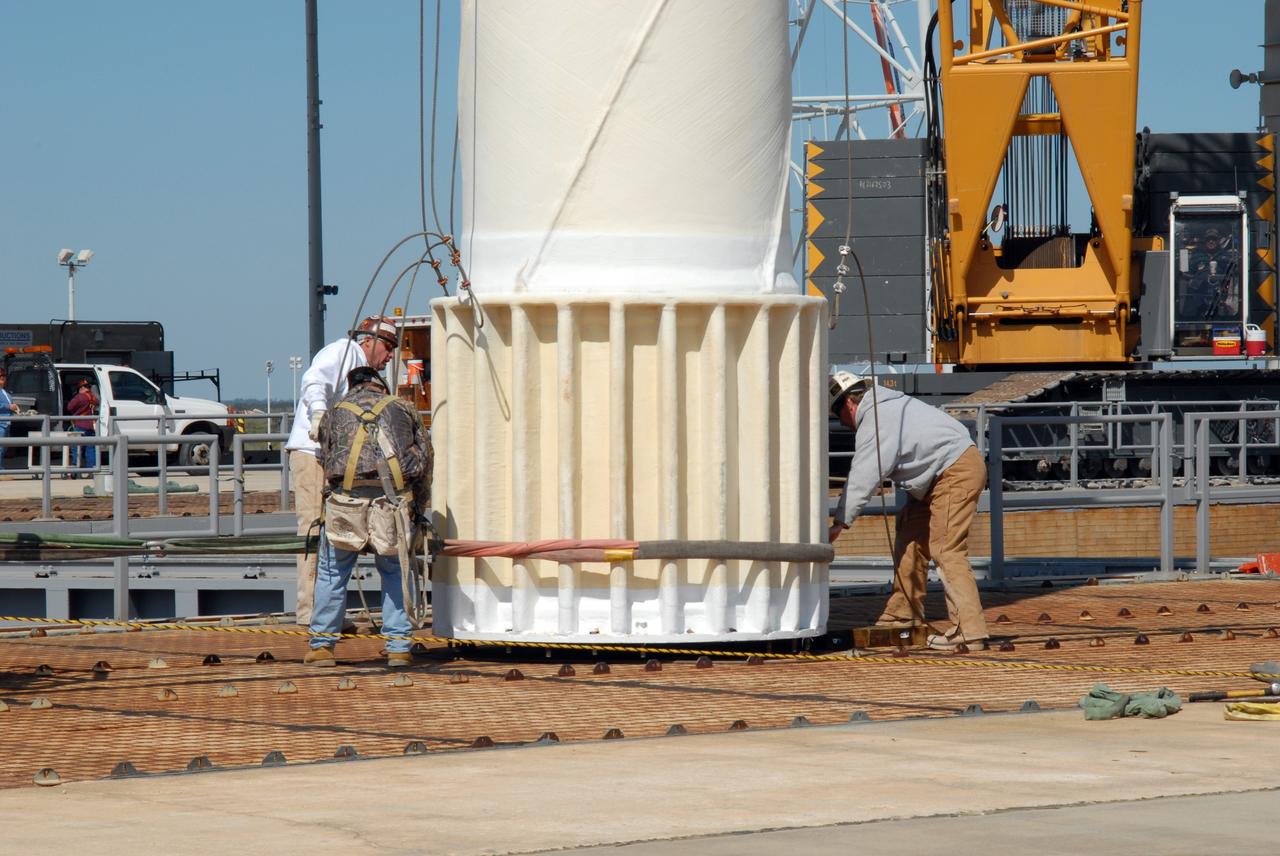
CAPE CANAVERAL, Fla. – On Launch Pad 39B at NASA's Kennedy Space Center in Florida, workers attach more cables to the 80-foot lightning mast removed from the top of the fixed service structure. The mast will be lowered to horizontal for transport from the pad. The mast is no longer needed with the erection of the three lightning towers around the pad. Pad 39B will be the site of the first Ares vehicle launch, including the Ares I-X test flight that is targeted for July 2009. The three new lightning towers are 500 feet tall with an additional 100-foot fiberglass mast atop supporting a wire catenary system. This improved lightning protection system allows for the taller height of the Ares I rocket compared to the space shuttle. Photo credit: NASA/Amanda Diller
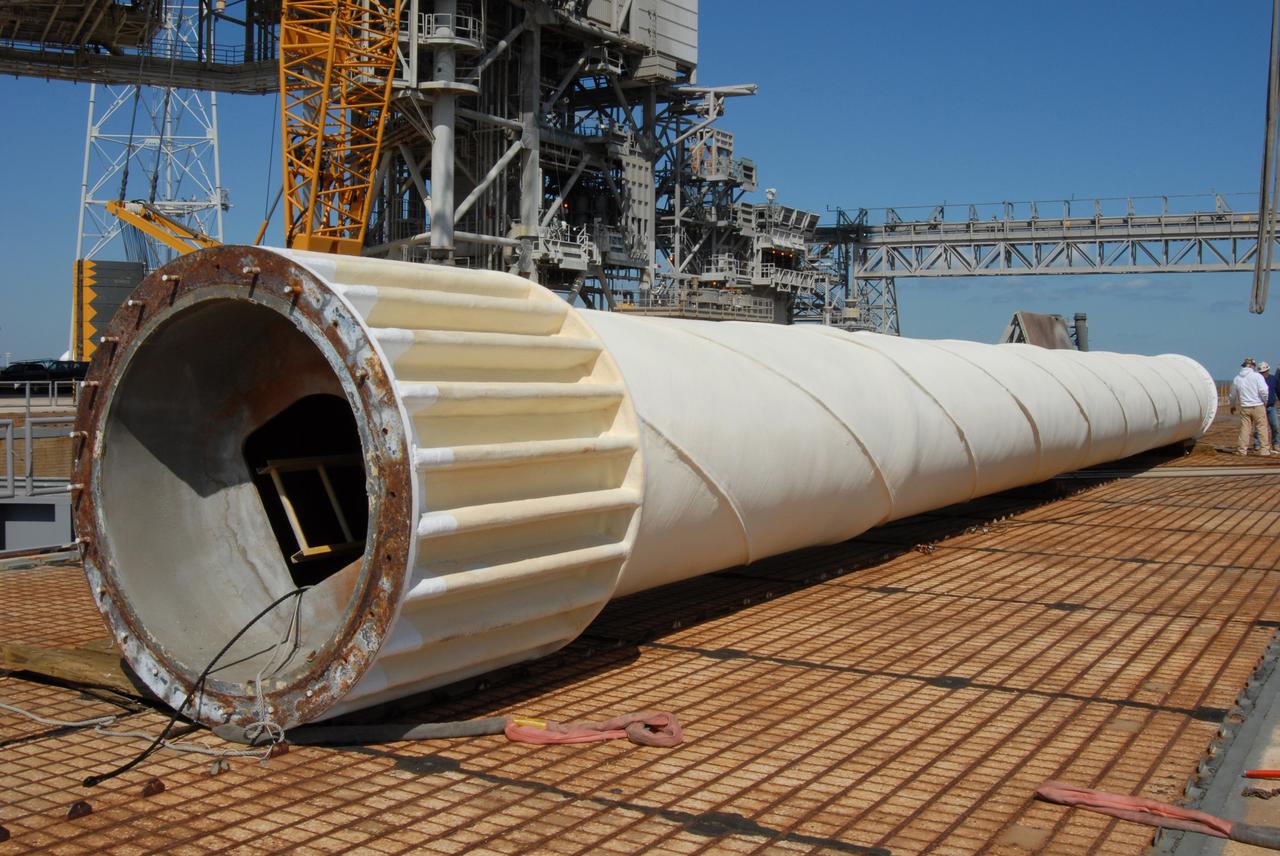
CAPE CANAVERAL, Fla. – On Launch Pad 39B at NASA's Kennedy Space Center in Florida, the 80-foot lightning mast removed from the top of the fixed service structure (left) rests on the pad surface. The mast is no longer needed with the erection of the three lightning towers around the pad. Pad 39B will be the site of the first Ares vehicle launch, including the Ares I-X test flight that is targeted for July 2009. The three new lightning towers are 500 feet tall with an additional 100-foot fiberglass mast atop supporting a wire catenary system. This improved lightning protection system allows for the taller height of the Ares I rocket compared to the space shuttle. Photo credit: NASA/Amanda Diller
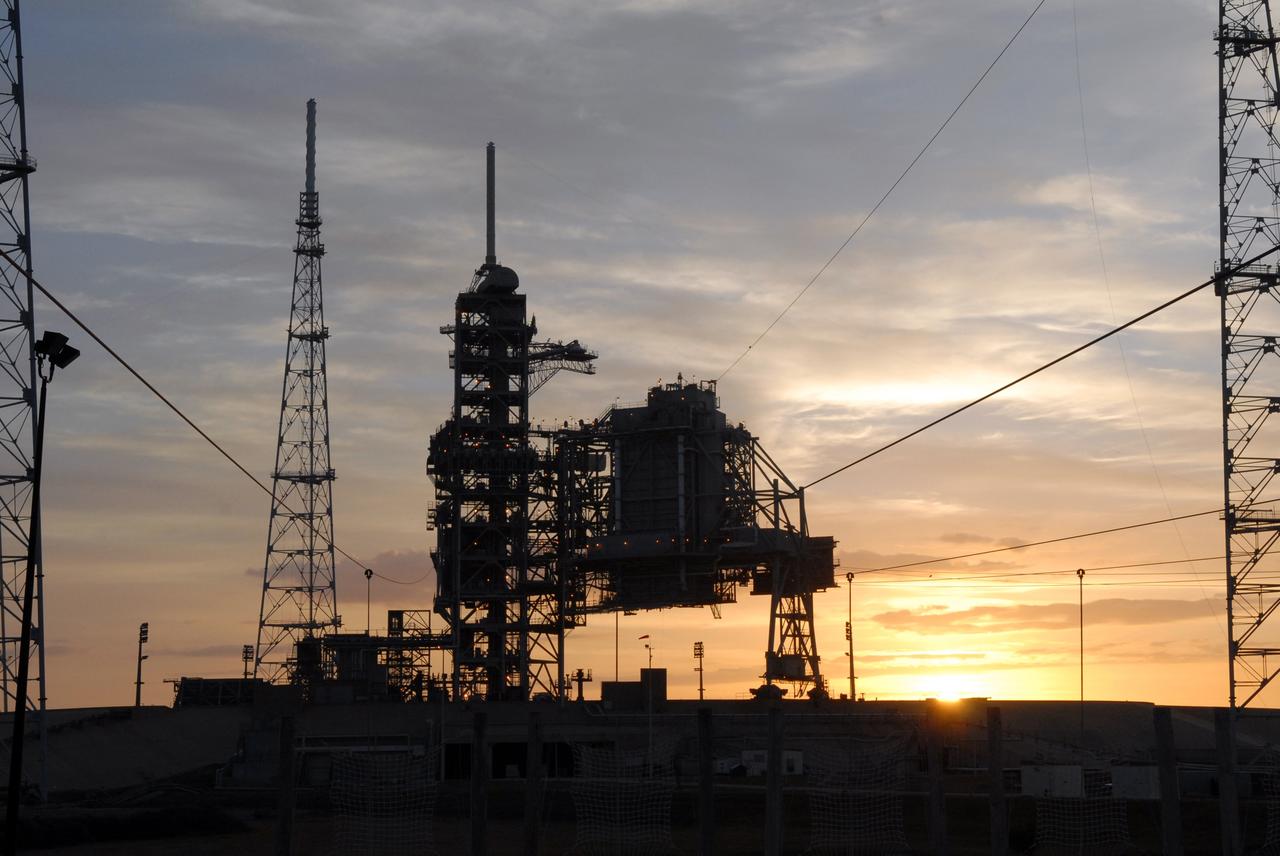
CAPE CANAVERAL, Fla. – The faint sunrise sky over NASA's Kennedy Space Center casts the newly erected lightning towers on Launch Pad 39B in silhouette. They surround the fixed and rotating service structures at center that have served the Space Shuttle Program. The new lightning protection system is being built for the Constellation Program and Ares/Orion launches. Each of the towers is 500 feet tall with an additional 100-foot fiberglass mast atop supporting a wire catenary system. This improved lightning protection system allows for the taller height of the Ares I rocket compared to the space shuttle. Pad 39B will be the site of the first Ares vehicle launch, including the Ares I-X test flight that is targeted for July 2009. Photo credit: NASA/Jack Pfaller
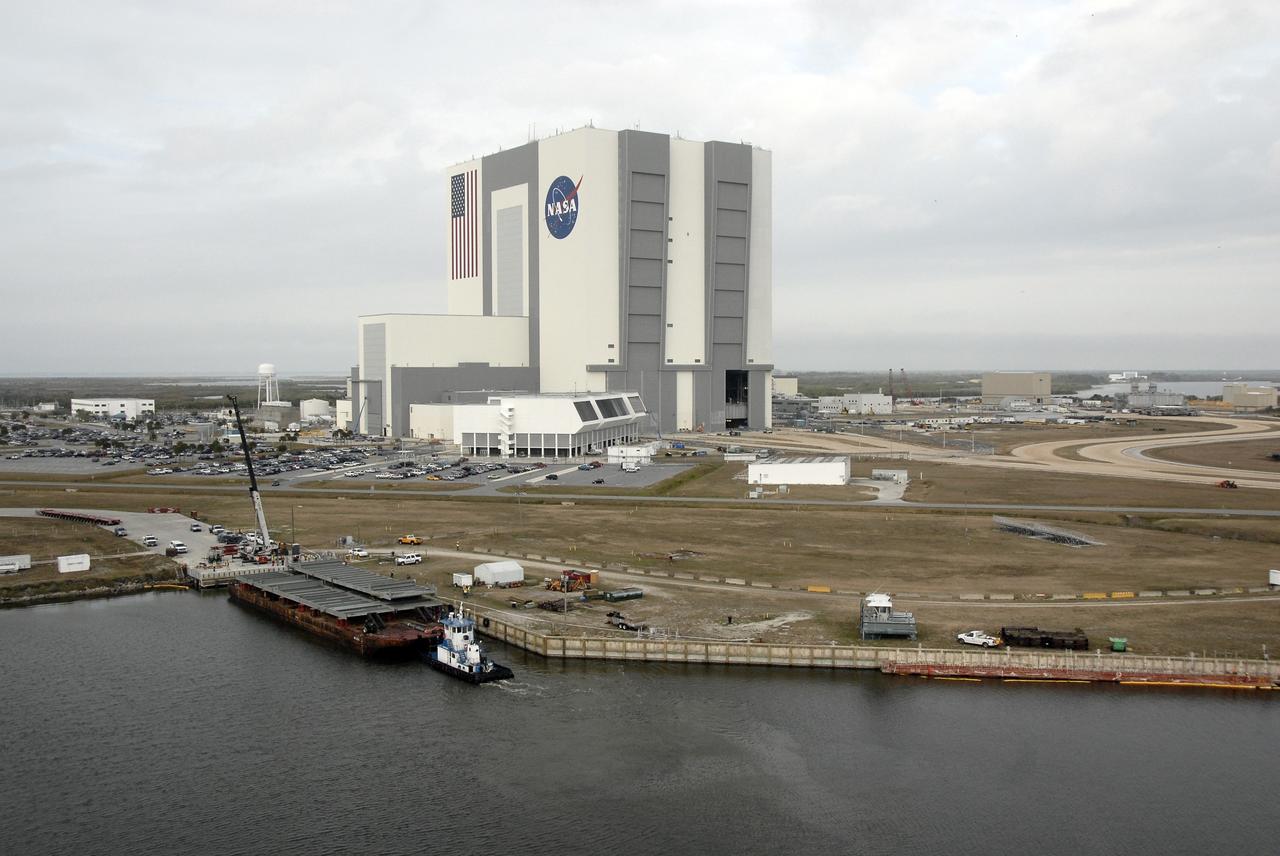
CAPE CANAVERAL, Fla. – An aerial view of the Launch Complex 39 Area NASA's Kennedy Space Center in Florida shows the 525-foot-tall Vehicle Assembly Building looming over the landscape. In the foreground is the turn basin, where a barge holds trestles and girders for the new mobile launcher. The new launcher will be the base for the Constellation Program's Ares rockets to launch the Orion crew exploration vehicle and the cargo vehicle. The base is being made lighter than space shuttle mobile launcher platforms so the crawler-transporter can pick up the added load of the 345-foot tower and taller rocket. When the structural portion of the new mobile launcher is complete, umbilicals, access arms, communications equipment and command/control equipment will be installed. Photo credit: NASA/Kim Shiflett
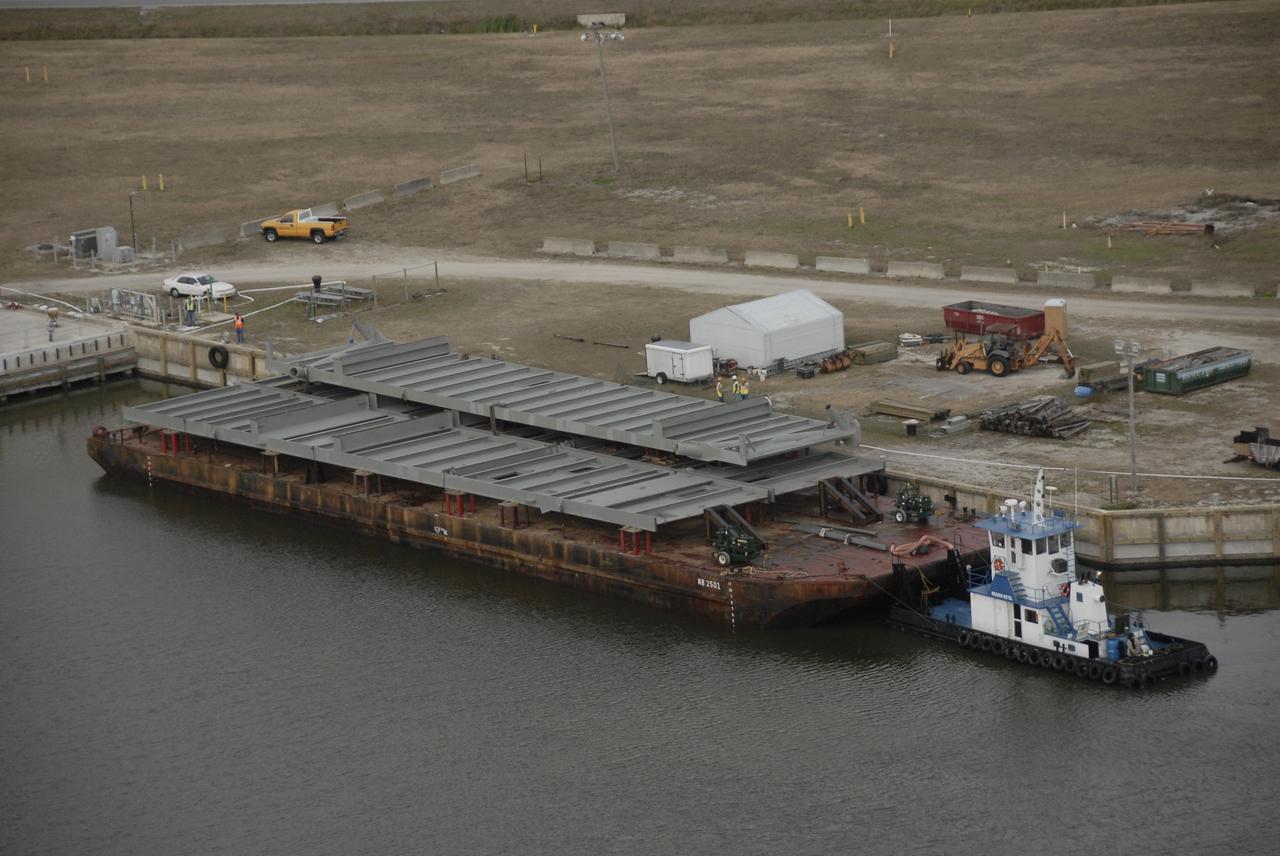
CAPE CANAVERAL, Fla. – Trestles and girders for a new mobile launcher arrive by barge at the turn basin in the Launch Complex 39 Area of NASA's Kennedy Space Center in Florida. The new launcher will be the base for the Constellation Program's Ares rockets to launch the Orion crew exploration vehicle and the cargo vehicle. The base is being made lighter than space shuttle mobile launcher platforms so the crawler-transporter can pick up the added load of the 345-foot tower and taller rocket. When the structural portion of the new mobile launcher is complete, umbilicals, access arms, communications equipment and command/control equipment will be installed. Photo credit: NASA/Kim Shiflett
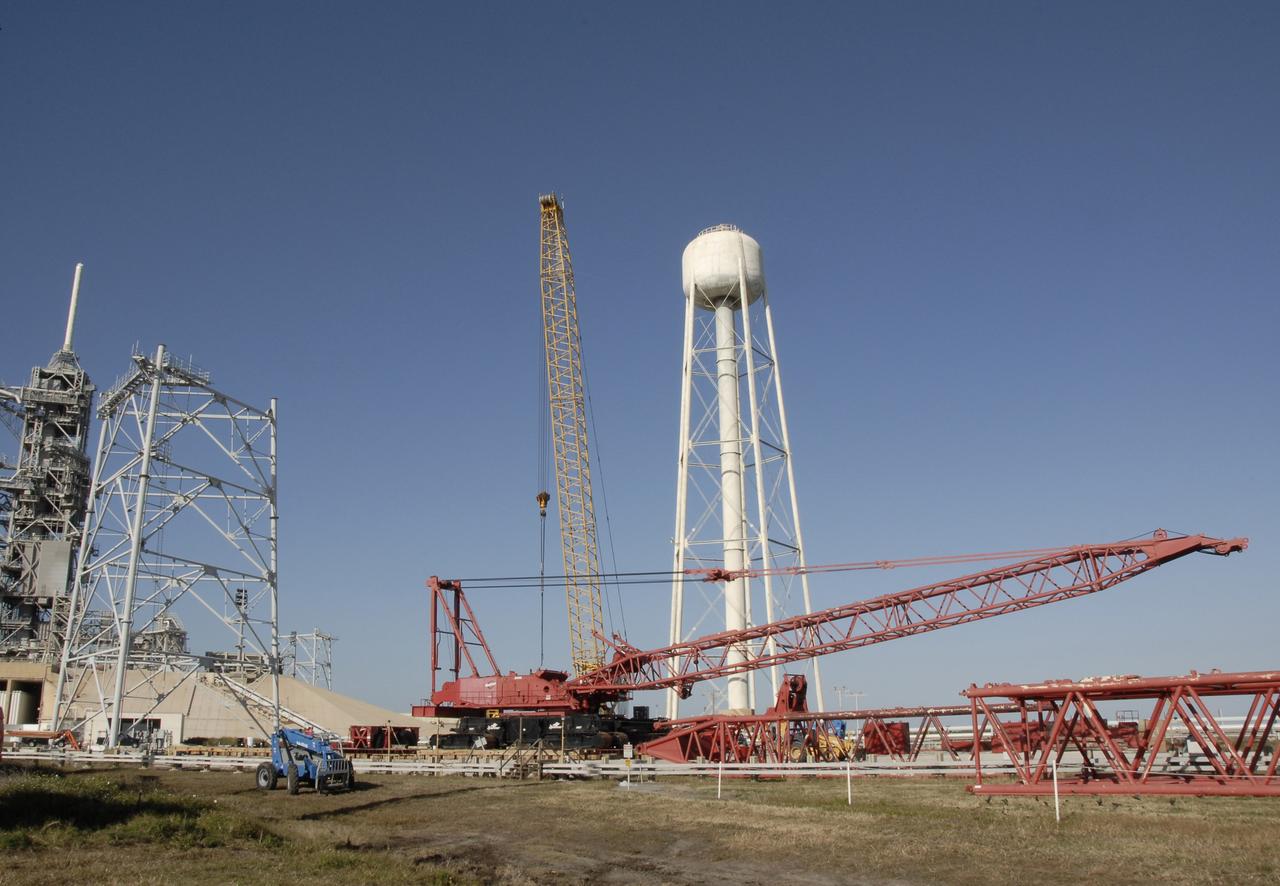
CAPE CANAVERAL, Fla. -- On Launch Pad 39B at NASA's Kennedy Space Center in Florida, segments are being added to the crane (foreground) that will be used to finish erecting the lightning towers (one is at left) on the pad. In the background is the 290-foot-high tower that holds 300,000 gallons of water used for sound suppression during shuttle launches. Lightning towers are being constructed to hold centenary wires as part of the new lightning protection system for the Constellation Program and Ares/Orion launches. Photo credit: NASA/Kim Shiflett
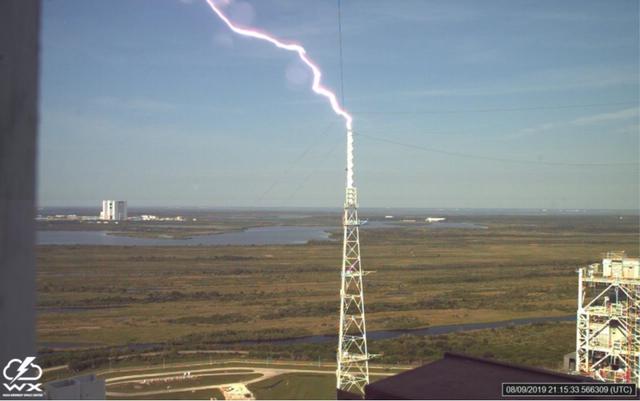
A lightning strike is recorded at Launch Complex 39B at NASA’s Kennedy Space Center in Florida in August 2019. The event was captured by high-speed cameras stationed at the pad and mobile launcher using a special filter called a “clear day frame,” which provides an overlay of the raw frame on a reference image. At pad 39B, there are three, 600-foot-tall masts with overhead wires used to transmit electrical energy around the perimeter of the pad to provide lightning protection for launch vehicles as they are processed and launched from the pad.
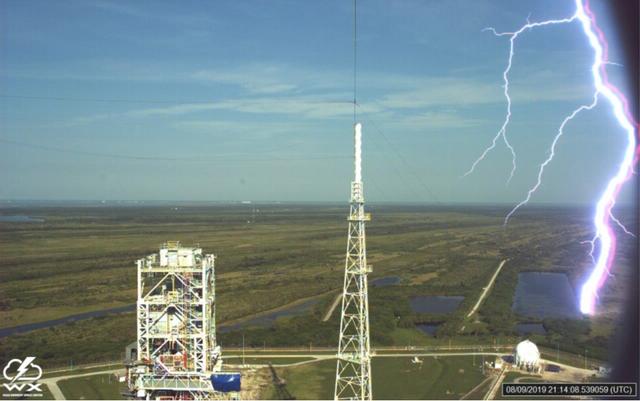
A lightning strike is recorded at Launch Complex 39B at NASA’s Kennedy Space Center in Florida in August 2019. The event was captured by high-speed cameras stationed at the pad and mobile launcher using a special filter called a “clear day frame,” which provides an overlay of the raw frame on a reference image. At pad 39B, there are three, 600-foot-tall masts with overhead wires used to transmit electrical energy around the perimeter of the pad to provide lightning protection for launch vehicles as they are processed and launched from the pad.
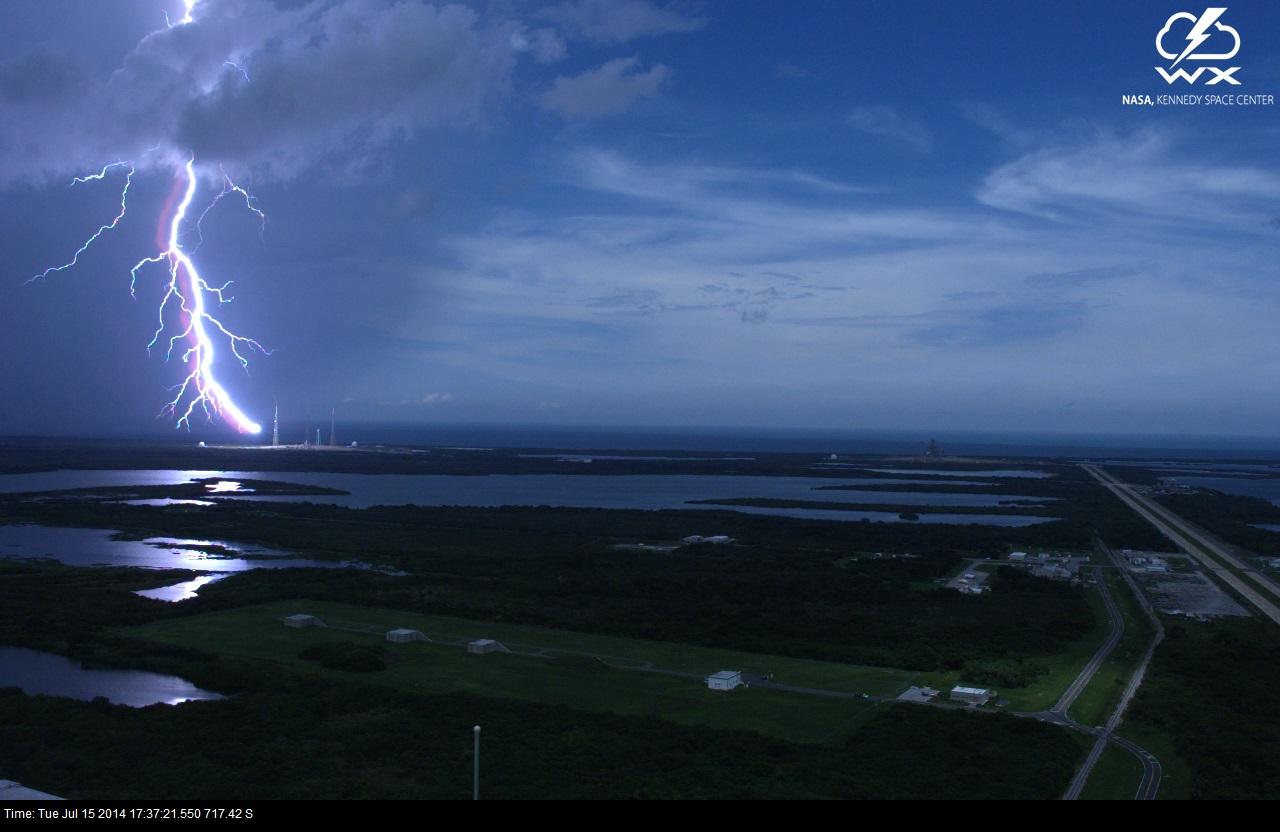
A lightning strike is recorded at Launch Complex 39B at NASA’s Kennedy Space Center in Florida in July 2014. The event was captured by high-speed camera from the iconic Vehicle Assembly Building. At pad 39B, there are three, 600-foot-tall masts with overhead wires used to transmit electrical energy around the perimeter of the pad to provide lightning protection for launch vehicles as they are processed and launched from the pad.
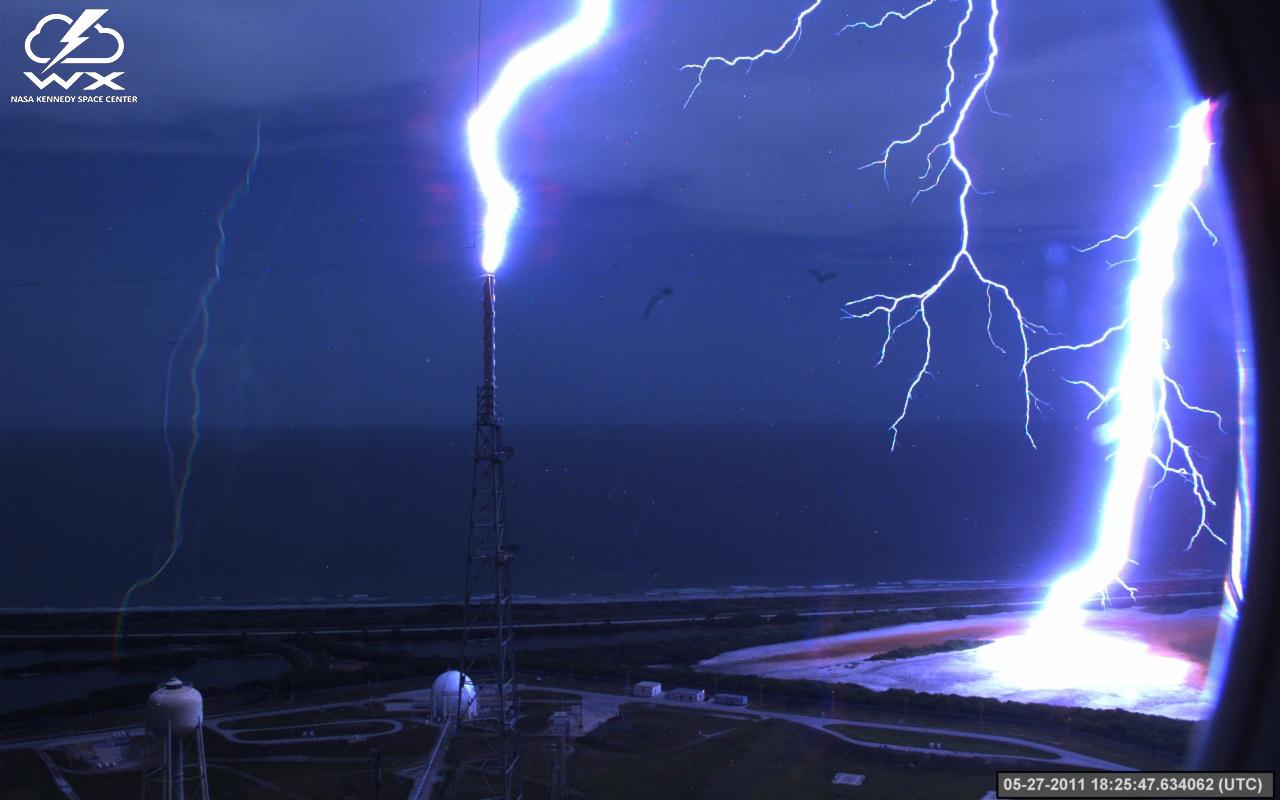
A lightning strike is recorded at Launch Complex 39B at NASA’s Kennedy Space Center in Florida in May 2011. The event was captured by high-speed cameras stationed at the pad and mobile launcher. At pad 39B, there are three, 600-foot-tall masts with overhead wires used to transmit electrical energy around the perimeter of the pad to provide lightning protection for launch vehicles as they are processed and launched from the pad.
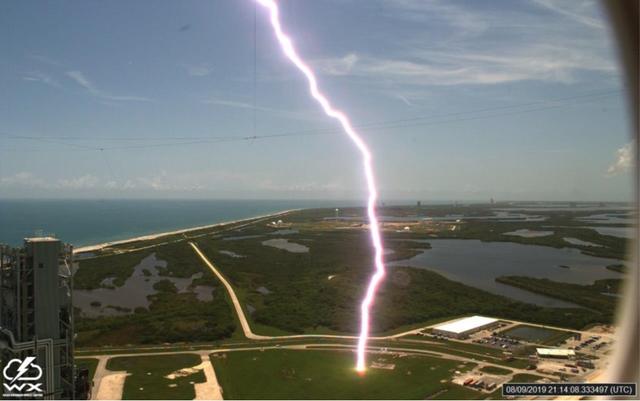
A lightning strike is recorded at Launch Complex 39B at NASA’s Kennedy Space Center in Florida in August 2019. The event was captured by high-speed cameras stationed at the pad and mobile launcher using a special filter called a “clear day frame,” which provides an overlay of the raw frame on a reference image. At pad 39B, there are three, 600-foot-tall masts with overhead wires used to transmit electrical energy around the perimeter of the pad to provide lightning protection for launch vehicles as they are processed and launched from the pad.
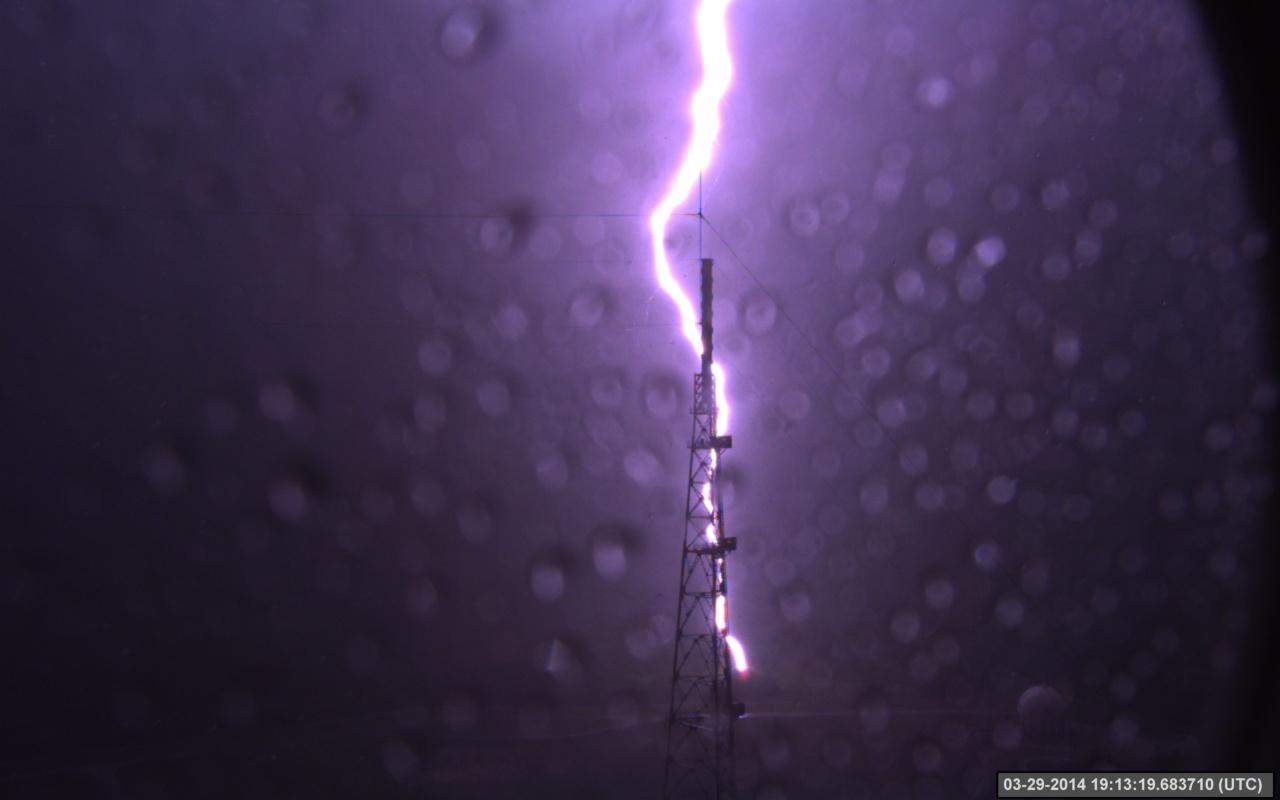
A lightning strike is recorded at Launch Complex 39B at NASA’s Kennedy Space Center in Florida in March 2014. The event was captured by high-speed cameras stationed at the pad and mobile launcher. At pad 39B, there are three, 600-foot-tall masts with overhead wires used to transmit electrical energy around the perimeter of the pad to provide lightning protection for launch vehicles as they are processed and launched from the pad.
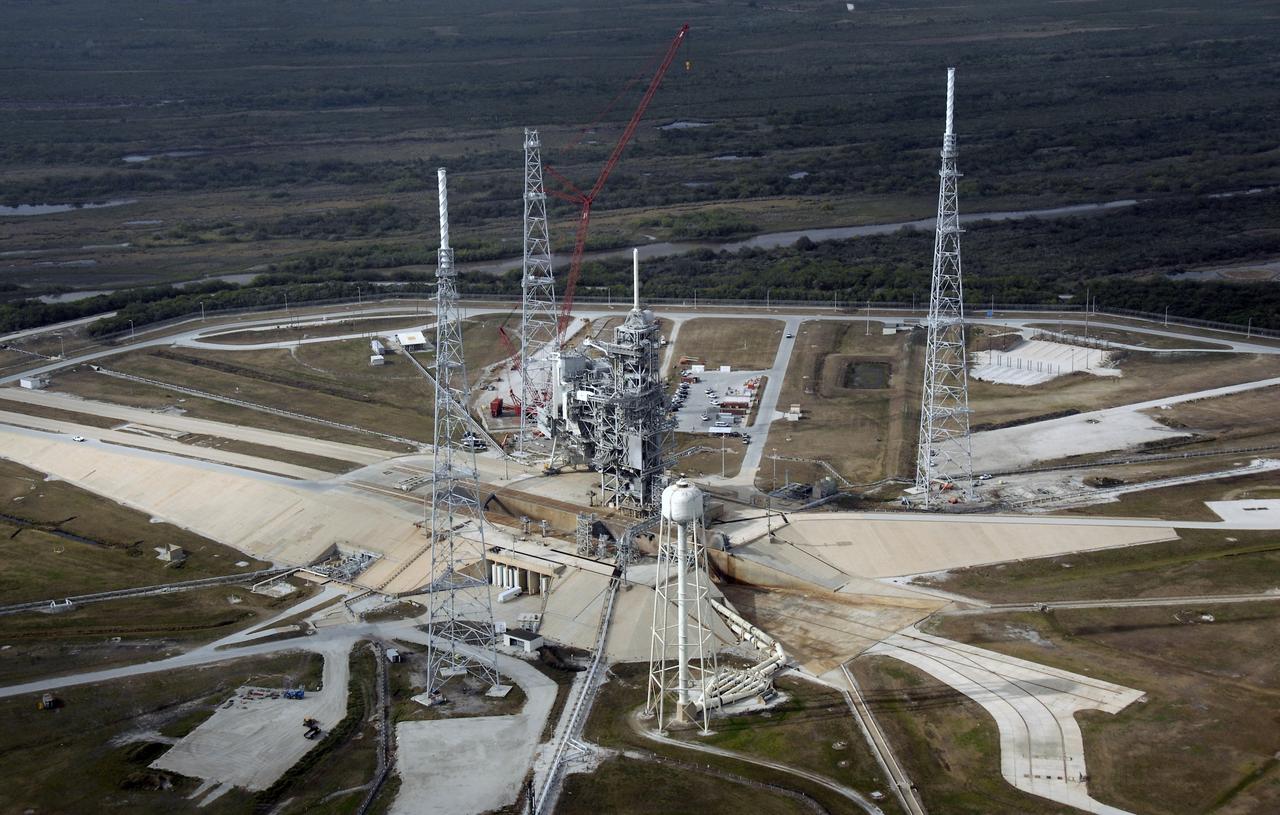
CAPE CANAVERAL, Fla. – An aerial view of the newly erected lightning towers on Launch Pad 39B at NASA's Kennedy Space Center in Florida. The two towers at left and right contain the lightning mast on top; the one at center does not. At center are the fixed and rotating service structures that have served the Space Shuttle Program. In the foreground is the tower that holds 300,000 gallons of water used for sound suppression during a shuttle liftoff. The new lightning protection system is being built for the Constellation Program and Ares/Orion launches. Each of the towers is 500 feet tall with an additional 100-foot fiberglass mast atop supporting a wire catenary system. This improved lightning protection system allows for the taller height of the Ares I rocket compared to the space shuttle. Pad 39B will be the site of the first Ares rocket launch, including the Ares I-X test flight that is targeted for July 2009. Photo credit: NASA/Kim Shiflett
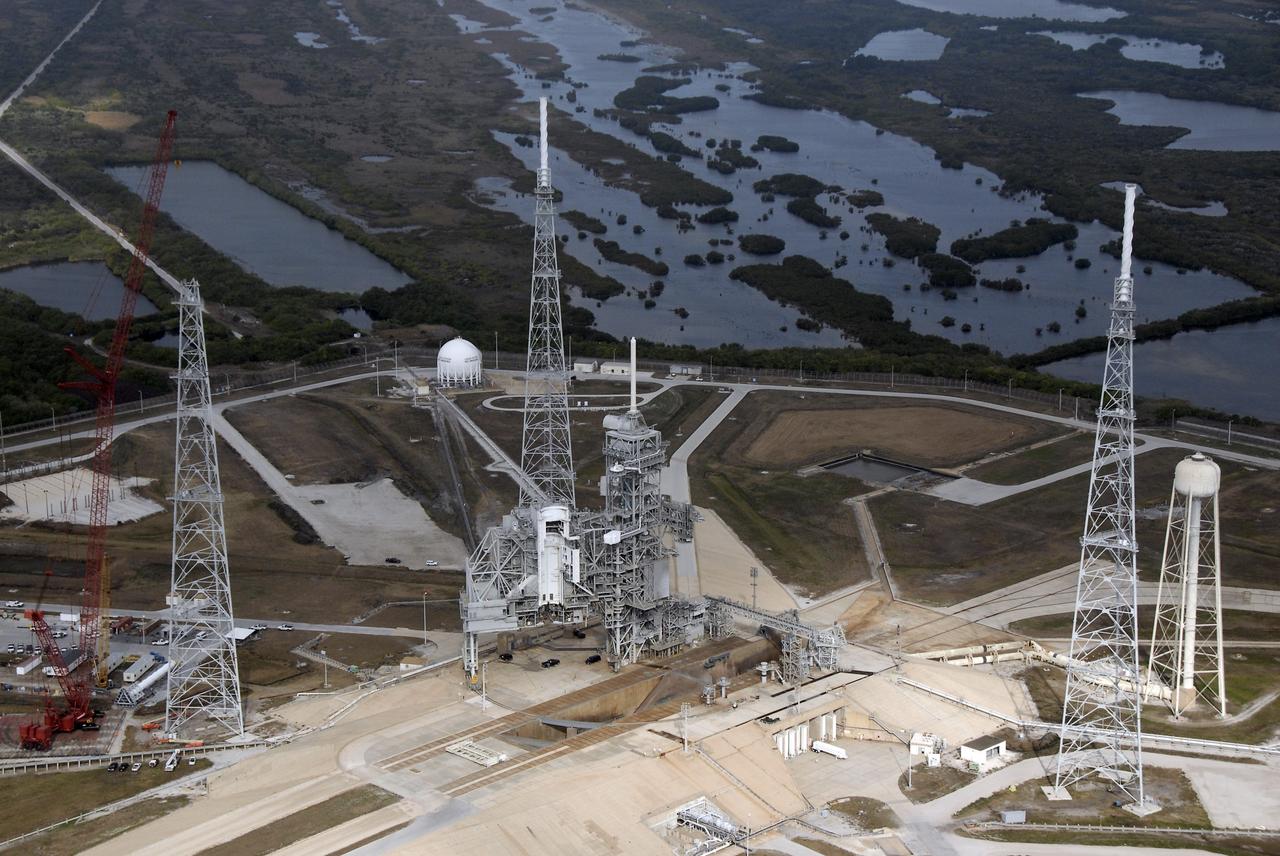
CAPE CANAVERAL, Fla. – An aerial view of the newly erected lightning towers on Launch Pad 39B at NASA's Kennedy Space Center. The two towers at center and right contain the lightning mast on top; the one at left does not. At center are the fixed and rotating service structures that have served the Space Shuttle Program. In the foreground is the tower that holds 300,000 gallons of water used for sound suppression during a shuttle liftoff. The new lightning protection system is being built for the Constellation Program and Ares/Orion launches. Each of the towers is 500 feet tall with an additional 100-foot fiberglass mast atop supporting a wire catenary system. This improved lightning protection system allows for the taller height of the Ares I rocket compared to the space shuttle. Pad 39B will be the site of the first Ares rocket launch, including the Ares I-X test flight that is targeted for July 2009. Photo credit: NASA/Kim Shiflett
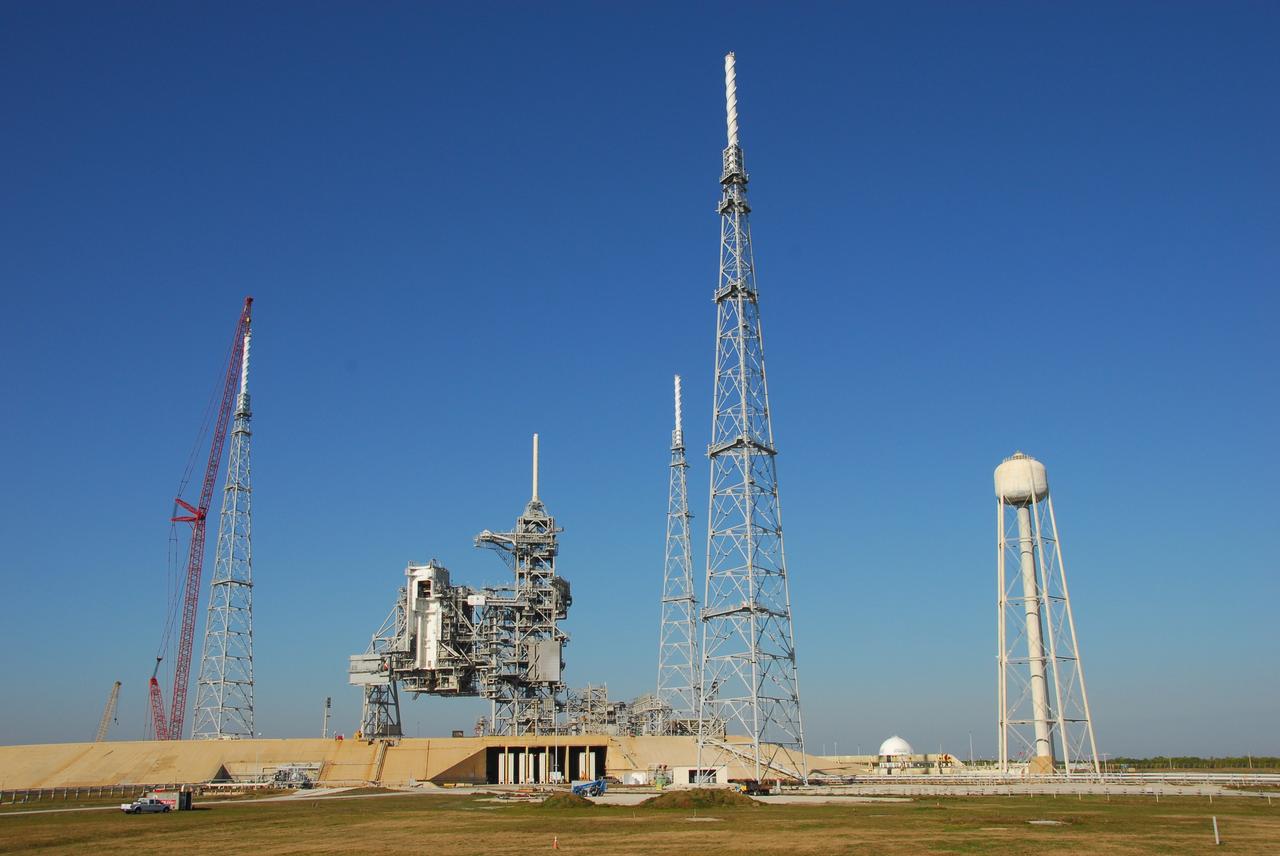
CAPE CANAVERAL, Fla. – On Launch Pad 39B at NASA's Kennedy Space Center in Florida, a giant crane (far left) places the 100-foot lightning mast on top of the newly erected lightning tower. Three new towers surround the pad. In the middle are the fixed and rotating service structures that serve the Space Shuttle Program. At far right is the tower that holds 300,000 gallons of water used for sound suppression during a shuttle launch. The new lightning protection system is being built for the Constellation Program and Ares/Orion launches. Each of the towers is 500 feet tall with an additional 100-foot fiberglass mast atop supporting a wire catenary system. This improved lightning protection system allows for the taller height of the Ares I rocket compared to the space shuttle. Pad 39B will be the site of the first Ares vehicle launch, including the Ares I-X test flight that is targeted for July 2009. Photo credit: NASA/Tim Jacobs
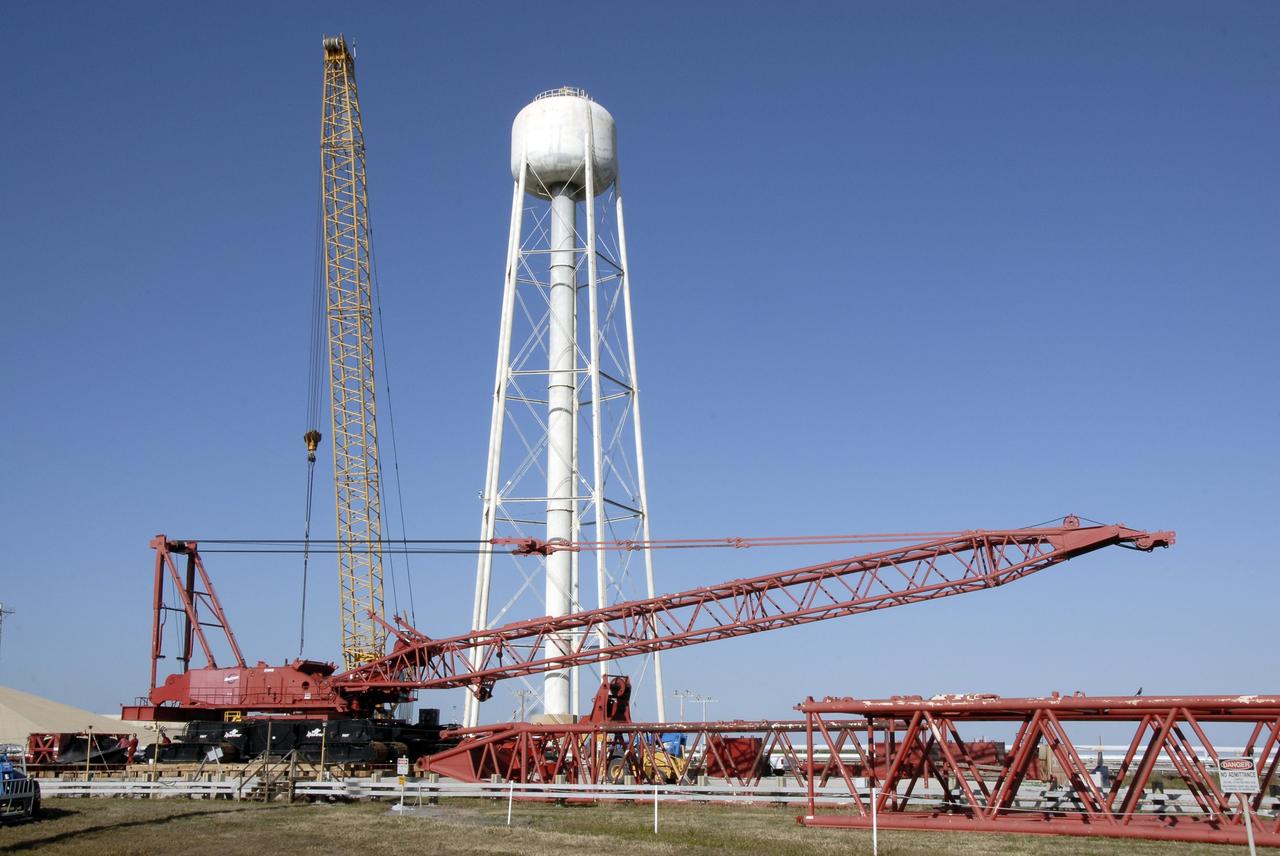
CAPE CANAVERAL, Fla. -- On Launch Pad 39B at NASA's Kennedy Space Center in Florida, segments are being added to the crane (foreground) that will be used to finish erecting the lightning towers on the pad. Lightning towers are being constructed to hold centenary wires as part of the new lightning protection system for the Constellation Program and Ares/Orion launches. Photo credit: NASA/Kim Shiflett
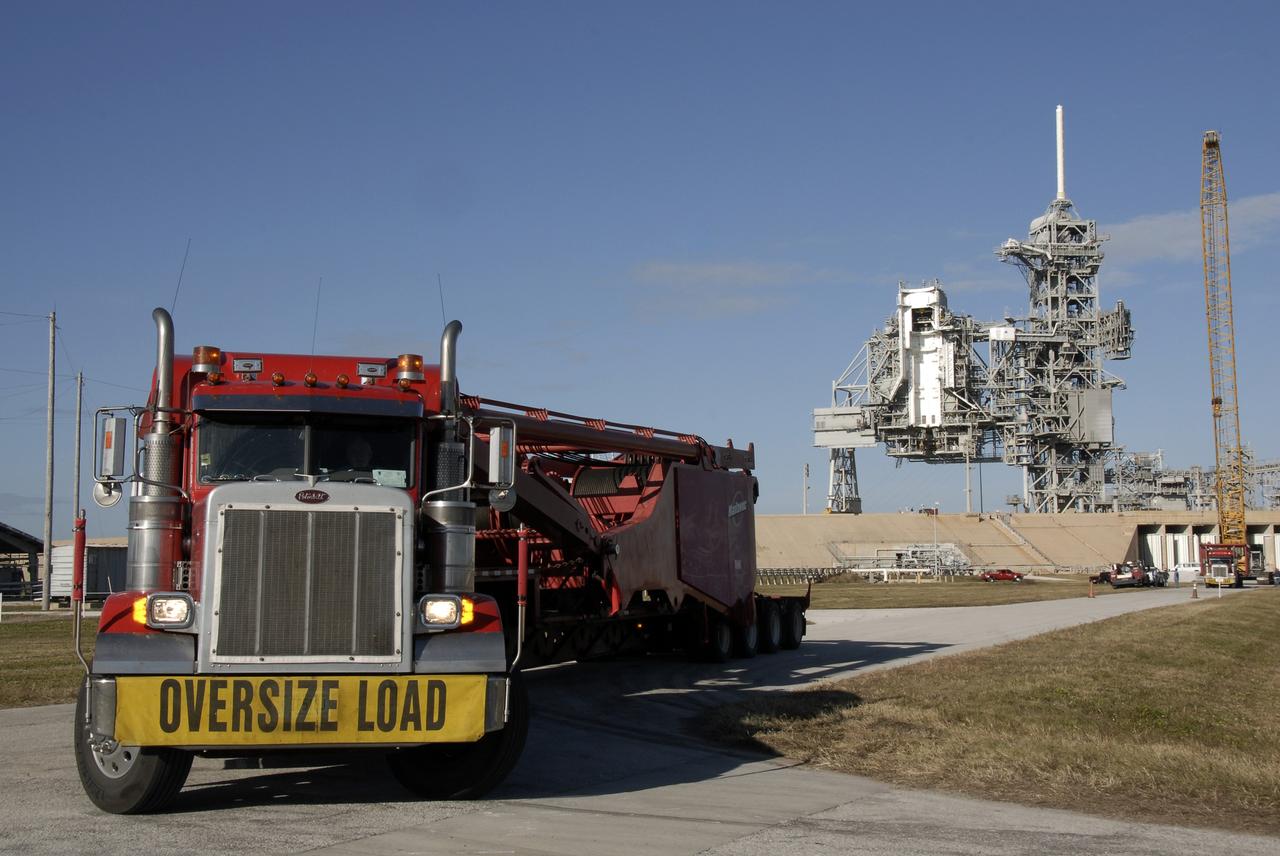
CAPE CANAVERAL, Fla. – Segments of a giant crane arrive by truck to Launch Pad 39B at NASA's Kennedy Space Center in Florida. The crane will be constructed and used to finish erecting the lightning towers on the pad. The crane segments arrived on 125 trucks. Lightning towers are being constructed to hold catenary wires as part of the new lightning protection system for the Constellation Program and Ares/Orion launches. Photo credit: NASA/Kim Shiflett
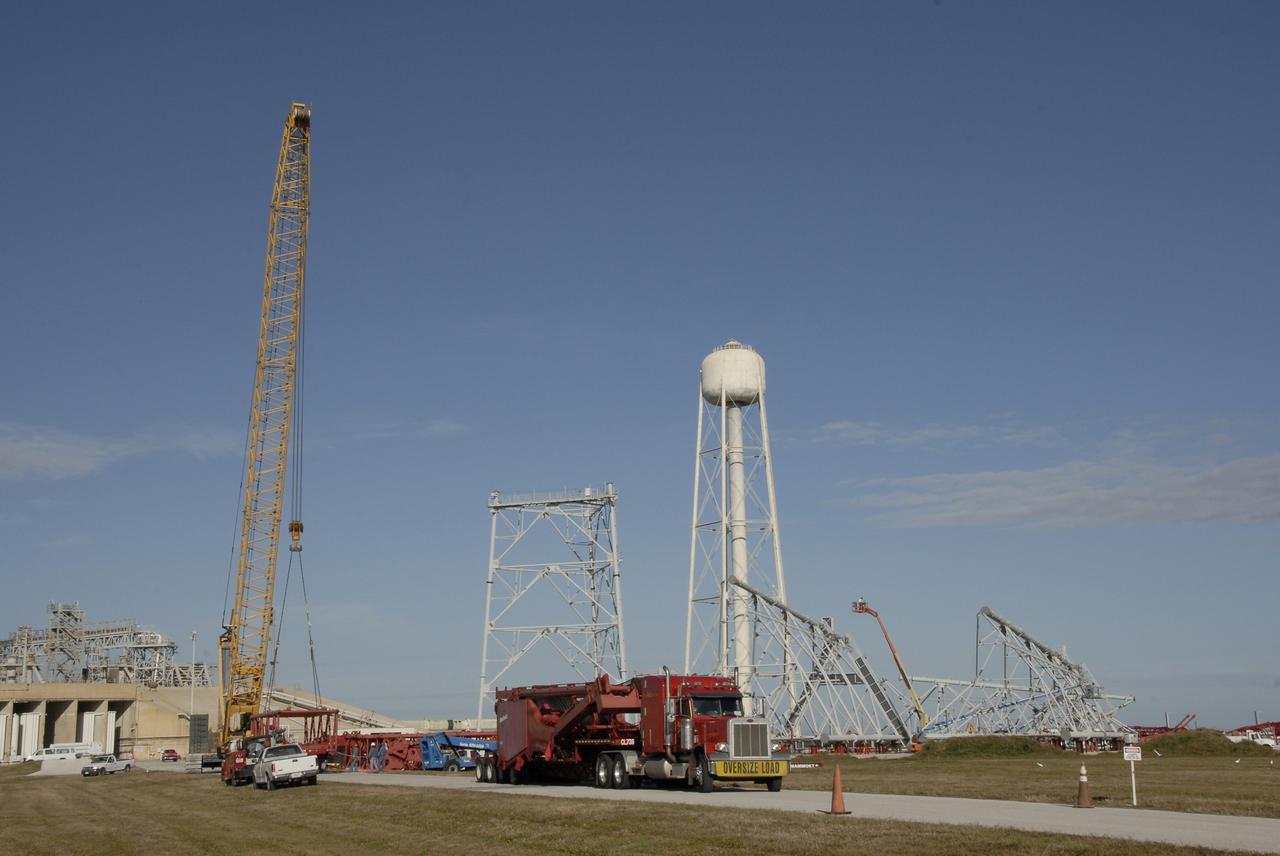
CAPE CANAVERAL, Fla. – On Launch Pad 39B at NASA's Kennedy Space Center in Florida, a giant crane is under construction to help finish erecting the lightning towers on the pad. The crane segments arrived on 125 trucks. Lightning towers are being constructed to hold catenary wires as part of the new lightning protection system for the Constellation Program and Ares/Orion launches. Photo credit: NASA/Kim Shiflett
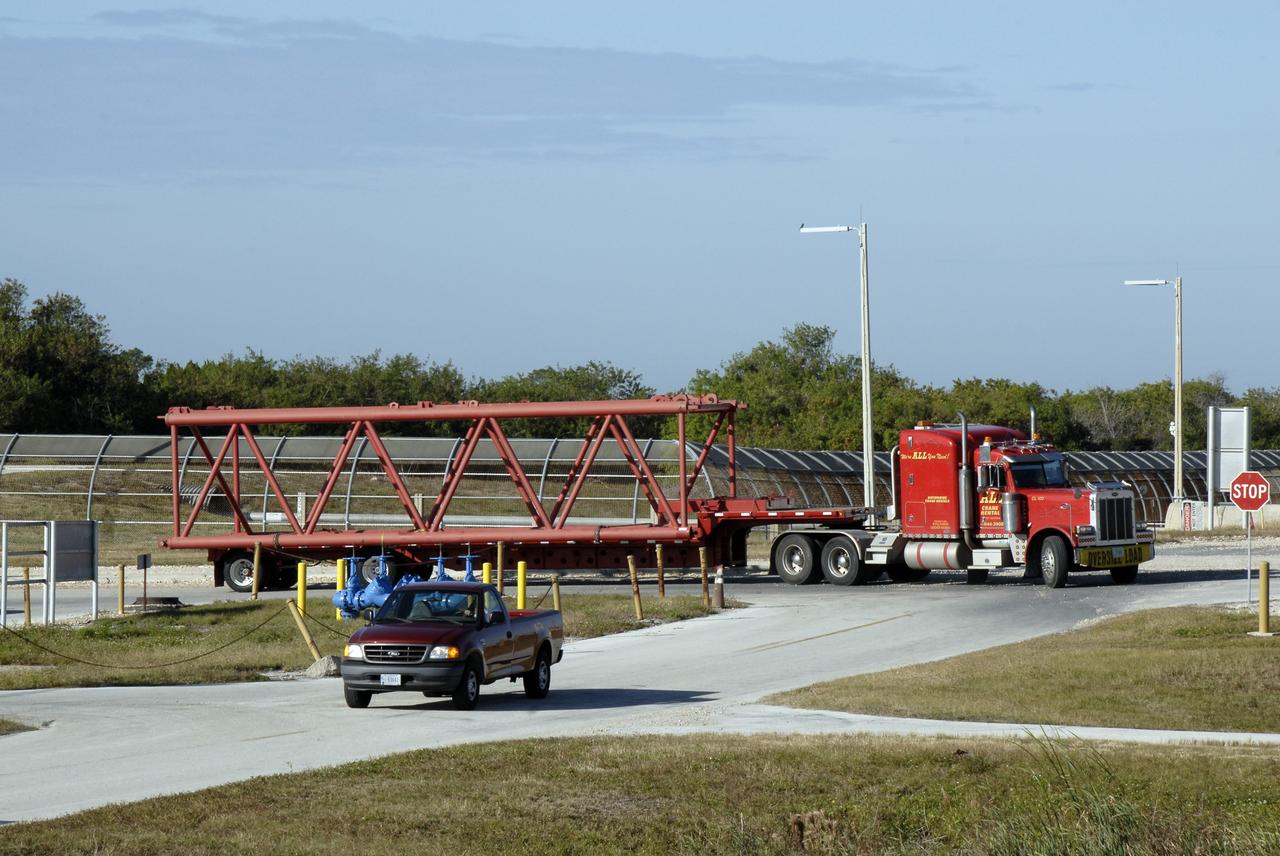
CAPE CANAVERAL, Fla. – One of 125 trucks begins delivering a segment of a giant crane to Launch Pad 39B at NASA's Kennedy Space Center in Florida. The crane will be constructed and used to finish erecting the lightning towers on the pad. Lightning towers are being constructed to hold catenary wires as part of the new lightning protection system for the Constellation Program and Ares/Orion launches. Photo credit: NASA/Kim Shiflett
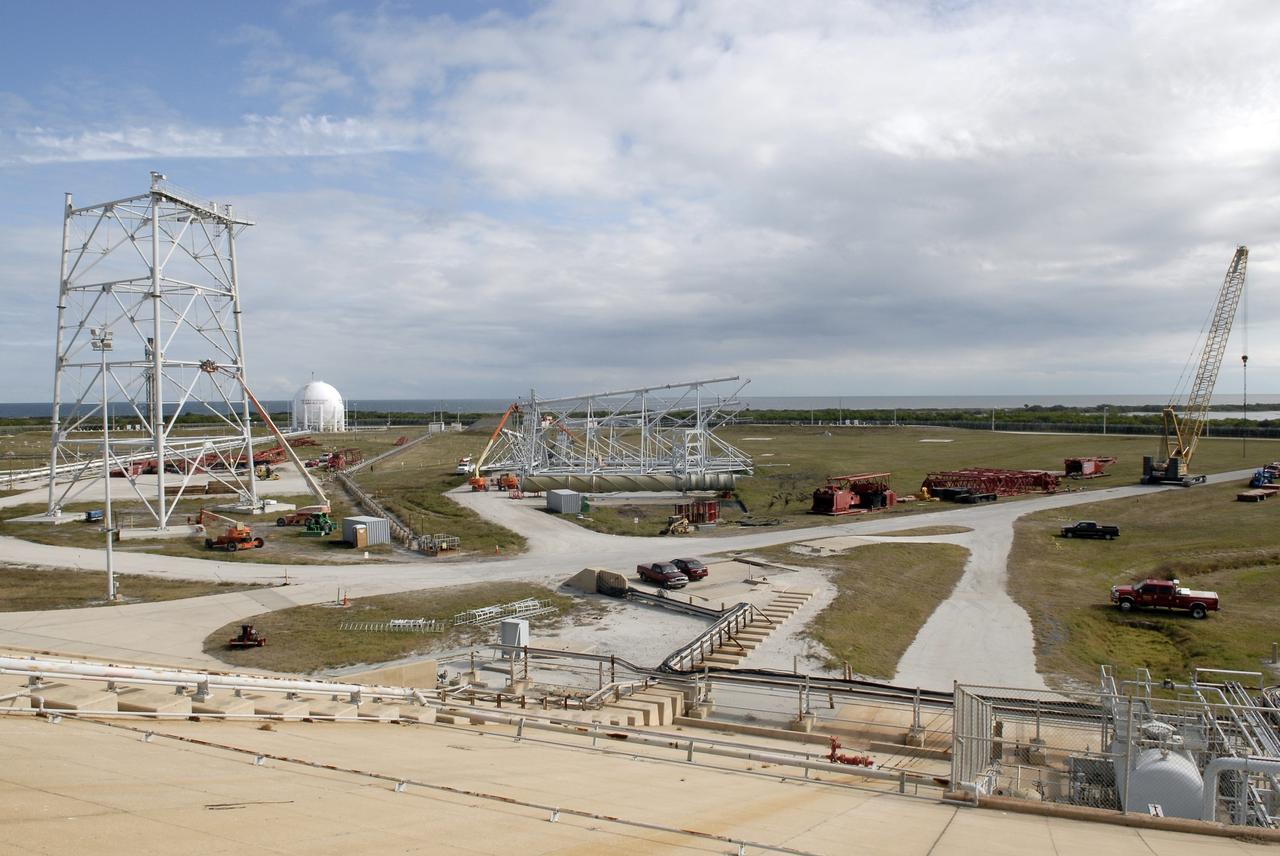
CAPE CANAVERAL, Fla. – On Launch Pad 39B at NASA's Kennedy Space Center in Florida, a giant crane (at right) is under construction to help finish erecting the lightning towers (at left) on the pad. The crane segments arrived on 125 trucks. Lightning towers are being constructed to hold catenary wires as part of the new lightning protection system for the Constellation Program and Ares/Orion launches. Photo credit: NASA/Kim Shiflett
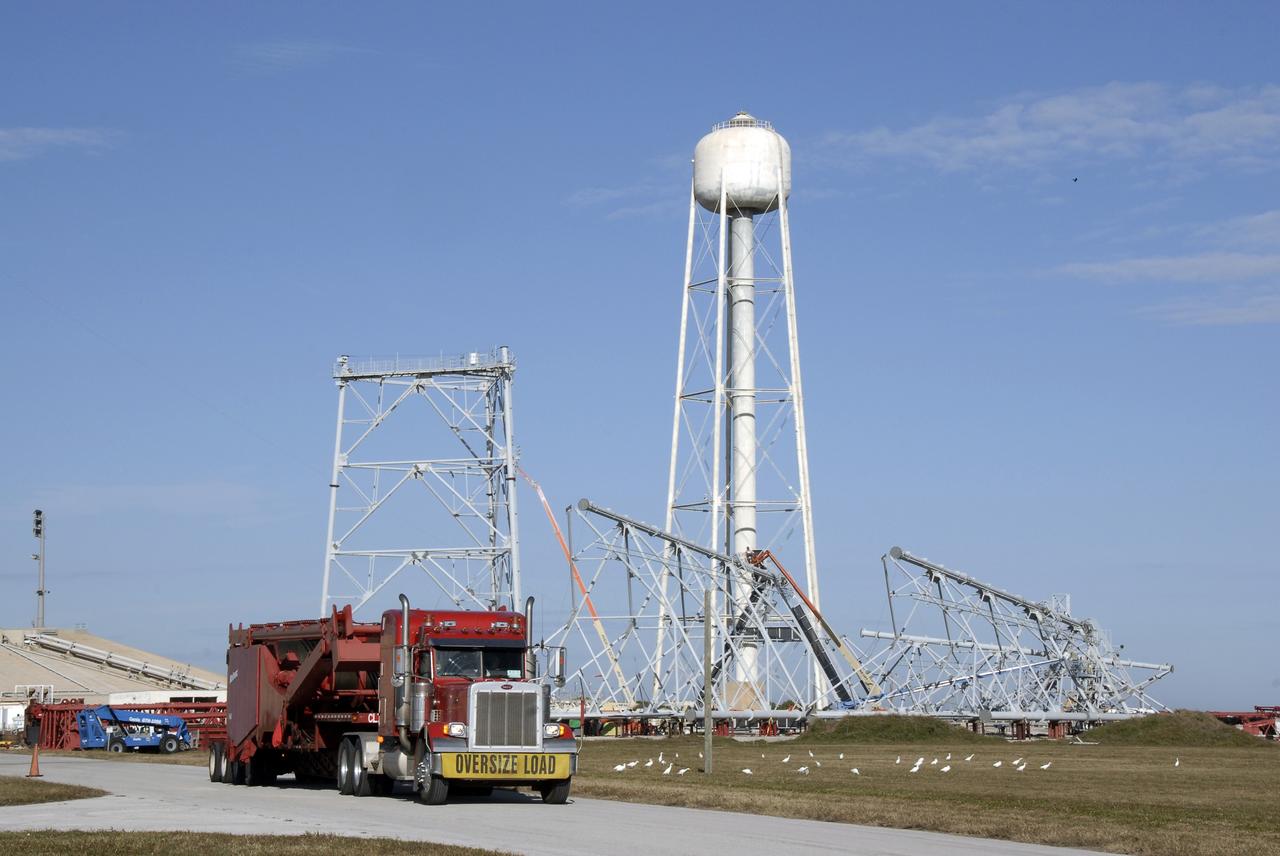
CAPE CANAVERAL, Fla. – Segments of a giant crane arrive by truck to Launch Pad 39B at NASA's Kennedy Space Center in Florida. The crane will be constructed and used to finish erecting the lightning towers on the pad. The crane segments arrived on 125 trucks. Lightning towers are being constructed to hold catenary wires as part of the new lightning protection system for the Constellation Program and Ares/Orion launches. Photo credit: NASA/Kim Shiflett
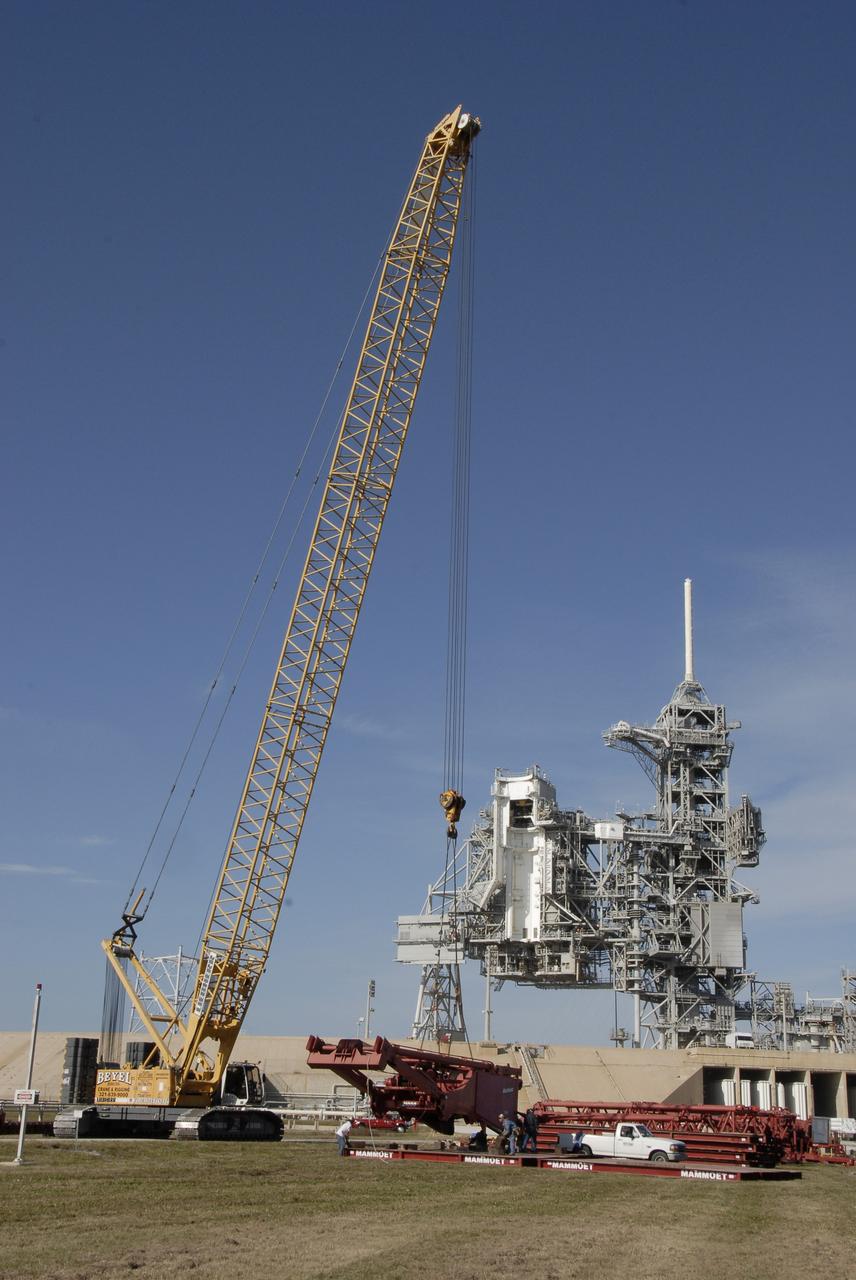
CAPE CANAVERAL, Fla. – On Launch Pad 39B at NASA's Kennedy Space Center in Florida, a giant crane is under construction to help finish erecting the lightning towers on the pad. The crane segments arrived on 125 trucks. Lightning towers are being constructed to hold catenary wires as part of the new lightning protection system for the Constellation Program and Ares/Orion launches. Photo credit: NASA/Kim Shiflett
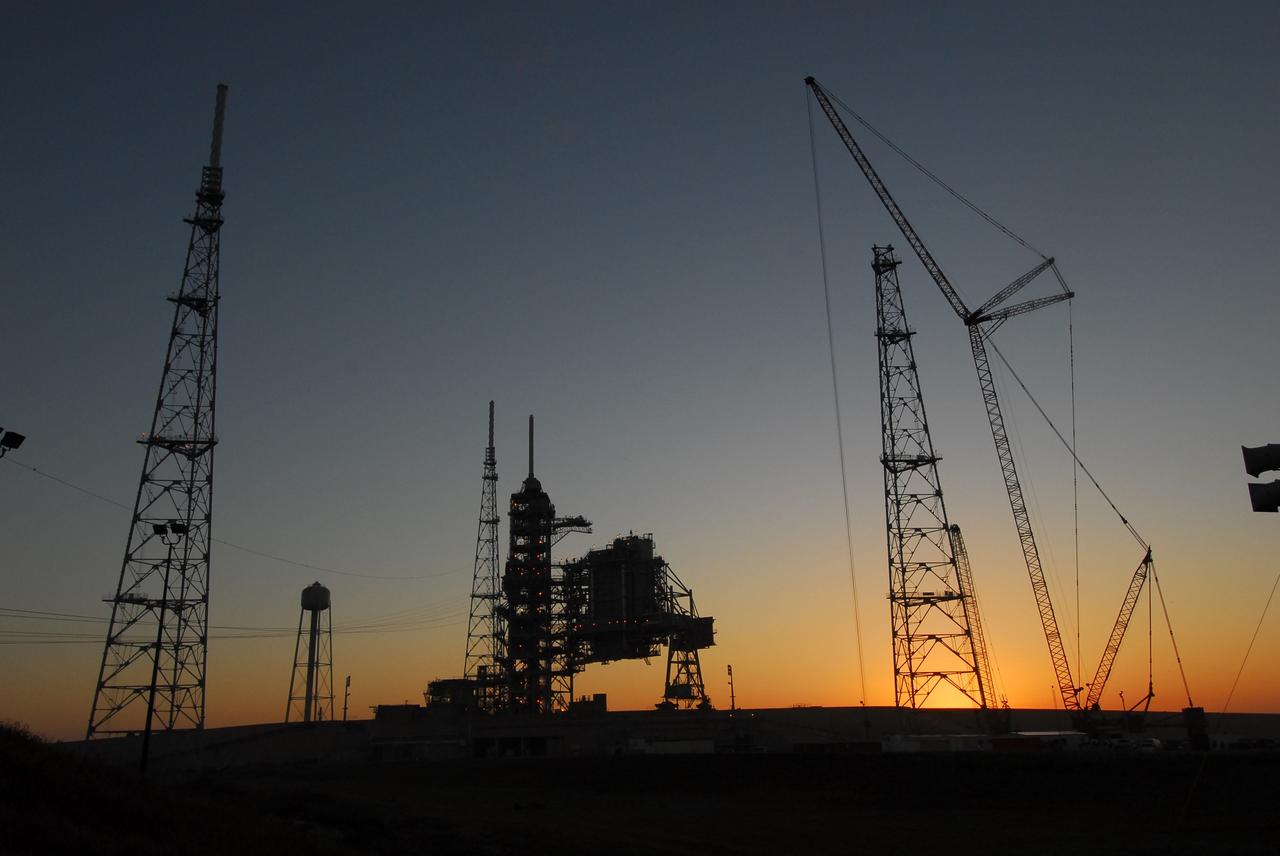
CAPE CANAVERAL, Fla. – The rosy dawn sky over NASA's Kennedy Space Center reveals the newly erected lightning towers on Launch Pad 39B. The two towers at left contain the lightning mast on top; the one at right does not. At center are the fixed and rotating service structures that have served the Space Shuttle Program. The new lightning protection system is being built for the Constellation Program and Ares/Orion launches. Each of the towers is 500 feet tall with an additional 100-foot fiberglass mast atop supporting a wire catenary system. This improved lightning protection system allows for the taller height of the Ares I rocket compared to the space shuttle. Pad 39B will be the site of the first Ares vehicle launch, including the Ares I-X test flight that is targeted for July 2009. Photo credit: NASA/Tim Jacobs
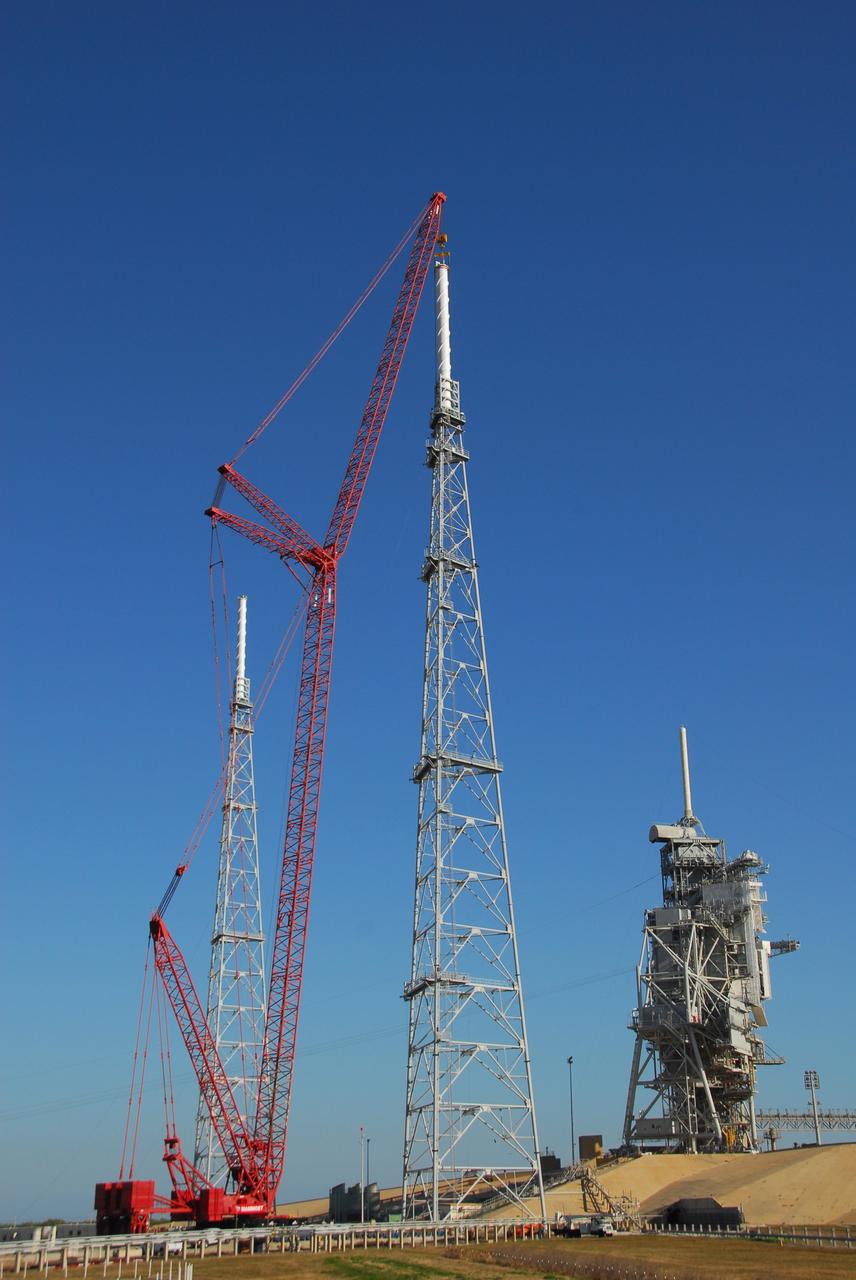
CAPE CANAVERAL, Fla. – On Launch Pad 39B at NASA's Kennedy Space Center in Florida, a giant crane places the 100-foot lightning mast on top of the newly erected lightning tower, one of three around the pad. Another of the towers is at left. At right are the fixed and rotating service structures that serve the Space Shuttle Program. The new lightning protection system is being built for the Constellation Program and Ares/Orion launches. Each of the towers is 500 feet tall with an additional 100-foot fiberglass mast atop supporting a wire catenary system. This improved lightning protection system allows for the taller height of the Ares I rocket compared to the space shuttle. Pad 39B will be the site of the first Ares vehicle launch, including the Ares I-X test flight that is targeted for July 2009. Photo credit: NASA/Tim Jacobs
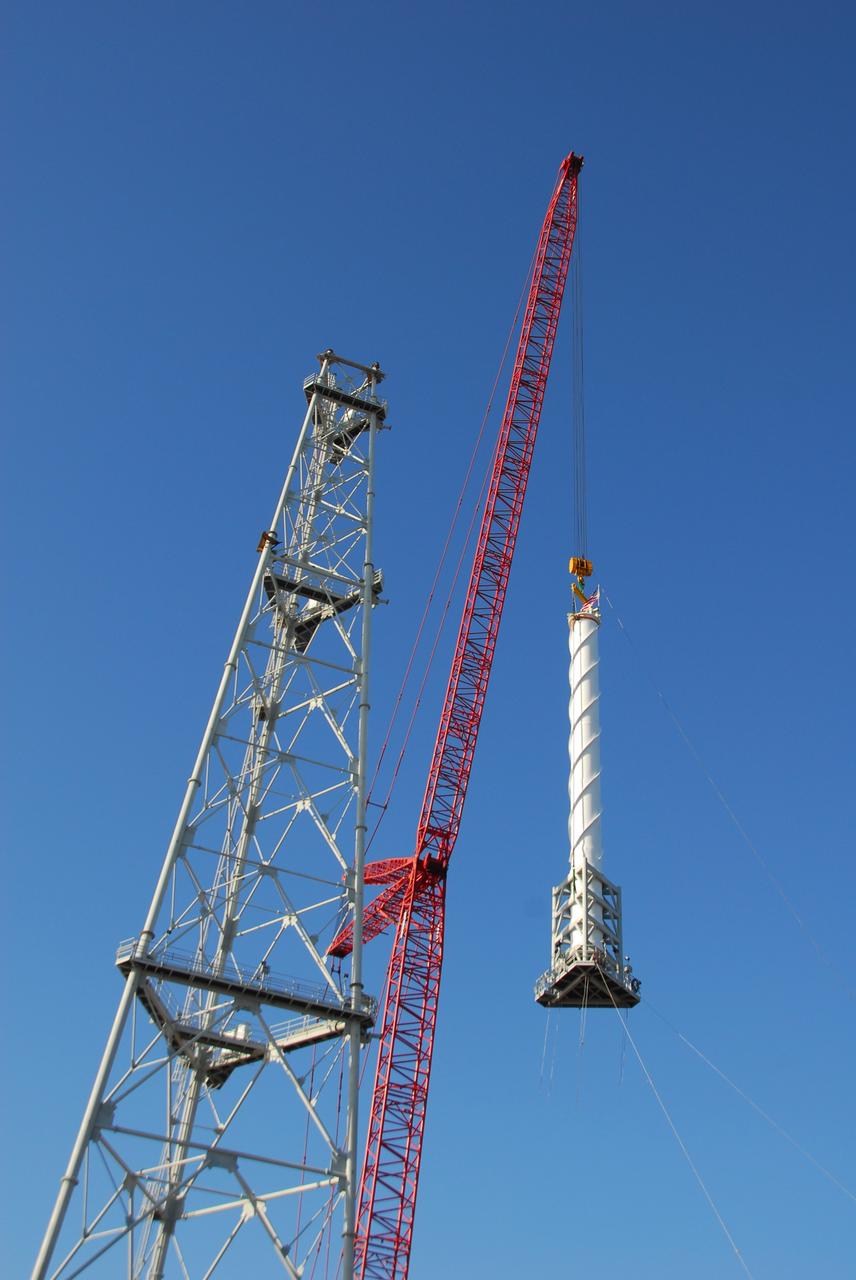
CAPE CANAVERAL, Fla. – On Launch Pad 39B at NASA's Kennedy Space Center in Florida, a giant crane lifts the 100-foot lightning mast alongside the newly erected lightning tower, one of three around the pad. The mast will be installed on top of the tower. The new lightning protection system is being built for the Constellation Program and Ares/Orion launches. Each of the towers is 500 feet tall with an additional 100-foot fiberglass mast atop supporting a wire catenary system. This improved lightning protection system allows for the taller height of the Ares I rocket compared to the space shuttle. Pad 39B will be the site of the first Ares vehicle launch, including the Ares I-X test flight that is targeted for July 2009. Photo credit: NASA/Tim Jacobs
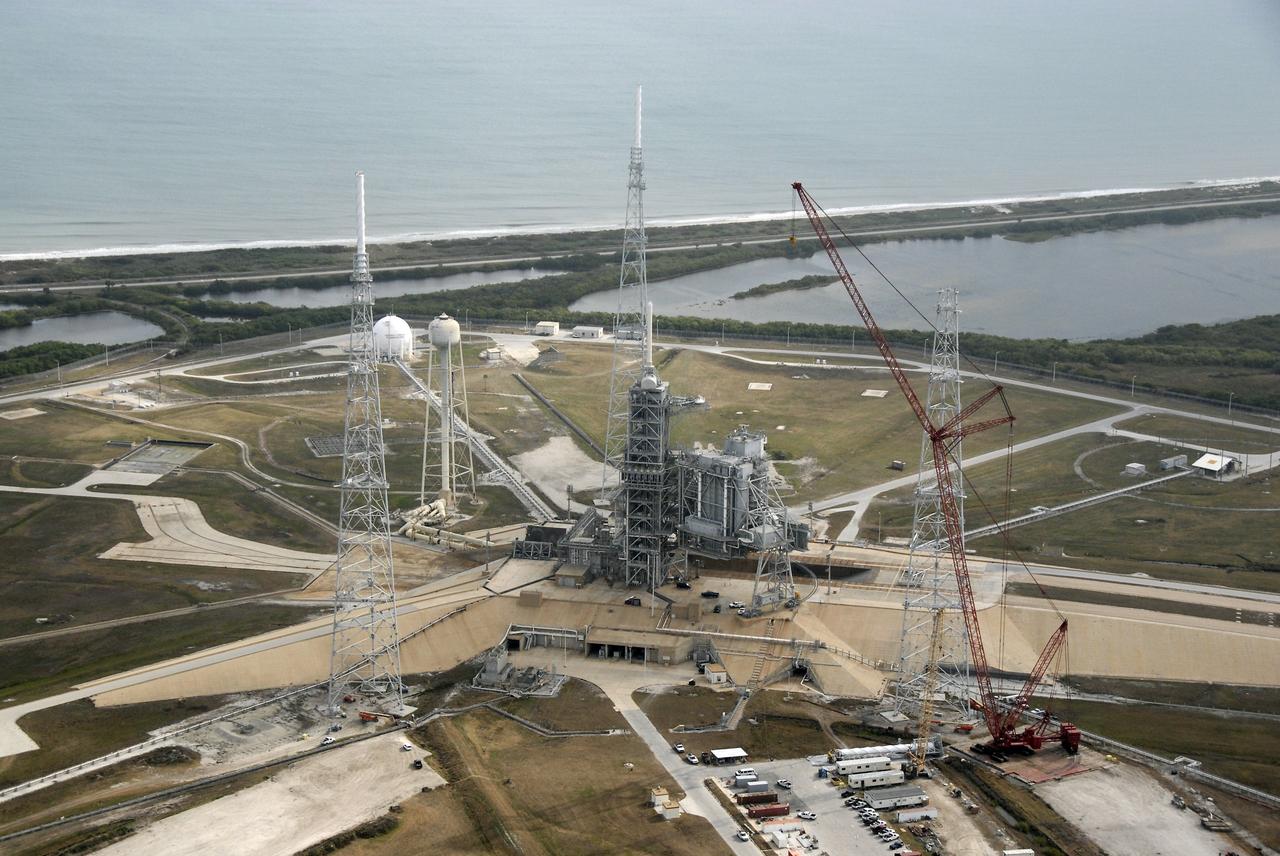
CAPE CANAVERAL, Fla. – An aerial view of the newly erected lightning towers on Launch Pad 39B at NASA's Kennedy Space Center in Florida. The two towers at left and center contain the lightning mast on top; the one at right does not. At center are the fixed and rotating service structures that have served the Space Shuttle Program. Beyond the pad is the Atlantic Ocean. The new lightning protection system is being built for the Constellation Program and Ares/Orion launches. Each of the towers is 500 feet tall with an additional 100-foot fiberglass mast atop supporting a wire catenary system. This improved lightning protection system allows for the taller height of the Ares I rocket compared to the space shuttle. Pad 39B will be the site of the first Ares vehicle launch, including the Ares I-X test flight that is targeted for July 2009. Photo credit: NASA/Kim Shiflett
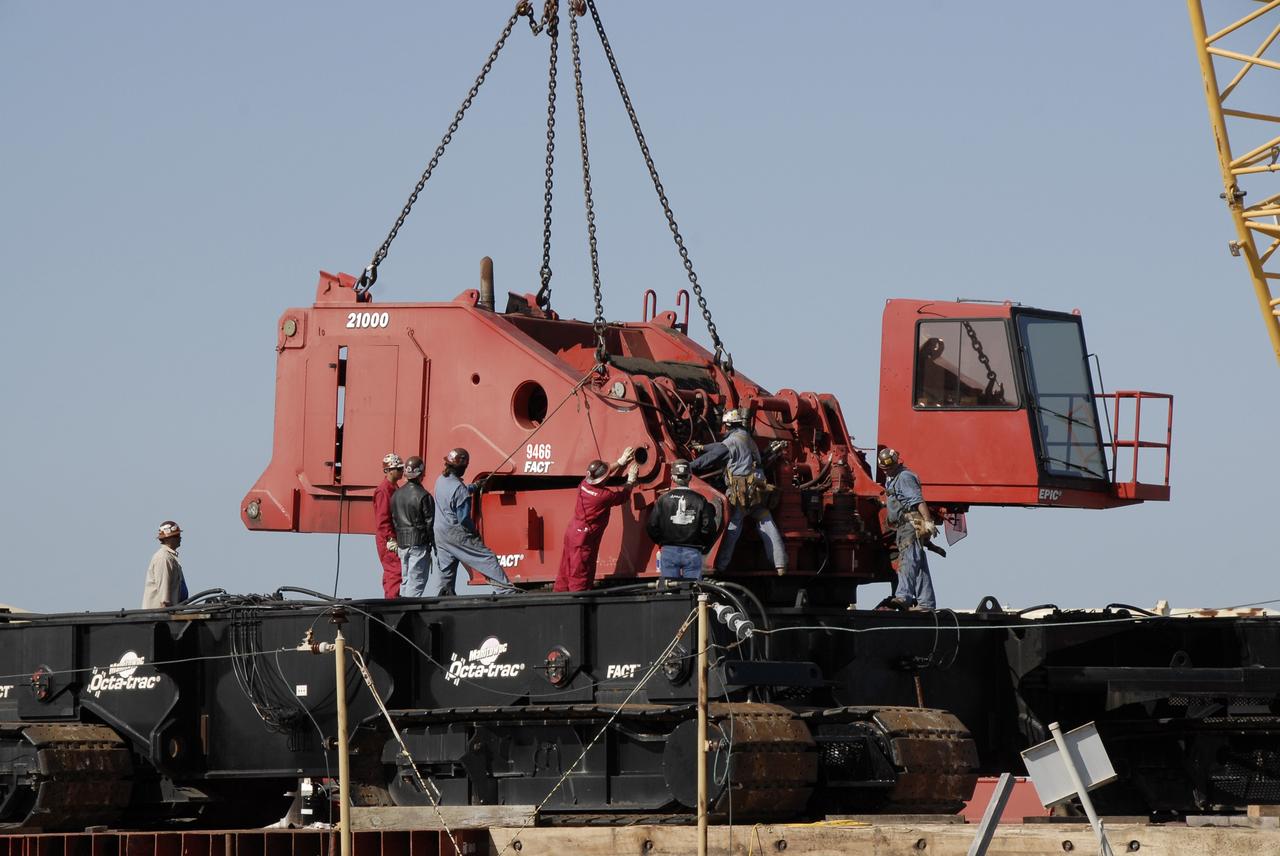
CAPE CANAVERAL, Fla. -- On Launch Pad 39B at NASA’s Kennedy Space Center in Florida, equipment is moved that will be used to continue erecting the lightning towers. Each of the three new lightning towers will be 500 feet tall with an additional 100-foot fiberglass mast atop supporting a wire catenary system. This improved lightning protection system allows for the taller height of the Ares I compared to the space shuttle. Pad B will be the site of the first Ares vehicle launch, including Ares I-X which is targeted for summer of 2009, as part of NASA’s Constellation Program. Photo credit: NASA/Kim Shiflett
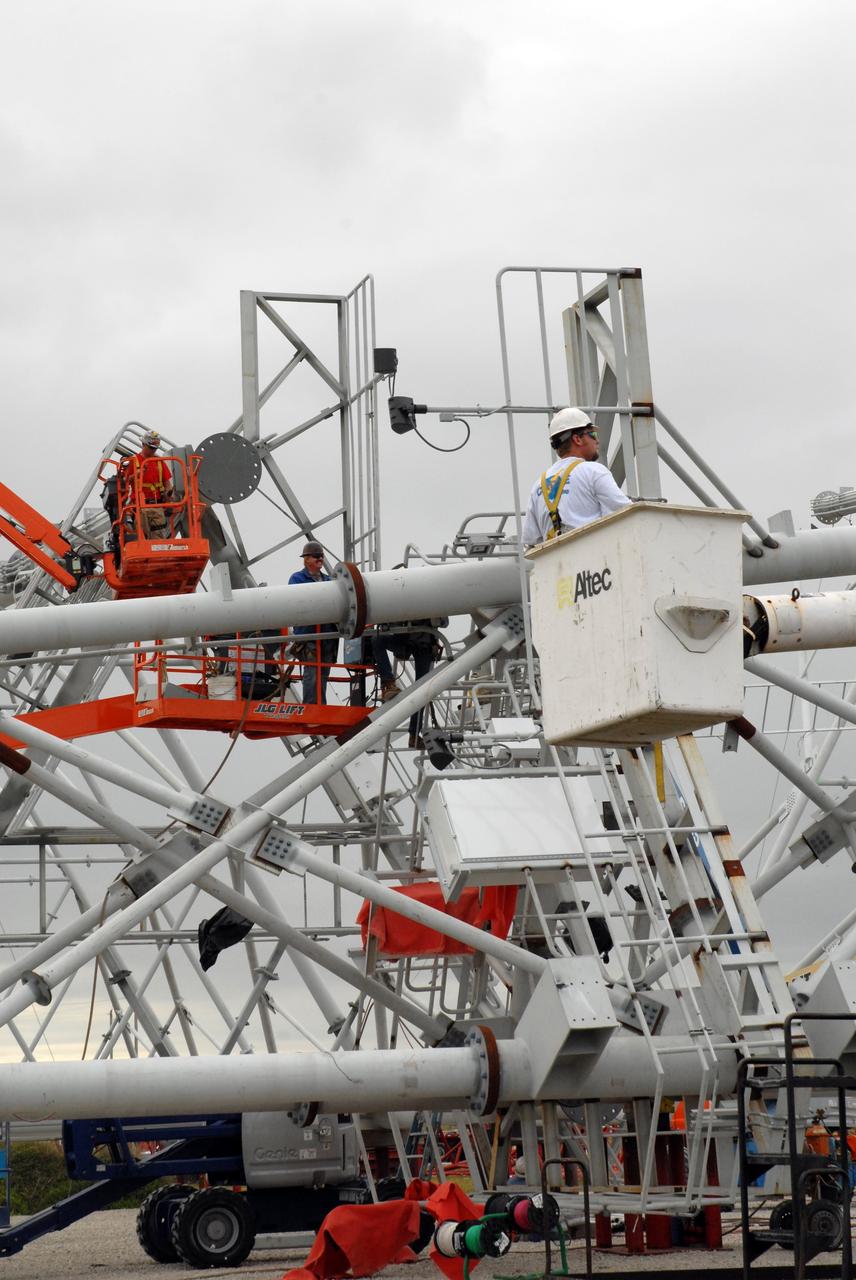
CAPE CANAVERAL, Fla. - The new lightning towers are under construction on Launch Pad 39B at NASA’s Kennedy Space Center in Florida. Each of the three new lightning towers will be 500 feet tall with an additional 100-foot fiberglass mast atop supporting a wire centenary system. This improved lightning protection system allows for the taller height of the Ares I compared to the space shuttle. Pad B will be the site of the first Ares vehicle launch, including Ares I-X which is targeted for summer of 2009, as part of NASA’s Constellation Program. Photo credit: NASA/Tim Jacobs
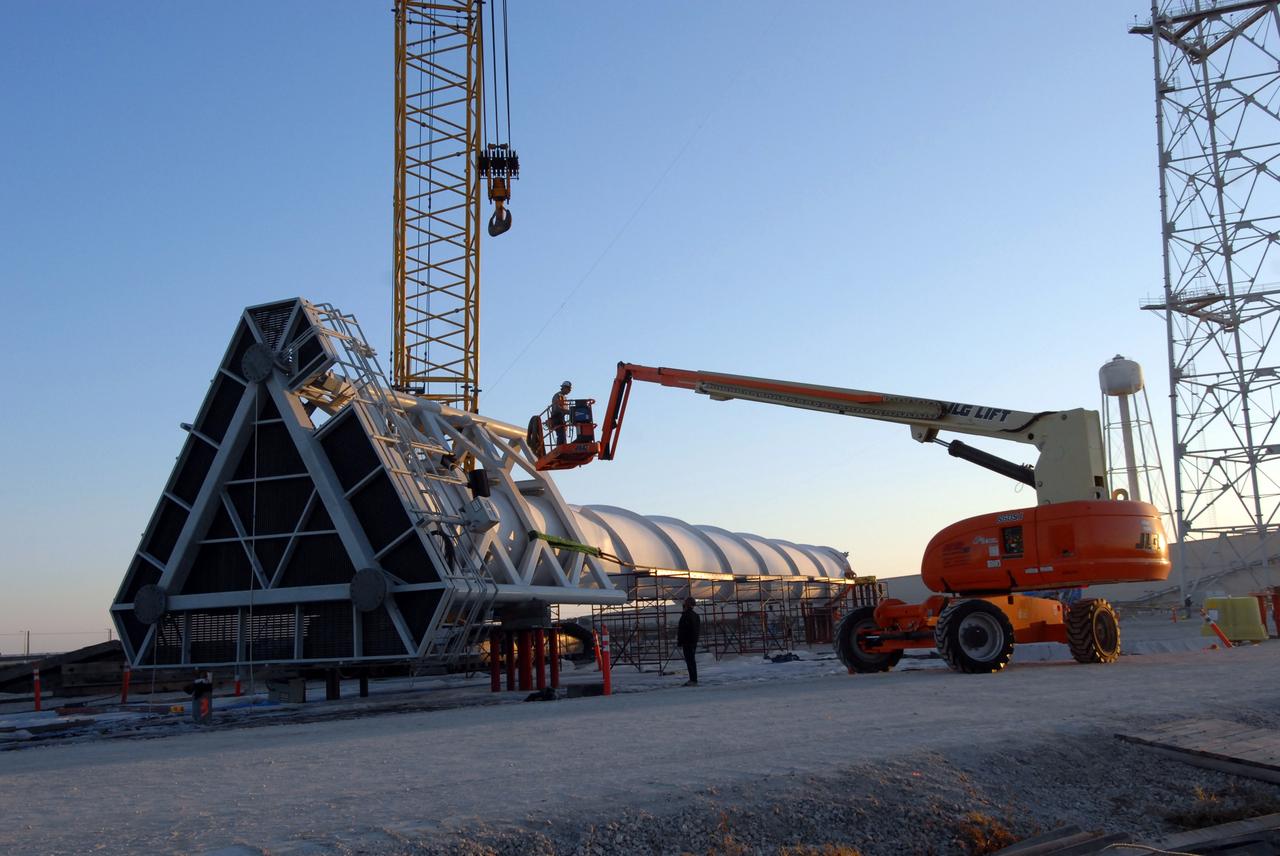
CAPE CANAVERAL, Fla. – Construction of the towers on Launch Pad 39B at NASA's Kennedy Space Center in Florida continues on the new lightning protection system for the Constellation Program and Ares/Orion launches. Here, a 100-foot fiberglass lightning mast is being prepared to be lifted on top of one of the 500-foot towers. The mast will support a wire catenary system. This improved lightning protection system allows for the taller height of the Ares I rocket compared to the space shuttle. Pad 39B will be the site of the first Ares vehicle launch, including the Ares I-X test flight that is targeted for July 2009.
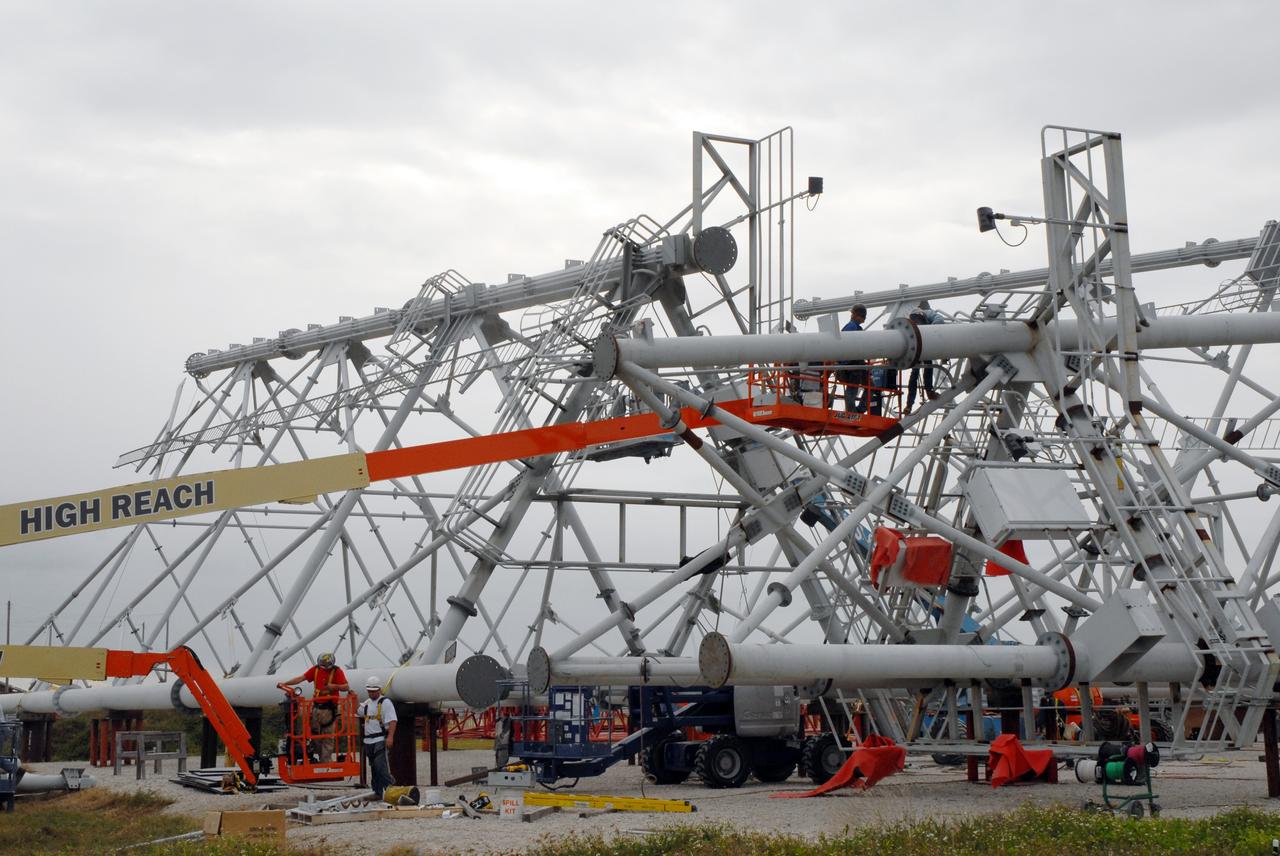
CAPE CANAVERAL, Fla. - The new lightning towers are under construction on Launch Pad 39B at NASA’s Kennedy Space Center in Florida. Each of the three new lightning towers will be 500 feet tall with an additional 100-foot fiberglass mast atop supporting a wire centenary system. This improved lightning protection system allows for the taller height of the Ares I compared to the space shuttle. Pad B will be the site of the first Ares vehicle launch, including Ares I-X which is targeted for summer of 2009, as part of NASA’s Constellation Program. Photo credit: NASA/Tim Jacobs
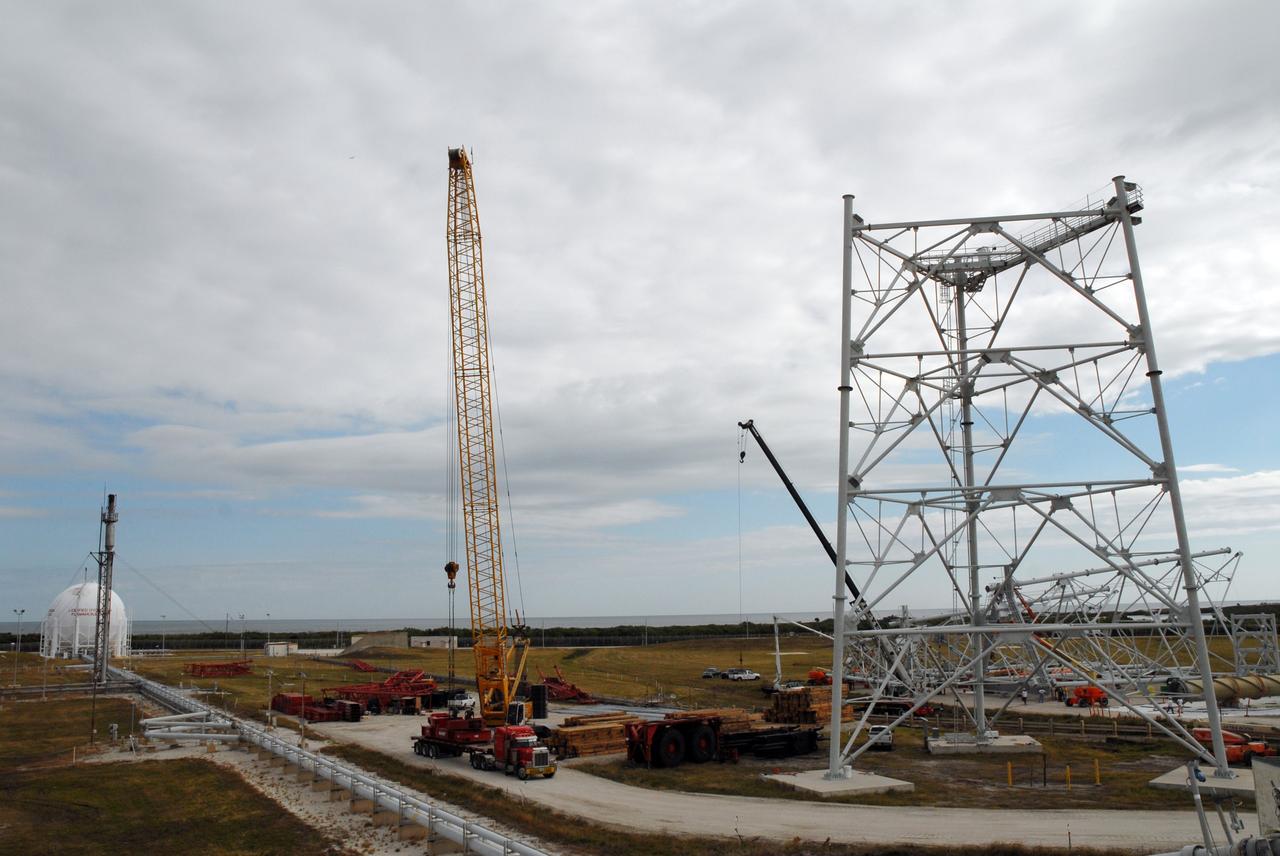
CAPE CANAVERAL, Fla. - On Launch Pad 39B at NASA’s Kennedy Space Center in Florida, the giant crane at left will be used to continue erecting the lightning towers at right. Each of the three new lightning towers will be 500 feet tall with an additional 100-foot fiberglass mast atop supporting a wire centenary system. This improved lightning protection system allows for the taller height of the Ares I compared to the space shuttle. Pad B will be the site of the first Ares vehicle launch, including Ares I-X which is targeted for summer of 2009, as part of NASA’s Constellation Program. Photo credit: NASA/Tim Jacobs
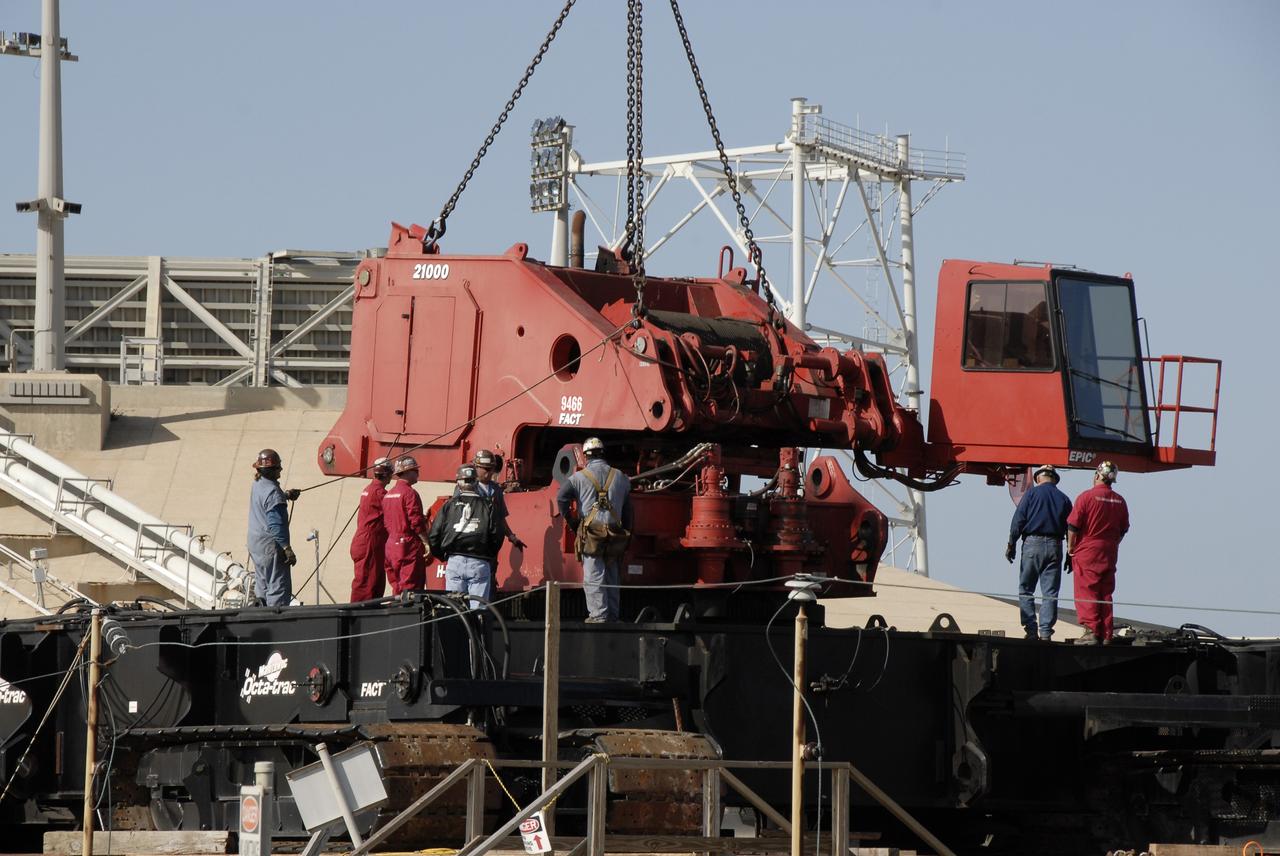
CAPE CANAVERAL, Fla. -- On Launch Pad 39B at NASA’s Kennedy Space Center in Florida, equipment is moved that will be used to continue erecting the lightning towers. Each of the three new lightning towers will be 500 feet tall with an additional 100-foot fiberglass mast atop supporting a wire catenary system. This improved lightning protection system allows for the taller height of the Ares I compared to the space shuttle. Pad B will be the site of the first Ares vehicle launch, including Ares I-X which is targeted for summer of 2009, as part of NASA’s Constellation Program. Photo credit: NASA/Kim Shiflett

CAPE CANAVERAL, Fla. – Progress is being made on construction of the new lightning towers on Launch Pad 39B at NASA's Kennedy Space Center in Florida. New sections are being added with the help of a giant crane. Three new lightning towers on the pad will be 500 feet tall with an additional 100-foot fiberglass mast atop supporting a wire catenary system. Pad 39B will be the site of the first Ares vehicle launch, including the Ares I-X test flight that is targeted for July 2009. This improved lightning protection system allows for the taller height of the Ares I rocket compared to the space shuttle. Photo credit: NASA/Kim Shiflett
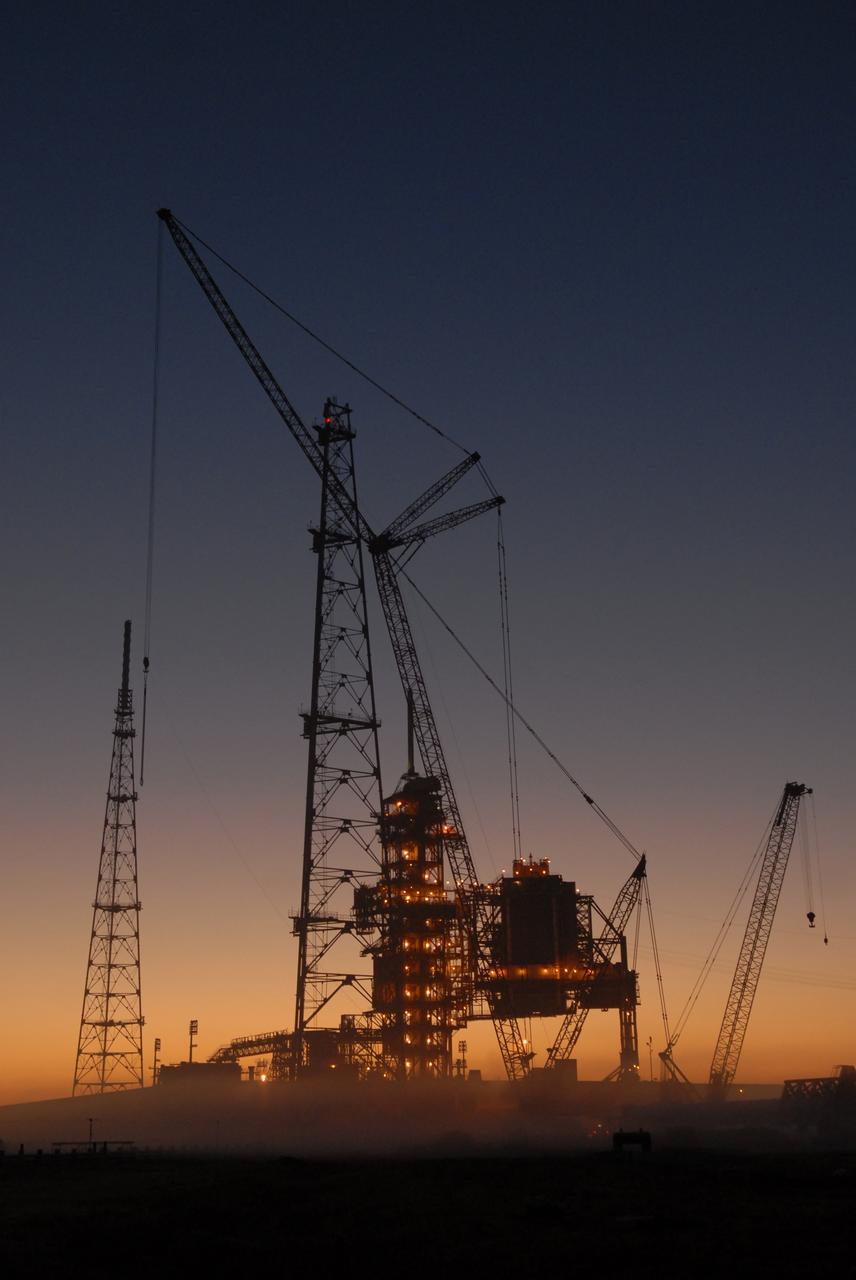
CAPE CANAVERAL, Fla. – In the rosy dawn light, construction of the towers on Launch Pad 39B at NASA's Kennedy Space Center in Florida continues on the new lightning protection system for the Constellation Program and Ares/Orion launches. Each of the three new lightning towers will be 500 feet tall with an additional 100-foot fiberglass mast atop supporting a wire catenary system. This improved lightning protection system allows for the taller height of the Ares I rocket compared to the space shuttle. Pad 39B will be the site of the first Ares vehicle launch, including the Ares I-X test flight that is targeted for July 2009.
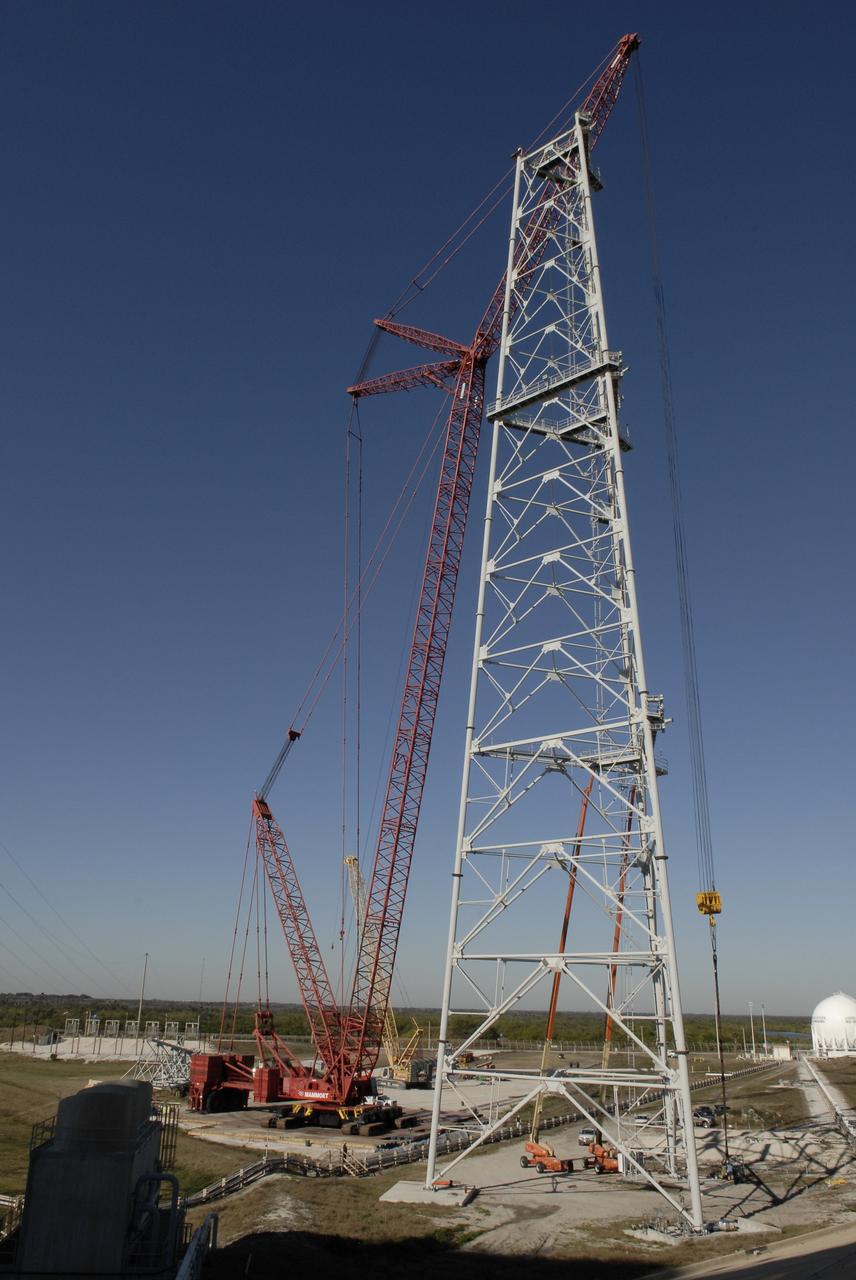
CAPE CANAVERAL, Fla. – A giant crane is used to add additional segments to the new lightning towers on Launch Pad 39B at NASA's Kennedy Space Center in Florida. Three new lightning towers on the pad will be 500 feet tall with an additional 100-foot fiberglass mast atop supporting a wire catenary system. Pad 39B will be the site of the first Ares vehicle launch, including the Ares I-X test flight that is targeted for July 2009. This improved lightning protection system allows for the taller height of the Ares I rocket compared to the space shuttle. Photo credit: NASA/Kim Shiflett
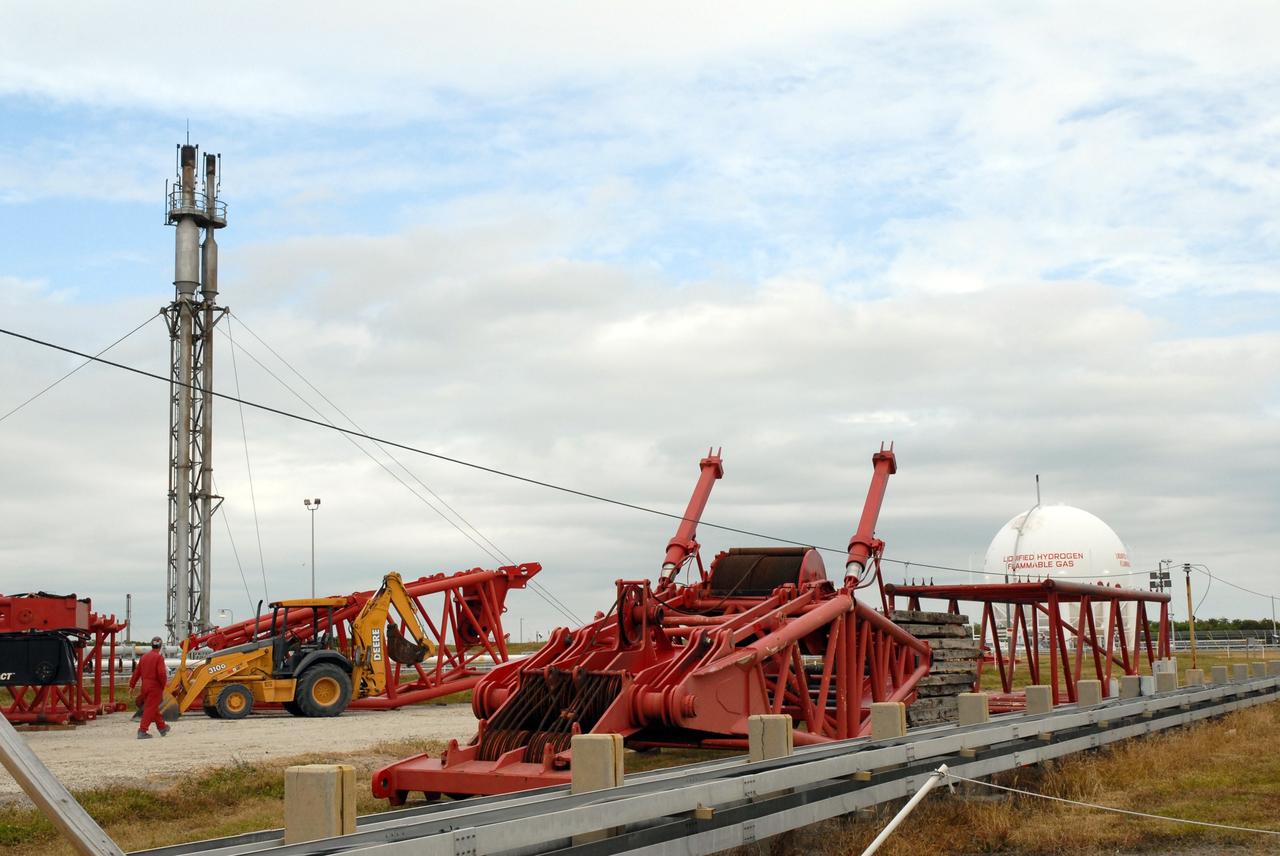
CAPE CANAVERAL, Fla. - The new lightning towers are under construction on Launch Pad 39B at NASA’s Kennedy Space Center in Florida. Each of the three new lightning towers will be 500 feet tall with an additional 100-foot fiberglass mast atop supporting a wire centenary system. This improved lightning protection system allows for the taller height of the Ares I compared to the space shuttle. Pad B will be the site of the first Ares vehicle launch, including Ares I-X which is targeted for summer of 2009, as part of NASA’s Constellation Program. Photo credit: NASA/Tim Jacobs
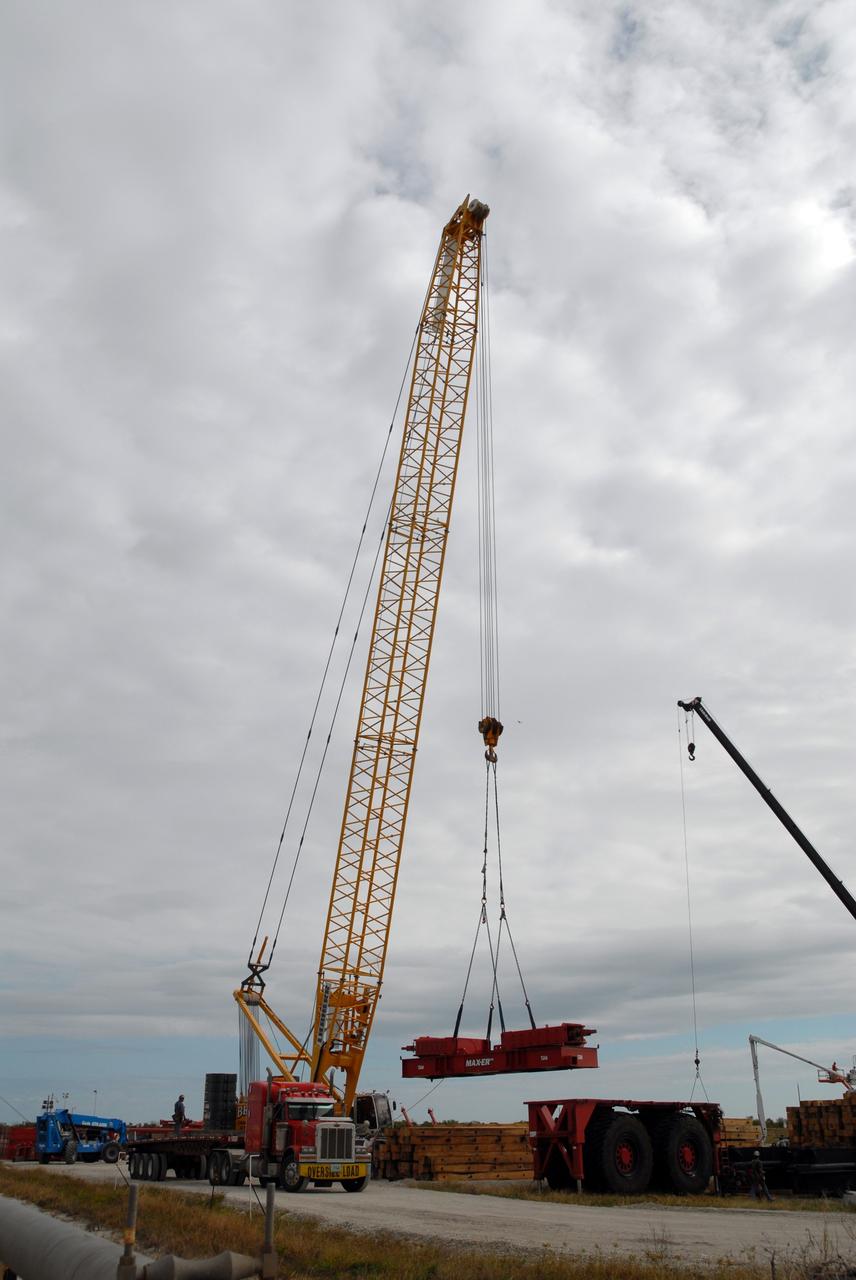
CAPE CANAVERAL, Fla. - On Launch Pad 39B at NASA’s Kennedy Space Center in Florida, the giant crane moves equipment that will be used to continue erecting the lightning towers. Each of the three new lightning towers will be 500 feet tall with an additional 100-foot fiberglass mast atop supporting a wire centenary system. This improved lightning protection system allows for the taller height of the Ares I compared to the space shuttle. Pad B will be the site of the first Ares vehicle launch, including Ares I-X which is targeted for summer of 2009, as part of NASA’s Constellation Program. Photo credit: NASA/Tim Jacobs
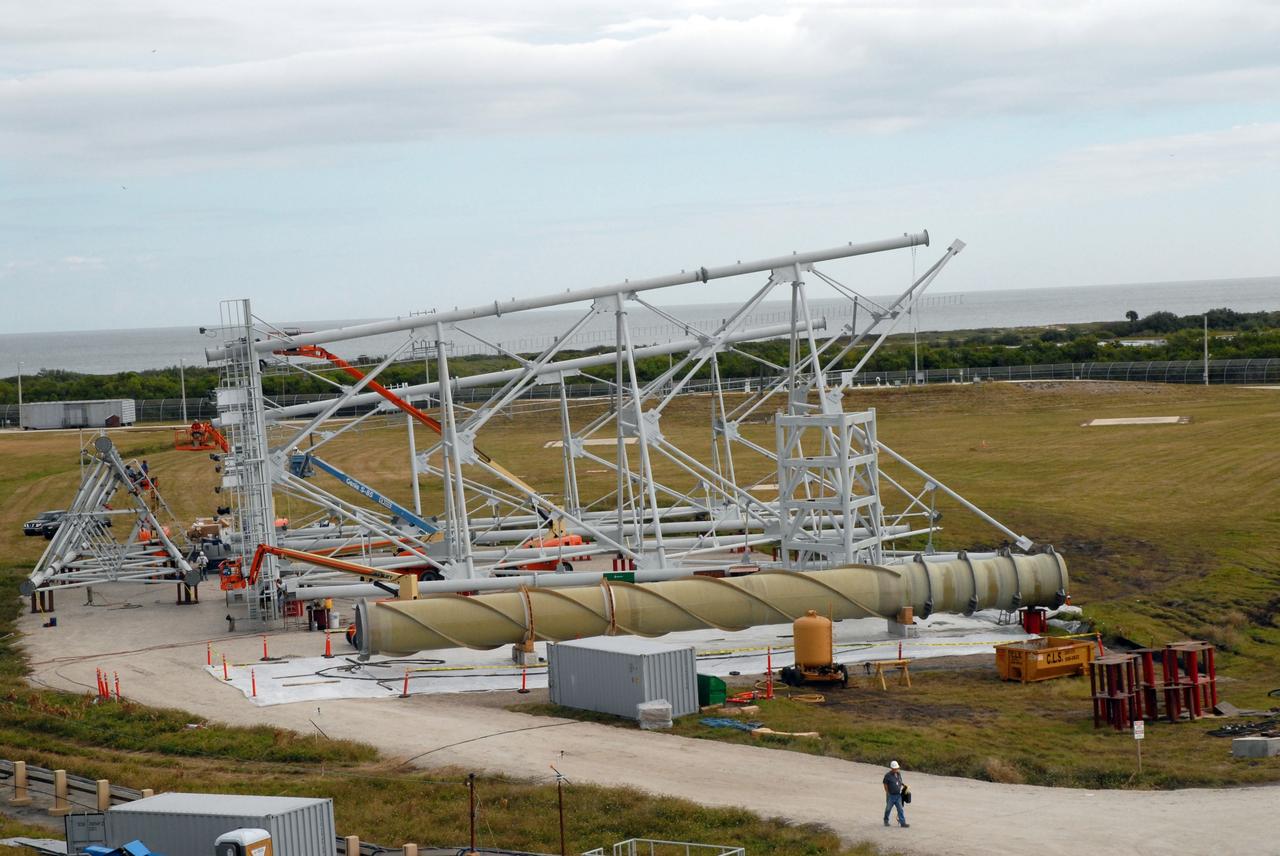
CAPE CANAVERAL, Fla. - On Launch Pad 39B at NASA’s Kennedy Space Center in Florida, one of the lightning towers under construction lies on its side. Each of the three new lightning towers will be 500 feet tall with an additional 100-foot fiberglass mast atop supporting a wire centenary system. This improved lightning protection system allows for the taller height of the Ares I compared to the space shuttle. Pad B will be the site of the first Ares vehicle launch, including Ares I-X which is targeted for summer of 2009, as part of NASA’s Constellation Program. Photo credit: NASA/Tim Jacobs
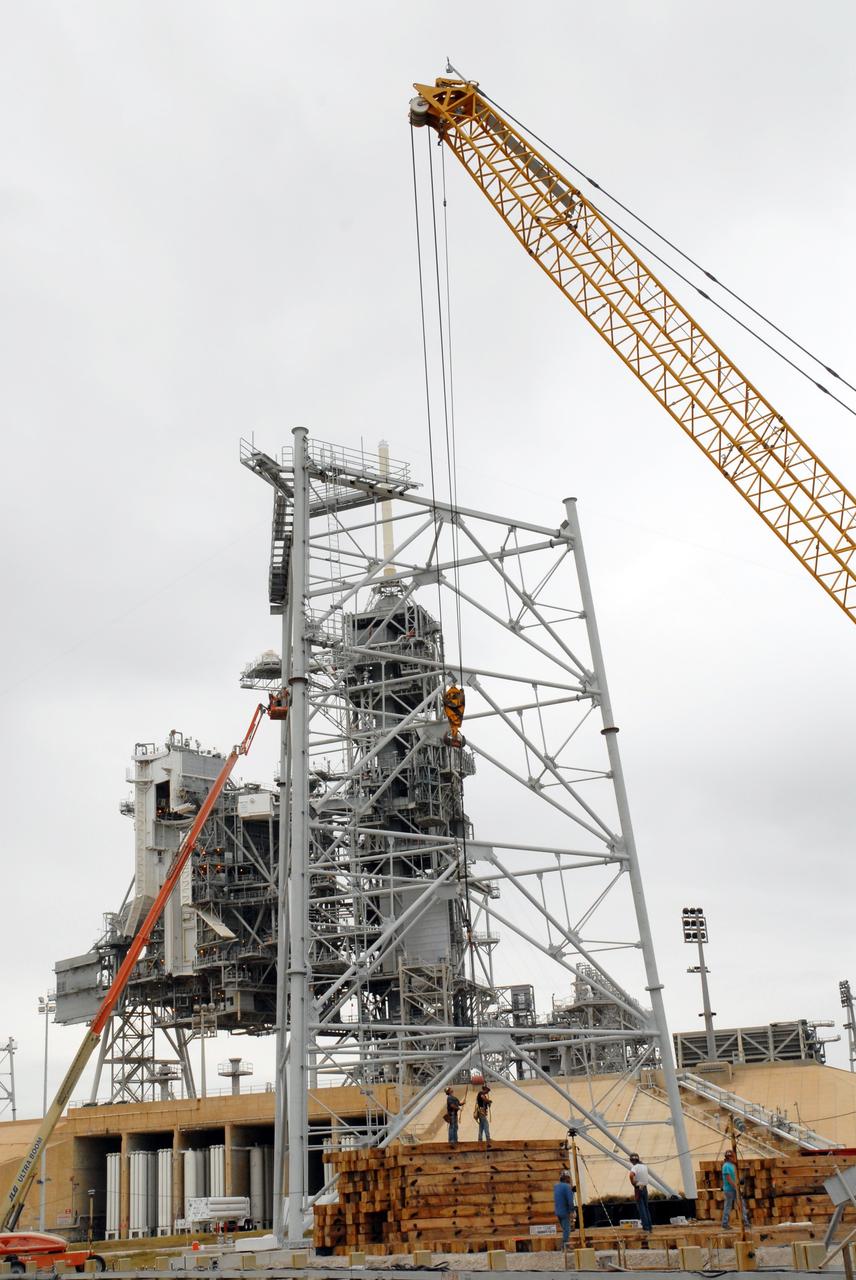
CAPE CANAVERAL, Fla. - On Launch Pad 39B at NASA’s Kennedy Space Center in Florida, the giant crane above is being used to help continue erecting the lightning towers. Each of the three new lightning towers will be 500 feet tall with an additional 100-foot fiberglass mast atop supporting a wire centenary system. This improved lightning protection system allows for the taller height of the Ares I compared to the space shuttle. Pad B will be the site of the first Ares vehicle launch, including Ares I-X which is targeted for summer of 2009, as part of NASA’s Constellation Program. Photo credit: NASA/Tim Jacobs
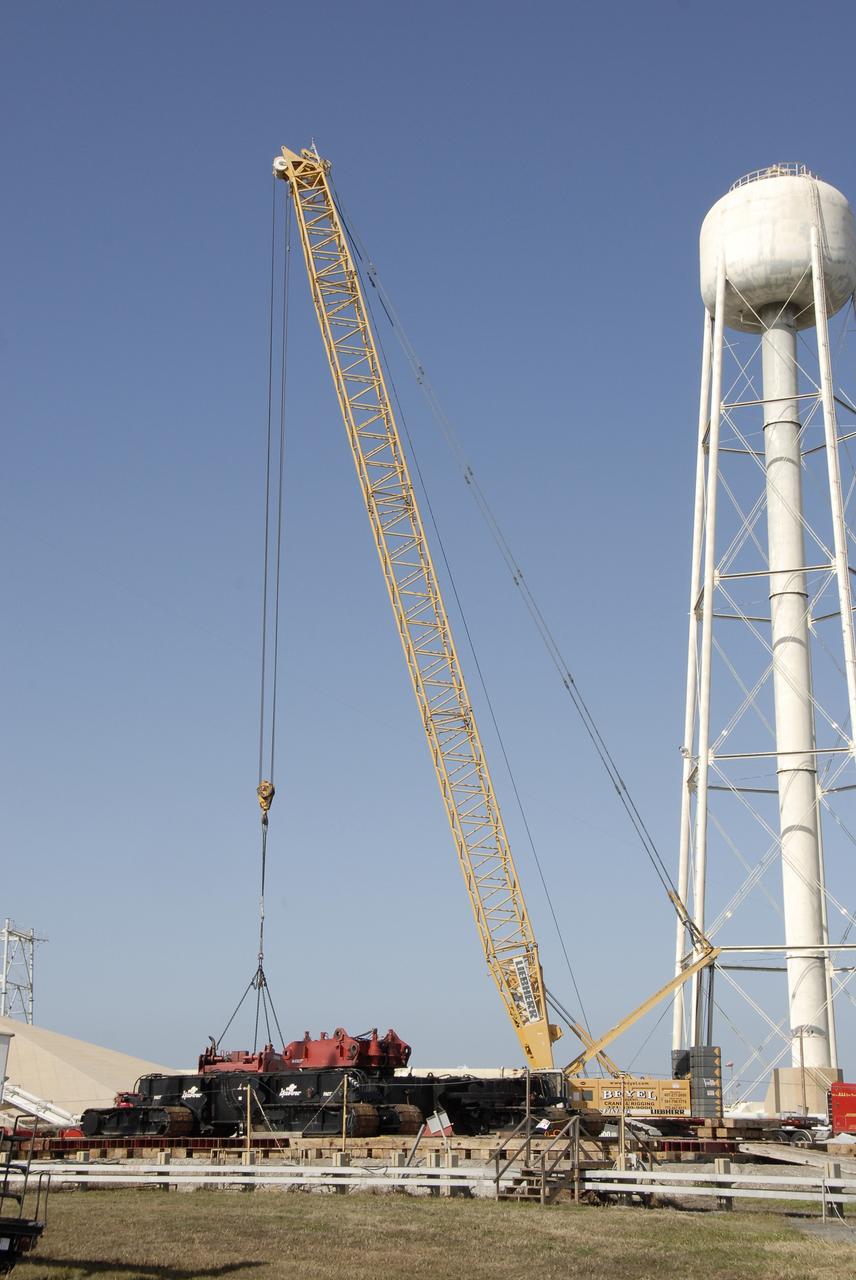
CAPE CANAVERAL, Fla. -- On Launch Pad 39B at NASA’s Kennedy Space Center in Florida, the giant crane moves equipment that will be used to continue erecting the lightning towers. Each of the three new lightning towers will be 500 feet tall with an additional 100-foot fiberglass mast atop supporting a wire catenary system. This improved lightning protection system allows for the taller height of the Ares I compared to the space shuttle. Pad B will be the site of the first Ares vehicle launch, including Ares I-X which is targeted for summer of 2009, as part of NASA’s Constellation Program. Photo credit: NASA/Kim Shiflett
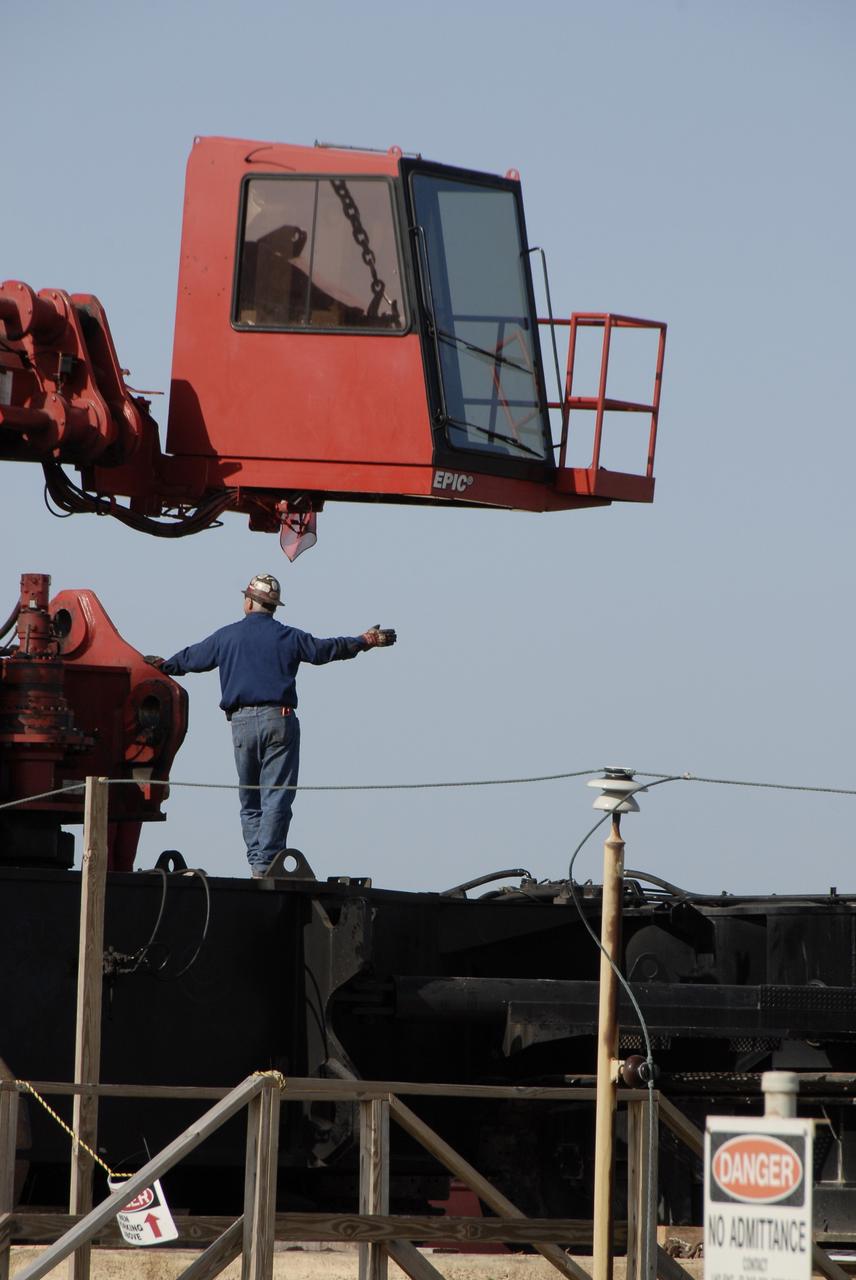
CAPE CANAVERAL, Fla. -- On Launch Pad 39B at NASA’s Kennedy Space Center in Florida, equipment is moved that will be used to continue erecting the lightning towers. Each of the three new lightning towers will be 500 feet tall with an additional 100-foot fiberglass mast atop supporting a wire catenary system. This improved lightning protection system allows for the taller height of the Ares I compared to the space shuttle. Pad B will be the site of the first Ares vehicle launch, including Ares I-X which is targeted for summer of 2009, as part of NASA’s Constellation Program. Photo credit: NASA/Kim Shiflett
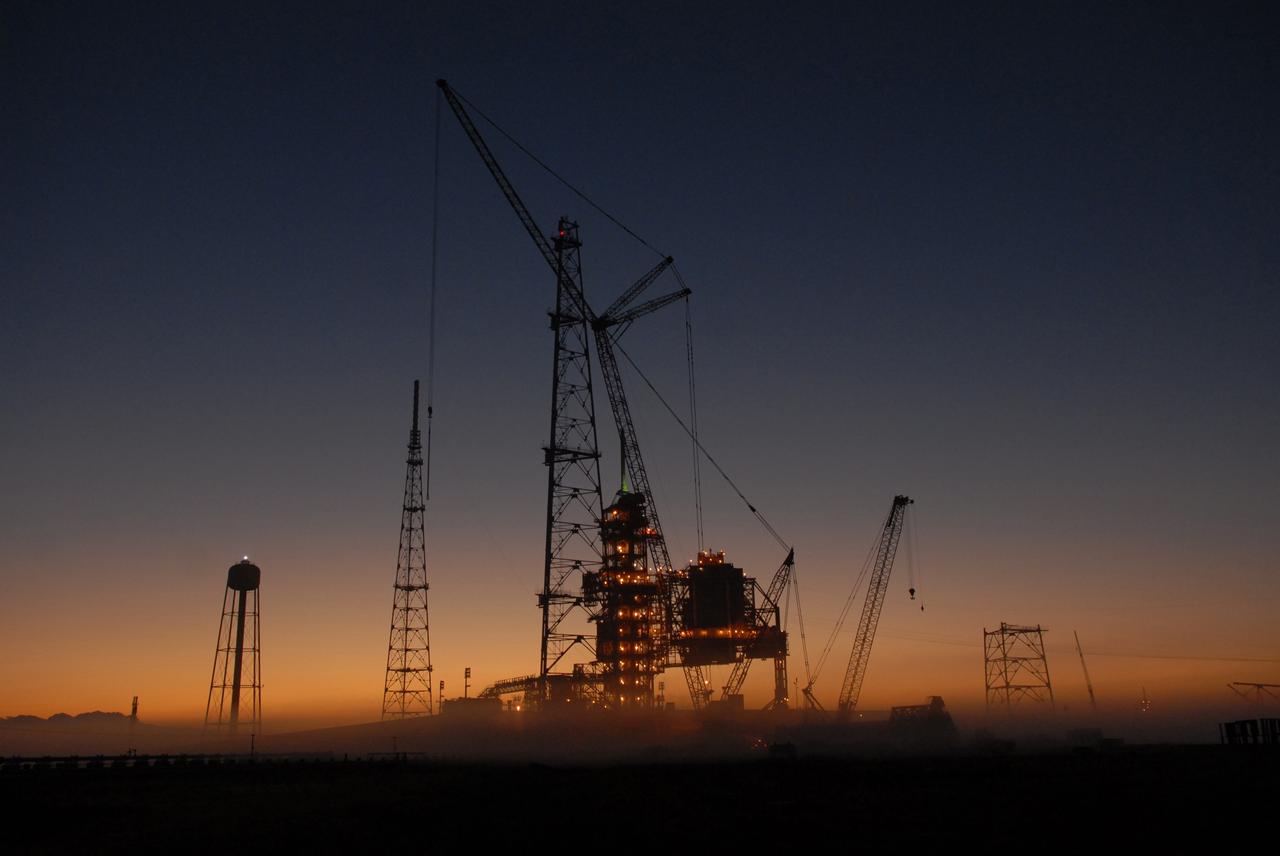
CAPE CANAVERAL, Fla. – In the rosy dawn light, construction of the towers on Launch Pad 39B at NASA's Kennedy Space Center in Florida continues on the new lightning protection system for the Constellation Program and Ares/Orion launches. Each of the three new lightning towers will be 500 feet tall with an additional 100-foot fiberglass mast atop supporting a wire catenary system. This improved lightning protection system allows for the taller height of the Ares I rocket compared to the space shuttle. Pad 39B will be the site of the first Ares vehicle launch, including the Ares I-X test flight that is targeted for July 2009.
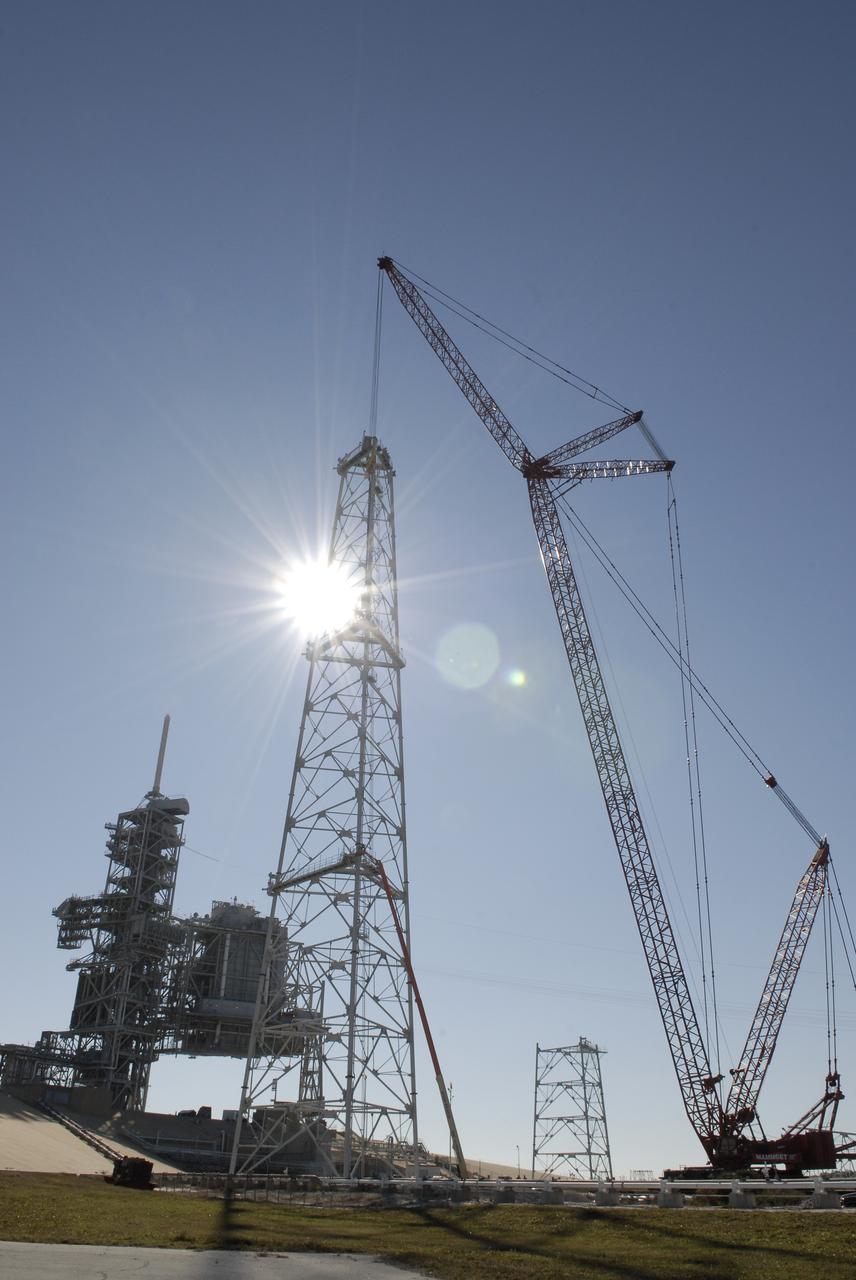
CAPE CANAVERAL, Fla. – Brilliant beams of sunlight bounce off the new lightning tower under construction on Launch Pad 39B at NASA's Kennedy Space Center in Florida. New sections are being added with the help of a giant crane (at right). Three new lightning towers on the pad will be 500 feet tall with an additional 100-foot fiberglass mast atop supporting a wire catenary system. Pad 39B will be the site of the first Ares vehicle launch, including the Ares I-X test flight that is targeted for July 2009. This improved lightning protection system allows for the taller height of the Ares I rocket compared to the space shuttle. Photo credit: NASA/Kim Shiflett
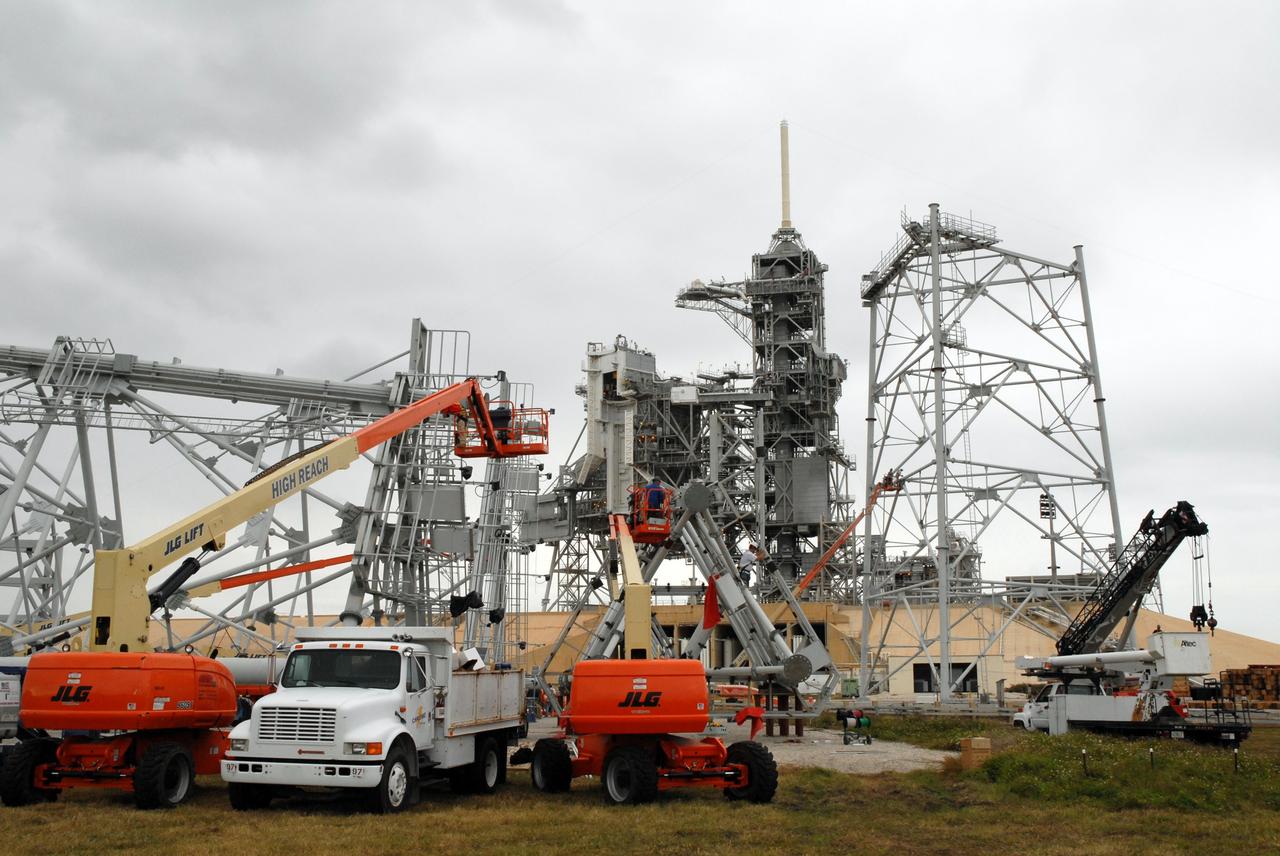
CAPE CANAVERAL, Fla. - On Launch Pad 39B at NASA’s Kennedy Space Center in Florida, equipment is on hand to continue erecting the lightning towers. Each of the three new lightning towers will be 500 feet tall with an additional 100-foot fiberglass mast atop supporting a wire centenary system. This improved lightning protection system allows for the taller height of the Ares I compared to the space shuttle. Pad B will be the site of the first Ares vehicle launch, including Ares I-X which is targeted for summer of 2009, as part of NASA’s Constellation Program. Photo credit: NASA/Tim Jacobs
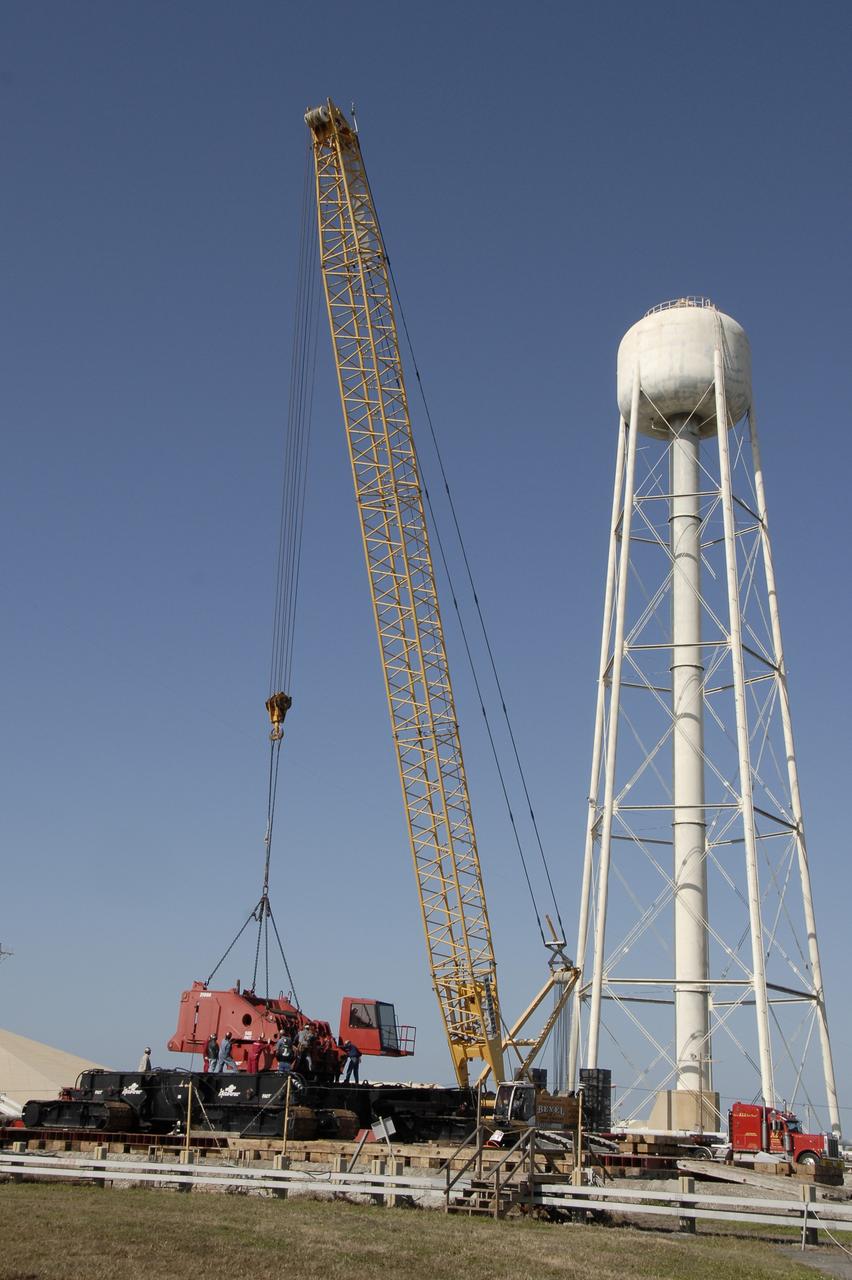
CAPE CANAVERAL, Fla. -- On Launch Pad 39B at NASA’s Kennedy Space Center in Florida, the giant crane moves equipment that will be used to continue erecting the lightning towers. Each of the three new lightning towers will be 500 feet tall with an additional 100-foot fiberglass mast atop supporting a wire catenary system. This improved lightning protection system allows for the taller height of the Ares I compared to the space shuttle. Pad B will be the site of the first Ares vehicle launch, including Ares I-X which is targeted for summer of 2009, as part of NASA’s Constellation Program. Photo credit: NASA/Kim Shiflett
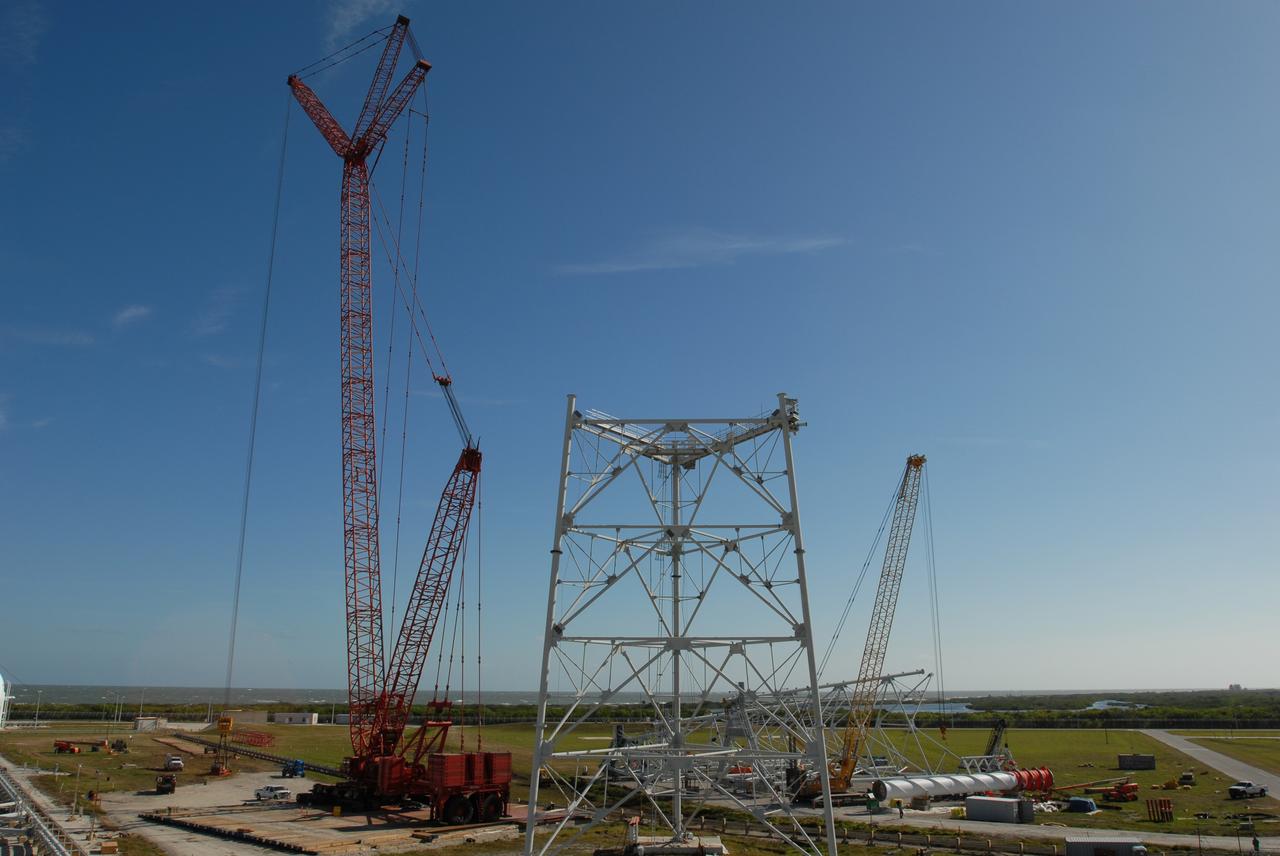
CAPE CANAVERAL, Fla. -- On Launch Pad 39B at NASA's Kennedy Space Center in Florida, a load test is conducted on a giant crane. The crane will aid in construction of lightning towers that will hold catenary wires as part of the new lightning protection system for the Constellation Program and Ares/Orion launches. One of the towers under construction is in the foreground. Pad 39B will be the site of the first Ares vehicle launch, including the Ares I-X test flight that is targeted for July 2009. Photo credit: NASA/Jim Grossmann
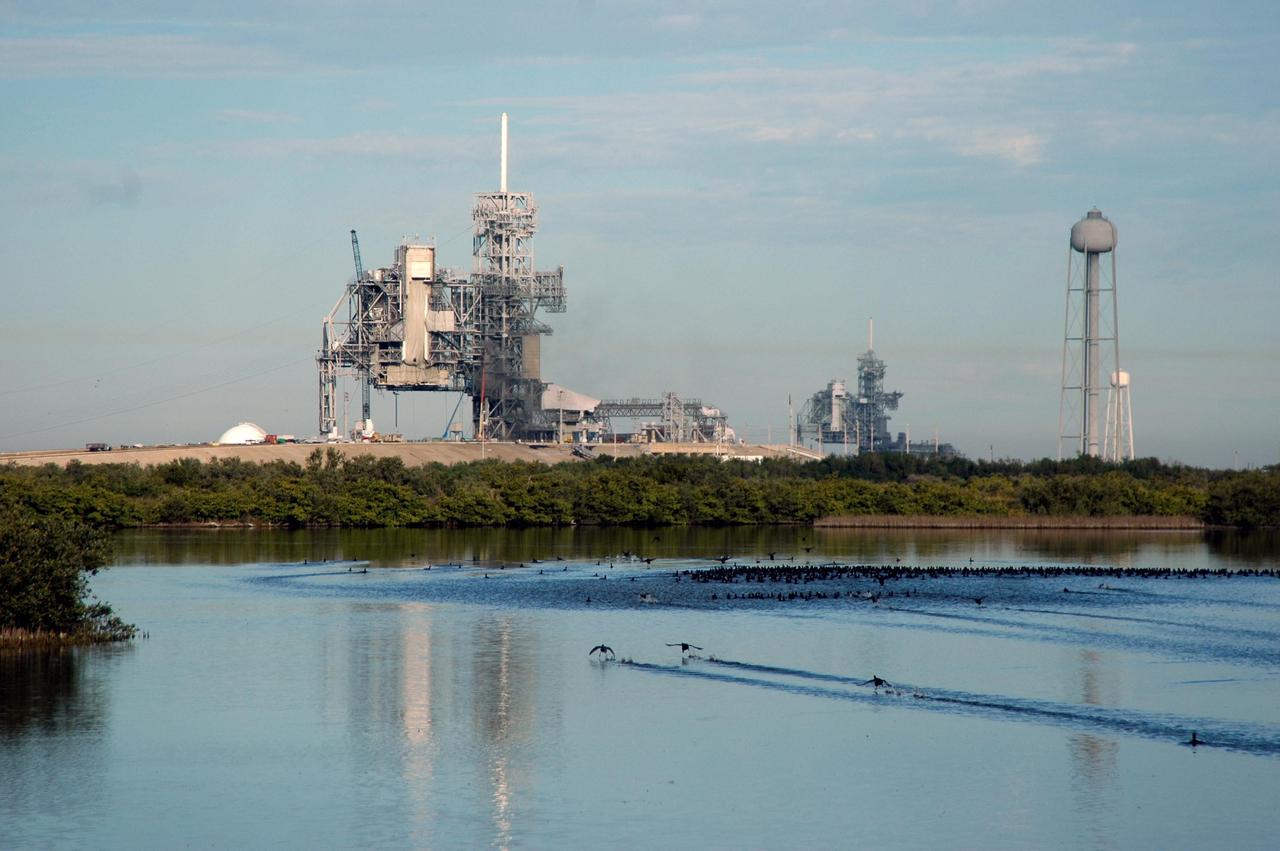
KENNEDY SPACE CENTER, FLA. - Viewed from the east side, Launch Pads 39A and 39B tower over the bird-filled waters of the Banana River at NASA Kennedy Space Center. On the far right is seen the 300-gallon water tower. Rising above the fixed service structures are the 80-foot lightning masts that help protect the structures from lightning strikes.
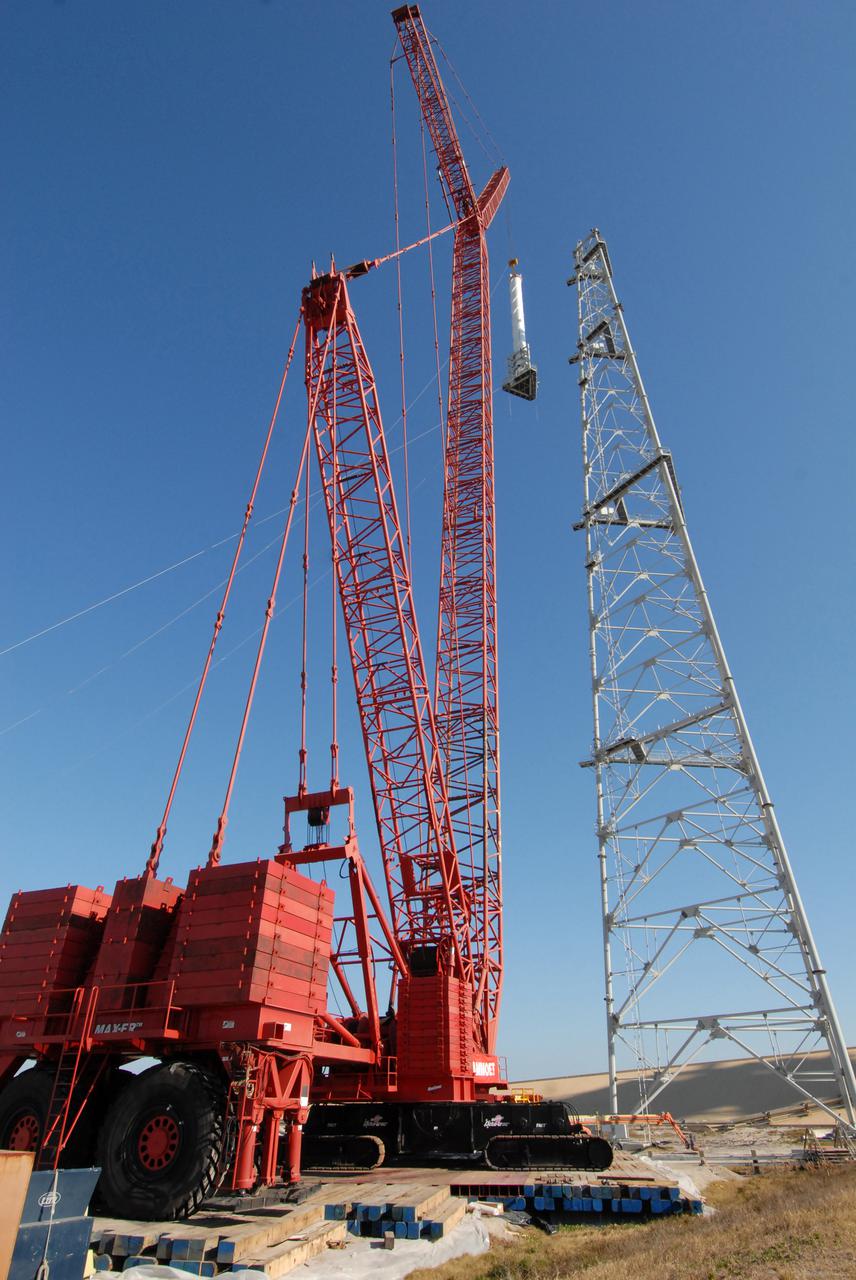
CAPE CANAVERAL, Fla. – On Launch Pad 39B at NASA's Kennedy Space Center in Florida, a crane lifts a 100-foot fiberglass lightning mast alongside the 500-foot tower where it will be installed. The tower is one of three being constructed for the Constellation Program and Ares_Orion launches. This improved lightning protection system allows for the taller height of the Ares I rocket compared to the space shuttle. Pad 39B will be the site of the first Ares vehicle launch, including the Ares I-X test flight that is targeted for July 2009.
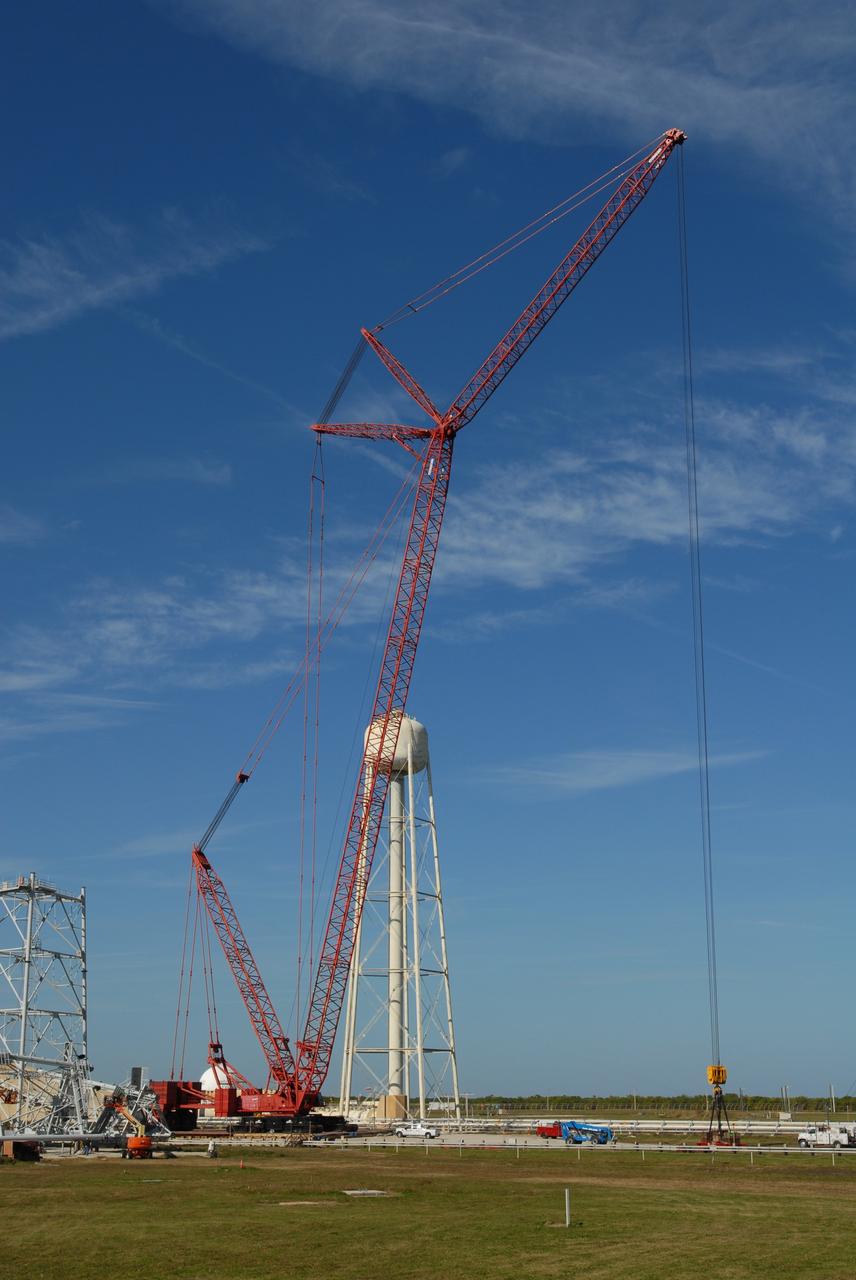
CAPE CANAVERAL, Fla. -- On Launch Pad 39B at NASA's Kennedy Space Center in Florida, a load test is conducted on a giant crane. The crane will aid in construction of lightning towers that will hold catenary wires as part of the new lightning protection system for the Constellation Program and Ares/Orion launches. One of the towers under construction is at far left. Pad 39B will be the site of the first Ares vehicle launch, including the Ares I-X test flight that is targeted for July 2009. Photo credit: NASA/Jim Grossmann
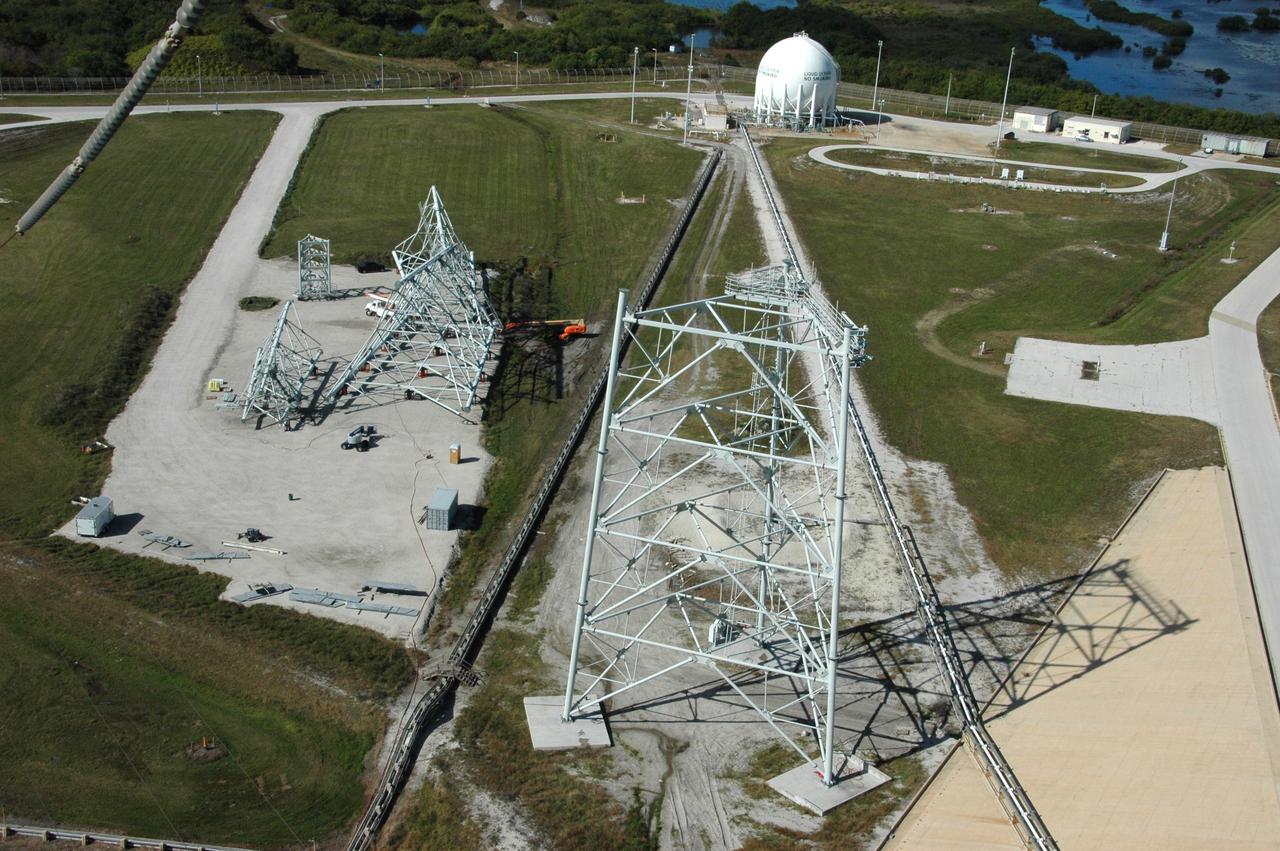
CAPE CANAVERAL, Fla. -- On Launch Pad 39B at NASA's Kennedy Space Center in Florida, one of the new lightning towers is under construction. The towers will hold catenary wires as part of the new lightning protection system for the Constellation Program and Ares/Orion launches. Pad 39B will be the site of the first Ares vehicle launch, including Ares I-X test flight that is targeted for July 2009. Photo credit: NASA/Tim Jacobs
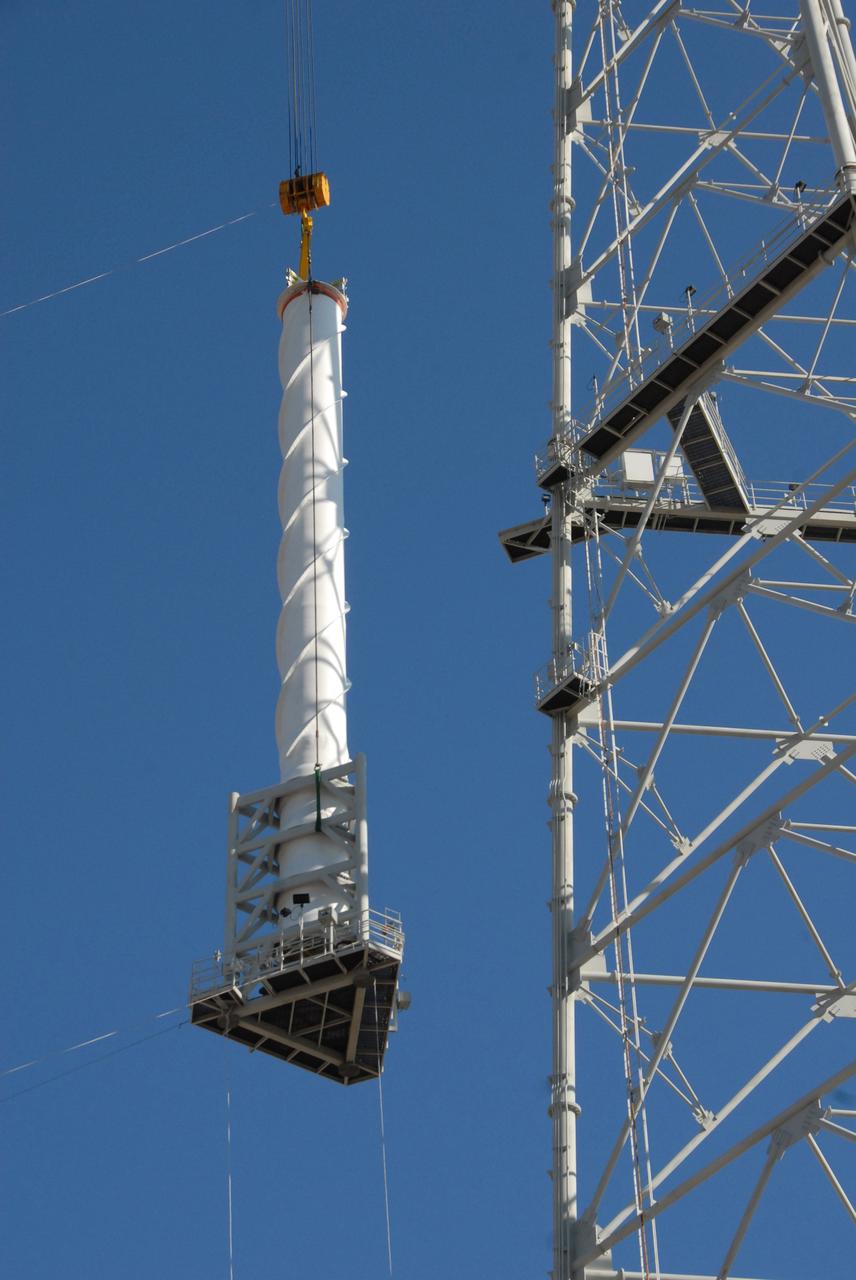
CAPE CANAVERAL, Fla. – On Launch Pad 39B at NASA's Kennedy Space Center in Florida, a crane lifts a 100-foot fiberglass lightning mast alongside the 500-foot tower where it will be installed. The tower is one of three being constructed for the Constellation Program and Ares/Orion launches. This improved lightning protection system allows for the taller height of the Ares I rocket compared to the space shuttle. Pad 39B will be the site of the first Ares vehicle launch, including the Ares I-X test flight that is targeted for July 2009.
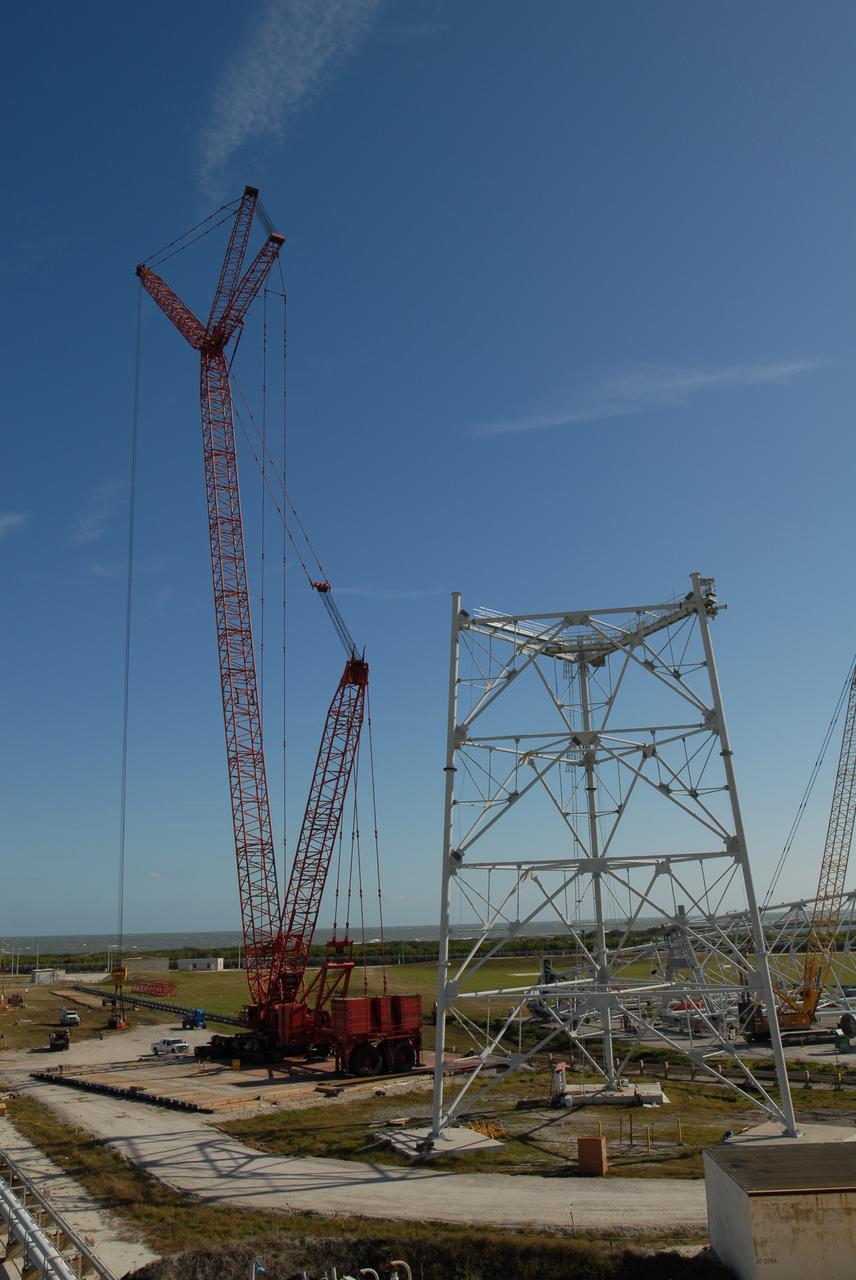
CAPE CANAVERAL, Fla. -- On Launch Pad 39B at NASA's Kennedy Space Center in Florida, a load test is conducted on a giant crane. The crane will aid in construction of lightning towers that will hold catenary wires as part of the new lightning protection system for the Constellation Program and Ares/Orion launches. One of the towers under construction is at right. Pad 39B will be the site of the first Ares vehicle launch, including the Ares I-X test flight that is targeted for July 2009. Photo credit: NASA/Jim Grossmann
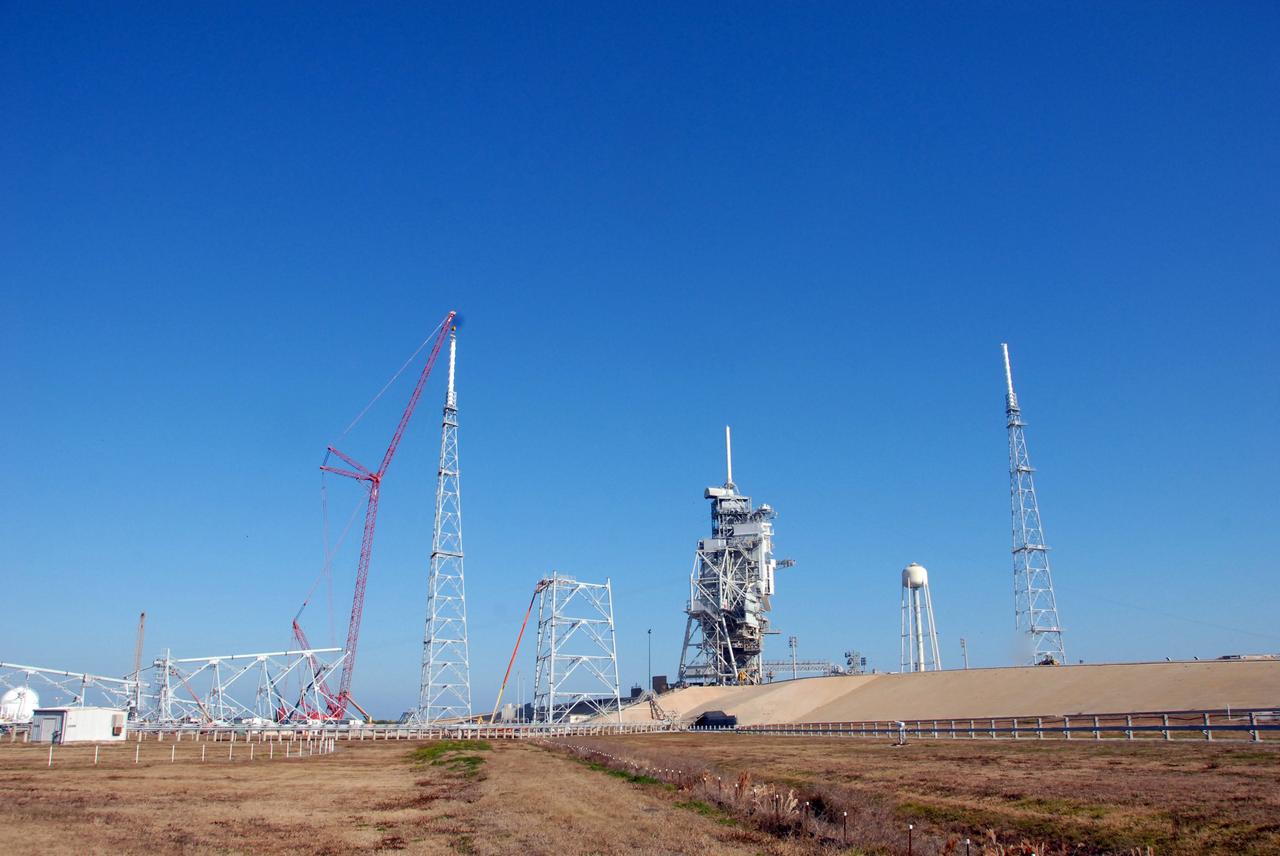
CAPE CANAVERAL, Fla. – On Launch Pad 39B at NASA's Kennedy Space Center in Florida, a crane places a 100-foot fiberglass lightning mast on top of the 500-foot tower. The tower is one of three being constructed for the Constellation Program and Ares/Orion launches. Another tower is seen at right. This improved lightning protection system allows for the taller height of the Ares I rocket compared to the space shuttle. Pad 39B will be the site of the first Ares vehicle launch, including the Ares I-X test flight that is targeted for July 2009. Photo credit: NASA/Jack Pfaller
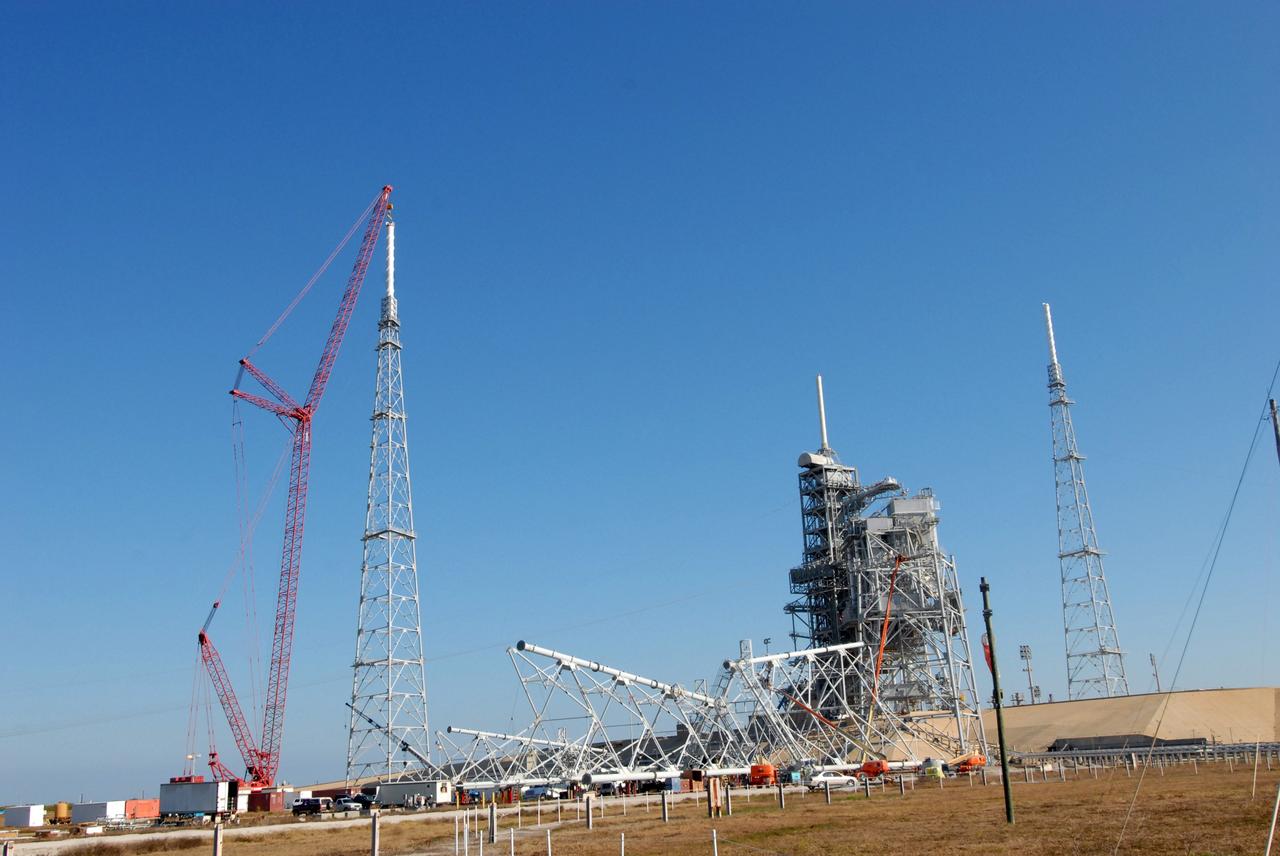
CAPE CANAVERAL, Fla. – On Launch Pad 39B at NASA's Kennedy Space Center in Florida, a crane places a 100-foot fiberglass lightning mast on top of the 500-foot tower. The tower is one of three being constructed for the Constellation Program and Ares/Orion launches. Another tower is seen at right. This improved lightning protection system allows for the taller height of the Ares I rocket compared to the space shuttle. Pad 39B will be the site of the first Ares vehicle launch, including the Ares I-X test flight that is targeted for July 2009.
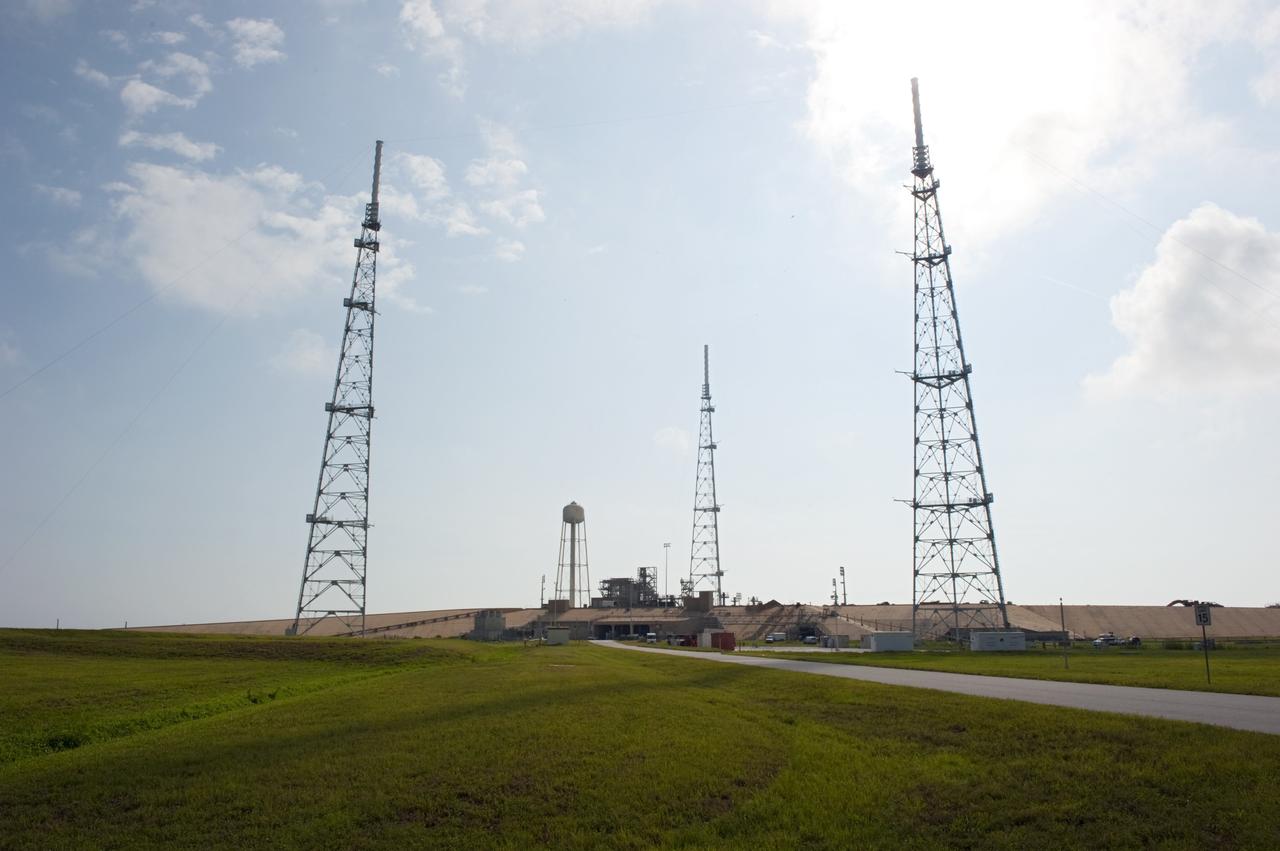
CAPE CANAVERAL, Fla. -- At NASA's Kennedy Space Center in Florida, the water tower and lightning protection system, consisting of three 600-foot-tall lightning towers, remain at Launch Pad 39B after the pad's deconstruction. Each lightning tower is 500 feet tall and topped off with an additional 100-foot fiberglass mast which supports a wire catenary system. In 2009, the structure at the pad was no longer needed for NASA's Space Shuttle Program, so it is being restructured for future use. The new design will feature a "clean pad" for rockets to come with their own launcher, making it more versatile for a number of vehicles. For information on NASA's future plans, visit http://www.nasa.gov/exploration. Photo credit: NASA/Kim Shiflett
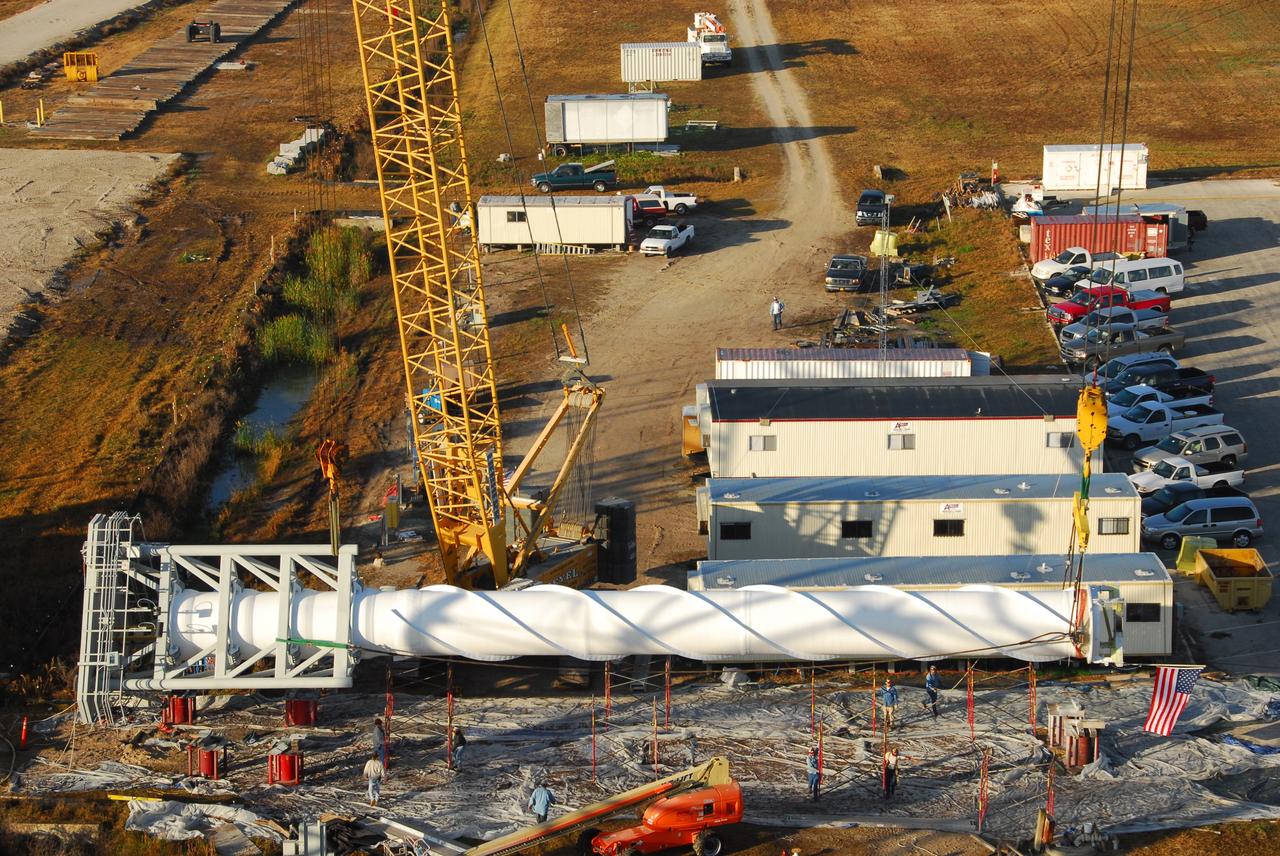
CAPE CANAVERAL, Fla. – On Launch Pad 39B at NASA's Kennedy Space Center in Florida, the 100-foot lightning mast is lifted off the ground. It will be installed on top of the third and final new lightning tower being erected around the pad. The new lightning protection system is being built for the Constellation Program and Ares/Orion launches. Each of the towers is 500 feet tall with an additional 100-foot fiberglass mast atop supporting a wire catenary system. This improved lightning protection system allows for the taller height of the Ares I rocket compared to the space shuttle. Pad 39B will be the site of the first Ares vehicle launch, including the Ares I-X test flight that is targeted for July 2009. Photo credit: NASA/Tim Jacobs
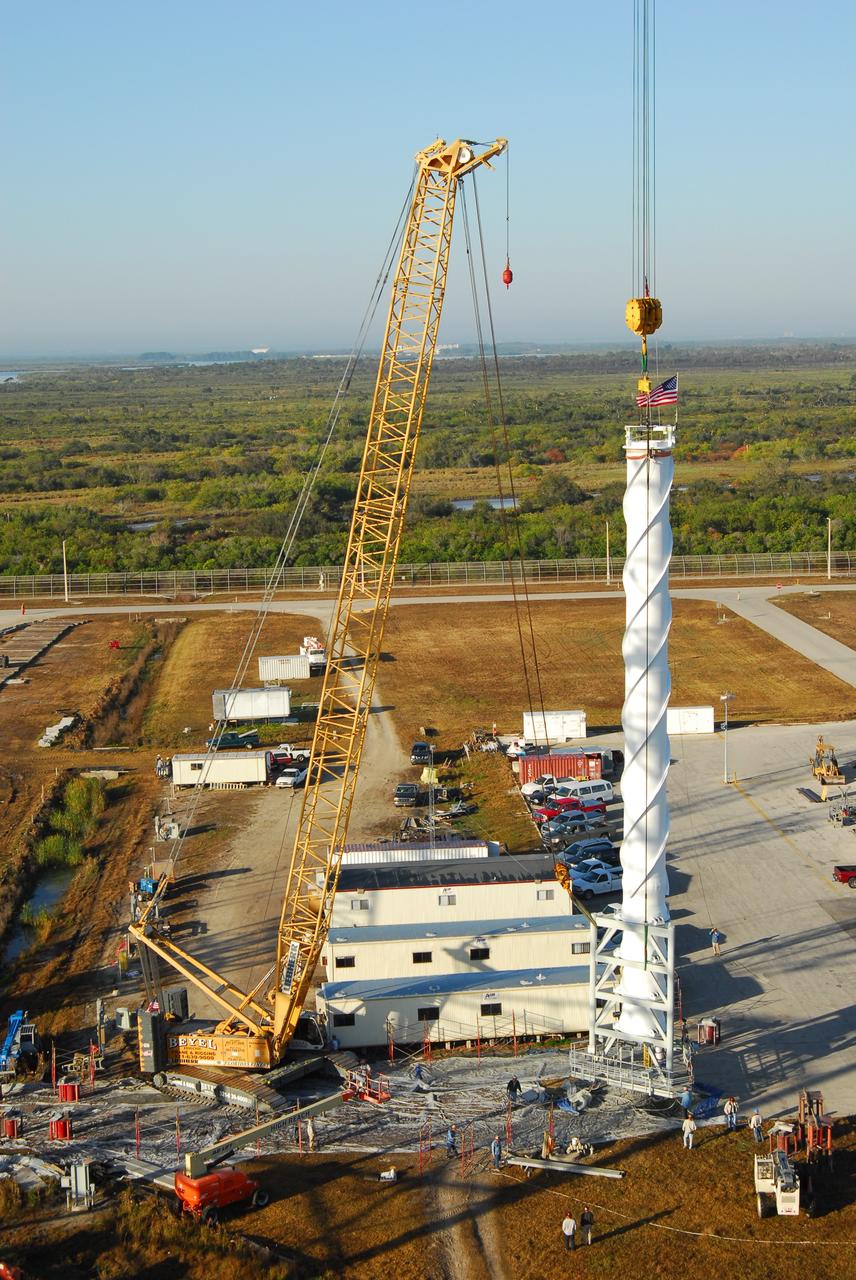
CAPE CANAVERAL, Fla. – On Launch Pad 39B at NASA's Kennedy Space Center in Florida, the 100-foot lightning mast has been raised to vertical. It will be lifted and installed on top of the third and final new lightning tower being erected around the pad. The new lightning protection system is being built for the Constellation Program and Ares/Orion launches. Each of the towers is 500 feet tall with an additional 100-foot fiberglass mast atop supporting a wire catenary system. This improved lightning protection system allows for the taller height of the Ares I rocket compared to the space shuttle. Pad 39B will be the site of the first Ares vehicle launch, including the Ares I-X test flight that is targeted for July 2009. Photo credit: NASA/Tim Jacobs
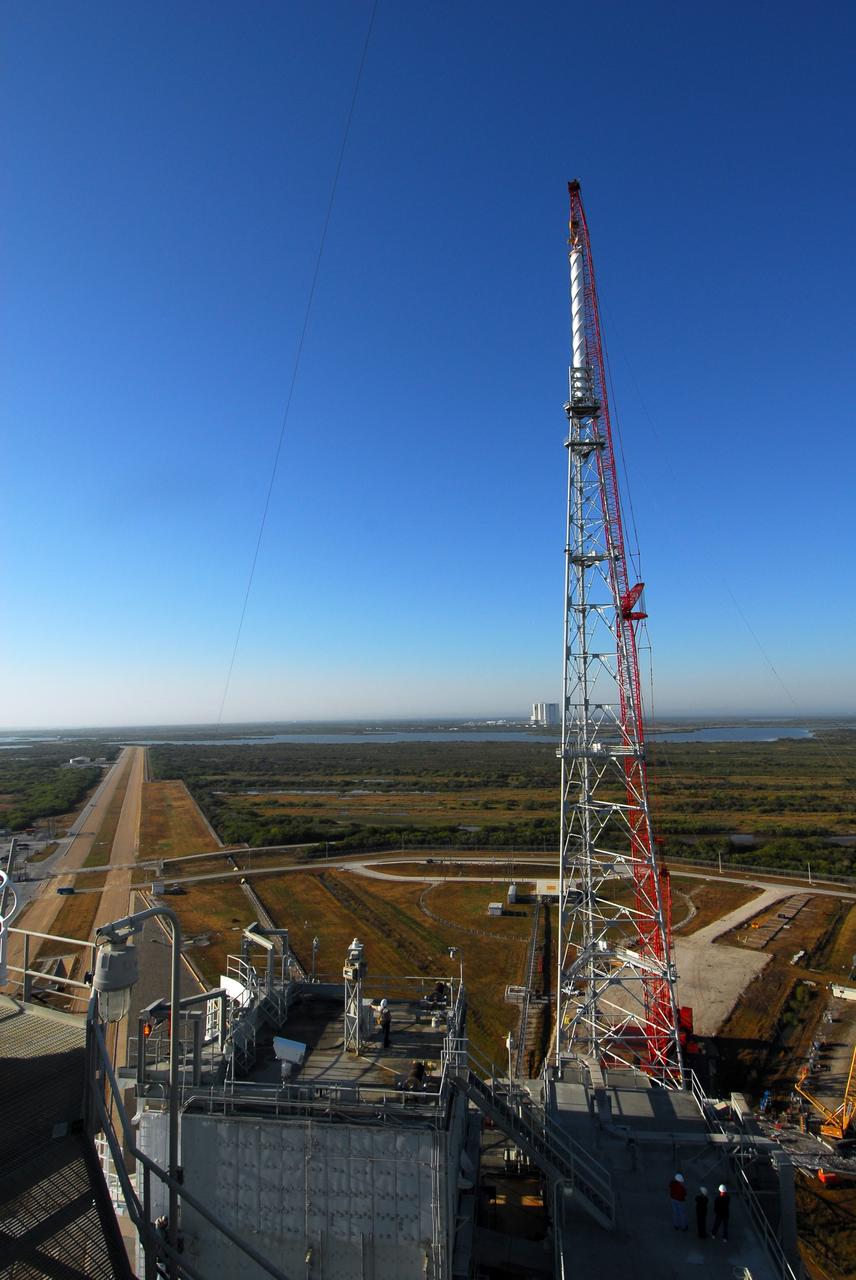
CAPE CANAVERAL, Fla. – On Launch Pad 39B at NASA's Kennedy Space Center in Florida, a giant crane places the 100-foot lightning mast on top of the newly erected lightning tower, one of three around the pad. The new lightning protection system is being built for the Constellation Program and Ares/Orion launches. Each of the towers is 500 feet tall with an additional 100-foot fiberglass mast atop supporting a wire catenary system. This improved lightning protection system allows for the taller height of the Ares I rocket compared to the space shuttle. Pad 39B will be the site of the first Ares vehicle launch, including the Ares I-X test flight that is targeted for July 2009. Photo credit: NASA/Tim Jacobs
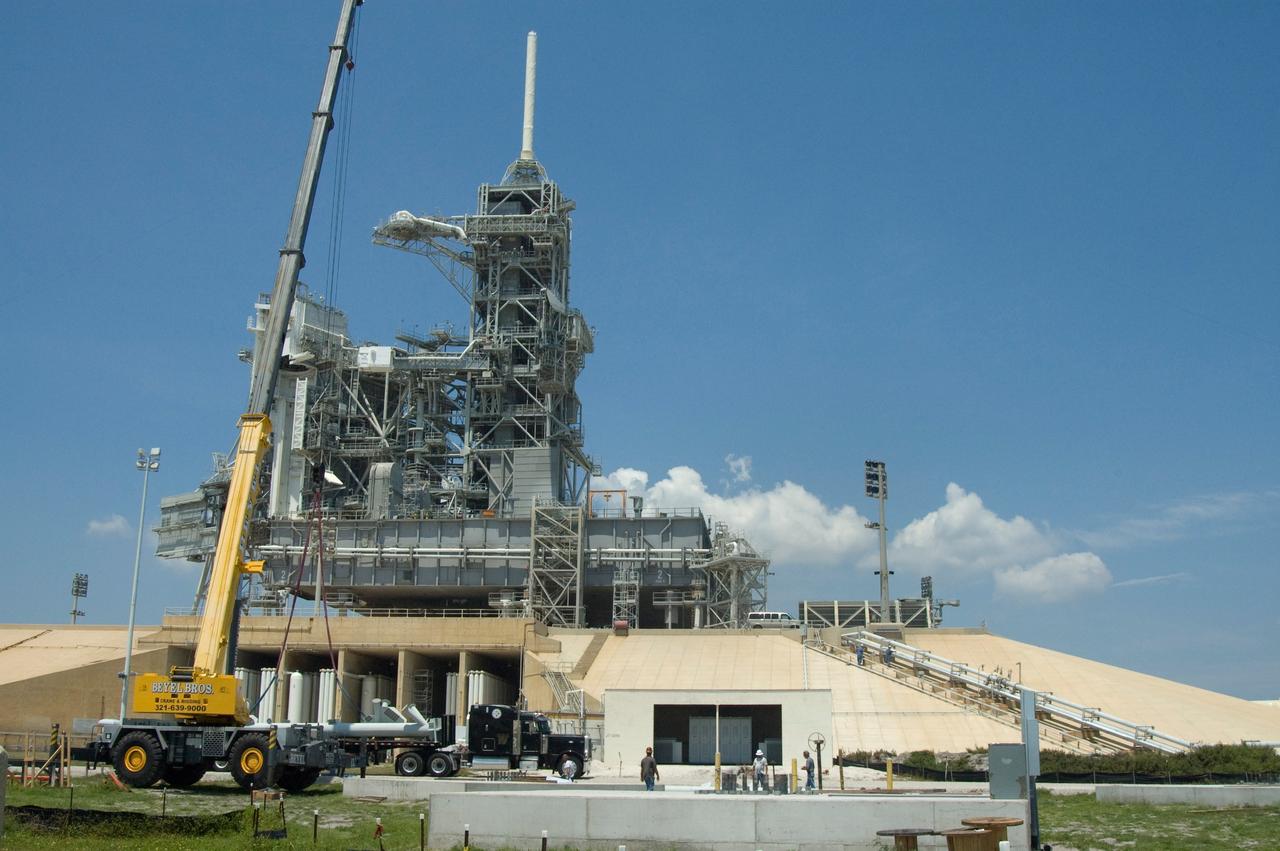
CAPE CANAVERAL, Fla. -- On Launch Pad 39B at NASA's Kennedy Space Center, a crane is removing parts of the lightning mast to be erected on towers being built for the Constellation Program and Ares/Orion launches. Behind it are the fixed and rotating service structures on top of the pad. An 80-foot lightning mast is on top of the fixed service structure as part of the former lightning protection system. Pad B will be the site of the first Ares vehicle launch, including Ares I-X which is scheduled for April 2009. Photo credit: NASA/Jim Grossmann
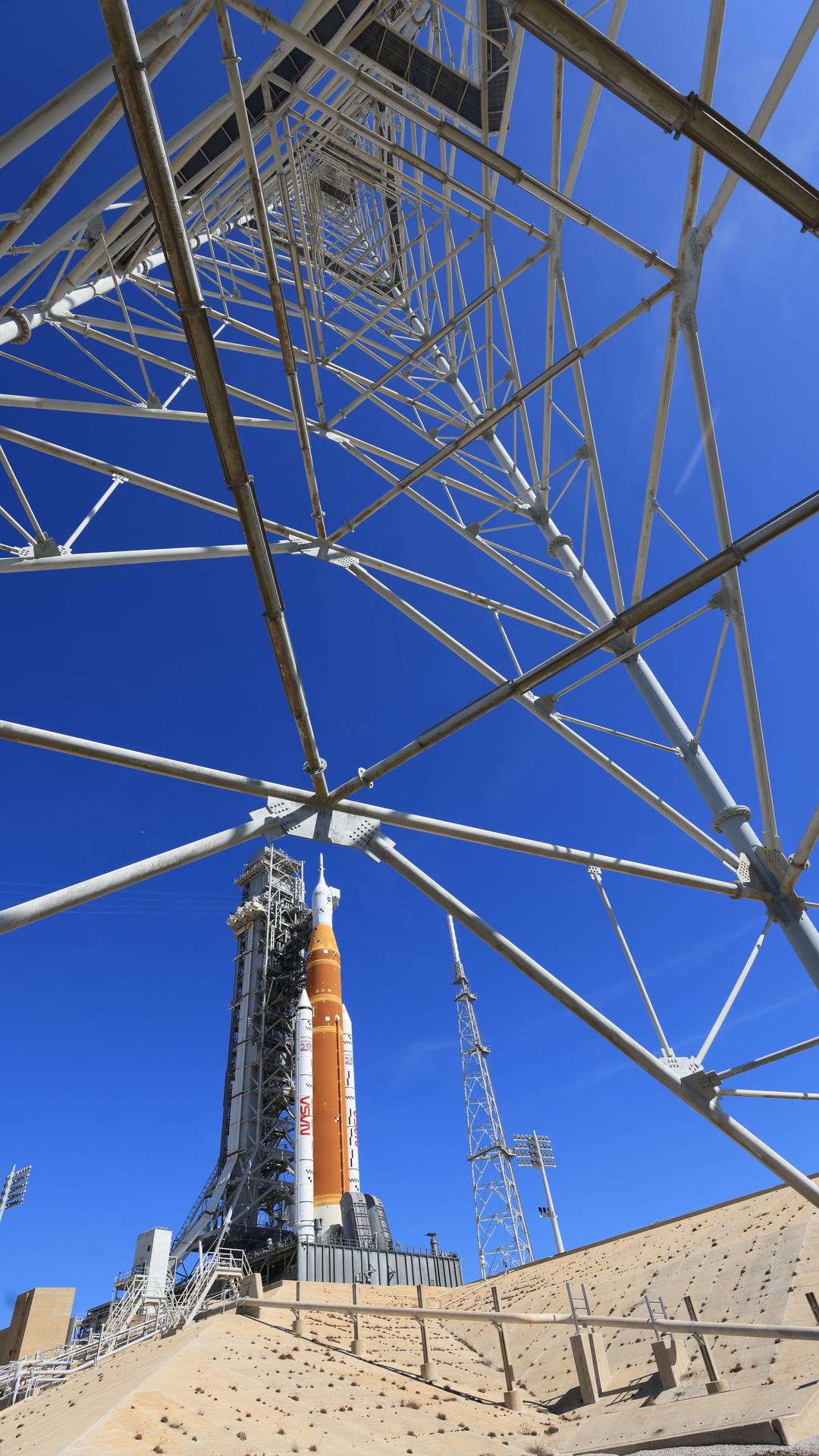
NASA’s Artemis II SLS (Space Launch System) rocket and Orion spacecraft is seen from underneath a lightning tower at Launch Complex 39B at NASA’s Kennedy Space Center in Florida on Tuesday, Feb. 10, 2026. At nearly 600 feet, three towers are positioned around the perimeter of the pad to provide lightning protection for launch vehicles. The Artemis II test flight will take Commander Reid Wiseman, Pilot Victor Glover, and Mission Specialist Christina Koch from NASA, and Mission Specialist Jeremy Hansen from the CSA (Canadian Space Agency), around the Moon and back to Earth.
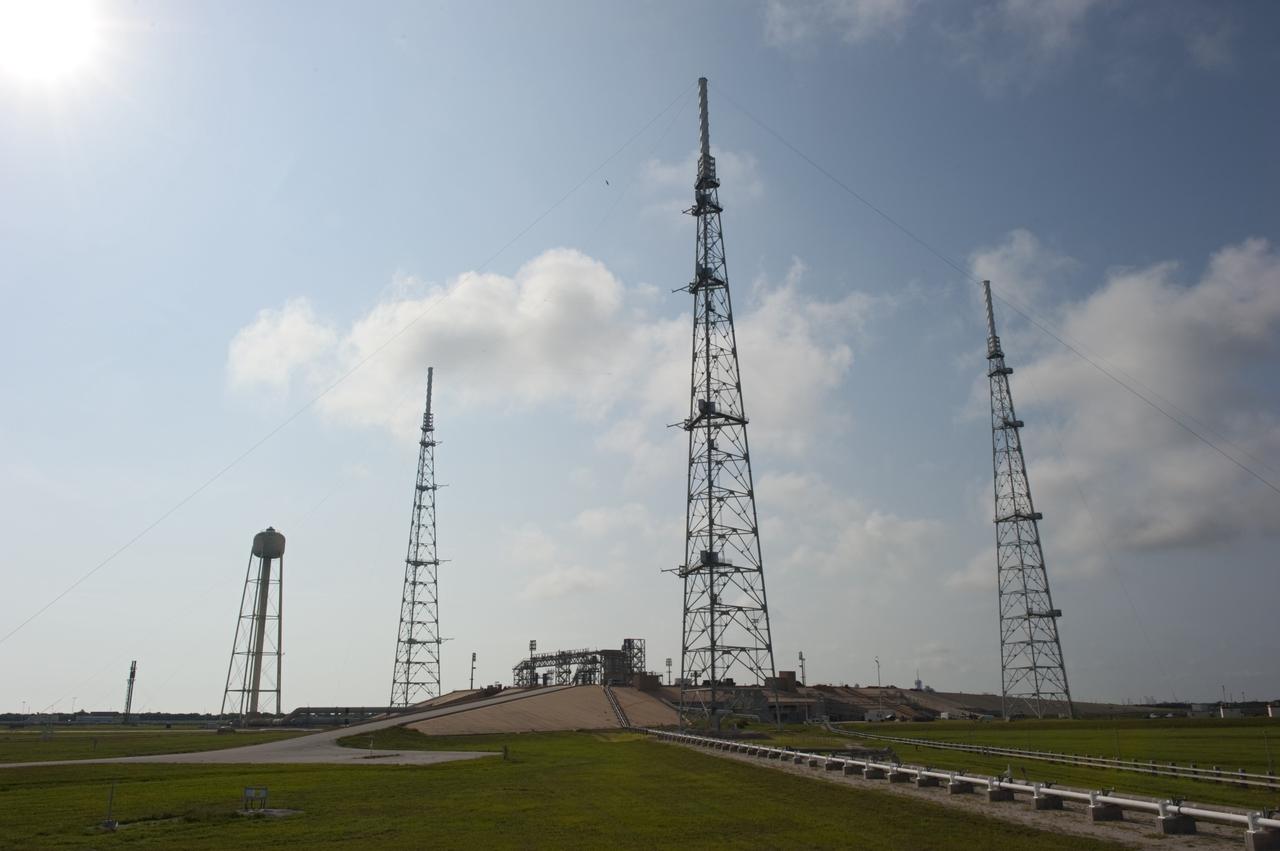
CAPE CANAVERAL, Fla. -- At NASA's Kennedy Space Center in Florida, the lightning protection system, consisting of three 600-foot-tall lightning towers, remains at Launch Pad 39B after the pad's deconstruction. Each tower is 500 feet tall and topped off with an additional 100-foot fiberglass mast which supports a wire catenary system. In 2009, the structure at the pad was no longer needed for NASA's Space Shuttle Program, so it is being restructured for future use. The new design will feature a "clean pad" for rockets to come with their own launcher, making it more versatile for a number of vehicles. For information on NASA's future plans, visit http://www.nasa.gov/exploration. Photo credit: NASA/Kim Shiflett
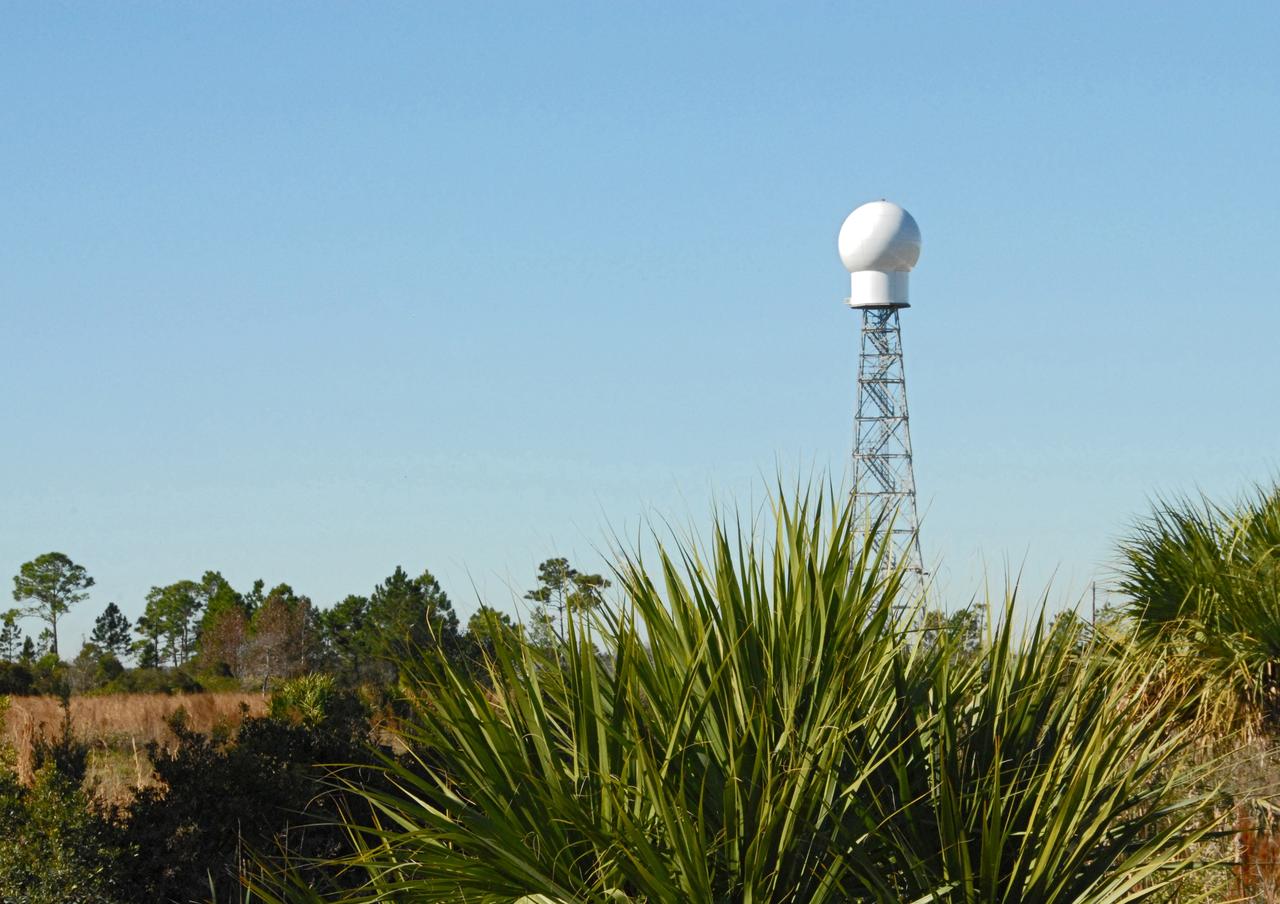
CAPE CANAVERAL, Fla. -- A replacement weather Doppler radar has been installed on top of this tower in a remote field located west of NASA's Kennedy Space Center in Florida. The radome houses the rotating antenna and pedestal and protects them from the elements. The tower is 100 feet high; the radome is 22 feet in diameter, the antenna 14 feet in diameter. It rotates at 6 rpm. The structure can withstand 130 mph winds. It is undergoing initial testing and expected to become operational in the summer. The weather radar is essential in issuing lightning and other severe weather warnings and vital in evaluating lightning launch commit criteria for space shuttle and rocket launches. Photo credit: NASA/Troy Cryder
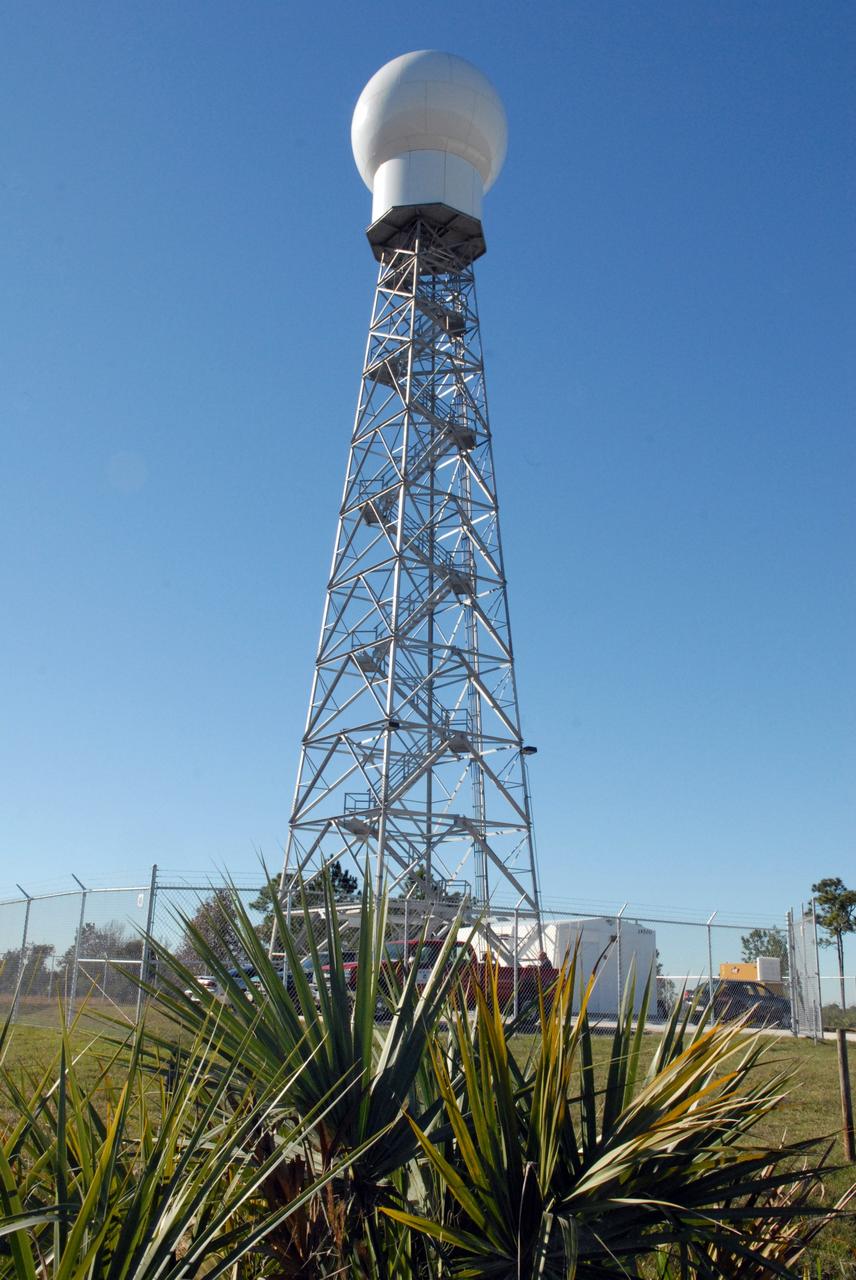
CAPE CANAVERAL, Fla. -- A replacement weather Doppler radar has been installed on top of this tower in a remote field located west of NASA's Kennedy Space Center in Florida. The radome houses the rotating antenna and pedestal and protects them from the elements. The tower is 100 feet high; the radome is 22 feet in diameter, the antenna 14 feet in diameter. It rotates at 6 rpm. The structure can withstand 130 mph winds. It is undergoing initial testing and expected to become operational in the summer. The weather radar is essential in issuing lightning and other severe weather warnings and vital in evaluating lightning launch commit criteria for space shuttle and rocket launches. Photo credit: NASA/Troy Cryder
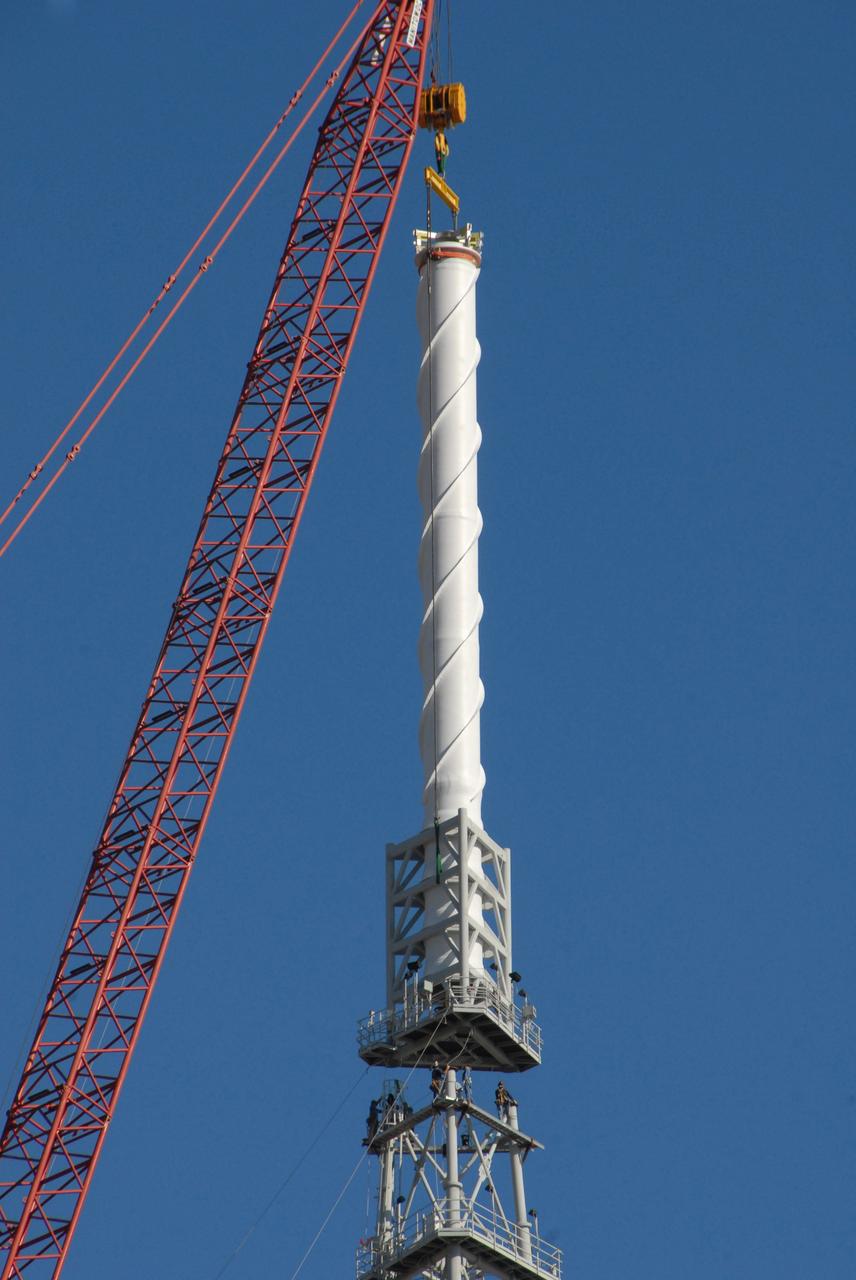
CAPE CANAVERAL, Fla. – On Launch Pad 39B at NASA's Kennedy Space Center in Florida, a crane places a 100-foot fiberglass lightning mast on top of the 500-foot tower. The tower is one of three being constructed for the Constellation Program and Ares/Orion launches. This improved lightning protection system allows for the taller height of the Ares I rocket compared to the space shuttle. Pad 39B will be the site of the first Ares vehicle launch, including the Ares I-X test flight that is targeted for July 2009. Photo credit: NASA/Jack Pfaller
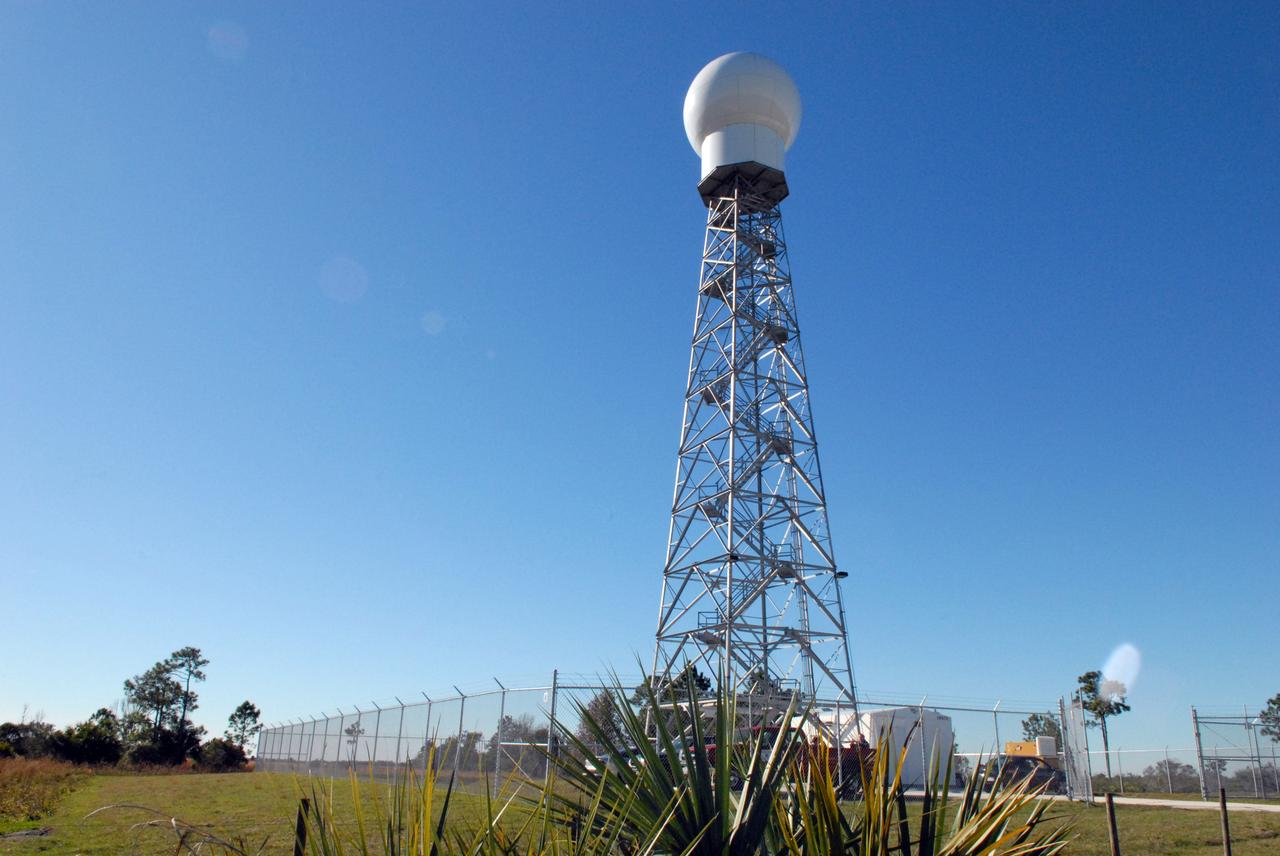
CAPE CANAVERAL, Fla. -- A replacement weather Doppler radar has been installed on top of this tower in a remote field located west of NASA's Kennedy Space Center in Florida. The radome houses the rotating antenna and pedestal and protects them from the elements. The tower is 100 feet high; the radome is 22 feet in diameter, the antenna 14 feet in diameter. It rotates at 6 rpm. The structure can withstand 130 mph winds. It is undergoing initial testing and expected to become operational in the summer. The weather radar is essential in issuing lightning and other severe weather warnings and vital in evaluating lightning launch commit criteria for space shuttle and rocket launches. Photo credit: NASA/Troy Cryder
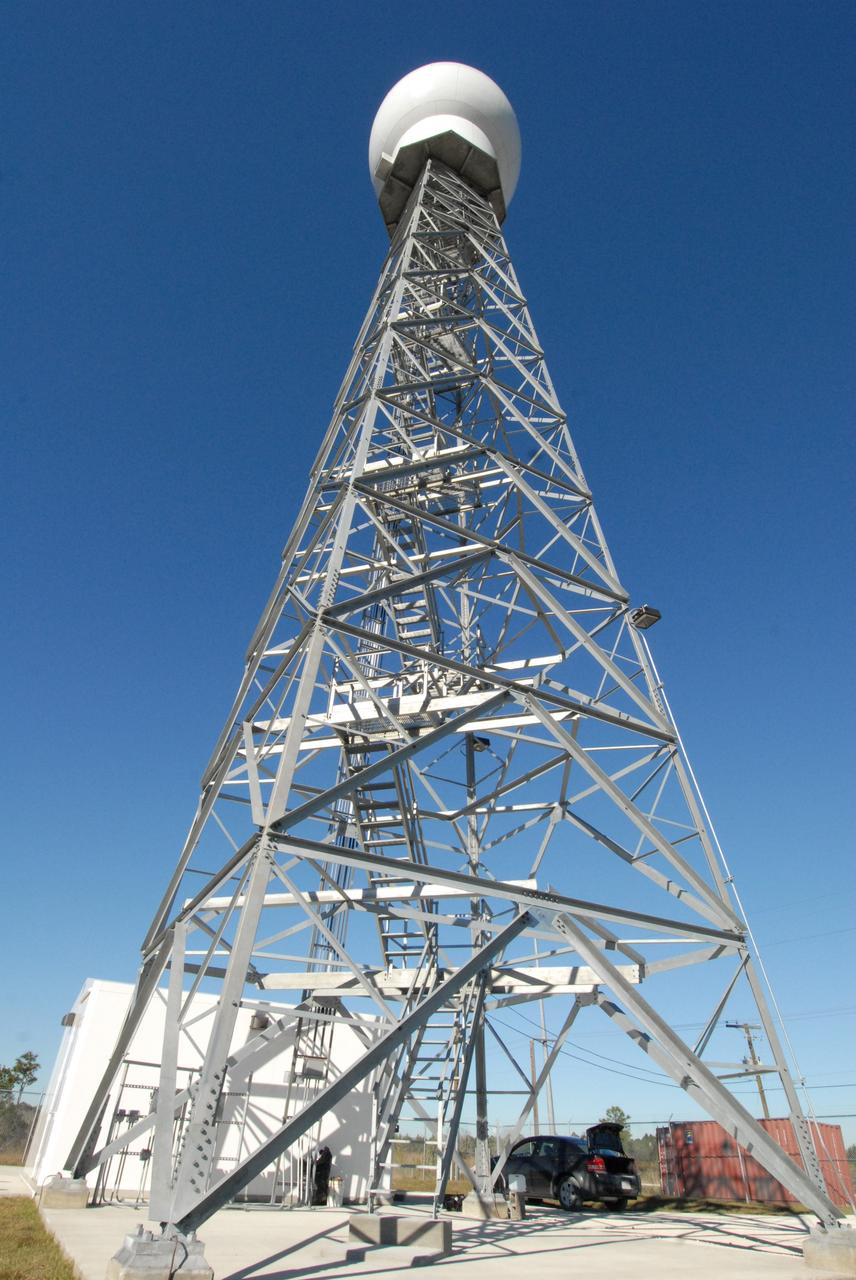
CAPE CANAVERAL, Fla. -- A replacement weather Doppler radar has been installed in the radome on top of this tower in a remote field located west of NASA's Kennedy Space Center in Florida. The dome houses the rotating antenna and pedestal and protects them from the elements. The tower is 100 feet high; the radome is 22 feet in diameter, the antenna 14 feet in diameter. It rotates at 6 rpm. The structure can withstand 130 mph winds. It is undergoing initial testing and expected to become operational in the summer. The weather radar is essential in issuing lightning and other severe weather warnings and vital in evaluating lightning launch commit criteria for space shuttle and rocket launches. Photo credit: NASA/Troy Cryder
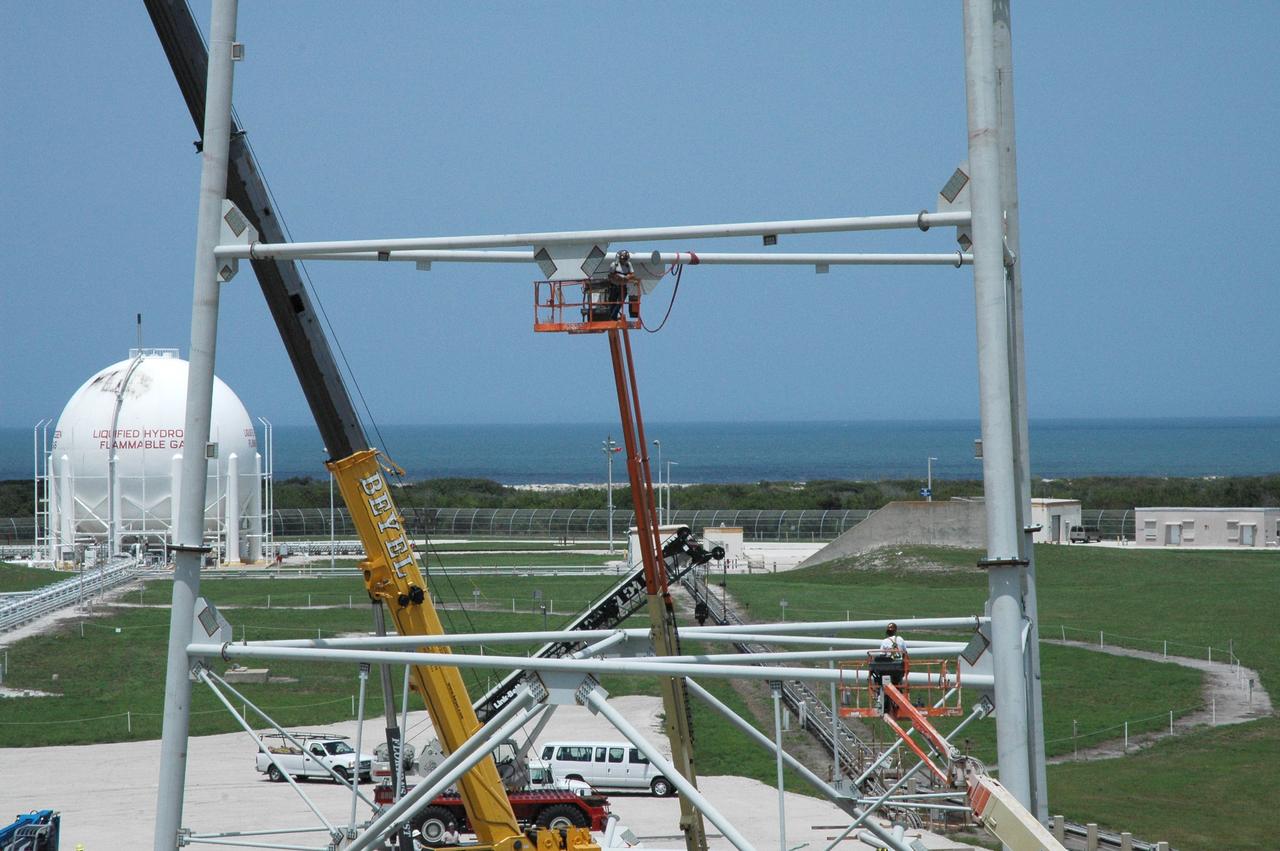
CAPE CANAVERAL, Fla. – With the backdrop of a blue sky and the blue Atlantic Ocean, workers are constructing the lightning towers on Launch Pad 39B at NASA's Kennedy Space Center. In the background, at left, is the liquid hydrogen tank that helps fuel a space shuttle for launch. Each of the three new lightning towers will be 500 feet tall with an additional 100-foot fiberglass mast atop supporting a wire centenary system. This improved lightning protection system also allows for the taller height of the Ares I compared to the space shuttle. Pad B will be the site of the first Ares vehicle launch, including Ares I-X which is scheduled for April 2009, as part of the Constellation Program. Photo credit: NASA/Jim Grossmann
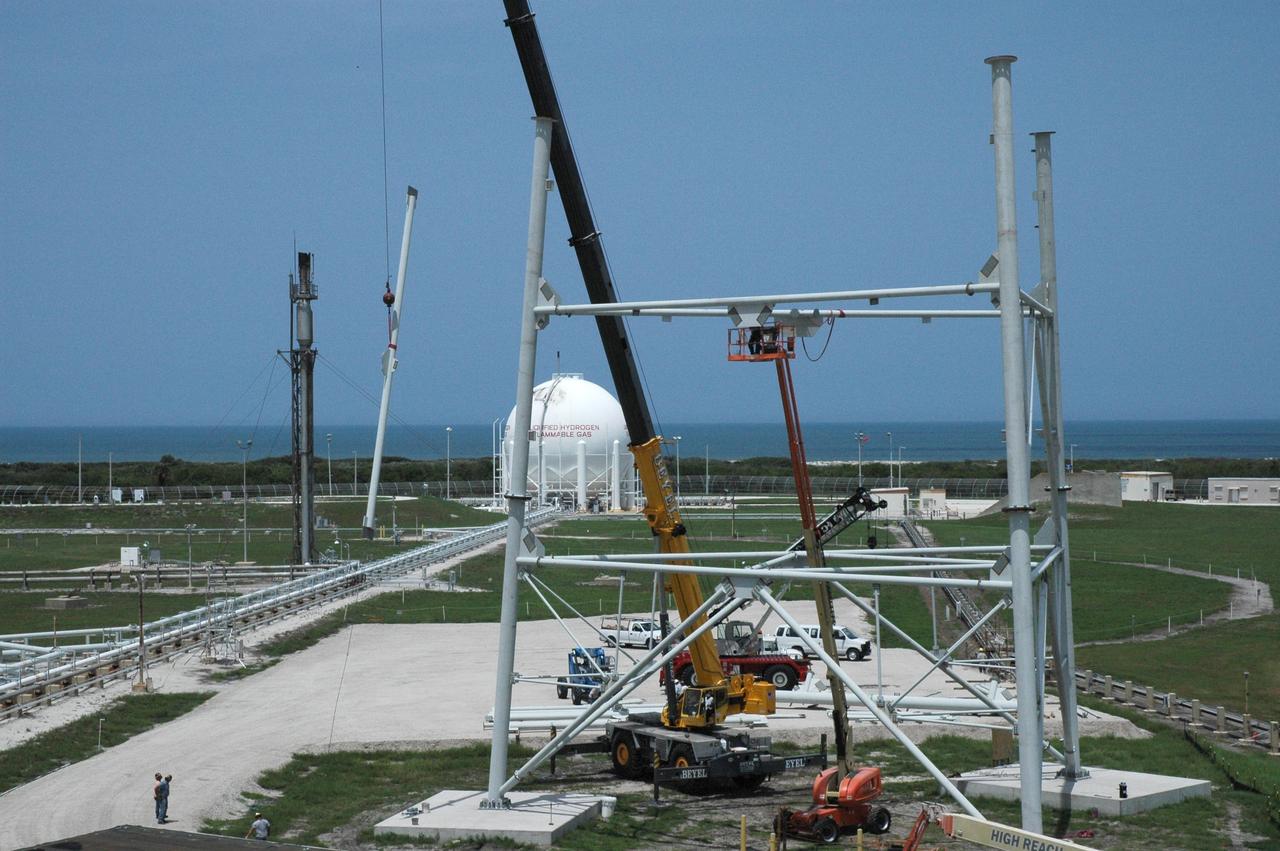
CAPE CANAVERAL, Fla. – With the backdrop of a blue sky and the blue Atlantic Ocean, workers are constructing the lightning towers on Launch Pad 39B at NASA's Kennedy Space Center. In the background, at left, is the liquid hydrogen tank that helps fuel a space shuttle for launch. Each of the three new lightning towers will be 500 feet tall with an additional 100-foot fiberglass mast atop supporting a wire centenary system. This improved lightning protection system also allows for the taller height of the Ares I compared to the space shuttle. Pad B will be the site of the first Ares vehicle launch, including Ares I-X which is scheduled for April 2009, as part of the Constellation Program. Photo credit: NASA/Jim Grossmann
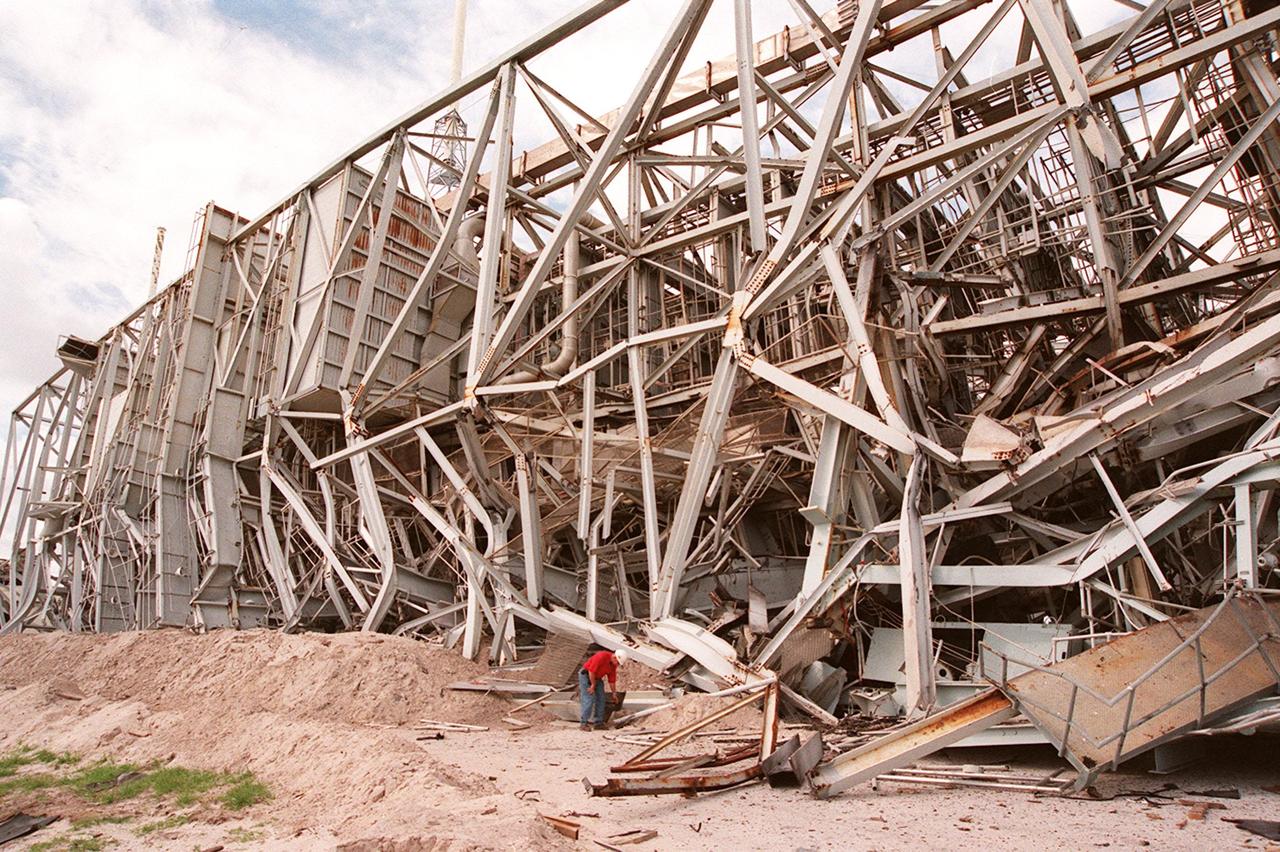
KENNEDY SPACE CENTER, FLA. -- Workers are dwarfed by the fallen 300-foot, five-million-pound Mobile Service Tower (MST) on Launch Complex 41, Cape Canaveral Air Force Station. The MST and a 200-foot-high umbilical tower nearby were demolished to make room for Lockheed Martin's 14-acre Vehicle Integration Facility (VIF), under construction. Only lightning protection towers remain standing at the site. About 200 pounds of linear-shaped charges were used to bring down the towers so that the materials can be recycled. The implosion and removal of the tower debris is expected to be completed in two months. The VIF will be used for Lockheed Martin's Atlas V Launch System.
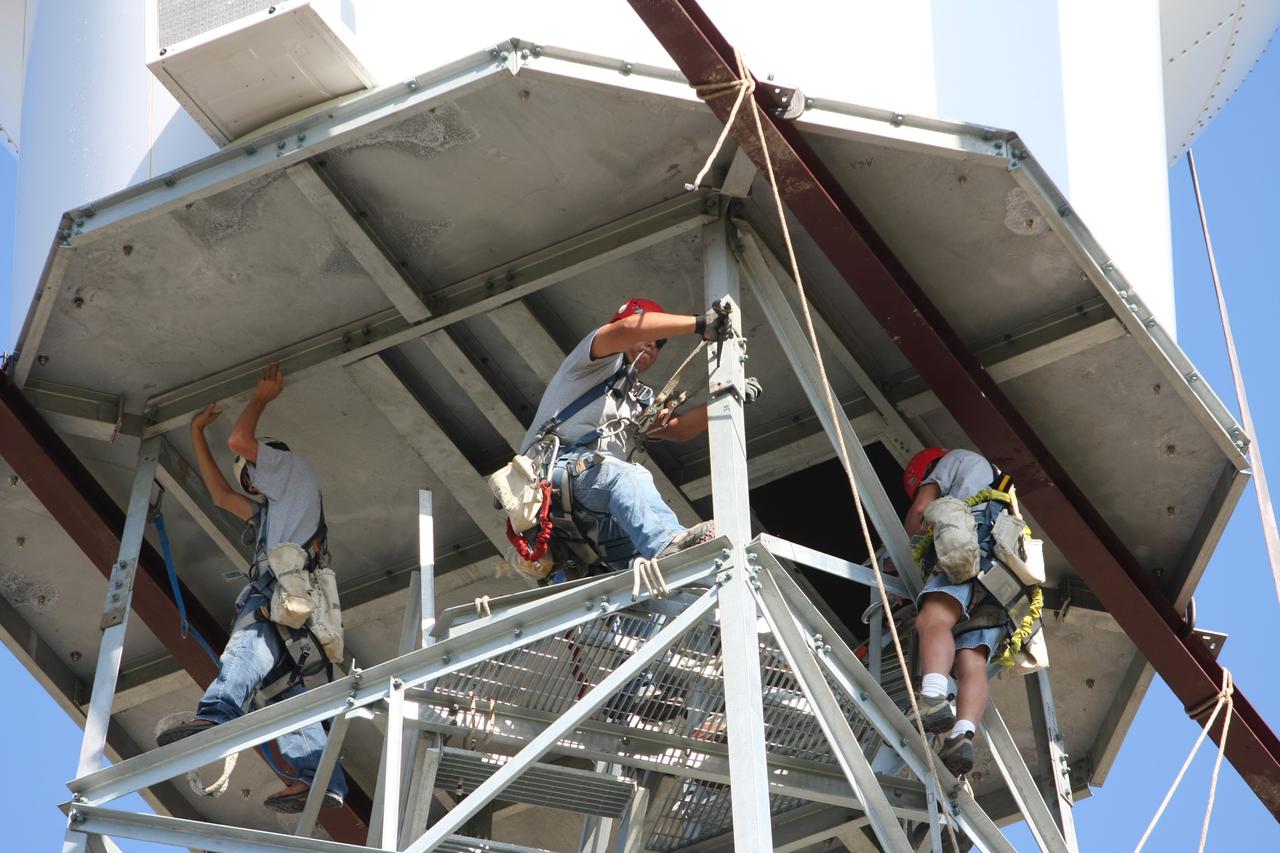
CAPE CANAVERAL, Fla. - Workers secure the radome to the top of a new Doppler weather radar tower being built in an area near S.R. 520 in Orange County, Fla. The dome houses the weather radar dish and pedestal and protects them from the elements. The new tower will replace one at nearby Patrick Air Force Base and will be used by NASA's Kennedy Space Center, the 45th Space Wing and their customers. The tower will be able to monitor weather conditions directly above the launch pads at Kennedy. The weather radar is essential in issuing lightning and other severe weather warnings and vital in evaluating lightning launch commit criteria. The new radar, replacing what was installed 25 years ago, includes Doppler capability to detect winds and identify the type, size and number of precipitation particles. The site is ideally distant from the launch pads and has unobstructed views of Cape Canaveral Air Force Station and Kennedy. Photo credit: NASA/Dimitri Gerondidakis
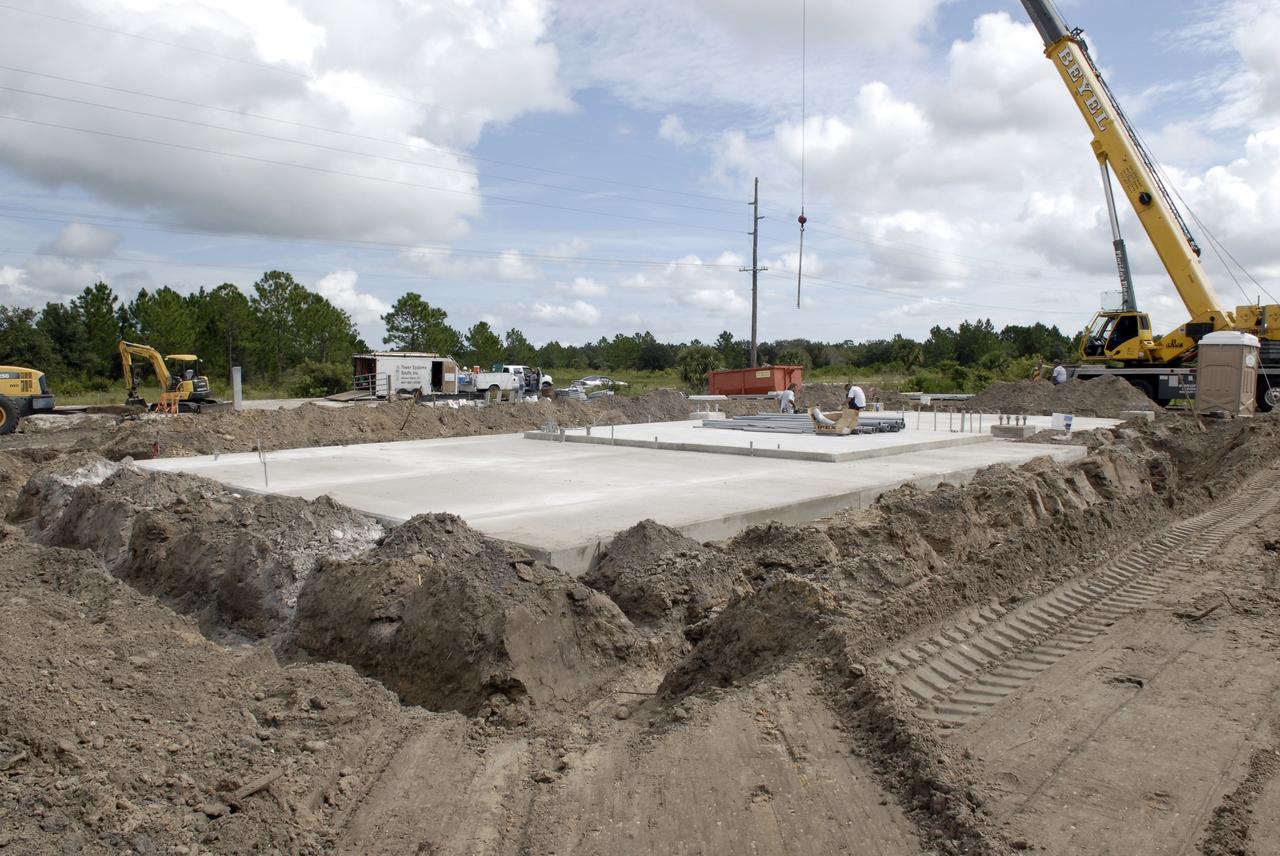
CAPE CANAVERAL, Fla. - A new Doppler weather radar tower is being built in an area near S.R. 520 in Orange County, Florida. The new tower will replace one at nearby Patrick Air Force Base. The site will be used by NASA's Kennedy Space Center, the 45th Space Wing and their customers. The tower will be able to monitor weather conditions directly above the launch pads Kennedy. The weather radar is essential in issuing lightning and other severe weather warnings and vital in evaluating lightning launch commit criteria. The new radar, replacing what was installed 25 years ago, includes Doppler capability to detect winds and identify the type, size and number of precipitation particles. The site is ideally distant from the launch pads and has unobstructed views of Cape Canaveral Air Force Station and Kennedy. Photo credit: NASA/Kim Shiflett
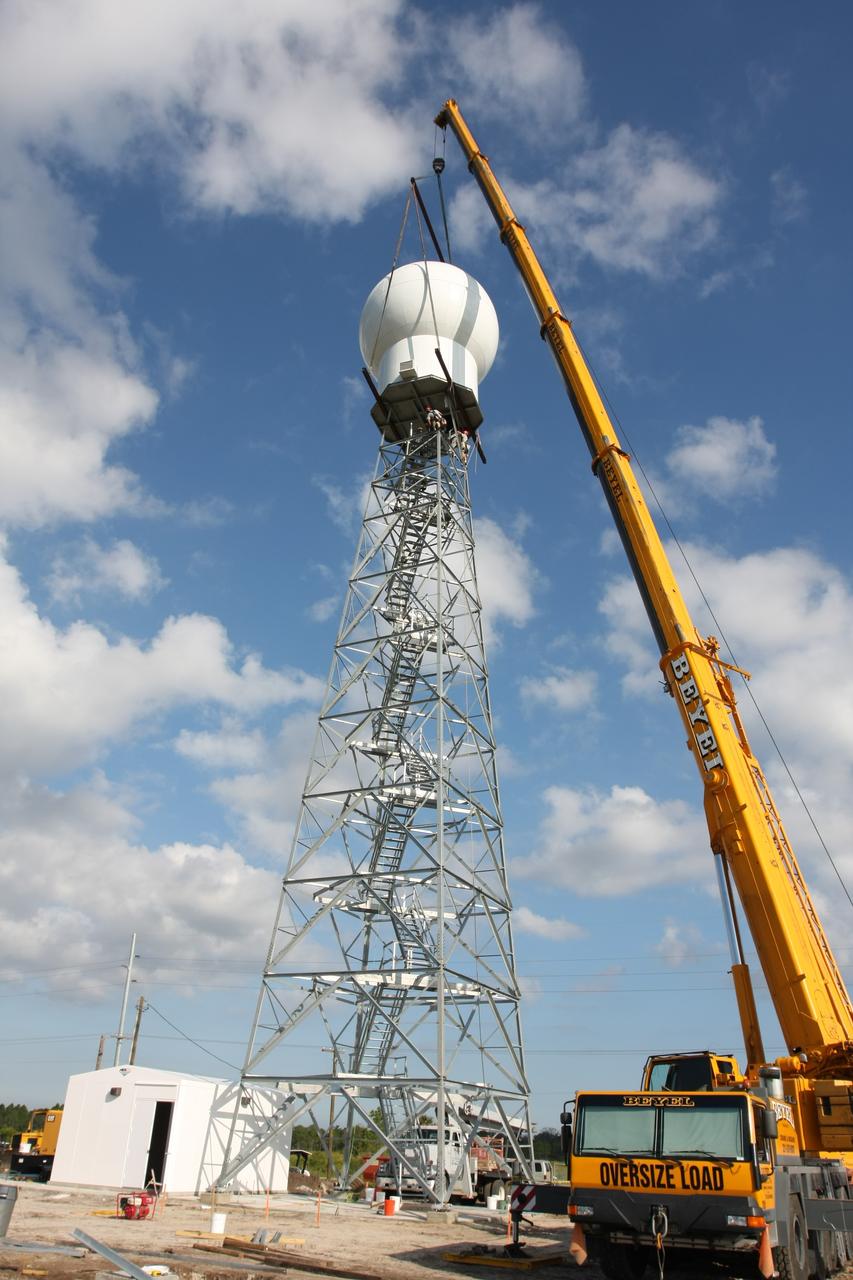
CAPE CANAVERAL, Fla. - A crane positions the radome on top of a new Doppler weather radar tower being built in an area near S.R. 520 in Orange County, Fla. The dome houses the weather radar dish and pedestal and protects them from the elements. The new tower will replace one at nearby Patrick Air Force Base and will be used by NASA's Kennedy Space Center, the 45th Space Wing and their customers. The tower will be able to monitor weather conditions directly above the launch pads at Kennedy. The weather radar is essential in issuing lightning and other severe weather warnings and vital in evaluating lightning launch commit criteria. The new radar, replacing what was installed 25 years ago, includes Doppler capability to detect winds and identify the type, size and number of precipitation particles. The site is ideally distant from the launch pads and has unobstructed views of Cape Canaveral Air Force Station and Kennedy. Photo credit: NASA/Dimitri Gerondidakis
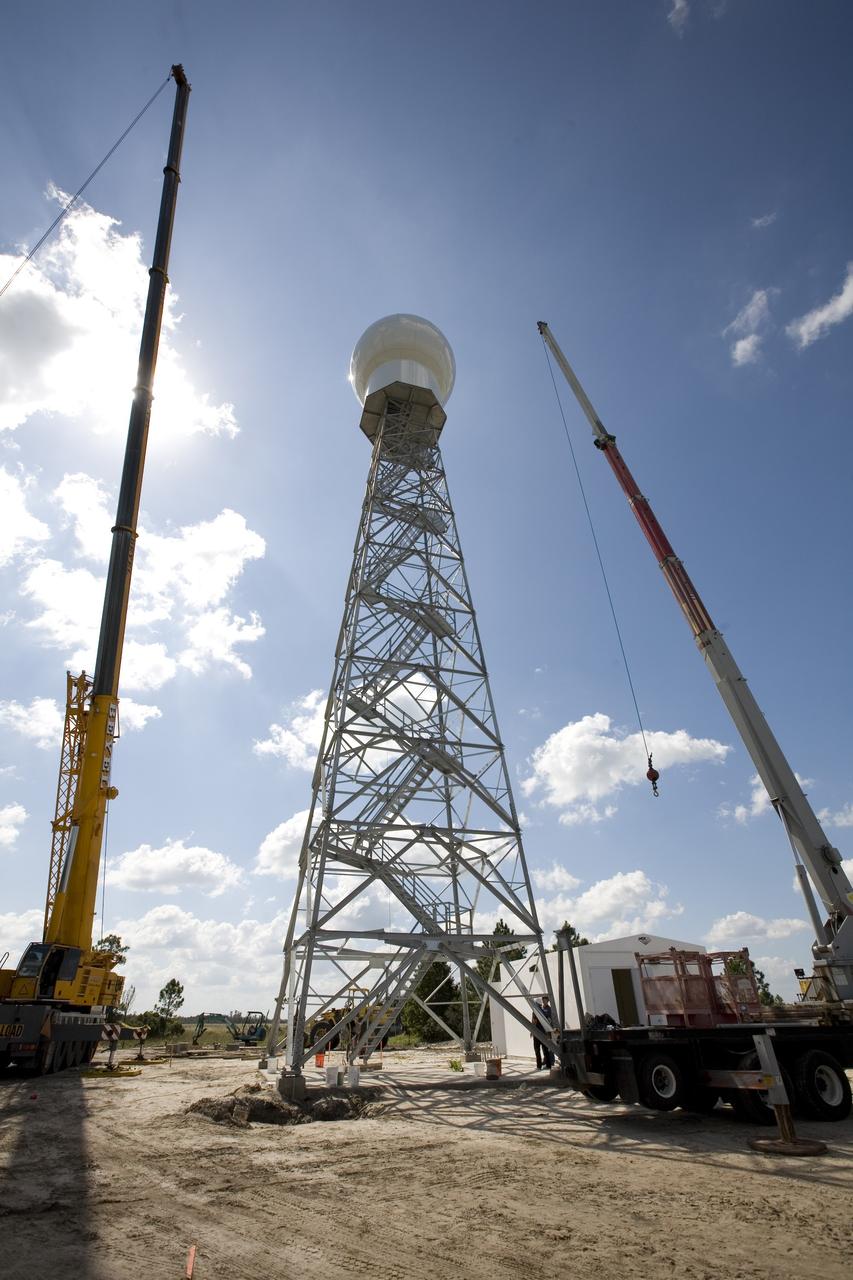
CAPE CANAVERAL, Fla. - The radome is secured atop a new Doppler weather radar tower being built in an area near S.R. 520 in Orange County, Fla. The dome houses the weather radar dish and pedestal and protects them from the elements. The new tower will replace one at nearby Patrick Air Force Base and will be used by NASA's Kennedy Space Center, the 45th Space Wing and their customers. The tower will be able to monitor weather conditions directly above the launch pads at Kennedy. The weather radar is essential in issuing lightning and other severe weather warnings and vital in evaluating lightning launch commit criteria. The new radar, replacing what was installed 25 years ago, includes Doppler capability to detect winds and identify the type, size and number of precipitation particles. The site is ideally distant from the launch pads and has unobstructed views of Cape Canaveral Air Force Station and Kennedy. Photo credit: NASA/Dimitri Gerondidakis
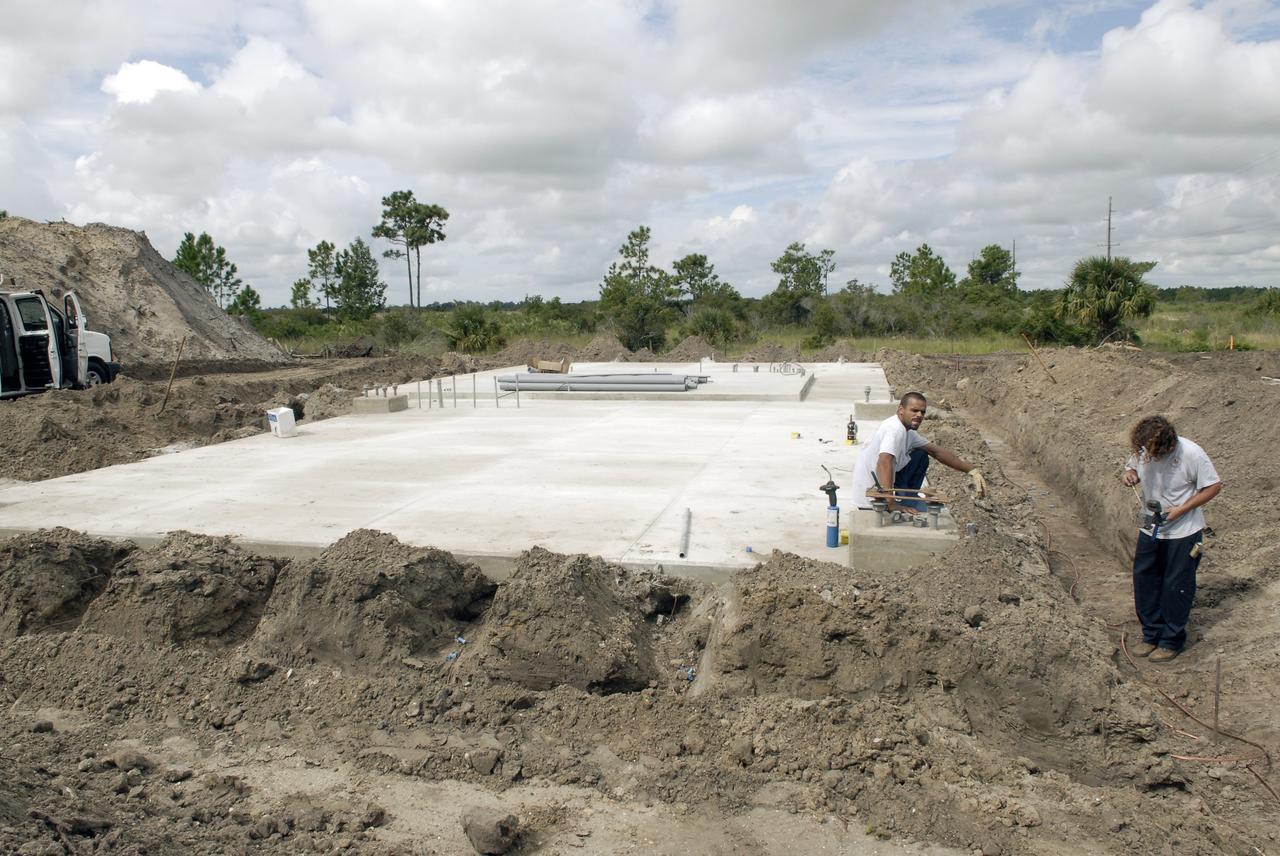
CAPE CANAVERAL, Fla. - The foundation is laid for a new Doppler weather radar tower being built in an area near S.R. 520 in Orange County, Florida. The new tower will replace one at nearby Patrick Air Force Base. The site will be used by NASA's Kennedy Space Center, the 45th Space Wing and their customers. The tower will be able to monitor weather conditions directly above the launch pads Kennedy. The weather radar is essential in issuing lightning and other severe weather warnings and vital in evaluating lightning launch commit criteria. The new radar, replacing what was installed 25 years ago, includes Doppler capability to detect winds and identify the type, size and number of precipitation particles. The site is ideally distant from the launch pads and has unobstructed views of Cape Canaveral Air Force Station and Kennedy. Photo credit: NASA/Kim Shiflett
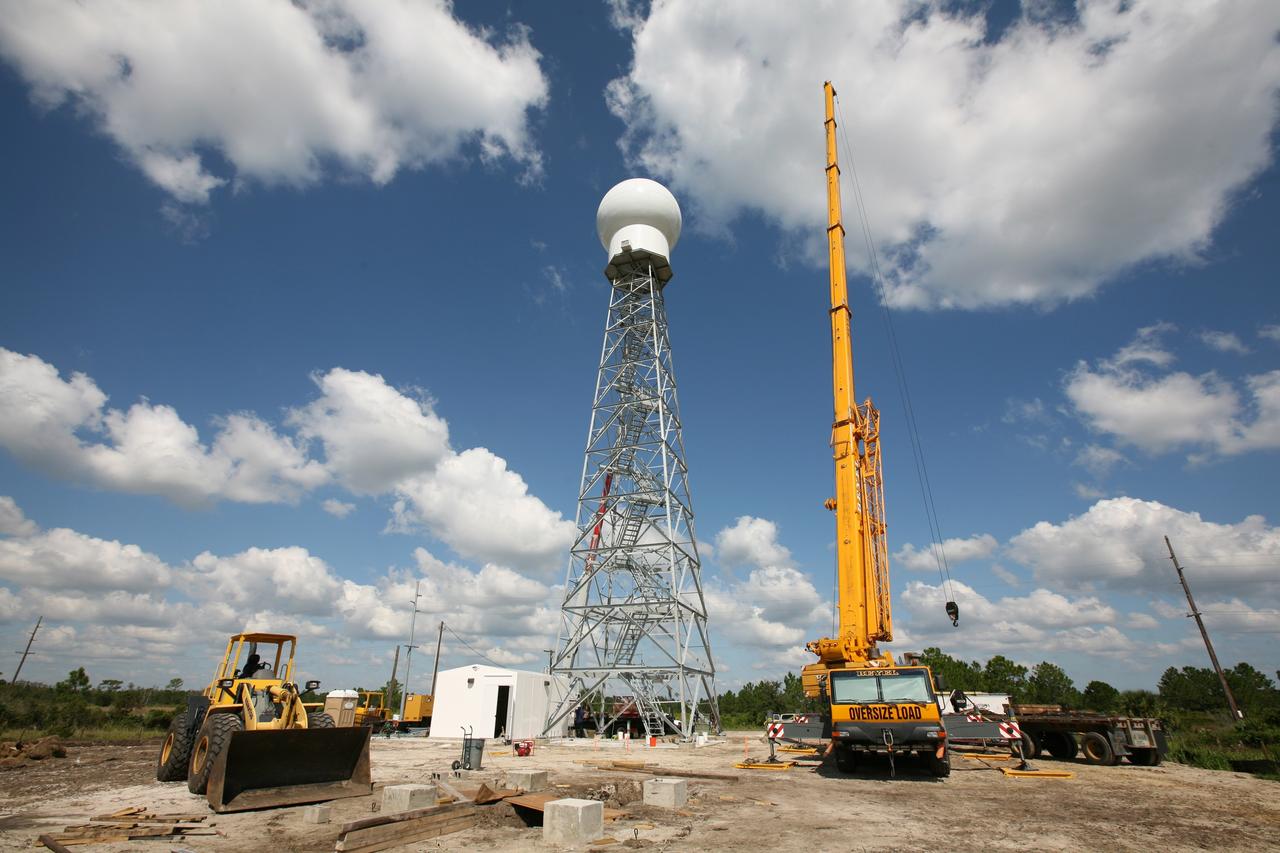
CAPE CANAVERAL, Fla. - The radome is secured atop a new Doppler weather radar tower being built in an area near S.R. 520 in Orange County, Fla. The dome houses the weather radar dish and pedestal and protects them from the elements. The new tower will replace one at nearby Patrick Air Force Base and will be used by NASA's Kennedy Space Center, the 45th Space Wing and their customers. The tower will be able to monitor weather conditions directly above the launch pads at Kennedy. The weather radar is essential in issuing lightning and other severe weather warnings and vital in evaluating lightning launch commit criteria. The new radar, replacing what was installed 25 years ago, includes Doppler capability to detect winds and identify the type, size and number of precipitation particles. The site is ideally distant from the launch pads and has unobstructed views of Cape Canaveral Air Force Station and Kennedy. Photo credit: NASA/Dimitri Gerondidakis