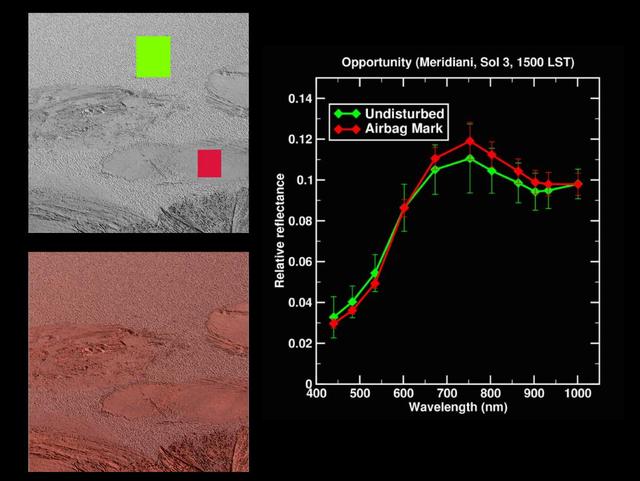
Lily Pad Spectra
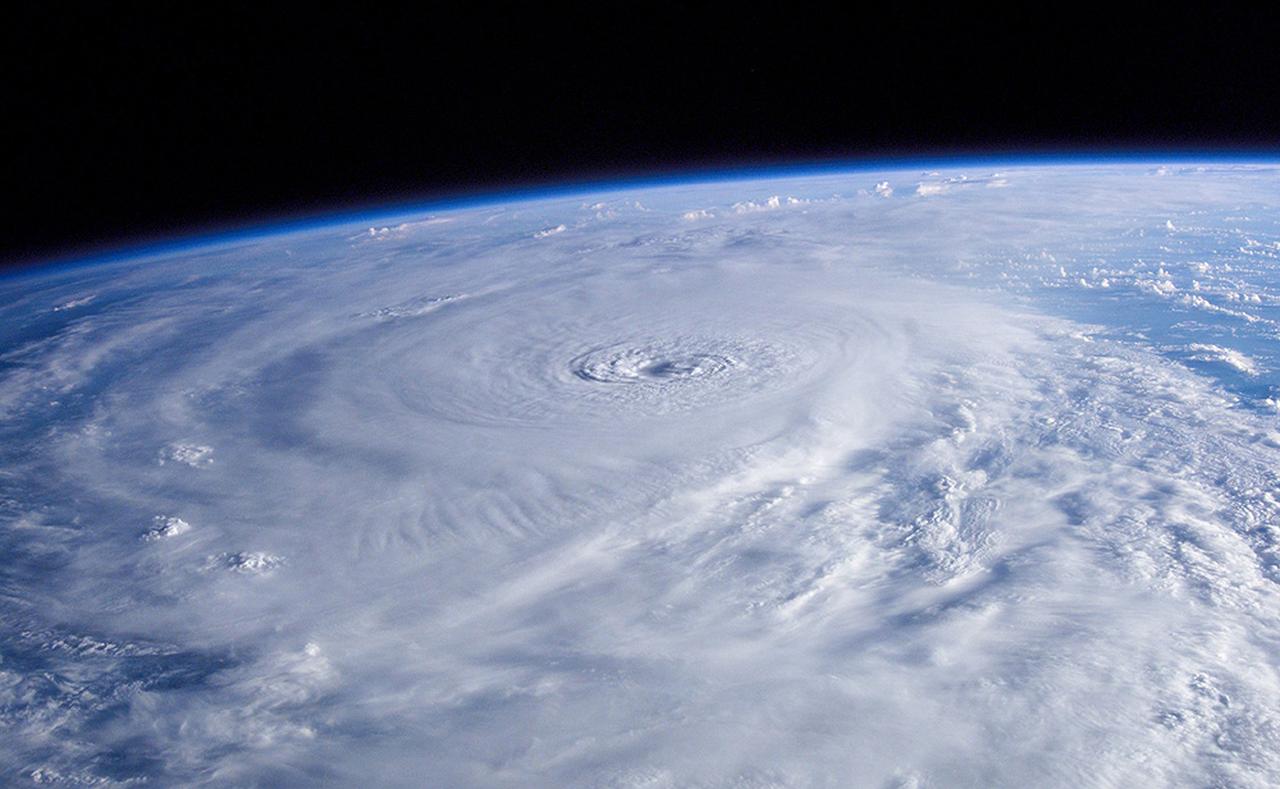
This photo of hurricane Lili, captured during the Expedition Five mission, shows the compact storm system and the structure of its estimated 15 nautical mile wide eye. After strengthening to a Category 4 storm (125 knots with the central pressure of 940 millibars), Lili weakened to a Category 2 before slamming into the central coast of Louisiana just south of Lafayette. This is one of many photos that stem form the Crew Observation (CEO) experiment that has been a part of every Space Station expedition.
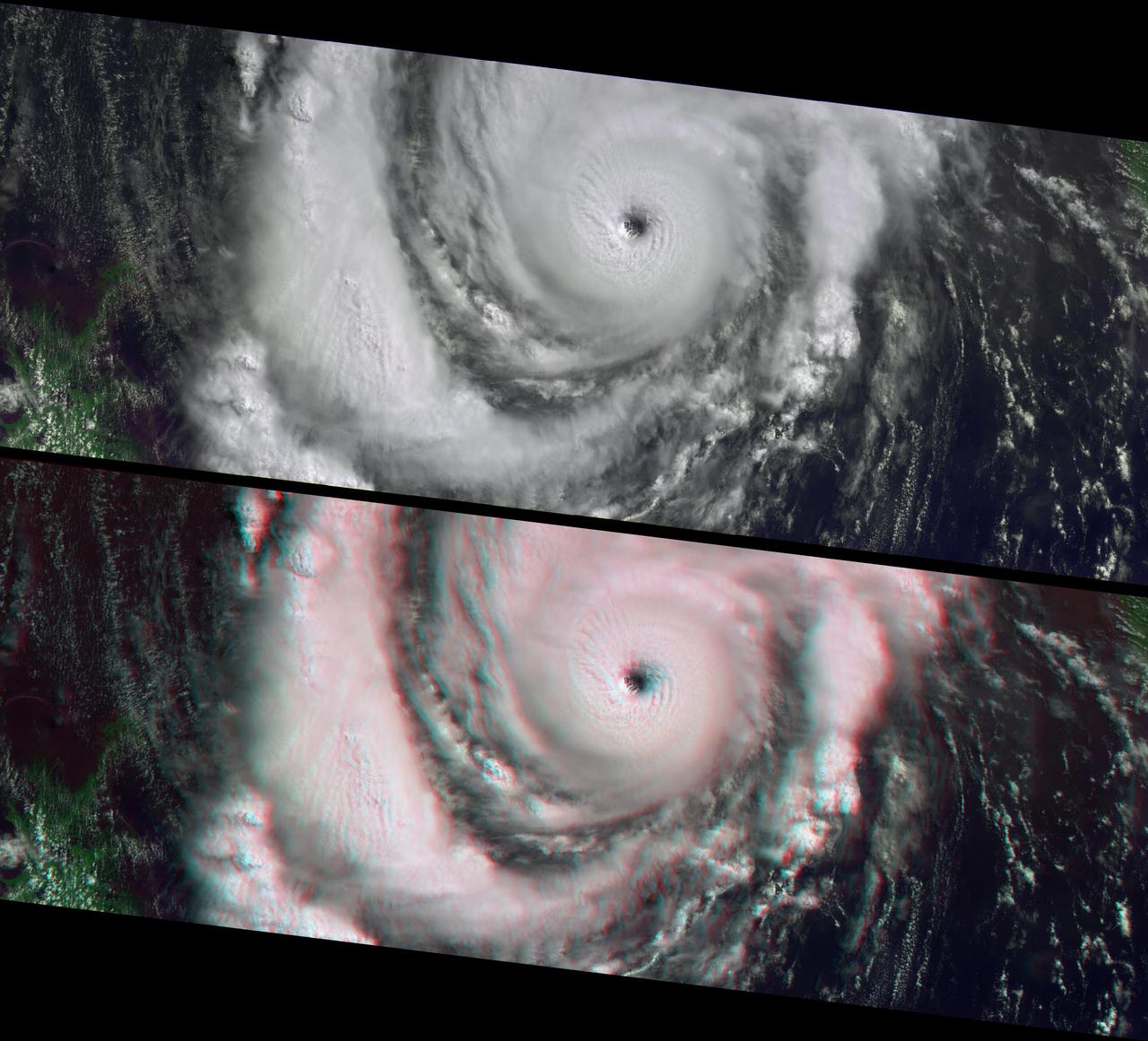
This anaglyph from the MISR instrument aboard NASA Terra spacecraft shows Hurricane Lili headed for Louisiana on October 2, 2002. 3D glasses are necessary to view this image.

Lili Bornio, right, and her mom, set up to sell eclipse shirts and stickers, that she designed, to raise money for medical school, in Madras, Oregon on Saturday, August 19, 2017. Thousands of visitors are expected in Madras to view the total solar eclipse. The eclipse will be sweeping across a narrow portion of the contiguous United States from Lincoln Beach, Oregon to Charleston, South Carolina on August 21. A partial solar eclipse will be visible across the entire North American continent along with parts of South America, Africa, and Europe. Photo Credit: (NASA/Aubrey Gemignani)
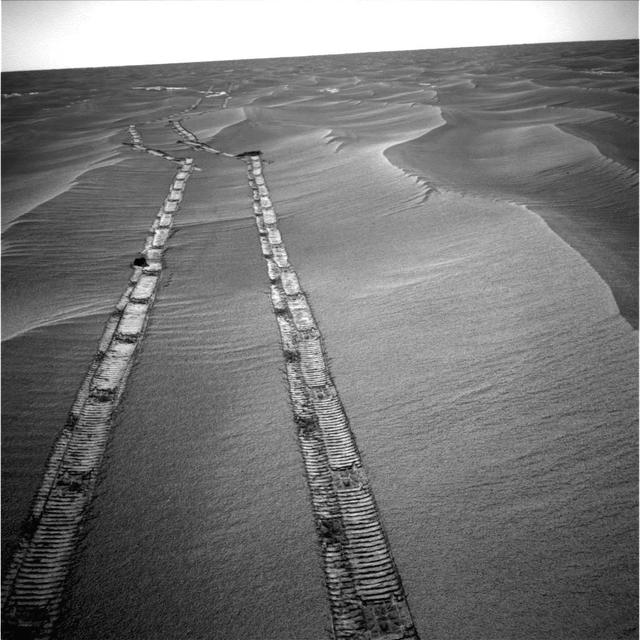
NASA rover Opportunity captured this image of the tracks the rover left on a drive from one energy-favorable position on the northern end of a sand ripple to another. The rover team calls this hopping from lily pad to lily pad.
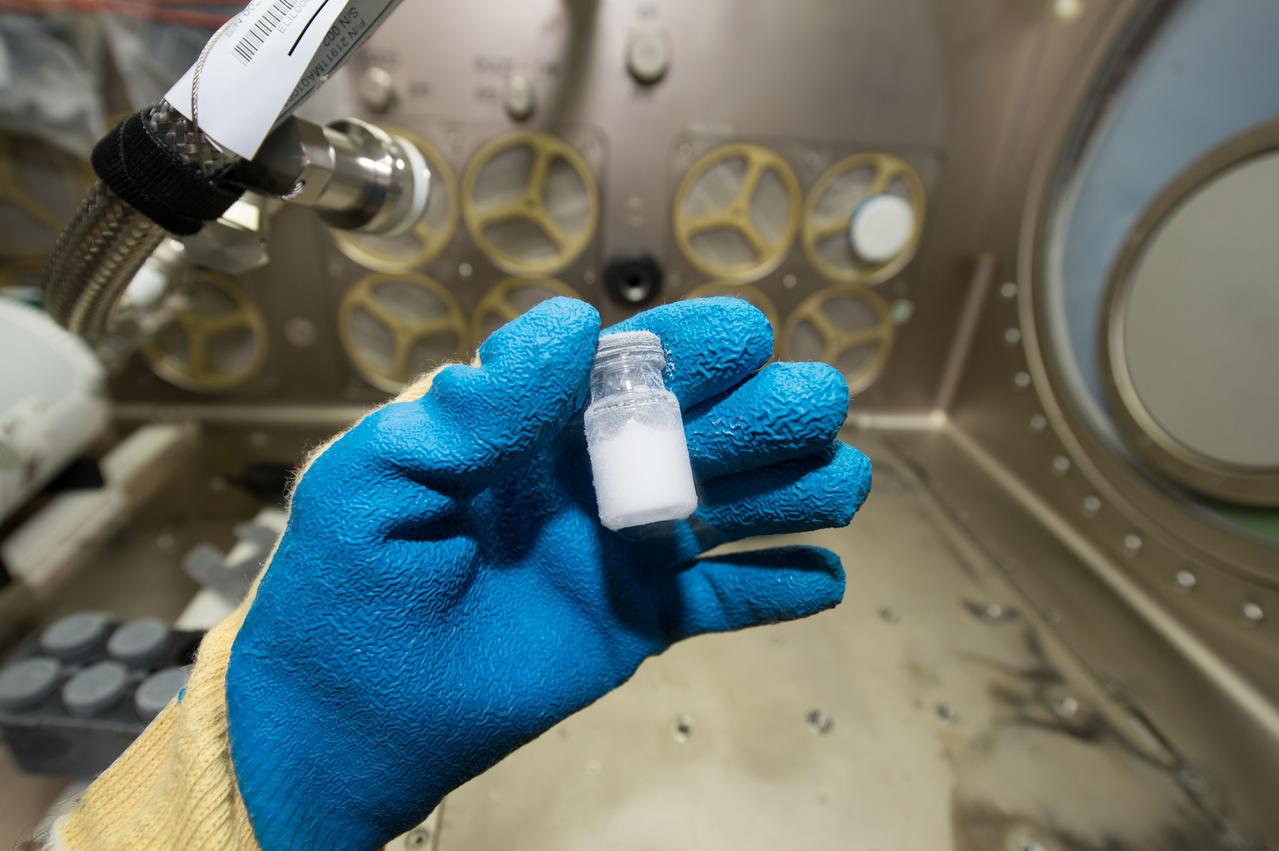
iss052e075812 (Aug. 30, 2017) --- Eli Lily-Lyophilization hardware setup in the Migrogravity Science Glovebox (MSG) work volume. Eli Lily-Lyophilization examines freeze-drying processes in the microgravity environment aboard the International Space Station (ISS) to improve the understanding of how food, drugs and other compounds are preserved in space.
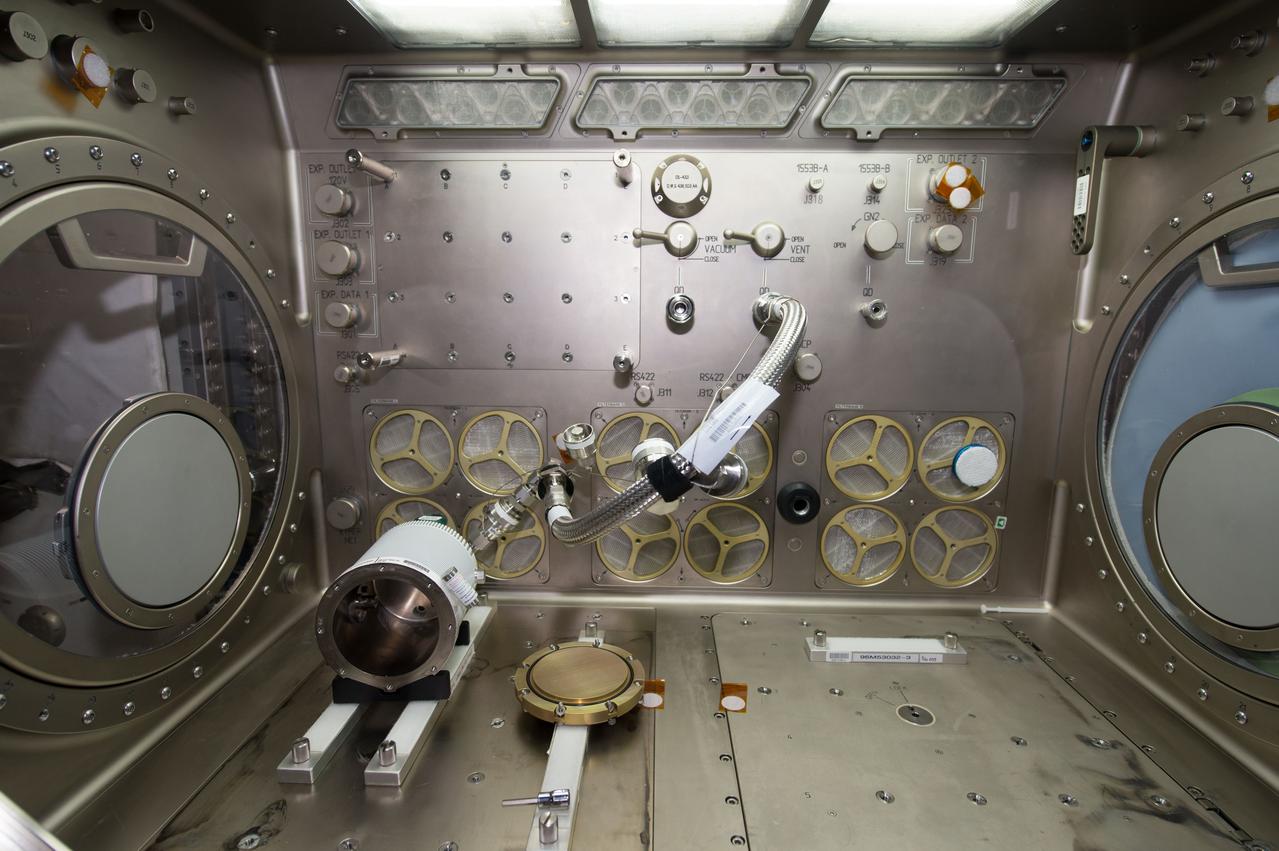
iss052e075807 (Aug. 30, 2017) --- Eli Lily-Lyophilization hardware setup in the Migrogravity Science Glovebox (MSG) work volume. Eli Lily-Lyophilization examines freeze-drying processes in the microgravity environment aboard the International Space Station (ISS) to improve the understanding of how food, drugs and other compounds are preserved in space.
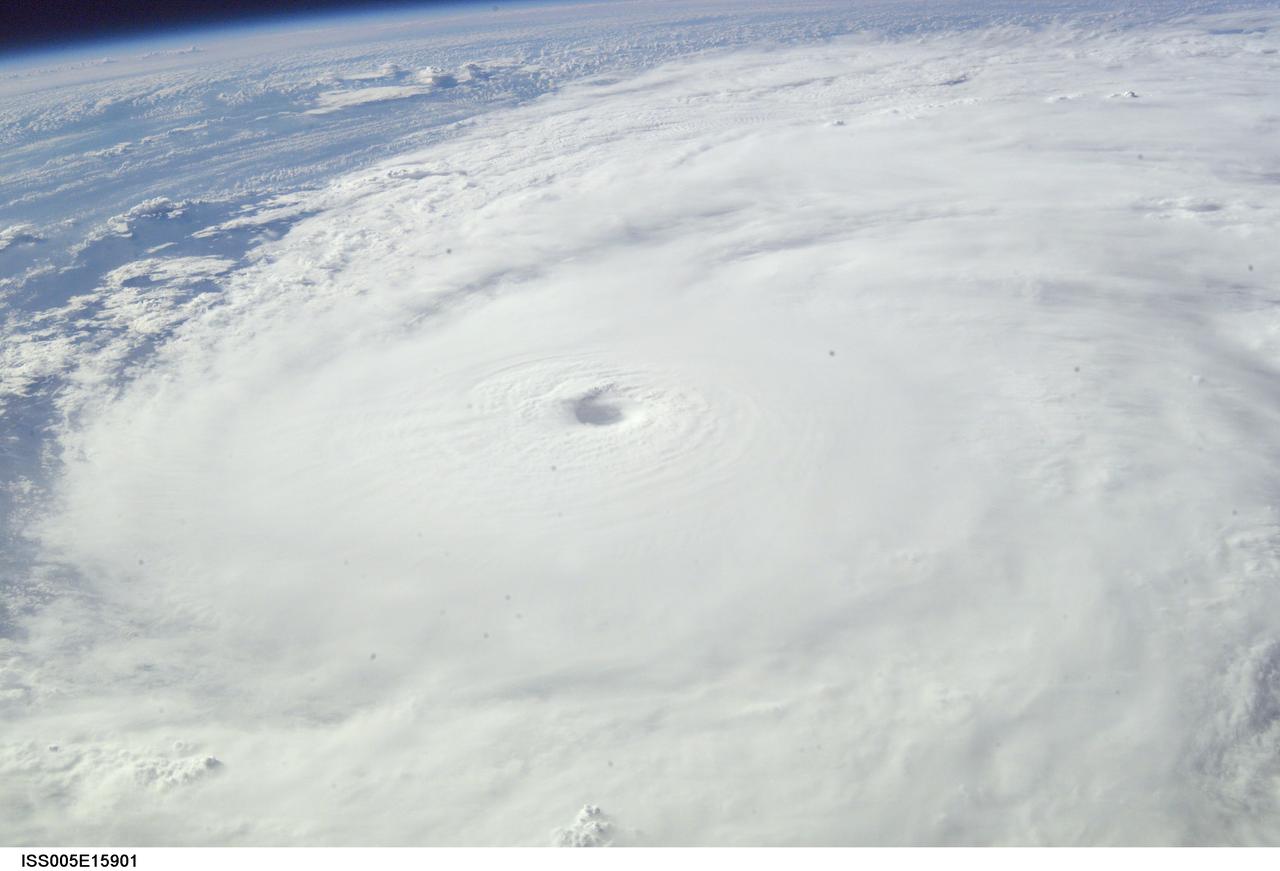
ISS005-E-15901 (2 Oct 2002) --- Hurricane Lili over the Gulf of Mexico.
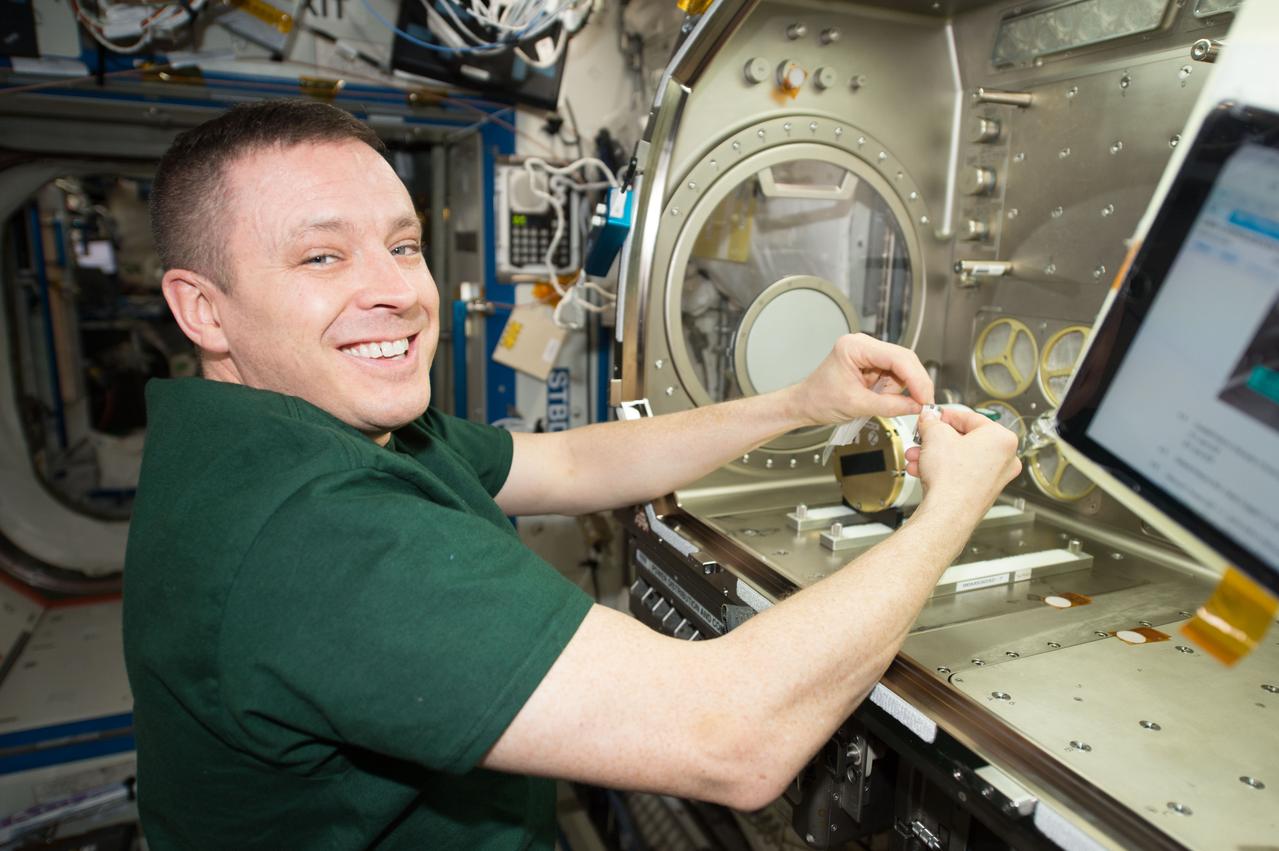
iss052e075804 (Aug. 30, 2017) --- NASA astronaut Jack Fischer working in the Microgravity Sciences Glovebox (MSG) work volume to set up the Eli Lily-Lyophilization experiment. Eli Lily-Lyophilization examines freeze-drying processes in the microgravity environment aboard the International Space Station (ISS) to improve the understanding of how food, drugs and other compounds are preserved in space.
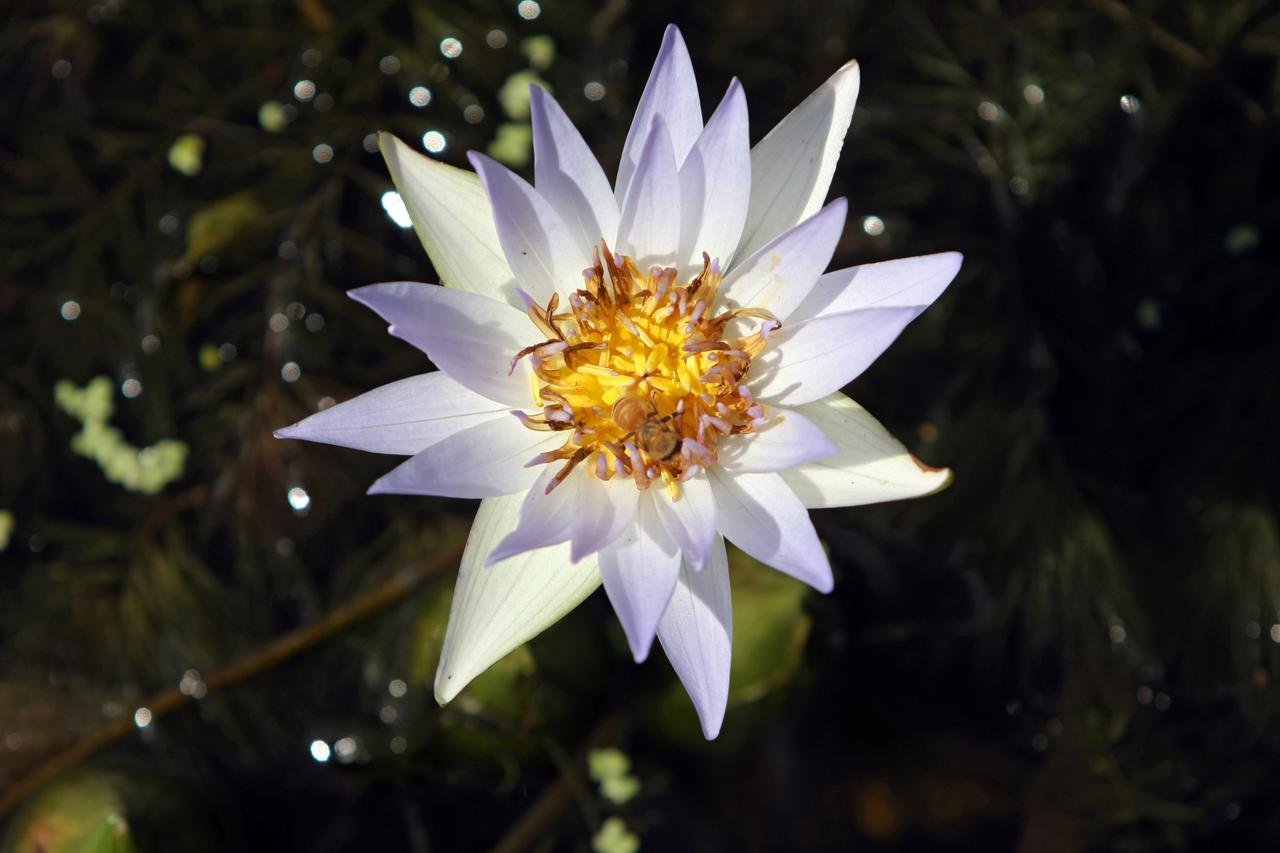
CAPE CANAVERAL, Fla. - A water lily stretches above the water in a canal on NASA's Kennedy Space Center in Florida. The center shares a boundary with the Merritt Island Wildlife Nature Refuge, consisting of 140,000 acres. The Refuge provides a wide variety of habitats: coastal dunes, saltwater estuaries and marshes, freshwater impoundments, scrub, pine flatwoods, and hardwood hammocks that provide habitat for more than 1,500 species of plants and animals. Photo credit: NASA/Dimitri Gerondidakis

From left, Charlie Blackwell-Thompson, launch director, Exploration Ground Systems Program and Lili Villarreal, Artemis II landing and recovery director in Exploration Ground Systems Program at NASA’s Kennedy Space Center in Florida, participate in the Artemis II Flight Readiness Review with NASA leadership on Wednesday, March 11, 2026, at NASA Kennedy. The review is an assessment of the readiness of NASA’s SLS (Space Launch System) rocket and Orion spacecraft to support the Artemis II test flight as four astronauts journey around the Moon and return to Earth.
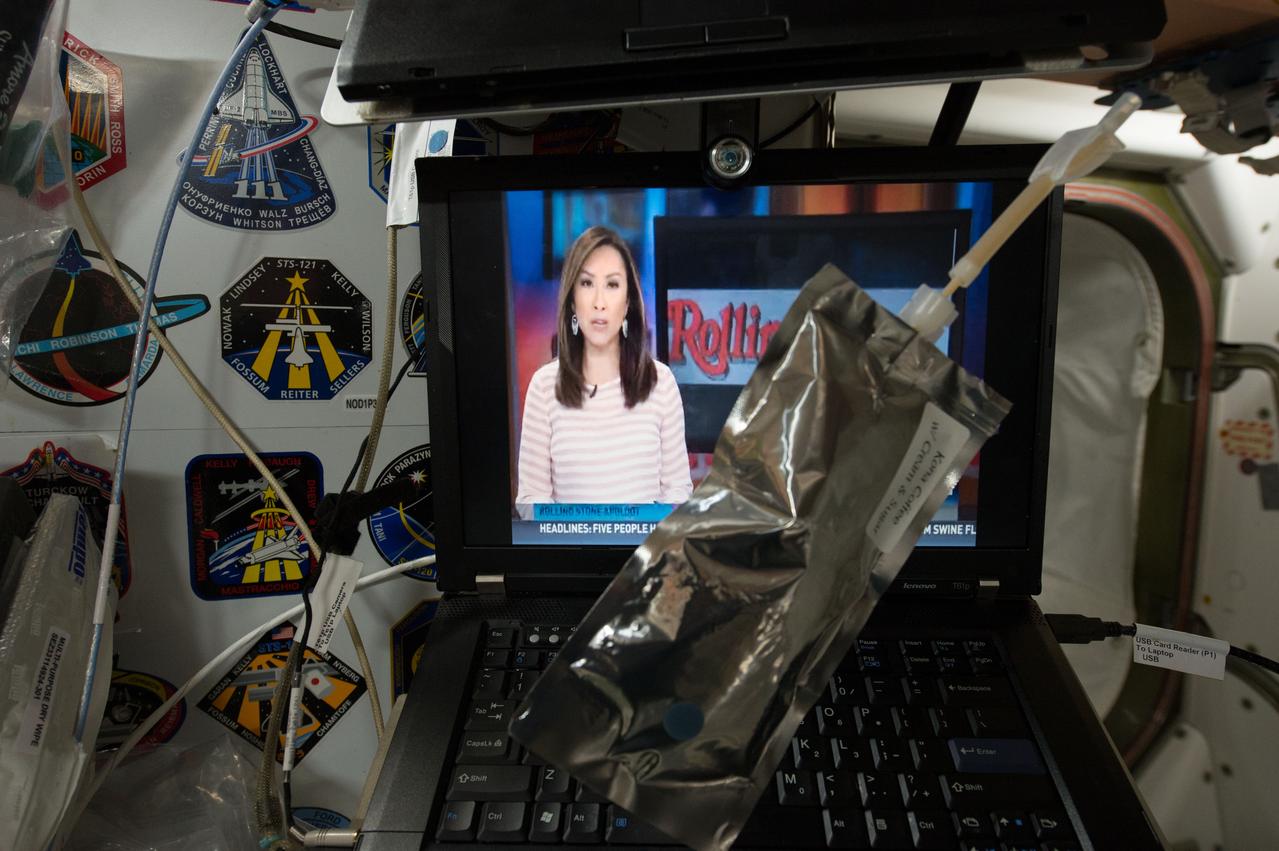
ISS043E089469 (04/06/2015) --- NASA astronaut Scott Kelly, one of two One-Year crew members on the International Space Station, has his morning coffee and TV news from the Houston area on Apr. 6, 2015. His tweeted comment with this image: " Morning @space_station with my coffee and news from Earth with @KHOU News Houston and @KHOU Lily Jang".
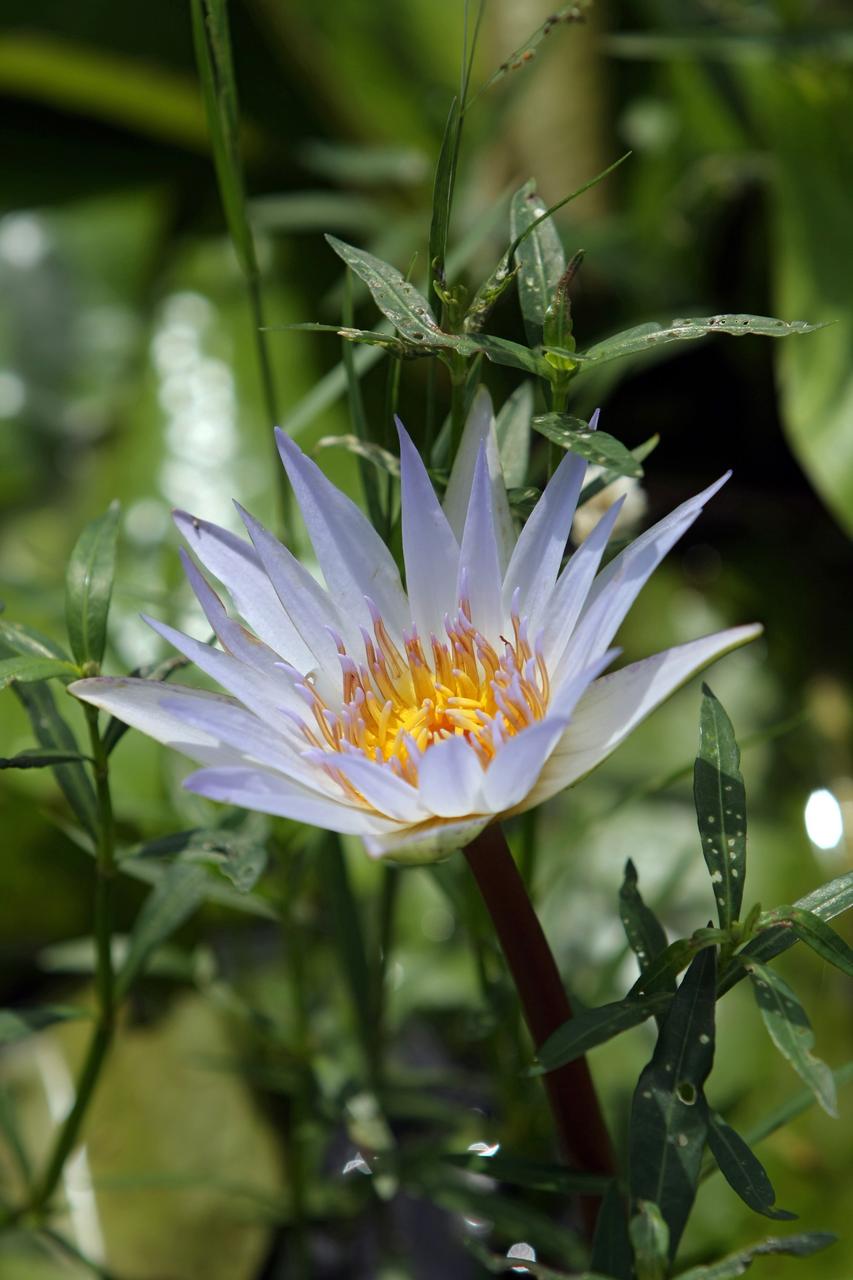
CAPE CANAVERAL, Fla. - A water lily stretches above the water in a canal on NASA's Kennedy Space Center in Florida. The center shares a boundary with the Merritt Island Wildlife Nature Refuge, consisting of 140,000 acres. The Refuge provides a wide variety of habitats: coastal dunes, saltwater estuaries and marshes, freshwater impoundments, scrub, pine flatwoods, and hardwood hammocks that provide habitat for more than 1,500 species of plants and animals. Photo credit: NASA/Dimitri Gerondidakis
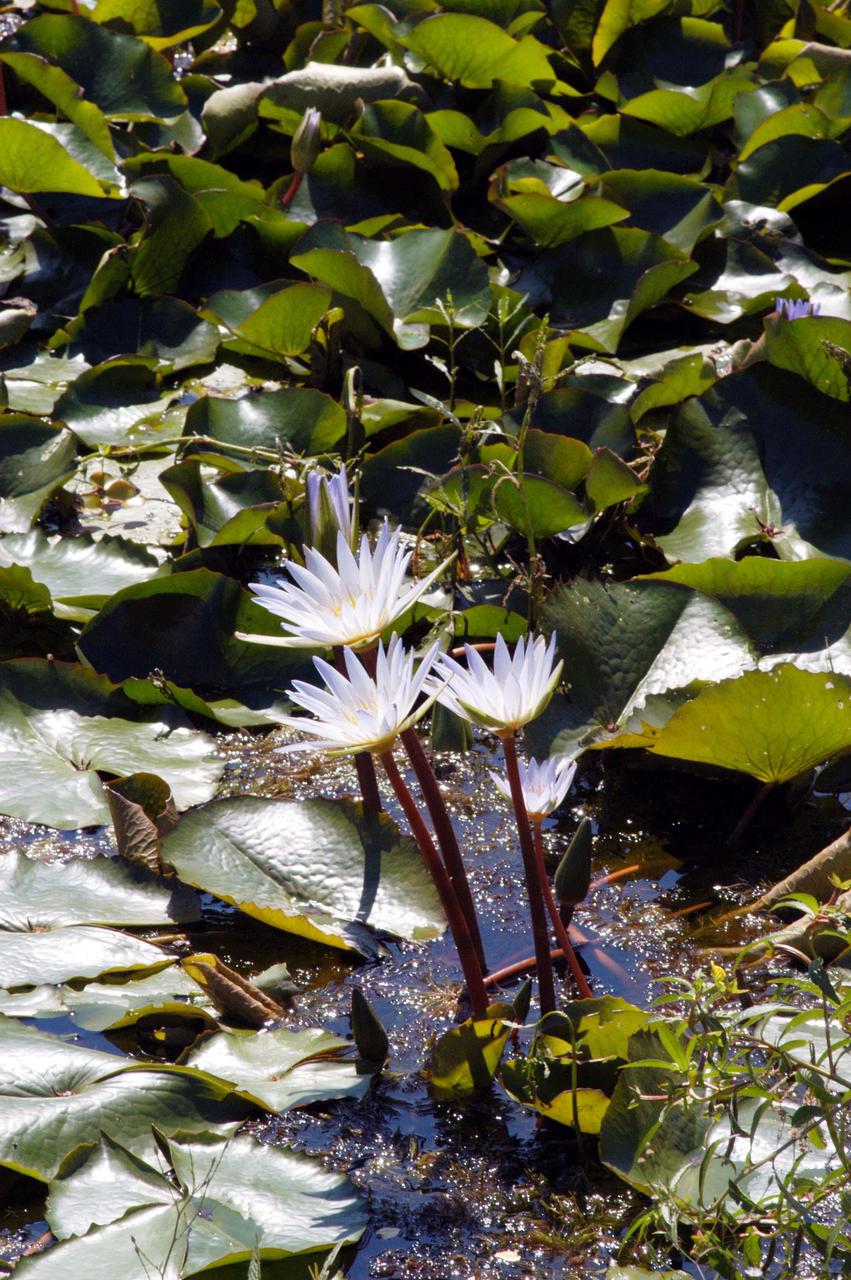
KENNEDY SPACE CENTER, FLA. - A variety of water lilies reach for the sun from their water beds. Kennedy Space Center is surrounded by marshes and creeks, part of the Merritt Island National Wildlife Refuge which shares a boundary with the Center. Approximately one-half of the refuge’s 140,000 acres consists of brackish estuaries and marshes. The remaining lands consist of coastal dunes, scrub oaks, pine forests and flatwoods, and palm and oak hammocks.
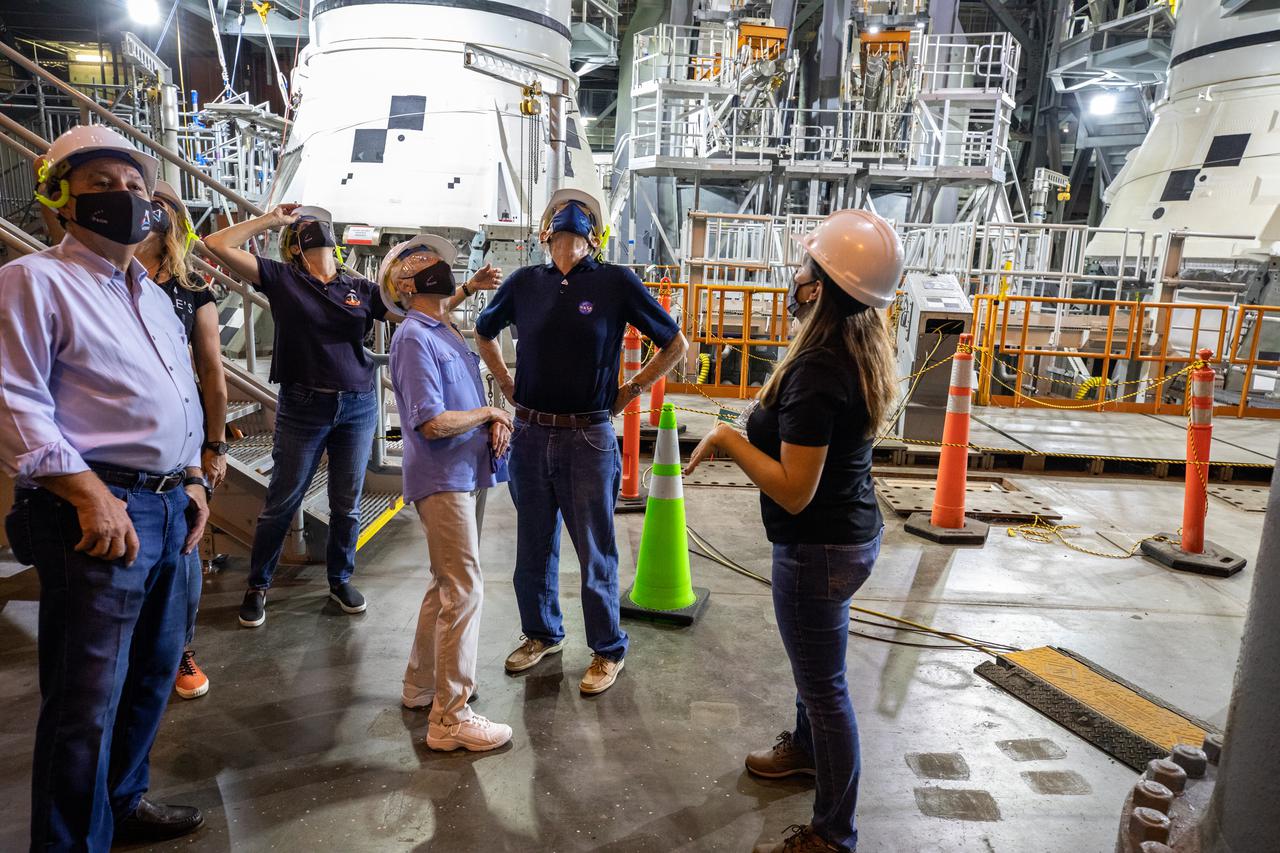
From left to right, Jim Keys, Pilot; Christina Korp, Assistant to Charlie Duke; Nicole Stott, NASA Astronaut (former); Dottie Duke, wife of Charlie Duke, Charlie Duke, NASA Astronaut (former); and Lili Villareal, Operations Flow Manager, Exploration Ground Systems tour the inside of the Vehicle Assembly Building (VAB) during a visit to NASA’s Kennedy Space Center in Florida on May 10, 2021. Visible in the background are the aft booster segments for the Space Launch System. The first in a series of increasingly complex missions, Artemis I will test Orion and SLS as an integrated system prior to crewed flights to the Moon.
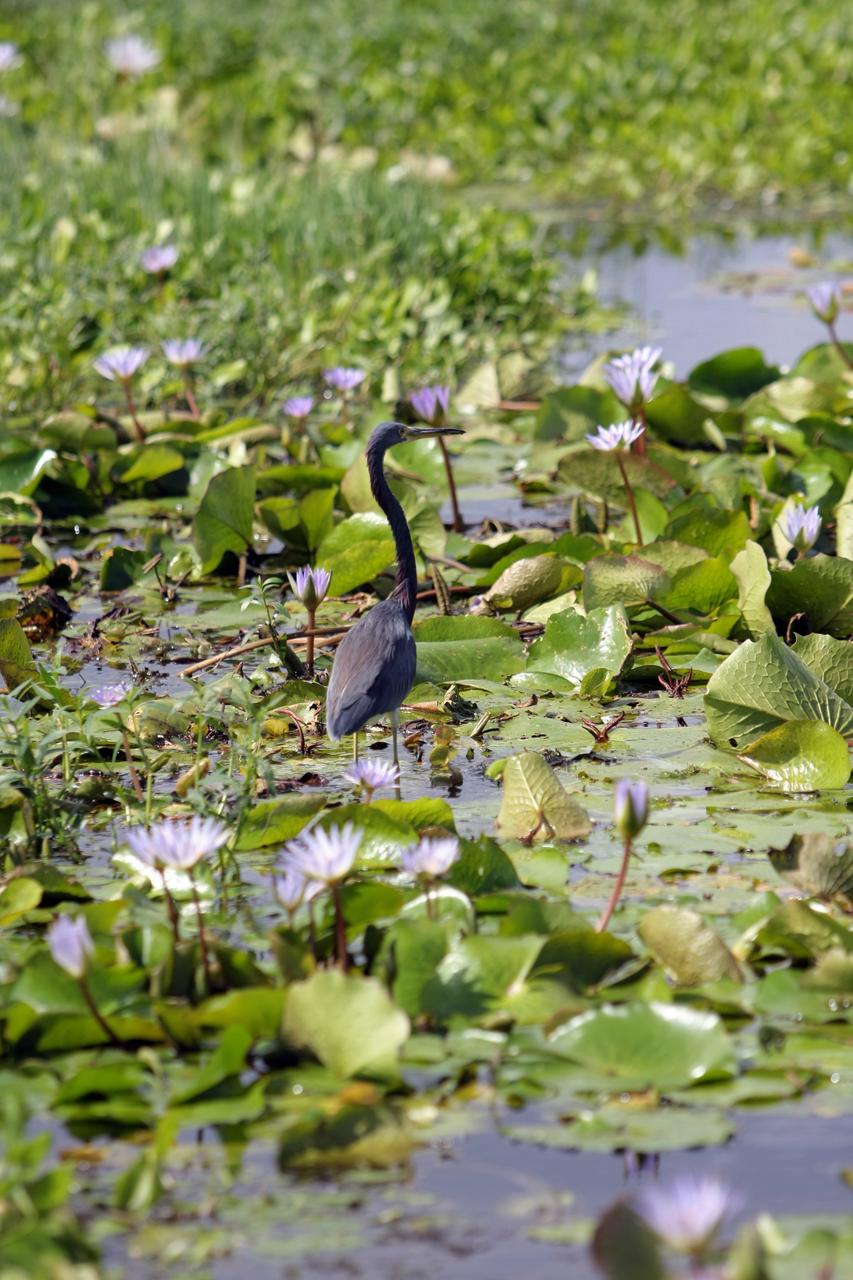
CAPE CANAVERAL, Fla. - A great blue heron stands watch among a pond of water lilies on NASA's Kennedy Space Center in Florida. It is one of 310 species of birds that inhabit the National Merritt Island Wildlife Refuge, which shares a boundary with Kennedy. The marshes and open water of the refuge also provide wintering areas for 23 species of migratory waterfowl, as well as a year-round home for great blue herons, great egrets, wood storks, cormorants, brown pelicans and other species of marsh and shore birds. Photo credit: NASA/Dimitri Gerondidakis
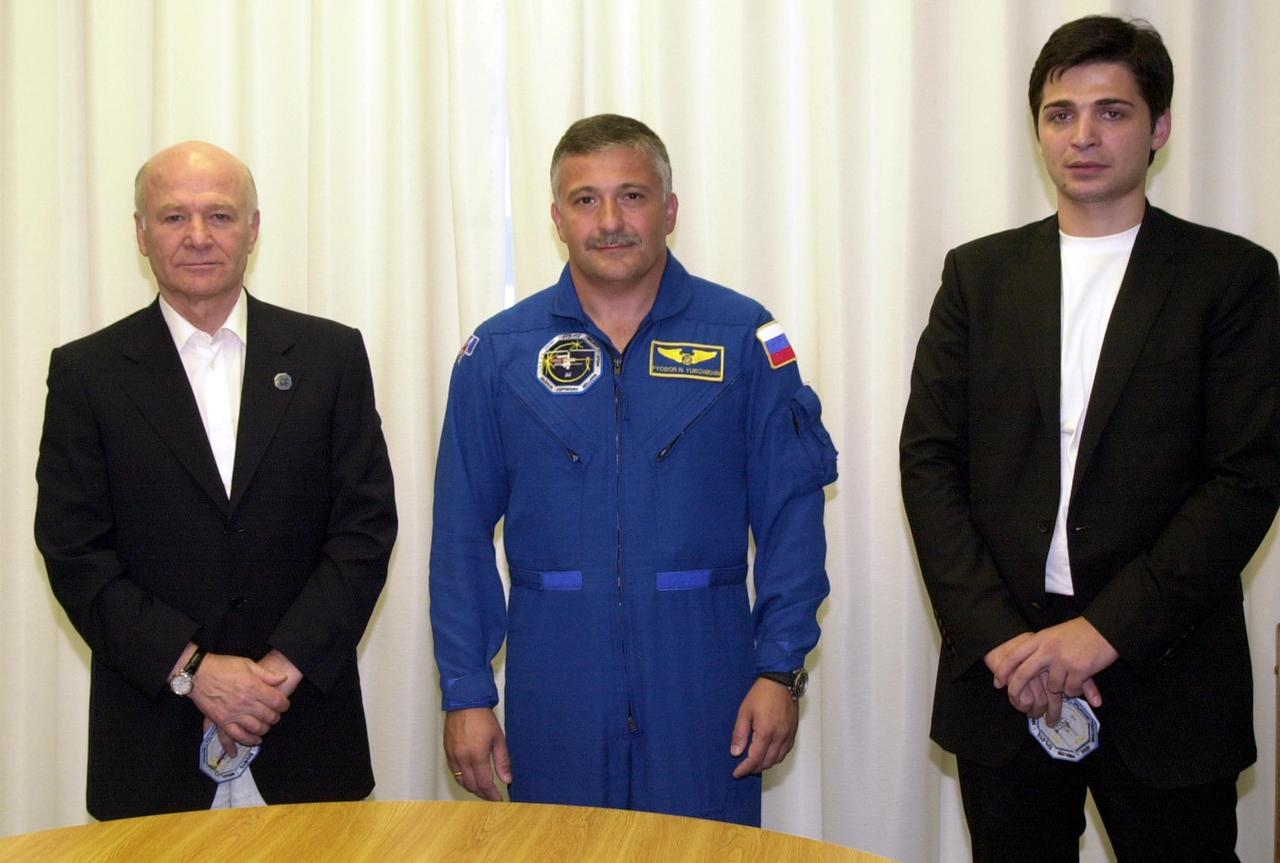
KENNEDY SPACE CENTER, FLA. - In the Operations and Checkout Building, Aslan Abashidze (left), President of the Autonomous Republic of Ajara in Georgia (Russia), STS-112 Mission Specialist Fyodor N. Yurchikhin, Ph.D., a cosmonaut with the Russian Space Agency; and Georgi Abashidze, Mayor of Batumi (Yurchikhin's hometown), pose for a portrait. Yurchikhin and the other members of the STS-112 crew are awaiting launch to the International Space Station aboard Space Shuttle Atlantis. The launch has been postponed to no earlier than Monday, Oct. 7, so that the Mission Control Center, located at the Lyndon B. Johnson Space Center in Houston, Texas, can be secured and protected from potential storm impacts from Hurricane Lili.
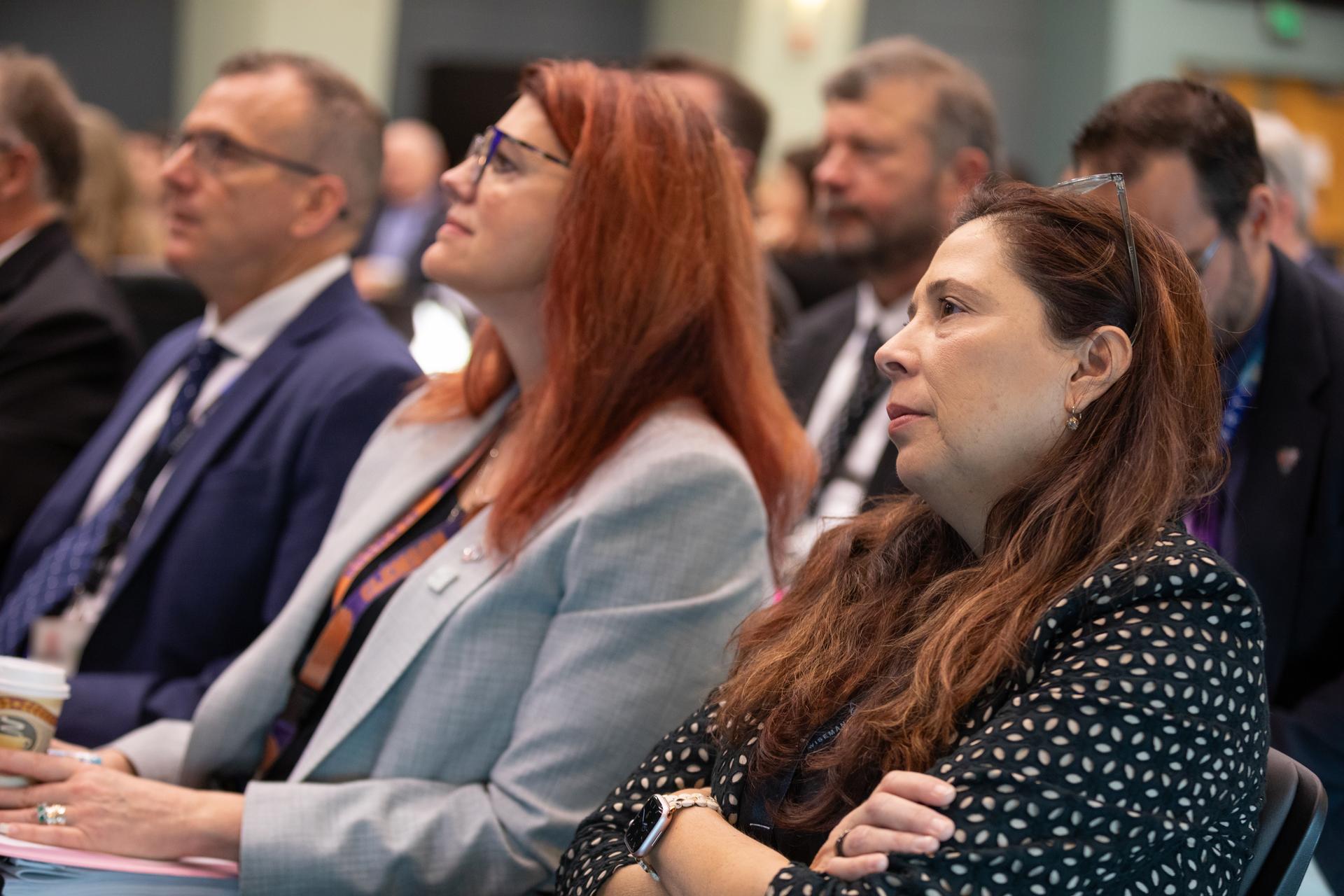
From left, Cliff Lanham, deputy manager, Exploration Ground Systems; Charlie Blackwell-Thompson, launch director, Exploration Ground Systems Program; and Lili Villarreal, Artemis II landing and recovery director in Exploration Ground Systems Program at NASA’s Kennedy Space Center in Florida, participate in the Artemis II Flight Readiness Review with NASA leadership on Wednesday, March 11, 2026, at NASA Kennedy. The review is an assessment of the readiness of NASA’s SLS (Space Launch System) rocket and Orion spacecraft to support the Artemis II test flight as four astronauts journey around the Moon and return to Earth.
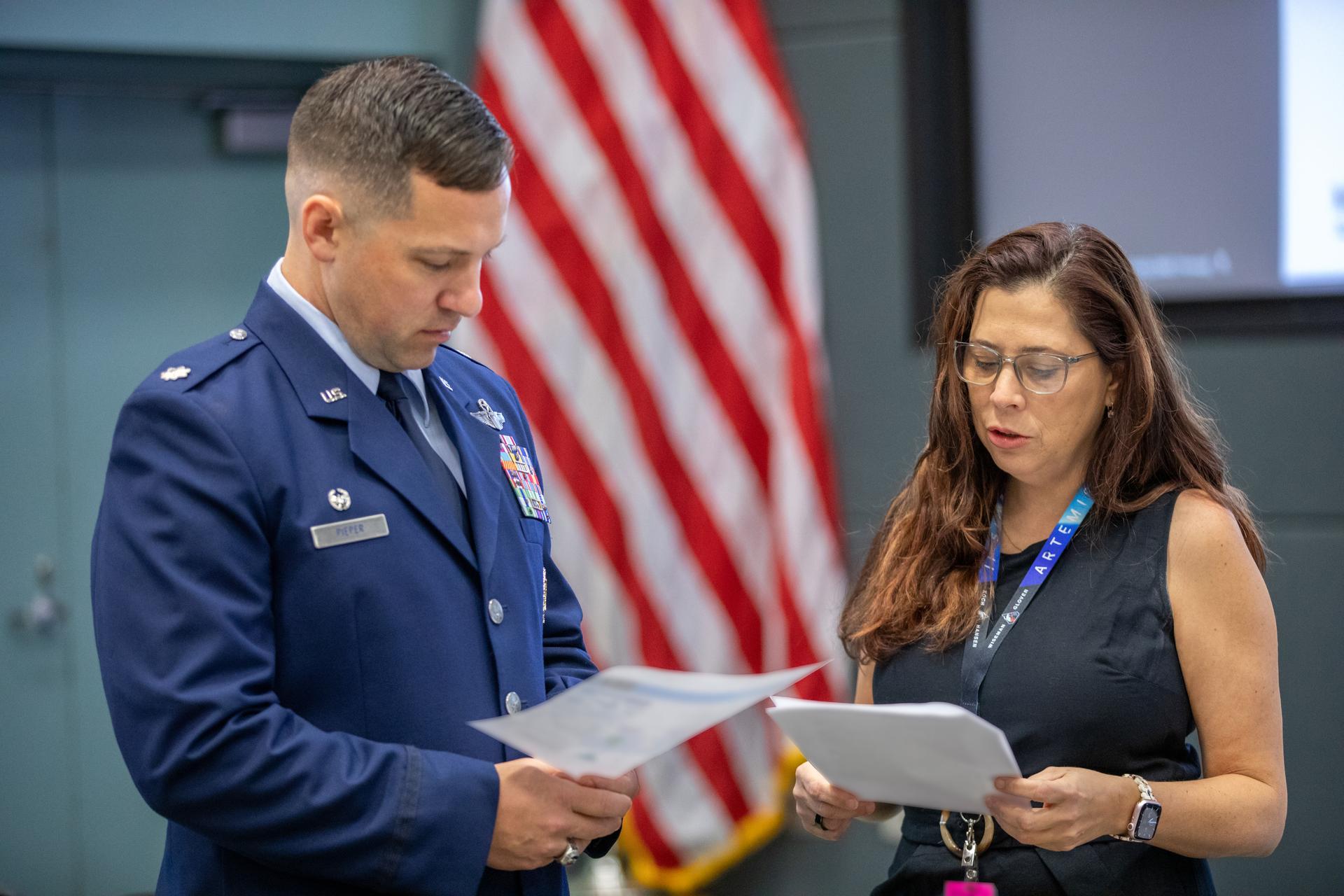
From left, Lieutenant Colonel Kevin M. Pieper, 1st Air Force, Detachment 3 at Patrick Space Force Base in Florida and Lili Villarreal, Artemis II landing and recovery director in Exploration Ground Systems Program at NASA’s Kennedy Space Center in Florida, participate in the Artemis II Flight Readiness Review with NASA leadership on Wednesday, March 11, 2026, at NASA Kennedy. The review is an assessment of the readiness of NASA’s SLS (Space Launch System) rocket and Orion spacecraft to support the Artemis II test flight as four astronauts journey around the Moon and return to Earth.
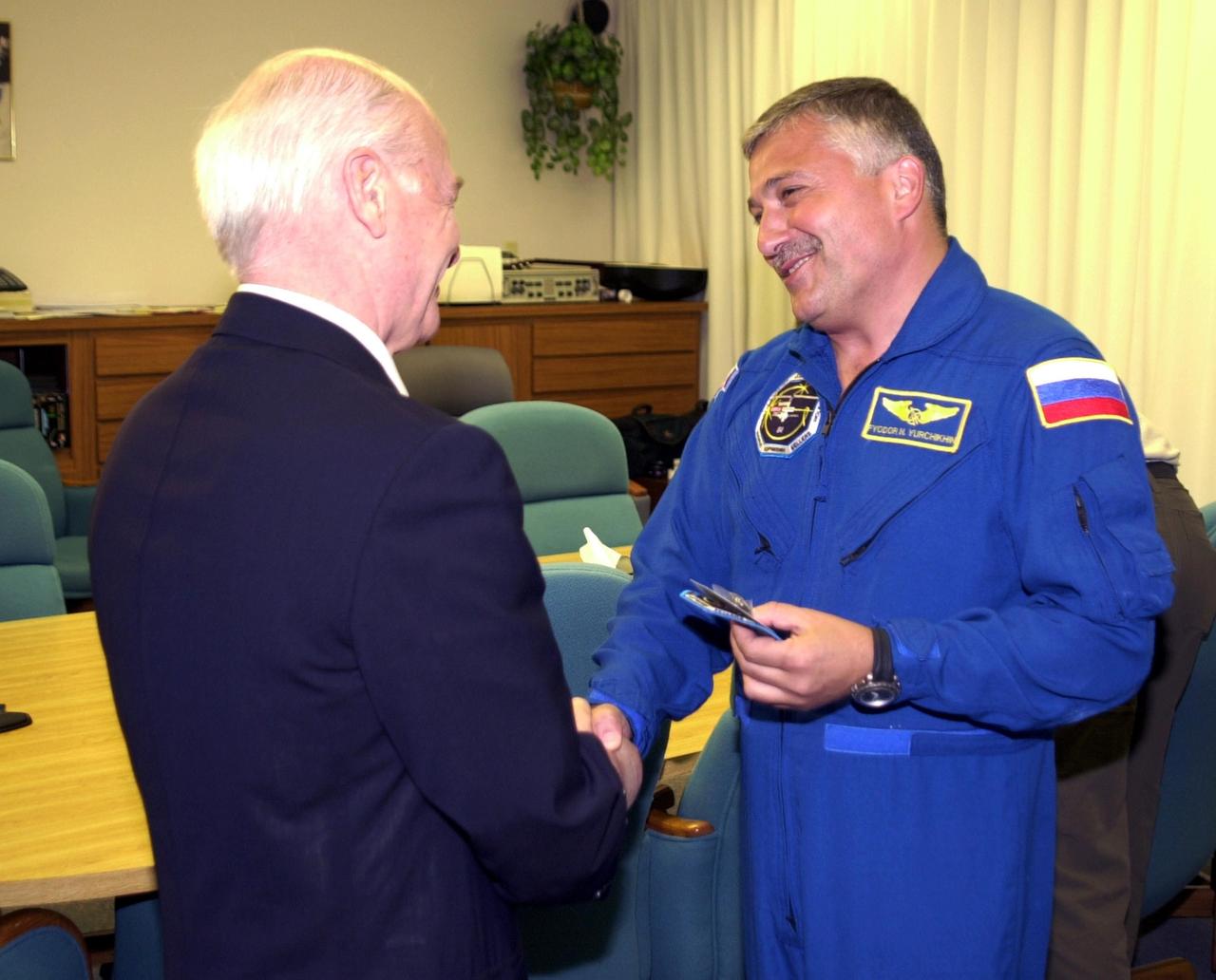
KENNEDY SPACE CENTER, FLA. - Aslan Abashidze, President of the Autonomous Republic of Ajara in Georgia (Russia) shakes hands with STS-112 Mission Specialist Fyodor N. Yurchikhin, Ph.D., (right) a cosmonaut with the Russian Space Agency. Yurchikhin is at Kennedy Space Center awaiting his launch aboard Space Shuttle Atlantis on mission STS-112 to the International Space Station. The launch has been postponed to no earlier than Monday, Oct. 7, so that the Mission Control Center, located at the Lyndon B. Johnson Space Center in Houston, Texas, can be secured and protected from potential storm impacts from Hurricane Lili.
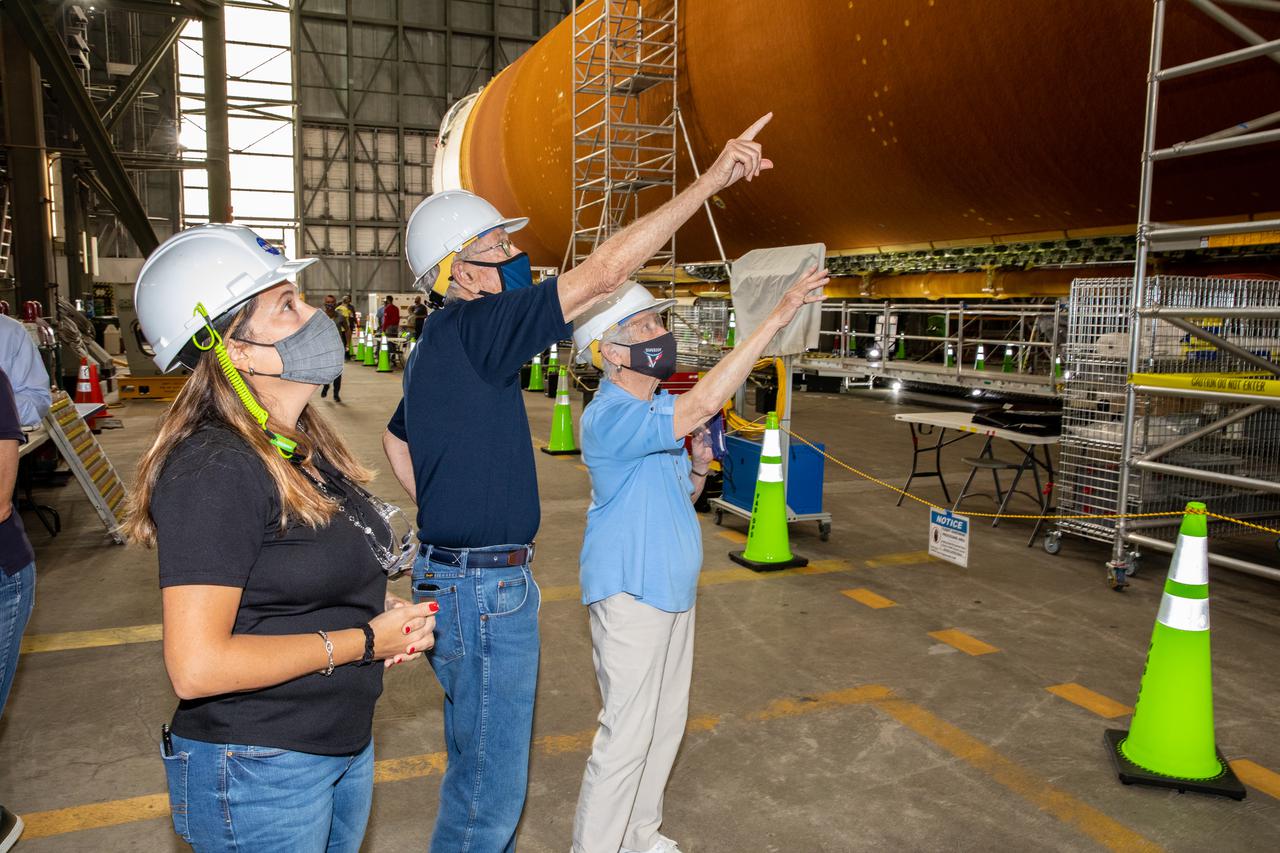
From left to right, Lili Villareal, Operations Flow Manager, Exploration Ground Systems; Charlie Duke, NASA Astronaut (former); and Dottie Duke, wife of Charlie Duke, view the massive Space Launch System (SLS) core stage in Kennedy Space Center's Vehicle Assembly Building (VAB) in Florida on May 10, 2021. Inside the VAB, the SLS core stage is being prepared for integration with the completed stack of twin solid rocket boosters atop the mobile launcher ahead of the Artemis I launch. The first in a series of increasingly complex missions, Artemis I will test SLS and Orion as an integrated system prior to crewed flights to the Moon.
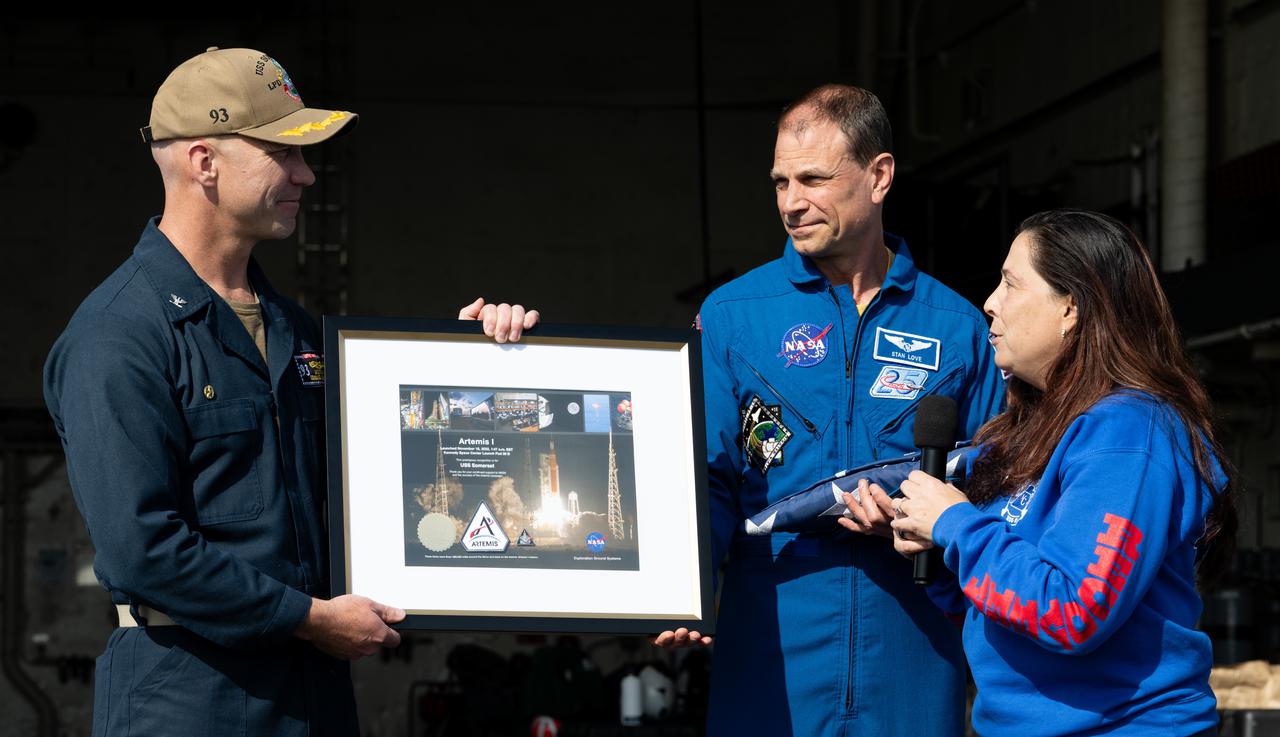
Lili Villarreal, Artemis landing and recovery director with Exploration Ground Systems, right, and NASA astronaut Stan Love present a montage to Capt. Andrew Koy, commanding officer of USS Somerset as NASA and Department of Defense teams participate in Underway Recovery Test-12 onboard USS Somerset off the coast of California, Saturday, March 29, 2025. During the test, NASA and Department of Defense teams are practicing to ensure recovery procedures are validated as NASA plans to send the Artemis II astronauts around the Moon and splashdown in the Pacific Ocean. Photo Credit: (NASA/Joel Kowsky)
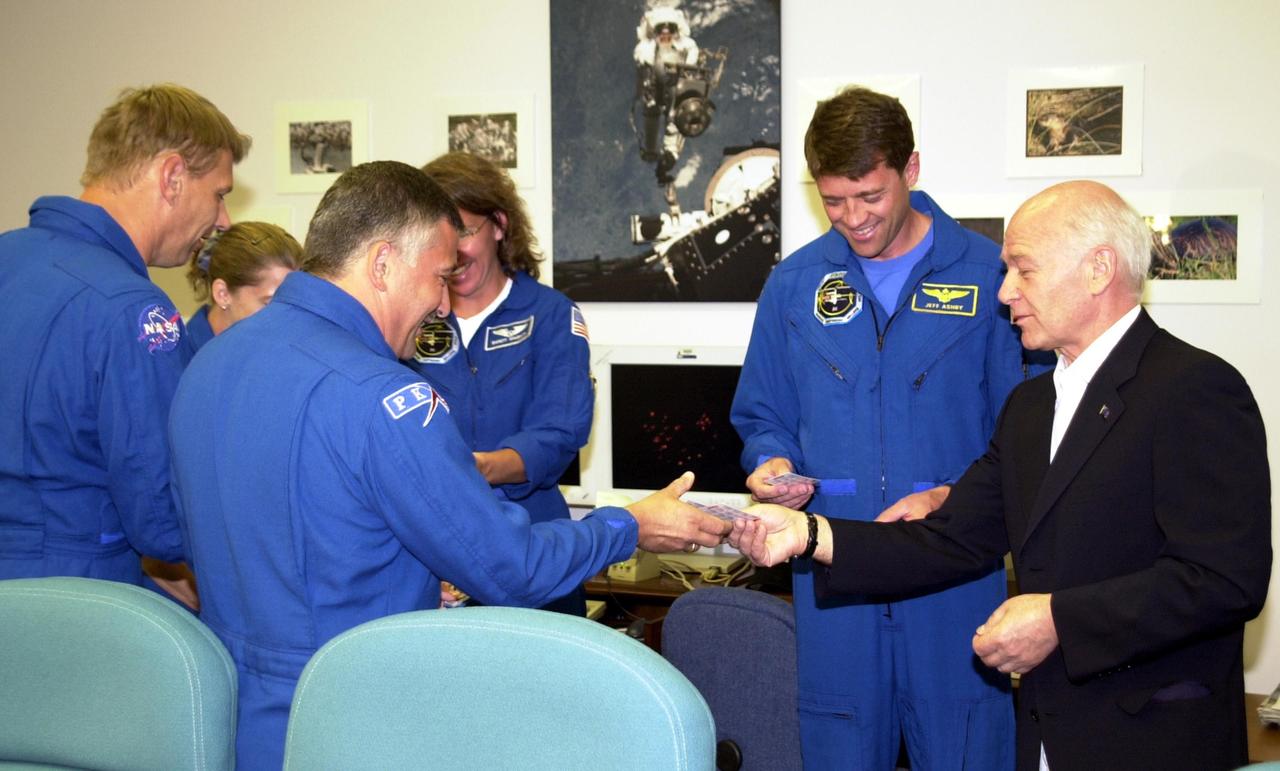
KENNEDY SPACE CENTER, FLA. - In the Operations and Checkout Building, Aslan Abashidze (right), President of the Autonomous Republic of Ajara in Georgia (Russia), visits with the STS-112 crew. From left, they are Mission Specialist Piers J. Sellers; Pilot Pamela Ann Melroy; Mission Specialist Fyodor N. Yurchikhin, a cosmonaut with the Russian Space Agency; Mission Specialist Sandra H. Magnus; and CommanderJeffrey S. Ashby. Mission Specialist David A. Wolf, not pictured, is also a member of the crew. The crew is awaiting launch on mission STS-112 to the International Space Station aboard Space Shuttle Atlantis. The launch has been postponed to no earlier than Monday, Oct. 7, so that the Mission Control Center, located at the Lyndon B. Johnson Space Center in Houston, Texas, can be secured and protected from potential storm impacts from Hurricane Lili.
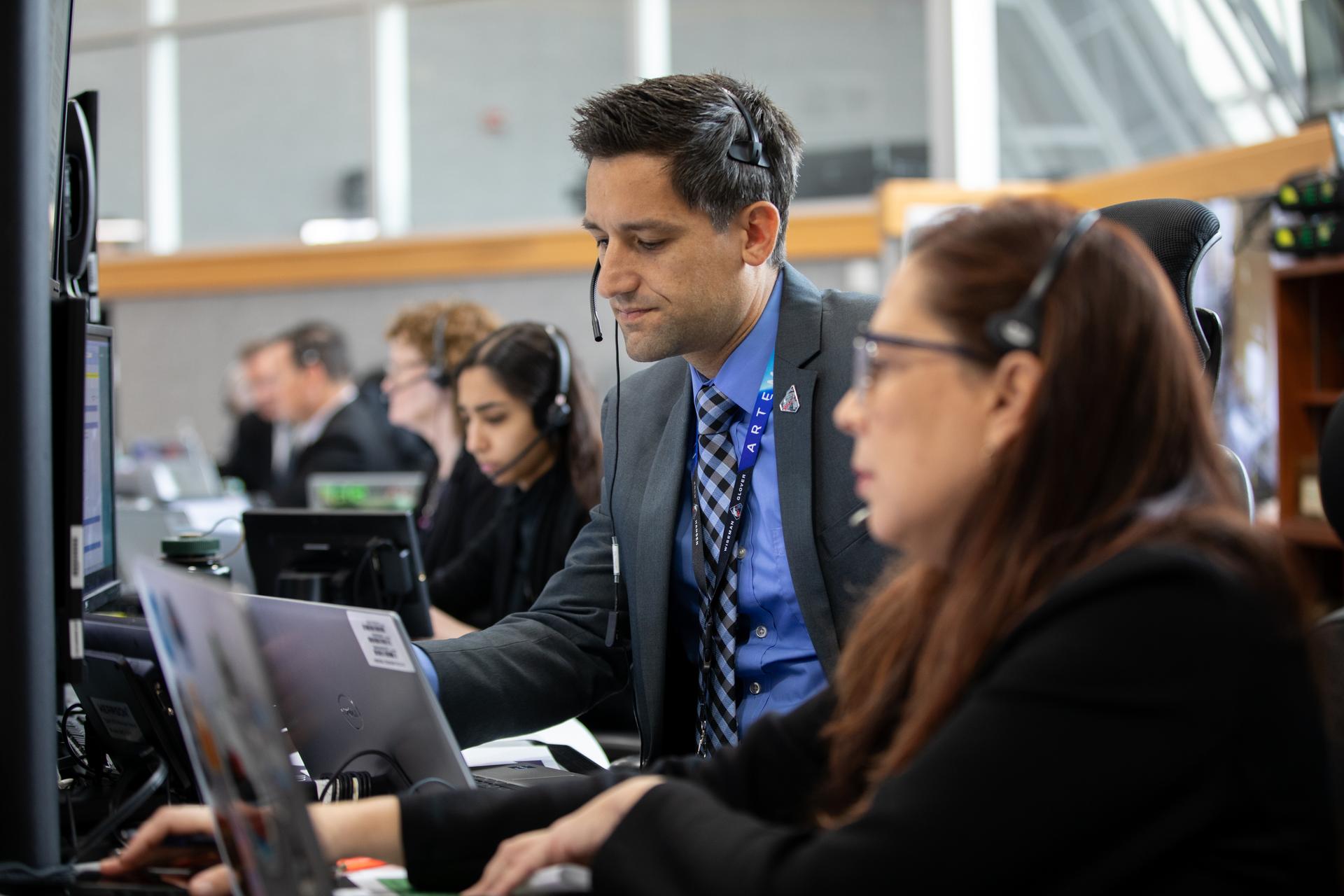
From left, Dan Florez, NASA test director, and Lili Villarreal, Artemis II landing and recovery director, participate in the Artemis II terminal count simulation on Wednesday, Jan. 14, 2026, inside Firing Room 1 of the Rocco A. Petrone Launch Control Center at NASA’s Kennedy Space Center in Florida. The terminal count simulation conducted by NASA’s Exploration Ground Systems team runs through the final five hours of launch countdown, include terminal count - the remaining 10 minutes of the countdown - for NASA’s Artemis II test flight which will take Commander Reid Wiseman, Pilot Victor Glover, and Mission Specialist Christina Koch from NASA, and Mission Specialist Jeremy Hansen from the CSA (Canadian Space Agency), around the Moon and back to Earth no later than no later than April 2026 from Launch Complex 39B at NASA Kennedy.
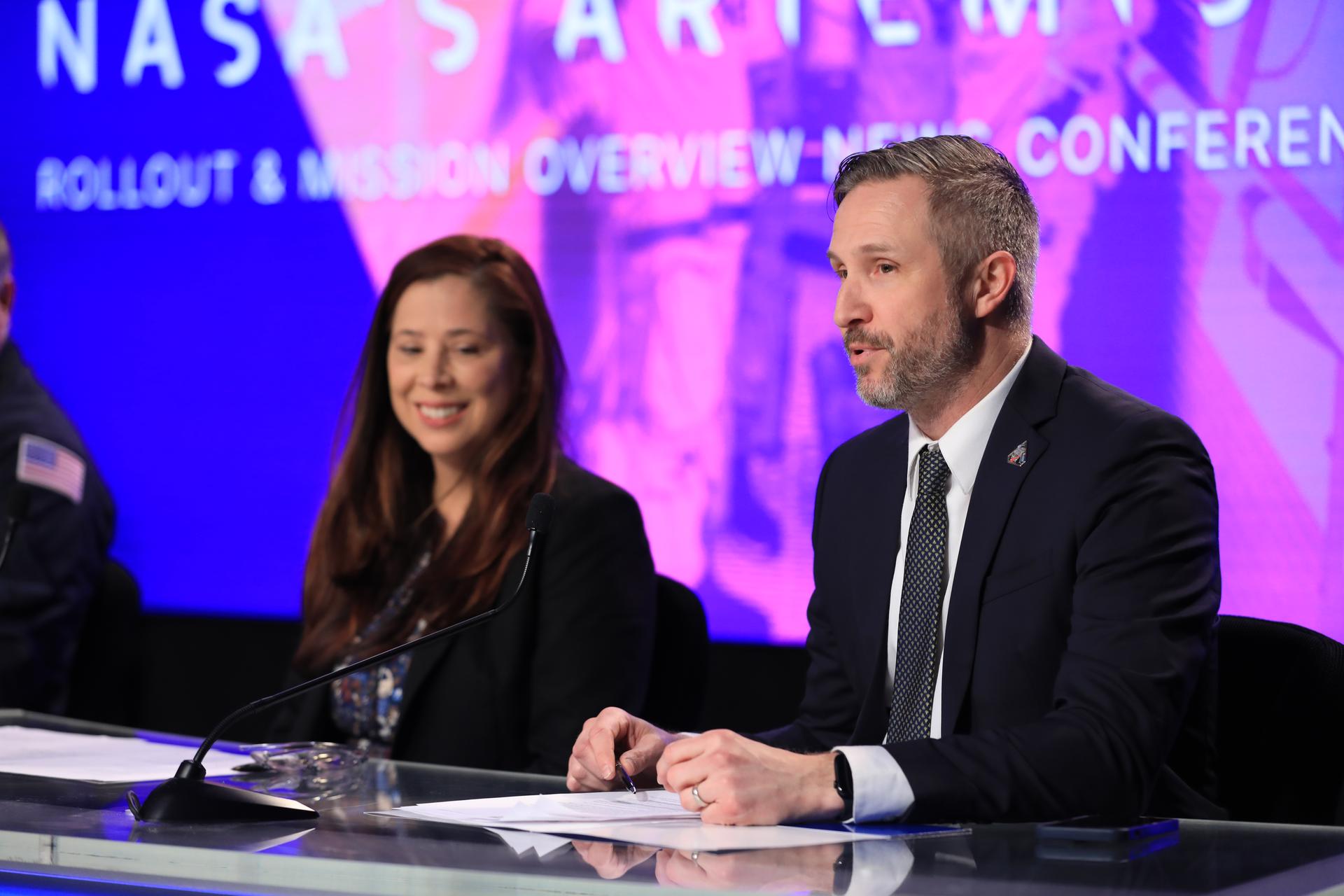
From left, Lili Villarreal, Artemis II landing and recovery director in Exploration Ground Systems Program at NASA’s Kennedy Space Center in Florida, and Jacob Bleacher, chief exploration scientist in the Exploration Systems Development Mission Directorate at NASA Headquarters in Washington, participate in an Artemis II mission overview news conference on Friday, Jan. 16, 2026, at NASA’s Kennedy Space Center in Florida ahead of rollout of the SLS (Space Launch System) rocket and Orion spacecraft from the Vehicle Assembly Building to Launch Complex 39B at NASA Kennedy. The Artemis II test flight will take Commander Reid Wiseman, Pilot Victor Glover, and Mission Specialist Christina Koch from NASA, and Mission Specialist Jeremy Hansen from the CSA (Canadian Space Agency), around the Moon and back to Earth no later than April 2026.
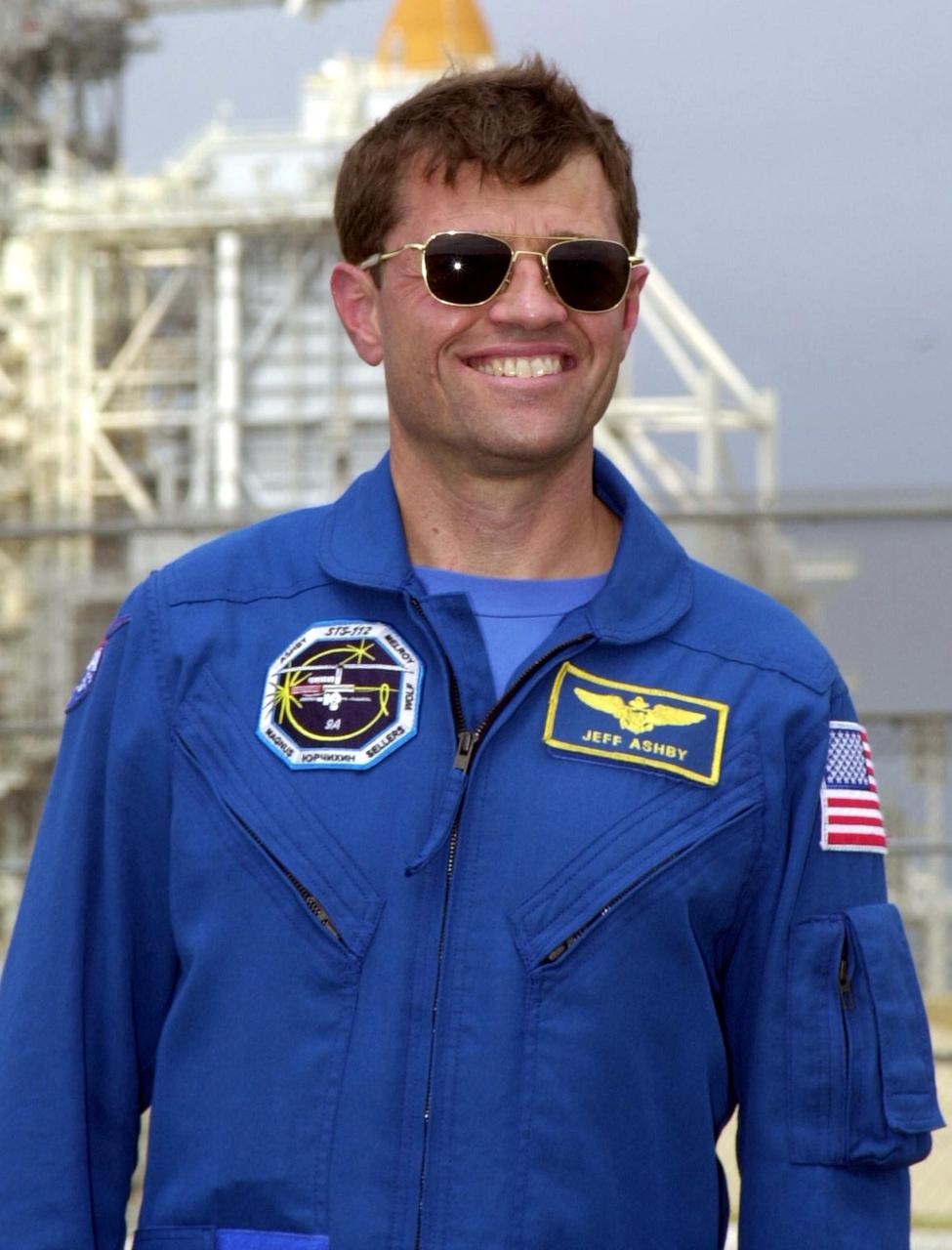
KENNEDY SPACE CENTER, FLA. - STS-112 Commander Jeffrey S. Ashby poses in front of Launch Pad 39B during a tour of Kennedy Space Center prior to launch. Also on the tour were the other members of the crew including Pilot Pamela Ann Melroy and Mission Specialists David A. Wolf, Sandra H. Magnus, Piers J. Sellers, and Fyodor N. Yurchikhin of the Russian Space Agency. The launch of Space Shuttle Atlantis was postponed today to no earlier than Thursday, Oct. 3, while weather forecasters and the mission management team assess the possible effect Hurricane Lili may have on the Mission Control Center located at the Lyndon B. Johnson Space Center in Houston, Texas.

Lili Villarreal, Artemis II landing and recovery director in Exploration Ground Systems Program at NASA’s Kennedy Space Center in Florida, participates in an Artemis II mission overview news conference on Friday, Jan. 16, 2026, at NASA’s Kennedy Space Center in Florida ahead of rollout of the SLS (Space Launch System) rocket and Orion spacecraft from the Vehicle Assembly Building to Launch Complex 39B at NASA Kennedy. The Artemis II test flight will take Commander Reid Wiseman, Pilot Victor Glover, and Mission Specialist Christina Koch from NASA, and Mission Specialist Jeremy Hansen from the CSA (Canadian Space Agency), around the Moon and back to Earth no later than April 2026.
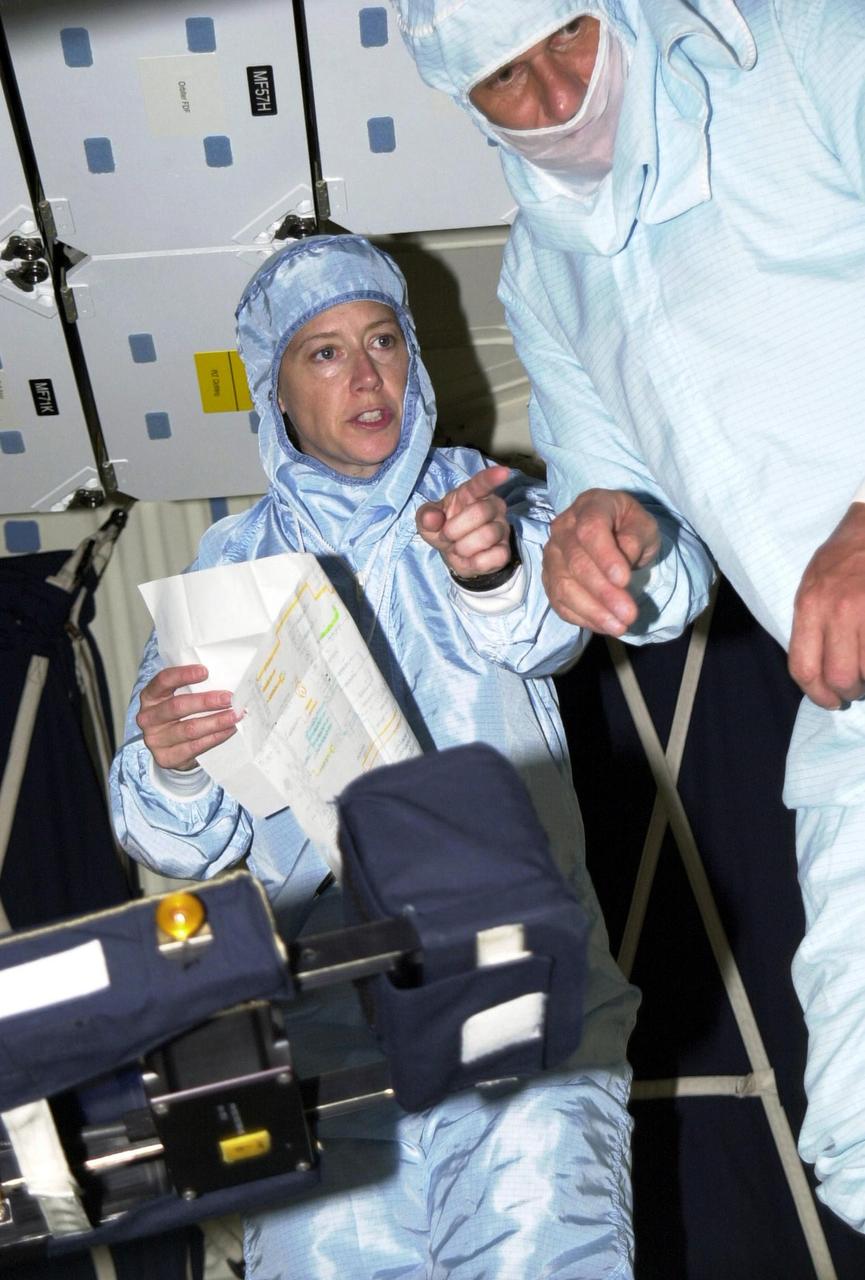
KENNEDY SPACE CENTER, FLA. - STS-112 Pilot Pamela Ann Melroy (left) conducts a last-minute inspection of some cables inside Space Shuttle Atlantis at Launch Pad 39B prior to the launch of her mission. The STS-112 crew also includes Commander Jeffrey S. Ashby and Mission Specialists David A. Wolf, Sandra H. Magnus, Piers J. Sellers, and Fyodor N. Yurchikhin of the Russian Space Agency. Launch of the mission was postponed today to no earlier than Thursday, Oct. 3, while weather forecasters and the mission management team assess the possible effect Hurricane Lili may have on the Mission Control Center located at the Lyndon B. Johnson Space Center in Houston, Texas.

Lili Villarreal, Artemis II landing and recovery director in Exploration Ground Systems, participates in the second wet dress rehearsal for the Artemis II mission on Thursday, Feb. 19, 2026, inside Firing Room 1 at the Rocco A. Petrone Launch Control Center at NASA’s Kennedy Space Center in Florida. The wet dress rehearsal allows the Artemis II launch team to run through operations to load propellant, conduct a full launch countdown, demonstrate the ability to recycle the countdown clock, and drain the tanks to practice timelines and procedures for launch. The Artemis II test flight will take Commander Reid Wiseman, Pilot Victor Glover, and Mission Specialist Christina Koch from NASA, and Mission Specialist Jeremy Hansen from the CSA (Canadian Space Agency), around the Moon and back to Earth from Launch Complex 39B at NASA Kennedy.
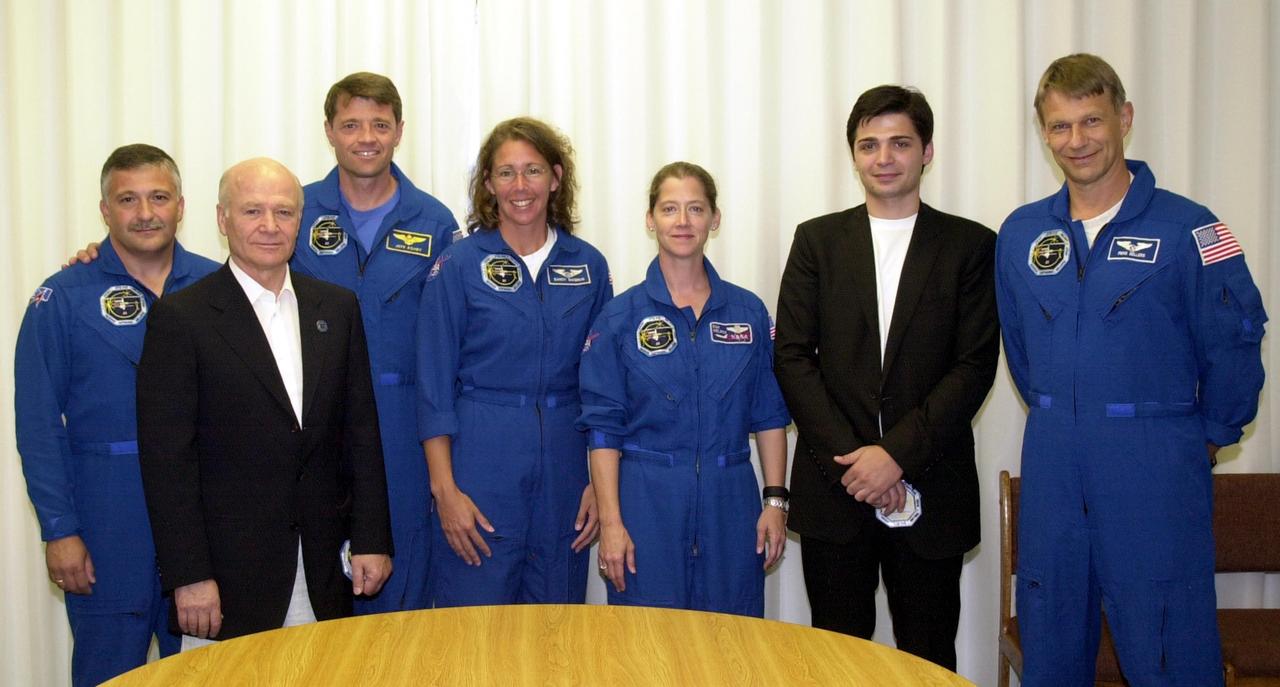
KENNEDY SPACE CENTER, FLA. - In the Operations and Checkout Building, the STS-112 crew takes time out from a visit with Russian officials to pose for a portrait. From left are Mission Specialist Fyodor N. Yurchikhin, Ph.D., a cosmonaut with the Russian Space Agency; Aslan Abashidze, President of the Autonomous Republic of Ajara in Georgia (Russia); Commander Jeffrey S. Ashby; Mission Specialist Sandra H. Magnus, Ph.D.; Pilot Pamela Ann Melroy; Georgi Abashidze, Mayor of Batumi (Yurchikhin's hometown); and Mission Specialist Piers J. Sellers, Ph.D. Mission Specialist David A. Wolf, M.D., not pictured, is also a member of the crew. The STS-112 crew is awaiting launch to the International Space Station aboard Space Shuttle Atlantis. The launch has been postponed to no earlier than Monday, Oct. 7, so that the Mission Control Center, located at the Lyndon B. Johnson Space Center in Houston, Texas, can be secured and protected from potential storm impacts from Hurricane Lili.
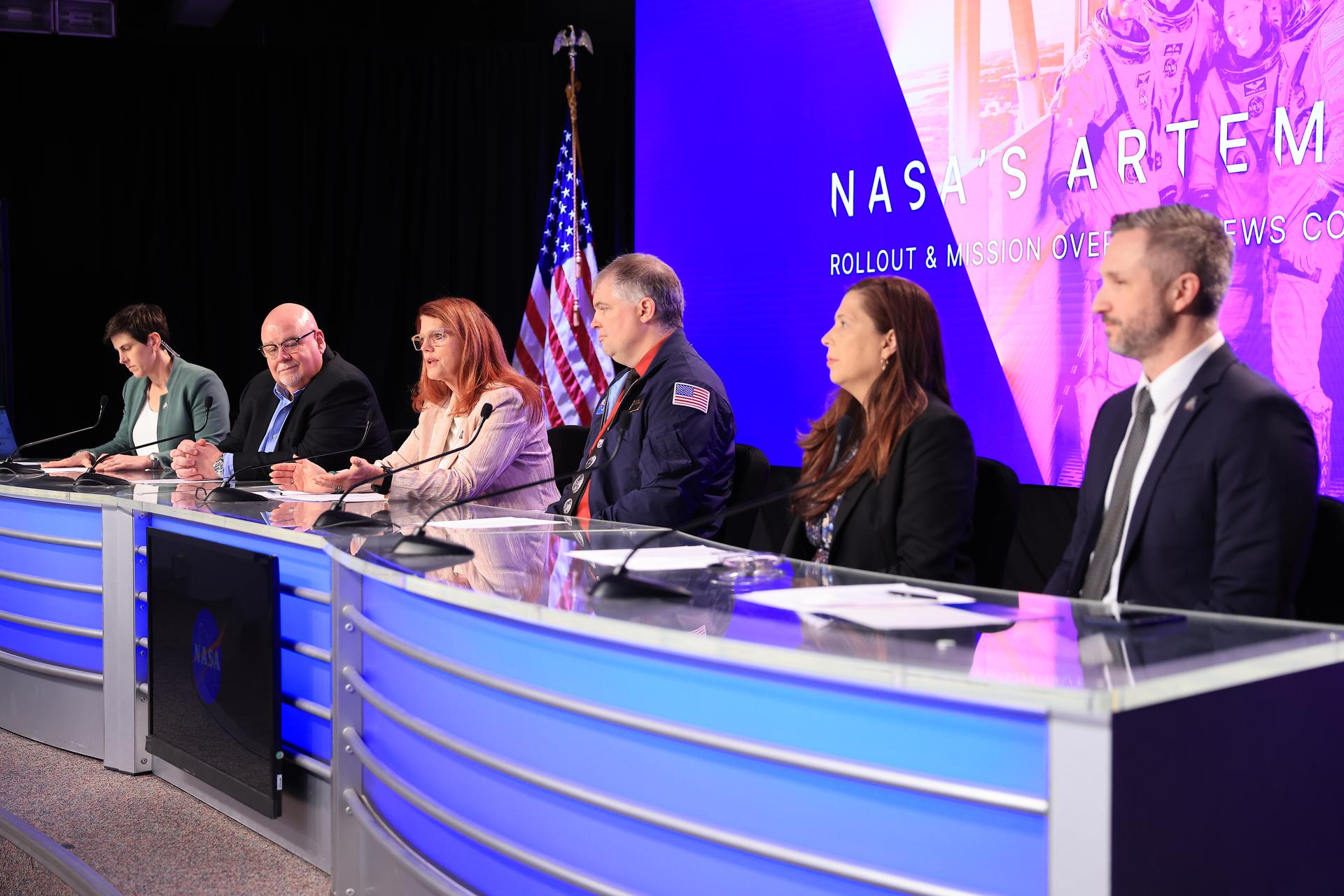
From left to right, Rachel Kraft, NASA's Office of Communications; John Honeycutt, Artemis II mission management team chair; Charlie Blackwell-Thompson, launch director, Exploration Ground Systems Program at NASA’s Kennedy Space Center in Florida; Jeff Radigan, Artemis II lead flight director, Flight Operations Directorate; Lili Villarreal, Artemis II landing and recovery director in Exploration Ground Systems Program at NASA’s Kennedy Space Center in Florida; Jacob Bleacher, chief exploration scientist in the Exploration Systems Development Mission Directorate at NASA Headquarters in Washington, participate in an Artemis II mission overview news conference on Friday, Jan. 16, 2026, at NASA’s Kennedy Space Center in Florida ahead of rollout of the SLS (Space Launch System) rocket and Orion spacecraft from the Vehicle Assembly Building to Launch Complex 39B at NASA Kennedy. The Artemis II test flight will take Commander Reid Wiseman, Pilot Victor Glover, and Mission Specialist Christina Koch from NASA, and Mission Specialist Jeremy Hansen from the CSA (Canadian Space Agency), around the Moon and back to Earth no later than April 2026.
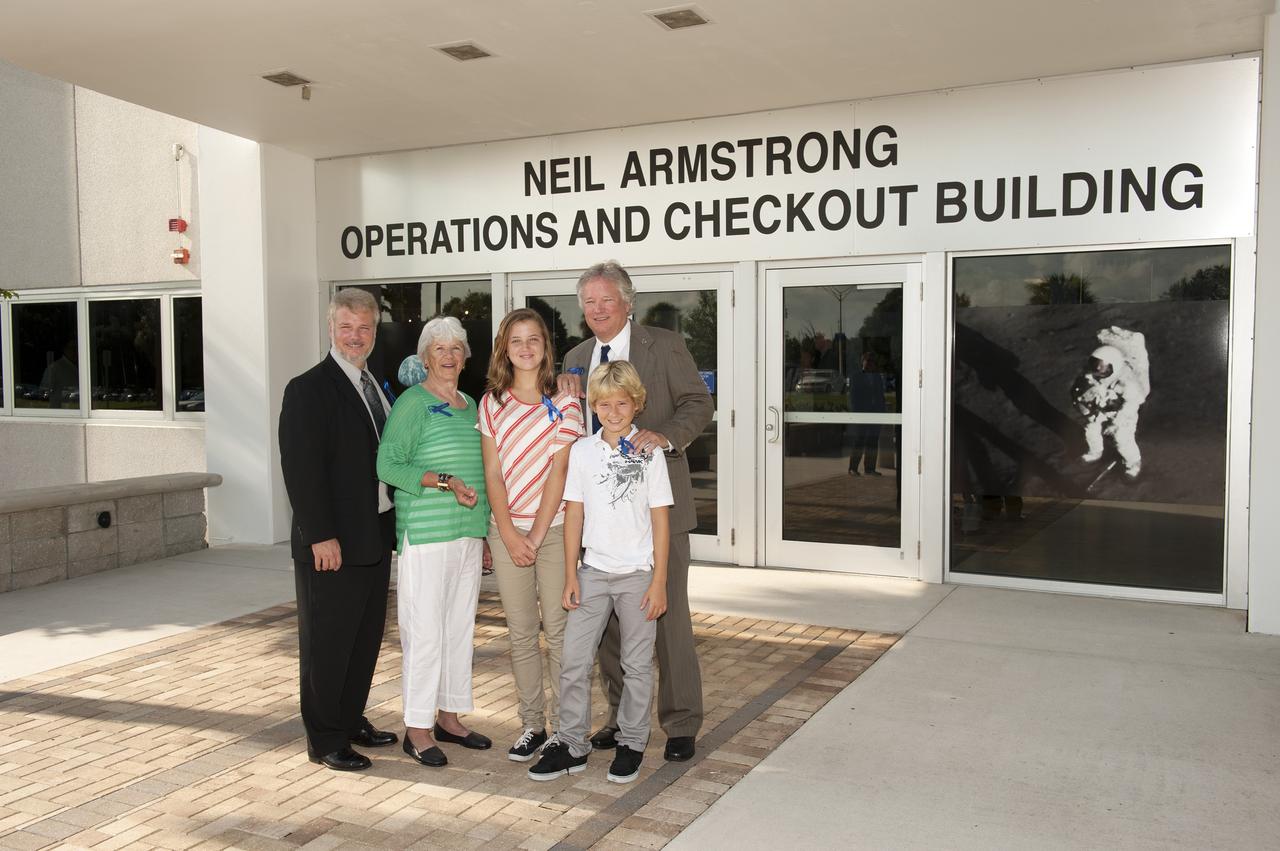
CAPE CANAVERAL, Fla. -- At the Kennedy Space Center in Florida, the family of Neil Armstrong poses for a group portrait in front of the refurbished Operations and Checkout Building. From left are Armstrong's son Mark, his former wife Janet, his granddaughter Lily, his son Rick and his grandson Bryce. Armstrong, an Apollo 11 astronaut, was the first person to set foot on the moon and for whom the facility is newly named. The building's high bay is being used to support the agency's new Orion spacecraft, which will lift off atop the Space Launch System rocket. Orion is designed to take humans farther than they’ve ever gone before, serving as the exploration vehicle that will carry astronauts to deep space and sustain the crew during travel to destinations such as an asteroid or Mars. The visit of the former astronauts was part of NASA's 45th anniversary celebration of the Apollo 11 moon landing. As the world watched, Neil Armstrong and Aldrin landed in the moon's Sea of Tranquility aboard the lunar module Eagle on July 20, 1969. Meanwhile, crewmate Collins orbited above in the command module Columbia. For more, visit http://www.nasa.gov/press/2014/july/nasa-honors-historic-first-moon-landing-eyes-first-mars-mission. Photo credit: NASA/Kevin O'Connell
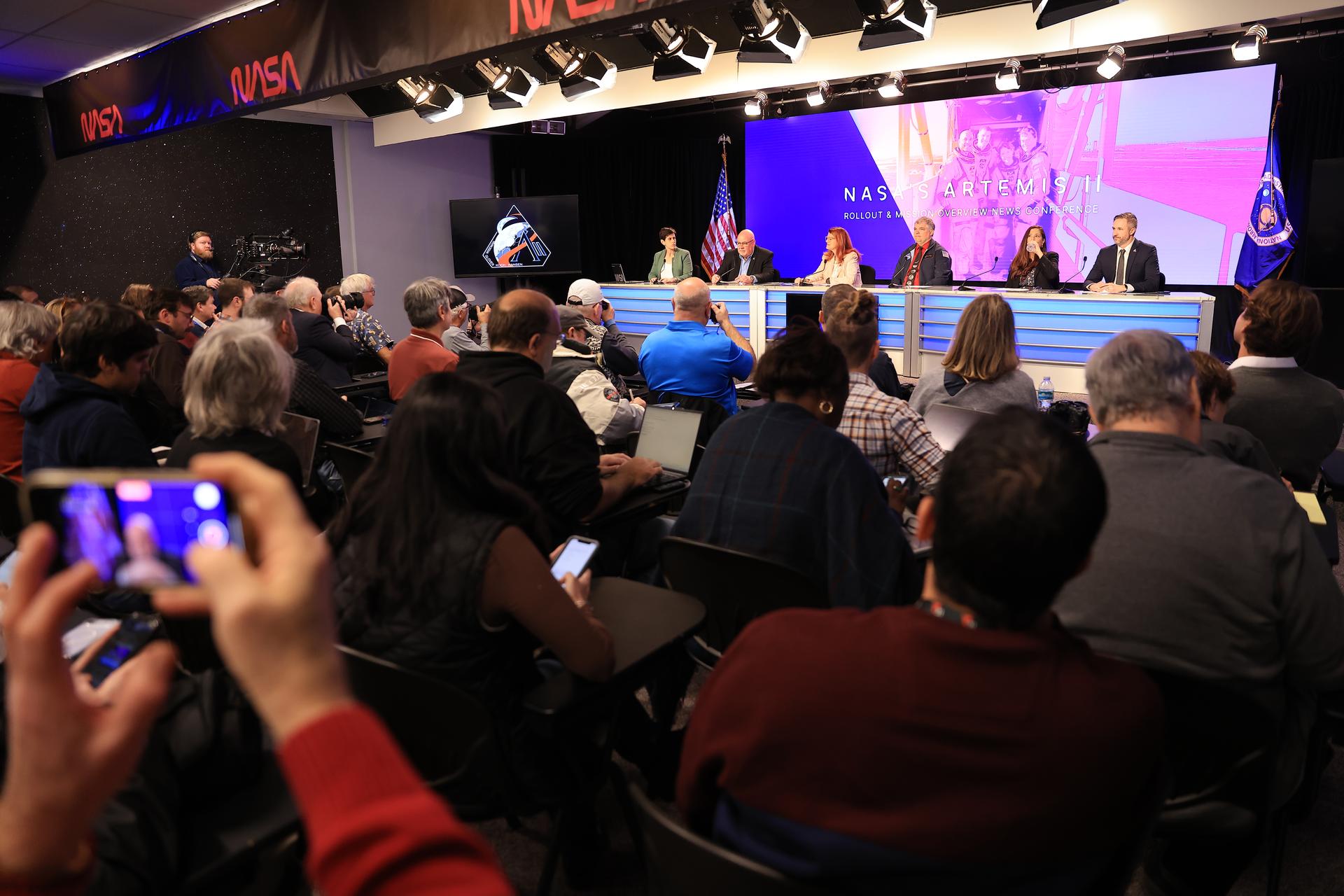
From left to right, Rachel Kraft, NASA's Office of Communications; John Honeycutt, Artemis II mission management team chair; Charlie Blackwell-Thompson, launch director, Exploration Ground Systems Program at NASA’s Kennedy Space Center in Florida; Jeff Radigan, Artemis II lead flight director, Flight Operations Directorate; Lili Villarreal, Artemis II landing and recovery director in Exploration Ground Systems Program at NASA’s Kennedy Space Center in Florida; Jacob Bleacher, chief exploration scientist in the Exploration Systems Development Mission Directorate at NASA Headquarters in Washington, participate in an Artemis II mission overview news conference on Friday, Jan. 16, 2026, at NASA’s Kennedy Space Center in Florida ahead of rollout of the SLS (Space Launch System) rocket and Orion spacecraft from the Vehicle Assembly Building to Launch Complex 39B at NASA Kennedy. The Artemis II test flight will take Commander Reid Wiseman, Pilot Victor Glover, and Mission Specialist Christina Koch from NASA, and Mission Specialist Jeremy Hansen from the CSA (Canadian Space Agency), around the Moon and back to Earth no later than April 2026.
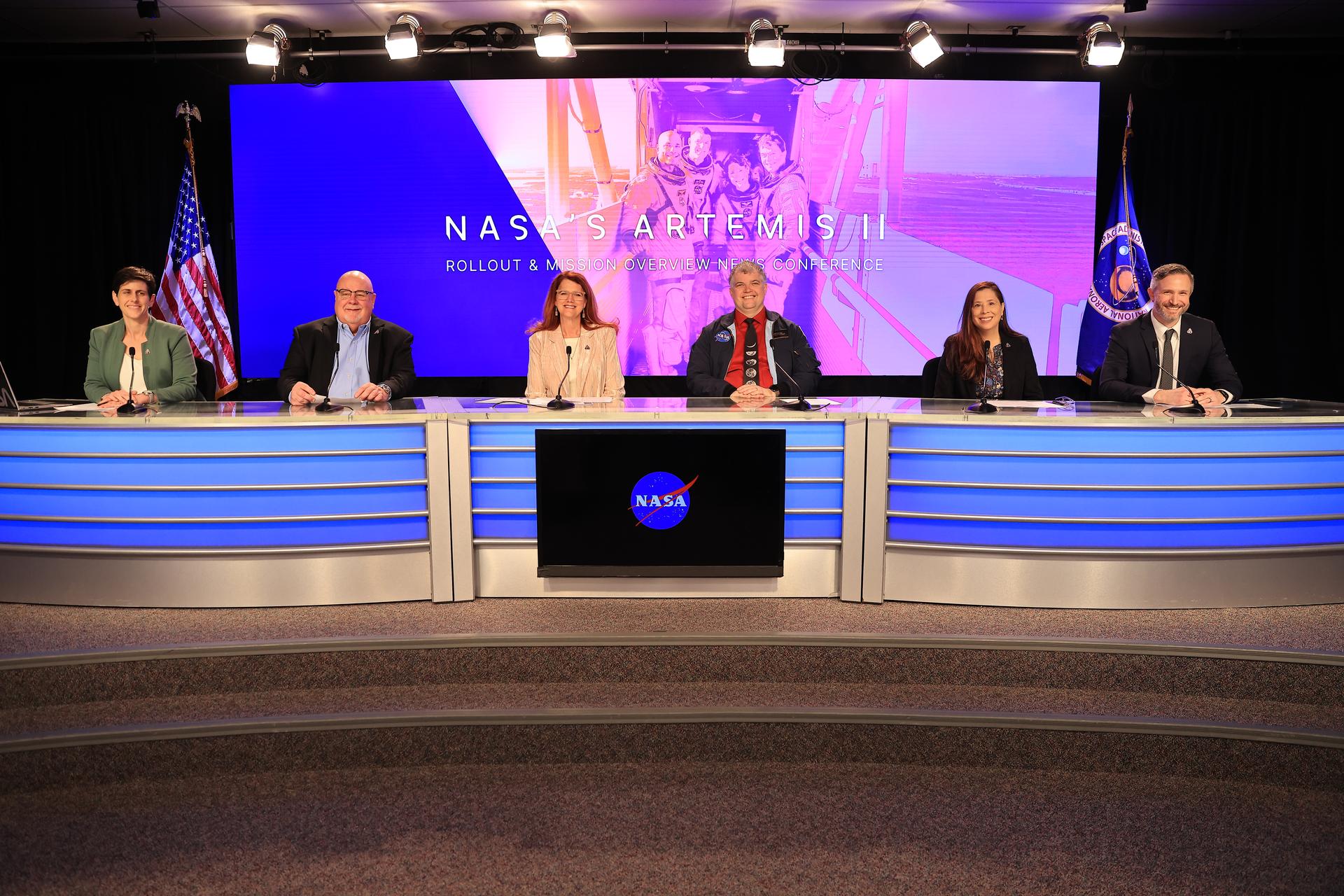
From left to right, Rachel Kraft, NASA's Office of Communications; John Honeycutt, Artemis II mission management team chair; Charlie Blackwell-Thompson, launch director, Exploration Ground Systems Program at NASA’s Kennedy Space Center in Florida; Jeff Radigan, Artemis II lead flight director, Flight Operations Directorate; Lili Villarreal, Artemis II landing and recovery director in Exploration Ground Systems Program at NASA’s Kennedy Space Center in Florida; Jacob Bleacher, chief exploration scientist in the Exploration Systems Development Mission Directorate at NASA Headquarters in Washington, participate in an Artemis II mission overview news conference on Friday, Jan. 16, 2026, at NASA’s Kennedy Space Center in Florida ahead of rollout of the SLS (Space Launch System) rocket and Orion spacecraft from the Vehicle Assembly Building to Launch Complex 39B at NASA Kennedy. The Artemis II test flight will take Commander Reid Wiseman, Pilot Victor Glover, and Mission Specialist Christina Koch from NASA, and Mission Specialist Jeremy Hansen from the CSA (Canadian Space Agency), around the Moon and back to Earth no later than April 2026.
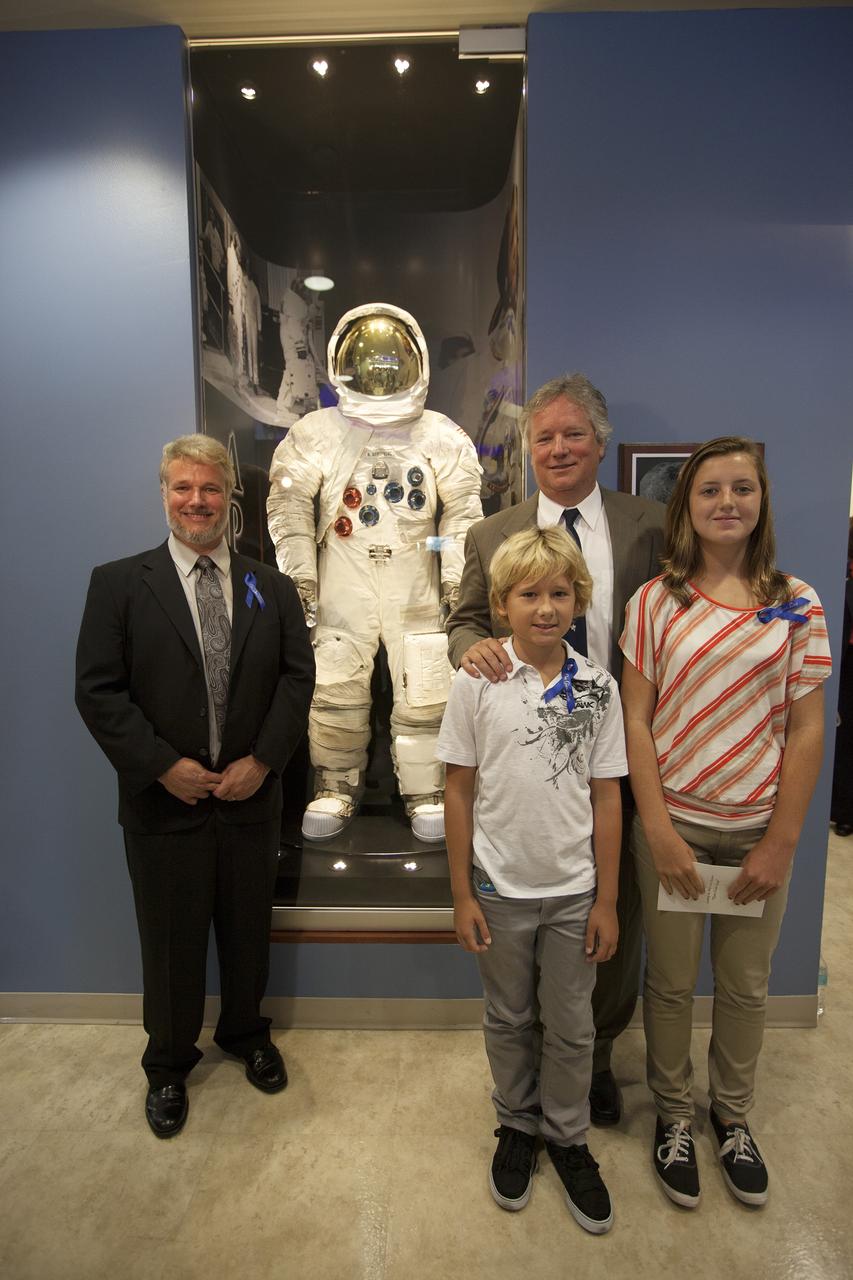
CAPE CANAVERAL, Fla. -- At the Kennedy Space Center in Florida, members of the Armstrong family pose for a portrait with an Apollo-era spacesuit following its unveiling in the lobby of the newly named Neil Armstrong Operations and Checkout Building. The facility has been renamed for Apollo 11 astronaut Neil Armstrong, the first person to set foot on the moon. From left are Armstrong's son Mark, his grandson Bryce, his son Rick and his granddaughter Lily. The building's high bay is being used to support the agency's new Orion spacecraft and is the same spaceport facility where the Apollo 11 command/service module and lunar module were prepped for the first lunar landing mission in 1969. Orion is designed to take humans farther than they’ve ever gone before, serving as the exploration vehicle that will carry astronauts to deep space and sustain the crew during travel to destinations such as an asteroid or Mars. The unveiling was part of NASA's 45th anniversary celebration of the Apollo 11 moon landing. As the world watched, Apollo 11 astronauts landed in the moon's Sea of Tranquility aboard the lunar module, Eagle, on July 20, 1969, as the command module, Columbia, orbited overhead. For more: http://www.nasa.gov/press/2014/july/nasa-honors-historic-first-moon-landing-eyes-first-mars-mission/ Photo credit: NASA/Kim Shiflett
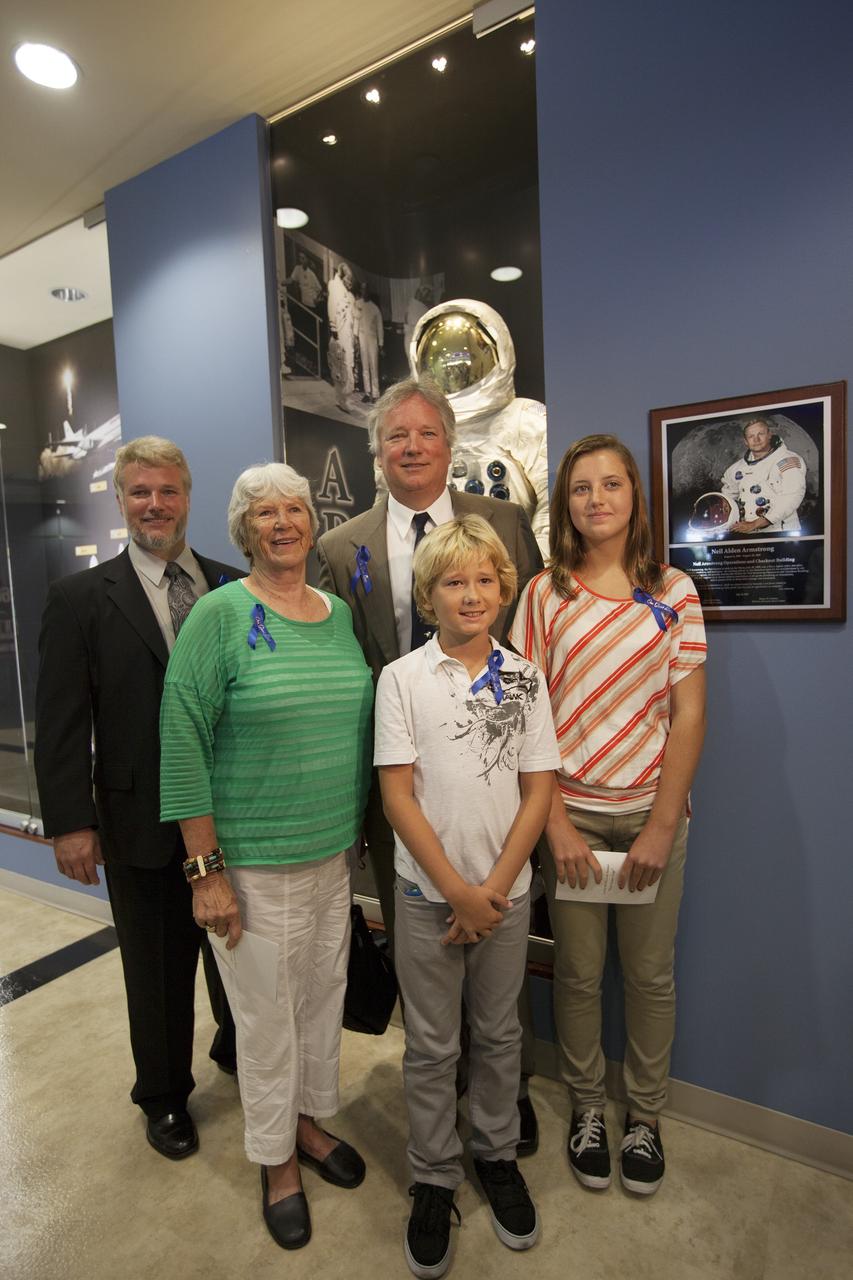
CAPE CANAVERAL, Fla. -- At the Kennedy Space Center in Florida, members of the Armstrong family pose beside a plaque following its unveiling in the lobby of the newly named Neil Armstrong Operations and Checkout Building. The facility has been renamed for Apollo 11 astronaut Neil Armstrong, the first person to set foot on the moon. From left are Armstrong's son Mark, his former wife Janet, his son Rick, his grandson Bryce, and his granddaughter Lily. The building's high bay is being used to support the agency's new Orion spacecraft and is the same spaceport facility where the Apollo 11 command/service module and lunar module were prepped for the first lunar landing mission in 1969. Orion is designed to take humans farther than they’ve ever gone before, serving as the exploration vehicle that will carry astronauts to deep space and sustain the crew during travel to destinations such as an asteroid or Mars. The unveiling was part of NASA's 45th anniversary celebration of the Apollo 11 moon landing. As the world watched, Apollo 11 astronauts landed in the moon's Sea of Tranquility aboard the lunar module, Eagle, on July 20, 1969, as the command module, Columbia, orbited overhead. For more: http://www.nasa.gov/press/2014/july/nasa-honors-historic-first-moon-landing-eyes-first-mars-mission/ Photo credit: NASA/Kim Shiflett
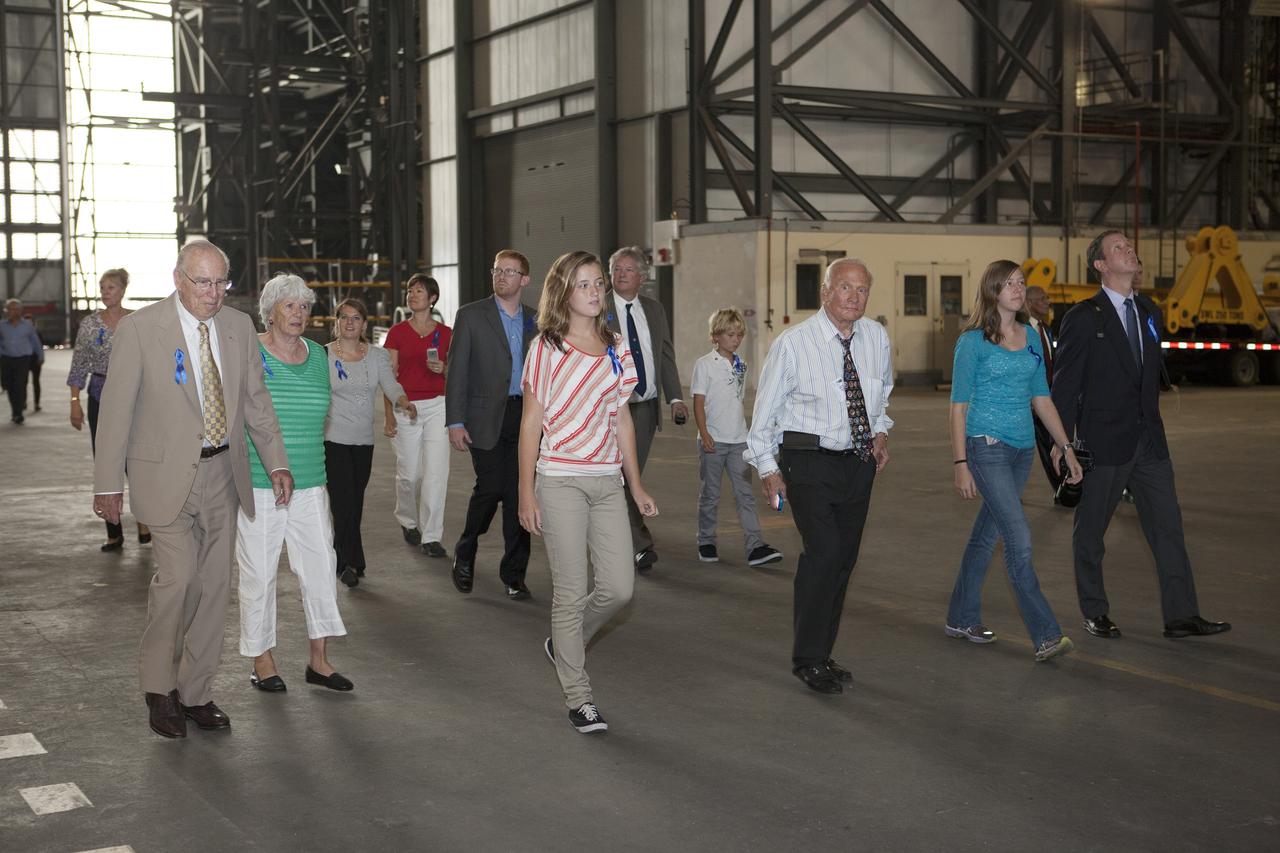
CAPE CANAVERAL, Fla. -- Apollo astronauts and their families tour the Vehicle Assembly Building, the facility in which Apollo's Saturn V rockets were processed at NASA's Kennedy Space Center in Florida. The tour followed a ceremony renaming the refurbished Operations and Checkout Building for Apollo 11 astronaut Neil Armstrong, the first person to set foot on the moon. Leading the way through the transfer aisle, from left, are Apollo astronaut Jim Lovell, Neil's former wife Janet, Neil's granddaughter Lily, and Apollo 11 moonwalker Buzz Aldrin. The ceremony was part of NASA's 45th anniversary celebration of the Apollo 11 moon landing. As the world watched, Neil Armstrong and Buzz Aldrin landed in the moon's Sea of Tranquility on July 20, 1969, aboard the lunar module Eagle. Meanwhile, crewmate Michael Collins orbited above in the command module Columbia. For more, visit http://www.nasa.gov/press/2014/july/nasa-honors-historic-first-moon-landing-eyes-first-mars-mission. Photo credit: NASA/Kim Shiflett
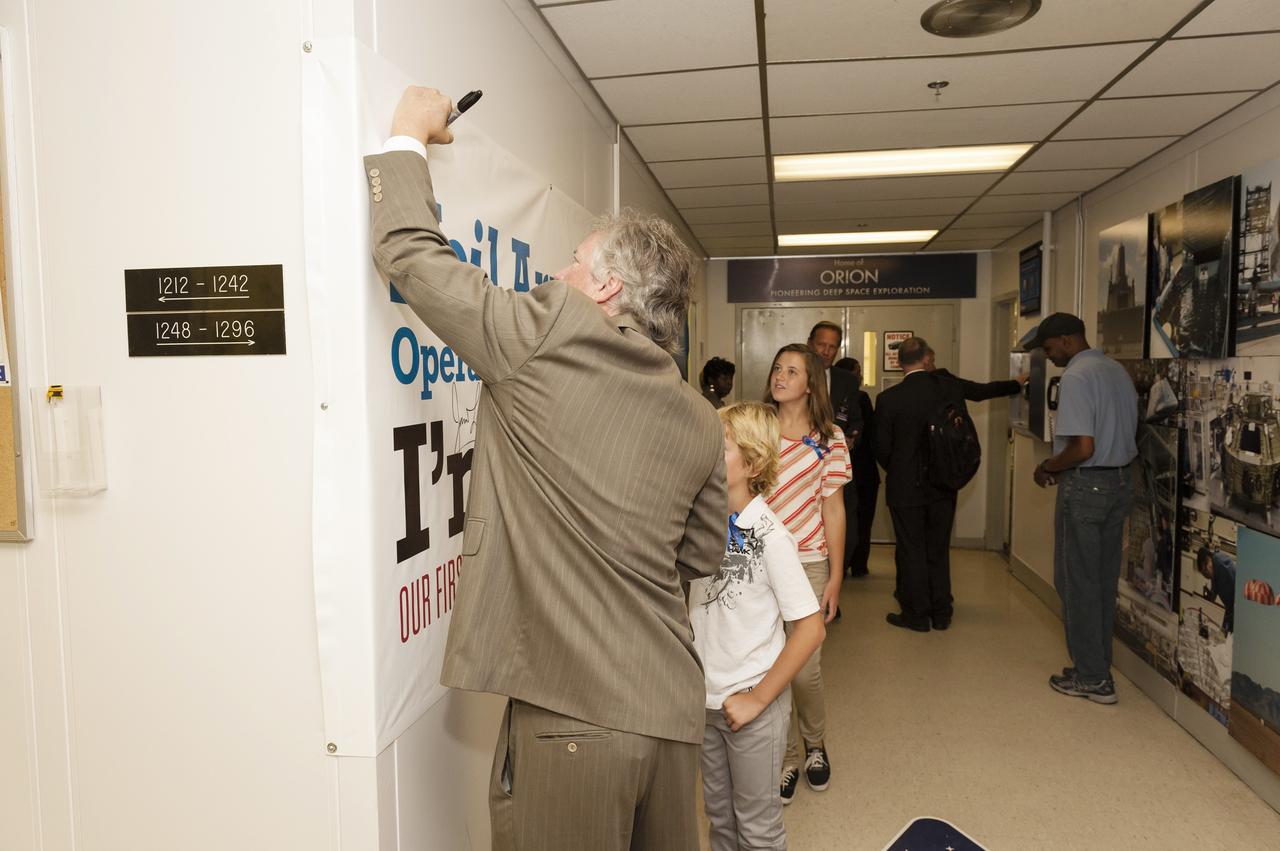
CAPE CANAVERAL, Fla. -- Family members of Apollo 11 astronaut Neil Armstrong sign a banner displaying the new name of the Operations and Checkout Building at NASA's Kennedy Space Center in Florida. The banner signing followed a ceremony renaming the refurbished building for Apollo 11 astronaut Neil Armstrong, the first person to set foot on the moon. From left are Armstrong's son Rick, his grandson Bryce and his granddaughter Lily. The building's high bay is being used to support the agency's new Orion spacecraft and is the same spaceport facility where the Apollo 11 command/service module and lunar module were prepped for the first lunar landing mission in 1969. Orion is designed to take humans farther than they’ve ever gone before, serving as the exploration vehicle that will carry astronauts to deep space and sustain the crew during travel to destinations such as an asteroid or Mars. The ceremony was part of NASA's 45th anniversary celebration of the Apollo 11 moon landing. As the world watched, Neil Armstrong and Buzz Aldrin landed in the moon's Sea of Tranquility on July 20, 1969, aboard the lunar module Eagle. Meanwhile, crewmate Michael Collins orbited above in the command module Columbia. For more, visit http://www.nasa.gov/press/2014/july/nasa-honors-historic-first-moon-landing-eyes-first-mars-mission. Photo credit: NASA/Kevin O'Connell
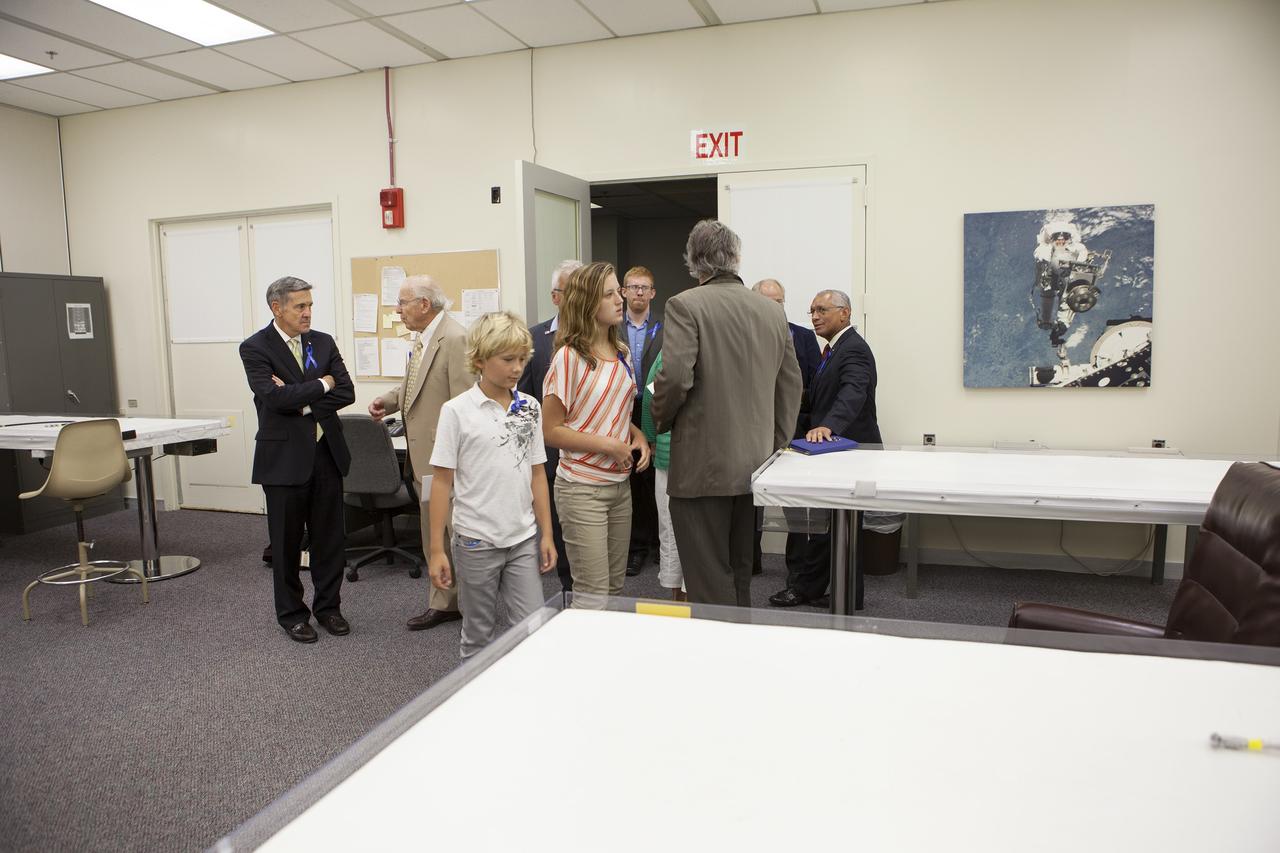
CAPE CANAVERAL, Fla. -- Apollo astronauts and their families tour the astronaut crew quarters in the Operations and Checkout Building at NASA's Kennedy Space Center in Florida. The tour followed a ceremony renaming the refurbished Operations and Checkout Building for Apollo 11 astronaut Neil Armstrong, the first person to set foot on the moon. Here, Armstrong's grandchildren, Bryce and Lily, in front, make their way into the room. Center Director Robert Cabana talks with Apollo 8 and Apollo 13 crew member Jim Lovell, at left, as NASA Administrator Charles Bolden talks with other Armstrong family members, at right. Besides housing the crew quarters, the building's high bay is being used to support the agency's new Orion spacecraft and is the same spaceport facility where the Apollo 11 command/service module and lunar module were prepped for the first lunar landing mission in 1969. Orion is designed to take humans farther than they’ve ever gone before, serving as the exploration vehicle that will carry astronauts to deep space and sustain the crew during travel to destinations such as an asteroid or Mars. The ceremony was part of NASA's 45th anniversary celebration of the Apollo 11 moon landing. As the world watched, Neil Armstrong and Buzz Aldrin landed in the moon's Sea of Tranquility on July 20, 1969, aboard the lunar module Eagle. Meanwhile, crewmate Michael Collins orbited above in the command module Columbia. For more, visit http://www.nasa.gov/press/2014/july/nasa-honors-historic-first-moon-landing-eyes-first-mars-mission. Photo credit: NASA/Kim Shiflett
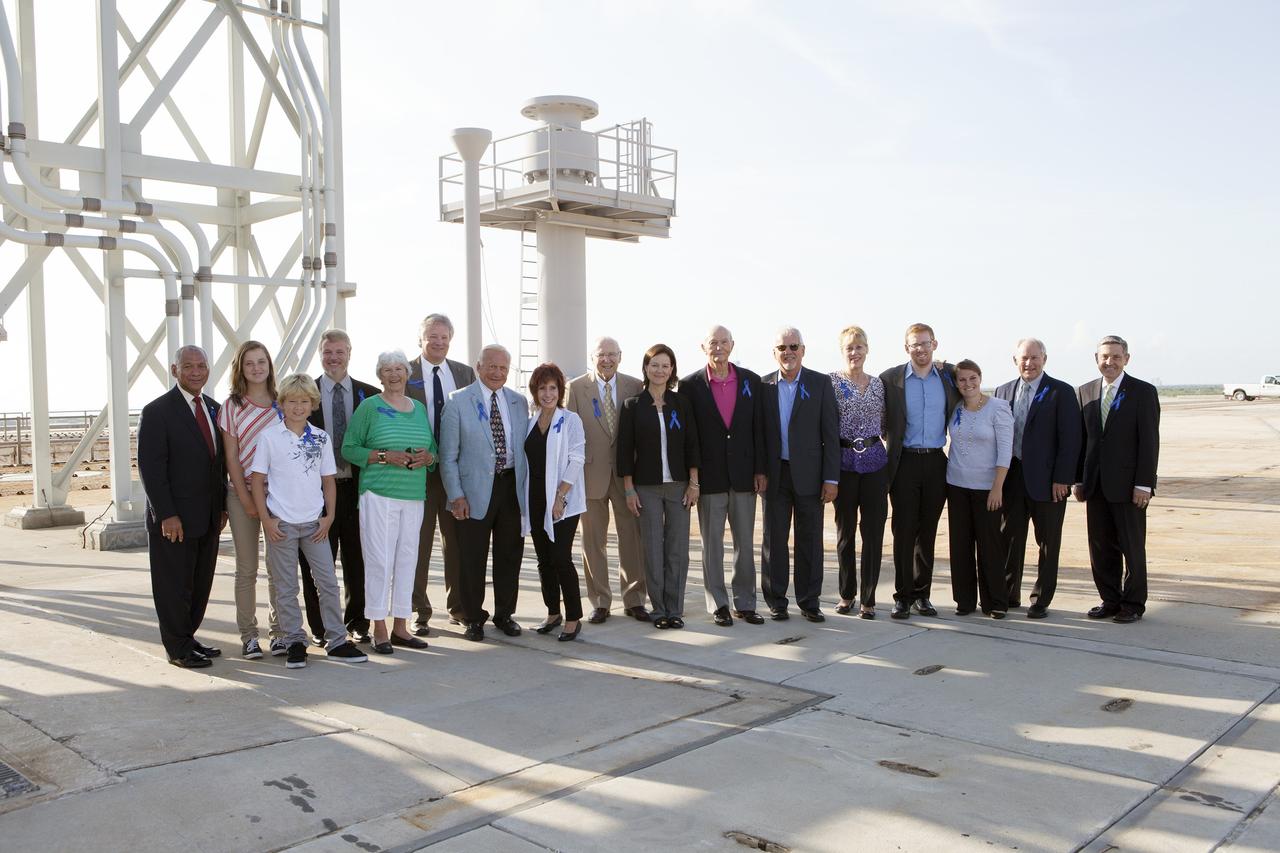
CAPE CANAVERAL, Fla. -- At NASA's Kennedy Space Center in Florida, NASA officials and Apollo astronauts visiting Launch Pad 39B with their families and friends preserve the moment with a group portrait. The group was at Kennedy for a ceremony renaming the Operations and Checkout Building for Apollo 11 astronaut Neil Armstrong, the first person to set foot on the moon. From left are NASA Administrator Charles Bolden, Neil's granddaughter Lily Armstrong, Neil's grandson Bryce Armstrong, Neil's son Mark Armstrong, Neil's former wife Janet Armstrong, Neil's son Rick Armstrong, Apollo 11 moonwalker Buzz Aldrin, Buzz's friend Judy Rice, Apollo astronaut Jim Lovell, Mike Collins' daughter Ann Starr, Apollo 11 command module pilot Mike Collins, Buzz's grandson Jeffrey Schuss, Jeffrey's wife April Schuss, Buzz's son-in-law Bruce Hanifan, Buzz's daughter Jan Aldrin, Buzz's son Andy Aldrin, and Center Director Bob Cabana. The pad is being modified to support the agency's new Orion spacecraft which will lift off atop the Space Launch System rocket. Orion is designed to take humans farther than they’ve ever gone before, serving as the exploration vehicle that will carry astronauts to deep space and sustain the crew during travel to destinations such as an asteroid or Mars. The visit of the former astronauts was part of NASA's 45th anniversary celebration of the Apollo 11 moon landing. As the world watched, Neil Armstrong and Neil Aldrin landed in the moon's Sea of Tranquility aboard the lunar module Eagle on July 20, 1969. Meanwhile, crewmate Michael Collins orbited above in the command module Columbia. For more, visit http://www.nasa.gov/press/2014/july/nasa-honors-historic-first-moon-landing-eyes-first-mars-mission. Photo credit: NASA/Kim Shiflett
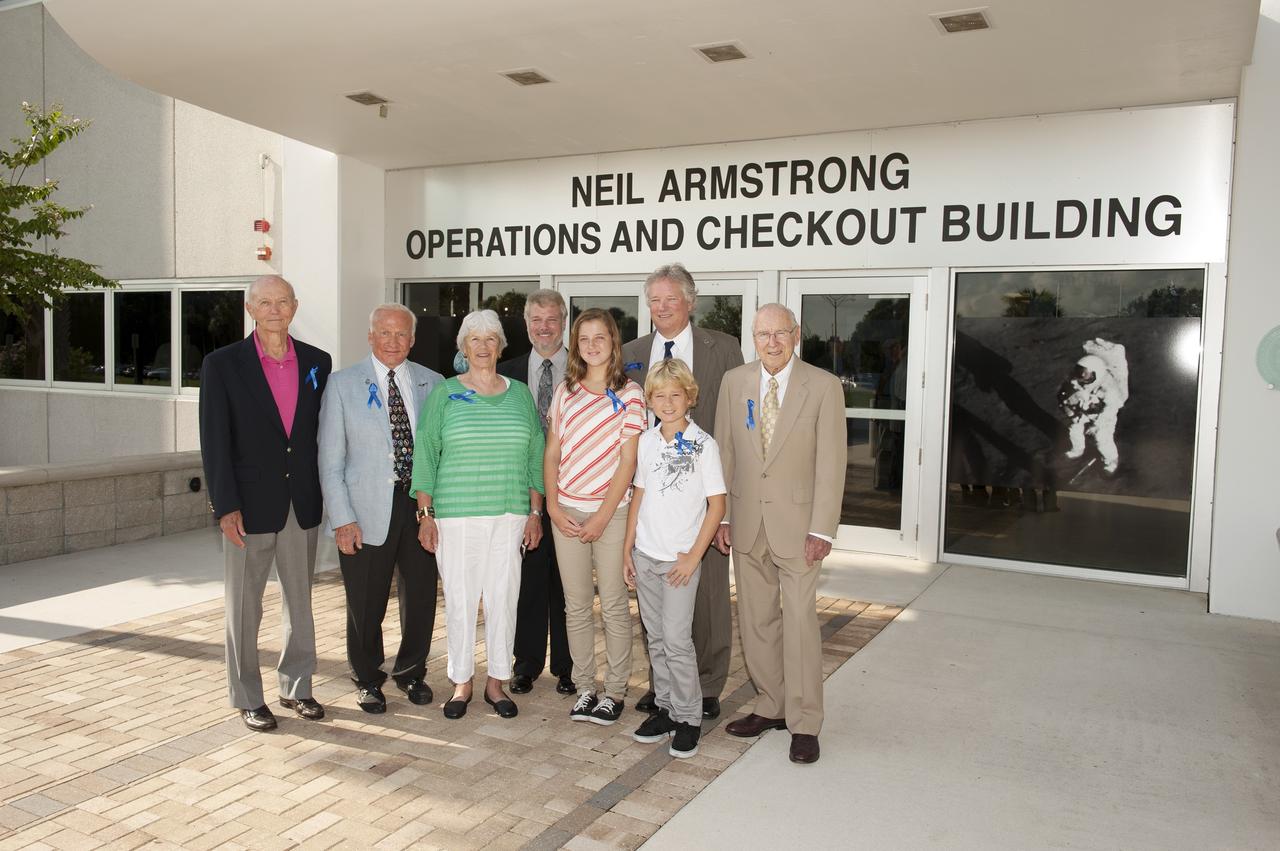
CAPE CANAVERAL, Fla. -- At the Kennedy Space Center in Florida, visiting Apollo astronauts have a group portrait taken in front of the refurbished Operations and Checkout Building, with the family of Neil Armstrong, the Apollo 11 astronaut who was the first person to set foot on the moon and for whom the facility is newly named. From left are Apollo 11 astronauts Mike Collins and Buzz Aldrin, Armstrong's former wife Janet, his son Rick, his granddaughter Lily, his son Rick, his grandson Bryce, and Apollo 8 and 13 astronaut Jim Lovell. The building's high bay is being used to support the agency's new Orion spacecraft, which will lift off atop the Space Launch System rocket. Orion is designed to take humans farther than they’ve ever gone before, serving as the exploration vehicle that will carry astronauts to deep space and sustain the crew during travel to destinations such as an asteroid or Mars. The visit of the former astronauts was part of NASA's 45th anniversary celebration of the Apollo 11 moon landing. As the world watched, Neil Armstrong and Aldrin landed in the moon's Sea of Tranquility aboard the lunar module Eagle on July 20, 1969. Meanwhile, crewmate Collins orbited above in the command module Columbia. For more, visit http://www.nasa.gov/press/2014/july/nasa-honors-historic-first-moon-landing-eyes-first-mars-mission. Photo credit: NASA/Kevin O'Connell
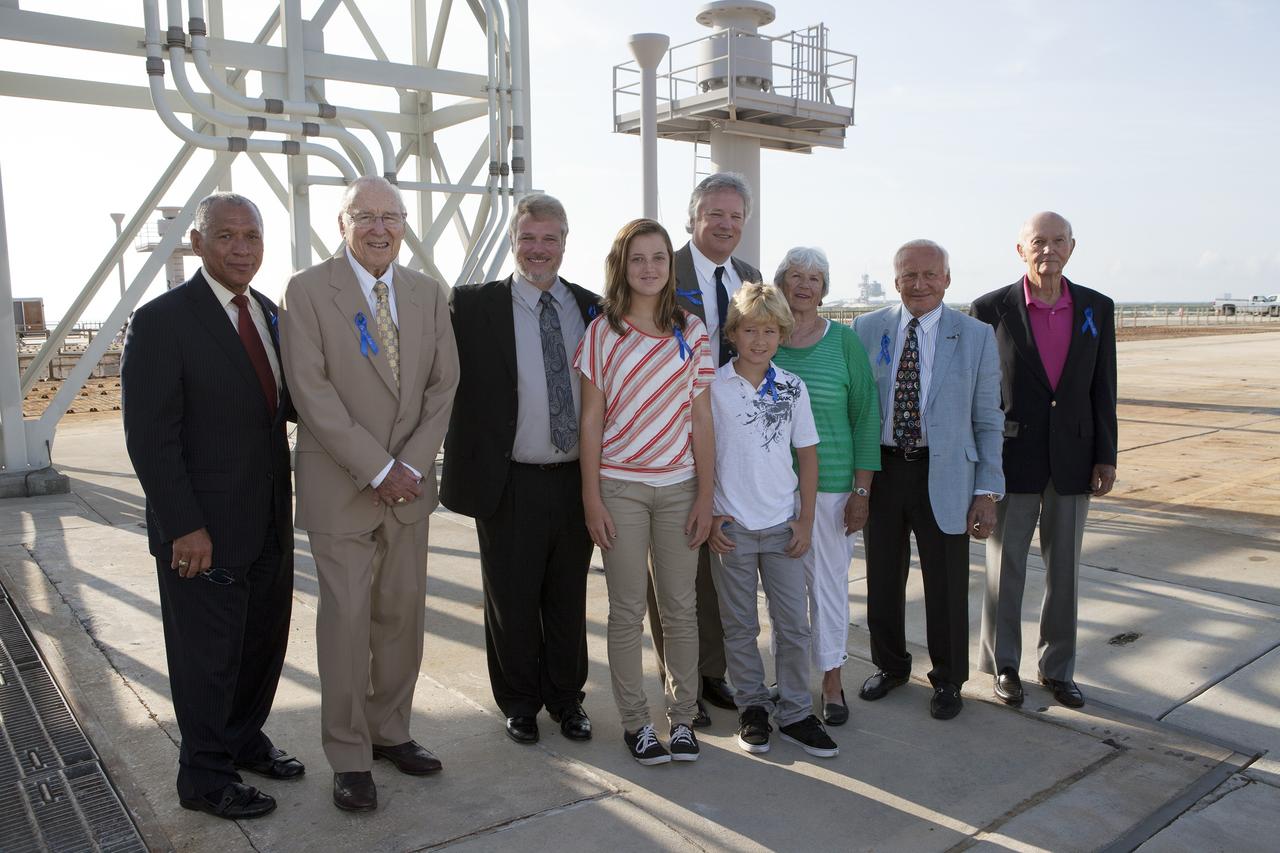
CAPE CANAVERAL, Fla. -- At the Kennedy Space Center in Florida, NASA officials and Apollo astronauts visiting Launch Pad 39B with their families and friends preserve the moment with a group portrait. The group was at Kennedy for a ceremony renaming the Operations and Checkout Building for Apollo 11 astronaut Neil Armstrong, the first person to set foot on the moon. From left are NASA Administrator Charles Bolden, Apollo astronaut Jim Lovell, Neil's son Mark Armstrong, Neil's granddaughter Lily Armstrong, Neil's son Rick Armstrong, Neil's grandson Bryce Armstrong, Neil's former wife Janet Armstrong, Apollo 11 moonwalker Buzz Aldrin, and Apollo 11 command module pilot Michael Collins. The pad is being modified to support the agency's new Orion spacecraft which will lift off atop the Space Launch System rocket. Orion is designed to take humans farther than they’ve ever gone before, serving as the exploration vehicle that will carry astronauts to deep space and sustain the crew during travel to destinations such as an asteroid or Mars. The visit of the former astronauts was part of NASA's 45th anniversary celebration of the Apollo 11 moon landing. As the world watched, Neil Armstrong and Neil Aldrin landed in the moon's Sea of Tranquility aboard the lunar module Eagle on July 20, 1969. Meanwhile, crewmate Michael Collins orbited above in the command module Columbia. For more, visit http://www.nasa.gov/press/2014/july/nasa-honors-historic-first-moon-landing-eyes-first-mars-mission. Photo credit: NASA/Kim Shiflett

NASA image acquired October 13, 2012 The Nile River Valley and Delta comprise less than 5 percent of Egypt’s land area, but provide a home to roughly 97 percent of the country’s population. Nothing makes the location of human population clearer than the lights illuminating the valley and delta at night. On October 13, 2012, the Visible Infrared Imaging Radiometer Suite (VIIRS) on the Suomi NPP satellite captured this nighttime view of the Nile River Valley and Delta. This image is from the VIIRS “day-night band,” which detects light in a range of wavelengths from green to near-infrared and uses filtering techniques to observe signals such as gas flares, auroras, wildfires, city lights, and reflected moonlight. The city lights resemble a giant calla lily, just one with a kink in its stem near the city of Luxor. Some of the brightest lights occur around Cairo, but lights are abundant along the length of the river. Bright city lights also occur along the Suez Canal and around Tel Aviv. Away from the lights, however, land and water appear uniformly black. This image was acquired near the time of the new Moon, and little moonlight was available to brighten land and water surfaces. NASA Earth Observatory image by Jesse Allen and Robert Simmon, using VIIRS Day-Night Band data from the Suomi National Polar-orbiting Partnership. Suomi NPP is the result of a partnership between NASA, the National Oceanic and Atmospheric Administration, and the Department of Defense. Caption by Michon Scott. Instrument: Suomi NPP - VIIRS Credit: <b><a href="http://www.earthobservatory.nasa.gov/" rel="nofollow"> NASA Earth Observatory</a></b> <b>Click here to view all of the <a href="http://earthobservatory.nasa.gov/Features/NightLights/" rel="nofollow"> Earth at Night 2012 images </a></b> <b>Click here to <a href="http://earthobservatory.nasa.gov/NaturalHazards/view.php?id=79807" rel="nofollow"> read more </a> about this image </b> <b><a href="http://www.nasa.gov/audience/formedia/features/MP_Photo_Guidelines.html" rel="nofollow">NASA image use policy.</a></b> <b><a href="http://www.nasa.gov/centers/goddard/home/index.html" rel="nofollow">NASA Goddard Space Flight Center</a></b> enables NASA’s mission through four scientific endeavors: Earth Science, Heliophysics, Solar System Exploration, and Astrophysics. Goddard plays a leading role in NASA’s accomplishments by contributing compelling scientific knowledge to advance the Agency’s mission. <b>Follow us on <a href="http://twitter.com/NASA_GoddardPix" rel="nofollow">Twitter</a></b> <b>Like us on <a href="http://www.facebook.com/pages/Greenbelt-MD/NASA-Goddard/395013845897?ref=tsd" rel="nofollow">Facebook</a></b> <b>Find us on <a href="http://instagram.com/nasagoddard?vm=grid" rel="nofollow">Instagram</a></b>

NASA image acquired October 13, 2012 The Nile River Valley and Delta comprise less than 5 percent of Egypt’s land area, but provide a home to roughly 97 percent of the country’s population. Nothing makes the location of human population clearer than the lights illuminating the valley and delta at night. On October 13, 2012, the Visible Infrared Imaging Radiometer Suite (VIIRS) on the Suomi NPP satellite captured this nighttime view of the Nile River Valley and Delta. This image is from the VIIRS “day-night band,” which detects light in a range of wavelengths from green to near-infrared and uses filtering techniques to observe signals such as gas flares, auroras, wildfires, city lights, and reflected moonlight. The city lights resemble a giant calla lily, just one with a kink in its stem near the city of Luxor. Some of the brightest lights occur around Cairo, but lights are abundant along the length of the river. Bright city lights also occur along the Suez Canal and around Tel Aviv. Away from the lights, however, land and water appear uniformly black. This image was acquired near the time of the new Moon, and little moonlight was available to brighten land and water surfaces. NASA Earth Observatory image by Jesse Allen and Robert Simmon, using VIIRS Day-Night Band data from the Suomi National Polar-orbiting Partnership. Suomi NPP is the result of a partnership between NASA, the National Oceanic and Atmospheric Administration, and the Department of Defense. Caption by Michon Scott. Instrument: Suomi NPP - VIIRS Credit: <b><a href="http://www.earthobservatory.nasa.gov/" rel="nofollow"> NASA Earth Observatory</a></b> <b>Click here to view all of the <a href="http://earthobservatory.nasa.gov/Features/NightLights/" rel="nofollow"> Earth at Night 2012 images </a></b> <b>Click here to <a href="http://earthobservatory.nasa.gov/NaturalHazards/view.php?id=79807" rel="nofollow"> read more </a> about this image </b> <b><a href="http://www.nasa.gov/audience/formedia/features/MP_Photo_Guidelines.html" rel="nofollow">NASA image use policy.</a></b> <b><a href="http://www.nasa.gov/centers/goddard/home/index.html" rel="nofollow">NASA Goddard Space Flight Center</a></b> enables NASA’s mission through four scientific endeavors: Earth Science, Heliophysics, Solar System Exploration, and Astrophysics. Goddard plays a leading role in NASA’s accomplishments by contributing compelling scientific knowledge to advance the Agency’s mission. <b>Follow us on <a href="http://twitter.com/NASA_GoddardPix" rel="nofollow">Twitter</a></b> <b>Like us on <a href="http://www.facebook.com/pages/Greenbelt-MD/NASA-Goddard/395013845897?ref=tsd" rel="nofollow">Facebook</a></b> <b>Find us on <a href="http://instagram.com/nasagoddard?vm=grid" rel="nofollow">Instagram</a></b>
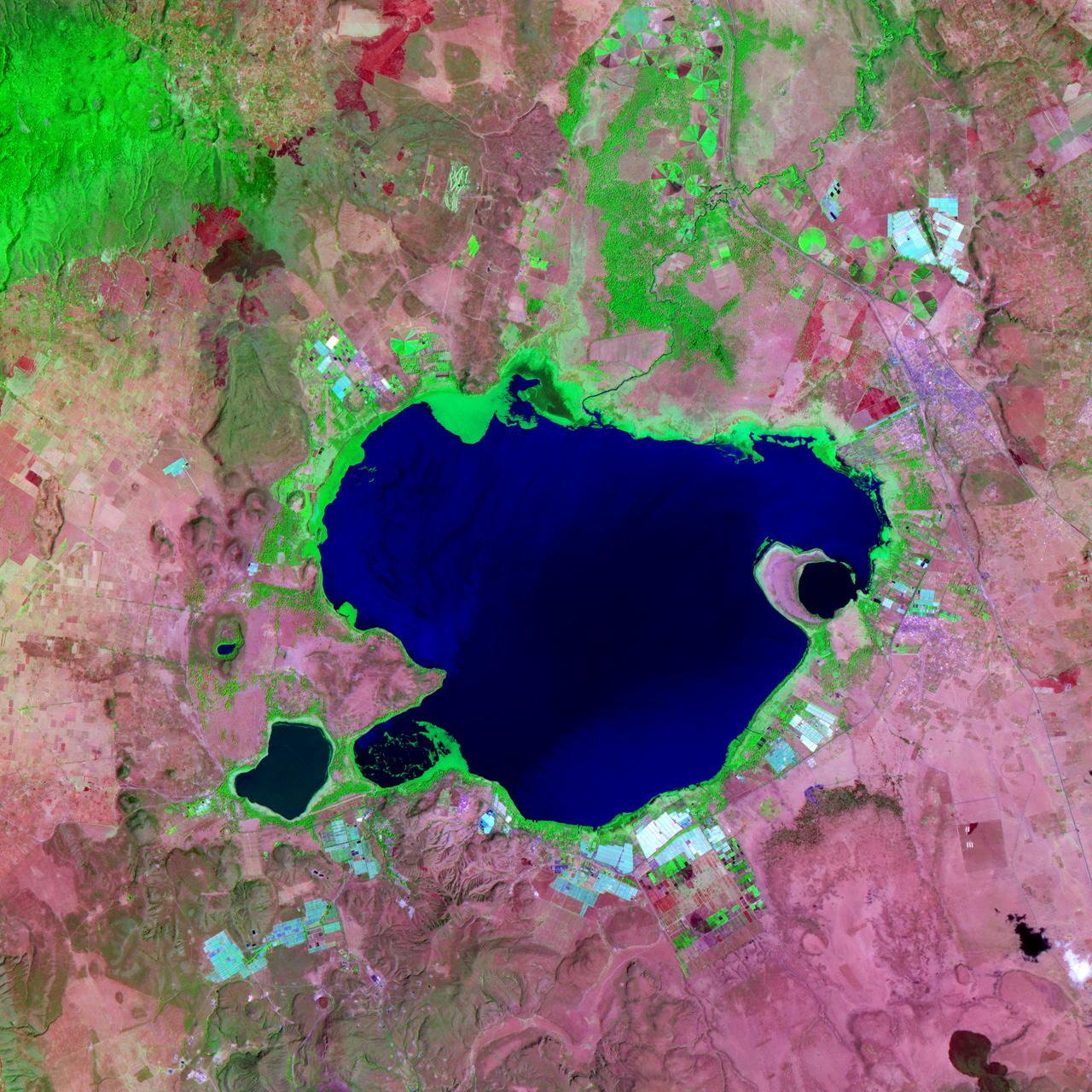
NASA satellite image acquired February 2, 2008. Outside the ground is frozen, quite possibly covered in snow and ice, and yet, stroll through a supermarket in North America or Europe in February, and you’ll be confronted with large displays of roses. We expect flowers in winter, and equatorial countries meet those expectations. A quarter of the cut flowers sold in Europe are grown in Kenya. Straddling the equator, Kenya gets steady sunlight dealt out in days that vary little in length. It’s the perfect climate for flowers year-round. The center of Kenya’s flower industry is Lake Naivasha, shown here. The Advanced Spaceborne Thermal Emission and Reflection Radiometer (ASTER) flying on NASA’s Terra satellite captured this image of Lake Naivasha on February 2, 2008. Bright white squares mix with fields of green, tan, and purple along the shores of the lake. Sunlight glints off the long rows of glass greenhouses, turning them silvery blue and white in this view from space. Fallow fields are tan and pink, while growing plants turn the ground bright green. Roses, lilies, and carnations are the most common flowers grown in the greenhouses and fields scattered around the lake. The large-scale industry shown here extends into small-scale rural farms elsewhere in Kenya, where smaller filler flowers are grown. The flowers provide an important source of income to Kenya, but the industry comes with a price. Flowers are not held to the same standards for chemical residues as food products, which are tightly regulated. Strong chemical pesticides can be used on the flowers to produce the perfect, pest-free bloom, and this could pose a health risk to workers and local wildlife, including hippos, environmental groups told the Food and Agriculture Organization of the United Nations in 2002. The chemicals may also have threatened the water quality of Lake Naivasha, one of Kenya’s few freshwater lakes. The Kenya Flower Council instituted a code of conduct establishing guidelines for pesticide that phases out the use of one of the most toxic pesticides. NASA image created by Jesse Allen, using data provided courtesy of NASA/GSFC/METI/ERSDAC/JAROS, and U.S./Japan ASTER Science Team. Caption by Holli Riebeek. Instrument: Terra - ASTER <b><a href="http://www.nasa.gov/centers/goddard/home/index.html" rel="nofollow">NASA Goddard Space Flight Center</a></b> is home to the nation's largest organization of combined scientists, engineers and technologists that build spacecraft, instruments and new technology to study the Earth, the sun, our solar system, and the universe.