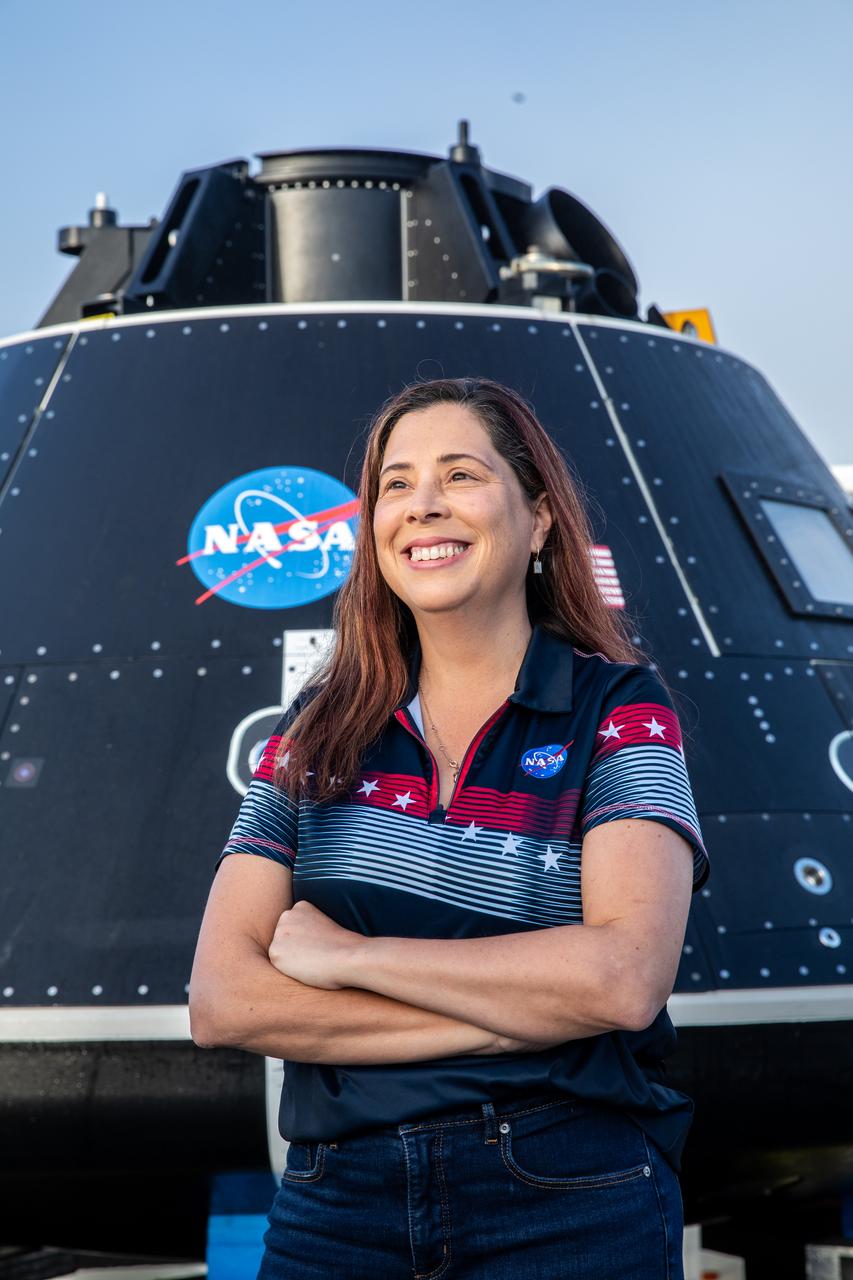
Liliana Villarreal, Artemis landing and recovery director with Exploration Ground Systems (EGS), stands in front of the Crew Module Test Article (CMTA) at the turn basin in the Launch Complex 39 area at NASA’s Kennedy Space Center in Florida on Feb. 1, 2023. The CMTA is being used to practice recovery after splashdown of the Orion spacecraft to prepare for the Artemis II crewed mission. EGS leads recovery efforts.
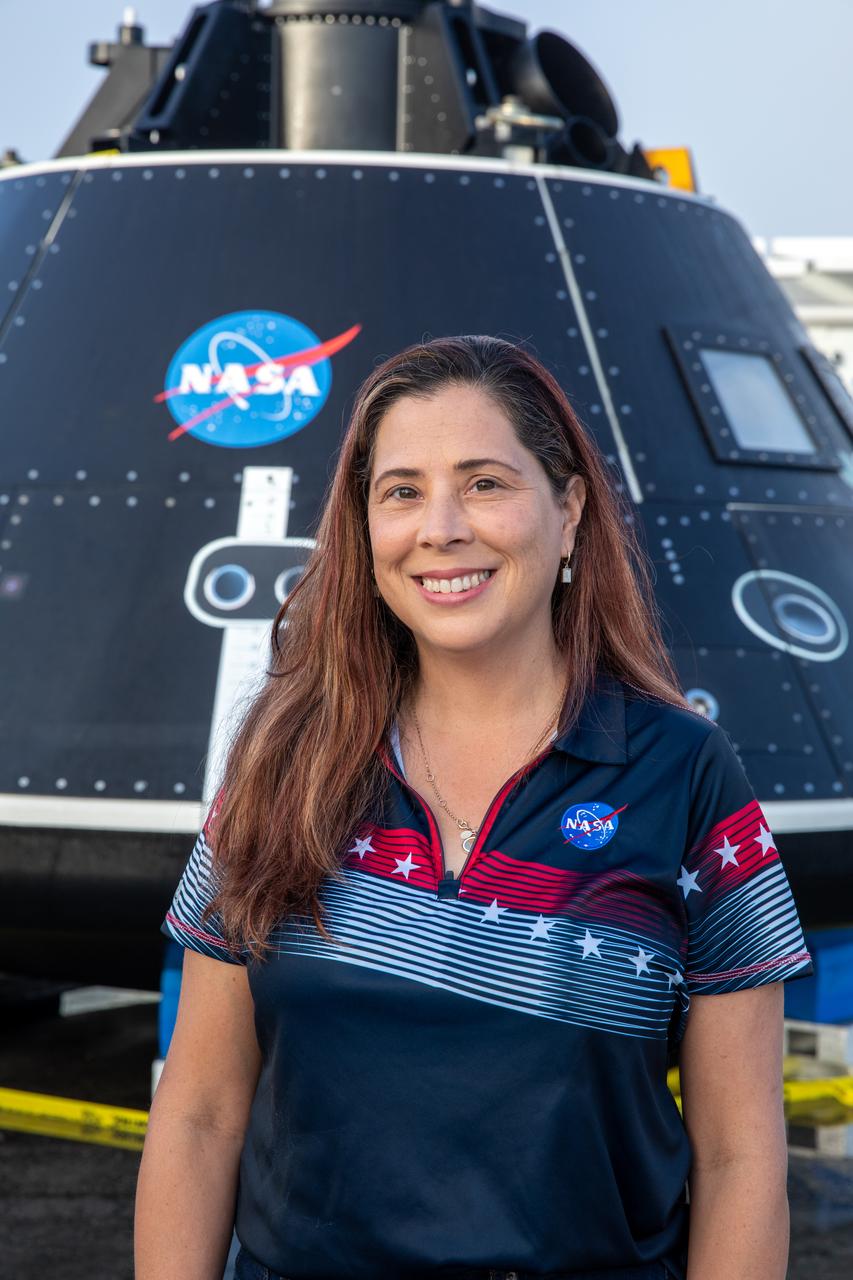
Liliana Villarreal, Artemis landing and recovery director with Exploration Ground Systems (EGS), stands in front of the Crew Module Test Article (CMTA) at the turn basin in the Launch Complex 39 area at NASA’s Kennedy Space Center in Florida on Feb. 1, 2023. The CMTA is being used to practice recovery after splashdown of the Orion spacecraft to prepare for the Artemis II crewed mission. EGS leads recovery efforts.
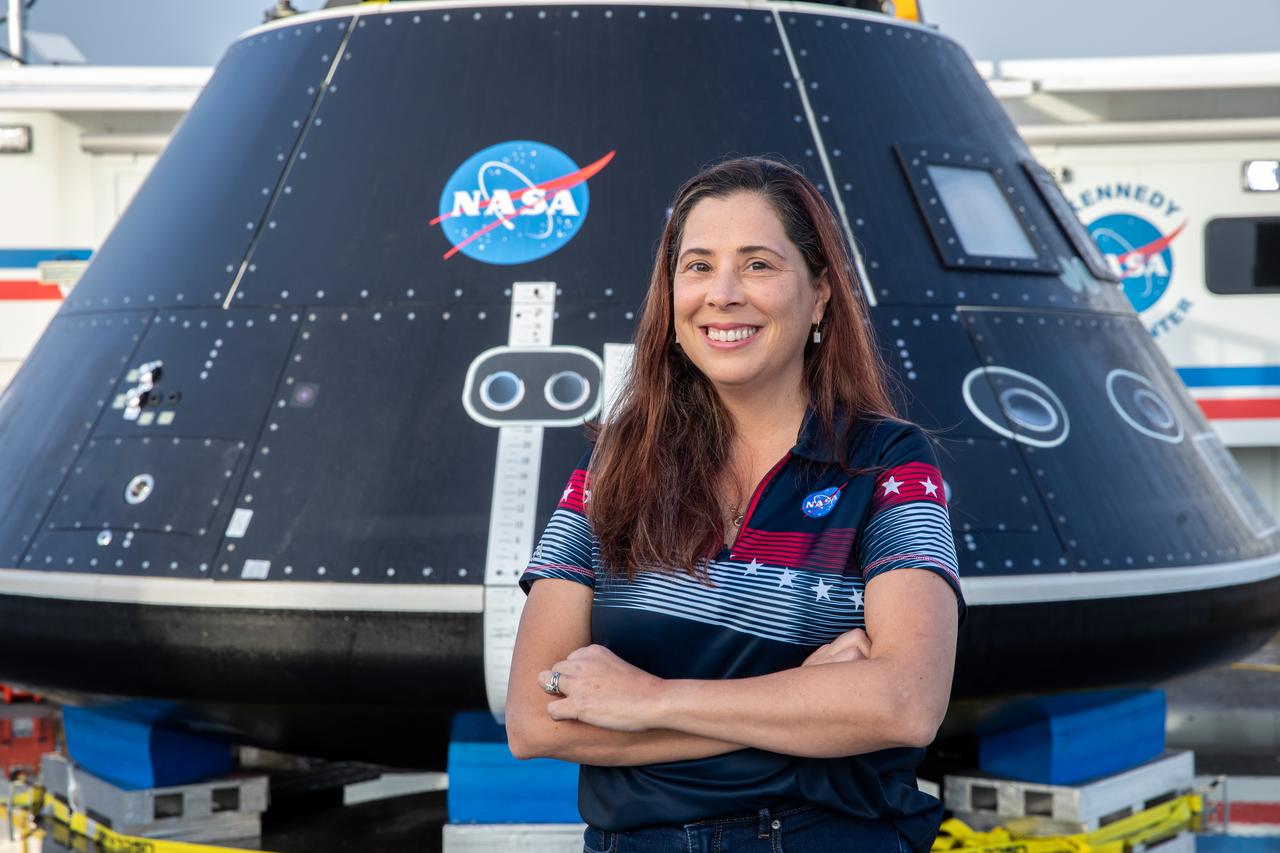
Liliana Villarreal, Artemis landing and recovery director with Exploration Ground Systems (EGS), stands in front of the Crew Module Test Article (CMTA) at the turn basin in the Launch Complex 39 area at NASA’s Kennedy Space Center in Florida on Feb. 1, 2023. The CMTA is being used to practice recovery after splashdown of the Orion spacecraft to prepare for the Artemis II crewed mission. EGS leads recovery efforts.
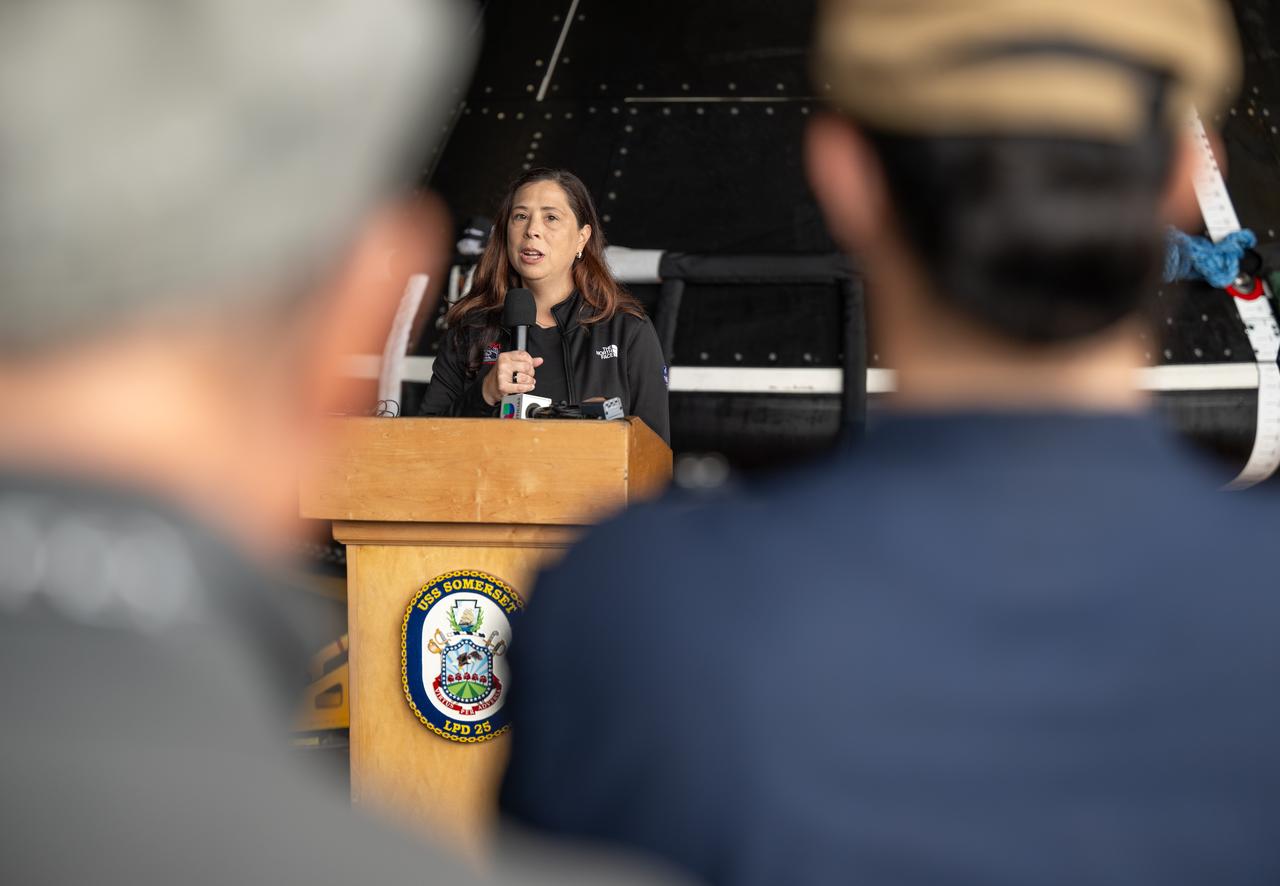
Liliana Villarreal, NASA’s Artemis II landing and recovery director, Exploration Ground Systems Program, gives remarks during a media event where NASA and the Department of Defense discussed the recovery operations that will bring the Artemis II astronauts and the agency’s Orion spacecraft home at the conclusion of next year’s mission around the Moon, Monday, March 31, 2025, onboard USS Somerset at Naval Base San Diego, in California. The teams spent the week practicing the procedures they will use to recover the astronauts after their more than 600,000 mile journey from Earth to the Moon and back on the first crewed mission under the Artemis campaign. Photo Credit: (NASA/Bill Ingalls)
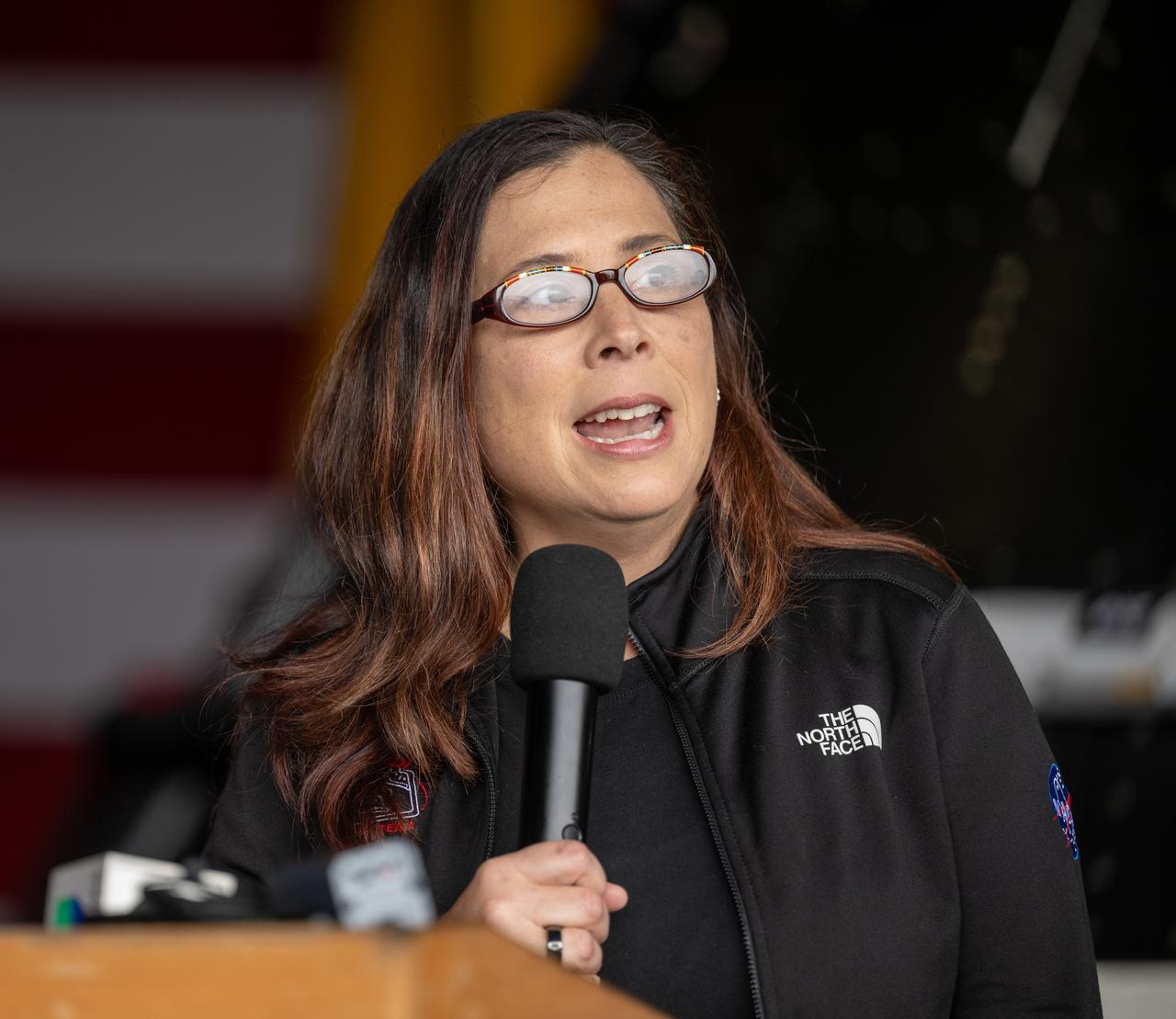
Liliana Villarreal, NASA’s Artemis II landing and recovery director, Exploration Ground Systems Program, gives remarks during a media event where NASA and the Department of Defense discussed the recovery operations that will bring the Artemis II astronauts and the agency’s Orion spacecraft home at the conclusion of next year’s mission around the Moon, Monday, March 31, 2025, onboard USS Somerset at Naval Base San Diego, in California. The teams spent the week practicing the procedures they will use to recover the astronauts after their more than 600,000 mile journey from Earth to the Moon and back on the first crewed mission under the Artemis campaign. Photo Credit: (NASA/Bill Ingalls)
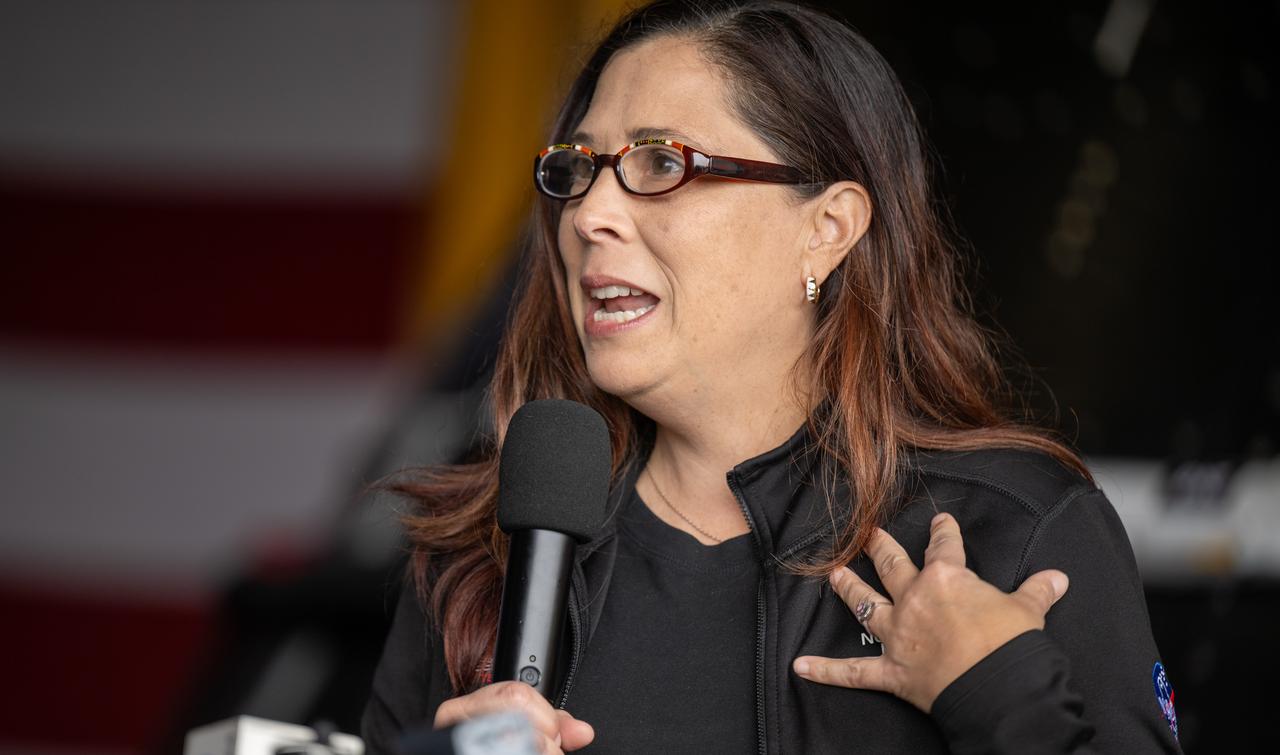
Liliana Villarreal, NASA’s Artemis II landing and recovery director, Exploration Ground Systems Program, gives remarks during a media event where NASA and the Department of Defense discussed the recovery operations that will bring the Artemis II astronauts and the agency’s Orion spacecraft home at the conclusion of next year’s mission around the Moon, Monday, March 31, 2025, onboard USS Somerset at Naval Base San Diego, in California. The teams spent the week practicing the procedures they will use to recover the astronauts after their more than 600,000 mile journey from Earth to the Moon and back on the first crewed mission under the Artemis campaign. Photo Credit: (NASA/Bill Ingalls)
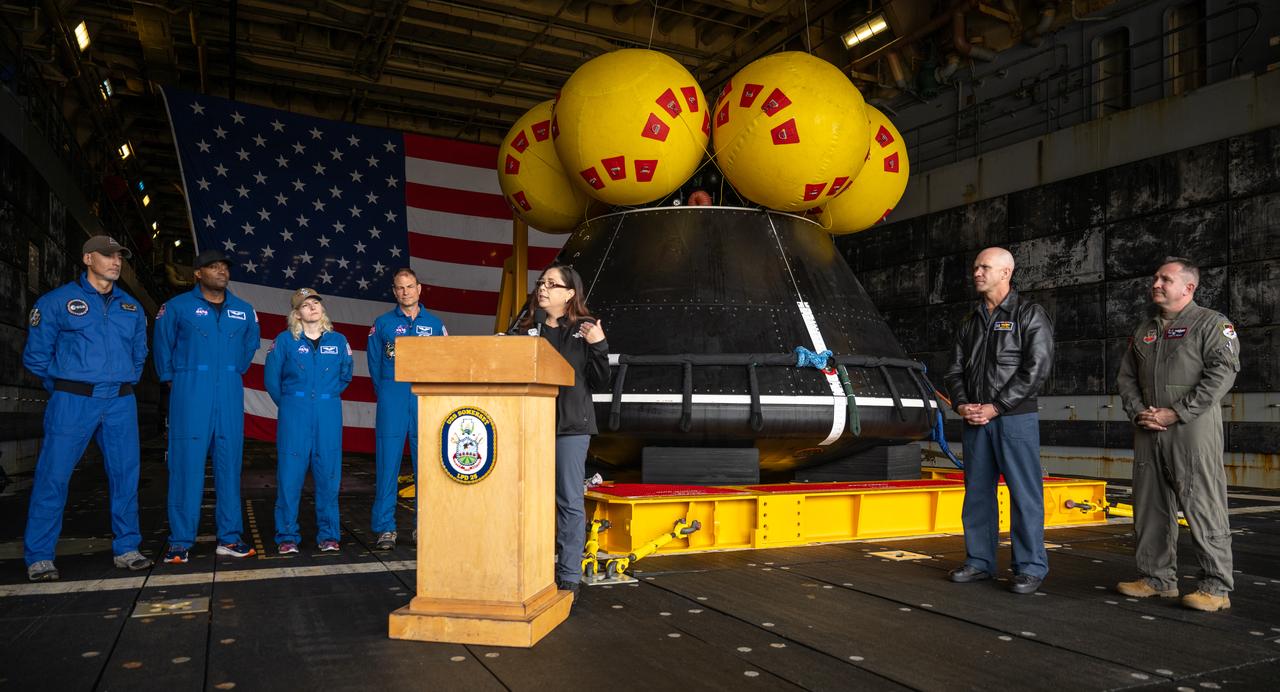
Liliana Villarreal, NASA’s Artemis II landing and recovery director, Exploration Ground Systems Program, gives remarks during a media event where NASA and the Department of Defense discussed the recovery operations that will bring the Artemis II astronauts and the agency’s Orion spacecraft home at the conclusion of next year’s mission around the Moon, Monday, March 31, 2025, onboard USS Somerset at Naval Base San Diego, in California. The teams spent the week practicing the procedures they will use to recover the astronauts after their more than 600,000 mile journey from Earth to the Moon and back on the first crewed mission under the Artemis campaign. Photo Credit: (NASA/Bill Ingalls)
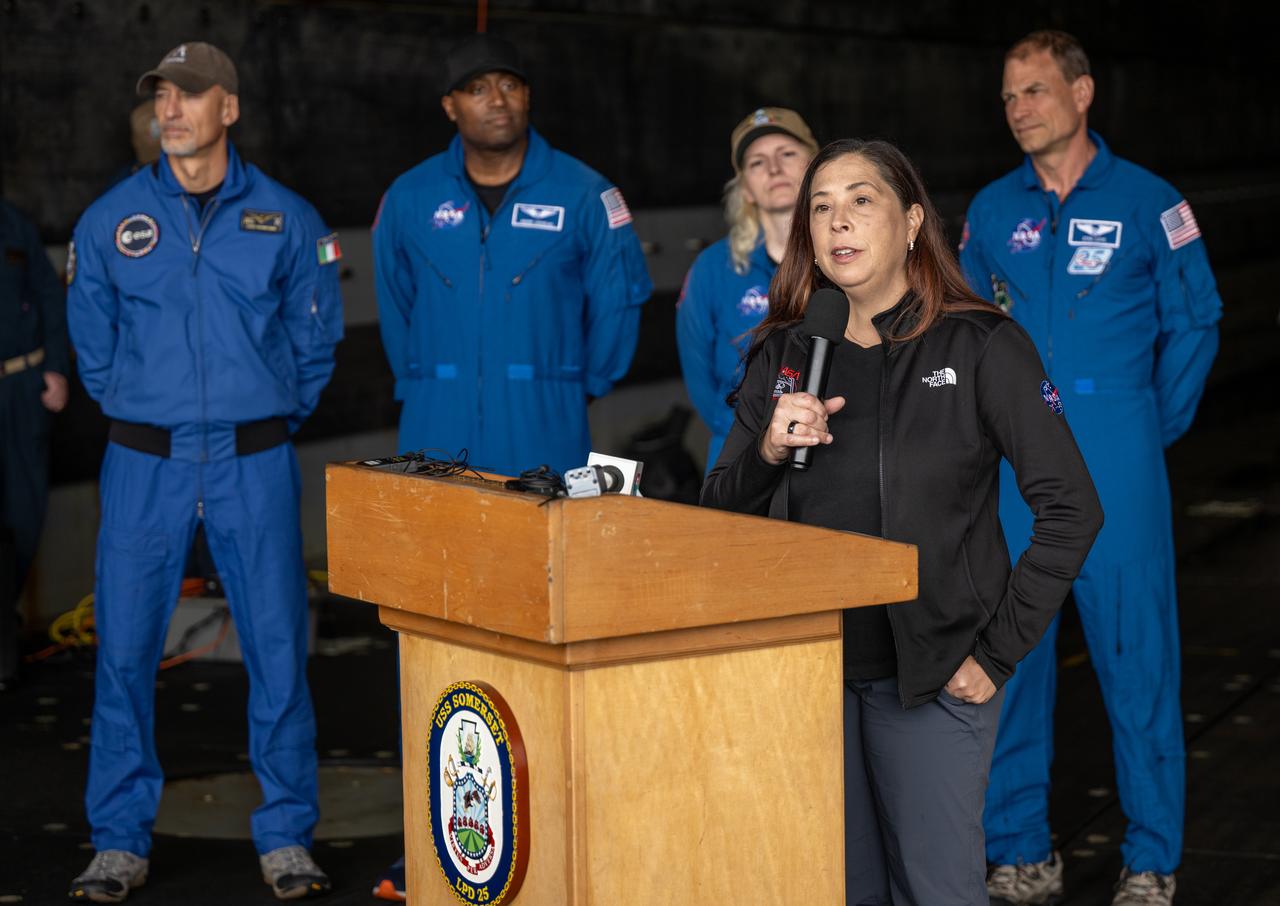
Liliana Villarreal, NASA’s Artemis II landing and recovery director, Exploration Ground Systems Program, gives remarks during a media event where NASA and the Department of Defense discussed the recovery operations that will bring the Artemis II astronauts and the agency’s Orion spacecraft home at the conclusion of next year’s mission around the Moon, Monday, March 31, 2025, onboard USS Somerset at Naval Base San Diego, in California. The teams spent the week practicing the procedures they will use to recover the astronauts after their more than 600,000 mile journey from Earth to the Moon and back on the first crewed mission under the Artemis campaign. Photo Credit: (NASA/Bill Ingalls)
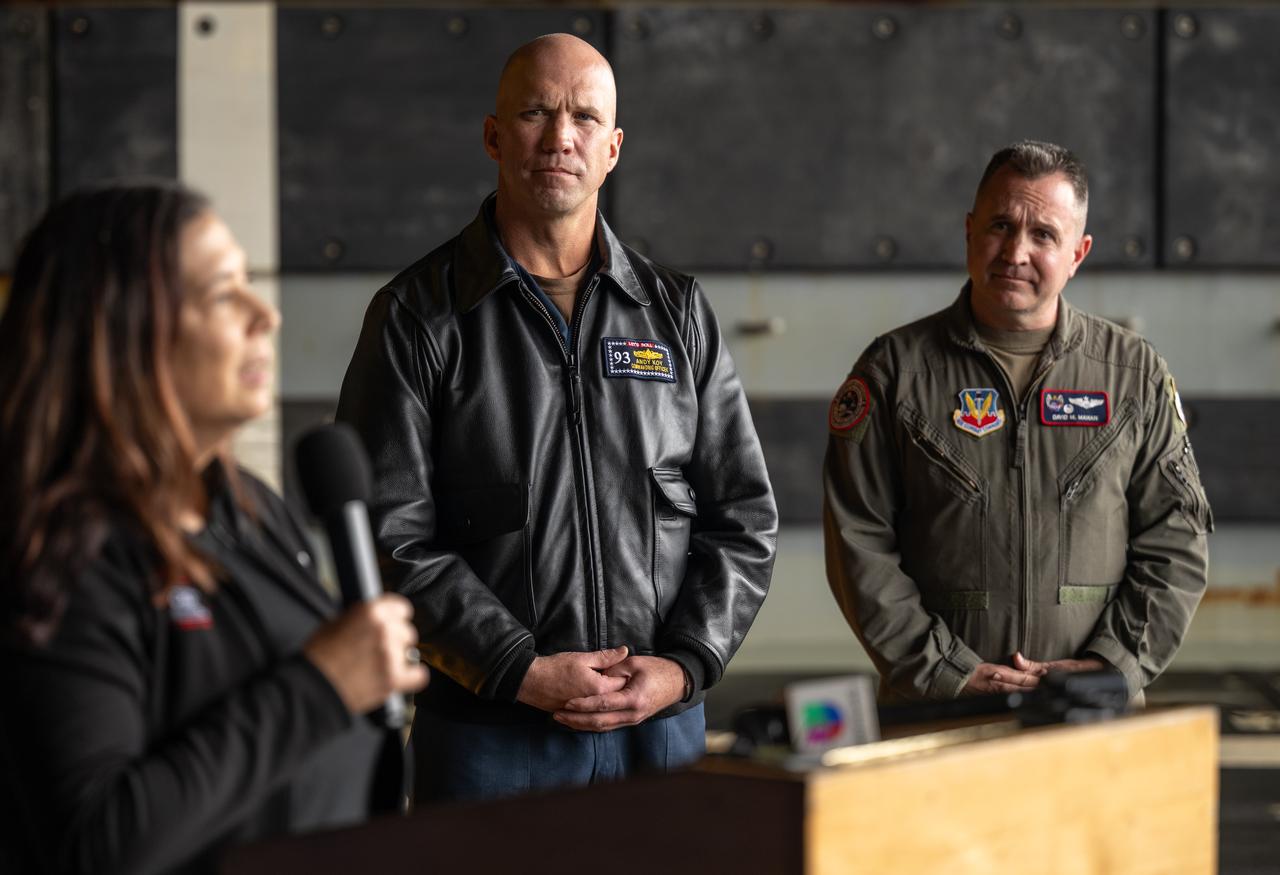
Liliana Villarreal, NASA’s Artemis II landing and recovery director, Exploration Ground Systems Program, gives remarks, as Capt. Andrew “Andy” Koy, commanding officer of USS Somerset (LPD 25), U.S. Navy, left, and Lt. Col. David Mahan, commander, U.S. Air Force’s 1st Air Force, Detachment 3, Patrick Space Force Base, Florida, look on, during a media event where NASA and the Department of Defense discussed the recovery operations that will bring the Artemis II astronauts and the agency’s Orion spacecraft home at the conclusion of next year’s mission around the Moon, Monday, March 31, 2025, onboard USS Somerset at Naval Base San Diego, in California. The teams spent the week practicing the procedures they will use to recover the astronauts after their more than 600,000 mile journey from Earth to the Moon and back on the first crewed mission under the Artemis campaign. Photo Credit: (NASA/Bill Ingalls)
Liliana Villarreal, NASA’s Artemis II landing and recovery director, Exploration Ground Systems Program, left, ESA (European Space Agency) astronaut Luca Parmitano, and NASA astronauts Andre Douglas, Deniz Burnham, and Stan Love, are seen during a media event where NASA and the Department of Defense discussed the recovery operations that will bring the Artemis II astronauts and the agency’s Orion spacecraft home at the conclusion of next year’s mission around the Moon, Monday, March 31, 2025, onboard USS Somerset at Naval Base San Diego, in California. The teams spent the week practicing the procedures they will use to recover the astronauts after their more than 600,000 mile journey from Earth to the Moon and back on the first crewed mission under the Artemis campaign. Photo Credit: (NASA/Bill Ingalls)
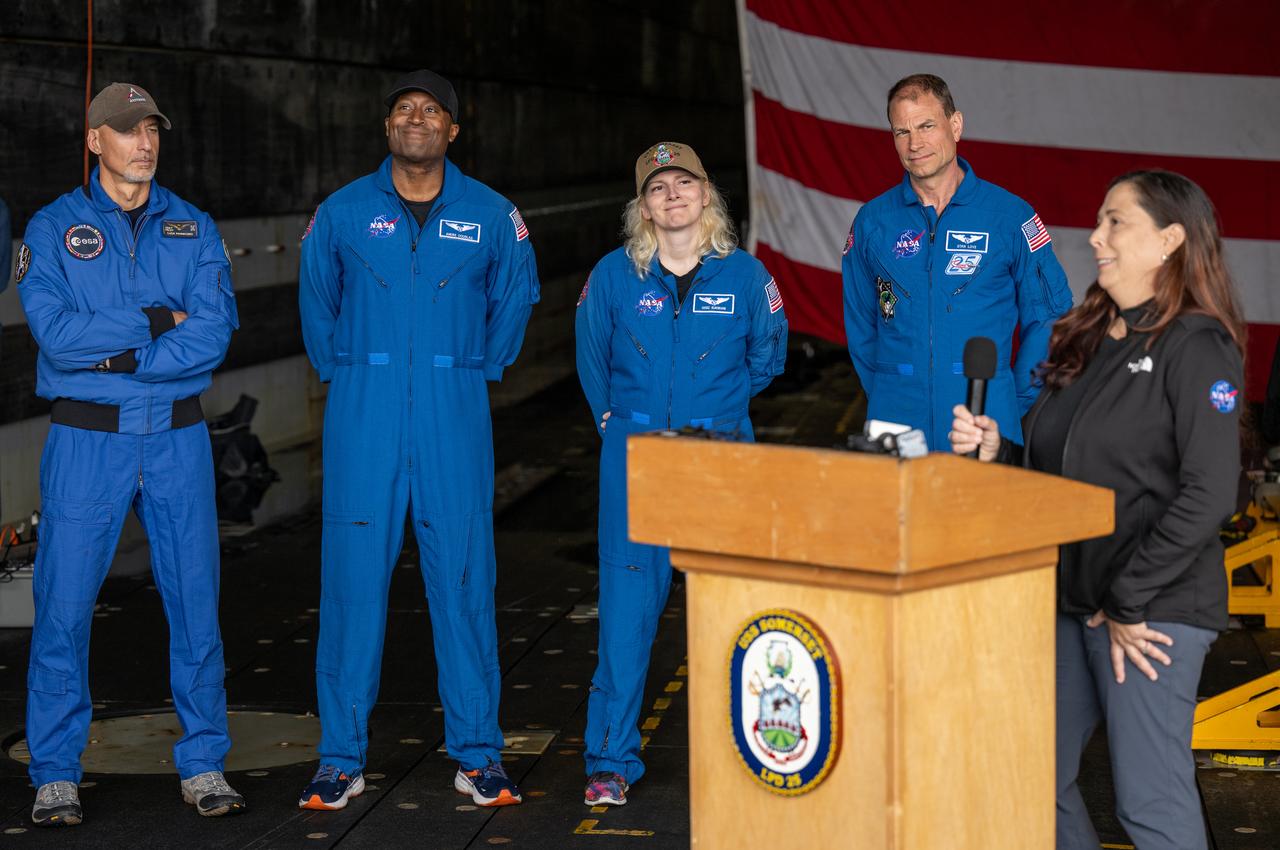
ESA (European Space Agency) astronaut Luca Parmitano, left, NASA astronauts Andre Douglas, Deniz Burnham, and Stan Love, and Liliana Villarreal, NASA’s Artemis II landing and recovery director, Exploration Ground Systems Program, right, are seen during a media event where NASA and the Department of Defense discussed the recovery operations that will bring the Artemis II astronauts and the agency’s Orion spacecraft home at the conclusion of next year’s mission around the Moon, Monday, March 31, 2025, onboard USS Somerset at Naval Base San Diego, in California. The teams spent the week practicing the procedures they will use to recover the astronauts after their more than 600,000 mile journey from Earth to the Moon and back on the first crewed mission under the Artemis campaign. Photo Credit: (NASA/Bill Ingalls)
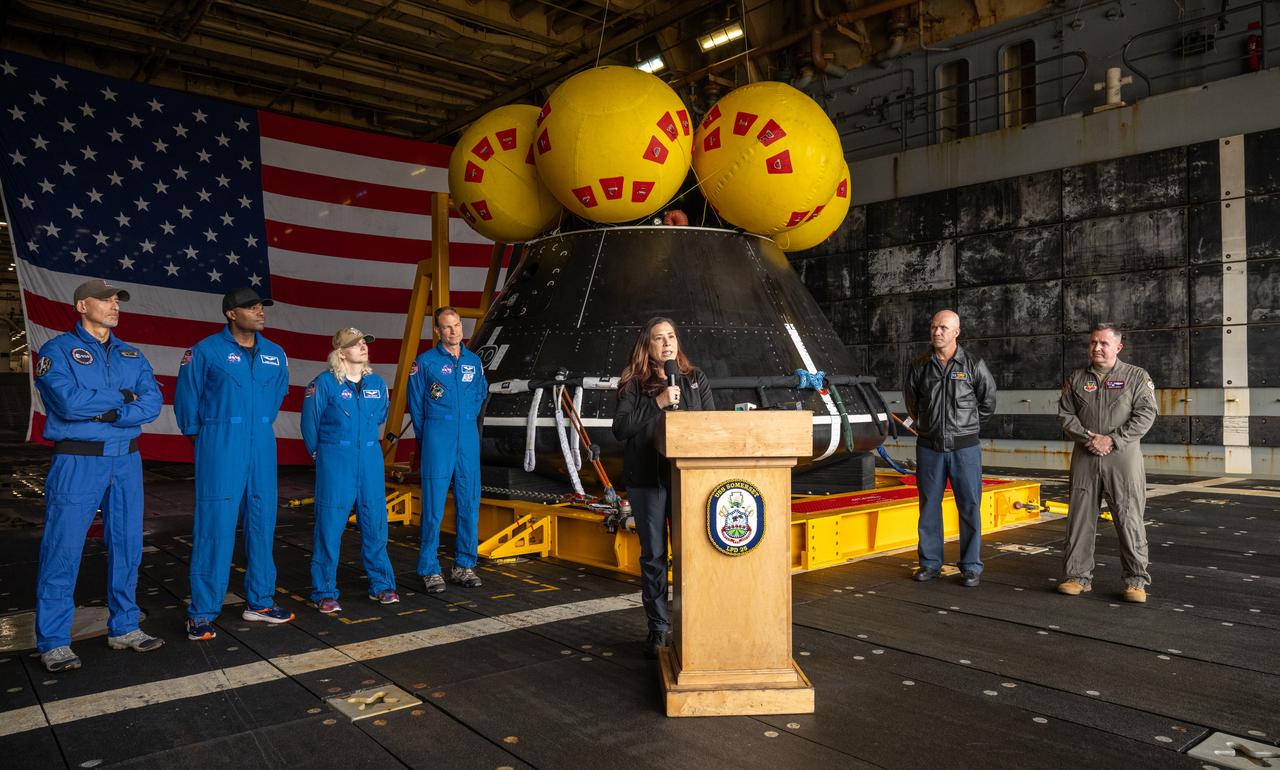
Liliana Villarreal, NASA’s Artemis II landing and recovery director, Exploration Ground Systems Program, center, gives remarks as ESA (European Space Agency) astronaut Luca Parmitano, left, NASA astronauts Andre Douglas, Deniz Burnham, Stan Love, Capt. Andrew “Andy” Koy, commanding officer of USS Somerset (LPD 25), U.S. Navy, and Lt. Col. David Mahan, commander, U.S. Air Force’s 1st Air Force, Detachment 3, Patrick Space Force Base, Florida, right, look on during a media event where NASA and the Department of Defense discussed the recovery operations that will bring the Artemis II astronauts and the agency’s Orion spacecraft home at the conclusion of next year’s mission around the Moon, Monday, March 31, 2025, onboard USS Somerset at Naval Base San Diego, in California. The teams spent the week practicing the procedures they will use to recover the astronauts after their more than 600,000 mile journey from Earth to the Moon and back on the first crewed mission under the Artemis campaign. Photo Credit: (NASA/Bill Ingalls)
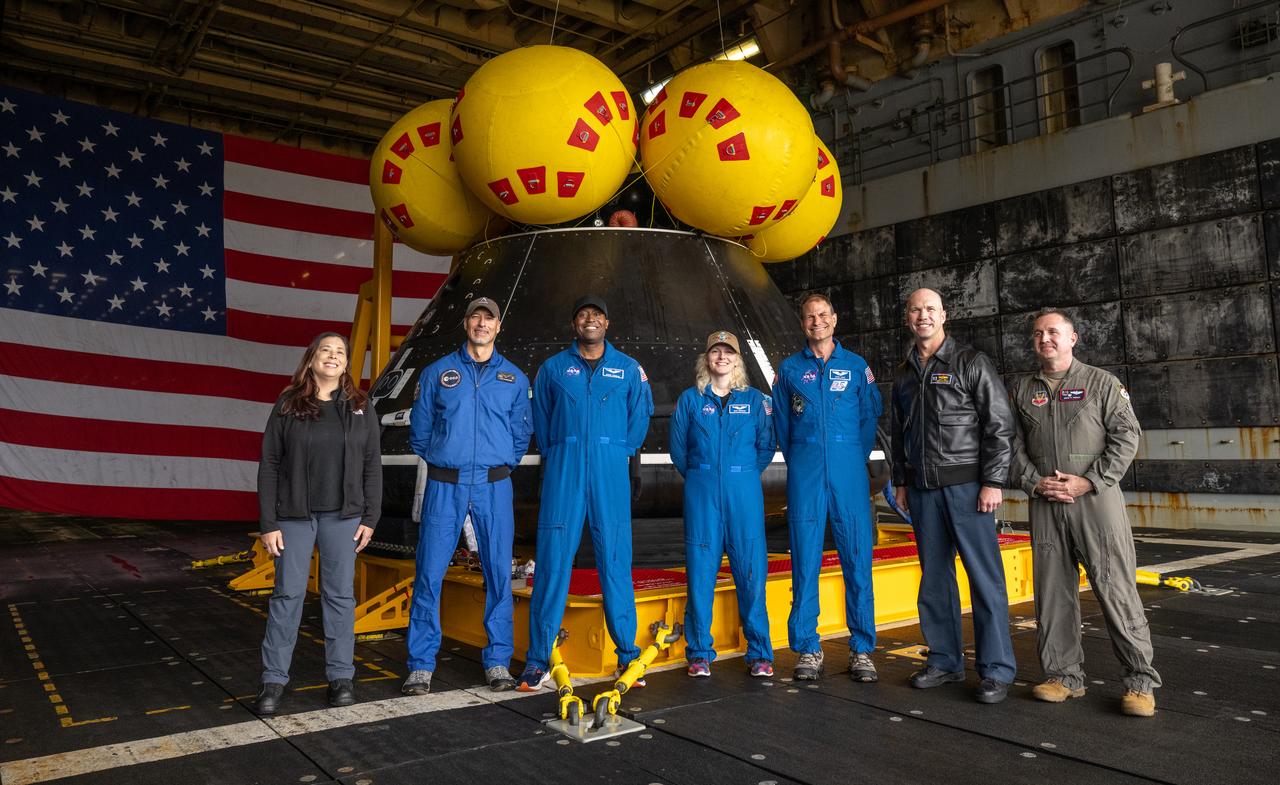
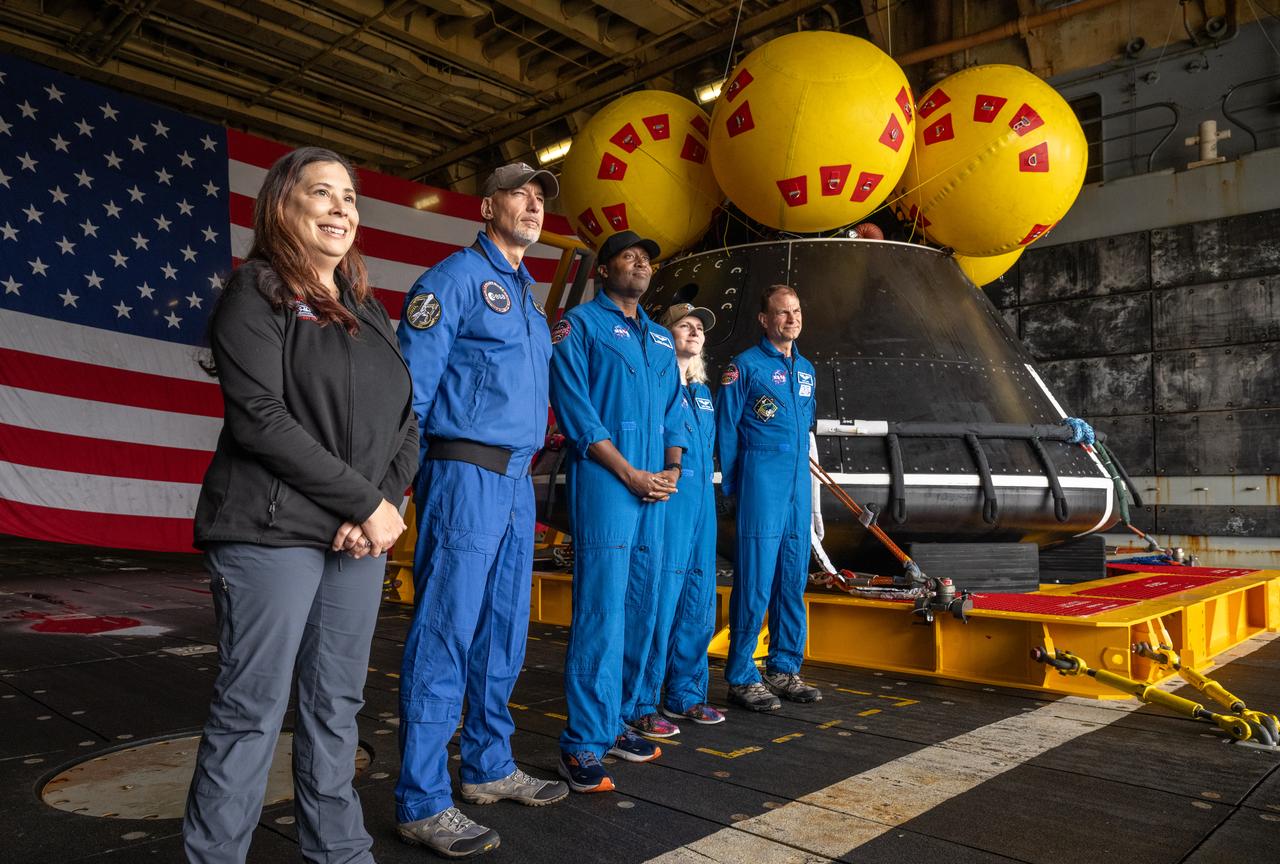
Liliana Villarreal, NASA’s Artemis II landing and recovery director, Exploration Ground Systems Program, left, ESA (European Space Agency) astronaut Luca Parmitano, NASA astronauts Andre Douglas, Deniz Burnham, Stan Love, Capt. Andrew “Andy” Koy, commanding officer of USS Somerset (LPD 25), U.S. Navy, and Lt. Col. David Mahan, commander, U.S. Air Force’s 1st Air Force, Detachment 3, Patrick Space Force Base, Florida, right, pose for a group photo in front of the Crew Module Test Article (CMTA) at the conclusion of a media event where NASA and the Department of Defense discussed the recovery operations that will bring the Artemis II astronauts and the agency’s Orion spacecraft home at the conclusion of next year’s mission around the Moon, Monday, March 31, 2025, onboard USS Somerset at Naval Base San Diego, in California. The teams spent the week practicing the procedures they will use to recover the astronauts after their more than 600,000 mile journey from Earth to the Moon and back on the first crewed mission under the Artemis campaign. Photo Credit: (NASA/Bill Ingalls)
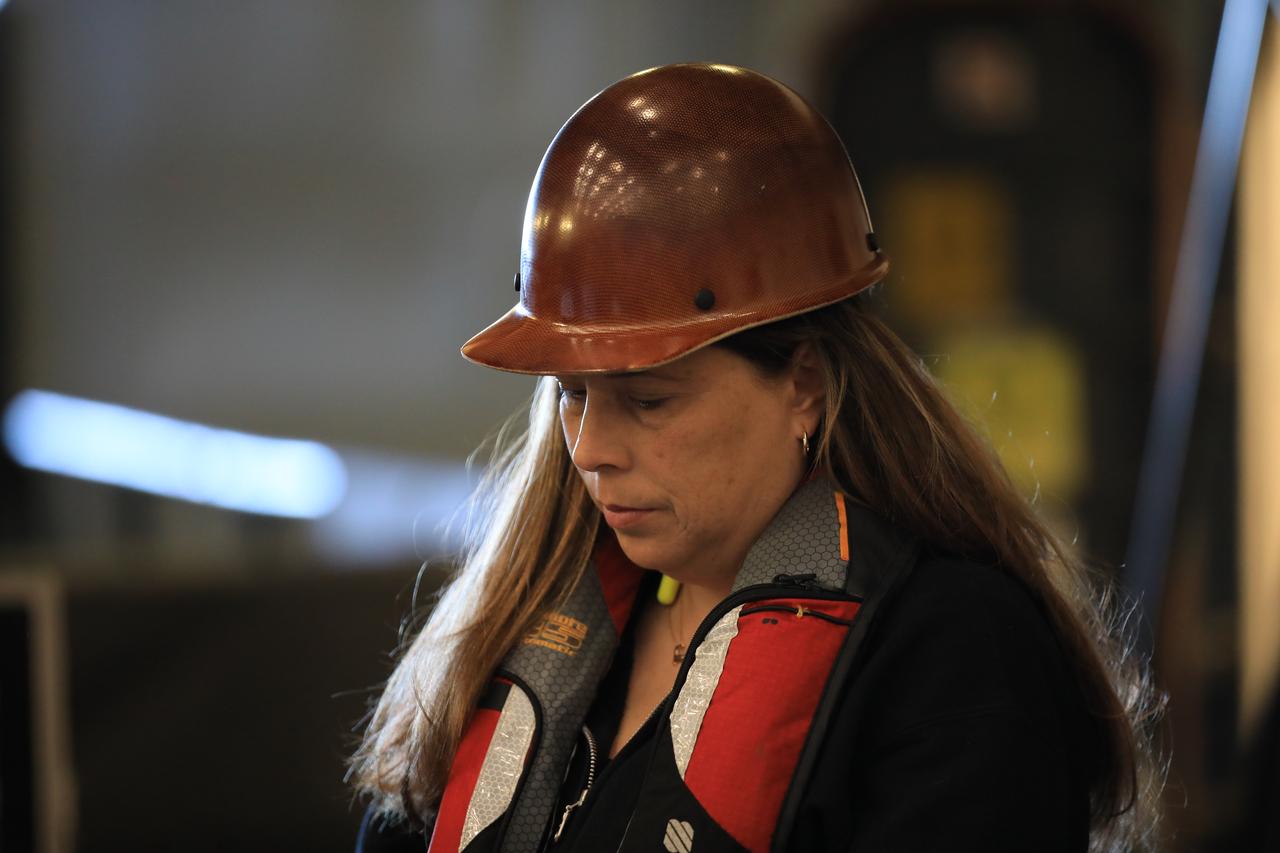
Liliana Villarreal, Artemis II Landing and Recovery Director, of NASA’s Exploration Ground System’s Landing and Recovery team monitors operations of the day aboard the USS San Diego during Underway Recovery Test 11 (URT-11) off the coast of San Diego on Thursday, Feb. 22, 2024. URT-11 is the eleventh in a series of Artemis recovery tests for members of the agency’s Landing and Recovery team and partners from the Department of Defense to practice recovery procedures using the Crew Module Test Article in preparation for Artemis II.

Liliana Villarreal, Artemis landing and recovery director with Exploration Ground Systems (EGS), stands in front of the Crew Module Test Article (CMTA) at the turn basin in the Launch Complex 39 area at NASA’s Kennedy Space Center in Florida on Feb. 1, 2023. The CMTA is being used to practice recovery after splashdown of the Orion spacecraft to prepare for the Artemis II crewed mission. EGS leads recovery efforts.
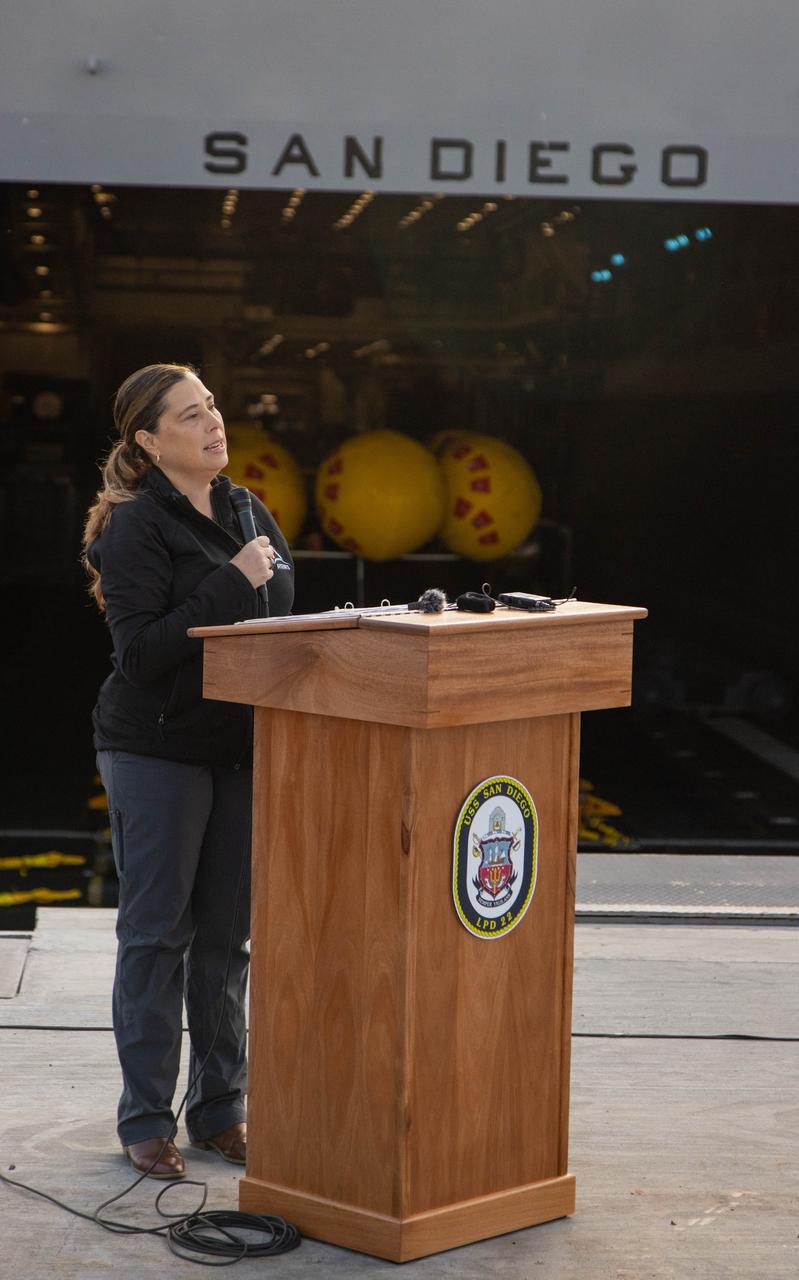
Liliana Villarreal, landing and recovery director in Exploration Ground Systems at NASA’s Kennedy Space Center in Florida speaks in a news conference held in San Diego, California on Wednesday, Feb. 28, 2024, about the Underway Recovery Test 11 (URT-11) performed off the coast of San Diego, California. URT-11 is the eleventh in a series of Artemis recovery tests, and the first time NASA and its partners put their Artemis II recovery procedures in place with the astronauts.
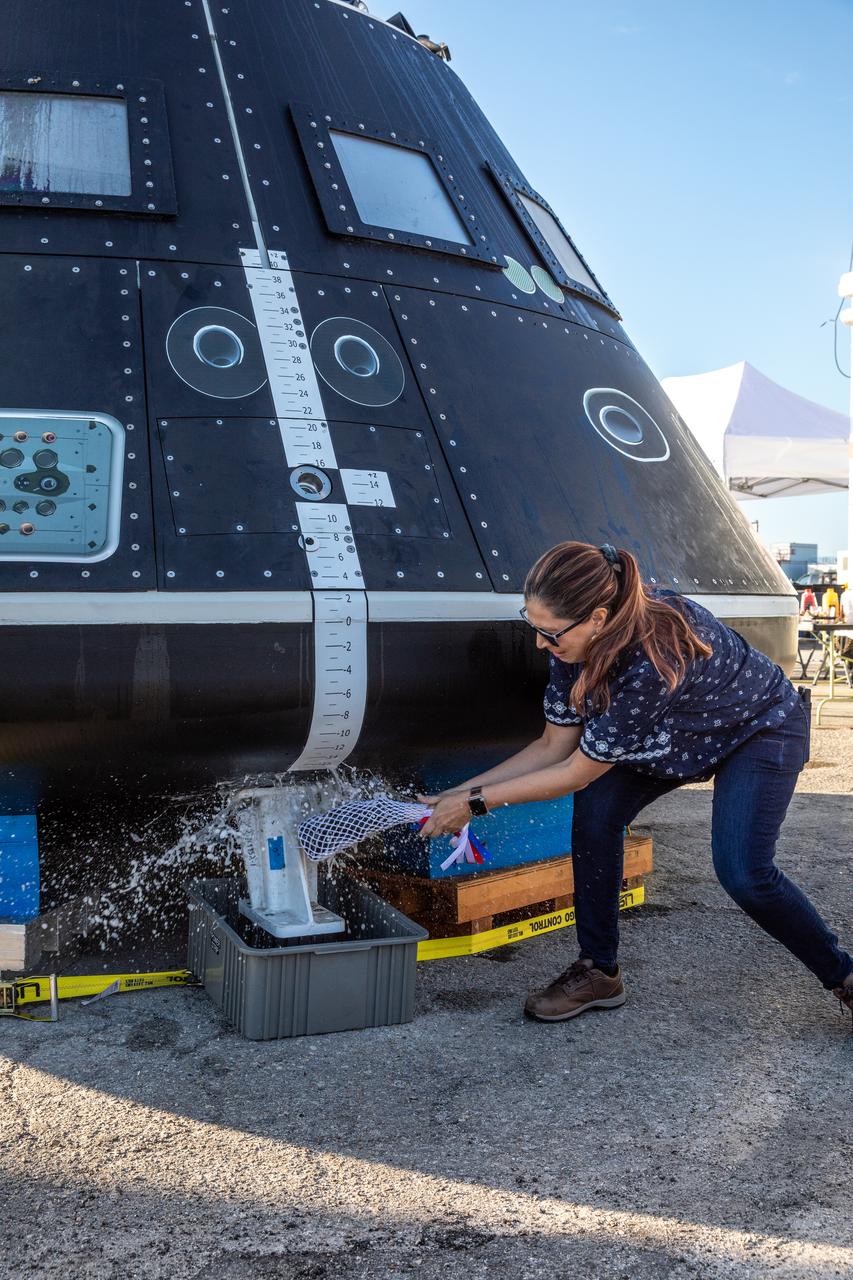
Liliana Villarreal, Artemis landing and recovery director with Exploration Ground Systems (EGS), christens the Crew Module Test Article (CMTA) with champagne during a naming ceremony at the turn basin in the Launch Complex 39 area at NASA’s Kennedy Space Center in Florida on Jan. 30, 2023. The CMTA is being used to practice recovery after splashdown of the Orion spacecraft to prepare for the Artemis II crewed mission. EGS leads recovery efforts.
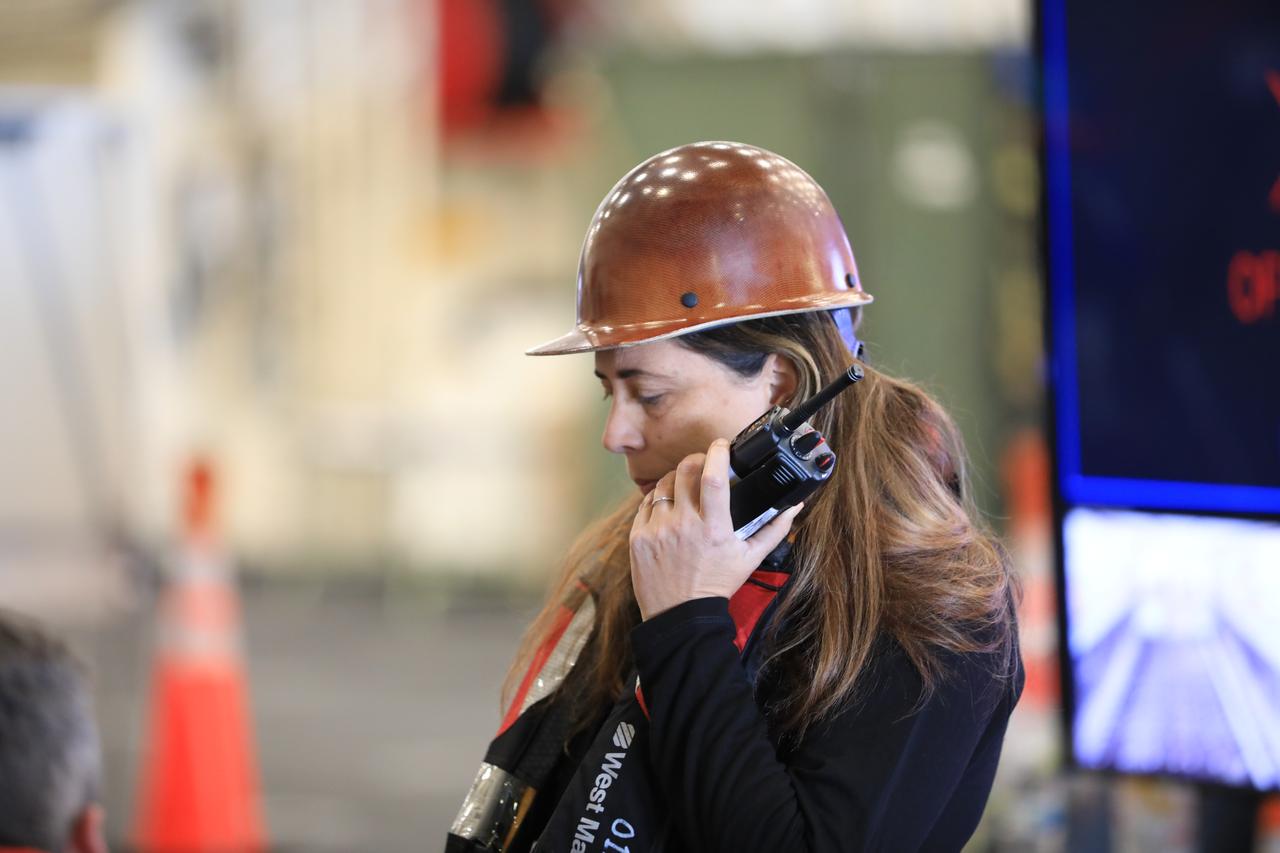
Liliana Villarreal, Artemis II Landing and Recovery Director, of NASA’s Exploration Ground System’s Landing and Recovery team monitors operations of the day aboard the USS San Diego during Underway Recovery Test 11 (URT-11) off the coast of San Diego on Saturday, Feb. 24, 2024. URT-11 is the eleventh in a series of Artemis recovery tests for members of the agency’s Landing and Recovery team and partners from the Department of Defense to practice recovery procedures using the Crew Module Test Article in preparation for Artemis II.
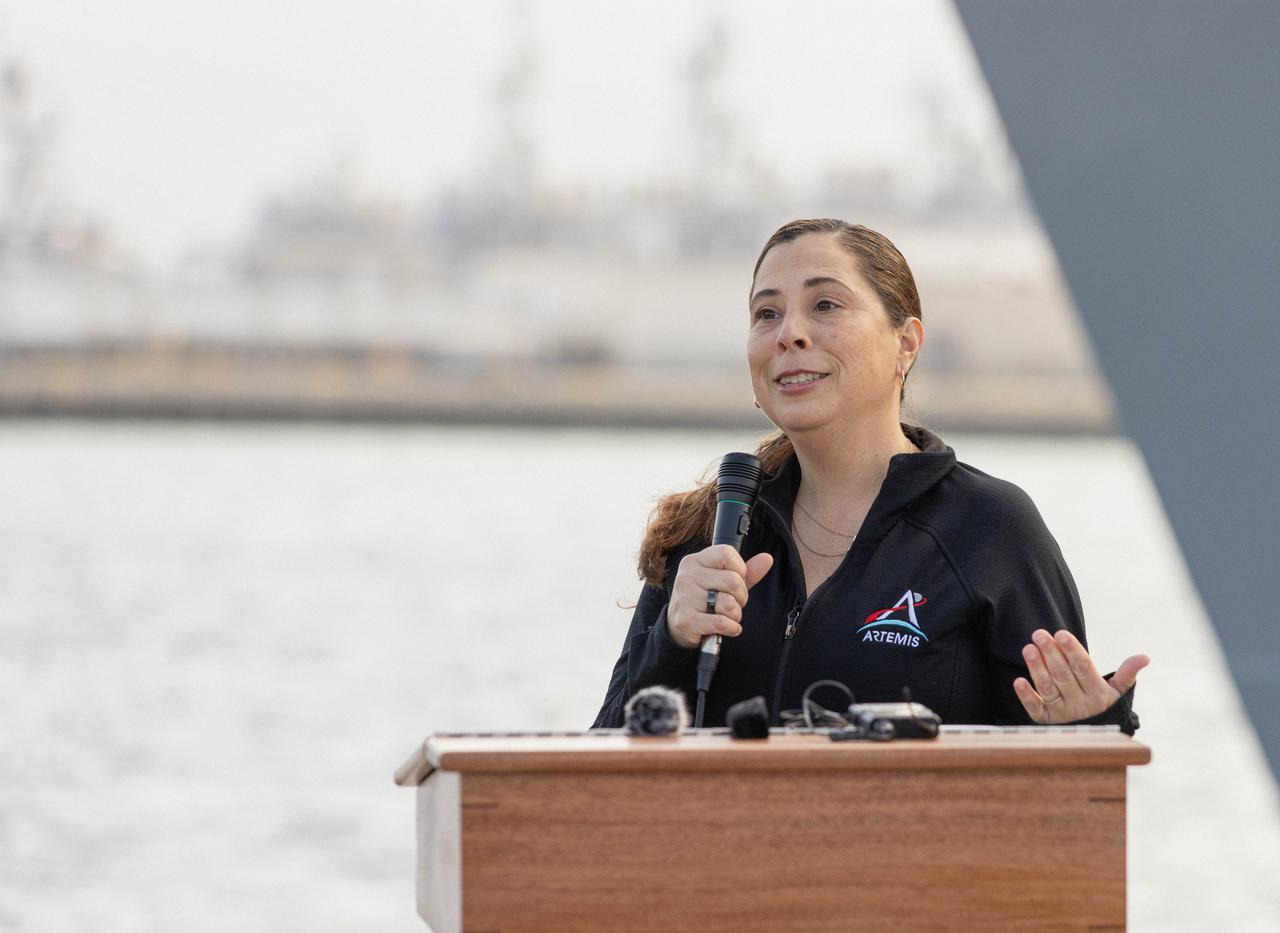
Liliana Villarreal, landing and recovery director in Exploration Ground Systems at NASA’s Kennedy Space Center in Florida speaks in a news conference held in San Diego, California on Wednesday, Feb. 28, 2024, about the Underway Recovery Test 11 (URT-11) performed off the coast of San Diego, California. URT-11 performed by NASA’s Exploration Ground System’s Landing and Recovery team, partners from the Department of Defense, and U.S. Navy personnel aboard the USS San Diego is the eleventh in a series of Artemis recovery tests, and the first the Artemis II recovery procedures involved the astronauts.
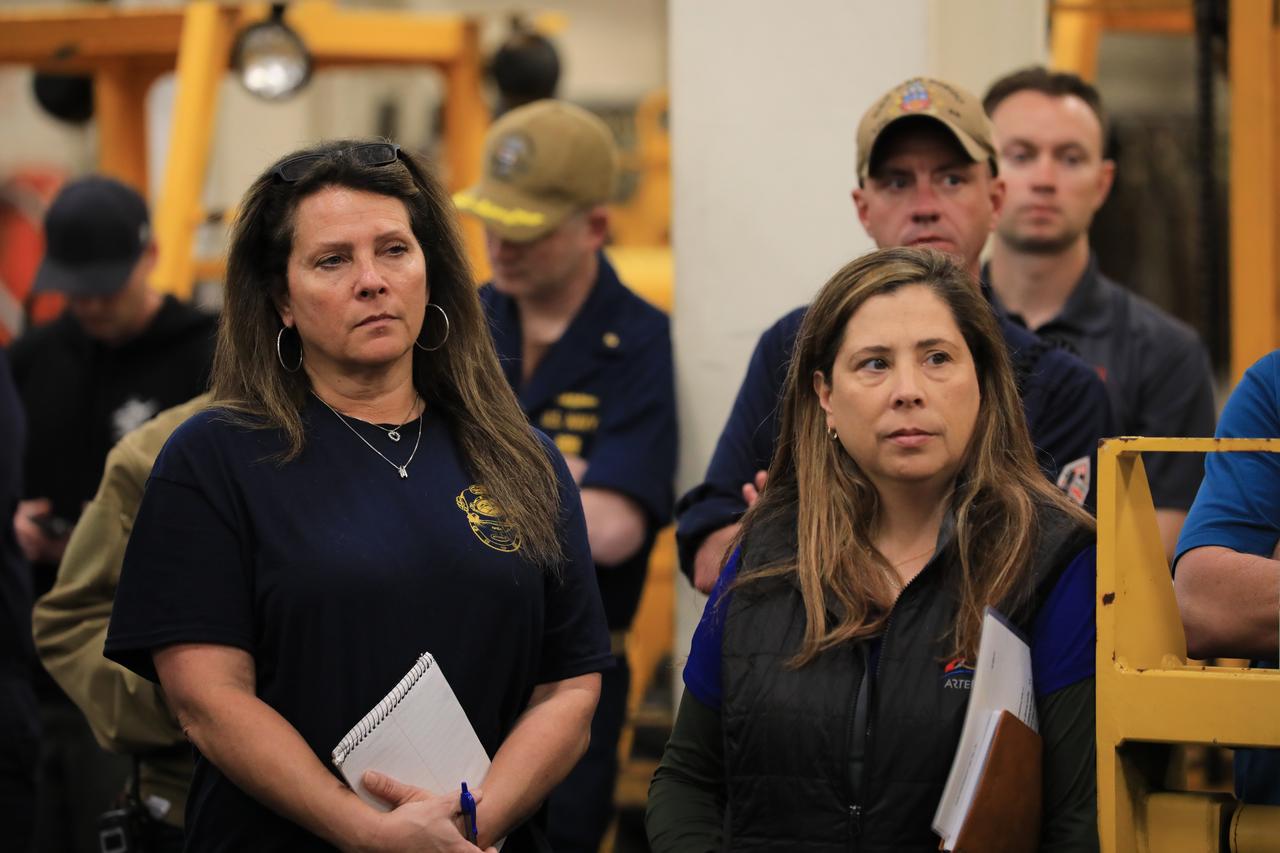
NASA Artemis Landing and Recovery Deputy Director Lisa Seiler (left) and NASA Artemis II Landing and Recovery Director Liliana Villarreal (right), along with members of NASA’s Exploration Ground System’s Landing and Recovery team and partners from the Department of Defense aboard the USS San Diego participate in a ship rider briefing on the flight deck prior to departure from Naval Base San Diego on Wednesday, Feb. 21, 2024. During this test campaign, teams will practice recovery procedures using the Crew Module Test Article, during Underway Recovery Test 11 (URT-11) off the coast of San Diego. URT-11 is the eleventh in a series of Artemis recovery tests, but the first time NASA and its partners from the Department of Defense put their Artemis II recovery procedures to the test with the astronauts.
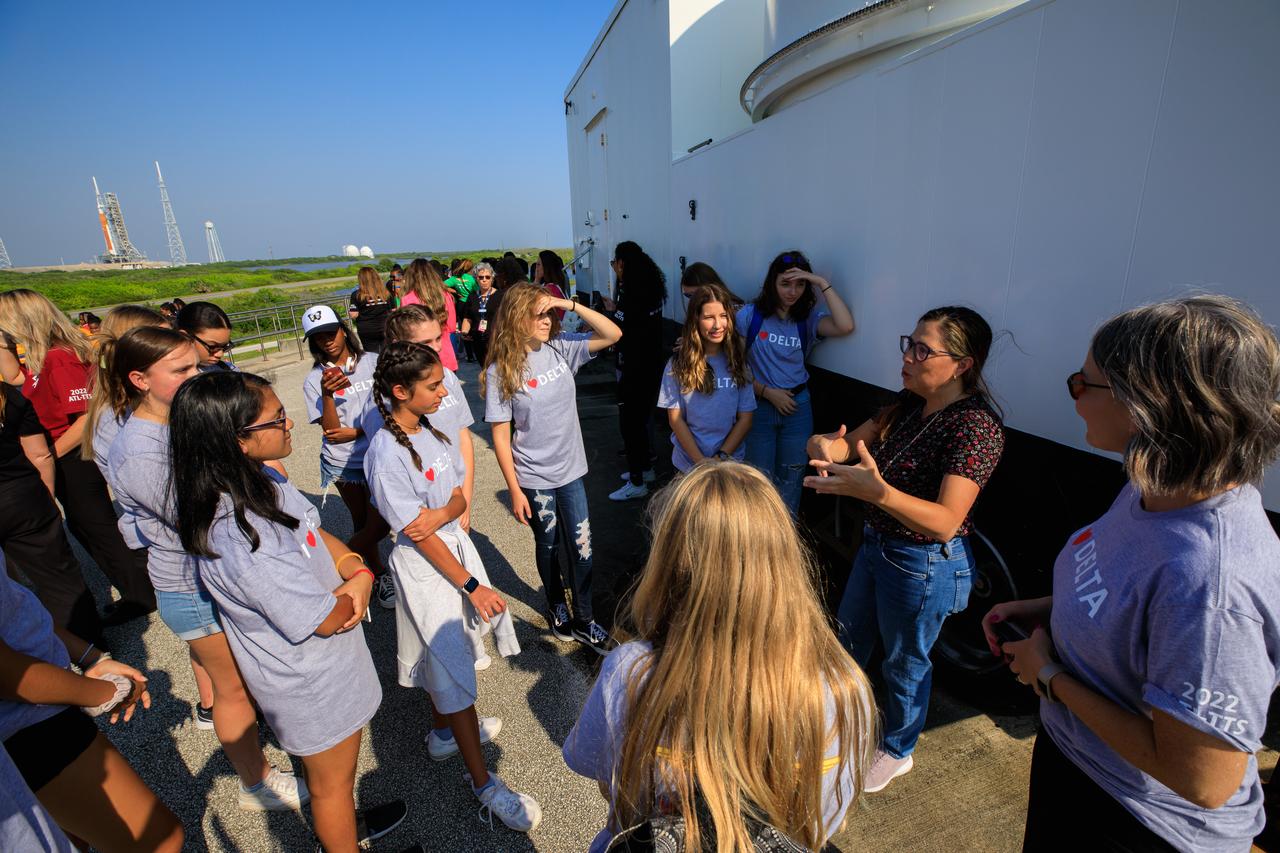
Liliana Villarreal (right), operations flow manager with NASA’s Exploration Ground Systems program, speaks to a group of students on a tour to see the agency’s Artemis I Moon rocket at Launch Pad 39B during their visit to Kennedy Space Center on Sept. 23, 2022. As part of Delta Air Lines’ Women Inspiring Our Next Generation (WING) program, an all-female crew flew girls from a variety of Atlanta, Georgia area schools and organizations with a STEM (science, technology, engineering, math) focus to Kennedy to learn about the various careers available at the Florida spaceport. While at Kennedy, the group also had the opportunity to hear from a panel of 18 women with a combination of careers from Kennedy and Delta and tour the visitor complex.
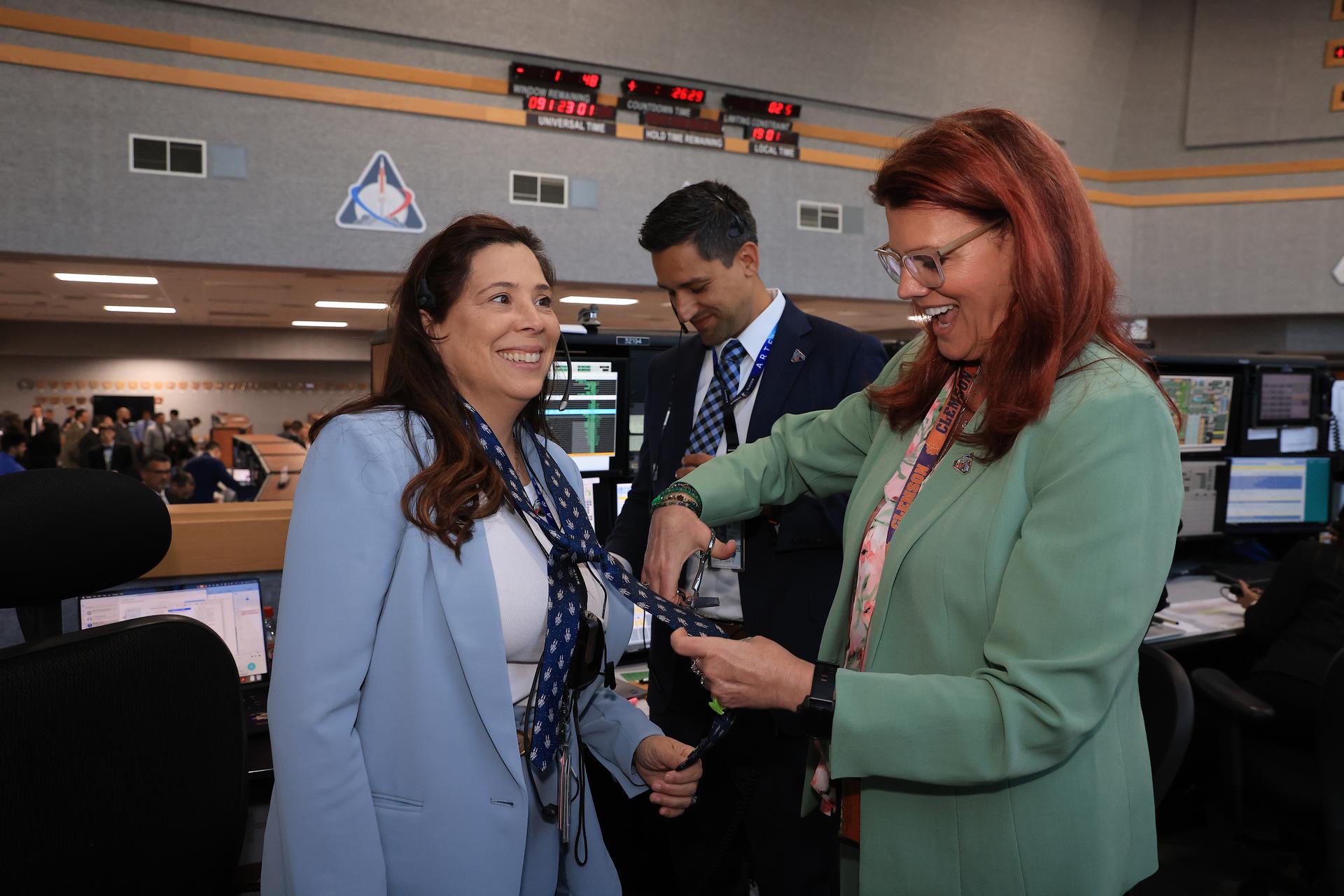
Charlie Blackwell-Thompson, Artemis launch director, cuts the tie of Liliana Villarreal, Artemis landing and recovery director, each from NASA’s Exploration Ground Systems Program, inside Firing Room 1 of the Rocco Petrone Launch Control Center following the launch of the Artemis II test flight on Wednesday, April 1, 2026. The tie-cutting is a NASA tradition for those who have a new role launch. The Artemis II mission launched Commander Reid Wiseman, Pilot Victor Glover, and Mission Specialist Christina Koch from NASA, and Mission Specialist Jeremy Hansen from the CSA (Canadian Space Agency), aboard NASA’s SLS (Space Launch System) rocket and Orion spacecraft to journey for 10 days around the Moon and back to Earth.