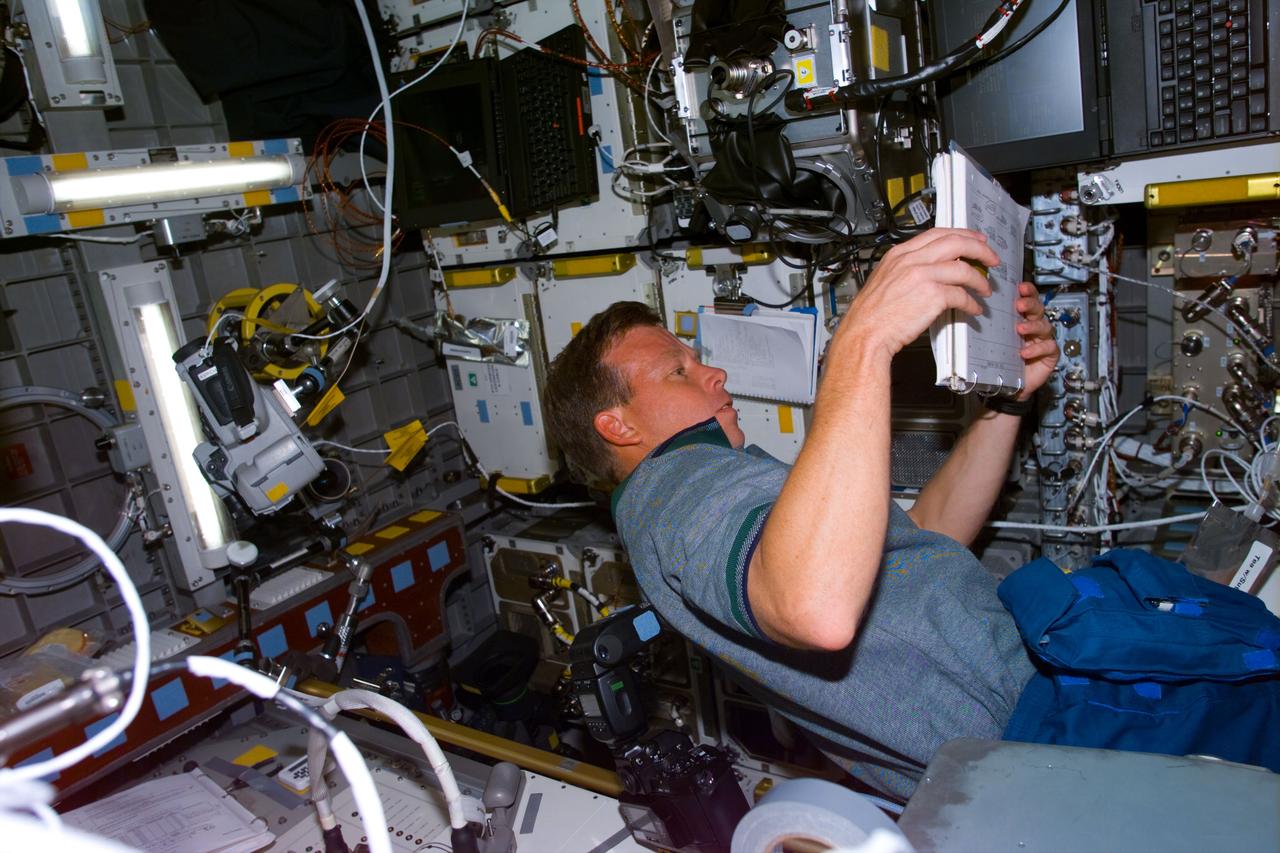
STS095-E-5120 (2 Nov. 1998) --- Astronaut Steven W. Lindsey, STS-95 pilot, checks Astroculture notes in the Spacehab facility. The glove box facility can be seen near Lindsey's head. The photo was taken with an electronic still camera (ESC) at 05:18:21 GMT, Nov. 2.
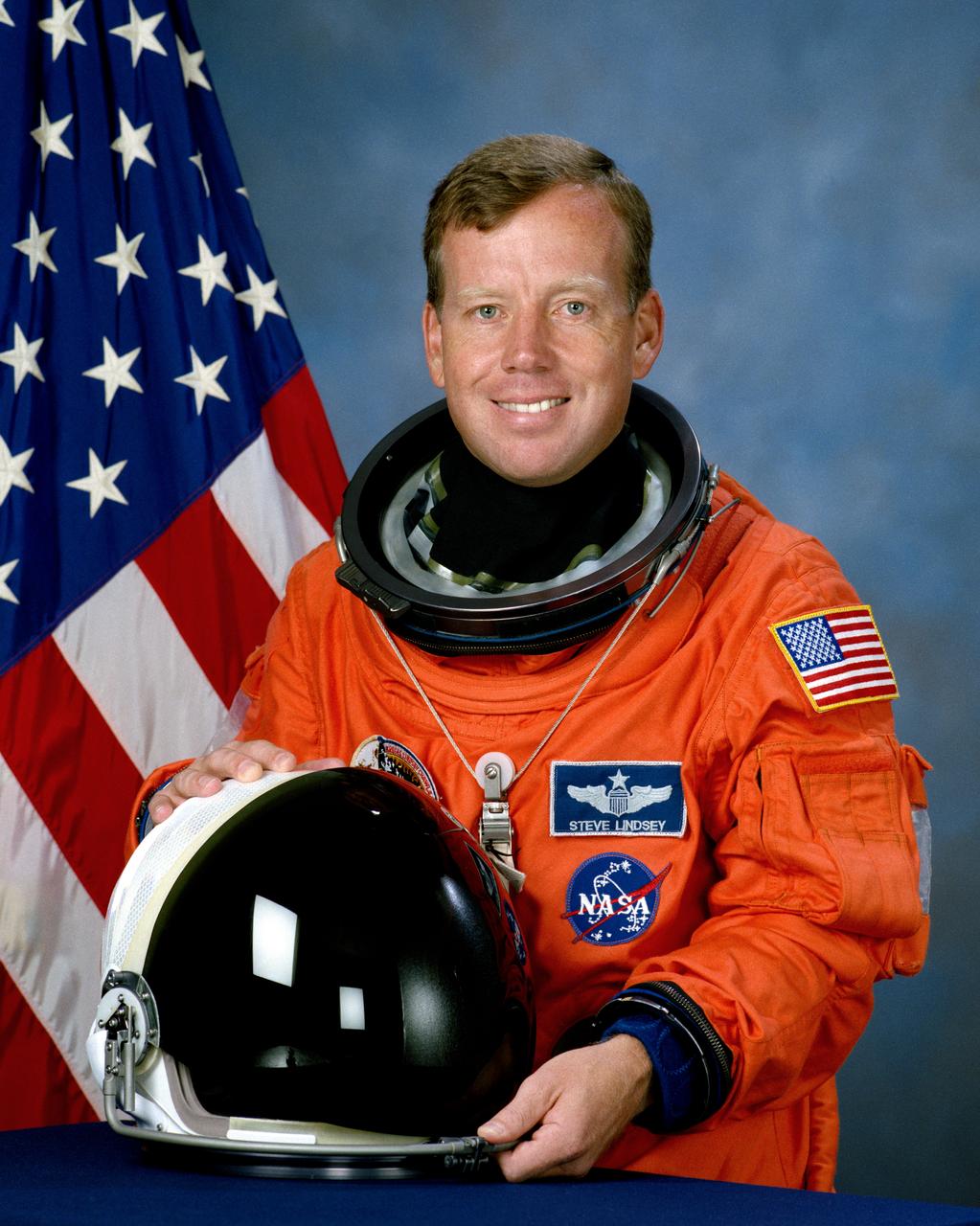
S98-01464 (5 August 1997) --- Astronaut Steven W. Lindsey, pilot.
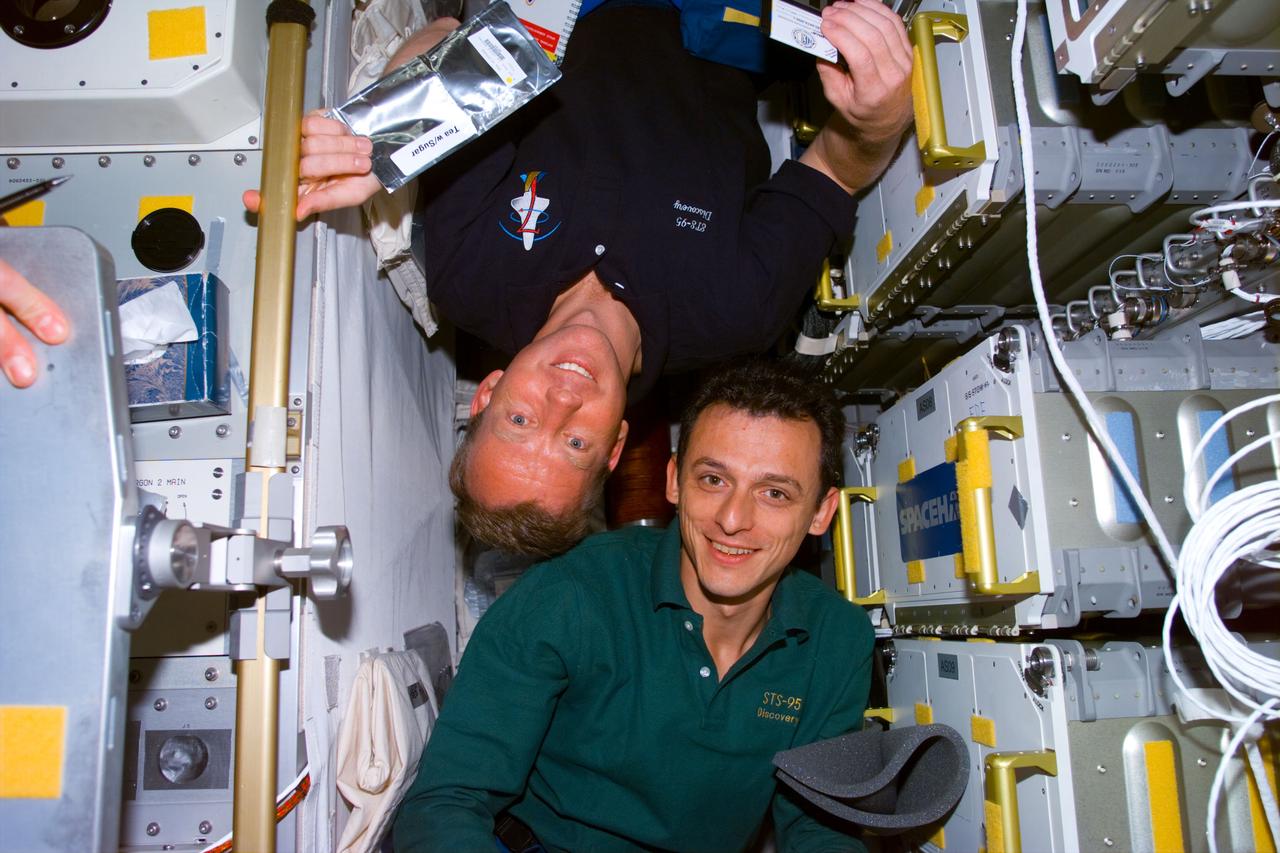
STS095-E-5221 (4 Nov. 1998) --- Astronauts Steven W. Lindsey (top) and Pedro Duque in Spacehab facility during Flight Day 6 activity. Lindsey, pilot, is making his second space flight on STS-95, while Duque, a mission specialist repreenting the European Space Agency (ESA), is the only first-time space flier on this mission. The photo was taken with an electronic still camera (ESC) at 03:01:38 GMT, Nov. 4.
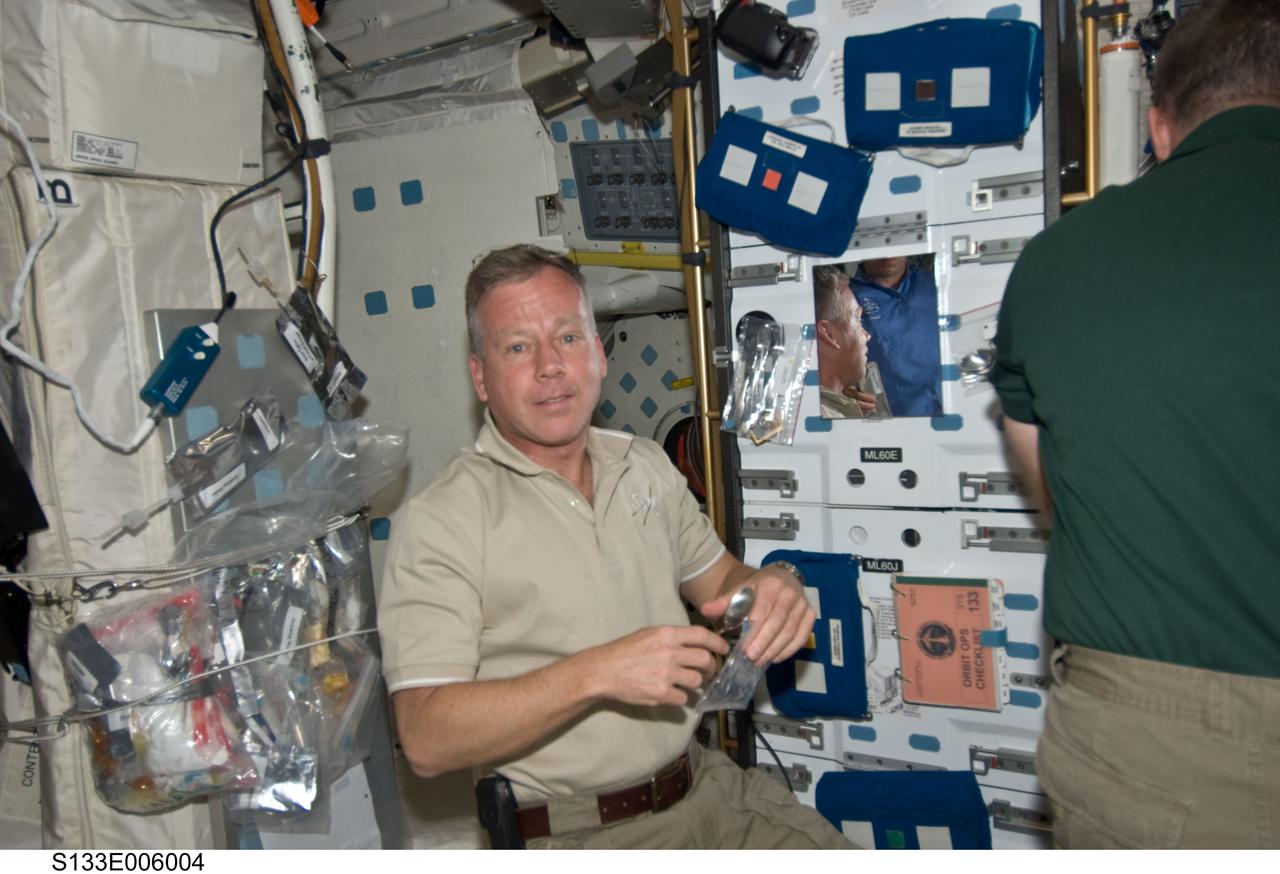
S133-E-006004 (25 Feb. 2011) --- Astronauts Steve Lindsey (left), STS-133 commander, and Steve Bowen, mission specialist, take a break from flight day 2 duties on Discovery's middeck. Lindsey is preparing a snack, as the shuttle makes its way toward a weekend docking with the International Space Station. Photo credit: NASA or National Aeronautics and Space Administration
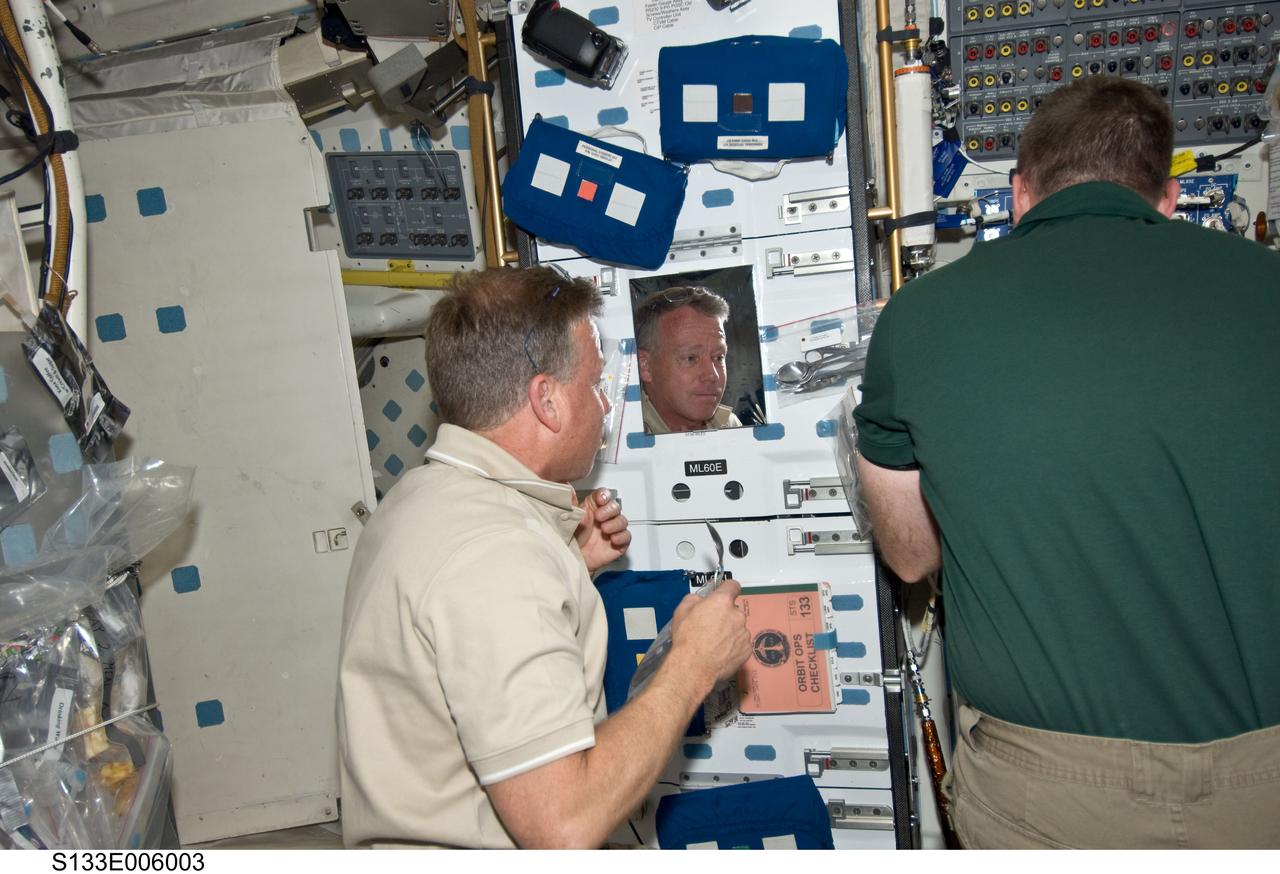
S133-E-006003 (25 Feb. 2011) --- Astronauts Steve Lindsey (left), STS-133 commander, and Steve Bowen, mission specialist, take a break from flight day 2 duties on Discovery's middeck. Lindsey is preparing a snack, as the shuttle makes its way toward a weekend docking with the International Space Station. Photo credit: NASA or National Aeronautics and Space Administration
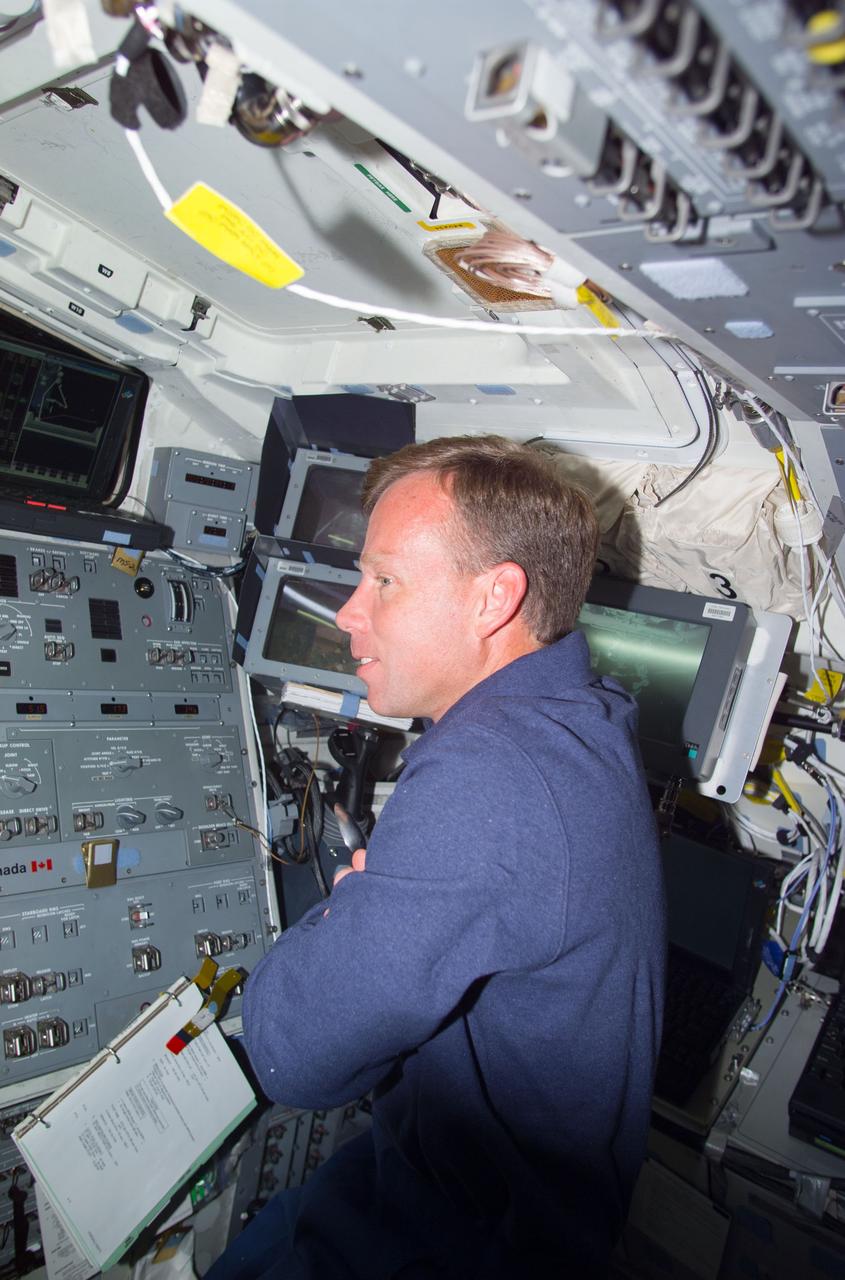
STS104-E-5227 (21 July 2001) --- Working in tandem with the station's Canadarm2 operator and Expedition Two flight engineer James S. Voss, astronaut Steven W. Lindsey, STS-104 commander, supports mission specialists Michael L. Gernhardt and James F. Reilly during the final of three STS-104 space walks. Lindsey is on the aft flight deck of the Space Shuttle Atlantis, while Voss worked at controls in the Destiny laboratory. The extravehicular activity (EVA) was partly devoted to the attachment of a new nitrogen supply tank to the shell of the new Airlock Quest. This photo was recorded with a digital still camera.
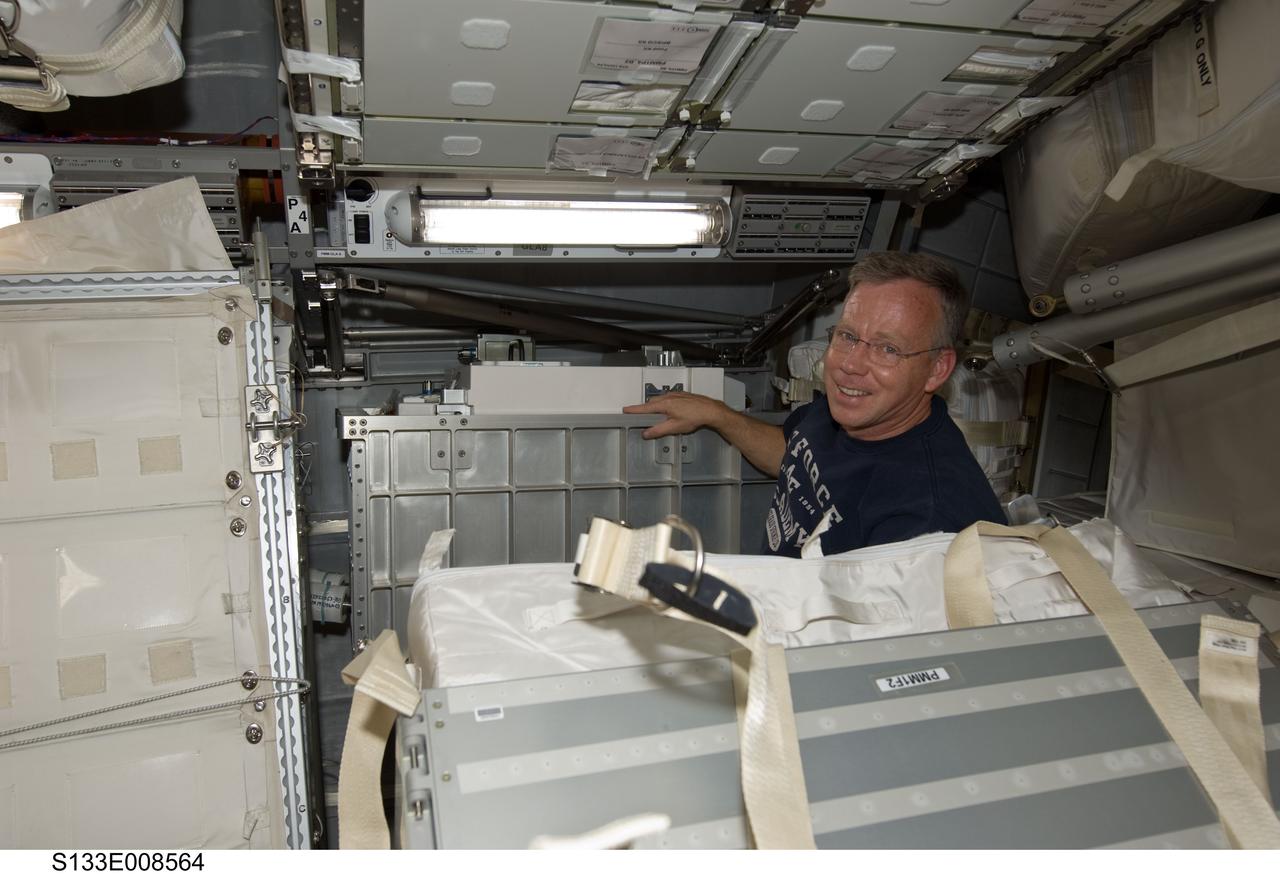
S133-E-008564 (4 March 2011) --- It's another moving day onboard the International Space Station, as NASA astronaut Steve Lindsey, STS-133 commander, participates in the team effort of 12 total astronauts and cosmonauts working together temporarily onboard the orbital outpost. The joint crews added the Permanent Multipurpose Module (PMM) to the station earlier in the week. Photo credit: NASA or National Aeronautics and Space Administration
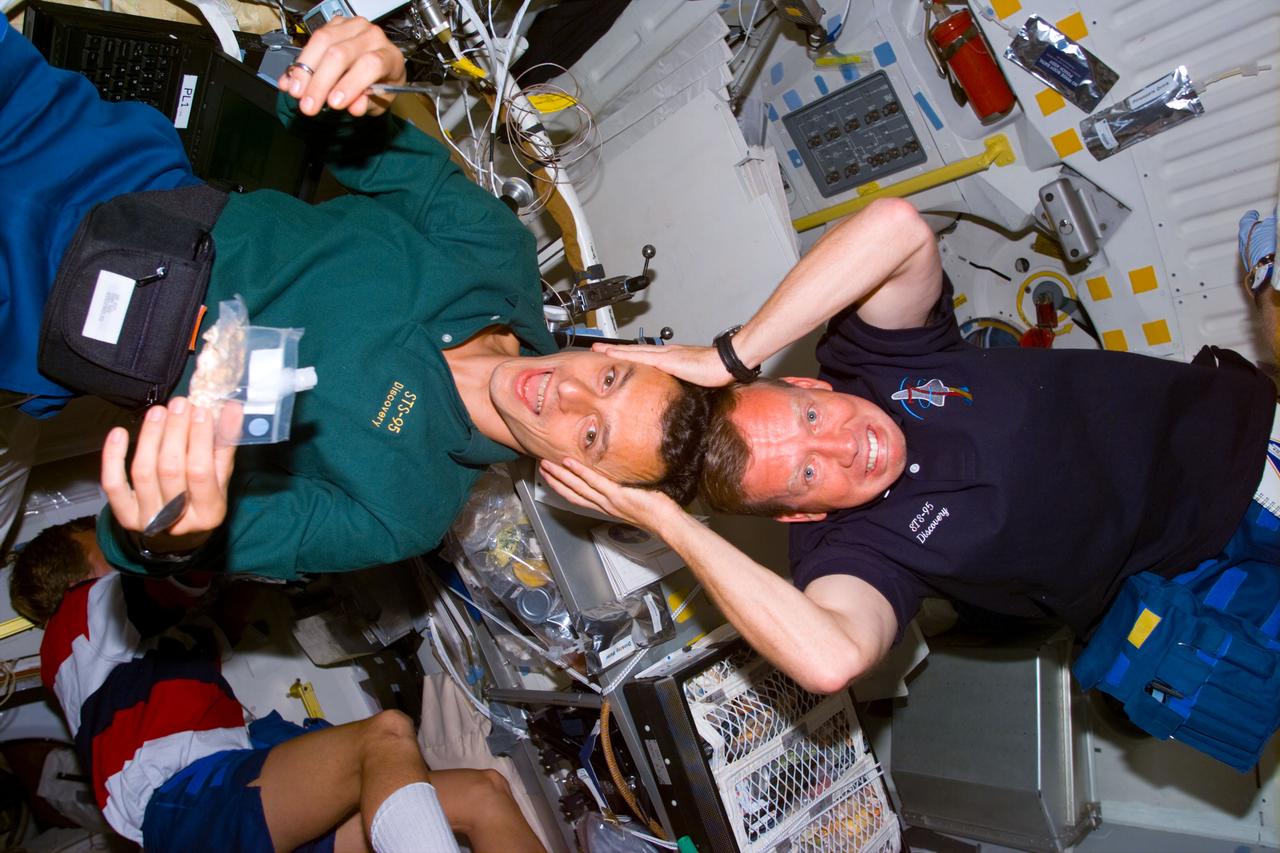
STS095-E-5204 (4 Nov. 1998) --- Astronauts Pedro Duque (left) and Steven W. Lindsey take a break from busy experimentation onboard the Space Shuttle Discovery during Flight Day 7. Lindsey is pilot and Duque, a mission specialist representing the European Space Agency (ESA) for the STS-95 flight. The photo was taken with an electronic still camera (ESC) at 19:04:45 GMT, Nov. 4.
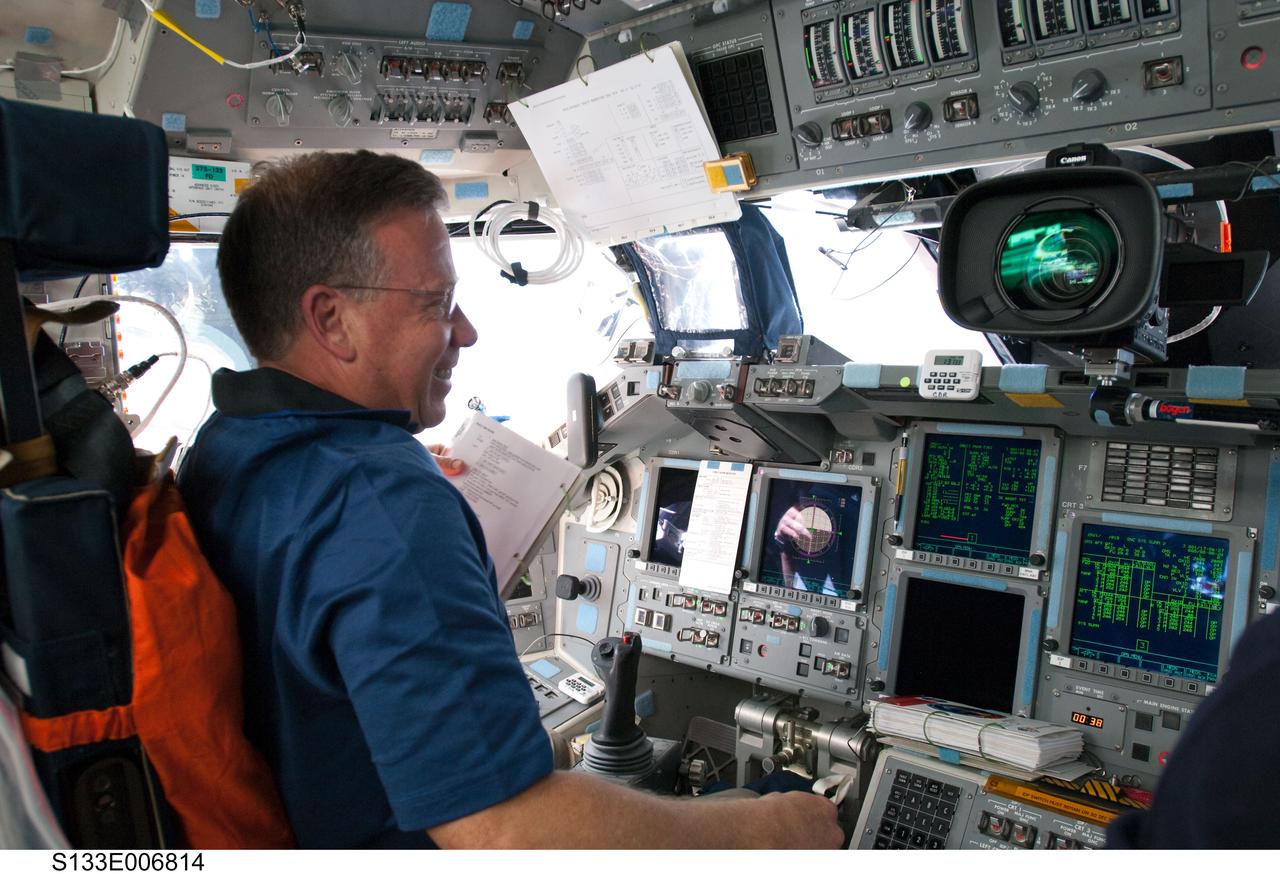
S133-E-006814 (26 Feb. 2011) --- NASA astronaut Steve Lindsey, STS-133 commander, occupies his station on the flight deck of space shuttle Discovery during flight day three activities. Photo credit: NASA or National Aeronautics and Space Administration
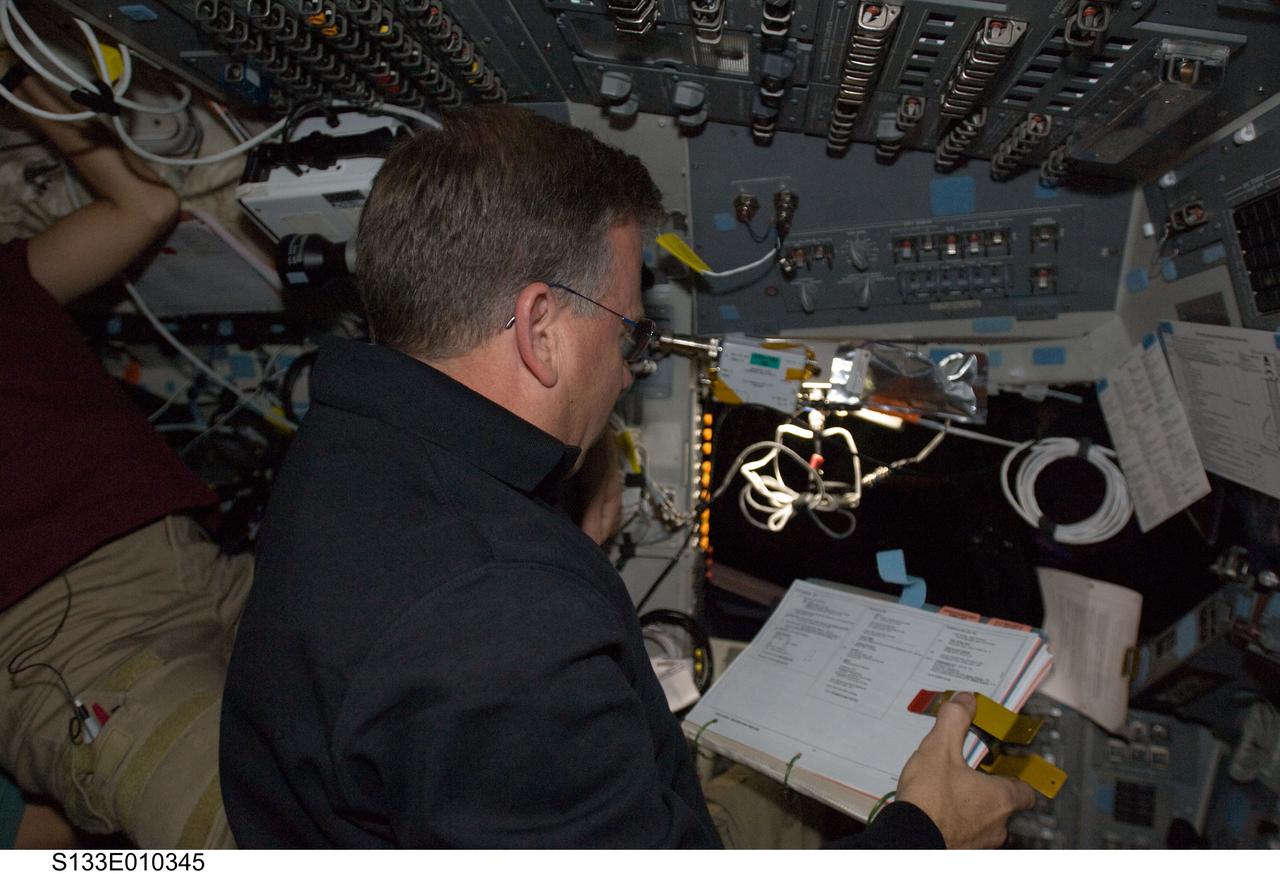
S133-E-010345 (7 March 2011) --- NASA astronaut Steve Lindsey, STS-133 commander, reads a procedures checklist on the flight deck of space shuttle Discovery during flight day 12 activities. Photo credit: NASA or National Aeronautics and Space Administration
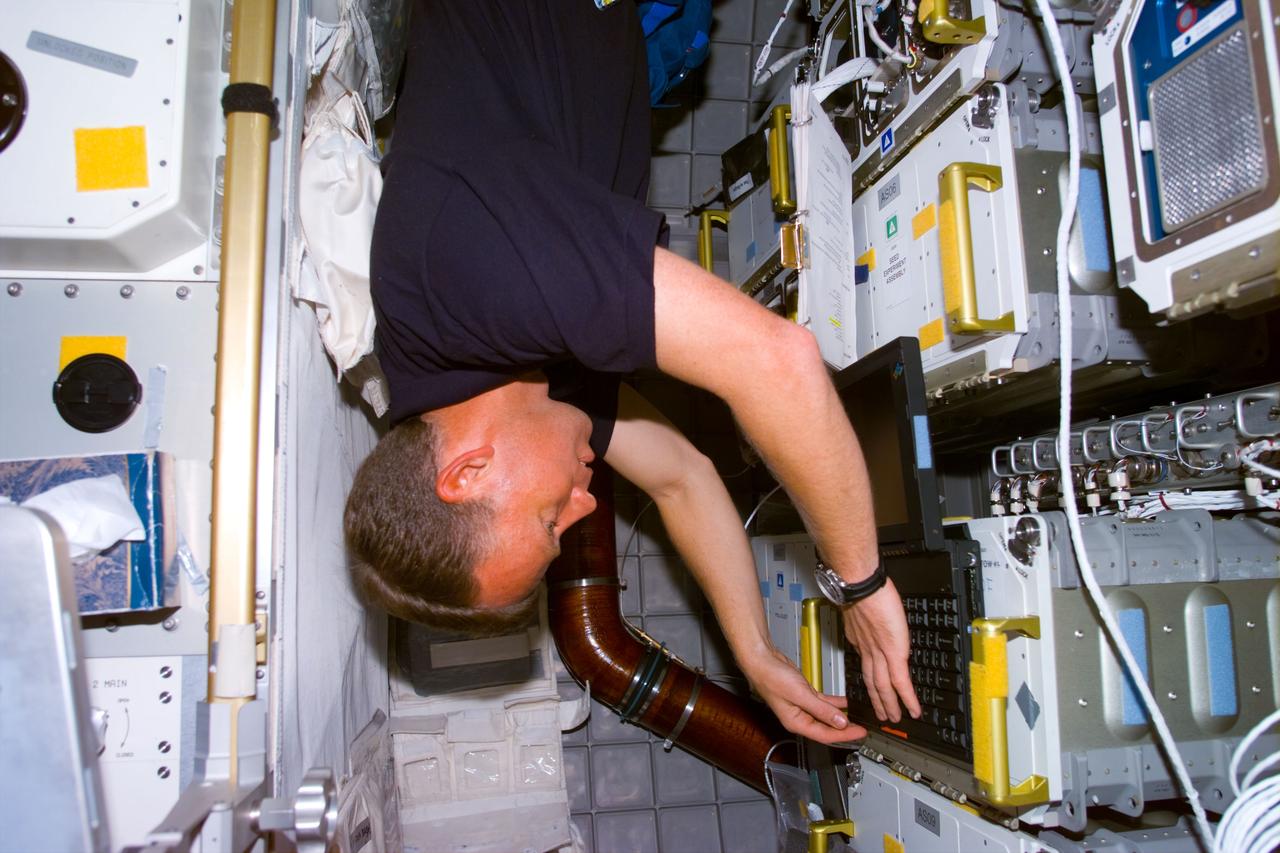
STS095-E-5218 (4 Nov. 1998) --- Astronaut Steven W. Lindsey, STS-95 pilot, inputs data on a lap top computer in the Spacehab facility onboard the Space Shuttle Discovery. The photo was taken with an electronic still camera (ESC) at 02:58:43 GMT, Nov. 4.
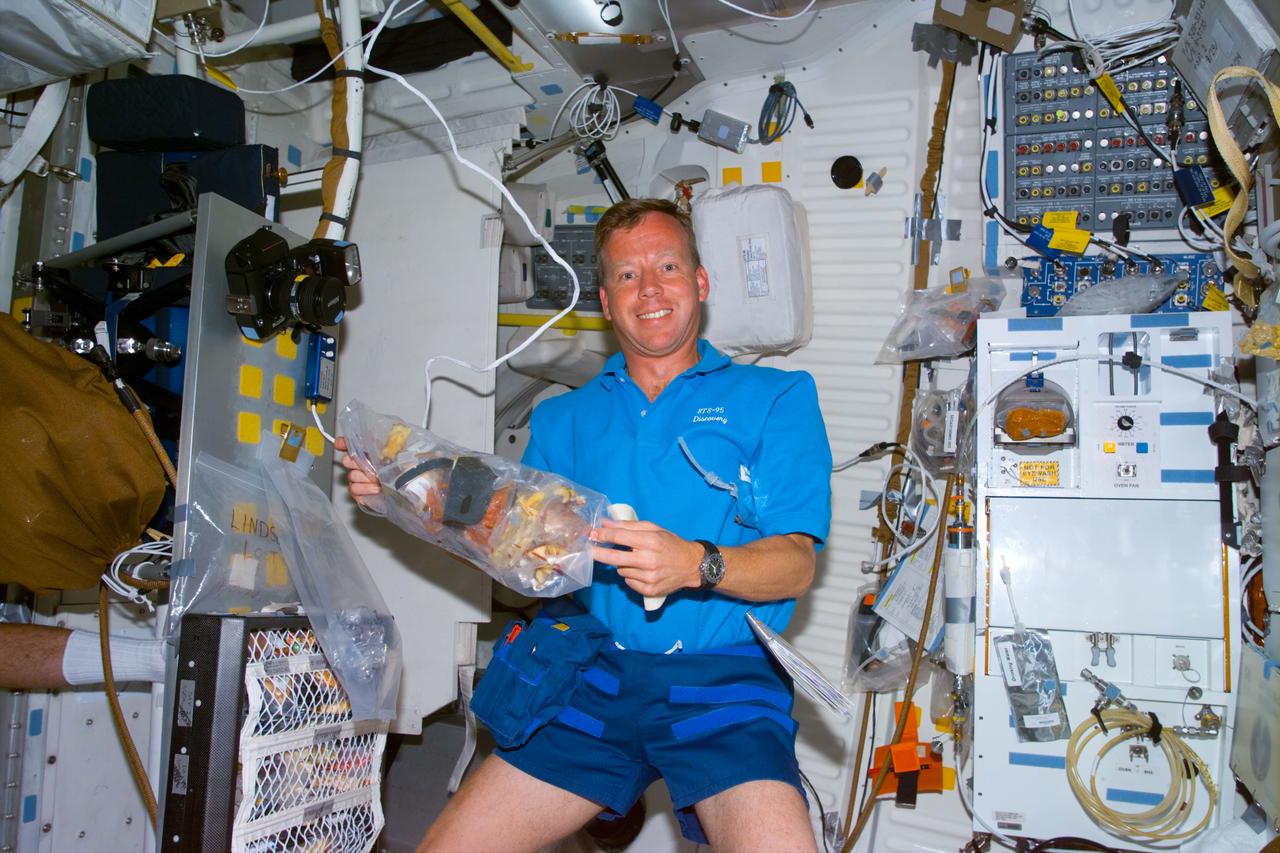
STS095-E-5026 (10-29-98) --- Astronaut Steven W. Lindsey, pilot, with a bag of refuse on Discovery's mid deck as the STS-95 crew members begin to settle in for a nine-day stay in Earth orbit. The photo was taken with an electronic still camera (ESC) at 11:23:04 GMT, Oct. 29.
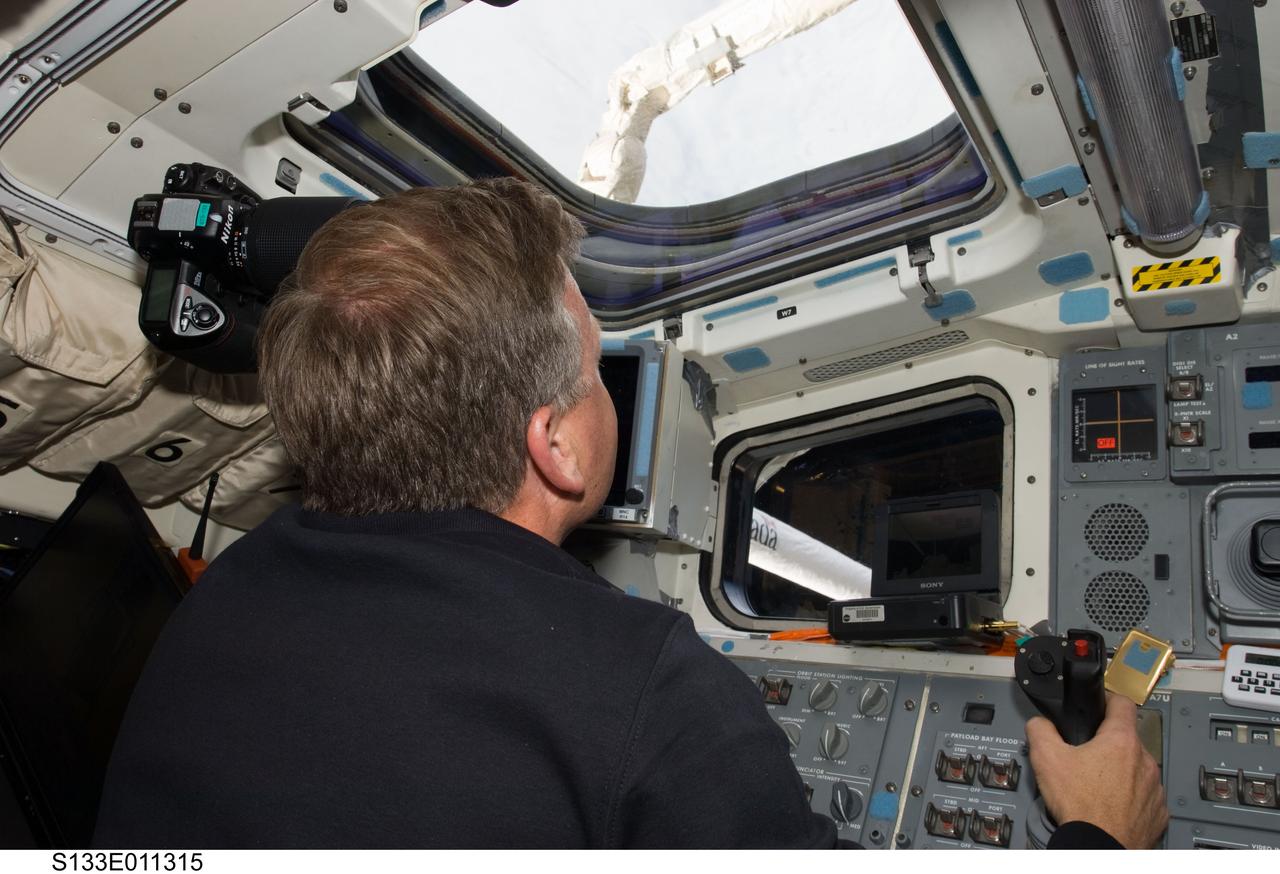
S133-E-011315 (7 March 2011) --- NASA astronaut Steve Lindsey, STS-133 commander, works the controls for the remote manipulator system (RMS) on the aft flight deck of space shuttle Discovery during flight day 12 activities. Photo credit: NASA or National Aeronautics and Space Administration
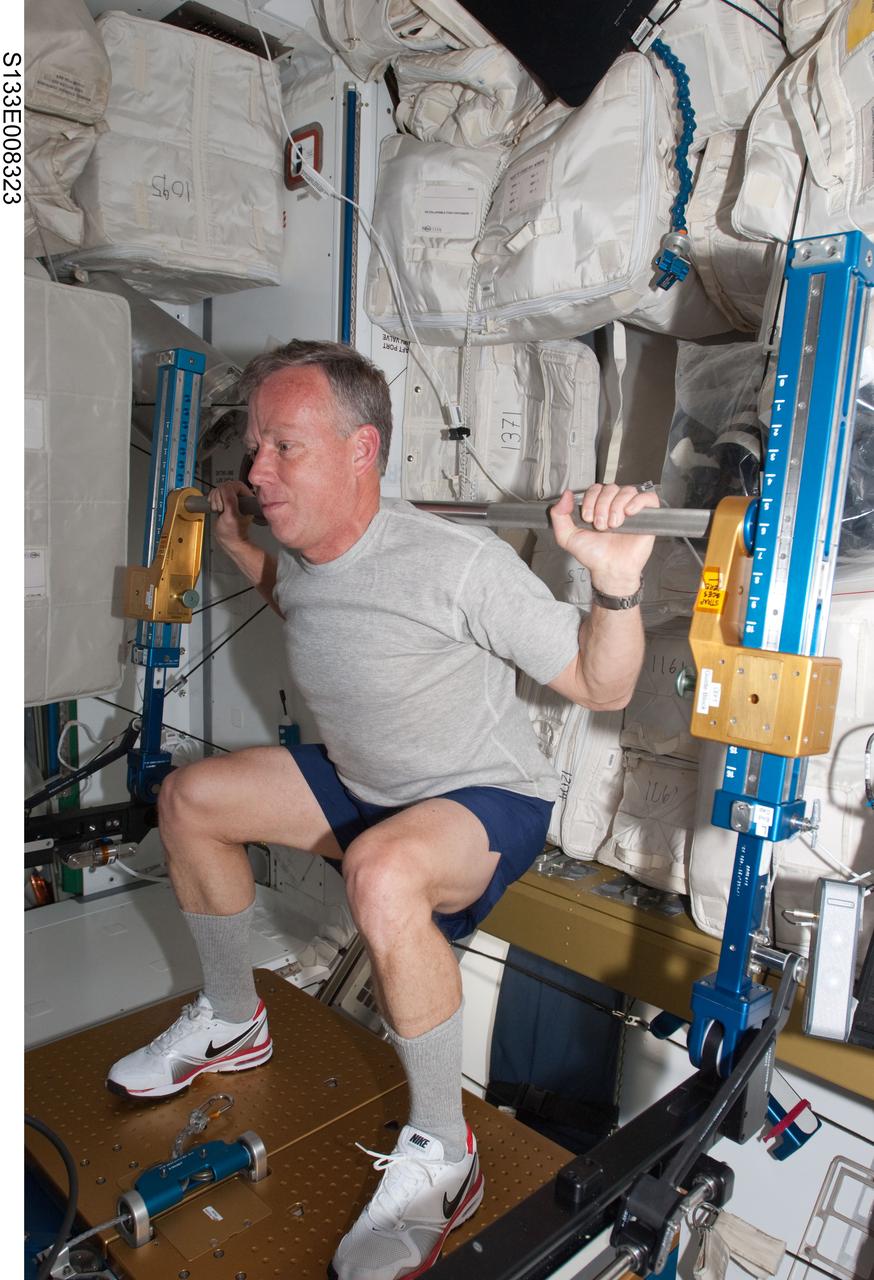
S133-E-008323 (3 March 2011) --- NASA astronaut Steve Lindsey, STS-133 commander, exercises using the advanced Resistive Exercise Device (aRED) in the Tranquility node of the International Space Station while space shuttle Discovery remains docked with the station. Photo credit: NASA or National Aeronautics and Space Administration
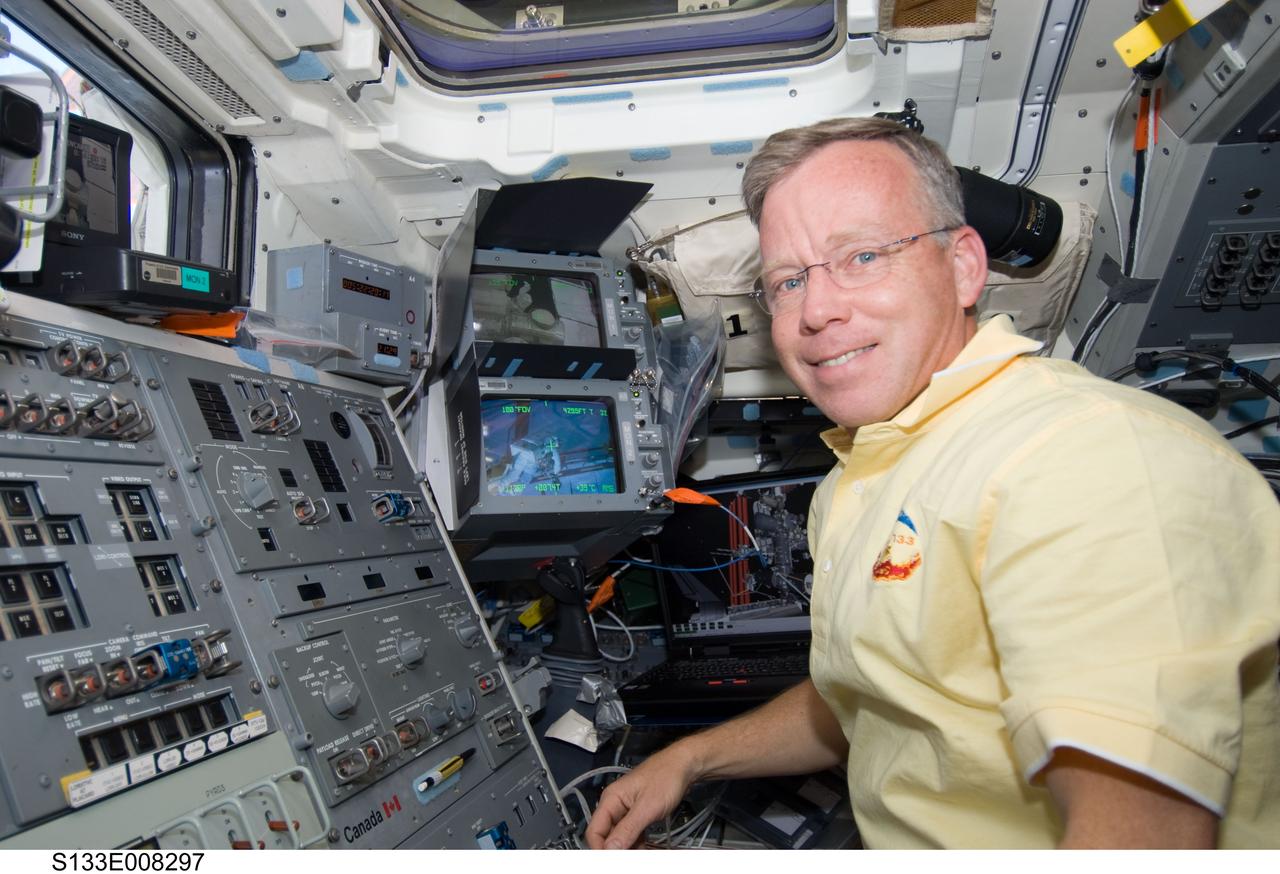
S133-E-008297 (2 March 2011) --- NASA astronaut Steve Lindsey, STS-133 commander, is pictured on the aft flight deck of space shuttle Discovery while docked with the International Space Station. Photo credit: NASA or National Aeronautics and Space Administration
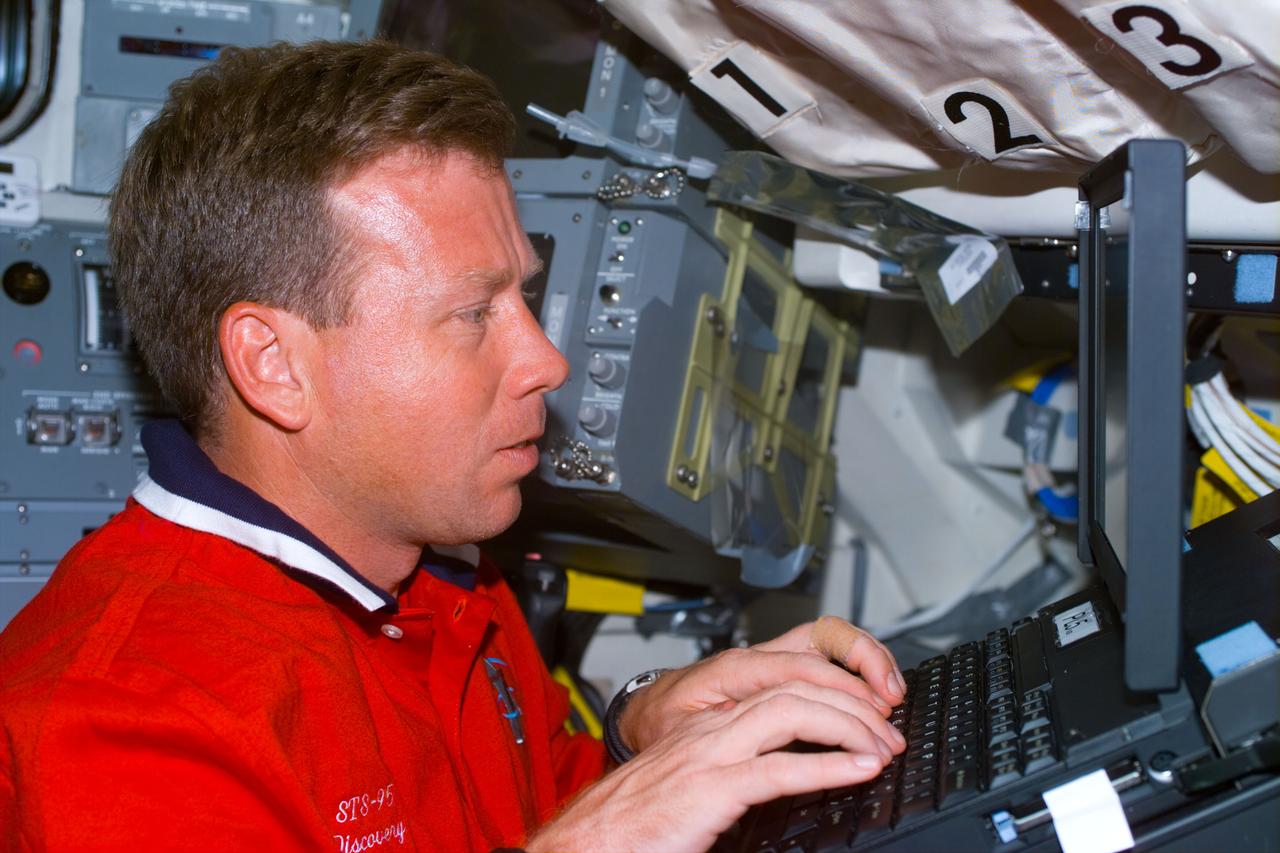
STS095-E-5056 (30 Oct. 1998) --- Astronaut Steven W. Lindsey, STS-95 pilot, works on a lap top computer during Flight Day 2 activity onboard the Space Shuttle Discovery. The photo was taken with an electronic still camera (ESC) at 10:43:43 GMT, Oct. 30.
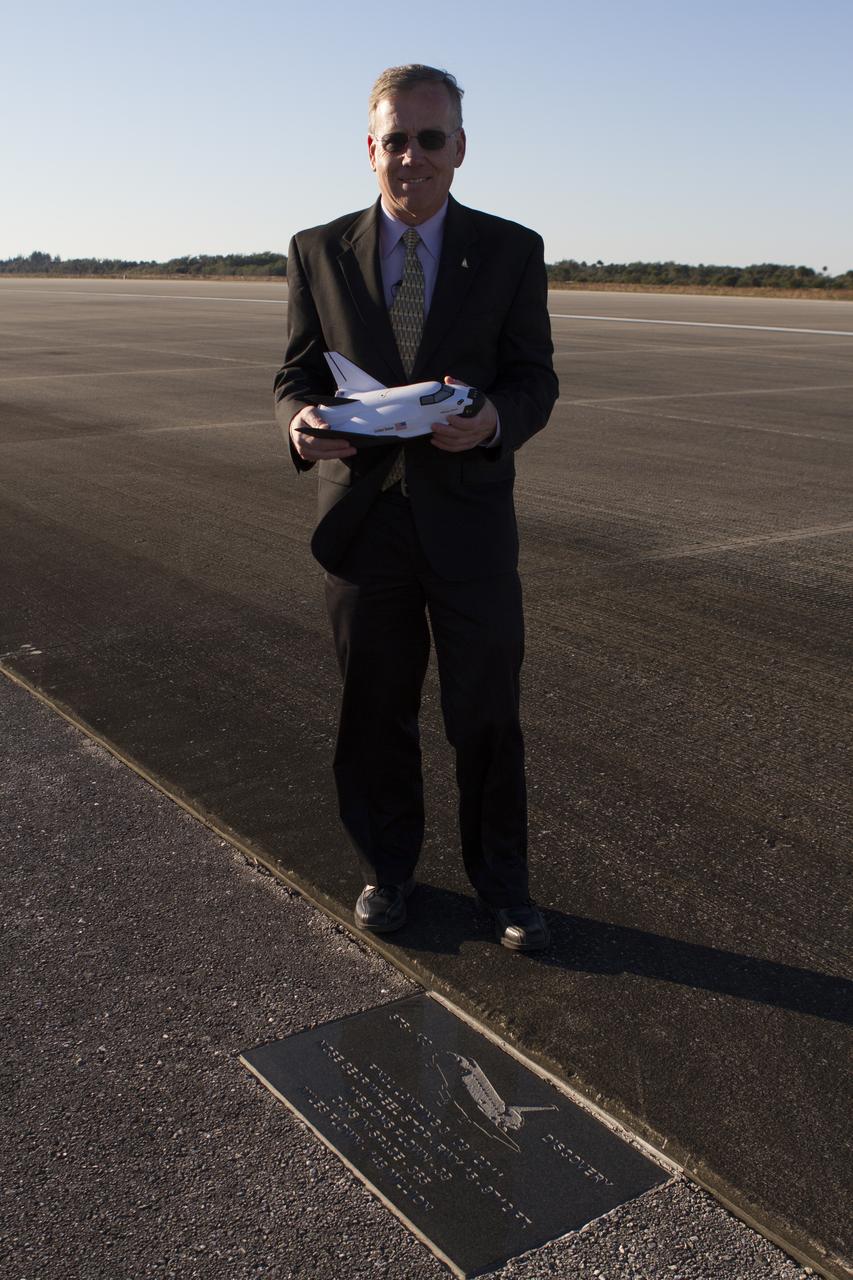
CAPE CANAVERAL, Fla. – Steve Lindsey, former NASA astronaut and Dream Chaser program manager for Sierra Nevada Corporation, or SNC, Space Systems stands at a plaque honoring the final landing of space shuttle Discovery on the 3.5-mile-long runway at Kennedy Space Center’s Shuttle Landing Facility. Lindsey, who was the commander of Discovery’s STS-133 mission, is holding a model of SNC’s Dream Chaser. SNC announced it plans to work with United Launch Alliance, or ULA, to launch the Dream Chaser spacecraft into orbit atop an Atlas V rocket from Space Launch Complex 41 at Cape Canaveral Air Force Station in November 2016 intends to land the winged spacecraft at the Shuttle Landing Facility lease office space at Exploration Park, right outside Kennedy’s gates and process the spacecraft in the high bay of the Operations and Checkout Building at Kennedy, with Lockheed Martin performing the work. The announcements made during a news conference at Kennedy are considered substantial for SNC and important to plans by NASA and Space Florida for Kennedy’s transformation into a multi-user spaceport for both commercial and government customers. Photo credit: NASA/Cory Huston
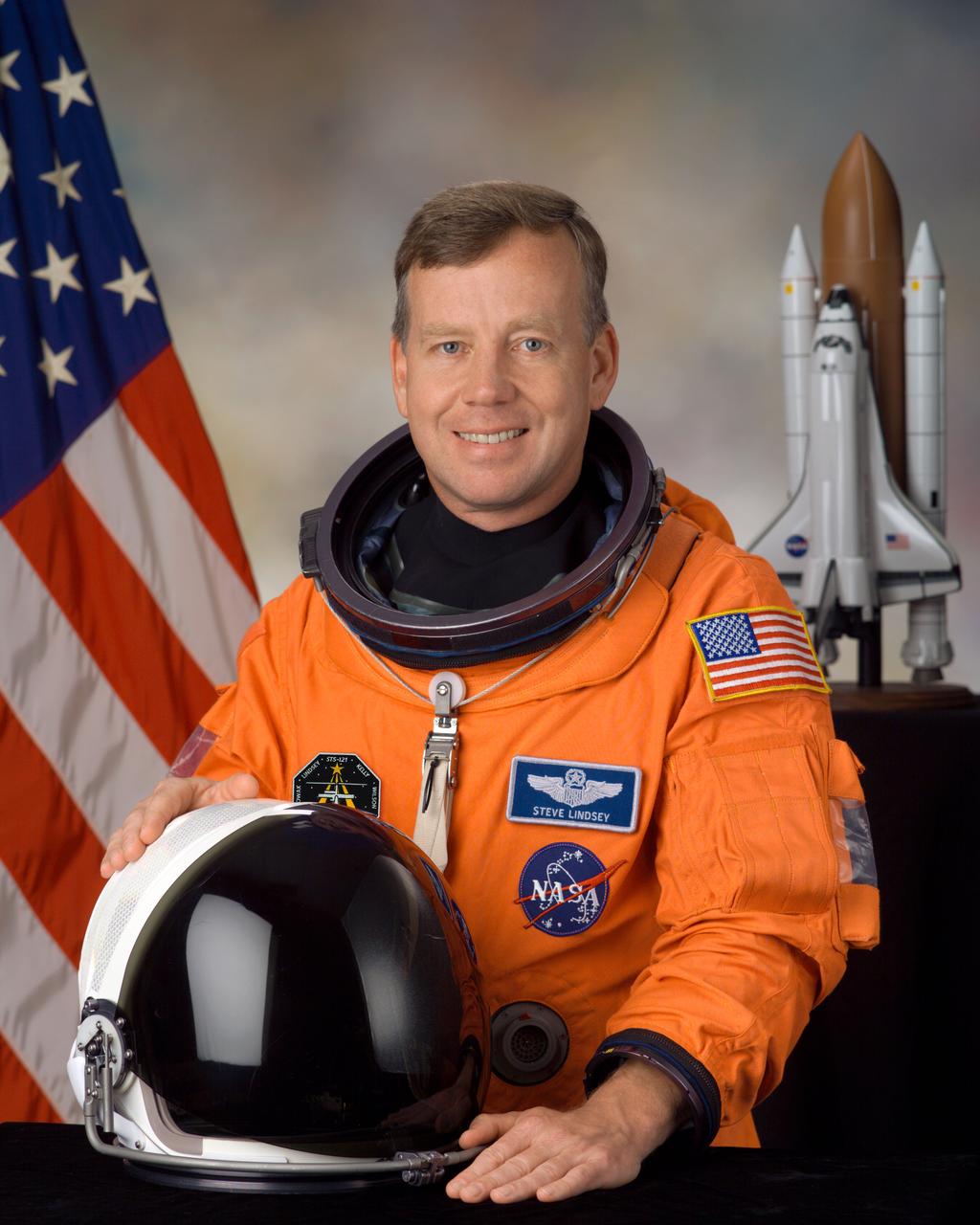
JSC2005-E-21973 (5 Jan. 2005) --- NASA astronaut Steven W. Lindsey, commander.
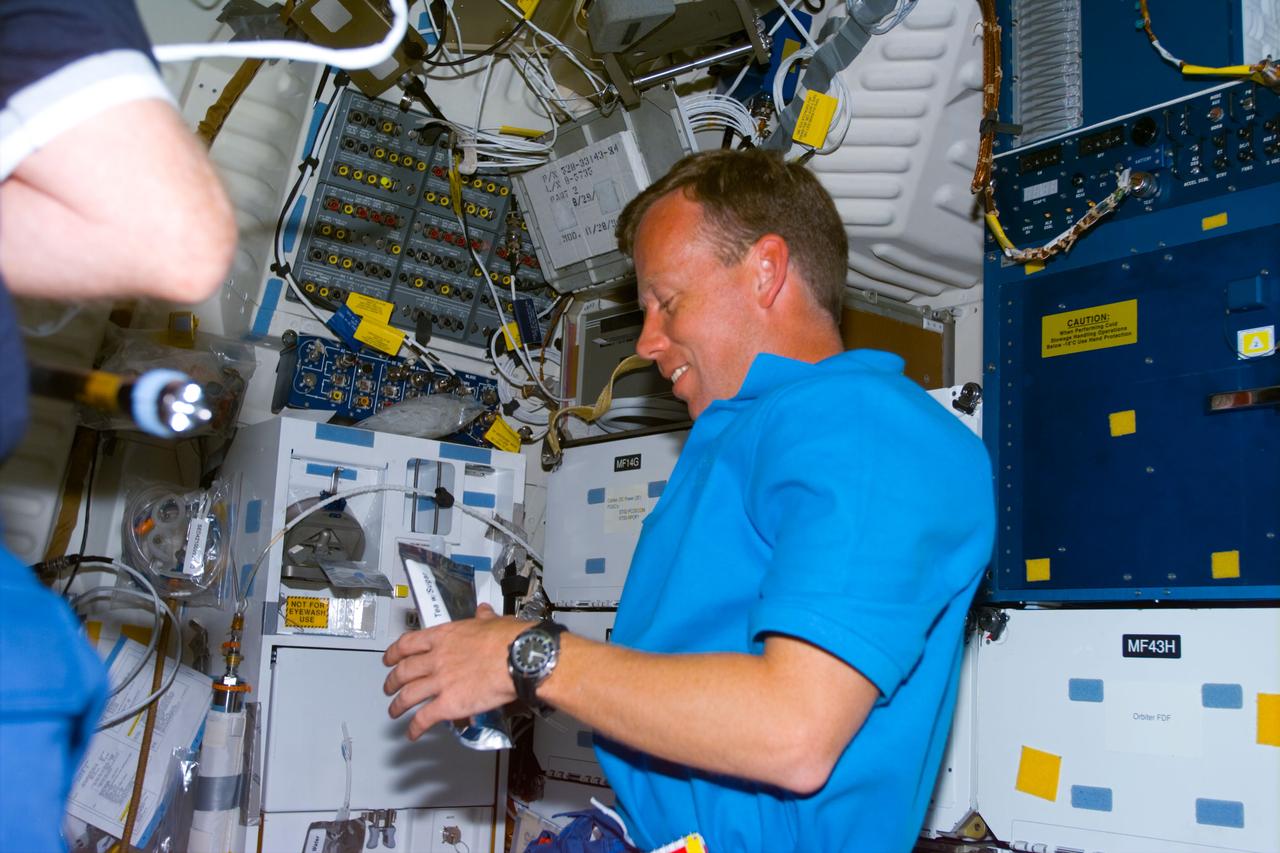
STS095-E-5035 (10-29-98) --- Astronaut Steven W. Lindsey, pilot, rehydrates a drink at the galley on Discovery's mid deck during Flight Day 1 activities. The photo was taken with an electronic still camera (ESC) at 11:47:56 GMT, Oct. 29.
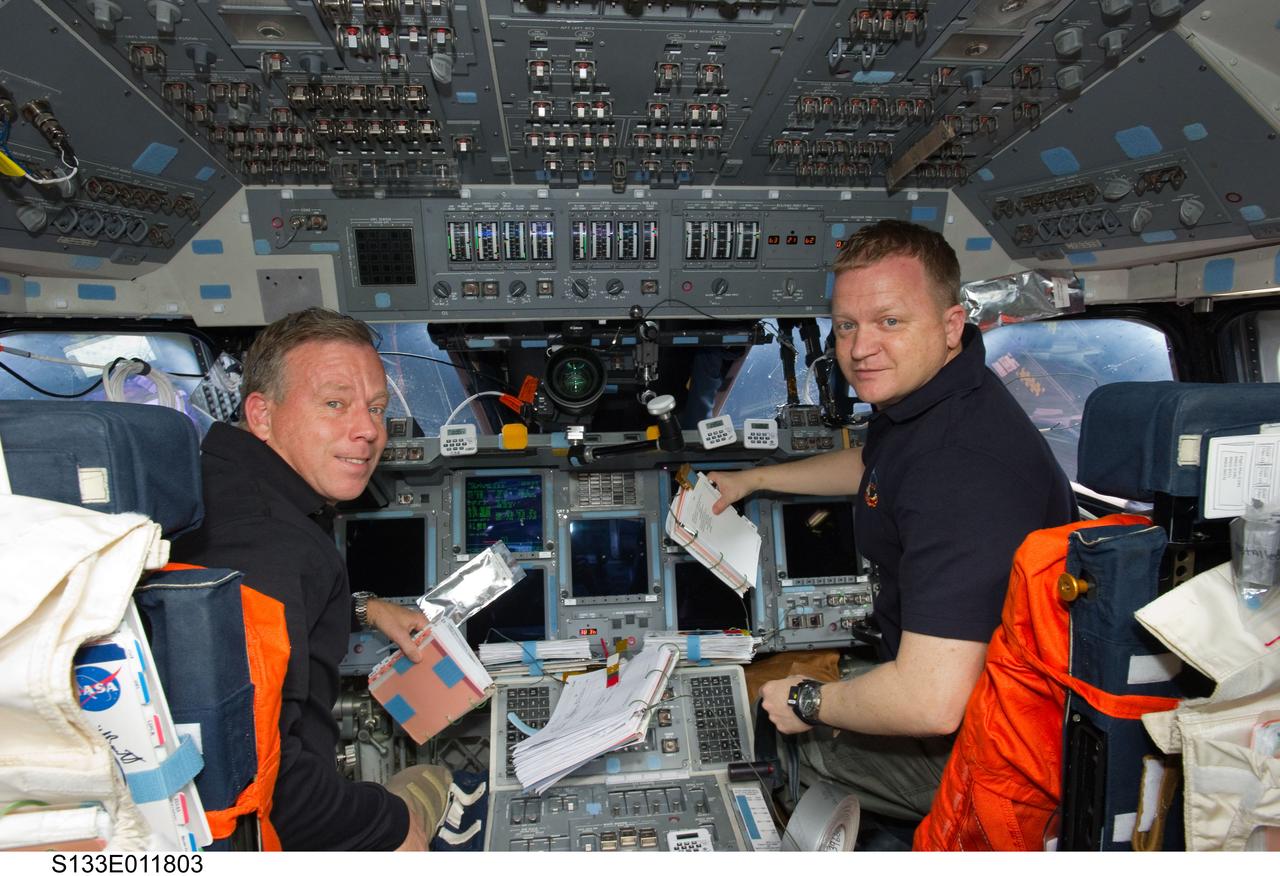
S133-E-011803 (7 March 2011) --- NASA astronauts Steve Lindsey (left), STS-133 commander; and Eric Boe, pilot, are pictured at their respective stations on the forward flight deck of space shuttle Discovery during flight day 12 activities. Photo credit: NASA or National Aeronautics and Space Administration
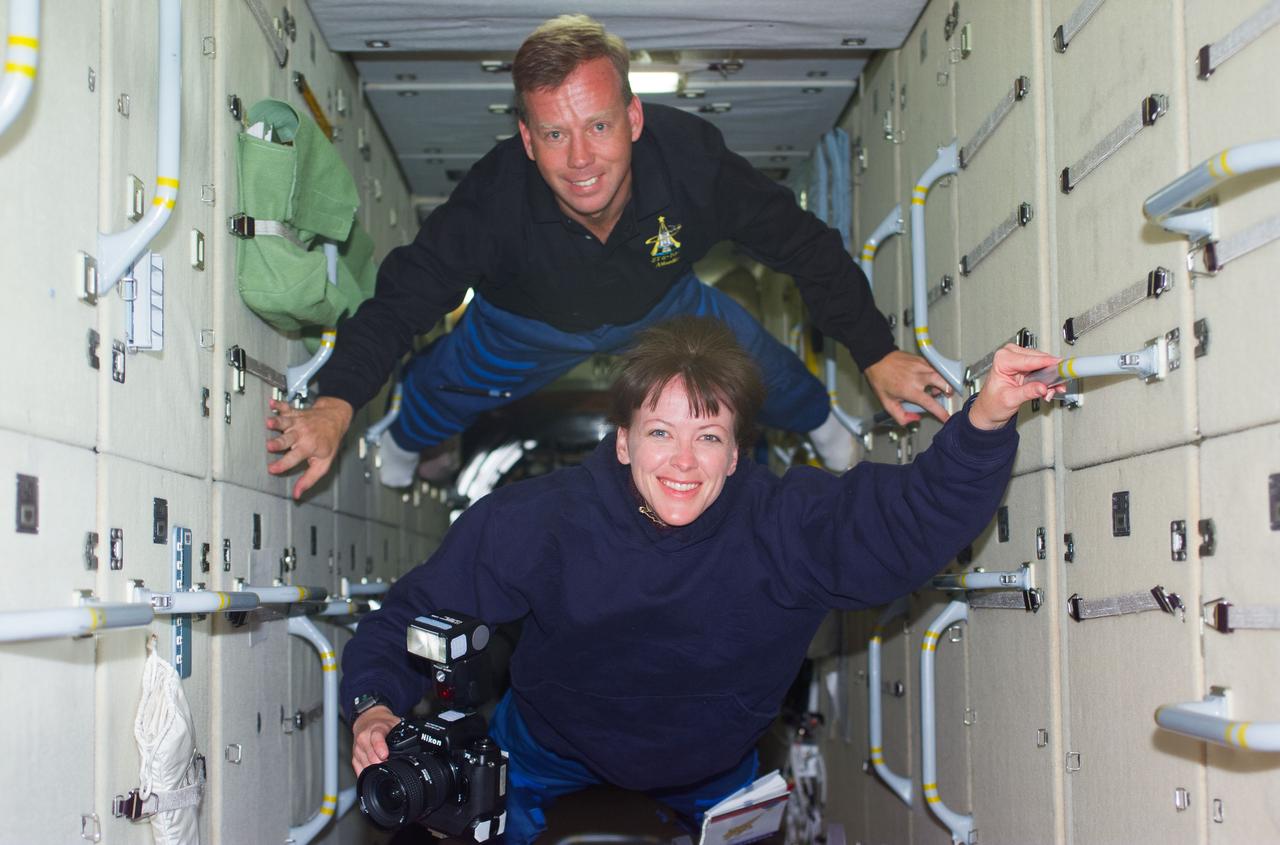
S104-E-5058 (14 July 2001) --- STS-104 crewmembers Steven W. Lindsey, mission commander, and Janet L. Kavandi, mission specialist, travel through the Zarya module during their visit to the International Space Station (ISS).
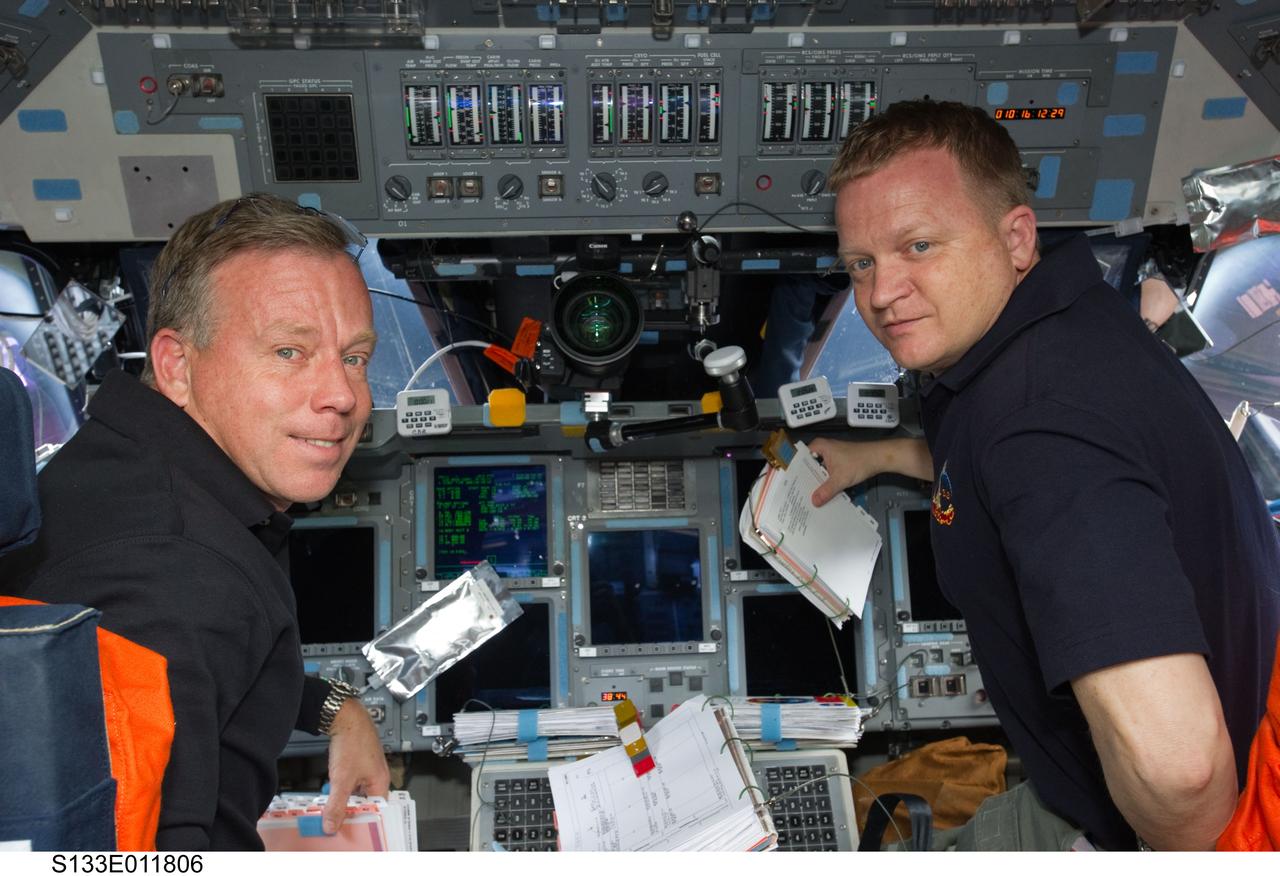
S133-E-011806 (7 March 2011) --- NASA astronauts Steve Lindsey (left), STS-133 commander; and Eric Boe, pilot, are pictured at their respective stations on the forward flight deck of space shuttle Discovery during flight day 12 activities. Photo credit: NASA or National Aeronautics and Space Administration
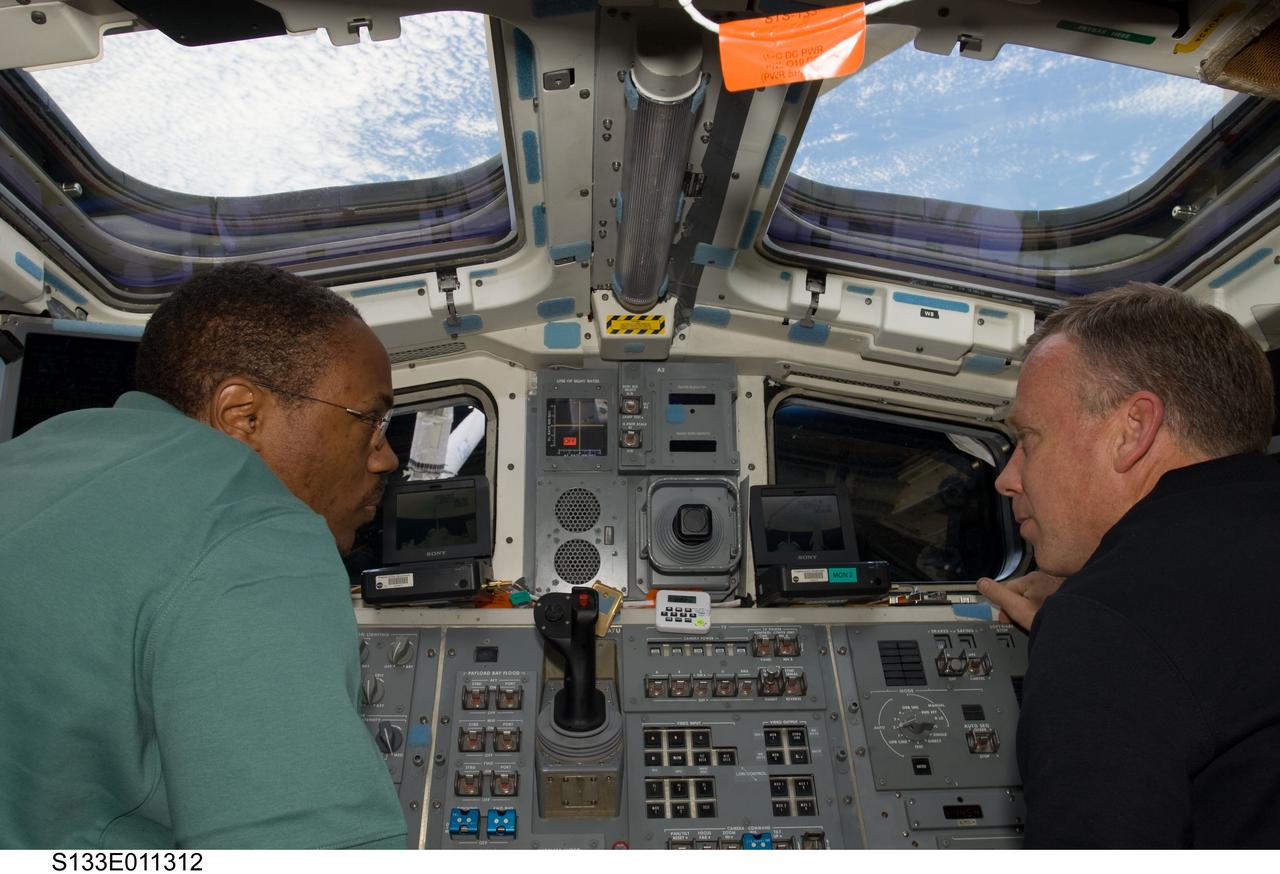
S133-E-011312 (7 March 2011) --- NASA astronauts Steve Lindsey (right), STS-133 commander; and Alvin Drew, mission specialist, are pictured on the aft flight deck of space shuttle Discovery during flight day 12 activities. Photo credit: NASA or National Aeronautics and Space Administration
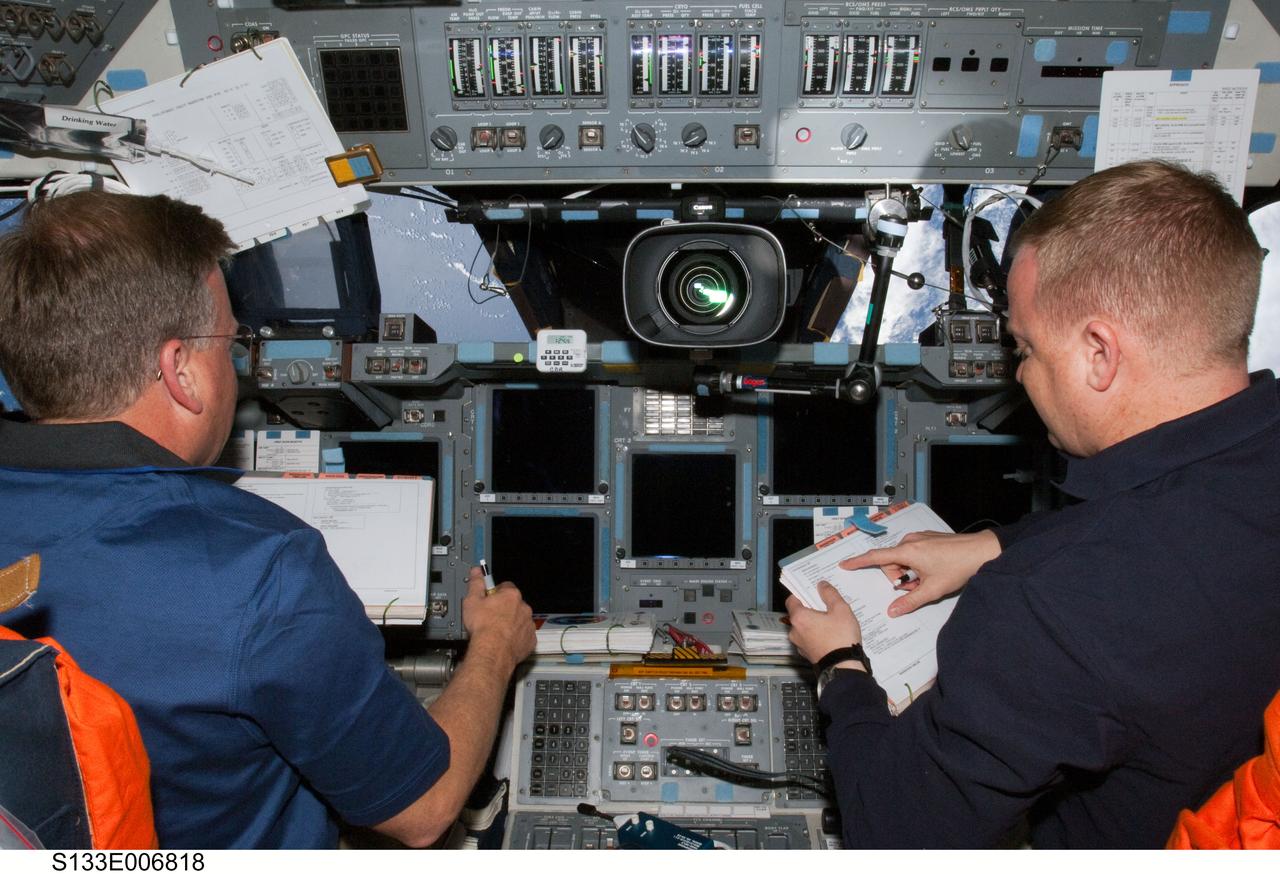
S133-E-006818 (26 Feb. 2011) --- NASA astronauts Steve Lindsey (left), STS-133 commander; and Eric Boe, pilot, occupy their respective stations on the flight deck of space shuttle Discovery during flight day three activities. Photo credit: NASA or National Aeronautics and Space Administration
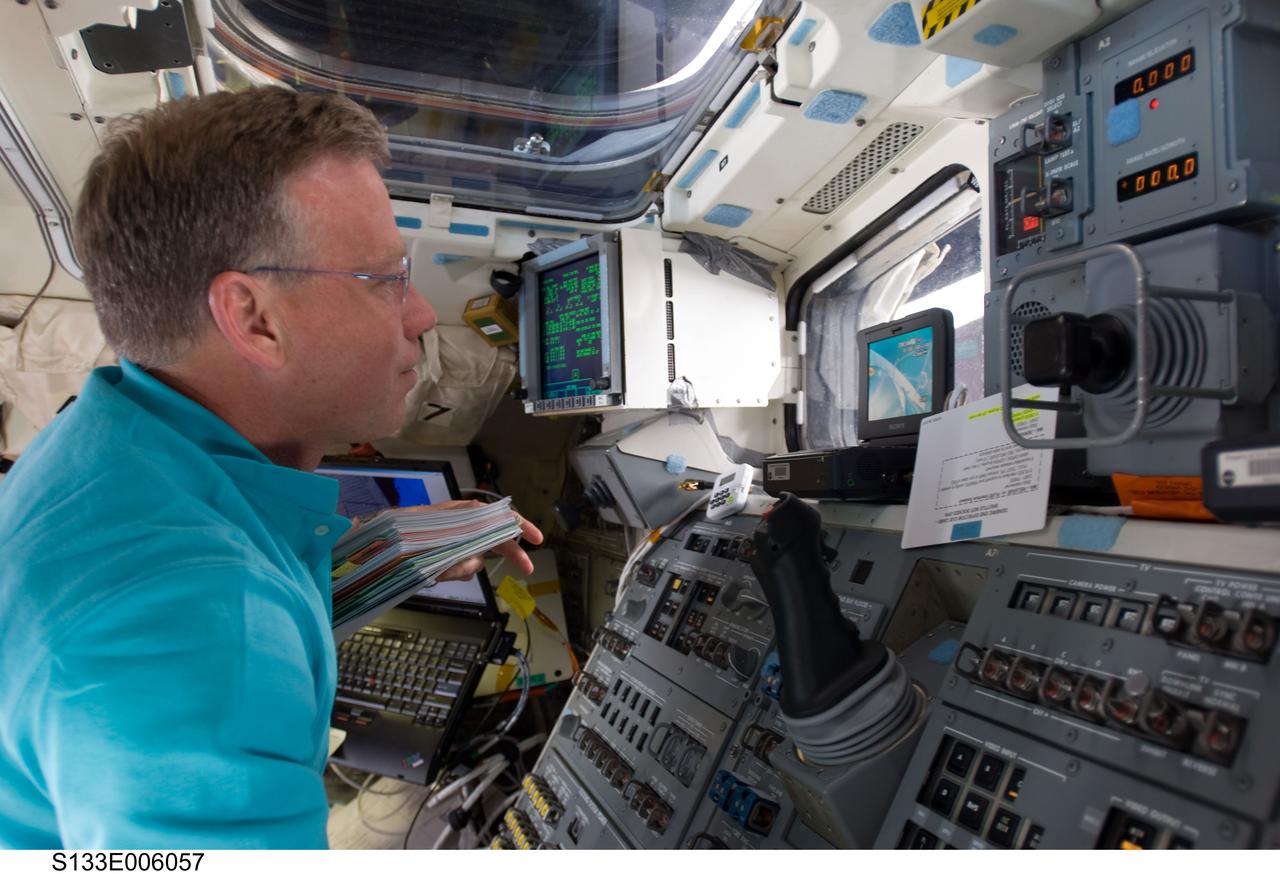
S133-E-006057 (25 Feb. 2011) --- On space shuttle Discovery’s aft flight deck, astronaut Steve Lindsey, STS-133 commander, utilizes in- cabin controls to help conduct thorough inspections of the shuttle’s thermal tile system with the aid of the Remote Manipulator System/Orbiter Boom Sensor System (RMS/OBSS) and special cameras. Photo credit: NASA or National Aeronautics and Space Administration
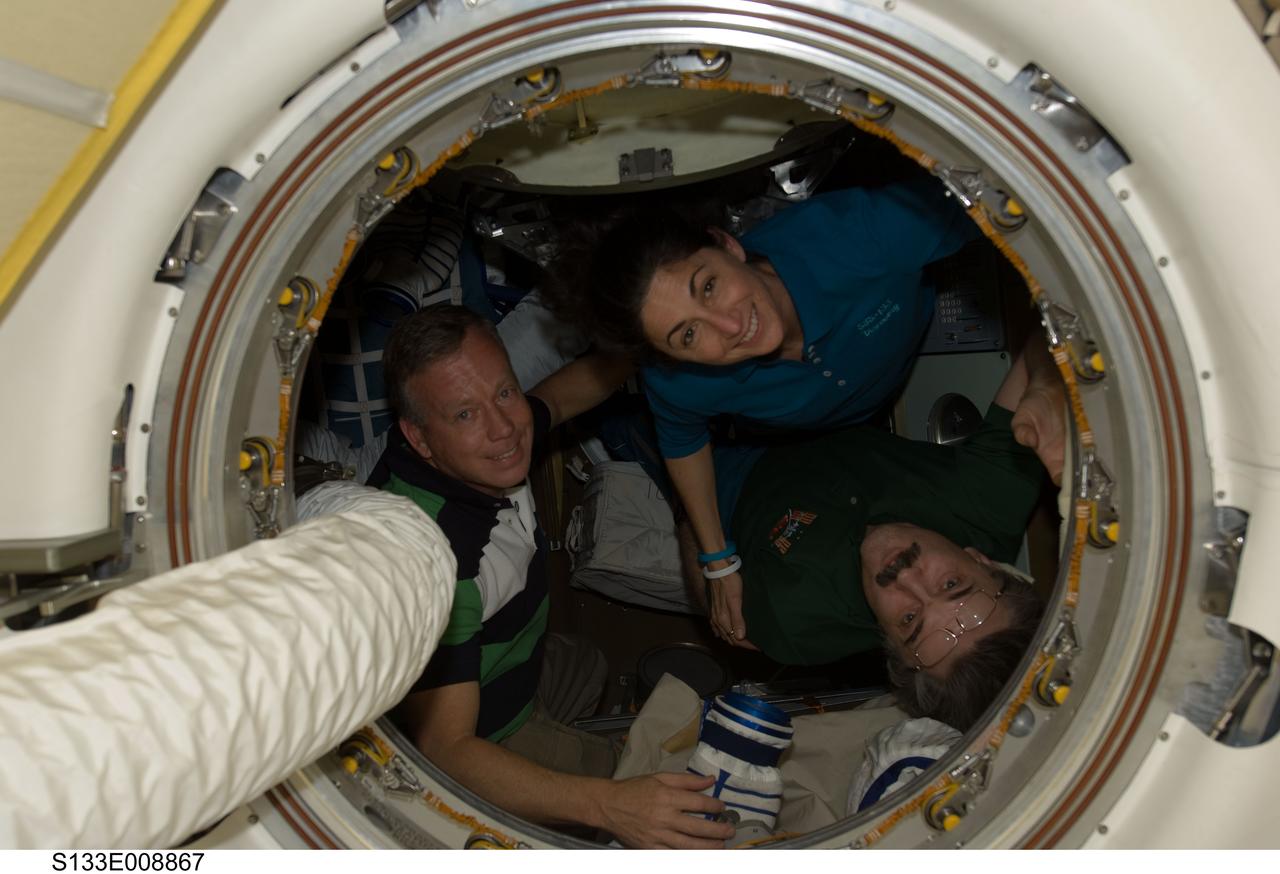
S133-E-008867 (5 March 2011) --- NASA astronauts Steve Lindsey (left), STS-133 commander, and Nicole Stott, mission specialist; along with Russian cosmonaut Alexander Kaleri, Expedition 26 flight engineer, are pictured in a Russian Soyuz spacecraft, docked to the International Space Station, while space shuttle Discovery remains linked with the station. Photo credit: NASA or National Aeronautics and Space Administration
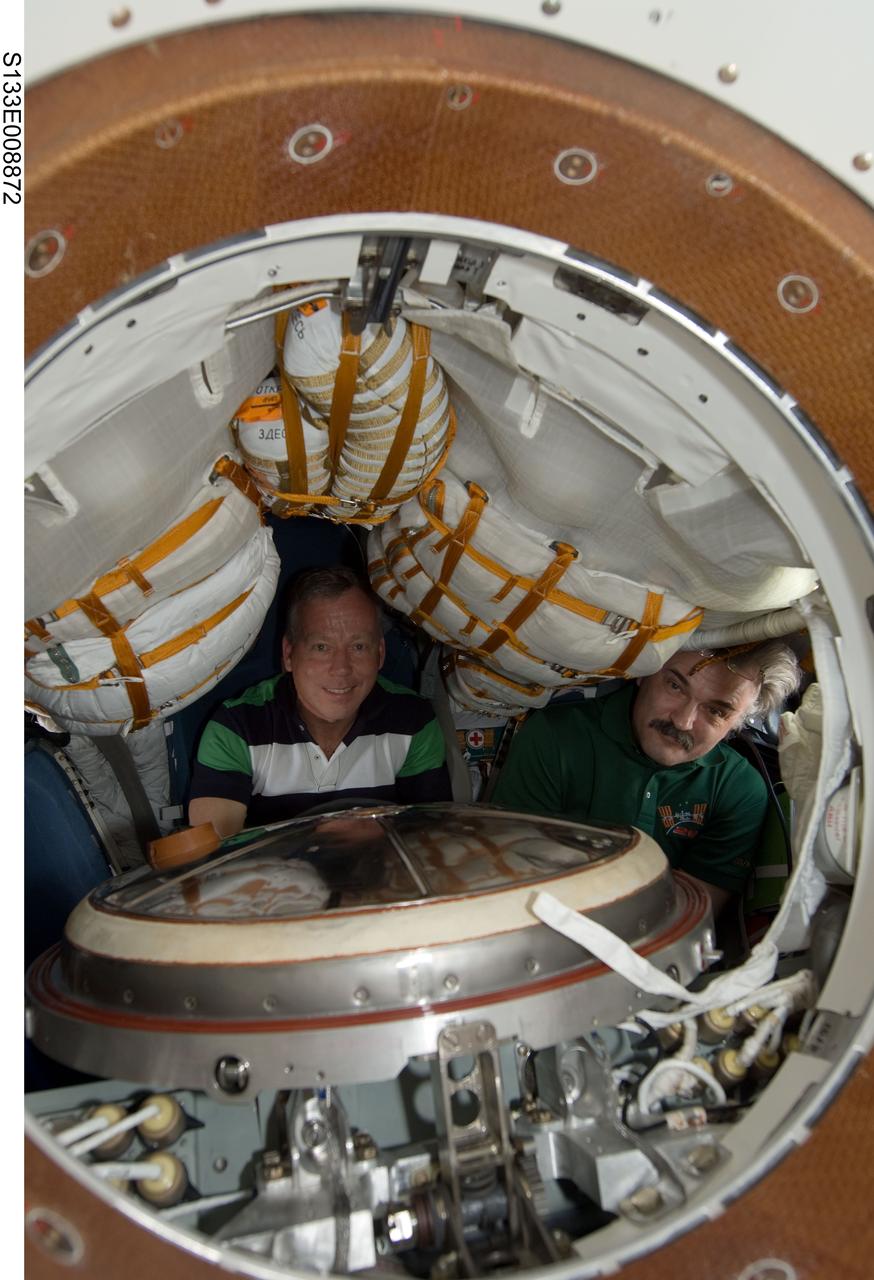
S133-E-008872 (5 March 2011) --- NASA astronaut Steve Lindsey (left), STS-133 commander; and Russian cosmonaut Alexander Kaleri, Expedition 26 flight engineer, are pictured in a Russian Soyuz spacecraft, docked to the International Space Station, while space shuttle Discovery remains linked with the station. Photo credit: NASA or National Aeronautics and Space Administration
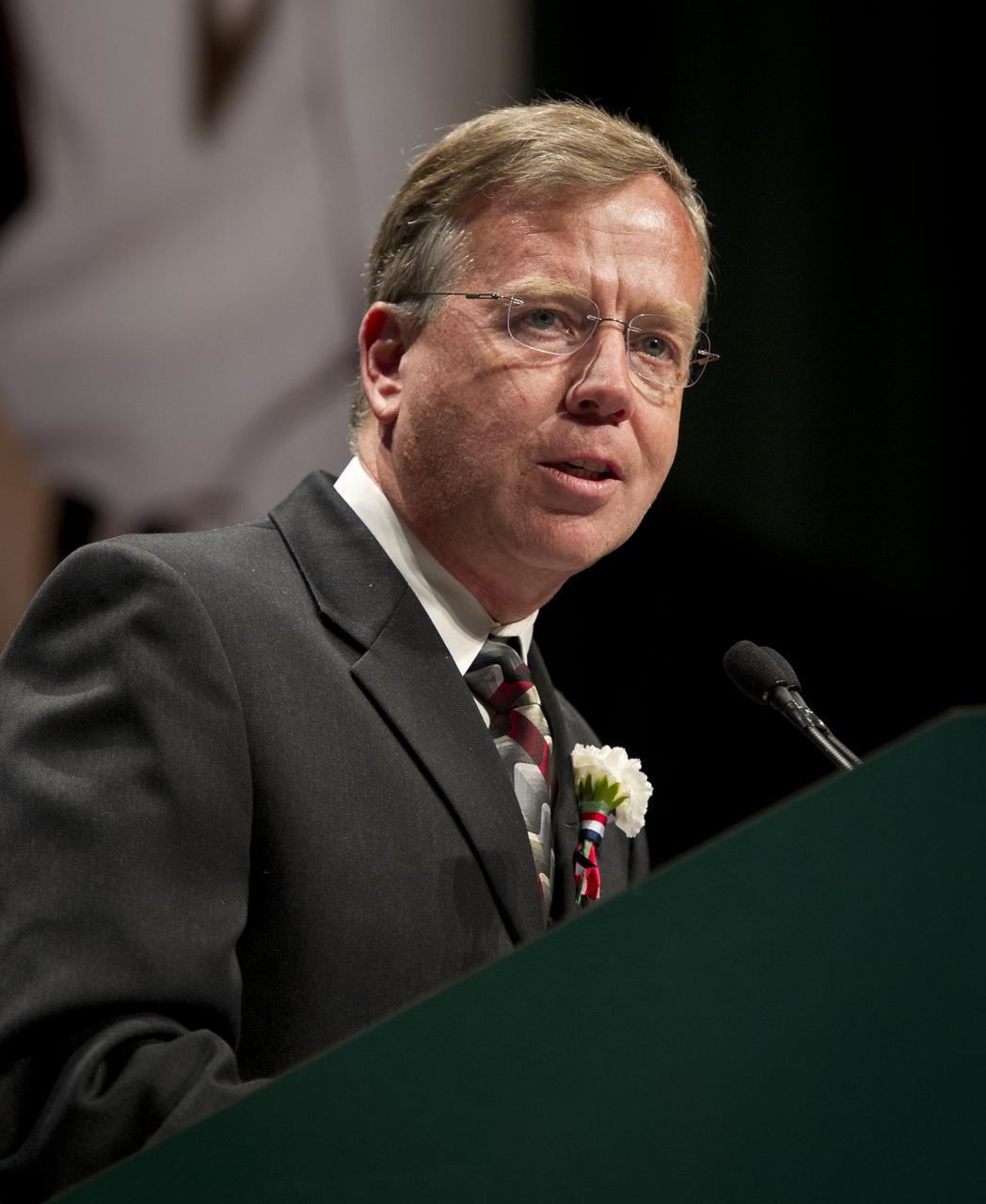
Former NASA Astronaut Steve Lindsey gives remarks at an event celebrating John Glenn's legacy and 50 years of americans in orbit held at the Cleveland State University Wolstein Center on Friday, March 3, 2012 in Cleveland, Ohio. In 1998 Lindsey flew onboard the space shuttle Discovery along with then 77 year-old Sen. John Glenn for the STS-95 mission. Glenn became the first American to orbit Earth in 1962. Photo Credit: (NASA/Bill Ingalls)
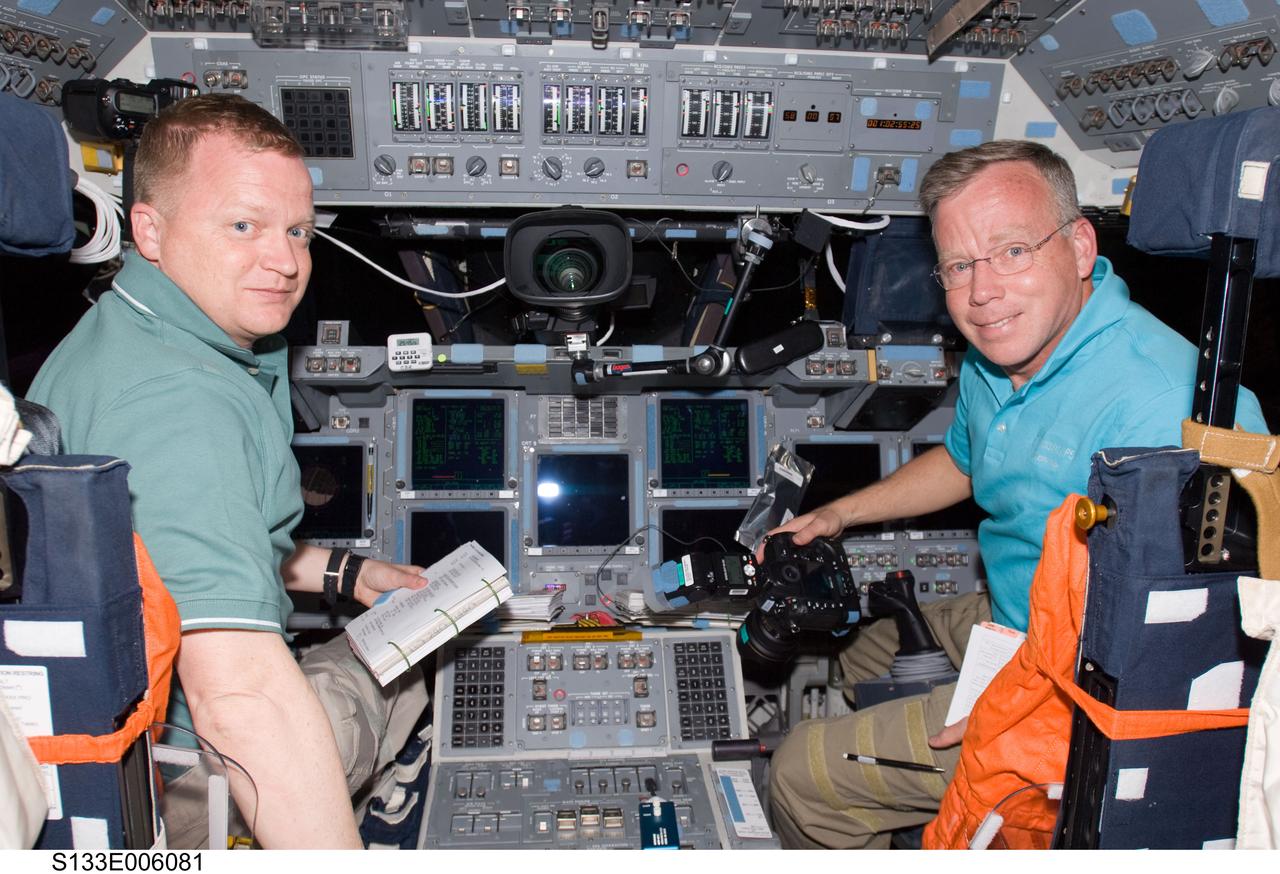
S133-E-006081 (25 Feb. 2011) --- On space shuttle Discovery’s forward flight deck, astronauts Steve Lindsey (right), STS-133 commander, and Eric Boe, pilot, switch seats for a brief procedure as the crew heads toward a weekend docking with the International Space Station. Earlier the crew conducted thorough inspections of the shuttle’s thermal tile system using the Remote Manipulator System/Orbiter Boom Sensor System (RMS/OBSS) and special cameras. Photo credit: NASA or National Aeronautics and Space Administration

STS095-E-5227 (4 Nov. 1998) --- Astronaut Steven W. Lindsey, STS-95 pilot, has done a 180-degree change of posture from earlier frame as he inputs data on a laptop in Spacehab aboard the Space Shuttle Discovery. The photo was taken with an electronic still camera (ESC) at 03:07:52 GMT, Nov. 4.
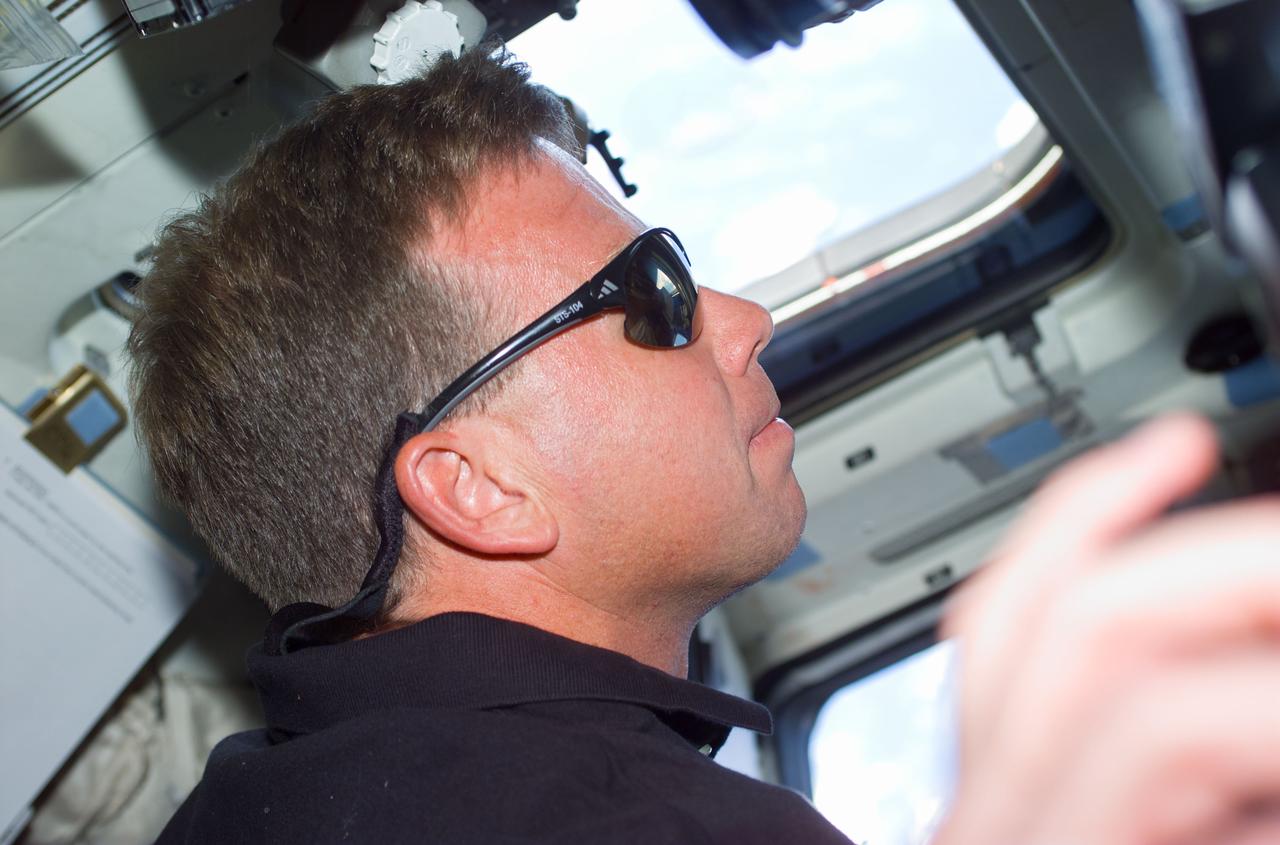
STS104-E-5029 (14 July 2001) --- Astronaut Steven W. Lindsey, STS-104 mission commander, looks toward the International Space Station (ISS) during rendezvous operations. A crew mate on Atlantis' flight deck took this picture with a digital still camera.
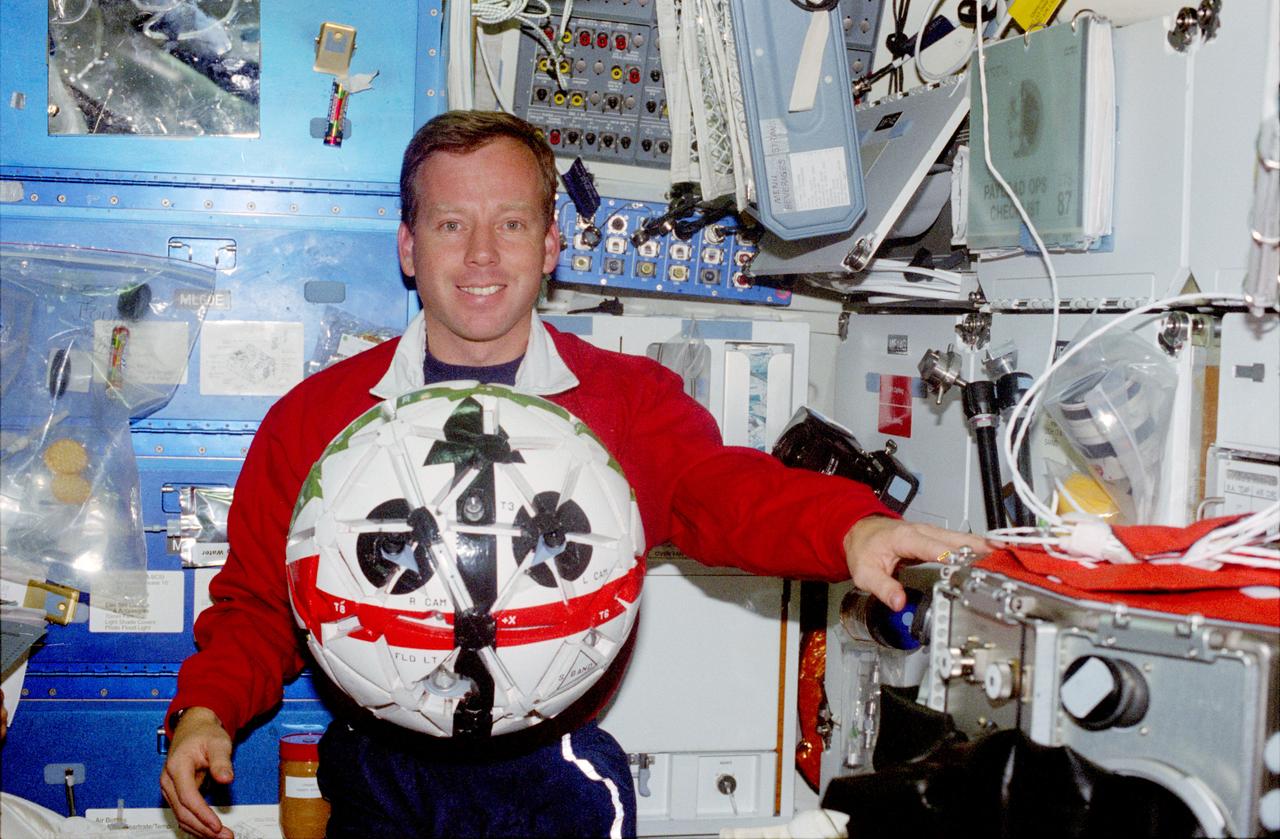
STS087-371-013 (19 November - 5 December 1997) --- On the Space Shuttle Columbia's mid-deck, astronaut Steven W. Lindsey proves that the Autonomous Extravehicular Activity Robotic Camera/Sprint (AERCam/Sprint) experiment is in fact bigger than a soccer ball, to which it is often erroneously compared for dimensional frame of reference, as he allows the Sprint to float near him. The AERCam is a prototype free-flying television camera that could be used for remote inspections of the exterior of the International Space Station (ISS). Later, astronauts Winston E. Scott and Takao Doi took the experiment outside for a brief test during the mission's second Extravehicular Activity (EVA). Lindsey, pilot, is standing with his back to the galley and his left hand on the microgravity glovebox, used extensively during the mission to support the United States Microgravity Payload (USMP-4) mission.
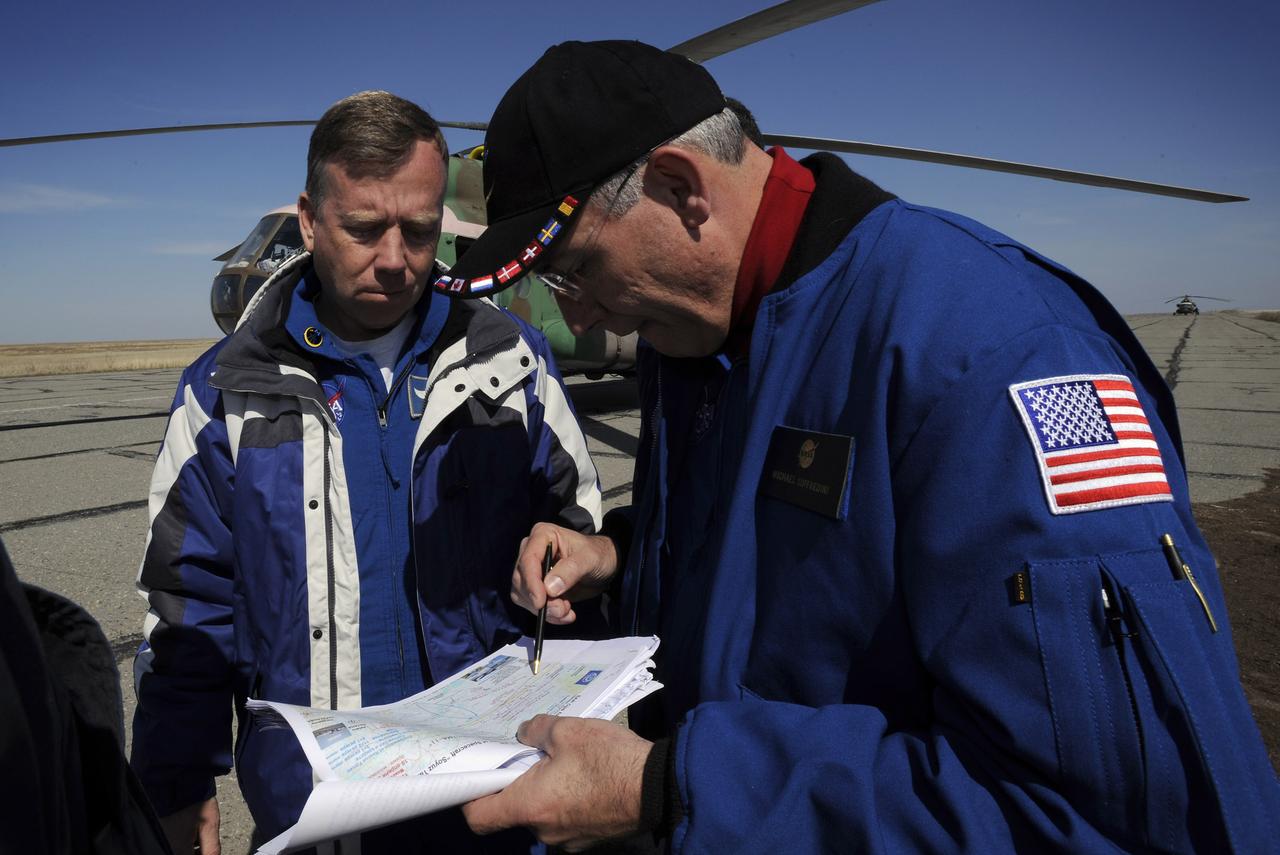
Steve Lindsey, Chief of NASA's Astronaut office, left, and Michael Sufferdini, International Station Program Manager, examine a map of central Kazakhstan as they received information at the Arkalyk airport April 19, 2008 on the landing of the Expedition 16 crew in the Soyuz TMA-11 capsule. The Soyuz made a ballistic landing, touching down more then 400 kilometers short of the intended target, but the crew reported by satellite phone to recovery forces that they were in good shape. Photo Credit: (NASA/Bill Ingalls)
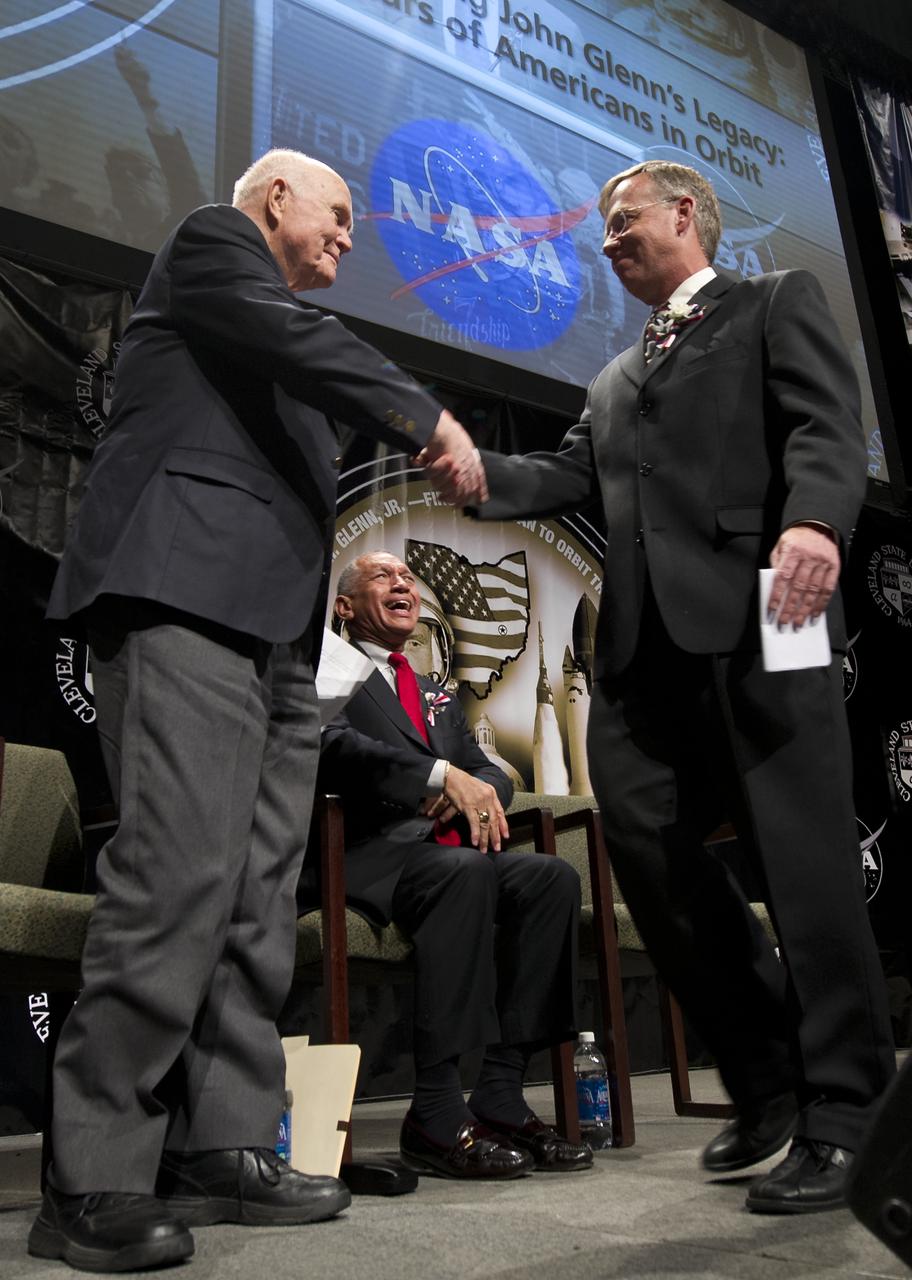
Sen. John Glenn, left, shakes hands with former Astronaut Steve Lindsey as NASA Administrator Charles Bolden smiles at an event celebrating John Glenn's legacy and 50 years of americans in orbit held at the Cleveland State University Wolstein Center on Friday, March 3, 2012 in Cleveland, Ohio. In 1998 Lindsey flew onboard the space shuttle Discovery along with then 77 year-old Sen. John Glenn for the STS-95 mission. Glenn became the first American to orbit Earth in 1962. Photo Credit: (NASA/Bill Ingalls)
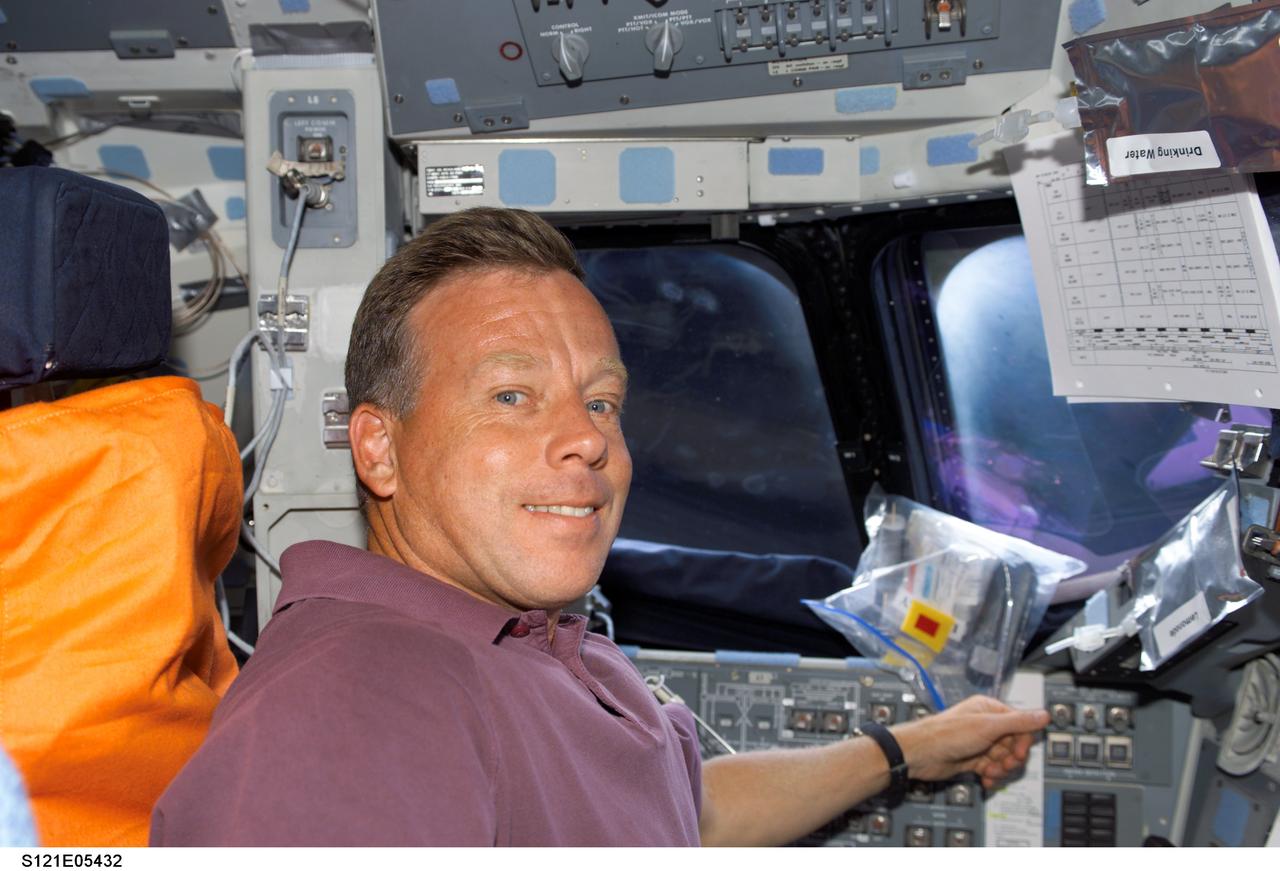
STS121-E-05432 (5 July 2006) --- On Discovery's flight deck, astronaut Steven W. Lindsey, commander, anticipates tomorrow's docking and busy flight day three activities of STS-121.
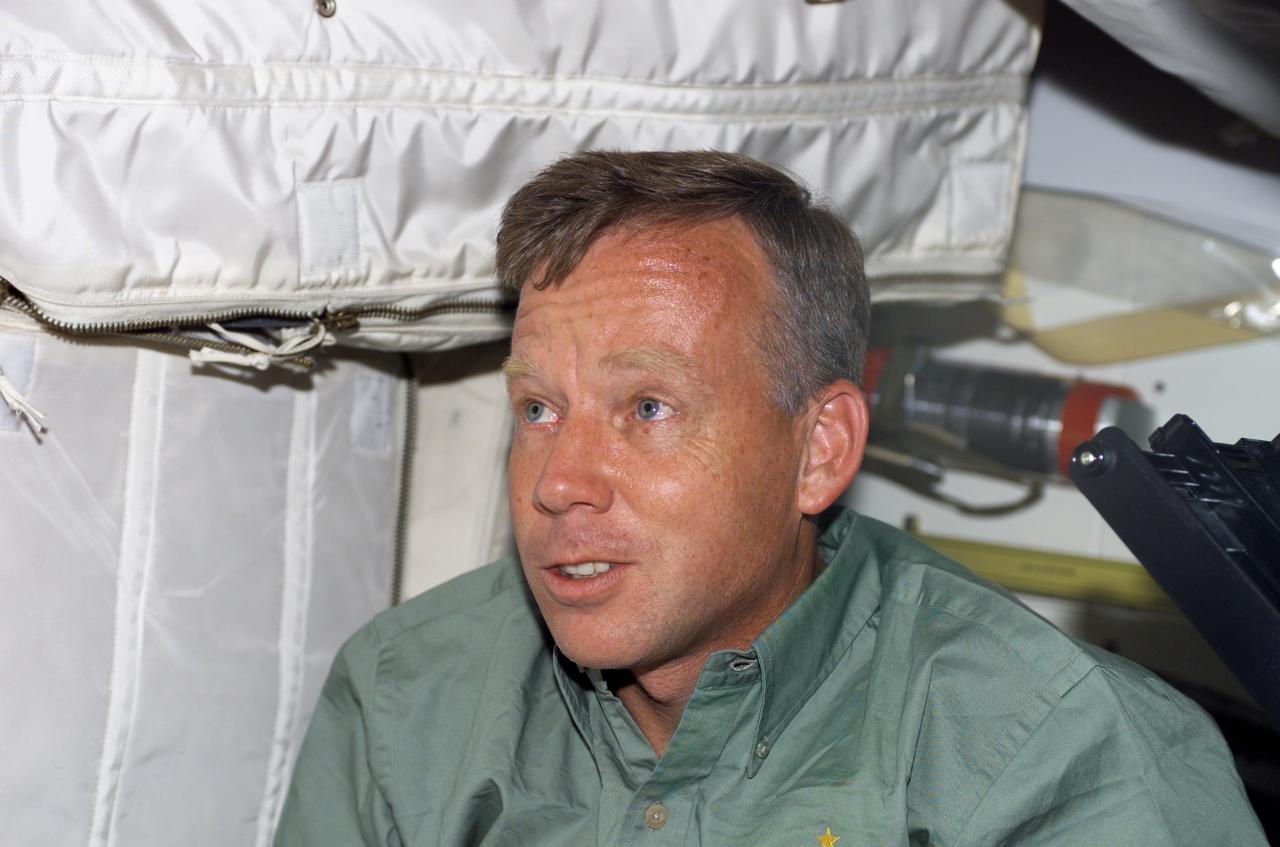
S121-E-06162 (9 July 2006) --- Astronaut Steven W. Lindsey, STS-121 commander, photographed on the middeck of the Space Shuttle Discovery while docked with the International Space Station.
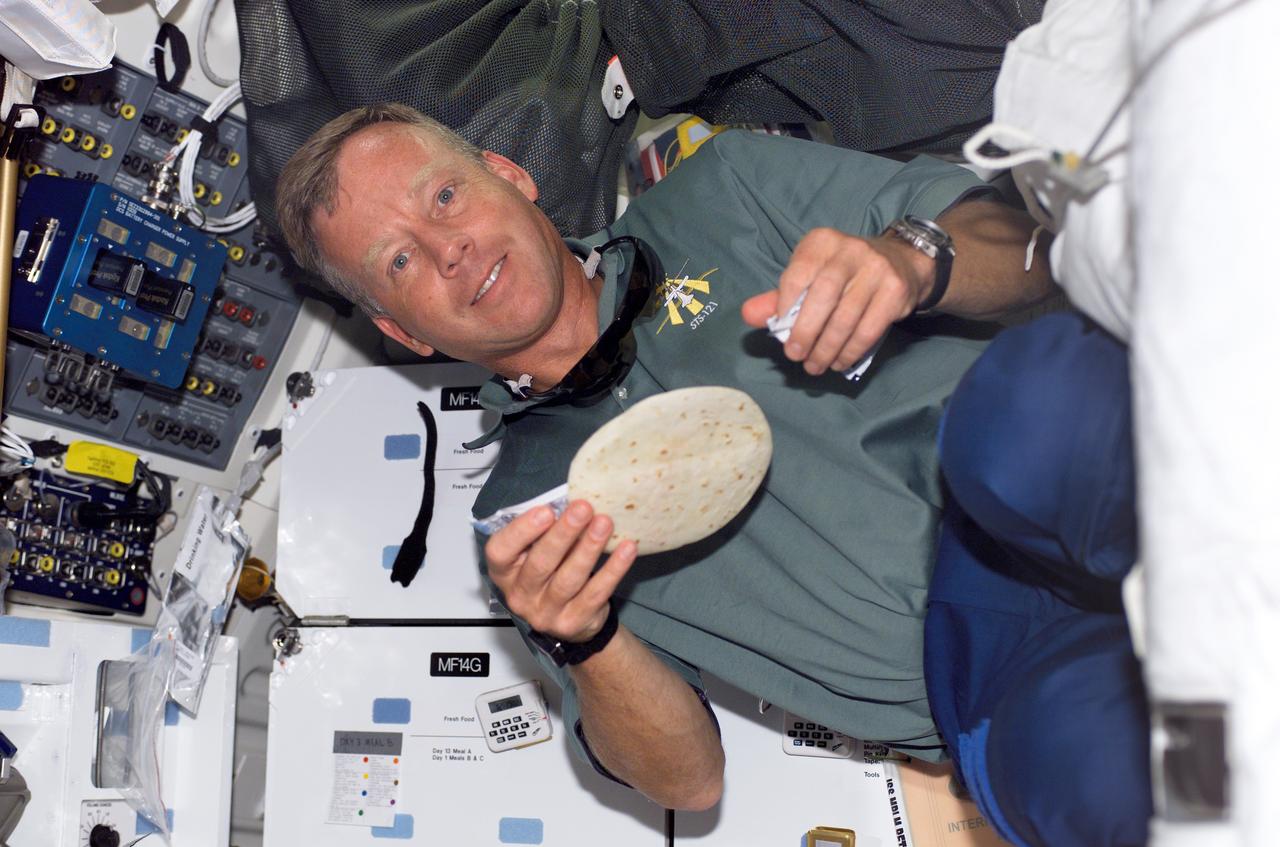
S121-E-05879 (6 July 2006) --- Astronaut Steven W. Lindsey, STS-121 commander, holds a tortilla as he prepares to eat a meal on the middeck of the Space Shuttle Discovery.
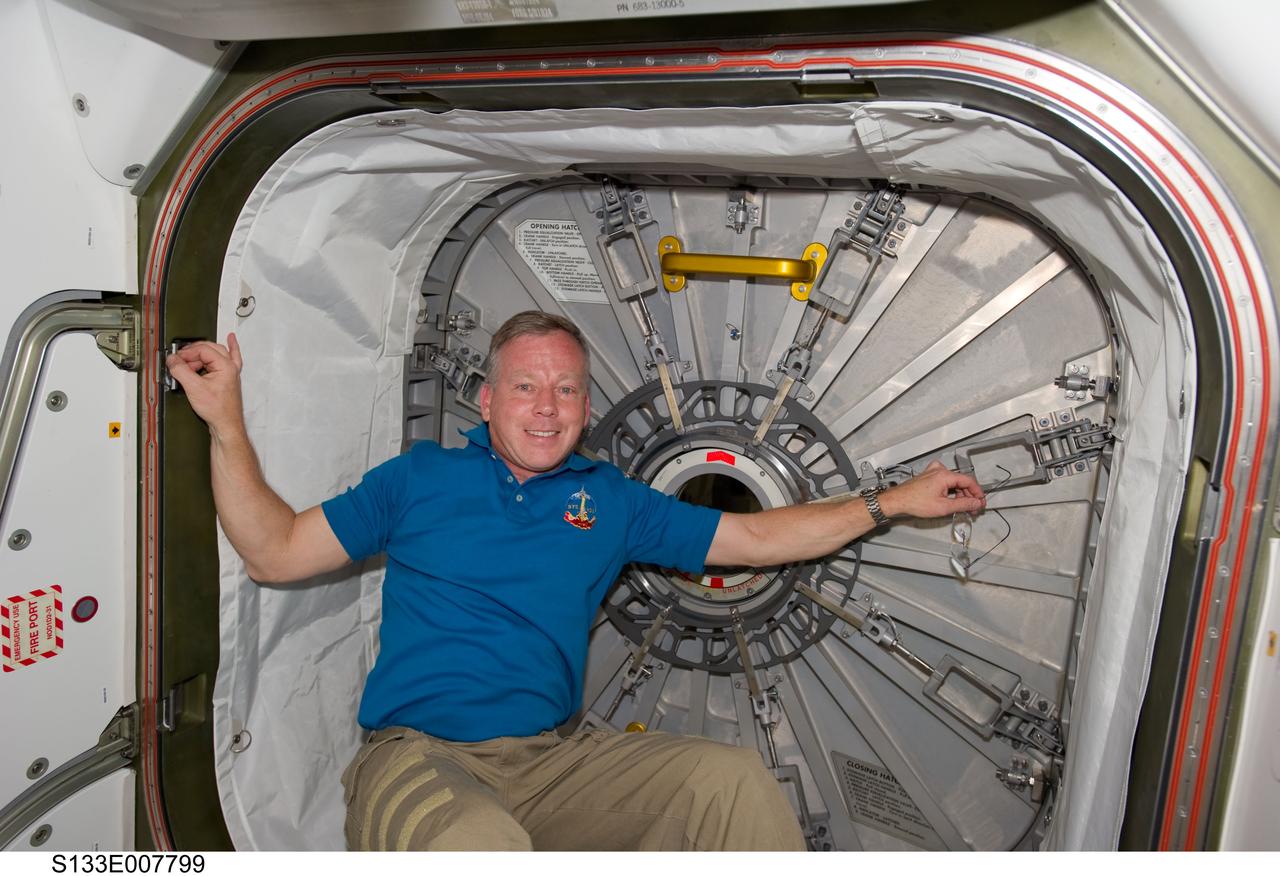
S133-E-007799 (1 March 2011) --- NASA astronaut Steve Lindsey, STS-133 commander, is pictured at the hatch of the Earth-facing port of the International Space Station’s Unity node while space shuttle Discovery remains docked with the station. On the other side of the hatch door is the newly-installed Permanent Multipurpose Module (PMM). Photo credit: NASA or National Aeronautics and Space Administration
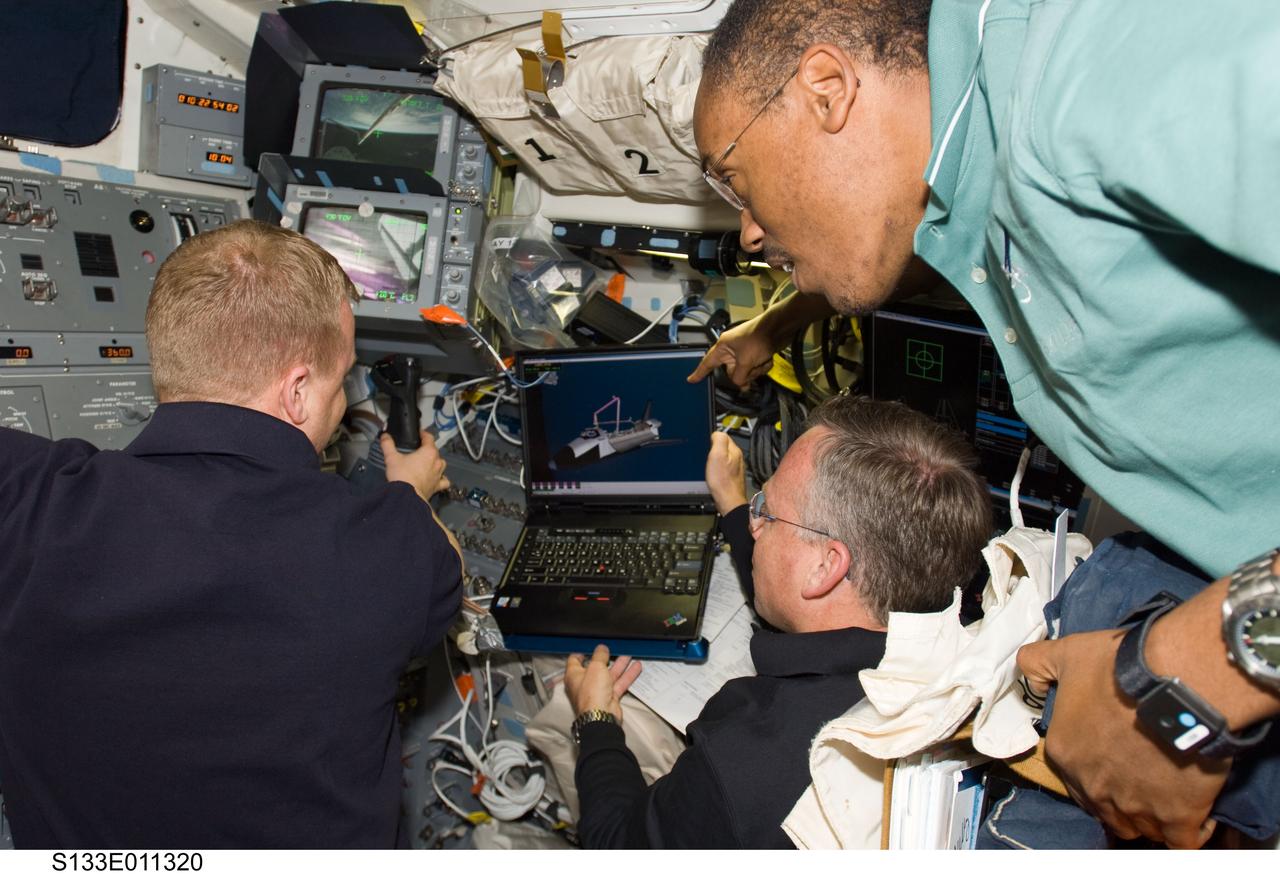
S133-E-011320 (7 March 2011) --- NASA astronauts Steve Lindsey (center), STS-133 commander; Eric Boe (left), pilot; and Alvin Drew, mission specialist, work on the aft flight deck of space shuttle Discovery during flight day 12 activities. Photo credit: NASA or National Aeronautics and Space Administration
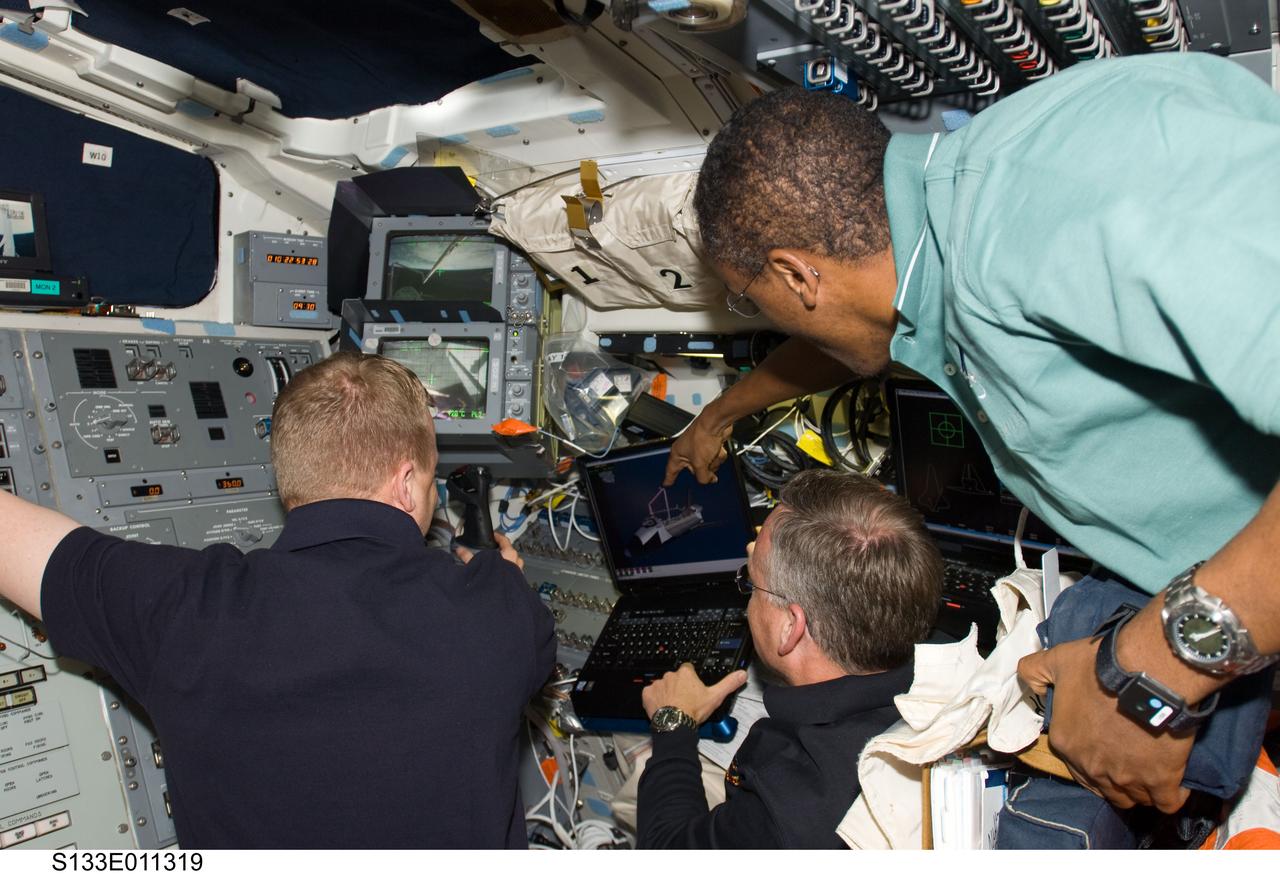
S133-E-011319 (7 March 2011) --- NASA astronauts Steve Lindsey (center), STS-133 commander; Eric Boe (left), pilot; and Alvin Drew, mission specialist, work on the aft flight deck of space shuttle Discovery during flight day 12 activities. Photo credit: NASA or National Aeronautics and Space Administration
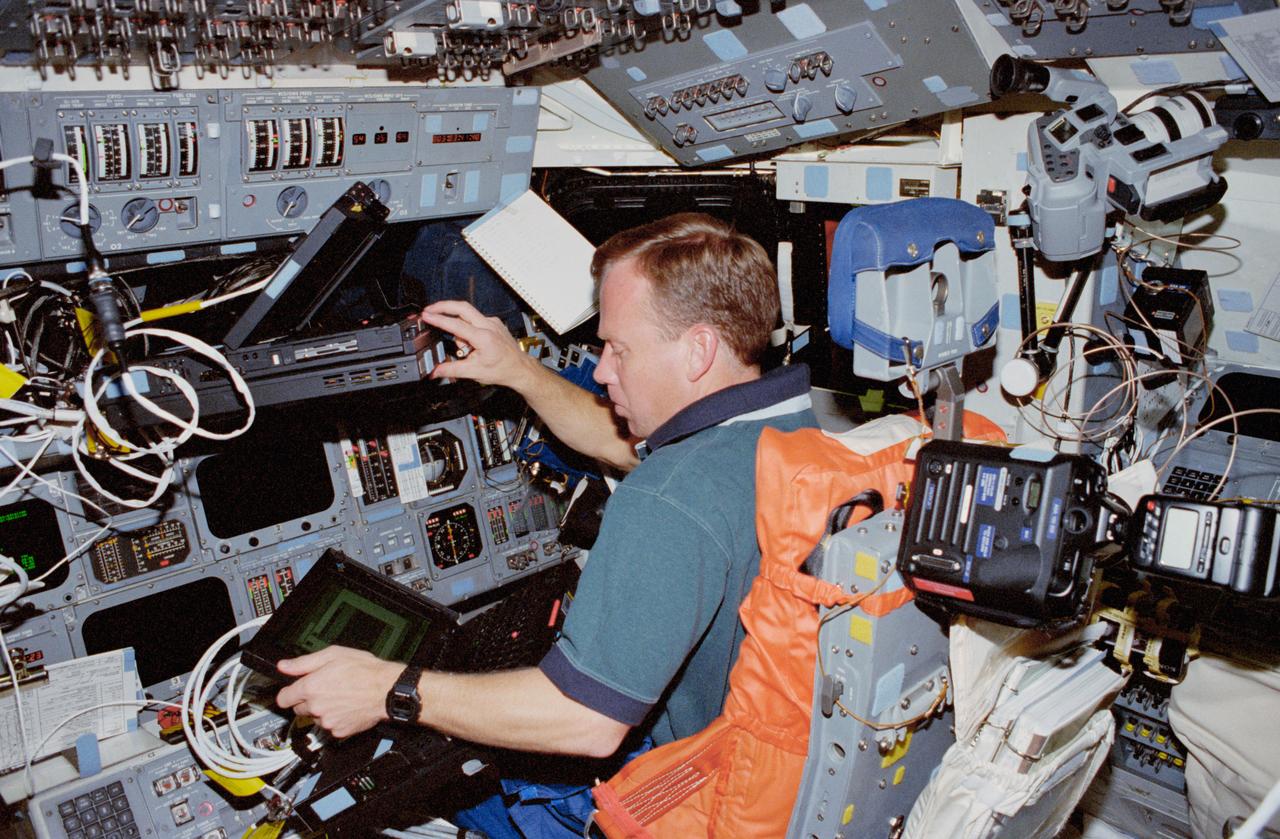
STS087-319-015 (19 November – 5 December 1997) --- On the starboard side of the Space Shuttle Columbia's flight deck, astronaut Steven W. Lindsey, pilot, appears fully occupied with laptops to support flight operations for the 16-day mission in Earth-orbit. Several cameras and pieces of their supportive equipment have been temporarily stowed behind the pilot's station.
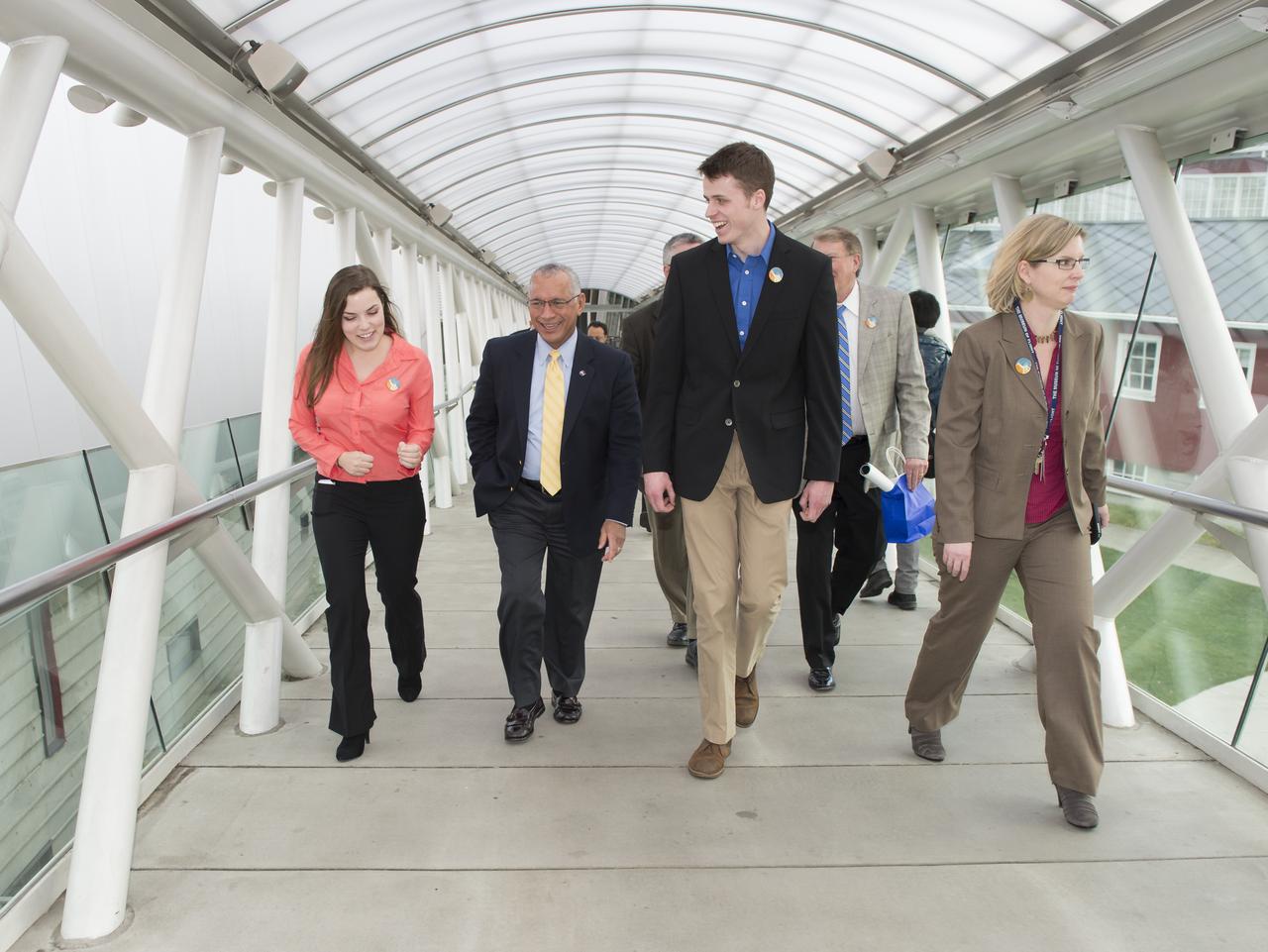
NASA Administrator Charles Bolden, second from left, is seen with Washington Aerospace Scholars Brenna Tuller-Ross, far left, and Alec Lindsey as they escort him on a tour of the Museum of Flight, Tuesday, Jan. 15, 2013 in Seattle, Washington. Photo Credit: (NASA/Carla Cioffi)
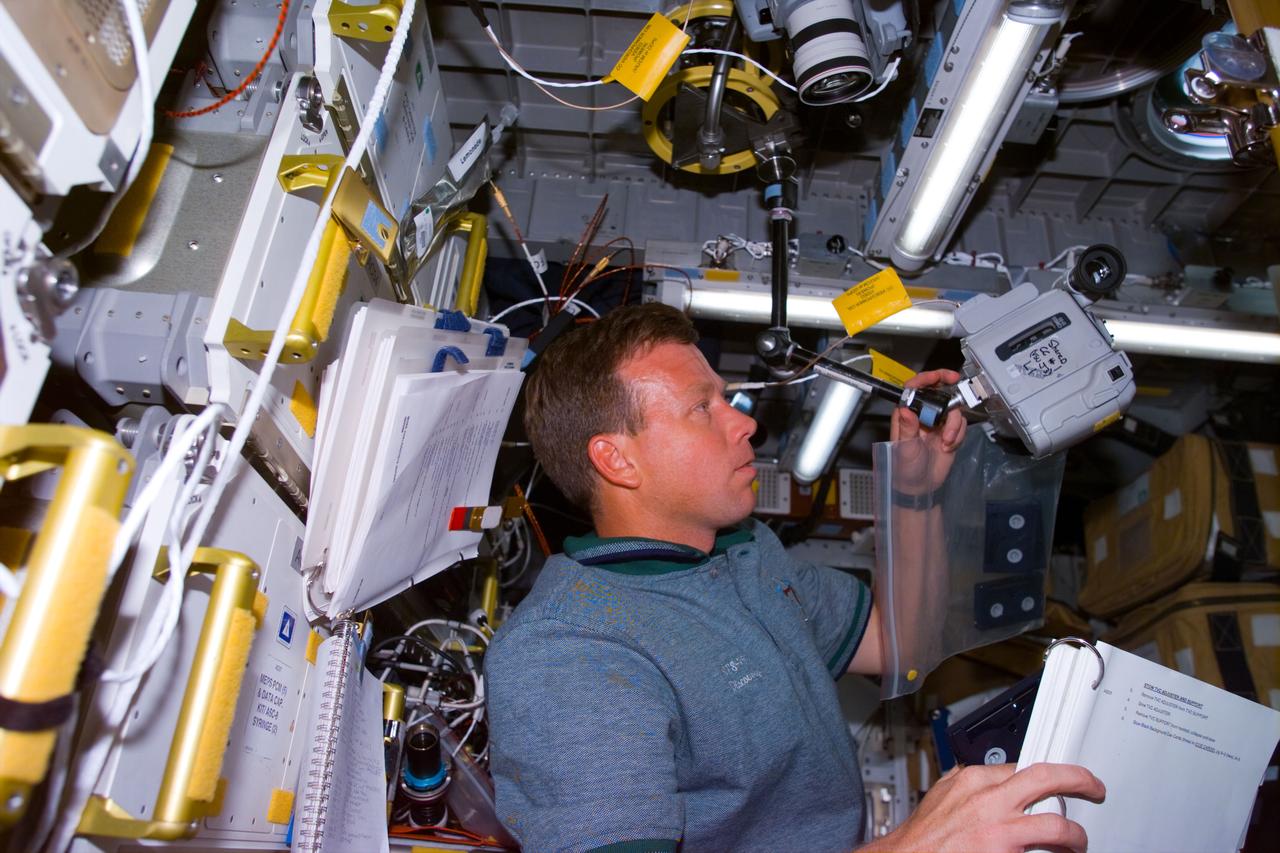
STS095-E-5107 (2 Nov. 1998) --- Astronaut Steven W. Lindsey, STS-95 pilot, sets up a camera for an experiment in the Spacehab facility aboard Discovery during Flight Day 4 activity. The photo was taken with an electronic still camera (ESC) at 05:10:25 GMT, Nov. 2.
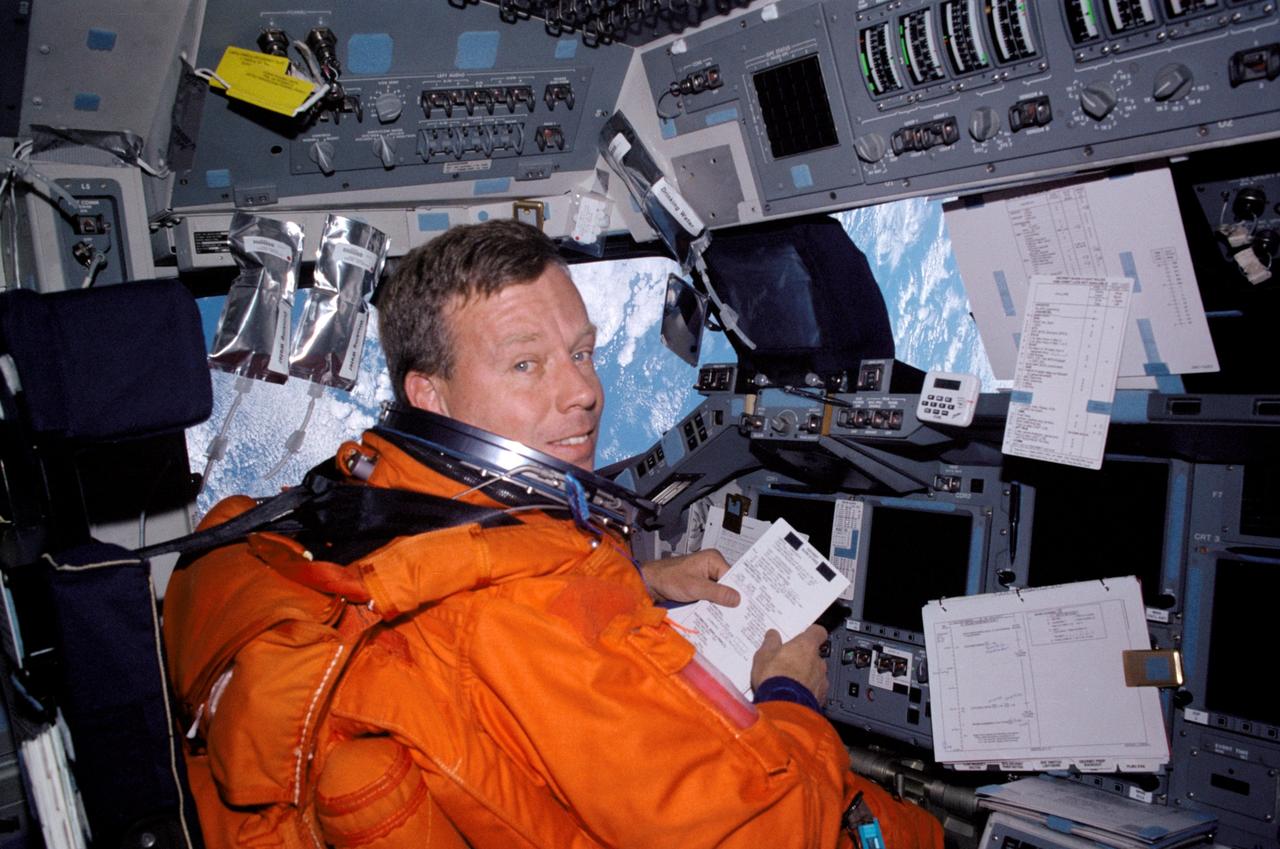
STS104-345-021 (25 July 2001) --- Attired in his shuttle launch and entry suit, astronaut Steven W. Lindsey, STS-104 commander, looks over a procedures checklist at the commander’s station on the forward flight deck of the space shuttle Atlantis.
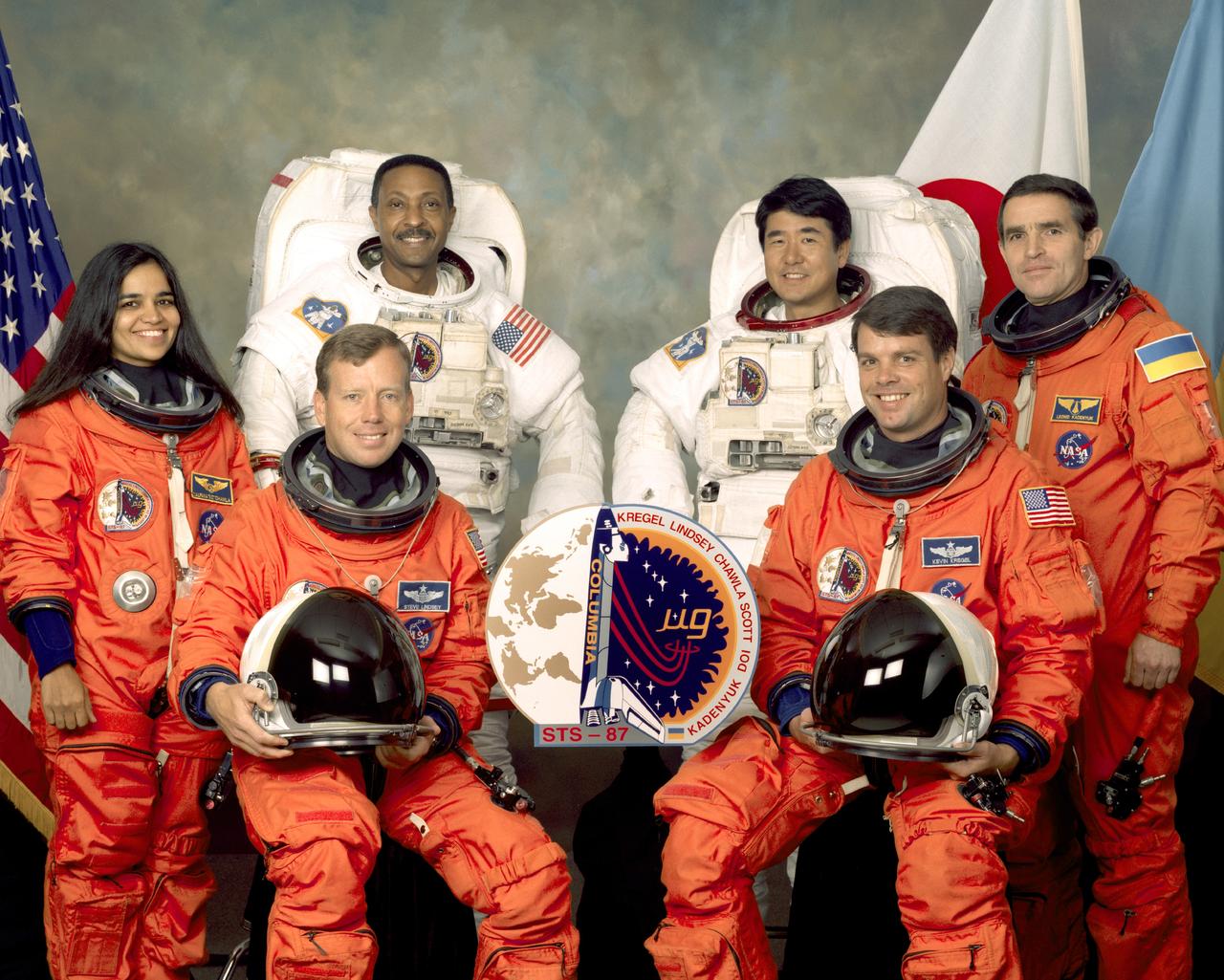
Five astronauts and a payload specialist take a break from training at the Johnson Space Center (JSC) to pose for the STS-87 crew portrait. Wearing the orange partial pressure launch and entry suits, from the left, are Kalpana Chawla, mission specialist; Steven W. Lindsey, pilot; Kevin R. Kregel, mission commander; and Leonid K. Kadenyuk, Ukrainian payload specialist. Wearing the white Extravehicular Mobility Unit (EMU) space suits are mission specialists Winston E. Scott (left) and Takao Doi (right). Doi represents Japan’s National Space Development Agency (NASDA). The STS-87 mission launched aboard the Space Shuttle Columbia on November 19, 1997. The primary payload for the mission was the U.S. Microgravity Payload-4 (USMP-4).
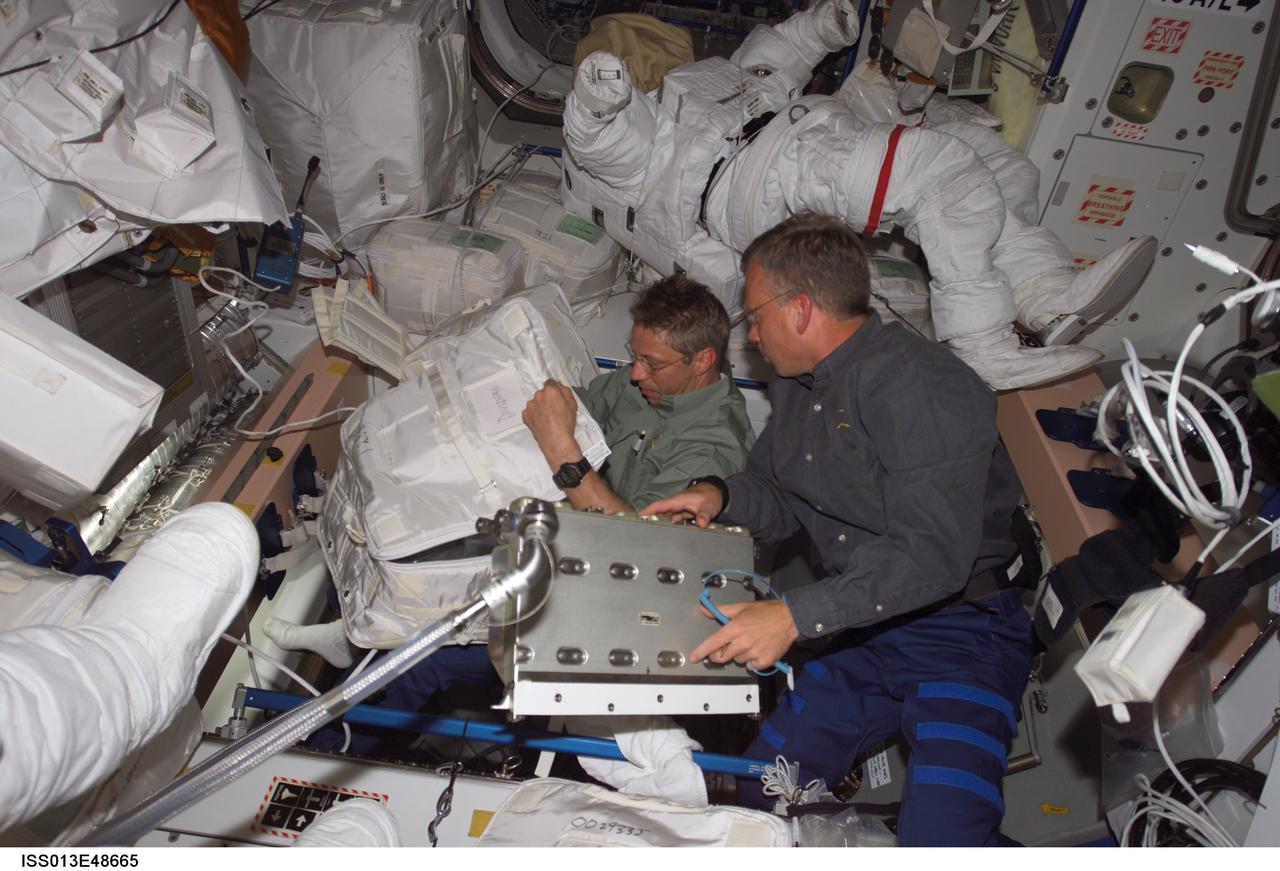
ISS013-E-48665 (6 July 2006) --- European Space Agency astronaut Thomas Reiter (left) and astronaut Steven W. Lindsey work in the Quest airlock aboard the International Space Station during their first day on the orbital outpost. Lindsey, STS-121 commander, will spend a little over a week there, and Reiter is scheduled for a six month stay. Astronaut Piers J. Sellers' extravehicular mobility unit space suit for the scheduled July 8 space walk is in the background.
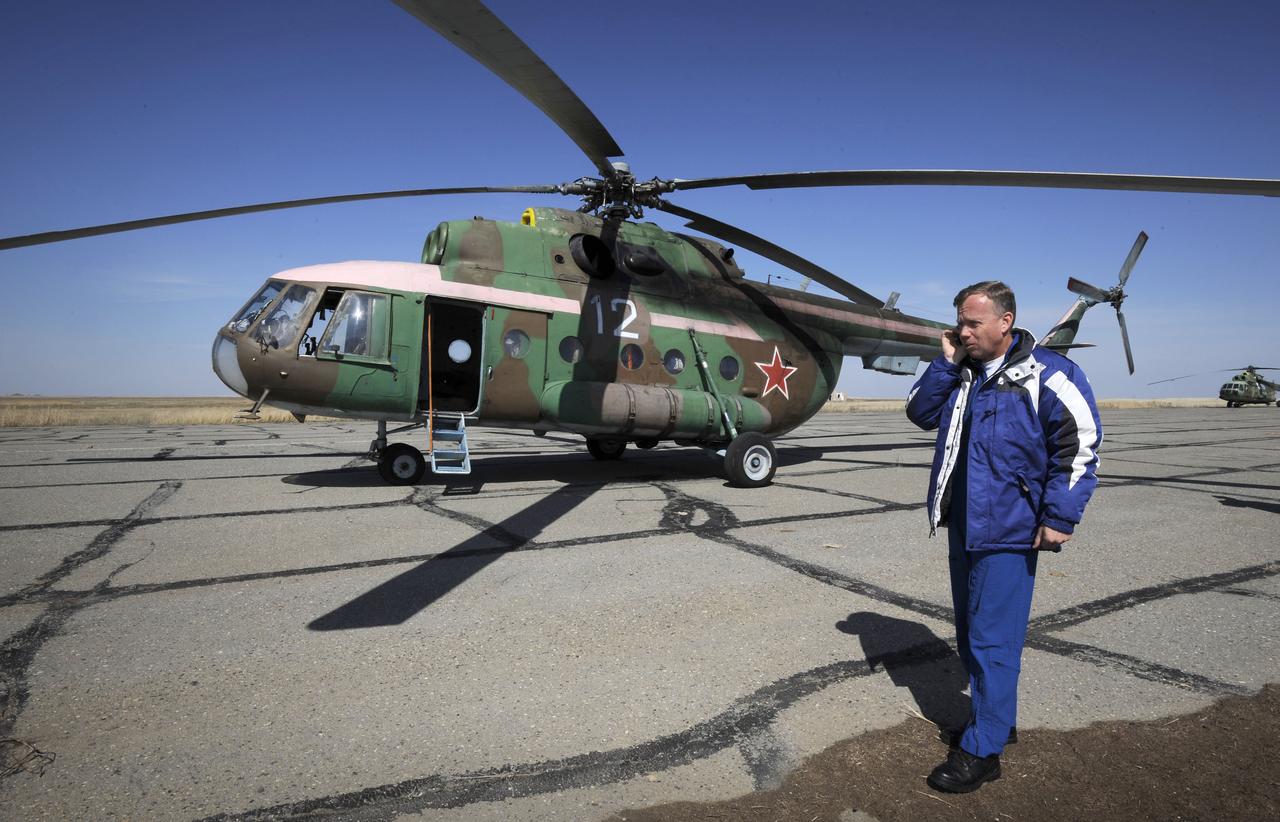
Chief of NASA's Astronaut office, Steve Lindsey, receives information at the Arkalyk airport in Kazakhstan, Friday, April 19, 2008, on the landing of the Expedition 16 crew in the Soyuz TMA-11 capsule. The Soyuz made a ballistic landing, touching down more then 400 kilometers short of the intended target in central Kazakhstan. Photo Credit: (NASA/Bill Ingalls)
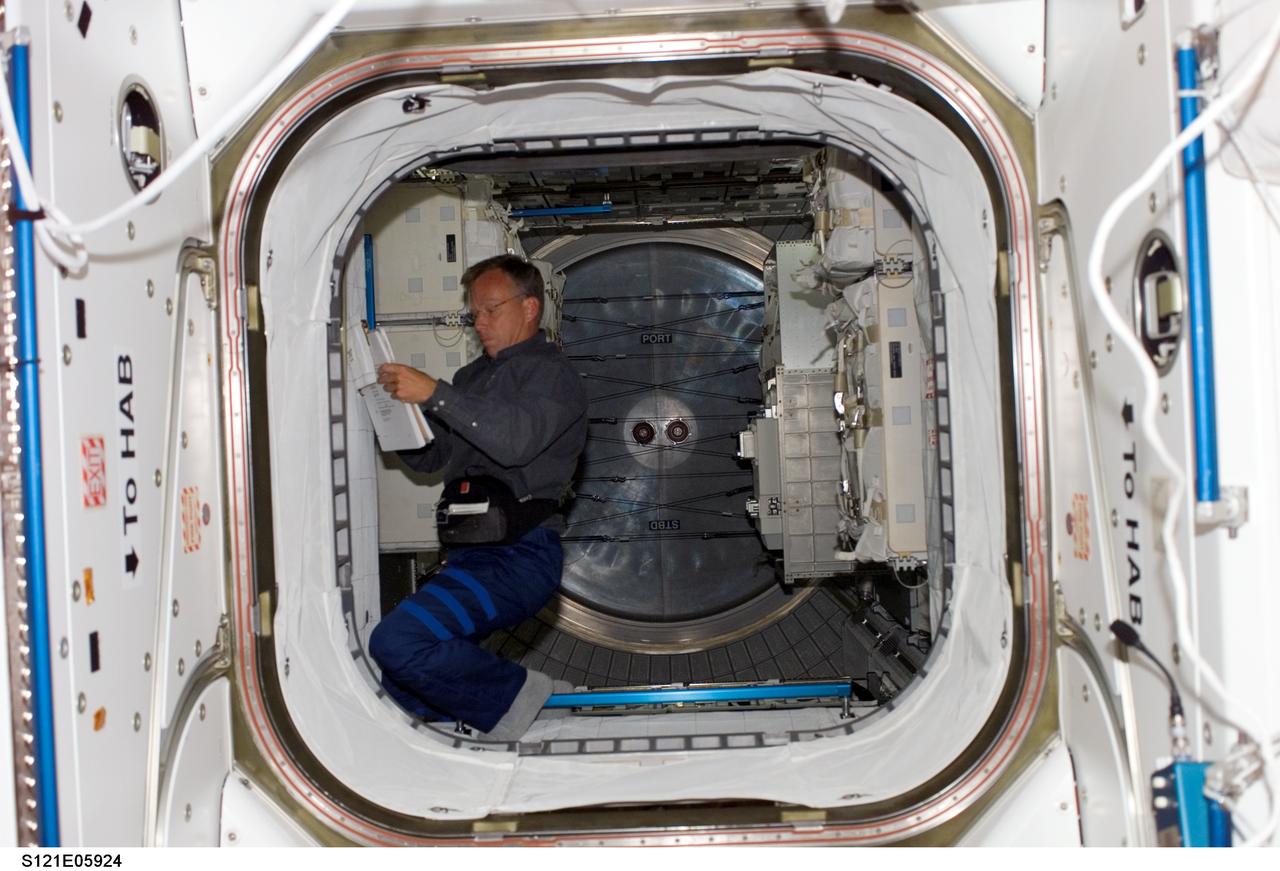
S121-E-05924 (7 July 2006) --- Astronaut Steven W. Lindsey, STS-121 commander, looks over a procedures checklist in a hatchway of the International Space Station while Space Shuttle Discovery was docked to the station.
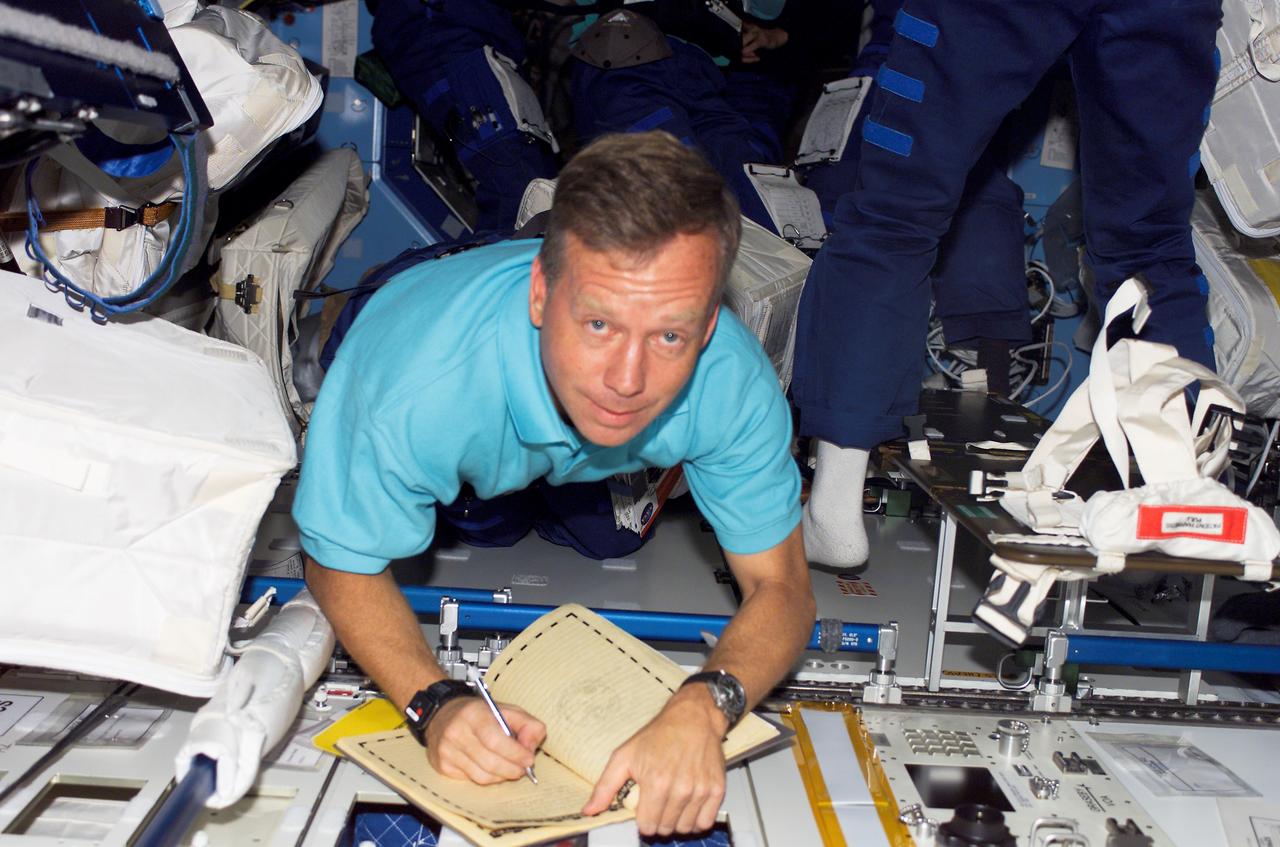
S121-E-07777 (14 July 2006) --- Astronaut Steven W. Lindsey, STS-121 commander, makes an entry in the International Space Station ship's log in the Destiny while Space Shuttle Discovery was docked with the station.
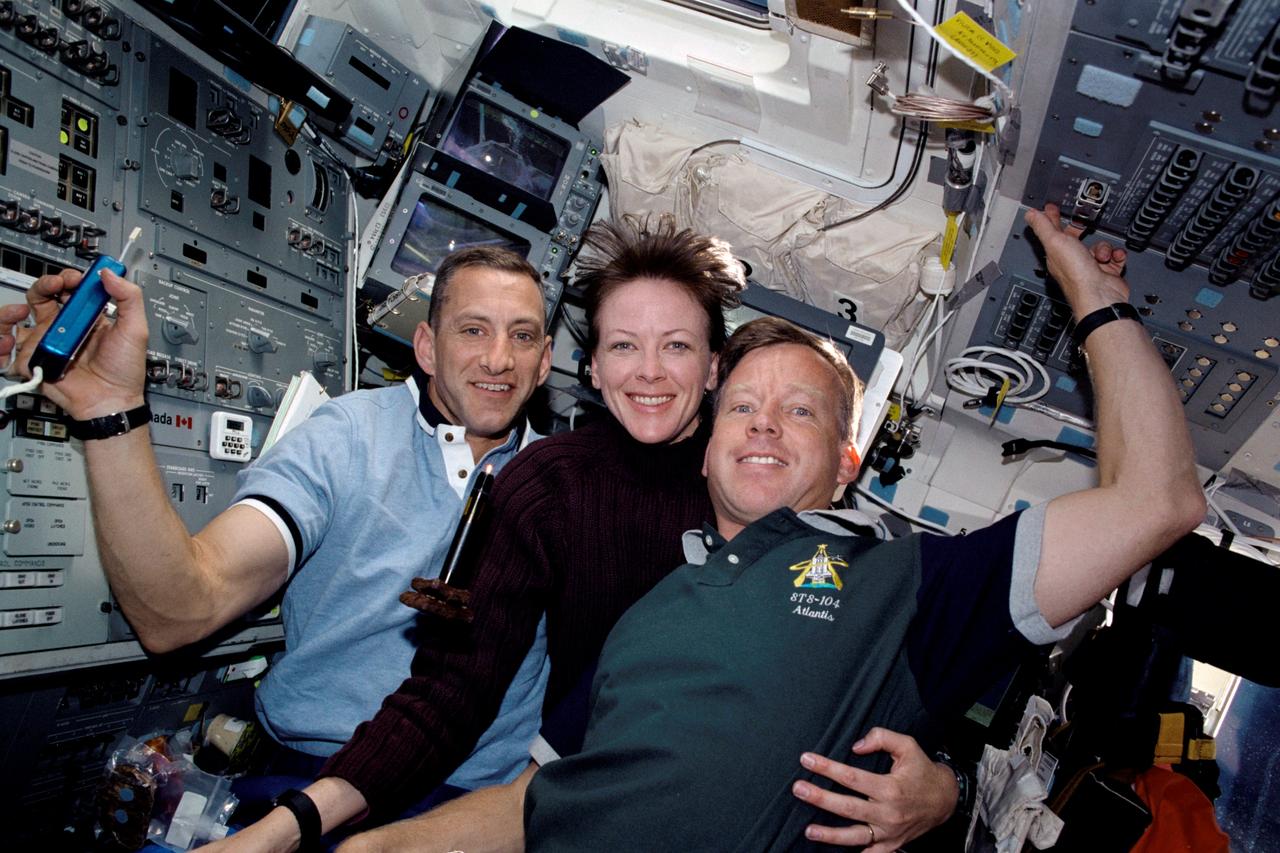
STS104-312-010 (12-24 July 2001) --- While two crew mates moved around outside the shuttle on one of three space walks to perform work on the International Space Station (ISS), these three astronauts supported the extravehicular activity (EVA) chores from inside the crew cabin of the Atlantis. They are, from the left, Charles O. Hobaugh, pilot; Janet L. Kavandi, flight engineer and mission specialist; and Steven W. Lindsey, commander.
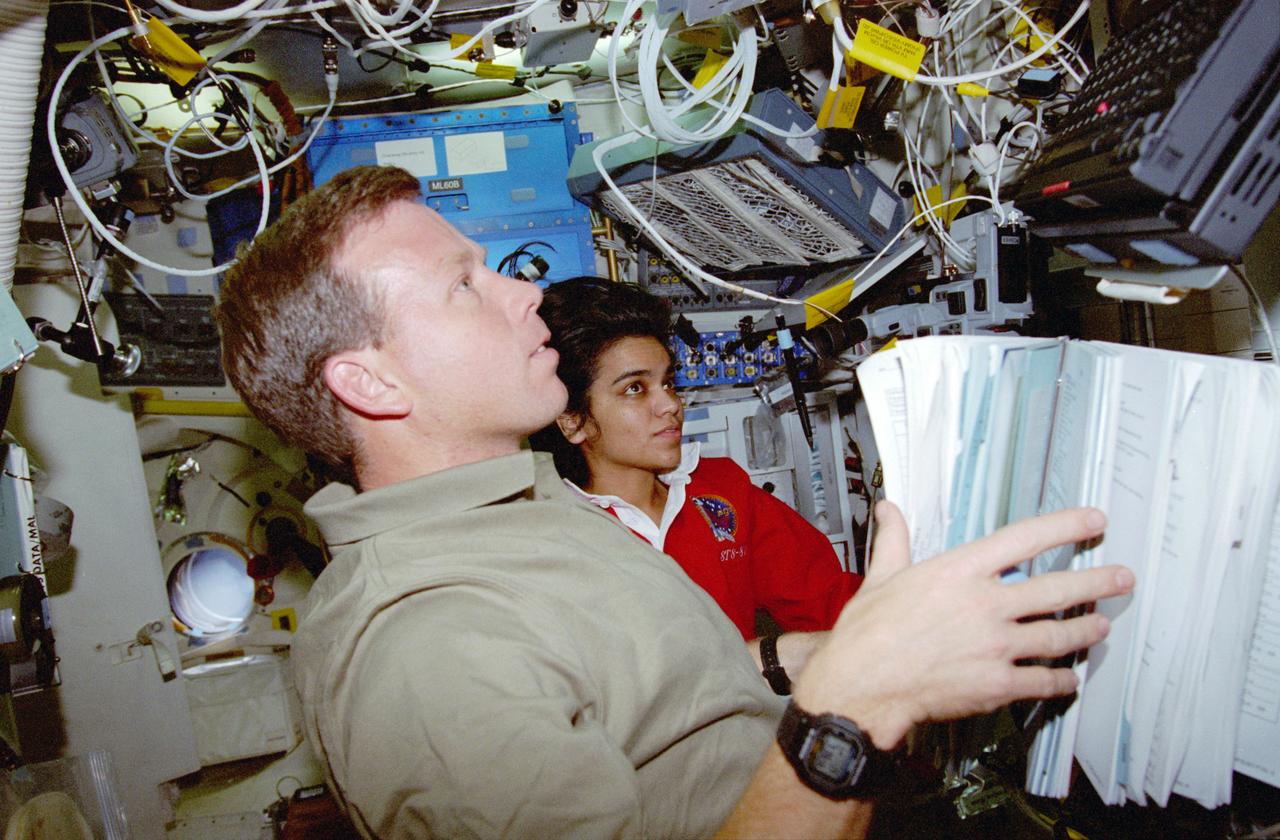
STS087-334-023 (19 November – 5 December 1997) --- On the Space Shuttle Columbia's middeck, astronauts Steven W. Lindsey, pilot, and Kalpana Chawla, mission specialist, check on an experiment in the middeck glove box. The two were joined by three other astronauts and a Ukrainian payload specialist for 16-days in Earth-orbit in support of the United States Microgravity Payload 4 (USMP-4) mission.
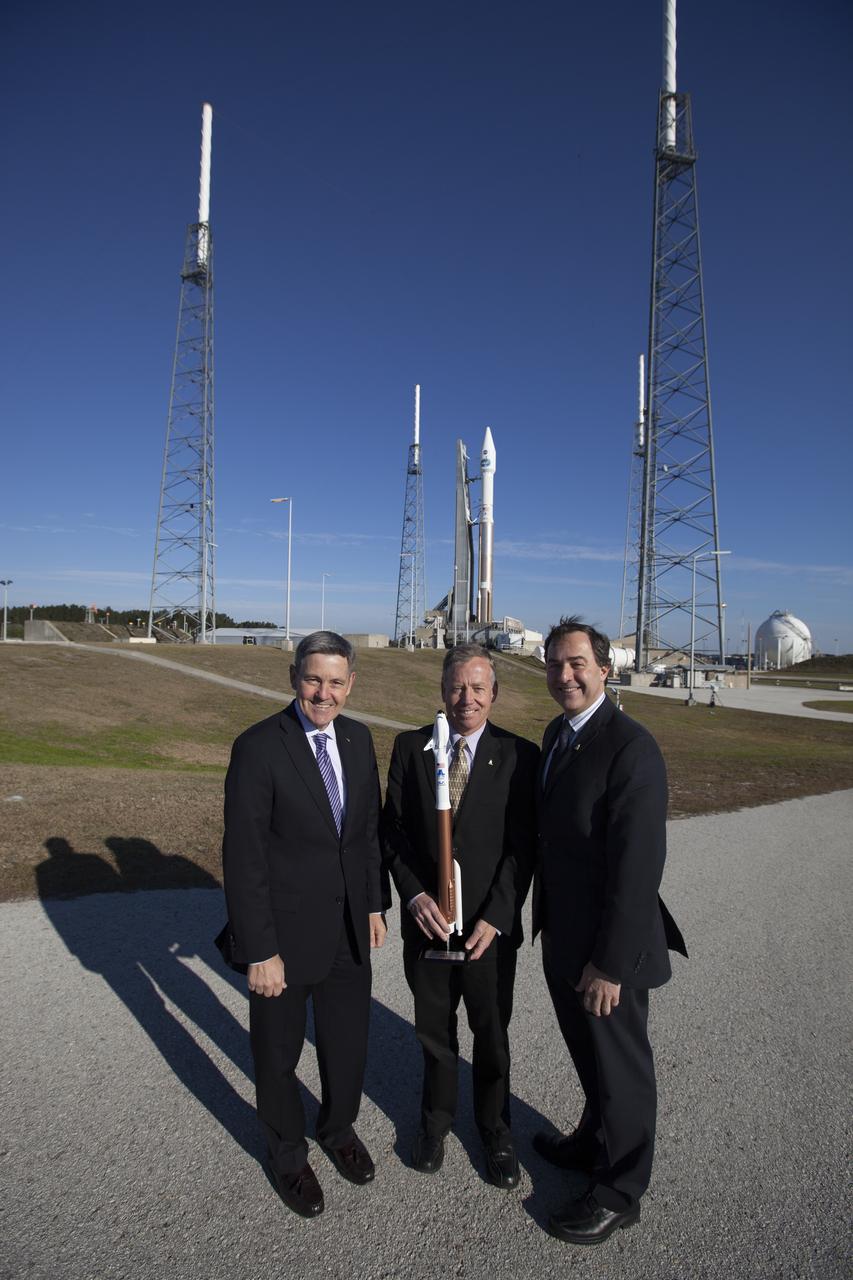
CAPE CANAVERAL, Fla. – NASA and aerospace industry representatives tour facilities along Florida’s Space Coast prior to announcements made by Sierra Nevada Corporation, or SNC, Space Systems, to prepare for a November 2016 orbital flight of its Dream Chaser spacecraft. Posing for a photo in front of a United Launch Alliance, or ULA, Atlas V rocket are, from left, Bob Cabana, director of NASA’s Kennedy Space Center Steve Lindsey, Dream Chaser program manager for SNC Space Systems and Mark Sirangelo, corporate vice president and head of SNC Space Systems. The announcements made during a news conference at Kennedy are considered substantial for SNC and important to plans by NASA and Space Florida for Kennedy’s transformation into a multi-user spaceport for both commercial and government customers. SNC announced it plans to work with ULA to launch the Dream Chaser spacecraft into orbit atop an Atlas V rocket from Space Launch Complex 41 at Cape Canaveral Air Force Station intends to land the winged spacecraft at the 3.5-mile-long runway at Kennedy’s Shuttle Landing Facility lease office space at Exploration Park, right outside Kennedy’s gates and process the spacecraft in the high bay of the Operations and Checkout Building at Kennedy, with Lockheed Martin performing the work. Photo credit: NASA/Cory Huston
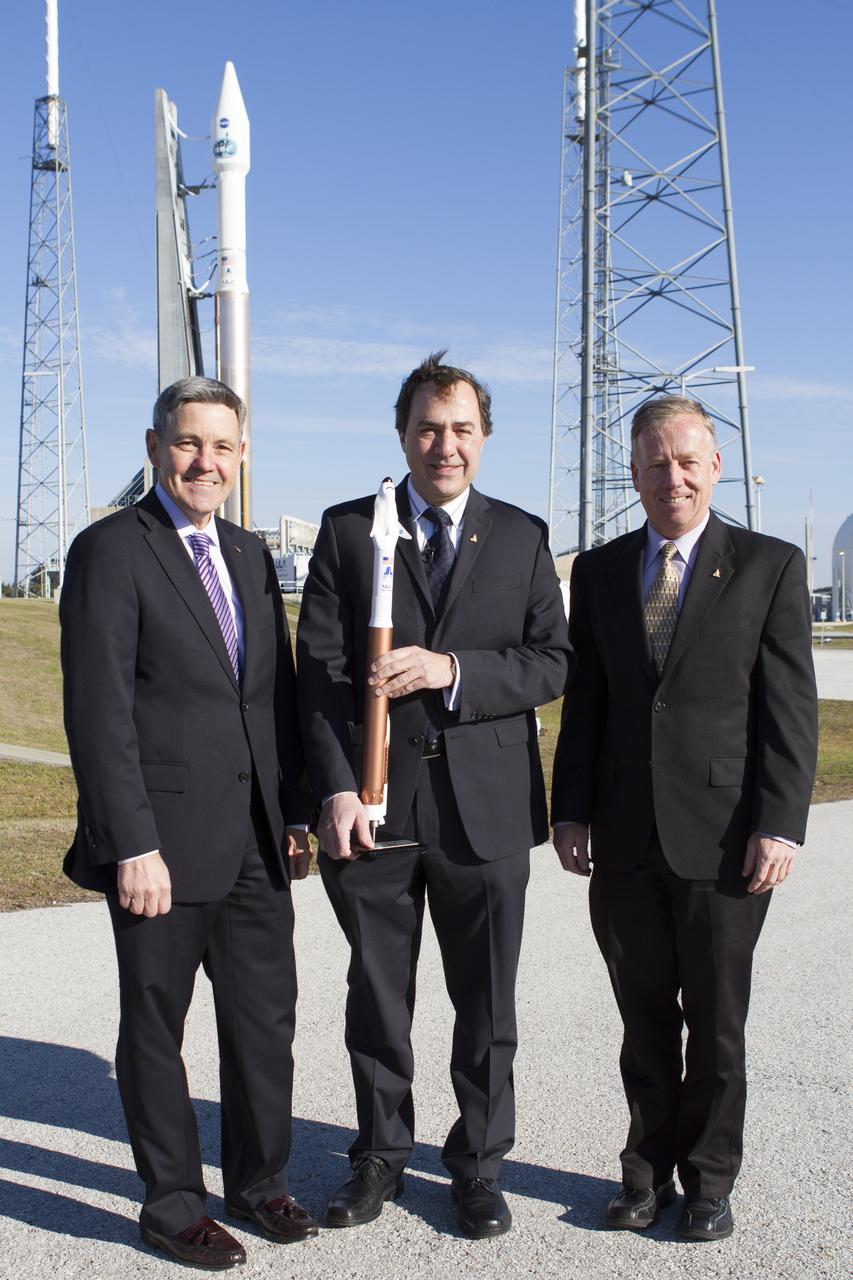
CAPE CANAVERAL, Fla. – NASA and aerospace industry representatives tour facilities along Florida’s Space Coast prior to announcements made by Sierra Nevada Corporation, or SNC, Space Systems, to prepare for a November 2016 orbital flight of its Dream Chaser spacecraft. Posing for a photo in front of a United Launch Alliance, or ULA, Atlas V rocket are, from left, Bob Cabana, director of NASA’s Kennedy Space Center Mark Sirangelo, corporate vice president and head of SNC Space Systems and Steve Lindsey, Dream Chaser program manager for SNC Space Systems. The announcements made during a news conference at Kennedy are considered substantial for SNC and important to plans by NASA and Space Florida for Kennedy’s transformation into a multi-user spaceport for both commercial and government customers. SNC announced it plans to work with ULA to launch the Dream Chaser spacecraft into orbit atop an Atlas V rocket from Space Launch Complex 41 at Cape Canaveral Air Force Station intends to land the winged spacecraft at the 3.5-mile-long runway at Kennedy’s Shuttle Landing Facility lease office space at Exploration Park, right outside Kennedy’s gates and process the spacecraft in the high bay of the Operations and Checkout Building at Kennedy, with Lockheed Martin performing the work. Photo credit: NASA/Cory Huston
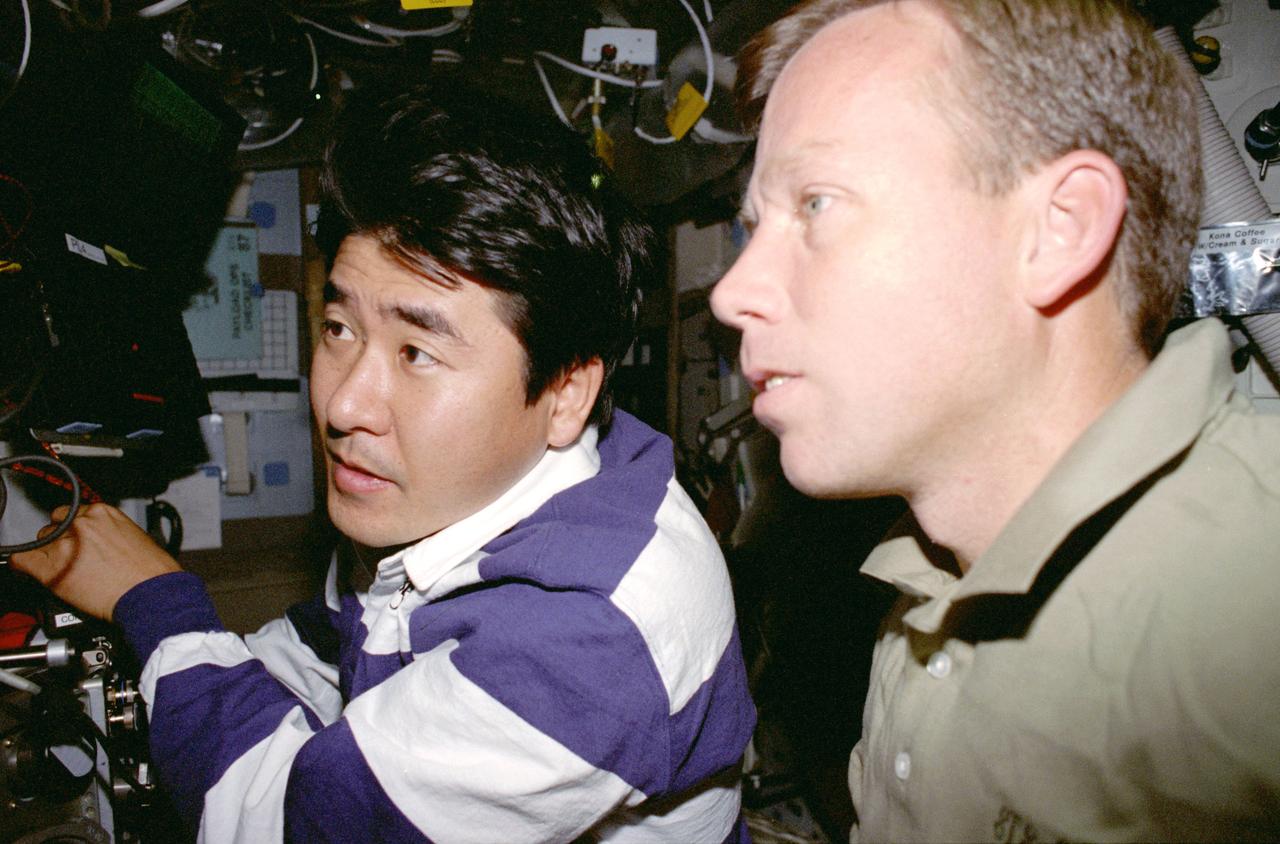
STS087-330-009 (19 November – 5 December 1997) --- Astronauts Takao Doi (left) and Steven W. Lindsey check out the Enclosed Laminar Flames (ELF) experiment on the mid-deck of the Earth-orbiting Space Shuttle Columbia. ELF has been designed to examine the effect of different air flow velocities on the stability of laminar (non-turbulent) flames. Enclosed laminar flames are commonly found in combustion systems such as power plant and gas turbine combustors, and jet engine afterburners. It is hoped that results of this investigation may help to optimize the performance of industrial combustors, including pollutant emissions and heat transfer. The microgravity environment of space makes a perfect setting for a laboratory involving combustion, an activity that creates convection in normal gravity. In microgravity, scientists can study subtle processes ordinarily masked by the effects of gravity. Doi is an international mission specialist representing Japan's National Space Development Agency (NASDA) and Lindsey is the pilot. Both are alumni of NASA's 1995 class of Astronaut Candidates (ASCAN).
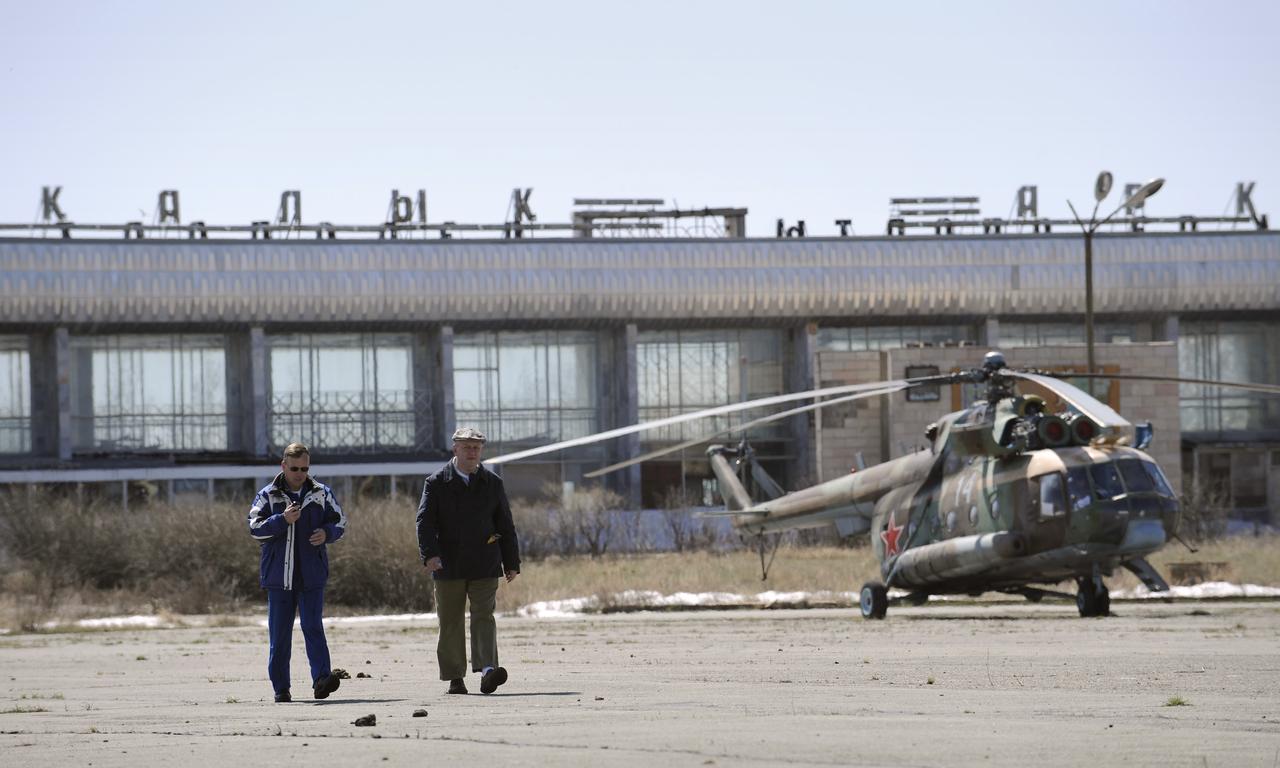
Chief of the NASA Astronaut office, Steve Lindsey, left, and interpreter Paul Kharmats wait at the Arkalyk airport in Kazakhstan as Russian helicopters are refueled, Friday, April 19, 2008. Arkalyk was used as one of the helicopter staging areas for the landing of the Soyuz TMA-11 spacecraft carrying Expedition 16 Commander Peggy Whitson, Flight Engineer and Soyuz Commander Yuri Malenchenko and South Korean spaceflight participant So-yeon Yi. The Soyuz made a ballistic landing, touching down more then 400 kilometers short of the intended target in central Kazakhstan. Photo Credit: (NASA/Bill Ingalls)
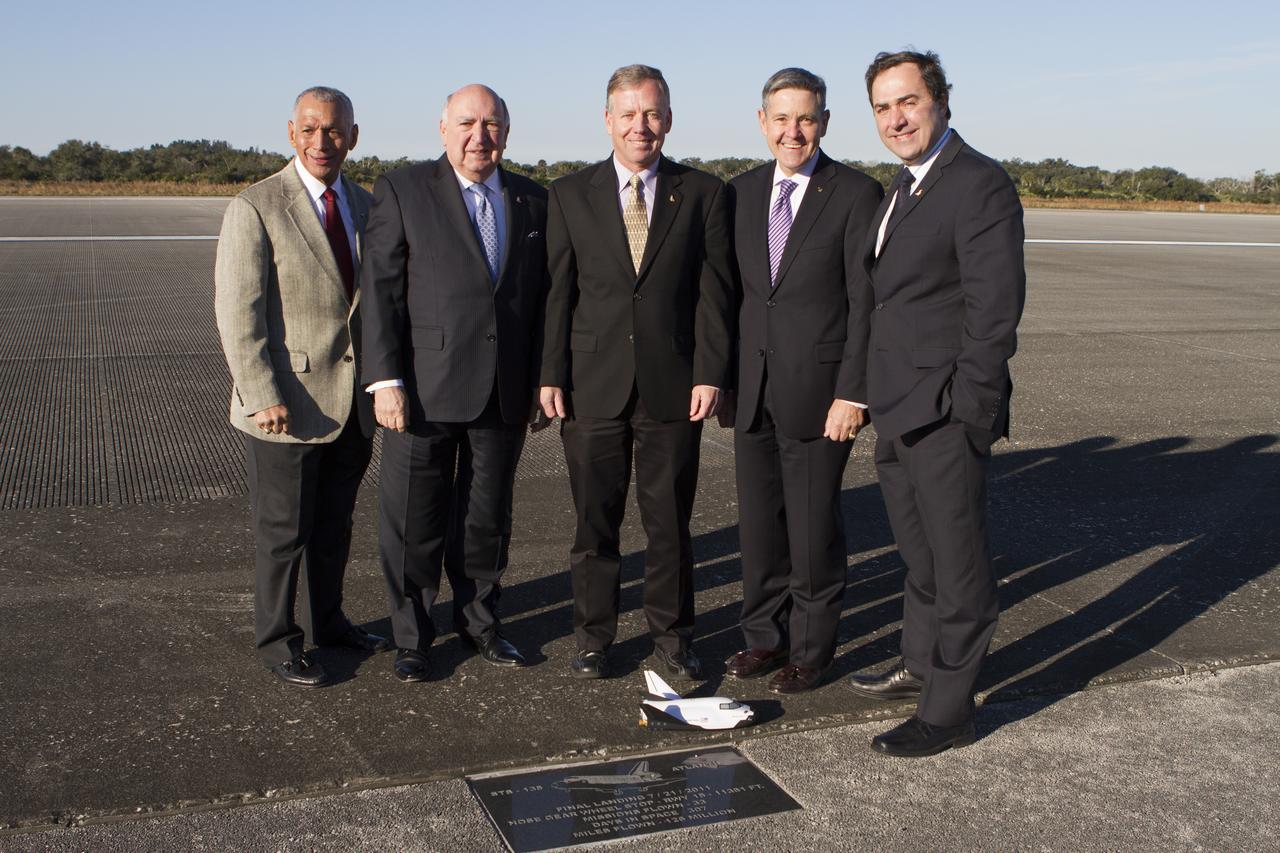
NASA and aerospace industry representatives tour facilities along Florida’s Space Coast prior to announcements made by Sierra Nevada Corporation, or SNC, Space Systems, to prepare for a November 2016 orbital flight of its Dream Chaser spacecraft. Walking along the 3.5-mile-long runway at Kennedy Space Center’s Shuttle Landing Facility are, from left, Frank DiBello, president and CEO of Space Florida Steve Lindsey, Dream Chaser program manager for SNC Space Systems Bob Cabana, director of NASA’s Kennedy Space Center Mark Sirangelo, corporate vice president and head of SNC Space Systems and Charlie Bolden, administrator of NASA.
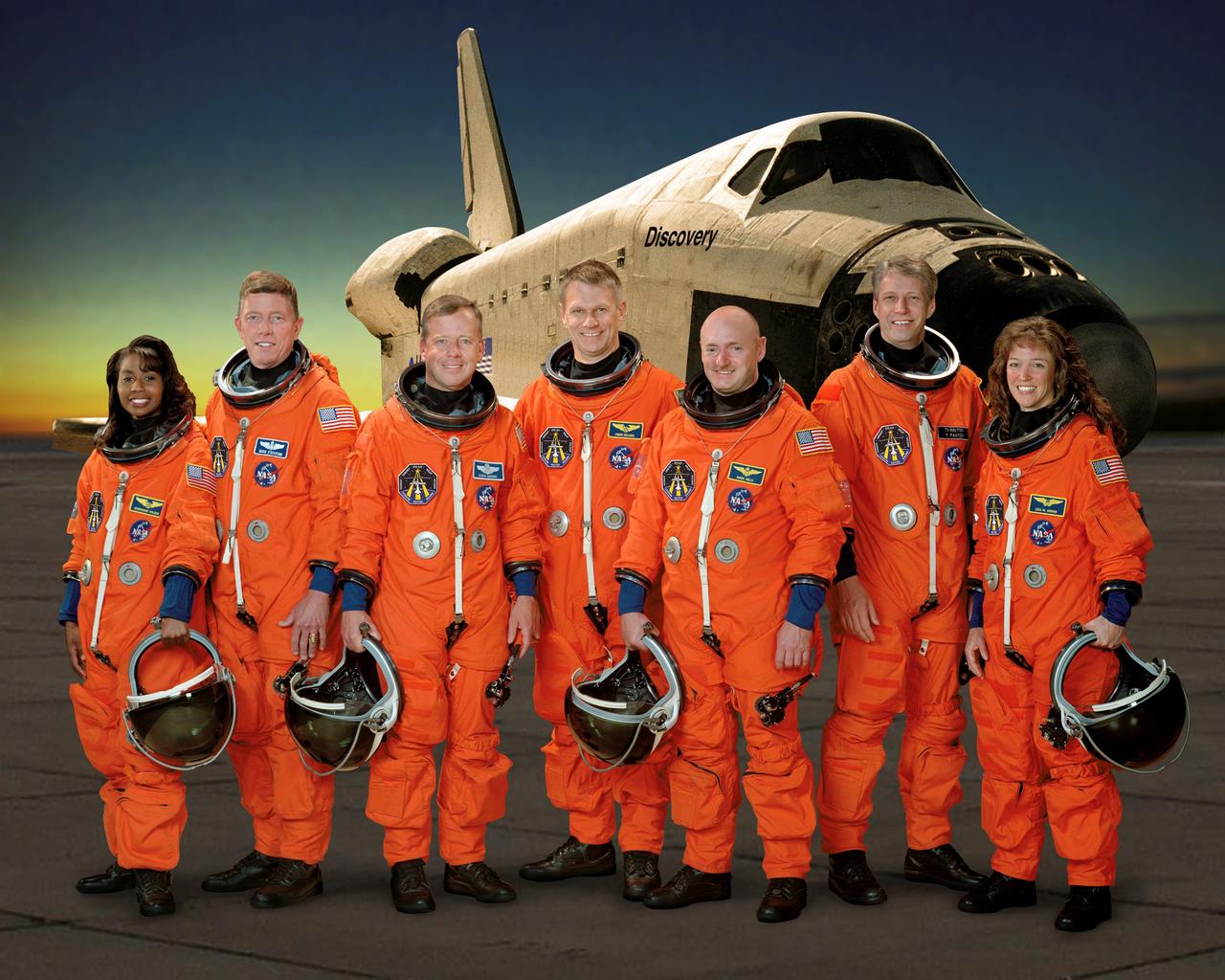
These seven astronauts take a break from training to pose for the STS-121 crew portrait. From the left are mission specialists Stephanie D. Wilson, and Michael E. Fossum, Commander Steven W. Lindsey, mission specialist Piers J. Sellers, pilot Mark E. Kelly; European Space Agency (ESA) astronaut and mission specialist Thomas Reiter of Germany; and mission specialist Lisa M. Nowak. The crew members are attired in training versions of their shuttle launch and entry suit. The crew, first ever to launch on Independence Day, tested new equipment and procedures to improve shuttle safety, as well as delivered supplies and made repairs to the space station.
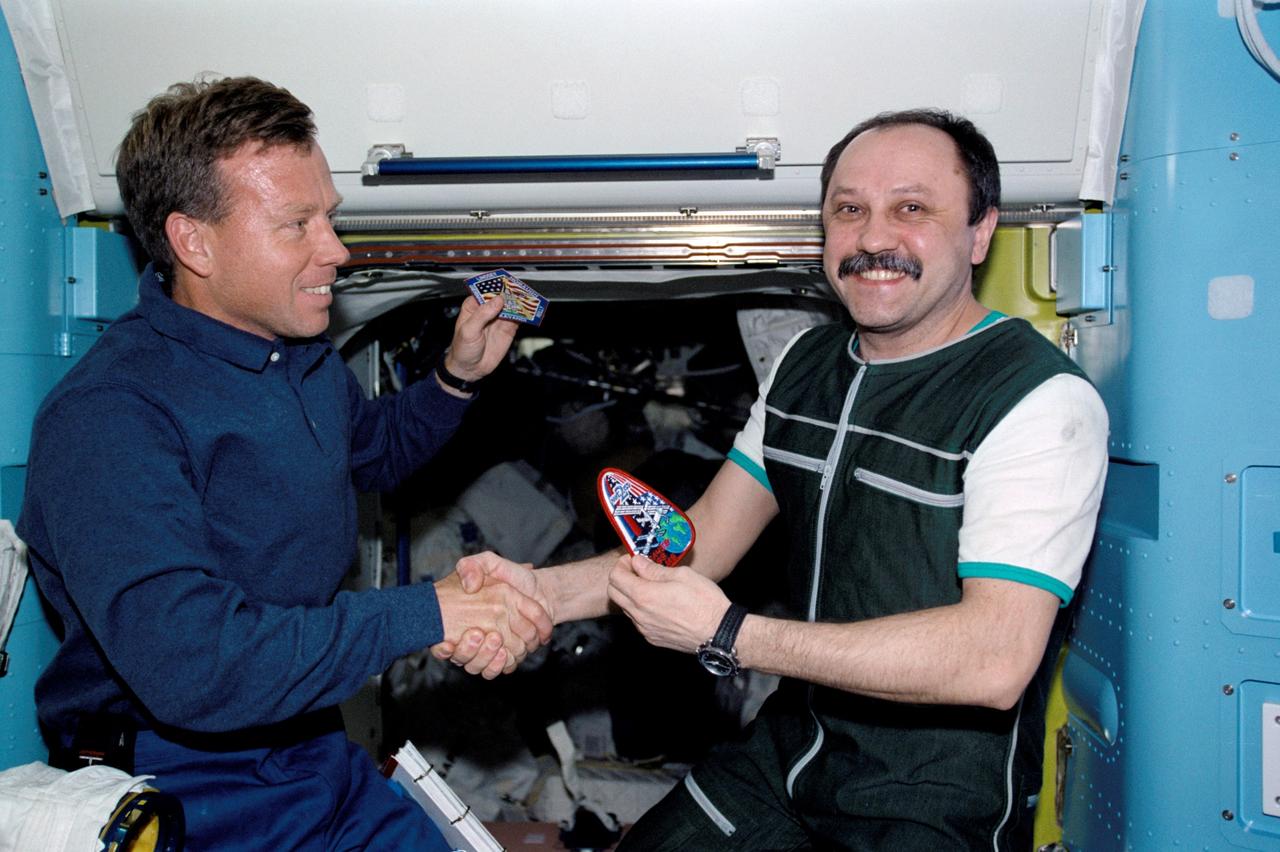
STS104-318-019 (12-24 July 2001) --- Astronaut Steven W. Lindsey (left) STS-104 commander, exchanges crew patches with cosmonaut Yury V. Usachev, Expedition Two commander, in the newly-installed Quest airlock on the International Space Station (ISS).
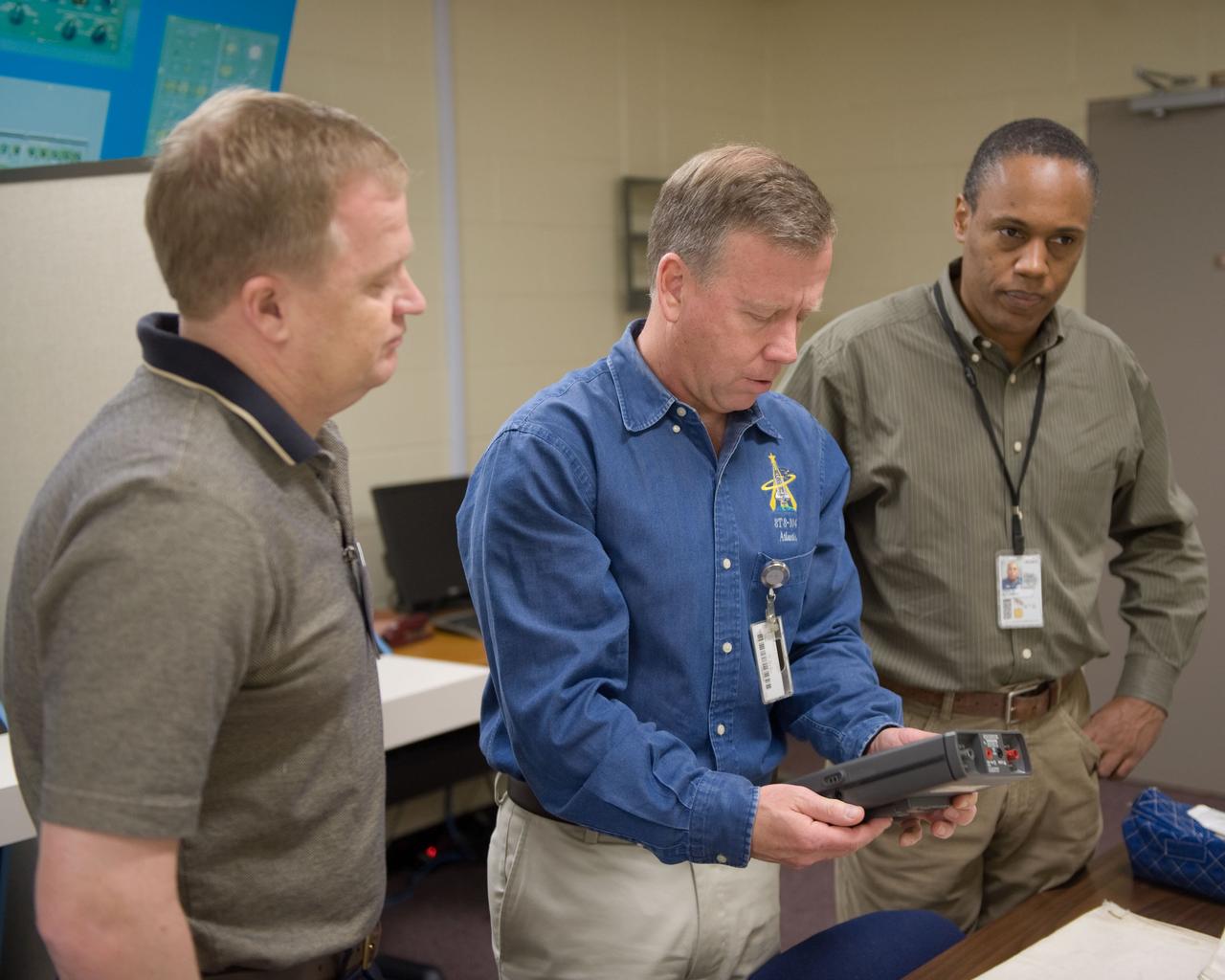
JSC2010-E-014267 (26 Jan. 2010) --- NASA astronauts Steve Lindsey (center), STS-133 commander; Eric Boe (left), pilot; and Alvin Drew, mission specialist, participate in an ISS tools and repair kits training session in the Space Vehicle Mock-up Facility at NASA's Johnson Space Center.
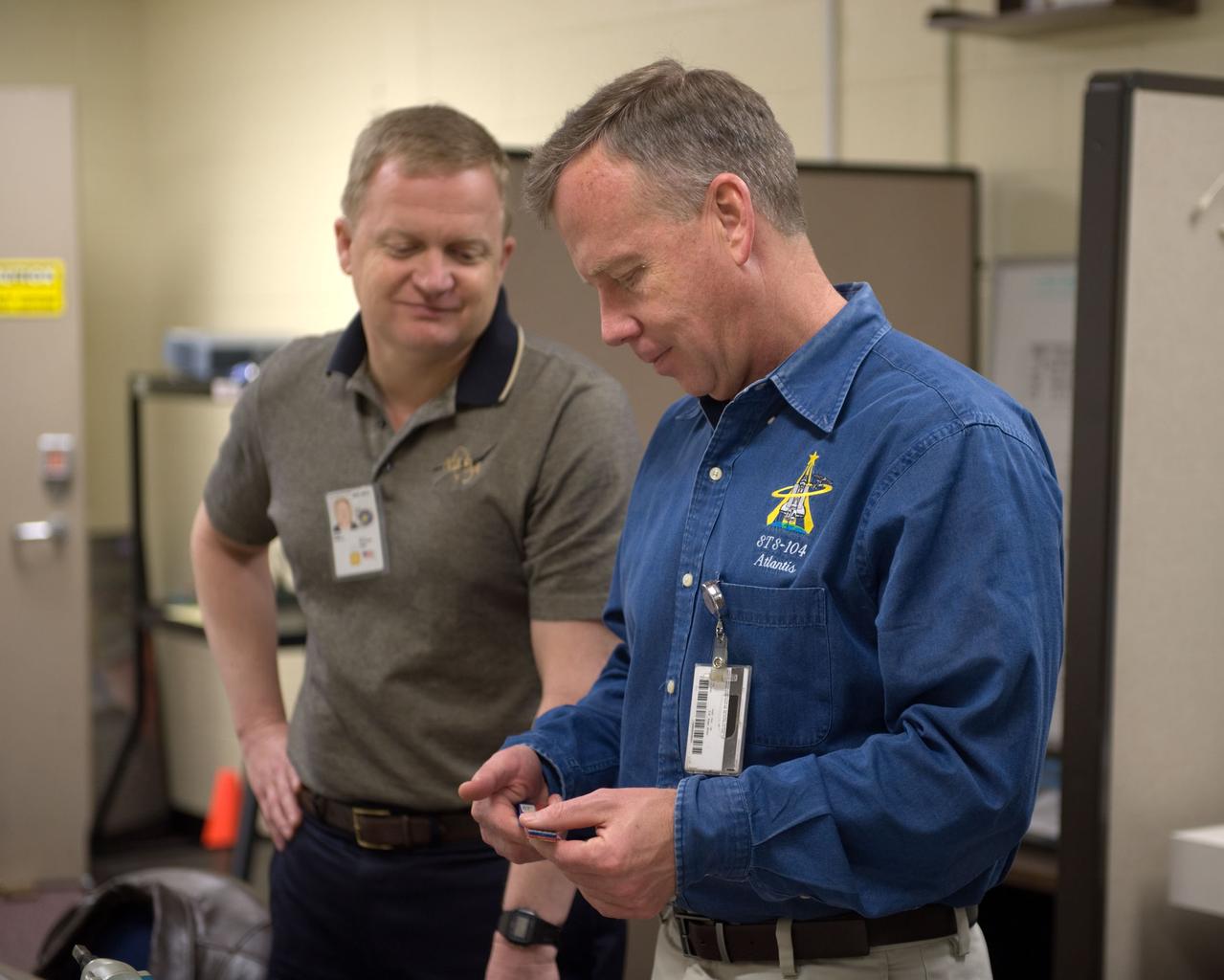
JSC2010-E-014266 (26 Jan. 2010) --- NASA astronauts Steve Lindsey (right), STS-133 commander; and Eric Boe, pilot, participate in an ISS tools and repair kits training session in the Space Vehicle Mock-up Facility at NASA's Johnson Space Center.
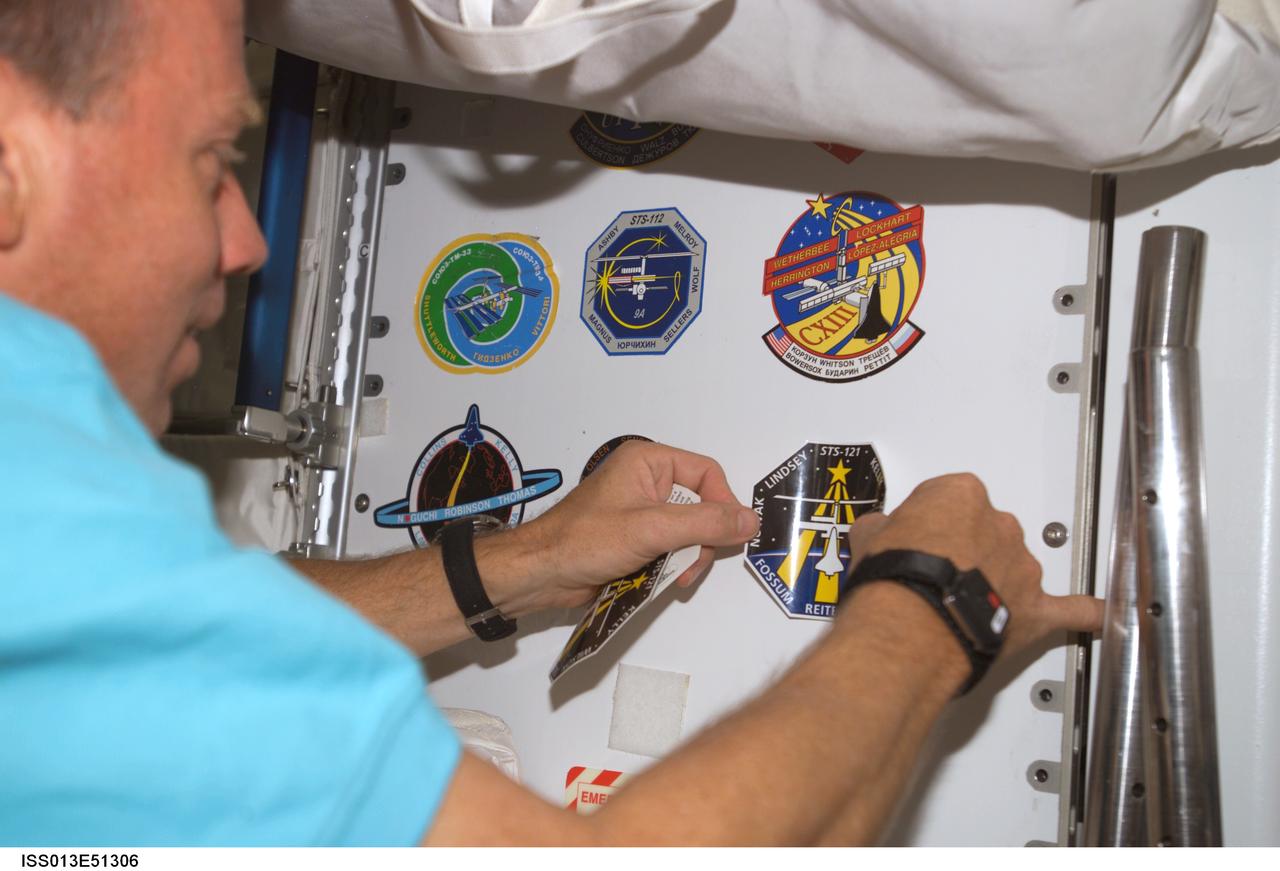
ISS013-E-51306 (14 July 2006) --- Continuing a tradition for visiting shuttle commanders, astronaut Steven W. Lindsey, STS-121 commander, places the mission insignia along with others in the Unity node of the International Space Station.
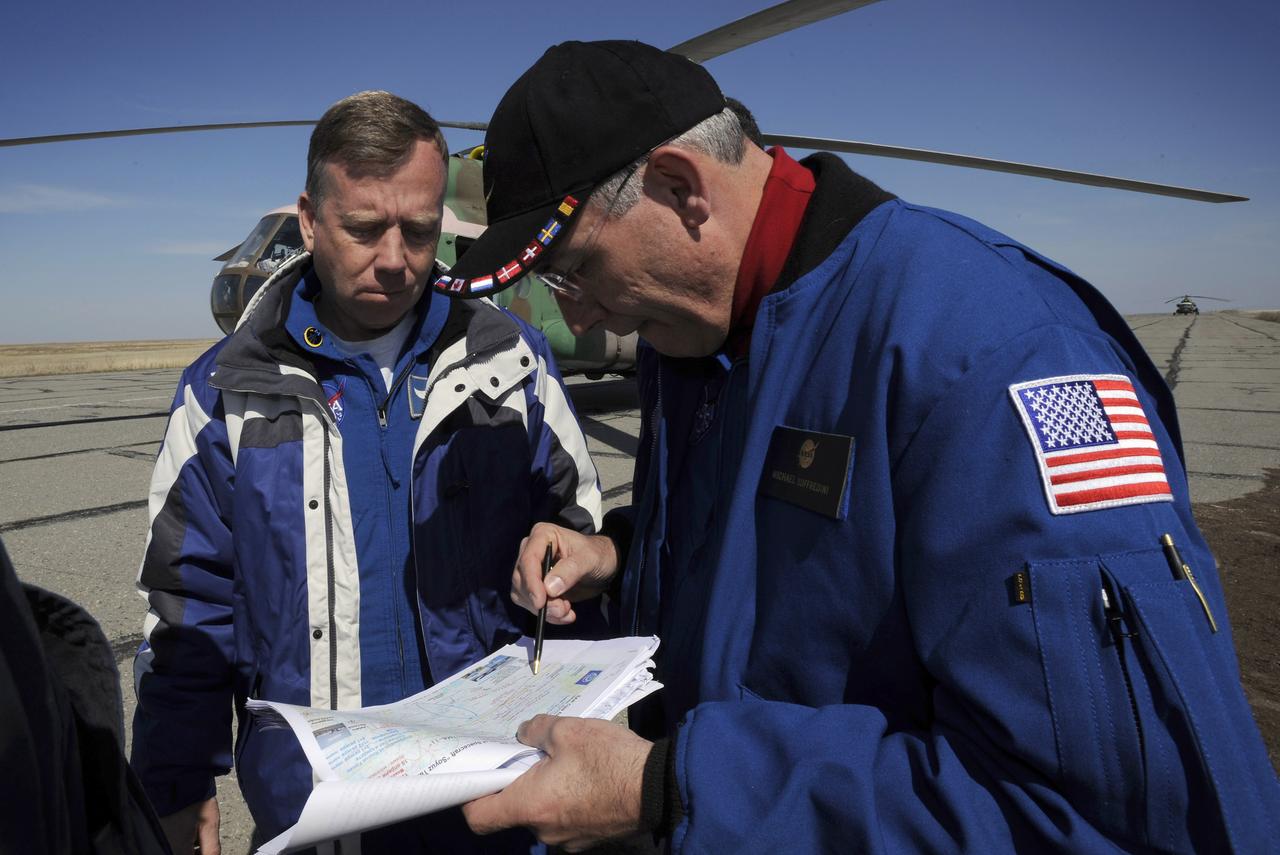
Chief of NASA's Astronaut office, Steve Lindsey, left, and International Space Station Program Manager, Michael Suffredini, examine a map of central Kazakhstan at the Arkalyk airport as they received information on the landing of the Expedition 16 crew in the Soyuz TMA-11 capsule, Saturday, April 19, 2008. The Soyuz made a ballistic landing, touching down more then 400 kilometers short of the intended target in central Kazakhstan. The crew reported by satellite phone to recovery forces that they were in good shape. Photo Credit: (NASA/Bill Ingalls)
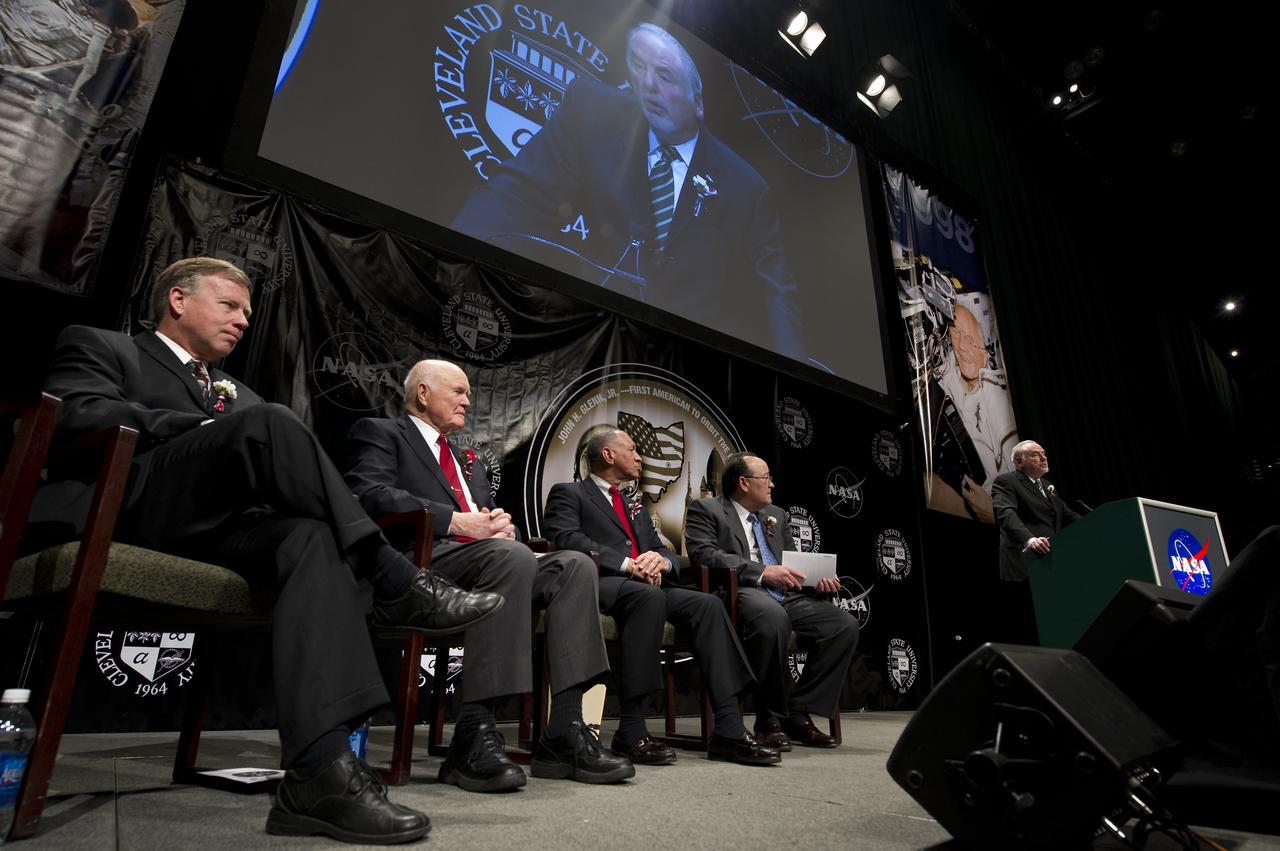
Dr. Ronald M. Berkman, CSU President gives remarks while former Astronaut Steve Lindsey, left, Sen. John Glenn, NASA Administrator Charles Bolden, and NASA Glenn Research Center Director Ray Lugo, seated right, look on at an event celebrating John Glenn's legacy and 50 years of americans in orbit held at the Cleveland State University Wolstein Center on Friday, March 3, 2012 in Cleveland, Ohio. Glenn became the first American to orbit Earth in 1962. Photo Credit: (NASA/Bill Ingalls)
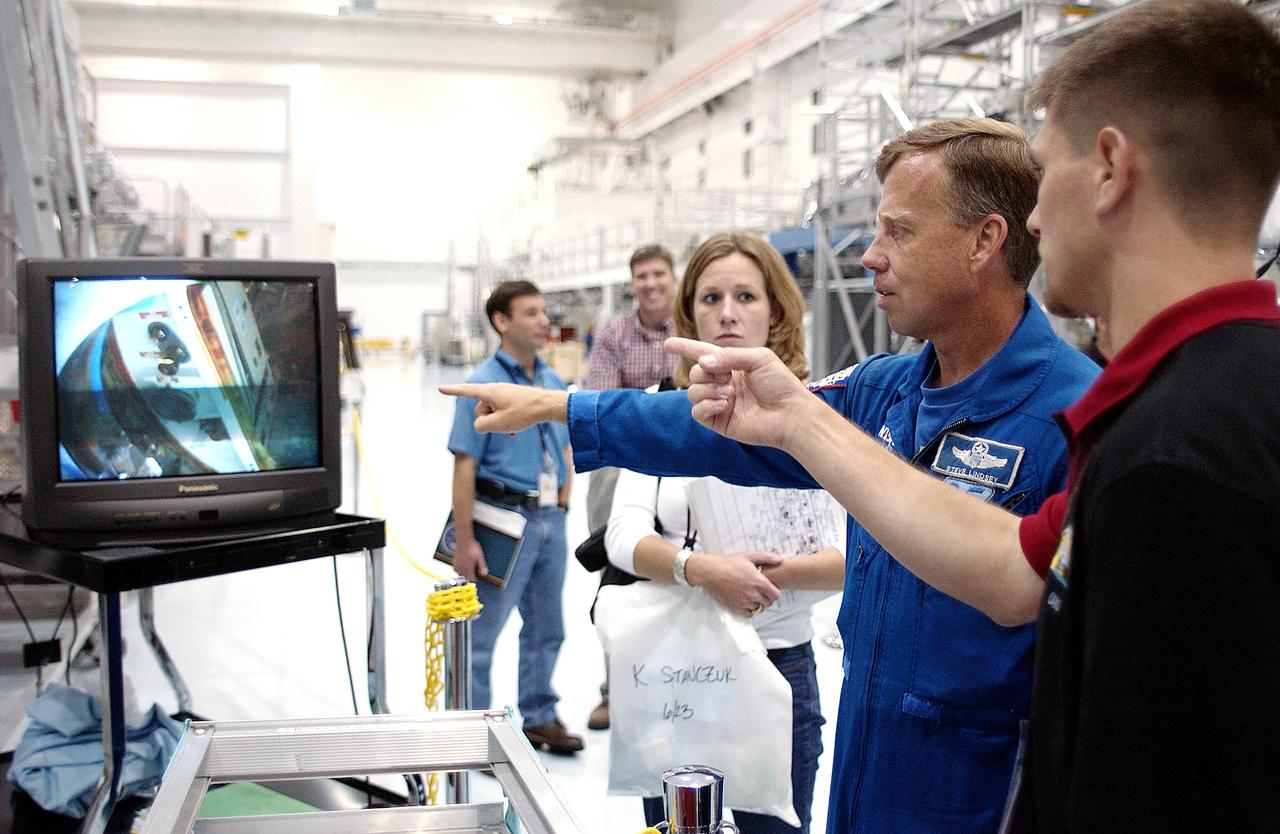
KENNEDY SPACE CENTER, FLA. - NASA astronaut Steven W. Lindsey (second from right) views the interior of the pressurized module of the Japanese Experiment Module (JEM) on a television monitor in the Space Station Processing Facility. This major component of JEM, named "Kibo" (Hope), is Japan's primary contribution to the International Space Station and arrived at KSC on June 4. Lindsey is assigned to command STS-119, an upcoming Space Shuttle flight to the Station.
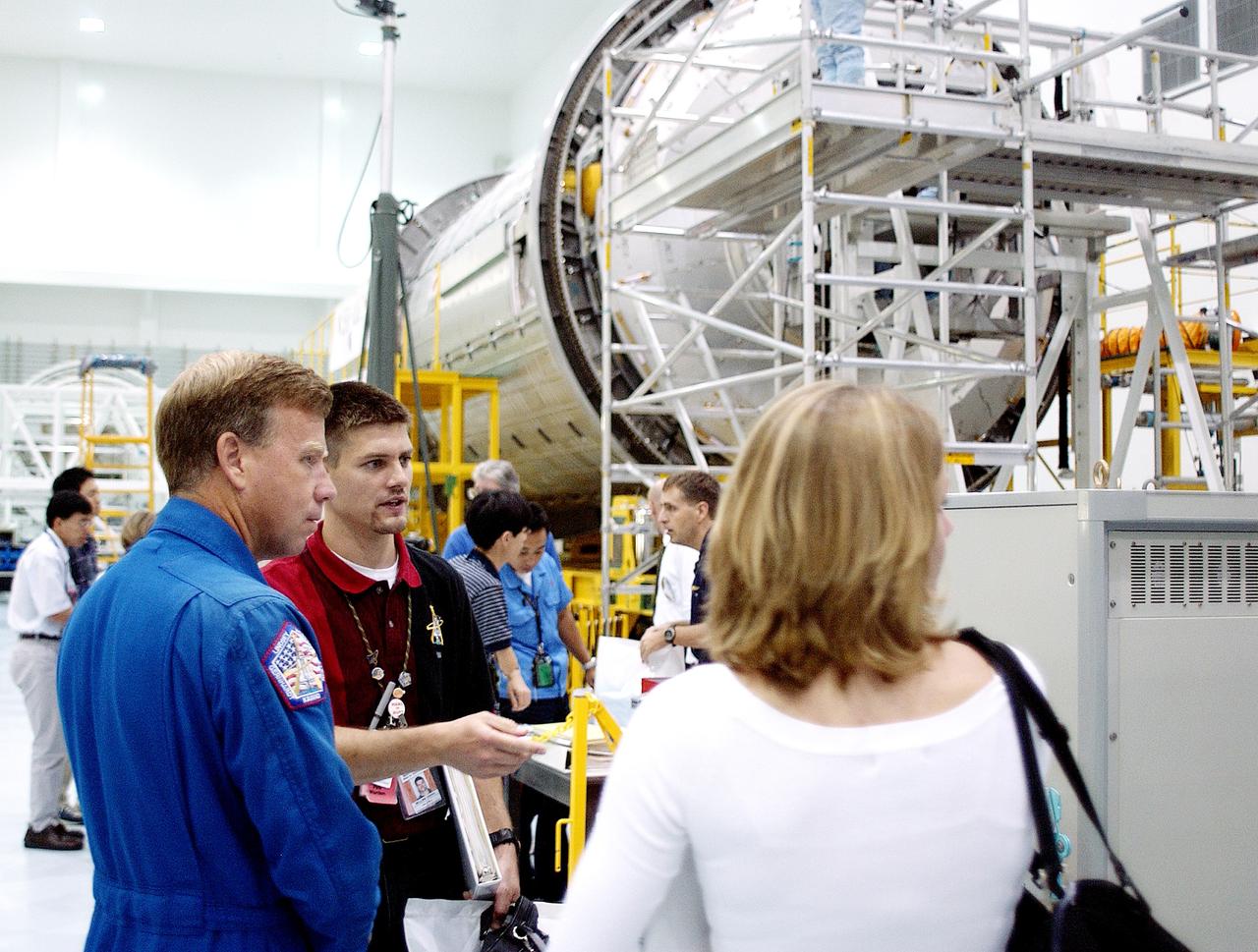
KENNEDY SPACE CENTER, FLA. - NASA astronaut Steven W. Lindsey (left) listens to a briefing about the pressurized module of the Japanese Experiment Module (JEM) in the Space Station Processing Facility. This major component of JEM, named "Kibo" (Hope), is Japan's primary contribution to the International Space Station and arrived at KSC on June 4. Lindsey is assigned to command STS-119, an upcoming Space Shuttle flight to the Station.
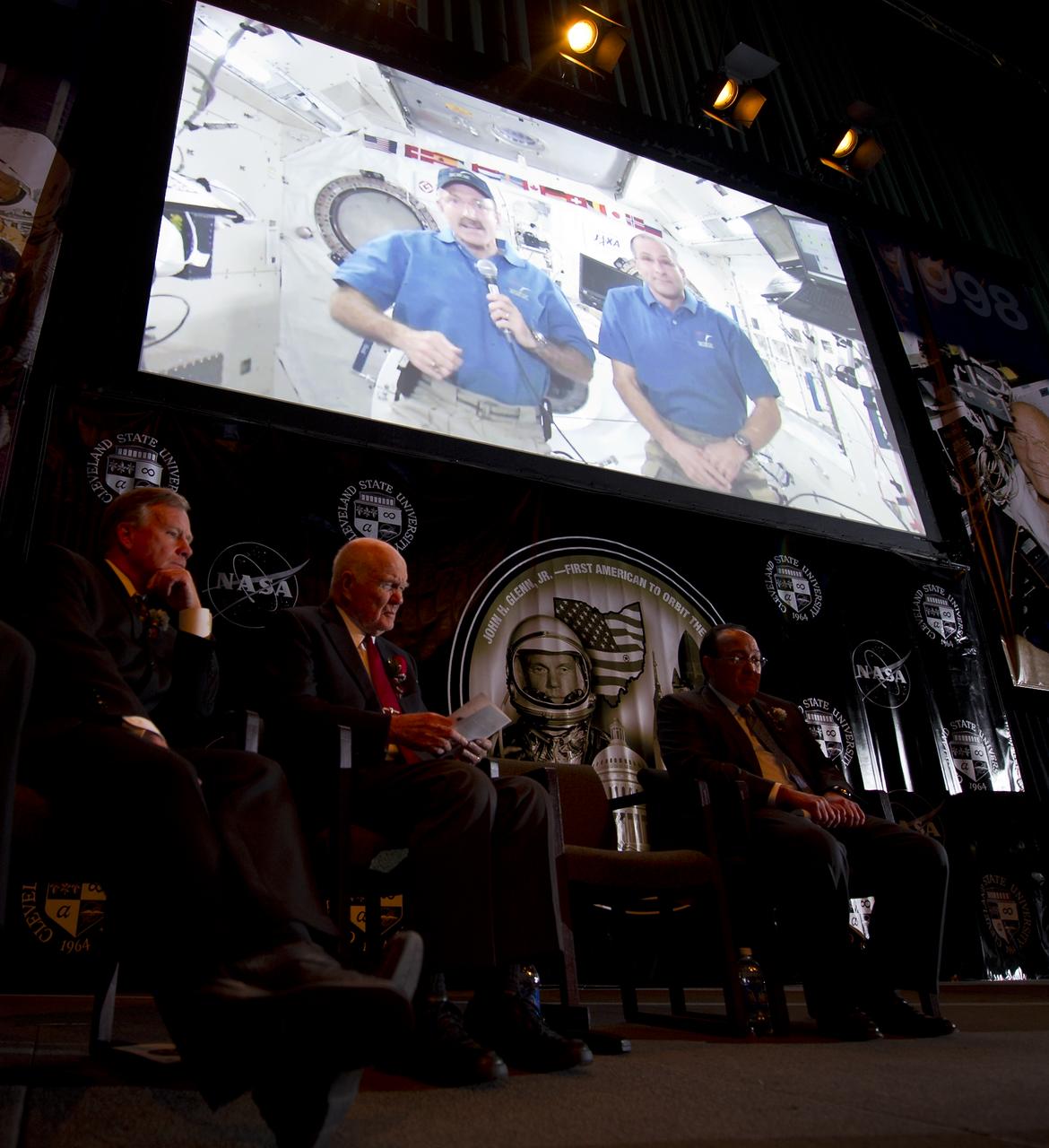
A pre-recorded message from International Space Station, Expedition 30 crew Commander Dan Burbank, on screen left, and Expedition 30 Flight Engineer Don Pettit is shown while former Astronaut Steve Lindsey, seated left, Sen. John Glenn, and NASA Glenn Research Director Ray Lugo look on at an event celebrating John Glenn's legacy and 50 years of americans in orbit held at the Cleveland State University Wolstein Center on Friday, March 3, 2012 in Cleveland, Ohio. Glenn became the first American to orbit Earth in 1962. Photo Credit: (NASA/Bill Ingalls)

JSC2010-E-014044 (25 Jan. 2010) --- Attired in training versions of their shuttle launch and entry suits, NASA astronauts Steve Lindsey (left), STS-133 commander; Eric Boe (background), pilot; Tim Kopra (right foreground) and Alvin Drew, both mission specialists, participate in a simulation exercise in the motion-base shuttle mission simulator in the Jake Garn Simulation and Training Facility at NASA?s Johnson Space Center.
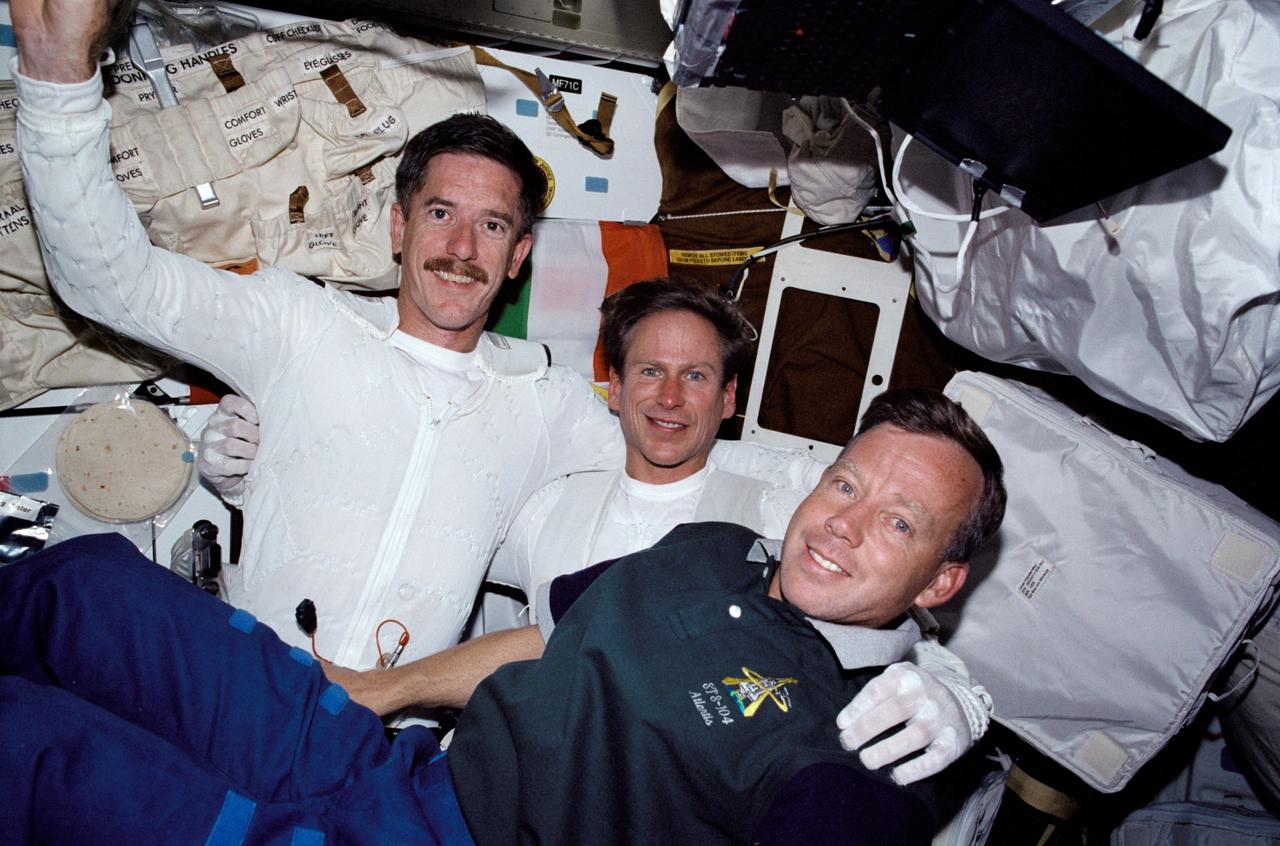
STS104-326-037 (12-24 July 2001) --- Astronaut Steven W. Lindsey (right), STS-104 mission commander, is pictured on Atlantis' mid deck with the assigned space walkers for the 12-day mission following one of their three days of extravehicular activity (EVA). In the special undergarments for their extravehicular mobility units (EMU) are astronauts James F. Reilly (left) and Michael L. Gernhardt.
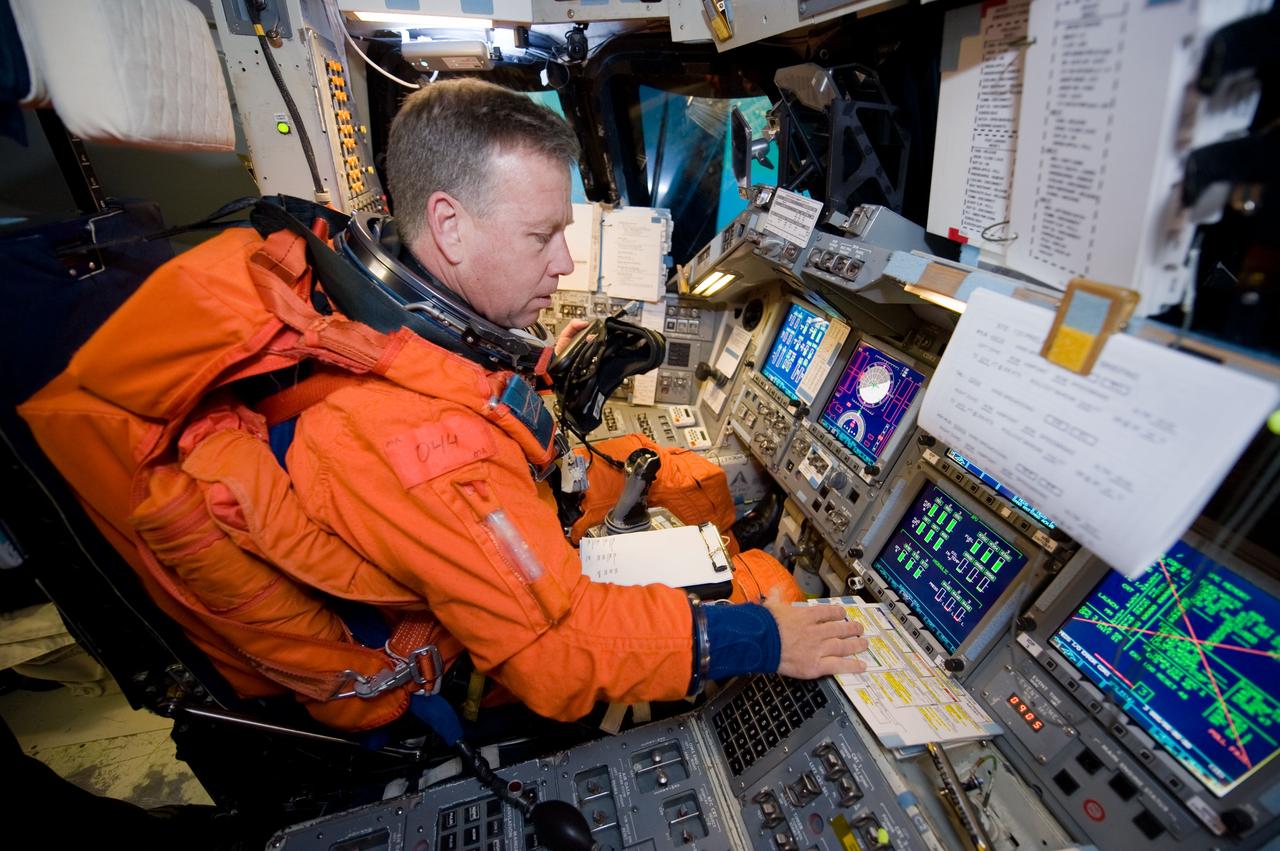
JSC2010-E-014040 (25 Jan. 2010) --- Attired in a training version of his shuttle launch and entry suit, NASA astronaut Steven Lindsey, STS-133 commander, occupies the commander?s station during a simulation exercise in the motion-base shuttle mission simulator in the Jake Garn Simulation and Training Facility at NASA?s Johnson Space Center.
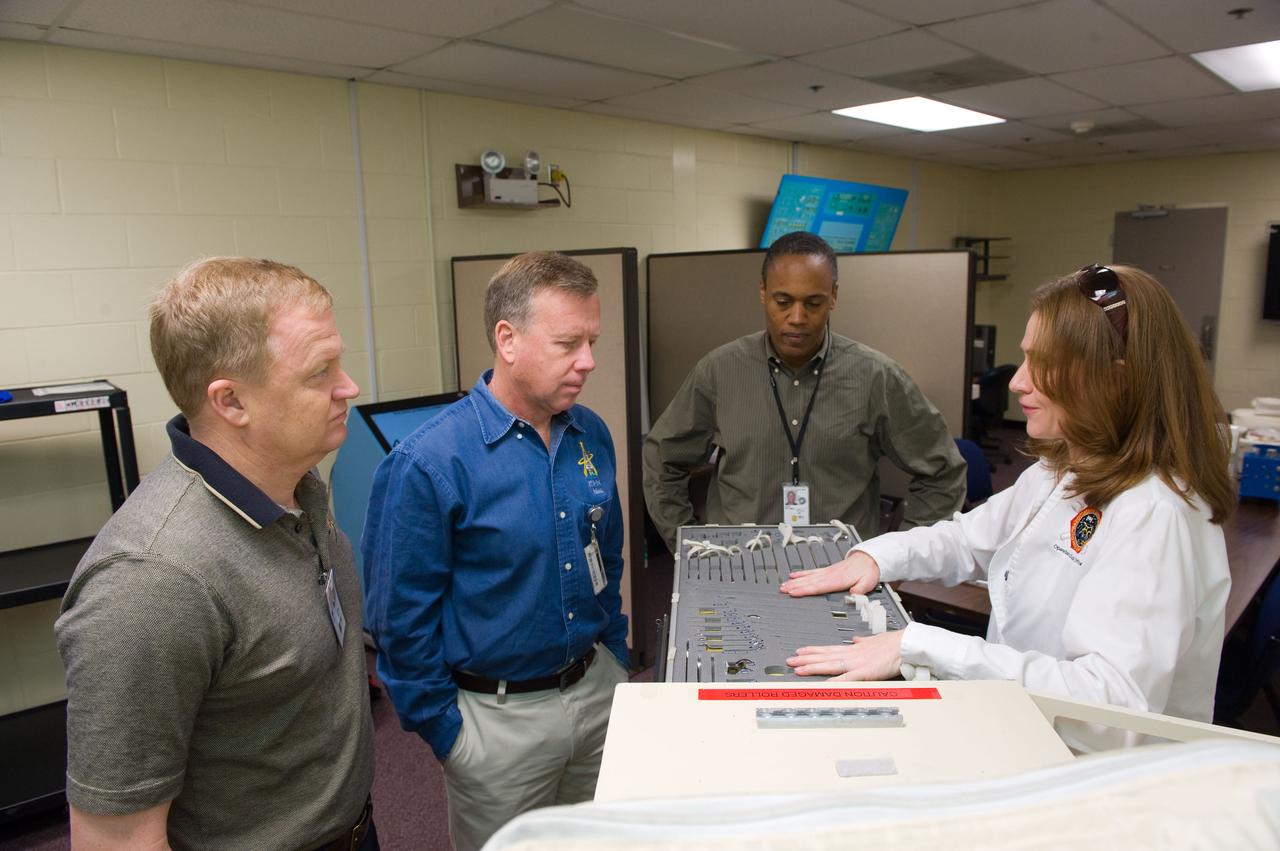
JSC2010-E-014262 (26 Jan. 2010) --- NASA astronauts Eric Boe (left), STS-133 pilot; Steve Lindsey, commander; and Alvin Drew, mission specialist, participate in an ISS tools and repair kits training session in the Space Vehicle Mock-up Facility at NASA's Johnson Space Center. Instructor Ivy Apostolakopoulos assisted the crew members.
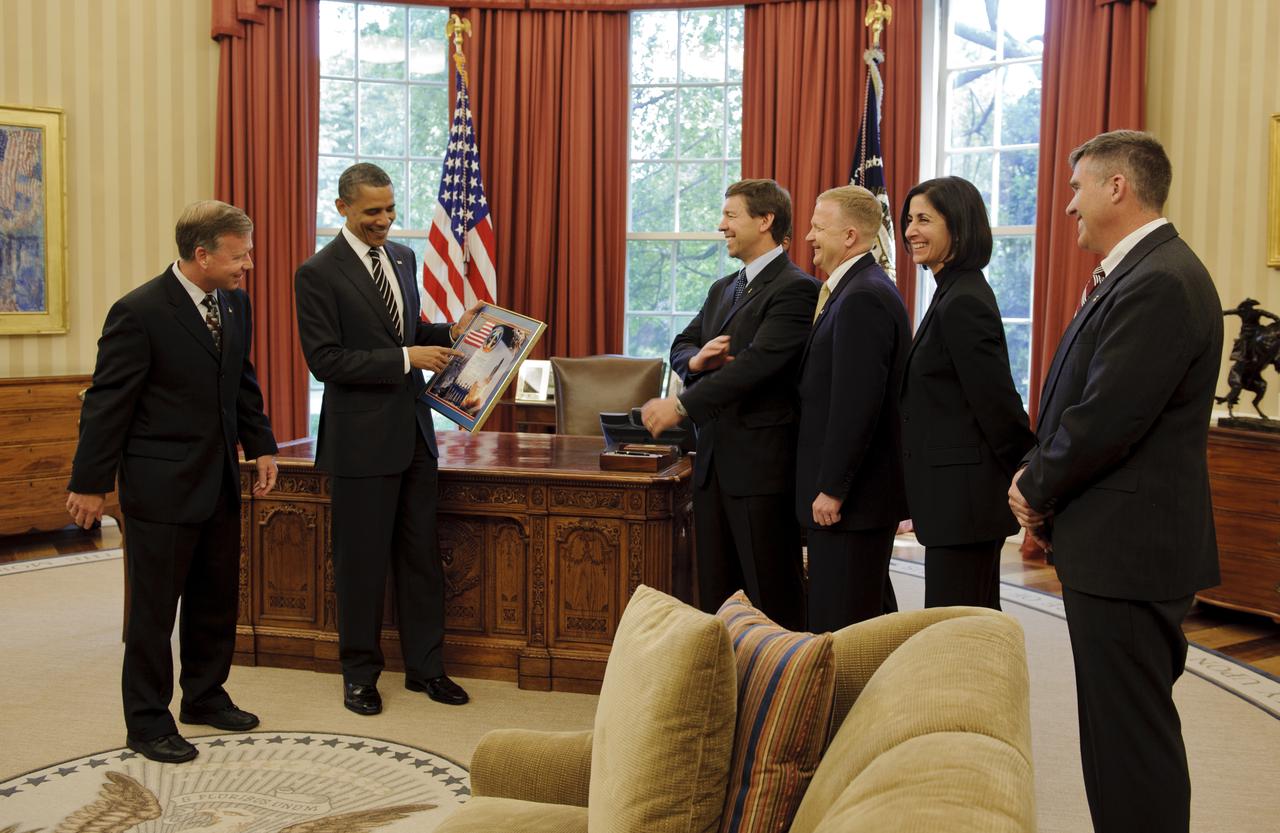
STS-133 Commander Steven Lindsey, far left, presents a montage to President Barack Obama as crew members Michael Barratt, Pilot Eric Boe, Nicole Stott, and Stephen Bowen look on during a visit to the Oval Office in the White House, Monday, May 9, 2011, in Washington. Also in attendance but not seen, was Mission Specialist Alvin Drew. Photo Credit: (NASA/Paul E. Alers)
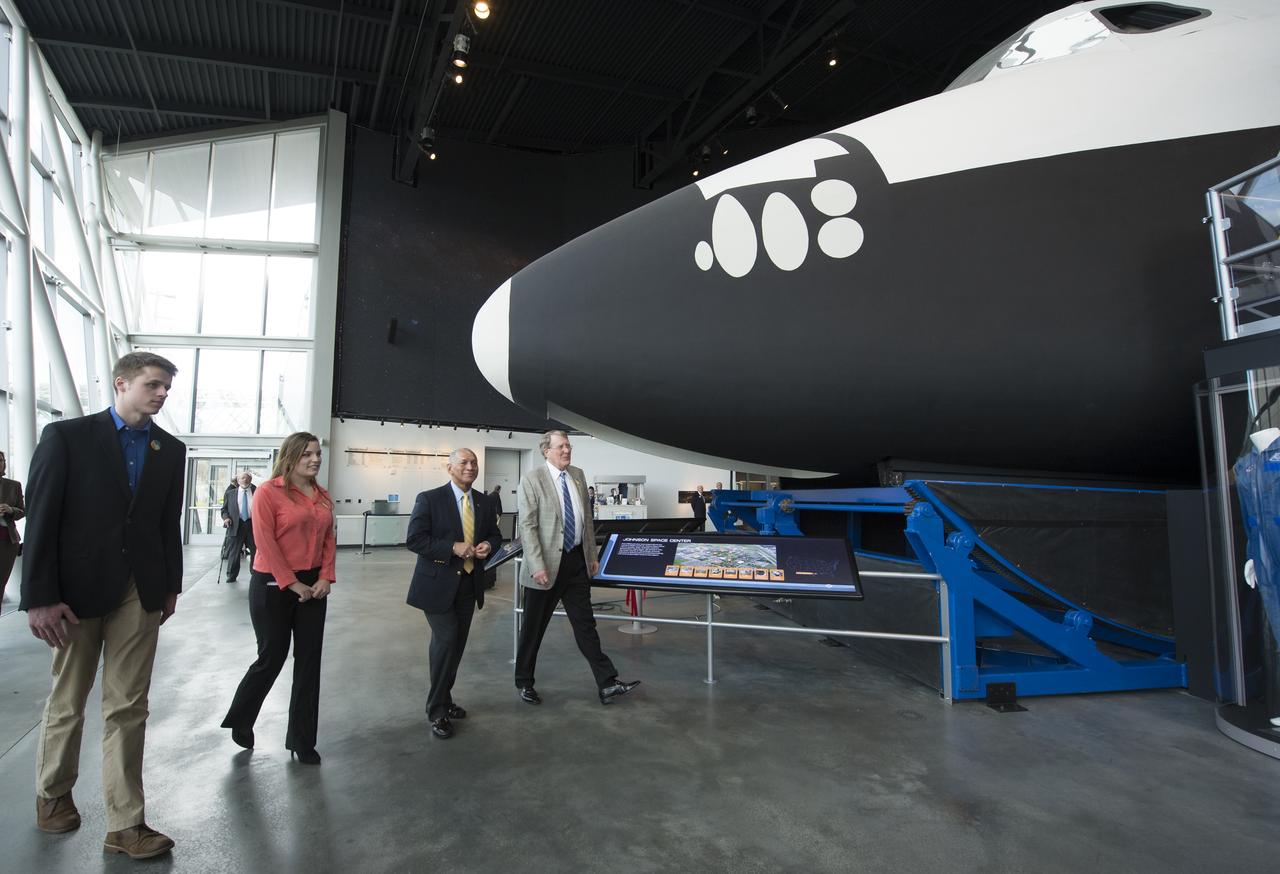
NASA Administrator Charles Bolden, third from left, is seen as he is escorted on a tour of the Space Shuttle Trainer Crew Compartment in the Charles Simonyi Space Gallery at the Museum of Flight, Tuesday, Jan. 15, 2013 in Seattle, Washington. Bolden is joined by Washington Aerospace Scholars Alec Lindsey, far left, Brenna Tuller-Ross and Doug King, far right, president and CEO of the museum. Photo Credit: (NASA/Carla Cioffi)
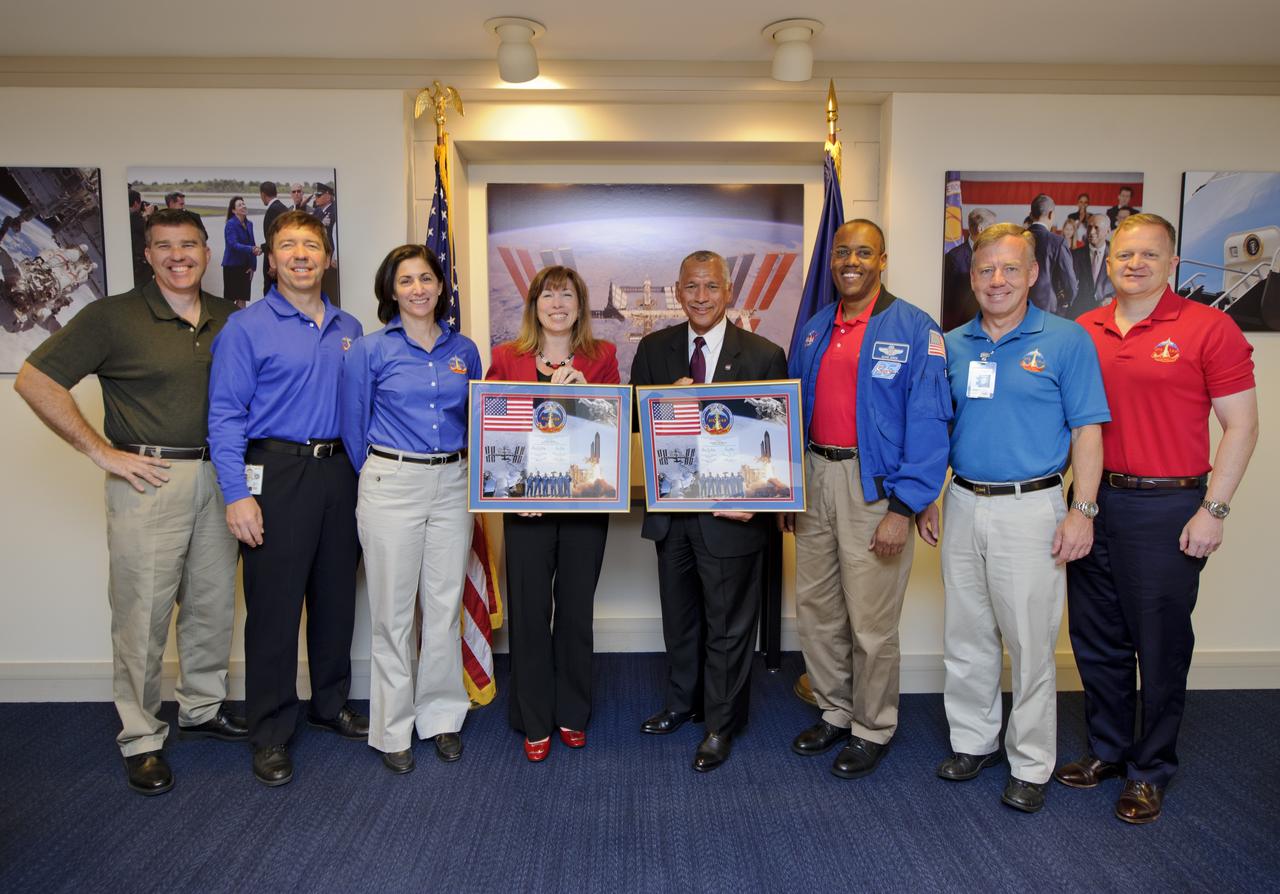
NASA Administrator Charles Bolden along with Deputy Administrator Lori Garver, center, stands with STS-133 crew members from left, Mission Specialists Stephen Bowen, Michael Barratt, Nicole Slott, Alvin Drew, Commander Steve Lindsey, and Pilot Eric Boe after being presented montages, Monday, May 9, 2011, at NASA Headquarters in Washington. Photo Credit: (NASA/Paul E. Alers)
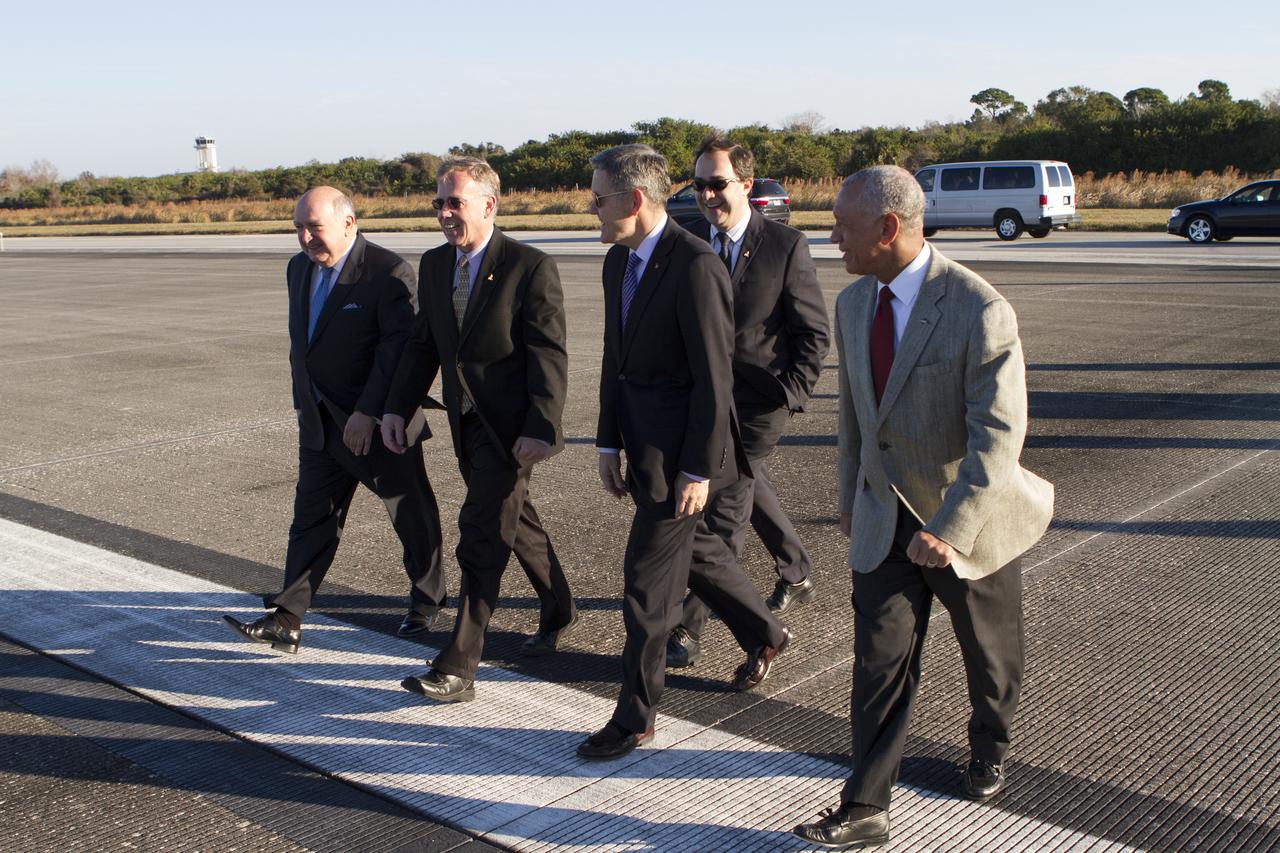
CAPE CANAVERAL, Fla. – NASA and aerospace industry representatives tour facilities along Florida’s Space Coast prior to announcements made by Sierra Nevada Corporation, or SNC, Space Systems, to prepare for a November 2016 orbital flight of its Dream Chaser spacecraft. Walking along the 3.5-mile-long runway at Kennedy Space Center’s Shuttle Landing Facility are, from left, Frank DiBello, president and CEO of Space Florida Steve Lindsey, Dream Chaser program manager for SNC Space Systems Bob Cabana, director of NASA’s Kennedy Space Center Mark Sirangelo, corporate vice president and head of SNC Space Systems and Charlie Bolden, administrator of NASA. The announcements made during a news conference at Kennedy are considered substantial for SNC and important to plans by NASA and Space Florida for Kennedy’s transformation into a multi-user spaceport for both commercial and government customers. SNC announced it plans to work with United Launch Alliance, or ULA, to launch the Dream Chaser spacecraft into orbit atop an Atlas V rocket from Space Launch Complex 41 at Cape Canaveral Air Force Station intends to land the winged spacecraft at the Shuttle Landing Facility lease office space at Exploration Park, right outside Kennedy’s gates and process the spacecraft in the high bay of the Operations and Checkout Building at Kennedy, with Lockheed Martin performing the work. Photo credit: NASA/Cory Huston
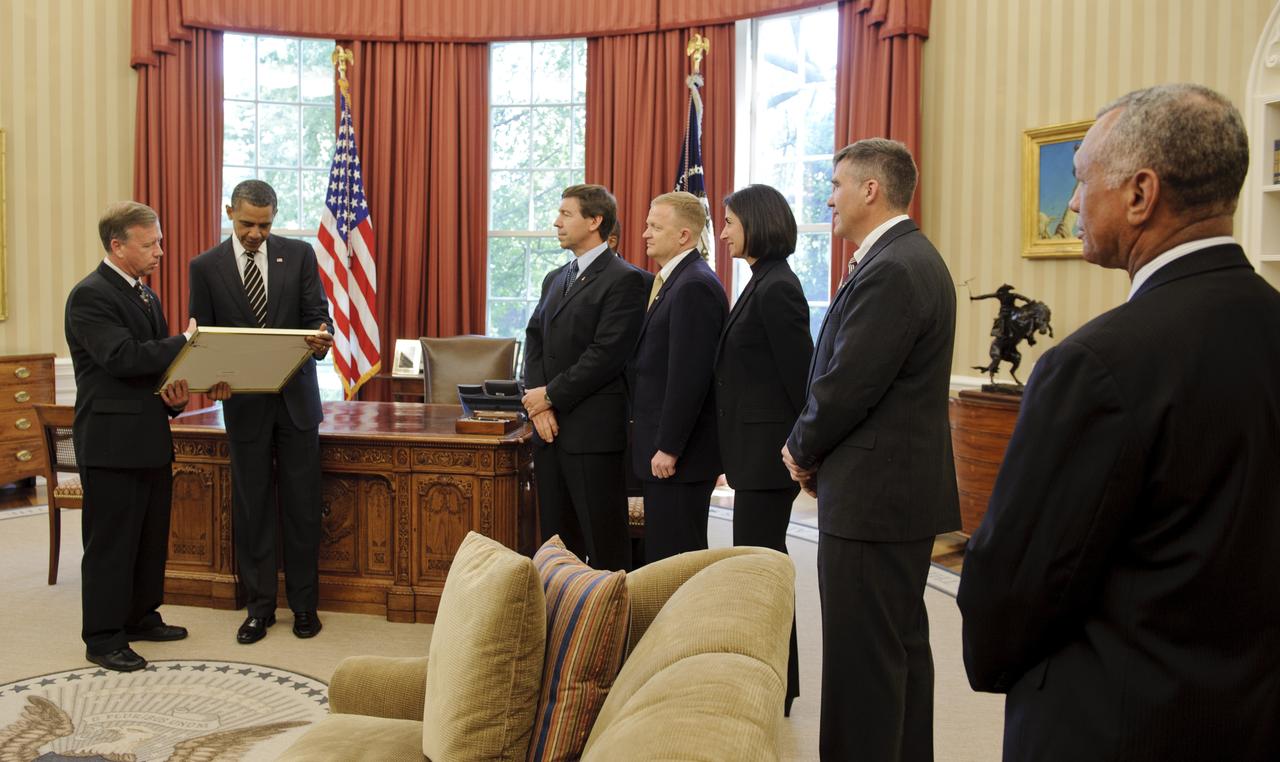
STS-133 Commander Steven Lindsey, far left, presents a montage to President Barack Obama as crew members Michael Barratt, Pilot Eric Boe, Nicole Stott, and Stephen Bowen along with NASA Administrator Charles Bolden, far right, look on during a visit to the Oval Office in the White House, Monday, May 9, 2011, in Washington. Also in attendance but not seen, was Mission Specialist Alvin Drew.Photo Credit: (NASA/Paul E. Alers)
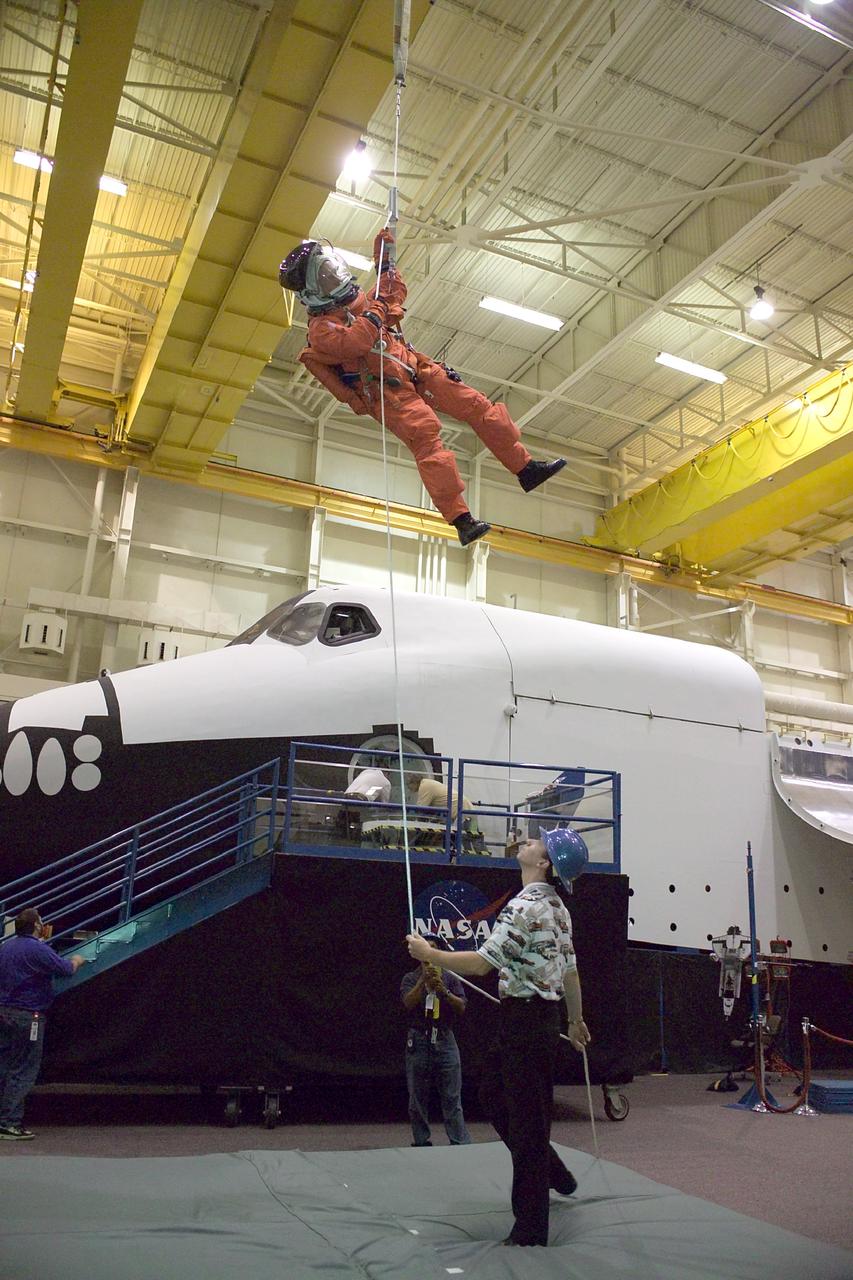
JSC2004-E-37689 (18 August 2004) --- Astronaut Steven W. Lindsey, STS-121 commander, uses a climbing apparatus to lower himself from a simulated trouble-plagued shuttle in an emergency egress training session in the Space Vehicle Mockup Facility at the Johnson Space Center (JSC). Lindsey is wearing a training version of the shuttle launch and entry suit. United Space Alliance (USA) crew trainer David Pogue assisted Lindsey.
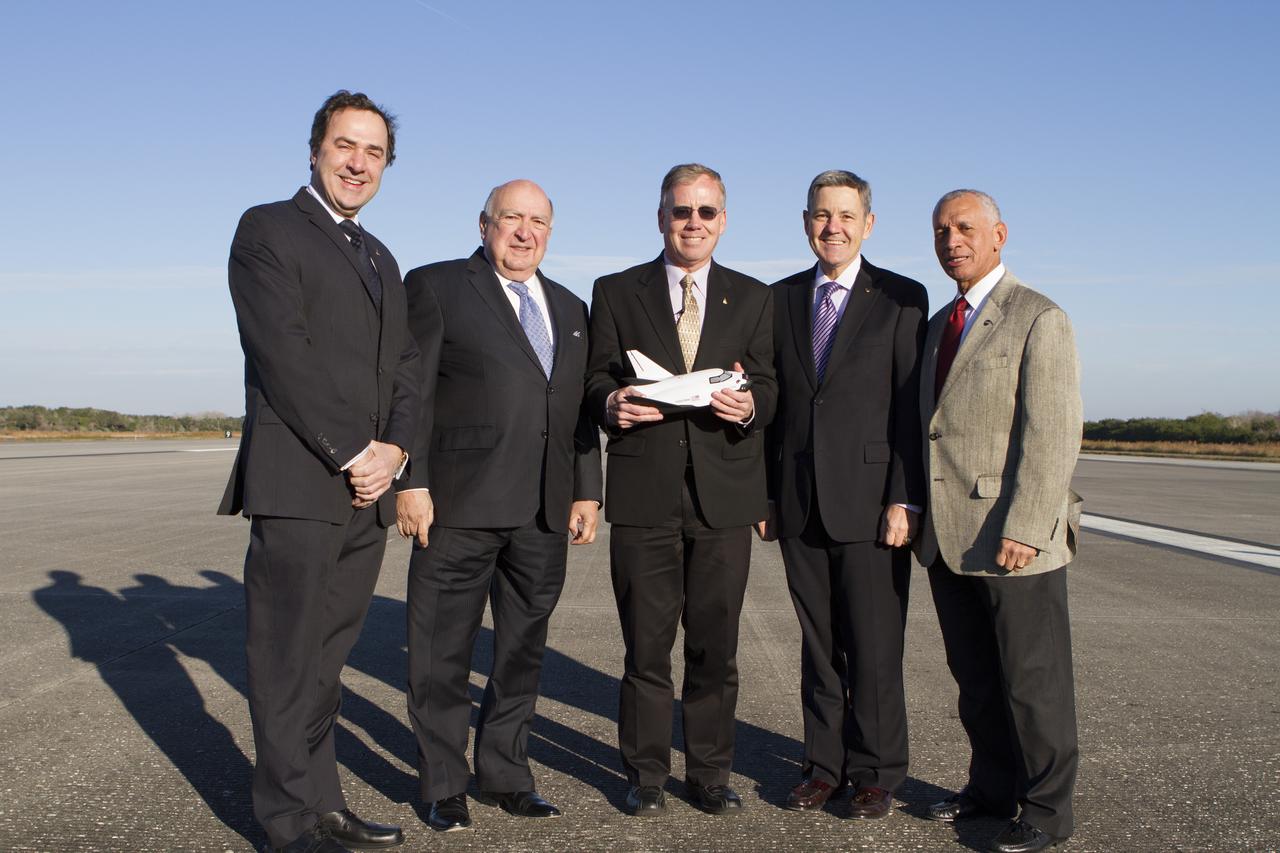
CAPE CANAVERAL, Fla. – NASA and aerospace industry representatives tour facilities along Florida’s Space Coast prior to announcements made by Sierra Nevada Corporation, or SNC, Space Systems, to prepare for a November 2016 orbital flight of its Dream Chaser spacecraft. Posing for a photo along the 3.5-mile-long runway at Kennedy Space Center’s Shuttle Landing Facility are, from left, Mark Sirangelo, corporate vice president and head of SNC Space Systems Frank DiBello, president and CEO of Space Florida Steve Lindsey, Dream Chaser program manager for SNC Space Systems Bob Cabana, director of NASA’s Kennedy Space Center and Charlie Bolden, administrator of NASA. The announcements made during a news conference at Kennedy are considered substantial for SNC and important to plans by NASA and Space Florida for Kennedy’s transformation into a multi-user spaceport for both commercial and government customers. SNC announced it plans to work with United Launch Alliance, or ULA, to launch the Dream Chaser spacecraft into orbit atop an Atlas V rocket from Space Launch Complex 41 at Cape Canaveral Air Force Station intends to land the winged spacecraft at the Shuttle Landing Facility lease office space at Exploration Park, right outside Kennedy’s gates and process the spacecraft in the high bay of the Operations and Checkout Building at Kennedy, with Lockheed Martin performing the work. Photo credit: NASA/Cory Huston
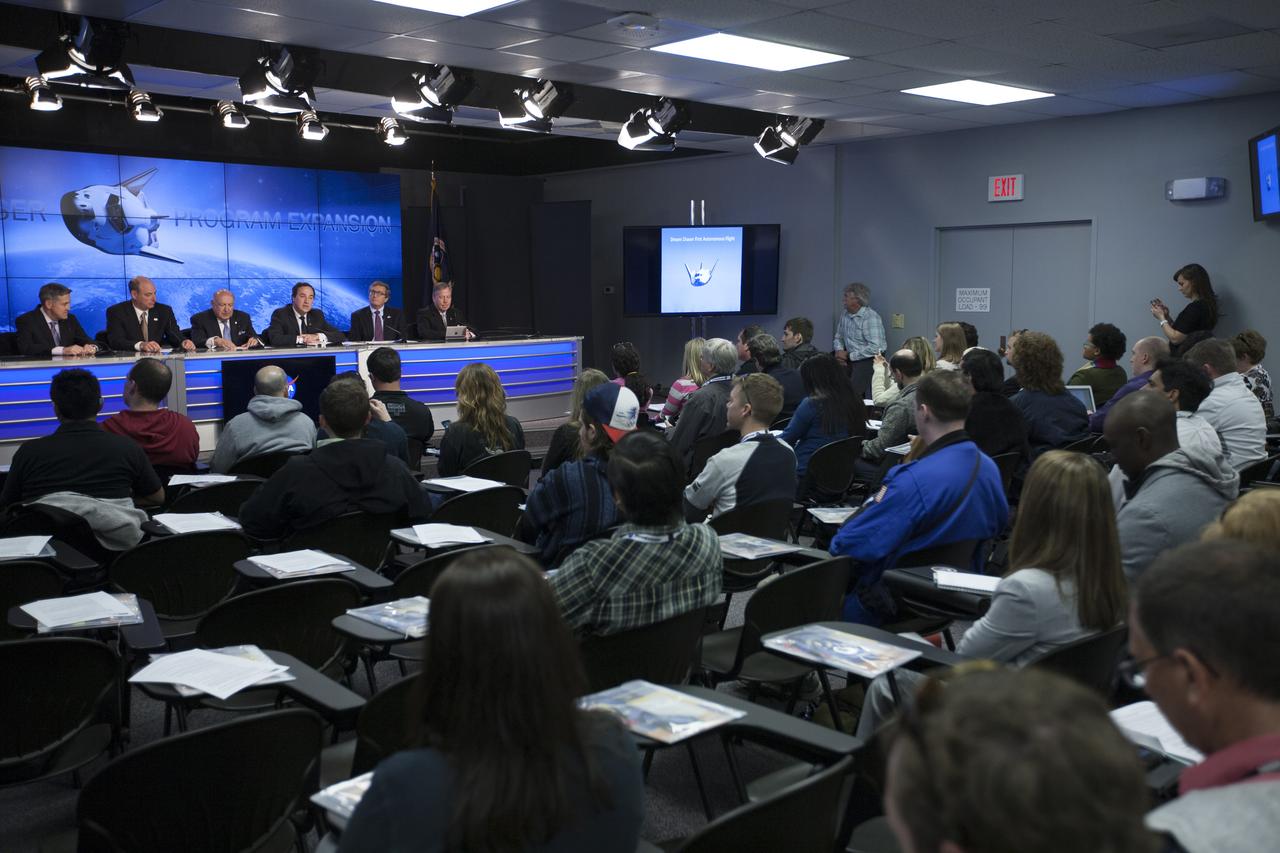
CAPE CANAVERAL, Fla. – Sierra Nevada Corporation, or SNC, Space Systems, announces the steps the company will take to prepare for a November 2016 orbital flight of its Dream Chaser spacecraft from Florida’s Space Coast during a news conference at NASA’s Kennedy Space Center in Florida. Participants, from left, are Bob Cabana, director of Kennedy Michael Gass, president and CEO of United Launch Alliance, or ULA Frank DiBello, president and CEO of Space Florida Mark Sirangelo, corporate vice president and head of SNC Space Systems Larry Price, Lockheed Martin Space Systems deputy program manager for NASA's Orion spacecraft and Steve Lindsey, Dream Chaser program manager for SNC Space Systems. The steps are considered substantial for SNC and important to plans by NASA and Space Florida for Kennedy’s transformation into a multi-user spaceport for both commercial and government customers. SNC said it plans to work with ULA to launch the Dream Chaser spacecraft into orbit atop an Atlas V rocket from Space Launch Complex 41 at Cape Canaveral Air Force Station intends to land the winged spacecraft at Kennedy’s 3.5-mile long runway at the Shuttle Landing Facility lease office space at Exploration Park, right outside Kennedy’s gates and process the spacecraft in the high bay of the Operations and Checkout Building at Kennedy, with Lockheed Martin performing the work. Photo credit: NASA/Kim Shiflett
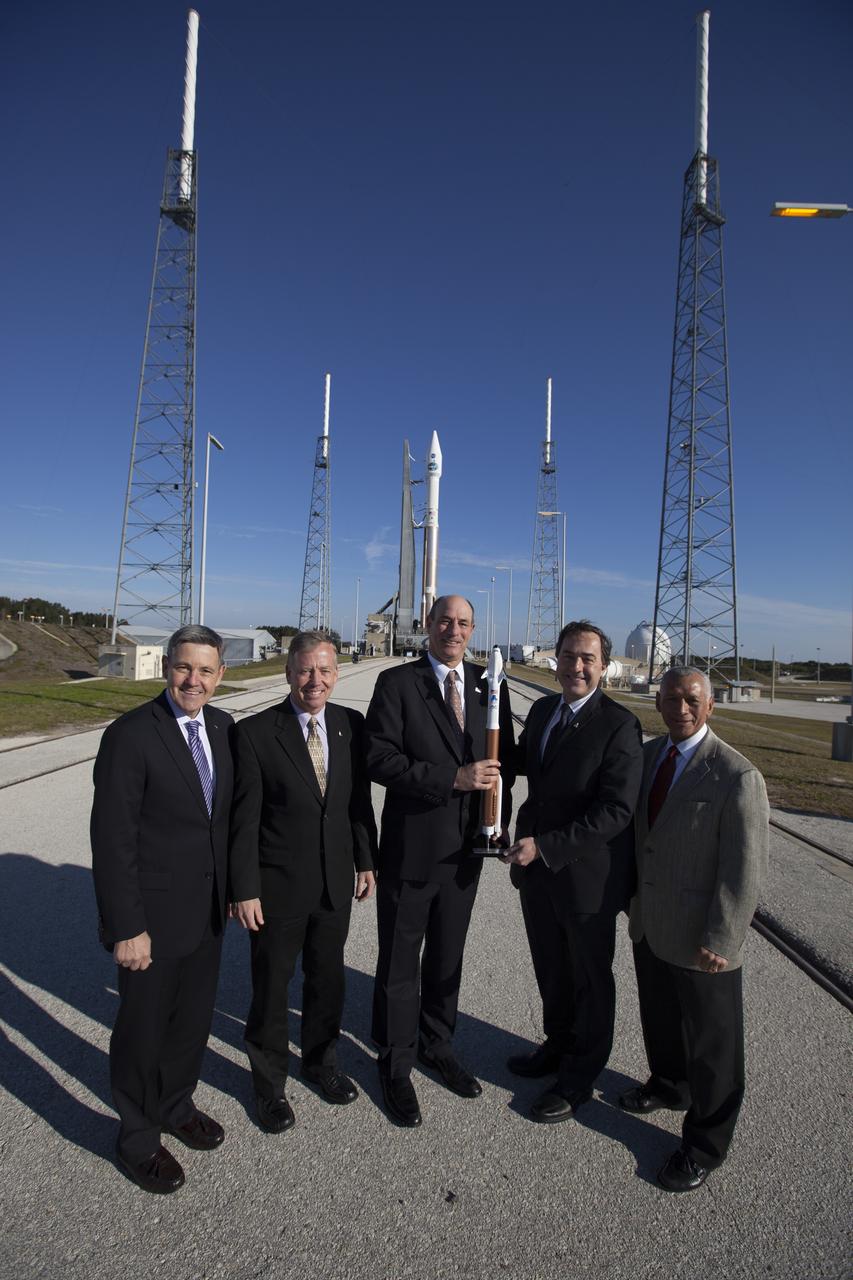
CAPE CANAVERAL, Fla. – NASA and aerospace industry representatives tour facilities along Florida’s Space Coast prior to announcements made by Sierra Nevada Corporation, or SNC, Space Systems, to prepare for a November 2016 orbital flight of its Dream Chaser spacecraft. Posing for a photo in front of a United Launch Alliance, or ULA, Atlas V rocket are, from left, Bob Cabana, director of NASA’s Kennedy Space Center Steve Lindsey, Dream Chaser program manager for SNC Space Systems Michael Gass, president and CEO of United Launch Alliance, or ULA Mark Sirangelo, corporate vice president and head of SNC Space Systems and Charlie Bolden, administrator of NASA. The announcements made during a news conference at Kennedy are considered substantial for SNC and important to plans by NASA and Space Florida for Kennedy’s transformation into a multi-user spaceport for both commercial and government customers. SNC announced it plans to work with ULA to launch the Dream Chaser spacecraft into orbit atop an Atlas V rocket from Space Launch Complex 41 at Cape Canaveral Air Force Station intends to land the winged spacecraft at the 3.5-mile-long runway at Kennedy’s Shuttle Landing Facility lease office space at Exploration Park, right outside Kennedy’s gates and process the spacecraft in the high bay of the Operations and Checkout Building at Kennedy, with Lockheed Martin performing the work. Photo credit: NASA/Cory Huston
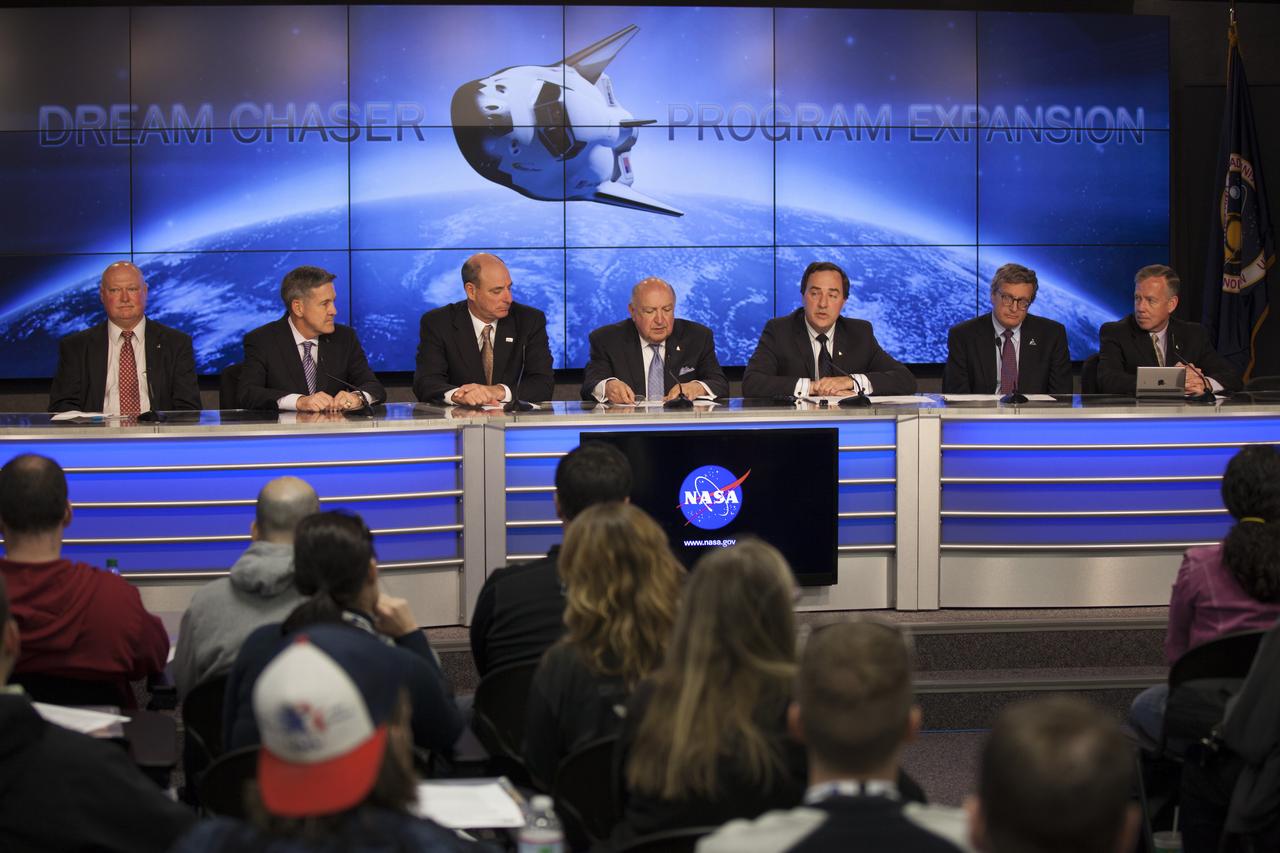
CAPE CANAVERAL, Fla. – Sierra Nevada Corporation, or SNC, Space Systems, announces the steps the company will take to prepare for a November 2016 orbital flight of its Dream Chaser spacecraft from Florida’s Space Coast during a news conference at NASA’s Kennedy Space Center in Florida. Participants are, from left, Michael Curie, NASA spokesman, Bob Cabana, director of Kennedy, Michael Gass, president and CEO of United Launch Alliance, or ULA, Frank DiBello, president and CEO of Space Florida, Mark Sirangelo, corporate vice president and head of SNC Space Systems, Larry Price, Lockheed Martin Space Systems deputy program manager for NASA's Orion spacecraft, and Steve Lindsey, Dream Chaser program manager for SNC Space Systems. The steps are considered substantial for SNC and important to plans by NASA and Space Florida for Kennedy’s transformation into a multi-user spaceport for both commercial and government customers. SNC said it plans to work with ULA to launch the Dream Chaser spacecraft into orbit atop an Atlas V rocket from Space Launch Complex 41 at Cape Canaveral Air Force Station intends to land the winged spacecraft at Kennedy’s 3.5-mile long runway at the Shuttle Landing Facility lease office space at Exploration Park, right outside Kennedy’s gates and process the spacecraft in the high bay of the Operations and Checkout Building at Kennedy, with Lockheed Martin performing the work. Photo credit: NASA/Kim Shiflett
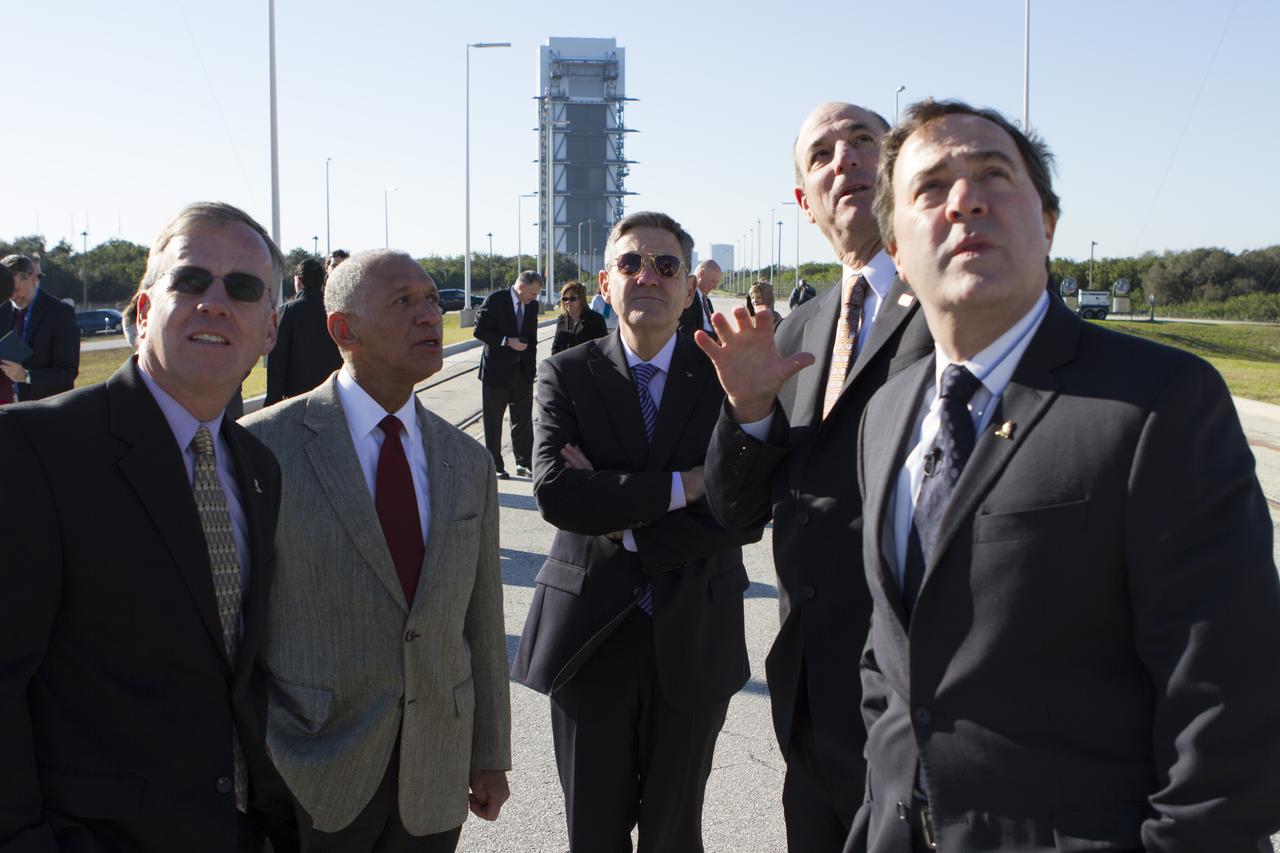
CAPE CANAVERAL, Fla. – NASA and aerospace industry representatives tour facilities along Florida’s Space Coast prior to announcements made by Sierra Nevada Corporation, or SNC, Space Systems, to prepare for a November 2016 orbital flight of its Dream Chaser spacecraft. Standing at the base of Space Launch Complex 41 at Cape Canaveral Air Force Station in Florida, from left, are Steve Lindsey, Dream Chaser program manager for SNC Space Systems Charlie Bolden, administrator of NASA Bob Cabana, director of NASA’s Kennedy Space Center Michael Gass, president and CEO of United Launch Alliance, or ULA and Mark Sirangelo, corporate vice president and head of SNC Space Systems. SNC announced it plans to work with ULA to launch the Dream Chaser spacecraft into orbit atop an Atlas V rocket from Space Launch Complex 41 at Cape Canaveral Air Force Station intends to land the winged spacecraft at the 3.5-mile-long runway at Kennedy’s Shuttle Landing Facility lease office space at Exploration Park, right outside Kennedy’s gates and process the spacecraft in the high bay of the Operations and Checkout Building at Kennedy, with Lockheed Martin performing the work. The announcements made during a news conference at Kennedy are considered substantial for SNC and important to plans by NASA and Space Florida for Kennedy’s transformation into a multi-user spaceport for both commercial and government customers. Photo credit: NASA/Cory Huston
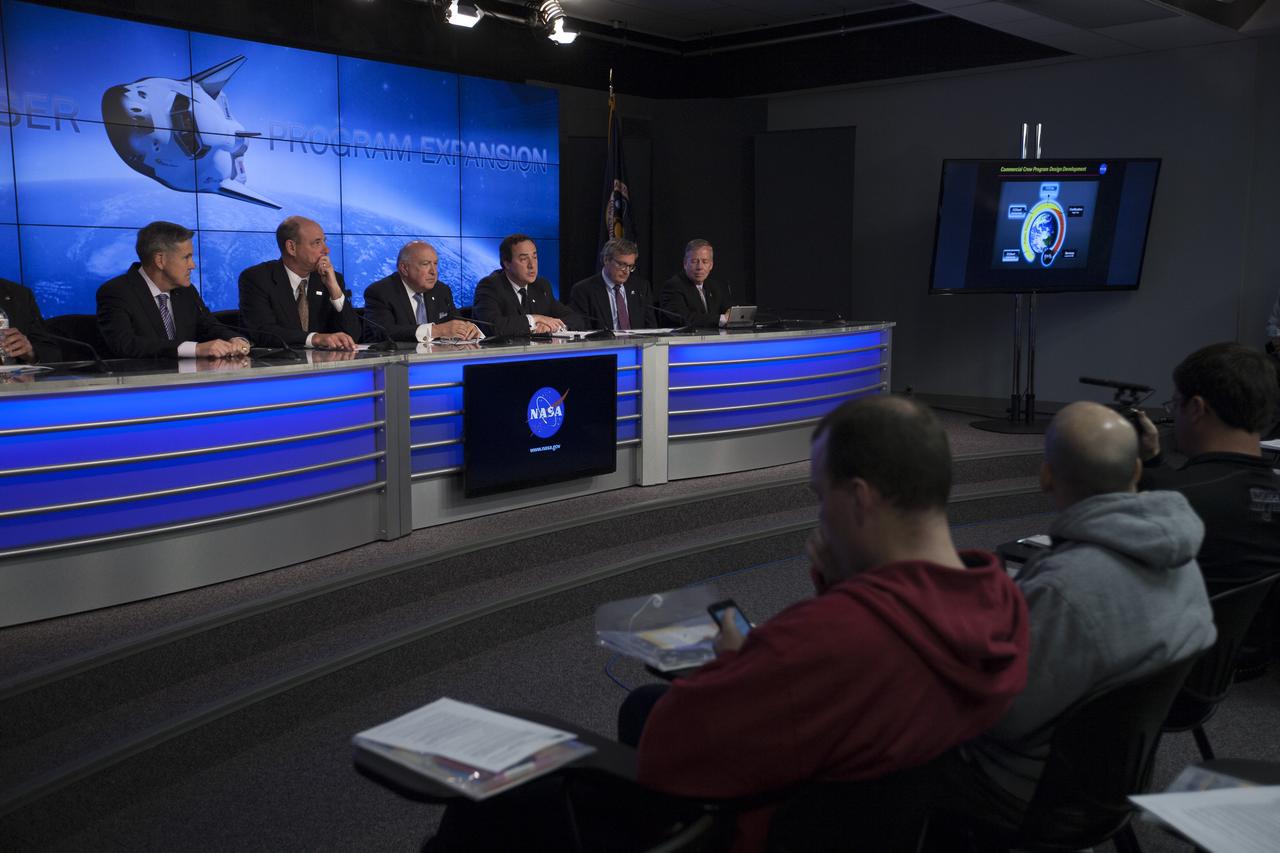
CAPE CANAVERAL, Fla. – Sierra Nevada Corporation, or SNC, Space Systems, announces the steps the company will take to prepare for a November 2016 orbital flight of its Dream Chaser spacecraft from Florida’s Space Coast during a news conference at NASA’s Kennedy Space Center in Florida. Participants, from left, are Bob Cabana, director of Kennedy Michael Gass, president and CEO of United Launch Alliance, or ULA Frank DiBello, president and CEO of Space Florida Mark Sirangelo, corporate vice president and head of SNC Space Systems Larry Price, Lockheed Martin Space Systems deputy program manager for NASA's Orion spacecraft and Steve Lindsey, Dream Chaser program manager for SNC Space Systems. The steps are considered substantial for SNC and important to plans by NASA and Space Florida for Kennedy’s transformation into a multi-user spaceport for both commercial and government customers. SNC said it plans to work with ULA to launch the Dream Chaser spacecraft into orbit atop an Atlas V rocket from Space Launch Complex 41 at Cape Canaveral Air Force Station intends to land the winged spacecraft at Kennedy’s 3.5-mile long runway at the Shuttle Landing Facility lease office space at Exploration Park, right outside Kennedy’s gates and process the spacecraft in the high bay of the Operations and Checkout Building at Kennedy, with Lockheed Martin performing the work. Photo credit: NASA/Kim Shiflett
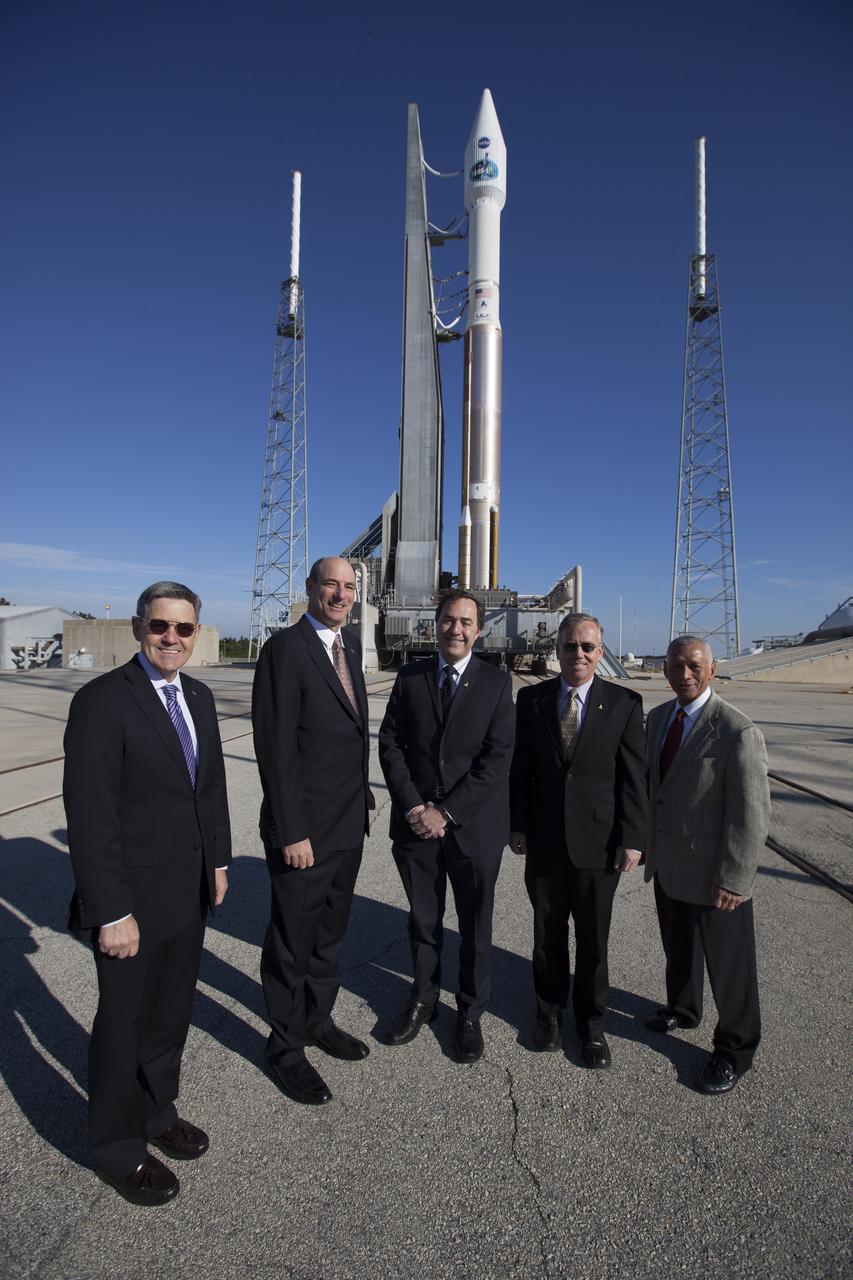
CAPE CANAVERAL, Fla. – NASA and aerospace industry representatives tour facilities along Florida’s Space Coast prior to announcements made by Sierra Nevada Corporation, or SNC, Space Systems, to prepare for a November 2016 orbital flight of its Dream Chaser spacecraft. Posing for a photo in front of a United Launch Alliance, or ULA, Atlas V rocket are, from left, Bob Cabana, director of NASA’s Kennedy Space Center Michael Gass, president and CEO of United Launch Alliance, or ULA Mark Sirangelo, corporate vice president and head of SNC Space Systems Steve Lindsey, Dream Chaser program manager for SNC Space Systems and Charlie Bolden, administrator of NASA. The announcements made during a news conference at Kennedy are considered substantial for SNC and important to plans by NASA and Space Florida for Kennedy’s transformation into a multi-user spaceport for both commercial and government customers. SNC announced it plans to work with ULA to launch the Dream Chaser spacecraft into orbit atop an Atlas V rocket from Space Launch Complex 41 at Cape Canaveral Air Force Station intends to land the winged spacecraft at the 3.5-mile-long runway at Kennedy’s Shuttle Landing Facility lease office space at Exploration Park, right outside Kennedy’s gates and process the spacecraft in the high bay of the Operations and Checkout Building at Kennedy, with Lockheed Martin performing the work. Photo credit: NASA/Cory Huston
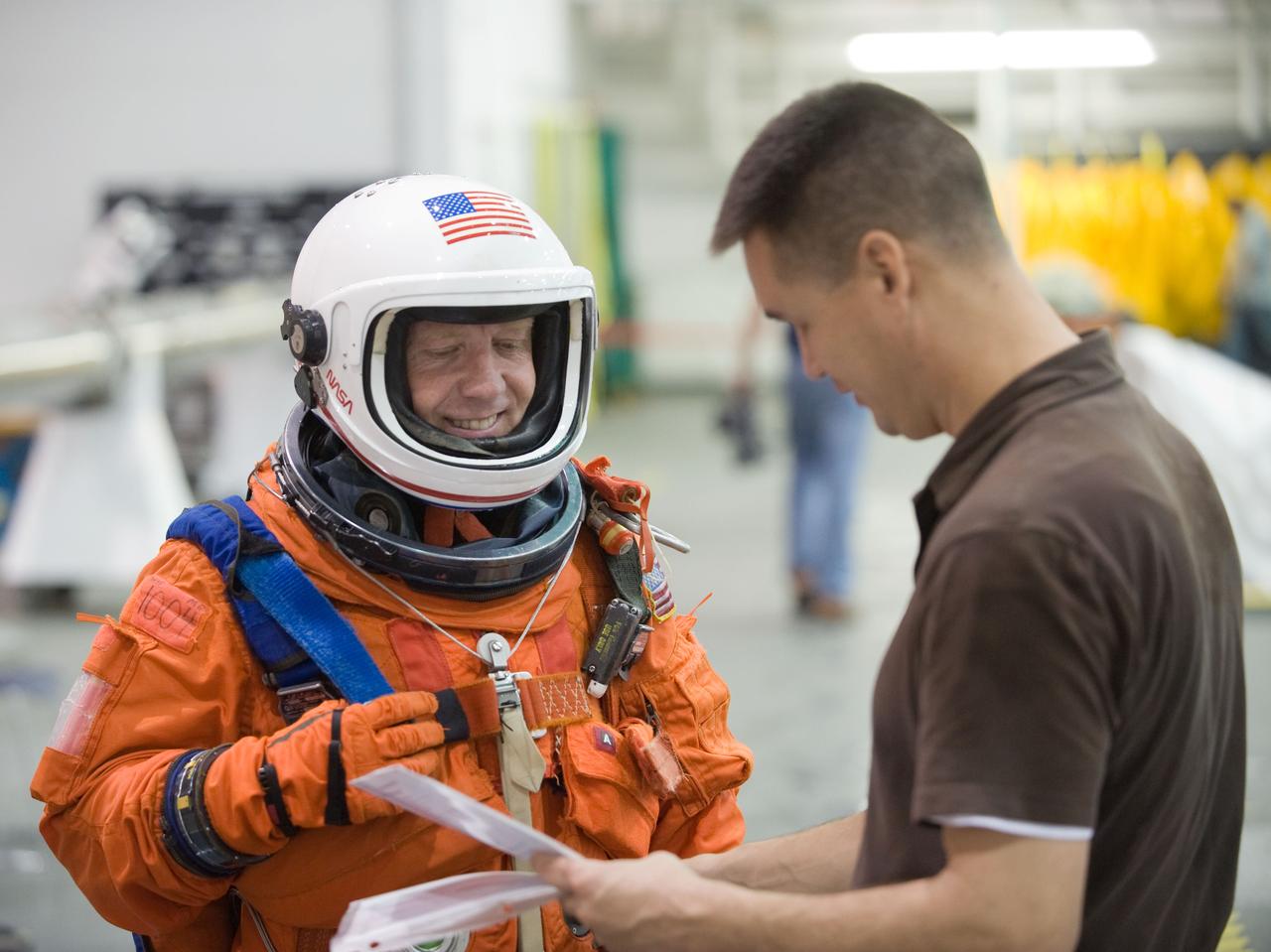
JSC2010-E-075082 (7 May 2010) --- NASA astronaut Steve Lindsey, STS-133 commander, attired in a training version of his shuttle launch and entry suit, participates in a training session in the Neutral Buoyancy Laboratory (NBL) near NASA's Johnson Space Center. Crew trainer Adam Flagan assisted Lindsey.
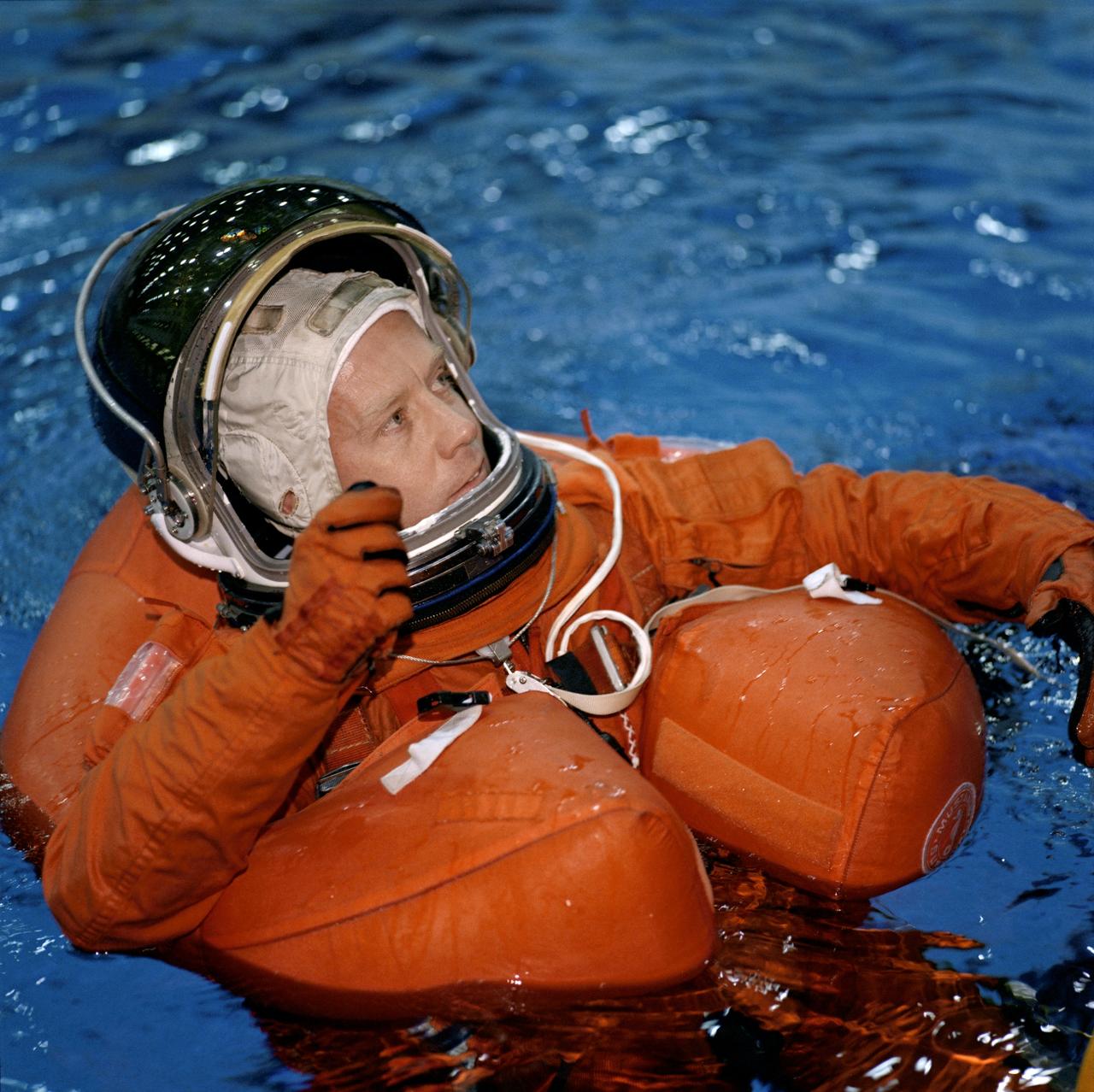
JSC2001-00011 (January 2001) ---Astronaut Steven W. Lindsey, STS-104 mission commander, floats in water during an emergency egress training session at the Neutral Buoyancy Laboratory (NBL) near the Johnson Space Center (JSC). Lindsey will join four other astronauts for a June mission to the International Space Station (ISS).
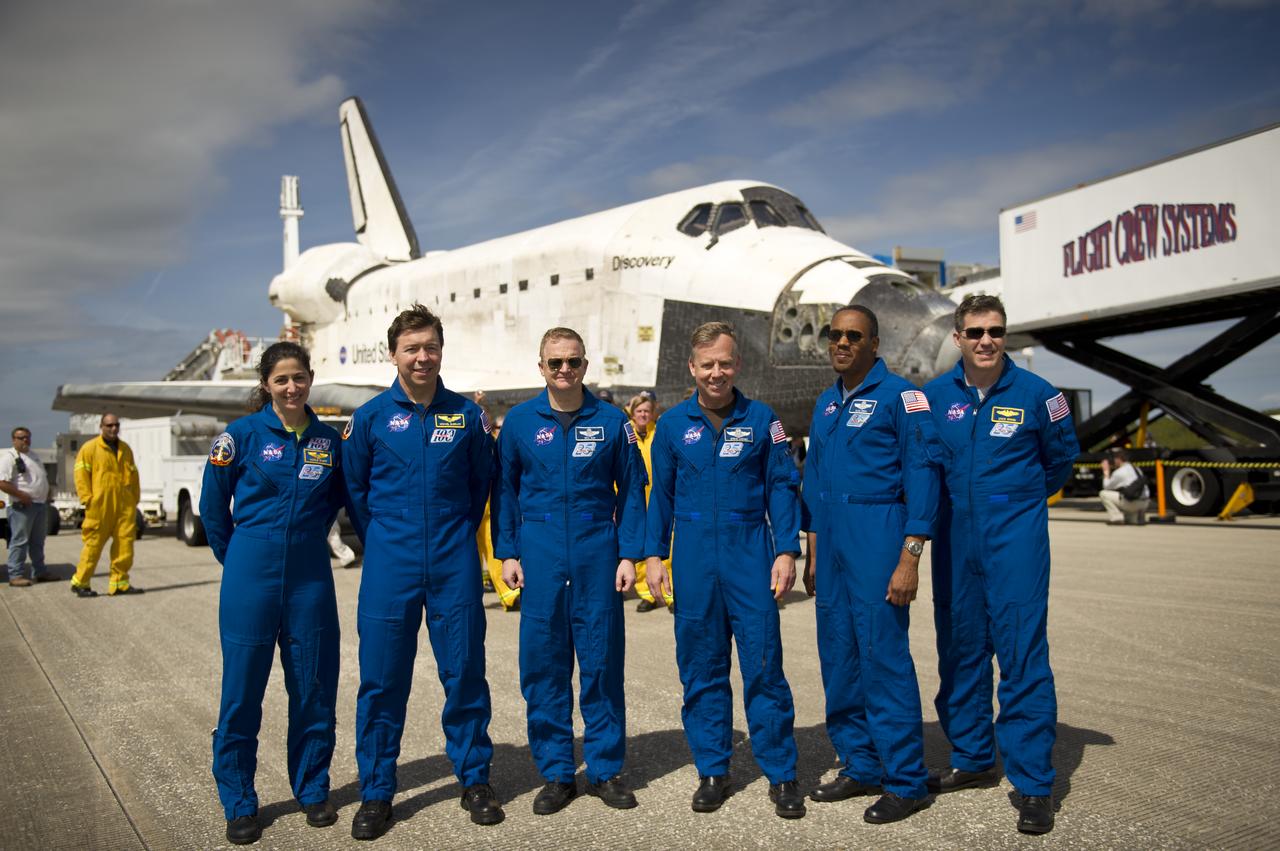
NASA Astronauts and STS-133 mission crew members, from left, Mission Specialists Nicole Stott, Michael Barratt, Pilot Eric Boe, Commander Steve Lindsey, Mission Specialists Alvin Drew, and Steve Bowen pose for a photograph in front of the space shuttle Discovery after they landed, Wednesday, March 9, 2011, at Kennedy Space Center in Cape Canaveral, Fla., completing Discovery's 39th and final flight. Since 1984, Discovery flew 39 missions, spent 365 days in space, orbited Earth 5,830 times and traveled 148,221,675 miles. Photo credit: (NASA/Bill Ingalls)
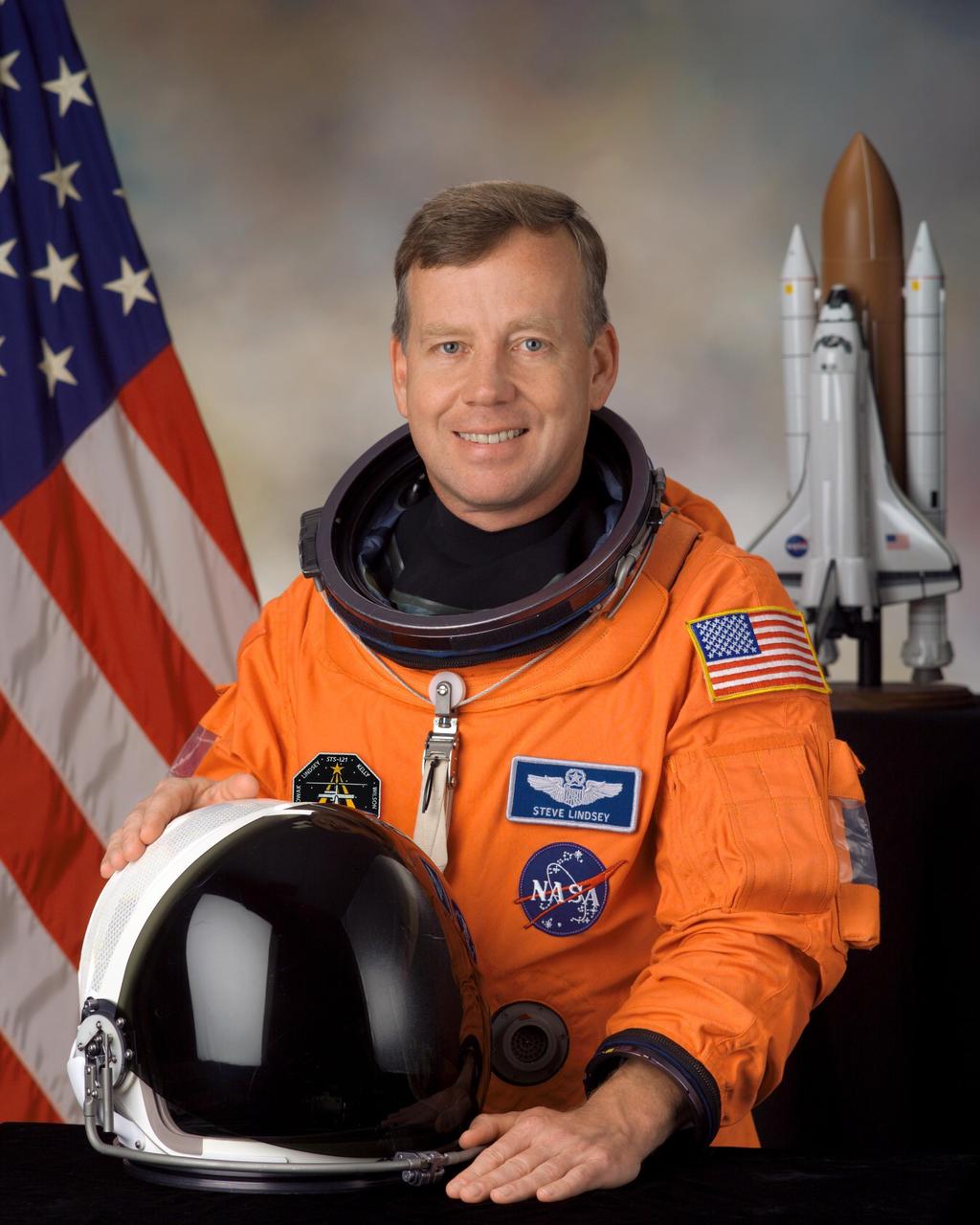
JOHNSON SPACE CENTER, Texas -- JSC2005-E-21973 -- NASA astronaut Steven W. Lindsey, commander.
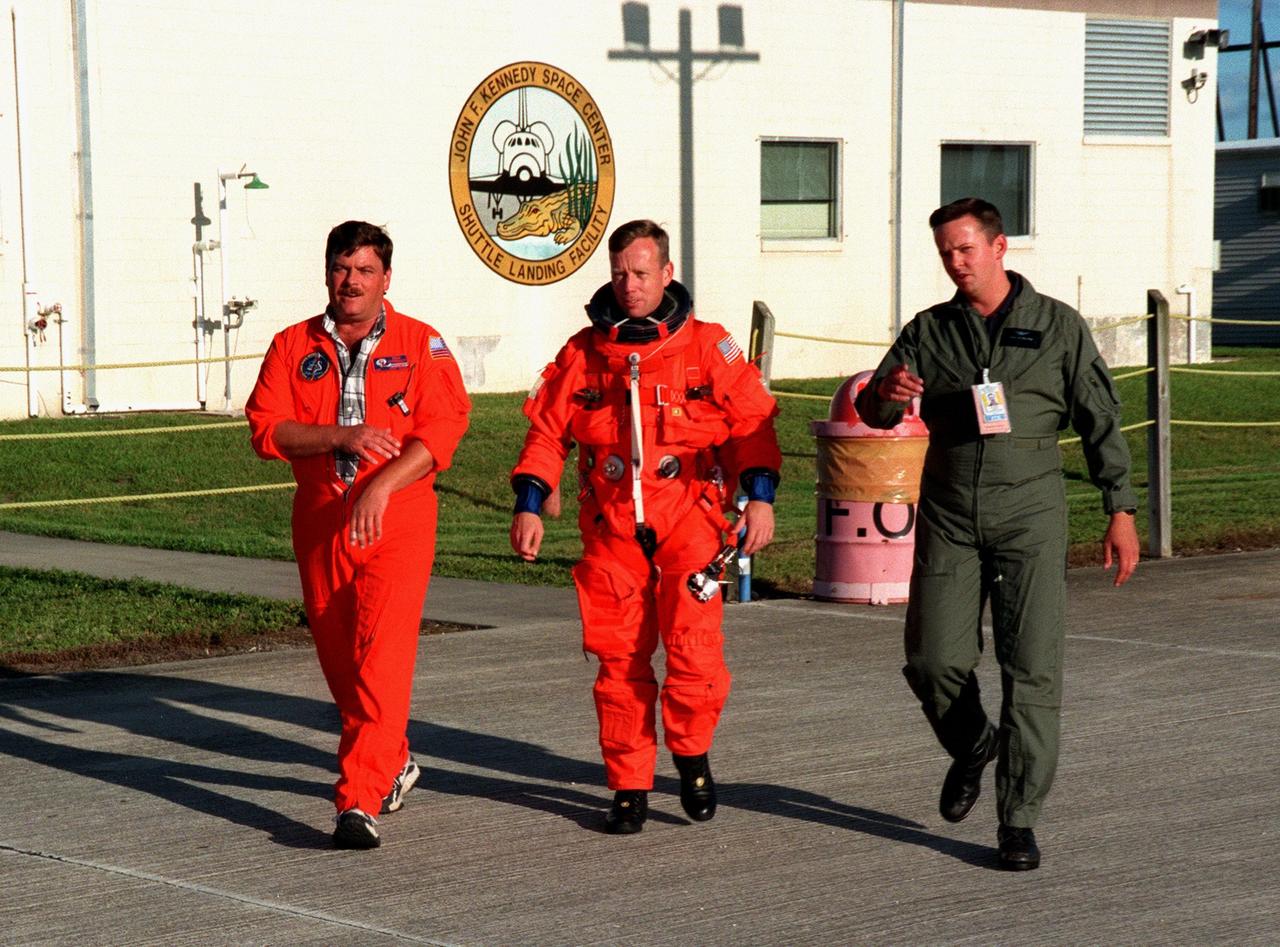
STS-95 Pilot Steven K. Lindsey leaves the Shuttle Landing Facility (SLF) enroute to the Shuttle Training Aircraft (STA). He is accompanied by two suit technicians, Mike Birkenseher (left) and Paul Reylea (right). Lindsey will be practicing Shuttle landing and takeoffs at the SLF on the STA, which is designed to fly like the Shuttle, prior to launch. STS-95 is expected to launch at 2 p.m. EST on Oct. 29, last 8 days, 21 hours and 49 minutes, and land at 11:49 a.m. EST on Nov. 7

JSC2000-07285 (17 November 2000) --- Astronaut Steven W. Lindsey, STS-104 mission commander, attired in a training version of the shuttle launch and entry garment, awaits a training session at the Jake Garn Simulation and Training Facility at Johnson Space Center (JSC). Lindsey will join four other astronauts for a June mission with the International Space Station (ISS).
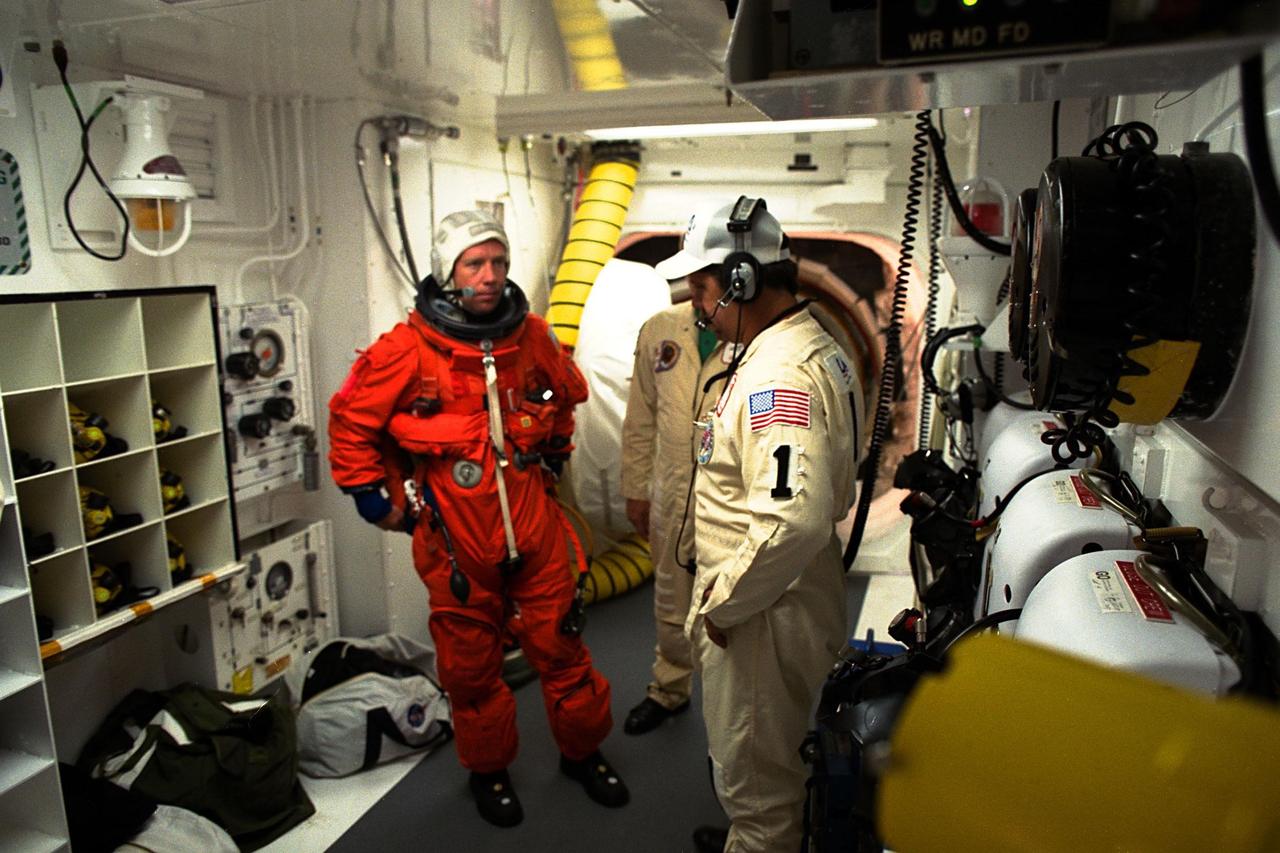
STS-87 Pilot Steven Lindsey is inspected before launch in his ascent and re-entry flight suit in the white room at Launch Pad 39B by Travis Thompson, USA orbiter vehicle closeout chief. STS-87 is the fourth flight of the United States Microgravity Payload and Spartan-201. Although this is his first Shuttle flight, Lindsey has logged more than 2,700 hours of flying time in 49 different types of aircraft
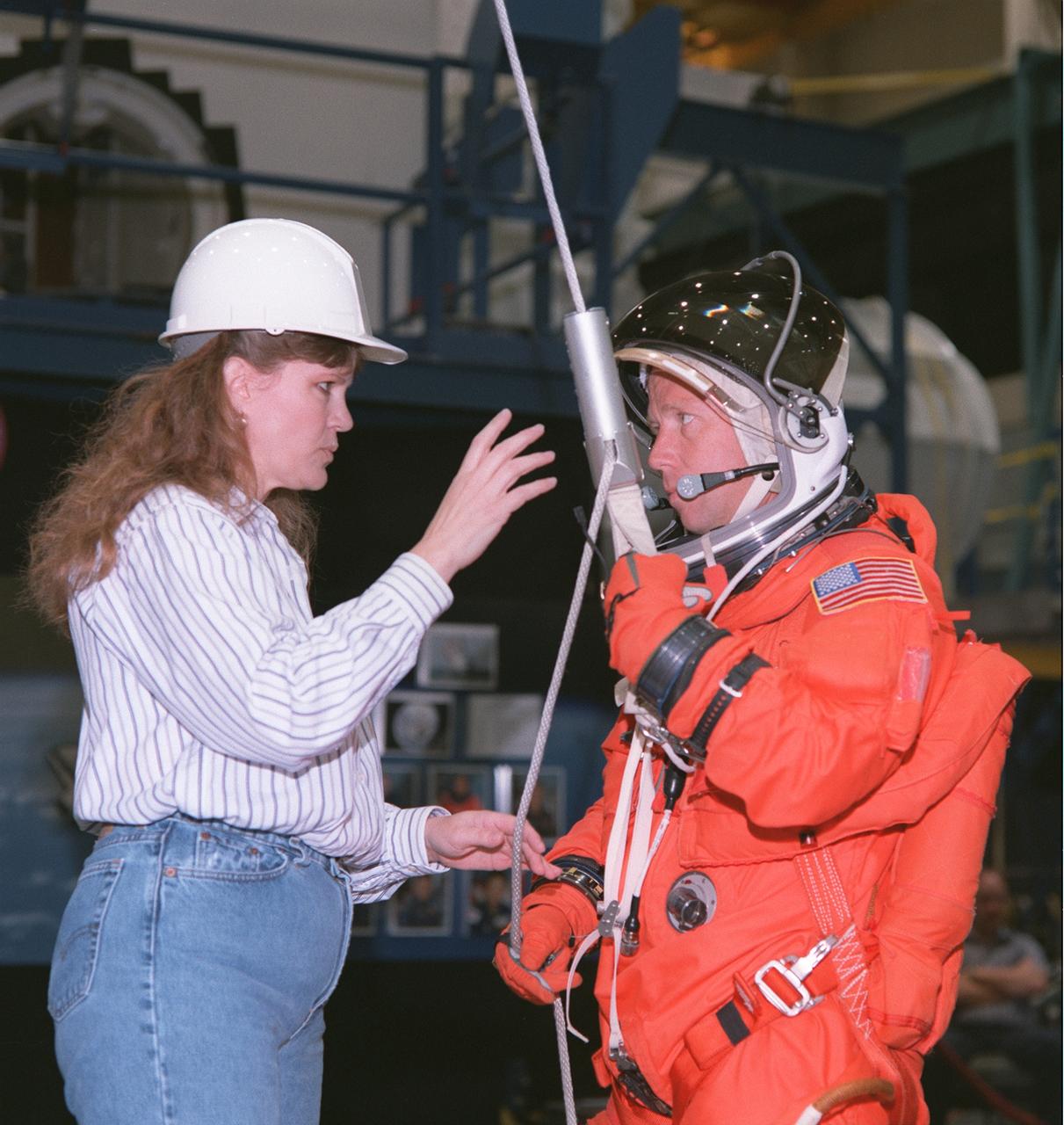
S98-07976 (5 June 1998) --- Astronaut Steven W. Lindsey, pilot for STS-95, is briefed by crew trainer Sharon Jones on the usage of the Sky-genie device used to lower oneself from a troubled space shuttle. Lindsey was joined by his six crew mates for the session as the team prepares for its scheduled Oct. 29 launch aboard the Space Shuttle Discovery.
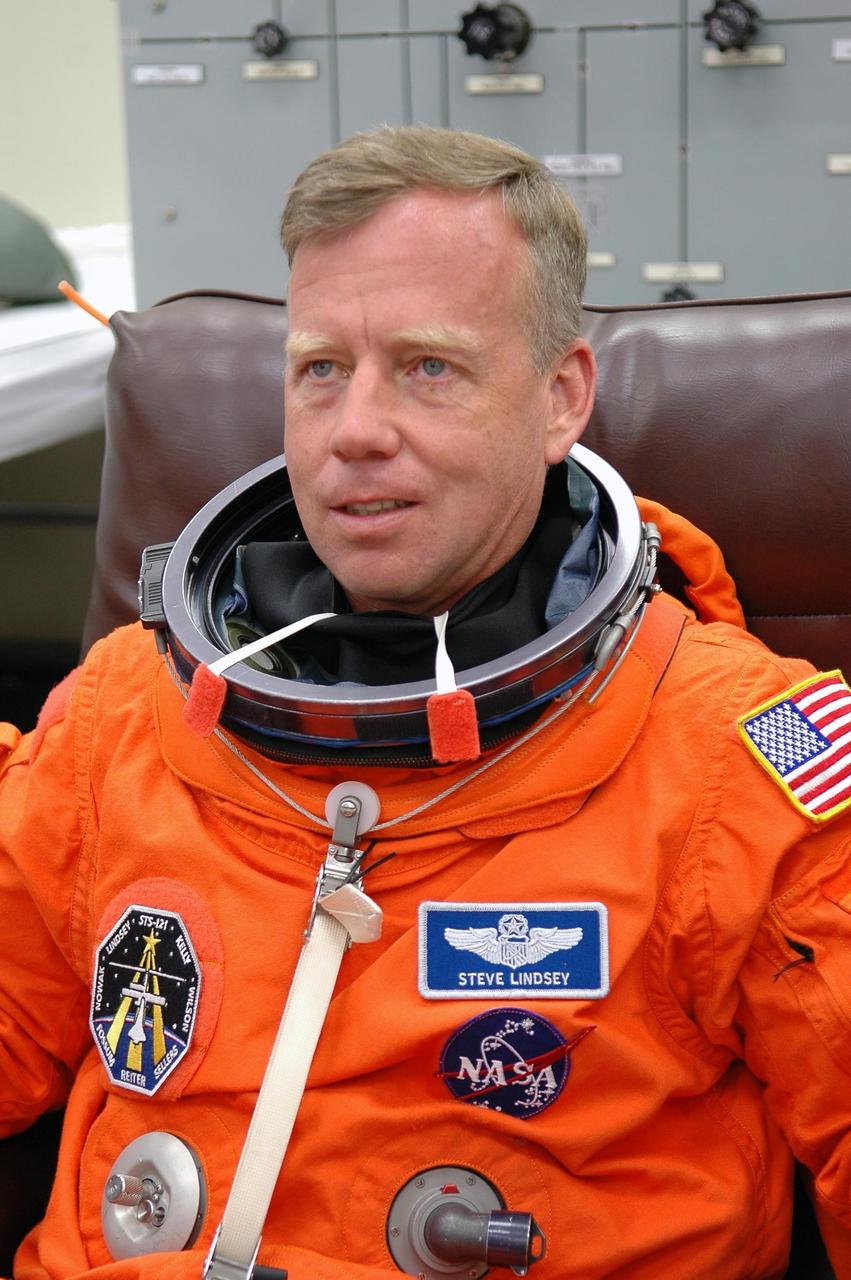
KENNEDY SPACE CENTER, FLA. - STS-121 Commander Steven Lindsey is donning his launch and entry suit for launch today on Space Shuttle Discovery. Lindsey is making his fourth space flight. The launch is the 115th shuttle flight and the 18th U.S. flight to the International Space Station. During the 12-day mission, the STS-121 crew will test new equipment and procedures to improve shuttle safety, as well as deliver supplies and make repairs to the International Space Station. Photo credit: NASA/Kim Shiflett
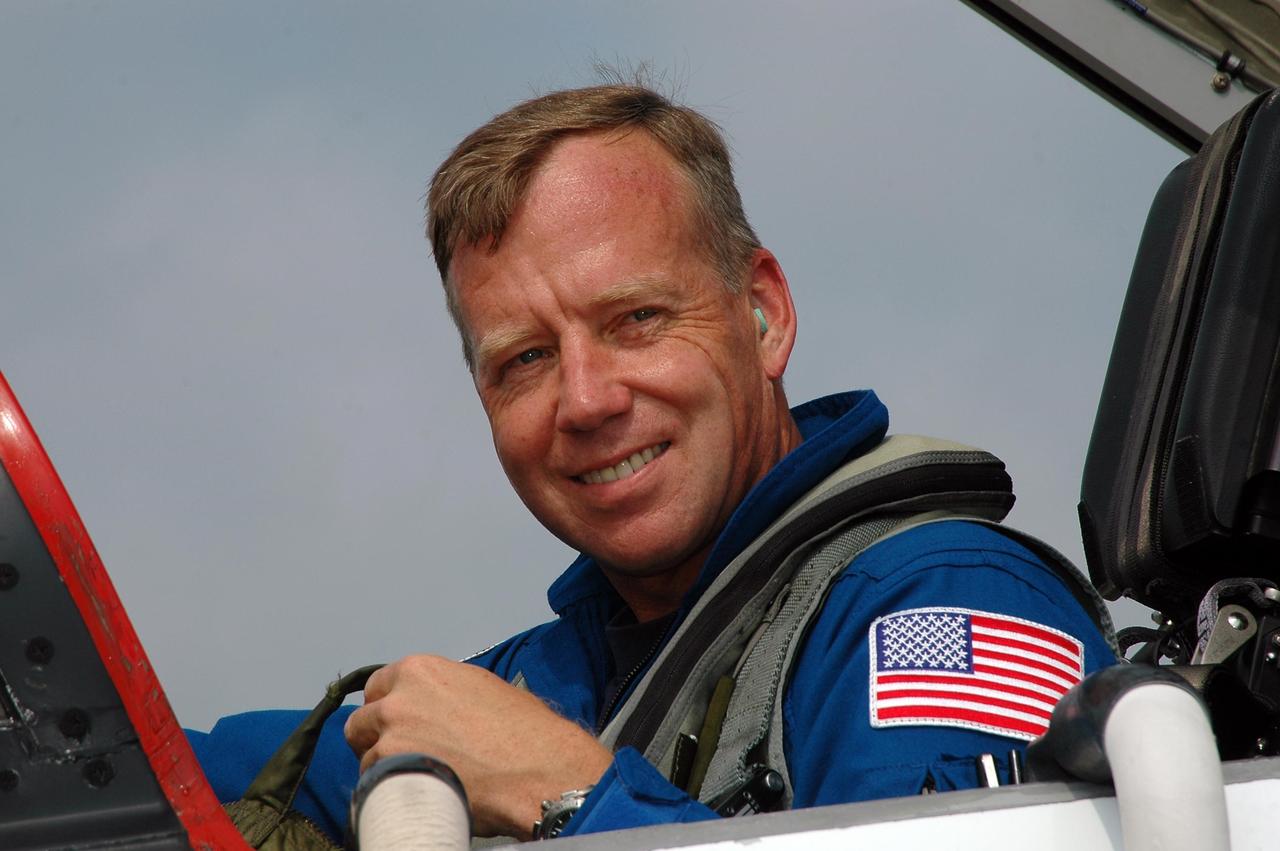
KENNEDY SPACE CENTER, FLA. - STS-121 Commander Steven Lindsey arrives at KSC aboard a T-38 jet aircraft to get ready for launch on July 1. The launch will be the fourth for Lindsey. During the 12-day mission, the STS-121 crew will test new equipment and procedures to improve shuttle safety, as well as deliver supplies and make repairs to the International Space Station. This mission is the 115th shuttle flight and the 18th U.S. flight to the International Space Station. Photo credit: NASA/Kim Shiflett
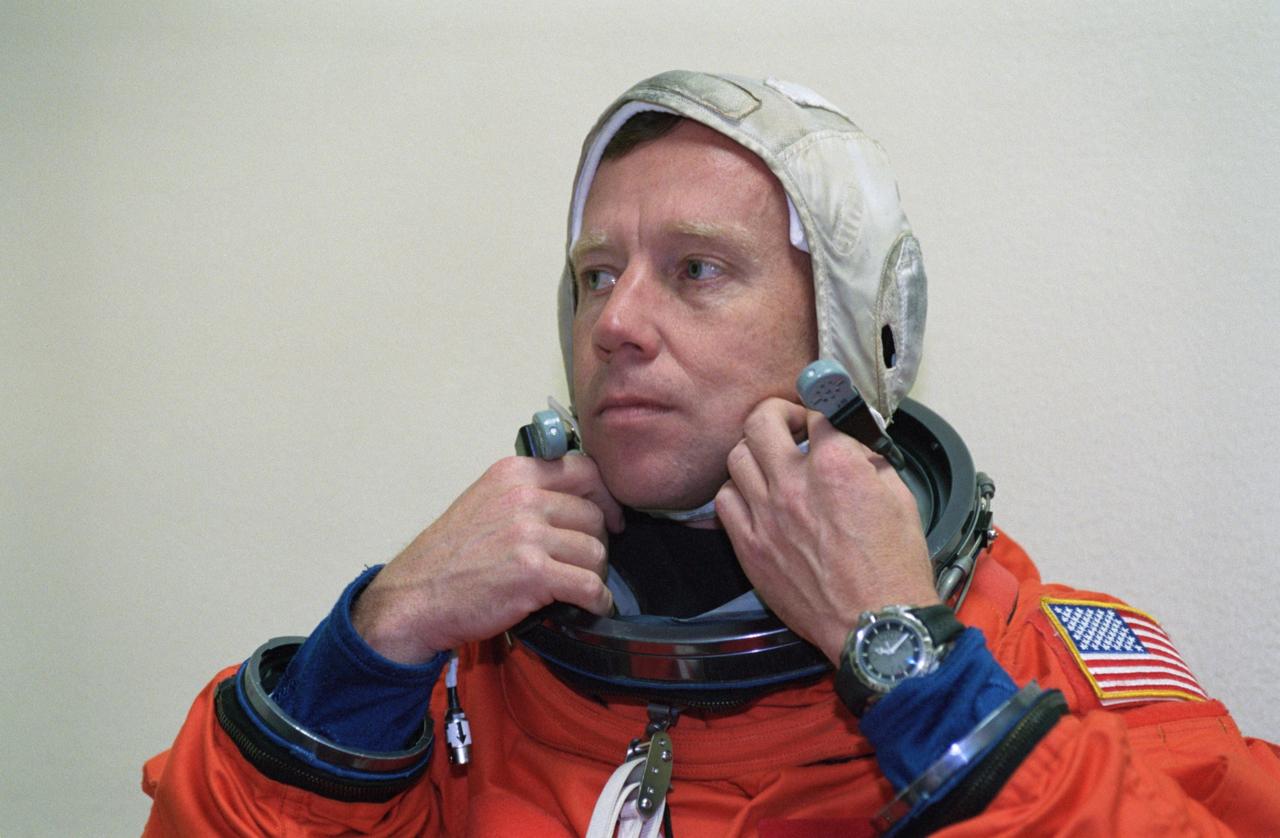
JSC2000-07289 (17 November 2000) --- Astronaut Steven W. Lindsey, STS-104 mission commander, attired in a training version of the shuttle launch and entry garment, prepares for a training session at the Jake Garn Simulation and Training Facility at Johnson Space Center (JSC). Lindsey will join four other astronauts for a June mission with the International Space Station (ISS).
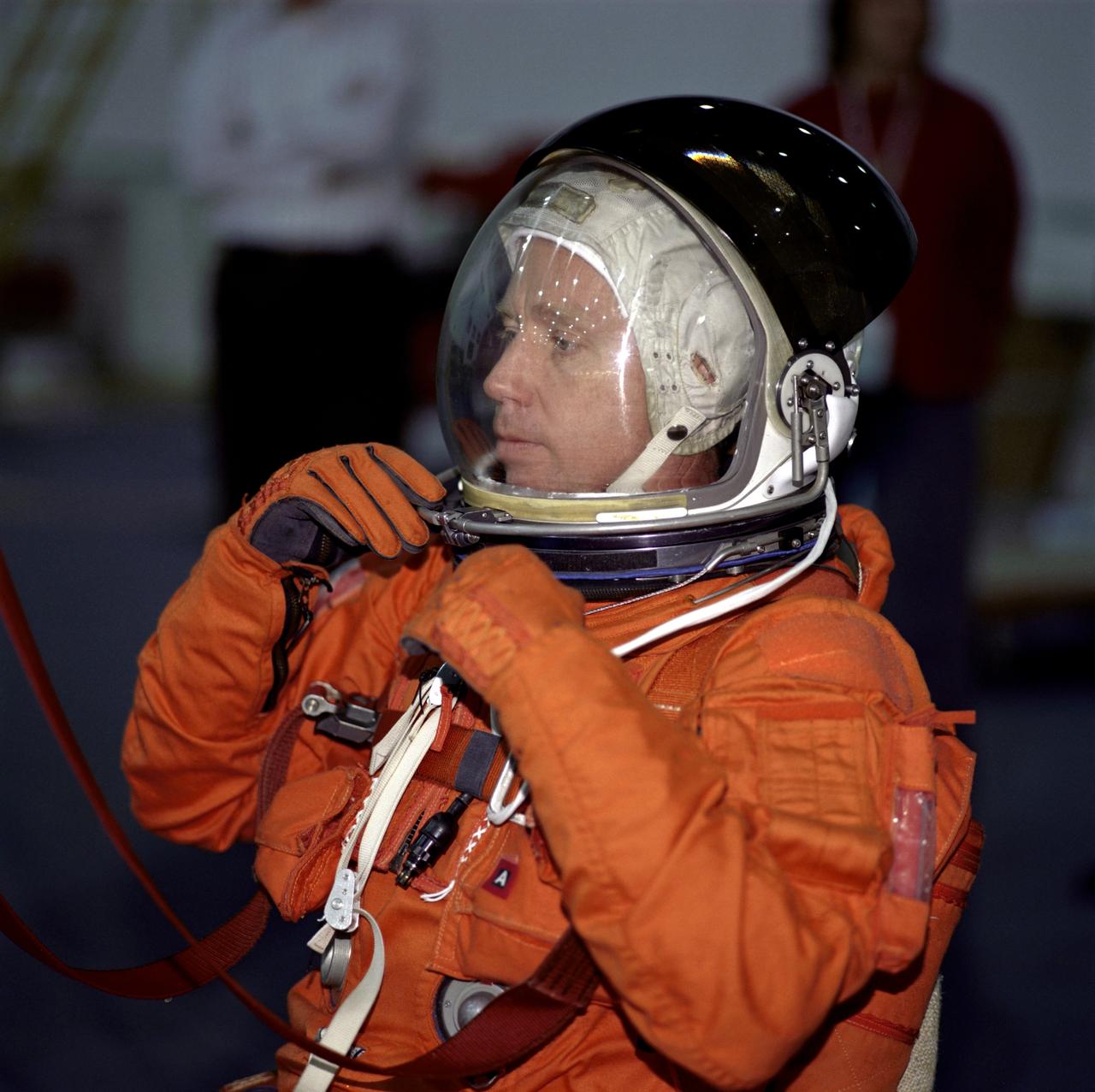
JSC2001-00008 (January 2001) --- Astronaut Steven W. Lindsey, STS-104 mission commander, adjusts his helmet as he prepares to participate in a simulation of a parachute drop into water during emergency bailout training at the Neutral Buoyancy Laboratory (NBL) near Johnson Space Center (JSC). Lindsey will join four other astronauts for a June mission with the International Space Station (ISS).

JSC2010-E-042080 (23 March 2010) --- NASA astronauts Steve Lindsey (seated right background), STS-133 commander; and Eric Boe (right foreground), pilot, attired in training versions of their shuttle launch and entry suits, prepare for a training session in the Space Vehicle Mock-up Facility at NASA's Johnson Space Center. United Space Alliance suit technicians assisted Lindsey and Boe.
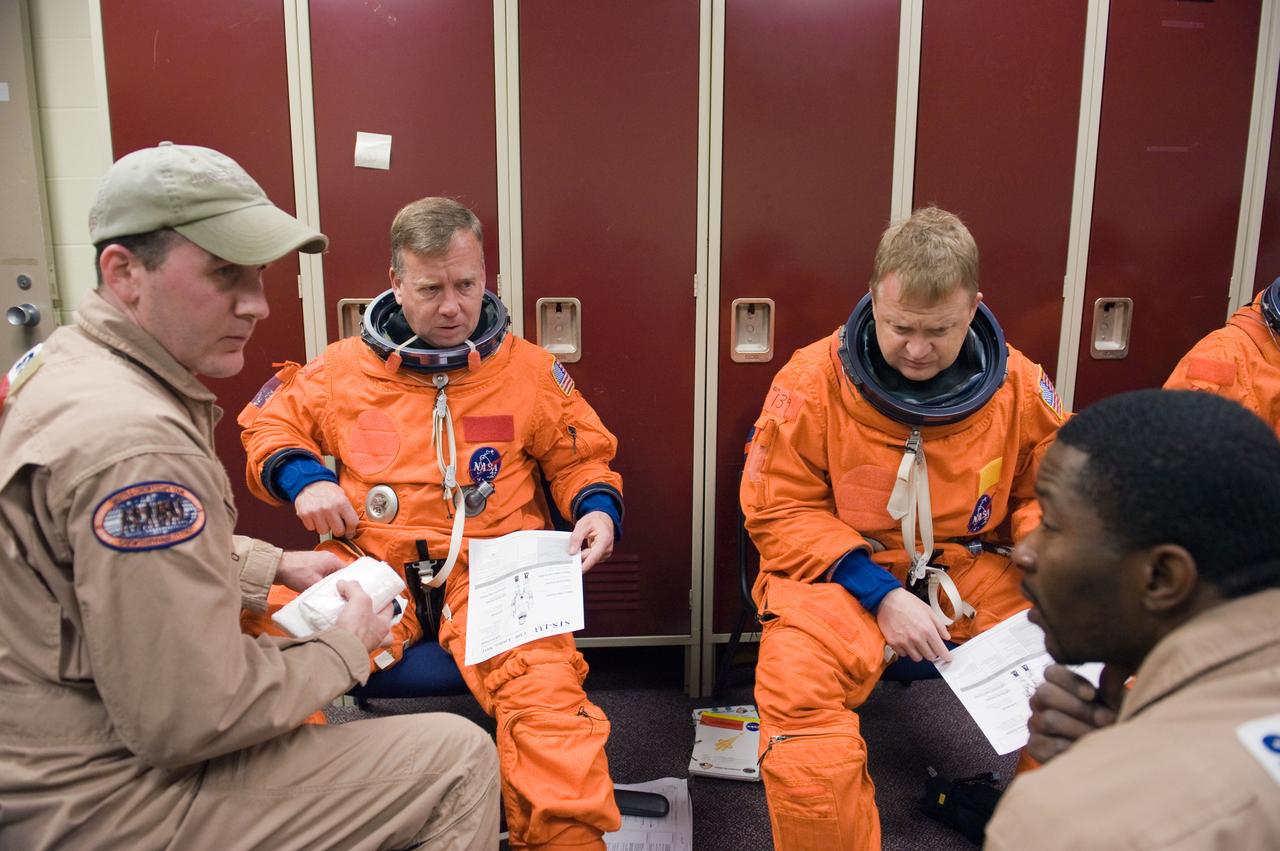
JSC2010-E-042076 (23 March 2010) --- NASA astronauts Steve Lindsey (left background), STS-133 commander; and Eric Boe (right background), pilot, attired in training versions of their shuttle launch and entry suits, prepare for a training session in the Space Vehicle Mock-up Facility at NASA's Johnson Space Center. United Space Alliance suit technicians assisted Lindsey and Boe.
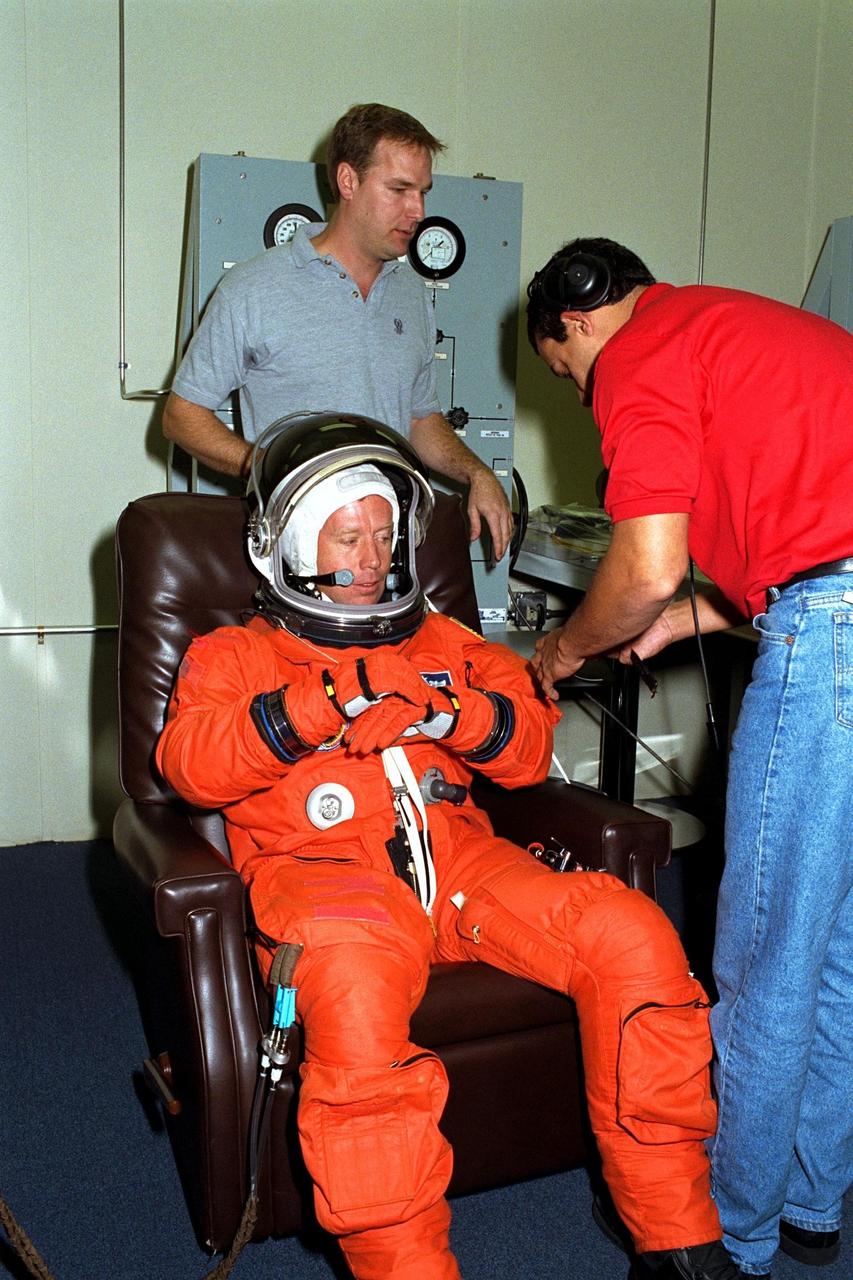
STS-87 Pilot Steven Lindsey dons his launch and entry suit with the help of two assistants in the Operations and Checkout Building. Shortly, he and the five other crew members of STS-87 will depart for Launch Pad 39B, where the Space Shuttle Columbia awaits liftoff on a 16-day mission to perform microgravity and solar research. Although this is his first Shuttle flight, Lindsey has logged more than 2,700 hours of flying time in 49 different types of aircraft

JSC2010-E-042084 (23 March 2010) --- While seated at the commander's station, NASA astronaut Steve Lindsey, STS-133 commander, participates in a post insertion/de-orbit training session in the crew compartment trainer (CCT-2) in the Space Vehicle Mock-up Facility at NASA's Johnson Space Center. Lindsey is wearing a training version of his shuttle launch and entry suit.
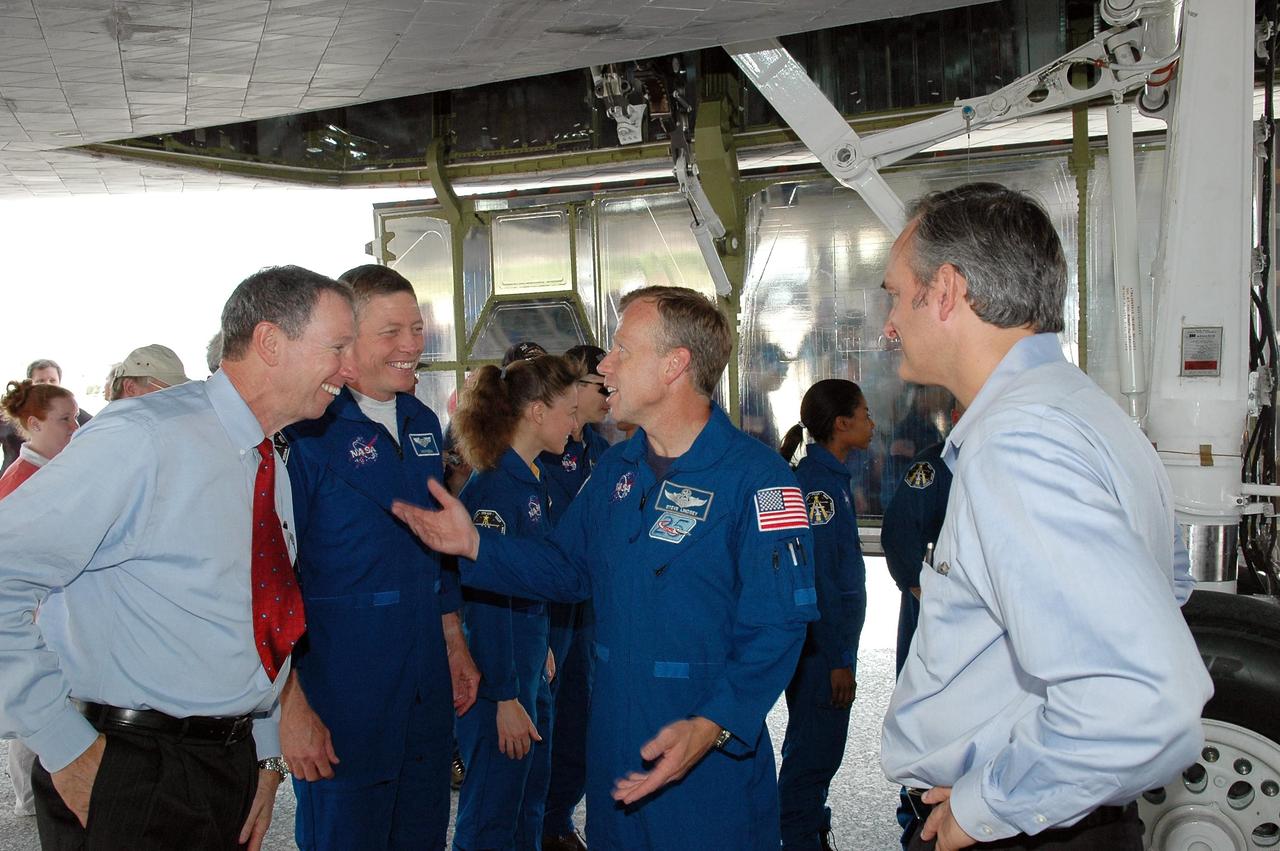
KENNEDY SPACE CENTER, FLA. - NASA Administrator Mike Griffin talks with Commander Steven Lindsey (gesturing) after the crew looked over the orbiter Discovery, above them. Between Griffin and Lindsey are Mission Specialists Michael Fossum and Lisa Nowak. Mission Specialist Stephanie Wilson is behind Lindsey; Associate Administrator Rex Geveden is at right. The post-flight walk-around is a tradition. Discovery's smooth and perfect landing was on time at 9:14 a.m. EDT on Runway 15 of NASA's Shuttle Landing Facility after traveling 5.3 million miles on 202 orbits. Mission elapsed time was 12 days, 18 hours, 37 minutes and 54 seconds. The landing is the 62nd at Kennedy Space Center and the 32nd for Discovery. Photo credit: NASA/Kim Shiflett