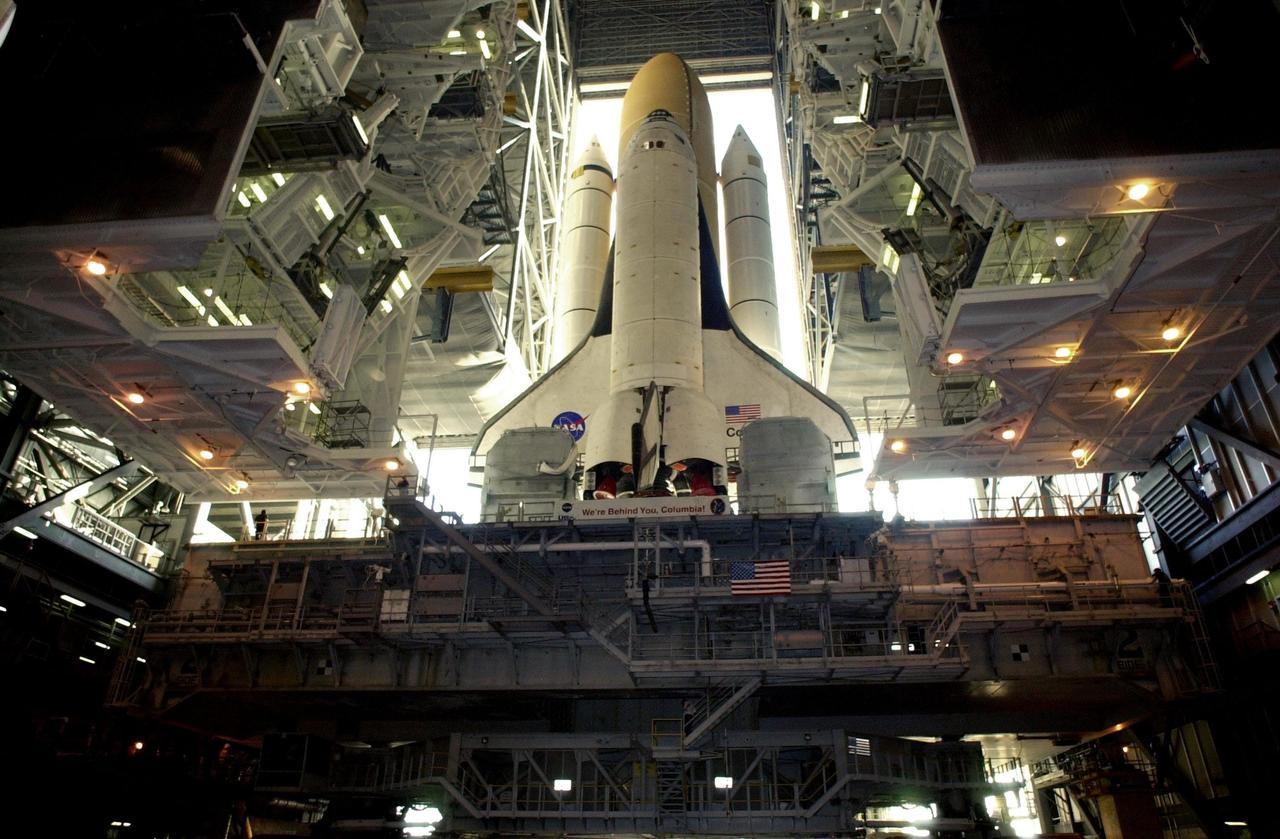
KENNEDY SPACE CENTER, FLA. -- Space Shuttle Columbia sits atop its Mobile Launcher Platform in the open doorway of the Vehicle Assembly Building. The Shuttle never left the VAB due to a steering problem on the crawler-transporter under the MLP. The problem was a faulty bearing in the steering linkage of Power Truck Drive D, which was detected before the C-T left the VAB. Rollout has been rescheduled for Jan. 24
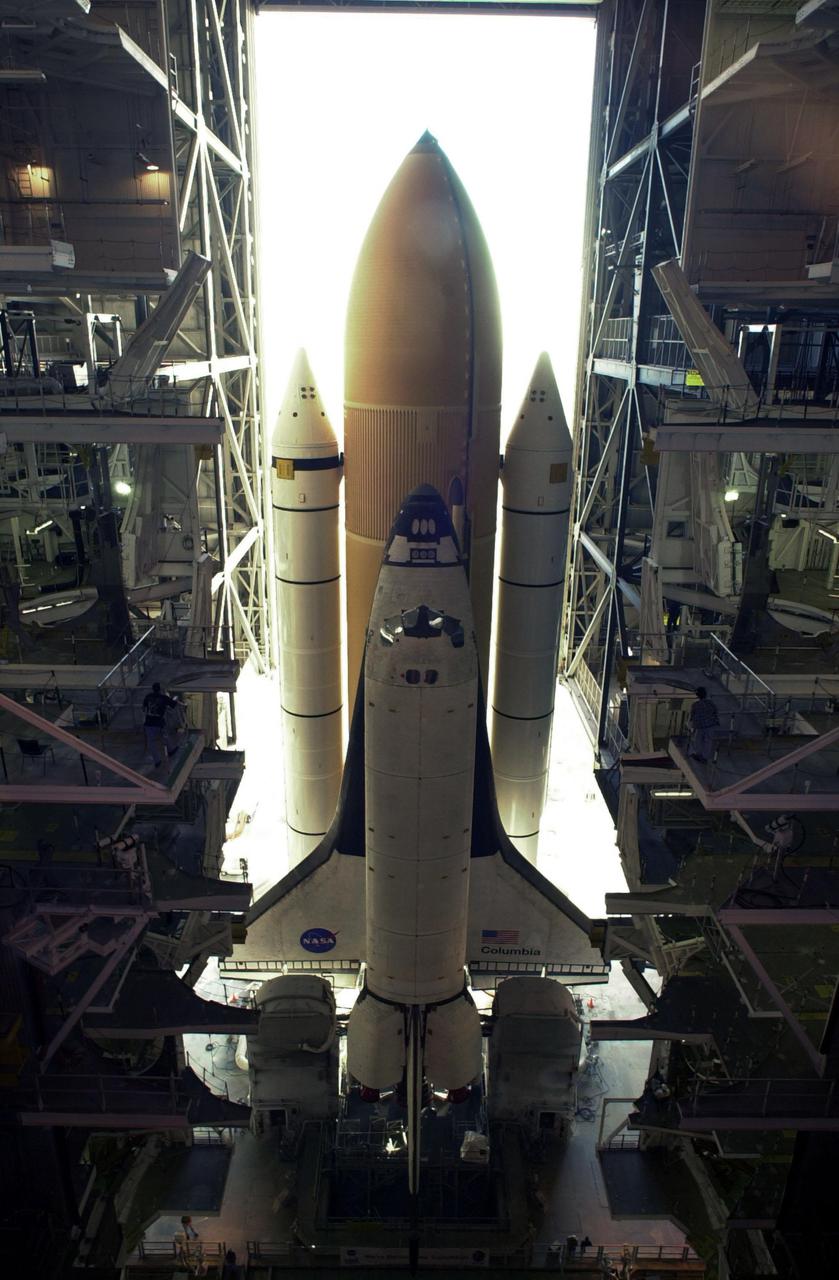
KENNEDY SPACE CENTER, FLA. -- Space Shuttle Columbia sits atop its Mobile Launcher Platform in the open doorway of the Vehicle Assembly Building. The Shuttle never left the VAB due to a steering problem on the crawler-transporter under the MLP. The problem was a faulty bearing in the steering linkage of Power Truck Drive D, which was detected before the C-T left the VAB. Rollout has been rescheduled for Jan. 24

KENNEDY SPACE CENTER, FLA. -- Viewed from outside the Vehicle Assembly Building, the stack of external tank and solid rocket boosters on Columbia can be seen sitting atop the Mobile Launcher Platform. The Shuttle never left the VAB due to a steering problem on the crawler-transporter under the MLP. The problem was a faulty bearing in the steering linkage of Power Truck Drive D, which was detected before the C-T left the VAB. Rollout has been rescheduled for Jan. 24
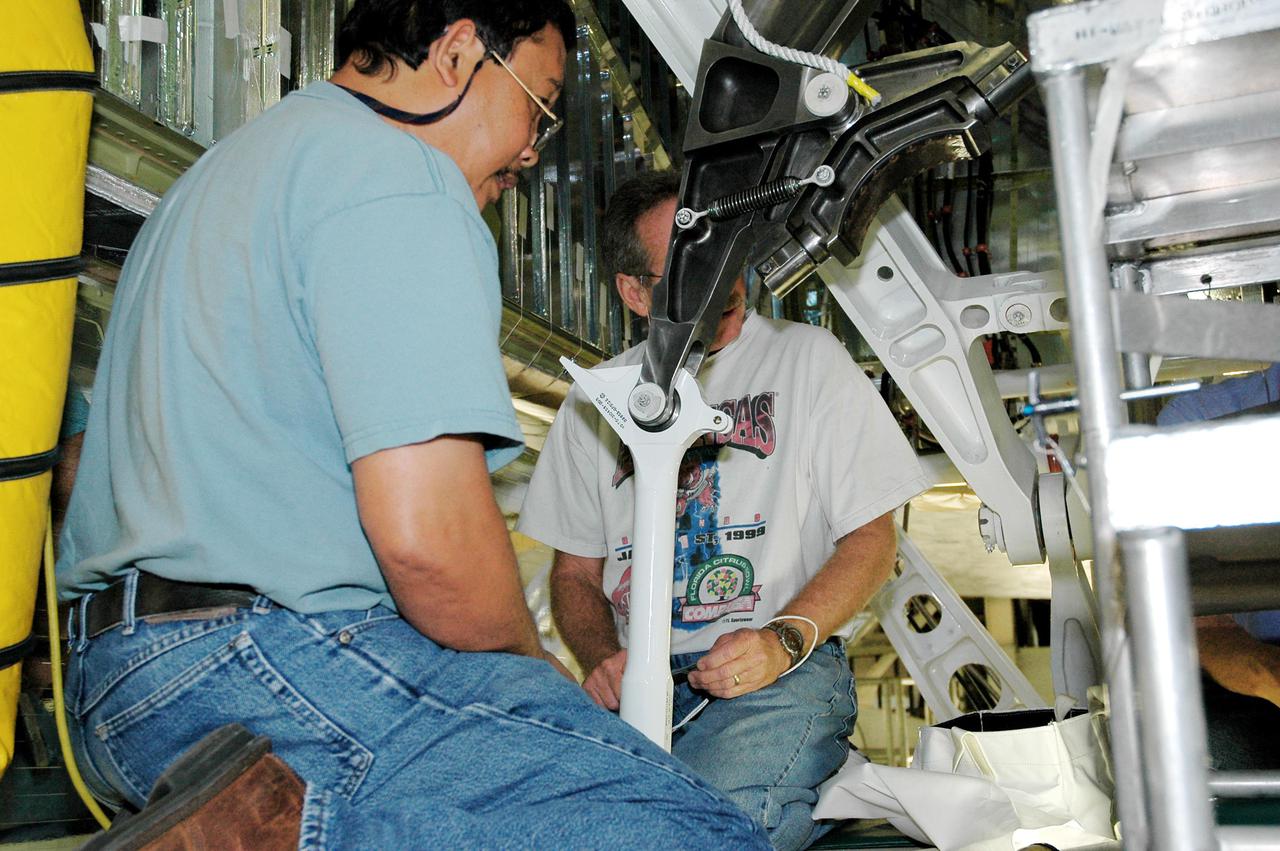
KENNEDY SPACE CENTER, FLA. - Inside the wheel well behind Atlantis’ right-hand main landing gear, workers attaches one end of a retract link. It replaces one in which a small crack was recently found. To lower the main landing gear, a mechanical linkage released by each gear actuates the doors to the open position. The landing gear reach the full-down and extended position with 10 seconds and are locked in the down position by spring-loaded downlock bungees Atlantis is scheduled to launch in September 2005 on the second Return to Flight mission, STS-121.
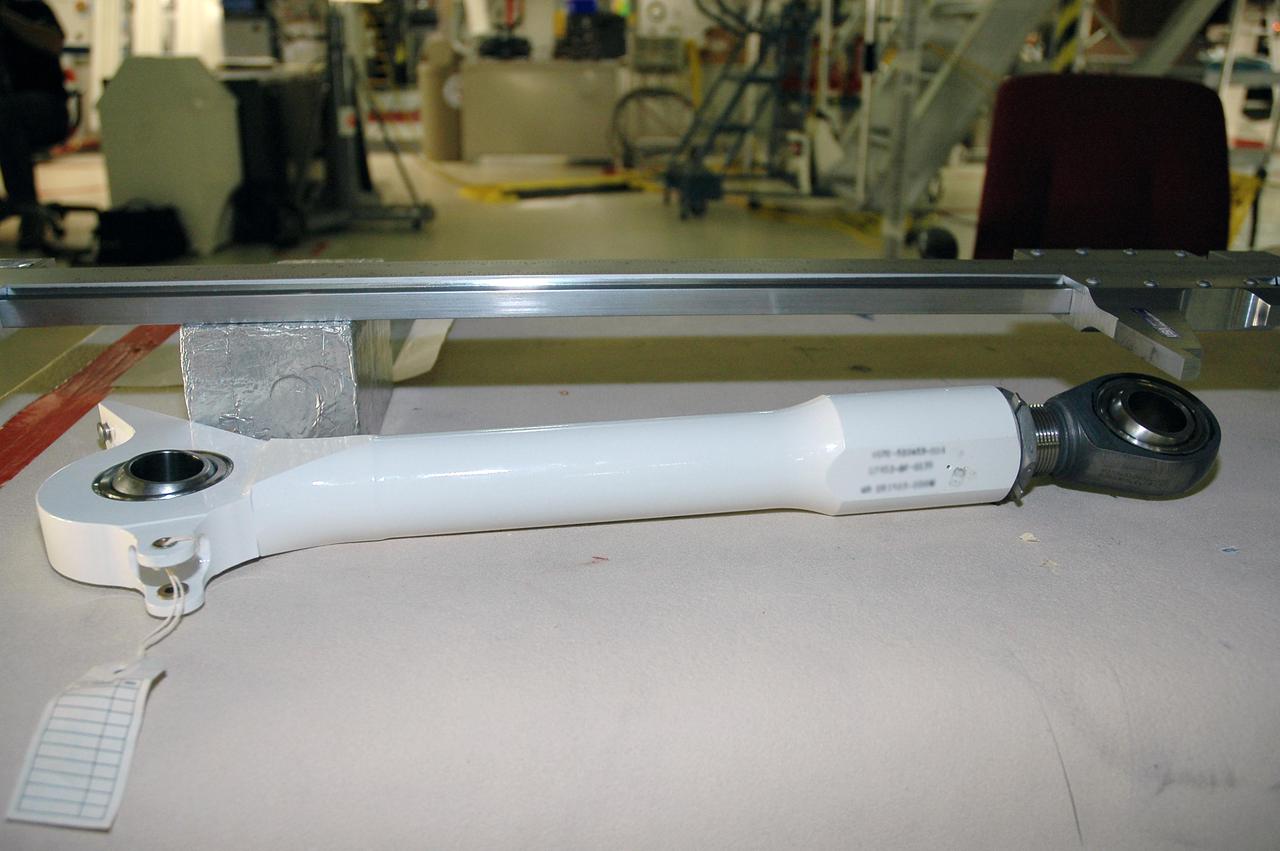
KENNEDY SPACE CENTER, FLA. - In the Orbiter Processing Facility at NASA’s Kennedy Space Center, this replacement retract link will be installed on orbiter Atlantis’ right-hand main landing gear. A small crack was found recently on the retract link assembly. To lower the main landing gear, a mechanical linkage released by each gear actuates the doors to the open position. The landing gear reach the full-down and extended position with 10 seconds and are locked in the down position by spring-loaded downlock bungees Atlantis is scheduled to launch in September 2005 on the second Return to Flight mission, STS-121.
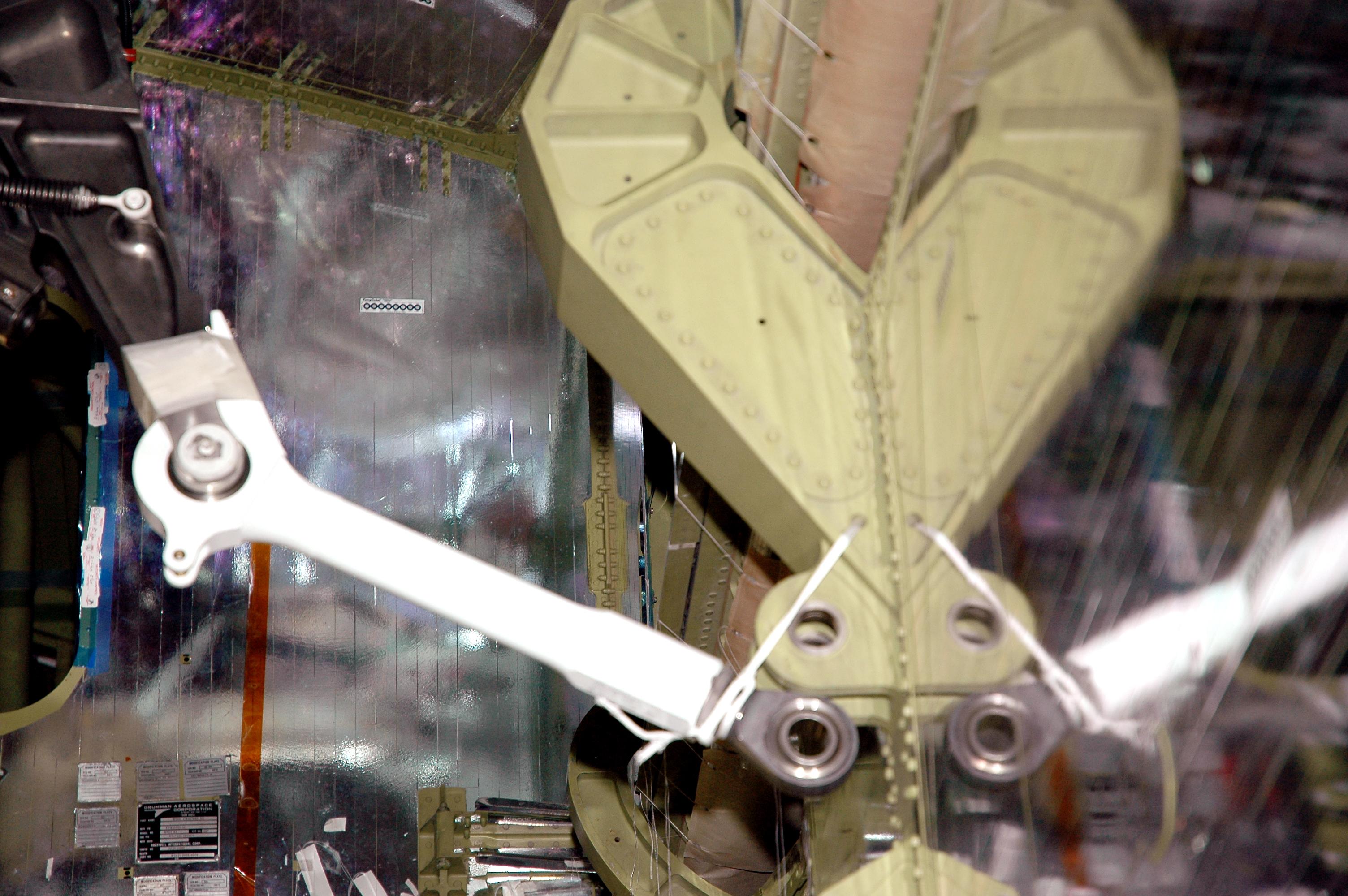
KENNEDY SPACE CENTER, FLA. - In the Orbiter Processing Facility at NASA’s Kennedy Space Center, a replacement retract link (left) is being installed because a small crack was found recently on the retract link assembly. One end of the link is tethered until it is attached. At right is a blurred reflection on a plastic barrier. To lower the main landing gear, a mechanical linkage released by each gear actuates the doors to the open position. The landing gear reach the full-down and extended position with 10 seconds and are locked in the down position by spring-loaded downlock bungees Atlantis is scheduled to launch in September 2005 on the second Return to Flight mission, STS-121.
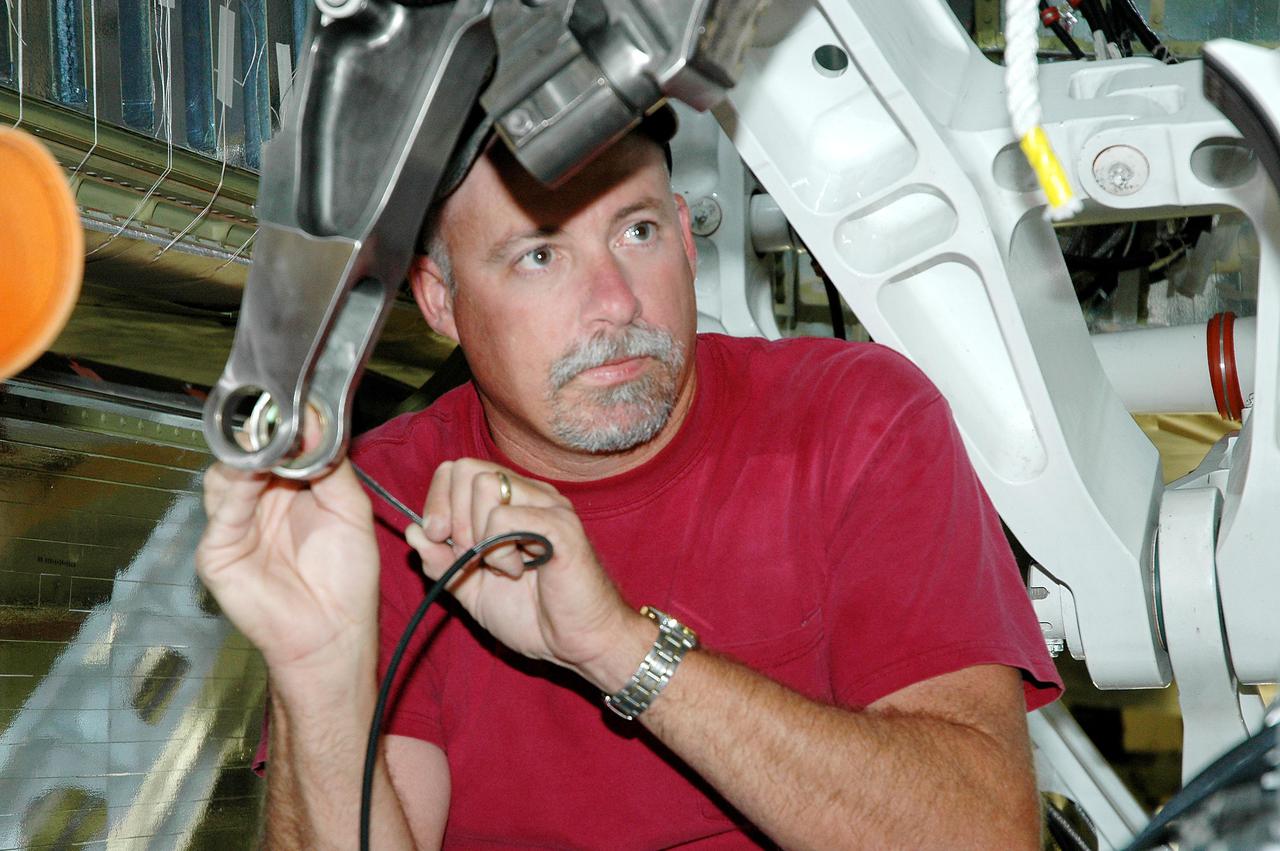
KENNEDY SPACE CENTER, FLA. - On Orbiter Atlantis in NASA’s Orbiter Processing Facility, bay 1, Scott Minnick, lead inspector for micro inspection team, inspects the area where the retract link assembly would be installed on the right-hand main landing gear. Last week a small crack was found on the right-hand assembly. To lower the main landing gear, a mechanical linkage released by each gear actuates the doors to the open position. The landing gear reach the full-down and extended position with 10 seconds and are locked in the down position by spring-loaded downlock bungees Atlantis is scheduled to launch in September 2005 on the second Return to Flight mission, STS-121.
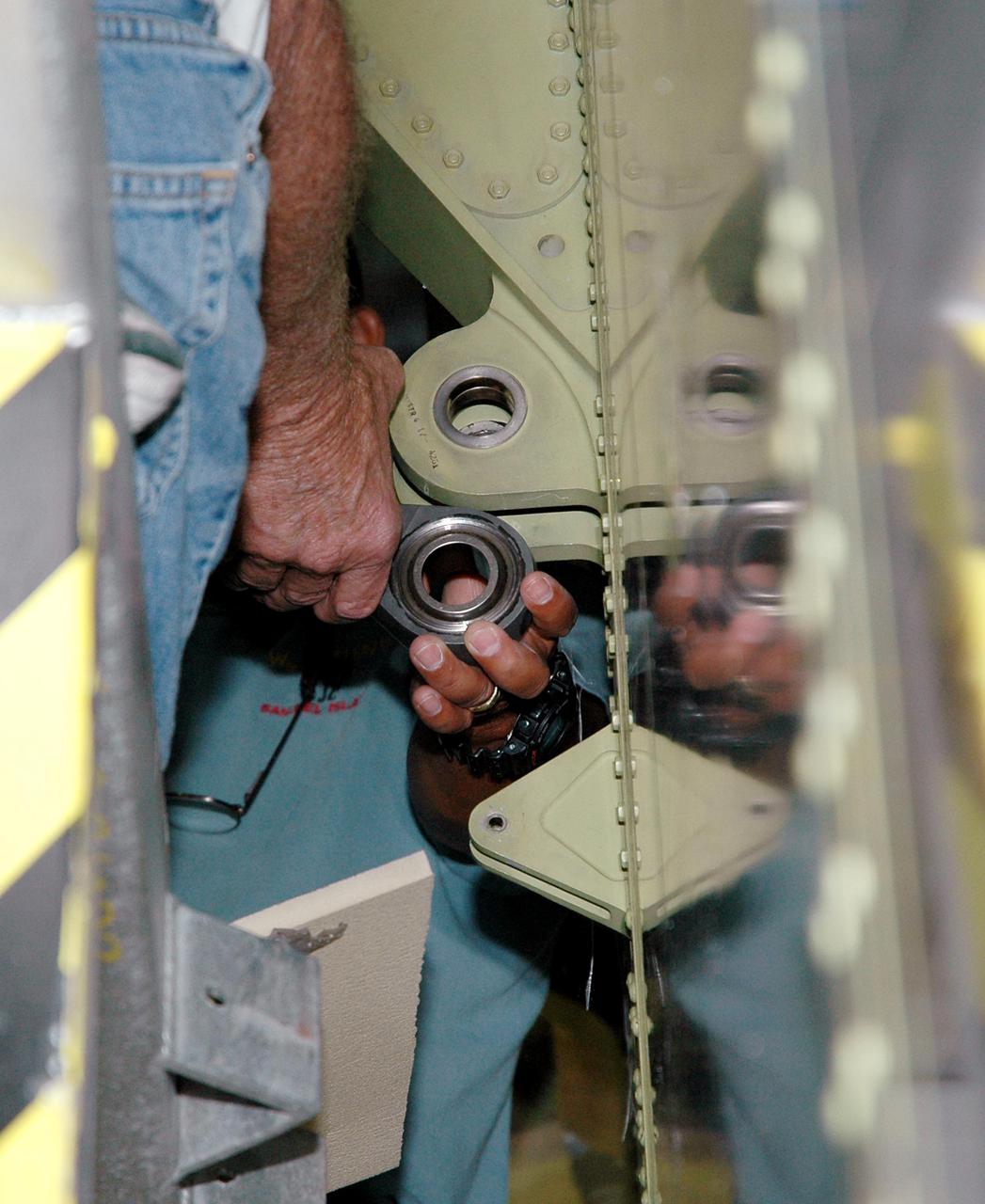
KENNEDY SPACE CENTER, FLA. - Inside the wheel well behind Atlantis’ right-hand main landing gear, workers (left) install a new retract link (at right is a reflection). The link replaces one in which a small crack was recently found. To lower the main landing gear, a mechanical linkage released by each gear actuates the doors to the open position. The landing gear reach the full-down and extended position with 10 seconds and are locked in the down position by spring-loaded downlock bungees Atlantis is scheduled to launch in September 2005 on the second Return to Flight mission, STS-121.
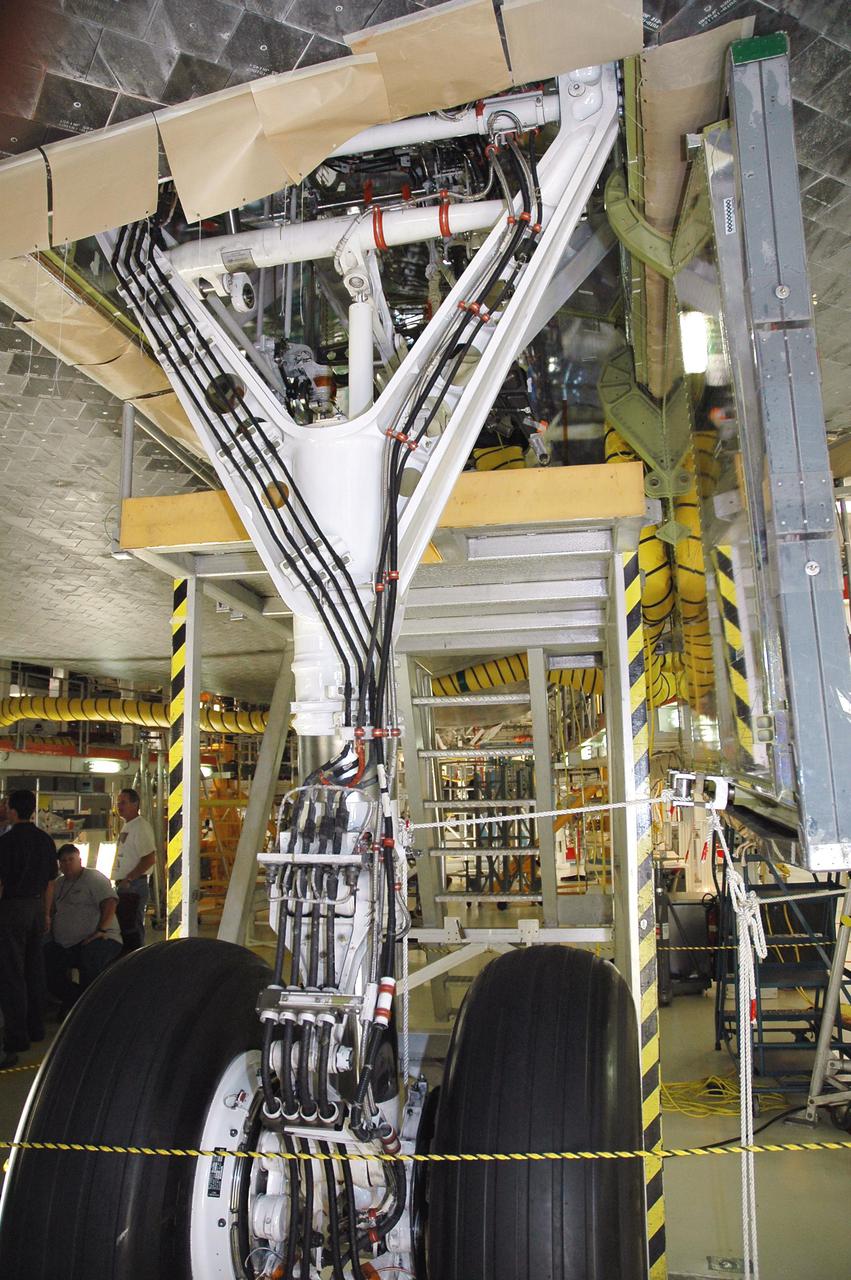
KENNEDY SPACE CENTER, FLA. - Inside the wheel well behind Atlantis’ right-hand main landing gear shown here, a replacement retract link is being installed. A small crack was found recently on the retract link assembly. To lower the main landing gear, a mechanical linkage released by each gear actuates the doors to the open position. The landing gear reach the full-down and extended position with 10 seconds and are locked in the down position by spring-loaded downlock bungees Atlantis is scheduled to launch in September 2005 on the second Return to Flight mission, STS-121.
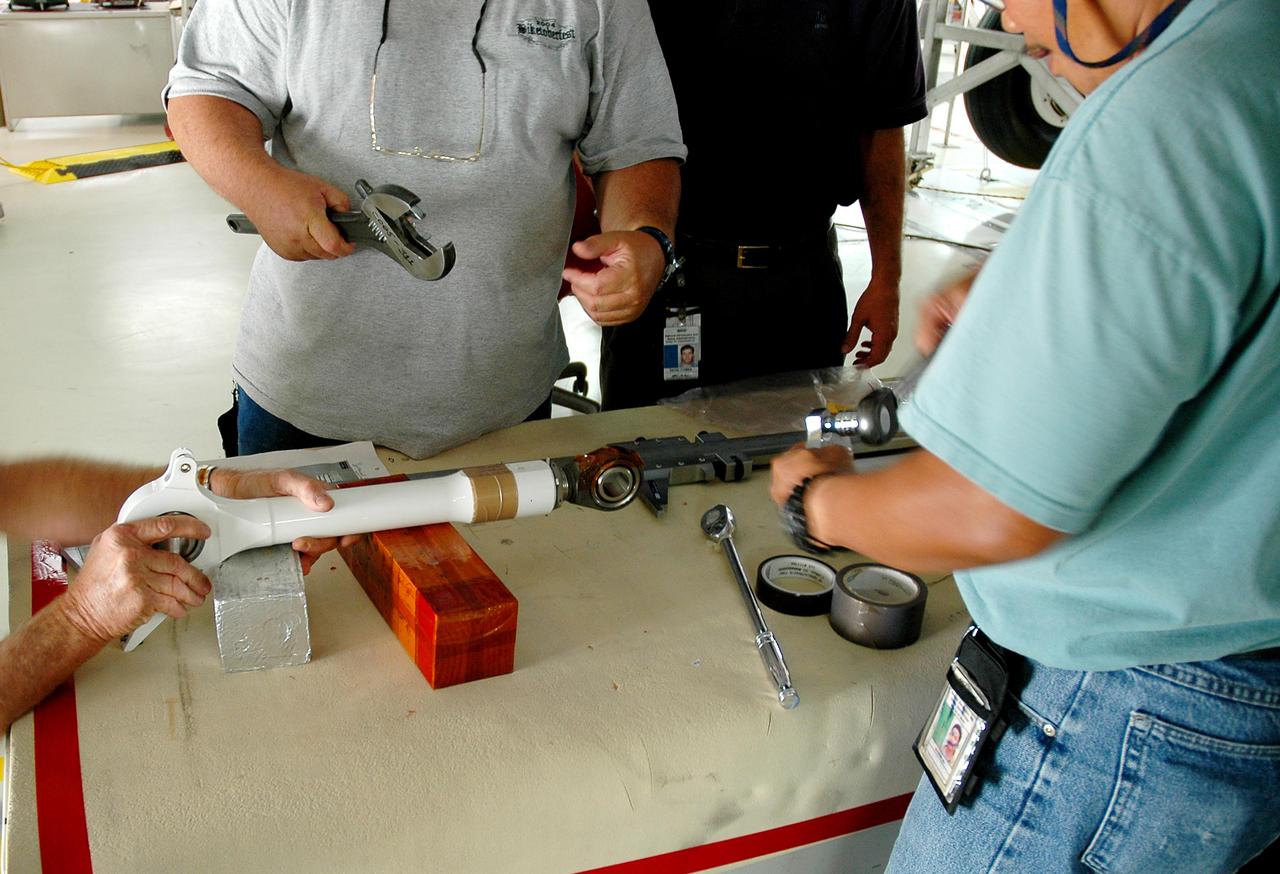
KENNEDY SPACE CENTER, FLA. - In the Orbiter Processing Facility at NASA’s Kennedy Space Center, workers prepare a replacement retract link for installation on orbiter Atlantis’ right-hand main landing gear. A small crack was found recently on the retract link assembly. To lower the main landing gear, a mechanical linkage released by each gear actuates the doors to the open position. The landing gear reach the full-down and extended position with 10 seconds and are locked in the down position by spring-loaded downlock bungees Atlantis is scheduled to launch in September 2005 on the second Return to Flight mission, STS-121.
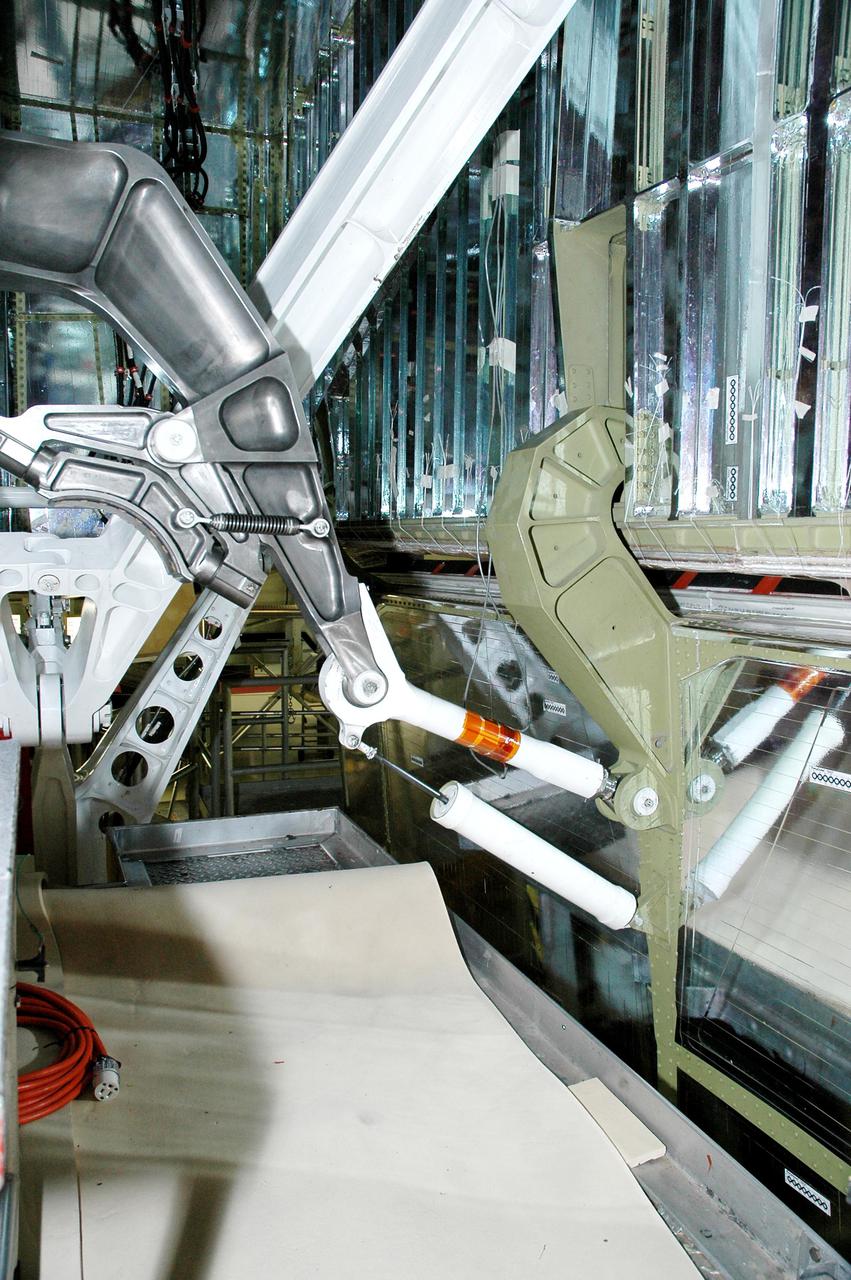
KENNEDY SPACE CENTER, FLA. - On Orbiter Atlantis in NASA’s Orbiter Processing Facility, bay 1, a retract link assembly (upper and lower white rods) is on the left-hand main landing gear. Last week a small crack was found on the right-hand assembly. To lower the main landing gear, a mechanical linkage released by each gear actuates the doors to the open position. The landing gear reach the full-down and extended position with 10 seconds and are locked in the down position by spring-loaded downlock bungees Atlantis is scheduled to launch in September 2005 on the second Return to Flight mission, STS-121.
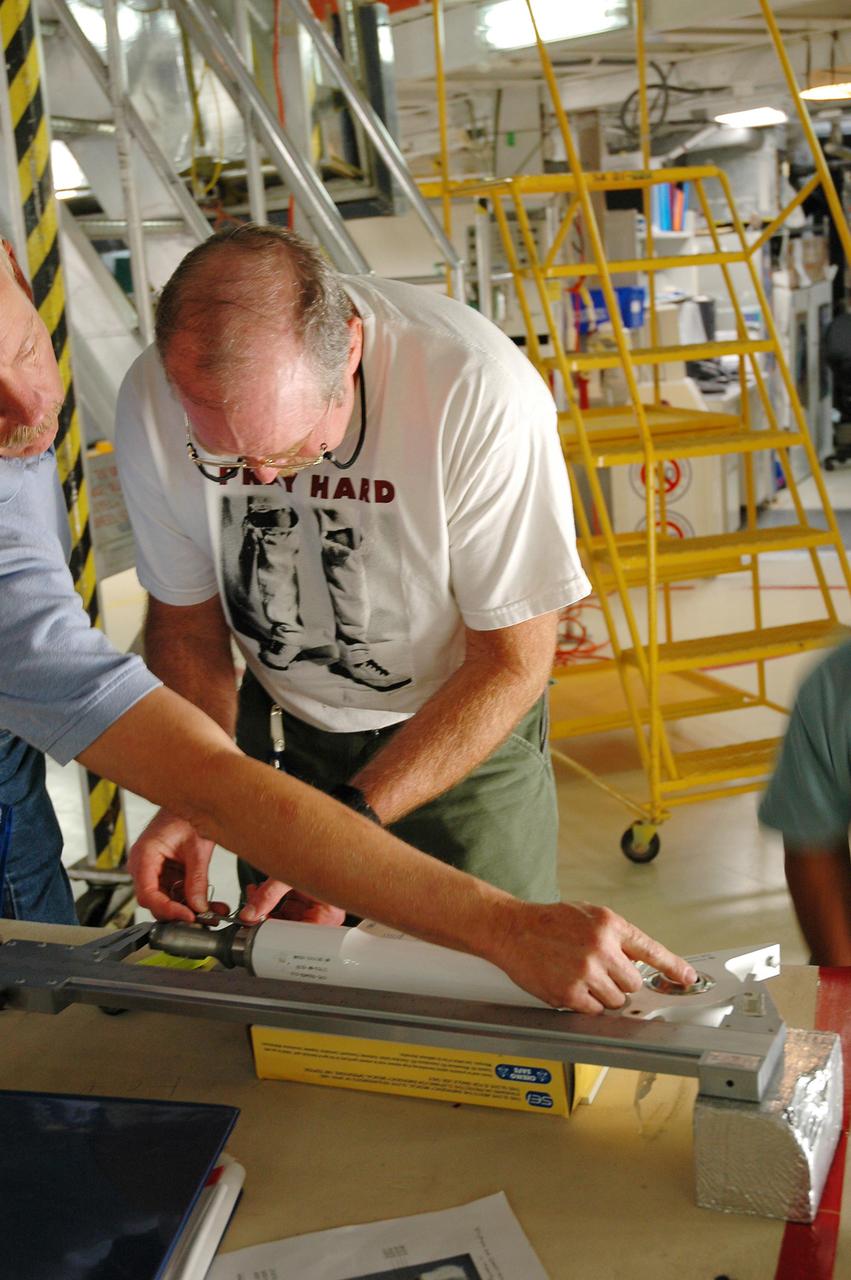
KENNEDY SPACE CENTER, FLA. - In the Orbiter Processing Facility at NASA’s Kennedy Space Center, workers prepare a replacement retract link for installation on orbiter Atlantis’ right-hand main landing gear. A small crack was found recently on the retract link assembly. To lower the main landing gear, a mechanical linkage released by each gear actuates the doors to the open position. The landing gear reach the full-down and extended position with 10 seconds and are locked in the down position by spring-loaded downlock bungees Atlantis is scheduled to launch in September 2005 on the second Return to Flight mission, STS-121.
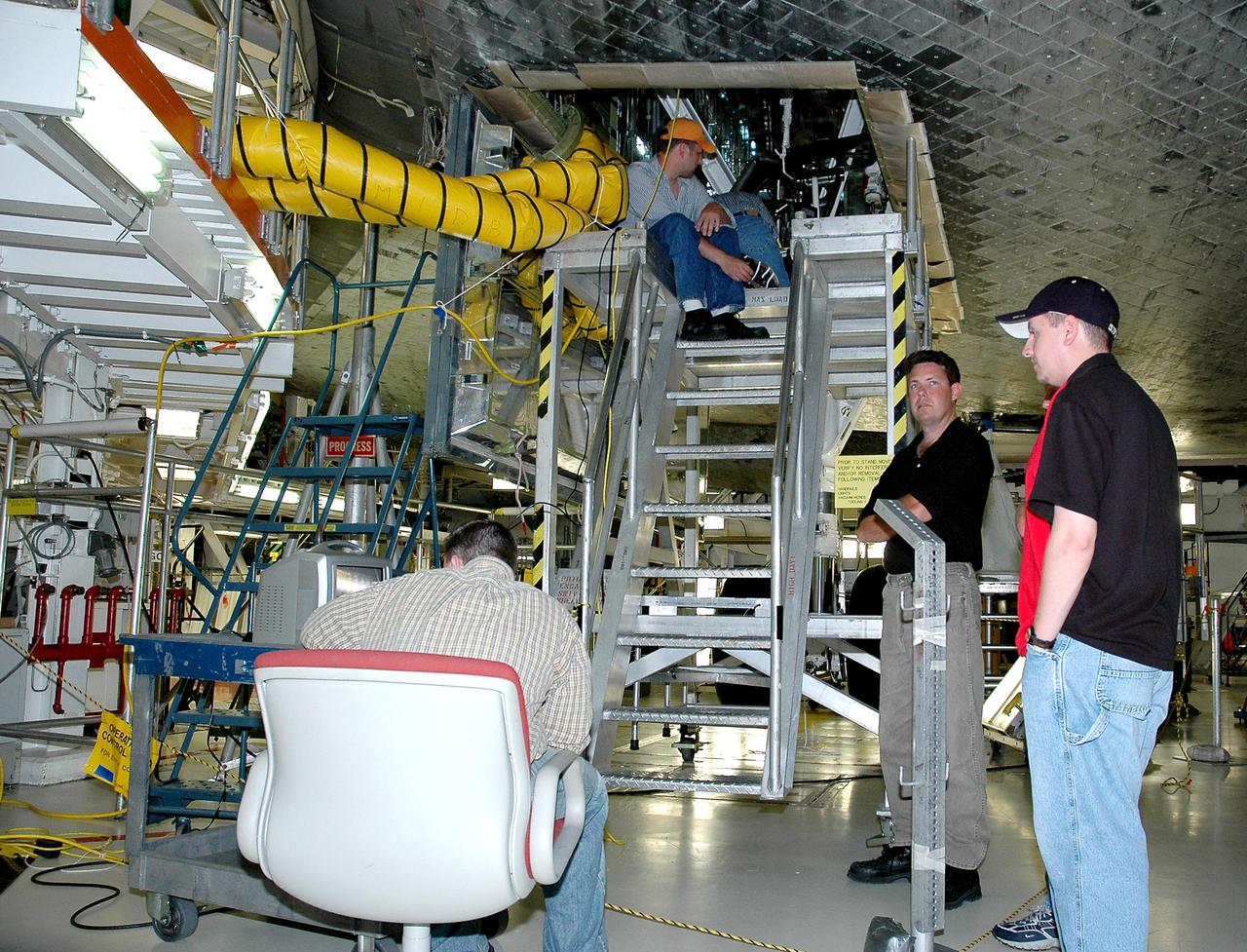
KENNEDY SPACE CENTER, FLA. - On Orbiter Atlantis in NASA’s Orbiter Processing Facility, bay 1, Charles Wassen, orbiter inspector, on steps in the open door of the main landing gear helps with boroscope inspection on the retract link assembly. At left in the chair, Dave Rumpf, materials and processing engineer, observes results on a monitor. At right are Jessie McEnulty (in hat), mechanisms engineer, and Tony Glass, orbiter inspector, a member of the micro inspection team. To lower the main landing gear, a mechanical linkage released by each gear actuates the doors to the open position. The landing gear reach the full-down and extended position with 10 seconds and are locked in the down position by spring-loaded downlock bungees Atlantis is scheduled to launch in September 2005 on the second Return to Flight mission, STS-121.

The Martian ice cap is like a cake with every layer telling a story. In this case, the story is one of climate change on Mars. In this image is an exposed section of the north polar layered deposits (NPLD). Like a delicious slice of layered tiramisu, the NPLD is made up of water-ice and dust particles stacked one on top of the other. However, instead of icing, layers are topped with seasonal carbon dioxide frost. We can observe lingering frost adhering to one of the layers. The high-resolution and color capabilities of HiRISE provide details on the variations in the layers. Scientists are also using radar data, which show us that they have continuity in the subsurface. During deposition, these complex layers might encapsulate tiny air pockets from the atmosphere which, if sampled, could be studied to understand linkages to previous climates. https://photojournal.jpl.nasa.gov/catalog/PIA23740
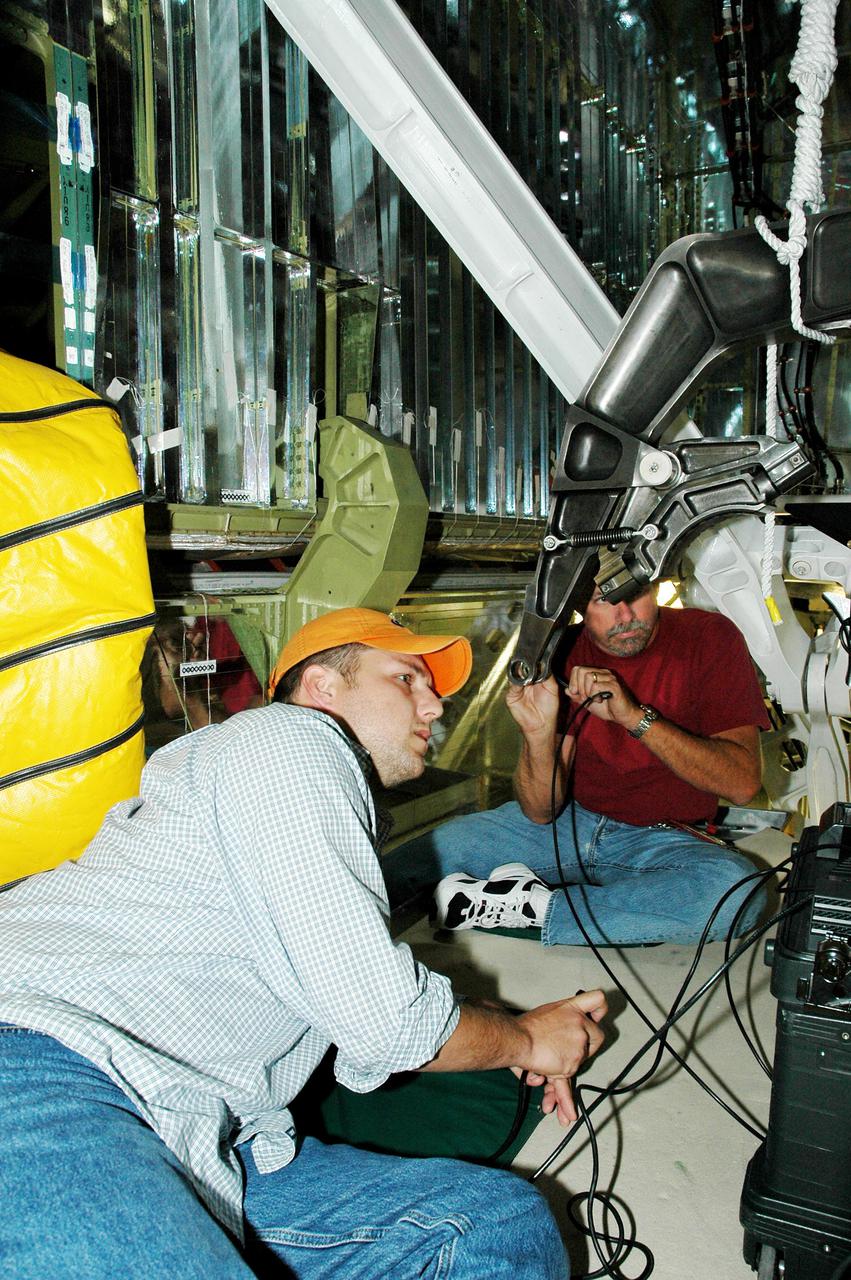
KENNEDY SPACE CENTER, FLA. - On Orbiter Atlantis in NASA’s Orbiter Processing Facility, bay 1, the retract link assembly on the right-hand main landing gear has been removed and will be replaced. Performing boroscope inspection are Charles Wassen, orbiter inspector, and Scott Minnick, lead inspector for micro inspection team. Last week a small crack was found on the right-hand assembly. To lower the main landing gear, a mechanical linkage released by each gear actuates the doors to the open position. The landing gear reach the full-down and extended position with 10 seconds and are locked in the down position by spring-loaded downlock bungees Atlantis is scheduled to launch in September 2005 on the second Return to Flight mission, STS-121.
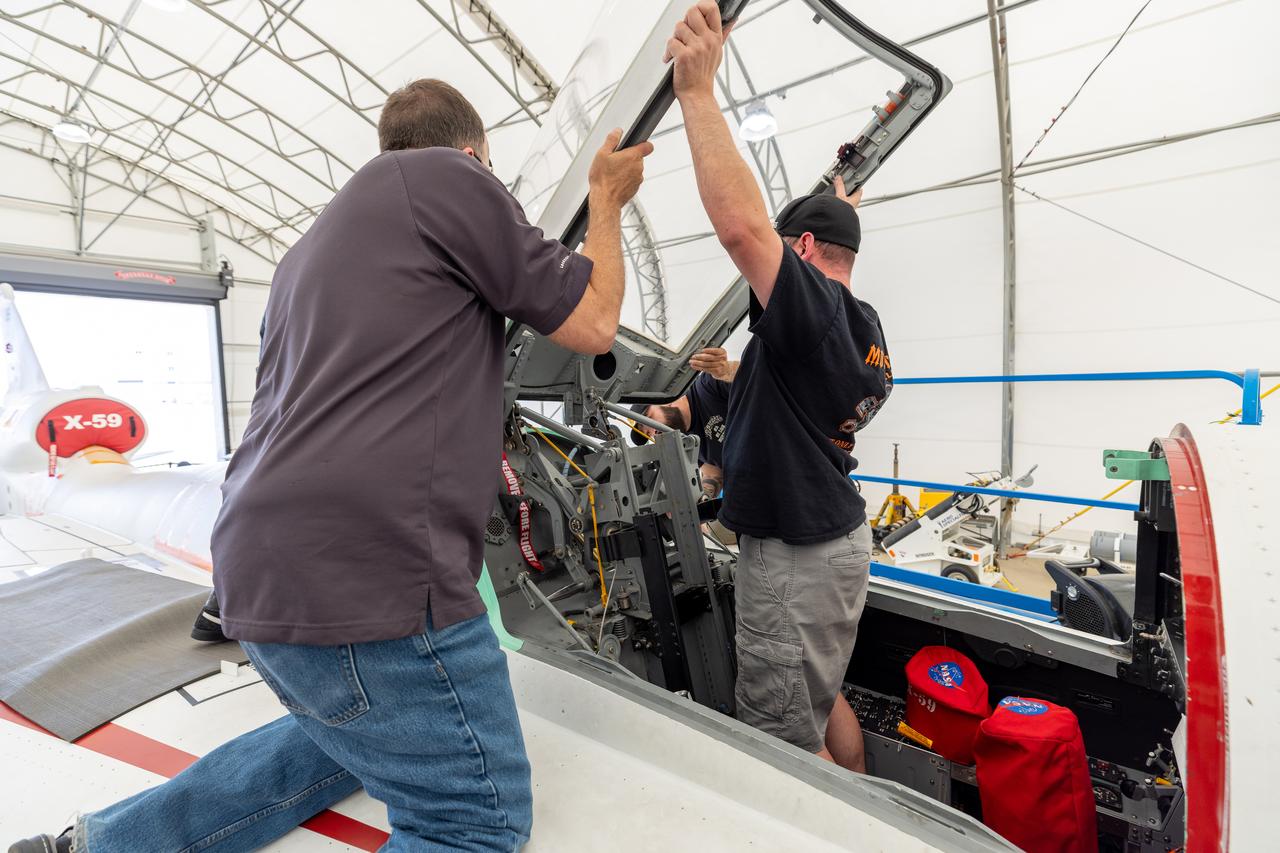
Lockheed Martin technicians temporarily remove the canopy from the X-59 in preparation for final installation of the ejection seat into the aircraft.
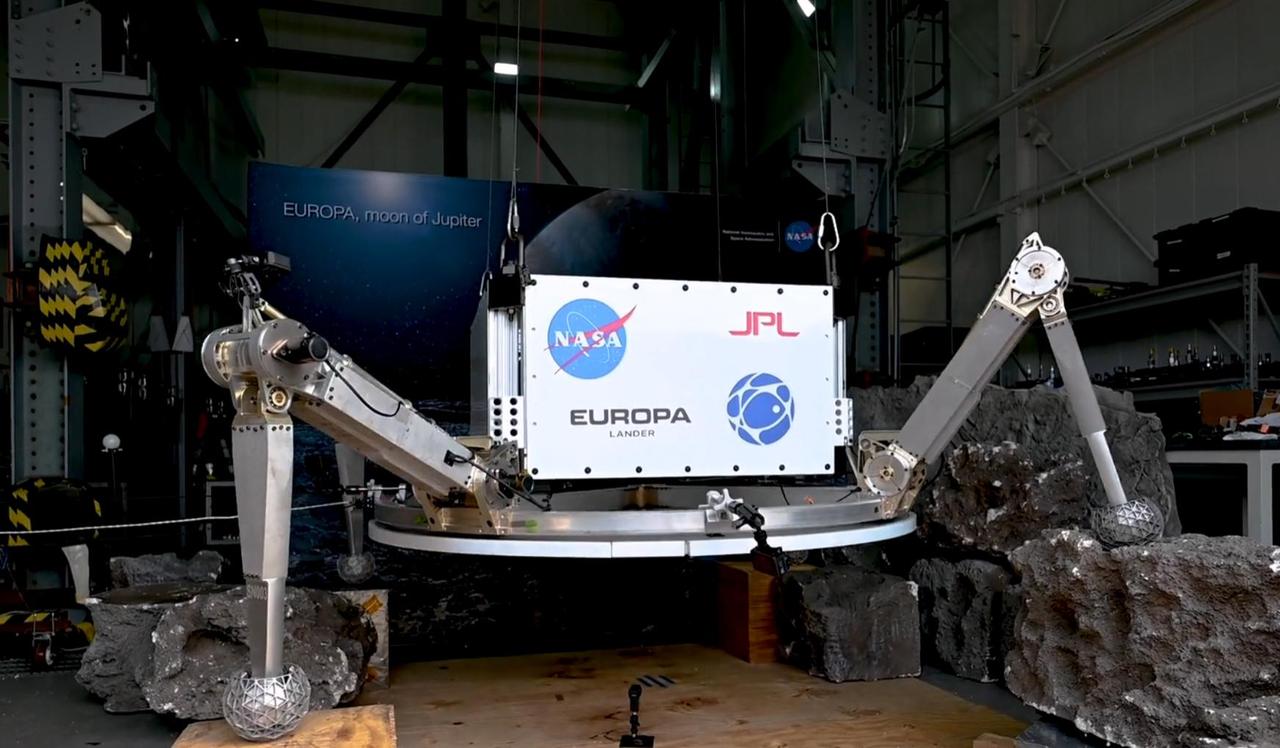
On Aug. 17 and 18, 2023, engineers at NASA's Jet Propulsion Laboratory in Southern California tested the landing system for a proposed future mission that would touch down on Jupiter's icy moon Europa. This system for the proposed Europa Lander is an evolution of hardware used on previous NASA lander missions. It includes the architecture used for the "sky crane maneuver" that helped lower NASA's Curiosity and Perseverance rovers onto the Martian surface, which would give the lander the stability it needs during touchdown. Although this landing architecture was developed with Europa as the target, it could be adapted for use at other moons and celestial bodies with challenging terrain. Four bridles, suspended from an overhead simulated propulsive descent stage, maintain a level lander body. The four legs conform passively to the terrain they encounter as the lander body continues to descend toward the surface. Each leg consists of a four-bar linkage mechanism that controls the leg's pose before and during landing. The legs are preloaded downward with a constant force spring to help them rearrange and compress the surface they encounter prior to landing, giving them extra traction and stability during and after the landing event. Acting like a skid plate, the belly pan provides the underside of the spacecraft with protection from potentially harmful terrain. The belly pan also resists shear motion on the terrain it interacts with. Once the belly pan contacts the surface, sensors trigger a mechanism that quickly locks the legs' "hip" and "knee" rotary joints, resulting in a table-like stance. At this point, the job of ensuring lander stability shifts from the bridles to the legs. This shift keeps the lander level after the bridles are unloaded. In the event the belly pan does not encounter terrain during the touchdown process, sensors in each leg can also declare touchdown. After the leg joints lock, the belly pan would be suspended above the landed terrain, and the lander would be supported only by the four legs. Not pictured in the video is the period after the bridles are offloaded and flyaway is commanded. The bridles would then be cut, and the hovering propulsive stage would fly away, leaving the lander in a stable stance on the surface. Movie available at https://photojournal.jpl.nasa.gov/catalog/PIA26010