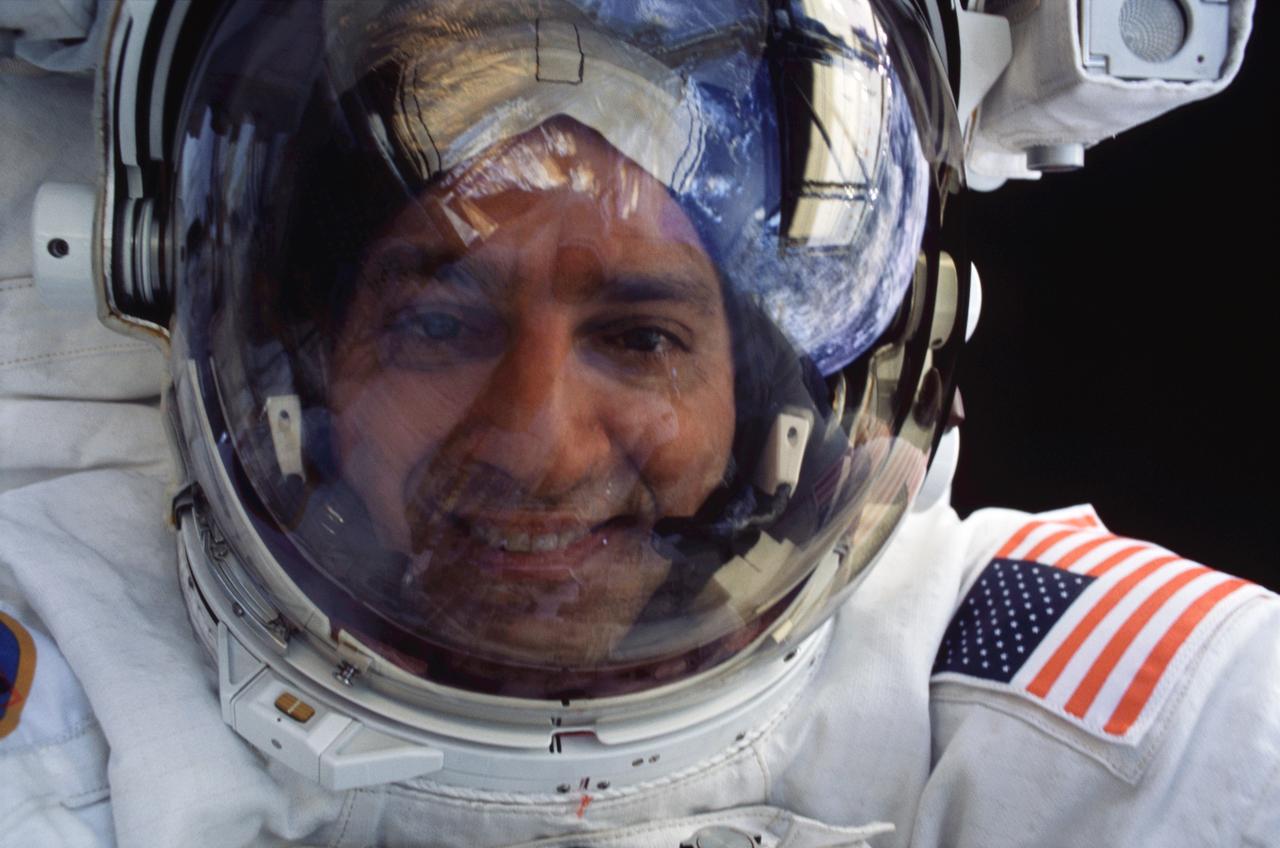
STS109-322-021 (6 March 2002) --- Astronaut Richard M. Linnehan, STS-109 mission specialist, participates in the third of five space walks to perform work on the Hubble Space Telescope (HST). The third STS-109 extravehicular activity (EVA) marked the second of three for Linnehan, who was joined by astronaut John M. Grunsfeld on all three. On this particular walk, astronauts Linnehan and Grunsfeld turned off the telescope in order to replace the heart of it power system.
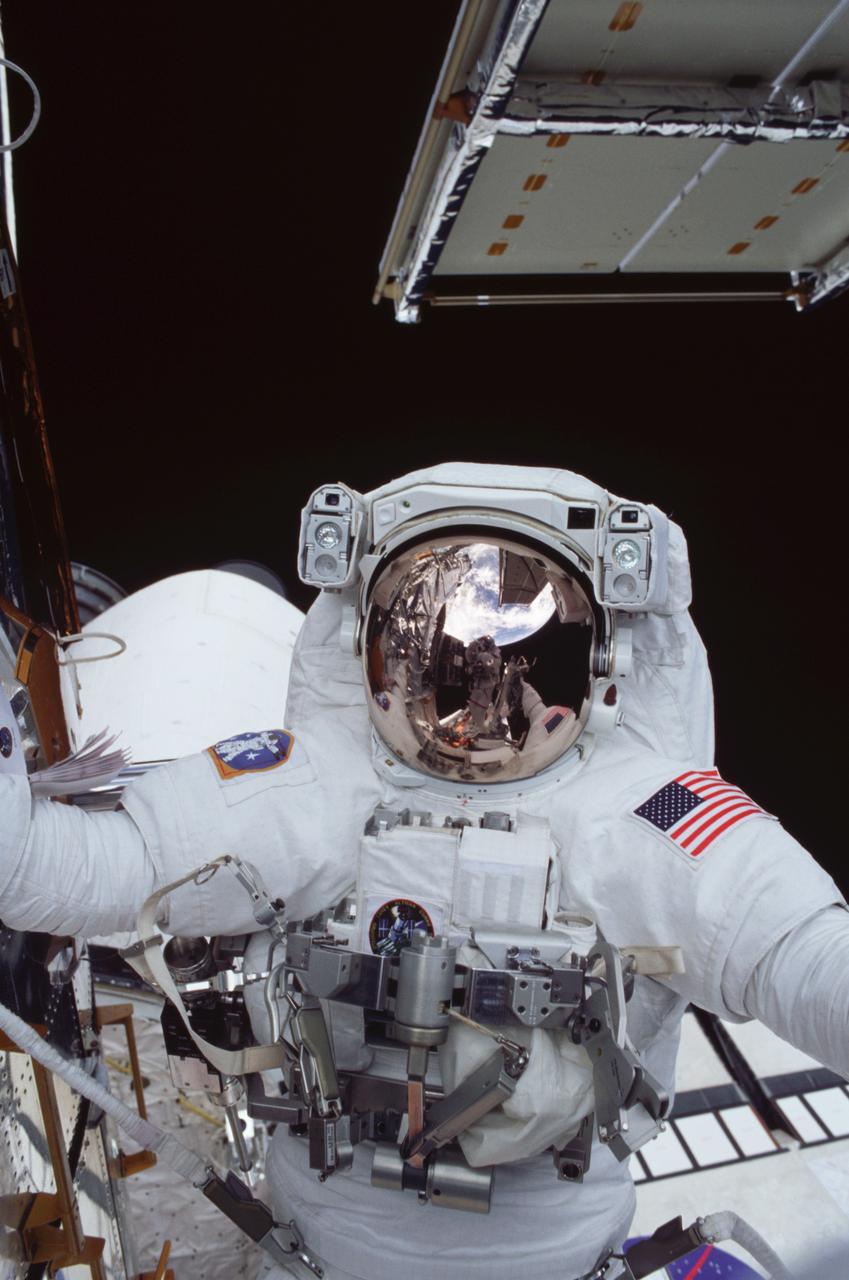
STS109-322-028 (6 March 2002) --- Astronaut Richard M. Linnehan, STS-109 mission specialist, participates in the third of five space walks to perform work on the Hubble Space Telescope (HST). Linnehan's sun shield reflects astronaut John M. Grunsfeld and the blue and white Earth's hemisphere as well as one of the telescope's new solar arrays. The third overall STS-109 extravehicular activity (EVA) marked the second of three for Linnehan and Grunsfeld, payload commander. On this particular walk, the two turned off the telescope in order to replace the power control unit or PCU--the heart of its power system. Grunsfeld took this photo with a 35mm camera.

JSC2000-03747 (15 March 2000) --- Astronaut Richard M. Linnehan, mission specialist.
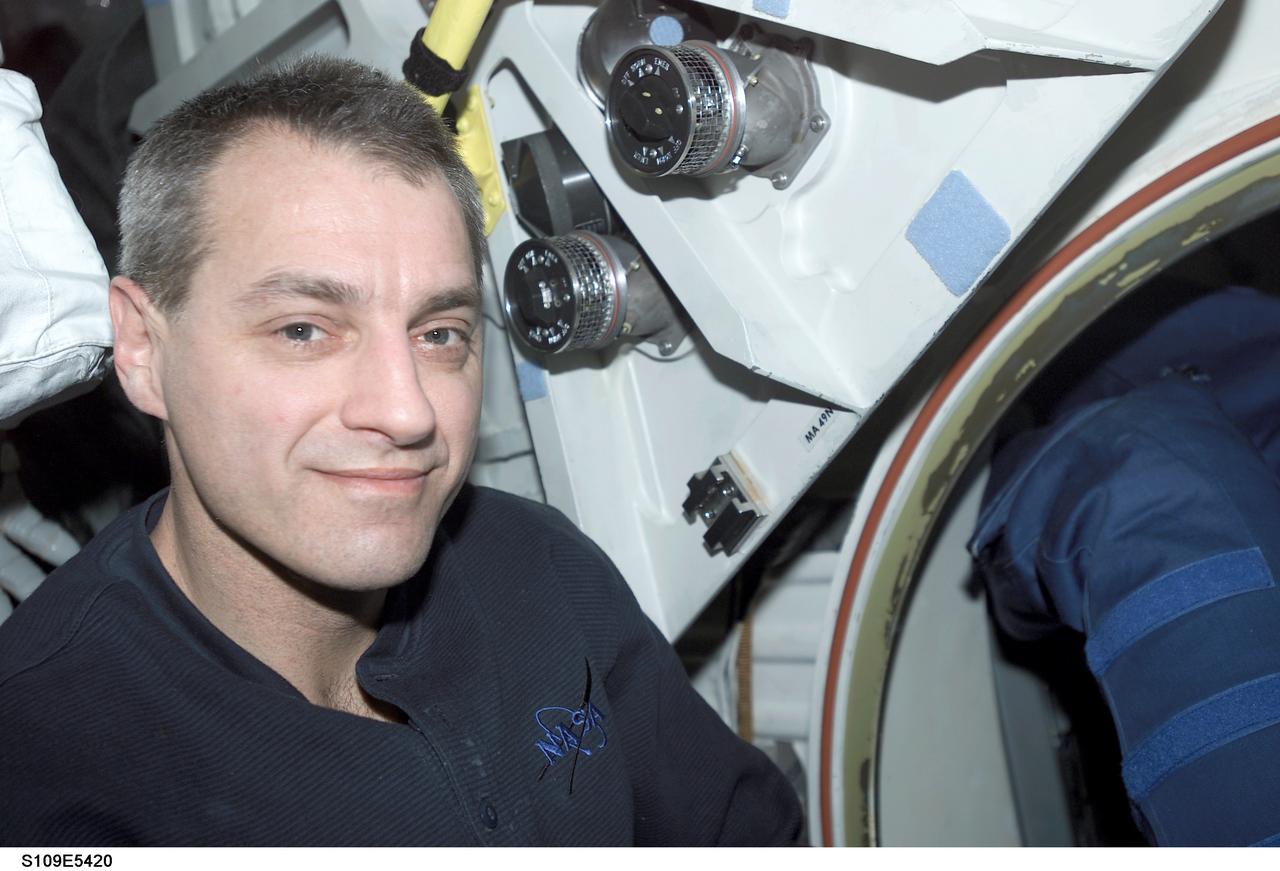
STS109-E-5420 (7 March 2002) --- Flight Day 7 of the STS-109 mission finds astronaut Richard M. Linnehan, mission specialist, back in the shirt-sleeve environment of the Space Shuttle Columbia, just like his space walking partner--astronaut John M. Grunsfeld (out of frame). Two of Grunsfeld's crewmates were about to begin the fourth space walk of the mission to perform special tasks on the Hubble Space Telescope (HST). Linnehan and Grunsfeld will participate in the fifth and final scheduled spacewalk in a little more than 24 hours. It will mark their third shared space walk for the current mission. This image was recorded with a digital still camera.
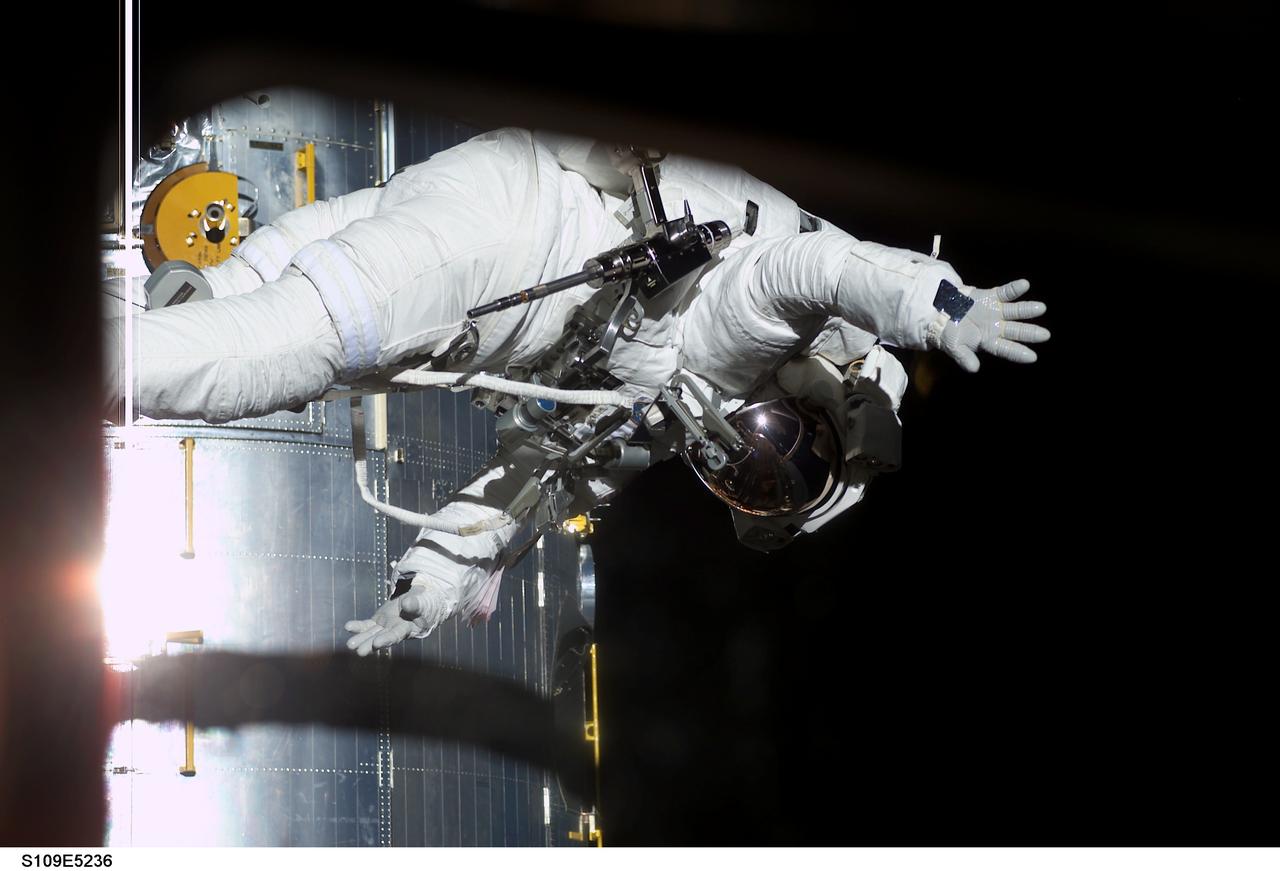
STS109-E-5236 (4 March 2002) --- Astronauts Richard M. (Rick) Linnehan, mission specialist, waves to crewmates inside the Space Shuttle Columbia's crew cabin as he participates in one of his assigned STS-109 space walks to perform work on the Hubble Space Telescope (HST). Astronauts Linnehan and John M. Grunsfeld, payload commander, went on to replace the giant telescope’s starboard solar array. Their seven-hour space walk ended at 7:38 a.m. (CST) or 13:38 GMT March 4, 2002.
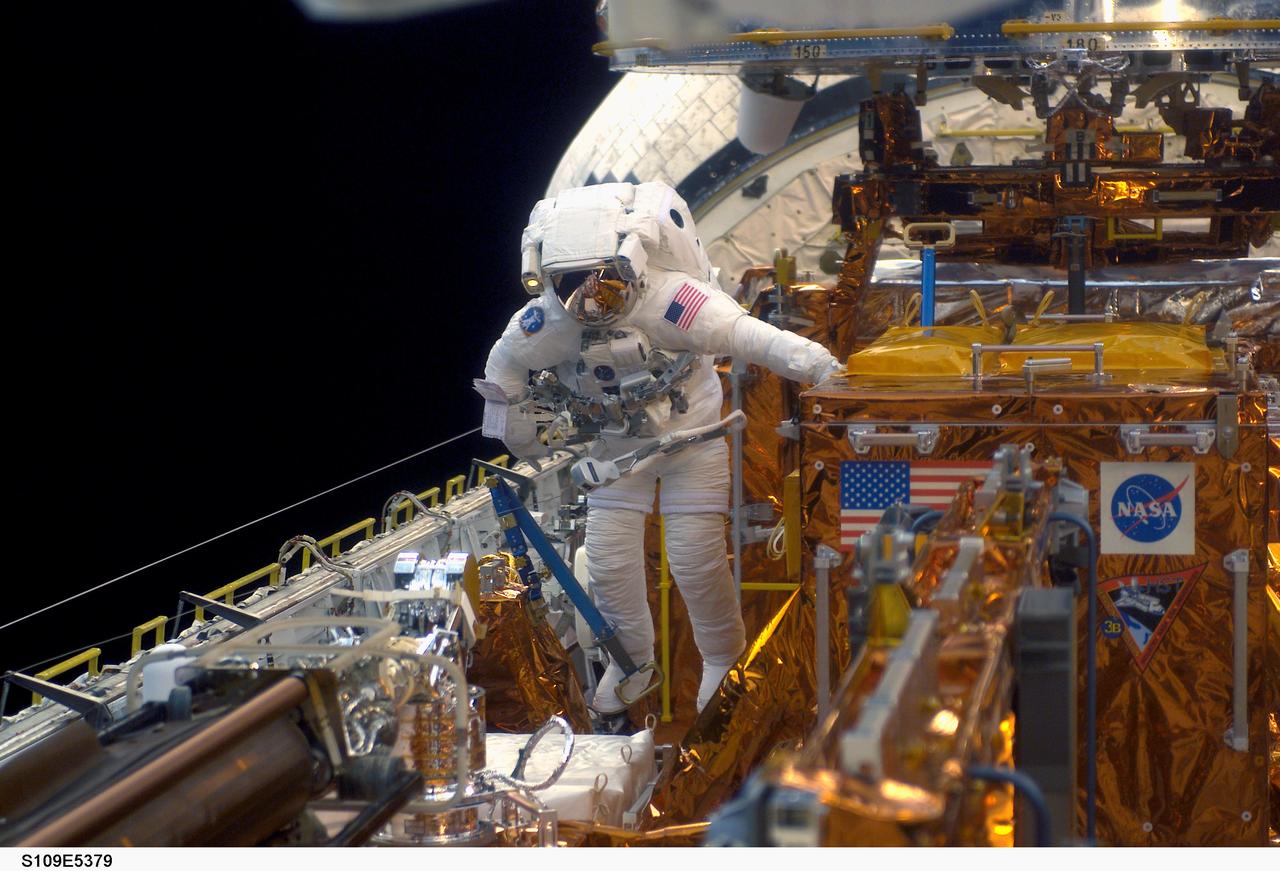
STS109-E-5379 (6 March 2002) --- Astronaut Richard M. Linnehan, mission specialist, works on the Hubble Space Telescope (HST) in the cargo bay of the Space Shuttle Columbia during the STS-109 mission's third space walk. The primary purpose of the extravehicular activity (EVA) of astronauts Linnehan and John M. Grunsfeld was to replace the Power Control Unit on the giant telescope. The image was recorded with a digital still camera by one of Linnehan's crew mates inside Columbia's crew cabin.
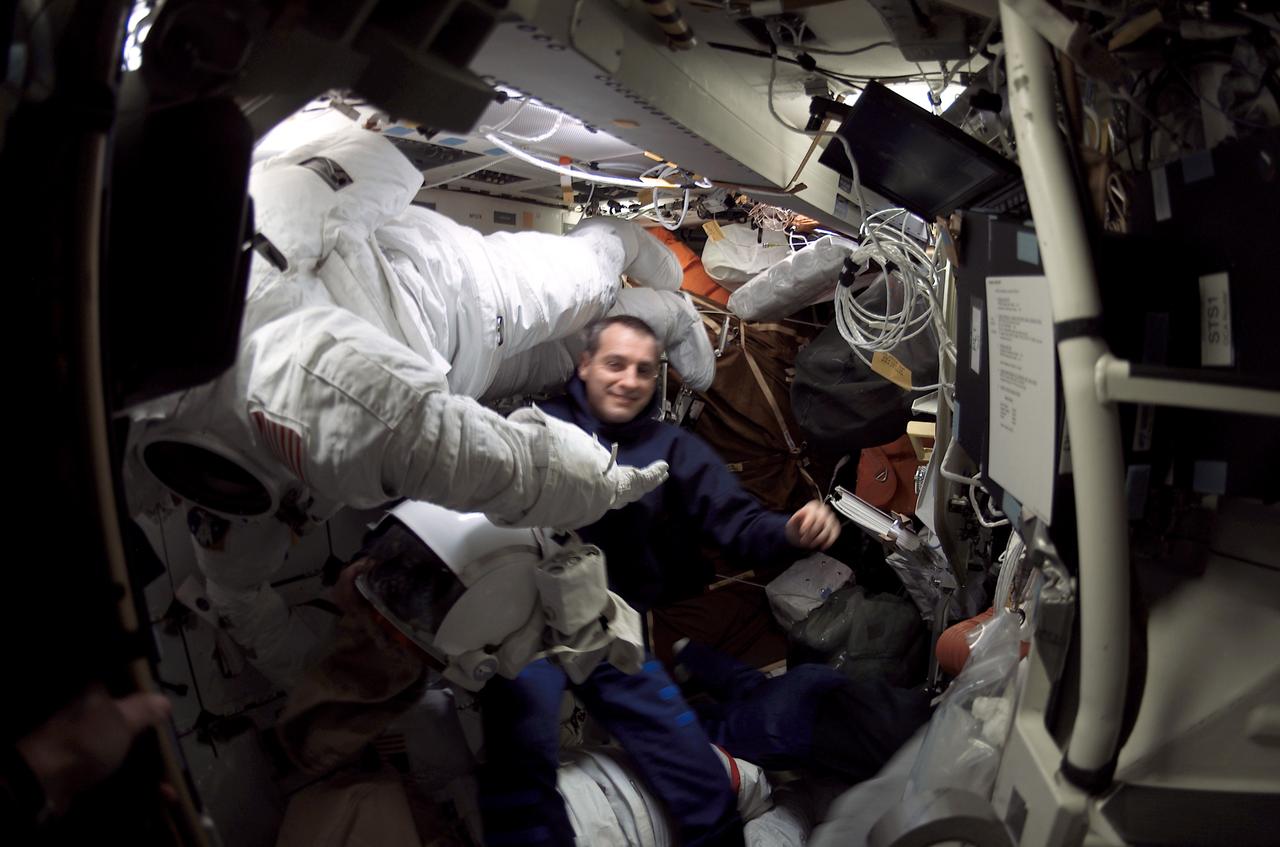
STS109-E-5326 (1-12 March 2002) --- Astronaut Richard M. Linnehan, STS-109 mission specialist, is photographed among Extravehicular Mobility Unit (EMU) space suits and stowage bags on the mid deck of the Space Shuttle Columbia. The image was taken with digital still camera.
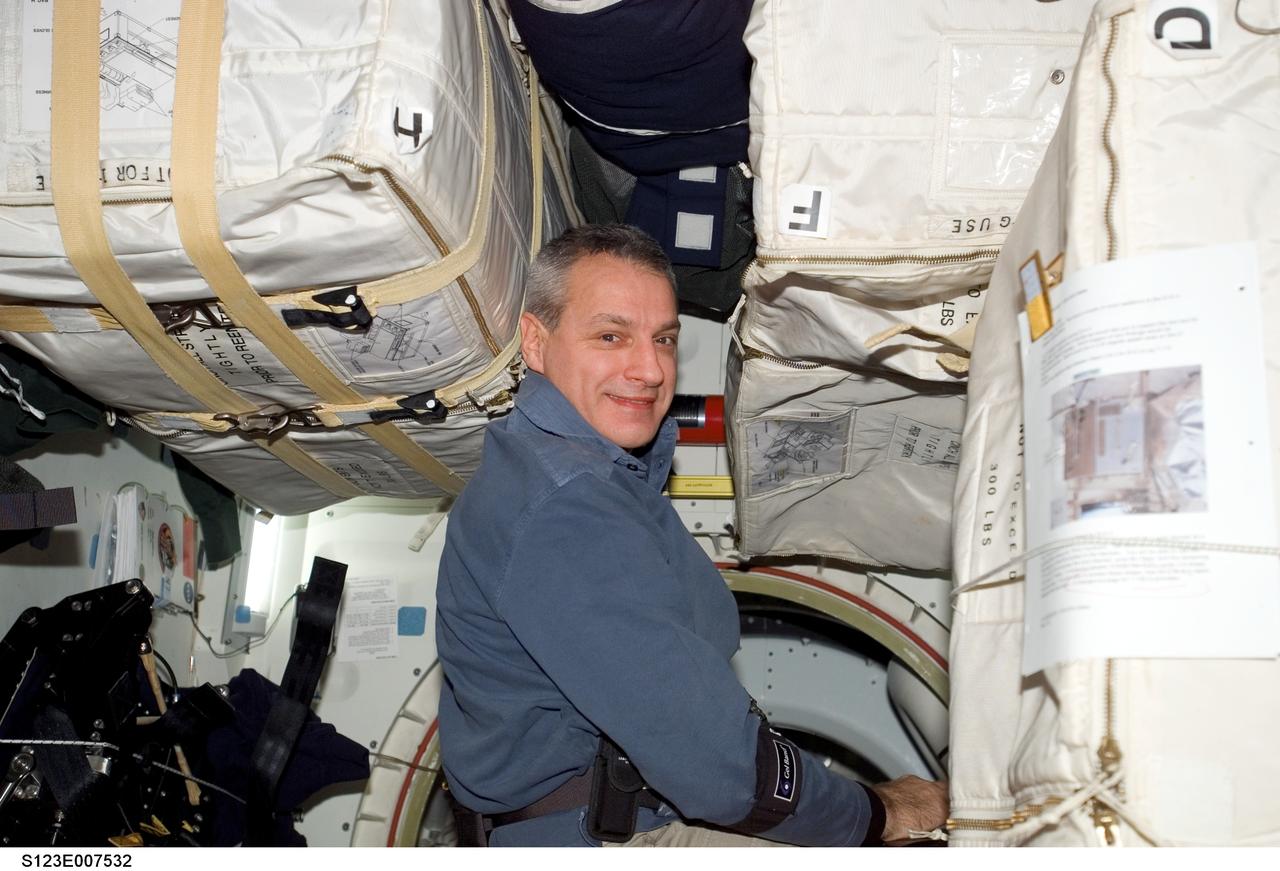
S123-E-007532 (19 March 2008) --- NASA astronaut Rick Linnehan, STS-123 mission specialist, works among stowage bags on the middeck of Space Shuttle Endeavour while docked with the International Space Station.
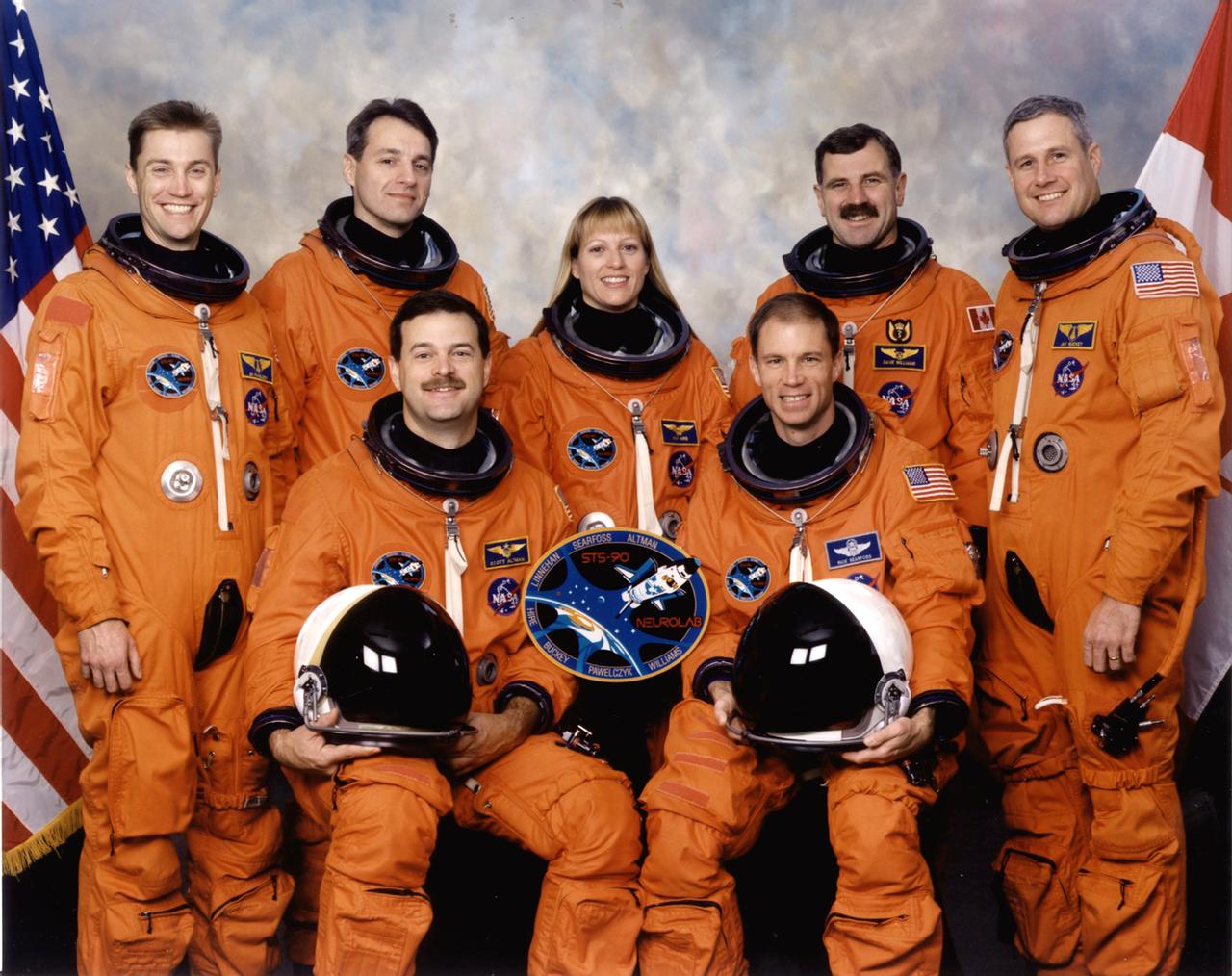
Five astronauts and two payload specialists take a break in training for the Neurolab mission to pause for a crew portrait. The Spacelab mission was conducted aboard the Space Shuttle Columbia on STS-90 which launched on April 17, 1998. Astronauts Richard A. Searfoss, commander (right front); and Scott D. Altman, pilot (left front). Other crew members (back row, left to right) are James A. (Jim) Pawelczyk, Ph.D., payload specialist; and astronauts Richard M. Linnehan, Kathryn P. Hire, and Dafydd R. (Dave) Williams, all mission specialists; along with payload specialist Jay C. Buckey, Jr., MD. Linnehan and Williams, alumnus of the 1995 class of astronaut candidates (ASCAN), represents the Canadian Space Agency (CSA).
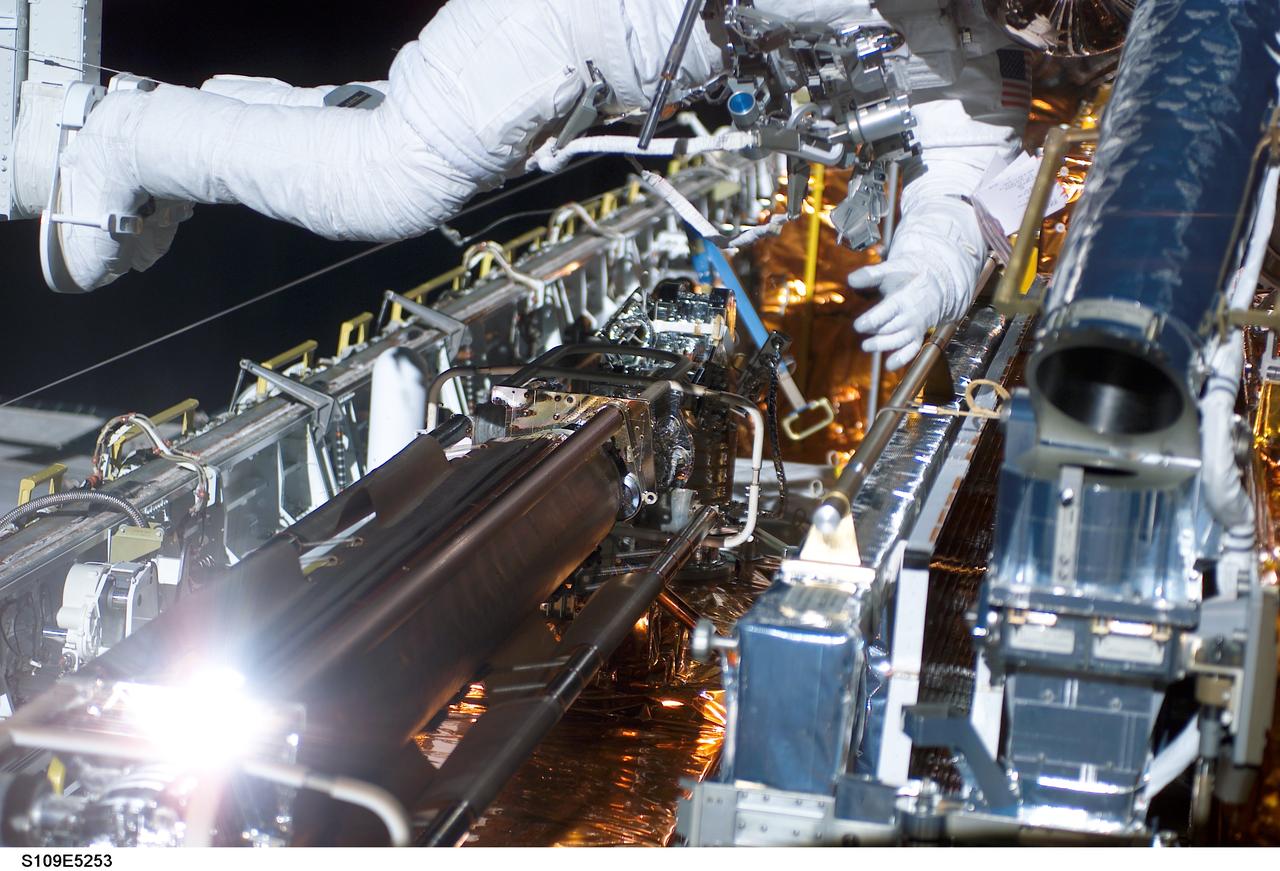
STS109-E-5253 (4 March 2002) --- Astronaut Richard M. Linnehan, mission specialist, is about to wrap up the first phase of a seven-hour space walk in the cargo bay of the Space Shuttle Columbia. Linnehan's feet are anchored to a restraint on the end of the Remote Manipulator System (RMS) robotic arm. The piece of hardware putting on a bright glow in left foreground is the furled old solar array that astronauts Linnehan and John M. Grunsfeld, payload commander, earlier removed from Hubble Space Telescope. The old array is now latched in Columbia's cargo bay for return to Earth. The two went on to install the replacement starboard array. The image was recorded with a digital still camera.
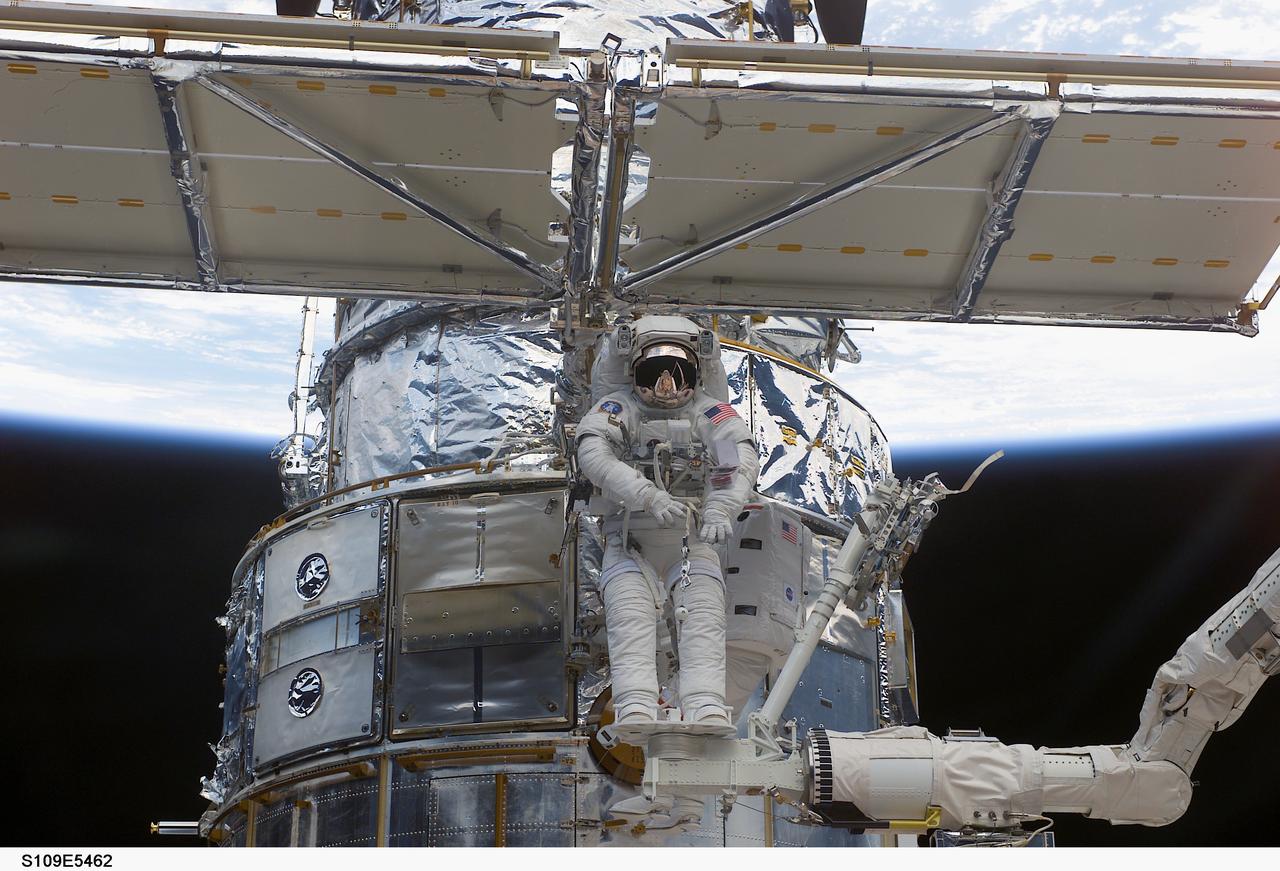
STS109-E-5462 (4 March 2002) --- Astronauts Richard M. Linnehan (facing camera, frame center), STS-109 mission specialist, and John M. Grunsfeld (partially obscured behind Linnehan), payload commander, work to replace the starboard solar array on the Hubble Space Telescope (HST). Linnehan is standing on a foot restraint connected to the Space Shuttle Columbia's Remote Manipulator System (RMS) robotic arm, controlled inside the shuttle's crew cabin by astronaut Nancy J. Currie, mission specialist. The image was recorded with a digital still camera.
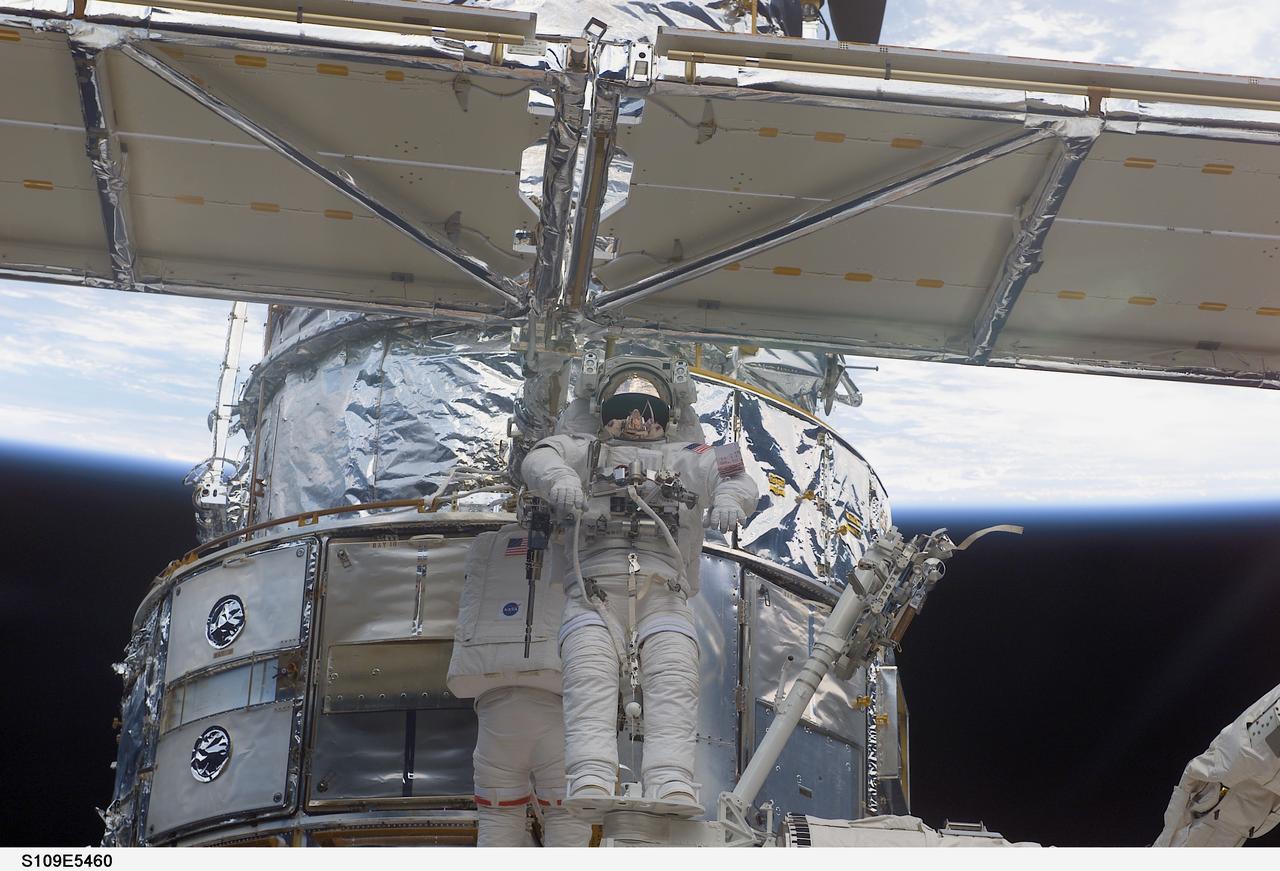
STS109-E-5460 (4 March 2002) --- Astronauts Richard M. Linnehan (facing camera, frame center), STS-109 mission specialist, and John M. Grunsfeld (partially obscured behind Linnehan), payload commander, work to replace the starboard solar array on the Hubble Space Telescope (HST). Linnehan is standing on a foot restraint connected to the Space Shuttle Columbia's Remote Manipulator System (RMS) robotic arm, controlled inside the shuttle's crew cabin by astronaut Nancy J. Currie, mission specialist. The image was recorded with a digital still camera.
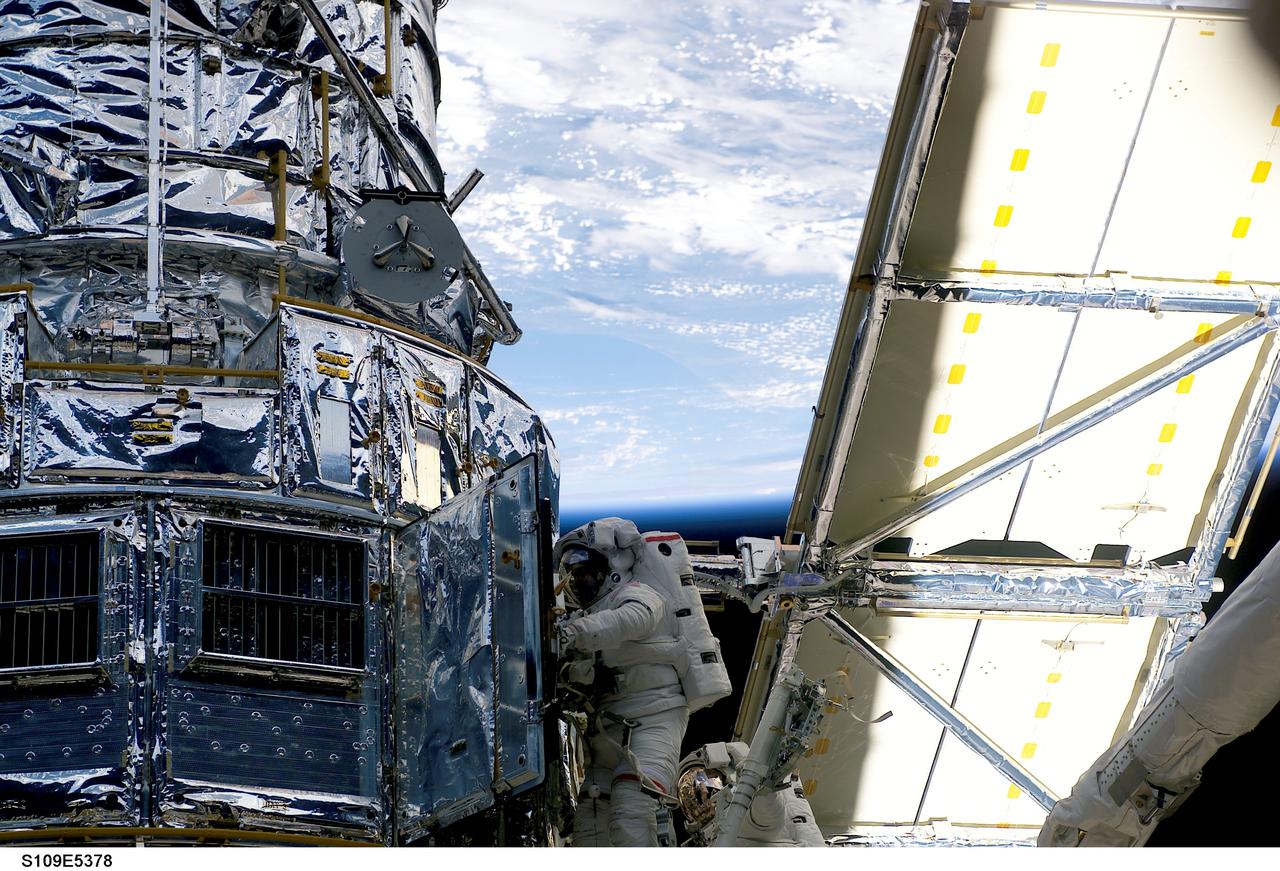
STS109-E-5378 (6 March 2002) --- Astronaut John M. Grunsfeld, payload commander, works in tandem with astronaut Richard M. Linnehan, mission specialist, as the two devote their attention to the Power Control Unit replacement task on the giant Hubble Space Telescope (HST). Grunsfeld stands on a foot restraint on the end of the Space Shuttle Columbia's Remote Manipulator System (RMS). This marked the third of five scheduled STS-109 space walks and the mission's second extravehicular activity (EVA) for the tandem of Grunsfeld and Linnehan. It was completed at 9:16 a.m. CST (1516 GMT), Mar. 6, 2002. The image was recorded with a digital still camera.
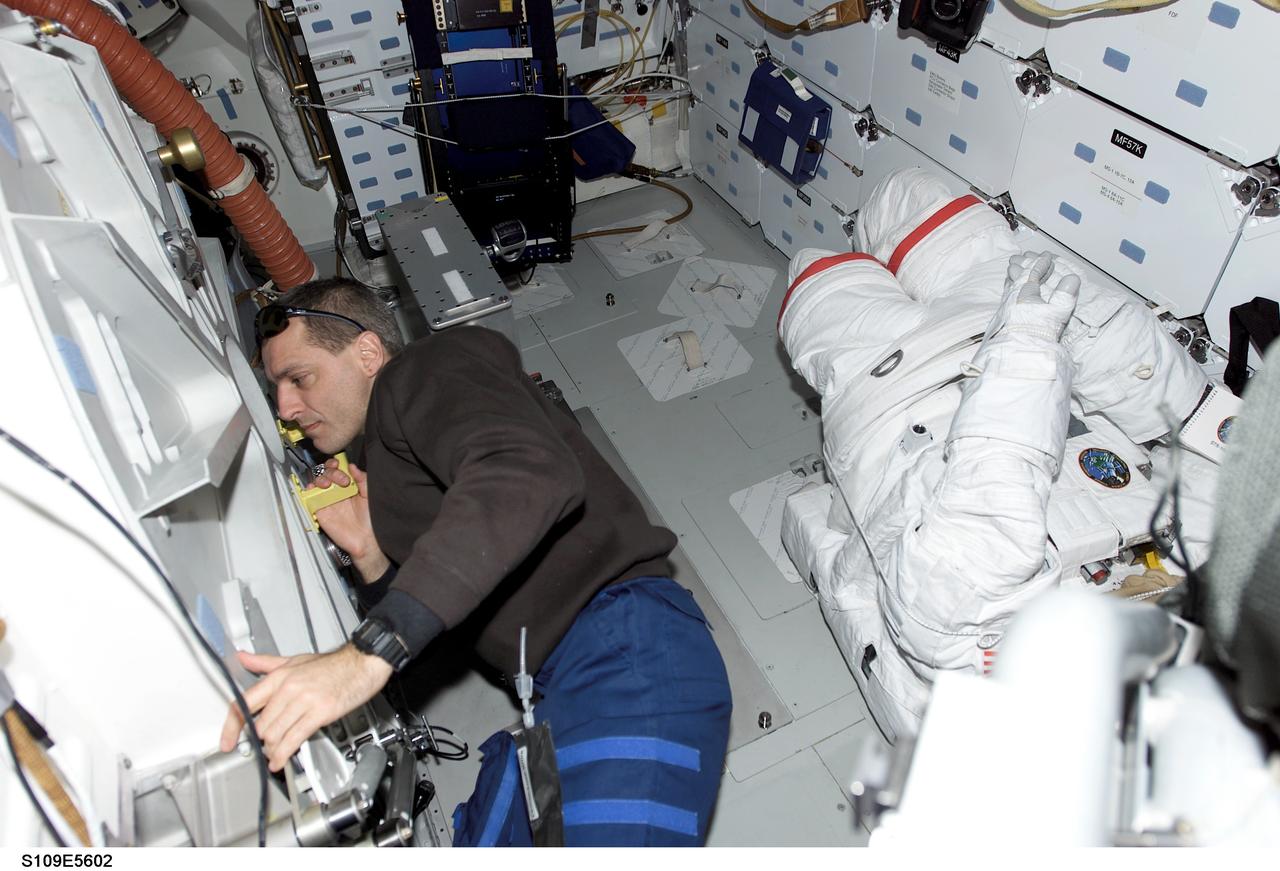
STS109-E-5602 (5 March 2002) --- Astronaut Richard M. Linnehan, mission specialist, checks the airlock hatch as two crewmates on the other side, equipped with extravehicular mobility units (EMU) space suits, start their extravehicular activity (EVA). On the previous day astronauts Linnehan and John M. Grunsfeld replaced the starboard solar array on the Hubble Space Telescope (HST). This day's space walk went on to see astronauts James H. Newman and Michael J. Massimino replace the port solar array. Grunsfeld's suit, scheduled for two more space walks, is temporarily stowed on the mid deck floor at right. The image was recorded with a digital still camera.
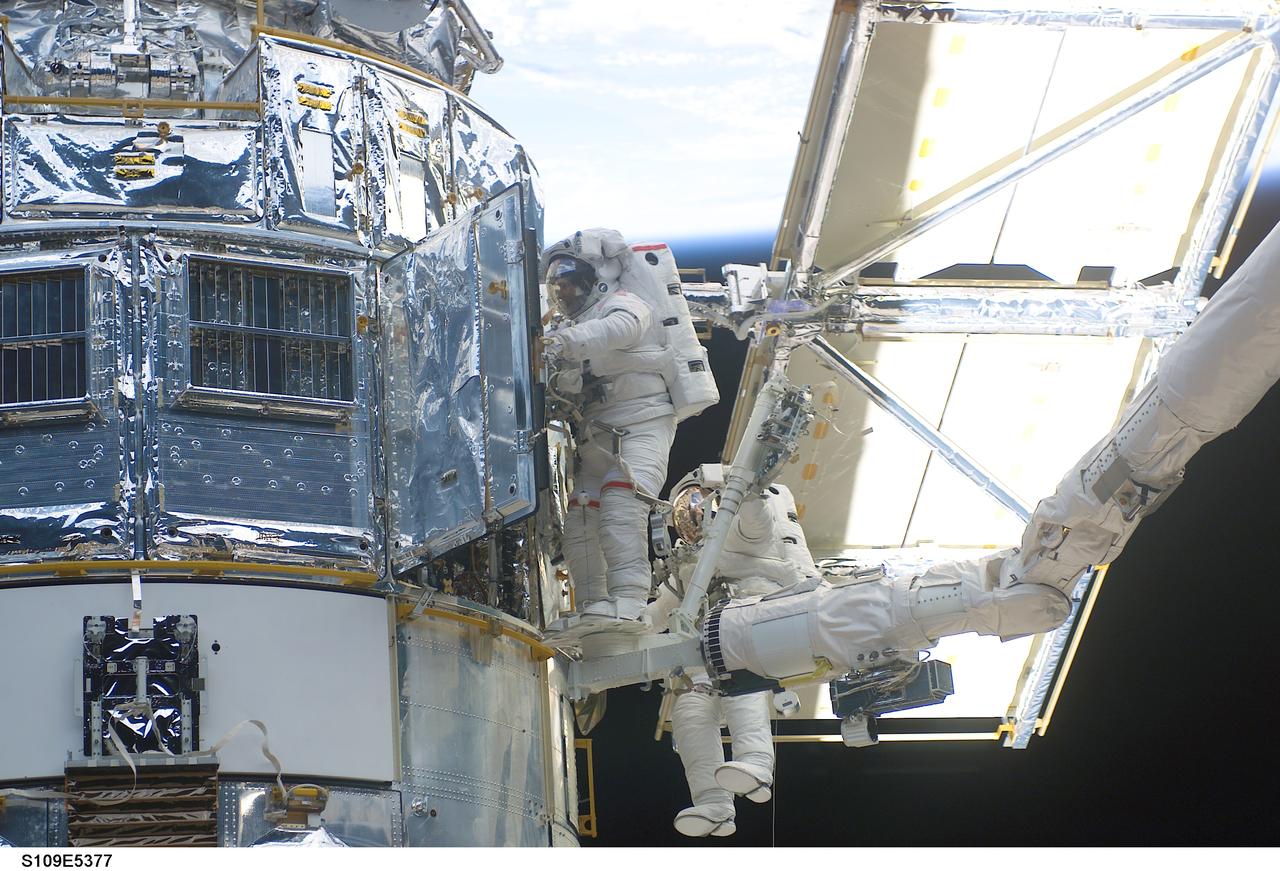
STS109-E-5377 (6 March 2002) --- Astronaut John M. Grunsfeld, payload commander, works in tandem with astronaut Richard M. Linnehan, mission specialist, as the two devote their attention to the Power Control Unit replacement task on the giant Hubble Space Telescope (HST). Grunsfeld stands on a foot restraint on the end of the Space Shuttle Columbia's Remote Manipulator System (RMS). This marked the third of five scheduled STS-109 space walks and the mission's second extravehicular activity (EVA) for the tandem of Grunsfeld and Linnehan. It was completed at 9:16 a.m. CST (1516 GMT), Mar. 6, 2002. The image was recorded with a digital still camera.
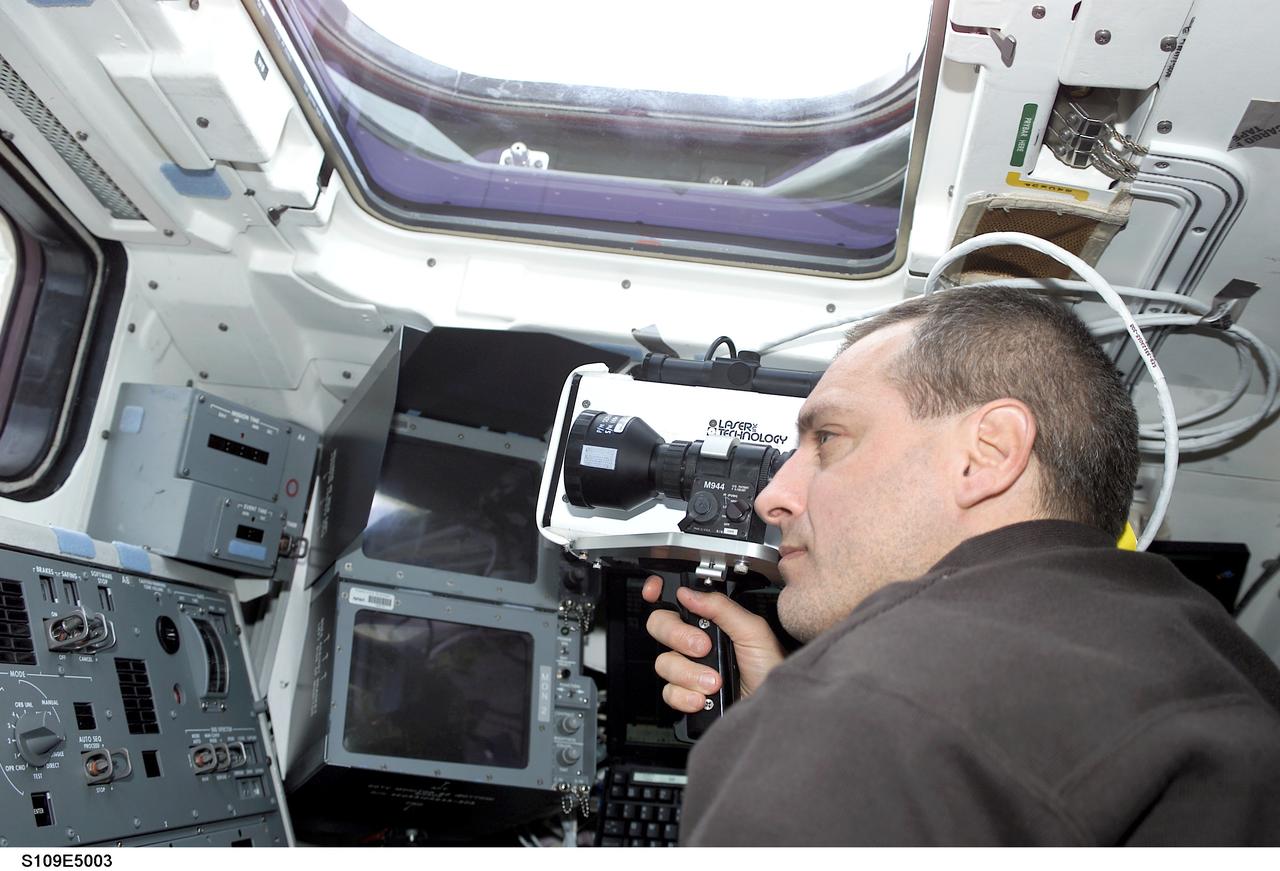
STS109-E-5003 (3 March 2002) --- Astronaut Richard M. Linnehan, mission specialist, uses a laser ranging device designed to measure the range between two spacecraft. Linnehan positioned himself on the cabin's aft flight deck as the Space Shuttle Columbia approached the Hubble Space Telescope. A short time later, the STS-109 crew captured and latched down the giant telescope in the vehicle's cargo bay for several days of work on the Hubble. The image was recorded with a digital still camera.
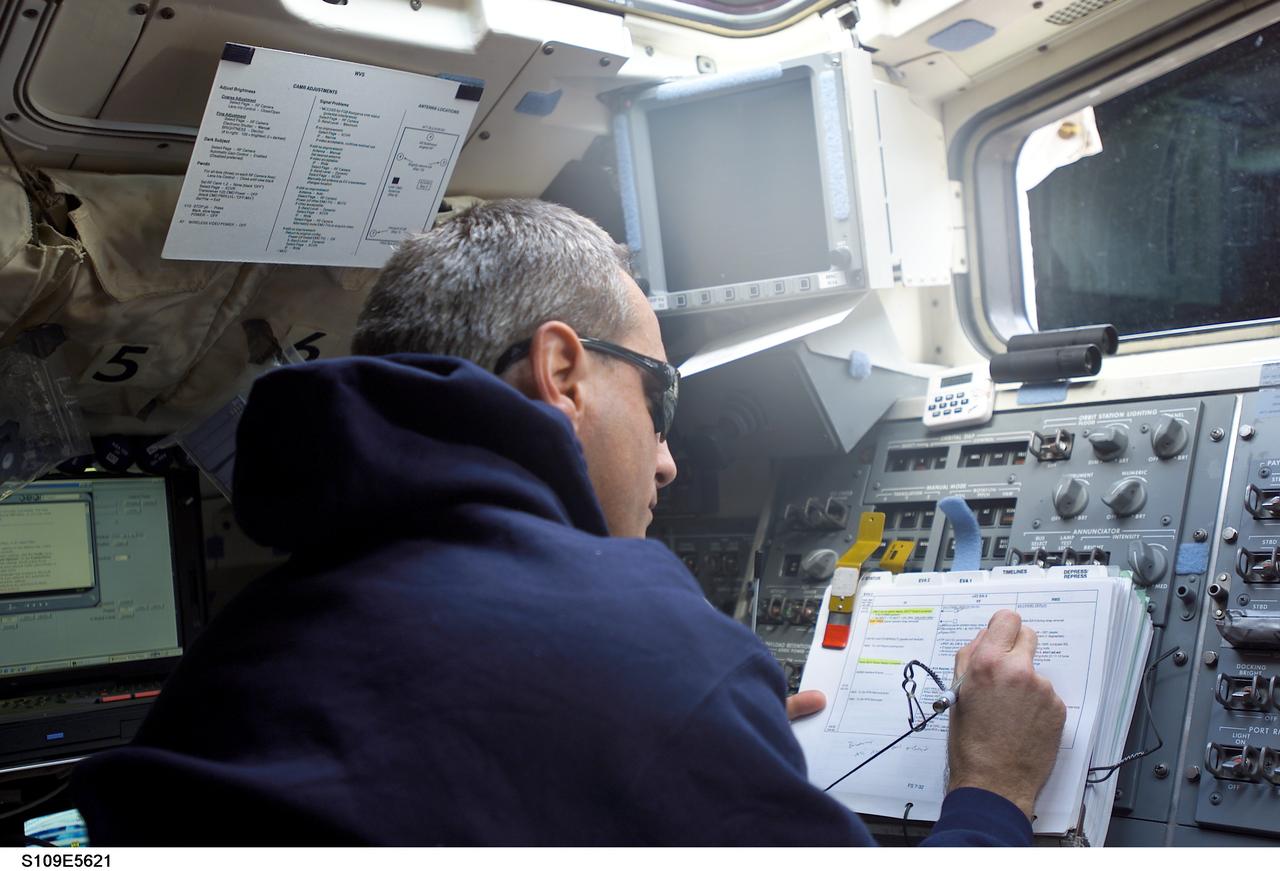
STS109-E-5621 (5 March 2002) --- Astronaut Richard M. Linnehan, mission specialist, monitors the STS-109 mission's second space walk from the aft flight deck of the Space Shuttle Columbia. Astronauts James H. Newman and Michael J. Massimino were working on the Hubble Space Telescope (HST), temporarily captured in the shuttle's cargo bay. Linnehan had participated in the mission's first space walk on the previous day. This image was recorded with a digital still camera.
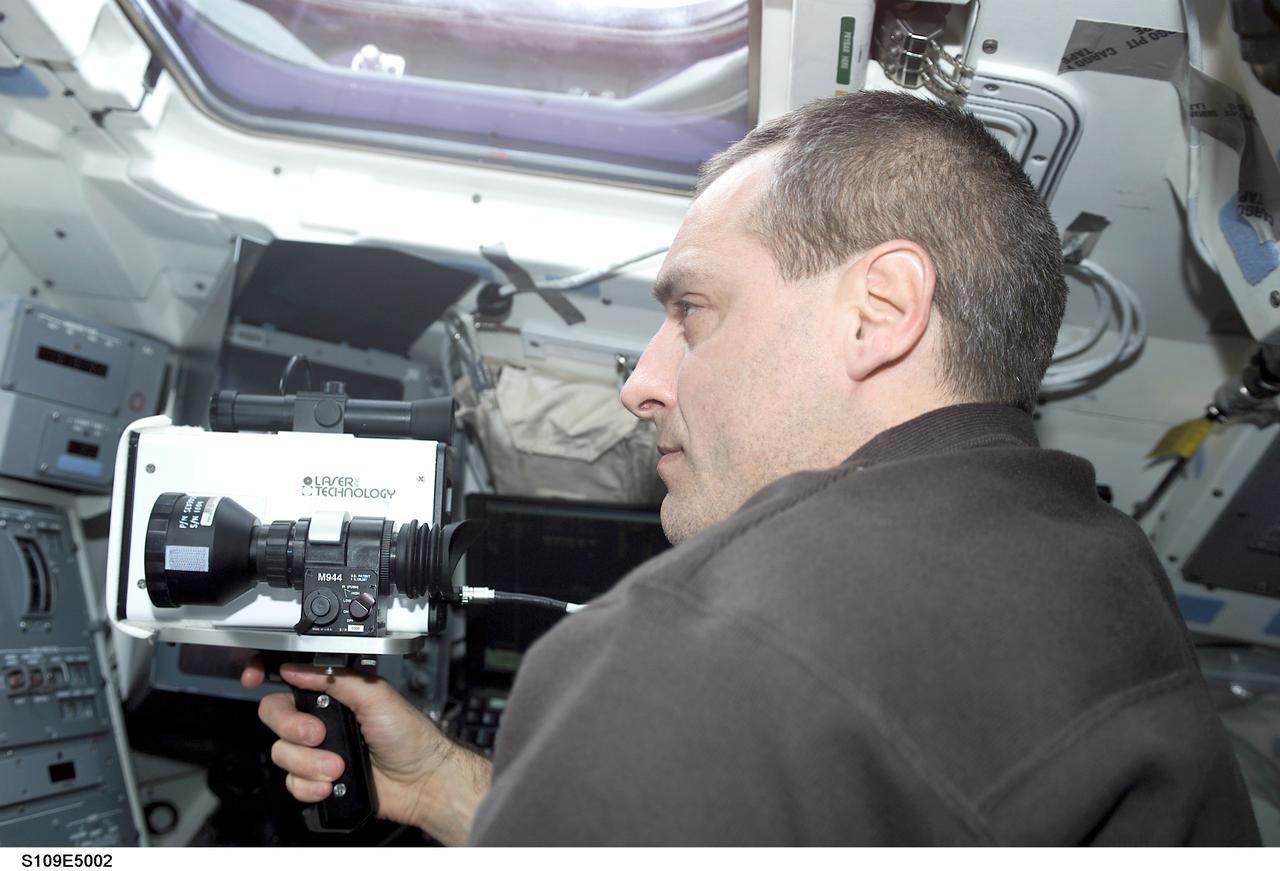
STS109-E-5002 (3 March 2002) --- Astronaut Richard M. Linnehan, mission specialist, uses a laser ranging device designed to measure the range between two spacecraft. Linnehan positioned himself on the cabin's aft flight deck as the Space Shuttle Columbia approached the Hubble Space Telescope. A short time later, the STS-109 crew captured and latched down the giant telescope in the vehicle's cargo bay for several days of work on the Hubble. The image was recorded with a digital still camera.
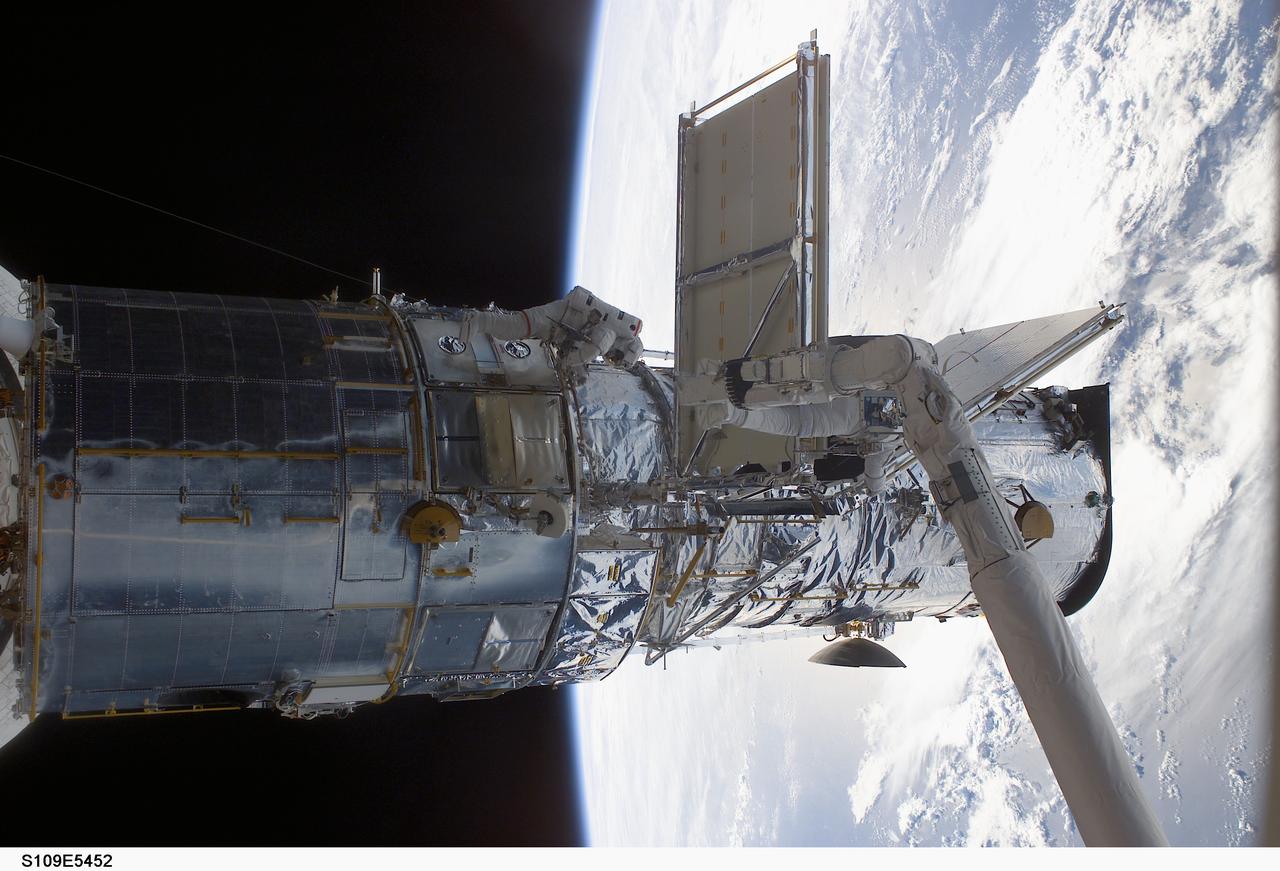
STS109-E-5452 (4 March 2002) --- Astronauts Richard M. Linnehan (partially visible on the end of Columbia's robotic arm), STS-109 mission specialist, and John M. Grunsfeld (center frame), payload commander, work to replace the starboard solar array on the Hubble Space Telescope (HST). Linnehan works while anchored to a foot restraint connected to the shuttle's Remote Manipulator System (RMS), controlled inside the shuttle's crew cabin by astronaut Nancy J. Currie, mission specialist. The image was recorded with a digital still camera.
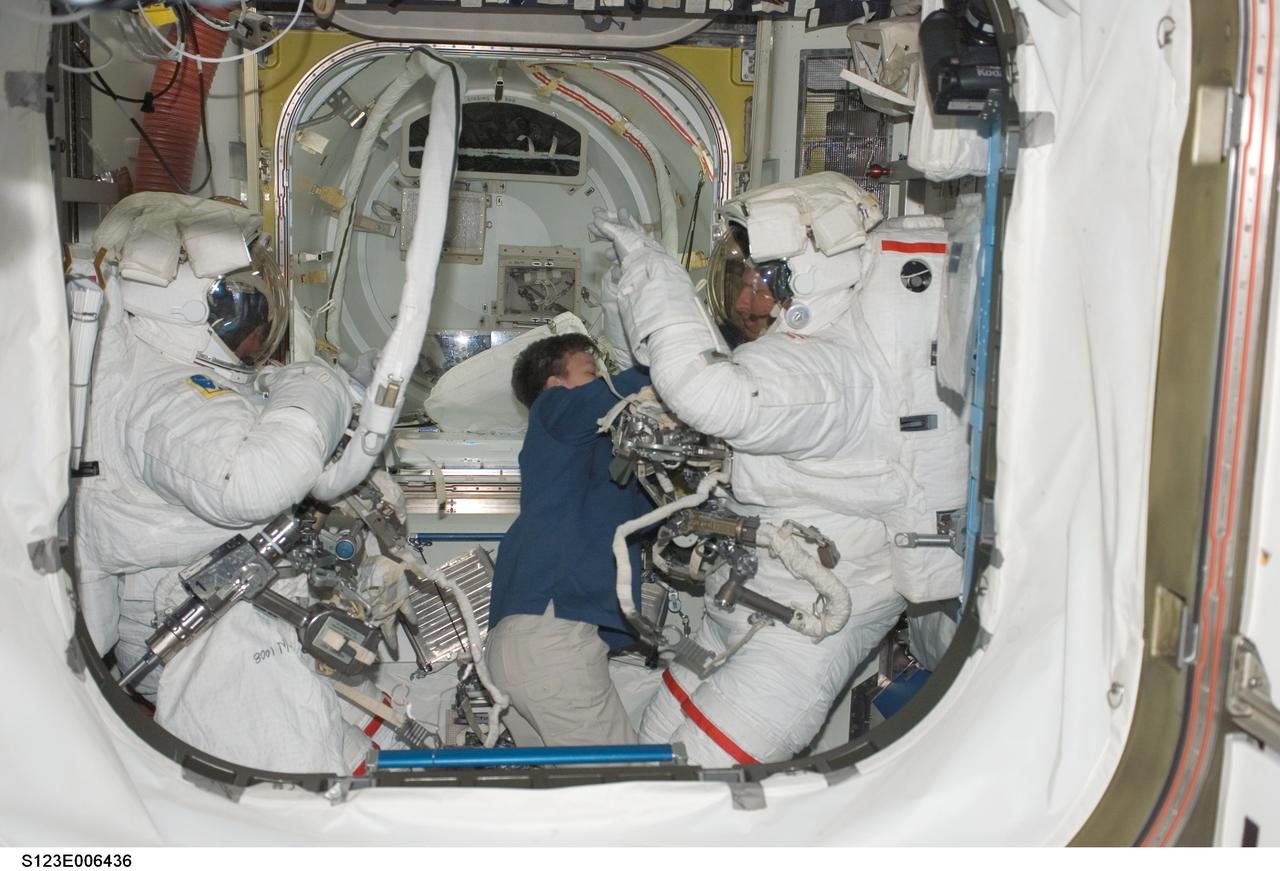
S123-E-006436 (16 March 2008) --- Attired in their Extravehicular Mobility Unit (EMU) spacesuits, astronauts Mike Foreman (left) and Rick Linnehan, both STS-123 mission specialists, are pictured in the Quest Airlock of the International Space Station as the mission's second session of extravehicular activity (EVA) draws to a close. Astronaut Peggy Whitson, Expedition 16 commander, assisted Foreman and Linnehan in the doffing of the spacesuits.
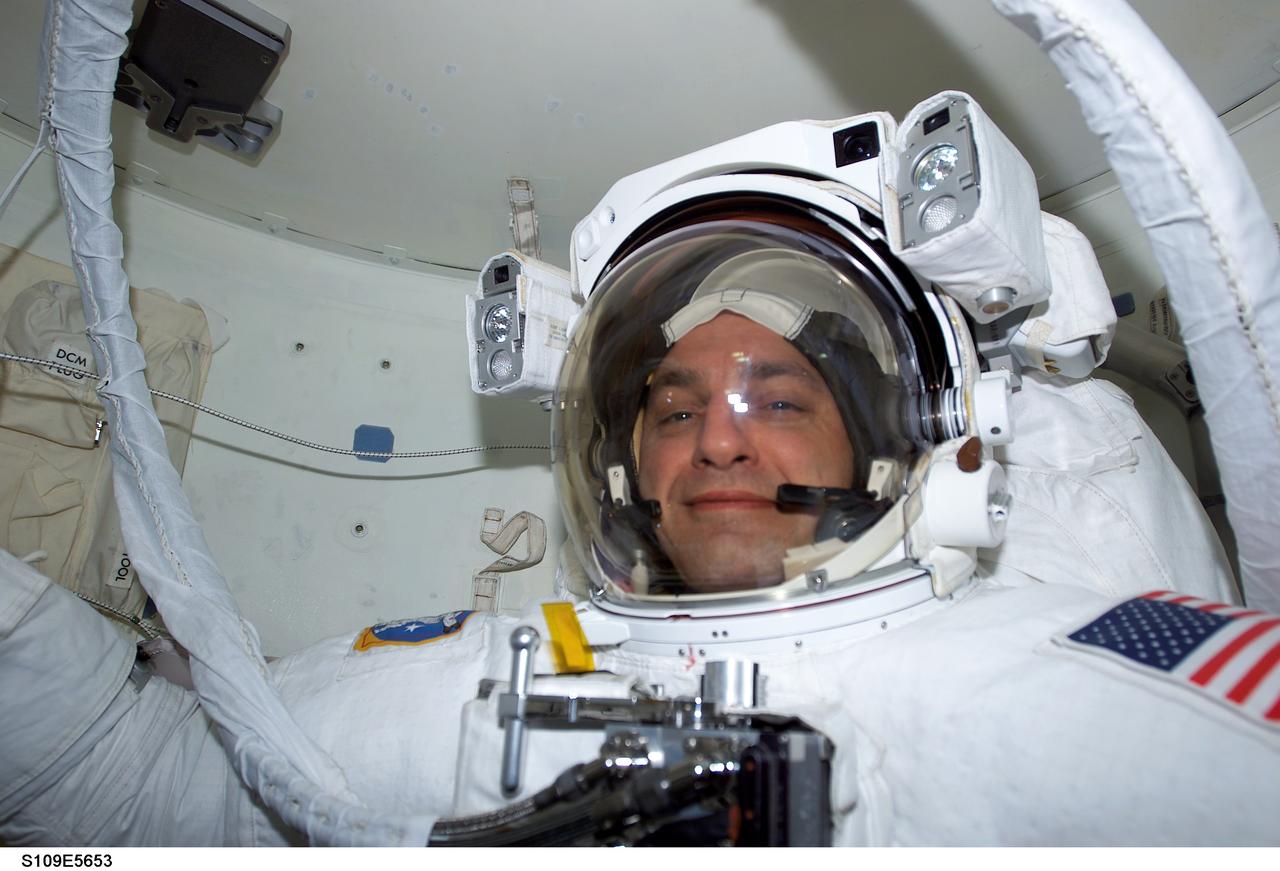
STS109-E-5653 (6 March 2002) --- Astronaut Richard M. Linnehan, mission specialist, has just completed donning his extravehicular mobility unit (EMU) space suit for the second bonafide time during the STS-109 mission. Astronauts Linnehan and John M. Grunsfeld were about to embark on the third of five scheduled STS-109 space walks. The image was recorded with a digital still camera.
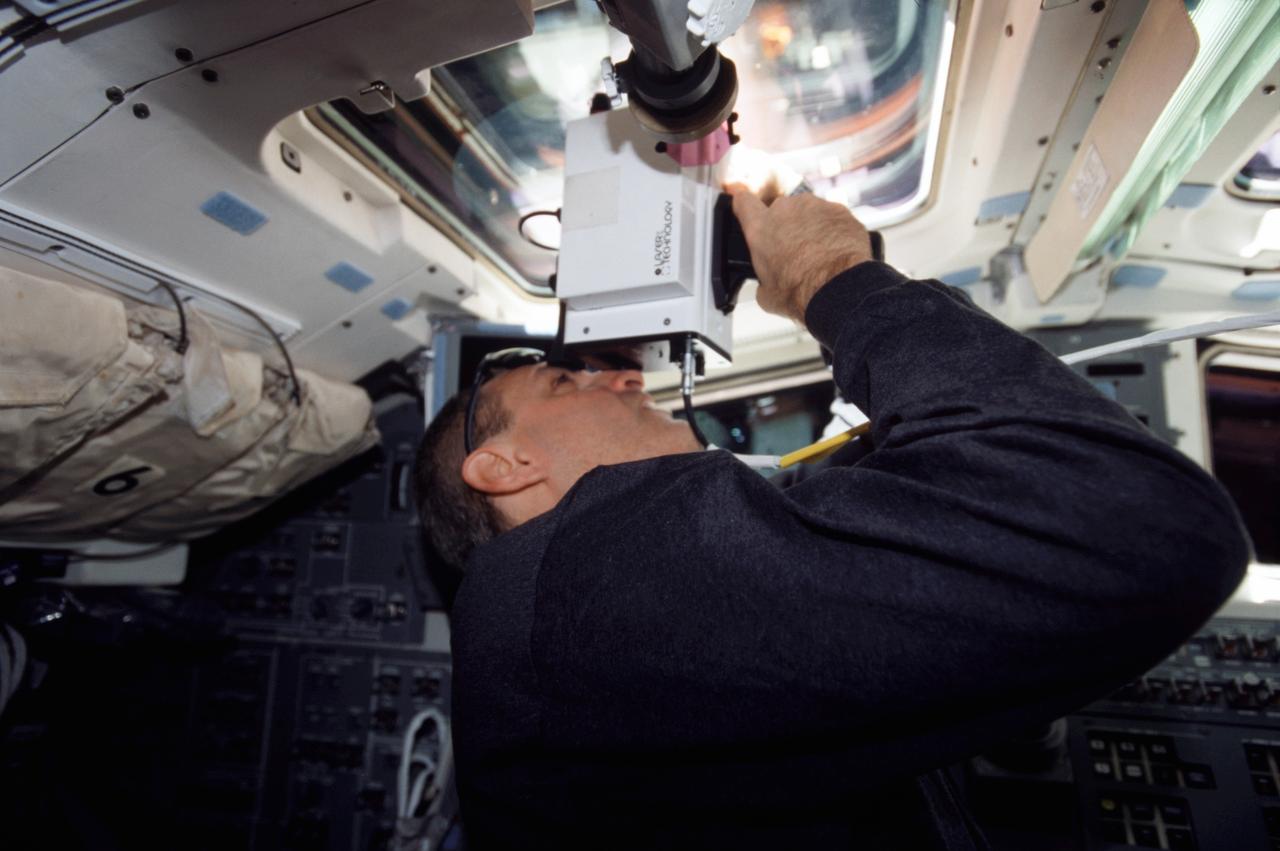
STS109-346-011 (3 March 2002) --- Astronaut Richard M. Linnehan, STS-109 mission specialist, uses a laser ranging device designed to measure the range between two spacecraft. Linnehan positioned himself on the cabin's aft flight deck as the Space Shuttle Columbia approached the Hubble Space Telescope. A short time later, the STS-109 crew captured and latched down the giant telescope in the vehicle's cargo bay for several days of work on the Hubble.
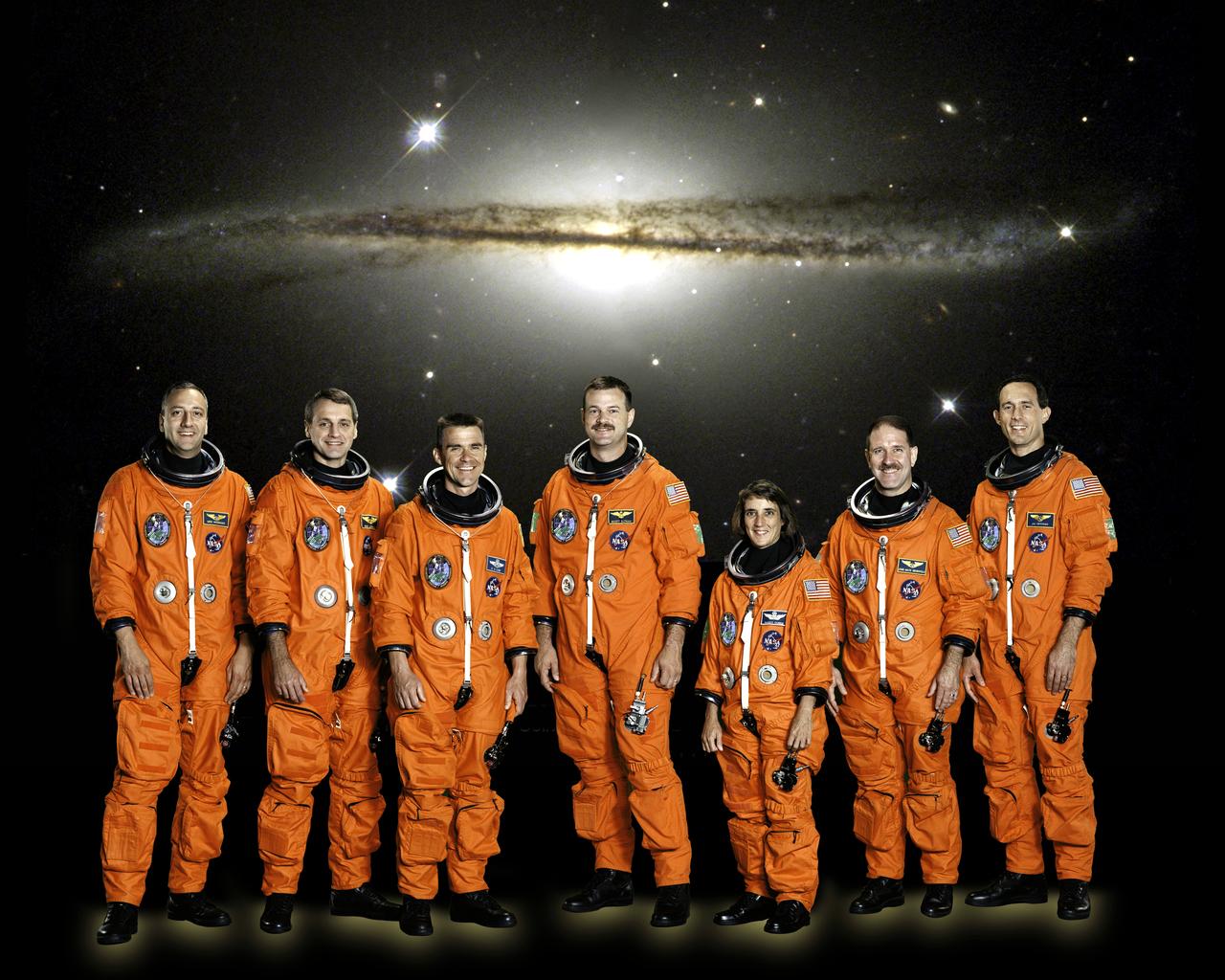
Posing for the traditional preflight crew portrait, the seven astronauts of the STS-109 mission are (left to right) astronauts Michael J. Massimino, Richard M. Linnehan, Duane G. Carey, Scott D. Altman, Nancy J. Currie, John M. Grunsfeld and James H. Newman. Altman and Carey were commander and pilot, respectively, with the others serving as mission specialists. Grunsfeld was payload commander. Launched aboard the Space Shuttle Columbia on March 1, 2002, the group was the fourth visit to the the Hubble Space Telescope (HST) for performing upgrade and servicing on the giant orbital observatory.
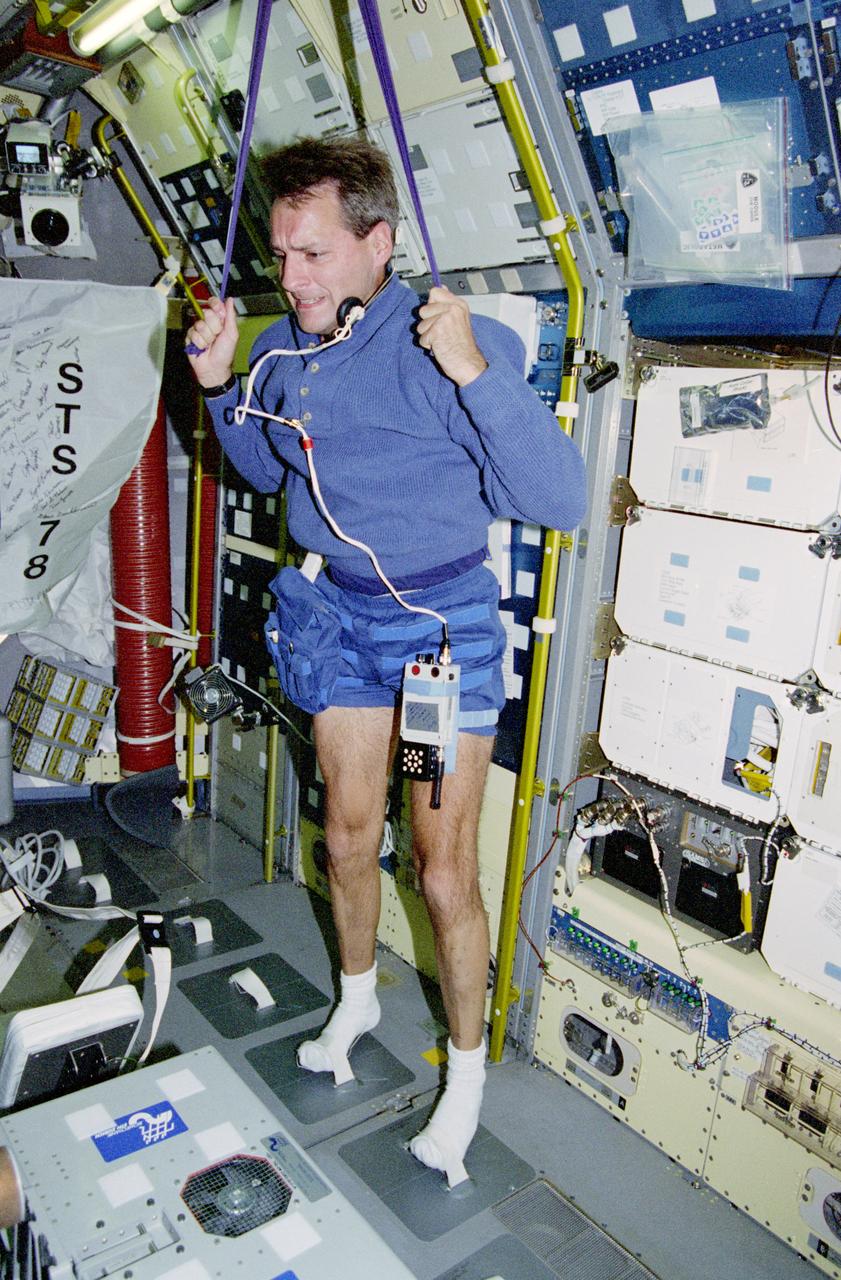
STS078-305-022 (20 June-7 July 1996) --- Astronaut Richard M. Linnehan, mission specialist, works out in the Life and Microgravity Spacelab (LMS-1) Science Module aboard the Earth-orbiting Space Shuttle Columbia. With an almost 17-day mission away from Earth?s gravity, crew members maintained an exercise regimen above and beyond their assigned LMS-1 duty assignments.

STS109-E-5660 (6 March 2002) --- Astronauts John M. Grunsfeld (top) and Richard M. Linnehan participate in a 6 hour, 48 minute space walk designed to install a new Power Control Unit (PCU) on the Hubble Space Telescope (HST). The two went on to replace the original unit launched with the telescope in April 1990. Grunsfeld is on the end of Columbia's Remote Manipulator System (RMS) robotic arm, controlled from inside the crew cabin by astronaut Nancy J. Currie. The image was recorded with a digital still camera.
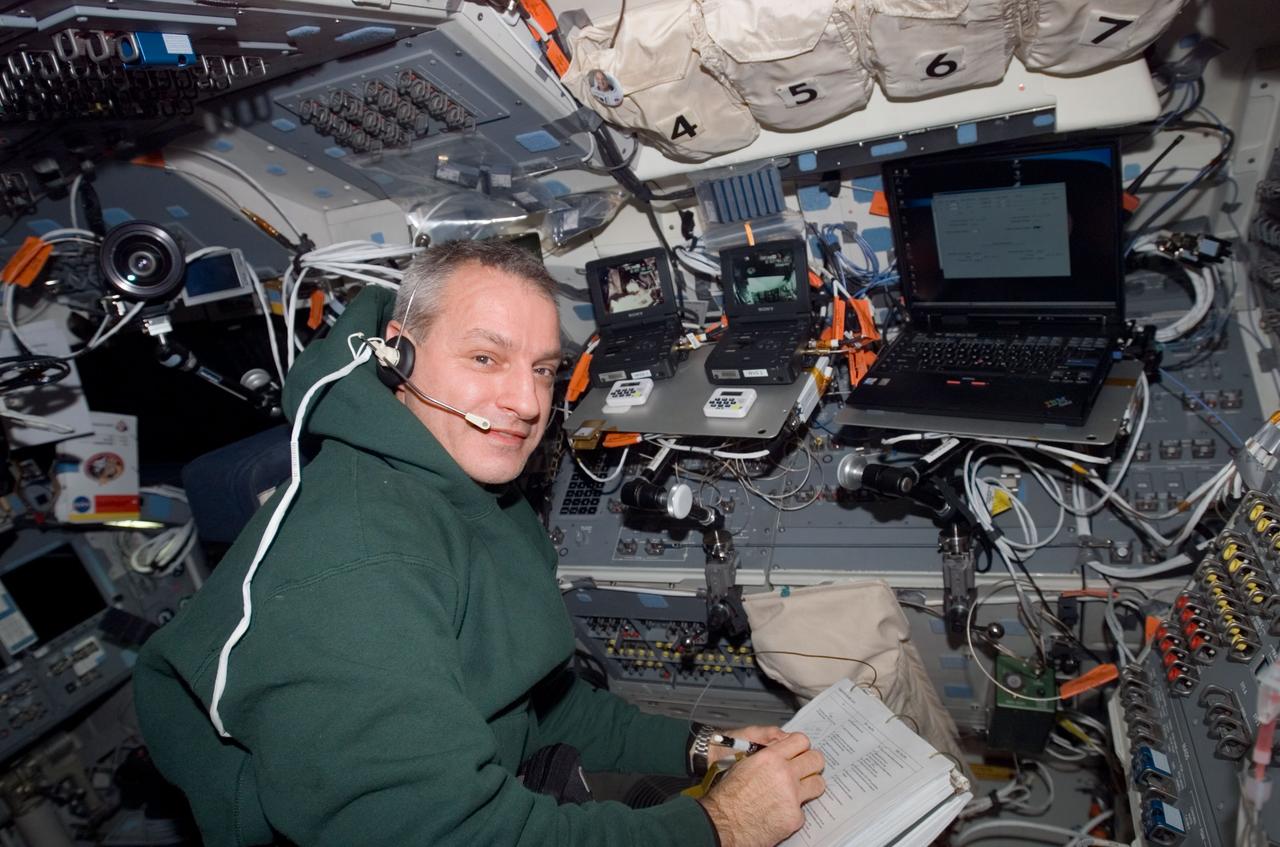
S123-E-007813 (20 March 2008) --- Astronaut Rick Linnehan, STS-123 mission specialist, uses a communication system while looking over a checklist on the flight deck of Space Shuttle Endeavour while docked with the International Space Station.
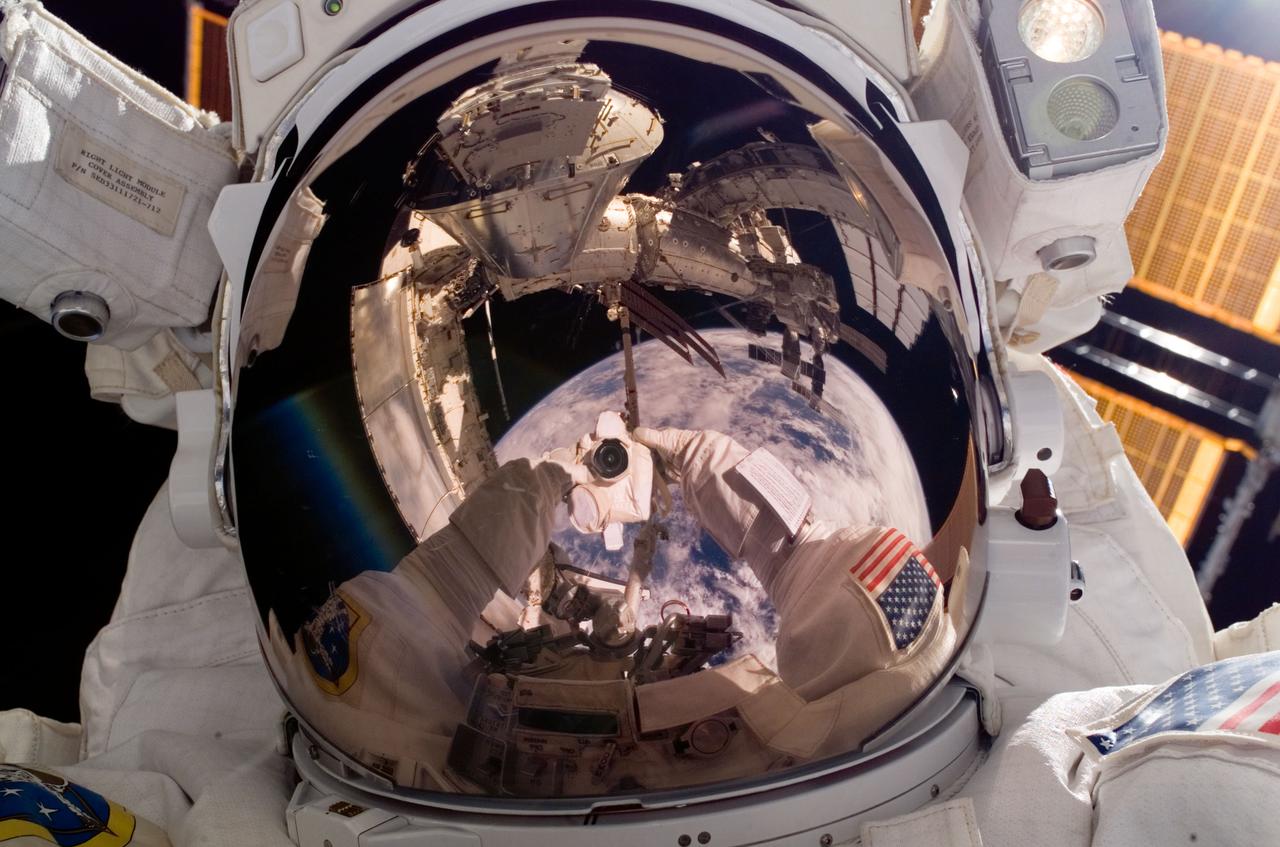
ISS016-E-033024 (17/18 March 2008) --- Astronaut Rick Linnehan, STS-123 mission specialist, uses a digital camera to expose a photo of his helmet visor during the mission's third scheduled session of extravehicular activity (EVA) as construction and maintenance continue on the International Space Station. Also visible in the reflections in the visor are various components of the station, the docked Space Shuttle Endeavour and a blue and white portion of Earth. During the 6-hour, 53-minute spacewalk, Linnehan and astronaut Robert L. Behnken (out of frame), mission specialist, installed a spare-parts platform and tool-handling assembly for Dextre, also known as the Special Purpose Dextrous Manipulator (SPDM). Among other tasks, they also checked out and calibrated Dextre's end effector and attached critical spare parts to an external stowage platform. The new robotic system is scheduled to be activated on a power and data grapple fixture located on the Destiny laboratory on flight day nine.
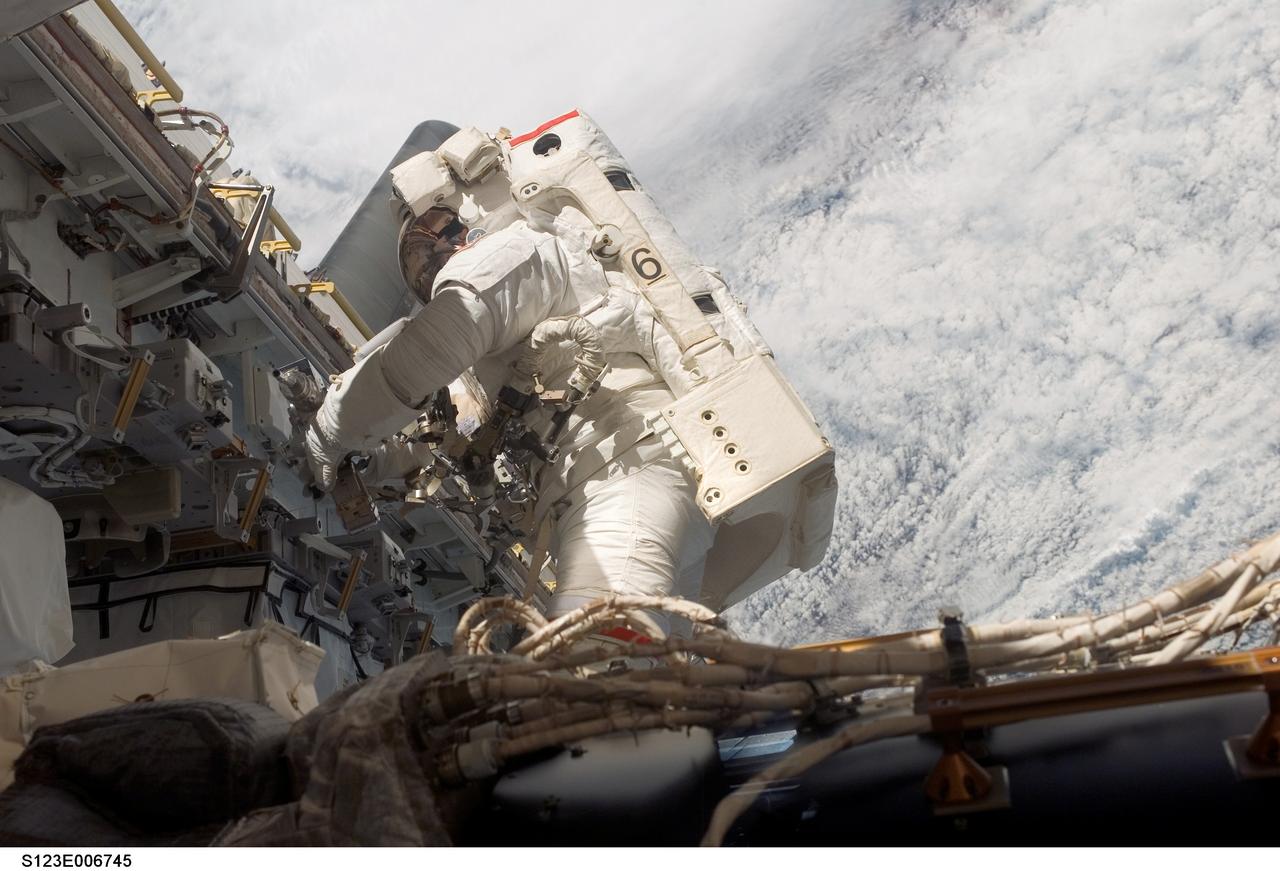
S123-E-006745 (17/18 March 2008) --- Astronaut Rick Linnehan, STS-123 mission specialist, participates in the mission's third scheduled session of extravehicular activity (EVA) as construction and maintenance continue on the International Space Station. During the 6-hour, 53-minute spacewalk, Linnehan and astronaut Robert L. Behnken (out of frame), mission specialist, installed a spare-parts platform and tool-handling assembly for Dextre, also known as the Special Purpose Dextrous Manipulator (SPDM). Among other tasks, they also checked out and calibrated Dextre's end effector and attached critical spare parts to an external stowage platform. The new robotic system is scheduled to be activated on a power and data grapple fixture located on the Destiny laboratory on flight day nine.
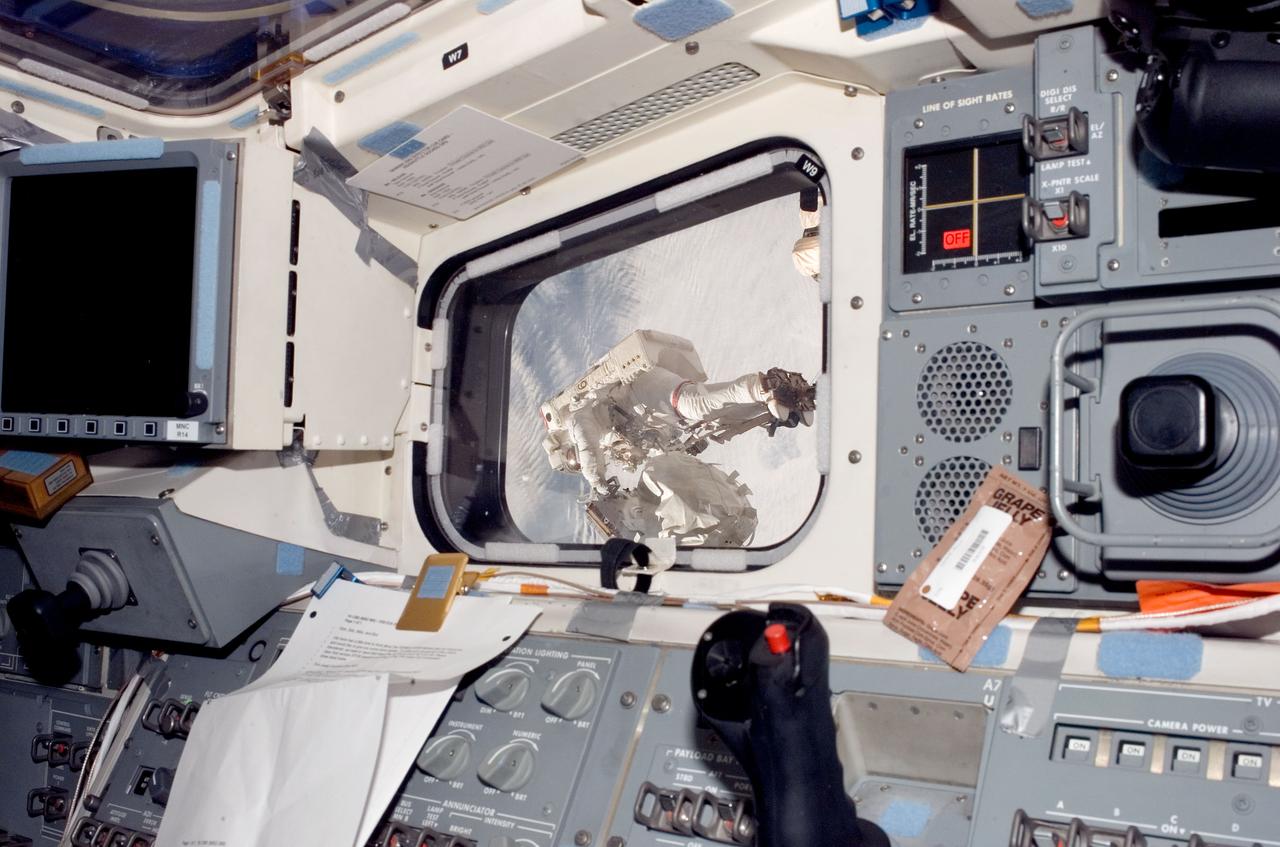
S123-E-006749 (17/18 March 2008) --- Visible through a window on Endeavour's aft flight deck, astronaut Rick Linnehan, STS-123 mission specialist, participates in the mission's third scheduled session of extravehicular activity (EVA) as construction and maintenance continue on the International Space Station. During the 6-hour, 53-minute spacewalk, Linnehan and astronaut Robert L. Behnken (out of frame), mission specialist, installed a spare-parts platform and tool-handling assembly for Dextre, also known as the Special Purpose Dextrous Manipulator (SPDM). Among other tasks, they also checked out and calibrated Dextre's end effector and attached critical spare parts to an external stowage platform. The new robotic system is scheduled to be activated on a power and data grapple fixture located on the Destiny laboratory on flight day nine.
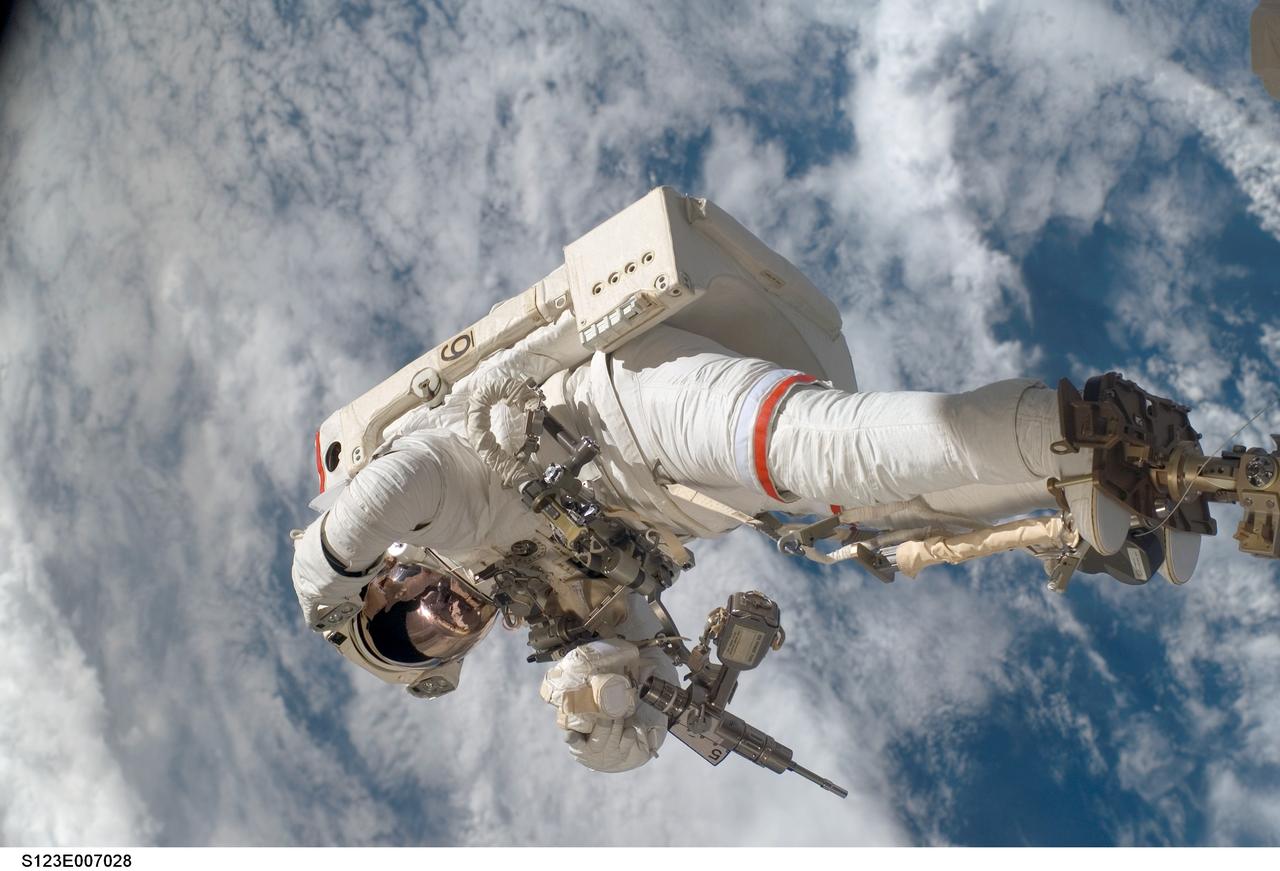
S123-E-007028 (17/18 March 2008) --- Anchored to a Canadarm2 mobile foot restraint, astronaut Rick Linnehan, STS-123 mission specialist, participates in the mission's third scheduled session of extravehicular activity (EVA) as construction and maintenance continue on the International Space Station. During the 6-hour, 53-minute spacewalk, Linnehan and astronaut Robert L. Behnken (out of frame), mission specialist, installed a spare-parts platform and tool-handling assembly for Dextre, also known as the Special Purpose Dextrous Manipulator (SPDM). Among other tasks, they also checked out and calibrated Dextre's end effector and attached critical spare parts to an external stowage platform. The new robotic system is scheduled to be activated on a power and data grapple fixture located on the Destiny laboratory on flight day nine.
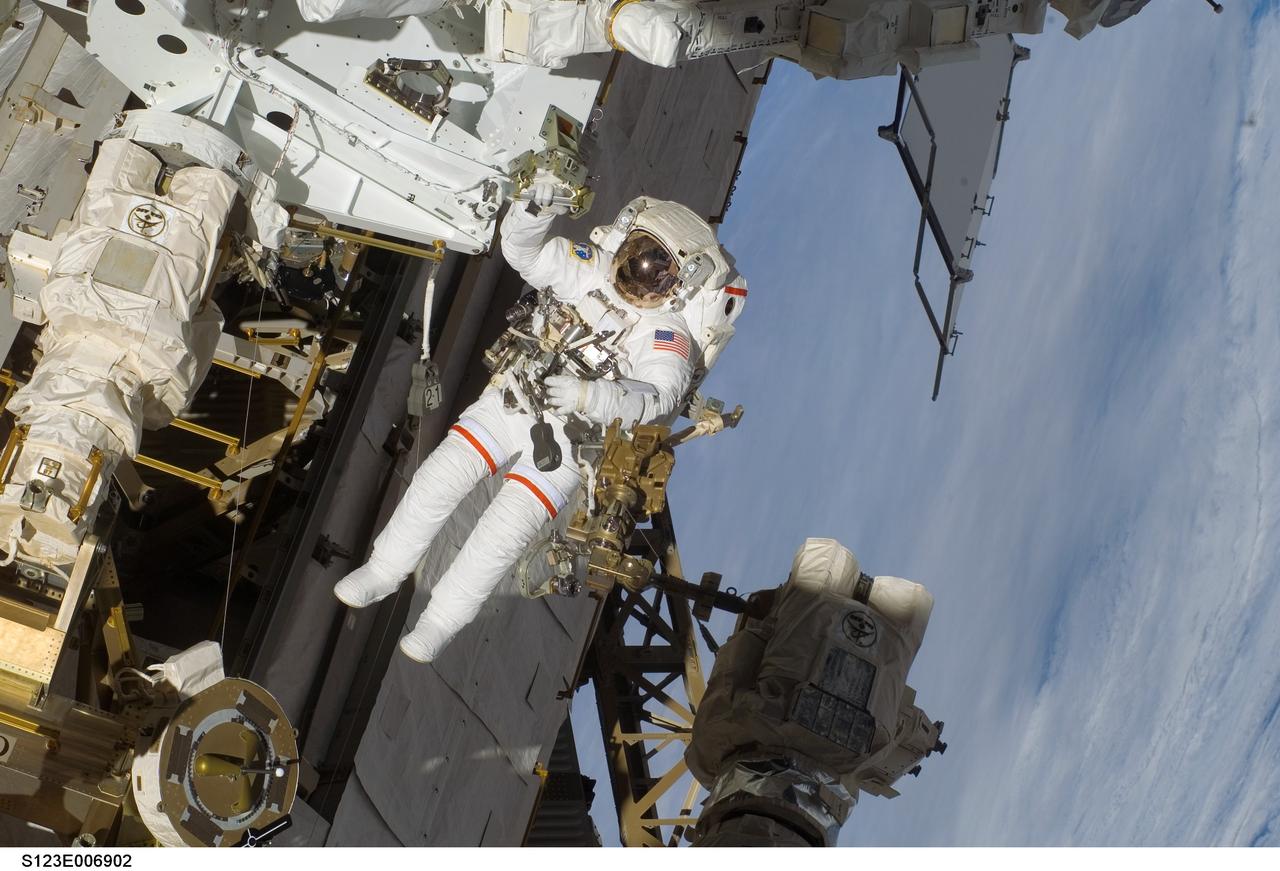
S123-E-006902 (17/18 March 2008) --- Astronaut Rick Linnehan, STS-123 mission specialist, participates in the mission's third scheduled session of extravehicular activity (EVA) as construction and maintenance continue on the International Space Station. During the 6-hour, 53-minute spacewalk, Linnehan and astronaut Robert L. Behnken (out of frame), mission specialist, installed a spare-parts platform and tool-handling assembly for Dextre, also known as the Special Purpose Dextrous Manipulator (SPDM). Among other tasks, they also checked out and calibrated Dextre's end effector and attached critical spare parts to an external stowage platform. The new robotic system is scheduled to be activated on a power and data grapple fixture located on the Destiny laboratory on flight day nine.
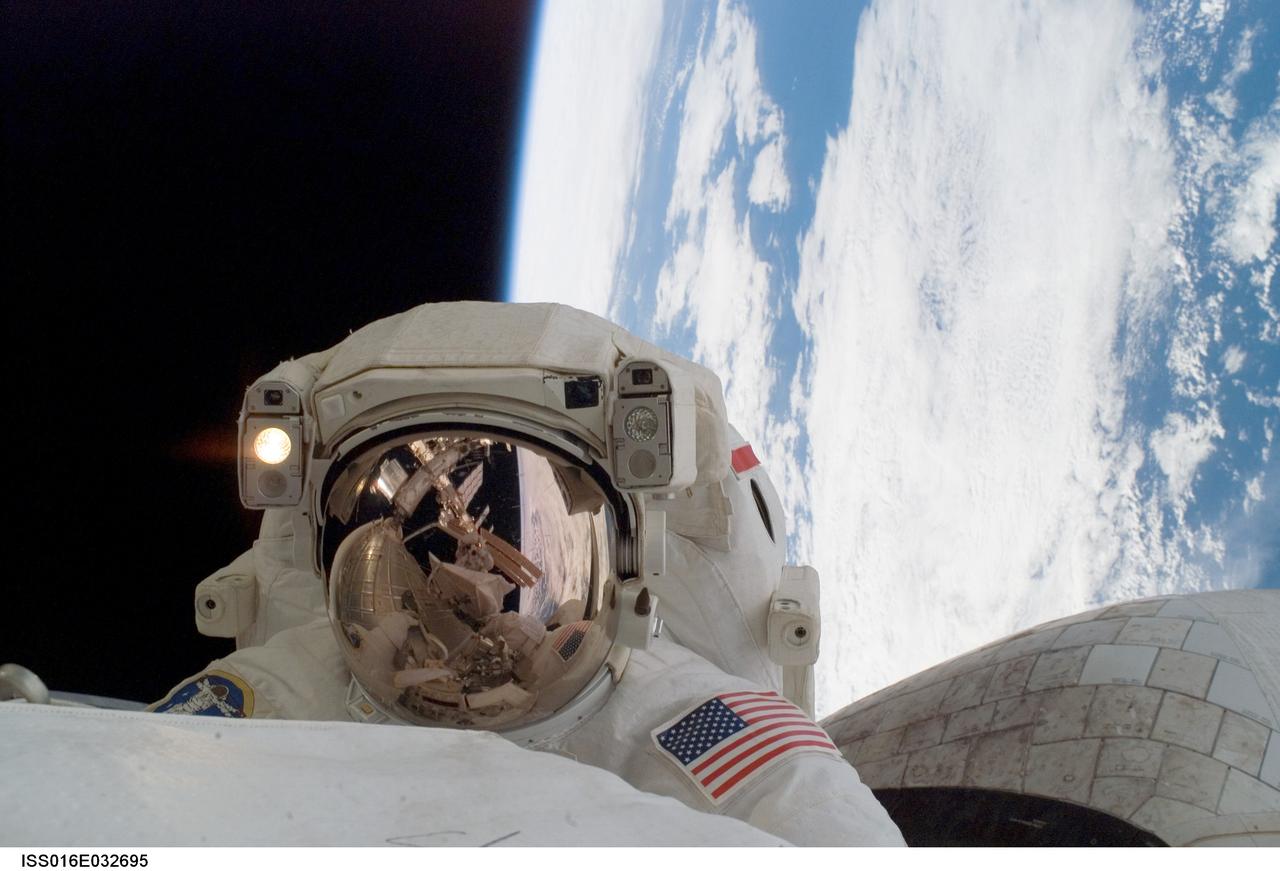
ISS016-E-032695 (13/14 March 2008) --- Astronaut Rick Linnehan, STS-123 mission specialist, participates in the mission's first scheduled session of extravehicular activity (EVA) as construction and maintenance continue on the International Space Station. During the seven-hour and one-minute spacewalk, Linnehan and astronaut Garrett Reisman (out of frame), Expedition 16 flight engineer, prepared the Japanese logistics module-pressurized section (JLP) for removal from Space Shuttle Endeavour's payload bay; opened the Centerline Berthing Camera System on top of the Harmony module; removed the Passive Common Berthing Mechanism and installed both the Orbital Replacement Unit (ORU) tool change out mechanisms on the Canadian-built Dextre robotic system, the final element of the station's Mobile Servicing System.
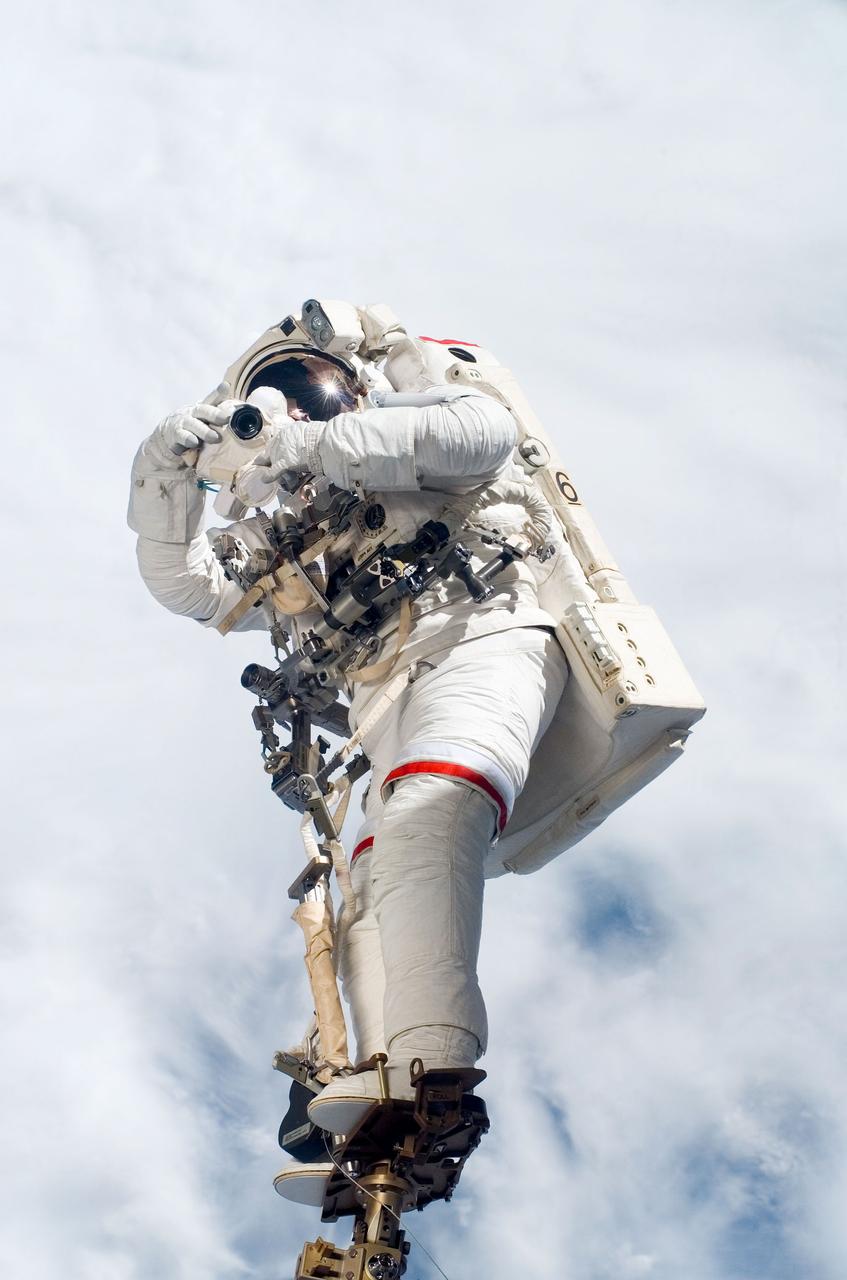
S123-E-007021 (17/18 March 2008) --- Anchored to a Canadarm2 mobile foot restraint, astronaut Rick Linnehan, STS-123 mission specialist, participates in the mission's third scheduled session of extravehicular activity (EVA) as construction and maintenance continue on the International Space Station. During the 6-hour, 53-minute spacewalk, Linnehan and astronaut Robert L. Behnken (out of frame), mission specialist, installed a spare-parts platform and tool-handling assembly for Dextre, also known as the Special Purpose Dextrous Manipulator (SPDM). Among other tasks, they also checked out and calibrated Dextre's end effector and attached critical spare parts to an external stowage platform. The new robotic system is scheduled to be activated on a power and data grapple fixture located on the Destiny laboratory on flight day nine.
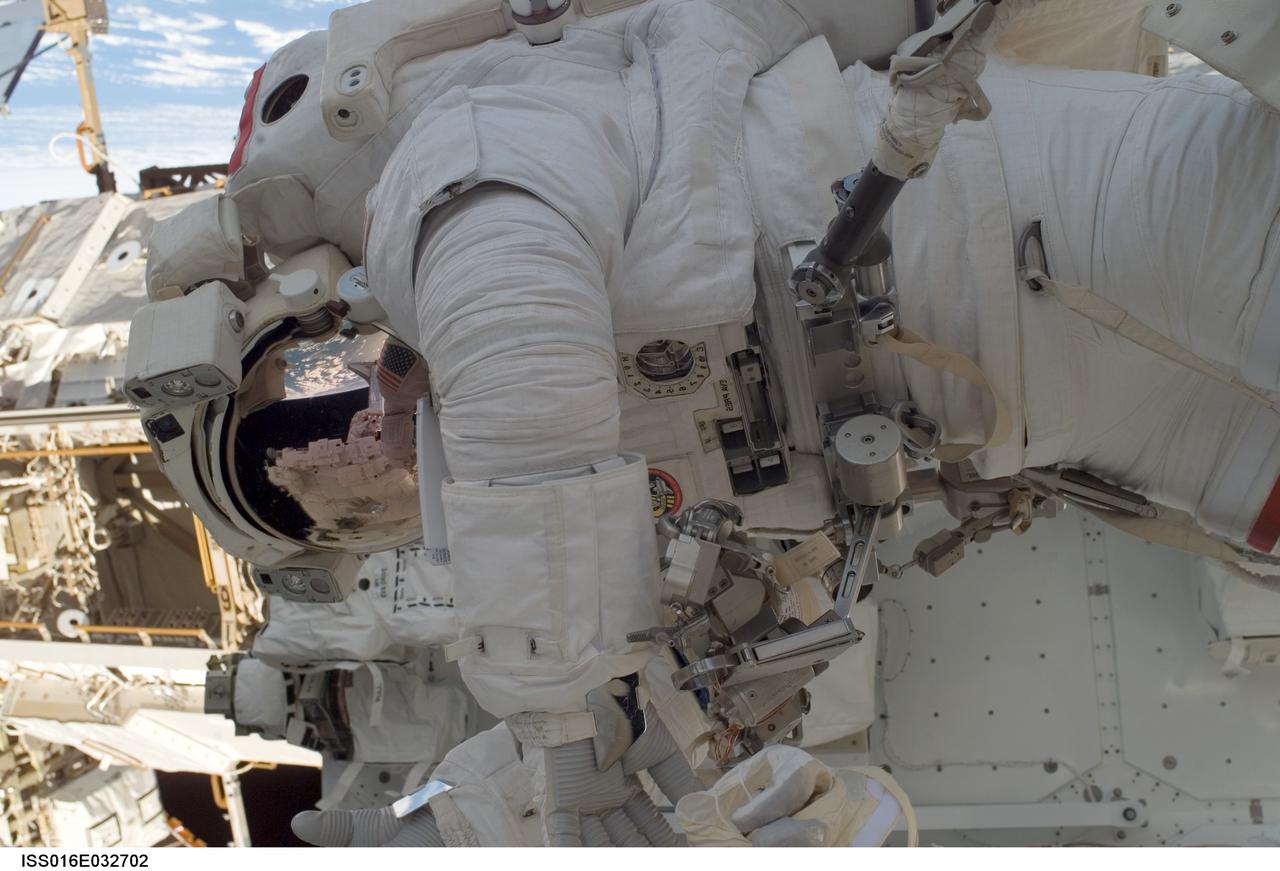
ISS016-E-032702 (13/14 March 2008) --- Astronaut Rick Linnehan, STS-123 mission specialist, participates in the mission's first scheduled session of extravehicular activity (EVA) as construction and maintenance continue on the International Space Station. During the seven-hour and one-minute spacewalk, Linnehan and astronaut Garrett Reisman (out of frame), Expedition 16 flight engineer, prepared the Japanese logistics module-pressurized section (JLP) for removal from Space Shuttle Endeavour's payload bay; opened the Centerline Berthing Camera System on top of the Harmony module; removed the Passive Common Berthing Mechanism and installed both the Orbital Replacement Unit (ORU) tool change out mechanisms on the Canadian-built Dextre robotic system, the final element of the station's Mobile Servicing System.
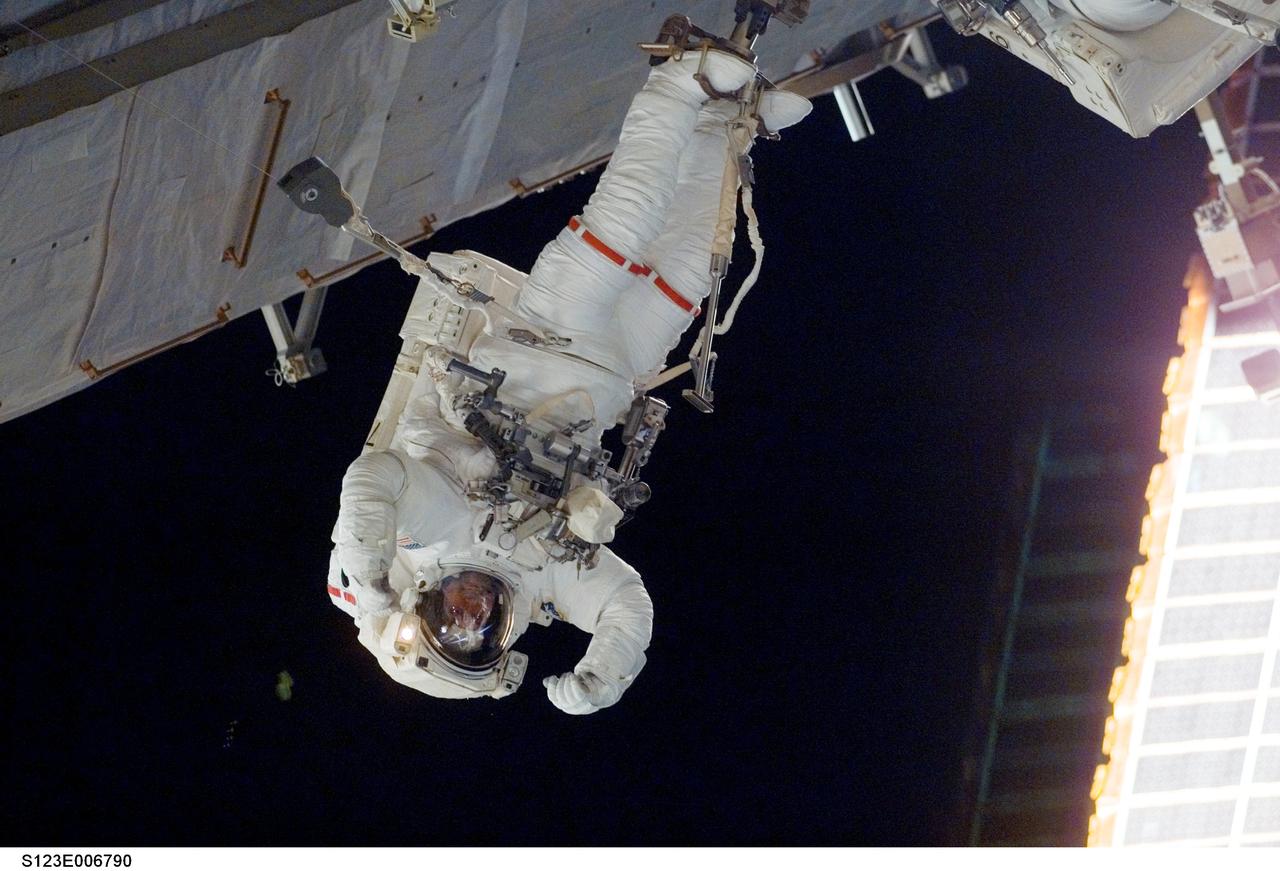
S123-E-006790 (15/16 March 2008) --- Astronauts Mike Foreman and Rick Linnehan (partially out of frame), both STS-123 mission specialists, participate in the mission's second scheduled session of extravehicular activity (EVA) as construction and maintenance continue on the International Space Station. During the 7-hour, 8-minute spacewalk, Linnehan and Foreman, assembled the stick-figure-shaped Dextre, also known as the Special Purpose Dextrous Manipulator (SPDM), a task that included attaching its two arms. Designed for station maintenance and service, Dextre is capable of sensing forces and movement of objects it is manipulating. It can automatically compensate for those forces and movements to ensure an object is moved smoothly. Dextre is the final element of the station's Mobile Servicing System.
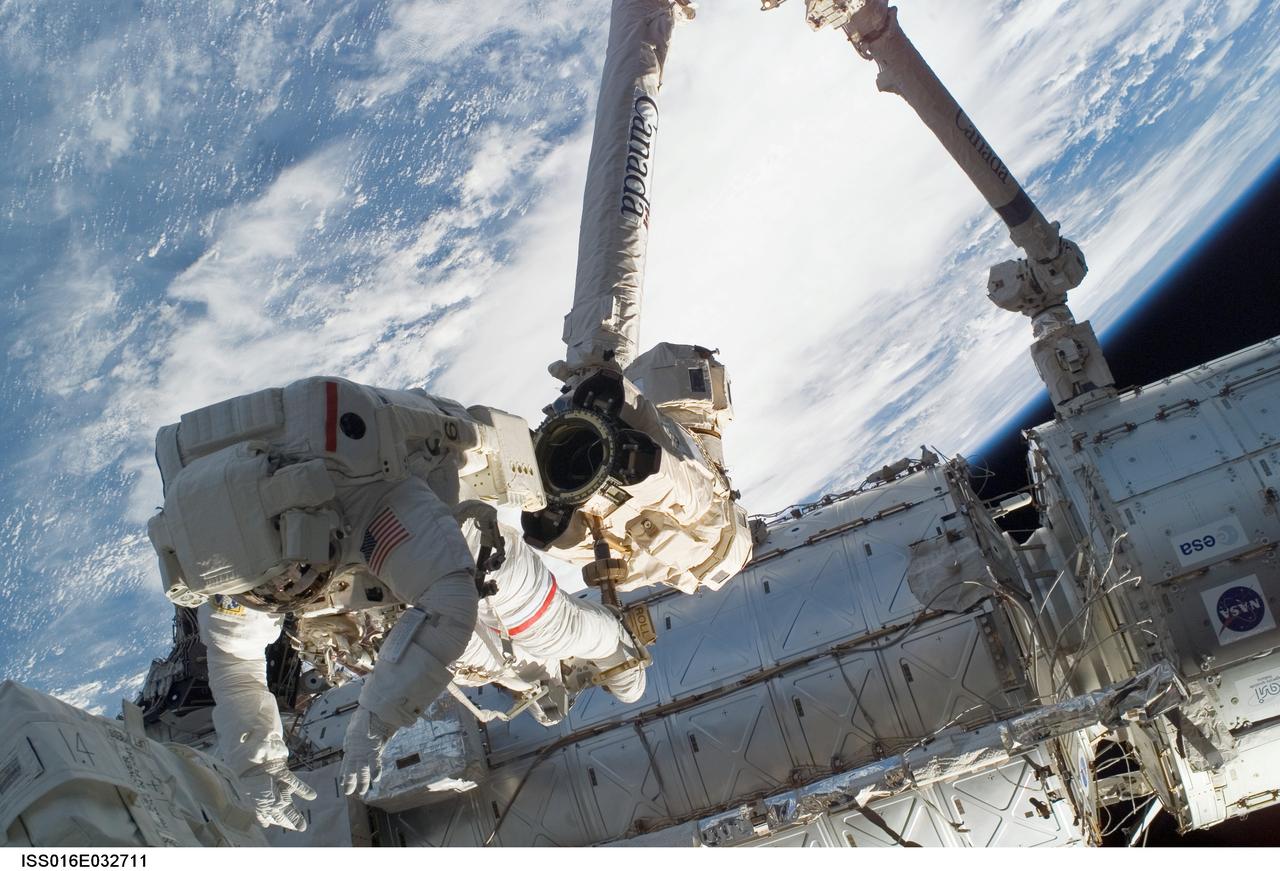
ISS016-E-032711 (13/14 March 2008) --- Anchored to a Canadarm2 mobile foot restraint, astronaut Rick Linnehan, STS-123 mission specialist, participates in the mission's first scheduled session of extravehicular activity (EVA) as construction and maintenance continue on the International Space Station. During the seven-hour and one-minute spacewalk, Linnehan and astronaut Garrett Reisman (out of frame), Expedition 16 flight engineer, prepared the Japanese logistics module-pressurized section (JLP) for removal from Space Shuttle Endeavour's payload bay; opened the Centerline Berthing Camera System on top of the Harmony module; removed the Passive Common Berthing Mechanism and installed both the Orbital Replacement Unit (ORU) tool change out mechanisms on the Canadian-built Dextre robotic system, the final element of the station's Mobile Servicing System.
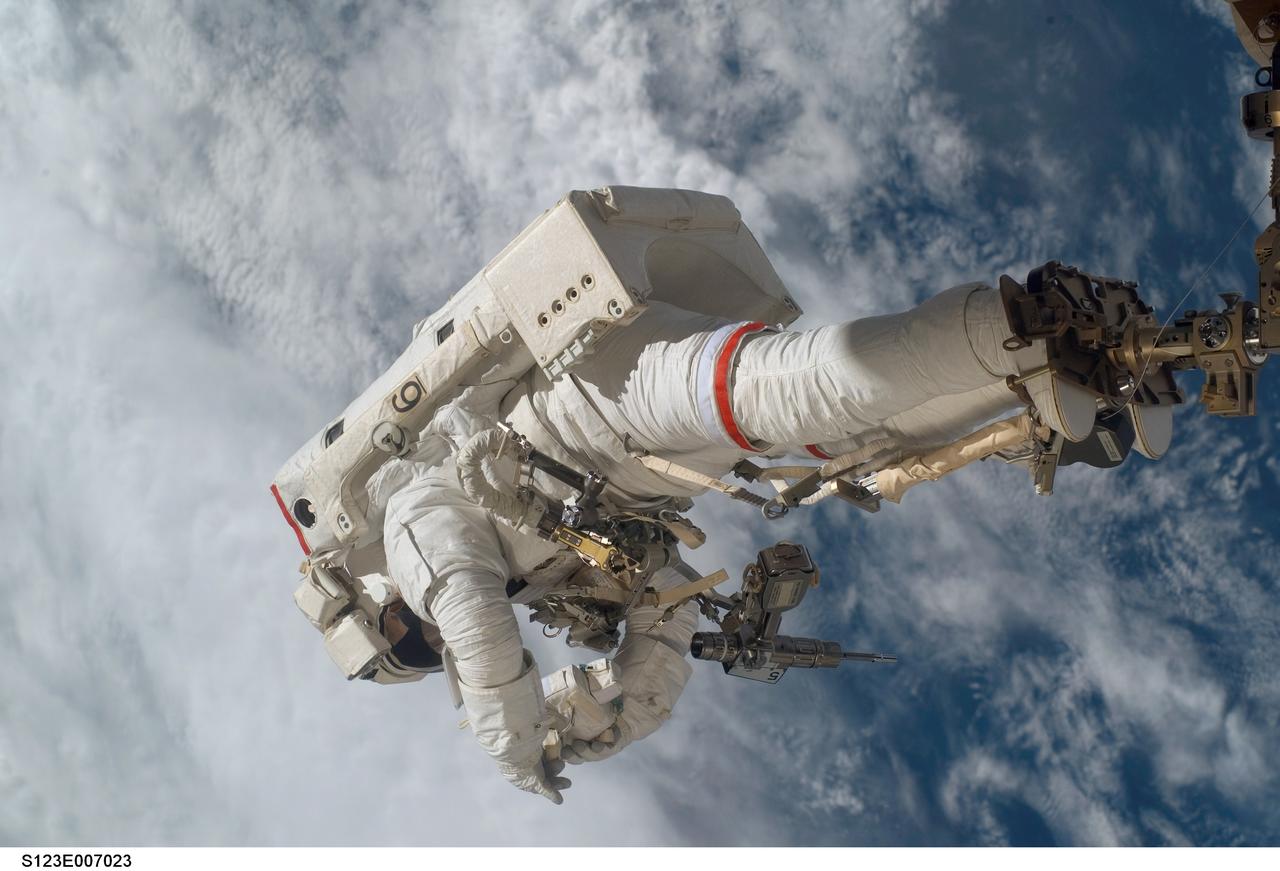
S123-E-007023 (17/18 March 2008) --- Anchored to a Canadarm2 mobile foot restraint, astronaut Rick Linnehan, STS-123 mission specialist, participates in the mission's third scheduled session of extravehicular activity (EVA) as construction and maintenance continue on the International Space Station. During the 6-hour, 53-minute spacewalk, Linnehan and astronaut Robert L. Behnken (out of frame), mission specialist, installed a spare-parts platform and tool-handling assembly for Dextre, also known as the Special Purpose Dextrous Manipulator (SPDM). Among other tasks, they also checked out and calibrated Dextre's end effector and attached critical spare parts to an external stowage platform. The new robotic system is scheduled to be activated on a power and data grapple fixture located on the Destiny laboratory on flight day nine.
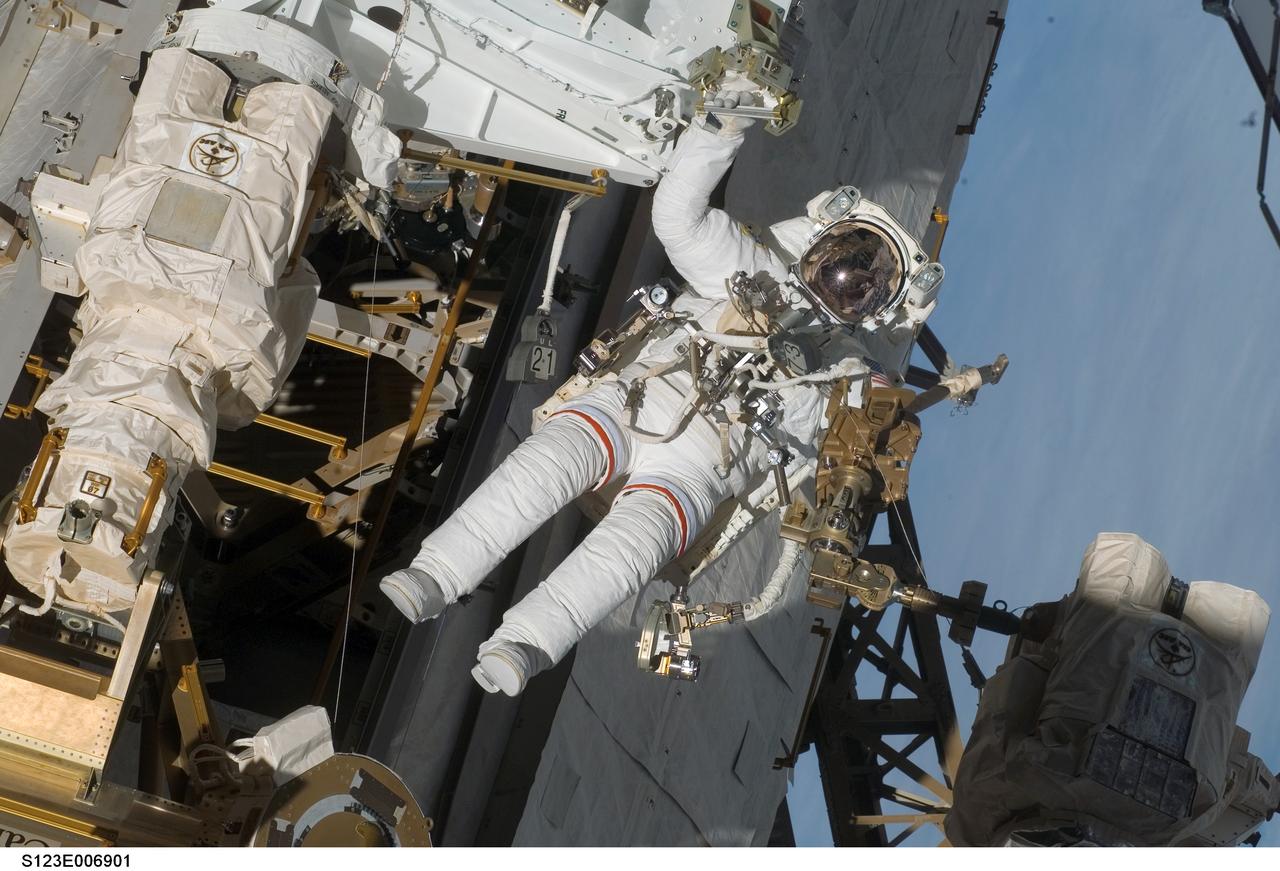
S123-E-006901 (17/18 March 2008) --- Astronaut Rick Linnehan, STS-123 mission specialist, participates in the mission's third scheduled session of extravehicular activity (EVA) as construction and maintenance continue on the International Space Station. During the 6-hour, 53-minute spacewalk, Linnehan and astronaut Robert L. Behnken (out of frame), mission specialist, installed a spare-parts platform and tool-handling assembly for Dextre, also known as the Special Purpose Dextrous Manipulator (SPDM). Among other tasks, they also checked out and calibrated Dextre's end effector and attached critical spare parts to an external stowage platform. The new robotic system is scheduled to be activated on a power and data grapple fixture located on the Destiny laboratory on flight day nine.
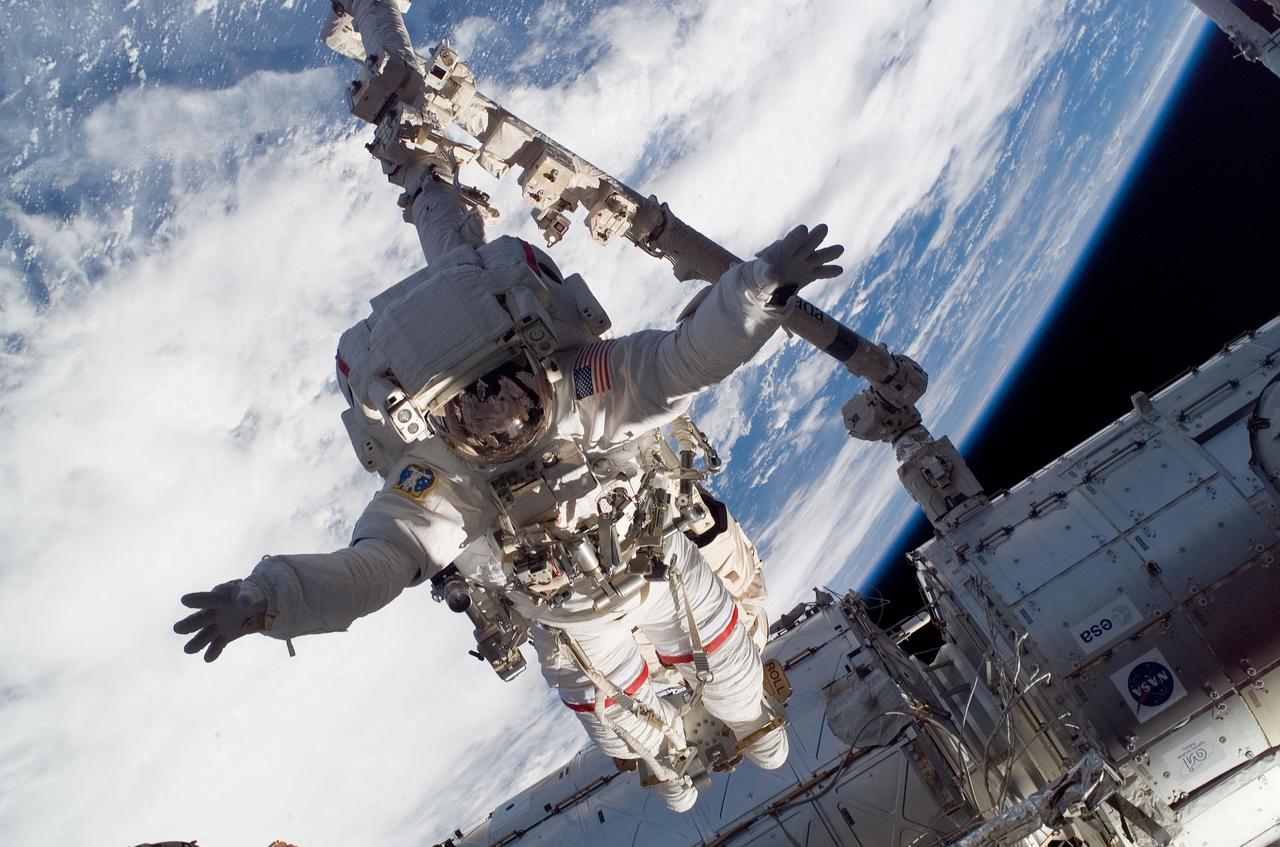
ISS016-E-032708 (13/14 March 2008) --- Anchored to a Canadarm2 mobile foot restraint, astronaut Rick Linnehan, STS-123 mission specialist, participates in the mission's first scheduled session of extravehicular activity (EVA) as construction and maintenance continue on the International Space Station. During the seven-hour and one-minute spacewalk, Linnehan and astronaut Garrett Reisman (out of frame), Expedition 16 flight engineer, prepared the Japanese logistics module-pressurized section (JLP) for removal from Space Shuttle Endeavour's payload bay; opened the Centerline Berthing Camera System on top of the Harmony module; removed the Passive Common Berthing Mechanism and installed both the Orbital Replacement Unit (ORU) tool change out mechanisms on the Canadian-built Dextre robotic system, the final element of the station's Mobile Servicing System.
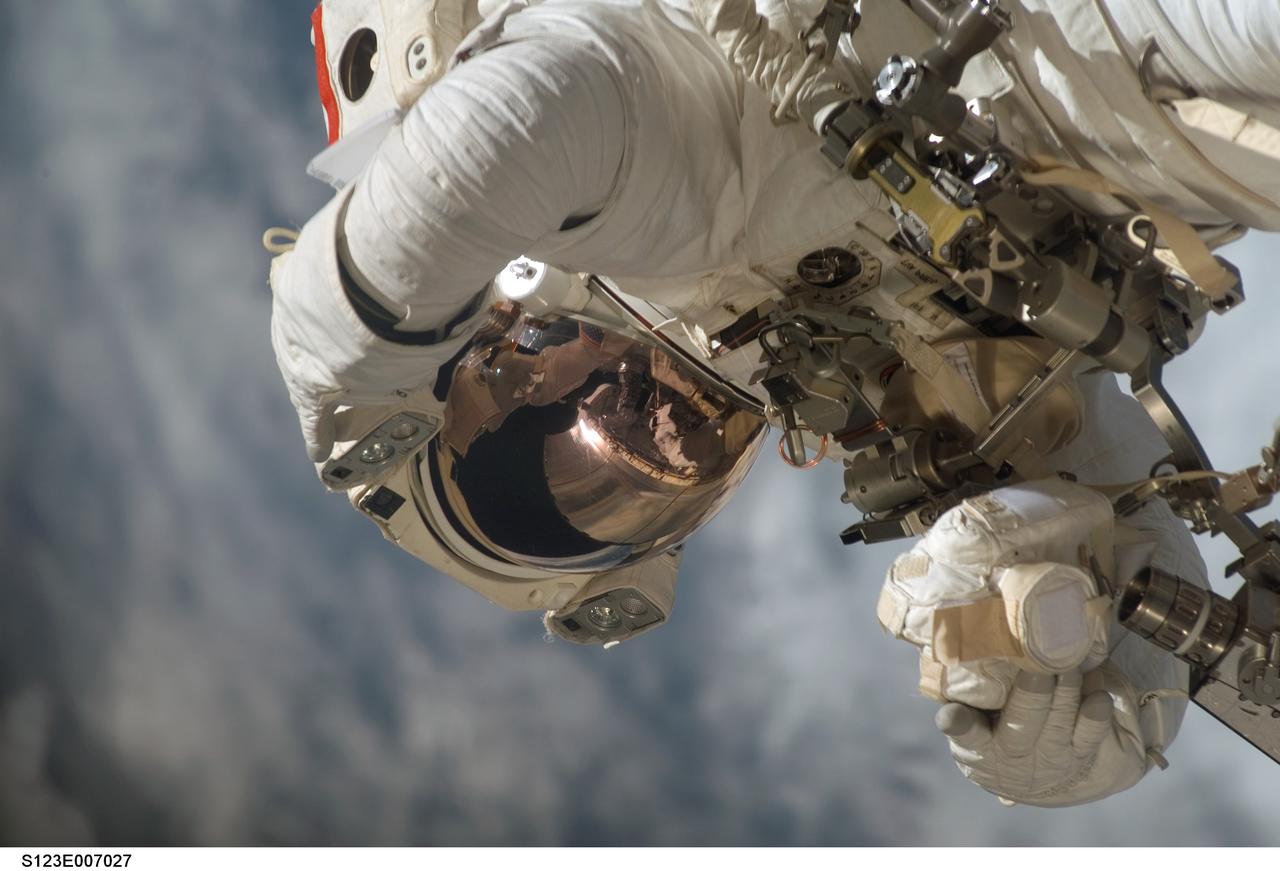
S123-E-007027 (17/18 March 2008) --- Astronaut Rick Linnehan, STS-123 mission specialist, participates in the mission's third scheduled session of extravehicular activity (EVA) as construction and maintenance continue on the International Space Station. During the 6-hour, 53-minute spacewalk, Linnehan and astronaut Robert L. Behnken (out of frame), mission specialist, installed a spare-parts platform and tool-handling assembly for Dextre, also known as the Special Purpose Dextrous Manipulator (SPDM). Among other tasks, they also checked out and calibrated Dextre's end effector and attached critical spare parts to an external stowage platform. The new robotic system is scheduled to be activated on a power and data grapple fixture located on the Destiny laboratory on flight day nine.
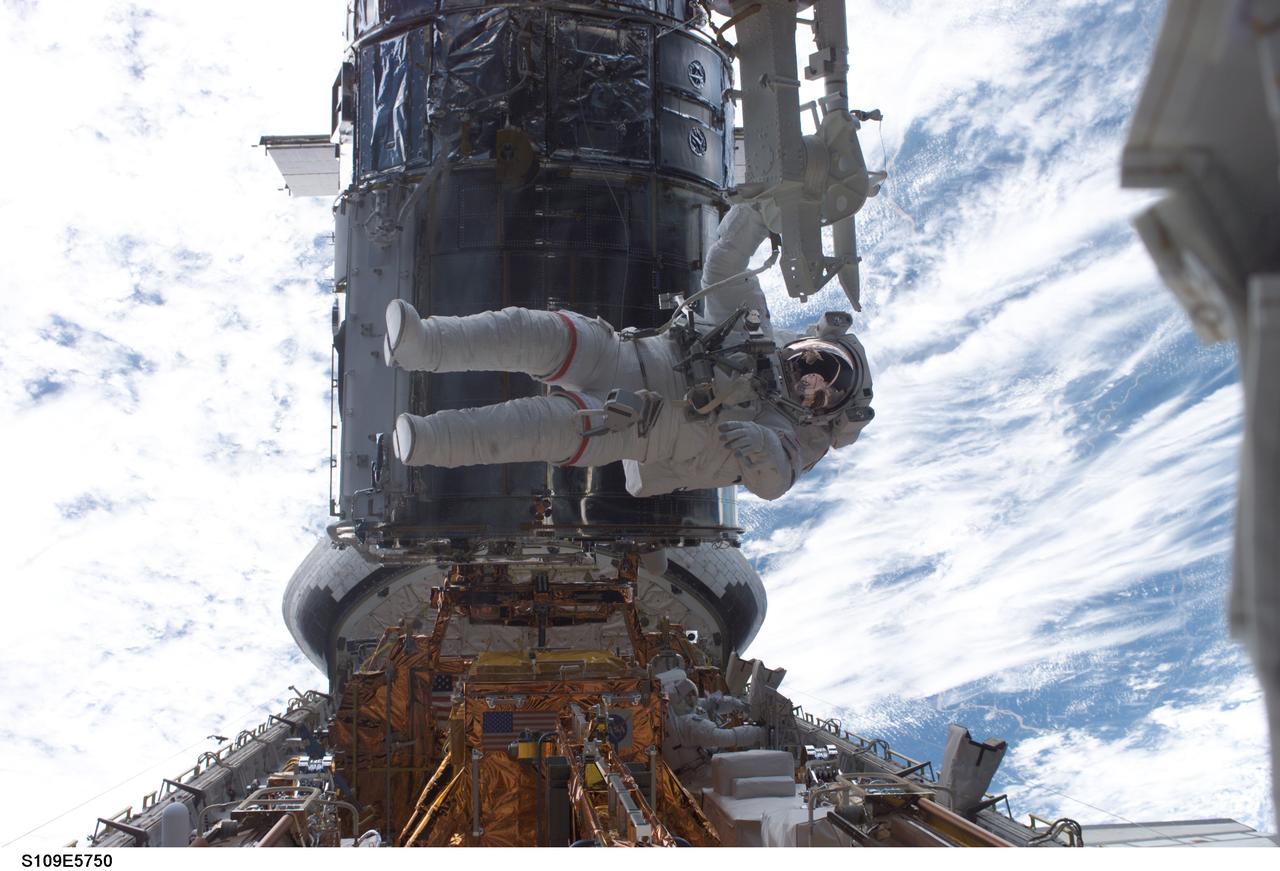
STS109-E-5750 (8 March 2002) --- Astronaut John M. Grunsfeld, STS-109 payload commander, floats near the giant Hubble Space Telescope (HST) temporarily hosted in the Space Shuttle Columbia’s cargo bay. Astronaut Richard M. Linnehan (lower right), mission specialist, works in tandem with Grunsfeld during this fifth and final scheduled space walk. Activities for EVA-5 centered around the Near-Infrared Camera and Multi-Object Spectrometer (NICMOS) to install a Cryogenic Cooler and its Cooling System Radiator. The space walk was completed at 10:06 a.m. CST (1606 GMT), March 8, 2002. The image was recorded with a digital still camera.
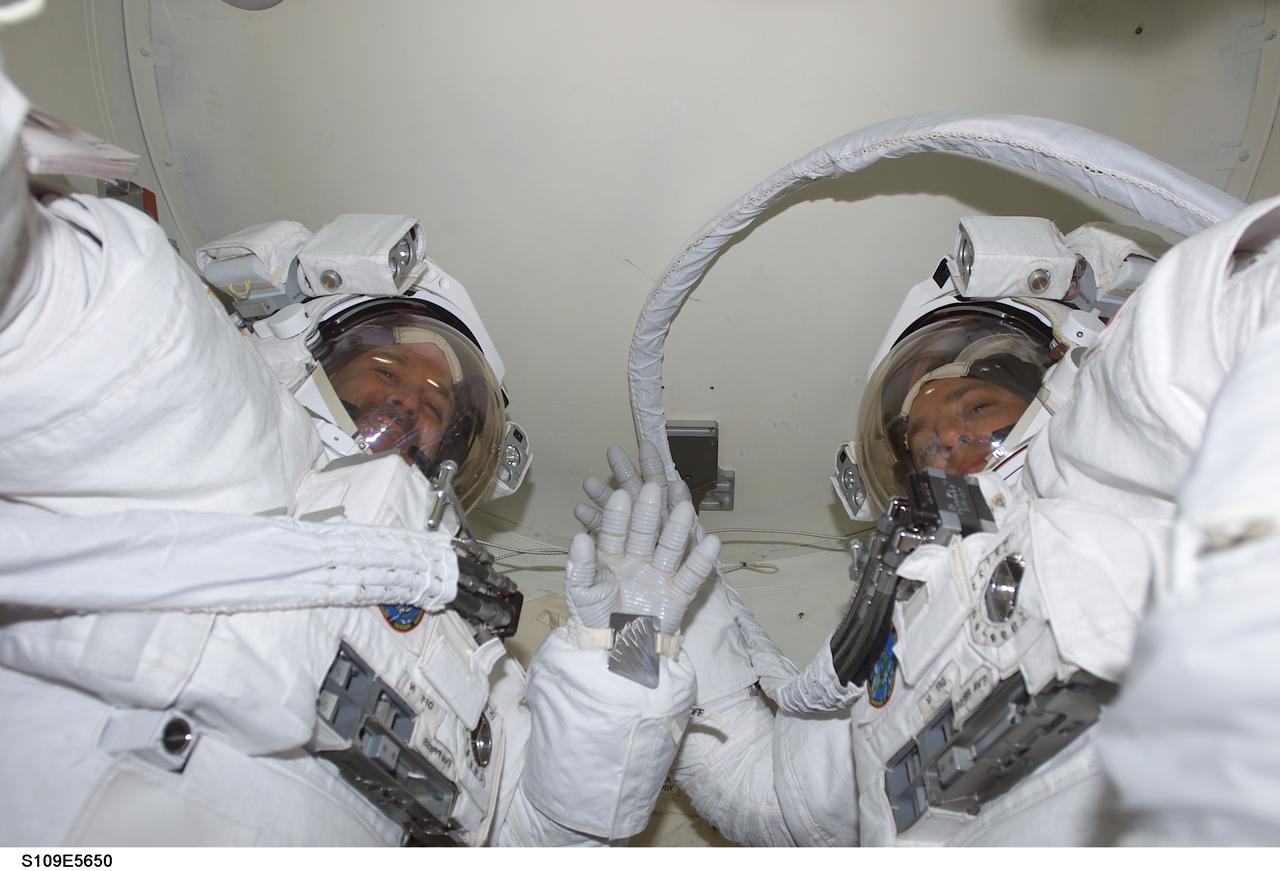
STS109-E-5650 (6 March 2002) --- All suited up and ready for the middle of five scheduled space walks to perform work on the Hubble Space Telescope (HST) are astronauts John M. Grunsfeld (left), payload commander, and Richard M. Linnehan. The two mission specialists shared an extravehicular activity (EVA) just two days ago, successfully replacing the starboard solar array on the Hubble. This image was recorded with a digital still camera.
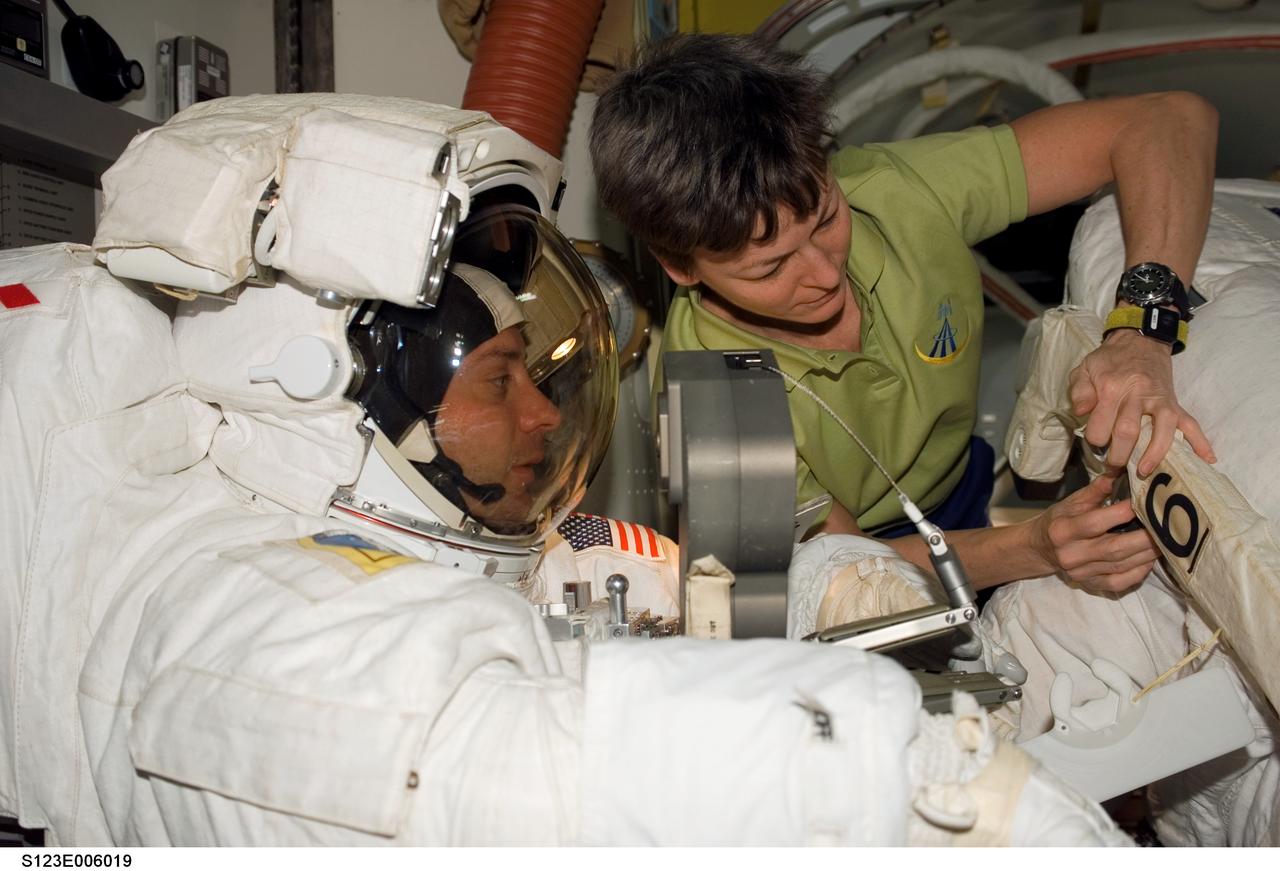
S123-E-006019 (14 March 2008) --- Astronaut Peggy Whitson, Expedition 16 commander, assists astronauts Garrett Reisman, Expedition 16 flight engineer, and Rick Linnehan (partially out of frame), STS-123 mission specialist, in doffing their Extravehicular Mobility Unit (EMU) spacesuits in the Quest Airlock of the International Space Station as the mission's first session of extravehicular activity (EVA) draws to a close.
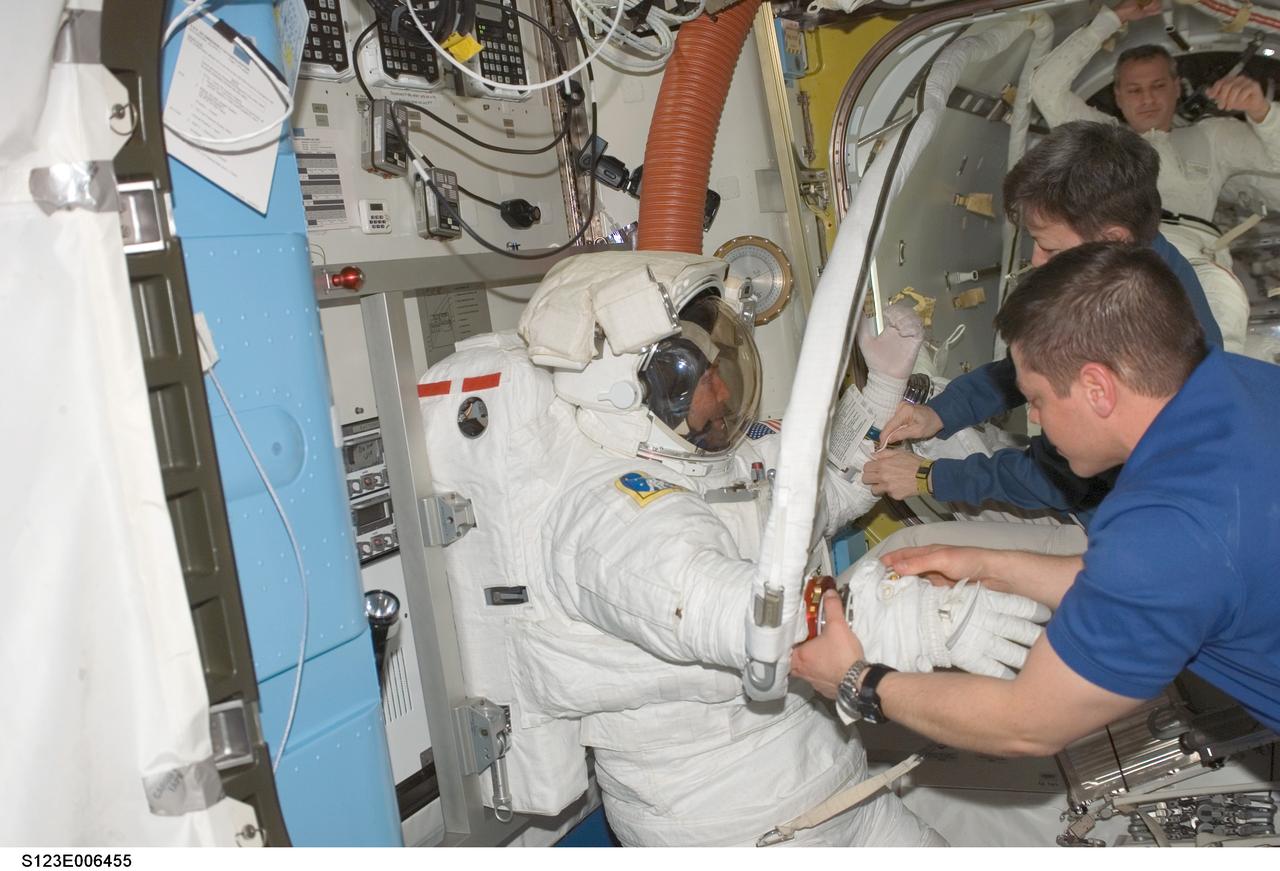
S123-E-006455 (16 March 2008) --- Astronauts Mike Foreman (left) and Rick Linnehan (background), both STS-123 mission specialists, are pictured in the Quest Airlock of the International Space Station as the mission's second session of extravehicular activity (EVA) draws to a close. Astronauts Peggy Whitson, Expedition 16 commander, and Robert L. Behnken, STS-123 mission specialist, assist the crewmembers with the doffing of the spacesuits.
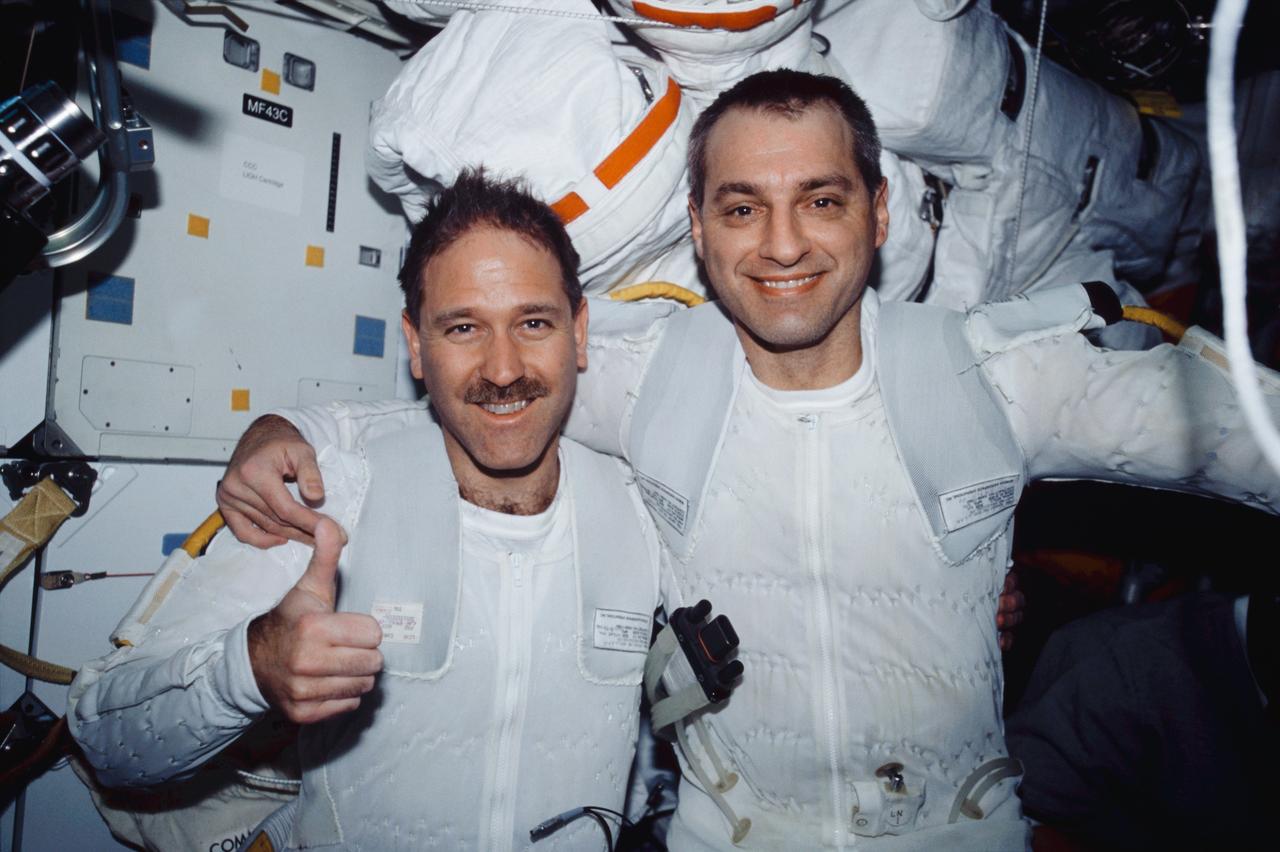
STS109-349-027 (4 March 2002) --- Astronauts John M. Grunsfeld and Richard M. Linnehan, STS-109 payload commander and mission specialist, respectively, wearing the liquid cooling and ventilation garment that complements the Extravehicular Mobility Unit (EMU) space suit, are photographed on the mid deck of the Space Shuttle Columbia after the mission’s first session of extravehicular activity (EVA). The EVA-1 team replaced one of the telescope’s two second-generation solar arrays, which is also known as SA2, and a Diode Box Assembly. The solar array was replaced with a new, third-generation solar array, which is called SA3. The space walkers also did some prep work for STS-109’s other space walks.
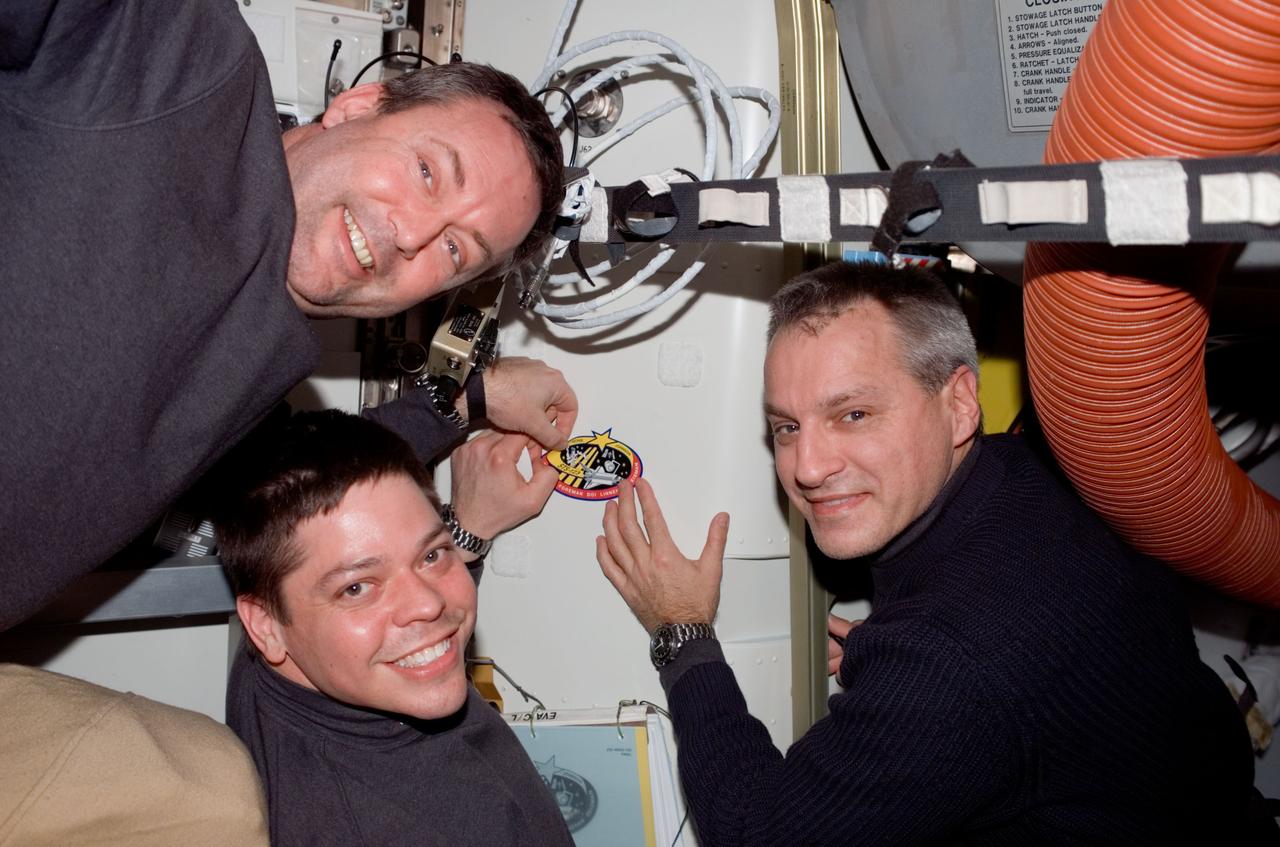
S123-E-008756 (23 March 2008) --- Astronauts Mike Foreman (left), Robert L. Behnken and Rick Linnehan, all STS-123 mission specialists, add the STS-123 patch to the growing collection of insignias representing crews who have performed spacewalks from the Quest Airlock of the International Space Station.
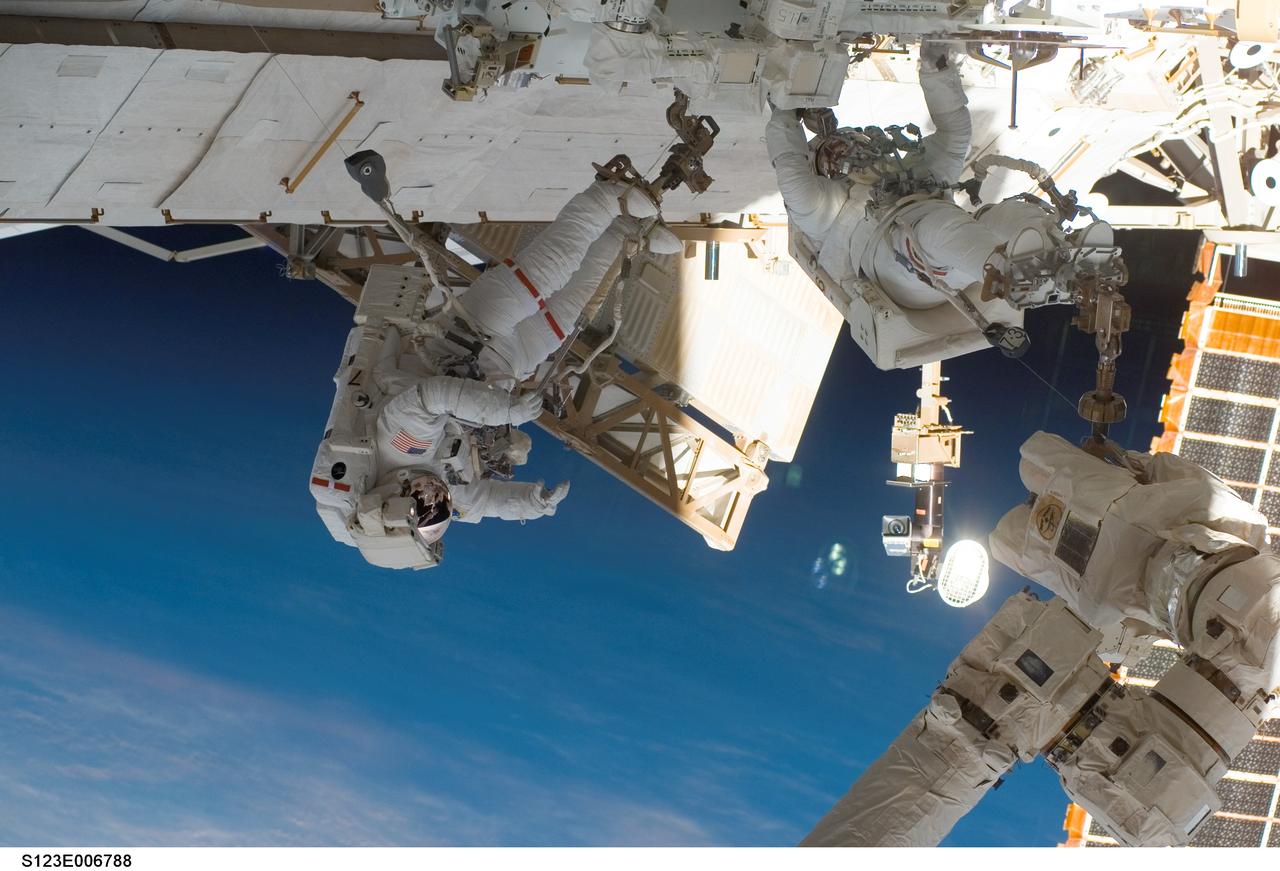
S123-E-006788 (15/16 March 2008) --- Astronauts Mike Foreman (left) and Rick Linnehan, both STS-123 mission specialists, participate in the mission's second scheduled session of extravehicular activity (EVA) as construction and maintenance continue on the International Space Station. During the 7-hour, 8-minute spacewalk, Linnehan and Foreman, assembled the stick-figure-shaped Dextre, also known as the Special Purpose Dextrous Manipulator (SPDM), a task that included attaching its two arms. Designed for station maintenance and service, Dextre is capable of sensing forces and movement of objects it is manipulating. It can automatically compensate for those forces and movements to ensure an object is moved smoothly. Dextre is the final element of the station's Mobile Servicing System.
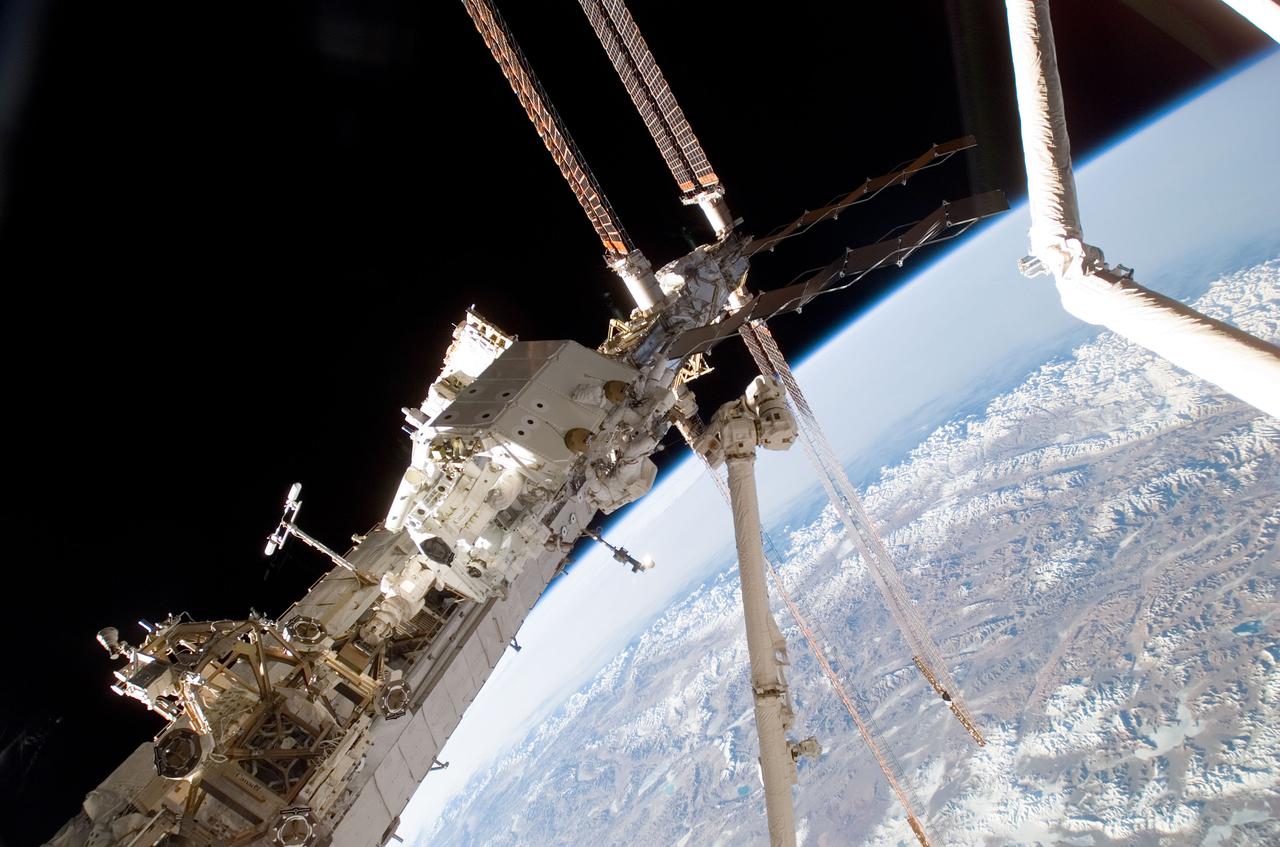
S123-E-006400 (15/16 March 2008) --- Astronauts Rick Linnehan and Mike Foreman, both STS-123 mission specialists, participate in the mission's second scheduled session of extravehicular activity (EVA) as construction and maintenance continue on the International Space Station. During the 7-hour, 8-minute spacewalk, Linnehan and Foreman, assembled the stick-figure-shaped Dextre, also known as the Special Purpose Dextrous Manipulator (SPDM), a task that included attaching its two arms. Designed for station maintenance and service, Dextre is capable of sensing forces and movement of objects it is manipulating. It can automatically compensate for those forces and movements to ensure an object is moved smoothly. Dextre is the final element of the station's Mobile Servicing System. The blackness of space and Earth's horizon provide the backdrop for the scene.
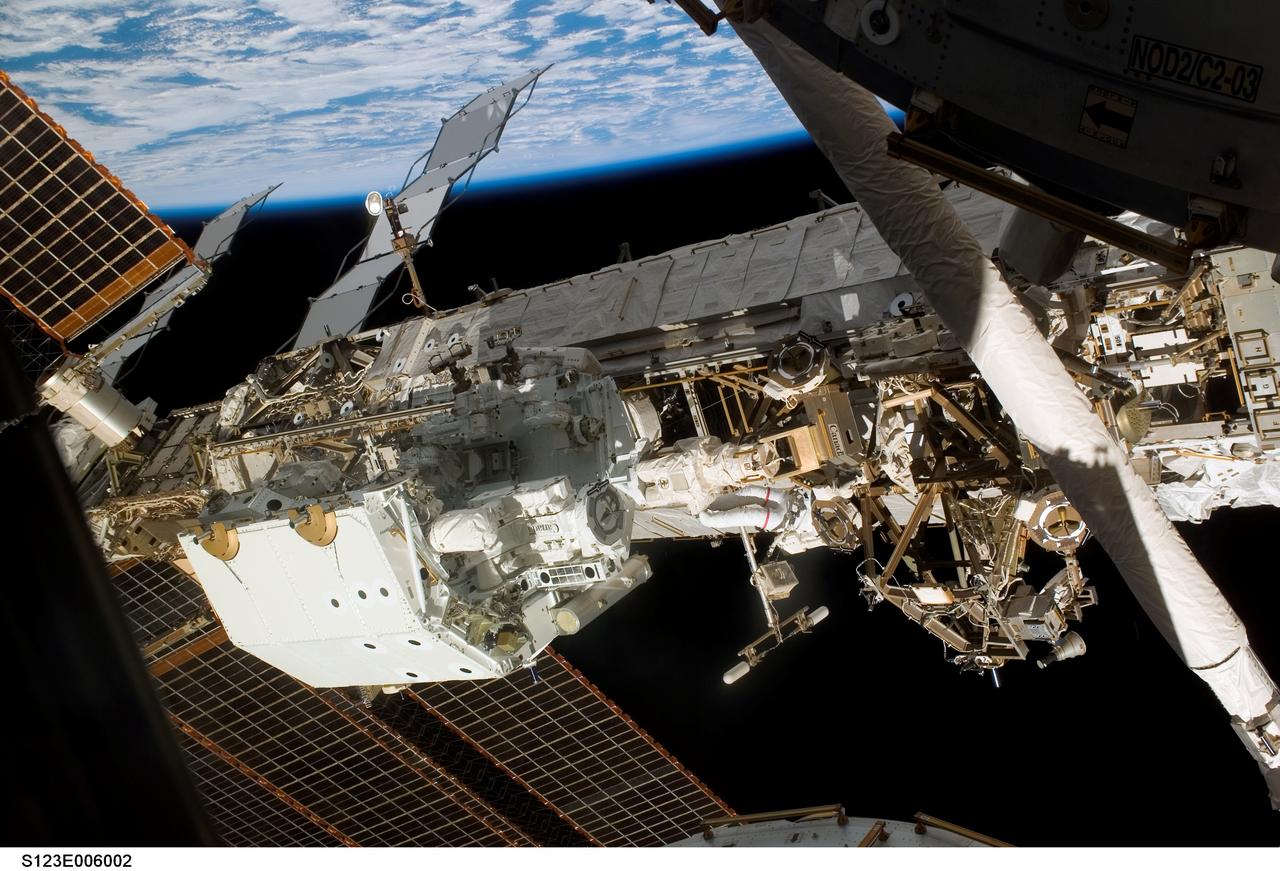
S123-E-006002 (13/14 March 2008) --- Astronaut Rick Linnehan (center), STS-123 mission specialist, participates in the mission's first scheduled session of extravehicular activity (EVA) as construction and maintenance continue on the International Space Station. During the seven-hour and one-minute spacewalk, Linnehan and astronaut Garrett Reisman (out of frame), Expedition 16 flight engineer, prepared the Japanese logistics module-pressurized section (JLP) for removal from Space Shuttle Endeavour's payload bay; opened the Centerline Berthing Camera System on top of the Harmony module; removed the Passive Common Berthing Mechanism and installed both the Orbital Replacement Unit (ORU) tool change out mechanisms on the Canadian-built Dextre robotic system (center left), the final element of the station's Mobile Servicing System.
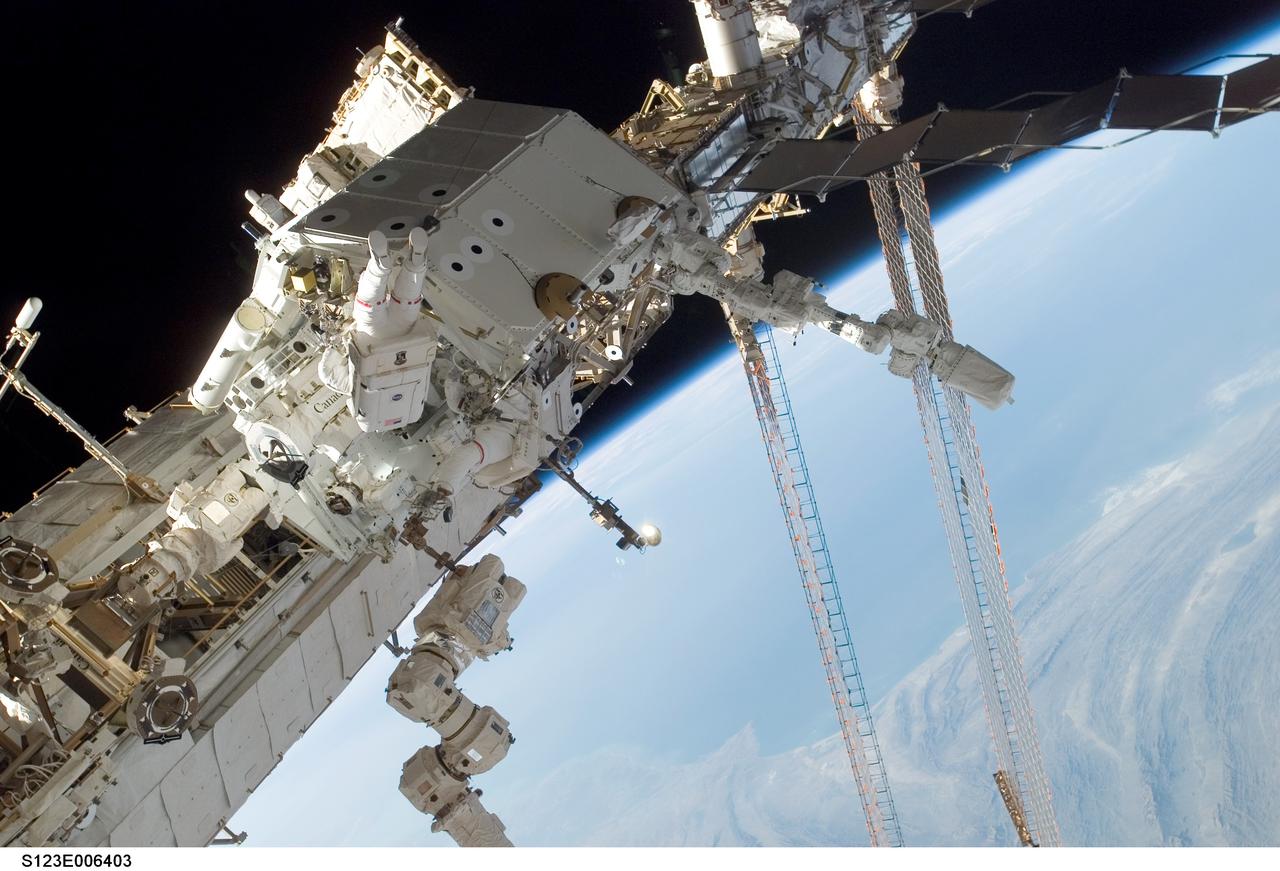
S123-E-006403 (15/16 March 2008) --- Astronauts Rick Linnehan and Mike Foreman, both STS-123 mission specialists, participate in the mission's second scheduled session of extravehicular activity (EVA) as construction and maintenance continue on the International Space Station. During the 7-hour, 8-minute spacewalk, Linnehan and Foreman, assembled the stick-figure-shaped Dextre, also known as the Special Purpose Dextrous Manipulator (SPDM), a task that included attaching its two arms. Designed for station maintenance and service, Dextre is capable of sensing forces and movement of objects it is manipulating. It can automatically compensate for those forces and movements to ensure an object is moved smoothly. Dextre is the final element of the station's Mobile Servicing System. The blackness of space and Earth's horizon provide the backdrop for the scene.
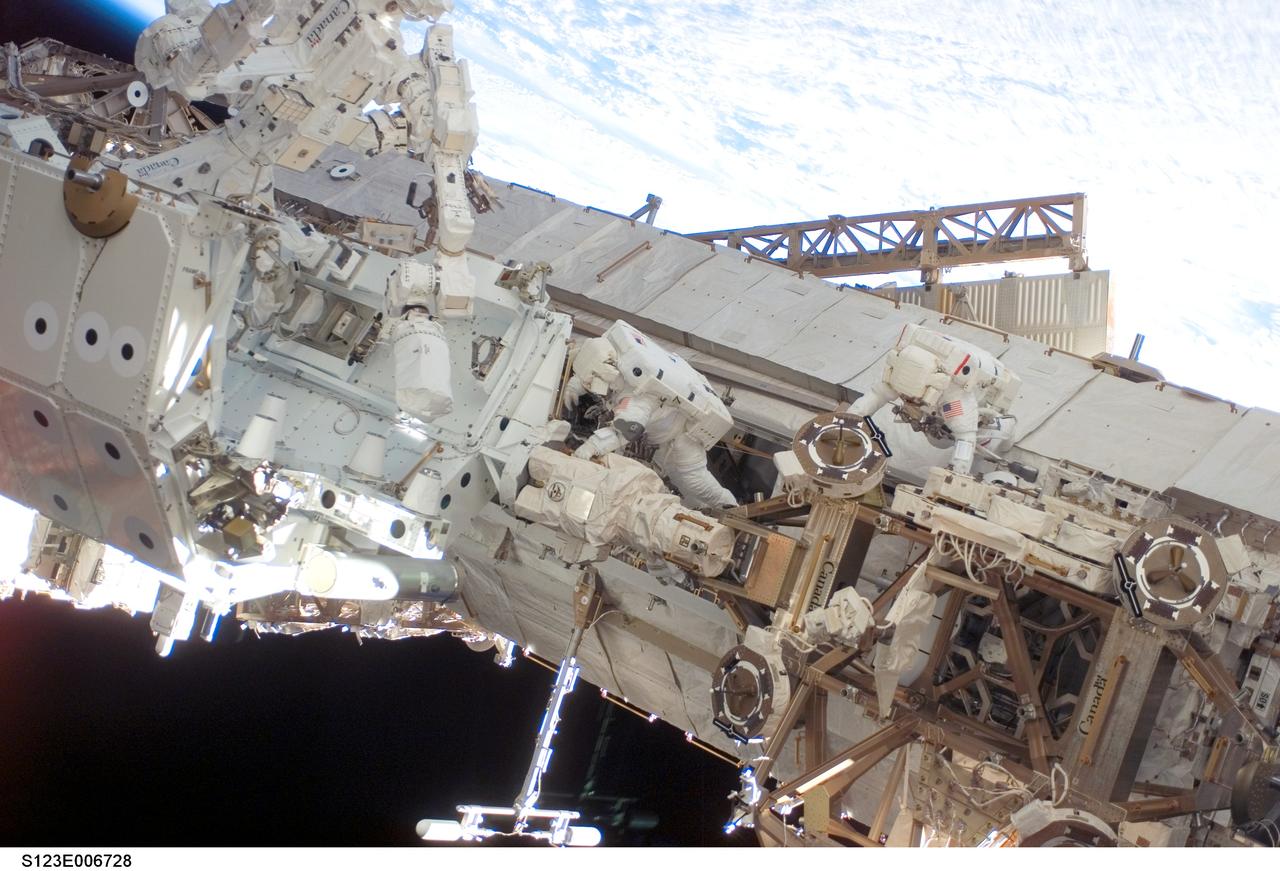
S123-E-006728 (17/18 March 2008) --- Astronauts Rick Linnehan (right) and Robert L. Behnken, both STS-123 mission specialists, participate in the mission's third scheduled session of extravehicular activity (EVA) as construction and maintenance continue on the International Space Station. During the 6-hour, 53-minute spacewalk, Linnehan and Behnken installed a spare-parts platform and tool-handling assembly for Dextre, also known as the Special Purpose Dextrous Manipulator (SPDM). Among other tasks, they also checked out and calibrated Dextre's end effector and attached critical spare parts to an external stowage platform. The new robotic system is scheduled to be activated on a power and data grapple fixture located on the Destiny laboratory on flight day nine.

S123-E-006787 (15/16 March 2008) --- Astronauts Mike Foreman and Rick Linnehan (partially out of frame), both STS-123 mission specialists, participate in the mission's second scheduled session of extravehicular activity (EVA) as construction and maintenance continue on the International Space Station. During the 7-hour, 8-minute spacewalk, Linnehan and Foreman, assembled the stick-figure-shaped Dextre, also known as the Special Purpose Dextrous Manipulator (SPDM), a task that included attaching its two arms. Designed for station maintenance and service, Dextre is capable of sensing forces and movement of objects it is manipulating. It can automatically compensate for those forces and movements to ensure an object is moved smoothly. Dextre is the final element of the station's Mobile Servicing System.
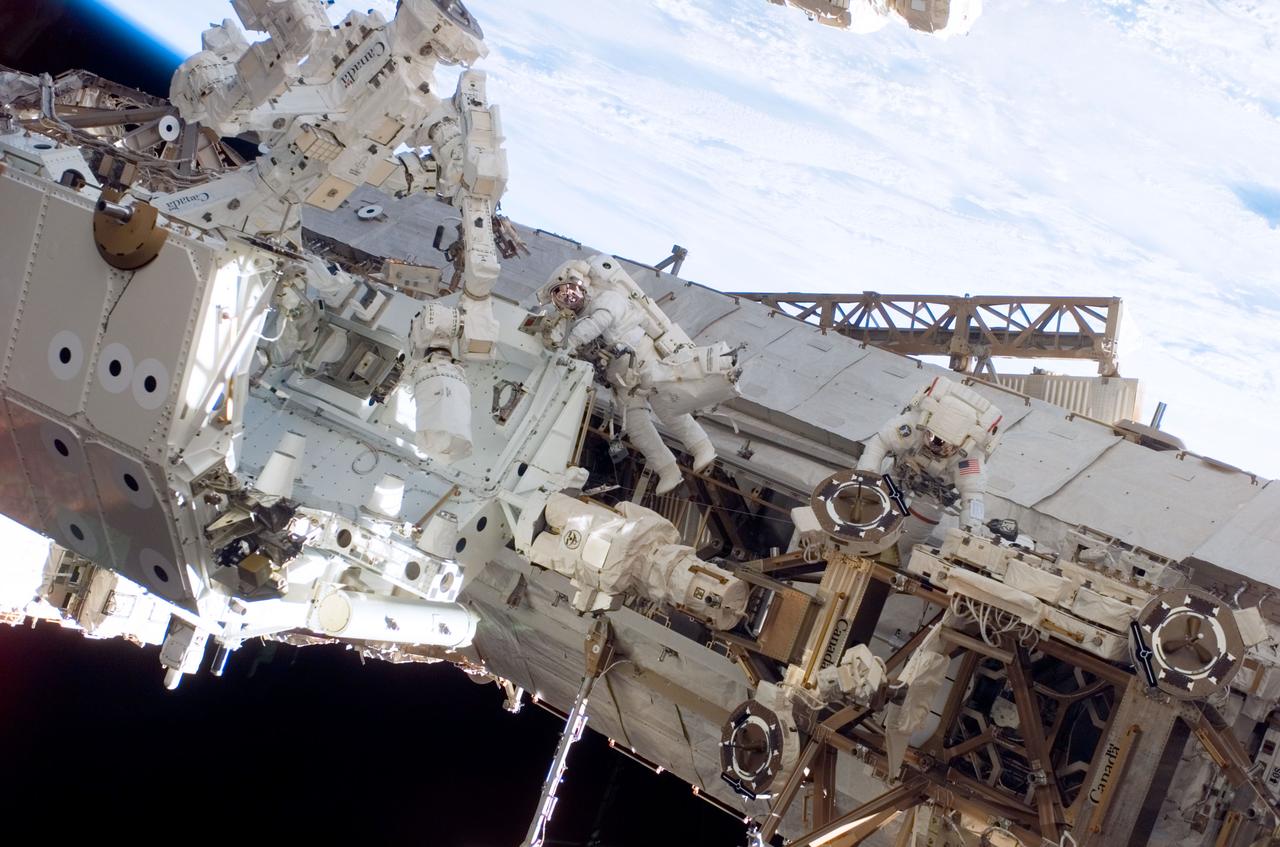
S123-E-006729 (17/18 March 2008) --- Astronauts Rick Linnehan (right) and Robert L. Behnken, both STS-123 mission specialists, participate in the mission's third scheduled session of extravehicular activity (EVA) as construction and maintenance continue on the International Space Station. During the 6-hour, 53-minute spacewalk, Linnehan and Behnken installed a spare-parts platform and tool-handling assembly for Dextre, also known as the Special Purpose Dextrous Manipulator (SPDM). Among other tasks, they also checked out and calibrated Dextre's end effector and attached critical spare parts to an external stowage platform. The new robotic system is scheduled to be activated on a power and data grapple fixture located on the Destiny laboratory on flight day nine.
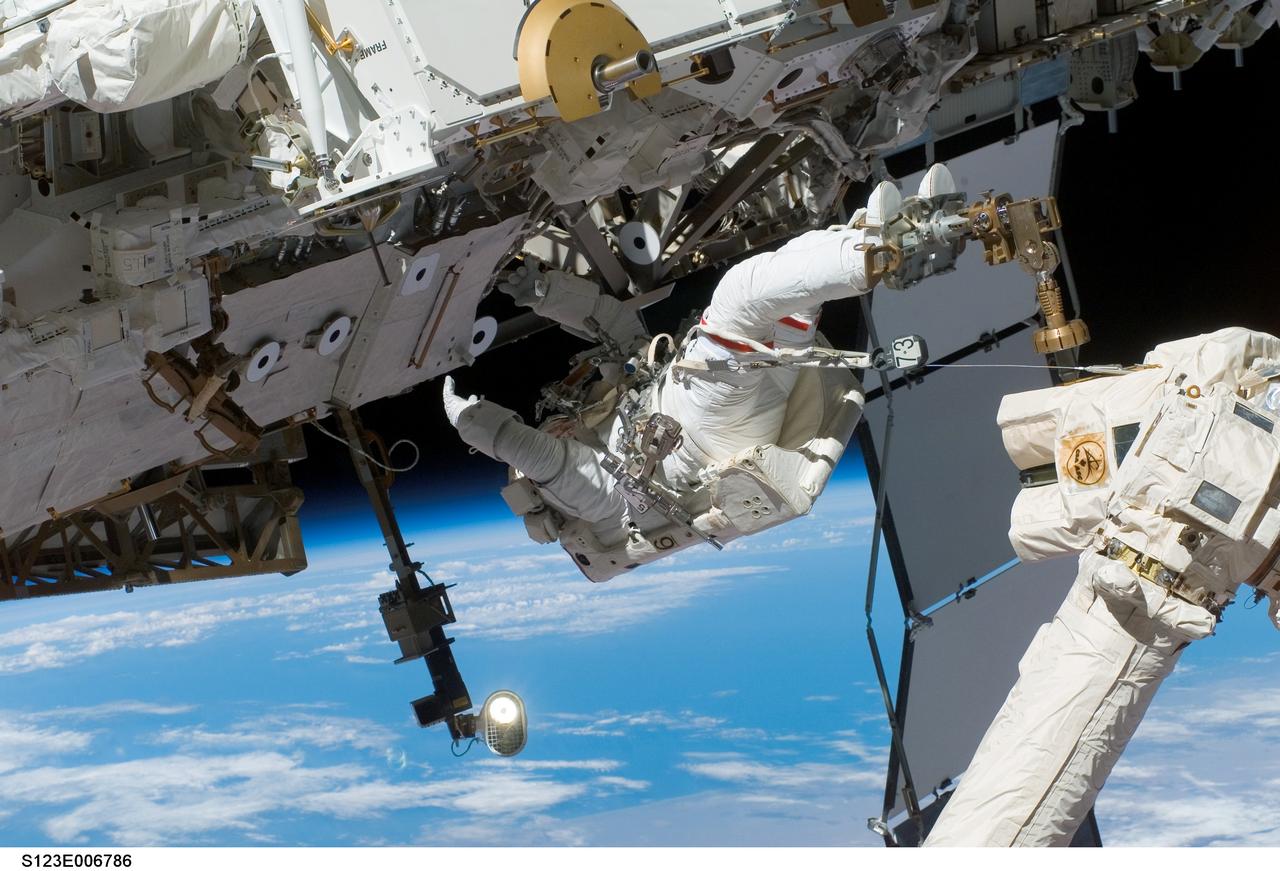
S123-E-006786 (15/16 March 2008) --- Astronaut Rick Linnehan, STS-123 mission specialist, participates in the mission's second scheduled session of extravehicular activity (EVA) as construction and maintenance continue on the International Space Station. During the 7-hour, 8-minute spacewalk, Linnehan and astronaut Mike Foreman (out of frame), mission specialist, assembled the stick-figure-shaped Dextre, also known as the Special Purpose Dextrous Manipulator (SPDM), a task that included attaching its two arms. Designed for station maintenance and service, Dextre is capable of sensing forces and movement of objects it is manipulating. It can automatically compensate for those forces and movements to ensure an object is moved smoothly. Dextre is the final element of the station's Mobile Servicing System. The blackness of space and Earth's horizon provide the backdrop for the scene.
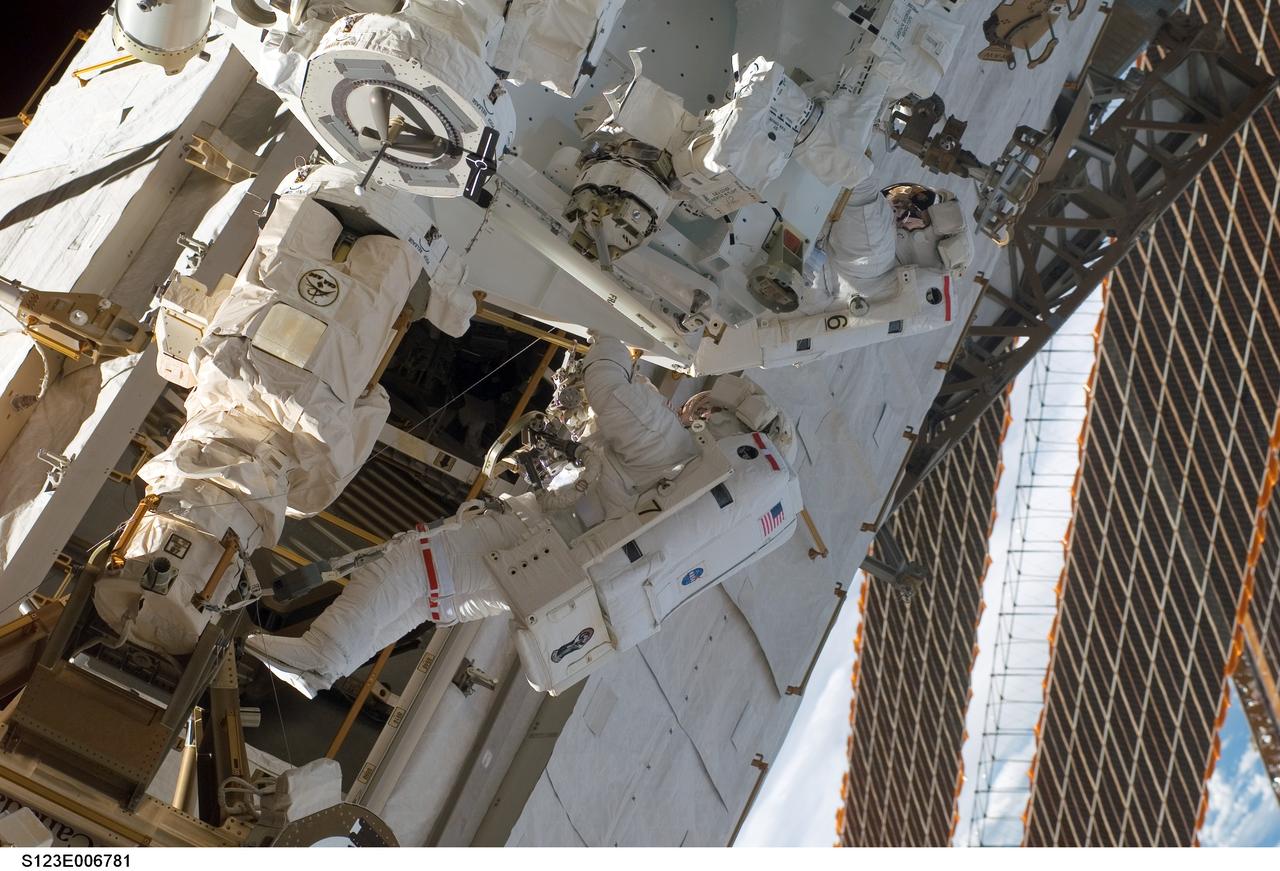
S123-E-006781 (15/16 March 2008) --- Astronauts Rick Linnehan (right) and Mike Foreman, both STS-123 mission specialists, participate in the mission's second scheduled session of extravehicular activity (EVA) as construction and maintenance continue on the International Space Station. During the 7-hour, 8-minute spacewalk, Linnehan and Foreman, assembled the stick-figure-shaped Dextre, also known as the Special Purpose Dextrous Manipulator (SPDM), a task that included attaching its two arms. Designed for station maintenance and service, Dextre is capable of sensing forces and movement of objects it is manipulating. It can automatically compensate for those forces and movements to ensure an object is moved smoothly. Dextre is the final element of the station's Mobile Servicing System.
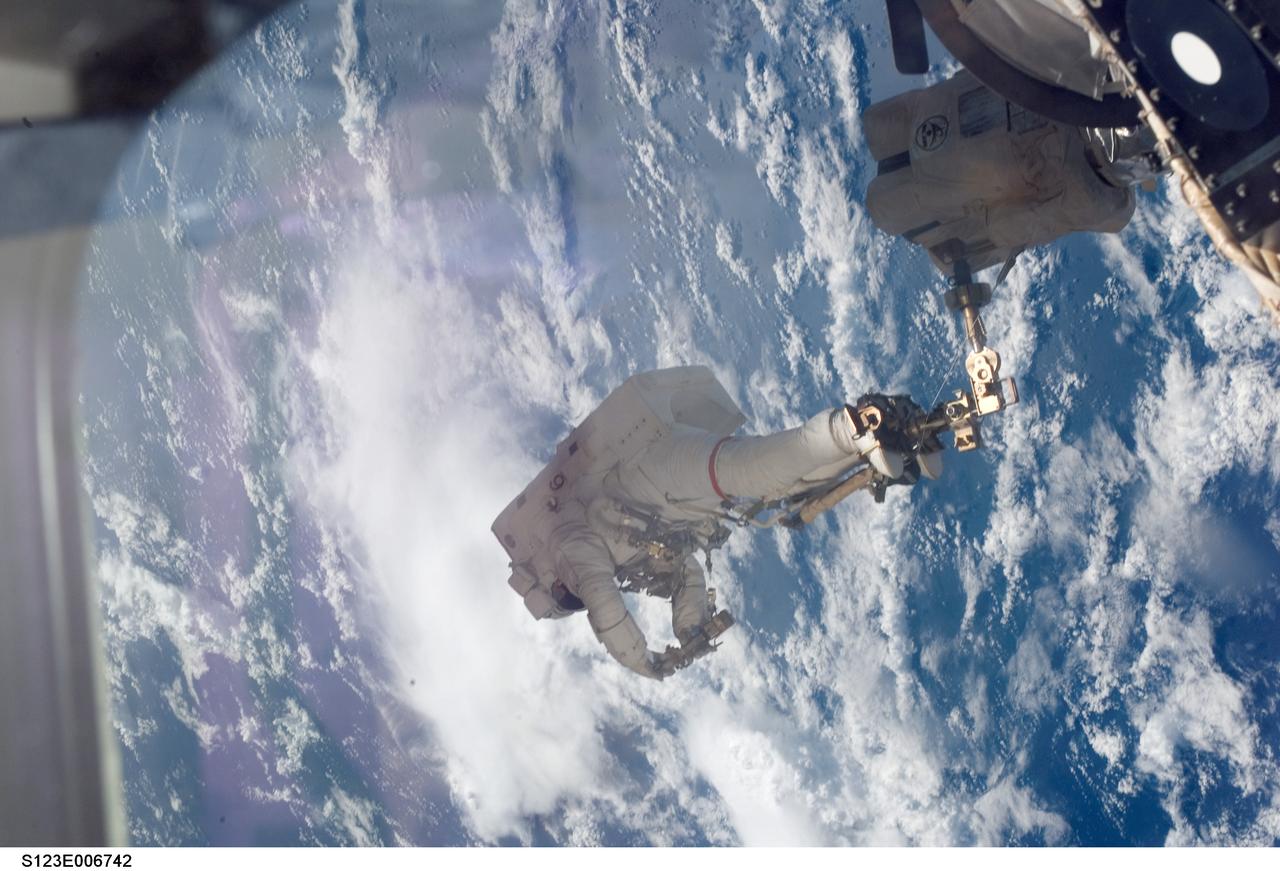
S123-E-006742 (17/18 March 2008) --- Anchored to a Canadarm2 mobile foot restraint, astronaut Rick Linnehan, STS-123 mission specialist, participates in the mission's third scheduled session of extravehicular activity (EVA) as construction and maintenance continue on the International Space Station. During the 6-hour, 53-minute spacewalk, Linnehan and astronaut Robert L. Behnken (out of frame), mission specialist, installed a spare-parts platform and tool-handling assembly for Dextre, also known as the Special Purpose Dextrous Manipulator (SPDM). Among other tasks, they also checked out and calibrated Dextre's end effector and attached critical spare parts to an external stowage platform. The new robotic system is scheduled to be activated on a power and data grapple fixture located on the Destiny laboratory on flight day nine.
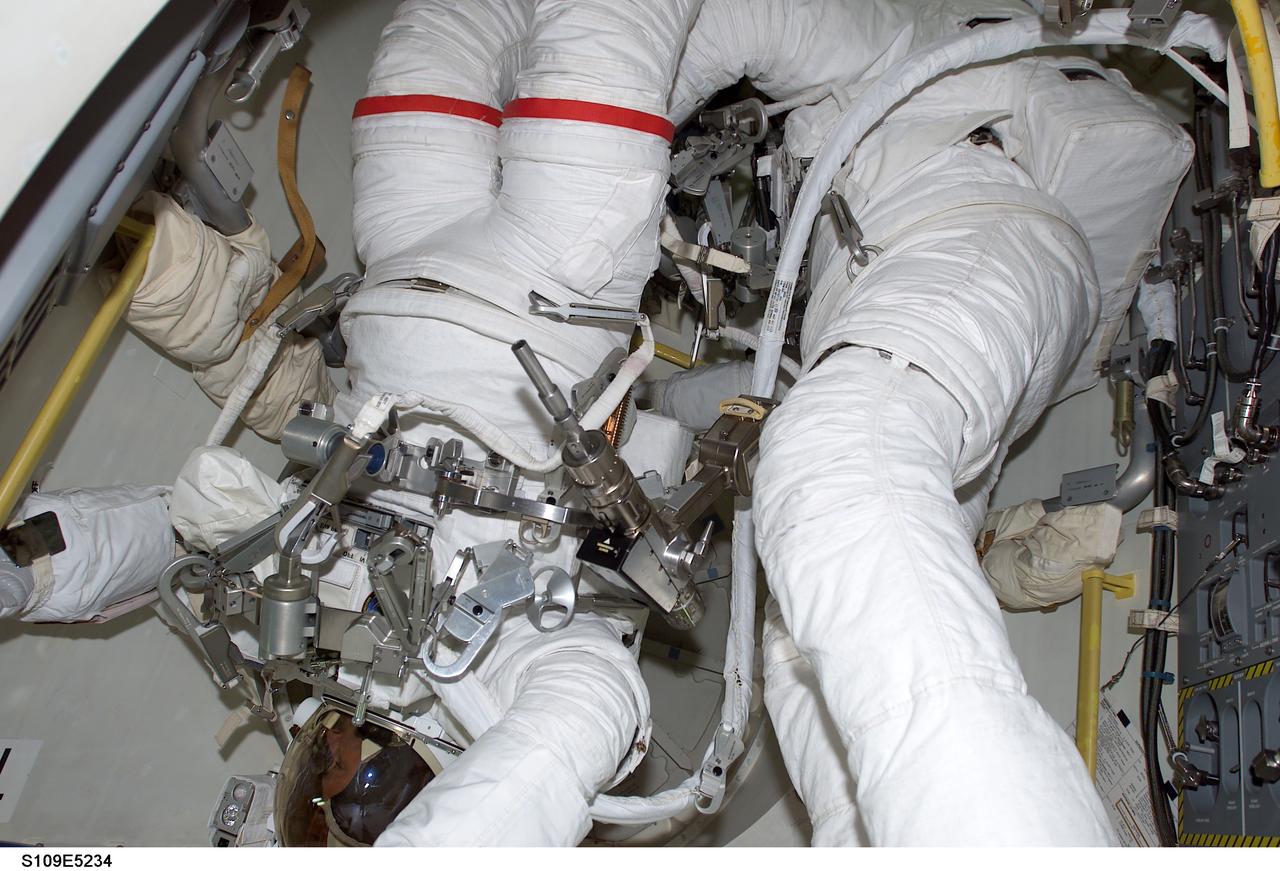
STS109-E-5234 (4 March 2002) --- Astronauts John M. Grunsfeld (left), payload commander, and Richard M. (Rick) Linnehan, mission specialist, are just moments away from going from a crowded situation into a more spacious venue as they prepare to egress the airlock of the Space Shuttle Columbia for the first of their assigned STS-109 space walks to perform work on the Hubble Space Telescope (HST).The two went on to replace the giant telescope’s starboard solar array during a space walk that ended at 7:38 a.m. (CST) or 13:38 GMT March 4, 2002.
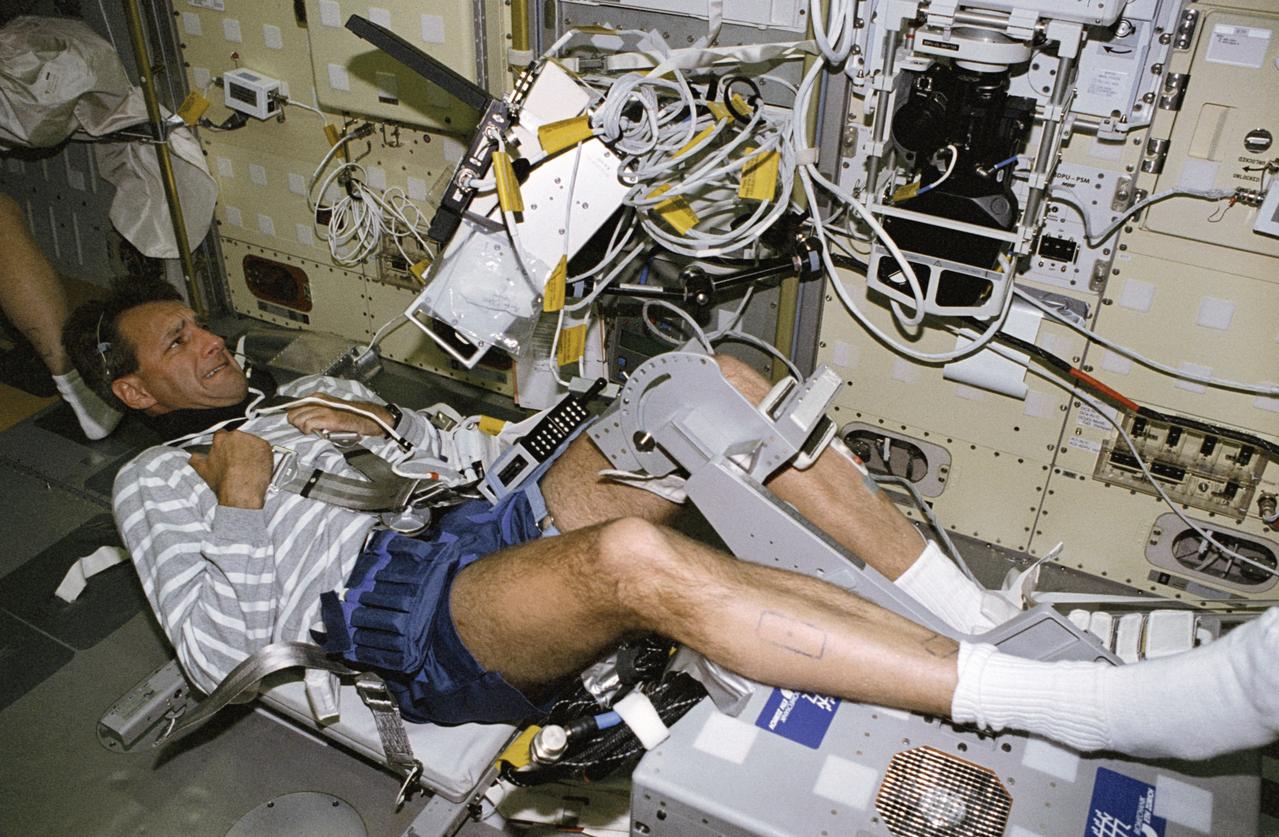
STS078-430-009 (20 June-7 July 1996) --- Astronaut Richard M. Linnehan, mission specialist, performs a test on his leg using the Torque Velocity Dynamometer (TVD). Dr. Thirsk was measuring changes in muscle forces of the leg in this particular view. The TVD hardware is also used to measure arm muscle forces and velocity at the bicep and tricep areas. Crewmembers for the mission performed all experiment protocols prior to flight to develop a baseline and will also perform post-flight tests to complete the analysis. Additionally, muscle biopsies were taken before the flight and will be conducted after the flight.
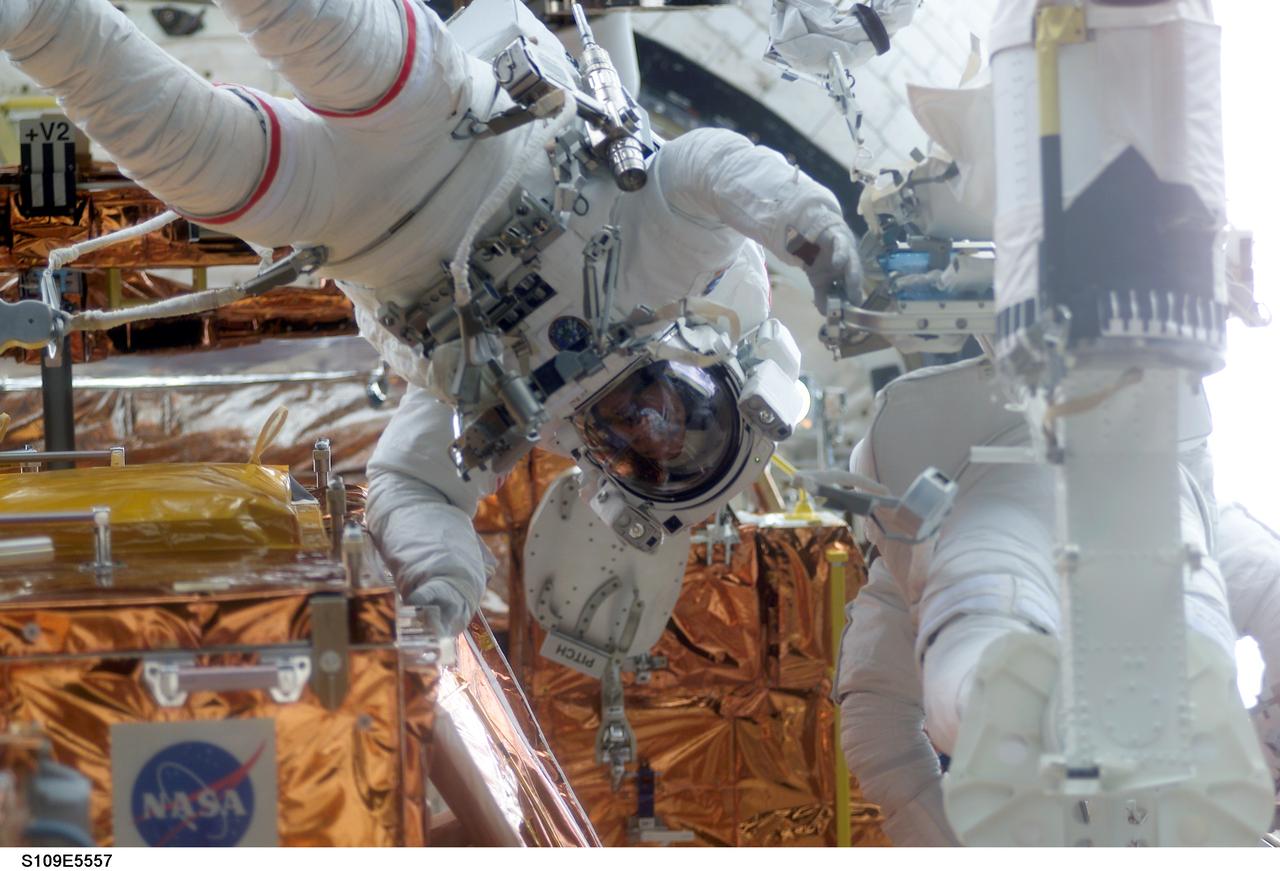
STS109-E-5557 (8 March 2002) --- Astronauts John M. Grunsfeld (left), payload commander, and Richard M. Linnehan, mission specialist, anchored to a restraint on Columbia's robotic arm, participate in the final of five STS-109 space walks. The two went on to install an experimental cooling system for the Hubble Space Telescope’s infrared Camera and Multi-Object Spectrometer (NICMOS). This image was recorded with a digital still camera by a crewmate inside the shuttle's crew cabin. The NICMOS has been dormant since January 1999 when its original coolant ran out.
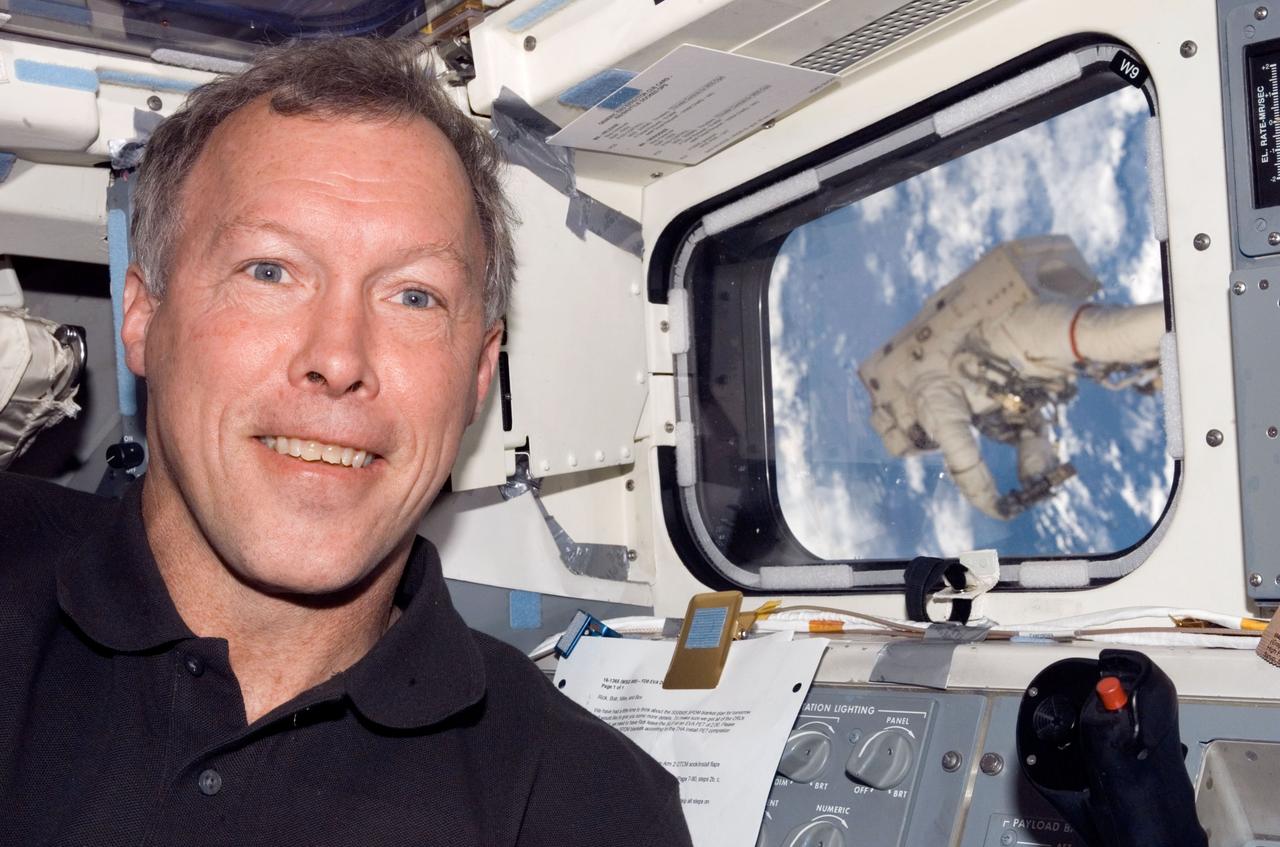
S123-E-006743 (17/18 March 2008) --- Astronaut Dominic Gorie, STS-123 commander, takes a brief moment for a photo on the aft flight deck of Space Shuttle Endeavour while docked with the International Space Station. Anchored to a Canadarm2 mobile foot restraint, astronaut Rick Linnehan (visible through a nearby window), mission specialist, participates in the mission's third session of extravehicular activity (EVA).

STS109-E-5244 (4 March 2002) --- Astronauts John M. Grunsfeld (red stripes on suit), payload commander, and Richard M. (Rick) Linnehan, mission specialist, participate in the first of their assigned STS-109 space walks to perform work on the Hubble Space Telescope (HST). The two went on to replace the giant telescope’s starboard solar array. Their seven-hour space walk ended at 7:38 a.m. (CST) or 13:38 GMT March 4, 2002.
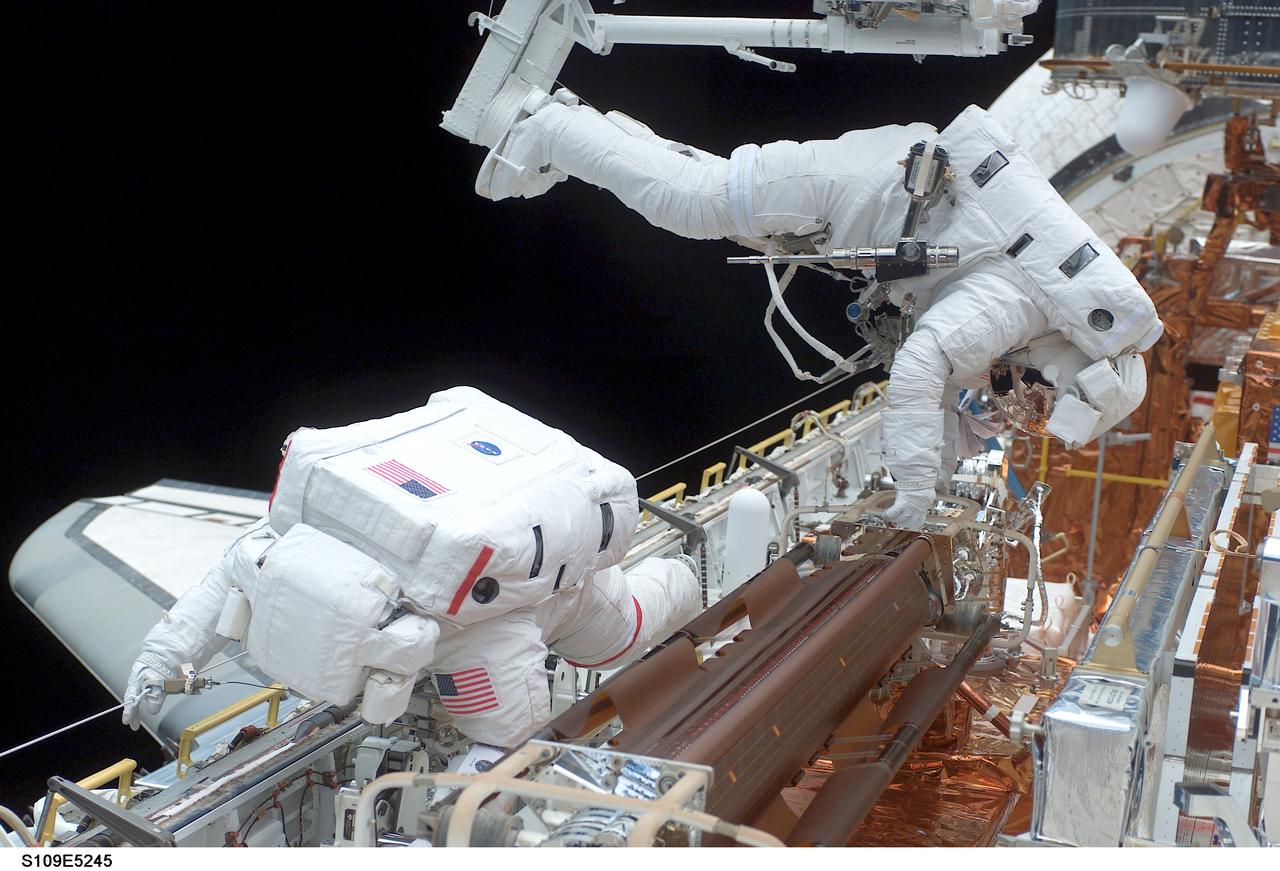
STS109-E-5245 (4 March 2002) --- Astronaut John M. Grunsfeld (foreground), payload commander, traverses along the longerons of the Space Shuttle Columbia while astronaut Richard M. Linnehan, mission specialist, uses the Remote Manipulator System's robotic arm to move around. The two, participating in the first of their assigned STS-109 space walks to perform work on the Hubble Space Telescope (HST), went on to replace the giant telescope’s starboard solar array. Their seven-hour space walk ended at 7:38 a.m. (CST) or 13:38 GMT March 4, 2002.
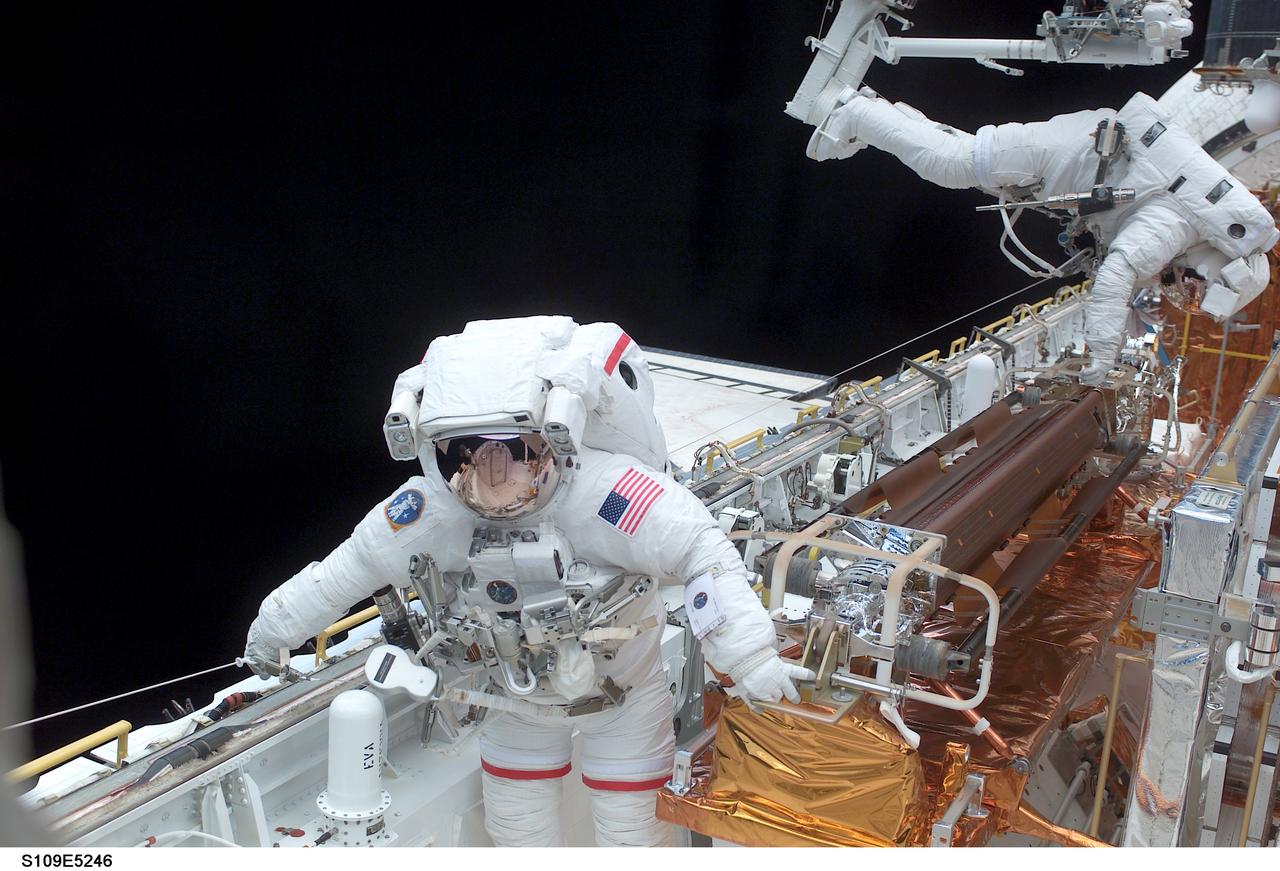
STS109-E-5246 (4 March 2002) --- Astronaut John M. Grunsfeld (foreground), payload commander, is seen at one end of stowed solar panels in the cargo bay of the Space Shuttle Columbia while astronaut Richard M. Linnehan, mission specialist, uses the Remote Manipulator System's robotic arm to move around at the other end. The two, participating in the first of their assigned STS-109 space walks to perform work on the Hubble Space Telescope (HST), went on to replace the giant telescope’s starboard solar array. Their seven-hour space walk ended at 7:38 a.m. (CST) or 13:38 GMT March 4, 2002.
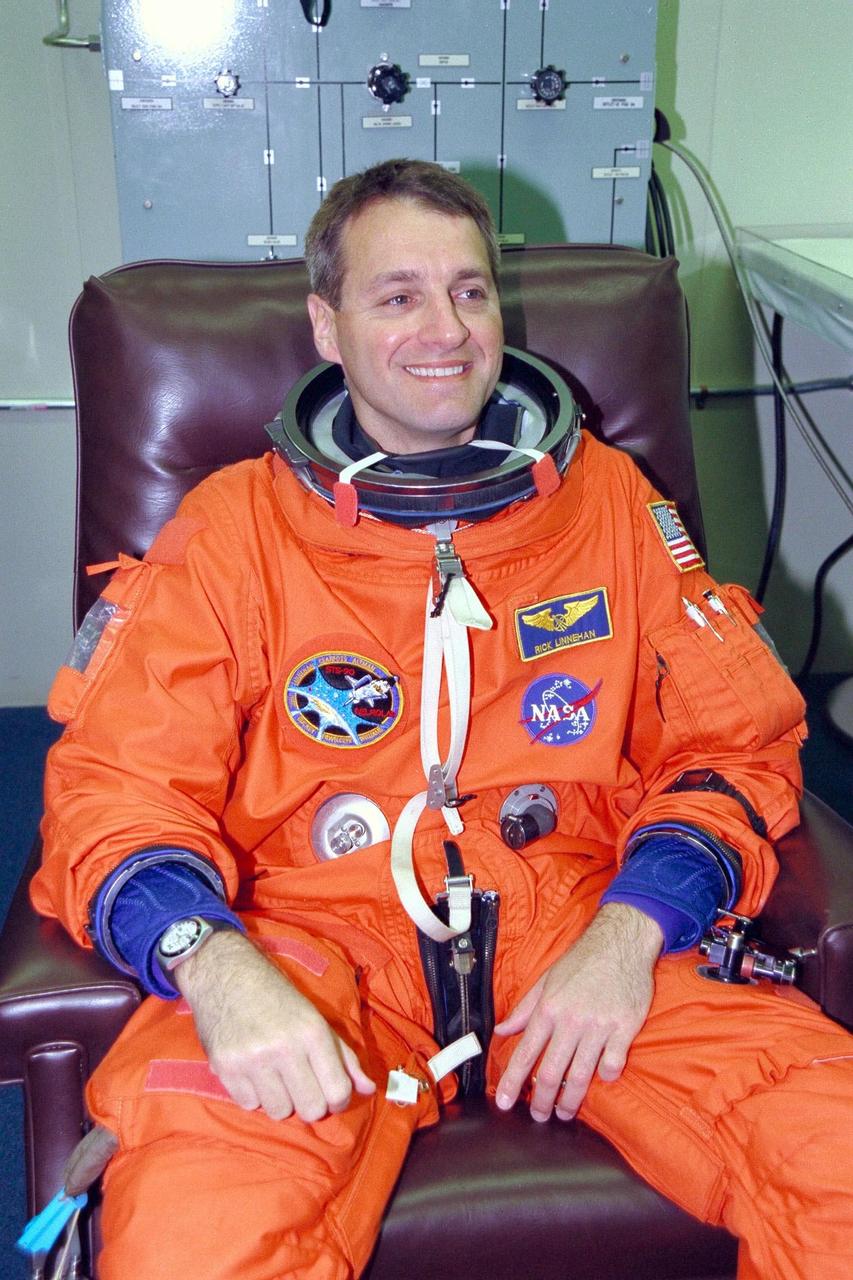
STS-90 Mission Specialist Richard Linnehan, D.V.M., sits in a chair during suitup activities in the Operations and Checkout Building. Linnehan and the rest of the STS-90 crew will shortly depart for Launch Pad 39B, where the Space Shuttle Columbia awaits a second liftoff attempt at 2:19 p.m. EDT. His second trip into space, Linnehan is participating in a life sciences research flight that will focus on the most complex and least understood part of the human body the nervous system. Neurolab will examine the effects of spaceflight on the brain, spinal cord, peripheral nerves and sensory organs in the human body
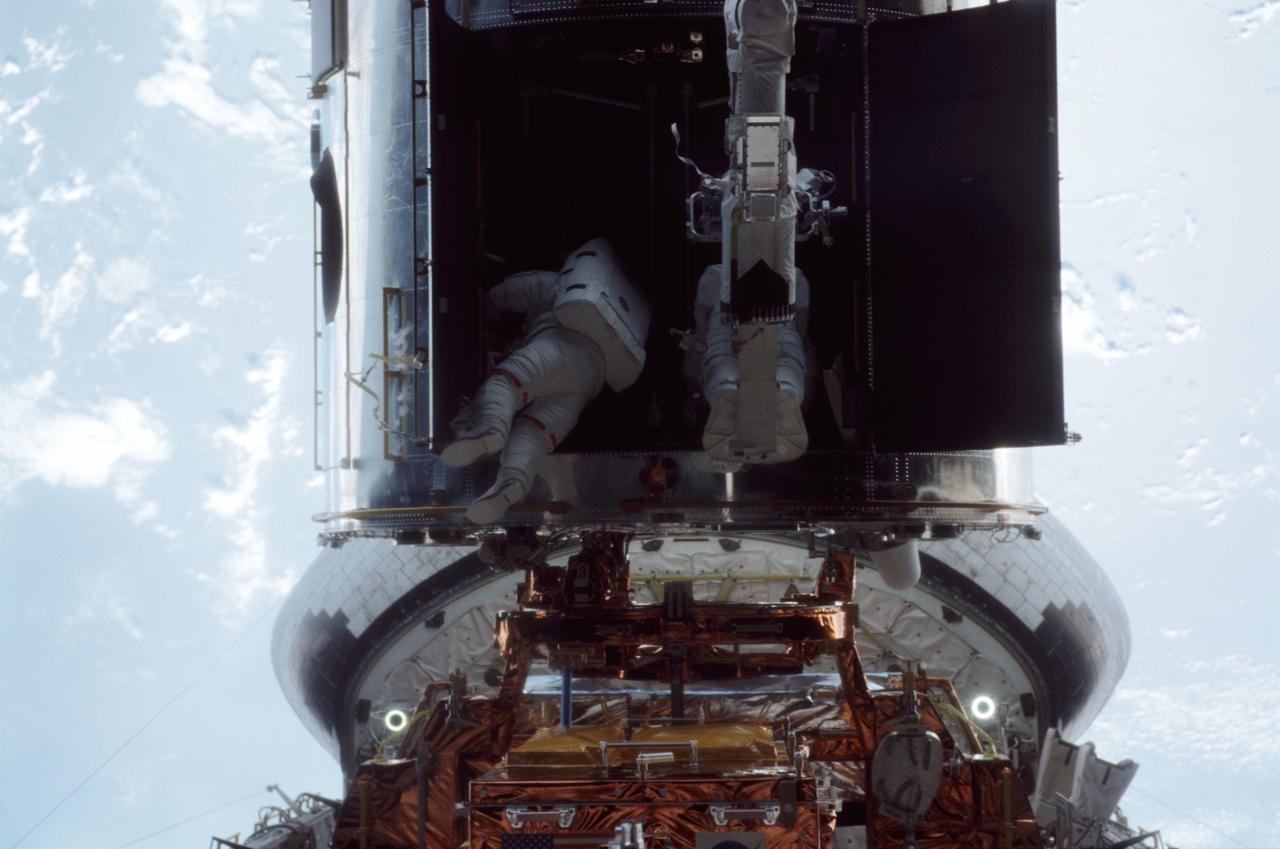
STS109-315-005 (8 March 2002) --- Barely visible within the Hubble Space Telescope's heavily shadowed shroud doors, astronauts John M. Grunsfeld (left) and Richard M. Linnehan participate in the final space walk of the STS-109 mission. The crew of the space shuttle Columbia completed the last of its five ambitious space walks early on March 8, 2002, with the successful installation of an experimental cooling system for Hubble’s Near-Infrared Camera and Multi-Object Spectrometer (NICMOS). The NICMOS has been dormant since January 1999 when its original coolant ran out. Astronauts Grunsfeld and Linnehan began their third spacewalk of the mission at 2:46 a.m. CST. Linnehan was given a ride on the shuttle’s robotic arm to the aft shroud doors by astronaut Nancy J. Currie, working from the aft flight deck of Columbia. After the shroud doors were open, Linnehan was moved back to Columbia’s payload bay to remove the NICMOS cryocooler from its carrier. Grunsfeld and Linnehan then installed the cryocooler inside the aft shroud and connected cables from its Electronics Support Module (ESM). That module was installed on March 7 during a spacewalk by astronauts James H. Newman and Michael J. Massimino.
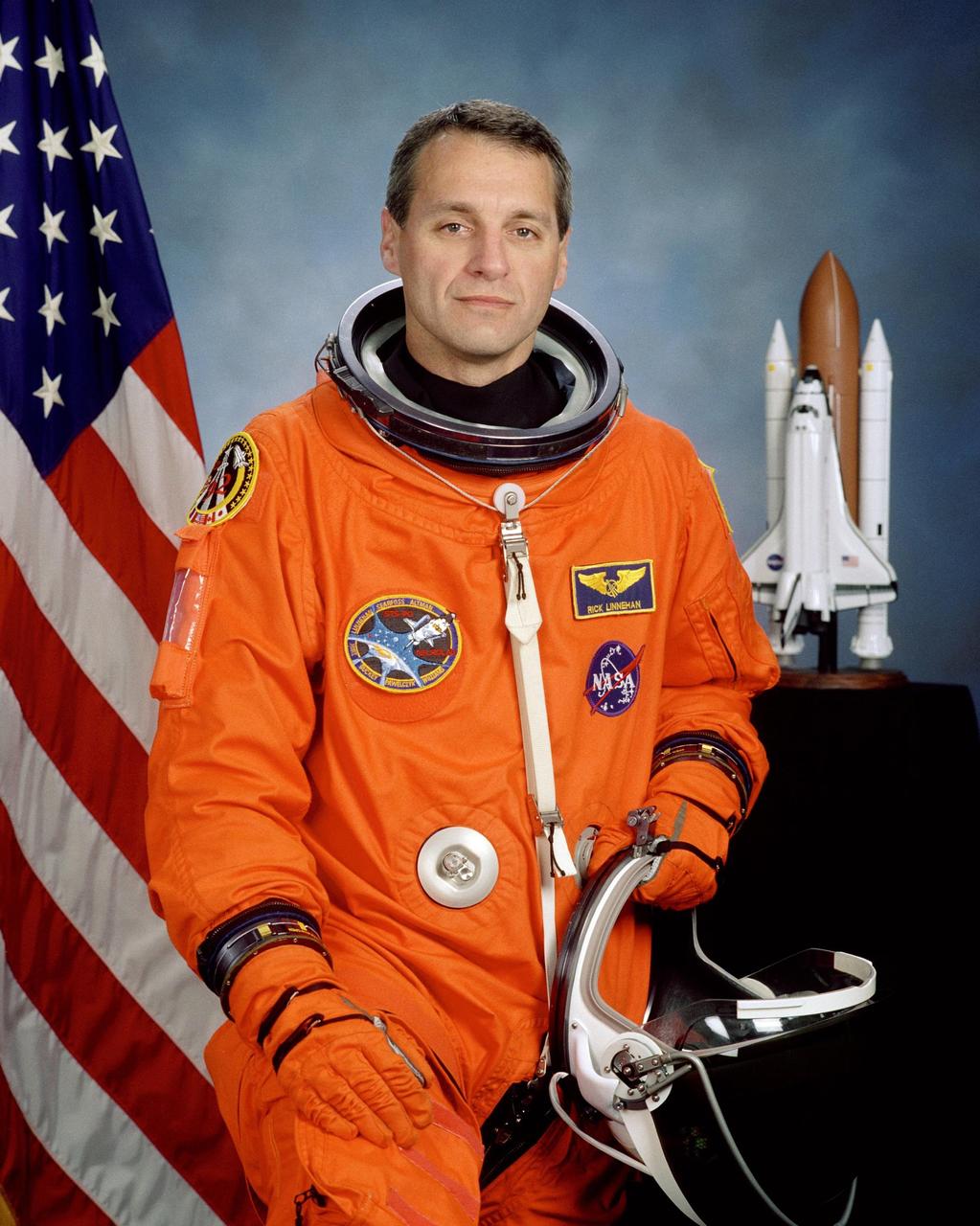
JOHNSON SPACE CENTER, HOUSTON, TEXAS -- (JSC 2000-03747) -- Official portrait of astronaut Richard M. Linnehan, Mission Specialist
JOHNSON SPACE CENTER, HOUSTON, TEXAS -- (JSC 2000-03747) -- Official portrait of astronaut Richard M. Linnehan, Mission Specialist
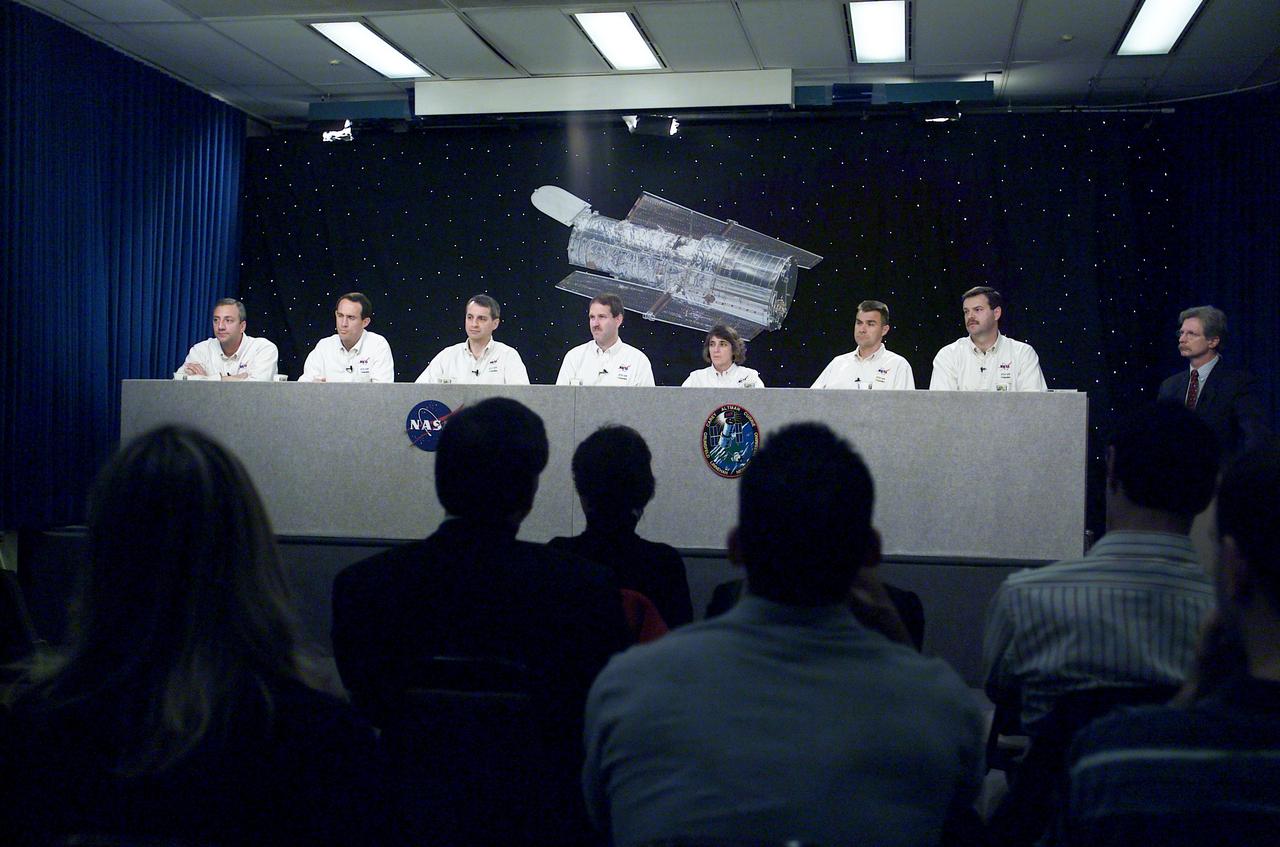
JSC2002-E-05104 (15 February 2002) --- The STS-109 crewmembers are photographed during a pre-flight press conference at Johnson Space Center (JSC). From the left are astronauts Michael J. Massimino, James H. Newman, Richard M. Linnehan, John M. Grunsfeld, Nancy J. Currie, Duane G. Carey, and Scott D. Altman. Altman and Carey are mission commander and pilot, respectively. Grunsfeld is payload commander and Currie, Linnehan, Newman and Massimino are mission specialists.
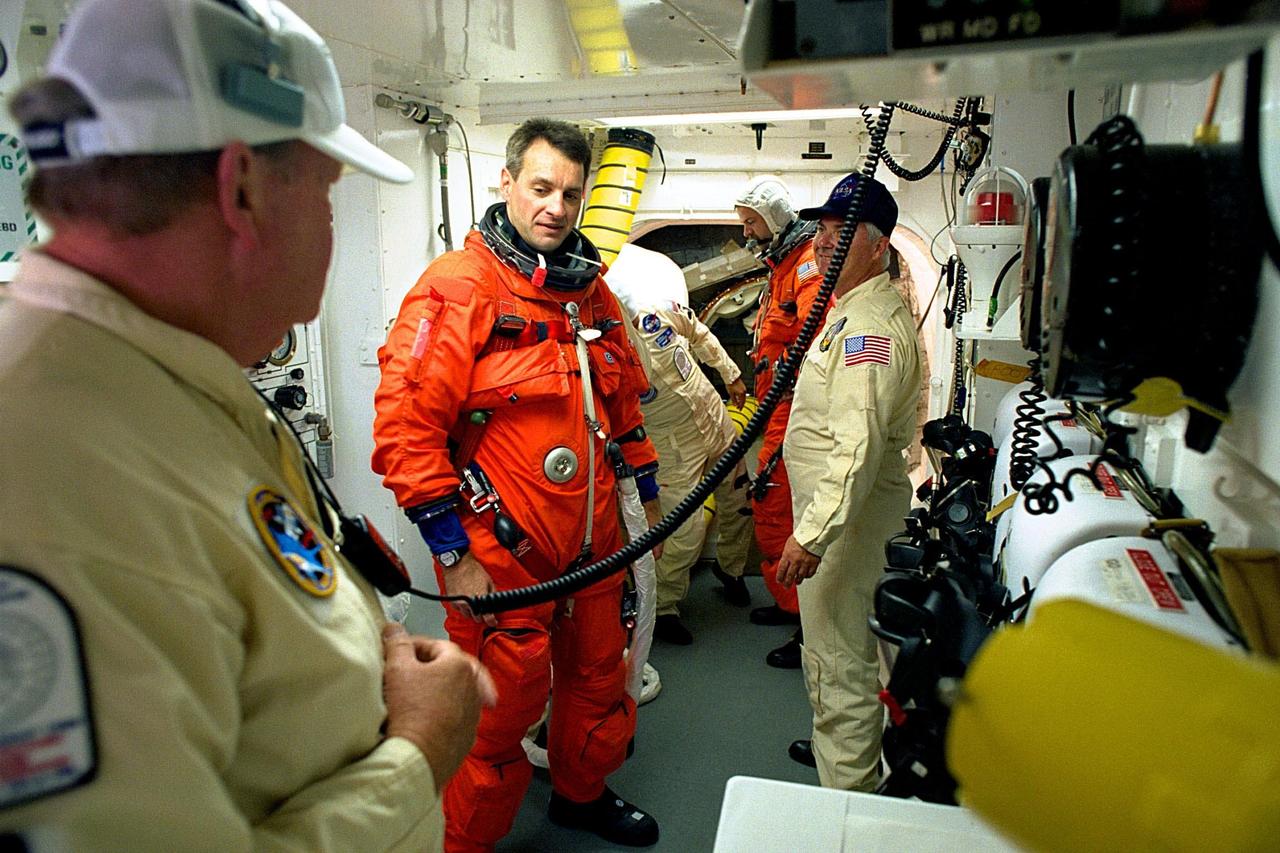
KENNEDY SPACE CENTER, FLA. -- STS-90 Mission Specialist Richard Linnehan, D.V.M., is assisted by NASA and United Space Alliance closeout crew members immediately preceding launch for the nearly 17-day Neurolab mission. Investigations during the Neurolab mission will focus on the effects of microgravity on the nervous system. Linnehan and six fellow crew members will shortly enter the orbiter at KSC's Launch Pad 39B, where the Space Shuttle Columbia will lift off during a launch window that opens at 2:19 p.m. EDT, April 17

KENNEDY SPACE CENTER, FLA. - Astronaut Rick Linnehan talks with a student at Ralph Bunche Middle School, a NASA Explorer School, in Atlanta, Ga. Linnehan joined Center Director Jim Kennedy at the school to share America’s new vision for space exploration with the next generation of explorers. The purpose of the school visit is to talk with students about our destiny as explorers, NASA’s stepping stone approach to exploring Earth, the Moon, Mars and beyond, how space impacts our lives, and how people and machines rely on each other in space.
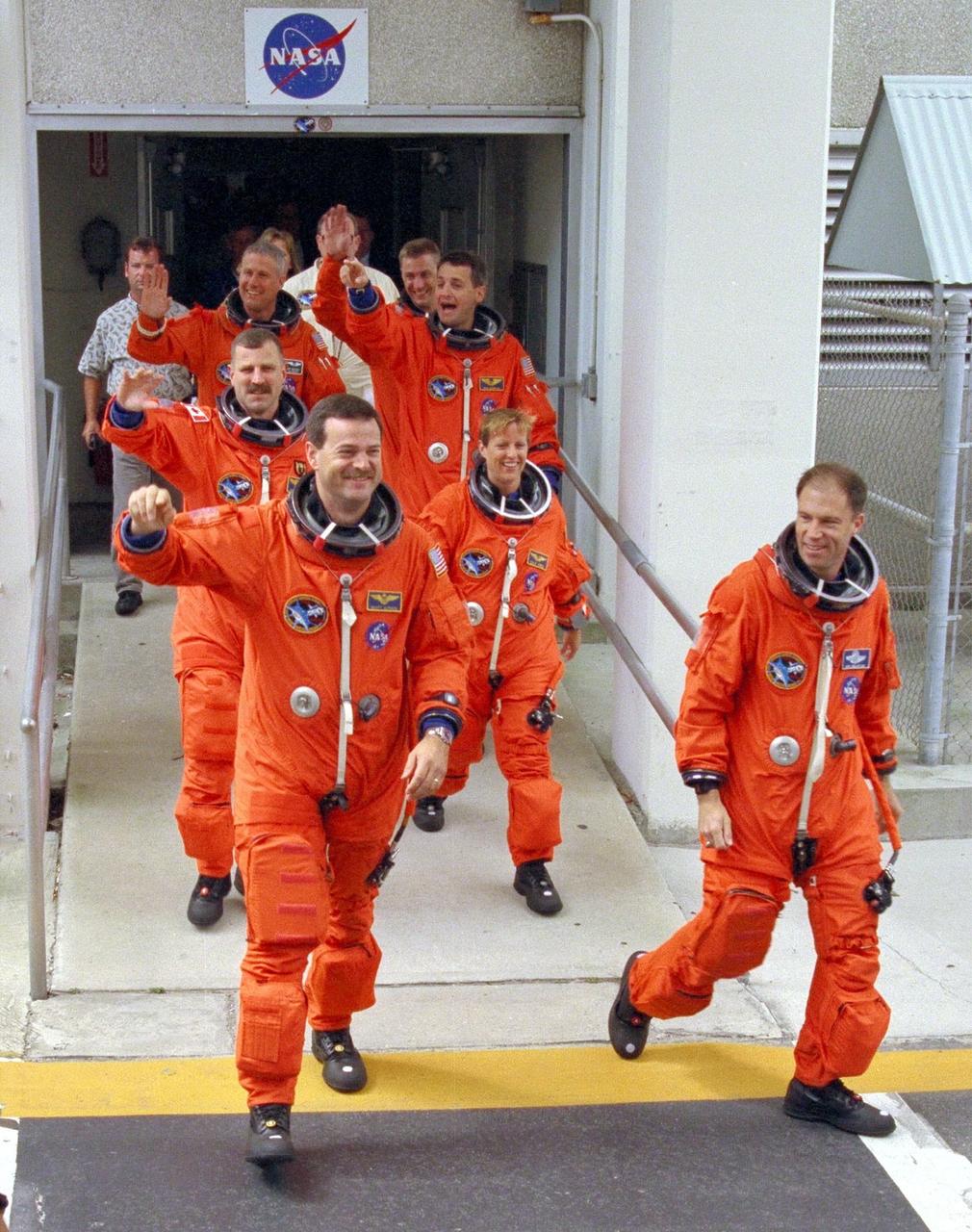
KENNEDY SPACE CENTER, FLA. -- Greeted by cheers from wellwishers at KSC and eager for their venture into space on the Neurolab mission, the STS-90 astronauts depart the Operations and Checkout Building on their way to Launch Pad 39B. Leading the seven-member crew is Mission Commander Richard Searfoss (far right), with Pilot Scott Altman by his side. Behind Altman are Mission Specialist Dafydd (Dave) Williams, M.D., (waving) with the Canadian Space Agency, and Mission Specialist Kathryn (Kay) Hire. Behind Hire is Mission Specialist Richard Linnehan, D.V.M., and next to Linnehan is Payload Specialist Jay Buckey, M.D. At the rear behind Linnehan is Payload Specialist James Pawelczyk, Ph.D. Their trip to the pad will take about 25 minutes aboard the Astrovan. Once there, they will take their positions in the crew cabin of the Space Shuttle Columbia to await a liftoff during a two-and-a-half hour window that will open at 2:19 p.m. EDT
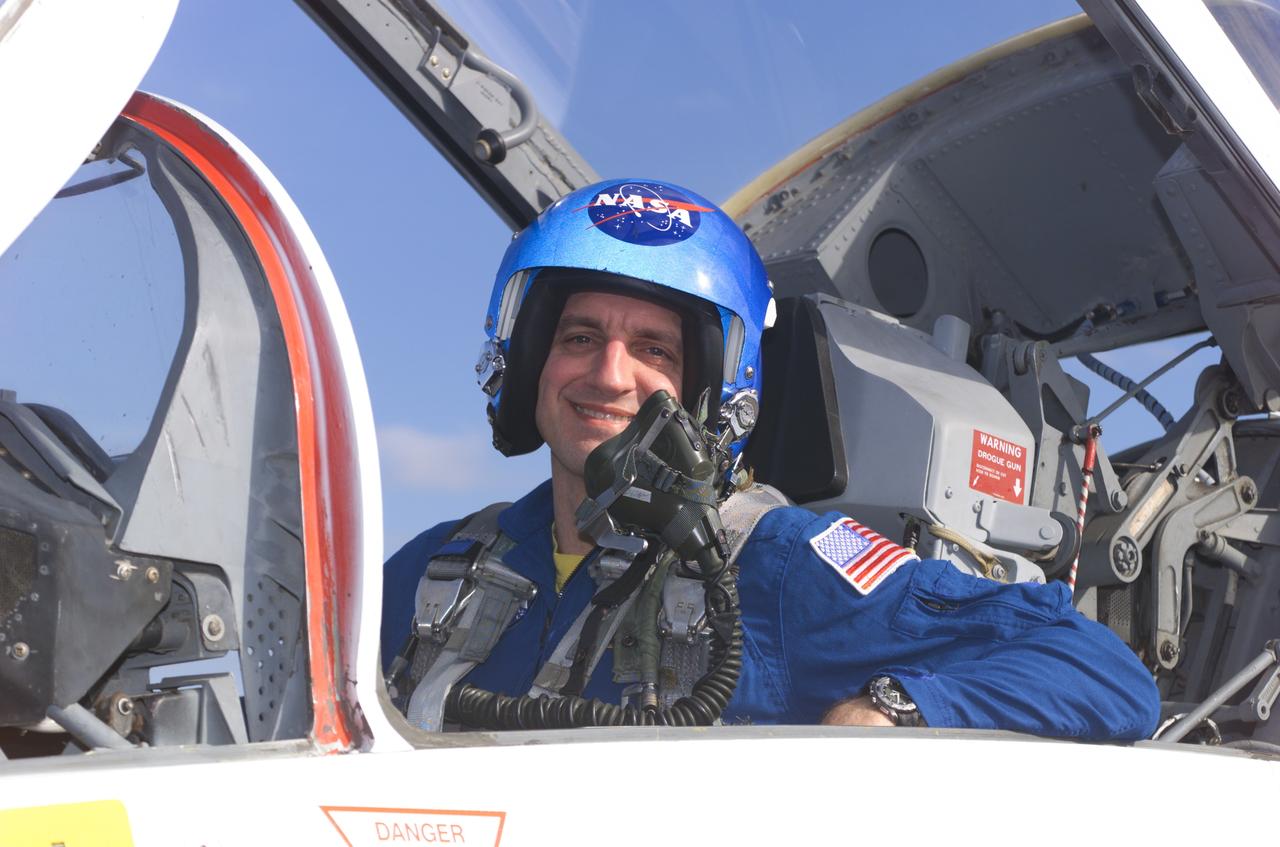
JSC2002-E-01742 (16 January 2002) --- Astronaut Richard M. Linnehan, STS-109 mission specialist, photographed in a T-38 trainer jet, prepares for a flight at Ellington Field near Johnson Space Center (JSC).
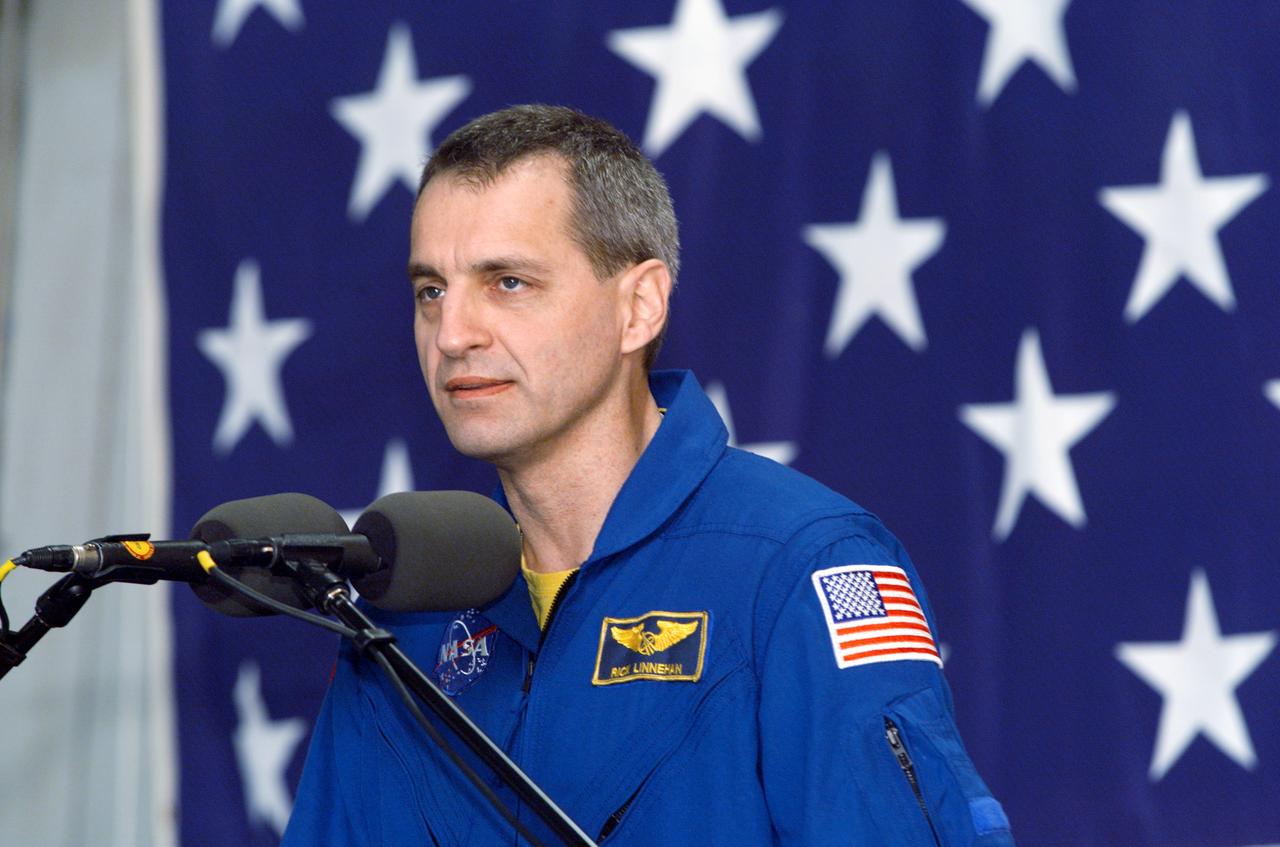
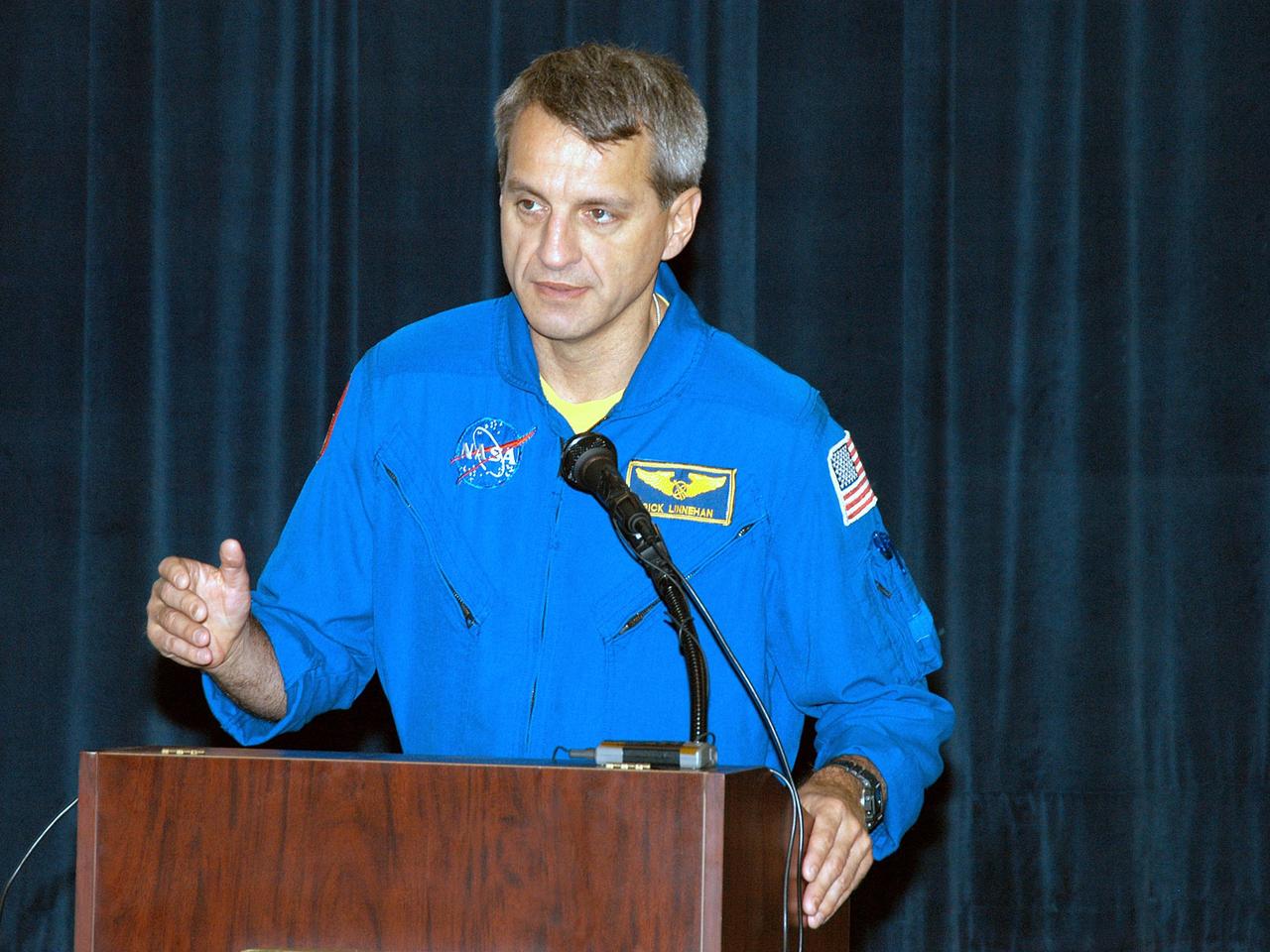
JSC2002-E-09342 (13 March 2002) --- Astronaut Richard M. Linnehan, STS-109 mission specialist, speaks from the lectern in Hangar 990 at Ellington Field during the crew return ceremonies.
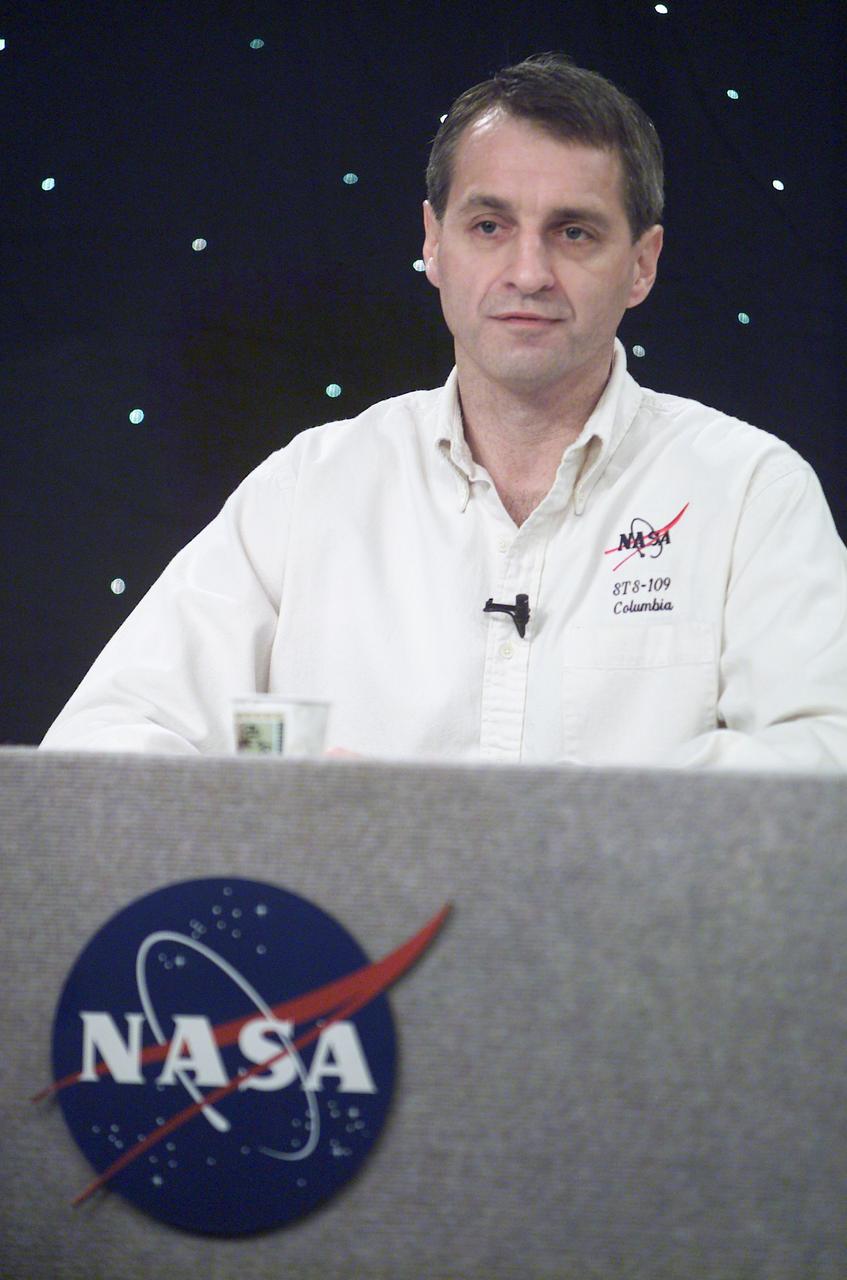
JSC2002-E-05101 (15 February 2002) --- Astronaut Richard M Linnehan, STS-109 mission specialist, fields a question during a pre-flight press conference at Johnson Space Center (JSC).
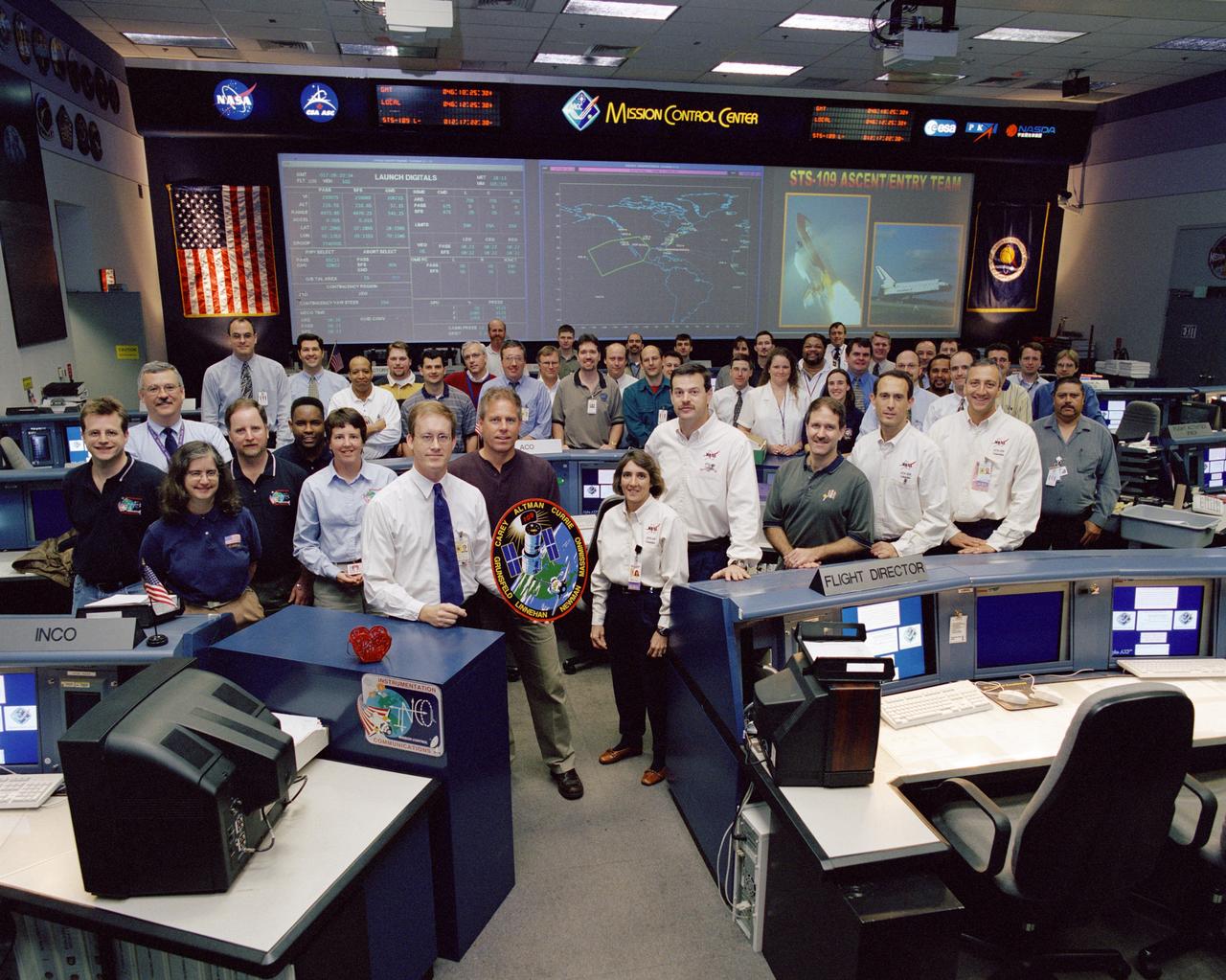
JSC2002-00514 (February 2002)--- The STS-109 flight crew poses with the ascent and entry shift team in the Shuttle Flight Control Room of the Johnson Space Center's Mission Control Center. Flight Director John Shannon holds the mission insignia. Members of the flight crew are astronauts Scott D. Altman, commander; Duane G. Carey, pilot; John M. Grunsfeld, payload commander; and James H. Newman, Nancy J. Currie, Richard M. Linnehan and Michael J. Massimino, all mission specialists. Currie stands to the right of the logo, followed by, left to right, Altman, Grunsfeld, Newman and Massimino. Linnehan and Carey are not pictured.
KENNEDY SPACE CENTER, FLA. - Astronaut Rick Linnehan talks to students and faculty at Ralph Bunche Middle School, a NASA Explorer School, in Atlanta, Ga. Linnehan accompanied Center Director Jim Kennedy, who is visiting NES sites to share America’s new vision for space exploration with the next generation of explorers. The purpose of the school visit is to talk with students about our destiny as explorers, NASA’s stepping stone approach to exploring Earth, the Moon, Mars and beyond, how space impacts our lives, and how people and machines rely on each other in space.

KENNEDY SPACE CENTER, FLA. - Astronaut Rick Linnehan talks to a classroom teacher at Ralph Bunche Middle School, a NASA Explorer School, in Atlanta, Ga. Linnehan accompanied Center Director Jim Kennedy, who was visiting the school to share America’s new vision for space exploration with the next generation of explorers. The visit is one of many Kennedy has made to NES sites in Florida and Georgia to talk with students about our destiny as explorers, NASA’s stepping stone approach to exploring Earth, the Moon, Mars and beyond, how space impacts our lives, and how people and machines rely on each other in space.
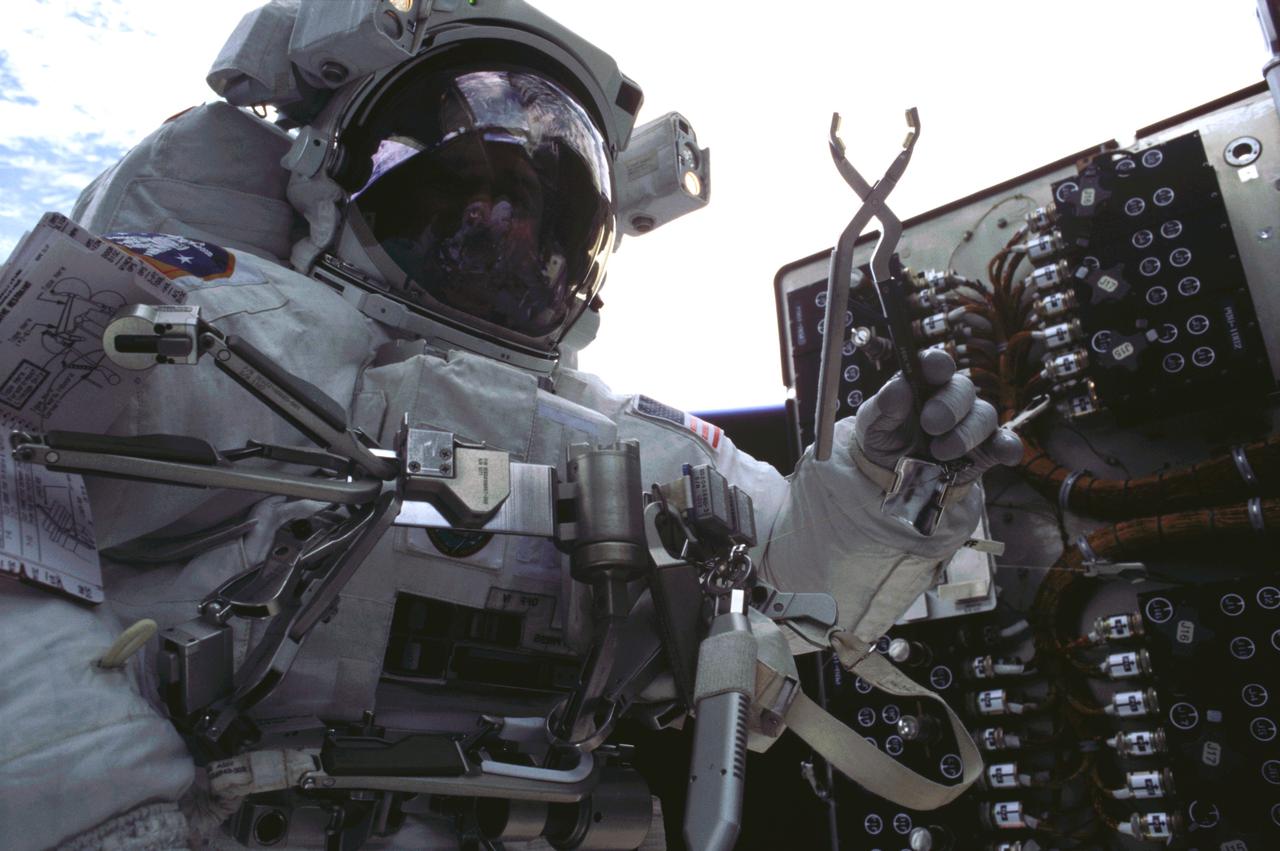
STS109-322-029 (6 March 2002) --- Astronaut John M. Grunsfeld, STS-109 payload commander, participates in the third of five space walks to perform work on the Hubble Space Telescope (HST). The third overall STS-109 extravehicular activity (EVA) marked the second of three for Grunsfeld, who was joined by astronaut Richard M. Linnehan on them all. On this particular walk, astronauts Grunsfeld and Linnehan turned off the telescope in order to replace its power control unit or PCU, the heart of the HST’s power system.
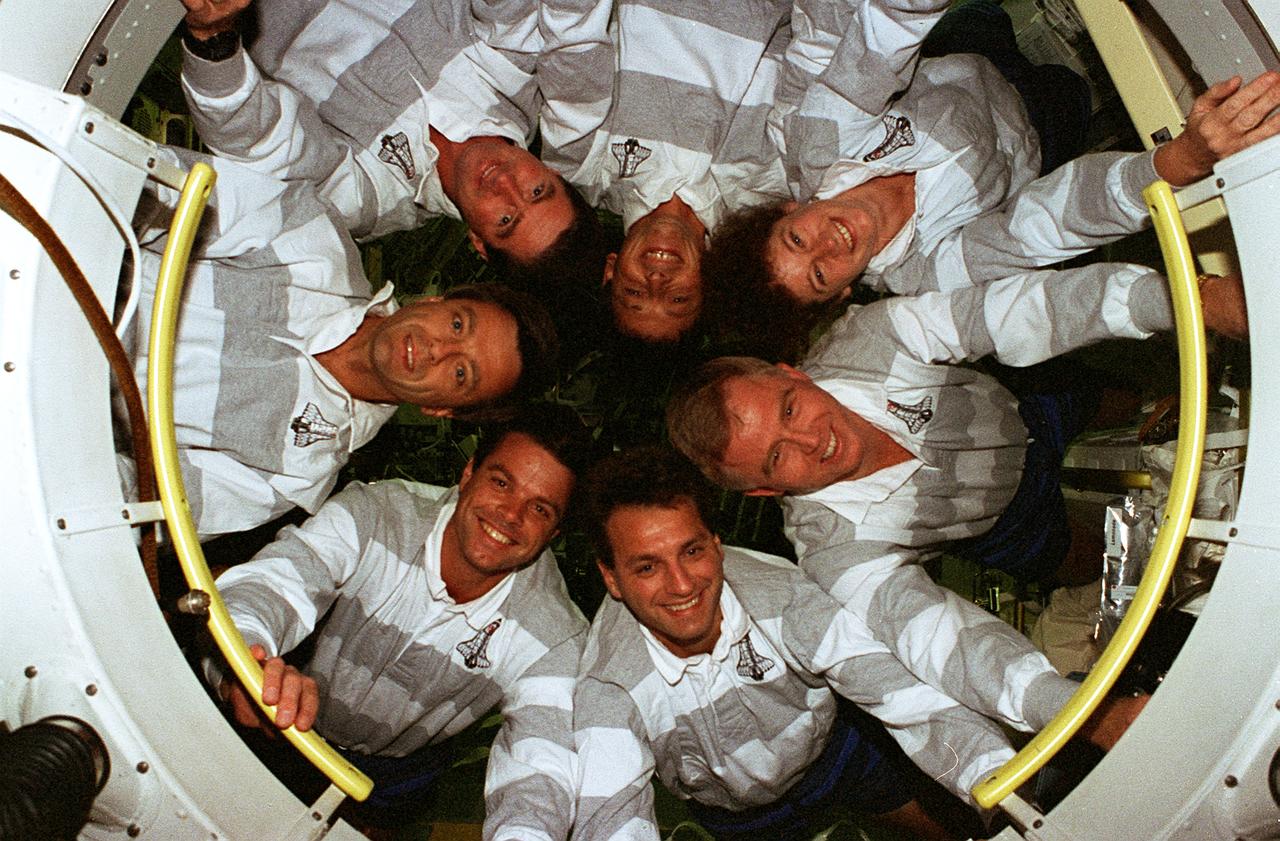
STS078-428-015 (20 June-7 July 1996) --- The crewmembers chose the Life and Microgravity Spacelab (LMS-1) Science Module as a backdrop for their traditional inflight portrait. Hold picture vertically with payload commander Susan J. Helms in lower right. Clockwise from astronaut Helms are Charles J. Brady, Richard M. Linnehan, Kevin R. Kregel, Canadian payload specialist Robert B. Thirsk, Terence T. (Tom) Henricks and French payload specialist Jean-Jacques Favier. Henricks and Kregel are commander and pilot, respectively, with Linnehan and Brady serving as mission specialists.
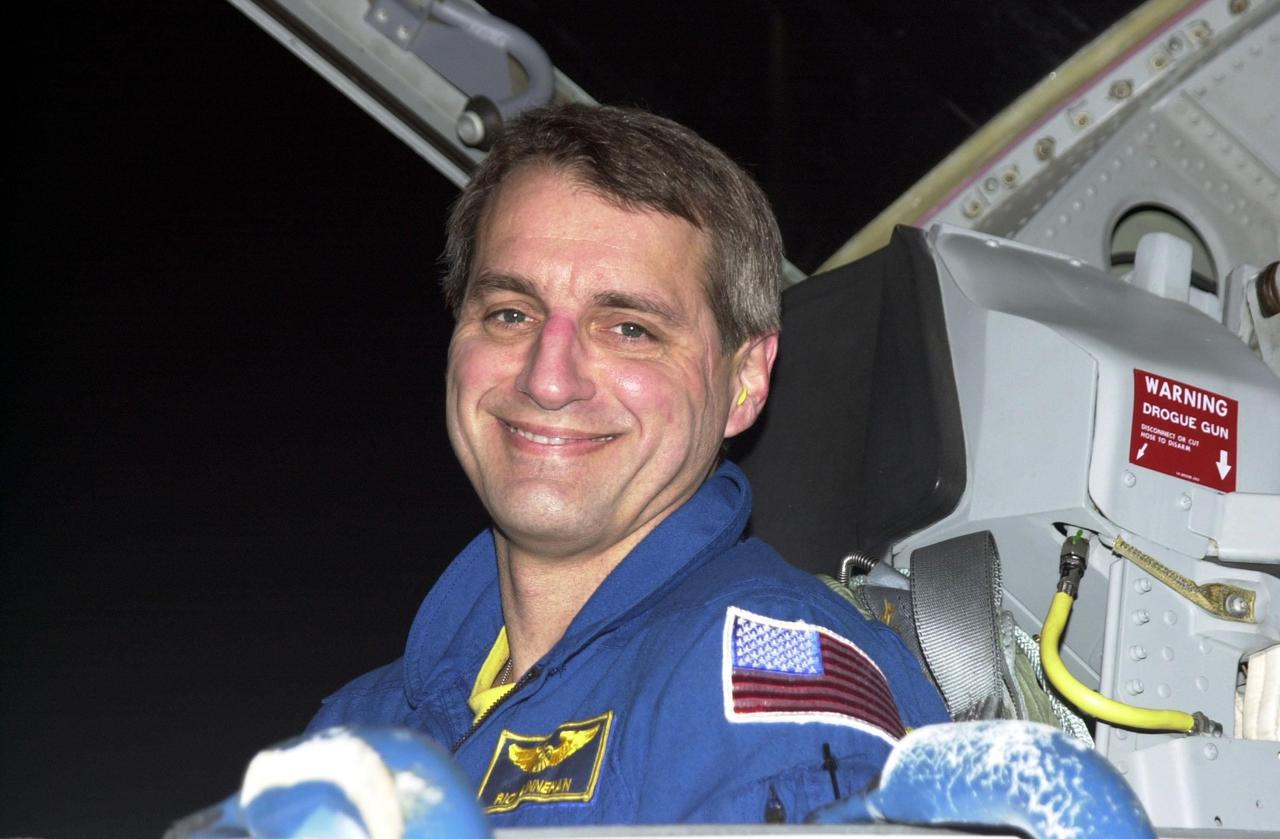
KENNEDY SPACE CENTER, FLA. - STS-109 Mission Specialist Richard Linnehan arrives at KSC aboard a T-38 jet aircraft to begin launch preparations. This is Linnehan's third Shuttle flight. The goal of the 11-day mission is repair and maintenance on the Hubble Space Telescope. Five spacewalks are planned to replace Solar Array 2 with Solar Array 3, replace the Power Control Unit, remove the Faint Object Camera and install the Advanced Camera for Surveys (ACS), install the Near Infrared Camera and Multi-Object Spectrometer (NICMOS) Cooling System, and install New Outer Blanket Layer insulation. Launch is scheduled for Feb. 28 at 6:48 a.m. EST
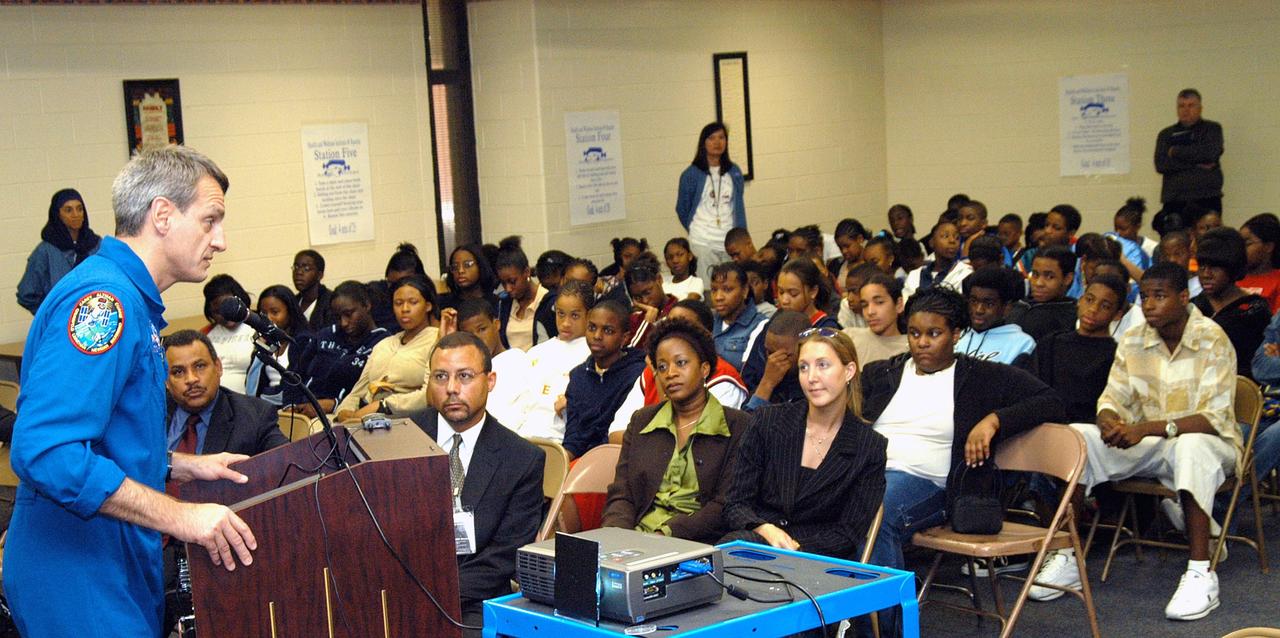
KENNEDY SPACE CENTER, FLA. - Astronaut Rick Linnehan shares his experiences in space with students and faculty at Ralph Bunche Middle School, a NASA Explorer School, in Atlanta, Ga. Linnehan accompanied Center Director Jim Kennedy, who is visiting NES sites to share America’s new vision for space exploration with the next generation of explorers. The purpose of the school visit is to talk with students about our destiny as explorers, NASA’s stepping stone approach to exploring Earth, the Moon, Mars and beyond, how space impacts our lives, and how people and machines rely on each other in space.

STS109-E-5668 (6 March 2002) --- The two space walking teams of STS-109 crew members, who today surpassed the halfway point in their extravehicular activity (EVA) duty, pose for a snapshot on the mid deck of the Space Shuttle Columbia. From the left are astronauts Richard M. Linnehan, James H. Newman, John M. Grunsfeld and Michael J. Massimino. Following the second spacewalk by the Grunsfeld-Linnehan duo earlier today, marking the third overall for the STS-109 mission, each team has one space walk remaining. The image was recorded with a digital still camera.
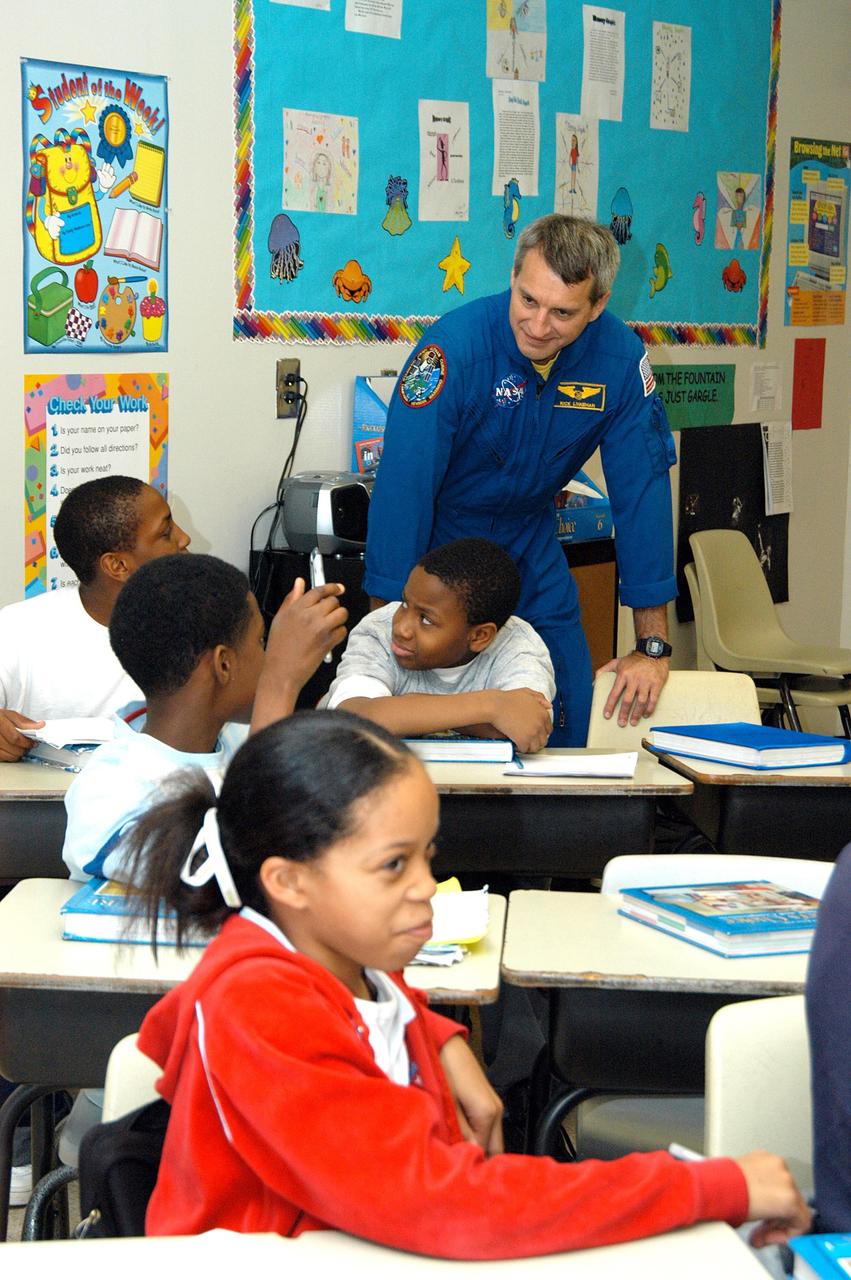
KENNEDY SPACE CENTER, FLA. - Astronaut Rick Linnehan talks to students in a classroom at Ralph Bunche Middle School, a NASA Explorer School, in Atlanta, Ga. Linnehan accompanied Center Director Jim Kennedy, who was visiting the school to share America’s new vision for space exploration with the next generation of explorers. The visit is one of many Kennedy has made to NES sites in Florida and Georgia to talk with students about our destiny as explorers, NASA’s stepping stone approach to exploring Earth, the Moon, Mars and beyond, how space impacts our lives, and how people and machines rely on each other in space.
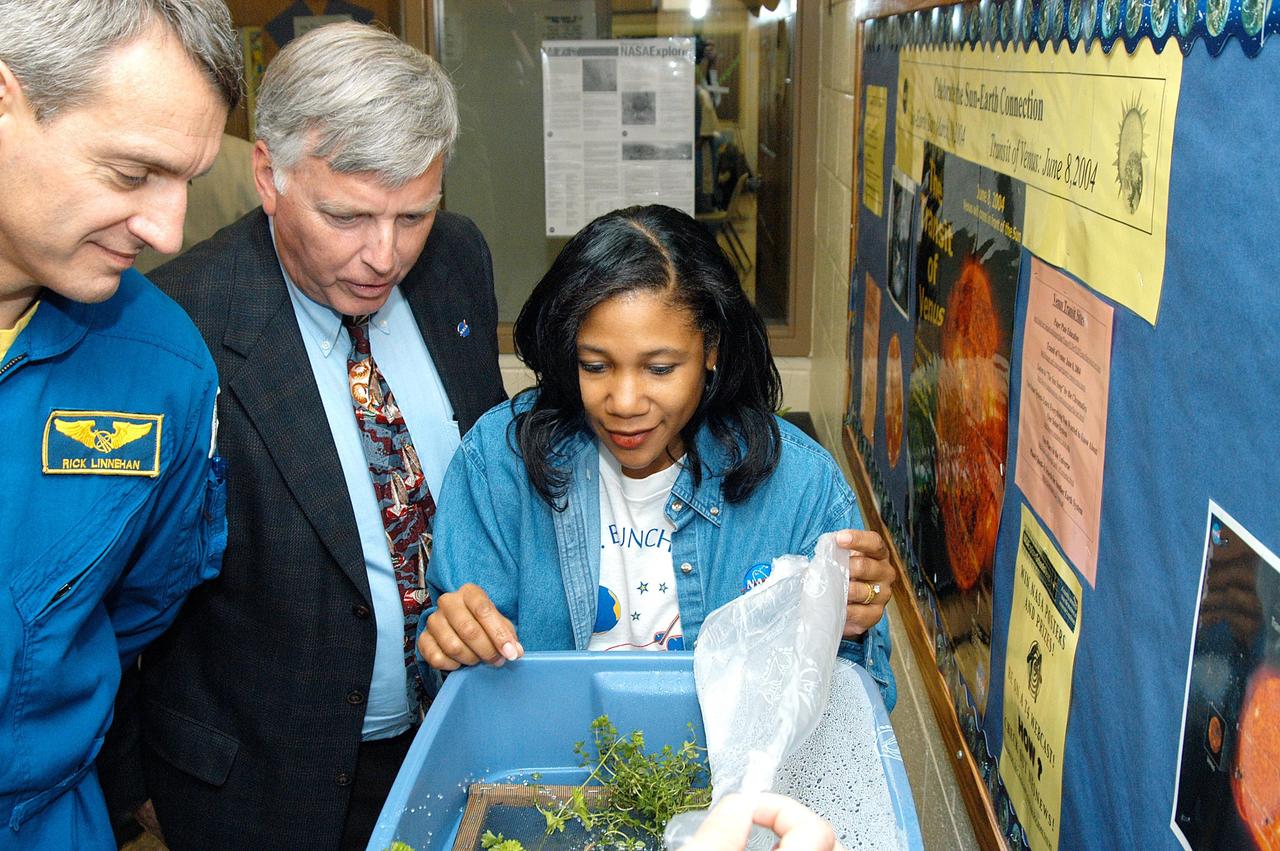
KENNEDY SPACE CENTER, FLA. - A teacher (right) at Ralph Bunche Middle School, a NASA Explorer School, in Atlanta, Ga., shows a science project to astronaut Rick Linnehan (left) and Center Director Jim Kennedy (center). Linnehan and Kennedy were at the school to share America’s new vision for space exploration with the next generation of explorers. The visit is one of many Kennedy has made to NES sites in Florida and Georgia to talk with students about our destiny as explorers, NASA’s stepping stone approach to exploring Earth, the Moon, Mars and beyond, how space impacts our lives, and how people and machines rely on each other in space.
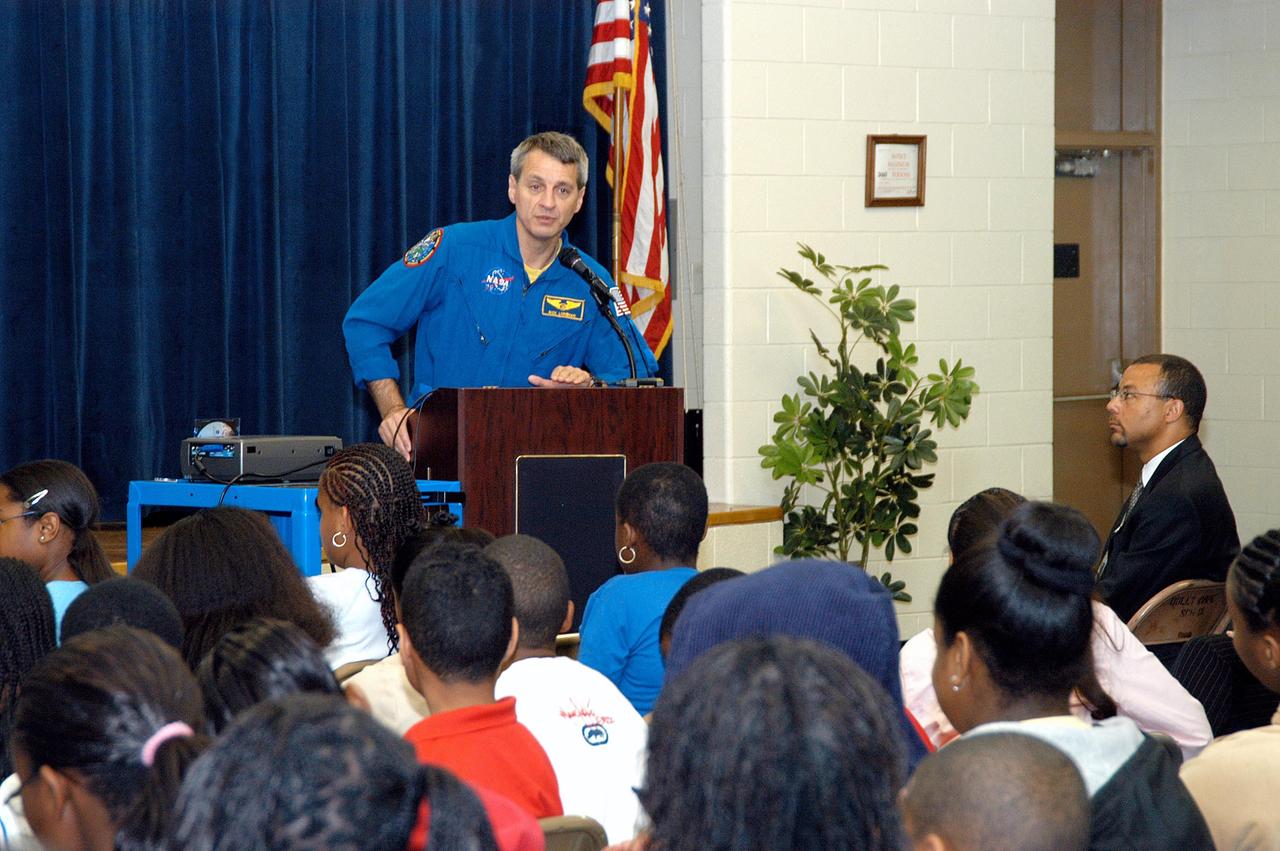
KENNEDY SPACE CENTER, FLA. - Astronaut Rick Linnehan shares his experiences in space with students and faculty at Ralph Bunche Middle School, a NASA Explorer School, in Atlanta, Ga. Linnehan accompanied Center Director Jim Kennedy, who is visiting NES sites to share America’s new vision for space exploration with the next generation of explorers. The purpose of the school visit is to talk with students about our destiny as explorers, NASA’s stepping stone approach to exploring Earth, the Moon, Mars and beyond, how space impacts our lives, and how people and machines rely on each other in space.
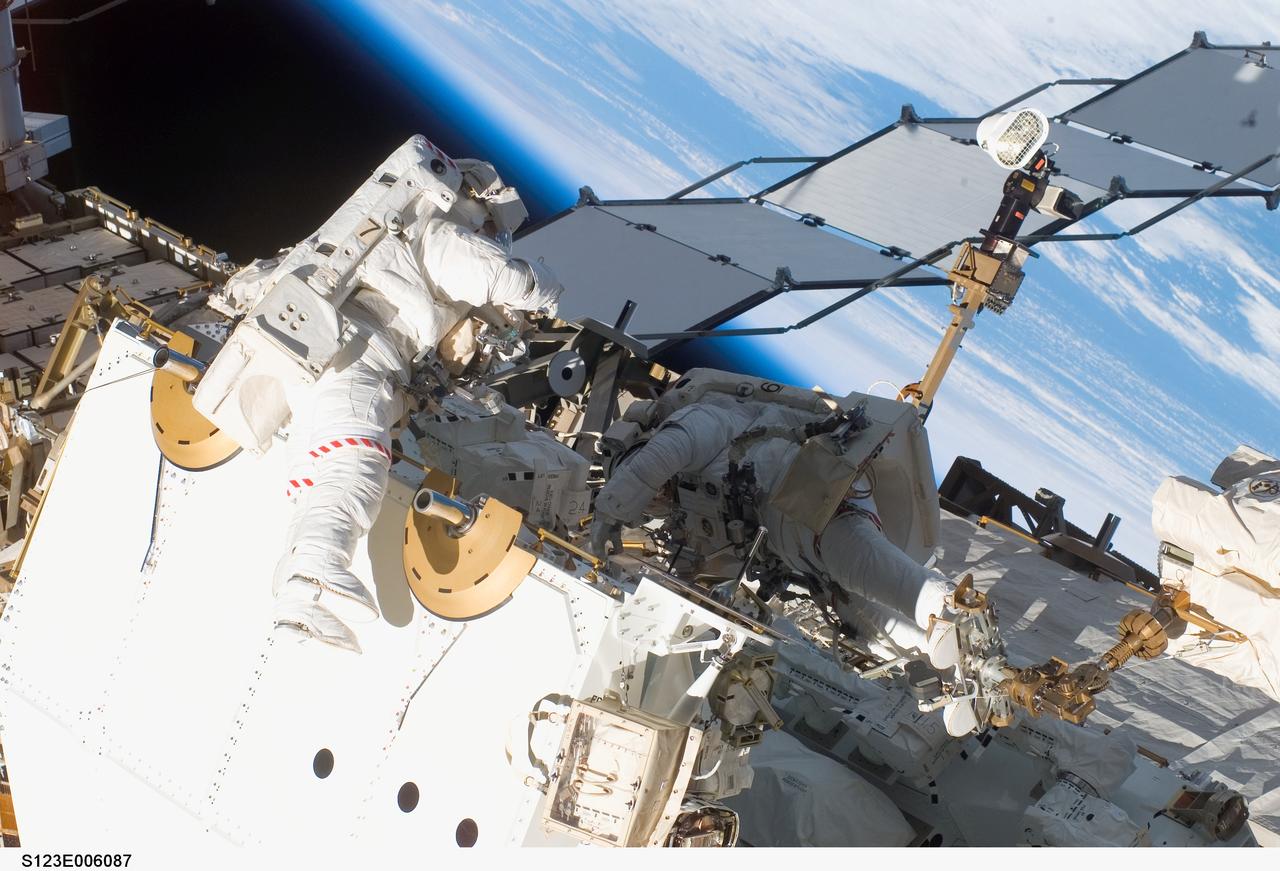
S123-E-006087 (13/14 March 2008) --- Astronauts Rick Linnehan (right), STS-123 mission specialist; and Garrett Reisman, Expedition 16 flight engineer, participate in the mission's first scheduled session of extravehicular activity (EVA) as construction and maintenance continue on the International Space Station. During the seven-hour and one-minute spacewalk, Linnehan and Reisman prepared the Japanese logistics module-pressurized section (JLP) for removal from Space Shuttle Endeavour's payload bay; opened the Centerline Berthing Camera System on top of the Harmony module; removed the Passive Common Berthing Mechanism and installed both the Orbital Replacement Unit (ORU) tool change out mechanisms on the Canadian-built Dextre robotic system, the final element of the station's Mobile Servicing System.
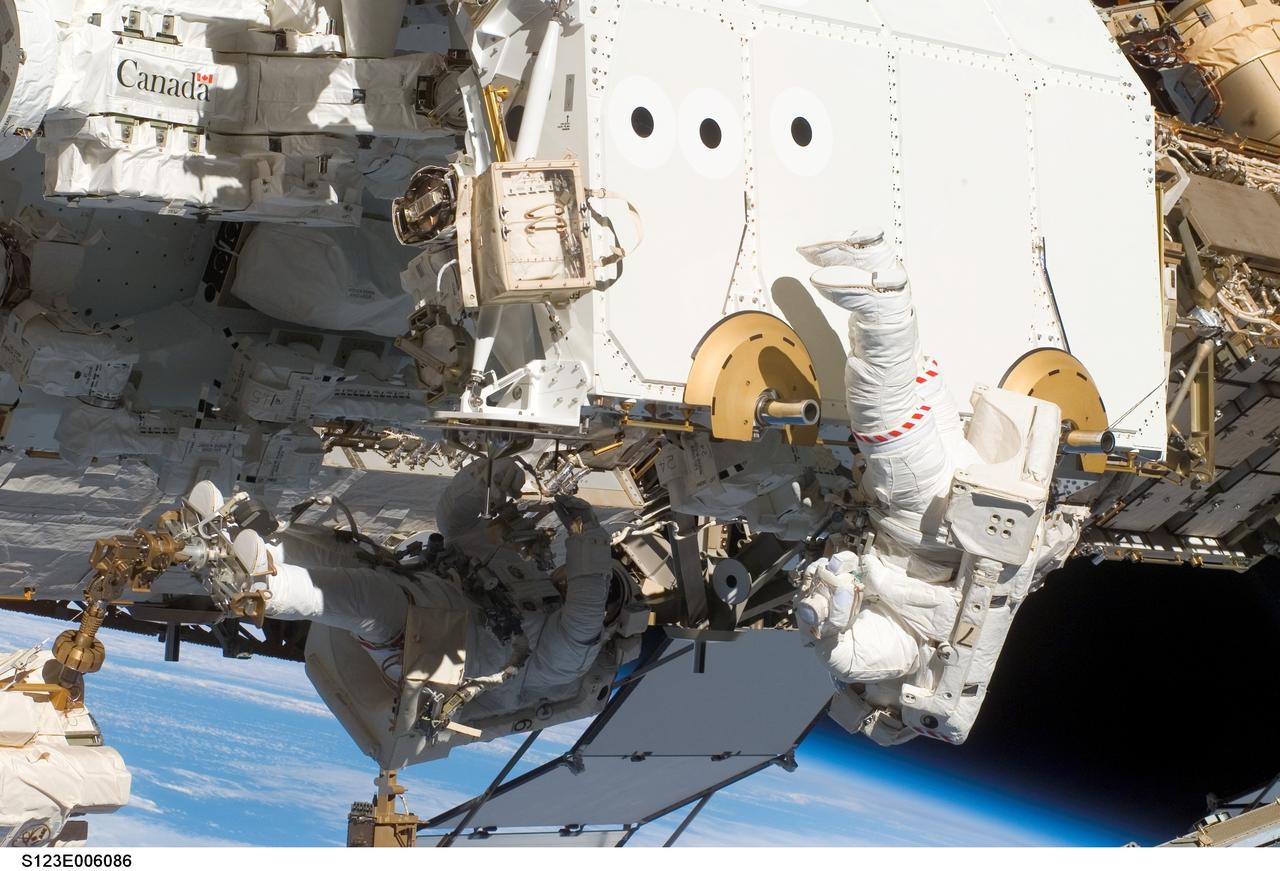
S123-E-006086 (13/14 March 2008) --- Astronauts Rick Linnehan (left), STS-123 mission specialist; and Garrett Reisman, Expedition 16 flight engineer, participate in the mission's first scheduled session of extravehicular activity (EVA) as construction and maintenance continue on the International Space Station. During the seven-hour and one-minute spacewalk, Linnehan and Reisman prepared the Japanese logistics module-pressurized section (JLP) for removal from Space Shuttle Endeavour's payload bay; opened the Centerline Berthing Camera System on top of the Harmony module; removed the Passive Common Berthing Mechanism and installed both the Orbital Replacement Unit (ORU) tool change out mechanisms on the Canadian-built Dextre robotic system, the final element of the station's Mobile Servicing System.
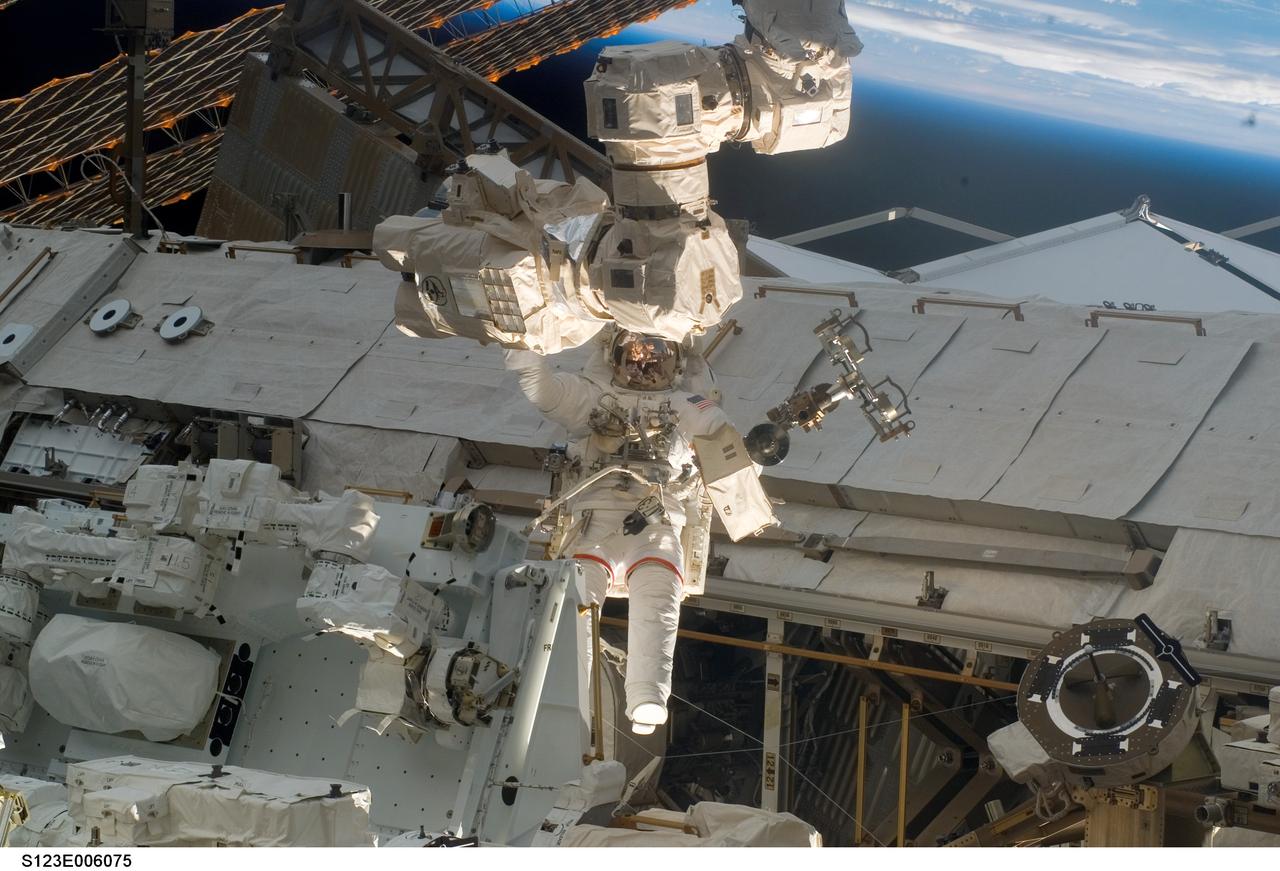
S123-E-006075 (13/14 March 2008) --- Astronaut Rick Linnehan, STS-123 mission specialist, participates in the mission's first scheduled session of extravehicular activity (EVA) as construction and maintenance continue on the International Space Station. During the seven-hour and one-minute spacewalk, Linnehan and astronaut Garrett Reisman (out of frame), Expedition 16 flight engineer, prepared the Japanese logistics module-pressurized section (JLP) for removal from Space Shuttle Endeavour's payload bay; opened the Centerline Berthing Camera System on top of the Harmony module; removed the Passive Common Berthing Mechanism and installed both the Orbital Replacement Unit (ORU) tool change out mechanisms on the Canadian-built Dextre robotic system, the final element of the station's Mobile Servicing System.
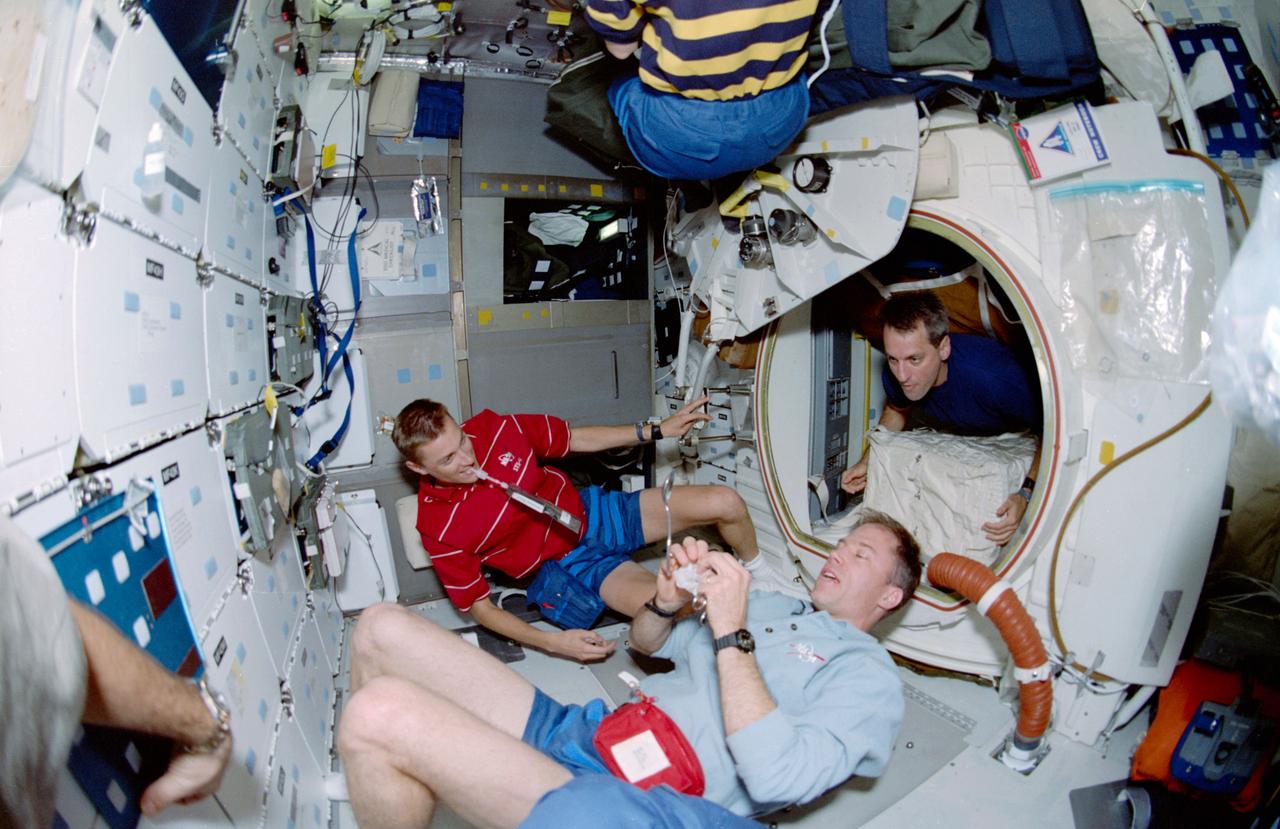
STS090-351-009 (17 April - 3 May 1998) --- Three members of the Neurolab crew were photographed during off-duty time on the mid-deck aboard the Earth-orbiting Space Shuttle Columbia. Left to right are James A. (Jim) Pawelczyk, payload specialist, and astronauts Richard A. Searfoss, mission commander; and Richard M. Linnehan, payload commander. Linnehan is in the hatchway of the tunnel that connected the crew members to the Spacelab Science Module in Columbia's cargo bay. A "fish-eye" lens on a 35mm camera gives the scene a slightly distorted look. Five NASA astronauts and two payload specialists went on to spend a little more than 16-days in Earth-orbit in support of the Neurolab mission.
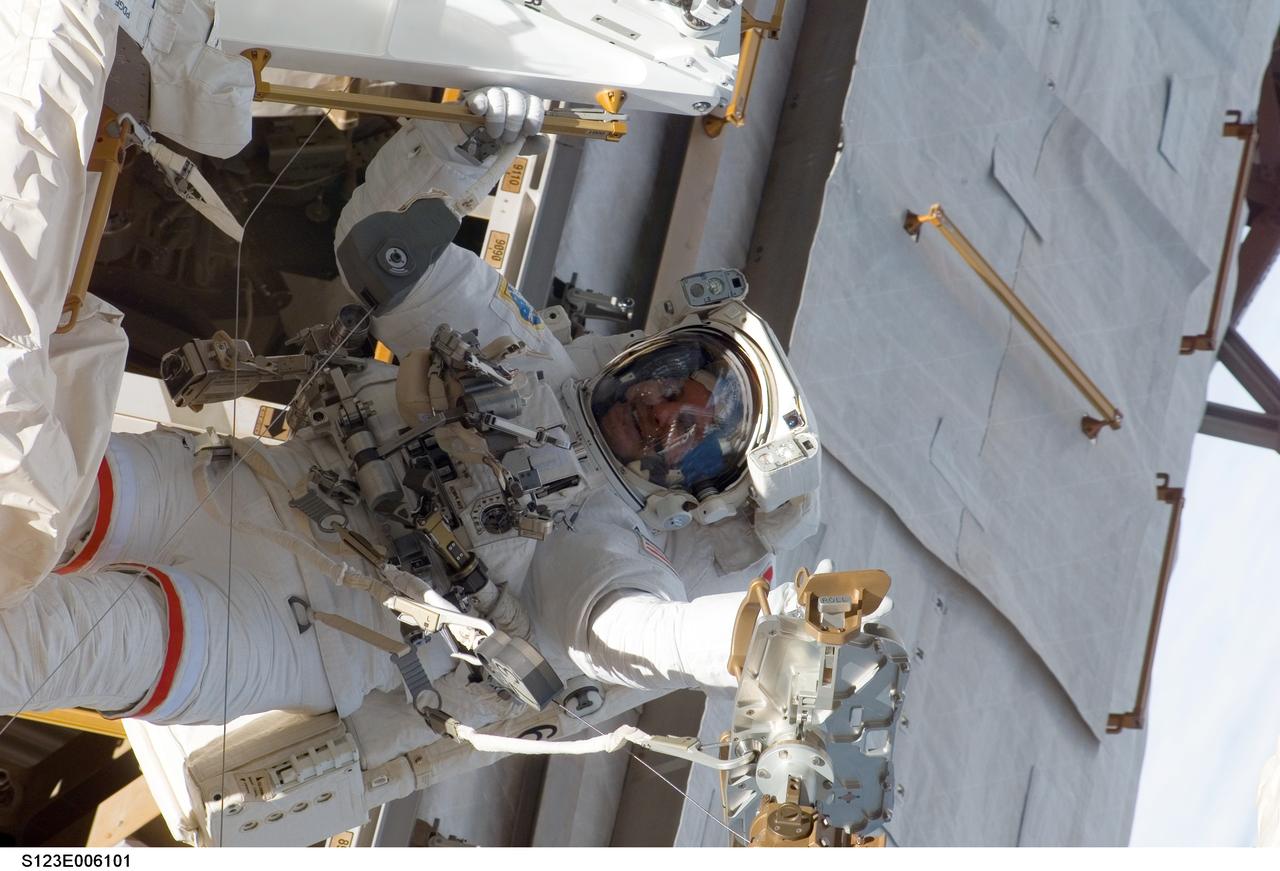
S123-E-006101 (13/14 March 2008) --- Astronaut Rick Linnehan, STS-123 mission specialist, participates in the mission's first scheduled session of extravehicular activity (EVA) as construction and maintenance continue on the International Space Station. During the seven-hour and one-minute spacewalk, Linnehan and astronaut Garrett Reisman (out of frame), Expedition 16 flight engineer, prepared the Japanese logistics module-pressurized section (JLP) for removal from Space Shuttle Endeavour's payload bay; opened the Centerline Berthing Camera System on top of the Harmony module; removed the Passive Common Berthing Mechanism and installed both the Orbital Replacement Unit (ORU) tool change out mechanisms on the Canadian-built Dextre robotic system, the final element of the station's Mobile Servicing System.

STS109-E-5735 (8 March 2002) --- Astronaut John M. Grunsfeld, STS-109 payload commander, works in tandem with astronaut Richard M. Linnehan, mission specialist, as the two devote their attention to the Near-Infrared Camera and Multi-Object Spectrometer (NICMOS) on the giant Hubble Space Telescope (HST). Grunsfeld stands on a foot restraint on the end of the Space Shuttle Columbia’s Remote Manipulator System (RMS). This marked the fifth and final scheduled STS-109 space walk and the mission’s third extravehicular activity (EVA) for the tandem of Grunsfeld and Linnehan. It was completed at 10:06 a.m. CST (1606 GMT), March 8, 2002. The image was recorded with a digital still camera.
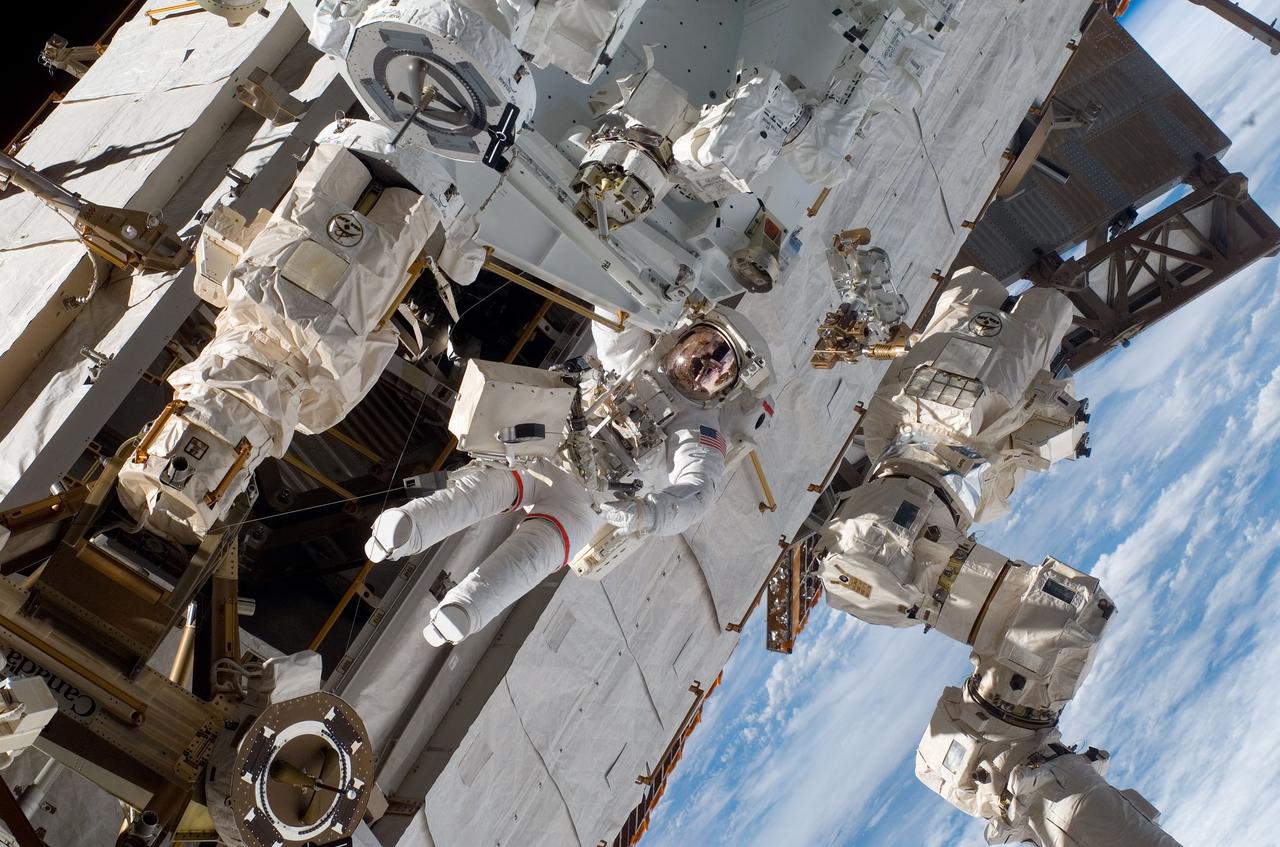
S123-E-006082 (13/14 March 2008) --- Astronaut Rick Linnehan, STS-123 mission specialist, participates in the mission's first scheduled session of extravehicular activity (EVA) as construction and maintenance continue on the International Space Station. During the seven-hour and one-minute spacewalk, Linnehan and astronaut Garrett Reisman (out of frame), Expedition 16 flight engineer, prepared the Japanese logistics module-pressurized section (JLP) for removal from Space Shuttle Endeavour's payload bay; opened the Centerline Berthing Camera System on top of the Harmony module; removed the Passive Common Berthing Mechanism and installed both the Orbital Replacement Unit (ORU) tool change out mechanisms on the Canadian-built Dextre robotic system, the final element of the station's Mobile Servicing System.
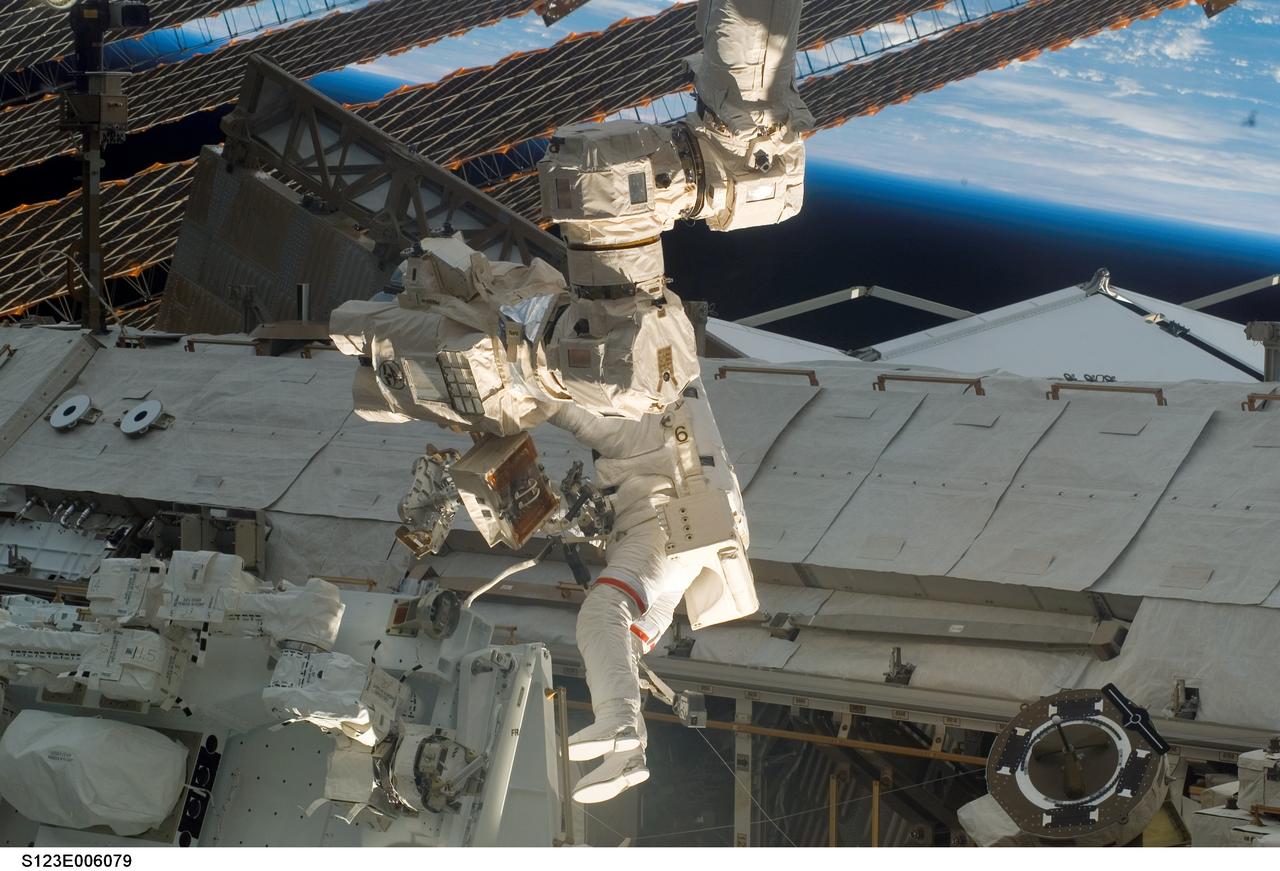
S123-E-006079 (13/14 March 2008) --- Astronaut Rick Linnehan, STS-123 mission specialist, participates in the mission's first scheduled session of extravehicular activity (EVA) as construction and maintenance continue on the International Space Station. During the seven-hour and one-minute spacewalk, Linnehan and astronaut Garrett Reisman (out of frame), Expedition 16 flight engineer, prepared the Japanese logistics module-pressurized section (JLP) for removal from Space Shuttle Endeavour's payload bay; opened the Centerline Berthing Camera System on top of the Harmony module; removed the Passive Common Berthing Mechanism and installed both the Orbital Replacement Unit (ORU) tool change out mechanisms on the Canadian-built Dextre robotic system, the final element of the station's Mobile Servicing System.
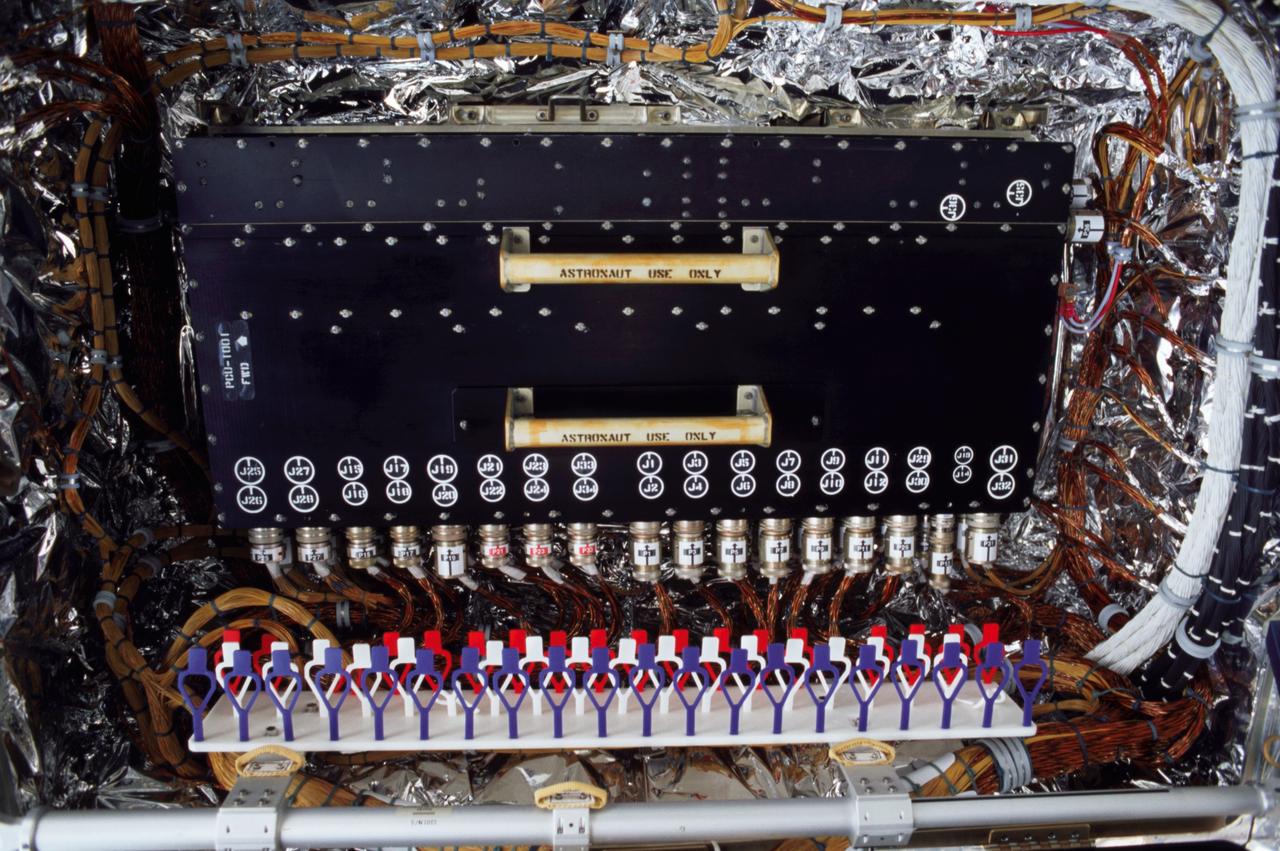
STS109-322-025 (1-12 March 2002) --- A close-up view of the power control unit or PCU, which is the heart of the Hubble Space Telescope (HST) power system. Astronauts John M. Grunsfeld and Richard M. Linnehan, STS-109 payload commander and mission specialist, respectively, replaced the PCU on March 6, 2002, during the third space walk of the mission.
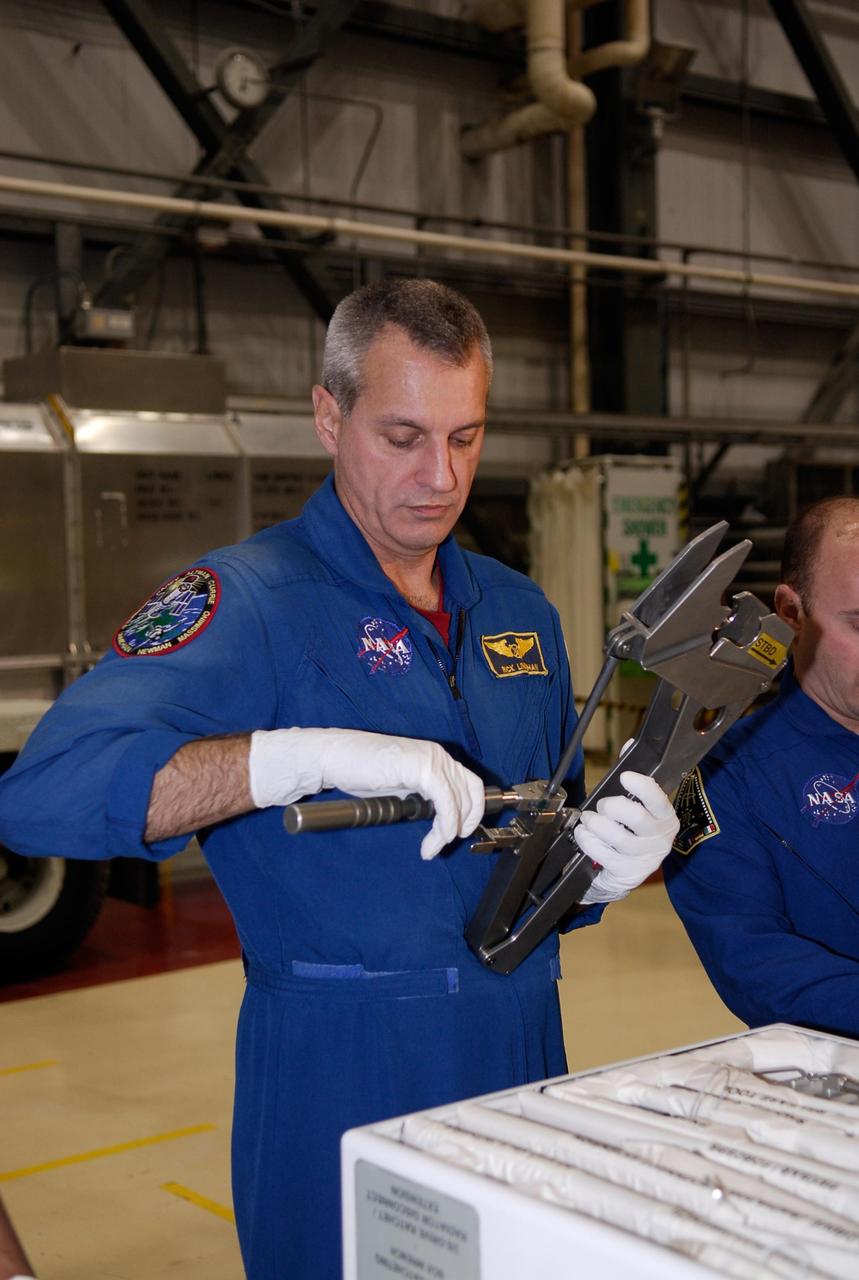
KENNEDY SPACE CENTER, FLA. -- In the Orbiter Processing Facility, STS-123 Mission Specialist Richard Linnehan practices with tools that will be used on the mission. He and other crew members are at NASA's Kennedy Space Center for a crew equipment interface test, a process of familiarization with payloads, hardware and the space shuttle. The STS-123 mission is targeted for launch on space shuttle Endeavour on Feb. 14. It will be the 25th assembly flight of the station. Photo credit: NASA/Kim Shiflett

KENNEDY SPACE CENTER, FLA. -- STS-123 Mission Specialist Rick Linnehan adjusts his gloves during suitup for launch on space shuttle Endeavour. The crew will make a record-breaking 16-day mission to the International Space Station. On STS-123, Endeavour and its crew will deliver the first section of the Japan Aerospace Exploration Agency's Kibo laboratory and the Canadian Space Agency's two-armed robotic system, Dextre. Launch is scheduled for 2:28 a.m. EDT March 11. Photo credit: NASA/Kim Shiflett
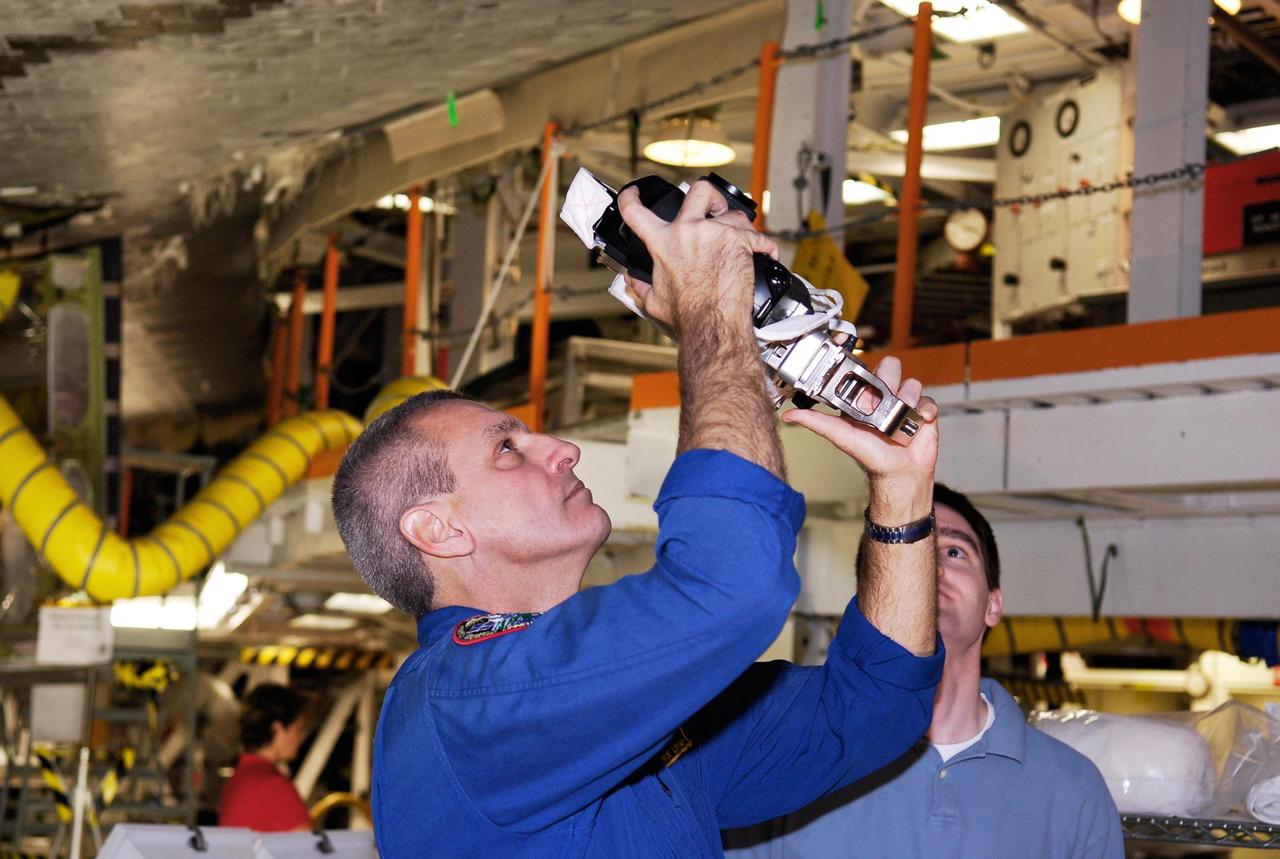
KENNEDY SPACE CENTER, FLA. -- In the Orbiter Processing Facility, STS-123 Mission Specialist Richard Linnehan tries out one of the cameras that will be used on the mission. He and other crew members are at NASA's Kennedy Space Center for a crew equipment interface test, a process of familiarization with payloads, hardware and the space shuttle. The STS-123 mission is targeted for launch on space shuttle Endeavour on Feb. 14. It will be the 25th assembly flight of the station. Photo credit: NASA/Kim Shiflett
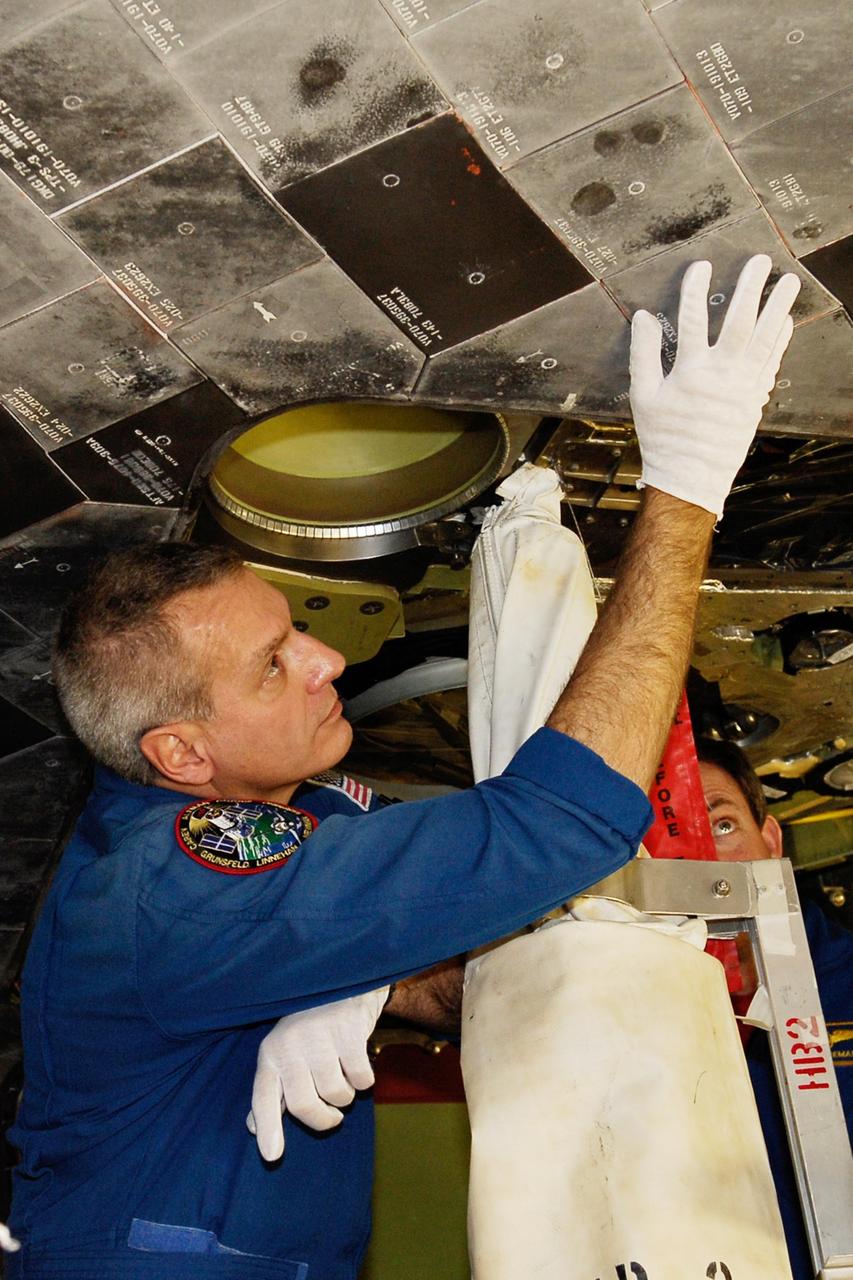
KENNEDY SPACE CENTER, FLA. -- In the Orbiter Processing Facility, STS-123 Mission Specialist Richard Linnehan makes a hands-on inspection of the thermal protection system tiles on the underside of space shuttle Endeavour. He and other crew members are at NASA's Kennedy Space Center for a crew equipment interface test, a process of familiarization with payloads, hardware and the space shuttle. The STS-123 mission is targeted for launch on space shuttle Endeavour on Feb. 14. It will be the 25th assembly flight of the station. Photo credit: NASA/Kim Shiflett
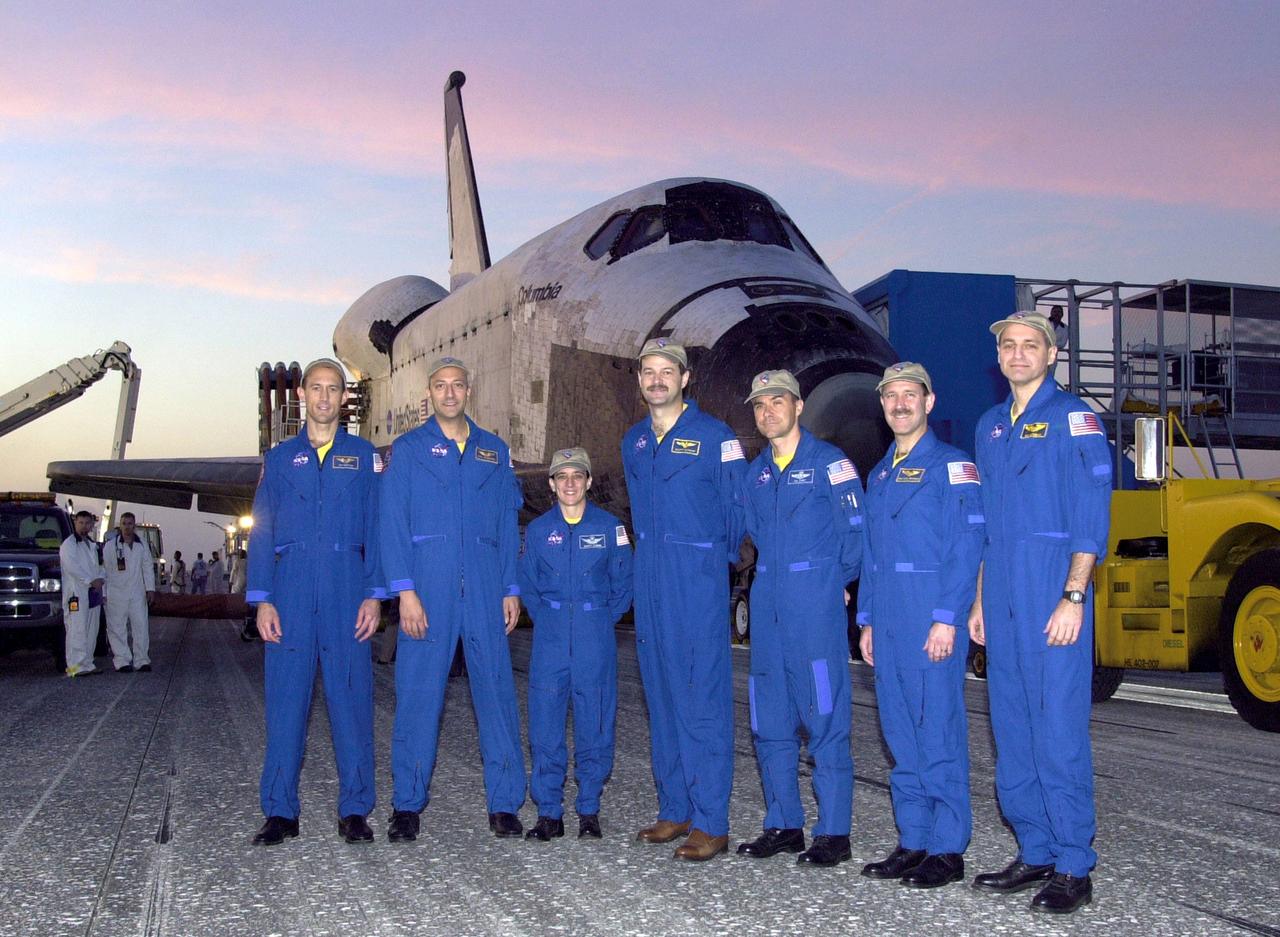
Posing in front of the Space Shuttle Columbia is the returning STS-109 crew. From left are astronauts James H. Newman, Michael J. Massimino, Nancy J. Currie, Scott D. Altman, Duane G. Carey, John M. Grunsfeld and Richard M. Linnehan. The crew returned to Earth after a successful 11-day mission servicing and upgrading the Hubble Space Telescope.
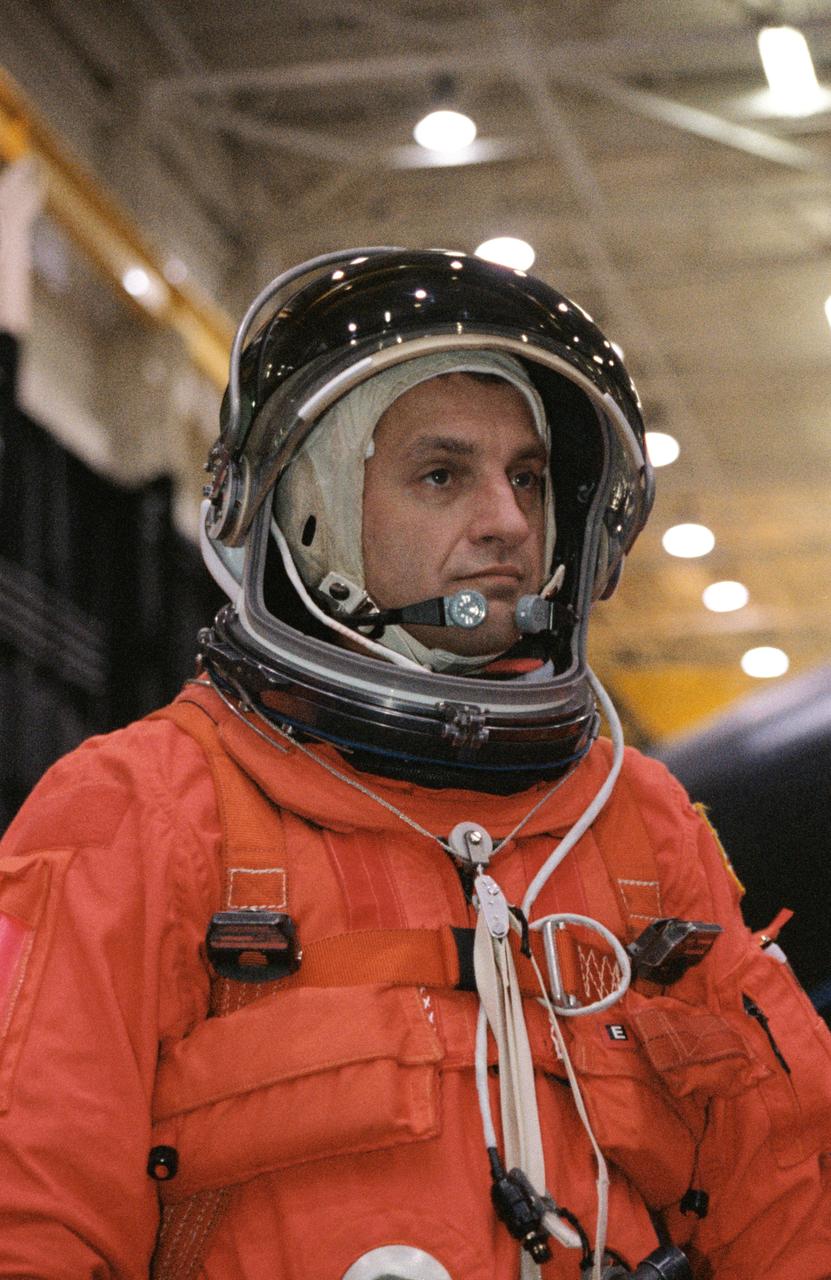
JSC2001-02197 (9 August 2001) --- Suited in a training version of the full-pressure launch and entry suit, astronaut Richard M. Linnehan, STS-109 mission specialist, awaits a training session in one of the trainer/mockups (out of frame) in the Space Vehicle Mockup Facility at the Johnson Space Center (JSC). STS-109 will be the 108th shuttle flight and the fourth Hubble Space Telescope (HST) servicing mission.