
This colourful bubble is a planetary nebula called NGC 6818, also known as the Little Gem Nebula. It is located in the constellation of Sagittarius (The Archer), roughly 6000 light-years away from us. The rich glow of the cloud is just over half a light-year across — humongous compared to its tiny central star — but still a little gem on a cosmic scale. When stars like the Sun enter retirement, they shed their outer layers into space to create glowing clouds of gas called planetary nebulae. This ejection of mass is uneven, and planetary nebulae can have very complex shapes. NGC 6818 shows knotty filament-like structures and distinct layers of material, with a bright and enclosed central bubble surrounded by a larger, more diffuse cloud. Scientists believe that the stellar wind from the central star propels the outflowing material, sculpting the elongated shape of NGC 6818. As this fast wind smashes through the slower-moving cloud it creates particularly bright blowouts at the bubble’s outer layers. Hubble previously imaged this nebula back in 1997 with its Wide Field Planetary Camera 2, using a mix of filters that highlighted emission from ionised oxygen and hydrogen (opo9811h). This image, while from the same camera, uses different filters to reveal a different view of the nebula. A version of the image was submitted to the Hubble’s Hidden Treasures image processing competition by contestant Judy Schmidt.
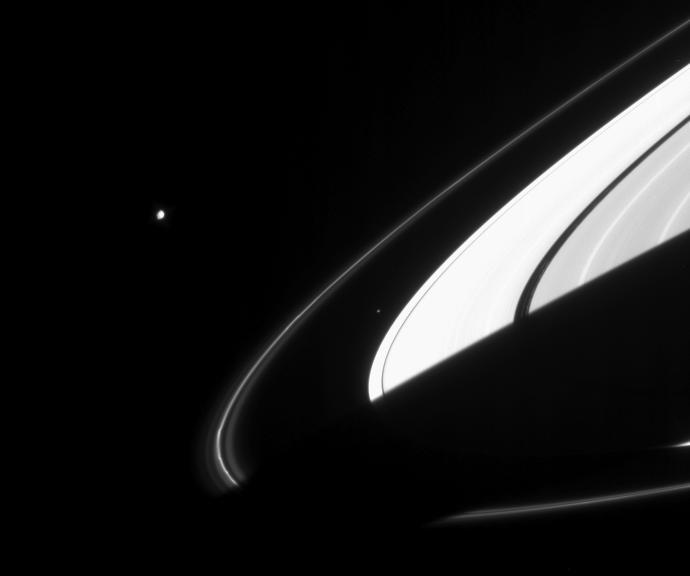
Little Moons
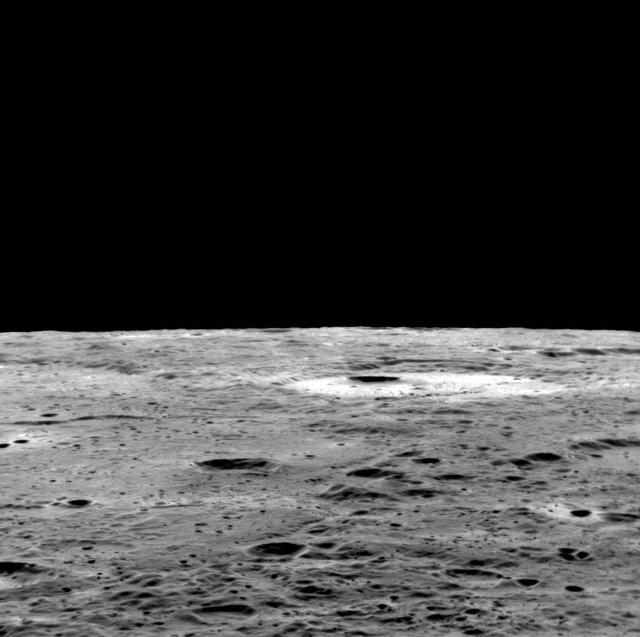
A Little Perspective
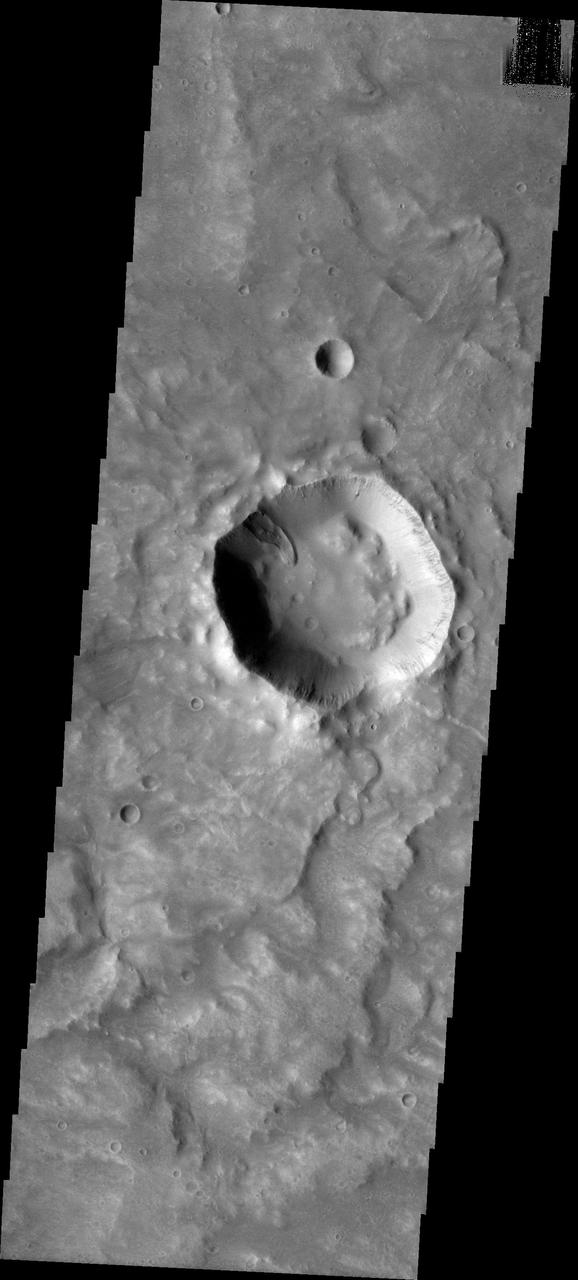
Little Landslide

Happy Little Crater
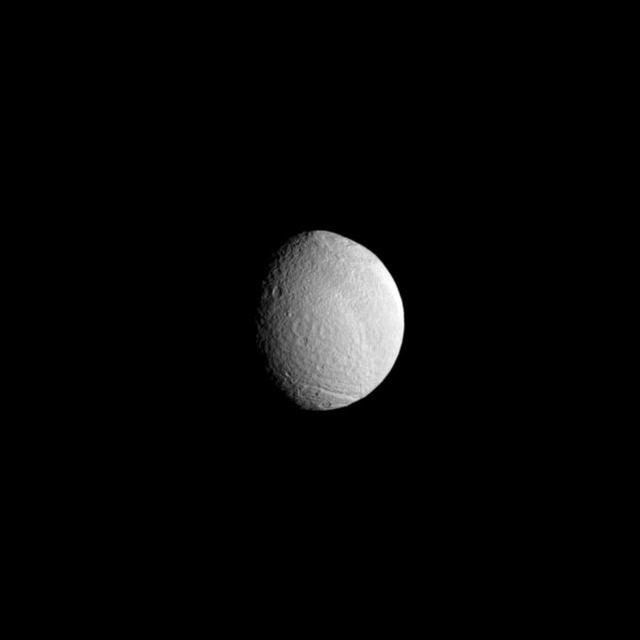
A Little Off the Top
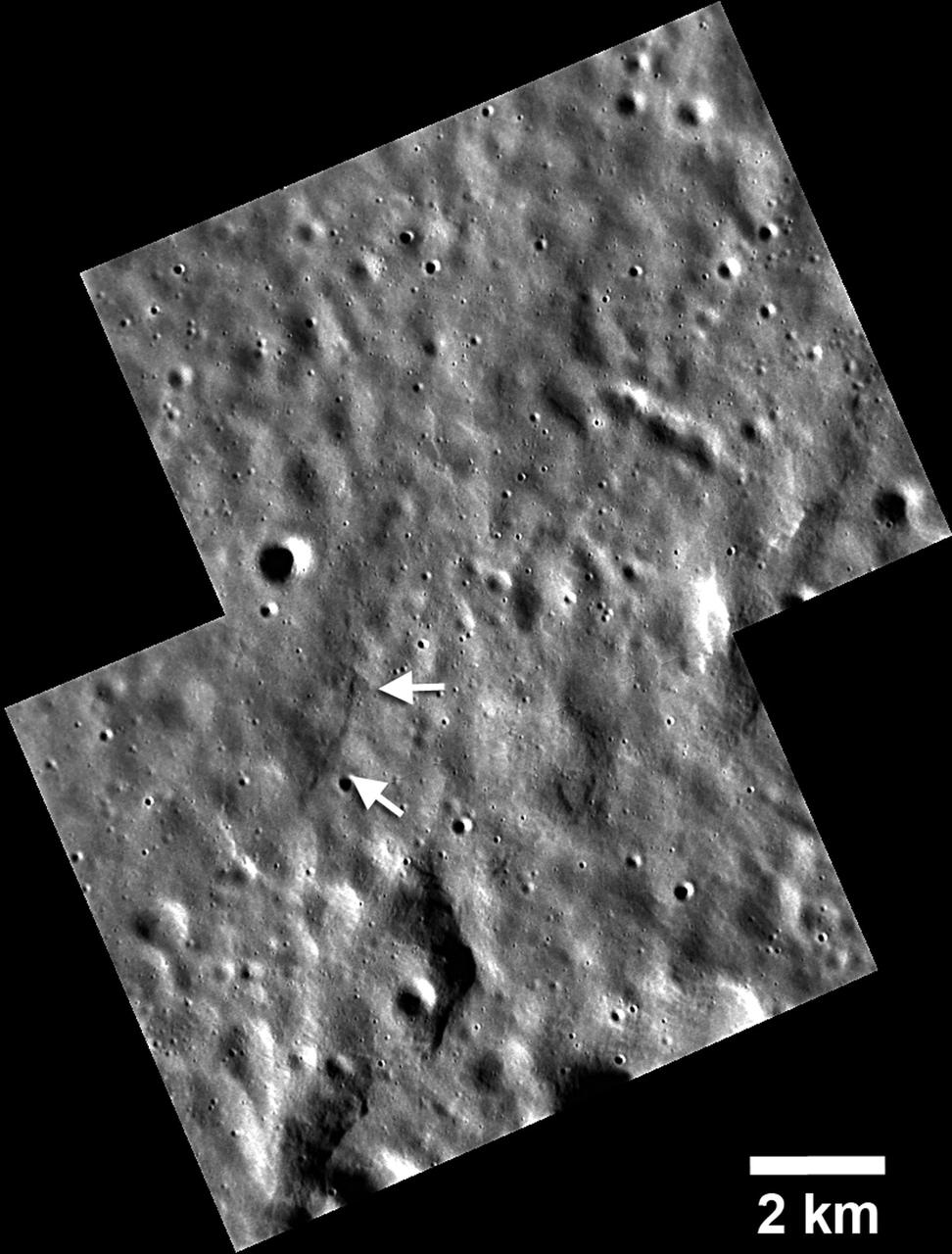
Little Scarp has Big Implications

Little Joe on launcher at Wallops Island.

Launching of the LJ6 Little Joe on Oct. 4, 1959 took place at Wallops Island, Va. This was the first attempt to launch an instrumented capsule with a Little Joe booster. Only the LJ1A and the LJ6 used the space metal chevron plates as heat reflector shields, as they kept shattering. Caption title ...and ascending skyward on a plume of exhaust. Photograph published in Winds of Change, 75th Anniversary NASA publication, page 77, by James Schultz

Assembling the Little Joe capsules. The capsules were manufactured in-house by Langley technicians. Three capsules are shown here in various stages of assembly. The escape tower and rocket motors shown on the completed capsule would be removed before shipping and finally assembly for launching at Wallops Island. Joseph Shortal wrote (vol. 3, p. 32): Design of the Little Joe capsules began at Langley before McDonnell started on the design of the Mercury capsule and was, therefore, a separate design. Although it was not designed to carry a man, it did have to carry a monkey. It had to meet the weight and center of gravity requirements of Mercury and withstand the same aerodynamic loads during the exit trajectory. Although in comparison with the overall Mercury Project, Little Joe was a simple undertaking, the fact that an attempt was made to condense a normal two-year project into a 6-month one with in house labor turned it into a major undertaking for Langley. Project Mercury: Little Joe: Boilerplate Mercury spacecraft undergo fabrication at the shops of the Langley Research Center. They will launched atop Little Joe rockets to test the spacecraft recovery systems. -- Published in Joseph A. Shortal, History of Wallops Station: Origins and Activities Through 1949, (Wallops Island, VA: National Aeronautics and Space Administration, Wallops Station, nd), Comment Edition. L59-4947 Technicians prepare a Little Joe launch vehicle prototype for the Mercury space program, 1959. Photograph published in Winds of Change, 75th Anniversary NASA publication, page 76, by James Schultz

Assembling the Little Joe capsules. The capsules were manufactured in-house by Langley technicians. Three capsules are shown here in various stages of assembly. The escape tower and rocket motors shown on the completed capsule would be removed before shipping and finally assembly for launching at Wallops Island. Joseph Shortal wrote (vol. 3, p. 32): Design of the Little Joe capsules began at Langley before McDonnell started on the design of the Mercury capsule and was, therefore, a separate design. Although it was not designed to carry a man, it did have to carry a monkey. It had to meet the weight and center of gravity requirements of Mercury and withstand the same aerodynamic loads during the exit trajectory. Although in comparison with the overall Mercury Project, Little Joe was a simple undertaking, the fact that an attempt was made to condense a normal two-year project into a 6-month one with in house labor turned it into a major undertaking for Langley. Project Mercury: Little Joe: Boilerplate Mercury spacecraft undergo fabrication at the shops of the Langley Research Center. They will launched atop Little Joe rockets to test the spacecraft recovery systems. -- Published in Joseph A. Shortal, History of Wallops Station: Origins and Activities Through 1949, (Wallops Island, VA: National Aeronautics and Space Administration, Wallops Station, nd), Comment Edition. L59-4947 Technicians prepare a Little Joe launch vehicle prototype for the Mercury space program, 1959. Photograph published in Winds of Change, 75th Anniversary NASA publication, page 76, by James Schultz
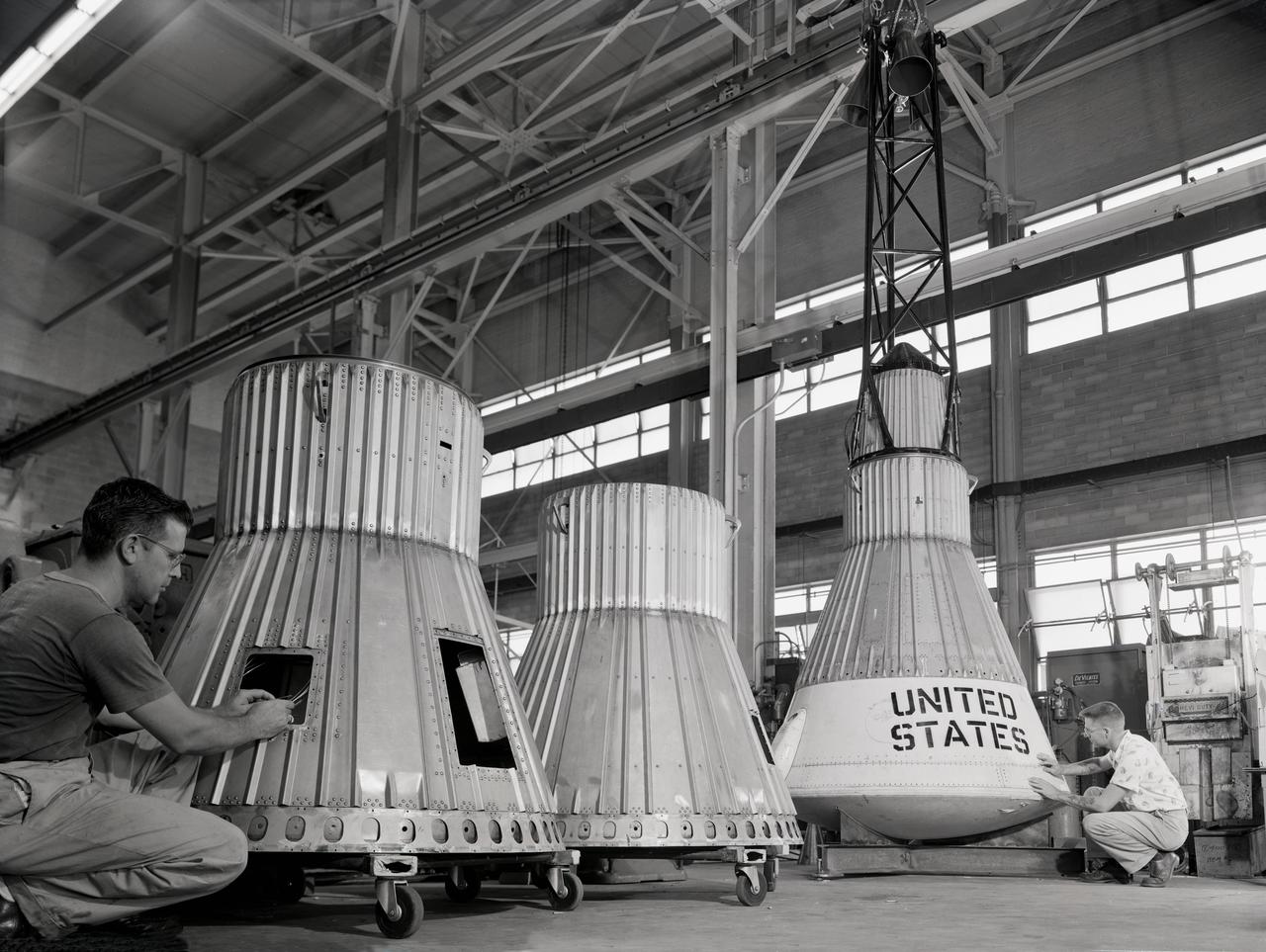
Assembling the Little Joe capsules. The capsules were manufactured in-house by Langley technicians. Three capsules are shown here in various stages of assembly. The escape tower and rocket motors shown on the completed capsule would be removed before shipping and finally assembly for launching at Wallops Island. Joseph Shortal wrote (vol. 3, p. 32): Design of the Little Joe capsules began at Langley before McDonnell started on the design of the Mercury capsule and was, therefore, a separate design. Although it was not designed to carry a man, it did have to carry a monkey. It had to meet the weight and center of gravity requirements of Mercury and withstand the same aerodynamic loads during the exit trajectory. Although in comparison with the overall Mercury Project, Little Joe was a simple undertaking, the fact that an attempt was made to condense a normal two-year project into a 6-month one with in house labor turned it into a major undertaking for Langley. Project Mercury: Little Joe: Boilerplate Mercury spacecraft undergo fabrication at the shops of the Langley Research Center. They will launched atop Little Joe rockets to test the spacecraft recovery systems. -- Published in Joseph A. Shortal, History of Wallops Station: Origins and Activities Through 1949, (Wallops Island, VA: National Aeronautics and Space Administration, Wallops Station, nd), Comment Edition. L59-4947 Technicians prepare a Little Joe launch vehicle prototype for the Mercury space program, 1959. Photograph published in Winds of Change, 75th Anniversary NASA publication, page 76, by James Schultz
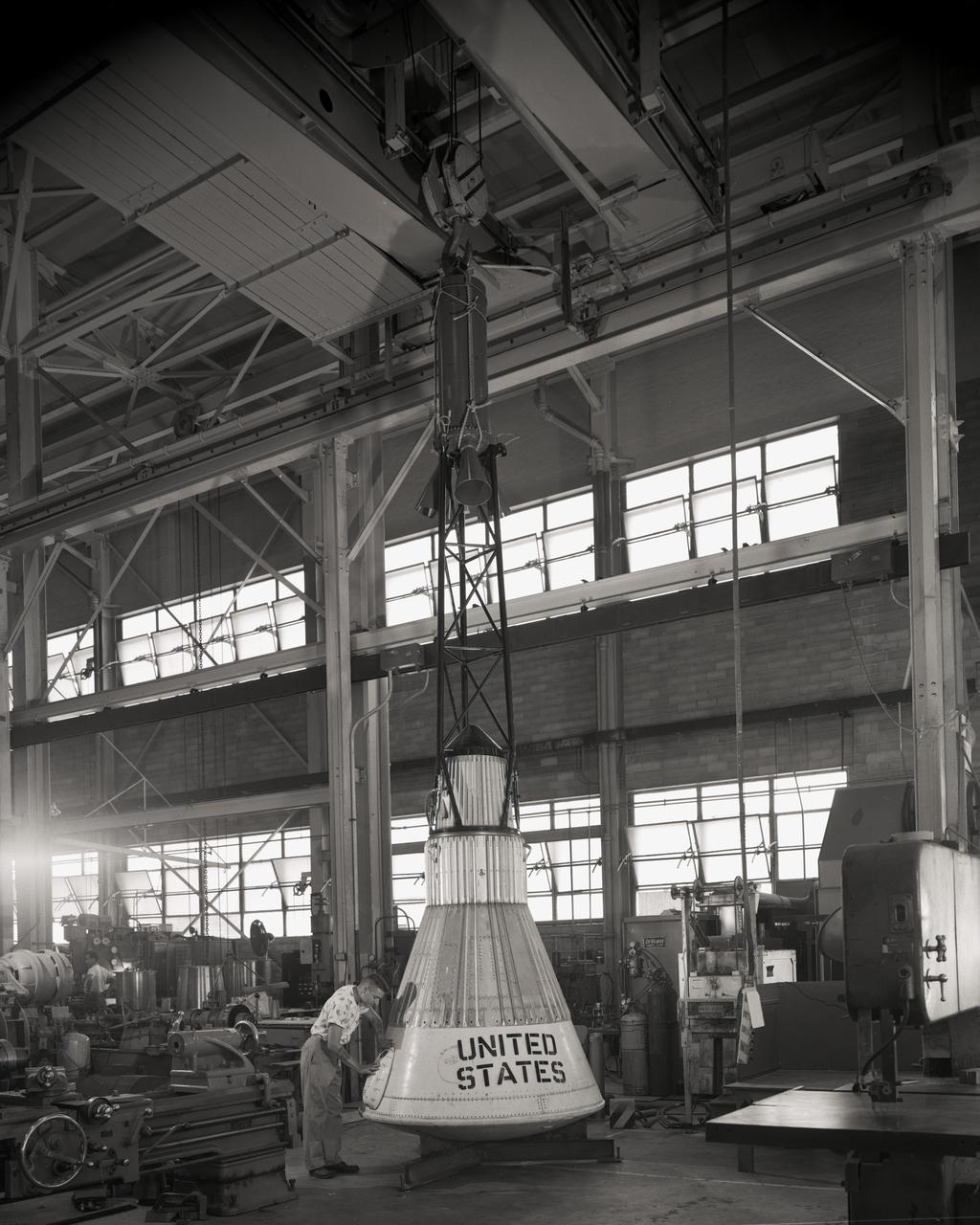
Assembling the Little Joe capsules. The capsules were manufactured in-house by Langley technicians. Three capsules are shown here in various stages of assembly. The escape tower and rocket motors shown on the completed capsule would be removed before shipping and finally assembly for launching at Wallops Island. Joseph Shortal wrote (vol. 3, p. 32): Design of the Little Joe capsules began at Langley before McDonnell started on the design of the Mercury capsule and was, therefore, a separate design. Although it was not designed to carry a man, it did have to carry a monkey. It had to meet the weight and center of gravity requirements of Mercury and withstand the same aerodynamic loads during the exit trajectory. Although in comparison with the overall Mercury Project, Little Joe was a simple undertaking, the fact that an attempt was made to condense a normal two-year project into a 6-month one with in house labor turned it into a major undertaking for Langley. Project Mercury: Little Joe: Boilerplate Mercury spacecraft undergo fabrication at the shops of the Langley Research Center. They will launched atop Little Joe rockets to test the spacecraft recovery systems. -- Published in Joseph A. Shortal, History of Wallops Station: Origins and Activities Through 1949, (Wallops Island, VA: National Aeronautics and Space Administration, Wallops Station, nd), Comment Edition. L59-4947 Technicians prepare a Little Joe launch vehicle prototype for the Mercury space program, 1959. Photograph published in Winds of Change, 75th Anniversary NASA publication, page 76, by James Schultz
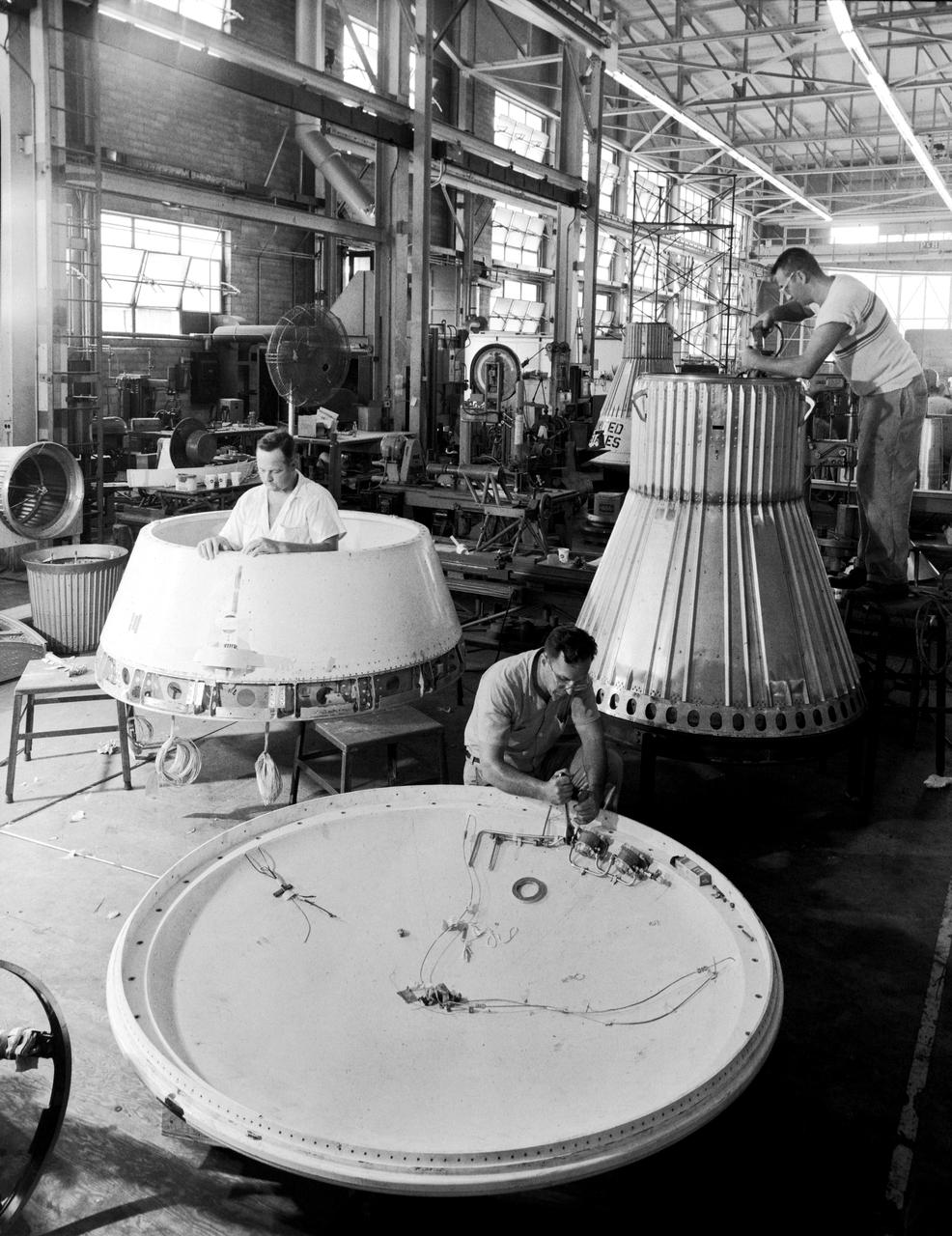
Assembling the Little Joe capsules. The capsules were manufactured in-house by Langley technicians. Three capsules are shown here in various stages of assembly. The escape tower and rocket motors shown on the completed capsule would be removed before shipping and finally assembly for launching at Wallops Island. Joseph Shortal wrote (vol. 3, p. 32): Design of the Little Joe capsules began at Langley before McDonnell started on the design of the Mercury capsule and was, therefore, a separate design. Although it was not designed to carry a man, it did have to carry a monkey. It had to meet the weight and center of gravity requirements of Mercury and withstand the same aerodynamic loads during the exit trajectory. Although in comparison with the overall Mercury Project, Little Joe was a simple undertaking, the fact that an attempt was made to condense a normal two-year project into a 6-month one with in house labor turned it into a major undertaking for Langley. Project Mercury: Little Joe: Boilerplate Mercury spacecraft undergo fabrication at the shops of the Langley Research Center. They will launched atop Little Joe rockets to test the spacecraft recovery systems. -- Published in Joseph A. Shortal, History of Wallops Station: Origins and Activities Through 1949, (Wallops Island, VA: National Aeronautics and Space Administration, Wallops Station, nd), Comment Edition. L59-4947 Technicians prepare a Little Joe launch vehicle prototype for the Mercury space program, 1959. Photograph published in Winds of Change, 75th Anniversary NASA publication, page 76, by James Schultz

Assembling the Little Joe capsules. The capsules were manufactured in-house by Langley technicians. Three capsules are shown here in various stages of assembly. The escape tower and rocket motors shown on the completed capsule would be removed before shipping and finally assembly for launching at Wallops Island. Joseph Shortal wrote (vol. 3, p. 32): Design of the Little Joe capsules began at Langley before McDonnell started on the design of the Mercury capsule and was, therefore, a separate design. Although it was not designed to carry a man, it did have to carry a monkey. It had to meet the weight and center of gravity requirements of Mercury and withstand the same aerodynamic loads during the exit trajectory. Although in comparison with the overall Mercury Project, Little Joe was a simple undertaking, the fact that an attempt was made to condense a normal two-year project into a 6-month one with in house labor turned it into a major undertaking for Langley. Project Mercury: Little Joe: Boilerplate Mercury spacecraft undergo fabrication at the shops of the Langley Research Center. They will launched atop Little Joe rockets to test the spacecraft recovery systems. -- Published in Joseph A. Shortal, History of Wallops Station: Origins and Activities Through 1949, (Wallops Island, VA: National Aeronautics and Space Administration, Wallops Station, nd), Comment Edition. L59-4947 Technicians prepare a Little Joe launch vehicle prototype for the Mercury space program, 1959. Photograph published in Winds of Change, 75th Anniversary NASA publication, page 76, by James Schultz
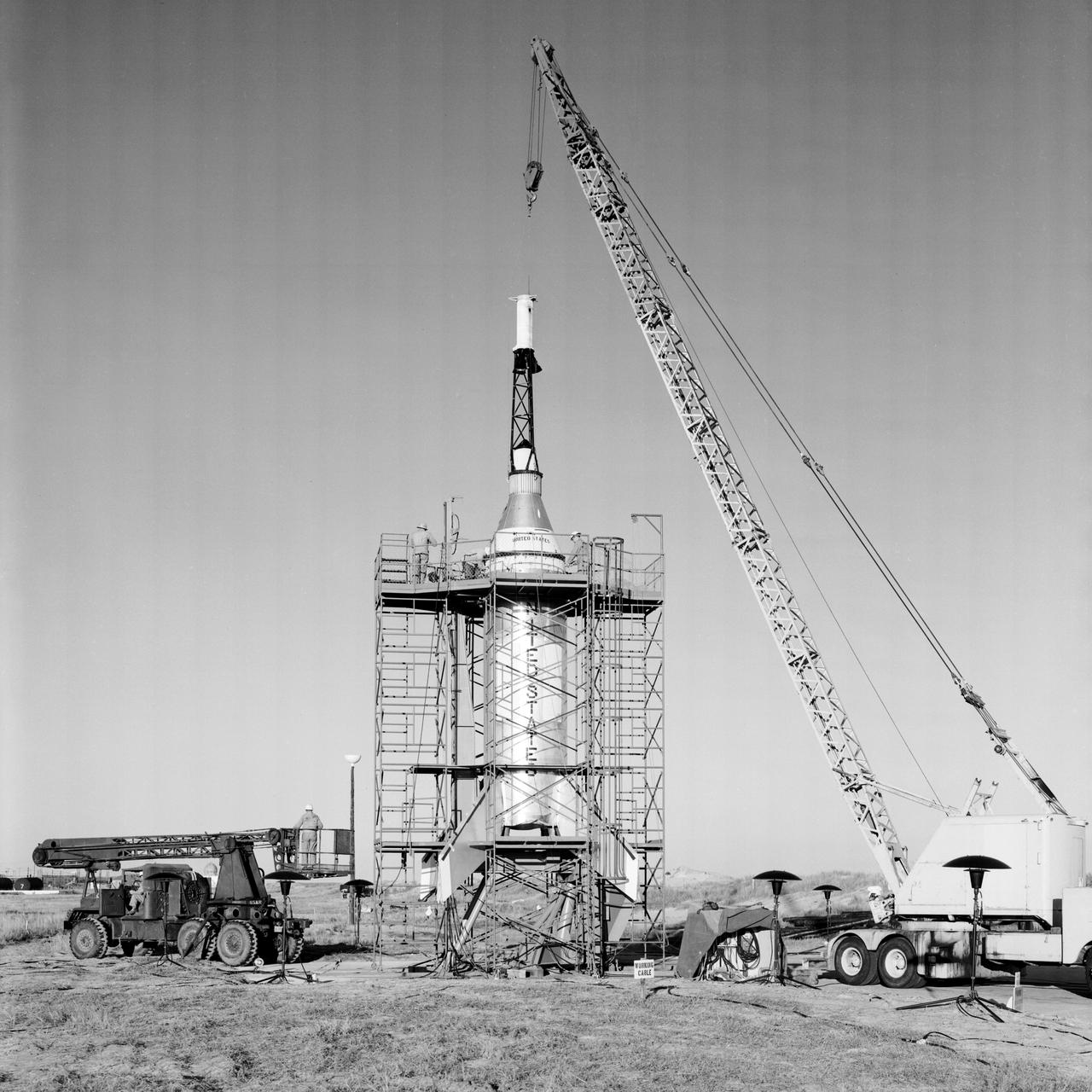
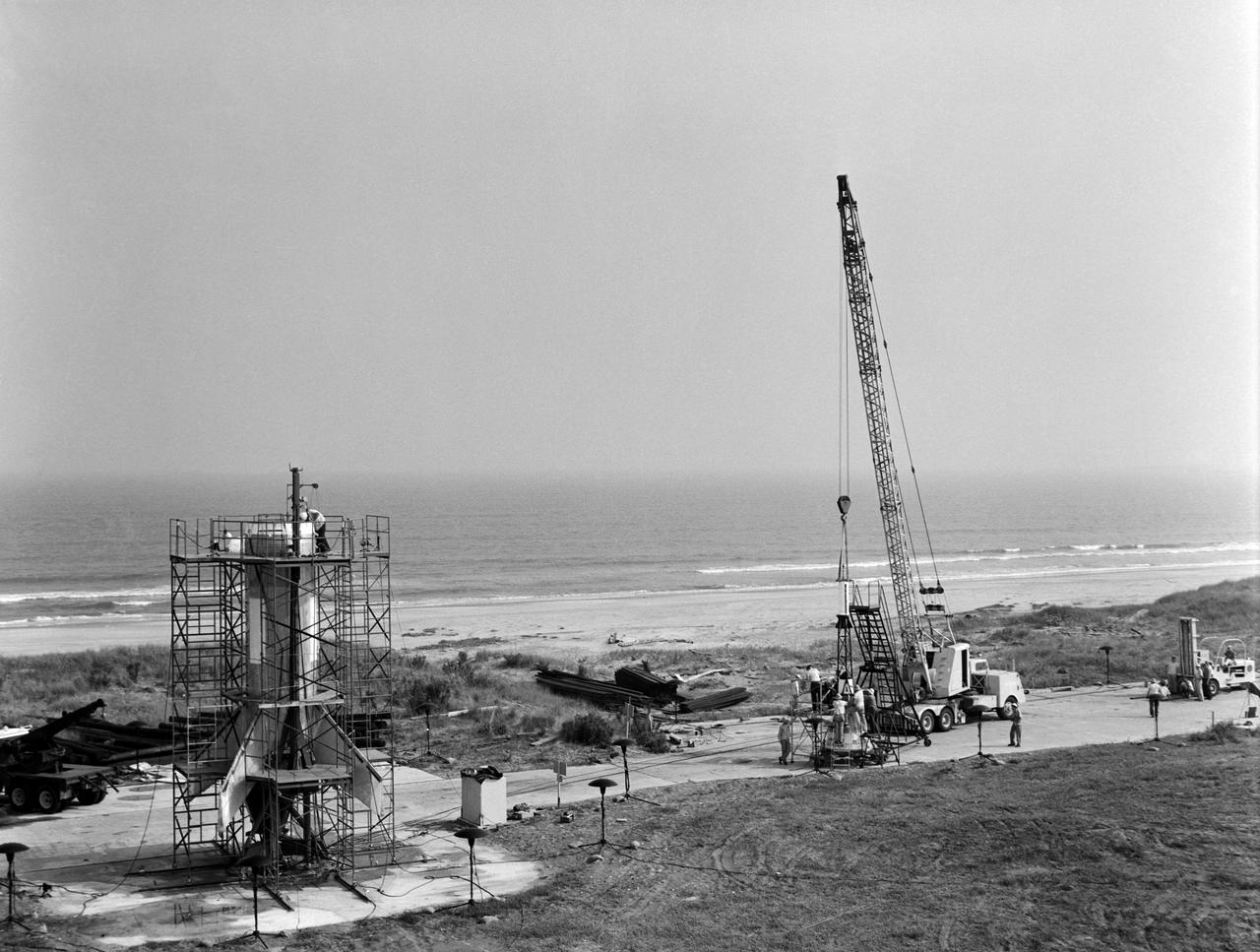
The Mercury capsule and escape tower are being lowered onto the Little Joe booster for launch on August 21, 1959. Joseph Shortal described this as follows (vol. 3, p. 33): The Little Joe booster was assembled at Wallops on its special launcher in a vertical attitude. It is shown in the on the left with the work platform in place. The launcher was located on a special concrete slab in Launching Area 1. The capsule was lowered onto the booster by crane.... After the assembly was completed, the scaffolding was disassembled and the launcher pitched over to its normal launch angle of 80 degrees.... Little Joe had a diameter of 80 inches and an overall length, including the capsule and escape tower of 48 feet. The total weight at launch was about 43,000 pounds. The overall span of the stabilizing fins was 21.3 feet. Although in comparison with the overall Mercury Project, Little Joe was a simple undertaking, the fact that an attempt was made to condense a normal two-year project into a 6-month one with in house labor turned it into a major undertaking for Langley. -- Published in Joseph A. Shortal, History of Wallops Station: Origins and Activities Through 1949, (Wallops Island, VA: National Aeronautics and Space Administration, Wallops Station, nd), Comment Edition.
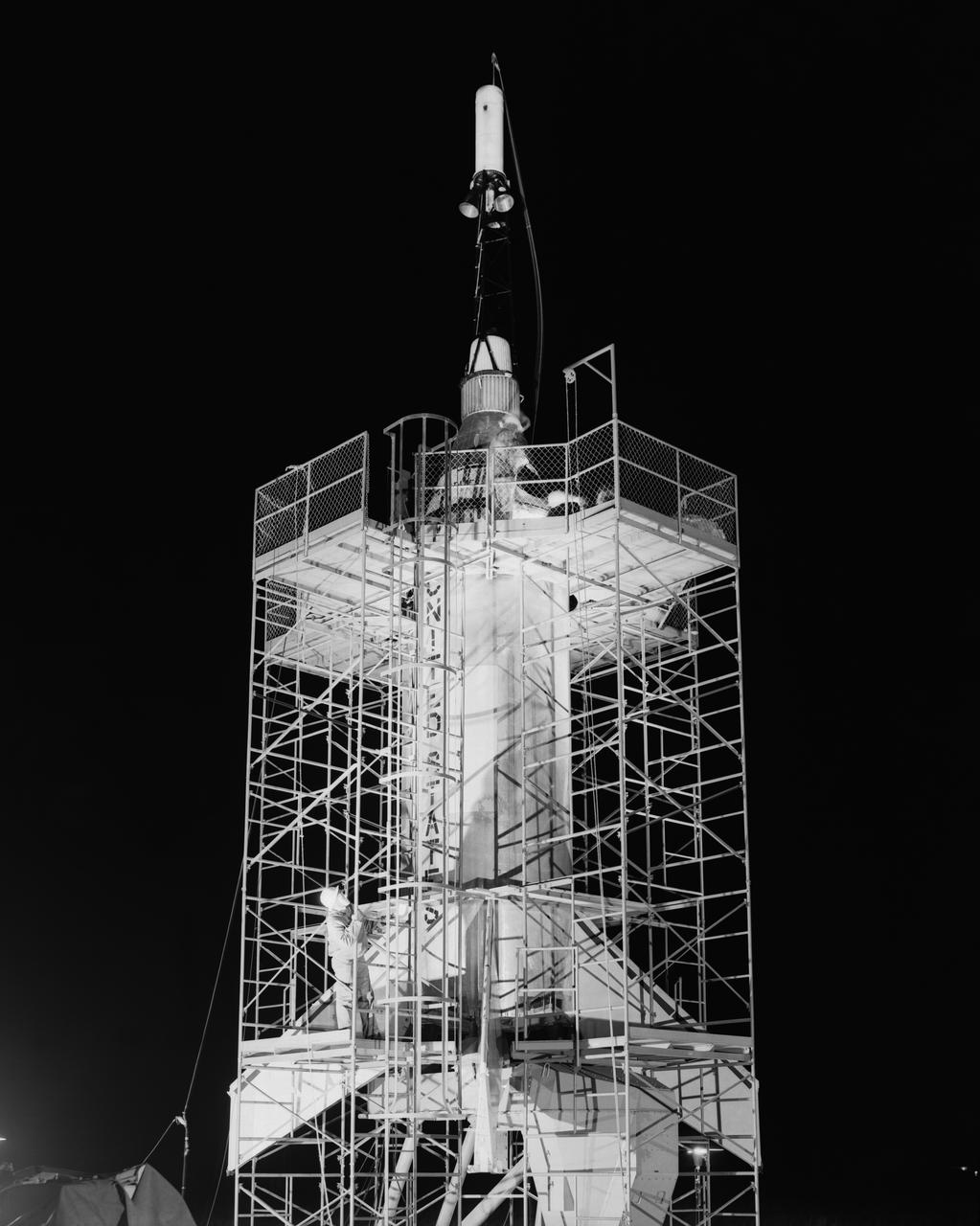
The Mercury capsule and escape tower are being lowered onto the Little Joe booster for launch on August 21, 1959. Joseph Shortal described this as follows (vol. 3, p. 33): The Little Joe booster was assembled at Wallops on its special launcher in a vertical attitude. It is shown in the on the left with the work platform in place. The launcher was located on a special concrete slab in Launching Area 1. The capsule was lowered onto the booster by crane.... After the assembly was completed, the scaffolding was disassembled and the launcher pitched over to its normal launch angle of 80 degrees.... Little Joe had a diameter of 80 inches and an overall length, including the capsule and escape tower of 48 feet. The total weight at launch was about 43,000 pounds. The overall span of the stabilizing fins was 21.3 feet. Although in comparison with the overall Mercury Project, Little Joe was a simple undertaking, the fact that an attempt was made to condense a normal two-year project into a 6-month one with in house labor turned it into a major undertaking for Langley. -- Published in Joseph A. Shortal, History of Wallops Station: Origins and Activities Through 1949, (Wallops Island, VA: National Aeronautics and Space Administration, Wallops Station, nd), Comment Edition.
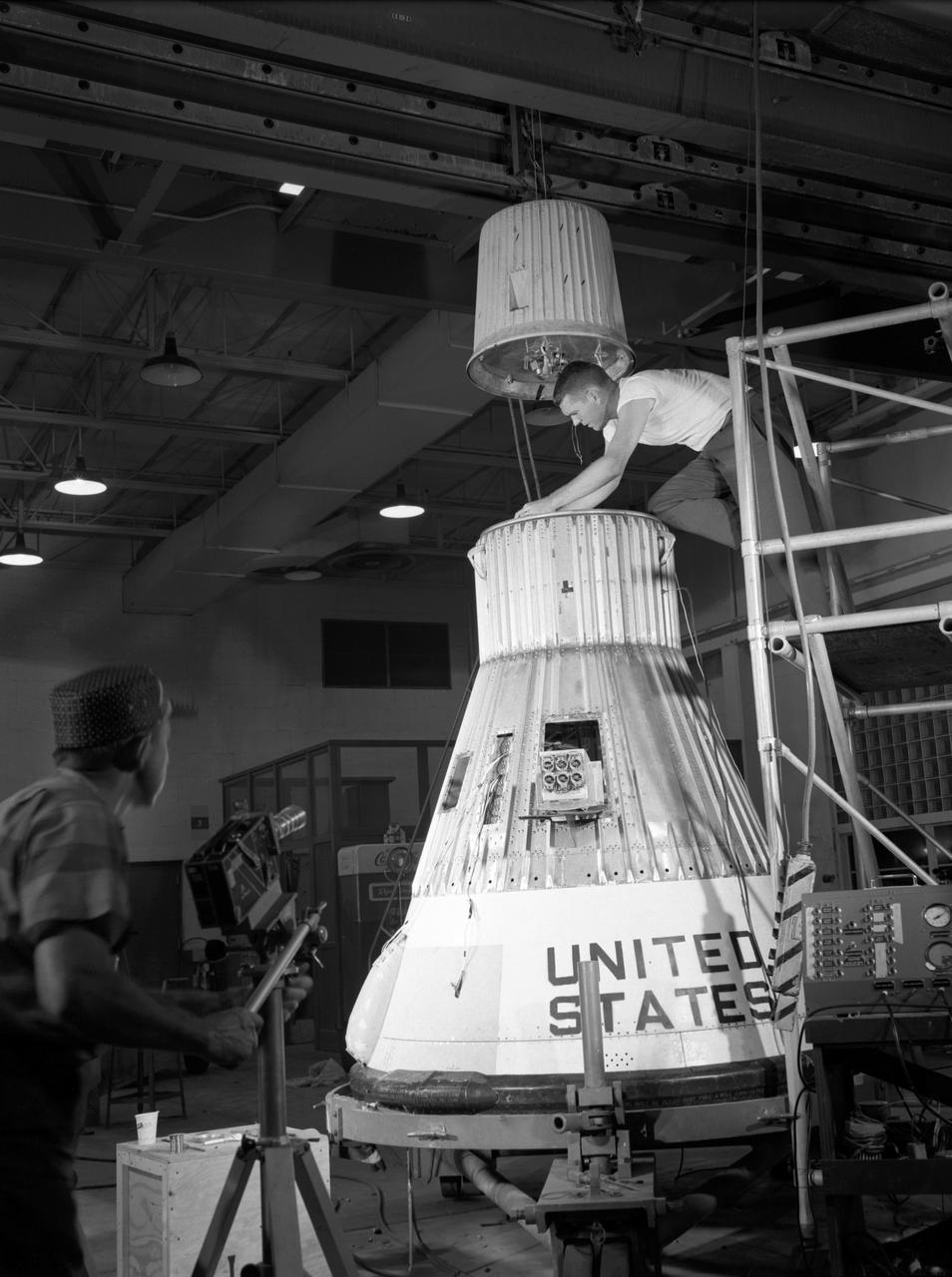
Technicians adjust the rocket motor during the attachment of the escape tower to the Mercury capsule prior to assembly with Little Joe launcher, August 20, 1959. Joseph Shortal wrote (vol. 3., p. 33): The escape tower and rocket motors were taken from the Mercury capsule production. The tower is shown being attached to the capsule.... The escape rocket was a Grand Central 1-KS-52000 motor with three canted nozzles. The tower-jettison motor was an Atlantic Research Corp. 1.4-KS-785 motor. This was the same design tested in a beach abort test...and had the offset thrust line as used in the beach abort test to insure that the capsule would get away from the booster in an emergency. The escape system weighed 1,015 pounds, including 236 pounds of ballast for stability. The Little Joe booster was assembled at Wallops on its special launcher in a vertical attitude. It is shown in the on the left with the work platform in place. The launcher was located on a special concrete slab in Launching Area 1. The capsule was lowered onto the booster by crane.... After the assembly was completed, the scaffolding was disassembled and the launcher pitched over to its normal launch angle of 80 degrees.... Little Joe had a diameter of 80 inches and an overall length, including the capsule and escape tower of 48 feet. The total weight at launch was about 43,000 pounds. The overall span of the stabilizing fins was 21.3 feet. Although in comparison with the overall Mercury Project, Little Joe was a simple undertaking, the fact that an attempt was made to condense a normal two-year project into a 6-month one with in house labor turned it into a major undertaking for Langley. -- Published in Joseph A. Shortal, History of Wallops Station: Origins and Activities Through 1949, (Wallops Island, VA: National Aeronautics and Space Administration, Wallops Station, nd), Comment Edition.
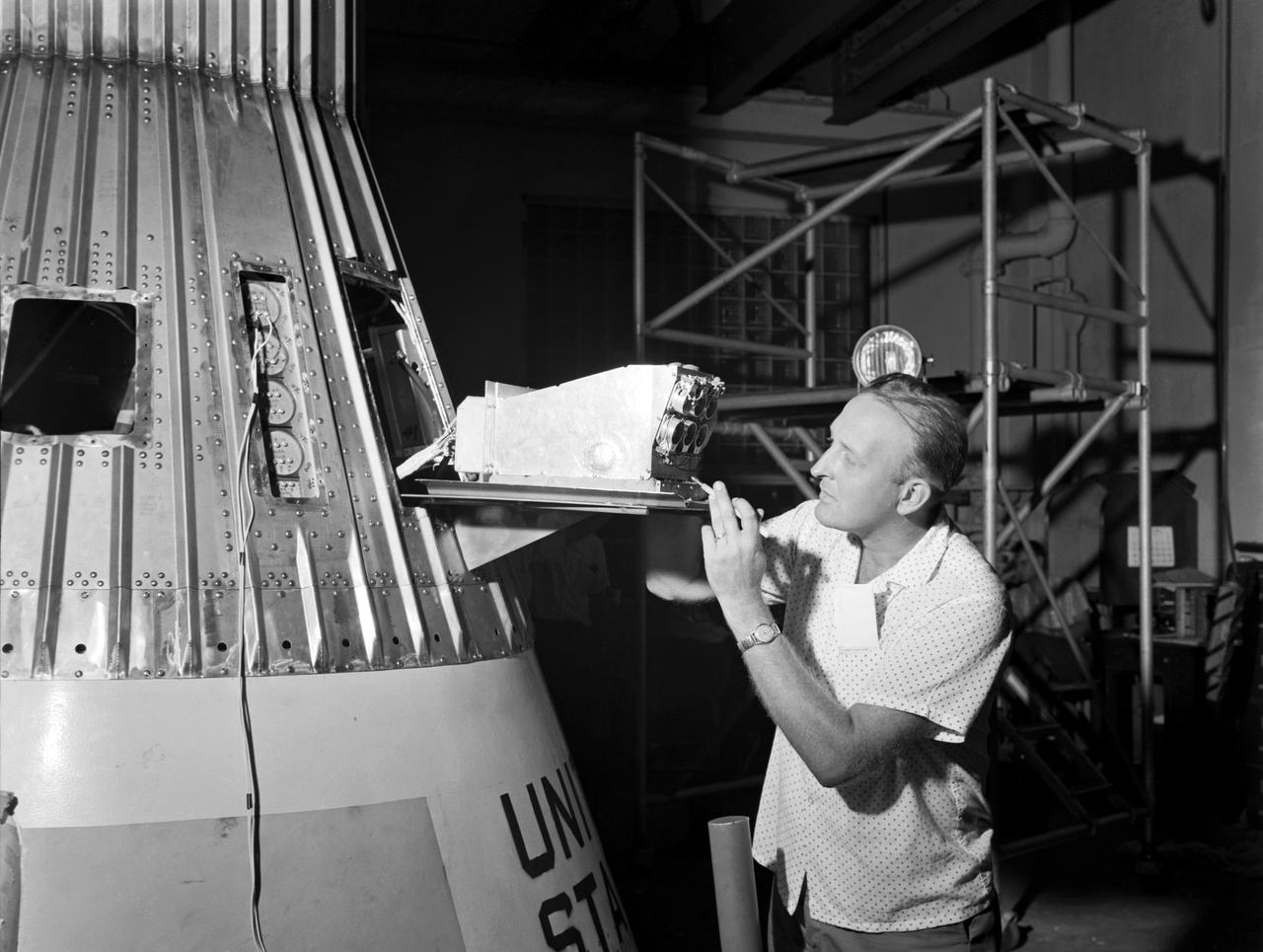
Technicians adjust the rocket motor during the attachment of the escape tower to the Mercury capsule prior to assembly with Little Joe launcher, August 20, 1959. Joseph Shortal wrote (vol. 3., p. 33): The escape tower and rocket motors were taken from the Mercury capsule production. The tower is shown being attached to the capsule.... The escape rocket was a Grand Central 1-KS-52000 motor with three canted nozzles. The tower-jettison motor was an Atlantic Research Corp. 1.4-KS-785 motor. This was the same design tested in a beach abort test...and had the offset thrust line as used in the beach abort test to insure that the capsule would get away from the booster in an emergency. The escape system weighed 1,015 pounds, including 236 pounds of ballast for stability. The Little Joe booster was assembled at Wallops on its special launcher in a vertical attitude. It is shown in the on the left with the work platform in place. The launcher was located on a special concrete slab in Launching Area 1. The capsule was lowered onto the booster by crane.... After the assembly was completed, the scaffolding was disassembled and the launcher pitched over to its normal launch angle of 80 degrees.... Little Joe had a diameter of 80 inches and an overall length, including the capsule and escape tower of 48 feet. The total weight at launch was about 43,000 pounds. The overall span of the stabilizing fins was 21.3 feet. Although in comparison with the overall Mercury Project, Little Joe was a simple undertaking, the fact that an attempt was made to condense a normal two-year project into a 6-month one with in house labor turned it into a major undertaking for Langley. -- Published in Joseph A. Shortal, History of Wallops Station: Origins and Activities Through 1949, (Wallops Island, VA: National Aeronautics and Space Administration, Wallops Station, nd), Comment Edition.
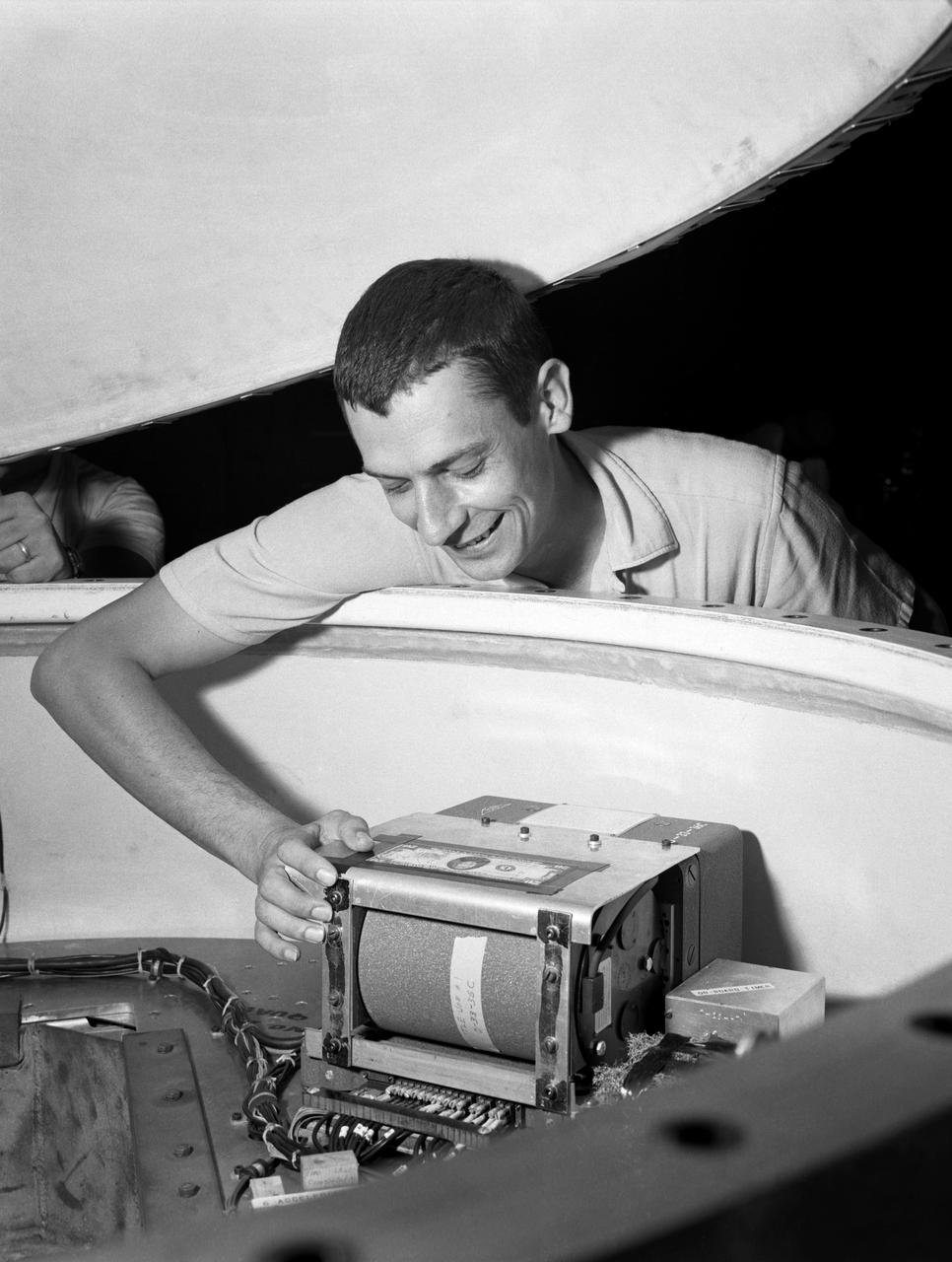
Technicians adjust the rocket motor during the attachment of the escape tower to the Mercury capsule prior to assembly with Little Joe launcher, August 20, 1959. Joseph Shortal wrote (vol. 3., p. 33): The escape tower and rocket motors were taken from the Mercury capsule production. The tower is shown being attached to the capsule.... The escape rocket was a Grand Central 1-KS-52000 motor with three canted nozzles. The tower-jettison motor was an Atlantic Research Corp. 1.4-KS-785 motor. This was the same design tested in a beach abort test...and had the offset thrust line as used in the beach abort test to insure that the capsule would get away from the booster in an emergency. The escape system weighed 1,015 pounds, including 236 pounds of ballast for stability. The Little Joe booster was assembled at Wallops on its special launcher in a vertical attitude. It is shown in the on the left with the work platform in place. The launcher was located on a special concrete slab in Launching Area 1. The capsule was lowered onto the booster by crane.... After the assembly was completed, the scaffolding was disassembled and the launcher pitched over to its normal launch angle of 80 degrees.... Little Joe had a diameter of 80 inches and an overall length, including the capsule and escape tower of 48 feet. The total weight at launch was about 43,000 pounds. The overall span of the stabilizing fins was 21.3 feet. Although in comparison with the overall Mercury Project, Little Joe was a simple undertaking, the fact that an attempt was made to condense a normal two-year project into a 6-month one with in house labor turned it into a major undertaking for Langley. -- Published in Joseph A. Shortal, History of Wallops Station: Origins and Activities Through 1949, (Wallops Island, VA: National Aeronautics and Space Administration, Wallops Station, nd), Comment Edition.
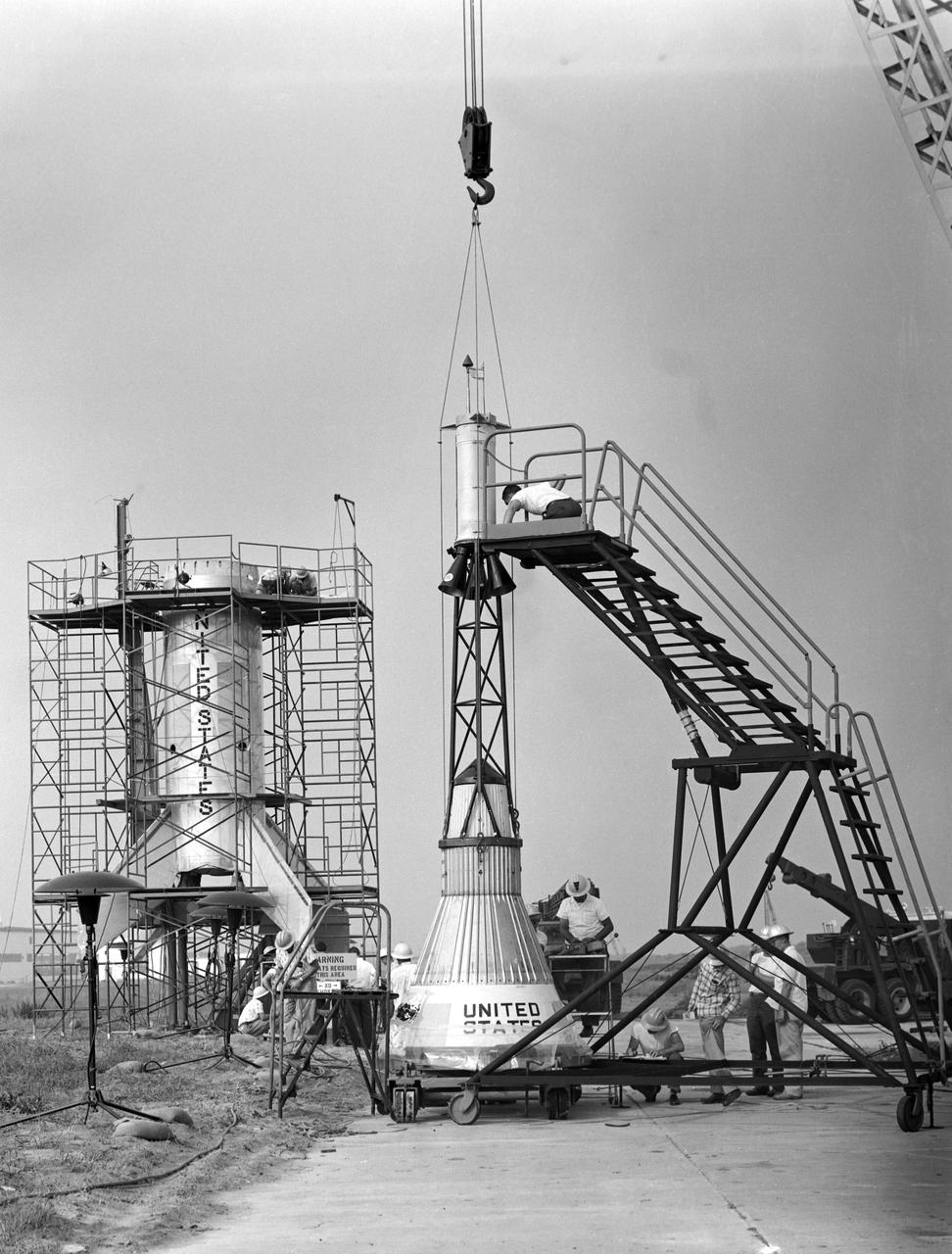
Technicians adjust the rocket motor during the attachment of the escape tower to the Mercury capsule prior to assembly with Little Joe launcher, August 20, 1959. Joseph Shortal wrote (vol. 3., p. 33): The escape tower and rocket motors were taken from the Mercury capsule production. The tower is shown being attached to the capsule.... The escape rocket was a Grand Central 1-KS-52000 motor with three canted nozzles. The tower-jettison motor was an Atlantic Research Corp. 1.4-KS-785 motor. This was the same design tested in a beach abort test...and had the offset thrust line as used in the beach abort test to insure that the capsule would get away from the booster in an emergency. The escape system weighed 1,015 pounds, including 236 pounds of ballast for stability. The Little Joe booster was assembled at Wallops on its special launcher in a vertical attitude. It is shown in the on the left with the work platform in place. The launcher was located on a special concrete slab in Launching Area 1. The capsule was lowered onto the booster by crane.... After the assembly was completed, the scaffolding was disassembled and the launcher pitched over to its normal launch angle of 80 degrees.... Little Joe had a diameter of 80 inches and an overall length, including the capsule and escape tower of 48 feet. The total weight at launch was about 43,000 pounds. The overall span of the stabilizing fins was 21.3 feet. Although in comparison with the overall Mercury Project, Little Joe was a simple undertaking, the fact that an attempt was made to condense a normal two-year project into a 6-month one with in house labor turned it into a major undertaking for Langley. -- Published in Joseph A. Shortal, History of Wallops Station: Origins and Activities Through 1949, (Wallops Island, VA: National Aeronautics and Space Administration, Wallops Station, nd), Comment Edition.

Technicians adjust the rocket motor during the attachment of the escape tower to the Mercury capsule prior to assembly with Little Joe launcher, August 20, 1959. Joseph Shortal wrote (vol. 3., p. 33): The escape tower and rocket motors were taken from the Mercury capsule production. The tower is shown being attached to the capsule.... The escape rocket was a Grand Central 1-KS-52000 motor with three canted nozzles. The tower-jettison motor was an Atlantic Research Corp. 1.4-KS-785 motor. This was the same design tested in a beach abort test...and had the offset thrust line as used in the beach abort test to insure that the capsule would get away from the booster in an emergency. The escape system weighed 1,015 pounds, including 236 pounds of ballast for stability. The Little Joe booster was assembled at Wallops on its special launcher in a vertical attitude. It is shown in the on the left with the work platform in place. The launcher was located on a special concrete slab in Launching Area 1. The capsule was lowered onto the booster by crane.... After the assembly was completed, the scaffolding was disassembled and the launcher pitched over to its normal launch angle of 80 degrees.... Little Joe had a diameter of 80 inches and an overall length, including the capsule and escape tower of 48 feet. The total weight at launch was about 43,000 pounds. The overall span of the stabilizing fins was 21.3 feet. Although in comparison with the overall Mercury Project, Little Joe was a simple undertaking, the fact that an attempt was made to condense a normal two-year project into a 6-month one with in house labor turned it into a major undertaking for Langley. -- Published in Joseph A. Shortal, History of Wallops Station: Origins and Activities Through 1949, (Wallops Island, VA: National Aeronautics and Space Administration, Wallops Station, nd), Comment Edition.
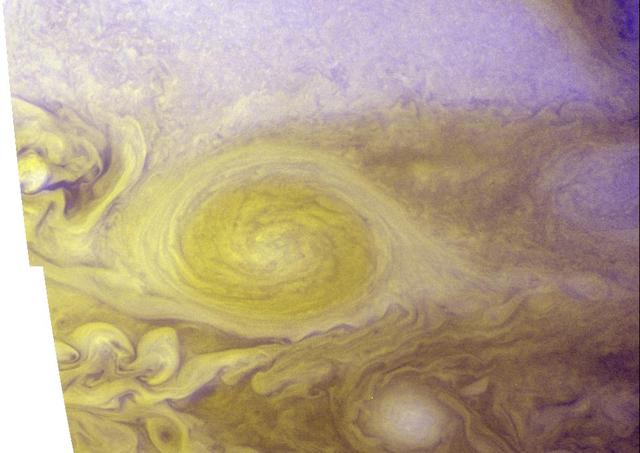
Best Color Image of Jupiter Little Red Spot
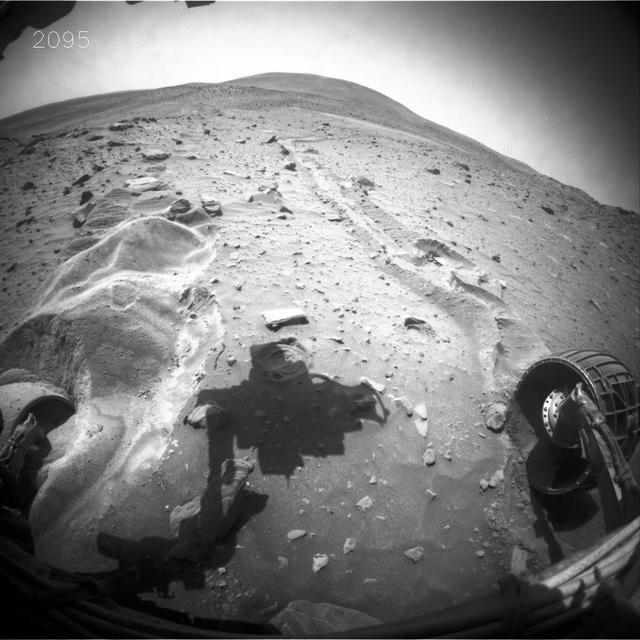
Little Movement in Spirit Sol 2099 Drive
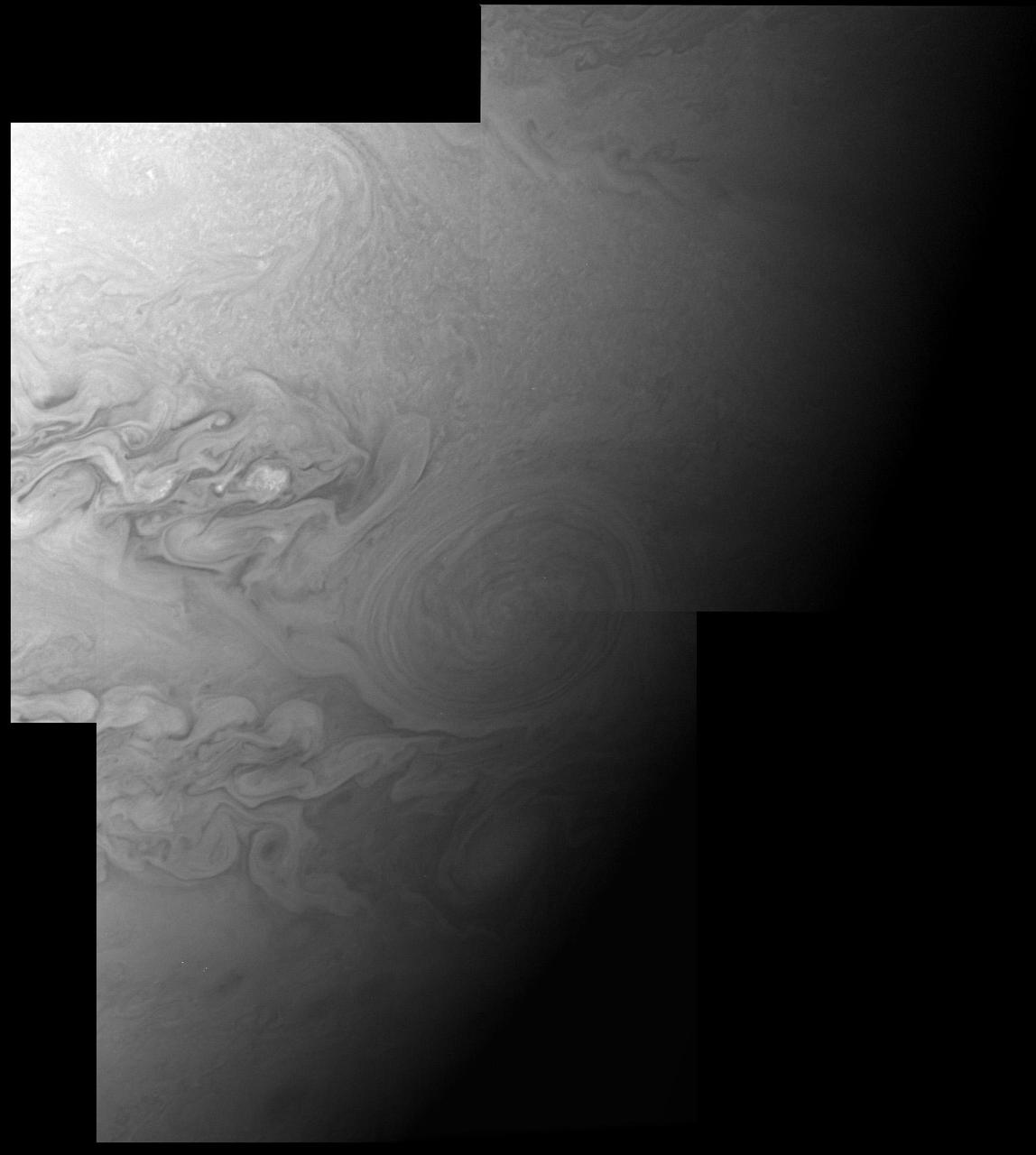
The Little Red Spot: Closest View Yet
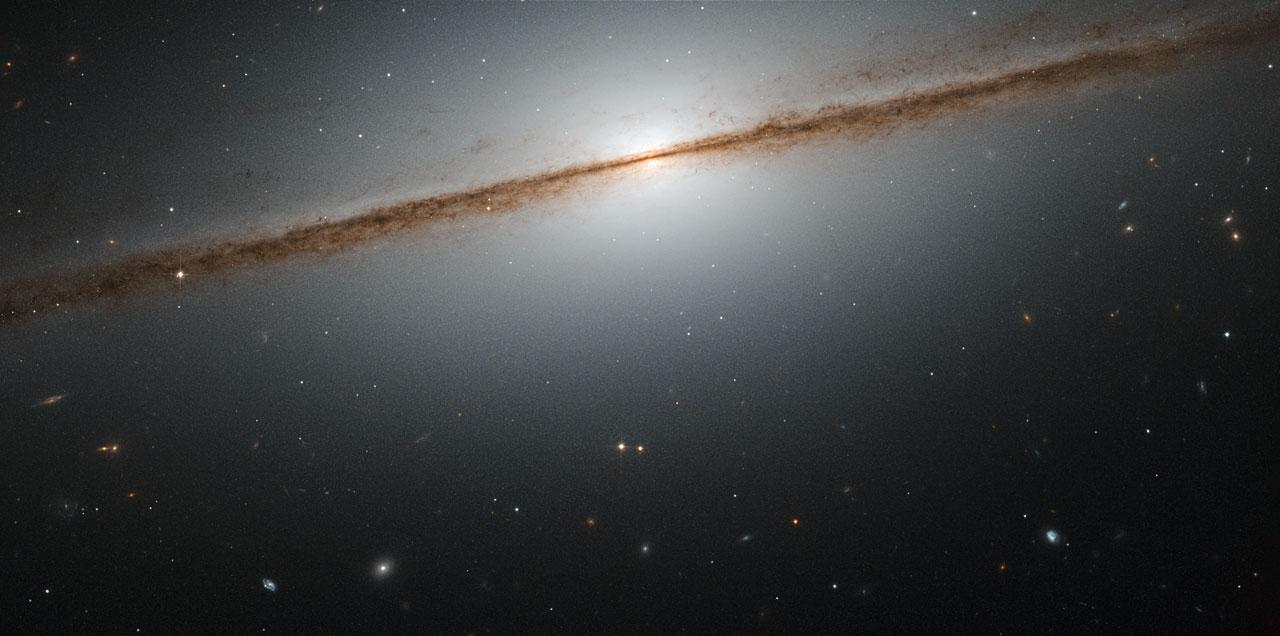
Galaxies can take many shapes and be oriented any way relative to us in the sky. This can make it hard to figure out their actual morphology, as a galaxy can look very different from different viewpoints. A special case is when we are lucky enough to observe a spiral galaxy directly from its edge, providing us with a spectacular view like the one seen in this picture of the week. This is NGC 7814, also known as the “Little Sombrero.” Its larger namesake, the Sombrero Galaxy, is another stunning example of an edge-on galaxy — in fact, the “Little Sombrero” is about the same size as its bright namesake at about 60,000 light-years across, but as it lies farther away, and so appears smaller in the sky. NGC 7814 has a bright central bulge and a bright halo of glowing gas extending outwards into space. The dusty spiral arms appear as dark streaks. They consist of dusty material that absorbs and blocks light from the galactic center behind it. The field of view of this NASA/ESA Hubble Space Telescope image would be very impressive even without NGC 7814 in front; nearly all the objects seen in this image are galaxies as well. Credit: ESA/Hubble & NASA Acknowledgement: Josh Barrington <b><a href="http://www.nasa.gov/audience/formedia/features/MP_Photo_Guidelines.html" rel="nofollow">NASA image use policy.</a></b> <b><a href="http://www.nasa.gov/centers/goddard/home/index.html" rel="nofollow">NASA Goddard Space Flight Center</a></b> enables NASA’s mission through four scientific endeavors: Earth Science, Heliophysics, Solar System Exploration, and Astrophysics. Goddard plays a leading role in NASA’s accomplishments by contributing compelling scientific knowledge to advance the Agency’s mission. <b>Follow us on <a href="http://twitter.com/NASAGoddardPix" rel="nofollow">Twitter</a></b> <b>Like us on <a href="http://www.facebook.com/pages/Greenbelt-MD/NASA-Goddard/395013845897?ref=tsd" rel="nofollow">Facebook</a></b> <b>Find us on <a href="http://instagram.com/nasagoddard?vm=grid" rel="nofollow">Instagram</a></b>
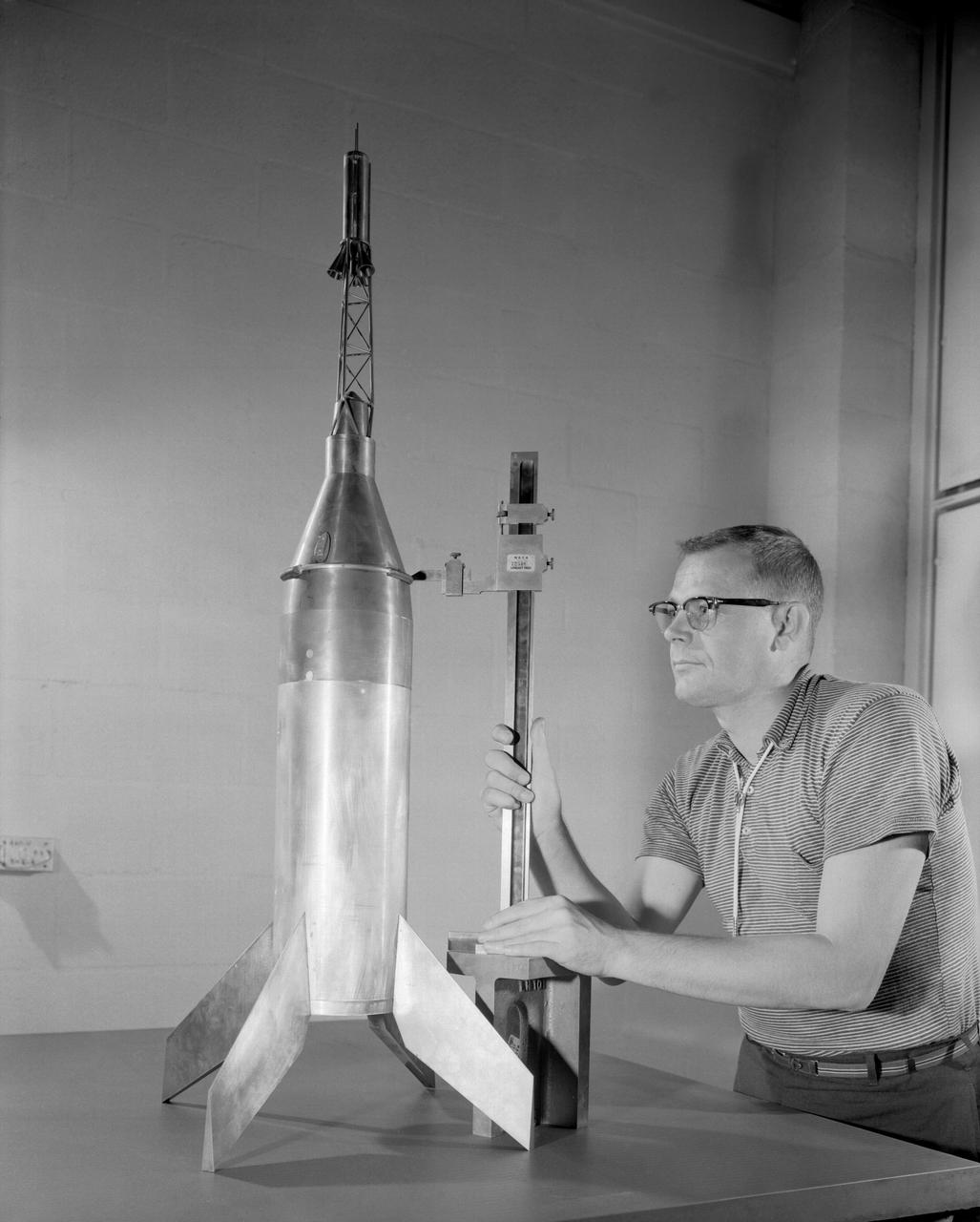
Publicity photograph of a technician measuring a wind tunnel model of the Little Joe test vehicle. Joseph Shortal noted that (vol. 3, p. 29): The largest project at Wallops in support of Mercury was the Little Joe project, designed to qualify the abort-escape system under flight conditions. James Hansen (p. 47) writes: STG engineers Max Faget and Paul Purser, then of Langley's PARD, had conceived Little Joe as a space capsule test vehicle even before the establishment of NASA and the formation of the STG. Girlruth understood the importance of the Little Joe tests: We had to be sure there were no serious performance and operational problems that we had simply not thought of in such a new and radical type of flight vehicle. -- Published in James R. Hansen, Spaceflight Revolution: NASA Langley Research Center From Sputnik to Apollo, (Washington: NASA, 1995), p. 47 Joseph A. Shortal, History of Wallops Station: Origins and Activities Through 1949, (Wallops Island, VA: National Aeronautics and Space Administration, Wallops Station, nd), Comment Edition.
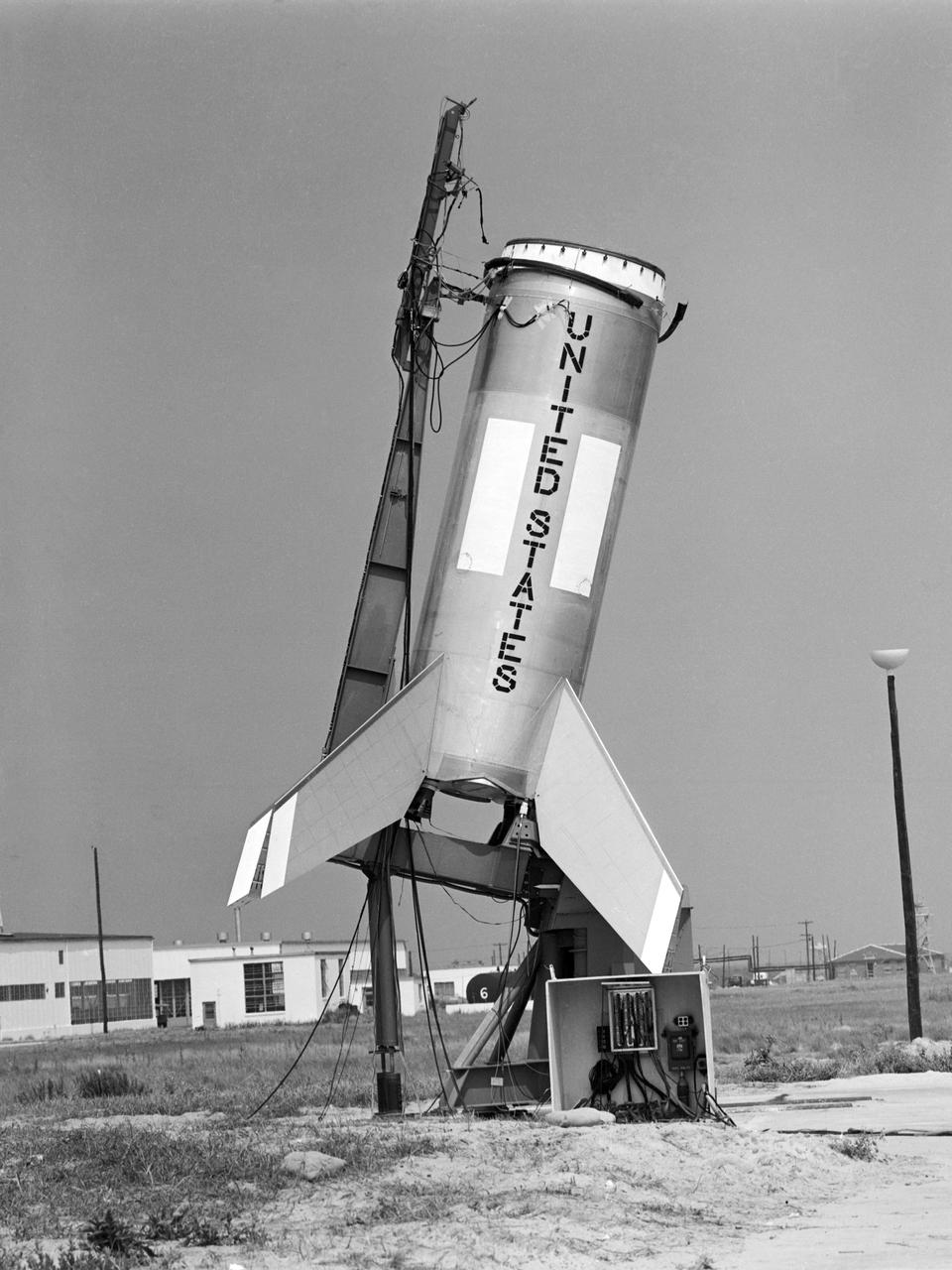
Testing of the Little Joe booster on its launcher. The launcher is positioned at its normal launch angle of 80 degrees. Joseph Shortal wrote (vol. 3, p. 33): The Little Joe booster was assembled at Wallops on its special launcher in a vertical attitude. It is shown in the on the left with the work platform in place. The launcher was located on a special concrete slab in Launching Area 1. The capsule was lowered onto the booster by crane.... After the assembly was completed, the scaffolding was disassembled and the launcher pitched over to its normal launch angle of 80 degrees.... Little Joe had a diameter of 80 inches and an overall length, including the capsule and escape tower of 48 feet. The total weight at launch was about 43,000 pounds. The overall span of the stabilizing fins was 21.3 feet. Although in comparison with the overall Mercury Project, Little Joe was a simple undertaking, the fact that an attempt was made to condense a normal two-year project into a 6-month one with in house labor turned it into a major undertaking for Langley. -- Published in Joseph A. Shortal, History of Wallops Station: Origins and Activities Through 1949, (Wallops Island, VA: National Aeronautics and Space Administration, Wallops Station, nd), Comment Edition.
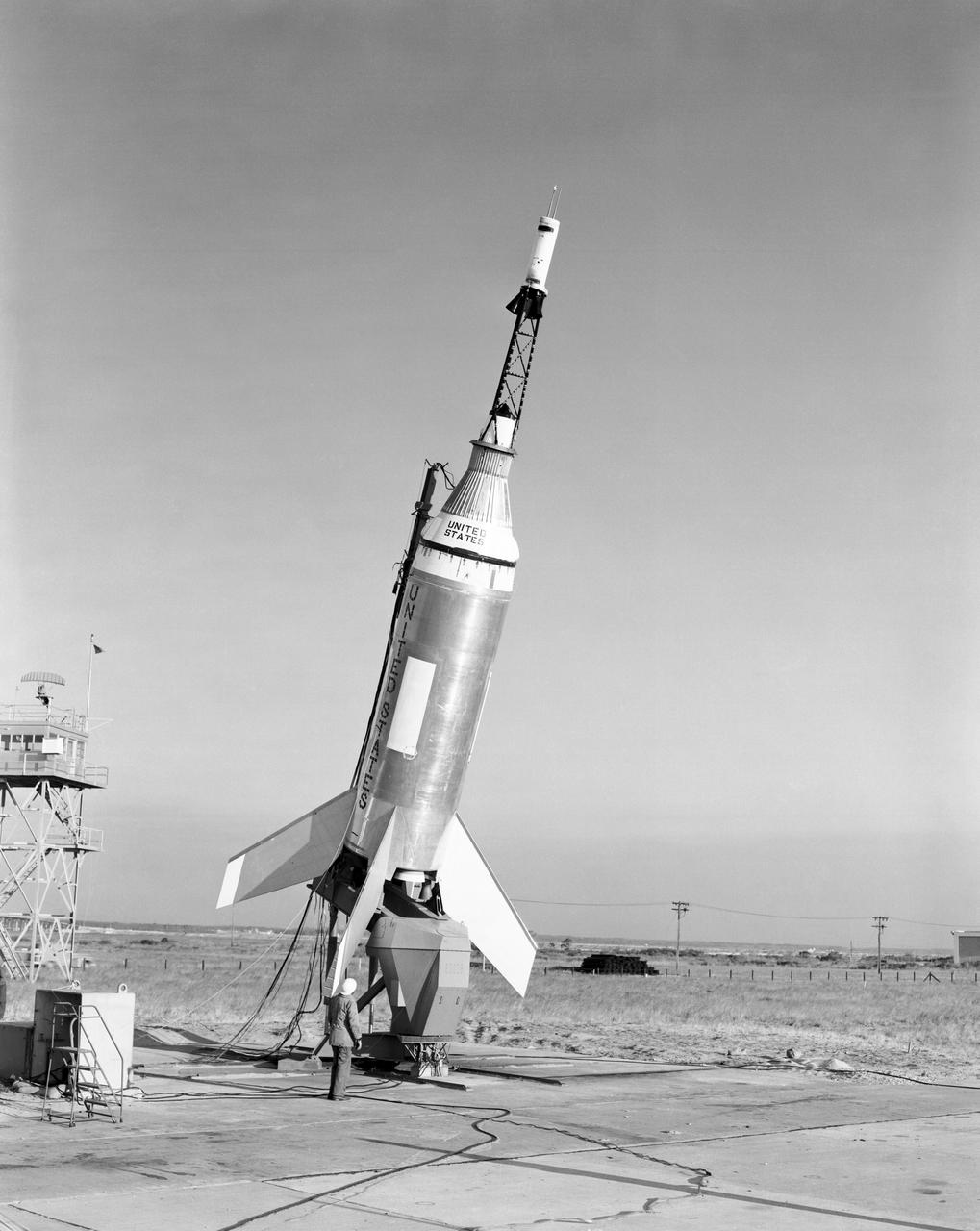
The Little Joe launch vehicle being readied for a test launch from Wallops in January 1960... Page 77. Photograph published in Winds of Change, 75th Anniversary NASA publication, by James Schultz. **note - see L59-5137 page 77 also. Photograph published in Engineer in Charge: A History of the Langley Aeronautical Laboratory, 1917-1958 by James R. Hansen. Page 389. ...was conceived by Langley engineers Max Faget and Paul Purser even before STG (Space Task Group) was organized.
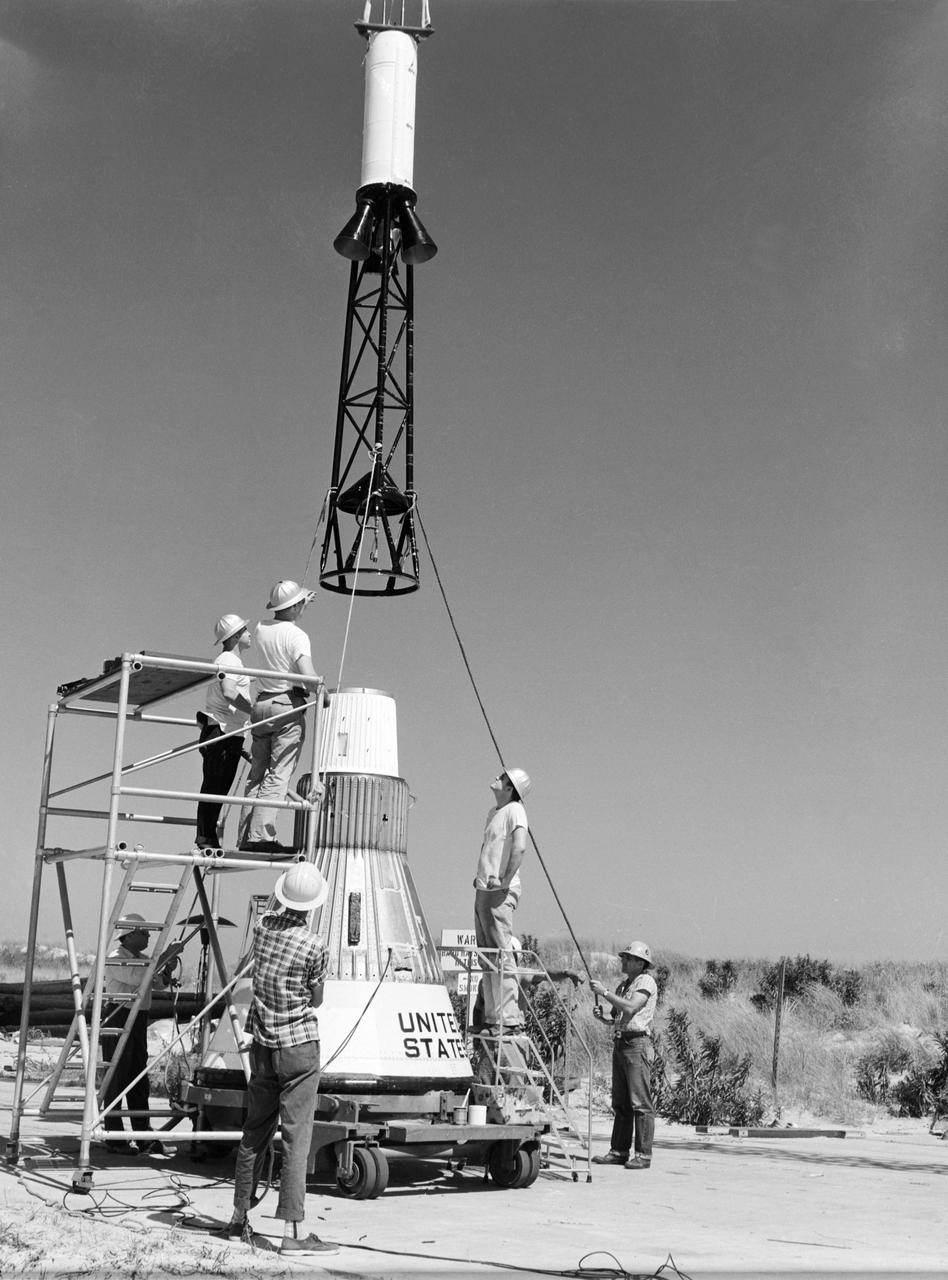
Technicians attach the escape tower to the Mercury capsule prior to assembly with Little Joe launcher, August 20, 1959. Joseph Shortal describe this as follows (vol. 3., p. 33): The escape tower and rocket motors were taken from the Mercury capsule production. The tower is shown being attached to the capsule.... The escape rocket was a Grand Central 1-KS-52000 motor with three canted nozzles. The tower-jettison motor was an Atlantic Research Corp. 1.4-KS-785 motor. This was the same design tested in a beach abort test...and had the offset thrust line as used in the beach abort test to insure that the capsule would get away from the booster in an emergency. The escape system weighed 1,015 pounds, including 236 pounds of ballast for stability. The Little Joe booster was assembled at Wallops on its special launcher in a vertical attitude. It is shown in the on the left with the work platform in place. The launcher was located on a special concrete slab in Launching Area 1. The capsule was lowered onto the booster by crane.... After the assembly was completed, the scaffolding was disassembled and the launcher pitched over to its normal launch angle of 80 degrees.... Little Joe had a diameter of 80 inches and an overall length, including the capsule and escape tower of 48 feet. The total weight at launch was about 43,000 pounds. The overall span of the stabilizing fins was 21.3 feet. Although in comparison with the overall Mercury Project, Little Joe was a simple undertaking, the fact that an attempt was made to condense a normal two-year project into a 6-month one with in house labor turned it into a major undertaking for Langley. -- Published in Joseph A. Shortal, History of Wallops Station: Origins and Activities Through 1949, (Wallops Island, VA: National Aeronautics and Space Administration, Wallops Station, nd), Comment Edition.
Technicians attach the escape tower to the Mercury capsule prior to assembly with Little Joe launcher, August 20, 1959. Joseph Shortal describe this as follows (vol. 3., p. 33): The escape tower and rocket motors were taken from the Mercury capsule production. The tower is shown being attached to the capsule.... The escape rocket was a Grand Central 1-KS-52000 motor with three canted nozzles. The tower-jettison motor was an Atlantic Research Corp. 1.4-KS-785 motor. This was the same design tested in a beach abort test...and had the offset thrust line as used in the beach abort test to insure that the capsule would get away from the booster in an emergency. The escape system weighed 1,015 pounds, including 236 pounds of ballast for stability. The Little Joe booster was assembled at Wallops on its special launcher in a vertical attitude. It is shown in the on the left with the work platform in place. The launcher was located on a special concrete slab in Launching Area 1. The capsule was lowered onto the booster by crane.... After the assembly was completed, the scaffolding was disassembled and the launcher pitched over to its normal launch angle of 80 degrees.... Little Joe had a diameter of 80 inches and an overall length, including the capsule and escape tower of 48 feet. The total weight at launch was about 43,000 pounds. The overall span of the stabilizing fins was 21.3 feet. Although in comparison with the overall Mercury Project, Little Joe was a simple undertaking, the fact that an attempt was made to condense a normal two-year project into a 6-month one with in house labor turned it into a major undertaking for Langley. -- Published in Joseph A. Shortal, History of Wallops Station: Origins and Activities Through 1949, (Wallops Island, VA: National Aeronautics and Space Administration, Wallops Station, nd), Comment Edition.
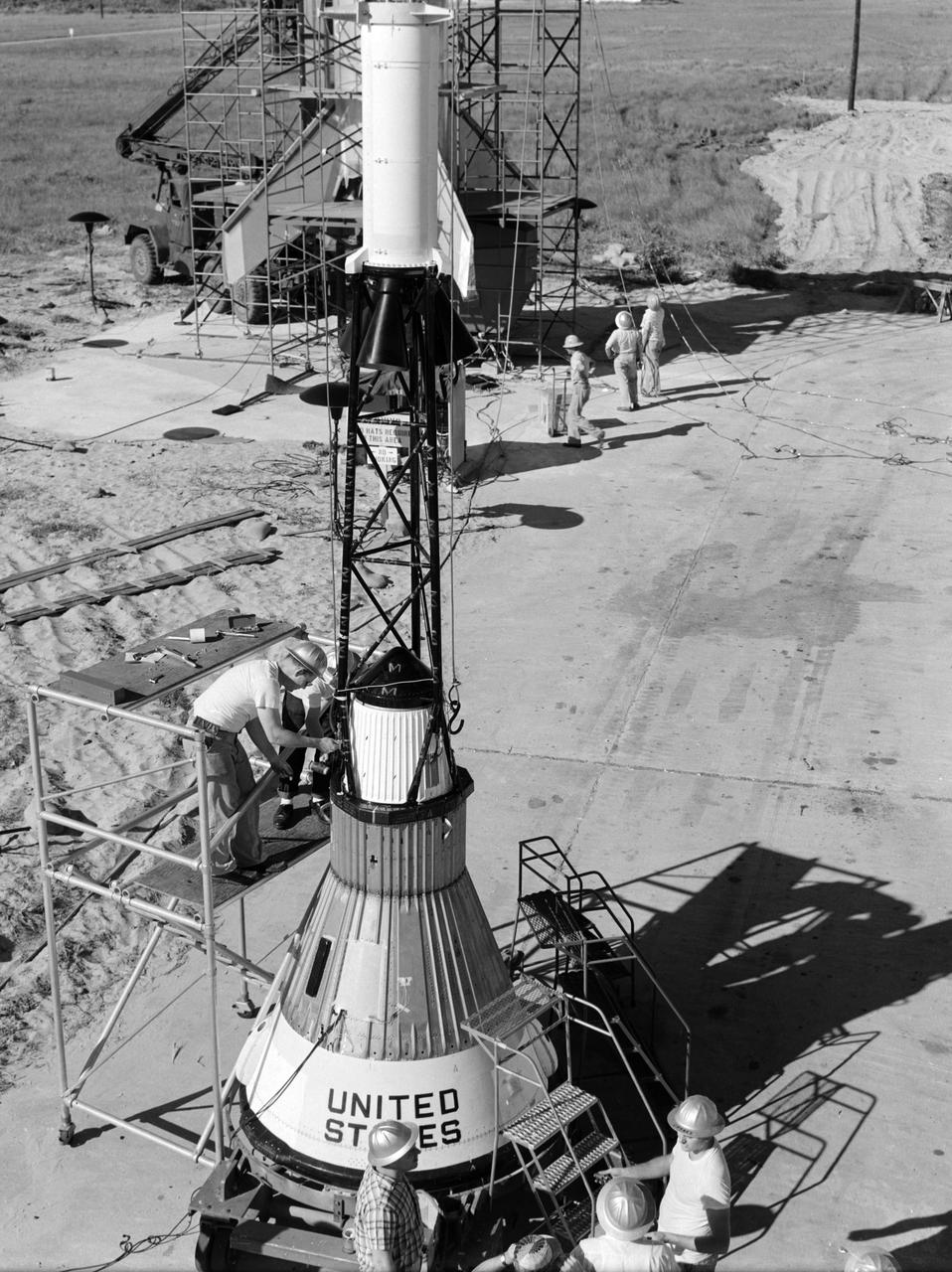
Technicians attach the escape tower to the Mercury capsule prior to assembly with Little Joe launcher, August 20, 1959. Joseph Shortal describe this as follows (vol. 3., p. 33): The escape tower and rocket motors were taken from the Mercury capsule production. The tower is shown being attached to the capsule.... The escape rocket was a Grand Central 1-KS-52000 motor with three canted nozzles. The tower-jettison motor was an Atlantic Research Corp. 1.4-KS-785 motor. This was the same design tested in a beach abort test...and had the offset thrust line as used in the beach abort test to insure that the capsule would get away from the booster in an emergency. The escape system weighed 1,015 pounds, including 236 pounds of ballast for stability. The Little Joe booster was assembled at Wallops on its special launcher in a vertical attitude. It is shown in the on the left with the work platform in place. The launcher was located on a special concrete slab in Launching Area 1. The capsule was lowered onto the booster by crane.... After the assembly was completed, the scaffolding was disassembled and the launcher pitched over to its normal launch angle of 80 degrees.... Little Joe had a diameter of 80 inches and an overall length, including the capsule and escape tower of 48 feet. The total weight at launch was about 43,000 pounds. The overall span of the stabilizing fins was 21.3 feet. Although in comparison with the overall Mercury Project, Little Joe was a simple undertaking, the fact that an attempt was made to condense a normal two-year project into a 6-month one with in house labor turned it into a major undertaking for Langley. -- Published in Joseph A. Shortal, History of Wallops Station: Origins and Activities Through 1949, (Wallops Island, VA: National Aeronautics and Space Administration, Wallops Station, nd), Comment Edition.

Portrait of Marshall's eighth Center Director Dr. Jerroll W. Littles (1996-1998). During the two short years as Center Director, Dr. Littles' administration was responsible for the space lab mission, the space science projects, alternative light-weight launch vehicles and their engine development.

Dr. J. Wayne Littles served as director of the Marshall Space Flight Center from February 3, 1996 until his retirement from NASA, January 3, 1998. Prior to his appointment as Center Director, Littles served as NASA Associate Administrator for the Office of Space Flight (1994-1996). Littles began his NASA career in 1967 when he worked as an engineer in Marshall's former Propulsion and Vehicle Engineering Directorate. He worked in various capacities at the Marshall Center, including Science Engineering Director (1988-1989) and Center Deputy Director (1989-1994) before transferring to NASA Headquarters in 1994.

This colorful bubble is a planetary nebula called NGC 6818, also known as the Little Gem Nebula. It is located in the constellation of Sagittarius (The Archer), roughly 6,000 light-years away from us. The rich glow of the cloud is just over half a light-year across — humongous compared to its tiny central star — but still a little gem on a cosmic scale. When stars like the sun enter "retirement," they shed their outer layers into space to create glowing clouds of gas called planetary nebulae. This ejection of mass is uneven, and planetary nebulae can have very complex shapes. NGC 6818 shows knotty filament-like structures and distinct layers of material, with a bright and enclosed central bubble surrounded by a larger, more diffuse cloud. Scientists believe that the stellar wind from the central star propels the outflowing material, sculpting the elongated shape of NGC 6818. As this fast wind smashes through the slower-moving cloud it creates particularly bright blowouts at the bubble’s outer layers. Hubble previously imaged this nebula back in 1997 with its Wide Field Planetary Camera 2, using a mix of filters that highlighted emission from ionized oxygen and hydrogen. This image, while from the same camera, uses different filters to reveal a different view of the nebula. Image credit: ESA/Hubble & NASA, Acknowledgement: Judy Schmidt <b><a href="http://www.nasa.gov/audience/formedia/features/MP_Photo_Guidelines.html" rel="nofollow">NASA image use policy.</a></b> <b><a href="http://www.nasa.gov/centers/goddard/home/index.html" rel="nofollow">NASA Goddard Space Flight Center</a></b> enables NASA’s mission through four scientific endeavors: Earth Science, Heliophysics, Solar System Exploration, and Astrophysics. Goddard plays a leading role in NASA’s accomplishments by contributing compelling scientific knowledge to advance the Agency’s mission. <b>Follow us on <a href="http://twitter.com/NASAGoddardPix" rel="nofollow">Twitter</a></b> <b>Like us on <a href="http://www.facebook.com/pages/Greenbelt-MD/NASA-Goddard/395013845897?ref=tsd" rel="nofollow">Facebook</a></b> <b>Find us on <a href="http://instagrid.me/nasagoddard/?vm=grid" rel="nofollow">Instagram</a></b>
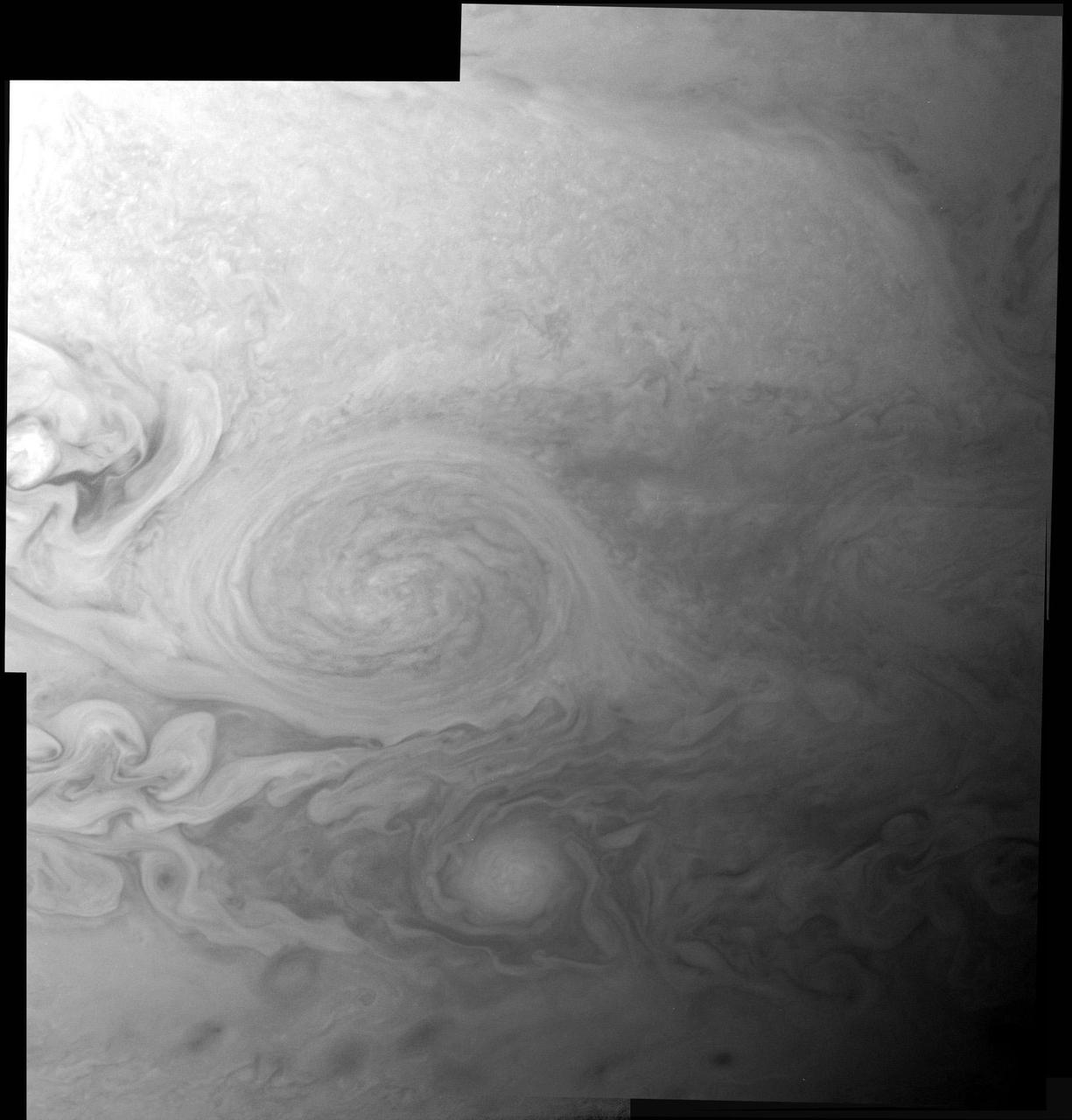
LORRI Takes an Even Closer Look at the Little Red Spot
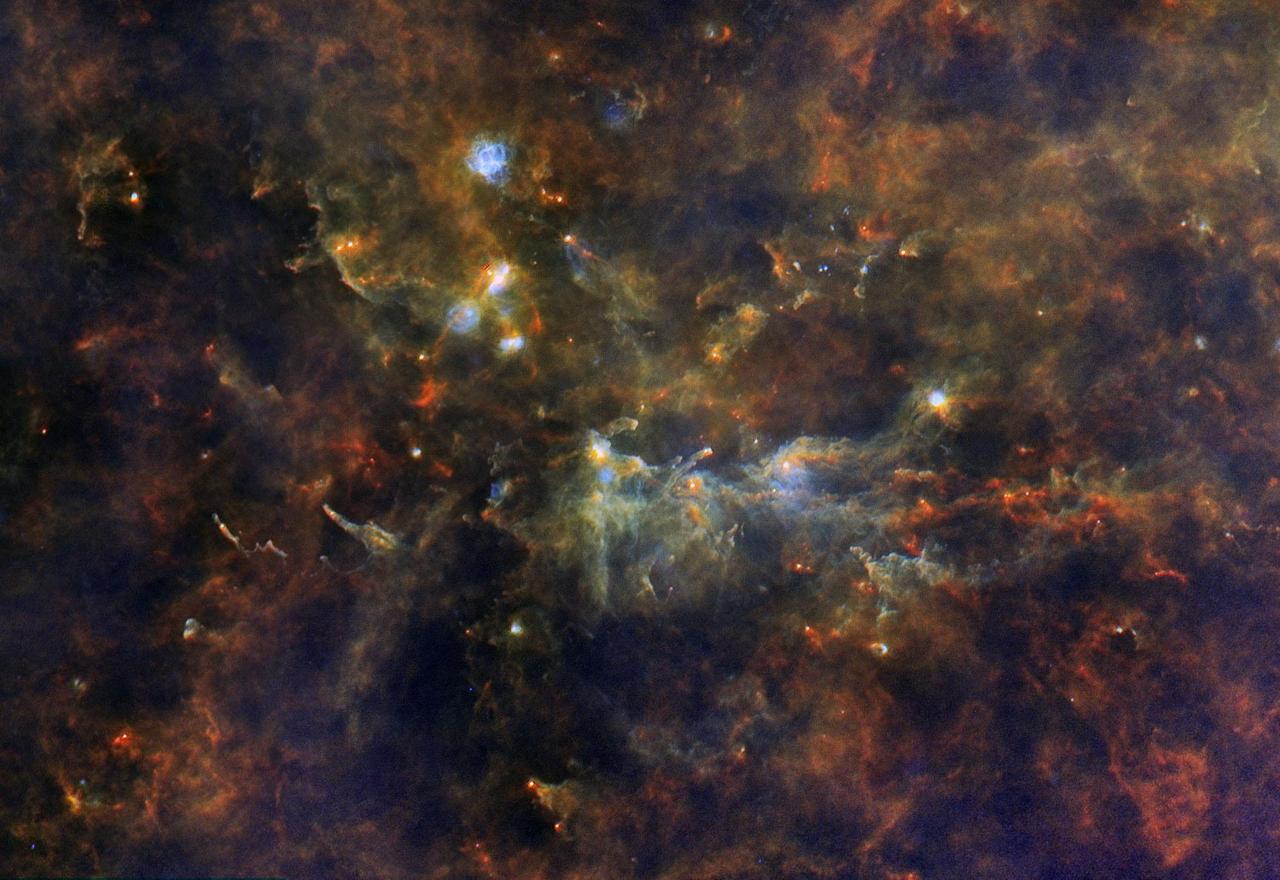
New stars are the lifeblood of our galaxy, and there is enough material revealed by ESA Herschel of the constellation Vulpecula little fox OB1. The giant stars at the heart of Vulpecula OB1 are some of the biggest in the galaxy.
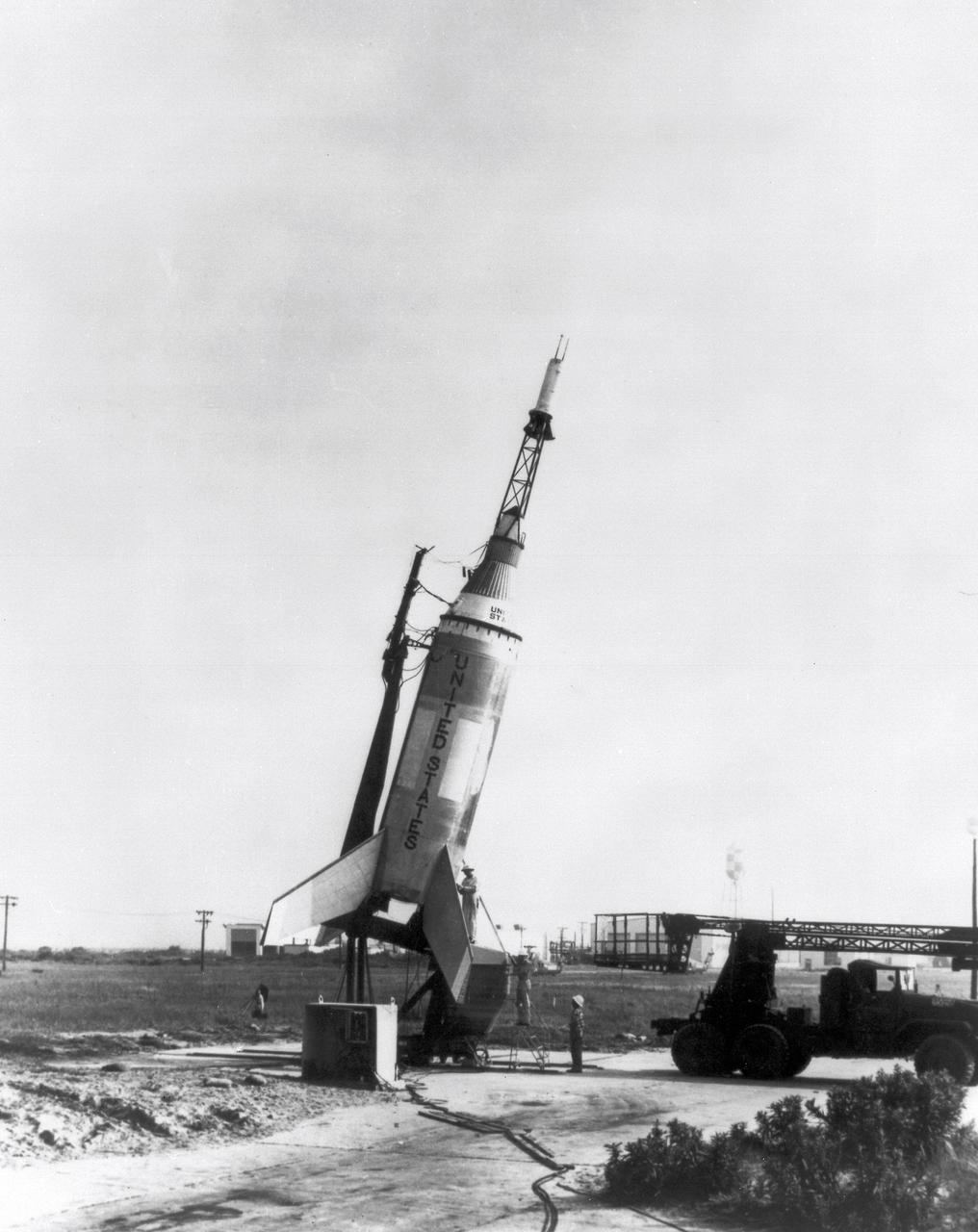
The Little Joe launch vehicle for the LJ1 mission on the launch pad at the wallops Flight Facility, Wallops Island, Virginia, on January 21, 1960. This mission achieved the suborbital Mercury cupsule test, testing of the escape system, and biomedical tests by using a monkey, named Miss Sam.

The launch of the Little Joe booster for the LJ1B mission on the launch pad from the wallops Flight Facility, Wallops Island, Virginia, on January 21, 1960. This mission achieved the suborbital Mercury capsule test, testing of the escape system, and biomedical tests by using a monkey, named Miss Sam.
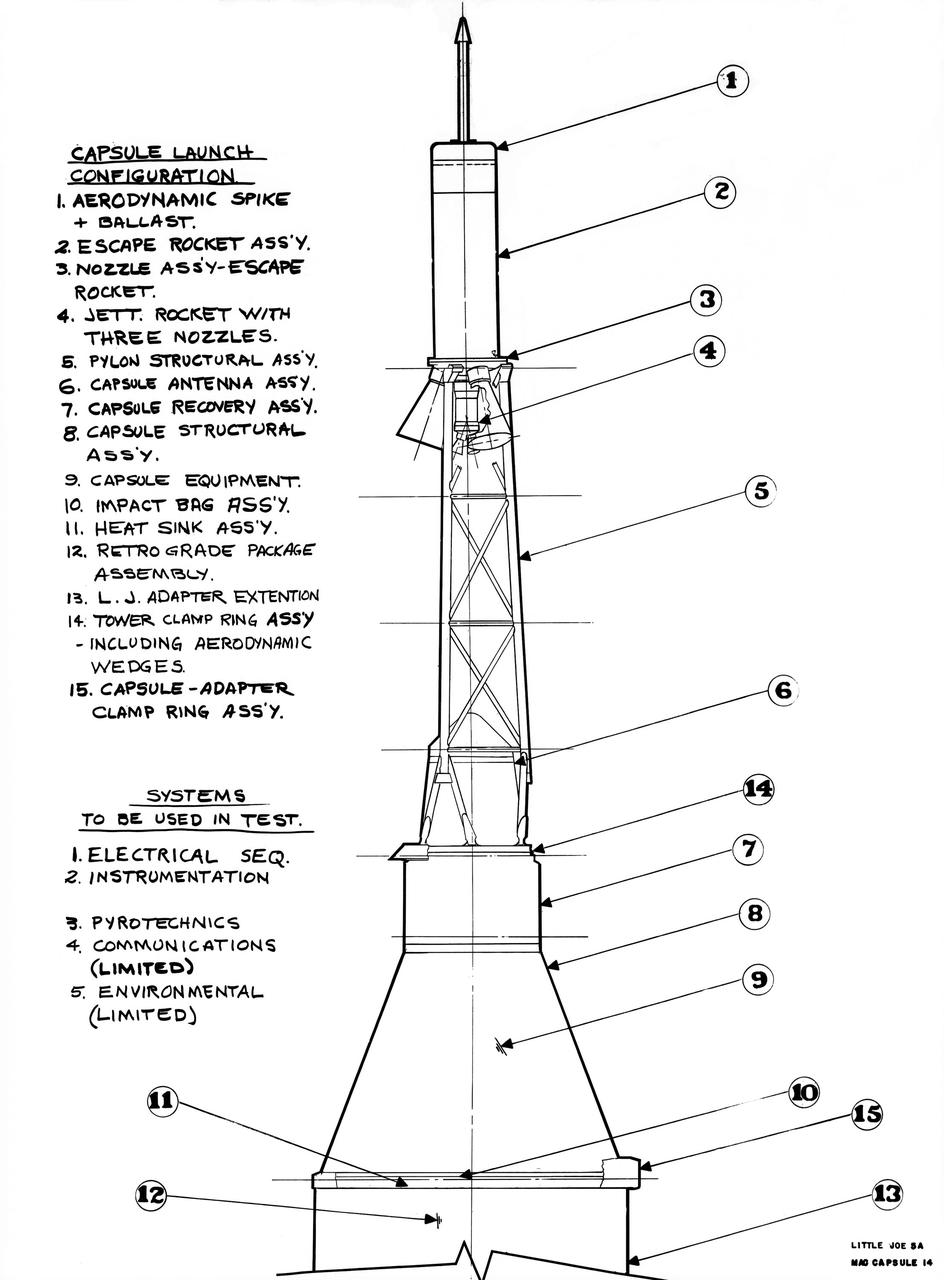
S61-01600 (11 March 1961) --- This is the G2498 Little Joe 5A mission preparedness chart. Photo credit: NASA

Marshall's eighth Center Director Dr. Jerroll W. Littles (1996-1998) and his wife are pictured with President Bill Clinton in the Oval Office of the White House following the presentation of the Presidential Rank Award for Distinguished Service. Other NASA honorees and their spouses are also pictured.
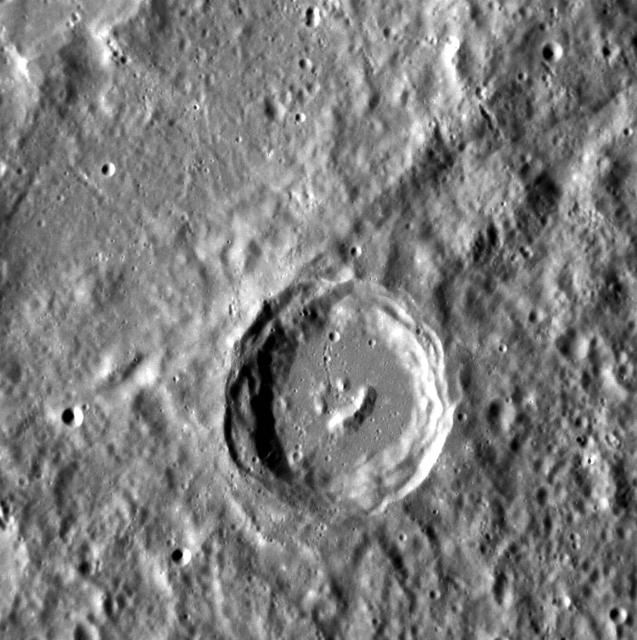
It looks like even the craters on Mercury have heard of Bob Ross! The central peaks of this complex crater have formed in such a way that it resembles a smiling face. This image is oriented so north is toward the bottom. This image was acquired as a high-resolution targeted observation. Targeted observations are images of a small area on Mercury's surface at resolutions much higher than the 200-meter/pixel morphology base map. It is not possible to cover all of Mercury's surface at this high resolution, but typically several areas of high scientific interest are imaged in this mode each week. The MESSENGER spacecraft is the first ever to orbit the planet Mercury, and the spacecraft's seven scientific instruments and radio science investigation are unraveling the history and evolution of the Solar System's innermost planet. Visit the Why Mercury? section of this website to learn more about the key science questions that the MESSENGER mission is addressing. During the one-year primary mission, MESSENGER acquired 88,746 images and extensive other data sets. MESSENGER is now in a yearlong extended mission, during which plans call for the acquisition of more than 80,000 additional images to support MESSENGER's science goals. Credit: NASA/Johns Hopkins University Applied Physics Laboratory/Carnegie Institution of Washington <b><a href="http://www.nasa.gov/audience/formedia/features/MP_Photo_Guidelines.html" rel="nofollow">NASA image use policy.</a></b> <b><a href="http://www.nasa.gov/centers/goddard/home/index.html" rel="nofollow">NASA Goddard Space Flight Center</a></b> enables NASA’s mission through four scientific endeavors: Earth Science, Heliophysics, Solar System Exploration, and Astrophysics. Goddard plays a leading role in NASA’s accomplishments by contributing compelling scientific knowledge to advance the Agency’s mission. <b>Follow us on <a href="http://twitter.com/NASA_GoddardPix" rel="nofollow">Twitter</a></b> <b>Like us on <a href="http://www.facebook.com/pages/Greenbelt-MD/NASA-Goddard/395013845897?ref=tsd" rel="nofollow">Facebook</a></b> <b>Find us on <a href="http://instagrid.me/nasagoddard/?vm=grid" rel="nofollow">Instagram</a></b>
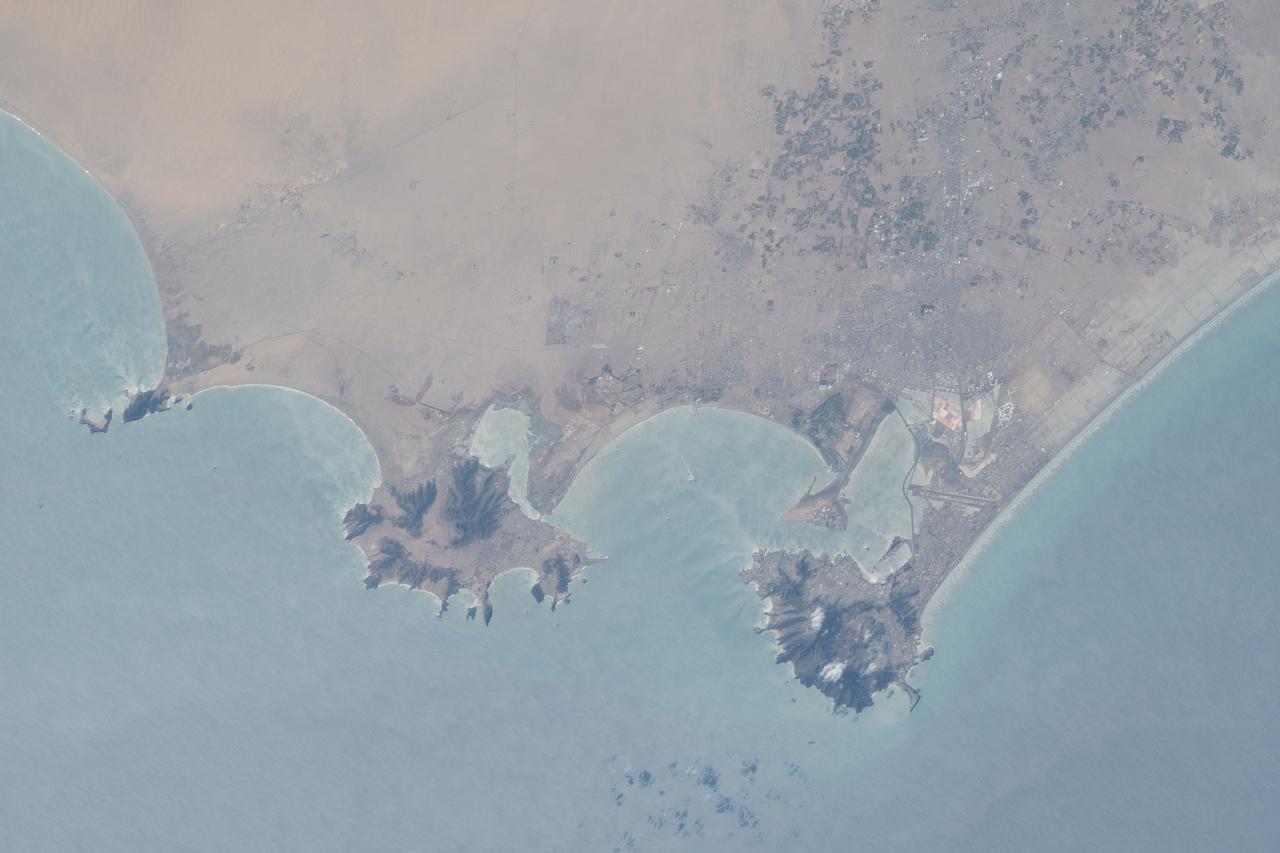
iss069e004371 (April 19, 2023) --- The Yemeni cities of Little Aden and Aden, on the coast of the Arabian Sea near the Red Sea, were pictured by Expedition 69 Flight Engineer and UAE (United Arab Emirates) astronaut Sultan Alneyadi as the International Space Station orbited 257 miles above.
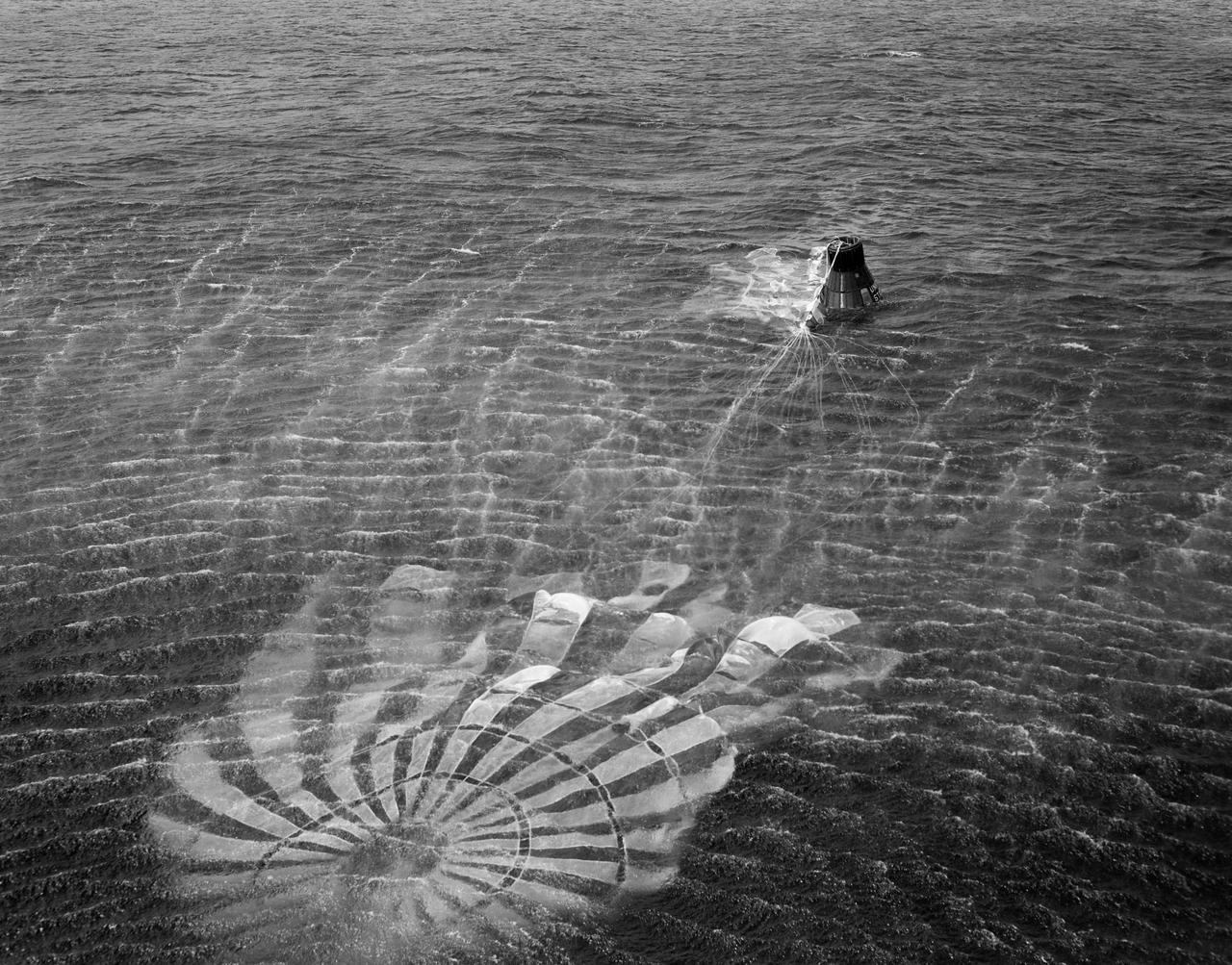
S61-01398 (18 March 1961) --- View of the recovery of the Little Joe-5A spacecraft which lifted off on March 18, 1961 from Wallops Island. The photo was taken from the recovery helicopter and shows the craft's parachute still attached and floating in the water next to the capsule. Little Joe-5A was a suborbital flight to test the Mercury capsule. The escape rocket motor fired prematurely and prior to capsule release. Photo credit: NASA
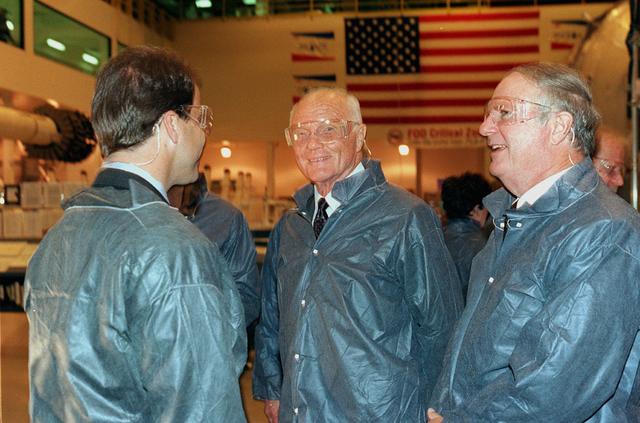
One of NASA's first astronauts, now Senator John Glenn and Alabama senatorial candidate Roger Bedford receive a tour of the Space Station manufacturing facility conducted by Marshall Space Flight Center (MSFC) Director Jerroll W. Littles.

One of NASA's first astronauts, now Senator John Glenn and Alabama senatorial candidate Roger Bedford receive a tour of the Space Station manufacturing facility conducted by Marshall Space Flight Center (MSFC) Director Jerroll W. Littles.
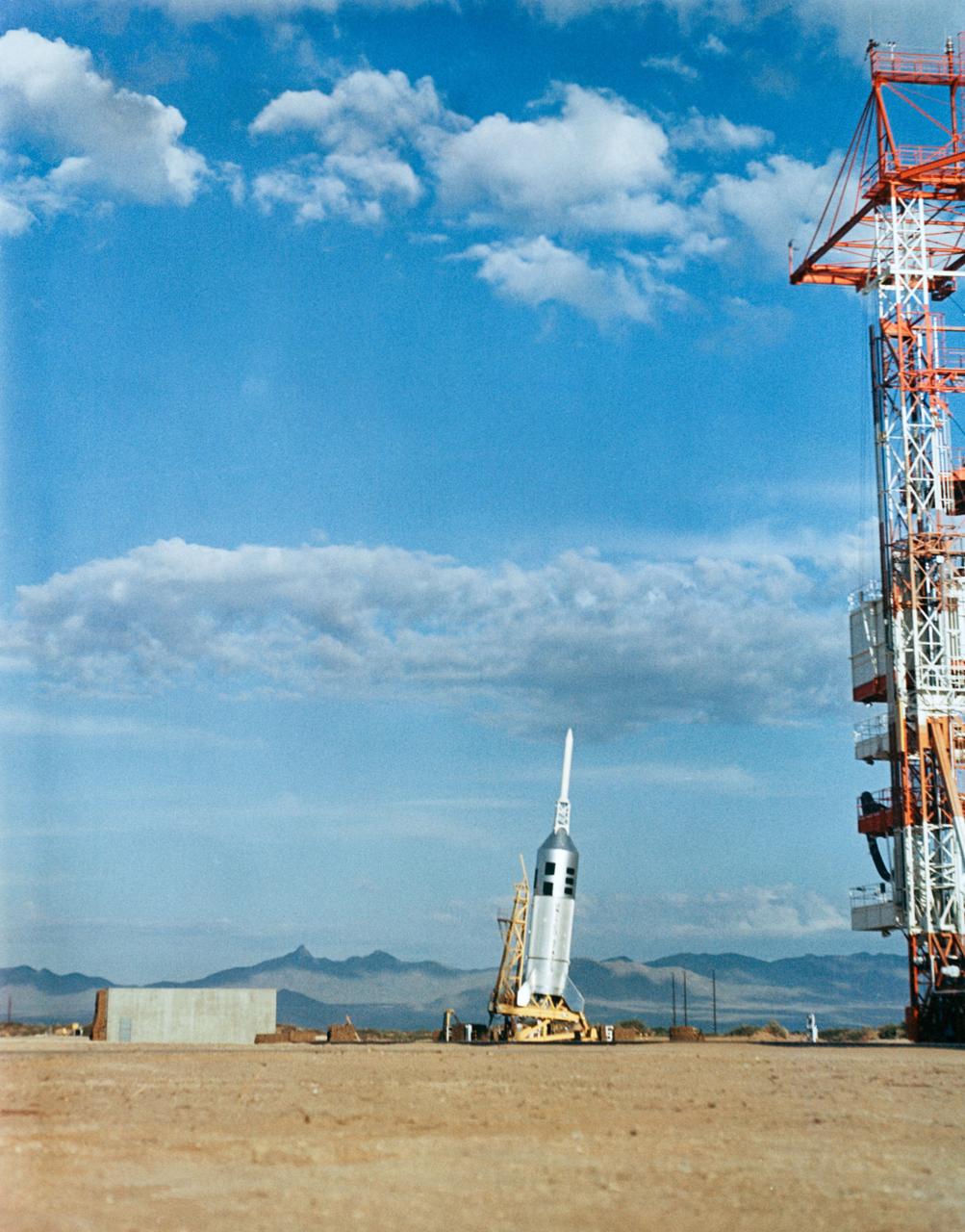
Little Joe II liftoff from the Apollo Little Joe II launch area #3 at White Sands Missile Range, White Sands, New Mexico.
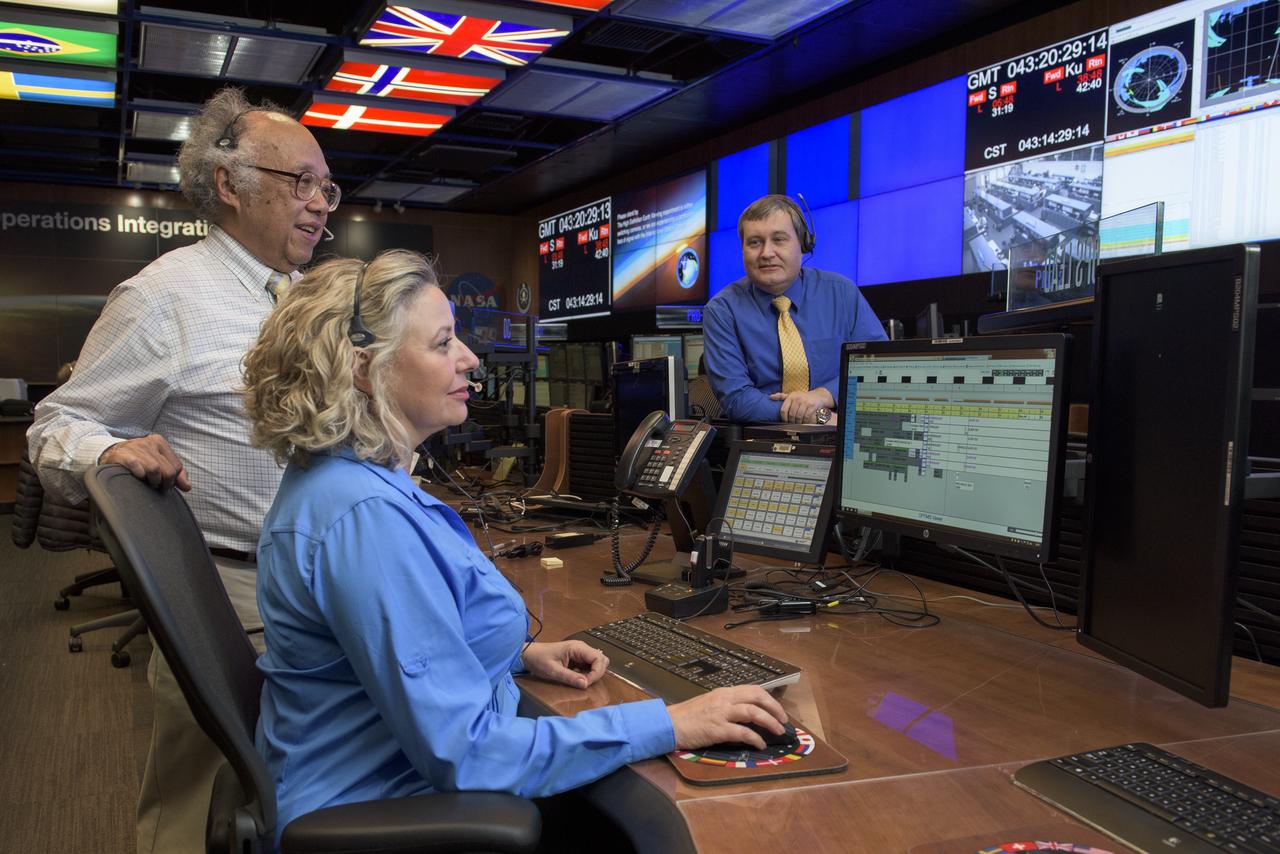
A PHOTOGRAPH FIRST RUN IN THE “MARSHALL STAR” IN 2001 IS RECREATED FOR PUBLICATION 15 YEARS LATER IN THE REMODELED PAYLOAD OPERATIONS INTEGRATION CENTER (POIC). PICTURED (L TO R) ARE: BRIAN LITTLE, OLA MYSZKA, AND ARIS TANONE.
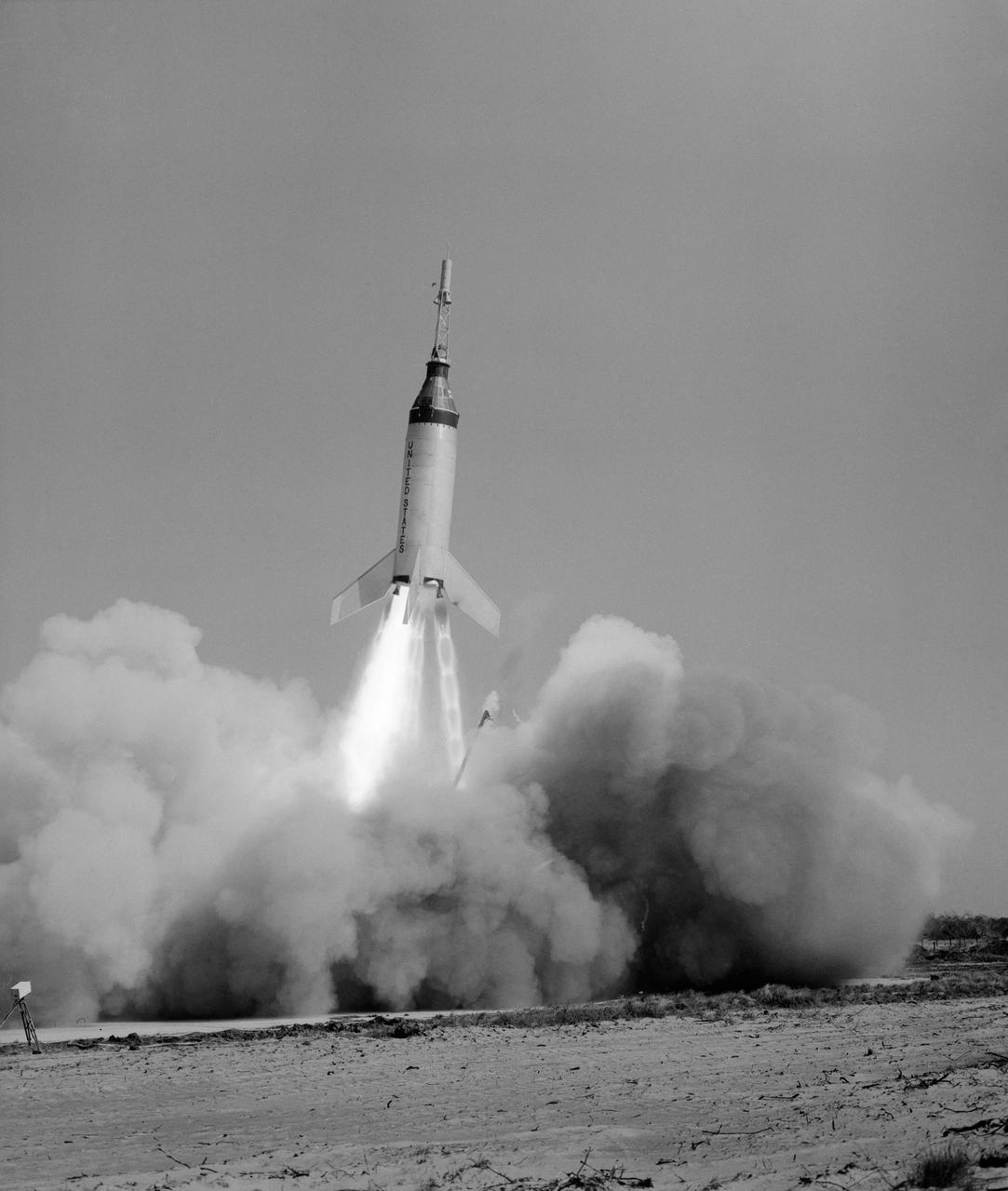
S61-01690 (28 April 1961) --- View of the launch of the Little Joe-5B spacecraft from Wallops Island on April 28, 1961. Photo credit: NASA
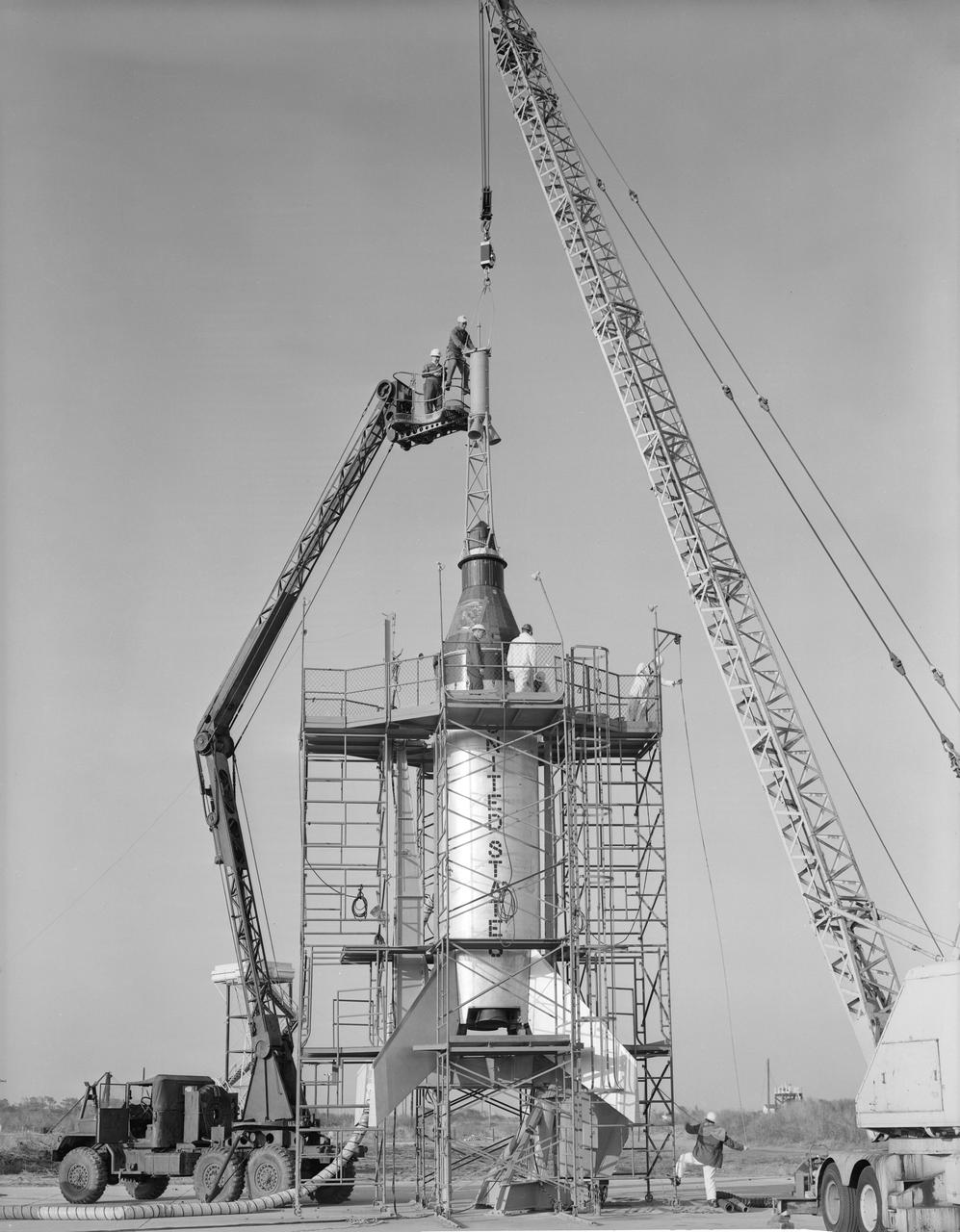
S61-01663 (23 April 1961) --- View of the mating of Little Joe-5B launch vehicle with Mercury capsule #14. Photo credit: NASA
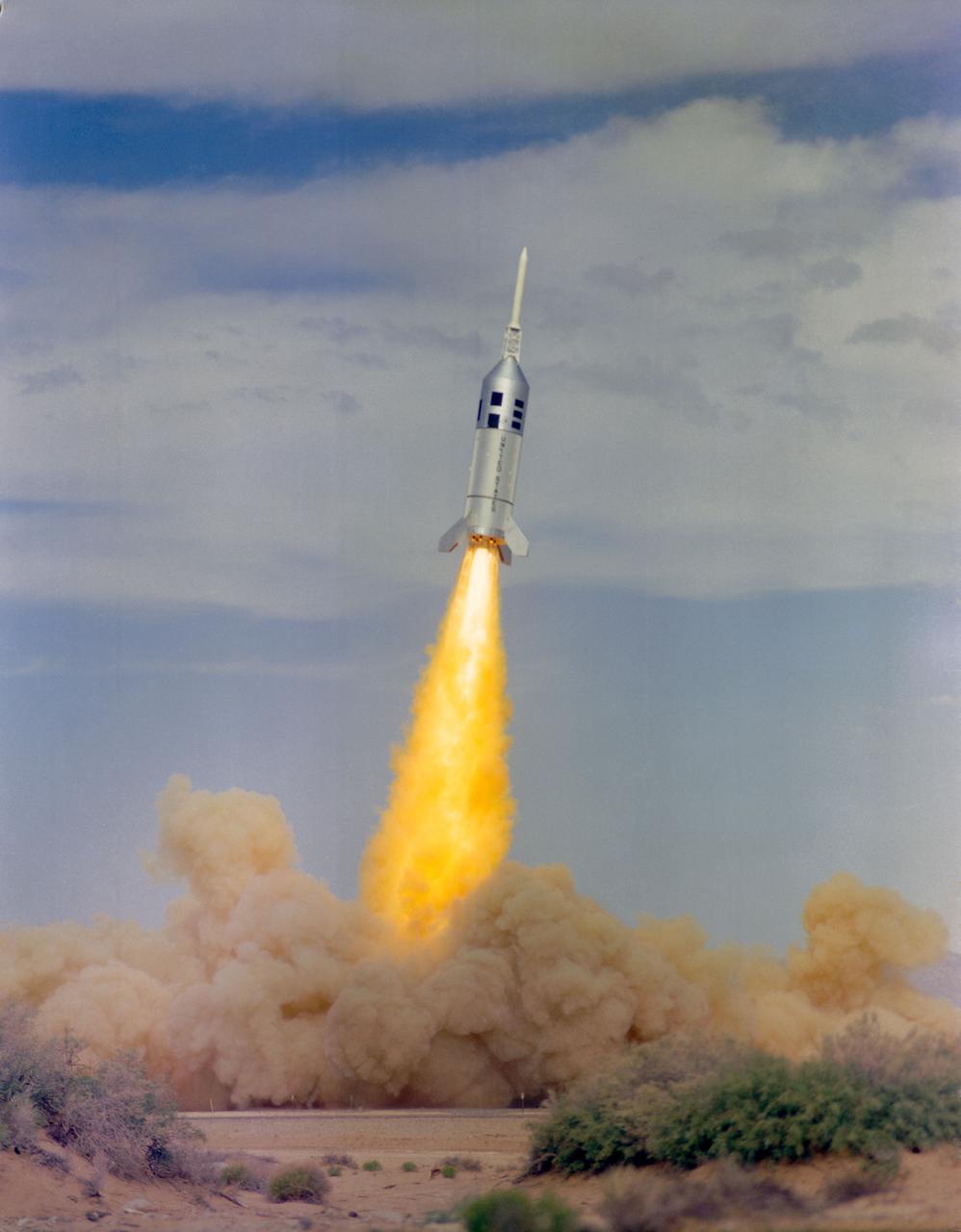
S63-15701 (28 August 1963) --- All seven motors of Little Joe II, ignited simultaneously at launch, with a total thrust of about 310,000 pounds. A maximum height of 24,000 feet was attained as Little Joe II traveled 47,000 feet north on the White Sands Test Range.

LITTLE BIG MOUNTAIN PERFORMS A TRADITIONAL NATIVE AMERICAN HOOP DANCE AT NASA MARSHALL SPACE FLIGHT CENTER’S 2015 NATIVE AMERICAN HERITAGE EVENT. THE EVENT, HELD NOV. 3 ON THE LAWN OF THE ACTIVITIES BUILDING, BUILDING 4316, HONORED THE CONTRIBUTIONS, ACHIEVEMENTS, SACRIFICES AND CULTURAL AND HISTORICAL LEGACY OF AMERICAN INDIANS. IN ITS EARLIEST FORM, THE STORYTELLING HOOP DANCE IS BELIEVED TO HAVE BEEN PART OF A HEALING CEREMONY DESIGNED TO RESTORE BALANCE AND HARMONY IN THE WORLD. WITH NO BEGINNING OR END, THE HOOP REPRESENTS THE NEVER-ENDING CIRCLE OF LIFE. THE SPECIAL EMPHASIS PROGRAM -- SPONSORED BY THE OFFICE OF DIVERSITY AND EQUAL OPPORTUNITY -- WAS PART OF MARSHALL’S OBSERVANCE OF NATIONAL NATIVE AMERICAN HERITAGE MONTH.
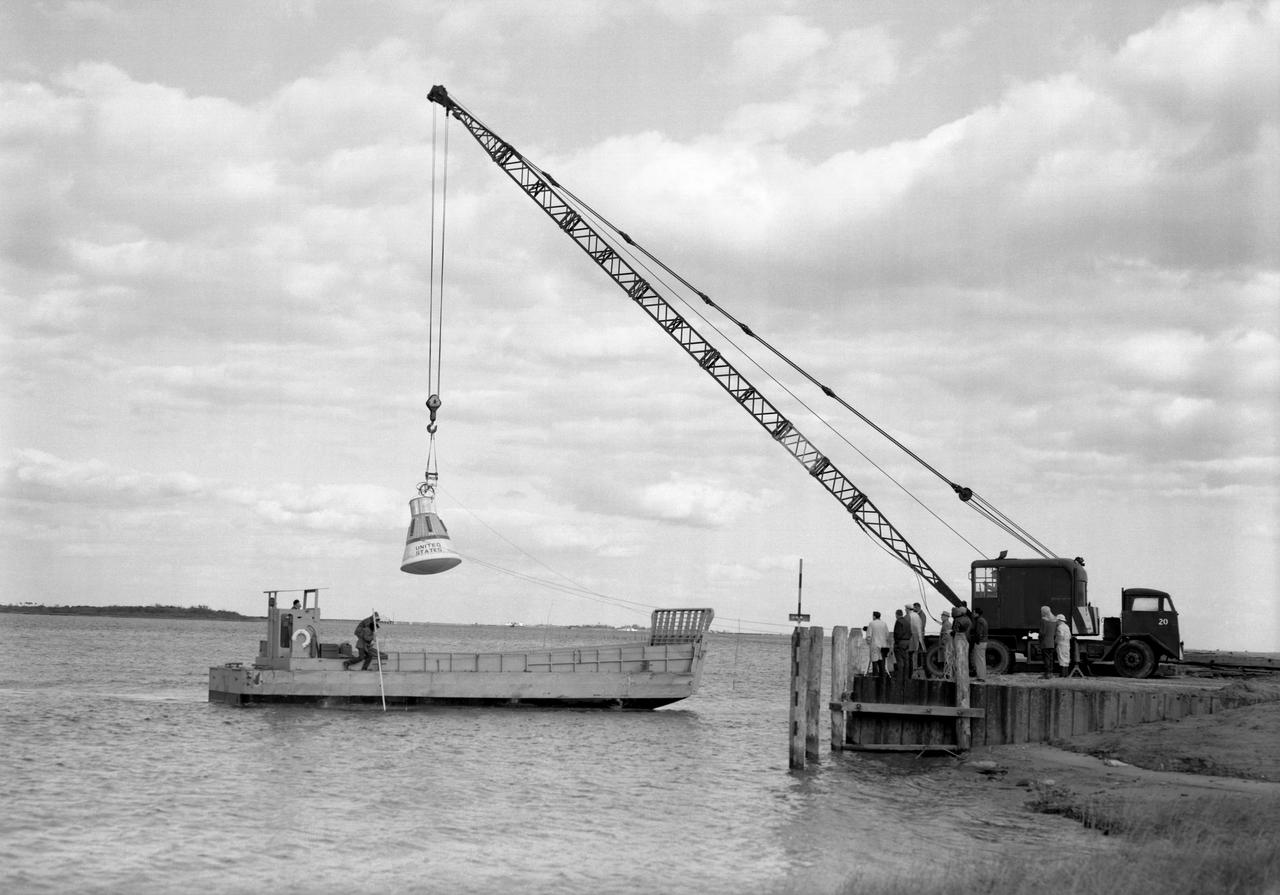
Water drop and recovery from shore-based crane at Langley's back river.
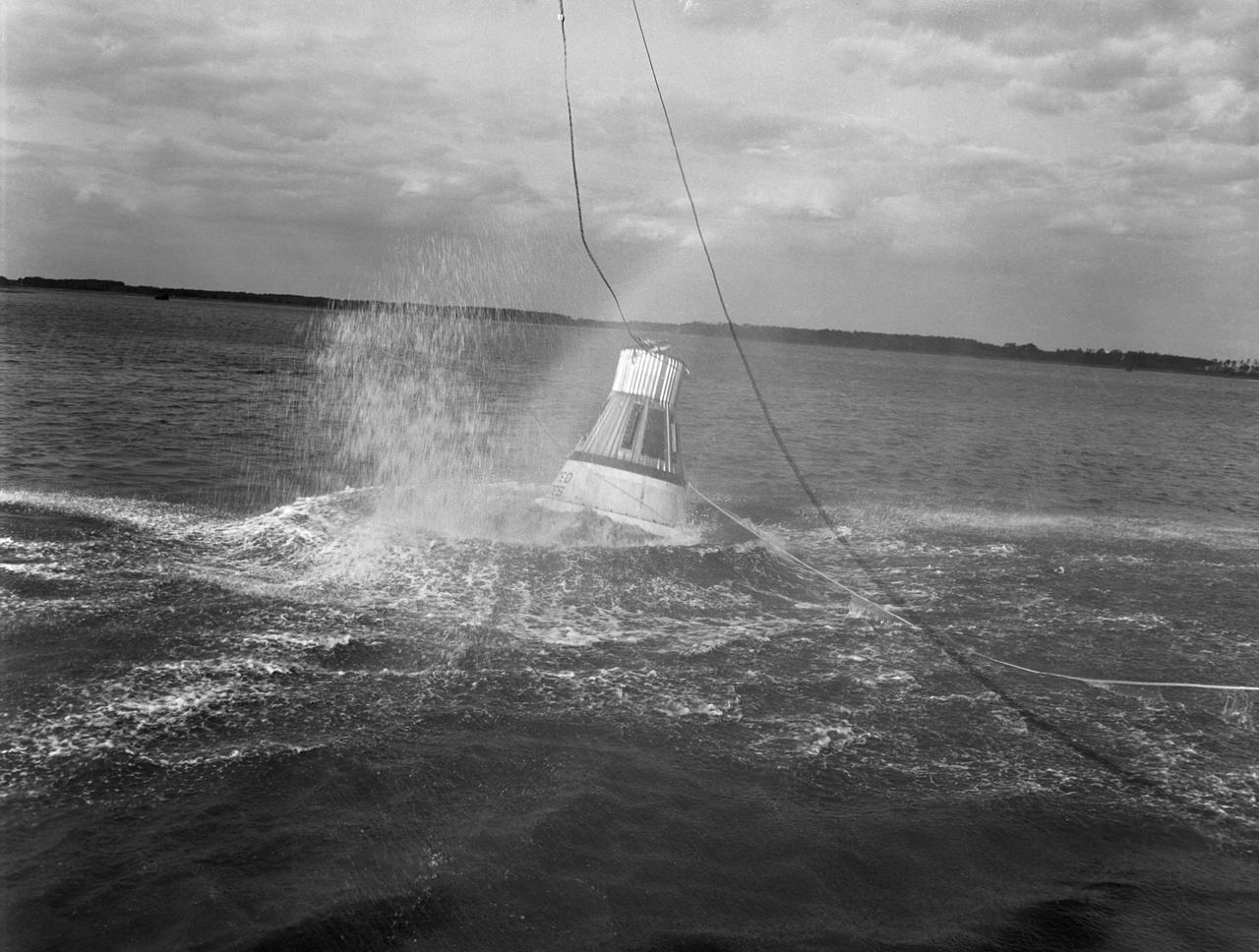
Water drop and recovery from shore-based crane at Langley's back river.
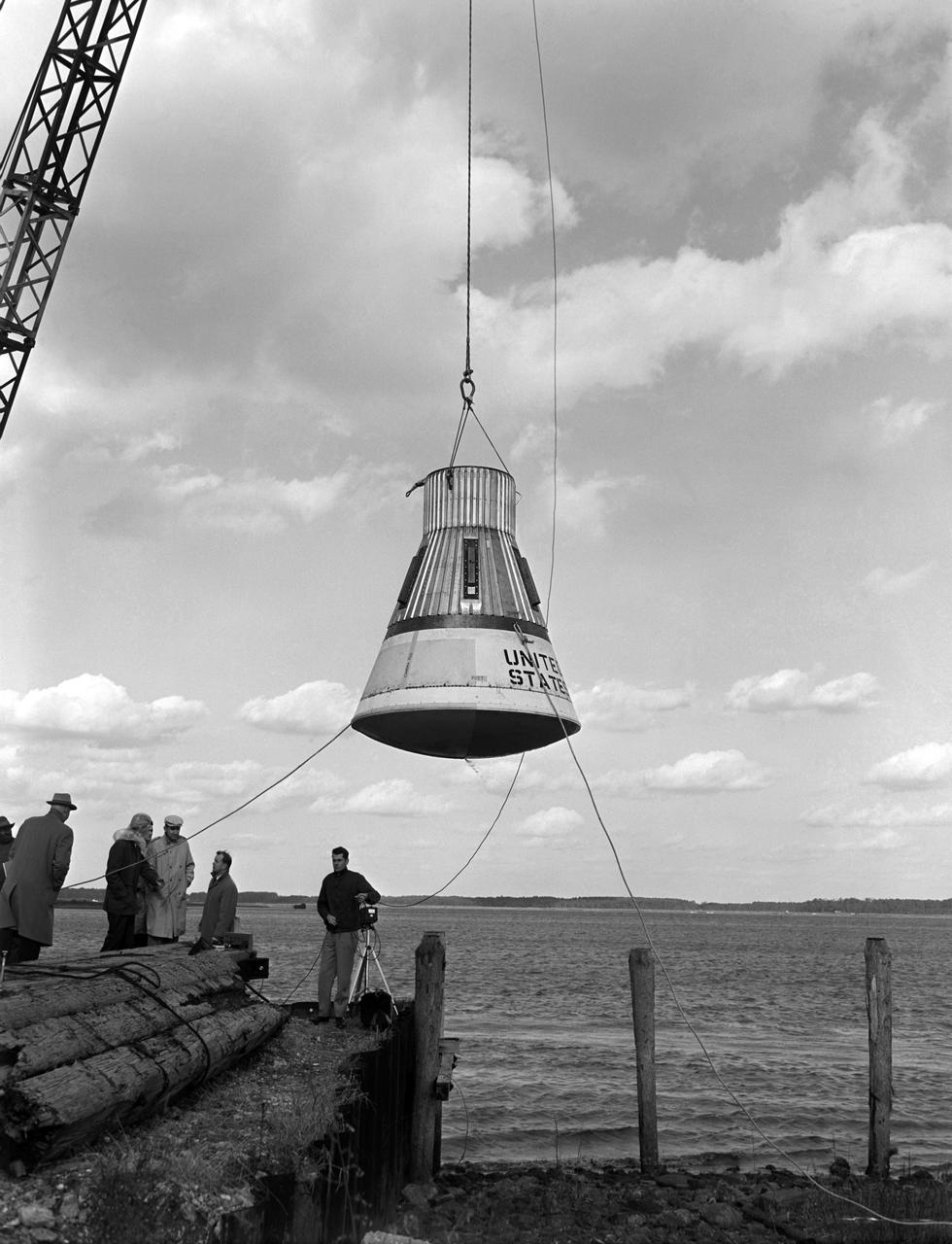
Water drop and recovery from shore-based crane at Langley's back river.
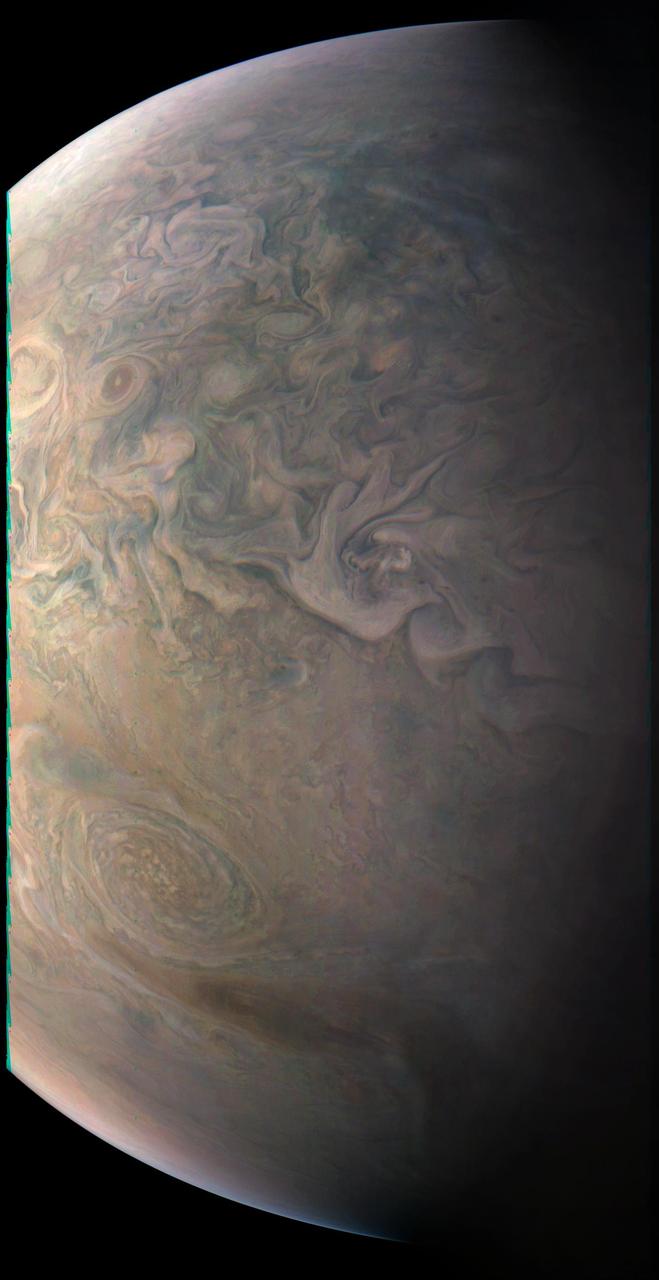
The JunoCam imager on NASA's Juno spacecraft snapped this shot of Jupiter's northern latitudes on Dec. 11, 2016 at 8:47 a.m. PST (11:47 a.m. EST), as the spacecraft performed a close flyby of the gas giant planet. The spacecraft was at an altitude of 10,300 miles (16,600 kilometers) above Jupiter's cloud tops. This stunning view of the high north temperate latitudes fortuitously shows NN-LRS-1, a giant storm known as the Little Red Spot (lower left). This storm is the third largest anticyclonic reddish oval on the planet, which Earth-based observers have tracked for the last 23 years. An anticyclone is a weather phenomenon with large-scale circulation of winds around a central region of high atmospheric pressure. They rotate clockwise in the northern hemisphere, and counterclockwise in the southern hemisphere. The Little Red Spot shows very little color, just a pale brown smudge in the center. The color is very similar to the surroundings, making it difficult to see as it blends in with the clouds nearby. Citizen scientists Gerald Eichstaedt and John Rogers processed the image and drafted the caption. http://photojournal.jpl.nasa.gov/catalog/PIA21378. - Enhanced image by Gerald Eichstädt / John Rogers based on images provided courtesy of NASA/JPL-Caltech/SwRI/MSSS
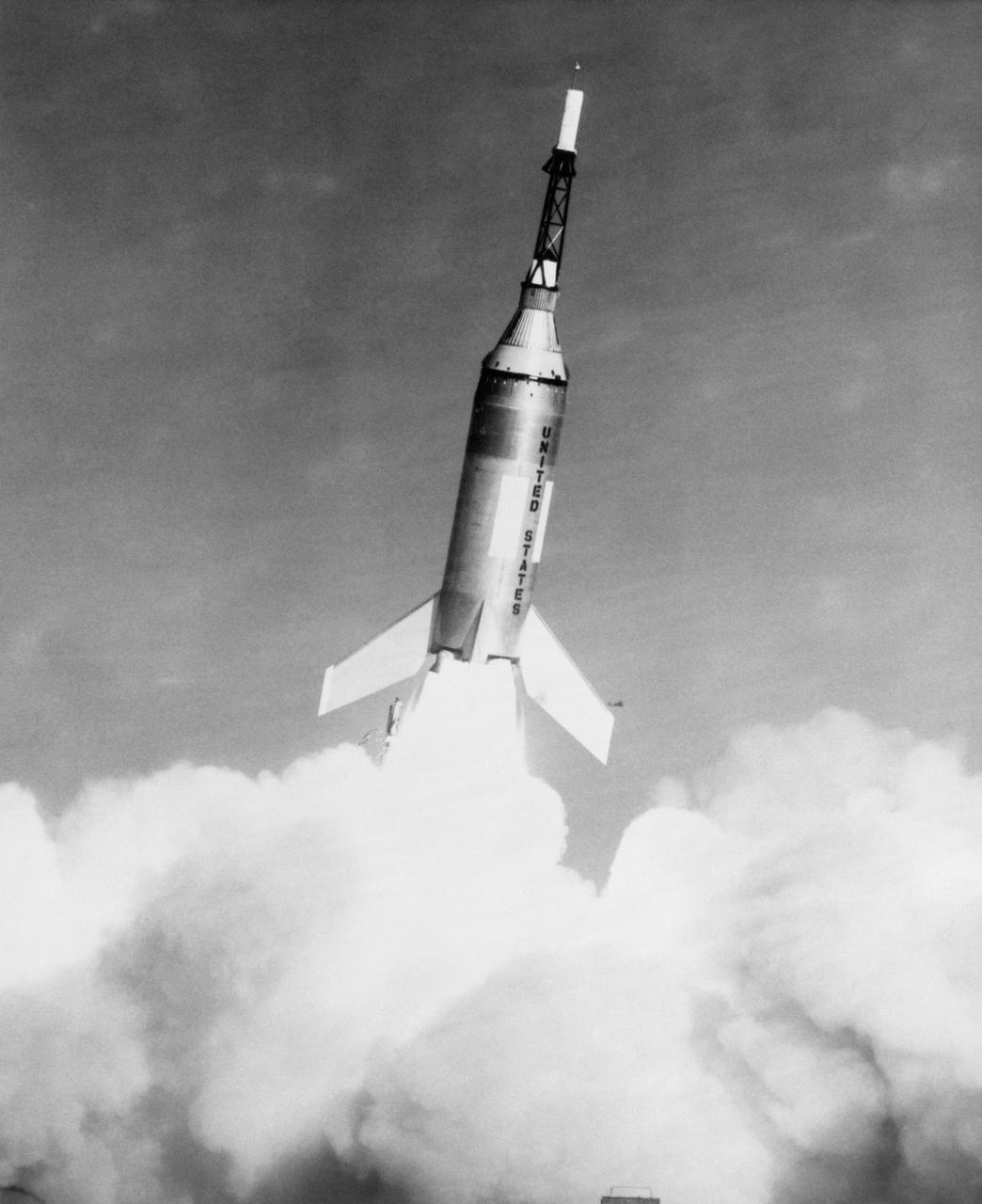
G61-00030 (4 Nov. 1959) --- Launch of Little Joe-2 from Wallops Island carrying Mercury spacecraft test article. The suborbital test flight of the Mercury capsule was to test the escape system. Vehicle functioned perfectly, but escape rocket ignited several seconds too late. Photo credit: NASA
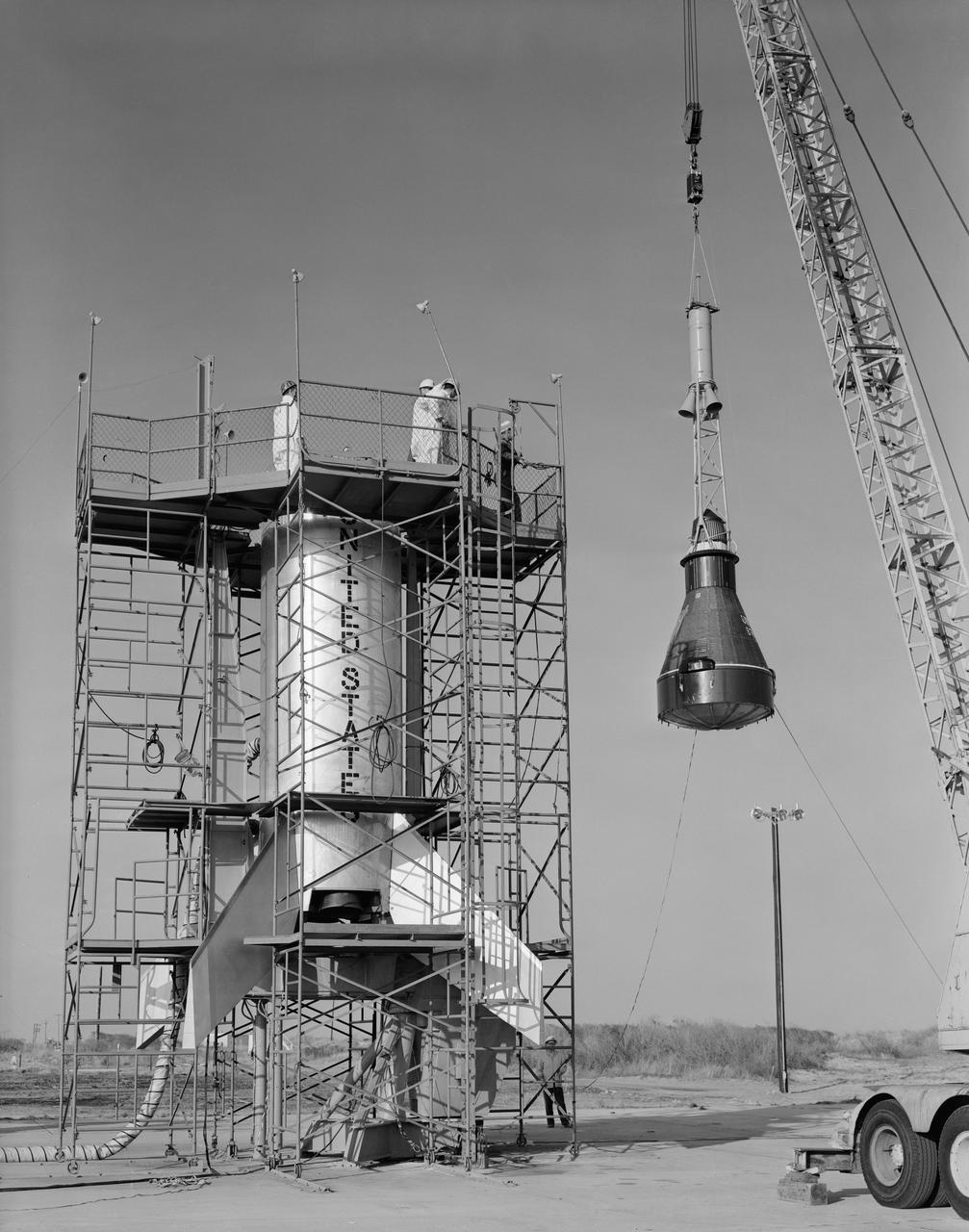
S61-01673 (23 April 1961) --- View of the mating of Little Joe-5B launch vehicle with Mercury capsule #14. Photo credit: NASA
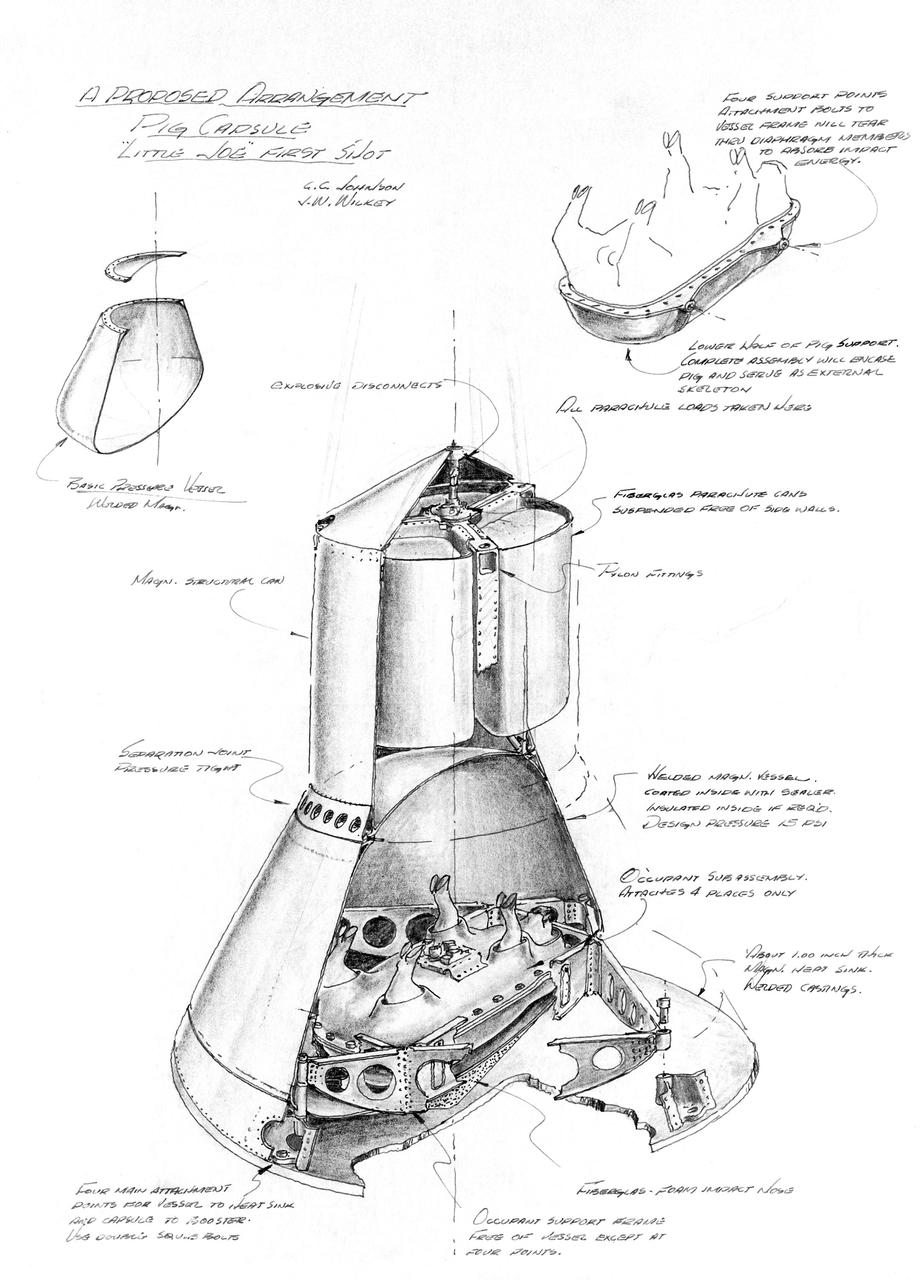
S63-19319 (October 1963) --- Pen and ink drawing of a proposed arrangement for a Pig Capsule in Little Joe capsule first shot. Photo credit: NASA

B60-00364 (4 Nov. 1959) --- Launch of Little Joe-2 from Wallops Island carrying Mercury spacecraft test article. The suborbital test flight of the Mercury capsule was to test the escape system. Vehicle functioned perfectly, but escape rocket ignited several seconds too late. Photo credit: NASA
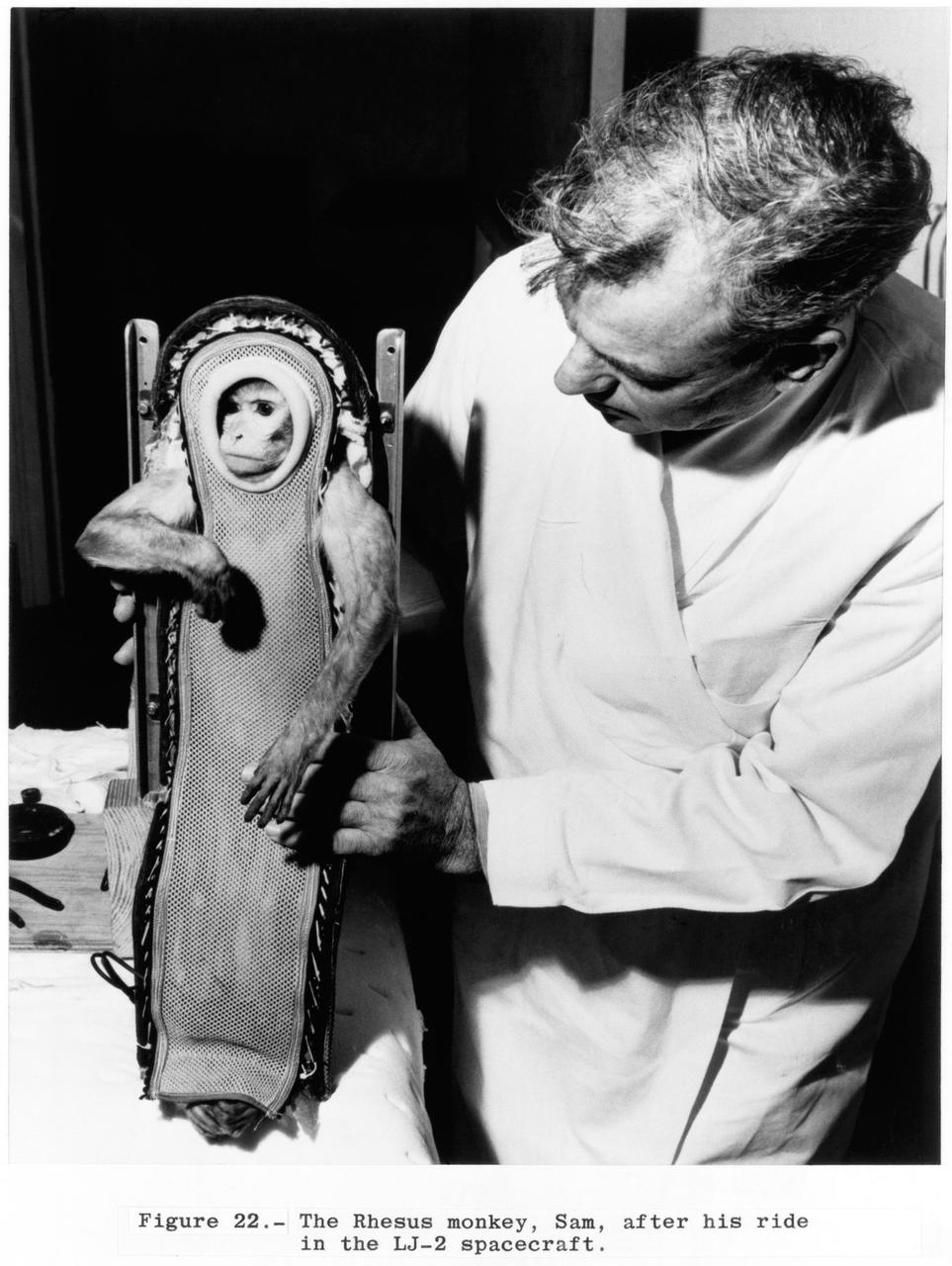
S63-19199 (4 Dec. 1959) --- Sam, the Rhesus monkey, and his handler after his ride in the Little Joe 2 (LJ-2) spacecraft. He is still encased in his contour couch. A U.S. Navy destroyer safely recovered Sam after he experienced three minutes of weightlessness during the flight. Photo credit: NASA

In early 2006, a weak La Niña event kept the temperatures in the Pacific Ocean along the equator a little cooler than normal.
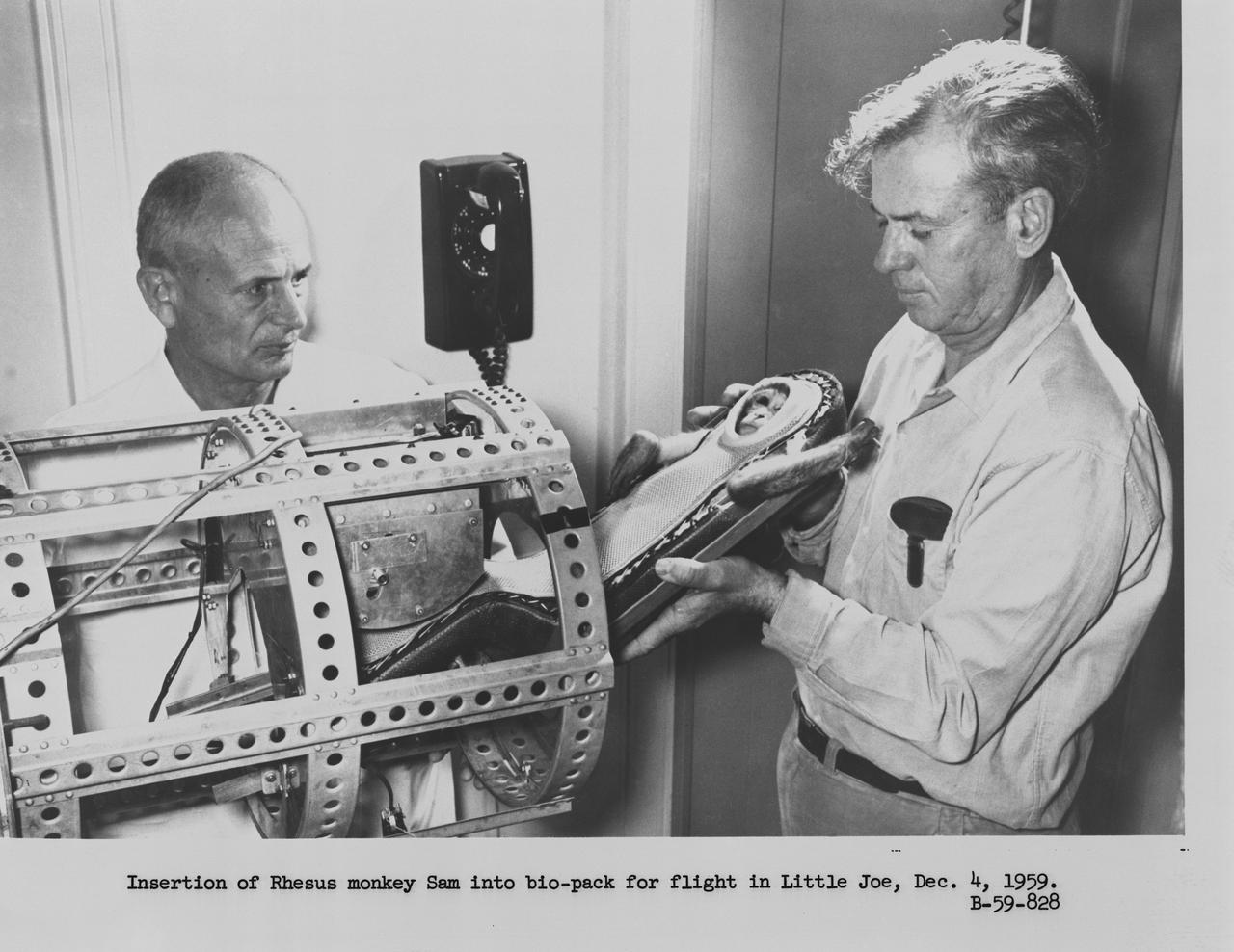
B59-00828 (21 Jan. 1959) --- The test subject, a rhesus monkey named Miss Sam, is seen encased in a model of the Mercury fiberglass contour couch. She is being placed in a container for the Little Joe 1B suborbital test flight of the Mercury Capsule. Photo credit: NASA
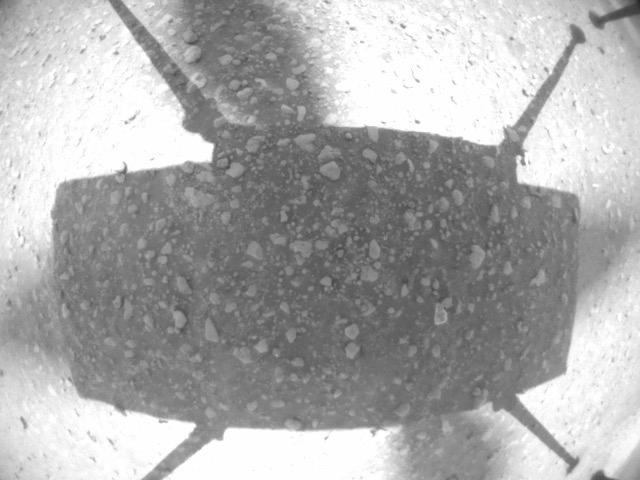
A picture from the navigation camera aboard Ingenuity captured the helicopter on takeoff during Flight Two, showing little sign of dust. https://photojournal.jpl.nasa.gov/catalog/PIA24594
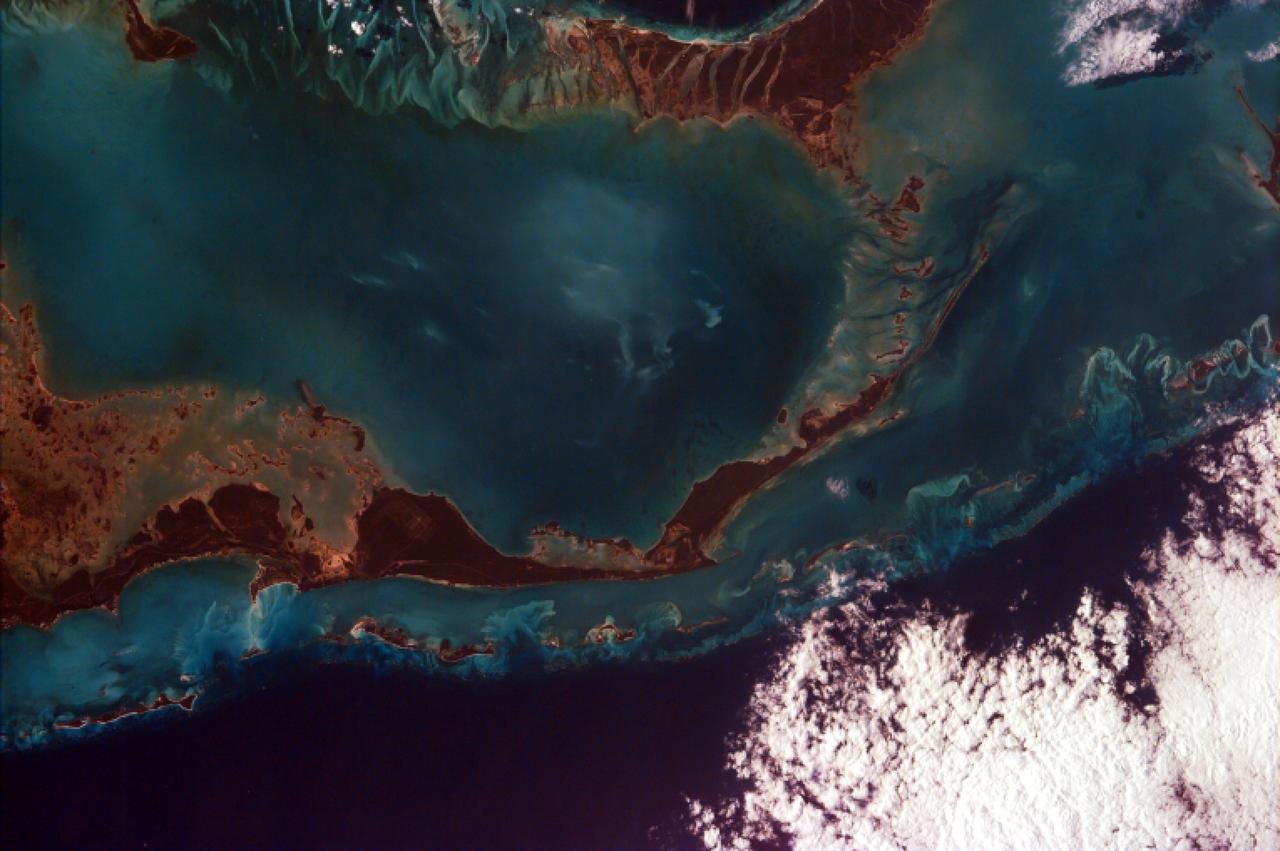
This image from NASA EarthKAM captures the tropical beauty of the major islands of the Little Bahama Bank, the most northerly of the island groups that comprise the Bahamas.
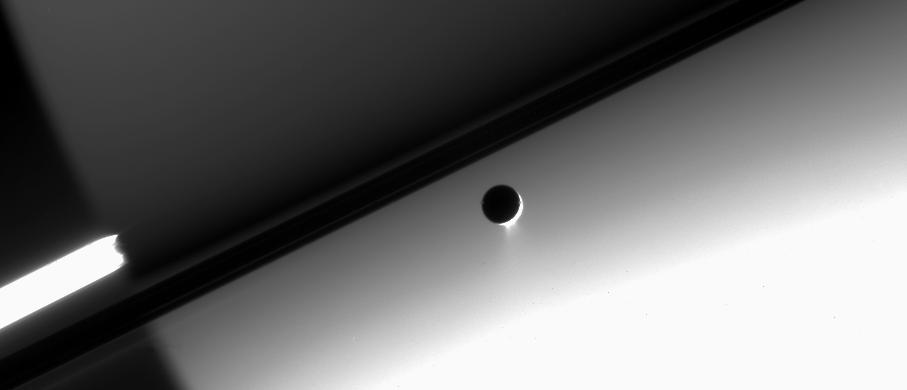
The plumes of Enceladus continue to gush icy particles into Saturn orbit, making this little moon one of a select group of geologically active bodies in the solar system
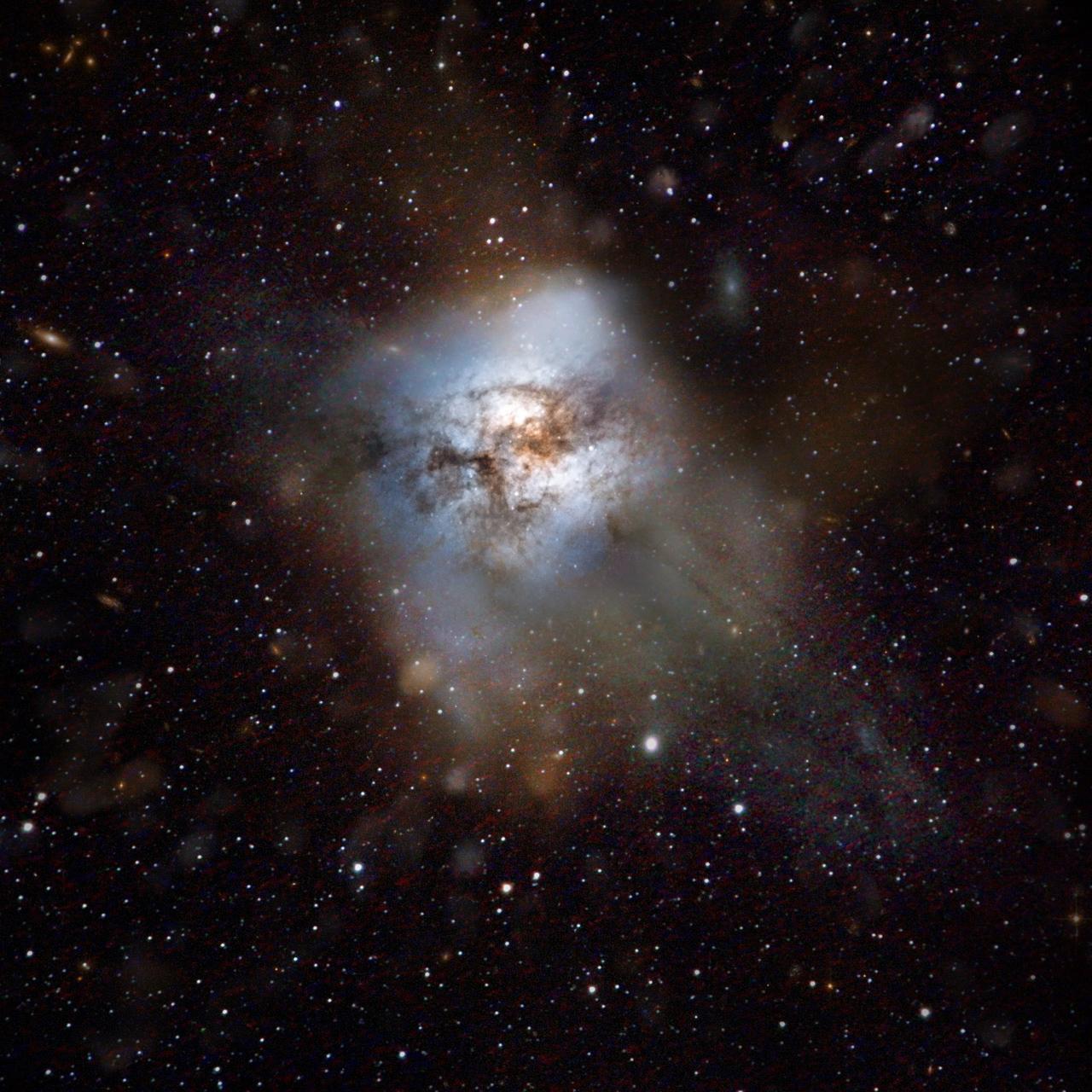
This artist impression shows the tarburst galaxy HFLS3. The galaxy appears as little more than a faint, red smudge in images from the Herschel space observatory.
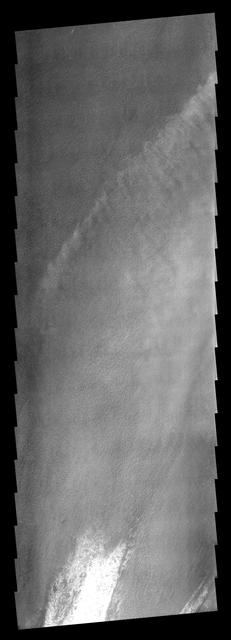
These clouds formed in the south polar region. The faintness of the cloud system likely indicates that these are mainly ice clouds, with relatively little dust content
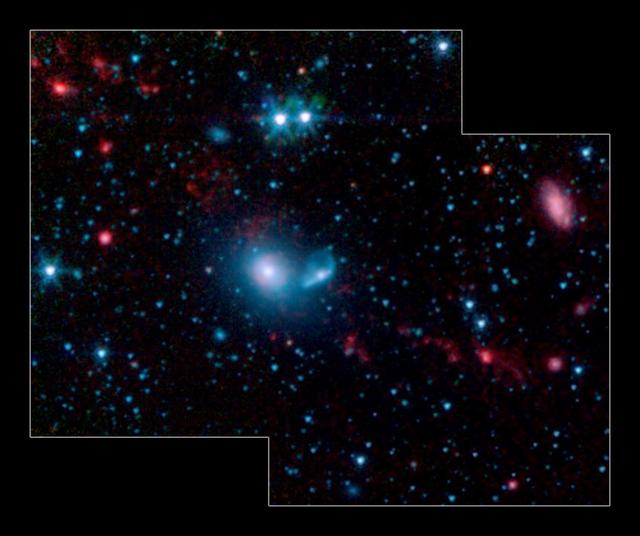
This false-color infrared image from NASA Spitzer Space Telescope shows little dwarf galaxies forming in the tails of two larger galaxies that are colliding together.
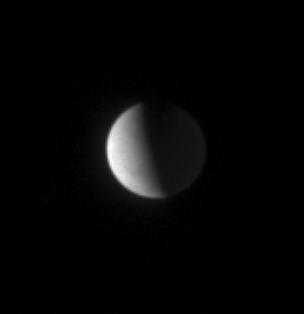
The high northern latitudes on Enceladus show little detail from Cassini distant vantage point, nearly 50 degrees above the moon equator
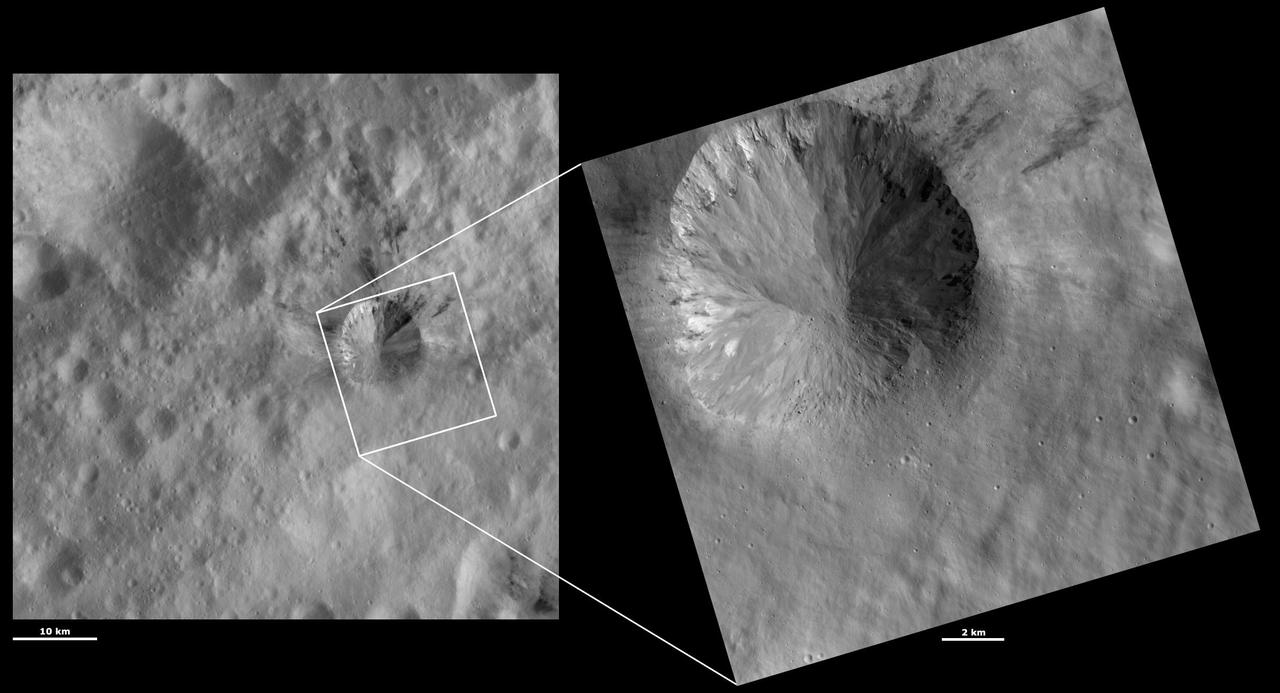
These images from NASA Dawn spacecraft are located in asteroid Vesta Gegania quadrangle, a little south of Vesta equator; boulders can be seen on the bottom side of the crater.
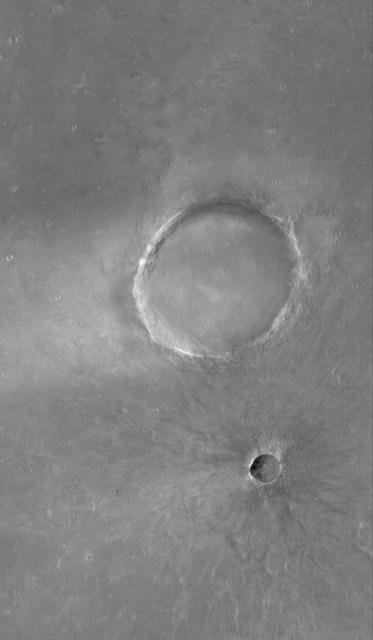
This MOC image shows a portion of Syrtis Major Planum, dominated in this area by two impact craters of differing age
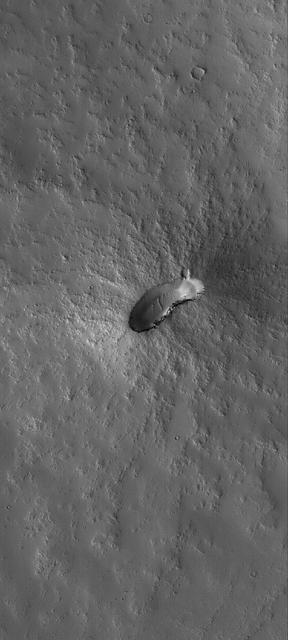
This MOC image shows a small, dust-mantled volcano on the plains east of the giant martian volcano, Pavonis Mons
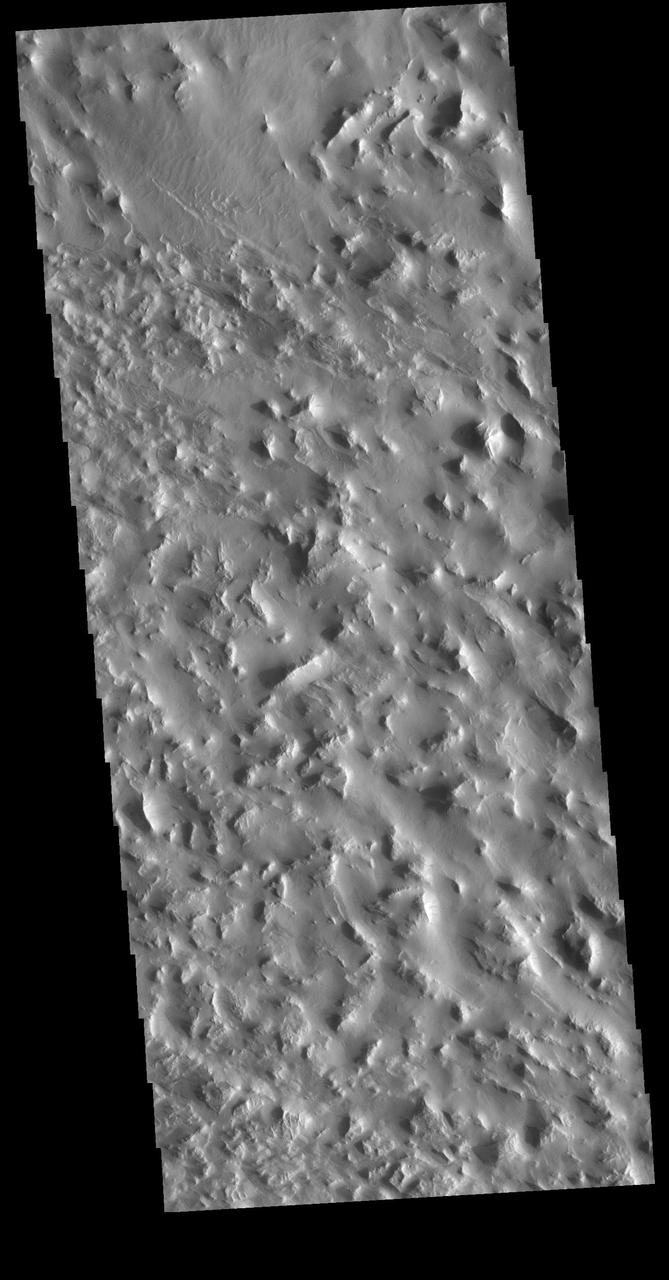
This VIS image shows a rugged region near the northern end of Gordii Dorsum. This is in the area where extensive wind action has scoured a poorly cemented surface. Wind erosion will have occurred in this region of hills as well. Orbit Number: 81090 Latitude: 9.47534 Longitude: 217.697 Instrument: VIS Captured: 2020-03-26 06:29 https://photojournal.jpl.nasa.gov/catalog/PIA23936
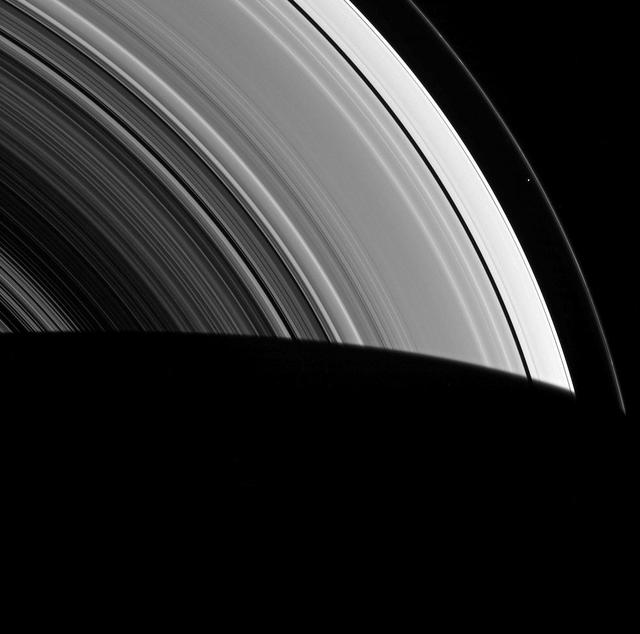
Seen by NASA Cassini spacecraft within the vast expanse of Saturn rings, Prometheus appears as little more than a dot. But that little moon still manages to shape the F ring, confining it to its narrow domain. Prometheus (53 miles, or 86 kilometers across) and its fellow moon Pandora (50 miles, or 81 kilometers across) orbit beside the F ring and keep the ring from spreading outward through a process dubbed "shepherding." This view looks toward the unilluminated side of the rings from about 45 degrees below the ringplane. The image was taken in green light with the Cassini spacecraft wide-angle camera on March 8, 2014. The view was obtained at a distance of approximately 533,000 miles (858,000 kilometers) from Prometheus and at a Sun-Prometheus-spacecraft, or phase, angle of 90 degrees. Image scale is 32 miles (51 kilometers) per pixel. http://photojournal.jpl.nasa.gov/catalog/PIA18272

Butterfly ejecta is the name given when a crater has two lobes of ejecta on opposite sides, with little or no ejecta between the lobes. This image is from NASA 2001 Mars Odyssey spacecraft.
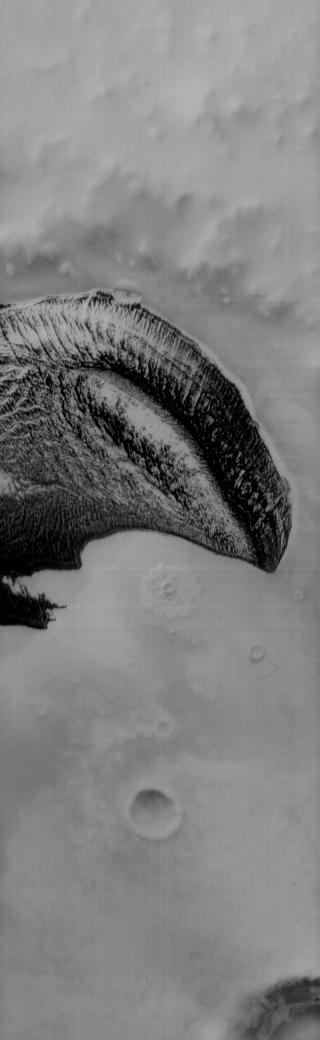
Do you see what I see? This image captured by NASA 2001 Mars Odyssey spacecraft shows polar dunes looking like T-rex, complete with his little arm.
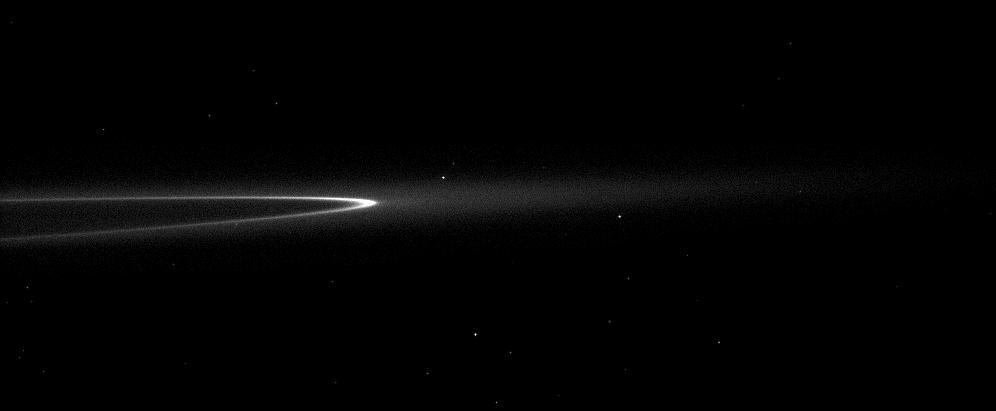
In this image taken by NASA Cassini spacecraft, the bright arc in Saturn faint G ring contains a little something special. Although it cant be seen here, the tiny moonlet Aegaeon orbits within the bright arc.
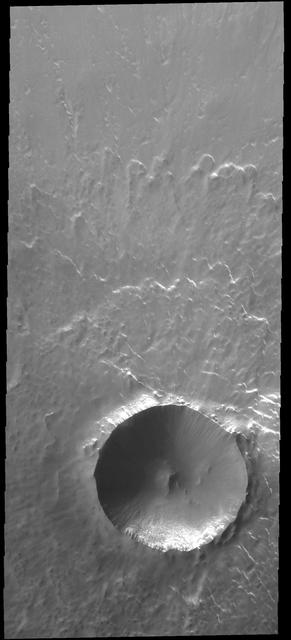
This image from NASA 2001 Mars Odyssey spacecraft shows Lonar Crater. This is a fairly pristine crater, with a steep slope on the interior of the rim and little to no deposition of material on the floor.
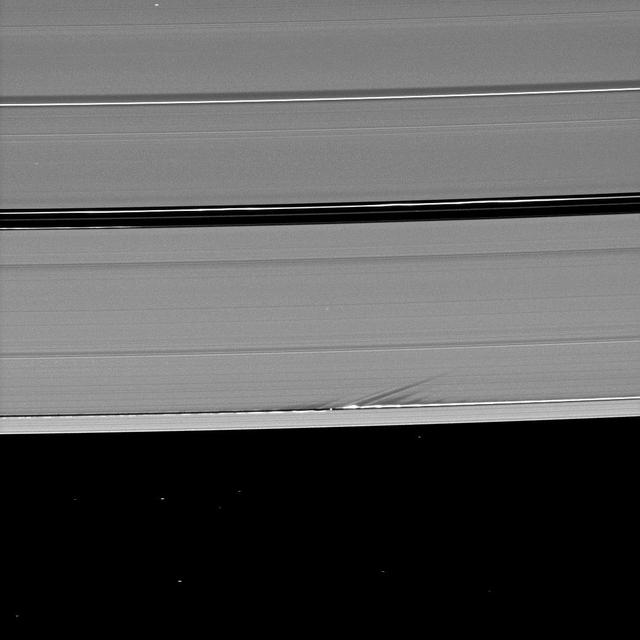
Long shadows stretch away from the towering edge waves created by the gravity of the moon Daphnis in this image taken by NASA Cassini spacecraft a little more than a week before Saturn August 2009 equinox.
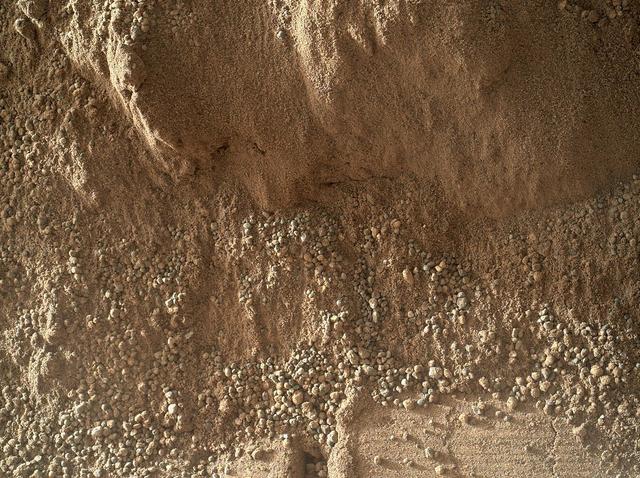
This image shows the wall of a scuffmark NASA Curiosity made in a windblown ripple of Martian sand with its wheel. The upper half of the image shows a small portion of the side wall of the scuff and a little bit of the floor of the scuff.
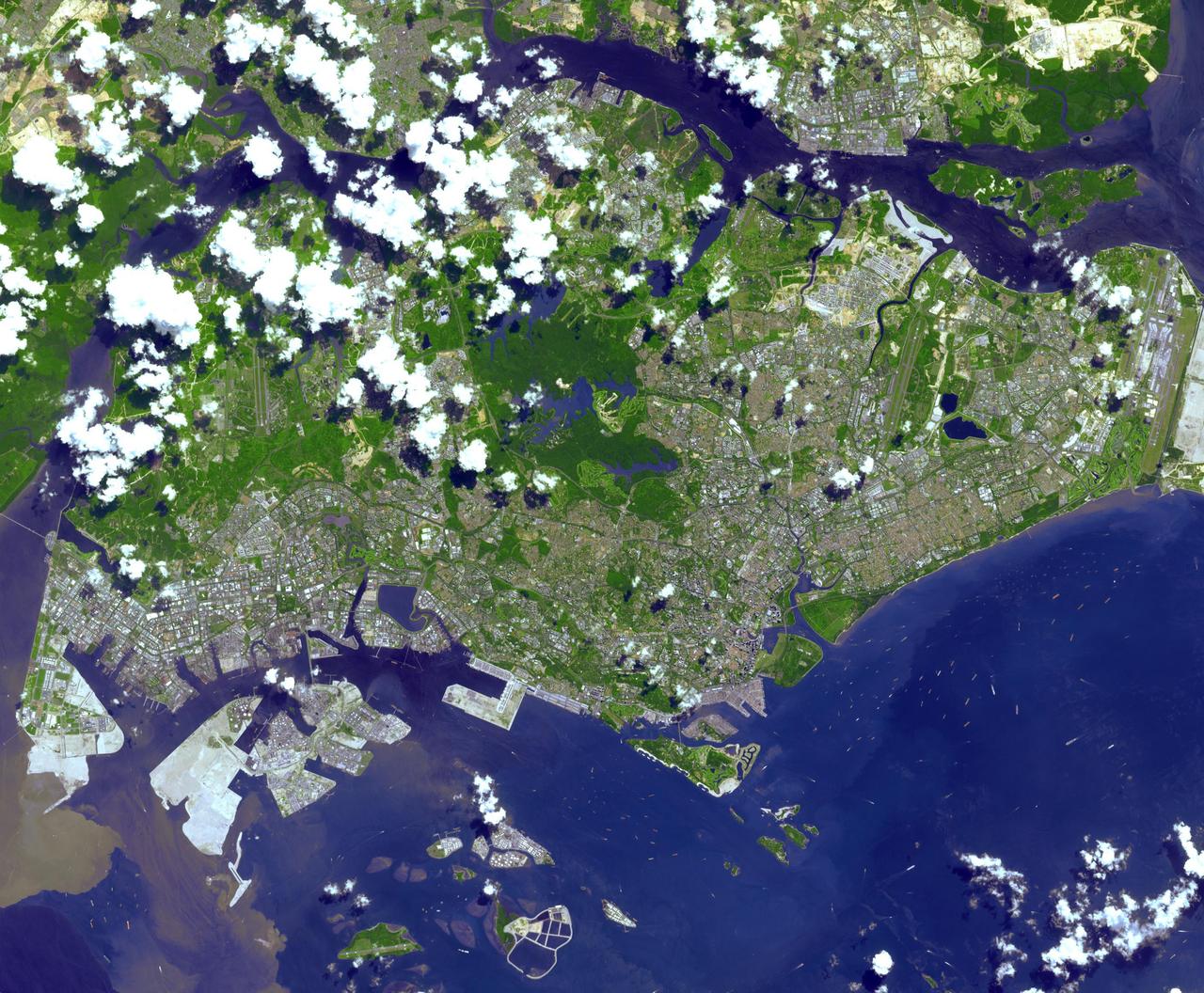
This image from NASA Terra spacecraft is of the Republic of Singapore, a city-state off the southern tip of the Malay Peninsula. An island country made up of 63 islands, the country is largely urbanized with very little rain forest left.
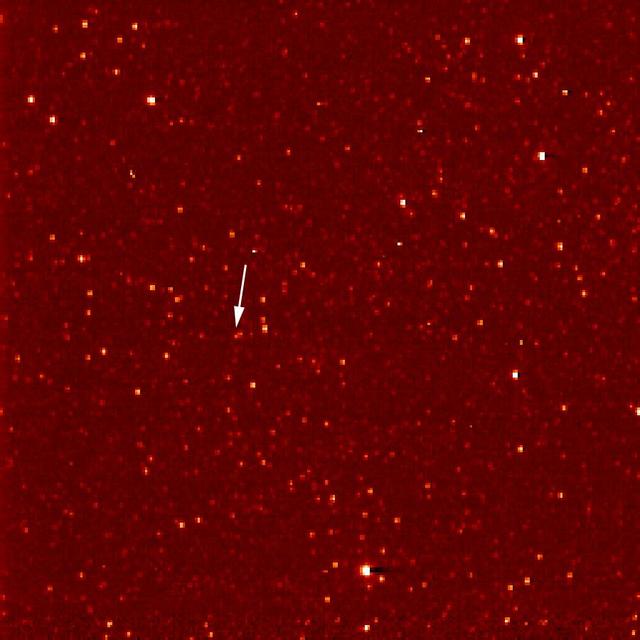
A white arrow marks Pluto in this NASA New Horizons Long Range Reconnaissance Imager picture taken Sept. 21, 2006. Pluto is little more than a faint point of light among a dense field of stars.

This view of the twilight sky and Martian horizon taken by NASA Curiosity Mars rover includes Earth as the brightest point of light in the night sky. Earth is a little left of center in the image, and our moon is just below Earth.
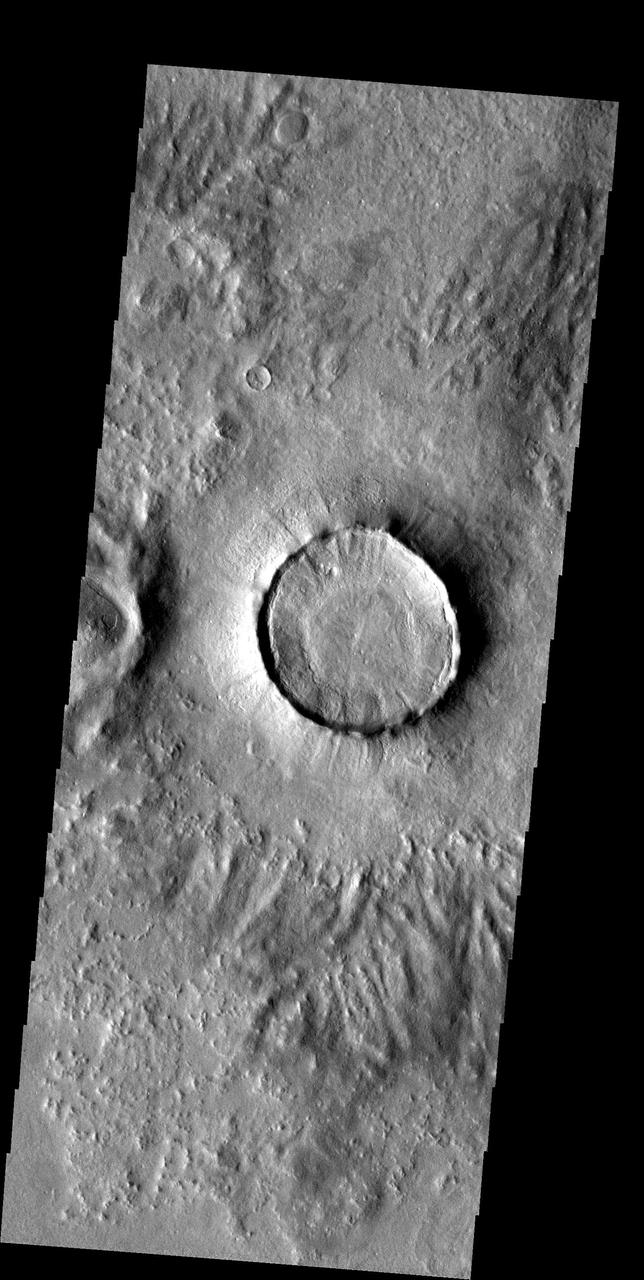
Many craters in the northern plains look like the one in this image -- interior filled almost to the rim, narrow and steep ejecta surrounding the rim, little or no remaining distant ejecta
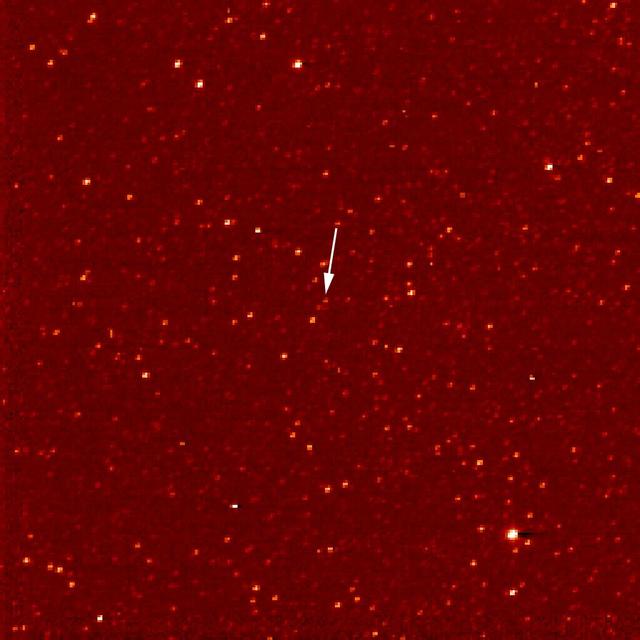
A white arrow marks Pluto in this NASA New Horizons Long Range Reconnaissance Imager picture taken Sept. 24, 2006. Pluto is little more than a faint point of light among a dense field of stars.
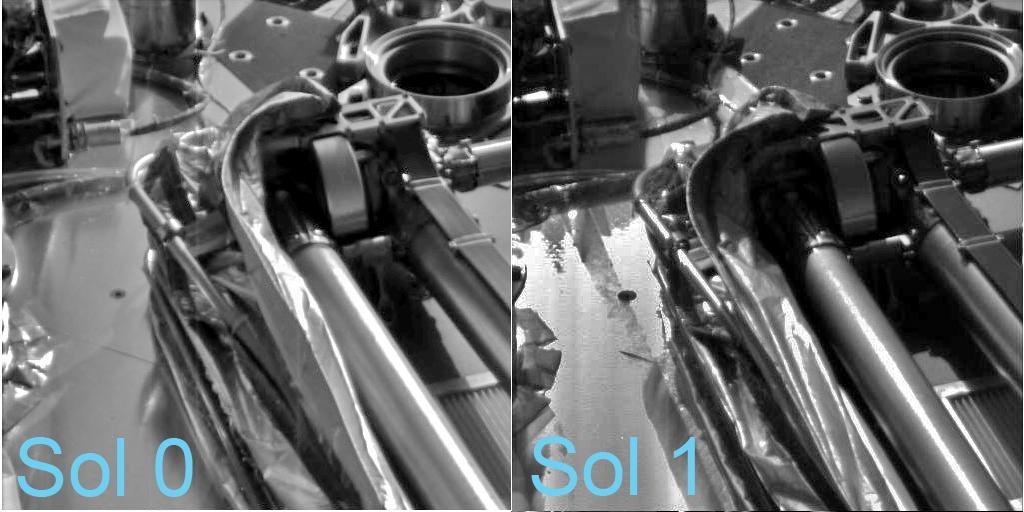
Relatively warmer daytime temperatures on Mars have allowed the biobarrier -- a shiny, protective film -- to peel away a little more from the robotic arm of NASA Phoenix Mars Lander.
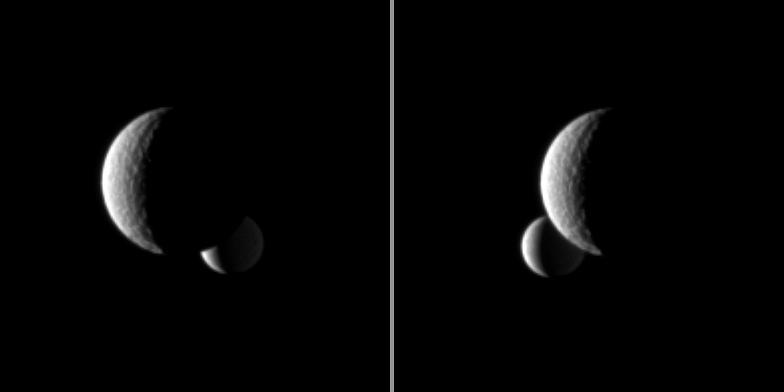
The moon Enceladus passes behind the larger moon Tethys, as seen in this pair of images taken by NASA Cassini spacecraft. The image on the left was taken a little more than a minute before the image on the right.
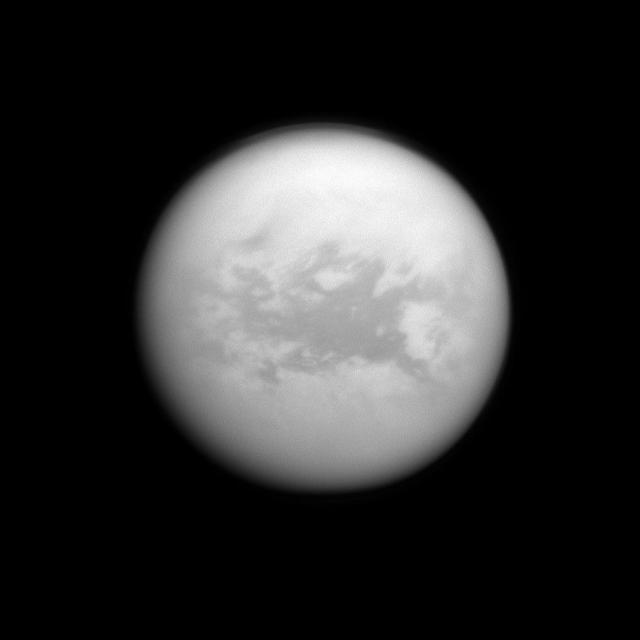
NASA Cassini spacecraft peers down through the hazy atmosphere of Saturn moon Titan to view the dark region called Belet. The large region called Belet has a low albedo, meaning it reflects little light.
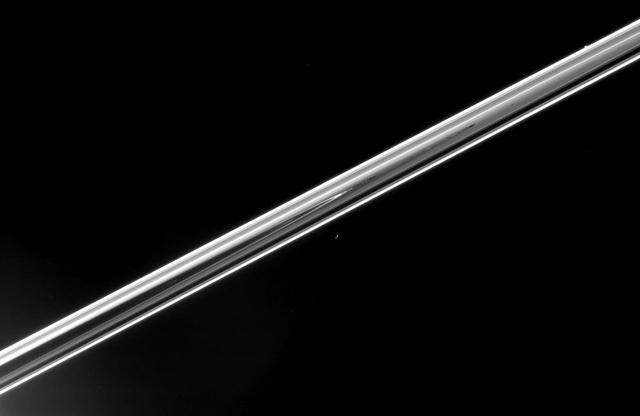
Epimetheus floats in the distance below center, showing only the barest hint of its irregular shape. Pandora hides herself in the ringplane, near upper right, appearing as little more than a bump
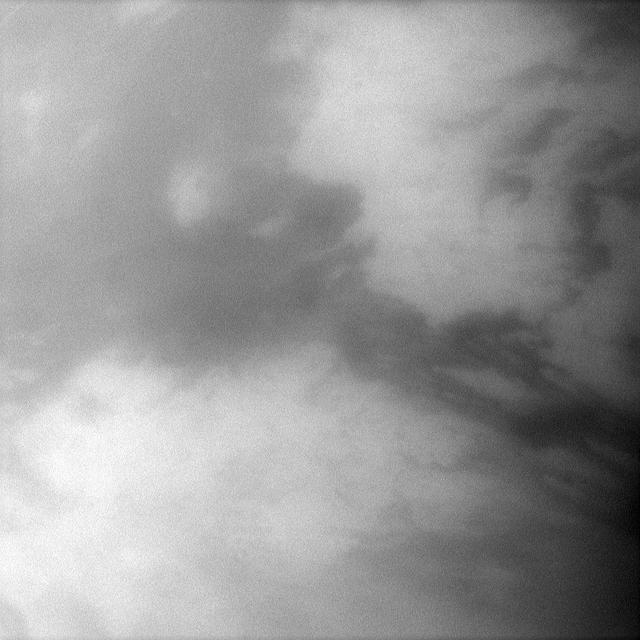
NASA Cassini spacecraft peers through the atmosphere of Saturn largest moon, Titan, to examine the dark region Belet. This large region on the moon surface has a low albedo, meaning it reflects little light.
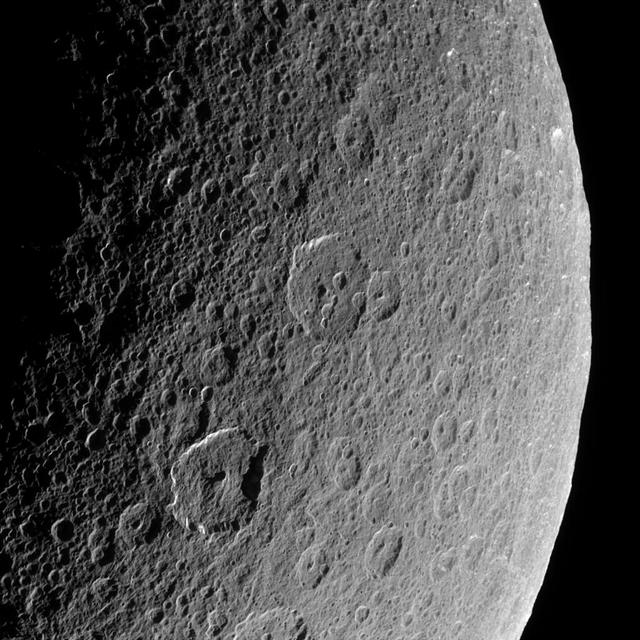
Cassini looks down upon Rhea, whose cratered surface was already ancient before any complex life developed on Earth. The terrain seen here has probably changed little in the past billion years

This anaglyph from the MISR instrument aboard NASA Terra spacecraft portrays the Little Aral and the eastern Large Aral at the onset of winter. 3D glasses are necessary to view this image.
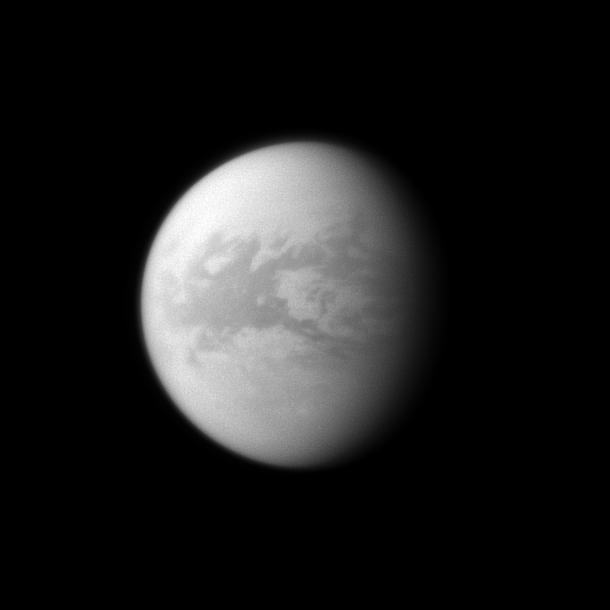
NASA Cassini spacecraft looks toward the dark region of Belet on Saturn largest moon, Titan. This large region on the moon has a low albedo, meaning it diffusely reflects little light.
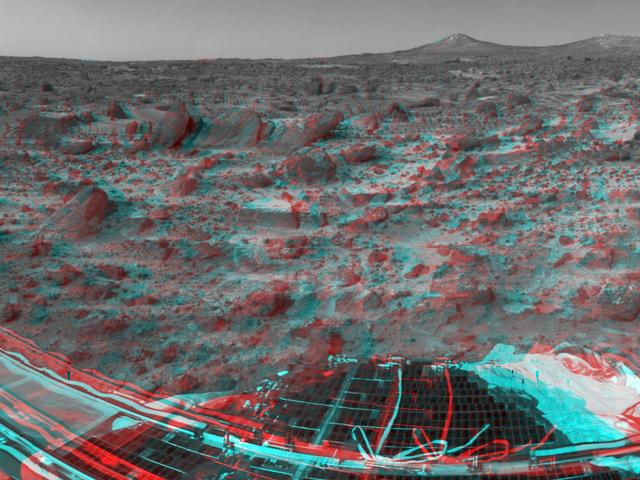
Many prominent rocks near the Sagan Memorial Station are featured in this image, from NASA Mars Pathfinder. Flat Top and Little Flat Top are at center. 3-D glasses are necessary to identify surface detail.
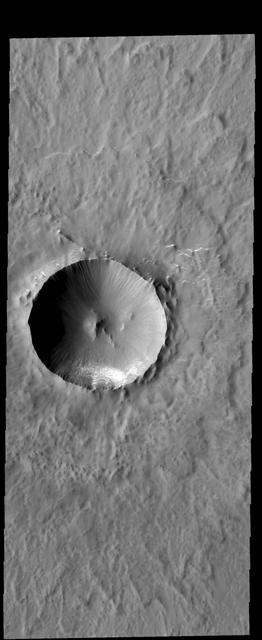
This image from NASA 2001 Mars Odyssey spacecraft shows Lonar Crater. This crater has undergone very little modification since it formed, and so is one of the younger features in this region.
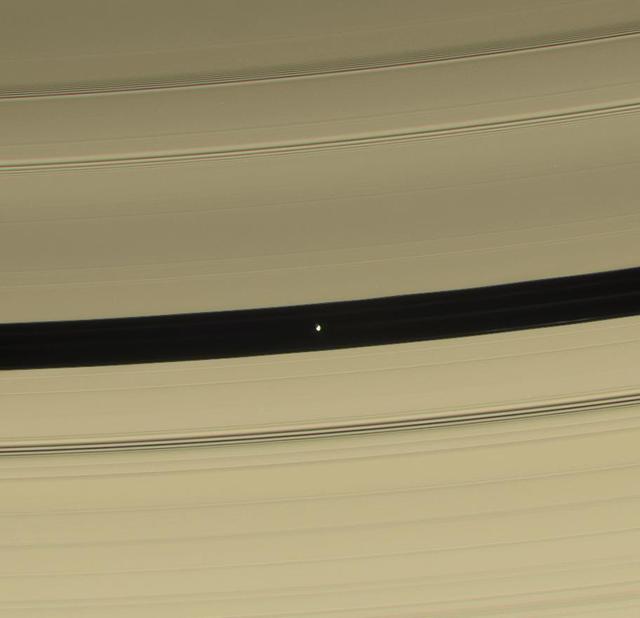
Pan is seen in this color view as it sweeps through the Encke Gap with its attendant ringlets. As the lemon-shaped little moon orbits Saturn, it always keeps its long axis pointed along a line toward the planet

NASA Wide-field Infrared Survey Explorer is a little like the Vincent van Gogh of the infrared sky, providing the world with picturesque images of the cosmos by representing infrared light through color. This image is the nebula NGC 2174.
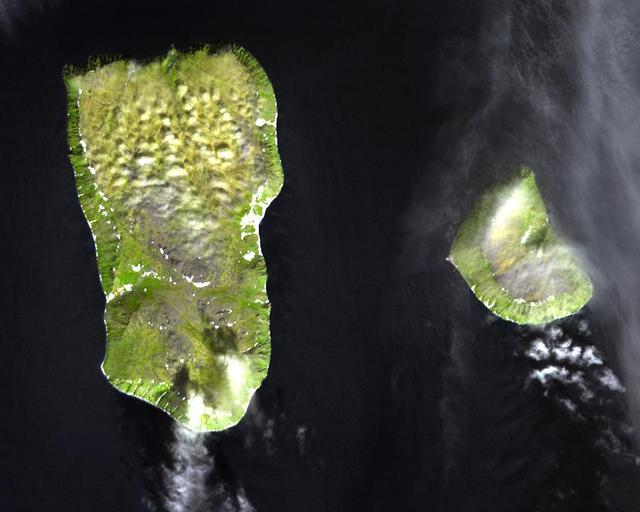
The Diomede Islands consisting of the western island Big Diomede, and the eastern island Little Diomede are two rocky islands located in the middle of the Bering Strait between Russia and Alaska. This image was acquired by NASA Terra satellite.
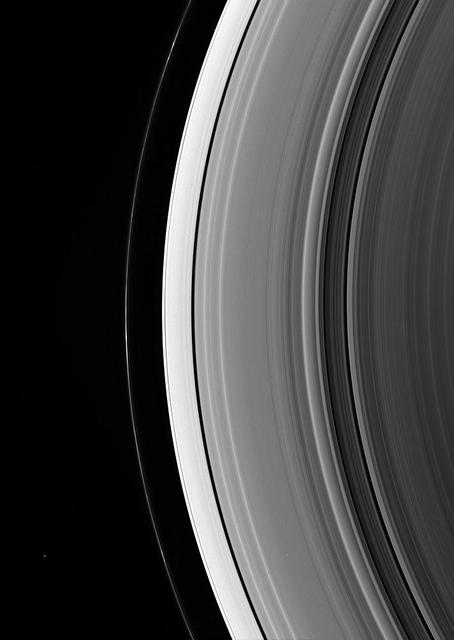
Epimetheus is a lonely dot beyond Saturn rings. The little moon appears at lower left, outside the narrow F ring. Several very faint spokes lurk in the B ring, at right