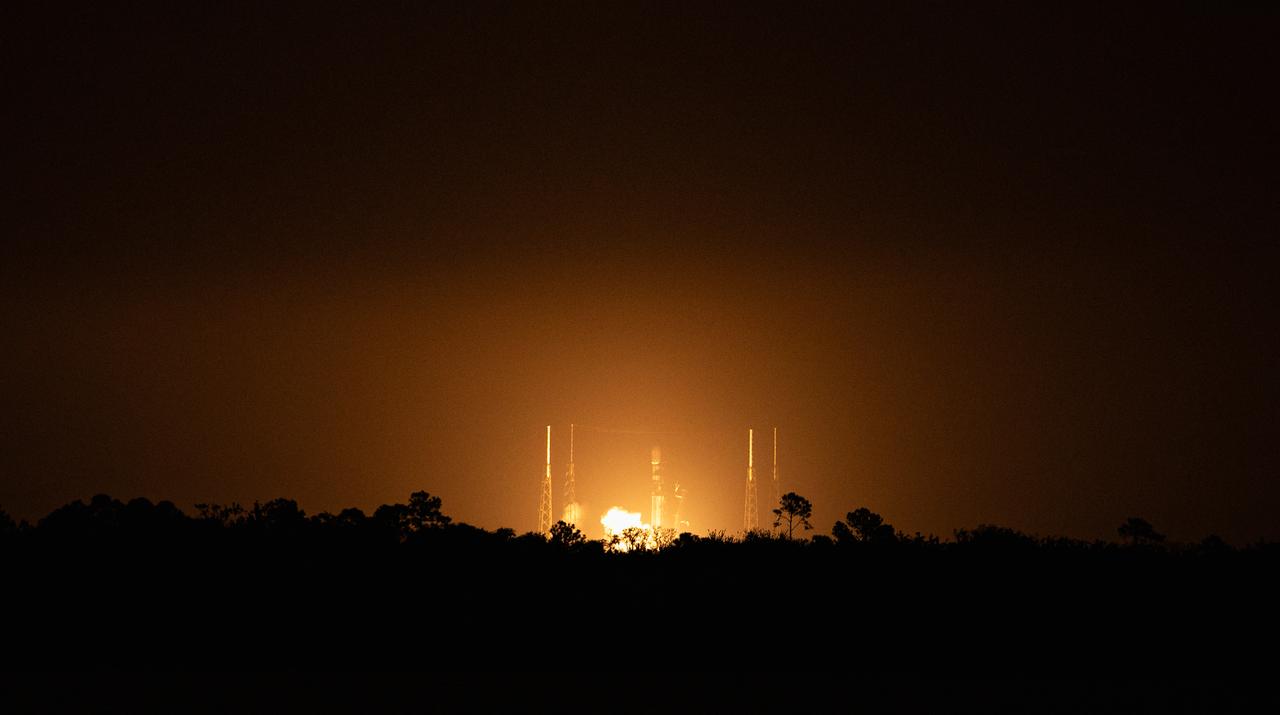
NASA’s PACE (Plankton, Aerosol, Cloud, ocean Ecosystem) spacecraft, atop a SpaceX Falcon 9 rocket, successfully lifts off from Space Launch Complex 40 at Cape Canaveral Space Force Station in Florida at 1:33 a.m. EST Thursday, Feb. 8. PACE is NASA’s newest earth-observing satellite that will help increase our understanding of Earth’s oceans, atmosphere, and climate by delivering hyperspectral observations of microscopic marine organisms called phytoplankton, as well new data on clouds and aerosols.
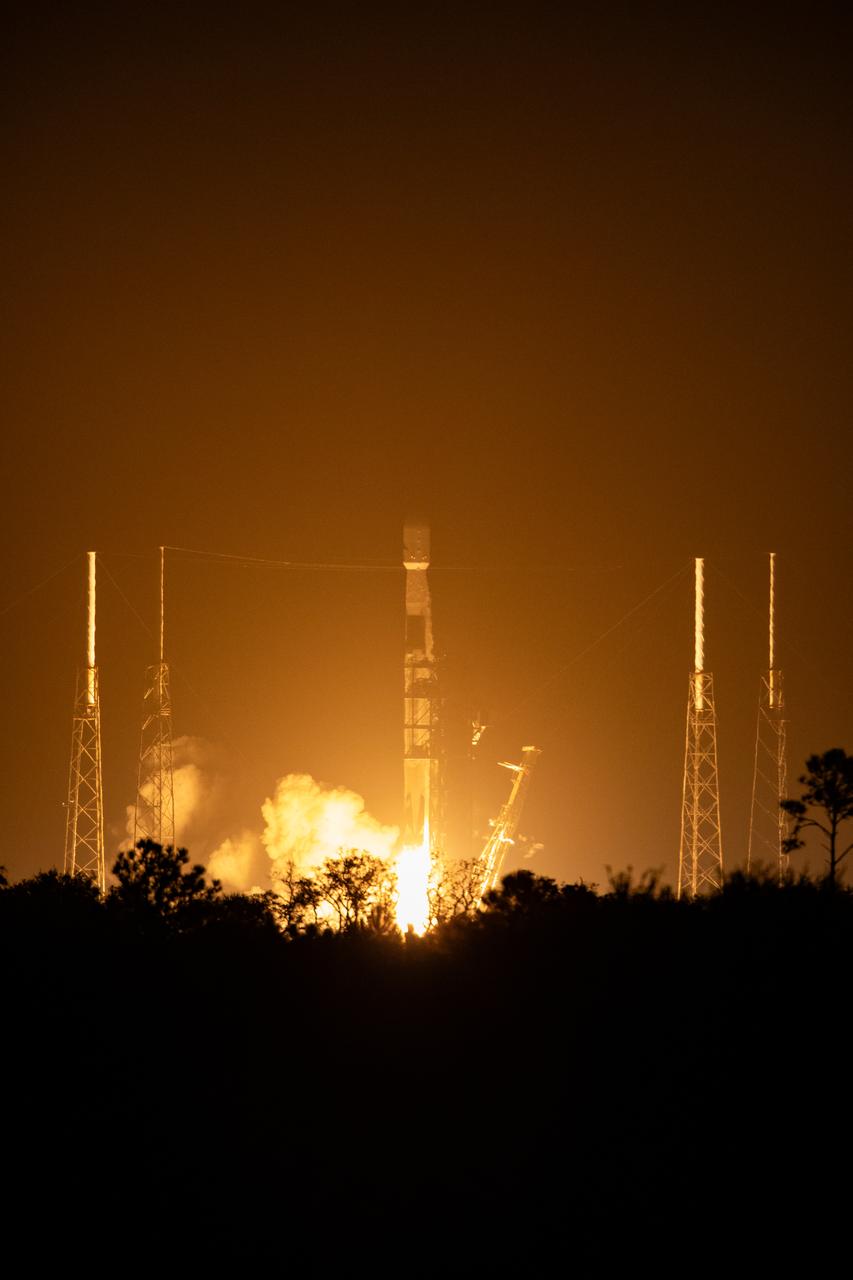
NASA’s PACE (Plankton, Aerosol, Cloud, ocean Ecosystem) spacecraft, atop a SpaceX Falcon 9 rocket, successfully lifts off from Space Launch Complex 40 at Cape Canaveral Space Force Station in Florida at 1:33 a.m. EST Thursday, Feb. 8. PACE is NASA’s newest earth-observing satellite that will help increase our understanding of Earth’s oceans, atmosphere, and climate by delivering hyperspectral observations of microscopic marine organisms called phytoplankton, as well new data on clouds and aerosols.
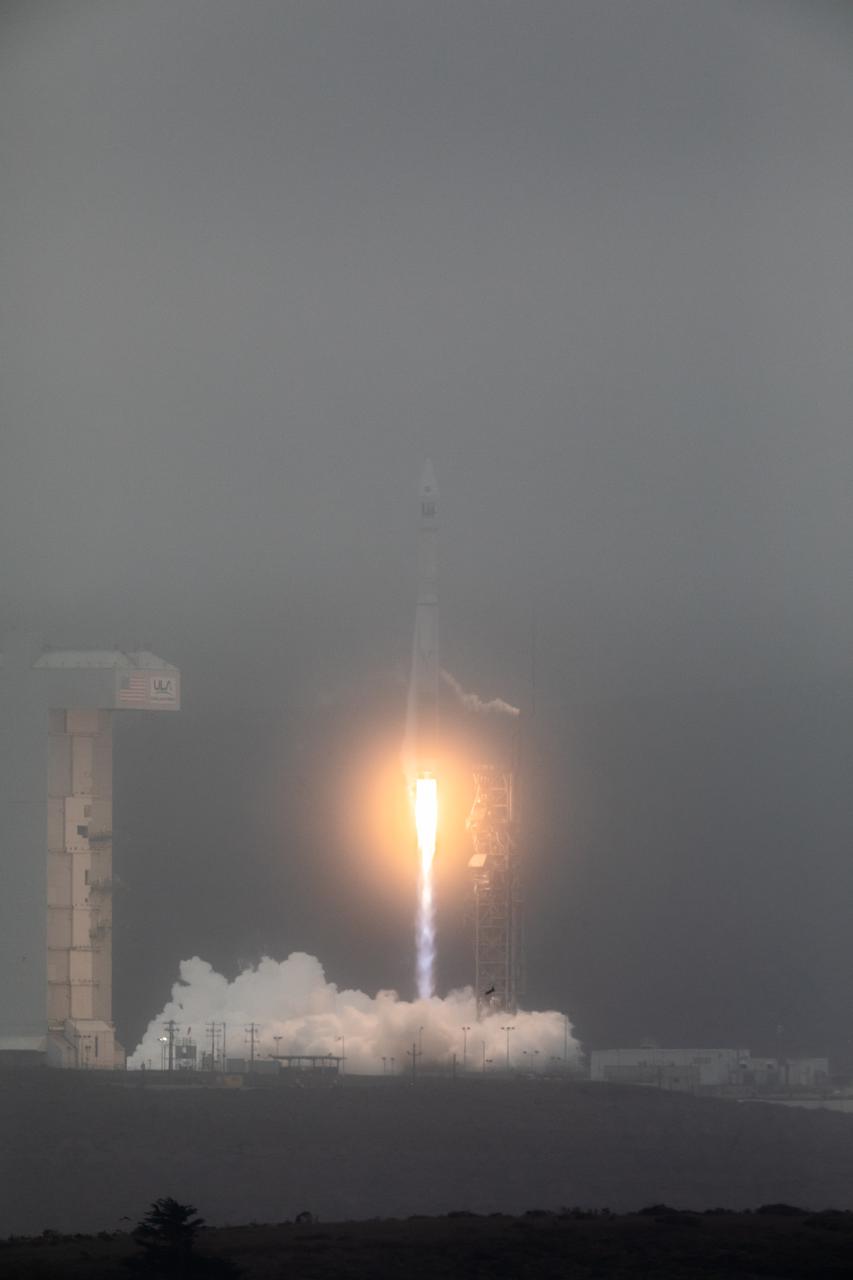
NASA’s Landsat 9 satellite launches on a United Launch Alliance Atlas V 401 rocket from Space Launch Complex 3 at Vandenberg Space Force Station in California on Sept. 27, 2021. Launch time was 2:12 p.m. EDT (11:12 a.m. PDT). The launch is managed by NASA’s Launch Services Program, based at the agency’s Kennedy Space Center in Florida. Landsat 9 will join its sister satellite, Landsat 8, in orbit in collecting images from across the planet every eight days. This calibrated data will continue the Landsat program’s critical role in monitoring the health of Earth and helping people manage essential resources, including crops, irrigation water, and forests. NASA Goddard manages the Landsat 9 mission. Goddard teams also built and tested one of the two instruments on Landsat 9, the Thermal Infrared Sensor 2 (TIRS-2) instrument. TIRS-2 will use thermal imaging to make measurements that can be used to estimate soil moisture and detect the health of plants.
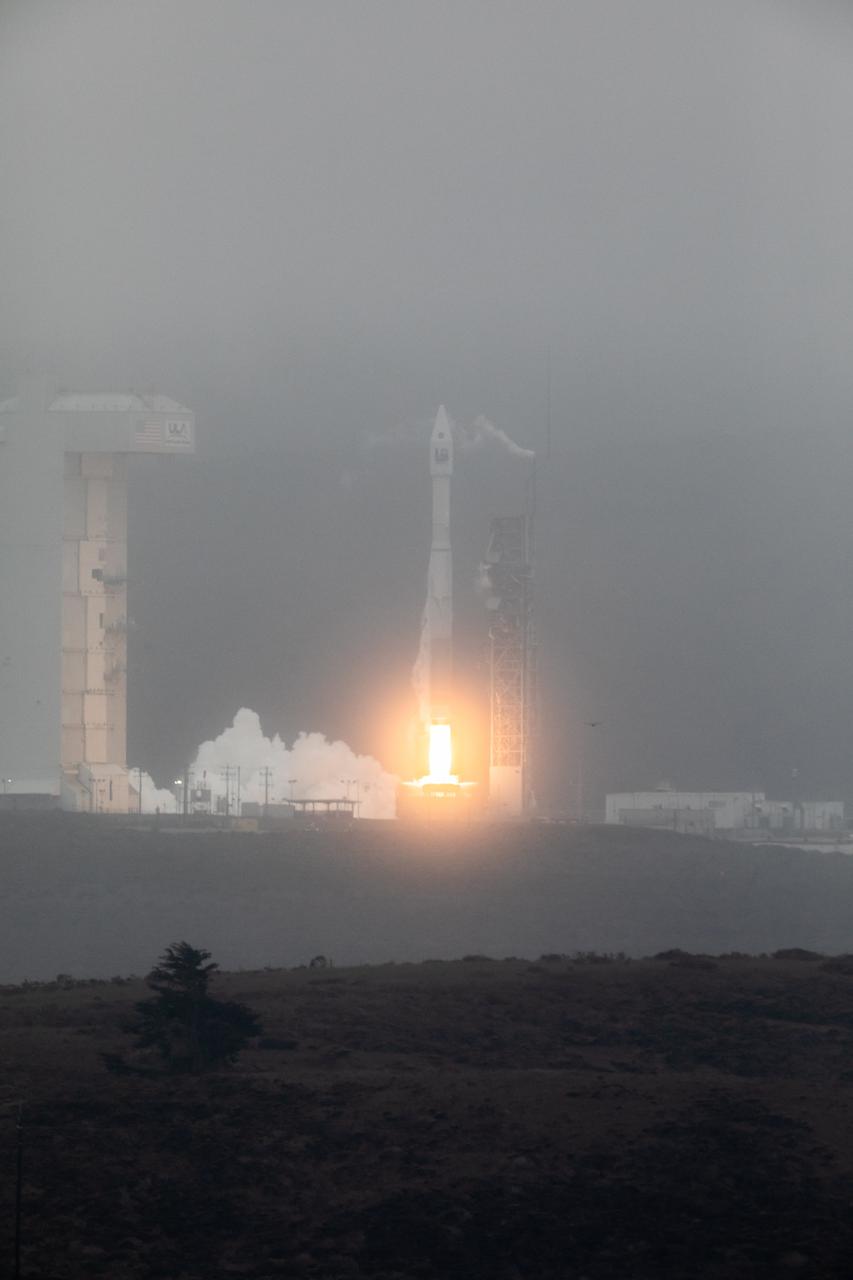
NASA’s Landsat 9 satellite launches on a United Launch Alliance Atlas V 401 rocket from Space Launch Complex 3 at Vandenberg Space Force Station in California on Sept. 27, 2021. Launch time was 2:12 p.m. EDT (11:12 a.m. PDT). The launch is managed by NASA’s Launch Services Program, based at the agency’s Kennedy Space Center in Florida. Landsat 9 will join its sister satellite, Landsat 8, in orbit in collecting images from across the planet every eight days. This calibrated data will continue the Landsat program’s critical role in monitoring the health of Earth and helping people manage essential resources, including crops, irrigation water, and forests. NASA Goddard manages the Landsat 9 mission. Goddard teams also built and tested one of the two instruments on Landsat 9, the Thermal Infrared Sensor 2 (TIRS-2) instrument. TIRS-2 will use thermal imaging to make measurements that can be used to estimate soil moisture and detect the health of plants.

Omar Baez, NASA senior launch director, participates in the launch broadcast for the Landsat 9 mission on Sept. 27, 2021, at Vandenberg Space Force Base in California. NASA’s Landsat 9 satellite launched on a United Launch Alliance Atlas V 401 rocket from Vandenberg's Space Launch Complex 3 at 2:12 p.m. EDT (11:12 a.m. PDT). The launch is managed by NASA’s Launch Services Program, based at the agency’s Kennedy Space Center in Florida. Landsat 9 will join its sister satellite, Landsat 8, in orbit in collecting images from across the planet every eight days. This calibrated data will continue the Landsat program’s critical role in monitoring the health of Earth and helping people manage essential resources, including crops, irrigation water, and forests. NASA Goddard manages the Landsat 9 mission. Goddard teams also built and tested one of the two instruments on Landsat 9, the Thermal Infrared Sensor 2 (TIRS-2) instrument. TIRS-2 will use thermal imaging to make measurements that can be used to estimate soil moisture and detect the health of plants.
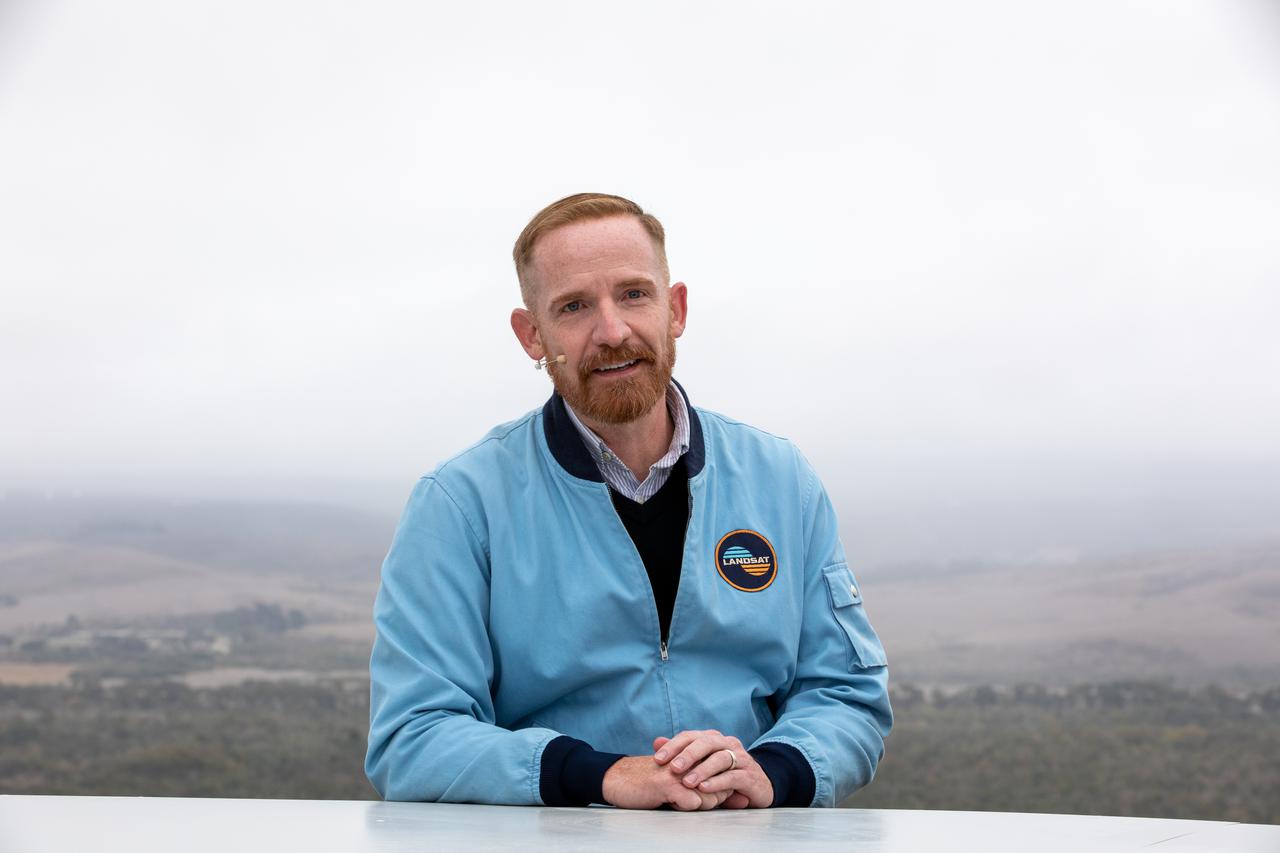
Marc Evan Jackson, actor, "Landsat Steve" in Kong: Skull Island, participates in the launch broadcast for the Landsat 9 mission on Sept. 27, 2021, at Vandenberg Space Force Base in California. NASA’s Landsat 9 satellite launched on a United Launch Alliance Atlas V 401 rocket from Vandenberg's Space Launch Complex 3 at 2:12 p.m. EDT (11:12 a.m. PDT). The launch is managed by NASA’s Launch Services Program, based at the agency’s Kennedy Space Center in Florida. Landsat 9 will join its sister satellite, Landsat 8, in orbit in collecting images from across the planet every eight days. This calibrated data will continue the Landsat program’s critical role in monitoring the health of Earth and helping people manage essential resources, including crops, irrigation water, and forests. NASA Goddard manages the Landsat 9 mission. Goddard teams also built and tested one of the two instruments on Landsat 9, the Thermal Infrared Sensor 2 (TIRS-2) instrument. TIRS-2 will use thermal imaging to make measurements that can be used to estimate soil moisture and detect the health of plants.
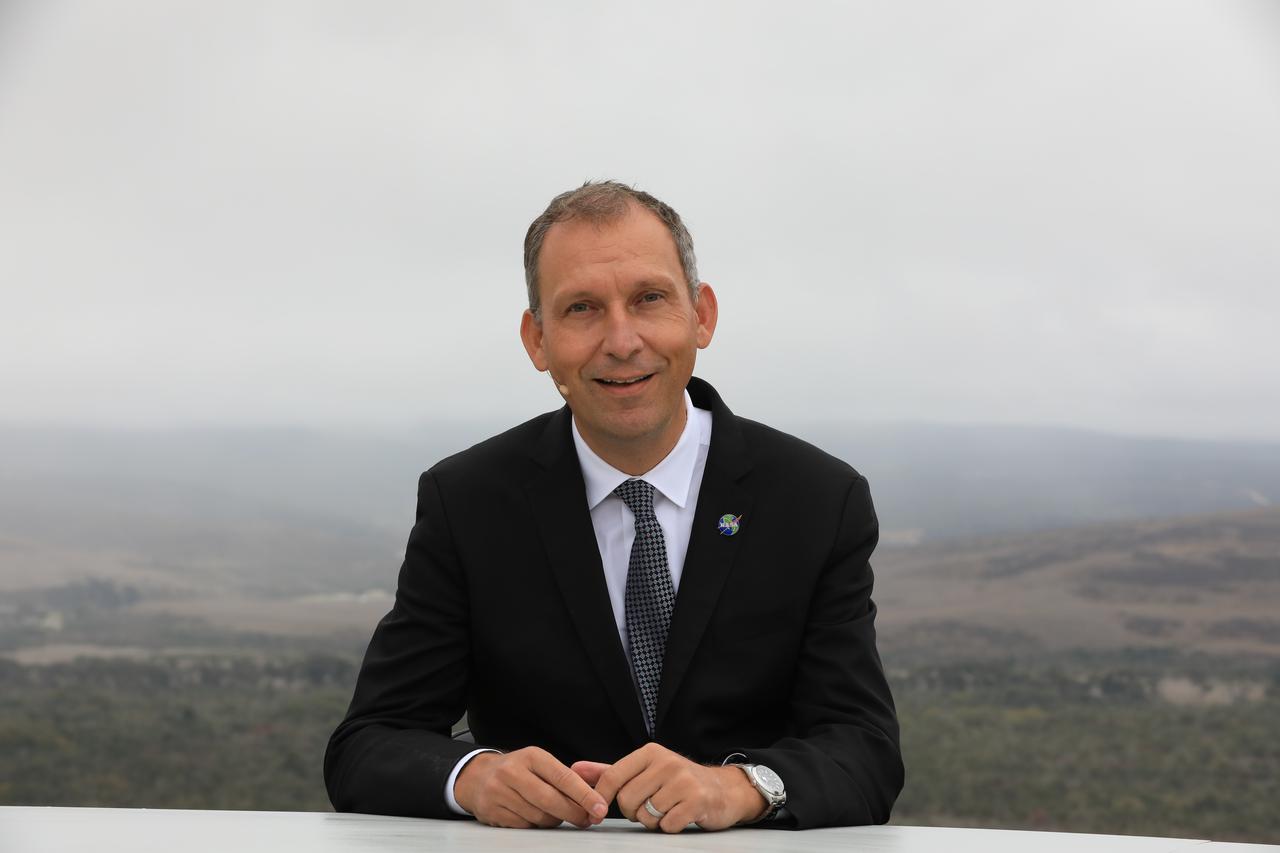
Dr. Thomas Zurbuchen, associate administrator, NASA’s Science Mission Directorate, participates in the launch broadcast for the Landsat 9 mission on Sept. 27, 2021, at Vandenberg Space Force Base in California. NASA’s Landsat 9 satellite launched on a United Launch Alliance Atlas V 401 rocket from Vandenberg's Space Launch Complex 3 at 2:12 p.m. EDT (11:12 a.m. PDT). The launch is managed by NASA’s Launch Services Program, based at the agency’s Kennedy Space Center in Florida. Landsat 9 will join its sister satellite, Landsat 8, in orbit in collecting images from across the planet every eight days. This calibrated data will continue the Landsat program’s critical role in monitoring the health of Earth and helping people manage essential resources, including crops, irrigation water, and forests. NASA Goddard manages the Landsat 9 mission. Goddard teams also built and tested one of the two instruments on Landsat 9, the Thermal Infrared Sensor 2 (TIRS-2) instrument. TIRS-2 will use thermal imaging to make measurements that can be used to estimate soil moisture and detect the health of plants.
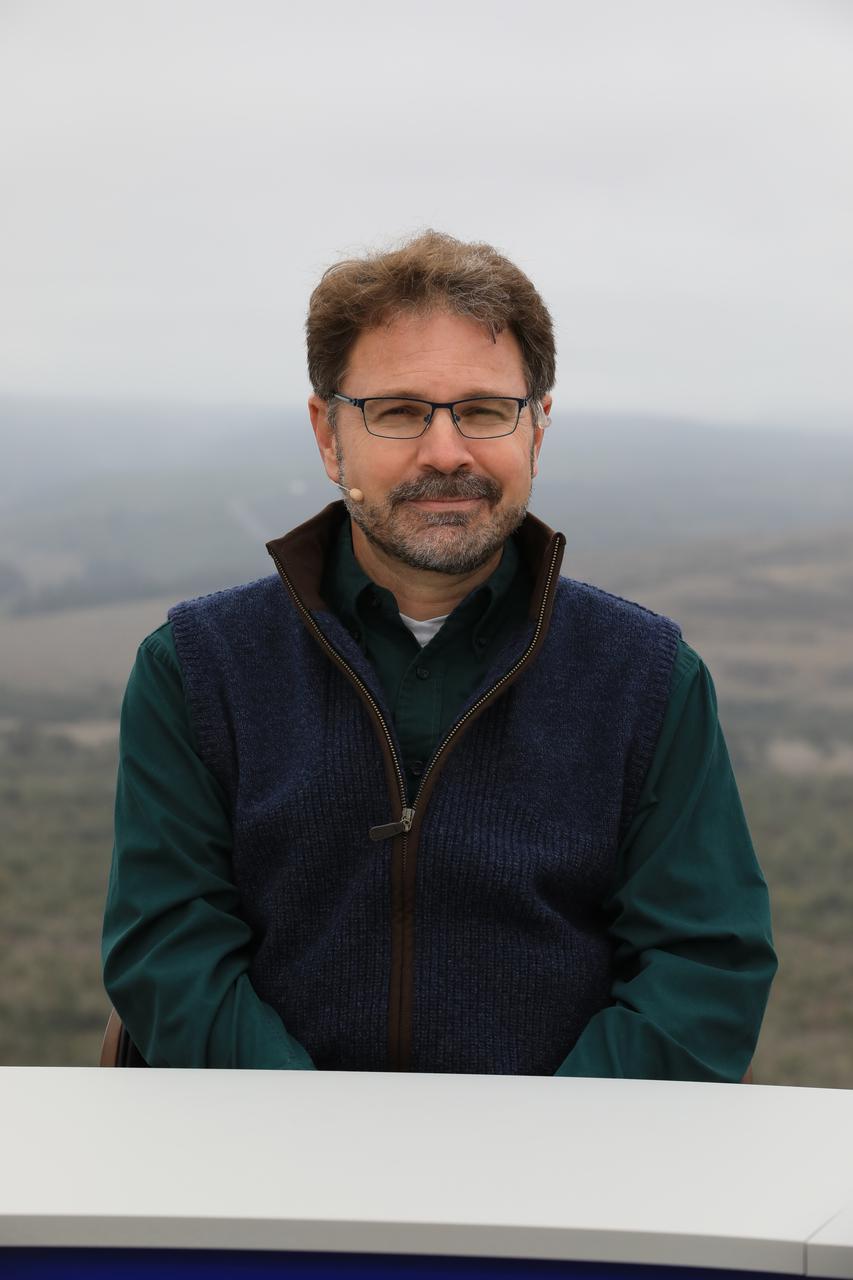
Dr. Pete Doucette, acting director, USGS Earth Resources, participates in the launch broadcast for the Landsat 9 mission on Sept. 27, 2021, at Vandenberg Space Force Base in California. NASA’s Landsat 9 satellite launched on a United Launch Alliance Atlas V 401 rocket from Vandenberg's Space Launch Complex 3 at 2:12 p.m. EDT (11:12 a.m. PDT). The launch is managed by NASA’s Launch Services Program, based at the agency’s Kennedy Space Center in Florida. Landsat 9 will join its sister satellite, Landsat 8, in orbit in collecting images from across the planet every eight days. This calibrated data will continue the Landsat program’s critical role in monitoring the health of Earth and helping people manage essential resources, including crops, irrigation water, and forests. NASA Goddard manages the Landsat 9 mission. Goddard teams also built and tested one of the two instruments on Landsat 9, the Thermal Infrared Sensor 2 (TIRS-2) instrument. TIRS-2 will use thermal imaging to make measurements that can be used to estimate soil moisture and detect the health of plants.

Dr. Kate Frickas, cofounder of "Ladies of Landsat", participates in the launch broadcast for the Landsat 9 mission on Sept. 27, 2021, at Vandenberg Space Force Base in California. NASA’s Landsat 9 satellite launched on a United Launch Alliance Atlas V 401 rocket from Vandenberg's Space Launch Complex 3 at 2:12 p.m. EDT (11:12 a.m. PDT). The launch is managed by NASA’s Launch Services Program, based at the agency’s Kennedy Space Center in Florida. Landsat 9 will join its sister satellite, Landsat 8, in orbit in collecting images from across the planet every eight days. This calibrated data will continue the Landsat program’s critical role in monitoring the health of Earth and helping people manage essential resources, including crops, irrigation water, and forests. NASA Goddard manages the Landsat 9 mission. Goddard teams also built and tested one of the two instruments on Landsat 9, the Thermal Infrared Sensor 2 (TIRS-2) instrument. TIRS-2 will use thermal imaging to make measurements that can be used to estimate soil moisture and detect the health of plants.

Jeff Masek, Landsat 9 project scientist at NASA’s Goddard Space Flight Center, participates in the launch broadcast for the Landsat 9 mission on Sept. 27, 2021, at Vandenberg Space Force Base in California. NASA’s Landsat 9 satellite launched on a United Launch Alliance Atlas V 401 rocket from Vandenberg's Space Launch Complex 3 at 2:12 p.m. EDT (11:12 a.m. PDT). The launch is managed by NASA’s Launch Services Program, based at the agency’s Kennedy Space Center in Florida. Landsat 9 will join its sister satellite, Landsat 8, in orbit in collecting images from across the planet every eight days. This calibrated data will continue the Landsat program’s critical role in monitoring the health of Earth and helping people manage essential resources, including crops, irrigation water, and forests. NASA Goddard manages the Landsat 9 mission. Goddard teams also built and tested one of the two instruments on Landsat 9, the Thermal Infrared Sensor 2 (TIRS-2) instrument. TIRS-2 will use thermal imaging to make measurements that can be used to estimate soil moisture and detect the health of plants.
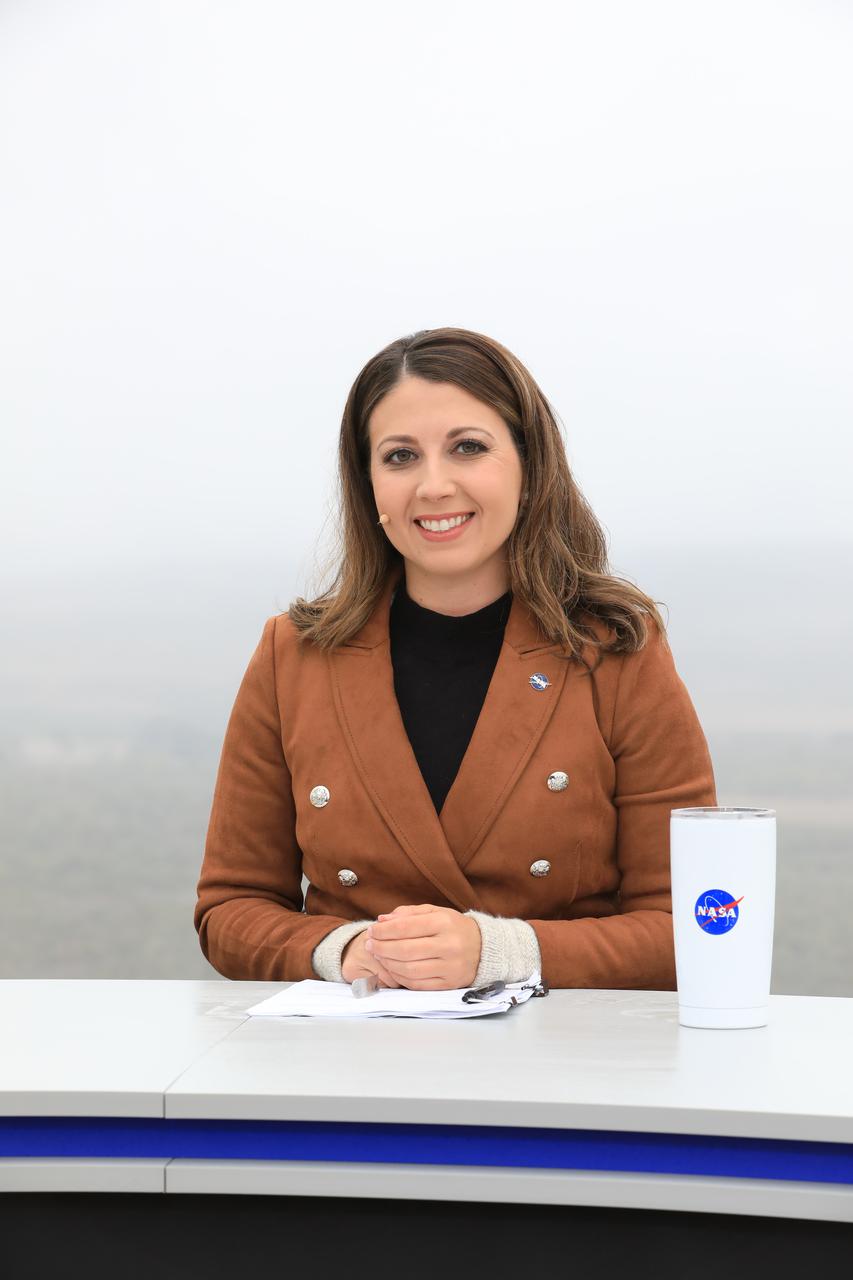
Marie Lewis, NASA Communications, moderates the launch broadcast for the Landsat 9 mission on Sept. 27, 2021, at Vandenberg Space Force Base in California. NASA’s Landsat 9 satellite launched on a United Launch Alliance Atlas V 401 rocket from Vandenberg's Space Launch Complex 3 at 2:12 p.m. EDT (11:12 a.m. PDT). The launch is managed by NASA’s Launch Services Program, based at the agency’s Kennedy Space Center in Florida. Landsat 9 will join its sister satellite, Landsat 8, in orbit in collecting images from across the planet every eight days. This calibrated data will continue the Landsat program’s critical role in monitoring the health of Earth and helping people manage essential resources, including crops, irrigation water, and forests. NASA Goddard manages the Landsat 9 mission. Goddard teams also built and tested one of the two instruments on Landsat 9, the Thermal Infrared Sensor 2 (TIRS-2) instrument. TIRS-2 will use thermal imaging to make measurements that can be used to estimate soil moisture and detect the health of plants.
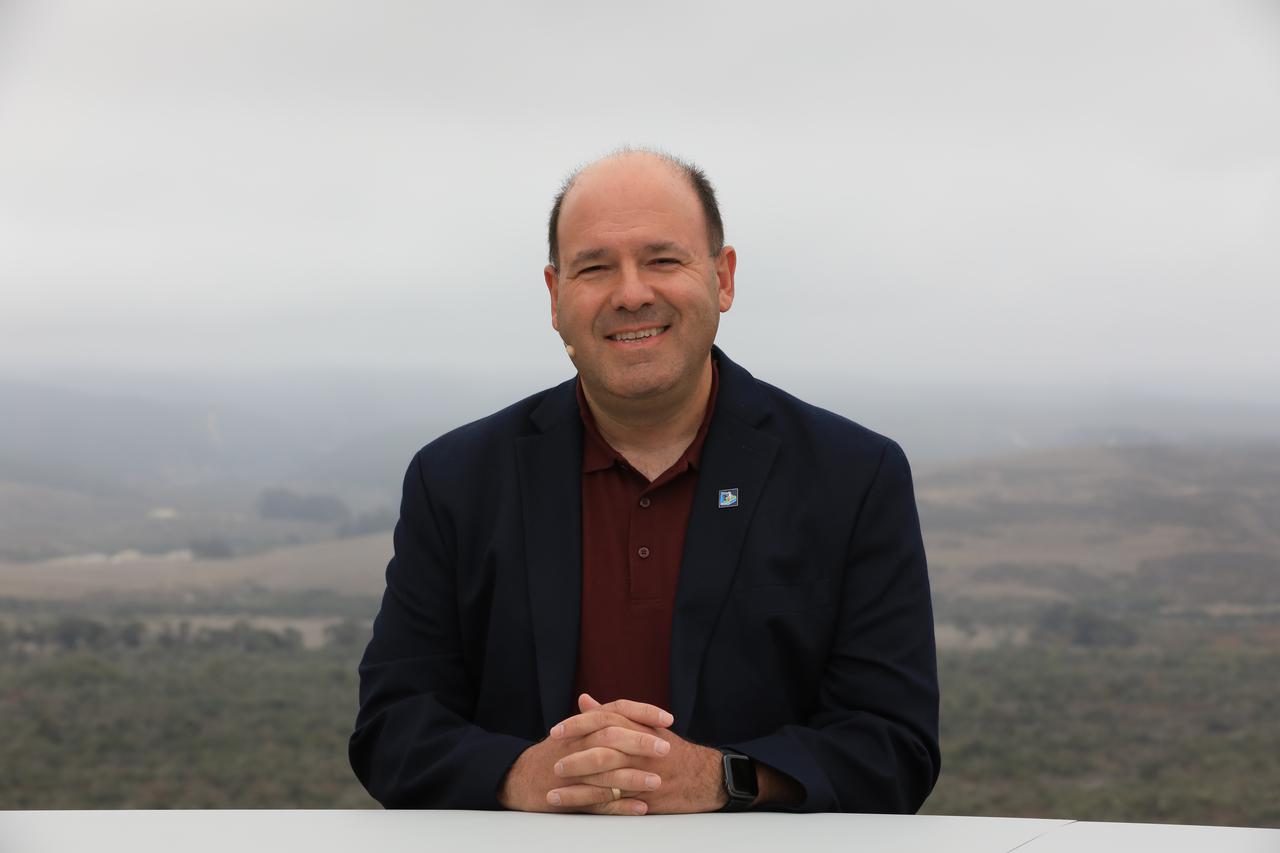
Frank DeMauro, vice president, Northrop Grumman Tactical Space Systems, participates in the launch broadcast for the Landsat 9 mission on Sept. 27, 2021, at Vandenberg Space Force Base in California. NASA’s Landsat 9 satellite launched on a United Launch Alliance Atlas V 401 rocket from Vandenberg's Space Launch Complex 3 at 2:12 p.m. EDT (11:12 a.m. PDT). The launch is managed by NASA’s Launch Services Program, based at the agency’s Kennedy Space Center in Florida. Landsat 9 will join its sister satellite, Landsat 8, in orbit in collecting images from across the planet every eight days. This calibrated data will continue the Landsat program’s critical role in monitoring the health of Earth and helping people manage essential resources, including crops, irrigation water, and forests. NASA Goddard manages the Landsat 9 mission. Goddard teams also built and tested one of the two instruments on Landsat 9, the Thermal Infrared Sensor 2 (TIRS-2) instrument. TIRS-2 will use thermal imaging to make measurements that can be used to estimate soil moisture and detect the health of plants.
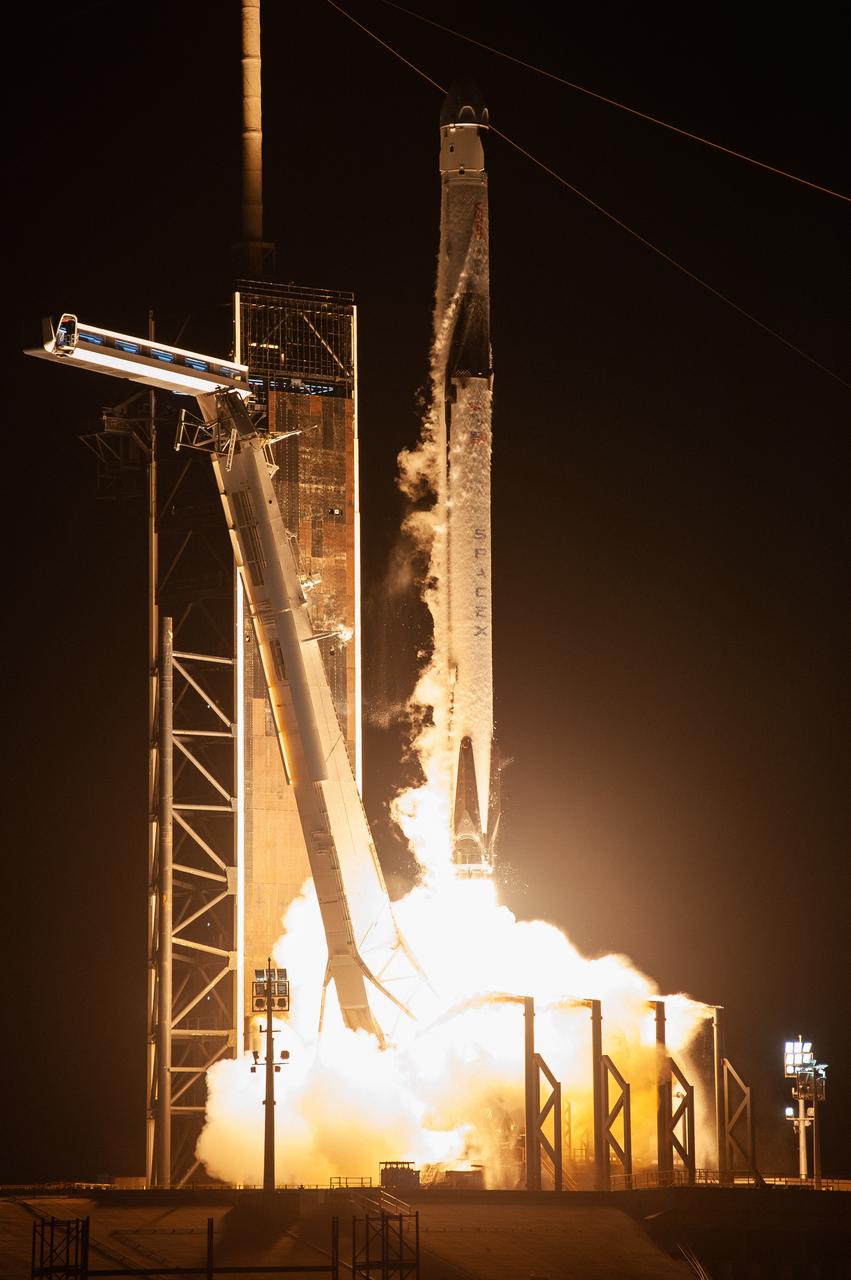
Live launch coverage of NASA’s SpaceX Crew-7 mission, beginning with a summarized video of astronaut suit-up inside the iconic Neil Armstrong Operations and Checkout building and continuing through launch from Kennedy Space Center’s Launch Complex 39A in Florida. The SpaceX Dragon, Endurance, launched at 3:27 a.m. EDT Saturday, Aug. 26, on a Falcon 9 rocket, carrying NASA astronaut Jasmin Moghbeli and ESA (European Space Agency) astronaut Andreas Mogensen, who will serve as spacecraft commander and pilot, respectively. JAXA (Japan Aerospace Exploration Agency) astronaut Satoshi Furukawa and Roscosmos cosmonaut Konstantin Borisov will join as mission specialists. Endurance is scheduled to dock to the International Space Station at 8:39 a.m. EDT Sunday, Aug. 27.
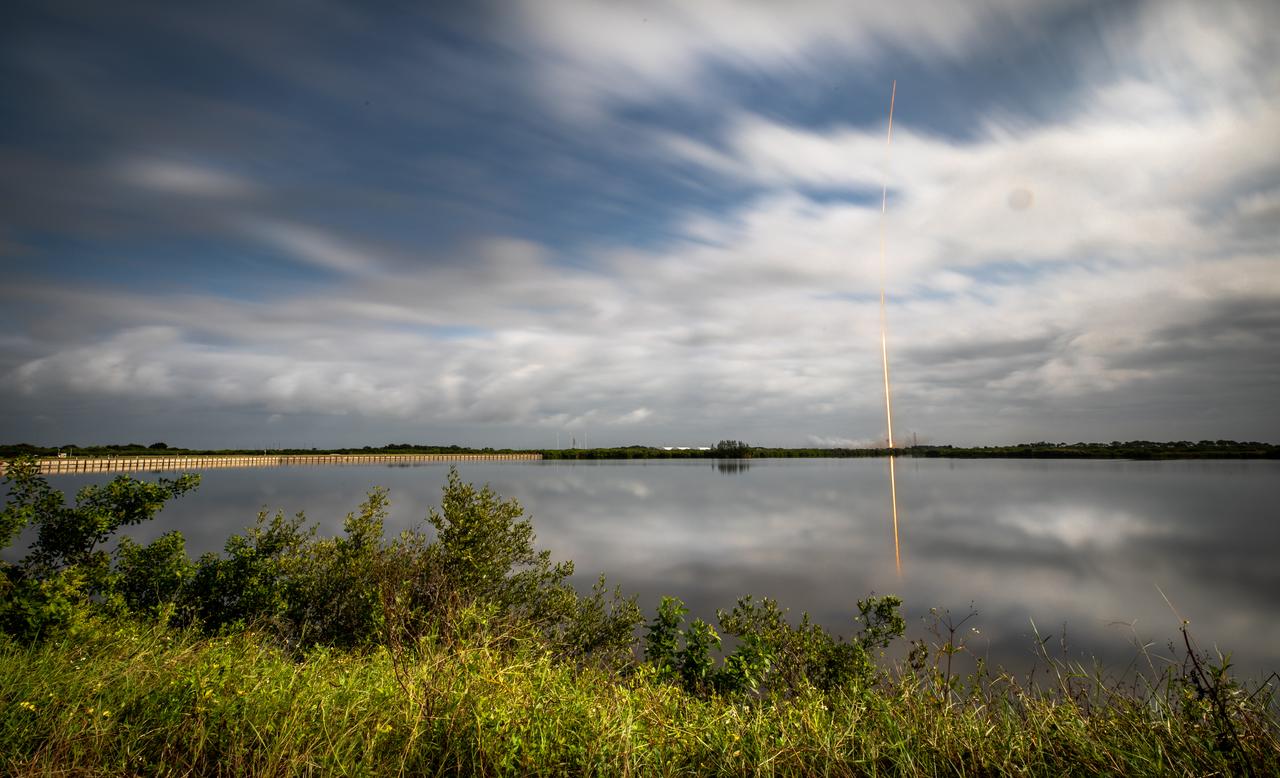
NASA’s Psyche spacecraft, atop a SpaceX Falcon Heavy rocket, soars into the sky after lifting off from Kennedy Space Center’s historic Launch Complex 39A in Florida at 10:19 a.m. EDT on Friday, Oct. 13, 2023. This daytime long exposure photo was taken from Kennedy’s Press Site near the historic countdown clock. The Psyche mission will study a metal-rich asteroid with the same name, located in the main asteroid belt between Mars and Jupiter. This is NASA’s first mission to study an asteroid that has more metal than rock or ice. Riding with Psyche is a pioneering technology demonstration – NASA’s Deep Space Optical Communications (DSOC) experiment – which will be the first test of laser communications beyond the Moon.
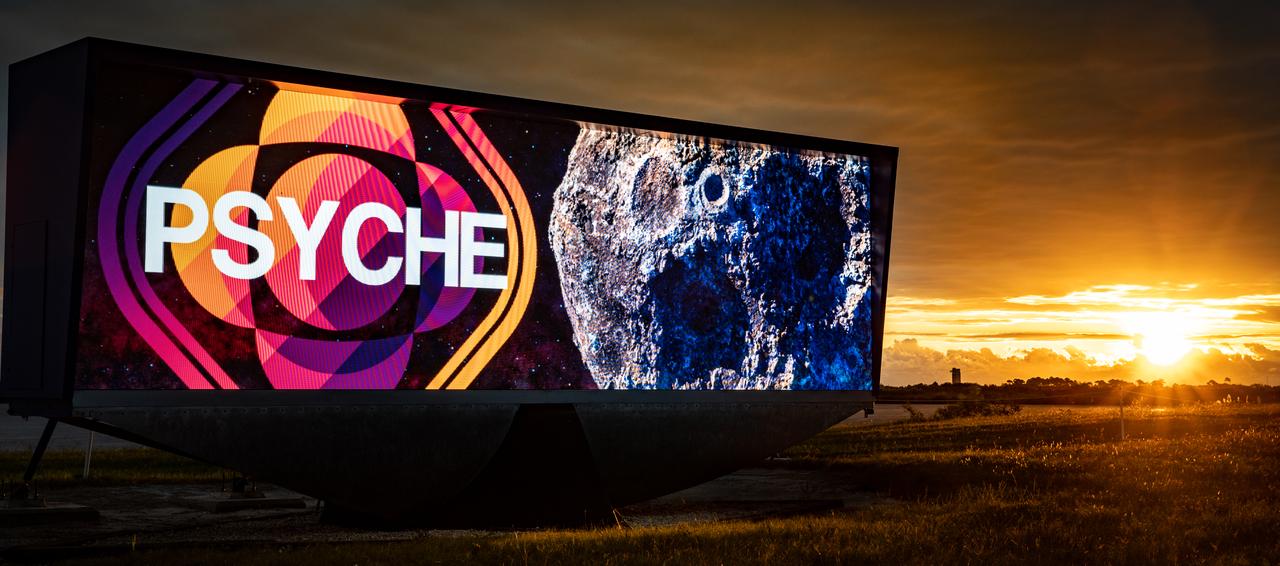
A Psyche mission graphic is displayed on the historic countdown clock as the Sun rises at Kennedy Space Center’s NASA News Center in Florida on Monday, Oct. 16, 2023. NASA’s Psyche spacecraft, atop a SpaceX Falcon Heavy rocket, soared into the sky after lifting off from Kennedy’s Launch Complex 39A at 10:19 a.m. EDT Friday, Oct. 13. The Psyche mission will study a metal-rich asteroid with the same name, located in the main asteroid belt between Mars and Jupiter. This is NASA’s first mission to study an asteroid that has more metal than rock or ice. Riding with Psyche is a pioneering technology demonstration – NASA’s Deep Space Optical Communications (DSOC) experiment – which will be the first test of laser communications beyond the Moon.
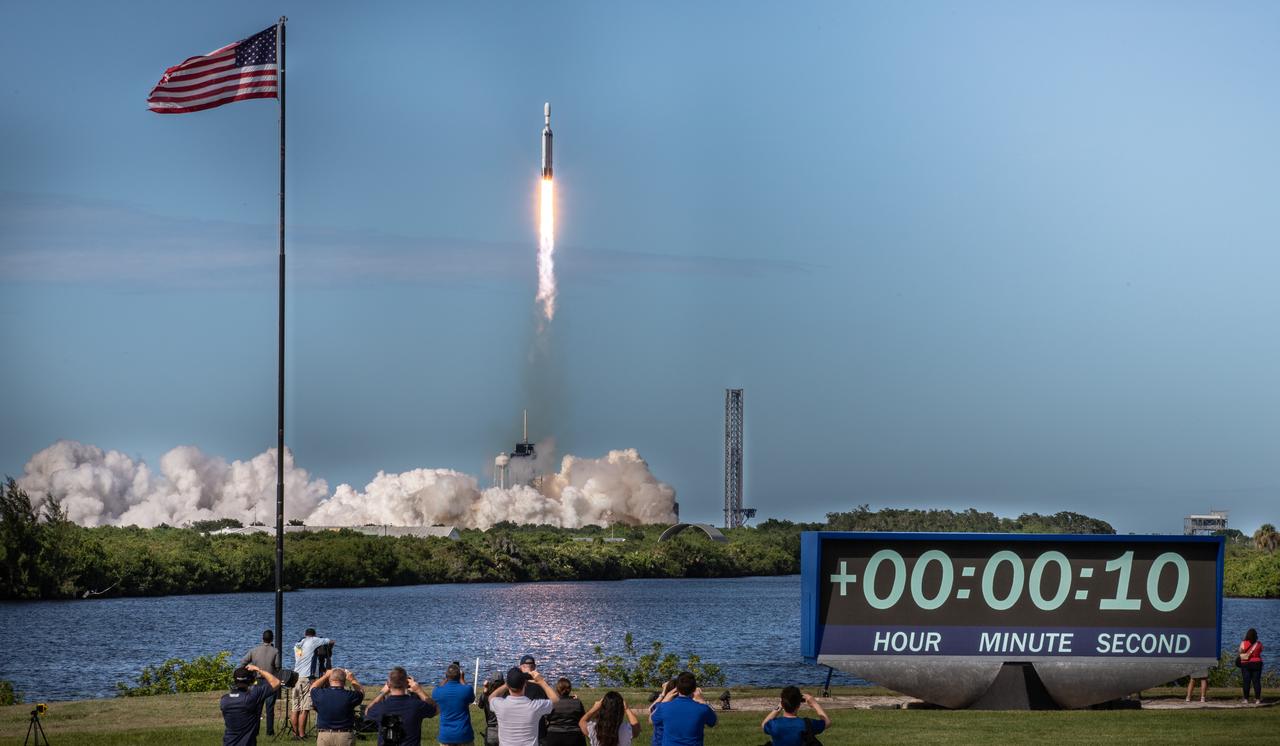
A SpaceX Falcon Heavy rocket carrying the National Oceanic and Atmospheric Administration (NOAA) GOES-U (Geostationary Operational Environmental Satellite U) lifts off from Launch Complex 39A at NASA’s Kennedy Space Center in Florida on Tuesday, June 25, 2024. The GOES-U satellite is the final satellite in the GOES-R series, which serves a critical role in providing continuous coverage of the Western Hemisphere, including monitoring tropical systems in the eastern Pacific and Atlantic oceans.
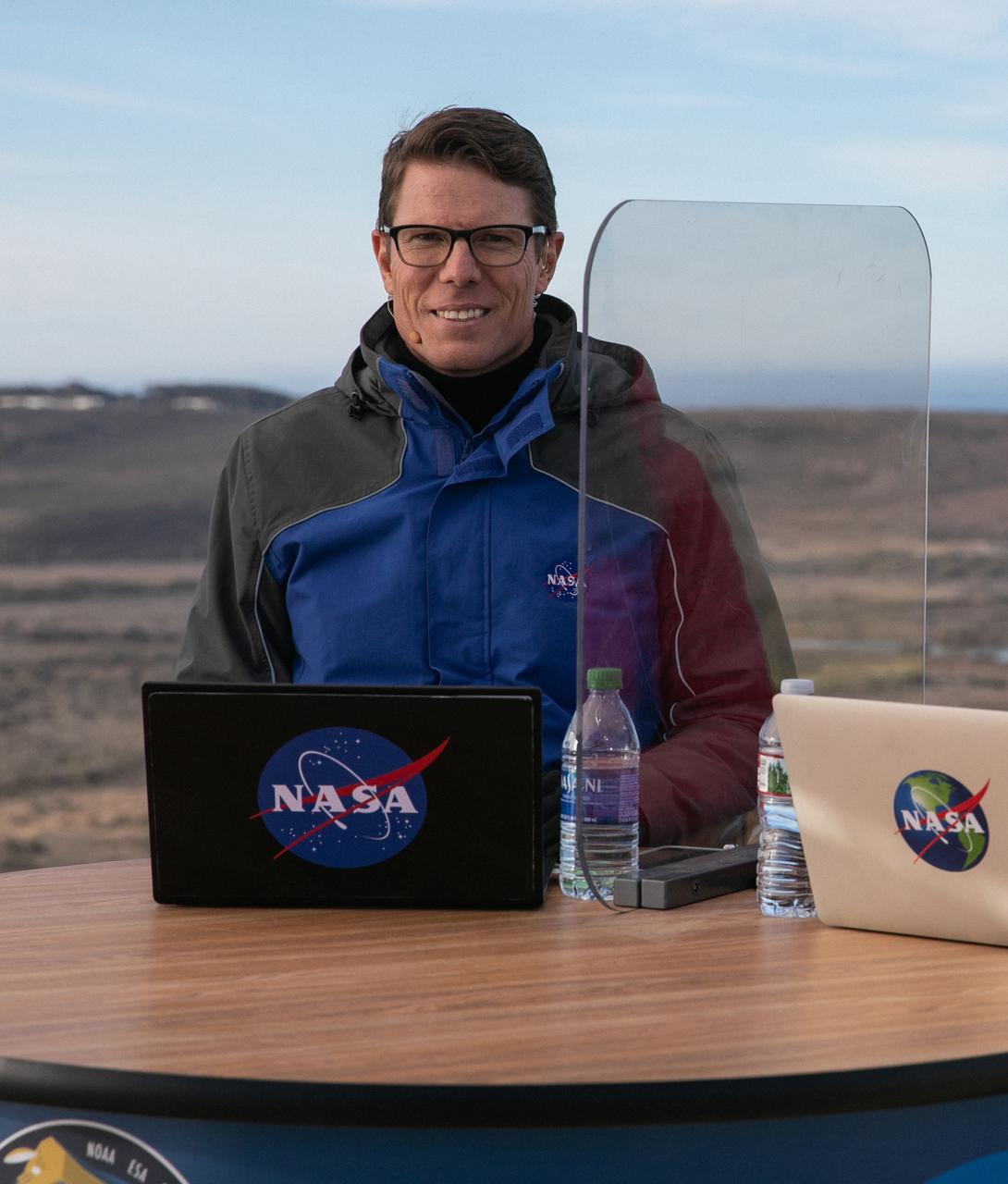
NASA Launch Commentator Derrol Nail participates in the launch broadcast for the Sentinel-6 Michael Freilich mission on Nov. 21, 2020, at Vandenberg Air Force Base in California. The SpaceX Falcon 9 rocket carrying the Sentinel-6 Michael Freilich spacecraft launched from Vandenberg’s Space Launch Complex 4 at 9:17 a.m. PST (12:17 p.m. EST). The Sentinel-6/Jason-CS (Continuity of Service) mission consists of the Sentinel-6 Michael Freilich satellite, which will be followed by its twin, the Sentinel-6B satellite, in 2025. The Sentinel-6/Jason-CS mission is part of Copernicus, the European Union’s Earth observation program, managed by the European Commission. Continuing the legacy of the Jason series missions, Sentinel-6/Jason-CS will extend the records of sea level into their fourth decade, collecting accurate measurements of sea surface height for more than 90% of the world’s seas, and providing crucial information for operational oceanography, marine meteorology, and climate studies. NASA’s Launch Services Program at Kennedy Space Center was responsible for launch management.
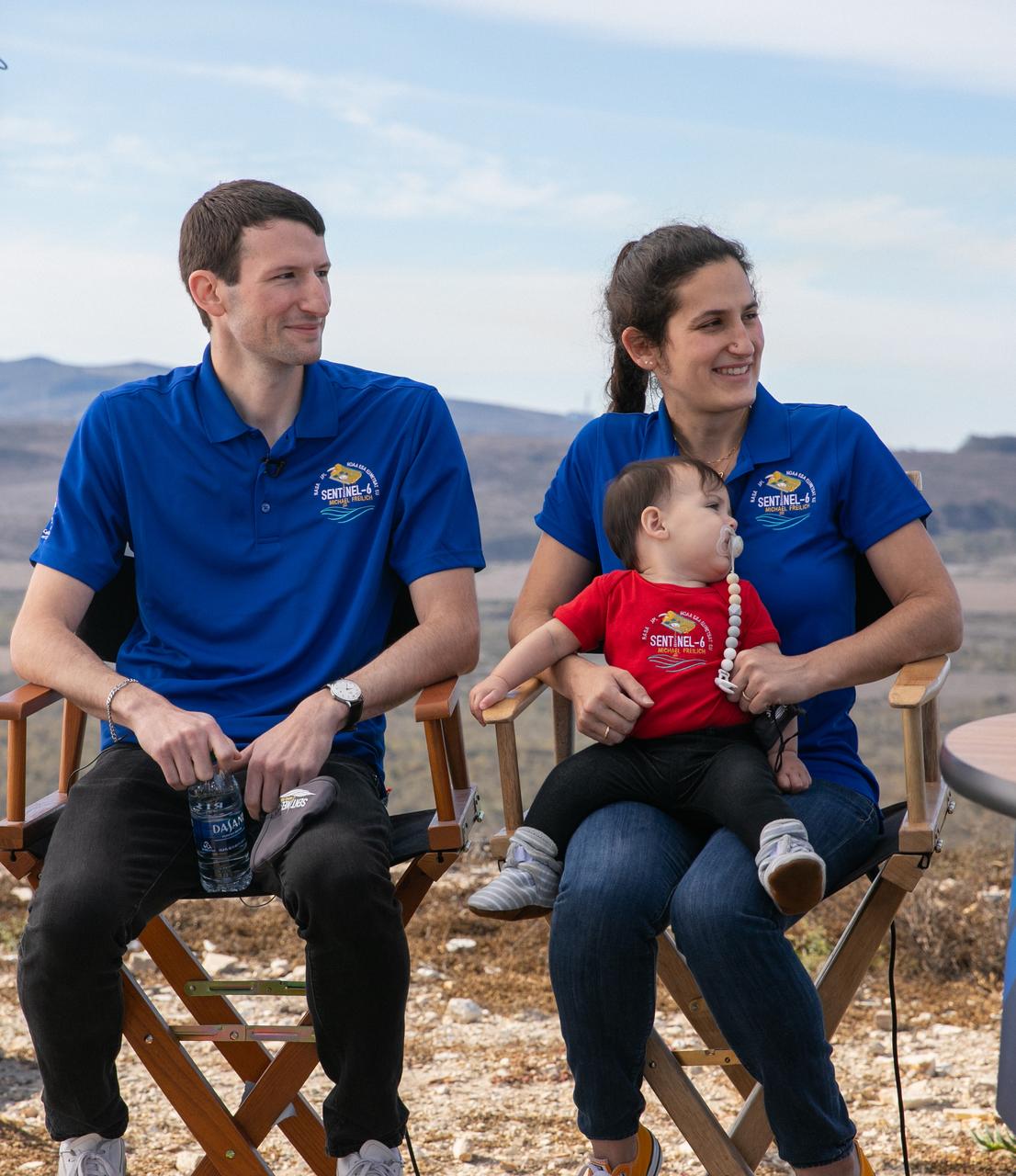
Daniel Freilich, left, and Sarah Freilich, children of Dr. Michael Freilich, participate in the launch broadcast for the Sentinel-6 Michael Freilich mission on Nov. 21, 2020, at Vandenberg Air Force Base in California. The Sentinel-6/Jason-CS (Continuity of Service) mission consists of the Sentinel-6 Michael Freilich satellite, which will be followed by its twin, the Sentinel-6B satellite, in 2025. The Sentinel-6/Jason-CS mission is part of Copernicus, the European Union’s Earth observation program, managed by the European Commission. Continuing the legacy of the Jason series missions, Sentinel-6/Jason-CS will extend the records of sea level into their fourth decade, collecting accurate measurements of sea surface height for more than 90% of the world’s seas, and providing crucial information for operational oceanography, marine meteorology, and climate studies. Sentinel-6 Michael Freilich launched Nov. 21, 2020, at 9:17 PST (12:17 EST). NASA’s Launch Services Program at Kennedy Space Center was responsible for launch management.
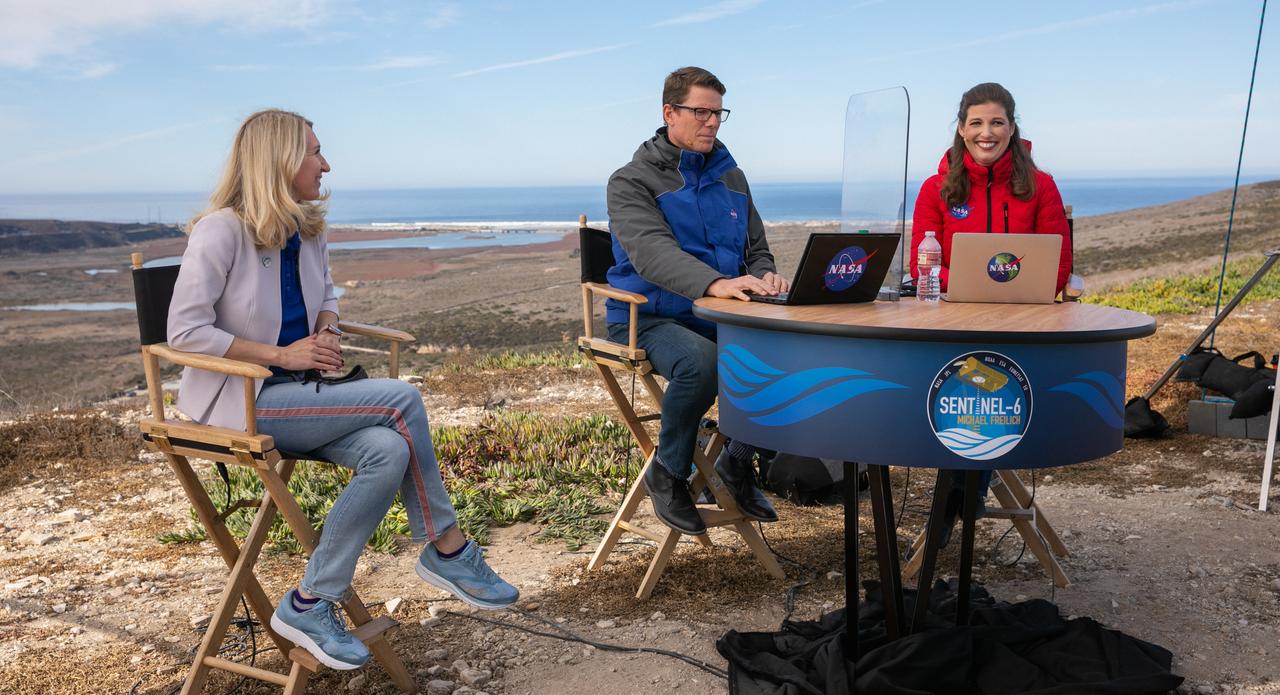
NASA Program Scientist Nadya Vinogradova Shiffer, left, of the agency’s Science Mission Directorate, speaks with NASA Commentators Derrol Nail and Marina Jurica during the launch broadcast for the Sentinel-6 Michael Freilich mission on Nov. 21, 2020, at Vandenberg Air Force Base in California. The Sentinel-6/Jason-CS (Continuity of Service) mission consists of the Sentinel-6 Michael Freilich satellite, which will be followed by its twin, the Sentinel-6B satellite, in 2025. The Sentinel-6/Jason-CS mission is part of Copernicus, the European Union’s Earth observation program, managed by the European Commission. Continuing the legacy of the Jason series missions, Sentinel-6/Jason-CS will extend the records of sea level into their fourth decade, collecting accurate measurements of sea surface height for more than 90% of the world’s seas, and providing crucial information for operational oceanography, marine meteorology, and climate studies. Sentinel-6 Michael Freilich launched Nov. 21, 2020, at 9:17 PST (12:17 EST). NASA’s Launch Services Program at Kennedy Space Center was responsible for launch management.
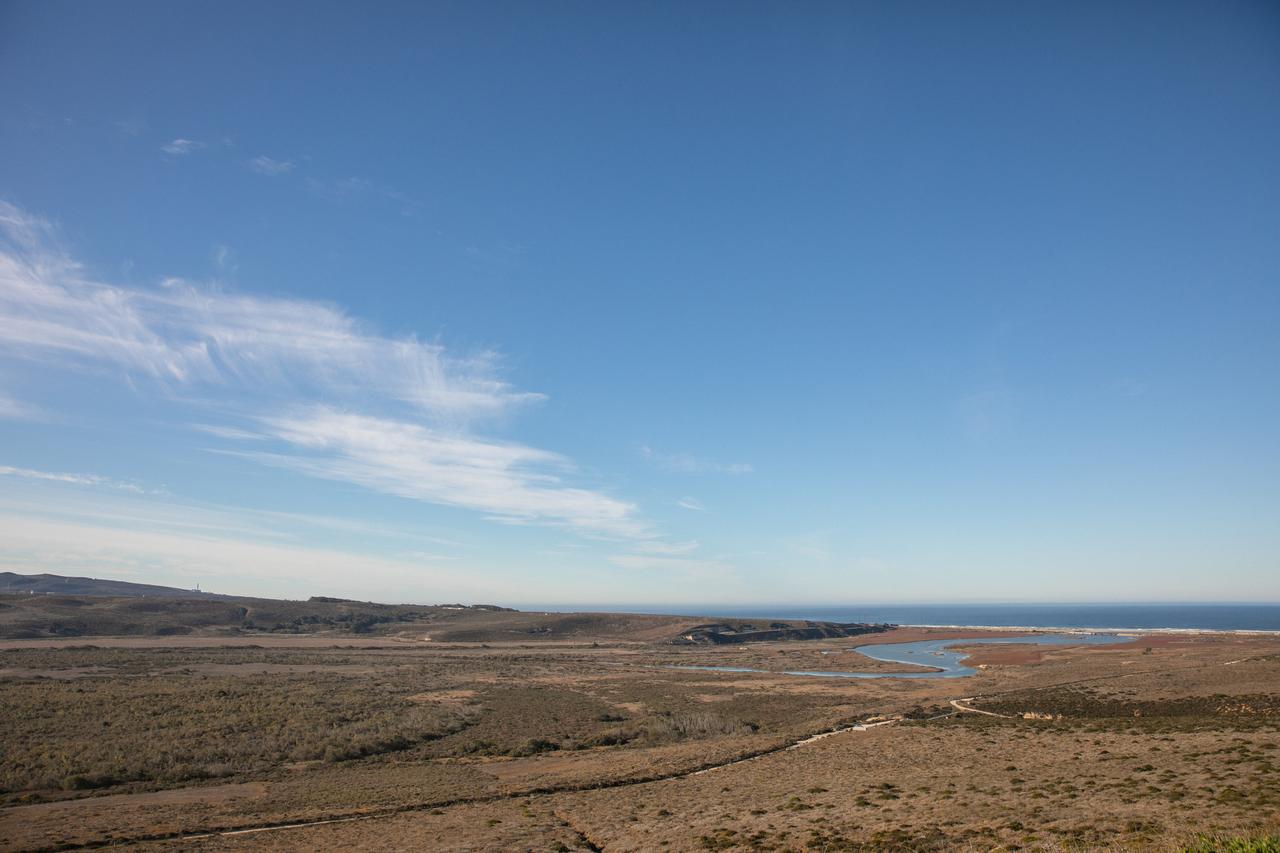
Clear, sunny skies provide a backdrop for California’s Vandenberg Air Force Base, where the SpaceX Falcon 9 rocket carrying the Sentinel-6 Michael Freilich spacecraft awaits liftoff from Space Launch Complex 4, Nov. 21, 2020. The Sentinel-6/Jason-CS (Continuity of Service) mission consists of the Sentinel-6 Michael Freilich satellite, which will be followed by its twin, the Sentinel-6B satellite, in 2025. The Sentinel-6/Jason-CS mission is part of Copernicus, the European Union’s Earth observation program, managed by the European Commission. Continuing the legacy of the Jason series missions, Sentinel-6/Jason-CS will extend the records of sea level into their fourth decade, collecting accurate measurements of sea surface height for more than 90% of the world’s seas, and providing crucial information for operational oceanography, marine meteorology, and climate studies. Sentinel-6 Michael Freilich launched Nov. 21, 2020, at 9:17 PST (12:17 EST). NASA’s Launch Services Program at Kennedy Space Center was responsible for launch management.
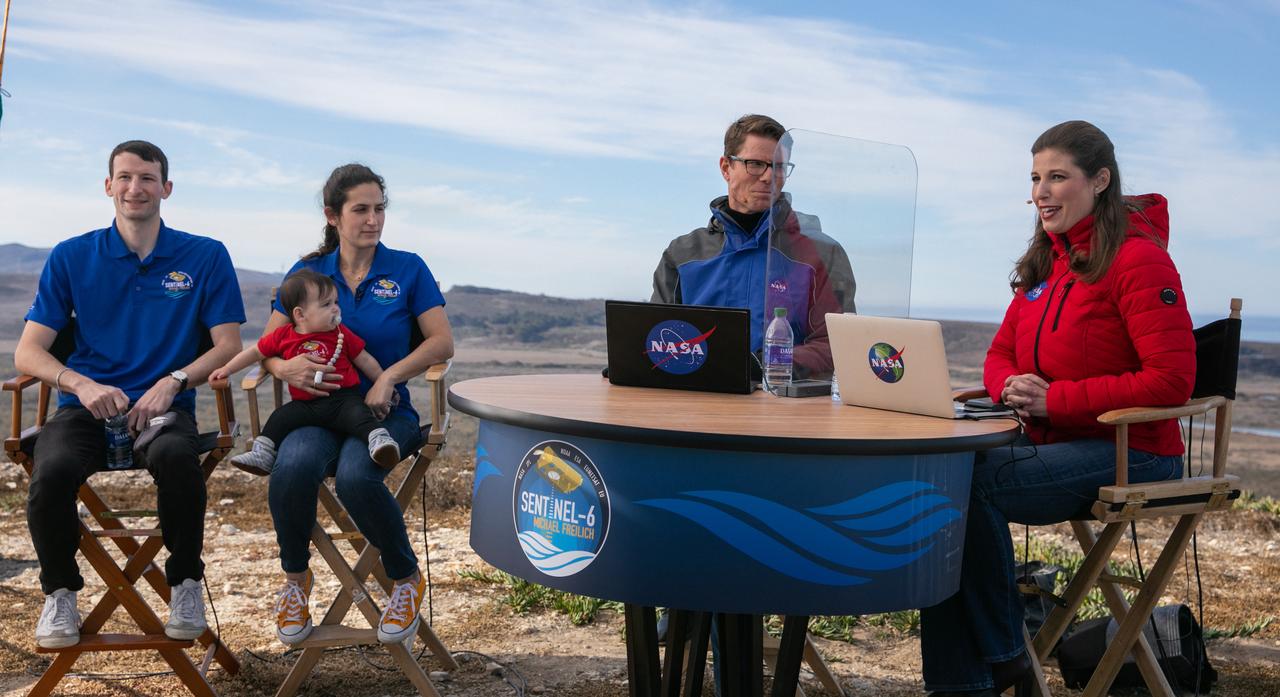
Daniel Freilich, left, and Sarah Freilich, children of Dr. Michael Freilich, speak with NASA Commentators Derrol Nail and Marina Jurica during the launch broadcast for the Sentinel-6 Michael Freilich mission on Nov. 21, 2020, at Vandenberg Air Force Base in California. The Sentinel-6/Jason-CS (Continuity of Service) mission consists of the Sentinel-6 Michael Freilich satellite, which will be followed by its twin, the Sentinel-6B satellite, in 2025. The Sentinel-6/Jason-CS mission is part of Copernicus, the European Union’s Earth observation program, managed by the European Commission. Continuing the legacy of the Jason series missions, Sentinel-6/Jason-CS will extend the records of sea level into their fourth decade, collecting accurate measurements of sea surface height for more than 90% of the world’s seas, and providing crucial information for operational oceanography, marine meteorology, and climate studies. Sentinel-6 Michael Freilich launched Nov. 21, 2020, at 9:17 PST (12:17 EST). NASA’s Launch Services Program at Kennedy Space Center was responsible for launch management.
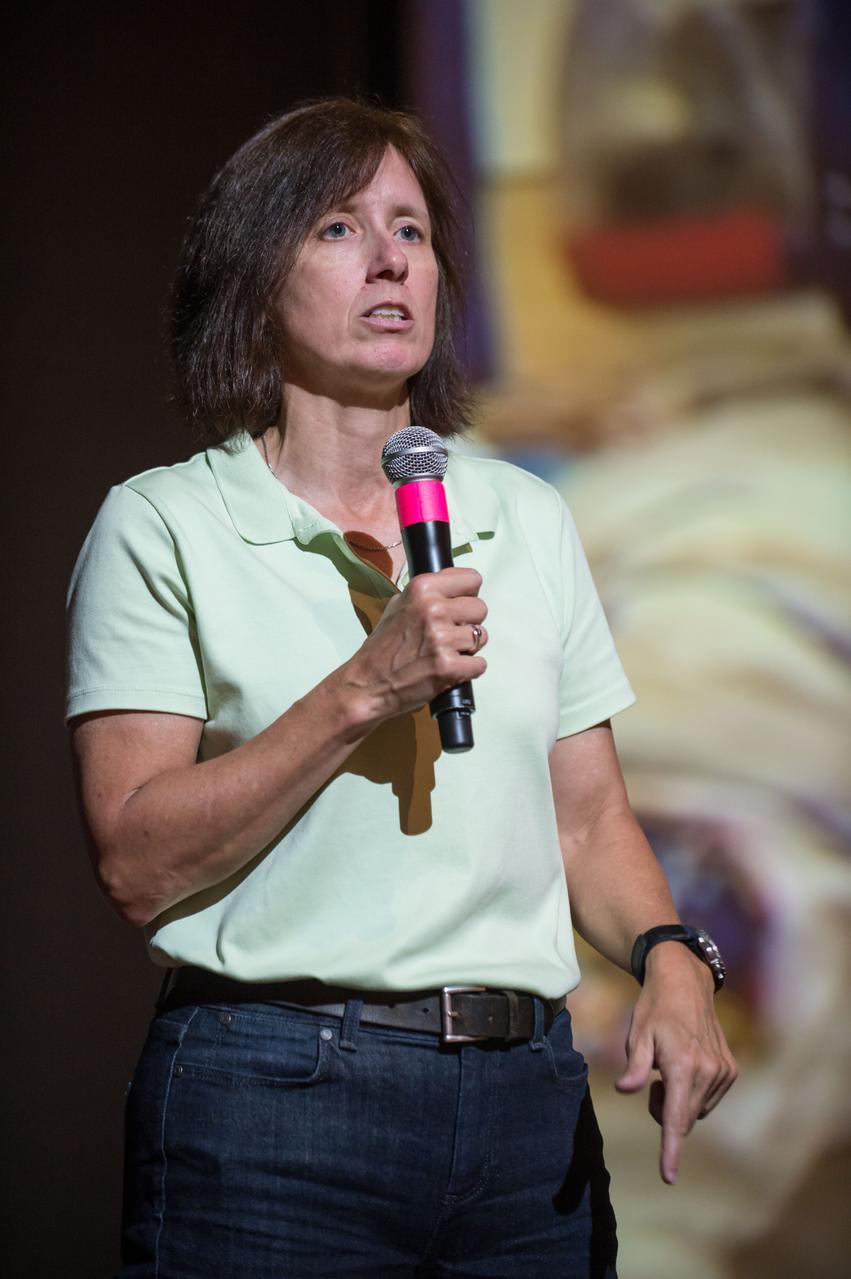
Date: 05-28-14 Location: Bldg 2, Teague Subject: Shannon Walker welcome those on-site to the Teague Auditorium to watch the live coverage of Expedition 40/41 (Soyuz 39) launch as it unfolds. Photographer: James Blair
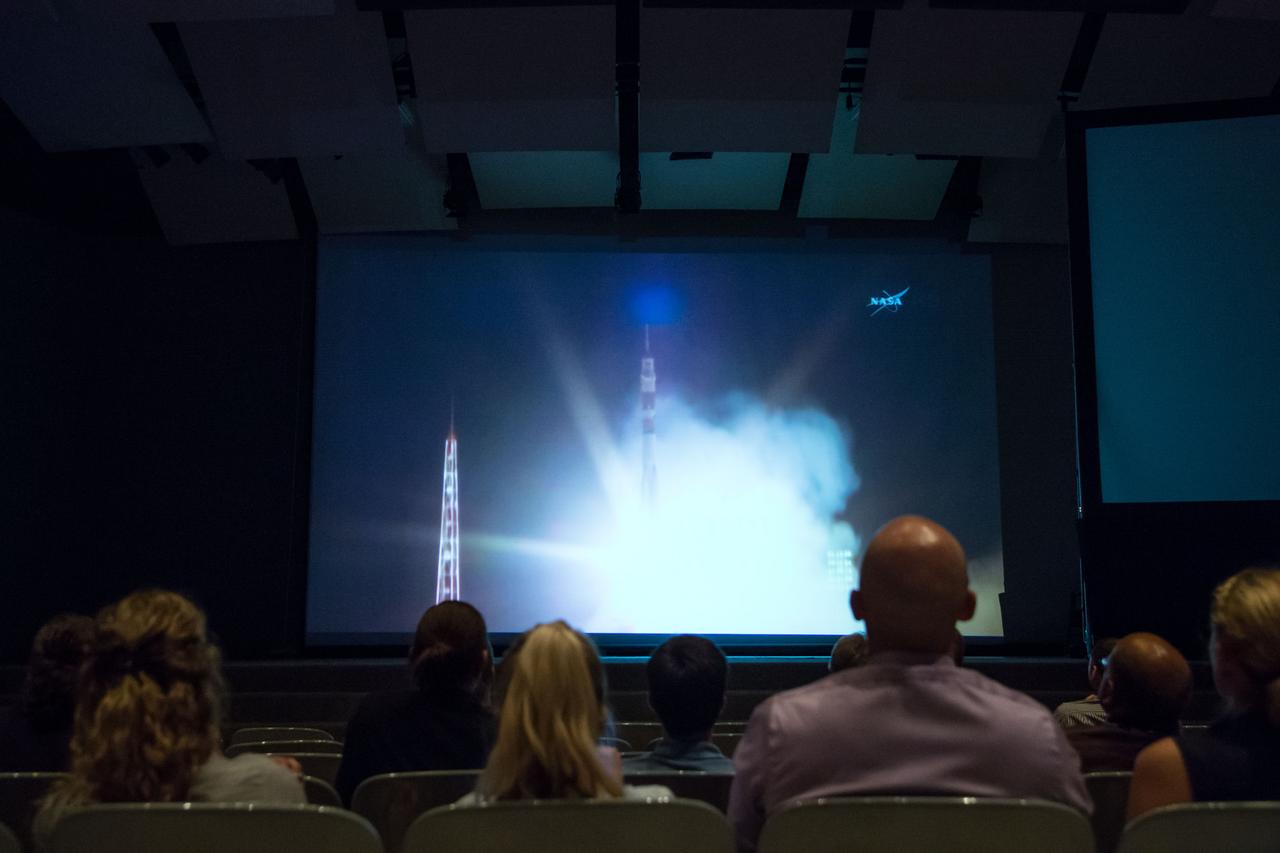
Date: 05-28-14 Location: Bldg 2, Teague Subject: Shannon Walker welcome those on-site to the Teague Auditorium to watch the live coverage of Expedition 40/41 (Soyuz 39) launch as it unfolds. Photographer: James Blair
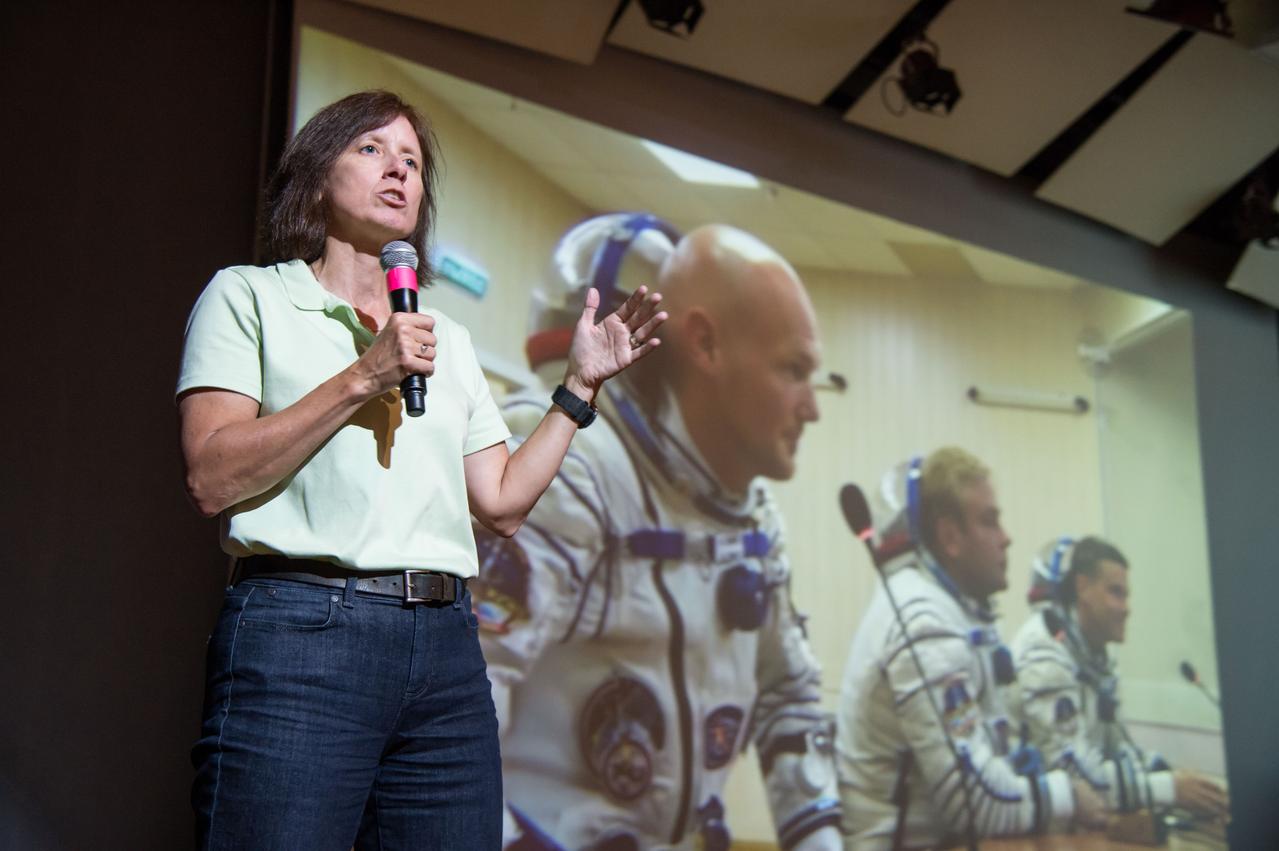
Date: 05-28-14 Location: Bldg 2, Teague Subject: Shannon Walker welcome those on-site to the Teague Auditorium to watch the live coverage of Expedition 40/41 (Soyuz 39) launch as it unfolds. Photographer: James Blair
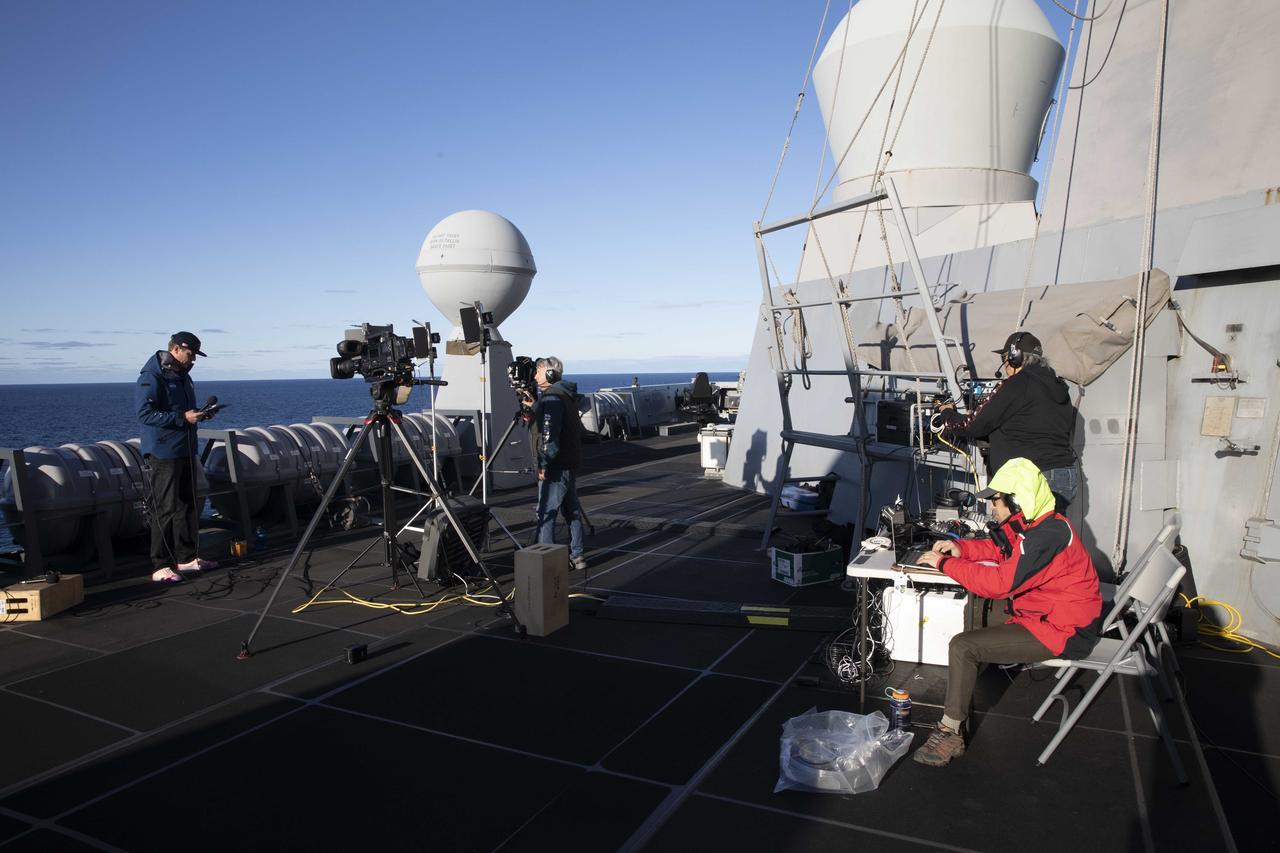
Members of Kennedy Space Center’s public affairs team prepare for live coverage of NASA’s Orion spacecraft’s splashdown for the Artemis I mission while aboard USS Portland. Orion safely splashed down in the Pacific Ocean on Dec. 11, 2022, completing a 25.5 day mission around the Moon and back.
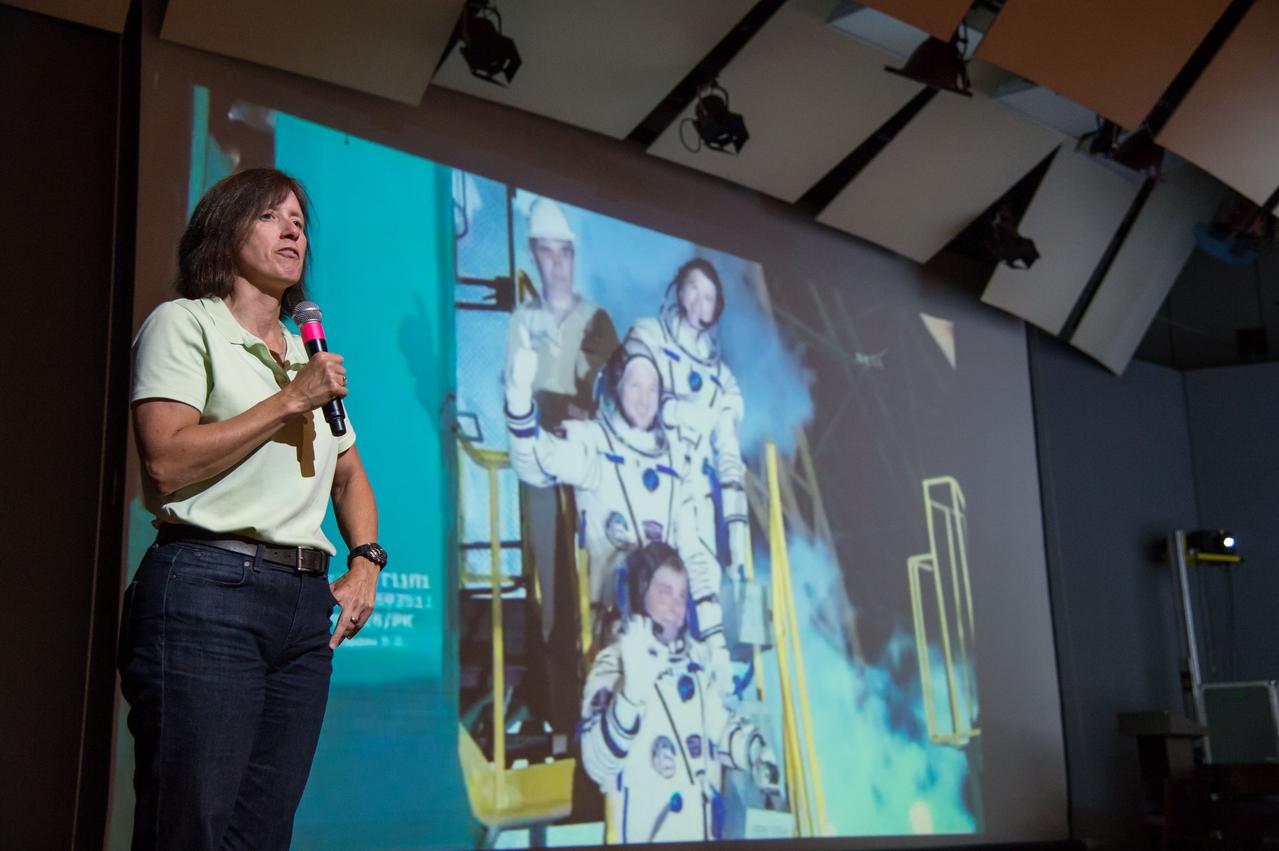
Date: 05-28-14 Location: Bldg 2, Teague Subject: Shannon Walker welcome those on-site to the Teague Auditorium to watch the live coverage of Expedition 40/41 (Soyuz 39) launch as it unfolds. Photographer: James Blair
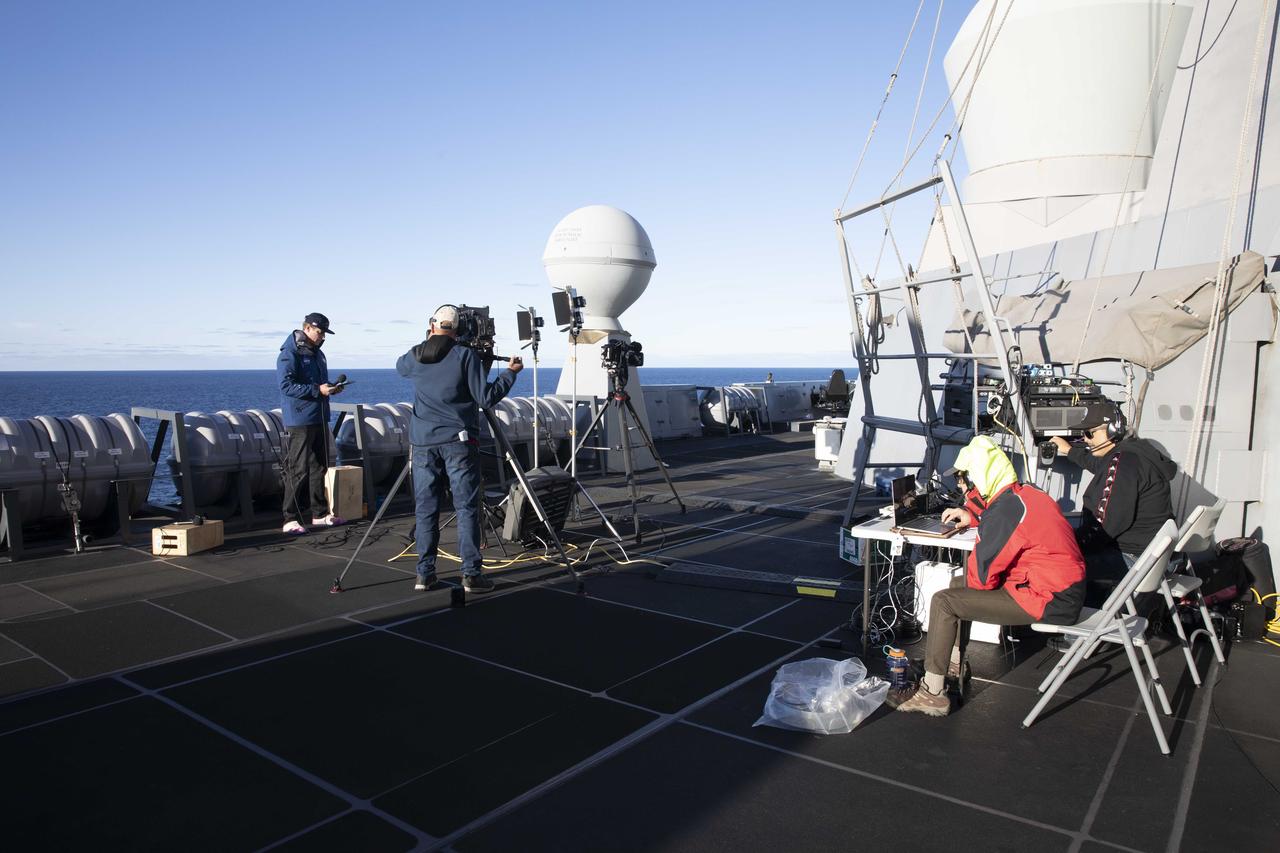
Members of Kennedy Space Center’s public affairs team prepare for live coverage of NASA’s Orion spacecraft’s splashdown for the Artemis I mission while aboard USS Portland. Orion safely splashed down in the Pacific Ocean on Dec. 11, 2022, completing a 25.5 day mission around the Moon and back.
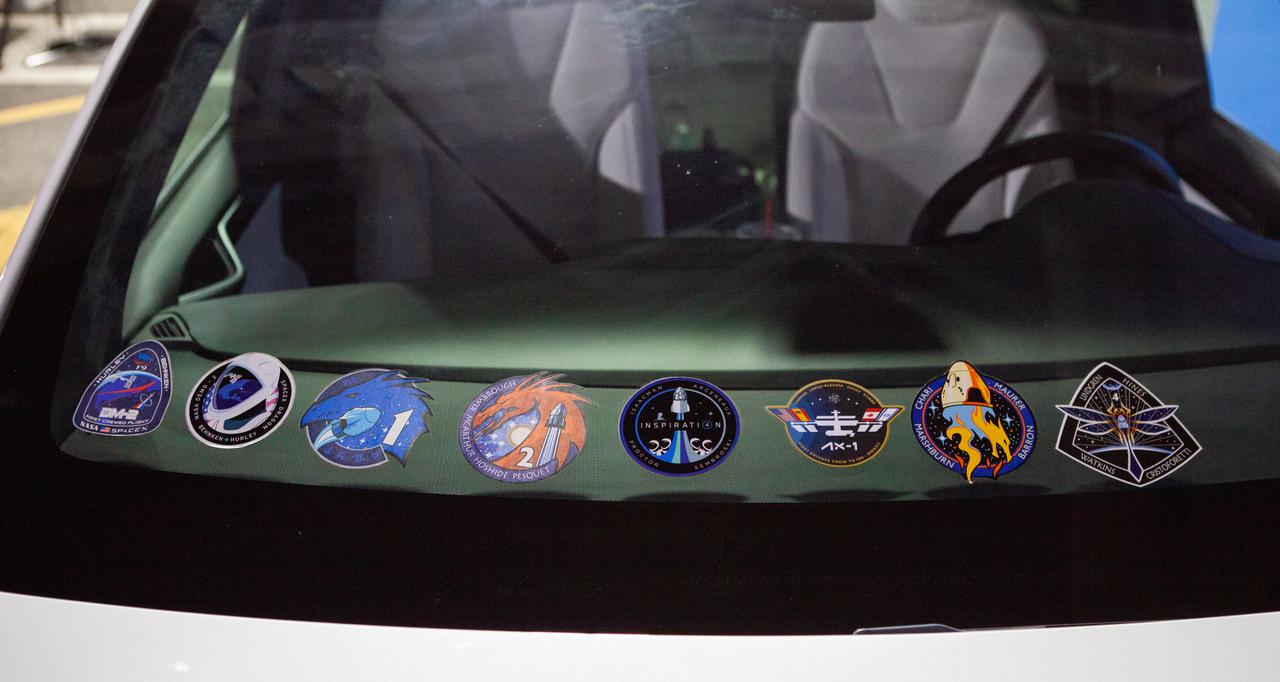
A customized Tesla Model X vehicle is parked outside the Neil A. Armstrong Operations and Checkout Building at NASA’s Kennedy Space Center in Florida on April 27, 2022. Crew-4 astronauts Kjell Lindgren, Bob Hines, Jessica Watkins, and Samantha Cristoforetti will make their way to the vehicles, which will transport them to Launch Complex 39A. Liftoff aboard SpaceX’s Crew Dragon, powered by the company’s Falcon 9 rocket, is scheduled for today at 3:52 a.m. EDT from Pad 39A at Kennedy.
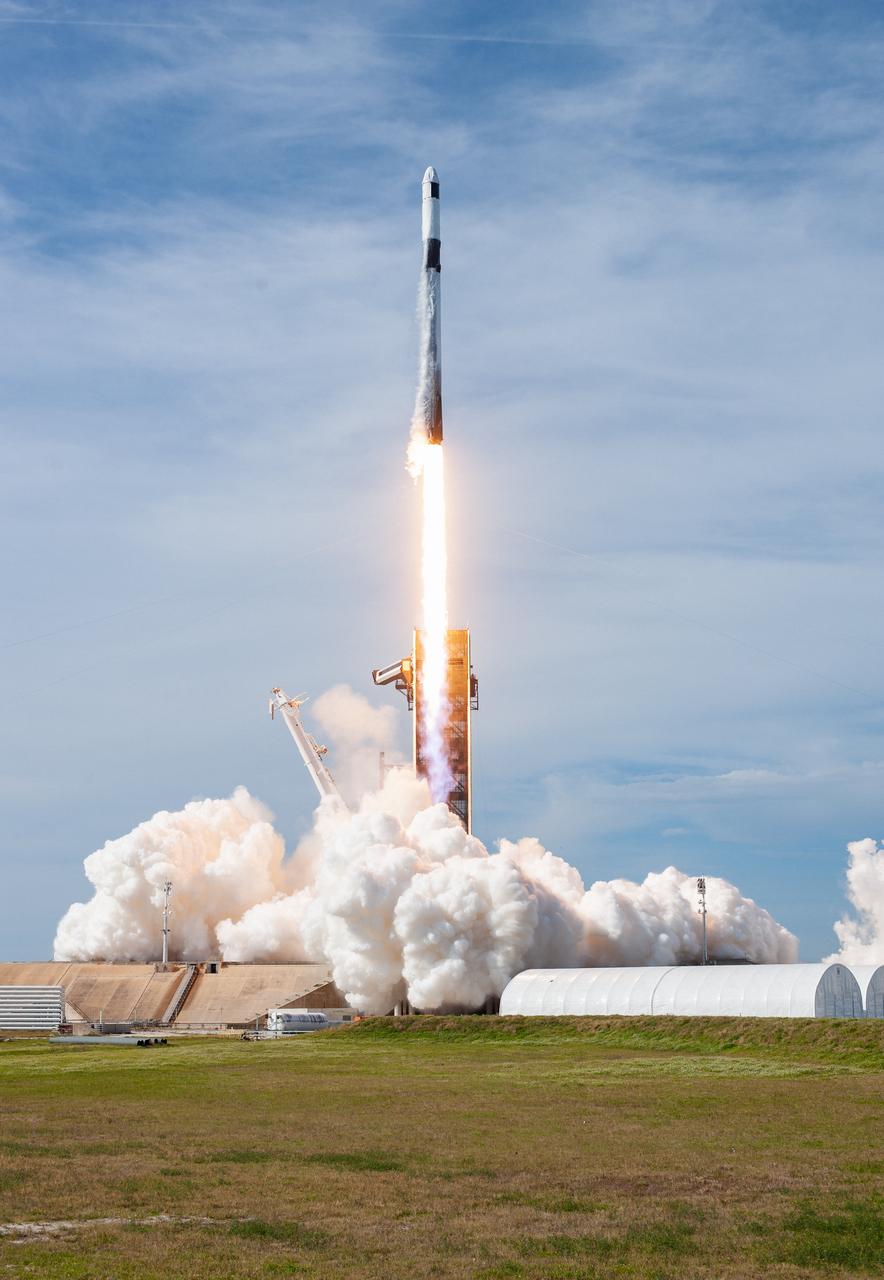
A SpaceX Falcon 9 rocket lifts off from Launch Complex 39A at Kennedy Space Center in Florida at 11:17 a.m. EST on Dec. 6, 2020, carrying the uncrewed cargo Dragon spacecraft on its journey to the International Space Station for NASA and SpaceX’s 21st Commercial Resupply Services (CRS-21) mission. Dragon will deliver more than 6,400 pounds of science investigations and cargo to the orbiting laboratory. The mission marks the first launch for SpaceX under NASA’s CRS-2 contract.

A SpaceX Falcon 9 rocket soars into the sky after lifting off from Launch Complex 39A at Kennedy Space Center in Florida at 11:17 a.m. EST on Dec. 6, 2020. The rocket is carrying the uncrewed cargo Dragon spacecraft on its journey to the International Space Station for NASA and SpaceX’s 21st Commercial Resupply Services (CRS-21) mission. Dragon will deliver more than 6,400 pounds of science investigations and cargo to the orbiting laboratory. The mission marks the first launch for SpaceX under NASA’s CRS-2 contract.
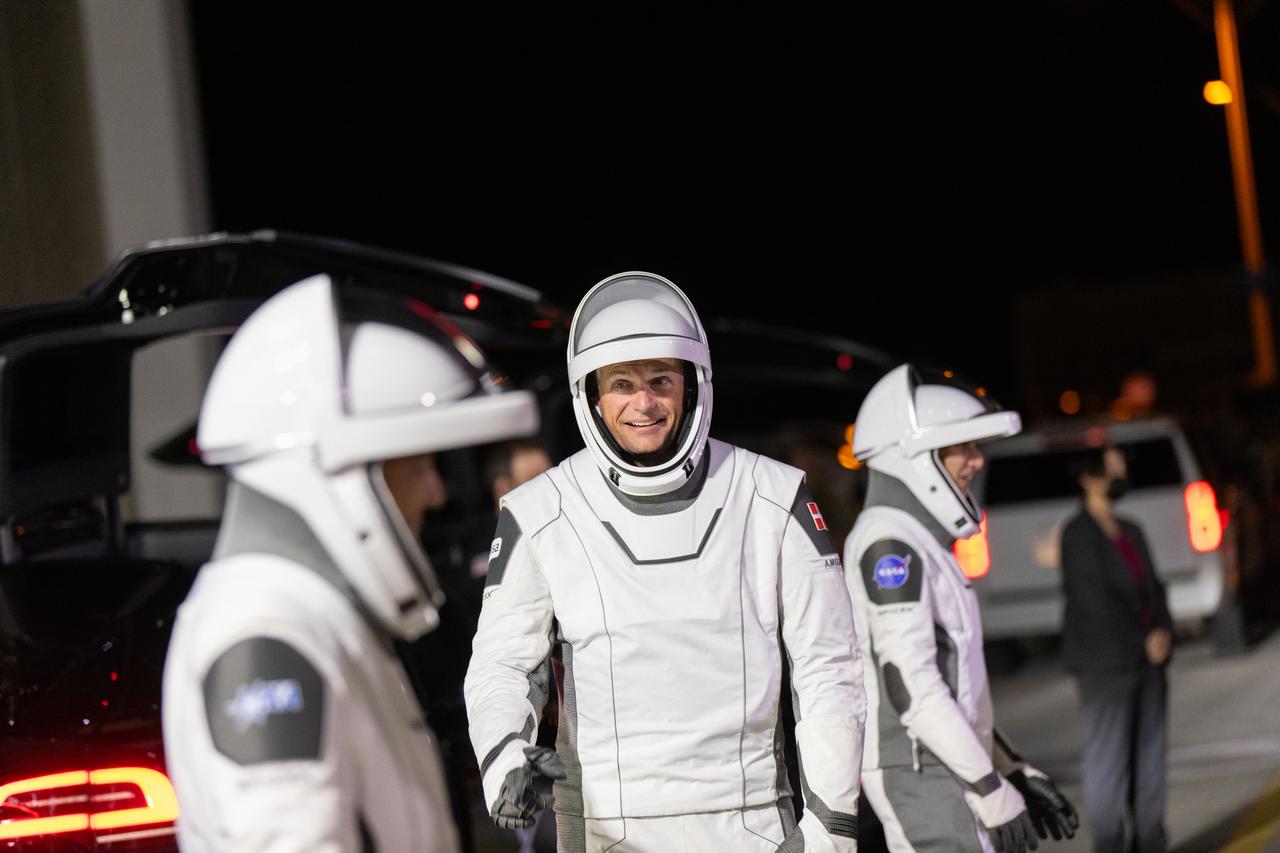
NASA’s SpaceX Crew-7 ESA (European Space Agency) astronaut Andreas Mogensen smiles outside of the Neil Armstrong Operations and Checkout Building at NASA’s Kennedy Space Center in Florida on Saturday, Aug. 26, 2023. Mogensen and his crewmates are preparing to get into the customized Tesla Model X vehicles that will transport them to Kennedy’s Launch Complex 39A. SpaceX’s Dragon spacecraft, powered by the company’s Falcon 9 rocket, will carry the four-person crew – which includes NASA astronaut Jasmin Moghbeli, JAXA (Japan Aerospace Exploration Agency) astronaut Satoshi Furukawa, and Roscosmos cosmonaut Konstantin Borisov – to the International Space Station as part of NASA’s Commercial Crew Program. Crew-7 is scheduled to launch at 3:27 a.m. EDT.
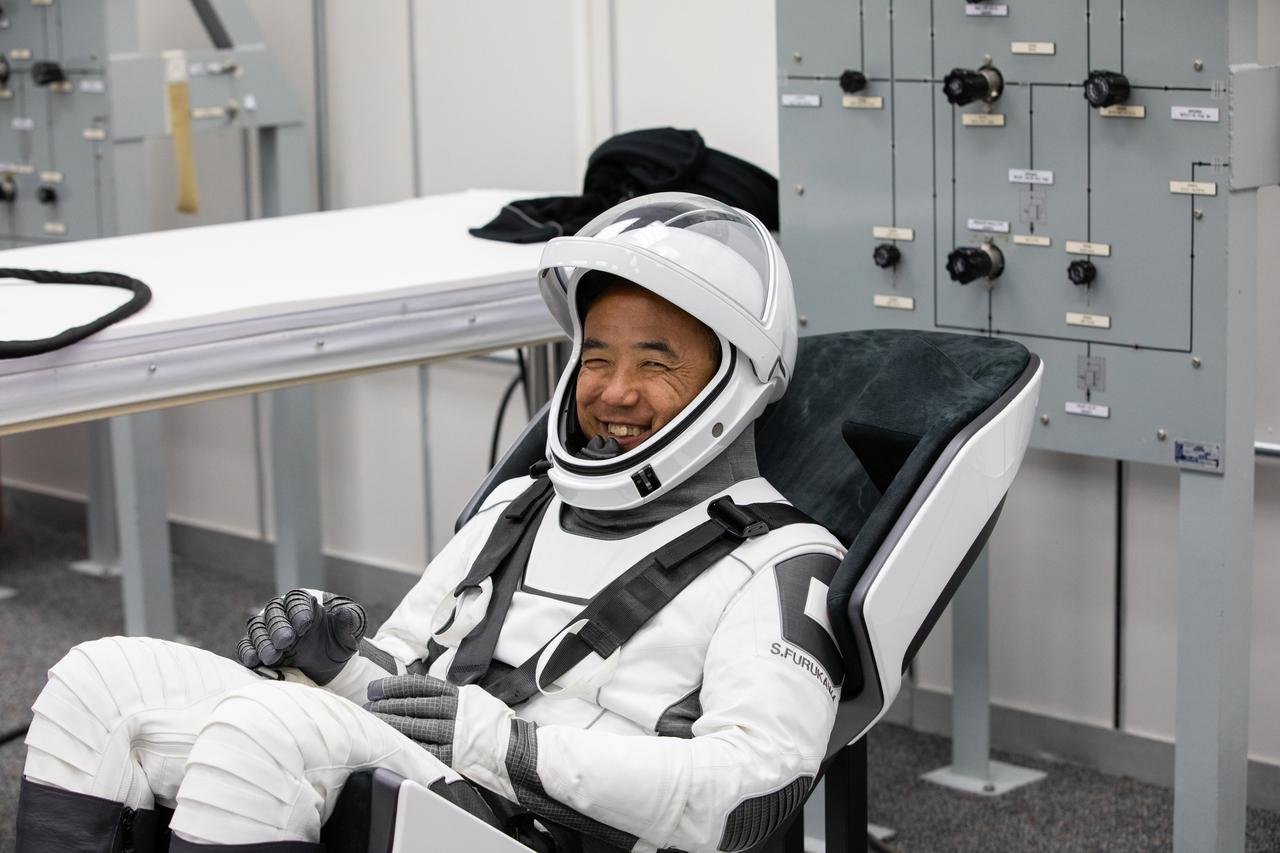
NASA’s SpaceX Crew-7 JAXA (Japan Aerospace Exploration Agency) astronaut Satoshi Furukawa relaxes in the suit-up room in the Astronaut Crew Quarters inside Kennedy Space Center’s Neil A. Armstrong Operations and Checkout Building a few hours before launch. A team of SpaceX suit technicians assisted the crew as they put on their custom-fitted spacesuits and checked the suits for leaks. Furukawa, along with NASA astronaut Jasmin Moghbeli, ESA (European Space Agency) astronaut Andreas Mogensen, and Roscosmos cosmonaut Konstantin Borisov, will launch aboard SpaceX’s Dragon spacecraft and Falcon 9 rocket to the International Space Station as part of NASA’s Commercial Crew Program. Launch is set for 3:27 a.m. EDT Saturday, Aug. 26, from Kennedy’s Launch Complex 39A.

Crew-4 astronauts Kjell Lindgren, Samantha Cristoforetti, Bob Hines, and Jessica Watkins walk out of the Neil Armstrong Operations and Checkout Building at NASA’s Kennedy Space Center in Florida and make their way to the customized Tesla Model X cars that will take them to their spacecraft at Launch Complex 39A. SpaceX’s Crew Dragon, powered by the company’s Falcon 9 rocket, will carry the four-person crew to the International Space Station as part of NASA’s Commercial Crew Program. Crew-4 is scheduled to launch today at 3:52 a.m. EDT, from Pad 39A at Kennedy.
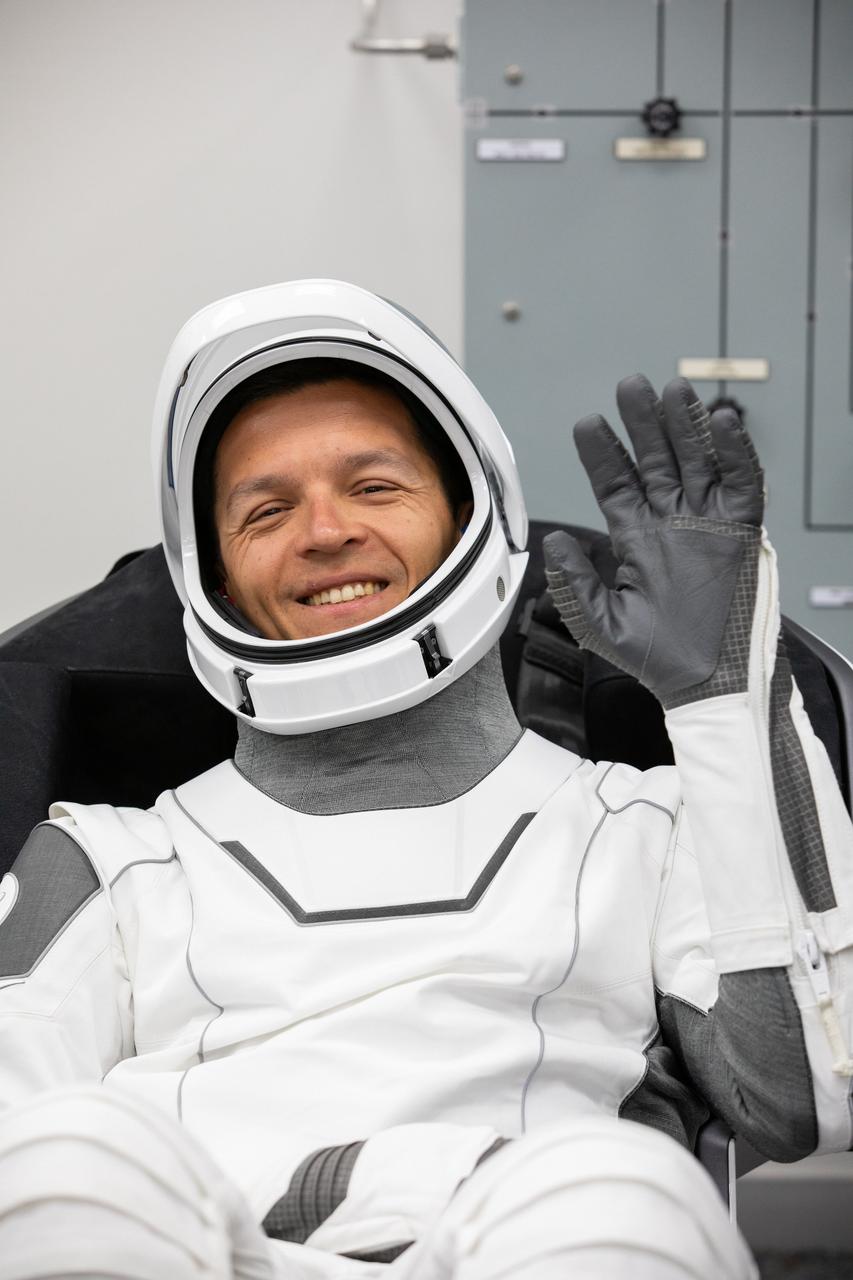
NASA’s SpaceX Crew-7 Roscosmos cosmonaut Konstantin Borisov relaxes in the suit-up room in the Astronaut Crew Quarters inside Kennedy Space Center’s Neil A. Armstrong Operations and Checkout Building a few hours before launch. A team of SpaceX suit technicians assisted the crew as they put on their custom-fitted spacesuits and checked the suits for leaks. Konstantin, along with NASA astronaut Jasmin Moghbeli, ESA (European Space Agency) astronaut Andreas Mogensen, and JAXA (Japan Aerospace Exploration Agency) astronaut Satoshi Furukawa, will launch aboard SpaceX’s Dragon spacecraft and Falcon 9 rocket to the International Space Station as part of NASA’s Commercial Crew Program. Launch is at 3:27 a.m. EDT Saturday, Aug. 26, from Kennedy’s Launch Complex 39A.
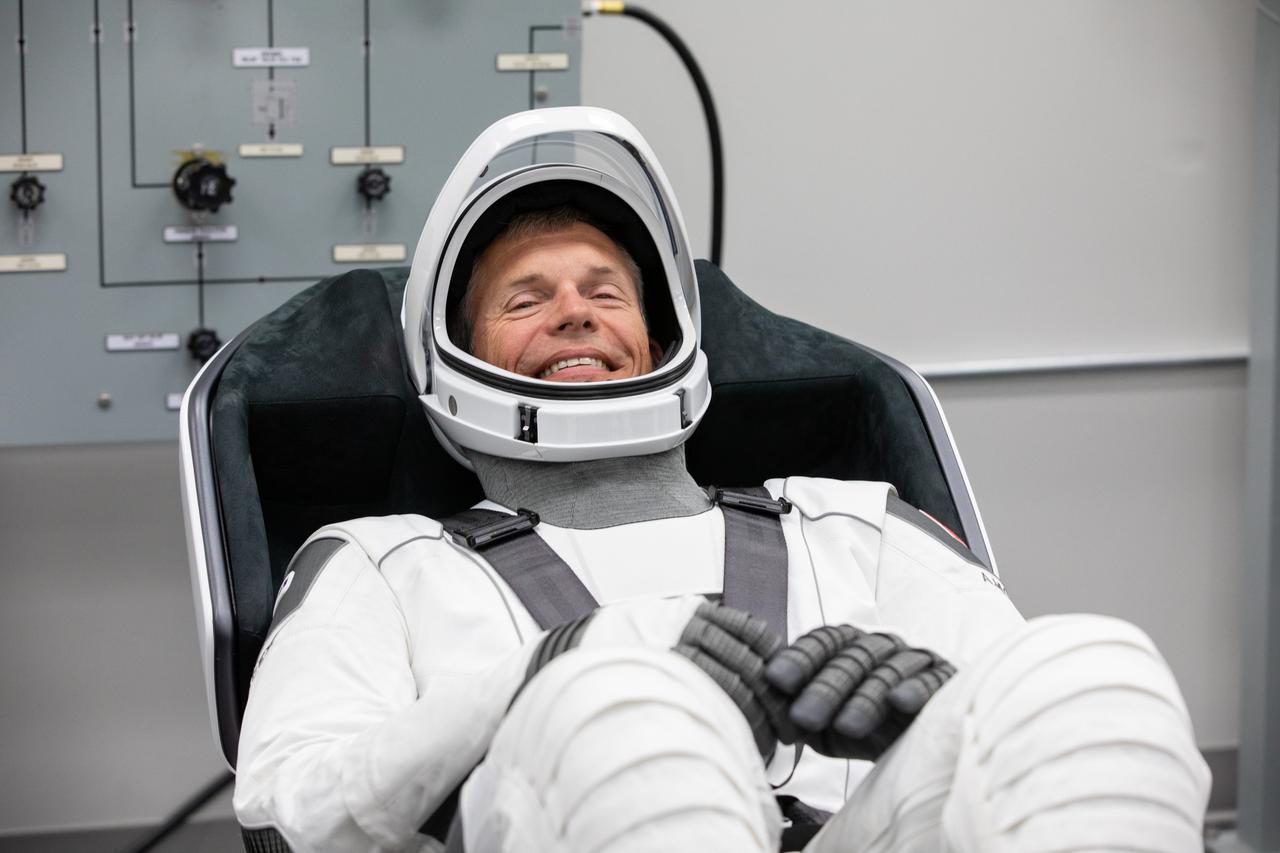
NASA’s SpaceX Crew-7 ESA (European Space Agency) astronaut Andreas Mogensen relaxes in the suit-up room in the Astronaut Crew Quarters inside Kennedy Space Center’s Neil A. Armstrong Operations and Checkout Building a few hours before launch. A team of SpaceX suit technicians assisted the crew as they put on their custom-fitted spacesuits and checked the suits for leaks. Mogensen, along with NASA astronaut Jasmin Moghbeli, JAXA (Japan Aerospace Exploration Agency) astronaut Satoshi Furukawa, and Roscosmos cosmonaut Konstantin Borisov, will launch aboard SpaceX’s Dragon spacecraft and Falcon 9 rocket to the International Space Station as part of NASA’s Commercial Crew Program. Launch is set for 3:27 a.m. EDT Saturday, Aug. 26, from Kennedy’s Launch Complex 39A
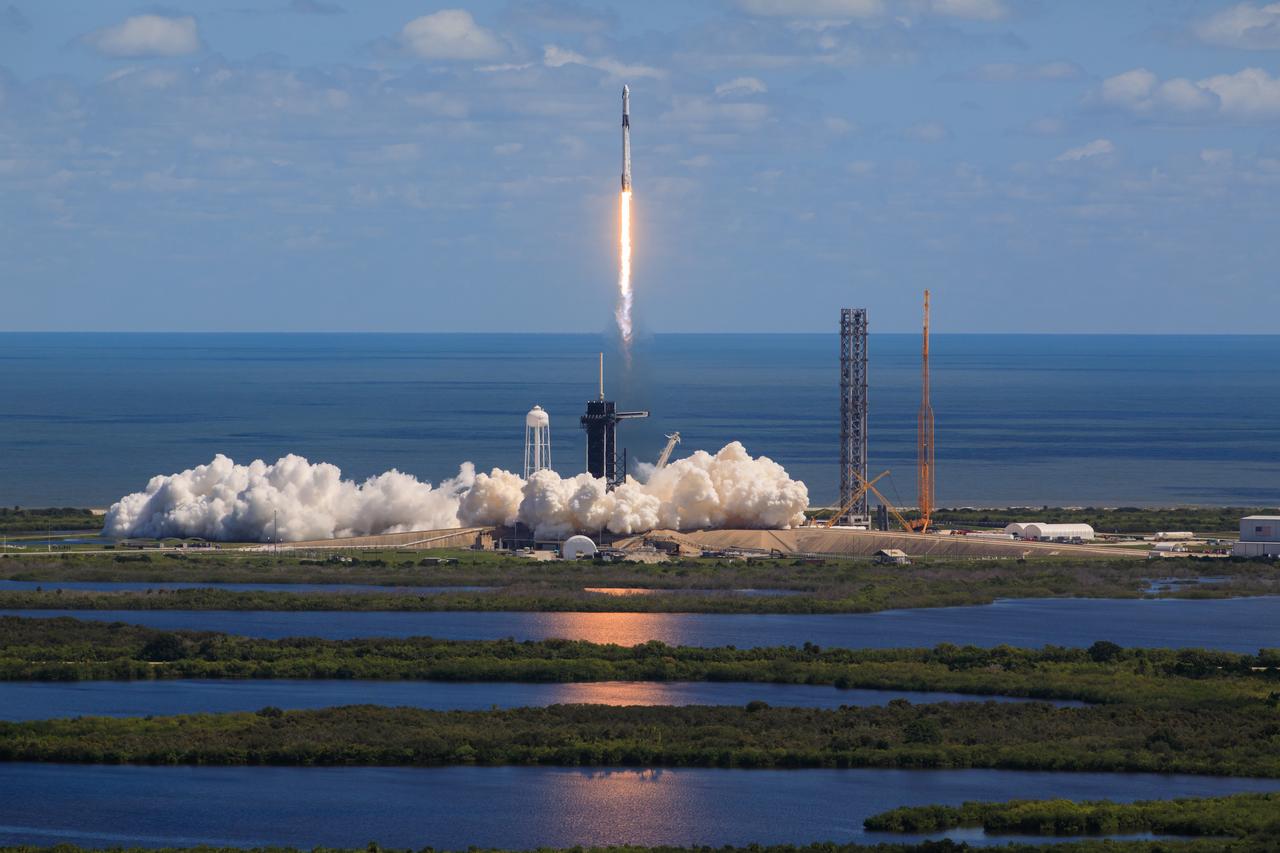
SpaceX’s Falcon 9 rocket, with the Dragon Endurance spacecraft atop, lifts off from NASA’s Kennedy Space Center Launch Complex 39A in Florida on Oct. 5, 2022, on the agency’s SpaceX Crew-5 launch. Inside Endurance are NASA astronauts Nicole Mann, commander; Josh Cassada, pilot; and Mission Specialists Koichi Wakata, of JAXA (Japan Aerospace Exploration Agency), and Roscosmos cosmonaut Anna Kikina. The crew is heading to the International Space Station for a science expedition mission as part of the agency’s Commercial Crew Program. Liftoff occurred at noon EDT.
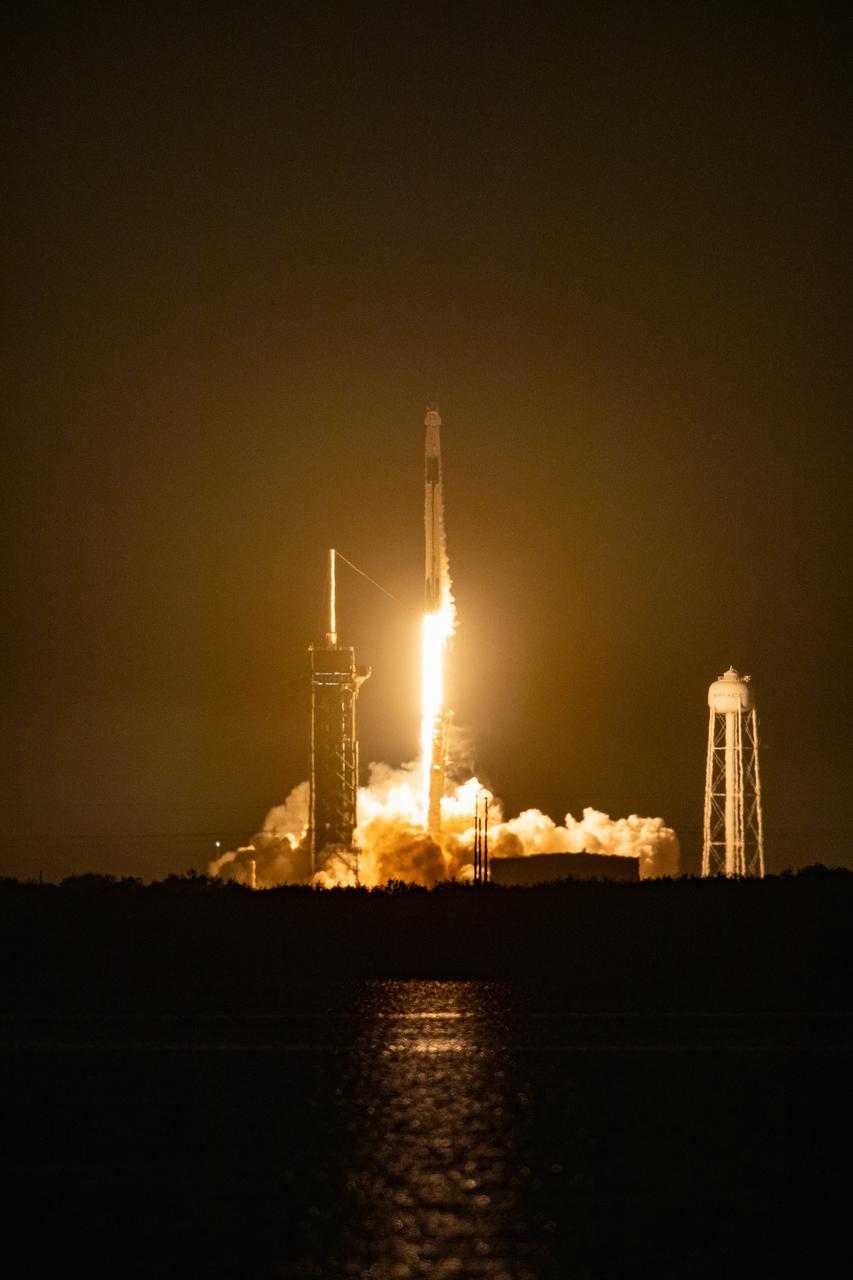
A SpaceX Falcon 9 rocket soars upward after liftoff from the pad at Launch Complex 39A at 12:34 a.m. EST on March 2, 2023 carrying the Dragon spacecraft Endeavour for NASA’s Crew-6 mission to the International Space Station. Aboard Dragon are NASA astronauts Stephen Bowen, spacecraft commander, and Warren Hoburg, pilot, along with mission specialists Sultan Alneyadi, UAE (United Arab Emirates) astronaut, and Andrey Fedyaev, Roscosmos cosmonaut. Crew-6 is the sixth crew rotation mission with SpaceX to the station, and the seventh flight of Dragon with people as part of the agency’s Commercial Crew Program.
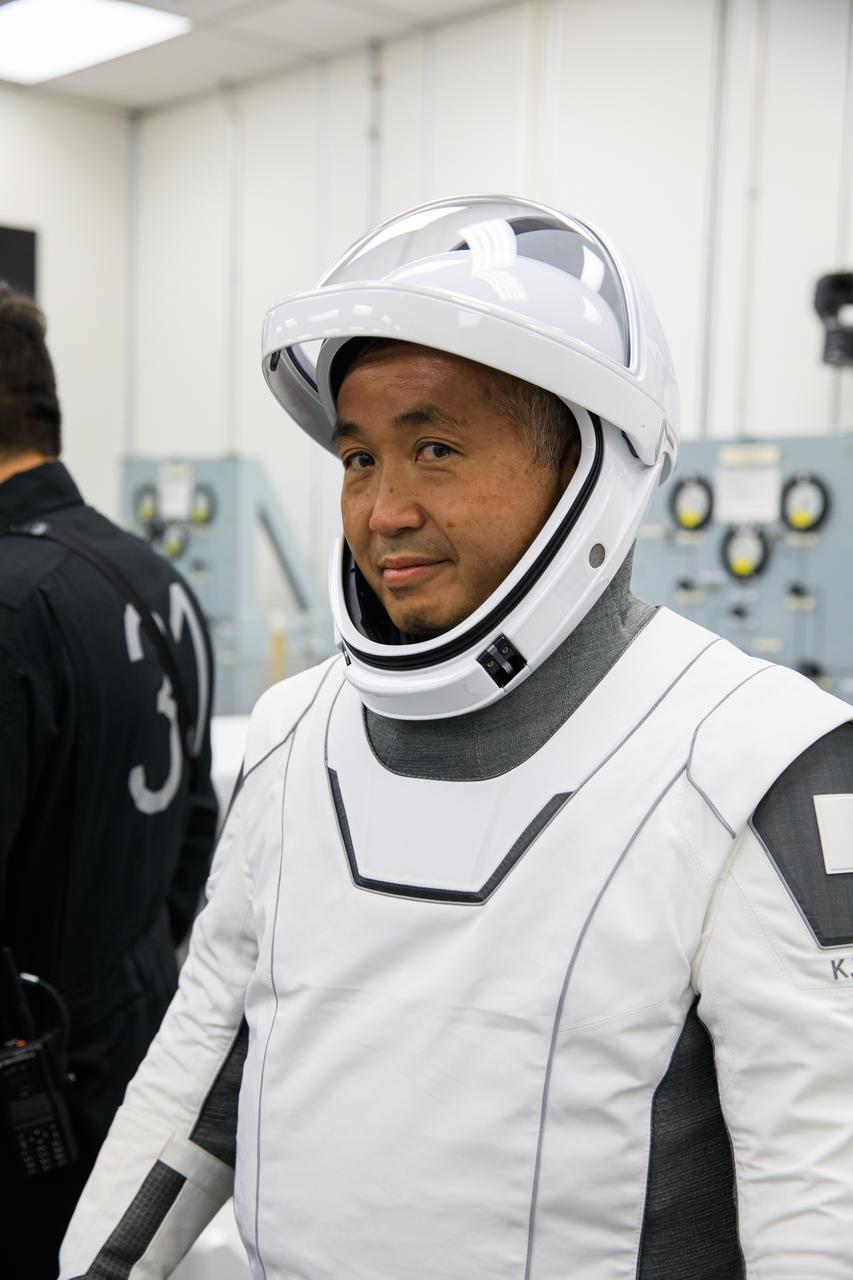
Inside the crew suit-up room in the Neil A. Armstrong Operations and Checkout Building at NASA’s Kennedy Space Center in Florida, JAXA (Japan Aerospace Exploration Agency) astronaut Koichi Wakata, mission specialist, is shown in his SpaceX spacesuit ahead of the agency’s SpaceX Crew-5 launch on Oct. 5, 2022. Wakata, along with NASA astronauts Nicole Mann, spacecraft commander, and Josh Cassada, pilot, and Roscosmos cosmonaut Anna Kikina, mission specialist, will launch to the International Space Station for a science expedition mission as part of the agency’s Commercial Crew Program. The SpaceX Falcon 9 rocket and Dragon Endurance spacecraft lifted off at noon EDT from Kennedy’s Launch Complex 39A.
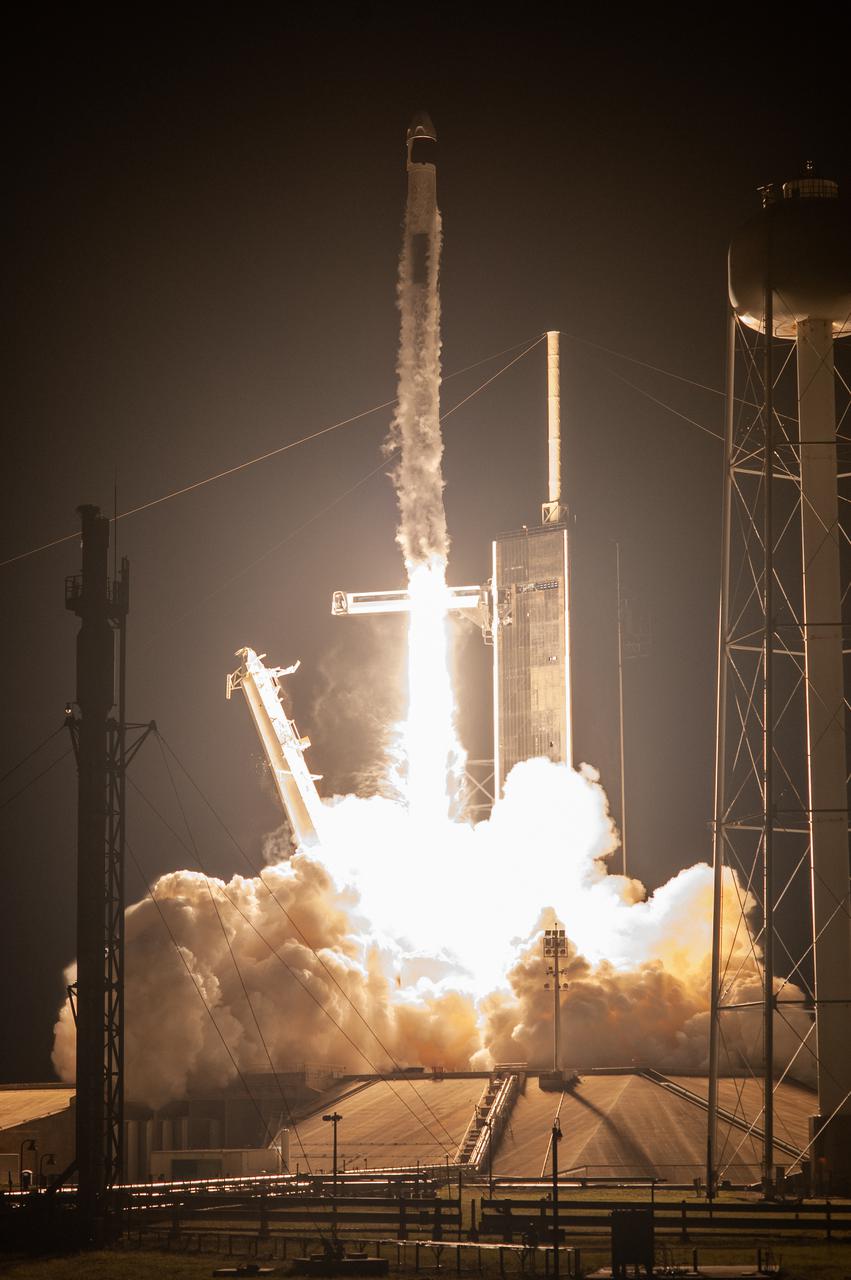
The SpaceX Falcon 9 rocket, with the company’s Crew Dragon atop, lifts off from Launch Pad 39A at Kennedy Space Center in Florida for NASA’s SpaceX Crew-4 mission on April 27, 2022, at 3:52 a.m. EDT. Aboard the Dragon are NASA astronauts Kjell Lindgren, Bob Hines, and Jessica Watkins, and ESA (European Space Agency) astronaut Samantha Cristoforetti. The spacecraft will carry the Crew-4 astronauts to the International Space Station as part of NASA’s Commercial Crew Program. The Dragon spacecraft, named Freedom by the mission’s crew, is scheduled to dock to the space station today at 8:15 p.m. EDT.
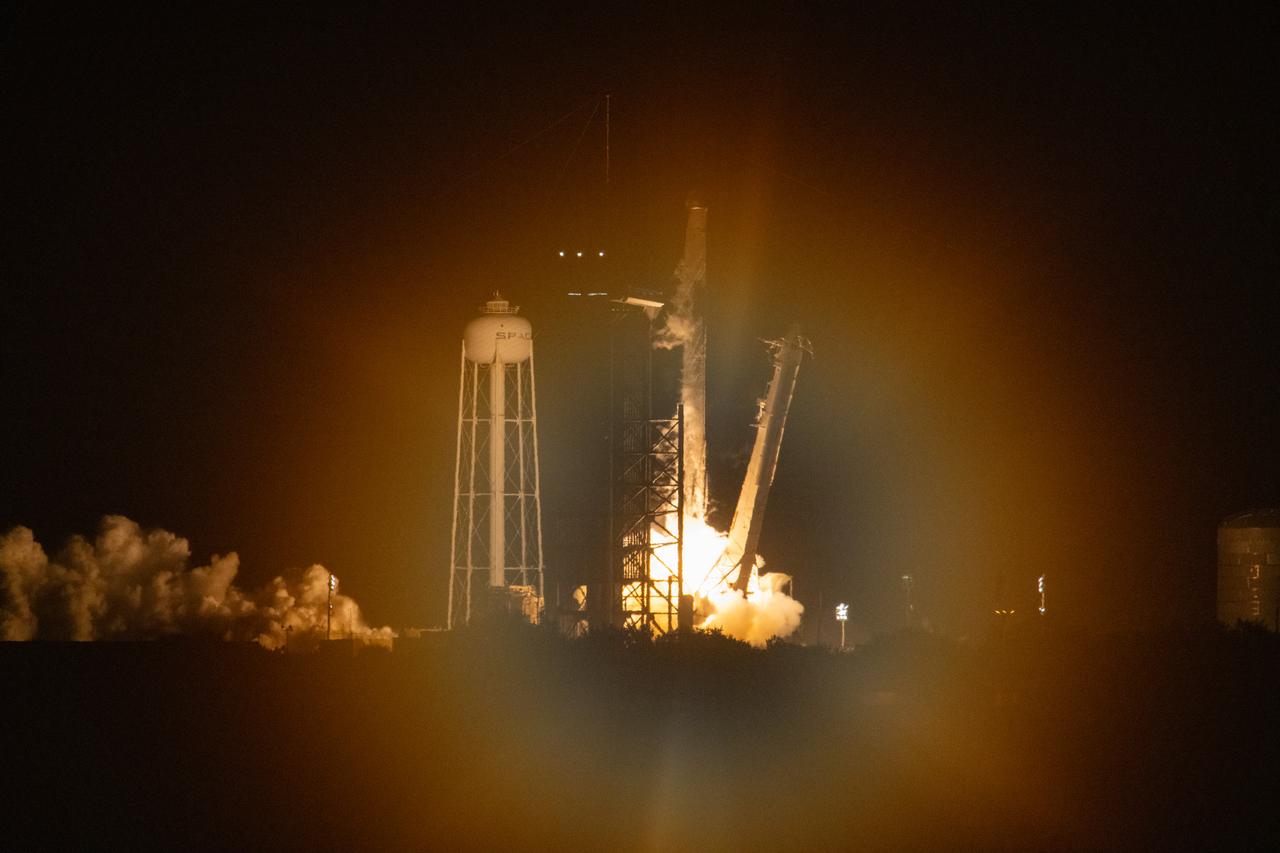
The SpaceX Falcon 9 rocket carrying the Dragon spacecraft lifts off from Launch Complex 39A at NASA’s Kennedy Space Center in Florida on Thursday, Nov. 9, 2023, on the company’s 29th commercial resupply services mission for the agency to the International Space Station. Liftoff was at 8:28 p.m. EST. Dragon will deliver scientific research, technology demonstrations, crew supplies, and hardware to the space station to support its Expedition 70 crew, including NASA’s Integrated Laser Communications Relay Demonstration Low Earth Orbit User Modem and Amplifier Terminal (ILLUMA-T) and Atmospheric Waves Experiment (AWE). The spacecraft is expected to spend about a month attached to the orbiting outpost before it returns to Earth with research and return cargo, splashing down off the coast of Florida.
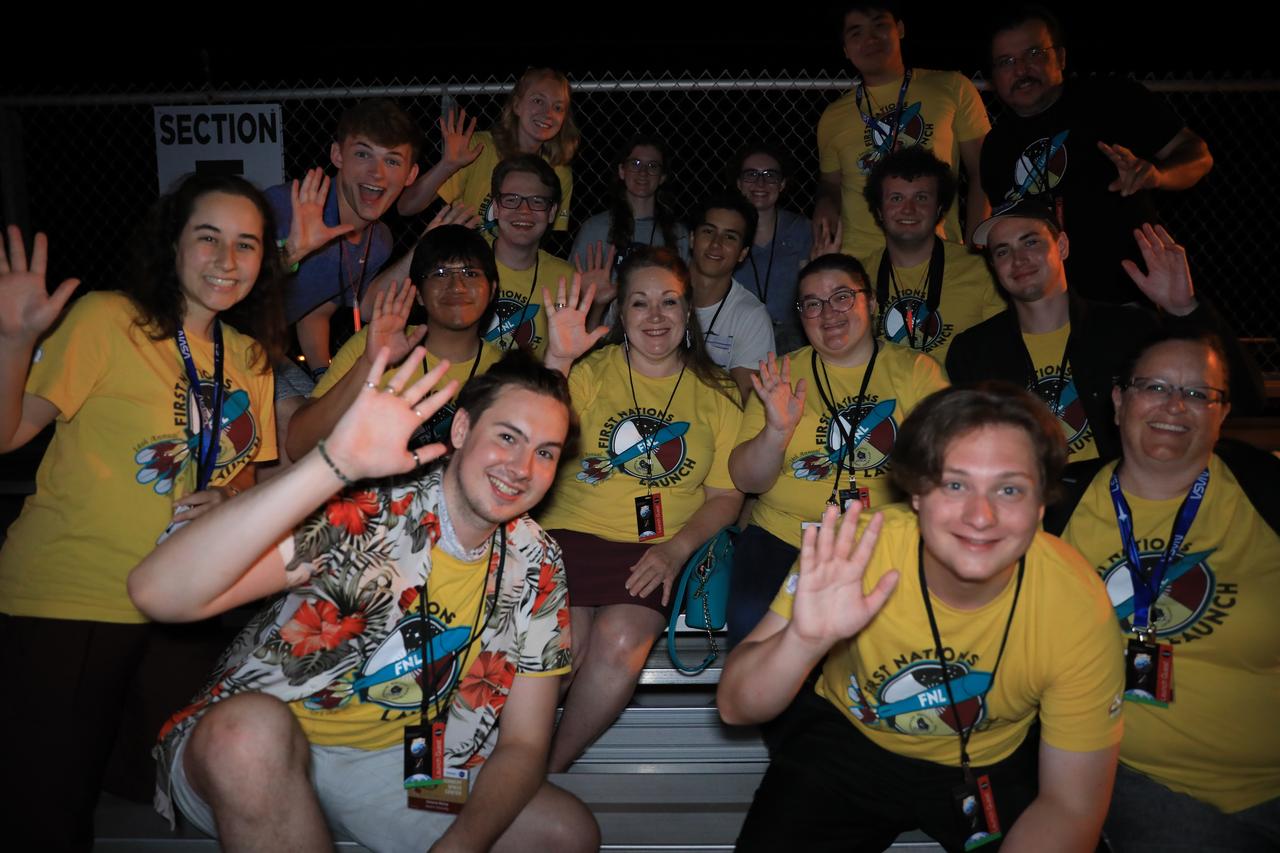
Participants from the 14th First Nations Launch High-Power Rocket Competition watch NASA’s SpaceX Crew-7 launch from the Banana Creek viewing site at the agency’s Kennedy Space Center in Florida on Saturday, Aug. 26, 2023. A SpaceX Falcon 9 rocket carrying NASA astronaut Jasmin Moghbeli, ESA (European Space Agency) astronaut Andreas Mogensen, JAXA (Japan Aerospace Exploration Agency) astronaut Satoshi Furukawa, and Roscosmos cosmonaut Konstantin Borisov launched to the International Space Station at 3:27 a.m. EDT from Kennedy’s Launch Complex 39A. Students and advisors from University of Washington, University of Colorado-Boulder, and an international team from Queens University – this year’s First Nations Launch grand prize teams – traveled to Kennedy for a VIP tour, culminating in viewing the Crew-7 launch. Another highlight included a guided tour of historic Hangar AE, led by James Wood (Osage Nation and Loyal Shawnee), chief engineer of NASA’s Launch Services Program, technical advisor for the Crew-7 launch, and First Nations mentor and judge. One of NASA’s Artemis Student Challenges, the First Nations Launch competition comprises students from tribal colleges and universities, Native American-Serving Nontribal Institutions, and collegiate chapters of the American Indian Science and Engineering Society who design, build, and launch a high-powered rocket from a launch site in Kansasville, Wisconsin. The competition is facilitated by NASA’s Wisconsin Space Grant Consortium and managed by the agency’s Office of STEM Engagement at Kennedy.
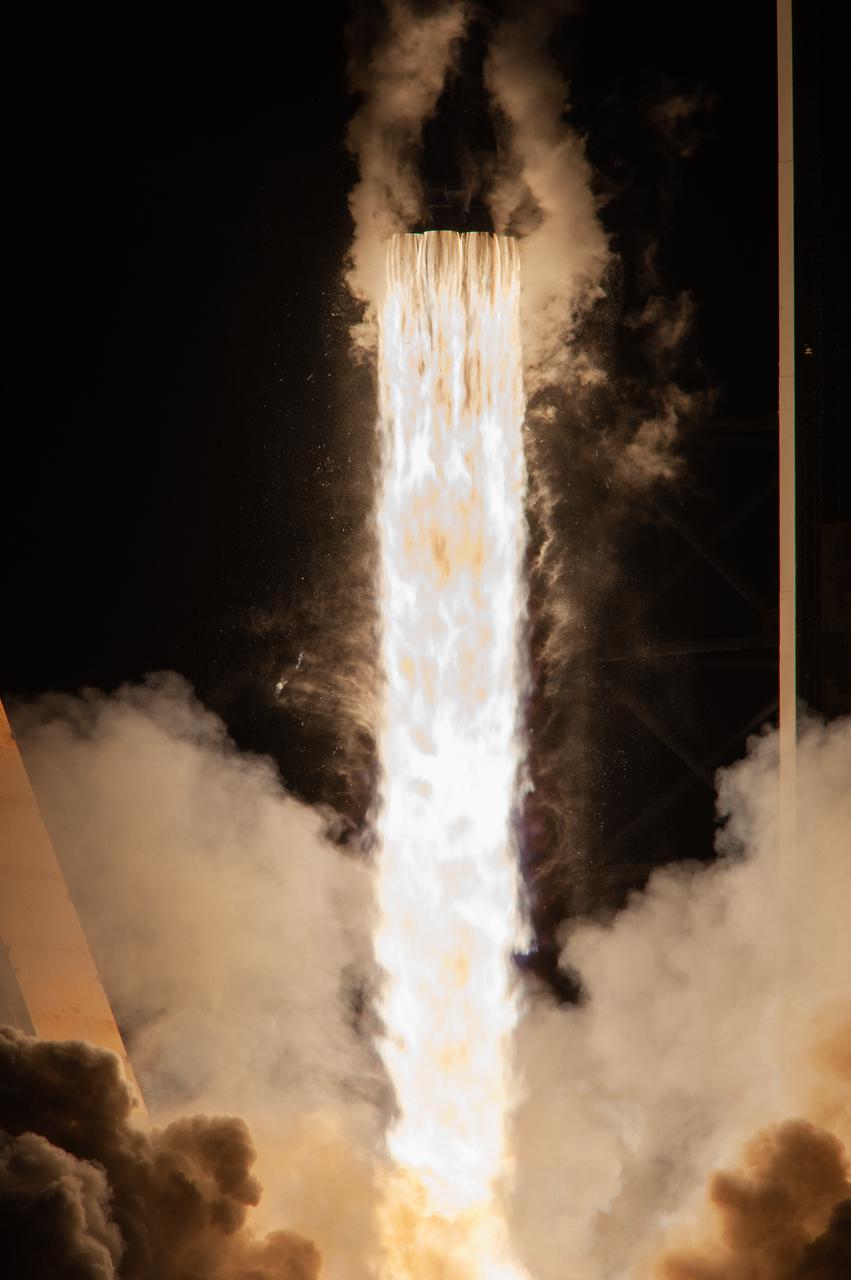
The SpaceX Falcon 9 rocket, with the company’s Crew Dragon atop, lifts off from Launch Pad 39A at Kennedy Space Center in Florida for NASA’s SpaceX Crew-4 mission on April 27, 2022, at 3:52 a.m. EDT. Aboard the Dragon are NASA astronauts Kjell Lindgren, Bob Hines, and Jessica Watkins, and ESA (European Space Agency) astronaut Samantha Cristoforetti. The spacecraft will carry the Crew-4 astronauts to the International Space Station as part of NASA’s Commercial Crew Program. The Dragon spacecraft, named Freedom by the mission’s crew, is scheduled to dock to the space station today at 8:15 p.m. EDT.
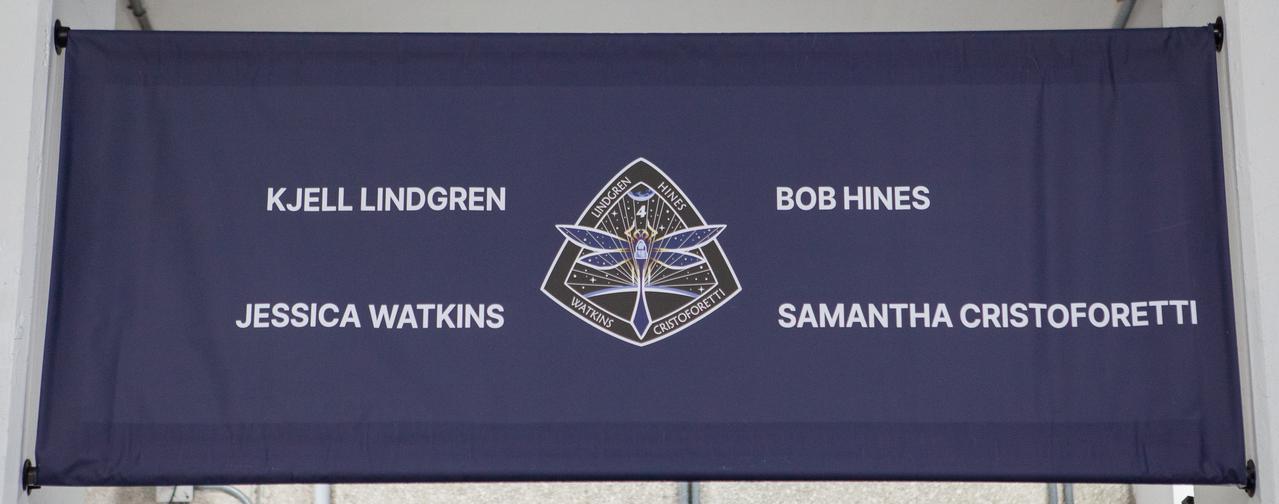
A banner hangs outside the Neil A. Armstrong Operations and Checkout Building at NASA’s Kennedy Space Center in Florida on April 27, 2022. Crew-4 astronauts Kjell Lindgren, Bob Hines, Jessica Watkins, and Samantha Cristoforetti will launch to the International Space Station aboard SpaceX’s Crew Dragon, powered by the company’s Falcon 9 rocket, as part of NASA’s Commercial Crew Program. Liftoff is scheduled for today at 3:52 a.m. EDT from Launch Complex 39A at Kennedy.
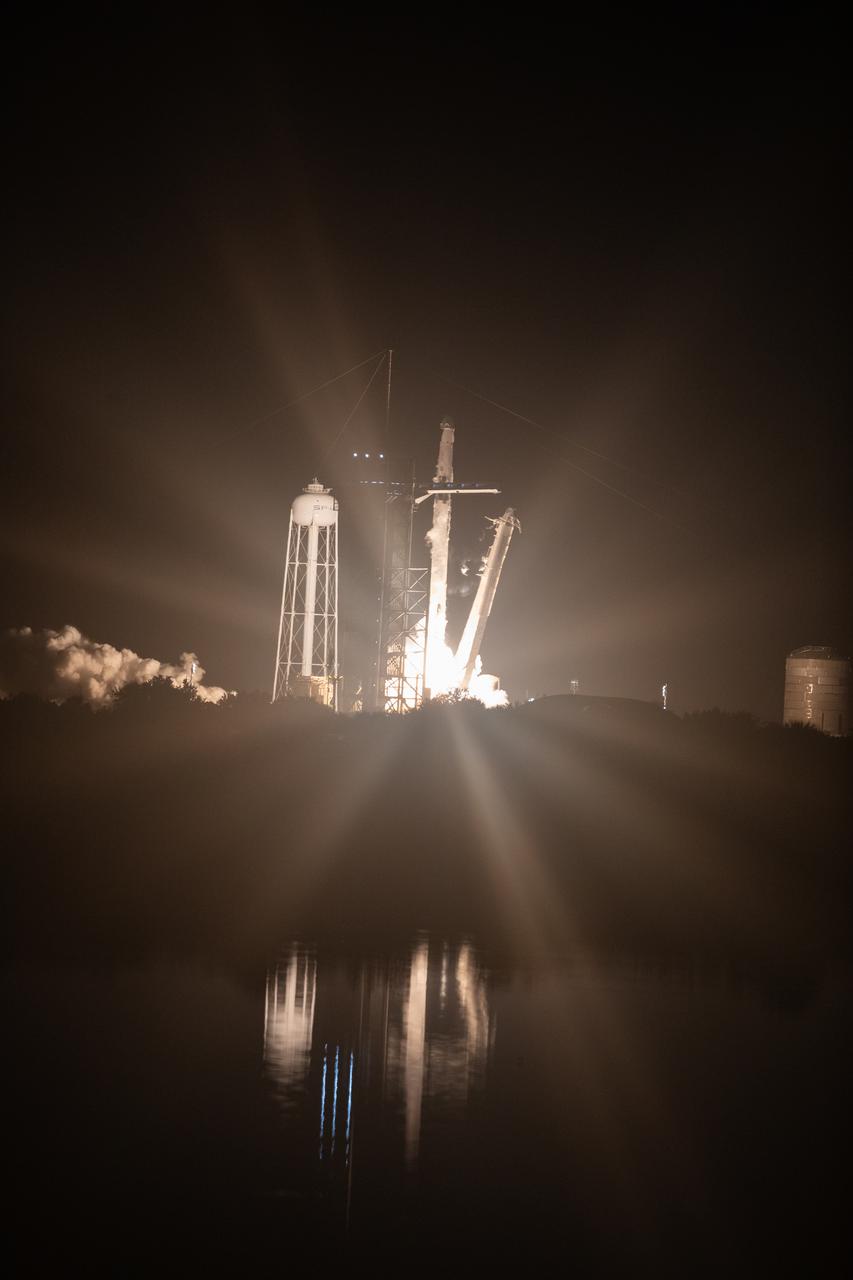
A SpaceX Falcon 9 rocket lifts off at 3:27 a.m. EDT on Saturday, Aug. 26, from Kennedy Space Center’s Launch Complex 39A in Florida, carrying NASA’s SpaceX Crew-7 crew members to the International Space Station. Aboard SpaceX’s Dragon spacecraft are NASA astronaut Jasmin Moghbeli, ESA (European Space Agency) astronaut Andreas Mogensen, JAXA (Japan Aerospace Exploration Agency) astronaut Satoshi Furukawa, and Roscosmos cosmonaut Konstantin Borisov. They will dock to the orbiting laboratory at about 8:40 a.m. EDT Sunday, Aug. 27.
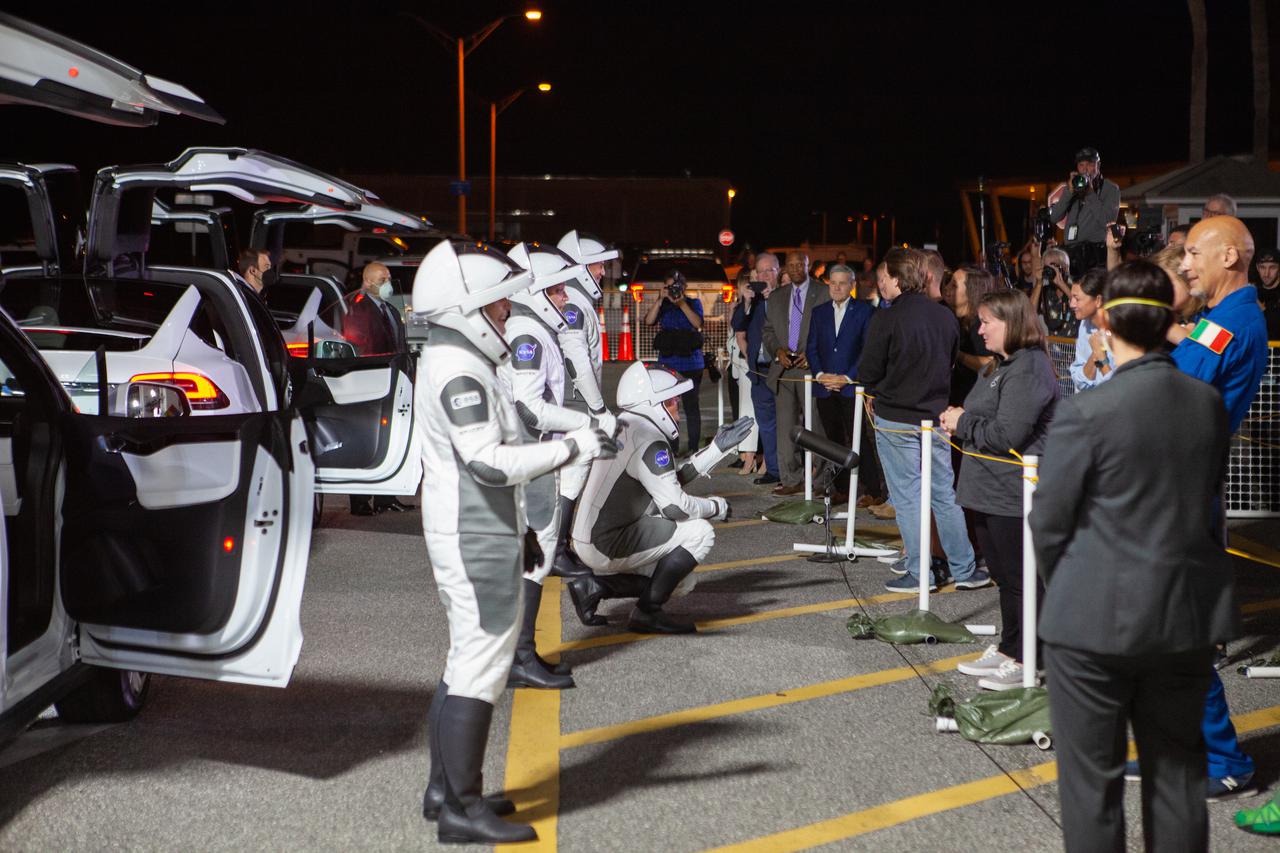
Crew-4 astronauts Kjell Lindgren, Samantha Cristoforetti, Bob Hines, and Jessica Watkins wave to their families outside of the Neil Armstrong Operations and Checkout Building at NASA’s Kennedy Space Center in Florida before getting into the customized Tesla Model X vehicles that will transport them to their spacecraft at Launch Complex 39A. SpaceX’s Crew Dragon, powered by the company’s Falcon 9 rocket, will carry the four-person crew to the International Space Station as part of NASA’s Commercial Crew Program. Crew-4 is scheduled to launch today at 3:52 a.m. EDT, from Pad 39A at Kennedy.
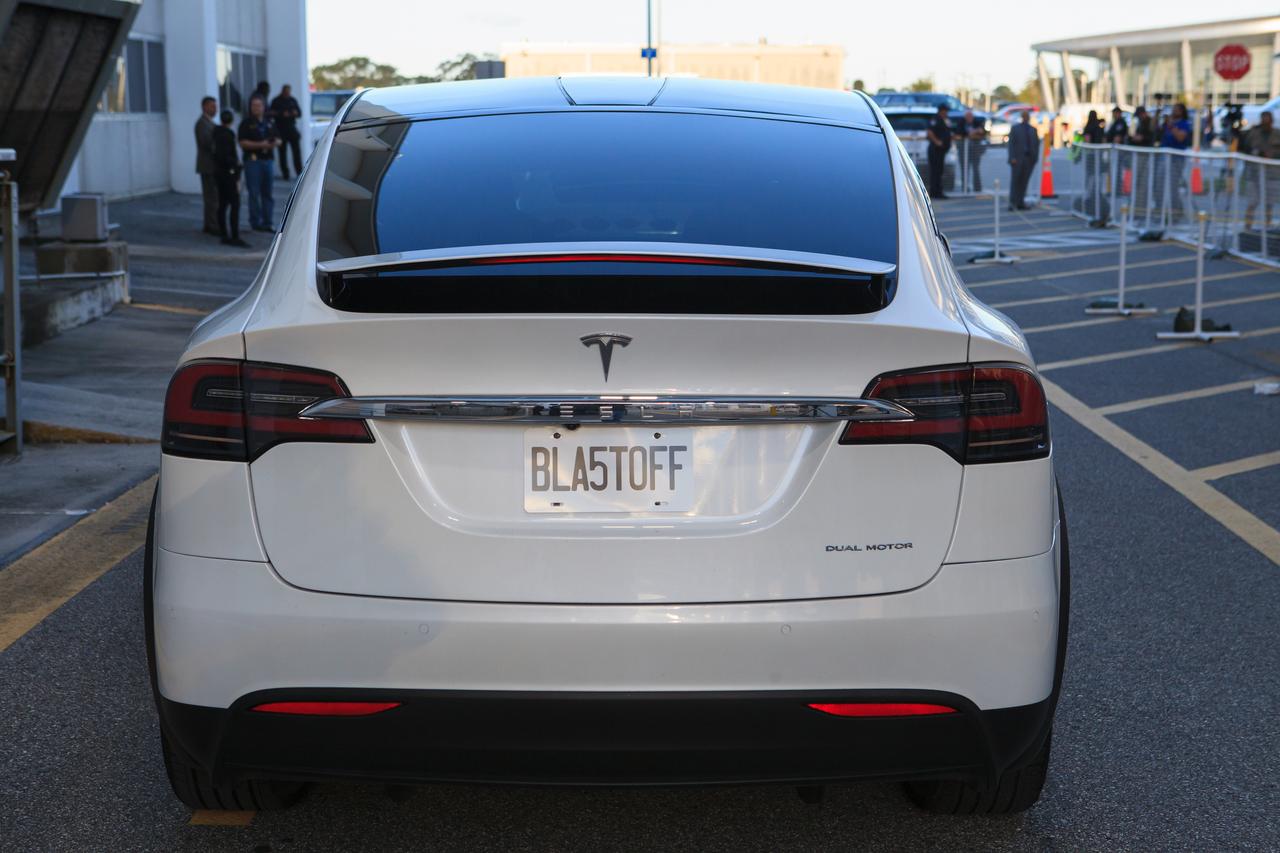
One of the Tesla Model X cars that will carry NASA’s SpaceX Crew-5 to Kennedy Space Center’s Launch Complex 39A is photographed at the Neil A. Armstrong Operations and Checkout Building on Oct. 5, 2022. The license plate tag reads “blast off.” NASA astronauts Nicole Mann, spacecraft commander, and Josh Cassada, pilot; Roscosmos cosmonaut Anna Kikina, mission specialist; and JAXA (Japan Aerospace Exploration Agency) astronaut Koichi Wakata, mission specialist, will launch to the International Space Station for a science expedition mission as part of NASA’s Commercial Crew Program. The SpaceX Falcon 9 rocket and Dragon Endurance spacecraft lifted off at noon EDT.
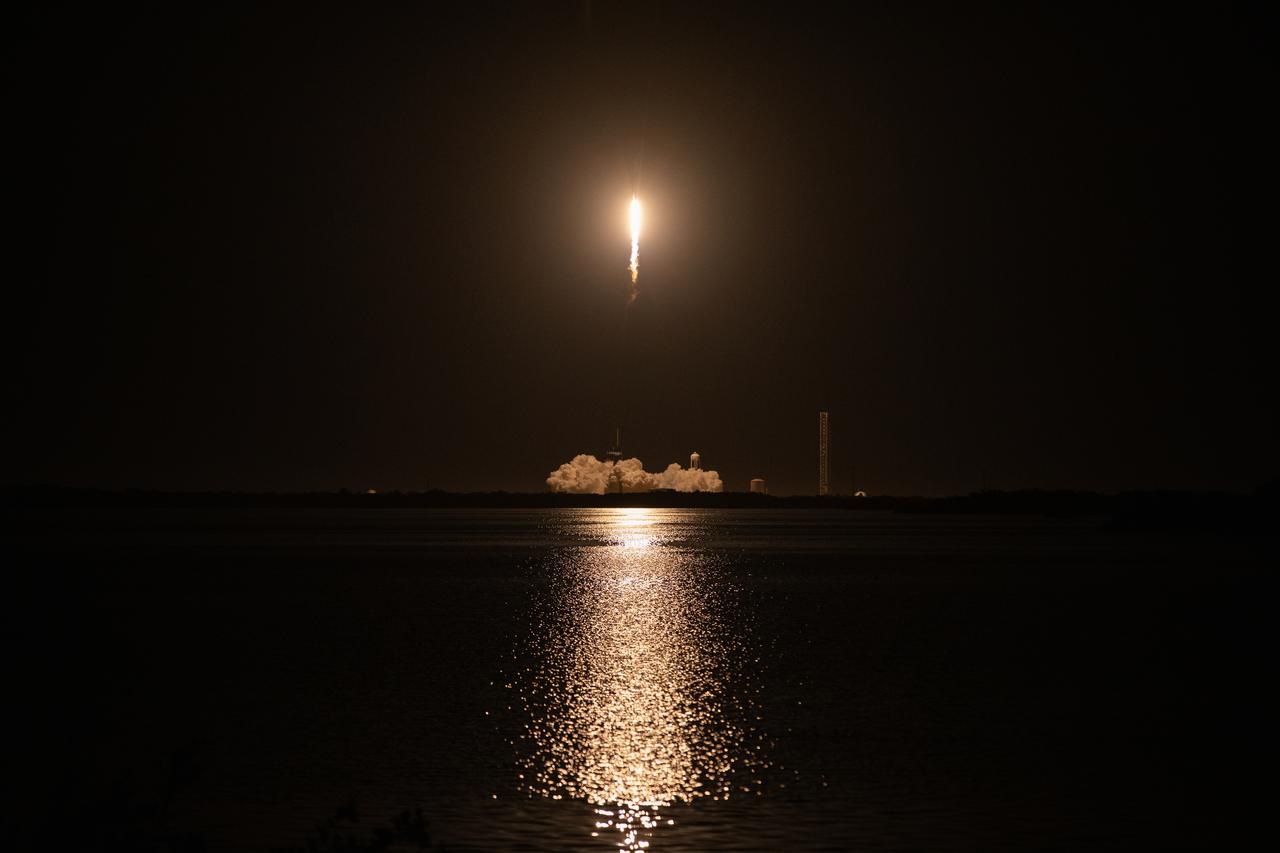
The SpaceX Falcon 9 rocket carrying the Dragon spacecraft lifts off from Launch Complex 39A at NASA’s Kennedy Space Center in Florida on Thursday, Nov. 9, 2023, on the company’s 29th commercial resupply services mission for the agency to the International Space Station. Liftoff was at 8:28 p.m. EST. Dragon will deliver scientific research, technology demonstrations, crew supplies, and hardware to the space station to support its Expedition 70 crew, including NASA’s Integrated Laser Communications Relay Demonstration Low Earth Orbit User Modem and Amplifier Terminal (ILLUMA-T) and Atmospheric Waves Experiment (AWE). The spacecraft is expected to spend about a month attached to the orbiting outpost before it returns to Earth with research and return cargo, splashing down off the coast of Florida.
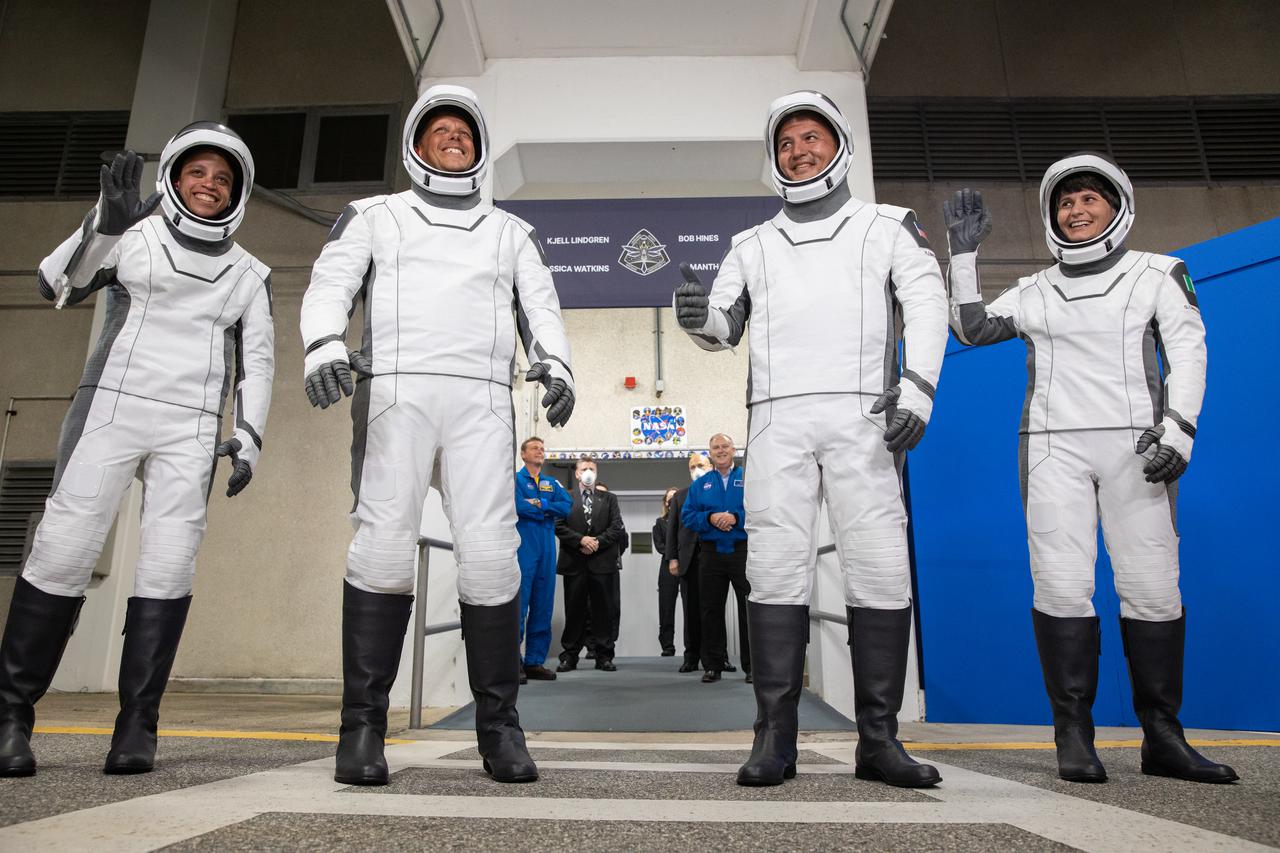
Crew-4 astronauts wave after walking out through the double doors below the Neil A. Armstrong Building’s Astronaut Crew Quarters at NASA’s Kennedy Space Center in Florida on April 27, 2022. They will make their way to the customized Tesla Model X cars that will take them to their spacecraft at Launch Complex 39A. From left are: mission specialist Jessica Watkins, pilot Bob Hines, commander Kjell Lindgren, and mission specialist Samantha Cristoforetti. SpaceX’s Crew Dragon, powered by the company’s Falcon 9 rocket, will carry the four-person crew to the International Space Station as part of NASA’s Commercial Crew Program. Crew-4 is scheduled to launch today at 3:52 a.m. EDT, from Pad 39A at Kennedy.
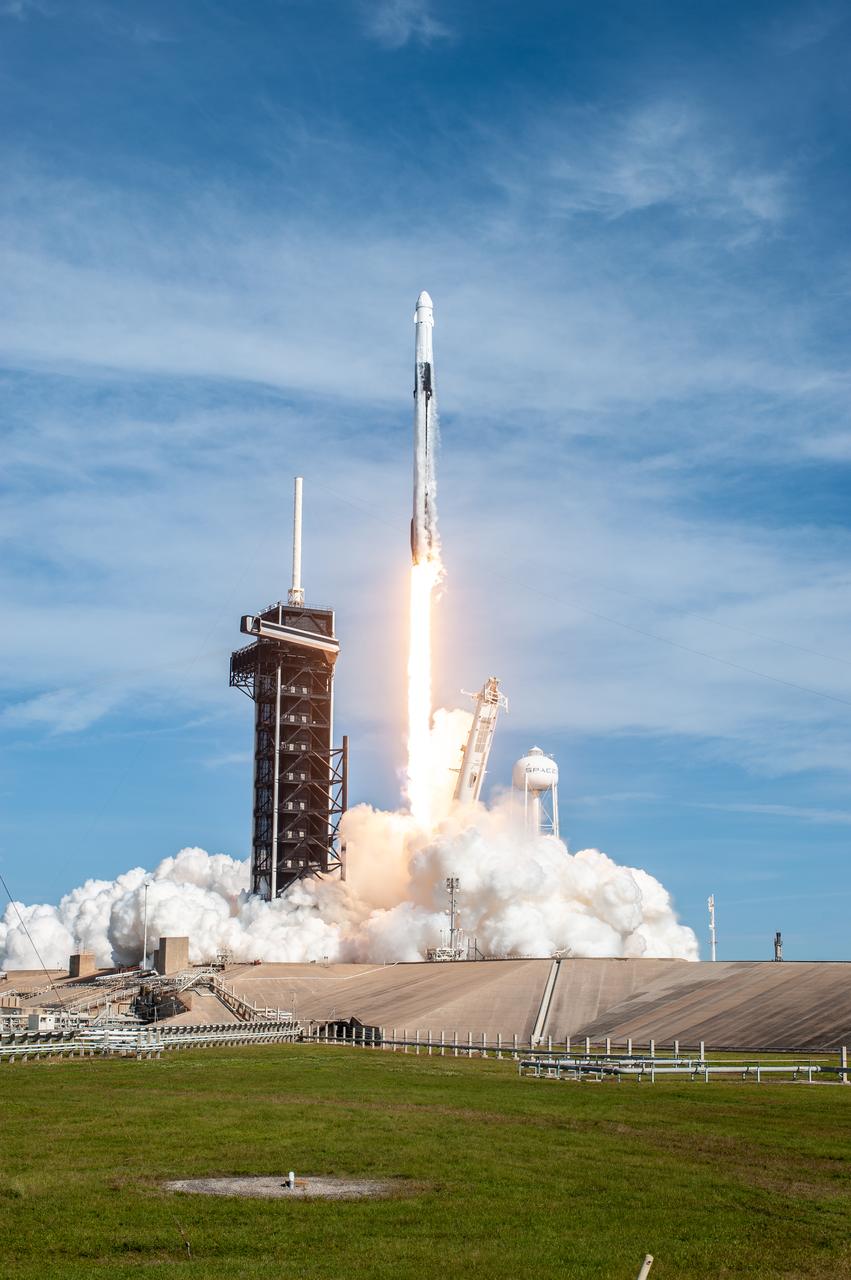
A SpaceX Falcon 9 rocket lifts off from Launch Complex 39A at Kennedy Space Center in Florida at 11:17 a.m. EST on Dec. 6, 2020, carrying the uncrewed cargo Dragon spacecraft on its journey to the International Space Station for NASA and SpaceX’s 21st Commercial Resupply Services (CRS-21) mission. Dragon will deliver more than 6,400 pounds of science investigations and cargo to the orbiting laboratory. The mission marks the first launch for SpaceX under NASA’s CRS-2 contract.
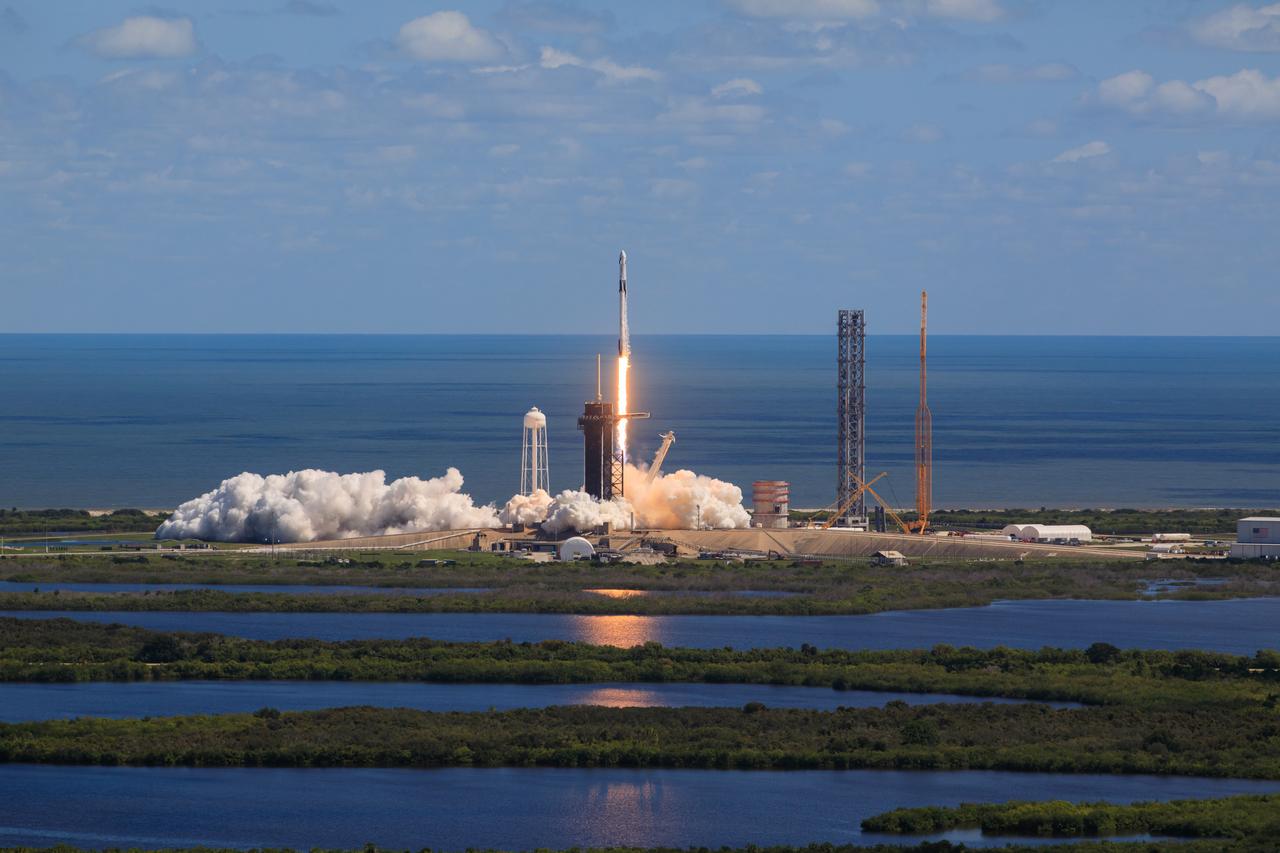
SpaceX’s Falcon 9 rocket, with the Dragon Endurance spacecraft atop, lifts off from NASA’s Kennedy Space Center Launch Complex 39A in Florida on Oct. 5, 2022, on the agency’s SpaceX Crew-5 launch. Inside Endurance are NASA astronauts Nicole Mann, commander; Josh Cassada, pilot; and Mission Specialists Koichi Wakata, of JAXA (Japan Aerospace Exploration Agency), and Roscosmos cosmonaut Anna Kikina. The crew is heading to the International Space Station for a science expedition mission as part of the agency’s Commercial Crew Program. Liftoff occurred at noon EDT.
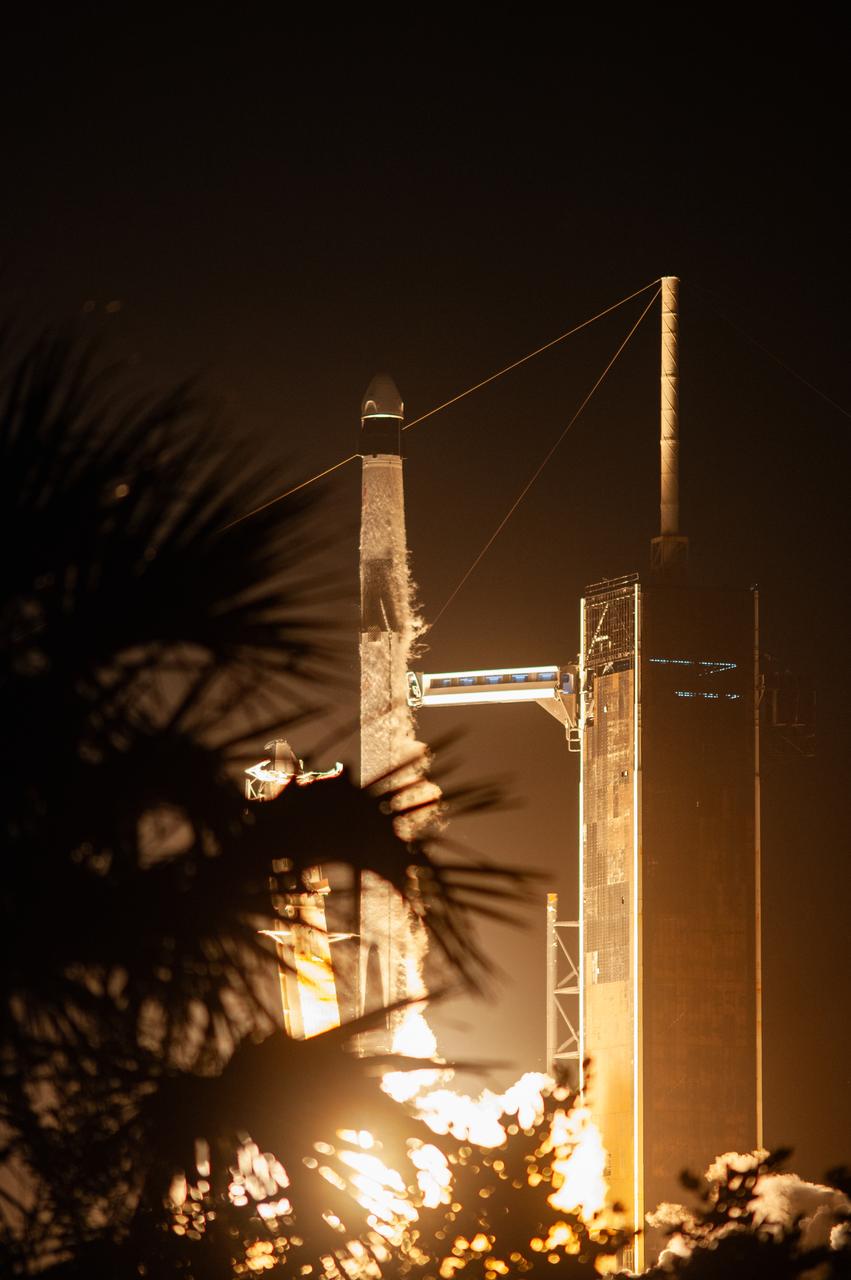
A SpaceX Falcon 9 rocket lifts off the pad at 3:27 a.m. EDT on Saturday, Aug. 26, from Kennedy Space Center’s Launch Complex 39A in Florida, carrying NASA’s SpaceX Crew-7 crew members to the International Space Station. Aboard SpaceX’s Dragon spacecraft are NASA astronaut Jasmin Moghbeli, ESA (European Space Agency) astronaut Andreas Mogensen, JAXA (Japan Aerospace Exploration Agency) astronaut Satoshi Furukawa, and Roscosmos cosmonaut Konstantin Borisov.
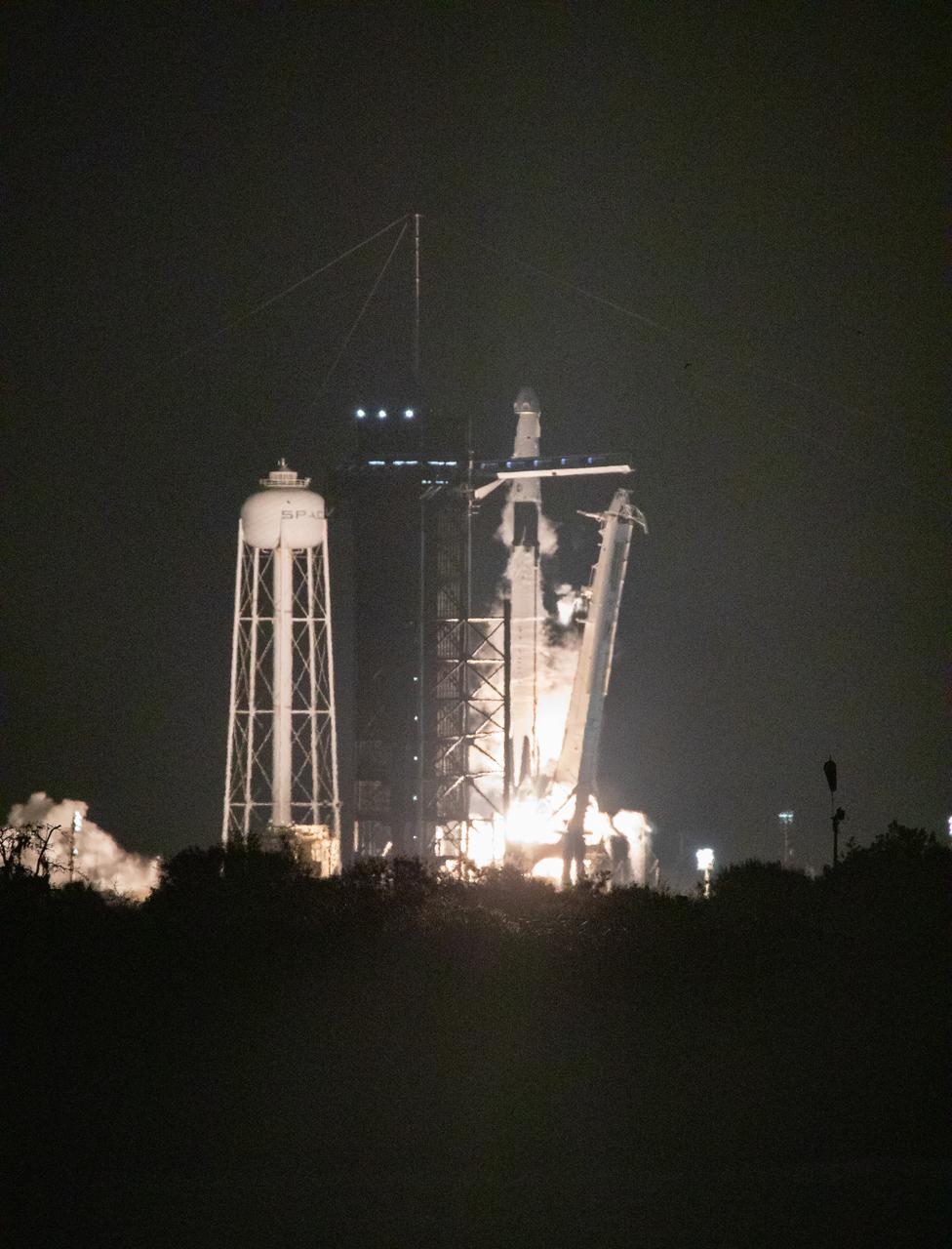
A SpaceX Falcon 9 rocket lifts off the pad at Launch Complex 39A at 12:34 a.m. EST on March 2, 2023 carrying the Dragon spacecraft Endeavour for NASA’s Crew-6 mission to the International Space Station. Aboard Dragon are NASA astronauts, Stephen Bowen, spacecraft commander, and Warren Hoburg, pilot, along with mission specialists Sultan Alneyadi, UAE (United Arab Emirates) astronaut, and Andrey Fedyaev, Roscosmos cosmonaut. Crew-6 is the sixth crew rotation mission with SpaceX to the station, and the seventh flight of Dragon with people as part of the agency’s Commercial Crew Program.
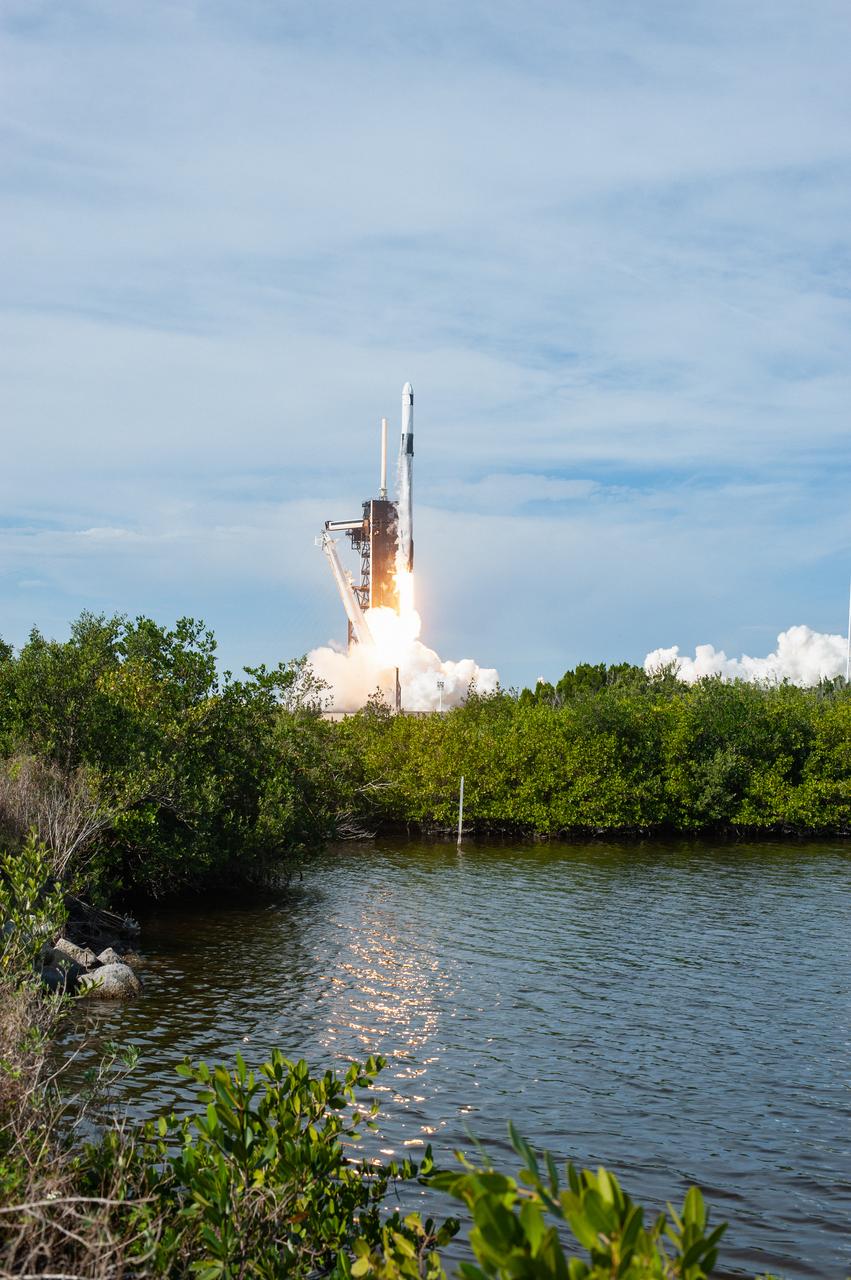
A SpaceX Falcon 9 rocket lifts off from Launch Complex 39A at Kennedy Space Center in Florida at 11:17 a.m. EST on Dec. 6, 2020, carrying the uncrewed cargo Dragon spacecraft on its journey to the International Space Station for NASA and SpaceX’s 21st Commercial Resupply Services (CRS-21) mission. Dragon will deliver more than 6,400 pounds of science investigations and cargo to the orbiting laboratory. The mission marks the first launch for SpaceX under NASA’s CRS-2 contract.
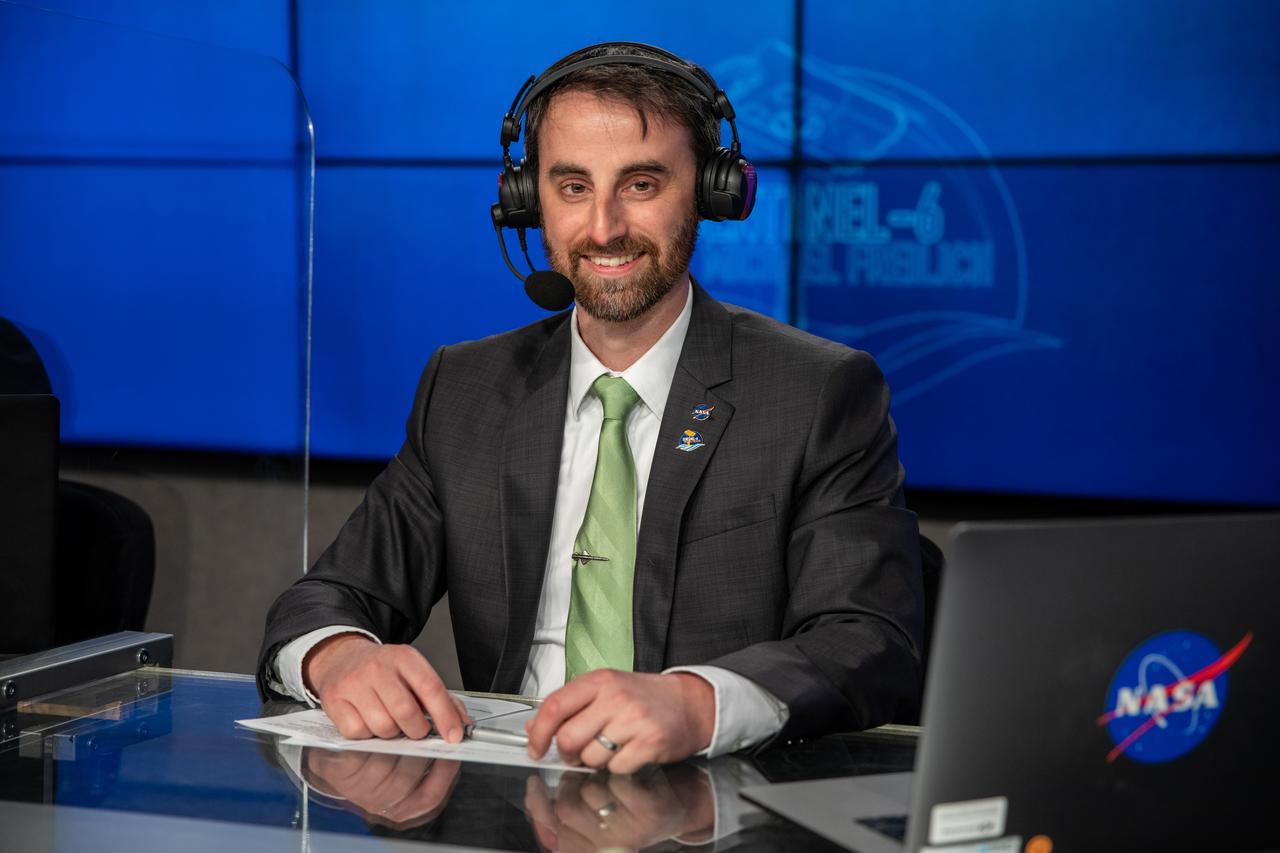
NASA Launch Commentator Joshua Santora participates in the launch broadcast for the Sentinel-6 Michael Freilich mission on Nov. 21, 2020, in the Press Site auditorium at Kennedy Space Center in Florida. The SpaceX Falcon 9 rocket carrying the Sentinel-6 Michael Freilich spacecraft launched from Space Launch Complex 4 at Vandenberg Air Force Base in California at 9:17 a.m. PST (12:17 p.m. EST). The Sentinel-6/Jason-CS (Continuity of Service) mission consists of the Sentinel-6 Michael Freilich satellite, which will be followed by its twin, the Sentinel-6B satellite, in 2025. The Sentinel-6/Jason-CS mission is part of Copernicus, the European Union’s Earth observation program, managed by the European Commission. Continuing the legacy of the Jason series missions, Sentinel-6/Jason-CS will extend the records of sea level into their fourth decade, collecting accurate measurements of sea surface height for more than 90% of the world’s seas, and providing crucial information for operational oceanography, marine meteorology, and climate studies. NASA’s Launch Services Program at Kennedy Space Center was responsible for launch management.
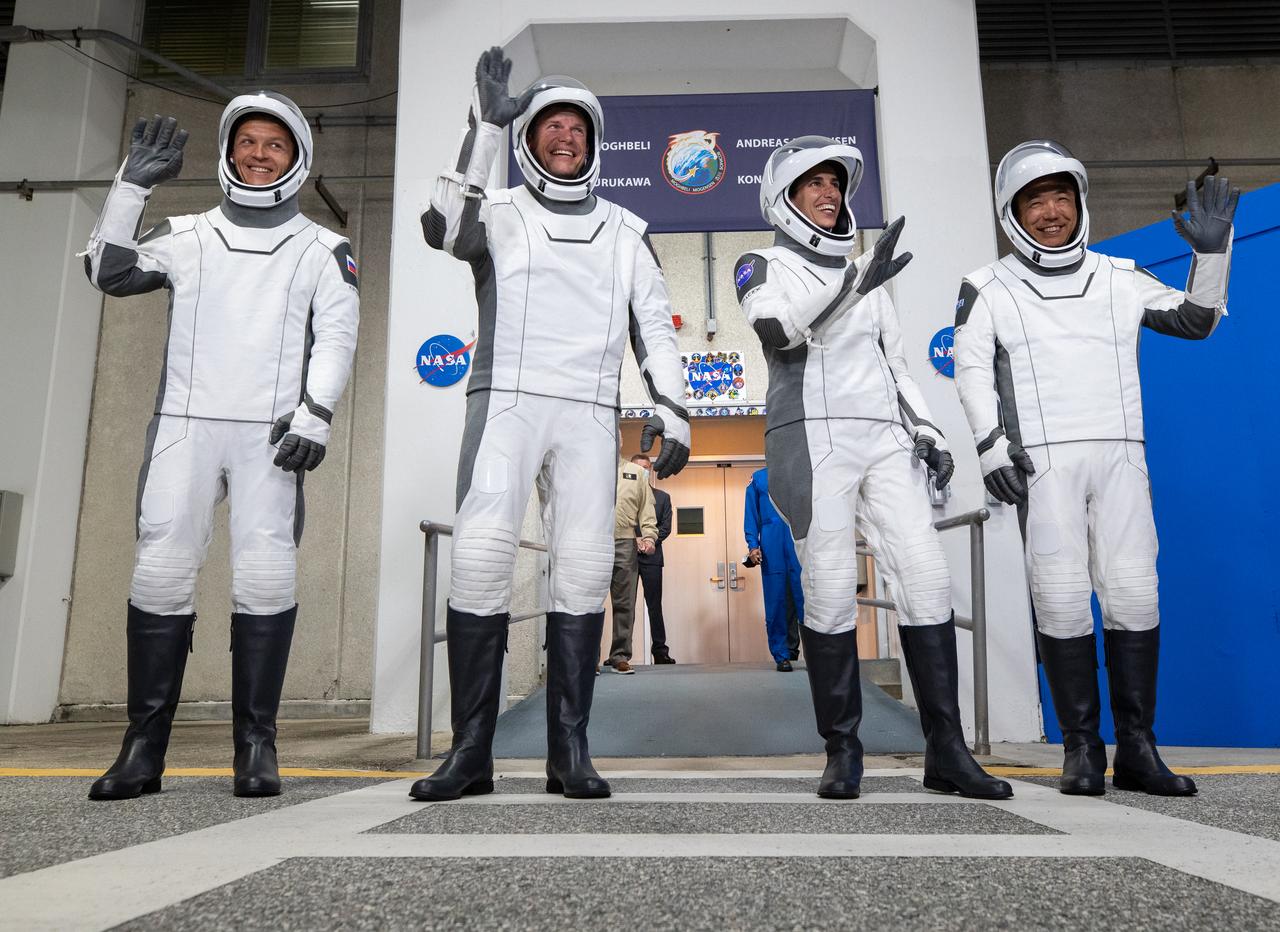
NASA’s SpaceX Crew-7 crew members, from left, Roscosmos cosmonaut Konstantin Borisov, ESA (European Space Agency) astronaut Andreas Mogensen, NASA astronaut Jasmin Moghbeli, and JAXA (Japan Aerospace Exploration Agency) astronaut Satoshi Furukawa acknowledge family and friends on Saturday, Aug. 26, 2023, outside of the Neil Armstrong Operations and Checkout Building at NASA’s Kennedy Space Center in Florida. Next, they will get into the customized Tesla Model X vehicles that will transport them to Kennedy’s Launch Complex 39A. SpaceX’s Dragon spacecraft, powered by the company’s Falcon 9 rocket, will carry the four-person crew to the International Space Station as part of NASA’s Commercial Crew Program. Crew-7 is scheduled to launch at 3:27 a.m. EDT.
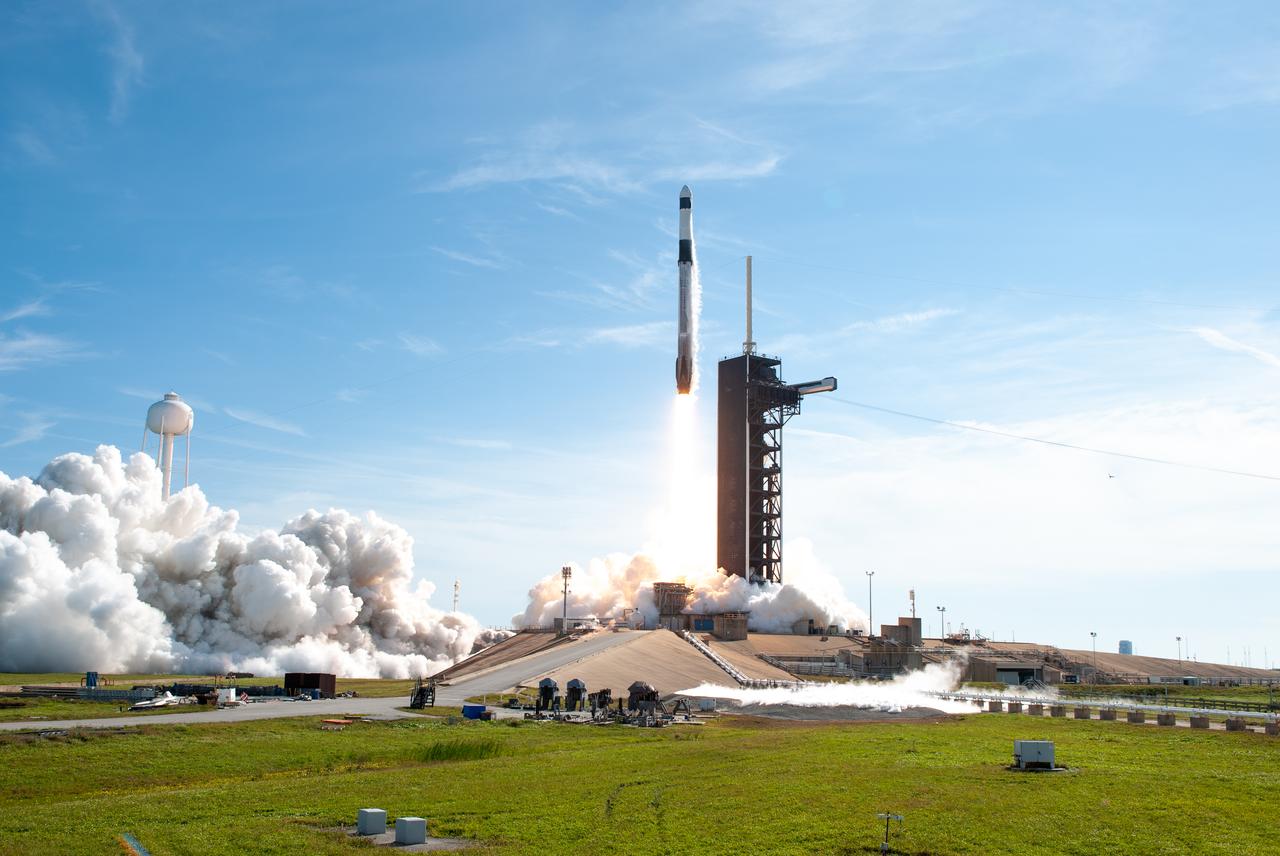
A SpaceX Falcon 9 rocket lifts off from Launch Complex 39A at Kennedy Space Center in Florida at 11:17 a.m. EST on Dec. 6, 2020, carrying the uncrewed cargo Dragon spacecraft on its journey to the International Space Station for NASA and SpaceX’s 21st Commercial Resupply Services (CRS-21) mission. Dragon will deliver more than 6,400 pounds of science investigations and cargo to the orbiting laboratory. The mission marks the first launch for SpaceX under NASA’s CRS-2 contract.
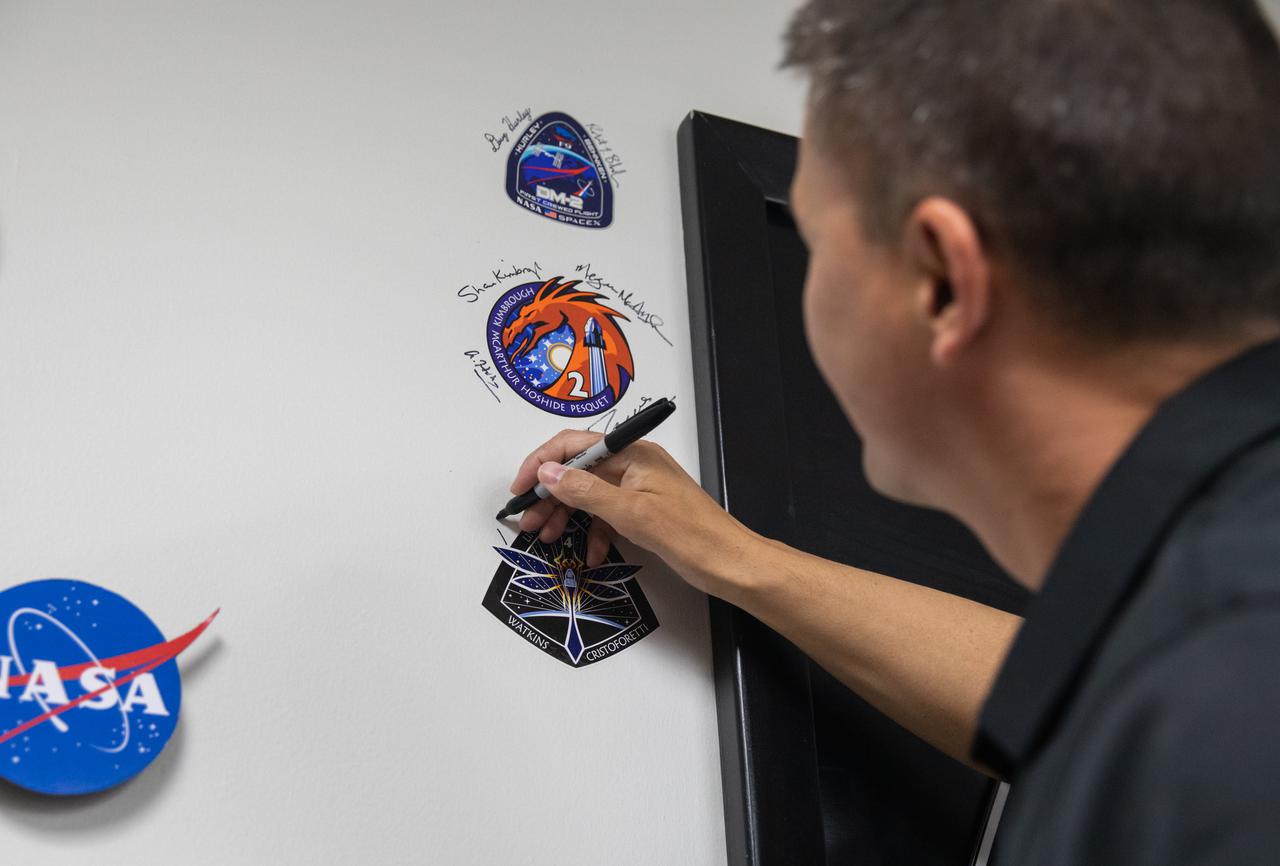
Crew-4 mission astronaut Kjell Lindgren signs the mission patch in the Astronaut Crew Quarters inside Kennedy Space Center’s Neil A. Armstrong Operations and Checkout Building on April 27, 2022. Lindgren, along with Bob Hines, Jessica Watkins, and Samantha Cristoforetti, will launch aboard SpaceX’s Crew Dragon – powered by the company’s Falcon 9 rocket – to the International Space Station as part of NASA’s Commercial Crew Program. Crew-4 is scheduled to lift off today at 3:52 a.m. EDT from Launch Complex 39A at Kennedy.
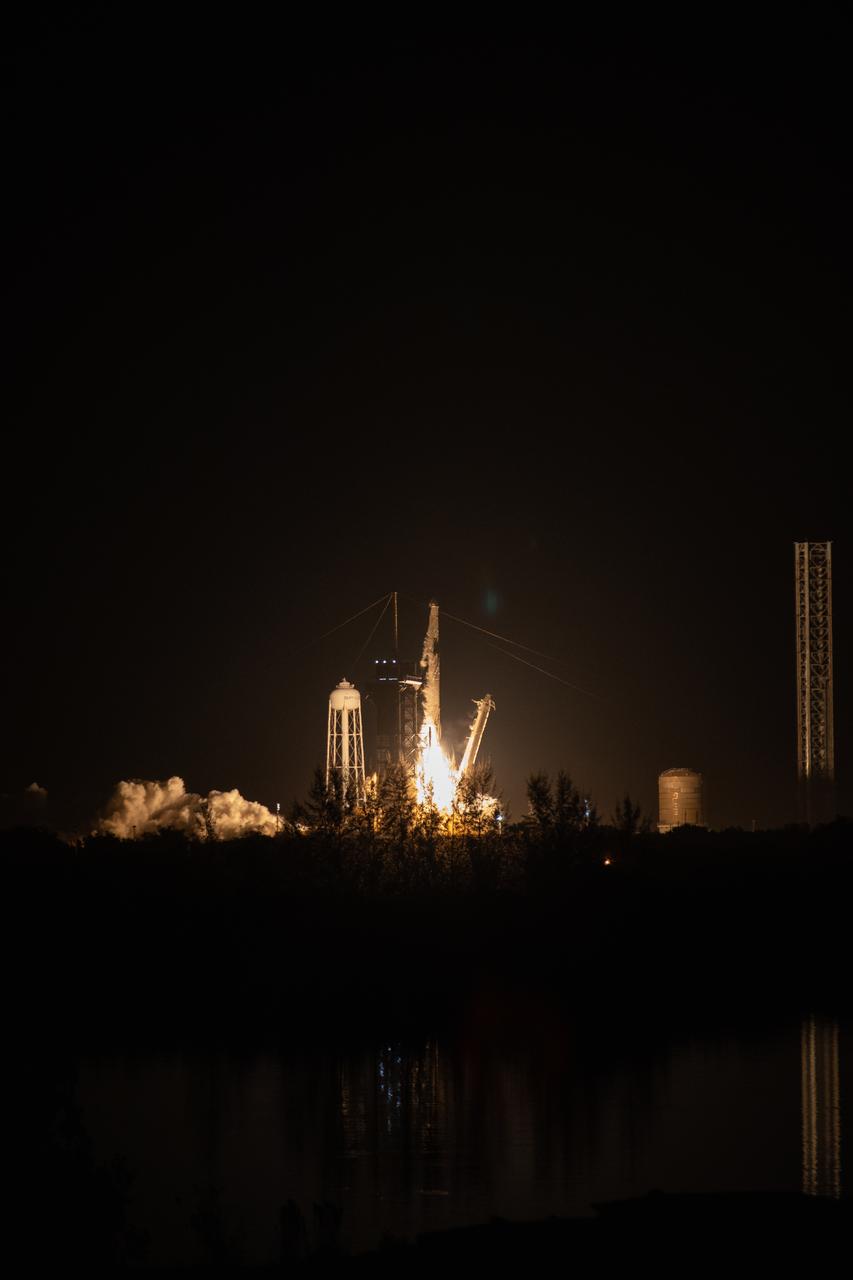
The SpaceX Falcon 9 rocket carrying the Dragon spacecraft lifts off from Launch Complex 39A at NASA’s Kennedy Space Center in Florida on Thursday, Nov. 9, 2023, on the company’s 29th commercial resupply services mission for the agency to the International Space Station. Liftoff was at 8:28 p.m. EST. Dragon will deliver scientific research, technology demonstrations, crew supplies, and hardware to the space station to support its Expedition 70 crew, including NASA’s Integrated Laser Communications Relay Demonstration Low Earth Orbit User Modem and Amplifier Terminal (ILLUMA-T) and Atmospheric Waves Experiment (AWE). The spacecraft is expected to spend about a month attached to the orbiting outpost before it returns to Earth with research and return cargo, splashing down off the coast of Florida.
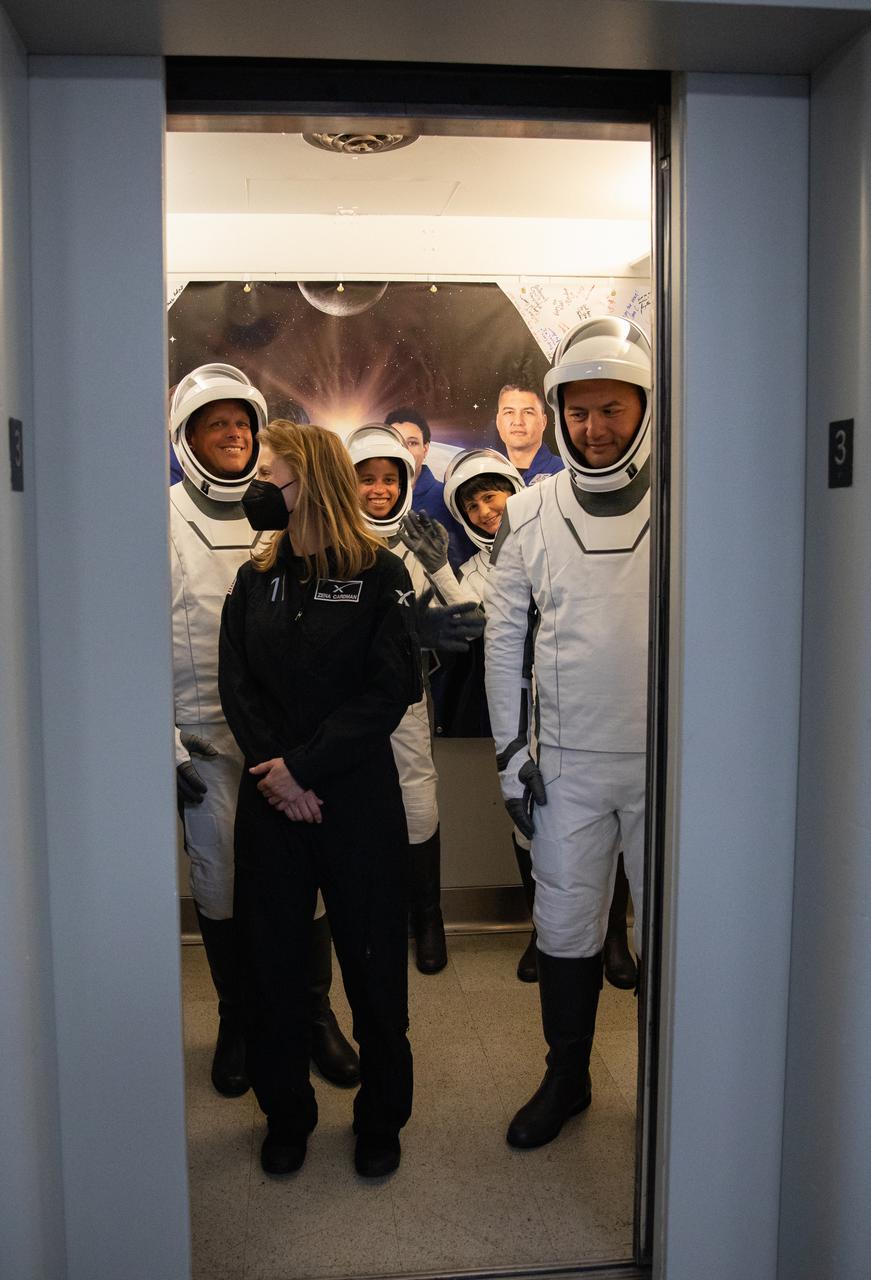
Crew-4 mission astronauts Kjell Lindgren, Bob Hines, Jessica Watkins, and Samantha Cristoforetti, enter the elevator in the Astronaut Crew Quarters inside Kennedy Space Center’s Neil A. Armstrong Operations and Checkout Building on April 27, 2022. A team of SpaceX suit technicians assisted the crew as they put on their custom-fitted spacesuits and checked the suits for leaks. The four astronauts will launch aboard SpaceX’s Crew Dragon, powered by the company’s Falcon 9 rocket, to the International Space Station as part of NASA’s Commercial Crew Program. Crew-4 is scheduled to lift off today at 3:52 a.m. EDT from Launch Complex 39A at Kennedy.
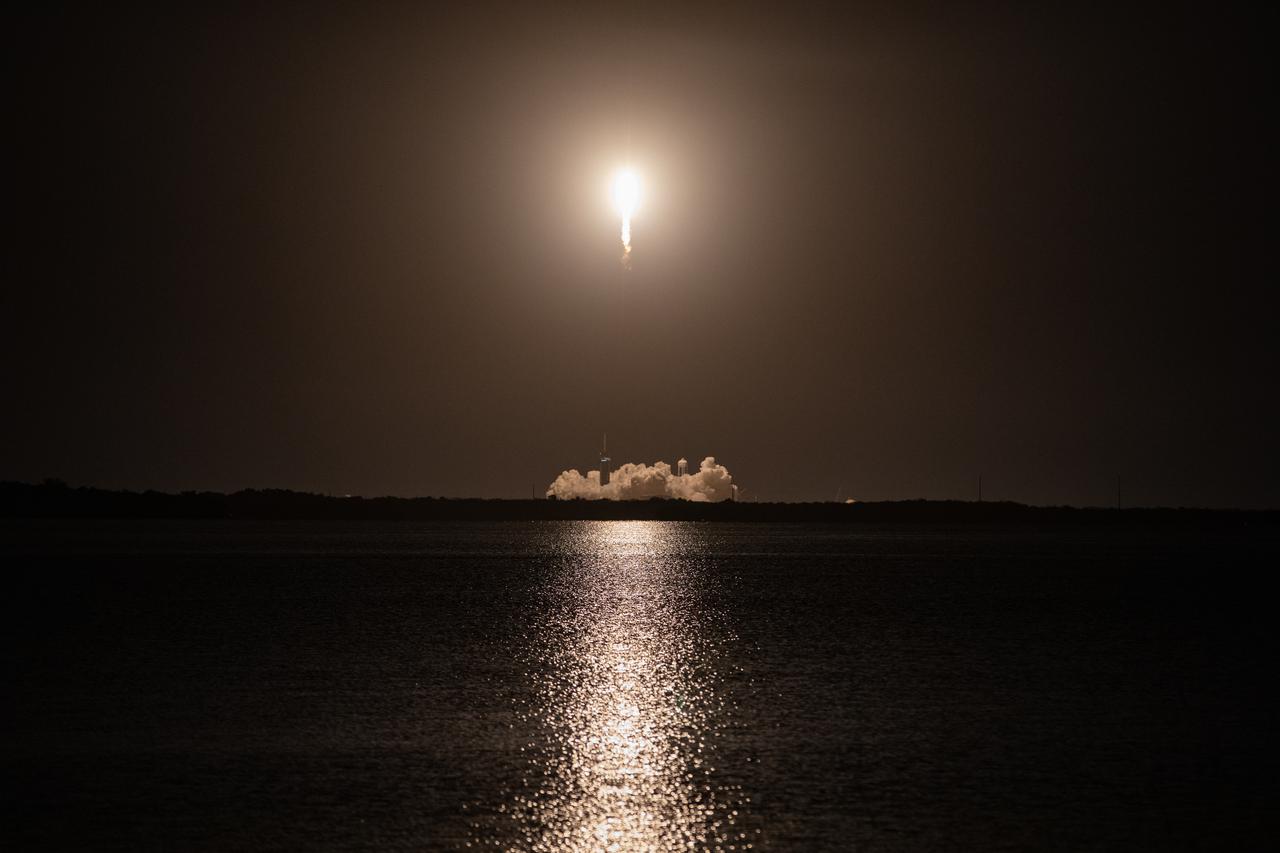
The SpaceX Falcon 9 rocket, with the company’s Crew Dragon atop, soars upward after a 3:52 a.m. EDT liftoff from Launch Complex 39A at Kennedy Space Center in Florida for NASA’s SpaceX Crew-4 mission on April 27, 2022. Aboard the Dragon are NASA astronauts Kjell Lindgren, Bob Hines, and Jessica Watkins, and ESA (European Space Agency) astronaut Samantha Cristoforetti. The spacecraft will carry the Crew-4 astronauts to the International Space Station as part of NASA’s Commercial Crew Program. The Dragon spacecraft, named Freedom by the mission’s crew, is scheduled to dock to the space station today at 8:15 p.m. EDT.
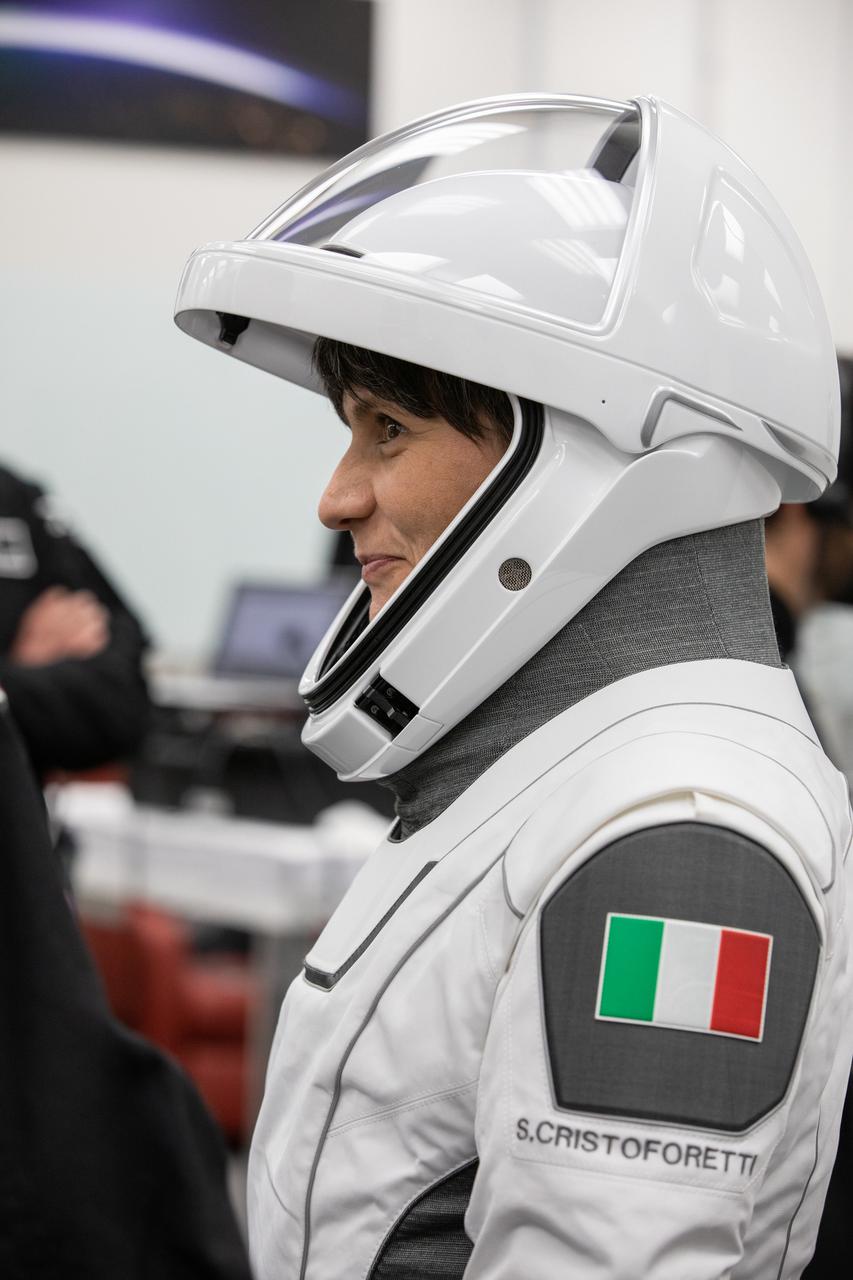
Crew-4 mission astronaut Samantha Cristoforetti smiles in the suit room in the Astronaut Crew Quarters inside Kennedy Space Center’s Neil A. Armstrong Operations and Checkout Building on April 27, 2022. A team of SpaceX suit technicians assisted Cristoforetti, along with Crew-4 members Kjell Lindgren, Bob Hines, and Jessica Watkins, as they put on their custom-fitted spacesuits and checked the suits for leaks. The four astronauts will launch aboard SpaceX’s Crew Dragon, powered by the company’s Falcon 9 rocket, to the International Space Station as part of NASA’s Commercial Crew Program. Crew-4 is scheduled to lift off today at 3:52 a.m. EDT from Launch Complex 39A at Kennedy.
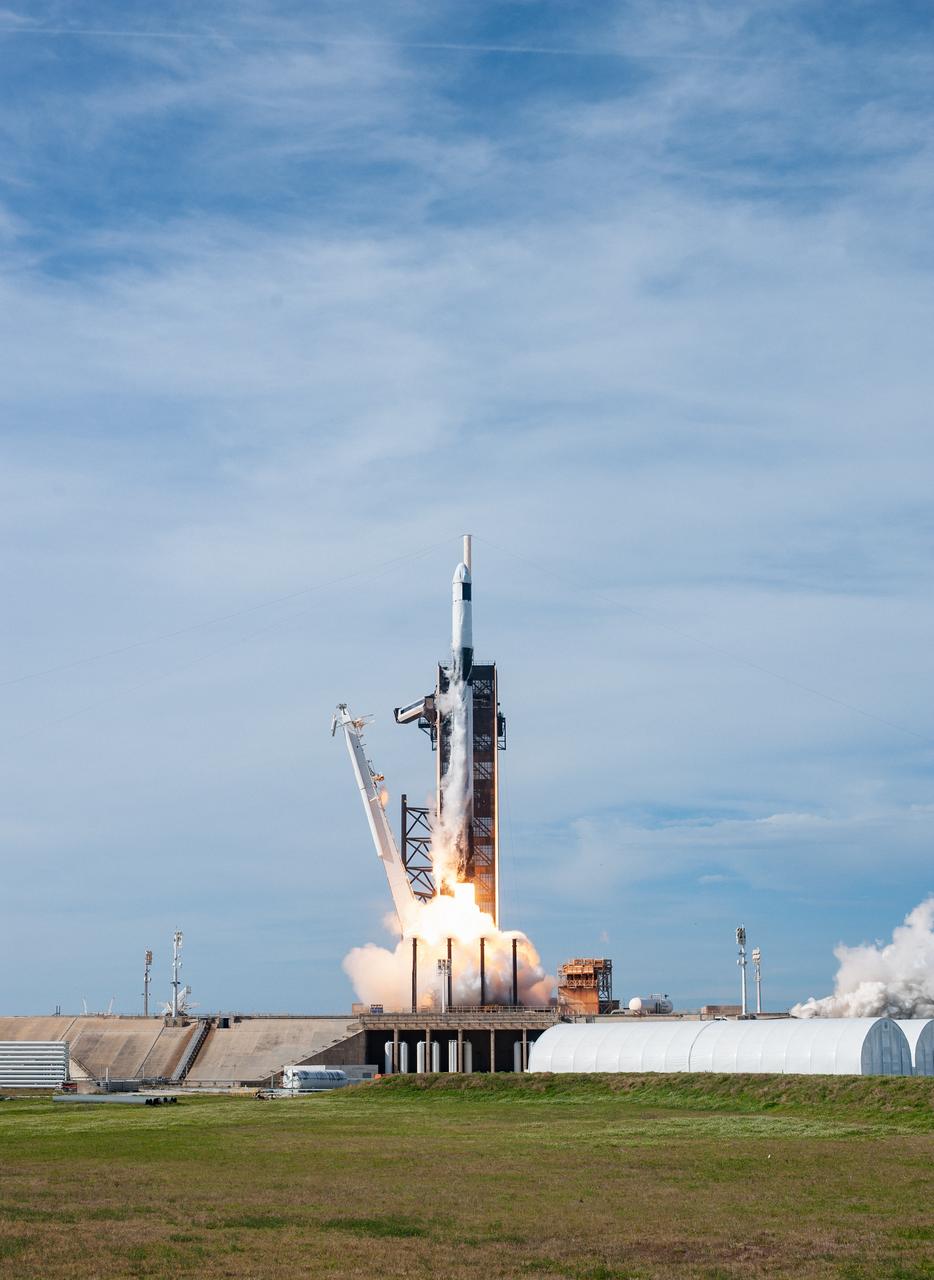
A SpaceX Falcon 9 rocket lifts off from Launch Complex 39A at Kennedy Space Center in Florida at 11:17 a.m. EST on Dec. 6, 2020, carrying the uncrewed cargo Dragon spacecraft on its journey to the International Space Station for NASA and SpaceX’s 21st Commercial Resupply Services (CRS-21) mission. Dragon will deliver more than 6,400 pounds of science investigations and cargo to the orbiting laboratory. The mission marks the first launch for SpaceX under NASA’s CRS-2 contract.
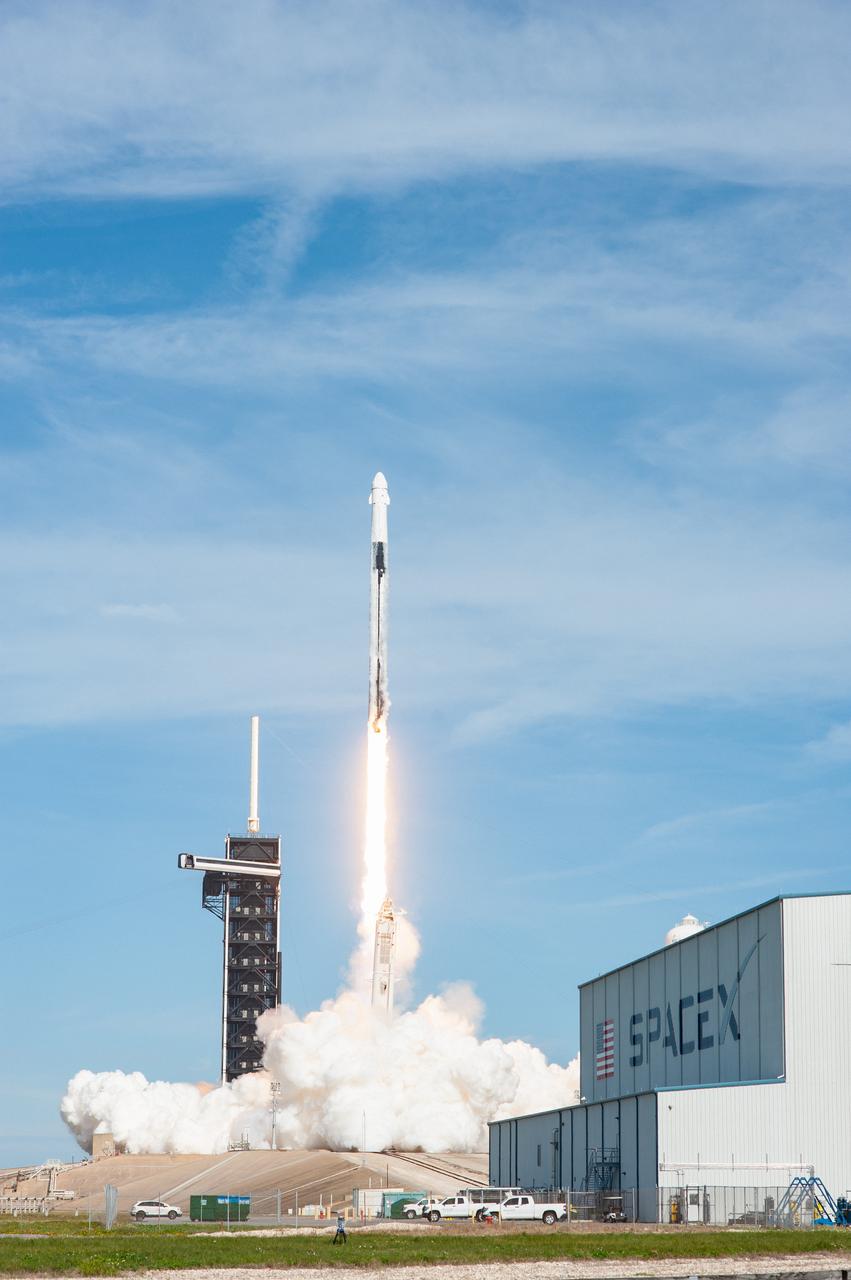
A SpaceX Falcon 9 rocket lifts off from Launch Complex 39A at Kennedy Space Center in Florida at 11:17 a.m. EST on Dec. 6, 2020, carrying the uncrewed cargo Dragon spacecraft on its journey to the International Space Station for NASA and SpaceX’s 21st Commercial Resupply Services (CRS-21) mission. Dragon will deliver more than 6,400 pounds of science investigations and cargo to the orbiting laboratory. The mission marks the first launch for SpaceX under NASA’s CRS-2 contract.
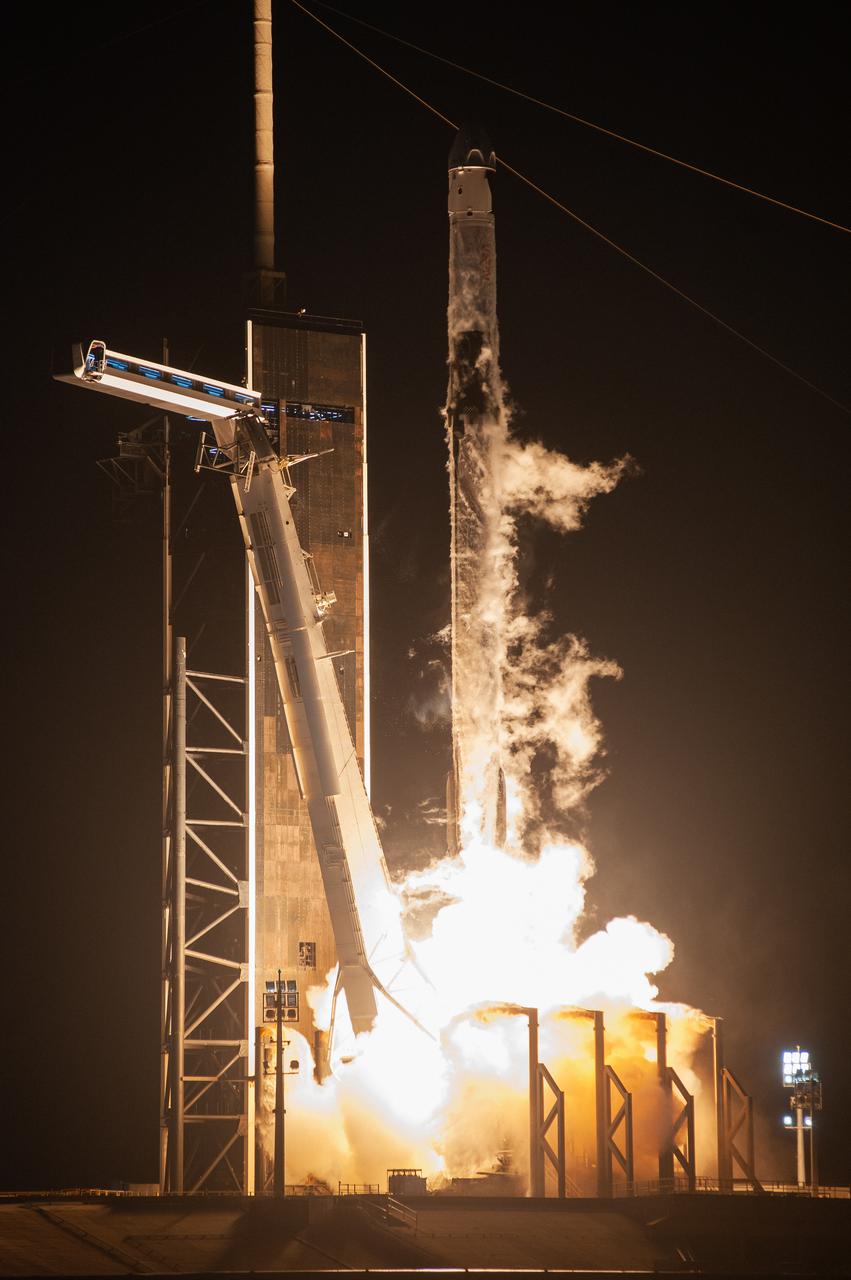
The SpaceX Falcon 9 rocket, with the company’s Crew Dragon atop, lifts off from Launch Pad 39A at Kennedy Space Center in Florida for NASA’s SpaceX Crew-4 mission on April 27, 2022, at 3:52 a.m. EDT. Aboard the Dragon are NASA astronauts Kjell Lindgren, Bob Hines, and Jessica Watkins, and ESA (European Space Agency) astronaut Samantha Cristoforetti. The spacecraft will carry the Crew-4 astronauts to the International Space Station as part of NASA’s Commercial Crew Program. The Dragon spacecraft, named Freedom by the mission’s crew, is scheduled to dock to the space station today at 8:15 p.m. EDT.
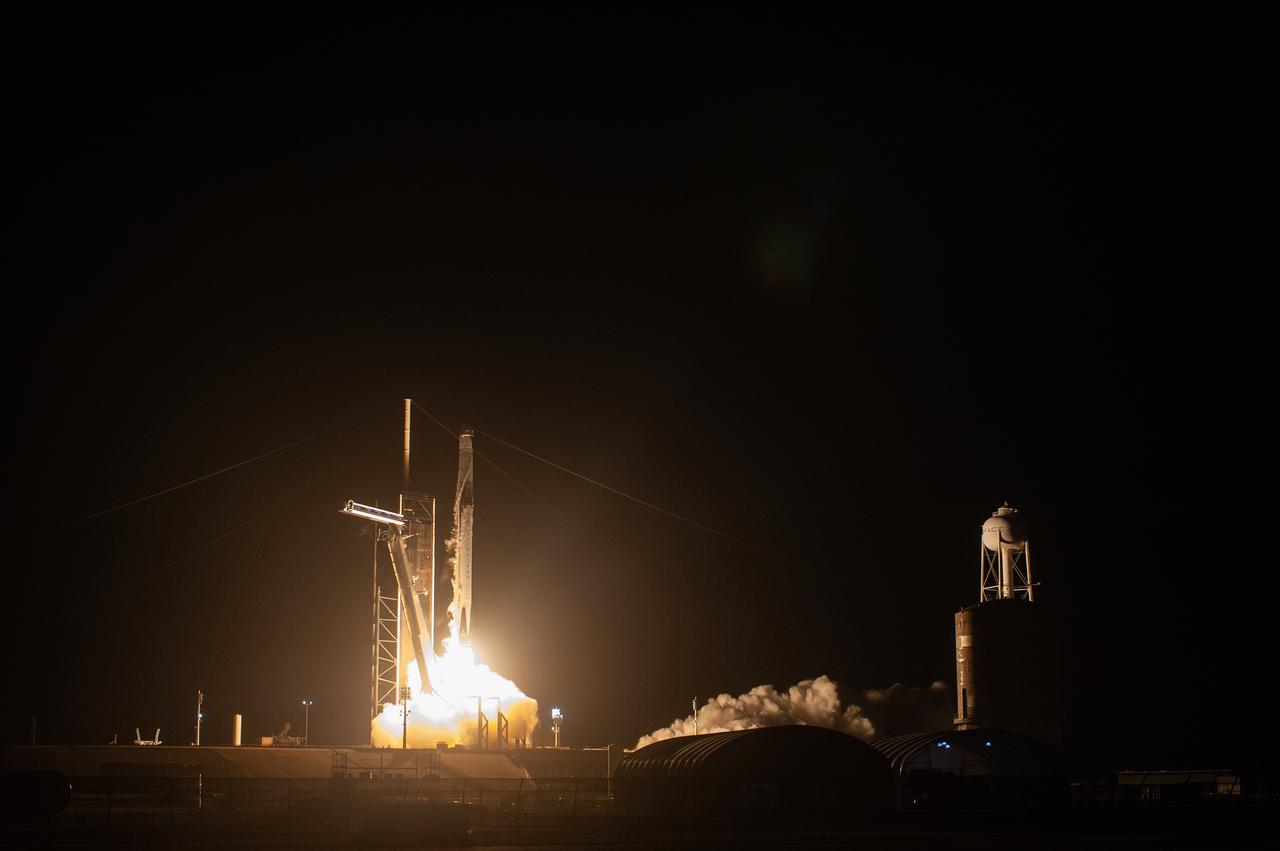
A SpaceX Falcon 9 rocket lifts off the pad at 3:27 a.m. EDT on Saturday, Aug. 26, from Kennedy Space Center’s Launch Complex 39A in Florida, carrying NASA’s SpaceX Crew-7 crew members to the International Space Station. Aboard SpaceX’s Dragon spacecraft are NASA astronaut Jasmin Moghbeli, ESA (European Space Agency) astronaut Andreas Mogensen, JAXA (Japan Aerospace Exploration Agency) astronaut Satoshi Furukawa, and Roscosmos cosmonaut Konstantin Borisov.
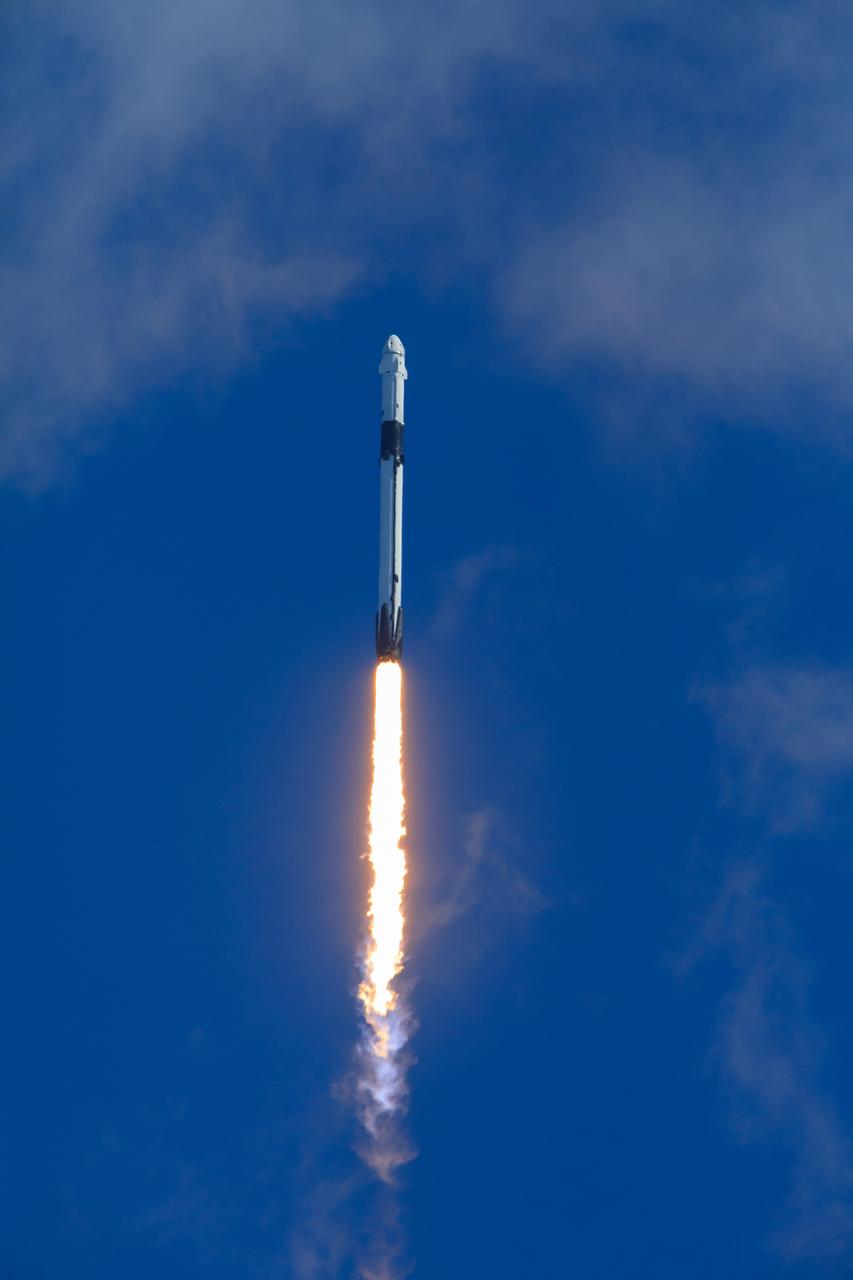
SpaceX’s Falcon 9 rocket, with the Dragon Endurance spacecraft atop, soars upward after lifting off from NASA’s Kennedy Space Center Launch Complex 39A in Florida on Oct. 5, 2022, on the agency’s SpaceX Crew-5 launch. Inside Endurance are NASA astronauts Nicole Mann, commander; Josh Cassada, pilot; and Mission Specialists Koichi Wakata, of JAXA (Japan Aerospace Exploration Agency), and Roscosmos cosmonaut Anna Kikina. The crew is heading to the International Space Station for a science expedition mission as part of the agency’s Commercial Crew Program. Liftoff occurred at noon EDT.
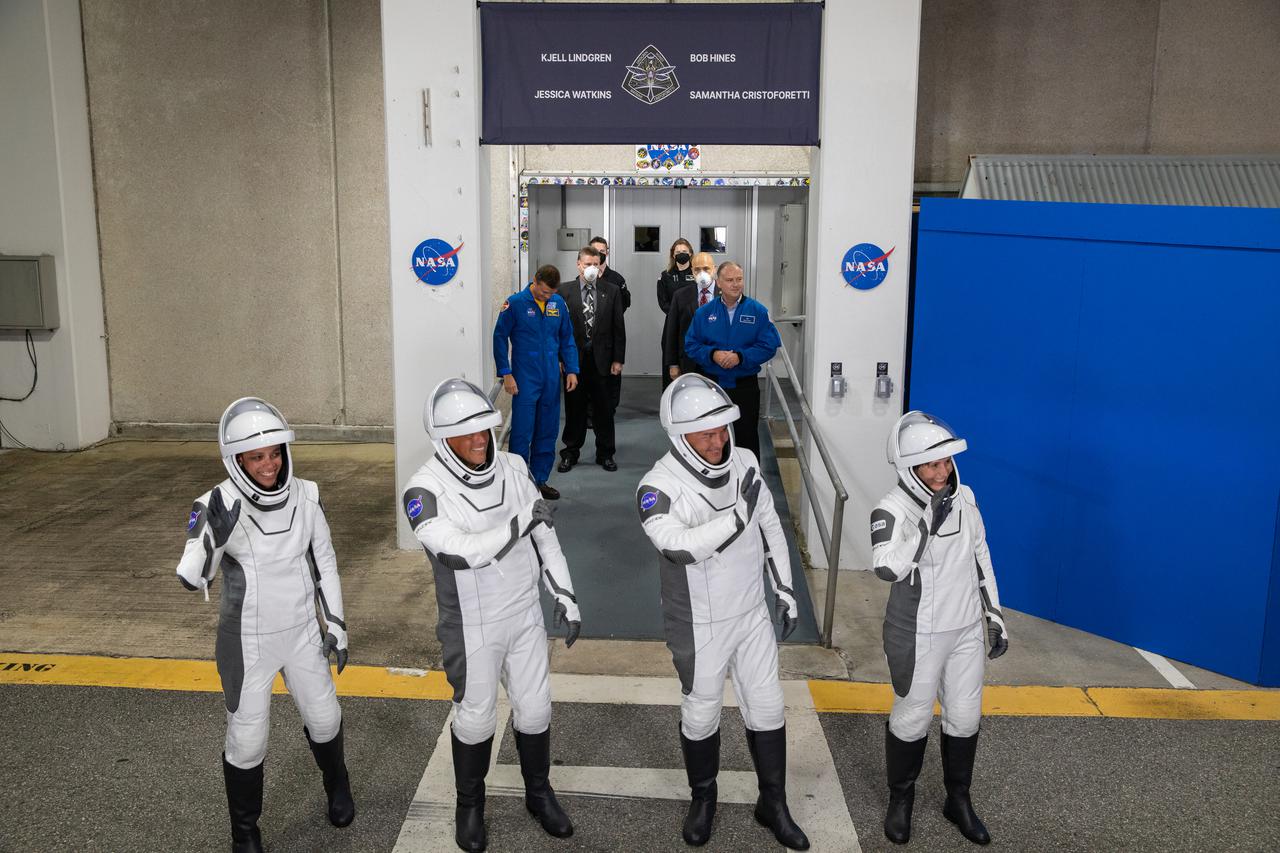
Crew-4 astronauts wave after walking out through the double doors below the Neil A. Armstrong Building’s Astronaut Crew Quarters at NASA’s Kennedy Space Center in Florida on April 27, 2022. They will make their way to the customized Tesla Model X cars that will take them to their spacecraft at Launch Complex 39A. From left are: mission specialist Jessica Watkins, pilot Bob Hines, commander Kjell Lindgren, and mission specialist Samantha Cristoforetti. SpaceX’s Crew Dragon, powered by the company’s Falcon 9 rocket, will carry the four-person crew to the International Space Station as part of NASA’s Commercial Crew Program. Crew-4 is scheduled to launch today at 3:52 a.m. EDT, from Pad 39A at Kennedy.
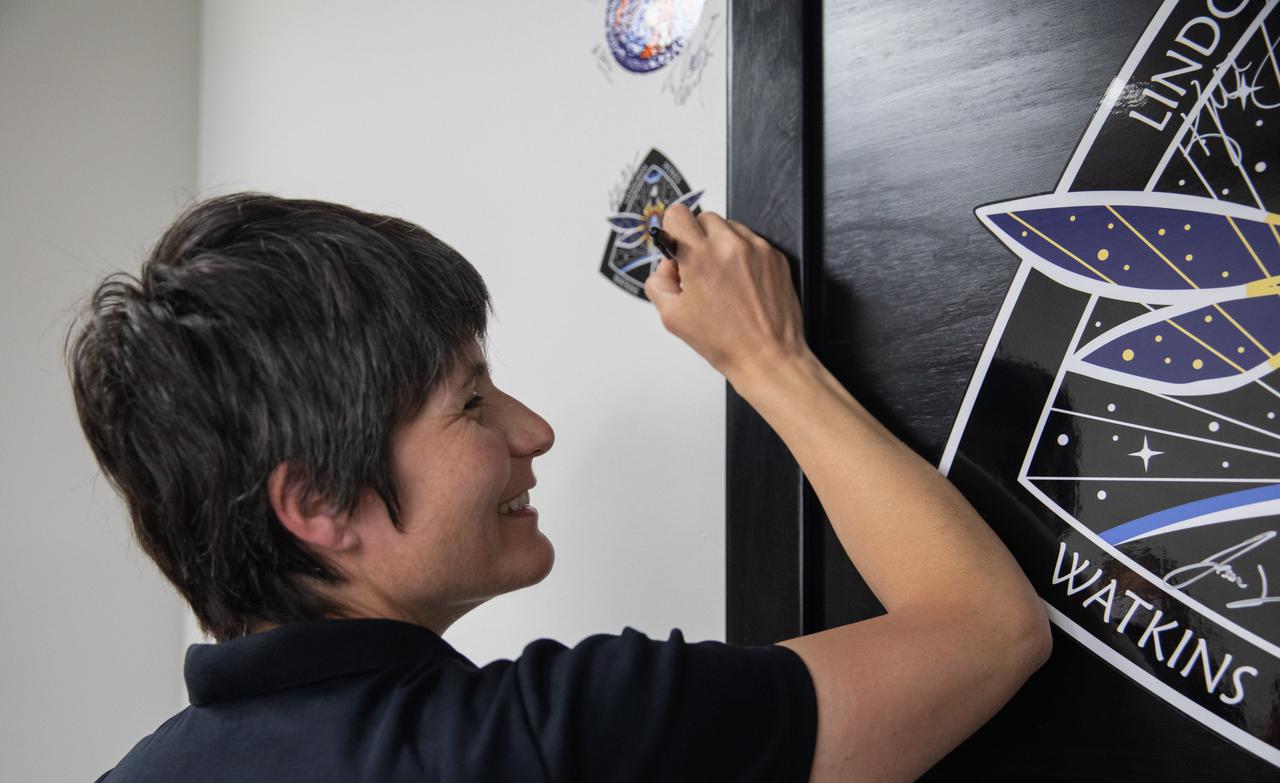
Crew-4 mission astronaut Samantha Cristoforetti signs the mission patch in the Astronaut Crew Quarters inside Kennedy Space Center’s Neil A. Armstrong Operations and Checkout Building on April 27, 2022. Cristoforetti, along with Kjell Lindgren, Bob Hines, and Jessica Watkins, will launch aboard SpaceX’s Crew Dragon – powered by the company’s Falcon 9 rocket – to the International Space Station as part of NASA’s Commercial Crew Program. Crew-4 is scheduled to lift off today at 3:52 a.m. EDT from Launch Complex 39A at Kennedy.
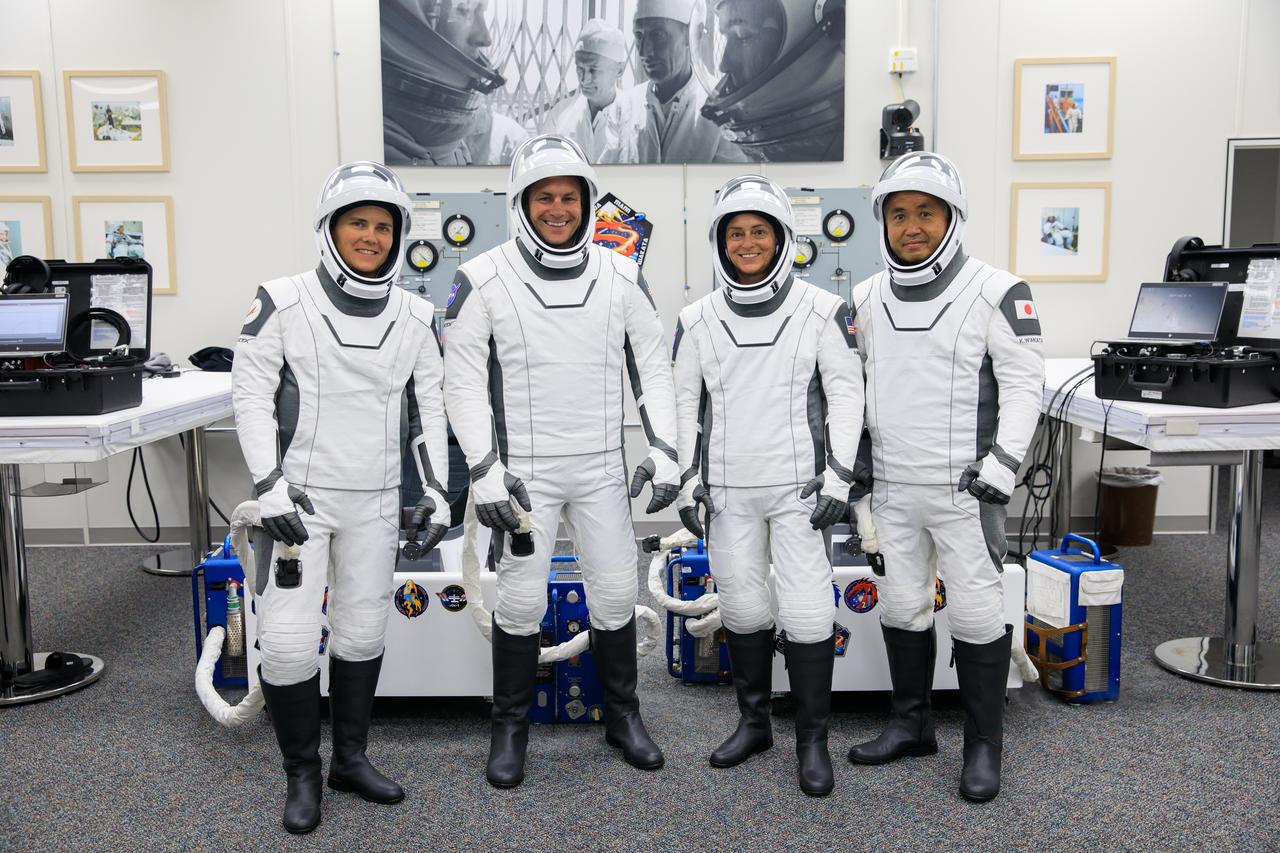
NASA’s SpaceX Crew-5 is photographed inside the crew suit-up room in the Neil A. Armstrong Operations and Checkout Building at NASA’s Kennedy Space Center in Florida ahead of the agency’s SpaceX Crew-5 launch on Oct. 5, 2022. From left are Roscosmos cosmonaut Anna Kikina, mission specialist; NASA astronauts Josh Cassada, pilot, and Nicole Mann, spacecraft commander; and JAXA (Japan Aerospace Exploration Agency) astronaut Koichi Wakata, mission specialist. The crew will launch to the International Space Station aboard SpaceX’s Dragon Endurance spacecraft for a science expedition mission as part of the agency’s Commercial Crew Program. SpaceX’s Falcon 9 rocket lifted off at noon EDT from Kennedy’s Launch Complex 39A.
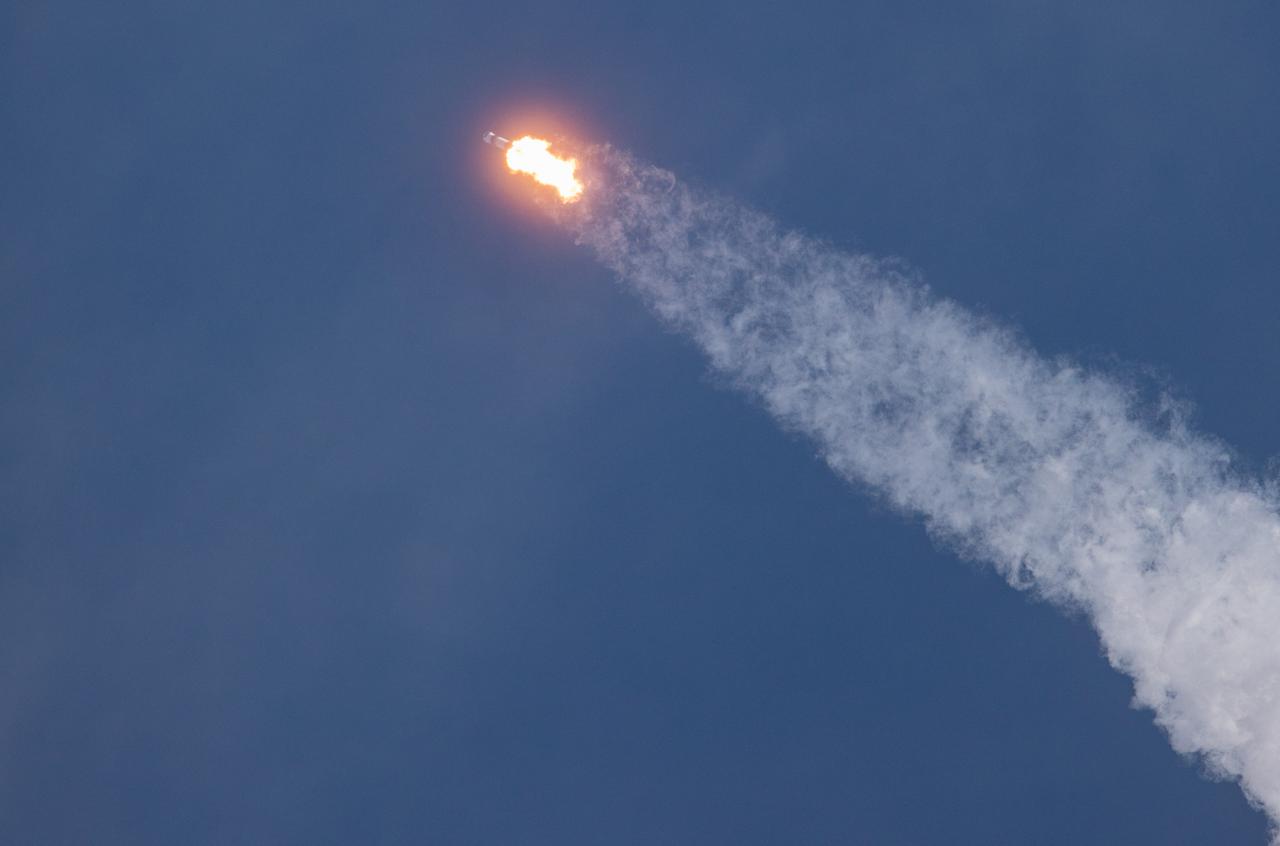
A SpaceX Falcon 9 rocket soars into the sky after lifting off from Launch Complex 39A at Kennedy Space Center in Florida at 11:17 a.m. EST on Dec. 6, 2020. The rocket is carrying the uncrewed cargo Dragon spacecraft on its journey to the International Space Station for NASA and SpaceX’s 21st Commercial Resupply Services (CRS-21) mission. Dragon will deliver more than 6,400 pounds of science investigations and cargo to the orbiting laboratory. The mission marks the first launch for SpaceX under NASA’s CRS-2 contract.
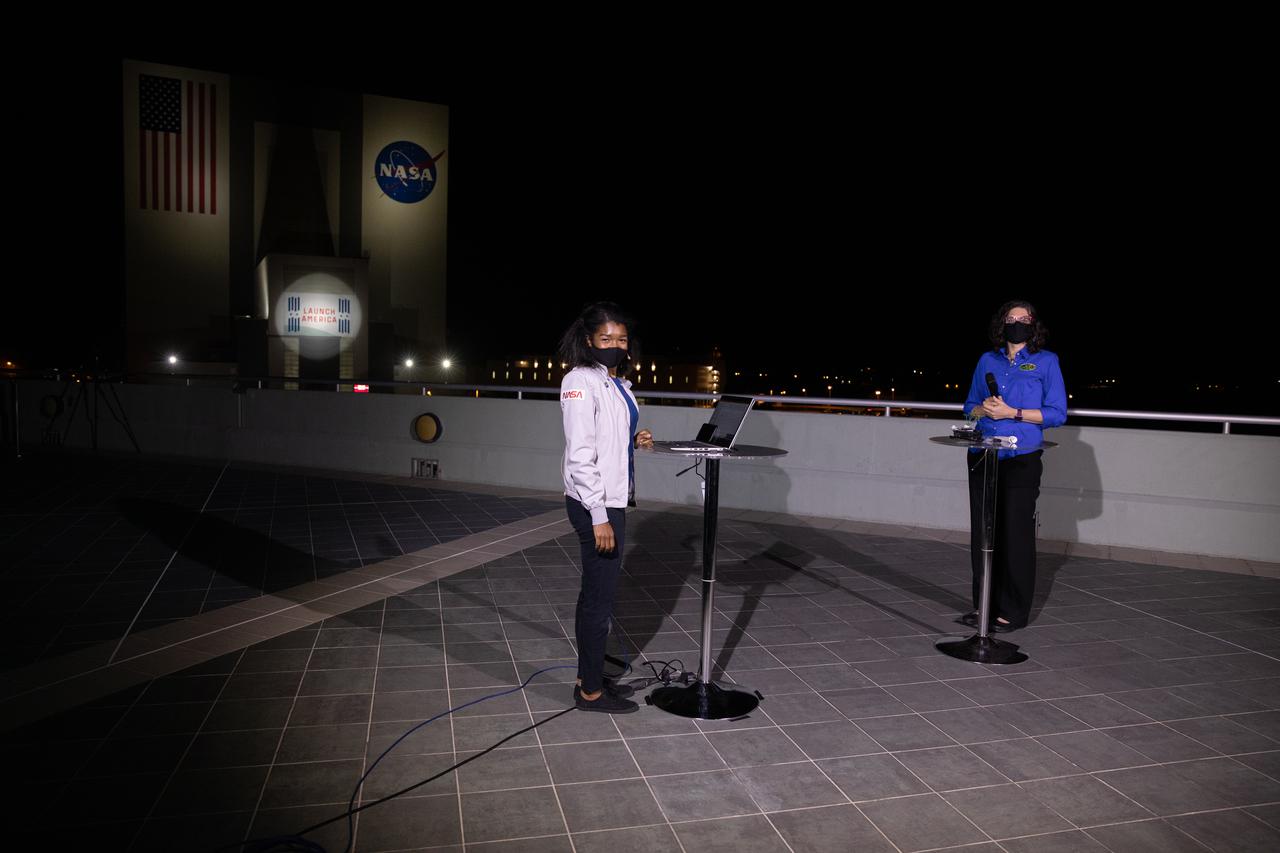
NASA Communications’ Jasmine Hopkins, left, interviews Kennedy Space Center Life Sciences Plant Scientist Gioia Massa on the Florida spaceport’s Operations and Support Building II balcony during the launch broadcast for NASA’s SpaceX Crew-2 mission on April 23, 2021. The SpaceX Falcon 9 rocket and Crew Dragon spacecraft lifted off from Kennedy’s Launch Complex 39A at 5:49 a.m. EDT. Part of NASA’s Commercial Crew Program, Crew-2 delivered NASA astronauts Shane Kimbrough and Megan McArthur, Japan Aerospace Exploration Agency (JAXA) astronaut Akihiko Hoshide, and European Space Agency (ESA) astronaut Thomas Pesquet to the International Space Station for a six-month science mission.
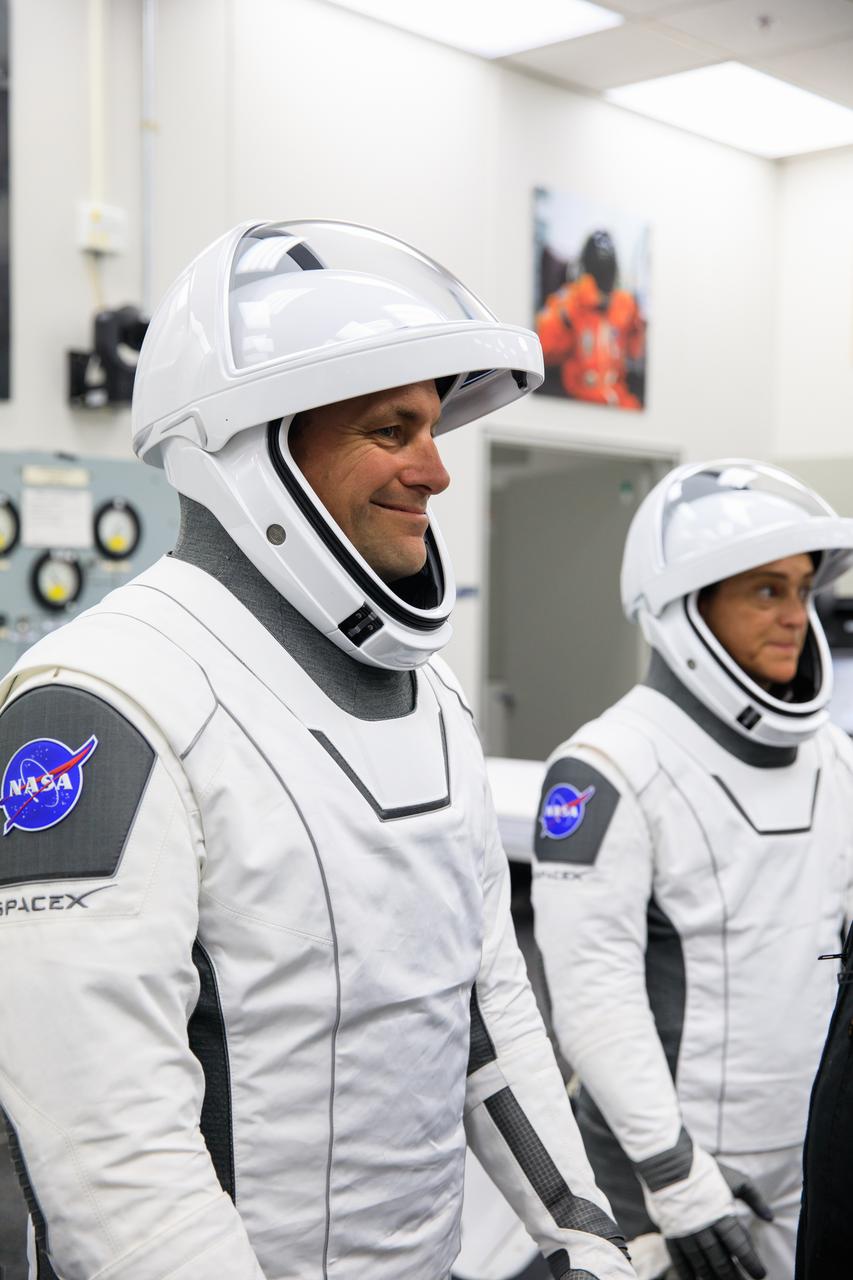
Inside the crew suit-up room in the Neil A. Armstrong Operations and Checkout Building at NASA’s Kennedy Space Center in Florida, NASA astronauts Josh Cassada (left) and Nicole Mann don their spacesuits ahead of the agency’s SpaceX Crew-5 launch on Oct. 5, 2022. Cassada and Mann, along with Roscosmos cosmonaut Anna Kikina and JAXA (Japan Aerospace Exploration Agency) astronaut Koichi Wakata, will launch to the International Space Station for a science expedition mission as part of the agency’s Commercial Crew Program. The SpaceX Falcon 9 rocket and Dragon Endurance spacecraft lifted off at noon EDT from Kennedy’s Launch Complex 39A.
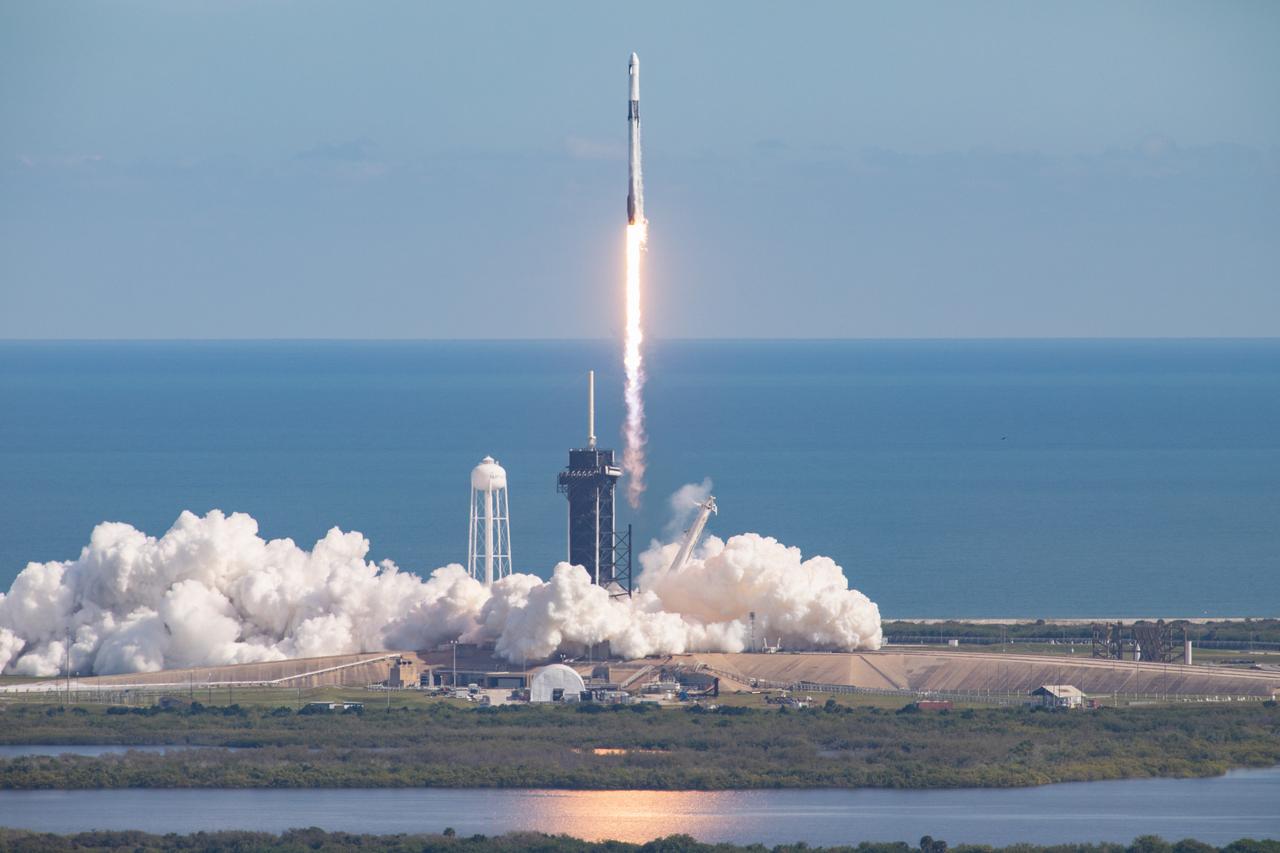
A SpaceX Falcon 9 rocket lifts off from Launch Complex 39A at Kennedy Space Center in Florida at 11:17 a.m. EST on Dec. 6, 2020, carrying the uncrewed cargo Dragon spacecraft on its journey to the International Space Station for NASA and SpaceX’s 21st Commercial Resupply Services (CRS-21) mission. Dragon will deliver more than 6,400 pounds of science investigations and cargo to the orbiting laboratory. The mission marks the first launch for SpaceX under NASA’s CRS-2 contract.
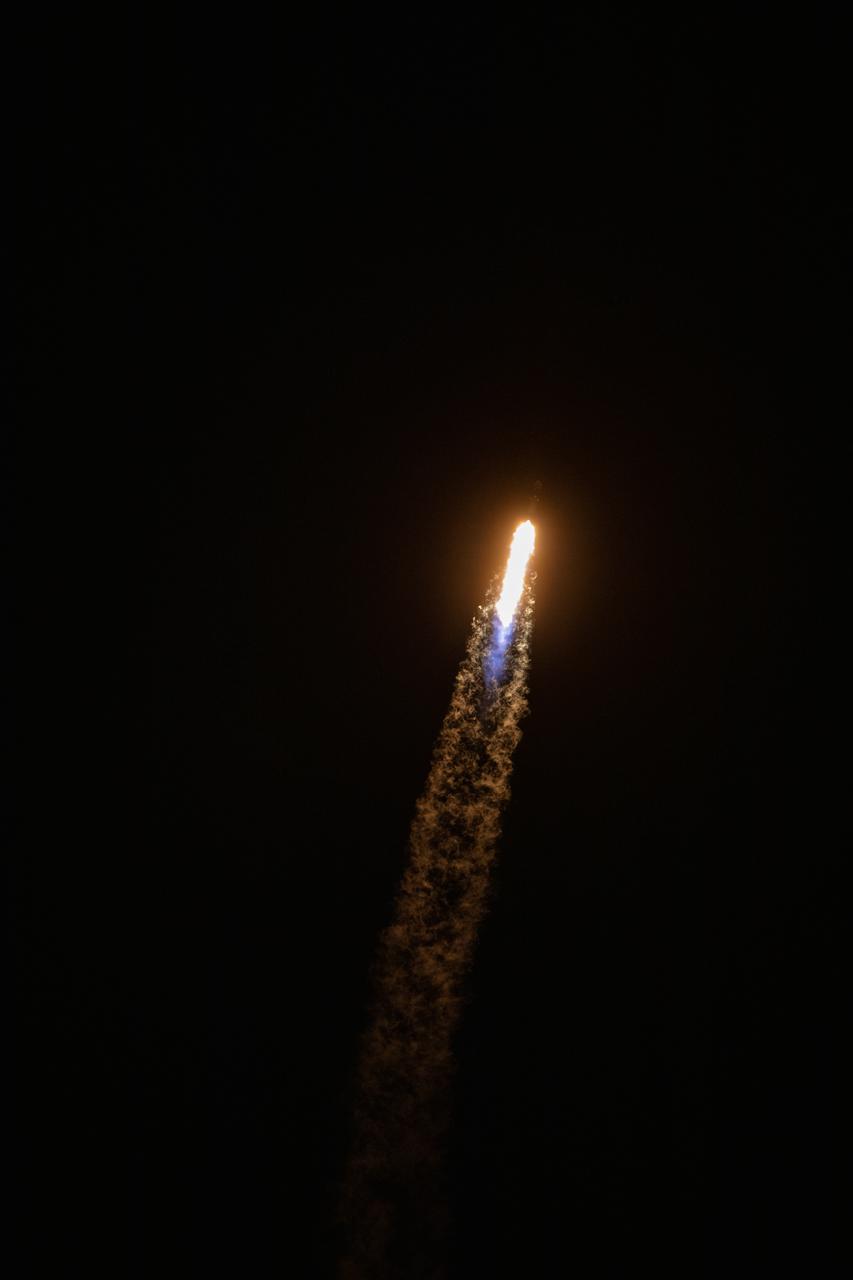
The SpaceX Falcon 9 rocket, with the company’s Crew Dragon atop, soars upward after a 3:52 a.m. EDT liftoff from Launch Complex 39A at Kennedy Space Center in Florida for NASA’s SpaceX Crew-4 mission on April 27, 2022. Aboard the Dragon are NASA astronauts Kjell Lindgren, Bob Hines, and Jessica Watkins, and ESA (European Space Agency) astronaut Samantha Cristoforetti. The spacecraft will carry the Crew-4 astronauts to the International Space Station as part of NASA’s Commercial Crew Program. The Dragon spacecraft, named Freedom by the mission’s crew, is scheduled to dock to the space station today at 8:15 p.m. EDT.
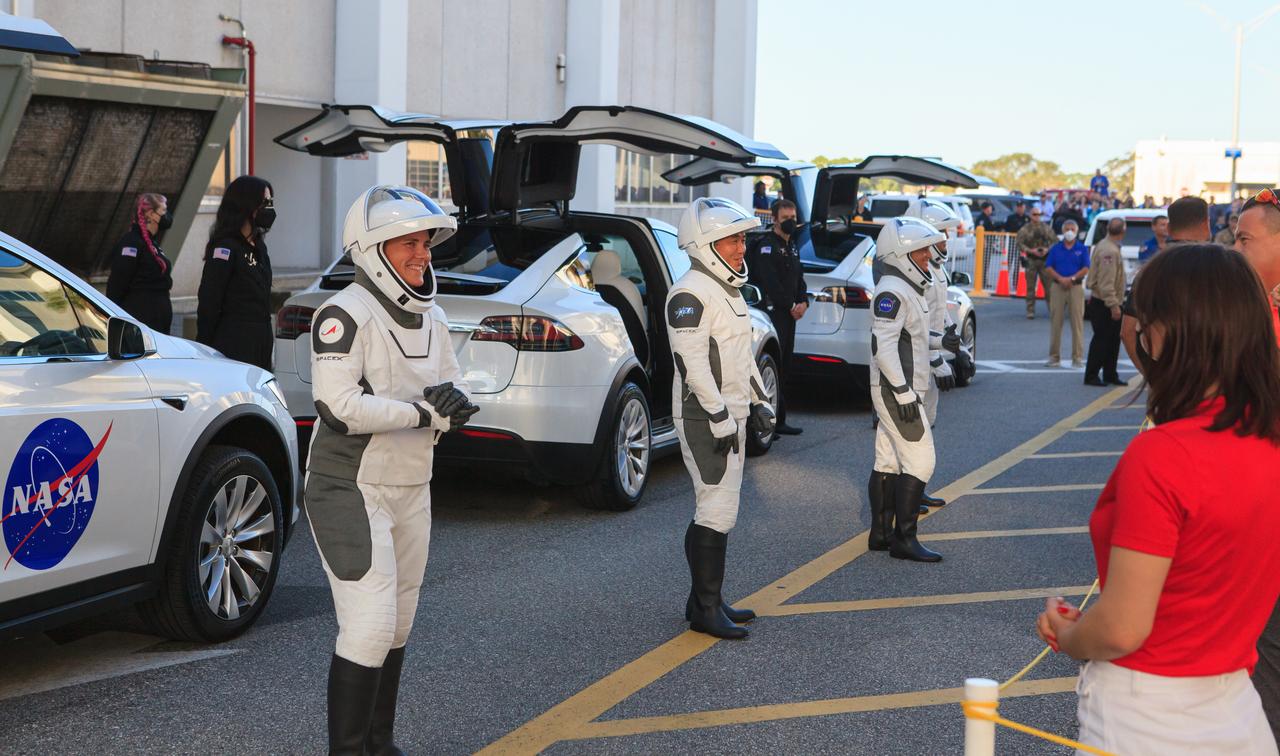
NASA’s SpaceX Crew-5 say goodbye to friends and family after exiting the Neil A. Armstrong Operations and Checkout Building at NASA’s Kennedy Space Center in Florida on Oct. 5, 2022. From left are Mission Specialists Anna Kikina, Roscosmos cosmonaut, and Koichi Wakata, of JAXA (Japan Aerospace Exploration Agency), and NASA astronauts Nicole Mann, spacecraft commander, and Josh Cassada, pilot. They will board two Tesla vehicles for the trip to Kennedy’s Launch Complex 39A, where they will launch to the International Space Station aboard SpaceX’s Dragon Endurance spacecraft for a science expedition mission as part of NASA’s Commercial Crew Program. SpaceX’s Falcon 9 rocket lifted off at noon EDT.
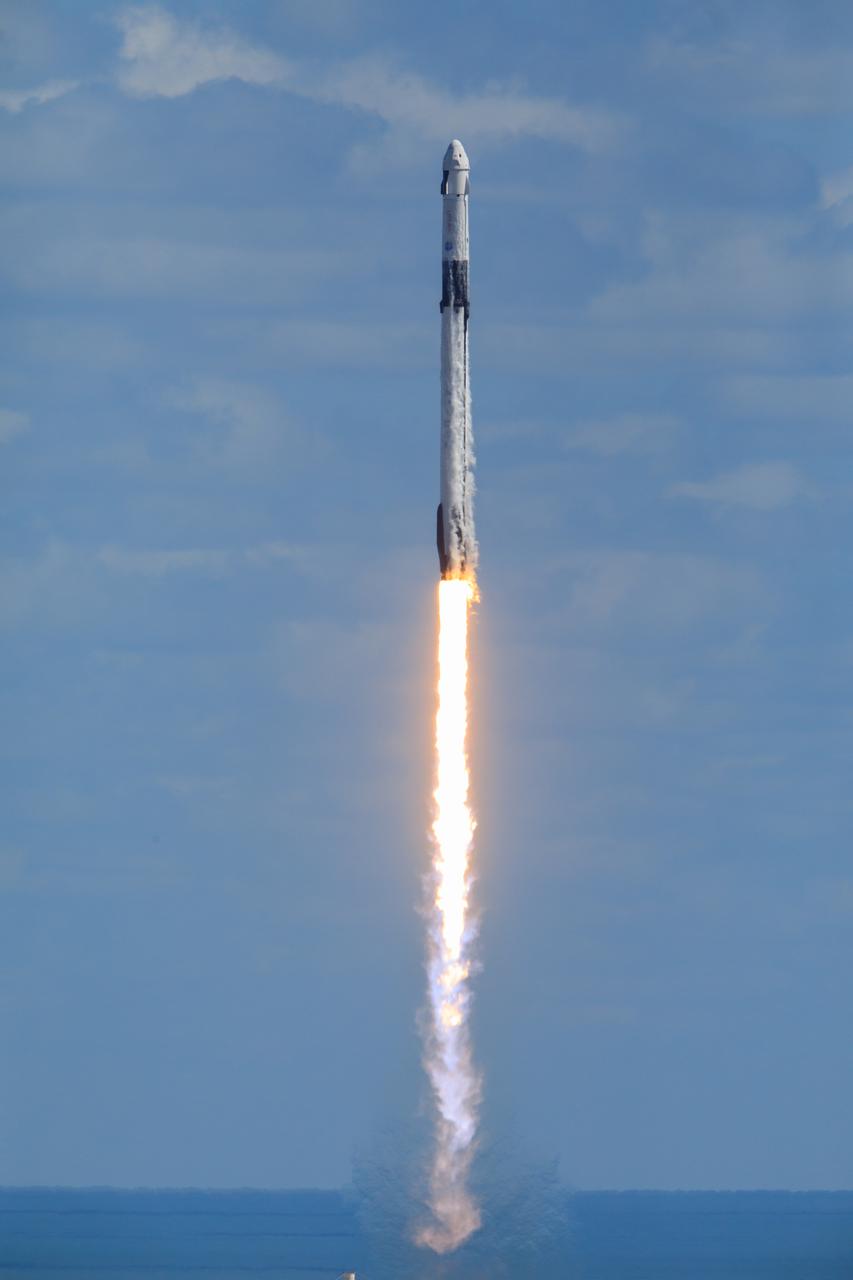
SpaceX’s Falcon 9 rocket, with the Dragon Endurance spacecraft atop, lifts off from NASA’s Kennedy Space Center Launch Complex 39A in Florida on Oct. 5, 2022, on the agency’s SpaceX Crew-5 launch. Inside Endurance are NASA astronauts Nicole Mann, commander; Josh Cassada, pilot; and Mission Specialists Koichi Wakata, of JAXA (Japan Aerospace Exploration Agency), and Roscosmos cosmonaut Anna Kikina. The crew is heading to the International Space Station for a science expedition mission as part of the agency’s Commercial Crew Program. Liftoff occurred at noon EDT.
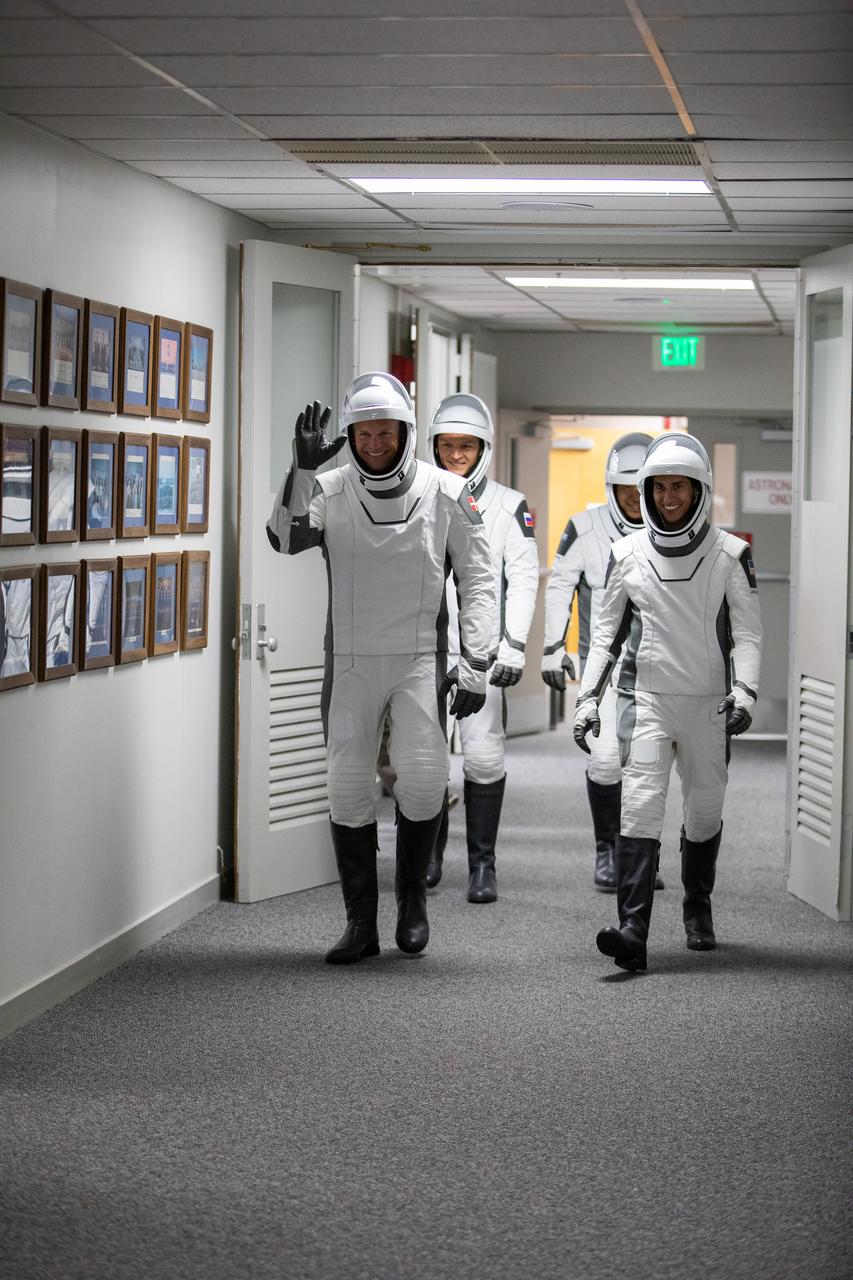
NASA’s SpaceX Crew-7 crew members walk down the hallway of the Neil A. Armstrong Operations and Checkout Building on Saturday, Aug. 26, 2023, at the agency’s Kennedy Space Center in Florida. From left, front to back, are ESA (European Space Agency) astronaut Andreas Mogensen, NASA astronaut Jasmin Moghbeli, Roscosmos cosmonaut Konstantin Borisov, and JAXA (Japan Aerospace Exploration Agency) astronaut Satoshi Furukawa. They will board two Tesla vehicles for the trip to Kennedy’s Launch Complex 39A, where they will launch to the International Space Station aboard SpaceX’s Dragon spacecraft and Falcon 9 rocket. Liftoff is at 3:27 a.m. EDT.
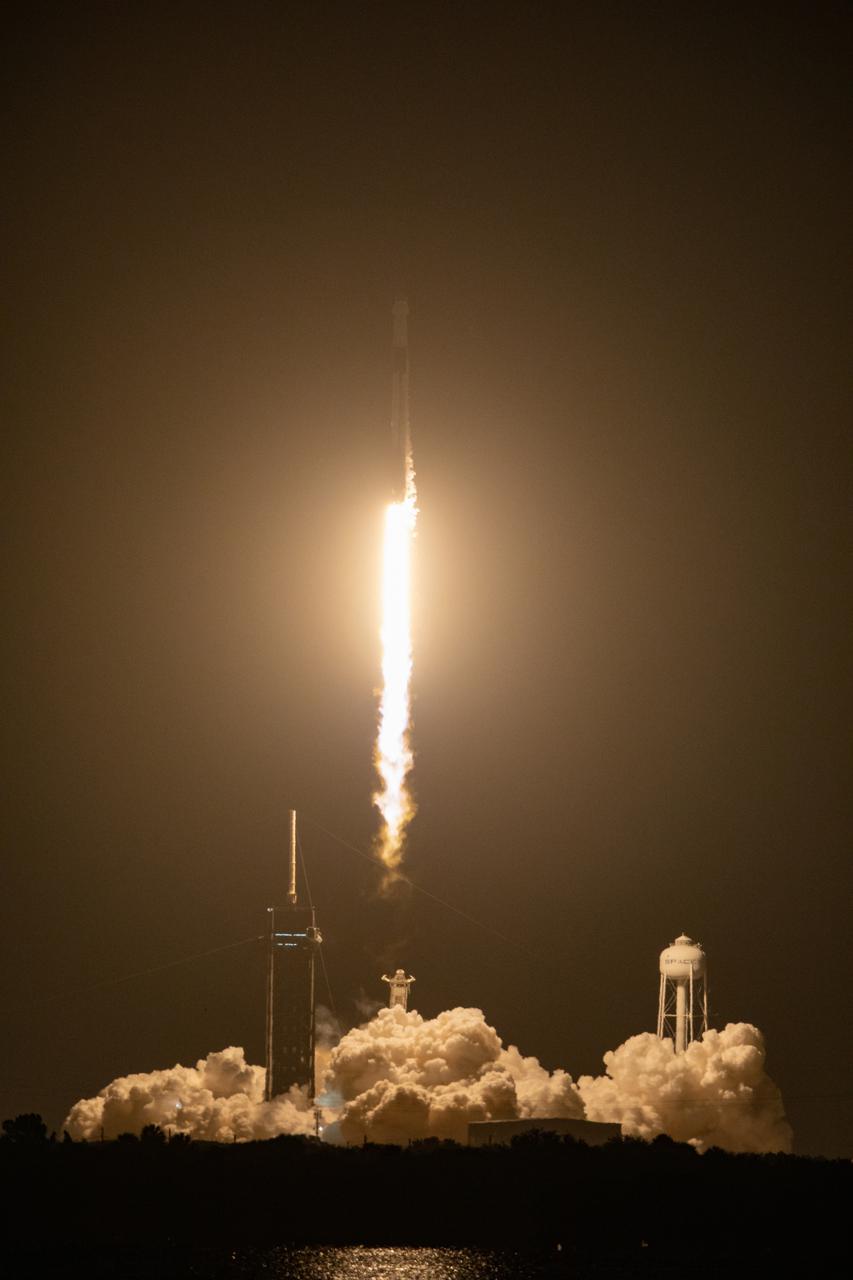
The SpaceX Falcon 9 rocket, with the company’s Crew Dragon atop, lifts off from Launch Pad 39A at Kennedy Space Center in Florida for NASA’s SpaceX Crew-4 mission on April 27, 2022, at 3:52 a.m. EDT. Aboard the Dragon are NASA astronauts Kjell Lindgren, Bob Hines, and Jessica Watkins, and ESA (European Space Agency) astronaut Samantha Cristoforetti. The spacecraft will carry the Crew-4 astronauts to the International Space Station as part of NASA’s Commercial Crew Program. The Dragon spacecraft, named Freedom by the mission’s crew, is scheduled to dock to the space station today at 8:15 p.m. EDT.
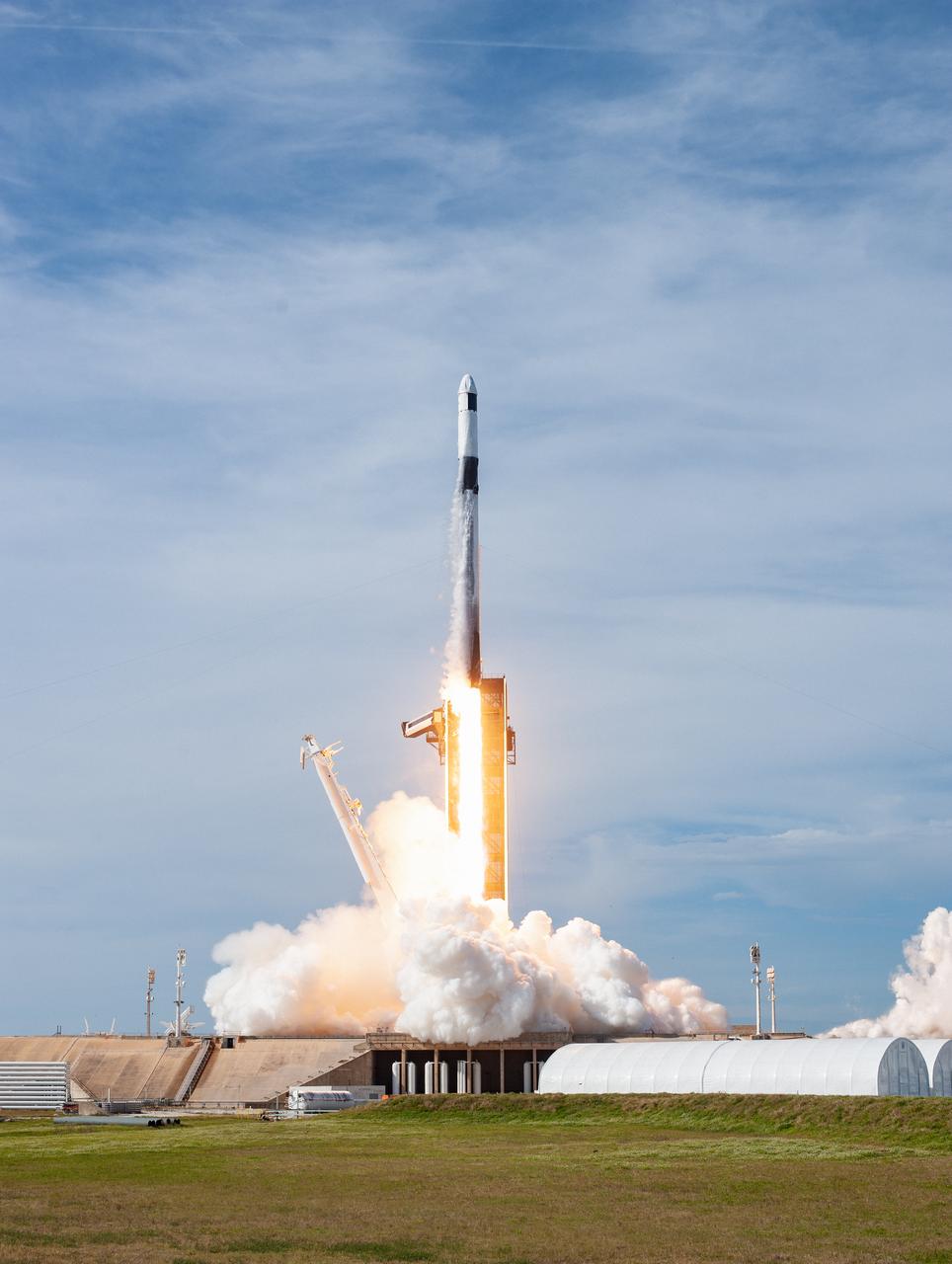
A SpaceX Falcon 9 rocket lifts off from Launch Complex 39A at Kennedy Space Center in Florida at 11:17 a.m. EST on Dec. 6, 2020, carrying the uncrewed cargo Dragon spacecraft on its journey to the International Space Station for NASA and SpaceX’s 21st Commercial Resupply Services (CRS-21) mission. Dragon will deliver more than 6,400 pounds of science investigations and cargo to the orbiting laboratory. The mission marks the first launch for SpaceX under NASA’s CRS-2 contract.
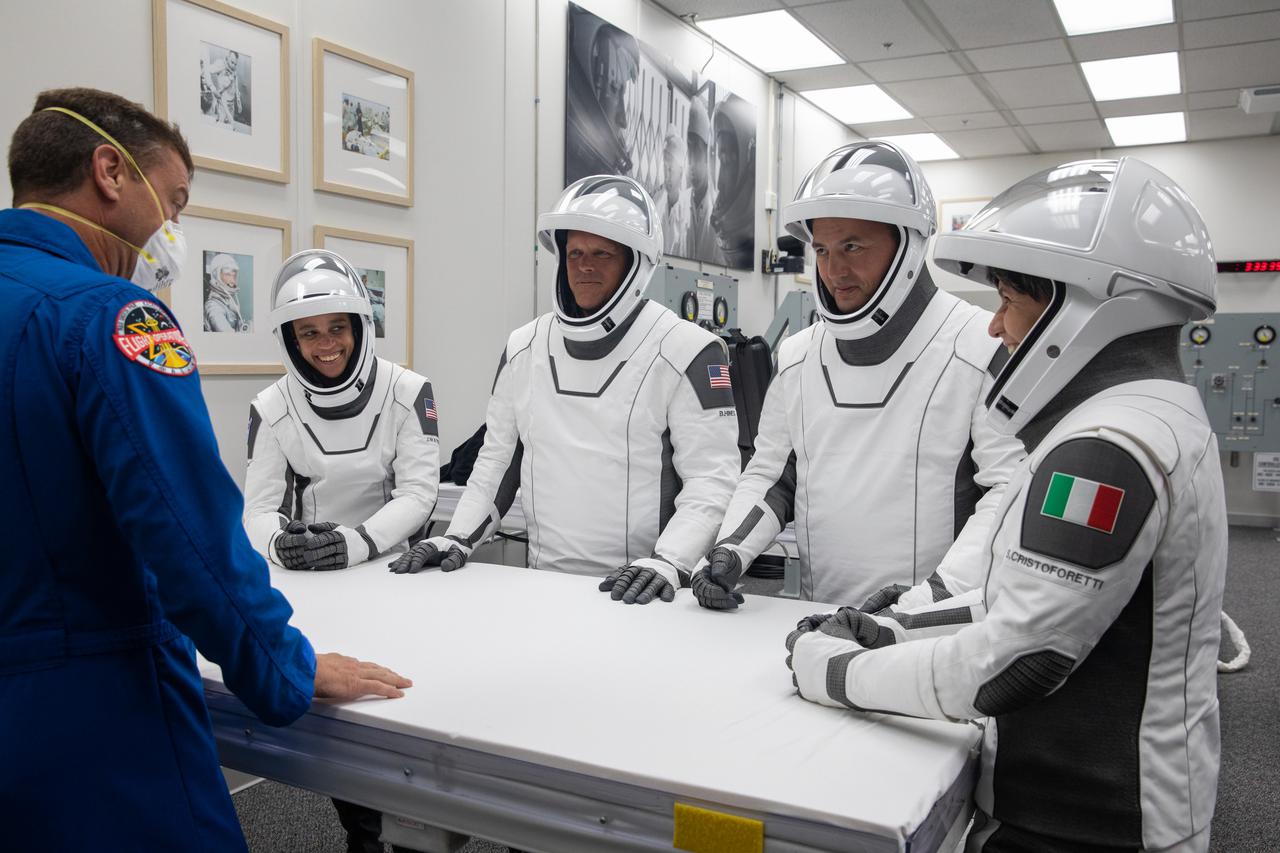
Crew-4 mission astronauts, from left, Jessica Watkins, Bob Hines, Kjell Lindgren, and Samantha Cristoforetti relax in the suit room in the Astronaut Crew Quarters inside Kennedy Space Center’s Neil A. Armstrong Operations and Checkout Building on April 27, 2022. A team of SpaceX suit technicians assisted the crew as they put on their custom-fitted spacesuits and checked the suits for leaks. The astronauts will launch aboard SpaceX’s Crew Dragon, powered by the company’s Falcon 9 rocket, to the International Space Station as part of NASA’s Commercial Crew Program. Crew-4 is scheduled to lift off today at 3:52 a.m. EDT from Launch Complex 39A at Kennedy.
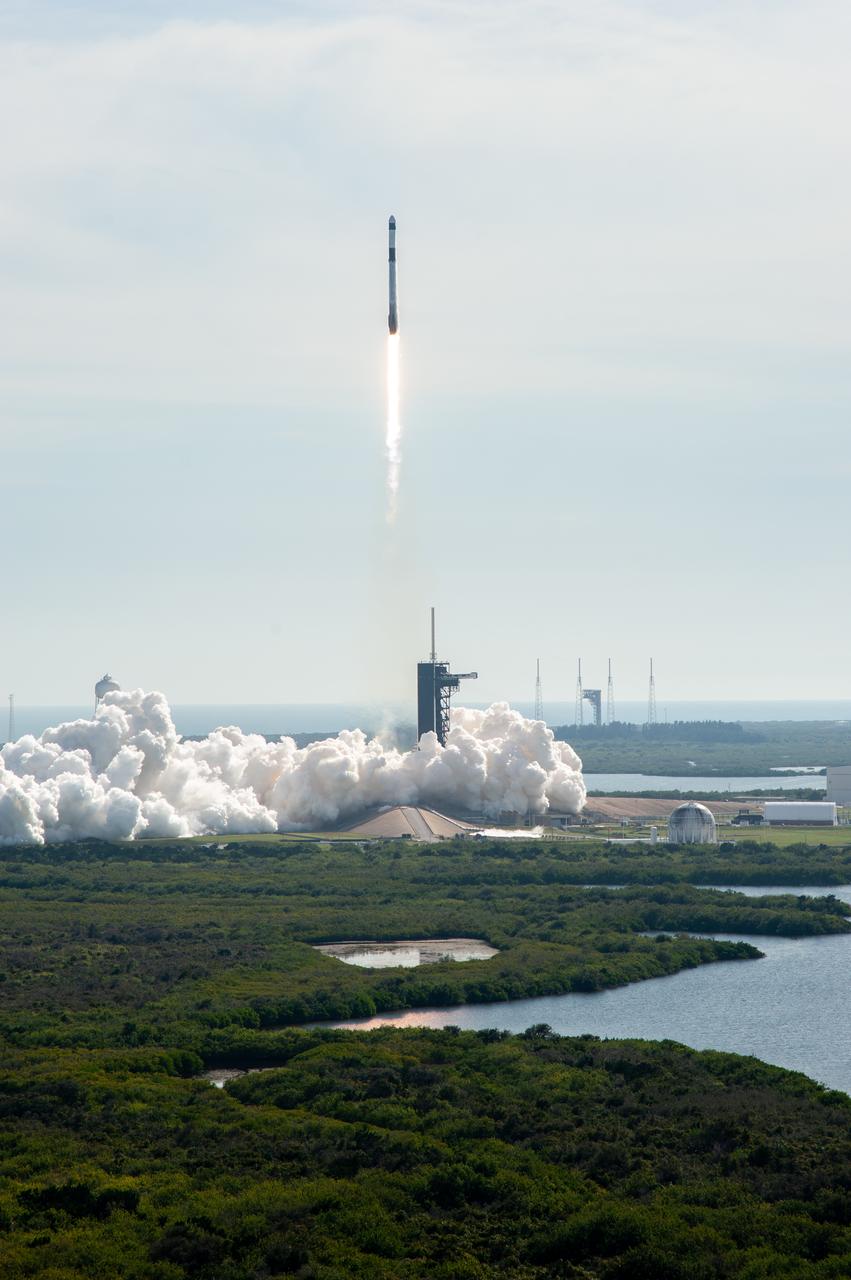
A SpaceX Falcon 9 rocket soars into the sky after lifting off from Launch Complex 39A at Kennedy Space Center in Florida at 11:17 a.m. EST on Dec. 6, 2020. The rocket is carrying the uncrewed cargo Dragon spacecraft on its journey to the International Space Station for NASA and SpaceX’s 21st Commercial Resupply Services (CRS-21) mission. Dragon will deliver more than 6,400 pounds of science investigations and cargo to the orbiting laboratory. The mission marks the first launch for SpaceX under NASA’s CRS-2 contract.
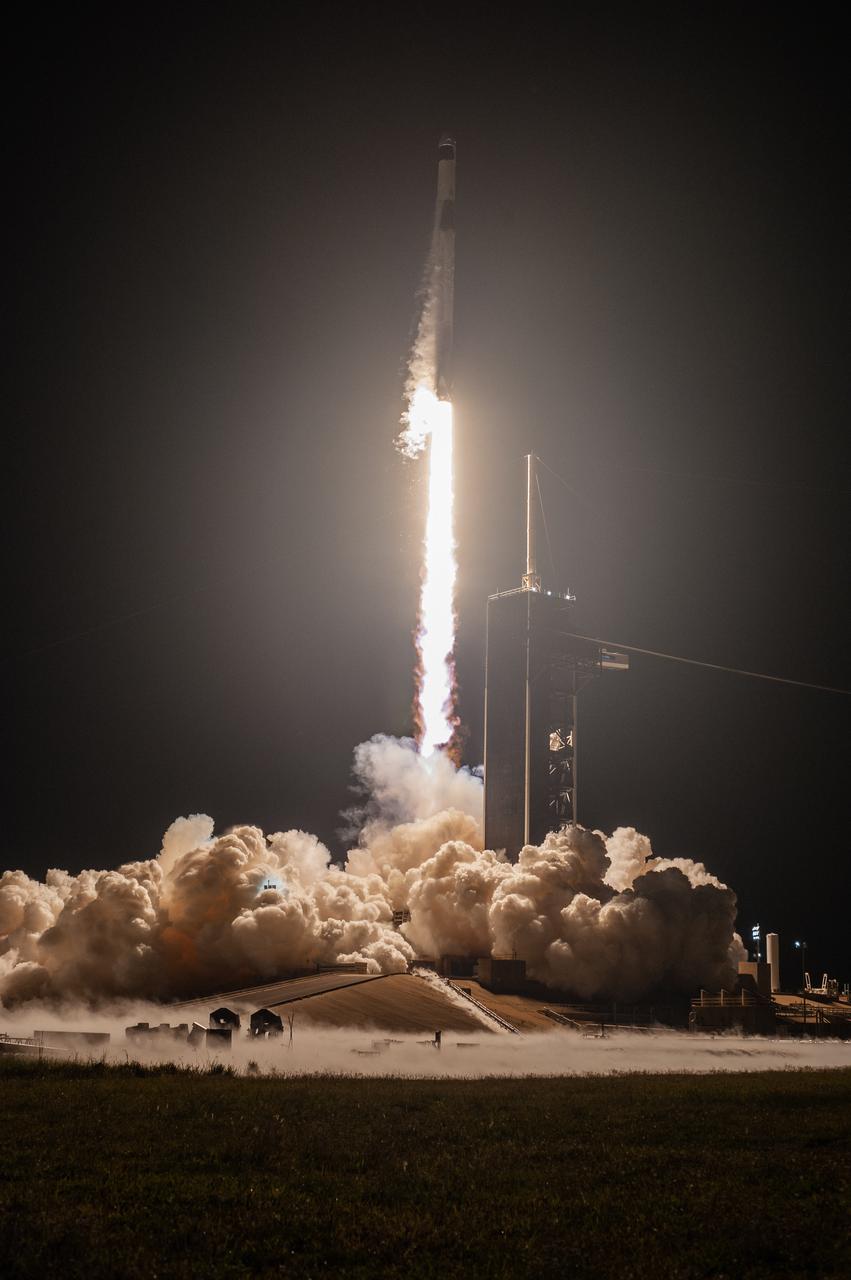
The SpaceX Falcon 9 rocket, with the company’s Crew Dragon atop, lifts off from Launch Pad 39A at Kennedy Space Center in Florida for NASA’s SpaceX Crew-4 mission on April 27, 2022, at 3:52 a.m. EDT. Aboard the Dragon are NASA astronauts Kjell Lindgren, Bob Hines, and Jessica Watkins, and ESA (European Space Agency) astronaut Samantha Cristoforetti. The spacecraft will carry the Crew-4 astronauts to the International Space Station as part of NASA’s Commercial Crew Program. The Dragon spacecraft, named Freedom by the mission’s crew, is scheduled to dock to the space station today at 8:15 p.m. EDT.
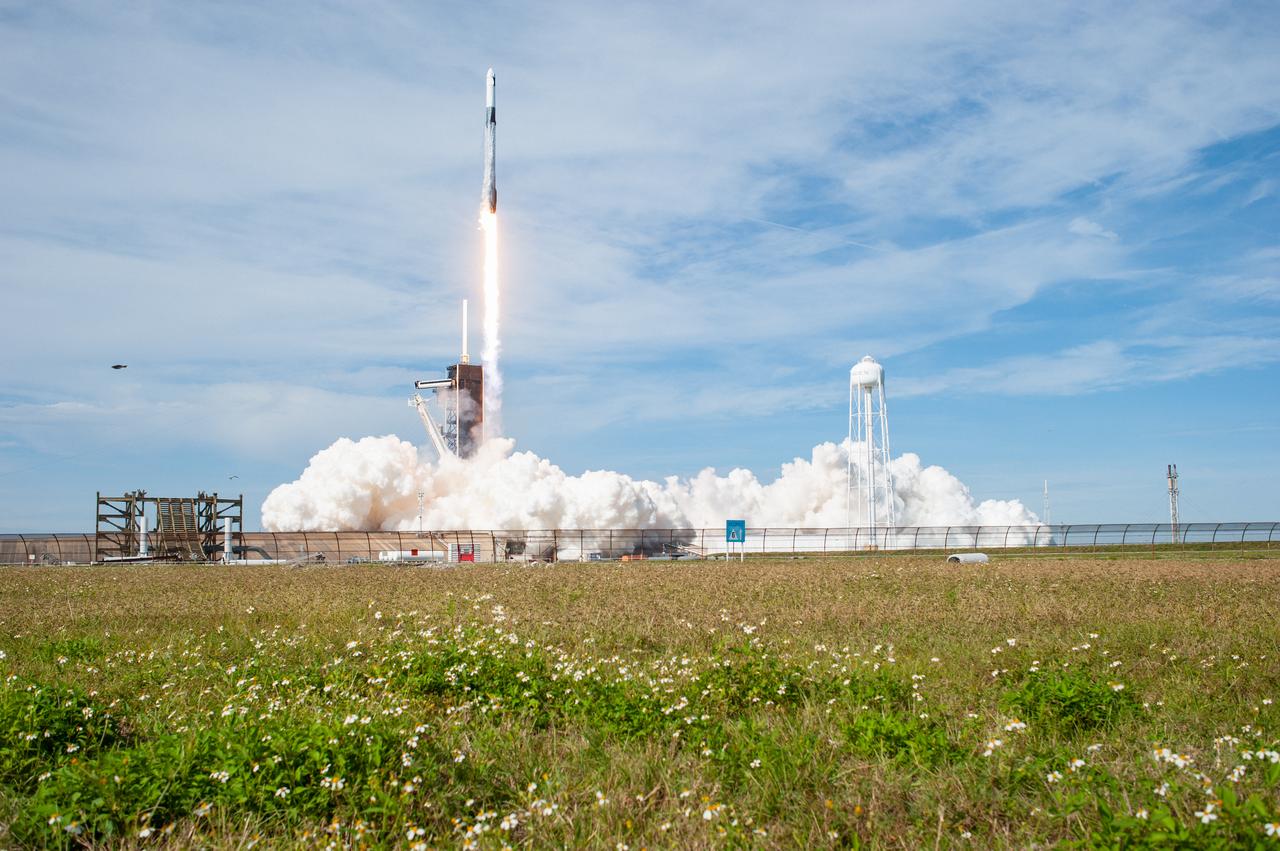
A SpaceX Falcon 9 rocket lifts off from Launch Complex 39A at Kennedy Space Center in Florida at 11:17 a.m. EST on Dec. 6, 2020, carrying the uncrewed cargo Dragon spacecraft on its journey to the International Space Station for NASA and SpaceX’s 21st Commercial Resupply Services (CRS-21) mission. Dragon will deliver more than 6,400 pounds of science investigations and cargo to the orbiting laboratory. The mission marks the first launch for SpaceX under NASA’s CRS-2 contract.
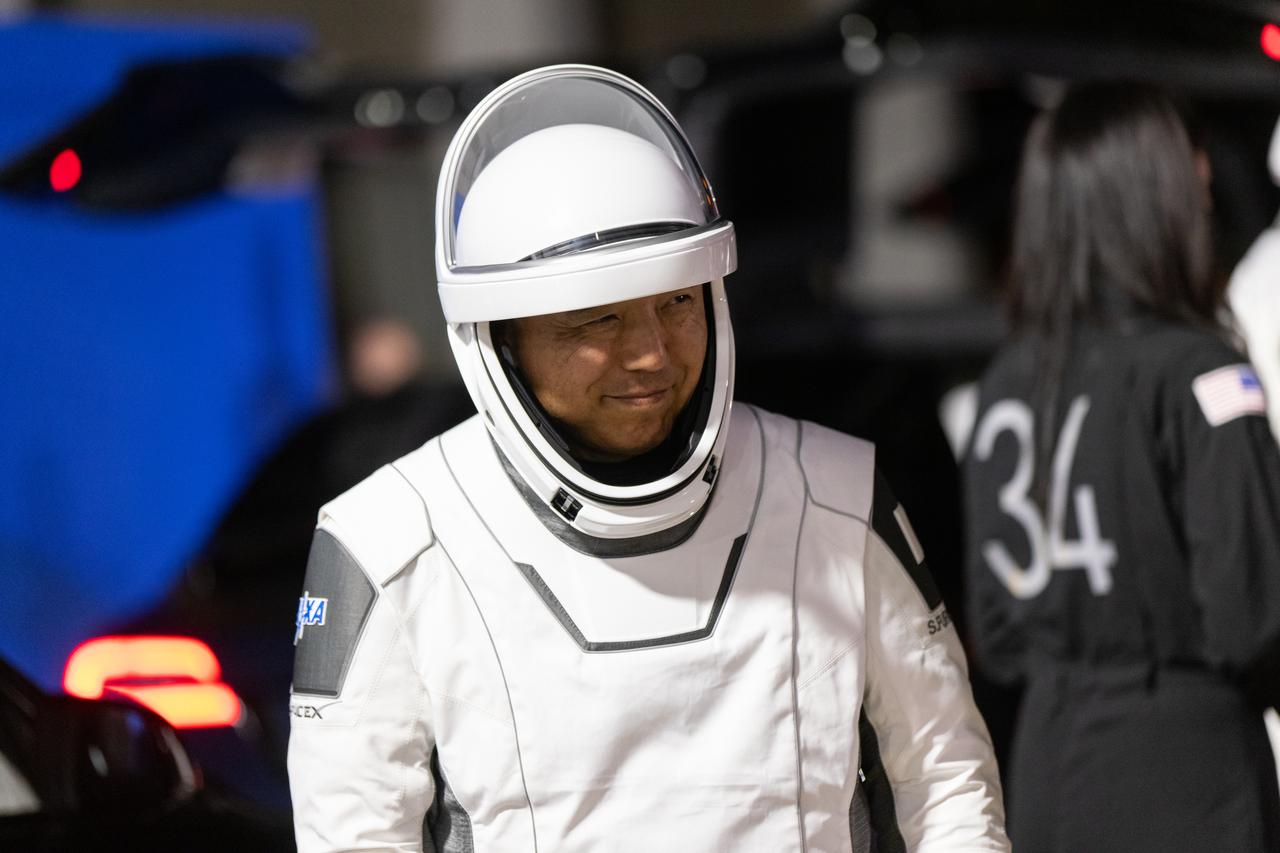
NASA’s SpaceX Crew-7 JAXA (Japan Aerospace Exploration Agency) astronaut Satoshi Furukawa smiles outside of the Neil Armstrong Operations and Checkout Building at NASA’s Kennedy Space Center in Florida on Saturday, Aug. 26, 2023. Furukawa and his crewmates are preparing to get into the customized Tesla Model X vehicles that will transport them to Kennedy’s Launch Complex 39A. SpaceX’s Dragon spacecraft, powered by the company’s Falcon 9 rocket, will carry the four-person crew – which includes NASA astronaut Jasmin Moghbeli, ESA (European Space Agency) astronaut Andreas Mogensen, and Roscosmos cosmonaut Konstantin Borisov – to the International Space Station as part of NASA’s Commercial Crew Program. Crew-7 is scheduled to launch at 3:27 a.m. EDT.

NASA’s SpaceX Crew-7 Roscosmos cosmonaut Konstantin Borisov relaxes in the suit-up room in the Astronaut Crew Quarters inside Kennedy Space Center’s Neil A. Armstrong Operations and Checkout Building a few hours before launch. A team of SpaceX suit technicians assisted the crew as they put on their custom-fitted spacesuits and checked the suits for leaks. Konstantin, along with NASA astronaut Jasmin Moghbeli, ESA (European Space Agency) astronaut Andreas Mogensen, and JAXA (Japan Aerospace Exploration Agency) astronaut Satoshi Furukawa, will launch aboard SpaceX’s Dragon spacecraft and Falcon 9 rocket to the International Space Station as part of NASA’s Commercial Crew Program. Launch is at 3:27 a.m. EDT Saturday, Aug. 26, from Kennedy’s Launch Complex 39A.
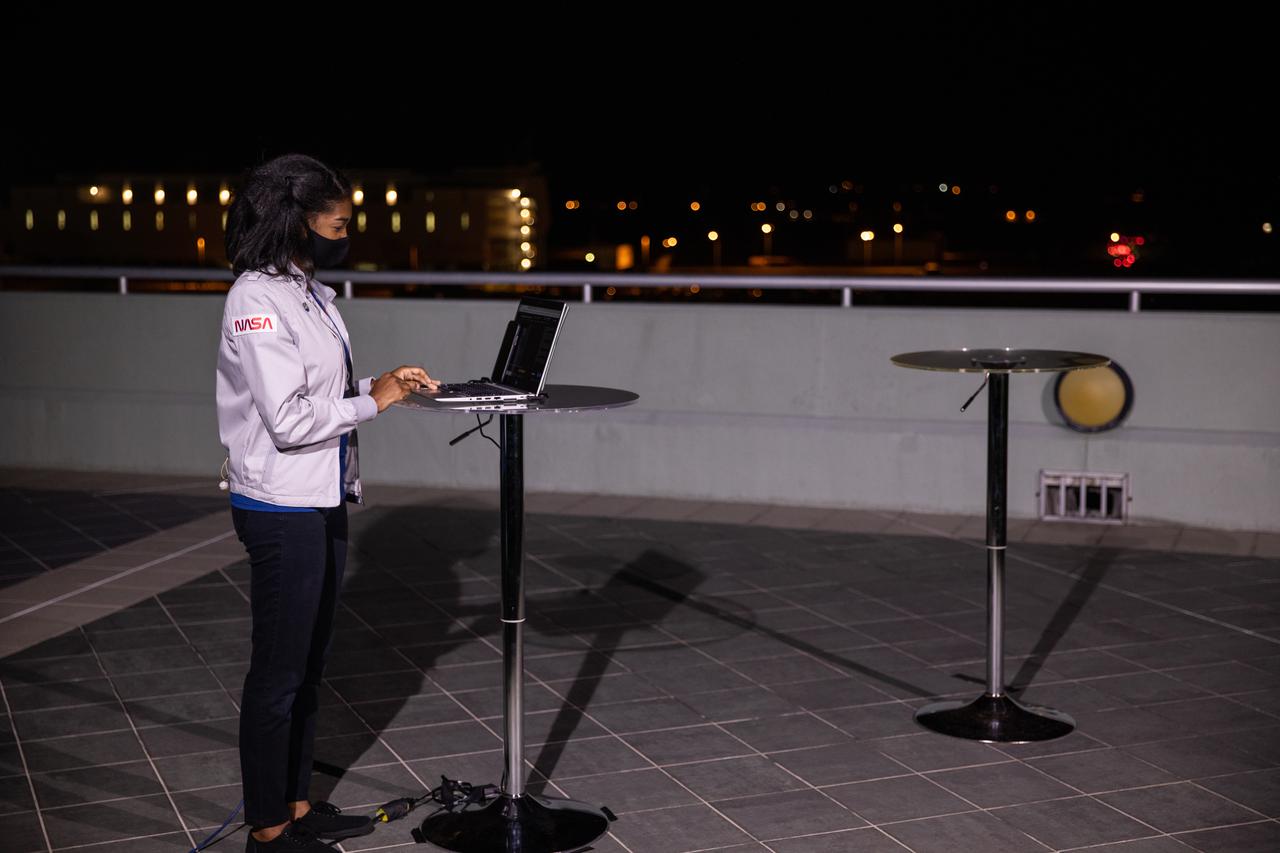
NASA Communications’ Jasmine Hopkins interviews individuals from NASA and the European Space Agency (ESA) on the Operations and Support Building II balcony at NASA’s Kennedy Space Center in Florida during the agency’s SpaceX Crew-2 launch broadcast on April 23, 2021. The SpaceX Falcon 9 rocket and Crew Dragon spacecraft lifted off from Kennedy’s Launch Complex 39A at 5:49 a.m. EDT. Part of NASA’s Commercial Crew Program, Crew-2 delivered NASA astronauts Shane Kimbrough and Megan McArthur, Japan Aerospace Exploration Agency (JAXA) astronaut Akihiko Hoshide, and ESA astronaut Thomas Pesquet to the International Space Station for a six-month science mission.
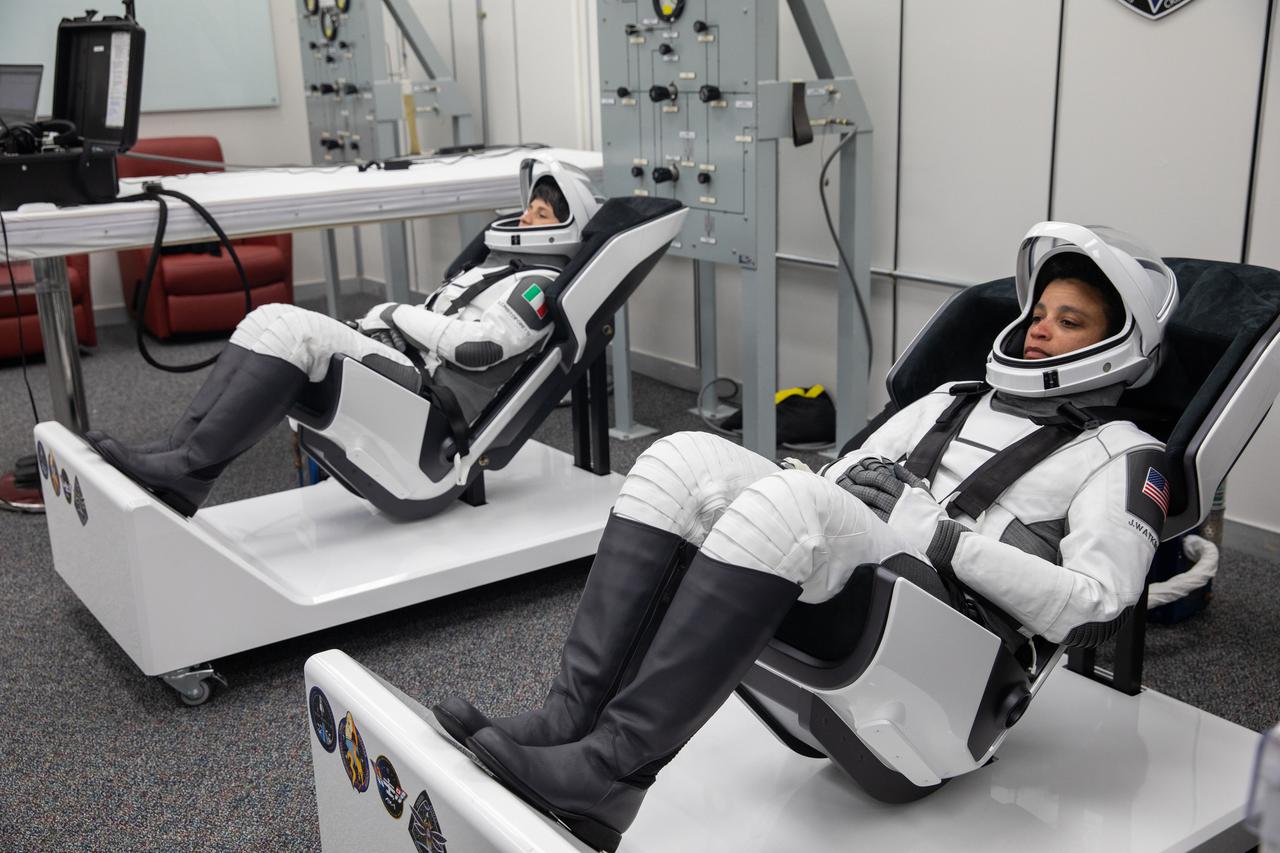
Crew-4 mission astronauts Samantha Cristoforetti, left, and Jessica Watkins relax in the suit room in the Astronaut Crew Quarters inside Kennedy Space Center’s Neil A. Armstrong Operations and Checkout Building on April 27, 2022. A team of SpaceX suit technicians assisted the crew as they put on their custom-fitted spacesuits and checked the suits for leaks. Astronauts Kjell Lindgren and Bob Hines will join Cristoforetti and Watkins aboard SpaceX’s Crew Dragon, powered by the company’s Falcon 9 rocket, which will carry the four-person crew to the International Space Station as part of NASA’s Commercial Crew Program. Crew-4 is scheduled to lift off today at 3:52 a.m. EDT from Launch Complex 39A at Kennedy.

A SpaceX Falcon 9 rocket soars into the sky at 3:27 a.m. EDT on Saturday, Aug. 26, from Kennedy Space Center’s Launch Complex 39A in Florida, carrying NASA’s SpaceX Crew-7 crew members to the International Space Station. Aboard SpaceX’s Dragon spacecraft are NASA astronaut Jasmin Moghbeli, ESA (European Space Agency) astronaut Andreas Mogensen, JAXA (Japan Aerospace Exploration Agency) astronaut Satoshi Furukawa, and Roscosmos cosmonaut Konstantin Borisov.
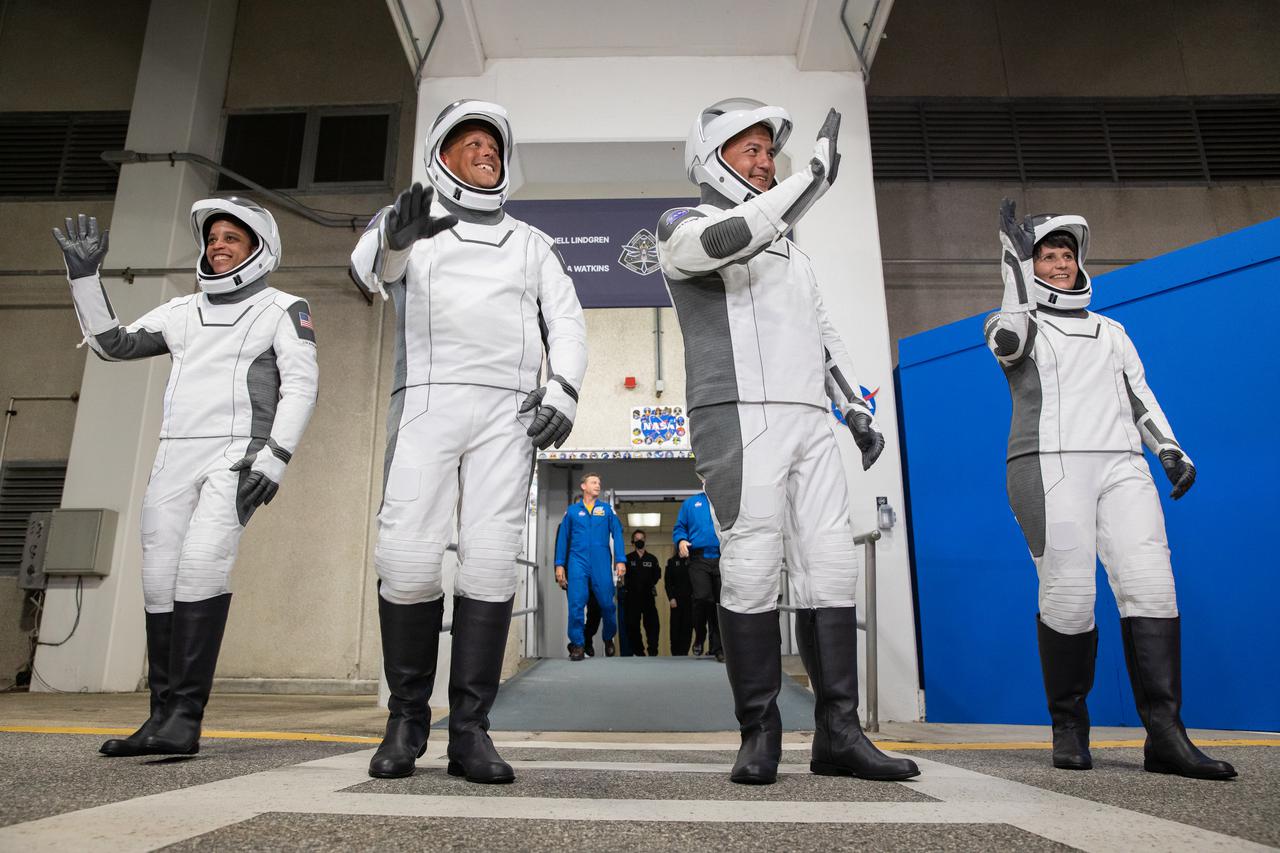
Crew-4 astronauts wave after walking out through the double doors below the Neil A. Armstrong Building’s Astronaut Crew Quarters at NASA’s Kennedy Space Center in Florida on April 27, 2022. They will make their way to the customized Tesla Model X cars that will take them to their spacecraft at Launch Complex 39A. From left are: mission specialist Jessica Watkins, pilot Bob Hines, commander Kjell Lindgren, and mission specialist Samantha Cristoforetti. SpaceX’s Crew Dragon, powered by the company’s Falcon 9 rocket, will carry the four-person crew to the International Space Station as part of NASA’s Commercial Crew Program. Crew-4 is scheduled to launch today at 3:52 a.m. EDT, from Pad 39A at Kennedy.
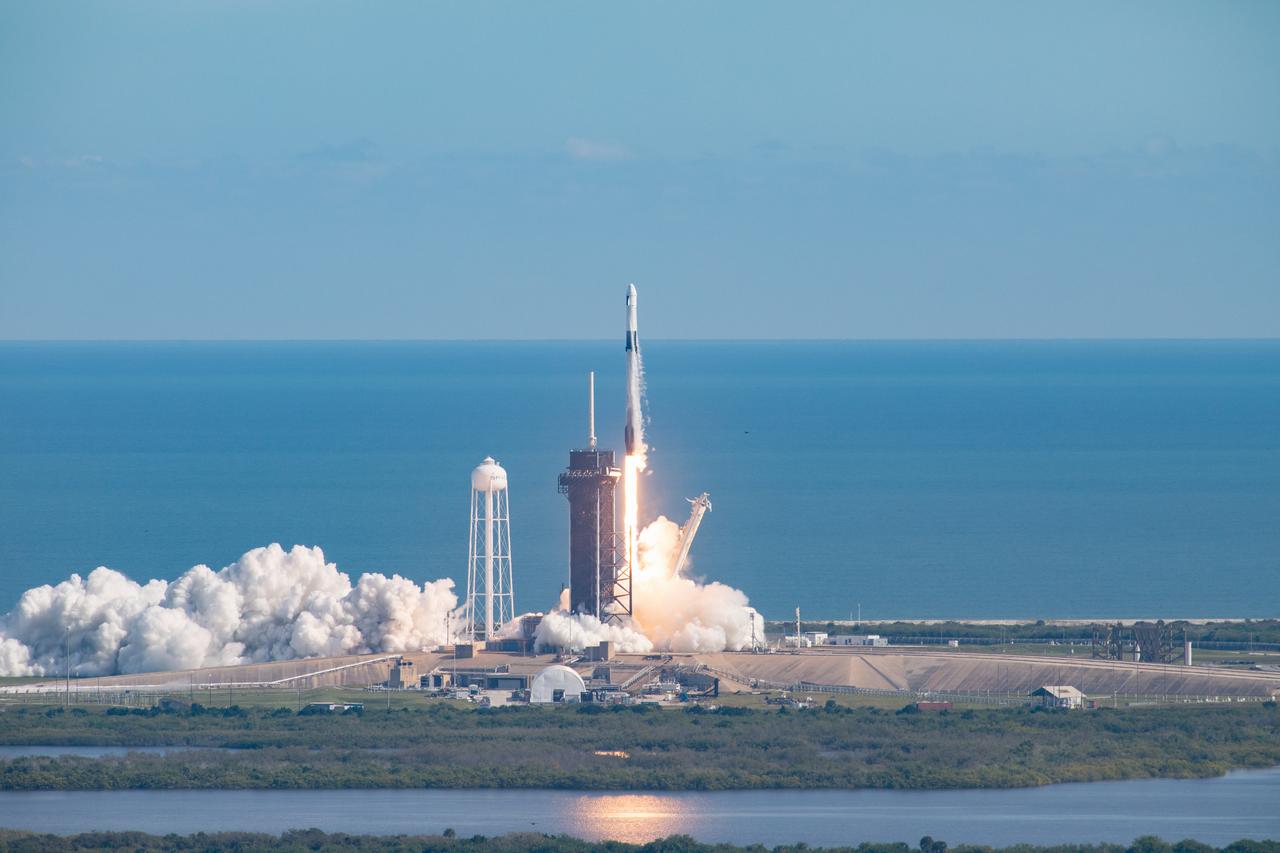
A SpaceX Falcon 9 rocket lifts off from Launch Complex 39A at Kennedy Space Center in Florida at 11:17 a.m. EST on Dec. 6, 2020, carrying the uncrewed cargo Dragon spacecraft on its journey to the International Space Station for NASA and SpaceX’s 21st Commercial Resupply Services (CRS-21) mission. Dragon will deliver more than 6,400 pounds of science investigations and cargo to the orbiting laboratory. The mission marks the first launch for SpaceX under NASA’s CRS-2 contract.
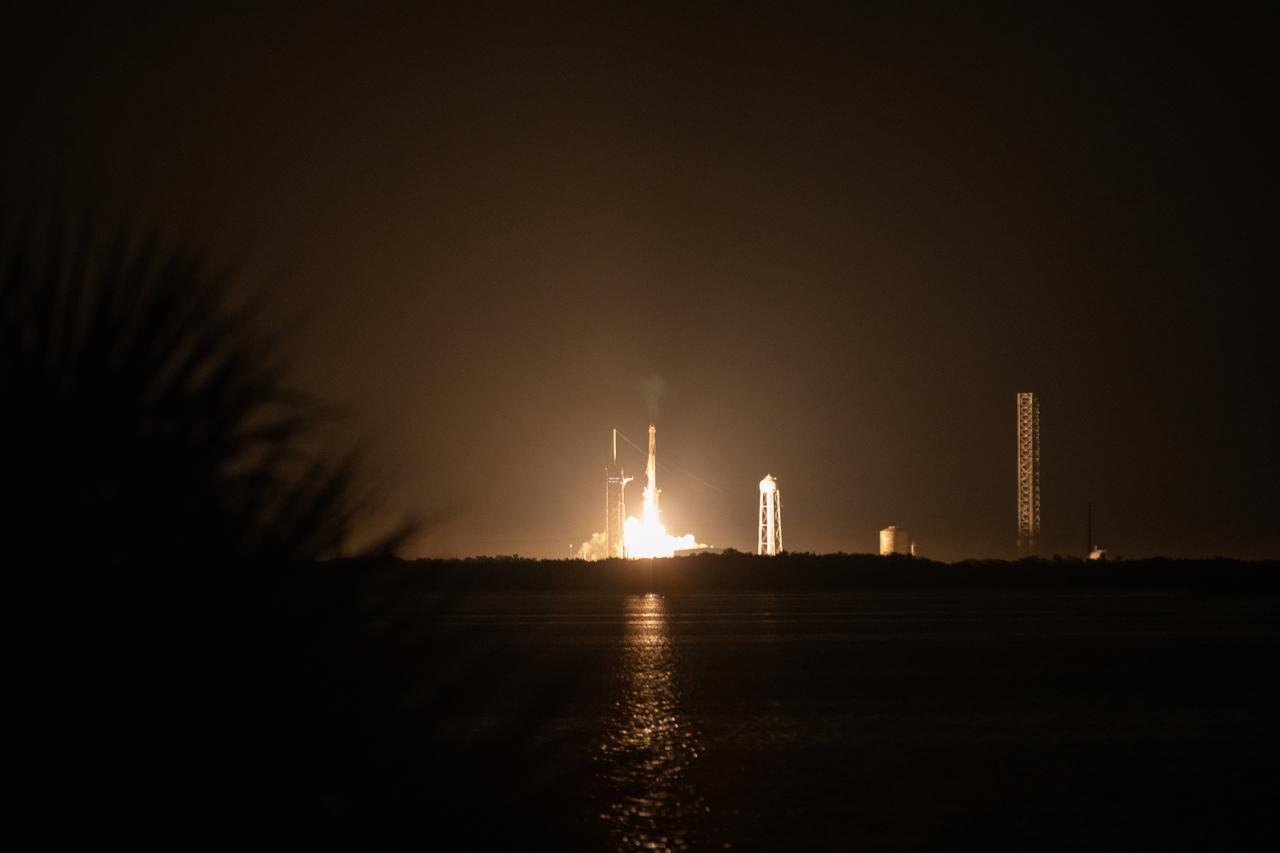
A SpaceX Falcon 9 rocket lifts off at 3:27 a.m. EDT on Saturday, Aug. 26, from Kennedy Space Center’s Launch Complex 39A in Florida, carrying NASA’s SpaceX Crew-7 crew members to the International Space Station. Aboard SpaceX’s Dragon spacecraft are NASA astronaut Jasmin Moghbeli, ESA (European Space Agency) astronaut Andreas Mogensen, JAXA (Japan Aerospace Exploration Agency) astronaut Satoshi Furukawa, and Roscosmos cosmonaut Konstantin Borisov. They will dock to the orbiting laboratory at about 8:40 a.m. EDT Sunday, Aug. 27.
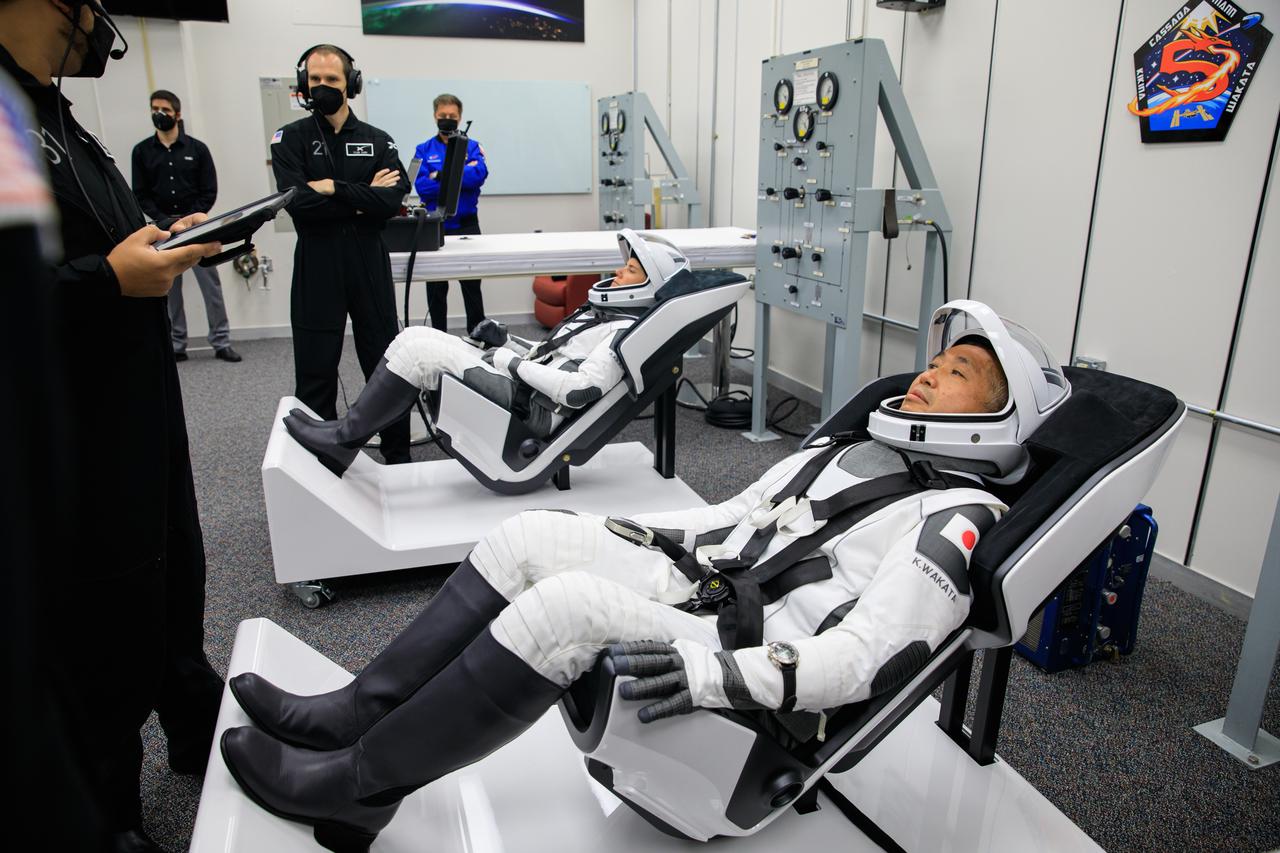
Roscosmos cosmonaut Anna Kikina, left, and JAXA (Japan Aerospace Exploration Agency) astronaut Koichi Wakata are seated inside the crew suit-up room in the Neil A. Armstrong Operations and Checkout Building at NASA’s Kennedy Space Center in Florida on Oct. 5, 2022. Kikina and Wakata, along with NASA astronauts Nicole Mann and Josh Cassada, will launch to the International Space Station on the agency’s SpaceX Crew-5 mission. The SpaceX Falcon 9 rocket and Dragon Endurance spacecraft lifted off at noon EDT from Kennedy’s Launch Complex 39A.

A SpaceX Falcon 9 rocket lifts off from Launch Complex 39A at Kennedy Space Center in Florida at 11:17 a.m. EST on Dec. 6, 2020, carrying the uncrewed cargo Dragon spacecraft on its journey to the International Space Station for NASA and SpaceX’s 21st Commercial Resupply Services (CRS-21) mission. Dragon will deliver more than 6,400 pounds of science investigations and cargo to the orbiting laboratory. The mission marks the first launch for SpaceX under NASA’s CRS-2 contract.
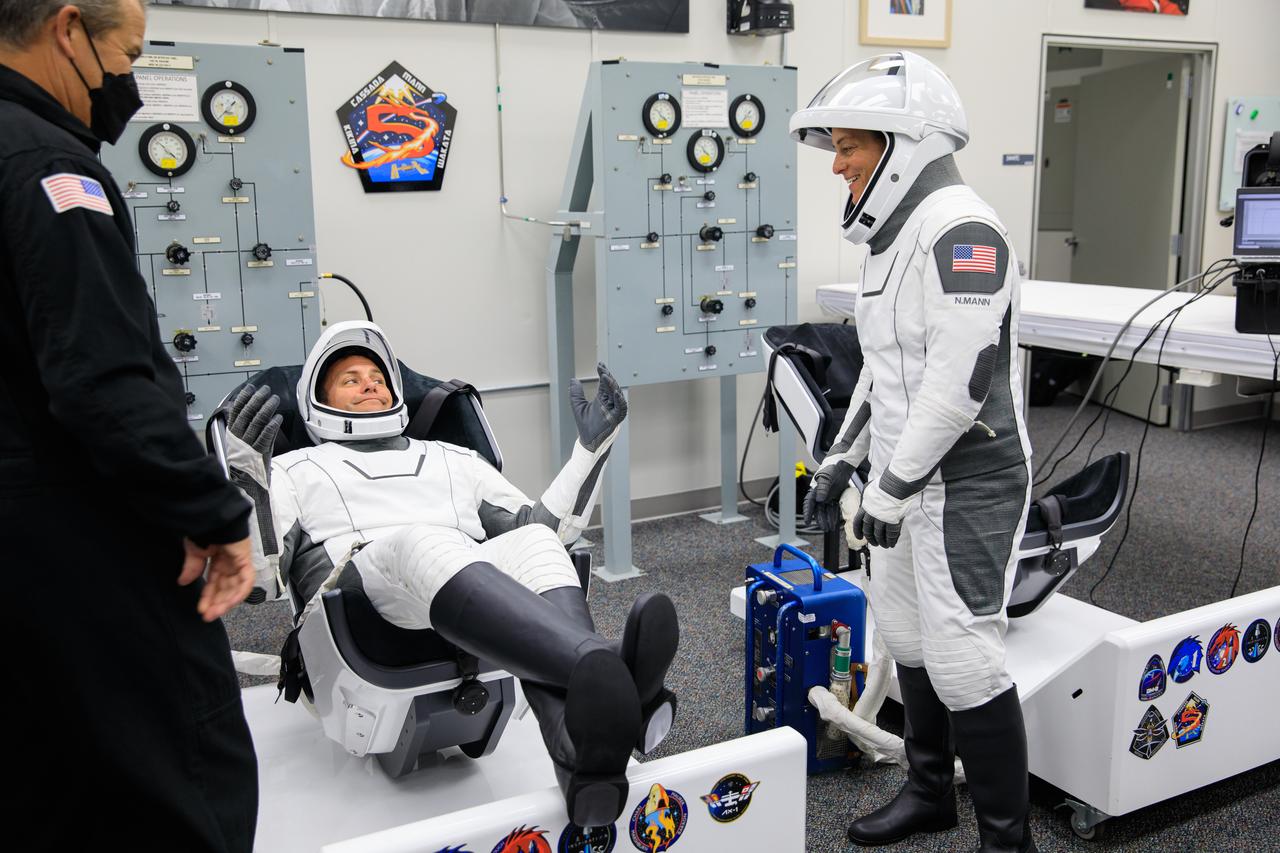
NASA astronaut Josh Cassada, left, is seated inside the crew suit-up room in the Neil A. Armstrong Operations and Checkout Building at NASA’s Kennedy Space Center in Florida on Oct. 5, 2022. To his right is NASA astronaut Nicole Mann. Cassada and Mann, along with Roscosmos cosmonaut Anna Kikina and JAXA (Japan Aerospace Exploration Agency) astronaut Koichi Wakata will launch to the International Space Station on the agency’s SpaceX Crew-5 mission. The SpaceX Falcon 9 rocket and Dragon Endurance spacecraft lifted off at noon EDT from Kennedy’s Launch Complex 39A.
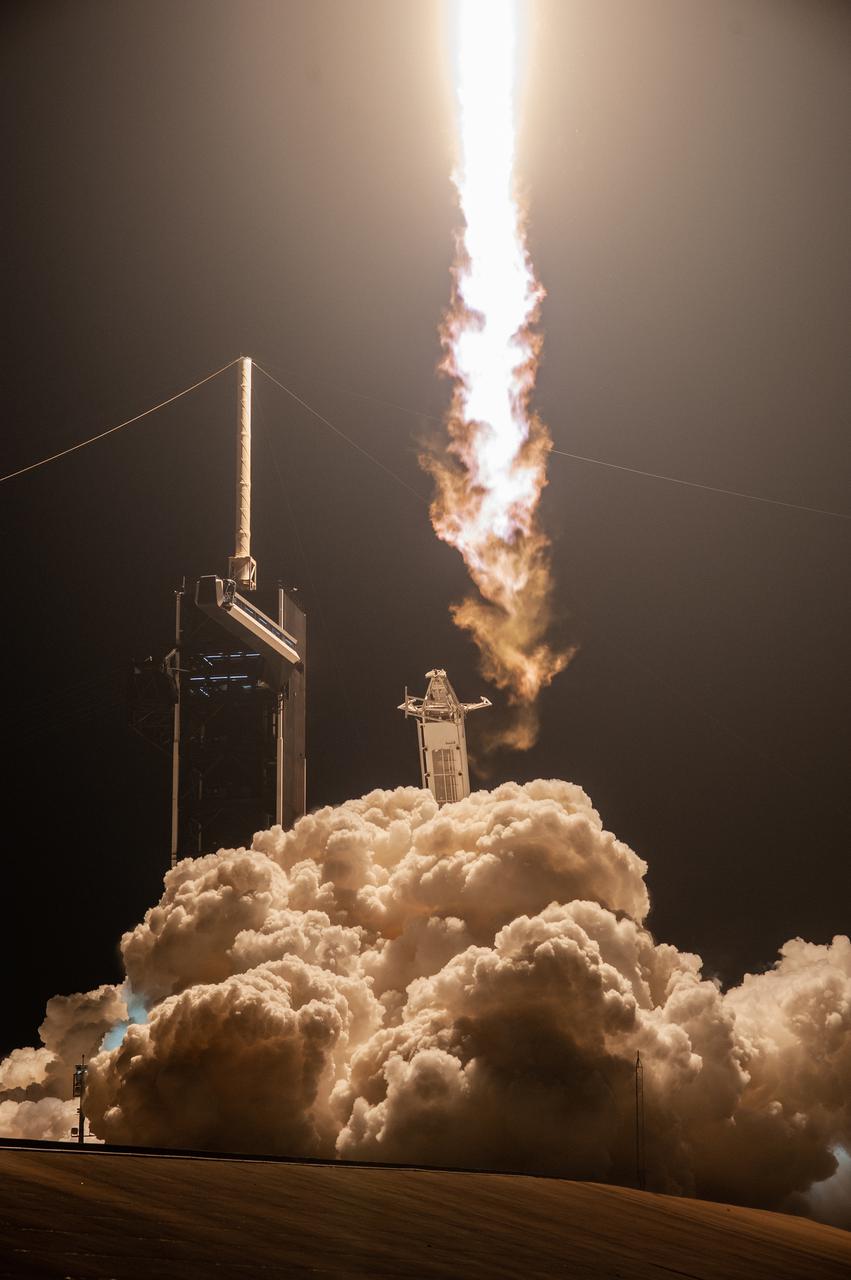
The SpaceX Falcon 9 rocket, with the company’s Crew Dragon atop, lifts off from Launch Pad 39A at Kennedy Space Center in Florida for NASA’s SpaceX Crew-4 mission on April 27, 2022, at 3:52 a.m. EDT. Aboard the Dragon are NASA astronauts Kjell Lindgren, Bob Hines, and Jessica Watkins, and ESA (European Space Agency) astronaut Samantha Cristoforetti. The spacecraft will carry the Crew-4 astronauts to the International Space Station as part of NASA’s Commercial Crew Program. The Dragon spacecraft, named Freedom by the mission’s crew, is scheduled to dock to the space station today at 8:15 p.m. EDT.
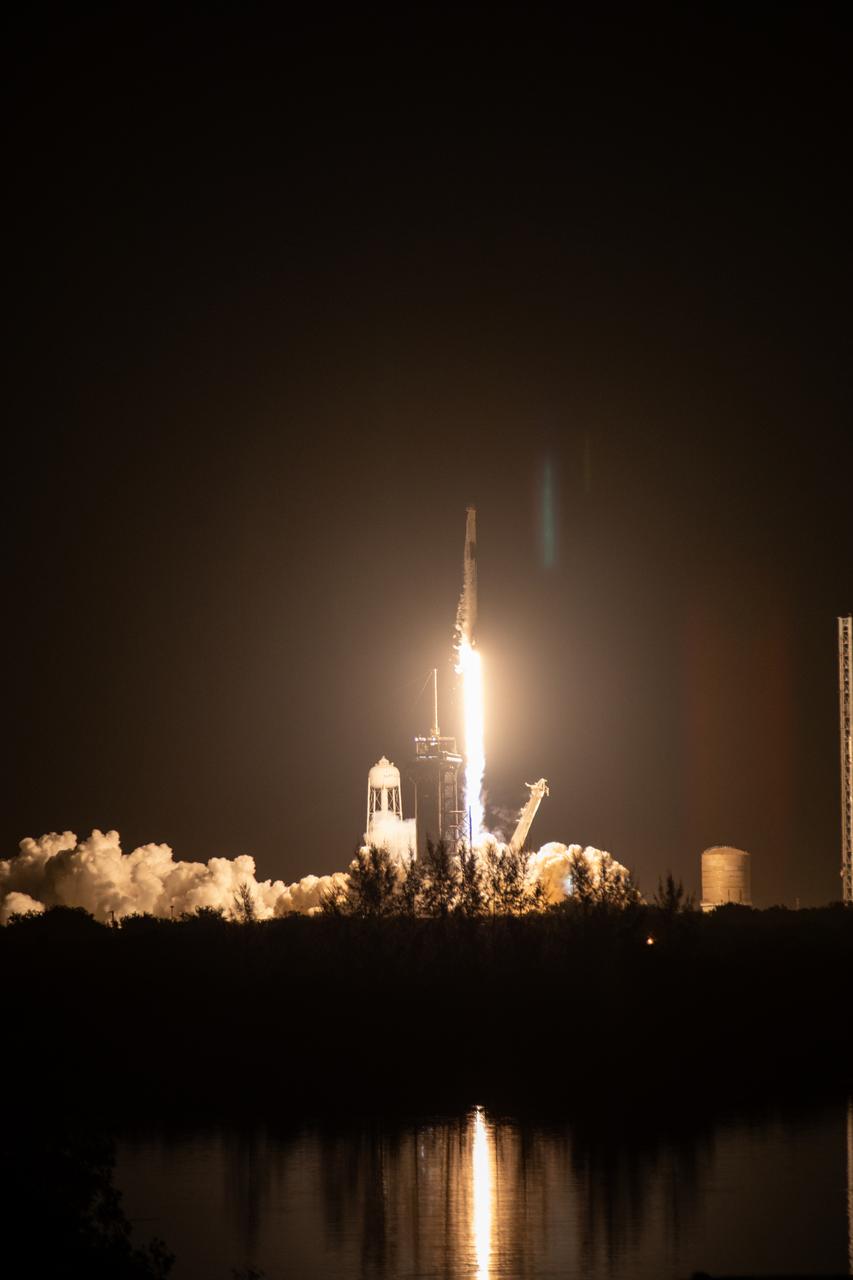
The SpaceX Falcon 9 rocket carrying the Dragon spacecraft lifts off from Launch Complex 39A at NASA’s Kennedy Space Center in Florida on Thursday, Nov. 9, 2023, on the company’s 29th commercial resupply services mission for the agency to the International Space Station. Liftoff was at 8:28 p.m. EST. Dragon will deliver scientific research, technology demonstrations, crew supplies, and hardware to the space station to support its Expedition 70 crew, including NASA’s Integrated Laser Communications Relay Demonstration Low Earth Orbit User Modem and Amplifier Terminal (ILLUMA-T) and Atmospheric Waves Experiment (AWE). The spacecraft is expected to spend about a month attached to the orbiting outpost before it returns to Earth with research and return cargo, splashing down off the coast of Florida.
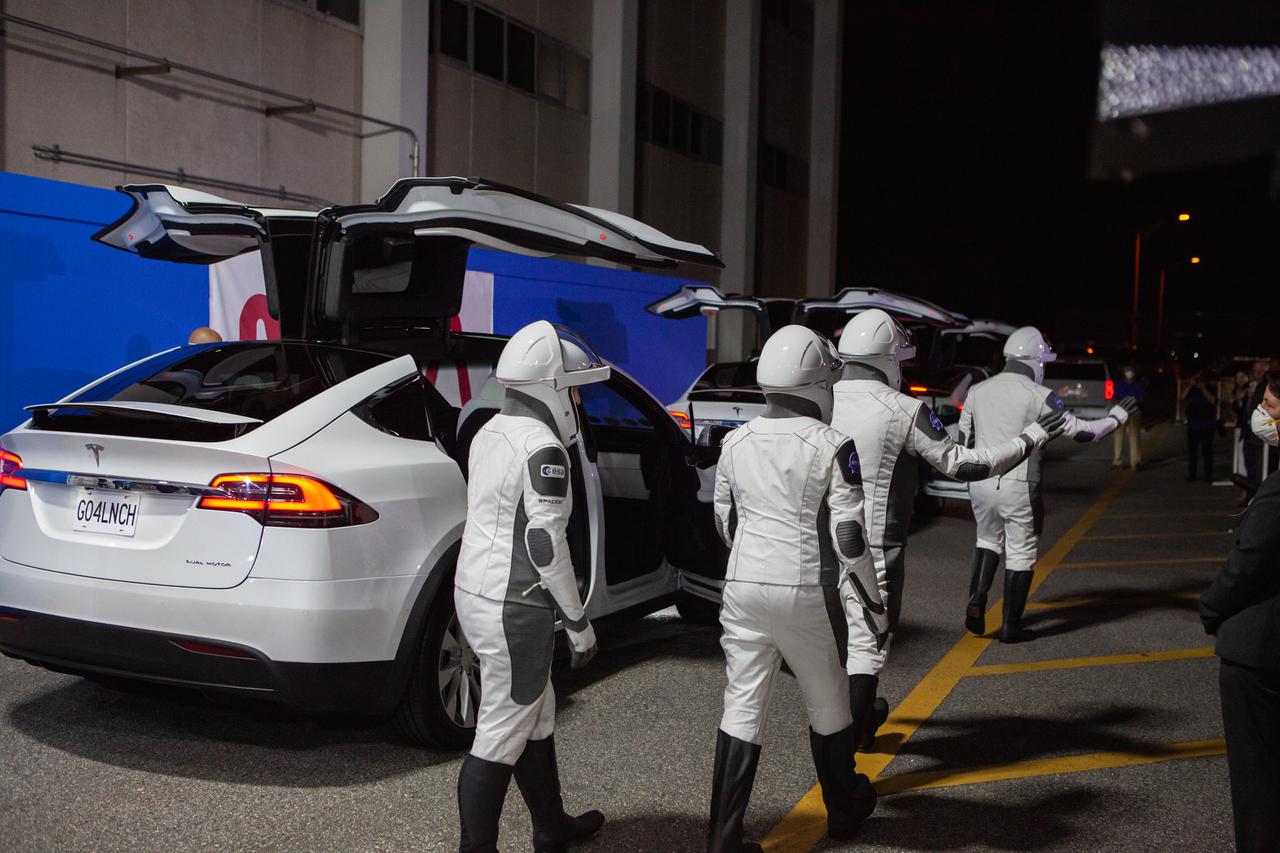
Crew-4 astronauts Kjell Lindgren, Samantha Cristoforetti, Bob Hines, and Jessica Watkins walk out of the Neil Armstrong Operations and Checkout Building at NASA’s Kennedy Space Center in Florida and make their way to the customized Tesla Model X vehicles that will transport them to their spacecraft at Launch Complex 39A. SpaceX’s Crew Dragon, powered by the company’s Falcon 9 rocket, will carry the four-person crew to the International Space Station as part of NASA’s Commercial Crew Program. Crew-4 is scheduled to launch today at 3:52 a.m. EDT, from Pad 39A at Kennedy.
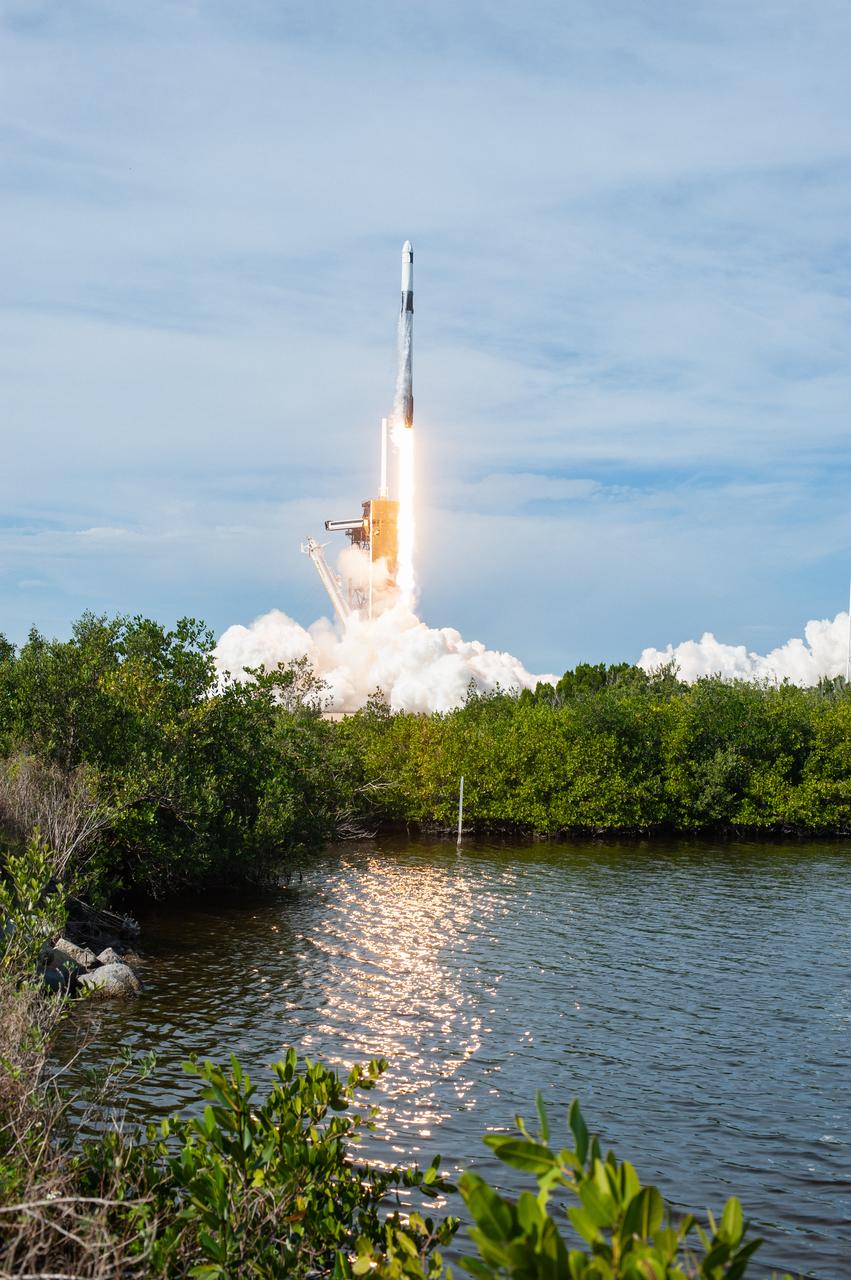
A SpaceX Falcon 9 rocket lifts off from Launch Complex 39A at Kennedy Space Center in Florida at 11:17 a.m. EST on Dec. 6, 2020, carrying the uncrewed cargo Dragon spacecraft on its journey to the International Space Station for NASA and SpaceX’s 21st Commercial Resupply Services (CRS-21) mission. Dragon will deliver more than 6,400 pounds of science investigations and cargo to the orbiting laboratory. The mission marks the first launch for SpaceX under NASA’s CRS-2 contract.
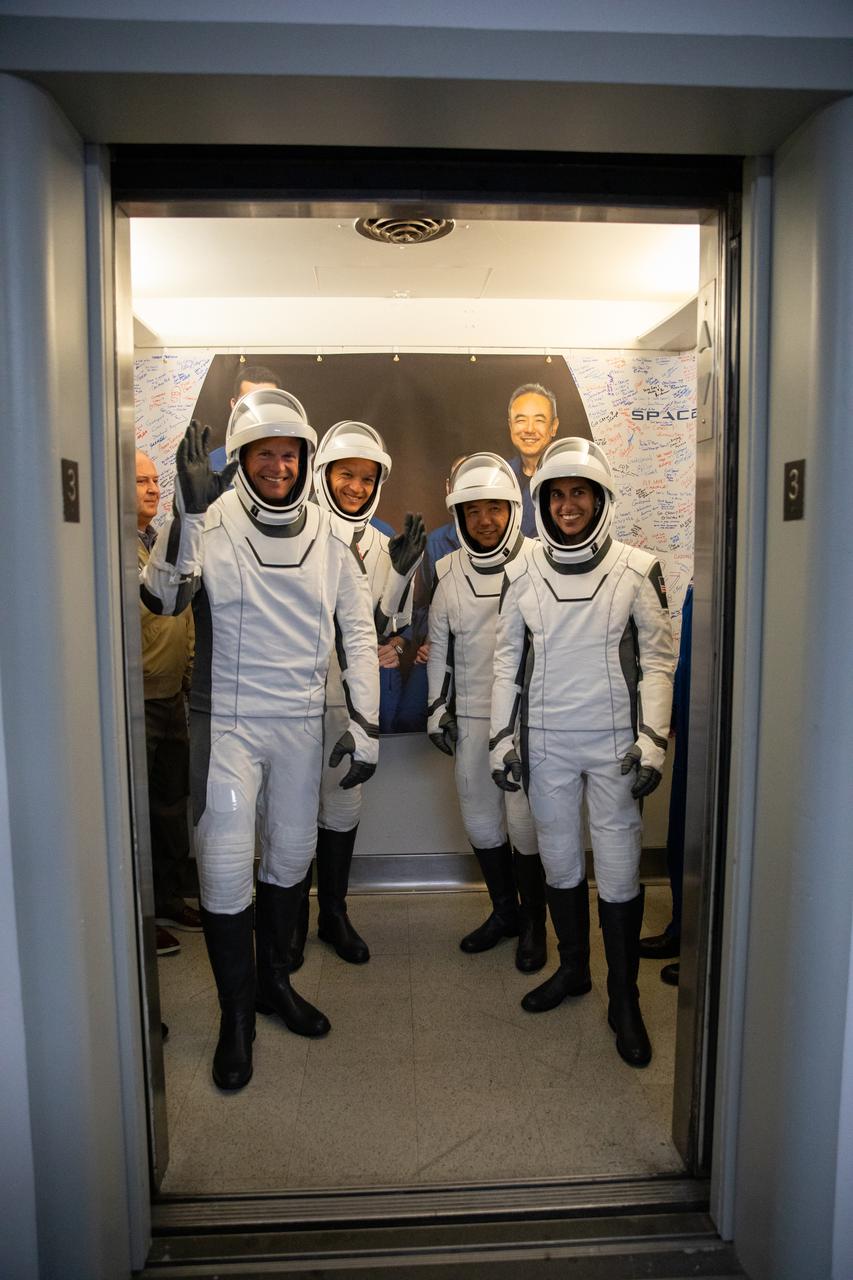
NASA’s SpaceX Crew-7 mission crew members, from left, ESA (European Space Agency) astronaut Andreas Mogensen, Roscosmos cosmonaut Konstantin Borisov, JAXA (Japan Aerospace Exploration Agency) astronaut Satoshi Furukawa, and NASA astronaut Jasmin Moghbeli enter the elevator in the Astronaut Crew Quarters on Saturday, Aug. 26, 2023, inside Kennedy Space Center’s Neil A. Armstrong Operations and Checkout Building. A team of SpaceX suit technicians assisted the crew as they put on their custom-fitted spacesuits and checked the suits for leaks. The crew members will launch aboard SpaceX’s Dragon spacecraft and Falcon 9 rocket to the International Space Station as part of NASA’s Commercial Crew Program. Liftoff is targeted for 3:27 a.m. EDT from Launch Complex 39A at the Florida spaceport.
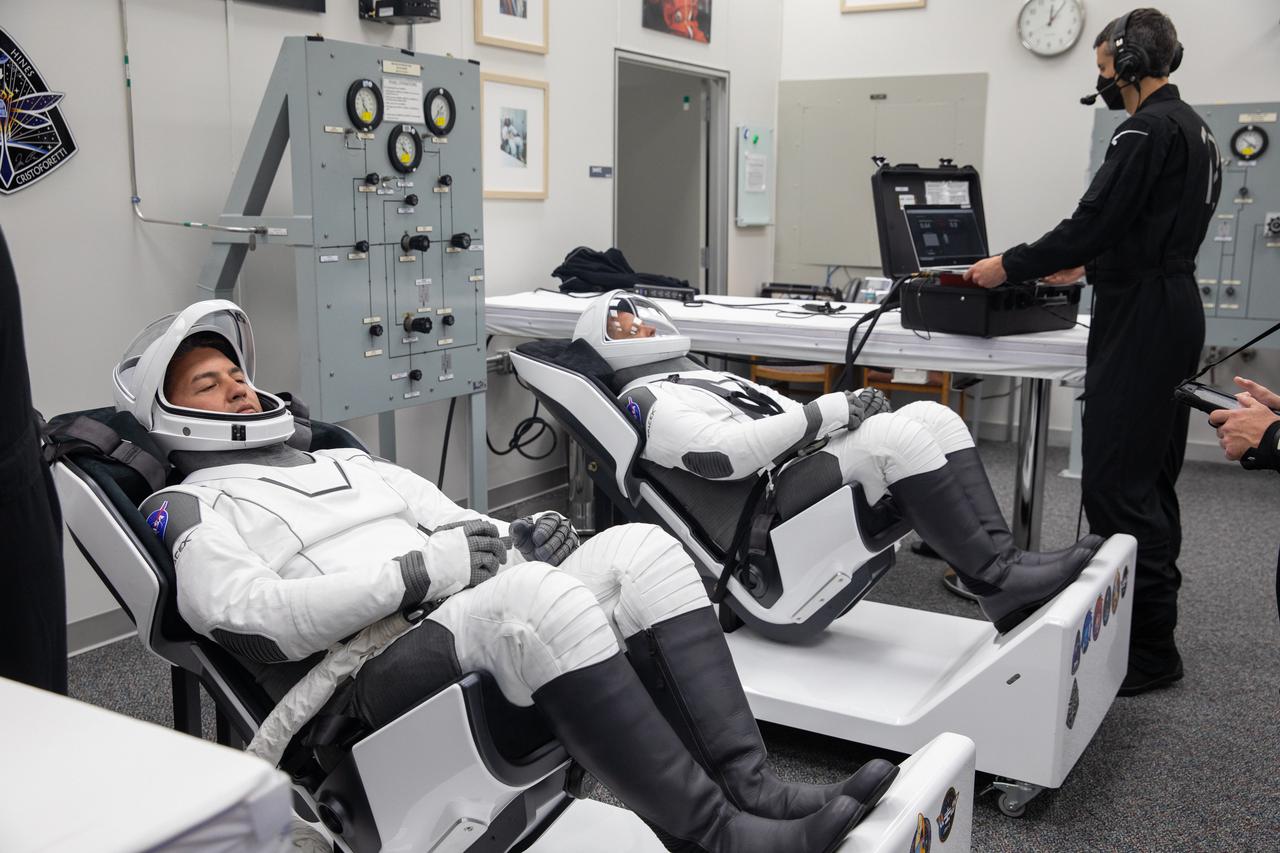
Crew-4 mission astronauts Kjell Lindgren, left, and Bob Hines relax in the suit room in the Astronaut Crew Quarters inside Kennedy Space Center’s Neil A. Armstrong Operations and Checkout Building on April 27, 2022. A team of SpaceX suit technicians assisted the crew as they put on their custom-fitted spacesuits and checked the suits for leaks. Astronauts Jessica Watkins and Samantha Cristoforetti will join Lindgren and Hines aboard SpaceX’s Crew Dragon, powered by the company’s Falcon 9 rocket, which will carry the four-person crew to the International Space Station as part of NASA’s Commercial Crew Program. Crew-4 is scheduled to lift off today at 3:52 a.m. EDT from Launch Complex 39A at Kennedy.