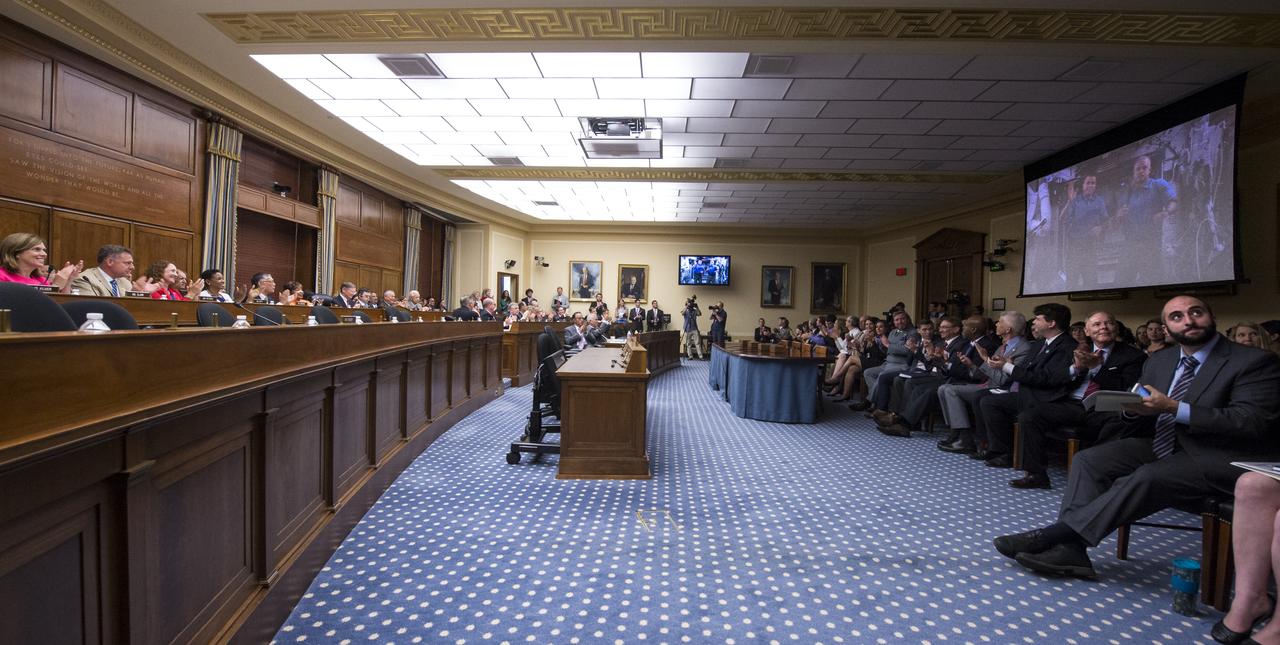
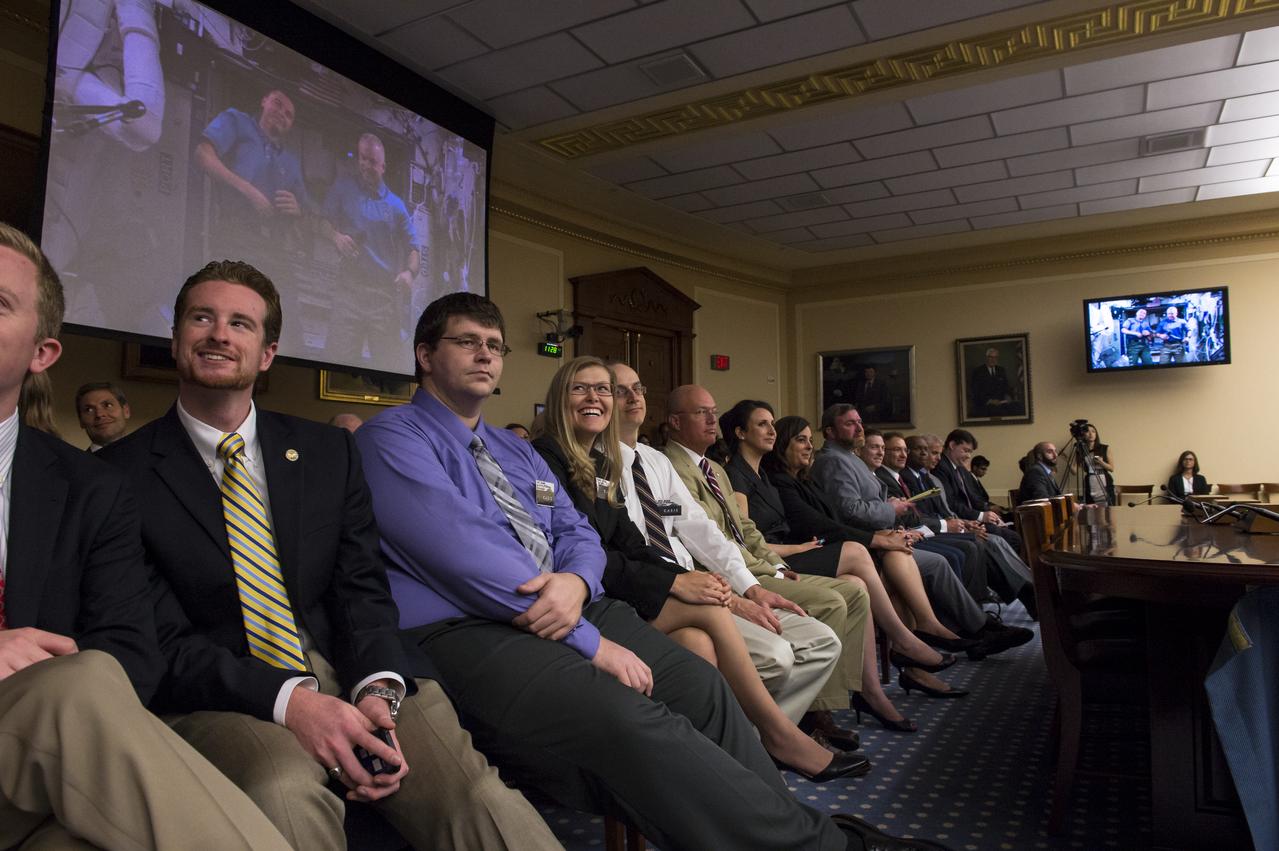
Congress and audience members applaud after a full-committee event held Thursday, July 24, 2014 at the Rayburn House Office Building in Washington, DC to allow members of the Committee on Science, Space, and Technology an opportunity to ask astronauts Steve Swanson and Reid Wiseman questions through a live downlink with the International Space Station (ISS). Expedition 40 astronauts Steve Swanson and Reid Wiseman have been living and working at the ISS for over two months and are scheduled to return to Earth toward the end of this year.
Live Downlink with Astronauts at the International Space Station
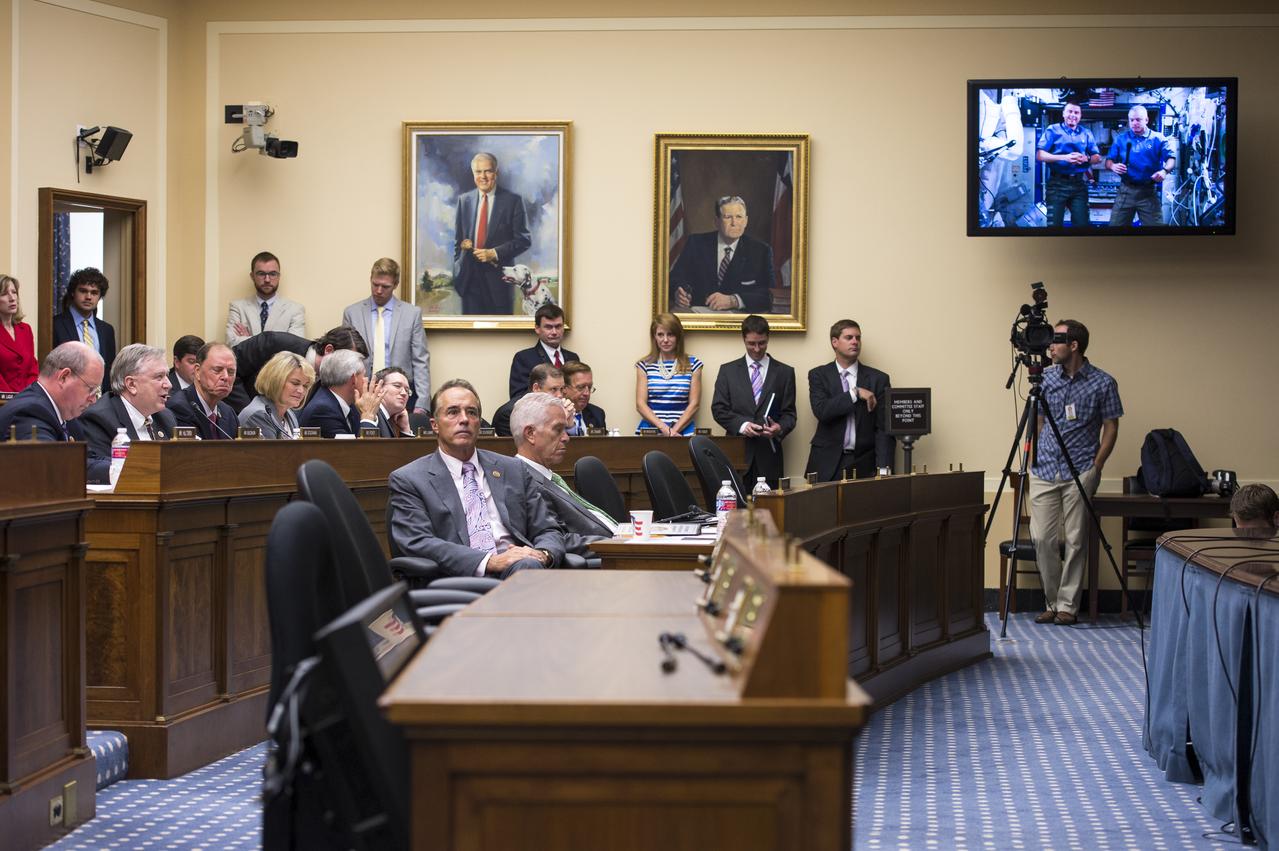
Congressman Derek Kilmer asks astronauts Steve Swanson and Reid Wisemen a question on behalf of a young audience member at the live downlink with the International Space Station (ISS) Thursday, July 24, 2014 at the Rayburn House Office Building in Washington, DC. The event allowed members of the Committee on Science, Space, and Technology to ask Expedition 40 astronauts Steve Swanson and Reid Wiseman questions about their time living and working at the ISS. They are scheduled to return to Earth toward the end of this year.
Live Downlink with Astronauts at the International Space Station
Representative Steve Stockman (R-TX) asks astronauts Steve Swanson and Reid Wisemen a question at the live downlink with the International Space Station (ISS) Thursday, July 24, 2014 at the Rayburn House Office Building in Washington, DC. The event provided members of the Committee on Science, Space, and Technology the opportunity to ask Expedition 40 astronauts Steve Swanson and Reid Wiseman questions about their time living and working at the ISS. They are scheduled to return to Earth toward the end of this year.
Live Downlink with Astronauts at the International Space Station
Audience members watch as astronauts Reid Wiseman and Steve Swanson answer questions posed to them by members of the Committee on Science, Space, and Technology at a full-committee event held Thursday, July 24, 2014 at the Rayburn House Office Building in Washington, DC. The event gave members the opportunity to ask the astronauts questions through a live downlink with the International Space Station (ISS). Expedition 40 astronauts Steve Swanson and Reid Wiseman have been living and working at the ISS for over two months and are scheduled to return to Earth toward the end of this year.
Live Downlink with Astronauts at the International Space Station
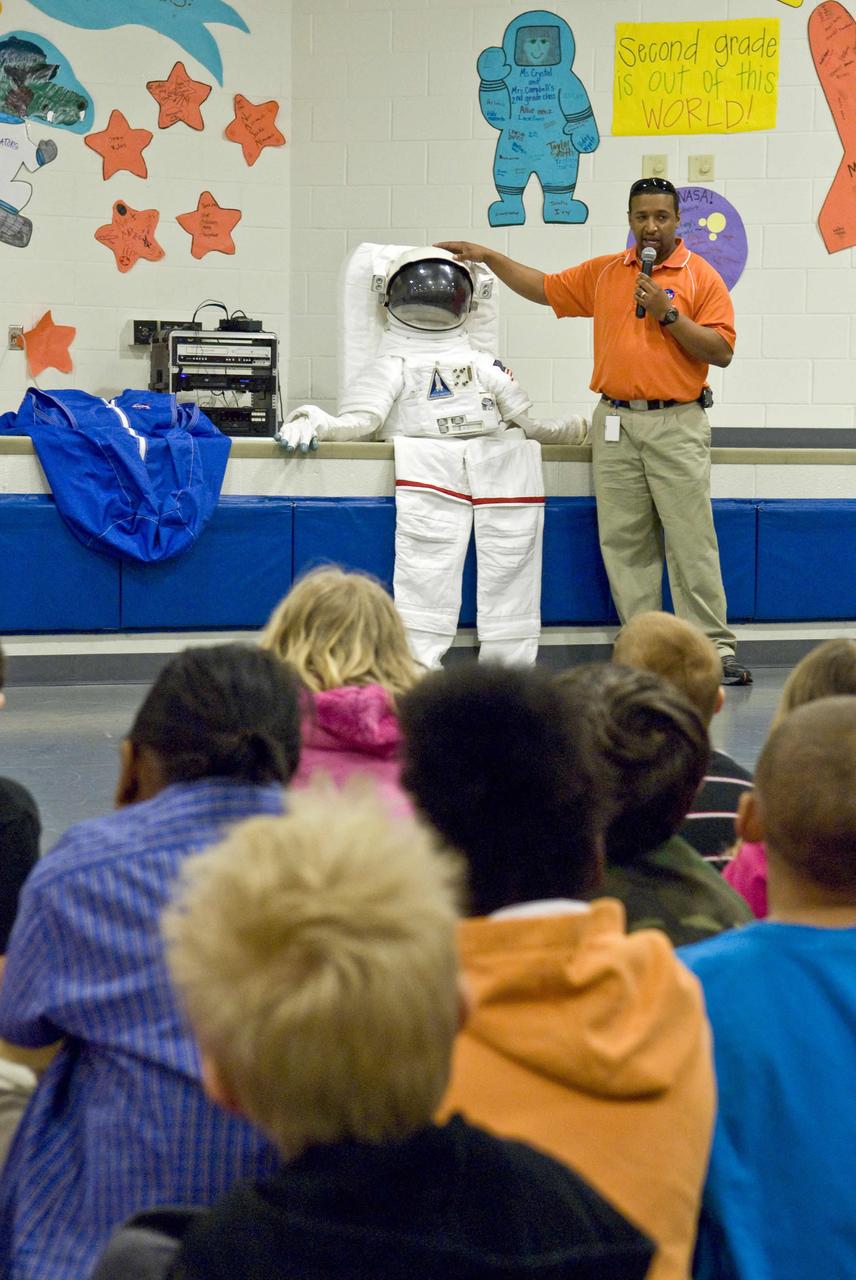
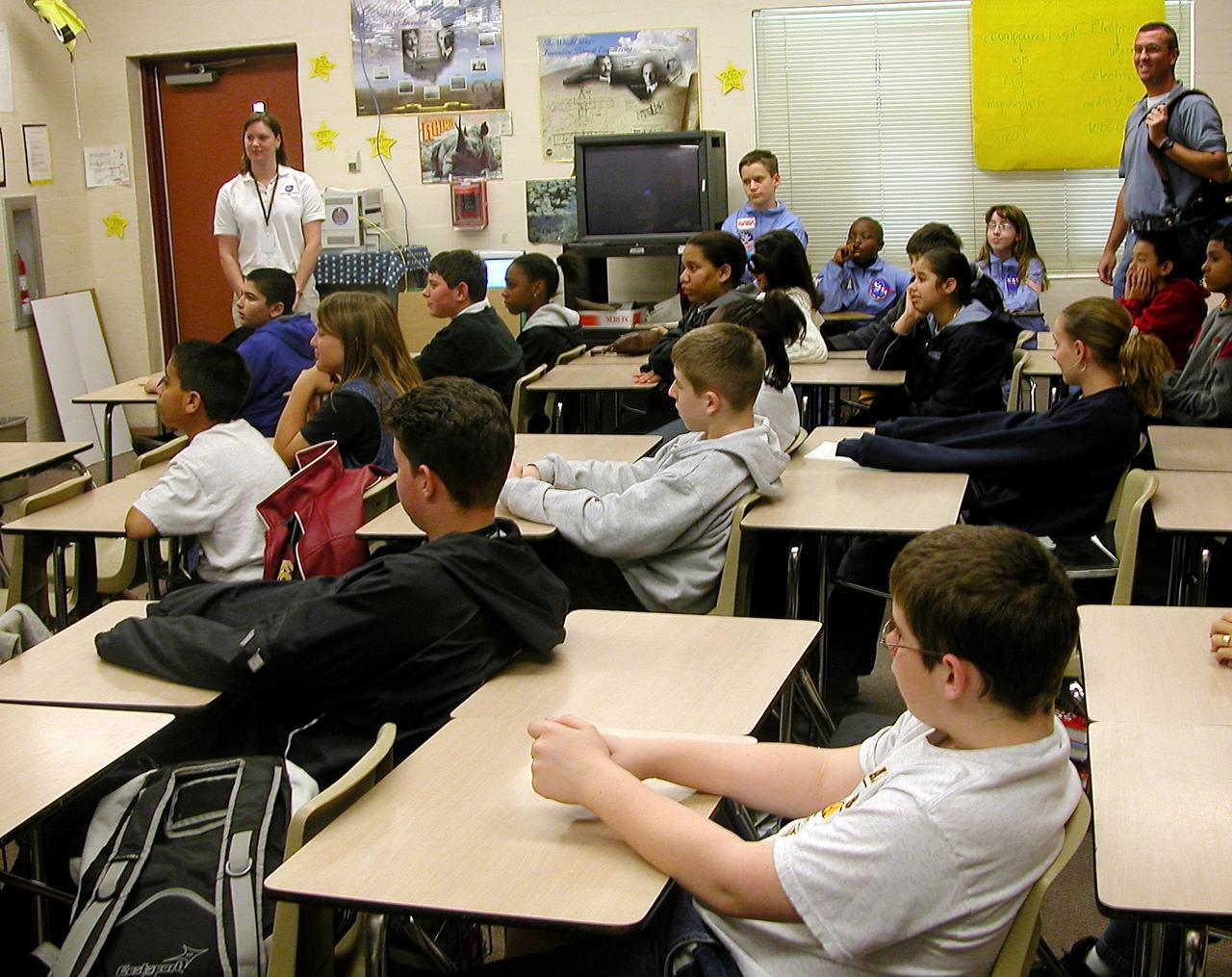
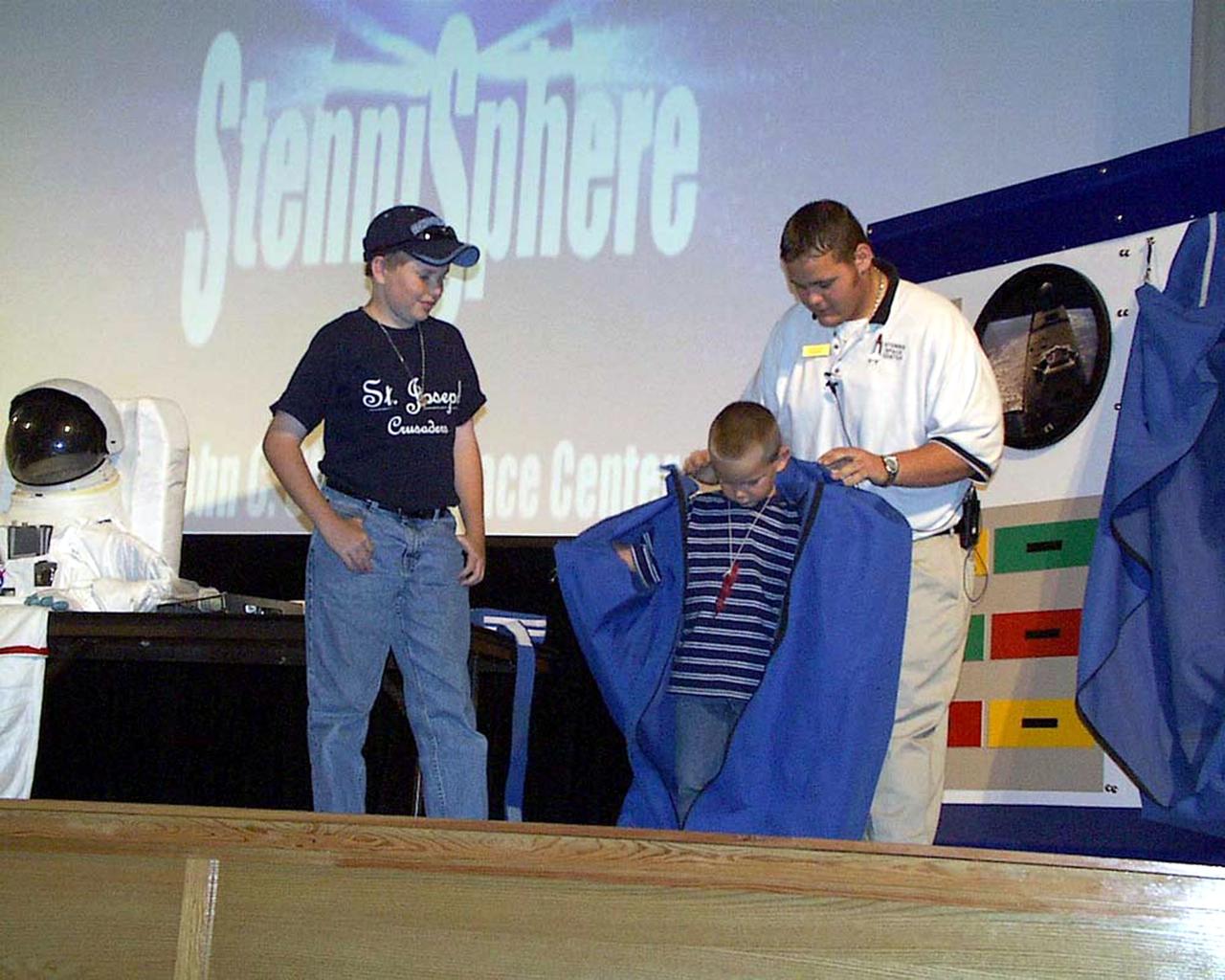
Students try on a sleep restraint like the ones used by astronauts. This demonstration is part of a program called 'Living and Working in Space,' that is presented by NASA's Stennis Space Center in the StenniSphere Auditorium and in the community.
Living and Working in Space Presentation
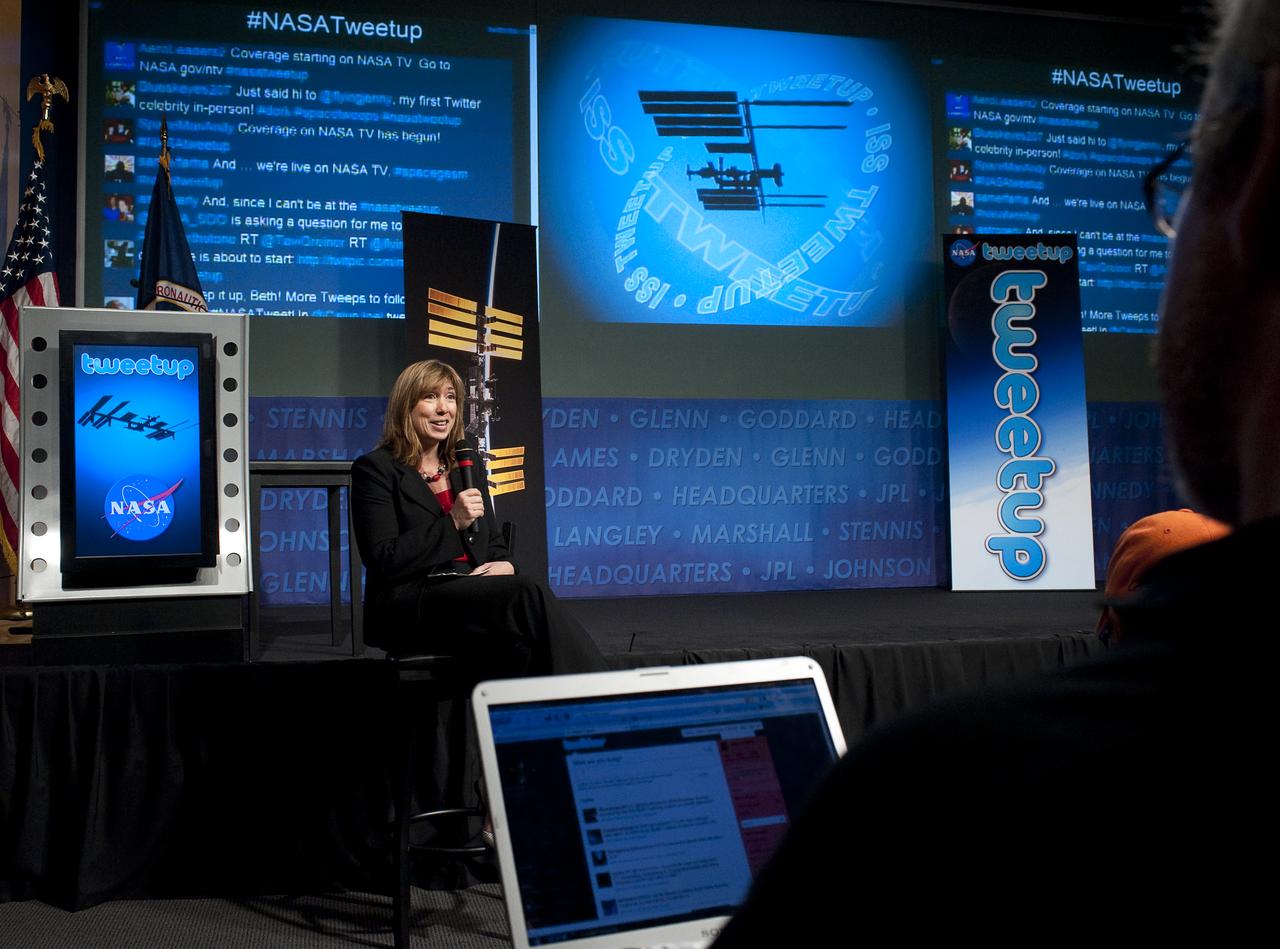
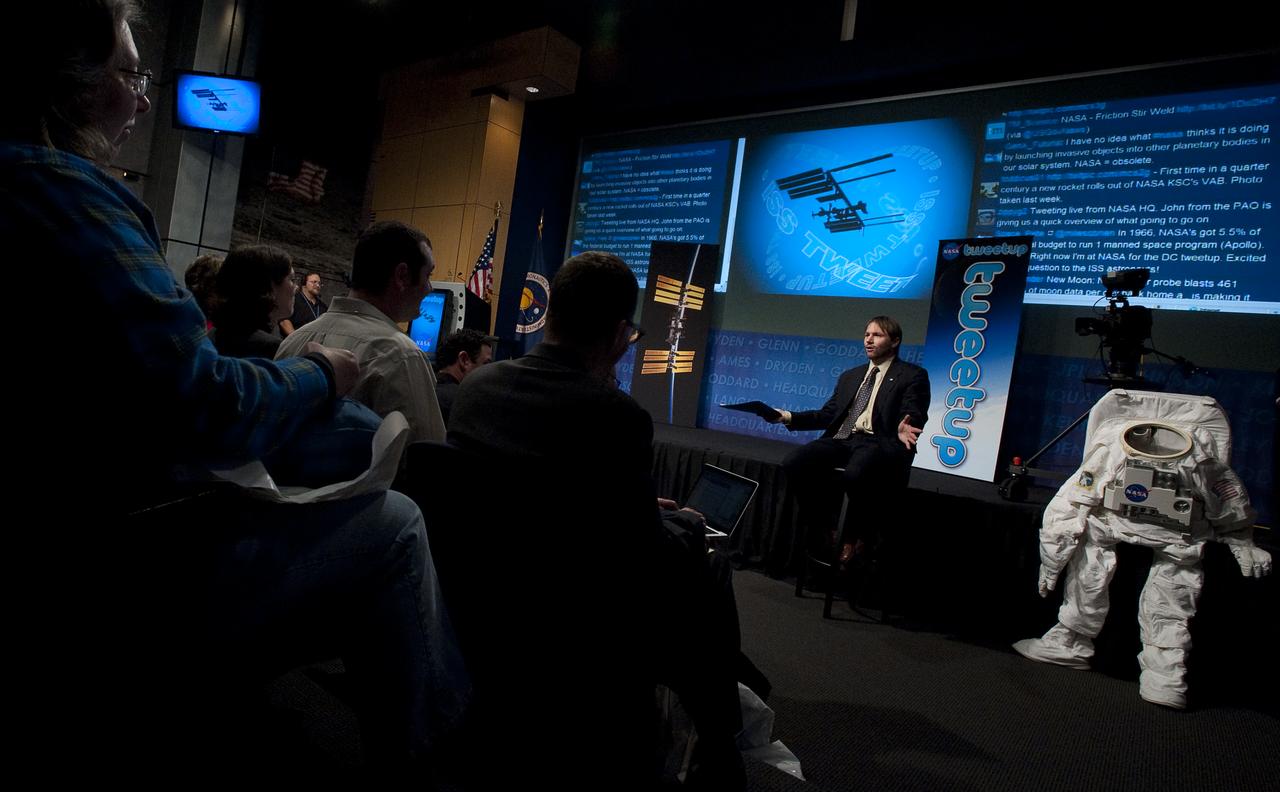
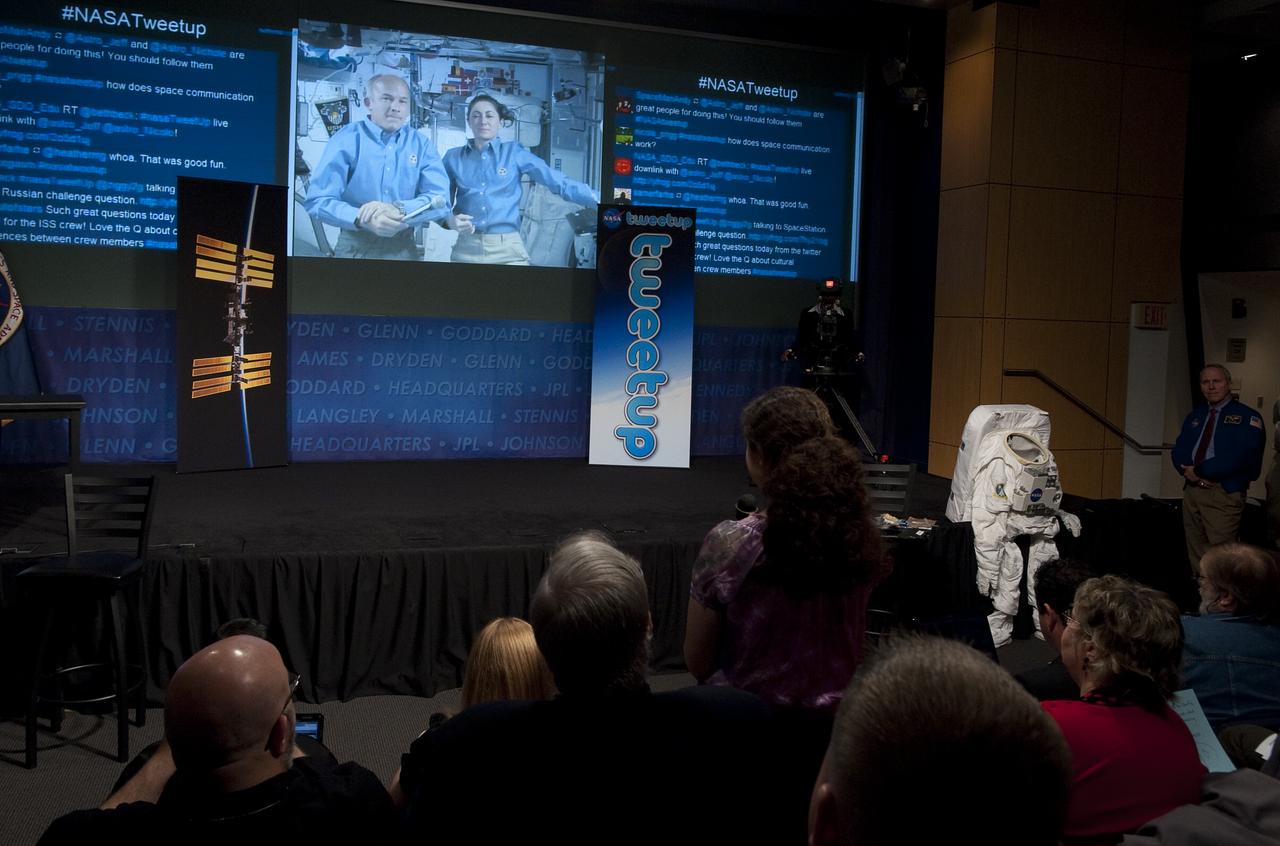
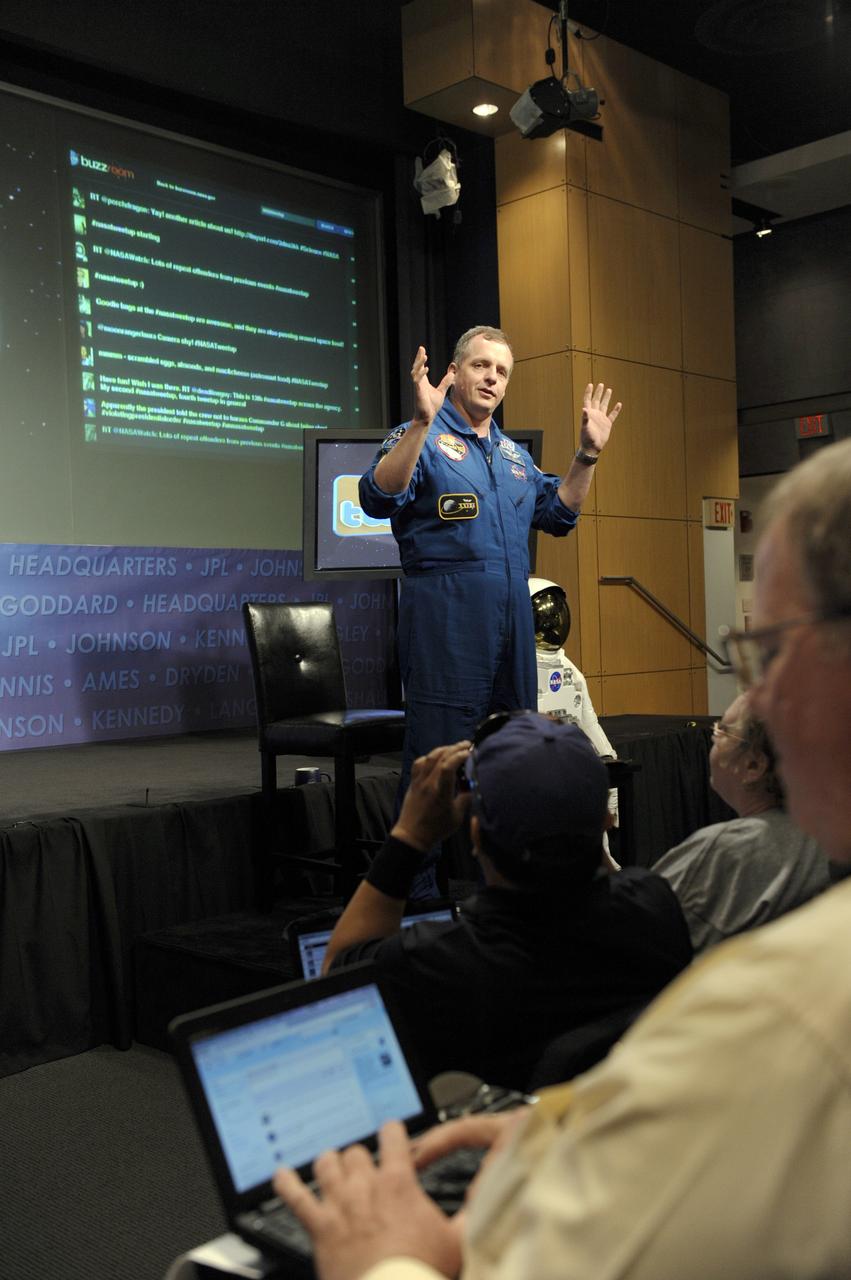
NASA Deputy Administrator Lori Garver welcomes attendees to a live Tweetup event at NASA Headquarters in Washington with astronauts living aboard the International Space Station (ISS), Wednesday, Oct. 21, 2009.  Photo Credit: (NASA/Carla Cioffi)
NASA Live Tweetup Event with International Space Station
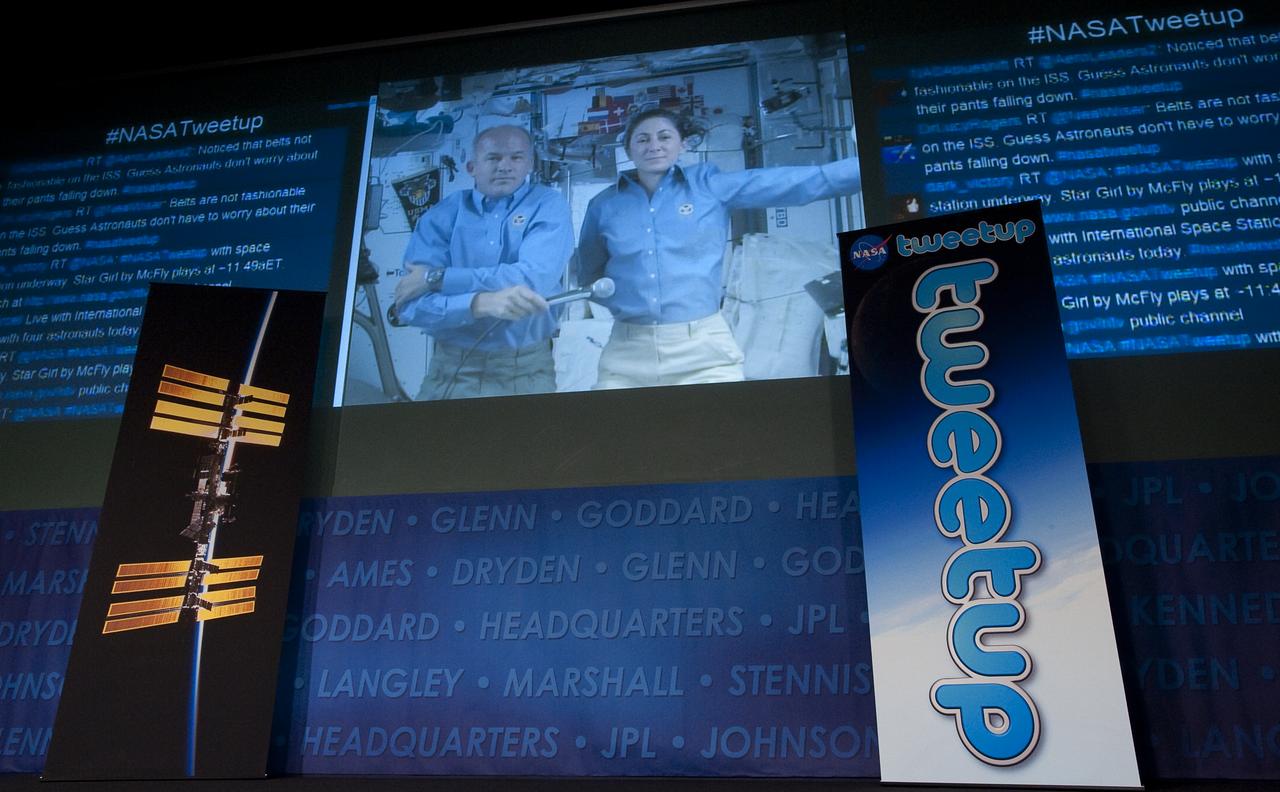
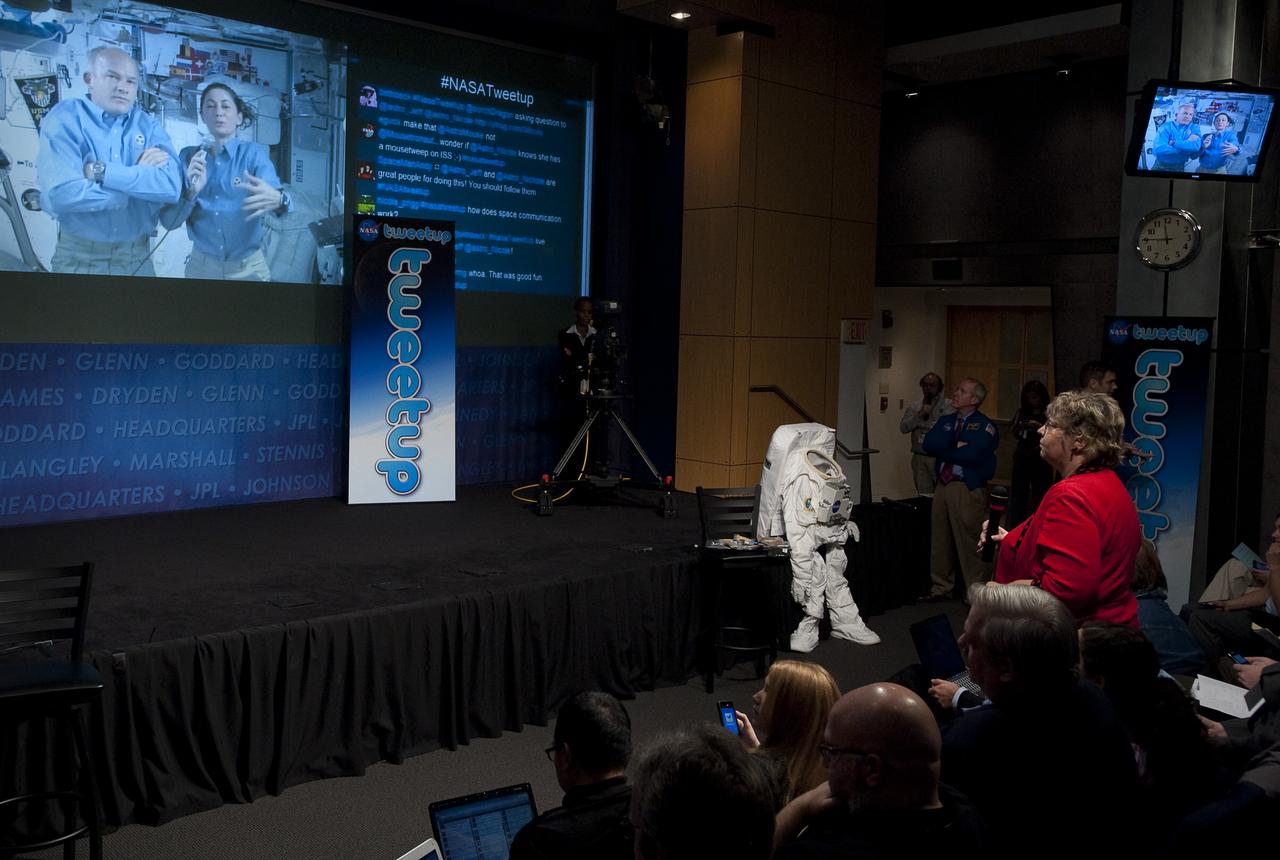
Expedition 20 Flight Engineers Jeff Williams, left, and Nicole Stott are seen during a live broadcast from the International Space Station (ISS) as they answer questions from NASA Twitter followers at NASA Headquarters in Washington, on what it is like to live and work in space, Wednesday, Oct. 21, 2009.  Photo Credit: (NASA/Carla Cioffi)
NASA Live Tweetup Event with International Space Station
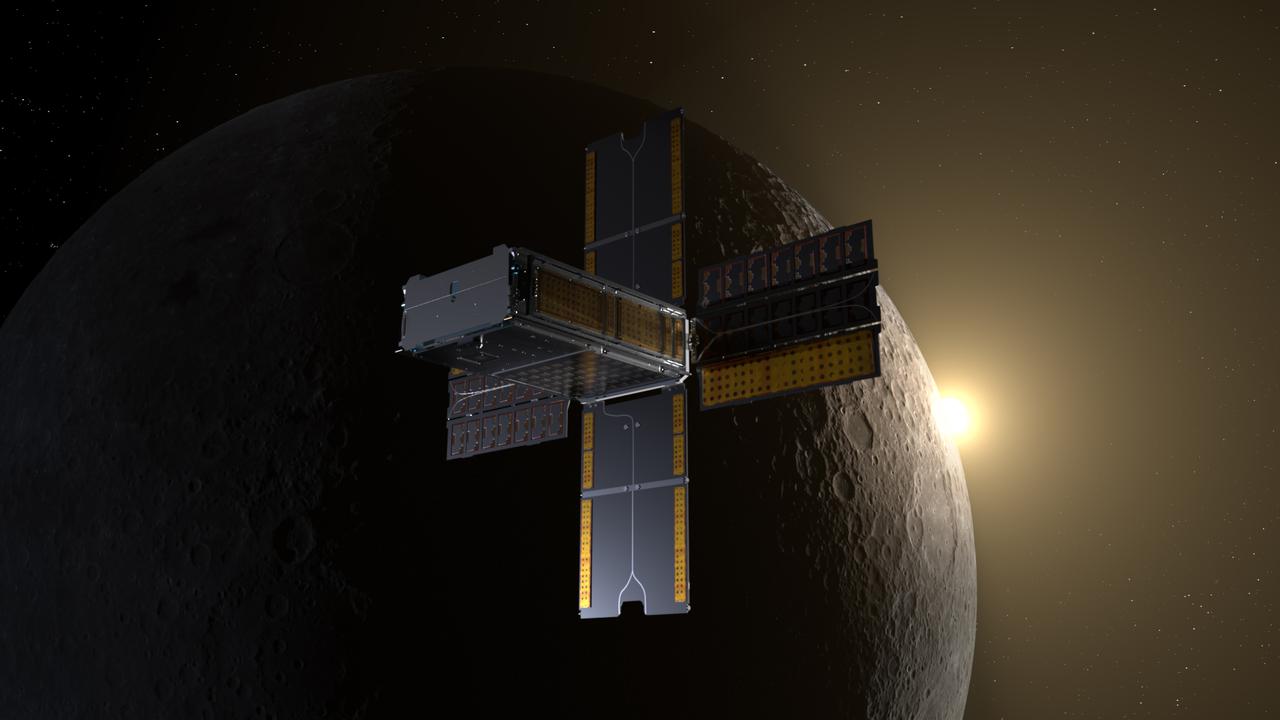
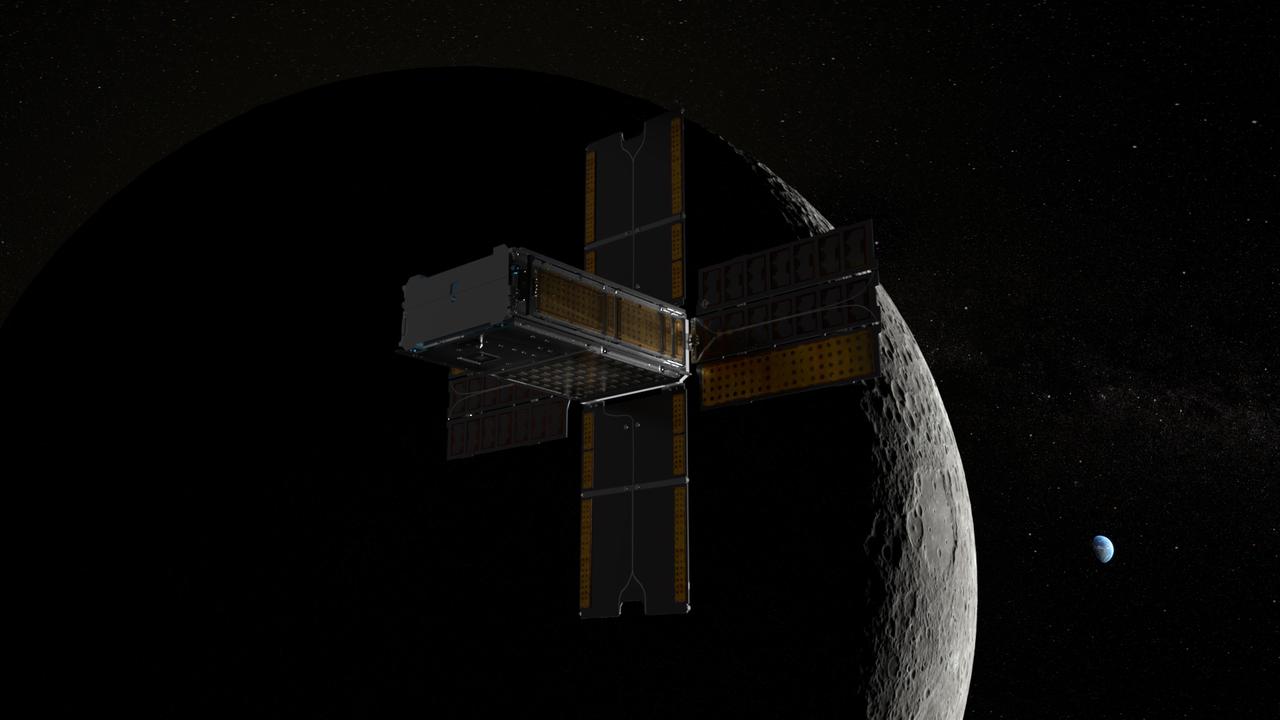
BioSentinel spacecraft enters a lunar flyby trajectory into a heliocentric orbit. BioSentinel will detect and measure the impact of space radiation on living organisms over long durations beyond low-Earth orbit (LEO). Illustration by Daniel Rutter.
BioSentinel Encounters Lunar Sunrise
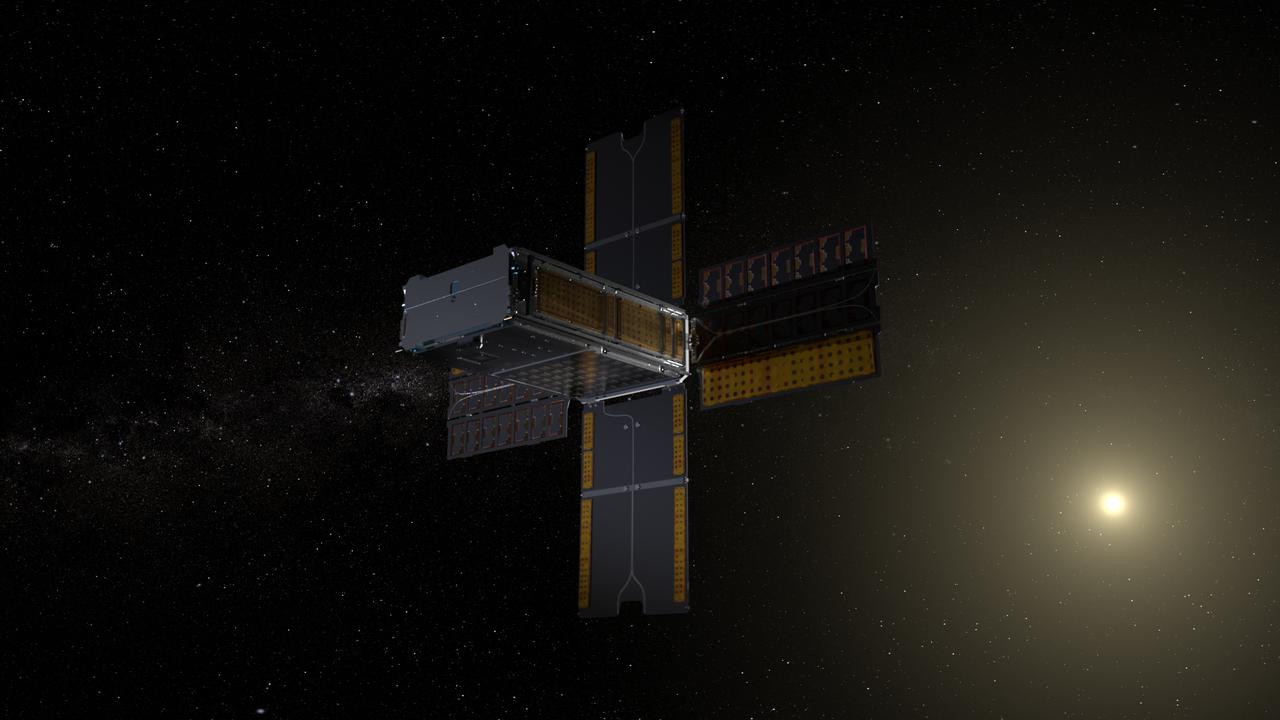
The BioSentinel spacecraft enters a heliocentric orbit. BioSentinel will detect and measure the impact of space radiation on living organisms over long durations beyond low-Earth orbit (LEO). Illustration by Daniel Rutter.
BioSentinel Enters Heliocentric Orbit
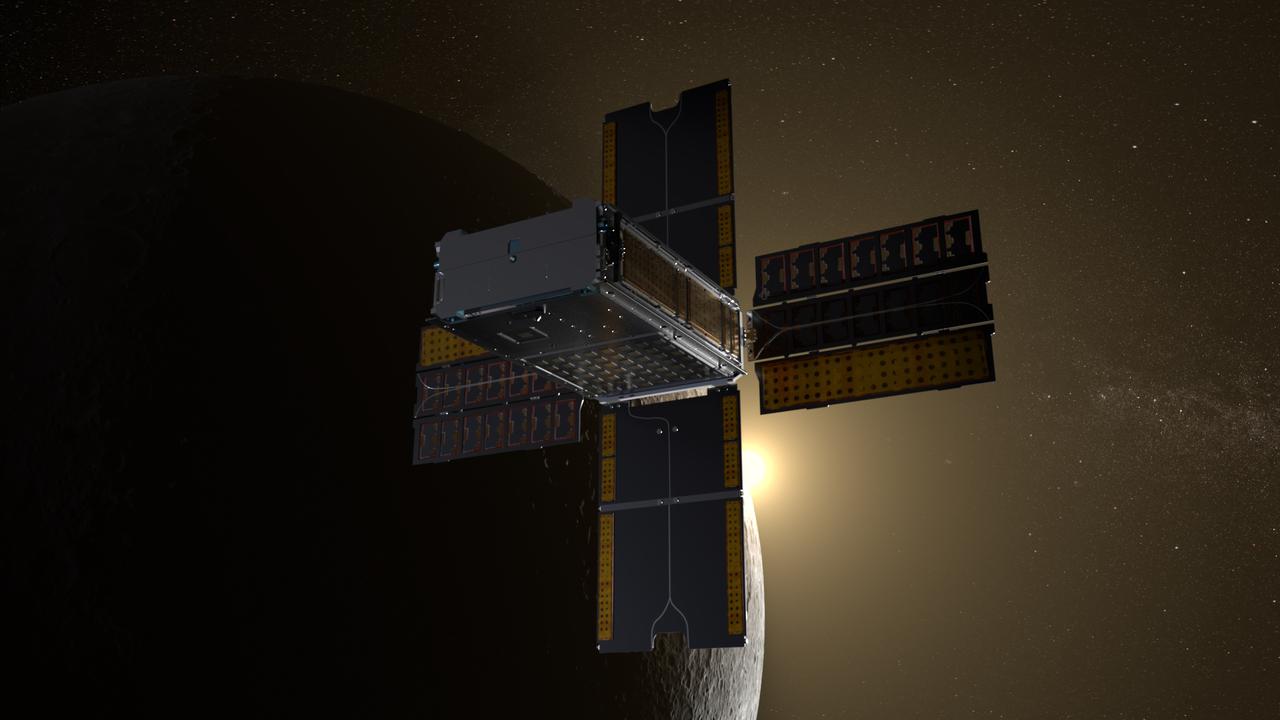
BioSentinel spacecraft enters a lunar flyby trajectory into a heliocentric orbit. BioSentinel will detect and measure the impact of space radiation on living organisms over long durations beyond low-Earth orbit (LEO). Illustration by Daniel Rutter.
BioSentinel Encounters Lunar Sunrise
BioSentinel spacecraft enters a lunar flyby trajectory into a heliocentric orbit. BioSentinel will detect and measure the impact of space radiation on living organisms over long durations beyond low-Earth orbit (LEO). Illustration by Daniel Rutter.
BioSentinel Encounters Lunar Sunrise
The BioSentinel spacecraft enters a heliocentric orbit. BioSentinel will detect and measure the impact of space radiation on living organisms over long durations beyond low-Earth orbit (LEO). Illustration by Daniel Rutter.
BioSentinel Enters Heliocentric Orbit
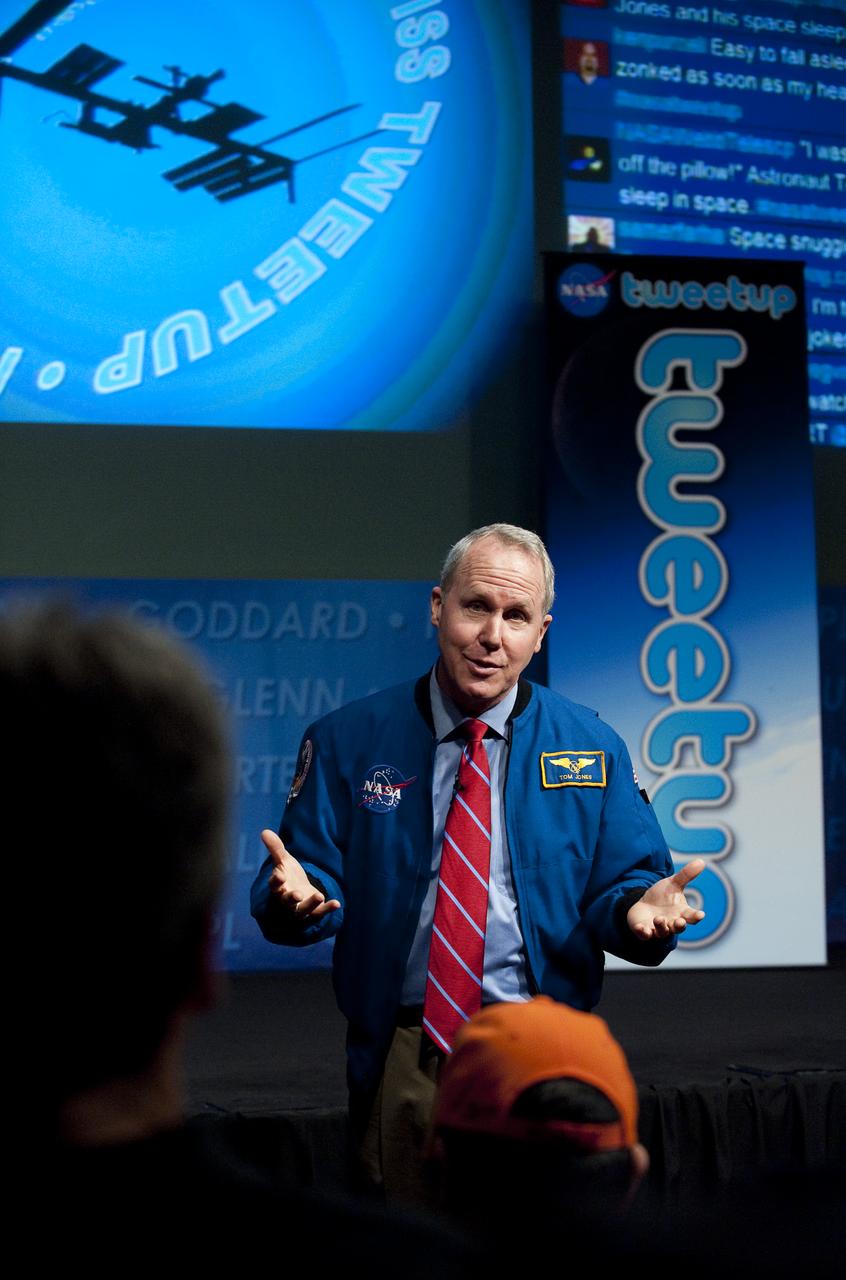
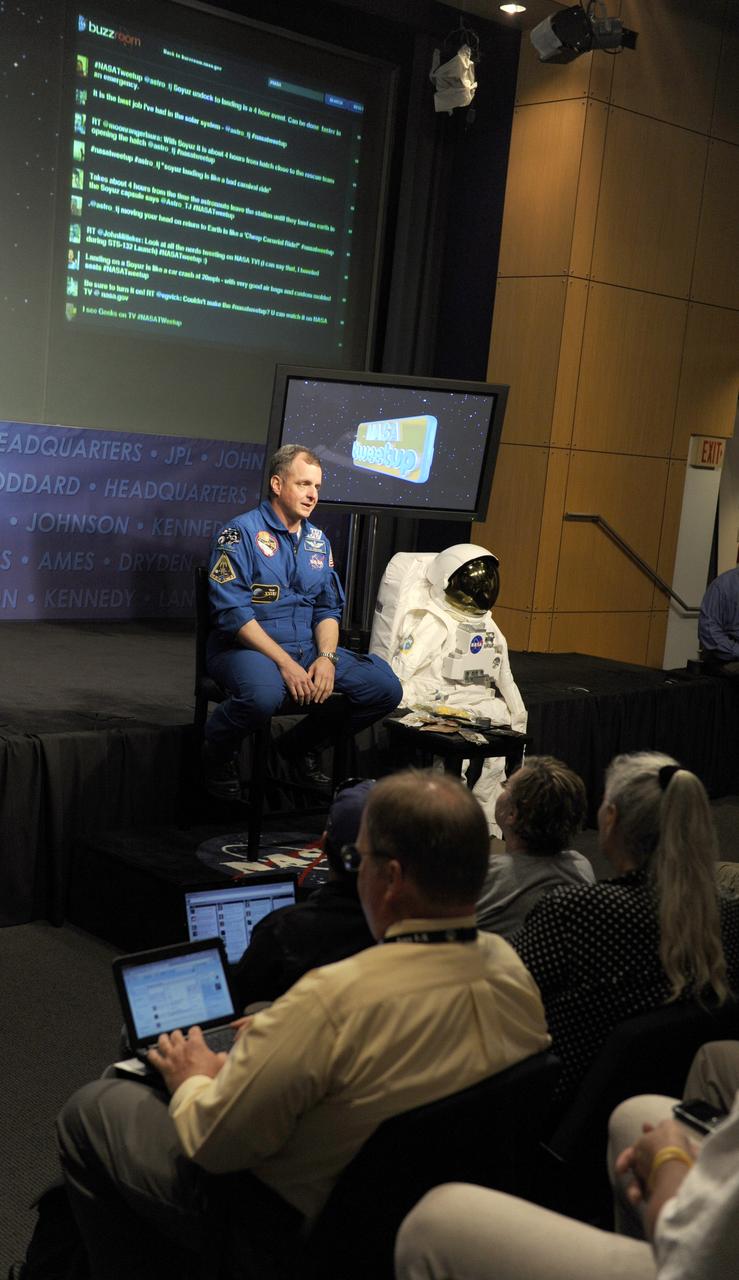
Former NASA astronaut Tom Jones answers questions from Tweetup attendees at NASA Headquarters in Washington on what it is like to live and work in space, Wednesday, Oct. 21, 2009.  Photo Credit: (NASA/Carla Cioffi) 
NASA Live Tweetup Event with International Space Station
BioSentinel spacecraft leaves Earth and enters a lunar flyby trajectory into a heliocentric orbit. BioSentinel will detect and measure the impact of space radiation on living organisms over long durations beyond low-Earth orbit (LEO). Illustration by Daniel Rutter.
BioSentinel Passes the Moon
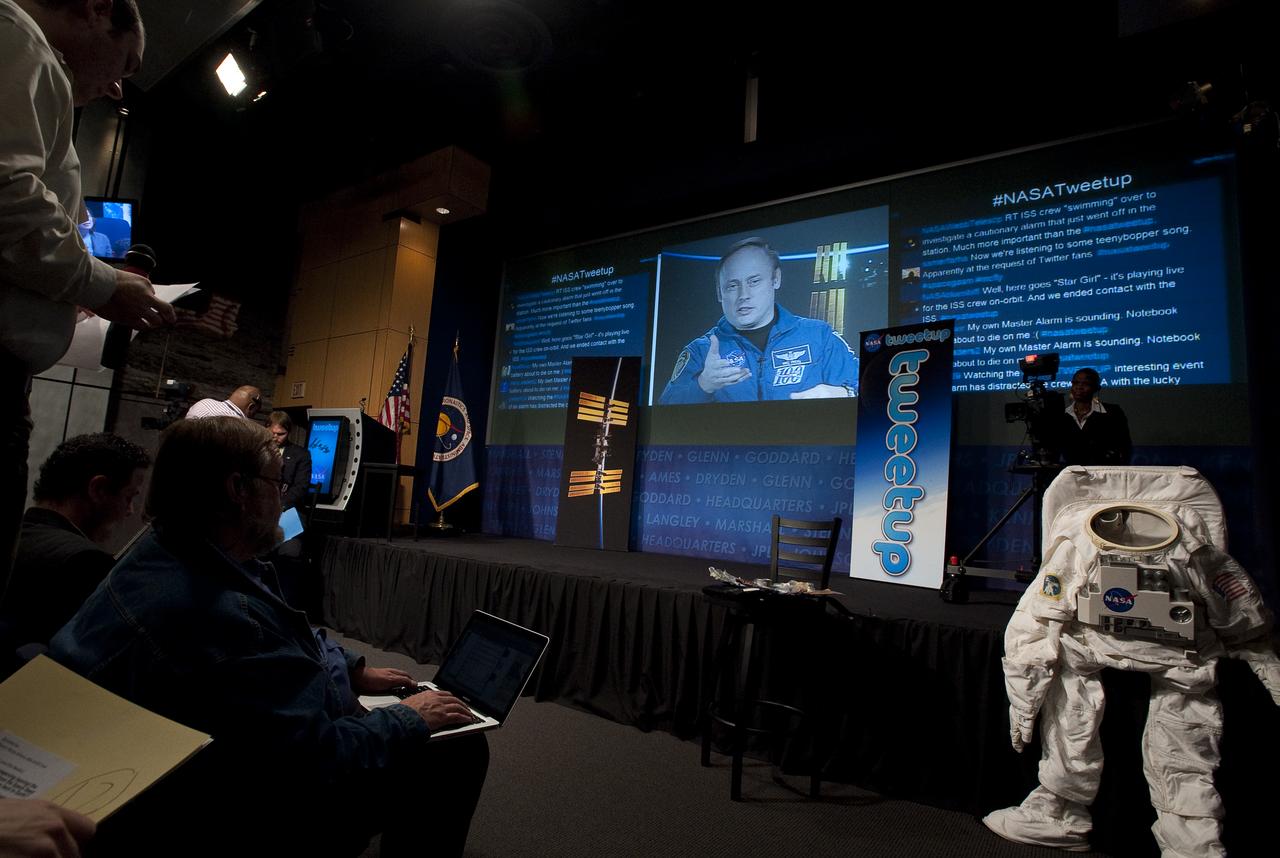
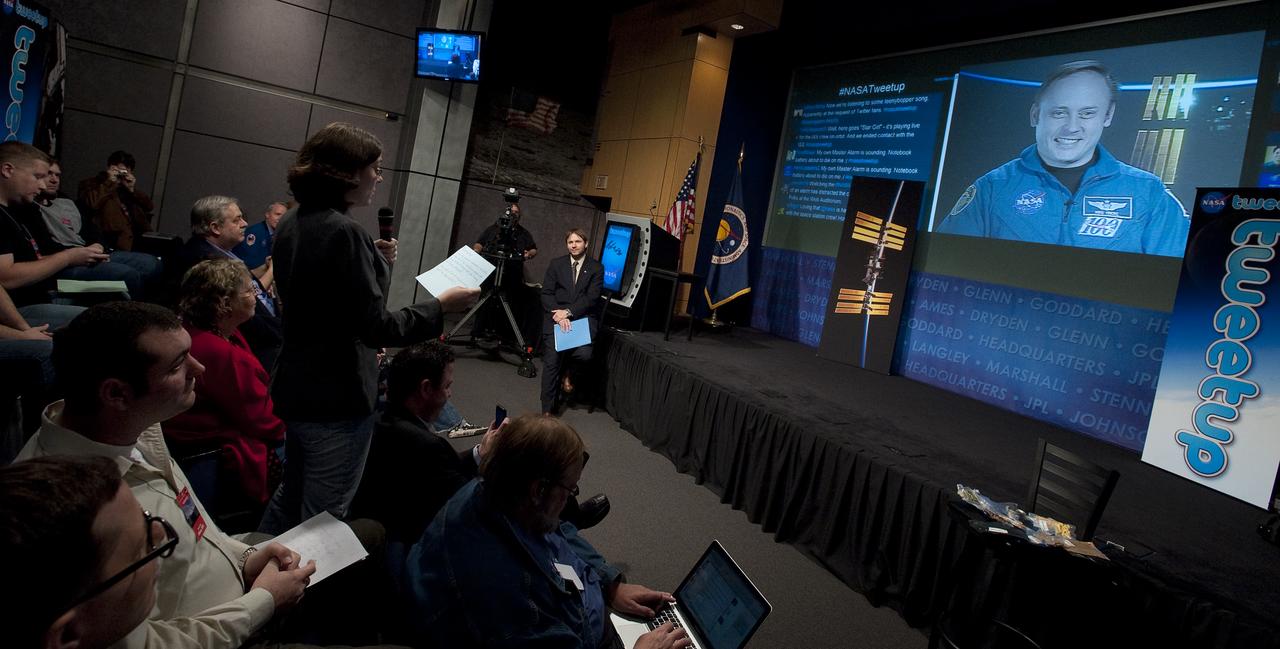
NASA astronaut Mike Fincke, a former International Space Station commander, is seen on screen as he answers questions from NASA Twitter followers during a live Tweetup event held at NASA Headquarters in Washington, Wednesday, Oct. 21, 2009.  Photo Credit: (NASA/Carla Cioffi)
NASA Live Tweetup Event with International Space Station
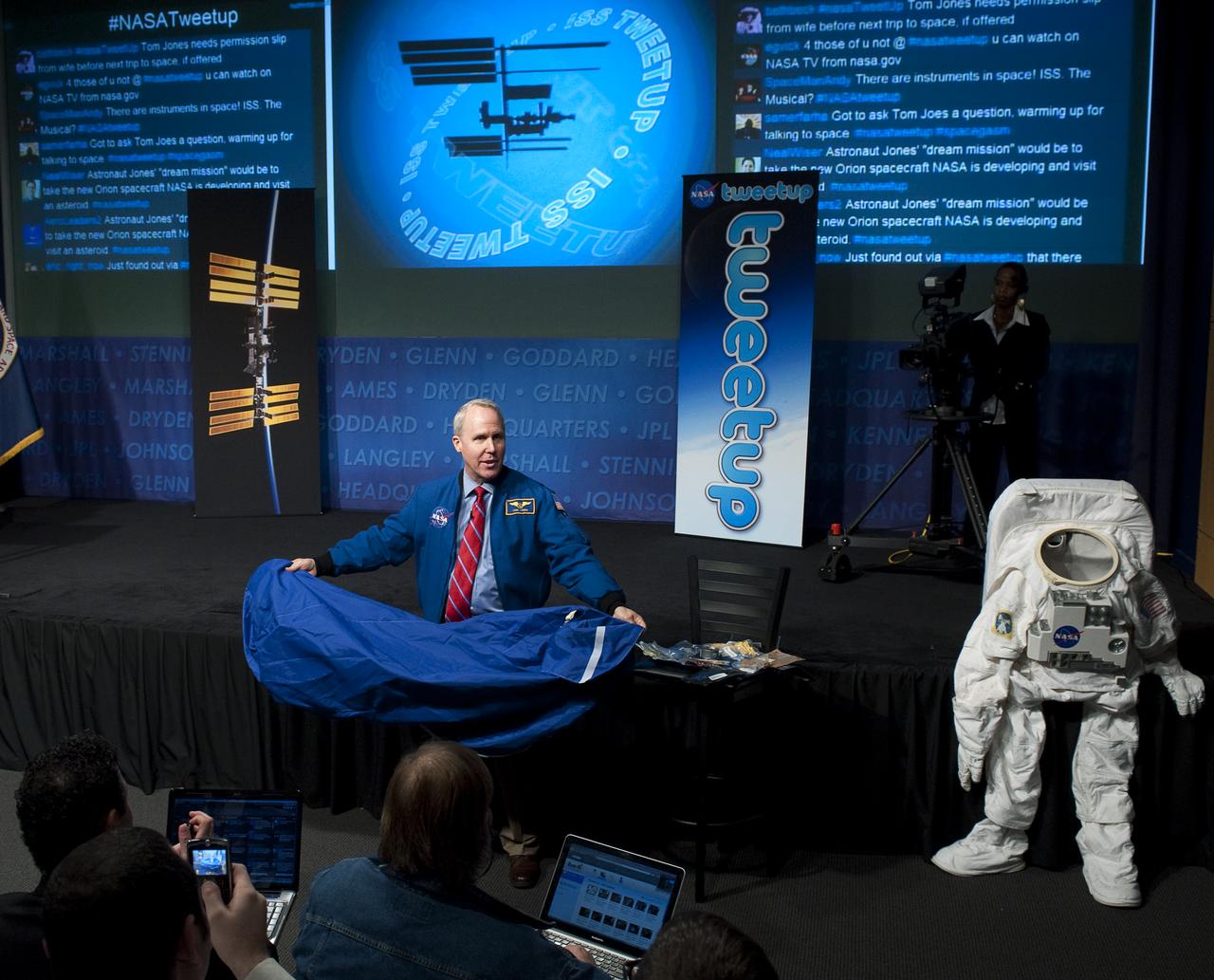
Former NASA astronaut Tom Jones shows off a sleeping bag used by astronauts living aboard the International Space Station during a NASA Tweetup event at NASA Headquarters in Washington, Wednesday, Oct. 21, 2009.  Photo Credit: (NASA/Carla Cioffi)
NASA Live Tweetup Event with International Space Station
NASA astronaut Mike Fincke, a former International Space Station commander, seen on screen, is asked a question by a NASA Twitter follower, left, during a question and answer session at a live Tweetup event at NASA Headquarters in Washington, Wednesday, Oct. 21, 2009.  Photo Credit: (NASA/Carla Cioffi)
NASA Live Tweetup Event with International Space Station
Alexis Harry, assistant director of Astro Camp at NASA's John C. Stennis Space Center, talks with students at Lake Cormorant (Miss.) Elementary School during a 'Living and Working in Space' presentation March 30. Stennis hosted the school presentation during a visit to the Oxford area. Harry, who also is a high school biology teacher in Slidell, La., spent time discussing space travel with students and answering questions they had about the experience, including queries about how astronauts eat, sleep and drink in space. The presentation was sponsored by the NASA Office of External Affairs and Education at Stennis. For more information about NASA education initiatives, visit: http://education.ssc.nasa.gov/.
Stennis visits Lake Cormorant school
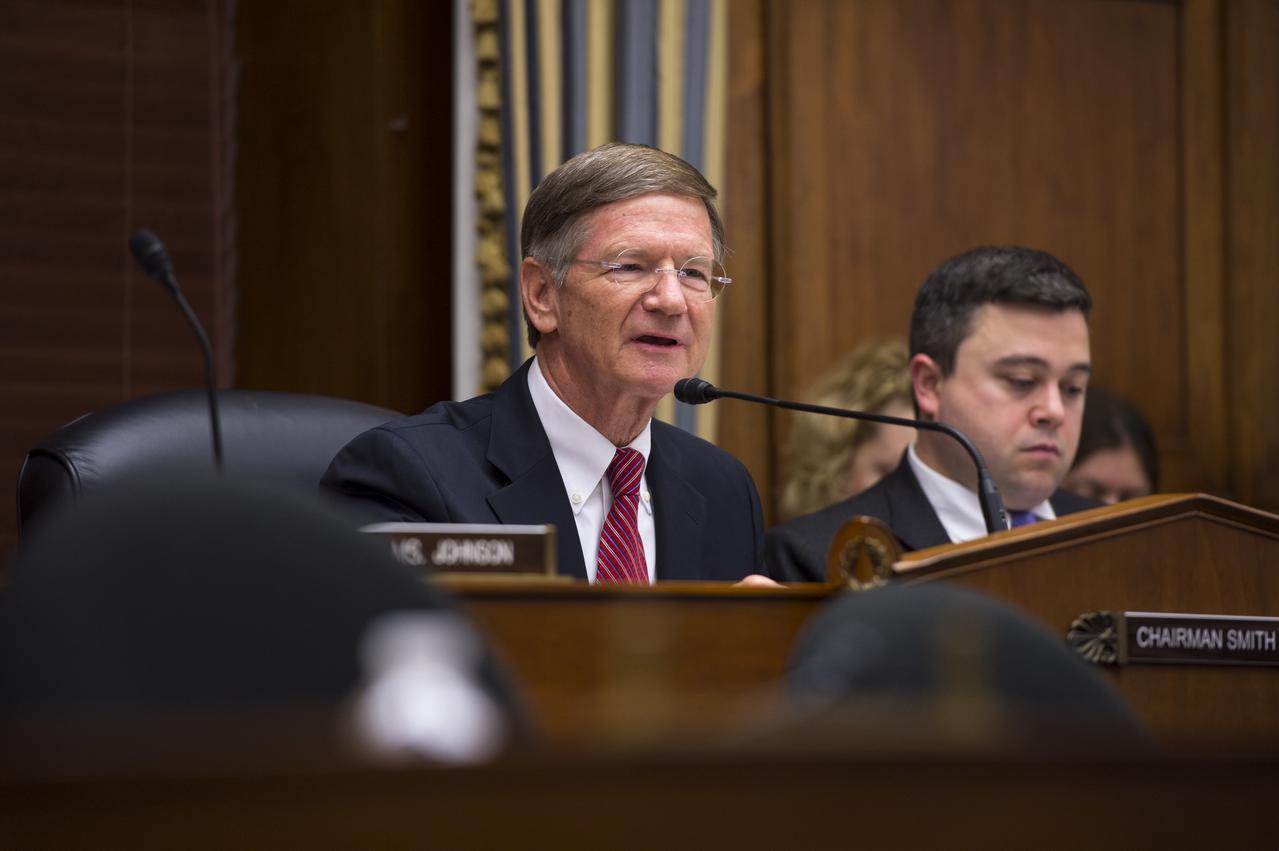
Chairman Lamar Smith (R-TX) held a full-committee event Thursday, July 24, 2014 at the Rayburn House Office Building in Washington, DC to allow members of the Committee on Science, Space, and Technology an opportunity to ask astronauts Steve Swanson and Reid Wiseman questions through a live downlink with the International Space Station (ISS). Expedition 40 astronauts Steve Swanson and Reid Wiseman have been living and working at the ISS for over two months and are scheduled to return to Earth toward the end of this year.
Full Committee Event - Live Downlink with Astronauts at the Inte
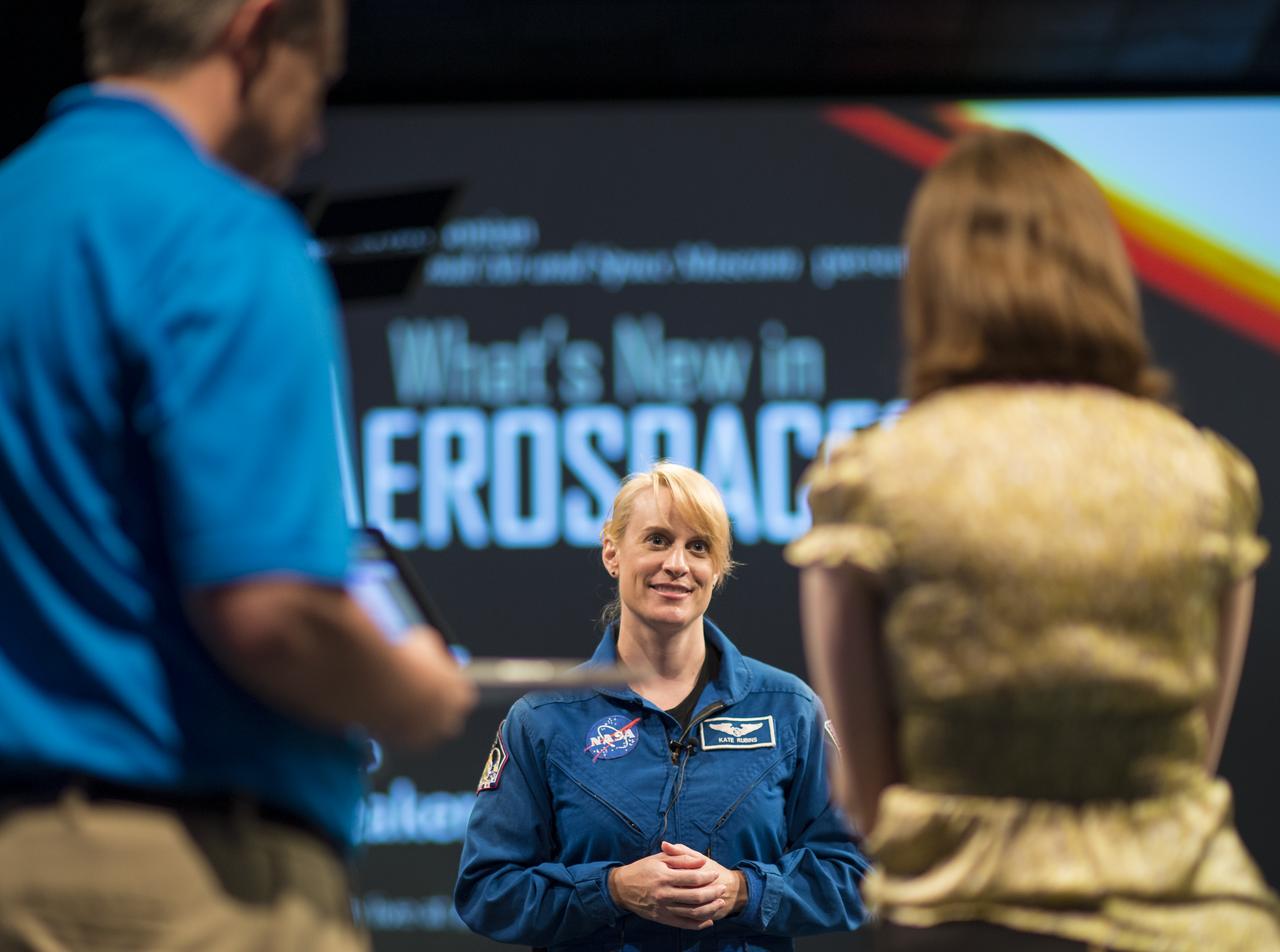
NASA Astronaut Kate Rubins participates in a Facebook Live, answering questions about her time onboard the International Space Station during Expeditions 48 and 49, Thursday, April 27, 2017 at Smithsonian's National Air and Space Museum in Washington. Rubins became the first person to sequence DNA in space and completed her first mission when she landed in a remote area near the town of Zhezkazgan, Kazakhstan in October 2016. Photo Credit: (NASA/Aubrey Gemignani)
Astronaut Kate Rubins at Air and Space Museum
NASA Astronaut Kate Rubins participates in a Facebook Live, answering questions about her time onboard the International Space Station during Expeditions 48 and 49, Thursday, April 27, 2017 at Smithsonian's National Air and Space Museum in Washington. Rubins became the first person to sequence DNA in space and completed her first mission when she landed in a remote area near the town of Zhezkazgan, Kazakhstan in October 2016. Photo Credit: (NASA/Aubrey Gemignani)
Astronaut Kate Rubins at Air and Space Museum
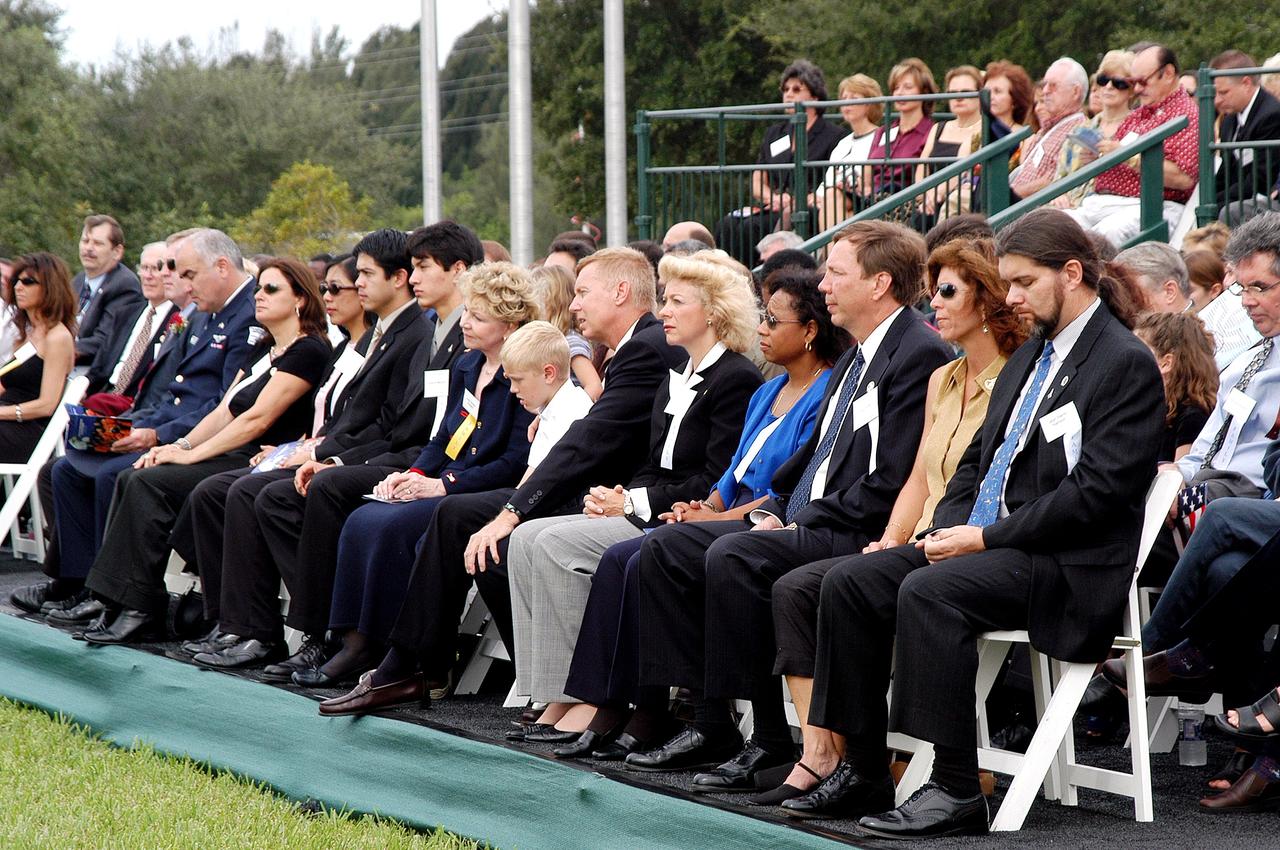
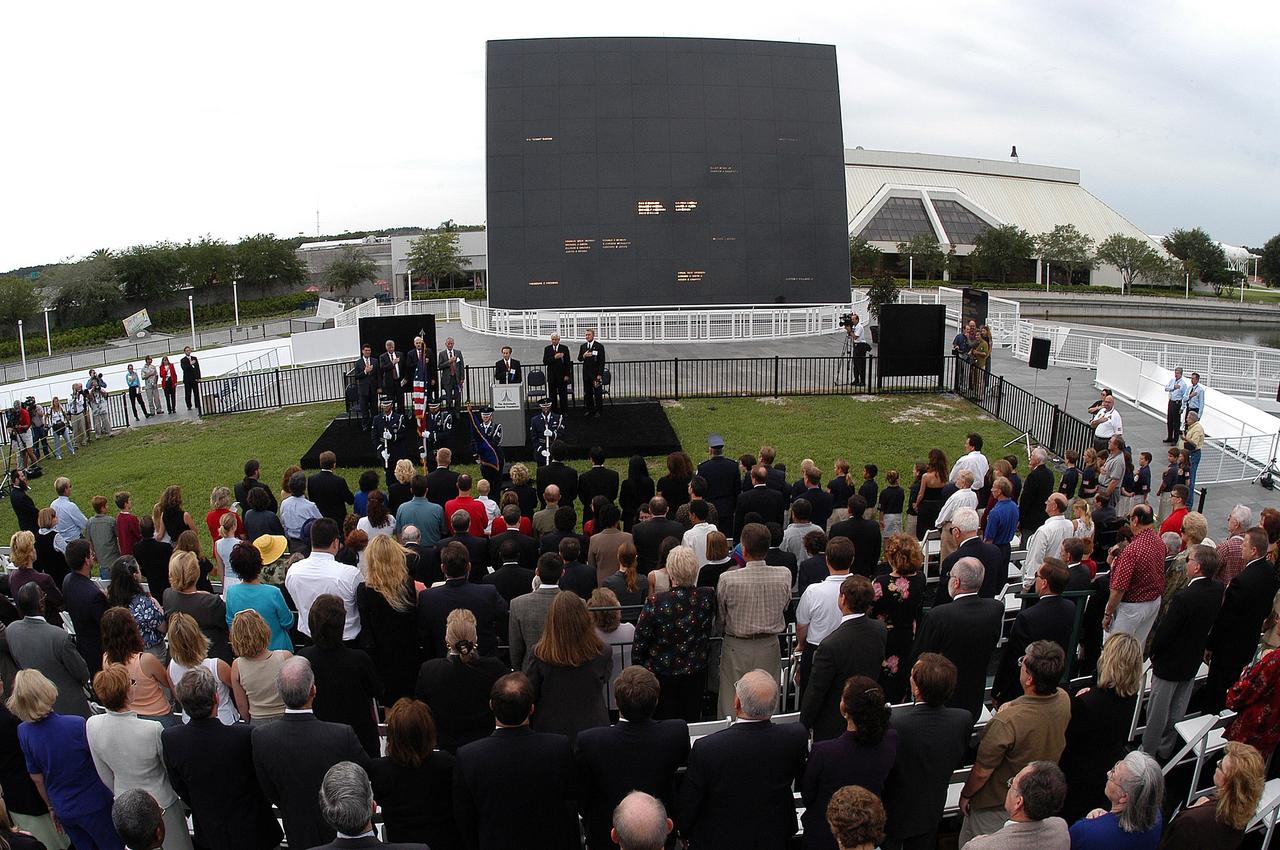
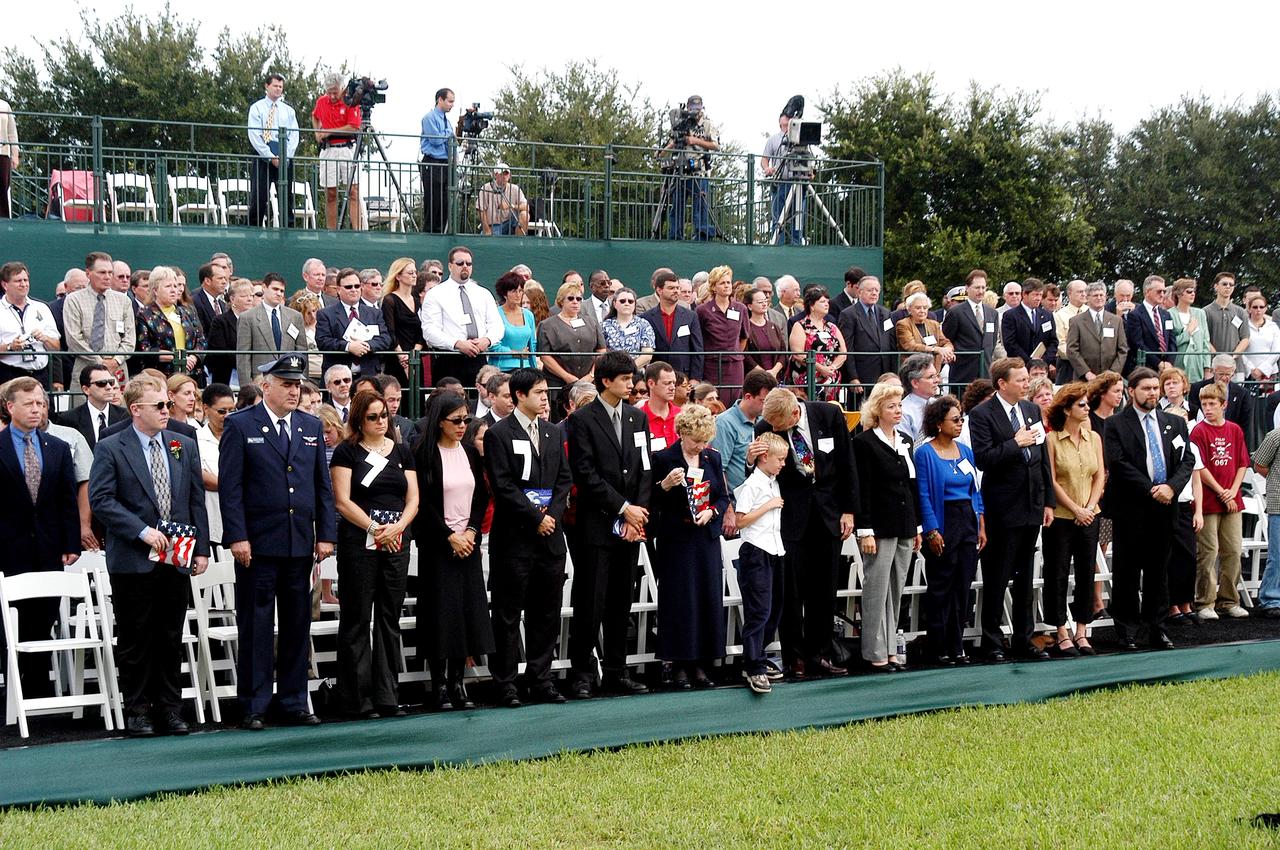
KENNEDY SPACE CENTER, FLA. -  Family members of the STS-107 astronauts and other dignitaries attend a dedication ceremony at the Space Mirror Memorial at the Kennedy Space Center Visitor Complex.  During this solemn event, the names of the STS-107 astronauts who lost their lives during the Columbia accident -- Rick Husband, Willie McCool, Laurel Clark, Michael Anderson, David Brown, Kalpana Chawla, and Ilan Ramon -- join the names of 17 other space heroes who gave their lives for the U.S. space program. The "Space Mirror," 42 1/2 feet high by 50 feet wide, illuminates the names of the fallen astronauts cut through the monument's black granite surface.
KENNEDY SPACE CENTER, FLA. - Family members of the STS-107 astronauts and other dignitaries attend a dedication ceremony at the Space Mirror Memorial at the Kennedy Space Center Visitor Complex. During this solemn event, the names of the STS-107 astronauts who lost their lives during the Columbia accident -- Rick Husband, Willie McCool, Laurel Clark, Michael Anderson, David Brown, Kalpana Chawla, and Ilan Ramon -- join the names of 17 other space heroes who gave their lives for the U.S. space program. The "Space Mirror," 42 1/2 feet high by 50 feet wide, illuminates the names of the fallen astronauts cut through the monument's black granite surface.
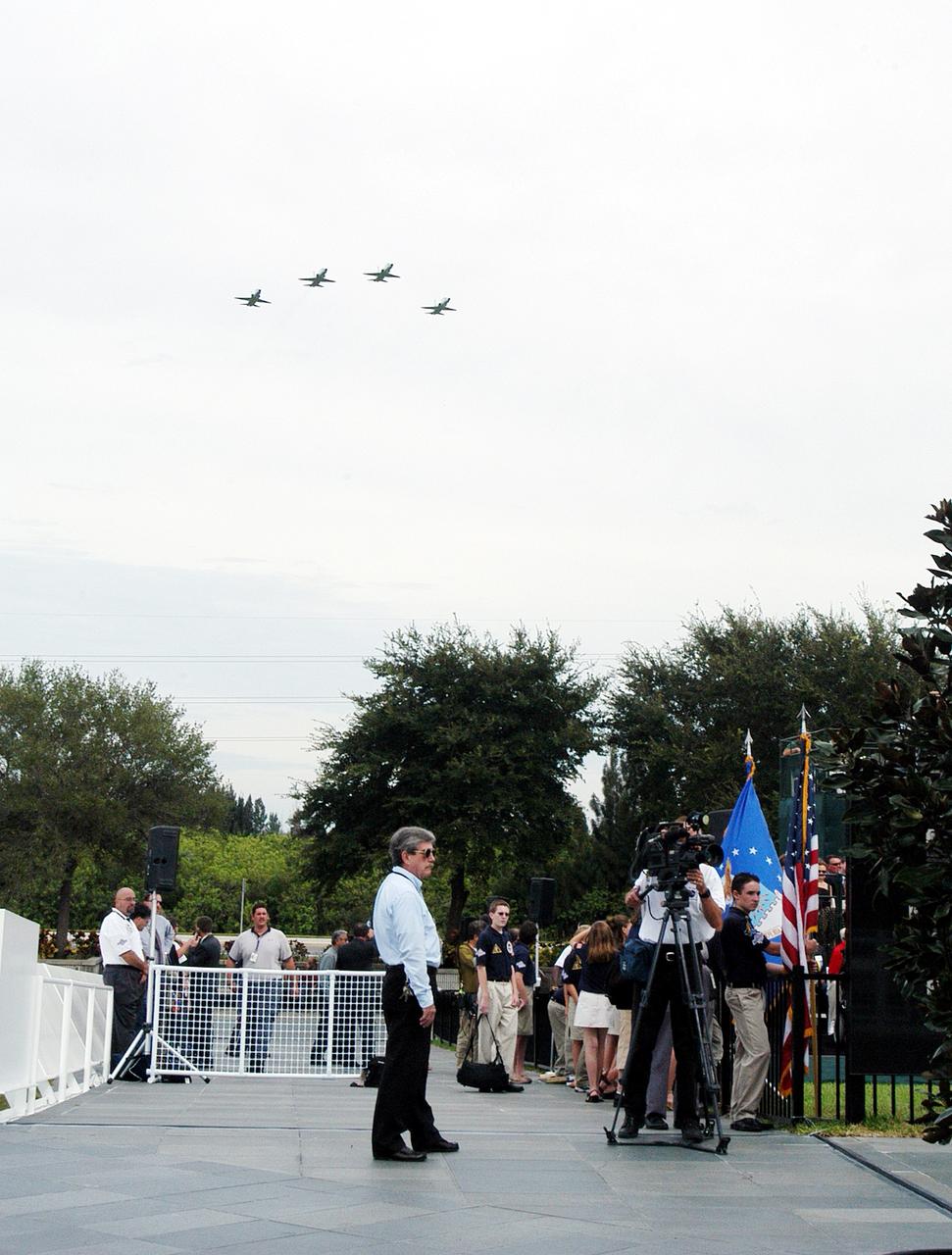
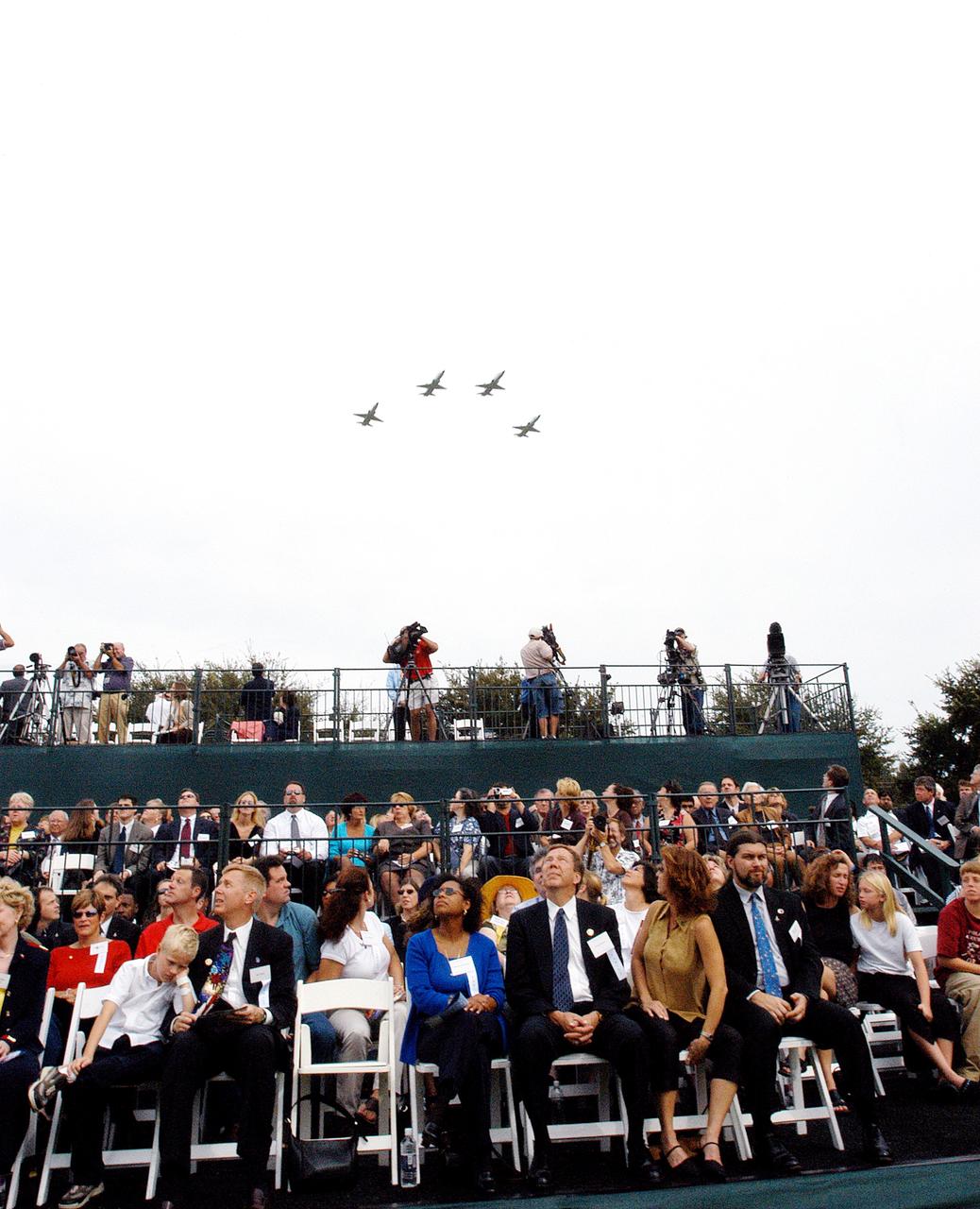
KENNEDY SPACE CENTER, FLA. -  NASA T-38 jets fly over the Space Mirror Memorial at the Kennedy Space Center Visitor Complex in the Missing Man Formation. During this dedication ceremony, the names of the STS-107 astronauts who lost their lives during the Columbia accident -- Rick Husband, Willie McCool, Laurel Clark, Michael Anderson, David Brown, Kalpana Chawla, and Ilan Ramon -- join the names of 17 other space heroes who gave their lives for the U.S. space program. The "Space Mirror," 42 1/2 feet high by 50 feet wide, illuminates the names of the fallen astronauts cut through the monument's black granite surface.
KENNEDY SPACE CENTER, FLA. - NASA T-38 jets fly over the Space Mirror Memorial at the Kennedy Space Center Visitor Complex in the Missing Man Formation. During this dedication ceremony, the names of the STS-107 astronauts who lost their lives during the Columbia accident -- Rick Husband, Willie McCool, Laurel Clark, Michael Anderson, David Brown, Kalpana Chawla, and Ilan Ramon -- join the names of 17 other space heroes who gave their lives for the U.S. space program. The "Space Mirror," 42 1/2 feet high by 50 feet wide, illuminates the names of the fallen astronauts cut through the monument's black granite surface.
KENNEDY SPACE CENTER, FLA. -  Family members of the STS-107 astronauts and other dignitaries attend a dedication ceremony at the Space Mirror Memorial at the Kennedy Space Center Visitor Complex.  During this solemn event, the names of the STS-107 astronauts who lost their lives during the Columbia accident -- Rick Husband, Willie McCool, Laurel Clark, Michael Anderson, David Brown, Kalpana Chawla, and Ilan Ramon -- join the names of 17 other space heroes who gave their lives for the U.S. space program. The "Space Mirror," 42 1/2 feet high by 50 feet wide, illuminates the names of the fallen astronauts cut through the monument's black granite surface.
KENNEDY SPACE CENTER, FLA. - Family members of the STS-107 astronauts and other dignitaries attend a dedication ceremony at the Space Mirror Memorial at the Kennedy Space Center Visitor Complex. During this solemn event, the names of the STS-107 astronauts who lost their lives during the Columbia accident -- Rick Husband, Willie McCool, Laurel Clark, Michael Anderson, David Brown, Kalpana Chawla, and Ilan Ramon -- join the names of 17 other space heroes who gave their lives for the U.S. space program. The "Space Mirror," 42 1/2 feet high by 50 feet wide, illuminates the names of the fallen astronauts cut through the monument's black granite surface.
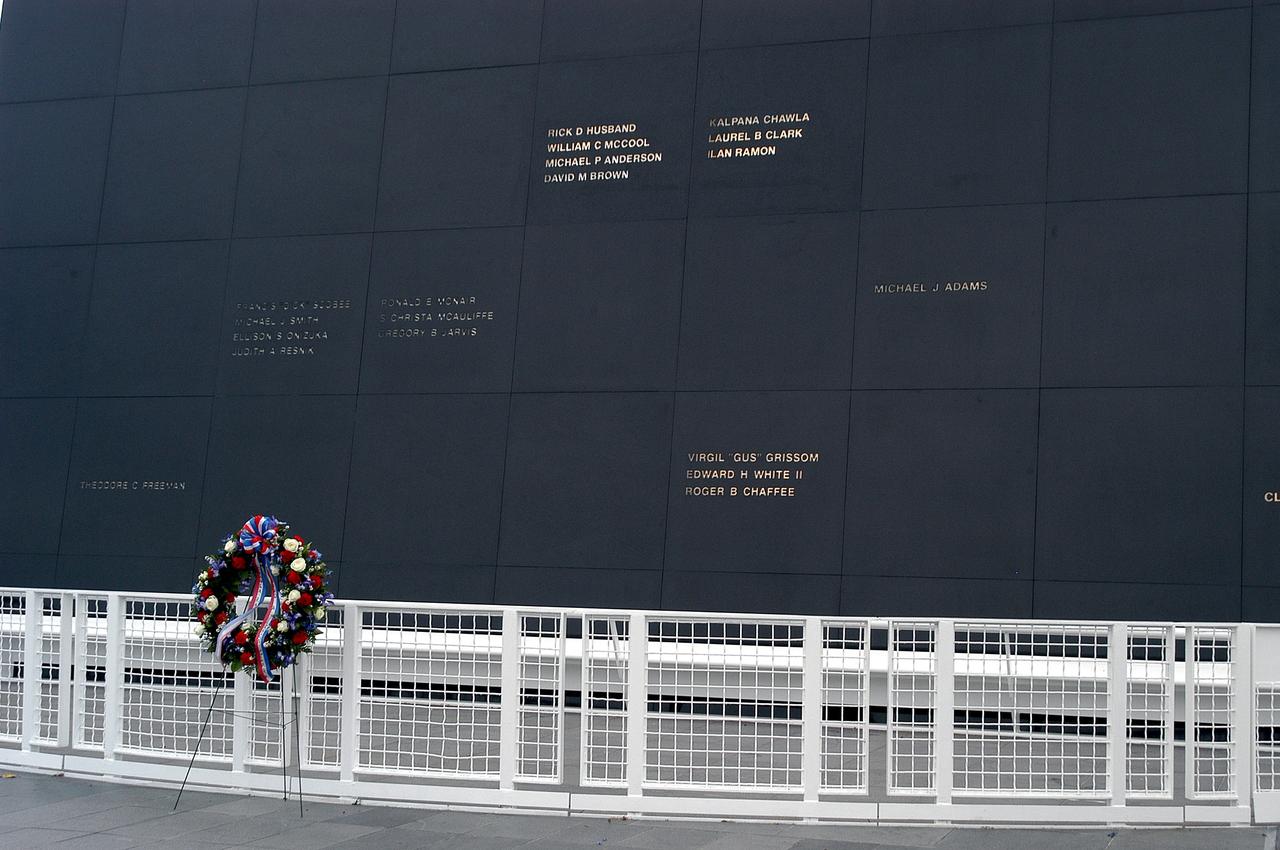
KENNEDY SPACE CENTER, FLA. -  A ceremonial wreath is placed at the Space Mirror Memorial at the Kennedy Space Center Visitor Complex.  During this dedication ceremony, the names of the STS-107 astronauts who lost their lives during the Columbia accident -- Rick Husband, Willie McCool, Laurel Clark, Michael Anderson, David Brown, Kalpana Chawla, and Ilan Ramon -- join the names of 17 other space heroes who gave their lives for the U.S. space program. The "Space Mirror," 42 1/2 feet high by 50 feet wide, illuminates the names of the fallen astronauts cut through the monument's black granite surface.
KENNEDY SPACE CENTER, FLA. - A ceremonial wreath is placed at the Space Mirror Memorial at the Kennedy Space Center Visitor Complex. During this dedication ceremony, the names of the STS-107 astronauts who lost their lives during the Columbia accident -- Rick Husband, Willie McCool, Laurel Clark, Michael Anderson, David Brown, Kalpana Chawla, and Ilan Ramon -- join the names of 17 other space heroes who gave their lives for the U.S. space program. The "Space Mirror," 42 1/2 feet high by 50 feet wide, illuminates the names of the fallen astronauts cut through the monument's black granite surface.
KENNEDY SPACE CENTER, FLA. -  A ceremonial wreath is placed at the Space Mirror Memorial at the Kennedy Space Center Visitor Complex.  During this dedication ceremony, the names of the STS-107 astronauts who lost their lives during the Columbia accident -- Rick Husband, Willie McCool, Laurel Clark, Michael Anderson, David Brown, Kalpana Chawla, and Ilan Ramon -- join the names of 17 other space heroes who gave their lives for the U.S. space program. The "Space Mirror," 42 1/2 feet high by 50 feet wide, illuminates the names of the fallen astronauts cut through the monument's black granite surface.
KENNEDY SPACE CENTER, FLA. - A ceremonial wreath is placed at the Space Mirror Memorial at the Kennedy Space Center Visitor Complex. During this dedication ceremony, the names of the STS-107 astronauts who lost their lives during the Columbia accident -- Rick Husband, Willie McCool, Laurel Clark, Michael Anderson, David Brown, Kalpana Chawla, and Ilan Ramon -- join the names of 17 other space heroes who gave their lives for the U.S. space program. The "Space Mirror," 42 1/2 feet high by 50 feet wide, illuminates the names of the fallen astronauts cut through the monument's black granite surface.
KENNEDY SPACE CENTER, FLA. -  Family members of the STS-107 astronauts and other dignitaries attend a dedication ceremony at the Space Mirror Memorial at the Kennedy Space Center Visitor Complex.  During this solemn event, the names of the STS-107 astronauts who lost their lives during the Columbia accident -- Rick Husband, Willie McCool, Laurel Clark, Michael Anderson, David Brown, Kalpana Chawla, and Ilan Ramon -- join the names of 17 other space heroes who gave their lives for the U.S. space program. The "Space Mirror," 42 1/2 feet high by 50 feet wide, illuminates the names of the fallen astronauts cut through the monument's black granite surface.
KENNEDY SPACE CENTER, FLA. - Family members of the STS-107 astronauts and other dignitaries attend a dedication ceremony at the Space Mirror Memorial at the Kennedy Space Center Visitor Complex. During this solemn event, the names of the STS-107 astronauts who lost their lives during the Columbia accident -- Rick Husband, Willie McCool, Laurel Clark, Michael Anderson, David Brown, Kalpana Chawla, and Ilan Ramon -- join the names of 17 other space heroes who gave their lives for the U.S. space program. The "Space Mirror," 42 1/2 feet high by 50 feet wide, illuminates the names of the fallen astronauts cut through the monument's black granite surface.
KENNEDY SPACE CENTER, FLA. -- Family members of the STS-107 astronauts and other dignitaries watch NASA T-38 jets fly over the Space Mirror Memorial at the Kennedy Space Center Visitor Complex in a Missing Man Formation. During this dedication ceremony, the names of the STS-107 astronauts who lost their lives during the Columbia accident -- Rick Husband, Willie McCool, Laurel Clark, Michael Anderson, David Brown, Kalpana Chawla, and Ilan Ramon -- join the names of 17 other space heroes who gave their lives for the U.S. space program.
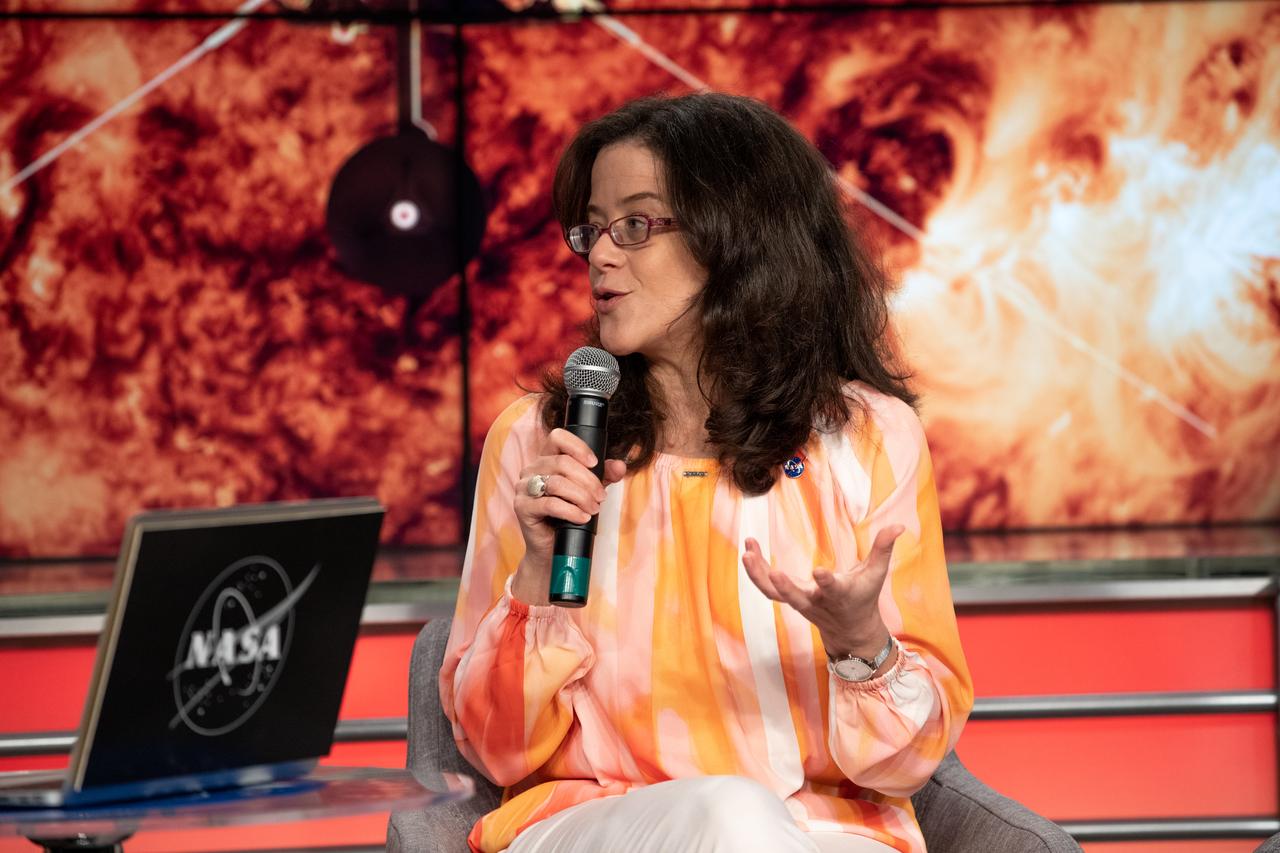
Teresa Nieves-chinchilla, deputy project scientist at NASA’s Goddard Space Flight Center in Greenbelt, Maryland, participates in a Spanish Facebook Live event for the Solar Orbiter mission in the Press Site auditorium at the agency’s Kennedy Space Center in Florida on Jan. 29, 2020. Solar Orbiter is an international cooperative mission between ESA (European Space Agency) and NASA. The mission aims to study the Sun, its outer atmosphere and solar wind. The spacecraft will provide the first images of the Sun’s poles. NASA’s Launch Services Program based at Kennedy is managing the launch. The spacecraft has been developed by Airbus Defence and Space. Solar Orbiter will launch in February 2020 aboard a United Launch Alliance Atlas V rocket from Space Launch Complex 41 at Cape Canaveral Air Force Station in Florida.
Solar Orbiter Science Briefing (in Spanish) - Facebook Live Event
Ana Leon, Solar Orbiter contamination control architect with Airbus Defence and Space, participates in a Spanish Facebook Live event for the Solar Orbiter mission in the Press Site auditorium at NASA’s Kennedy Space Center in Florida on Jan. 29, 2020. Solar Orbiter is an international cooperative mission between ESA (European Space Agency) and NASA. The mission aims to study the Sun, its outer atmosphere and solar wind. The spacecraft will provide the first images of the Sun’s poles. NASA’s Launch Services Program based at Kennedy is managing the launch. The spacecraft has been developed by Airbus Defence and Space. Solar Orbiter will launch in February 2020 aboard a United Launch Alliance Atlas V rocket from Space Launch Complex 41 at Cape Canaveral Air Force Station in Florida.
Solar Orbiter Science Briefing (in Spanish) - Facebook Live Event
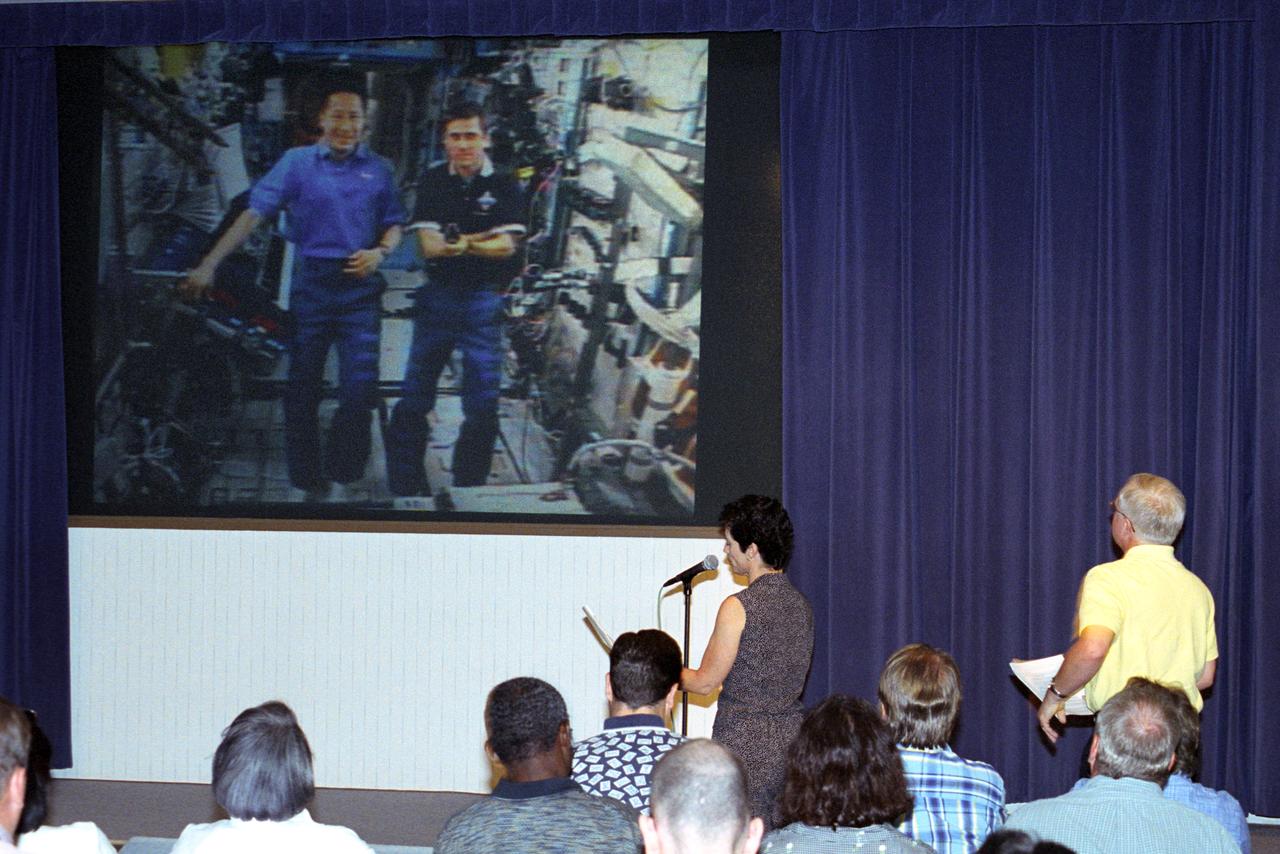
Teacher Kim Cantrell from the Edwards Air Force Base Middle School, Edwards, Calif., participating in a live uplink at NASA Dryden as part of NASA's Explorer Schools program, asks the crew of the International Space Station a question.
Teacher Kim Cantrell from the Edwards Air Force Base Middle School, Edwards, Calif., participating in a live uplink at NASA Dryden as part of NASA's Explorer Schools program, asks the crew of the International Space Station a question
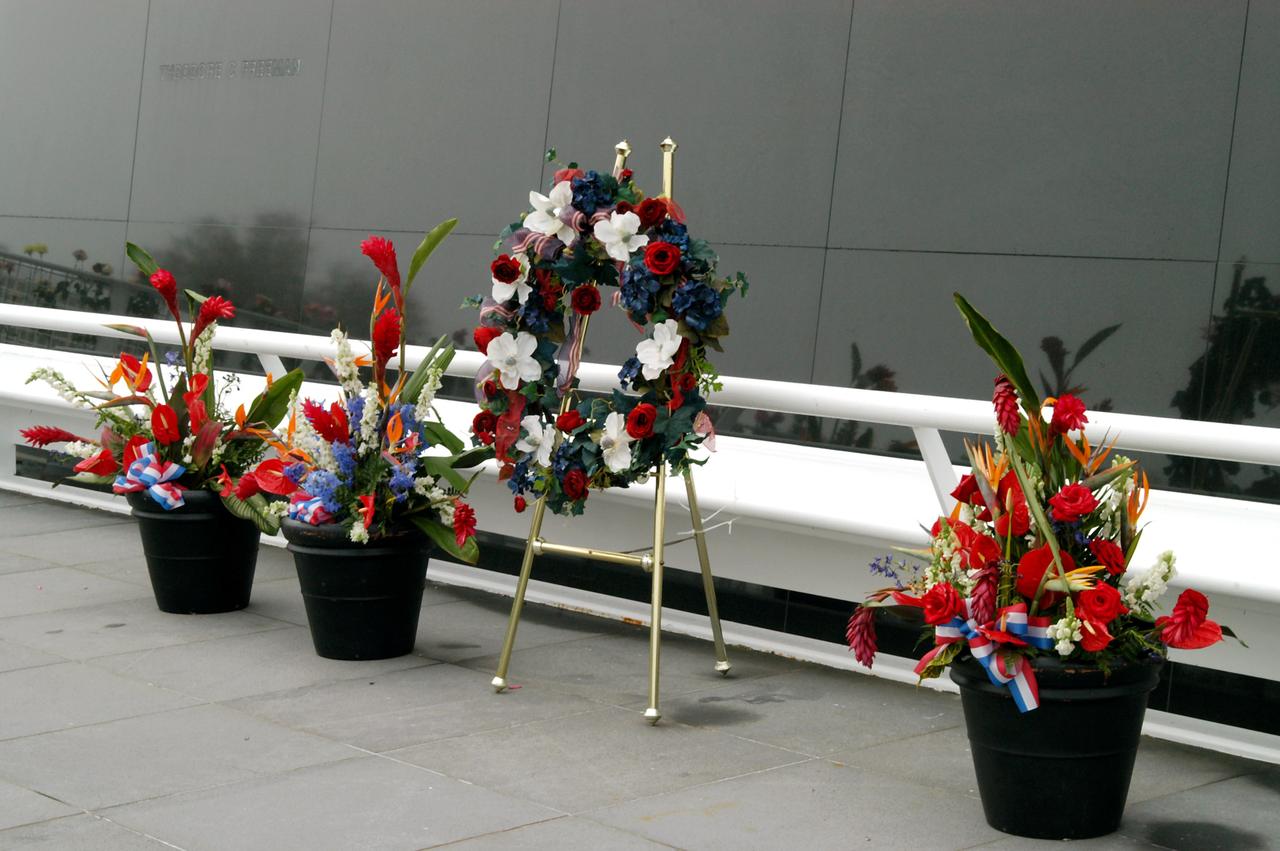
KENNEDY SPACE CENTER, FLA. - A wreath and other floral arrangements rest beneath the Astronaut Memorial Mirror at the KSC Visitor Complex following a memorial service held for the crew of Columbia on the anniversary of the tragic accident that took their lives Feb. 1, 2003.  The service included comments by Center Director Jim Kennedy, Deputy Director Woodrow Whitlow Jr., Executive Director of Florida Space Authority Winston Scott, and Dr. Stephen Feldman, president of the Astronaut Memorial Foundation, who placed the wreath at the mirror.  The black granite mirror honors astronauts, whose names are carved in the surface, who have given their lives for space exploration.
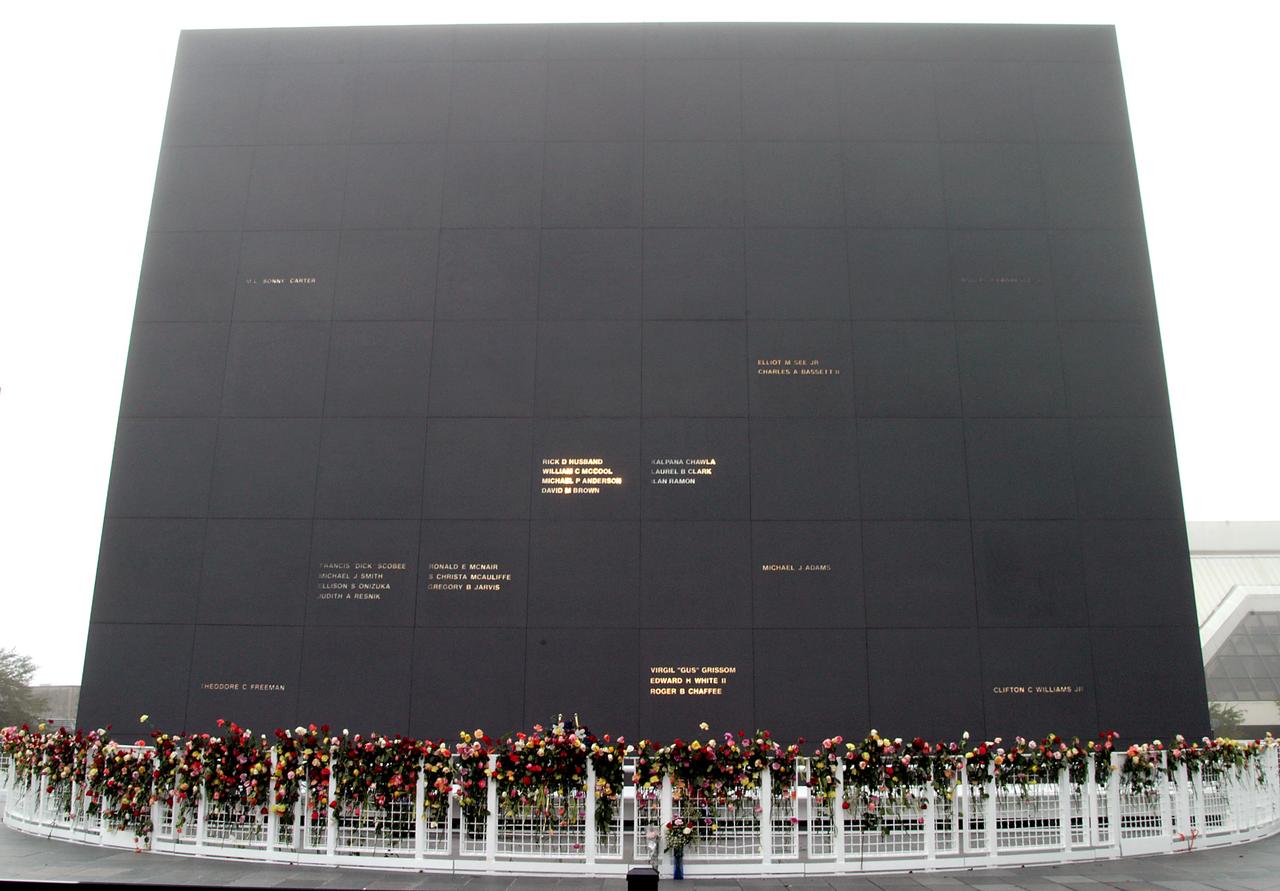
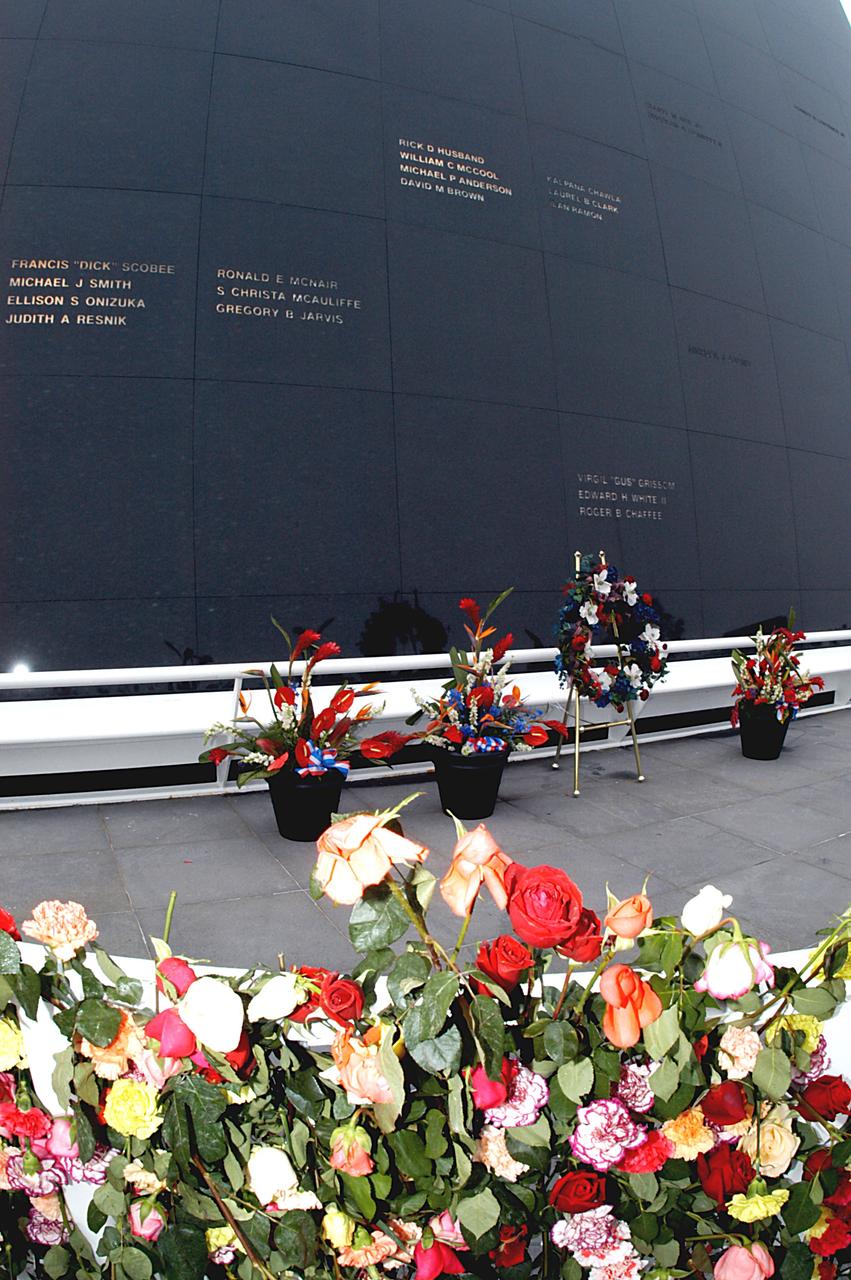
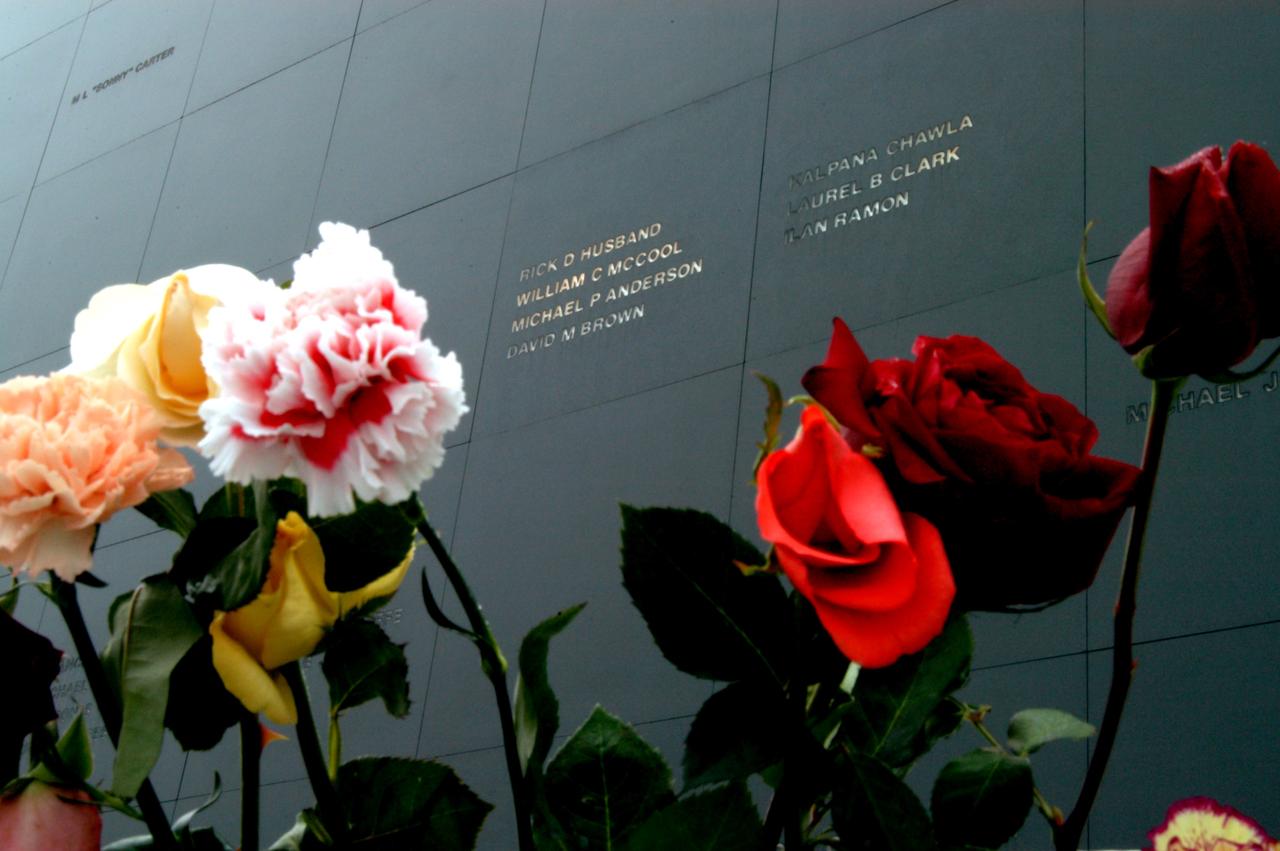
KENNEDY SPACE CENTER, FLA. - Brilliant roses and carnations frame the names of the Columbia crew carved onto the black granite surface of the Astronaut Memorial Mirror at the KSC Visitor Complex.  The flowers were left by visitors who attended a memorial service for the crew on the anniversary of the tragic accident that claimed their lives Feb. 1, 2003.  The service included comments by Center Director Jim Kennedy, Deputy Director Woodrow Whitlow Jr., Executive Director of Florida Space Authority Winston Scott, and Dr. Stephen Feldman, president of the Astronaut Memorial Foundation, who placed the wreath at the mirror.  The mirror honors astronauts who have given their lives for space exploration.
KENNEDY SPACE CENTER, FLA. - Roses and other flowers ring the base of the Astronaut Memorial Mirror at the KSC Visitor Complex following a memorial service held for the crew of Columbia on the anniversary of the tragic accident that took their lives Feb. 1, 2003.  The public was invited to the service and encouraged to place the flowers on the fence.  The service included comments by Center Director Jim Kennedy, Deputy Director Woodrow Whitlow Jr., Executive Director of Florida Space Authority Winston Scott, and Dr. Stephen Feldman, president of the Astronaut Memorial Foundation.  The black granite mirror honors astronauts, whose names are carved in the surface, who have given their lives for space exploration.
KENNEDY SPACE CENTER, FLA. - A wreath and other floral arrangements rest beneath the Astronaut Memorial Mirror at the KSC Visitor Complex following a memorial service held for the crew of Columbia on the anniversary of the tragic accident that took their lives Feb. 1, 2003. The black granite mirror honors astronauts, whose names are carved in the surface, who have given their lives for space exploration.  The service included comments by Center Director Jim Kennedy, Deputy Director Woodrow Whitlow Jr., Executive Director of Florida Space Authority Winston Scott, and Dr. Stephen Feldman, president of the Astronaut Memorial Foundation, who placed the wreath at the mirror.
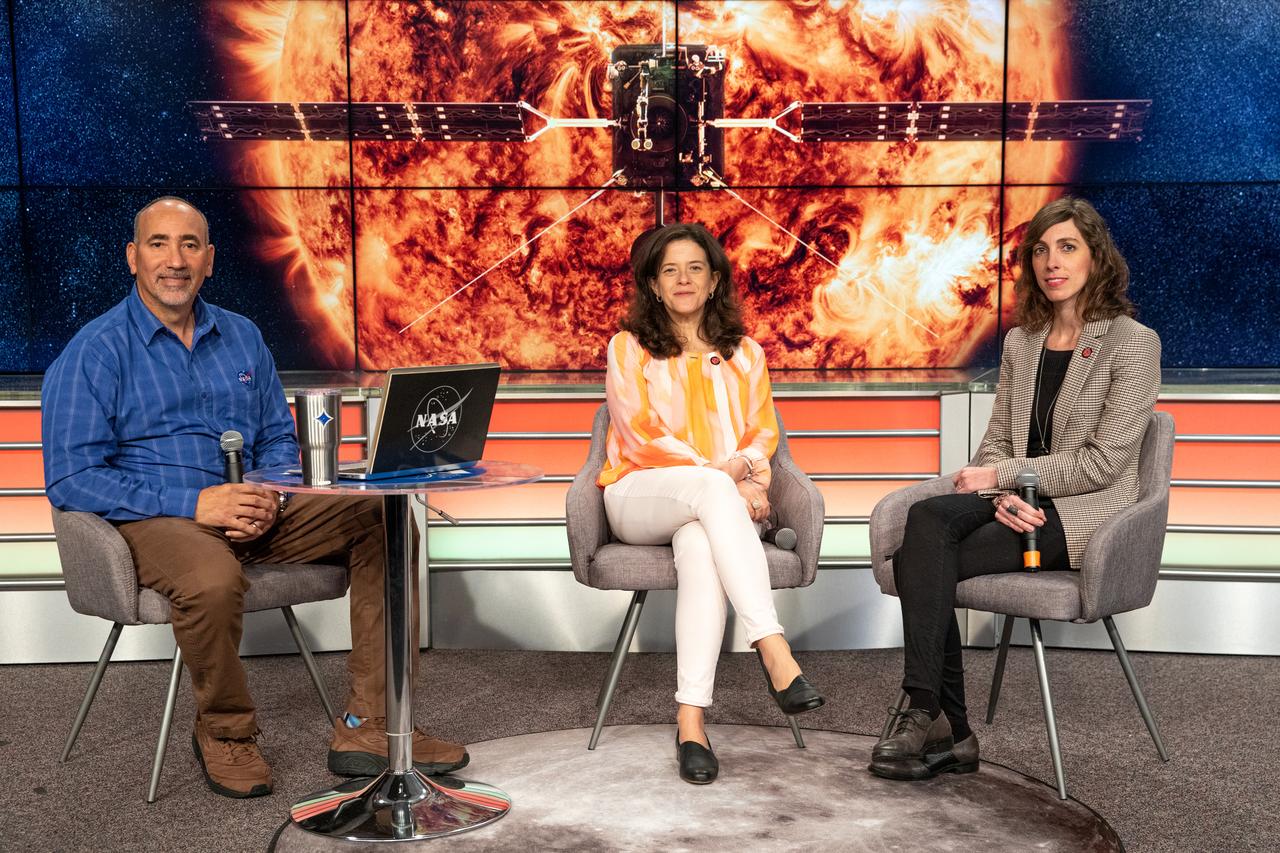
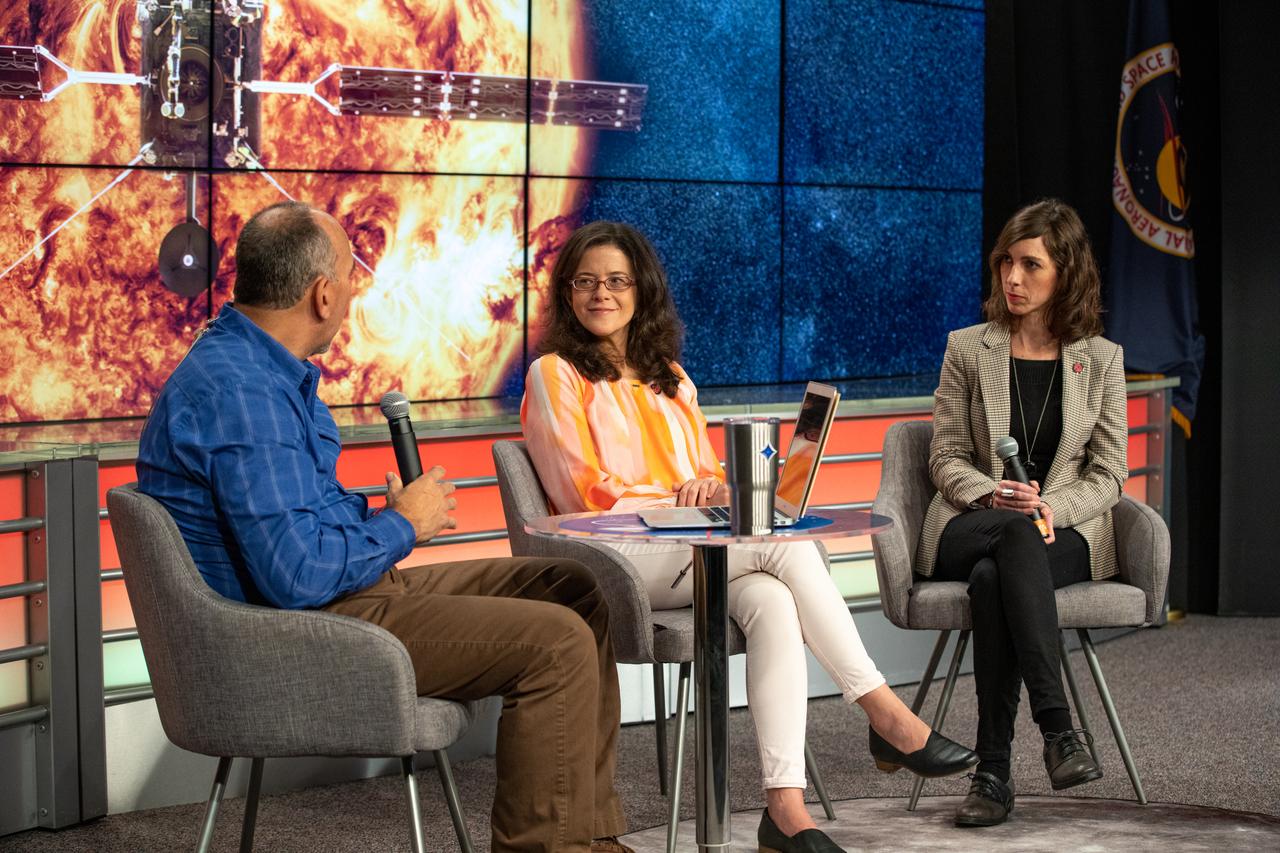
At left, Albert Sierra, Launch Services Program, moderates a Spanish Facebook Live event for the Solar Orbiter mission, with Teresa Nieves-chinchilla, deputy project scientist at NASA’s Goddard Space Flight Center in Greenbelt, Maryland, and Ana Leon, Solar Orbiter contamination control architect with Airbus Defence and Space. The event was held in the Press Site auditorium at the agency’s Kennedy Space Center in Florida on Jan. 29, 2020. Solar Orbiter is an international cooperative mission between ESA (European Space Agency) and NASA. The mission aims to study the Sun, its outer atmosphere and solar wind. The spacecraft will provide the first images of the Sun’s poles. NASA’s Launch Services Program based at Kennedy is managing the launch. The spacecraft has been developed by Airbus Defence and Space. Solar Orbiter will launch in February 2020 aboard a United Launch Alliance Atlas V rocket from Space Launch Complex 41 at Cape Canaveral Air Force Station in Florida.
Solar Orbiter Science Briefing (in Spanish) - Facebook Live Event
At left, Albert Sierra, Launch Services Program, moderates a Spanish Facebook Live event for the Solar Orbiter mission, with Teresa Nieves-chinchilla, deputy project scientist at NASA’s Goddard Space Flight Center in Greenbelt, Maryland, and Ana Leon, Solar Orbiter contamination control architect with Airbus Defence and Space. The event was held in the Press Site auditorium at the agency’s Kennedy Space Center in Florida on Jan. 29, 2020. Solar Orbiter is an international cooperative mission between ESA (European Space Agency) and NASA. The mission aims to study the Sun, its outer atmosphere and solar wind. The spacecraft will provide the first images of the Sun’s poles. NASA’s Launch Services Program based at Kennedy is managing the launch. The spacecraft has been developed by Airbus Defence and Space. Solar Orbiter will launch in February 2020 aboard a United Launch Alliance Atlas V rocket from Space Launch Complex 41 at Cape Canaveral Air Force Station in Florida.
Solar Orbiter Science Briefing (in Spanish) - Facebook Live Event
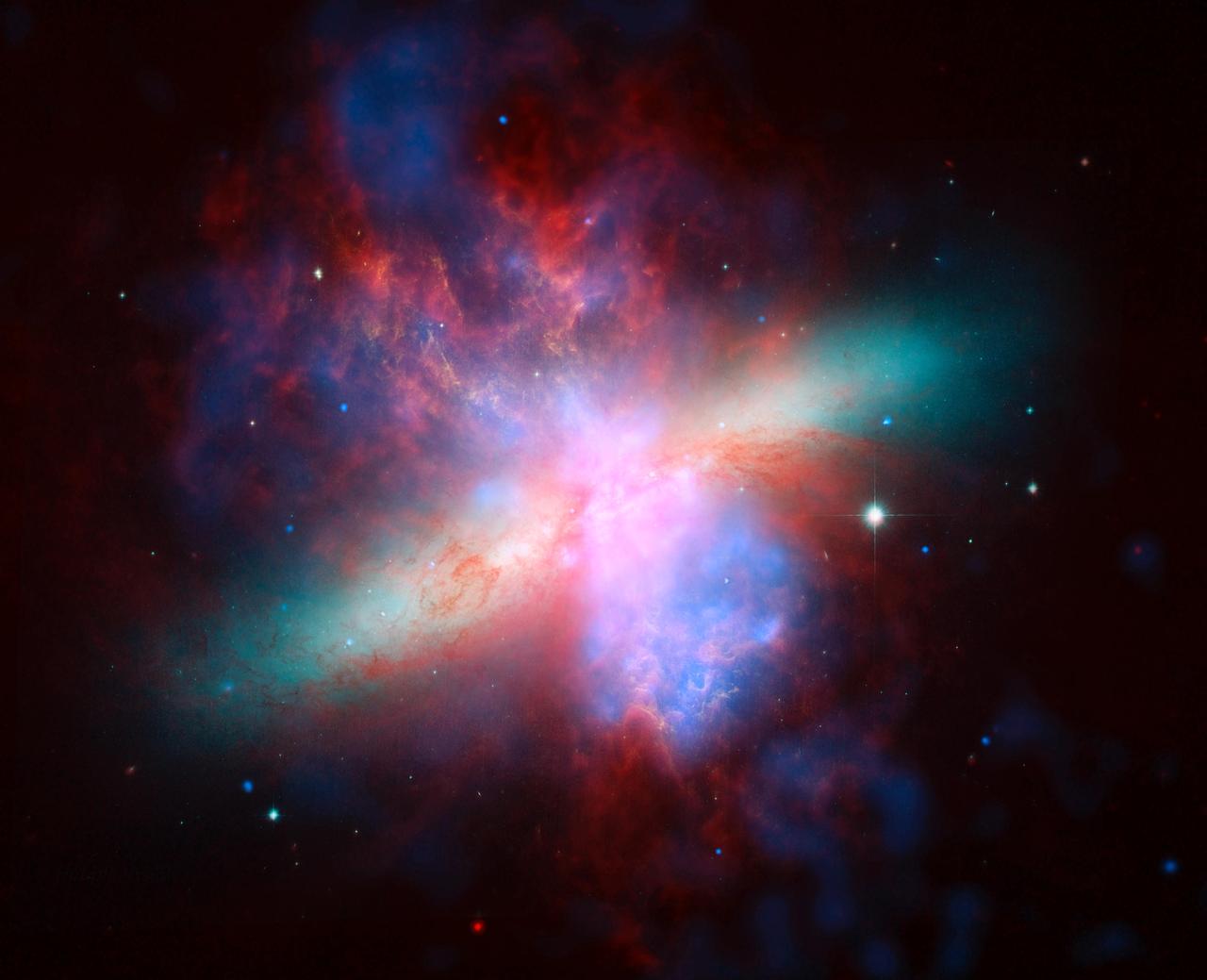
NASA Spitzer, Hubble and Chandra space observatories teamed up to create this multi-wavelength, false-colored view of the M82 galaxy. The lively   portrait celebrates Hubble weet sixteen birthday.
Great Observatories Present Rainbow of a Galaxy
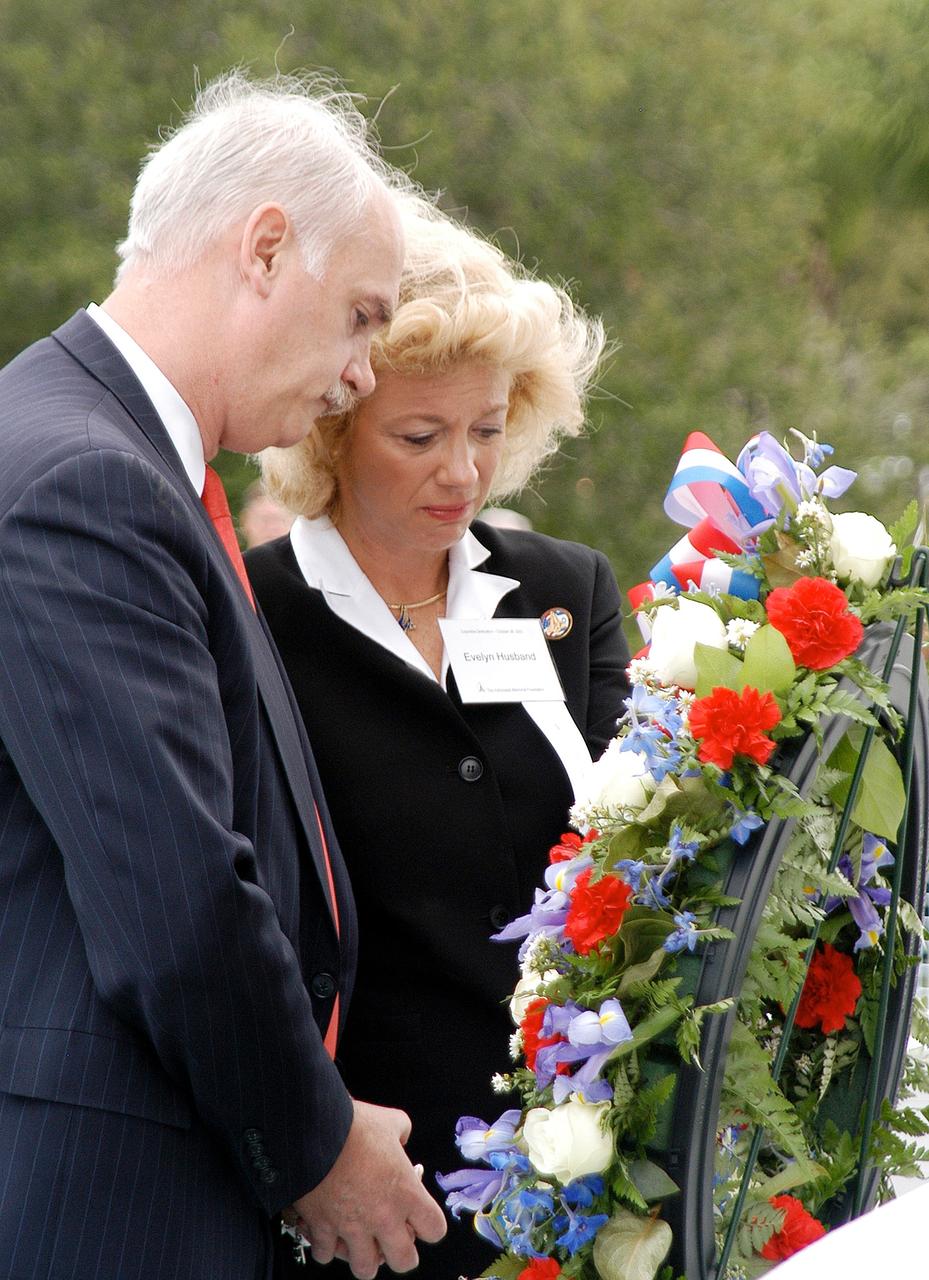
KENNEDY SPACE CENTER, FLA. -  NASA's Associate Administrator for Space Flight William Readdy (left) and Evelyn Husband, widow of astronaut Rick Husband, place a ceremonial wreath at the Space Mirror Memorial at the Kennedy Space Center Visitor Complex.  During this dedication ceremony, the names of the STS-107 astronauts who lost their lives during the Columbia accident -- Rick Husband, Willie McCool, Laurel Clark, Michael Anderson, David Brown, Kalpana Chawla, and Ilan Ramon -- join the names of 17 other space heroes who gave their lives for the U.S. space program. The "Space Mirror," 42 1/2 feet high by 50 feet wide, illuminates the names of the fallen astronauts cut through the monument's black granite surface.
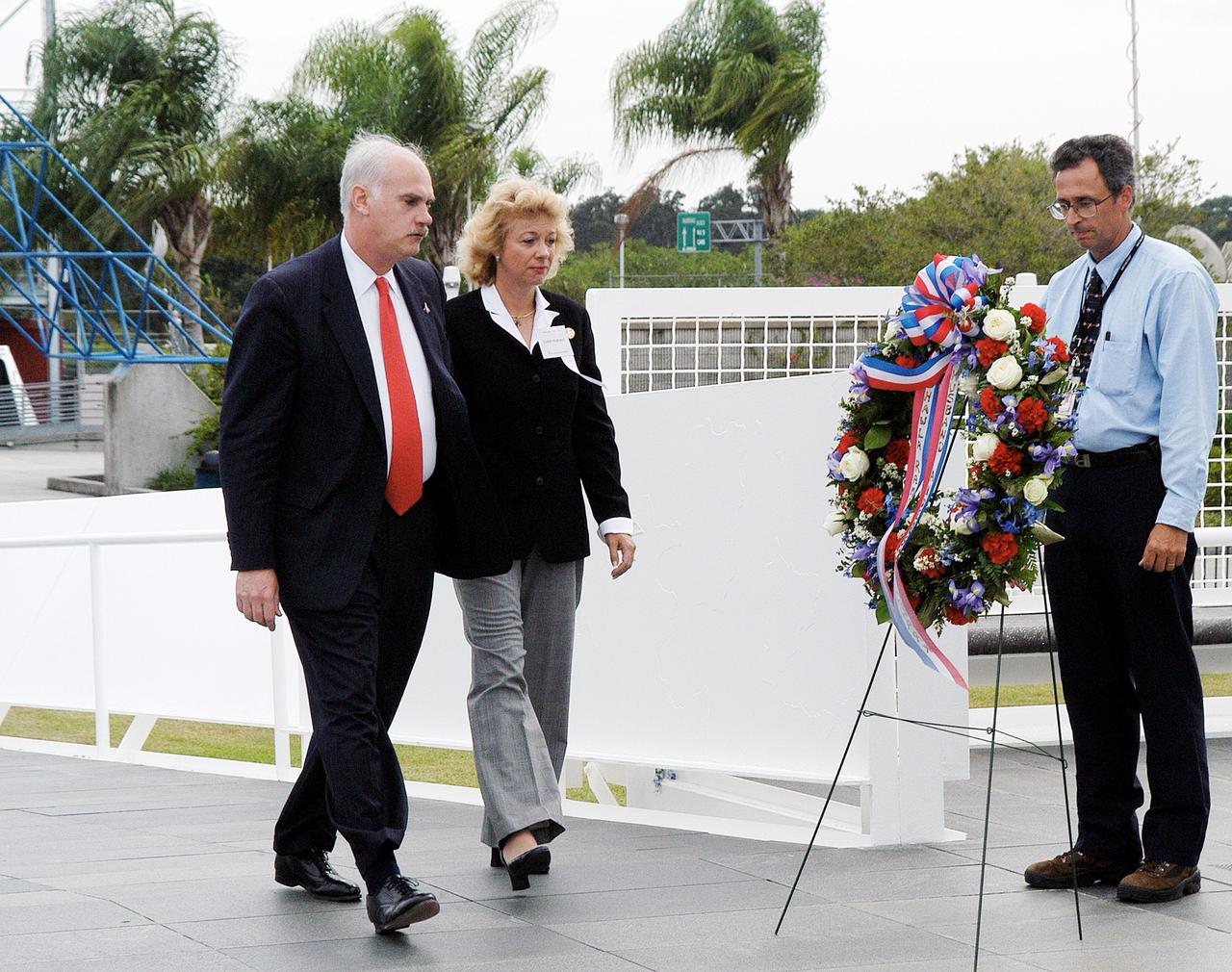
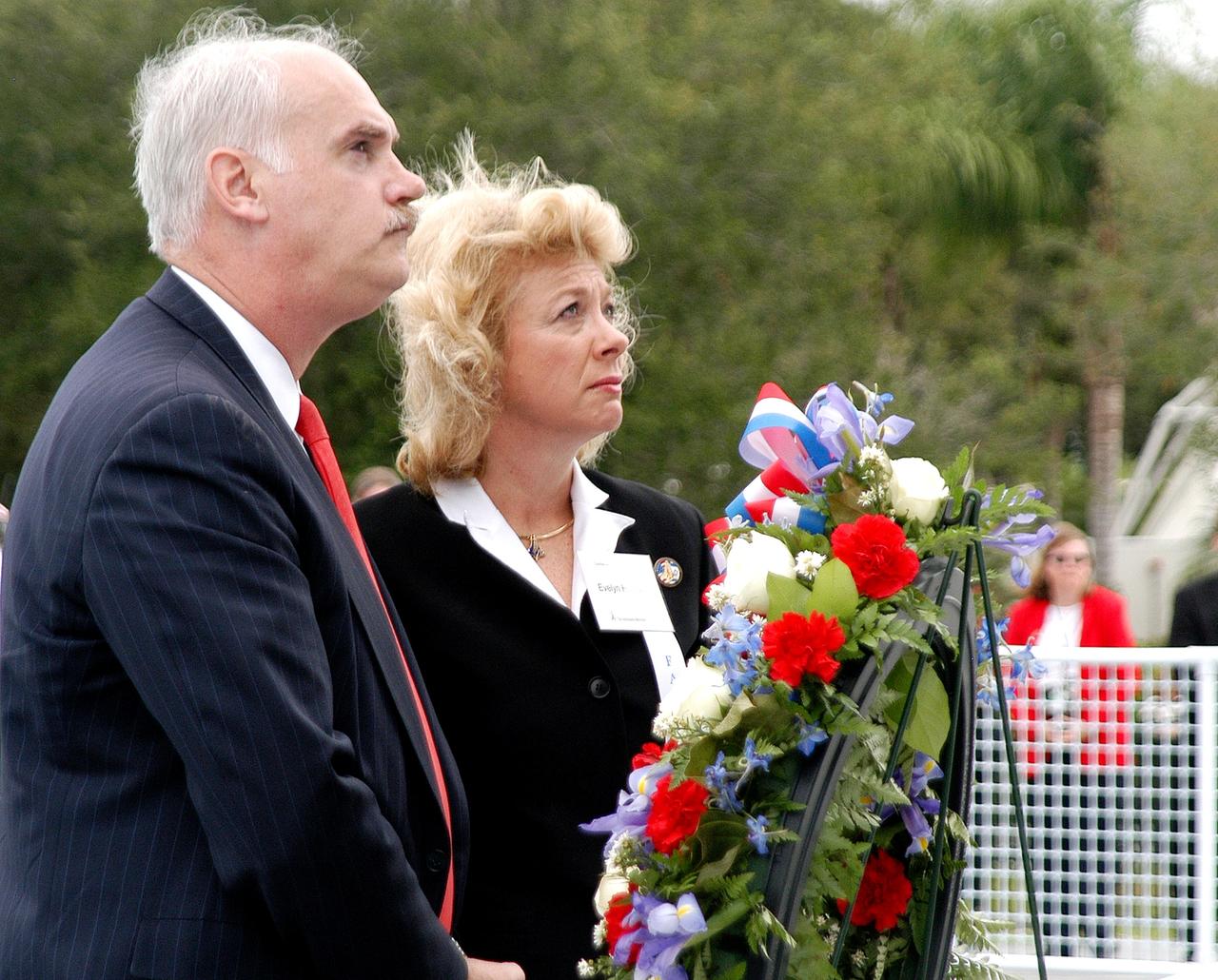
KENNEDY SPACE CENTER, FLA. - NASA's Associate Administrator for Space Flight William Readdy (left) and Evelyn Husband, widow of astronaut Rick Husband, place a ceremonial wreath at the Space Mirror Memorial at the Kennedy Space Center Visitor Complex. During this dedication ceremony, the names of the STS-107 astronauts who lost their lives during the Columbia accident -- Rick Husband, Willie McCool, Laurel Clark, Michael Anderson, David Brown, Kalpana Chawla, and Ilan Ramon -- join the names of 17 other space heroes who gave their lives for the U.S. space program. The "Space Mirror," 42 1/2 feet high by 50 feet wide, illuminates the names of the fallen astronauts cut through the monument's black granite surface.
KENNEDY SPACE CENTER, FLA. -  NASA's Associate Administrator for Space Flight William Readdy and Evelyn Husband, widow of astronaut Rick Husband, place a ceremonial wreath at the Space Mirror Memorial at the Kennedy Space Center Visitor Complex.  During this dedication ceremony, the names of the STS-107 astronauts who lost their lives during the Columbia accident -- Rick Husband, Willie McCool, Laurel Clark, Michael Anderson, David Brown, Kalpana Chawla, and Ilan Ramon -- join the names of 17 other space heroes who gave their lives for the U.S. space program. The "Space Mirror," 42 1/2 feet high by 50 feet wide, illuminates the names of the fallen astronauts cut through the monument's black granite surface.
KENNEDY SPACE CENTER, FLA. - NASA's Associate Administrator for Space Flight William Readdy and Evelyn Husband, widow of astronaut Rick Husband, place a ceremonial wreath at the Space Mirror Memorial at the Kennedy Space Center Visitor Complex. During this dedication ceremony, the names of the STS-107 astronauts who lost their lives during the Columbia accident -- Rick Husband, Willie McCool, Laurel Clark, Michael Anderson, David Brown, Kalpana Chawla, and Ilan Ramon -- join the names of 17 other space heroes who gave their lives for the U.S. space program. The "Space Mirror," 42 1/2 feet high by 50 feet wide, illuminates the names of the fallen astronauts cut through the monument's black granite surface.
KENNEDY SPACE CENTER, FLA. -  NASA's Associate Administrator for Space Flight William Readdy and Evelyn Husband, widow of astronaut Rick Husband, place a ceremonial wreath at the Space Mirror Memorial at the Kennedy Space Center Visitor Complex.  During this dedication ceremony, the names of the STS-107 astronauts who lost their lives during the Columbia accident -- Rick Husband, Willie McCool, Laurel Clark, Michael Anderson, David Brown, Kalpana Chawla, and Ilan Ramon -- join the names of 17 other space heroes who gave their lives for the U.S. space program. The "Space Mirror," 42 1/2 feet high by 50 feet wide, illuminates the names of the fallen astronauts cut through the monument's black granite surface.
KENNEDY SPACE CENTER, FLA. - NASA's Associate Administrator for Space Flight William Readdy and Evelyn Husband, widow of astronaut Rick Husband, place a ceremonial wreath at the Space Mirror Memorial at the Kennedy Space Center Visitor Complex. During this dedication ceremony, the names of the STS-107 astronauts who lost their lives during the Columbia accident -- Rick Husband, Willie McCool, Laurel Clark, Michael Anderson, David Brown, Kalpana Chawla, and Ilan Ramon -- join the names of 17 other space heroes who gave their lives for the U.S. space program. The "Space Mirror," 42 1/2 feet high by 50 feet wide, illuminates the names of the fallen astronauts cut through the monument's black granite surface.
Expedition 20 Flight Engineers Jeff Williams, left, and Nicole Stott, seen on screen, are asked a question by a NASA Twitter follower, right, during a question and answer session at a live Tweetup event at NASA Headquarters in Washington, Wednesday, Oct. 21, 2009.  Photo Credit: (NASA/Carla Cioffi)
NASA Live Tweetup Event with International Space Station
John Yembrick, NASA Public Affairs Officer, introduces a live Tweetup event to thirty-five of NASA's Twitter followers at NASA Headquarters in Washington, Wednesday, Oct. 21, 2009.  Photo Credit: (NASA/Carla Cioffi)
NASA Live Tweetup Event with International Space Station
Expedition 20 Flight Engineers Jeff Williams, left, and Nicole Stott, seen on screen, are asked a question by a NASA Twitter follower, center, during a question and answer session at a live Tweetup event at NASA Headquarters in Washington, Wednesday, Oct. 21, 2009.  Photo Credit: (NASA/Carla Cioffi)
NASA Live Tweetup Event with International Space Station
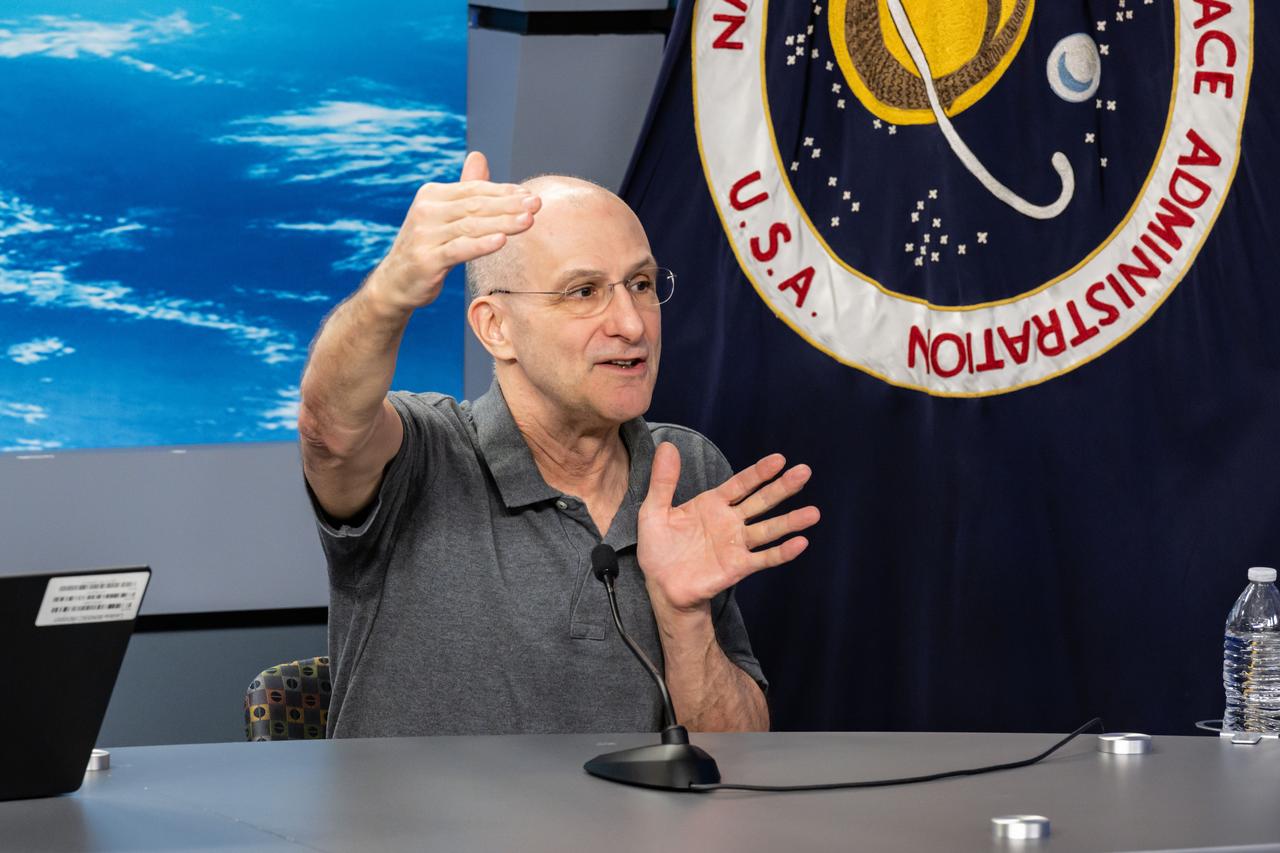
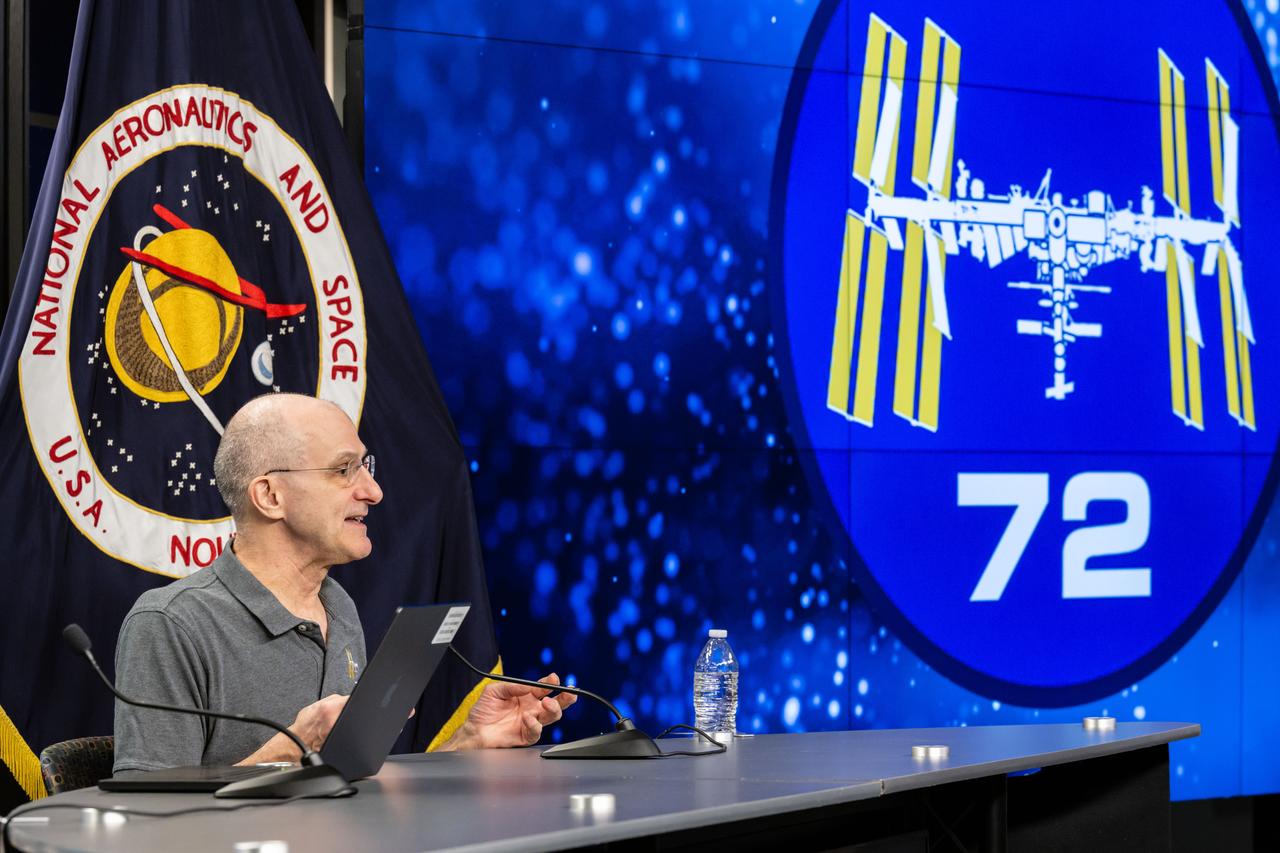
jsc2025e041770 (April 28, 2025) --- NASA astronaut Don Pettit participates in a news conference at NASA's Johnson Space Center in Houston, Texas. He discussed his mission aboard the International Space Station where he lived and worked for 220 days as an Expedition 72 Flight Engineer.
Astronaut Don Pettit participates in a news conference at NASA's Johnson Space Center
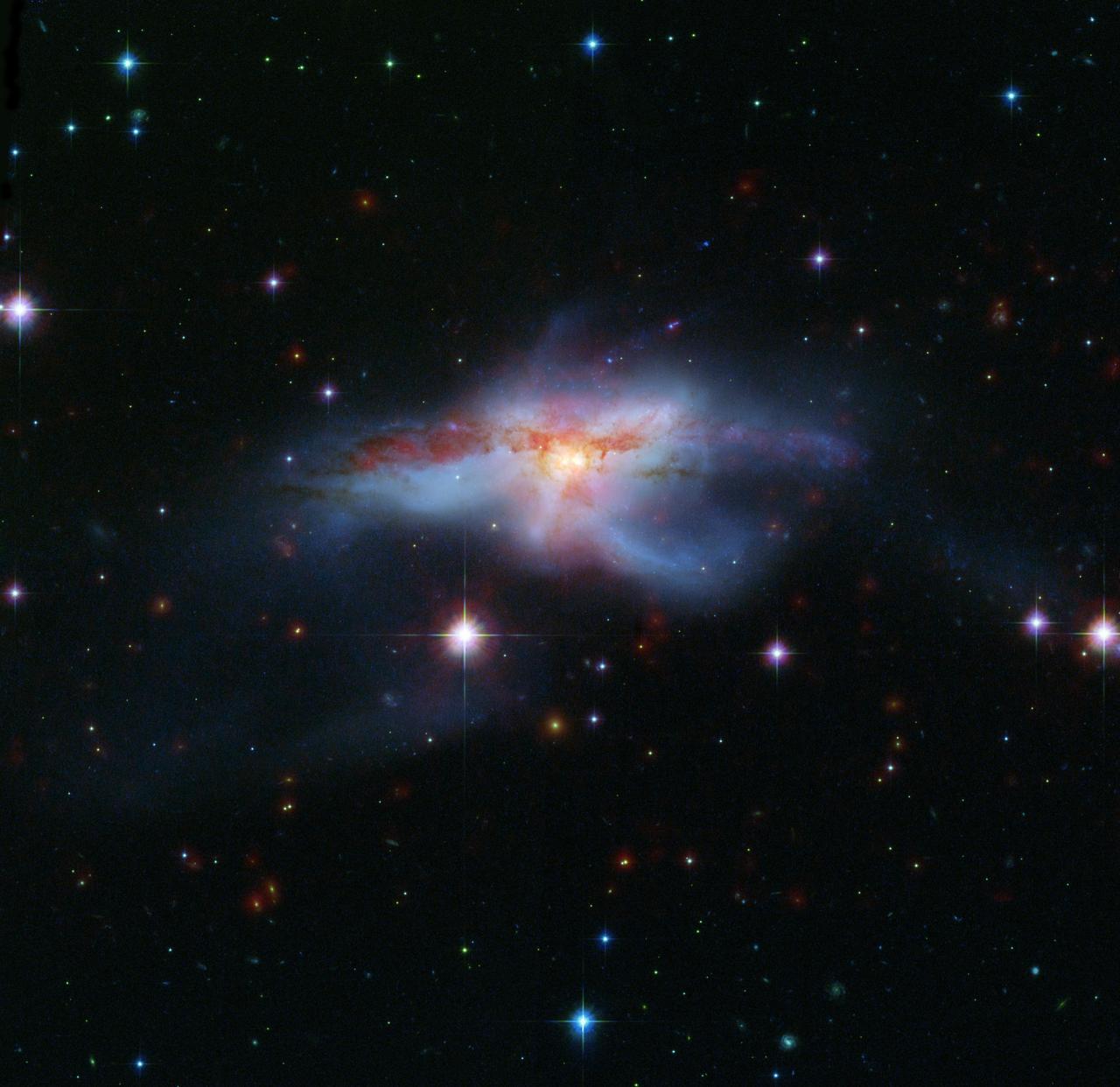
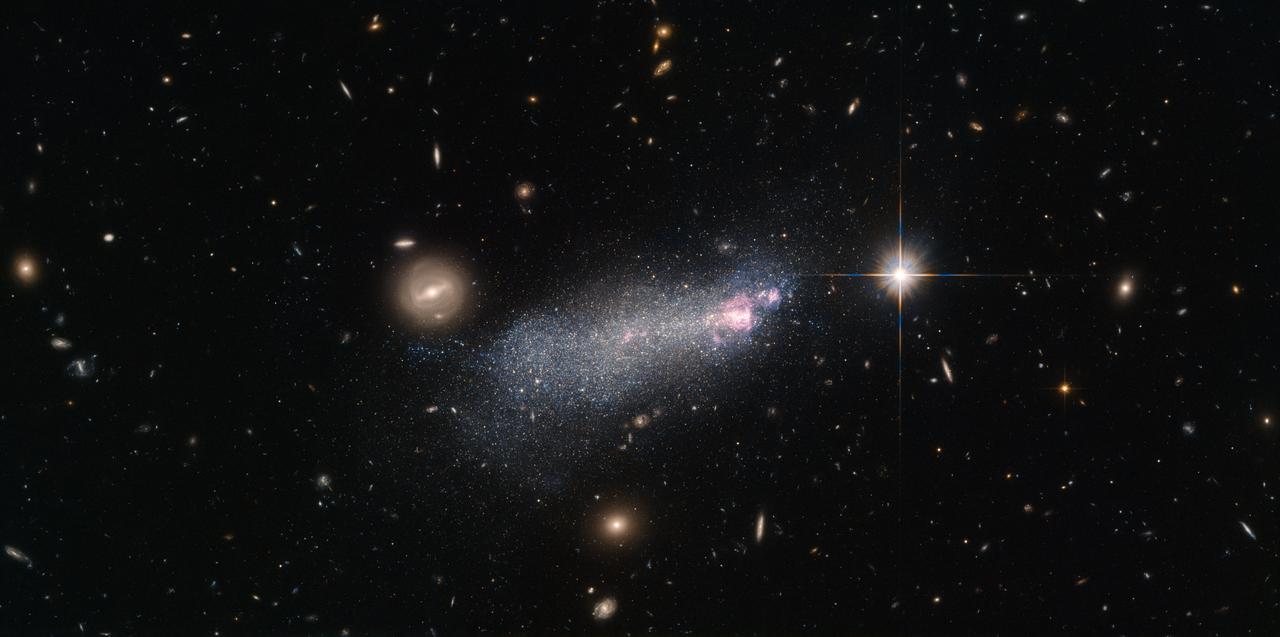
NASA Spitzer Space Telescope and Hubble Space Telescope combined to make this image of a pair of colliding galaxies called NGC 6240 shows them in a rare, short-lived phase of their evolution just before they merge into a single, larger galaxy.
Galaxies Collide to Create Hot, Huge Galaxy
jsc2025e041765 (April 28, 2025) --- NASA astronaut Don Pettit participates in a news conference at NASA's Johnson Space Center in Houston, Texas. He discussed his mission aboard the International Space Station where he lived and worked for 220 days as an Expedition 72 Flight Engineer.
Astronaut Don Pettit participates in a news conference at NASA's Johnson Space Center
Kennedy Space Center Deputy Director Kelvin Manning participates in a NASA Social Live event at the center in Florida on Oct. 29, in advance of NASA’s SpaceX Crew-3 mission to the International Space Station as part of NASA’s Commercial Crew Program. Launch is currently targeted for 2:21 a.m. EDT Sunday, Oct. 31. The SpaceX Dragon spacecraft, named Endurance by the Crew-3 astronauts, will launch on a Falcon 9 rocket from Launch Complex 39A at Kennedy Space Center. The Crew-3 flight will carry NASA astronauts Raja Chari, mission commander, Tom Marshburn, pilot, and Kayla Barron, mission specialist and ESA (European Space Agency) astronaut Matthias Maurer, also a mission specialist, to the space station for a six-month science mission.
NASA Hosts Facebook Live Event for the agency’s SpaceX Crew-3
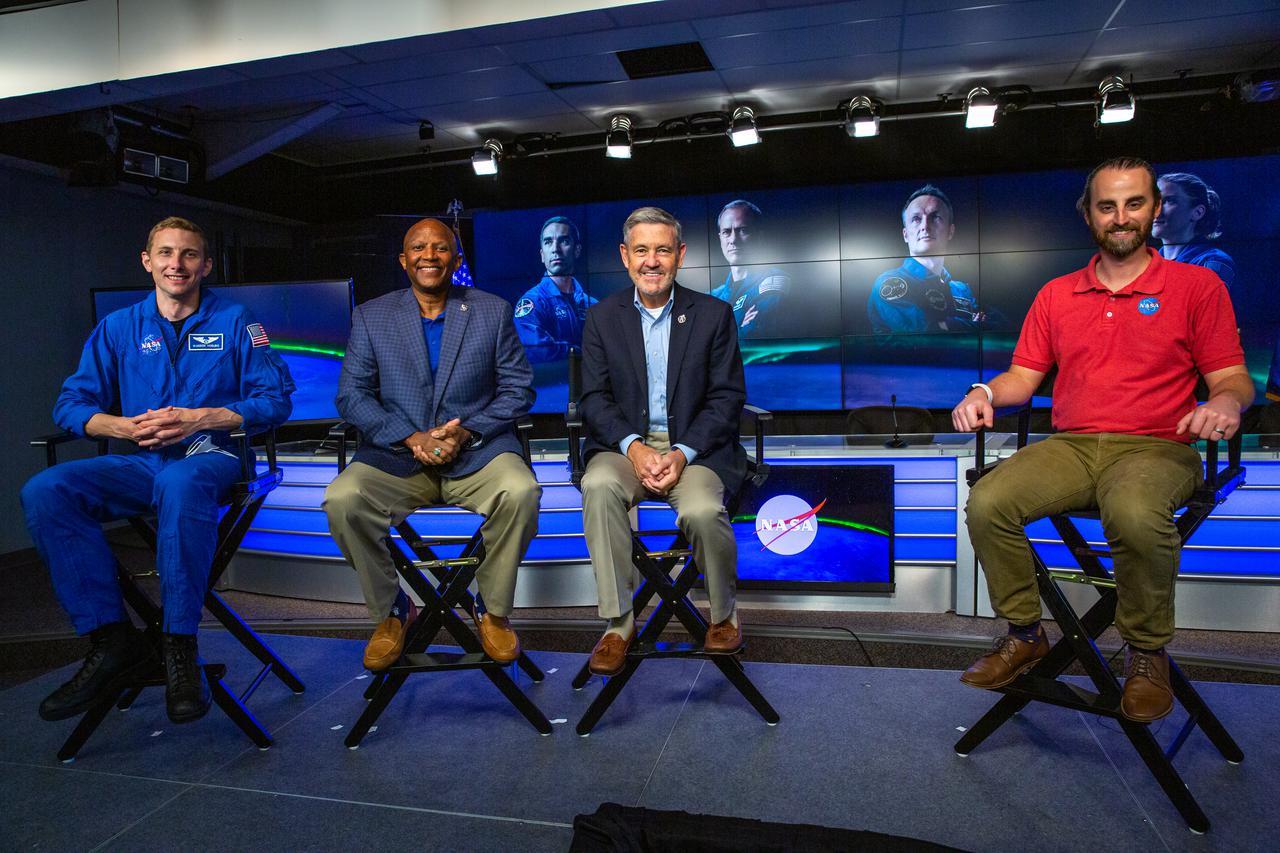
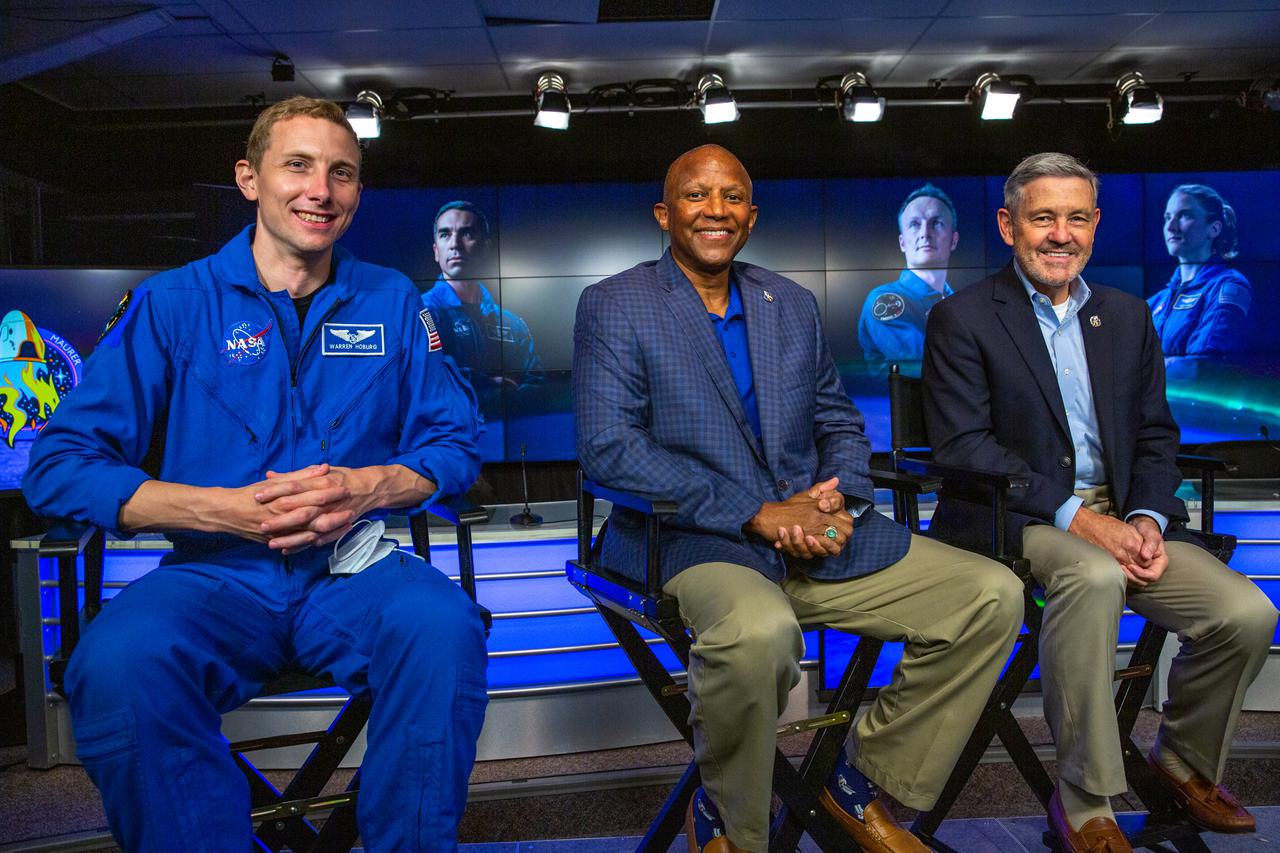
Representatives from NASA participate in a NASA Social Live event at the agency’s Kennedy Space Center in Florida on Oct. 29, in advance of NASA’s SpaceX Crew-3 mission to the International Space Station as part of NASA’s Commercial Crew Program. Participants are, from left, NASA astronaut Woody Hoburg, Kennedy Deputy Director Kelvin Manning, NASA Associate Administrator Bob Cabana, and moderator Joshua Santora, NASA Communications. Launch is currently targeted for 2:21 a.m. EDT Sunday, Oct. 31. The SpaceX Dragon spacecraft, named Endurance by the Crew-3 astronauts, will launch on a Falcon 9 rocket from Launch Complex 39A at Kennedy Space Center. The Crew-3 flight will carry NASA astronauts Raja Chari, mission commander, Tom Marshburn, pilot, and Kayla Barron, mission specialist and ESA (European Space Agency) astronaut Matthias Maurer, also a mission specialist, to the space station for a six-month science mission.
NASA Hosts Facebook Live Event for the agency’s SpaceX Crew-3
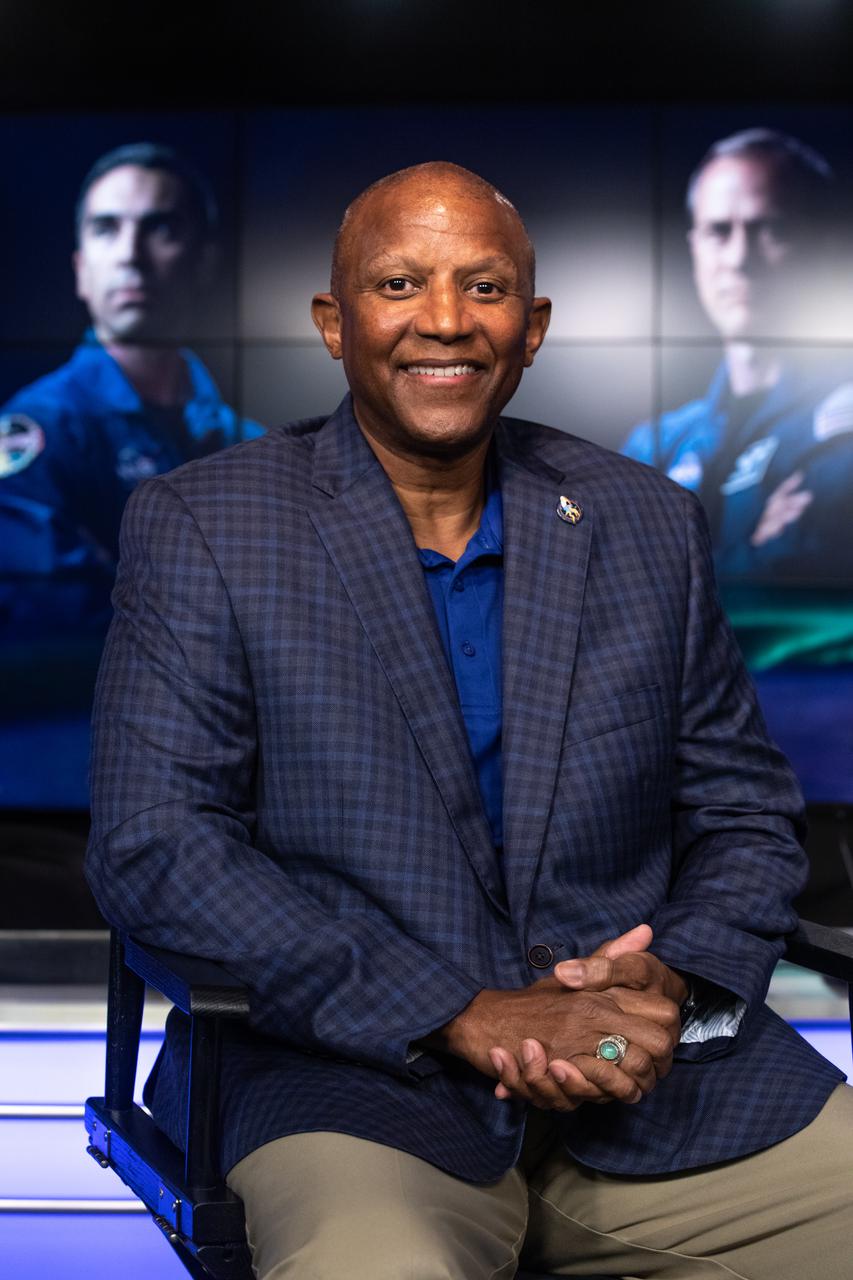
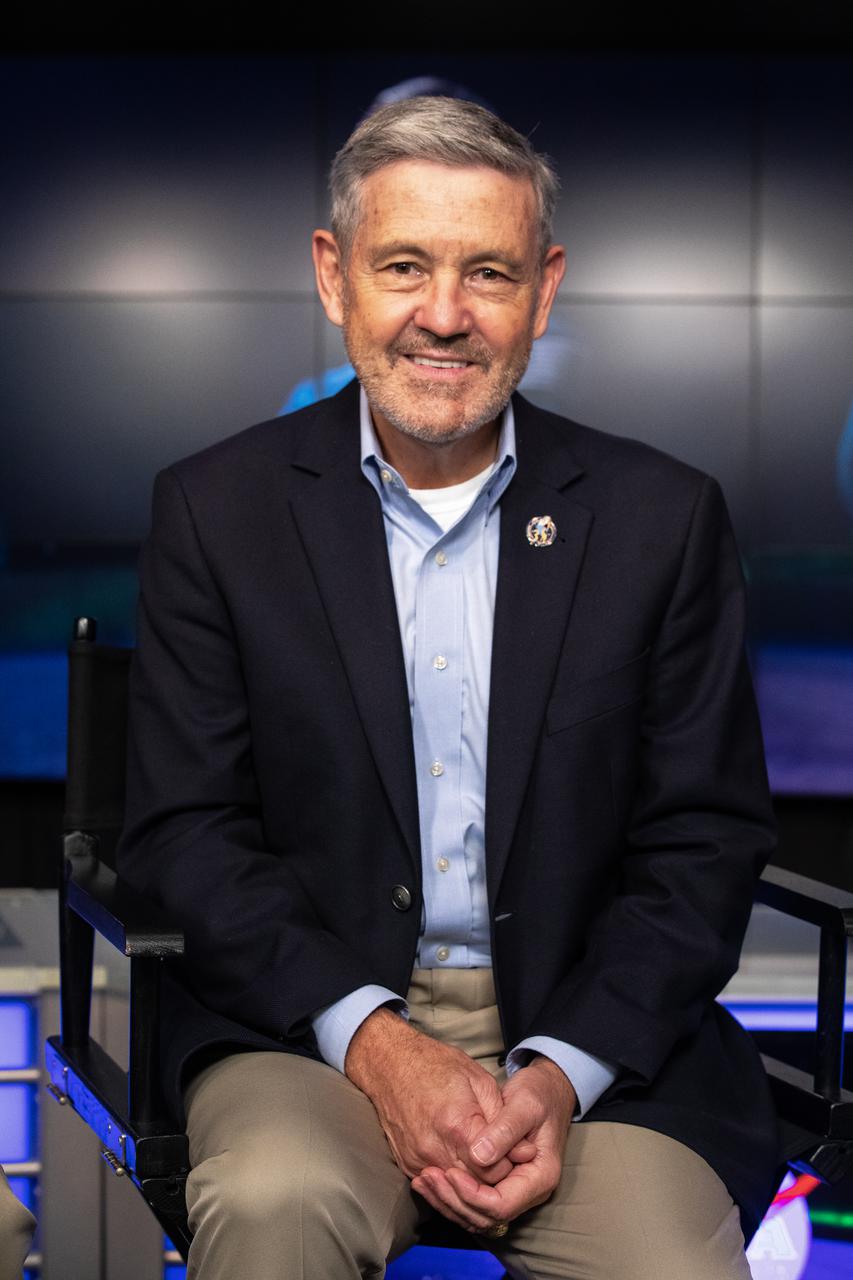
NASA Associate Administrator Bob Cabana participates in a NASA Social Live event at the agency’s Kennedy Space Center in Florida on Oct. 29, in advance of NASA’s SpaceX Crew-3 mission to the International Space Station as part of NASA’s Commercial Crew Program. Launch is currently targeted for 2:21 a.m. EDT Sunday, Oct. 31. The SpaceX Dragon spacecraft, named Endurance by the Crew-3 astronauts, will launch on a Falcon 9 rocket from Launch Complex 39A at Kennedy Space Center. The Crew-3 flight will carry NASA astronauts Raja Chari, mission commander, Tom Marshburn, pilot, and Kayla Barron, mission specialist and ESA (European Space Agency) astronaut Matthias Maurer, also a mission specialist, to the space station for a six-month science mission.
NASA Hosts Facebook Live Event for the agency’s SpaceX Crew-3
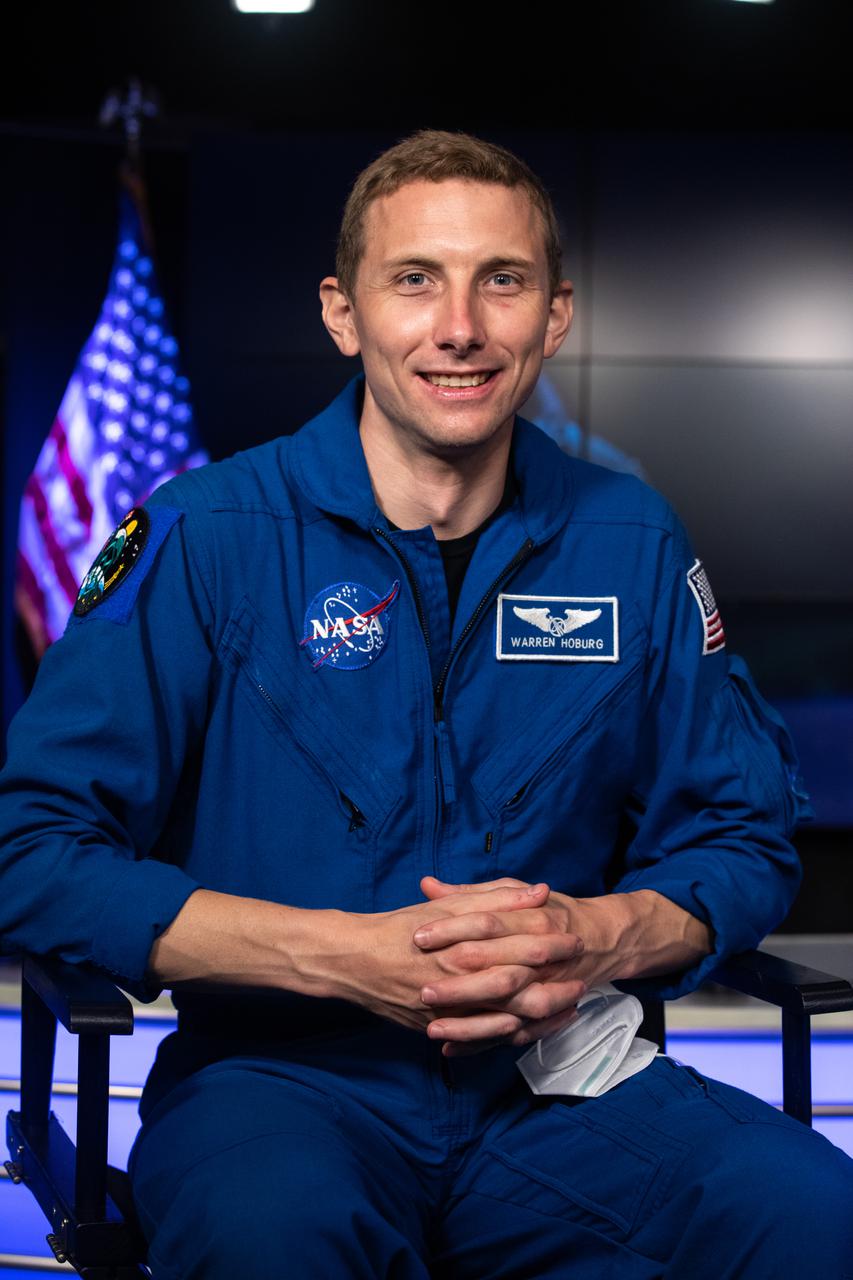
NASA astronaut Woody Hoburg participates in a NASA Social Live event at the agency’s Kennedy Space Center in Florida on Oct. 29, in advance of NASA’s SpaceX Crew-3 mission to the International Space Station as part of NASA’s Commercial Crew Program. Launch is currently targeted for 2:21 a.m. EDT Sunday, Oct. 31. The SpaceX Dragon spacecraft, named Endurance by the Crew-3 astronauts, will launch on a Falcon 9 rocket from Launch Complex 39A at Kennedy Space Center. The Crew-3 flight will carry NASA astronauts Raja Chari, mission commander, Tom Marshburn, pilot, and Kayla Barron, mission specialist and ESA (European Space Agency) astronaut Matthias Maurer, also a mission specialist, to the space station for a six-month science mission.
NASA Hosts Facebook Live Event for the agency’s SpaceX Crew-3
Representatives from NASA participate in a NASA Social Live event at the agency’s Kennedy Space Center in Florida on Oct. 29, in advance of NASA’s SpaceX Crew-3 mission to the International Space Station as part of NASA’s Commercial Crew Program. Participants are, from left, NASA astronaut Woody Hoburg, Kennedy Deputy Director Kelvin Manning, and NASA Associate Administrator Bob Cabana. Launch is currently targeted for 2:21 a.m. EDT Sunday, Oct. 31. The SpaceX Dragon spacecraft, named Endurance by the Crew-3 astronauts, will launch on a Falcon 9 rocket from Launch Complex 39A at Kennedy Space Center. The Crew-3 flight will carry NASA astronauts Raja Chari, mission commander, Tom Marshburn, pilot, and Kayla Barron, mission specialist and ESA (European Space Agency) astronaut Matthias Maurer, also a mission specialist, to the space station for a six-month science mission.
NASA Hosts Facebook Live Event for the agency’s SpaceX Crew-3
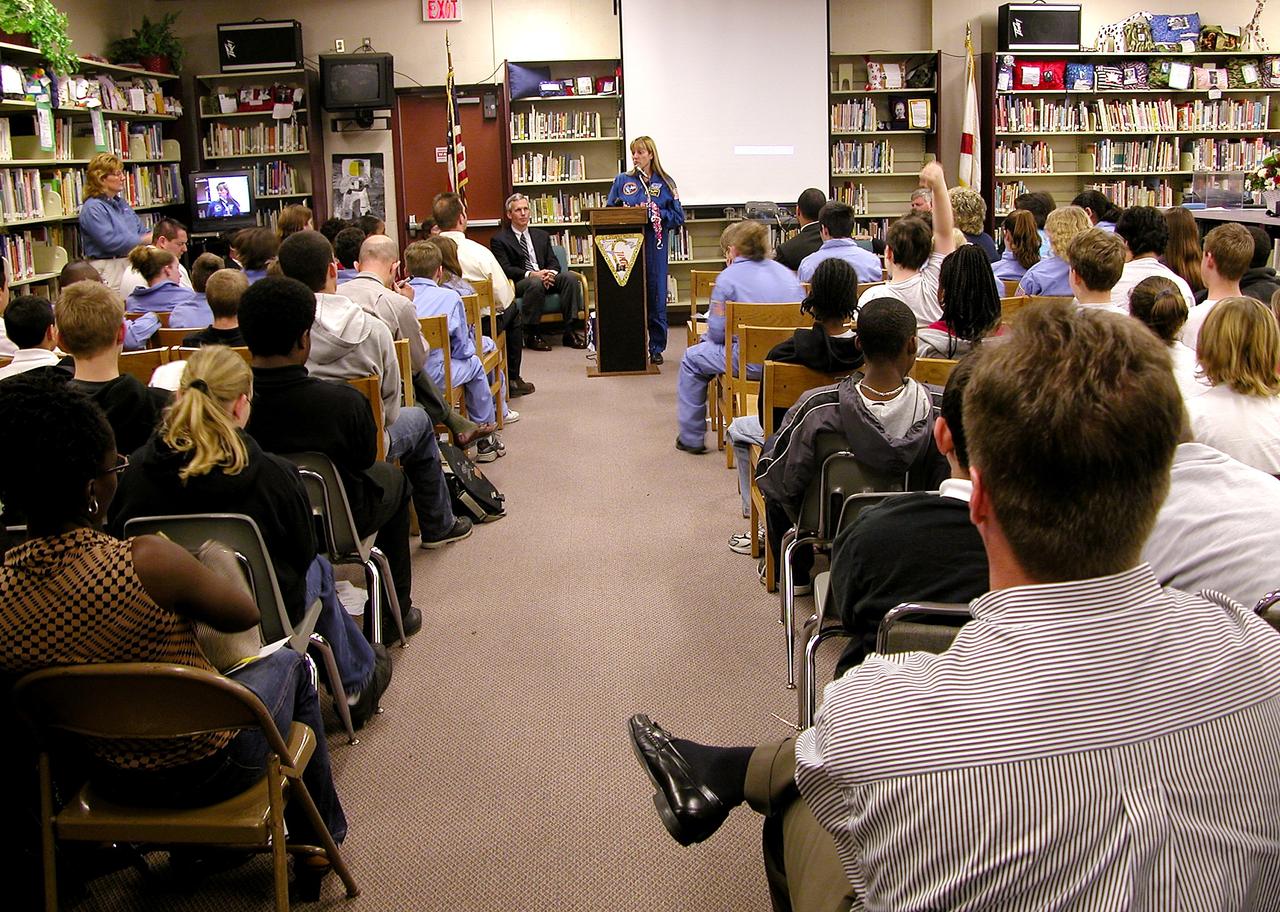
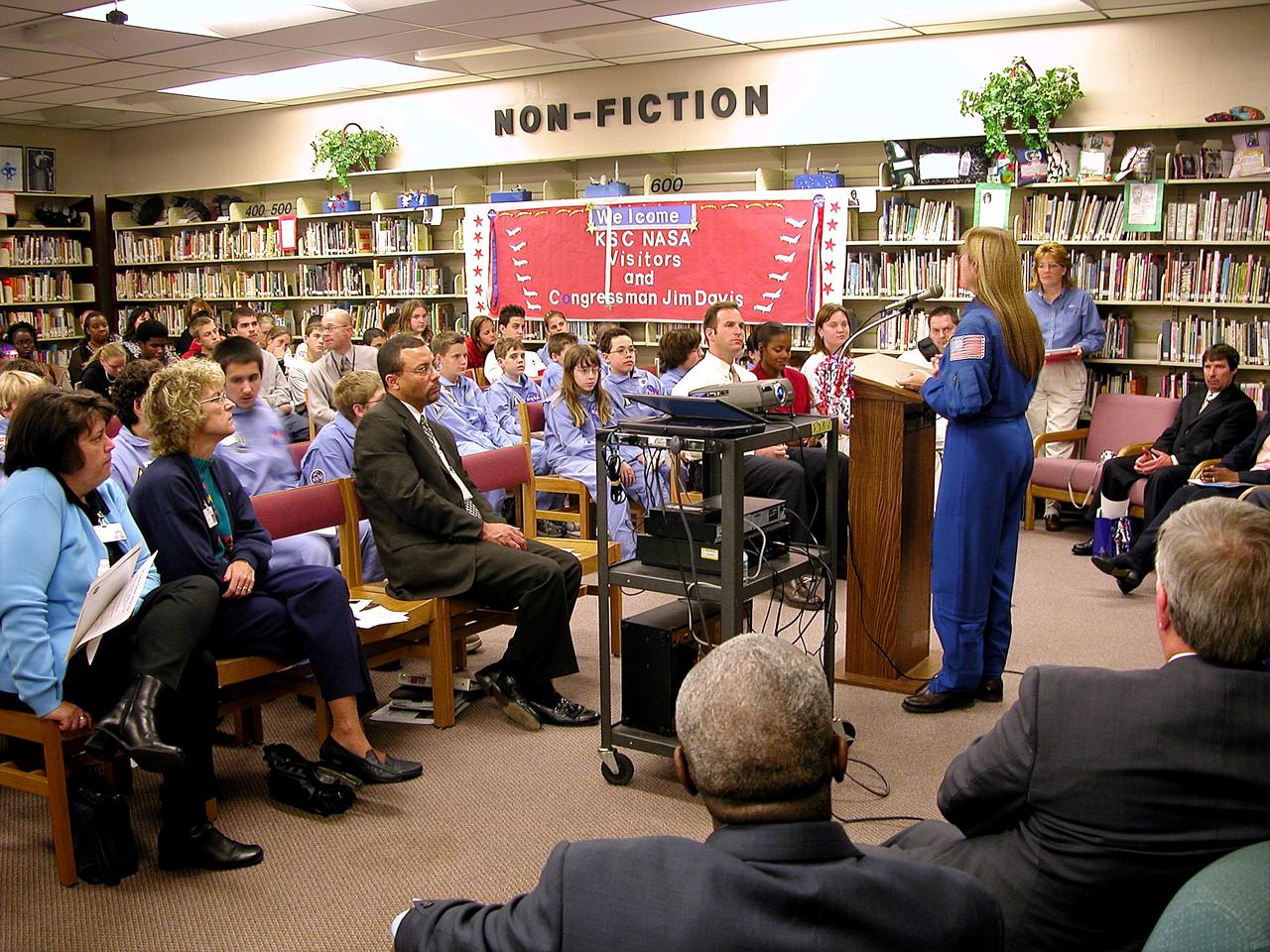
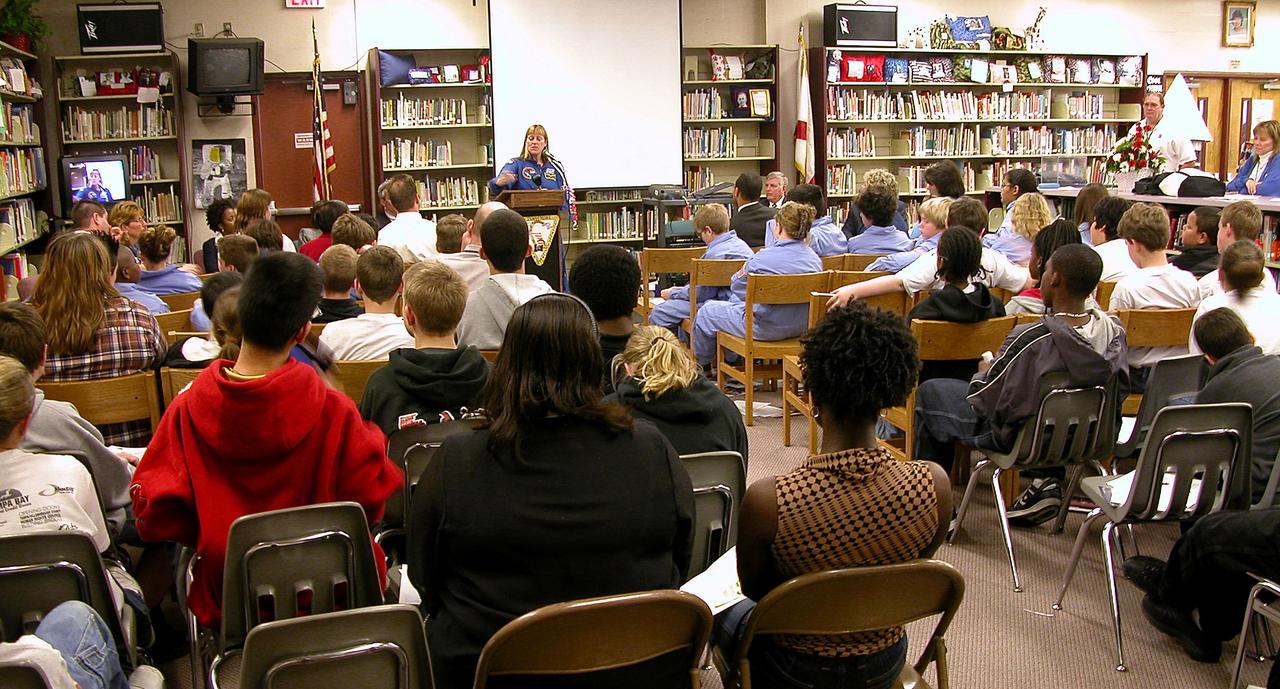
KENNEDY SPACE CENTER, FLA. - Astronaut Kay Hire talks to students in Garland V. Stewart Magnet Middle School, a NASA Explorer School (NES) in Tampa, Fla.  She joined Center Director Jim Kennedy in sharing the agency’s new vision for space exploration with the next generation of explorers. Kennedy is talking with students about our destiny as explorers, NASA’s stepping stone approach to exploring Earth, the Moon, Mars and beyond, how space impacts our lives, and how people and machines rely on each other in space.
KENNEDY SPACE CENTER, FLA. - Astronaut Kay Hire talks to students in Garland V. Stewart Magnet Middle School, a NASA Explorer School (NES) in Tampa, Fla. She joined Center Director Jim Kennedy in sharing the agency’s new vision for space exploration with the next generation of explorers. Kennedy is talking with students about our destiny as explorers, NASA’s stepping stone approach to exploring Earth, the Moon, Mars and beyond, how space impacts our lives, and how people and machines rely on each other in space.
KENNEDY SPACE CENTER, FLA. - Astronaut Kay Hire talks to students in Garland V. Stewart Magnet Middle School, a NASA Explorer School (NES) in Tampa, Fla.  She joined Center Director Jim Kennedy in sharing the agency’s new vision for space exploration with the next generation of explorers. Kennedy is talking with students about our destiny as explorers, NASA’s stepping stone approach to exploring Earth, the Moon, Mars and beyond, how space impacts our lives, and how people and machines rely on each other in space.
KENNEDY SPACE CENTER, FLA. - Astronaut Kay Hire talks to students in Garland V. Stewart Magnet Middle School, a NASA Explorer School (NES) in Tampa, Fla. She joined Center Director Jim Kennedy in sharing the agency’s new vision for space exploration with the next generation of explorers. Kennedy is talking with students about our destiny as explorers, NASA’s stepping stone approach to exploring Earth, the Moon, Mars and beyond, how space impacts our lives, and how people and machines rely on each other in space.
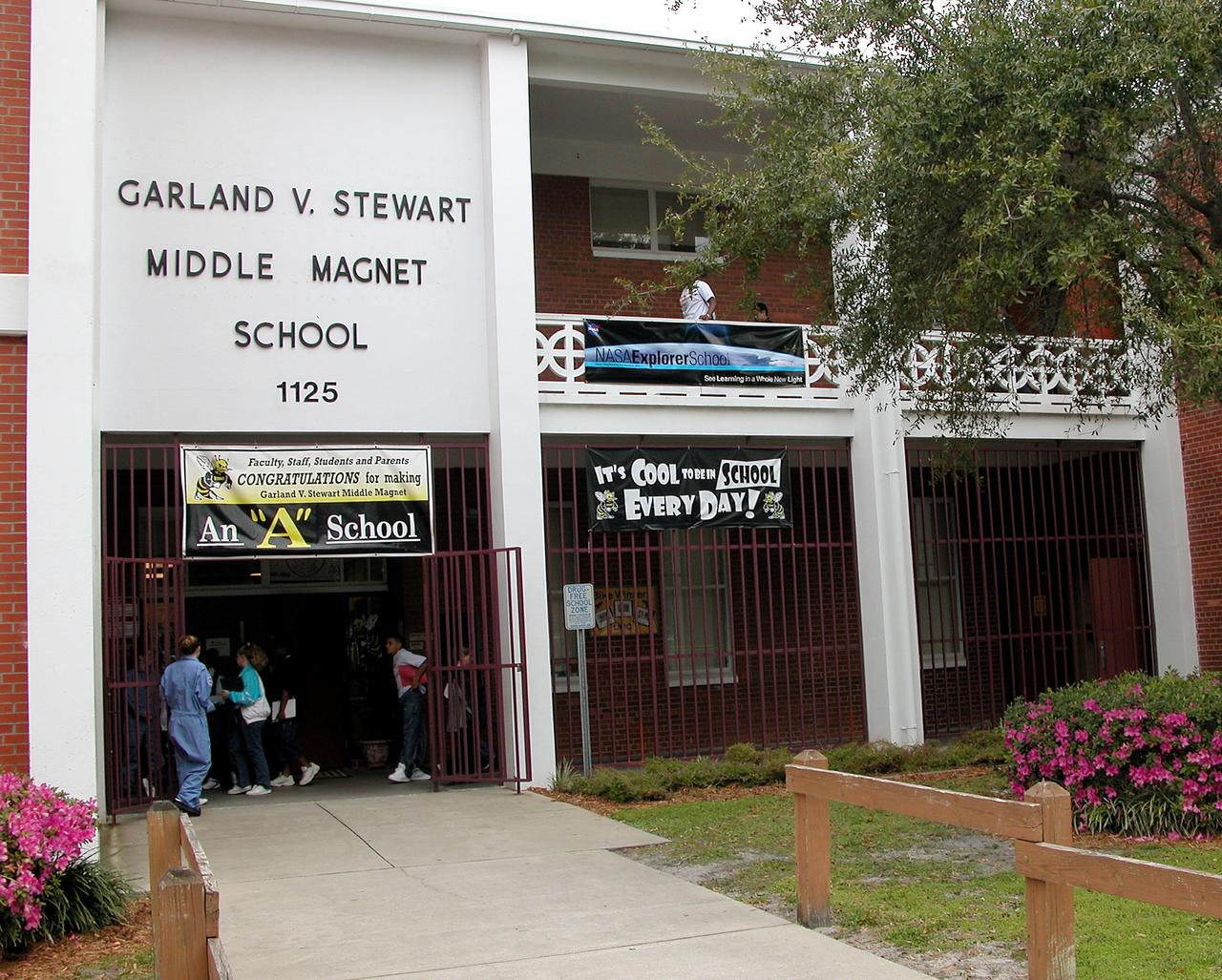
KENNEDY SPACE CENTER, FLA. - Garland V. Stewart Magnet Middle School, a NASA Explorer School (NES) in Tampa, Fla., is the site where Center Director Jim Kennedy and astronaut Kay Hire shared the agency’s new vision for space exploration with the next generation of explorers. Kennedy talked with students about our destiny as explorers, NASA’s stepping stone approach to exploring Earth, the Moon, Mars and beyond, how space impacts our lives, and how people and machines rely on each other in space.
KENNEDY SPACE CENTER, FLA.  -  Several exhibit entrances within the KSC Visitor Complex are seen: The Universe Theatre, which shows the film “Quest for Life”;  Mad Mission to Mars 2025, a live-action stage show; and, in the background, the Rocket Garden, featuring eight authentic rockets from the past.
KENNEDY SPACE CENTER, FLA. - Several exhibit entrances within the KSC Visitor Complex are seen: The Universe Theatre, which shows the film “Quest for Life”; Mad Mission to Mars 2025, a live-action stage show; and, in the background, the Rocket Garden, featuring eight authentic rockets from the past.
KENNEDY SPACE CENTER, FLA.  -  A popular exhibit at the KSC Visitor Complex, the Mad Mission to Mars 2025, seen beyond the crossover, is a live-action stage show that combines stereoscopic 3-D computer animation and spectacular theatrical effects.
KENNEDY SPACE CENTER, FLA. - A popular exhibit at the KSC Visitor Complex, the Mad Mission to Mars 2025, seen beyond the crossover, is a live-action stage show that combines stereoscopic 3-D computer animation and spectacular theatrical effects.
KENNEDY SPACE CENTER, FLA. - A wreath and other floral arrangements rest beneath the Astronaut Memorial Mirror at the KSC Visitor Complex following a memorial service held for the crew of Columbia on the anniversary of the tragic accident that took their lives Feb. 1, 2003.  In the foreground are a portion of the roses and carnations left by visitors who attended the memorial.  The service included comments by Center Director Jim Kennedy, Deputy Director Woodrow Whitlow Jr., Executive Director of Florida Space Authority Winston Scott, and Dr. Stephen Feldman, president of the Astronaut Memorial Foundation, who placed the wreath at the mirror.  The black granite mirror honors astronauts, whose names are carved in the surface, who have given their lives for space exploration.
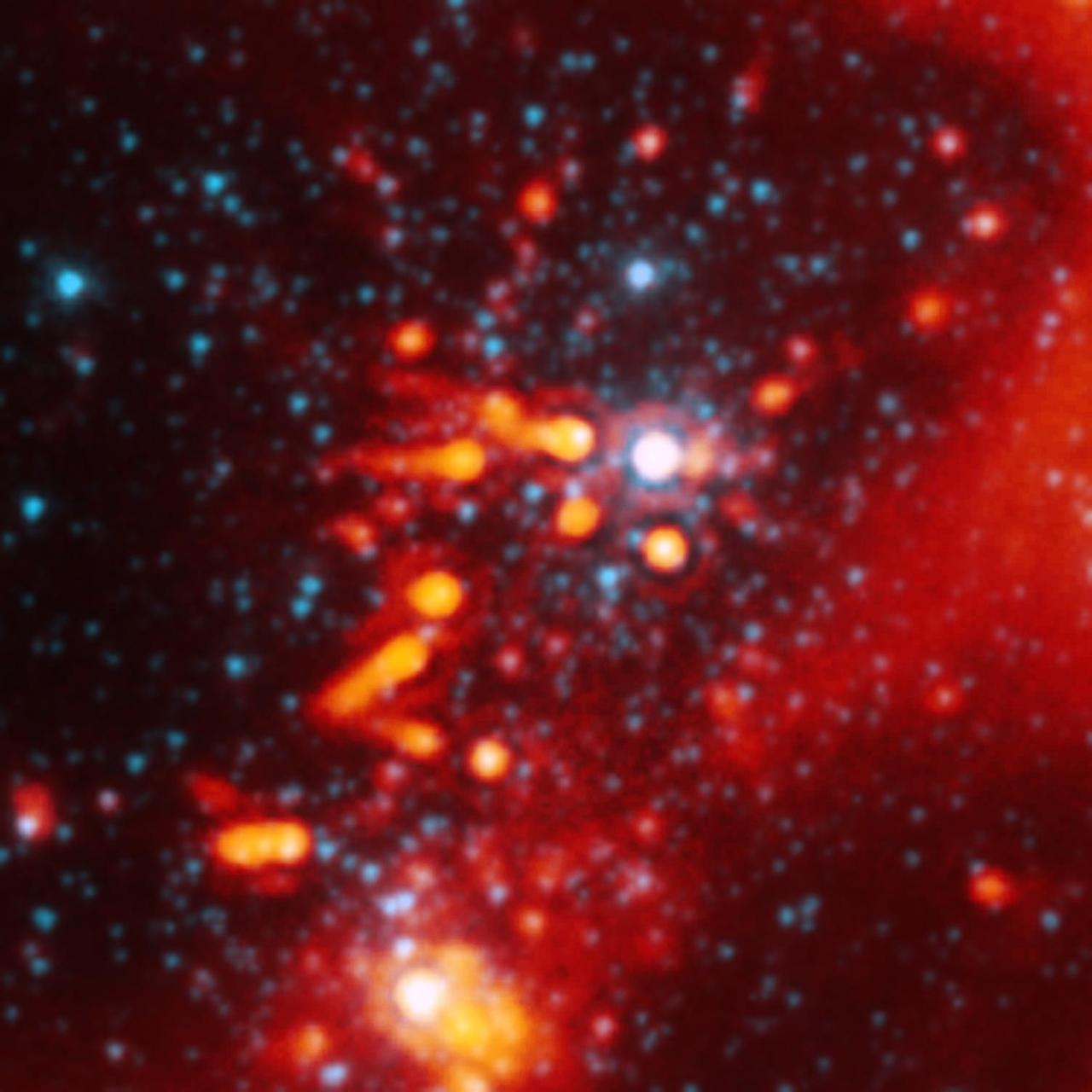
This image from NASA Spitzer Space Telescope shows the nasty effects of living near a group of massive stars: radiation and winds from the massive stars white spot in center are blasting planet-making material away from stars like our sun.
Devastated Stellar Neighborhood
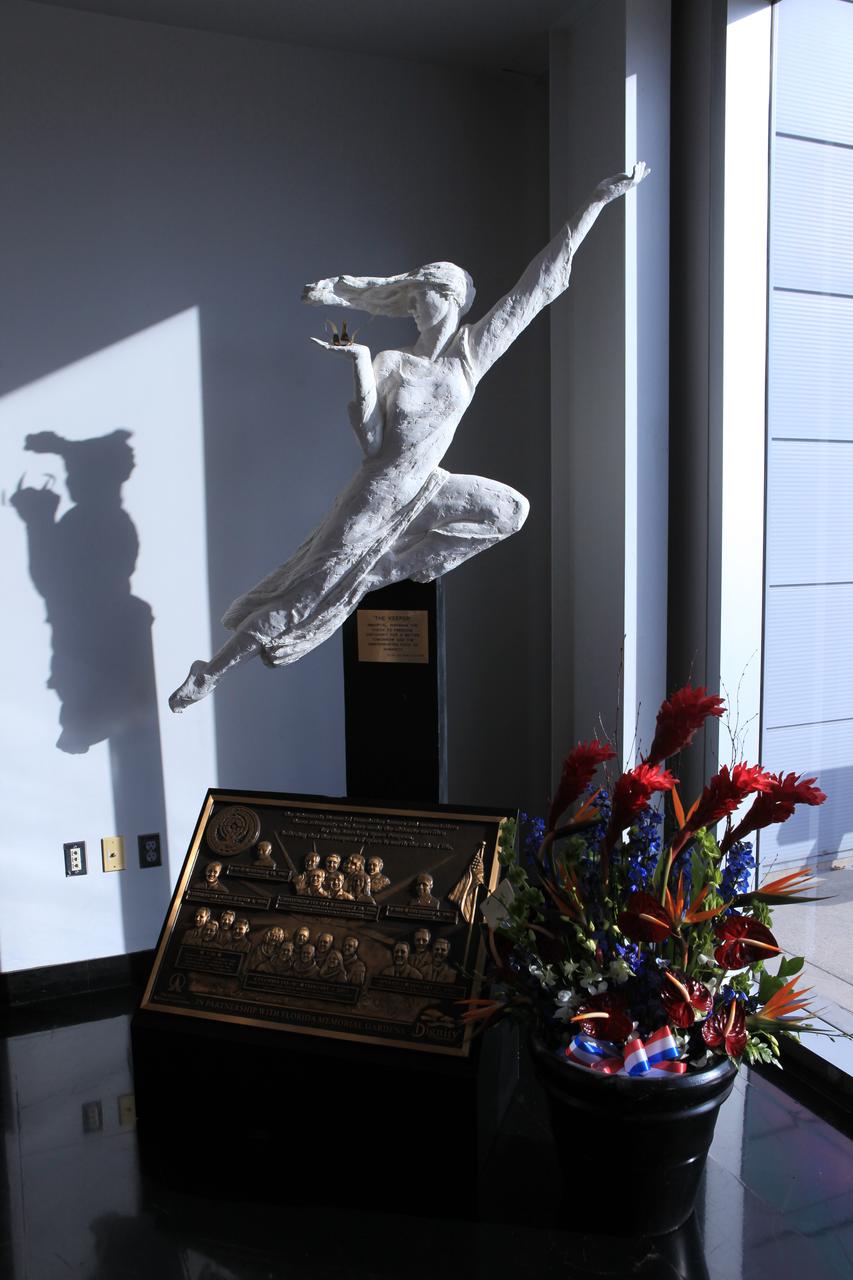
A plaque adjacent to the Kennedy Space Center Visitor Complex's Space Mirror Memorial includes likenesses of the fallen astronauts who lost their lives in the quest for space exploration. Kennedy Space Center's Day of Remembrance ceremony honors the contributions of all astronauts who lost their lives in the quest for space exploration.
2017 A Day of Remembrance
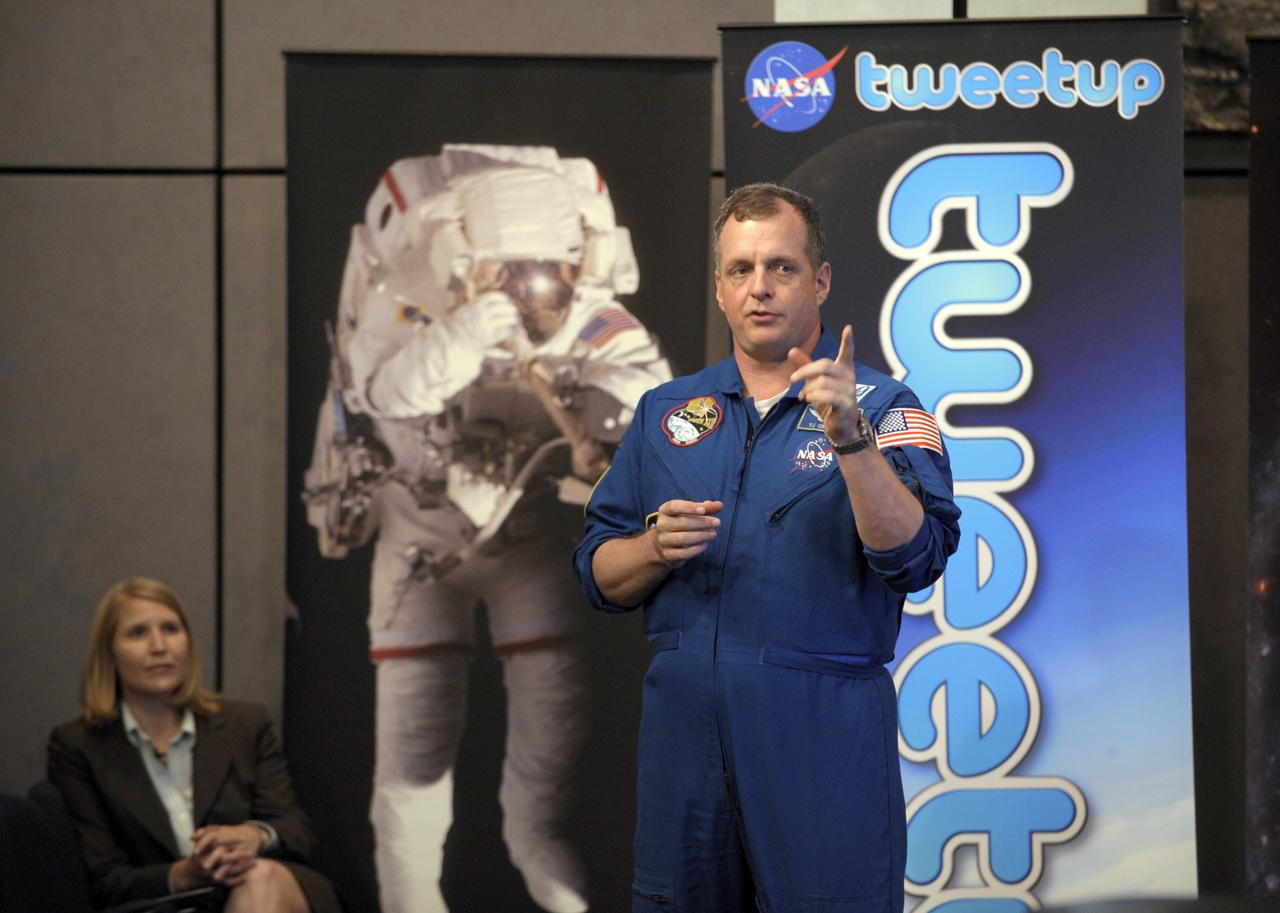
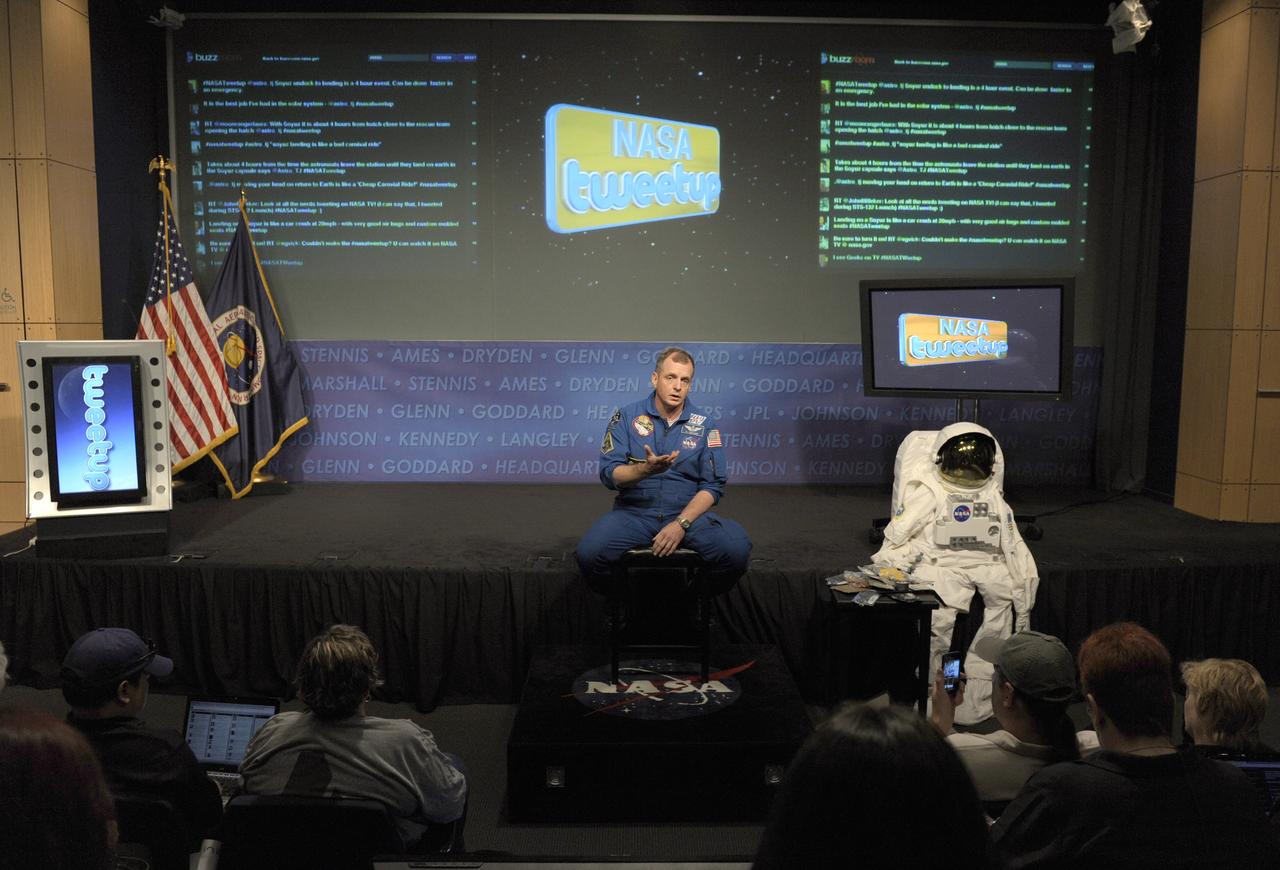
NASA astronaut TJ Creamer talks about his experience in space during a "Tweetup" at NASA Headquarters, Thursday, July 29, 2010, in Washington. Creamer, who spent 161 days living aboard the International Space Station as part of the Expedition 22/23 crew, set up the orbiting outpost's live Internet connection and posted updates about the mission to his Twitter account, sending the first live tweet from orbit. Photo Credit: (NASA/Paul E. Alers)
Tweetup with Astronaut Timothy Creamer
NASA astronaut TJ Creamer talks about his experience in space during a "Tweetup" at NASA Headquarters, Thursday, July 29, 2010, in Washington. Creamer, who spent 161 days living aboard the International Space Station as part of the Expedition 22/23 crew, set up the orbiting outpost's live Internet connection and posted updates about the mission to his Twitter account, sending the first live tweet from orbit. Photo Credit: (NASA/Paul E. Alers)
Tweetup with Astronaut Timothy Creamer
NASA astronaut TJ Creamer talks about his experience in space during a "Tweetup" at NASA Headquarters, Thursday, July 29, 2010, in Washington. Creamer, who spent 161 days living aboard the International Space Station as part of the Expedition 22/23 crew, set up the orbiting outpost's live Internet connection and posted updates about the mission to his Twitter account, sending the first live tweet from orbit. Photo Credit: (NASA/Paul E. Alers)
Tweetup with Astronaut Timothy Creamer
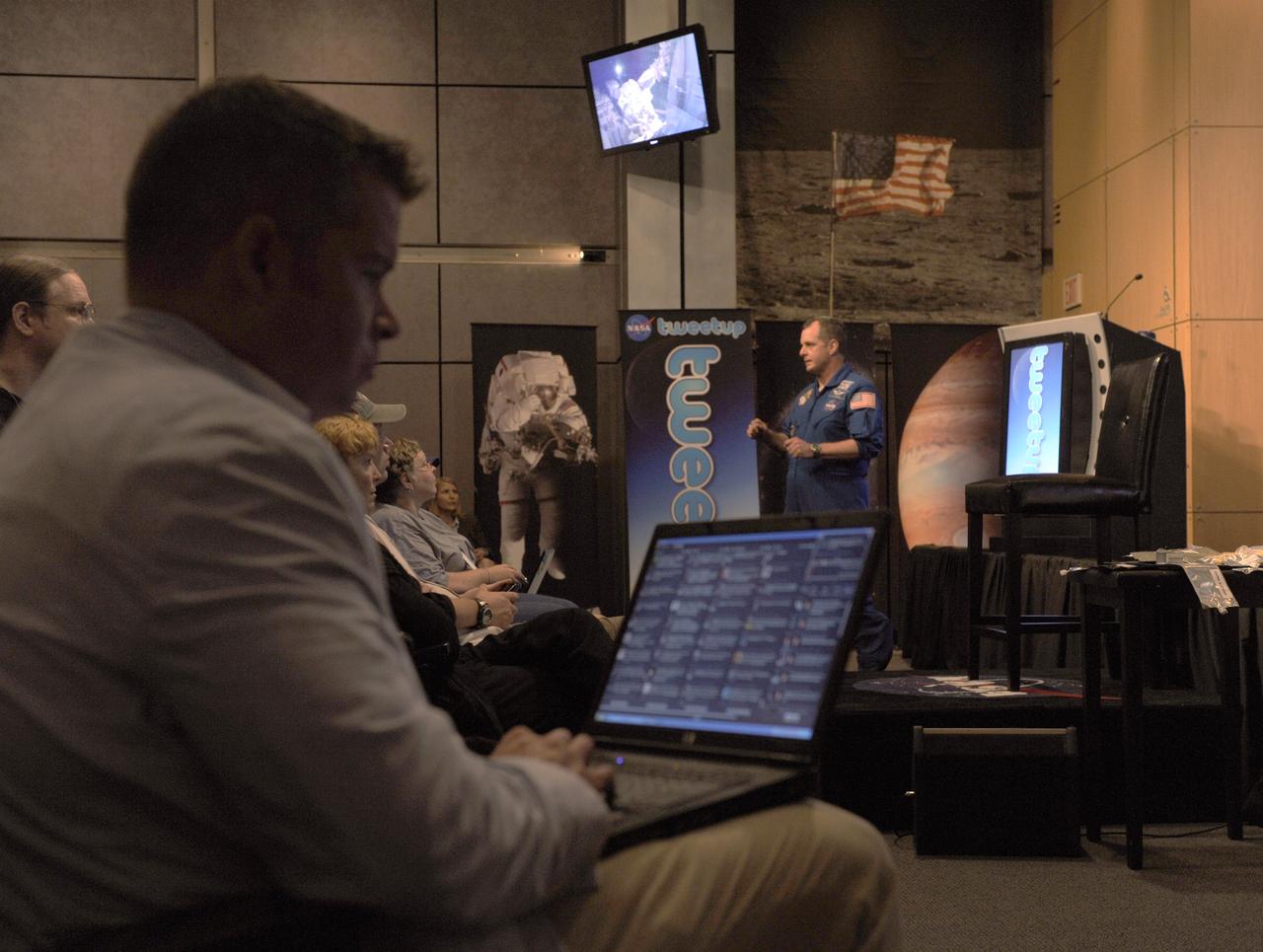
NASA astronaut TJ Creamer talks about his experience in space during a "Tweetup" at NASA Headquarters, Thursday, July 29, 2010, in Washington as Twitter followers looks on. Creamer, who spent 161 days living aboard the International Space Station as part of the Expedition 22/23 crew, set up the orbiting outpost's live Internet connection and posted updates about the mission to his Twitter account, sending the first live tweet from orbit. Photo Credit: (NASA/Paul E. Alers)
Tweetup with Astronaut Timothy Creamer
NASA astronaut TJ Creamer talks about his experience in space during a "Tweetup" at NASA Headquarters, Thursday, July 29, 2010, in Washington. Creamer, who spent 161 days living aboard the International Space Station as part of the Expedition 22/23 crew, set up the orbiting outpost's live Internet connection and posted updates about the mission to his Twitter account, sending the first live tweet from orbit. Photo Credit: (NASA/Paul E. Alers)
Tweetup with Astronaut Timothy Creamer
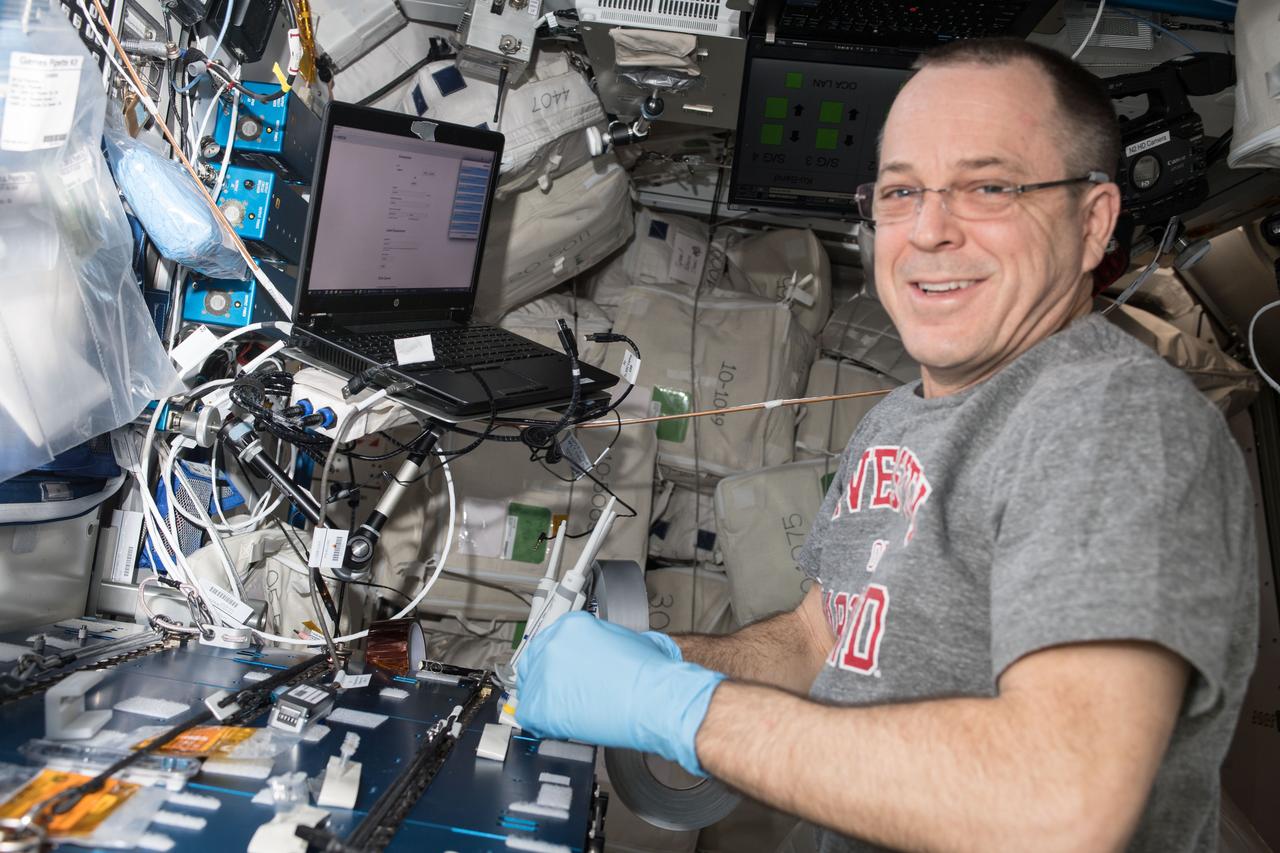
iss056e097518 (July 20, 2018) --- Expedition 56 Flight Engineer Ricky Arnold prepares amplified DNA collected from microbes living aboard the International Space Station for sequencing using the Biomolecule Sequencer. The Biomolecule Extraction and Sequencing Technology (BEST) investigation studies the use of DNA sequencing for the identification of unknown microbial organisms living on the station and to understand how humans, plants and microbes adapt to living in space.
Best Experiment 1 Part 3 - Biomolecule Sequencer
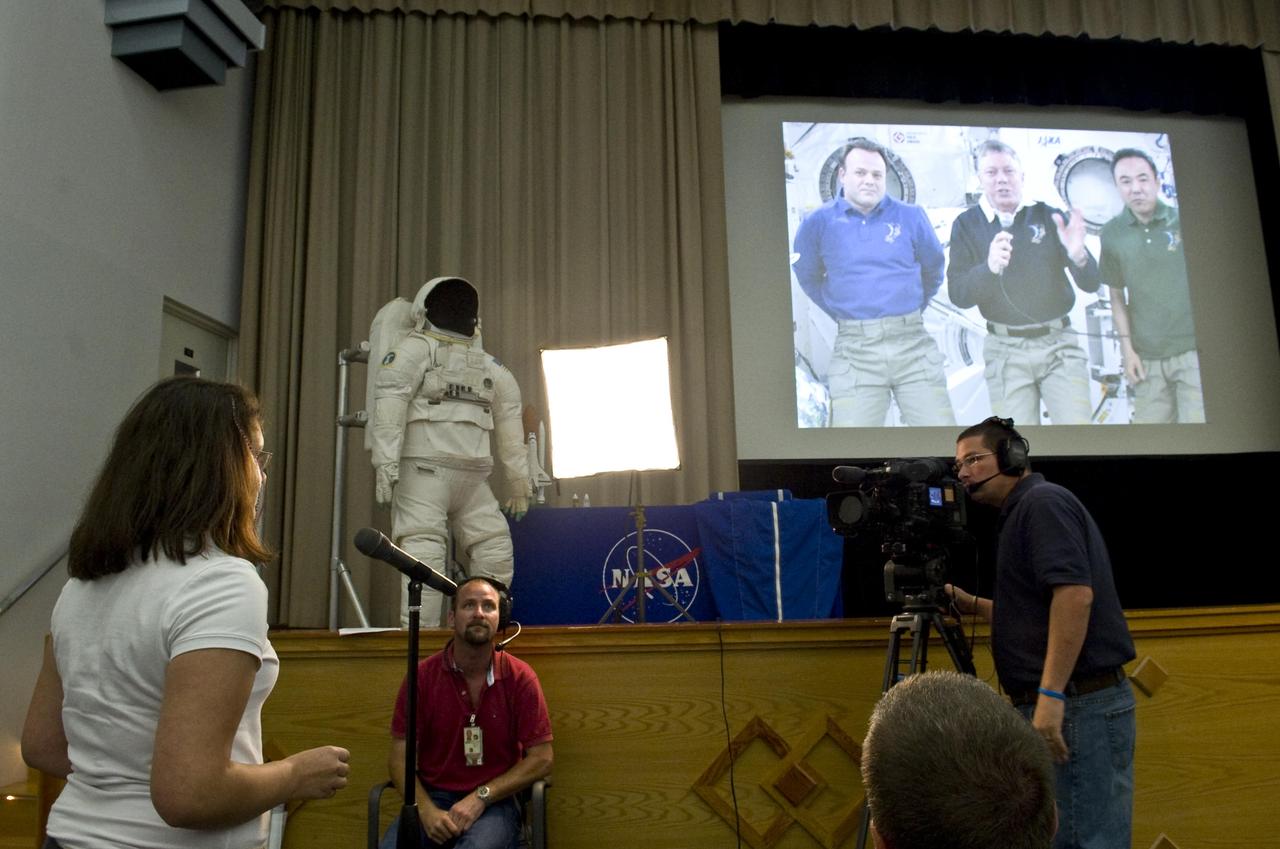
An area student prepares to ask a question of astronauts Ron Garan, Mike Fossum and Satoshi Furukawa during a live video linkup with the International Space Station at Stennis Space Center on Aug. 18. Students from four Louisiana and Mississippi schools gathered at Stennis for the center's first-ever live video link from space.
ISS downlink
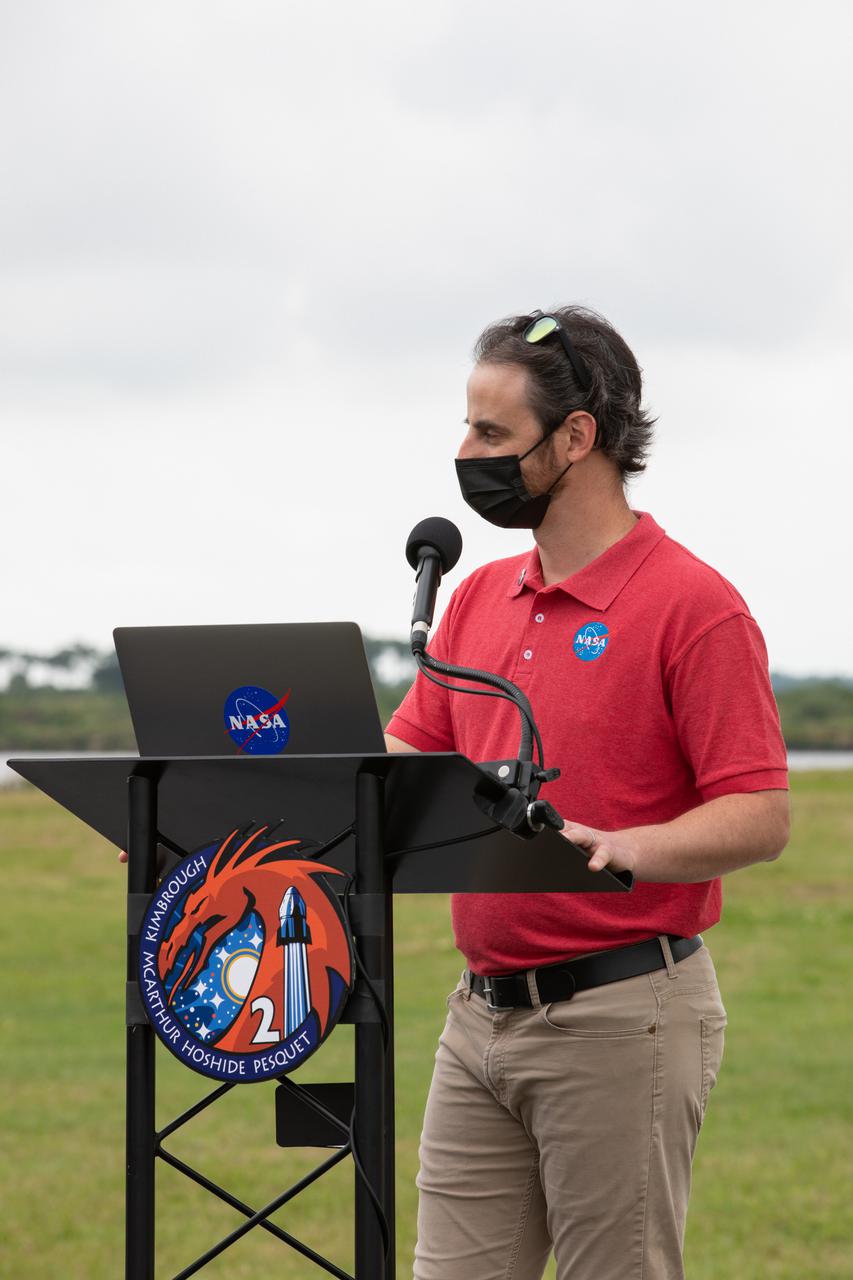
Acting NASA Administrator Steve Jurczyk speaks during a NASA Social Facebook Live event April 21, 2021, near the Press Site countdown clock at Kennedy Space Center in Florida, ahead of the agency’s SpaceX Crew-2 launch. NASA astronauts Shane Kimbrough and  Megan McArthur, JAXA astronaut Akihiko Hoshide, and ESA astronaut Thomas Pesquet will fly on Crew-2, the second crew rotation mission to the International Space Station as part of NASA’s Commercial Crew Program. They will launch aboard SpaceX’s Crew Dragon spacecraft, named Endeavour, powered by the company’s Falcon 9 rocket. Liftoff is set for Friday, April 23, at 5:49 a.m. EDT.
SpaceX Crew-2 NASA Social Q&A
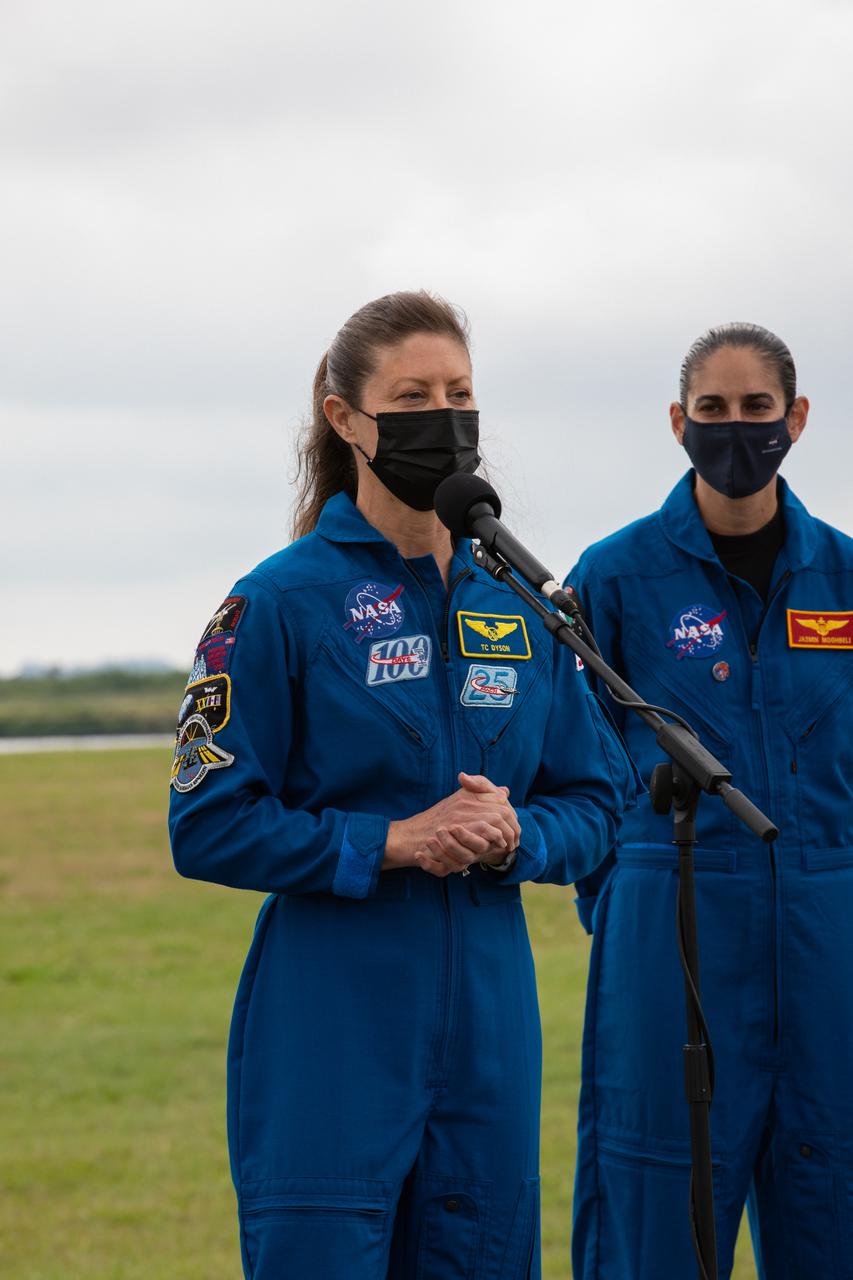
NASA astronaut Tracy Caldwell Dyson speaks during a NASA Social Facebook Live event April 21, 2021, near the Press Site countdown clock at Kennedy Space Center in Florida, ahead of the agency’s SpaceX Crew-2 launch. NASA astronauts Shane Kimbrough and  Megan McArthur, JAXA astronaut Akihiko Hoshide, and ESA astronaut Thomas Pesquet will fly on Crew-2, the second crew rotation mission to the International Space Station as part of NASA’s Commercial Crew Program. They will launch aboard SpaceX’s Crew Dragon spacecraft, named Endeavour, powered by the company’s Falcon 9 rocket. Liftoff is set for Friday, April 23, at 5:49 a.m. EDT.
SpaceX Crew-2 NASA Social Q&A
Kennedy Space Center Director Bob Cabana speaks during a NASA Social Facebook Live event April 21, 2021, near the Press Site countdown clock at the Florida Spaceport, ahead of the agency’s SpaceX Crew-2 launch. NASA astronauts Shane Kimbrough and  Megan McArthur, JAXA astronaut Akihiko Hoshide, and ESA astronaut Thomas Pesquet will fly on Crew-2, the second crew rotation mission to the International Space Station as part of NASA’s Commercial Crew Program. They will launch aboard SpaceX’s Crew Dragon spacecraft, named Endeavour, powered by the company’s Falcon 9 rocket. Liftoff is set for Friday, April 23, at 5:49 a.m. EDT.
SpaceX Crew-2 NASA Social Q&A
Moderator Joshua Santora speaks during a NASA Social Facebook Live event April 21, 2021, near the Press Site countdown clock at Kennedy Space Center in Florida, ahead of the agency’s SpaceX Crew-2 launch. NASA astronauts Shane Kimbrough and  Megan McArthur, JAXA astronaut Akihiko Hoshide, and ESA astronaut Thomas Pesquet will fly on Crew-2, the second crew rotation mission to the International Space Station as part of NASA’s Commercial Crew Program. They will launch aboard SpaceX’s Crew Dragon spacecraft, named Endeavour, powered by the company’s Falcon 9 rocket. Liftoff is set for Friday, April 23, at 5:49 a.m. EDT.
SpaceX Crew-2 NASA Social Q&A
jsc2024e055764 (July 26, 2024) -- Dr. Jon Olansen discusses lunar habitation during the "Living the Lunar Life" forum at EAA AirVenture Oshkosh 2024. As Gateway Program Manager, Olansen highlights the innovative technologies and mission planning essential for living and working in the harsh environment of deep space. Photo Credit: NASA/Andrew Carlsen
Gateway Program Manager on Gateway lunar space station
KENNEDY SPACE CENTER, FLA. - Center Director Jim Kennedy talks to students in Garland V. Stewart Magnet Middle School, a NASA Explorer School (NES) in Tampa, Fla.  Kennedy  made the trip with NASA astronaut Kay Hire to share the agency’s new vision for space exploration with the next generation of explorers. Kennedy is talking with students about our destiny as explorers, NASA’s stepping stone approach to exploring Earth, the Moon, Mars and beyond, how space impacts our lives, and how people and machines rely on each other in space.
KENNEDY SPACE CENTER, FLA. - Center Director Jim Kennedy talks to students in Garland V. Stewart Magnet Middle School, a NASA Explorer School (NES) in Tampa, Fla. Kennedy made the trip with NASA astronaut Kay Hire to share the agency’s new vision for space exploration with the next generation of explorers. Kennedy is talking with students about our destiny as explorers, NASA’s stepping stone approach to exploring Earth, the Moon, Mars and beyond, how space impacts our lives, and how people and machines rely on each other in space.
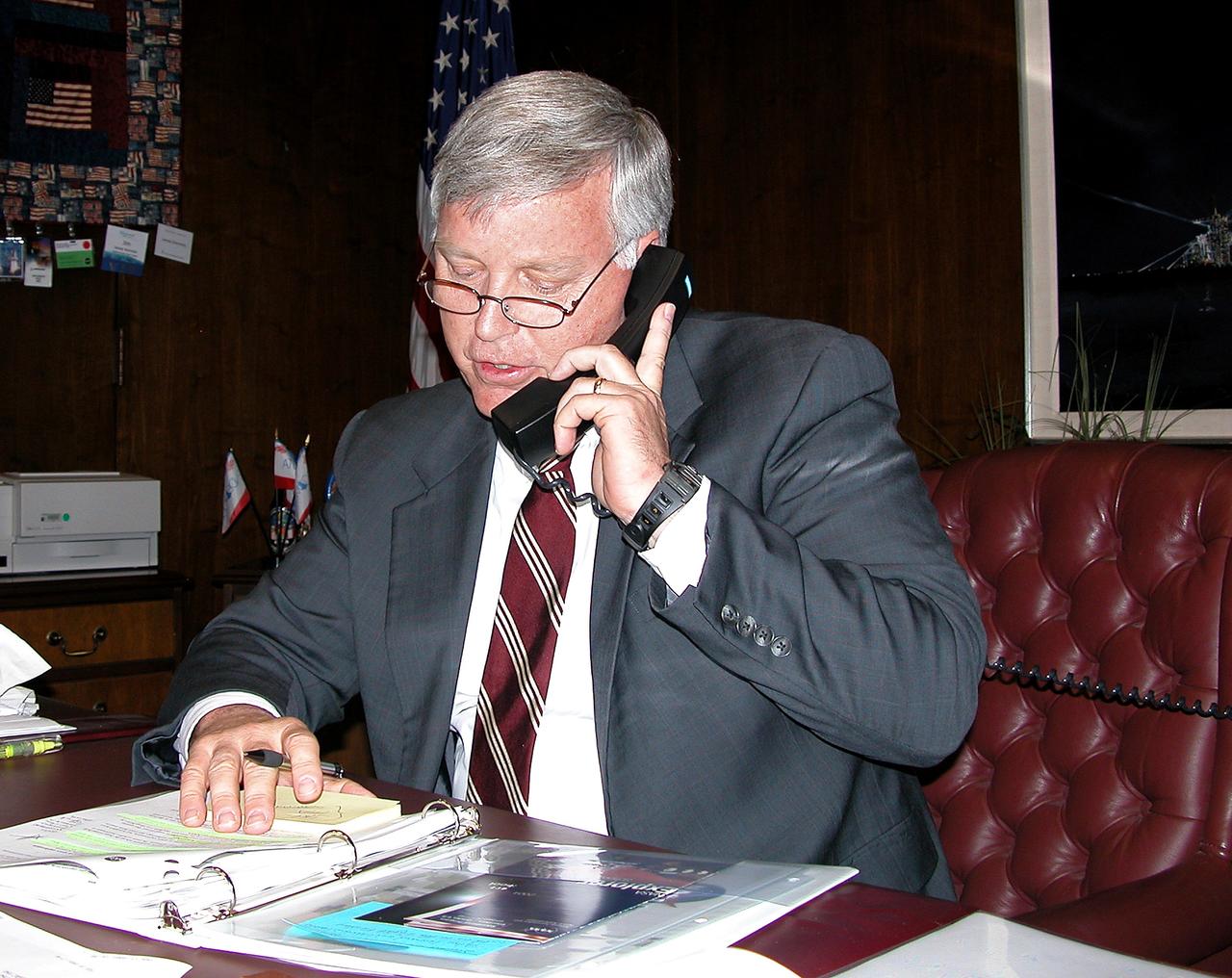
KENNEDY SPACE CENTER, FLA. - Center Director Jim Kennedy talks to radio station WFLA-AM and Florida Radio Network about his trip to Garland V. Stewart Magnet Middle School, a NASA Explorer School (NES) in Tampa, Fla.  Kennedy  made the trip with NASA astronaut Kay Hire to share the agency’s new vision for space exploration with the next generation of explorers. Kennedy is talking with students about our destiny as explorers, NASA’s stepping stone approach to exploring Earth, the Moon, Mars and beyond, how space impacts our lives, and how people and machines rely on each other in space.
KENNEDY SPACE CENTER, FLA. - Center Director Jim Kennedy talks to radio station WFLA-AM and Florida Radio Network about his trip to Garland V. Stewart Magnet Middle School, a NASA Explorer School (NES) in Tampa, Fla. Kennedy made the trip with NASA astronaut Kay Hire to share the agency’s new vision for space exploration with the next generation of explorers. Kennedy is talking with students about our destiny as explorers, NASA’s stepping stone approach to exploring Earth, the Moon, Mars and beyond, how space impacts our lives, and how people and machines rely on each other in space.
KENNEDY SPACE CENTER, FLA. - Students at Garland V. Stewart Magnet Middle School, a NASA Explorer School (NES) in Tampa, Fla., listen attentively to astronaut Kay Hire.  She and Center Director Jim Kennedy were at the school to share the agency’s new vision for space exploration with the next generation of explorers. Kennedy is talking with students about our destiny as explorers, NASA’s stepping stone approach to exploring Earth, the Moon, Mars and beyond, how space impacts our lives, and how people and machines rely on each other in space.
KENNEDY SPACE CENTER, FLA. - Students at Garland V. Stewart Magnet Middle School, a NASA Explorer School (NES) in Tampa, Fla., listen attentively to astronaut Kay Hire. She and Center Director Jim Kennedy were at the school to share the agency’s new vision for space exploration with the next generation of explorers. Kennedy is talking with students about our destiny as explorers, NASA’s stepping stone approach to exploring Earth, the Moon, Mars and beyond, how space impacts our lives, and how people and machines rely on each other in space.
KENNEDY SPACE CENTER, FLA. - Warren Elly (left), with WTVT-TV, Fox News, talks with Center Director Jim Kennedy at Garland V. Stewart Magnet Middle School, a NASA Explorer School (NES) in Tampa, Fla. Kennedy was joined by astronaut Kay Hire in sharing the agency’s new vision for space exploration with the next generation of explorers. Kennedy talked with students about our destiny as explorers, NASA’s stepping stone approach to exploring Earth, the Moon, Mars and beyond, how space impacts our lives, and how people and machines rely on each other in space.
KENNEDY SPACE CENTER, FLA. - Students at Garland V. Stewart Magnet Middle School, a NASA Explorer School (NES) in Tampa, Fla., listen attentively to astronaut Kay Hire.  She and Center Director Jim Kennedy were at the school to share the agency’s new vision for space exploration with the next generation of explorers. Kennedy is talking with students about our destiny as explorers, NASA’s stepping stone approach to exploring Earth, the Moon, Mars and beyond, how space impacts our lives, and how people and machines rely on each other in space.
KENNEDY SPACE CENTER, FLA. - Students at Garland V. Stewart Magnet Middle School, a NASA Explorer School (NES) in Tampa, Fla., listen attentively to astronaut Kay Hire. She and Center Director Jim Kennedy were at the school to share the agency’s new vision for space exploration with the next generation of explorers. Kennedy is talking with students about our destiny as explorers, NASA’s stepping stone approach to exploring Earth, the Moon, Mars and beyond, how space impacts our lives, and how people and machines rely on each other in space.
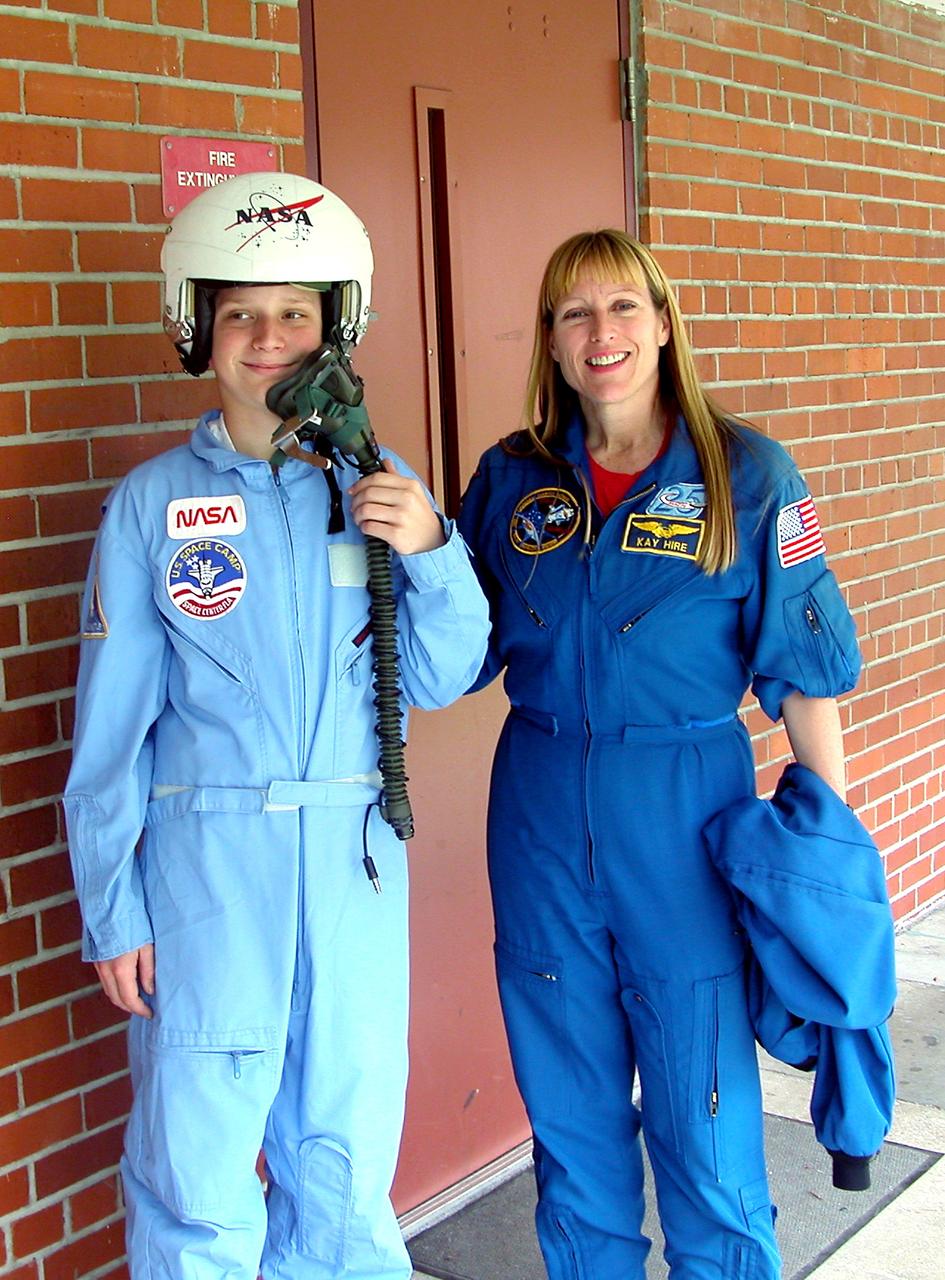
KENNEDY SPACE CENTER, FLA. - Astronaut Kay Hire poses with 8th grader Kristy Wiggins at Garland V. Stewart Magnet Middle School, a NASA Explorer School (NES) in Tampa, Fla.  Hire joined Center Director Jim Kennedy at the school in sharing the agency’s new vision for space exploration with the next generation of explorers. Kennedy is talking with students about our destiny as explorers, NASA’s stepping stone approach to exploring Earth, the Moon, Mars and beyond, how space impacts our lives, and how people and machines rely on each other in space.
KENNEDY SPACE CENTER, FLA. - Astronaut Kay Hire poses with 8th grader Kristy Wiggins at Garland V. Stewart Magnet Middle School, a NASA Explorer School (NES) in Tampa, Fla. Hire joined Center Director Jim Kennedy at the school in sharing the agency’s new vision for space exploration with the next generation of explorers. Kennedy is talking with students about our destiny as explorers, NASA’s stepping stone approach to exploring Earth, the Moon, Mars and beyond, how space impacts our lives, and how people and machines rely on each other in space.
KENNEDY SPACE CENTER, FLA. - Center Director Jim Kennedy talks to WTSP-ABC News about his trip to Garland V. Stewart Magnet Middle School, a NASA Explorer School (NES) in Tampa, Fla.  Kennedy  made the trip with NASA astronaut Kay Hire to share the agency’s new vision for space exploration with the next generation of explorers. Kennedy is talking with students about our destiny as explorers, NASA’s stepping stone approach to exploring Earth, the Moon, Mars and beyond, how space impacts our lives, and how people and machines rely on each other in space.
KENNEDY SPACE CENTER, FLA. - Center Director Jim Kennedy talks to WTSP-ABC News about his trip to Garland V. Stewart Magnet Middle School, a NASA Explorer School (NES) in Tampa, Fla. Kennedy made the trip with NASA astronaut Kay Hire to share the agency’s new vision for space exploration with the next generation of explorers. Kennedy is talking with students about our destiny as explorers, NASA’s stepping stone approach to exploring Earth, the Moon, Mars and beyond, how space impacts our lives, and how people and machines rely on each other in space.
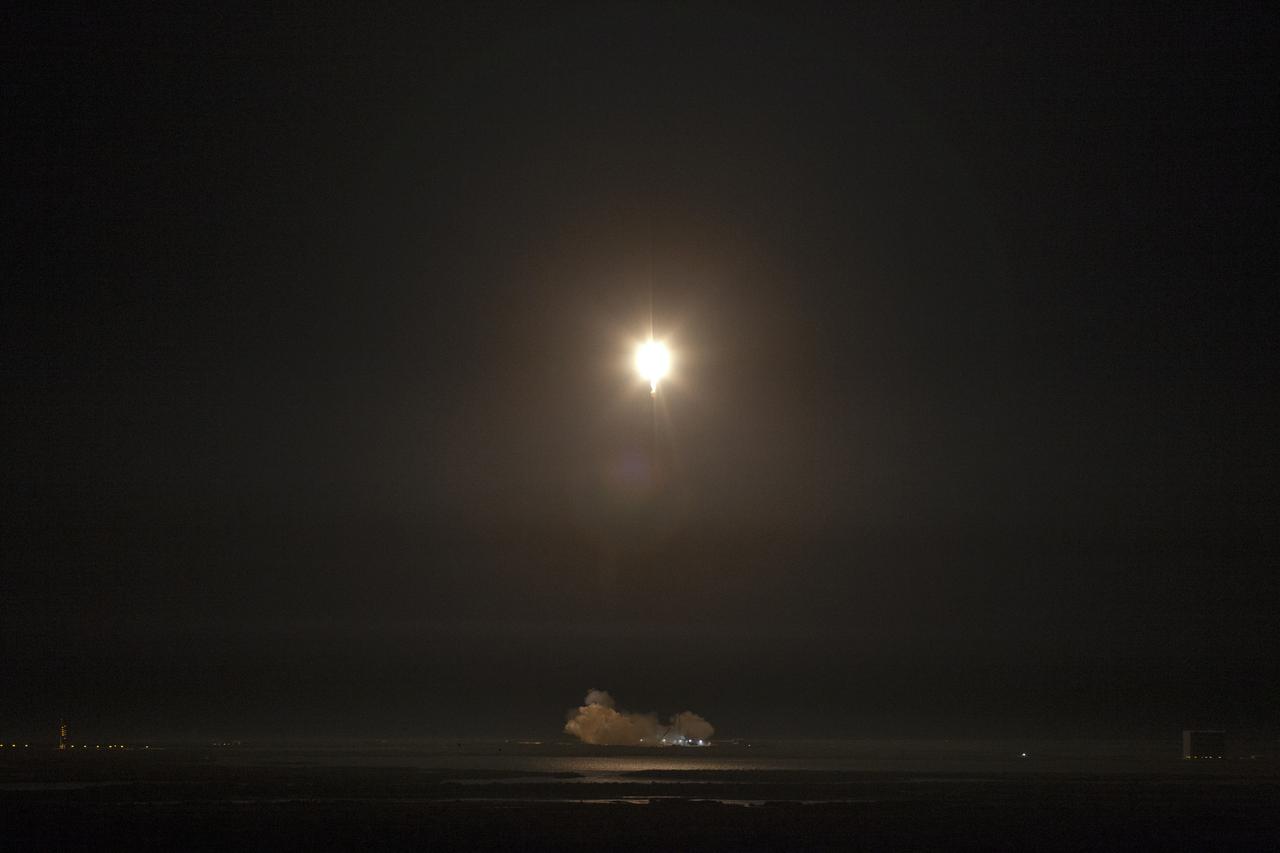
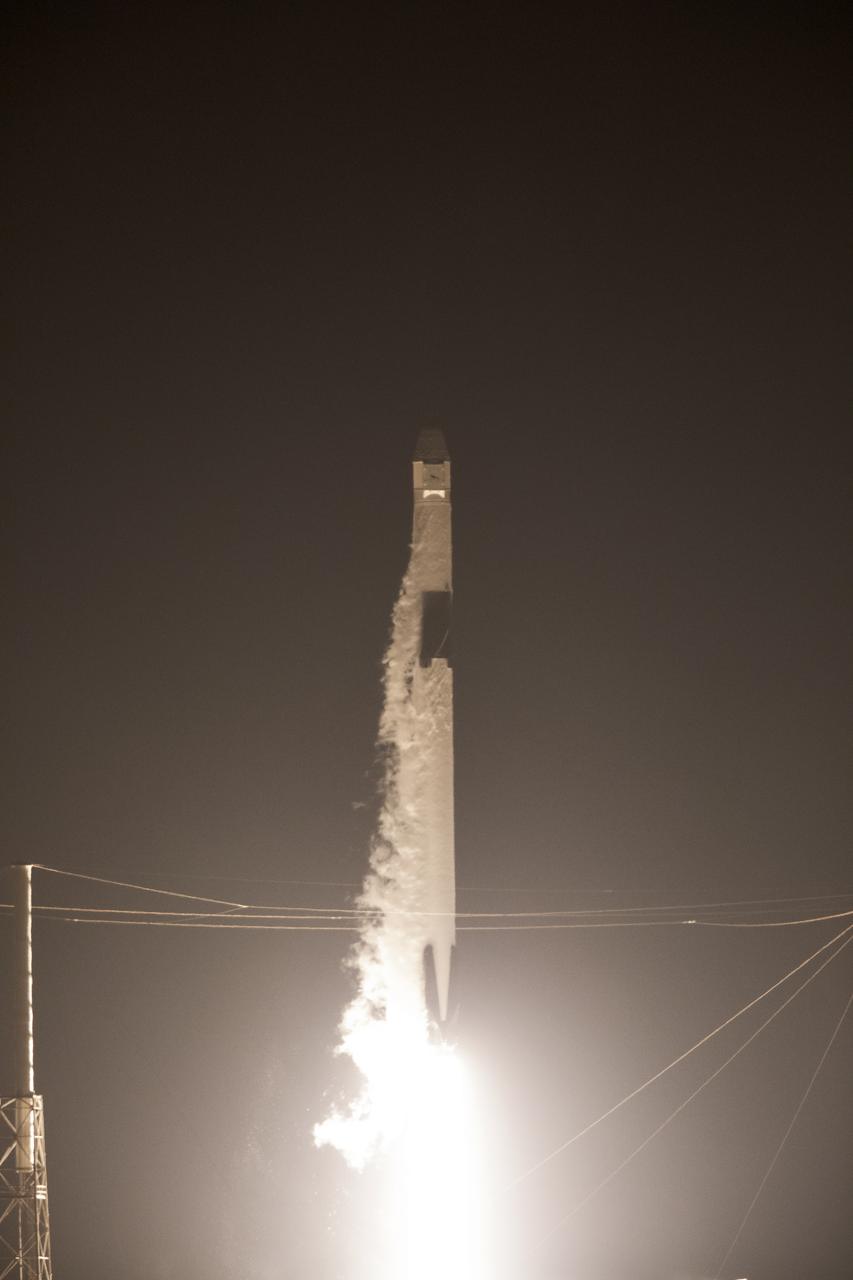
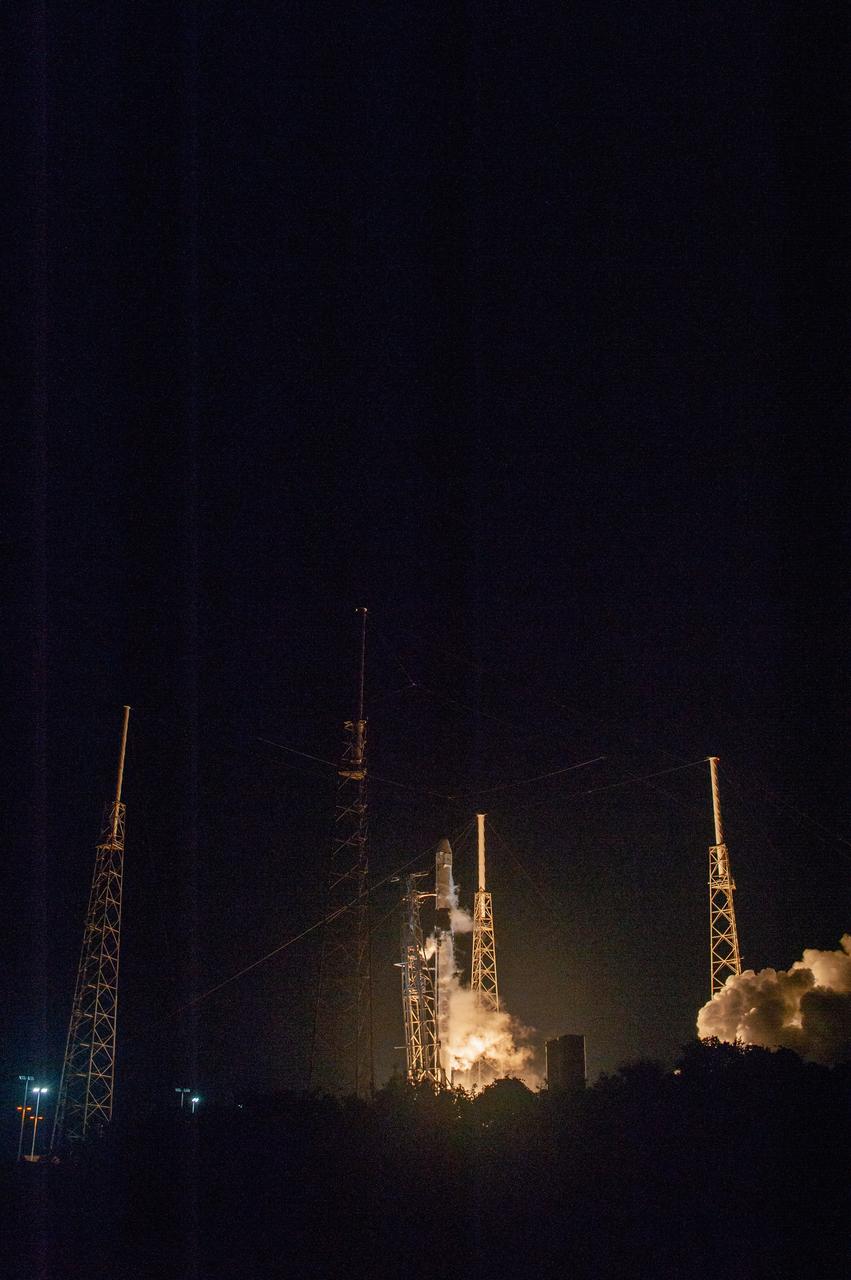
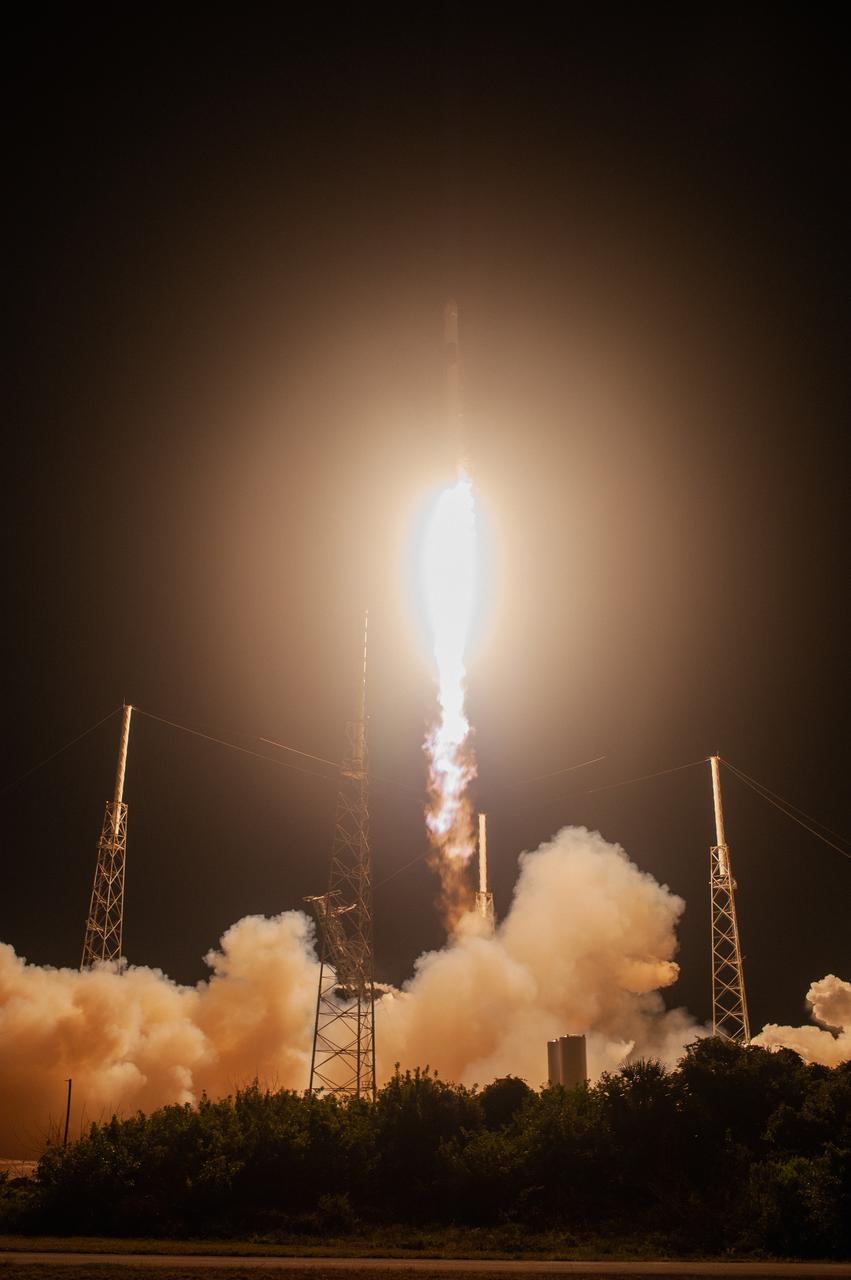
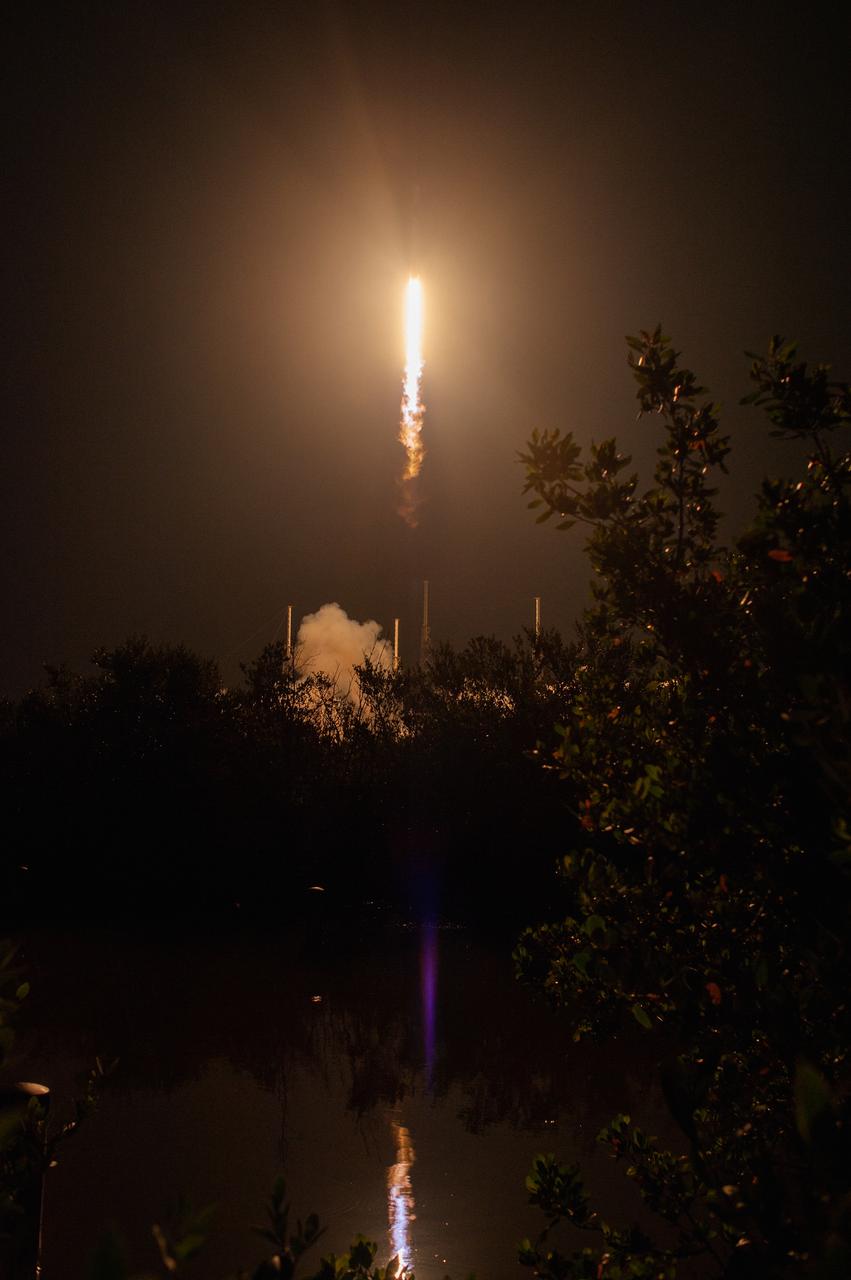
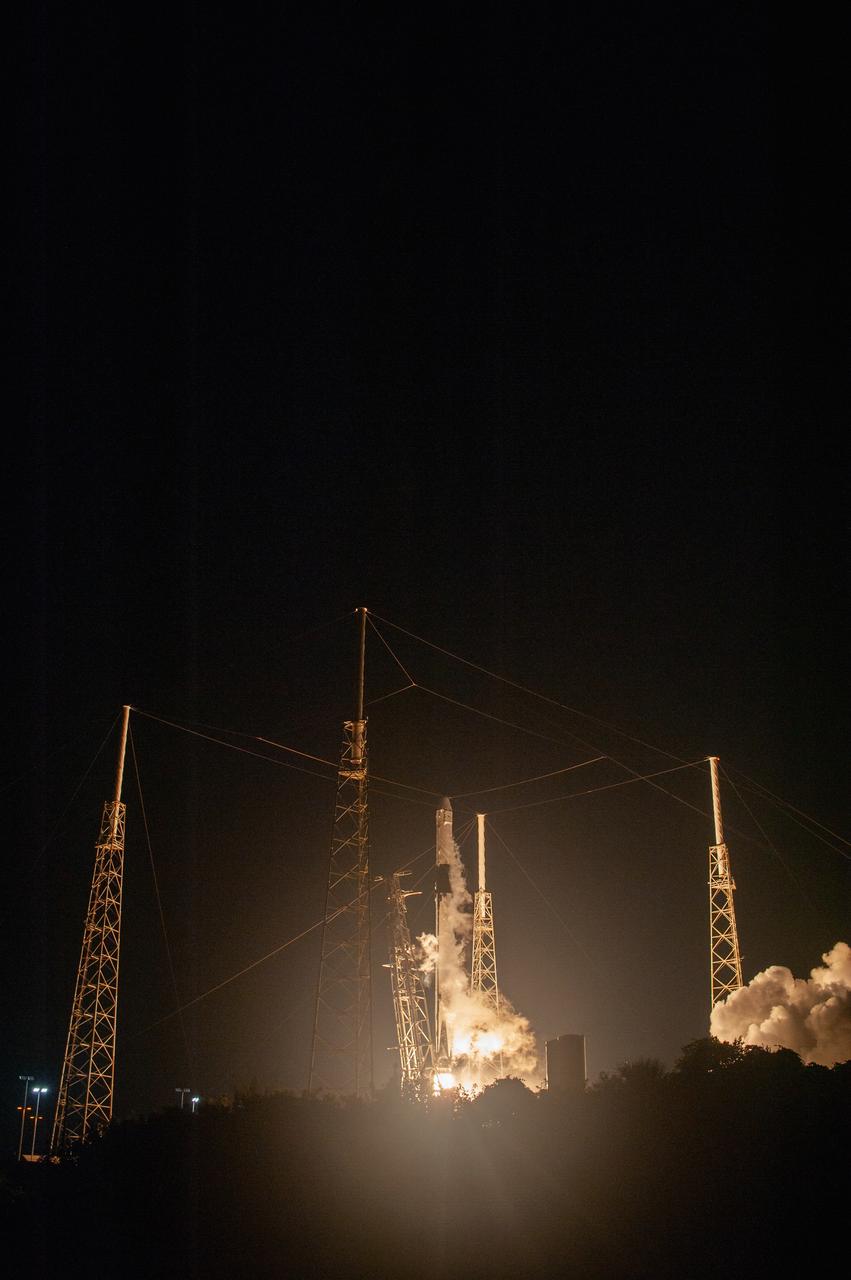
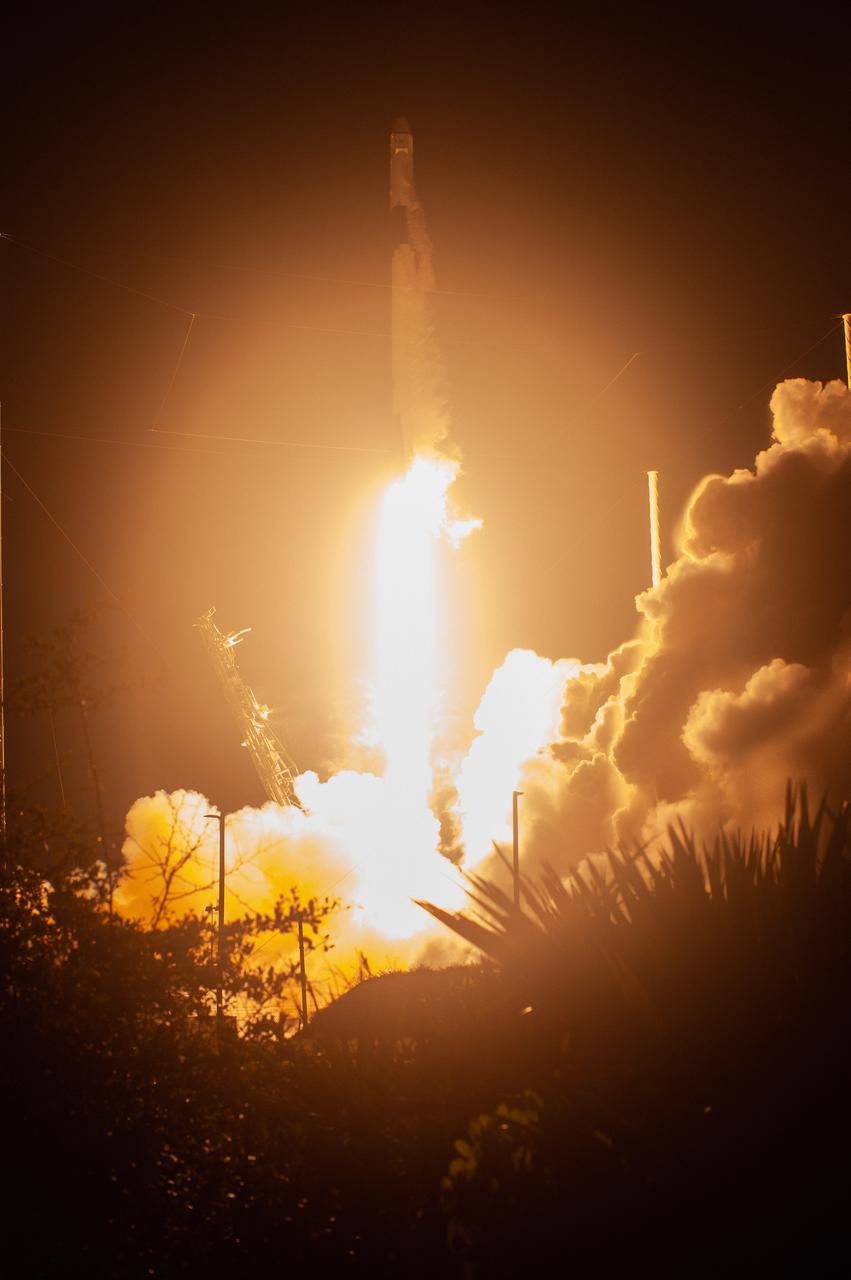
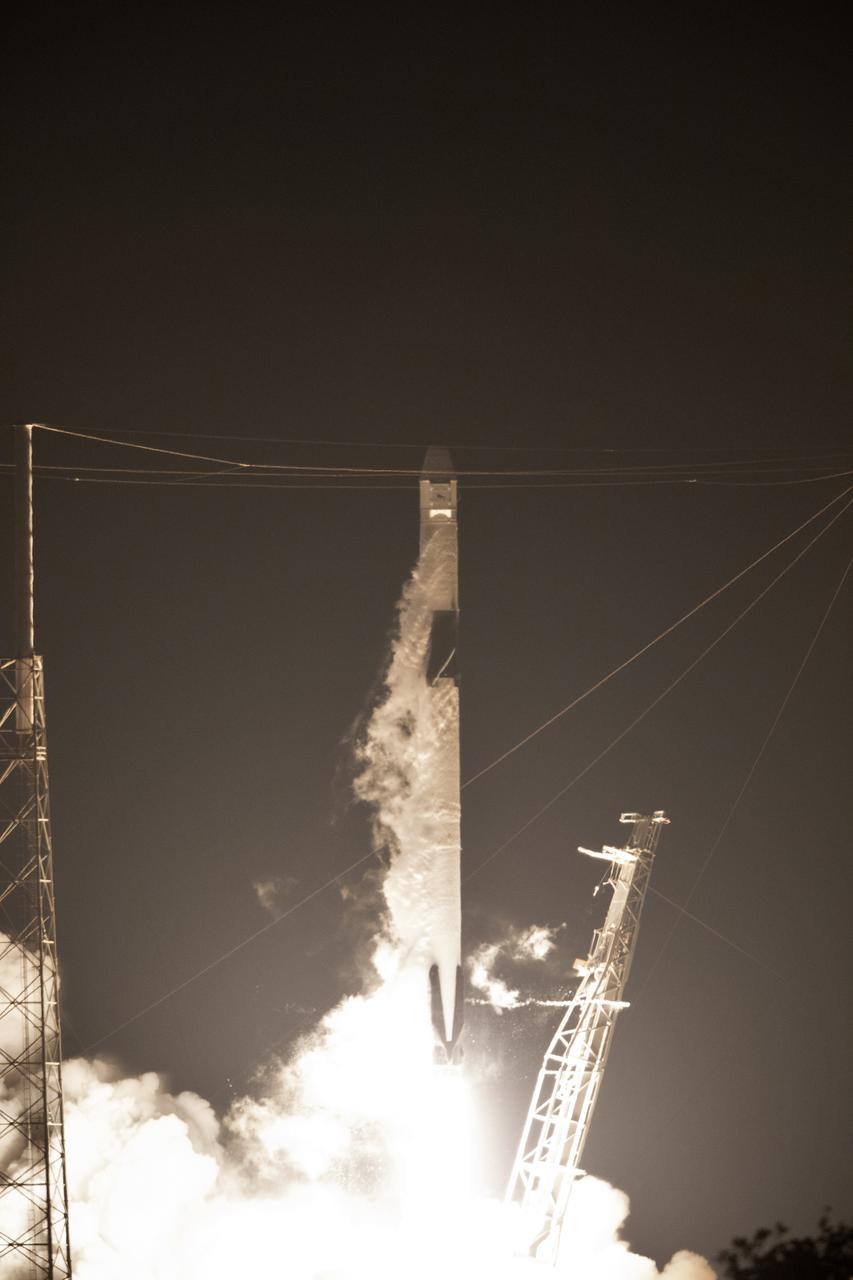
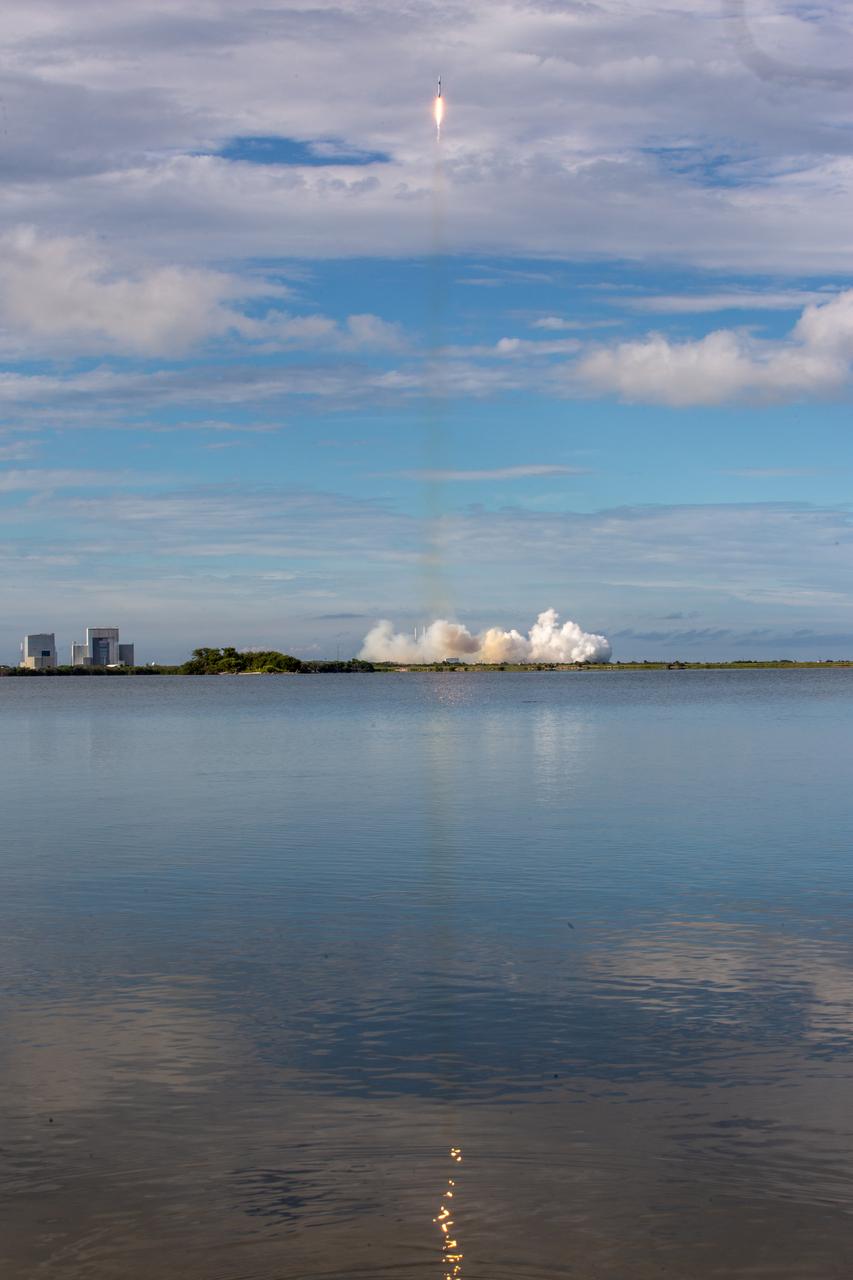
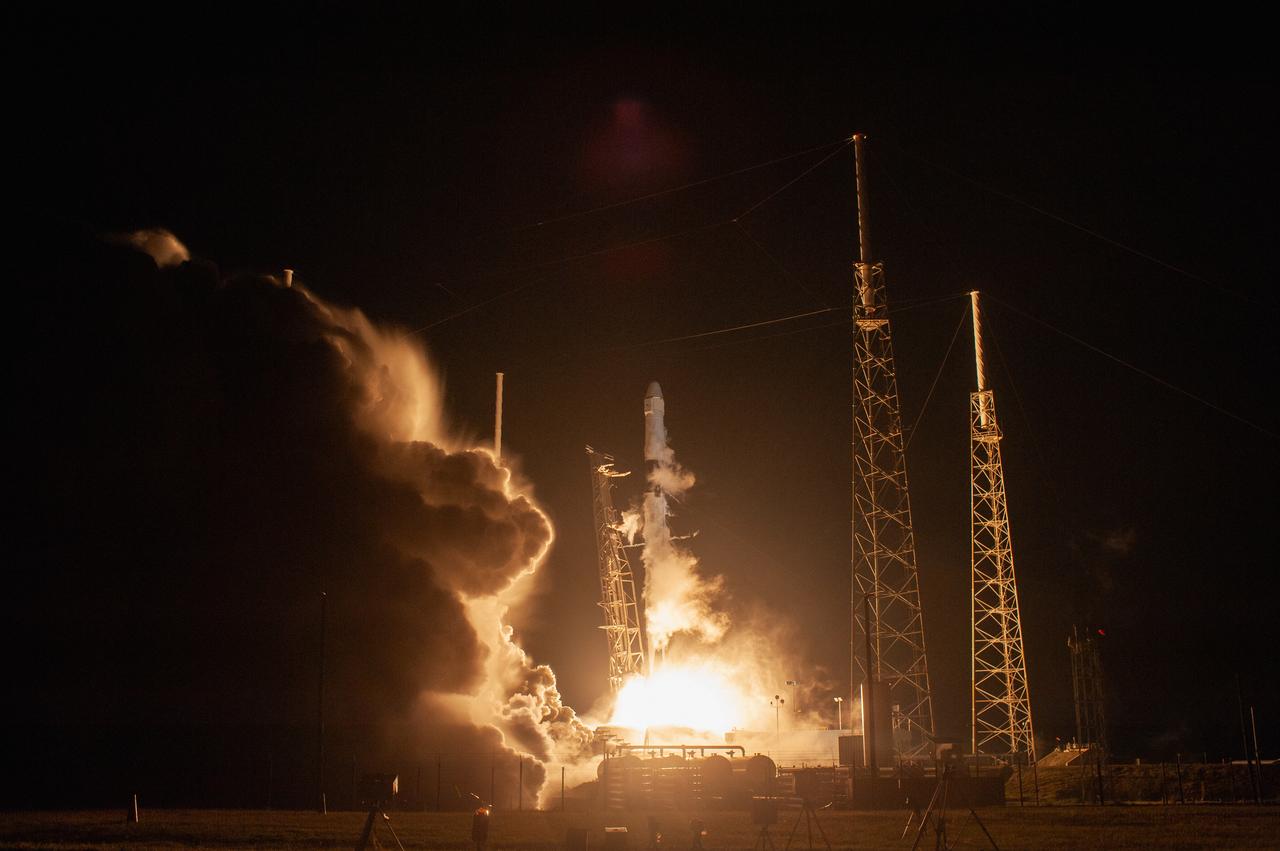
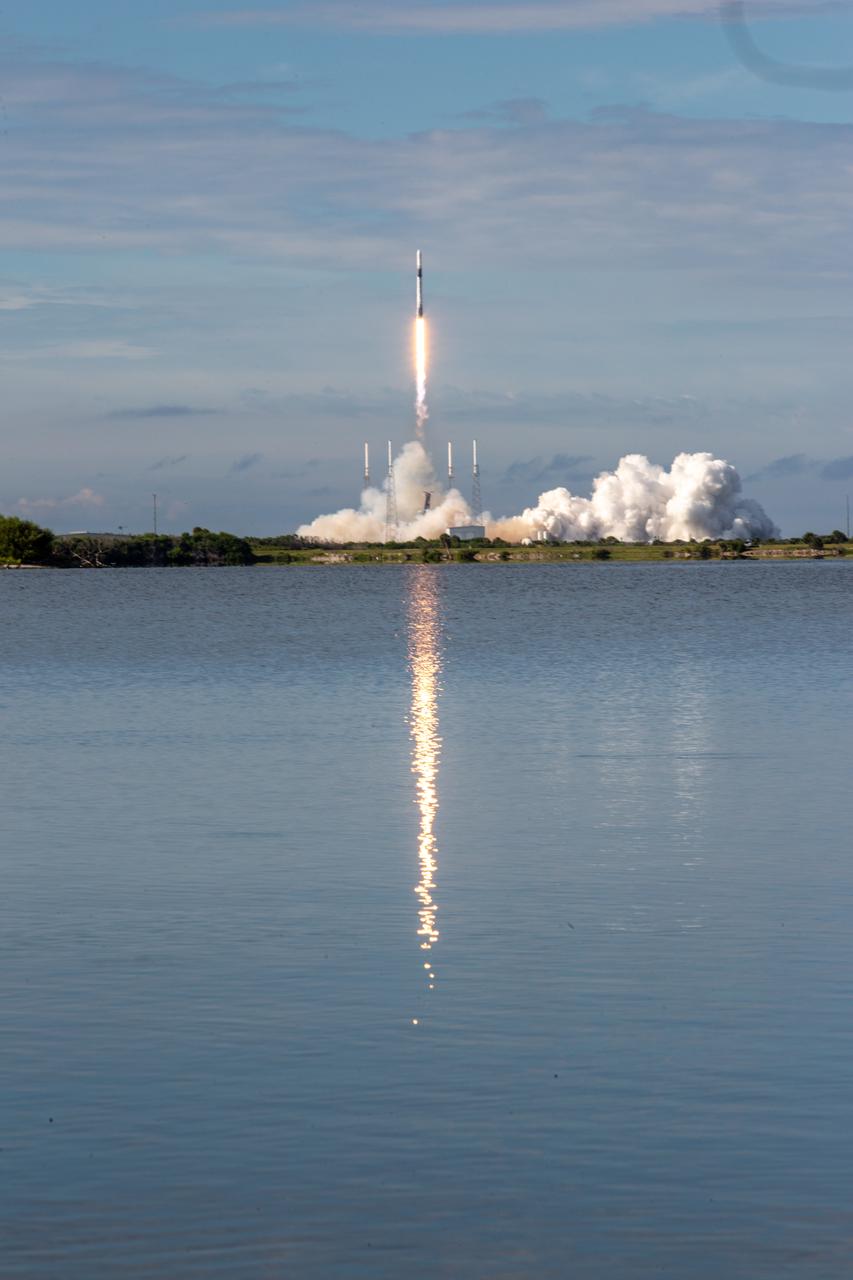
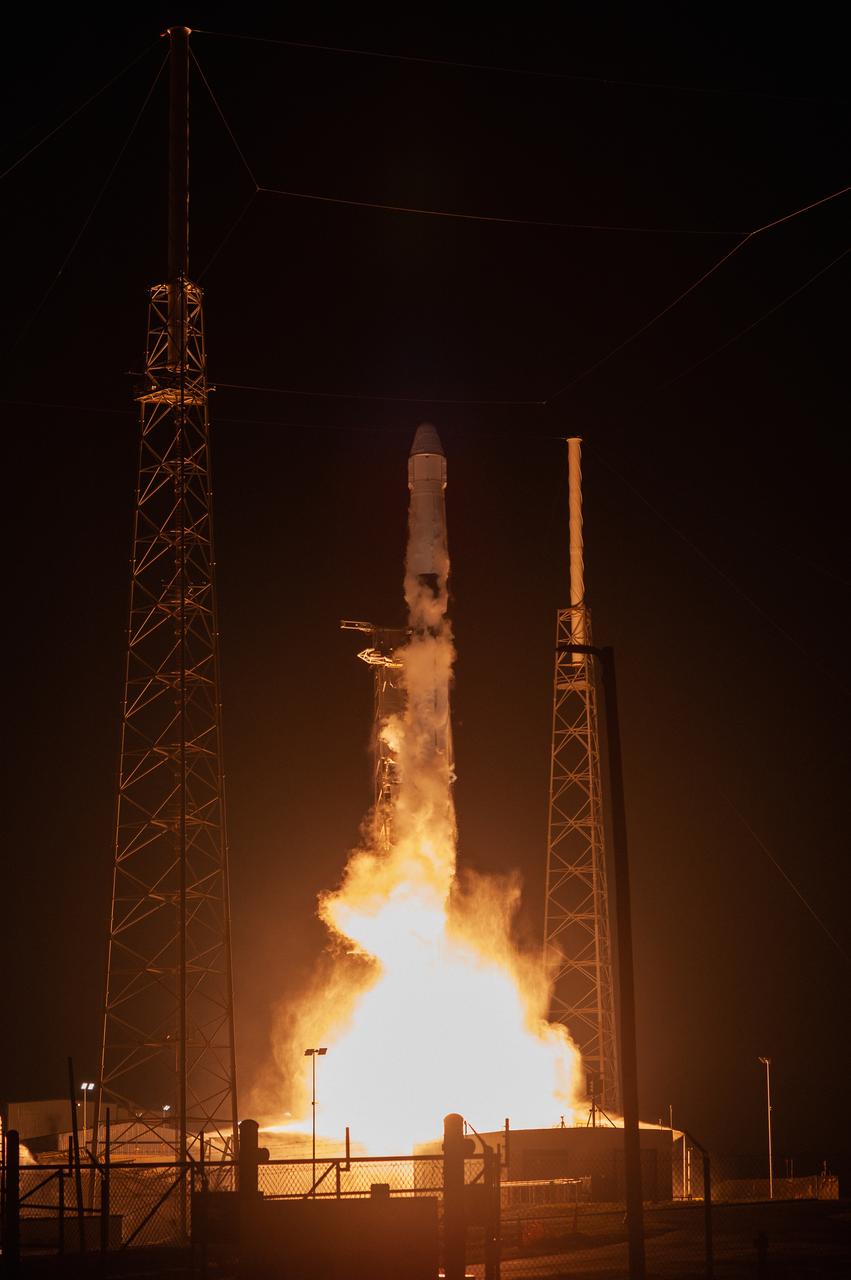
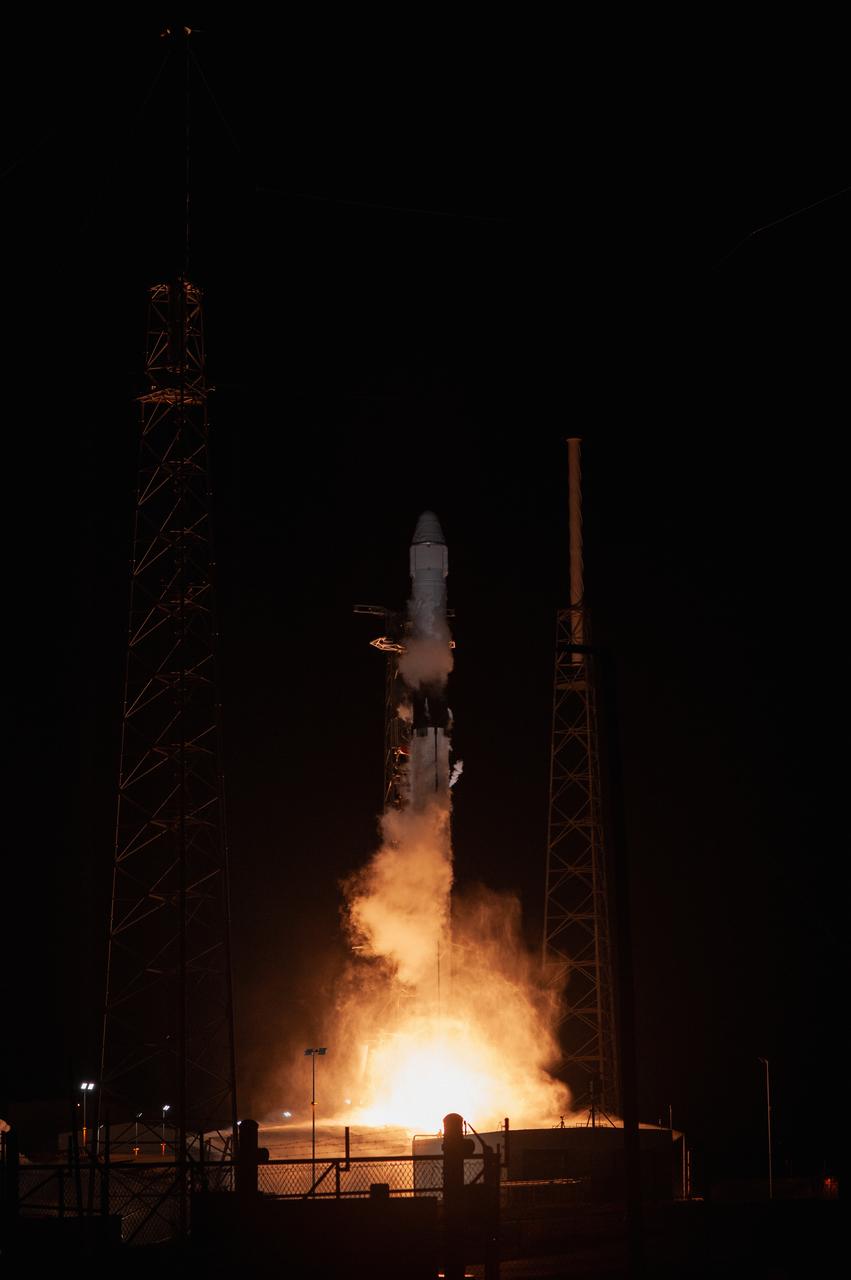
The SpaceX Falcon 9 rocket with the Dragon cargo module climbs upward after liftoff from Space Launch Complex 40 on Cape Canaveral Air Force Station in Florida in the early morning May 4, 2019. Liftoff was at 2:48 a.m. EDT. This is SpaceX’s 17th Commercial Resupply Services (CRS-17) mission for NASA to the International Space Station. The Dragon cargo module will deliver about 5,500 pounds of science and research, crew supplies and vehicle hardware to the orbital laboratory and its crew.
Live Coverage of SpaceX CRS-17 Launch to the International Space
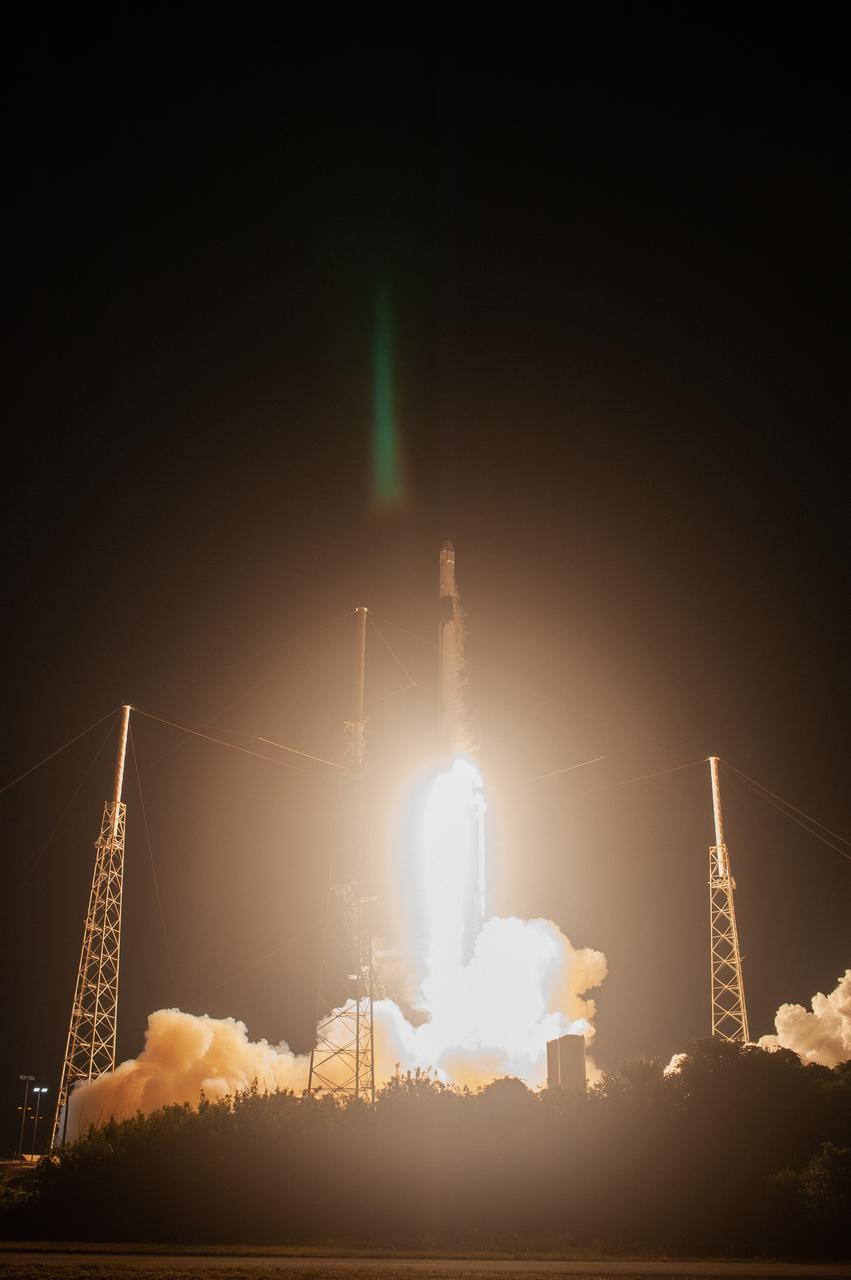
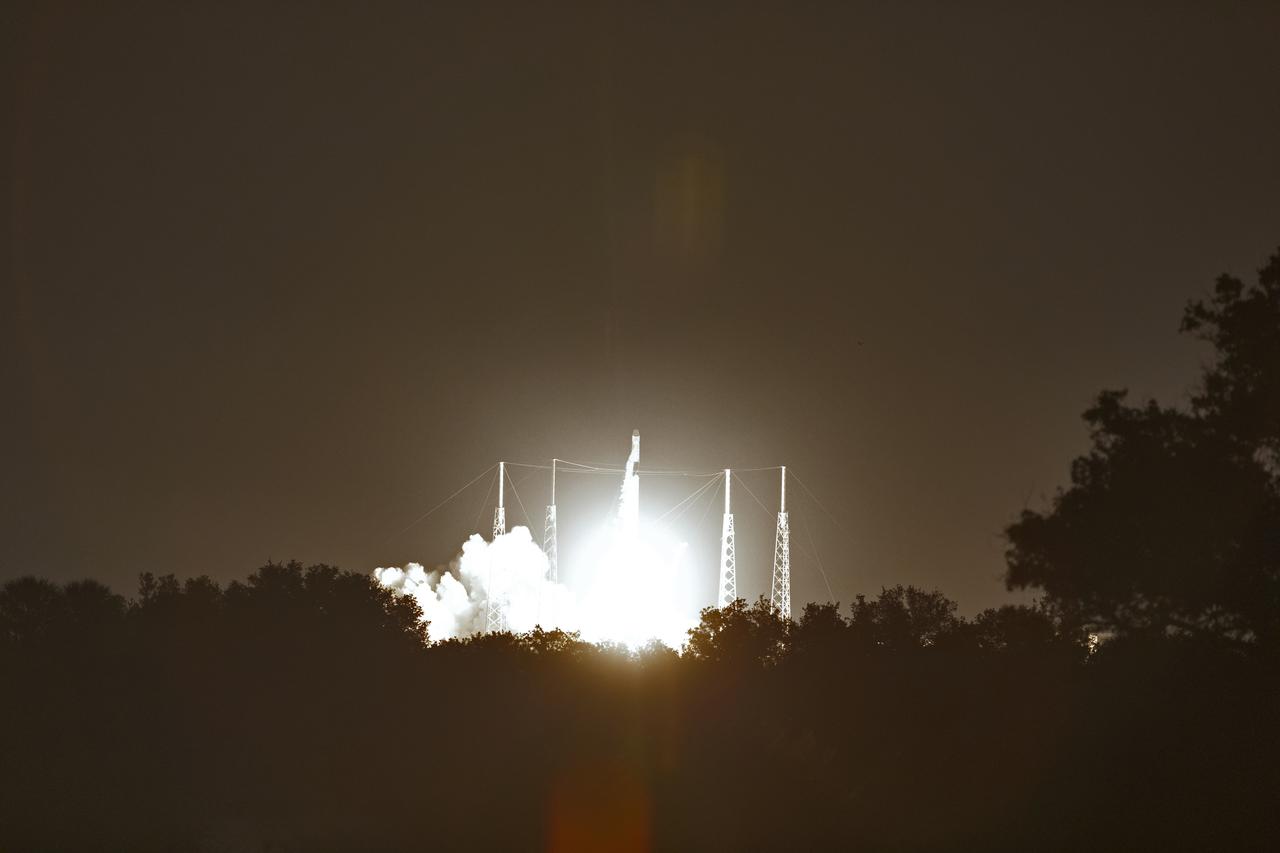
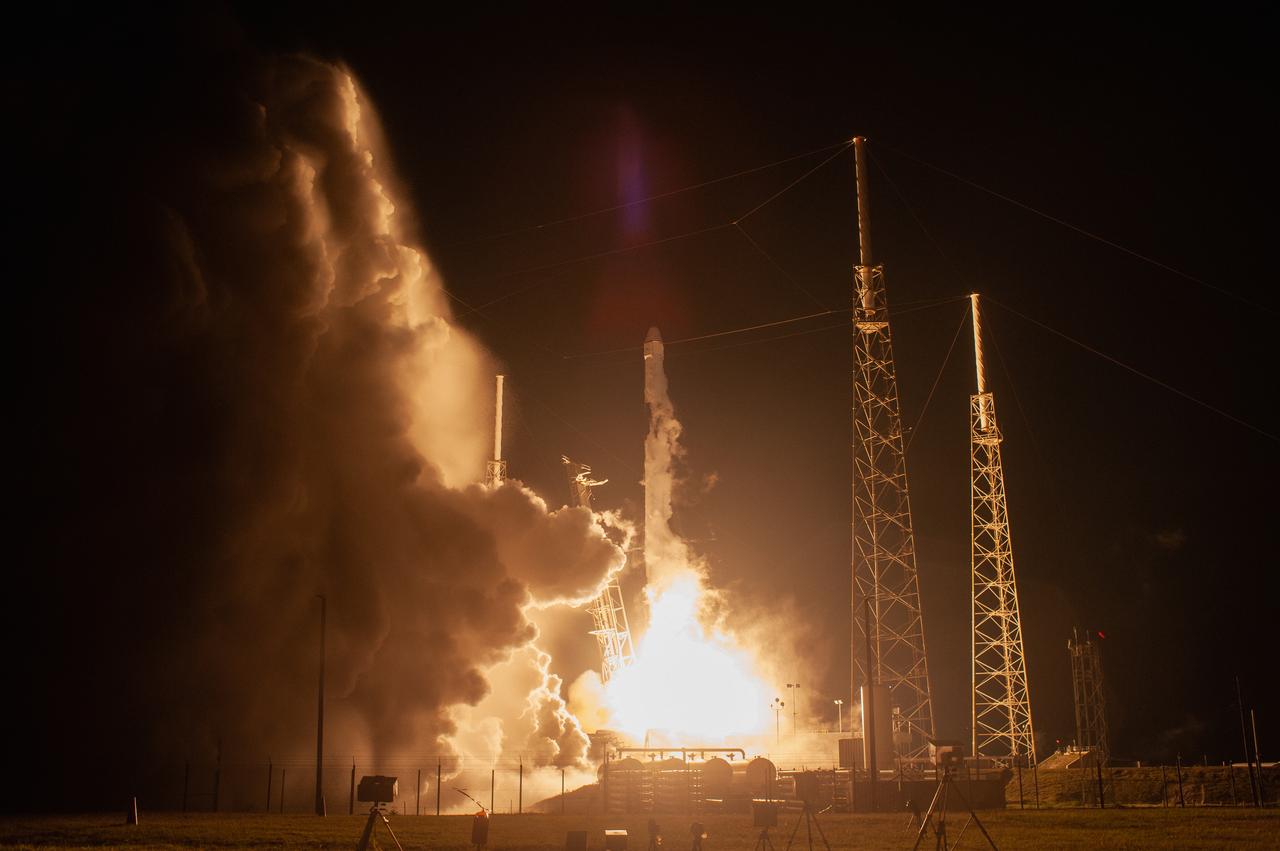
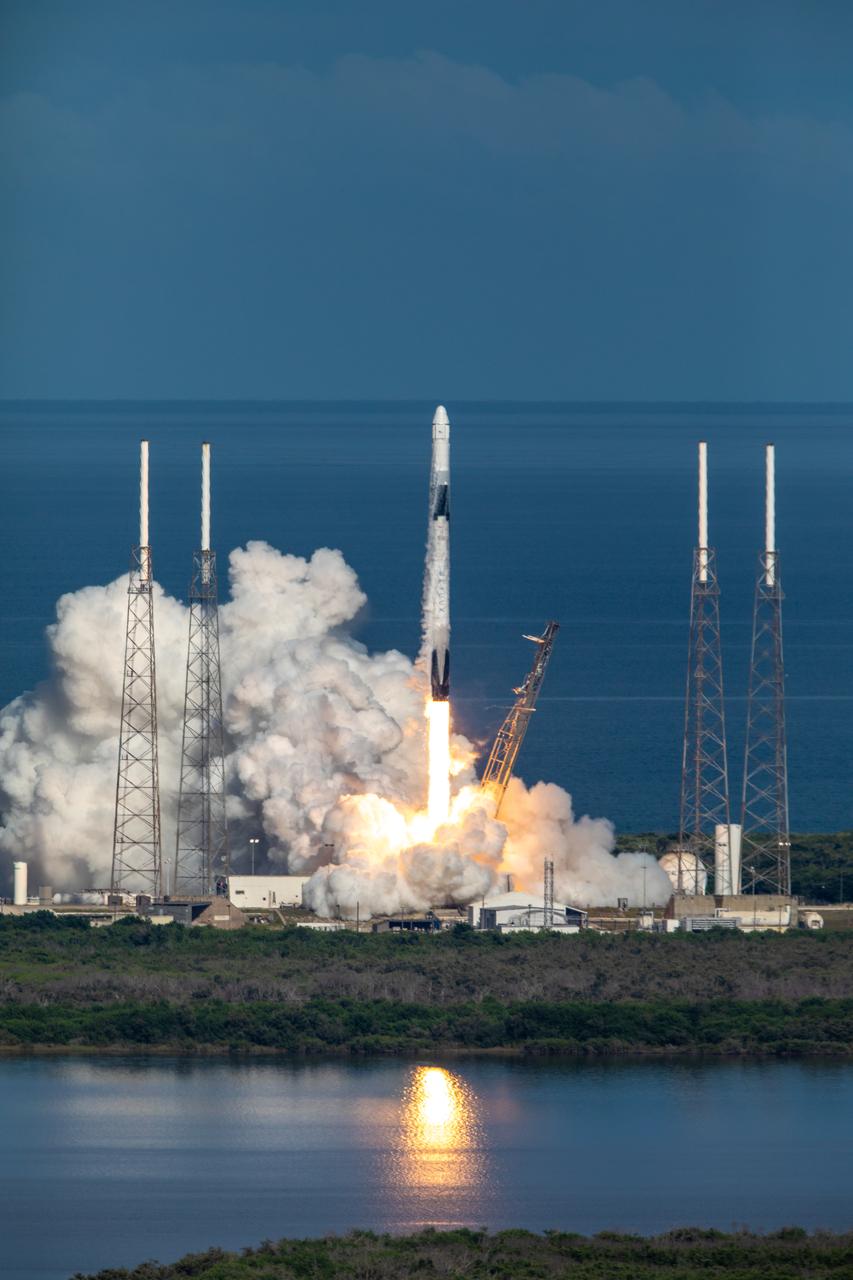
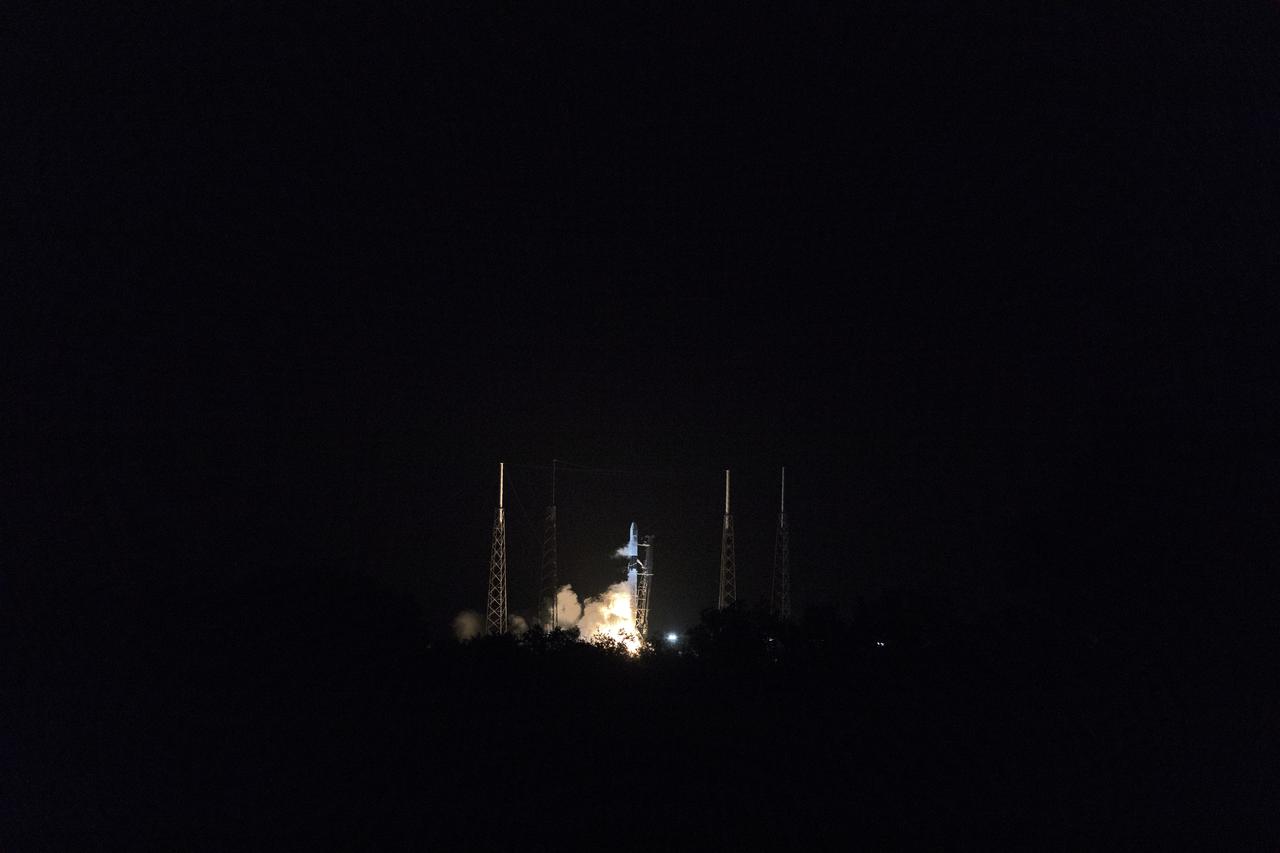
A SpaceX Falcon 9 rocket lifts off from Space Launch Complex 40 at Cape Canaveral Air Force Station in Florida at 6:01 p.m. EDT on July 25, 2019, carrying the Dragon spacecraft on the company’s 18th Commercial Resupply Services (CRS-18) mission to the International Space Station.  The uncrewed Dragon spacecraft will deliver about 5,000 pounds of science and research, crew supplies and vehicle hardware to the orbiting laboratory.
Live Coverage of SpaceX CRS-18 Launch to the International Space
The SpaceX Falcon 9 rocket with the Dragon cargo module lifts off Space Launch Complex 40 on Cape Canaveral Air Force Station in Florida in the early morning May 4, 2019. Liftoff was at 2:48 a.m. EDT. This is SpaceX’s 17th Commercial Resupply Services (CRS-17) mission for NASA to the International Space Station. The Dragon cargo module will deliver about 5,500 pounds of science and research, crew supplies and vehicle hardware to the orbital laboratory and its crew.
Live Coverage of SpaceX CRS-17 Launch to the International Space
The SpaceX Falcon 9 rocket with the Dragon cargo module climbs upward after liftoff from Space Launch Complex 40 on Cape Canaveral Air Force Station in Florida in the early morning May 4, 2019. Liftoff was at 2:48 a.m. EDT. This is SpaceX’s 17th Commercial Resupply Services (CRS-17) mission for NASA to the International Space Station. The Dragon cargo module will deliver about 5,500 pounds of science and research, crew supplies and vehicle hardware to the orbital laboratory and its crew.
Live Coverage of SpaceX CRS-17 Launch to the International Space
The SpaceX Falcon 9 rocket with the Dragon cargo module lifts off Space Launch Complex 40 on Cape Canaveral Air Force Station in Florida in the early morning May 4, 2019. Liftoff was at 2:48 a.m. EDT. This is SpaceX’s 17th Commercial Resupply Services (CRS-17) mission for NASA to the International Space Station. The Dragon cargo module will deliver about 5,500 pounds of science and research, crew supplies and vehicle hardware to the orbital laboratory and its crew.
Live Coverage of SpaceX CRS-17 Launch to the International Space
The SpaceX Falcon 9 rocket with the Dragon cargo module lifts off Space Launch Complex 40 on Cape Canaveral Air Force Station in Florida in the early morning May 4, 2019. Liftoff was at 2:48 a.m. EDT. This is SpaceX’s 17th Commercial Resupply Services (CRS-17) mission for NASA to the International Space Station. The Dragon cargo module will deliver about 5,500 pounds of science and research, crew supplies and vehicle hardware to the orbital laboratory and its crew.
Live Coverage of SpaceX CRS-17 Launch to the International Space
The SpaceX Falcon 9 rocket with the Dragon cargo module climbs upward after liftoff from Space Launch Complex 40 on Cape Canaveral Air Force Station in Florida in the early morning May 4, 2019. Liftoff was at 2:48 a.m. EDT. This is SpaceX’s 17th Commercial Resupply Services (CRS-17) mission for NASA to the International Space Station. The Dragon cargo module will deliver about 5,500 pounds of science and research, crew supplies and vehicle hardware to the orbital laboratory and its crew.
Live Coverage of SpaceX CRS-17 Launch to the International Space
The SpaceX Falcon 9 rocket with the Dragon cargo module lifts off Space Launch Complex 40 on Cape Canaveral Air Force Station in Florida in the early morning May 4, 2019. Liftoff was at 2:48 a.m. EDT. This is SpaceX’s 17th Commercial Resupply Services (CRS-17) mission for NASA to the International Space Station. The Dragon cargo module will deliver about 5,500 pounds of science and research, crew supplies and vehicle hardware to the orbital laboratory and its crew.
Live Coverage of SpaceX CRS-17 Launch to the International Space
The SpaceX Falcon 9 rocket with the Dragon cargo module lifts off Space Launch Complex 40 on Cape Canaveral Air Force Station in Florida in the early morning May 4, 2019. Liftoff was at 2:48 a.m. EDT. This is SpaceX’s 17th Commercial Resupply Services (CRS-17) mission for NASA to the International Space Station. The Dragon cargo module will deliver about 5,500 pounds of science and research, crew supplies and vehicle hardware to the orbital laboratory and its crew.
Live Coverage of SpaceX CRS-17 Launch to the International Space
The SpaceX Falcon 9 rocket with the Dragon cargo module lifts off Space Launch Complex 40 on Cape Canaveral Air Force Station in Florida in the early morning May 4, 2019. Liftoff was at 2:48 a.m. EDT. This is SpaceX’s 17th Commercial Resupply Services (CRS-17) mission for NASA to the International Space Station. The Dragon cargo module will deliver about 5,500 pounds of science and research, crew supplies and vehicle hardware to the orbital laboratory and its crew.
Live Coverage of SpaceX CRS-17 Launch to the International Space
A SpaceX Falcon 9 rocket soars upward after its liftoff from Space Launch Complex 40 at Cape Canaveral Air Force Station in Florida at 6:01 p.m. EDT on July 25, 2019, carrying the Dragon spacecraft on the company’s 18th Commercial Resupply Services (CRS-18) mission to the International Space Station.  The uncrewed Dragon spacecraft will deliver about 5,000 pounds of science and research, crew supplies and vehicle hardware to the orbiting laboratory.
Live Coverage of SpaceX CRS-18 Launch to the International Space
A SpaceX Falcon 9 rocket lifts off from Space Launch Complex 40 at Cape Canaveral Air Force Station in Florida at 6:01 p.m. EDT on July 25, 2019, carrying the Dragon spacecraft on the company’s 18th Commercial Resupply Services (CRS-18) mission to the International Space Station.  The uncrewed Dragon spacecraft will deliver about 5,000 pounds of science and research, crew supplies and vehicle hardware to the orbiting laboratory.
Live Coverage of SpaceX CRS-18 Launch to the International Space
The SpaceX Falcon 9 rocket with the Dragon cargo module lifts off Space Launch Complex 40 on Cape Canaveral Air Force Station in Florida in the early morning May 4, 2019. Liftoff was at 2:48 a.m. EDT. This is SpaceX’s 17th Commercial Resupply Services (CRS-17) mission for NASA to the International Space Station. The Dragon cargo module will deliver about 5,500 pounds of science and research, crew supplies and vehicle hardware to the orbital laboratory and its crew.
Live Coverage of SpaceX CRS-17 Launch to the International Space
The SpaceX Falcon 9 rocket with the Dragon cargo module lifts off Space Launch Complex 40 on Cape Canaveral Air Force Station in Florida in the early morning May 4, 2019. Liftoff was at 2:48 a.m. EDT. This is SpaceX’s 17th Commercial Resupply Services (CRS-17) mission for NASA to the International Space Station. The Dragon cargo module will deliver about 5,500 pounds of science and research, crew supplies and vehicle hardware to the orbital laboratory and its crew.
Live Coverage of SpaceX CRS-17 Launch to the International Space
In this long exposure photograph, the first stage of the SpaceX Falcon 9 rocket lands on the company's drone ship in the Atlantic Ocean on May 4, 2019. The Falcon 9 rocket with the Dragon cargo module lifted off Space Launch Complex 40 on Cape Canaveral Air Force Station in Florida at 2:48 a.m. EDT. This is SpaceX's 17th Commercial Resupply Services (CRS-17) mission for NASA to the International Space Station. The Dragon cargo module will deliver about 5,500 pounds of science and research, crew supplies and vehicle hardware to the orbital laboratory and its crew.
Live Coverage of SpaceX CRS-17 Launch to the International Space
The SpaceX Falcon 9 rocket with the Dragon cargo module lifts off Space Launch Complex 40 on Cape Canaveral Air Force Station in Florida in the early morning May 4, 2019. Liftoff was at 2:48 a.m. EDT. This is SpaceX’s 17th Commercial Resupply Services (CRS-17) mission for NASA to the International Space Station. The Dragon cargo module will deliver about 5,500 pounds of science and research, crew supplies and vehicle hardware to the orbital laboratory and its crew.
Live Coverage of SpaceX CRS-17 Launch to the International Space
The SpaceX Falcon 9 rocket with the Dragon cargo module lifts off Space Launch Complex 40 on Cape Canaveral Air Force Station in Florida in the early morning May 4, 2019. Liftoff was at 2:48 a.m. EDT. This is SpaceX’s 17th Commercial Resupply Services (CRS-17) mission for NASA to the International Space Station. The Dragon cargo module will deliver about 5,500 pounds of science and research, crew supplies and vehicle hardware to the orbital laboratory and its crew.
Live Coverage of SpaceX CRS-17 Launch to the International Space
The SpaceX Falcon 9 rocket with the Dragon cargo module creates a streak across the sky as it climbs upward after liftoff from Space Launch Complex 40 on Cape Canaveral Air Force Station in Florida in the early morning May 4, 2019. Liftoff was at 2:48 a.m. EDT. This is SpaceX’s 17th Commercial Resupply Services (CRS-17) mission for NASA to the International Space Station. The Dragon cargo module will deliver about 5,500 pounds of science and research, crew supplies and vehicle hardware to the orbital laboratory and its crew.
Live Coverage of SpaceX CRS-17 Launch to the International Space
A SpaceX Falcon 9 rocket lifts off from Space Launch Complex 40 at Cape Canaveral Air Force Station in Florida at 6:01 p.m. EDT on July 25, 2019, carrying the Dragon spacecraft on the company's 18th Commercial Resupply Services (CRS-18) mission to the International Space Station.  The uncrewed Dragon spacecraft will deliver about 5,000 pounds of science and research, crew supplies and vehicle hardware to the orbiting laboratory.
Live Coverage of SpaceX CRS-18 Launch to the International Space
The SpaceX Falcon 9 rocket with the Dragon cargo module lifts off Space Launch Complex 40 on Cape Canaveral Air Force Station in Florida in the early morning May 4, 2019. Liftoff was at 2:48 a.m. EDT. This is SpaceX’s 17th Commercial Resupply Services (CRS-17) mission for NASA to the International Space Station. The Dragon cargo module will deliver about 5,500 pounds of science and research, crew supplies and vehicle hardware to the orbital laboratory and its crew.
Live Coverage of SpaceX CRS-17 Launch to the International Space
A SpaceX Falcon 9 rocket lifts off from Space Launch Complex 40 at Cape Canaveral Air Force Station in Florida at 6:01 p.m. EDT on July 25, 2019, carrying the Dragon spacecraft on the company's 18th Commercial Resupply Services (CRS-18) mission to the International Space Station.  The uncrewed Dragon spacecraft will deliver about 5,000 pounds of science and research, crew supplies and vehicle hardware to the orbiting laboratory.
Live Coverage of SpaceX CRS-18 Launch to the International Space