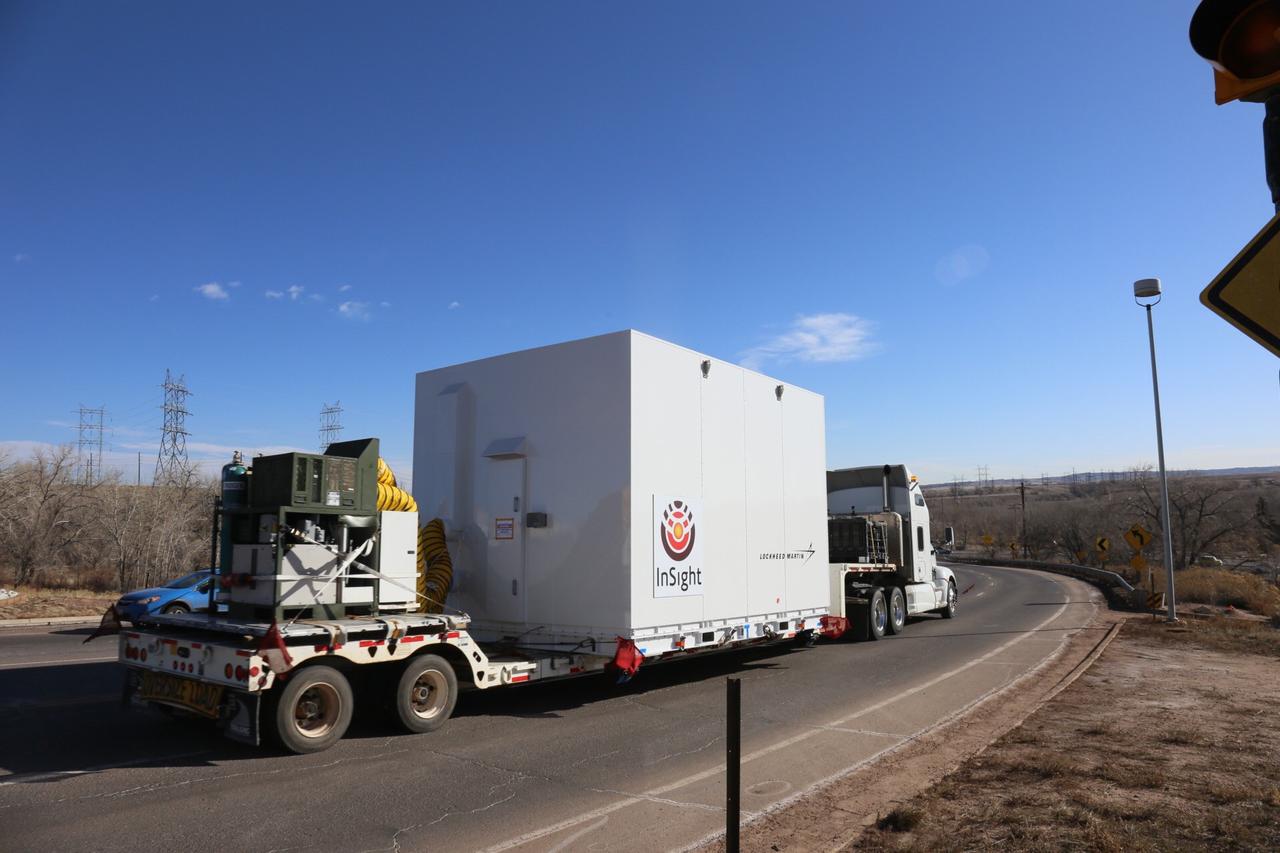
A truck carrying NASA s InSight spacecraft leaves Lockheed Martin Space, Denver, where the spacecraft was built and tested, on February 28, 2018. InSight was driven to Buckley Air Force Base, where it was loaded into a C-17 cargo aircraft and flown to Vandenberg Air Force Base, California. There, it will be prepared for a May launch. InSight, short for Interior Exploration using Seismic Investigations, Geodesy and Heat Transport, is the first mission dedicated to studying the deep interior of Mars. Its findings will advance understanding of the early history of all rocky planets, including Earth. https://photojournal.jpl.nasa.gov/catalog/PIA22225
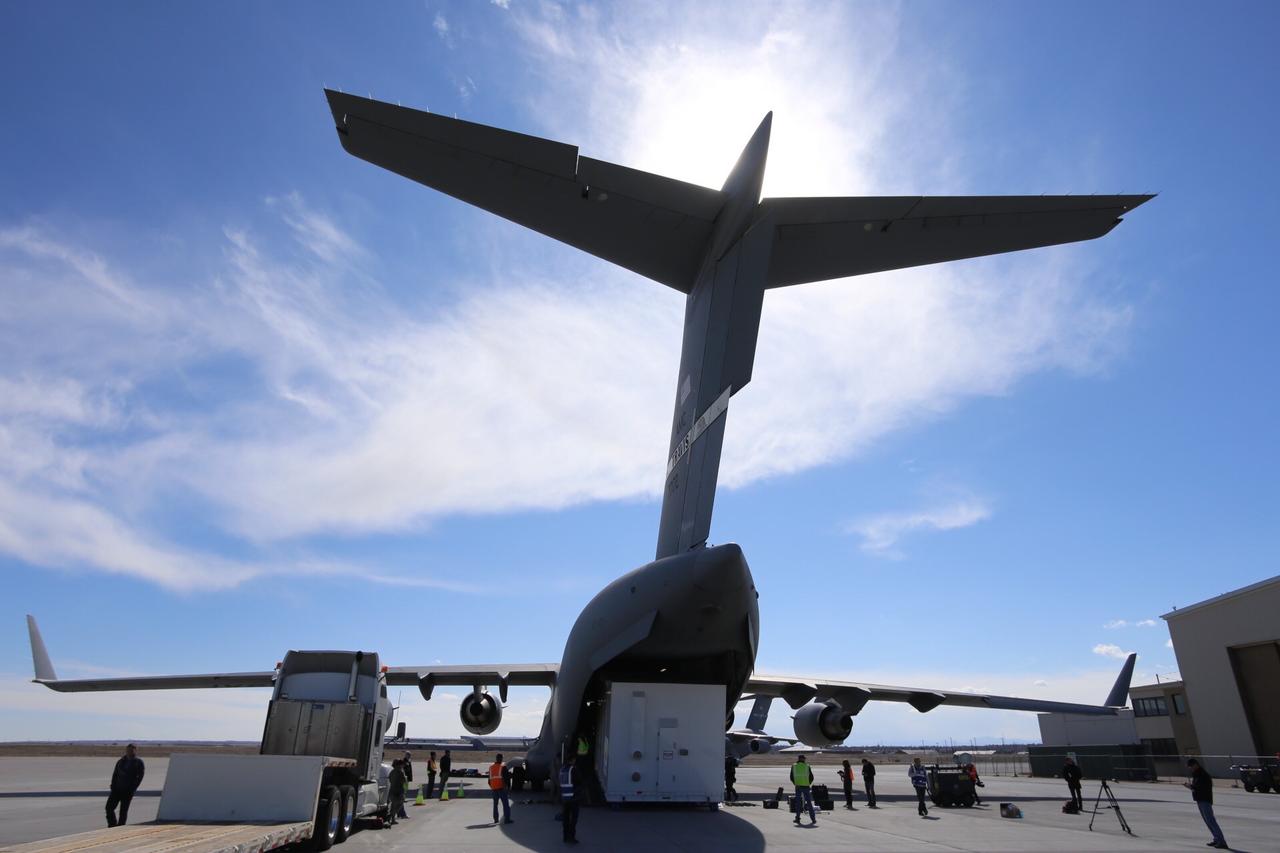
Personnel supporting NASA's InSight mission to Mars load the crated InSight spacecraft into a C-17 cargo aircraft at Buckley Air Force Base, Denver, for shipment to Vandenberg Air Force Base, California. The spacecraft, built in Colorado by Lockheed Martin Space, was shipped February 28, 2018, in preparation for launch from Vandenberg in May 2018. InSight, short for Interior Exploration using Seismic Investigations, Geodesy and Heat Transport, is the first mission dedicated to studying the deep interior of Mars. Its findings will advance understanding of the early history of all rocky planets, including Earth. https://photojournal.jpl.nasa.gov/catalog/PIA22252
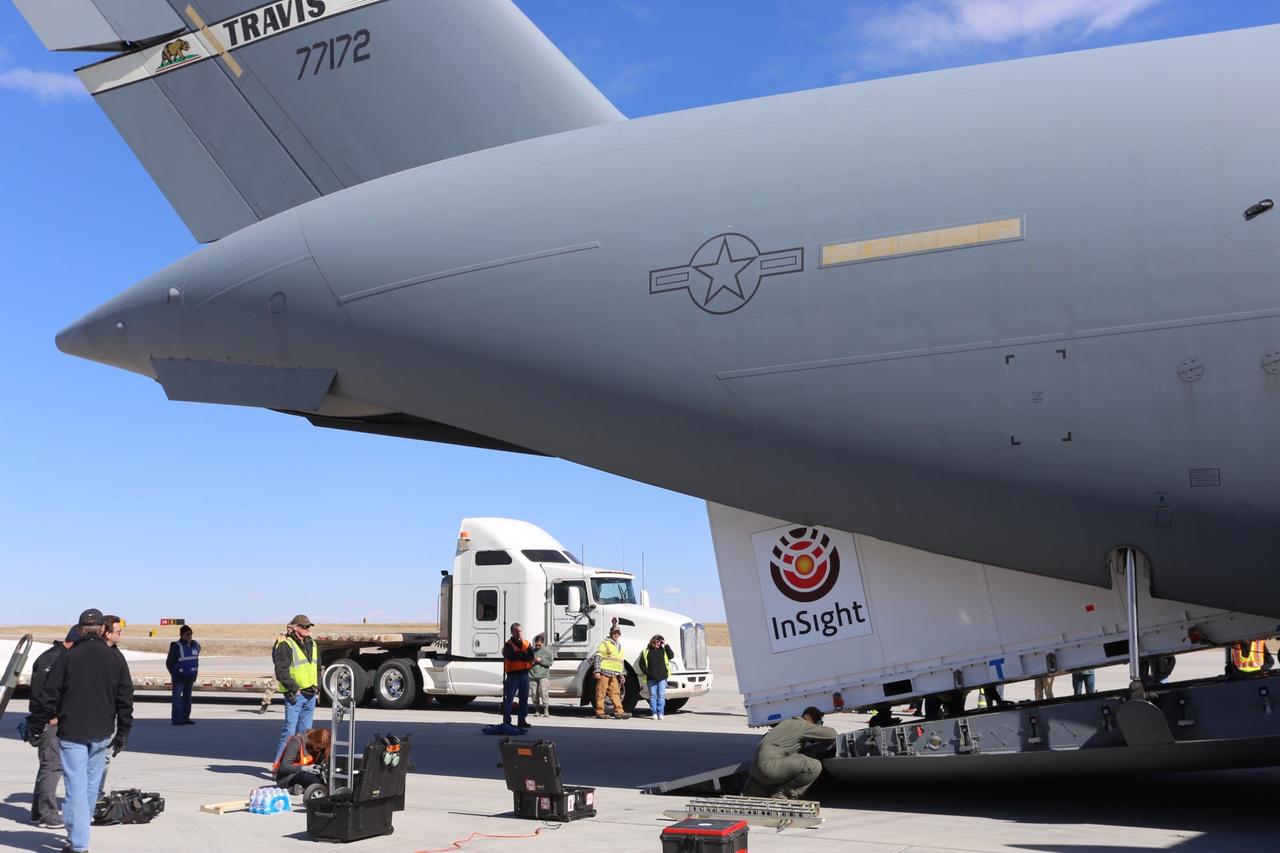
Personnel supporting NASA's InSight mission to Mars load the crated InSight spacecraft into a C-17 cargo aircraft at Buckley Air Force Base, Denver, for shipment to Vandenberg Air Force Base, California. The spacecraft, built in Colorado by Lockheed Martin Space, was shipped February 28, 2018, in preparation for launch from Vandenberg in May 2018. InSight, short for Interior Exploration using Seismic Investigations, Geodesy and Heat Transport, is the first mission dedicated to studying the deep interior of Mars. Its findings will advance understanding of the early history of all rocky planets, including Earth. https://photojournal.jpl.nasa.gov/catalog/PIA22253
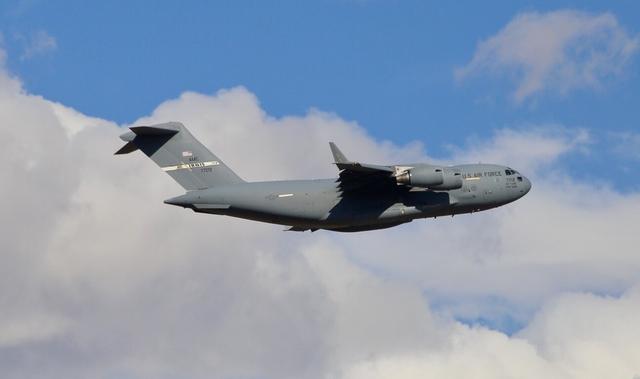
A C-17 cargo aircraft carrying NASA's InSight spacecraft flew from Buckley Air Force Base, Denver, to Vandenberg Air Force Base, California, on February 28, 2018. The spacecraft was being shipped from Lockheed Martin Space, Denver, where InSight was built and tested. Its launch period opens May 5, 2018. InSight, short for Interior Exploration using Seismic Investigations, Geodesy and Heat Transport, is the first mission dedicated to studying the deep interior of Mars. Its findings will advance understanding of the early history of all rocky planets, including Earth. https://photojournal.jpl.nasa.gov/catalog/PIA22251

Acting NASA Administrator Sean Duffy, left, speaks with Orion Assembly, Test, and Launch Operations Director at Lockheed Martin, Nathan Varn, during a tour of Lockheed Martin’s Orion Facility, Wednesday, July 30, 2025, at NASA’s Kennedy Space Center in Florida. Photo Credit: (NASA/Aubrey Gemignani)
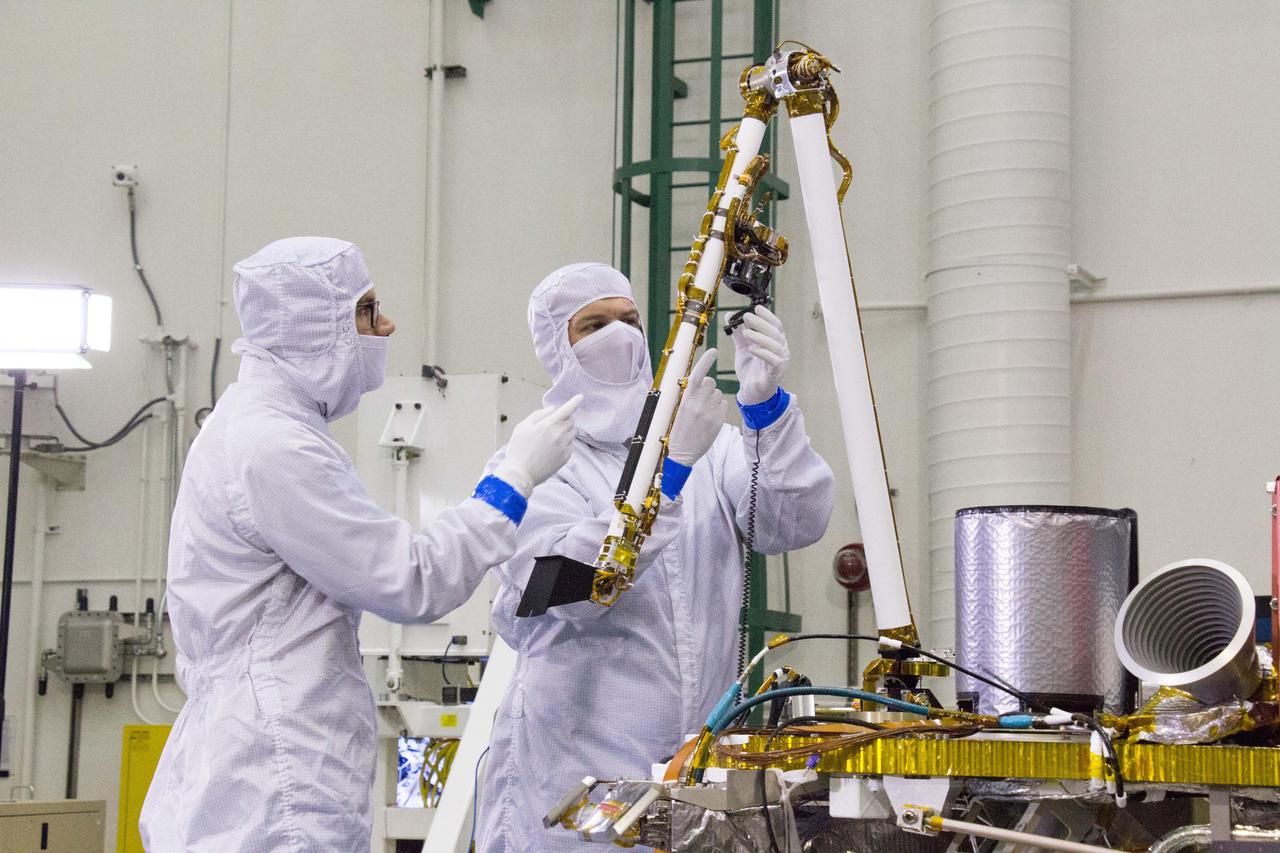
Engineers at Lockheed Martin Space, Denver, Colorado, test the robotic arm on NASA's InSight lander several months before launch. https://photojournal.jpl.nasa.gov/catalog/PIA22741
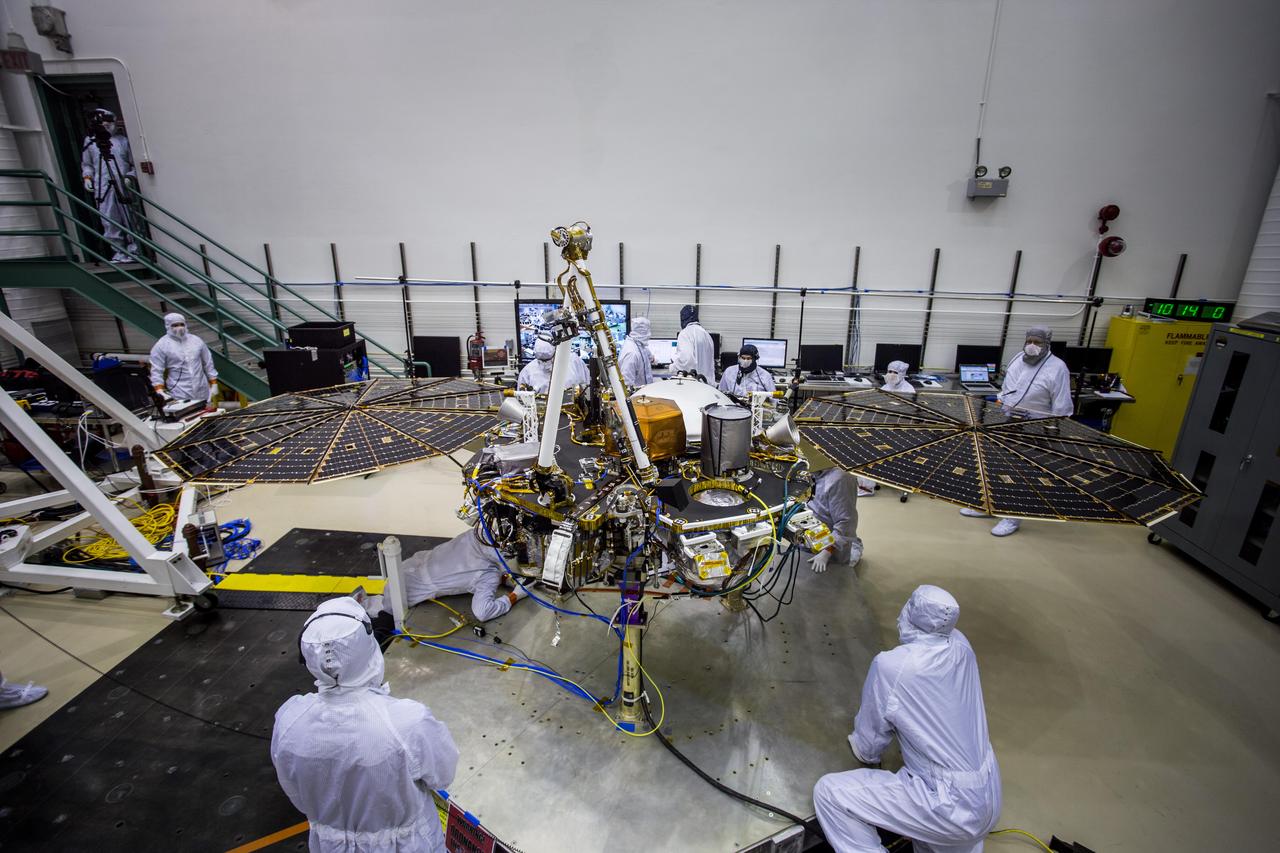
Engineers at Lockheed Martin Space, Denver, Colorado, test the solar arrays on NASA's InSight lander several months before launch. https://photojournal.jpl.nasa.gov/catalog/PIA22739
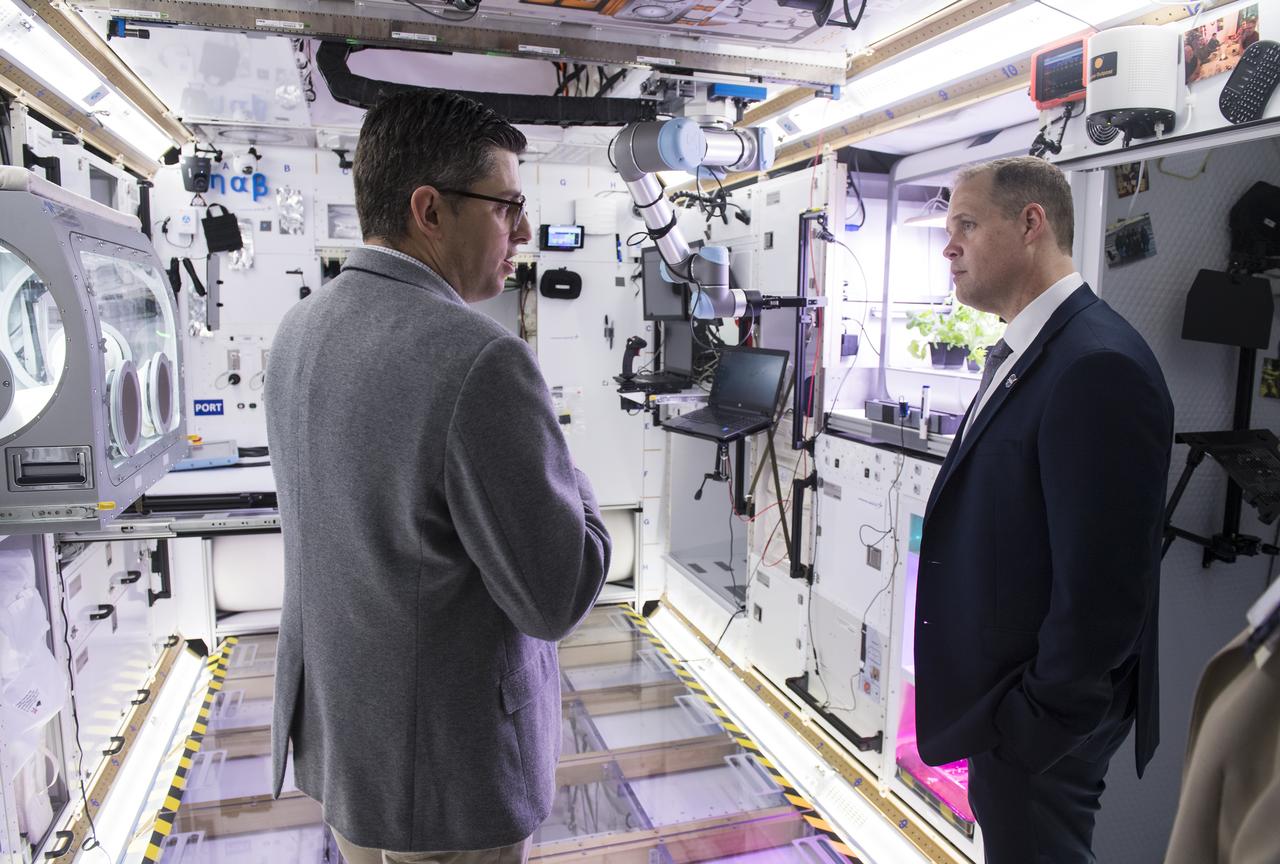
Bill Pratt, Lockheed Martin NextSTEP program manager gives NASA Administrator Jim Bridenstine a tour of the Lockheed Martin Gateway habitat prototype in the Space Station Processing Facility High Bay, after an event to discuss NASA’s progress toward sending astronauts to the Moon and on to Mars, Monday March 11, 2019 at Kennedy Space Center in Florida. For information on NASA's Moon to Mars plans, visit: www.nasa.gov/moontomars Photo credit: (NASA/Aubrey Gemignani)
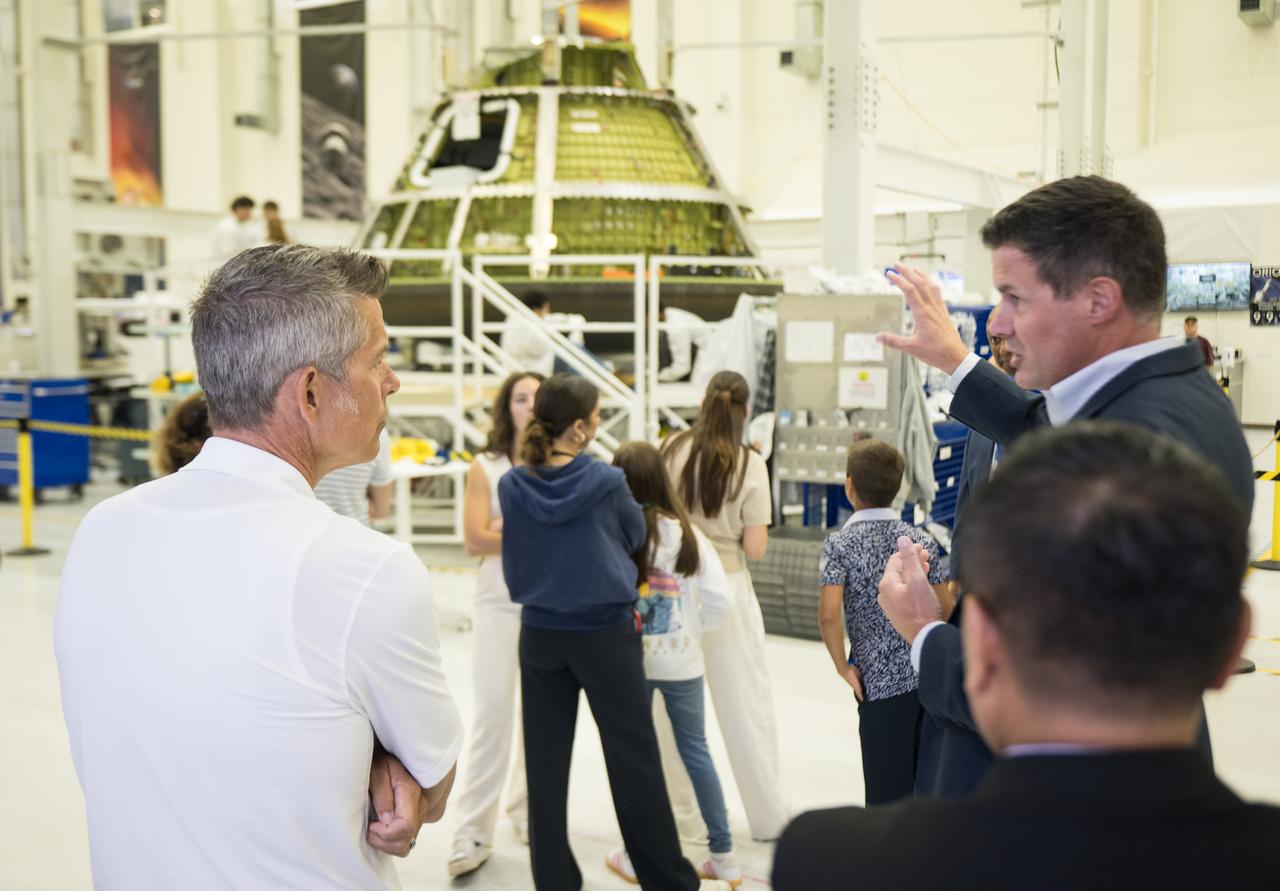
Acting NASA Administrator Sean Duffy, left, views the Orion spacecraft hardware during a tour of Lockheed Martin’s Orion Facility, Wednesday, July 30, 2025, at NASA’s Kennedy Space Center in Florida. Photo Credit: (NASA/Aubrey Gemignani)
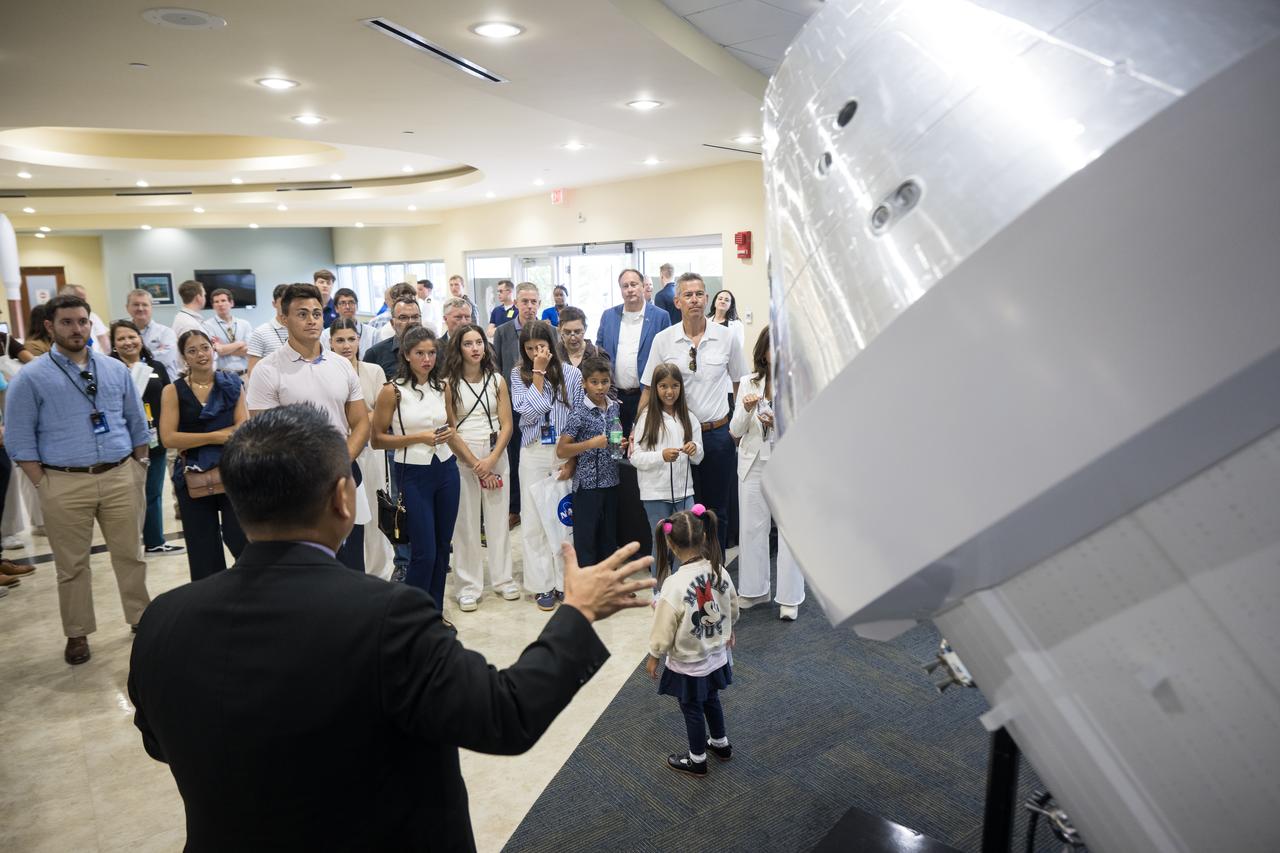
Acting NASA Administrator Sean Duffy and his family view a mockup of the Orion spacecraft during a tour of Lockheed Martin’s Orion Facility, Wednesday, July 30, 2025, at NASA’s Kennedy Space Center in Florida. Photo Credit: (NASA/Aubrey Gemignani)

Engineers at Lockheed Martin Space, Denver, Colorado, prepare NASA's InSight lander for testing in a thermal vacuum chamber several months before launch. https://photojournal.jpl.nasa.gov/catalog/PIA22740
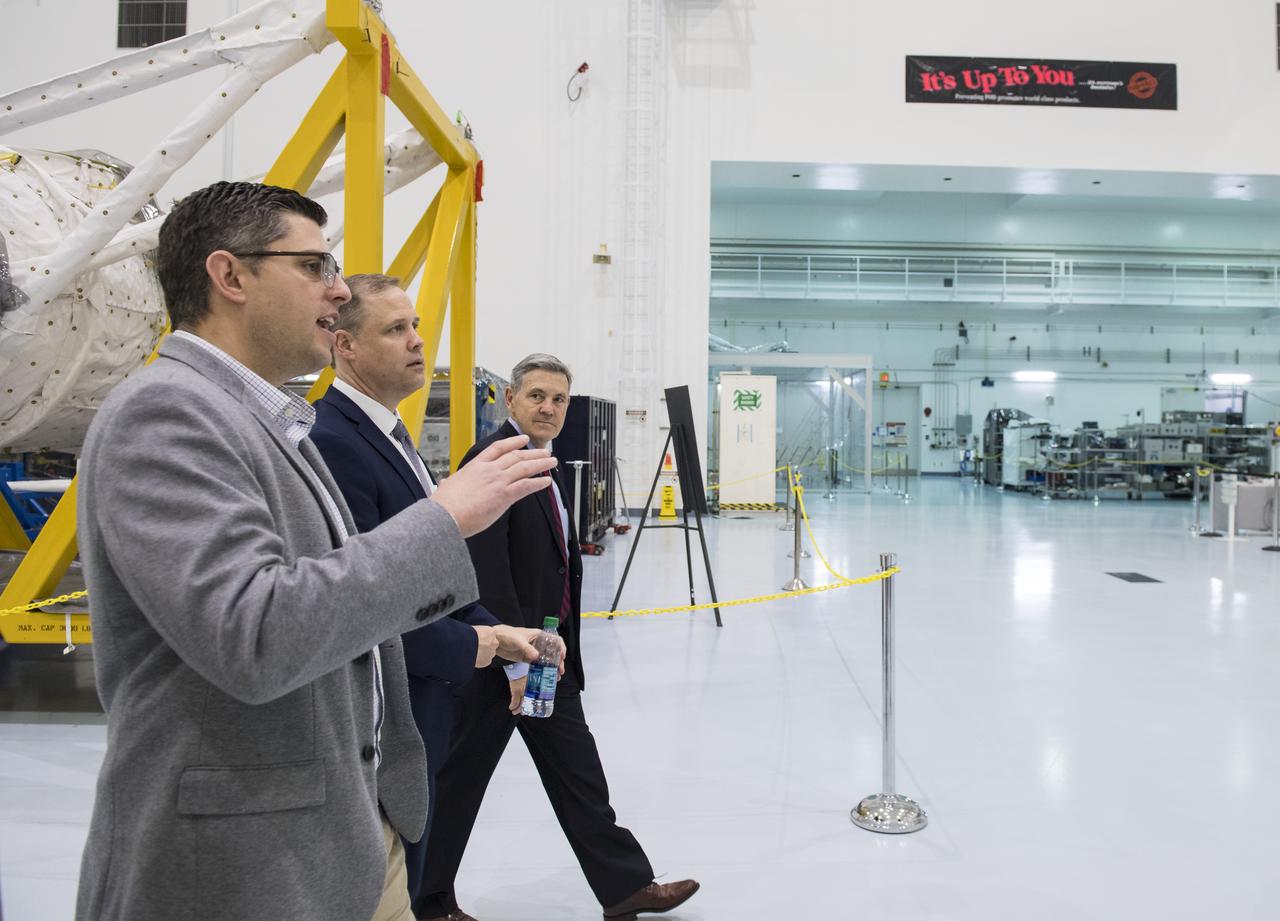
Bill Pratt, Lockheed Martin NextSTEP program manager, left, NASA Administrator Jim Bridenstine, center, and Kennedy Space Center Director, Bob Cabana, right, walk through the Space Station Processing Facility High Bay to the Lockheed Martin Gateway habitat prototype, after an event about NASA’s progress toward sending astronauts to the Moon and on to Mars, Monday March 11, 2019 at Kennedy Space Center in Florida. For information on NASA's Moon to Mars plans, visit: www.nasa.gov/moontomars Photo credit: (NASA/Aubrey Gemignani)
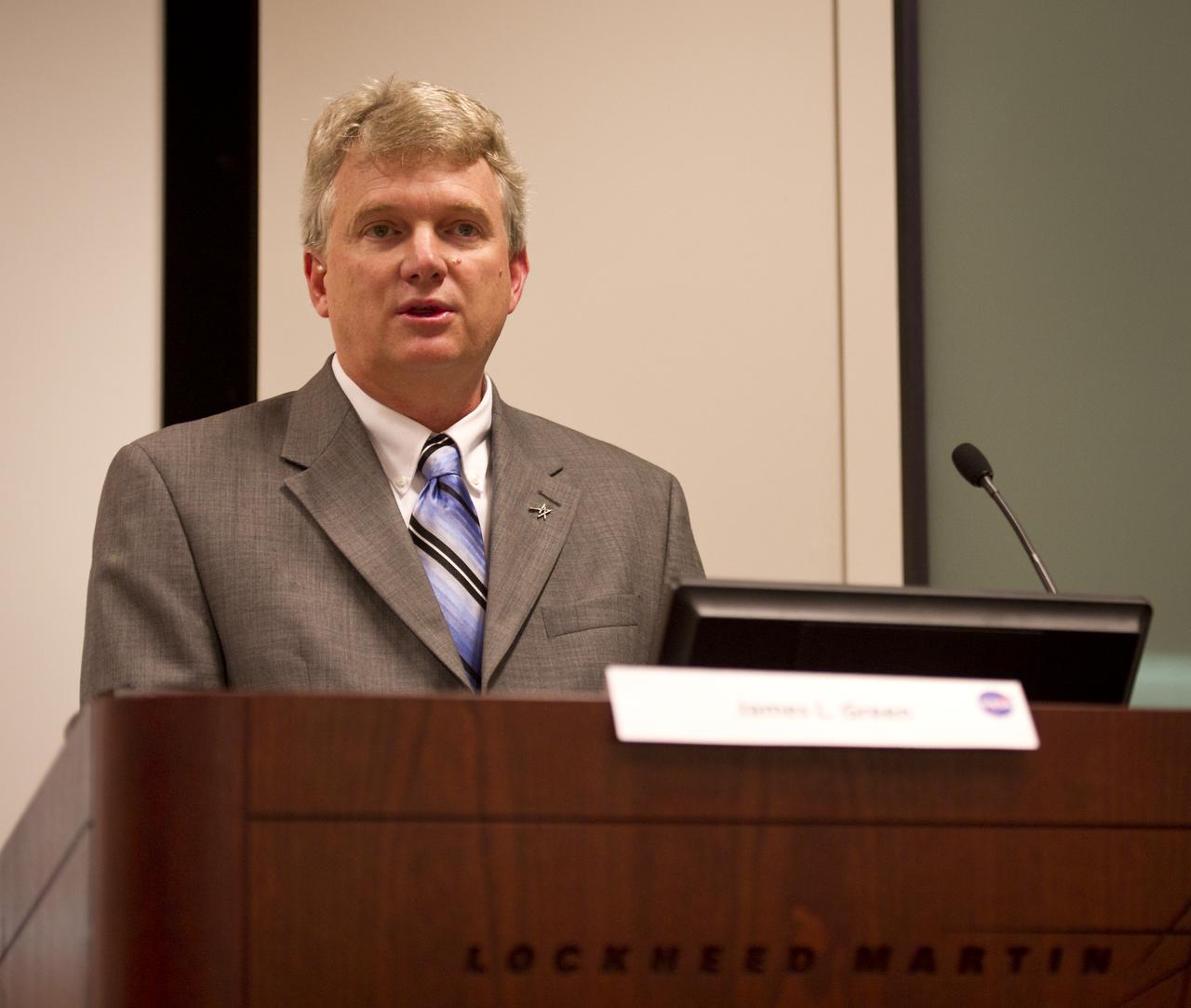
Stephen Price from Lockheed Martin Space Systems Company kicks off the ‚Äö√Ñ√∫Seeking Signs of Life‚Äö√Ñ√π Symposium, celebrating 50 Years of Exobiology and Astrobiology at NASA, Thursday, Oct. 14, 2010, at the Lockheed Martin Global Vision Center in Arlington, Va. NASA has been researching life in the universe since 1959, asking three fundamental questions: "How does life begin and evolve?"‚ "Is there life beyond Earth and, if so, how can we detect it?" and "What is the future of life on Earth and in the universe?" Photo Credit: (NASA/Bill Ingalls)
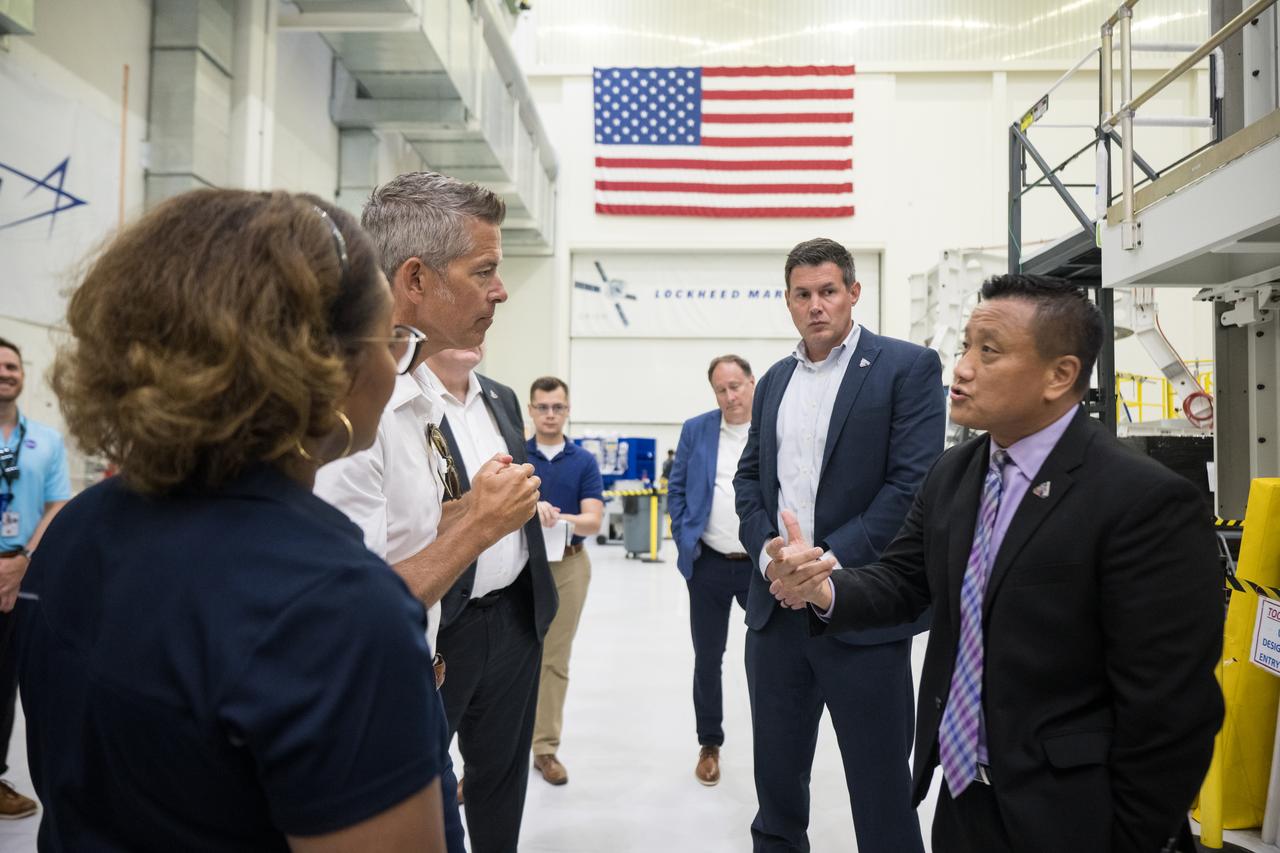
Acting NASA Administrator Sean Duffy speaks with Orion Program Manager, Howard Hu during a tour of Lockheed Martin’s Orion Facility, Wednesday, July 30, 2025, at NASA’s Kennedy Space Center in Florida. Photo Credit: (NASA/Aubrey Gemignani)
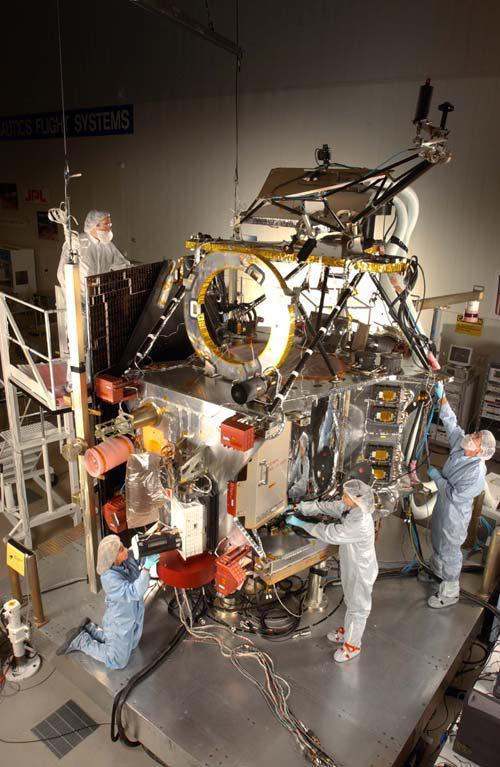
Engineers and technicians at Lockheed Martin Space Systems, Denver, building the Mars Reconnaissance Orbiter for NASA.
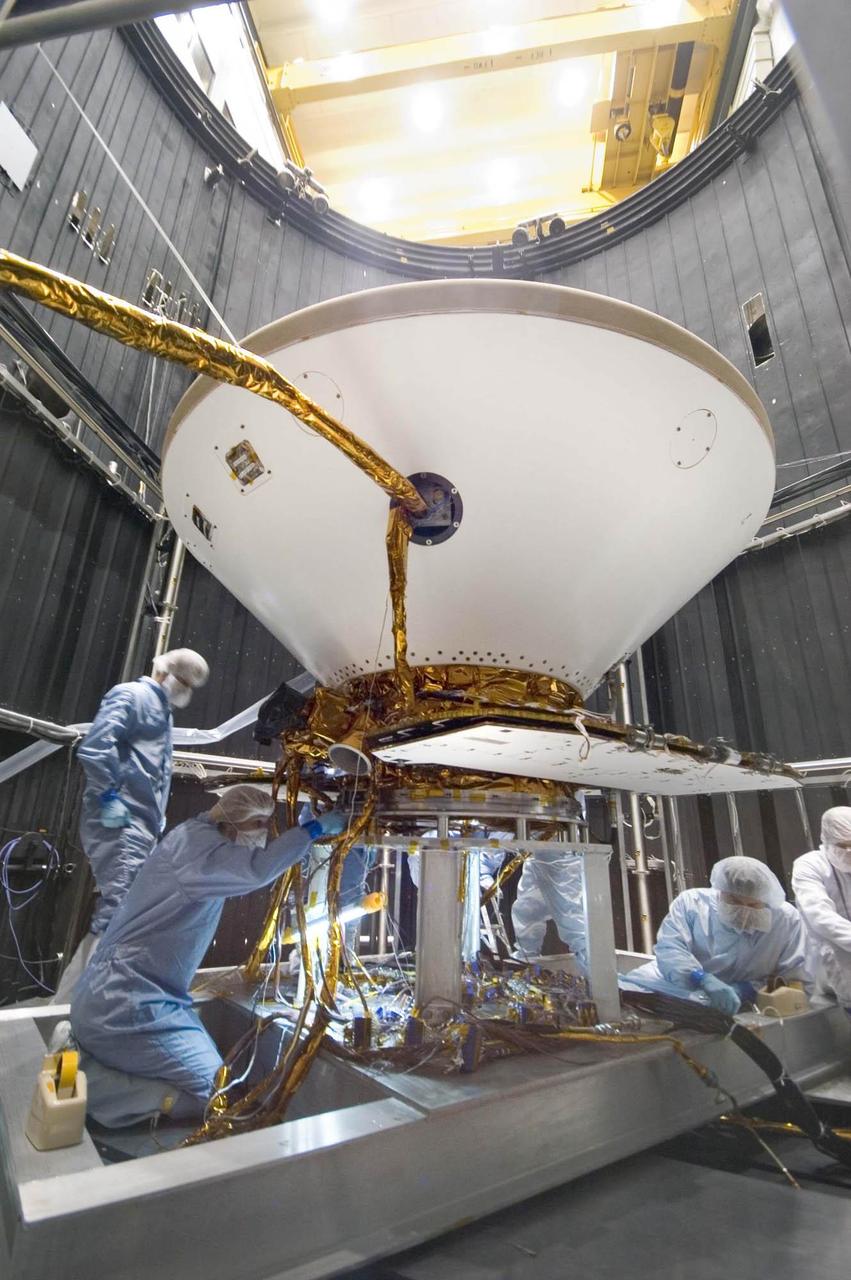
Inside a thermal vacuum at Lockheed Martin Space Systems, Denver, technicians prepared NASA Phoenix Mars Lander for environmental testing
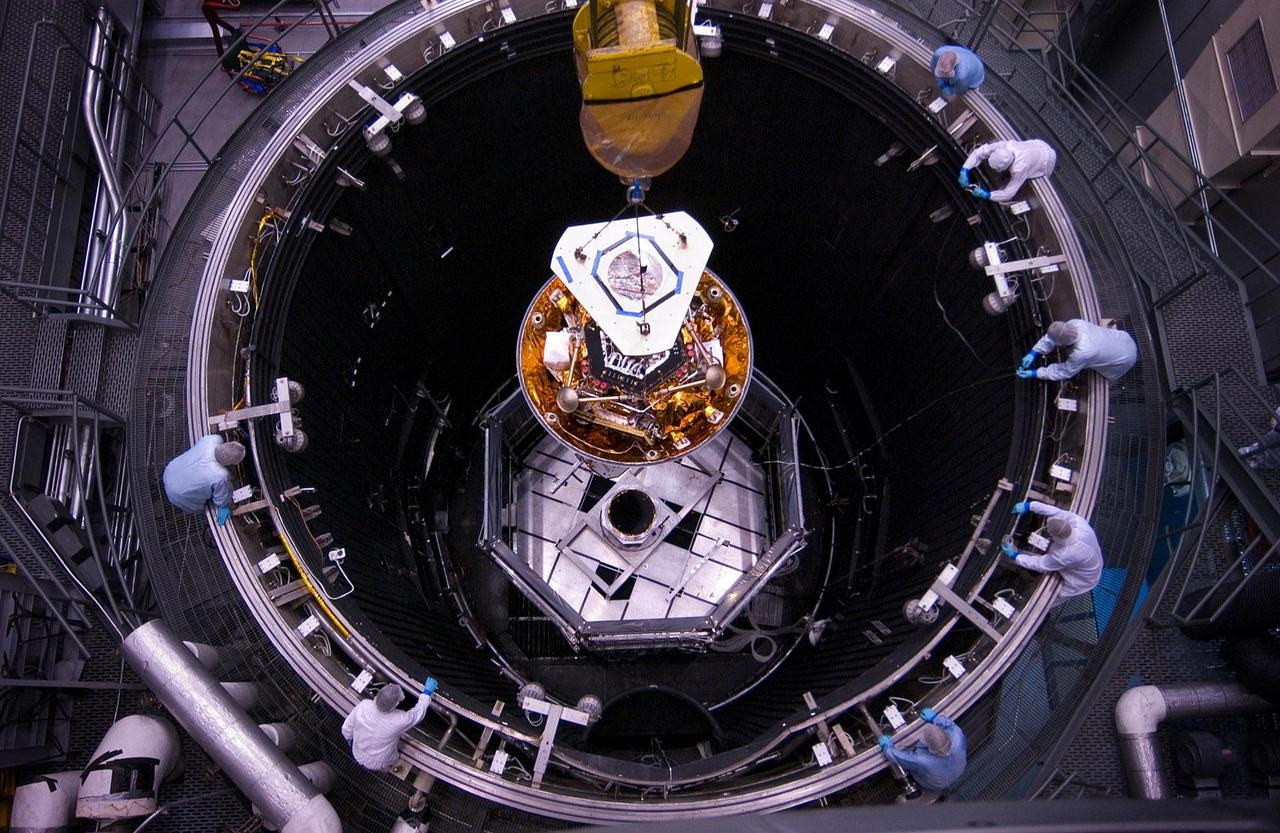
NASA Phoenix Mars Lander was lowered into a thermal vacuum chamber at Lockheed Martin Space Systems, Denver, in December 2006
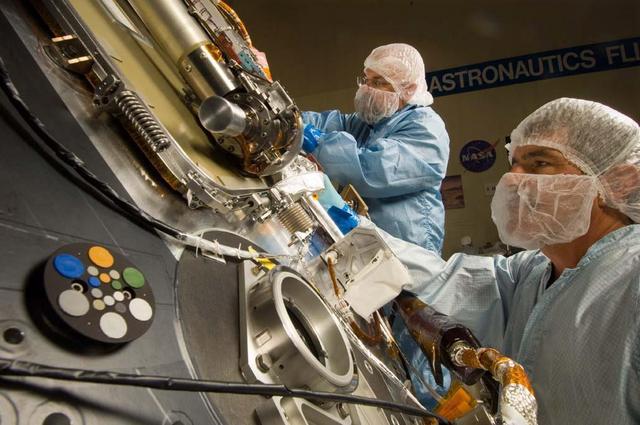
Lockheed Martin Space Systems technicians work on the science deck of NASA Phoenix Mars Lander
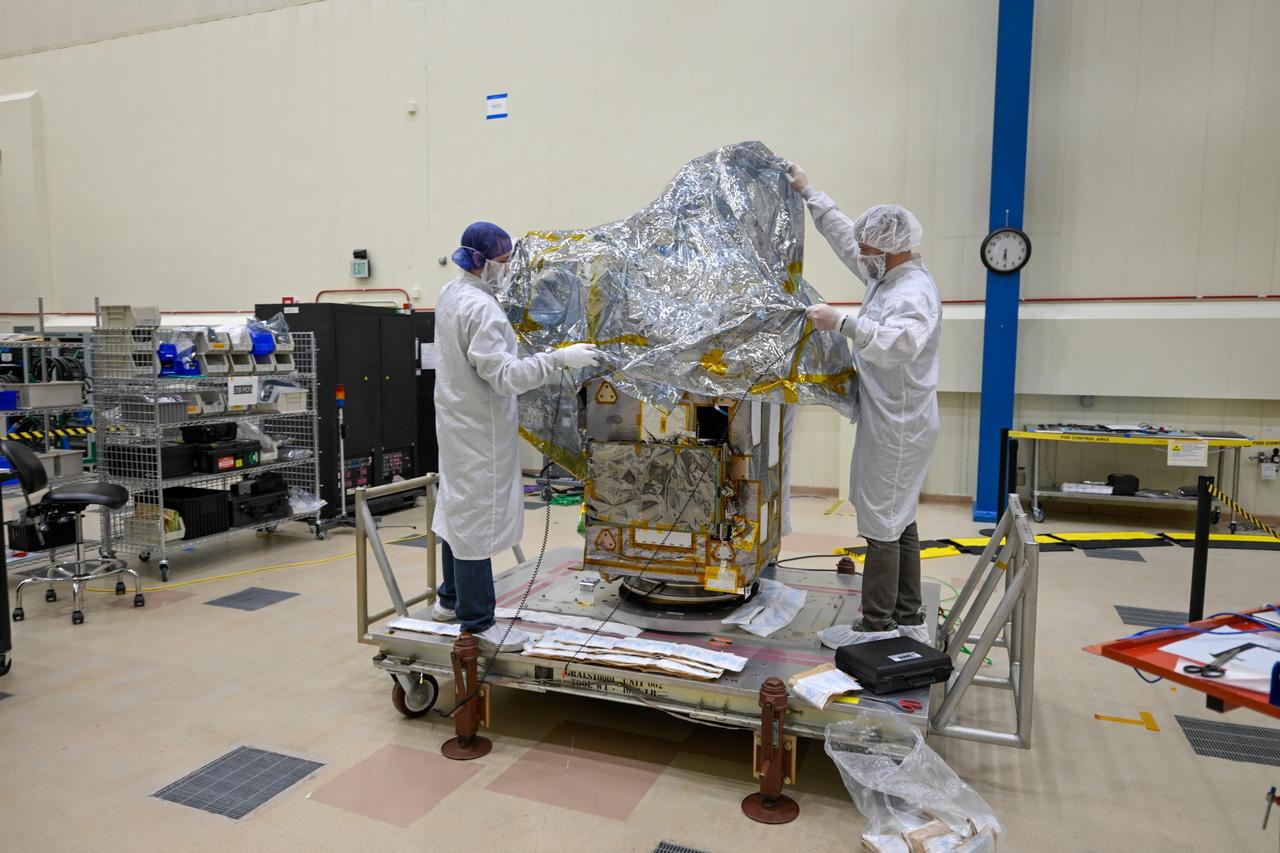
NASA's Lunar Trailblazer spacecraft gets covered in anti-static wrap before being shipped from Lockheed Martin Space in Littleton, Colorado, to Florida, where it arrived on Jan. 29, 2025. The spacecraft was built and tested at Lockheed and will launch no earlier than Feb. 26 from Launch Complex 39A at the agency's Kennedy Space Center. Lunar Trailblazer was a selection of NASA's SIMPLEx (Small Innovative Missions for Planetary Exploration), which provides opportunities for low-cost science spacecraft to ride-share with selected primary missions. To maintain the lower overall cost, SIMPLEx missions have a higher risk posture and lighter requirements for oversight and management. This higher risk acceptance allows NASA to test pioneering technologies, and the definition of success for these missions includes the lessons learned from more experimental endeavors. https://photojournal.jpl.nasa.gov/catalog/PIA26458

Jim Crocker, Vice President and General Manager, civil space, Lockheed Martin Space Systems, gestures while speaking at a panel discussion on deep space exploration using the Space Launch System and Orion spacecraft at the Newseum in Washington on Tuesday, November 12, 2013. Photo Credit: (NASA/Jay Westcott)
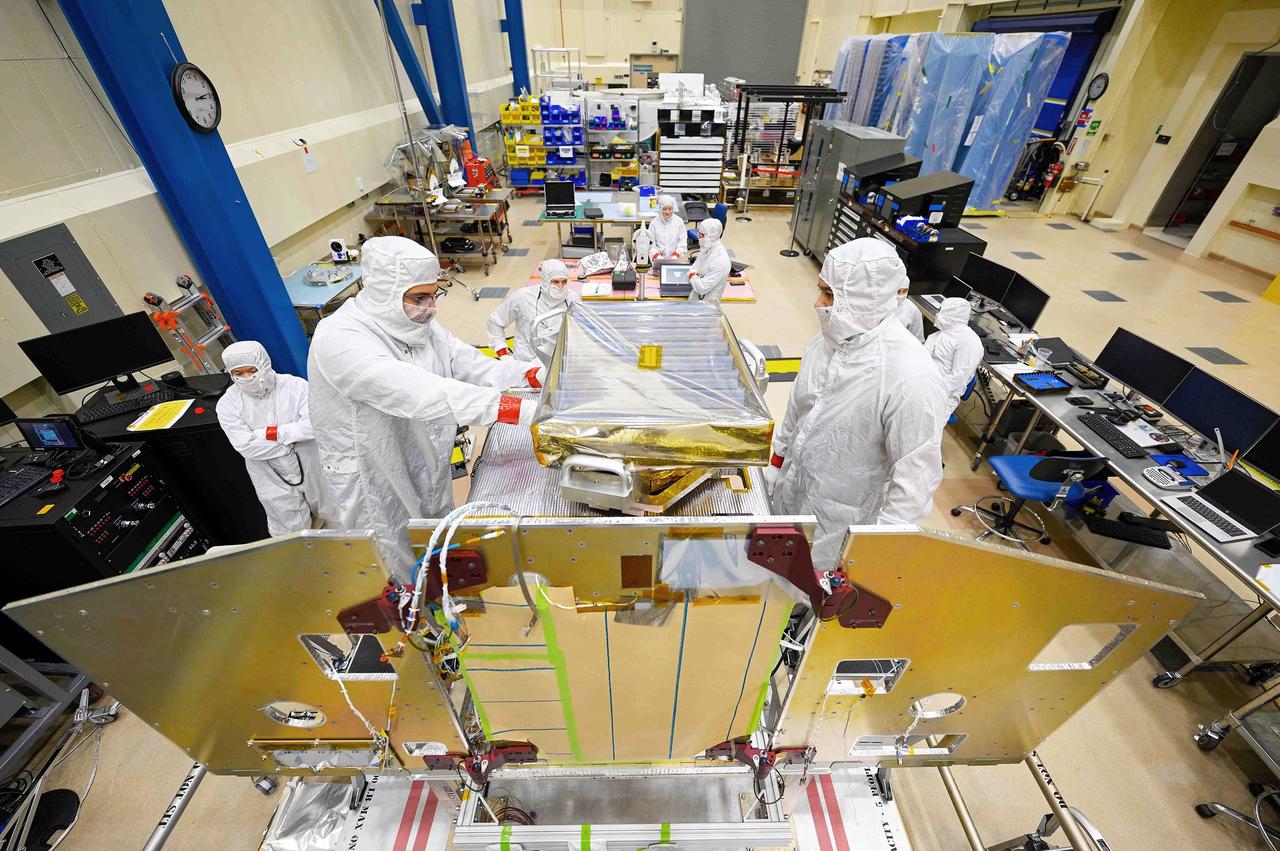
Engineers work on the High-resolution Volatiles and Minerals Moon Mapper (HVM³) for NASA's Lunar Trailblazer spacecraft in a clean room at Lockheed Martin Space in Littleton, Colorado, shortly after the instrument was delivered there in December 2022. The large silver grate wrapped in transparent plastic in the center of the image is the radiator that will maintain the instrument's temperature when in space. HVM³ is an imaging spectrometer that was developed at NASA's Jet Propulsion Laboratory in Southern California. It was shipped from JPL to Lockheed Martin Space, where it was integrated with the spacecraft. HVM³ is one of two instruments that will be used by the mission to detect and map water on the Moon's surface to determine its abundance, location, form, and how it changes over time. Lunar Trailblazer was selected under NASA's Small Innovative Missions for Planetary Exploration (SIMPLEx) program in 2019. The Lunar Trailblazer mission is managed by JPL and its science investigation is led by Caltech in Pasadena, California. Managed for NASA by Caltech, JPL also provides system engineering, mission assurance, the HVM³ instrument, as well as navigation. Lockheed Martin Space provides the spacecraft and integrates the flight system, under contract with Caltech. SIMPLEx mission investigations are managed by the Planetary Missions Program Office at NASA's Marshall Space Flight Center in Huntsville, Alabama, as part of the Discovery Program at NASA Headquarters in Washington. The program conducts space science investigations in the Planetary Science Division of NASA's Science Mission Directorate at NASA Headquarters. https://photojournal.jpl.nasa.gov/catalog/PIA25254
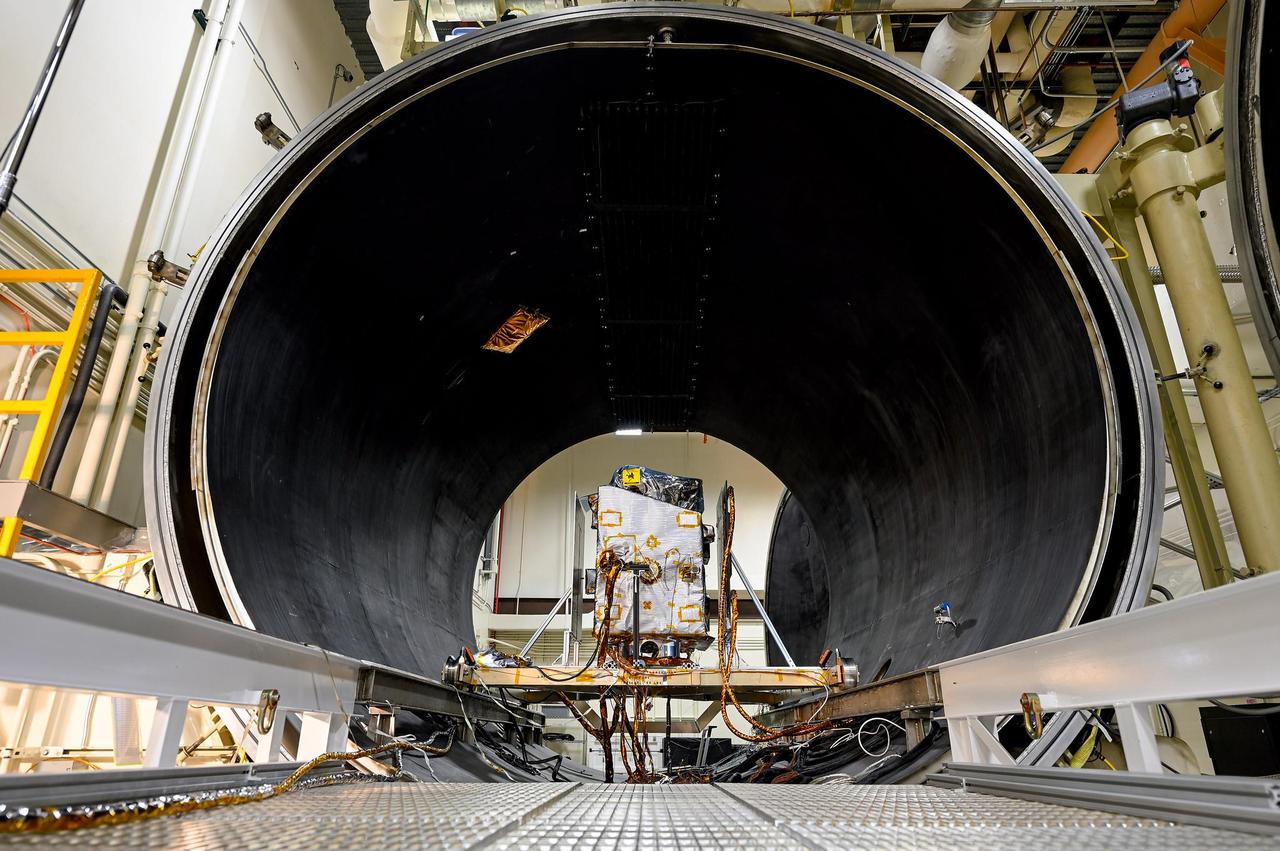
NASA's Lunar Trailblazer undergoes thermal vacuum chamber (TVAC) testing at Lockheed Martin Space in Littleton, Colorado, in June 2023. The extremely low pressures and temperatures during these tests simulate the conditions that the spacecraft will experience during in space. Lunar Trailblazer, which has a mass of about 440 pounds (200 kilograms) and measures only 11.5 feet (3.5 meters) wide with its solar panels deployed, has now completed TVAC testing and is nearing completion before its planned launch in early 2024. The spacecraft's two science instruments will map the form, abundance, and locations of water in on the lunar surface while also revealing the thermal properties and surface composition of those regions. https://photojournal.jpl.nasa.gov/catalog/PIA25836
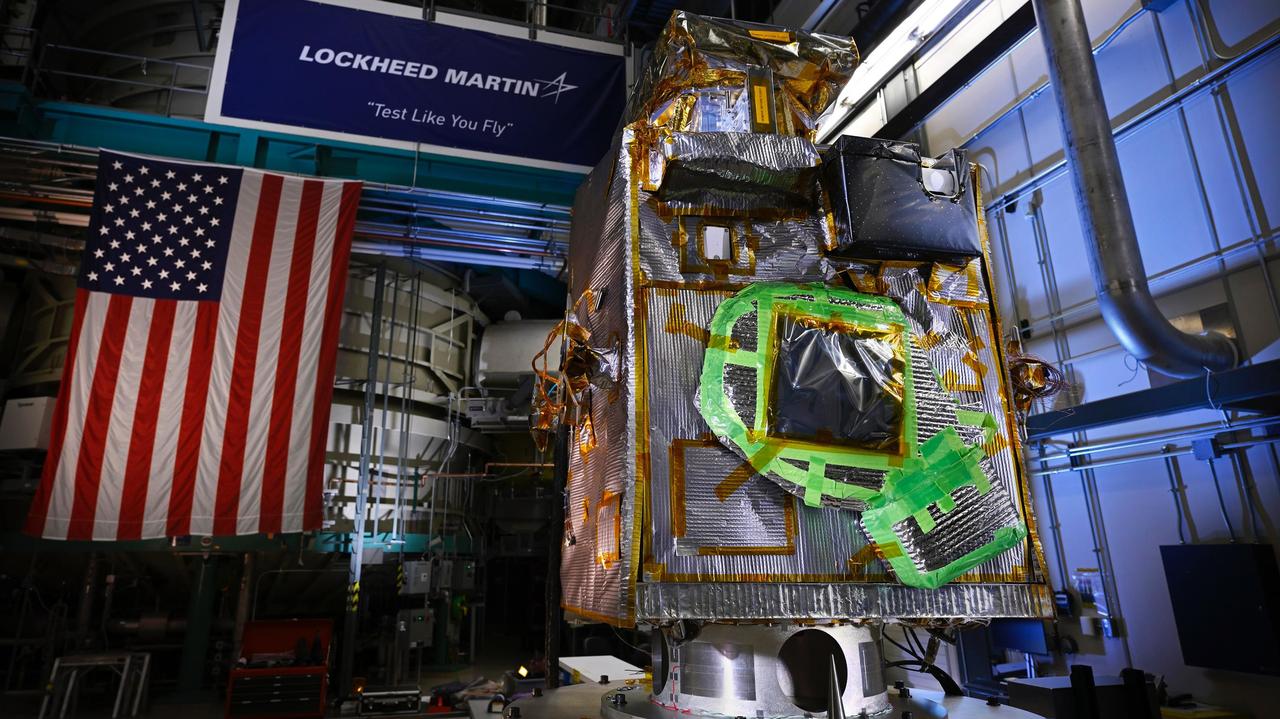
NASA's Lunar Trailblazer sits in a clean room at Lockheed Martin Space in Littleton, Colorado, shortly after being integrated with its second and final science instrument in June 2023. Called the Lunar Thermal Mapper (LTM), the instrument is visible as a black rectangular box in the upper right of the spacecraft's body. Green tape on the spacecraft will be removed before launch. Built by the University of Oxford in England and contributed by the UK Space Agency, LTM joins the High-resolution Volatiles and Minerals Moon Mapper (HVM³) that was integrated with the spacecraft late last year. Together, the instruments will enable scientists to determine the abundance, location, and form of the Moon's water. https://photojournal.jpl.nasa.gov/catalog/PIA25837
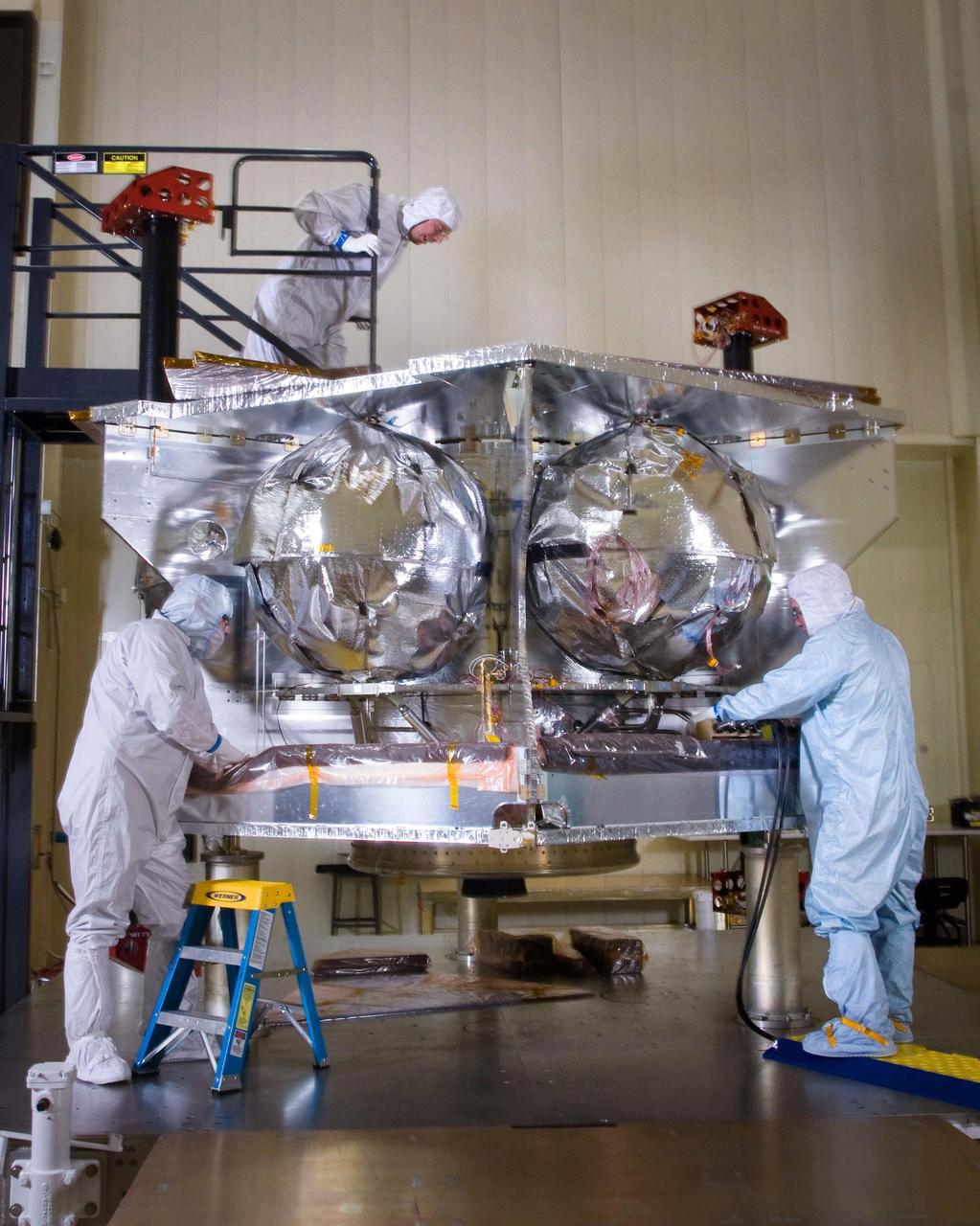
Assembly began April 1, 2010, for NASA Juno spacecraft. Workers at Lockheed Martin Space Systems in Denver, Colorado workers are readying the spacecraft propulsion module.
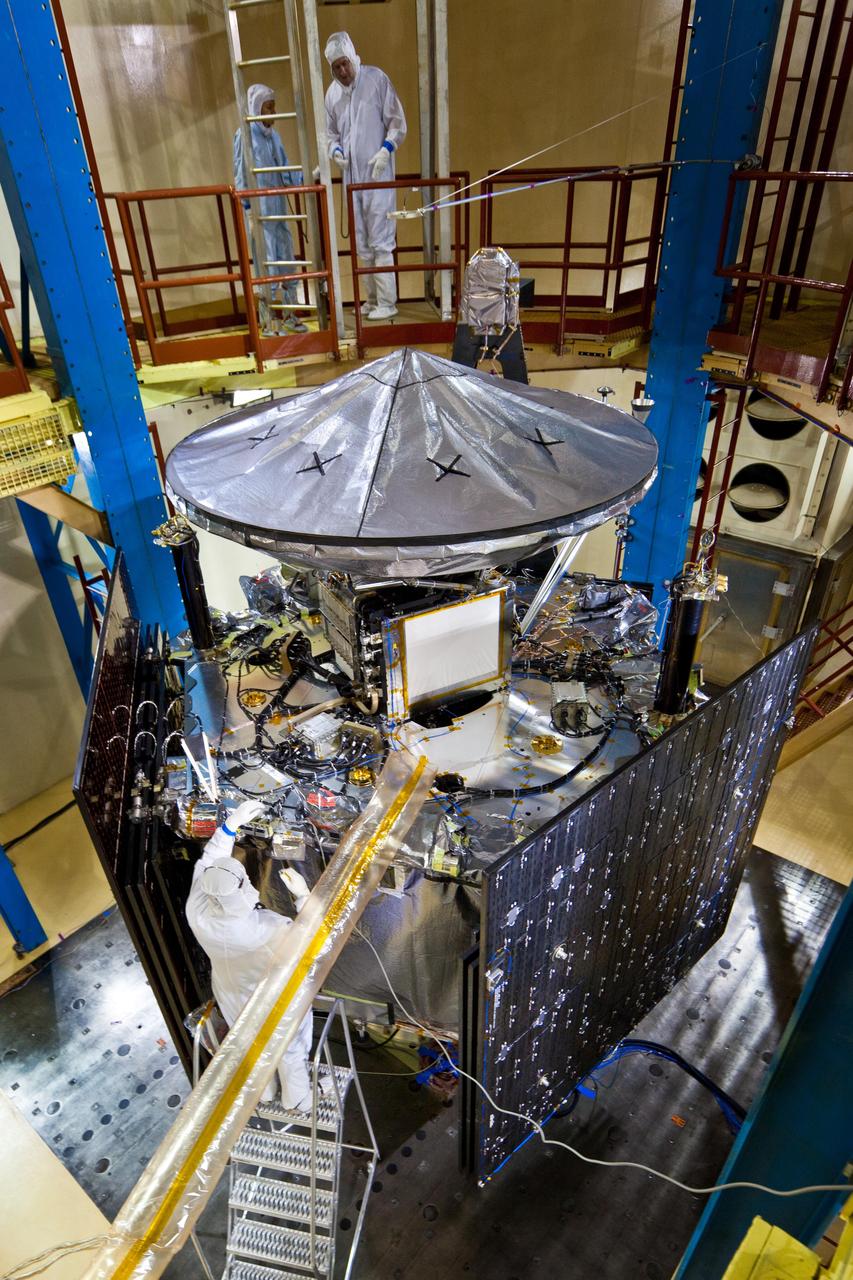
Technicians inspect NASA Juno spacecraft and its science instruments following acoustics testing at Lockheed Martin Space Systems in Denver, Colo. on Jan. 26, 2011.
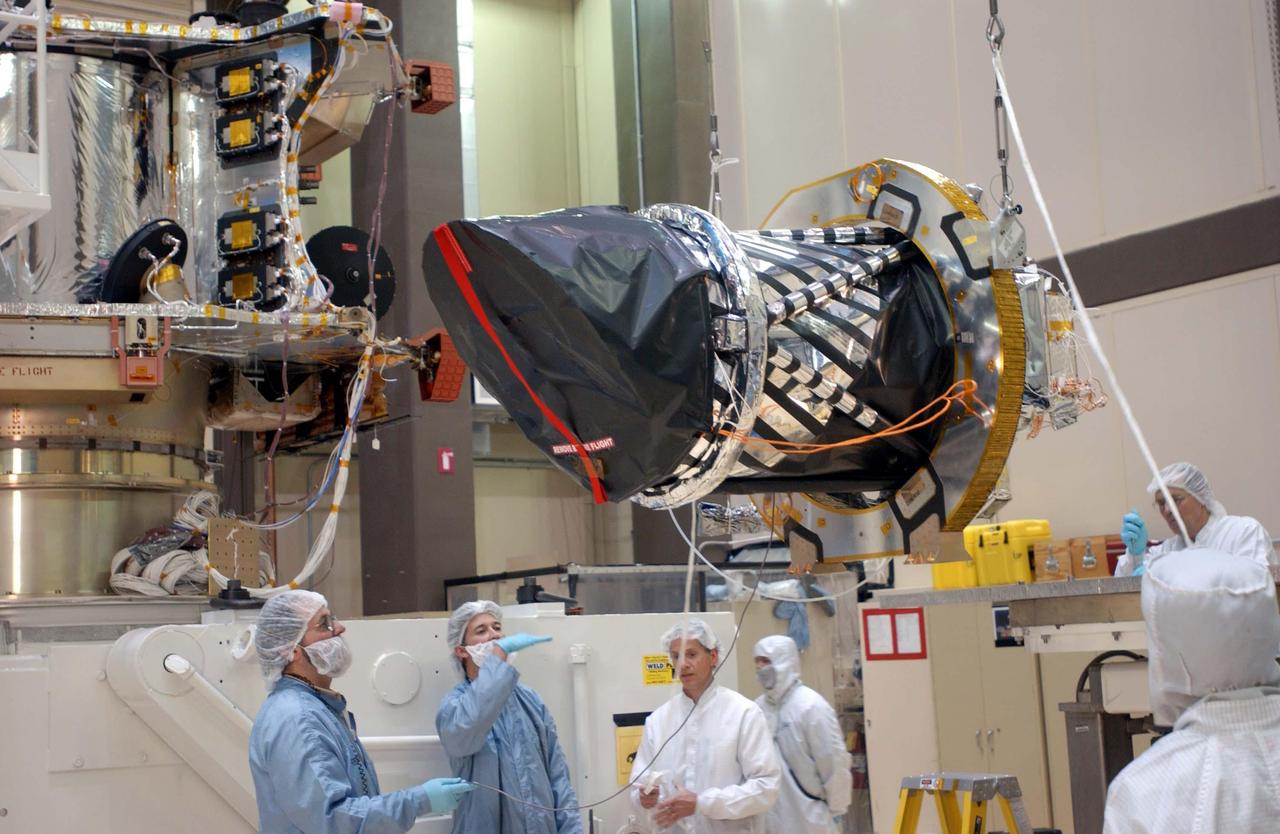
Workers at Lockheed Martin Space Systems, Denver, hoist a telescopic camera for installation onto NASA Mars Reconnaissance Orbiter spacecraft on Dec. 11, 2004.
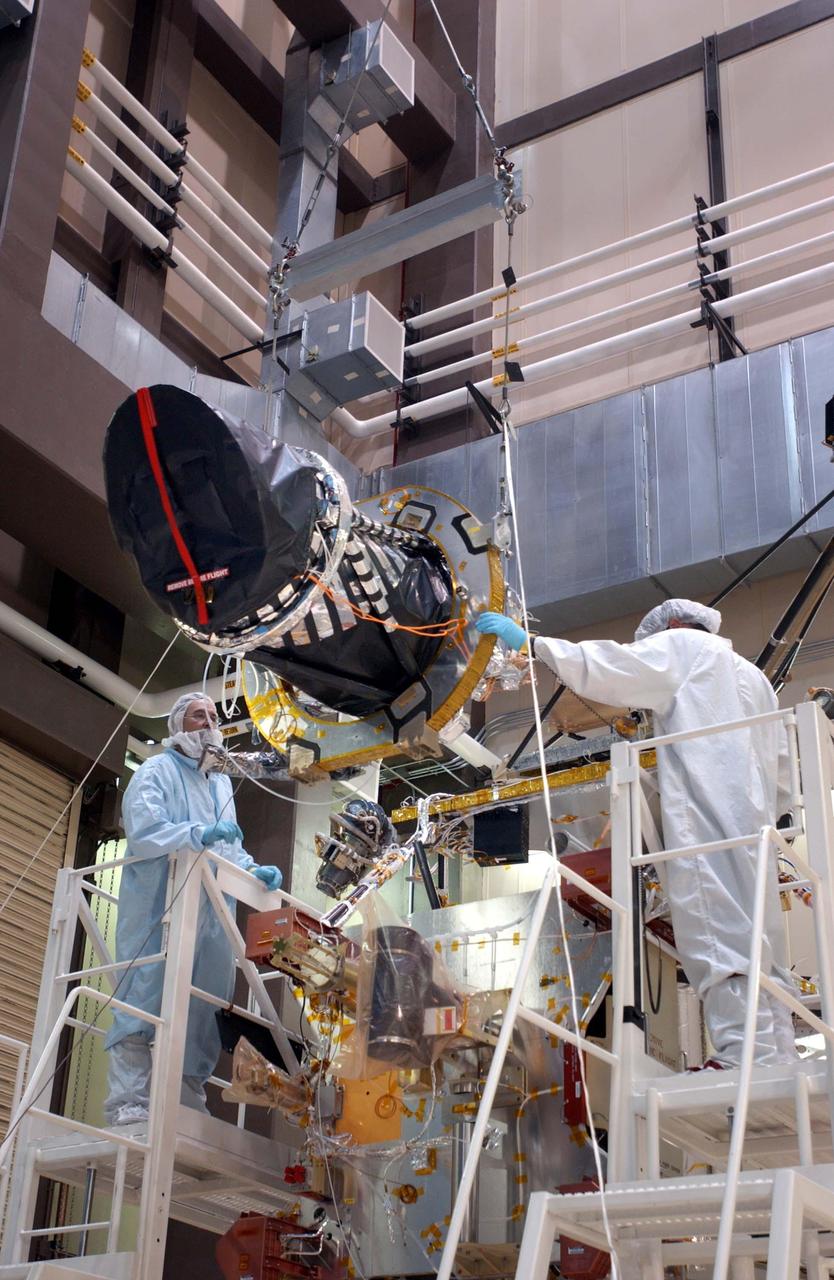
Workers at Lockheed Martin Space Systems, Denver, position a telescopic camera for installation onto NASA Mars Reconnaissance Orbiter spacecraft on Dec. 11, 2004.
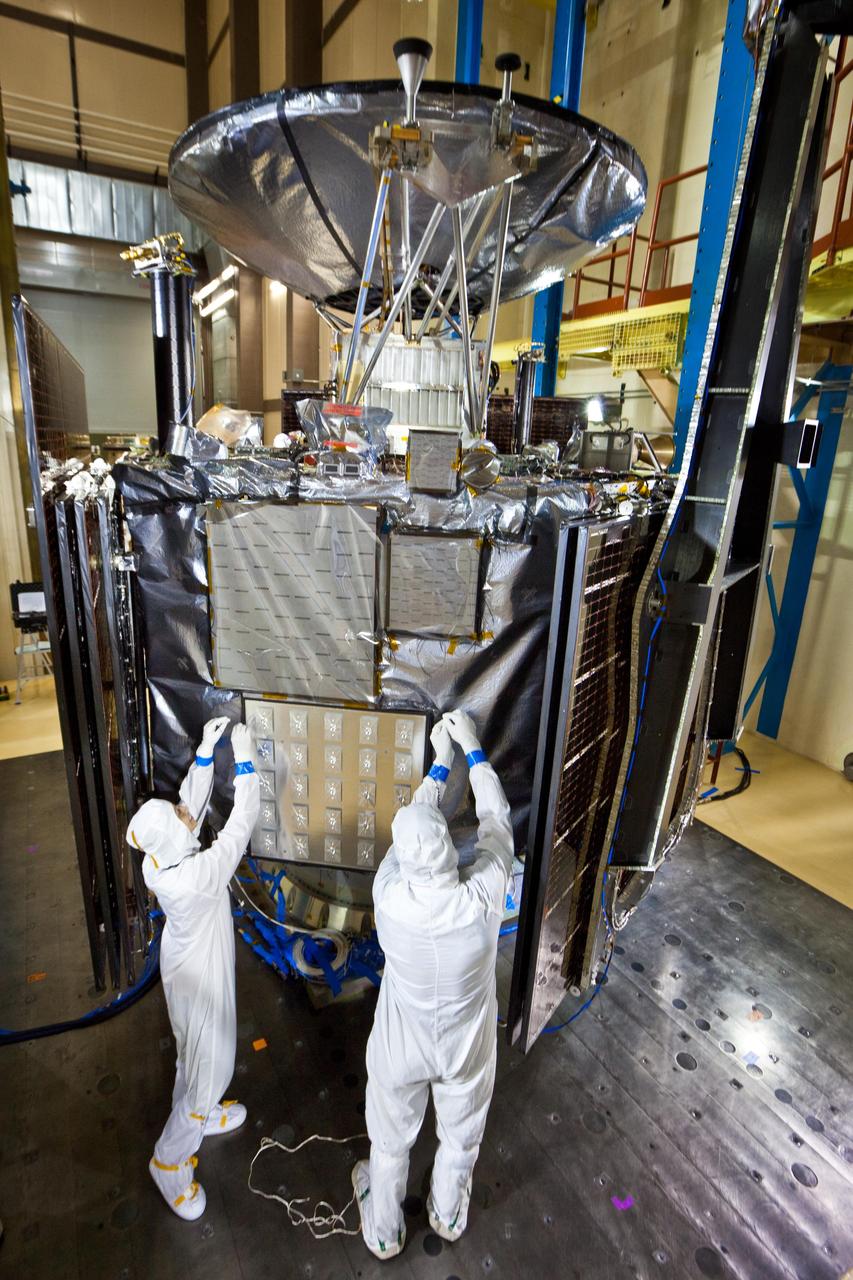
Technicians inspect NASA Juno spacecraft and its science instruments following acoustics testing at Lockheed Martin Space Systems in Denver, Colo. on Jan. 26, 2011.
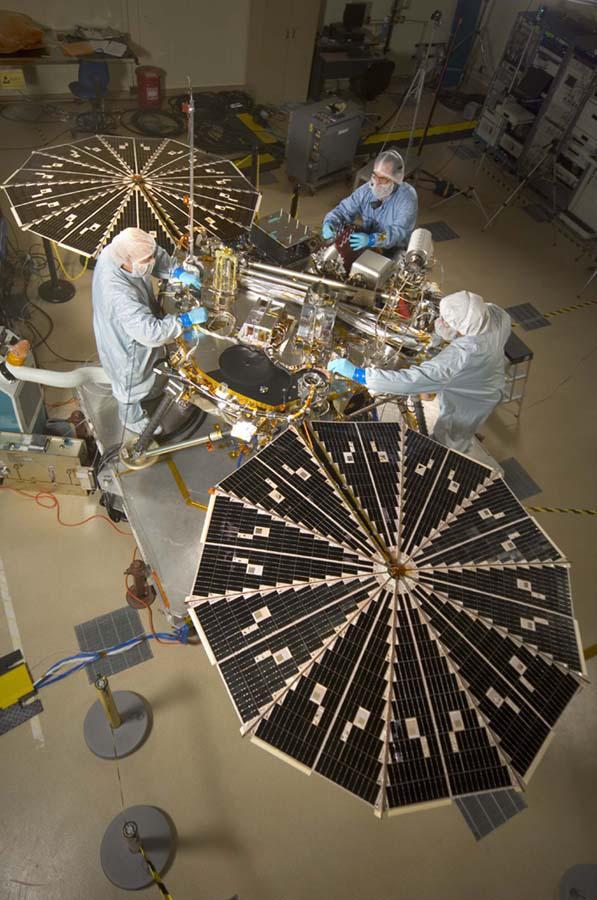
NASA next Mars-bound spacecraft, the Phoenix Mars Lander, partway through assembly and testing at Lockheed Martin Space Systems, Denver, in September 2006.
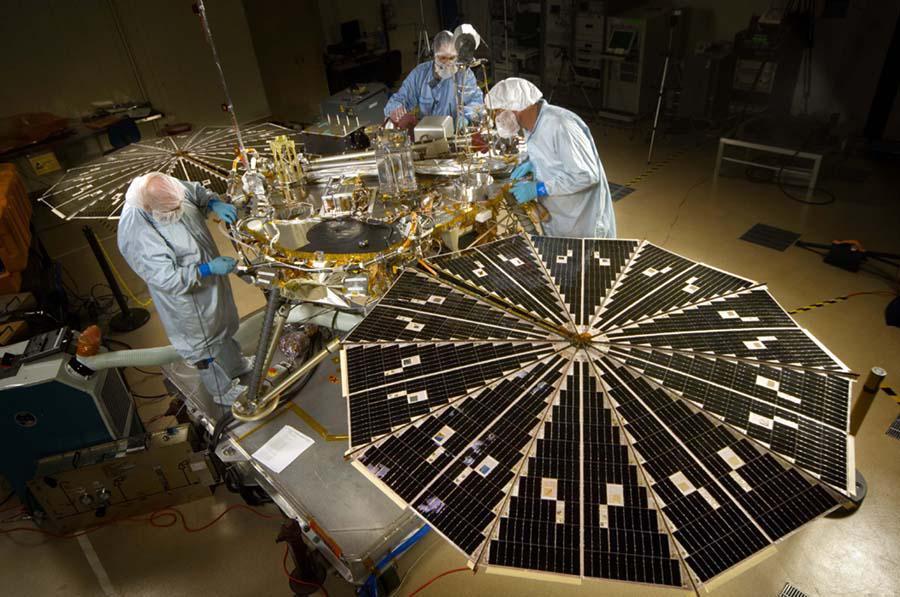
NASA next Mars-bound spacecraft, the Phoenix Mars Lander, partway through assembly and testing at Lockheed Martin Space Systems, Denver, in September 2006.
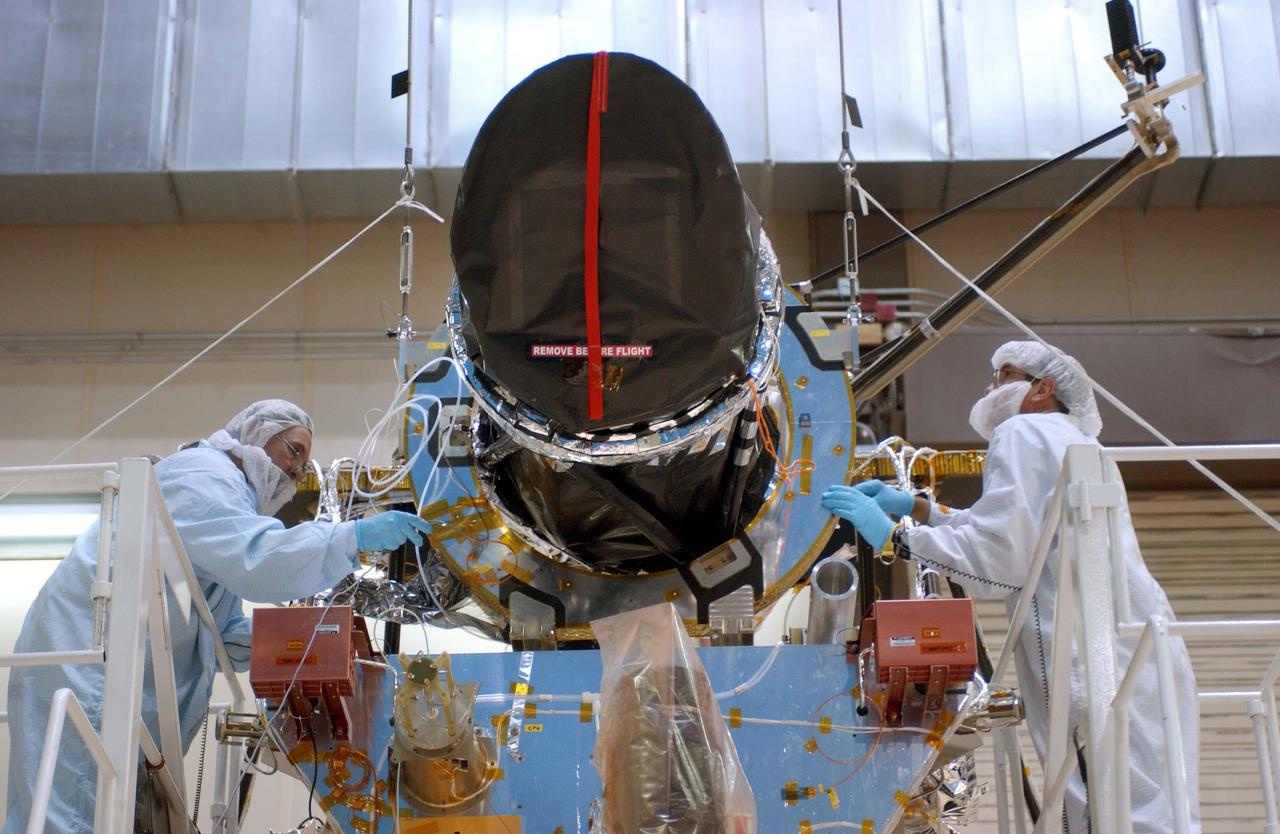
Workers at Lockheed Martin Space Systems, Denver, install a telescopic camera on NASA Mars Reconnaissance Orbiter spacecraft on Dec. 11, 2004.
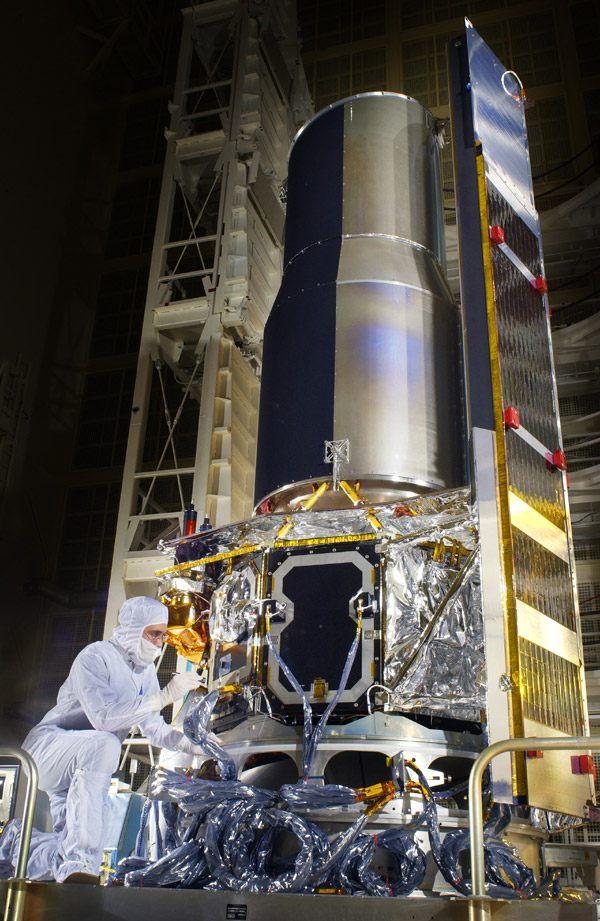
Technicians put final touches on NASA Space Infrared Telescope Facility at Lockheed Martin Aeronautics in Sunnyvale, Calif., which launched on August 25, 2003. The telescope is now known as the Spitzer Space Telescope.
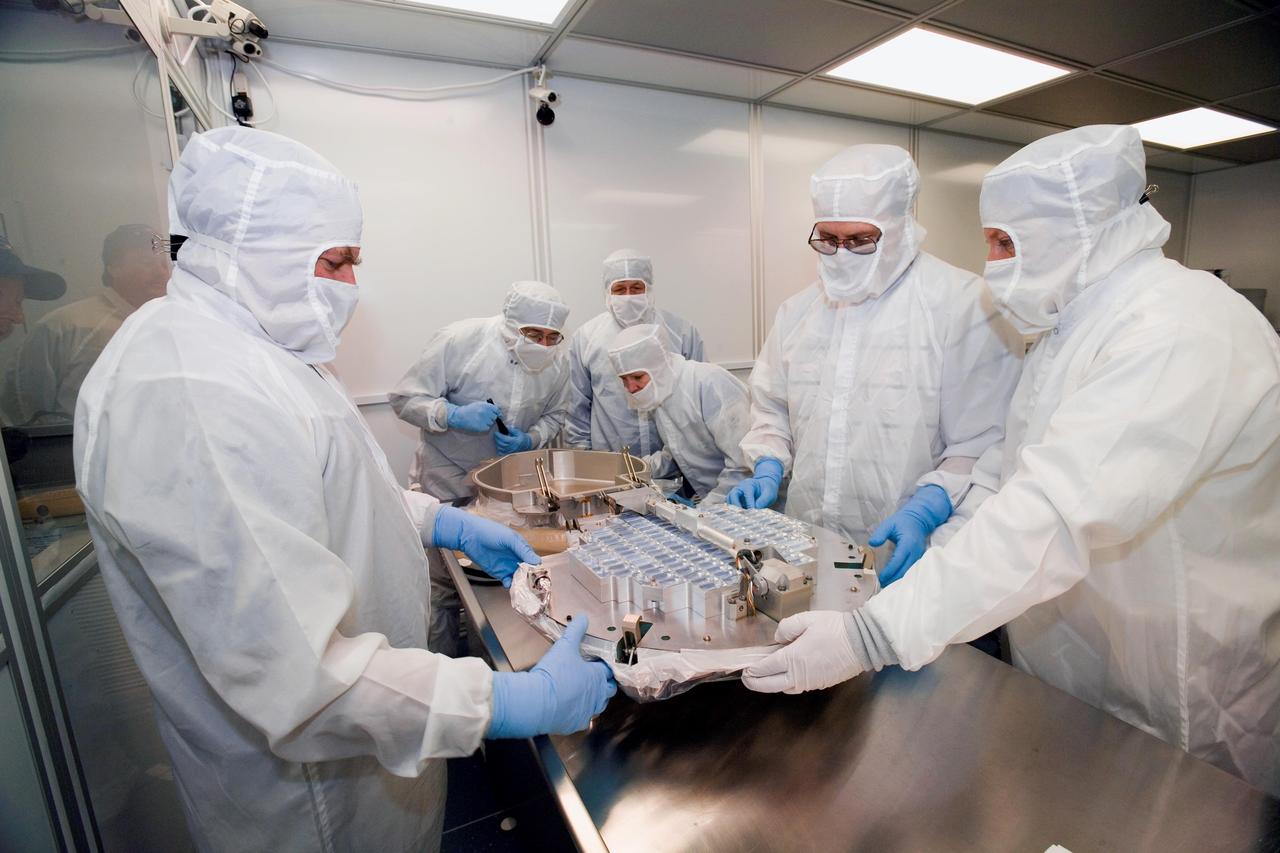
Investigators from University of Washington, Johnson Space Center, and Lockheed Martin Missiles and Space, Denver, Colorado, inspect a canister and sample collector soon after opening a container with Stardust material in a laboratory at the JSC.
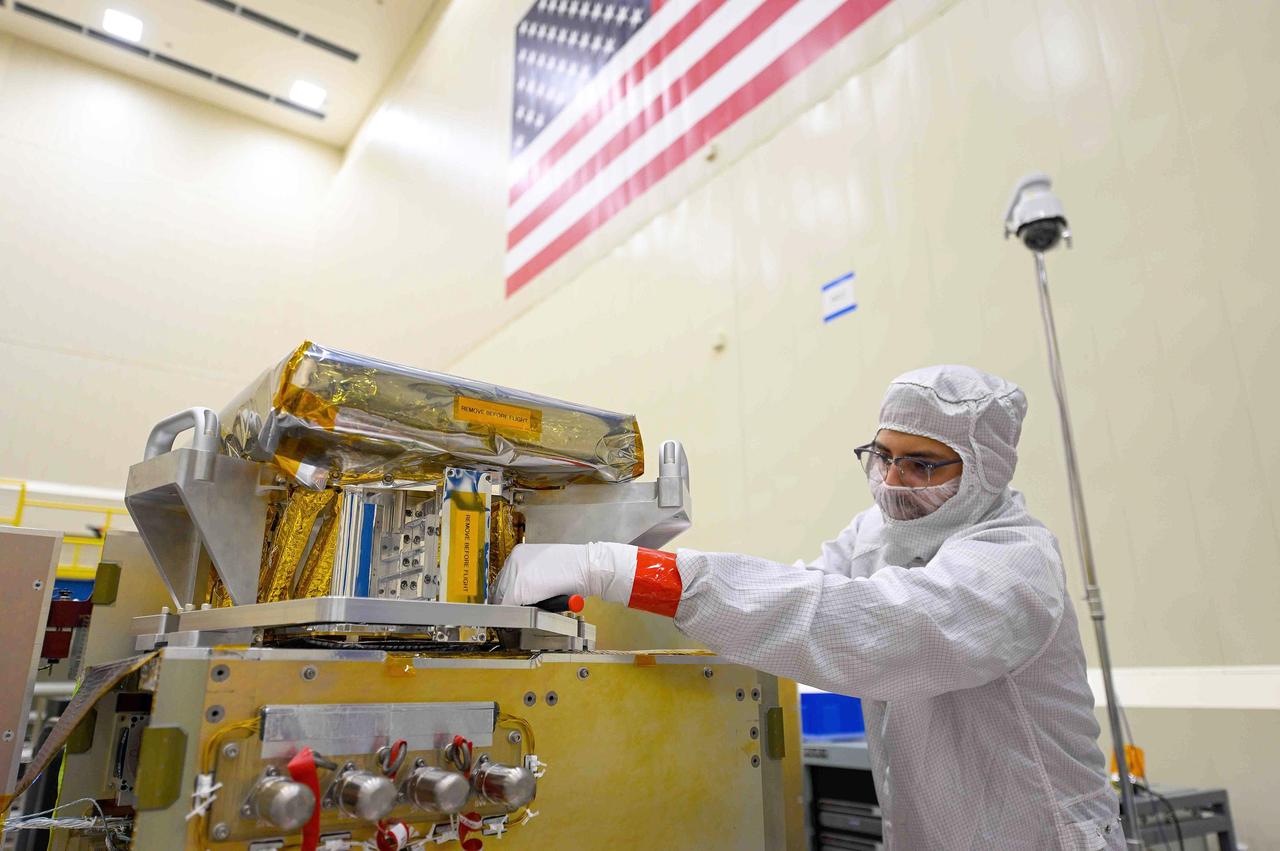
An engineer works on the High-resolution Volatiles and Minerals Moon Mapper (HVM³) for NASA's Lunar Trailblazer spacecraft in a clean room at Lockheed Martin Space in Littleton, Colorado, shortly after the instrument delivered in December 2022. HVM³ is an imaging spectrometer that was developed at NASA's Jet Propulsion Laboratory in Southern California. It was shipped from JPL to Lockheed Martin Space, where it was integrated with the spacecraft. HVM³ is one of two instruments that will be used by the mission to detect and map water on the Moon's surface to determine its abundance, location, form, and how it changes over time. Lunar Trailblazer was selected under NASA's Small Innovative Missions for Planetary Exploration (SIMPLEx) program in 2019. The Lunar Trailblazer mission is managed by JPL and its science investigation is led by Caltech in Pasadena, California. Managed for NASA by Caltech, JPL also provides system engineering, mission assurance, the HVM³ instrument, as well as navigation. Lockheed Martin Space provides the spacecraft and integrates the flight system, under contract with Caltech. SIMPLEx mission investigations are managed by the Planetary Missions Program Office at NASA's Marshall Space Flight Center in Huntsville, Alabama, as part of the Discovery Program at NASA Headquarters in Washington. The program conducts space science investigations in the Planetary Science Division of NASA's Science Mission Directorate at NASA Headquarters. https://photojournal.jpl.nasa.gov/catalog/PIA25255
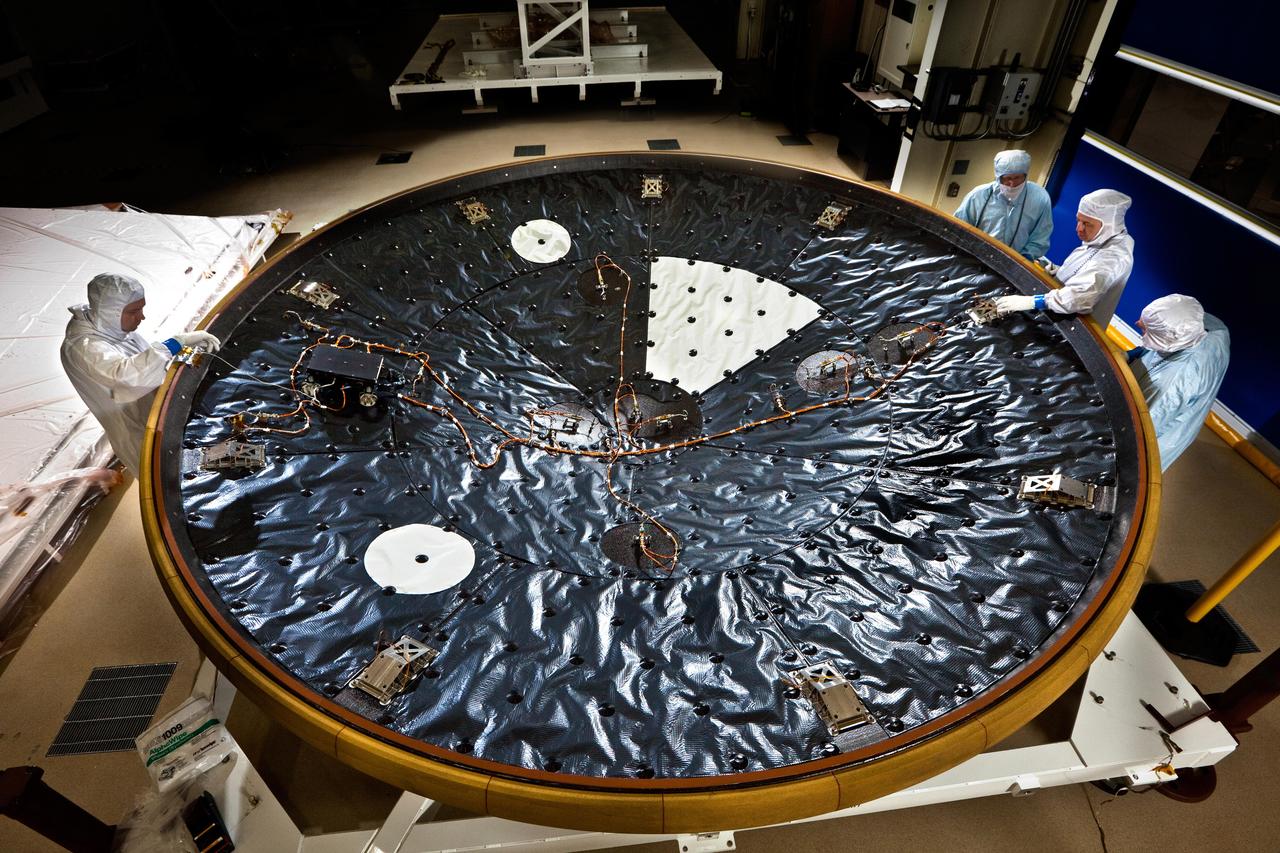
The heat shield for NASA Mars Science Laboratory is the largest ever built for a planetary mission. This image shows the heat shield being prepared at Lockheed Martin Space Systems, Denver, in April 2011.
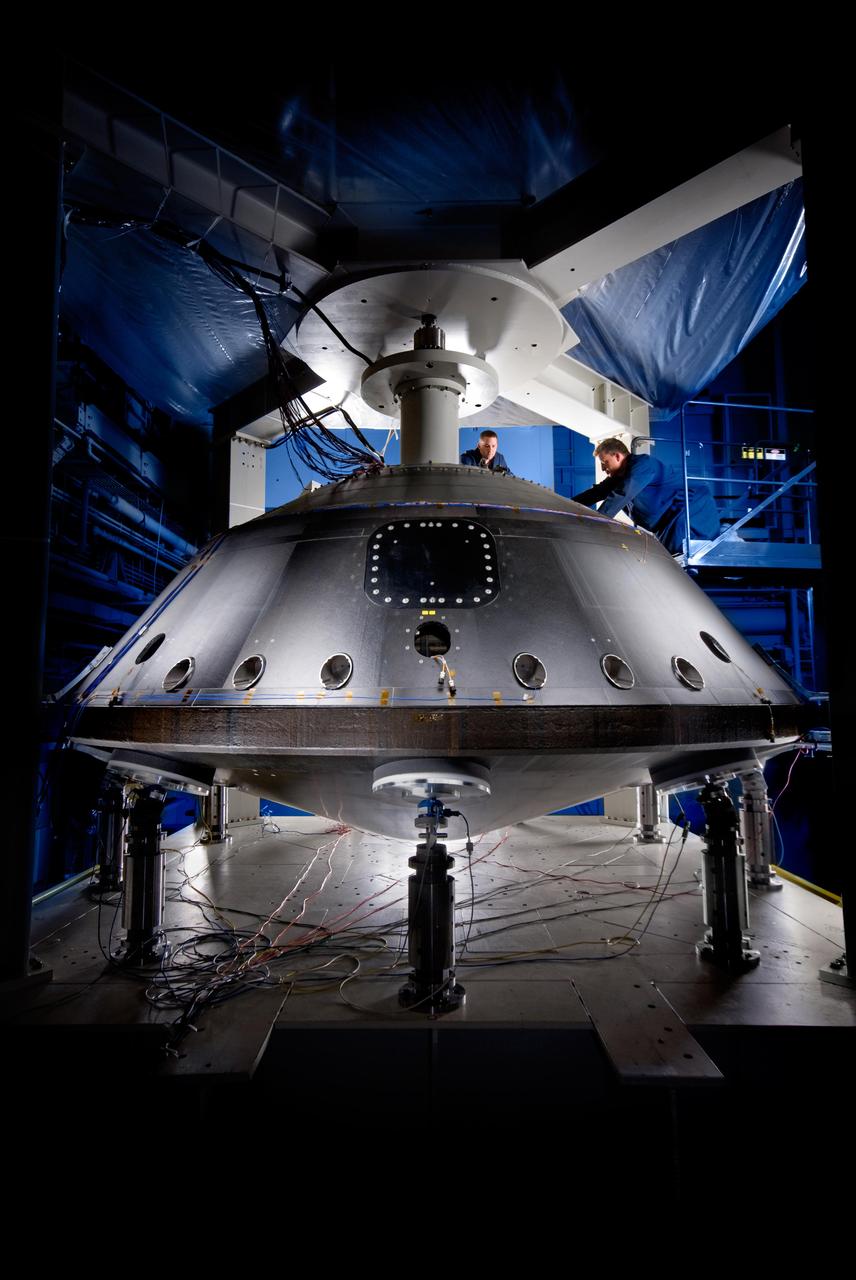
This image from July 2008 shows the aeroshell for NASA Mars Science Laboratory while it was being worked on by spacecraft technicians at Lockheed Martin Space Systems Company near Denver.
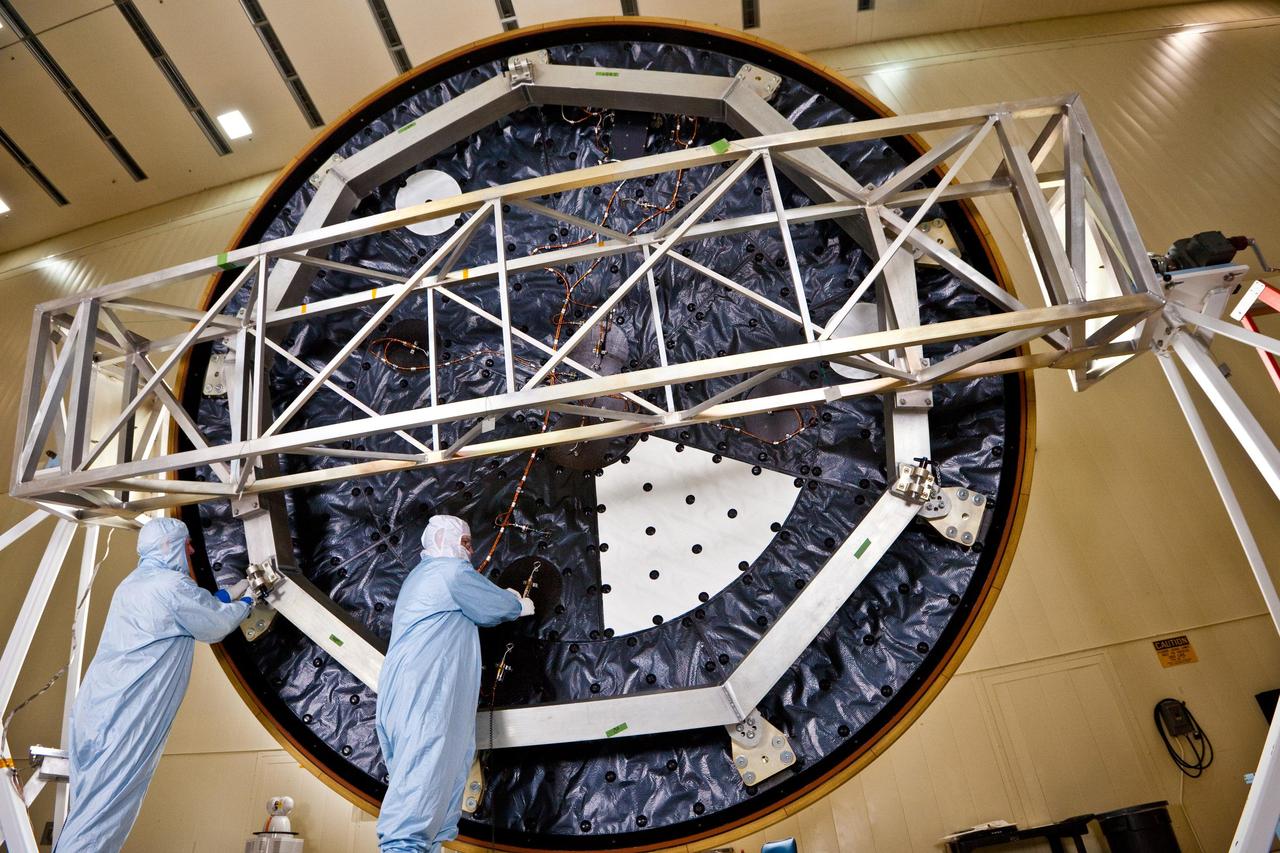
Technicians at Lockheed Martin Space Systems, Denver, prepare the heat shield for NASA Mars Science Laboratory. With a diameter of 4.5 meters nearly 15 feet, this heat shield is the largest ever built for a planetary mission.
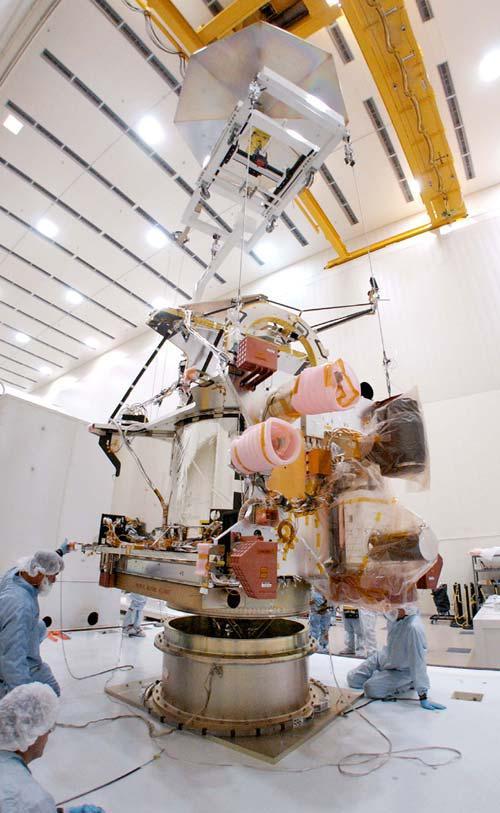
In late October 2004, NASA Mars Reconnaissance Orbiter was moved from the High Bay 100,000-class clean room at Lockheed Martin Space Systems, Denver, to the facility Reverberant Acoustic Lab.
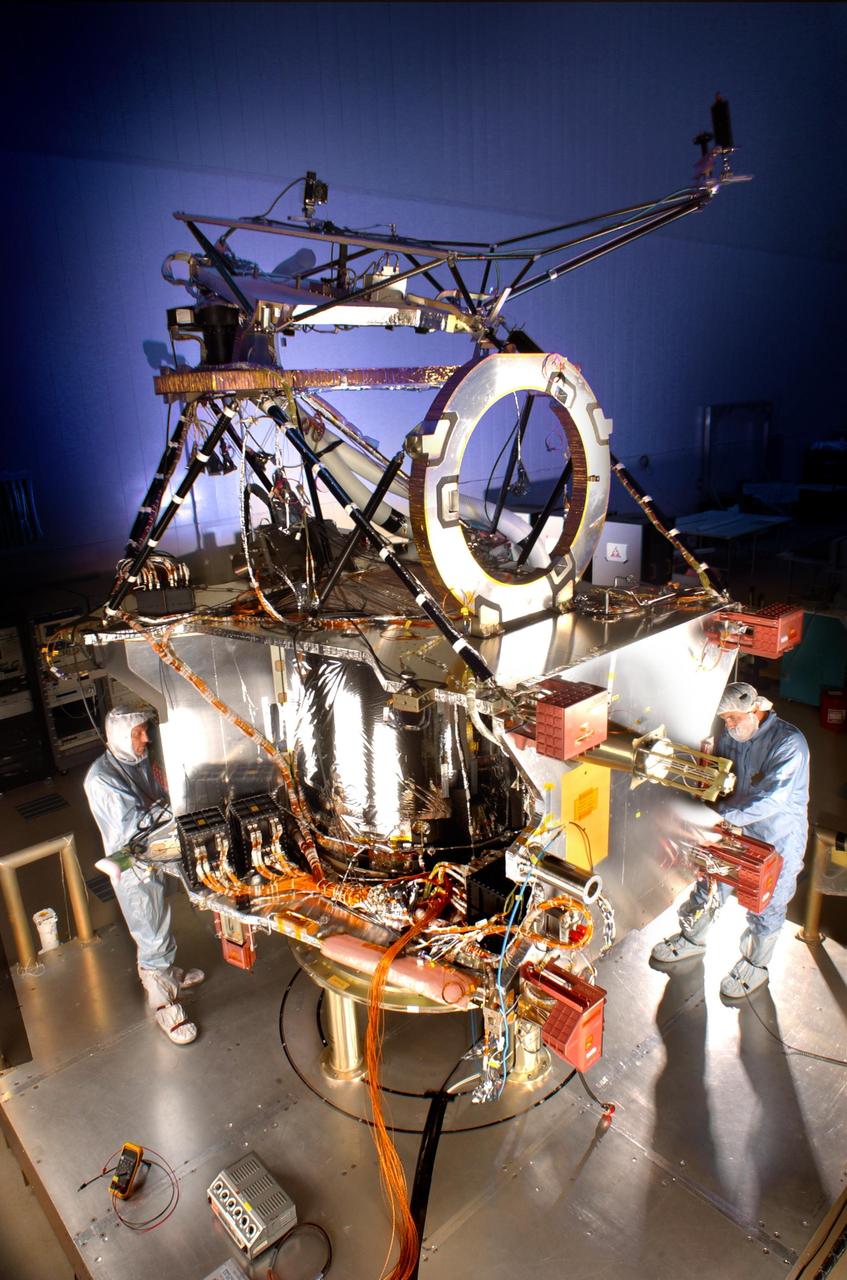
Lockheed Martin Space Systems engineer Terry Kampmann left and lead technician Jack Farmerie work on assembly and test of NASA Mars Reconnaissance Orbiter spacecraft bus in a cleanroom at the company Denver facility.
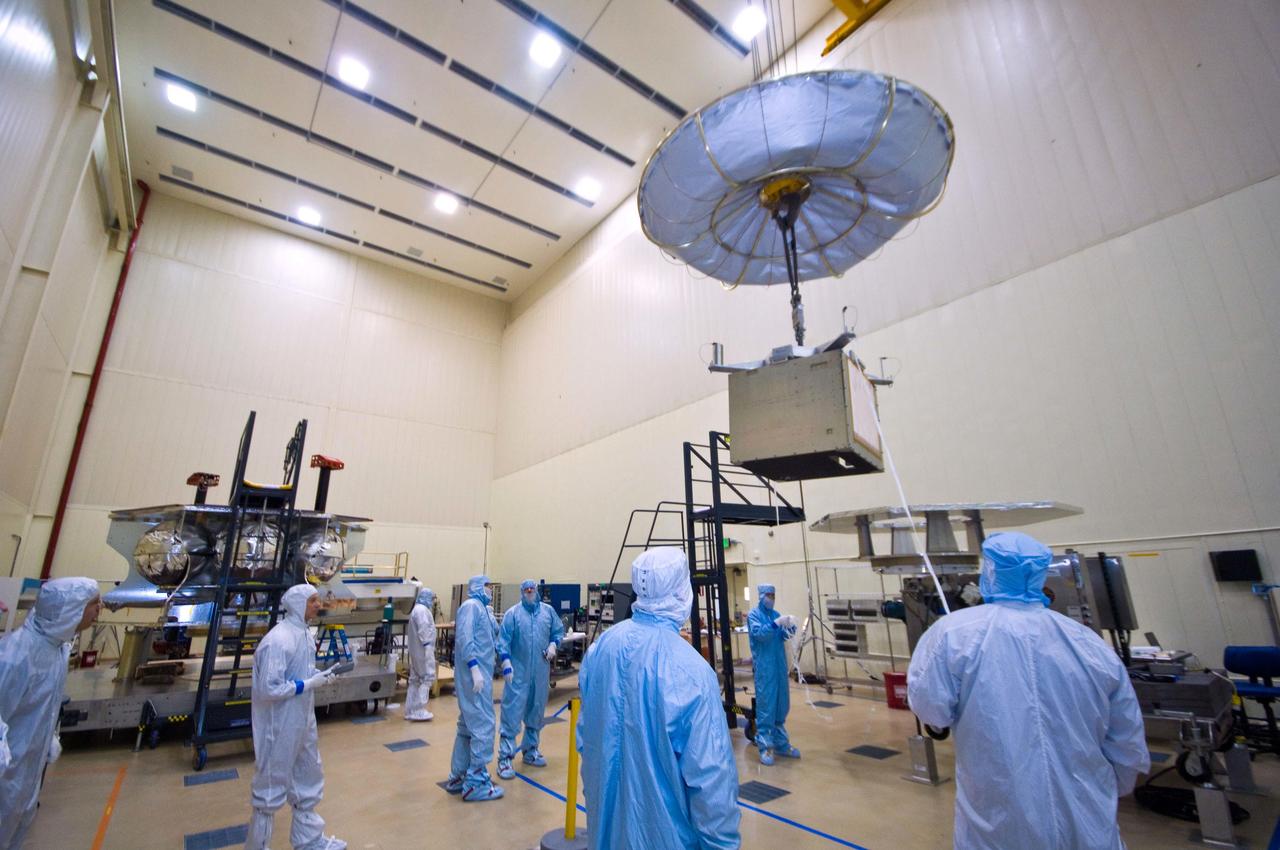
Assembly began April 1, 2010, for NASA Juno spacecraft. Workers at Lockheed Martin Space Systems in Denver, Colorado are moving into place the vault that will protect the spacecraft sensitive electronics from Jupiter intense radiation belts.
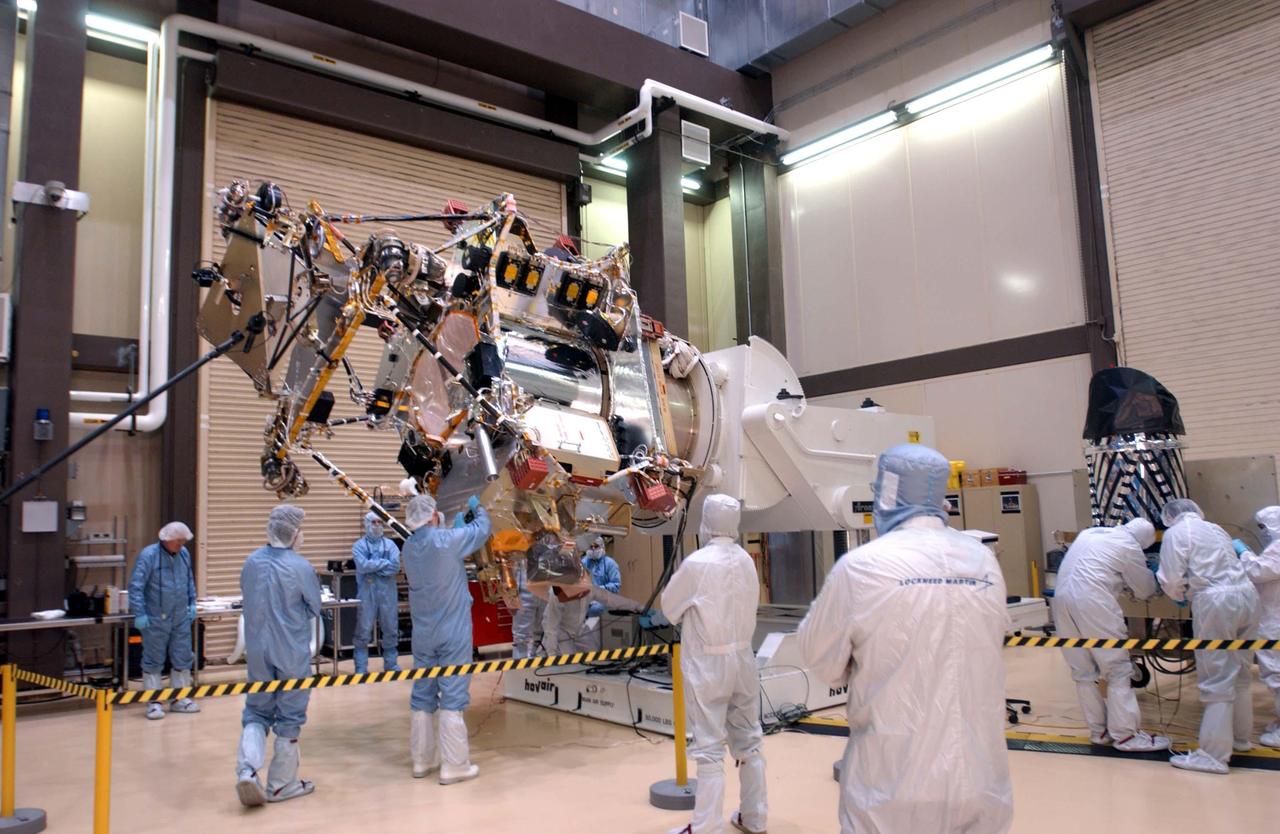
A telescopic camera called the High Resolution Imaging Science Experiment, or HiRISE, right was installed onto the main structure of NASA Mars Reconnaissance Orbiter left on Dec. 11, 2004 at Lockheed Martin Space Systems, Denver.
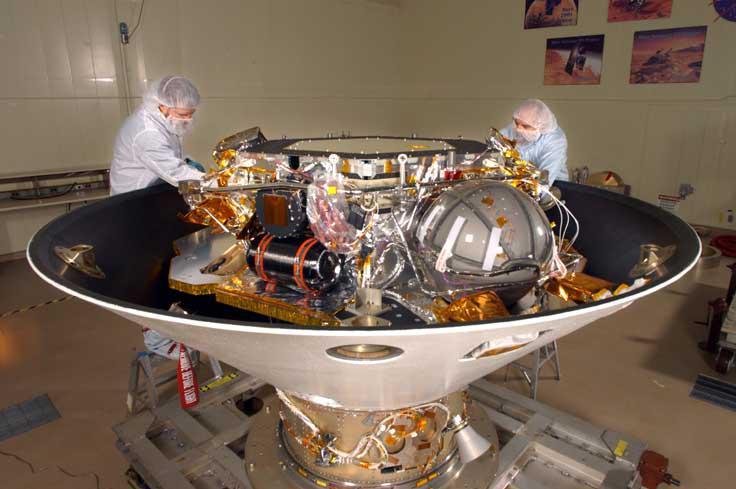
The Phoenix lander, housed in a 100,000-class clean room at Lockheed Martin Space Systems facilities near Denver, Colo. Shown here, the lander is contained inside the backshell portion of the aeroshell with the heat shield removed.
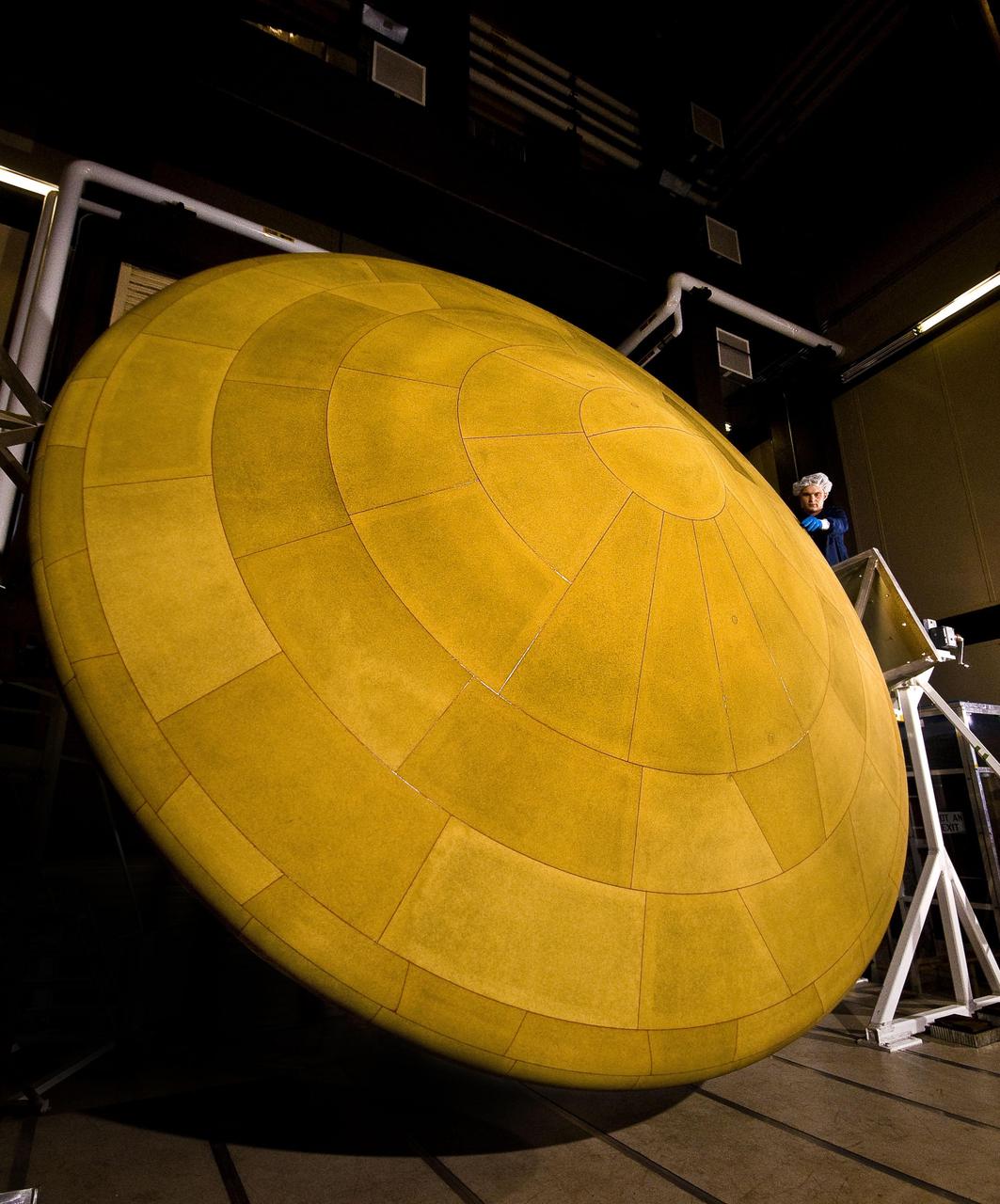
This image shows NASA Mars Science Laboratory heat shield, and a spacecraft worker at Lockheed Martin Space Systems, Denver. It is the largest heat shield ever built for descending through the atmosphere of any planet.
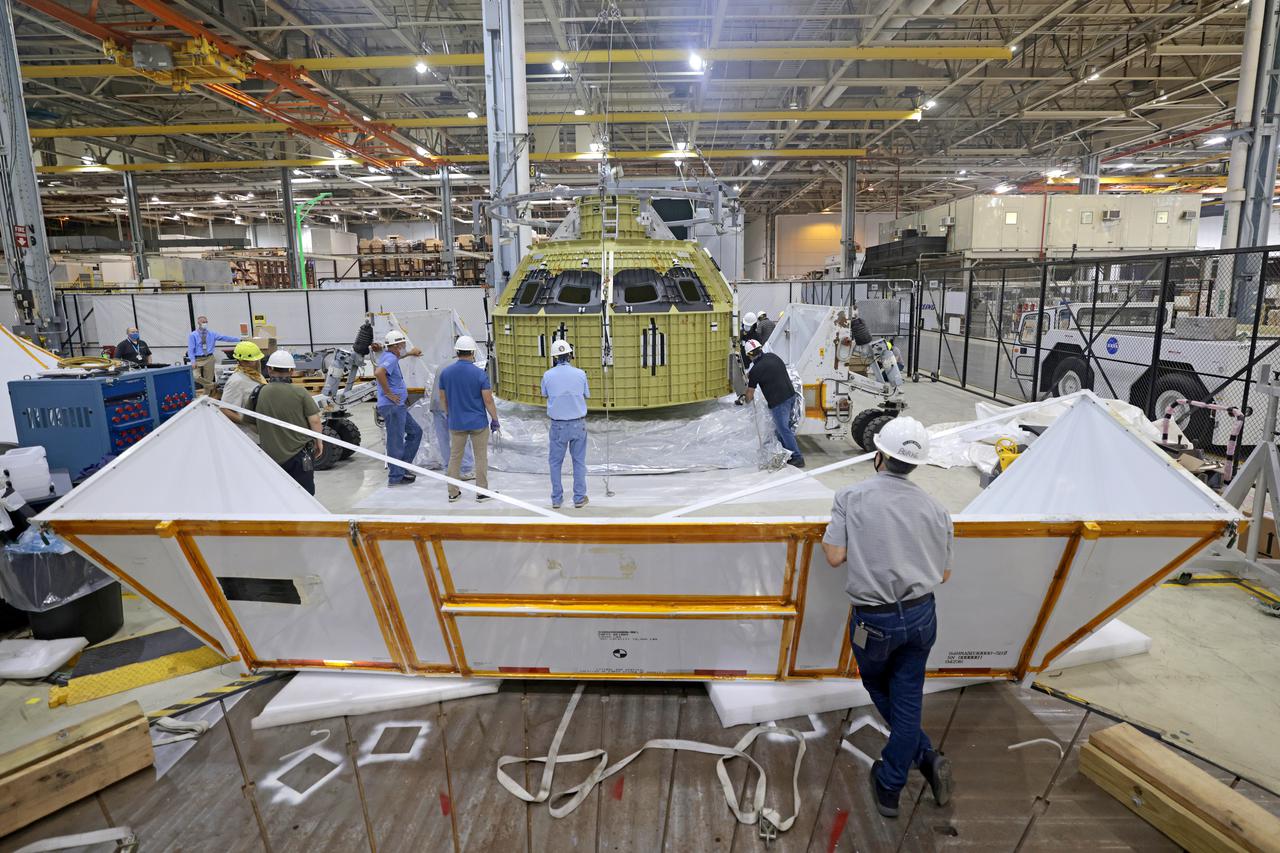
Technician’s at NASA’s Michoud Assembly Facility in New Orleans prepared the newly-welded Artemis III mission Orion pressure vessel for shipment to NASA’s Kennedy Space Center’s in Florida, where it later arrived on October 15 at Kennedy’s Neil A. Armstrong Operations and Checkout Building. The pressure vessel, which was joined together using state-of-the-art welding by technicians from lead contractor Lockheed Martin, is the Orion crew module primary structure – the core upon which all other elements of Orion’s crew module are integrated. The structure is a critical element for crew as it holds the pressurized atmosphere astronauts breathe and work in while in the vacuum of deep space. Once transported to Kennedy’s Vehicle Assembly Building high bay, teams will begin integration of the pressure vessel with the Orion spacecraft crew module adapter and other assembly. Photographed on Wednesday, October 13, 2021. Image credit: NASA/Michael DeMocker
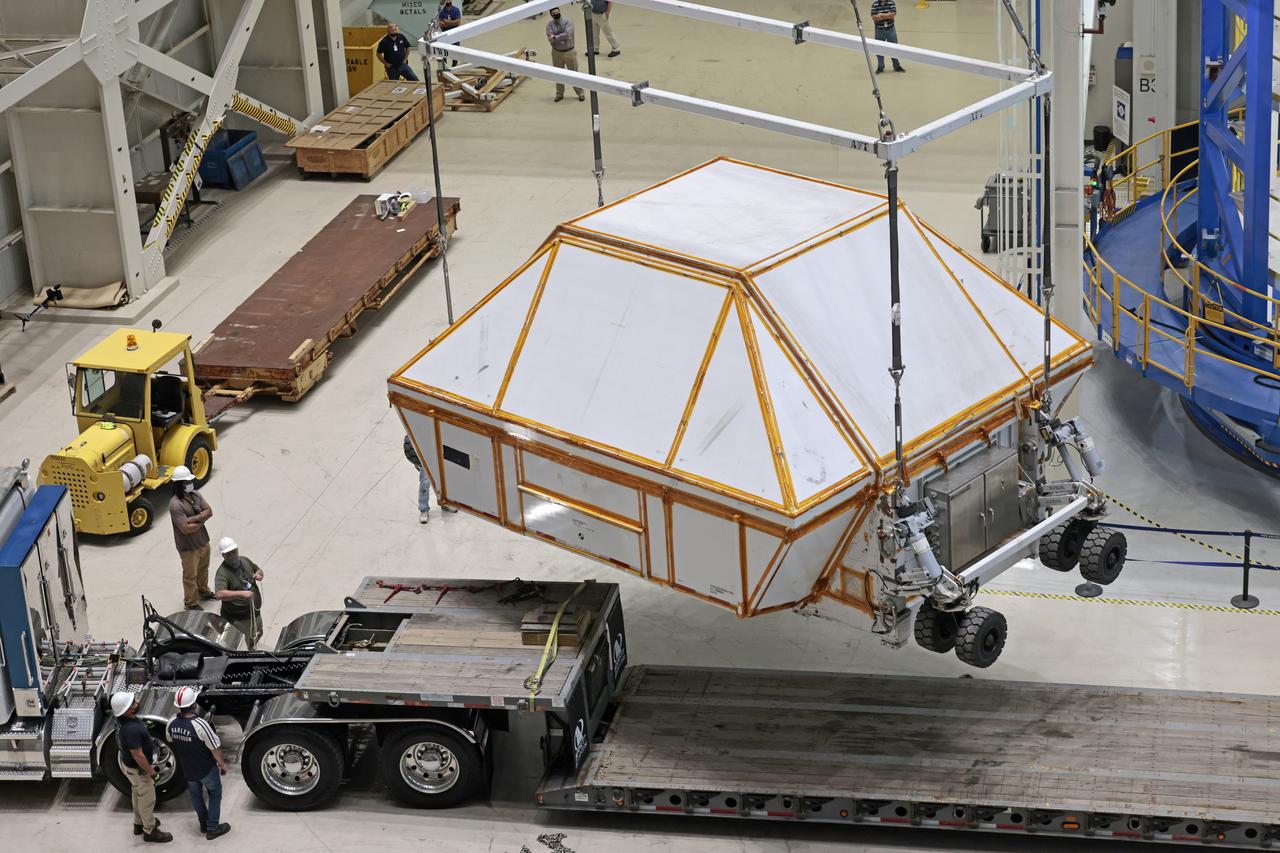
Technician’s at NASA’s Michoud Assembly Facility in New Orleans prepared the newly-welded Artemis III mission Orion pressure vessel for shipment to NASA’s Kennedy Space Center’s in Florida, where it later arrived on October 15 at Kennedy’s Neil A. Armstrong Operations and Checkout Building. The pressure vessel, which was joined together using state-of-the-art welding by technicians from lead contractor Lockheed Martin, is the Orion crew module primary structure – the core upon which all other elements of Orion’s crew module are integrated. The structure is a critical element for crew as it holds the pressurized atmosphere astronauts breathe and work in while in the vacuum of deep space. Once transported to Kennedy’s Vehicle Assembly Building high bay, teams will begin integration of the pressure vessel with the Orion spacecraft crew module adapter and other assembly. Photographed on Wednesday, October 13, 2021. Image credit: NASA/Michael DeMocker
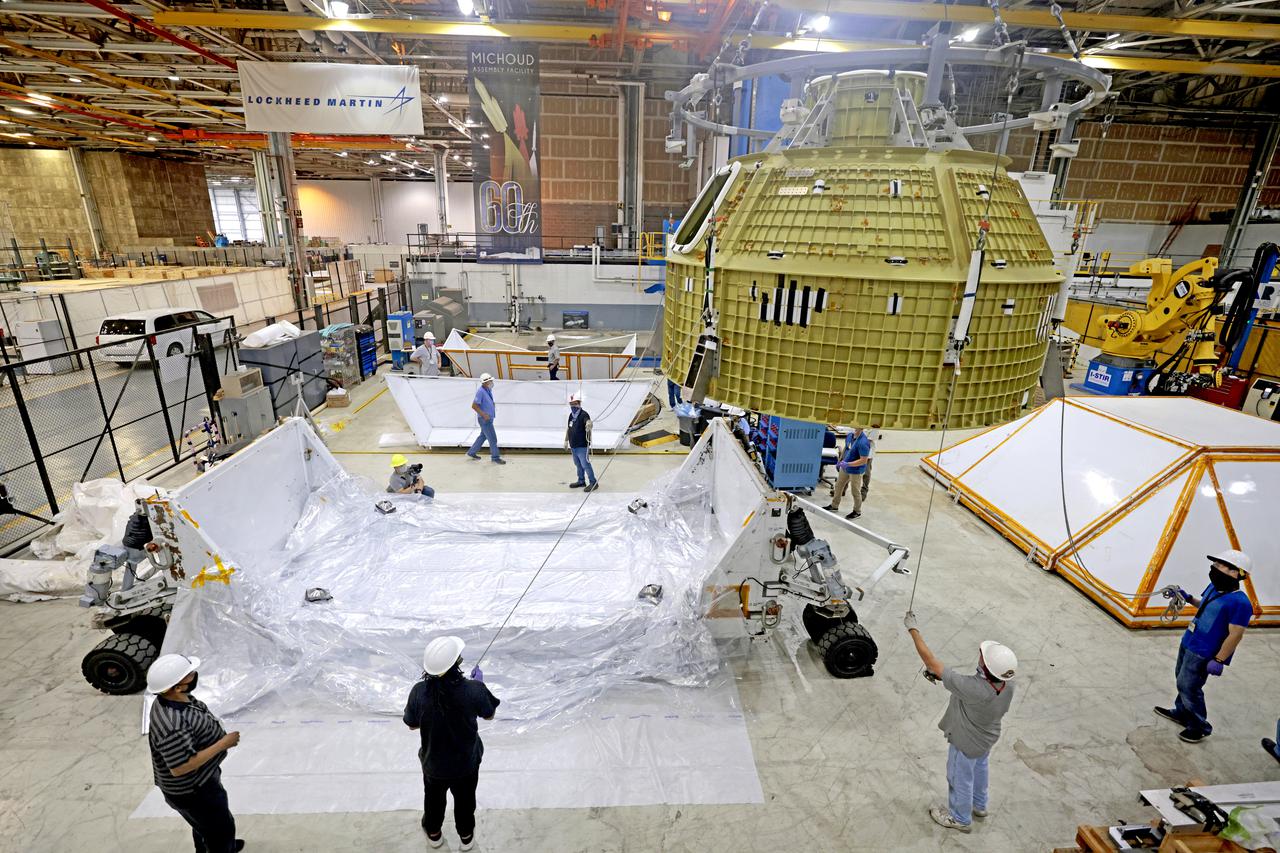
Technician’s at NASA’s Michoud Assembly Facility in New Orleans prepared the newly-welded Artemis III mission Orion pressure vessel for shipment to NASA’s Kennedy Space Center’s in Florida, where it later arrived on October 15 at Kennedy’s Neil A. Armstrong Operations and Checkout Building. The pressure vessel, which was joined together using state-of-the-art welding by technicians from lead contractor Lockheed Martin, is the Orion crew module primary structure – the core upon which all other elements of Orion’s crew module are integrated. The structure is a critical element for crew as it holds the pressurized atmosphere astronauts breathe and work in while in the vacuum of deep space. Once transported to Kennedy’s Vehicle Assembly Building high bay, teams will begin integration of the pressure vessel with the Orion spacecraft crew module adapter and other assembly. Photographed on Wednesday, October 13, 2021. Image credit: NASA/Michael DeMocker
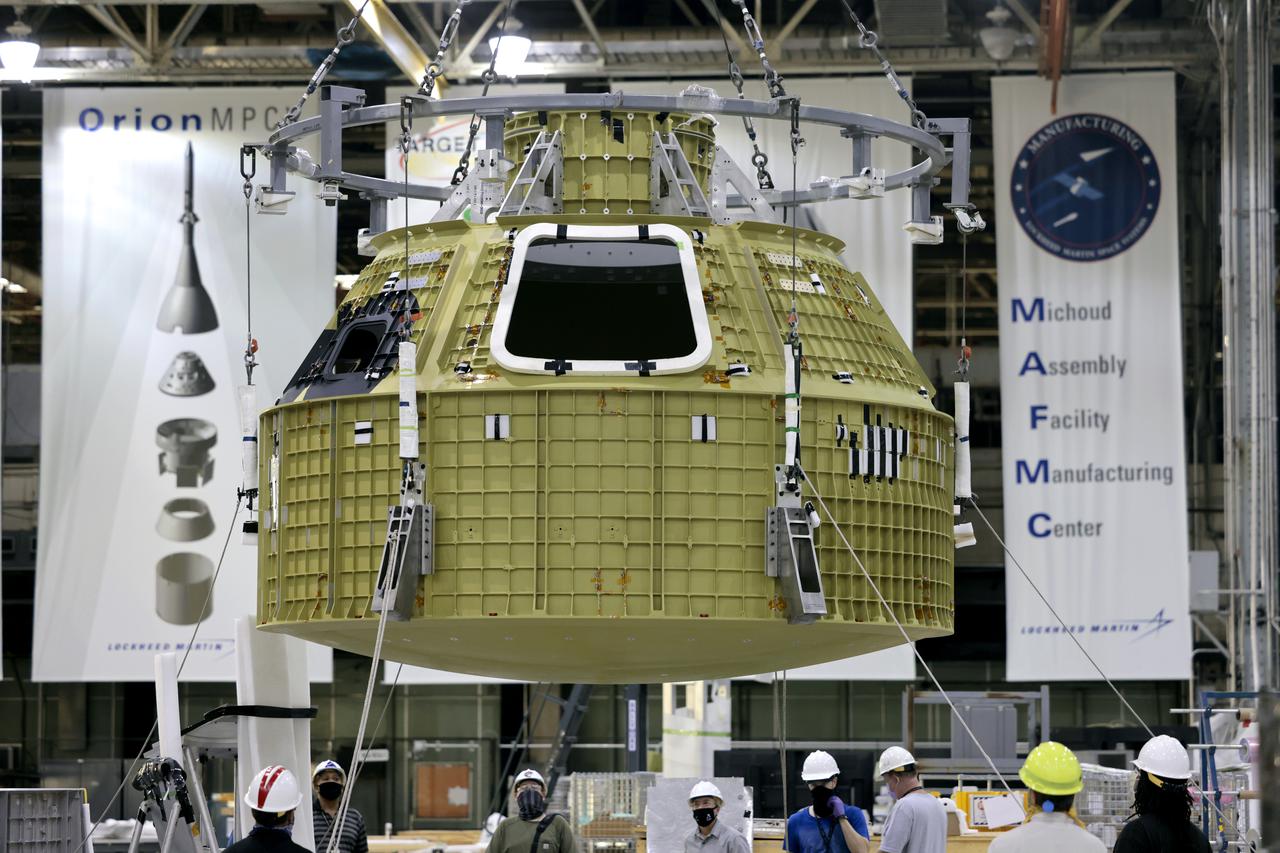
Technician’s at NASA’s Michoud Assembly Facility in New Orleans prepared the newly-welded Artemis III mission Orion pressure vessel for shipment to NASA’s Kennedy Space Center’s in Florida, where it later arrived on October 15 at Kennedy’s Neil A. Armstrong Operations and Checkout Building. The pressure vessel, which was joined together using state-of-the-art welding by technicians from lead contractor Lockheed Martin, is the Orion crew module primary structure – the core upon which all other elements of Orion’s crew module are integrated. The structure is a critical element for crew as it holds the pressurized atmosphere astronauts breathe and work in while in the vacuum of deep space. Once transported to Kennedy’s Vehicle Assembly Building high bay, teams will begin integration of the pressure vessel with the Orion spacecraft crew module adapter and other assembly. Photographed on Wednesday, October 13, 2021. Image credit: NASA/Michael DeMocker
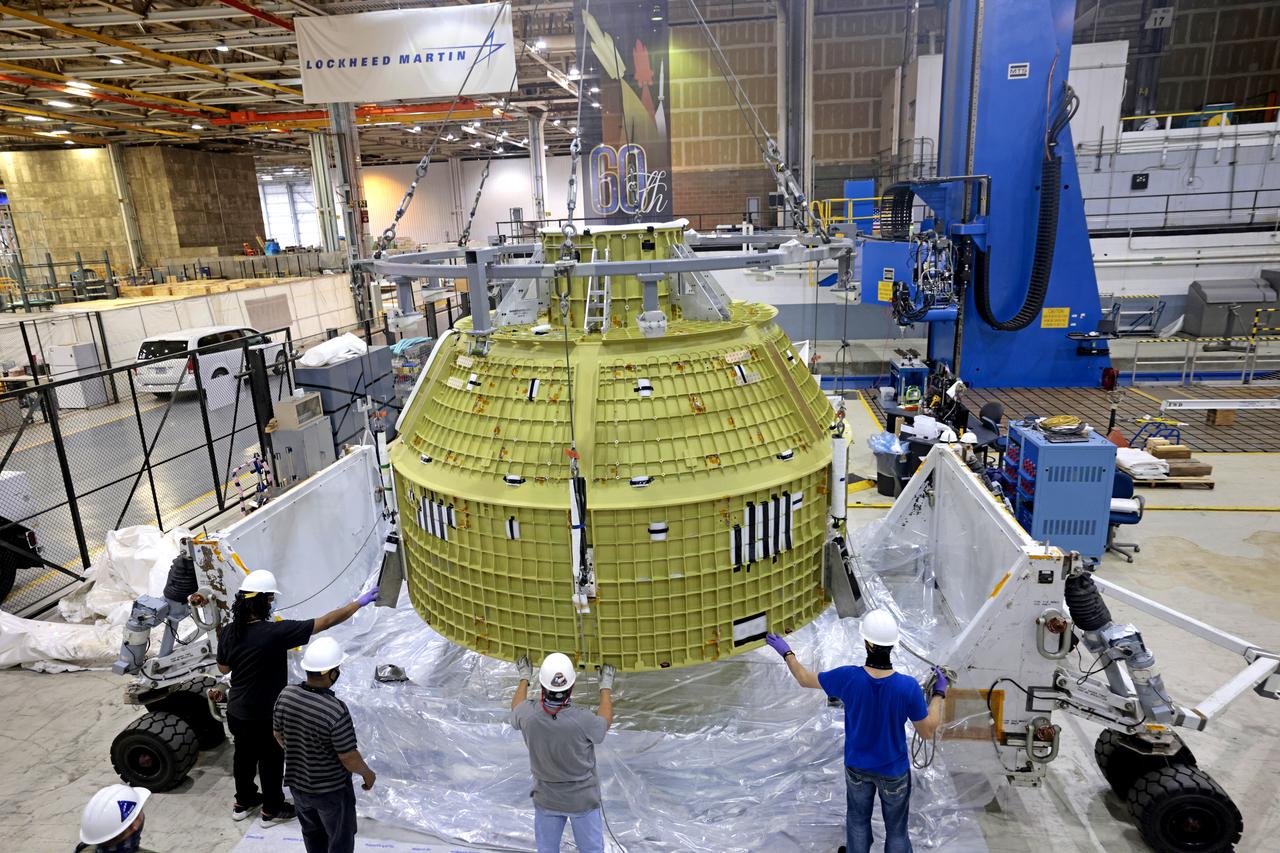
Technician’s at NASA’s Michoud Assembly Facility in New Orleans prepared the newly-welded Artemis III mission Orion pressure vessel for shipment to NASA’s Kennedy Space Center’s in Florida, where it later arrived on October 15 at Kennedy’s Neil A. Armstrong Operations and Checkout Building. The pressure vessel, which was joined together using state-of-the-art welding by technicians from lead contractor Lockheed Martin, is the Orion crew module primary structure – the core upon which all other elements of Orion’s crew module are integrated. The structure is a critical element for crew as it holds the pressurized atmosphere astronauts breathe and work in while in the vacuum of deep space. Once transported to Kennedy’s Vehicle Assembly Building high bay, teams will begin integration of the pressure vessel with the Orion spacecraft crew module adapter and other assembly. Photographed on Wednesday, October 13, 2021. Image credit: NASA/Michael DeMocker
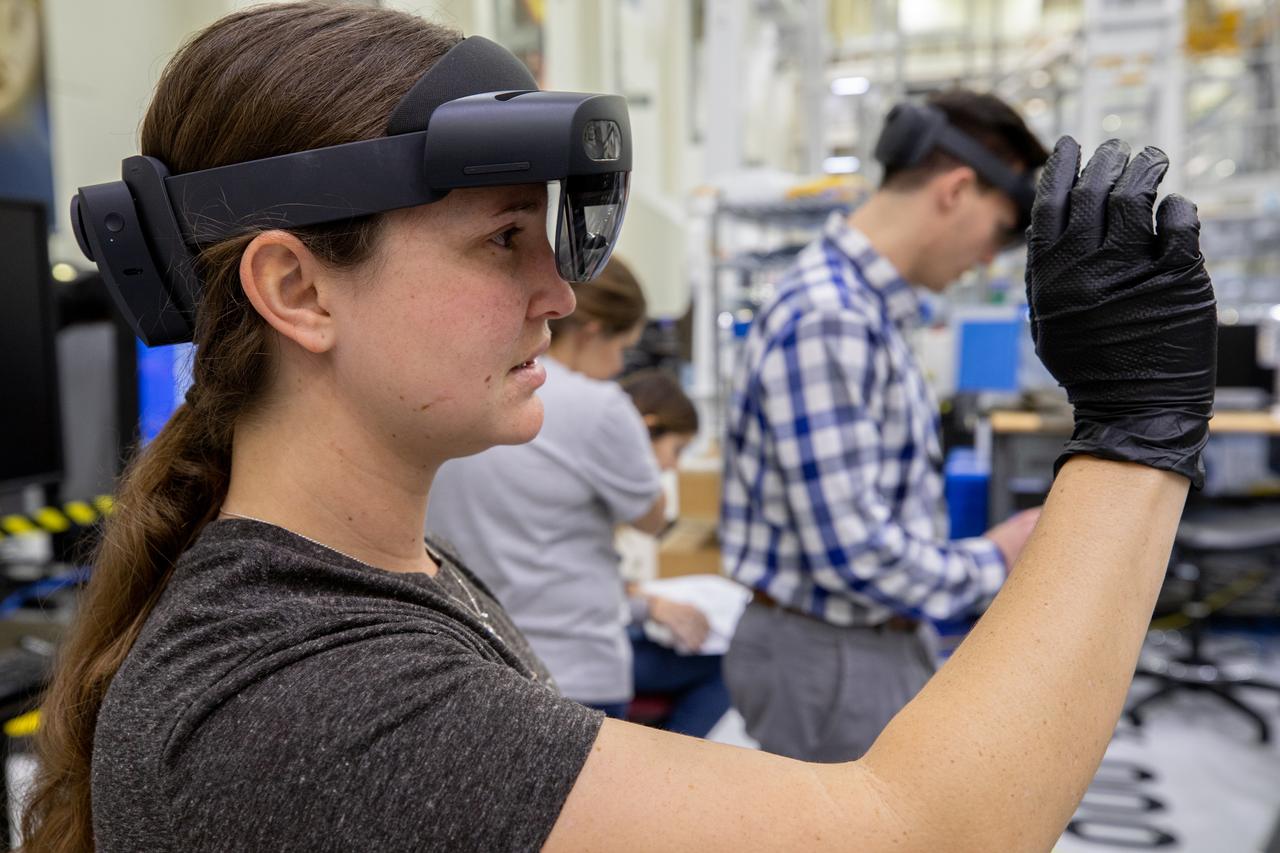
Mary Lakaszcyck, a technician with ASRC Federal Data Solutions, demonstrates a pair of augmented reality (AR) goggles inside the high bay of the Neil Armstrong Operations and Checkout Building at NASA’s Kennedy Space Center in Florida on Jan. 16, 2020. Orion manufacturer Lockheed Martin provided the goggles to technicians to help place tapes where components will be installed on the Orion crew module adapter for NASA’s Artemis II mission, the first crewed mission aboard the spacecraft. Using the AR goggles saves significant labor and time to complete tasks. Manufactured by Microsoft, the goggles, called HoloLens2, are the second version used by Lockheed.
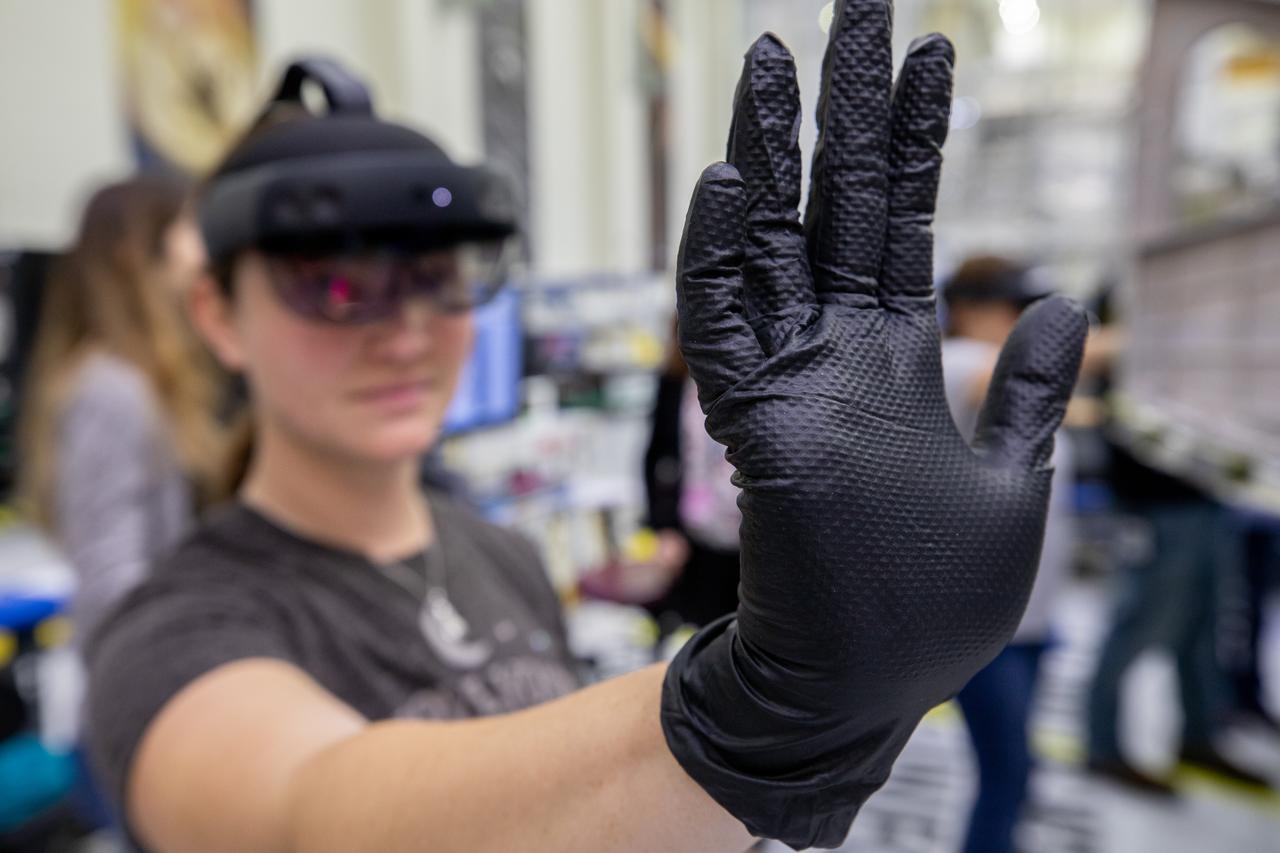
Mary Lakaszcyck, a technician with ASRC Federal Data Solutions, demonstrates a pair of augmented reality (AR) goggles inside the high bay of the Neil Armstrong Operations and Checkout Building at NASA’s Kennedy Space Center in Florida on Jan. 16, 2020. Orion manufacturer Lockheed Martin provided the goggles to technicians to help place tapes where components will be installed on the Orion crew module adapter for NASA’s Artemis II mission, the first crewed mission aboard the spacecraft. Using the AR goggles saves significant labor and time to complete tasks. Manufactured by Microsoft, the goggles, called HoloLens2, are the second version used by Lockheed.
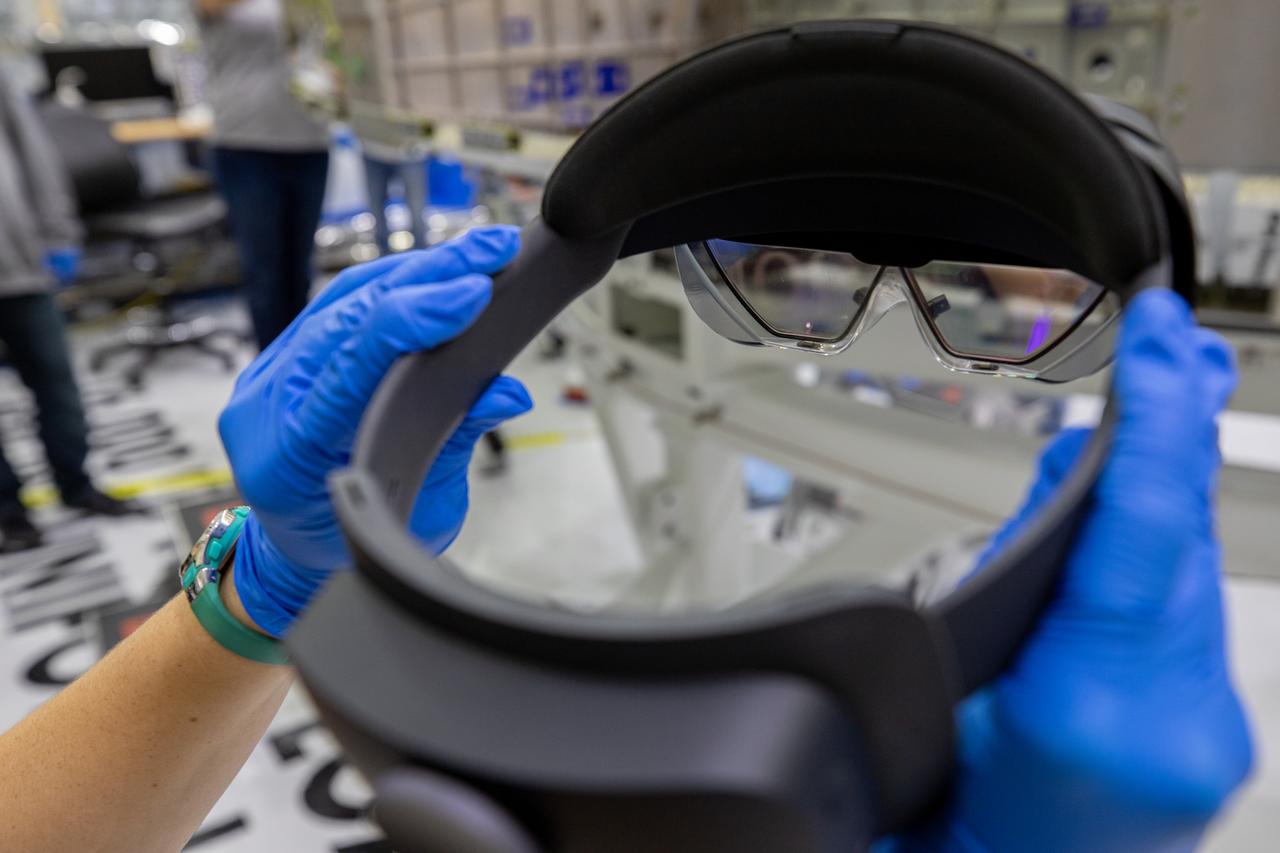
Mary Lakaszcyck, a technician with ASRC Federal Data Solutions, displays a pair of augmented reality (AR) goggles inside the high bay of the Neil Armstrong Operations and Checkout Building at NASA’s Kennedy Space Center in Florida on Jan. 16, 2020. Orion manufacturer Lockheed Martin provided the goggles to technicians to help place tapes where components will be installed on the Orion crew module adapter for NASA’s Artemis II mission, the first crewed mission aboard the spacecraft. Using the AR goggles saves significant labor and time to complete tasks. Manufactured by Microsoft, the goggles, called HoloLens2, are the second version used by Lockheed.

Mary Lakaszcyck, a technician with ASRC Federal Data Solutions, wears a pair of augmented reality (AR) goggles inside the high bay of the Neil Armstrong Operations and Checkout Building at NASA’s Kennedy Space Center in Florida on Jan. 16, 2020. Orion manufacturer Lockheed Martin provided the goggles to technicians to help place tapes where components will be installed on the Orion crew module adapter for NASA’s Artemis II mission, the first crewed mission aboard the spacecraft. Using the AR goggles saves significant labor and time to complete tasks. Manufactured by Microsoft, the goggles, called HoloLens2, are the second version used by Lockheed.

Mary Lakaszcyck, a technician with ASRC Federal Data Solutions, wears a pair of augmented reality (AR) goggles inside the high bay of the Neil Armstrong Operations and Checkout Building at NASA’s Kennedy Space Center in Florida on Jan. 16, 2020. Orion manufacturer Lockheed Martin provided the goggles to technicians to help place tapes where components will be installed on the Orion crew module adapter for NASA’s Artemis II mission, the first crewed mission aboard the spacecraft. Using the AR goggles saves significant labor and time to complete tasks. Manufactured by Microsoft, the goggles, called HoloLens2, are the second version used by Lockheed.

Mary Lakaszcyck, a technician with ASRC Federal Data Solutions, wears a pair of augmented reality (AR) goggles inside the high bay of the Neil Armstrong Operations and Checkout Building at NASA’s Kennedy Space Center in Florida on Jan. 16, 2020. Orion manufacturer Lockheed Martin provided the goggles to technicians to help place tapes where components will be installed on the Orion crew module adapter for NASA’s Artemis II mission, the first crewed mission aboard the spacecraft. Using the AR goggles saves significant labor and time to complete tasks. Manufactured by Microsoft, the goggles, called HoloLens2, are the second version used by Lockheed.
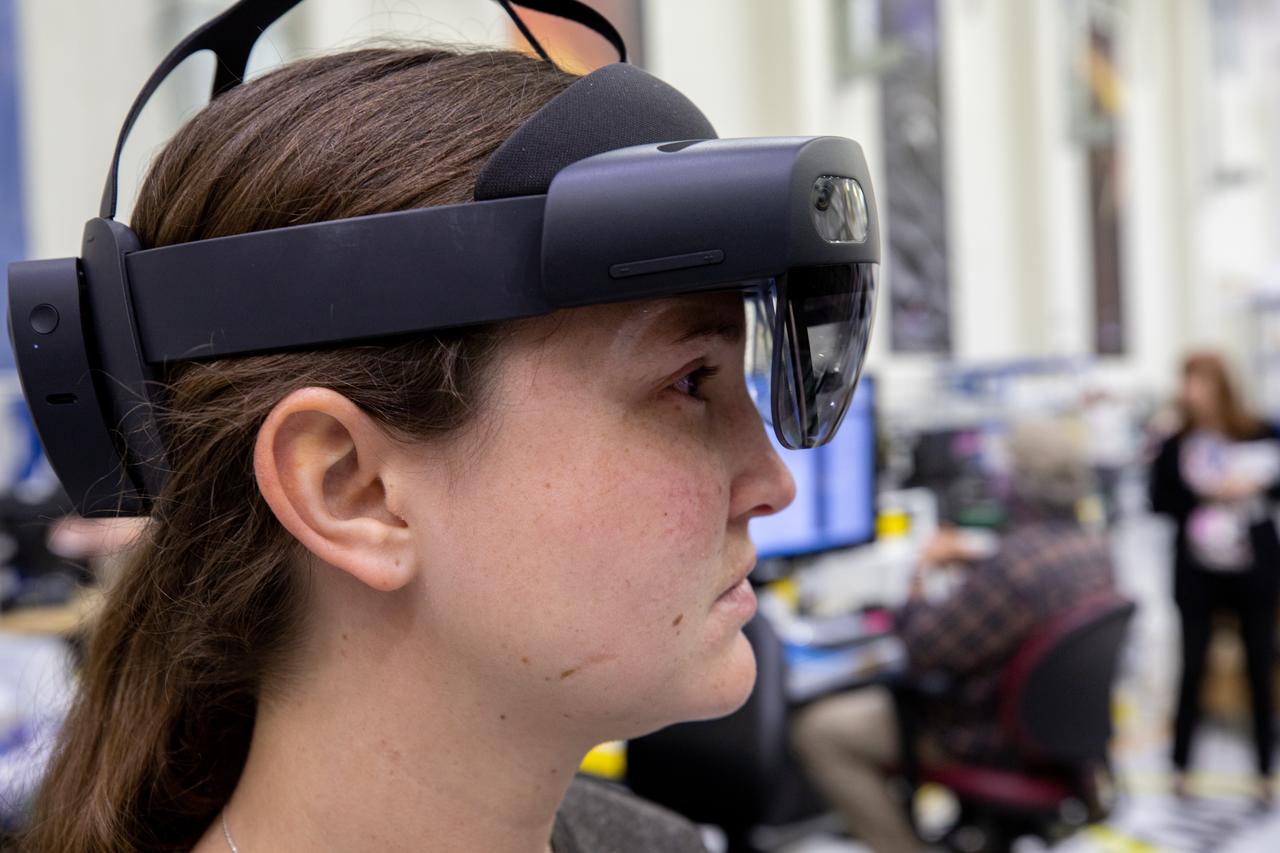
Mary Lakaszcyck, a technician with ASRC Federal Data Solutions, wears a pair of augmented reality (AR) goggles inside the high bay of the Neil Armstrong Operations and Checkout Building at NASA’s Kennedy Space Center in Florida on Jan. 16, 2020. Orion manufacturer Lockheed Martin provided the goggles to technicians to help place tapes where components will be installed on the Orion crew module adapter for NASA’s Artemis II mission, the first crewed mission aboard the spacecraft. Using the AR goggles saves significant labor and time to complete tasks. Manufactured by Microsoft, the goggles, called HoloLens2, are the second version used by Lockheed.
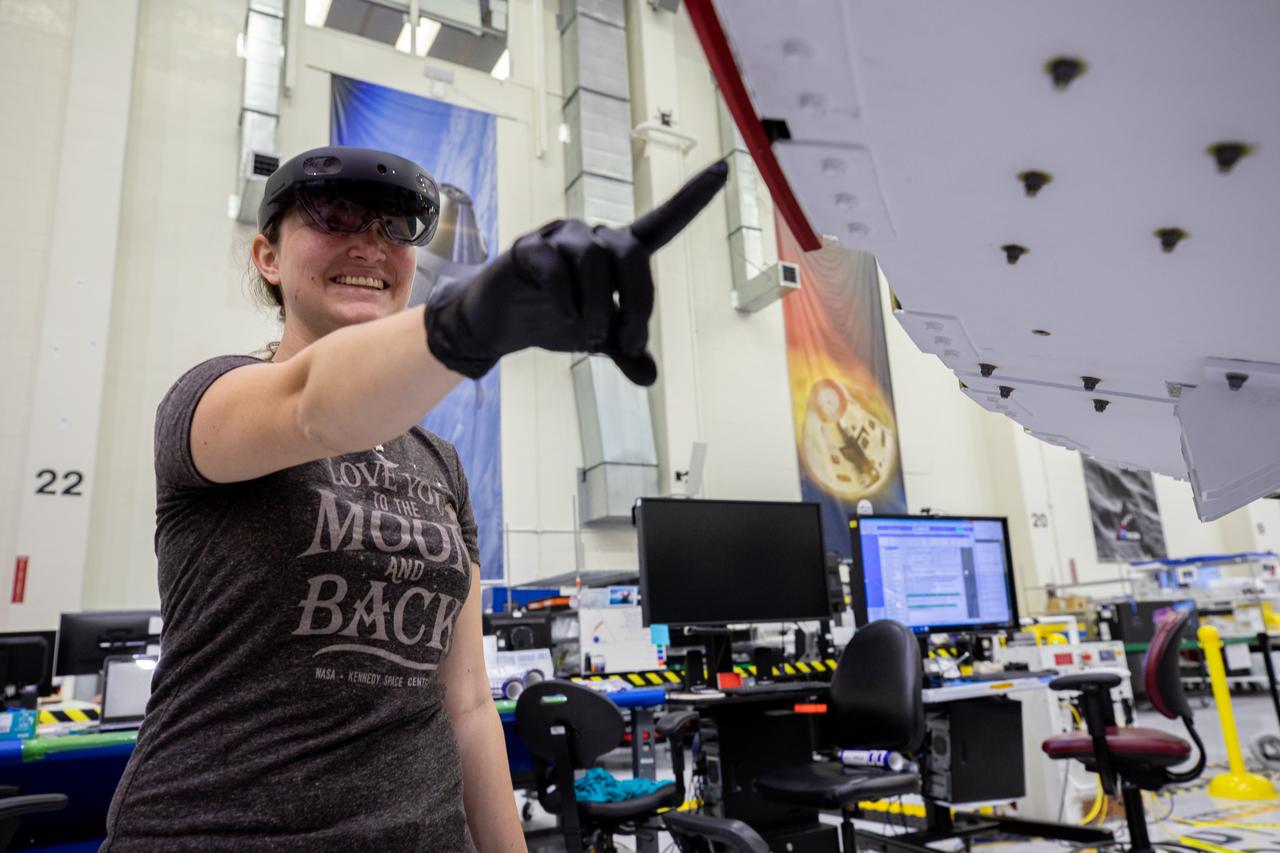
Mary Lakaszcyck, a technician with ASRC Federal Data Solutions, demonstrates a pair of augmented reality (AR) goggles inside the high bay of the Neil Armstrong Operations and Checkout Building at NASA’s Kennedy Space Center in Florida on Jan. 16, 2020. Orion manufacturer Lockheed Martin provided the goggles to technicians to help place tapes where components will be installed on the Orion crew module adapter for NASA’s Artemis II mission, the first crewed mission aboard the spacecraft. Using the AR goggles saves significant labor and time to complete tasks. Manufactured by Microsoft, the goggles, called HoloLens2, are the second version used by Lockheed.

Mary Lakaszcyck, a technician with ASRC Federal Data Solutions, wears a pair of augmented reality (AR) goggles inside the high bay of the Neil Armstrong Operations and Checkout Building at NASA’s Kennedy Space Center in Florida on Jan. 16, 2020. Orion manufacturer Lockheed Martin provided the goggles to technicians to help place tapes where components will be installed on the Orion crew module adapter for NASA’s Artemis II mission, the first crewed mission aboard the spacecraft. Using the AR goggles saves significant labor and time to complete tasks. Manufactured by Microsoft, the goggles, called HoloLens2, are the second version used by Lockheed.
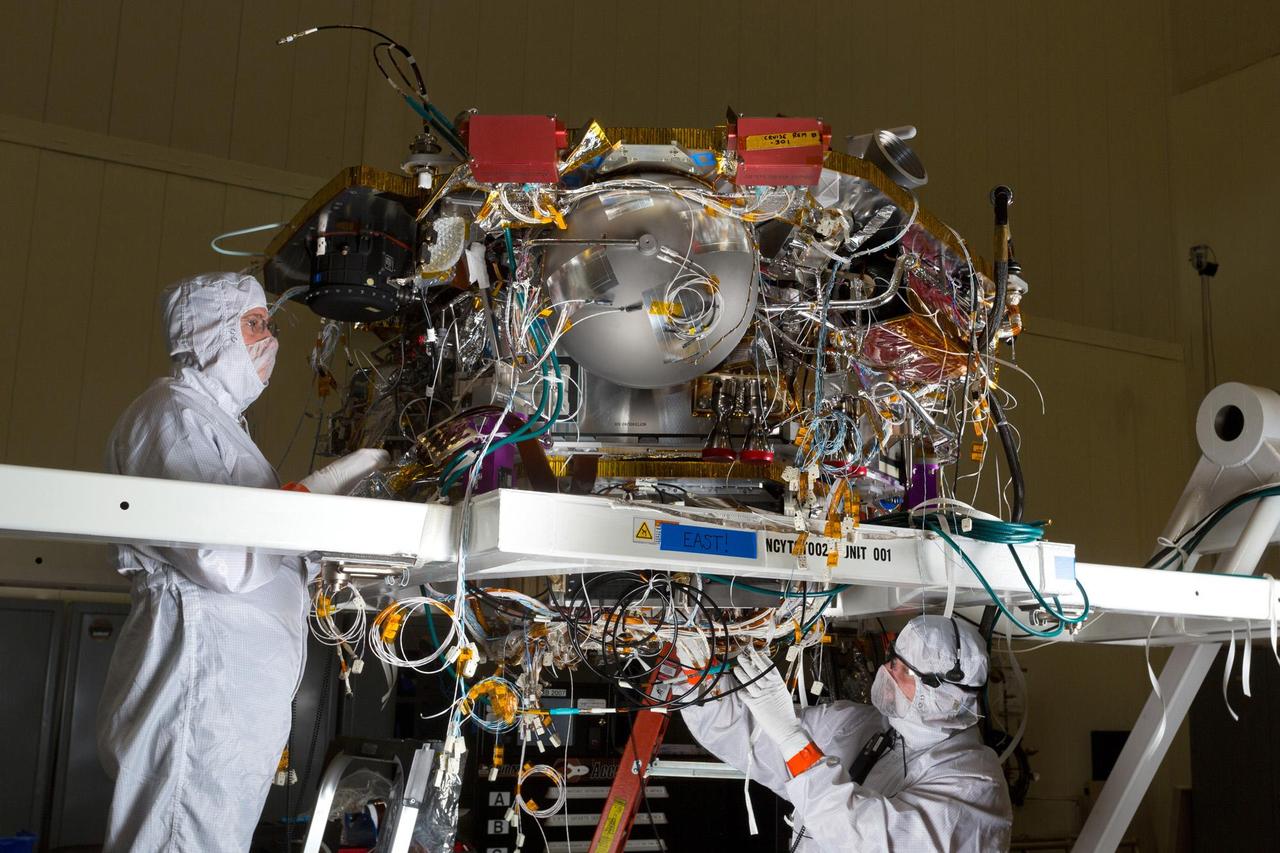
The Mars lander that NASA's InSight mission will use for investigating how rocky planets formed and evolved is being assembled by Lockheed Martin Space Systems, Denver. In this scene from January 2015, Lockheed Martin spacecraft specialists are working on the lander in a clean room. InSight, for Interior Exploration Using Seismic Investigations, Geodesy and Heat Transport, is scheduled for launch in March 2016 and landing in September 2016. Note: After thorough examination, NASA managers have decided to suspend the planned March 2016 launch of the Interior Exploration using Seismic Investigations Geodesy and Heat Transport (InSight) mission. The decision follows unsuccessful attempts to repair a leak in a section of the prime instrument in the science payload. http://photojournal.jpl.nasa.gov/catalog/PIA19402
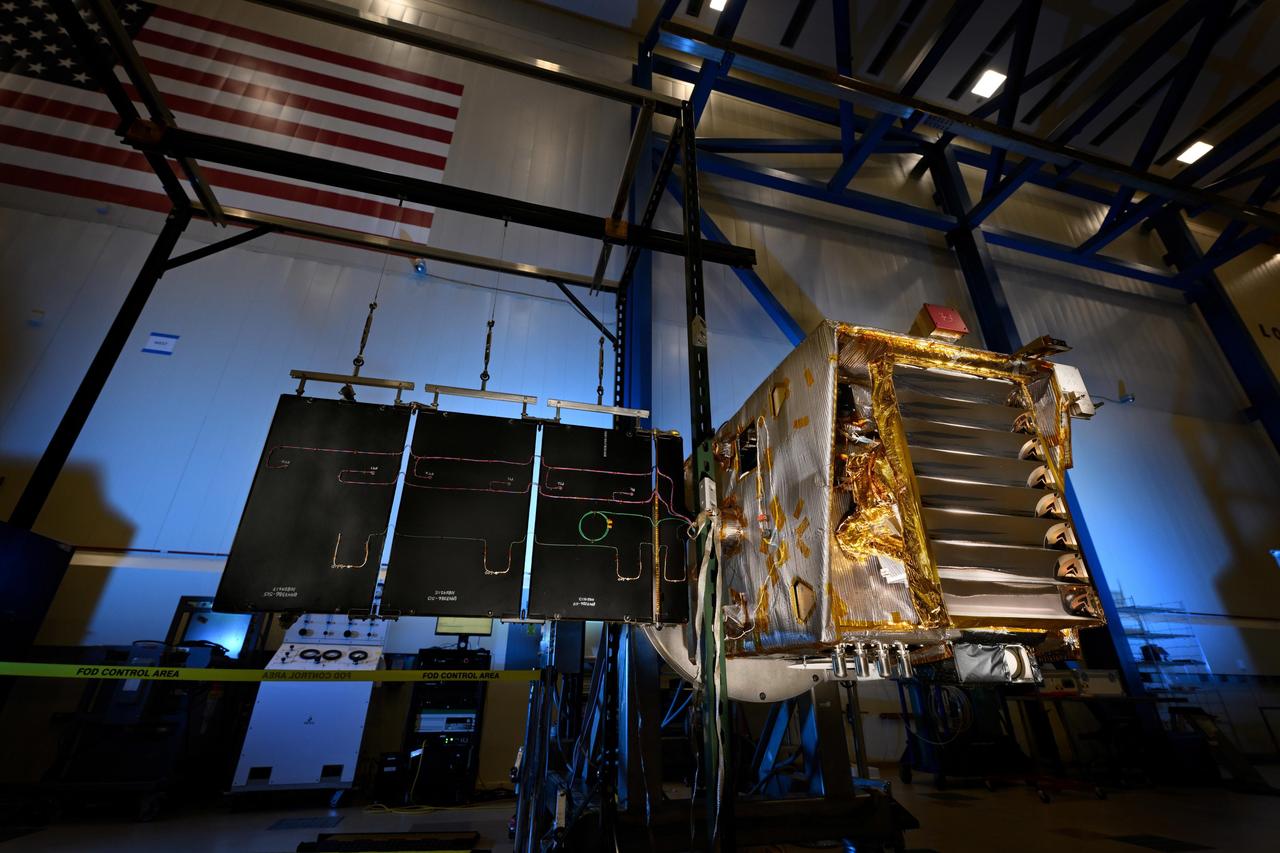
NASA's Lunar Trailblazer spacecraft sits in a clean room in August 2024 after undergoing environmental testing at Lockheed Martin Space in Littleton, Colorado. Now that those tests are done, the orbiter and its science instruments will go through flight system software tests that simulate key aspects of launch, maneuvers, and the science mission while in orbit around the Moon. This photo shows Lunar Trailblazer with a solar array deployed. The large silver grate attached to the spacecraft is the radiator for the High-resolution Volatiles and Minerals Moon Mapper (HVM³) instrument. HVM³ is one of two instruments that will be used by the mission to detect and map water on the Moon's surface to determine its abundance, location, form, and how it changes over time. This data will be key to our understanding of this crucial resource on the Moon for future exploration. The spacecraft is just 440 pounds (200 kilograms) and 11.5 feet (3.5 meters) wide with its solar panels fully deployed. The project is led by Principal Investigator Bethany Ehlmann of Caltech and managed by NASA's Jet Propulsion Laboratory in Southern California, which is also providing systems engineering, navigation, and mission assurance. Caltech manages JPL for the agency. Lunar Trailblazer is part of NASA's Small Innovative Missions for Planetary Exploration (SIMPLEx) program, which provides opportunities for low-cost, high-risk science missions that are responsive to requirements for flexibility. These lower-cost missions serve as an ideal platform for technical and architecture innovation, contributing to NASA's science research and technology development objectives. SIMPLEx mission investigations are managed by the Planetary Missions Program Office at NASA's Marshall Space Flight Center in Huntsville, Alabama, as part of the Discovery Program at NASA Headquarters in Washington. IPAC leads mission operations, including planning, scheduling, and sequencing all science and spacecraft activities. https://photojournal.jpl.nasa.gov/catalog/PIA26390
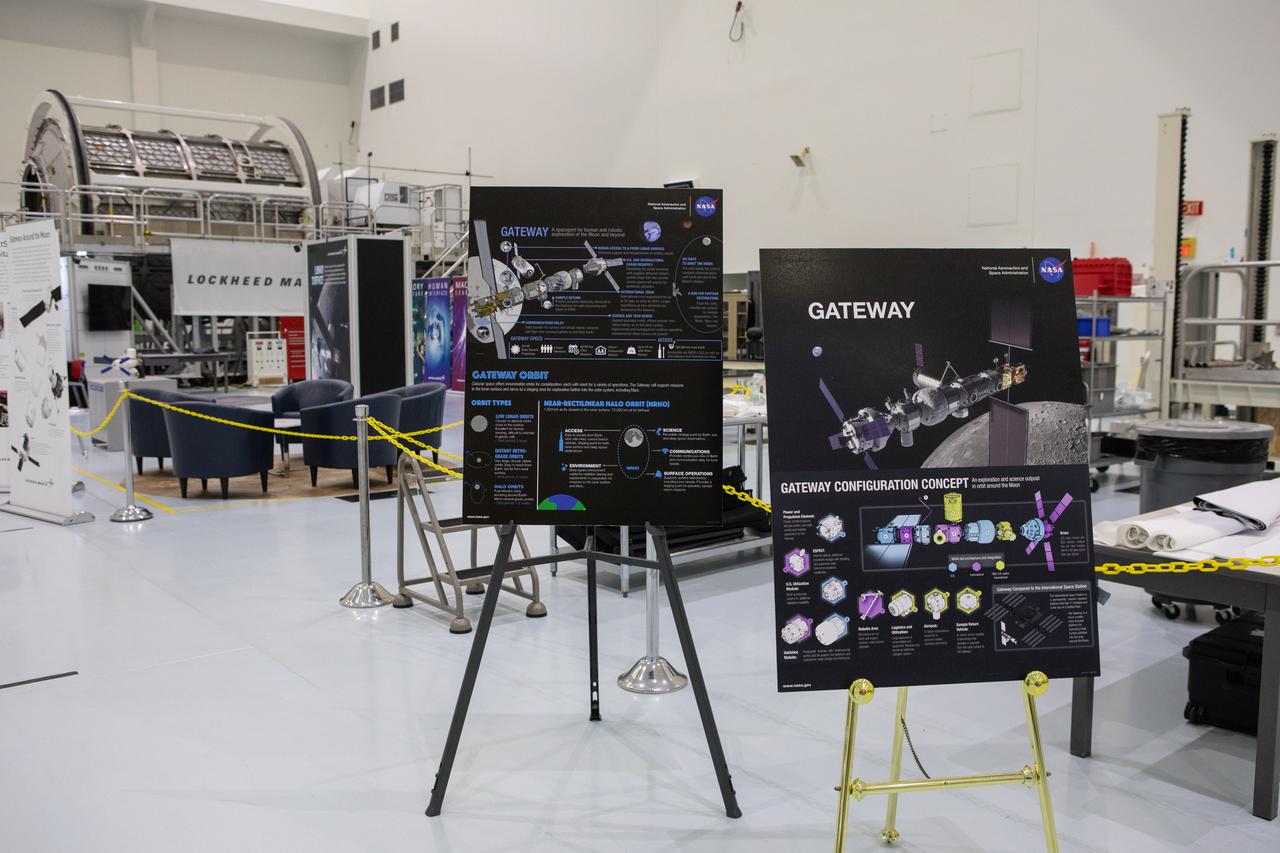
The Lockheed Martin prototype habitat for NASA’s lunar orbital platform, called the Gateway, is in view at far left in the high bay of the Space Station Processing Facility (SSPF) at NASA's Kennedy Space Center in Florida, on May 16, 2019. The center is celebrating the SSPF’s 25th anniversary. The facility was built to process elements for the International Space Station. Now it is providing support for current and future NASA and commercial provider programs, including Commercial Resupply Services, Artemis 1, sending the first woman and next man to the Moon, and deep space destinations including Mars.
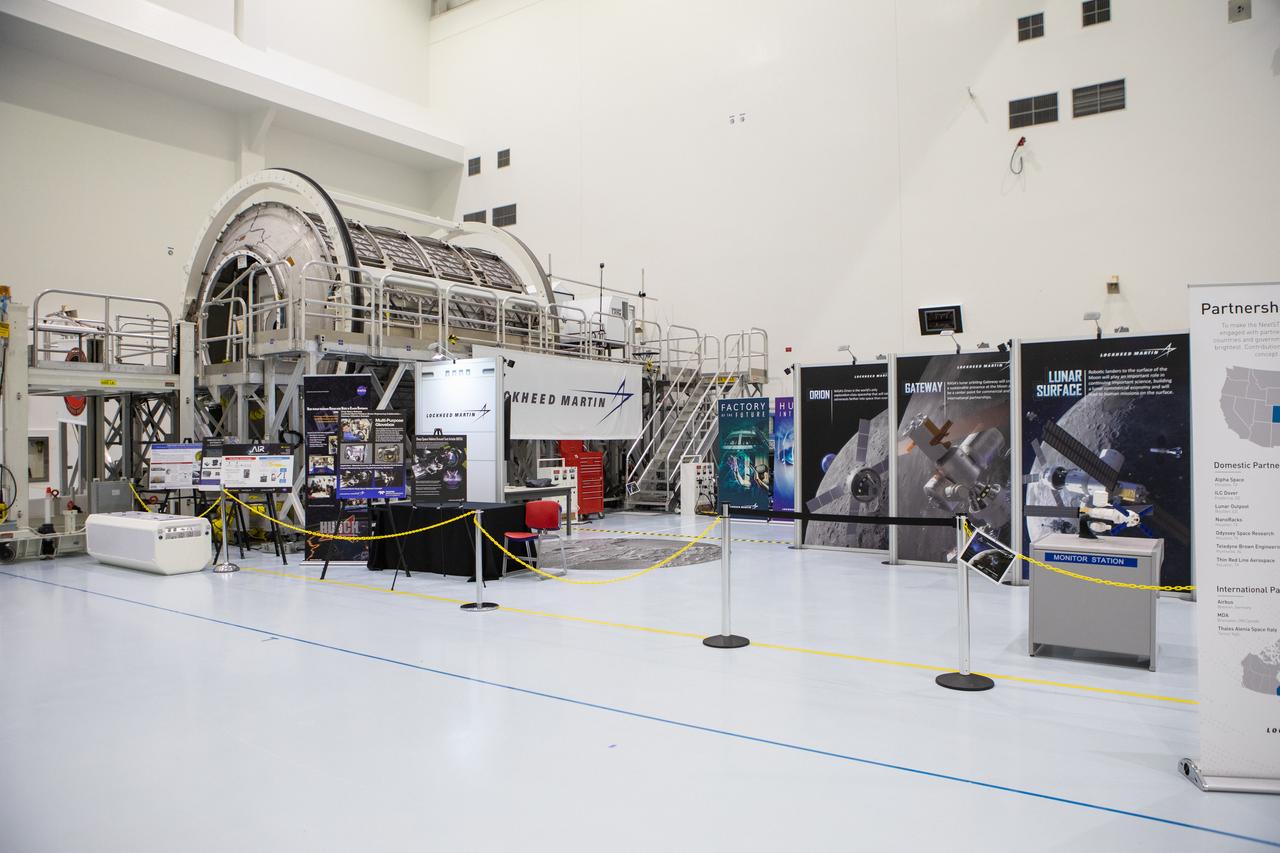
The Lockheed Martin prototype habitat for NASA’s lunar orbital platform, called the Gateway, is in view at left in the high bay of the Space Station Processing Facility (SSPF) at NASA's Kennedy Space Center in Florida, on May 16, 2019. The center is celebrating the SSPF’s 25th anniversary. The facility was built to process elements for the International Space Station. Now it is providing support for current and future NASA and commercial provider programs, including Commercial Resupply Services, Artemis 1, sending the first woman and next man to the Moon, and deep space destinations including Mars.

KENNEDY SPACE CENTER, FLA. - (From left) Brian Duffy, Lockheed Martin vice president/associate program manager, Mildred Carter and Col. (Ret.) Herbert E. Carter, one of the Tuskegee Airmen, attend a dinner sponsored by the KSC Spaceflight and Life Sciences Office. Col. Carter was a guest speaker at the dinner.

KENNEDY SPACE CENTER, FLA. - In the Orbiter Processing Facility, the nose cap from Atlantis is lowered toward a shipping pallet. The reinforced carbon-carbon (RCC) nose cap is being sent to the original manufacturing company, Vought in Ft. Worth, Texas, a subsidiary of Lockheed Martin, to undergo non-destructive testing such as CAT scan and thermography.
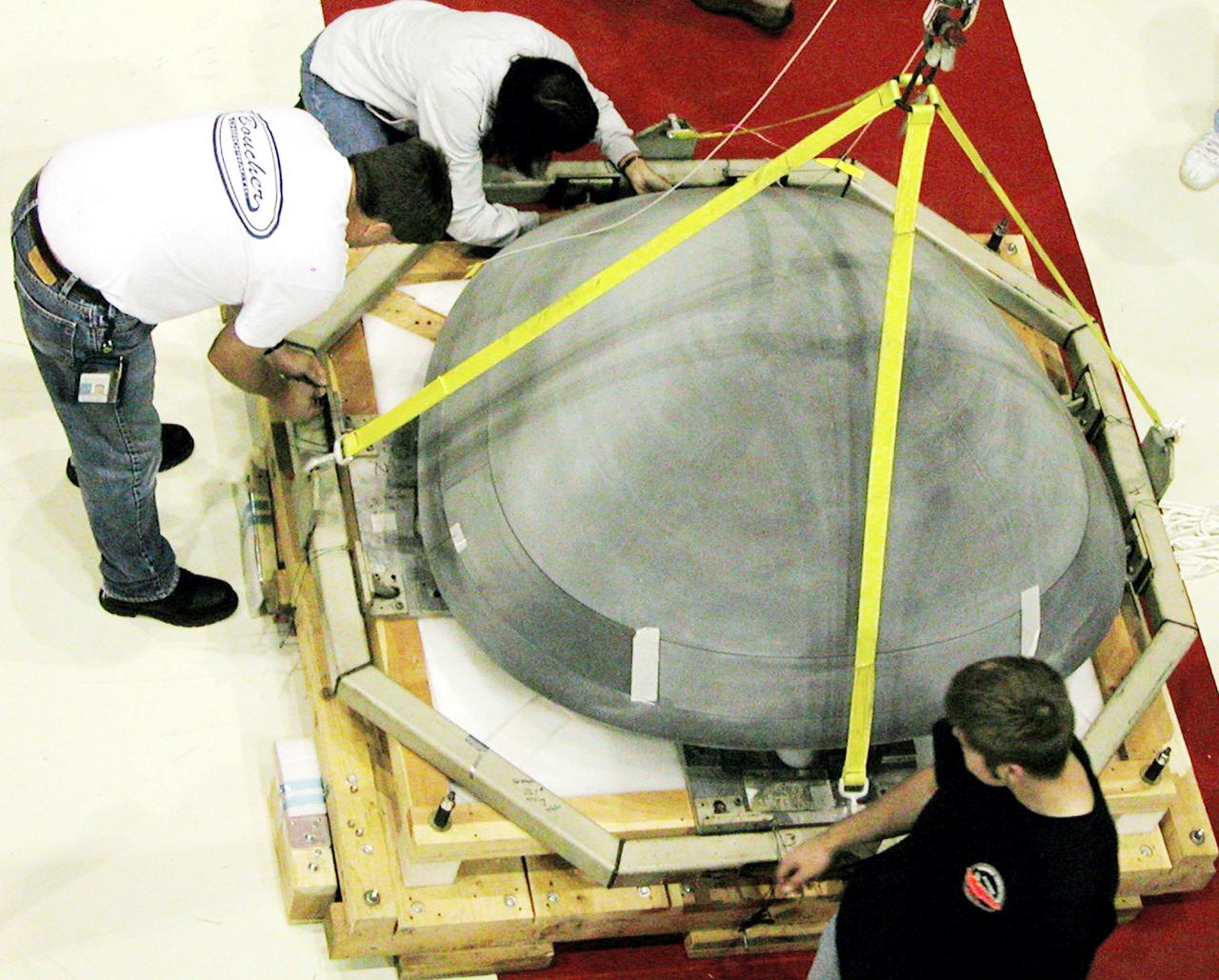
KENNEDY SPACE CENTER, FLA. - In the Orbiter Processing Facility, the nose cap from Atlantis is secured on a shipping pallet. The reinforced carbon-carbon (RCC) nose cap is being sent to the original manufacturing company, Vought in Ft. Worth, Texas, a subsidiary of Lockheed Martin, to undergo non-destructive testing such as CAT scan and thermography.

L-R: William Gerstenmaier, NASA Associate Administrator for human exploration and operations; Charlie Precourt, Vice President and General Manager, ATK Space Launch Division; John Elbon, Vice President and General Manager, Boeing Space Exploration; Julie Van Kleek, Vice President, space programs, Aerojet Rocketdyne; and Jim Crocker, Vice President and General Manager, civil space, Lockheed Martin Space Systems, participate in a panel discussion on deep space exploration using the Space Launch System and Orion spacecraft at the Newseum in Washington on Tuesday, November 12, 2013. Photo Credit: (NASA/Jay Westcott)
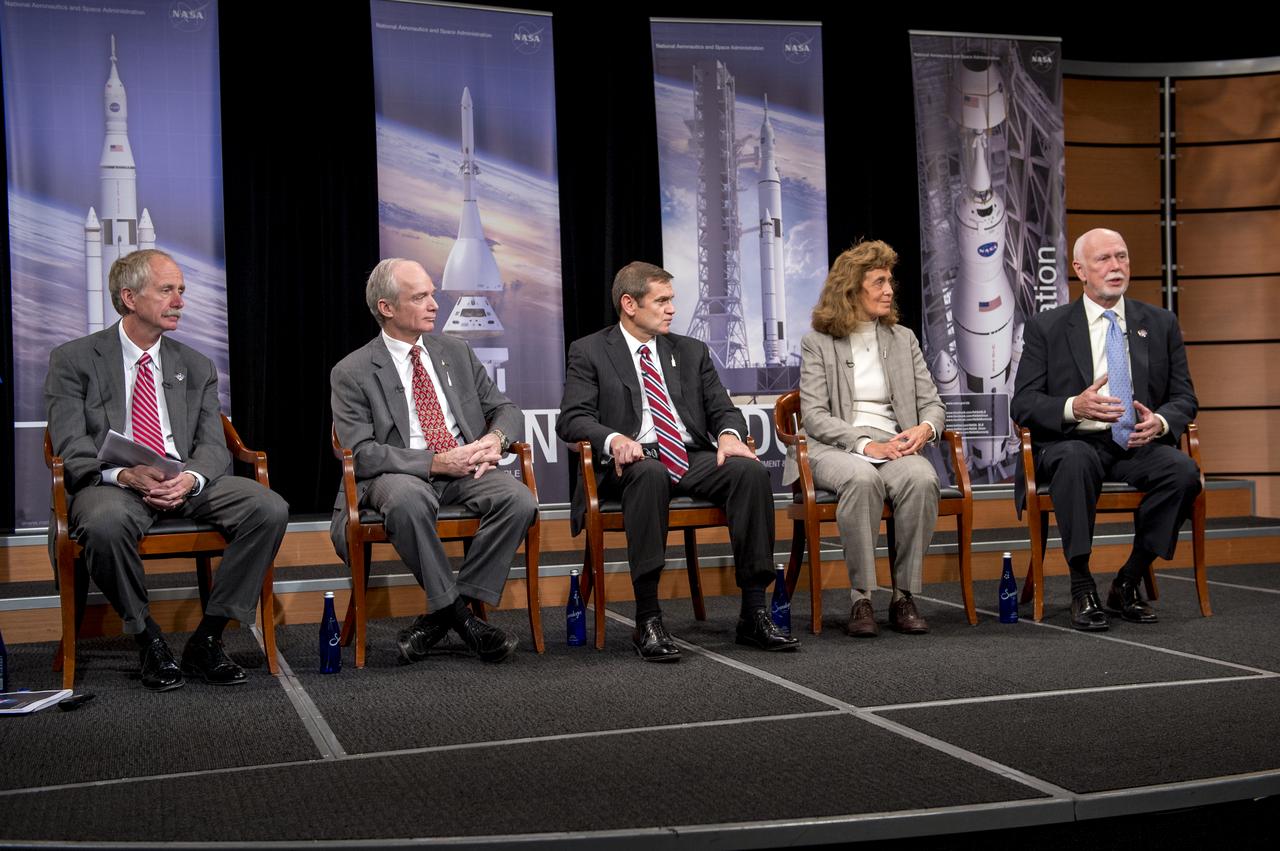
L-R: William Gerstenmaier, NASA Associate Administrator for human exploration and operations; Charlie Precourt, Vice President and General Manager, ATK Space Launch Division; John Elbon, Vice President and General Manager, Boeing Space Exploration; Julie Van Kleek, Vice President, space programs, Aerojet Rocketdyne; and Jim Crocker, Vice President and General Manager, civil space, Lockheed Martin Space Systems, participate in a panel discussion on deep space exploration using the Space Launch System and Orion spacecraft at the Newseum in Washington on Tuesday, November 12, 2013. Photo Credit: (NASA/Jay Westcott)
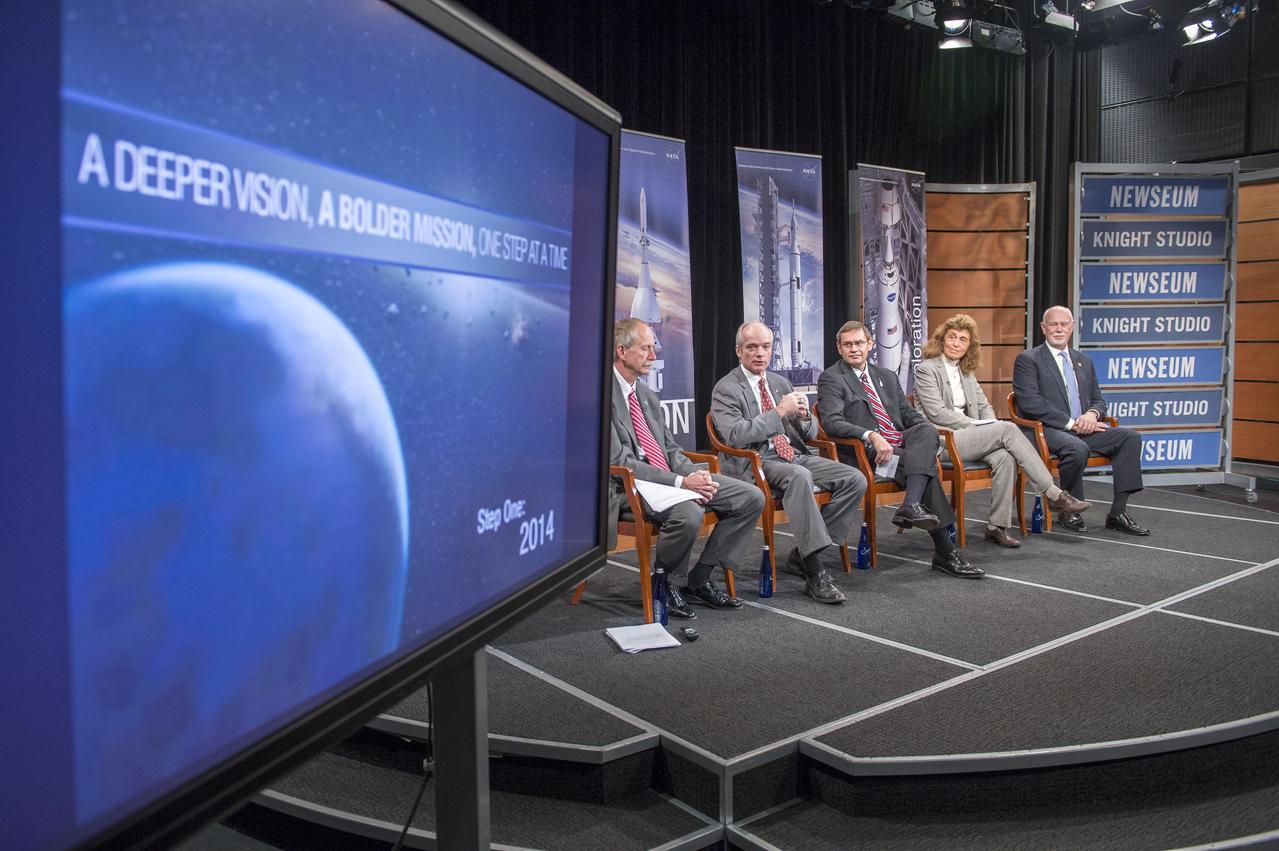
L-R: William Gerstenmaier, NASA Associate Administrator for human exploration and operations; Charlie Precourt, Vice President and General Manager, ATK Space Launch Division; John Elbon, Vice President and General Manager, Boeing Space Exploration; Julie Van Kleek, Vice President, space programs, Aerojet Rocketdyne; and Jim Crocker, Vice President and General Manager, civil space, Lockheed Martin Space Systems, participate in a panel discussion on deep space exploration using the Space Launch System and Orion spacecraft at the Newseum in Washington on Tuesday, November 12, 2013. Photo Credit: (NASA/Jay Westcott)
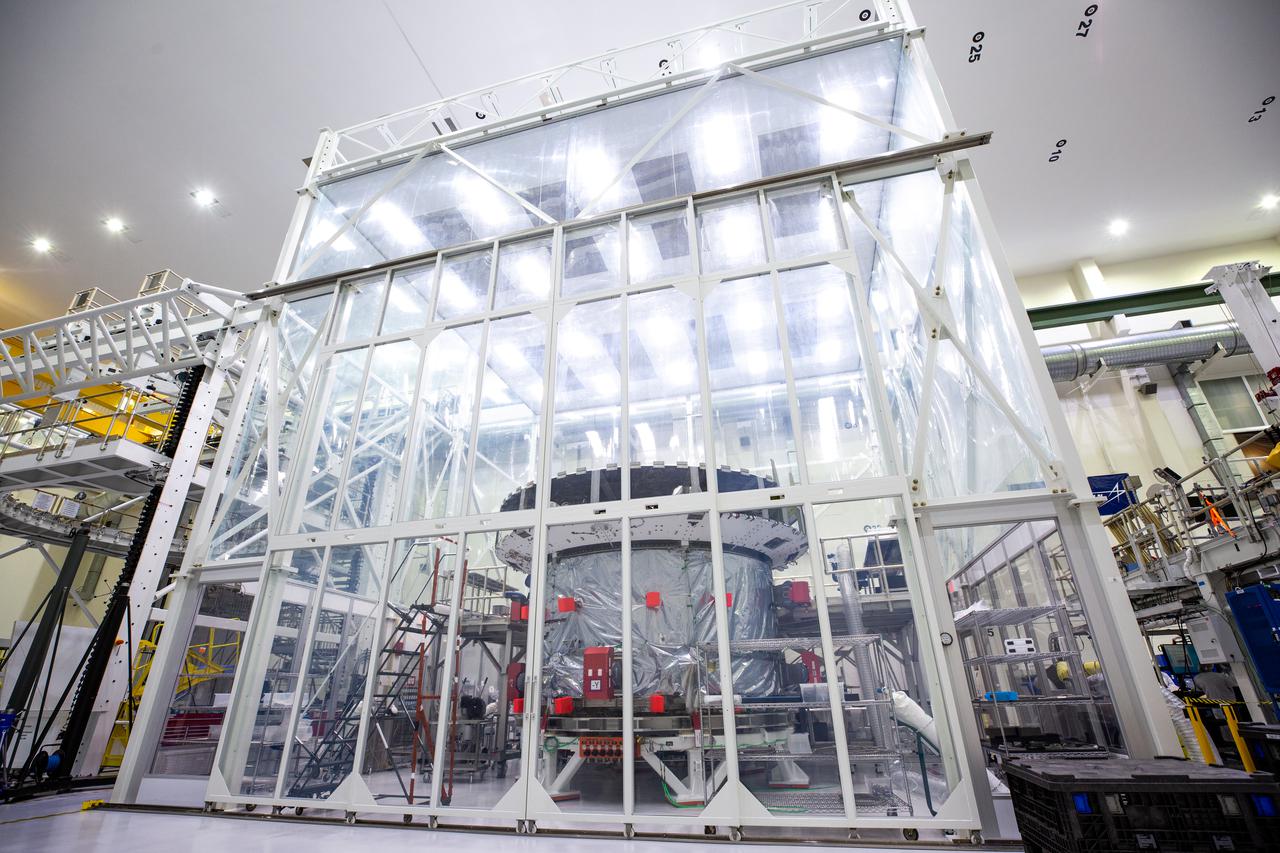
The European-built Service Module (ESM) for NASA’s Artemis II mission is on a work stand inside a clean room inside the high bay of the Neil A. Armstrong Operations and Checkout Building at NASA’s Kennedy Space Center in Florida on Jan. 12, 2022. Teams from NASA, Lockheed Martin, the European Space Agency and Airbus will prepare the service module to be integrated with the Orion crew module adapter and crew module, already housed in the facility. The powerhouse that will fuel and propel Orion in space, the ESM for Artemis II will be the first Artemis mission flying crew aboard Orion.
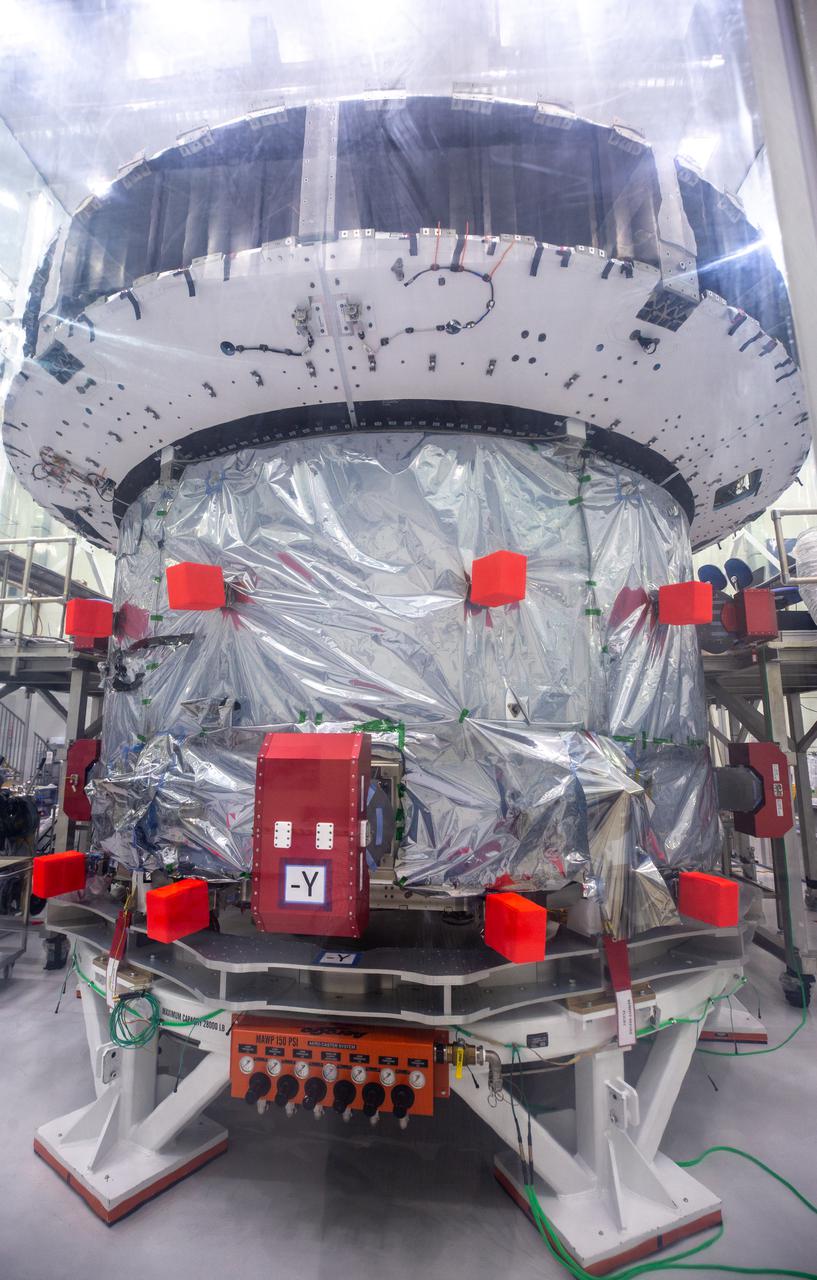
The European-built Service Module (ESM) for NASA’s Artemis II mission is on a work stand inside a clean room inside the high bay of the Neil A. Armstrong Operations and Checkout Building at NASA’s Kennedy Space Center in Florida on Jan. 12, 2022. Teams from NASA, Lockheed Martin, the European Space Agency and Airbus will prepare the service module to be integrated with the Orion crew module adapter and crew module, already housed in the facility. The powerhouse that will fuel and propel Orion in space, the ESM for Artemis II will be the first Artemis mission flying crew aboard Orion.
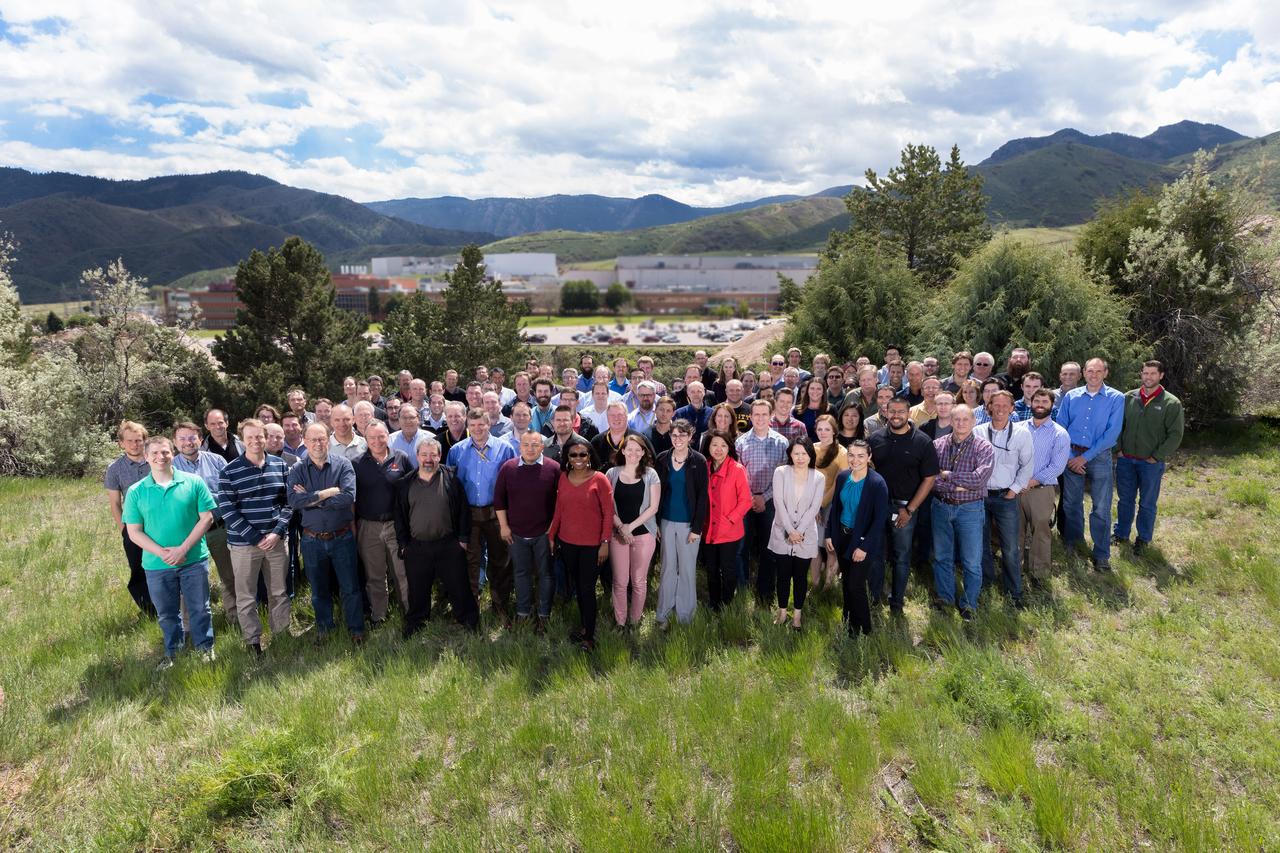
The InSight Team at Lockheed Martin Space in May 2017 The InSight team is comprised of scientists and engineers from multiple disciplines and is a unique collaboration between countries and organizations around the world. The science team includes co-investigators from the U.S., France, Germany, Austria, Belgium, Canada, Japan, Switzerland and the United Kingdom. https://photojournal.jpl.nasa.gov/catalog/PIA22235
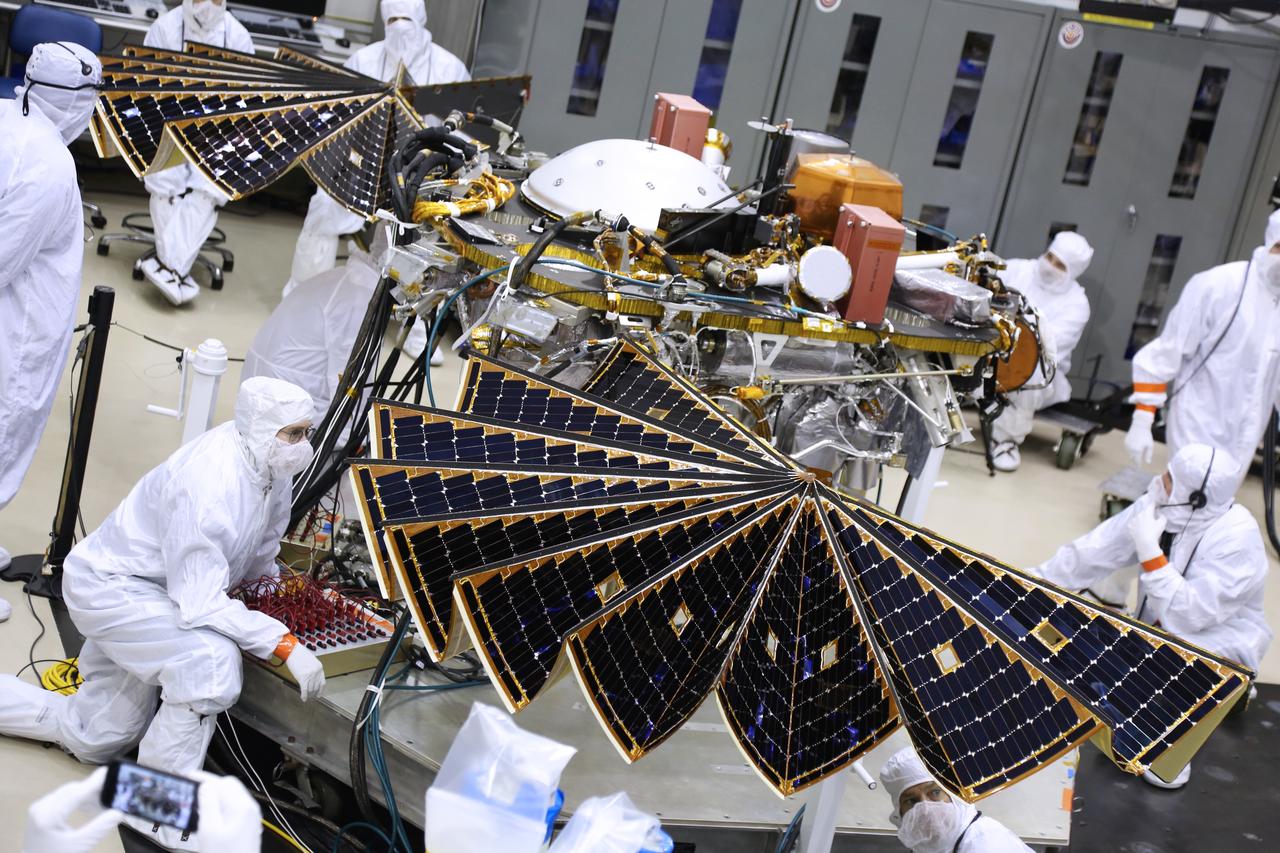
The solar arrays on NASA's InSight Mars lander were deployed as part of testing conducted Jan. 23, 2018, at Lockheed Martin Space in Littleton, Colorado. Engineers and technicians evaluated the solar arrays and performed an illumination test to confirm that the solar cells were collecting power. The launch window for InSight opens May 5, 2018. A video is available at https://photojournal.jpl.nasa.gov/catalog/PIA22205
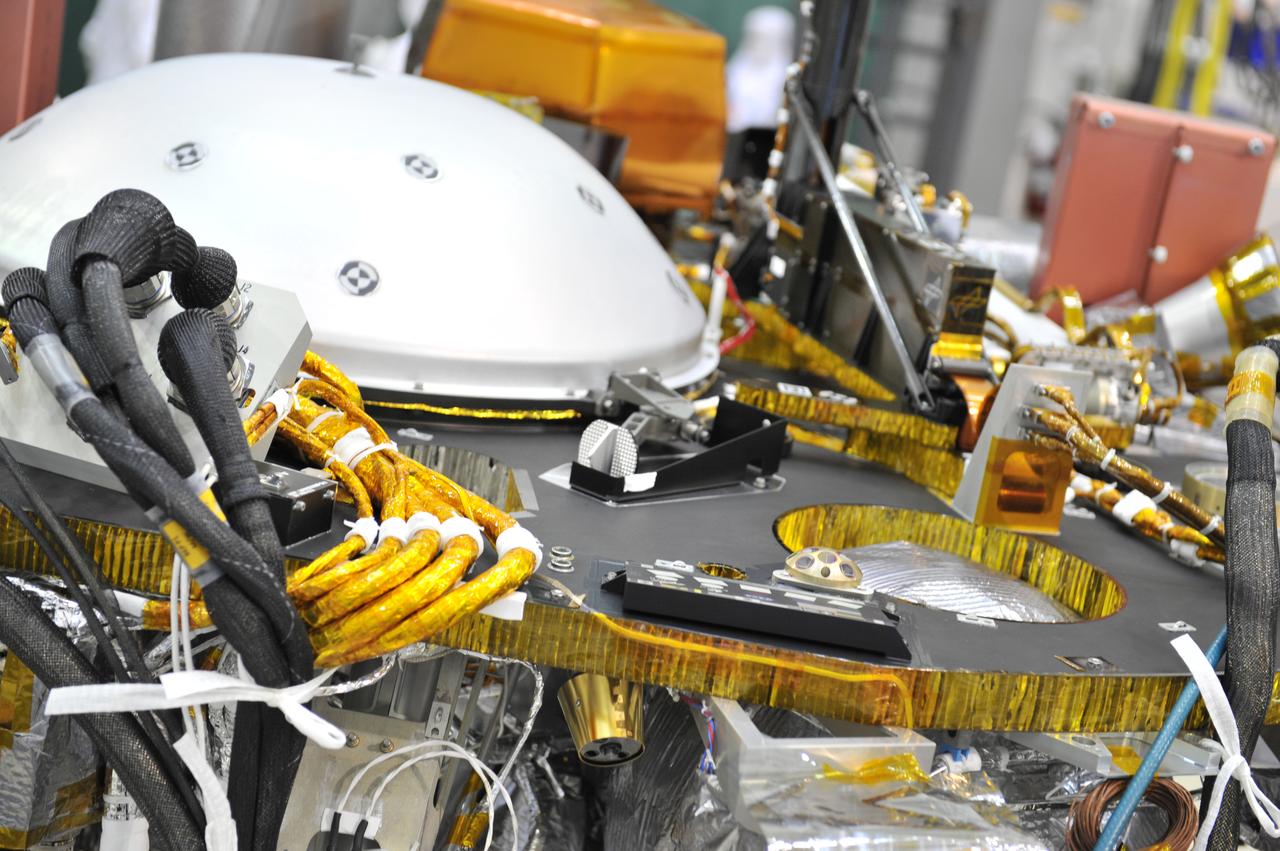
Technicians at Lockheed Martin Space in Littleton, Colorado installed a microchip with 1.6 million names submitted by the public to ride along with NASA's InSight mission to Mars. The chip was installed on Jan. 23, 2018. This joins another microchip that was previously installed that included 800,000 names for a grand total of 2.4 million names going to Mars as early as May 5, 2018. The microchip including names from the NASA InSight mission's "Send Your Name to Mars" campaign was affixed to the spacecraft with a special glue. https://photojournal.jpl.nasa.gov/catalog/PIA22206
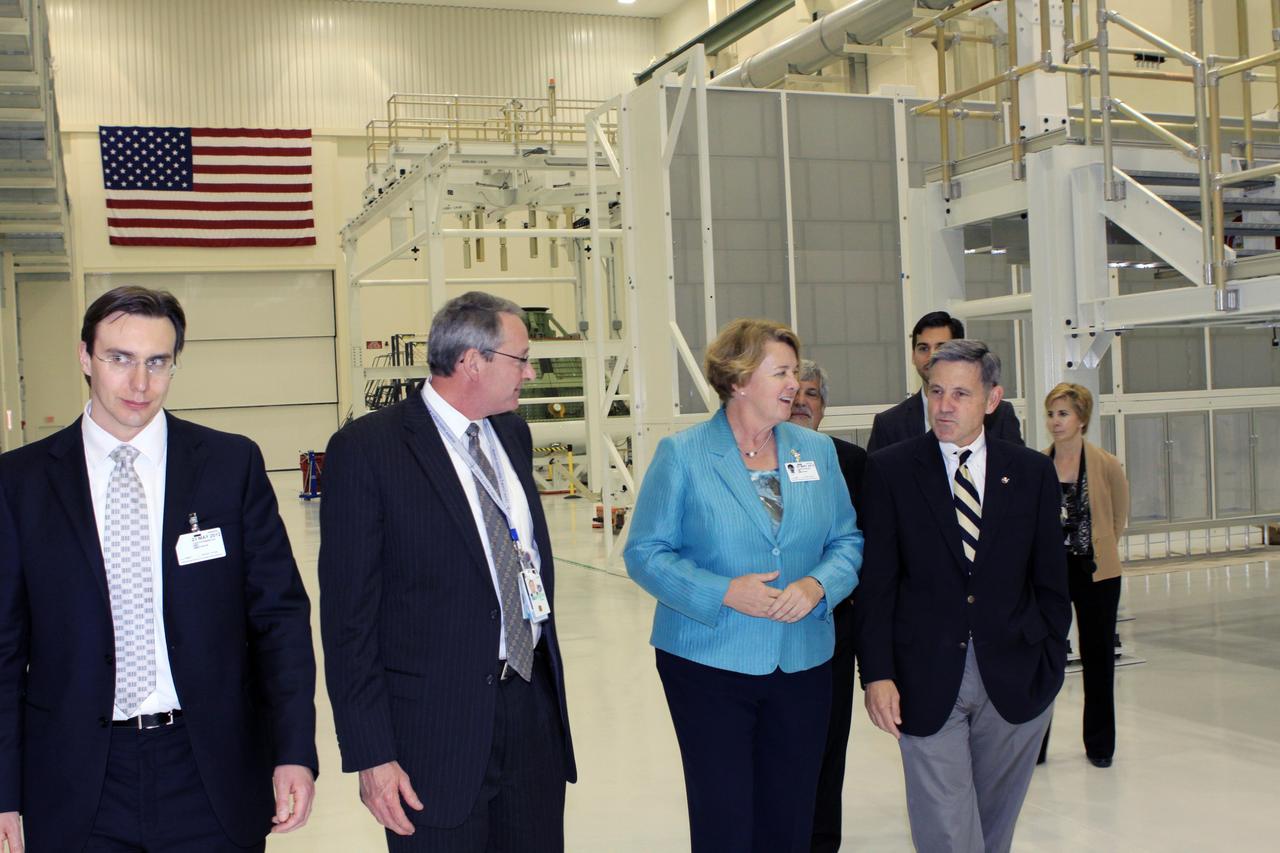
CAPE CANAVERAL, Fla. – Lockheed Martin and NASA personnel accompany Joanne Maguire, executive vice president of Space Systems for Lockheed Martin, and Kennedy Space Center Director Bob Cabana, far right, during a tour of Kennedy's Operations and Checkout Building. Lockheed Martin is the prime contractor to NASA for the Orion Multi-Purpose Crew Vehicle, which will be processed in the refurbished Operations and Checkout building. For more information, visit http://www.nasa.gov/exploration/systems/ground. Photo credit: NASA/Jim Grossmann
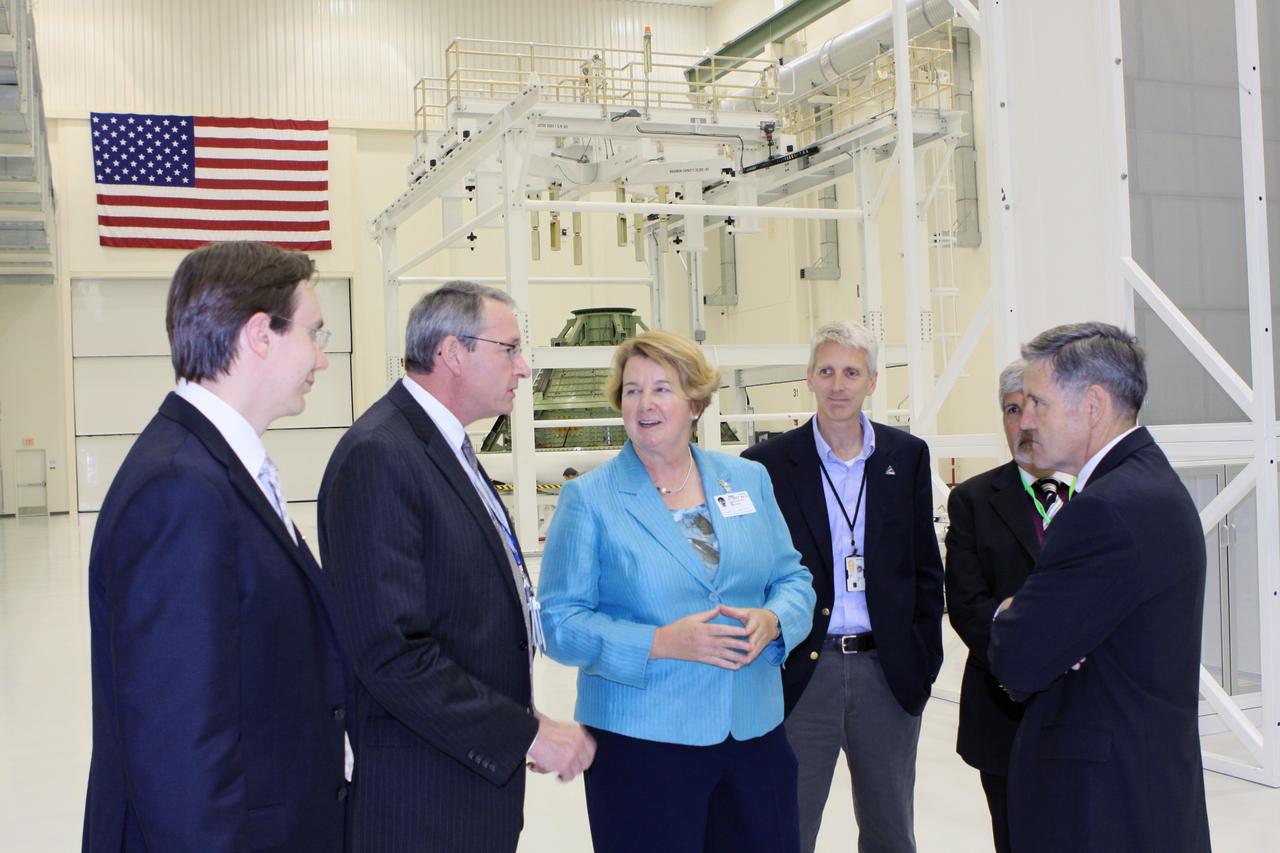
CAPE CANAVERAL, Fla. – Joanne Maguire, executive vice president of Space Systems for Lockheed Martin, and Kennedy Space Center Director Bob Cabana, far right, are accompanied by Lockheed Martin and NASA personnel during a tour of Kennedy's Operations and Checkout Building. Lockheed Martin is the prime contractor to NASA for the Orion Multi-Purpose Crew Vehicle, which will be processed in the refurbished Operations and Checkout building. For more information, visit http://www.nasa.gov/exploration/systems/ground. Photo credit: NASA/Jim Grossmann
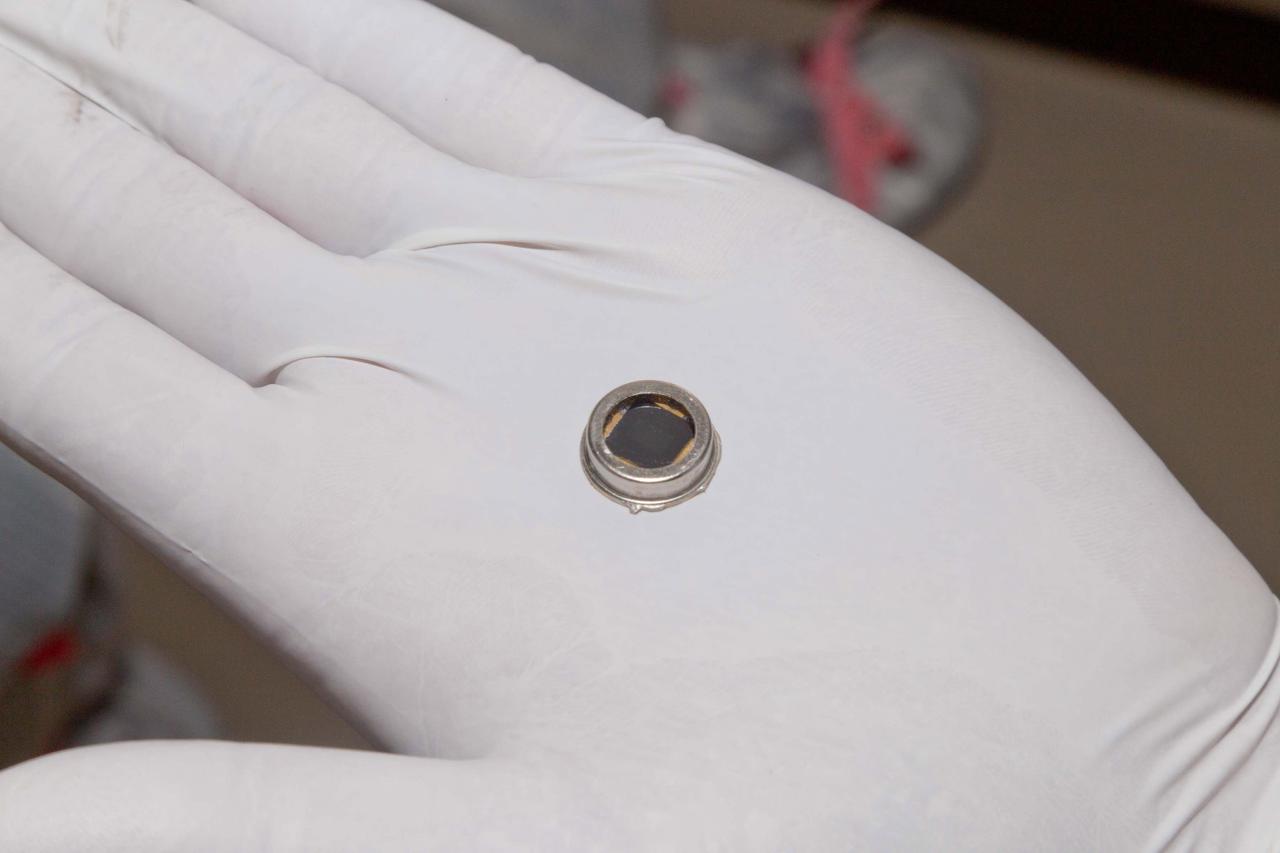
The dime-size microchip in this close-up image carries 826,923 names that will go to Mars on NASA InSight lander. The image was taken in November 2015 inside a clean room at Lockheed Martin Space Systems, Denver, where the lander was built.
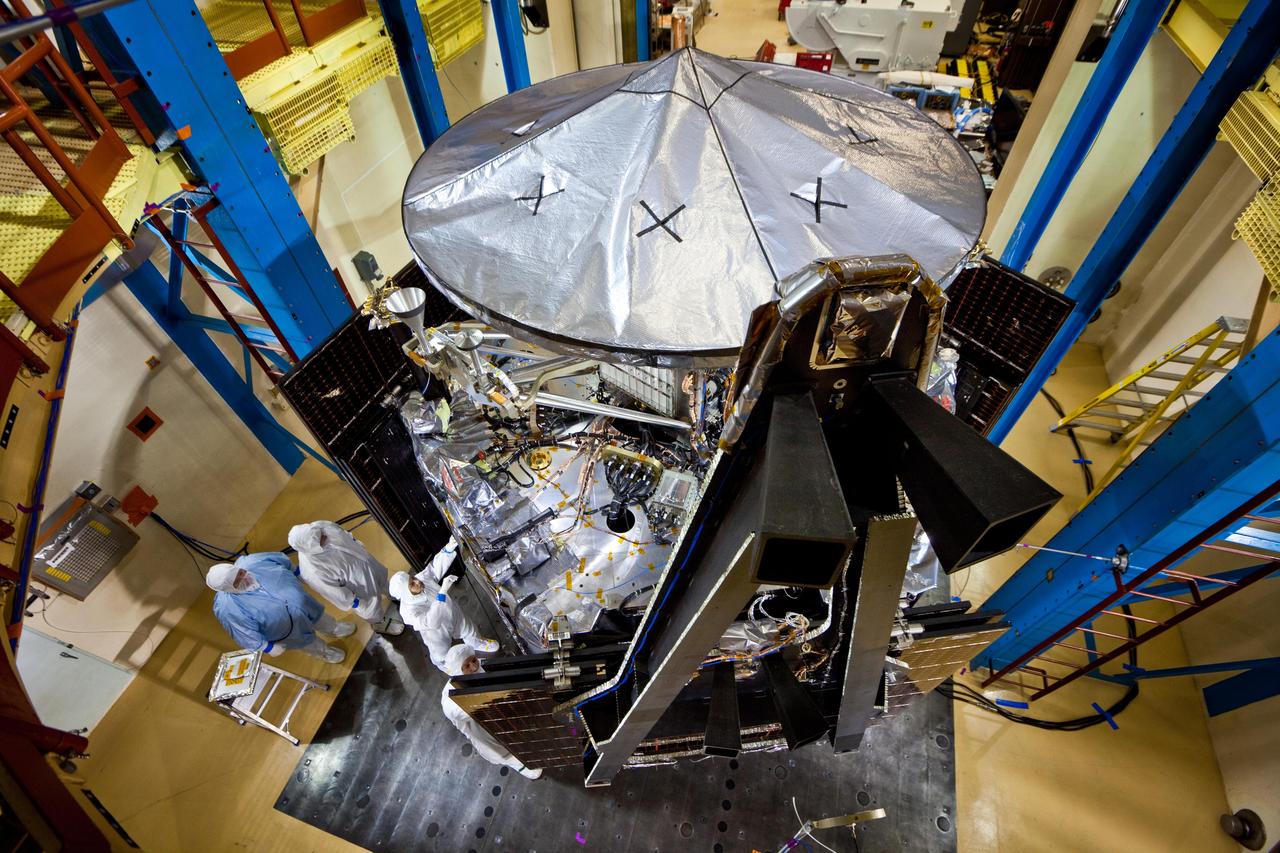
This image shows NASA Juno spacecraft undergoing environmental testing at Lockheed Martin Space Systems on Jan. 26, 2011. All 3 solar array wings are installed and stowed, and the large high-gain antenna is in place on the top of the avionics vault.
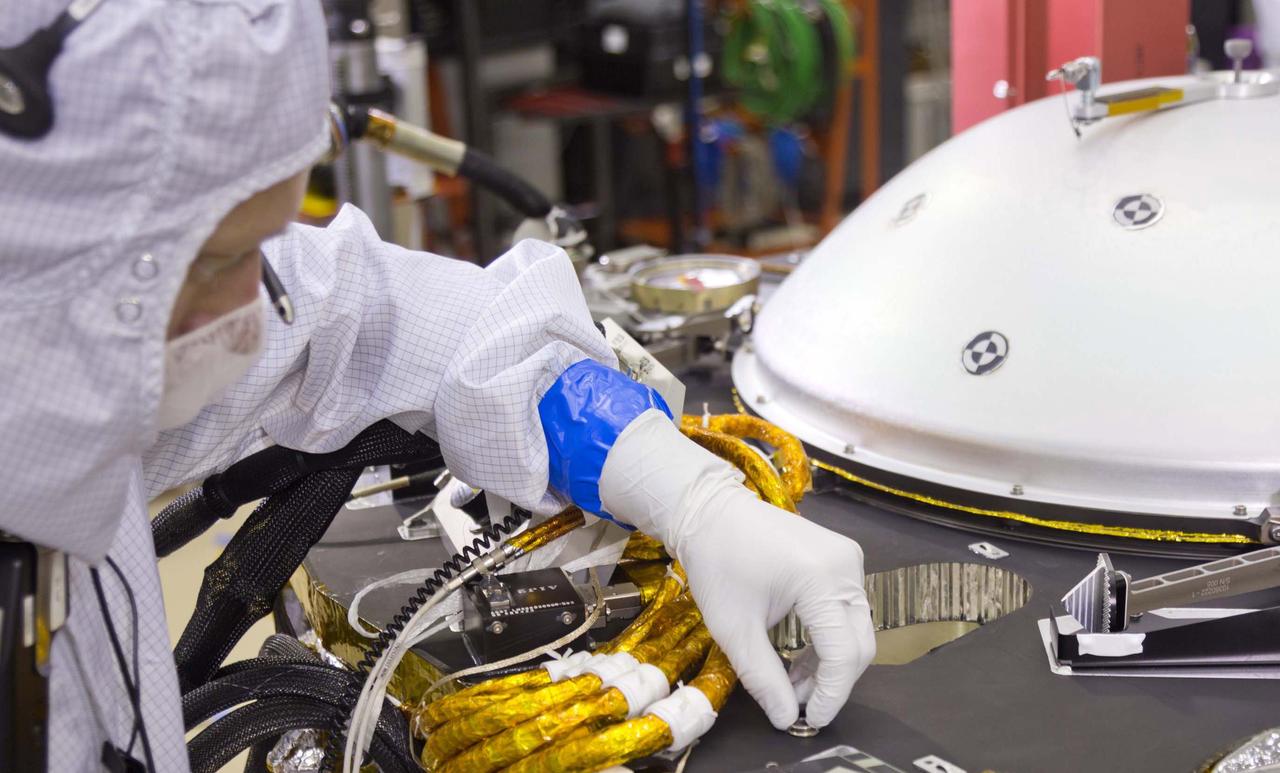
A spacecraft specialist in a clean room at Lockheed Martin Space Systems in Denver affixes a dime-size chip onto the lander deck in November 2015. This chip carries 826,923 names, submitted by the public online from all over the world.
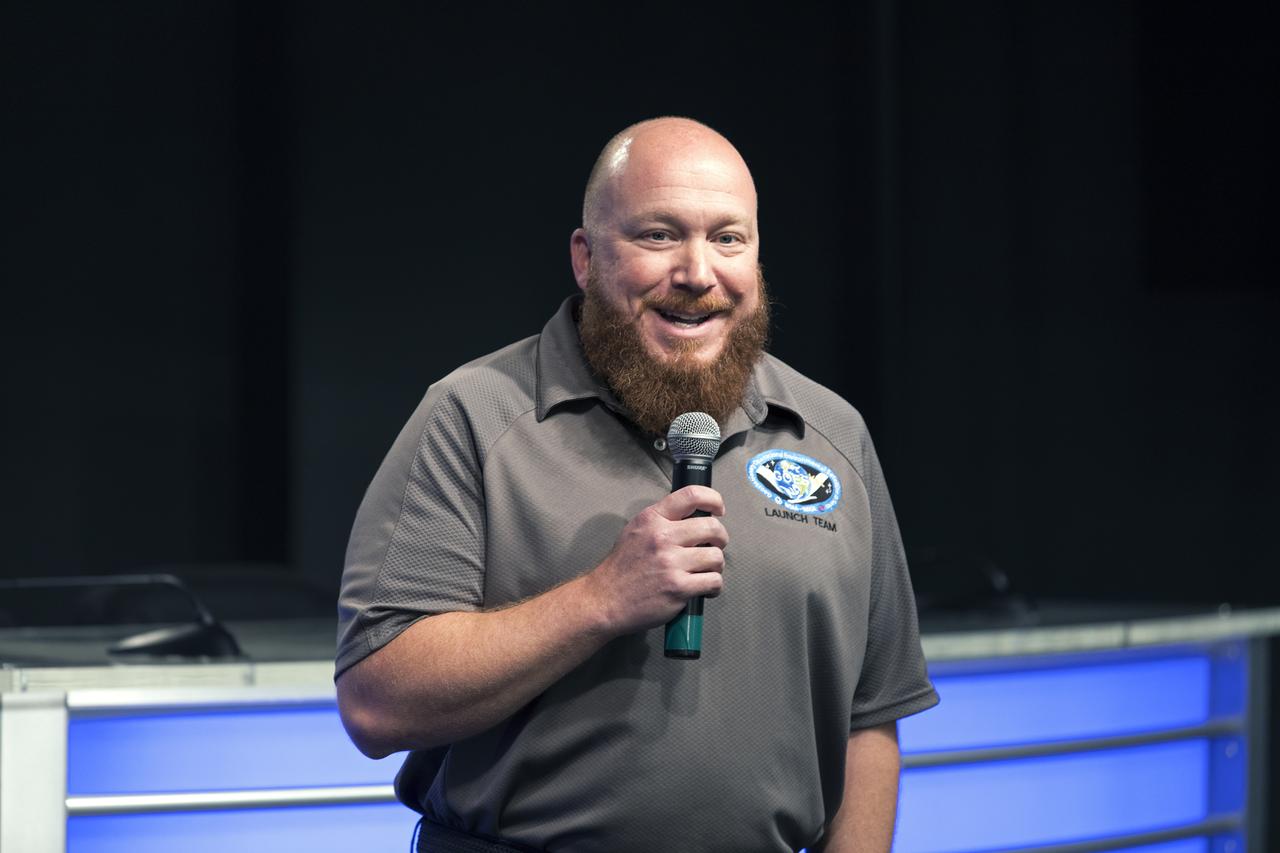
A.J. Sandora, Lockheed Martin's GOES-R Series Mechanical Operations Assembly, Test and Launch Operations (ATLO) manager, speaks to members of social media in the Kennedy Space Center’s Press Site auditorium. The briefing focused on the National Oceanic and Atmospheric Administration's, or NOAA's, Geostationary Operational Environmental Satellite, or GOES-S. Built by Lockheed Martin Space Systems of Littleton, Colorado, the spacecraft is the second satellite in a series of next-generation NOAA weather satellites. It will launch to a geostationary position over the U.S. to provide images of storms and help predict weather forecasts, severe weather outlooks, watches, warnings, lightning conditions and longer-term forecasting. GOES-S is slated to lift off at 5:02 p.m. EST on March 1, 2018 aboard a United Launch Alliance Atlas V rocket.
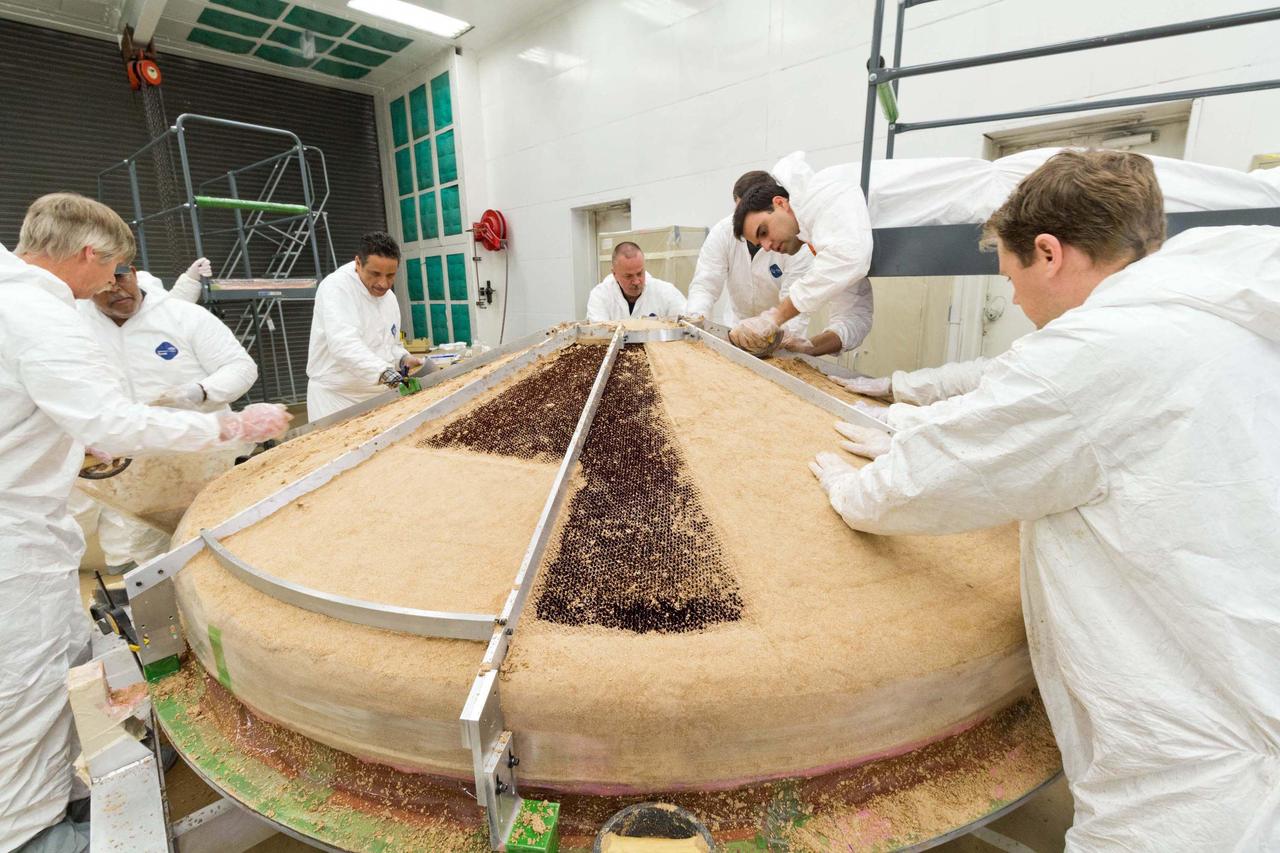
In this February 2015 scene from a clean room at Lockheed Martin Space Systems, Denver, specialists are building the heat shield to protect NASA's InSight spacecraft when it is speeding through the Martian atmosphere. Note: After thorough examination, NASA managers have decided to suspend the planned March 2016 launch of the Interior Exploration using Seismic Investigations Geodesy and Heat Transport (InSight) mission. The decision follows unsuccessful attempts to repair a leak in a section of the prime instrument in the science payload. http://photojournal.jpl.nasa.gov/catalog/PIA19404
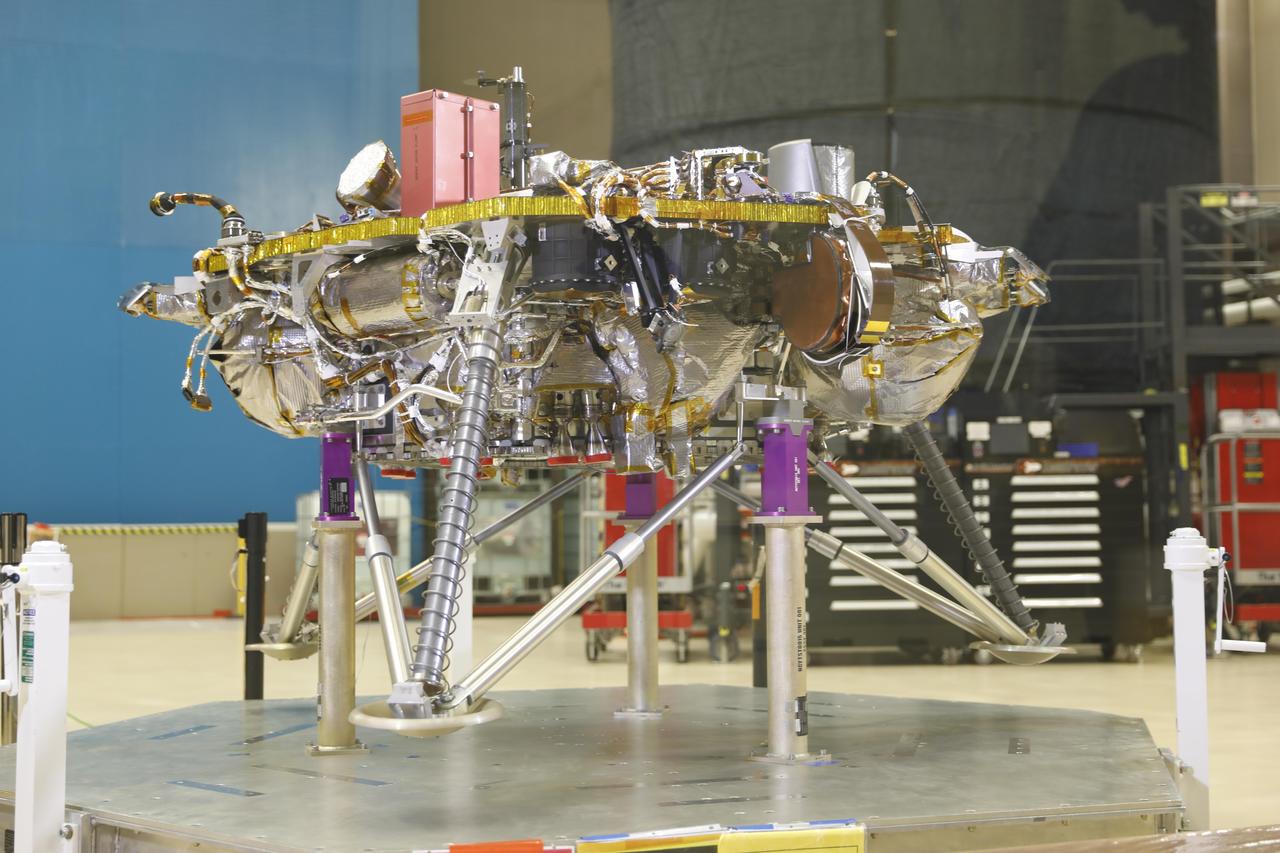
Once NASA's InSight Mars lander enters the Martian atmosphere and approaches the planet's surface, propulsive landing gear will slow the spacecraft down to about 5.5 mph (8.8 km/h) and safely set it down on the surface of the Red Planet. This image, taken at Lockheed Martin Space in Littleton, Colorado, shows several of the critical landing systems including the thrusters, lander legs and science deck. https://photojournal.jpl.nasa.gov/catalog/PIA22572
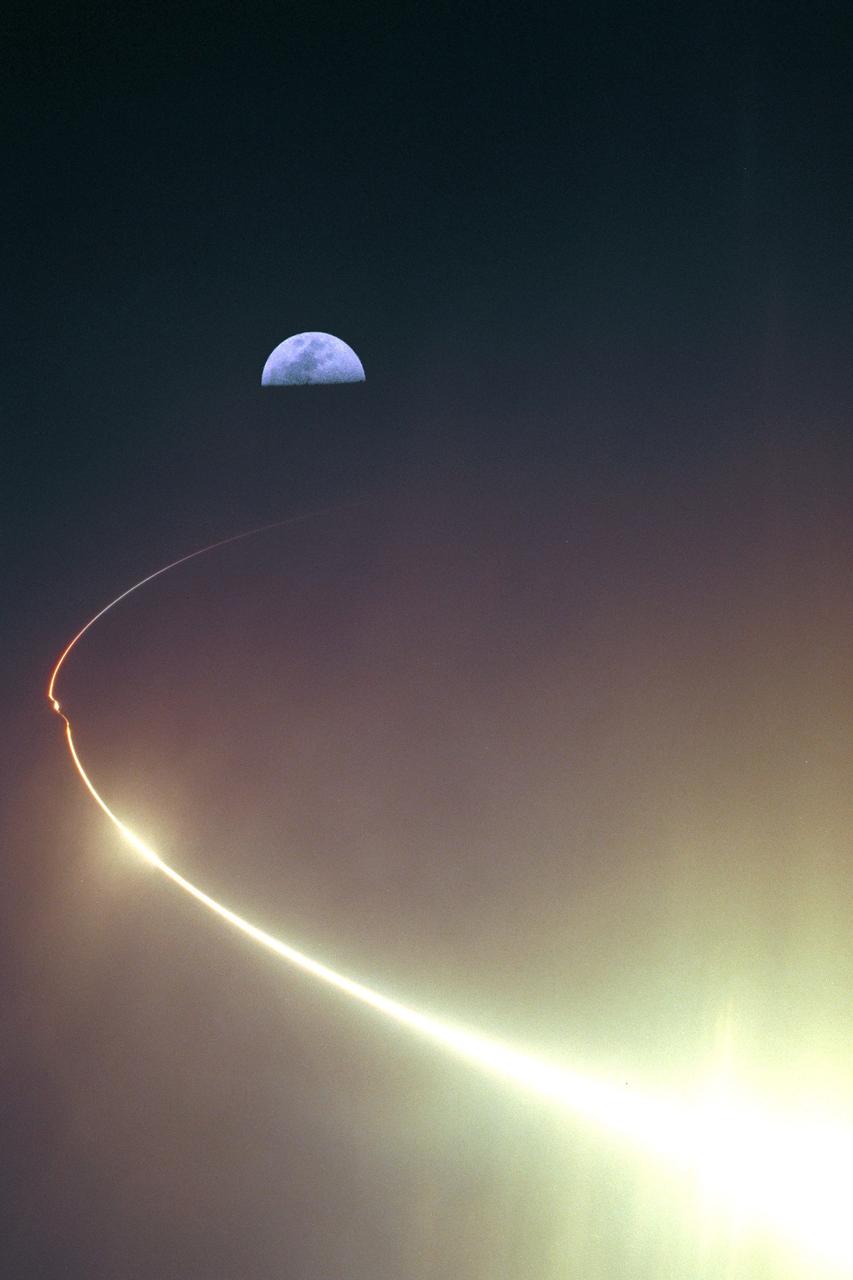
KENNEDY SPACE CENTER, FLA. - NASA's Lunar Prospector spacecraft launched successfully on its way to the Moon from Launch Complex 46 (LC46) at Cape Canaveral Air Station on Jan. 6 at 9:38 p.m. EST. It was the inaugural launch of Lockheed Martin's Athena II launch vehicle and the first launch from LC46, operated by Spaceport Florida Authority. Lunar Prospector, built for the NASA Ames Research Center by Lockheed Martin, is a spin-stabilized spacecraft designed to provide NASA with the first global maps of the Moon's surface and its gravitational magnetic fields, as well as look for the possible presence of ice near the lunar poles. It will orbit the Moon at an altitude of approximately 63 miles during a one-year mission.

Katie Oakman, lead for Lucy structures and mechanisms with Lockheed Martin Space, is introduced during an engineering briefing for the Lucy mission held inside the TV Auditorium at NASA’s Kennedy Space Center in Florida on Oct. 14, 2021. The mission is scheduled to launch at 5:34 a.m. EDT Saturday, Oct. 16, on a United Launch Alliance Atlas V 401 rocket from Space Launch Complex 41 at Cape Canaveral Space Force Station. NASA’s Launch Services Program, based at Kennedy, is managing the launch. During its 12-year primary mission, Lucy will explore a record-breaking number of asteroids, flying by one asteroid in the solar system’s main belt and seven Trojan asteroids. Additionally, Lucy’s path will circle back to Earth three times for gravity assists, making it the first spacecraft to return to the vicinity of Earth from the outer solar system.
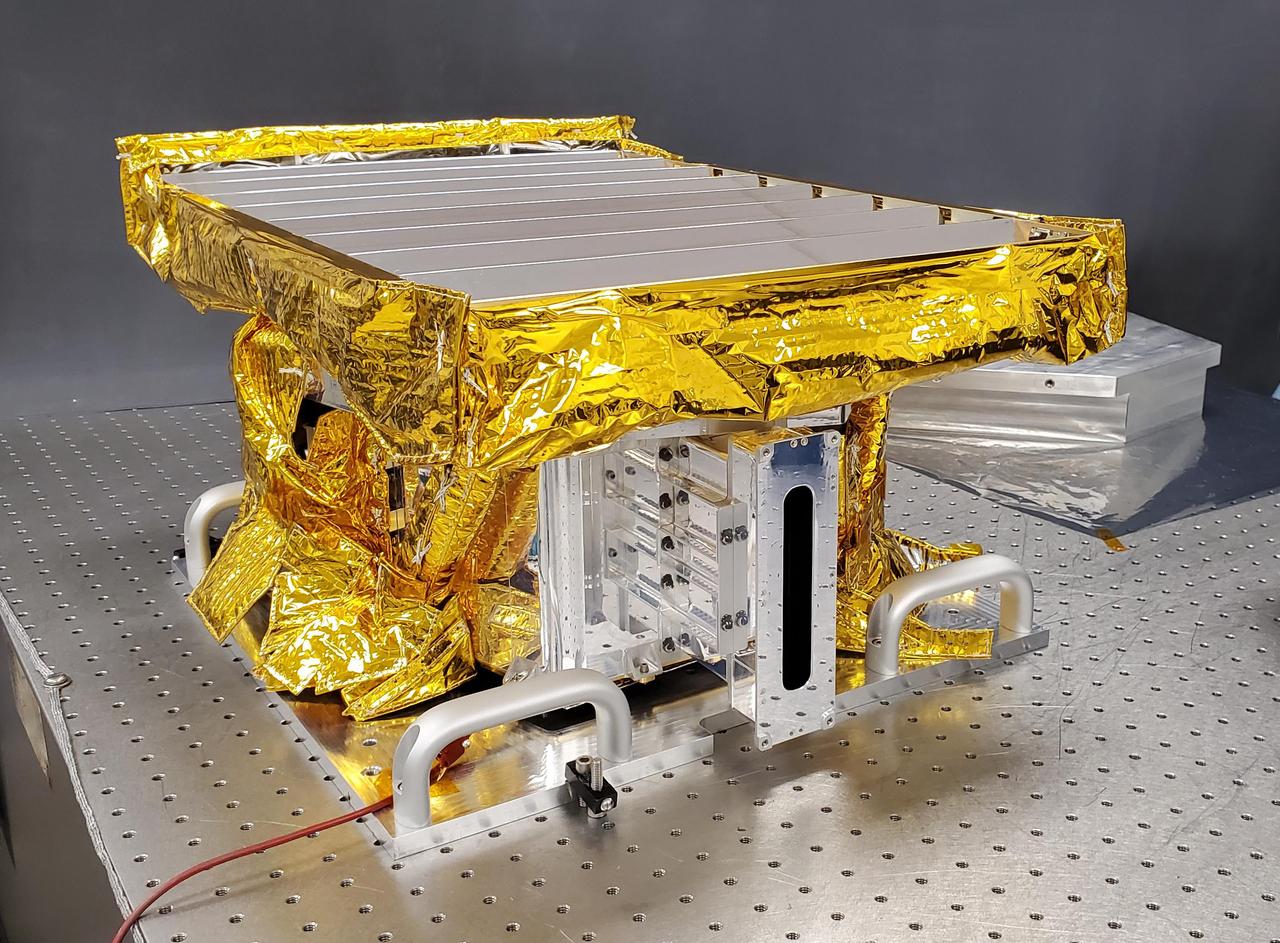
The High-resolution Volatiles and Minerals Moon Mapper (HVM³) sits in a clean room at NASA's Jet Propulsion Laboratory in Southern California in early December 2022. The JPL-built instrument was later shipped to Lockheed Martin Space in Littleton, Colorado, to be integrated with NASA's Lunar Trailblazer spacecraft. HVM³ is an imaging spectrometer that will detect and map water on the Moon's surface to determine its abundance, location, form, and how it changes over time. A second instrument, the Lunar Thermal Mapper infrared multispectral imager, is being developed by the University of Oxford in the U.K. and is scheduled for delivery and integration in early 2023. Lunar Trailblazer was selected under NASA's Small Innovative Missions for Planetary Exploration (SIMPLEx) program in 2019. The Lunar Trailblazer mission is managed by JPL and its science investigation is led by Caltech in Pasadena, California. Managed for NASA by Caltech, JPL also provides system engineering, mission assurance, the HVM³ instrument, as well as navigation. Lockheed Martin Space provides the spacecraft and integrates the flight system, under contract with Caltech. SIMPLEx mission investigations are managed by the Planetary Missions Program Office at NASA's Marshall Space Flight Center in Huntsville, Alabama, as part of the Discovery Program at NASA Headquarters in Washington. The program conducts space science investigations in the Planetary Science Division of NASA's Science Mission Directorate at NASA Headquarters. https://photojournal.jpl.nasa.gov/catalog/PIA25256
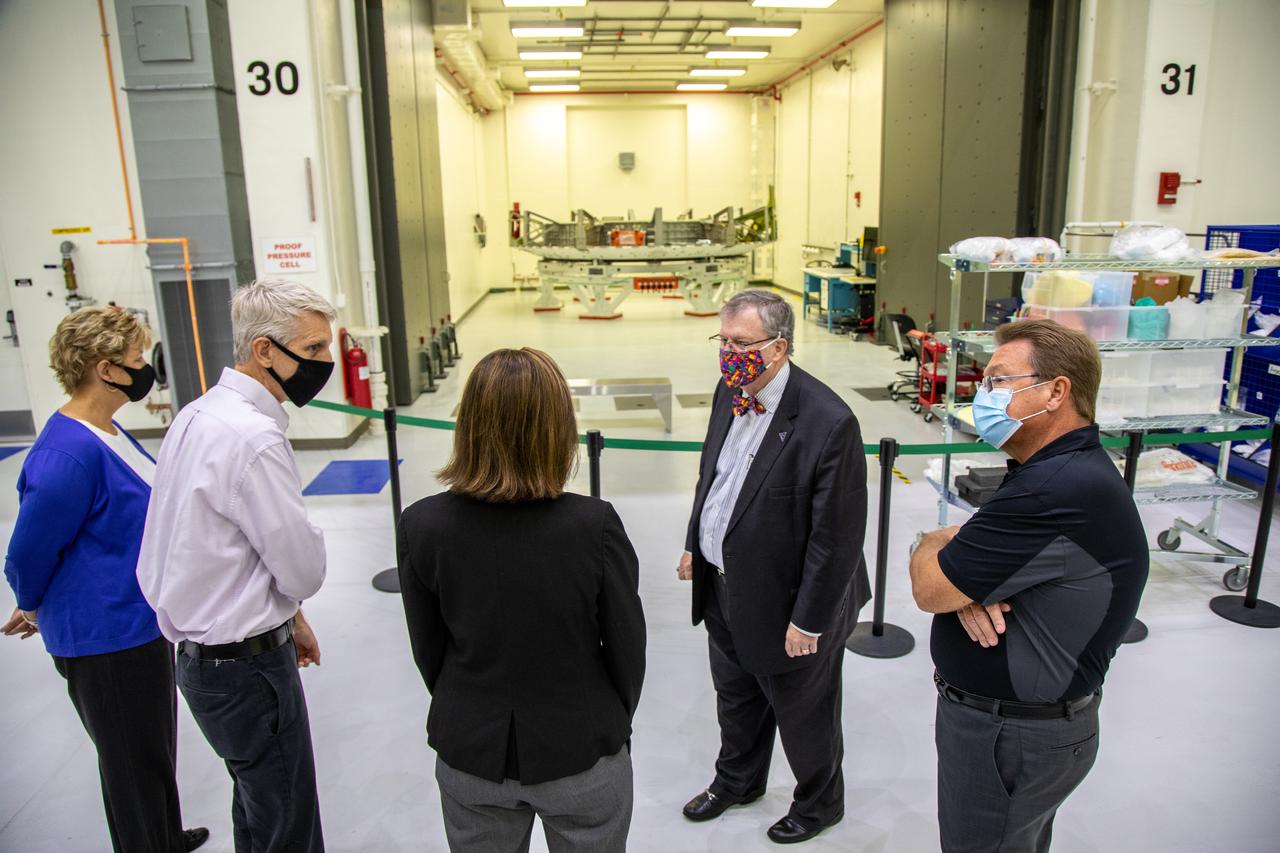
Catherine Koerner, in the center, NASA Orion Program manager, along with senior managers from Orion and Lockheed Martin, tours the Neil Armstrong Operations and Checkout Building at NASA’s Kennedy Space Center in Florida on Oct. 6, 2020. Accompanying her, from left are Annette Hasbrook, Orion Program assistant manager; Scott Wilson, NASA Kennedy Orion Production Operations manager, Mike Hawes, Lockheed Martin vice president and Orion Program manager; and Jules Schneider, Lockheed Martin Assembly, Test and Launch Operations director with Lockheed Martin. Koerner viewed the Orion spacecraft for the Artemis I and II missions. They are shown with the crew module adapter for the Orion Artemis II mission. The first in a series of increasingly complex missions, Artemis I will test the Orion spacecraft and Space Launch System as an integrated system ahead of crewed flights to the Moon. Under the Artemis program, NASA will land the first woman and the next man on the Moon in 2024.
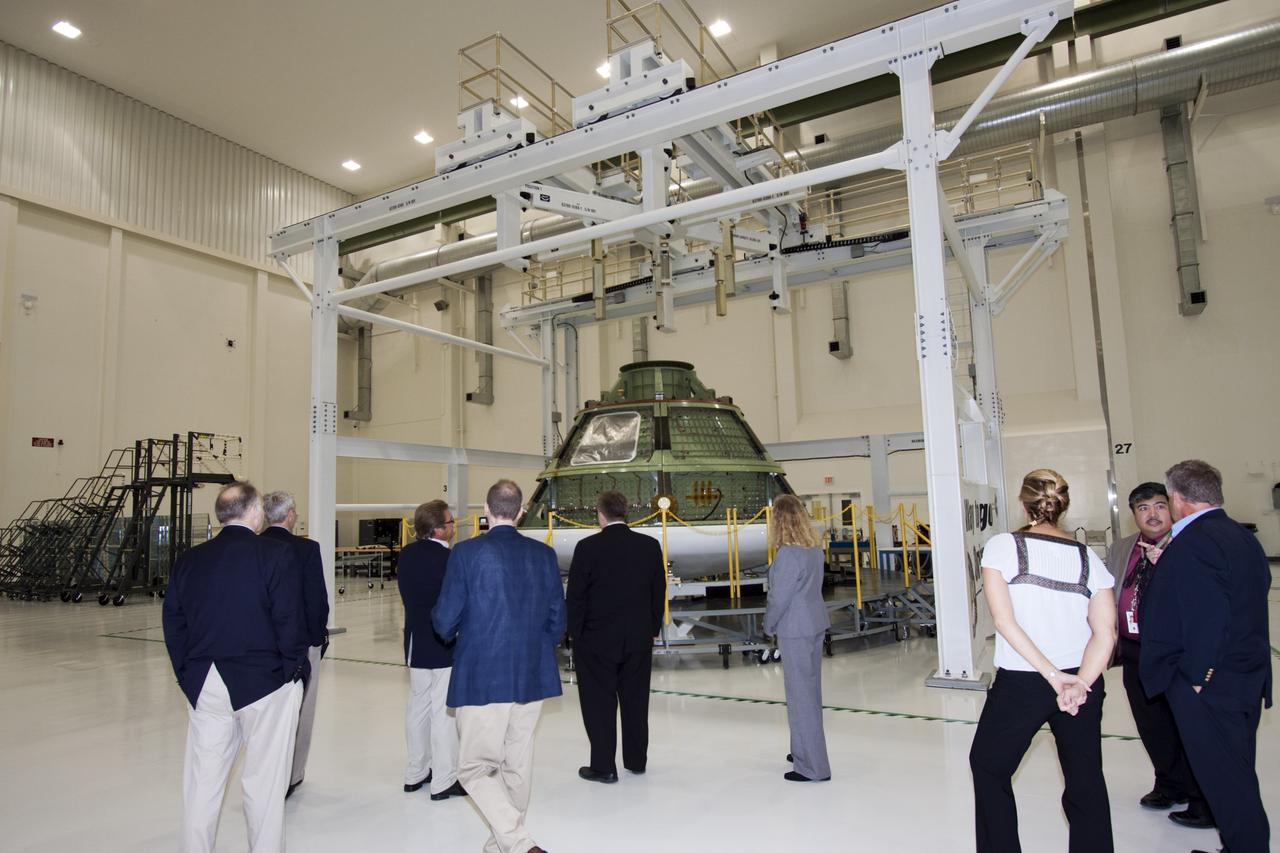
CAPE CANAVERAL, Fla. – Dr. Mason Peck, center, NASA's chief technologist, listens to details about the processing of the agency's first flight test Orion spacecraft by Lockheed Martin inside the Operations and Checkout Building's high bay at Kennedy Space Center in Florida. Photo credit: NASA/Jim Grossmanns to details about the processing of the agency's first flight test Orion spacecraft by Lockheed Martin inside the Operations and Checkout Building's high bay at Kennedy Space Center in Florida. Lockheed Martin's Julian Schneider, left, led the presentation. Photo credit: NASA/Jim Grossmann
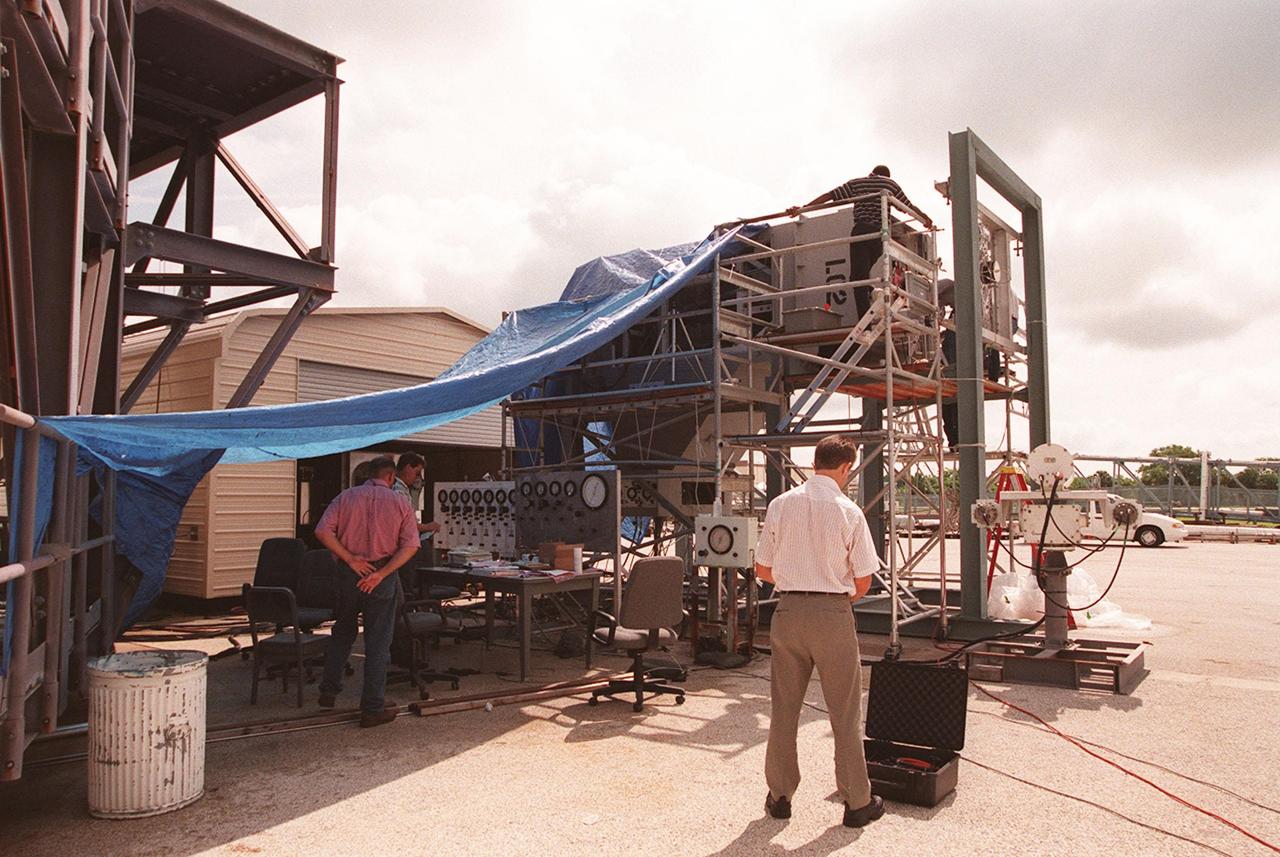
At the Launch Equipment Test Facility, workers check results from testing the X-33 umbilical system. From left are Greg Melton (left), a NASA engineer; Will Reaves, with Lockheed Martin Technical Operations; and Scott Holcomb, also with Lockheed Martin Technical Operations. A team of Kennedy Space Center experts developed the umbilical system, comprising panels, valves and hoses that provide the means to load the X-33 with super-cold propellant. The X-33, under construction at Lockheed Martin Skunk Works in Palmdale, Calif., is a half-scale prototype of the planned operational reusable launch vehicle dubbed VentureStar
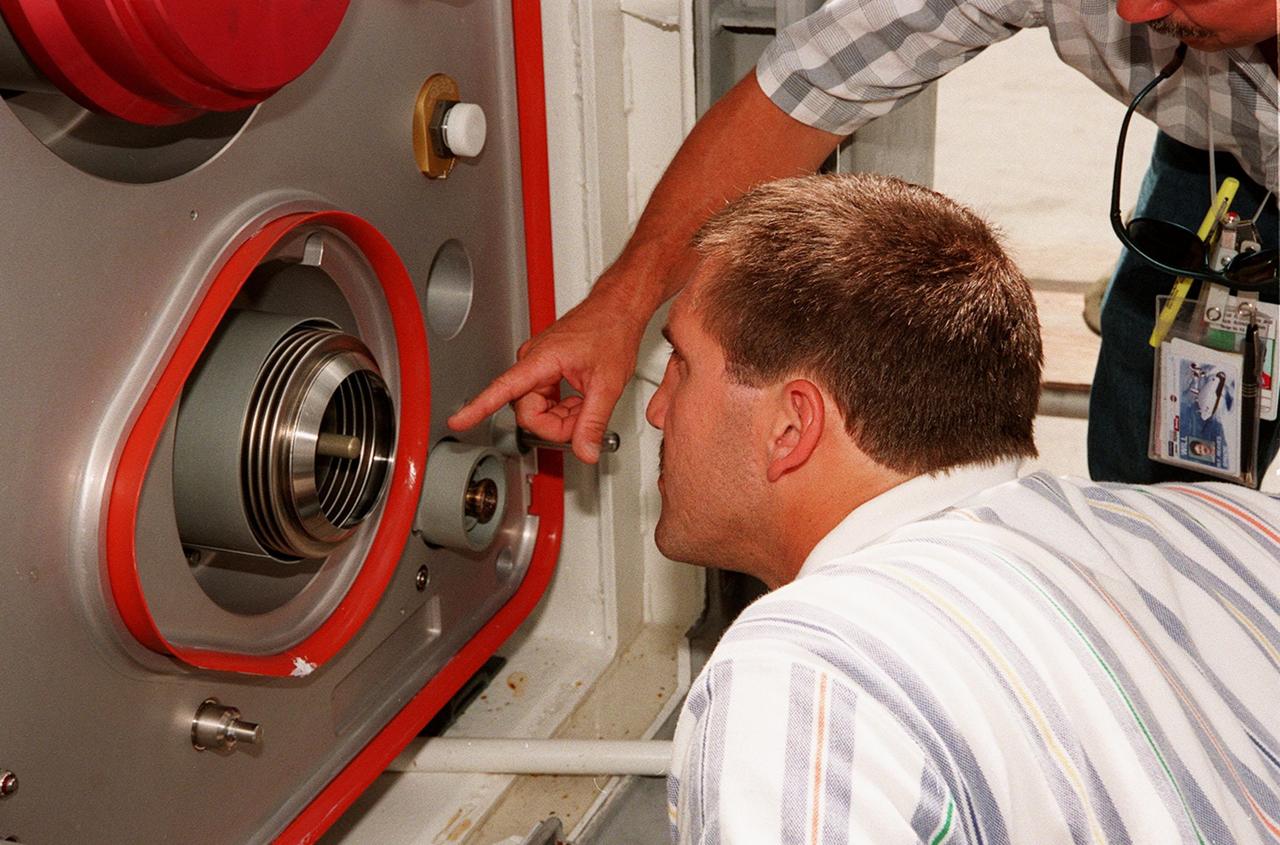
At the Launch Equipment Test Facility, Mike Solomon, with Lockheed Martin Technical Operations, studies a part of the X-33 umbilical system during testing. Pointing to the part is Will Reaves, also with Lockheed Martin Technical Operations. A team of Kennedy Space Center experts developed the umbilical system, comprising panels, valves and hoses that provide the means to load the X-33 with super-cold propellant. The X-33, under construction at Lockheed Martin Skunk Works in Palmdale, Calif., is a half-scale prototype of the planned operational reusable launch vehicle dubbed VentureStar

KENNEDY SPACE CENTER, FLA. - This logo for the Gravity Probe B mission portrays the theory of curved spacetime and "frame-dragging," developed by Einstein and other scientists, that the mission will test. The Gravity Probe B will launch a payload of four gyroscopes into low-Earth polar orbit. Once in orbit, for 18 months each gyroscope’s spin axis will be monitored as it travels through local spacetime, observing and measuring the effects. The experiment was developed by Stanford University, NASA’s Marshall Space Flight Center and Lockheed Martin.

KENNEDY SPACE CENTER, FLA. - This seal illustrates the mission of the Gravity Probe B spacecraft and the organizations who developed the experiment: Stanford University, NASA’s Marshall Space Flight Center and Lockheed Martin. The Gravity Probe B mission will test the theory of curved spacetime and "frame-dragging," depicted graphically in the lower half, that was developed by Einstein and other scientists. Above the graphic is a drawing of GP-B circling the Earth.

Representatives from NASA, Lockheed Martin and the White House Office of Management and Budget pause for a group photograph in front of the Artemis I spacecraft during a tour of the Neil Armstrong Operations and Checkout Building high bay at NASA’s Kennedy Space Center in Florida on Aug. 28, 2020. From left, are Kennedy Deputy Director Janet Petro; Jules Schneider, Lockheed Martin Assembly, Test and Launch Operations; Brian McCormack, associate director of the White House Office of Management and Budget; NASA Deputy Administrator Jim Morhard; Larry Price, Lockheed Martin Orion program manager; Dr. Eric H. Thoemmes, vice president of Space, Missile Defense and Strategic with Lockheed Martin; NASA Administrator Jim Bridenstine; Russell Vought, director of the White House Office of Management and Budget; Kennedy Space Center Director Bob Cabana; Glenn Chin, Deputy Manager of Orion Production Operations; and Joe Mayer, director of Government Relations with Lockheed Martin. Orion spacecraft are being prepared for Artemis I and Artemis II. In the background is the Orion spacecraft for Artemis I. The Office of Management and Budget is working with the U.S. Congress to line up the necessary resources to land the first woman and the next man on the Moon in 2024.
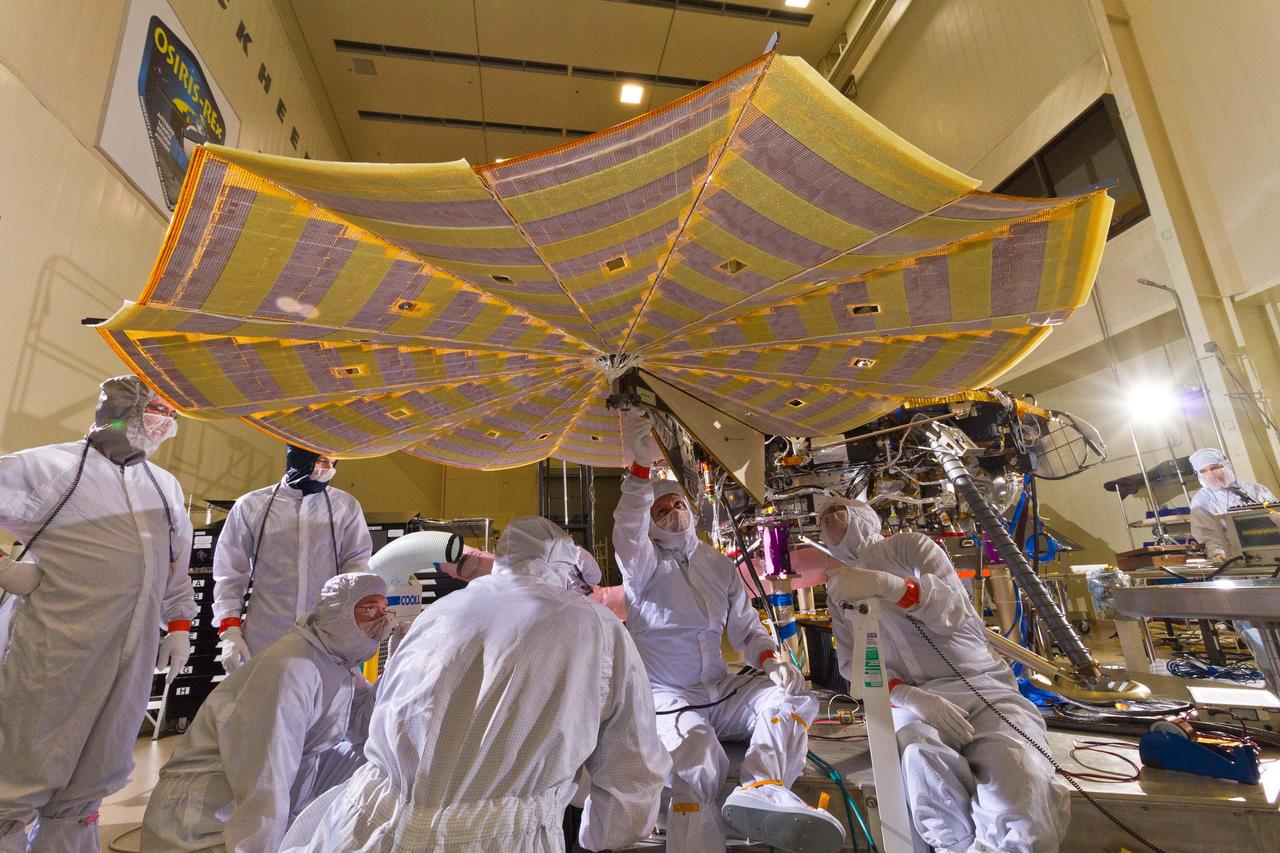
Engineers and technicians at Lockheed Martin Space Systems, Denver, run a test of deploying the solar arrays on NASA's InSight lander in this April 30, 2015 image. InSight, for Interior Exploration Using Seismic Investigations, Geodesy and Heat Transport, is scheduled for launch in March 2016 and landing in September 2016. It will study the deep interior of Mars to advance understanding of the early history of all rocky planets, including Earth. Note: After thorough examination, NASA managers have decided to suspend the planned March 2016 launch of the Interior Exploration using Seismic Investigations Geodesy and Heat Transport (InSight) mission. The decision follows unsuccessful attempts to repair a leak in a section of the prime instrument in the science payload. http://photojournal.jpl.nasa.gov/catalog/PIA19665
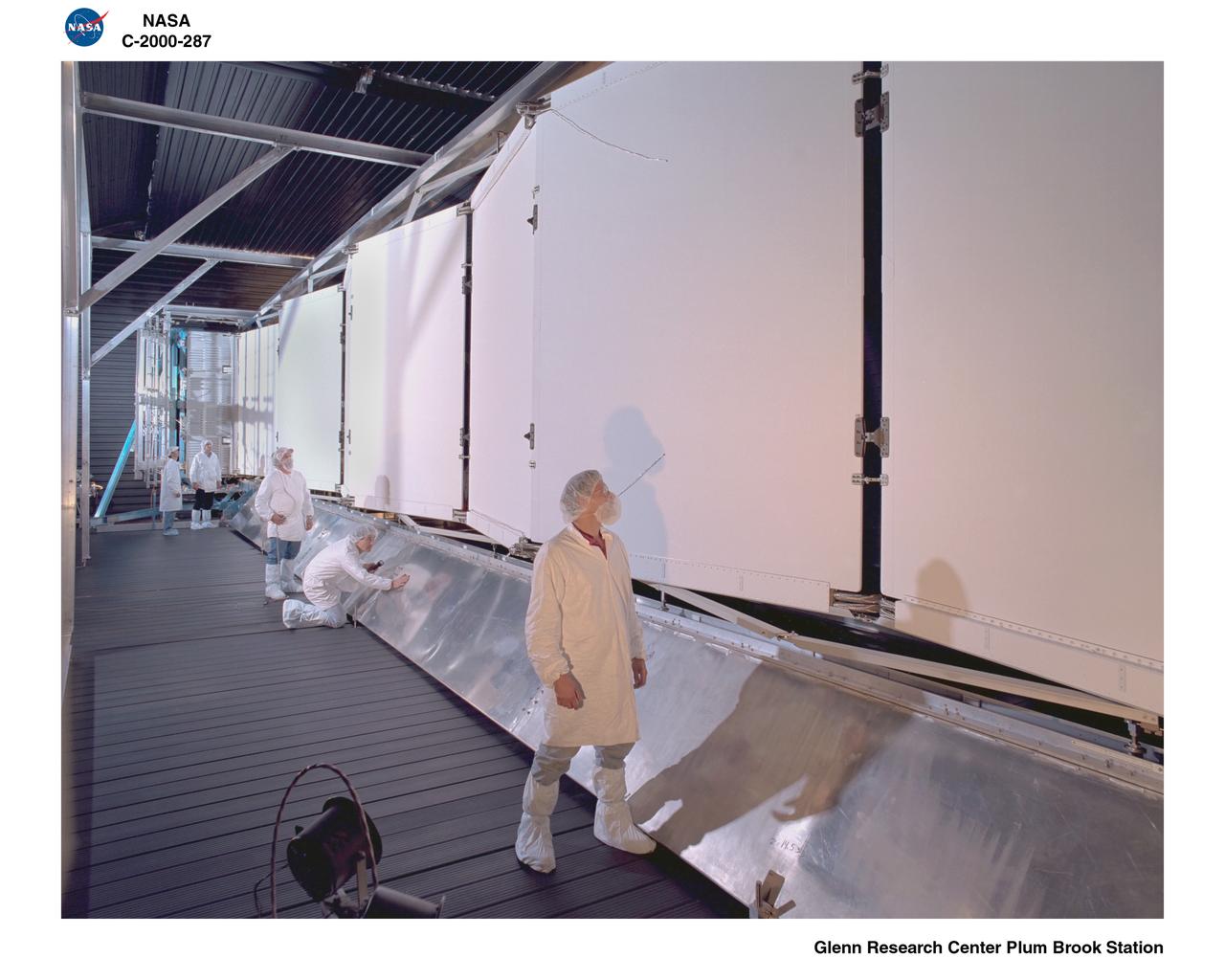
LOCKHEED MARTIN SPACE STATION RADIATOR PANELS FLIGHT HARDWARE BEING DEPLOYED AT NASA PLUM BROOK STATION SPACE POWER FACILITY SPF
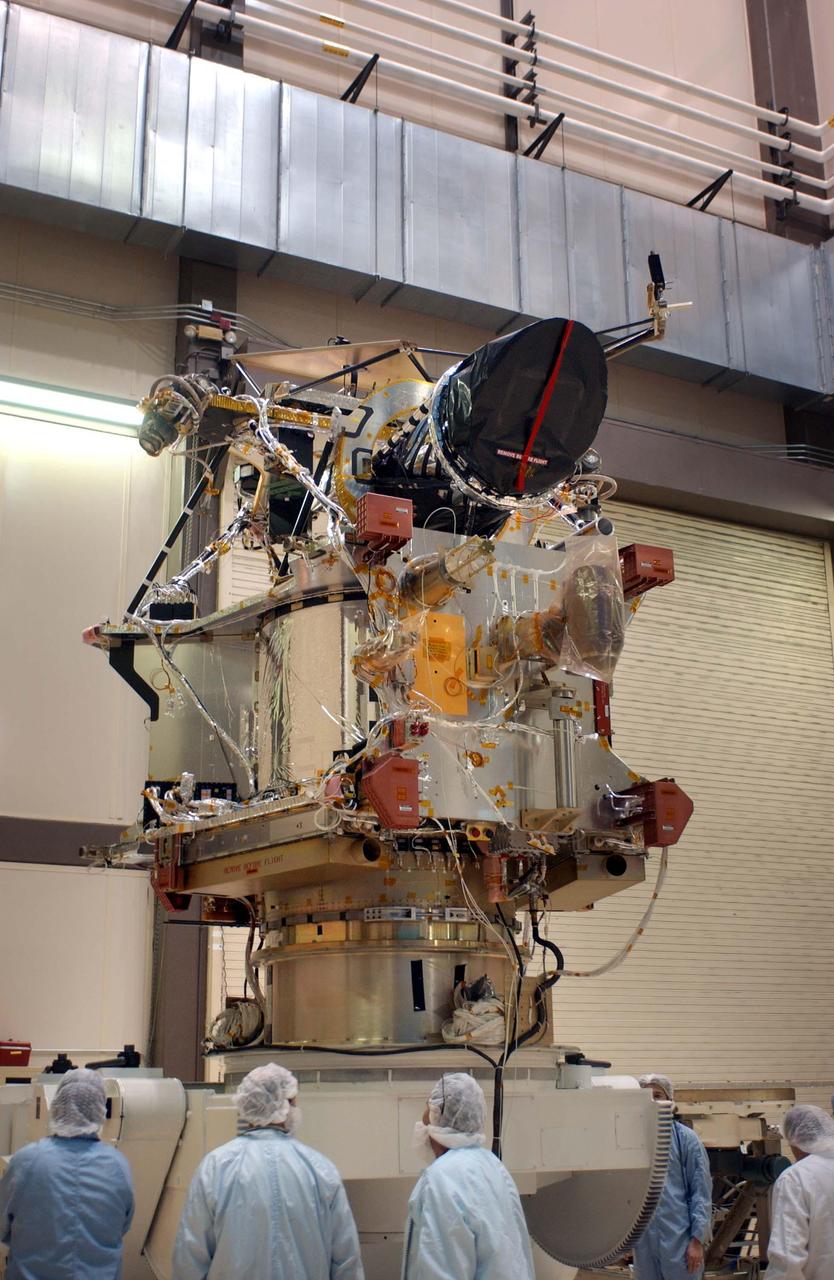
A telescopic camera called the High Resolution Imaging Science Experiment, or HiRISE, was installed onto the main structure of NASA Mars Reconnaissance Orbiter on Dec. 11, 2004 at Lockheed Martin Space Systems, Denver, Colo. HiRISE is at the top of the spacecraft in this image. Some other large components, including solar panels and the high-gain antenna, had not yet been installed. The orbiter is scheduled for launch in August 2005 carrying six science instruments. Ball Aerospace and Technology Corp., Boulder, Colo., built HiRISE for the University of Arizona, Tucson, to supply for the mission. http://photojournal.jpl.nasa.gov/catalog/PIA07210
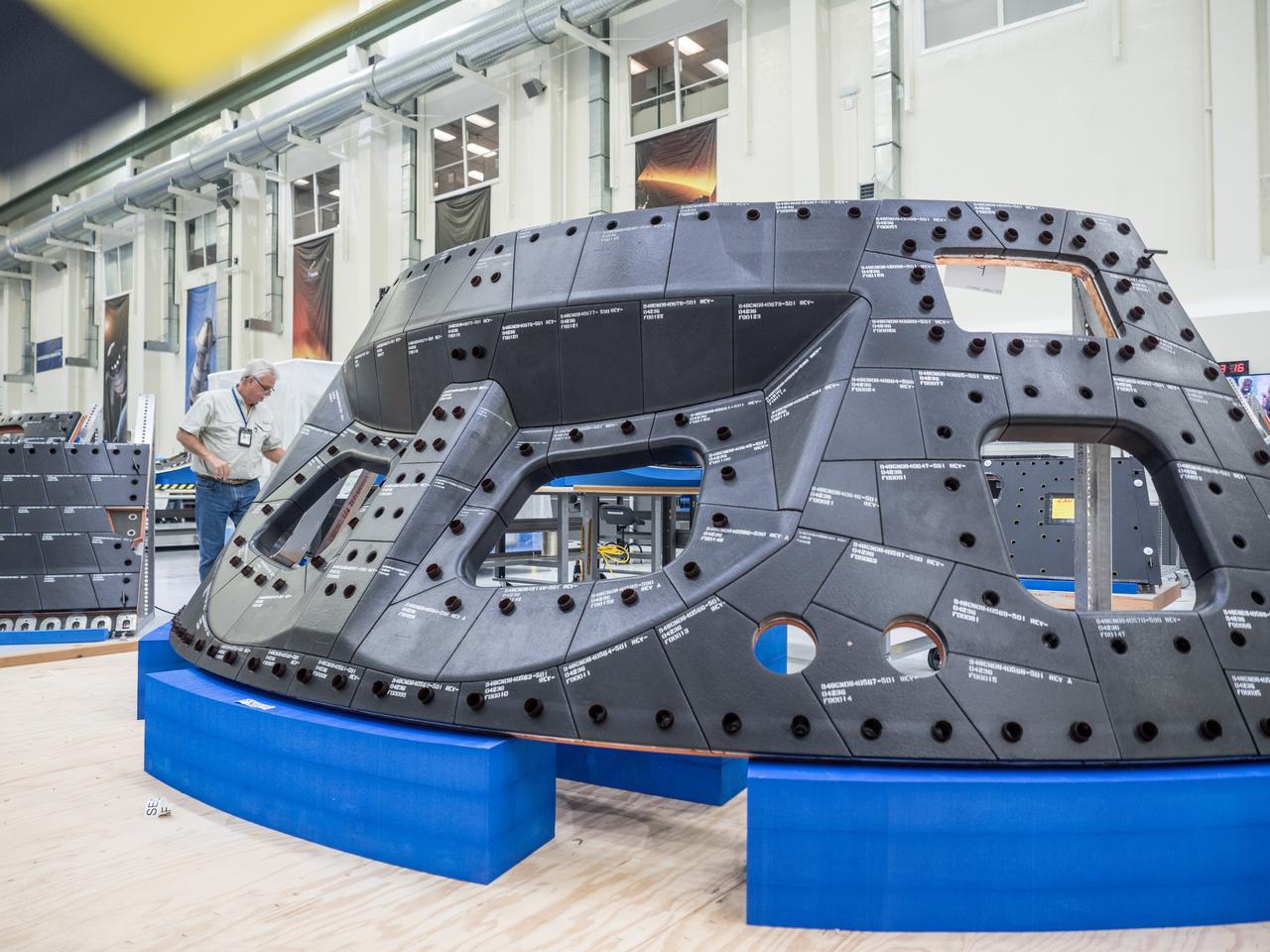
Lockheed Martin engineers assemble Orion's Artemis I crew module at NASA's Kennedy Space Center Operations and Checkout Building on April 27, 2018.
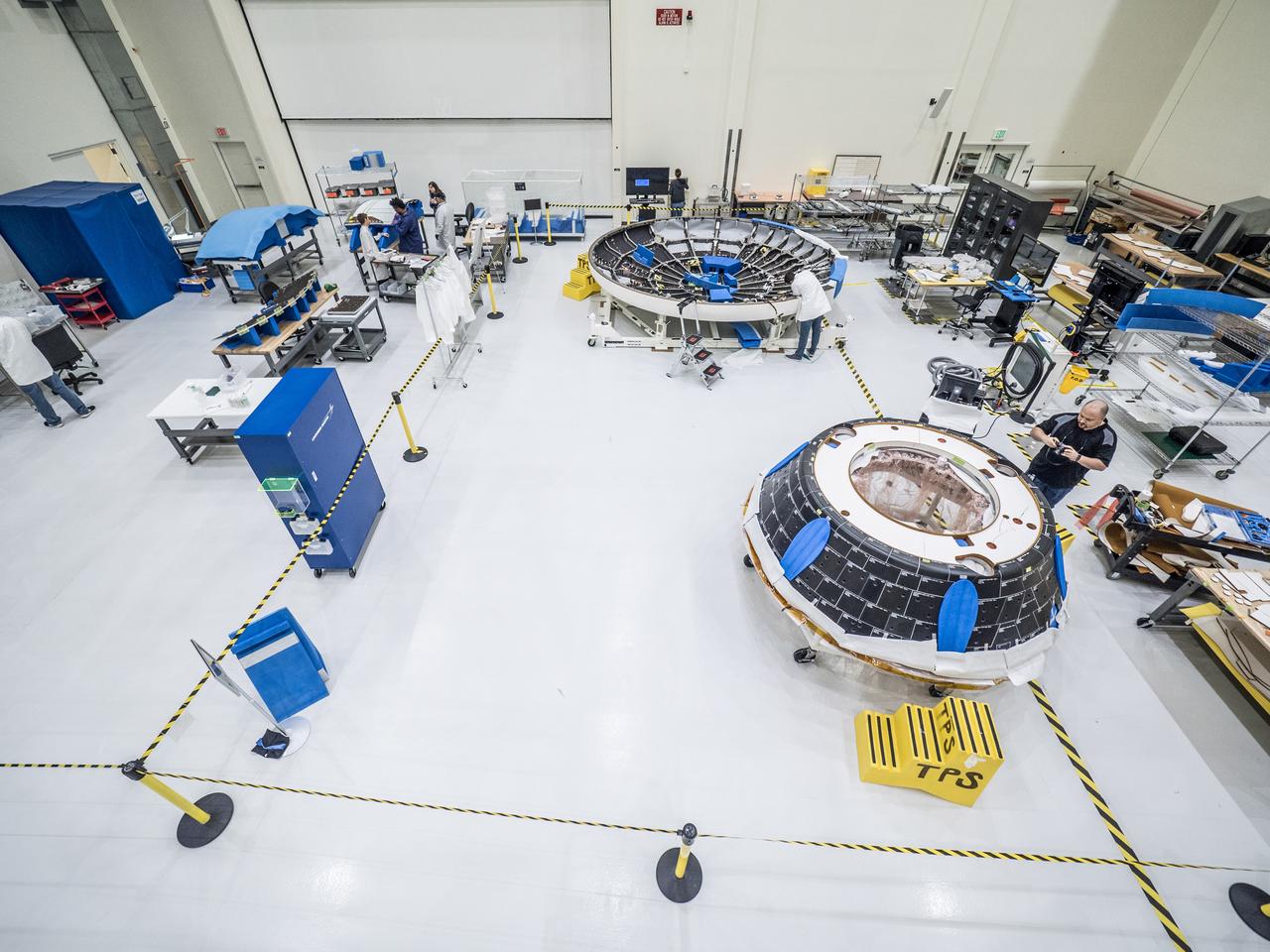
Lockheed Martin engineers assemble Orion's Artemis I crew module at NASA's Kennedy Space Center Operations and Checkout Building on April 27, 2018.
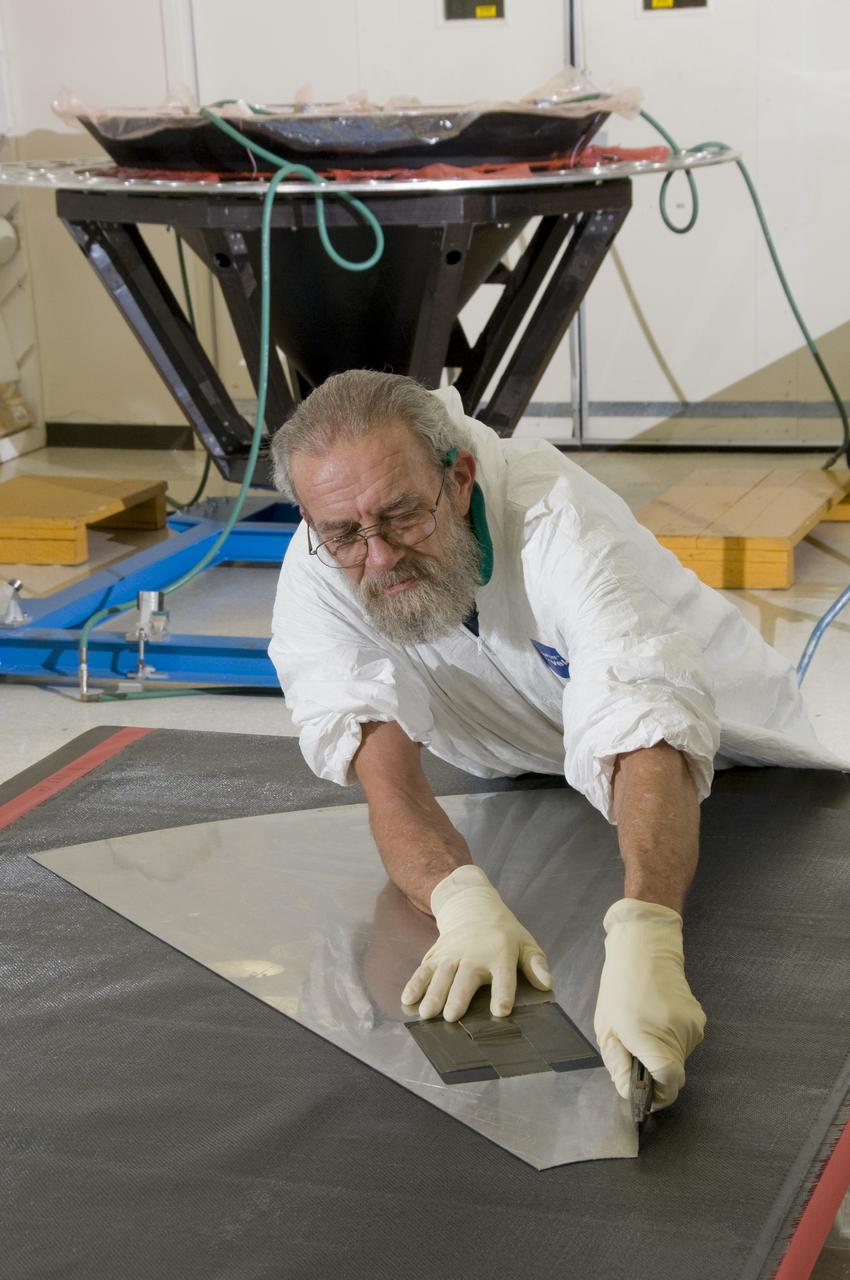
ED KIRCH, A LOCKHEED MARTIN TECHNICIAN, CUTS A PATTERN FROM COMPOSITE MATERIAL THAT WILL BE PLACED IN A MOLD TO BUILD A SPACE SHUTTLE EXTERNAL TANK COMPOSITE NOSE CONE.
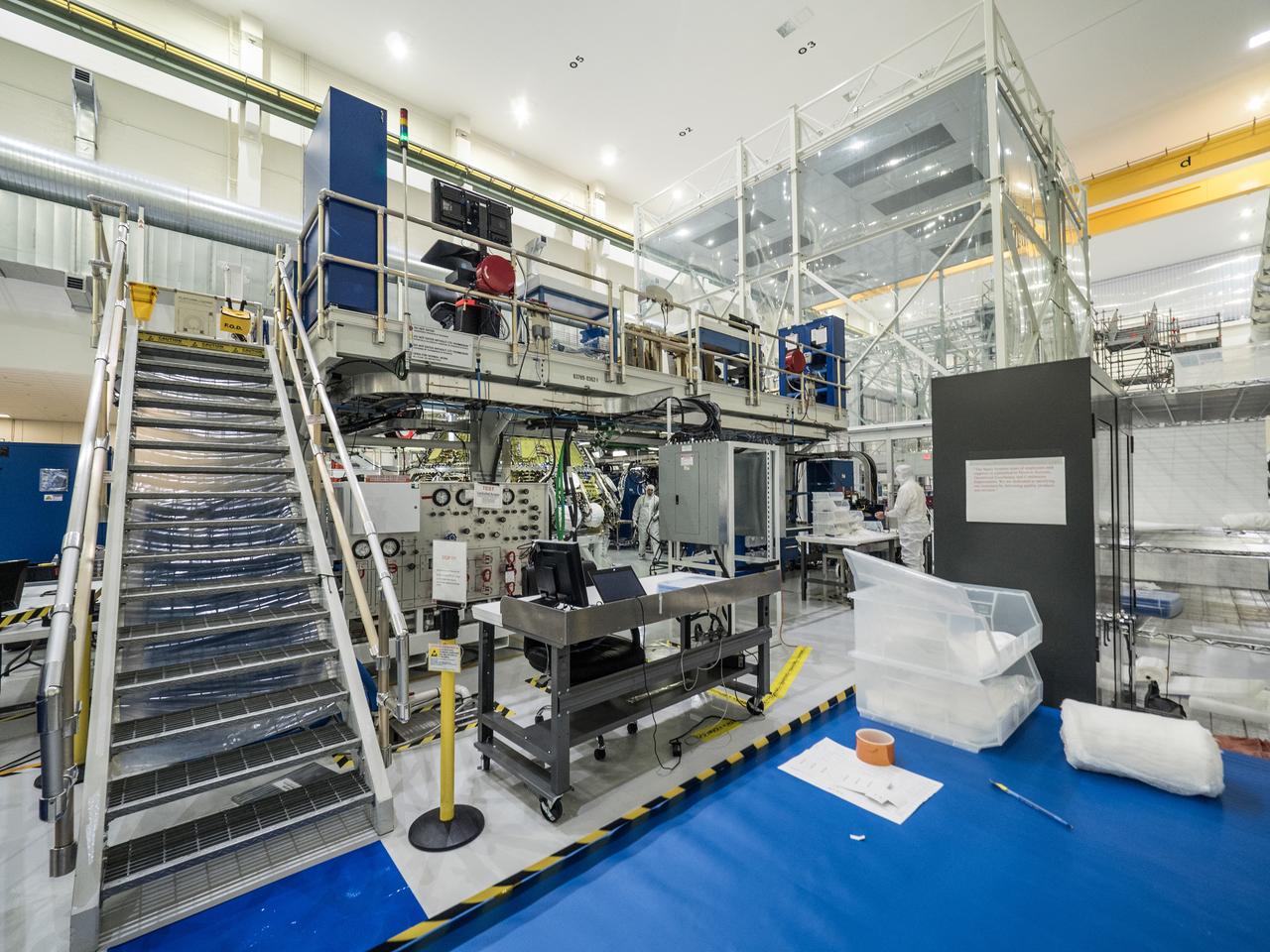
Lockheed Martin engineers assemble Orion's Artemis I crew module at NASA's Kennedy Space Center Operations and Checkout Building on April 27, 2018.
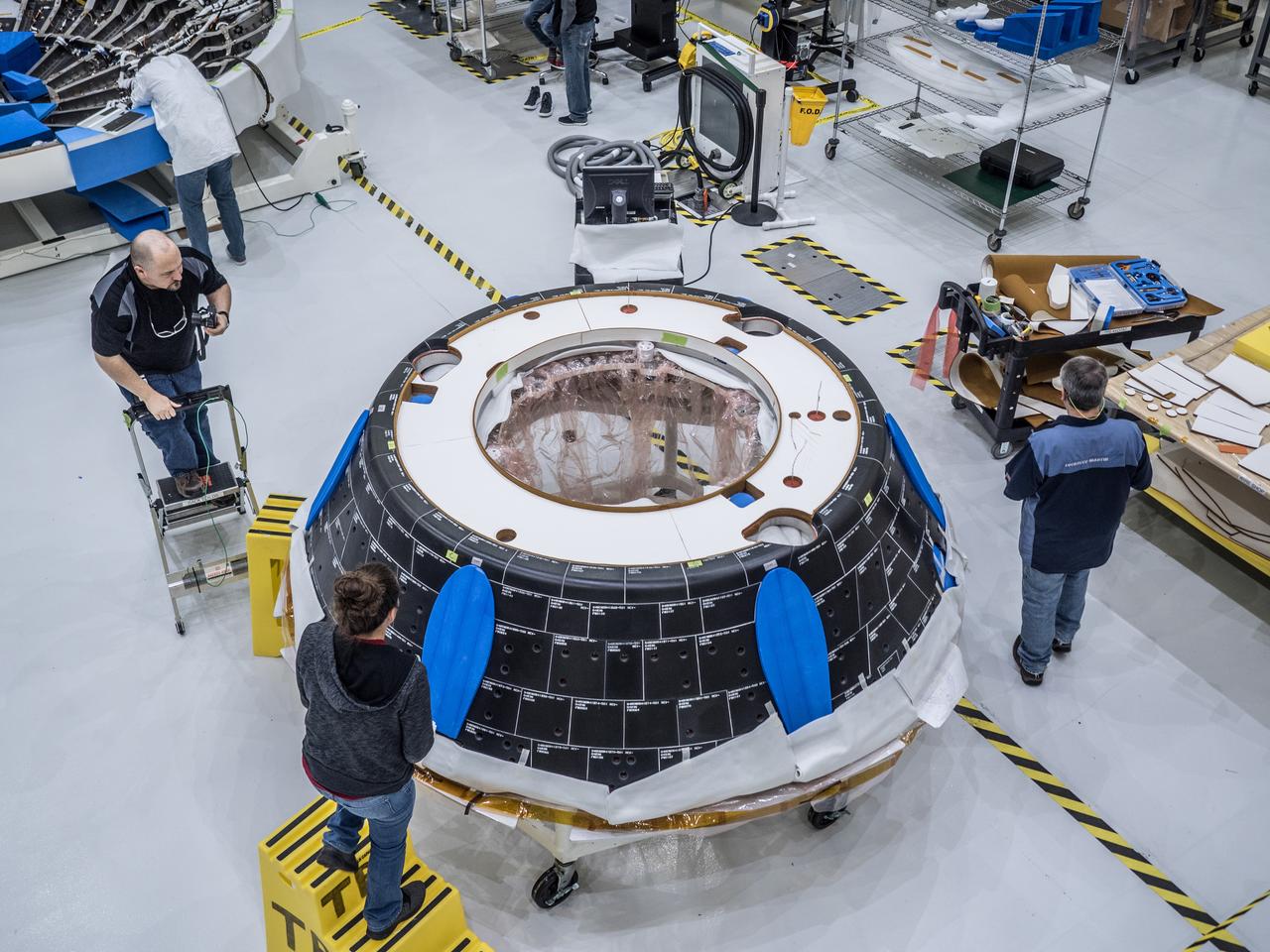
Lockheed Martin engineers assemble Orion's Artemis I crew module at NASA's Kennedy Space Center Operations and Checkout Building on April 27, 2018.
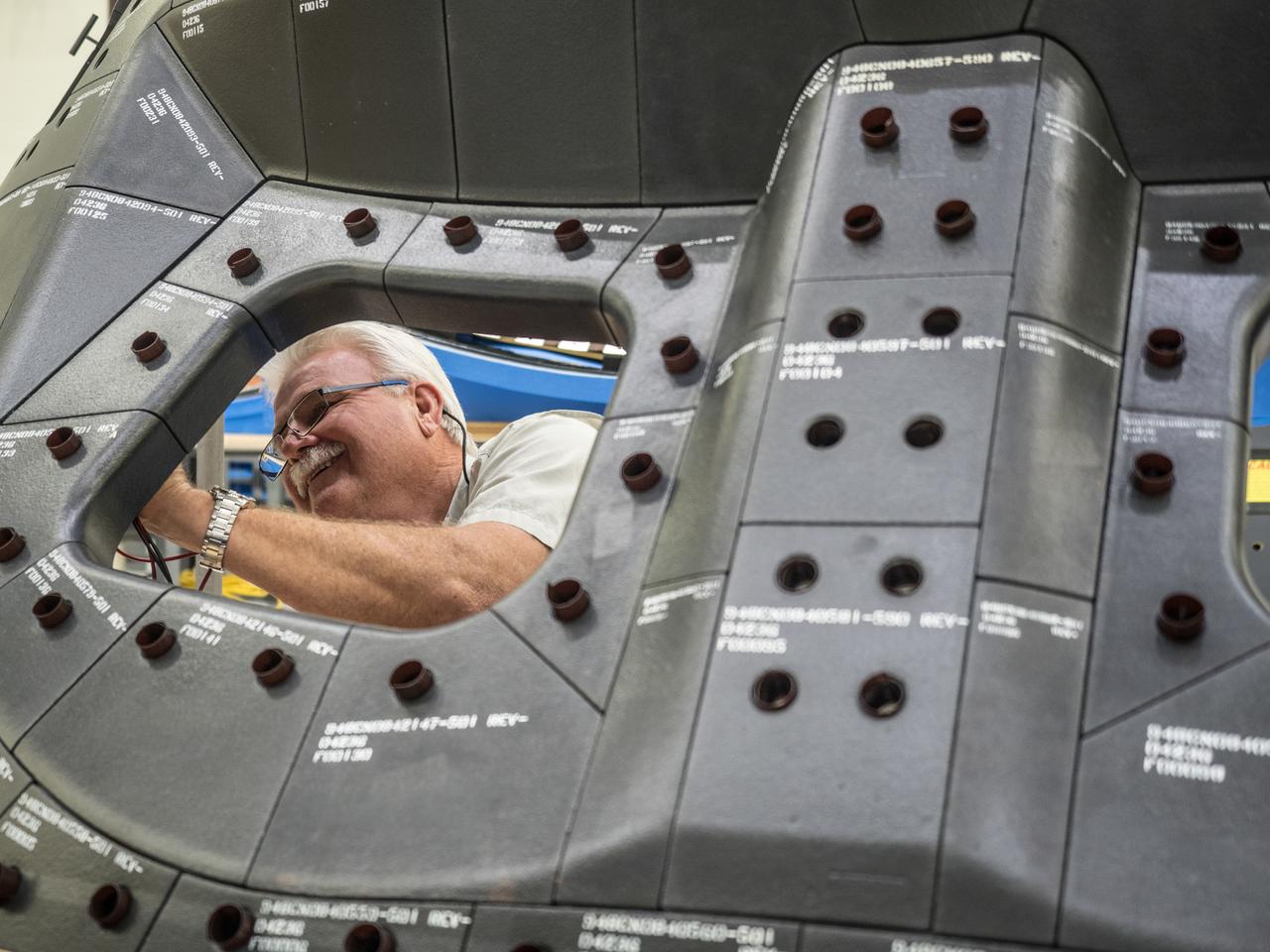
Lockheed Martin engineers assemble Orion's Artemis I crew module at NASA's Kennedy Space Center Operations and Checkout Building on April 27, 2018.
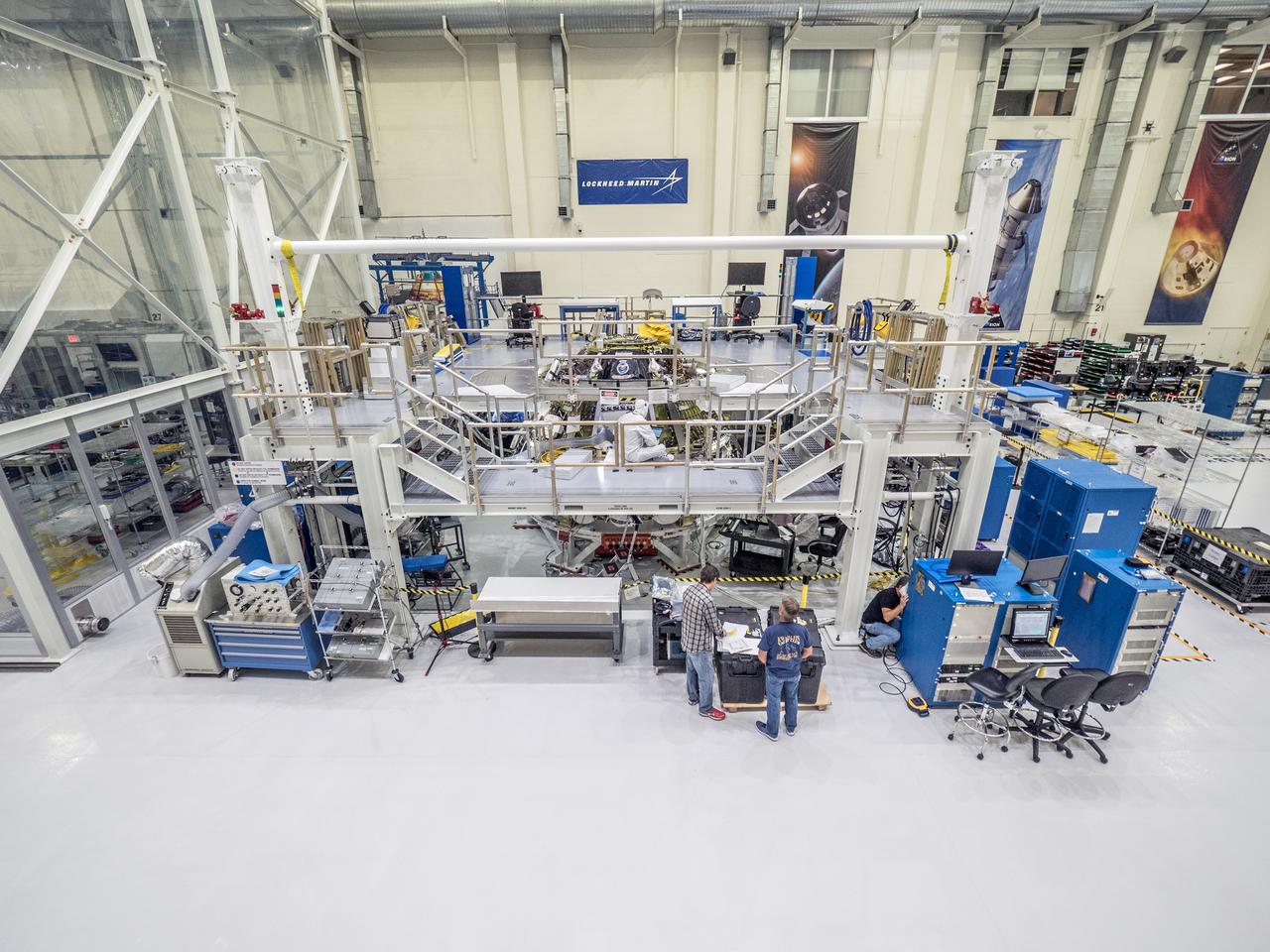
Lockheed Martin engineers assemble Orion's Artemis I crew module at NASA's Kennedy Space Center Operations and Checkout Building on April 27, 2018.