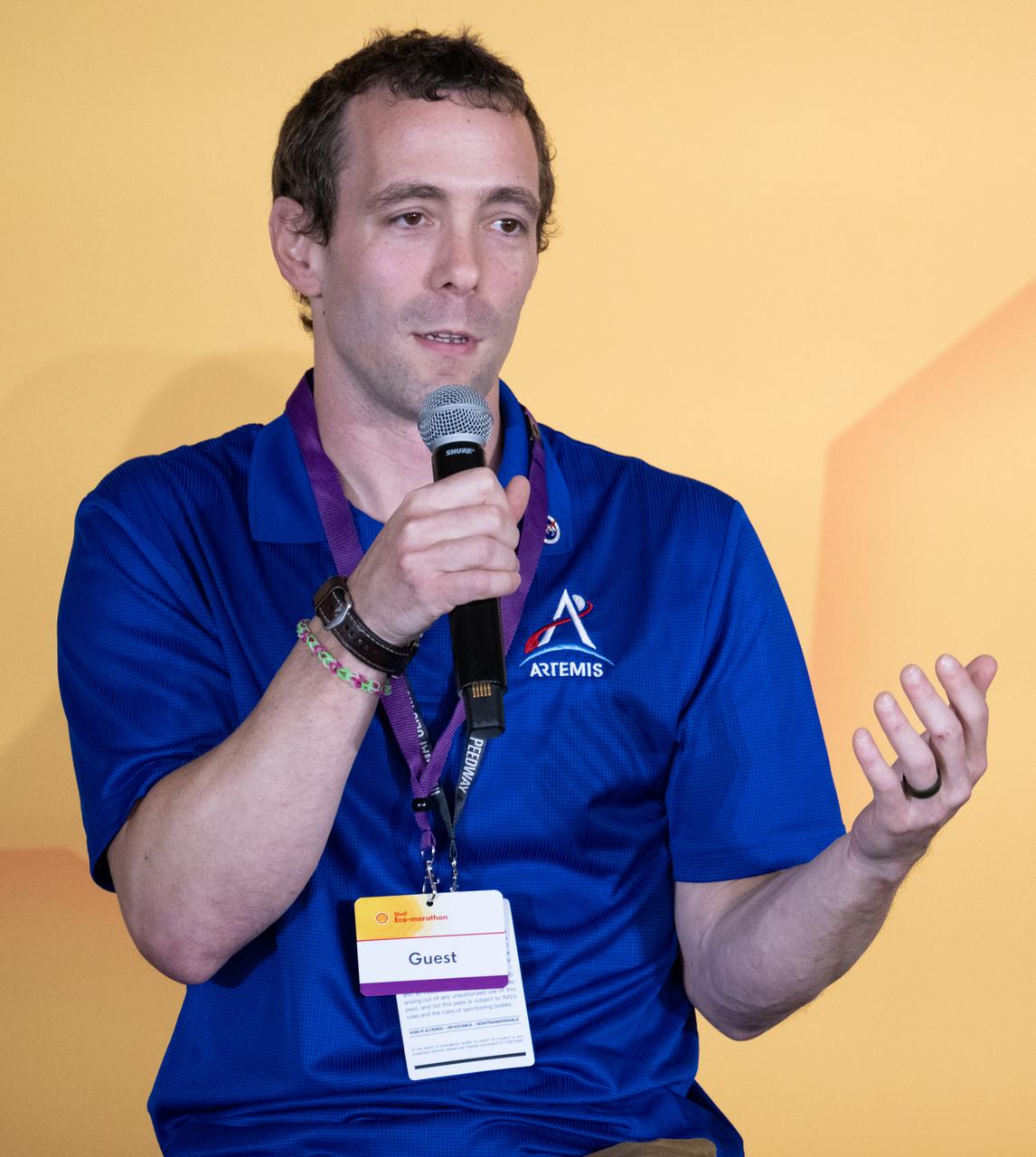
Logan Kennedy, surface lead for Human Landing System Programs in NASA's Exploration Systems Development Mission Directorate, speaks to students about power production and energy for the Artemis Program at the Shell Eco-marathon Americas, Saturday, April 6, 2024, at the Indianapolis Motor Speedway in Indianapolis, Ind. Photo Credit: (NASA/Joel Kowsky)
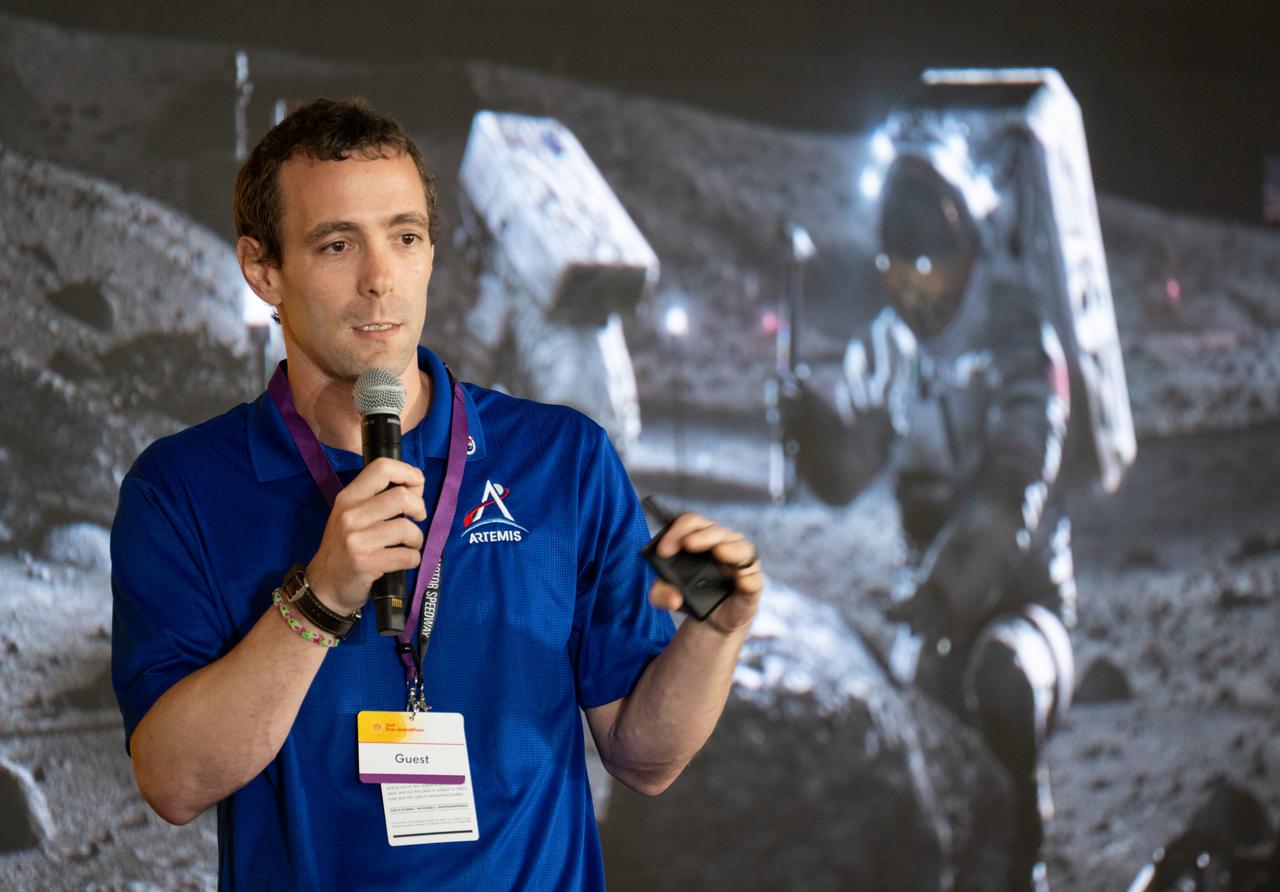
Logan Kennedy, surface lead for Human Landing System Programs in NASA's Exploration Systems Development Mission Directorate, speaks to students about power production and energy for the Artemis Program at the Shell Eco-marathon Americas, Saturday, April 6, 2024, at the Indianapolis Motor Speedway in Indianapolis, Ind. Photo Credit: (NASA/Joel Kowsky)
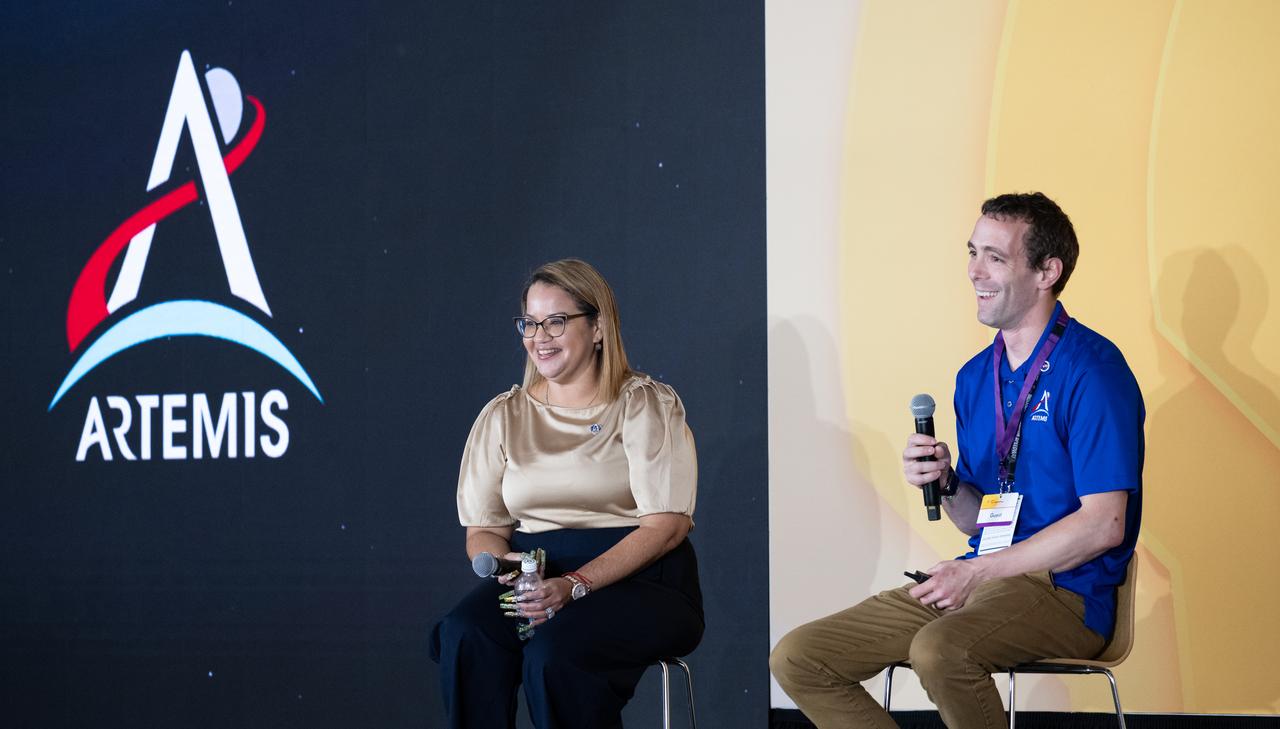
Dr. Dionne Hernandez-Lugo, Power and Propulsion Element Contracting Officer Representative in the Gateway & Power and Propulsion Element Office of NASA's Exploration Systems Development Mission Directorate, left, and Logan Kennedy, surface lead for Human Landing System Programs in NASA's Exploration Systems Development Mission Directorate, right, speaks to students about power production and energy for the Artemis Program at the Shell Eco-marathon Americas, Saturday, April 6, 2024, at the Indianapolis Motor Speedway in Indianapolis, Ind. Photo Credit: (NASA/Joel Kowsky)
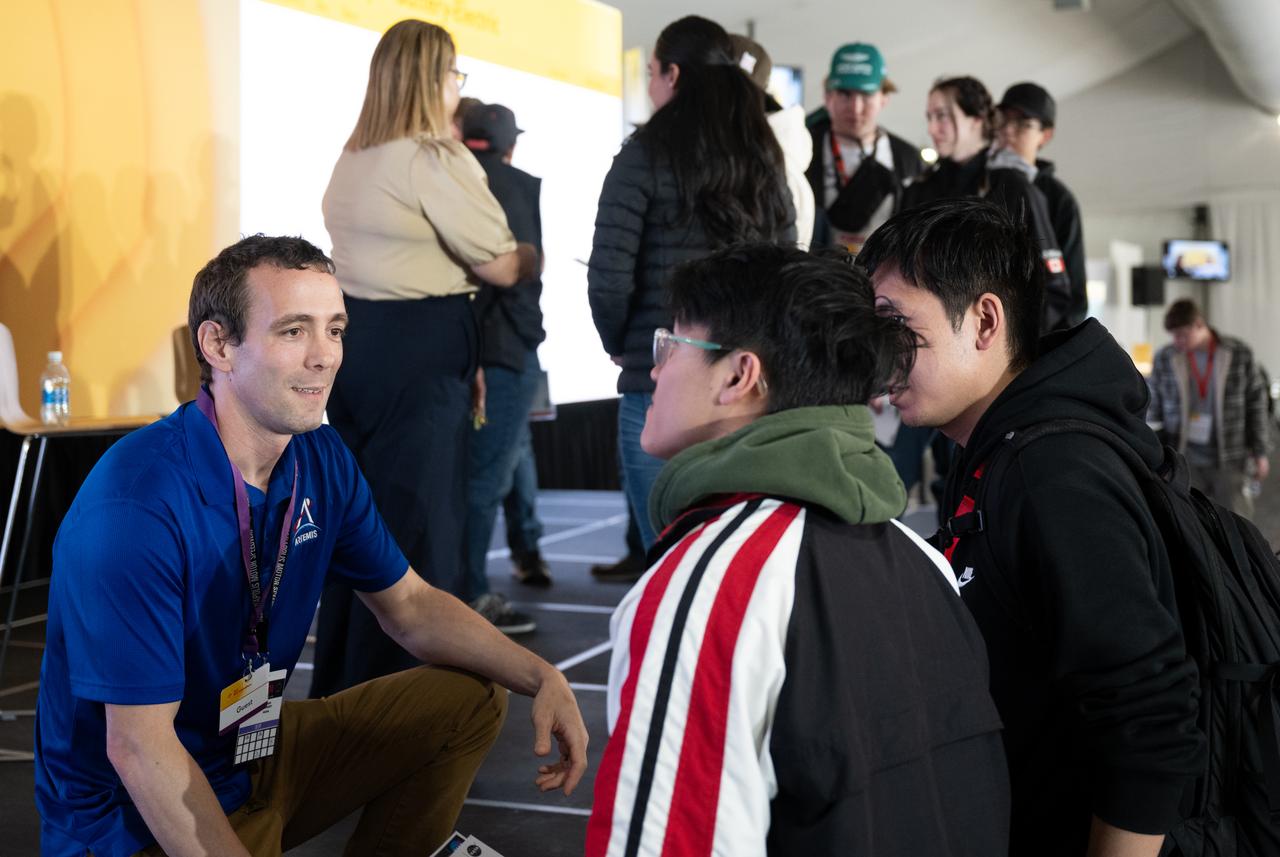
Logan Kennedy, surface lead for Human Landing System Programs in NASA's Exploration Systems Development Mission Directorate, speaks to students after discussing about power production and energy for the Artemis Program at the Shell Eco-marathon Americas, Saturday, April 6, 2024, at the Indianapolis Motor Speedway in Indianapolis, Ind. Photo Credit: (NASA/Joel Kowsky)
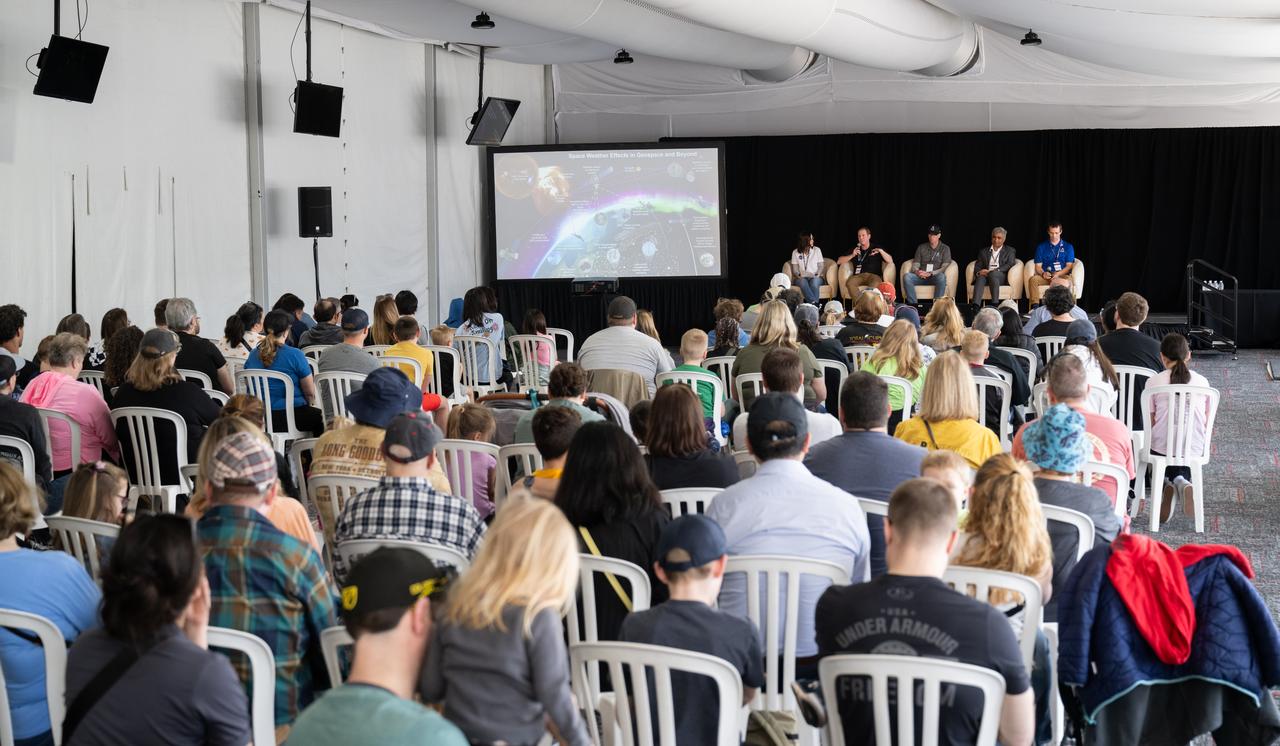
Patricia Moore, communications strategist for the Moon to Mars Program Office in NASA's Exploration Systems Development Mission Directorate, Bradley Williams, program executive in the Heliophysics Division of NASA's Science Mission Directorate, Matthew Roper, Crew Health and Medical Team Lead in NASA's Flight Operations Directorate, Arvind Raman, dean of the College of Engineering at Purdue University, and Logan Kennedy, surface lead for Human Landing System Programs in NASA's Exploration Systems Development Mission Directorate, are seen as they speaks to attendees at the Indianapolis Motor Speedway during a panel discussion about following your dreams to a career in STEM ahead of the total solar eclipse, Monday, April 8, 2024, in Indianapolis, Ind. A total solar eclipse swept across a narrow portion of the North American continent from Mexico’s Pacific coast to the Atlantic coast of Newfoundland, Canada. A partial solar eclipse was visible across the entire North American continent along with parts of Central America and Europe. Photo Credit: (NASA/Joel Kowsky)
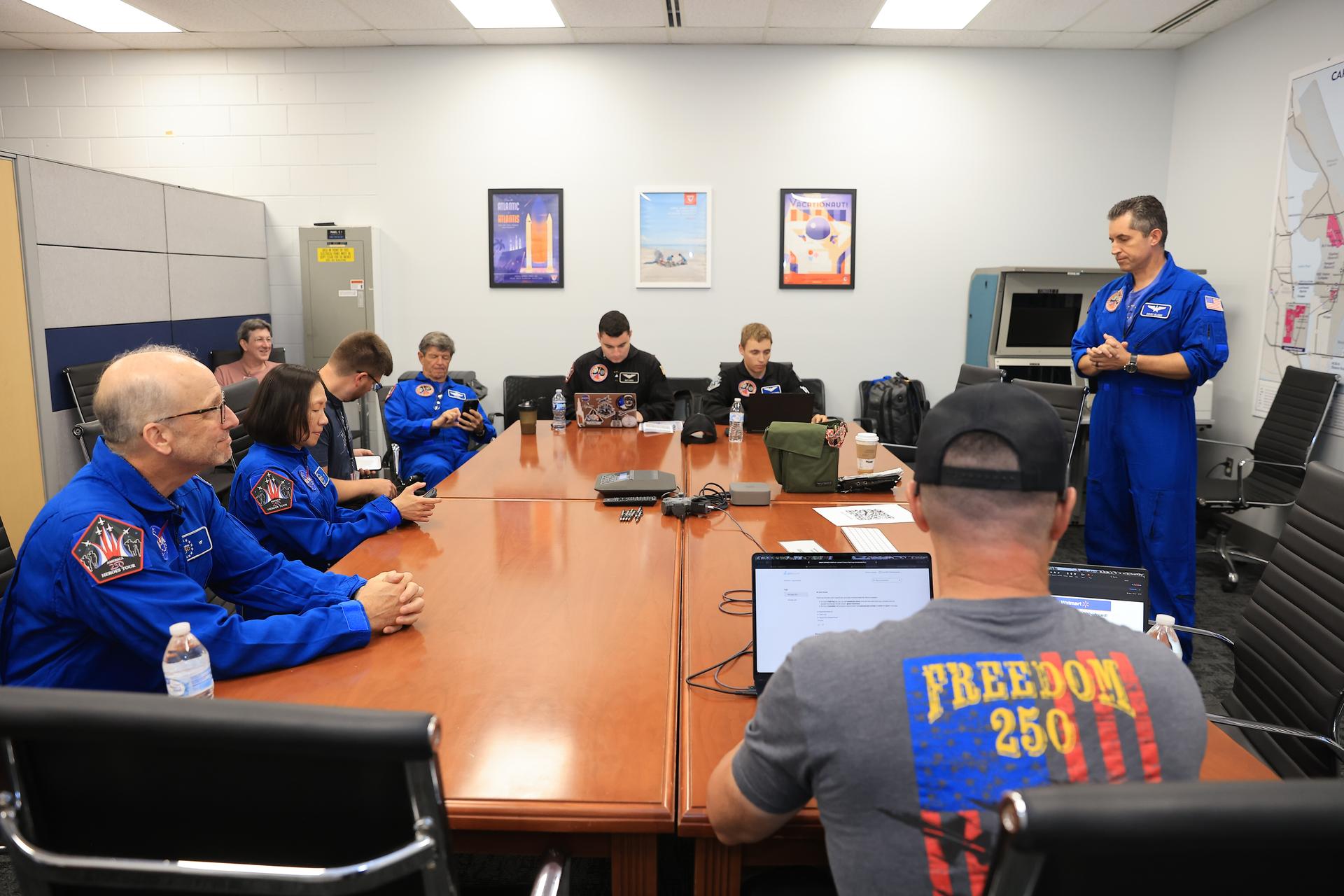
As part of NASA Administrator Jared Isaacman’s Flight Experience Award program, NASA employees Kuo-Chia “Alice” Liu, Raymond “Jim” Lanzi, and Logan Larson participate in a pre-flight briefing on Thursday, June 18, 2026, at the Launch and Landing Facility at the agency’s Kennedy Space Center in Florida. Awardees donned NASA flight suits, completed pre-flight briefings, and experienced a unique flight aboard the administrator’s personal F-5 aircraft. The ride-along flight experience award program highlights NASA’s commitment to celebrating excellence across the workforce.
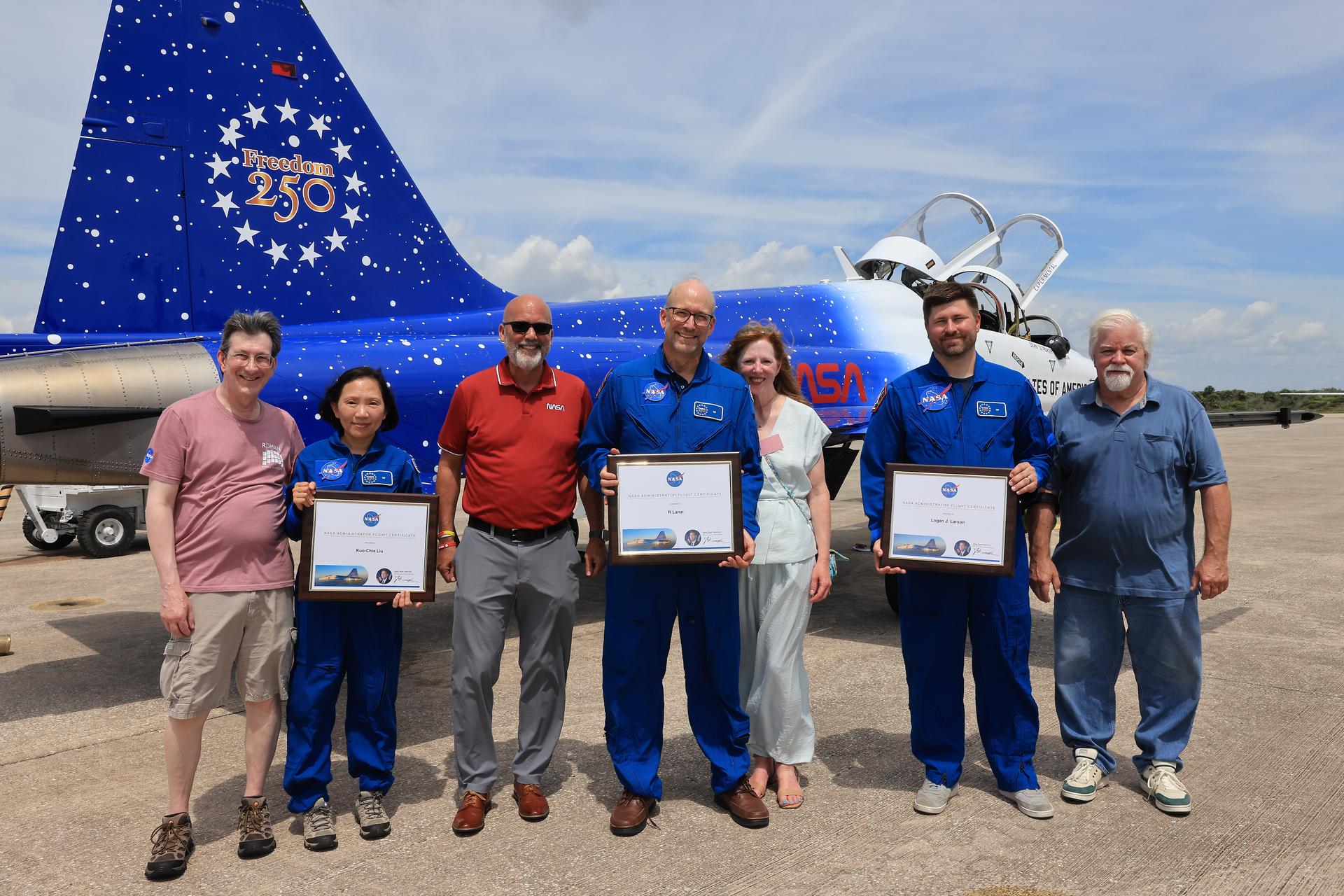
As part of NASA Administrator Jared Isaacman’s Flight Experience Award program, NASA employees Kuo-Chia “Alice” Liu, Raymond “Jim” Lanzi, and Logan Larson receive awards from NASA Kennedy’s Director of Human Capital Office, Mike Beaupre, on Thursday, June 18, 2026, at the Launch and Landing Facility at the agency’s Kennedy Space Center in Florida. Awardees suited up in NASA flight suits, completed pre-flight briefings at the spaceport’s Launch and Landing Facility, received awards from NASA Kennedy’s Director of Human Capital Office, Mike Beaupre, and experienced a unique flight aboard the administrator’s personal F-5 aircraft. The ride-along flight experience award program highlights NASA’s commitment to celebrating excellence across the workforce.
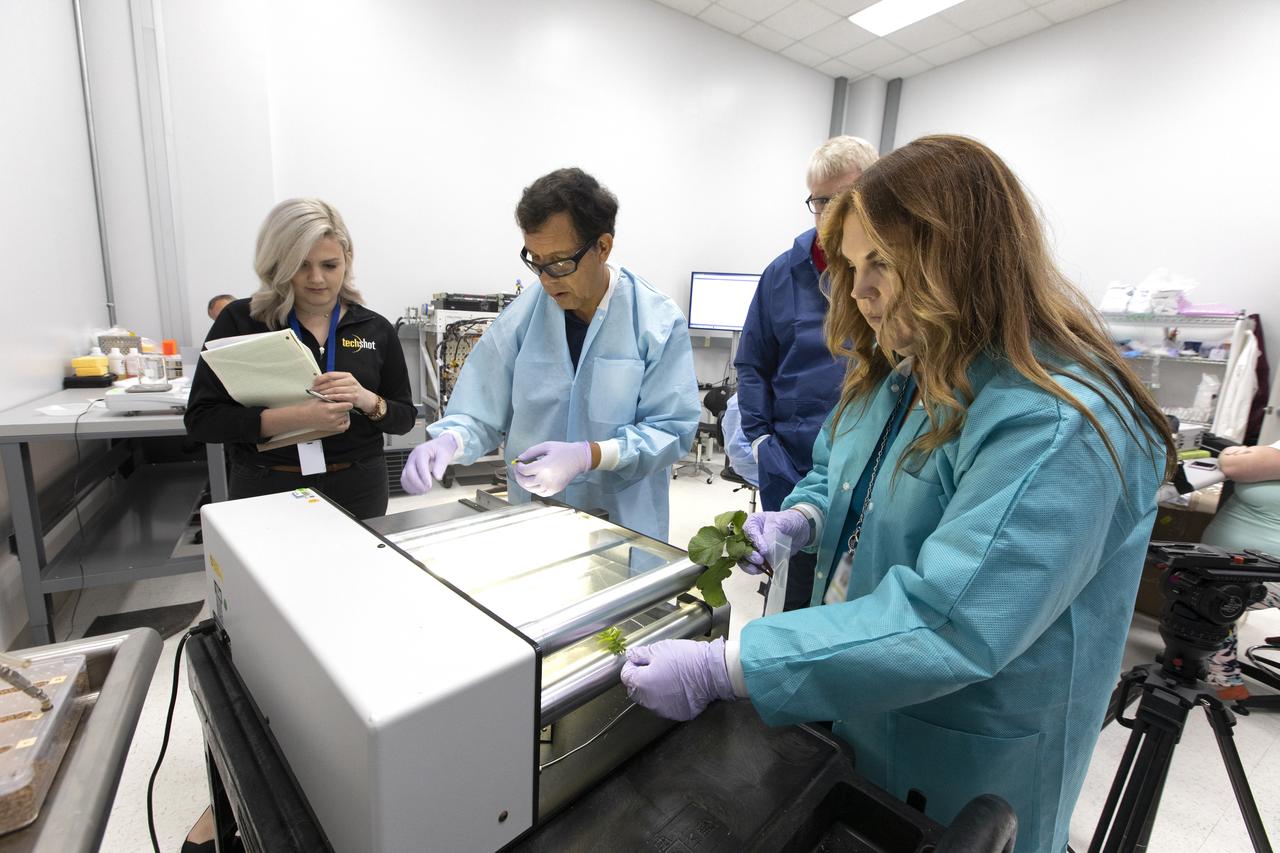
From left are Ashleigh Ruggles, a launch operations support specialist with Techshot; Oscar Monje, Ph.D., a plant physiologist with AECOM Management Services; and Sam Logan, senior mechanical engineering technician; and Alora Mazarakis, an electrical engineer, both with Techshot. They are harvesting radish plants from the base of the Advanced Plant Habitat ground unit inside a laboratory in the Space Station Processing Facility at NASA’s Kennedy Space Center in Florida on June 13, 2019. The radishes are being harvested as part of a science verification test. The APH is currently the largest plant chamber built for the agency in use on the International Space Station. It is an autonomous plant growth facility that is being used to conduct bioscience research on the space station with the goal of enabling astronauts to be sustainable on long duration missions to the Moon, Mars and beyond.
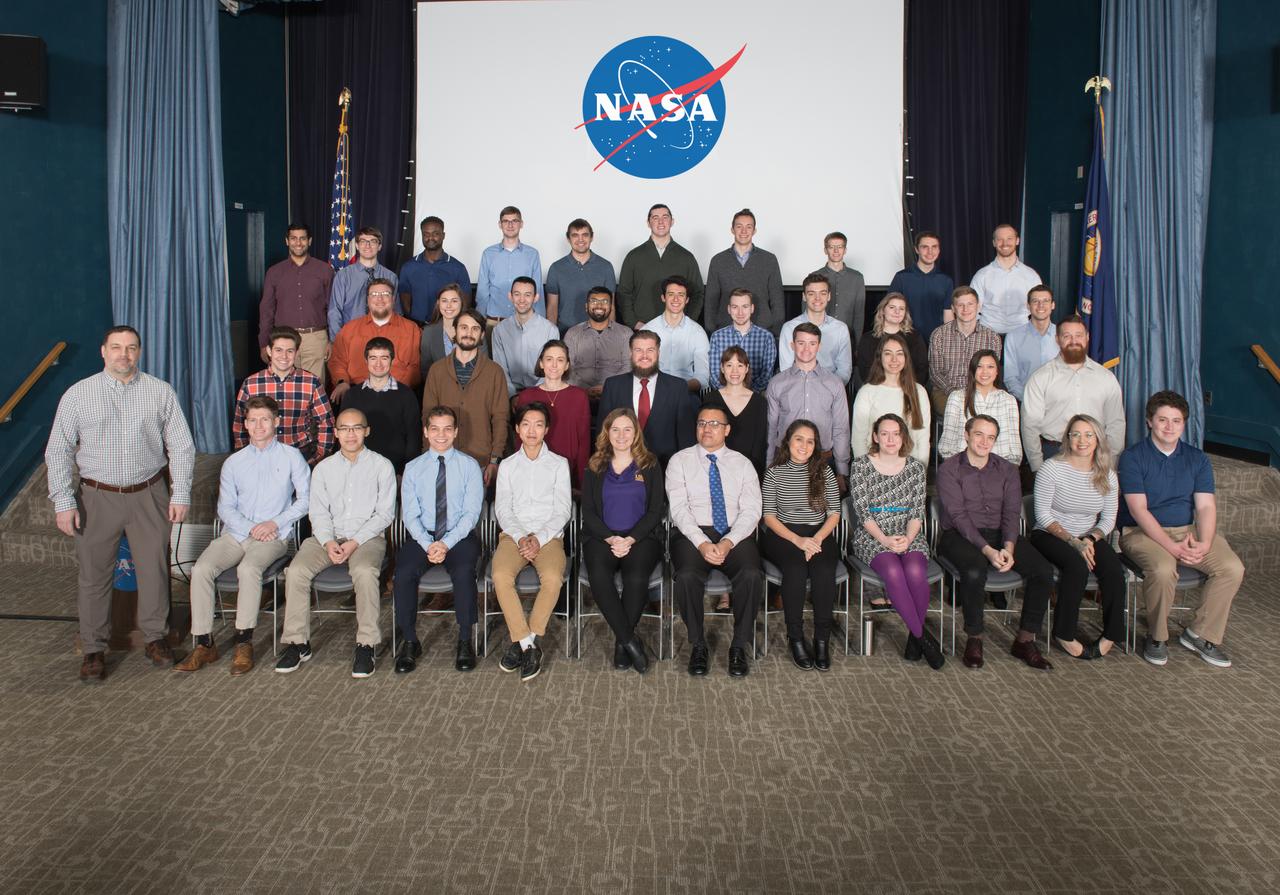
NASA internship and Fellowship Participants, Spring, 2020