
Artemis logo-black

Artemis logo
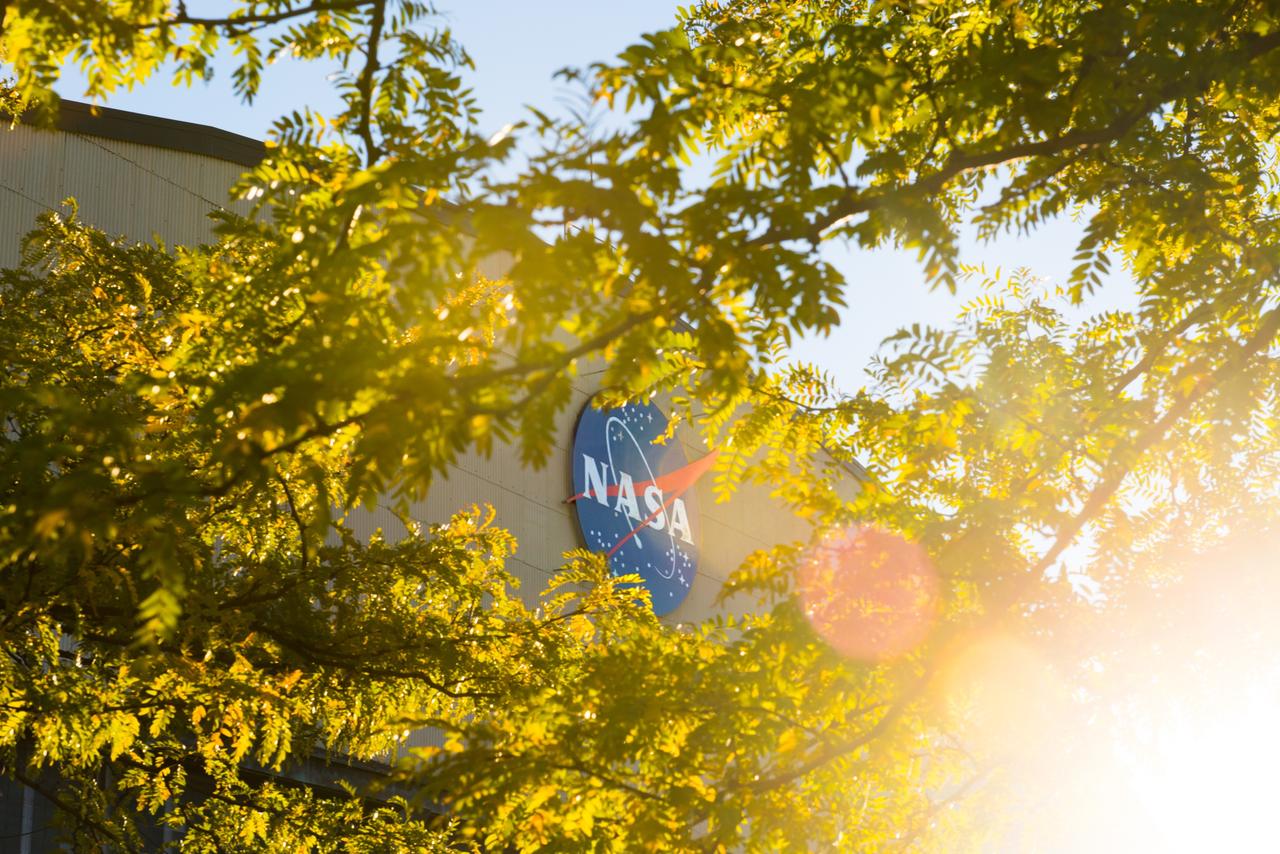
The NASA logo mounted on the south side of the Hangar at Glenn Research Center as seen through foliage.

Artemis Program logo
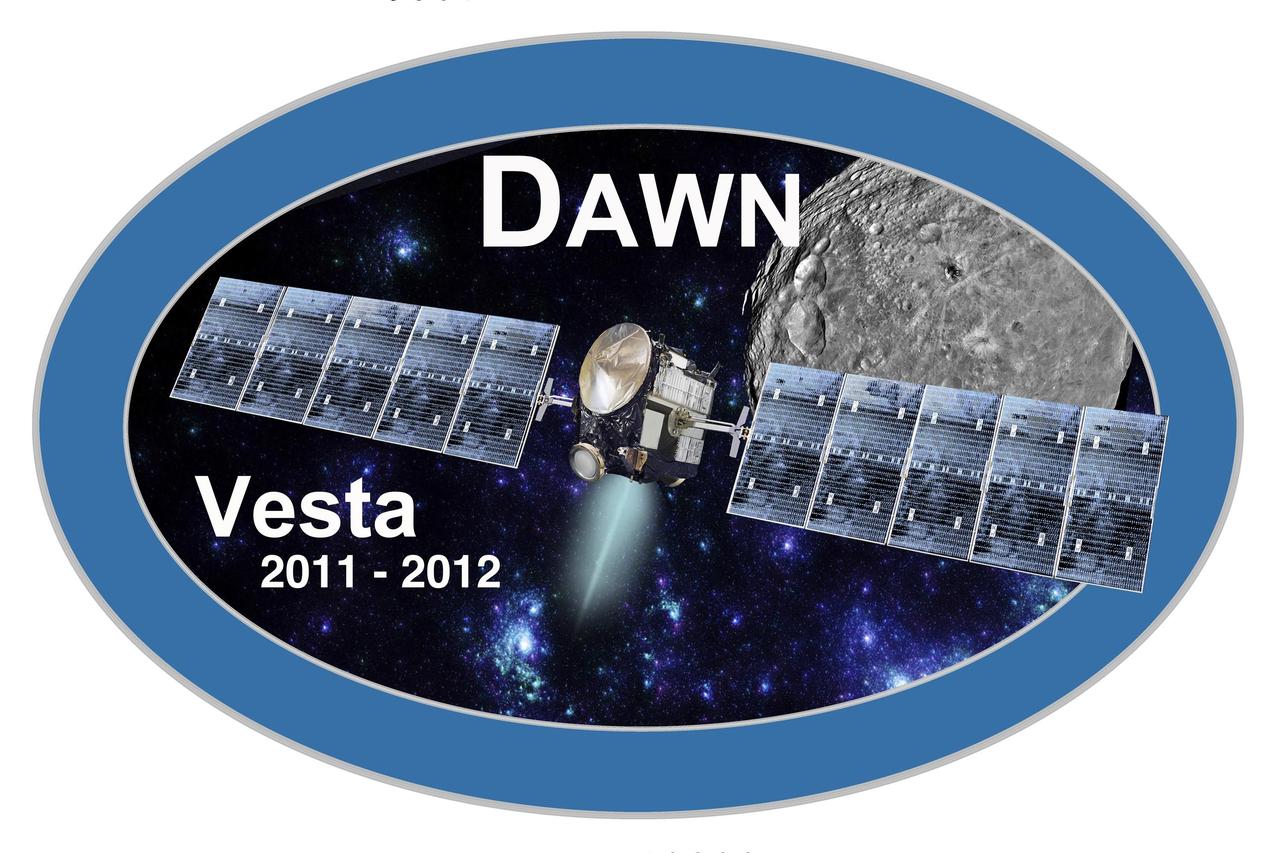
Dawn mission Vesta Logo, part of NASA Dawn Mission Art series. http://photojournal.jpl.nasa.gov/catalog/PIA19372
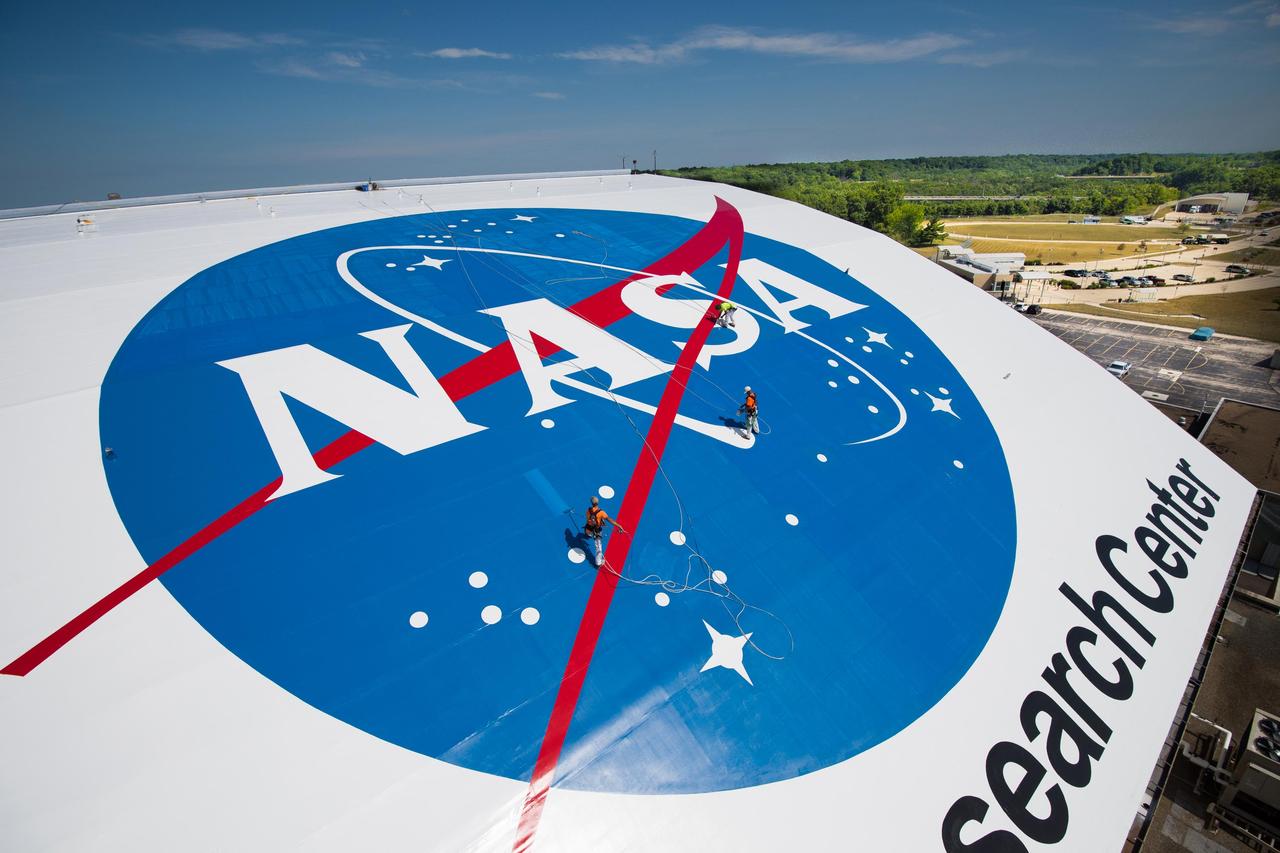
Workers complete the newly painted NASA Insignia on the Hangar roof at NASA Glenn Research Center.

NASA 60th Anniversary Logo (vertical) on black background

NASA 60th Anniversary Logo (square) on black background

This official NASA commemorative logo marks the 25th anniversary of the first lunar landing. The design incorporates an eagle, from the original Apoll 11 crew insignia, descending toward the lunar surface with an olive branch, symbolizing America's peaceful mission in space. Alternative Headquarters number is 93-HC-312 or 93-H-336.
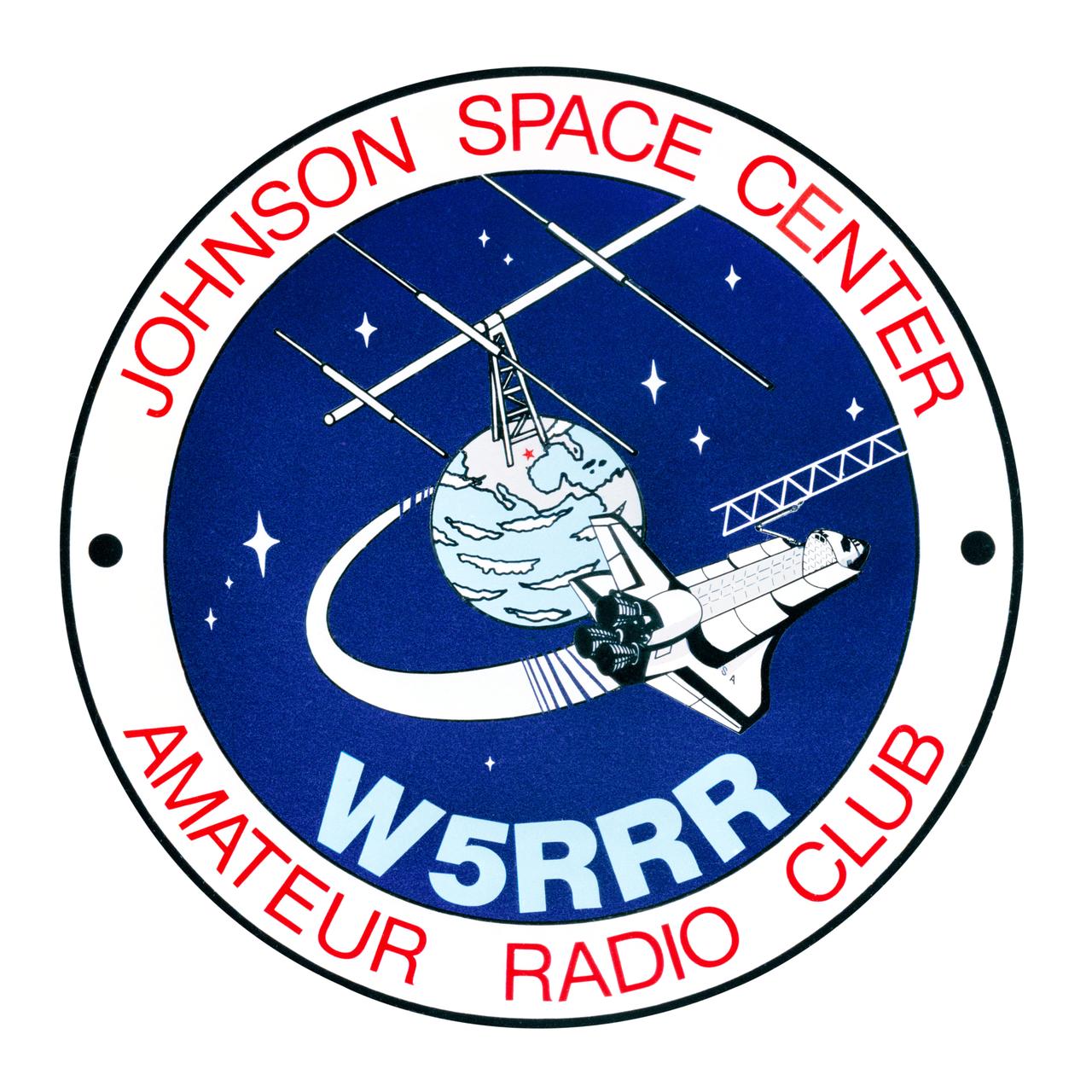
Artist concept of the Johnson Space Center Amateur Radio Club logo.
Logo for the 20th Anniversary of the Apollo 11 mission. Logo is described as the numeral 20. Inside the zero is a representation of an eagle landing on the lunar surface with the title "Apollo 11" above it.

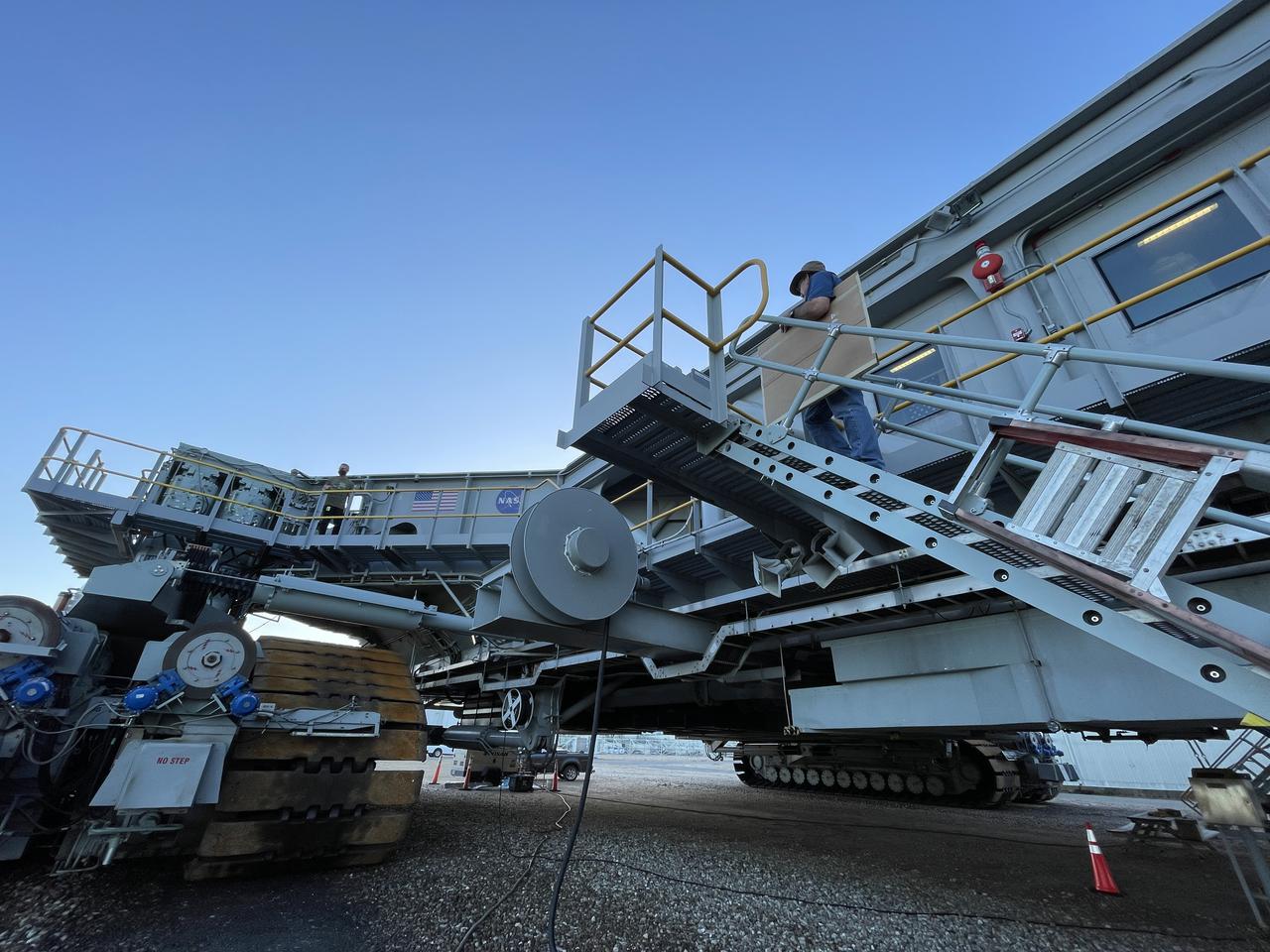
Graphic Artist Kim Keller carries up the eight new NASA Artemis logos (four large, four small) for installation on Crawler-Transporter 2 at Kennedy Space Center in Florida. The new logos were installed in preparation for the upcoming launch of Artemis I. Named after the twin sister of Apollo, Artemis is the Goddess of the Moon. The Artemis missions will take humanity back to the Moon and beyond, beginning a new legacy of deep space exploration.
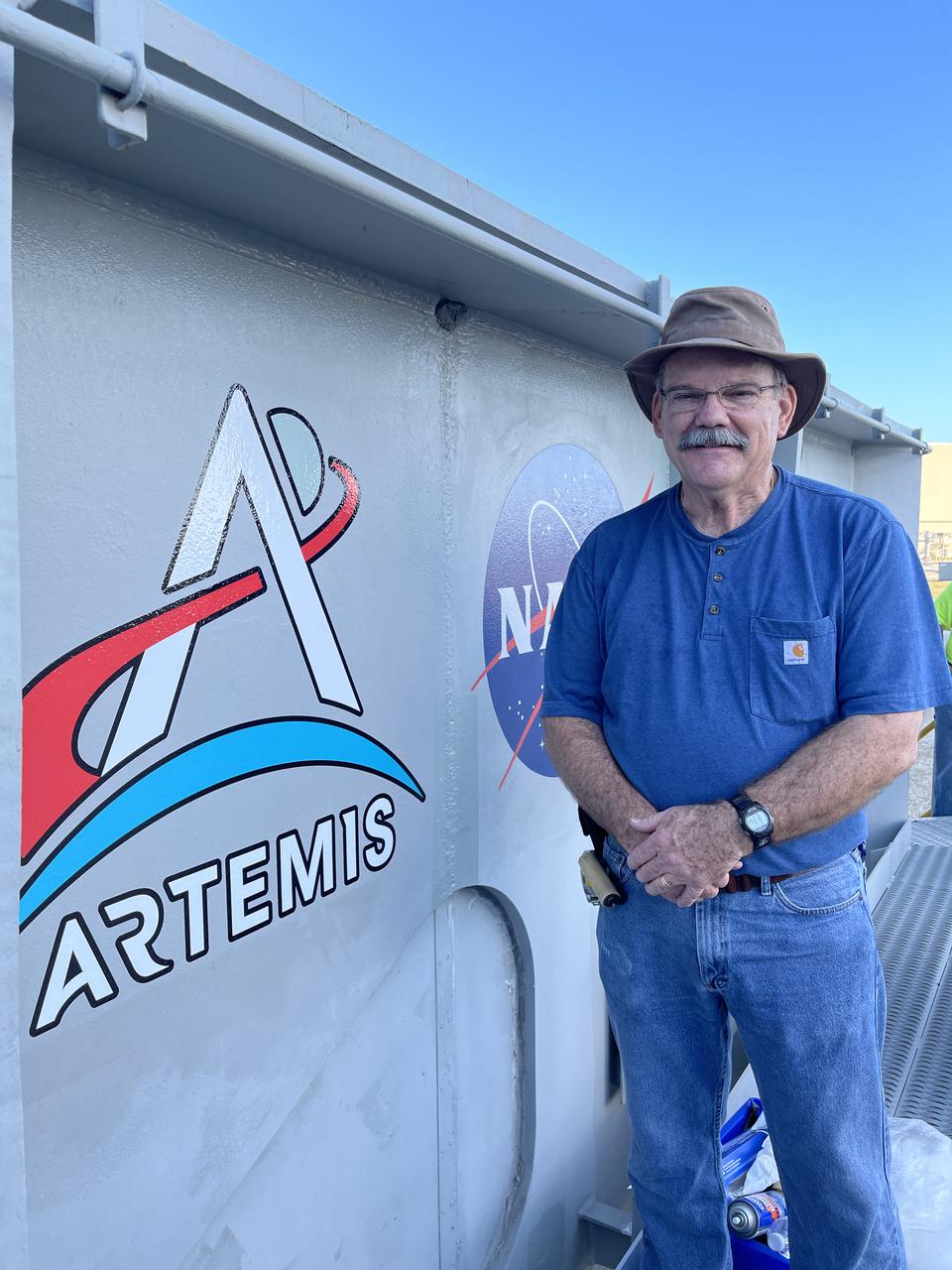
Graphic Artist Kim Keller with one of the eight new NASA Artemis logos (four large, four small) on Crawler-Transporter 2 at Kennedy Space Center in Florida. The new logos were installed in preparation for the upcoming launch of Artemis I. Named after the twin sister of Apollo, Artemis is the Goddess of the Moon. The Artemis missions will take humanity back to the Moon and beyond, beginning a new legacy of deep space exploration.
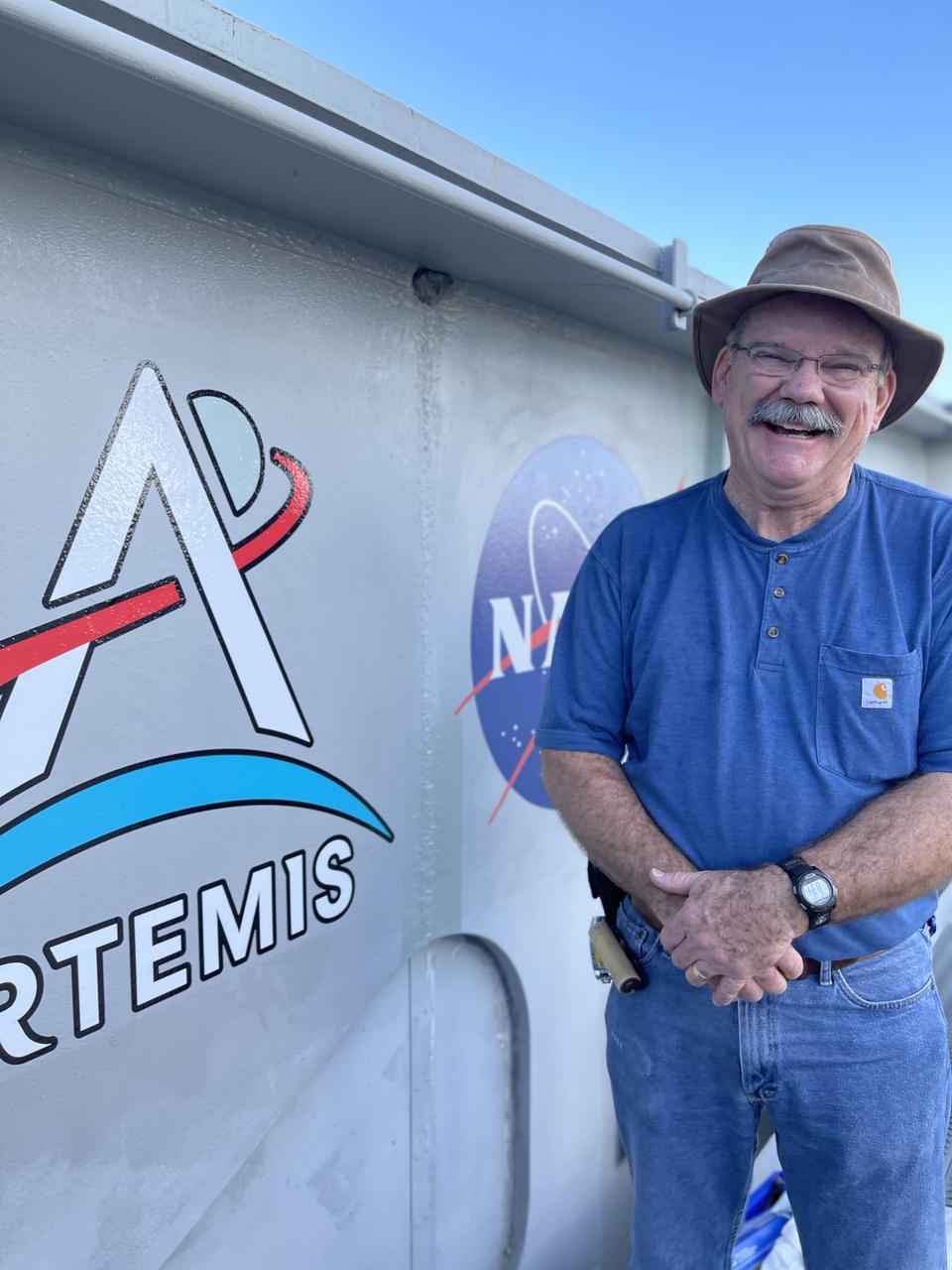
Graphic Artist Kim Keller with one of the eight new NASA Artemis logos (four large, four small) on Crawler-Transporter 2 at Kennedy Space Center in Florida. The new logos were installed in preparation for the upcoming launch of Artemis I. Named after the twin sister of Apollo, Artemis is the Goddess of the Moon. The Artemis missions will take humanity back to the Moon and beyond, beginning a new legacy of deep space exploration.

John C. Stennis Space Center is celebrating its 50th anniversary in 2011. NASA announced plans to build a rocket engine test facility in Hancock County, Miss., on Oct. 25, 1961. A new anniversary logo highlights the theme of the anniversary year - celebrating Stennis as a unique federal city and its five decades of powering America's space dreams. Stennis is home to more than 30 federal, state, academic and private organizations and several technology-based companies. In addition to testing Apollo Program rocket stages that carried humans to the moon, Stennis tested every main engine used in more than 130 space shuttle flights.
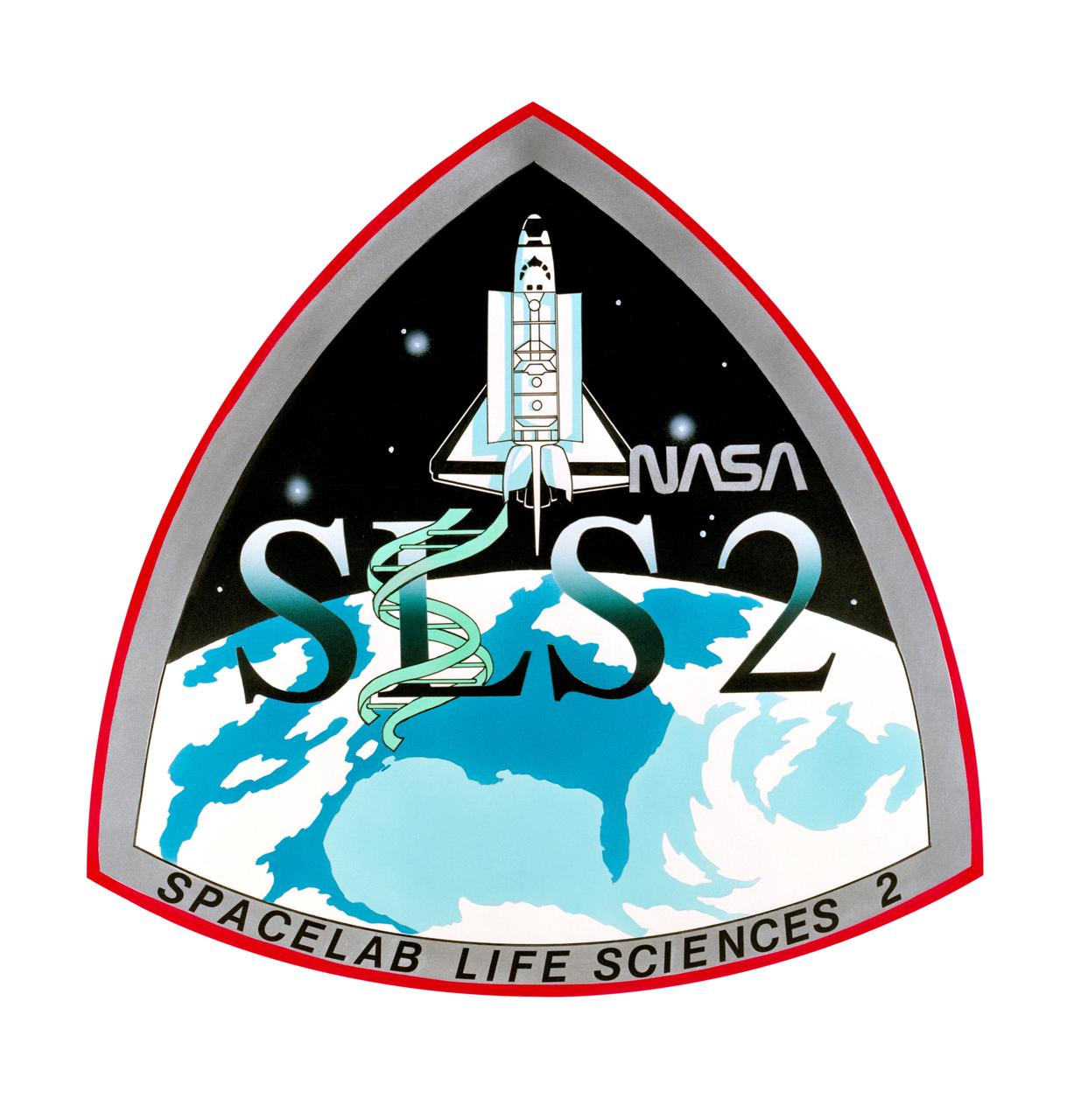
S93-26894 (March 1993) --- Spacelab Life Sciences 2, scheduled to fly as the major payload on the STS-58 mission, is represented with this logo. As in the case of SLS-1, which flew in space in June of 1991, this Spacelab mission will be devoted to life sciences and will carry a crew of experts in the associated disciplines.
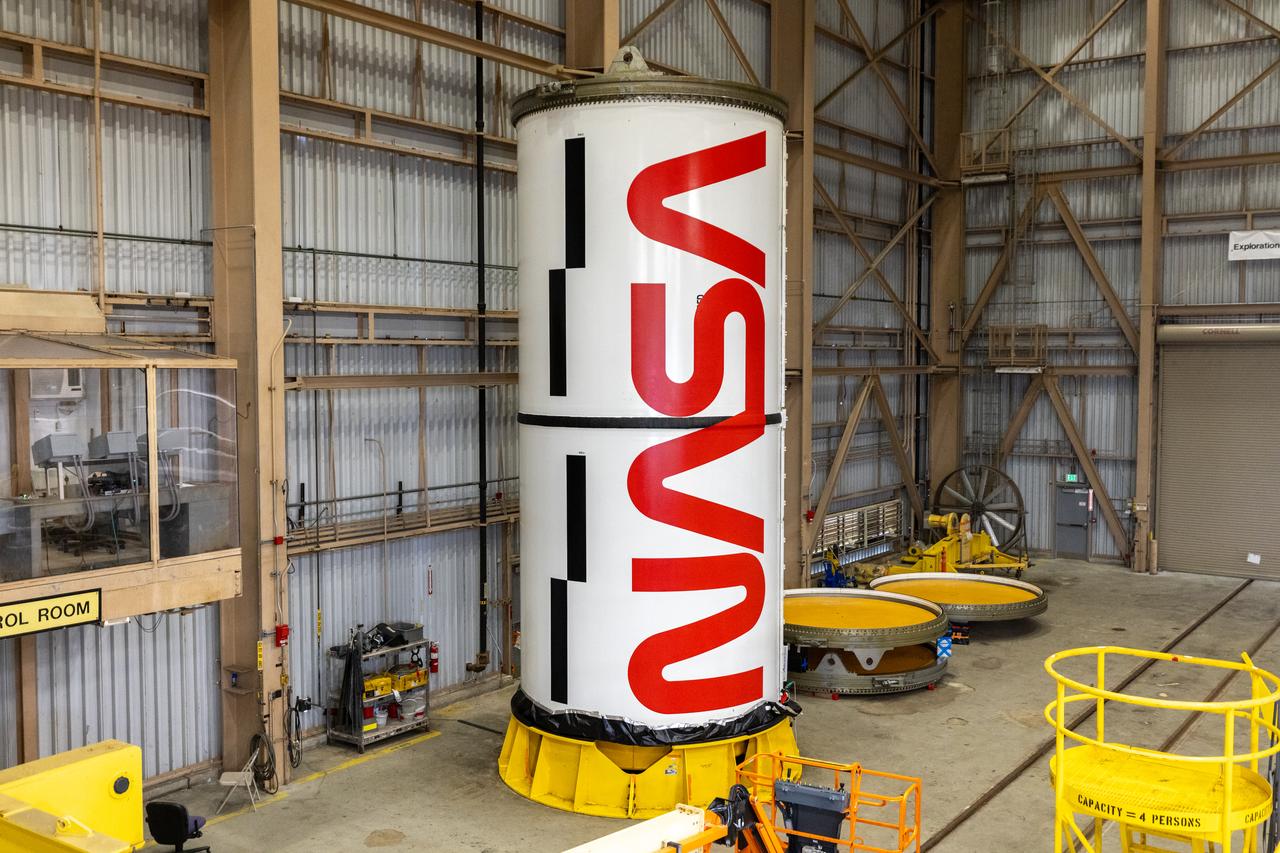
Workers with NASA’s Exploration Ground Systems and primary contractor, Jacobs, complete the painting of the agency’s iconic “worm” logo along the side of the twin Artemis II solid rocket booster motor segments inside the Rotation, Processing and Surge Facility at Kennedy Space Center in Florida on Friday, Feb. 16, 2024. Using a laser projector, the logo was mapped out with tape by workers with Jacobs, for the spaceport, before using two coats of red paint, plus several coats of clear primer to complete the logo that stretches 25 feet long. The booster segments will help propel the SLS (Space Launch System) rocket on the Artemis II mission to send four astronauts around the Moon as part of the agency’s effort to establish a long-term science and exploration presence at the Moon, and eventually Mars.
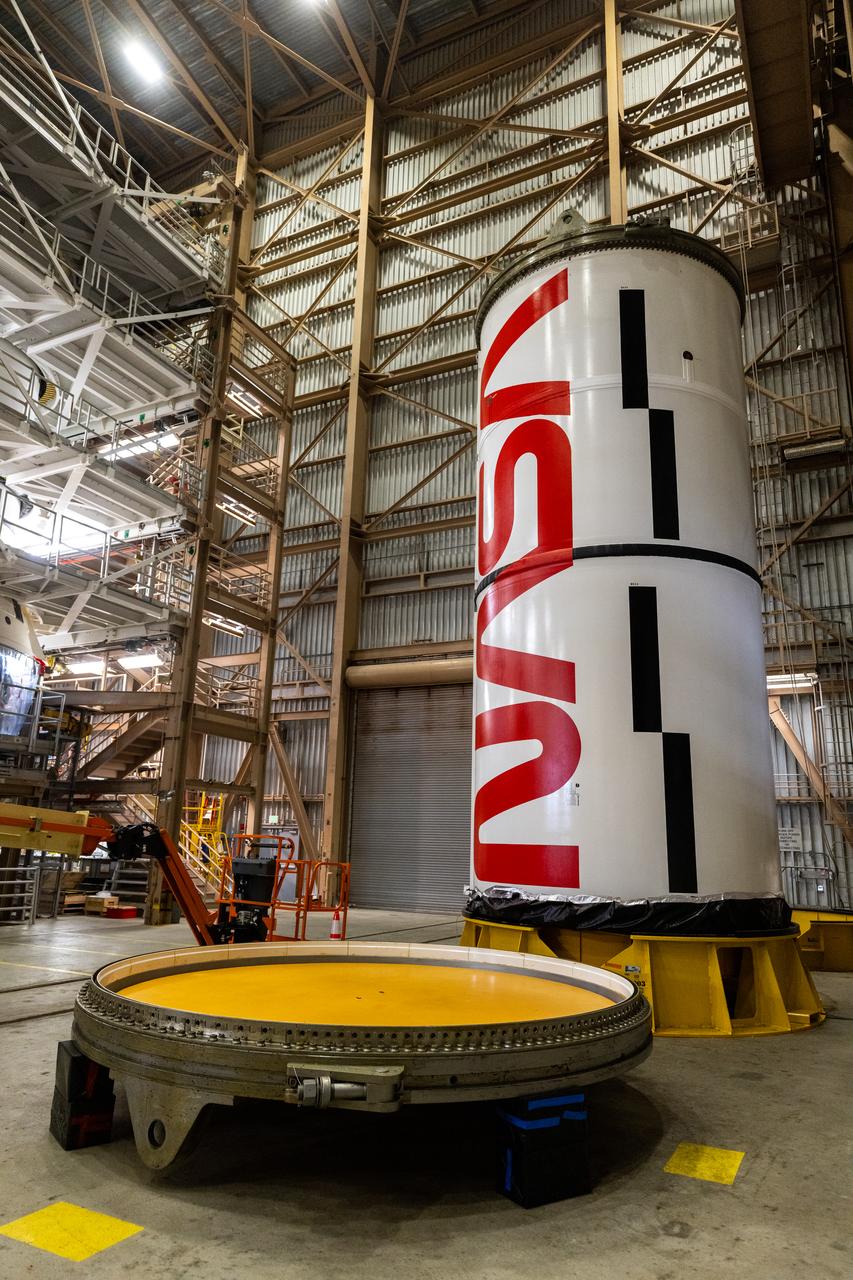
Workers with NASA’s Exploration Ground Systems and primary contractor, Jacobs, complete the painting of the agency’s iconic “worm” logo along the side of the twin Artemis II solid rocket booster motor segments inside the Rotation, Processing and Surge Facility at Kennedy Space Center in Florida on Friday, Feb. 16, 2024. Using a laser projector, the logo was mapped out with tape by workers with Jacobs, for the spaceport, before using two coats of red paint, plus several coats of clear primer to complete the logo that stretches 25 feet long. The booster segments will help propel the SLS (Space Launch System) rocket on the Artemis II mission to send four astronauts around the Moon as part of the agency’s effort to establish a long-term science and exploration presence at the Moon, and eventually Mars.

Workers with NASA’s Exploration Ground Systems and primary contractor, Jacobs, complete the painting of the agency’s iconic “worm” logo along the side of the twin Artemis II solid rocket booster motor segments inside the Rotation, Processing and Surge Facility at Kennedy Space Center in Florida on Friday, Feb. 16, 2024. Using a laser projector, the logo was mapped out with tape by workers with Jacobs, for the spaceport, before using two coats of red paint, plus several coats of clear primer to complete the logo that stretches 25 feet long. The booster segments will help propel the SLS (Space Launch System) rocket on the Artemis II mission to send four astronauts around the Moon as part of the agency’s effort to establish a long-term science and exploration presence at the Moon, and eventually Mars.
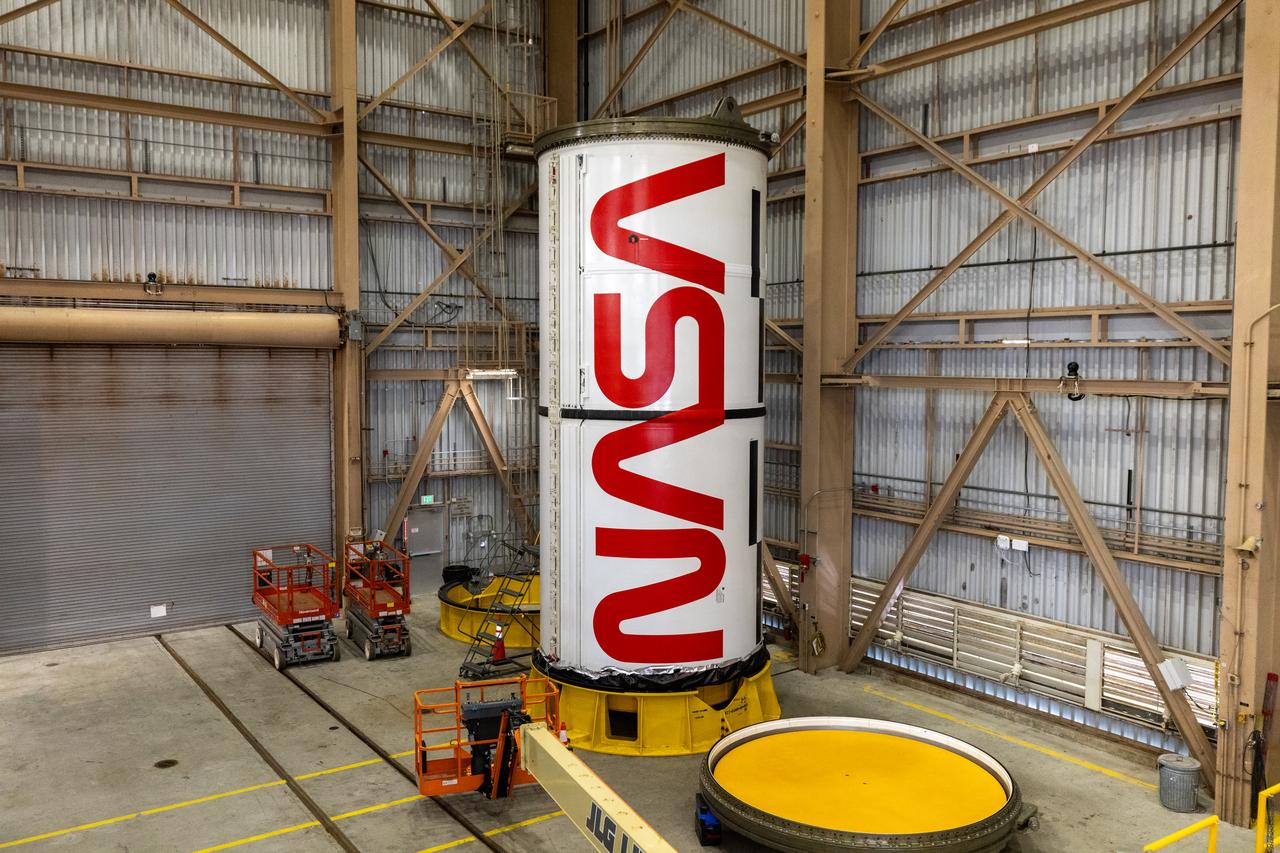
Workers with NASA’s Exploration Ground Systems and primary contractor, Jacobs, complete the painting of the agency’s iconic “worm” logo along the side of the twin Artemis II solid rocket booster motor segments inside the Rotation, Processing and Surge Facility at Kennedy Space Center in Florida on Friday, Feb. 16, 2024. Using a laser projector, the logo was mapped out with tape by workers with Jacobs, for the spaceport, before using two coats of red paint, plus several coats of clear primer to complete the logo that stretches 25 feet long. The booster segments will help propel the SLS (Space Launch System) rocket on the Artemis II mission to send four astronauts around the Moon as part of the agency’s effort to establish a long-term science and exploration presence at the Moon, and eventually Mars.
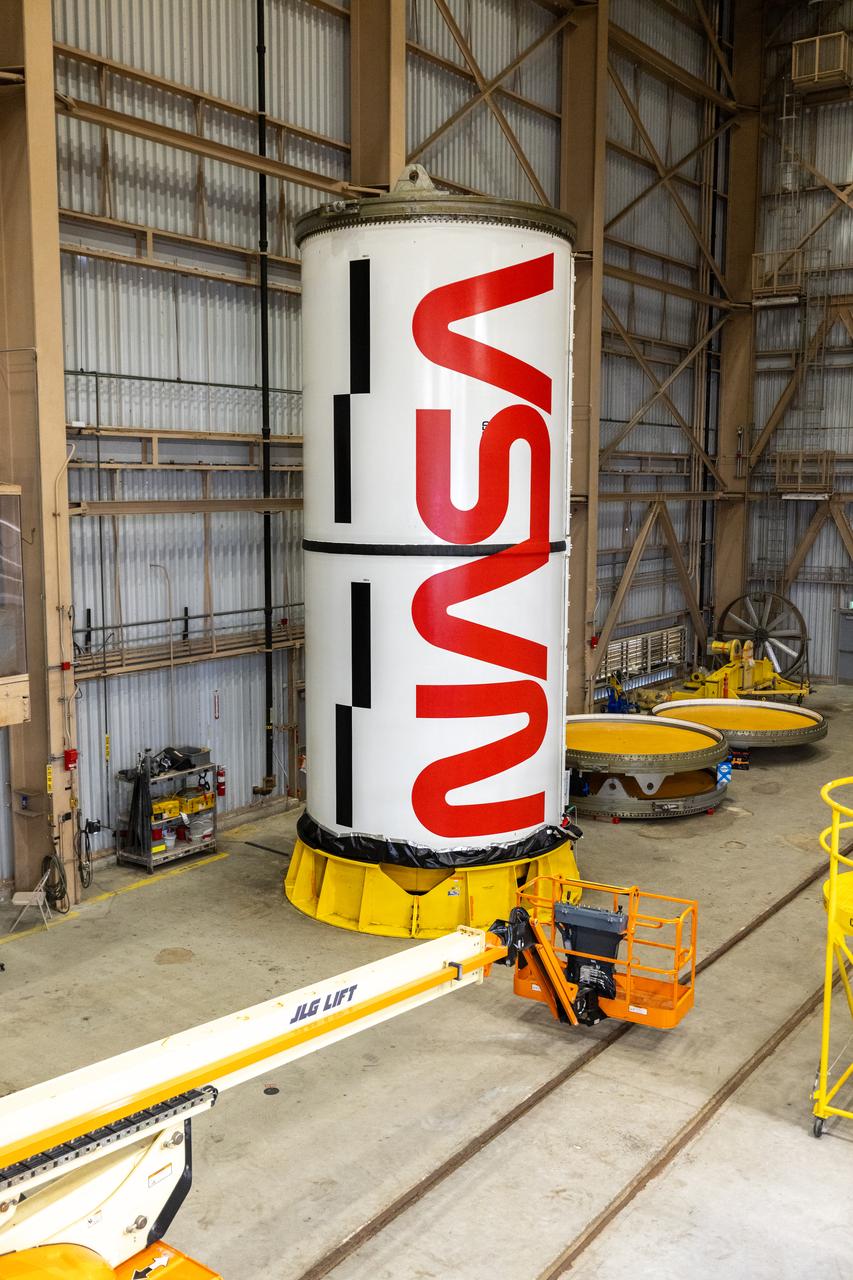
Workers with NASA’s Exploration Ground Systems and primary contractor, Jacobs, complete the painting of the agency’s iconic “worm” logo along the side of the twin Artemis II solid rocket booster motor segments inside the Rotation, Processing and Surge Facility at Kennedy Space Center in Florida on Friday, Feb. 16, 2024. Using a laser projector, the logo was mapped out with tape by workers with Jacobs, for the spaceport, before using two coats of red paint, plus several coats of clear primer to complete the logo that stretches 25 feet long. The booster segments will help propel the SLS (Space Launch System) rocket on the Artemis II mission to send four astronauts around the Moon as part of the agency’s effort to establish a long-term science and exploration presence at the Moon, and eventually Mars.
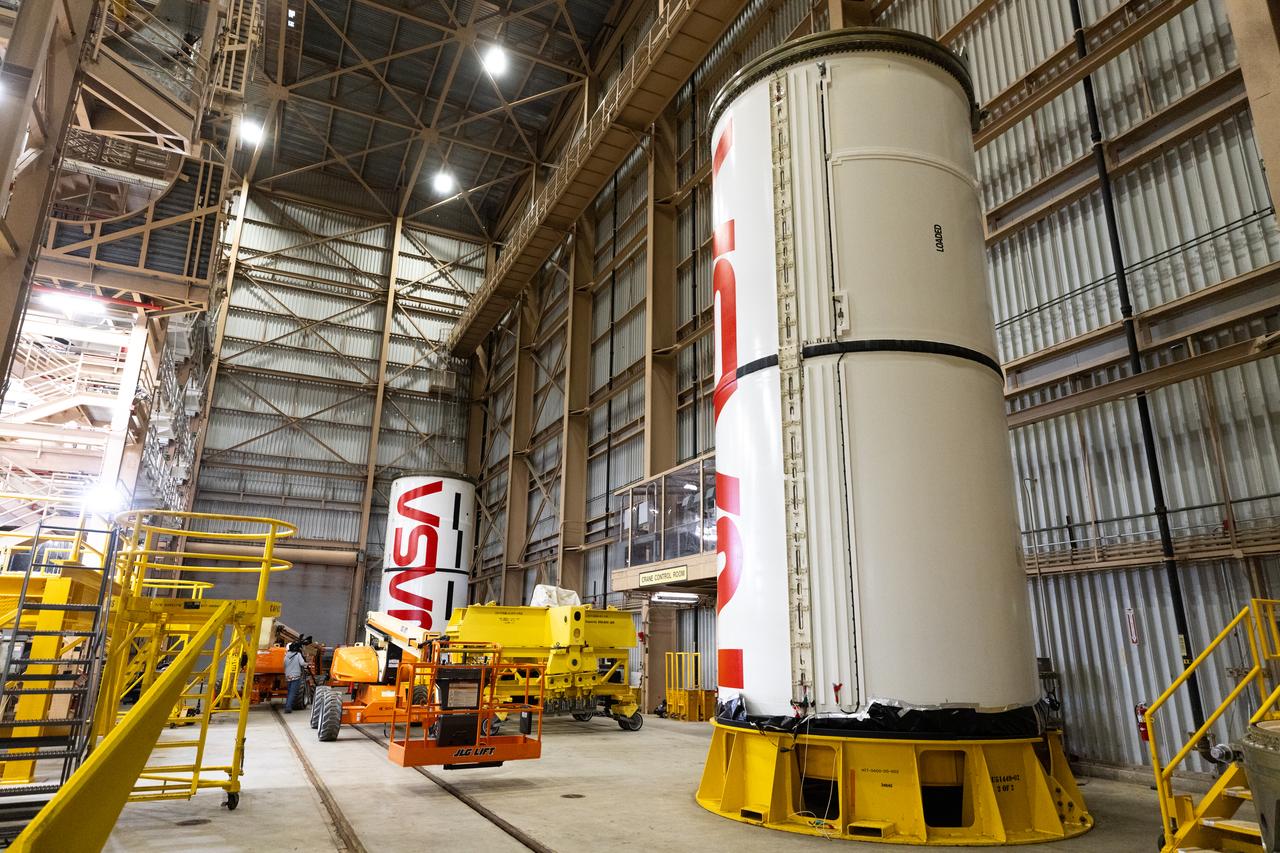
Workers with NASA’s Exploration Ground Systems and primary contractor, Jacobs, complete the painting of the agency’s iconic “worm” logo along the side of the twin Artemis II solid rocket booster motor segments inside the Rotation, Processing and Surge Facility at Kennedy Space Center in Florida on Friday, Feb. 16, 2024. Using a laser projector, the logo was mapped out with tape by workers with Jacobs, for the spaceport, before using two coats of red paint, plus several coats of clear primer to complete the logo that stretches 25 feet long. The booster segments will help propel the SLS (Space Launch System) rocket on the Artemis II mission to send four astronauts around the Moon as part of the agency’s effort to establish a long-term science and exploration presence at the Moon, and eventually Mars.
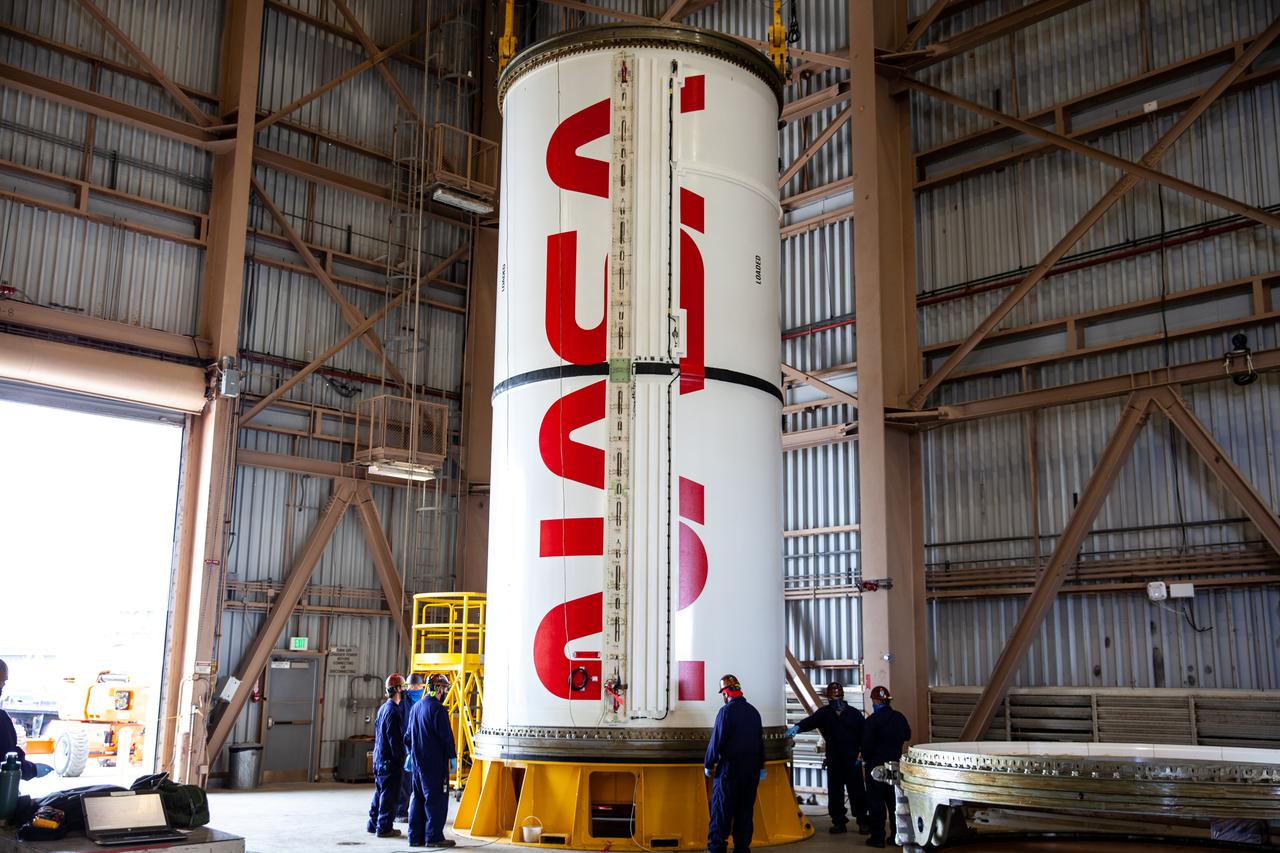
Inside the Rotation, Processing and Surge Facility at NASA’s Kennedy Space Center in Florida, Exploration Ground Systems and Jacobs TOSC workers completed painting of NASA’s iconic “worm” logo on the Artemis I Space Launch System twin solid rocket boosters on Sept. 23, 2020. Originally created by the firm of Danne & Blackburn, the iconic “worm” logo’s bold, sleek design was officially introduced in 1975 and was incorporated into many of the agency’s next-generation programs. It was retired in 1992, but has made a comeback in 2020 as the agency ushers in a new, modern era of human spaceflight. The first in a series of increasingly complex missions, Artemis I will test the Orion spacecraft and Space Launch System as an integrated system ahead of crewed flights to the Moon. Under the Artemis program, NASA will land the first woman and the next man on the Moon by 2024.
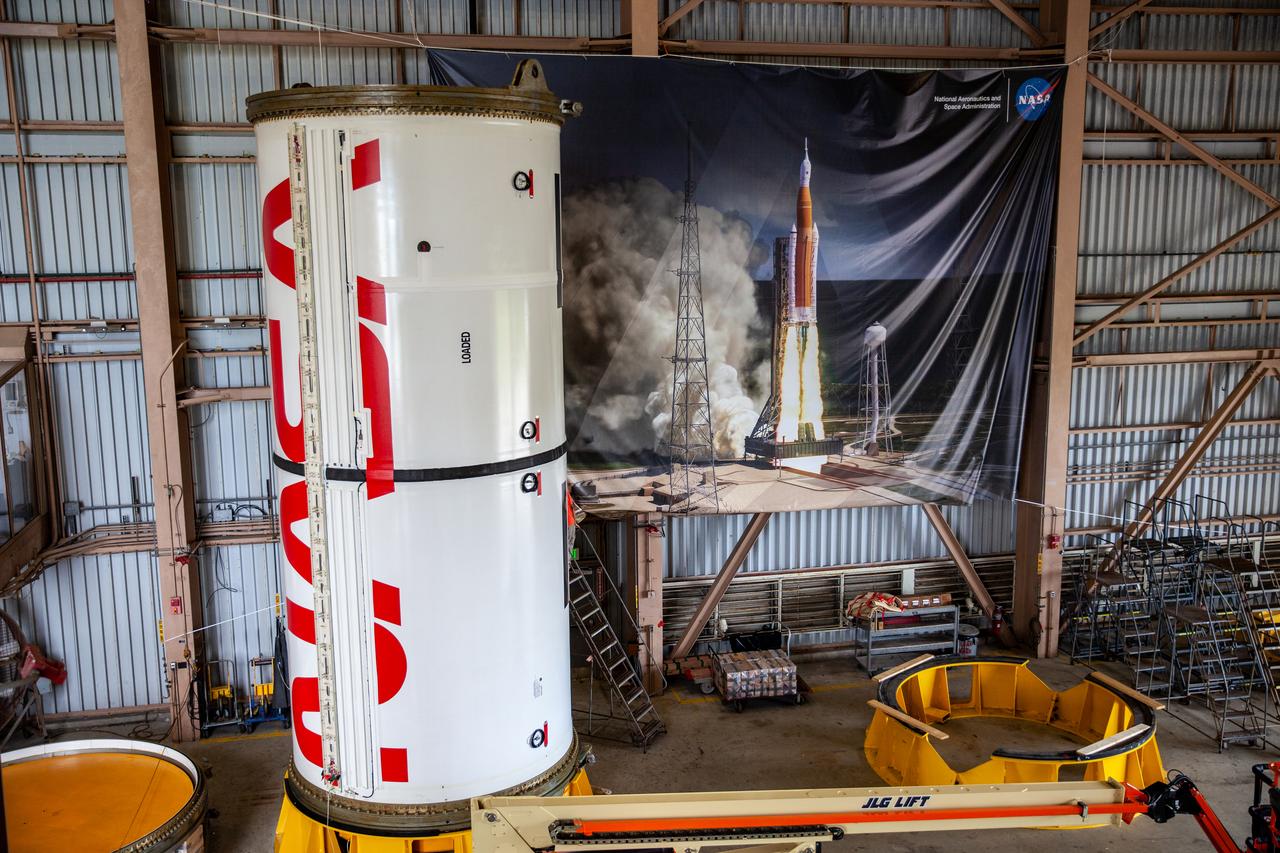
Inside the Rotation, Processing and Surge Facility at NASA’s Kennedy Space Center in Florida, Exploration Ground Systems and Jacobs TOSC workers completed painting of NASA’s iconic “worm” logo on the Artemis I Space Launch System twin solid rocket boosters on Sept. 23, 2020. Originally created by the firm of Danne & Blackburn, the iconic “worm” logo’s bold, sleek design was officially introduced in 1975 and was incorporated into many of the agency’s next-generation programs. It was retired in 1992, but has made a comeback in 2020 as the agency ushers in a new, modern era of human spaceflight. The first in a series of increasingly complex missions, Artemis I will test the Orion spacecraft and Space Launch System as an integrated system ahead of crewed flights to the Moon. Under the Artemis program, NASA will land the first woman and the next man on the Moon by 2024.
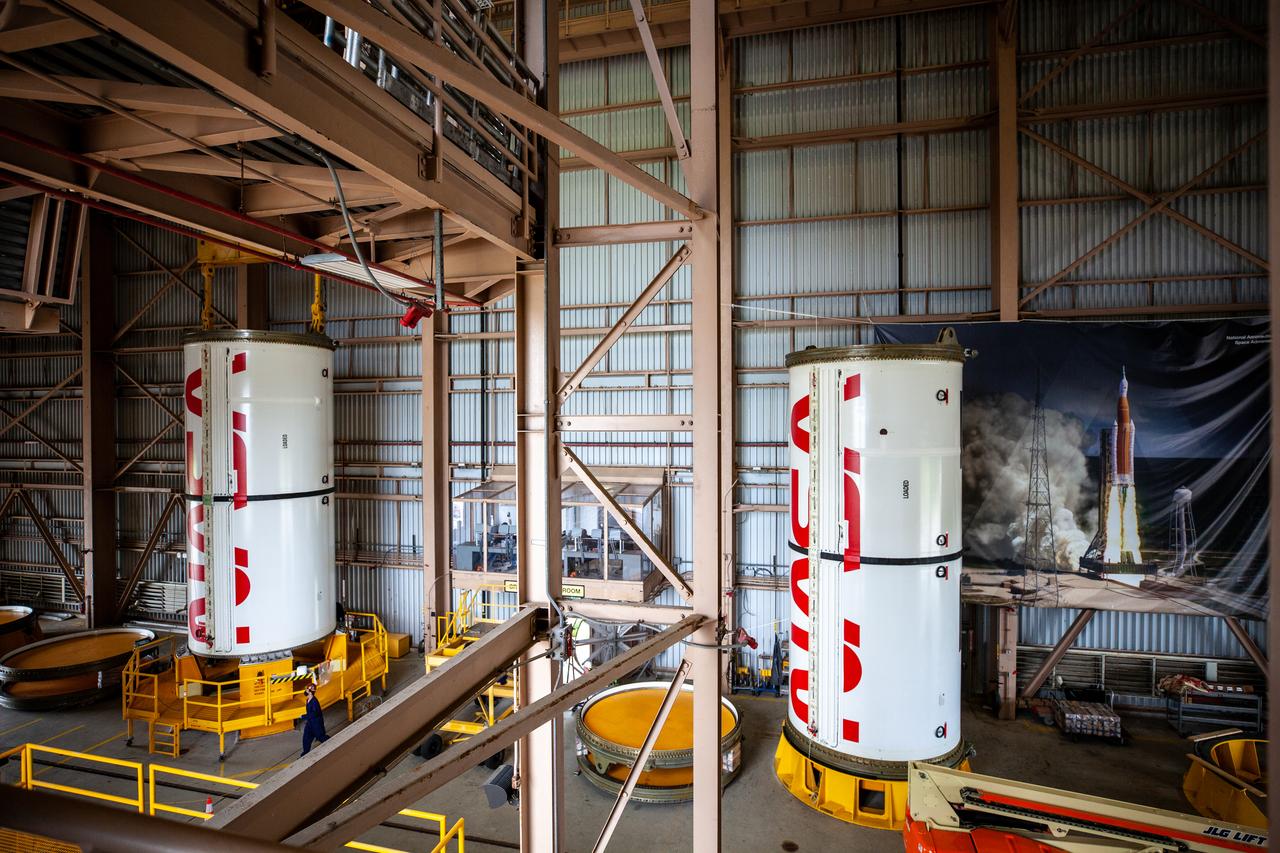
Inside the Rotation, Processing and Surge Facility at NASA’s Kennedy Space Center in Florida, Exploration Ground Systems and Jacobs TOSC workers completed painting of NASA’s iconic “worm” logo on the Artemis I Space Launch System twin solid rocket boosters on Sept. 23, 2020. Originally created by the firm of Danne & Blackburn, the iconic “worm” logo’s bold, sleek design was officially introduced in 1975 and was incorporated into many of the agency’s next-generation programs. It was retired in 1992, but has made a comeback in 2020 as the agency ushers in a new, modern era of human spaceflight. The first in a series of increasingly complex missions, Artemis I will test the Orion spacecraft and Space Launch System as an integrated system ahead of crewed flights to the Moon. Under the Artemis program, NASA will land the first woman and the next man on the Moon by 2024.
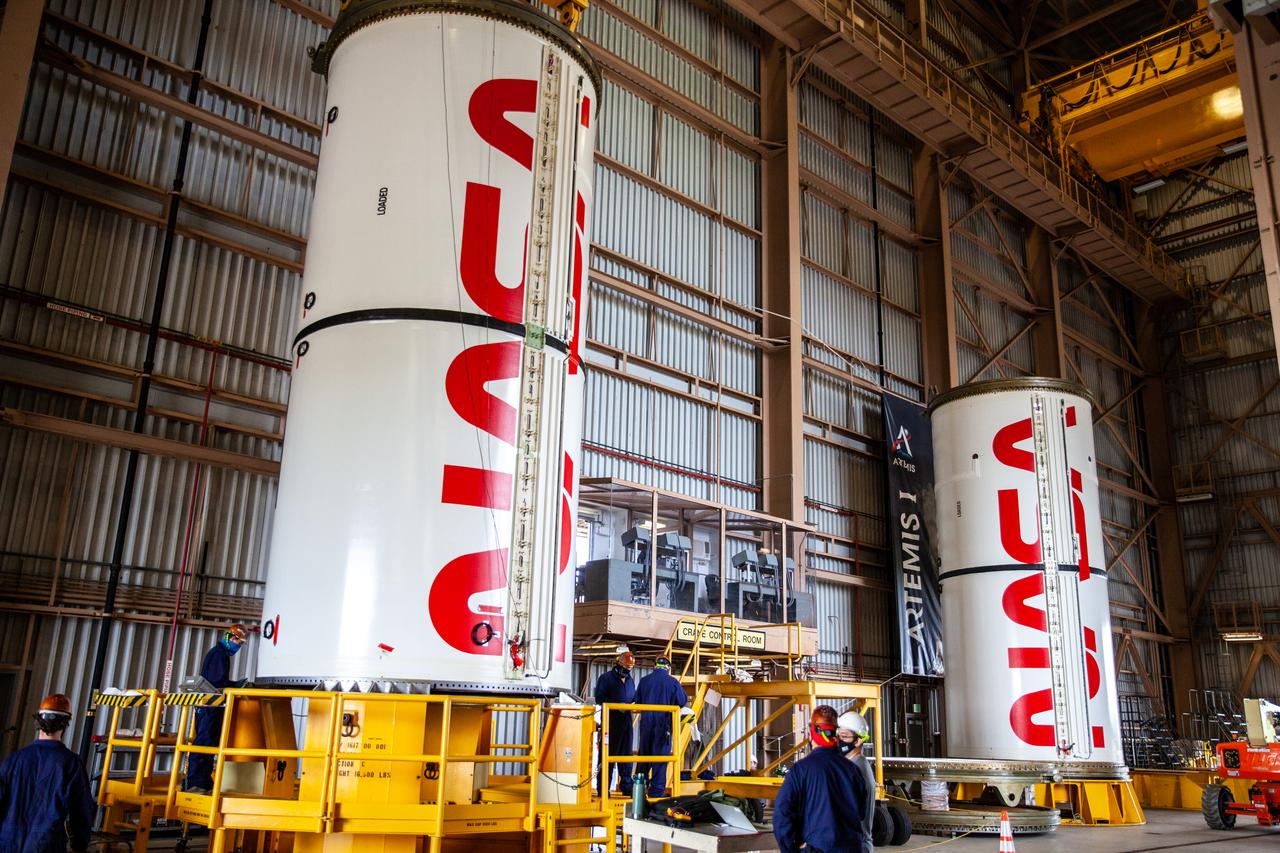
Inside the Rotation, Processing and Surge Facility at NASA’s Kennedy Space Center in Florida, Exploration Ground Systems and Jacobs TOSC workers completed painting of NASA’s iconic “worm” logo on the Artemis I Space Launch System twin solid rocket boosters on Sept. 23, 2020. Originally created by the firm of Danne & Blackburn, the iconic “worm” logo’s bold, sleek design was officially introduced in 1975 and was incorporated into many of the agency’s next-generation programs. It was retired in 1992, but has made a comeback in 2020 as the agency ushers in a new, modern era of human spaceflight. The first in a series of increasingly complex missions, Artemis I will test the Orion spacecraft and Space Launch System as an integrated system ahead of crewed flights to the Moon. Under the Artemis program, NASA will land the first woman and the next man on the Moon by 2024.
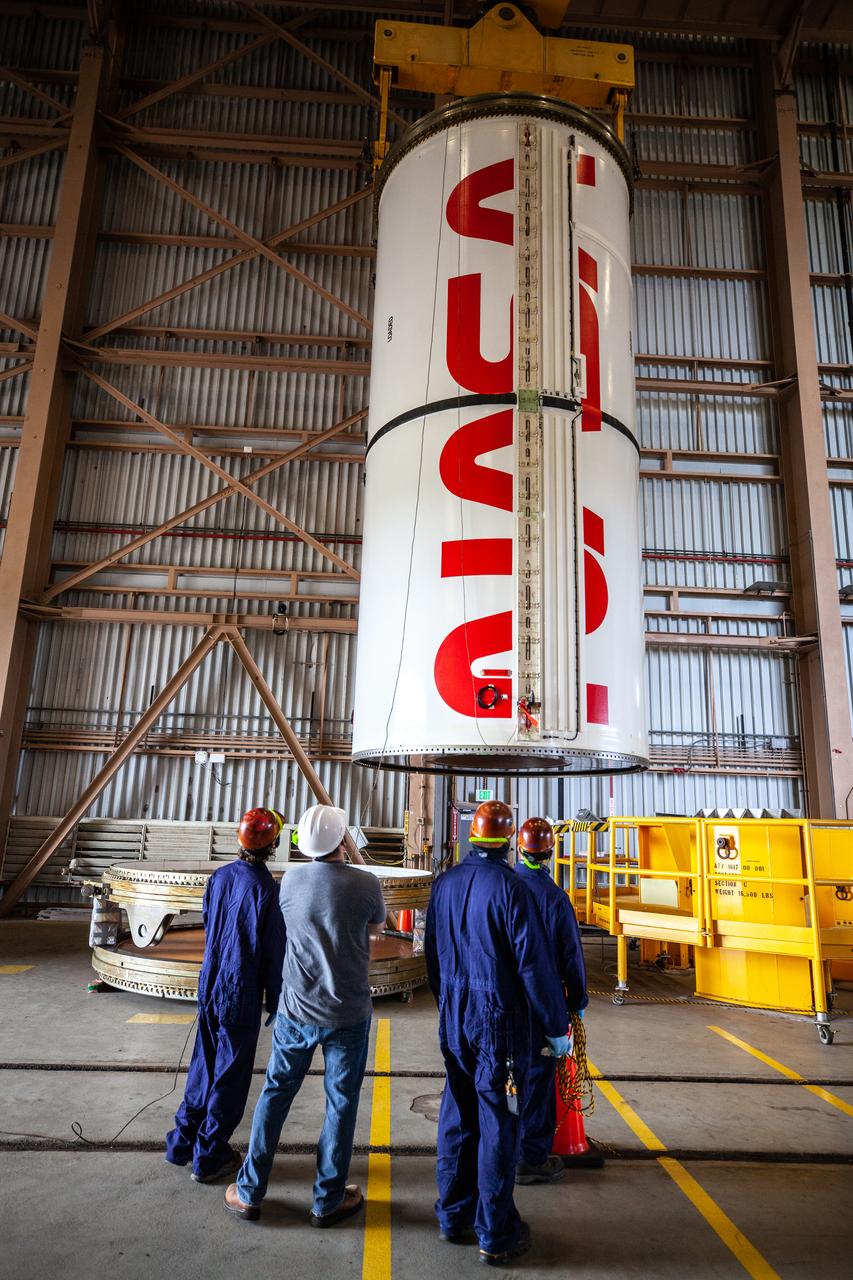
Inside the Rotation, Processing and Surge Facility at NASA’s Kennedy Space Center in Florida, Exploration Ground Systems and Jacobs TOSC workers completed painting of NASA’s iconic “worm” logo on the Artemis I Space Launch System twin solid rocket boosters on Sept. 23, 2020. Originally created by the firm of Danne & Blackburn, the iconic “worm” logo’s bold, sleek design was officially introduced in 1975 and was incorporated into many of the agency’s next-generation programs. It was retired in 1992, but has made a comeback in 2020 as the agency ushers in a new, modern era of human spaceflight. The first in a series of increasingly complex missions, Artemis I will test the Orion spacecraft and Space Launch System as an integrated system ahead of crewed flights to the Moon. Under the Artemis program, NASA will land the first woman and the next man on the Moon by 2024.
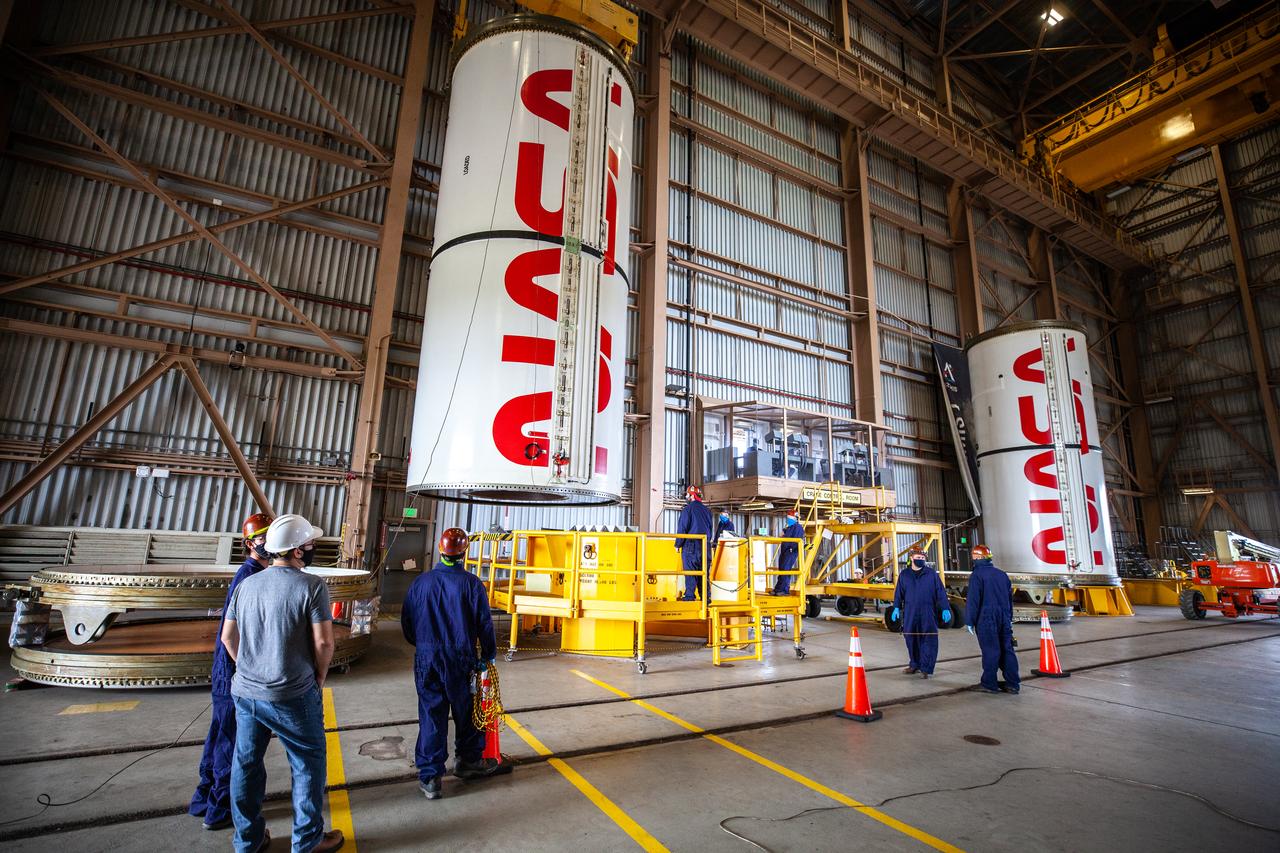
Inside the Rotation, Processing and Surge Facility at NASA’s Kennedy Space Center in Florida, Exploration Ground Systems and Jacobs TOSC workers completed painting of NASA’s iconic “worm” logo on the Artemis I Space Launch System twin solid rocket boosters on Sept. 23, 2020. Originally created by the firm of Danne & Blackburn, the iconic “worm” logo’s bold, sleek design was officially introduced in 1975 and was incorporated into many of the agency’s next-generation programs. It was retired in 1992, but has made a comeback in 2020 as the agency ushers in a new, modern era of human spaceflight. The first in a series of increasingly complex missions, Artemis I will test the Orion spacecraft and Space Launch System as an integrated system ahead of crewed flights to the Moon. Under the Artemis program, NASA will land the first woman and the next man on the Moon by 2024.
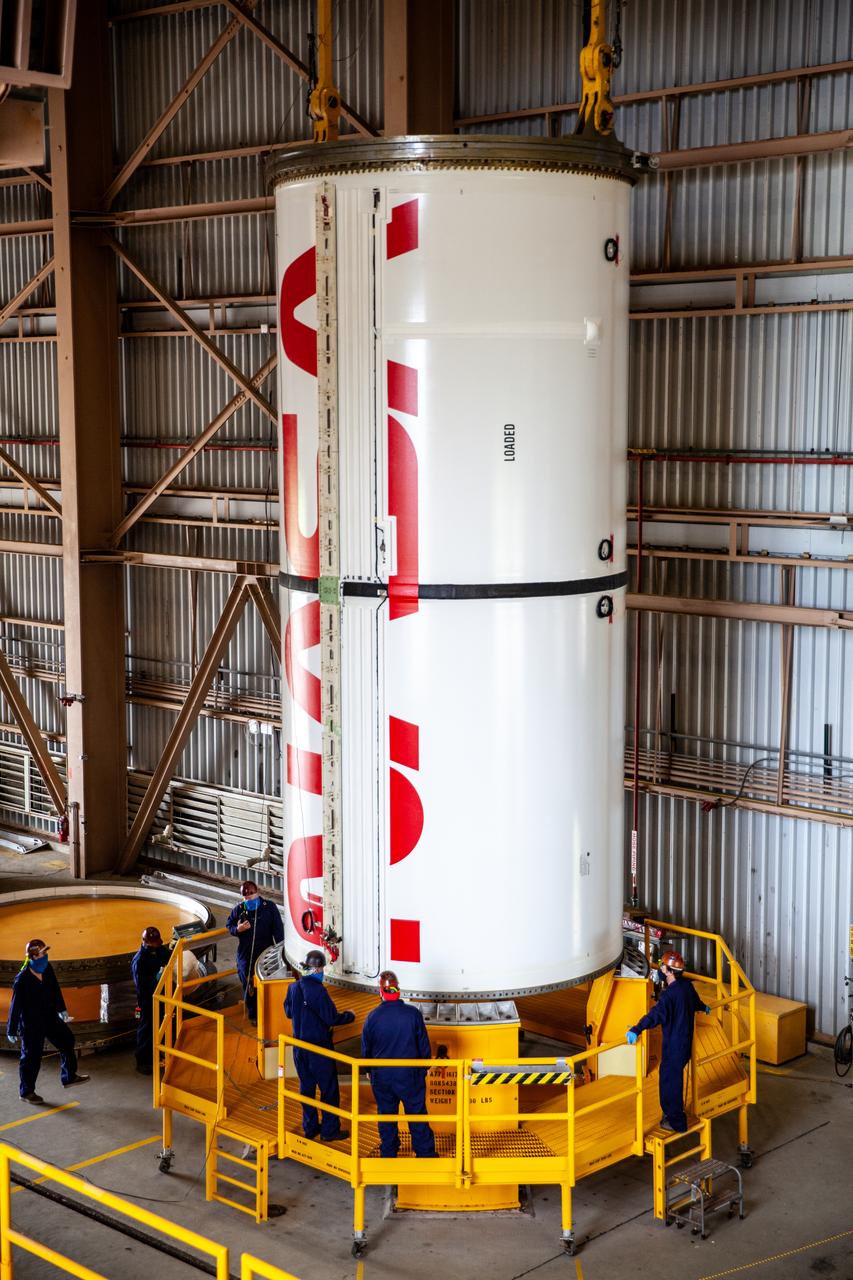
Inside the Rotation, Processing and Surge Facility at NASA’s Kennedy Space Center in Florida, Exploration Ground Systems and Jacobs TOSC workers completed painting of NASA’s iconic “worm” logo on the Artemis I Space Launch System twin solid rocket boosters on Sept. 23, 2020. Originally created by the firm of Danne & Blackburn, the iconic “worm” logo’s bold, sleek design was officially introduced in 1975 and was incorporated into many of the agency’s next-generation programs. It was retired in 1992, but has made a comeback in 2020 as the agency ushers in a new, modern era of human spaceflight. The first in a series of increasingly complex missions, Artemis I will test the Orion spacecraft and Space Launch System as an integrated system ahead of crewed flights to the Moon. Under the Artemis program, NASA will land the first woman and the next man on the Moon by 2024.
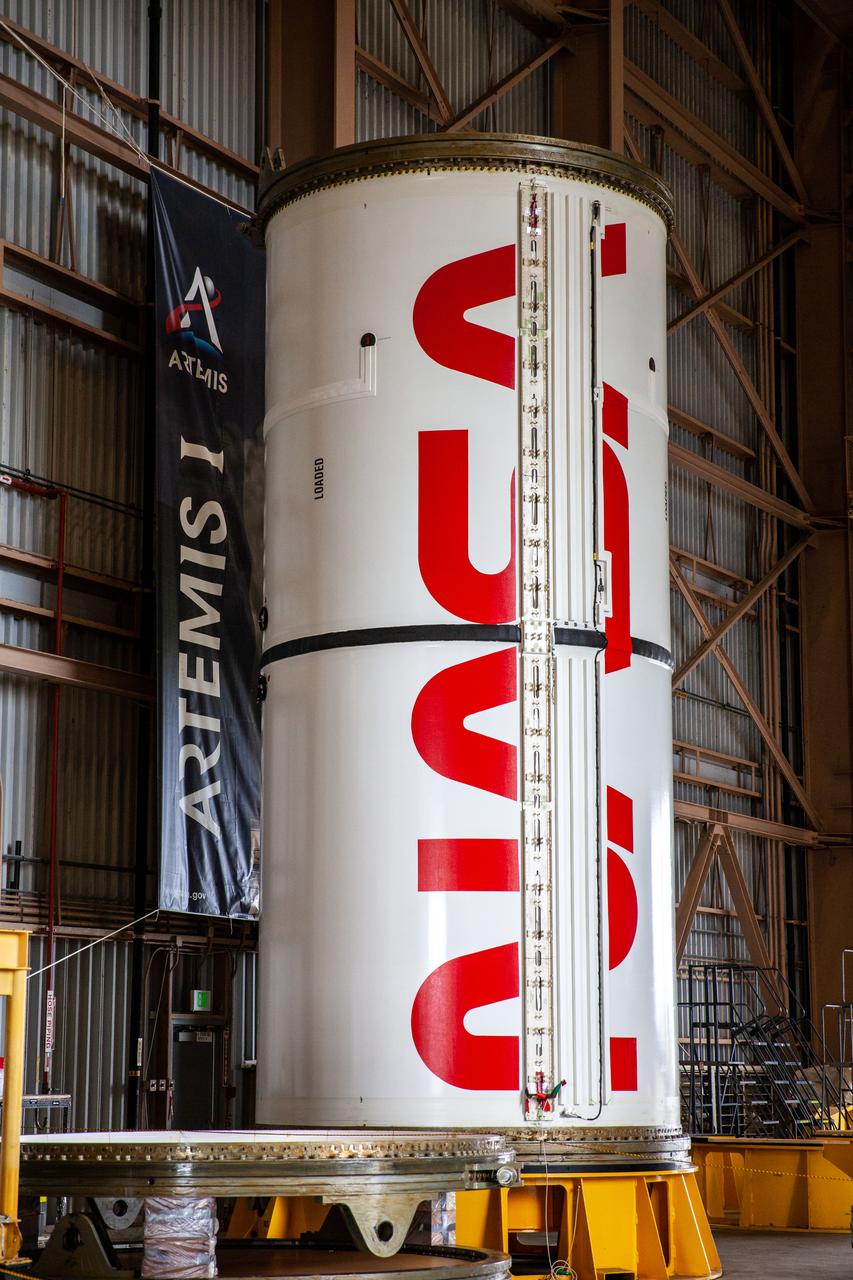
Inside the Rotation, Processing and Surge Facility at NASA’s Kennedy Space Center in Florida, Exploration Ground Systems and Jacobs TOSC workers completed painting of NASA’s iconic “worm” logo on the Artemis I Space Launch System twin solid rocket boosters on Sept. 23, 2020. Originally created by the firm of Danne & Blackburn, the iconic “worm” logo’s bold, sleek design was officially introduced in 1975 and was incorporated into many of the agency’s next-generation programs. It was retired in 1992, but has made a comeback in 2020 as the agency ushers in a new, modern era of human spaceflight. The first in a series of increasingly complex missions, Artemis I will test the Orion spacecraft and Space Launch System as an integrated system ahead of crewed flights to the Moon. Under the Artemis program, NASA will land the first woman and the next man on the Moon by 2024.
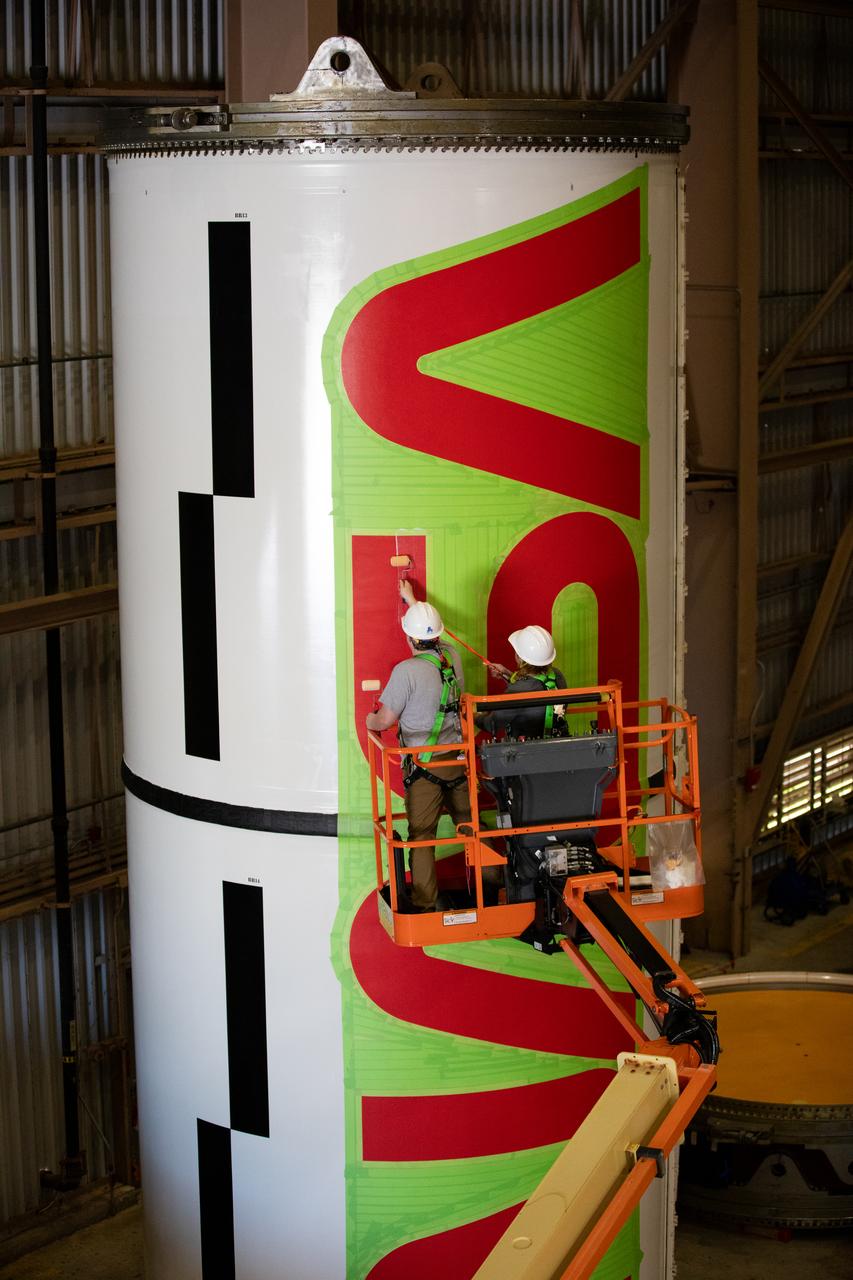
Workers with NASA’s Exploration Ground Systems (EGS) paint the bright red NASA “worm” logo on the side of an Artemis II solid rocket booster segment inside the Rotation, Processing and Surge Facility (RPSF) at Kennedy Space Center in Florida on Tuesday, Jan. 30, 2024. The EGS team used a laser projector to mask off the logo with tape, then painted the first coat of the iconic design. The booster segments will help propel the Space Launch System (SLS) rocket on the Artemis II mission to send four astronauts around the Moon as part of the agency’s effort to establish a long-term science and exploration presence at the Moon, and eventually Mars.
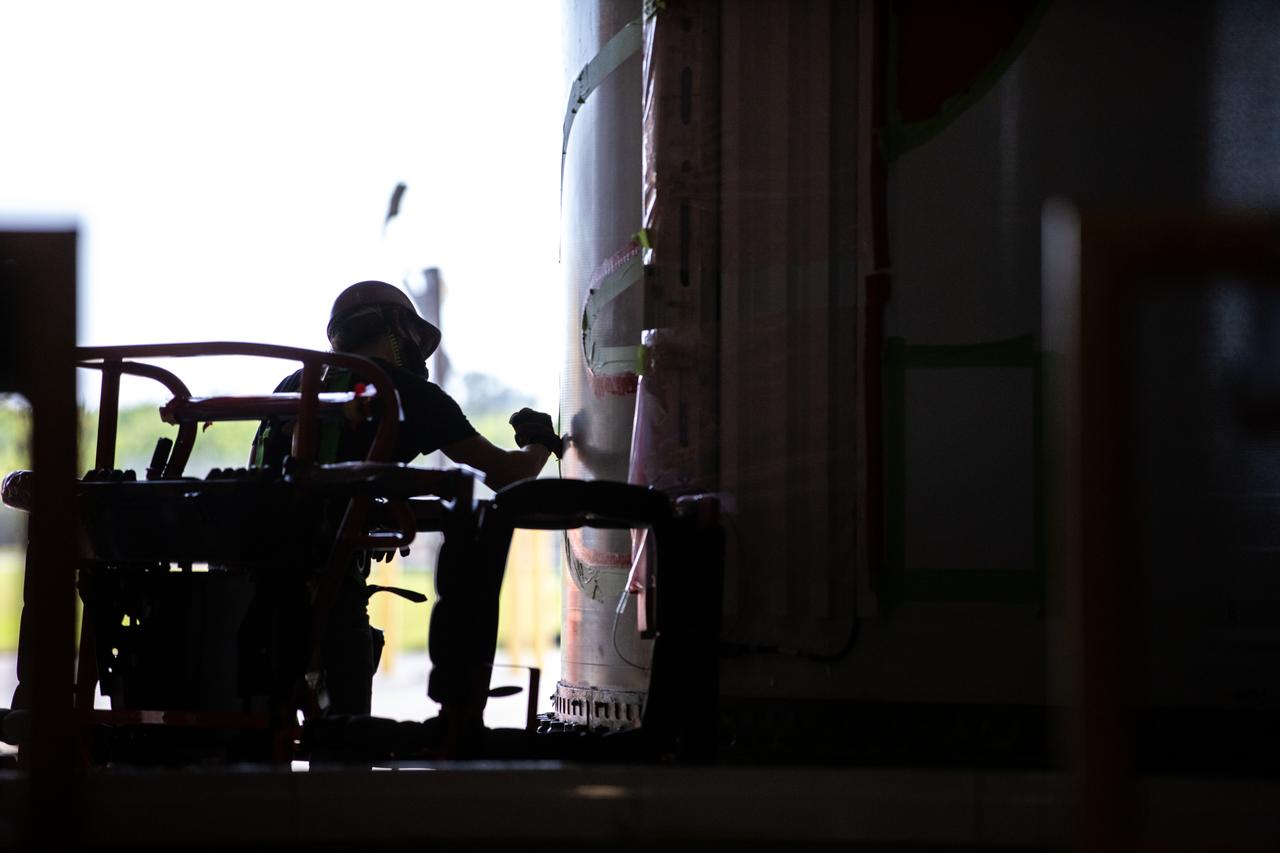
Silhouetted against the bright Florida sunlight outside, a worker with NASA’s Exploration Ground Systems (EGS) applies bright red paint to the agency’s “worm” logo taking shape on the side of an Artemis I solid rocket booster segment inside the Rotation, Processing and Surge Facility (RPSF) at Kennedy Space Center. The EGS team used a laser projector to mask off the logo with tape, then painted the first coat of the iconic design. The booster segments will help propel the Space Launch System (SLS) rocket on Artemis I, a test of the Orion spacecraft and SLS as an integrated system ahead of crewed flights to the Moon. Northrop Grumman, which built the booster segments, is covering the cost of the painting.
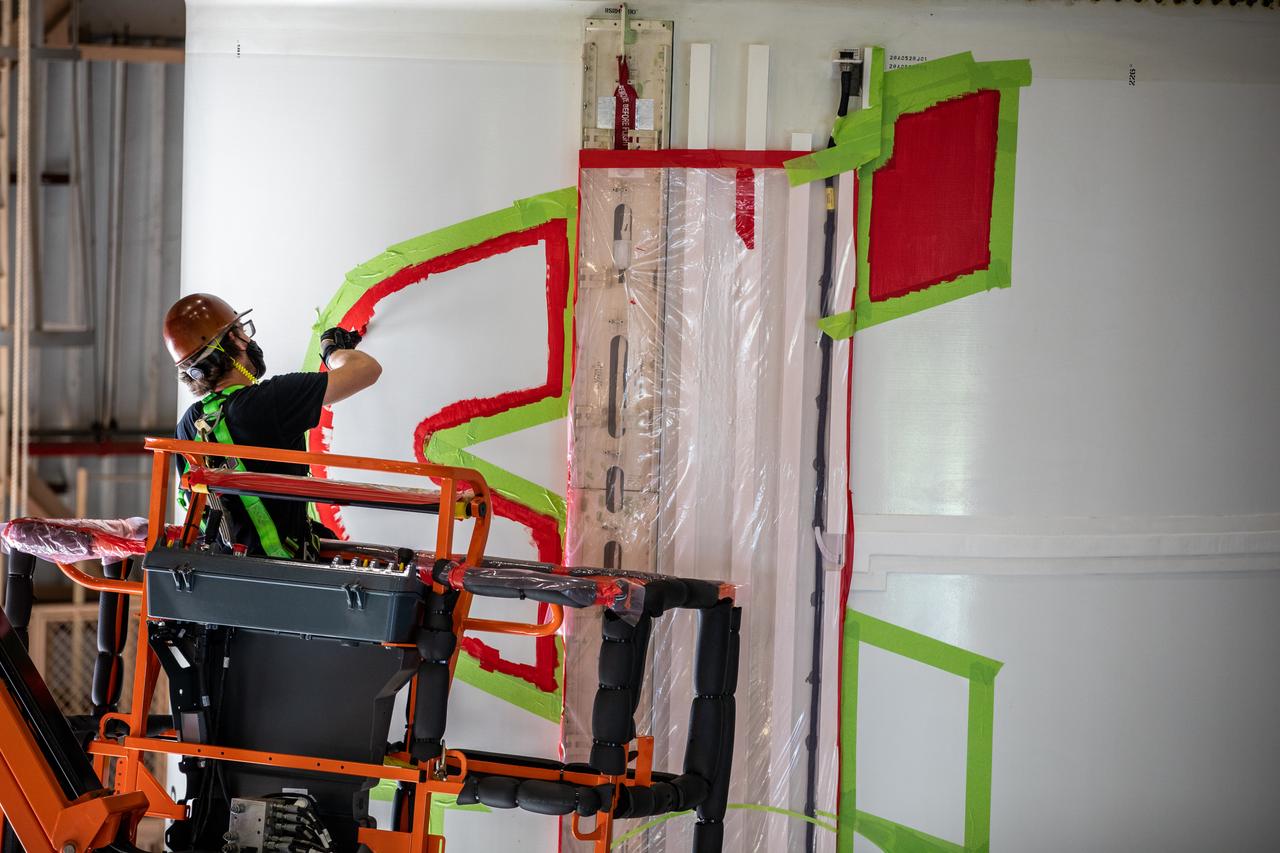
A worker with NASA’s Exploration Ground Systems (EGS) applies bright red paint to the agency’s “worm” logo taking shape on the side of an Artemis I solid rocket booster segment inside the Rotation, Processing and Surge Facility (RPSF) at Kennedy Space Center in Florida. The EGS team used a laser projector to mask off the logo with tape, then painted the first coat of the iconic design. The booster segments will help propel the Space Launch System (SLS) rocket on Artemis I, a test of the Orion spacecraft and SLS as an integrated system ahead of crewed flights to the Moon. Northrop Grumman, which built the booster segments, is covering the cost of the painting.
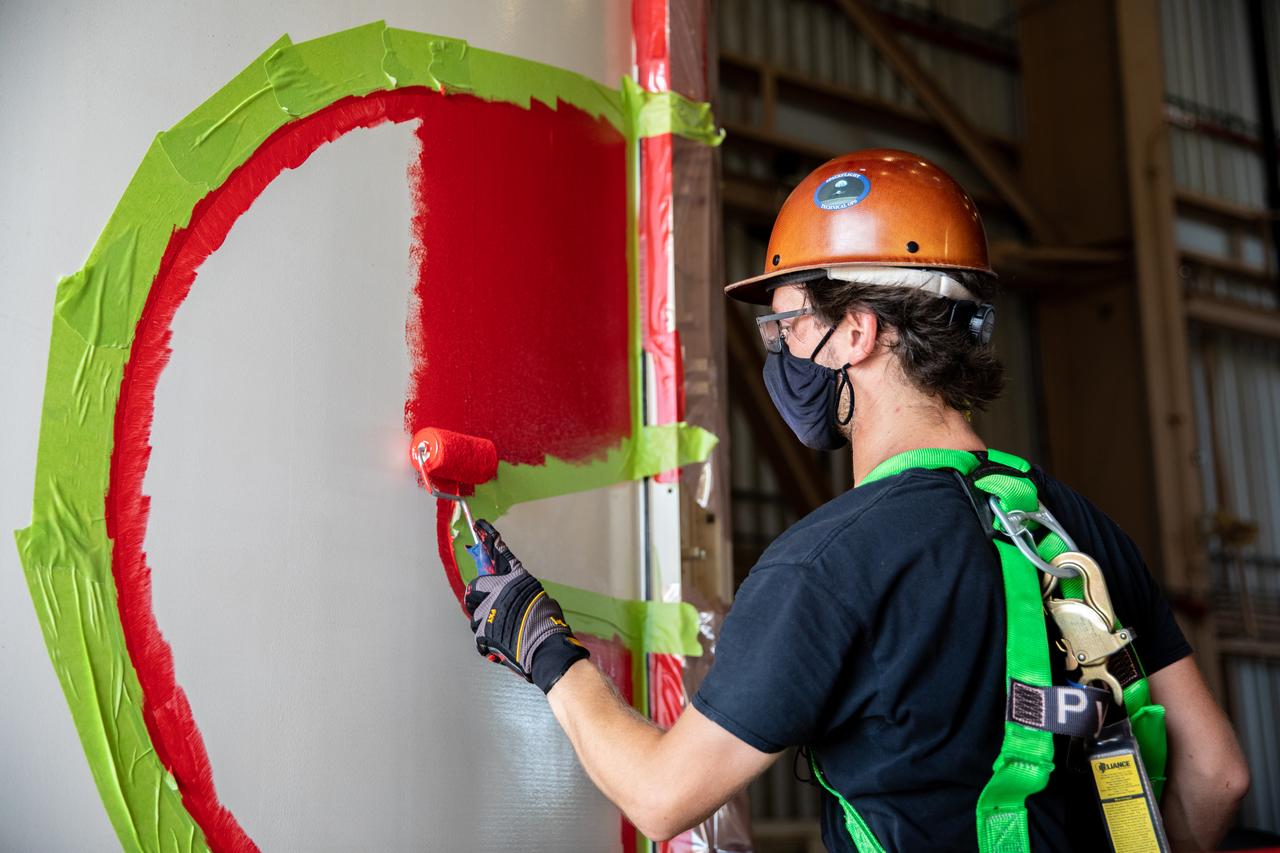
A worker with NASA’s Exploration Ground Systems (EGS) finishes the first coat of the bright red “worm” logo taking shape on the side of an Artemis I solid rocket booster segment inside the Rotation, Processing and Surge Facility (RPSF) at Kennedy Space Center in Florida. The EGS team used a laser projector to mask off the logo with tape, then painted the first coat of the iconic design. The booster segments will help propel the Space Launch System (SLS) rocket on Artemis I, a test of the Orion spacecraft and SLS as an integrated system ahead of crewed flights to the Moon. Northrop Grumman, which built the booster segments, is covering the cost of the painting.
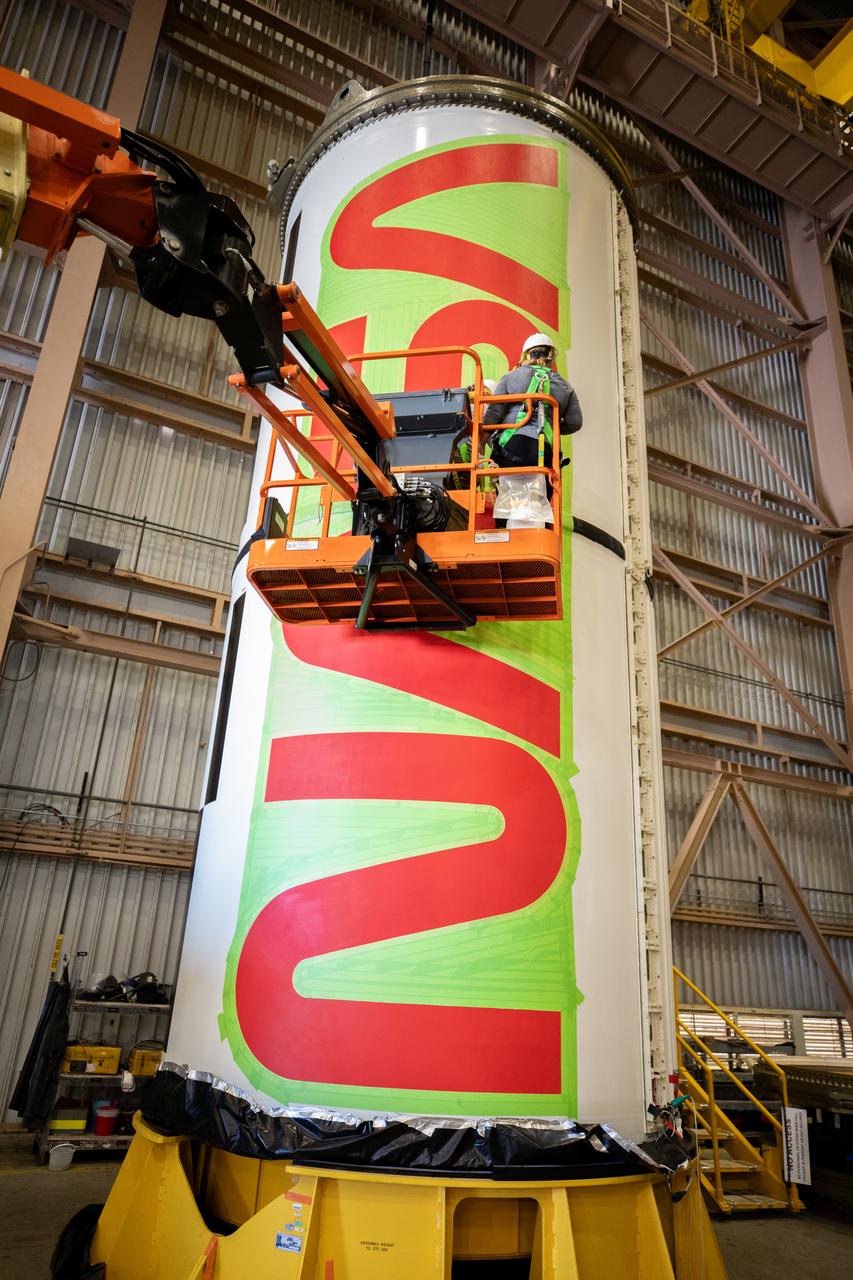
Workers with NASA’s Exploration Ground Systems (EGS) paint the bright red NASA “worm” logo on the side of an Artemis II solid rocket booster segment inside the Rotation, Processing and Surge Facility (RPSF) at Kennedy Space Center in Florida on Tuesday, Jan. 30, 2024. The EGS team used a laser projector to mask off the logo with tape, then painted the first coat of the iconic design. The booster segments will help propel the Space Launch System (SLS) rocket on the Artemis II mission to send four astronauts around the Moon as part of the agency’s effort to establish a long-term science and exploration presence at the Moon, and eventually Mars.
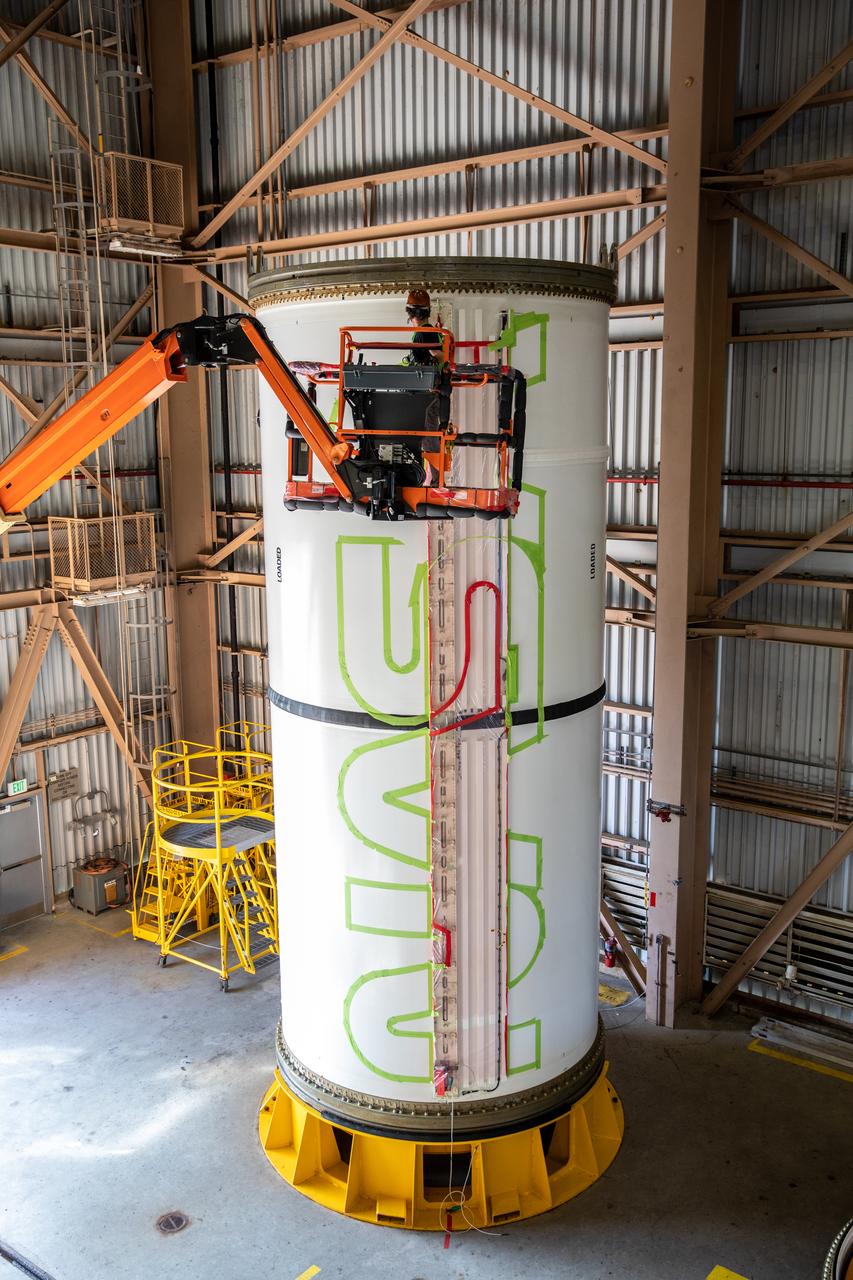
A worker with NASA’s Exploration Ground Systems (EGS) applies bright red paint to the agency’s “worm” logo taking shape on the side of an Artemis I solid rocket booster segment inside the Rotation, Processing and Surge Facility (RPSF) at Kennedy Space Center in Florida. The EGS team used a laser projector to mask off the logo with tape, then painted the first coat of the iconic design. The booster segments will help propel the Space Launch System (SLS) rocket on Artemis I, a test of the Orion spacecraft and SLS as an integrated system ahead of crewed flights to the Moon. Northrop Grumman, which built the booster segments, is covering the cost of the painting.
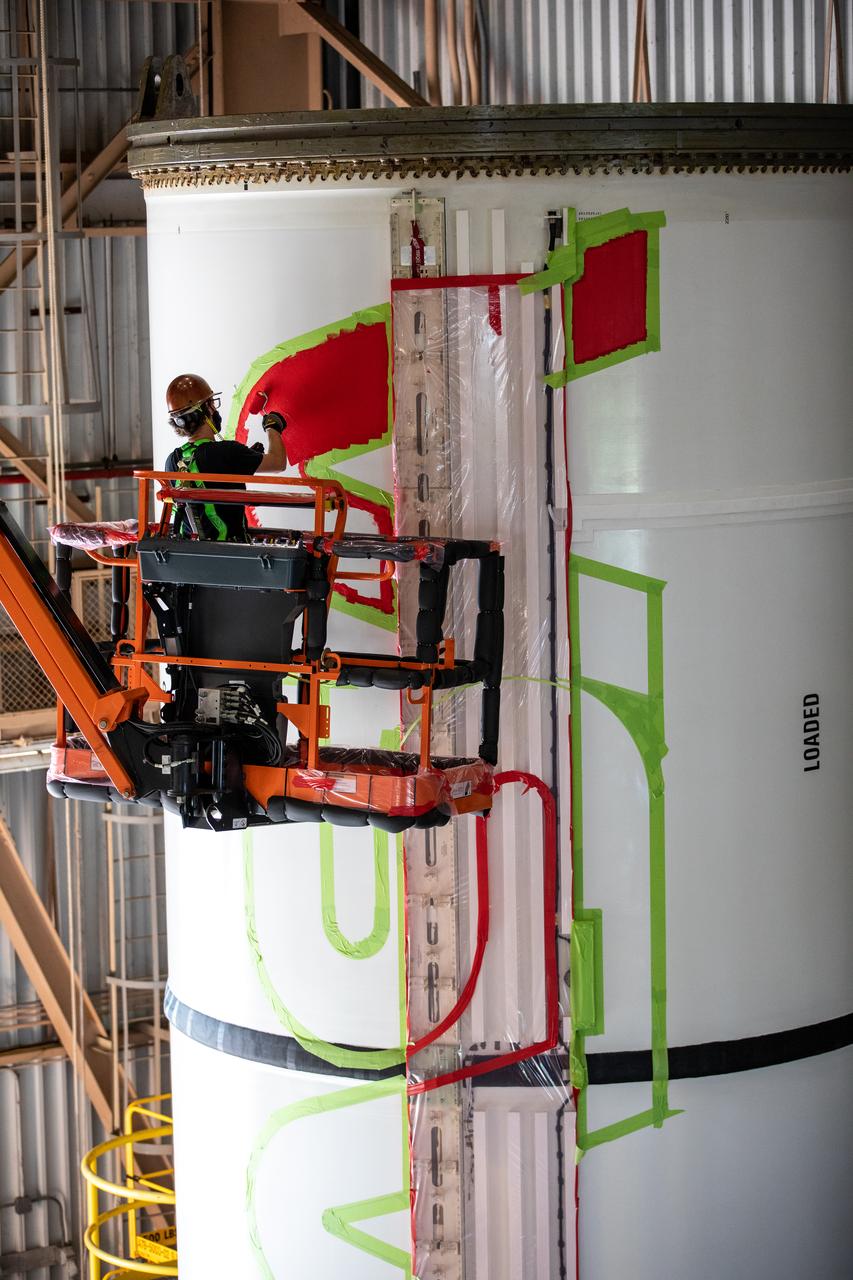
A worker with NASA’s Exploration Ground Systems (EGS) applies bright red paint to the agency’s “worm” logo taking shape on the side of an Artemis I solid rocket booster segment inside the Rotation, Processing and Surge Facility (RPSF) at Kennedy Space Center in Florida. The EGS team used a laser projector to mask off the logo with tape, then painted the first coat of the iconic design. The booster segments will help propel the Space Launch System (SLS) rocket on Artemis I, a test of the Orion spacecraft and SLS as an integrated system ahead of crewed flights to the Moon. Northrop Grumman, which built the booster segments, is covering the cost of the painting.

A worker with NASA’s Exploration Ground Systems (EGS) applies bright red paint to the agency’s “worm” logo taking shape on the side of an Artemis I solid rocket booster segment inside the Rotation, Processing and Surge Facility (RPSF) at Kennedy Space Center in Florida. The EGS team used a laser projector to mask off the logo with tape, then painted the first coat of the iconic design. The booster segments will help propel the Space Launch System (SLS) rocket on Artemis I, a test of the Orion spacecraft and SLS as an integrated system ahead of crewed flights to the Moon. Northrop Grumman, which built the booster segments, is covering the cost of the painting.
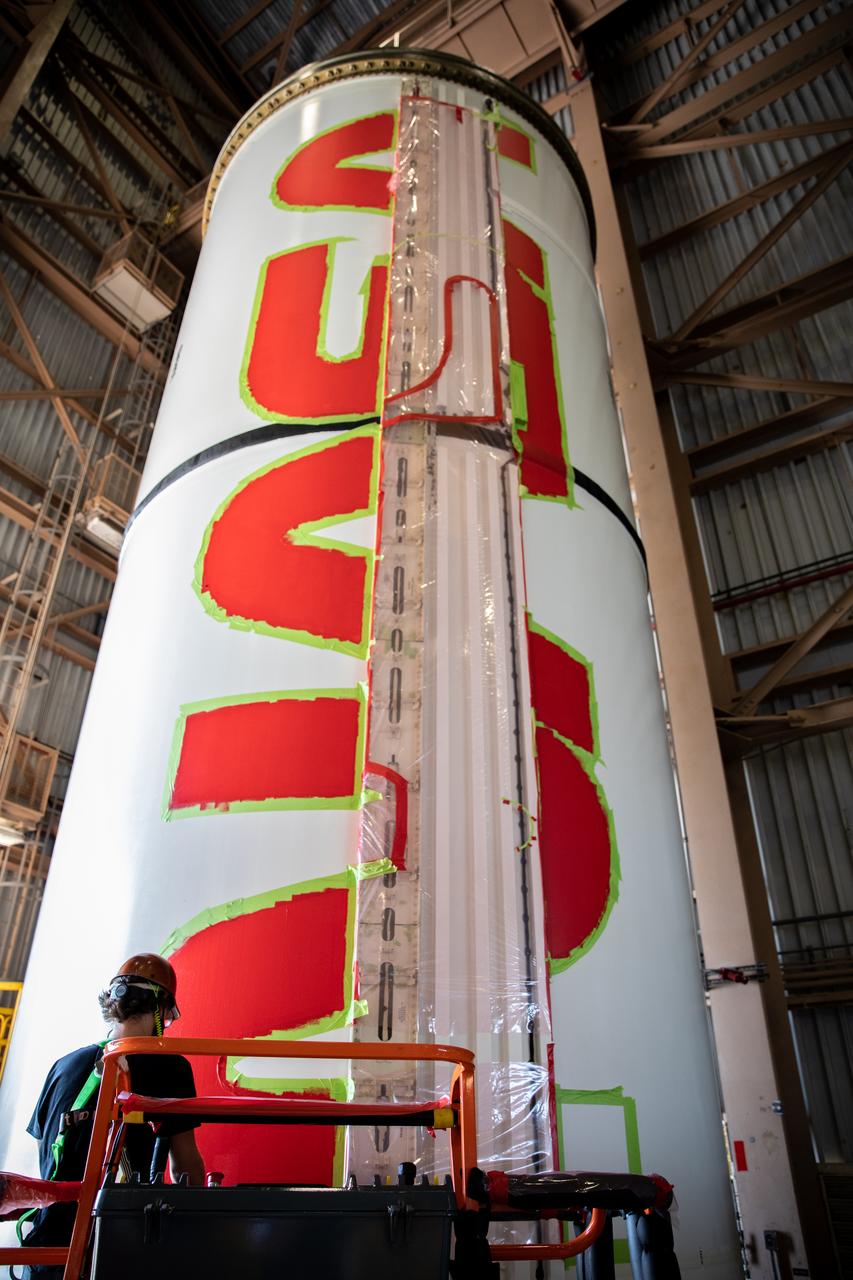
A worker with NASA’s Exploration Ground Systems (EGS) finishes the first coat of the bright red “worm” logo taking shape on the side of an Artemis I solid rocket booster segment inside the Rotation, Processing and Surge Facility (RPSF) at Kennedy Space Center in Florida. The EGS team used a laser projector to mask off the logo with tape, then painted the first coat of the iconic design. The booster segments will help propel the Space Launch System (SLS) rocket on Artemis I, a test of the Orion spacecraft and SLS as an integrated system ahead of crewed flights to the Moon. Northrop Grumman, which built the booster segments, is covering the cost of the painting.
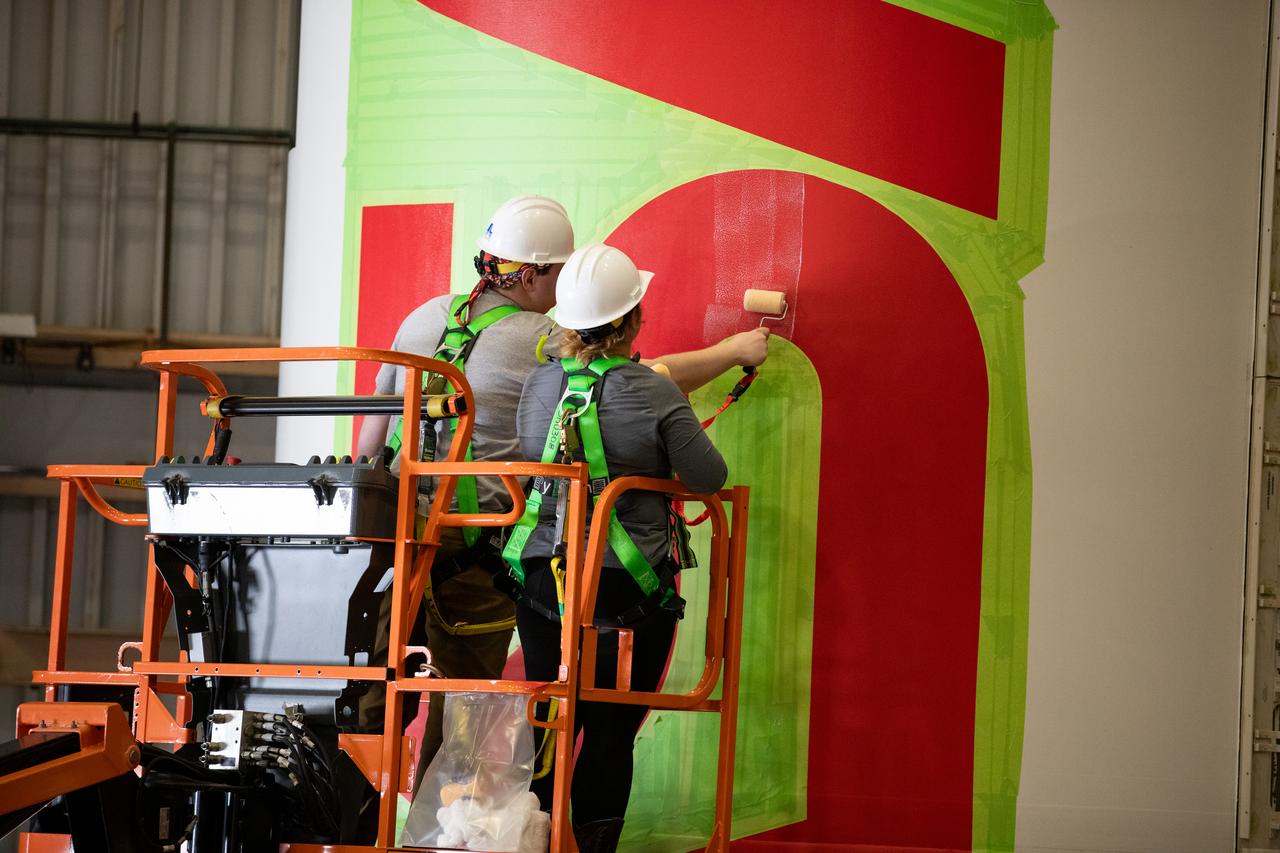
Workers with NASA’s Exploration Ground Systems (EGS) paint the bright red NASA “worm” logo on the side of an Artemis II solid rocket booster segment inside the Rotation, Processing and Surge Facility (RPSF) at Kennedy Space Center in Florida on Tuesday, Jan. 30, 2024. The EGS team used a laser projector to mask off the logo with tape, then painted the first coat of the iconic design. The booster segments will help propel the Space Launch System (SLS) rocket on the Artemis II mission to send four astronauts around the Moon as part of the agency’s effort to establish a long-term science and exploration presence at the Moon, and eventually Mars.
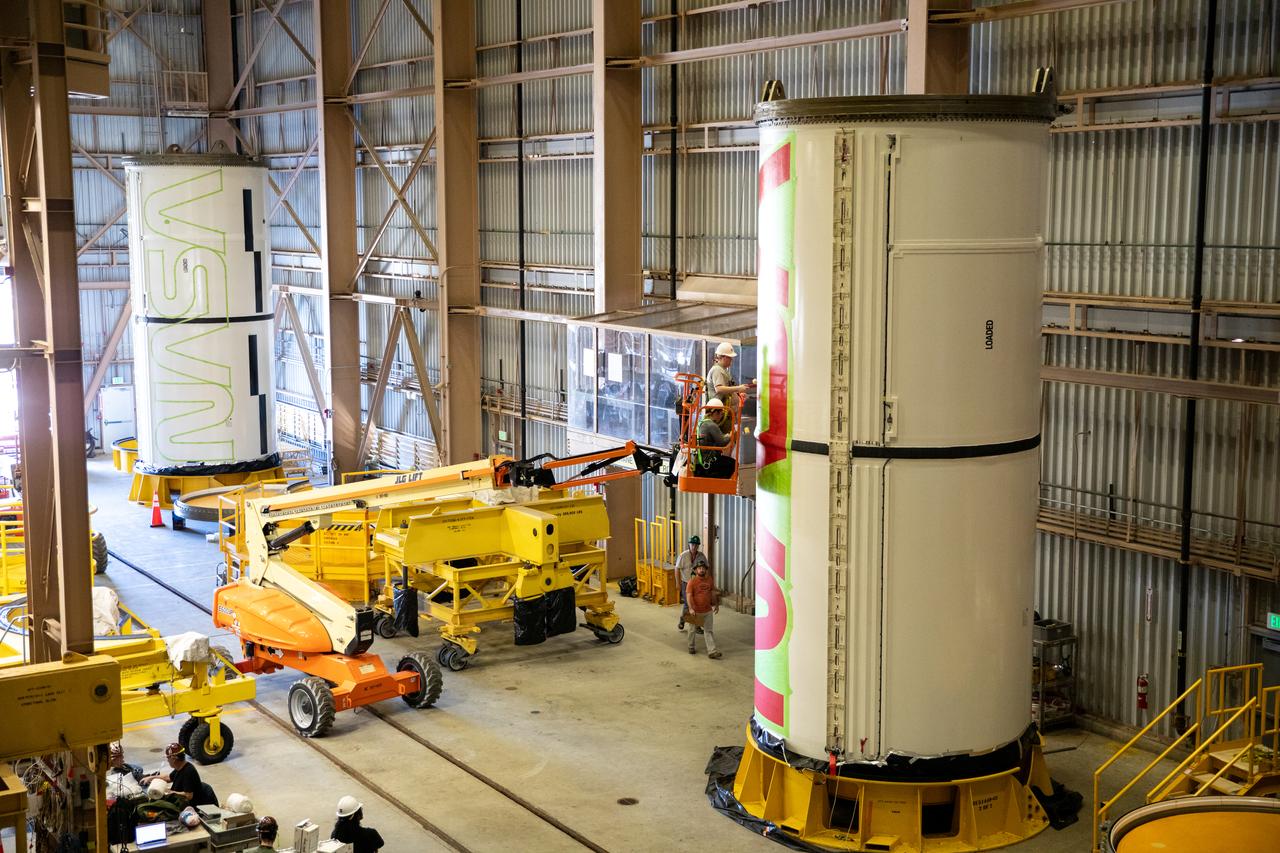
Workers with NASA’s Exploration Ground Systems (EGS) paint the bright red NASA “worm” logo on the side of an Artemis II solid rocket booster segment inside the Rotation, Processing and Surge Facility (RPSF) at Kennedy Space Center in Florida on Tuesday, Jan. 30, 2024. The EGS team used a laser projector to mask off the logo with tape, then painted the first coat of the iconic design. The booster segments will help propel the Space Launch System (SLS) rocket on the Artemis II mission to send four astronauts around the Moon as part of the agency’s effort to establish a long-term science and exploration presence at the Moon, and eventually Mars.
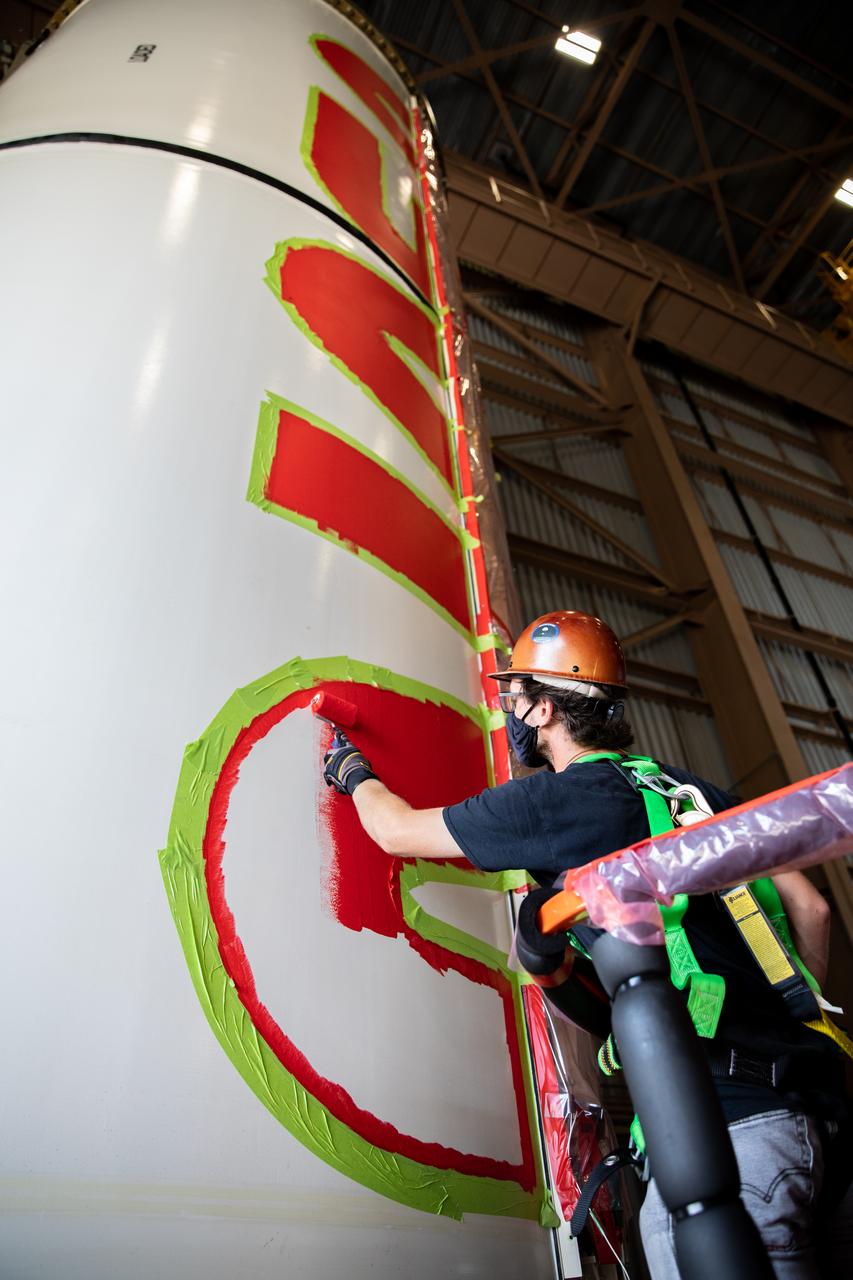
A worker with NASA’s Exploration Ground Systems (EGS) finishes the first coat of the bright red “worm” logo taking shape on the side of an Artemis I solid rocket booster segment inside the Rotation, Processing and Surge Facility (RPSF) at Kennedy Space Center in Florida. The EGS team used a laser projector to mask off the logo with tape, then painted the first coat of the iconic design. The booster segments will help propel the Space Launch System (SLS) rocket on Artemis I, a test of the Orion spacecraft and SLS as an integrated system ahead of crewed flights to the Moon. Northrop Grumman, which built the booster segments, is covering the cost of the painting.
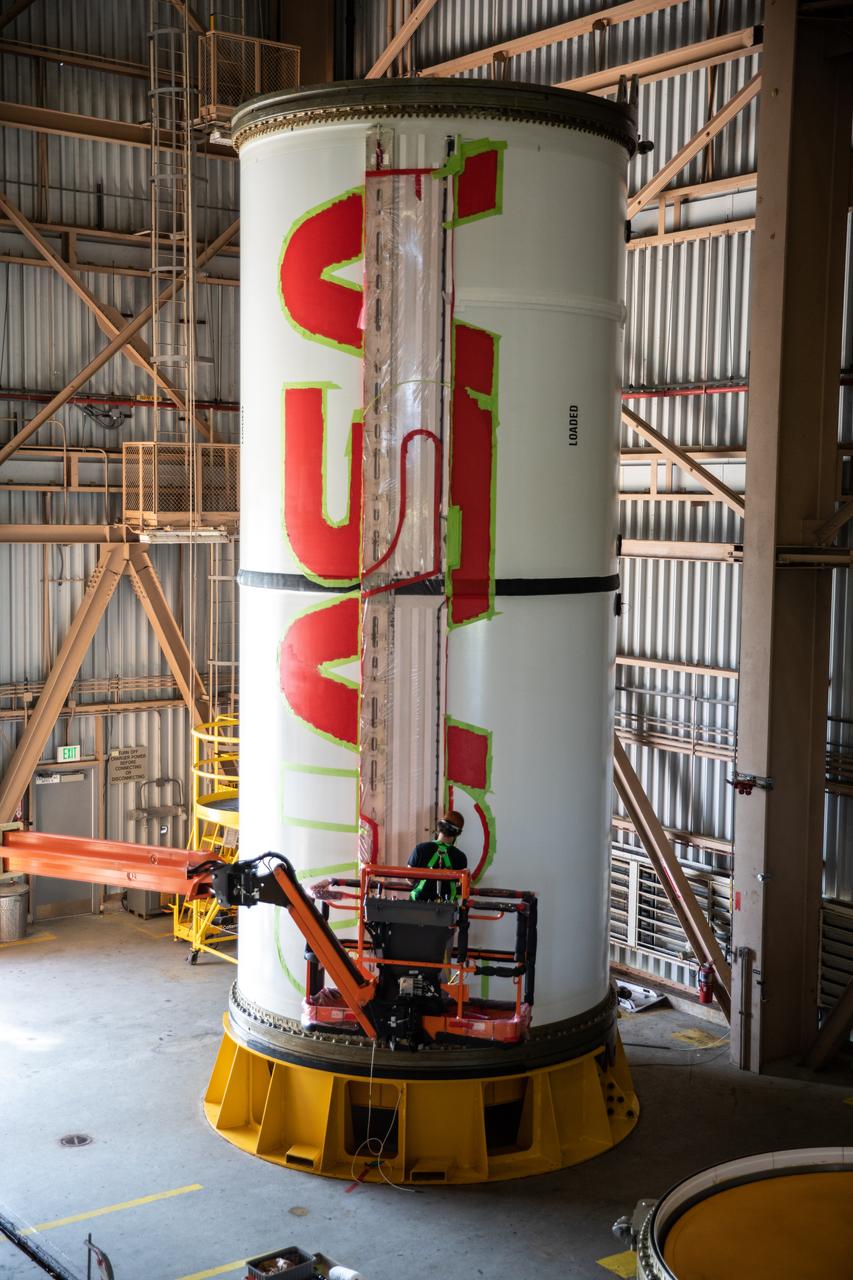
A worker with NASA’s Exploration Ground Systems (EGS) finishes the first coat of the bright red “worm” logo taking shape on the side of an Artemis I solid rocket booster segment inside the Rotation, Processing and Surge Facility (RPSF) at Kennedy Space Center in Florida. The EGS team used a laser projector to mask off the logo with tape, then painted the first coat of the iconic design. The booster segments will help propel the Space Launch System (SLS) rocket on Artemis I, a test of the Orion spacecraft and SLS as an integrated system ahead of crewed flights to the Moon. Northrop Grumman, which built the booster segments, is covering the cost of the painting.
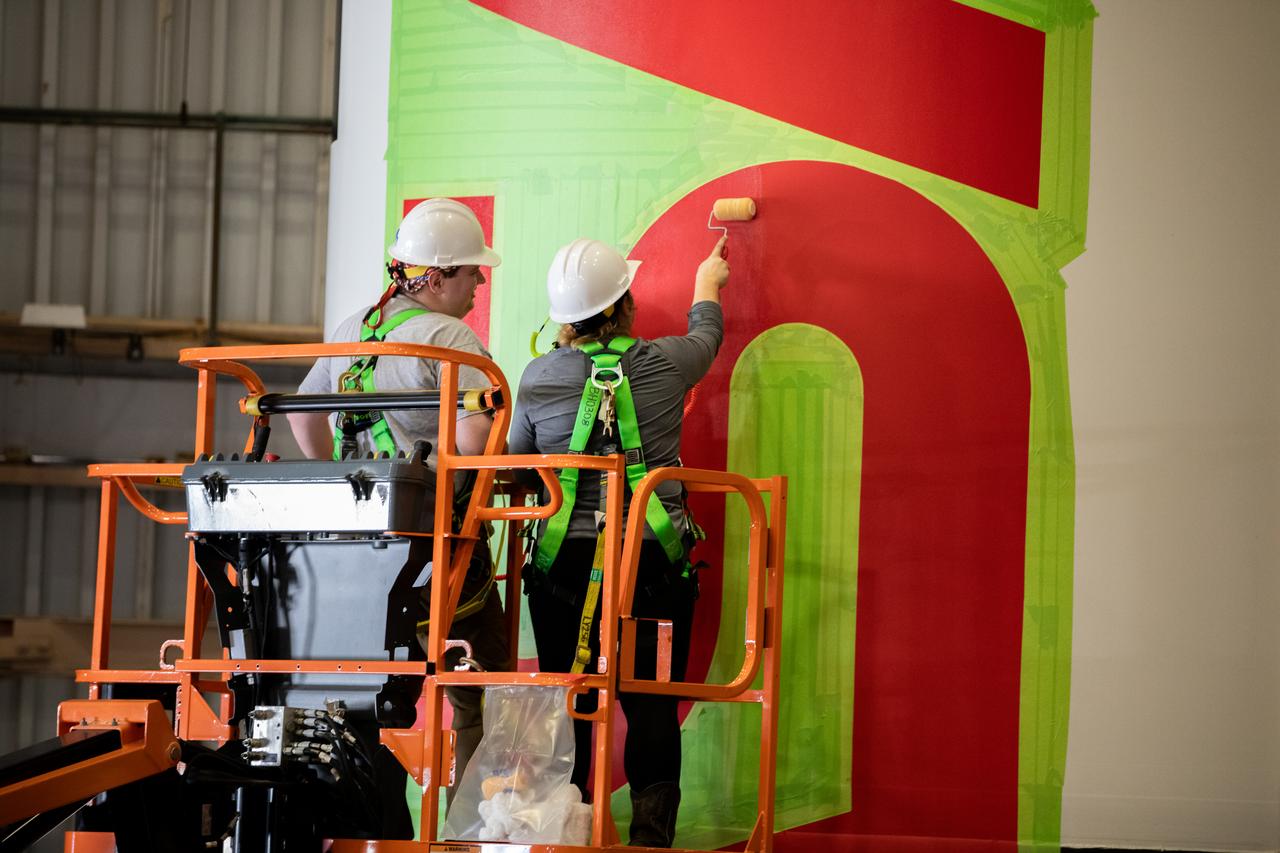
Workers with NASA’s Exploration Ground Systems (EGS) paint the bright red NASA “worm” logo on the side of an Artemis II solid rocket booster segment inside the Rotation, Processing and Surge Facility (RPSF) at Kennedy Space Center in Florida on Tuesday, Jan. 30, 2024. The EGS team used a laser projector to mask off the logo with tape, then painted the first coat of the iconic design. The booster segments will help propel the Space Launch System (SLS) rocket on the Artemis II mission to send four astronauts around the Moon as part of the agency’s effort to establish a long-term science and exploration presence at the Moon, and eventually Mars.
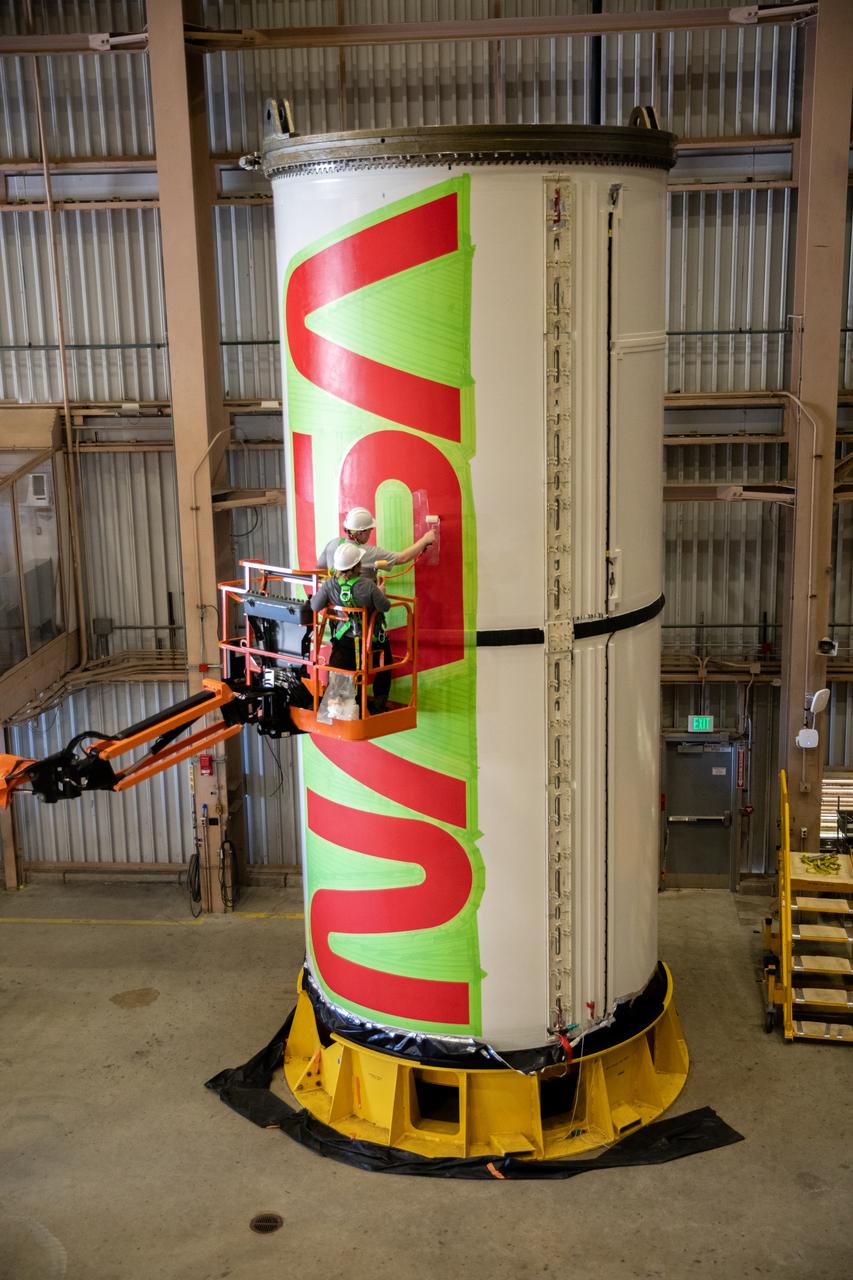
Workers with NASA’s Exploration Ground Systems (EGS) paint the bright red NASA “worm” logo on the side of an Artemis II solid rocket booster segment inside the Rotation, Processing and Surge Facility (RPSF) at Kennedy Space Center in Florida on Tuesday, Jan. 30, 2024. The EGS team used a laser projector to mask off the logo with tape, then painted the first coat of the iconic design. The booster segments will help propel the Space Launch System (SLS) rocket on the Artemis II mission to send four astronauts around the Moon as part of the agency’s effort to establish a long-term science and exploration presence at the Moon, and eventually Mars.
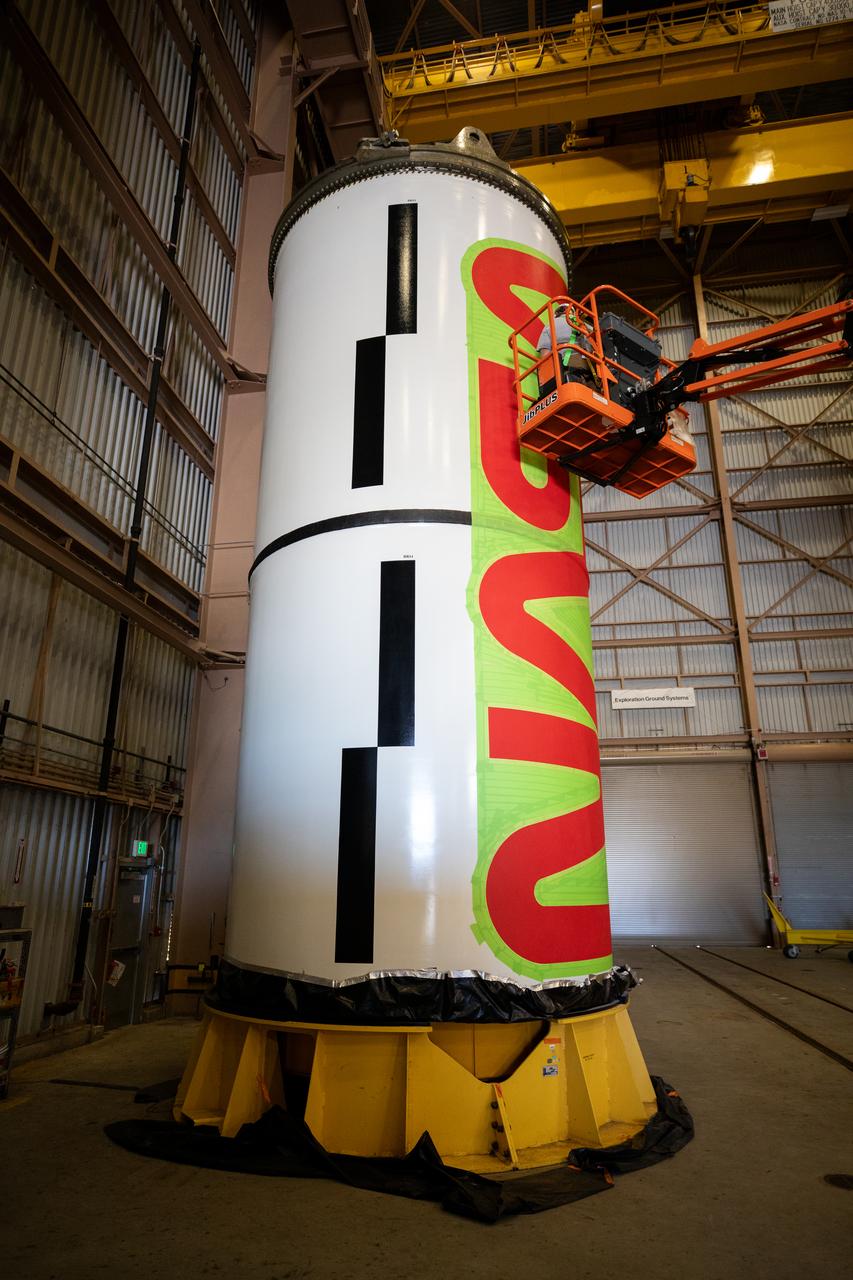
Workers with NASA’s Exploration Ground Systems (EGS) paint the bright red NASA “worm” logo on the side of an Artemis II solid rocket booster segment inside the Rotation, Processing and Surge Facility (RPSF) at Kennedy Space Center in Florida on Tuesday, Jan. 30, 2024. The EGS team used a laser projector to mask off the logo with tape, then painted the first coat of the iconic design. The booster segments will help propel the Space Launch System (SLS) rocket on the Artemis II mission to send four astronauts around the Moon as part of the agency’s effort to establish a long-term science and exploration presence at the Moon, and eventually Mars.
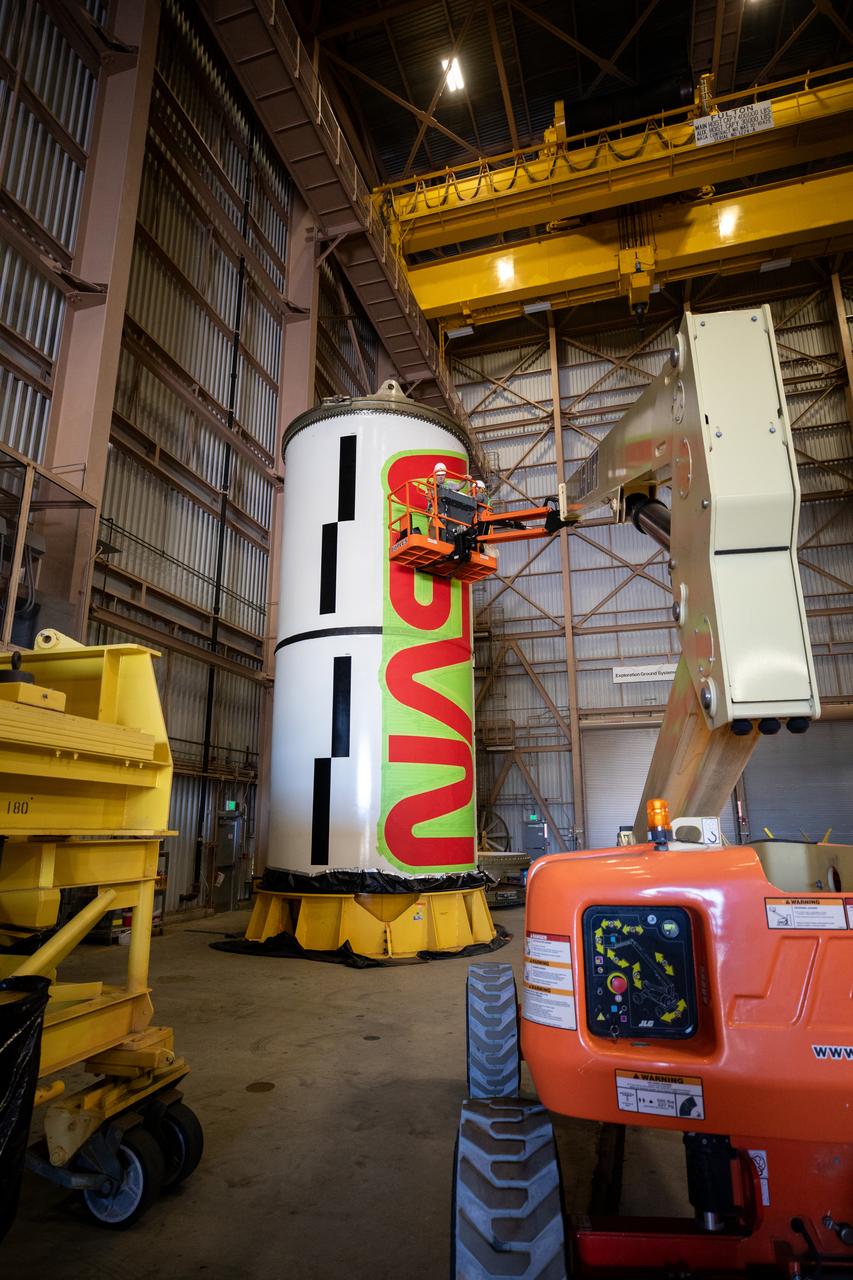
Workers with NASA’s Exploration Ground Systems (EGS) paint the bright red NASA “worm” logo on the side of an Artemis II solid rocket booster segment inside the Rotation, Processing and Surge Facility (RPSF) at Kennedy Space Center in Florida on Tuesday, Jan. 30, 2024. The EGS team used a laser projector to mask off the logo with tape, then painted the first coat of the iconic design. The booster segments will help propel the Space Launch System (SLS) rocket on the Artemis II mission to send four astronauts around the Moon as part of the agency’s effort to establish a long-term science and exploration presence at the Moon, and eventually Mars.
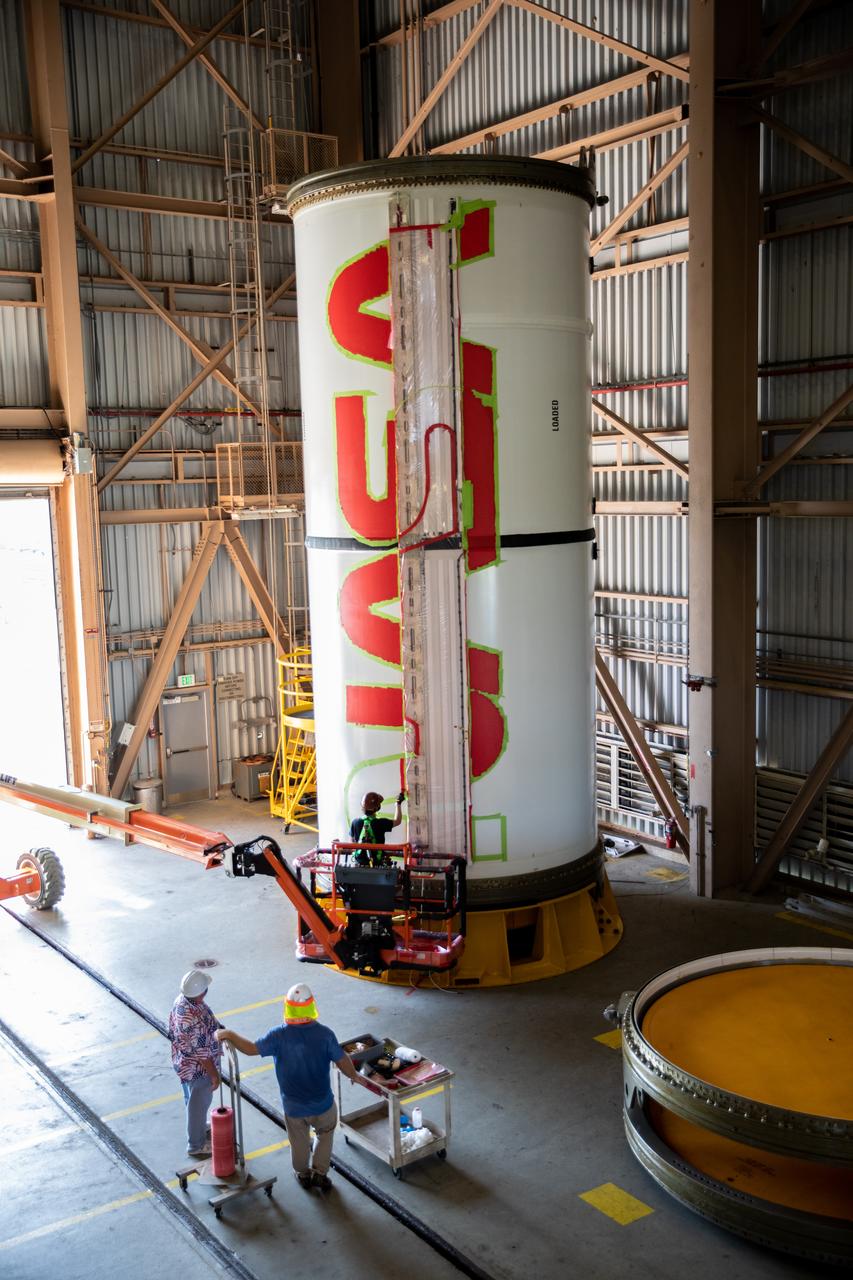
Workers with NASA’s Exploration Ground Systems (EGS) finishes the first coat of the bright red “worm” logo taking shape on the side of an Artemis I solid rocket booster segment inside the Rotation, Processing and Surge Facility (RPSF) at Kennedy Space Center in Florida. The EGS team used a laser projector to mask off the logo with tape, then painted the first coat of the iconic design. The booster segments will help propel the Space Launch System (SLS) rocket on Artemis I, a test of the Orion spacecraft and SLS as an integrated system ahead of crewed flights to the Moon. Northrop Grumman, which built the booster segments, is covering the cost of the painting.
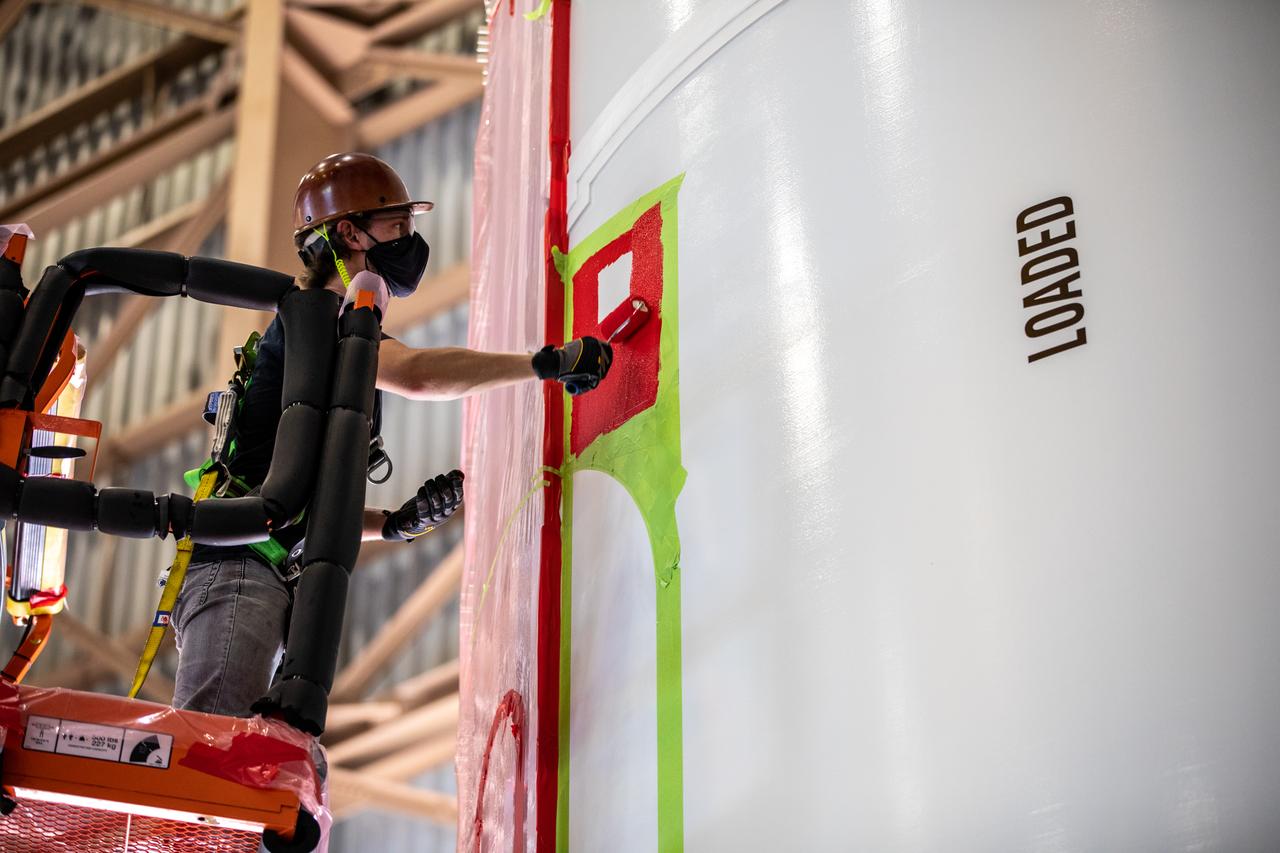
A worker with NASA’s Exploration Ground Systems (EGS) applies bright red paint to the agency’s “worm” logo taking shape on the side of an Artemis I solid rocket booster segment inside the Rotation, Processing and Surge Facility (RPSF) at Kennedy Space Center in Florida. The EGS team used a laser projector to mask off the logo with tape, then painted the first coat of the iconic design. The booster segments will help propel the Space Launch System (SLS) rocket on Artemis I, a test of the Orion spacecraft and SLS as an integrated system ahead of crewed flights to the Moon. Northrop Grumman, which built the booster segments, is covering the cost of the painting.
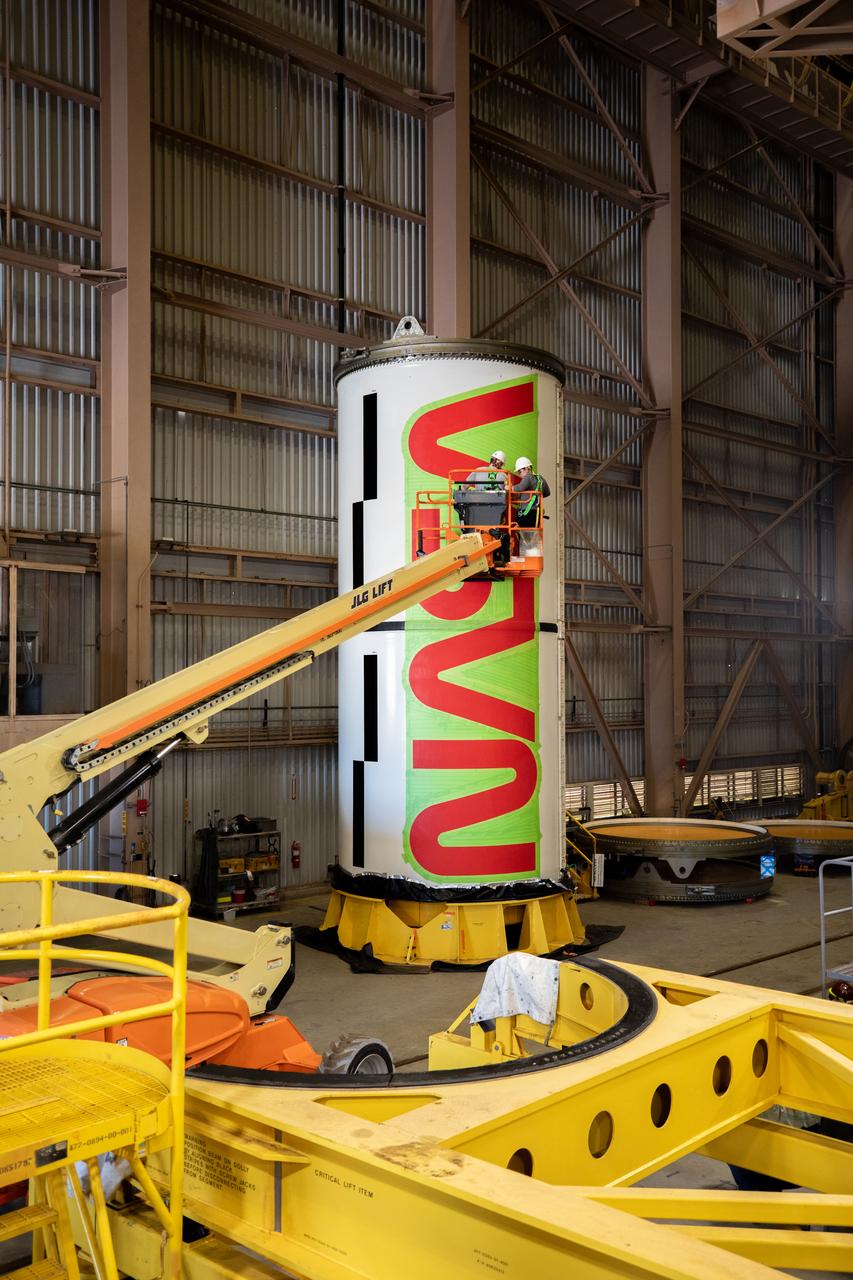
Workers with NASA’s Exploration Ground Systems (EGS) paint the bright red NASA “worm” logo on the side of an Artemis II solid rocket booster segment inside the Rotation, Processing and Surge Facility (RPSF) at Kennedy Space Center in Florida on Tuesday, Jan. 30, 2024. The EGS team used a laser projector to mask off the logo with tape, then painted the first coat of the iconic design. The booster segments will help propel the Space Launch System (SLS) rocket on the Artemis II mission to send four astronauts around the Moon as part of the agency’s effort to establish a long-term science and exploration presence at the Moon, and eventually Mars.
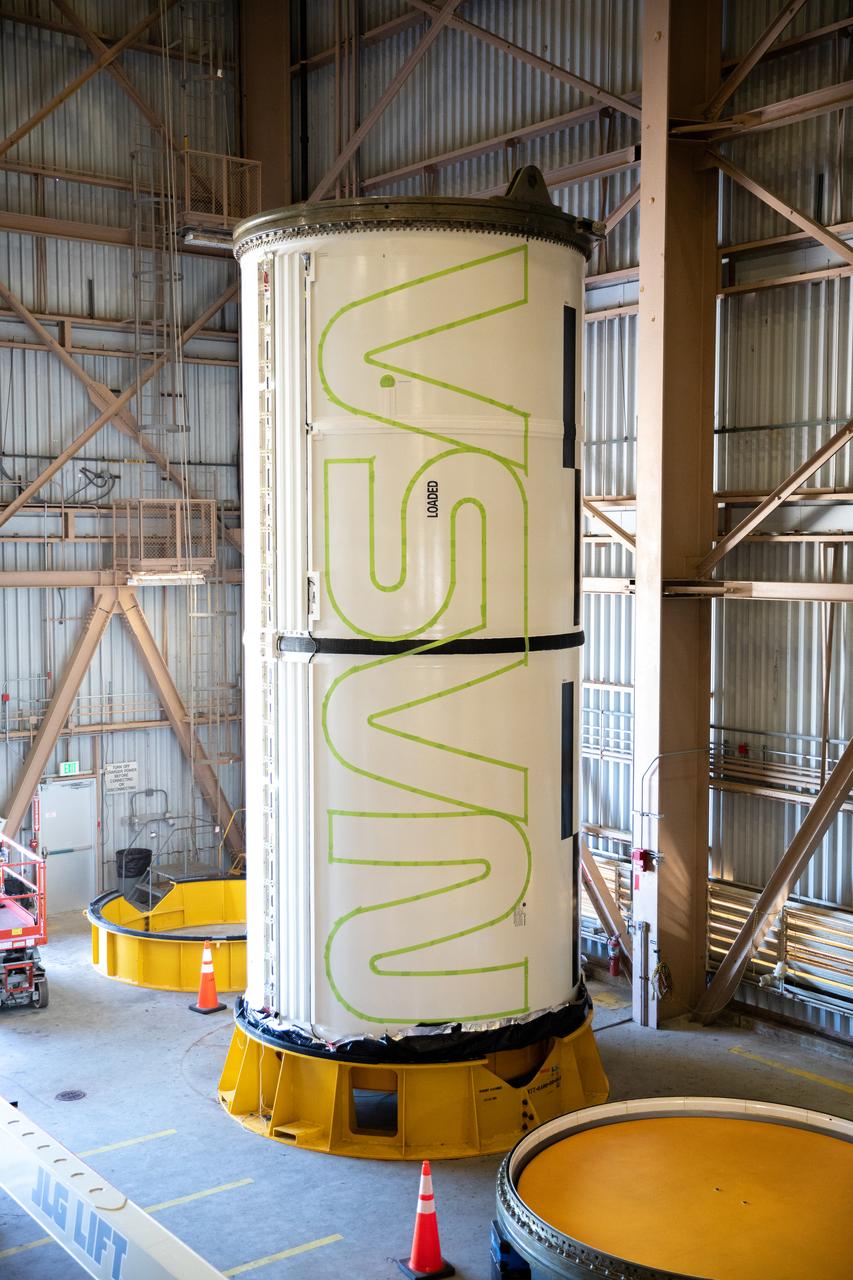
Workers with NASA’s Exploration Ground Systems (EGS) paint the bright red NASA “worm” logo on the side of an Artemis II solid rocket booster segment inside the Rotation, Processing and Surge Facility (RPSF) at Kennedy Space Center in Florida on Tuesday, Jan. 30, 2024. The EGS team used a laser projector to mask off the logo with tape, then painted the first coat of the iconic design. The booster segments will help propel the Space Launch System (SLS) rocket on the Artemis II mission to send four astronauts around the Moon as part of the agency’s effort to establish a long-term science and exploration presence at the Moon, and eventually Mars.
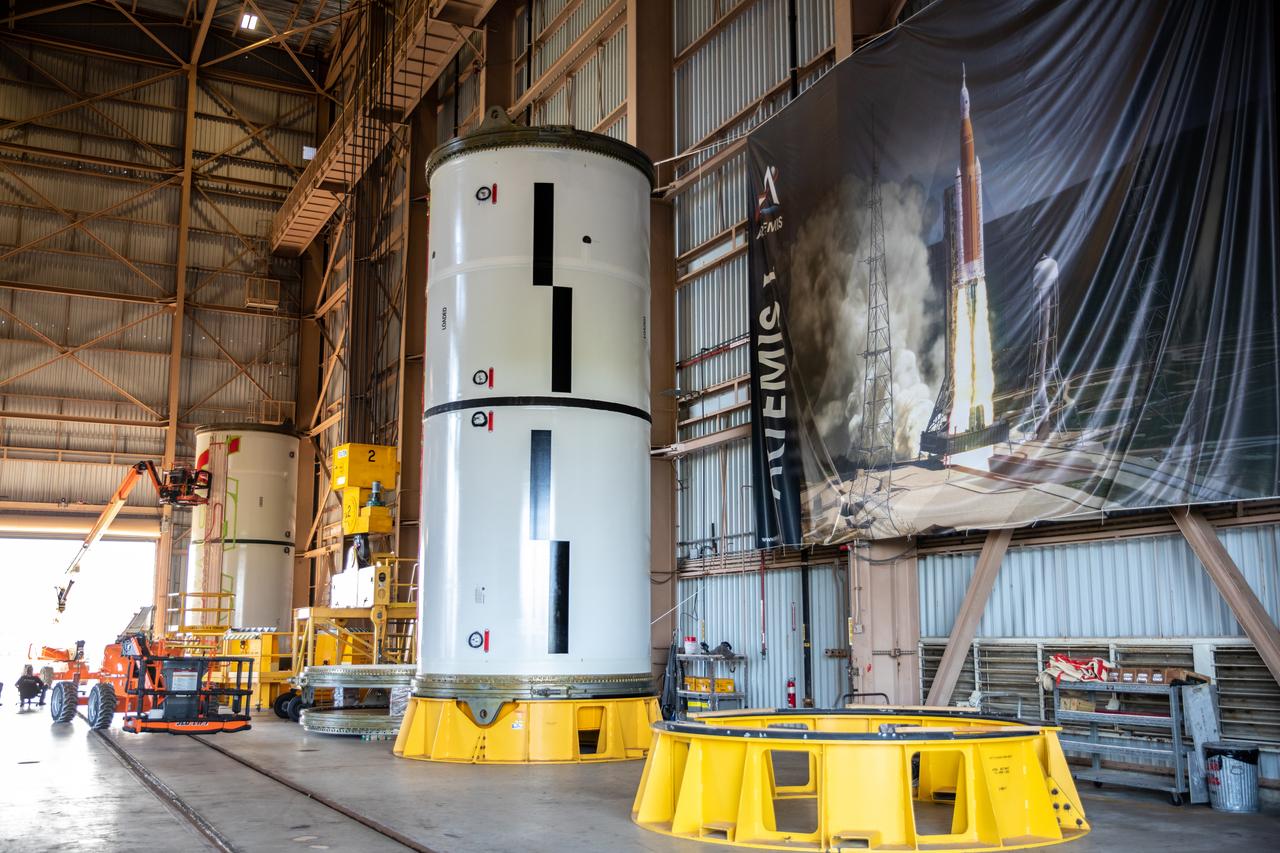
In this view inside the Rotation, Processing and Surge Facility (RPSF) at Kennedy Space Center in Florida, an Artemis I solid rocket booster center segment stands in the foreground; in the background, a worker with NASA’s Exploration Ground Systems (EGS) applies bright red paint to the agency’s “worm” logo taking shape on the side of the other center segment. The EGS team used a laser projector to mask off the logo with tape, then painted the first coat of the iconic design. The booster segments will help propel the Space Launch System (SLS) rocket on Artemis I, a test of the Orion spacecraft and SLS as an integrated system ahead of crewed flights to the Moon. Northrop Grumman, which built the booster segments, is covering the cost of the painting.
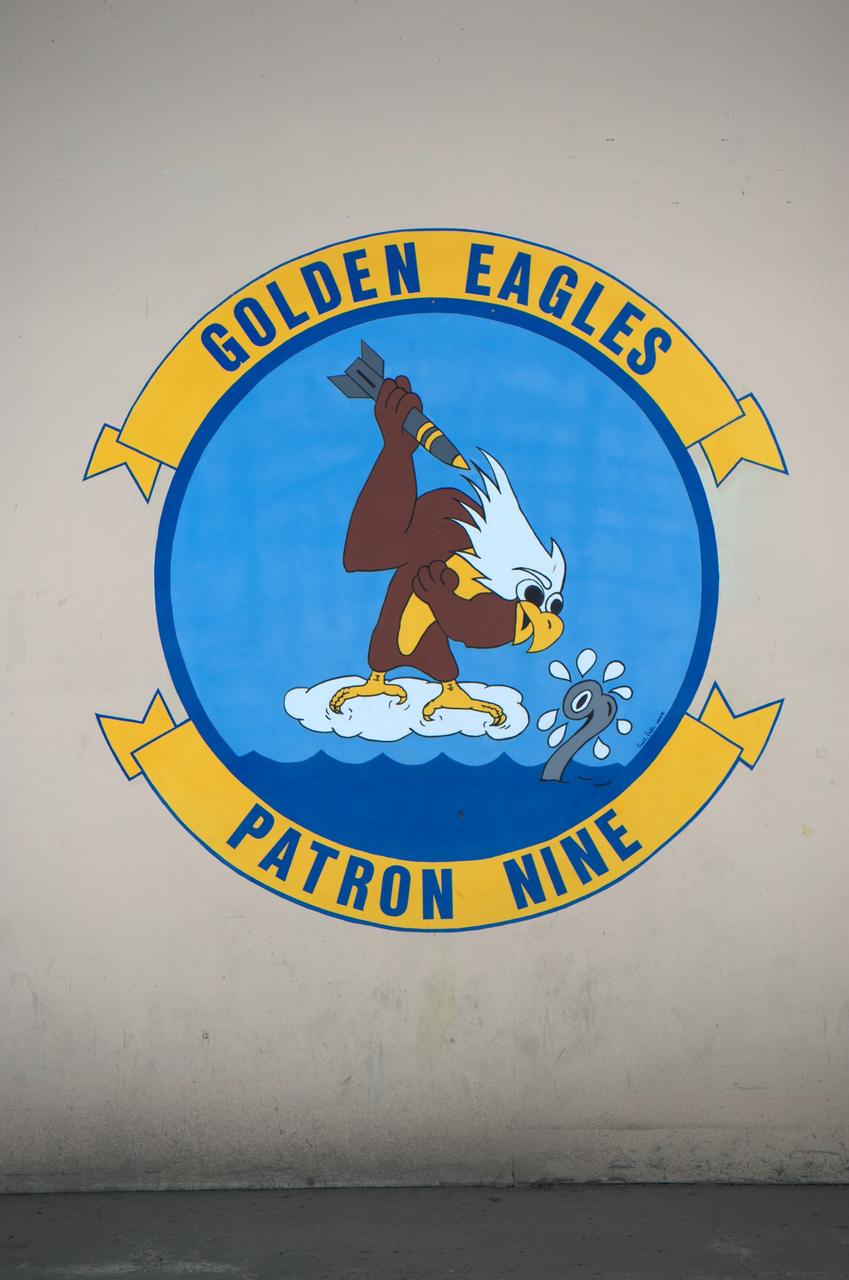
A proud Naval History. Squadron Logos in Hangar One at Moffett Federal Airfield, California.

A proud Naval History. Squadron Logos in Hangar One at Moffett Federal Airfield, California.

A proud Naval History. Squadron Logos in Hangar One at Moffett Federal Airfield, California.
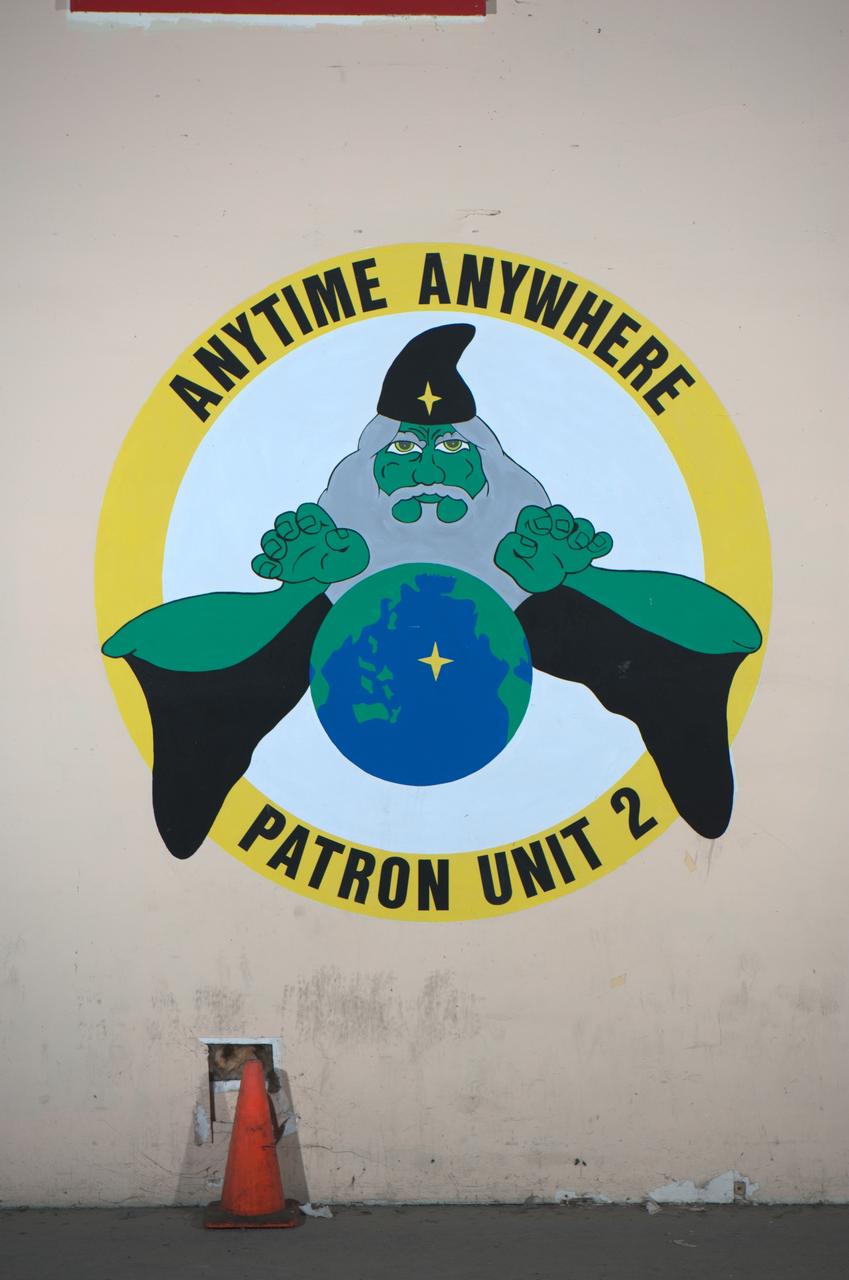
A proud Naval History. Squadron Logos in Hangar One at Moffett Federal Airfield, California.
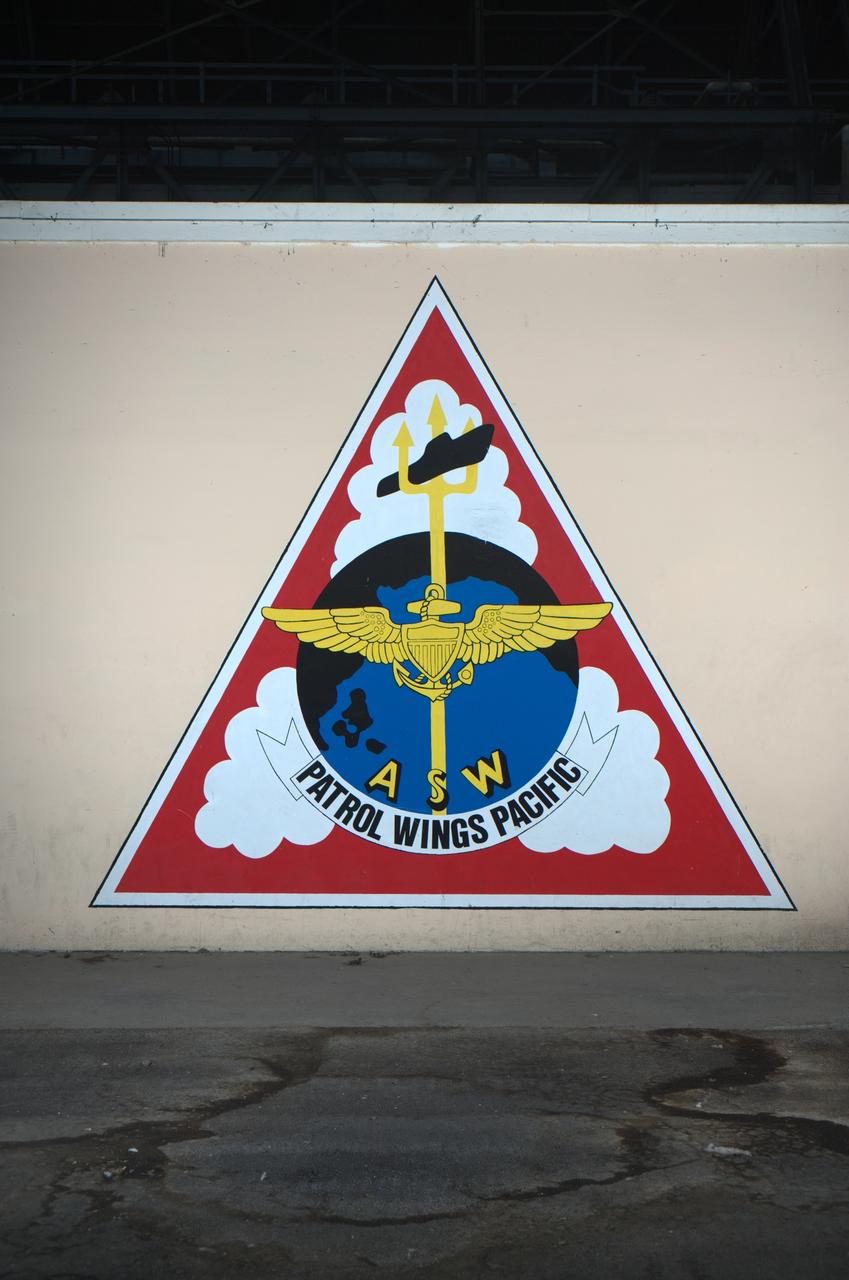
A proud Naval History. Squadron Logos in Hangar One at Moffett Federal Airfield, California.
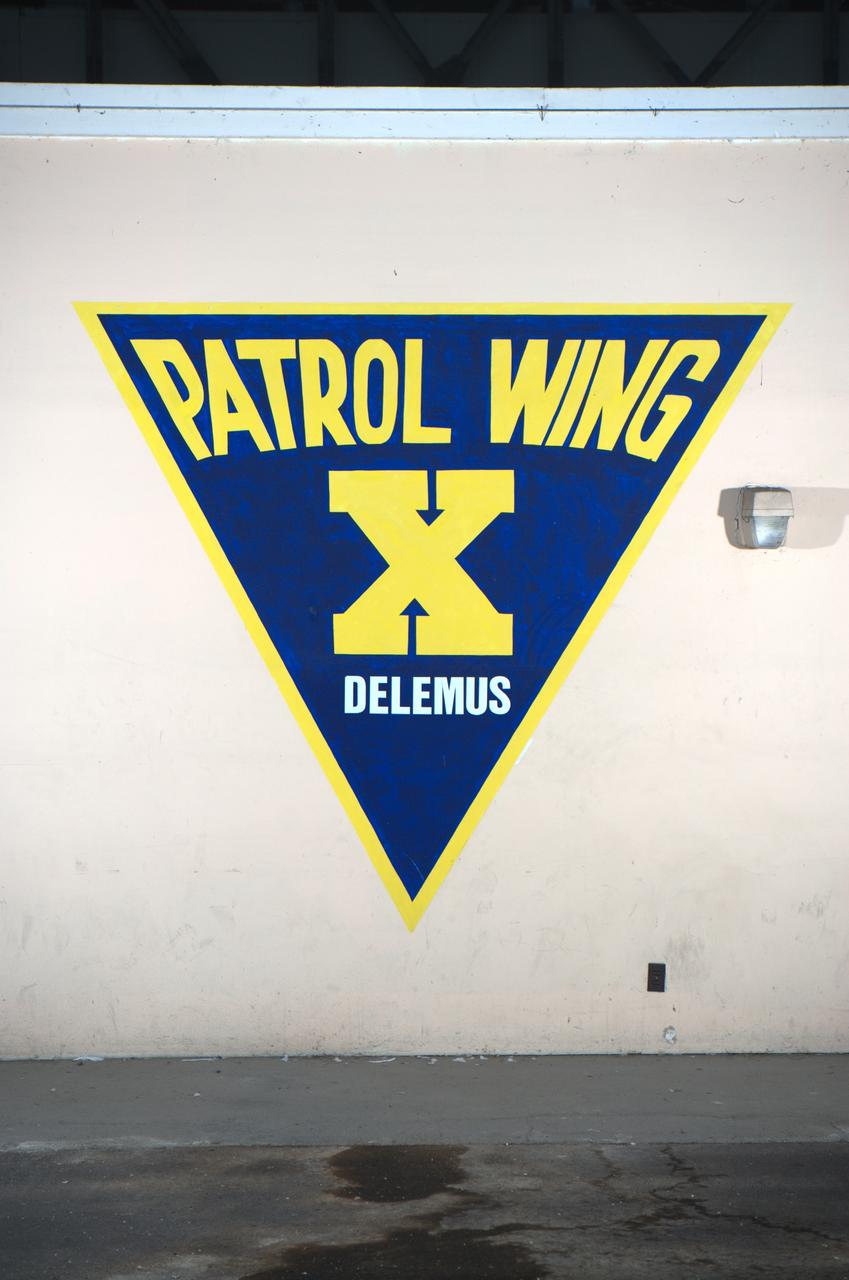
A proud Naval History. Squadron Logos in Hangar One at Moffett Federal Airfield, California.
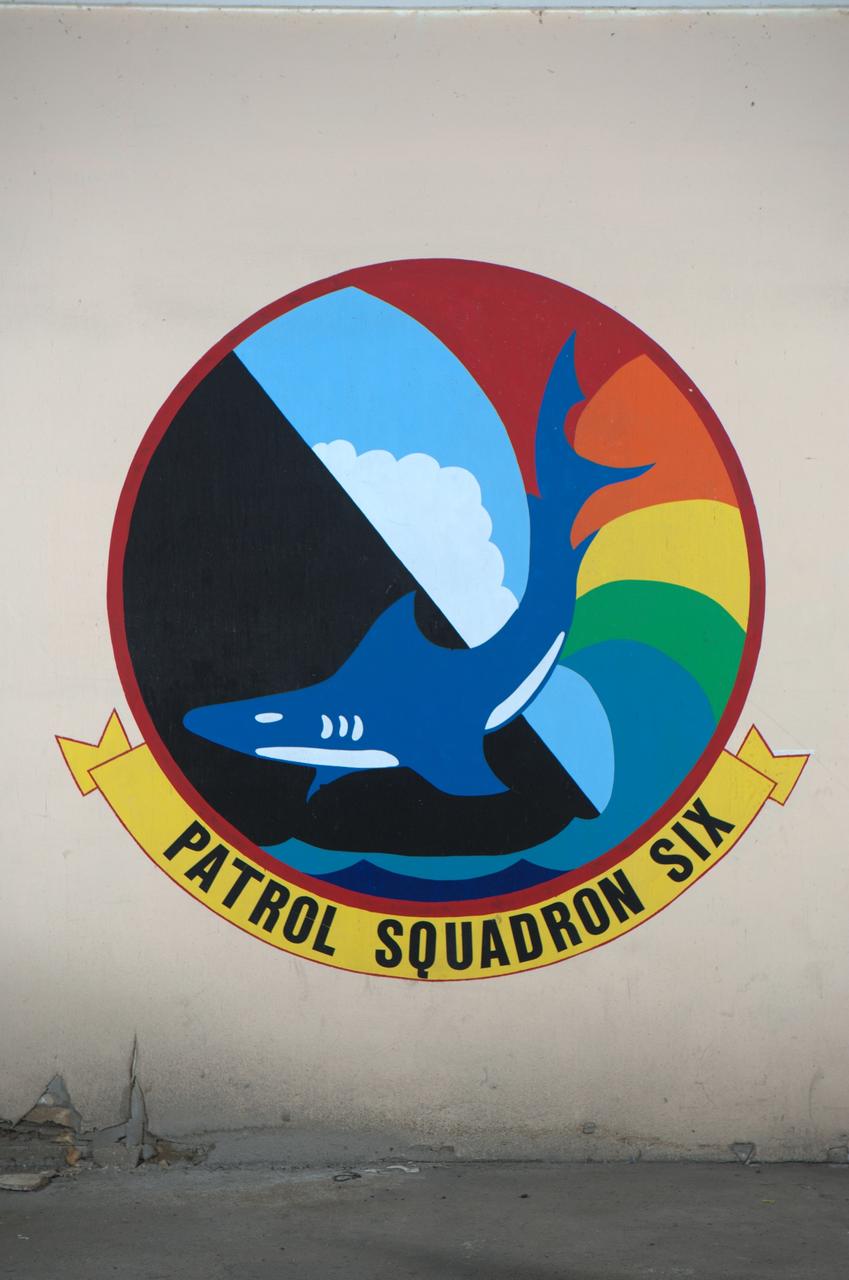
A proud Naval History. Squadron Logos in Hangar One at Moffett Federal Airfield, California.
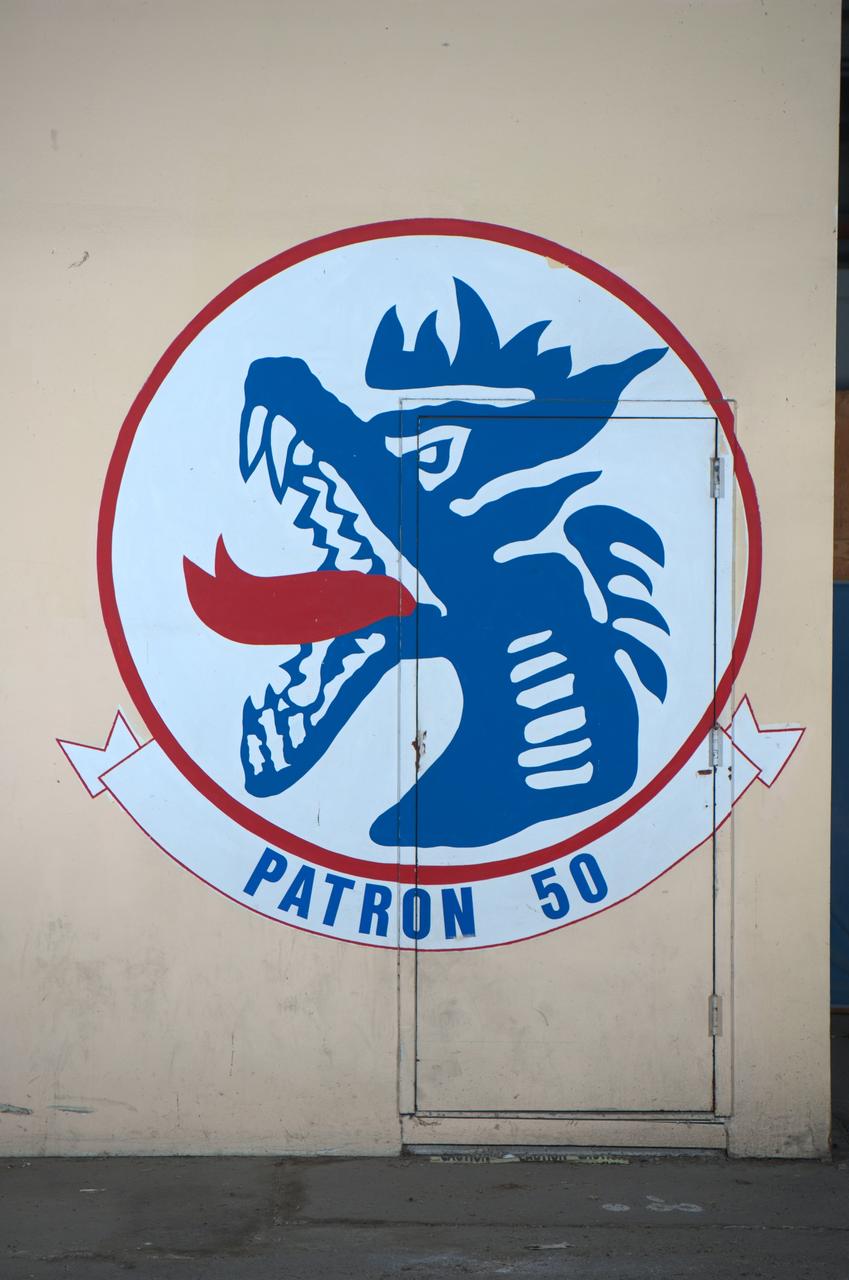
A proud Naval History. Squadron Logos in Hangar One at Moffett Federal Airfield, California.
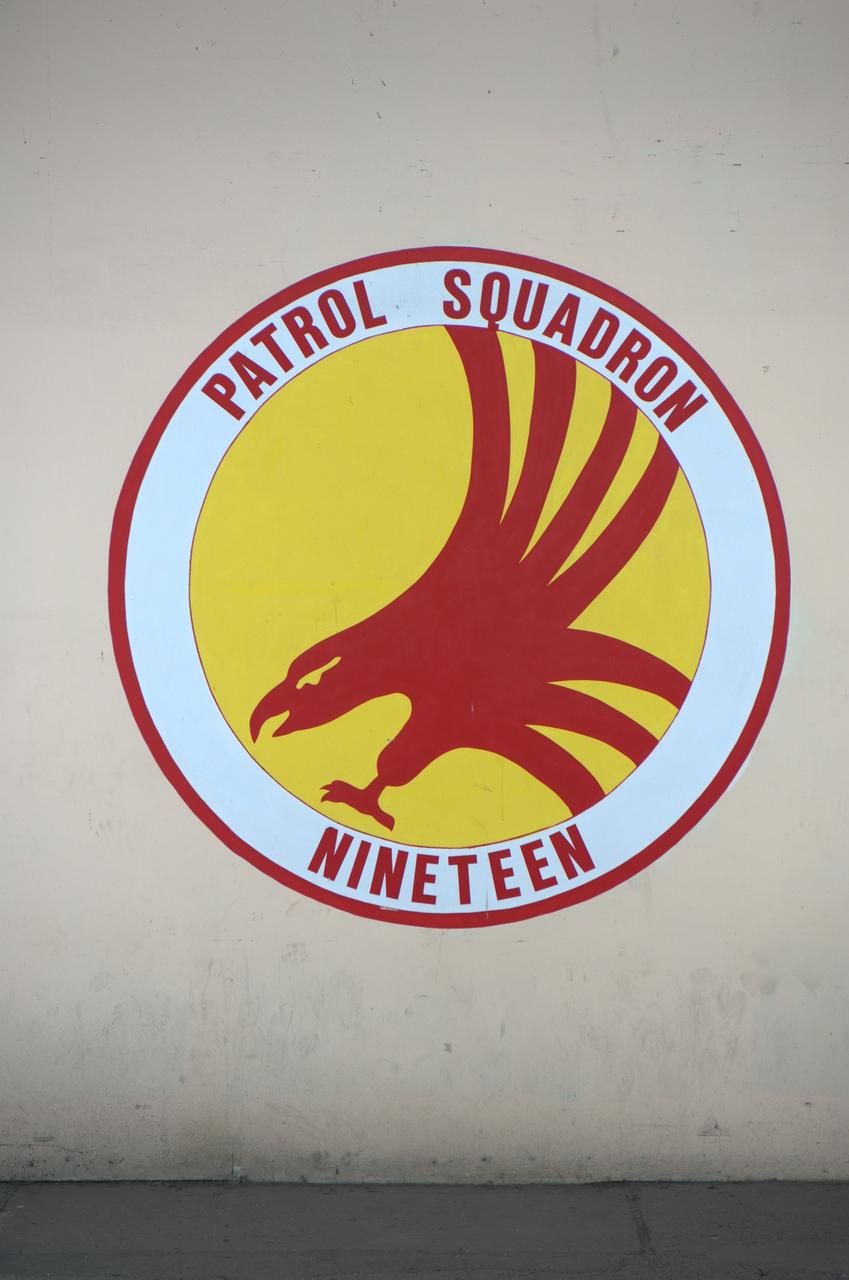
A proud Naval History. Squadron Logos in Hangar One at Moffett Federal Airfield, California.
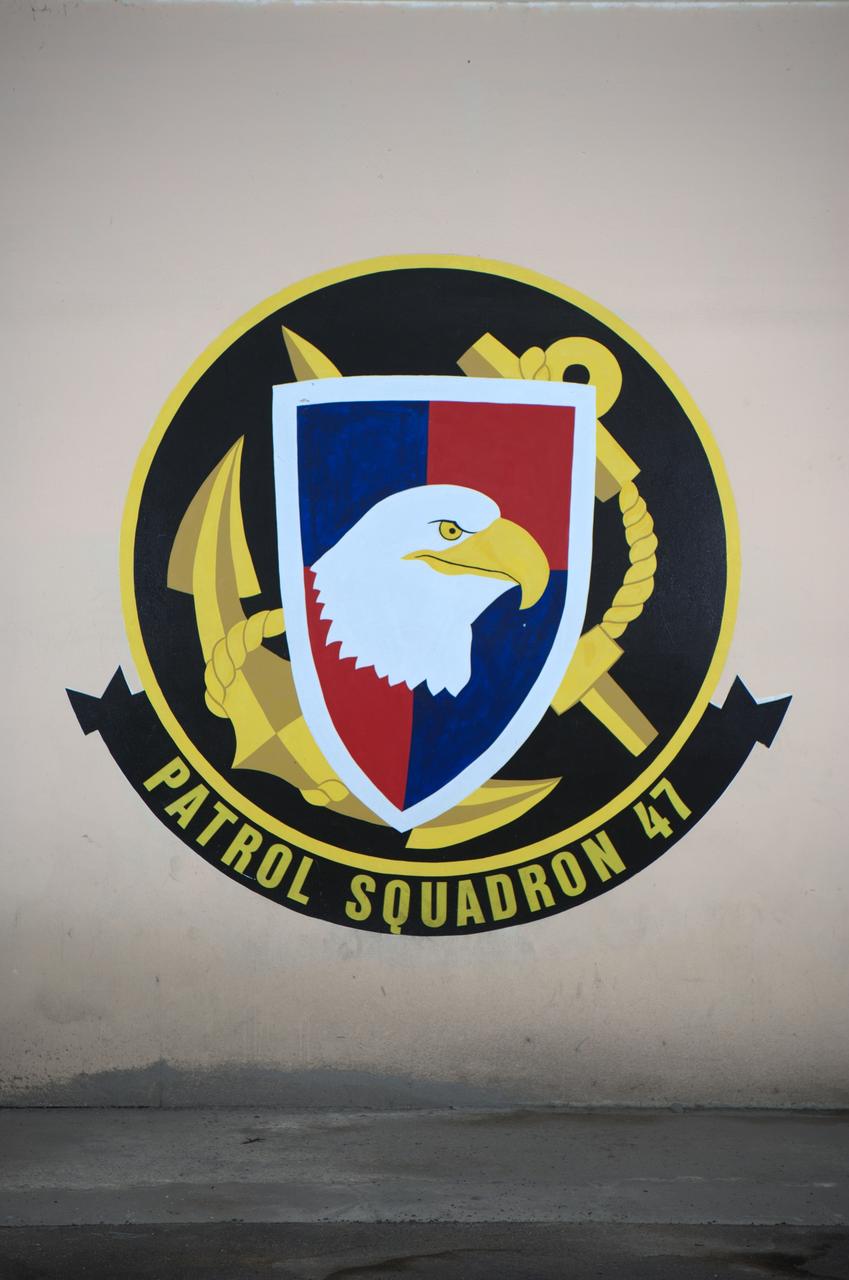
A proud Naval History. Squadron Logos in Hangar One at Moffett Federal Airfield, California.
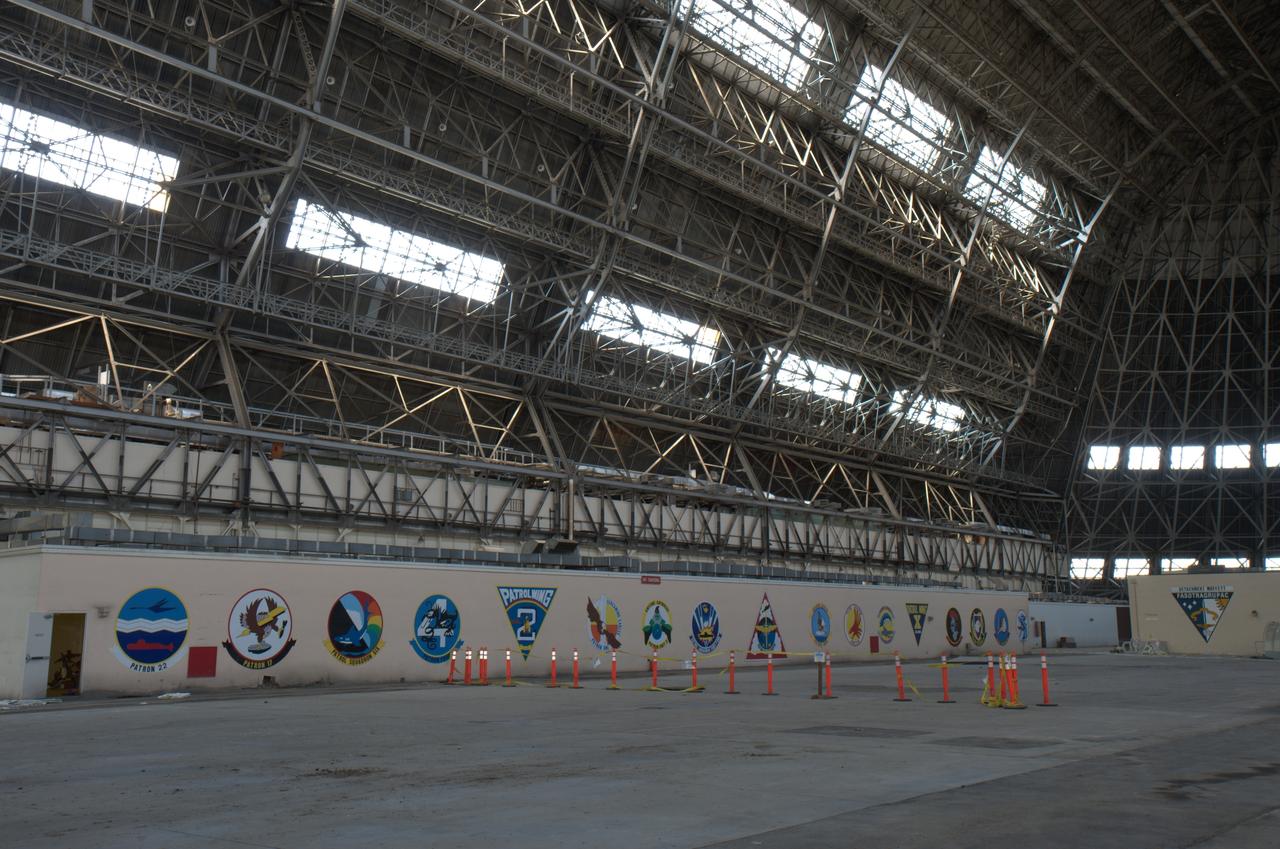
A proud Naval History. Squadron Logos in Hangar One at Moffett Federal Airfield, California.
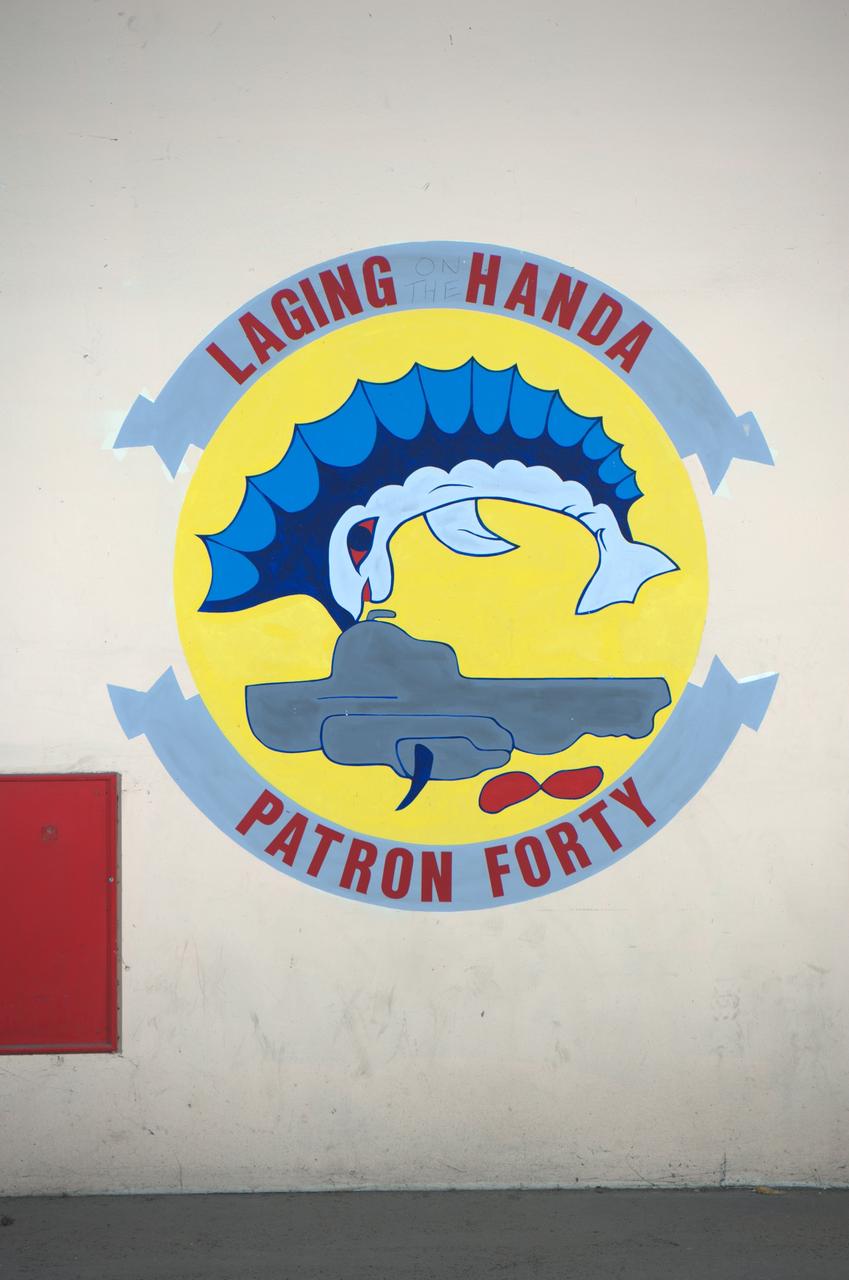
A proud Naval History. Squadron Logos in Hangar One at Moffett Federal Airfield, California.
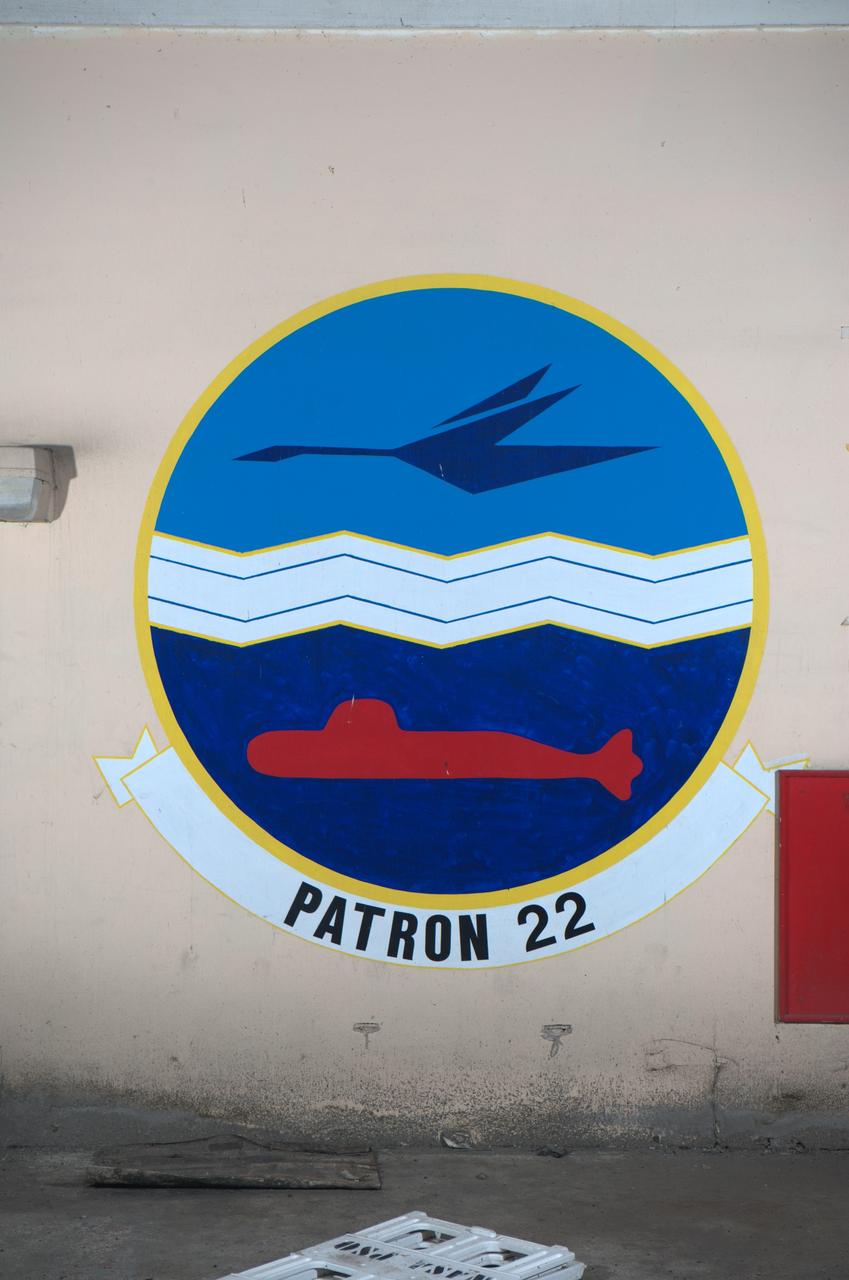
A proud Naval History. Squadron Logos in Hangar One at Moffett Federal Airfield, California.
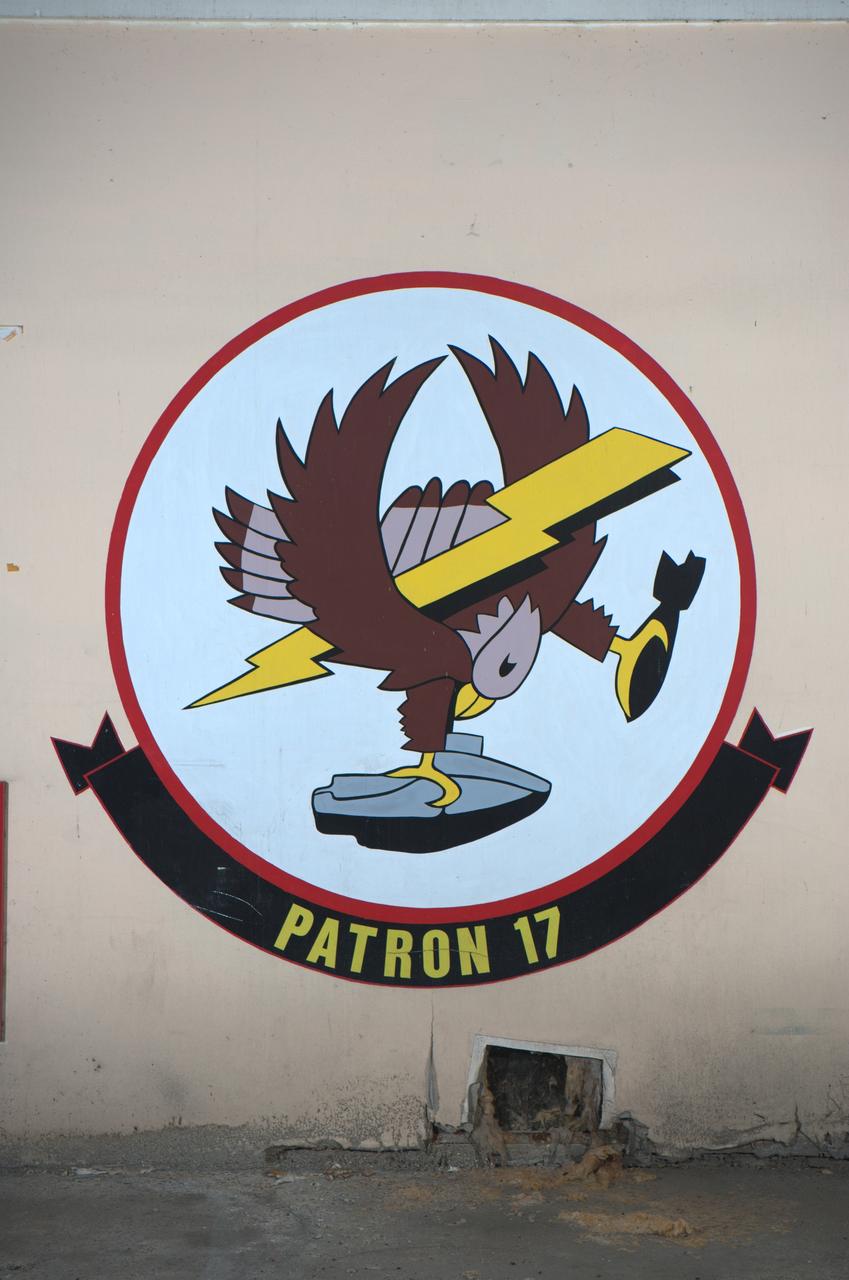
A proud Naval History. Squadron Logos in Hangar One at Moffett Federal Airfield, California.
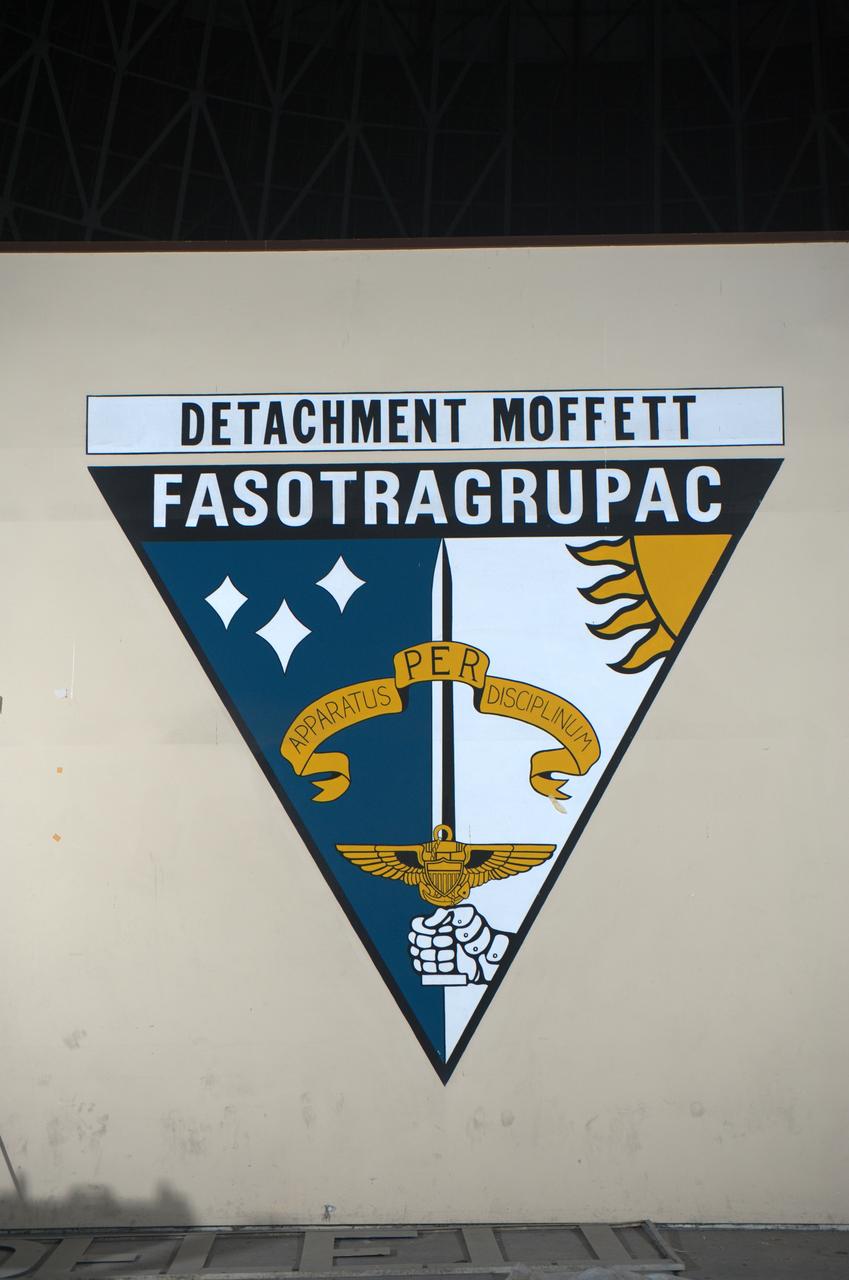
A proud Naval History. Squadron Logos in Hangar One at Moffett Federal Airfield, California.
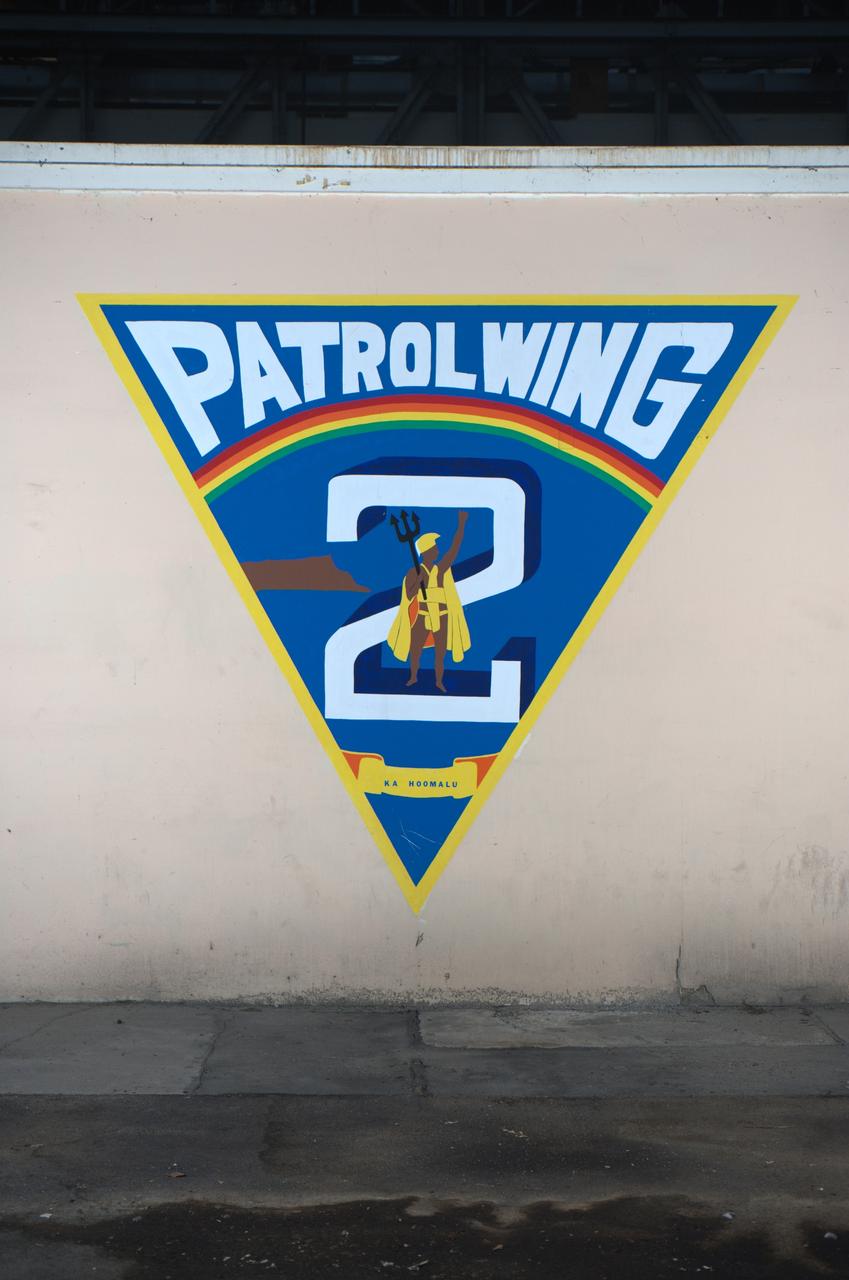
A proud Naval History. Squadron Logos in Hangar One at Moffett Federal Airfield, California.
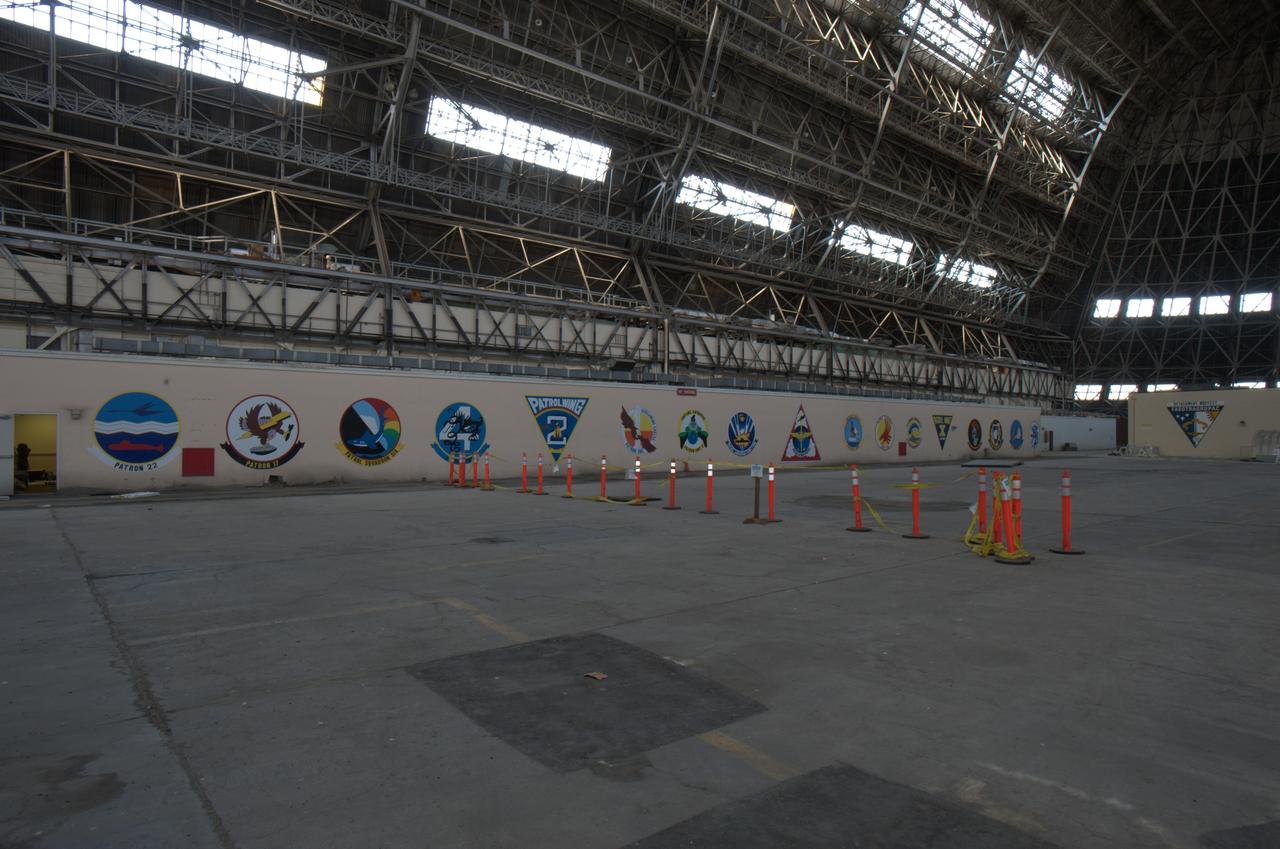
A proud Naval History. Squadron Logos in Hangar One at Moffett Federal Airfield, California.
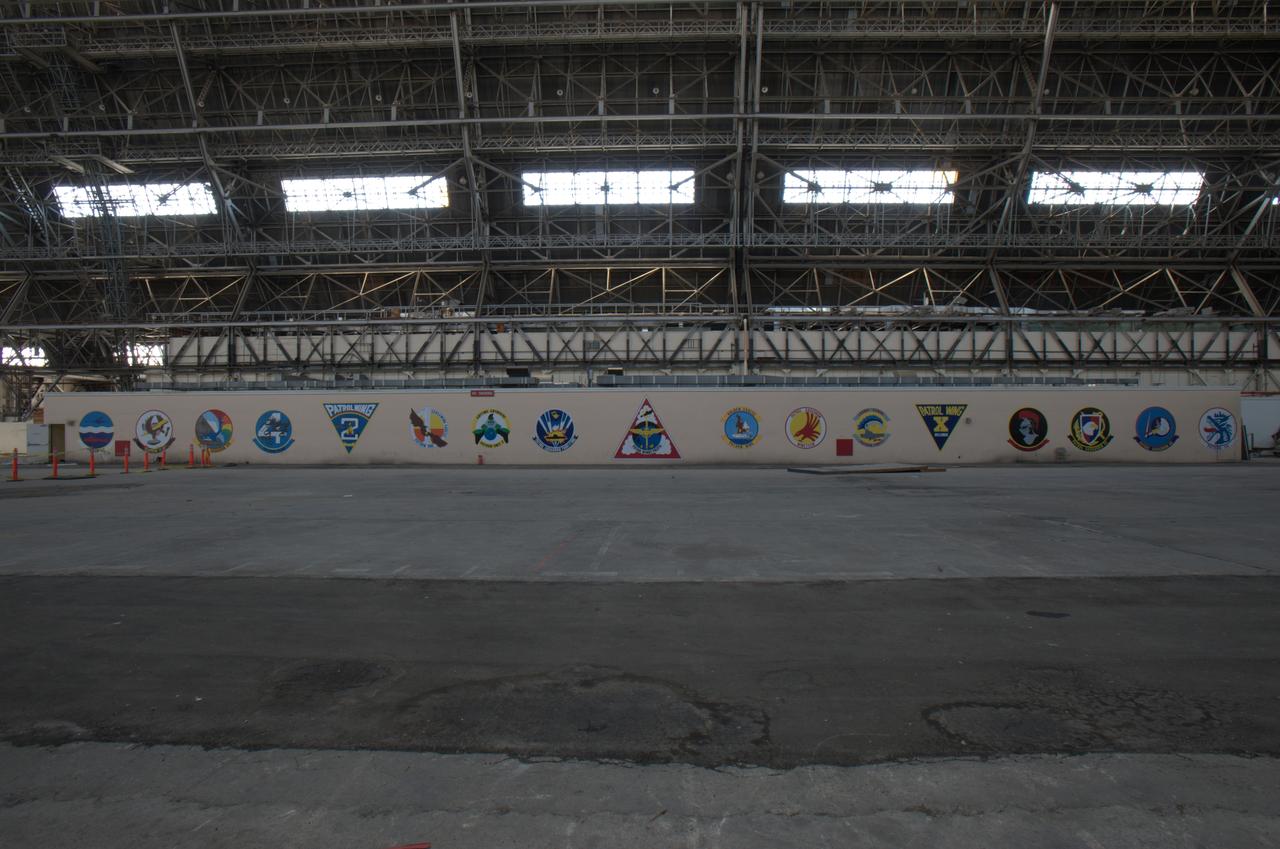
A proud Naval History. Squadron Logos in Hangar One at Moffett Federal Airfield, California.
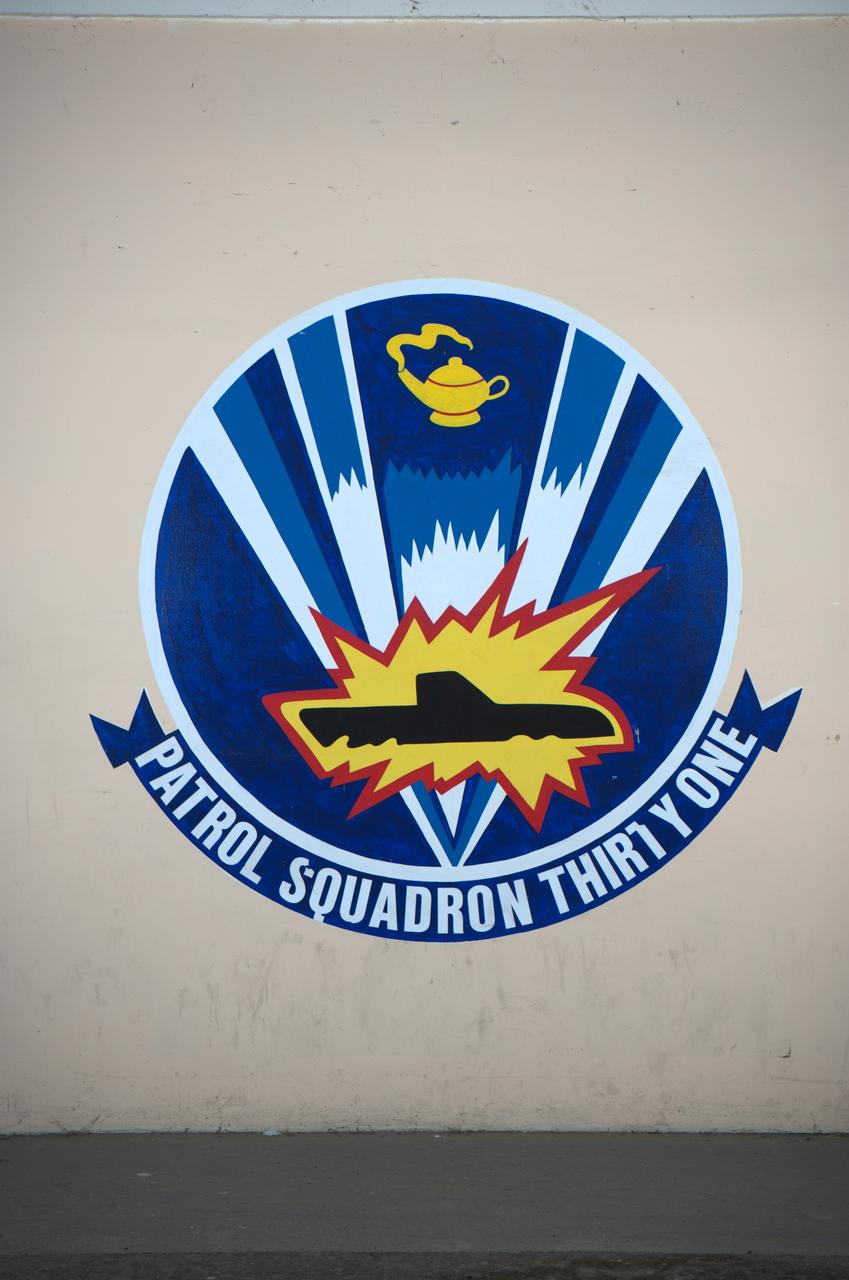
A proud Naval History. Squadron Logos in Hangar One at Moffett Federal Airfield, California.
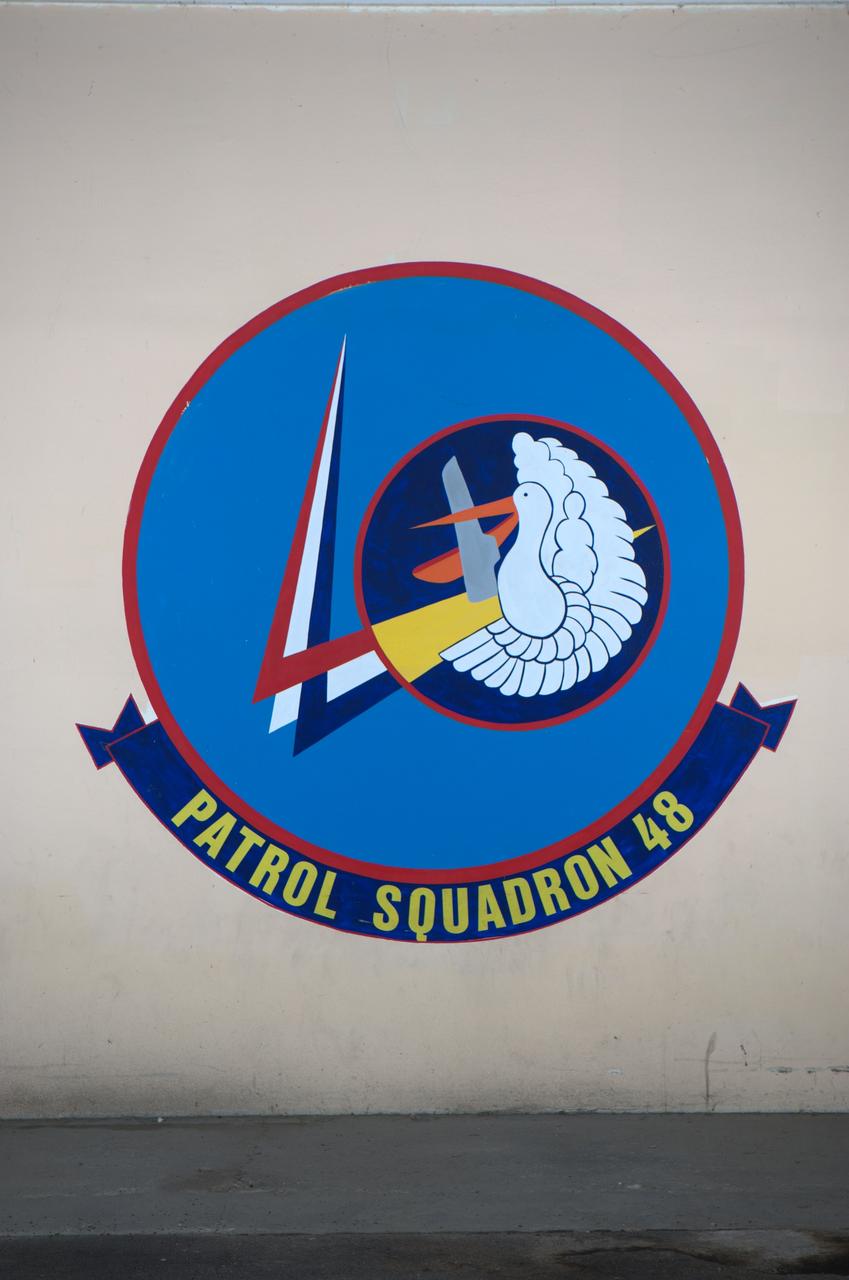
A proud Naval History. Squadron Logos in Hangar One at Moffett Federal Airfield, California.
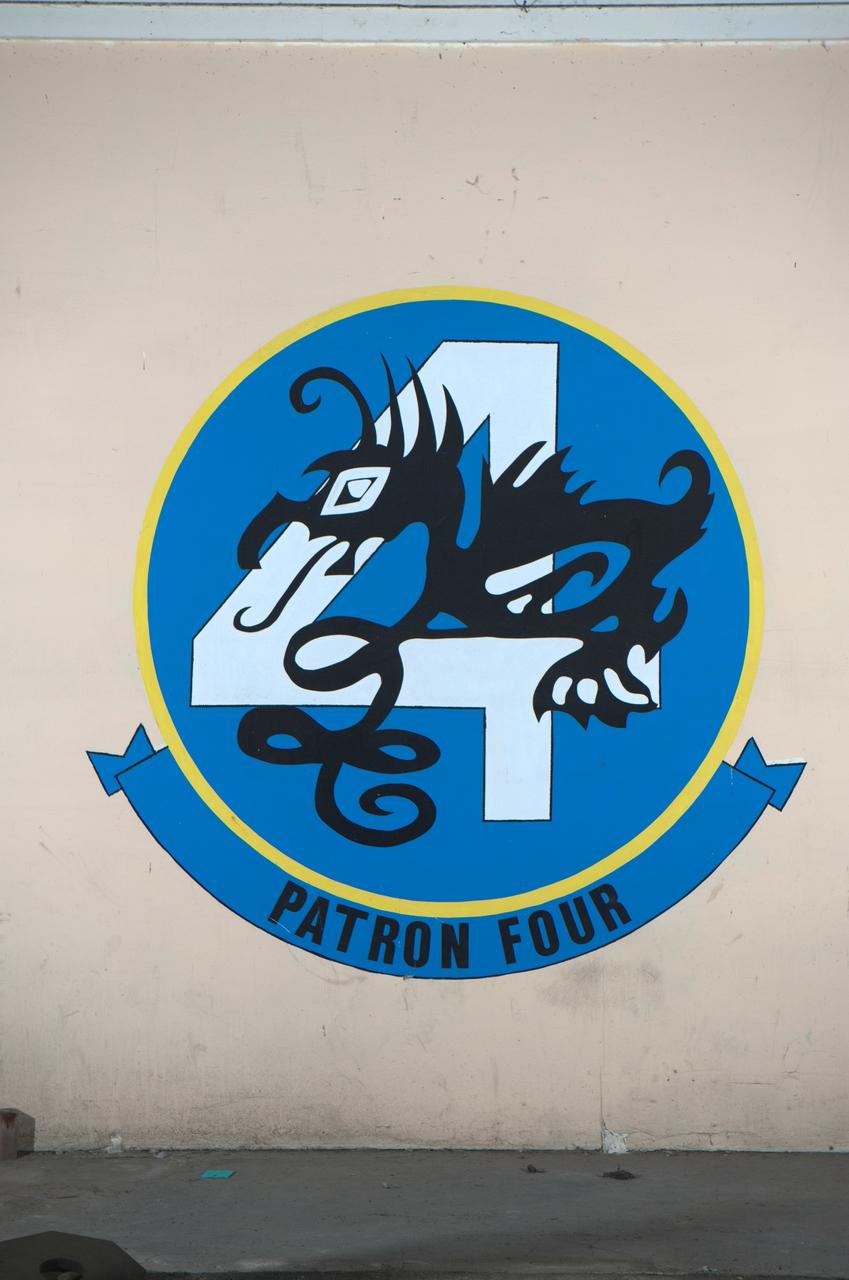
A proud Naval History. Squadron Logos in Hangar One at Moffett Federal Airfield, California.
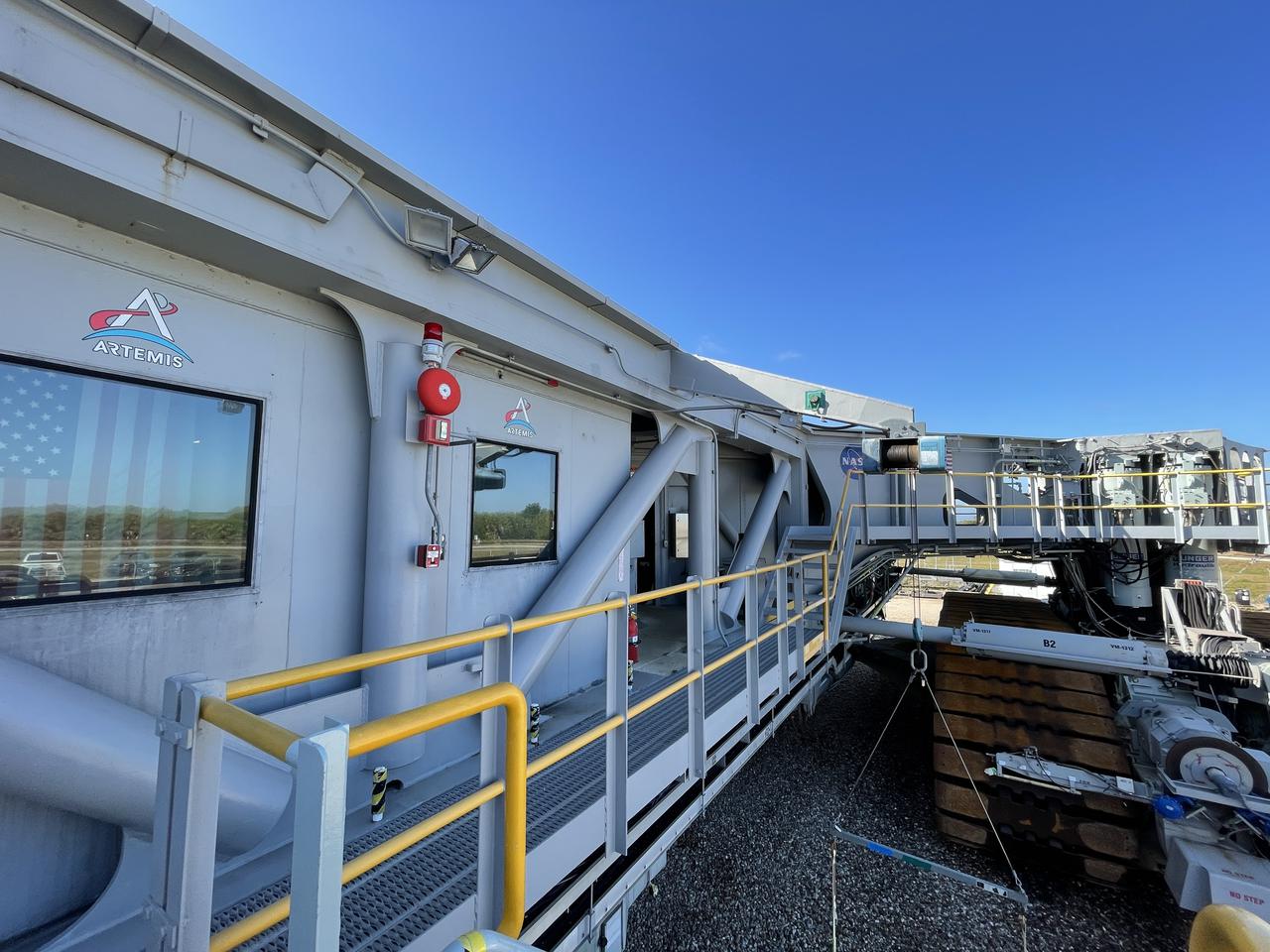
Eight new NASA Artemis logos (four large, four small) were installed on Crawler-Transporter 2 at Kennedy Space Center in preparation for the upcoming launch of Artemis I. Named after the twin sister of Apollo, Artemis is the Goddess of the Moon. The Artemis missions will take humanity back to the Moon and beyond, beginning a new legacy of deep space exploration.
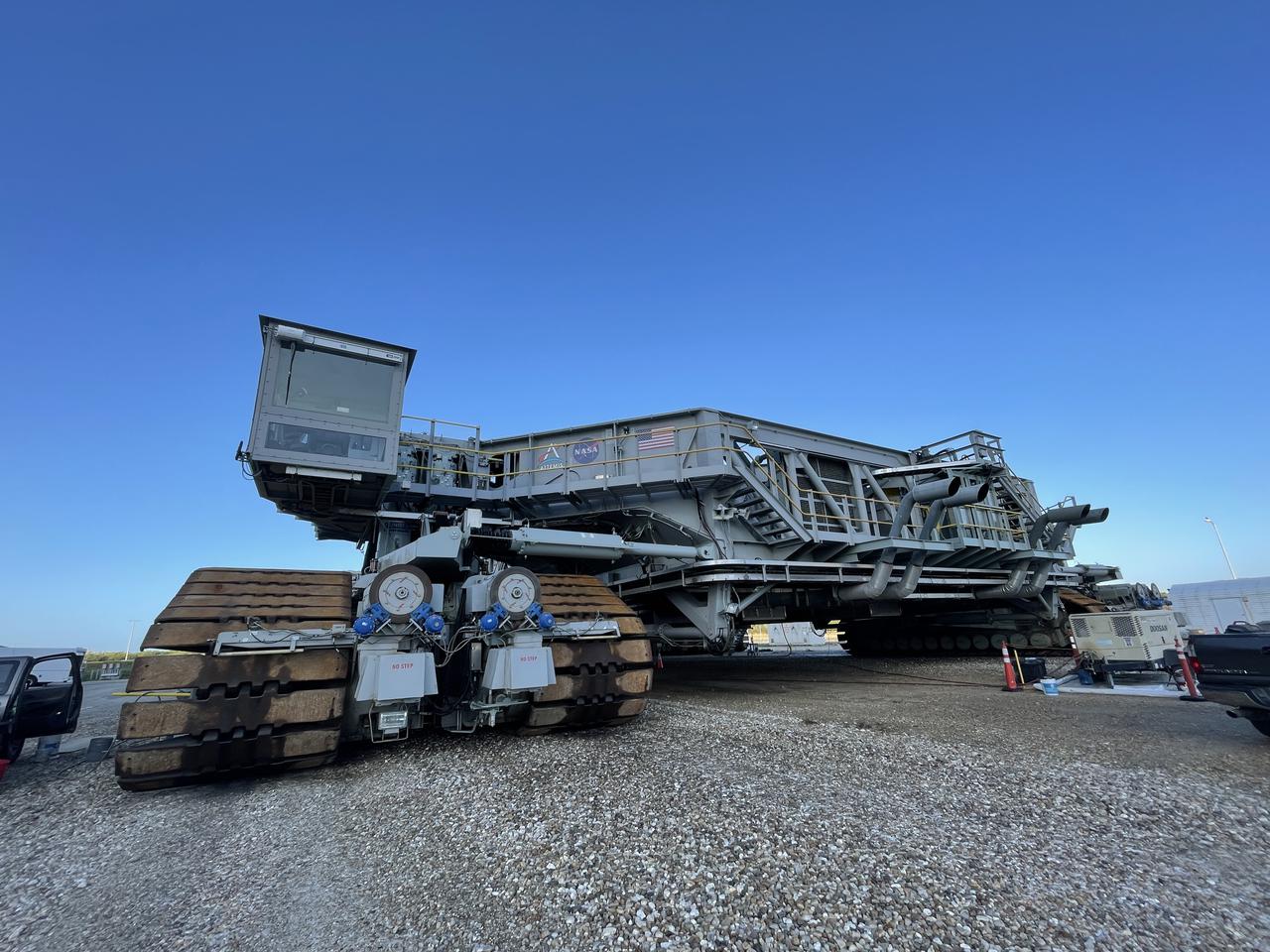
Eight new NASA Artemis logos (four large, four small) were installed on Crawler-Transporter 2 at Kennedy Space Center in preparation for the upcoming launch of Artemis I. Named after the twin sister of Apollo, Artemis is the Goddess of the Moon. The Artemis missions will take humanity back to the Moon and beyond, beginning a new legacy of deep space exploration.
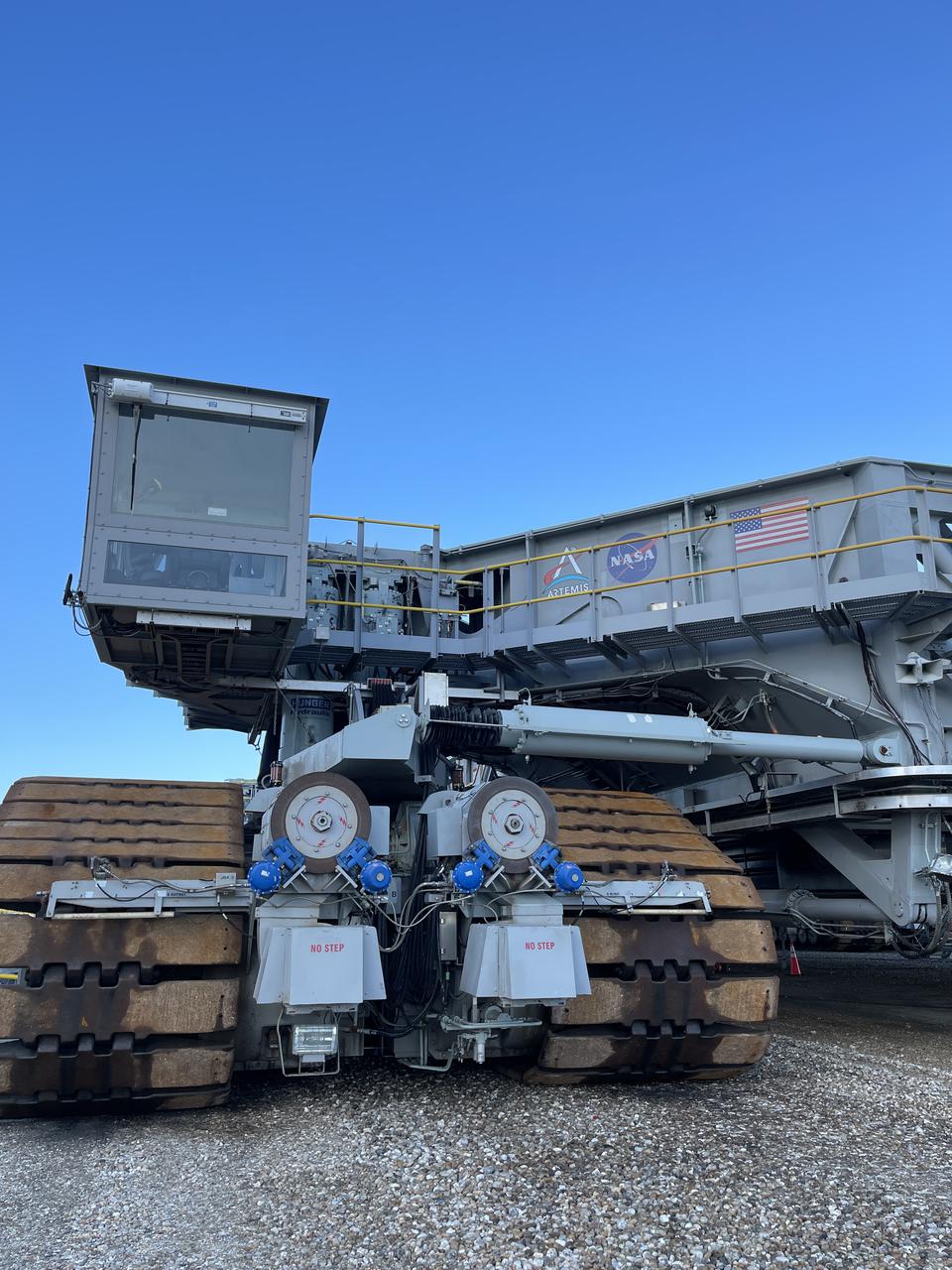
Eight new NASA Artemis logos (four large, four small) were installed on Crawler-Transporter 2 at Kennedy Space Center in preparation for the upcoming launch of Artemis I. Named after the twin sister of Apollo, Artemis is the Goddess of the Moon. The Artemis missions will take humanity back to the Moon and beyond, beginning a new legacy of deep space exploration.
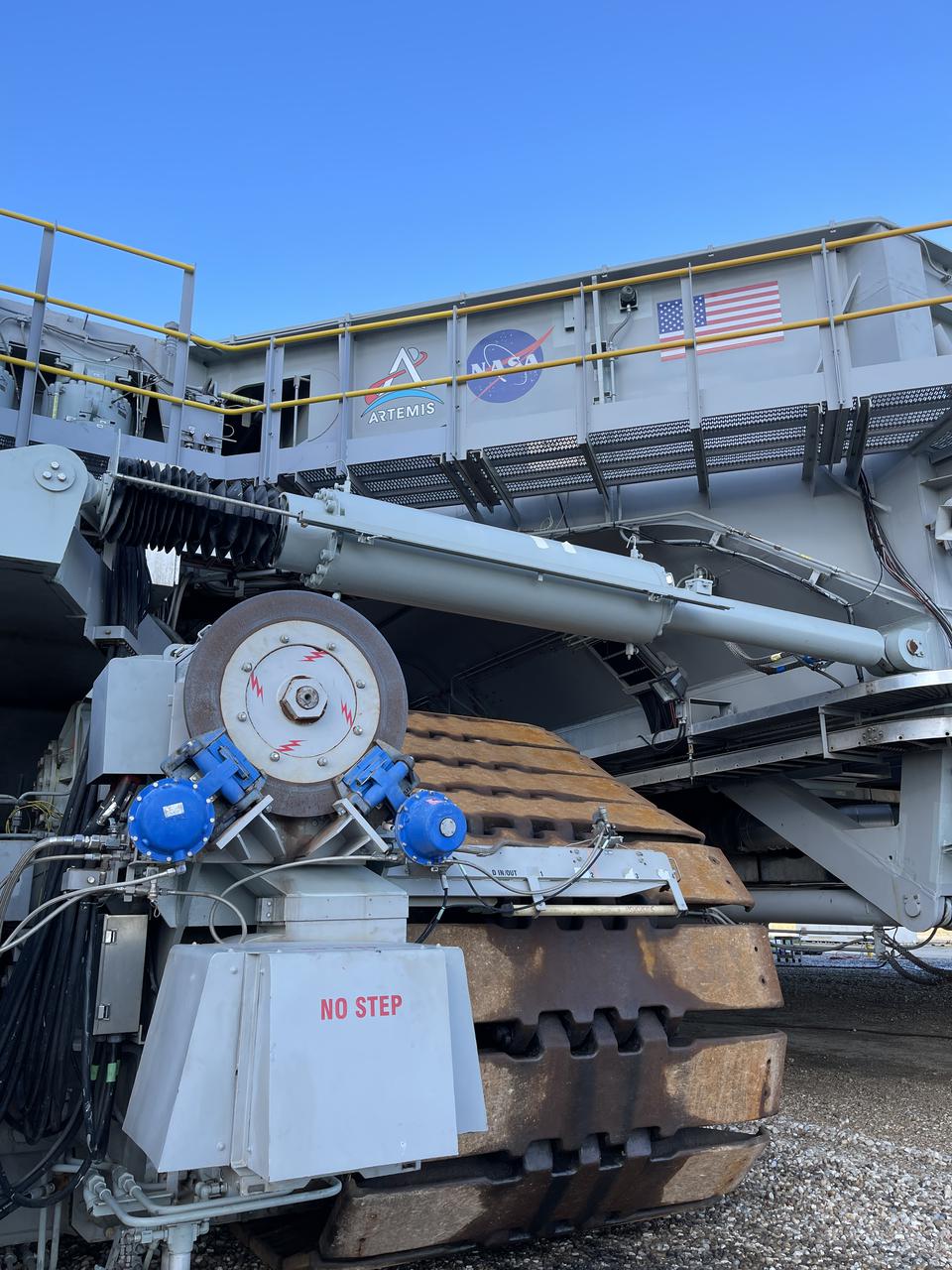
Eight new NASA Artemis logos (four large, four small) were installed on Crawler-Transporter 2 at Kennedy Space Center in preparation for the upcoming launch of Artemis I. Named after the twin sister of Apollo, Artemis is the Goddess of the Moon. The Artemis missions will take humanity back to the Moon and beyond, beginning a new legacy of deep space exploration.
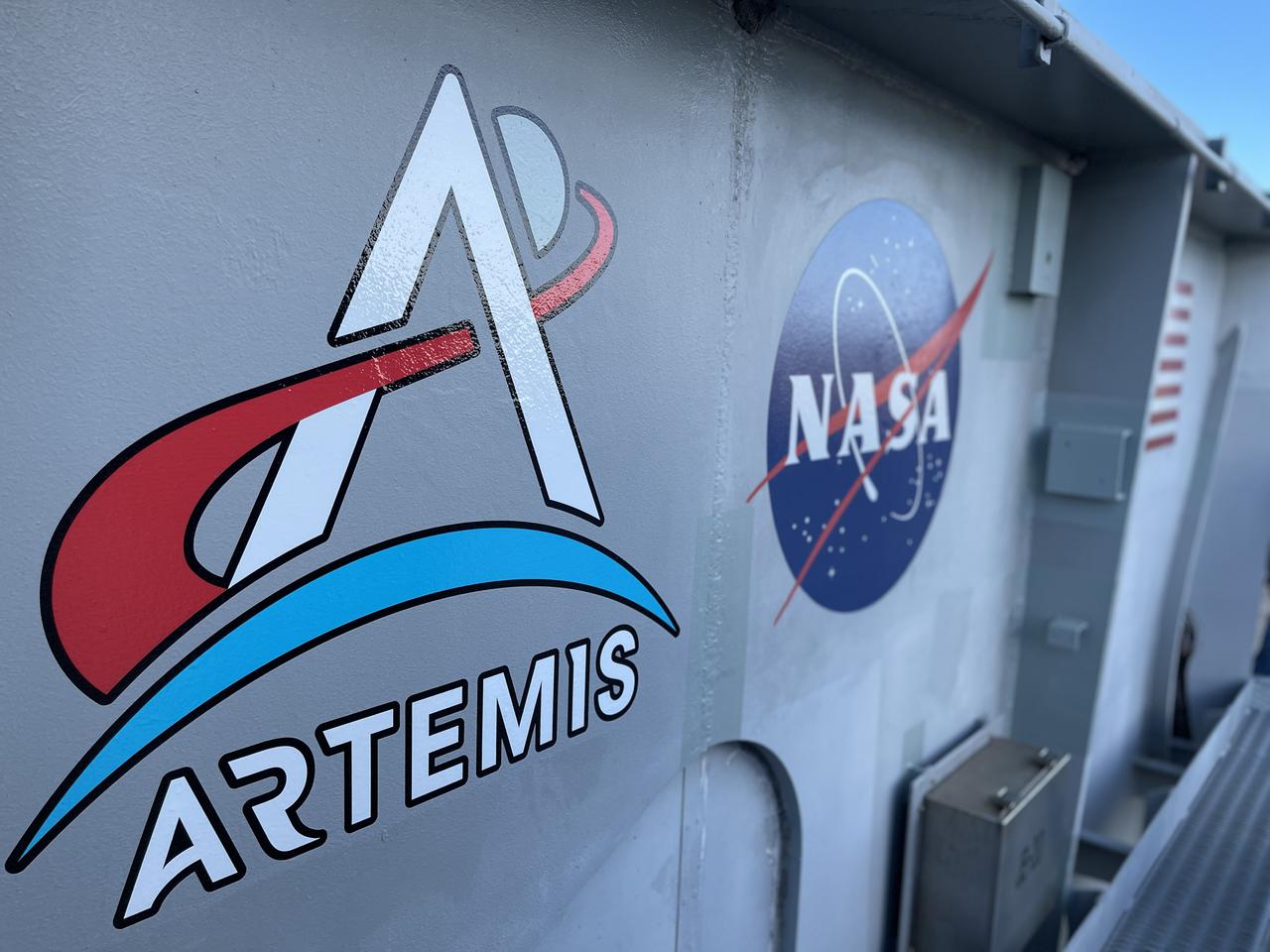
Eight new NASA Artemis logos (four large, four small) were installed on Crawler-Transporter 2 at Kennedy Space Center in preparation for the upcoming launch of Artemis I. Named after the twin sister of Apollo, Artemis is the Goddess of the Moon. The Artemis missions will take humanity back to the Moon and beyond, beginning a new legacy of deep space exploration.
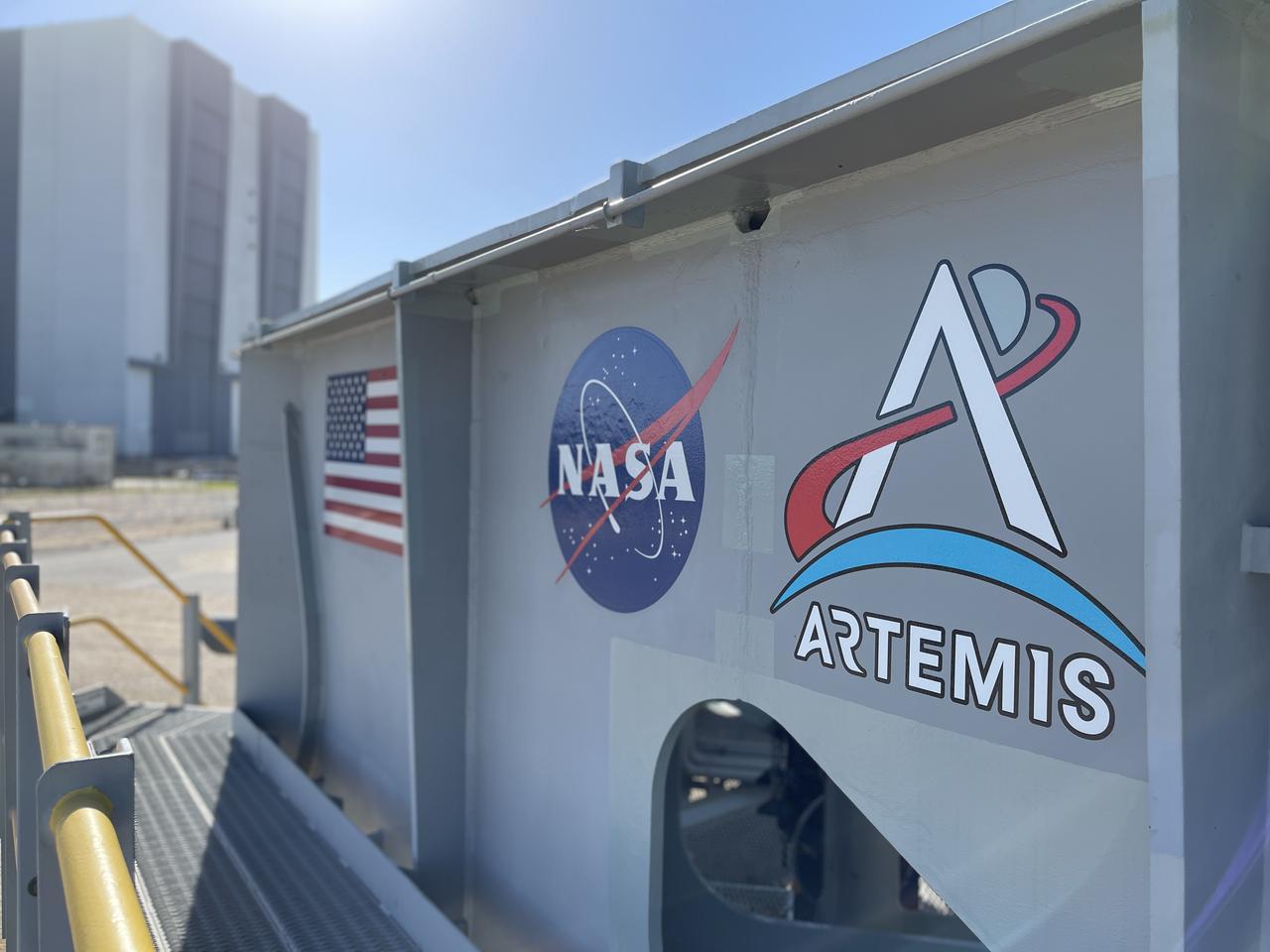
Eight new NASA Artemis logos (four large, four small) were installed on Crawler-Transporter 2 at Kennedy Space Center in preparation for the upcoming launch of Artemis I. Named after the twin sister of Apollo, Artemis is the Goddess of the Moon. The Artemis missions will take humanity back to the Moon and beyond, beginning a new legacy of deep space exploration.
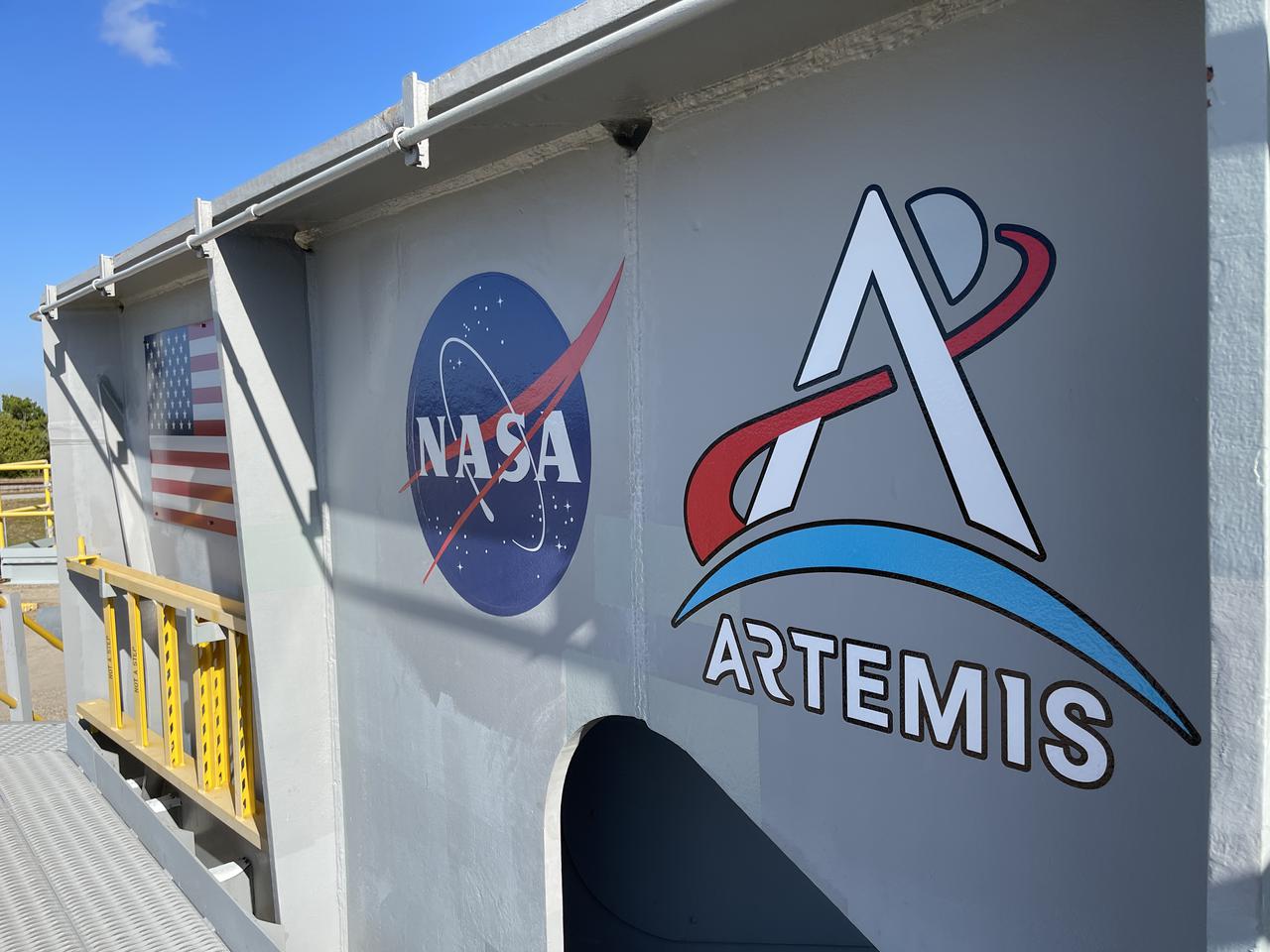
Eight new NASA Artemis logos (four large, four small) were installed on Crawler-Transporter 2 at Kennedy Space Center in preparation for the upcoming launch of Artemis I. Named after the twin sister of Apollo, Artemis is the Goddess of the Moon. The Artemis missions will take humanity back to the Moon and beyond, beginning a new legacy of deep space exploration.
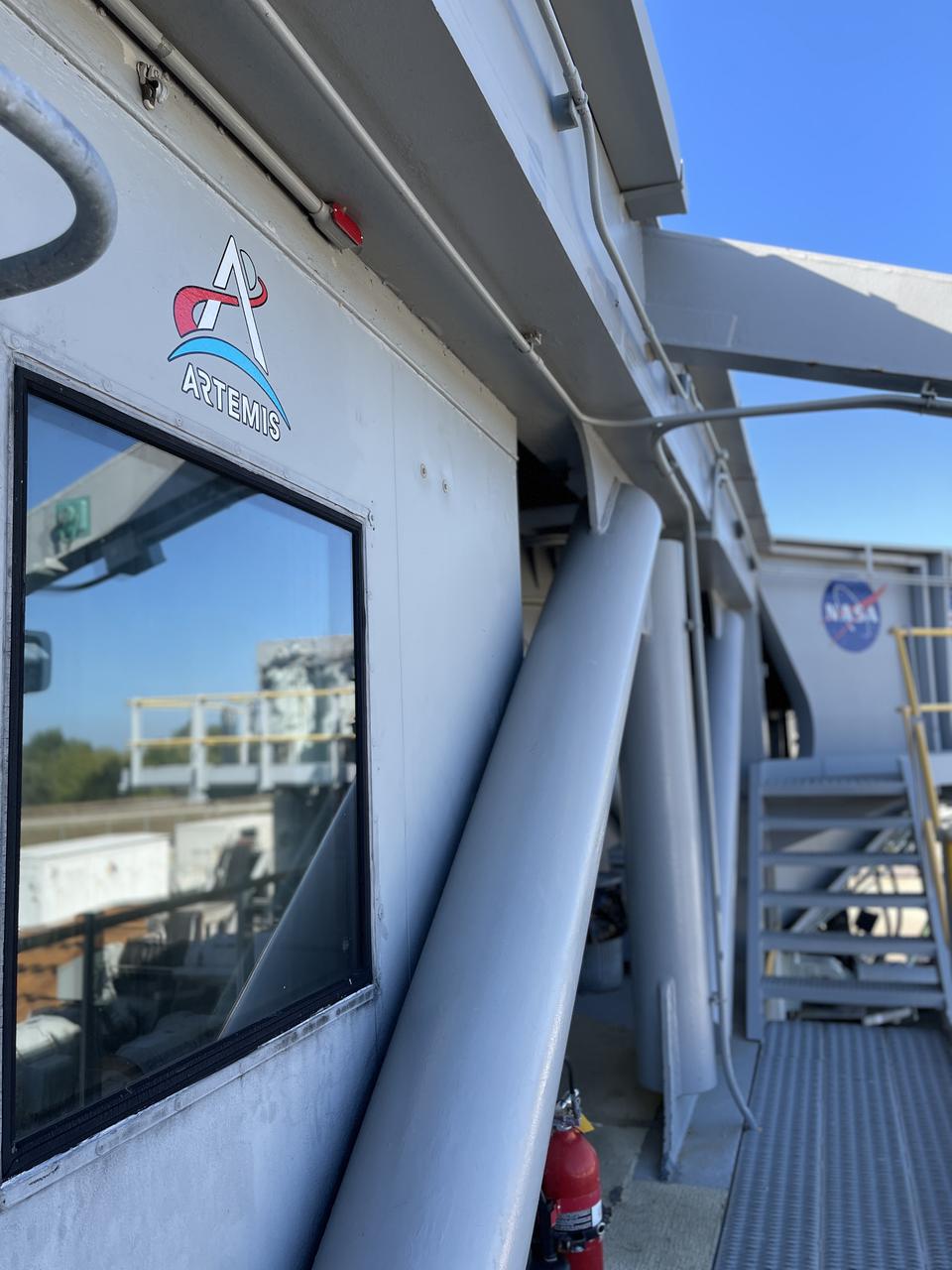
Eight new NASA Artemis logos (four large, four small) were installed on Crawler-Transporter 2 at Kennedy Space Center in preparation for the upcoming launch of Artemis I. Named after the twin sister of Apollo, Artemis is the Goddess of the Moon. The Artemis missions will take humanity back to the Moon and beyond, beginning a new legacy of deep space exploration.
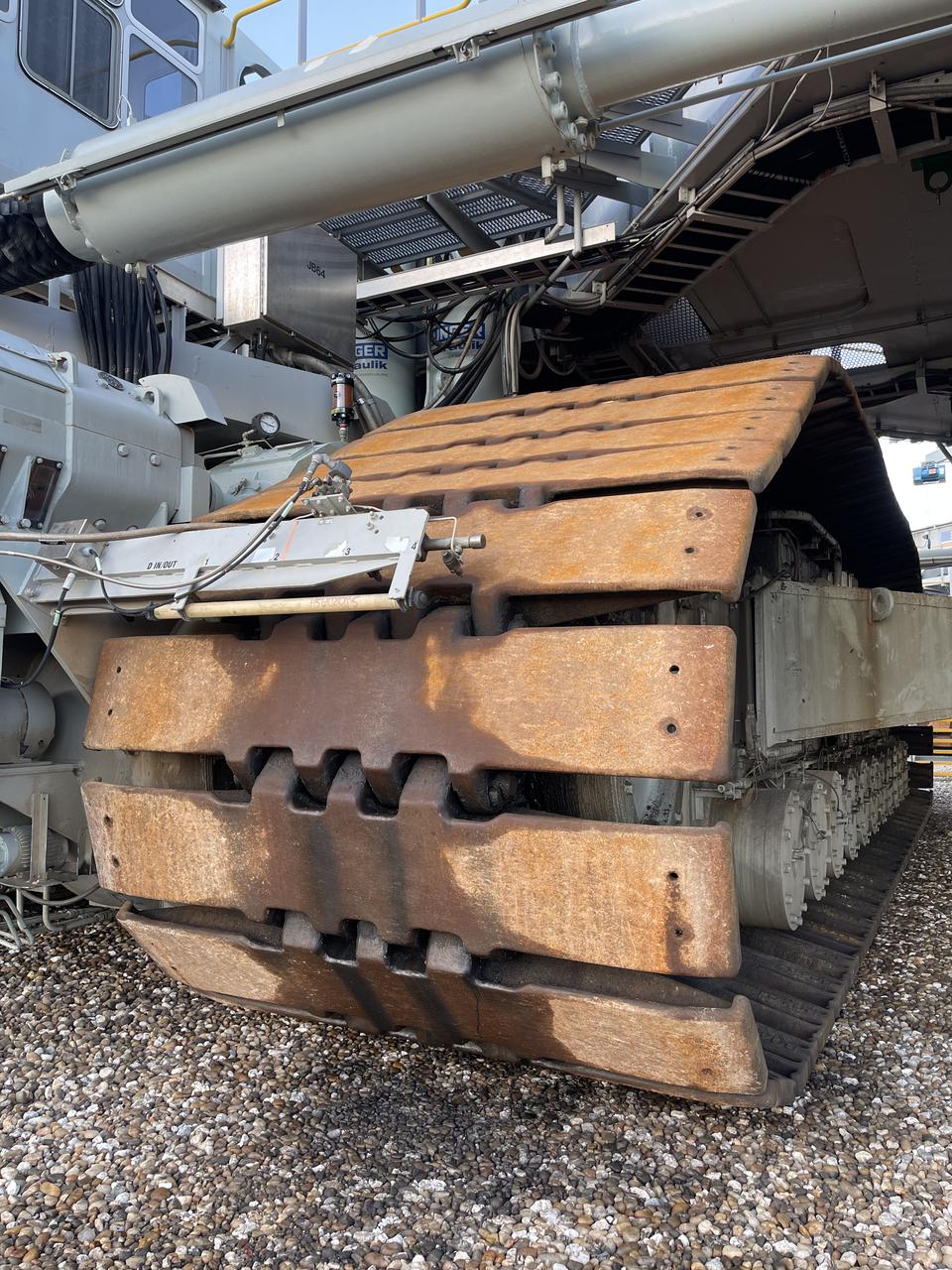
Eight new NASA Artemis logos (four large, four small) were installed on Crawler-Transporter 2 at Kennedy Space Center in preparation for the upcoming launch of Artemis I. Named after the twin sister of Apollo, Artemis is the Goddess of the Moon. The Artemis missions will take humanity back to the Moon and beyond, beginning a new legacy of deep space exploration.
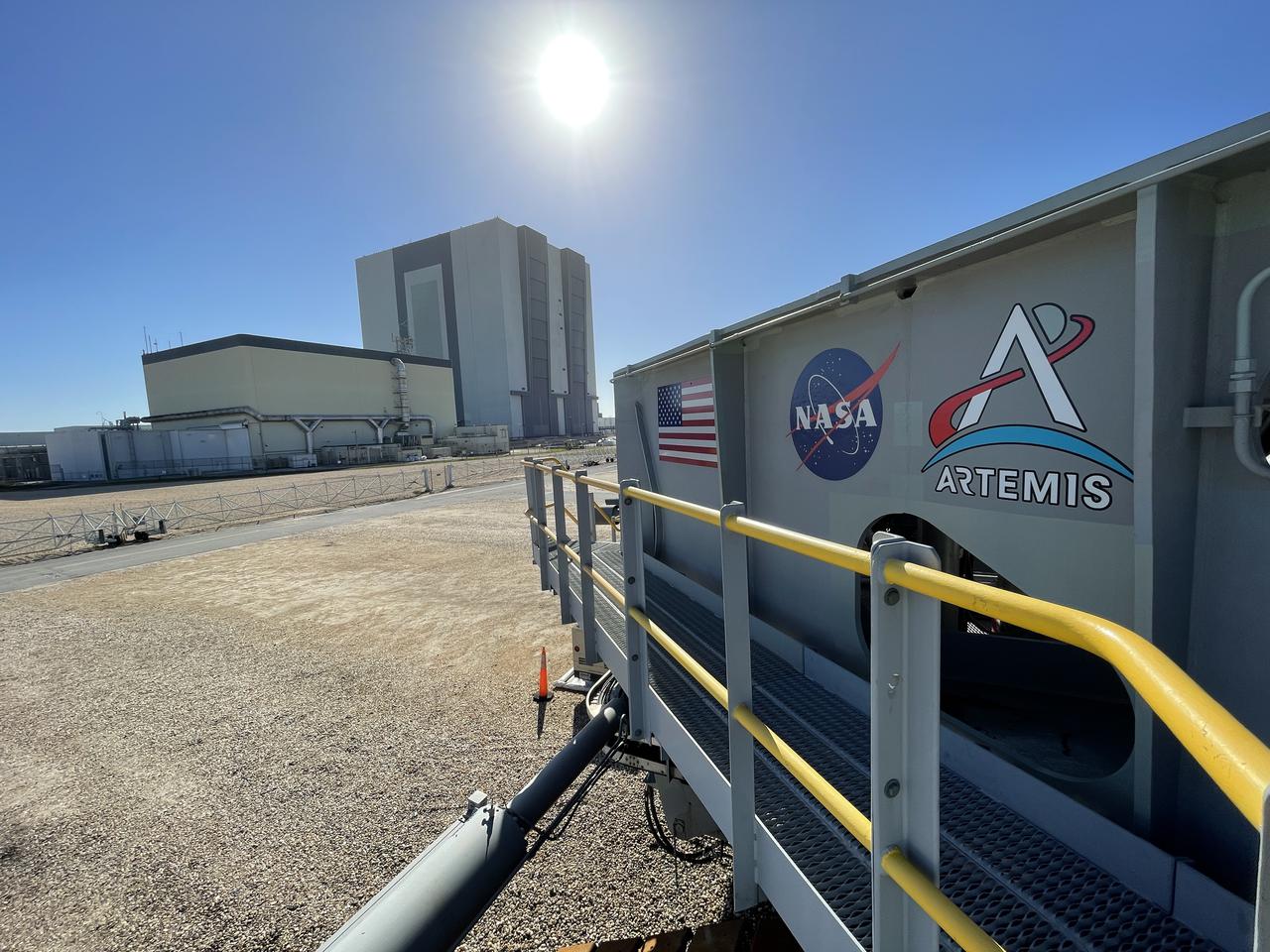
Eight new NASA Artemis logos (four large, four small) were installed on Crawler-Transporter 2 at Kennedy Space Center in preparation for the upcoming launch of Artemis I. The Vehicle Assembly Building, in back, is where NASA's Space Launch System and Orion Spacecraft are currently stacked and being prepared to roll out on top of the crawler to Launch Pad 39B for the first time.
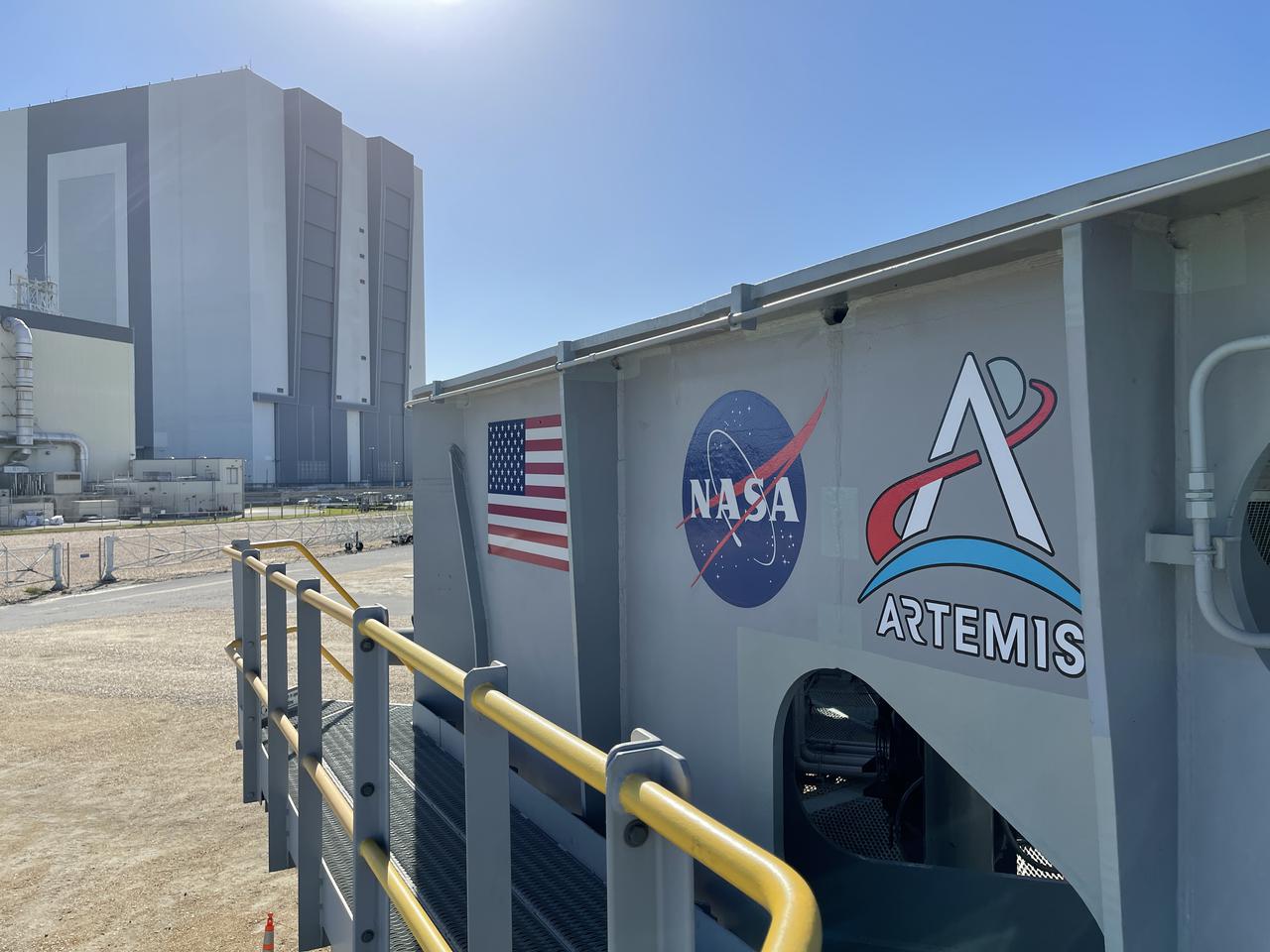
Eight new NASA Artemis logos (four large, four small) were installed on Crawler-Transporter 2 at Kennedy Space Center in preparation for the upcoming launch of Artemis I. The Vehicle Assembly Building, in back, is where NASA's Space Launch System and Orion Spacecraft are currently stacked and being prepared to roll out on top of the crawler to Launch Pad 39B for the first time.
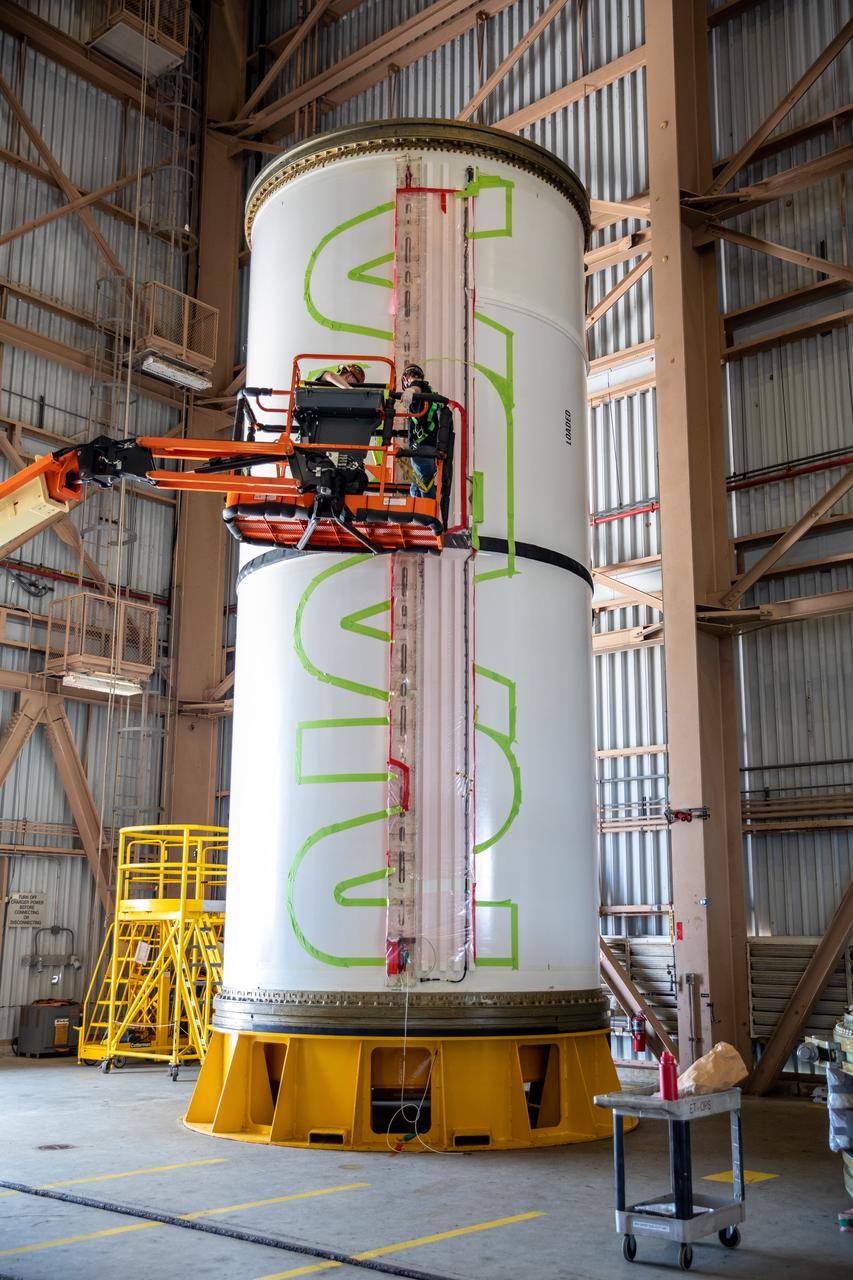
Workers with NASA’s Exploration Ground Systems (EGS) use a laser projector and green tape to mask off the shape of the agency’s “worm” logo on the side of an Artemis I solid rocket booster segment inside the Rotation, Processing and Surge Facility (RPSF) at Kennedy Space Center in Florida, Sept. 3, 2020. The booster segments will help propel the Space Launch System (SLS) rocket on Artemis I, a test of the Orion spacecraft and SLS as an integrated system ahead of crewed flights to the Moon. Northrop Grumman, which built the booster segments, is covering the cost of the painting.

Workers with NASA’s Exploration Ground Systems (EGS) use a laser projector and green tape to mask off the shape of the agency’s “worm” logo on the side of an Artemis I solid rocket booster segment inside the Rotation, Processing and Surge Facility (RPSF) at Kennedy Space Center in Florida, Sept. 3, 2020. The booster segments will help propel the Space Launch System (SLS) rocket on Artemis I, a test of the Orion spacecraft and SLS as an integrated system ahead of crewed flights to the Moon. Northrop Grumman, which built the booster segments, is covering the cost of the painting.
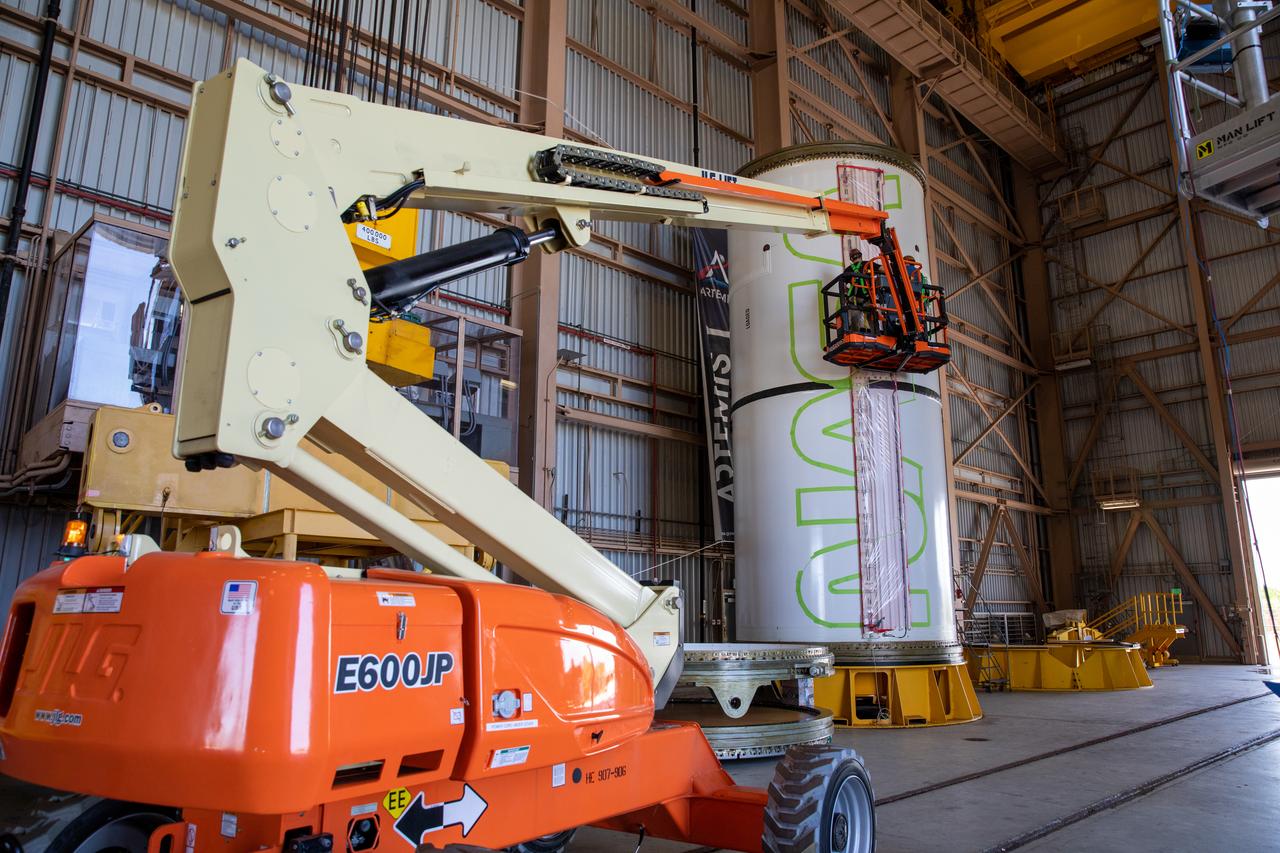
Workers with NASA’s Exploration Ground Systems (EGS) use a laser projector and green tape to mask off the shape of the agency’s “worm” logo on the side of an Artemis I solid rocket booster segment inside the Rotation, Processing and Surge Facility (RPSF) at Kennedy Space Center in Florida, Sept. 3, 2020. The booster segments will help propel the Space Launch System (SLS) rocket on Artemis I, a test of the Orion spacecraft and SLS as an integrated system ahead of crewed flights to the Moon. Northrop Grumman, which built the booster segments, is covering the cost of the painting.
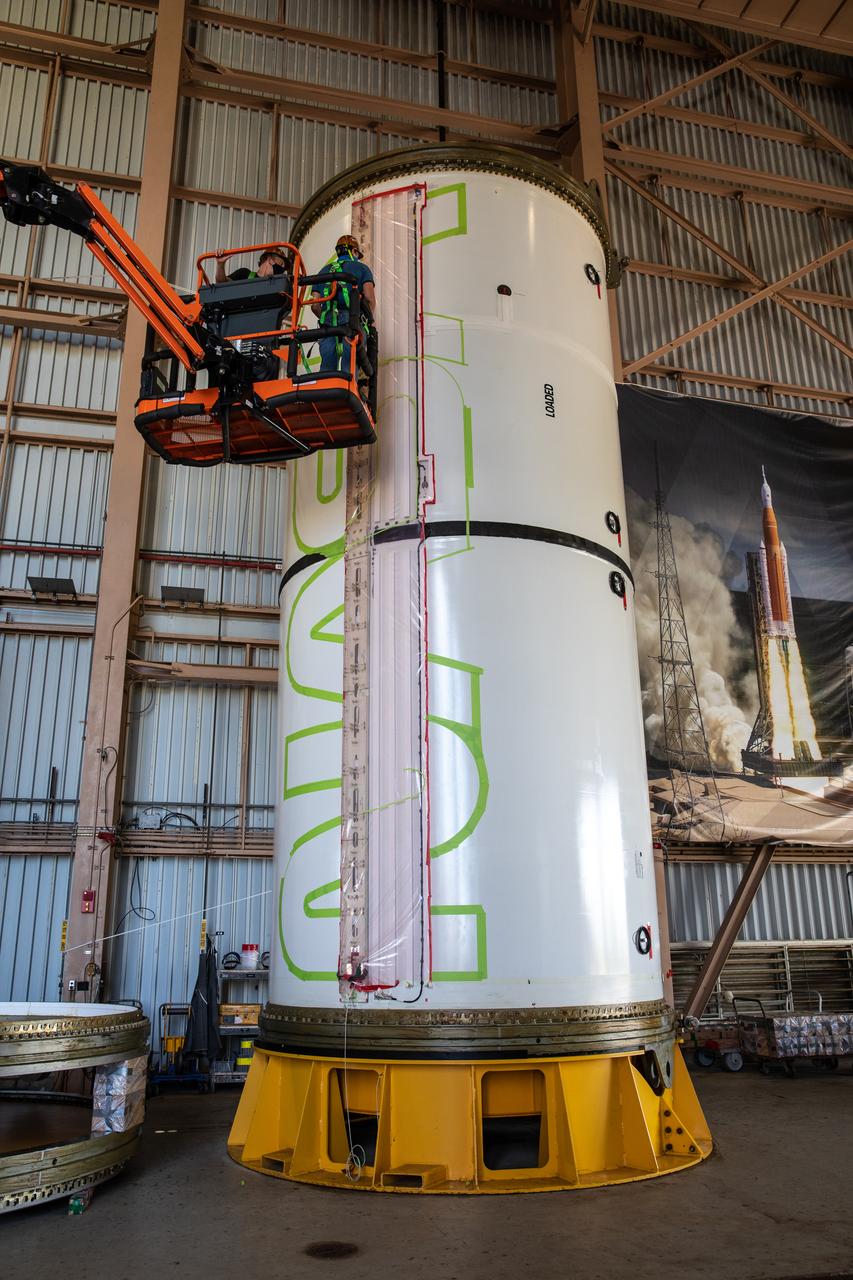
Workers with NASA’s Exploration Ground Systems (EGS) use a laser projector and green tape to mask off the shape of the agency’s “worm” logo on the side of an Artemis I solid rocket booster segment inside the Rotation, Processing and Surge Facility (RPSF) at Kennedy Space Center in Florida, Sept. 3, 2020. The booster segments will help propel the Space Launch System (SLS) rocket on Artemis I, a test of the Orion spacecraft and SLS as an integrated system ahead of crewed flights to the Moon. Northrop Grumman, which built the booster segments, is covering the cost of the painting.
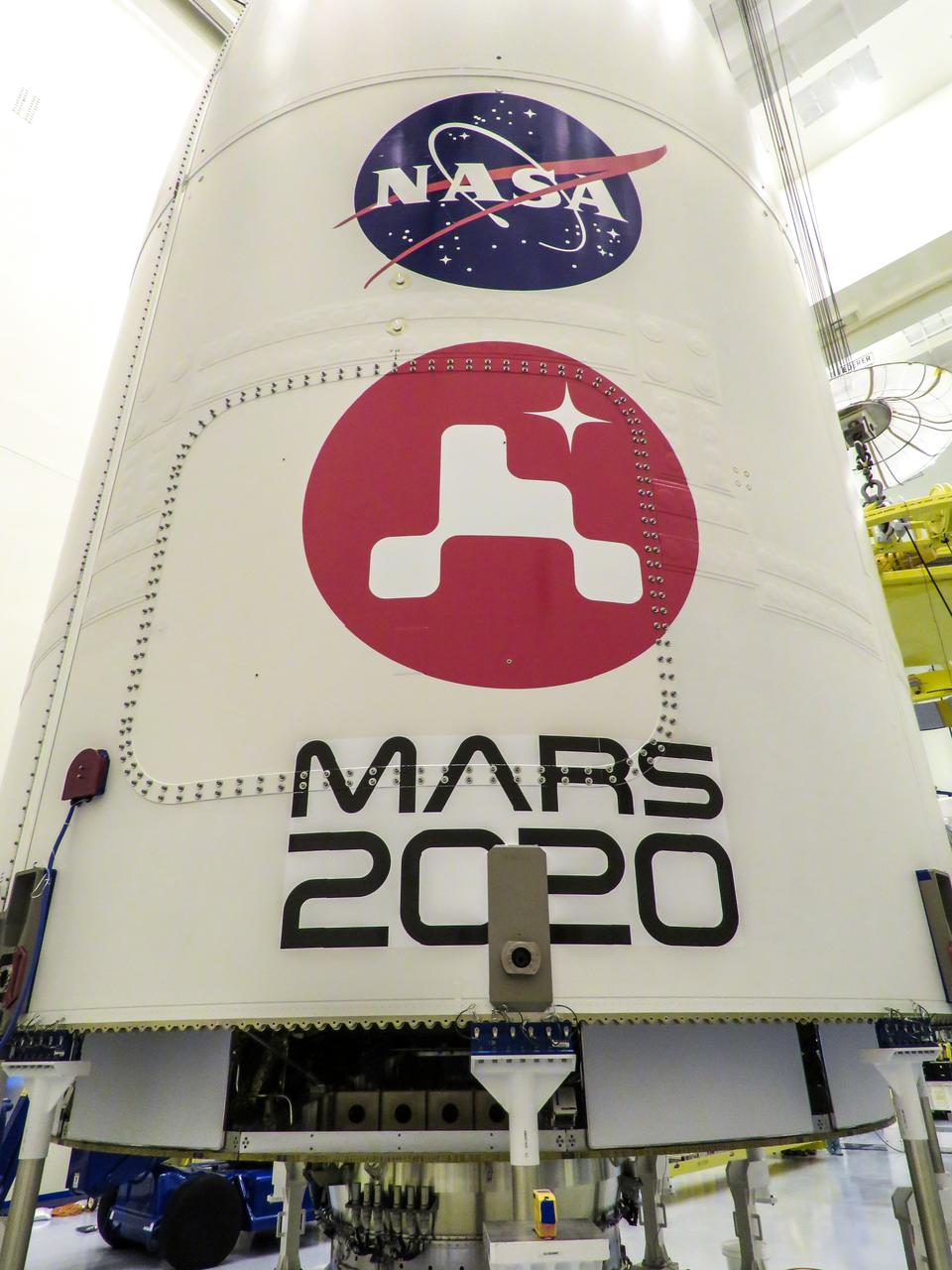
Inside the Payload Hazardous Servicing Facility at NASA’s Kennedy Space Center in Florida, the Mars 2020 logo is installed on the United Launch Alliance Atlas V payload fairing on June 18, 2020. Secured inside the fairing is the agency’s Mars 2020 Perseverance rover. The rover is scheduled to launch on July 20, 2020, atop the Atlas V 541 rocket from Space Launch Complex 41 at Cape Canaveral Air Force Station. The rover is part of NASA’s Mars Exploration Program, a long-term effort of robotic exploration of the Red Planet. The rover’s seven instruments will search for habitable conditions in the ancient past and signs of past microbial life on Mars. The Launch Services Program at Kennedy is responsible for launch management.
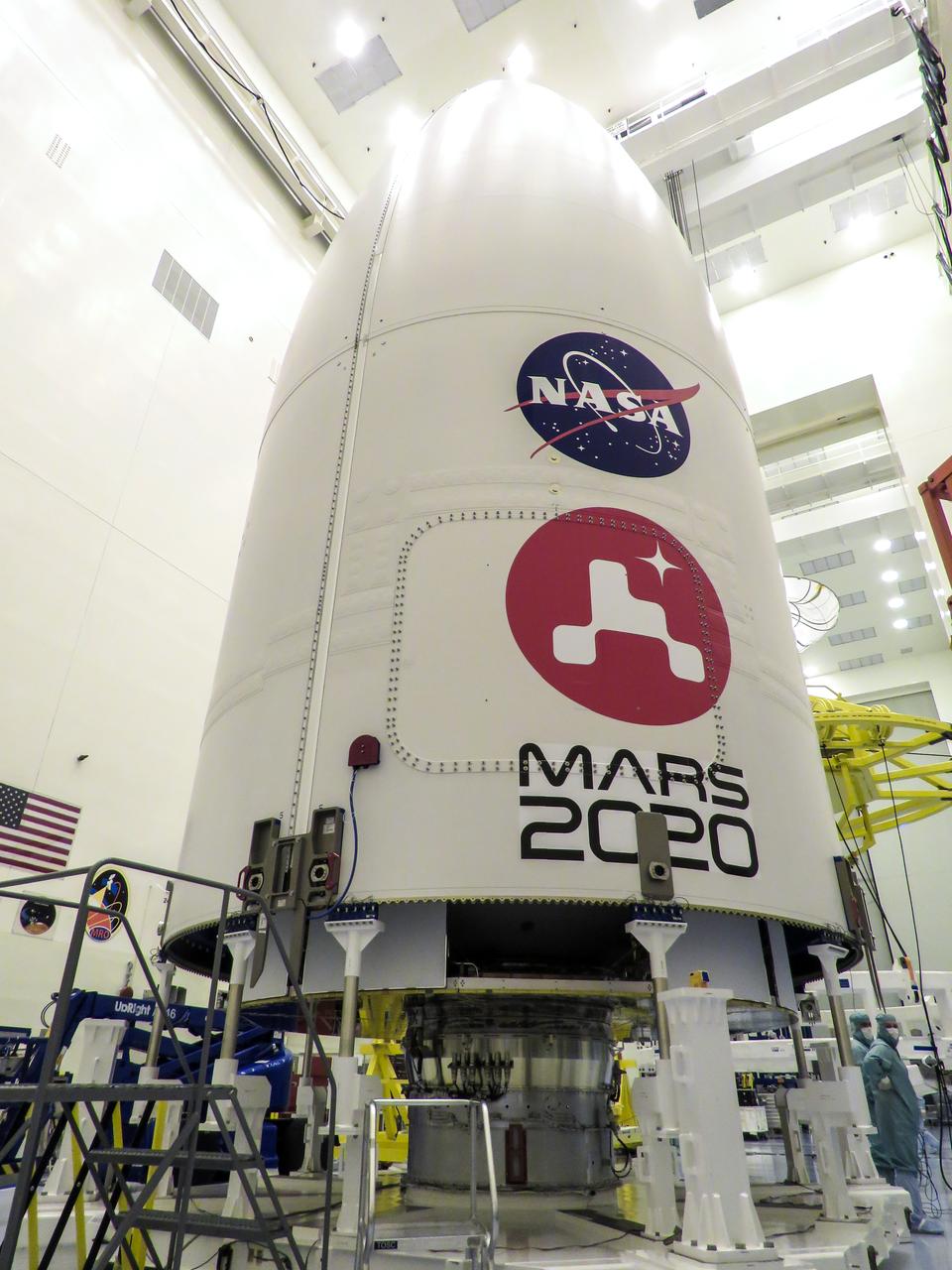
Inside the Payload Hazardous Servicing Facility at NASA’s Kennedy Space Center in Florida, the Mars 2020 logo is installed on the United Launch Alliance Atlas V payload fairing on June 18, 2020. Secured inside the fairing is the agency’s Mars 2020 Perseverance rover. The rover is scheduled to launch on July 20, 2020, atop the Atlas V 541 rocket from Space Launch Complex 41 at Cape Canaveral Air Force Station. The rover is part of NASA’s Mars Exploration Program, a long-term effort of robotic exploration of the Red Planet. The rover’s seven instruments will search for habitable conditions in the ancient past and signs of past microbial life on Mars. The Launch Services Program at Kennedy is responsible for launch management.
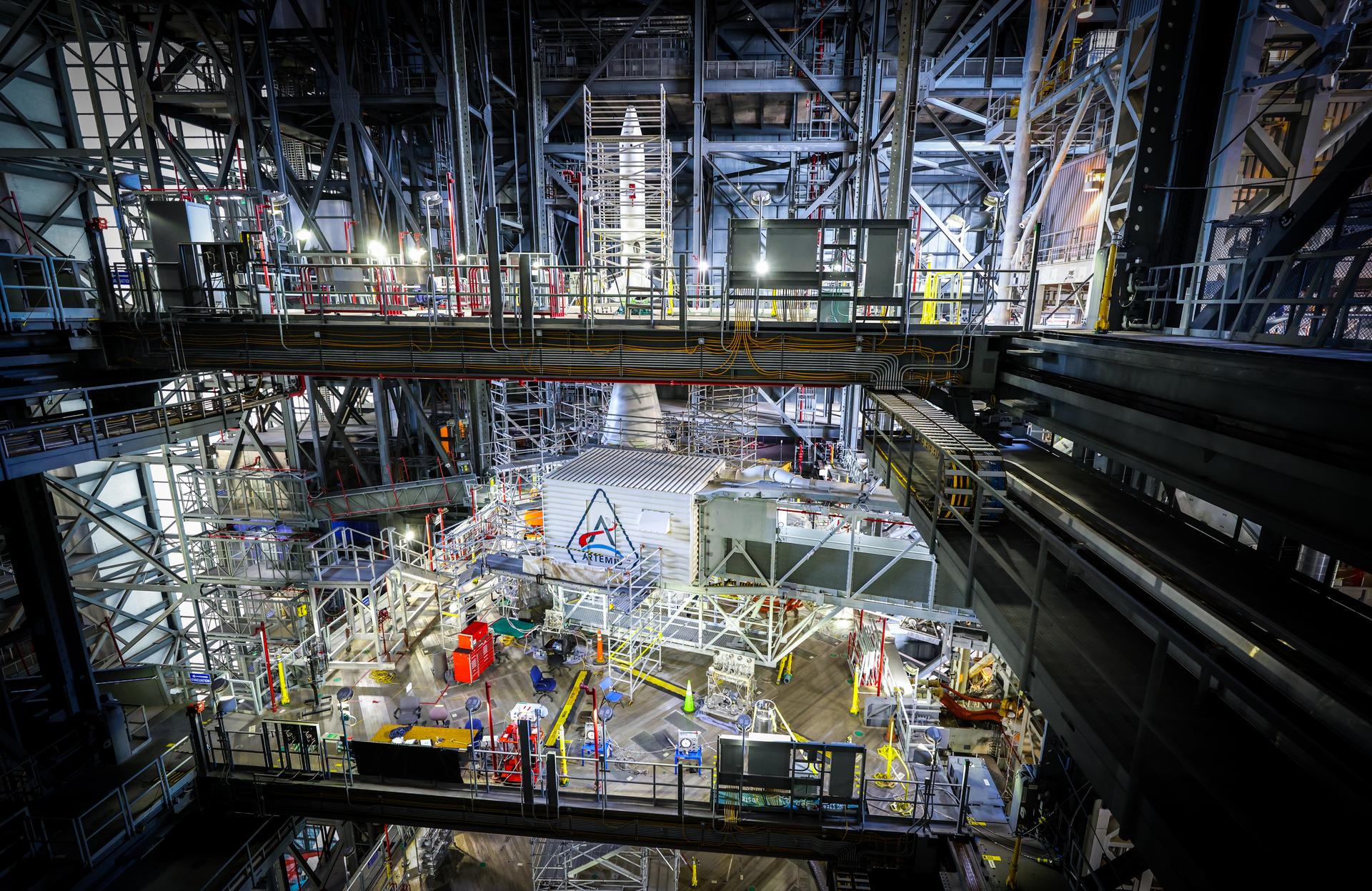
A freshly painted NASA’s Artemis logo is unveiled on the White Room connected to the crew access arm and mobile launcher inside the Vehicle Assembly Building at NASA’s Kennedy Space Center in Florida on Thursday, Dec. 4, 2025. The White Room is the area where the Artemis II crew Reid Wiseman, Victor Glover, Christina Koch, and CSA (Canadian Space Agency) astronaut Jeremy Hansen will enter the Orion spacecraft ahead of launch from Launch Complex 39B at NASA Kennedy in early 2026.
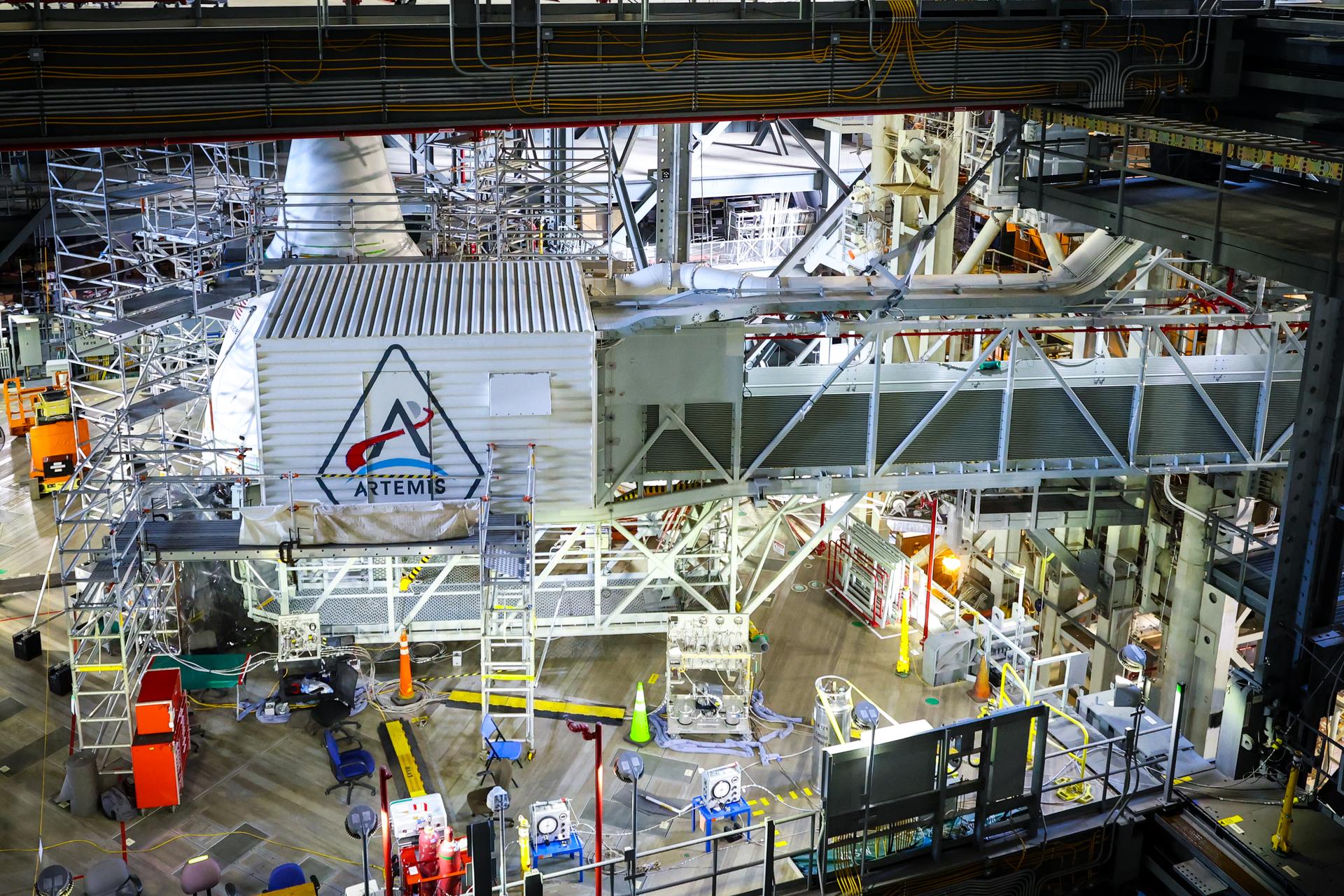
A freshly painted NASA’s Artemis logo is unveiled on the White Room connected to the crew access arm and mobile launcher inside the Vehicle Assembly Building at NASA’s Kennedy Space Center in Florida on Thursday, Dec. 4, 2025. The White Room is the area where the Artemis II crew Reid Wiseman, Victor Glover, Christina Koch, and CSA (Canadian Space Agency) astronaut Jeremy Hansen will enter the Orion spacecraft ahead of launch from Launch Complex 39B at NASA Kennedy in early 2026.
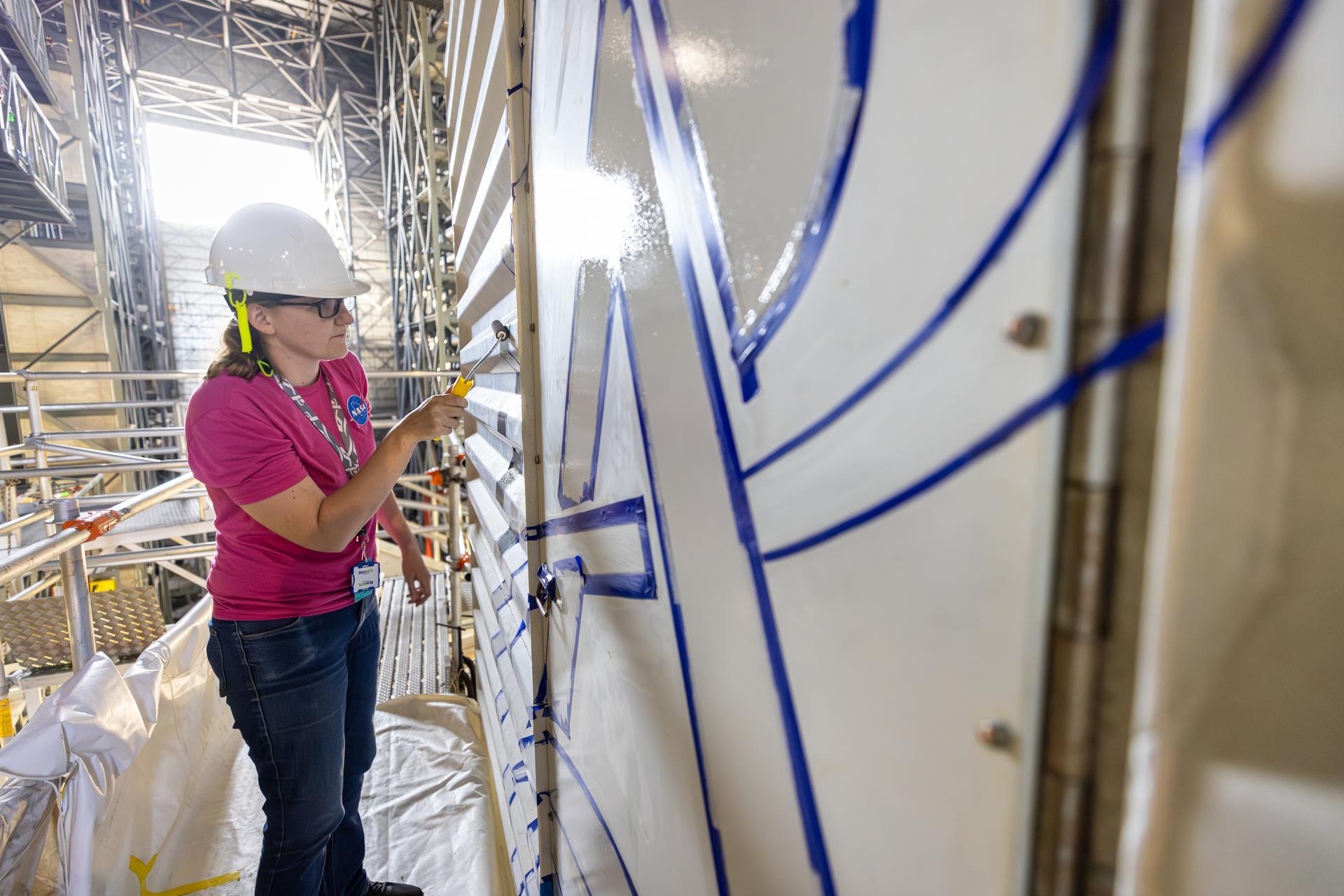
Katie Mortensen, mechanical engineering technician, paints NASA’s Artemis logo on the White Room connected to the crew access arm and mobile launcher inside the Vehicle Assembly Building at NASA’s Kennedy Space Center in Florida on Thursday, Dec. 4, 2025. The White Room is the area where the Artemis II crew Reid Wiseman, Victor Glover, Christina Koch, and CSA (Canadian Space Agency) astronaut Jeremy Hansen will enter the Orion spacecraft ahead of launch from Launch Complex 39B at NASA Kennedy in early 2026.
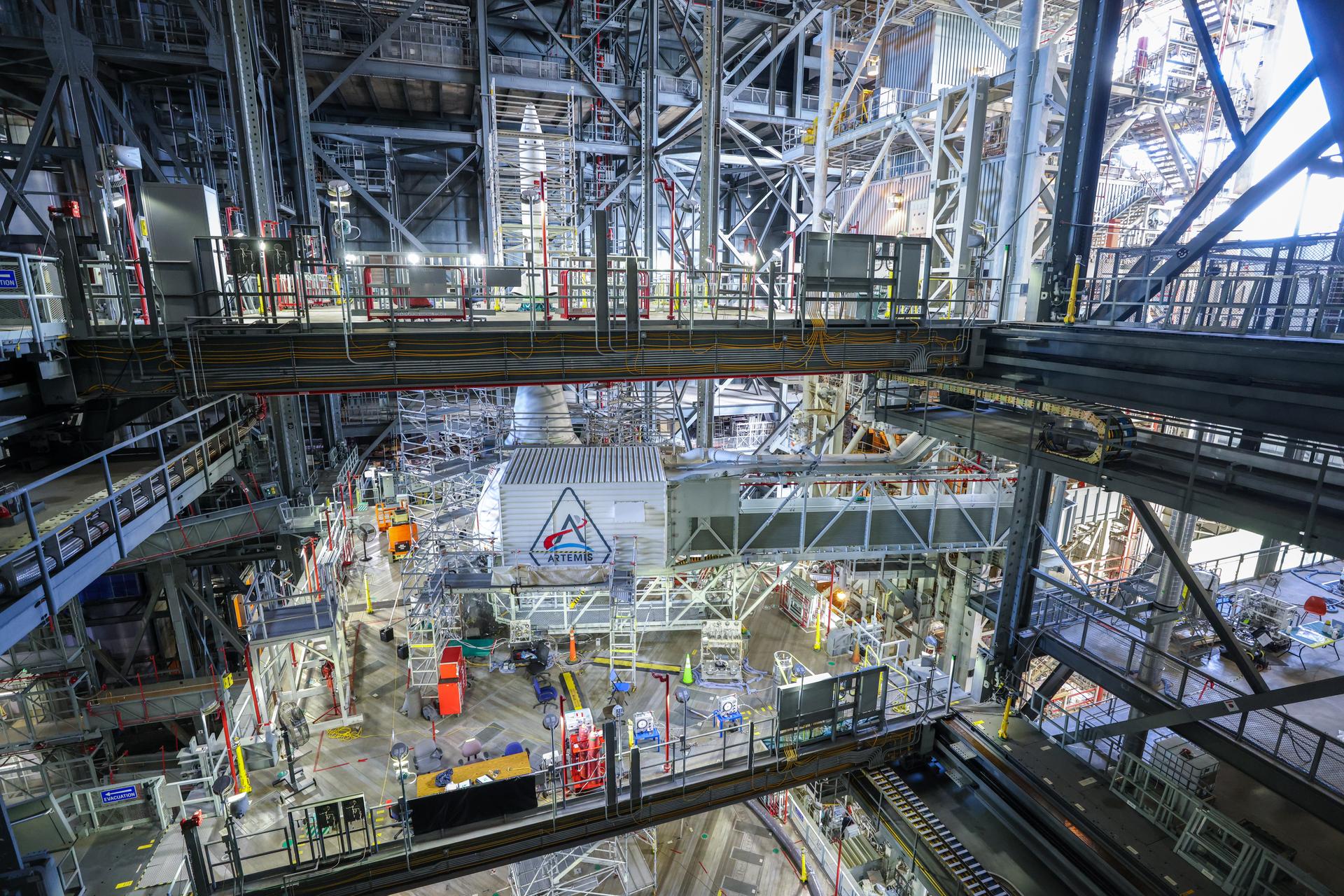
A freshly painted NASA’s Artemis logo is unveiled on the White Room connected to the crew access arm and mobile launcher inside the Vehicle Assembly Building at NASA’s Kennedy Space Center in Florida on Thursday, Dec. 4, 2025. The White Room is the area where the Artemis II crew Reid Wiseman, Victor Glover, Christina Koch, and CSA (Canadian Space Agency) astronaut Jeremy Hansen will enter the Orion spacecraft ahead of launch from Launch Complex 39B at NASA Kennedy in early 2026.
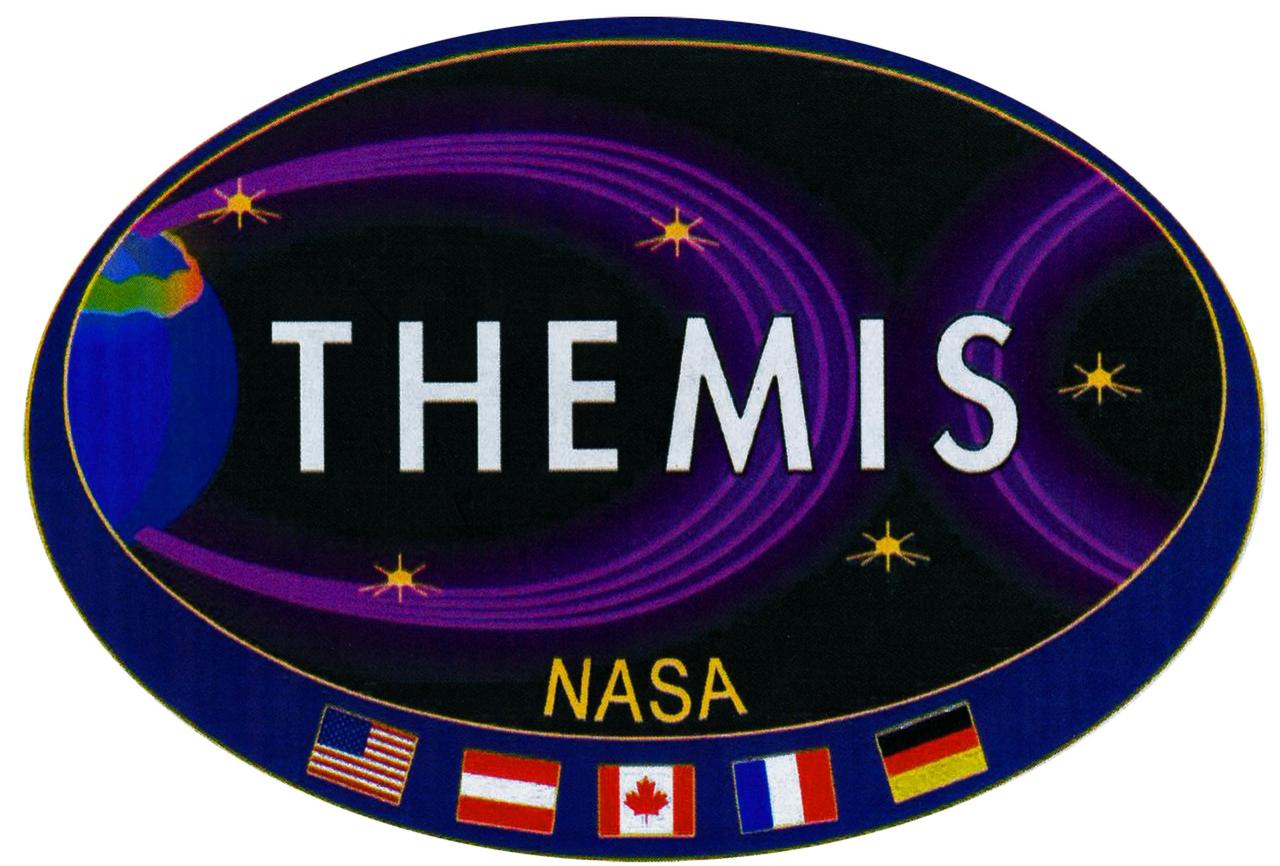
KENNEDY SPACE CENTER, FLA. -- THEMIS logo: NASA's 2-year Time History of Events and Macroscale Interactions during Substorms (THEMIS) mission consists of five identical probes that will track these violent, colorful eruptions near the North Pole. When the five identical probes align over the North American continent, scientists will collect coordinated measurements along the Sun-Earth line, allowing the first comprehensive look at the onset of substorms and how they trigger auroral eruptions. Over the mission’s lifetime, the probes should be able to observe some 30 substorms – sufficient to finally know their origin. THEMIS is a NASA-funded mission managed by the Explorers Program Office at Goddard Space Flight Center in Greenbelt, Md. The Space Science Laboratory at the University of California at Berkeley is responsible for the project management, science instruments, mission integration, post launch operations and data analysis. Swales Aerospace of Beltsville, Md., manufactured the THEMIS spacecraft bus.

jsc2026e034363 (April 28, 2026) --- The Spleen Activity in Space Anemia and Red Cells Kinetics (SPARK) logo. This investigation uses imaging techniques in space to study how the spleen changes and how red blood cells break down in space. SPARK aims to better understand the biological mechanisms of space-related anemia to find ways to better protect crew health during long-duration space missions. Credit: Katbdesign Studio.
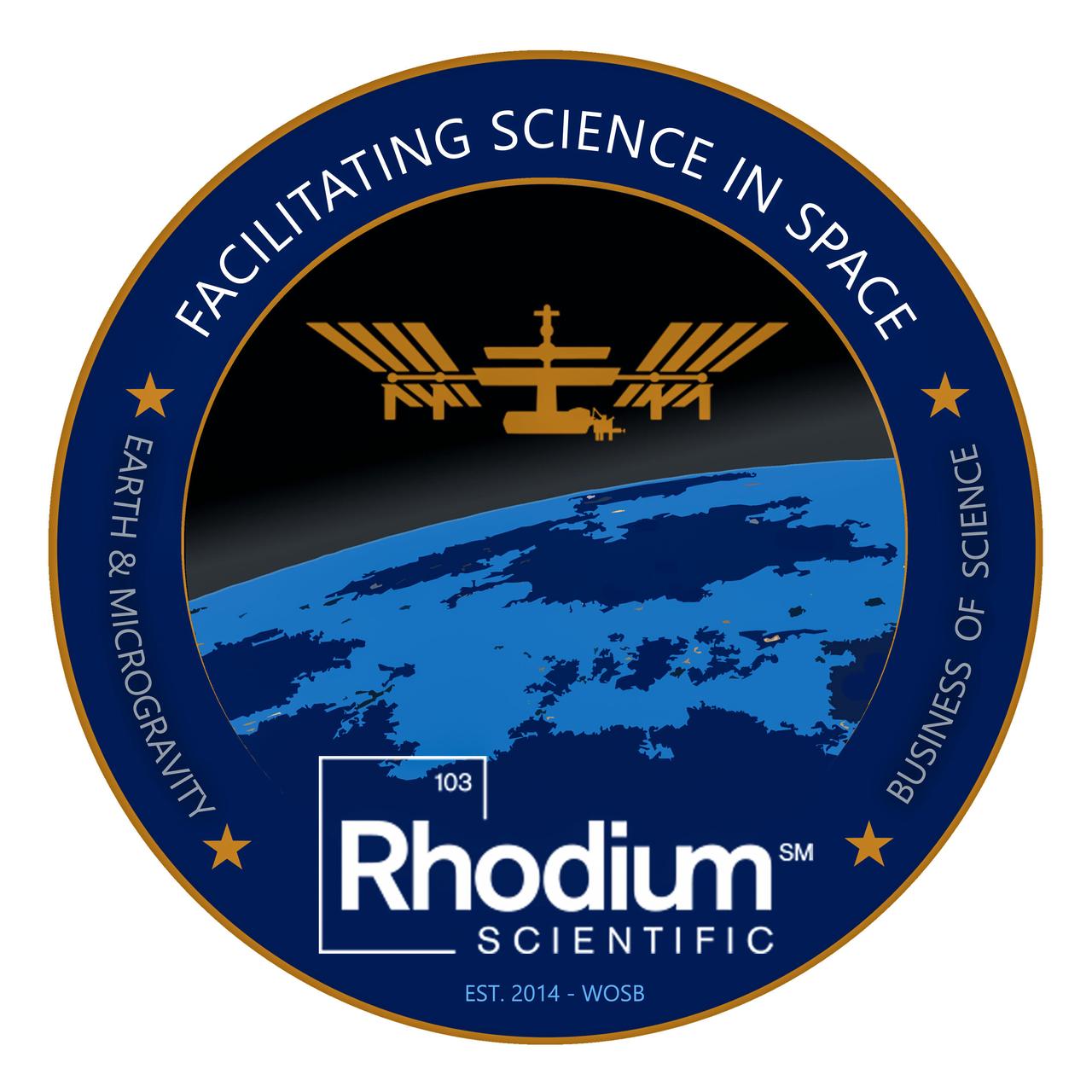
jsc2021e048041 (10/22/2021) --- Flight patch logo for Rhodium Scientific, a woman-owned small business founded in 2014 by Olivia Gámez Holzhaus. Image courtesy of Rhodium Scientific.
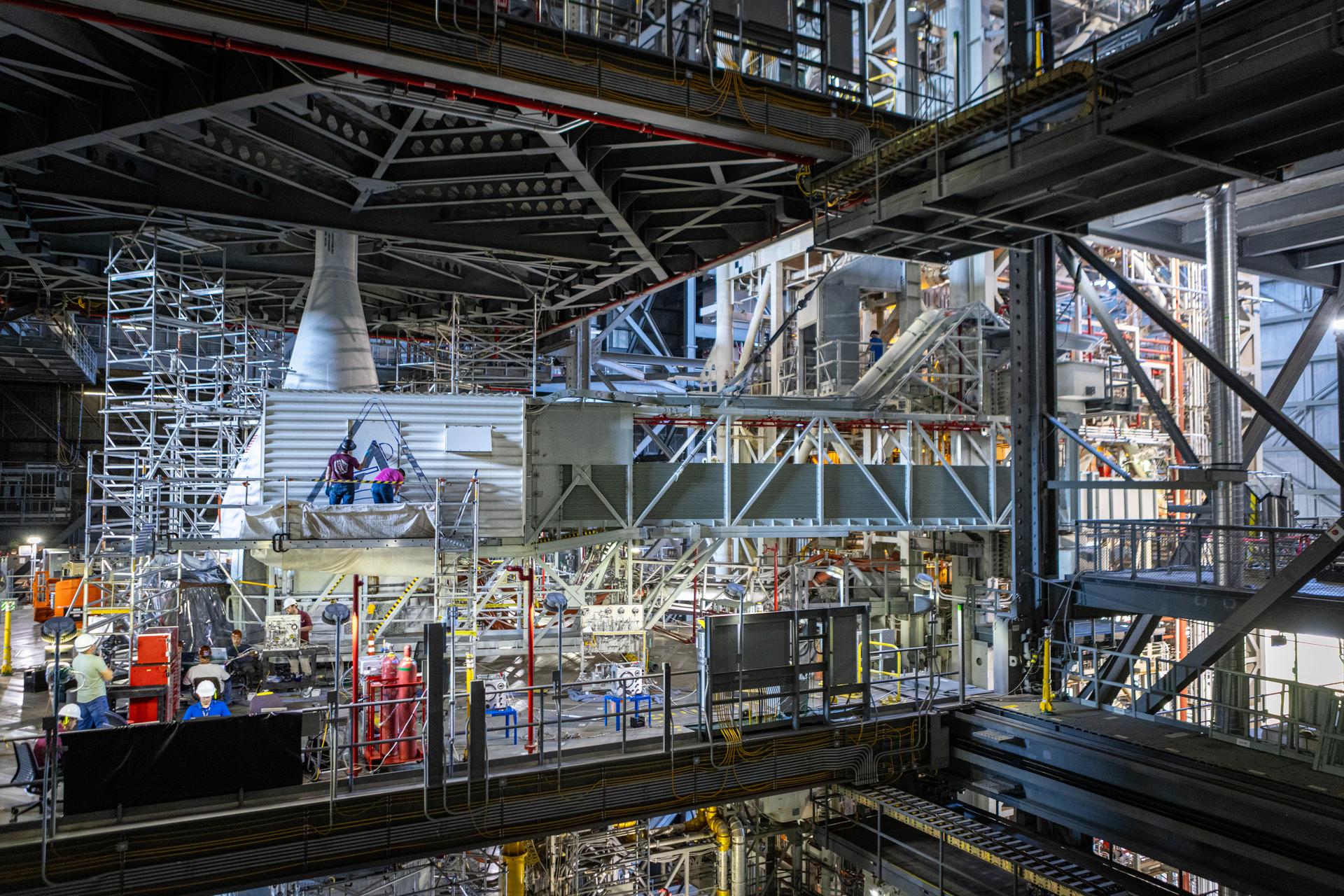
From left, Sean McCrary and Katie Mortensen, mechanical engineering technicians, paint NASA’s Artemis logo on the White Room connected to the crew access arm and mobile launcher inside the Vehicle Assembly Building at NASA’s Kennedy Space Center in Florida on Thursday, Dec. 4, 2025. The White Room is the area where the Artemis II crew Reid Wiseman, Victor Glover, Christina Koch, and CSA (Canadian Space Agency) astronaut Jeremy Hansen will enter the Orion spacecraft ahead of launch from Launch Complex 39B at NASA Kennedy in early 2026.