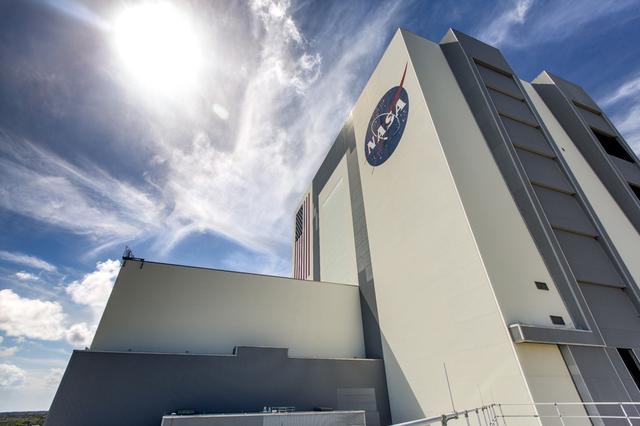
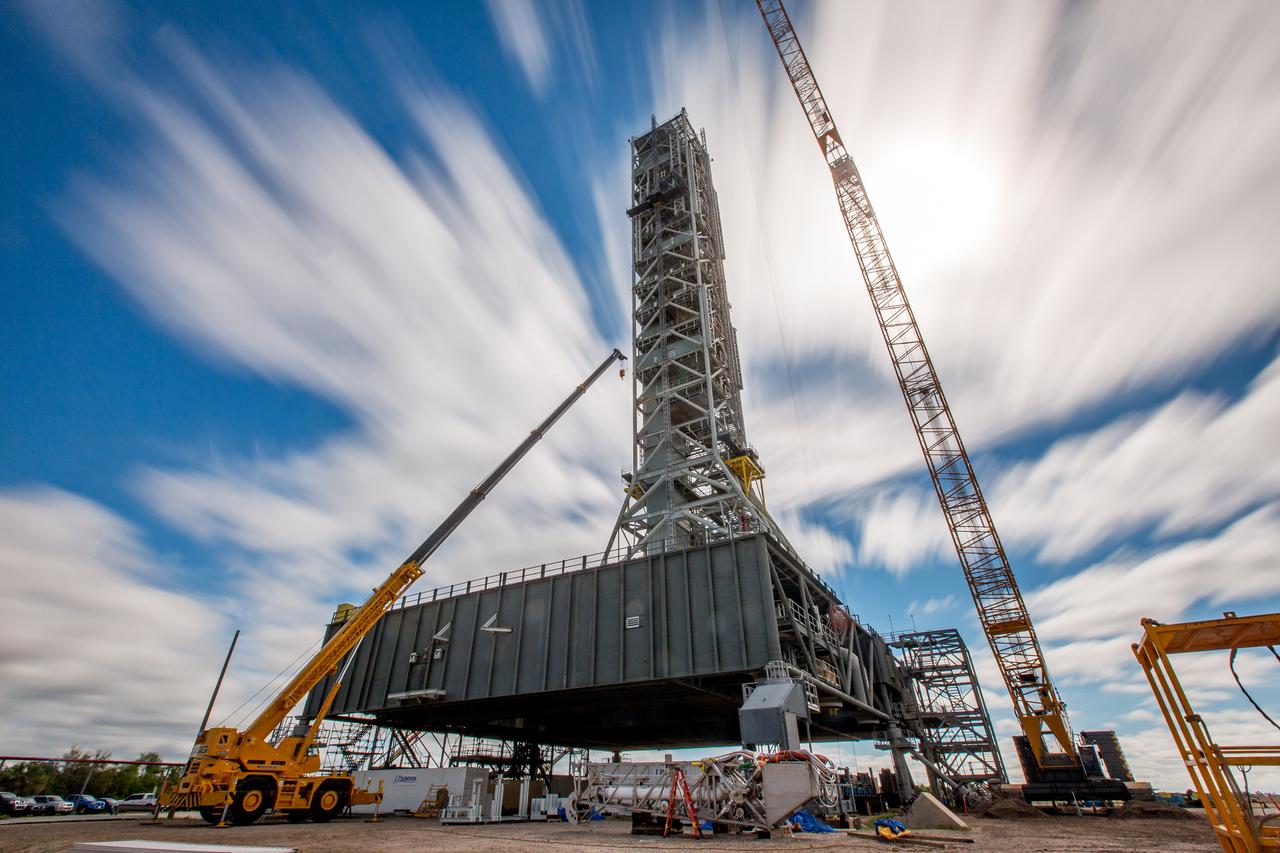
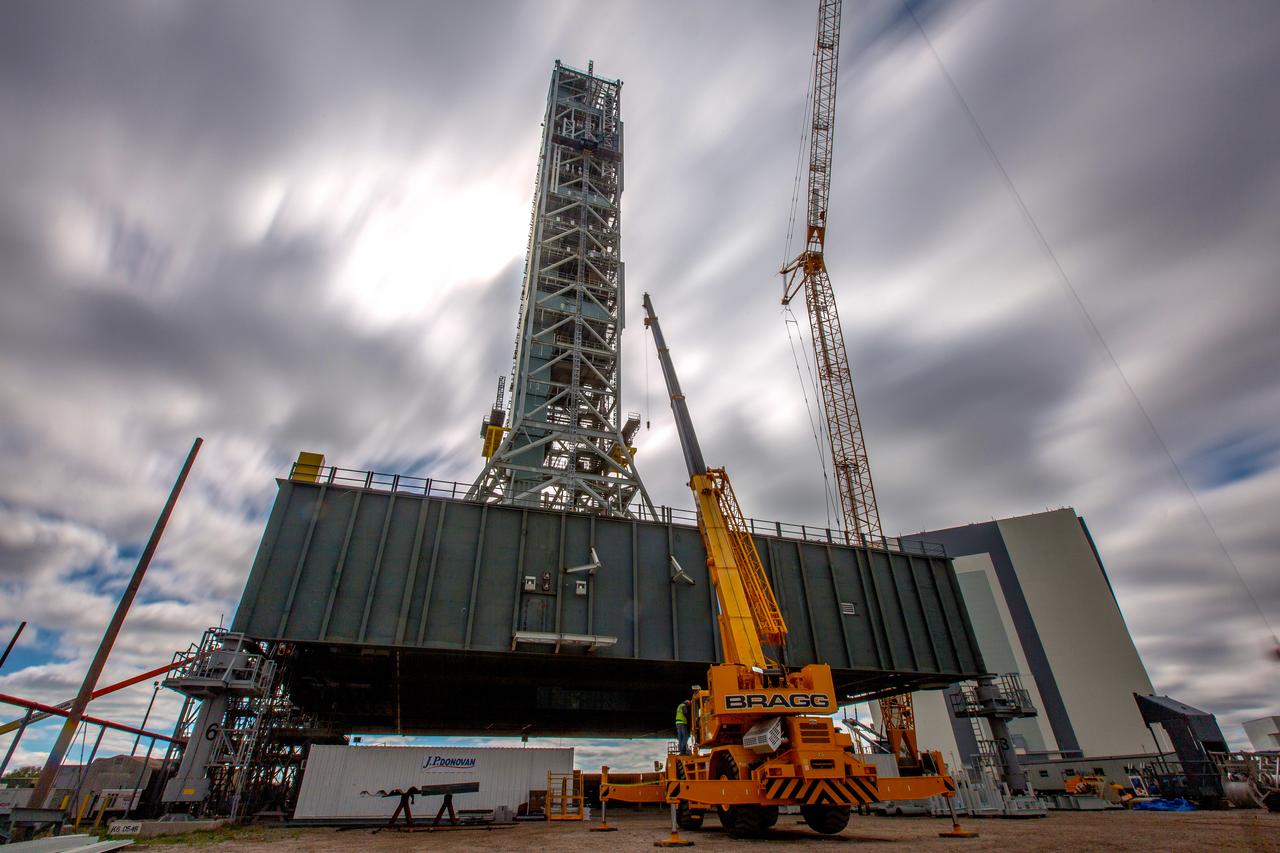
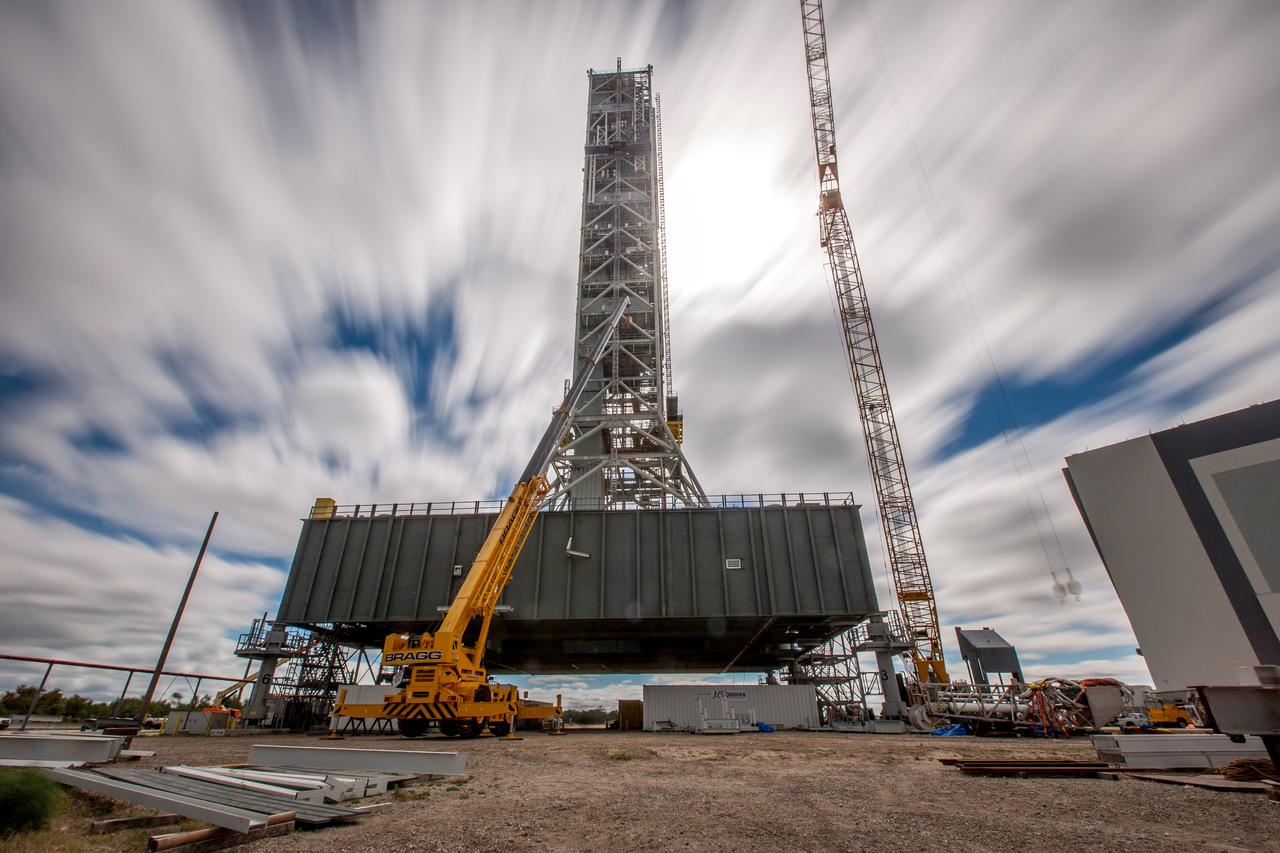
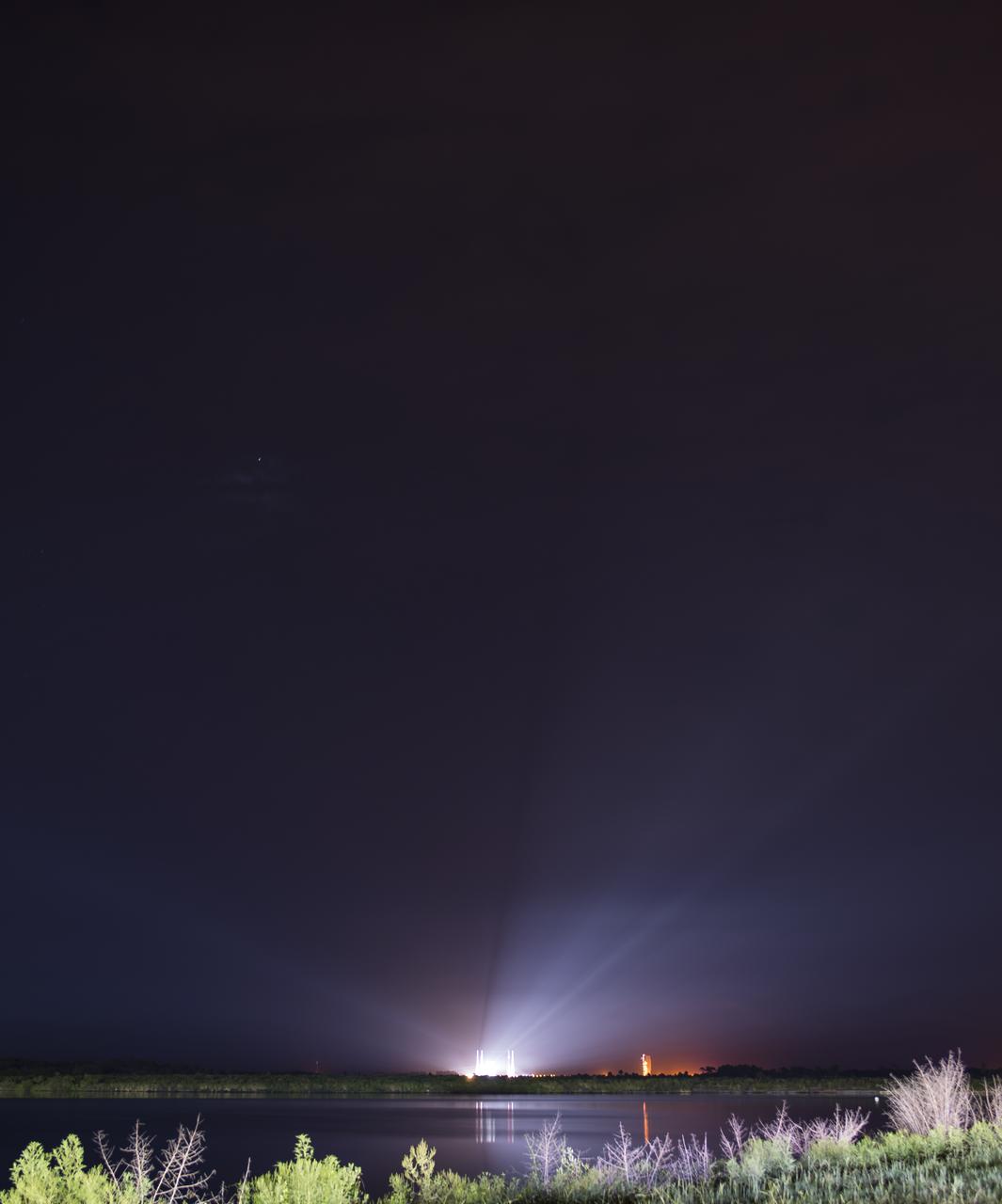
A long exposure photograph of the Vehicle Assembly Building, against the backdrop of a bright blue sky, at NASA's Kennedy Space Center in Florida. Inside the VAB, 10 levels of platforms, 20 platform halves altogether, have been installed in High Bay 3. The platforms will surround NASA's Space Launch System (SLS) rocket and the Orion spacecraft and allow access during processing for missions, including the first uncrewed flight test of Orion atop the SLS rocket in 2018. The Ground Systems Development and Operations Program, along with center's Engineering Directorate, is overseeing upgrades and modifications to the VAB to support the multi-user spaceport.
Long Exposure Photos of VAB
A long exposure photograph of the Vehicle Assembly Building, against the backdrop of a bright blue sky, at NASA's Kennedy Space Center in Florida. Inside the VAB, 10 levels of platforms, 20 platform halves altogether, have been installed in High Bay 3. The platforms will surround NASA's Space Launch System (SLS) rocket and the Orion spacecraft and allow access during processing for missions, including the first uncrewed flight test of Orion atop the SLS rocket in 2018. The Ground Systems Development and Operations Program, along with center's Engineering Directorate, is overseeing upgrades and modifications to the VAB to support the multi-user spaceport.
Long Exposure Photos of VAB
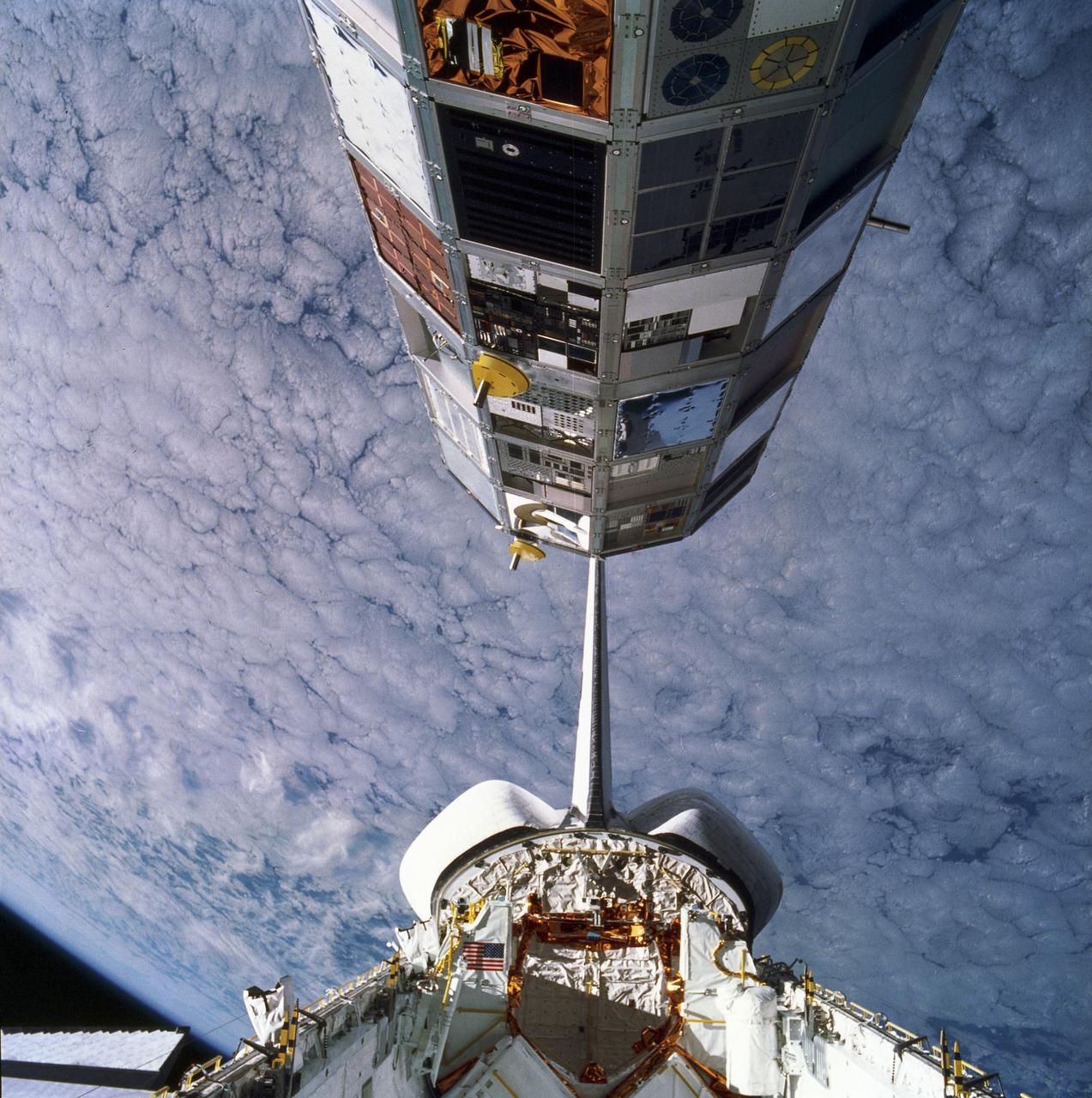
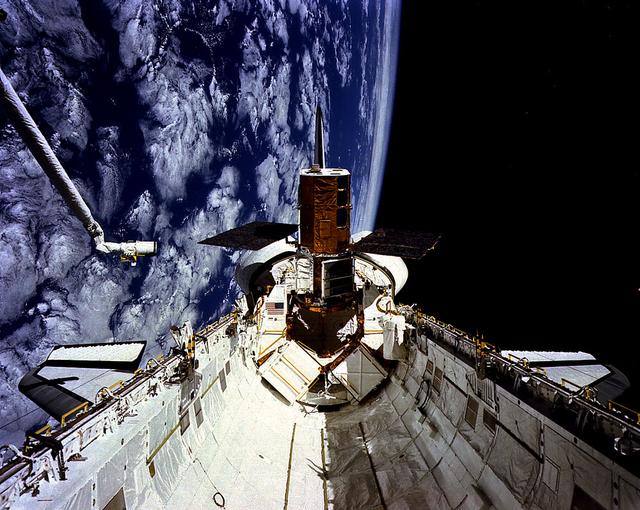
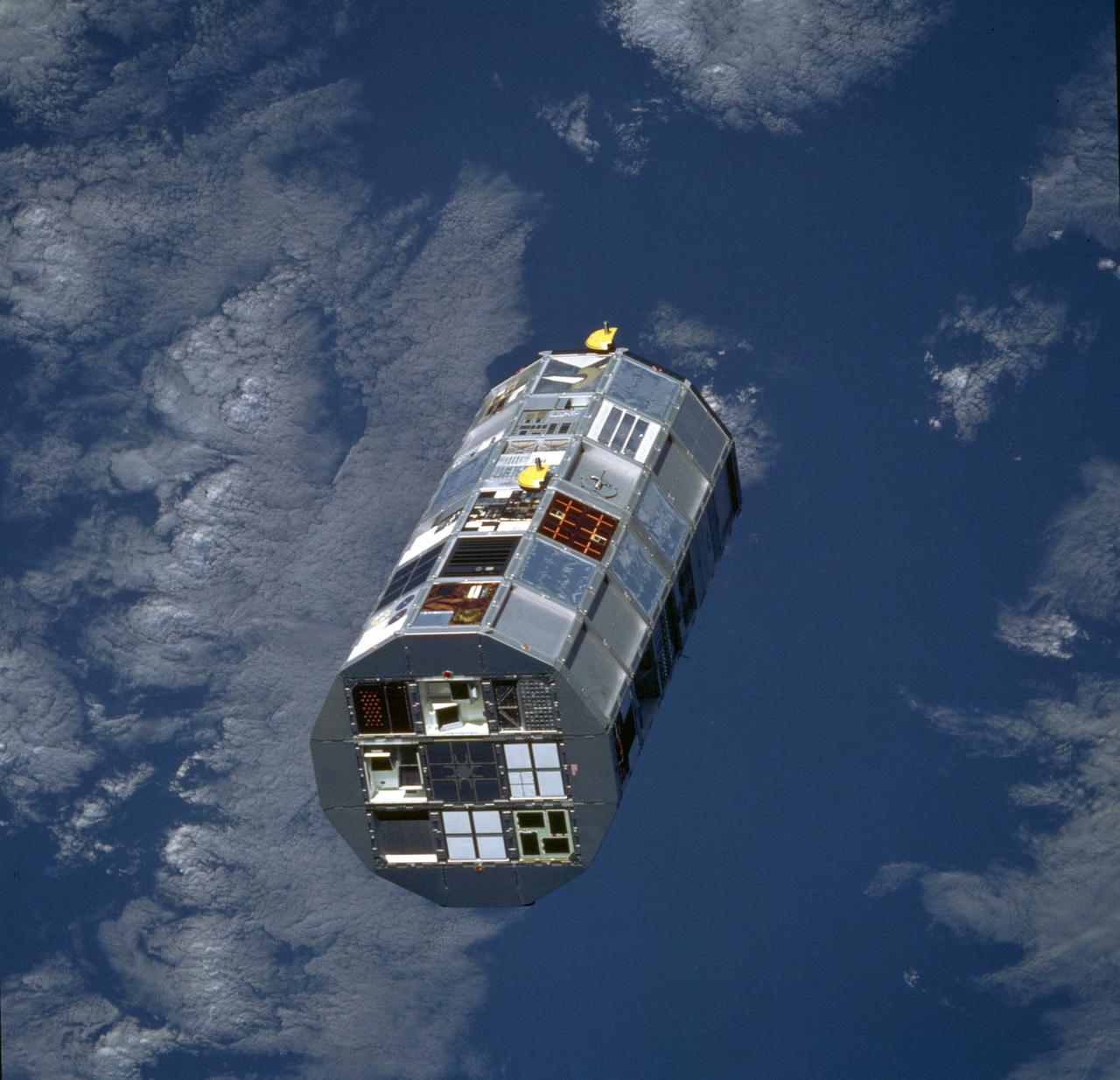
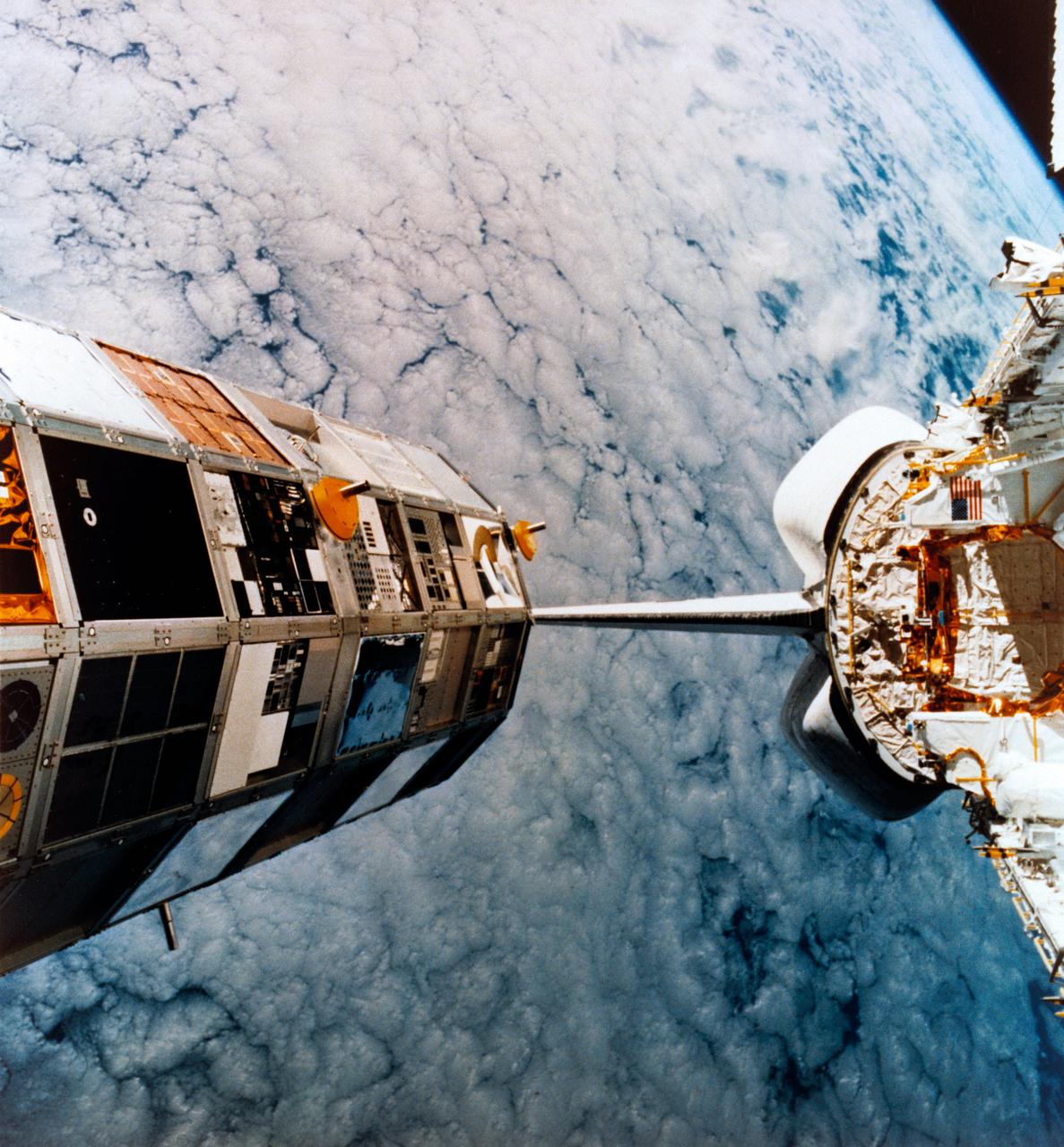
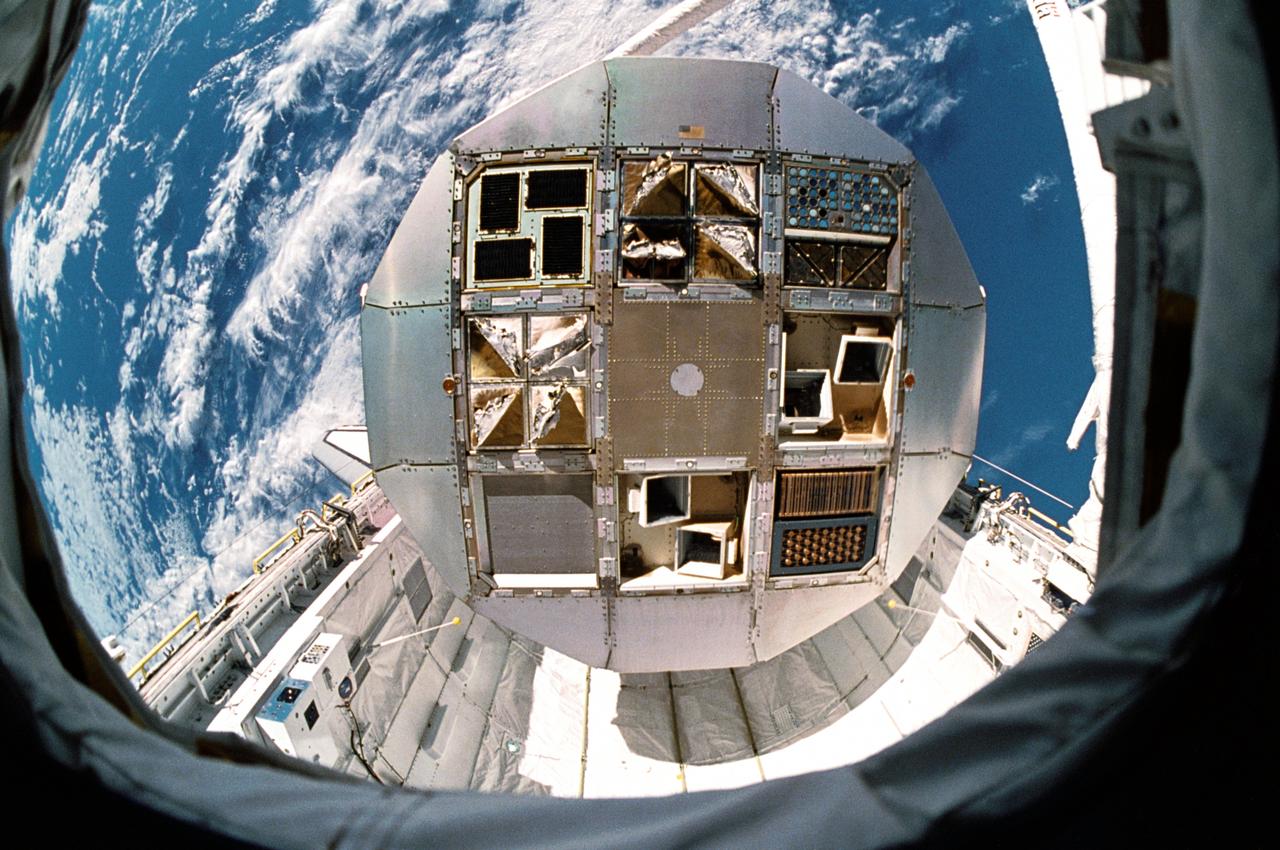
This is an onboard photo of the deployment of the Long Duration Exposure Facility (LDEF) from the cargo bay of the Space Shuttle Orbiter Challenger STS-41C mission, April 7, 1984. After a five year stay in space, the LDEF was retrieved during the STS-32 mission by the Space Shuttle Orbiter Columbia in January 1990 and was returned to Earth for close examination and analysis. The LDEF was designed by the Marshall Space Flight Center (MSFC) to test the performance of spacecraft materials, components, and systems that have been exposed to the environment of micrometeoroids, space debris, radiation particles, atomic oxygen, and solar radiation for an extended period of time. Proving invaluable to the development of both future spacecraft and the International Space Station (ISS), the LDEF carried 57 science and technology experiments, the work of more than 200 investigators, 33 private companies, 21 universities, 7 NASA centers, 9 Department of Defense laboratories, and 8 forein countries.
Space Shuttle Projects
Space Shuttle mission STS-41C onboard view of the revived Solar Maximum Mission Satellite (SMMS). As part of the mission the crew demonstrated the capability of the shuttle to rendezvous, service, check-out and deploy an on-orbit satellite. Also as part of the redeployment, the SMMS was fitted with a Long Duration Exposure Facility (LDEF), which provides accommodations for experiments requiring long-term exposure to the space environment. the STS-41C mission was launched aboard the Space Shuttle Orbitor Challenger on April 6, 1984.
Space Shuttle Project
The Long Duration Exposure Facility (LDEF) was designed by the Marshall Space Flight Center (MSFC) to test the performance of spacecraft materials, components, and systems that have been exposed to the environment of micrometeoroids and space debris for an extended period of time. The LDEF proved invaluable to the development of future spacecraft and the International Space Station (ISS). The LDEF carried 57 science and technology experiments, the work of more than 200 investigators. MSFC`s experiments included: Trapped Proton Energy Determination to determine protons trapped in the Earth's magnetic field and the impact of radiation particles; Linear Energy Transfer Spectrum Measurement Experiment which measures the linear energy transfer spectrum behind different shielding configurations; Atomic oxygen-Simulated Out-gassing, an experiment that exposes thermal control surfaces to atomic oxygen to measure the damaging out-gassed products; Thermal Control Surfaces Experiment to determine the effects of the near-Earth orbital environment and the shuttle induced environment on spacecraft thermal control surfaces; Transverse Flat-Plate Heat Pipe Experiment, to evaluate the zero-gravity performance of a number of transverse flat plate heat pipe modules and their ability to transport large quantities of heat; Solar Array Materials Passive LDEF Experiment to examine the effects of space on mechanical, electrical, and optical properties of lightweight solar array materials; and the Effects of Solar Radiation on Glasses. Launched aboard the Space Shuttle Orbiter Challenger's STS-41C mission April 6, 1984, the LDEF remained in orbit for five years until January 1990 when it was retrieved by the Space Shuttle Orbiter Columbia STS-32 mission and brought back to Earth for close examination and analysis.
Space Shuttle Projects
A long-exposure view of the mobile launcher at NASA's Kennedy Space Center in Florida. Cranes and rigging are being used to lift the bracket for the Orion Service Module Umbilical (OSMU) up for installation on the mobile launcher tower. The tower will be equipped with a number of lines, called umbilicals, that will connect to the Space Launch System rocket and Orion spacecraft for Exploration Mission-1 (EM-1). The OSMU will be located high on the mobile launcher tower and, prior to launch, will transfer liquid coolant for the electronics and air for the Environmental Control System to the Orion service module that houses these critical systems to support the spacecraft. EM-1 is scheduled to launch in 2018. The Ground Systems Development and Operations Program is overseeing installation of the umbilicals.
Long Exposure Photos of Mobile Launcher
A long-exposure view of the mobile launcher at NASA's Kennedy Space Center in Florida. Cranes and rigging are being used to lift the bracket for the Orion Service Module Umbilical (OSMU) up for installation on the mobile launcher tower. The tower will be equipped with a number of lines, called umbilicals, that will connect to the Space Launch System rocket and Orion spacecraft for Exploration Mission-1 (EM-1). The OSMU will be located high on the mobile launcher tower and, prior to launch, will transfer liquid coolant for the electronics and air for the Environmental Control System to the Orion service module that houses these critical systems to support the spacecraft. EM-1 is scheduled to launch in 2018. The Ground Systems Development and Operations Program is overseeing installation of the umbilicals.
Long Exposure Photos of Mobile Launcher
A long-exposure view of the mobile launcher at NASA's Kennedy Space Center in Florida. Cranes and rigging are being used to lift the bracket for the Orion Service Module Umbilical (OSMU) up for installation on the mobile launcher tower. The tower will be equipped with a number of lines, called umbilicals, that will connect to the Space Launch System rocket and Orion spacecraft for Exploration Mission-1 (EM-1). The OSMU will be located high on the mobile launcher tower and, prior to launch, will transfer liquid coolant for the electronics and air for the Environmental Control System to the Orion service module that houses these critical systems to support the spacecraft. EM-1 is scheduled to launch in 2018. The Ground Systems Development and Operations Program is overseeing installation of the umbilicals.
Long Exposure Photos of Mobile Launcher
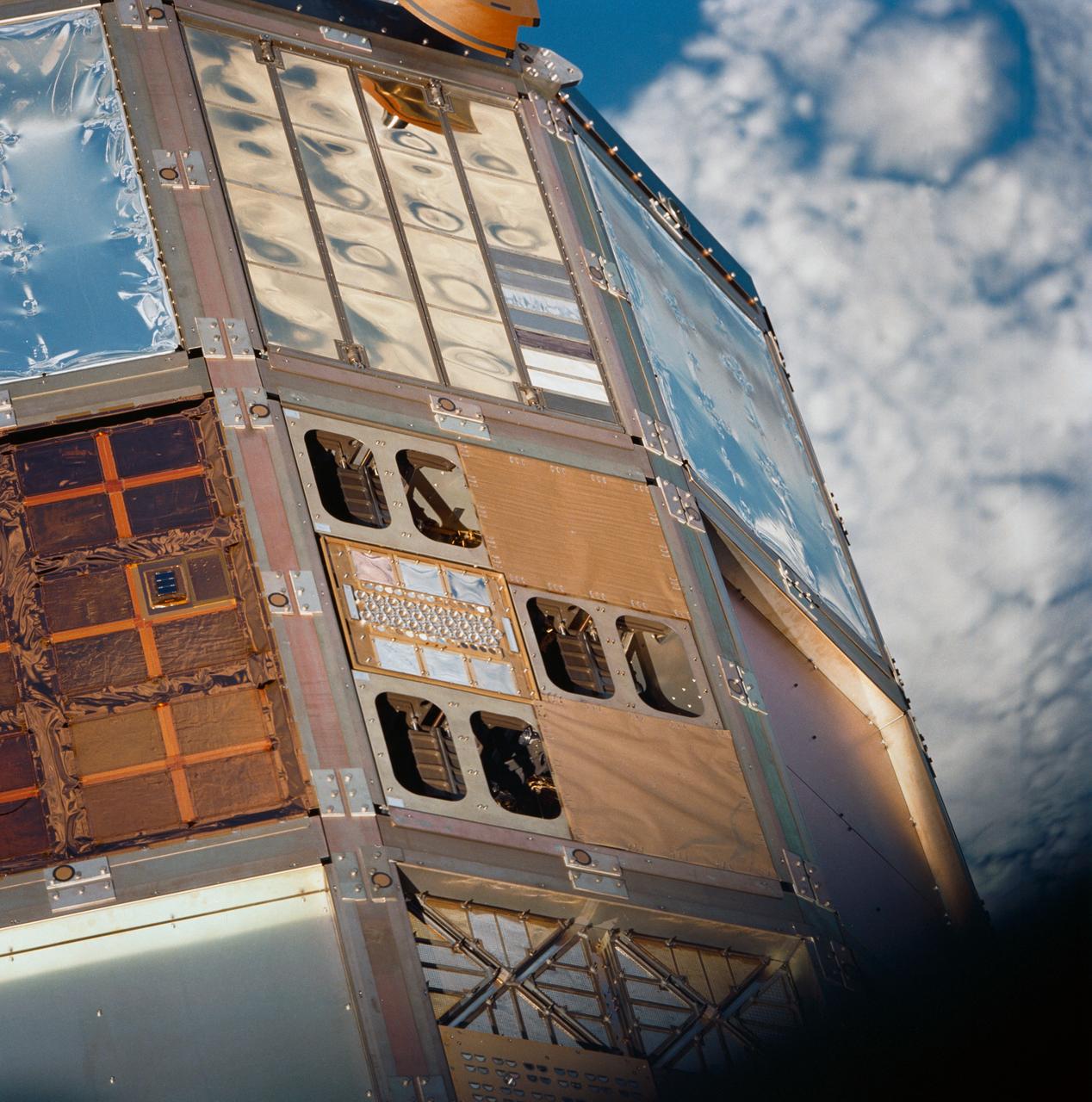
Closeup of Long Duration Exposure Facility (LDEF) experiment trays is documented during STS-32 retrieval activity and photo survey conducted by crewmembers onboard Columbia, Orbiter Vehicle (OV) 102. Partially visible is the Polymer Matrix Composite Materials Experiment. In the background is the surface of the Earth.
Closeup of LDEF experiment trays documented during STS-32 photo survey
Photo from Space Shuttle Mission 41-C of the Long Duration Exposure Facility (LDEF) deploy by CHALLENGER and a Langley Research Center (LRC) supplied art concept of the LDEF recovery by COLUMBIA during Space Shuttle Mission STS-32. LRC # L-89-11-720 for JSC # S89-50779
Photo from Space Shuttle Mission 41-C of the Long Duration Exposure
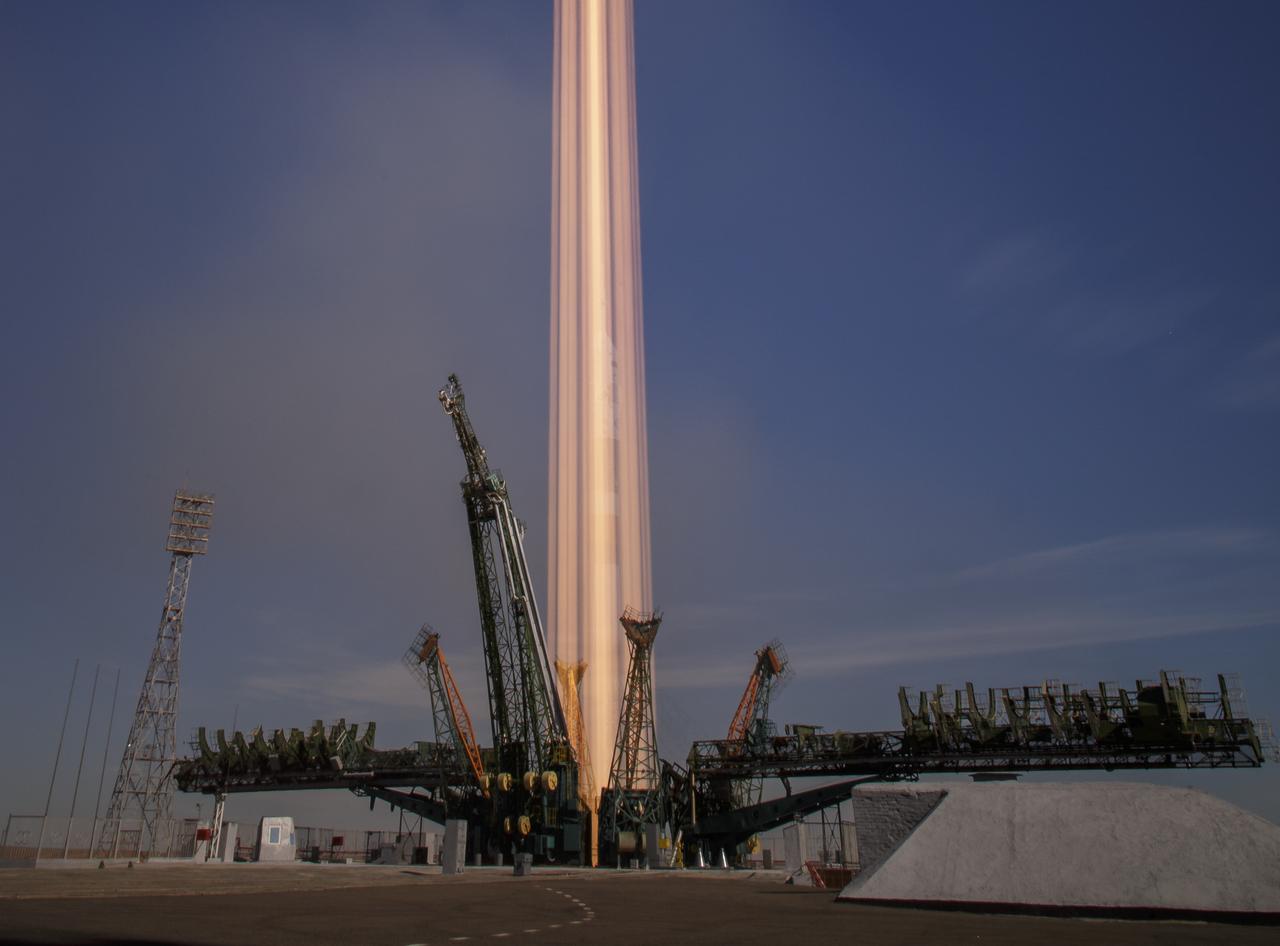
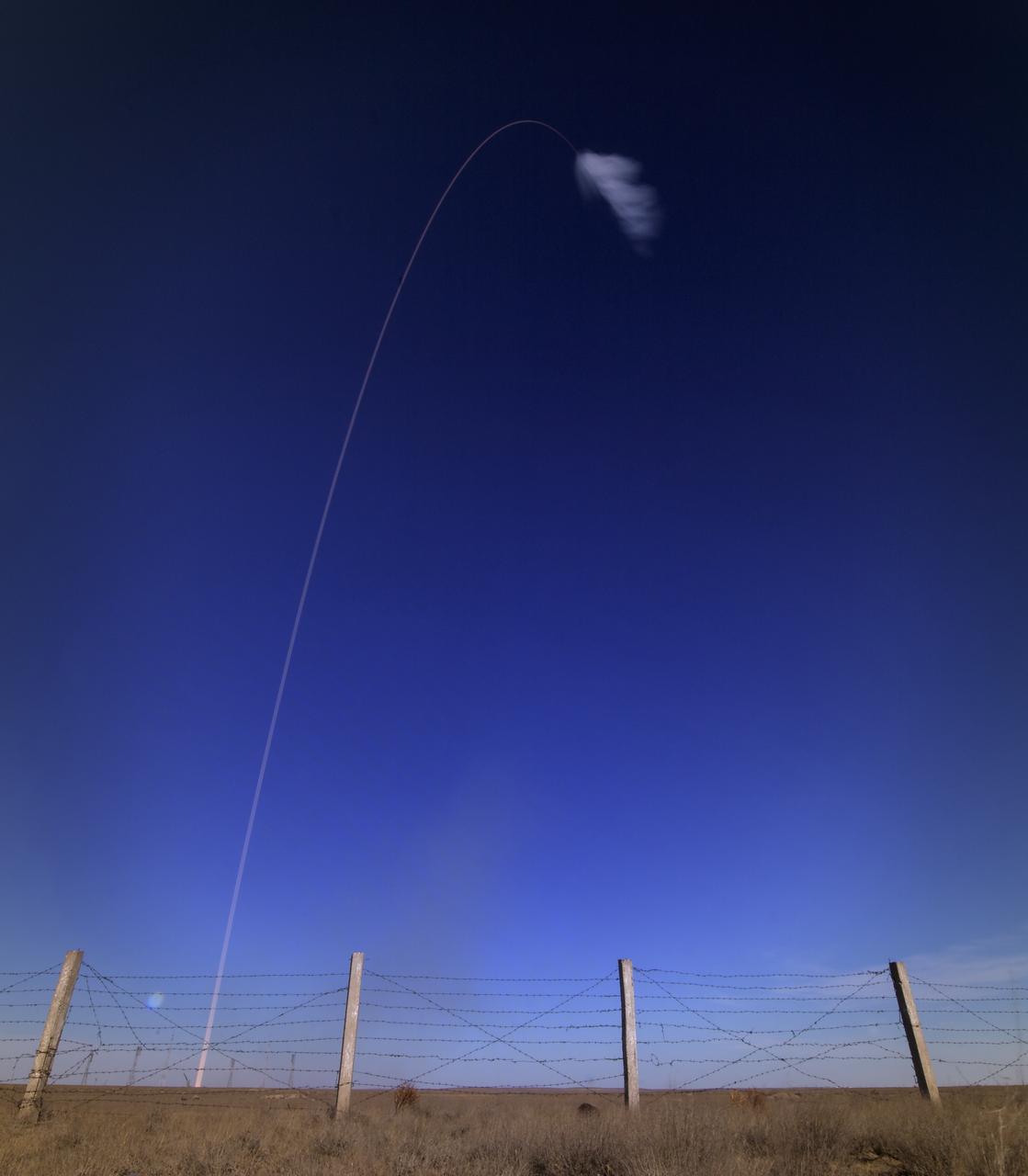
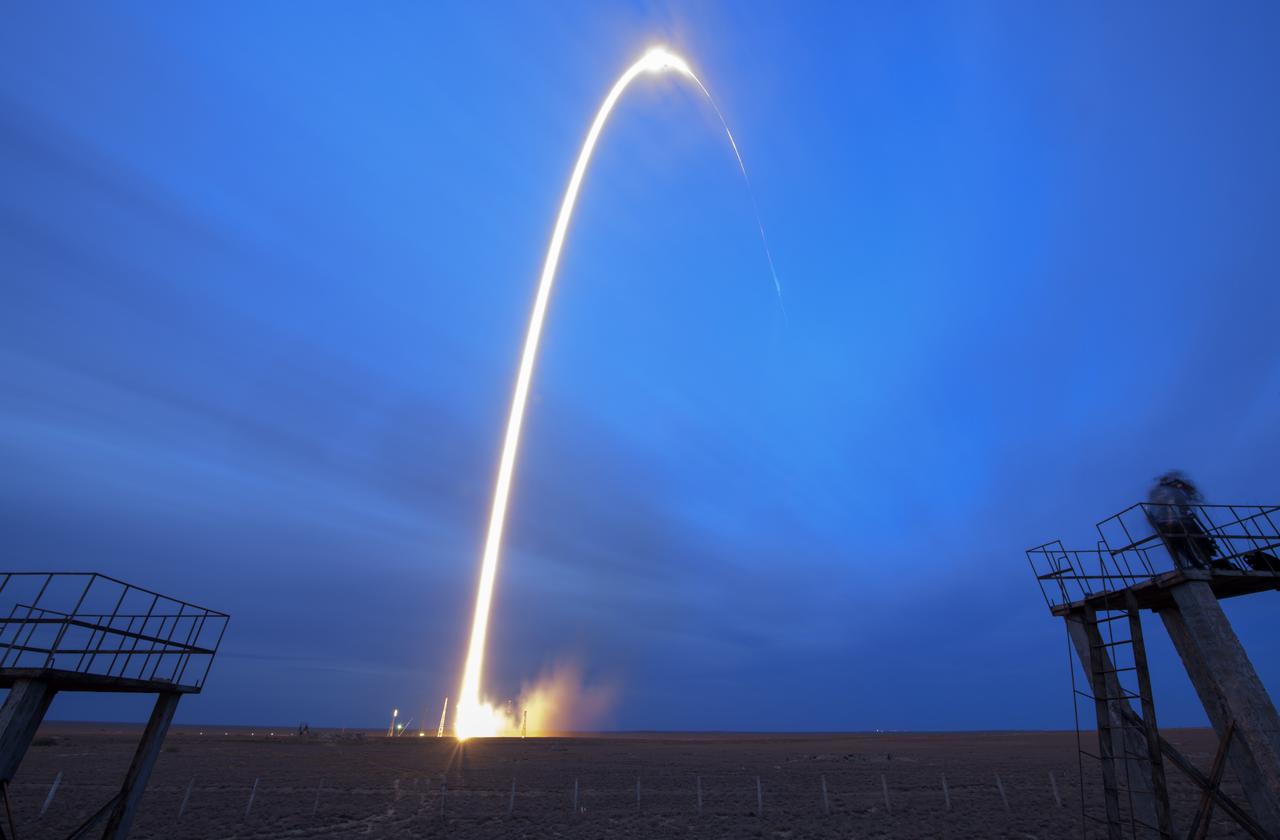
The Soyuz MS-10 spacecraft is seen in this long exposure photograph as it launched with Expedition 57 Flight Engineer Nick Hague of NASA and Flight Engineer Alexey Ovchinin of Roscosmos, Thursday, Oct. 11, 2018 at the Baikonur Cosmodrome in Kazakhstan.  During the Soyuz spacecraft's climb to orbit, an anomaly occurred, resulting in an abort downrange. The crew was quickly recovered and is in good condition. Photo Credit: (NASA/Bill Ingalls)
Expedition 57 Launch
The Soyuz MS-10 spacecraft is seen in this long exposure photograph as it launched with Expedition 57 Flight Engineer Nick Hague of NASA and Flight Engineer Alexey Ovchinin of Roscosmos, Thursday, Oct. 11, 2018 at the Baikonur Cosmodrome in Kazakhstan.  During the Soyuz spacecraft's climb to orbit, an anomaly occurred, resulting in an abort downrange. The crew was quickly recovered and is in good condition. Photo Credit: (NASA/Bill Ingalls)
Expedition 57 Launch
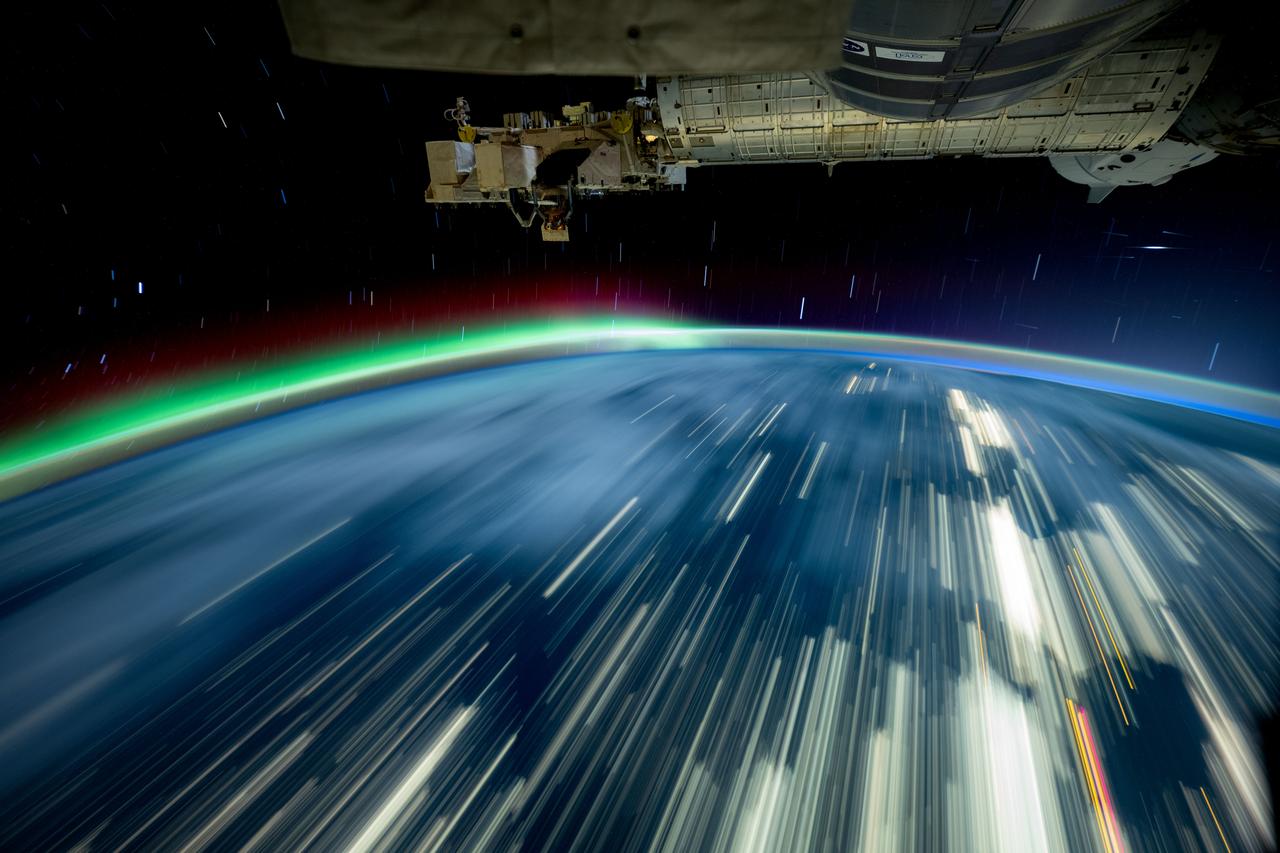
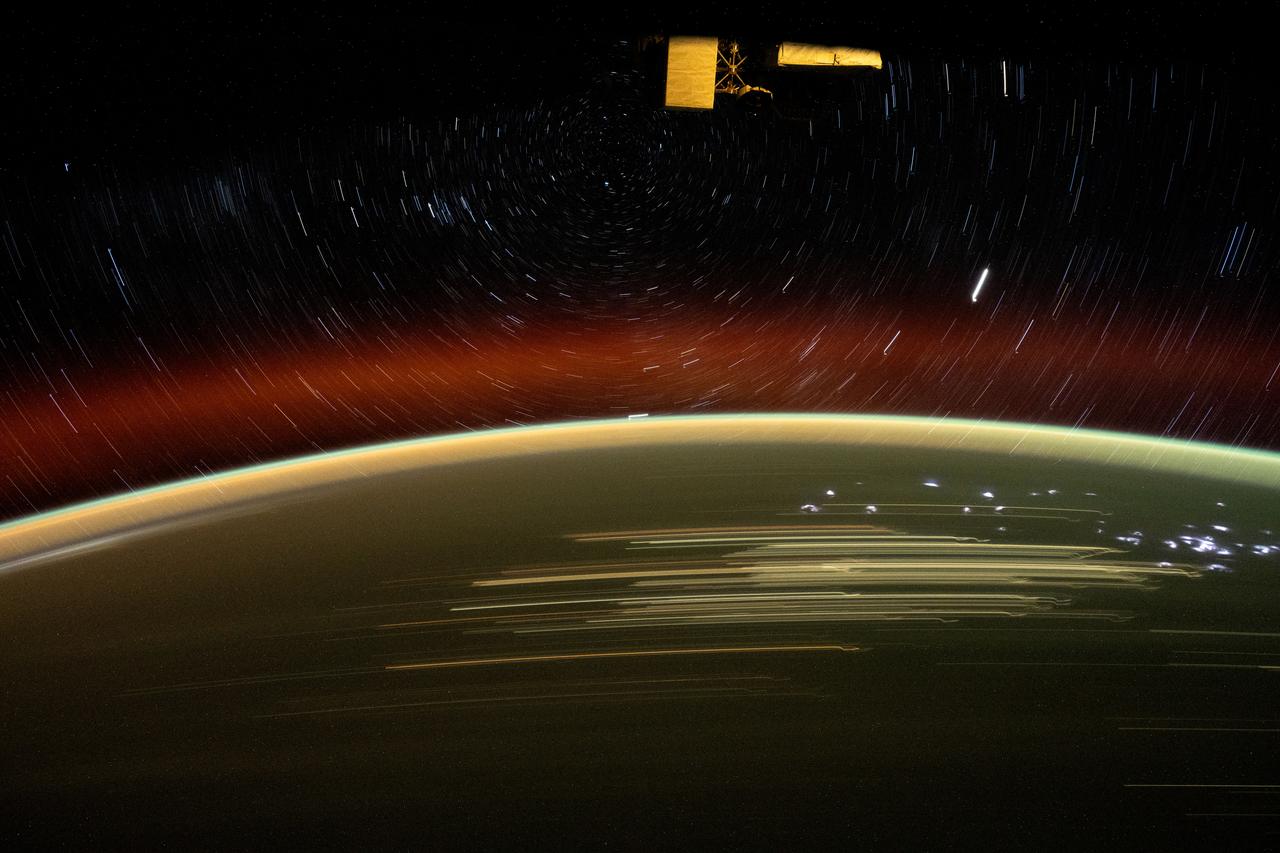
iss072e097446 (Oct. 24, 2024) -- As the International Space Station soared 257 miles above Lake Michigan, NASA astronaut and Expedition 72 Flight Engineer Don Pettit captured this long-exposure photograph of city lights streaking across Earth while a green and red aurora moved through the atmosphere.
A long-exposure shot as the International Space Station soared 257 miles above Lake Michigan
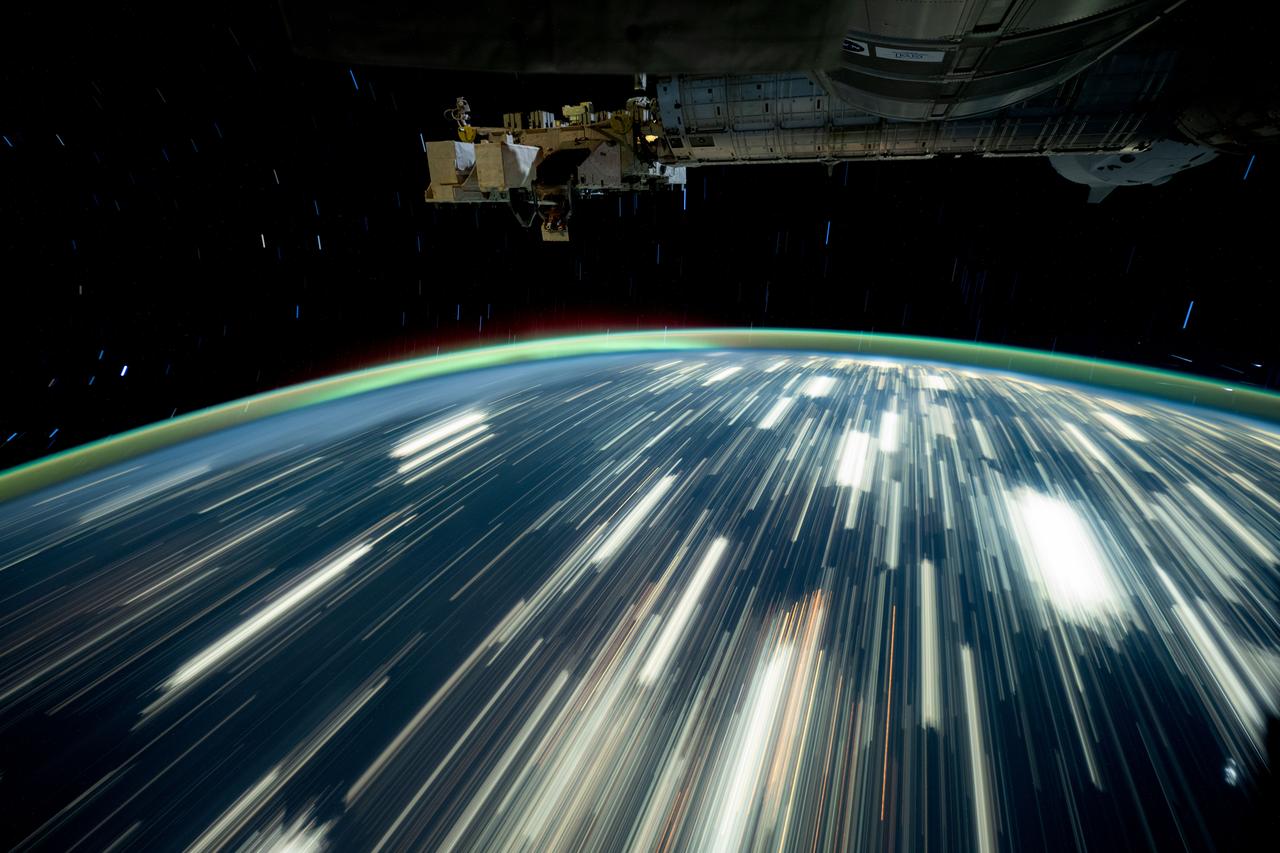
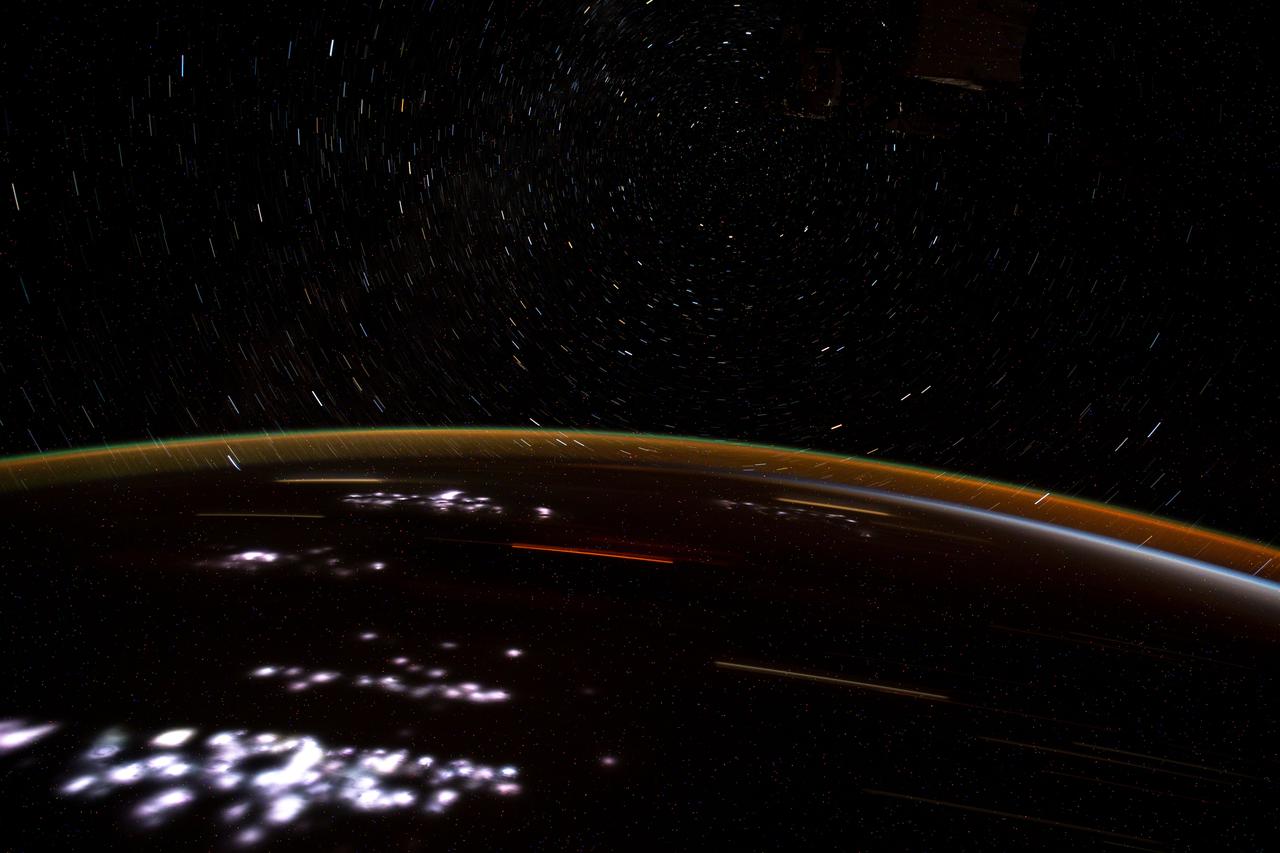
iss072e097437 (Oct. 24, 2024) -- As the International Space Station soared 257 miles above northern Mexico, NASA astronaut and Expedition 72 Flight Engineer Don Pettit captured this long-exposure photograph of city lights streaking across Earth while a green atmospheric glow crowned the horizon.
A long-exposure shot as the International Space Station soared 257 miles above northern Mexico
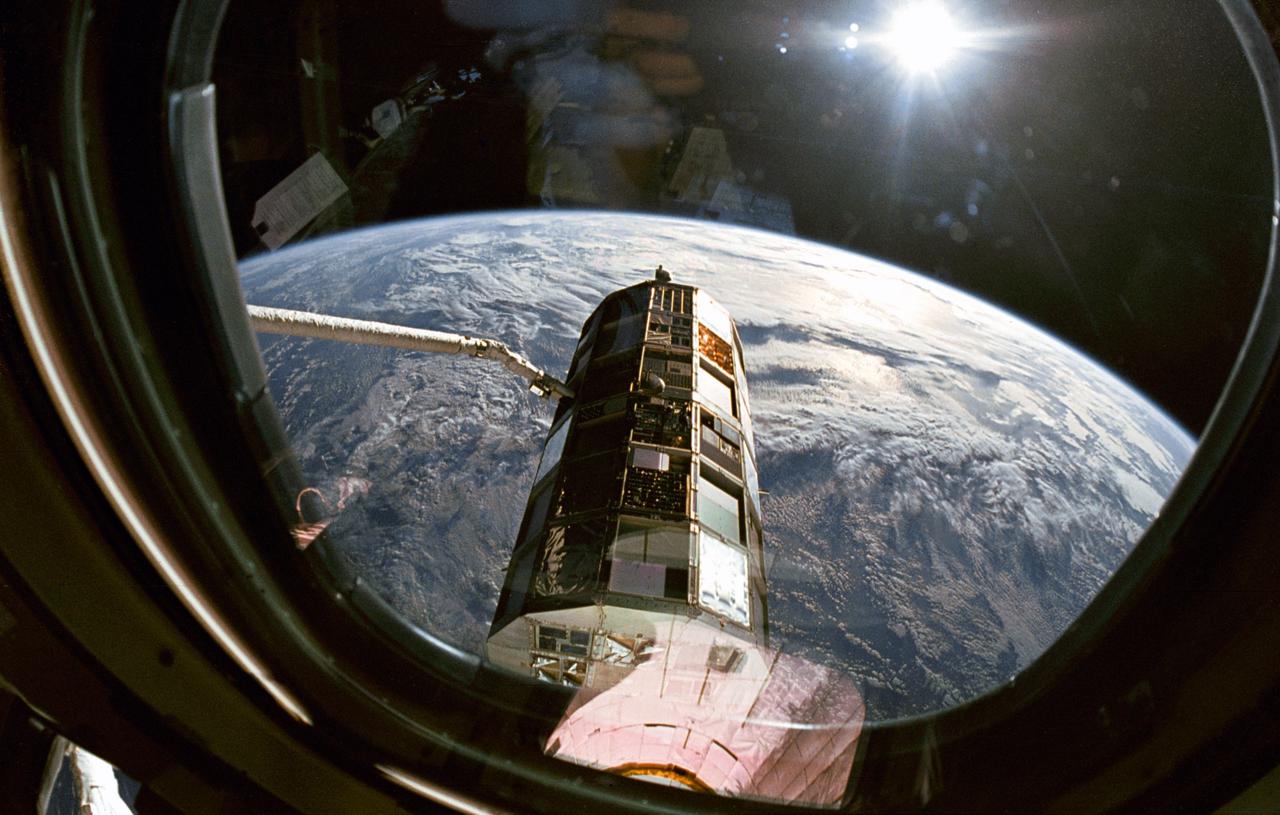
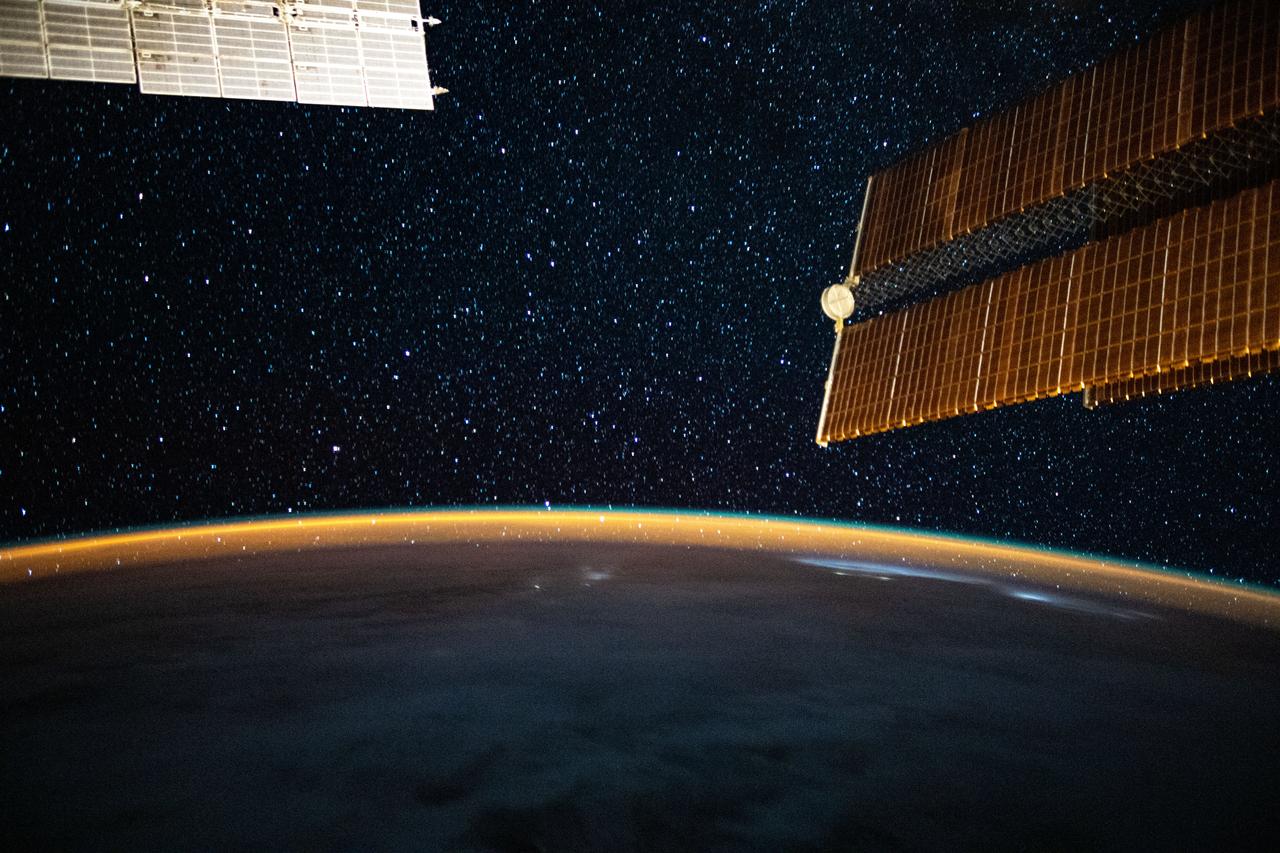
This view taken through overhead window W7 on Columbia's, Orbiter Vehicle (OV) 102's, aft flight deck shows the Long Duration Exposure Facility (LDEF) in the grasp of the remote manipulator system (RMS) during STS-32 retrieval activities. Other cameras at eye level were documenting the bus-sized spacecraft at various angles as the RMS manipulated LDEF for a lengthy photo survey. The glaring celestial body in the upper left is the sun with the Earth's surface visible below.
LDEF grappled by remote manipulator system (RMS) during STS-32 retrieval
This image was obtained by NASA's Dawn spacecraft on August 14, 2018 from an altitude of about 1149 miles (1849 kilometers).  The center of Occator Crater seen near the limb is located at about 19.8 degrees north latitude and 239.3 degrees east longitude.  https://photojournal.jpl.nasa.gov/catalog/PIA22764
Occator Crater on Ceres' Limb -- Long Exposure
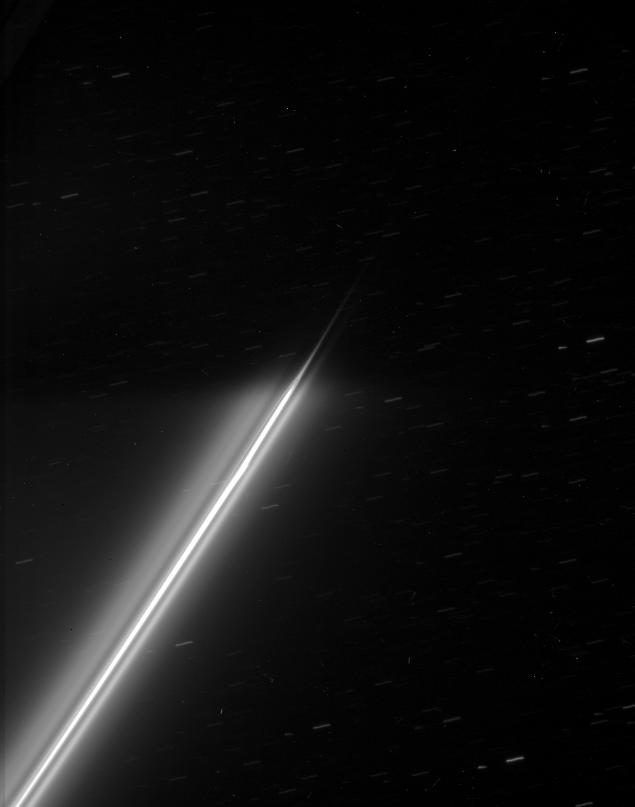
The strands of Saturn F ring disappear into the darkness of the planet shadow. Background stars make trails across the sky during the long exposure
Into the Shadow
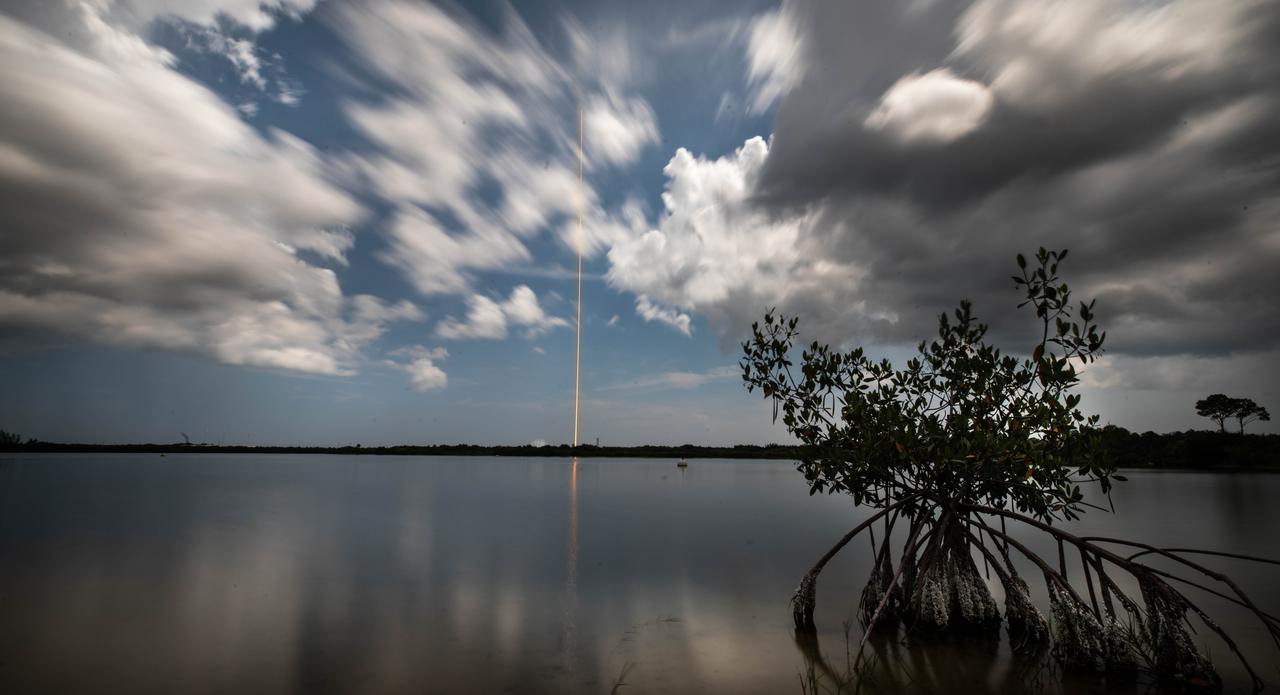
A long exposure image captures the launch of NASA’s SpaceX Crew-11 mission SpaceX Falcon 9 rocket with a Dragon spacecraft at 11:43 a.m. EDT Friday, Aug. 1, 2025, from Launch Complex 39A at Kennedy Space Center in Florida. Crew-11, carrying NASA astronauts Zena Cardman and Mike Fincke, along with JAXA (Japan Aerospace Exploration Agency) astronaut Kimiya Yui and Roscosmos cosmonaut Oleg Platonov, are on their way to the International Space Station for a long duration mission.
SpaceX Crew-11 Launch
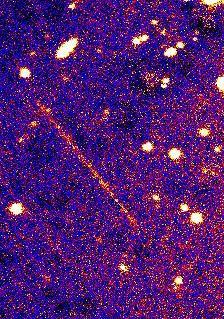
The high speed of NASA Deep Impact spacecraft causes it to appear as a long streak across the sky in the constellation Virgo during the 10-minute exposure time of this photograph taken by Mr. Palomar 200-inch telescope.
Deep Impact on Its Way
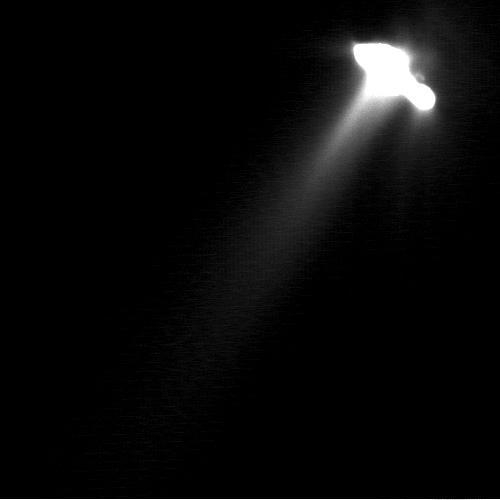
This very long exposure was taken by NASA Deep Space 1 to show detailed structures in the faint parts of comet Borrelly inner coma. As a result, the nucleus has been greatly over-exposed and its shape appears distorted.
Jets on Comet Borrelly
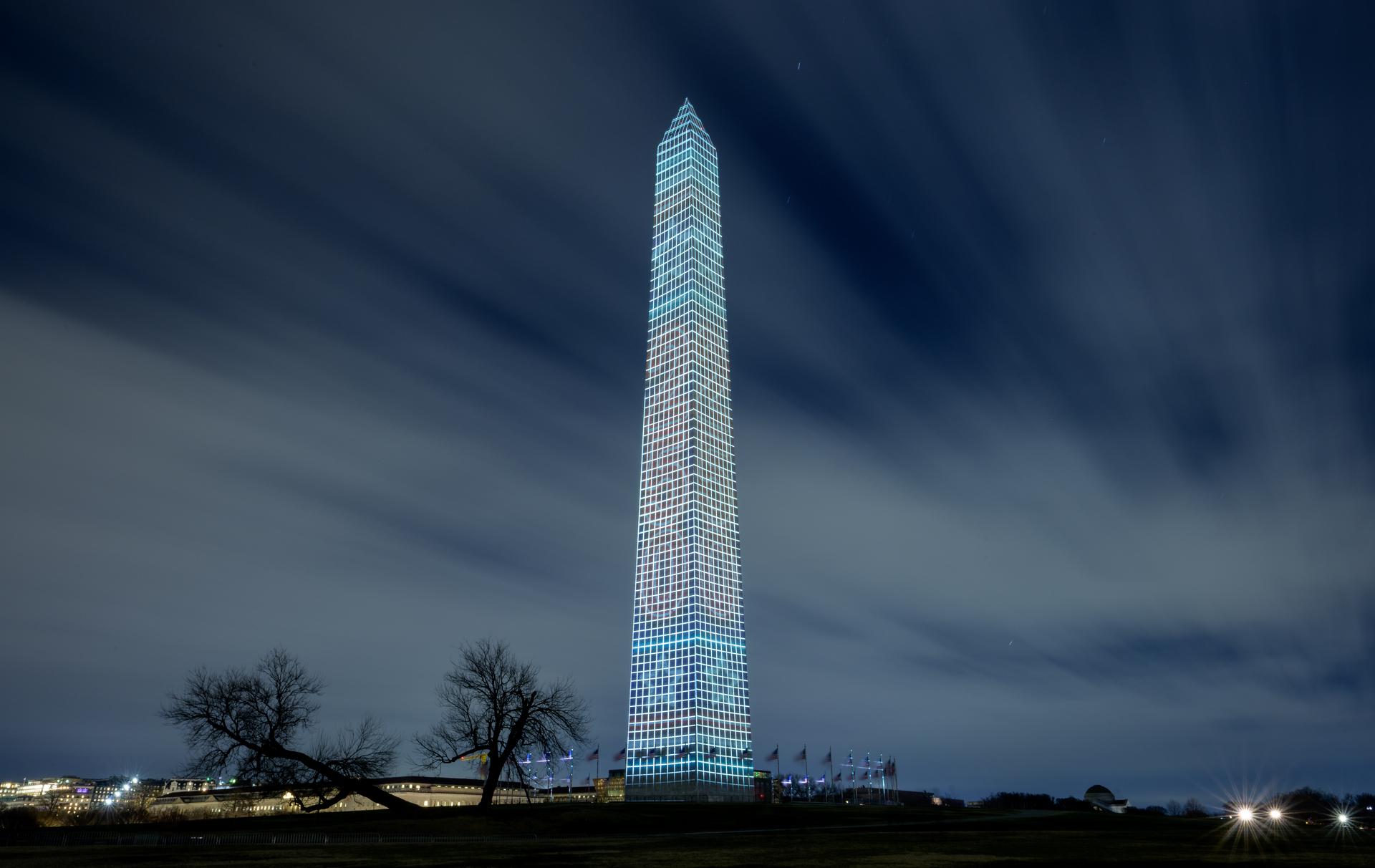
This long-exposure image from NASA Hubble Space Telescope of massive galaxy cluster Abell 2744 is the deepest ever made of any cluster of galaxies. Shown in the foreground is Abell 2744, located in the constellation Sculptor.
Hubble Frontier Field Abell 2744
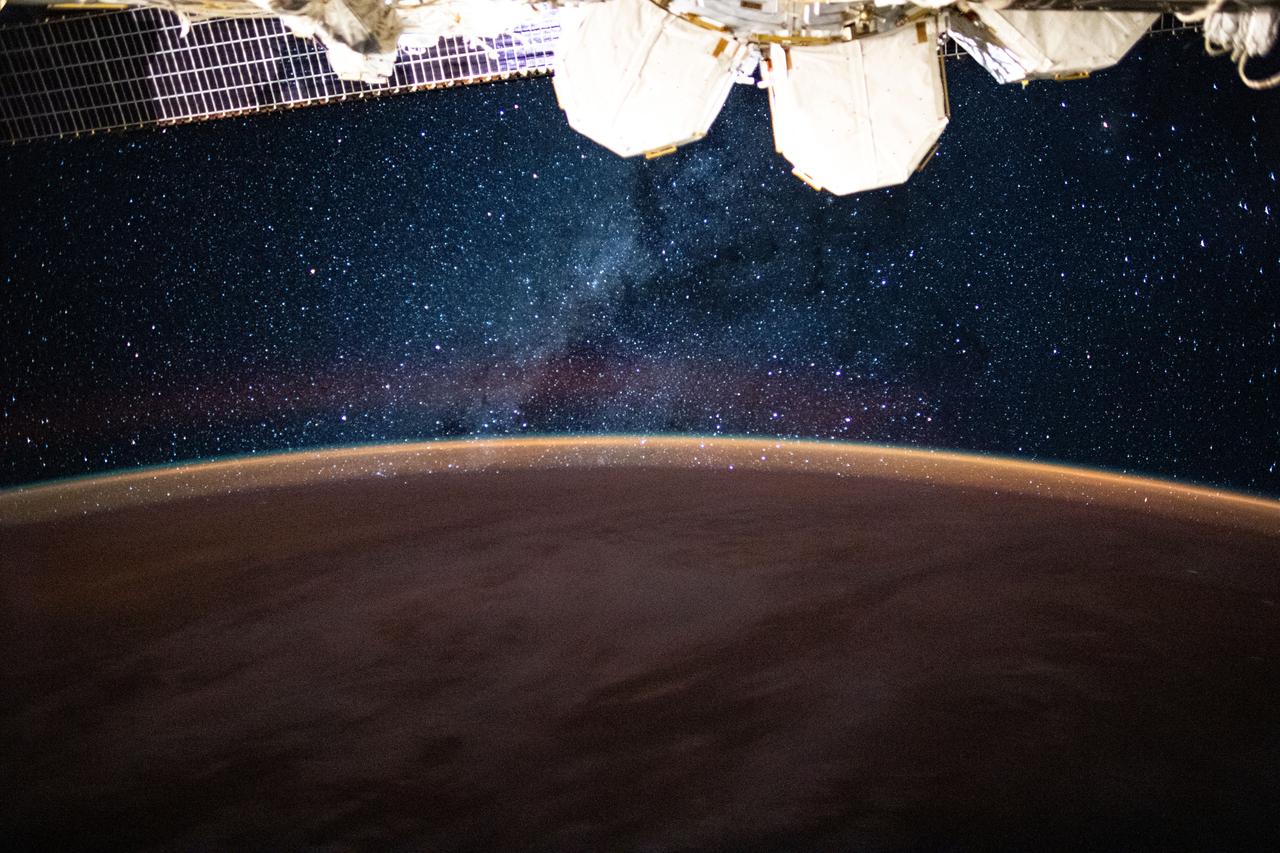
NASA Mars Exploration Rover Opportunity used its panoramic camera to snap pictures of Mars moon Deimos. Three frames were taken with long exposures to measure Deimos position with respect to the background stars.  http://photojournal.jpl.nasa.gov/catalog/PIA12290
Opportunity for Moon-Gazing
Two sets of laser pulses transmitted from Earth to a spacecraft over a distance of 1.4 million kilometers 870,000 miles in a communications experiment are shown in this long-exposure image made by NASA’s Galileo spacecraft imaging system.  http://photojournal.jpl.nasa.gov/catalog/PIA00230
Galileo Optical Experiment GOPEX
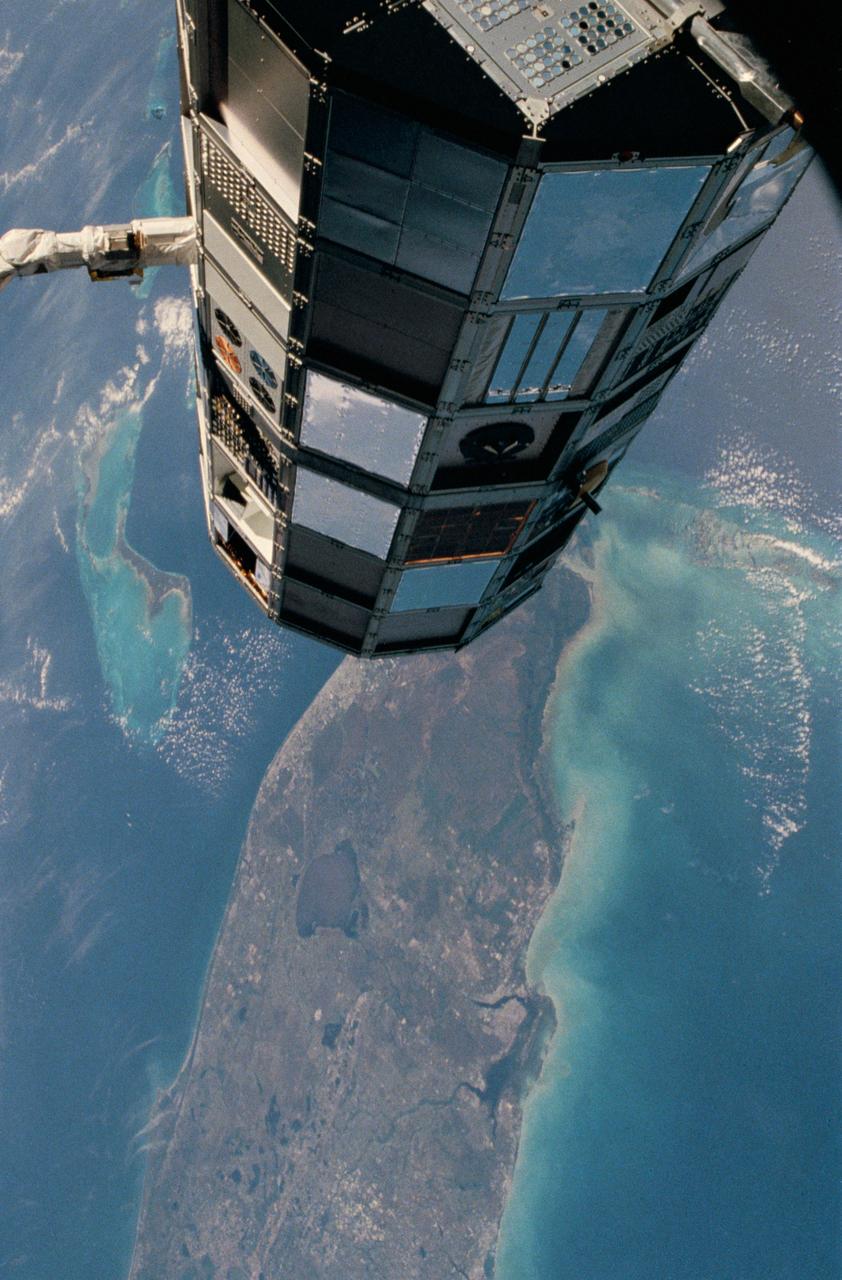
41C-02-067 (6-13 April 1984) --- One of the first major accomplishments of Flight 41-C?s crew aboard the Challenger was to place this giant satellite into Earth orbit.  Still attached to the remote manipulator system (RMS) end effector, the Long-Duration Exposure Facility (LDEF) is backdropped against Florida, the Bahama Bank, the Gulf of Mexico and Atlantic waters.  The multi-colored cylinder carries 50-odd passive scientific experiments representing 194 investigators from around world.  The LDEF program is directed by the Langley Research Center in Hampton, Virginia.  The facility will be retrieved in a little less than a year by a Space Shuttle crew.  This frame was one of the visuals used by the 41-C astronauts for their April 24, 1984 post-flight press conference.  Cape Canaveral, where this seven-day mission got its start, and Lake Okeechobee, are easily recognized in the frame, photographed shortly before 11:30 a.m. (CST), April 7, 1984.
The LDEF is placed in orbit by the shuttle Challenger crew
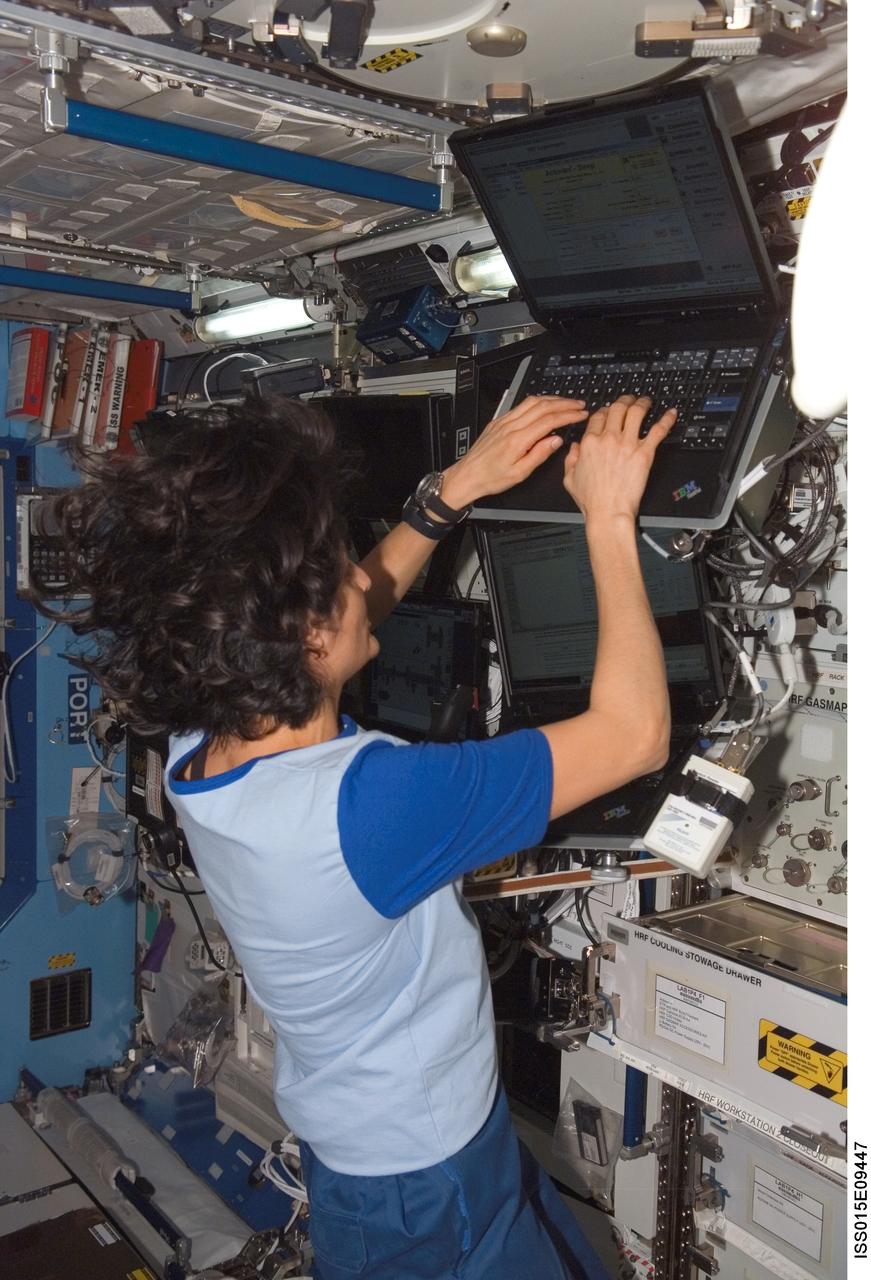
ISS015-E-09447 (24 May 2007) --- Astronaut Sunita L. Williams, Expedition 15 flight engineer, enters data in a computer for the Sleep-Wake Actigraphy and Light Exposure During Spaceflight-Long (Sleep-Long) experiment in the Destiny laboratory of the International Space Station. Sleep-Long will examine the effects of spaceflight and ambient light exposure on the sleep-wake cycles of the crewmembers during long-duration stays on the station.
Williams during Sleep-Long Experiment in the US Lab during Expedition 15
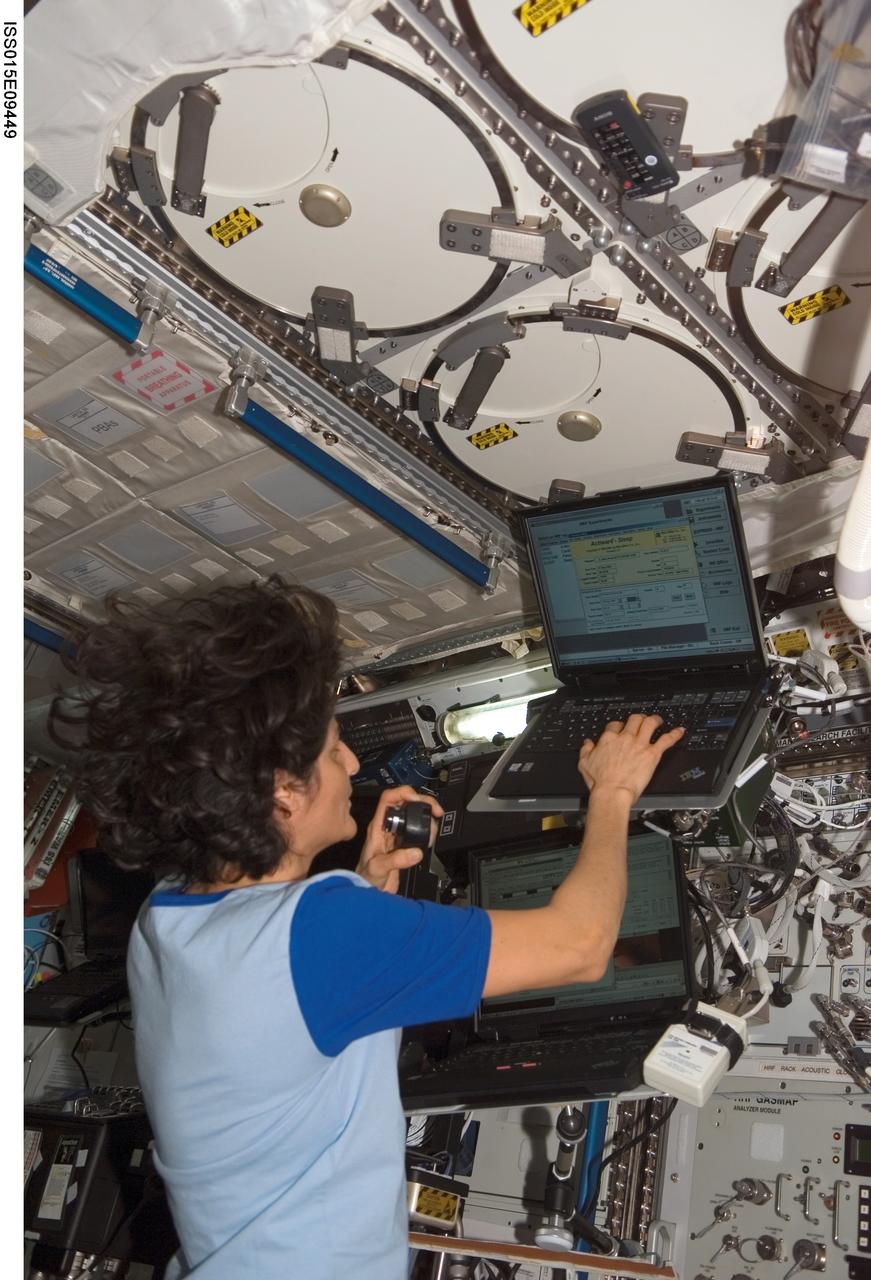
ISS015-E-09449 (24 May 2007) --- Astronaut Sunita L. Williams, Expedition 15 flight engineer, enters data in a computer for the Sleep-Wake Actigraphy and Light Exposure During Spaceflight-Long (Sleep-Long) experiment in the Destiny laboratory of the International Space Station. Sleep-Long will examine the effects of spaceflight and ambient light exposure on the sleep-wake cycles of the crewmembers during long-duration stays on the station.
Williams during Sleep-Long Experiment in the US Lab during Expedition 15
Transferring the Long Duration Exposure Facility (LDEF) into Canister 1 for STS-41C, March 6, 1984
KSC-20110908-PH-DD_payload13
Installing the Long Duration Exposure Facility (LDEF) using the payload strongback, into Canister 1 O&C high bay, March 6, 1984
KSC-20110908-PH-DD_payload15
Earth Observation taken during a night pass by the Expedition 40 crew aboard the International Space Station (ISS). Folder lists this as: Long exposure night shots.
Earth Observation
Installing the Long Duration Exposure Facility (LDEF) using the payload strongback, into Canister 1 O&C high bay, March 6, 1984
KSC-20110908-PH-DD_payload14
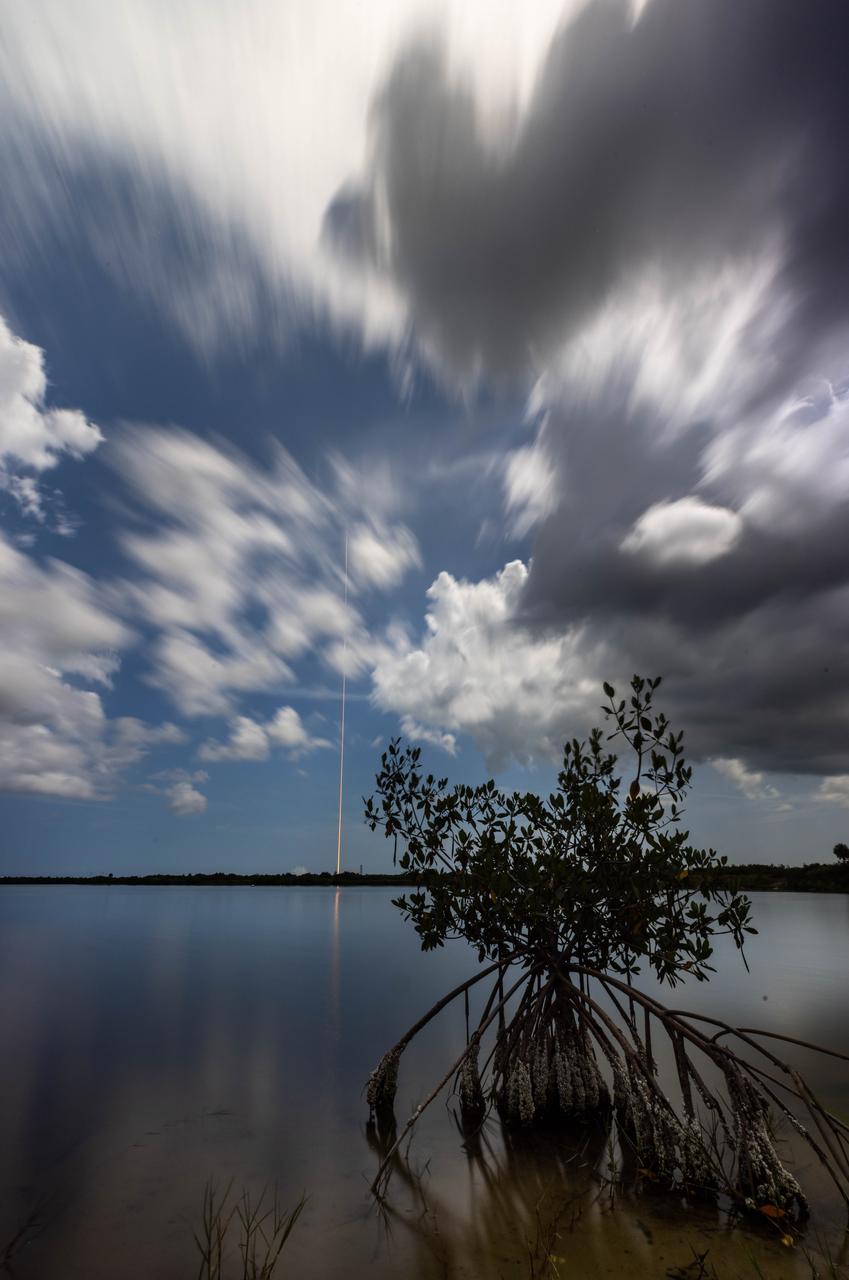
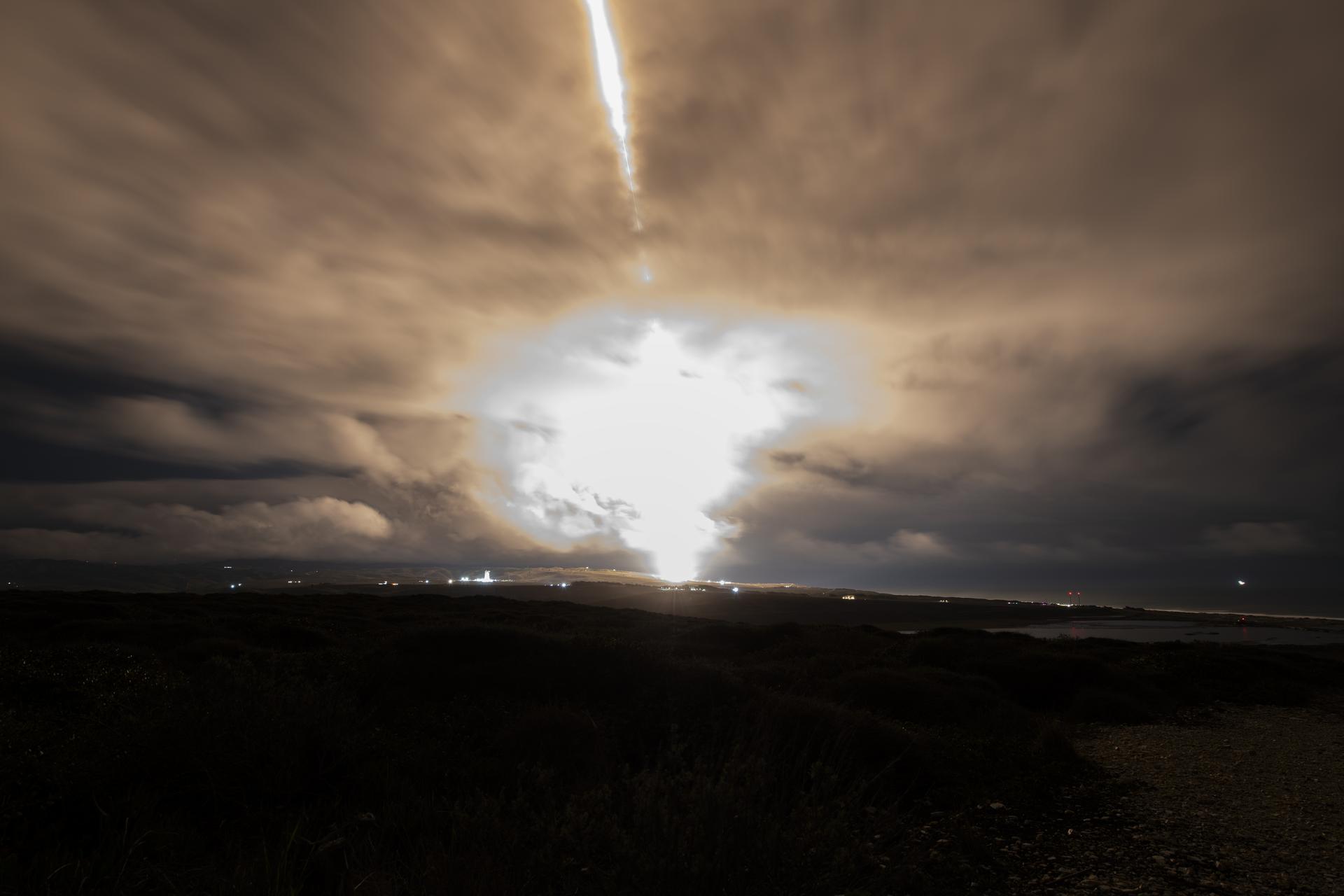
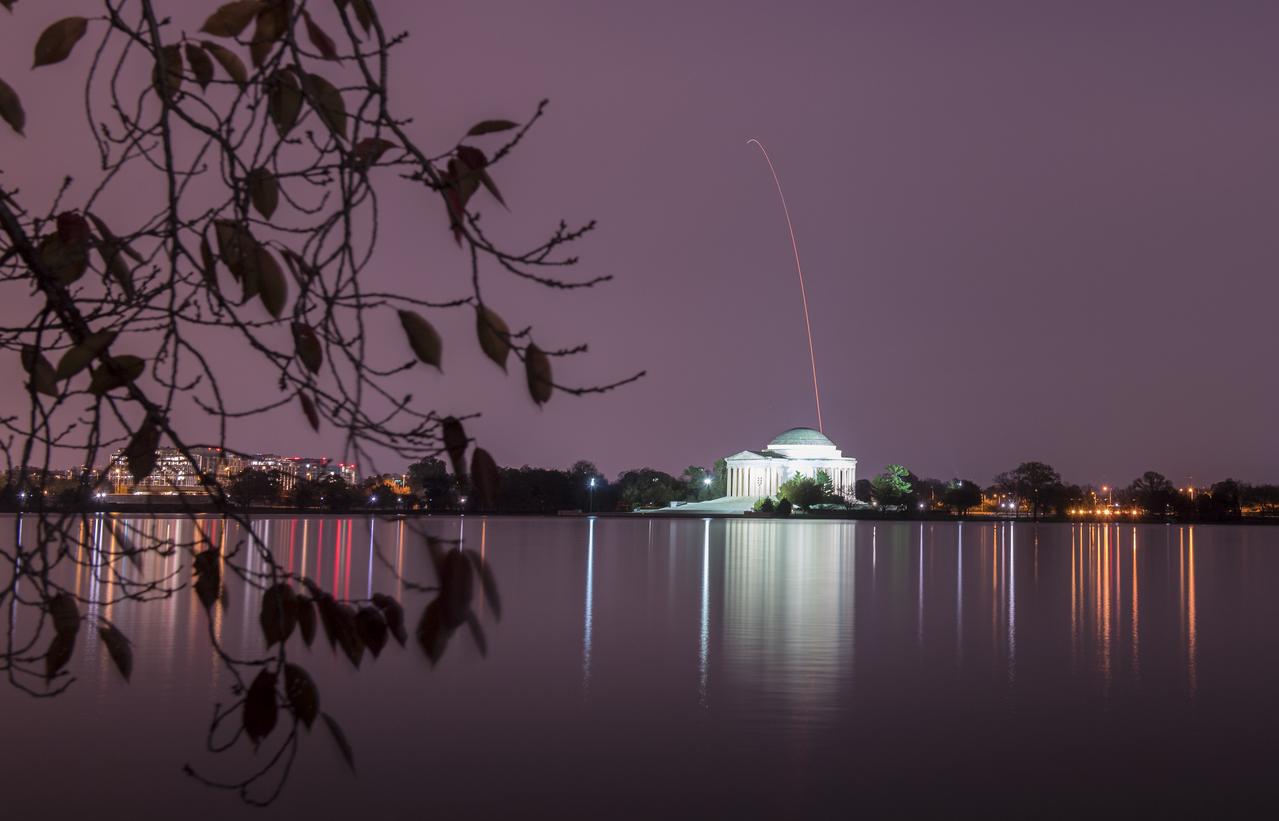
A long exposure photo shows the SpaceX Falcon 9 rocket carrying the internation Sentinel-6B spacecraft lifting off from Space Launch Complex 4 East at Vandenberg Space Force Base in California on Sunday, Nov. 16, 2025. A collaboration between NASA, ESA (European Space Agency), EUMETSAT (European Organisation for the Exploitation of Meteorological Satellites), and the National Oceanic and Atmospheric Administration (NOAA), Sentinel-6B is designed to measure sea levels down to roughly an inch for about 90% of the world’s oceans.
Sentinel Launch-6B Launch
STS032-541-018 (12 Jan 1990) --- One of a number of frames photographed by the STS-32 crew as part of a detailed supplementary objective on documentary still photography.  The DSO was monitored by Astronaut Marsha S. Ivins, mission specialist.  STS032-541-018 Kodak Ektar 25 negative film.  35mm frame of LDEF suspended just over its resting place in cargo bay.  White clouds and blue ocean in foreground.
LDEF positioned by RMS over OV-102's payload during STS-32 retrieval
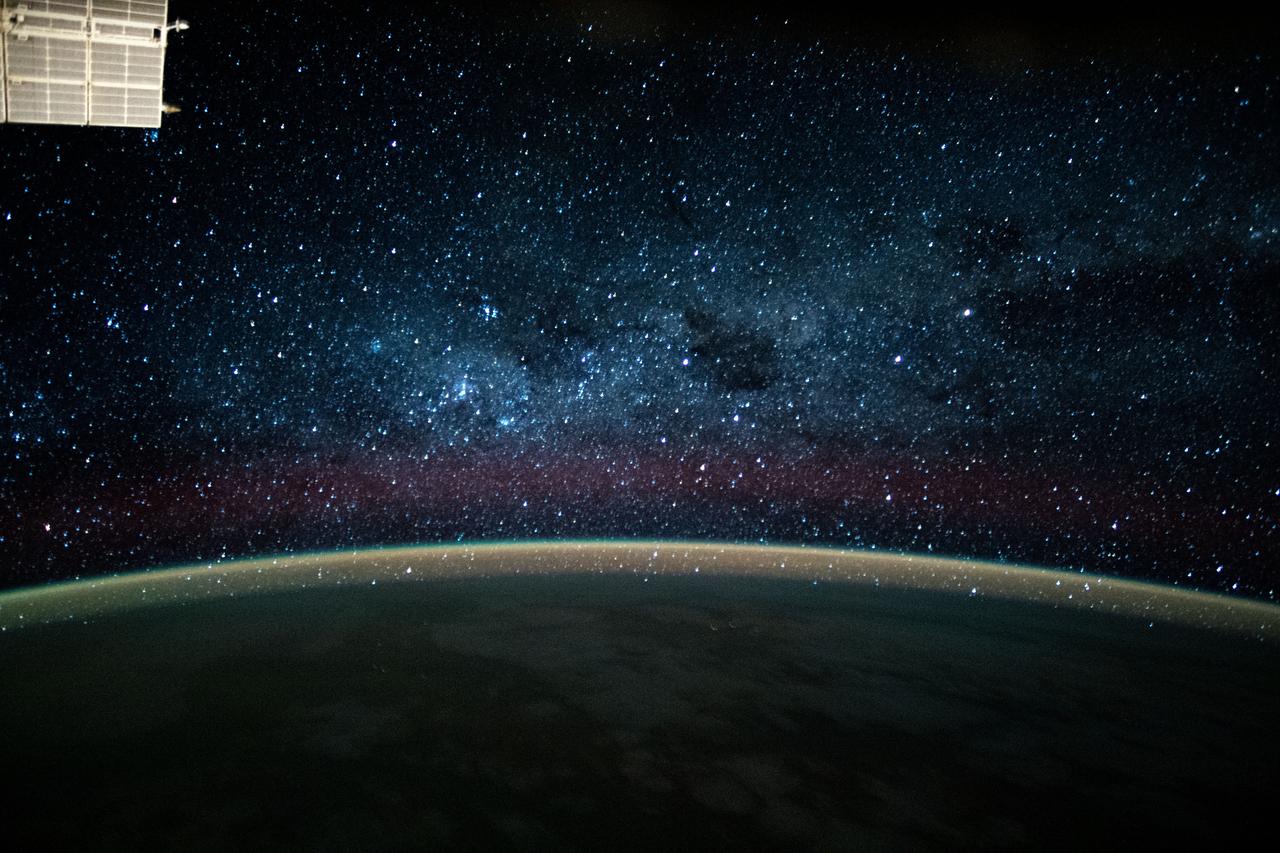
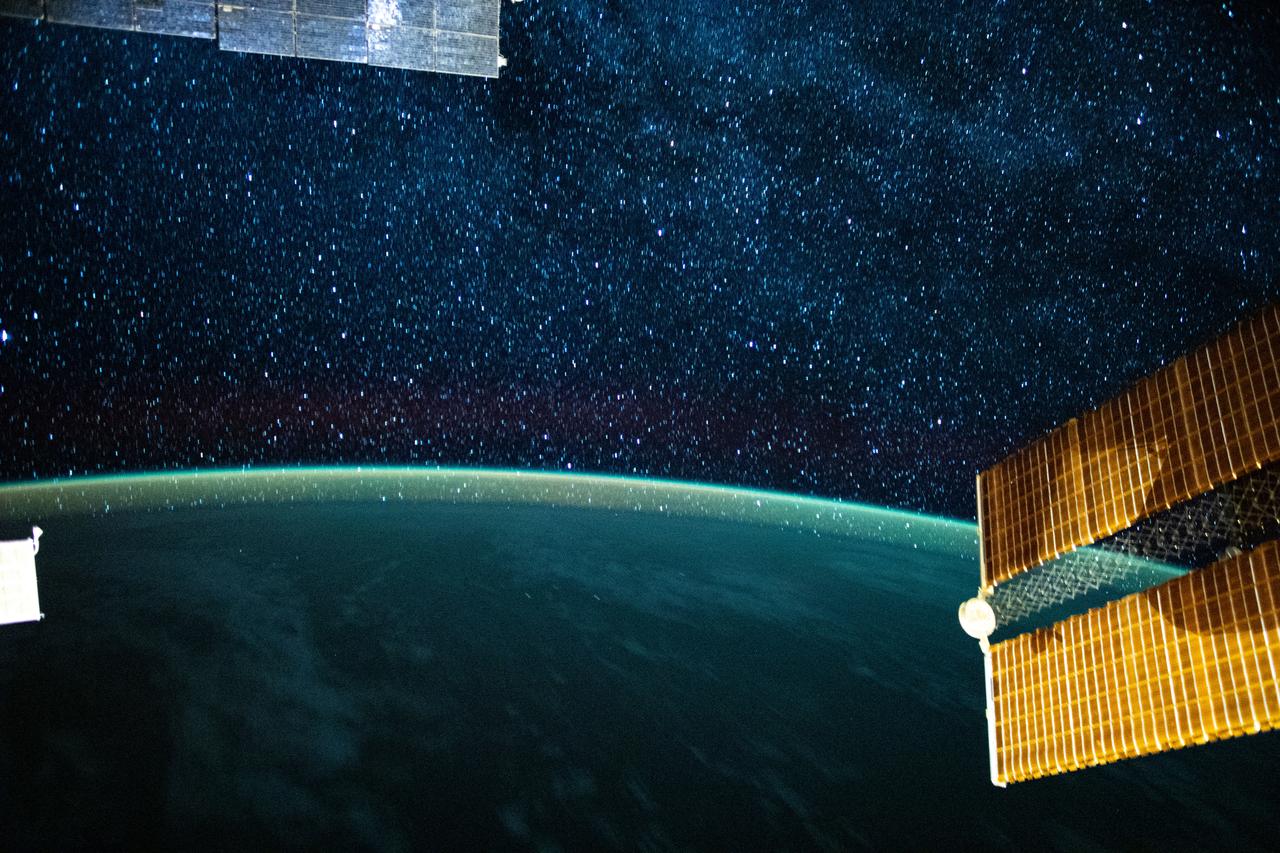
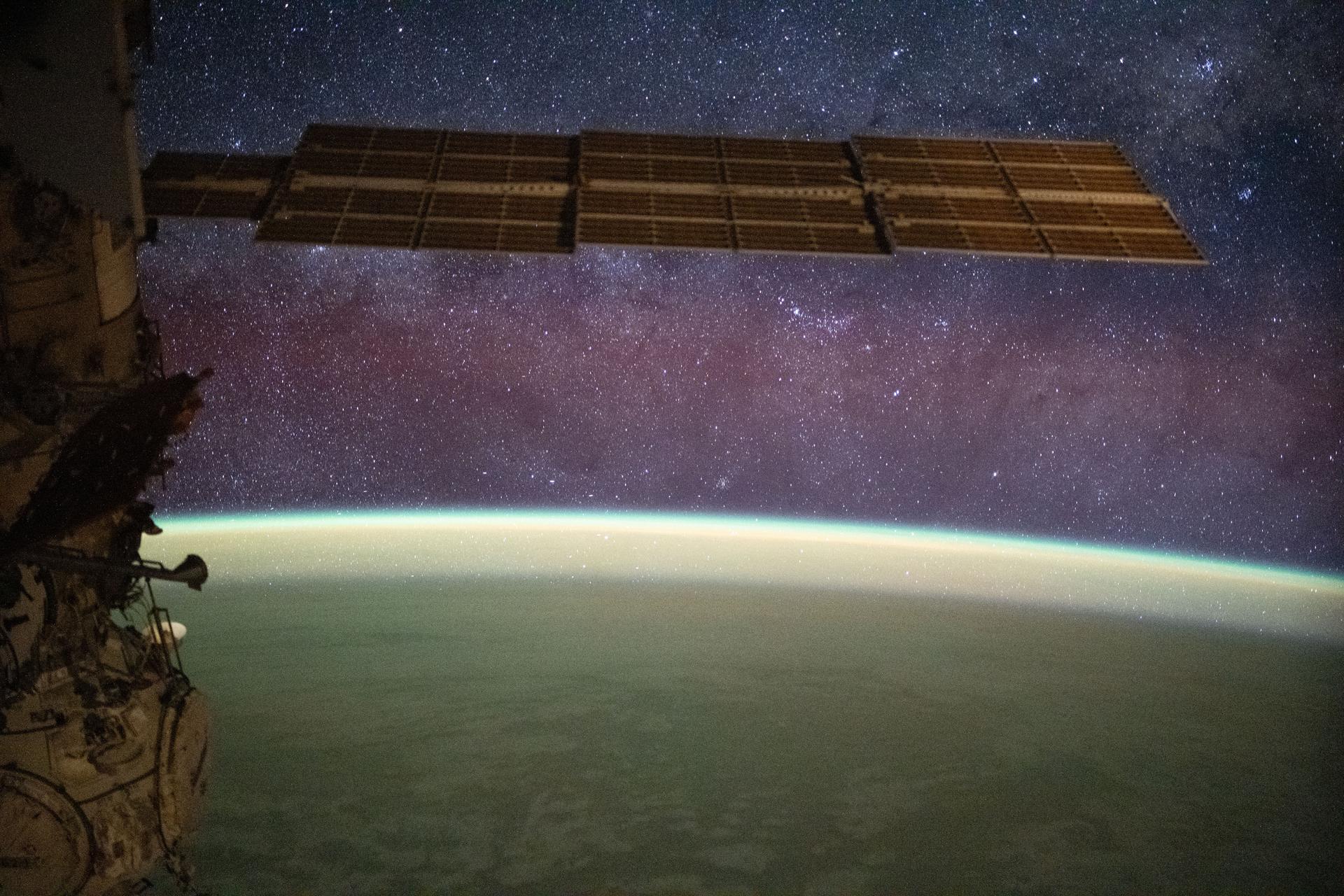
iss063e058409 (July 24, 2020) --- This long-exposure photograph from the International Space Station was taken during an orbital night period and reveals the Milky Way glittering above a bright but exaggerated atmospheric glow blanketing the Earth's horizon.
iss063e058409
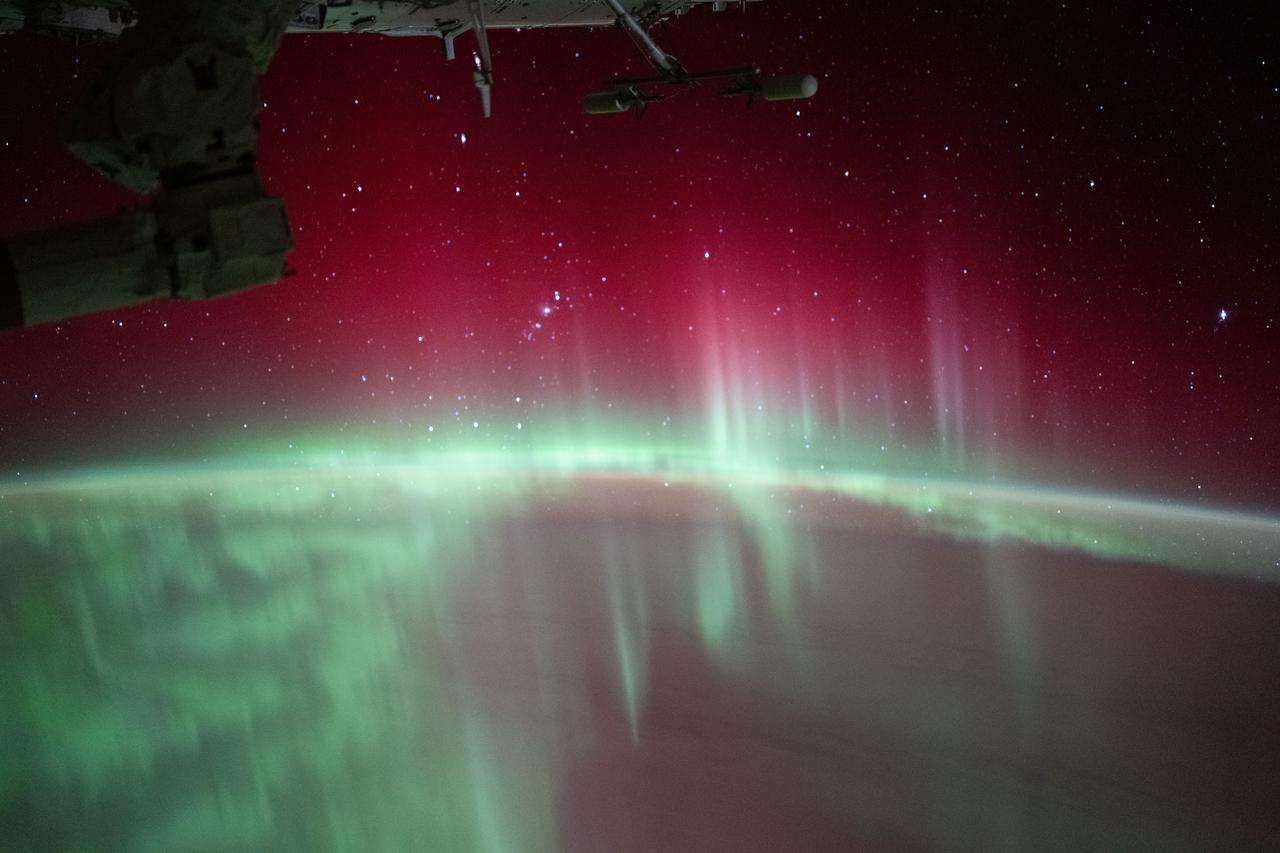
iss071e564695 (Aug. 11, 2024) -- In this long-exposure shot taken from the International Space Station as it orbited 268 miles above the Indian Ocean, stars glitter above green and red auroras swirling through Earth's atmosphere.
Stars glitter above aurora in Earth's atmosphere
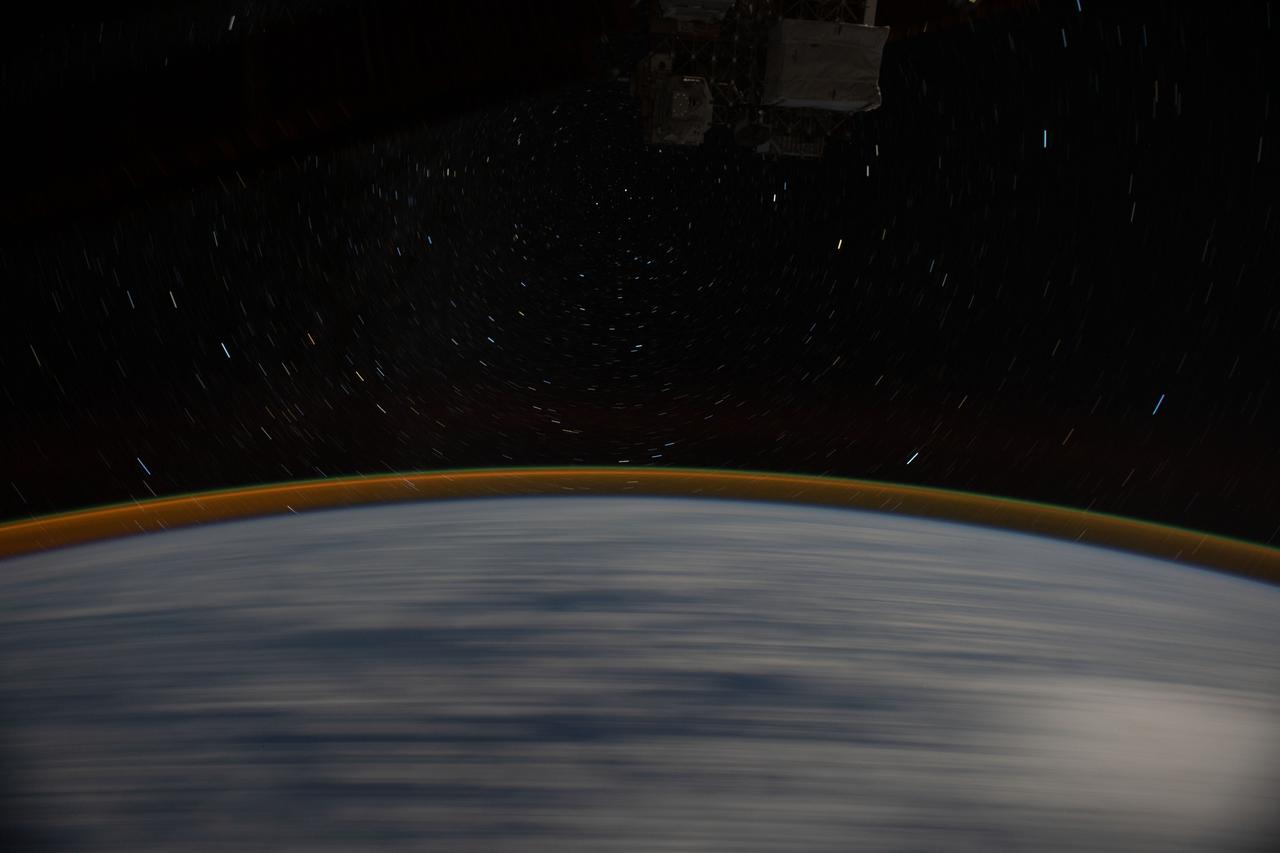
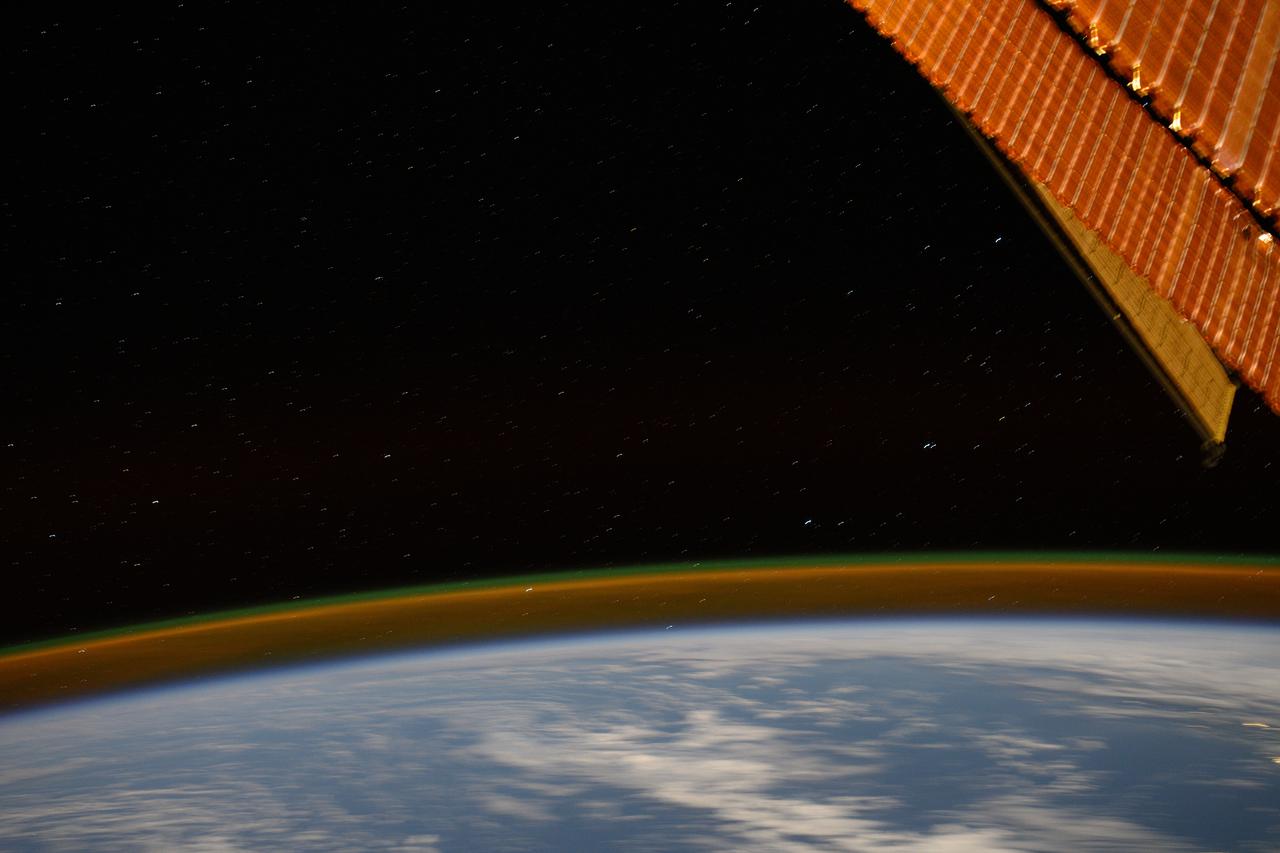
iss071e207178 (June 23, 2024) -- A long exposure shot taken aboard the International Space Station shows a golden atmospheric glow crowning Earth's horizon as the orbiting laboratory soared 267 miles over the South Pacific Ocean.
A Golden Atmospheric Glow Crowns Earth's Horizon
Earth Observation taken during a night pass by the Expedition 40 crew aboard the International Space Station (ISS). Folder lists this as: Long exposure night shots. Bangkok - image released by astronaut on Twitter.
Earth Observation
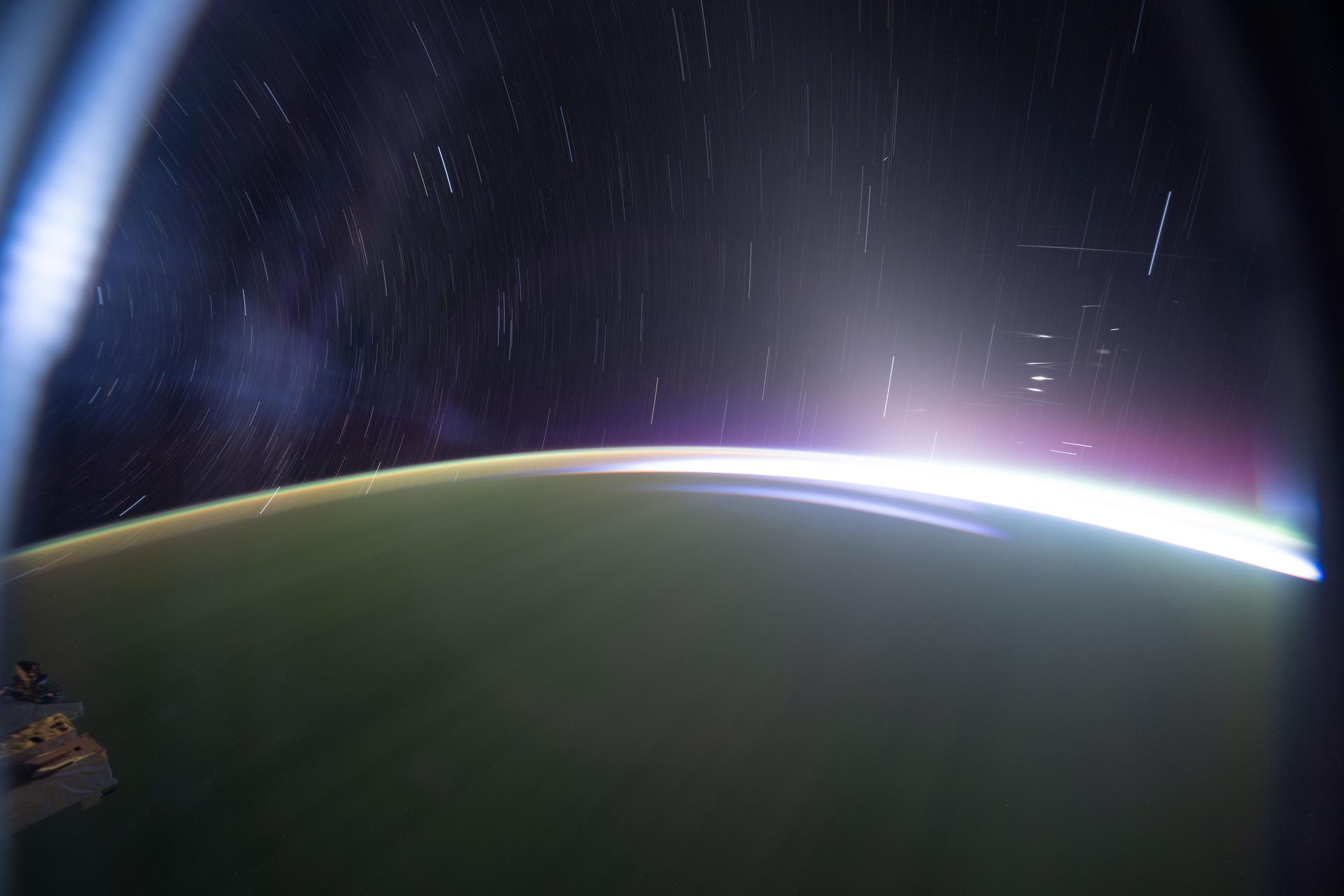
iss072e010734 (Oct. 1, 2024) -- As the International Space Station soared 266 miles over Western Australia, NASA astronaut Jeanette Epps captured this long-exposure shot of Earth at night and star trails glittering above the atmosphere.
Star trails glitter above Earth's atmosphere
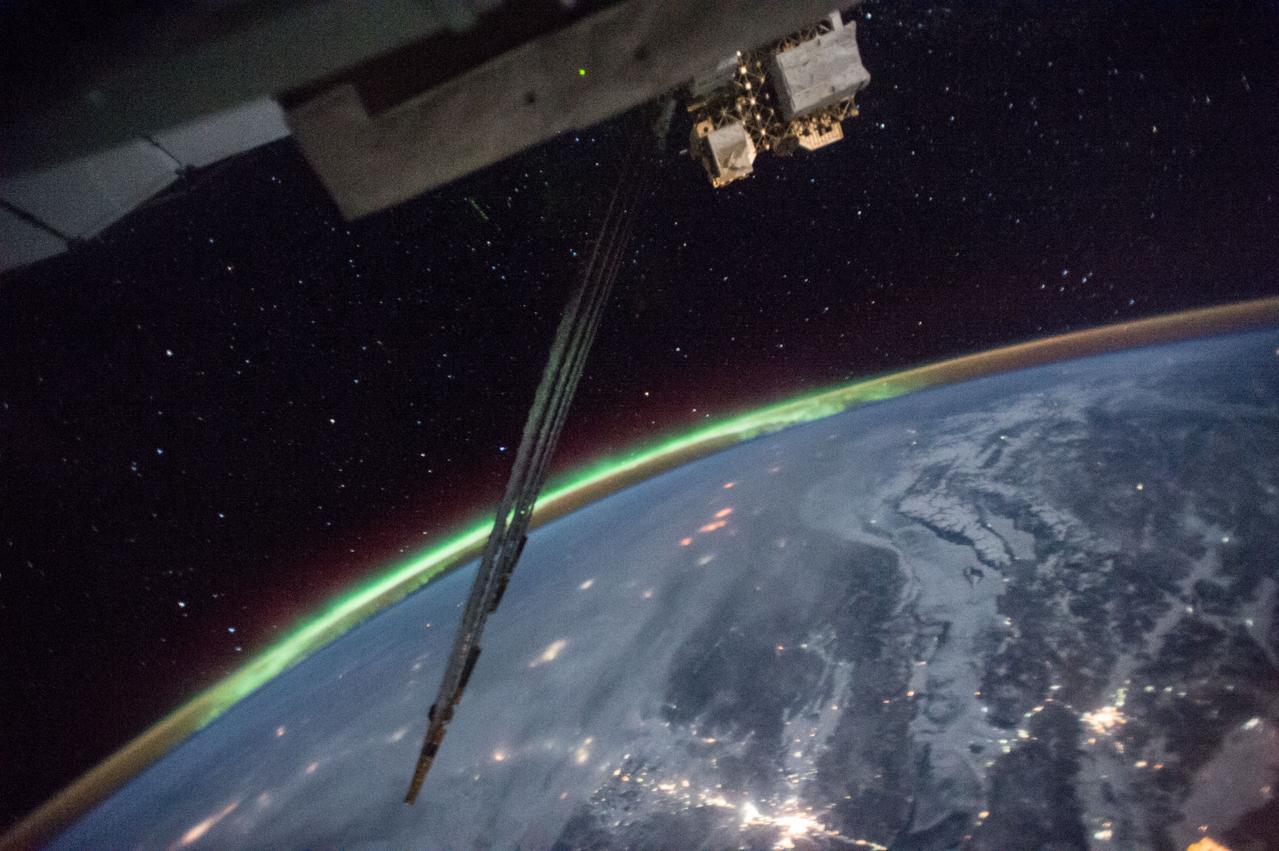
iss050e034428 (01/18/2017) --- This long exposure photo taken from the International Space Station as it orbits around the Earth provides a spectacular view of auroras, sparkling city lights and the stars filling the cosmos beyond.
iss050e034428
iss063e065220 (July 31, 2020) --- This long-exposure photograph captures a starry sky above the Earth's atmospheric glow as the International Space Station orbited above the Indian Ocean about halfway between South Africa and Australia.
iss063e065220
iss072e159833 (Nov. 10, 2024) -- A long-exposure shot taken by NASA astronaut Don Pettit shows the intricacies of stars in the Milky Way as the International Space Station orbited 253 miles above the Atlantic Ocean.
iss072e159833
iss063e065237 (July 31, 2020) --- This long-exposure photograph captures a starry sky above the Earth's atmospheric glow as the International Space Station orbited above the Indian Ocean about halfway between South Africa and Australia.
iss063e065237
iss063e054340 (July 23, 2020) --- This long-exposure photograph during an orbital night period from the International Space Station reveals a wispy, but colorful atmospheric glow crowning Earth's horizon back-dropped by the dazzling Milky Way.
iss063e054340
iss063e058430 (July 24, 2020) --- This long-exposure photograph from the International Space Station was taken during an orbital night period and reveals the Milky Way glittering above a bright but exaggerated atmospheric glow blanketing the Earth's horizon.
iss063e058430
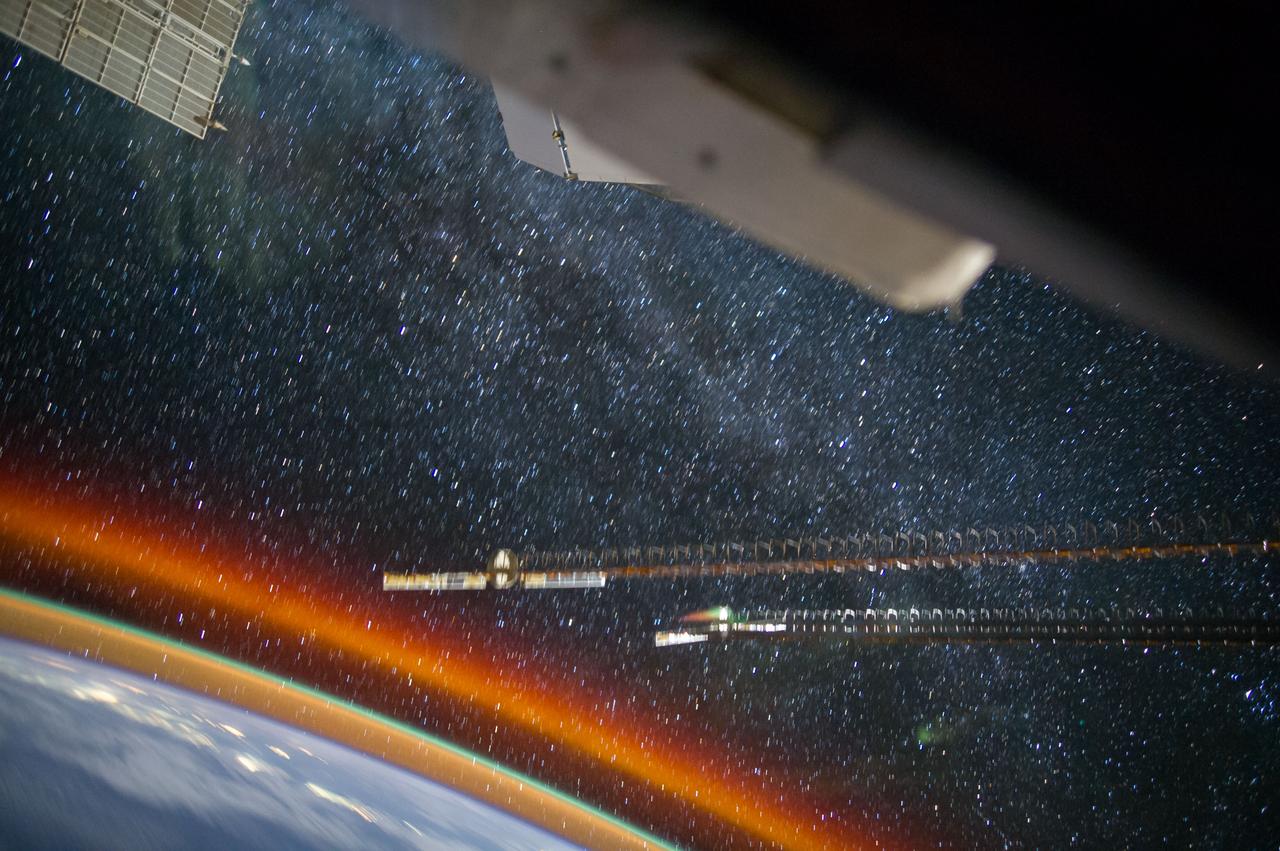
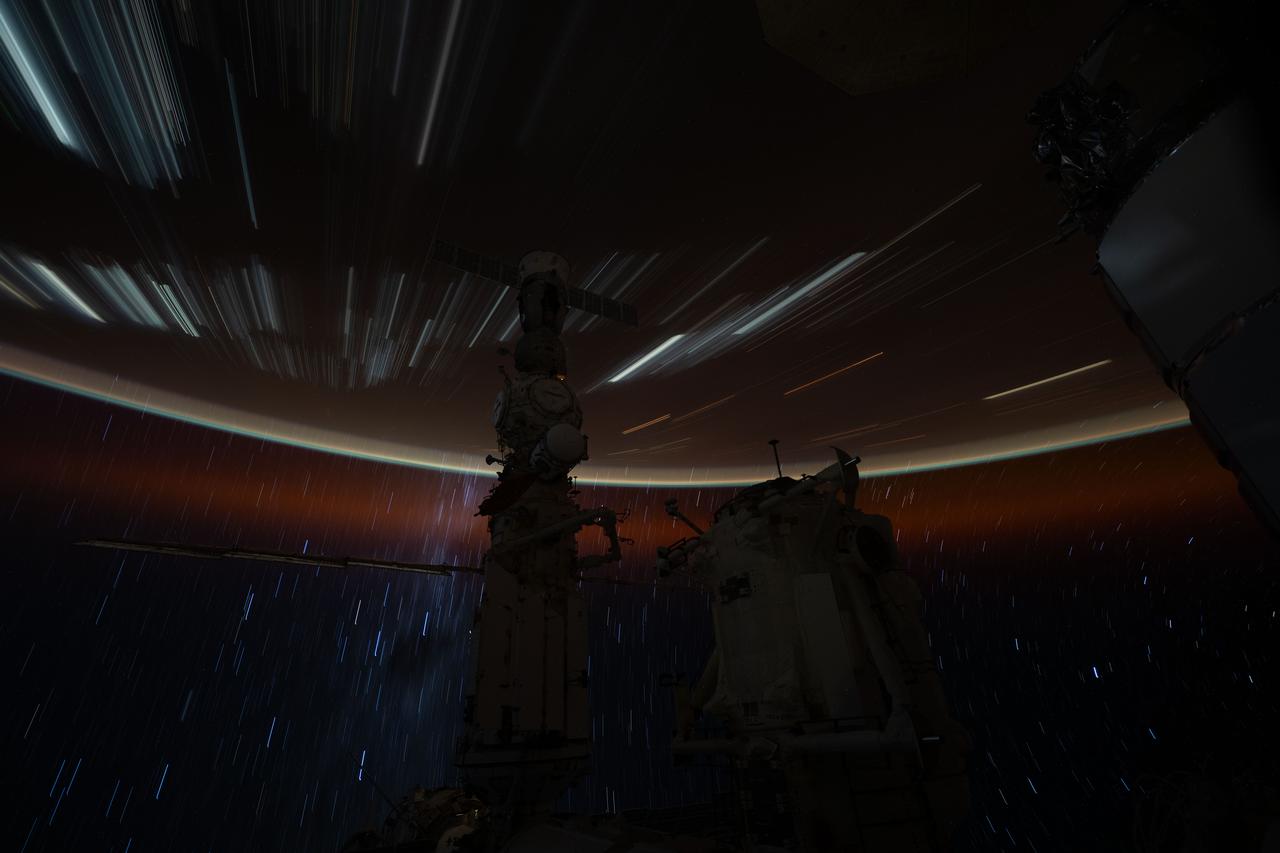
Long exposure Earth observation taken during a night pass by the Expedition 49 crew aboard the International Space Station (ISS). Stars are visible in the background. Docked Soyuz spacecraft is also visible.
Earth observation taken by the Expedition 49 crew
iss063e058447 (July 24, 2020) --- This long-exposure photograph from the International Space Station was taken during an orbital night period and reveals the Milky Way glittering above a bright but exaggerated atmospheric glow blanketing the Earth's horizon.
iss063e058447
iss065e081769 (May 20, 2021) --- This long exposure photograph, taken from the International Space Station as it orbited 267 miles above the Indian Ocean, reveals Earth's atmospheric glow and star trails.
iss065e081769
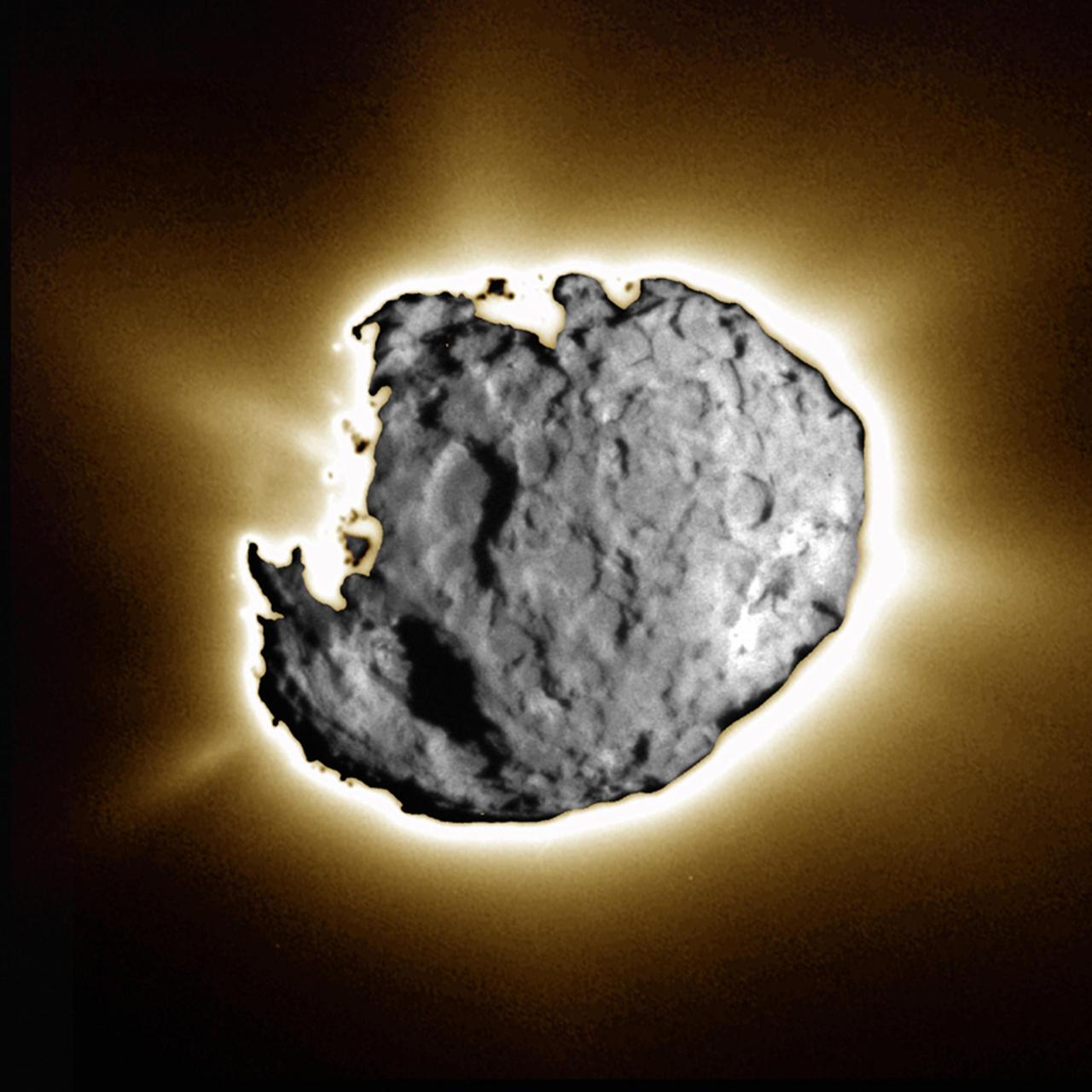
This composite image was taken by the navigation camera during the close approach phase of Stardust's Jan 2, 2004 flyby of comet Wild 2. Several large depressed regions can be seen. Comet Wild 2 is about five kilometers (3.1 miles) in diameter. To create this image, a short exposure image showing tremendous surface detail was overlain on a long exposure image taken just 10 seconds later showing jets. Together, the images show an intensely active surface, jetting dust and gas streams into space and leaving a trail millions of kilometers long.   http://photojournal.jpl.nasa.gov/catalog/PIA05578
Comet Wild 2 - Jet Release
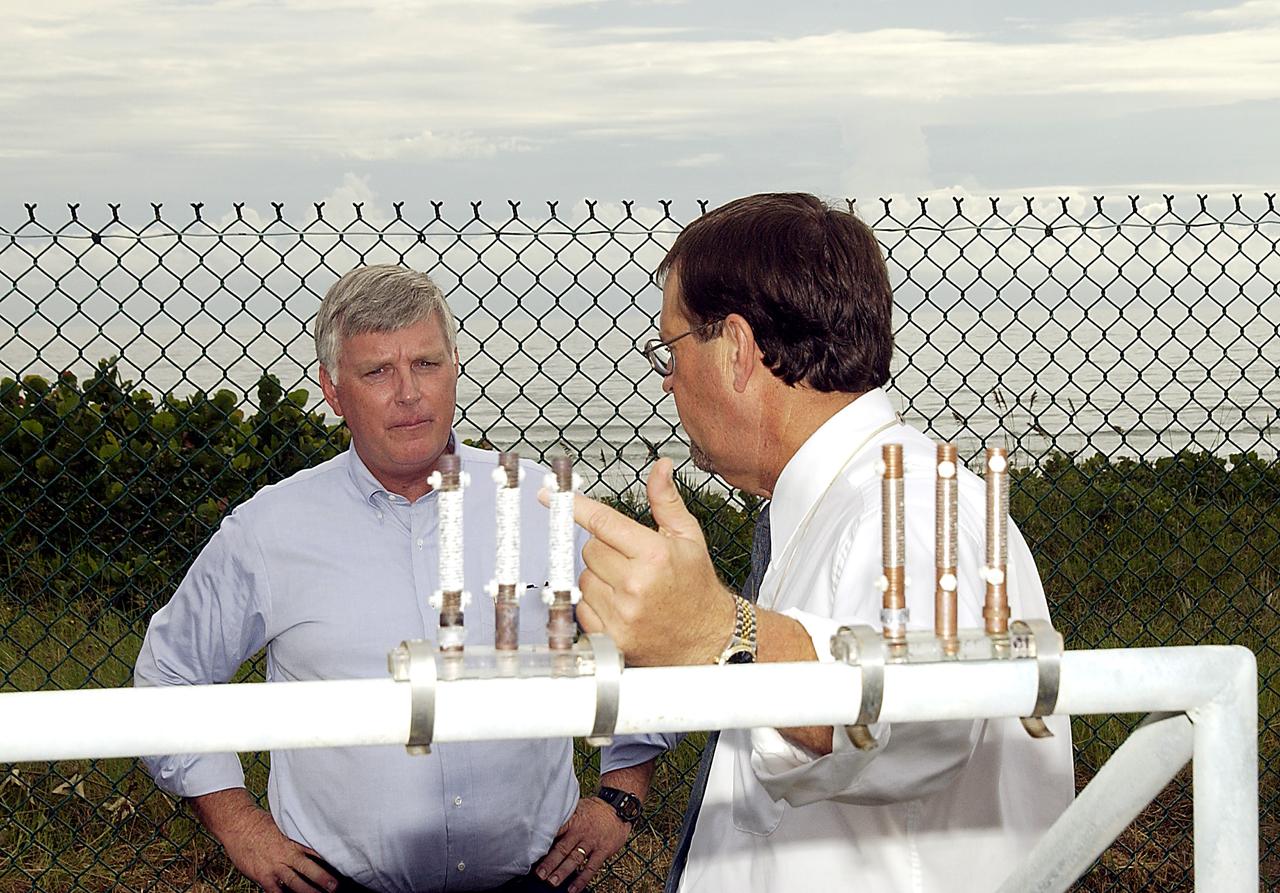
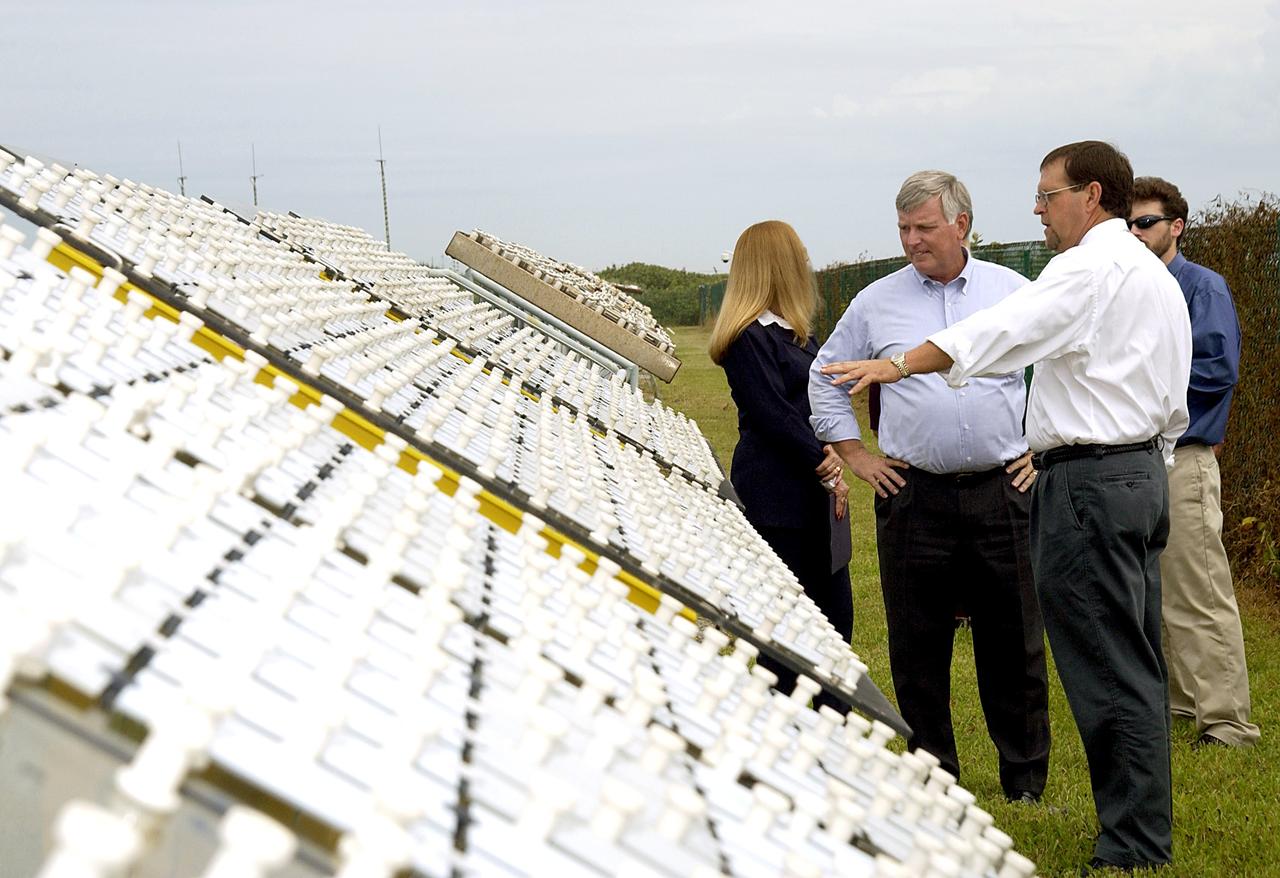
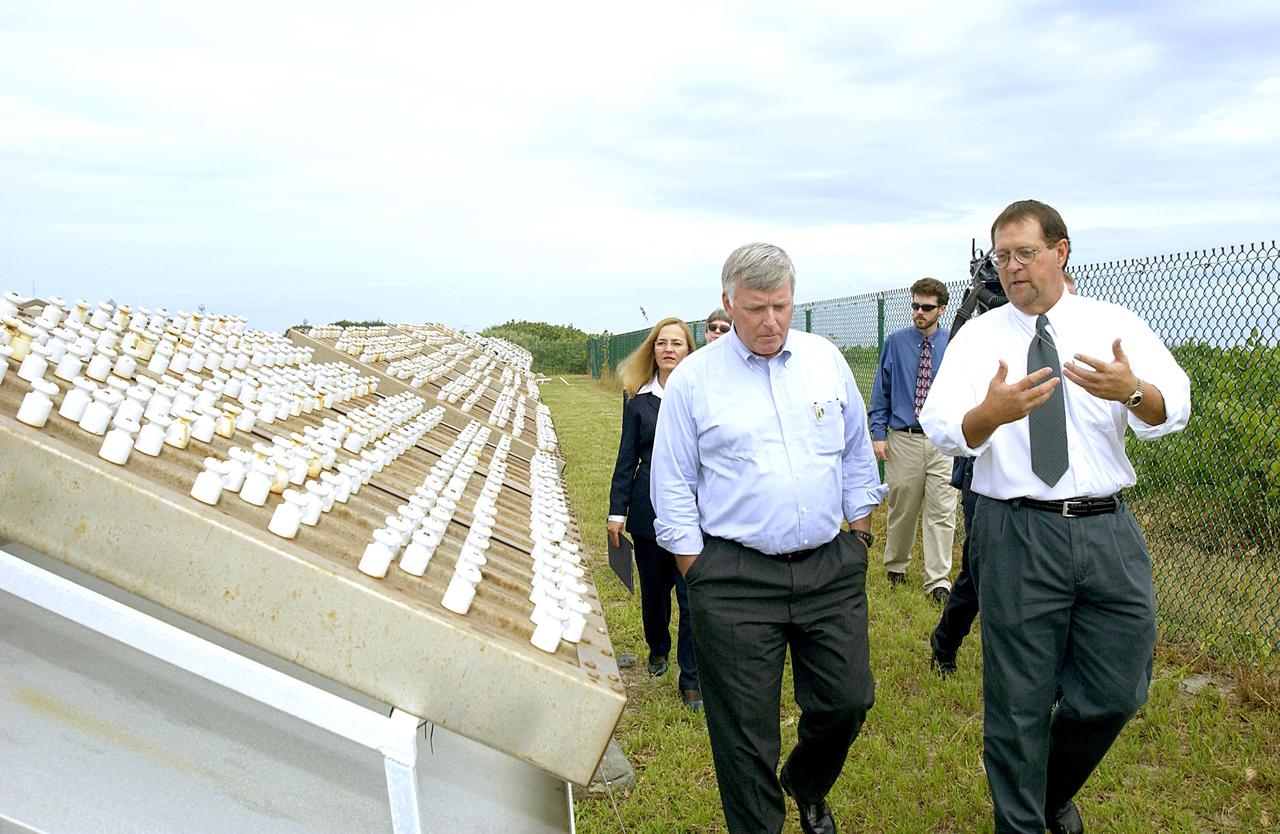
KENNEDY SPACE CENTER, FLA. -    Louis MacDowell (right), Testbed manager, explains to Center Director Jim Kennedy the use of astmospheric calibration specimens.  Placed at various locations, they can rank the corrosivity of the given environment.  The KSC Beach Corrosion Test Site was established in the 1960s and has provided more than 30 years of historical information on the long-term performance of many materials in use at KSC and other locations around the world. Located 100 feet from the Atlantic Ocean approximately 1 mile south of the Space Shuttle launch sites, the test facility includes an atmospheric exposure site, a flowing seawater exposure site, and an on-site electrochemistry laboratory and monitoring station. The beach laboratory is used to conduct real-time corrosion experiments and provides for the remote monitoring of surrounding weather conditions. The newly added flowing seawater immersion facility provides for the immersion testing of materials and devices under controlled conditions.
KENNEDY SPACE CENTER, FLA. - Louis MacDowell (right), Testbed manager, explains to Center Director Jim Kennedy the use of astmospheric calibration specimens. Placed at various locations, they can rank the corrosivity of the given environment. The KSC Beach Corrosion Test Site was established in the 1960s and has provided more than 30 years of historical information on the long-term performance of many materials in use at KSC and other locations around the world. Located 100 feet from the Atlantic Ocean approximately 1 mile south of the Space Shuttle launch sites, the test facility includes an atmospheric exposure site, a flowing seawater exposure site, and an on-site electrochemistry laboratory and monitoring station. The beach laboratory is used to conduct real-time corrosion experiments and provides for the remote monitoring of surrounding weather conditions. The newly added flowing seawater immersion facility provides for the immersion testing of materials and devices under controlled conditions.
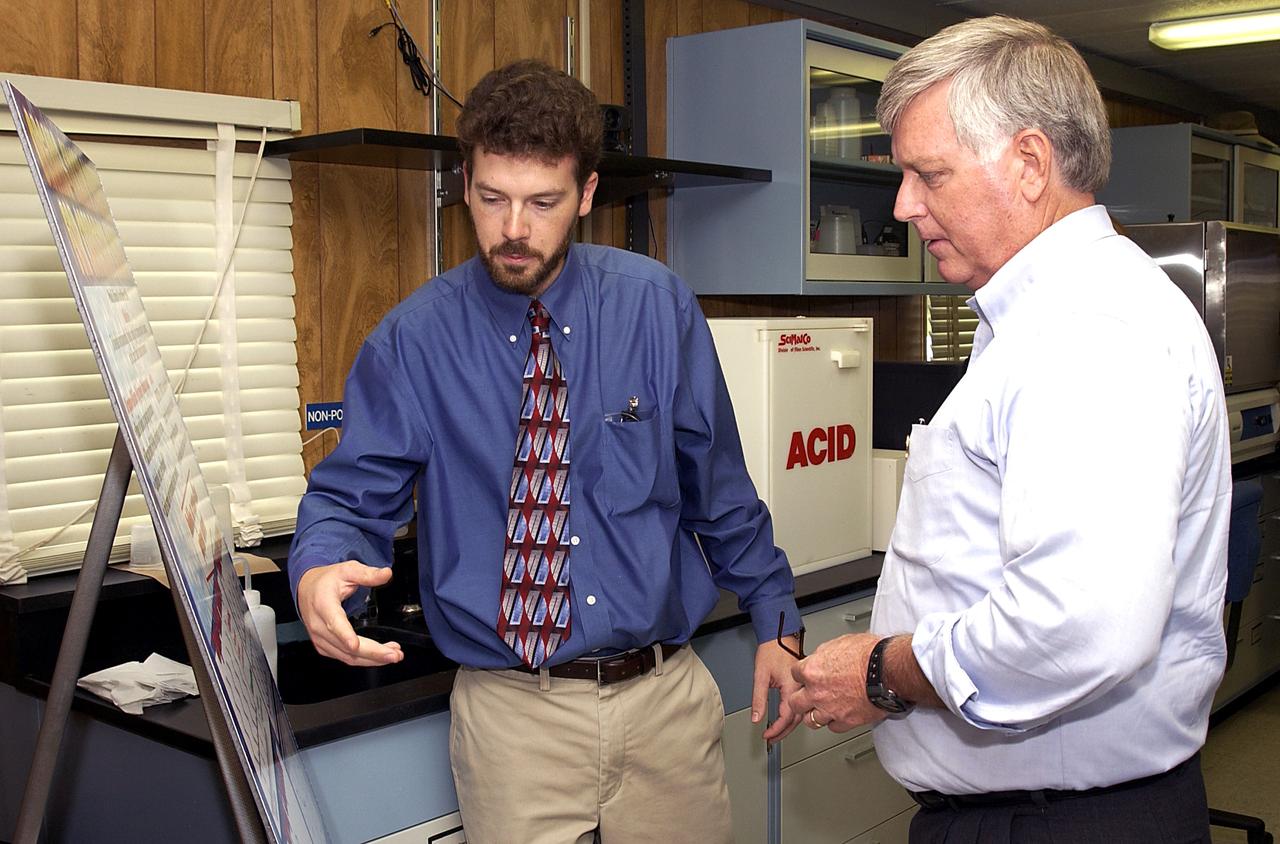
KENNEDY SPACE CENTER, FLA. -   Dr. Paul Hintze (left) explains to Center Director Jim Kennedy a project he is working at the KSC Beach Corrosion Test Site. Hitze is doing post-graduate work for the National Research Council.  The test facility site was established in the 1960s and has provided more than 30 years of historical information on the long-term performance of many materials in use at KSC and other locations around the world. Located 100 feet from the Atlantic Ocean approximately 1 mile south of the Space Shuttle launch sites, the test facility includes an atmospheric exposure site, a flowing seawater exposure site, and an on-site electrochemistry laboratory and monitoring station. The beach laboratory is used to conduct real-time corrosion experiments and provides for the remote monitoring of surrounding weather conditions. The newly added flowing seawater immersion facility provides for the immersion testing of materials and devices under controlled conditions.
KENNEDY SPACE CENTER, FLA. - Dr. Paul Hintze (left) explains to Center Director Jim Kennedy a project he is working at the KSC Beach Corrosion Test Site. Hitze is doing post-graduate work for the National Research Council. The test facility site was established in the 1960s and has provided more than 30 years of historical information on the long-term performance of many materials in use at KSC and other locations around the world. Located 100 feet from the Atlantic Ocean approximately 1 mile south of the Space Shuttle launch sites, the test facility includes an atmospheric exposure site, a flowing seawater exposure site, and an on-site electrochemistry laboratory and monitoring station. The beach laboratory is used to conduct real-time corrosion experiments and provides for the remote monitoring of surrounding weather conditions. The newly added flowing seawater immersion facility provides for the immersion testing of materials and devices under controlled conditions.
iss065e083929 (June 1, 2021) --- This long exposure photograph, taken from the International Space Station as it orbited 262 miles above the Democratic Republic of Congo, reveals city lights on the African continent, Earth's atmospheric glow and star trails.
iss065e083929
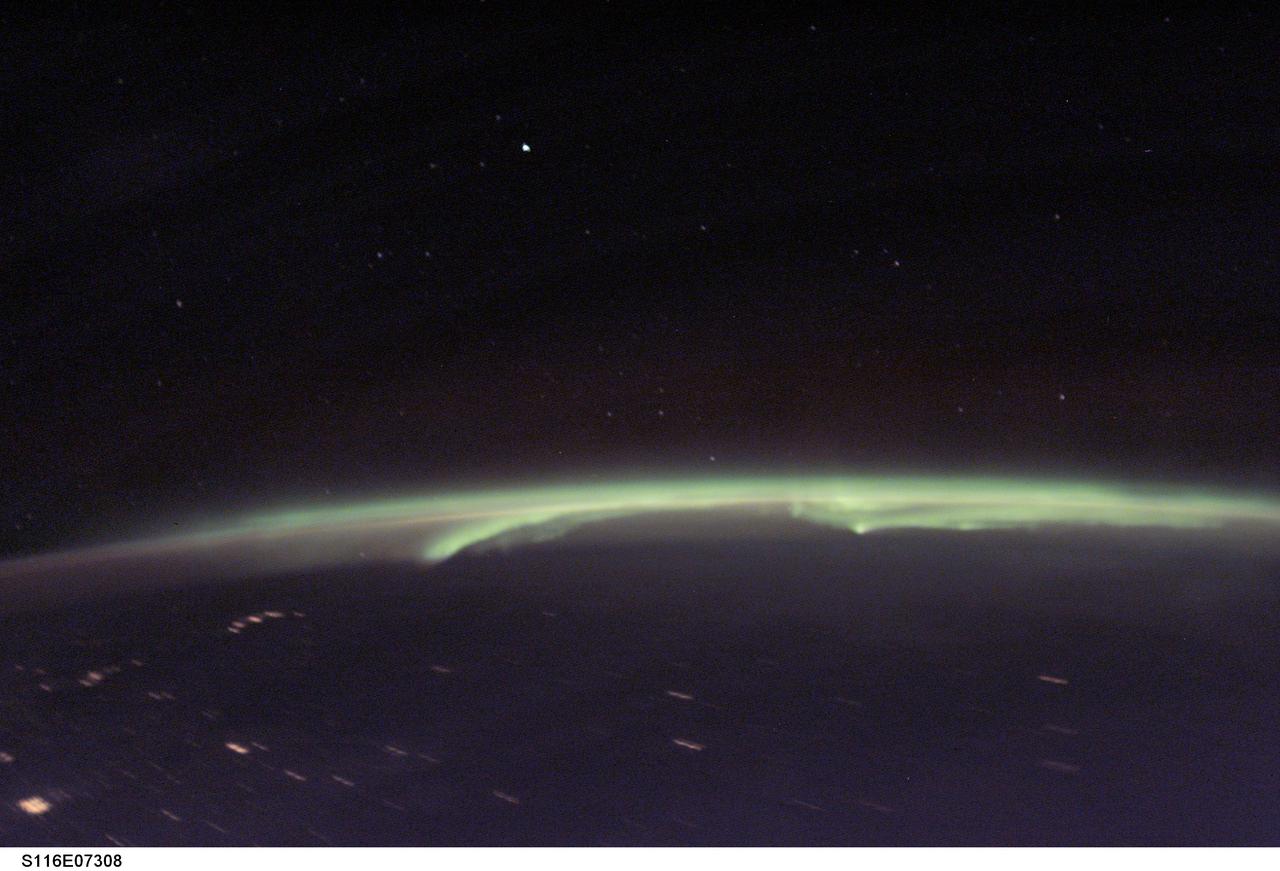
S116-E-07308 (19 Dec. 2006) --- The Aurora Borealis, also known as "northern lights", is featured in this photograph taken by a STS-116 crew member onboard Space Shuttle Discovery during flight day 11 activities. The long exposure on the digital still camera enabled the astronaut to capture stars and city lights.
Earth Observations taken by STS-116 Crewmember
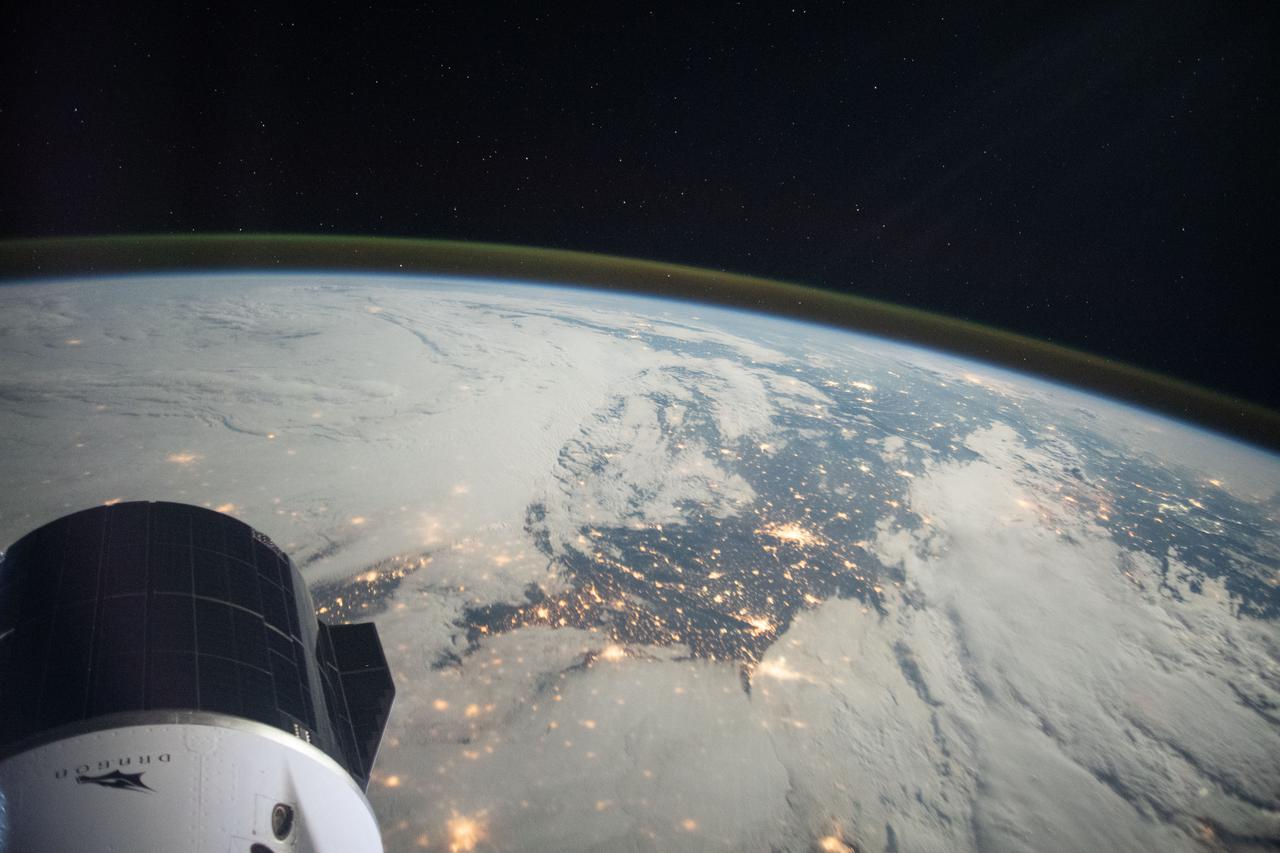
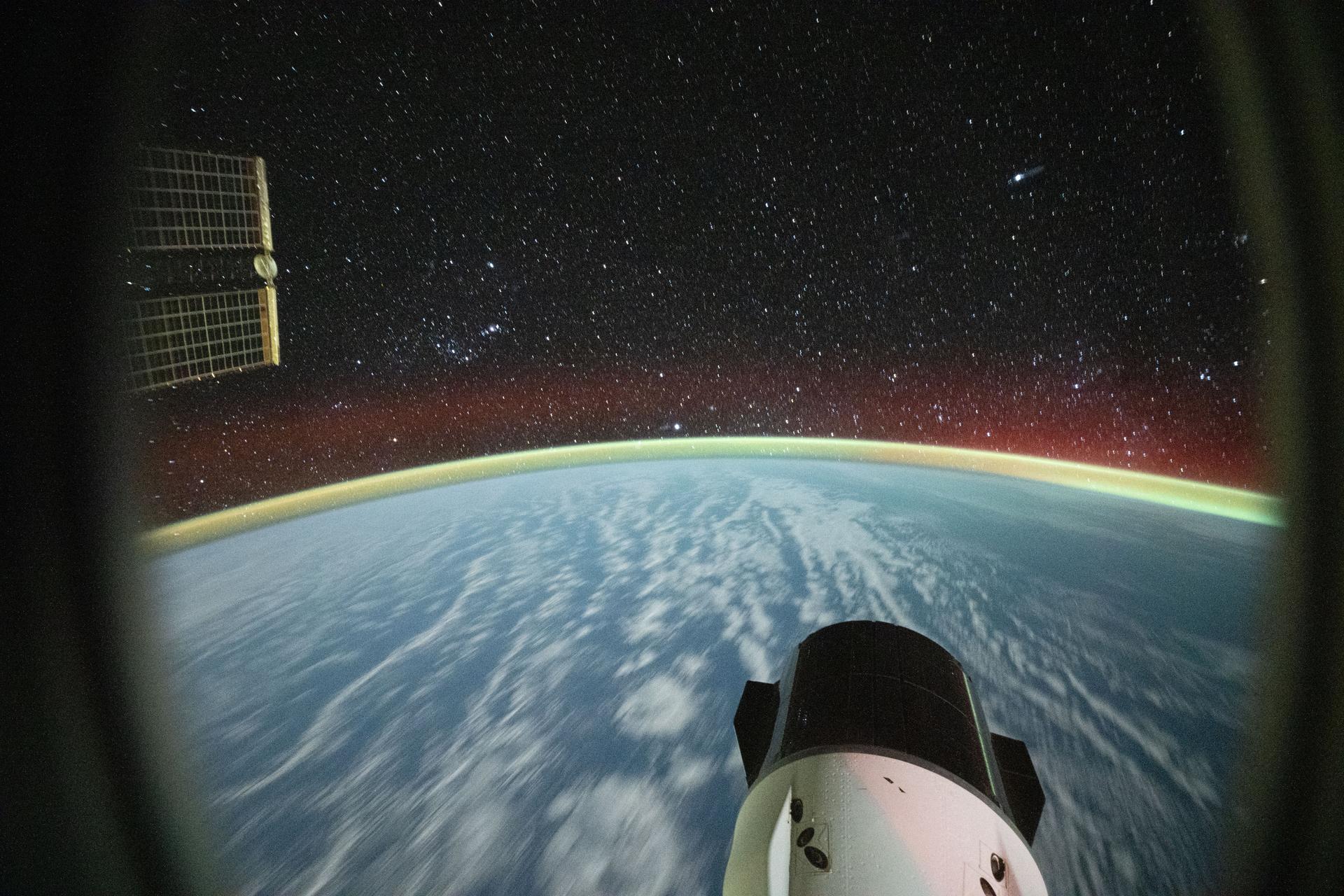
iss065e389357 (Sept. 19, 2021) --- A portion of the SpaceX Cargo Dragon vehicle is pictured at lower left as the International Space Station orbited 264 miles above northern France. The long-exposure photograph also reveals Earth's atmospheric glow and stars above the horizon.
iss065e389357
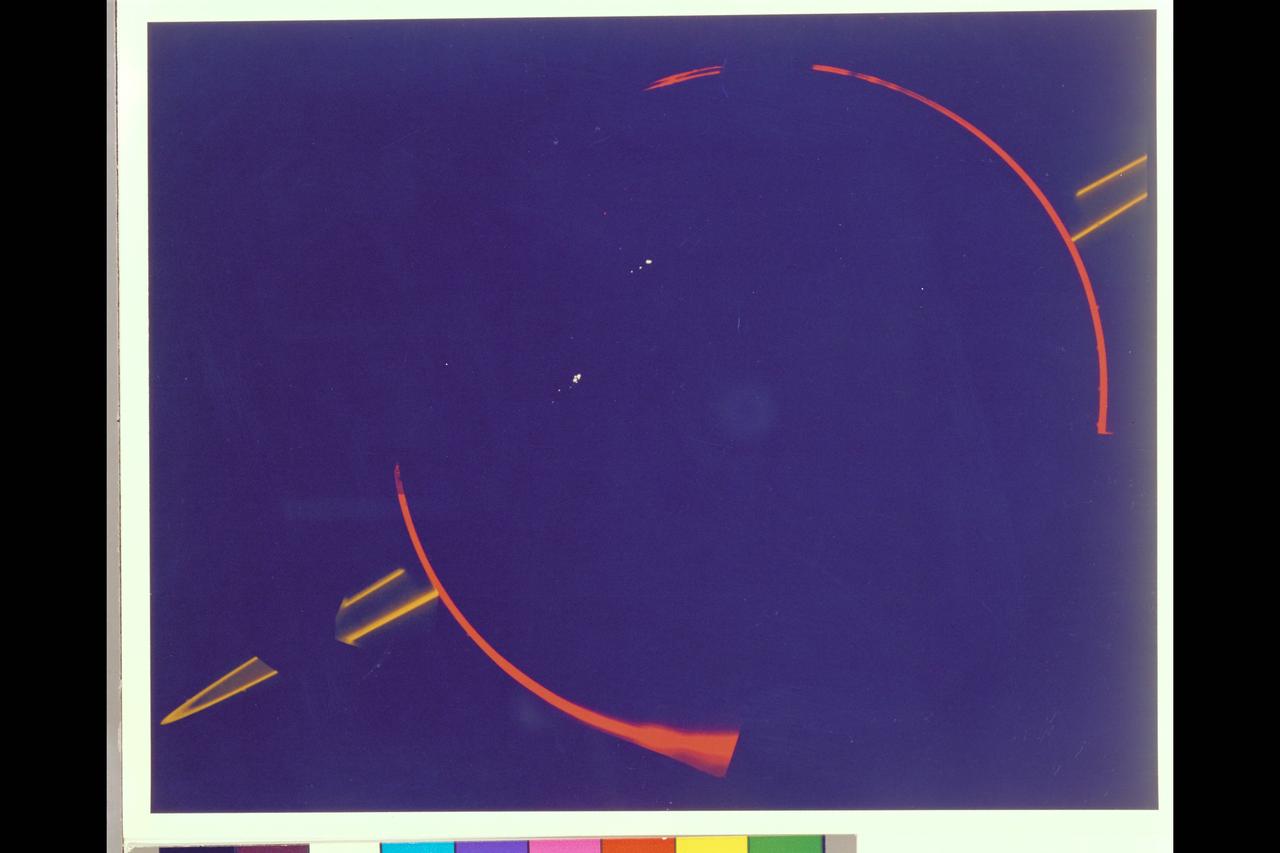
JUPITER'S FAINT RING SYSTEM IS SHOWN HERE AS TWO ORANGE LINES PROTRUDE FROM THE LEFT TOWARD JUPITER'S LIMB.  THIS COLORFUL COMPOSITE WAS TAKEN IN JUPITER'S SHADOW THROUGH ORANGE AND VIOLET FILTERS. THE COLORFUL IMAGES OF JUPITER'S LIMB ARE EVIDENCE OF THE SPACECRAFT MOTION DERING THIS LONG EXPOSURE.  VOYAGER 2
ARC-1979-AC79-7118
A Marshall researcher examines a sample from the Solar Array Passive Long Duration Exposure Facility (LDEF). LDEF, which flew in space, measured the number, severity, and effects of micrometeroid hits on various materials. The data will lead to improved spacecraft design in the future.
Around Marshall
STS032-85-063 (12 Jan 1990) --- The Space Shuttle Columbia’s Canadian-built Remote Manipulator System (RMS) arm suspends the Long Duration Exposure Facility (LDEF) over the cargo bay during a lengthy survey session.  LDEF has been in space since April, 1984.
LDEF grappled and positioned by RMS over OV-102's payload bay during STS-32
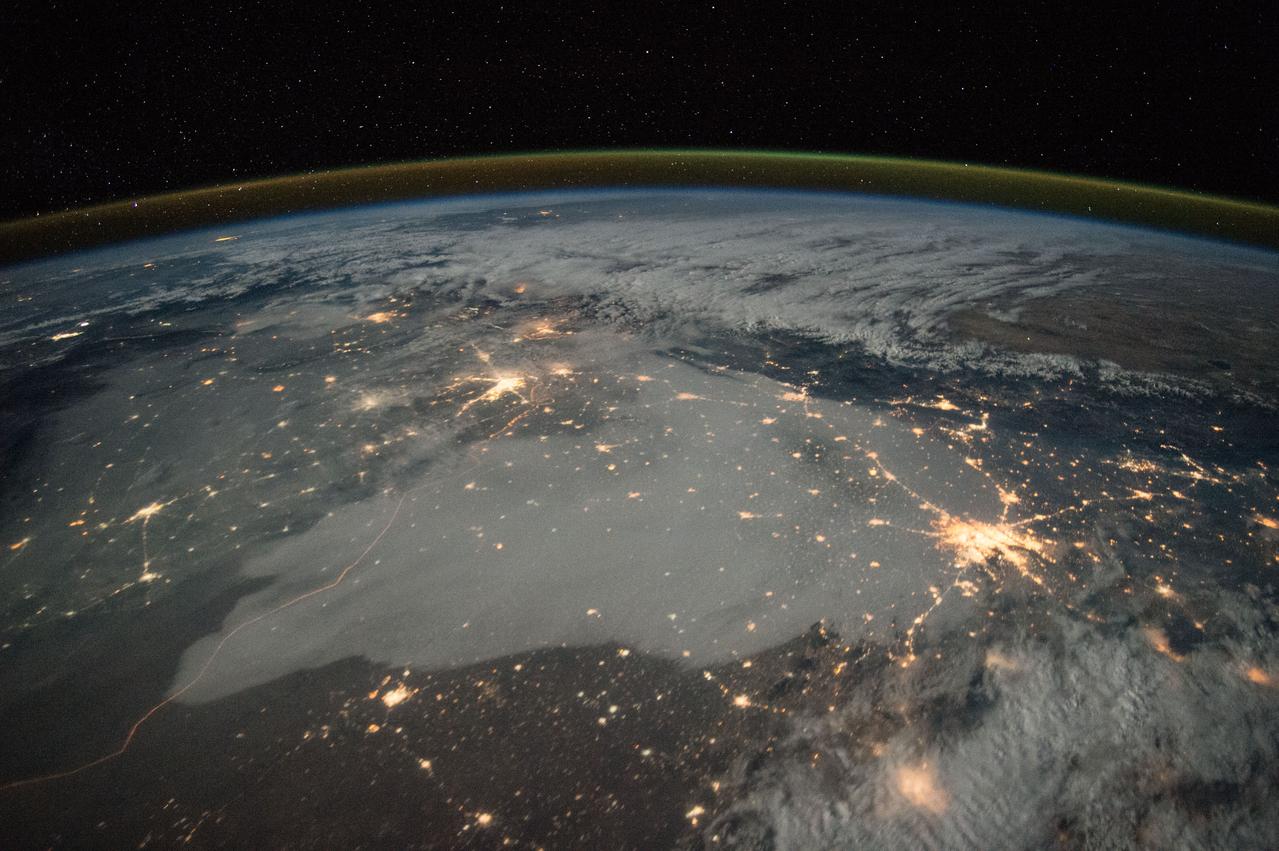
ISS046e012758 (01/18/2016) --- This long exposure image of Northern India was taken by astronauts on the International Space Station while the Earth was shrouded in darkness. Major cities in view include New Delhi, on the left side of the image, and Lahore (right), which is located to the northwest of New Delhi.
Earth observation taken by the Expedition 46 crew
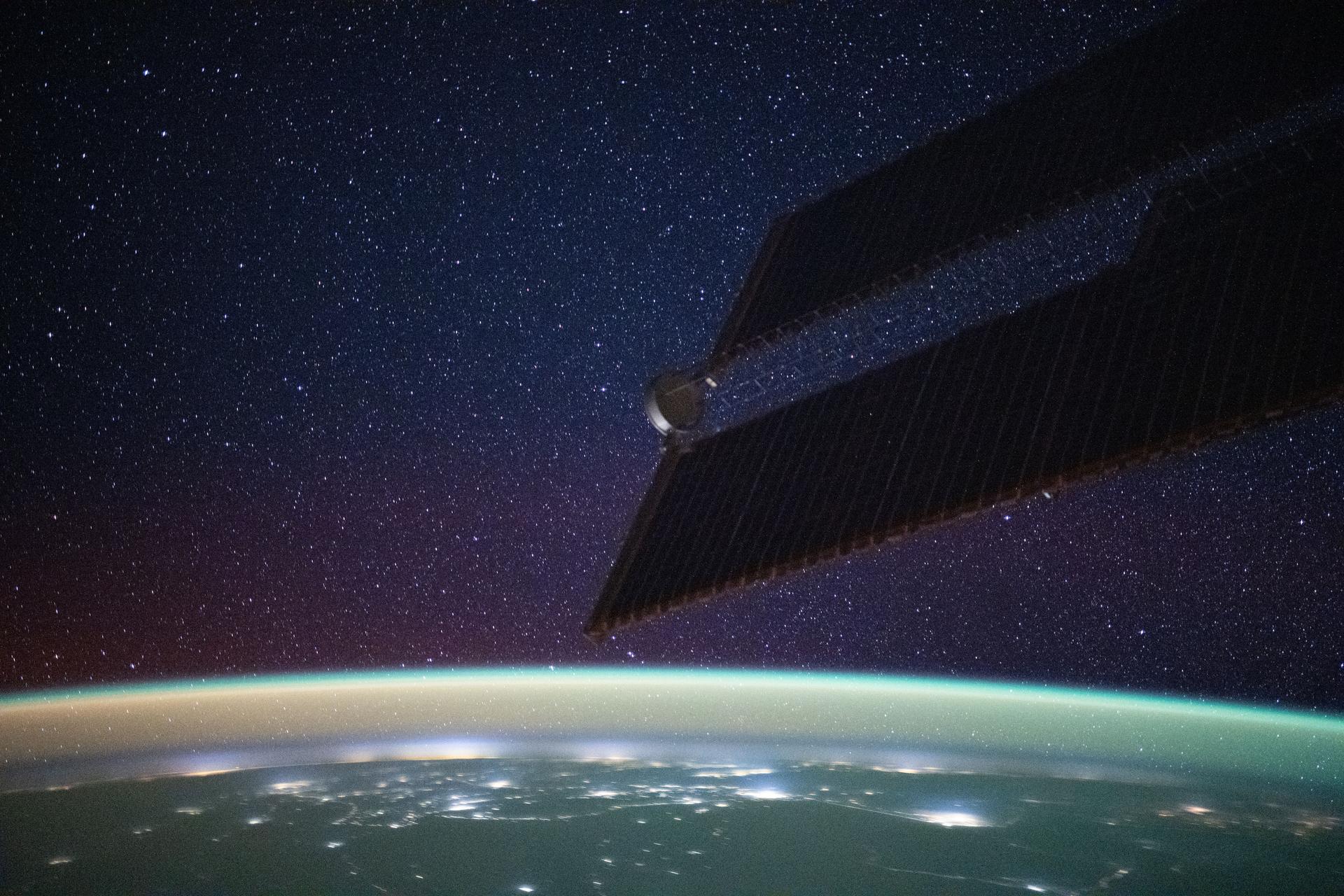
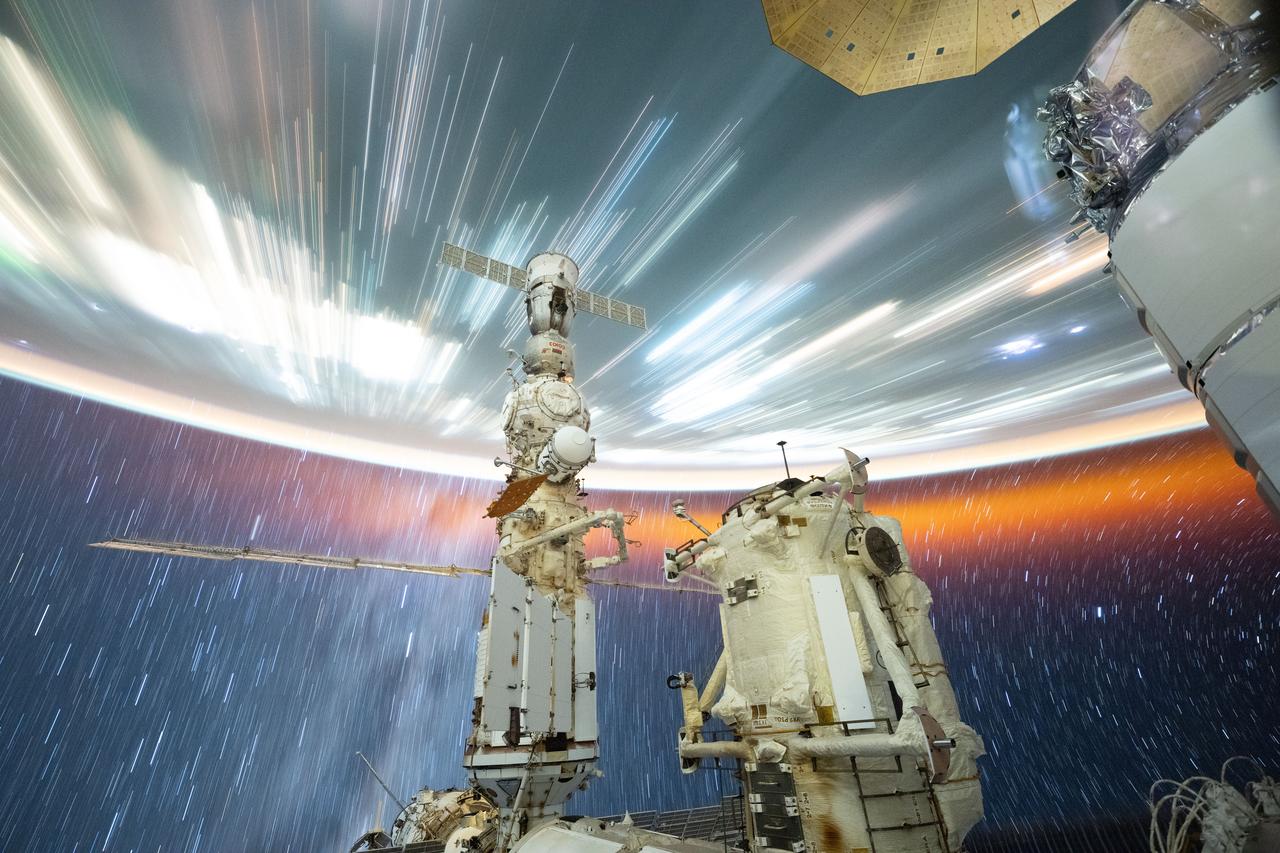
iss052e010507 (July 4, 2017) --- This long-exposure photograph of Earth and a starry sky was taken during a night pass by the Expedition 52 crew aboard the International Space Station. The Japanese Kibo module and part of the station’s solar array are visible at the top.
Earth observation taken by the Expedition 52 crew
iss071e662620 (Sept. 2, 2024) --- This long exposure photograph taken by NASA astronaut Matthew Dominick with a camera programmed for low sensitivity shows star trails and streaks of city lights as the International Space Station orbited 257 miles above the Molucca Sea in Indonesia.
iss071e662620
iss071e662633 (Sept. 2, 2024) --- This long exposure photograph taken by NASA astronaut Matthew Dominick with a camera programmed for high sensitivity shows star trails and streaks of city lights as the International Space Station orbited 258 miles above the South China Sea off the coast of Vietnam near Ho Chi Minh City.
iss071e662633
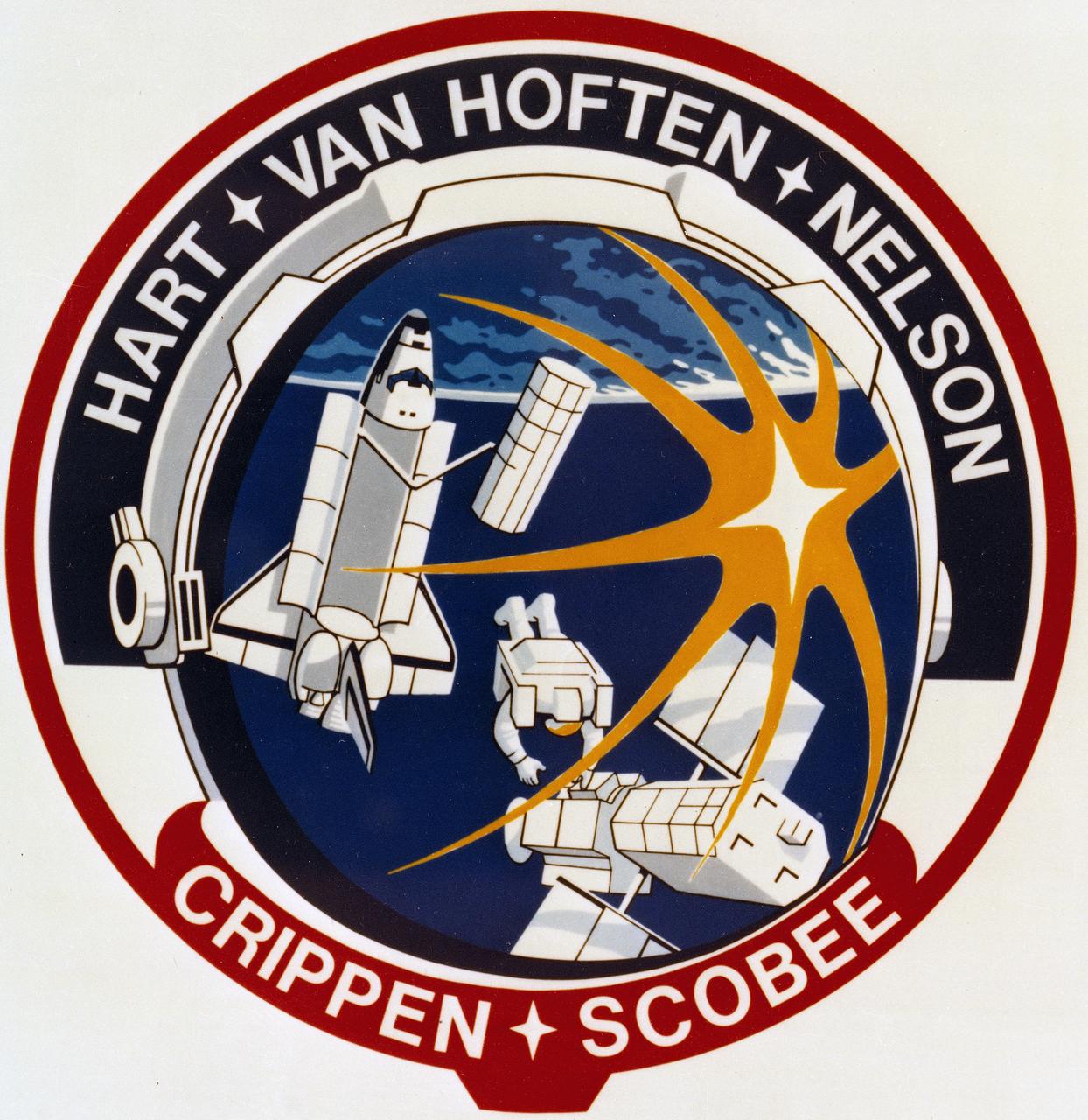
The patch features a helmet visor of an astronaut performing an extravehicular activity. In the visor are reflected the sun's rays, the Challenger and its remote manipulator system (RMS) deploying the long duration exposure facility (LDEF), the Earth and blue sky, and another astronaut working at the damaged Solar Maximum Satellite (SMS). The scene is encircled by the surnames of the crewmembers.
Space Shuttle Projects
iss064e055946 (April 8, 2021) --- This long exposure photograph was taken during an orbital night period from the International Space Station 271 miles above the Indian Ocean. The Milky Way extends above the airglow blanketing the Earth's horizon with an aurora near the bottom right of the frame.
iss064e055946
The Soyuz MS-15 spacecraft is seen in this long exposure photograph as it launches with Expedition 61 crewmembers Jessica Meir of NASA and Oleg Skripochka of Roscosmos, and spaceflight participant Hazzaa Ali Almansoori of the United Arab Emirates  Wednesday, Sept. 25, 2019 from the Baikonur Cosmodrome in Kazakhstan. Photo Credit: (NASA/Bill Ingalls)
Expedition 61 Launch
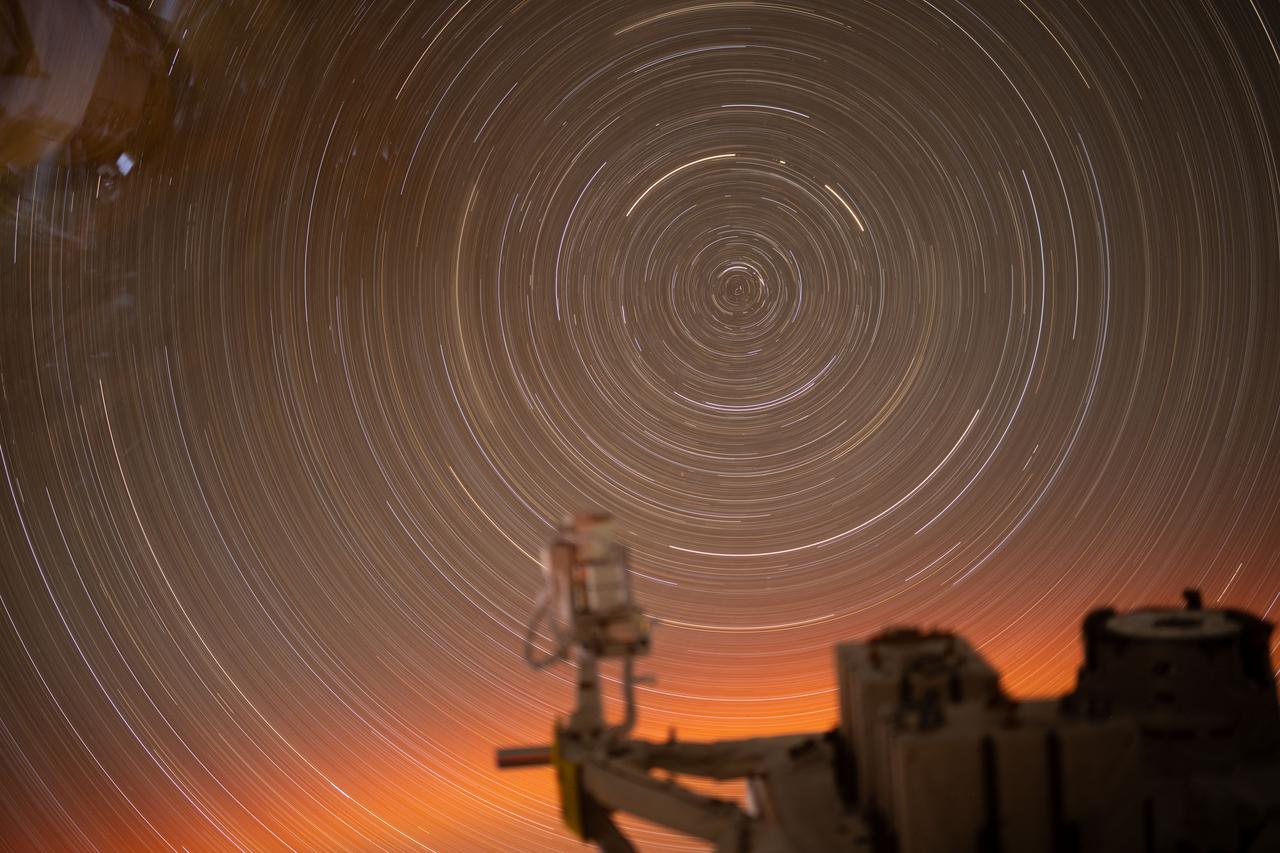
iss073e0427643 (July 26, 2025) --- This long-exposure photograph, taken over 31 minutes from a window inside the International Space Station’s Kibo laboratory module, captures the circular arcs of star trails. In the foreground is a portion of Kibo’s Exposed Facility, where various payloads and experiments are mounted to be exposed directly to the vacuum of space.
Circular arcs of star trails viewed from International Space Station
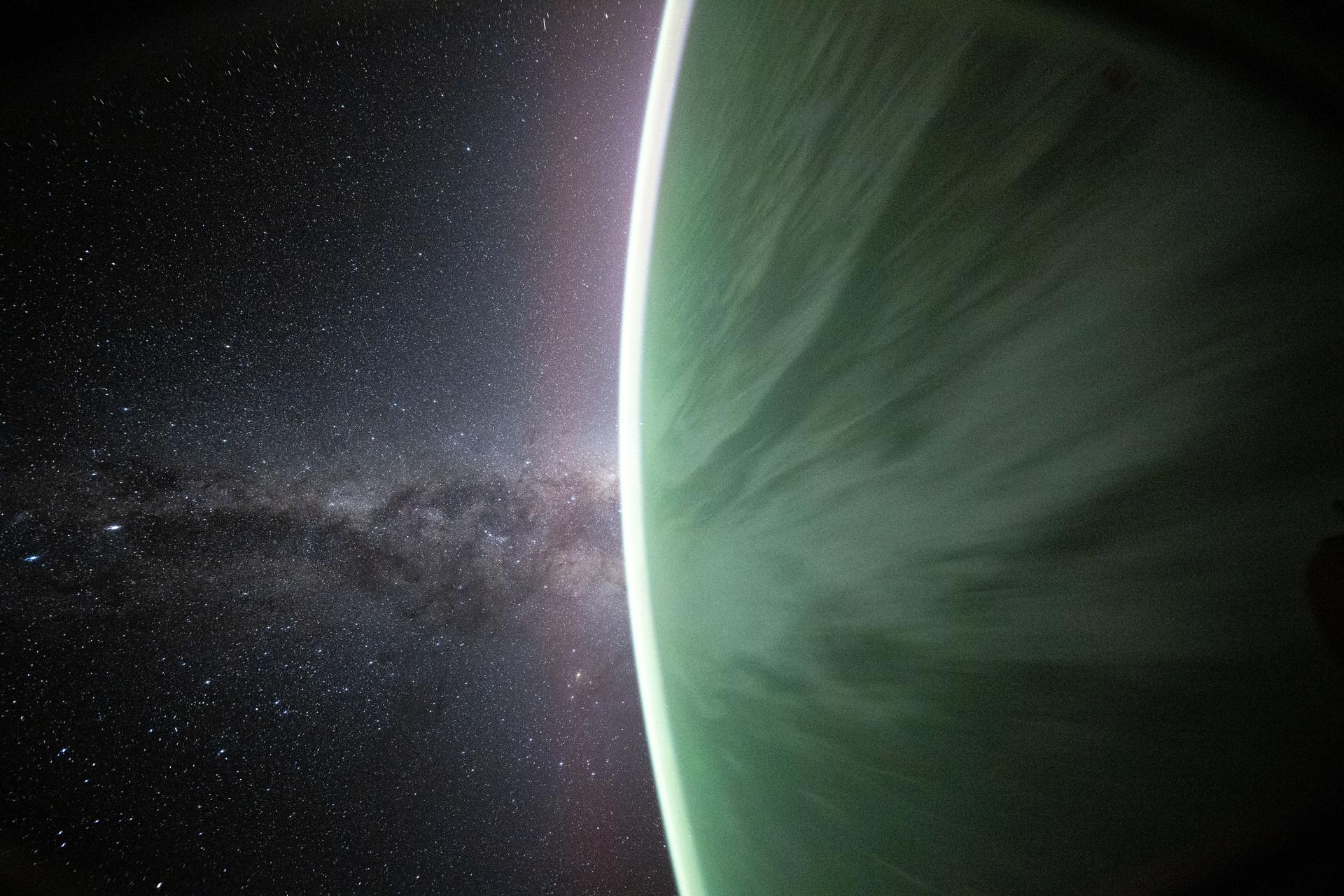
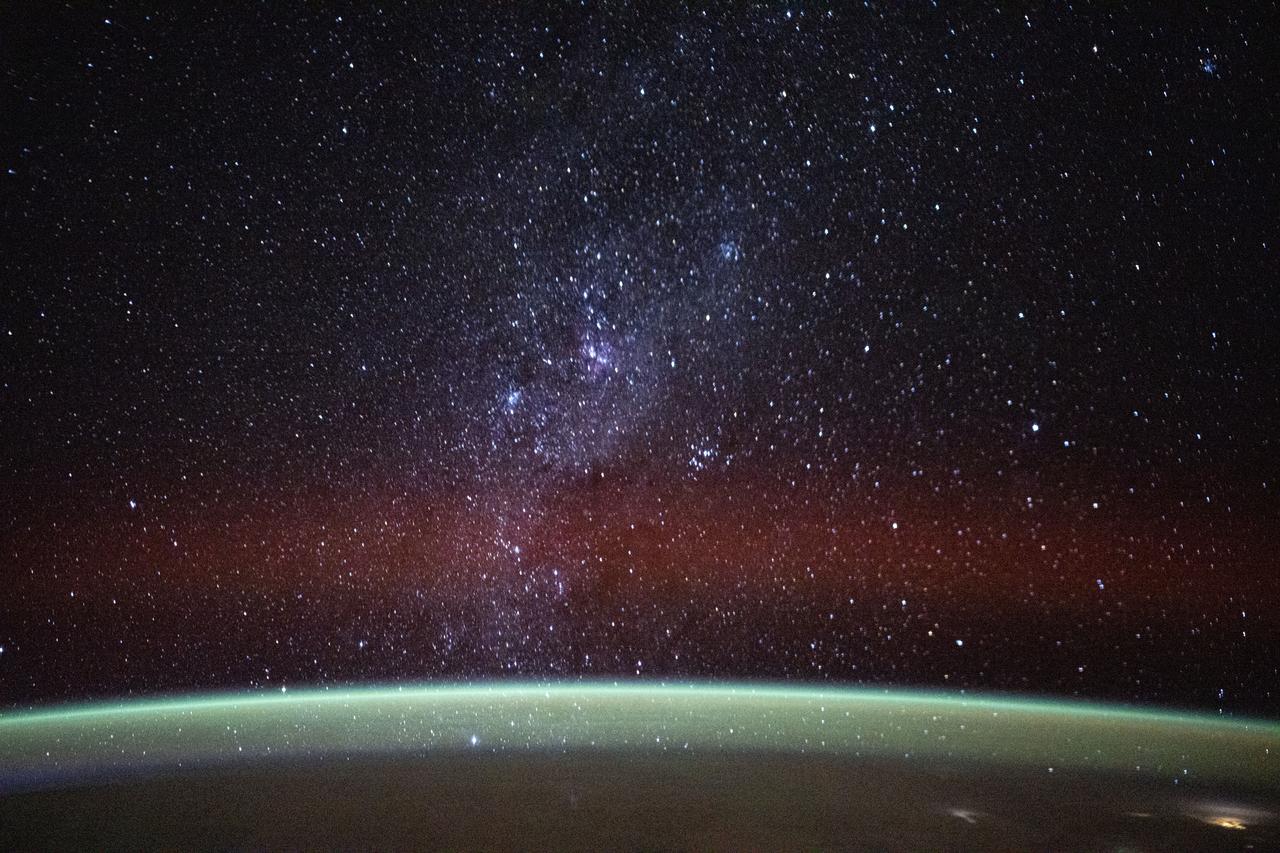
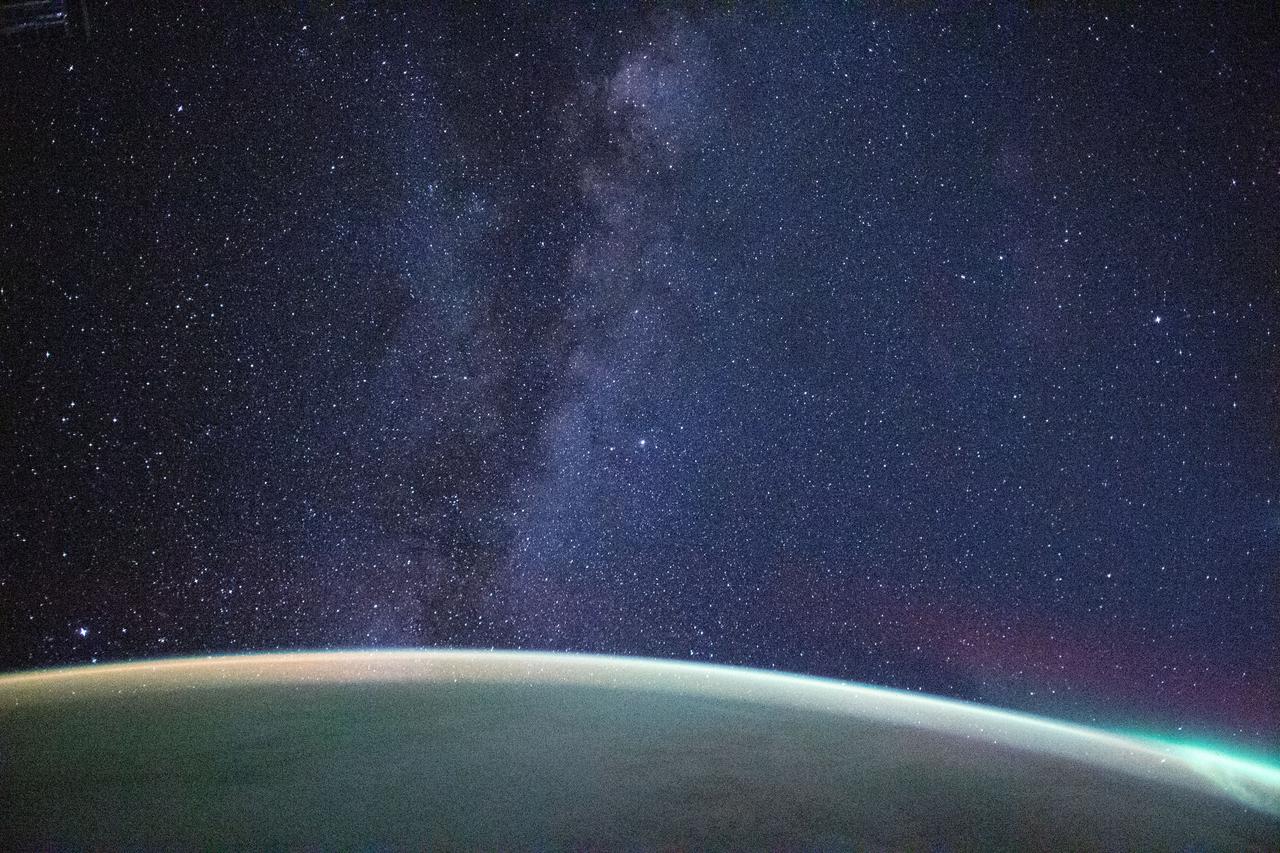
iss073e0982261 (Oct. 24, 2025) --- The Milky Way spans the night sky above a yellow-green airglow that blankets the Atlantic Ocean, midway between South America and Africa. This long-exposure photograph was taken from the International Space Station as it orbited 260 miles above Earth at approximately 11:19 p.m. local time.
The Milky Way spans the night sky above a yellow-green airglow
iss073e0982727 (Oct. 25, 2025) --- A bright yellow-green airglow blankets Earth's horizon, dotted with the city lights of northern India, beneath a star-filled sky. This long-exposure photograph was taken from the International Space Station as it orbited 260 miles above the Himalayas at approximately 1:11 a.m. local time.
iss073e0982727
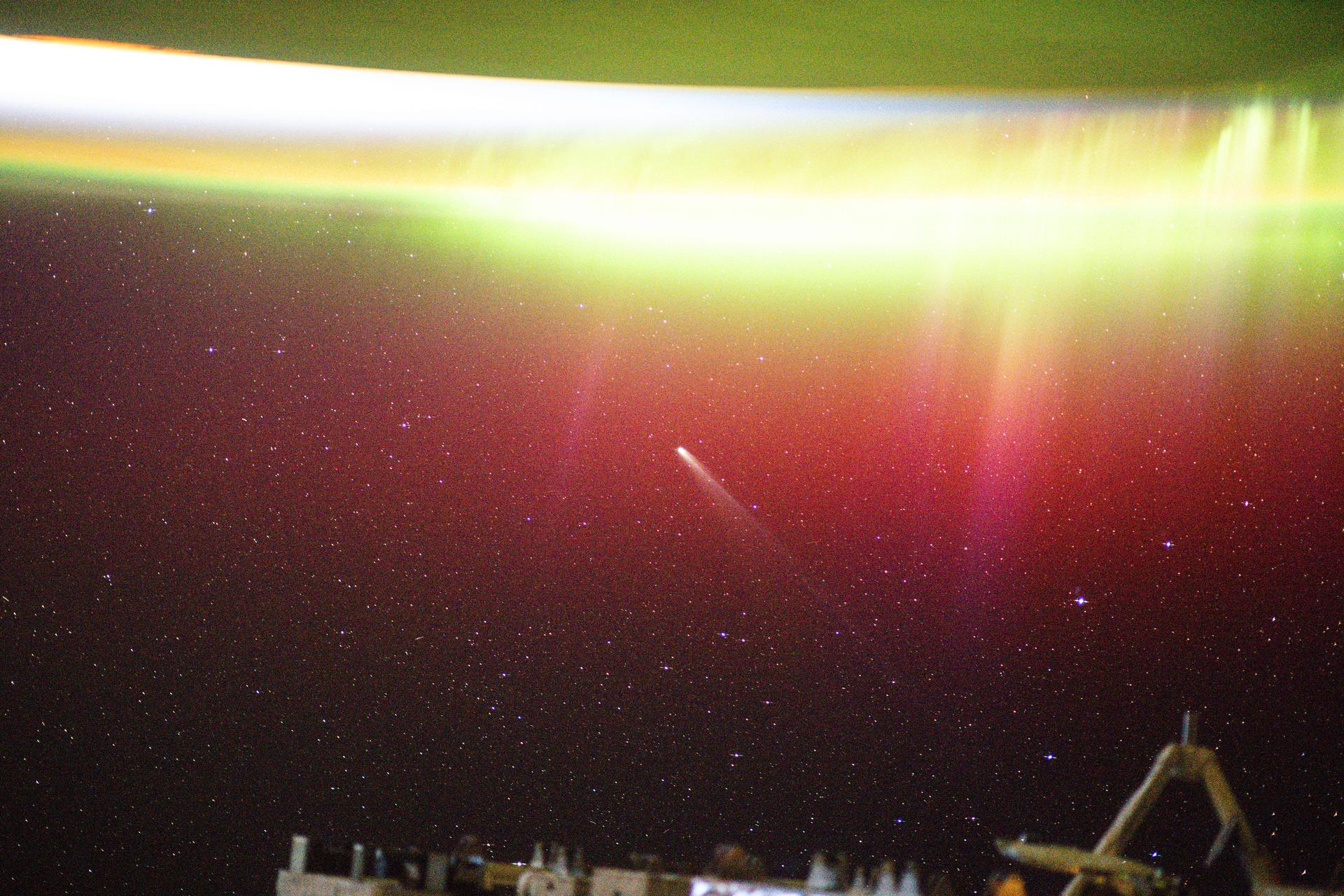
iss073e0981058 (Oct. 24, 2025) --- This long-exposure photograph shows a bright aurora radiating above Earth as Comet Lemmon (C/2025 A6) soared past the planet at a distance of about 57.2 million miles (92.1 million kilometers). The International Space Station was orbiting 263 miles above northern Minnesota at the time of this photograph.
Comet Lemmon soars past Earth at a distance of about 57.2 million miles
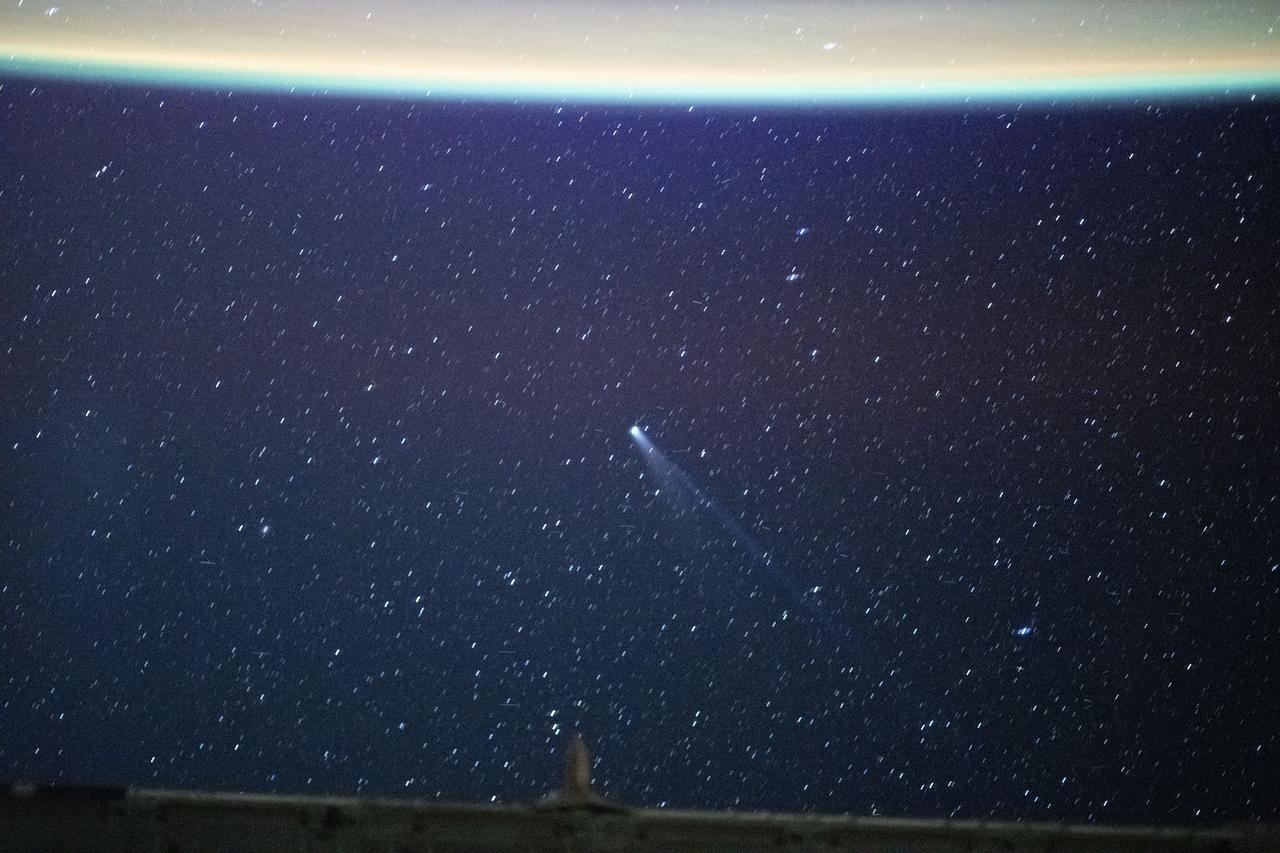
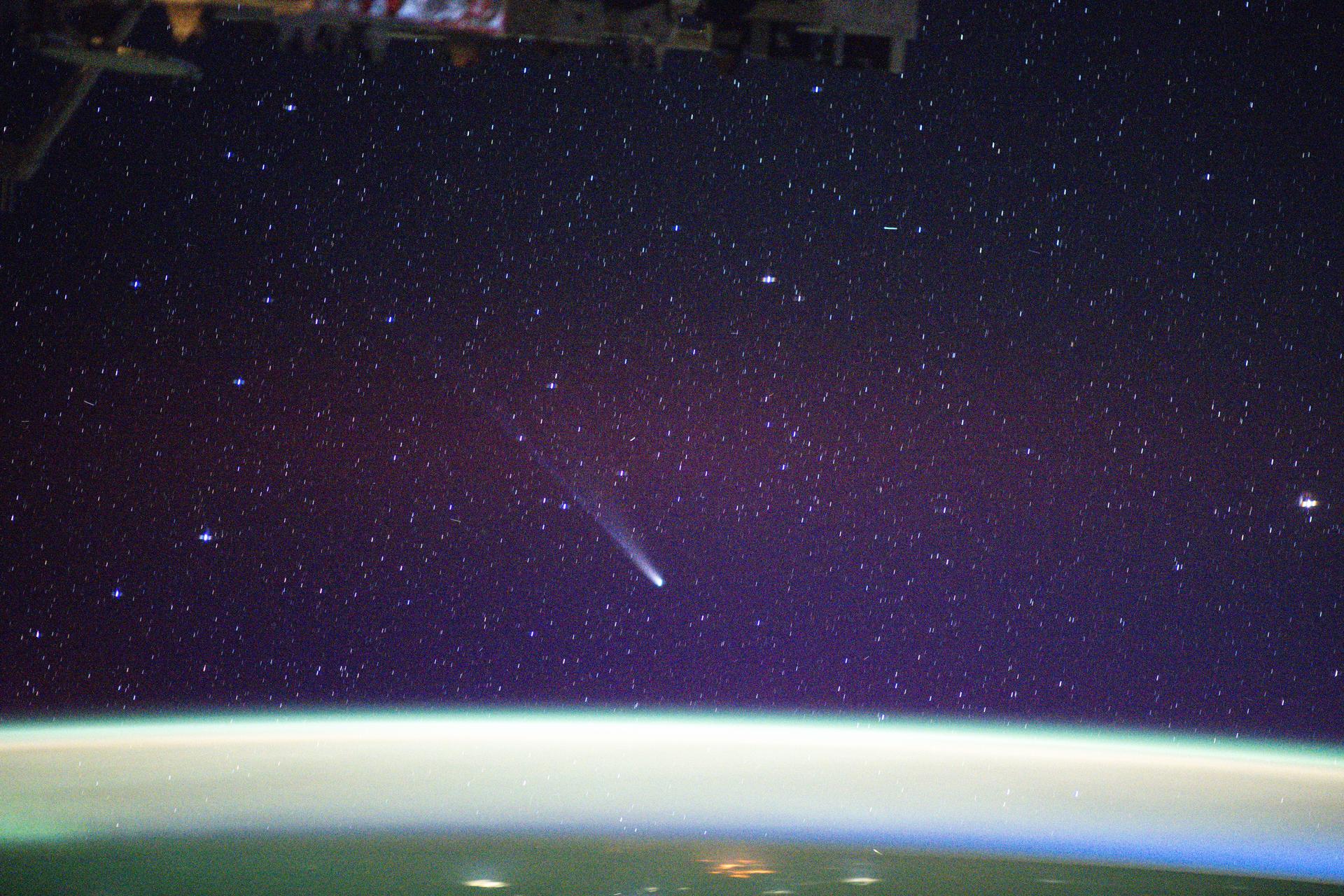
iss073e0916993 (Oct. 20, 2025) --- Comet Lemmon (C/2025 A6) appears approximately 55.4 million miles (89.2 million kilometers) from Earth in this long-exposure photograph taken from the International Space Station. The star trails in the background result from the camera’s extended shutter speed.
Comet Lemmon appears approximately 55.4 million miles from Earth
In this long exposure image, a United Launch Alliance Atlas V rocket with NASA’s Mars 2020 Perseverance rover onboard is seen illuminated by spotlights on the launch pad at Space Launch Complex 41 at Cape Canaveral Air Force Station, Thursday, July 30, 2020, from NASA’s Kennedy Space Center in Florida. The Perseverance rover is part of NASA’s Mars Exploration Program, a long-term effort of robotic exploration of the Red Planet. Launch is scheduled for Thursday, July 30.  Photo Credit: (NASA/Joel Kowsky)
Mars 2020 Perseverance Prelaunch
A long exposure image captures the launch of NASA’s SpaceX Crew-11 mission SpaceX Falcon 9 rocket with a Dragon spacecraft at 11:43 a.m. EDT Friday, Aug. 1, 2025, from Launch Complex 39A at Kennedy Space Center in Florida. Crew-11, carrying NASA astronauts Zena Cardman and Mike Fincke, along with JAXA (Japan Aerospace Exploration Agency) astronaut Kimiya Yui and Roscosmos cosmonaut Oleg Platonov, are on their way to the International Space Station for a long duration mission.
SpaceX Crew-11 Launch
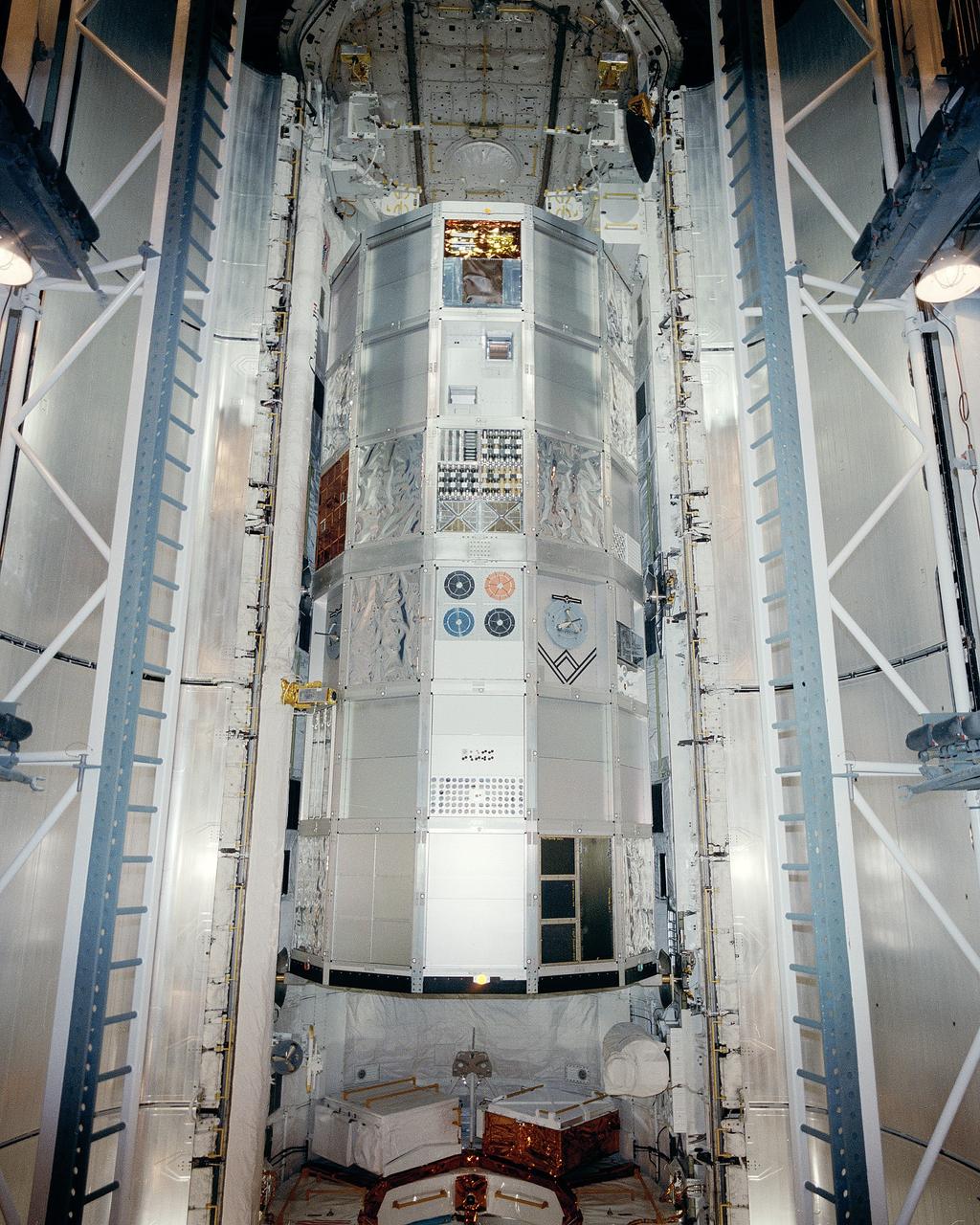
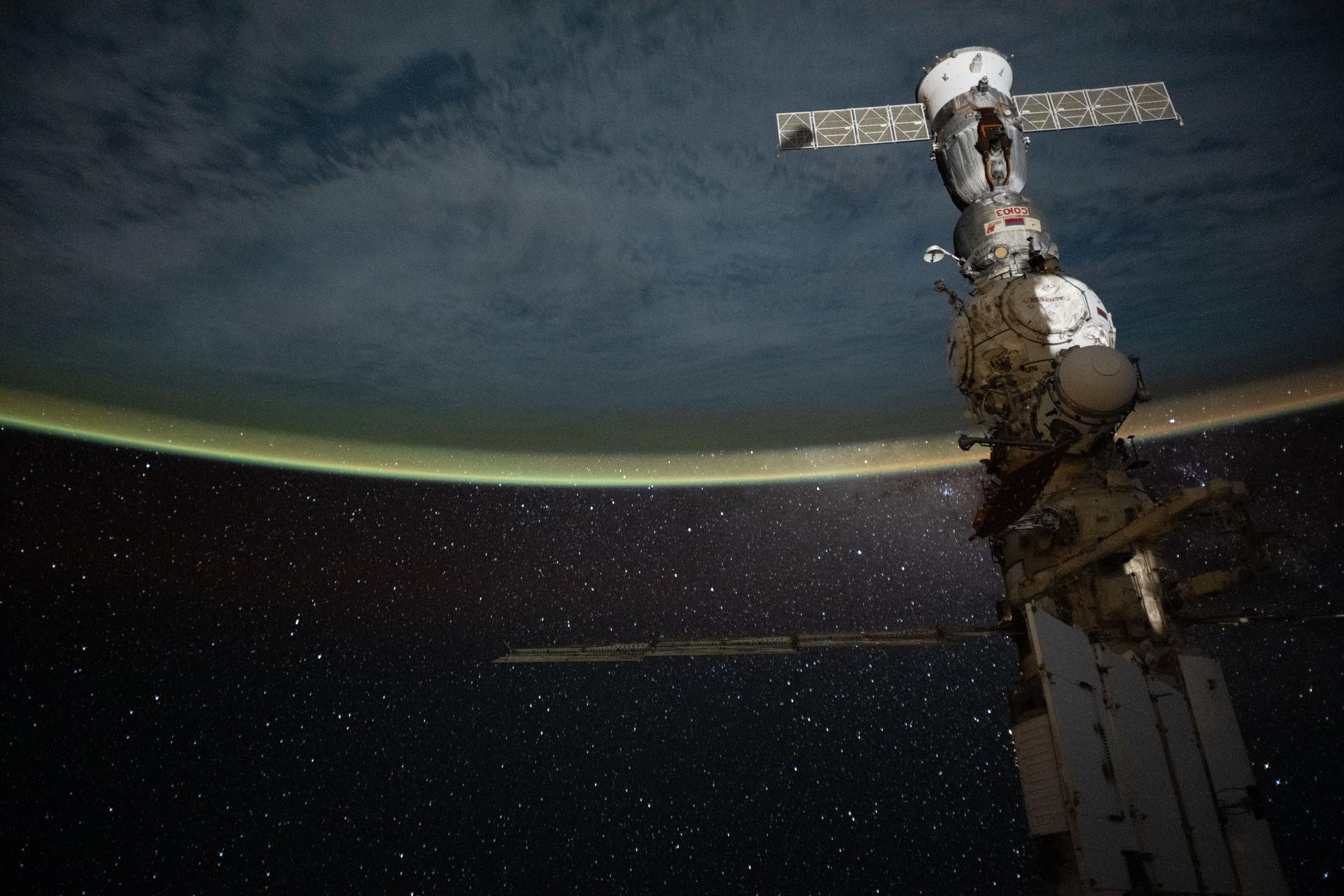
CAPE CANAVERAL, Fla. -- At NASA's Kennedy Space Center's Launch Pad 39-A, the school bus-sized Long Duration Exposure Facility LDEF containing 57 active and passive experiments from nine nations has been loaded into the payload bay of the space shuttle Challenger. The view from the Payload Change-out Room shows LDEF which will be deployed in orbit at an altitude of nearly 300 miles and retrieved after nearly a year so that the experimenters may analyze the effects of long term exposure to space on various substances and processes. The five-member STS-41C crew for this flight is headed by veteran astronaut Robert Crippen on his third space shuttle flight, and includes space rookies, pilot Dick Scobee and mission specialists Terry Hart, George Nelson and James van Hoften. Photo Credit: NASA
KSC-84PC-0219
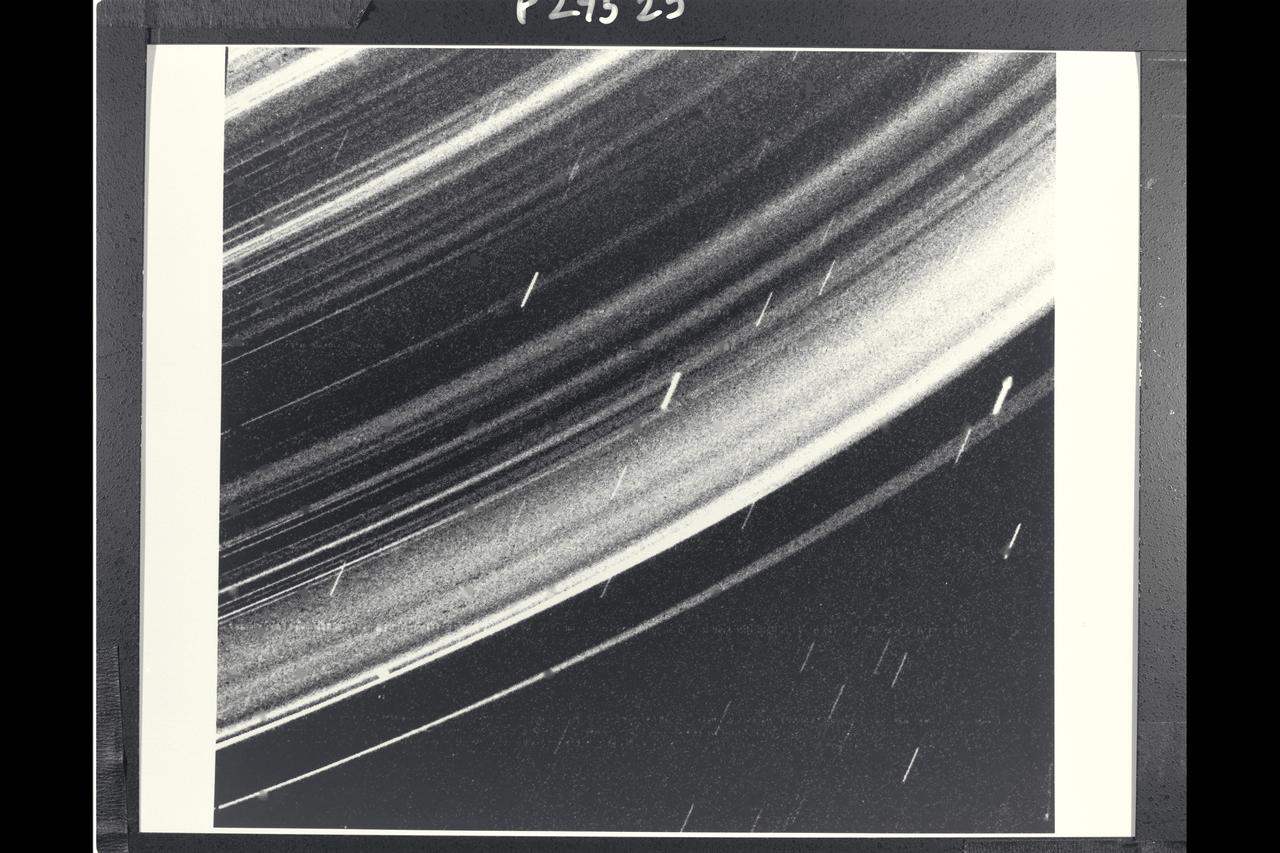
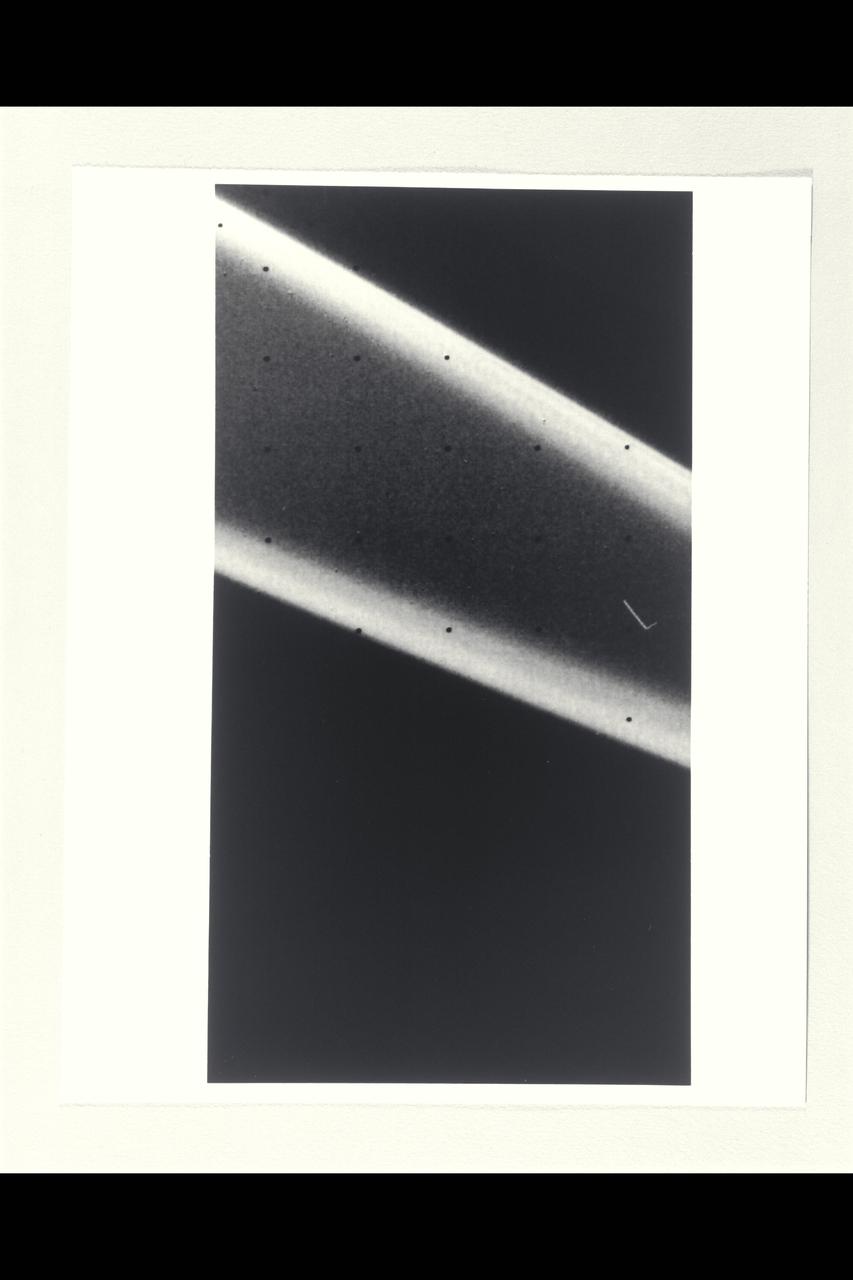
Range :  236,000 km. ( 147,000 mi. ) Resolution :  33 km. ( 20 mi. ) P-29525B/W This Voyager 2 image reveals a contiuos distribution of small particles throughout the Uranus ring system. This unigue geometry, the highest phase angle at which Voyager imaged the rings, allows us to see lanes of fine dust particles not visible from other viewing angles. All the previously known rings are visible. However, some of the brightest features  in the image are bright dust lanes not previously seen. the combination of this unique geometry and a long, 96 second exposure allowed this spectacular observation, acquired through the clear filter if Voyager 2's wide angle camera. the long exposure produced a noticable, non-uniform smear, as well as streaks due to trailed stars.
ARC-1986-A86-7041
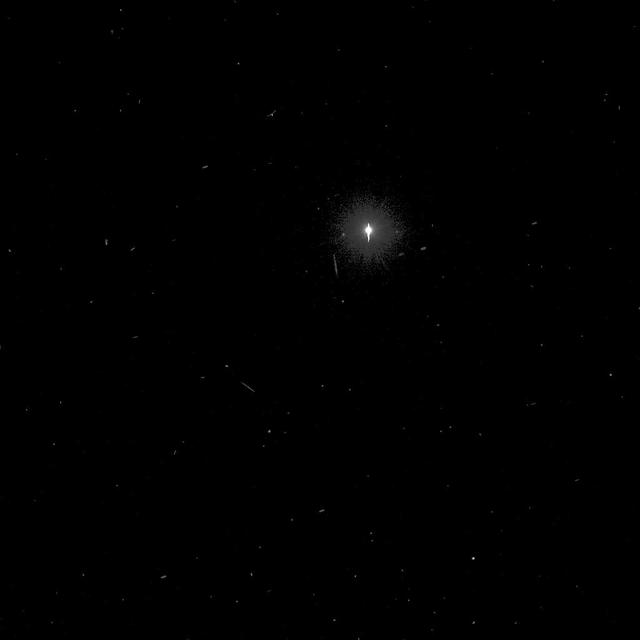
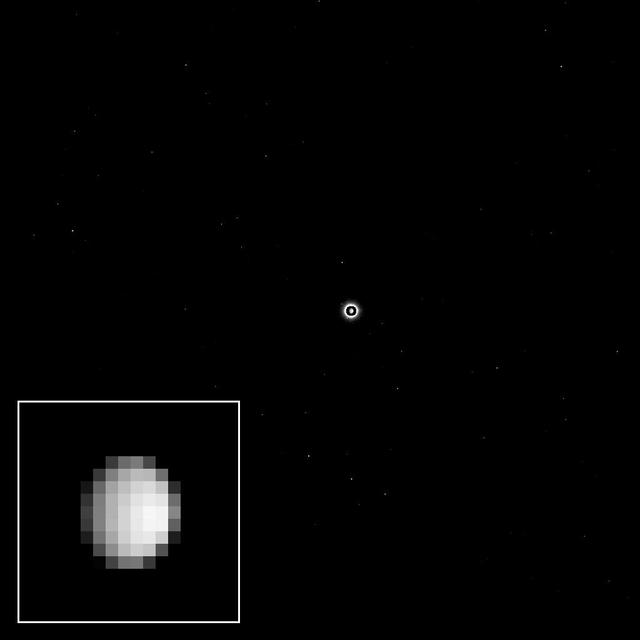
As the Dawn spacecraft flies through space toward the dwarf planet Ceres, the unexplored world appears to its camera as a bright light in the distance, full of possibility for scientific discovery.  This view was acquired as part of a final calibration of the science camera before Dawn's arrival at Ceres. To accomplish this, the camera needed to take pictures of a target that appears just a few pixels across. On Dec. 1, 2014, Ceres was about nine pixels in diameter, nearly perfect for this calibration. The images provide data on very subtle optical properties of the camera that scientists will use when they analyze and interpret the details of some of the pictures returned from orbit.  Ceres is the bright spot in the center of the image. Because the dwarf planet is much brighter than the stars in the background, the camera team selected a long exposure time to make the stars visible. The long exposure made Ceres appear overexposed, and exaggerated its size; this was corrected by superimposing a shorter exposure of the dwarf planet in the center of the image.  A cropped, magnified view of Ceres appears in the inset image at lower left.  The image was taken on Dec. 1, 2014 with the Dawn spacecraft's framing camera, using a clear spectral filter. Dawn was about 740,000 miles (1.2 million kilometers) from Ceres at the time. Ceres is 590 miles (950 kilometers) across and was discovered in 1801.  http://photojournal.jpl.nasa.gov/catalog/PIA19050
Enhanced Early View of Ceres from Dawn
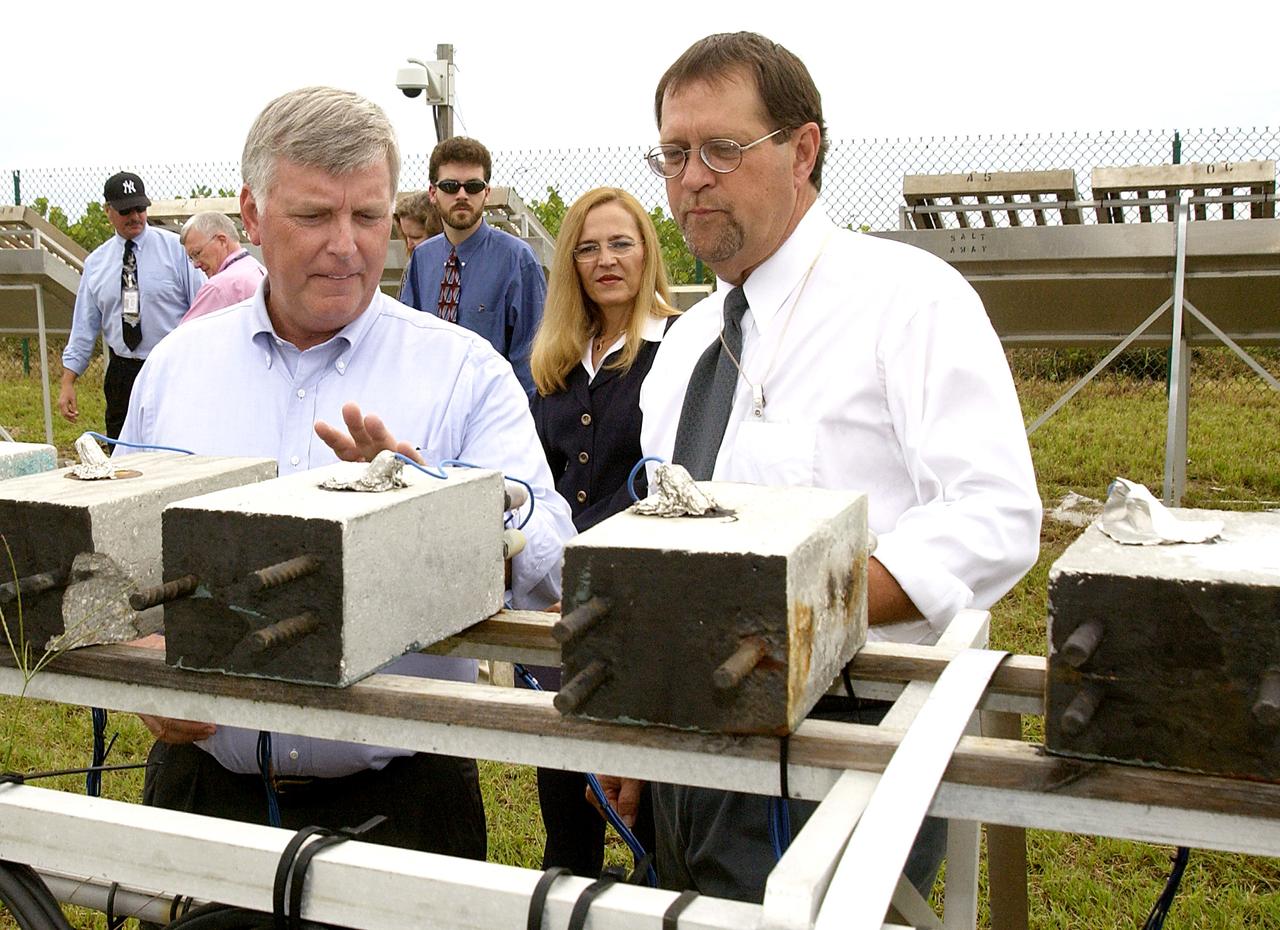
KENNEDY SPACE CENTER, FLA. -   On a tour of the KSC Beach Corrosion Test Site, Testbed Manager Louis MacDowell (right) explains to Center Director Jim Kennedy about the test blocks being used to test a newly developed coating to protect steel inside concrete.  Between MacDowell and Kennedy are Dr. Paul Hintze and Lead Scientist Dr. Luz Marina Calle.  The KSC Beach Corrosion Test Site was established in the 1960s and has provided more than 30 years of historical information on the long-term performance of many materials in use at KSC and other locations around the world. Located 100 feet from the Atlantic Ocean approximately 1 mile south of the Space Shuttle launch sites, the test facility includes an atmospheric exposure site, a flowing seawater exposure site, and an on-site electrochemistry laboratory and monitoring station. The beach laboratory is used to conduct real-time corrosion experiments and provides for the remote monitoring of surrounding weather conditions. The newly added flowing seawater immersion facility provides for the immersion testing of materials and devices under controlled conditions.
KENNEDY SPACE CENTER, FLA. - On a tour of the KSC Beach Corrosion Test Site, Testbed Manager Louis MacDowell (right) explains to Center Director Jim Kennedy about the test blocks being used to test a newly developed coating to protect steel inside concrete. Between MacDowell and Kennedy are Dr. Paul Hintze and Lead Scientist Dr. Luz Marina Calle. The KSC Beach Corrosion Test Site was established in the 1960s and has provided more than 30 years of historical information on the long-term performance of many materials in use at KSC and other locations around the world. Located 100 feet from the Atlantic Ocean approximately 1 mile south of the Space Shuttle launch sites, the test facility includes an atmospheric exposure site, a flowing seawater exposure site, and an on-site electrochemistry laboratory and monitoring station. The beach laboratory is used to conduct real-time corrosion experiments and provides for the remote monitoring of surrounding weather conditions. The newly added flowing seawater immersion facility provides for the immersion testing of materials and devices under controlled conditions.
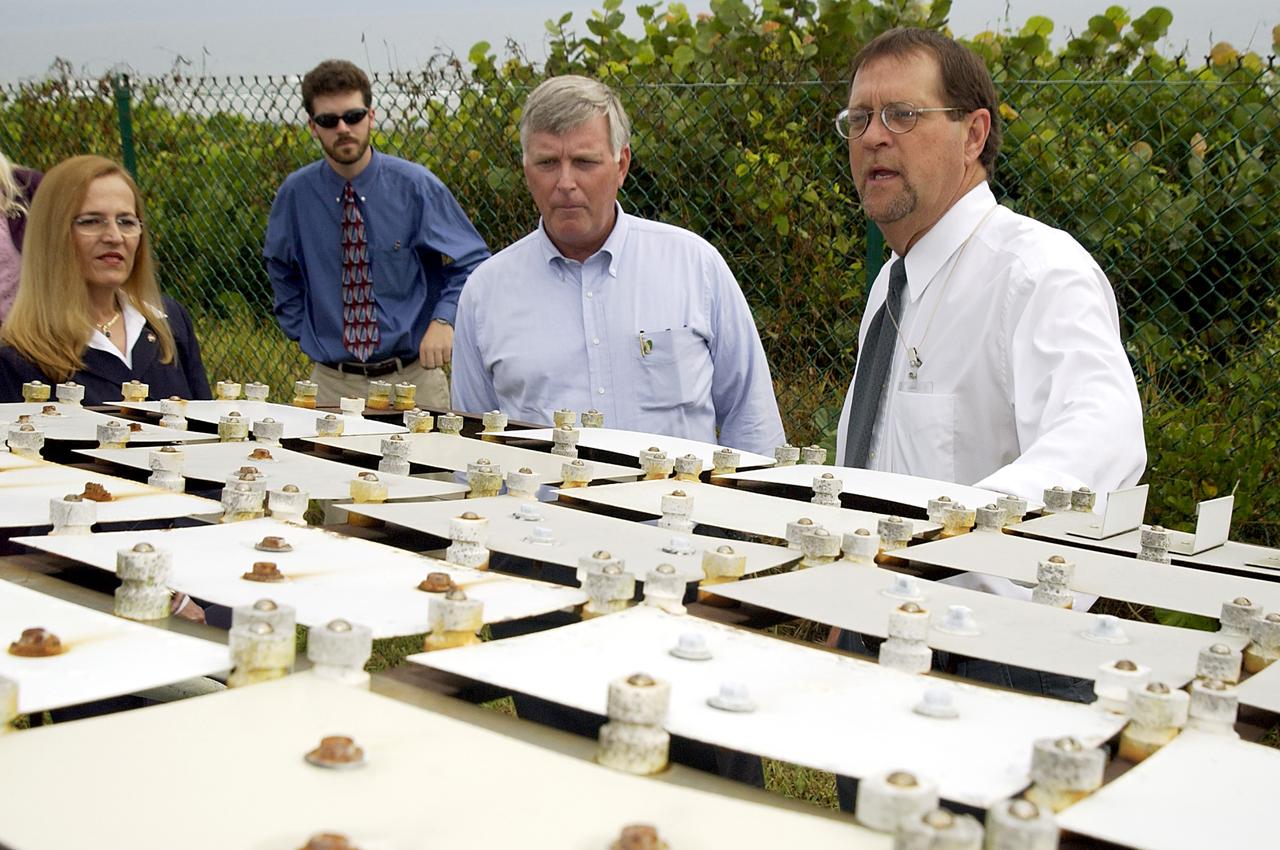
KENNEDY SPACE CENTER, FLA. -   On a tour of the KSC Beach Corrosion Test Site, Center Director Jim Kennedy (second from right) learns from Testbed Manager Louis MacDowell (right) about a project being undertaken for the U.S. Navy.  Being studied are nonchrome primers for aircraft.  At left are Lead Scientist Dr. Luz Marina Calle and  Dr. Paul Hintze, who is working on a graduate project for the National Research Council.  The KSC Beach Corrosion Test Site was established in the 1960s and has provided more than 30 years of historical information on the long-term performance of many materials in use at KSC and other locations around the world. Located 100 feet from the Atlantic Ocean approximately 1 mile south of the Space Shuttle launch sites, the test facility includes an atmospheric exposure site, a flowing seawater exposure site, and an on-site electrochemistry laboratory and monitoring station. The beach laboratory is used to conduct real-time corrosion experiments and provides for the remote monitoring of surrounding weather conditions. The newly added flowing seawater immersion facility provides for the immersion testing of materials and devices under controlled conditions.
KENNEDY SPACE CENTER, FLA. - On a tour of the KSC Beach Corrosion Test Site, Center Director Jim Kennedy (second from right) learns from Testbed Manager Louis MacDowell (right) about a project being undertaken for the U.S. Navy. Being studied are nonchrome primers for aircraft. At left are Lead Scientist Dr. Luz Marina Calle and Dr. Paul Hintze, who is working on a graduate project for the National Research Council. The KSC Beach Corrosion Test Site was established in the 1960s and has provided more than 30 years of historical information on the long-term performance of many materials in use at KSC and other locations around the world. Located 100 feet from the Atlantic Ocean approximately 1 mile south of the Space Shuttle launch sites, the test facility includes an atmospheric exposure site, a flowing seawater exposure site, and an on-site electrochemistry laboratory and monitoring station. The beach laboratory is used to conduct real-time corrosion experiments and provides for the remote monitoring of surrounding weather conditions. The newly added flowing seawater immersion facility provides for the immersion testing of materials and devices under controlled conditions.
KENNEDY SPACE CENTER, FLA. -   On a tour of the KSC Beach Corrosion Test Site, Testbed Manager Louis MacDowell (foreground) explains to Center Director Jim Kennedy (third from right) about a study being undertaken for the U.S. Navy: nonchrome primers for aircraft. At left is Lead Scientist Dr. Luz Marina Calle and behind MacDowell is Dr. Paul Hintze, who is working on a graduate project for the National Research Council.  The KSC Beach Corrosion Test Site was established in the 1960s and has provided more than 30 years of historical information on the long-term performance of many materials in use at KSC and other locations around the world. Located 100 feet from the Atlantic Ocean approximately 1 mile south of the Space Shuttle launch sites, the test facility includes an atmospheric exposure site, a flowing seawater exposure site, and an on-site electrochemistry laboratory and monitoring station. The beach laboratory is used to conduct real-time corrosion experiments and provides for the remote monitoring of surrounding weather conditions. The newly added flowing seawater immersion facility provides for the immersion testing of materials and devices under controlled conditions.
KENNEDY SPACE CENTER, FLA. - On a tour of the KSC Beach Corrosion Test Site, Testbed Manager Louis MacDowell (foreground) explains to Center Director Jim Kennedy (third from right) about a study being undertaken for the U.S. Navy: nonchrome primers for aircraft. At left is Lead Scientist Dr. Luz Marina Calle and behind MacDowell is Dr. Paul Hintze, who is working on a graduate project for the National Research Council. The KSC Beach Corrosion Test Site was established in the 1960s and has provided more than 30 years of historical information on the long-term performance of many materials in use at KSC and other locations around the world. Located 100 feet from the Atlantic Ocean approximately 1 mile south of the Space Shuttle launch sites, the test facility includes an atmospheric exposure site, a flowing seawater exposure site, and an on-site electrochemistry laboratory and monitoring station. The beach laboratory is used to conduct real-time corrosion experiments and provides for the remote monitoring of surrounding weather conditions. The newly added flowing seawater immersion facility provides for the immersion testing of materials and devices under controlled conditions.
KENNEDY SPACE CENTER, FLA. -   On a tour of the KSC Beach Corrosion Test Site, Louis MacDowell (right), Testbed manager, explains to Center Director Jim Kennedy a project being undertaken for the U.S. Navy.  At left are nonchrome primers for aircraft being studied.  Behind Kennedy is Lead Scientist Dr. Luz Marina Calle.  Behind MacDowell is Dr. Paul Hintze, who is working on a graduate project for the National Research Council.  The KSC Beach Corrosion Test Site was established in the 1960s and has provided more than 30 years of historical information on the long-term performance of many materials in use at KSC and other locations around the world. Located 100 feet from the Atlantic Ocean approximately 1 mile south of the Space Shuttle launch sites, the test facility includes an atmospheric exposure site, a flowing seawater exposure site, and an on-site electrochemistry laboratory and monitoring station. The beach laboratory is used to conduct real-time corrosion experiments and provides for the remote monitoring of surrounding weather conditions. The newly added flowing seawater immersion facility provides for the immersion testing of materials and devices under controlled conditions.
KENNEDY SPACE CENTER, FLA. - On a tour of the KSC Beach Corrosion Test Site, Louis MacDowell (right), Testbed manager, explains to Center Director Jim Kennedy a project being undertaken for the U.S. Navy. At left are nonchrome primers for aircraft being studied. Behind Kennedy is Lead Scientist Dr. Luz Marina Calle. Behind MacDowell is Dr. Paul Hintze, who is working on a graduate project for the National Research Council. The KSC Beach Corrosion Test Site was established in the 1960s and has provided more than 30 years of historical information on the long-term performance of many materials in use at KSC and other locations around the world. Located 100 feet from the Atlantic Ocean approximately 1 mile south of the Space Shuttle launch sites, the test facility includes an atmospheric exposure site, a flowing seawater exposure site, and an on-site electrochemistry laboratory and monitoring station. The beach laboratory is used to conduct real-time corrosion experiments and provides for the remote monitoring of surrounding weather conditions. The newly added flowing seawater immersion facility provides for the immersion testing of materials and devices under controlled conditions.
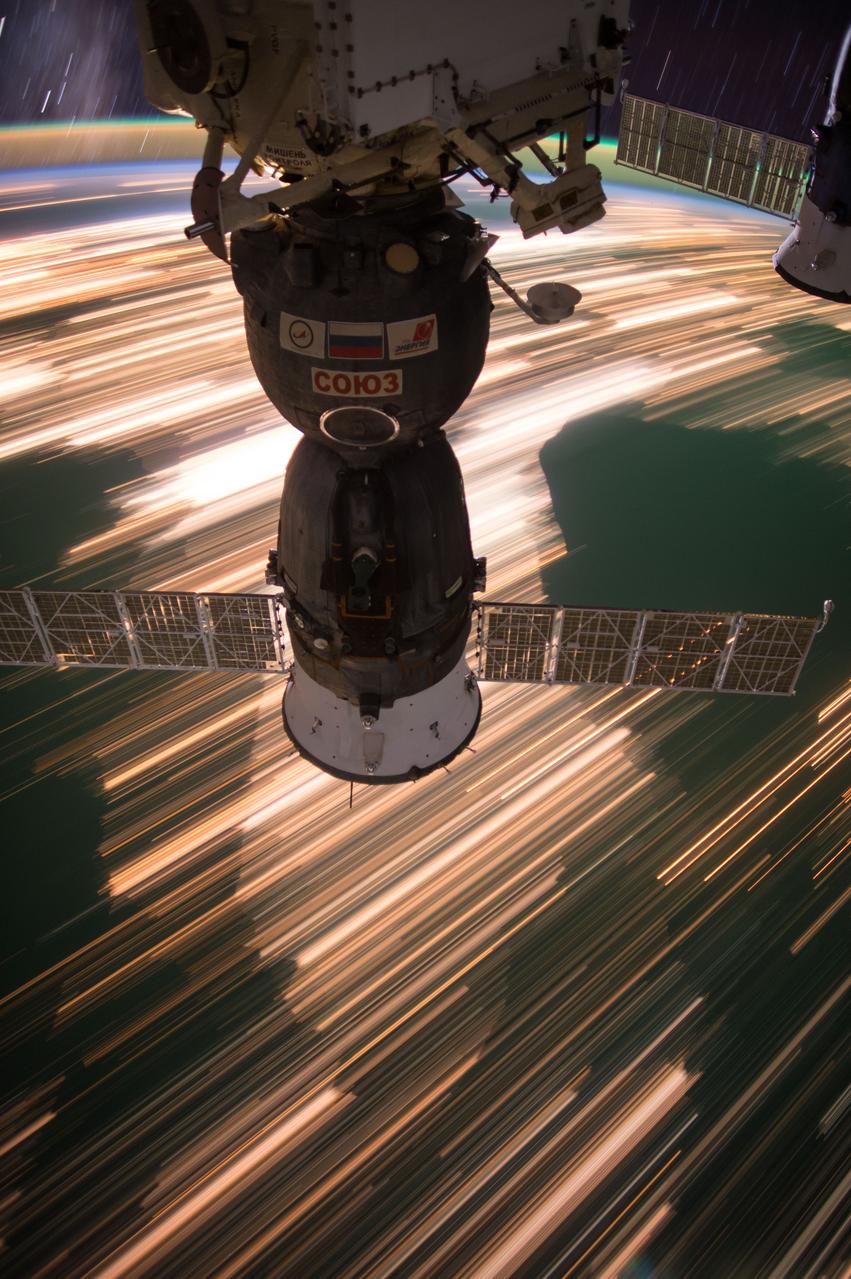
iss071e650763 (Sept. 14, 2024) --- The long exposure photograph taken by NASA astronaut Matthew Dominick shows star trails, streaks of city lights, and two Roscosmos crew ships, the Soyuz MS-26 docked to the Rassvet module (foreground) and the Soyuz MS-25 (background) docked to the Prichal docking module, as the International Space Station orbited 265 miles above central China.
iss071e650763
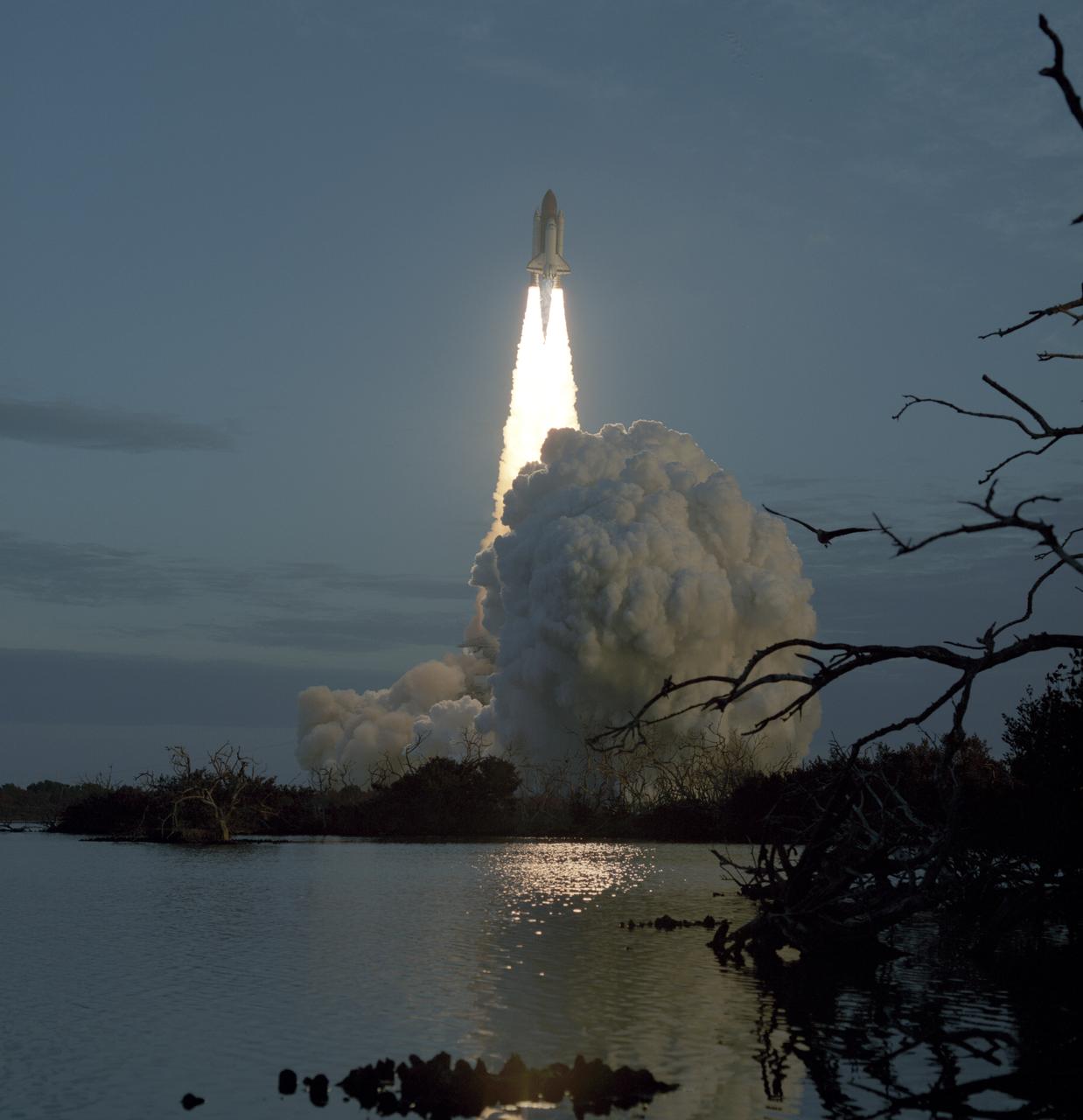
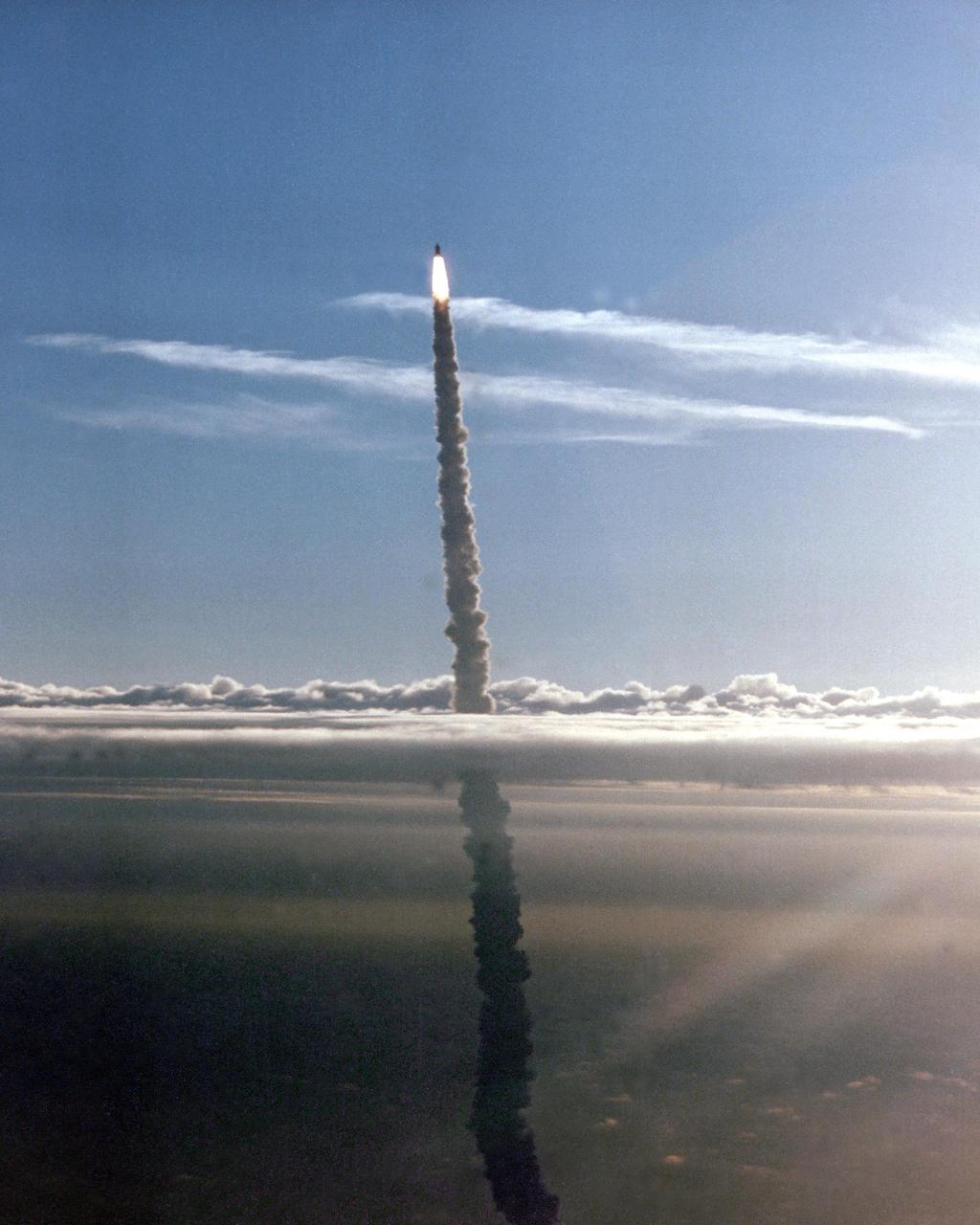
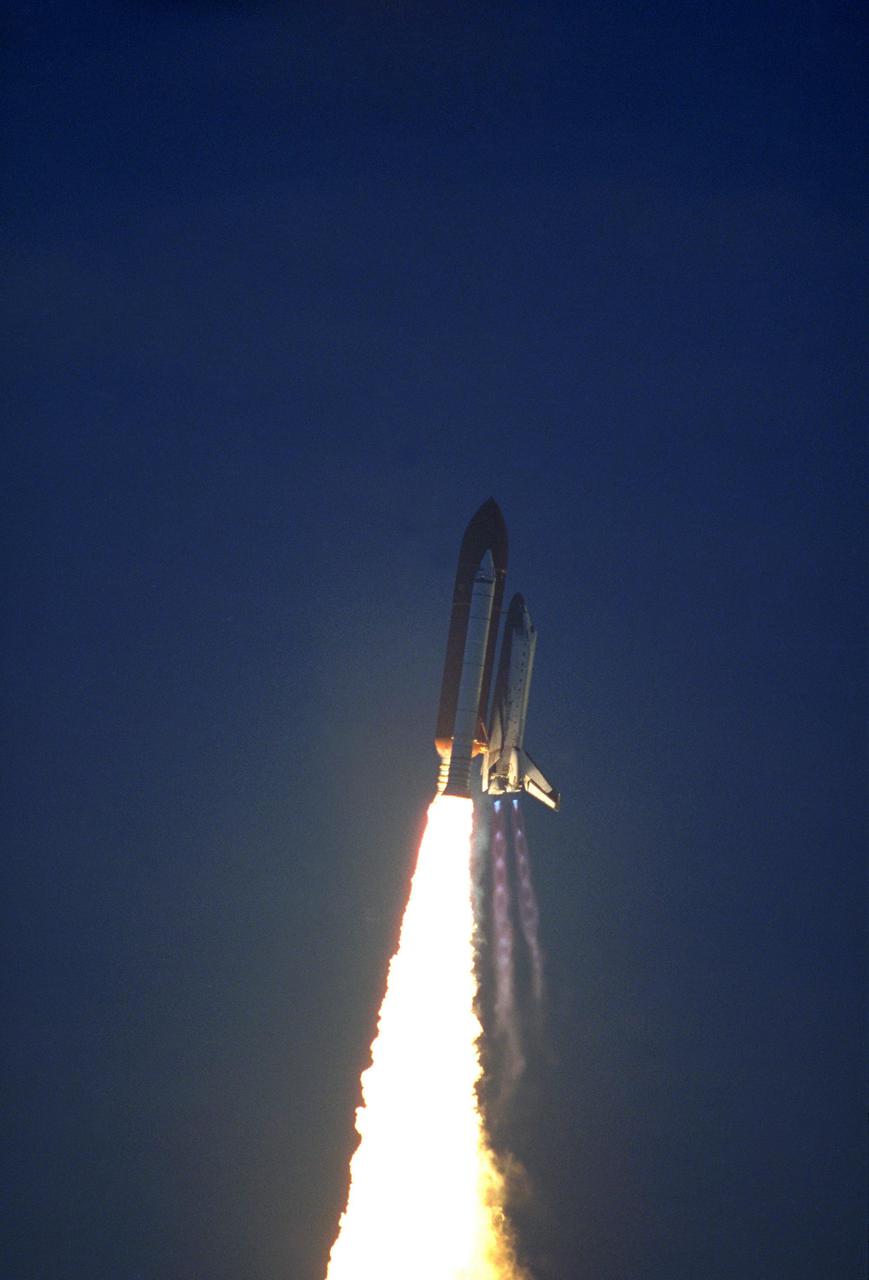
KENNEDY SPACE CENTER, FLA. --  STS-32R lifts off from Pad 39-A at 7:35 a.m. EST. Columbia is scheduled to deploy the Syncom IV-5 defense communications satellite and retrieve NASA's Long duration Exposure Facility (LDEF) during a 10-day mission, the longest Shuttle flight to date. The mission also includes a variety of experiments, including Protein Crystal Growth.   This photo was taken from the Shuttle Training Aircraft.
KSC-90pc-0031
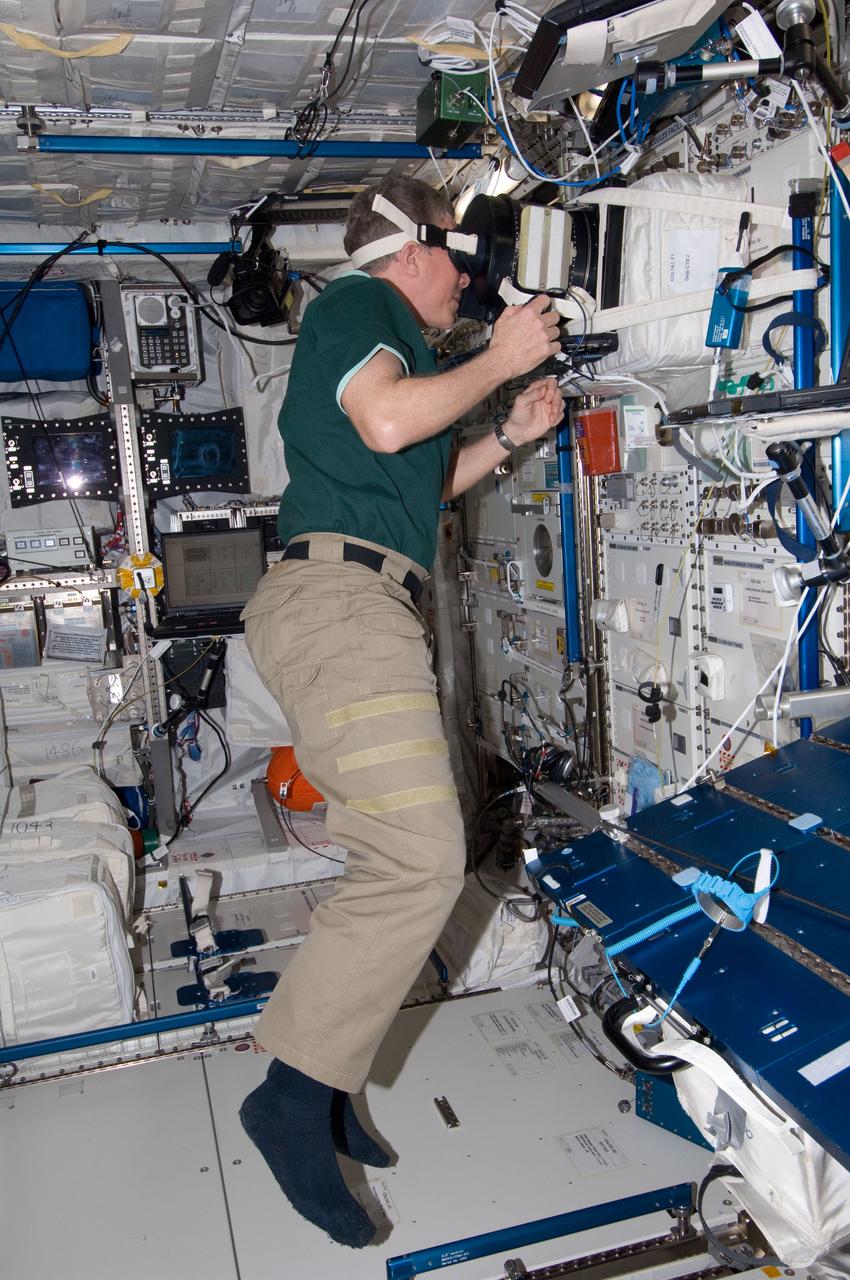
ISS030-E-177225 (15 March 2012) --- NASA astronaut Dan Burbank, Expedition 30 commander, uses Neurospat hardware to perform a science session with the European Space Agency PASSAGES experiment in the Columbus laboratory of the International Space Station. PASSAGES is designed to test how astronauts interpret visual information in weightlessness. It aims at studying the effects of microgravity on the use of the 'Eye-Height' strategy for estimating allowed actions in an environment, and whether this could possibly decrease after a long exposure to weightlessness.
Burbank uses the Neurospat hardware in the Columbus Module
A tracking and communications antenna is seen in this long exposure photograph as it tracks the launch of the Northrop Grumman Antares rocket, Saturday, November 2, 2019, at NASA's Wallops Flight Facility in Virginia. Northrop Grumman’s 12th contracted cargo resupply mission with NASA to the International Space Station will deliver about 8,200 pounds of science and research, crew supplies and vehicle hardware to the orbital laboratory and its crew. Photo Credit: (NASA/Bill Ingalls)
Northrop Grumman Antares CRS-12 Launch
This long exposure photograph shows the Orbital ATK Antares rocket, with the Cygnus spacecraft onboard, being raised into the vertical position on launch Pad-0A, Thursday, Nov. 9, 2017 at NASA's Wallops Flight Facility in Virginia. Orbital ATK’s eighth contracted cargo resupply mission with NASA to the International Space Station will deliver over 7,400 pounds of science and research, crew supplies and vehicle hardware to the orbital laboratory and its crew. Photo Credit: (NASA/Bill Ingalls)
Antares Orbital ATK-8 Mission
The Northrop Grumman Antares rocket, with Cygnus resupply spacecraft onboard, is seen in this long exposure photograph as it launches from Pad-0A, Wednesday, April 17, 2019 at NASA's Wallops Flight Facility in Virginia. Northrop Grumman's 11th contracted cargo resupply mission for NASA to the International Space Station will deliver about 7,600 pounds of science and research, crew supplies and vehicle hardware to the orbital laboratory and its crew. Photo Credit: (NASA/Bill Ingalls)
Northrop Grumman Antares CRS-11 Launch
Range :  1,550,000 km ( 961,000 miles ) These high resolution pictures of Jupiter's ring were obtained by Voyager 2 some 26 hrs. past the planet, 2 degrees below the ring plane. The forward scattering of sunlight reveals a radial distribution and density gradient of very small particles extending inward from the ring toward Jupiter. There is an indication of structure within the ring, but unfortunatly the spacecrafts motion during these long exposures blurred out the highest resolution detail, particularly in the frame at right.
ARC-1979-A79-7101
In this twenty second exposure, a United Launch Alliance Atlas V rocket with NASA’s Mars 2020 Perseverance rover onboard is seen as it launches from Space Launch Complex 41, Thursday, July 30, 2020, at Cape Canaveral Air Force Station in Florida. The Perseverance rover is part of NASA’s Mars Exploration Program, a long-term effort of robotic exploration of the Red Planet. Photo Credit: (NASA/Joel Kowsky)
Mars 2020 Perseverance Launch
Range :  1,450,000 km. ( 900,000 miles ) Jupiter's faint ring system is shown here as two orange lines protrude from the left toward Jupiter's limb.  This colorful composite was taken in Jupiter's shadow through orange and violet filters. The colorful images of Jupiter's limb are evidence of the spacecraft motion dering this long exposure.  Voyager 2 was about 2 degrees below the plane of the ring when this was shot, leaving the lower ring image cut short by Jupiter's shadow on the ring. (JPL ref No. P-21779)
ARC-1979-AC79-7117
The Soyuz TMA-16M spacecraft is seen in this long exposure photograph as it launches to the International Space Station with Expedition 43 NASA Astronaut Scott Kelly, Russian Cosmonauts Mikhail Kornienko, and Gennady Padalka of the Russian Federal Space Agency (Roscosmos) onboard Saturday, March 28, 2015, Kazakh time (March 27 Eastern time) from the Baikonur Cosmodrome in Kazakhstan. As the one-year crew, Kelly and Kornienko will return to Earth on Soyuz TMA-18M in March 2016.  Photo Credit (NASA/Bill Ingalls)
Expedition 43 Launch
P-21763 C Range: 1,400,000 kilometers (870,000 miles) Jupiter's thin ring of particles was photographed by Voyager 2's telescope-equipped TV camera through three color filters to provide this color representation. During the three long exposures the spacecraft drifted, smearing out the ring image. The linear feature just above the ring is a star trail. True color of the ring cannot be deduced from this photo.
ARC-1979-AC79-7091
KENNEDY SPACE CENTER, FLA. -- STS-32R lifts off from Pad 39-A at 7:35 a.m. EST.  Columbia is scheduled to deploy the Syncom IV-5 defense communications  satellite and retrieve NASA's Long duration Exposure Facility (LDEF) during a 10-day mission, the longest Shuttle flight to date.  The mission also includes a variety of experiments, including Protein Crystal Growth.  This photo was taken from the Shuttle Training Aircraft.
KSC-90pc-0039
The Soyuz MS-12 spacecraft is seen in this long exposure photograph as it launches with Expedition 59 crewmembers Nick Hague and Christina Koch of NASA, along with Alexey Ovchinin of Roscosmos, Friday March 15, 2019, Kazakh time (March 14 Eastern time) at the Baikonur Cosmodrome in Kazakhstan. Hague, Koch, and Ovchinin will spend six-and-a-half months living and working aboard the International Space Station. Photo Credit: (NASA/Bill Ingalls)
Expedition 59 Launch
ISS029-E-021636 (6 Oct. 2011) --- Japan Aerospace Exploration Agency astronaut Satoshi Furukawa, Expedition 29 flight engineer, uses Neurospat hardware to perform a science session with the European Space Agency PASSAGES experiment in the Columbus laboratory of the International Space Station. PASSAGES is designed to test how astronauts interpret visual information in weightlessness. It aims at studying the effects of microgravity on the use of the 'Eye-Height' strategy for estimating allowed actions in an environment, and whether this could possibly decrease after a long exposure to weightlessness.
ESA PASSAGES experiment
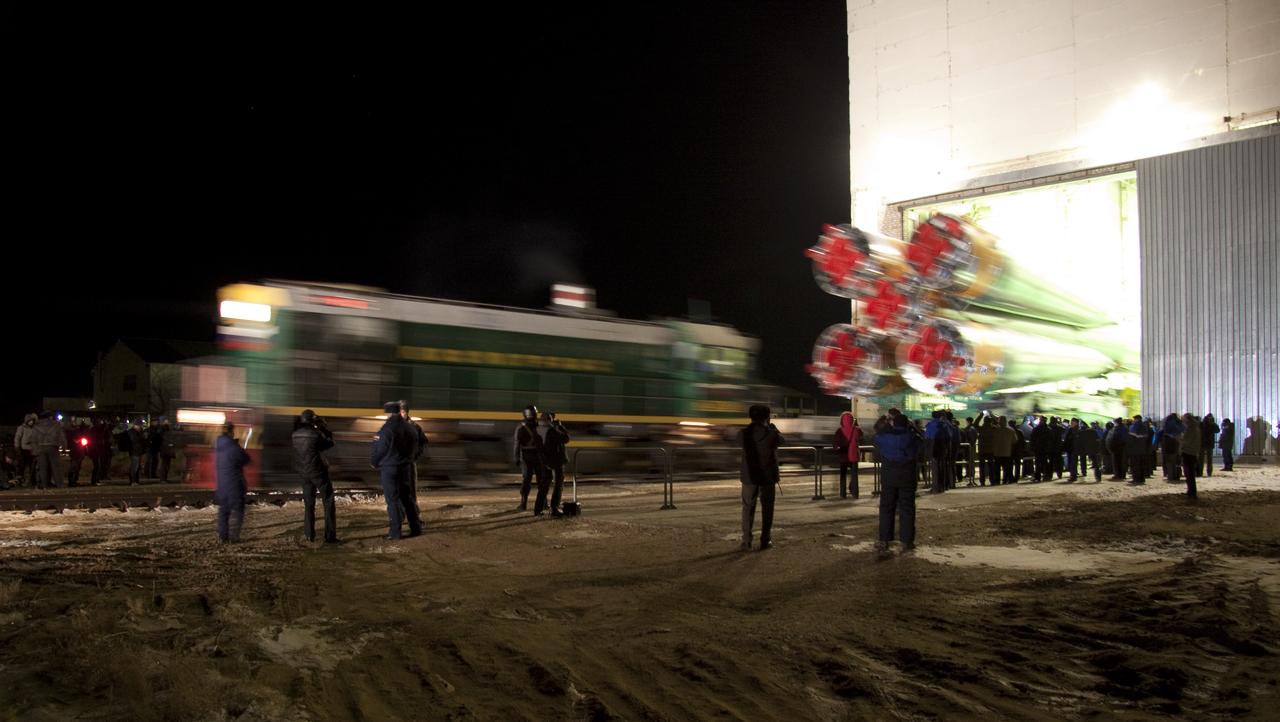
An Orbital ATK rocket is seen in this long exposure, as workers prepare to roll it out to launch Pad-0A at Wallops Flight Facility Thursday, May 17, 2018 at Wallops Island, VA. The Antares will launch a Cygnus spacecraft on a cargo resupply mission to the International Space Station. The mission is Orbital ATK’s ninth contracted cargo delivery flight to the space station for NASA. Included in the 7,400 pounds of cargo onboard Cygnus, are science experiments, crew supplies, and vehicle hardware. Photo Credit: (NASA/Aubrey Gemignani)
Orbital ATK CRS-9 Rollout
ISS029-E-021641 (6 Oct. 2011) --- NASA astronaut Mike Fossum, Expedition 29 commander, uses Neurospat hardware to perform a science session with the European Space Agency PASSAGES experiment in the Columbus laboratory of the International Space Station. PASSAGES is designed to test how astronauts interpret visual information in weightlessness. It aims at studying the effects of microgravity on the use of the 'Eye-Height' strategy for estimating allowed actions in an environment, and whether this could possibly decrease after a long exposure to weightlessness.
ESA PASSAGES experiment
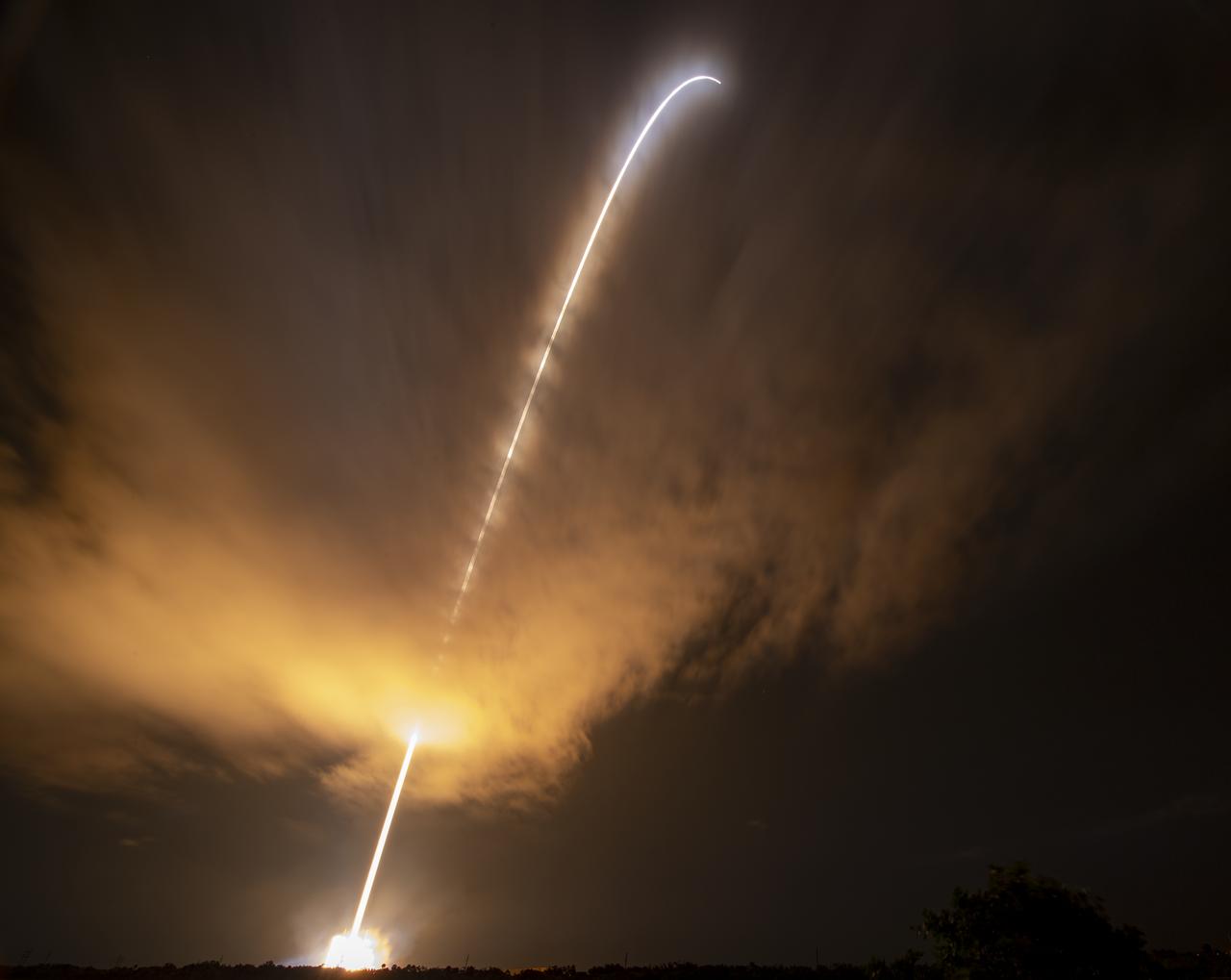
The United Launch Alliance Delta IV Heavy rocket is seen in this long exposure photograph as it launches NASA's Parker Solar Probe to touch the Sun, Sunday, Aug. 12, 2018 from Launch Complex 37 at Cape Canaveral Air Force Station, Florida. Parker Solar Probe is humanity’s first-ever mission into a part of the Sun’s atmosphere called the corona.  Here it will directly explore solar processes that are key to understanding and forecasting space weather events that can impact life on Earth. Photo Credit: (NASA/Bill Ingalls)
Parker Solar Probe Launch
ISS025-E-008371 (20 Oct. 2010) --- NASA astronaut Doug Wheelock, Expedition 25 commander, uses Neurospat hardware to perform a science session with the European Space Agency PASSAGES experiment in the Columbus laboratory of the International Space Station. PASSAGES is designed to test how astronauts interpret visual information in weightlessness. It aims at studying the effects of microgravity on the use of the ‘Eye-Height’ strategy for estimating allowed actions in an environment, and whether this could possibly decrease after a long exposure to weightlessness.
PASSAGES experiment
The STS-32 patch, designed by the five crewmembers for the scheduled December 1989 space mission, depicts the Space Shuttle orbiter rendezvousing with the Long Duration Exposure Facility (LDEF) satellite from above. The Syncom satellite is successfully deployed and on its way to geosynchronous orbit. Five stars have been arranged so that three are one side of the orbiter and two on the other to form the number 32. The seven major rays of the sun are in remembrance of the crewmembers for STS 51-L.
Space Shuttle Projects
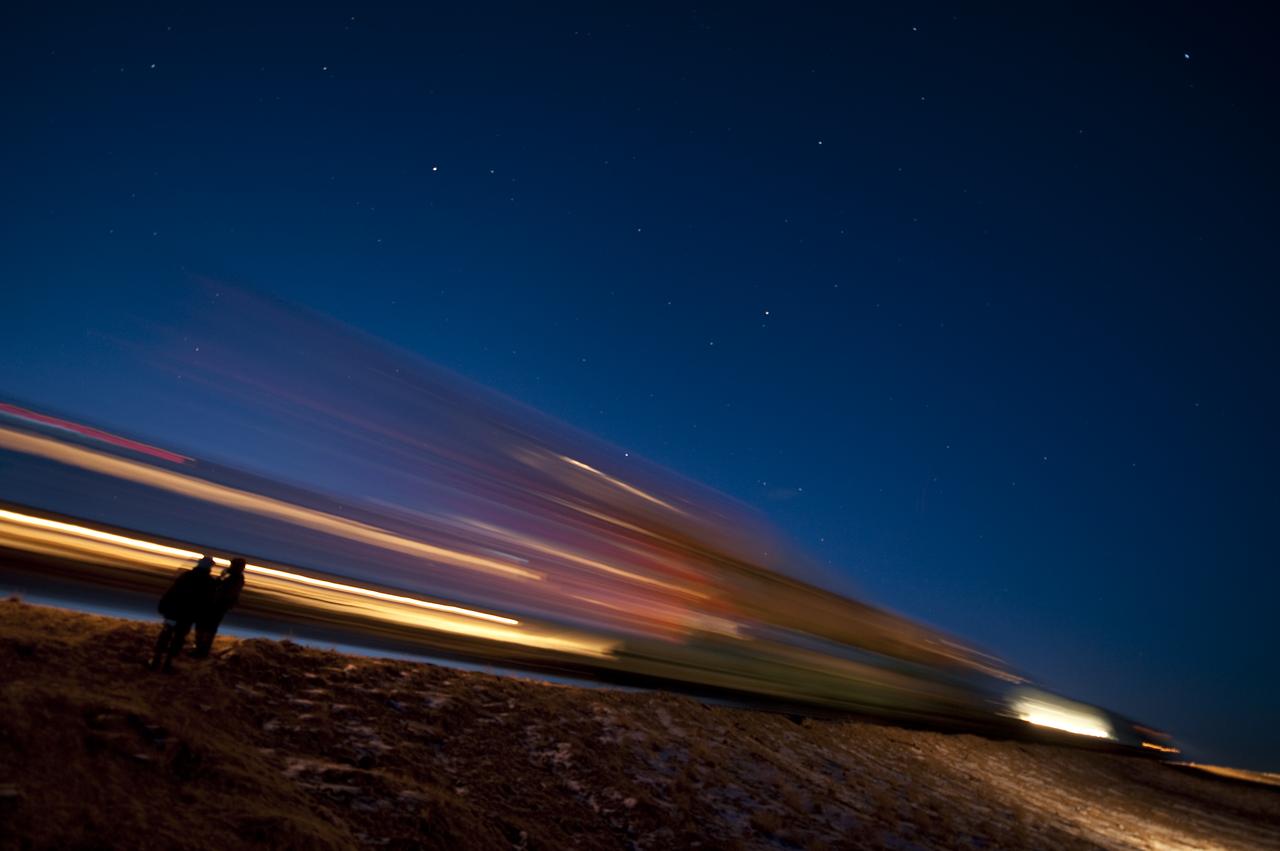
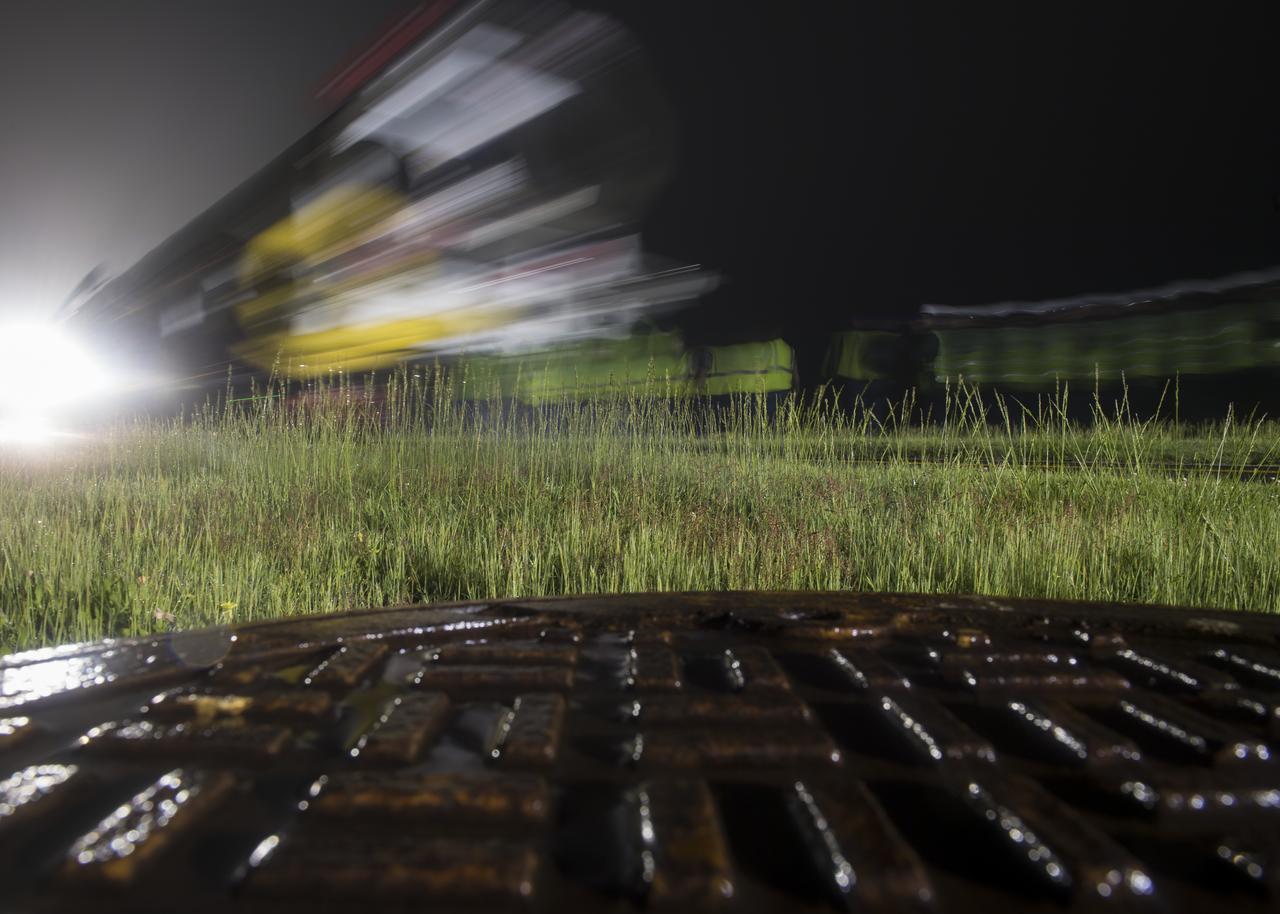
A long-exposure image captures a streak of light produced by passing vehicles in front of the Vehicle Assembly Building at NASA's Kennedy Space Center in Florida on Wednesday, Feb. 7, 2024. The iconic Vehicle Assembly Building, completed in 1966 and currently used for assembly of NASA's Space Launch System rocket for Artemis missions, remains the only building in which rockets were assembled that carried humans to the surface of another world.
VAB at Night
At the Baikonur Cosmodrome in Kazakhstan, launch pad gantry arms are seen closing around the Soyuz rocket in this long exposure photograph, Tuesday, Oct. 9, 2018. Expedition 57 crewmembers Nick Hague of NASA and Alexey Ovchinin of Roscosmos are scheduled to launch on October 11 on the Soyuz MS-10 spacecraft for a six-month mission living and working aboard the International Space Station. Photo Credit: (NASA/Bill Ingalls)
Expedition 57 Soyuz Rollout
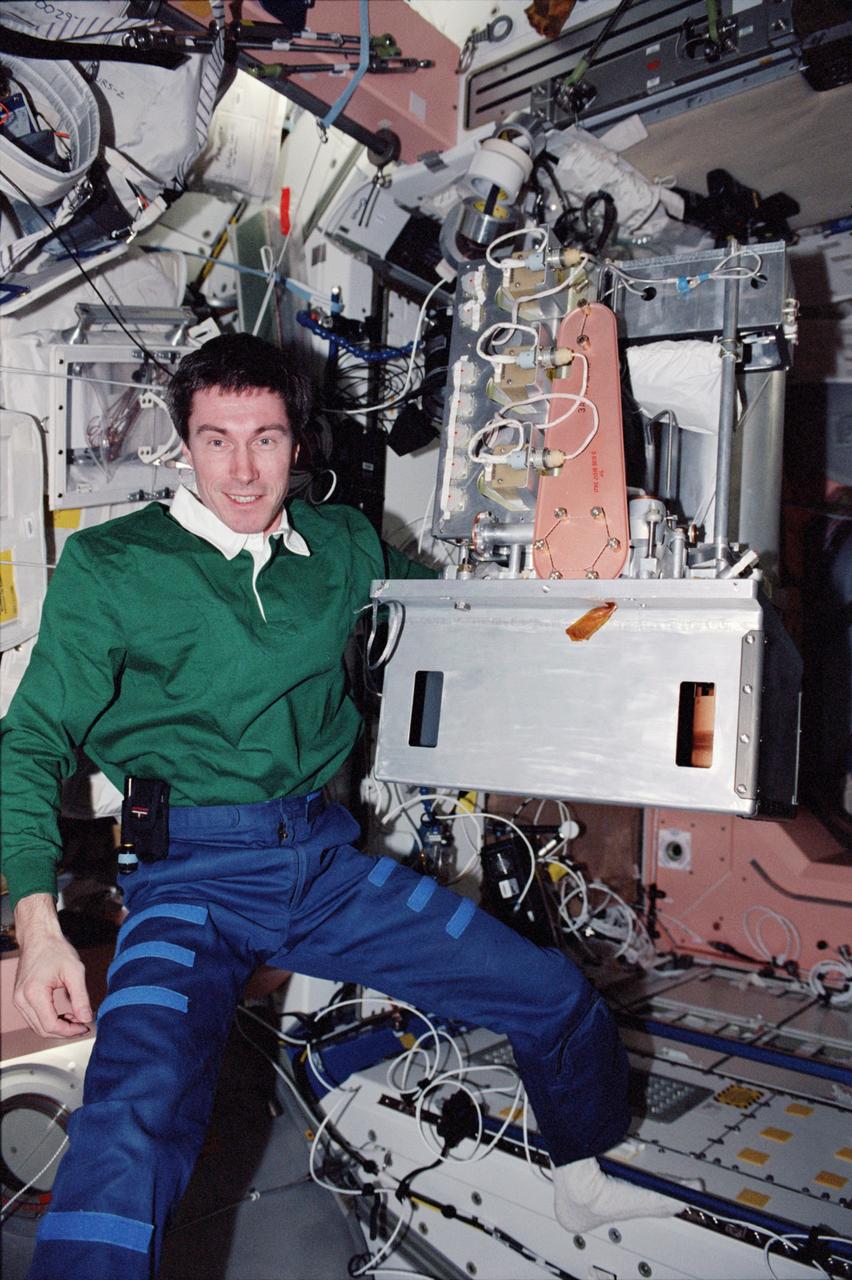
STS098-346-0032 (7-20 February 2001) ---  Cosmonaut Sergei K. Krikalev, Expedition One flight engineer representing the Russian Aviation and Space Agency, carries the Vozdukh in the Unity node.  Vozdukh is designed to maintain the partial pressure of carbon dioxide in the cabin air within the medically  permissible range for long-duration exposure.  It provides the primary means of removing CO2 from the outpost's atmosphere, and its operation is based on the use of regenerated adsorbers of CO2.
Krikalev at work in Node 1
A long exposure photograph of the new headquarters building, part of the Central Campus in the industrial area at NASA’s Kennedy Space Center in Florida. The nearly-complete seven-story, 200,000-square-foot facility will house about 500 NASA civil service and contractor employees. The building will be more energy efficient than the current Headquarters building and will feature the latest in office and administrative building technology to fulfill Kennedy's role as the premiere spaceport for NASA and, increasingly, commercial entities.
Central Campus
A United Launch Alliance Delta IV Heavy rocket with NASA’s Orion spacecraft mounted atop for Exploration Flight Test-1 (EFT-1) is seen illuminated in the distance in this long exposure photograph taken early on Dec. 4, 2014, at Cape Canaveral Air Force Station's Space Launch Complex 37, Florida.  Part of Batch image transfer from Flickr.
Orion Exploration Flight Test